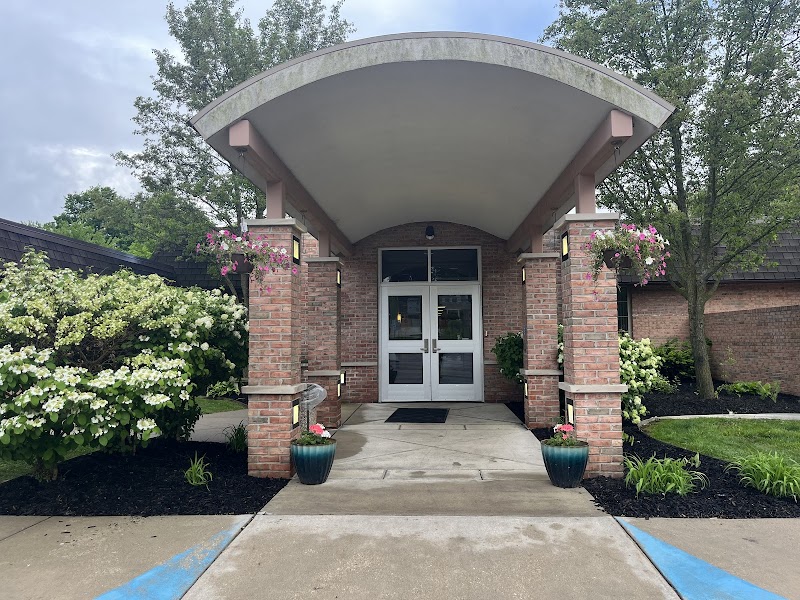
Marshall Nursing and Rehabilitation Community
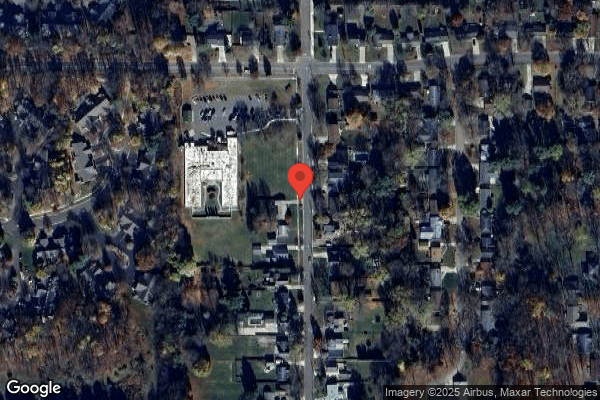

575 N Madison Street, Marshall, MI 49068 (269) 781-4281
For profit - Corporation 60 Beds ATRIUM CENTERS Data: November 2025 1 Immediate Jeopardy citation
Trust Grade
0/100
#382 of 422 in MI
Last Inspection: September 2024

Within standard 12-15 month inspection cycle. Federal law requires annual inspections.

Overview

Marshall Nursing and Rehabilitation Community has received a Trust Grade of F, indicating significant concerns about the quality of care provided. They rank #382 out of 422 nursing homes in Michigan, placing them in the bottom half, and #7 out of 8 in Calhoun County, suggesting limited better options locally. Although the facility is improving, having reduced reported issues from 32 to 5 over the past year, it still faces serious challenges, including 80 total deficiencies, of which 1 was critical and 2 were serious. Staffing is a concern with a rating of 2/5 stars and a turnover rate of 59%, which is higher than the state average, indicating that many staff members leave the facility often. Additionally, the facility has accumulated $105,860 in fines, which is higher than 93% of Michigan facilities, raising questions about ongoing compliance problems. Specific incidents include a failure to provide timely CPR for a resident who died due to a three-minute delay, and another resident developed pressure injuries due to inadequate care. Overall, while there are some signs of improvement, families should weigh these serious issues when considering this facility.
Trust Score
F
0/100
In Michigan
#382/422
Bottom 10%
Safety Record
High Risk
Review needed
Inspections
Getting Better
32 → 5 violations
Staff Stability
⚠ Watch
59% turnover. Above average. Higher turnover means staff may not know residents' routines.
Penalties
✓ Good
$105,860 in fines. Lower than most Michigan facilities. Relatively clean record.
Skilled Nurses
○ Average
Each resident gets 30 minutes of Registered Nurse (RN) attention daily — about average for Michigan. RNs are the most trained staff who monitor for health changes.
Violations
⚠ Watch
80 deficiencies on record. Higher than average. Multiple issues found across inspections.
★☆☆☆☆
1.0
Overall Rating
★★☆☆☆
2.0
Staff Levels
★★☆☆☆
2.0
Care Quality
★☆☆☆☆
1.0
Inspection Score
Stable
2024: 32 issues
2025: 5 issues

The Good

  • Full Sprinkler Coverage · Fire safety systems throughout facility
  • No fines on record

Facility shows strength in fire safety.

The Bad

1-Star Overall Rating

Below Michigan average (3.1)

Significant quality concerns identified by CMS

Staff Turnover: 59%

13pts above Michigan avg (46%)

Frequent staff changes - ask about care continuity

Federal Fines: $105,860

Well above median ($33,413)

Significant penalties indicating serious issues

Chain: ATRIUM CENTERS

Part of a multi-facility chain

Ask about local staffing decisions and management

Staff turnover is elevated (59%)

11 points above Michigan average of 48%

The Ugly 80 deficiencies on record

1 life-threatening 2 actual harm
Aug 2025 1 deficiency
CONCERN (D) 📢 Someone Reported This

A family member, employee, or ombudsman was alarmed enough to file a formal complaint

Potential for Harm - no one hurt, but risky conditions existed

Quality of Care (Tag F0684)

Could have caused harm · This affected 1 resident

**NOTE- TERMS IN BRACKETS HAVE BEEN EDITED TO PROTECT CONFIDENTIALITY** This citation pertains to intake number 2580873.Based on interview and record review the facility failed to ensure for one out o...

Read full inspector narrative →
**NOTE- TERMS IN BRACKETS HAVE BEEN EDITED TO PROTECT CONFIDENTIALITY** This citation pertains to intake number 2580873.Based on interview and record review the facility failed to ensure for one out of three residents (Resident #2) Physician's orders were followed to ensure diagnostic testing was performed for proper treatment and prevent hospitalization.R2 no longer resided at the facility at the time of the investigation.Per the facility face sheet Resident #2 (R2) was admitted to the facility on [DATE]. R2 had a diagnosis of Personal history of urinary (tract) infections (UTI).Record review of R2's care plans dated 8/31/2023, revealed R2 received prophylactic (preventative) antibiotics due to chronic urinary tract infections.Review of a Nurse Practitioner progress note dated 5/20/2025, revealed documentation that R2 had increased confusion, and a urine sample would be obtained.On 5/20/2025 a Physician order was written to obtain a UA to rule out a UTI.Upon review of R2's Medication Administration Record (MAR) and Treatment Administration Record (TAR) for the month of May 2025, specifically 5/20/2025 and beyond, revealed no UA was obtained and furthermore, the Physician's order was never transcribed onto R2's MAR or TAR.Review of R2's laboratory results in R2's electronic medical record (EMR) revealed no UA laboratory results for the month of May 2025; particularly for 5/20/25 and beyond.No other progress note was written until 5/26/205 which only revealed, Resident (R2) resting in bed, alert, resting with chest rising and falling, assisted with adl (activities of daily living) care. No s/s (signs or symptoms) of distress or discomfort. Call light in reach and safety maintained. The next progress notes were documented on 5/29/2025, which read, Pt (patient-R2) exhibiting confusion per Therapy. Pt unable to follow commands. Pt does not seem to be at baseline. Pt is normally alert and oriented. Dr notified about these concerns will continue to monitor VS (vital signs) in the normal range. Pt is not in any distress but has confusion.No other progress note was documented until 6/3/2025, which revealed R2 reported that she had increased confusion, drowsiness, and difficulty tracking the nurse. Review of a Physician's order dated 6/3/2025 revealed R2 was to have a urine culture obtained. Continued review of R2's progress notes dated 6/4/2025 and timed at 3:47 PM, revealed R2 was supposed to have a UA done that day on 6/4/2025, however R2 was sitting in her chair when the nurse arrived with the supplies to obtain the UA so the UA was not obtained. The note also revealed that an attempt to obtain the UA would not be tried again until the next morning. No further documented attempts were made on 6/4/2025, even though it was only 3:47 PM when the first attempt was made. Further review of the progress notes revealed documentation by Registered Nurse (RN) D on 6/5/2025 that the UA sample was attempted three times but was not successful. Record review of R2's TAR for the month of June 2025 revealed that on June 4th the spot for initials, which indicated that the UA was obtained, was signed by Registered Nurse (RN) D.Review of R2's progress notes revealed on 6/25/2025, a Certified Nurse Aid (CNA) reported to a nurse that R2 was not feeling well. The note revealed that the nurse observed R2 and R2 was not responding to questions. The note further revealed that R2 was usually Alert and oriented to person, place, and time and able to voice her concerns, but noted not that morning. The progress note revealed R2 was sent out to the hospital.The progress notes revealed R2 did not return to the facility until 7/1/2025. In an interview on 8/19/2025 at 12:33 PM, Licensed Practical Nurse (LPN) D stated that she and two CNAs had attempted to obtain urine from R2 three times for the UA on 6/5/2025 but was not successful. LPN D said she did not call the Physician and report to R2's Physician that the UA was not able to be obtained.In an interview on 8/20/2025 at 8:40 AM, LPN D said she did not recall signing her initials to R2's TAR stating that she obtained the UA. LPN D said she must have put her initials on the TAR, because upon review of R2's TAR, LPN D confirmed it was her initials. However, LPN D stated R2's UA was not performed and said she did not notify the Physician of that. LPN D said there was no process that was followed with transcribing Physician's orders and said Physician orders were not being transcribed correctly.In an interview on 8/20/2025 at 8:58 AM, CNA E stated that R2 had been more confused and would just stare and not react to her. CNA E said that on 6/25/2025, R2 was more confused and sleepier. CNA E said R2 had been more confused and sleepier about 3 days before she was sent out to the hospital on 6/25/2025.In an interview on 8/20/2025 at 10:34 AM, RN C stated that she could recall the order for R2's UA which was in June but could not recall an order for one in May. RN C said the UA was never obtained. RN C further explained the expectation was that the nurse calls the Physician to make the Physician aware that the UA could not be obtained and see what the Physician wanted to do about it. RN C, upon review of R2's EMR, stated that she did not see that anyone called R2's Physician about not being able to obtain the UA. RN C also stated that she did not see any UA results for the UA ordered on 5/20/2025.RN C stated that the process for transcribing Physician's order was when a Physician gave a verbal order or wrote an order in the resident's EMR then the nurse was to transcribe the order and assure the order went onto the resident's MAR or TAR if applicable. RN C stated that the practice/process at the facility for transcribing orders was not very good.Review of a hospital history and physical (H&P) report dated 6/25/2025, revealed R2 presented to the emergency room (ER) with a reported altered mental status. The H&P revealed R2 had a family member with her in the ER who told the Physician that R2 had an altered mental status due to a UTI, and that she had been trying to get the staff at the facility to obtain a urinalysis for the past two weeks.Continued review of the hospital H&P revealed that R2 had a UA test performed while in the ER which showed the results of a positive UTI and ultimately resulted in R2 having to have IV (intravenous) antibiotics and be admitted to the hospital where she stayed for six days.
May 2025 2 deficiencies
CONCERN (D) 📢 Someone Reported This

A family member, employee, or ombudsman was alarmed enough to file a formal complaint

Potential for Harm - no one hurt, but risky conditions existed

Quality of Care (Tag F0684)

Could have caused harm · This affected 1 resident

**NOTE- TERMS IN BRACKETS HAVE BEEN EDITED TO PROTECT CONFIDENTIALITY** Based on interview and record review, the facility failed to assess, monitor, follow physician orders and document on skin wound...

Read full inspector narrative →
**NOTE- TERMS IN BRACKETS HAVE BEEN EDITED TO PROTECT CONFIDENTIALITY** Based on interview and record review, the facility failed to assess, monitor, follow physician orders and document on skin wounds for one (R101) of three residents reviewed for non-pressure skin conditions. Findings include: Review of the Face Sheet and Minimum Data Set (MDS) dated [DATE], reflected R101 was a [AGE] year old male admitted to the facility on [DATE], with diagnoses that included hypertension (high blood pressure), peripheral vascular disease(decreased blood flow in legs), wound infection and diabetic. The MDS reflected R101 had a BIM (assessment tool) score of 15 which indicated his ability to make daily decisions was cognitively intact, and he required staff assist with bathing and supervision with dressing, ambulation, and transfers. Review of complaint received by the State Agency alleged the facility failed to provide adequate and appropriate interventions to prevent and care for wounds. Review of R101 Nursing Progress Note, dated 1/16/25, reflected, Resident arrived via ambulance with family at his bedside. Meds reviewed by on call clinician and no issues upon review. Resident is A & o x4[alert and oriented times four]. No complaints of pain noted at this time. Left lower extremity has an unstageable wound with MRSA[methicillin-resistant staphylococcus aureus infection]. Wound covered with\bandage . Review of R101 Wound Clinic consult, dated 2/4/25, reflected, Established patient returns in the first week of treatment with worsening of both wounds. Patient reports pain is a 7-8 and was provided with Tylenol prior to wound care visit. Patient reports no Norco[pain medication] since Friday due to lack of supply at the SNF[skilled nursing facility]. Patient reports that the wound dressing were changed yesterday but dressings have note been changed consistently, daily as ordered. Initially presented with wounds to the left lateral lower leg and left lateral foot. The patient was evaluated by the provider on 1/13/25 during hospitalization. Patient was hospitalized from [DATE]-[DATE] with severe cellulitis, positive MRSA, severe peripheral vascular disease status post angiogram and atherectomy on 1/10/2025. Vascular surgery, cardiology, infectious disease consultations were provided during hospitalization . Review of R101 Medication Administration Record (MAR), dated 1/16/25 through 3/31/25(R101 discharged home from facility), reflected over 30 missed physician ordered treatments as evidenced by holes in documentation, or treatment not completed without supporting documentation such as, due to condition .guest is NPO[nothing by mouth] for procedure.(related to treatment on left lower leg.) Continued review of the MAR reflected R101 had daily physician ordered wound treatments. During an interview on 5/28/25 at 1:50 p.m., Licensed Practical Nurse (LPN) E reported it was the facility policy to perform skin checks and wound assessments weekly. LPN E reported often worked with R101 prior to his discharge and never refuse wound treatments. During an interview on 5/28/25 at 2:10 p.m., Wound Nurse (WN) F reported she rounds weekly to assess wounds and staff alert her if any new wounds identified. WN F reported weekly wound assessments are documented in each resident medical record. Review of R101 weekly wound assessments, dated 3/1/25 through 3/31/25, reflected no evidence of completed wound assessments 3/10/25 and 3/24/25.(no wound assessment was completed on 3/17/25.) During an interview on 5/29/25 at 10:46 a.m., Director of Nursing (DON) B reported R101 was seen by the wound clinic and would expect facility staff to complete physician orders and document. During a second interview on 5/29/25 at 12:35 p.m., DON B verified R101 did not received physician ordered wound treatments on 2/16/25 according to ( ) on Medication Administration Record(MAR). DON B verified several missed treatments on R101 MAR and reported staff were educated including for reasons that included, due to condition. DON B reported staff should complete Progress Note if treatment was missed and contact the physician of missed treatment. During a third interview on 5/29/25 at 1:45 p.m., DON B reported if residents seen by outpatient wound clinic not seen by in house wound physician. DON B reported would expect wound rounds weekly with assessments of wound. DON B reported thought R101 was seen by wound on 3/17/25 and that was why weekly wound assessment was not completed. During a telephone interview on 5/29/25 at 2:12 p.m., wound clinic staff verified R101 was not seen for an appointment on 3/17/25. During a telephone interview on 5/29/25 at 2:41 p.m., Wound Clinic clinical staff(WCS) G reported R101 would arrive to wound clinic with dressings dated more than 24 hours prior and R101 had physician orders for daily dressing changes. WCS G reported R101 said facility staff would say they were planning to do wound treatments but would never come back to do them.
CONCERN (D) 📢 Someone Reported This

A family member, employee, or ombudsman was alarmed enough to file a formal complaint

Potential for Harm - no one hurt, but risky conditions existed

Deficiency F0761 (Tag F0761)

Could have caused harm · This affected 1 resident

**NOTE- TERMS IN BRACKETS HAVE BEEN EDITED TO PROTECT CONFIDENTIALITY** Based on observation, interview, and record review the facility failed to ensure controlled medications were properly labeled an...

Read full inspector narrative →
**NOTE- TERMS IN BRACKETS HAVE BEEN EDITED TO PROTECT CONFIDENTIALITY** Based on observation, interview, and record review the facility failed to ensure controlled medications were properly labeled and stored per professional standards of practice for one residents (R104) and a medication cart in a current facility census of 45 residents. Findings Included: Review of the Face Sheet and Minimum Data Set (MDS) dated [DATE], reflected R104 was a [AGE] year old female admitted to the facility on [DATE], with diagnoses that included chronic obstructive pulmonary disease, pneumonia, weakness and depression. The MDS reflected R104 had a BIM (assessment tool) score of 14 which indicated her ability to make daily decisions was cognitively intact. Review of complaint received by the State Agency alleged the facility failed to appropriately store controlled medications. During an observation and interview on 5/28/25 at 8:23 a.m., Registered Nurse (RN) C unlocked the [NAME] 1 medication cart and controlled drawer. This surveyor observed nine unlabeled clear plastic bags including eight bags with 10 small white tablets and one bag with 3 small white tabs in a unlabeled clear plastic cup. RN C reported unlabelled tablets belonged to R104 who admitted to the facility on hospice services and brought Lorazepam 0.5mg tablets from home and had 83 tablets currently left. RN C reported staff repackaged R104's Lorazapam tablets in bags of 10 to easily count at shift change over the weekend and verified the clear baggies were not labeled with resident name, name of medication, directions or description. RN C verified empty bottle of Lorazapam 0.5mg in medication cart for R104 was filled on 5/20/25 with 90 tablets. RN C reported was unsure who decided to repackage controlled drugs over the weekend. When RN C was asked what were the identifying marks on tablets unlabeled small white tables reported was unable to see tablets well enough to say. RN C reported during shift change two nurses perform controlled medication counts including counting each tab in each unlabeled plastic bag to verify counts. Review of R104, Controlled Substances Proof of Use, dated 5/21/25, reflected facility received Lorazepam 0.5mg 90 tablets on 5/21/25 from home supply. The document reflected current (5/28/25 at 8:40 a.m.) count of 83. Review of R104 Physician Orders, dated 5/21/25, reflected order for Lorazapam 0.5mg one tablet every four hours as needed. During an interview on 5/28/25 at 2:05 p.m. Licensed Practical Nurse (LPN) D reported controlled narcotic count process completed at each shift change. LPN D reported all narcotic medications remain in original packaging from the pharmacy clearly labeled with resident name and medication. During an interview on 5/29/25 at 10:46 a.m., Director of Nursing (DON) B reported would expect expect staff to keep medications including controlled narcotic in original pharmacy packaging. DON B verified R104 had Lorazepam 0.5mg 83 tablets divided into eight unlabeled clear bags with 10 tablets each and one with three tables to equal 83 on 5/28/25. DON B reported was unsure what staff member decided to repackage R104 narcotics but reported should have been labeled with name, medication, orders and identification. DON B reported has begun to educate all staff related proper medication storage and labeling of medications including narcotics starting 5/28/25 after being made aware of situation.
Feb 2025 2 deficiencies
CONCERN (E) 📢 Someone Reported This

A family member, employee, or ombudsman was alarmed enough to file a formal complaint

Potential for Harm - no one hurt, but risky conditions existed

Infection Control (Tag F0880)

Could have caused harm · This affected multiple residents

Based on observation, interview and record review the facility failed to maintain disinfection for glucometer's (blood glucose testing devices) affecting residents (R4, R5, R8, and R9) of 4 residents ...

Read full inspector narrative →
Based on observation, interview and record review the facility failed to maintain disinfection for glucometer's (blood glucose testing devices) affecting residents (R4, R5, R8, and R9) of 4 residents reviewed resulting in the potential for bacterial growth and transmission of pathogens. Findings include: On 2/11/25 at 11:45 AM during medication pass Licensed Practical Nurse (LPN) C was observed performing point-of-care (in resident room) blood glucose testing for R9 using a glucometer. LPN C placed the glucometer on the table without placing a barrier. LPN C was observed after blood glucose testing picking the glucometer up with a gloved hand and carrying it to the medication cart. No disinfection of the glucometer was done prior to leaving the room. LPN C then placed the glucometer on top of the medication cart, removed the gloves she was wearing, disposed of the gloves, and did not follow with sanitization of hands. Disinfection of the glucometer was also not performed. On 2/11/25 at 11:59 AM LPN C picked up the glucometer and walked to the dining table (in the common dining area) of R4 in preparation for glucose testing. LPN C had not sanitized the glucometer and did not place a barrier on the table. The blood glucose test was performed for R4 and after testing the glucometer was not disinfected. LPN C returned to the medication cart and placed the glucometer inside the drawer of the medication cart. On 2/11/25 at 12:25 AM LPN C had gone to another section of the unit and walked to a separate medication cart. After removing a glucometer from the drawer, she performed point-of-care blood glucose testing for R5. The glucometer was not disinfected prior to the testing nor was disinfection performed after the test. On 2/11/25 at 12:56 PM LPN C performed point-of-care blood glucose testing at bedside for R8. No barrier was used. After glucose testing the glucometer was placed by LPN C on top of a stack of clean washcloths as LPN C assisted R8 with an aerosol treatment. LPN C then exited the room carrying the glucometer in a bare hand. No disinfection of the glucometer had been performed and no hand sanitation had been performed. Once back at the cart the glucometer was placed on the cart and LPN C sanitized her hands. On 2/11/25 review of the EMR revealed that R4, R5, R8, and R9 each had a medical diagnosis of Diabetes Mellitus and physician orders for scheduled blood glucose testing. On 2/11/25 at 1:09 PM LPN C was interviewed and asked about the process of blood glucose testing and care of the glucometer. LPN C described the process stating, It should be wiped down with a purple wipe (germicidal disposable wipes) in between uses. LPN C added that supplies of purple wipes were not always readily available to staff. When asked if LPN C regularly requests the germicidal wipes she said, not every day. When asked if on this day (2/11/25) LPN C had requested the germicidal wipes prior to testing LPN C responded, No, I didn't. It's been kind of hectic and time consuming to find someone who can get them. When asked what the risk is of not using the disinfecting wipes LPN C responded basically infection control. On 2/12/25 at 10:50 AM during interview with the Director of Nursing (DON) B who was also an Infection Preventionist (IP) in training and the Regional Nurse (RN) G who was IP certified (and regularly at the facility 3 days per week) the process of blood glucose testing and care of the glucometer was discussed. The DON B stated, The process for disinfection should be a process of glucose monitoring including hand hygiene, correct resident, gloves, and you want to make sure the glucometer is disinfected. RN G followed up by stating you follow the directions for purple Sani wipes and the contact time should be two minutes. The DON and RN G also talked about training nurses receive on hire on blood glucose testing and annual competencies which are done. The process LPN C used during and after blood glucose testing on 2/11/25 was reviewed and discussed and identified by the DON B and RN G as incorrect and as posing an infection control risk. When asked about audits on glucometer testing the DON B and RN G said audits should be done monthly to confirm that the procedure is being followed correctly and said the audit forms were not readily available but would be found if possible. The surveyor also requested all glucometer testing education forms for all staff who were performing point-of-care blood glucose testing. On 2/12/25 during review of the electronic medical record (EMR) it was determined that of the 17 residents for whom blood glucose testing was ordered none had a blood-borne pathogen diagnosis. On 2/12/25 at approximately 1:00 PM during interview with Licensed Practical Nurse (LPN) D the process of blood glucose monitoring was discussed. LPN D said she looks resident's Medication Administration Record (MAR) up as step one, I gather everything; wash everything down; I sanitize hands and wear gloves. I disinfect it (glucometer) with purple wipes before I go in. And then I have my supplies. Depending on if it is sliding scale, I take blood glucose and get the insulin. LPN D then said once the testing has been completed the glucometer is disinfected again. Prior to exit conference RN G informed the surveyor that audit forms had not been found. Also, prior to exit conference 3 Competency Checklist forms were submitted by the facility reflecting blood glucose testing (equipment cleaning) education for LPNs including one for LPN C dated 9/17/24. No other forms were located prior to exit conference for the remaining staff members who perform blood glucose testing. The facility had 6 LPNs and 7 Registered Nurses (RNs) on the employee list which included the Director of Nursing and Assistant Director of Nursing. The blood glucose monitoring device (glucometer) used by the facility was Assure Platinum. The facility submitted the manufacture's manual which listed the Super Sani-Cloth Germicidal wipes as one of the recommended products to be used for the glucometer. The Guidelines for Cleaning and Disinfecting the Assure Platinum Meter instructions state in part, To minimize the risk of transmitting blood-borne pathogens, the cleaning and disinfecting procedure should be performed as recommended. The manual instructions also state in part, The meter should be cleaned and disinfected after use on each patient. According to an article published in 2013 by Infection Control & Hospital Epidemiology outbreaks of Hepatitis B were reviewed and reported on. The article states in part, Acute hepatitis B virus (HBV) infections have been reported in long-term care facilities (LTCFs) primarily associated with infection control breaks during assisted blood glucose monitoring. According to an article published online by the Centers for Disease Control and Prevention (CDC) dated August 7, 2024, states in part, Unsafe practices during assisted monitoring of blood glucose and insulin administration contribute to the spread of hepatitis B virus, hepatitis C virus, HIV, and other infections.
CONCERN (F) 📢 Someone Reported This

A family member, employee, or ombudsman was alarmed enough to file a formal complaint

Potential for Harm - no one hurt, but risky conditions existed

Pharmacy Services (Tag F0755)

Could have caused harm · This affected most or all residents

This citation pertains to intake MI00149290 Based on observation and interview the facility failed to maintain documentation to indicate glucometer calibration was being performed potentially affectin...

Read full inspector narrative →
This citation pertains to intake MI00149290 Based on observation and interview the facility failed to maintain documentation to indicate glucometer calibration was being performed potentially affecting all residents (17) who were diagnosed with diabetes with ordered monitoring resulting in the potential for inaccurate blood glucose readings and incorrect treatment. Findings include: On 2/11/25 at 1:09 PM Licensed Practical Nurse (LPN) C was interviewed regarding the process of blood glucose testing. LPN C was asked how she knows a machine is reading results accurately. LPN C responded by saying the glucometer is quality control tested by night shift every 24 hours. On 2/12/25 at 8:55 AM the glucometer calibration logbook was requested and the Assistant Director of Nursing (ADON) F searched for the book. On 2/12/25 at 9:05 AM the Director of Nursing (DON) B and Regional Nurse (RN) G were observed searching for the glucometer calibration logbook at the nurse's station, looking through the medication cart, the cupboards, the files. The logbook was not found. At the second nurse's station at 9:10 AM the logbook was searched for and not found. On 2/12/25 at 10:36 AM the RN G confirmed the logbook was not found and said, We don't have it. It should be a book that is kept available for blood glucometer monitoring. RN G added that this book should be kept reflecting the ongoing (every 24 hour) calibration - testing functioning of the glucometer to assure accuracy. The DON B and RN G also said the testing and book were going to be set up immediately and that a logbook would be kept on each unit for easy access and reference for all nurses on all shifts. According to an article published online by The Mayo Clinic titled Blood Glucose Monitors: What Factors Affect Accuracy dated December 15, 2023, states in part, that blood glucose monitor quality control tests should be done regularly and that following quality control tests can assure you that your meter is working properly. The glucometer model used by the facility is the Assure Platinum. On the company website there is a copy of the manufacturer's manual which includes a template as an example for a Quality Control Record which has spaces for entry of date, station/shift, operator's initials, test strip lot and expiration date, control range, control result for level 1 Normal Level Control Range, and lot number, expiration date, control range, control result for level 2 High Level Control Range, and Corrective Action (yes, no).
Sept 2024 20 deficiencies 2 Harm
SERIOUS (G)

Actual Harm - a resident was hurt due to facility failures

Pressure Ulcer Prevention (Tag F0686)

A resident was harmed · This affected 1 resident

**NOTE- TERMS IN BRACKETS HAVE BEEN EDITED TO PROTECT CONFIDENTIALITY** Based on observation, interview, and record review, the facility failed to prevent the development of pressure injuries, includi...

Read full inspector narrative →
**NOTE- TERMS IN BRACKETS HAVE BEEN EDITED TO PROTECT CONFIDENTIALITY** Based on observation, interview, and record review, the facility failed to prevent the development of pressure injuries, including a medical device-related pressure injury, for one resident (Resident #26) out of 4 reviewed for pressure injuries. This deficient practice resulted in resident experiencing harm due to facility-acquired pressure injuries. Findings include: Resident 26 (R26) A review of the medical record indicated that R26 was admitted to the facility on [DATE] with diagnoses including sepsis, osteomyelitis, a sacral pressure ulcer, muscle weakness, and type 2 diabetes. The Minimum Data Set (MDS) assessment, with an Assessment Reference Date (ARD) of 8/16/24, reflected that R26 scored 8 out of 15 on the Brief Interview for Mental Status (BIMS), indicating cognitive impairment. On 9/18/24 at 9:18 AM, R26 was observed lying in bed on a pressure-reducing air mattress, dressed in a gown. R26 was positioned flat on the mattress, without pillows to offload pressure or elevate (float) his heels. R26 was conversant, understood questions clearly, and responded appropriately. He reported being admitted with one pressure ulcer on his sacrum and had developed additional ulcers after admission. He stated that a wound vac (negative pressure wound therapy) was applied to the sacral ulcer, and described experiencing severe pain from the pressure ulcers, which prevented him from moving in bed. When asked if staff assisted with repositioning or used pillows to float his heels, R26 said staff did not offer assistance and that he would comply with interventions with assistance and if his pain was properly managed. A single pillow, used to elevate his head, was observed in the room. On 9/18/34 at 11:45 AM, R26 was again observed lying in bed in the same position without pillows to offload pressure or float his heels. A review of his electronic medical record revealed no documented refusals for turning, repositioning, or floating his heels. In an interview at 2:14 PM, Certified Nursing Assistant (CNA) V stated that R26 did not have pillows, wedges, or boots to float his heels. A review of R26's Care Plan for Pressure Ulcer Care, initiated on 8/12/24, indicated that R26 had a Stage 4 pressure ulcer (penetrating all three layers of skin) on his sacrum at the time of admission. The same care plan was revised on 9/17/24 to include a facility-acquired Stage 4 pressure ulcer on his left heel and a facility-acquired Stage 3 pressure ulcer (full-thickness skin loss with damage to subcutaneous tissue) on his left lower buttock. The care plan included interventions such as weekly skin assessments, elevating heels when in bed as the resident allowed, encouraging repositioning every two hours, using a pressure-reducing mattress, treating pain prior to wound care, and using blankets or pillows to cushion bony prominence's. A review of R26's Physician Orders revealed an order initiated on 8/19/24 for oxycodone 10 milligrams for severe pain, especially before dressing changes. Another order, initiated on 9/17/24, instructed staff to offer to elevate R26's heels while in bed and to document any refusals. R26's Weekly Skin Assessment documentation showed that the last skin assessment was completed on 8/17/24, with the next one not performed until 9/2/24, meaning more than two weeks had passed without a documented skin assessment. A 9/13/24 skin assessment identified a Stage 3 pressure ulcer on the left heel and another on the left ischium (lower buttock). A Wound Assessment on the same date recorded that the left heel pressure ulcer, first noted on 9/11/24, measured 2.3 cm in length, 3.4 cm in width, and 0.1 cm in depth. Another Wound Assessment on 9/17/24 revealed a left buttock pressure ulcer, first noted on 9/17/24, measuring 2.3 cm in length, 1.2 cm in width, and 0.1 cm in depth. On 9/19/24, a Nurse Practitioner evaluated R26's wounds. The left ischium pressure ulcer was documented as Stage 3, measuring 1.5 cm by 1.0 cm, with moderate serous drainage (clear, watery fluid) and a wound bed consisting of 50% granulation tissue (red tissue) and 50% slough (necrotic tissue). The left heel ulcer was documented as unstageable, measuring 1.2 cm by 2.0 cm with moderate serous drainage, 20% granulation tissue, and 80% slough tissue. On 9/19/24 at 10:56 AM, R26 presented in the same position. R26's pressure-reducing air mattress was observed unplugged. On 9/19/24 at 12:22 PM, R26 presented in the same position. R26's pressure-reducing air mattress remained unplugged. In an interview on 9/19/24 at 12:24 PM, Certified Nursing Assistant (CNA) F PM indicated that she was familiar with R26 and his care needs. CNA F reported that R26 often refused repositioning due to pain and fear of falling, but staff had noticed the lack of repositioning and recently talked about obtaining pillows from laundry to assist. On 9/19/24 at 3:02 PM, R26's pressure-reducing air mattress remained unplugged. R26's heels were floated with the use of a pillow. On 9/20/24 at 12:53 PM, RN D during changing the wound dressing on R26's left buttock wound, another wound was identified by surveyor and RN D. The new would presented as a line and contained areas of slough, The newly identified wound appeared to have occurred from the tubing on the wound vac, which was positioned directly underneath R26 and pressed into the skin underneath the newly identified wound. When asked to describe the newly identified wound, RN D stated that the wound presents as a stage one, possibly a stage two in some spots with areas of slough. When asked how this wound occurred, RN D verified that it appears to have occurred from the wound vac tubing and RN D would classify it as a medical device related pressure injury. During the wound treatment observation, R26 cried out several times during both dressing changes. Review of the medical record revealed that no as needed pain medication was administered prior to the dressing changes. On 9/20/24 at 1:33 PM R26 was heard stating ow from outside of his room. Upon entering R26's room, R26 stated that he was sore after the wound dressing change and that he felt pain about an hour after each wound care dressing change. R26 stated that his current pain level was a 9, and the pain worsens with movement which keeps him from wanting to turn and reposition. R26 reported that he knows that he needs the wound dressing changes for the wounds to successfully heal, however he dreads the wound dressing changes due to the amount of pain that occurs during and after. When asked of the as needed pain medication helps with the pain, R26 stated that he can ask for Tylenol for pain but was completely unaware of any other pain medication order. R26 stated that staff did not regularly ask him about his pain level or offer any as needed pain medication before or after wound care. In an interview on 9/20/24 at 2:11 PM, RN D verified that R26 did not receive any as needed pain medication prior to the wound dressing changes. After reviewing the as needed pain medication Physician order, RN D stated that it would have been appropriate to offer pain medication prior to the dressing change. When asked about R26's reluctance to turn and reposition, RN D stated that in addition to pain, R26 was afraid of falling, therefore, will clutch to the side of the bed. When asked if any anxiety relieving methods were discussed with the Physician or care team, RN D stated that it may have been but could not find any evidence of any intervention or conversation. When asked about the pressure relieving mattress being unplugged, RN D confirmed that it was brought to his attention and that the mattress should be plugged in, as well as a Physician order to verify that the mattress is functioning.
SERIOUS (G)

Actual Harm - a resident was hurt due to facility failures

Deficiency F0697 (Tag F0697)

A resident was harmed · This affected 1 resident

**NOTE- TERMS IN BRACKETS HAVE BEEN EDITED TO PROTECT CONFIDENTIALITY** Based on observation, interview, and record review the facility failed to ensure pain medications were given as ordered for one ...

Read full inspector narrative →
**NOTE- TERMS IN BRACKETS HAVE BEEN EDITED TO PROTECT CONFIDENTIALITY** Based on observation, interview, and record review the facility failed to ensure pain medications were given as ordered for one (resident #26) of two reviewed for pain, resulting in resident experiencing harm with uncontrolled pain. Findings include: Resident 26 (R26) A review of the medical record indicated that R26 was admitted to the facility on [DATE] with diagnoses including sepsis, osteomyelitis, a Stage 4 sacral pressure ulcer (full thickness skin loss that extends into muscle, bone or supporting structures) , muscle weakness, and type 2 diabetes. The Minimum Data Set (MDS) assessment, with an Assessment Reference Date (ARD) of 8/16/24, reflected that R26 scored 8 out of 15 on the Brief Interview for Mental Status (BIMS), indicating cognitive impairment. On 9/18/24 at 9:18 AM, R26 was observed lying in bed on a pressure-reducing air mattress, dressed in a gown. R26 was positioned flat on the mattress, without pillows to offload pressure or elevate (float) his heels. R26 was conversant, understood questions clearly, and responded appropriately. He reported being admitted with one pressure ulcer on his sacrum and had developed additional ulcers after admission. He stated that a wound vac (negative pressure wound therapy) was applied to the sacral ulcer, and described experiencing severe pain from the pressure ulcers, which prevented him from wanting to be moved in bed. R26 stated that the pain is excruciating during wound care, rating his pain at a 9 to a ten during and after wound care. A review of R26's Care Plan for Pressure Ulcer Care, initiated on 8/12/24, indicated that R26 had a Stage 4 pressure ulcer (penetrating all three layers of skin) on his sacrum at the time of admission. The same care plan was revised on 9/17/24 to include a facility-acquired Stage 4 ulcer on his left heel and a facility-acquired Stage 3 ulcer (full-thickness skin loss with damage to subcutaneous tissue) on his left lower buttock. The care plan included an intervention to treating pain prior to wound care. A review of the same Care Plan revealed a focus are for pain, which stated, R26 has the potential for pain related to: osteomyelitis, stage 4 sacral wound, recent left fibula fracture, and left knee pain and swelling. Interventions included to administer pain medication as ordered. A review of R26's Physician Orders revealed an order initiated on 8/15/24 and discontinued on 8/19/24 for Oxycodone (pain relieving medication) 5 milligrams (mg) every four hours as needed. Instructions on the order stated give in addition to schedule [oxycodone] dose before dressing changes. The Oxycodone was not administered 8/15/24-8/19/24. A review of R26's Physician Orders revealed an active order initiated on 8/19/24 for Oxycodone 10 mg as needed every 6 hours for severe pain and before dressing changes. May give long acting [oxycodone] and short acting together. Review of the Physician Order's revealed daily wound care for R26's sacral wound. The as needed and before dressing changes Oxycodone 10 mg was only administered on the following dates/times: 8/22/24 one dose at 6:27 pm 8/23/24 one dose at 5:26 pm 8/28/24 one dose at 7:51 am 8/29/24 one dose at 3:31 pm 9/1/24 one dose at 4:55 pm 9/14/24 one dose at 10:02 am 9/15/24 one dose at 7:55 am 9/19/14 one dose at 9:58 am Review of the Physician Order revealed two orders were initiated on 9/17/24 daily wound care for R26's left heel and left buttock wound. Review of a Physician Note dated 8/26/24 reflected R26 was seen by the nurse practitioner for follow up to pain for sacral wound and anxiety R26's pain regimen was adjusted to long acting 12hr Oxycodone . He tells me his pain is better than previously noted. He still has increased pain with wound care and is fearful and reluctant to turn in bed, creating increased anxiety that he will become dizzy to the point where he refuses incontinence care and wound care . Review of a Physician Note dated 9/4/24 reflected R26 was seen for follow up to pain for sacral wound and anxiety .Pain regimen was adjusted to long acting 12hr Oxy [oxycodone]. He tells me his pain is better than previously noted but with increased pain with wound care . On 09/19/24 at 12:12 PM, Registered Nurse (RN) H reported that R26 refuses wound care and turning and repositioning due to pain. On 09/19/24 at 3:15 PM. Licensed Practical Nurse (LPN) AA reported that R26 will often refuse wound care and turning and repositioning due to pain. In an interview on 9/19/24 at 12:24 PM, Certified Nursing Assistant (CNA) F PM indicated that she was familiar with R26 and his care needs. CNA F reported that R26 often refused repositioning due to pain and fear of falling. On 9/20/24 at 12:49 PM, Registered Nurse (RN) D was in R26's room and reported that he was finishing up R26's care and getting R26 ready for the wound care observation. RN D closed R26's door. R26 was heard crying out during care. On 9/20/24 at 12:53 PM, during the wound treatment observation, R26 cried out several times during both left heel and left buttock dressing changes. Review of the medical record revealed that no as needed pain medication was administered prior to the dressing changes. On 9/20/24 at 1:33 PM R26 was heard stating ow from outside of his room. After entering R26's room, R26 stated that he was sore after the wound dressing change and that he felt pain about an hour after each wound care dressing change. R26 stated that his current pain level was a 9, and the pain worsens with movement which keeps him from wanting to turn and reposition. R26 reported that he knows that he needs the wound dressing changes for the wounds to successfully heal, however he dreads the wound dressing changes due to the amount of pain that occurs during and after. When asked of the as needed pain medication helps with the pain, R26 stated that he can ask for Tylenol for pain but was completely unaware of any other pain medication order. R26 stated that staff did not regularly as him about his pain level or offer any as needed pain medication before or after wound care. Record Review revealed pain assessments were being completed but were not consistent with what R26 was reporting. In an interview on 9/20/24 at 2:11 PM, RN D verified that R26 did not receive any as needed pain medication prior to the wound dressing changes. After reviewing the as needed pain medication Physician order, RN D stated that it would have been appropriate to offer pain medication prior to the dressing change.
CONCERN (D)

Potential for Harm - no one hurt, but risky conditions existed

Safe Environment (Tag F0584)

Could have caused harm · This affected 1 resident

Based on observation, interview and record review the facility failed to ensure safe and clean medical equipment (wheelchair) for one resident (#20) out of 15 residents reviewed. Findings Included: ...

Read full inspector narrative →
Based on observation, interview and record review the facility failed to ensure safe and clean medical equipment (wheelchair) for one resident (#20) out of 15 residents reviewed. Findings Included: Resident #20 (R20) Review of the medical record revealed R20 was admitted to the facility 11/05/2019 with diagnoses that included Alzheimer's Disease, dysphagia (difficulty swallowing), need for assistance with person care, stage 3 kidney disease, insomnia, repeated falls, osteoarthritis (chronic disease causing breakdown of cartilage in bone joints), major depression, anxiety, epilepsy, anemia (low red blood cells), and hypothyroidism (low thyroid hormone). The most recent Minimum Data Set (MDS), with an Assessment Reference Date (ARD) of 08/10/2024, demonstrated a Brief Interview for Mental Status (BIMS) of 2 (severe cognitive impairment) out of 15. During observation and attempted interview on 09/18/2024 at 10:58 a.m. R20 was observed sitting up in his wheelchair in the common area of the unit. R20 could not answer during attempted interview. R20's right sided wheelchair arm cushion was observed to be torn and had visible cracks in the vinyl covering. During observation on 09/20/2024 at 11:04 a.m. R20 was observed sitting up in his wheelchair in the common area of the unit. R20's right side wheelchair arm cushion was again observed to be torn and had visible cracks in the vinyl covering. In an interview on 09/20/2024 at 11:05 a.m. Licensed Practical Nurse (LPN) DD explained that if medical equipment needs repair, she would report the issue to the Assistant Director of Nursing (ADON) C. LPN DD denied reporting any concerns with R20's wheelchair and then proceed to go and observe R20's wheelchair. During her observation she identified R20's right side wheelchair arm cushion was torn and had visible cracks in the vinyl covering. LPN DD could not answer how long R20's right side wheelchair arm cushion was in the observed condition. LPN DD explained that a torn and cracked wheelchair arm cushion was an infection control issue because it could not be cleaned adequately. In an interview on 09/20/2024 at 11:26 a.m. Assistant Director of Nursing (ADON) C explained that if medical equipment was in need of repair, she would contact medical device company or the facility maintenance department for repair. ADON C denied that any staff had reported that R20's right side wheelchair arm cushion was in need of repair.
CONCERN (D)

Potential for Harm - no one hurt, but risky conditions existed

Assessment Accuracy (Tag F0641)

Could have caused harm · This affected 1 resident

Based on observation, interview, and record review the facility failed to complete accurate Minimum Date Set (MDS) assessments for 1 Resident (#33) (use of restraints) of 15 Residents reviewed for acc...

Read full inspector narrative →
Based on observation, interview, and record review the facility failed to complete accurate Minimum Date Set (MDS) assessments for 1 Resident (#33) (use of restraints) of 15 Residents reviewed for accurate MDS Assessments. Findings Included: Resident #33 (R33) Review of the medical record revealed R33 was admitted to the facility 01/17/2019 with diagnoses that included cerebral infarction (stroke), hemiparesis (difficulty moving one side of the body) of the left side, hemiplegia (paralysis one side of the body) of the left side, aphasia (difficulty speaking), dysphagia (difficulty swallowing), weakness, expressive language disorder, type 2 diabetes, contracture of the left knee, contracture of the left elbow, contracture, of the left hand, contracture of the left wrist, contracture of the left hand, hypertension, major depression, muscle spasm and chronic pain. The most recent Minimum Data Set (MDS), with an Assessment Reference Date (ARD) of 07/07/2024, demonstrated a Brief Interview for Mental Status (BIMS) of 11 (moderate cognitive impairment) out of 15. During observation and interview on 09/18/2024 at 08:57 a.m. R33 was observed lying in bed. A side rail was observed on each side of R33's bed. R33 explained that he used the side rails for position himself in bed and used them to assist with setting up prior to getting out of the bed. Review of R33's medical record demonstrated a Minimum Data Set, with an Assessment Reference Date (ARD) of 07/07/2024, section P- Restraints and Alarms was coded used in bed - 2 Bed rail. Review of R33's physician orders demonstrated an order written, 09/19/2024 which stated, side rails/half bars and trapeze on bed to promote independence with bed mobility and transfers. Review of R33's plan of care revealed a problem statement, written 01/18/2019, which stated, Resident requires the use of right enable bar and trapeze r/t(related to) need for assistance with bed mobility and positioning. In an interview on 09/19/2024 at 08:50 a.m. Assistant Director of Nursing (ADON) C explained that side rails were used at the facility but where not always defined as a restraint. ADON C explained if side rails where used for assistance in positioning and they were not restricting the movement of the resident then the side rail would be considered an assistive device and not a restraint. ADON C reviewed R20's plan of care and confirmed that he did not have side rails that were considered restraints. ADON C was asked if the facility completed measurements of side rails that were being used as assistive devices to prevent potential entrapment and ADON C explained that the facility did not measure those devices to prevent potential entrapment. ADON C explained that no resident in the facility was currently using any restraints. ADON C could not explain why R33's Minimum Data Set (MDS), with an Assessment Reference Date (ARD) of 07/07/2024, had been coded that he had two side rails that were considered restraints. In an interview on 09/19/2024 at 08:50 a.m. Minimum Data Set (MDS) Coordinator BB explained that she was responsible for completing the Resident's MDS. MDS Coordinator BB explained that if side rails restricted movement of a resident then they are coded as a restraint and if side rails did not restrict a residents movement then they are coded as an assistive device for mobility. MDS Coordinator BB explained that Assistance Director (ADON) C had informed her that R33 MDS, with and Assessment Reference Date (ARD) of 07/07/2024, section P- Restraints and Alarms had been coded as 2 restraints. MDS Coordinator BB explained that she had coded R33's MDS, with the above listed ARD, and that it was a mistake and should not have been coded as R33 having two restraints. MDS Coordinator BB explained that she would need to correct R33's MDS and resubmit that MDS.
CONCERN (D)

Potential for Harm - no one hurt, but risky conditions existed

Deficiency F0655 (Tag F0655)

Could have caused harm · This affected 1 resident

Based on observation, interview, and record review the facility failed to complete and provide a baseline care plan within 48 hours of admission for one Resident (#22) of 1 reviewed for baseline care ...

Read full inspector narrative →
Based on observation, interview, and record review the facility failed to complete and provide a baseline care plan within 48 hours of admission for one Resident (#22) of 1 reviewed for baseline care plan development. Findings Included: Resident #22 (R22) Review of the medical record revealed R22 was admitted to the facility 09/09/2024 with diagnoses that included iron deficiency anemia (low red blood cells), end stage renal disease, depression, weakness, need for assistance with personal care, abnormalities with gait and mobility, heart failure, peripheral vascular disease (PVD), type 2 diabetes, dependence on renal dialysis, severe protein-calorie malnutrition, and atrial fibrillation. The most recent Minimum Data Set (MDS), with an Assessment Reference Date (ARD) of 08/13/2024, demonstrated a Brief Interview for Mental Status (BIMS) of 15 (cognitively intact) of 15. During observation and interview on 09/18/2024 at 09:37 a.m. R22 was observed sitting in her wheelchair at the side of her bed. R22 explained that she did not have any knowledge or know any details regarding her plan of care. R22 denied that she had ever received a copy of her baseline care plan within 48 hours of being admitted to the facility. Review of R22's medical record did not demonstrate that a baseline care plan had been provided to R22. In an interview on 09/19/2024 at 02:54 p.m. Assistant Director of Nursing (ADON) C explained that baseline care plans are provided to the residents within 48 hours of being admitted . ADON C explained that the base line care plan is completed on paper and then is upload into the document section of the resident's chart. ADON C reviewed R22's medical record and could not demonstrate that a base line care plan had been completed or uploaded into R22's medical record. In an interview on 09/10/2024 at 03:27 p.m. Regional Clinical Director (RCD) Q explained that R22's baseline care plan had been completed and was found but was not filed into the resident's medical record until a few minutes ago. RCD Q explained that it was in the possession of Unit Manager D but could not explain why it had not been uploaded to R22's medical record until now. RCD Q explained that the second page of the base line care plan was not completed. RCD Q explained that page two of the care plan would have demonstrated that R22 had reviewed and agreed with her plan of care. RCD Q could not explain why this had not been completed. Review of R22's baseline care plan that was recently placed in the medical record did not demonstrate a date of completion for the document. Review of the facility policy entitled Resident Baseline Care Plan Development , dated 01/17/2028 revealed Intent-To ensure each resident receives necessary care and services upon admission. Completion and implementation of the baseline care plan within 48 hours of a resident's admission is intended to promote continuity of care and communication among nursing home staff, increase resident safety, and safeguard against adverse events that are most likely to occur right after admission; and to ensure the resident and representative, if applicable, are informed of the initial plan for delivery of care and services by receiving a written summary of the baseline care plan.
CONCERN (D)

Potential for Harm - no one hurt, but risky conditions existed

Deficiency F0688 (Tag F0688)

Could have caused harm · This affected 1 resident

Based on observation, interview, and record review the facility failed to ensure hand, elbow, and knee splints were placed on and off as directed for one resident (Resident #31) out of one sample for ...

Read full inspector narrative →
Based on observation, interview, and record review the facility failed to ensure hand, elbow, and knee splints were placed on and off as directed for one resident (Resident #31) out of one sample for mobility resulting in the potential for worsening of contractors. Findings Include: Per Resident #31's (R31) diagnoses list R31 had contractures of the right elbow, left elbow, right hand, left hand, right lower leg, left lower leg, right knee, left knee, right ankle, and left ankle. On 9/18/2024, at 10:53 AM, R31 was observed In bed with pillows under her knees lying flat on her back. Both of her arms and hands were observed to be contracted. Knee, hand and other splints were observed on a chair in the room. Inside R31's closet door was a posted note attached to the door that instructed to put both knee braces on R31 daily up to or less than 4 hours each time. No braces or splints were observed to be on R31 at the time. On 9/19/2024 at 11:35 AM R31 was observed in her bed, on her back, with pillows under her knees, and the braces/splints remained in the chair. On 9/19/2024 at 2:30 PM, R31 was observed to remain on her back in bed, and the splints/braces remained in the same place on the chair. Review of a care plan dated 4/3/2019 revealed under Problem R31 was at risk for skin breakdown due to reduced mobility and contractures of bilateral upper and lower extremities, and use of splints to both hands, elbows, and knees. The care plan had an Approach dated 3/14/2024, To prevent furthering of elbow contractures and to assist with maintaining good skin integrity in inner elbow: Please put on gray elbow splints daily after providing morning ADL(activities of daily living)/daily care .Tolerates approx 4-6 hrs (hours) with no signs of discomfort. In an observation on 9/20/2024 8:20 AM, R31 was in bed lying on her back, and the braces/splints remained on the chair. During this observation Certified Nurse Aid (CNA) Y stated R31 splints were put on by therapy at noon when therapy saw R31 three times per week. CNAY stated at noon R31's hand splints would be put on, then at 2:00 PM the second shift staff would take them off, and put the arm put the arm splints on. CNA Y said that the days therapy did not treat R31 the CNAs would put the splints on R31. However, CNA Z stated therapy would put the splints on R31 everyday, and said the CNAs did not put the braces/ splints on R31. During the same interview CNA Y and Z both stated that the CNA's did not have copies or the ability to print out a resident's care plan, so the CNA's would have to review each of their resident's care plans in the computer to know how to care for their residents. In an interview on 9/20/2024 at 1:42 PM, Physical Therapist Assistant (PTA) W R31 was to have the both knee splints on every day for up to six hours as R31 tolerated, and said the nursing staff puts them on.
CONCERN (D)

Potential for Harm - no one hurt, but risky conditions existed

Deficiency F0692 (Tag F0692)

Could have caused harm · This affected 1 resident

**NOTE- TERMS IN BRACKETS HAVE BEEN EDITED TO PROTECT CONFIDENTIALITY** Based on observation, interview, and record review, the facility failed to obtain weights per policy in one of two residents rev...

Read full inspector narrative →
**NOTE- TERMS IN BRACKETS HAVE BEEN EDITED TO PROTECT CONFIDENTIALITY** Based on observation, interview, and record review, the facility failed to obtain weights per policy in one of two residents reviewed for nutrition (Resident #26), resulting in the likelihood of inaccuracy of the individual's nutritional status. Findings include: Resident 26 (R26) A review of the medical record indicated that R26 was admitted to the facility on [DATE] and readmitted on [DATE] with diagnoses including sepsis, osteomyelitis, a sacral pressure ulcer, muscle weakness, and type 2 diabetes. The Minimum Data Set (MDS) assessment, with an Assessment Reference Date (ARD) of 8/16/24, reflected that R26 scored 8 out of 15 on the Brief Interview for Mental Status (BIMS), indicating cognitive impairment. On 9/18/24 at 9:19 AM, R26 was observed in his room, resting in bed. R26 was conversant, demonstrated a clear understanding of questions, and responded appropriately. R26 reported that he did not care for the taste of the food at the facility, stating that often times he would not consume any breakfast and would refuse a meal at least once a week. When asked if there was alternative food items available, R26 stated I think there's just a peanut butter and jelly sandwich. R26 stated that no one had ever discussed his food likes and dislikes with him. Review of R26's menu ticket revealed no information regarding R26's food likes, dislikes, or preferences. Review of the Physician Order revealed a order initiated on 6/21/24 which stated Weight weekly x(for) 4 weeks following admission. Review of the Physician order revealed and active order initiated on 7/22/24 which stated Monthly Weight Once A Day on 1st Mon (Monday) of the Month. Review of the weigh task revealed the following weights documented in R26's medical record: 6/22/2024 admission weight: 240 lbs (pounds) 8/12/2024 readmission weight: 259 lbs 9/09/2024 Weight: 210.3 lbs Review of the medical record revealed no refusals for the other ordered weights. Review of a Registered Dietician note dated 9/14/2024 at 11:12 AM stated Current wt [weight] of 210.3lbs .reflects a wt loss of 48.7lbs (18%) x 28 days . [R26] declines treatments and meals at times. . In an interview on 9/20/24 at 2:25 PM, Registered Nurse (RN) D verified that the weekly weights were not documented and no weight refusals were documented. In an interview on 9/20/24 at 3:14 PM, Registered Dietician (RD) P stated that the policy for obtaining weights was weekly for 4 weeks and after that, monthly weights. RD P reported resident that refuse weights should be documented on. Regarding R26's weight loss, RD P reported that she has requested a reweigh on him on 9/16/24, however, it had not been obtained yet. RD P requested the reweight to check for weight accuracy.
CONCERN (D)

Potential for Harm - no one hurt, but risky conditions existed

Respiratory Care (Tag F0695)

Could have caused harm · This affected 1 resident

**NOTE- TERMS IN BRACKETS HAVE BEEN EDITED TO PROTECT CONFIDENTIALITY** Based on observation, interview and record review, the facility failed to ensure proper storage, cleaning and labeling of oxygen...

Read full inspector narrative →
**NOTE- TERMS IN BRACKETS HAVE BEEN EDITED TO PROTECT CONFIDENTIALITY** Based on observation, interview and record review, the facility failed to ensure proper storage, cleaning and labeling of oxygen/respiratory equipment for two Resident(R18 and R37), of two residents reviewed for oxygen and respiratory care, resulting in the likelihood for cross contamination, respiratory illnesses/disease and increased antibiotic usage. Findings include: Resident #18 (R18) Review of the Face Sheet and Minimum Data Set (MDS) dated [DATE], reflected R18 was a [AGE] year old female admitted to the facility on [DATE], with diagnoses that included hypertension (high blood pressure), chronic lung disease, diabetes mellitus, renal failure, heart failure, and heart disease. The MDS reflected R18 had a BIM (assessment tool) score of 15 which indicated her ability to make daily decisions was cognitively intact, and she was dependent on staff for maximum assistance for transfers, dressing, bathing, dressing and required moderate assist with hygiene and oral care. During initial resident screening on 9/18/24 at 9:17 AM, observed room [ROOM NUMBER]-1 with oxygen concentrator running with oxygen tubing undated and nebulizer equipment on bedside table undated and un-bagged(open to air). During an observation and interview on 9/18/24 at 9:35 AM, R18 was laying in bed with eyes closed and continuous positive airway pressure(CPAP) mask laying on the pillow, next to R18. R18 opened eyes and reported was tired. Oxygen concentrator was running with oxygen tubing dated 9/2/24. Review of R18 Physician orders, dated 9/1/23, reflected, Resident is to use CPAP when sleeping. Continued review of the physician orders, dated 10/2/23, reflected, Oxygen per Nasal Cannula at 2 liters continuous for resident comfort or Oxygen saturations below 90%. During an interview and record review on 9/20/24 at 12:35 PM, Infection Control Nurse(ICN) C reported had been in the position for about three months. During the Infection Control review ICN C reported R18 was diagnosed with facility acquired pneumonia July 2024 after review of the Infection Control line listing log. Review of R18 Provider note, dated 7/31/2024 at 11:11 PM, reflected, CHIEF COMPLAINT .Acute SOB[short of breath] over the weekend, PNA[pneumonia] HISTORY OF PRESENT ILLNESSES General: [named R18] is a [AGE] year-old female who is seen today for follow up to acute sob over the weekend. She denies new acute pain at this time. She tells me her breathing has improved and she is coughing less. She continues on Bactrim, NMTs and routine inhalers. She denies fever/chills/bodyaches, G.I./GU disturbances. No other medical concerns are reported . Risk of Complications and/or Morbidity or Mortality of Patient Management: MODERATE J18.9 - Pneumonia, unspecified organism: Started 7/28 Augmentin 500/125mg PO BID x5 days. DuoNeb's TID, Albuterol inhaler prn q4 hrs. Mucinex 600mg BID Continue [NAME] Continue CPAP with supplemental O2 to maintain Os sat greater than 88% .Chronic diastolic (congestive) heart failure: Additional dose Diuretic given 7/28 Lasix 40mg x 1 . Obstructive sleep apnea (adult) (pediatric): Continue CPAP. Continue oxygen . Review of R18 Provider notes, dated 7/29/24, reflected, CHIEF COMPLAINT Acute SOB over the weekend HISTORY OF PRESENT ILLNESSES General: [named R18] is a [AGE] year-old female who is seen today for acute sob over the weekend. She denies new acute pain at this time, no chest pain with inspiration. CXR was done and demonstrated pulmonary vascular congestion as well as BLLL infiltrates. She was started on Bactrim[chronic urinary tract infection], by on call provider. She tells me she has been unable to transition from her CPAP to NS since symptoms started. She feels comfortable in breathing with the CPAP on. She has had infrequent cough and upper left chest congestion. She continues with use of inhalers with mild relief .Imaging: CXR 7/28/2024: Demonstrated pulmonary vascular congestion as well as BLLL infiltrates .ASSESSMENTS AND PLANS Risk of Complications and/or Morbidity or Mortality of Patient Management: MODERATE J18.9 - Pneumonia, unspecified organism: Started 7/28 Augmentin 500/125mg PO BID x5 days. DuoNeb's TID, Albuterol inhaler prn q4 hrs Mucinex 600mg BID Continue [NAME] Continue CPAP with supplemental O2 to maintain Os sat greater than 88% I50.32 - Chronic .diastolic (congestive) heart failure: Additional dose Diuretic given 7/28 Lasix 40mg x 1 .Obstructive sleep apnea (adult) (pediatric): Continue CPAP. Continue oxygen . Resident #37(R37) Review of the Face Sheet and Minimum Data Set (MDS) dated [DATE], reflected R37 was a [AGE] year old female admitted to the facility on [DATE], with diagnoses that included hypertension (high blood pressure), chronic lung disease, diabetes mellitus, renal failure, and heart disease. The MDS reflected R18 had a BIM (assessment tool) score of 15 which indicated her ability to make daily decisions was cognitively intact. During an observation on 9/18/24 at 9:49 a.m., R37 was observed in bed and able to answer questions without difficulty. R37's oxygen concentrator was running with nasal cannula laying directly on bed linens and nebulizer equipment was laying directly on cushion of wheelchair located near the foot of the bed. During an interview on 9/20/24 at 3:56 PM, Assistant Director of Nursing/Infection Control Nurse (ADON/ICN) C reported would expect staff to change oxygen tubing every 7 days and date including nebulizer tubing/equipment should be rinsed after use and stored inside bag.
CONCERN (D)

Potential for Harm - no one hurt, but risky conditions existed

Deficiency F0698 (Tag F0698)

Could have caused harm · This affected 1 resident

**NOTE- TERMS IN BRACKETS HAVE BEEN EDITED TO PROTECT CONFIDENTIALITY** Based on observation, interview and record review the facility failed to provide ongoing communication and collaboration with th...

Read full inspector narrative →
**NOTE- TERMS IN BRACKETS HAVE BEEN EDITED TO PROTECT CONFIDENTIALITY** Based on observation, interview and record review the facility failed to provide ongoing communication and collaboration with the contracted dialysis facility regarding dialysis care for one resident (#29) of one resident reviewed resulting in ineffectively tracking weights and the potential for unmet care needs. Finding Include: Resident #29 (R29) Review of the medical record revealed R29 was admitted to the facility on [DATE] and readmitted to the facility on [DATE] with diagnoses that included end stage renal disease and a binge eating disorder. Review of the Minimum Data Set revealed R29 received dialysis services. On 9/18/24 at 1:12 PM, R29 was observed in his room. R29 reported no concerns with his dialysis care, however, reported that sometimes the dialysis place doesn't send back the filled-out forms. Review of the Physician's Orders revealed an active order initiated on 08/07/2024 for a weekly weight. Review of the medical record revealed the following weights: 9/20/2024 7:06 AM Weight: 374 lbs (pounds) 8/30/2024 07:30 AM Weight: 405 lbs 8/22/2024 03:50 PM Weight: 408.7 lbs 8/09/2024 03:21 PM Weight: 411 lbs 8/05/2024 01:40 PM Weight: 411 lbs 7/15/2024 01:17 PM Weight: 365.86 lbs No refusals for the weekly ordered weights were documented in the medical record. Review of R29's Dialysis Communication Binder revealed a stack of Dialysis Communication forms which included information such as a pre dialysis assessment completed by the facility and a post dialysis assessment to be completed by the dialysis unit. The post dialysis communication form included a section for documentation of vitals, a pre-dialysis weight, and a post-dialysis weight. Review of the Dialysis Communication forms were incomplete by the dialysis facility for the following dates: 8/15/24 8/17/24 8/22/24 8/27/24 9/12/24 9/14/24 In an interview on 9/20/24 at 1:52 PM, Registered Nurse (RN) D stated that R29 was refusing to be weighted at the facility, so, they came to an agreement to use the dialysis obtained weight. RN D acknowledged that R29 had an order for weekly weights, however, the weights were not documented in his medical record per order. RN D stated that dialysis has not been completing the dialysis communication forms on a regular basis and the expectation would be to have it completed and returned to the facility.
CONCERN (D)

Potential for Harm - no one hurt, but risky conditions existed

Deficiency F0700 (Tag F0700)

Could have caused harm · This affected 1 resident

Based on observation, interview, and record review the facility failed to ensure that bed rails were assessed and measured to prevent possible entrapment for one Resident (#33) of one resident reviewe...

Read full inspector narrative →
Based on observation, interview, and record review the facility failed to ensure that bed rails were assessed and measured to prevent possible entrapment for one Resident (#33) of one resident reviewed for Residents using bed rails. Findings Included: Resident #33 (R33) Review of the medical record revealed R33 was admitted to the facility 01/17/2019 with diagnoses that included cerebral infarction (stroke), hemiparesis (difficulty moving one side of the body) of the left side, hemiplegia (paralysis one side of the body) of the left side, aphasia (difficulty speaking), dysphagia (difficulty swallowing), weakness, expressive language disorder, type 2 diabetes, contracture of the left knee, contracture of the left elbow, contracture, of the left hand, contracture of the left wrist, contracture of the left hand, hypertension, major depression, muscle spasm and chronic pain. The most recent Minimum Data Set (MDS), with an Assessment Reference Date (ARD) of 07/07/2024, demonstrated a Brief Interview for Mental Status (BIMS) of 11 (moderate cognitive impairment) out of 15. During observation and interview on 09/18/2024 at 08:57 a.m. R33 was observed lying in bed. A side rail was observed on each side of R33's bed. R33 explained that he used the side rails for position himself in bed and used them to assist with setting up prior to getting out of the bed. Review of R33's medical record demonstrated a Minimum Data Set, with an Assessment Reference Date (ARD) of 07/07/2024, section P- Restraints and Alarms was coded used in bed - 2 Bed rail. Review of R33's physician orders demonstrated an order written, 09/19/2024 which stated, side rails/half bars and trapeze on bed to promote independence with bed mobility and transfers. Review of R33's plan of care revealed a problem statement, written 01/18/2019, which stated, Resdident requires the use of right enable bar and trapeze r/t(related to) need for assistance with bed mobility and positioning. The medical record also demonstrated a Observation Detail List Repot: Interdisciplinary Enabler/Physical Restraint Assessment, dated 09/13/2024 which demonstrated number 11 -IF enabler or bedside rails are utilized, were the following completed which revealed the following had been completed: assesses resident for risk of entrapment, informed consent, correct instillation, ensuring resident size and weight re appropriate to bed dimensions, and maintenance of rails had been completed. In an interview on 09/19/2024 at 08:50 a.m. Assistant Director of Nursing (ADON) C explained that side rails were used at the facility. ADON C was asked if the facility completed measurements of side rails that were being used as assistive devices to prevent potential entrapment and ADON C explained that the facility did not measure those devices to prevent potential entrapment. Review of the facility policy entitled Bed/Side Rail Use, dated 04/2028 and last reviewed 01/2024, revealed in procedure #6 Maintenance staff will install according to manufacturer's recommendations to ensure resident size and weight are appropriate for the beds dimensions. A 5 Day/Side Bed Rail assessment is to be initiated prior to any rail installation. In an interview on 09/29/2024 at 09:16 a.m. Regional Clinical Director (RCD) Q explained that bed rail assessments with measurements are to be completed at the time of bed rail instillation and are also to be completed quarterly. When R33's bed rail assessments were requested RCD Q explained that she would have to locate the documents. In an interview on 09/2024 at 09:38 a.m. Regional Clinical Nurse (RCD) Q explained that no bed rail measurements for R33 could be found. RCD could not explain why R33 had not had bed rail measurements completed on bed rail installation or quarterly.
CONCERN (D)

Potential for Harm - no one hurt, but risky conditions existed

Unnecessary Medications (Tag F0759)

Could have caused harm · This affected 1 resident

Based on observation, interview, and record review the facility failed to ensure a medication error rate less than 5% resulting in an error rate of 16%. Findings Included: During an observation on 9/...

Read full inspector narrative →
Based on observation, interview, and record review the facility failed to ensure a medication error rate less than 5% resulting in an error rate of 16%. Findings Included: During an observation on 9/19/2024 at 7:50 AM, of medication administration, Registered Nurse (RN) T was observed to put five pills into a medication cup that she had put a spoonful of pudding into. One of the pills RN T was observed to put in the medication cup was a Hyoscyamine 0.25 mg tablet (used for stomach issues). RN T was then observed to administered the pudding with all five of the pills into R38's mouth, and observed R38 to swallow the pudding and the pills. Review of R38's medication administration record revealed the order RN T administered for the Hyoscyamine 0.25 mg pill was ordered to be administered sublingual, meaning place under the tongue to dissolve, and not swallow. During an observation of medication administration (MAR) on 9/19/2024 at 8:00 AM, RN U was observed to administer R15's Flomax (used to treat enlarged prostate) 0.4 mg tablet to him while he sat in the dining at at table. RN U was asked if R15 had eaten his breakfast yet that morning. RN U stated no R15 had not. Review of R15's MAR with RN U revealed R15's Flomax 0.25 mg tablet was ordered to be given after breakfast. RN U then stated R15 had some snacks, but not breakfast, as the order stated. After RN U gave R15 the medication cup with an unknown amount of pills in it, she did not observe R15 swallow the pills, but instead walked back to the medication cart at the nurse's station, which was behind R15. R15 was observed to put the medication cup up to his mouth, and take in an unknown amount of the pills, with two pills falling out of the medication onto the floor, unbeknownst to RN U. RN U was approached after approximately two minutes and asked if she knew that two of R15's pills fell onto the floor. RN U stated, He always does that, however did not assure R15 swallowed the pills and not drop them on the floor know R15 does that. RN U then was observed to get R15's Toujeo insulin (long acting insulin) pen (has a needle which is used to inject insulin just under the skin) out of the medication cart, and stated that she would have to poke R15 twice because the pen only had 80 units of insulin in it and she would have to give another 5 units from another pen. RN U was observed to not prime the insulin pen with 2 units of insulin (in order to ensure the needle would not inject air under R15's skin, and ensure the full dose of insulin was administered) prior to administering the 80 units of insulin to R15. RN U was then observed to obtain a new insulin pen and not prime the needle prior to administering R15 the remaining 5 units of insulin. RN U was asked why she did not prime the insulin needles, in which RN U stated, I am not from around here. RN U was then asked about her education on the use of insulin pens, in which RN U stated, I am agency (travel nurse). Review of the facility's policy and procedure titled, Guidance for Using Insulin Products revealed on page #1, #7. Prime pen-like devices prior to each and every injection to minimize air bubbles. Dial units as per below guidance and push until a drop of insulin is seen at the top of the needle. Per the guidance for a Toujeo U-300 3 units are used to prime, and for a Toujeo Max U-300 4 units of insulin to prime.
CONCERN (D)

Potential for Harm - no one hurt, but risky conditions existed

Deficiency F0806 (Tag F0806)

Could have caused harm · This affected 1 resident

**NOTE- TERMS IN BRACKETS HAVE BEEN EDITED TO PROTECT CONFIDENTIALITY** During observation and interview, the facility failed to provide alternative food choices for 3 Residents (#13, 26,41) resulting...

Read full inspector narrative →
**NOTE- TERMS IN BRACKETS HAVE BEEN EDITED TO PROTECT CONFIDENTIALITY** During observation and interview, the facility failed to provide alternative food choices for 3 Residents (#13, 26,41) resulting in the potential frustration of residents and a non-pleasurable dining experience. On 9/18/24 at 9:19 AM, Resident #26 (R26) was observed in his room, resting in bed. R26 was conversant, demonstrated a clear understanding of questions, and responded appropriately. R26 reported that he did not care for the taste of the food at the facility, stating that often times he would not consume any breakfast and would refuse a meal at least once a week. When asked if there was alternative food items available, R26 stated I think there's just a peanut butter and jelly sandwich. R26 stated that no one had ever discussed his food like and dislikes with him. On 9/18/24 at 10:08 AM, Resident #41 (R41) reported that the food at the facility was not good. R41 stated that if you don't like the food being offered, staff will provide her with the supplies to make her own peanut butter and jelly. R41 was unaware of any other alternative food options. O9/18/24 at 10:28 AM, Resident #13 (R13) reported that the food is gross and wished that people from corporate would come try the food themselves. R13 stated if resident do not like the meal being offered, they have to notify staff of an alterative option, however, there was no alternative menu available for residents. R13 stated that the facility has been promising to create an alternative menu for months. On 9/18/24 at 12:09 PM, Residents in the [NAME] North dining room were being served lunch which consisted of a beef burrito, Spanish rice, and corn. 4 residents were seated in the dining room and their plates were observed. The lunch did not appear appetizing and the Spanish rice was placed on all 4 residents places in a form of a scoop. On 9/19/24 at 9:04 AM, the facility dining rooms were observed and confirmed no display of an alternative menu. On 9/19/24 at 12:53 PM, a lunch meal was provided to this surveyor for taste, texture, and palatability. The spaghetti sauce was salty, and the taste was comparable to tomato paste. The meatballs were not appetizing. On 09/19/24 at 10:30 A.M., An interview was conducted with Dietary Manager K regarding the alternate meal procedure. Dietary Manager K indicated her staff assigns an alternate meal choice the morning of the meal substituting only the main entree. Dietary Manager K also indicated she is currently working on implementing an always available menu option for residents. Dietary Manager K further stated: I plan to start the new menu option on Monday.
CONCERN (D)

Potential for Harm - no one hurt, but risky conditions existed

Deficiency F0849 (Tag F0849)

Could have caused harm · This affected 1 resident

Based on observation, interview, and record review the facility failed to coordinate hospice services for one resident (#38) out of one resident reviewed for coordination of hospice services resulting...

Read full inspector narrative →
Based on observation, interview, and record review the facility failed to coordinate hospice services for one resident (#38) out of one resident reviewed for coordination of hospice services resulting in the potential for care note being provided to resident receiving hospice services and the potential for residents not to be fully informed of hospice services provided. Findings Included: Resident #38 (R38) Review of the medical record revealed R38 was admitted to the facility 10/29/2021 with diagnoses that included pneumonia, frontotemporal neurocognitive disorder, dysphagia (difficulty swallowing), muscle weakness, need for assistance with personal care, dementia, anxiety, insomnia, depression, chronic obstructive pulmonary disease (COPD). The most recent Minimum Data Set (MDS), with an Assessment Reference Date (ARD) of 07/30/2024, demonstrated a Brief Interview for Mental Status (BIMS) of 11(moderate cognitive impairment) of 15. Section 0-Special Treatments, Procedures, and Programs of the MDS, with the same ARD, demonstrated R38 had been receiving Hospice care while a resident at the facility. During observation and interview on 09/18/2024 at 09:14 a.m. R38 was observed lying in bed. R38 explained that he was received Hospice services. R38 explained that a hospice nurse would come once a week but did not know when she was coming to see him again. R38 could not explain how often or when a hospice aid provided care to him. When asked if he was provided a Hospice Calander explaining what disciplines provided hospice services and when those services were to be provided, R38 explained he was not provided a hospice Calander. No Hospice Calander was observed in R38's room. Review of R38's medical record revealed a physician order dated 07/08/24 (name of agency) Hospice Dx COPD and (number of agency). Review of R38's plan of care did have a problem statement that stated Resident has Dx(diagnosis) of COPD and is receiving Hospice services with (name of Hospice Agency and phone number). Review of interventions for R38's problem stated of Hospice, dated 07/24/24, did not list the disciplines or frequency of visits for those Hospice services. No documentation was revealed in the chart that demonstrated a coordinated meeting between the Hospice Agency or the facility staff had occurred at the onset of Hospice services. In an interview on 09/19/2024 at 10:26 a.m. Certified Nursing Aide (CNA) Y explained that she knew R38 was on hospice services and the aide comes in on Fridays. CNA Y demonstrated a Hospice Notebook that was kept at the Nurses Station. A Calander of aide visits was observed in the notebook. No other discipline visits were observed on the Calander. No Hospice Plan of care was observed in the Hospice Notebook. CNA Y could demonstrate what services the hospice aide provided to R38 but did explain that after the hospice aide provided care to R38 they would tell the facility CNA's. CNA Y explained that the Hospice Aides have told her when they had provided Activities of Daily Living (ADL) task but did not know where the Hospice Aides documented that care. In an interview on 09/19/2024 at 10:41 a.m. Assistant Director of Nursing (ADON) C explained that if a Resident is receiving hospice care, then a Hospice Notebook would be present at the Nurses station. ADON C explained that a Calander would be present that demonstrated the discipline of services and the frequency of those Hospice services would be present in the Hospice Notebook. ADON C explained that a Hospice plan of care would also be in the Hospice Notebook. ADON C was asked to review R38's Hospice Notebook. ADON C could not demonstrate a plan of care for R38 and could not provide any other disciplines Calendar of visits besides the Hospice Aide. ADON C could not explain why the Hospice Calendars were not present in the notebook and why the hospice plan of care was not in the notebook. In an interview on 09/19/202 at 11:01 p.m. Social Woker (SW) G explained that coordination of care with Hospice Services is a collaborative task with all of the facility staff. She was asked if Hospice had attended a care conference at the start of R38's Hospice care and she responded that she would have to locate the documentation of that care conference. She confirmed that no proof of a care conference with hospice services was present in R38's medical record at this time. In an interview on 09/19/2024 at 12:13 a.m. Social Worker (SW) G demonstrated paper documentation dated 08/28/24 of a care conference that had been conducted with the Hospice agency. SW G explained that she had not loaded the document into R38s' medical record but could not explain the delay. SW G could not explain why the initial care conference for Hospice Services was not performed closer to the start of Hospice care on 07/08/2024.
CONCERN (E)

Potential for Harm - no one hurt, but risky conditions existed

Deficiency F0761 (Tag F0761)

Could have caused harm · This affected multiple residents

**NOTE- TERMS IN BRACKETS HAVE BEEN EDITED TO PROTECT CONFIDENTIALITY** Based on observation, interview, and record review, the facility failed to ensure medications/treatment carts remained secured i...

Read full inspector narrative →
**NOTE- TERMS IN BRACKETS HAVE BEEN EDITED TO PROTECT CONFIDENTIALITY** Based on observation, interview, and record review, the facility failed to ensure medications/treatment carts remained secured in 2 of 3 medication/treatment carts reviewed, resulting in the potential unsafe access to medications. On 9/18/24 at 12:10 PM, two treatment carts located in the resident's dining room (North [NAME]) were observed to be unlocked. The cart drawers were opened revealing wound treatment supplies, including several prescribed topical medications. On 9/19/24 at 9:01 AM, the same treatment carts remained unlocked. On 9/19/24 at 10:24 AM, the same treatment carts remained unlocked. On 9/19/24 at 12:21 PM, one of the treatment carts was observed to be unlocked. The cart drawers were opened revealing wound treatment supplies, including several prescribed topical medications. On 9/19/24 at 3:11 PM, Regional Clinical Director Q observed the unlocked treatment cart, proceeded to lock it, and stated that the treatment carts should be locked. During an observation of medication administration on 9/19/2024 at 8:00 AM, Registered Nurse (RN) U was observed to be at the medication cart putting a resident's pills in a medication cup to administer. Upon completion RN U was observed to walk away from the medication cart that was by the nurses station, and leave the medication cart unlocked, and the computer open with the resident's medical record exposed to anyone who was in view or walked by the computer. RN U was observed to administered the medications to a resident who was sitting at a table in the dining area, the medication cart was in RN U view, however only the back of the cart was in view, and RN 15 was observed to have her back turned towards the back of the medication while she administered the resident their medications.
CONCERN (E)

Potential for Harm - no one hurt, but risky conditions existed

Deficiency F0804 (Tag F0804)

Could have caused harm · This affected multiple residents

**NOTE- TERMS IN BRACKETS HAVE BEEN EDITED TO PROTECT CONFIDENTIALITY** On 9/18/24 at 9:19 AM, Resident #26 (R26) was observed in his room, resting in bed. R26 was conversant, demonstrated a clear und...

Read full inspector narrative →
**NOTE- TERMS IN BRACKETS HAVE BEEN EDITED TO PROTECT CONFIDENTIALITY** On 9/18/24 at 9:19 AM, Resident #26 (R26) was observed in his room, resting in bed. R26 was conversant, demonstrated a clear understanding of questions, and responded appropriately. R26 reported that he did not care for the taste of the food at the facility, stating that often times he would not consume any breakfast and would refuse a meal at least once a week. When asked if there was alternative food items available, R26 stated I think there's just a peanut butter and jelly sandwich. R26 stated that no one had ever discussed his food like and dislikes with him. On 9/18/24 at 10:08 AM, Resident #41 (R41) reported that the food at the facility was not good. R41 stated that if you don't like the food being offered, staff will provide her with the supplies to make her own peanut butter and jelly. R41 was unaware of any other alternative food options. O9/18/24 at 10:28 AM, Resident #13 (R13) reported that the food is gross and wished that people from corporate would come try the food themselves. R13 stated if resident do not like the meal being offered, they have to notify staff of an alterative option, however, there was no alternative menu available for residents. R13 stated that the facility has been promising to create an alternative menu for months. On 9/18/24 at 12:09 PM, Residents in the [NAME] North dining room were being served lunch which consisted of a beef burrito, Spanish rice, and corn. 4 residents were seated in the dining room and their plates were observed. The lunch did not appear appetizing and the Spanish rice was placed on all 4 residents places in a form of a scoop. On 9/19/24 at 9:04 AM, the facility dining rooms were observed and confirmed no display of an alternative menu. On 9/19/24 at 12:53 PM, a lunch meal was provided to this surveyor for taste, texture, and palatability. The spaghetti sauce was salty, and the taste was comparable to tomato paste. The meatballs were not appetizing. On 09/19/24 at 10:30 A.M, an interview was conducted with Dietary Manager K regarding the alternate meal procedure. Dietary Manager K indicated her staff assigns an alternate meal choice the morning of the meal substituting only the main entree. Dietary Manager K also indicated she is currently working on implementing an always available menu option for residents. Dietary Manager K further stated: I plan to start the new menu option on Monday. Based on observations, interviews, and record reviews, the facility failed to provide palatable food products effecting 49 residents, resulting in the increased likelihood for resident decreased food acceptance and nutritional decline. Findings include: On 09/18/24 at 12:06 P.M., Resident #44 was observed seated at the table awaiting her lunch meal, within the Forest Dining Room. Resident #44 was also observed removing the meal tray upper insulation cover and stating: What the hell is this! referring to her lunch meal food products. On 09/18/24 at 12:10 P.M., Lunch meal food trays were observed leaving the food production kitchen, within an insulated transport cart. On 09/18/24 at 12:09 P.M., Lunch meal food trays were observed arriving to [NAME] (North) Dining Room. On 09/18/24 at 12:13 P.M., Food product temperatures were monitored utilizing a ThermoWorks Superfast Thermapen model CR2032 digital thermometer. The following food product temperatures were recorded for Resident #1's lunch meal: Burrito - 138.7 Spanish [NAME] - 142.7 Corn - 126.2* Beverage (2% Milk) - 49.7* (*) The 2017 FDA Model Food Code section 3-501.16 states: (A) Except during preparation, cooking, or cooling, or when time is used as the public health control as specified under §3-501.19, and except as specified under (B) and in (C ) of this section, TIME/TEMPERATURE CONTROL FOR SAFETY FOOD shall be maintained: (1) At 57oC (135oF) or above, except that roasts cooked to a temperature and for a time specified in 3-401.11(B) or reheated as specified in 3-403.11(E) may be held at a temperature of 54oC (130oF) or above; or (2) At 5ºC (41ºF) or less. On 09/18/24 at 12:18 P.M., An interview was conducted with Resident #1 regarding facility food products. Resident #1 stated: The food is not that good. On 09/18/24 at 12:35 P.M., Lunch meal food products were monitored by this surveyor for taste, texture, and palatability. The Beef Burrito was observed semi-tough and somewhat dry to the palate. The Spanish [NAME] was also observed starchy and somewhat dry to taste. The Corn was further observed flat and tasteless. The Fruit Punch beverage was additionally observed flavorful and sweet. On 09/19/24 at 10:30 A.M., An interview was conducted with Dietary Manager K regarding the alternate meal procedure. Dietary Manager K indicated her staff assigns an alternate meal choice the morning of the meal substituting only the main entree. Dietary Manager K also indicated she is currently working on implementing an always available menu option for residents. Dietary Manager K further stated: I plan to start the new menu option on Monday. On 09/19/24 at 11:49 A.M., An interview was conducted with Dietary [NAME] N regarding the facility food tray delivery schedule. Dietary [NAME] N stated: We deliver [NAME] (South), Forest Hall, and then [NAME] (North). On 09/19/24 at 12:11 P.M., Lunch meal food trays were observed leaving the food production kitchen, within an insulated transport cart. On 09/19/24 at 12:12 P.M., Lunch meal food trays were observed arriving to the [NAME] (North) Dining Room. On 09/19/24 at 12:14 P.M., Food product temperatures were monitored utilizing a ThermoWorks Super-Fast Thermapen model CR2032 digital thermometer. The following food product temperatures were recorded for Resident #22's lunch meal: Spaghetti with Meat Balls - 111.1* Tossed Salad - 51.5* Sponge Cake with Whipped Topping - Room Temperature Beverage - Note: No beverage was provided on Resident #22's lunch meal food tray. (*) The 2017 FDA Model Food Code section 3-501.16 stated: (A) Except during preparation, cooking, or cooling, or when time is used as the public health control as specified under §3-501.19, and except as specified under (B) and in (C ) of this section, TIME/TEMPERATURE CONTROL FOR SAFETY FOOD shall be maintained: (1) At 57oC (135oF) or above, except that roasts cooked to a temperature and for a time specified in 3-401.11(B) or reheated as specified in 3-403.11(E) may be held at a temperature of 54oC (130oF) or above; or (2) At 5ºC (41ºF) or less. On 09/19/24 at 12:16 P.M., An interview was conducted with Resident #22 regarding facility food products. Resident #22 stated: I haven't eaten any of the food since I got here. On 09/19/24 at 12:30 P.M., Record review of Resident #22's face sheet dated 08-09-24 revealed Resident #22 was admitted to the facility on [DATE].
CONCERN (E)

Potential for Harm - no one hurt, but risky conditions existed

QAPI Program (Tag F0867)

Could have caused harm · This affected multiple residents

**NOTE- TERMS IN BRACKETS HAVE BEEN EDITED TO PROTECT CONFIDENTIALITY** F688: Review of Form CMS-2567 dated 9/20/24 revealed a completion date (alleged compliance date) of 10/17/24. The Plan of Correc...

Read full inspector narrative →
**NOTE- TERMS IN BRACKETS HAVE BEEN EDITED TO PROTECT CONFIDENTIALITY** F688: Review of Form CMS-2567 dated 9/20/24 revealed a completion date (alleged compliance date) of 10/17/24. The Plan of Correction for F688 reflected, Element # 1 Resident # 31 care plan has been reviewed and updated to reflect current splint schedule. Element #2 Current residents who require splints have the potential to be affected. Current residents with splints have had care plan reviewed and current splint schedules updated and staff aware. Element #3 Nursing staff educated on ADL [activities of daily living] policy and splint application per plan of care. Staff education included where to find splinting schedules in plan of care and list of residents with splints and schedules placed at nurses [station]. Element #4 DON [Director of Nursing]/Designee with do random daily audits 3 times a week to ensure splints are being applied as ordered . Review of the medical record reflected R31 admitted to the facility on [DATE] and readmitted [DATE], with diagnoses that included limitation of activities due to disability, muscle weakness and contractures of both elbows, both hands, both knees and both ankles. The quarterly Minimum Data Set (MDS), with an Assessment Reference Date (ARD) of 9/27/24, reflected R31 was rarely/never understood and had functional limitation in range of motion to both upper extremities and both lower extremities. A Physician's Order dated 10/16/24 reflected bilateral (both) hand, elbow and knee splints were to be applied in the morning and removed after four hours. According to the order, the splints were to be kept on up to four hours or less, as tolerated. The timing of the order specified it was to be implemented between the hours of 6:00 AM and 2:00 PM, daily. On 11/13/24 at 2:26 PM, R31 was observed lying in bed, covered by a sheet. R31's wrists and hands were in a flexed position. Orthotic devices were observed in R31's room, but R31 did not appear to have any orthotics in place. R31 did not verbally respond when spoken to. On 11/14/24 at 12:07 PM, R31 was observed lying in bed. R31 did not verbally respond when spoken to. A wrist, hand and finger orthosis (WHFO splint) was observed in place to each of R31's upper extremities. Registered Nurse (RN) E lifted R31's blanket, and R31 was not observed to have orthotic devices in place to their legs. DynaPro knee splints were observed in R31's room, as well as two additional gray splints. Assistant Director of Nursing (ADON) D was unable to identify what those splints were for and stated she would need to ask therapy. During the same observation, ADON D stated a staff member had just been in R31's room and would not allow the knee splints to be placed on. RN E stated R31 did not say much but was saying no the day prior (11/13/24) when staff attempted to put the knee splints on. R31's November 2024 Progress Notes reflected they were non-verbal. R31's Medication Administration Record (MAR) reflected their hand, elbow and knee splints were signed out as administered (placed on) for 11/13/24, without documentation of refusal. As of 12:36 PM on 11/14/24, R31's hand, elbow and knee splints were signed out as administered (placed on) for 11/14/24, without documentation of refusal. During an interview on 11/14/24 at 2:19 PM, ADON D reported there was a list at the nurses station of who required splints. She reported the audit for splints included verifying there was an order, that it was on the care plan and rationale if they were not in place. ADON D stated R31 had splints for their arms and knees and had all of them in place when she audited on 11/13/24. ADON D was unable to recall the time the audit was conducted on 11/13/24 but stated it was in the afternoon sometime. During an interview on 11/14/24 at 2:55 PM, Occupational Therapist (OT) H reported R31 had a hand and wrist splint with palmar protection to keep their wrist in a more neutral position and fingers in less of a flexed position. OT H reported R31 also had elbow splints to keep the elbows in further extension. According to OT H, R31 had two splints for each arm (four splints for arms in total). During an observation with OT H on 11/14/24 at 3:04 PM, R31 was observed in bed with WHFO splints in place to each arm. OT H reported the additional splints in R31's room were for both knees, and the gray splints were for both elbows. OT H confirmed R31 had two separate splints for each arm (four arm splints in total). OT H stated the elbow splints and WHFO splints were not able to be worn at the same time due to the WHFO extending too far up R31's arms. OT H showed that pictures were inside R31's closet, showing how to apply the elbow splints. F761: During an observation with Licensed Practical Nurse (LPN) F that began on 11/14/24 at 1:46 PM, the [NAME] Unit kitchenette was observed to have a key hanging on the exterior of the door. A locked medication refrigerator was observed in the kitchenette. LPN F stated Certified Nurse Aides (CNA) could enter the room to get things for the residents, but only the nurse had the key to the medication refrigerator. LPN F used a key to unlock the refrigerator for observation. A box of Trulicity (injectable medication used to treat diabetes) 1.5 milligrams (mg) per 0.5 milliliters (mL) was observed to have two doses remaining in the box. There was no label or resident name on the box. LPN F acknowledged they were unable to determine who the medication belonged to. A clear box was observed in the same refrigerator, with a lock and key mechanism on the exterior of the box. LPN F opened the box, which was unlocked within the refrigerator. LPN F reported the unlocked box contained oral Ativan (a controlled medication used to treat anxiety). A separate box, secured with a green plastic tag, was observed in the unlocked refrigerator box. LPN F reported that box contained intramuscular (IM) Ativan. LPN F attempted to lock the box containing the oral and IM Ativan but reported they did not have a key for it. During an observation with Registered Nurse (RN) L that began on 11/14/24 at 3:18 PM, the Forest Unit medication cart was observed to have five blister pack cards of expired Sucralfate 1 gram (medication to treat stomach ulcers) for Resident #508. One card expired 3/31/24 and had 29 doses remaining. Two cards expired 3/31/24 and each had 30 doses remaining. Two cards expired 4/30/24 and each had 30 doses remaining. RN L acknowledged the cards of Sucralfate were expired. Record review reflected R508's order for Sucralfate was discontinued on 8/18/23. The same medication cart was observed to contain two Wixela (fluticasone propionate and salmeterol inhalation powder, USP) 250/50 inhalers for Resident #509. One inhaler was marked with an open date of 8/2/24, and the second was marked with an open date of 8/31/24. According to the Food and Drug Administration (FDA), Wixela was to be discarded one month after the inhaler was removed from the foil pouch or after all inhalation powder had been used (when the dose counter was at 0), whichever came first. (https://www.accessdata.fda.gov/drugsatfda_docs/label/2019/208891Orig1s000lbl.pdf) The Forest Unit medication cart was observed to have a bottle of Calcium with Vitamin D that expired 10/2024. During an interview with Director of Nursing (DON) B and Regional Clinical Nurse (RCN) C on 11/14/24 at 3:43 PM, it was reported the facility's identified root cause for the F761 (labeling/storage of drugs and biologicals) deficiency on the CMS-2567, with an alleged compliance date of 10/17/24, was that medication and treatment carts were unlocked. It was reported that plan of correction medication labeling and storage (F761) audits included random observations to ensure medication and treatment carts were locked and computer screens were down. During the same interview, it was reported that labeling, dating and expiration dates of medications was not audited, as that was not part of the originally cited deficiency. Based on observation, interview, and record review, the facility failed to maintain an effective system to correct and monitor deficiencies for range of motion/mobility (F688) for two (Resident #31 and Resident #503), medication labeling/storage (F761), and environment (F921) that were identified on the previous survey dated 9/20/24, and ensure the facility was in compliance by the facility's alleged compliance date of 10/17/14. Findings include: F688: Review of Form CMS-2567 dated 9/20/24 revealed a completion date (alleged compliance date) of 10/17/24. The Plan of Correction for F688 revealed Element #2 Current residents who require splints have the potential to be affected. Current residents with splints have had care plan reviewed and current splint schedules updated and staff aware. Element #3 Nursing staff educated on ADL [activities of daily living] policy and splint application per plan of care. Staff education included where to find splinting schedules in plan of care and list of residents with splints and schedules placed at nurses [station]. Element #4 DON [Director of Nursing]/Designee with do random daily audits 3 times a week to ensure splints are being applied as ordered. Review of the medical record revealed R503 admitted to the facility on [DATE]. The Minimum Data Set (MDS) with an Assessment Reference Date (ARD) of 8/8/22 revealed R503 rarely/never made self understood, rarely/never understood others, was severely cognitively impaired, and had functional limitation in range of motion impairments on both sides of upper and lower extremities. Review of the Physician's Order dated 10/16/24 revealed Protective arm sleeve to be worn on right arm daily. Resting palm protector to be worn on right hand daily, apply after morning care, and removed in the evening before bed. Refer to therapy if any issues donning palm protector. Palm protectors prevent fingers from digging into the palm of the hand and prevent further deformity. On 11/13/24 at 3:41 PM, R503 was observed awake in bed with their hands pulled up to their chest. R503 had protective sleeves on, but did not have a palm protector in place. In an interview on 11/13/24 at 3:46 PM, Certified Nursing Assistant (CNA) M reported R503 only used protective sleeves and did not have a splint or palm protector. On 11/13/24 at 4:21 PM, R503 was observed without a palm protector in place. Review of the Medication Administration Record (MAR) revealed Director of Nursing (DON) B documented R503's protective arm sleeves and resting palm protector were not in place on 11/12/24 from 6:00 AM to 2:00 PM. The reason revealed not administered: Refused comment: but wearing long sleeves. The protective sleeves and palm protector were documented as not in place by DON B on 11/13/24 from 6:00 AM to 2:00 PM with the reason as not administered: refused comment: but agreed to long sleeves. The protective arm sleeves and palm protector were documented in place on 11/13/24 from 2:00 PM to 10:00 PM at the time the observation was made on 11/13/24 at 3:41 PM although the palm protector was observed to not be in place. In an interview on 11/14/24 at 2:46 PM, DON B was asked about their documentation related to R503's sleeves and palm protector on 11/12/24 and 11/13/24 from 6:00 AM to 2:00 PM. DON B reported R503 had long sleeves on and they could not tell if R502 had protective arm sleeves in place. When asked if R503 had a splint, brace, or palm protector, DON B stated I was looking for the gel sleeve protectors. Review of the facility's F688 Splint application audit revealed the following areas were audited: order for splinting, care plan and resident profile for splint, list at nurses station, applied per orders, and comments. The F688 Splint application audit dated 11/12/24 revealed R503's splint was in laundry at moment. There was no documentation on the audit that R503 refused the palm protector. The audit dated 11/13/24 and completed by Assistant Director of Nursing (ADON) D revealed R503's splint was applied per orders. On 11/14/24 at 10:09 AM, R503 was observed sitting in their wheelchair in the dining room. R503 had protective sleeves in place, but the palm protector was not in place. Review of the MAR at that time revealed Licensed Practical Nurse (LPN) N documented the palm protector as being in place. In an interview on 11/14/24 at 11:36 AM, LPN N reported R503 wore protective sleeves, but did not have a palm guard or splint. On 11/14/24 at 1:39 PM, R503 was observed without the palm protector in place. In an interview on 11/14/24 at 2:19 PM, ADON D reported she completed the splint audit on 11/13/24. When asked about R503's current order and audit, ADON D reported R503 wore protective sleeves. ADON D was not aware R503 was ordered to have a palm protector in place. ADON C reported R503 did not have a palm protector in place during the audit on 11/13/24, even though the audit revealed the splint was applied per orders. In an interview on 11/14/24 at 2:37 PM, Director of Rehab (DOR) G reported R503 was discharged from Occupational Therapy on 10/29/24 with a palm protector for the right hand. In an interview on 11/14/24 at 3:03 PM, ADON D and MDS Coordinator O reported R503's palm protector was in R503's closet. ADON D and MDS Coordinator O agreed R503 did not have the palm protector in place as ordered on 11/14/24. F921: Review of Form CMS-2567 dated 9/20/24 revealed a completion date (alleged compliance date) of 10/17/24. The Plan of Correction for F921 revealed Element #1 .Forest Hall .Bath/Shower room overhead light assemblies were repaired and in working order .Dining Room-tables [sic] leg support leveler replaced, overhead light assembly repaired .room [ROOM NUMBER] .Toilet paper replaced in holder .room [ROOM NUMBER] ceiling tiles replaced .room [ROOM NUMBER] .drywall surface repaired .room [ROOM NUMBER] .overhead lights cleaned .Element #2 .The facility has completed an audit of these areas and has made the appropriate fixes to ensure these are now clean, replaced, fixed and/or functioning properly. During an observation on 11/13/24 at 12:20 PM, the Forest dining room was observed to have one dining table, out of six, with a missing leg leveler. Five ceiling light fixtures were observed to have what appeared to be twist ties and/or zip ties around the light bulbs. On 11/13/24 at 1:10 PM, an environmental tour was conducted with Maintenance Director (MD) I and Maintenance Assistant (MA) J to confirm the plan of correction from the previous survey was implemented. During the tour, the following concerns were noted that were also previously cited with an alleged compliance date of 10/17/24: - Forest hall bath/shower room was observed with 1 overhead light that was non-functional. - room [ROOM NUMBER]'s bathroom was without toilet paper. - room [ROOM NUMBER] was observed with a stained ceiling tile. The plan of correction revealed the ceiling tiles were replaced. MA J reported they only replaced one ceiling tile and were not aware there were two ceiling tiles referenced in the previous citation. - room [ROOM NUMBER]'s wall surface adjacent to bed A's headboard was etched and scored. MA J reported they did not complete that repair yet but could have it done within an hour. - room [ROOM NUMBER]'s bathroom light was observed with four dead insects. On 11/14/24 at 12:16 PM, another environmental tour was conducted with MD I and MA J. room [ROOM NUMBER]'s bathroom light was observed to still have four dead insects. In an interview on 11/14/24 at 3:46 PM, Nursing Home Administrator (NHA) A reported the facility had not conducted a Quality Assurance and Performance Improvement meeting since the plan of correction was implemented. NHA A reported they thought Element #1 of the plan of correction was completed before 10/17/24.
CONCERN (F)

Potential for Harm - no one hurt, but risky conditions existed

Transfer Notice (Tag F0623)

Could have caused harm · This affected most or all residents

Based on interview and record review the facility failed to ensure resident emergency transfer notifications were sent to the State Long-Term Care Ombudsman over the last for 41 residents, resulting i...

Read full inspector narrative →
Based on interview and record review the facility failed to ensure resident emergency transfer notifications were sent to the State Long-Term Care Ombudsman over the last for 41 residents, resulting in the potential for residents being inappropriately transferred or discharged . Findings Included: In an interview on 9/19/2024 at 9:15 AM, the State Long-Term Care Ombudsman R stated she had not received any copies of notifications of resident emergency transfers out of the facility for the last year, and stated she had inquired about them several times to the facility, but had not received any answer nor copies. On 9/19/2024 at 9:30 AM, the Regional Clinical Director (RCD) Q was requested to provide a list of all residents who were emergency transfers out of the facility over the last year, and also provide evidence that the Long-Term Care Ombudsman was provided with a copy of notifications of each resident's emergency transfer notice over the last year. On 9/19/2024 at 4:34 PM, (RCD) Q provided at list of residents over the last year who were emergency transfers out of the facility. (RCD) Q stated that she was not able to locate or provide any proof that copies of the notifications of the last years resident emergency transfers were sent to the Long-term Care Ombudsman. On 9/20/2024 at 11:42 AM, (RCD) Q once again stated that the list of resident who were emergency transfers over the last year was all she could locate, and stated she was not able to provide any documentation or anything else to prove that the resident transfer notification were sent to the Long-Term Care Ombudsman over the last year. Review of the list of residents over the last year revealed that from 9/17/2023 to 8/21/2024, 41 residents had been emergently transferred out of the facility.
CONCERN (F)

Potential for Harm - no one hurt, but risky conditions existed

Food Safety (Tag F0812)

Could have caused harm · This affected most or all residents

**NOTE- TERMS IN BRACKETS HAVE BEEN EDITED TO PROTECT CONFIDENTIALITY** Based on observations, interviews, and record reviews, the facility failed to effectively clean and maintain food service equipm...

Read full inspector narrative →
**NOTE- TERMS IN BRACKETS HAVE BEEN EDITED TO PROTECT CONFIDENTIALITY** Based on observations, interviews, and record reviews, the facility failed to effectively clean and maintain food service equipment effecting 49 residents, resulting in the increased likelihood for cross-contamination, bacterial harborage, and cross-connections between the potable (drinking) and non-potable (non-drinking) water supplies. Findings include: On 09/18/24 at 08:58 A.M., An initial tour of the food service was conducted with Dietary [NAME] M. The following items were noted: Packing shrink wrap was observed peeling and partially intact on both interior door surfaces of the Beverage-Air 2-Door Cooler (#1). Packing shrink wrap was observed peeling and partially intact on both exterior door surfaces of the BlueAir 2-Door Cooler (#2). The can opener assembly was observed soiled with accumulated and encrusted food residue. The Sharp microwave oven interior was observed soiled with accumulated and encrusted food residue. The Hobart stand mixer spindle gear cover and backsplash were observed soiled with accumulated and encrusted food residue. The Garland stove/oven/griddle was observed soiled with accumulated and encrusted food residue. The griddle corner edges and side splash plate were also observed heavily soiled with accumulated and encrusted food residue. The oven backsplash was additionally observed soiled with accumulated and encrusted food residue. The oven exterior door surfaces and perimeter ledges were further observed soiled with accumulated and encrusted food residue. The garbage disposal overhead spray arm valve assembly was observed heavily soiled with accumulated and encrusted food residue. The broom waste caddies (2) were observed heavily soiled with accumulated and encrusted dust, dirt, and grime. The Dry Storage Room overhead light assembly plastic lens covers were observed soiled with dust, dirt, and dead insect carcasses. The Mechanical Dish Machine ventilation hood interior and exterior surfaces were observed soiled with accumulated and encrusted corroded moisture stains. The ventilation hood plenum interior was also observed heavily soiled with accumulated and encrusted dust, dirt, and grime. The 2017 FDA Model Food Code section 4-601.11 states: (A) EQUIPMENT FOOD-CONTACT SURFACES and UTENSILS shall be clean to sight and touch. (B) The FOOD-CONTACT SURFACES of cooking EQUIPMENT and pans shall be kept free of encrusted grease deposits and other soil accumulations. (C) NonFOOD-CONTACT SURFACES of EQUIPMENT shall be kept free of an accumulation of dust, dirt, FOOD residue, and other debris. The three-compartment sink polyvinyl chlorine (PVC) waste lines were observed heavily soiled with (dirt, grease, grime). The three-compartment sink waste lines (2) were also observed direct plumbed without an effective airgap. The 2017 FDA Model Food Code section 5-202.13 states: An air gap between the water supply inlet and the flood level rim of the PLUMBING FIXTURE, EQUIPMENT, or nonFOOD EQUIPMENT shall be at least twice the diameter of the water supply inlet and may not be less than 25 mm (1 inch). The three-compartment sink polyvinyl chloring (PVC) waste line floor receptacle was observed heavily soiled with accumulated and encrusted (dust, dirt, and grime). The 2017 FDA Model Food Code section 6-501.12 states: (A) PHYSICAL FACILITIES shall be cleaned as often as necessary to keep them clean. (B) Except for cleaning that is necessary due to a spill or other accident, cleaning shall be done during periods when the least amount of FOOD is exposed such as after closing. On 09/18/24 at 10:05 A.M., An initial tour of the facility dietary Kitchenettes was conducted with Dietary Manager O. The following items were noted: [NAME] (North) Kitchenette: The overhead light assembly plastic lens cover was observed soiled with dead insect carcasses (8). The return-air-exhaust ventilation grill, adjacent to the oven/stove, was also observed with accumulated dust and dirt deposits. The return-air-exhaust ventilation grill, located directly above the washer/dryer, was additionally observed heavily soiled with accumulated and encrusted dust/dirt deposits. Dietary Manager O indicated she would contact maintenance as soon as possible for necessary cleaning and/or repairs. [NAME] (South) Kitchenette: The return-air-exhaust ventilation grill, located directly above the washer/dryer, was observed heavily soiled with accumulated and encrusted dust/dirt deposits. The overhead light assembly plastic lens cover was also observed soiled with dead insect carcasses (5) and dust/dirt deposits. Dietary Manager O indicated she would contact maintenance as soon as possible for necessary cleaning and/or repairs. Forest Hall Kitchenette: The return-air-exhaust ventilation grill was observed heavily soiled with accumulated and encrusted dust/dirt deposits. Packaging shrink wrap was also observed on the interior ventilation hood surfaces and return-air-exhaust grill. One box of white plastic spoons was further observed opened and uncovered. The overhead light assembly plastic lens cover was additionally observed soiled with dead insect carcasses and dust/dirt deposits. Dietary Manager O indicated she would contact maintenance as soon as possible for necessary cleaning and/or repairs. On 09/20/24 at 01:45 P.M., Record review of the Policy/Procedure entitled: Cleaning Hoods and Filters dated (no date) revealed under Policy: Hoods and filters will be thoroughly cleaned on a regular basis. On 09/20/24 at 02:00 P.M., Record review of the Policy/Procedure entitled: Cleaning Solid Top Ranges dated 4/21 revealed under Policy: Solid top ranges will be cleaned and sanitized on a regular basis. On 09/20/24 at 02:15 P.M., Record review of the Policy/Procedure entitled: Sanitizing Bench Can Opener dated 4/21 revealed under Policy: The bench can opener will be cleaned and sanitized after each use. On 09/20/24 at 02:30 P.M., Record review of the Policy/Procedure entitled: Cleaning Ovens dated 4/21 revealed under Policy: Ovens will be cleaned and sanitized on a regular basis. On 09/20/24 at 02:45 P.M., Record review of the Policy/Procedure entitled: Cleaning Outside of Ranges dated 4/21 revealed under Policy: Ranges will be cleaned and sanitized on a regular basis. Record review of the Policy/Procedure entitled: Cleaning Outside of Ranges dated 4/21 further revealed under Procedure: (1) Scrub front, sides, and back with detergent solution or degreaser, if there is build-up. On 09/20/24 at 03:00 P.M., Record review of the Policy/Procedure entitled: Cleaning Grill dated 4/21 revealed under Policy: The grill will be thoroughly cleaned on a regular basis.
CONCERN (F)

Potential for Harm - no one hurt, but risky conditions existed

Garbage Disposal (Tag F0814)

Could have caused harm · This affected most or all residents

Based on observations, interviews, and record reviews, the facility failed to effectively maintain the outdoor waste receptacle effecting 49 residents, resulting in the increased likelihood for cross-...

Read full inspector narrative →
Based on observations, interviews, and record reviews, the facility failed to effectively maintain the outdoor waste receptacle effecting 49 residents, resulting in the increased likelihood for cross-contamination, bacterial harborage, and pest attraction/harborage. Findings include: On 09/18/24 at 10:05 A.M., An environmental tour of the outdoor waste receptacle pad and container was conducted with Dietary Manager K. The following items were noted: The outdoor waste receptacle was observed missing the rear sliding door. The outdoor waste receptacle was observed with 1 of 2 swinging doors cracked and broken, increasing the likelihood for pest attraction/harborage. Dietary Manager K indicated she would contact the current waste removal company for necessary repairs as soon as possible. On 09/20/24 at 09:00 A.M., Record review of the Policy/Procedure entitled: Sanitizing Garbage Cans and Dumpsters dated 08/23 revealed under Policy: Garbage cans will be thoroughly cleaned and sanitized on a regular basis. Record review of the Policy/Procedure entitled: Sanitizing Garbage Cans and Dumpsters dated 08/23 further revealed under Procedure: (6) Report any leaks, cracks, dents, or rust in the container or lid to the Dietary Manager so that it can be replaced. (8) Dumpsters provided by the local refuge vendor will be maintained by the facility and kept covered at all times. (9) Area around the dumpster will be kept clean, free of debris, foul odors, and free of harboring/feeding of pests.
CONCERN (F)

Potential for Harm - no one hurt, but risky conditions existed

Safe Environment (Tag F0921)

Could have caused harm · This affected most or all residents

**NOTE- TERMS IN BRACKETS HAVE BEEN EDITED TO PROTECT CONFIDENTIALITY** Based on observations, interviews, and record reviews, the facility failed to effectively clean and maintain the physical plant ...

Read full inspector narrative →
**NOTE- TERMS IN BRACKETS HAVE BEEN EDITED TO PROTECT CONFIDENTIALITY** Based on observations, interviews, and record reviews, the facility failed to effectively clean and maintain the physical plant effecting 49 residents, resulting in the increased likelihood for cross-contamination, bacterial harborage, and decreased air quality. Findings include: On 09/18/24 at 04:44 P.M., An environmental tour of the facility Laundry Service was conducted with Director of Maintenance L. The following items were noted: Clean Laundry Room: The flooring surface was observed heavily soiled with accumulated and encrusted dust/dirt deposits. Soiled Laundry Room: The flooring surface was observed heavily soiled with accumulated and encrusted dust/dirt deposits. Director of Maintenance L indicated he would have housekeeping staff thoroughly clean and sanitize the flooring surfaces as soon as possible. Clean Laundry Storage Room: 2 of 2 overhead light plastic lens covers were observed soiled with dead insect carcasses. On 09/19/24 at 08:29 A.M., A common area environmental tour was conducted with Director of Maintenance L. The following items were noted: [NAME] (South): Bath/Shower Room: The atmospheric vacuum breaker was observed missing from the shower wand assembly. Director of Maintenance L indicated he would have staff make necessary repairs as soon as possible. Nursing Station: 2 of 2 chairs were observed (etched, scored, particulate), exposing the inner Styrofoam padding. The chairs could no longer be effectively cleaned and/or sanitized. Janitor Closet: The return-air-exhaust ventilation grill was observed soiled with accumulated dust and dirt deposits. Director of Maintenance L indicated he would have housekeeping staff thoroughly clean the ventilation grill as soon as possible. [NAME] (North): Shower Room: The return-air exhaust ventilation grill was observed soiled with accumulated dust and dirt deposits. Nursing Station: 1 of 2 chairs were observed (etched, scored, particulate), exposing the inner Styrofoam padding. Forest Hall: Beauty Shop: The chrome plated cosmetology chair base was observed severely corroded and etched. Director of Maintenance L stated: I will have to replace the chair. Soiled Linen Room: The return-air-exhaust ventilation grill was observed soiled with accumulated dust and dirt deposits. Bath/Shower Room: 1 of 4 overhead light assemblies were observed non-functional. Nursing Station: 1 of 2 chairs were observed (etched, scored, particulate), exposing the inner Styrofoam padding. The black plastic resin back support frame was also observed heavily soiled with dust and dirt deposits on the cleanable/sanitizable chair. Dining Room: 1 of 6 tables were observed missing a leg support leveler. 3 of 8 overhead light assembly bulbs were observed secured with nylon zip ties. On 09/19/24 at 10:45 A.M., An environmental tour of sampled resident rooms was conducted by this surveyor. The following items were noted: 101: The flooring surface was observed soiled with accumulated dust, dirt, debris. The perimeter drywall surfaces were also observed (etched, scored, particulate) in numerous locations. The Bed A overbed light assembly actuating pull string extension was additionally observed missing. No toilet tissue was further observed within the wall mounted restroom dispenser. Two empty toilet tissue cardboard rolls were also observed resting on the wall ledge, directly beneath the toilet tissue dispenser. 106: The Bed A and Bed B overbed light assembly night light bulbs were observed non-functional. 109: Two 24-inch-wide by 48-inch-long acoustical ceiling tiles were observed stained from previous moisture exposure. The Bed B bedside table surface was also observed heavily soiled with accumulated and encrusted food residue. The restroom flooring surface was additionally observed soiled with bodily fluids, adjacent to the commode. The restroom was further observed extremely malodorous. No toilet tissue was also observed within the wall mounted restroom dispenser. 111: The restroom commode base caulking was observed (etched, scored, stained). 202: The restroom commode base caulking was observed (etched, scored, stained). The restroom was also observed extremely malodorous. 205: The restroom commode base caulking was observed (etched, scored, stained). 206: The restroom commode base caulking was observed (etched, scored, stained). 210: The restroom commode base caulking was observed (etched, scored, stained). The drywall surface was also observed (etched, scored, particulate), adjacent to the Bed A headboard. The damaged drywall surface measured approximately 3-feet-wide by 4-feet-long. 214: The commode base caulking was observed (etched, scored, stained). The flooring surface was also observed scuffed with black marks sporadically throughout the resident room. 216: The restroom commode base caulking was observed (etched, scored, stained). The restroom overhead light plastic lens cover was also observed soiled with dead insect carcasses (3). The overhead light assembly plastic lens covers (2) were additionally observed soiled with dead insect carcasses. The Bed B master bed control electrical feed wire insulation was further observed frayed, exposing the inner electrical wires. Director of Maintenance L stated: I can wrap the cord with black tape, until the new control is available. 218: The Bed B television electrical feed cord was observed missing, creating a non-functional television set. The drywall surface plastic protection panel was also observed loose-to-mount, adjacent to the Bed A headboard. The Bed A overbed light assembly pull string actuator cord was additionally observed missing. On 09/20/24 at 12:30 P.M., Record review of the Maintenance Request Logs for the last 60 days revealed no specific entries related to the aforementioned maintenance concerns. On 09/20/24 at 12:45 P.M., Record review of the Policy/Procedure entitled: Housekeeping Cleaning Schedules dated (no date) revealed under Policy: It is the policy of this facility to ensure residents live in a safe, clean, and sanitary environment and that staff are available to meet this need. Record review of the Policy/Procedure entitled: Housekeeping Cleaning Schedules dated (no date) further revealed under Procedure: (4) The Maintenance Director or Designee monitors for compliance utilizing the work order notification process as well as verbal notification. On 09/20/24 at 01:00 P.M., Record review of the Policy/Procedure entitled: Overview Maintenance Services dated (no date) revealed under Policy: It is the policy of this facility to provide a safe, functional, sanitary, and comfortable environment for residents, staff, and the public. Record review of the Policy/Procedure entitled: Overview Maintenance Services dated (no date) further revealed under Procedure: (1) The maintenance department is responsible for maintaining the buildings, grounds, and equipment in a safe and operable manner. On 09/20/24 at 01:15 P.M., Record review of the Policy/Procedure entitled: Cleaning and Disinfecting Resident's Room dated (no date) revealed under Policy: To provide guidelines for cleaning and disinfection of resident's room to ensure sanitary conditions are maintained, to assist in preventing the spread of disease-causing organisms by keeping resident care equipment clean. Record review of the Policy/Procedure entitled: Cleaning and Disinfecting Resident's Room dated (no date) further revealed under Procedure: (1) Housekeeping surfaces (e.g., floors, tabletops) will be cleaned on a regular basis, when spills occur, and when these surfaces are visibly soiled. (2) Environmental surfaces will be disinfected (or cleaned) on a regular basis (e.g., daily, three times per week) and when surfaces are visibly soiled.
Aug 2024 1 deficiency
CONCERN (D) 📢 Someone Reported This

A family member, employee, or ombudsman was alarmed enough to file a formal complaint

Potential for Harm - no one hurt, but risky conditions existed

Infection Control (Tag F0880)

Could have caused harm · This affected 1 resident

This citation pertains to intakes: MI00145052, MI00145688 Based on observation, interview, and record review the facility failed to follow Enhanced Barrier Precautions (EBP), an infection control inte...

Read full inspector narrative →
This citation pertains to intakes: MI00145052, MI00145688 Based on observation, interview, and record review the facility failed to follow Enhanced Barrier Precautions (EBP), an infection control intervention designed to reduce transmission of multidrug-resistant organisms, for one Resident (#6) out of three resident reviewed for the appropriate use of infection control standards. Findings Included: Resident #6 (R6) Review of the medical record revealed R6 was admitted to the facility 10/04/2023 with diagnoses that included atrial fibrillation, malnutrition, open wound left great toe, osteomyelitis, urinary retention, abnormal gait and mobility, urinary tract infection, hypertension, gastro-esophageal reflux, constipation, chronic pain, benign prostatic hyperplasia (enlarged prostate), hyperlipemia (high fat content in blood), anorexia, tachycardia (fast heart rate), atherosclerotic heart disease (build up of fats, cholesterol, and other substances in and on artery walls), chronic obstructive pulmonary disease (COPD), asthma, and type 2 diabetes. The most recent Minimum Data Set (MDS), with an Assessment Reference Date (ARD) of 07/10/2024, revealed R6 had a Brief Interview for Mental Status (BIMS) of 13 (intact cognition) out of 15. During observation and interview on 08/20/2024 at 09:19 a.m. R6 was observed lying down in bed. Urinary collection bag was observed on left of side of bed, clear yellow urine. R6 explained that he had a suprapubic catheter (tube that drains urine from the bladder through an insertion through the abdominal wall). Review of R6 medical record demonstrated results of a urine collection, collected 08/11/2024, which revealed Pseudomonas aeruginosa and enterococcus faecalis. Review of R6 physician orders demonstrated cephalexin 500mg (milligrams) one time a day, for UTI (urinary tract infection) was initiated on 08/09/2024 and was discontinued on 08/19/2024. On 08/30/2024 at 10:00 a.m. observed a sign on R6's room door which stated, Enhanced Barrier Precautions. The sign demonstrated that everyone must clean their hands, including before entering and when leaving the room. The sign also demonstrated that Providers and staff must also: wear glove and a gown for the following high contact Resident care activities: dressing, bathing showering, transferring, changing linens, providing hygiene, changing briefs or assigning with toileting, device care of use: central line, urinary catheter, feeding tube, tracheostomy, wound care any opening requiring a dressing a dressing. A three drawer isolation cabinet was also observed inside of R6's room which contained gloves, mask, and gowns. On 08/30/2024 at 10:02 a.m. observed Licensed Practical Nurse (LPN) G enter R6's room and observed LPN G perform a dressing change to R6's suprapubic catheter site. LPN G was observed to be wearing gloves during the procedure, but no isolation gown was present. Also observed LPN G flush R6's suprapubic catheter by disconnecting the tubing and flushing with sterile water. Observed LPN G wearing mask and gloves during that procedure, but no isolation gown was present. On 08/30/2024 at 10:14 a.m. observed Certified Nursing Aide (CNA) H emptying R6's urinary collection bag. CNA H was observed to be wearing gloves but was not observed wearing an isolation gown during that task. During an interview on 08/30/2024 at 11:11 a.m. Director of Nursing (DON) B explained Enhanced Barrier Precautions (EBP) refer to an infection control intervention designed to reduce transmission of multidrug-resistant organisms that employs targeted gown and gloves use during high contact resident care activities. DON B explained that high contact Residents would include those Residents that had device care or use for central lines, urinary catheters, feeding tubes, and tracheostomy/ventilator tubes. DON B confirmed that R6 was on EBP because he had a suprapubic catheter. DON B confirmed that facility staff should be wearing gloves and gowns when conducting R6's suprapubic catheter care and dressing change and when emptying R6's urinary collection device. DON B explained that she was aware that Licensed Practical Nurse (LPN) G did not wear a gown when performing the suprapubic catheter dressing change and was aware that Certified Nursing Aide (CNA) H did not wear a gown when emptying R6's urinary collection device during this surveyor's observation of R6's care. DON B explained that she had asked LPN G and CNA H about their process immediately after having knowledge that this surveyor had observed R6's provided care. DON B explained that she had identified that EBP was not conducted and had immediately started re-education of EBP for the facility staff.
May 2024 7 deficiencies
CONCERN (D) 📢 Someone Reported This

A family member, employee, or ombudsman was alarmed enough to file a formal complaint

Potential for Harm - no one hurt, but risky conditions existed

Deficiency F0676 (Tag F0676)

Could have caused harm · This affected 1 resident

**NOTE- TERMS IN BRACKETS HAVE BEEN EDITED TO PROTECT CONFIDENTIALITY** Based on observation, interview and record review, the facility failed to provide showers as ordered for two (Resident #6 and #7...

Read full inspector narrative →
**NOTE- TERMS IN BRACKETS HAVE BEEN EDITED TO PROTECT CONFIDENTIALITY** Based on observation, interview and record review, the facility failed to provide showers as ordered for two (Resident #6 and #7) of three reviewed. Findings include: Resident #6 (R6): Review of the medical record reflected R6 admitted to the facility on [DATE] and readmitted [DATE], with diagnoses that included weakness and need for assistance with personal care. The quarterly Minimum Data Set (MDS), with an Assessment Reference Date (ARD) of 2/1/24, reflected R6 scored 15 out of 15 (cognitively intact) on the Brief Interview for Mental Status (BIMS-a cognitive screening tool). On 5/16/24 at approximately 10:56 AM, R6 was lying in bed. She reported she was supposed to have showers twice per week, on first shift. R6 reported for the past two to three months, she was getting one shower every two weeks, and staff did not attempt to make up missed showers. R6's medical record reflected a Physician's Order for bath/shower on Monday and Thursday. On 5/22/24 at 10:31 AM, an email was sent to Nursing Home Administrator (NHA) A, which included a request for R6's shower/bathing documentation for the past eight weeks. Shower sheets for the following dates were received for R6: -Monday, 4/22/24 -Thursday, 4/25/24 -Monday, 4/29/24 -Thursday, 5/9/24 -Thursday, 5/16/24 (refused shower) -Monday, 5/20/24 On 5/23/24 at 9:53 AM, R6's shower schedule was discussed with NHA A. A request was made for shower/bathing documentation for R6 for the dates of 5/2/24 (Thursday), 5/6/24 (Monday) and 5/13/24 (Monday). During an interview on 5/24/24 at 3:41 PM, NHA A reported the facility did not find any additional shower documentation for R6 for the dates requested. Additional shower documentation for R6 was not provided prior to the survey exit on 5/24/24. Resident #7 (R7): Review of the medical record reflected R7 admitted to the facility on [DATE] and readmitted [DATE], with diagnoses that included need for assistance with personal care. The quarterly MDS, with an ARD of 2/26/24, reflected R7 scored 13 out of 15 (cognitively intact) on the BIMS. On 5/16/24 at 11:12 AM, R7 was seated on the right edge of her bed. R7 reported she was supposed to receive showers twice per week, on first shift. R7 stated at times, she was only getting one shower weekly, and there was no way to stay clean with one shower per week. R7's medical record reflected a Physician's Order for bath/shower on Tuesday and Friday, on first shift. On 5/22/24 at 10:31 AM, an email was sent to Nursing Home Administrator (NHA) A, which included a request for R7's shower/bathing documentation for the past eight weeks. Shower sheets for the following dates were received for R7: -Tuesday, 4/16/24 -Monday, 4/22/24 -Tuesday, 4/23/24 -Friday, 4/26/24 -Friday, 5/17/24 (refused shower) -Tuesday, 5/21/24 On 5/23/24 at 9:53 AM, R7's shower schedule was discussed with NHA A. A request was made for shower/bathing documentation for R7 for the dates of 4/19/24 (Friday), 4/30/24 (Tuesday), 5/3/24 (Friday), 5/7/24 (Tuesday), 5/10/23 (Friday) and 5/14/24 (Tuesday). During an interview on 5/24/24 at 3:41 PM, NHA A reported the facility did not find any additional shower documentation for R7 for the dates requested. Additional shower documentation for R7 was not provided prior to the survey exit on 5/24/24.
CONCERN (D) 📢 Someone Reported This

A family member, employee, or ombudsman was alarmed enough to file a formal complaint

Potential for Harm - no one hurt, but risky conditions existed

Deficiency F0730 (Tag F0730)

Could have caused harm · This affected 1 resident

Based on interview and record review the facility failed to ensure that one Certified Nursing Aide (CNA) (Q) of four CNA's reviewed received annual performance evaluations to adequately meet the needs...

Read full inspector narrative →
Based on interview and record review the facility failed to ensure that one Certified Nursing Aide (CNA) (Q) of four CNA's reviewed received annual performance evaluations to adequately meet the needs of the 49 Residents that currently reside at the facility. Findings Included: Record review of facility staff personnel records demonstrated Certified Aide (CNA) Q was hired 02/08/2022. CNA Q's personnel records did not demonstrate an annual performance evaluation for 02/2023 or 02/2024. During an interview on 05/24/2024 at 02:13 p.m. Business Office Manager (BOM) M confirmed that Certified Nurse Aide (CNA) Q did not have an annual performance evaluation for 2/2023 or 2/2024. He explained that it is the expectation that all employees receive an annual performance evaluation in their annual month of hire. BOM M could not explain why CNA Q had not had annual performance evaluations completed.
CONCERN (D) 📢 Someone Reported This

A family member, employee, or ombudsman was alarmed enough to file a formal complaint

Potential for Harm - no one hurt, but risky conditions existed

Deficiency F0940 (Tag F0940)

Could have caused harm · This affected 1 resident

Based on interview and record review the facility failed to ensure two Certified Nurse Aide (CNA) (N,P) out of five reviewed were trained in the facility expectation on caring for Residents which incl...

Read full inspector narrative →
Based on interview and record review the facility failed to ensure two Certified Nurse Aide (CNA) (N,P) out of five reviewed were trained in the facility expectation on caring for Residents which included effective communication, resident rights and facility responsibilities, abuse/neglect and exploitation, and infection prevention to adequately meet the needs of 49 Residents that currently reside at the facility. Findings Included: Record review of facility staff personnel records demonstrated Certified Nursing Aide (CNA) N was hired 03/14/2024. Review of CNA N employee personnel filed did not demonstrate that any education had been completed since date of hire. Education was not present for effective communication, resident rights and facility responsibilities, abuse/neglect and exploitation, and infection prevention. Record review of facility staff personnel records demonstrated Certified Aide (CNA) P was hired 11/06/2023. Review of CNA P employee personnel filed did not demonstrate that any education had been completed since date of hire. Education was not present for effective communication, resident rights and facility responsibilities, abuse/neglect and exploitation, and infection prevention. During an interview on 05/24/2024 at 02:13 p.m. Business Office Manager (BOM) M confirmed that Certified Nursing Aide (CNA) N and P had not had any education including effective communication, resident rights and facility responsibilities, abuse/neglect and exploitation, and infection prevention. He explained that it was the expectation that each employee will have education completed at time of hire and annually. BOM M could not explain why there was not educational documentation present in the employee personnel record for CNA N and P.
CONCERN (D) 📢 Someone Reported This

A family member, employee, or ombudsman was alarmed enough to file a formal complaint

Potential for Harm - no one hurt, but risky conditions existed

Deficiency F0947 (Tag F0947)

Could have caused harm · This affected 1 resident

Based on interview and record review the facility failed to meet the required 12-hour educational requirements for one Certified Nursing Aide (CNA) (Q) out of five CNA's reviewed to adequately meet th...

Read full inspector narrative →
Based on interview and record review the facility failed to meet the required 12-hour educational requirements for one Certified Nursing Aide (CNA) (Q) out of five CNA's reviewed to adequately meet the needs of the 49 Residents that currently reside at the facility. Findings Included: Record review of facility staff personnel records demonstrated Certified Aide (CNA) Q was hired 02/08/2022. CNA Q personnel records did not demonstrate that she had received 12 hours of in-service training. During an interview on 05/24/2024 at 02:13 p.m. Business Office Manager (BOM) M confirmed that Certified Nurse Aide Q personnel records did not contain 12 hours of in-service training. He explained that the 12 hours had been assigned but that none of those hours had been completed during her last year or employment. BOM M could not explain why the 12 hours assigned had not been completed.
CONCERN (D) 📢 Someone Reported This

A family member, employee, or ombudsman was alarmed enough to file a formal complaint

Potential for Harm - no one hurt, but risky conditions existed

Deficiency F0949 (Tag F0949)

Could have caused harm · This affected 1 resident

Based on interview and record review the facility failed to ensure that two Certified Nursing Aides (N, P) out of five direct care staff had behavioral health training to adequately meet the needs of ...

Read full inspector narrative →
Based on interview and record review the facility failed to ensure that two Certified Nursing Aides (N, P) out of five direct care staff had behavioral health training to adequately meet the needs of 49 Residents that currently reside at the facility. Findings Included: Record review of facility staff personnel records demonstrated Certified Nursing Aide (CNA) N was hired 03/14/2024. Review of CNA N employee personnel filed did not demonstrate that any education had been completed since date of hire. Education was not present for behavioral health training. Record review of facility staff personnel records demonstrated Certified Aide (CNA) P was hired 11/06/2023. Record review of facility staff personnel records demonstrated Certified Aide (CNA) P was hired 11/06/2023. Review of CNA P employee personnel filed did not demonstrate that any education had been completed since date of hire. Education was not present for behavioral health training. During an interview on 05/24/2024 at 02:13 p.m. Business Office Manager (BOM) M confirmed that Certified Nursing Aide (CNA) N and P had not had any education including behavioral health training. BOM M could not explain why CNA N and P did not have any behavioral heath training conducted.
CONCERN (E) 📢 Someone Reported This

A family member, employee, or ombudsman was alarmed enough to file a formal complaint

Potential for Harm - no one hurt, but risky conditions existed

Deficiency F0726 (Tag F0726)

Could have caused harm · This affected multiple residents

Based on interview and record review the facility failed to ensure that four Certified Nurse Aides (CNA) )(N, P, Q, and R) and one Registered Nurse (RN) (O) had the required initial competency evaluat...

Read full inspector narrative →
Based on interview and record review the facility failed to ensure that four Certified Nurse Aides (CNA) )(N, P, Q, and R) and one Registered Nurse (RN) (O) had the required initial competency evaluations and one CNA Q annual competency evaluation, including demonstration in skills and techniques necessary to care for Residents resulting in the potential for staff to lack in the necessary training to adequately meet the needs of 49 Residents that currently reside at the facility. Findings Included: Record review of facility staff personnel records demonstrated Certified Nursing Aide (CNA) N was hired 03/14/2024. CNA N's personnel records did not demonstrate any initial competency evaluation after date of hire. Record review of facility staff personnel records demonstrated Certified Aide (CNA) P was hired 11/06/2023. CNA P's personnel records did not demonstrate and initial competency evaluation after date of hire. Record review of facility staff personnel records demonstrated Certified Aide (CNA) Q was hired 02/08/2022. CNA Q's personnel records did not demonstrate an initial competency evaluation or an annual evaluation for 02/2023 or 02/2024. Record review of facility staff personnel records demonstrated Certified Aide (CNA) R was hired 10/02/2023. CNA R's personnel records did not demonstrate an initial competency evaluation after date of hire. Record review of facility staff personnel records demonstrated Registered Nurse (RN) O was hired 11/06/2023. RN O's personnel records did not demonstrate an initial competency evaluation after date of hire. During an interview on 05/24/2024 at 02:13 p.m. Business Office Manager (BOM) M confirmed that all Certified Nursing Aide (CNA) N, P, Q, and R did not have completed competency evaluations after initial orientation. BOM M confirmed that CNA Q did not have annual competency evaluations completed. BOM M also confirmed that RN O did not have an initial competency evaluation. BOM M explained that initial competency evaluations should have been completed after orientation and prior to working independently. He also explained that annual competency evaluations should have been completed annually during their month of hire. BOM M could not explain why competencies were not completed.
CONCERN (F) 📢 Someone Reported This

A family member, employee, or ombudsman was alarmed enough to file a formal complaint

Potential for Harm - no one hurt, but risky conditions existed

Abuse Prevention Policies (Tag F0607)

Could have caused harm · This affected most or all residents

This citation pertains to intake MI00144513. Based on interview and record review, the facility failed to ensure background checks were completed prior to the start of employment for newly hired staff...

Read full inspector narrative →
This citation pertains to intake MI00144513. Based on interview and record review, the facility failed to ensure background checks were completed prior to the start of employment for newly hired staff, with the potential to effect the 49 residents that resided in the facility at the time of the survey. Findings include: According to facility documents, Non-Certified Aide T had a hire date of 5/7/24. A background check was conducted 5/22/24. The background check for Non-Certified Aide T was conducted under the name of a different facility. According to facility documents, Certified Nurse Aide (CNA) KK had a hire date of 4/29/24. The background check for CNA KK was conducted under the name of a different facility. In an interview on 5/23/24 at 8:14 AM, Business Office Manager (BOM) AA reported she started an audit the day prior (5/22/24) and identified that Dietary Assistant U did not have a background check that she was able to locate. She verified that Dietary Assistant U started employment with the facility on 8/14/23. According to facility documents, Dietary Assistant U had a hire date of 8/14/23. A background check was not conducted until 5/23/24. The background check form reflected fingerprints were pending. According to facility documents, Dietary [NAME] V had a hire date of 4/23/24. A background check was conducted 5/23/24. The background check form reflected fingerprints were pending. In an interview on 5/23/24 at 1:44 PM, Nursing Home Administrator (NHA) A reported the facility did not have a background check for Registered Nurse (RN) O. NHA A stated she found out the day prior (5/22/24) that the facility did not have background checks on all employees. NHA A reported she directed the staff to do an audit. According to facility documents, RN O had a hire date of 11/6/23. A background check was not conducted until 5/23/24. The background check form reflected fingerprints were pending. On 5/23/24 at 1:48 PM, NHA A reported RN O was employed by the facility full-time, on midnight shift. NHA A confirmed that RN O needed to have fingerprints completed. According to facility documents, Housekeeping Staff W had a hire date of 4/12/24. A background check was conducted 4/19/24. The background check form reflected fingerprints were pending. According to facility documents, Dietary Assistant X had a hire date of 4/12/24. A background check was conducted 4/18/24. According to facility documents, Dietary Supervisor Y had a hire date of 1/24/24. A background check was conducted 2/1/24. According to facility documents, Medical Records Clerk Z had a hire date of 3/1/24. A background check was conducted 3/6/24. According to facility documents, NHA A had a hire date of 6/8/20. In an interview on 5/16/24 at 1:36 PM, NHA A reported she began her employment with the facility on 4/1/24. A background check was conducted 4/18/24. According to the facility's staff list, BOM AA had a hire date of 11/28/22. The background check form reflected a hire date of 11/11/22. The background check was conducted 12/14/22. According to the facility's staff list, Licensed Practical Nurse (LPN) BB had a hire date of 7/27/08. The hire date on LPN BB's background check form was 11/8/22. The background check was conducted 12/2/22. According to the facility's staff list, CNA CC had a hire date of 4/20/20. On 5/24/24 at 2:58 PM, BOM M reported CNA CC was terminated 10/13/20 and rehired 4/12/24. A background check was conducted 4/17/24. According to facility documents, LPN DD had a hire date of 3/25/24. A background check was conducted on 5/23/24. According to facility documents, LPN EE had a hire date of 7/26/23. A background check was conducted on 7/31/23. According to facility documents, CNA K had a hire date of 11/29/22. A background check was conducted 12/2/22. According to the facility's staff list, CNA FF had a hire date of 5/30/12. The hire date on CNA FF's background check form was 10/18/22. The background check was conducted 4/13/23. According to facility documents, LPN GG had a hire date of 4/3/24. The background check was conducted 5/23/24. According to facility documents, Former Director of Nursing HH had a hire date of 4/29/24. A background check was conducted 5/1/24. According to facility documents, CNA II had a hire date of 2/21/23. A background check was conducted 2/27/23. According to the facility's staff list, LPN JJ had a hire date of 4/5/21. The hire date on LPN JJ's background check form reflected 5/7/24. The background check was conducted 5/15/24. In an interview on 5/23/24 at 8:14 AM, BOM AA reported staff were not supposed to start their employment before their background check was conducted. During an interview on 5/23/24 at 3:06 PM, NHA A stated it was her expectation that background checks were completed on new employees prior to the start of employment. On 5/24/24 at 1:57 PM, BOM M reported if someone was interviewed and the facility wanted to offer employment, the background check form was provided for completion. While the interviewee was waiting in the facility lobby, the facility would run the background check, looking for any crimes against the interviewee, and verify their licensure. BOM M reported that process only took a few minutes. The new employee would then be sent for fingerprints. BOM M reported all new employees needed fingerprinting, and there were no exceptions. The facility's Abuse Prevention Program Policy & Procedure, with a revision date of 6/2023, reflected, .I. SCREENING The facility will conduct thorough investigations of histories of prospective staff, in addition to inquiry of the State, nurse aide registry or licensing authorities prior to employment .All applicants for employment will be checked from previous and/or current employers and make reasonable efforts to uncover information about any past criminal prosecutions .The facility will ensure specific additional State requirement for criminal background checks and State law be followed that may prevent certain convicted crimes from working in a long-term care facility .No applicant will be hired/employed or otherwise engage if there exists any indication of unfitness for employment, such as; a. Have been found guilty of abuse, neglect, exploitation, misappropriation of property, or mistreatment by a court of law; b. Have had a finding entered into the State nurse aide registry concerning abuse, neglect, exploitation, mistreatment of residents or misappropriation of their property; or c. Have a disciplinary action in effect against his or her professional license by a state licensure body as a result of a finding of abuse, neglect, exploitation, mistreatment of residents or misappropriation of resident property. Prior to employment: a. Applicants will submit to finger printing and/or criminal background checks to facility to ensure compliance with the Federal/State regulations. b. Offer for employment remains contingent upon results received from the Criminal Back-ground check .
Mar 2024 4 deficiencies
CONCERN (D) 📢 Someone Reported This

A family member, employee, or ombudsman was alarmed enough to file a formal complaint

Potential for Harm - no one hurt, but risky conditions existed

Free from Abuse/Neglect (Tag F0600)

Could have caused harm · This affected 1 resident

This citation pertains to intake number MI00142697. Based on interview and record review the facility failed to ensure one out of three residents (Resident #2) was free from abuse. Findings Included:...

Read full inspector narrative →
This citation pertains to intake number MI00142697. Based on interview and record review the facility failed to ensure one out of three residents (Resident #2) was free from abuse. Findings Included: In an interview on 3/12/2024 at 11:00 AM, Resident #2 (R2) stated that one time when she was being straight cathed (tube inserted into the bladder to drain urine then removed) and was exposed with her legs open in her bed, and upon a nurse leaving her room curtain and door were left open exposing her uncovered private area to anyone outside of her room. R2 said another nurse was holding her labia (flaps of skin on either side of the vagina) open during this time so she was not covered up. During the interview R2 began to cry and stated that she was humiliated, vulnerable, upset, scared, and felt threatened. R2 also stated that Registered Nurse (RN) O told her that she should have stayed home and had home care, and she was not to question her because she was the professional. R2 said that RN O told her there were no straight cath kits available so they would have to use her supply, and if she would not let them use hers she would send her to the emergency room to be straight cathed. R2 said N O was going through her closet and personal things without her permission looking for a straight cath kit. In an interview on 3/13/2024 at 2:15 PM, Administrator A stated that on 3/1/2024 RN O refused to perform a straight catheterization procedure on R2. Administrator A stated that was when she terminated RN O's employment at the facility due to refusal to provide necessary care and services to a resident, and a time prior RN O was verbally abusive to R2. Review of an EMPLOYEE MEMORANDUM revealed, .(RN O) was the acting supervisor in the building as the RN charge nurse. She refused to provide care to a resident and directed her subordinates not to provide care. The memorandum revealed RN O was discharge from her employment at the facility on 3/6/2024 as a result.
CONCERN (D) 📢 Someone Reported This

A family member, employee, or ombudsman was alarmed enough to file a formal complaint

Potential for Harm - no one hurt, but risky conditions existed

Comprehensive Care Plan (Tag F0656)

Could have caused harm · This affected 1 resident

**NOTE- TERMS IN BRACKETS HAVE BEEN EDITED TO PROTECT CONFIDENTIALITY** This citation pertains to intake numbers MI00142630 and MI00142697. Based on observation, interview, and record review the facil...

Read full inspector narrative →
**NOTE- TERMS IN BRACKETS HAVE BEEN EDITED TO PROTECT CONFIDENTIALITY** This citation pertains to intake numbers MI00142630 and MI00142697. Based on observation, interview, and record review the facility failed to develop a comprehensive pressure ulcer care plan for two of three residents (Resident #1 & 2). Findings Included: Resident #1 (R1) Per the facility face sheet R1 was admitted to the facility on [DATE]. Diagnoses include right above the knee amputation and paraplegia. Review of a vascular (vein/artery system) Physician's (Patient Discharge Summary revealed R1 was admitted from the facility to the hospital 12/27/2024 for a right above the knee amputation. The summary revealed under discharge orders Additional Transfer Instructions, Wound site(s): left heel -Cleans wound with mild soap and water/saline, rinse well, pat dry -Apply Calcium Alginate to wound. (Cut to size.) -Cover with a mepilex border. -Change every other day Record review of a Vascular Surgery Office Note dated 2/7/2024, revealed .Patient (R1) states he has not had any wound care offered to his left heel since being admitted (to the facility) ., and Patient will require serial debridements of left heel wound, will refer to wound care team at (name of facility) . The note also revealed, Patient may follow up as needed for heel debridements. In an interview on 3/12/2024 at 9:10 AM, R1 stated that he had a pressure ulcer on his left heel. R1 stated that he did his own dressing changes, because no staff member had ever performed a dressing change on his left heel. R1 removed the dressing for observation. The observation of the wound revealed a pressure ulcer with full skin loss, approximately 6-7cm (centimeters) wide, 7 cm in width, and 0.2 cm in depth. Review of R1's Minimum Data Set (MDS) assessment dated [DATE] revealed R1's left heel pressure ulcer was not documented on the assessment. Review of R1's care plans revealed no care plan in place regarding R1's left heel pressure ulcer. In an interview on 3/13/2024 at 1:39 PM, Registered Nurse (RN) I, who was the MDS nurse, stated that R1's left heel pressure ulcer was not documentation on his MDS assessment, because it was never documented on R1's skin assessments so she was not aware of the pressure ulcer. In an interview on 3/14/2024 at 9:22 AM, RN J, who was the wound care nurse stated that when R1 had returned from his 2/9/2024 vascular surgeon office visit she asked him for the paperwork, but said R1 refused to give the paperwork to her, and said R1 told her no treatments were needed for his left heel pressure ulcer. RN J said she did not look at R1's left heel because he had a shoe on. RN J stated she made no effort to contact the vascular surgeon's office for follow up order, stated the vascular surgeon did not tell her that he was referring R1 to the facility wound care team. Resident #2 (R2) Per the facility face sheet R2 was admitted to the facility on [DATE] with a diagnosis of Quadriplegia. In an interview on 3/12/2024 at 11:00 AM, R2 R2 stated that she had a pressure ulcer on her right buttocks, DON B and RN K were aware if it. Review of R2's skin assessments dated 2/26/2024 revealed, .excoriation (damage or removed part of the surface of the skin) noted to bilateral (both sides) buttocks, light pink and blanchable (turns white with pressure then back to pink with relief of the pressure), barrier cream applied Review of a skin assessment dated [DATE], revealed .small scab noted to right buttocks, skin is light pink and blanchable, barrier cream applied Another skin assess dated 3/10/2024 revealed, .small scab noted to right buttocks, skin is light pink and blanchable, barrier cream applied In an observation on 3/12/2024 at 12:00 PM, R2 was observed to have a pressure wound to her right buttocks. Record review of R2's active care plans revealed no care plan in place regarding R2's pressure wound to her buttocks. In an interview on 3/13/2024 at 9:55 AM. R2 said it wasn't until 3/12/2024 that she saw NP K, and was able to tell NP K about her wound on her buttocks. R2 said NP K told her that she was never made aware of her pressure wound. R2 said no nurse had ever performed a full skin assessment on her. In an interview on 3/14/2024 11:15 AM, DON B said that it was facility policy and her expectation that the CNA's perform a skin sweep during resident showers, and make nursing aware of any concerns. Review of the facility's policy and procedure titled, PRESSURE ULCER PREVENTION AND CARE dated 6/2019 and revised on 2/2024, revealed under Procedure: 1. Nurses will complete the Skin Body Assessment Observation upon admission/readmission, then weekly as needed 5. Interventions will be implemented, and care planned to prevent pressure injury development or to promote pressure injury resolution .
CONCERN (D) 📢 Someone Reported This

A family member, employee, or ombudsman was alarmed enough to file a formal complaint

Potential for Harm - no one hurt, but risky conditions existed

Quality of Care (Tag F0684)

Could have caused harm · This affected 1 resident

**NOTE- TERMS IN BRACKETS HAVE BEEN EDITED TO PROTECT CONFIDENTIALITY** This citation pertains to intake Numbers MI00142729 and MI00142697 Based on observation, interview, and record review, the facil...

Read full inspector narrative →
**NOTE- TERMS IN BRACKETS HAVE BEEN EDITED TO PROTECT CONFIDENTIALITY** This citation pertains to intake Numbers MI00142729 and MI00142697 Based on observation, interview, and record review, the facility failed to 1) write a physician order for a laboratory (lab) test and document a resident assessment, rationale for lab test, and completion of the lab draw procedure for one resident (Resident #4) and 2) failed to administer medications as ordered by the physician, and maintain infection control prevention during catheterization for one resident (Resident #2) of 5 reviewed, resulting in residents not receiving care and treatment in accordance with professional practice and the potential for worsening medical conditions. Findings include: Resident #4 Review of the medical record revealed that Resident #4 (R4) was admitted to facility 12/15/23 with diagnoses including stage 4 pressure ulcer of right upper back, pressure-induced deep tissue damage of unspecified site, quadriplegia, contracture of right/left upper arm, moderate protein-calorie malnutrition, adult failure to thrive, and degenerative disease of nervous system. Review of the Minimum Data Set (MDS) with an Assessment Reference Date (ARD) of 12/21/23 reflected a staff assessment for mental status indicating that R4 had severely impaired cognitive skills for decision making. Section GG of the MDS indicated that R4 was dependent for oral hygiene, toileting, showering, dressing, personal hygiene, bed mobility, and transfers. Section M of the same MDS reflected that R4 was admitted with unhealed pressure injuries. In an observation on 3/13/24 at 9:46 AM, R4 was observed lying in bed positioned toward left side with positioning wedge at right upper back region. R4's bilateral upper extremities noted to be flexed inward at elbows and bilateral lower extremities flexed at knees. R4 was observed to have eyes open, smiled when name called, and shake head in response to yes or no questions but provided no verbal response. Review of R4's electronic medical record (EMR) completed with the following findings noted: Progress note dated 2/23/24 at 11:06 AM stated, Lab work received this am [morning] and reviewed by nursing staff. Some nutritional deficits noted. Labs sent over to [name of R4's physician] for review . Further review of R4's medical record revealed no physician or nursing progress note in days prior to the 2/23/24 note to reflect a resident assessment, rationale for lab draw, or completion of the lab draw procedure. Review of R4's physician orders was not noted to include an order for a lab draw although a lab report within the Resident Documents section of R4's EMR included a lab report for R4 dated 2/21/24. In an interview on 3/14/24 at 8:59 AM, Director of Nursing (DON) B stated that when a lab order was received from the physician, a corresponding order for the lab test would be written within the EMR, the lab order would then be entered into the lab system for a routine draw on a Tuesday when the phlebotomist from the lab would draw blood at the facility. DON B further stated that when a lab was ordered to be drawn on any day but a Tuesday, that a Registered Nurse at the facility would draw the blood and that the blood sample would then be transported to the local hospital lab to be ran. DON B confirmed familiarity with R4, stated that R4 had recently had a change in condition including intermittent diaphoresis (sweating) as well as increased anxiety and muscle tensing that was thought to potentially be correlated with pain, that she had reviewed R4's status directly with the physician, and received a verbal order from R4's physician for lab tests to rule out a medical cause for R4's symptoms prior to a potential pain medication adjustment. Per DON B, upon receipt of the verbal physician order for the lab test, she proceeded to draw R4's blood herself that same day but never wrote an order in R4's EMR for the lab draw nor did she complete a progress note to reflect R4's status, coordination with the physician, or completion of the lab draw procedure. DON B further stated that when an acute change in resident status was noted, she would expect to see a corresponding nurses note to reflect resident status and physician coordination and that whenever the facility staff drew a residents blood, she would expect to see a nurses note completed to reflect rationale for the blood draw, the blood draw procedure itself including body location of draw, type of needle used, and resident tolerance to the procedure. DON B stated that she would be completing a late nurses note to reflect R4's assessment, physician coordination, and the blood draw procedure that she had completed at the time R4's change in condition was noted. Review of the facility policy titled, Standards of Nursing Practices with a reviewed date of 1/2024 stated, Procedures .Responsibility with Medications and Physicians Orders .1. The licensed nurse that receives an order and notes the order is responsible to carry the order through by placing in achieve Matrix [the facility's EMR] .Physical assessment and change of condition .1. Residents having any change in condition will have a complete nursing assessment performed and documented . Review of the facility policy titled, Laboratory Test with a reviewed date of 1/2024 stated, Procedure: 1) The Licensed nurse receiving the order for any Laboratory test will transcribe the order . Resident #2 (R2) Per the facility face sheet R2 was admitted to the facility on [DATE] with a diagnosis of Quadriplegia. Review of R2's medication administration record (MAR) revealed she was to received a 5 mg (milligram) and a 10 mg Baclofen (muscle relaxer) tablet, three times a day at 6:00 AM - 7:00 AM, 2:00 PM - 3:00 PM, and 10:00 PM - 11:00 PM. Review of another medication order revealed R2 was to receive solifenacin (Vesicare-used for used to treat overactive bladder) two 10 mg tablet tablets once a day between 07:00 AM - 11:00 AM. During an interview with R2 on 3/13/2024 at 9:55 AM, Assistant Director of Nursing (ADON) N entered R2's room with her medications, and told R2 which each pill was which included Baclofen. R2 stated to DON N that she already had taken her Baclofen that morning at 6:00 AM. ADON N stated that she would have to go check, then left and came back with the Baclofen, and stated to R2 that the morning nurse did not document or sign that she had administered her Baclofen at 6:00 AM. R2 did not take the Baclofen as she stated it was not due again until 2:00 PM. R2, upon inspection of her medications ADON N had in a medication cup, informed ADON N that her Vesicare tablets did not look right, told her the total dose was 20 mg. ADON N then left R2's room to check, and returned with another 5 mg tablet. ADON N stated she did not see that she was supposed to administer two Vesicare tablets. Review of R2's Physician orders revealed she was to have a straight catheterization performed every four Hours. During an observation on 3/12/2024 at 12:00 PM, of R2 receiving straight catheterization (a tube inserted into the bladder to drain urine then removed) Certified Nurse Aid (CNA) L and Registered Nurse (RN) M entered R2's room and with gloves on assisted R2 to stand up to her walker and assist her to the toilet. RN M and CNA L then assisted R2 with cleaning of R2's peri area. RN M was observed to assist R2 out of the bathroom, holding onto R2's gait belt (belt around the waist to assist with ambulation and standing) without washing their hands. RN M was observed to have the same gloves on used to assist R2 with toileting. RN M assisted R2 to sit on the bed, the was observed to go into the bathroom and wash her hands, then exit the bathroom and put on unsterile gloves, and then assisted CNA L with getting R2's pants down for catheterization. RN M was then observed to take a baby wipes and wipe R2's peri area, then toss the baby wipes and unsterile gloves into the trash. RN M was then observed to open the sterile catheter kit, however did not sanitize nor wash her hands after removal of the dirty unsterile gloves and before opening the sterile catheter kit. RN M then put the sterile gloves from the kit on and proceeded to cleanse R2's peri area with the betadine Q-Tip's, insert the catheter, drained 400 cc (cubic centimeters) of urine, and then clean up the used equipment. In an interview on 3/12/2024 at 1:00 PM, RN M was asked what the facility policy & procedure infection control practice was regarding hand washing, sanitizing, and sterile technique. RN M did not answer the question. Upon informing RN M of a concern that was observed when she cleansed R2's peri area with unsterile gloves and did not sanitizing nor wash her hands prior to opening the sterile catheter kit, and putting on the sterile gloves, RN M just said okay, and nothing more. In an interview on 3/13/2024 at 4:51 PM, Director of Nursing (DON) B stated that her expectation and the facility's policy and procedure required that RN M, after assisting R2 to use the toilet, should have taken her gloves of, washed her hands then proceed with assisting R2 to bed for her straight catheterization, then after wiping R1's peri area with a baby wipe RN M should have tossed those gloves into the trash, then proceed into the bathroom and used soap and water to wash hands prior to putting on the sterile gloves and opening the catheter kit. DON B also stated it was the facility's policy and procedure that staff wash or sanitize their hands in between each glove change especially from dirty to clean procedures.
CONCERN (D) 📢 Someone Reported This

A family member, employee, or ombudsman was alarmed enough to file a formal complaint

Potential for Harm - no one hurt, but risky conditions existed

Pressure Ulcer Prevention (Tag F0686)

Could have caused harm · This affected 1 resident

**NOTE- TERMS IN BRACKETS HAVE BEEN EDITED TO PROTECT CONFIDENTIALITY** Resident #4 Review of the medical record revealed that Resident #4 (R4) was admitted to facility 12/15/23 with diagnoses includi...

Read full inspector narrative →
**NOTE- TERMS IN BRACKETS HAVE BEEN EDITED TO PROTECT CONFIDENTIALITY** Resident #4 Review of the medical record revealed that Resident #4 (R4) was admitted to facility 12/15/23 with diagnoses including stage 4 pressure ulcer of right upper back, pressure-induced deep tissue damage of unspecified site, quadriplegia, contracture of right/left upper arm, moderate protein-calorie malnutrition, adult failure to thrive, and degenerative disease of nervous system. Review of the Minimum Data Set (MDS) with an Assessment Reference date (ARD) of 12/21/23 reflected a staff assessment for mental status indicating that R4 had severely impaired cognitive skills for decision making. Section GG of the MDS indicated that R4 was dependent for oral hygiene, toileting, showering, dressing, personal hygiene, bed mobility, and transfers. Section M of the same MDS reflected that R4 was admitted with unhealed pressure injuries. In an observation on 3/13/24 at 9:46 AM, R4 was observed lying in bed positioned toward left side with positioning wedge at right upper back region. R4's bilateral upper extremities noted to be flexed inward at elbows and bilateral lower extremities flexed at knees. R4 was observed to have eyes open, smiled when name called, and shake head in response to yes or no questions but provided no verbal response. Review of R4's medical record completed with the following findings noted: Physician order dated 2/21/24 stated, sacrum-cleanse with dakins solution [an antiseptic solution used to cleanse and treat wounds], dry, apply skin prep around wound, apply collagen sheets to wound bed, boarder gauze, secure with tape, change daily. Physician order dated 2/28/24 stated, R [right] and left medial feet- cleanse with NS [Normal Saline]-dry completely, apply skin prep around wound, followed by collagen sheet cover with dry dressing change daily. Physician order dated 2/21/24 stated, R scapula- Cleanse with Dakins solution dry completely, apply skin prep around wound, apply collagen matrix sheet to wound bed and undermining, cover with boarder gauze change daily. Further review of all physician orders was not noted to include an as needed order for wound care completion to sacrum, right and left foot, or right scapula if dressing were to become soiled or dislodged. Review of the most recent Progress Note with an indicated Date of Service of 3/8/24 completed by the wound nurse pratitioner stated, .Right shoulder/scapula, stage IV .Treatment .Cleanse this area with saline solution or wound wash. Apply collagen sheet. Cover with bordered absorbent foam. Perform daily and as needed if soiled .Sacrum stage IV .Treatment .Cleanse with saline or wound wash. Pat dry. Apply collagen sheet. Cover bordered gauze. Perform daily and as needed if becomes dislodged . During an observation and interview on 3/14/24 at 9:53 AM, Registered Nurse (RN) C was observed to collect multiple wound care supplies from the treatment cart including three 100 milliliter containers of Sterile Water for Irrigation and Dakins solution half strength and enter R4's room to complete treatments. R4 was observed to be lying in bed, on back, and with the assist of Certified Nurse Aides (CNAs) D and E, R4 was positioned onto left side. A bordered gauze dressing saturated with pink tinged drainage was observed at R4's right scapula region with an approximate 10 centimeter (cm) x 10 cm area of pink to tan drainage noted on the fitted sheet with RN C confirming to be drainage from scapula wound. RN C denied prior knowledge of the saturated/leaking dressing or of its need to be changed. Upon removal of dressing by RN C, open area observed with dark pink tissue in base. RN C observed to cleanse wound first with Sterile Water and then Dakins solution half strength prior to completing dressing change. RN C was then observed to remove gauze dressing from right foot and after sanitizing hands and applying new gloves, dipped 4 x 4 gauze into open bottle of Sterile Water stating that she was going to clean the wound with the Normal Saline. RN C was then observed to clean open wound at right medial foot with prepared gauze dipped in Sterile Water prior to completing ordered dressing change. CNA E was then observed to unfasten R4's brief exposing open sacral wound as no dressing observed to be covering wound or dislodged within open brief. Small amount of light brown stool noted at R4's rectum. R4's brief was observed to have an area of tan, blood-tinged drainage measuring approximately 6 cm x 4 cm. RN C placed barrier under R4's buttocks and proceed to cleanse sacral wound with Dakins solution half strength prior to completing dressing change. CNA D stated that she was R4's assigned CNA that date, had arrived on unit at 6:00 AM, last checked on R4 at approximately 7:00 AM and that as R4 had not had a bowel movement, did not open brief and therefore was unaware that R4's sacral dressing had not been in place. RN C also denied knowledge that the sacral wound dressing was not in place as had not been informed through report from night shift nurse or informed by the day shift CNA's yet that date and was unable to say how long the dressing had been off. RN C was then observed to remove gauze dressing from left foot after sanitizing hands and applying new gloves, dipped 4 x 4 gauze into open bottle of Sterile Water and verbalized that she was going to clean the wound with Normal Saline. RN C was then observed to clean the open wound at left medial foot with prepared gauze dipped in Sterile Water prior to completing ordered dressing change. In an interview on 3/14/24 at 11:15 AM, RN C stated that R4's wound care orders indicated specific orders to cleanse with either Normal Saline or Dakins solution depending on the specific wound and therefore had cleansed the indicated wounds with either Normal Saline or Dakins, per the order. Upon request, RN C reviewed the label on the bottle that she had utilized and confirmed that the label reflected Sterile Water. RN C stated that she had requested Normal Saline be delivered to the unit, that morning, as was not available on treatment cart, that Sterile Water must have been delivered instead and had not verified the label prior to use as had just assumed that Normal Saline had been delivered, as requested. RN C further stated that she believed that the treatment orders included the strength of the Dakins solution to be used, but that she could not say with certainty, and that she had used half strength Dakins solution as that was the only strength available in the treatment cart. Upon referencing R4's EMR, RN C stated that R4's orders did not indicate the strength of the Dakins solution as she would expect and therefore had just used what was available. In an interview on 3/14/24 at 12:10 PM, Director of Nursing (DON) B stated that wound care orders were obtained from either the physician or the wound nurse practitioner with the expectation that the assigned nurse complete the treatment as ordered. Per DON B, wounds were cleansed as outlined in the order with either Normal Saline, Sterile Water, or wound cleanser and that the cleansing solutions should not be used interchangeably confirming that as R4's order indicated a Normal Saline cleanse, that Sterile Water should not have been used. DON B stated that orders for a Dakins cleanse or treatment did not include a specific strength, that the facility only stocked the half strength solution, and that was the solution used for all orders that included Dakins Solution. Per DON B, clarification orders were not obtained for a Dakins strength as always just used the half strength that was stocked. DON B further stated that each wound treatment order should include a frequency of change as well as an as needed order for instances when the dressing was soiled or dislodged. Per DON B, the expectation was for all wound dressings to be routinely monitored during care completion and if observed by the CNA to be soiled or dislodged that the nurse would be immediately notified for completion of wound care at that time as leaving a wound uncovered or with a saturated/leaking dressing was not good. DON B confirmed that as day shift started at 6:00 AM, that R4's sacral dressing would have been off since prior to that time as R4's assigned day shift CNA and RN were unaware of the missing dressing. This citation pertains to intake numbers MI000142729, MI00142630, & MI00143199. Based on observation, interview, and record review the facility failed to provide the necessary treatment and services for pressure ulcer for three out of three residents (Resident #1, 2, & 4) to promote healing and prevent infection. Findings Included: Resident #1 (R1) Per the facility face sheet R1 was admitted to the facility on [DATE]. Diagnoses include right above the knee amputation and paraplegia. Review of a vascular (vein/artery system) Physician's (Patient Discharge Summary revealed R1 was admitted from the facility to the hospital 12/27/2024 for a right above the knee amputation. The summary revealed under discharge orders Additional Transfer Instructions, Wound site(s): left heel -Cleans wound with mild soap and water/saline, rinse well, pat dry -Apply Calcium Alginate to wound. (Cut to size.) -Cover with a mepilex border. -Change every other day Record review of R1's physician orders dated 12/22/2023 through 3/13/2024 revealed no order was put into place for wound care to his left heel as ordered per R1's vascular Physician. Record review of a Vascular Surgery Office Note dated 2/7/2024, revealed .Patient (R1) states he has not had any wound care offered to his left heel since being admitted (to the facility) ., and Patient will require serial debridements of left heel wound, will refer to wound care team at (name of facility) . The note also revealed, Patient may follow up as needed for heel debridements. In an interview on 3/12/2024 at 9:10 AM, R1 stated that he had a pressure ulcer on his left heel. R1 stated that he did his own dressing changes, because no staff member had ever performed a dressing change on his left heel. R1 said he has to ask for 4x4 gauze and gauze wrap so he could change the dressing himself. R1 said he would pour saline (salt water) over his left heel wound, and change the dressing but only when the dressing was saturated. R1 pulled out a bag with 4x4 and wrap gauze dressing, and a small pink container with saline in it that had gauze over the open top of it, because the vial was open. R1 removed the dressing for observation. The observation of the wound revealed a pressure ulcer with full skin loss, approximately 6-7cm (centimeters) wide, 7 cm in width, and 0.2 cm in depth. R1 stated the ulcer was from pressure and he was admitted to the facility with it. R1 stated that when he would ask for new dressing supplies the nurses never would bring him some, so he would leave what dressing was already on the wound until he could get more. Review of R1's skin assessment dated [DATE] revealed, .new surgical wound from AKA (above the knee amputation) on RLE (right lower leg), scattered bruising r/t (related to) hospitalization. The assessment did not have any documentation about R1's left heel pressure ulcer. Review of R1's skin assessments dated 1/4, 1/8, 1/21, 1/29, 2/5, 2/19, 2/26, 3/5, and 3/11/203, revealed no documentation of R1's left heel pressure ulcer. Review of R1's Minimum Data Set (MDS) assessment dated [DATE] revealed R1's left heel pressure ulcer was not documented on the assessment. Review of R1's care plans revealed no care plan in place regarding R1's left heel pressure ulcer. In an interview on 3/13/2024 at 1:39 PM, Registered Nurse (RN) I, who was the MDS nurse, stated that R1's left heel pressure ulcer was not documentation on his MDS assessment, because it was never documented on R1's skin assessments so she was not aware of the pressure ulcer. In an interview on 3/14/2024 at 9:22 AM, RN J, who was the wound care nurse stated that when R1 had returned from his 2/9/2024 vascular surgeon office visit she asked him for the paperwork, but said R1 refused to give the paperwork to her, and said R1 told her no treatments were needed for his left heel pressure ulcer. RN J said she did not look at R1's left heel because he had a shoe on. RN J stated she made no effort to contact the vascular surgeon's office for follow up order, stated the vascular surgeon did not tell her that he was referring R1 to the facility wound care team. In another interview on 3/14/2024 at 10:30 AM, R1 stated that no nurse, including RN J, had ever asked him for the paperwork when he returned from his vascular surgeons appointment on 2/9/2024. R1 said the surgeon's office always faxed his paperwork to the facility. R1 said he has never refused to give a nurse his surgeon office visit paperwork, because the office always faxed his paperwork to the facility. Another review of R1's surgeon's office note revealed a faxed time stamp of 2/22/2024 at 12;49 PM. R1 further stated that his left heel pressure ulcer had necrotic tissue (dead tissue) in it when he was admitted to the facility, and said because the facility did not provide treatment to his pressure ulcer wound he put Vaseline on the wound which softened the black tissue enough for him to peel it off. R1 also stated that he had been asking Director of Nursing (DON) B since he was admitted in December of 2023 when the Nurse Practitioner (NP) K was going to come treat his left heel pressure ulcer, and said despite continued requests to see NP K he still has never seen NP K. In an interview on 3/14/2024 at 8:58 AM, NP K stated that she was the NP who went to the facility every Wednesday to do wound care. NP K said she was made aware by the facility that R1 had a pressure ulcer to his left heel, and therefore had never seen R1 during her facility visits. NP K said she was made aware on 3/13/2024 of R2's pressure wound, and when she assessed the wound it was a stage 2 (open wound that has broken through both the top and bottom layers of the skin) pressure ulcer. Resident #2 (R2) Per the facility face sheet R2 was admitted to the facility on [DATE] with a diagnosis of Quadriplegia. In an interview on 3/12/2024 at 11:00 AM, R2 R2 stated that she had a pressure ulcer on her right buttocks, DON B and RN K were aware if it. Record review of R2's skin assessments dated 2/14, 2/15, 2/16, and 2/19/2024 revealed, no areas of skin impairment. Review of R2's skin assessments dated 2/26/2024 revealed, .excoriation (damage or removed part of the surface of the skin) noted to bilateral (both sides) buttocks, light pink and blanchable (turns white with pressure then back to pink with relief of the pressure), barrier cream applied Review of a skin assessment dated [DATE], revealed .small scab noted to right buttocks, skin is light pink and blanchable, barrier cream applied Another skin assess dated 3/10/2024 revealed, .small scab noted to right buttocks, skin is light pink and blanchable, barrier cream applied In an observation on 3/12/2024 at 12:00 PM, R2 was observed to have a pressure wound to her right buttocks. Review of R2's Physician orders revealed no order for treatment to R2's buttocks pressure wound was written until 3/12/2023. Record review of R2's active care plans revealed no care plan in place regarding R2's pressure wound to her buttocks. In an interview on 3/13/2024 at 9:55 AM. R2 said it wasn't until 3/12/2024 that she saw NP K, and was able to tell NP K about her wound on her buttocks. R2 said NP K told her that she was never made aware of her pressure wound. R2 said no nurse had ever performed a full skin assessment on her. In an interview on 3/14/2024 11:15 AM, DON B said that it was facility policy and her expectation that the CNA's perform a skin sweep during resident showers, and make nursing aware of any concerns. Regarding R1's left heel pressure ulcer DON B said RN J who documented his heel pressure ulcer on admission, and she expected RN J to perform weekly skin assessments. DON B further stated that she asked the nurses' why no one had told her about R1's left heel pressure ulcer. DON B said she received no answer from any of the nurses. Review of the facility's policy and procedure titled, PRESSURE ULCER PREVENTION AND CARE dated 6/2019 and revised on 2/2024, revealed under Procedure: 1. Nurses will complete the Skin Body Assessment Observation upon admission/readmission, then weekly as needed 5. Interventions will be implemented, and care planned to prevent pressure injury development or to promote pressure injury resolution .6. Pressure injuries will be assessed and documented upon admission, readmission, upon discovery, and weekly thereafter .7. Physicians and responsible parties will be notified of pressure injury upon identification and with change in status of pressure injury.
Oct 2023 5 deficiencies 1 IJ
CRITICAL (J) 📢 Someone Reported This

A family member, employee, or ombudsman was alarmed enough to file a formal complaint

Immediate Jeopardy (IJ) - the most serious Medicare violation

Deficiency F0678 (Tag F0678)

Someone could have died · This affected 1 resident

**NOTE- TERMS IN BRACKETS HAVE BEEN EDITED TO PROTECT CONFIDENTIALITY** This citation pertains to intake MI00137735 and MI00137656 Based on interview and record review, the facility failed to 1) ensur...

Read full inspector narrative →
**NOTE- TERMS IN BRACKETS HAVE BEEN EDITED TO PROTECT CONFIDENTIALITY** This citation pertains to intake MI00137735 and MI00137656 Based on interview and record review, the facility failed to 1) ensure the emergency Ambu-bag was at the bedside 2) failed to provide timely cardio-pulmonary resuscitation (CPR) according to standards of practice for one (Resident #3) of one reviewed for emergency resuscitation, resulting in an Immediate Jeopardy when R3 was discovered unresponsive without pulse or respirations with a full 3 minute delay prior to the initiation of CPR resulting in death and 3) failed to ensure current Cardio-pulmonary Resuscitation (CPR) certification for 3 licensed nursing staff (received online training only) resulting in the potential for the 32 facility residents who are Full-Code to not being resuscitated during a cardiopulmonary arrest. Findings include: Resident #3 (R3) was initially admitted to facility on [DATE] and readmitted on [DATE] with diagnoses including anoxic brain injury (damage due to a loss of oxygen flow to the brain), tracheostomy status, (an opening that surgeons make through the front of the neck and into the windpipe for breathing purposes), muscle weakness, and history of pneumonia. Review of the Progress Notes revealed that R3 had a guardian but was able to make needs known through the nodding of his head or use of a tablet. Review of a Minimum Data Set (MDS) dated [DATE] reflected that R3 deceased while at the facility. Review of R3's medical record completed with the following findings noted: Order dated [DATE] stated, CODE STATUS: Full Code/Give CPR. Review of a Progress Note dated [DATE] at 2:53 AM revealed R3 was discovered unresponsive at 12:49 AM. The note revealed the following timeline of events: 0049 (12:49 PM) PT (patient) found unresponsive 0050 (12:50 PM) writer notified, crash cart arrived, AED (Automated External Defibrillator) arrived 0051 (12:51 AM) 911 called 0057 (12:57 AM) EMS (Emergency Medical Services) arrived on scene 0102 (1:02 AM) [Local EMS Service] took over compressions (chest compressions) . Review of an Emergency Report Report dated [DATE] revealed the following information: On [DATE] at 12:49 AM, R3 was discovered with the status check marked as unconscious, not breathing, no pulse, cardiopulmonary arrest. The code was paged overhead by Licensed Practical Nurse (LPN) D. At 12:50 AM, the crash cart arrived. At 12:50 AM the AED arrived. At 12:52 AM, CPR was initiated. EMS arrived at 12:57 AM. Under the Staff present at event section of the form listed the captain as LPN D. Compressions LPN D. Airway Certified Nursing Assistant (CNA) C. AED LPN D. Runner Certified Nursing Assistant (CNA) K and recorder Certified Nursing Assistant (CNA) L. Review of an Event Report with a date of [DATE] at 2:03 AM revealed that R3 was found unresponsive on [DATE] at 12:50 AM by Certified Nursing Assistant L in a pulseless state. The same report reflected that compressions were started at 12:52 AM. Review of the Medical Certificate of Death indicated R3 was pronounced dead on [DATE] at 1:23 AM. The Cause of Death was listed as Respiratory Failure during sleep and Hypoglycemia. In a telephone interview on [DATE] at 2:01 PM, Certified Nursing Assistant C confirmed that she was present when R3 was discovered unresponsive and had to assist in the resuscitation efforts. CNA C stated on that night, she heard Licensed Practical Nurse (LPN) D yell for her. CNA C proceeded to run to the room of R3 while another CNA grabbed the crash cart and AED device. CNA C denied seeing any cart with supplies outside of the room or an Ambu-bag in the room. When queried why the crash cart was needed and what items were used from the cart, CNA C reported that the bagger used for breathing (Ambu-bag) was retrieved from the crash cart. CNA C stated that LPN D assessed R3, applied the AED and then performed chest compressions while CNA C managed the airway on R3. CNA C reported that LPN D and herself were the only two that actively participated in the code and that the other CNA'S did not feel comfortable assisting. CNA C stated that she had her CPR certification for Healthcare Providers. The facility was unable to provide the CPR verification upon request. In a telephone interview on [DATE] at 2:35 PM, LPN D reported that CNA L discovered R3 in his bed, unresponsive. LPN D instructed CNA L to obtain the crash cart and the AED device, which were located in the dining room. LPN D called for help which prompted a response from CNA C and CNA K. When asked what was obtained from the crash cart, LPN D stated that the Ambu-bag and extra suction were located in the crash cart. LPN D reported that she applied the AED on R3 when CNA K delivered it. When asked if the Ambu-bag used during the code was retrieved from the crash cart, LPN D reported that Ambu-bag was in the bottom drawer of the crash cart. LPN D reported that CNA C used the Ambu-bag to assist with R3's airway but wasn't doing breaths in the correct sequence so LPN D had to perform both chest compressions and airway during the code. When asked how much time passed between CNA L notifying you about R3 and when compressions started, LPN D stated it had only been a few minutes . the look on her face said it all. I turned tube feed off, wait for a couple minutes, and said get the crash cart which was in dining room . I turned the tube feed off. It was paused because if paused too long, it will scream at me. When asked who had paused it, LPN D reported I would assume the aide (CNA) paused it because she was just going in to provide care for him, to reposition and turn him. In a telephone interview on [DATE] at 11:58 AM, CNA K confirmed that she was present at the time R3 was discovered unresponsive. CNA K heard the staff calling for help and observed the code. CNA K reported that LPN D was doing chest compressions and CNA B was using the air pump thing (Ambu-bag) to deliver breaths to R3. When asked what items were retrieved from the crash cart, CNA K stated that CNA L grabbed the air pump (Ambu-bag) from the crash cart. Multiple unsuccessful telephone interview attempts were made in an effort to contact Certified Nursing Assistant L. According to the American Heart Association, Summary of High-Quality CPR Components for BLS Providers .make sure the environment is safe for rescuers and victims, check for responsiveness .no definite pulse within 10 seconds (breathing and pulse can be check simultaneously in less than 10 seconds) .send someone for help and being CPR immediately . Advanced Life Support Manual, American Heart Association, Page 80.) According to the Mayo Clinic, .Trained and ready to go. If you're well-trained and confident in your ability, check to see if there is a pulse and breathing. If there is no pulse or breathing within 10 seconds, begin chest compressions. Start CPR with 30 chest compressions before giving two rescue breaths . (https://www.mayoclinic.org/first-aid/first-aid-cpr/basics/art-20056600) Review of the facility policy titled Cardiopulmonary Resuscitation with a 10/22 reviewed/revised date stated, Purpose: The purpose of this policy and procedure is to ensure the facility is able to and does provide emergency basic life support immediately when needed, including cardiopulmonary resuscitation (CPR), to any resident requiring such care prior to the arrival of emergency medical personnel in accordance with resident's physician orders, such as DN/Full Code, and the resident's advance directives. The facility will provide consistent and appropriate response to emergency situations, to provide basic life support (BLS) that is consistent with acceptable practice standards held by the American Heart Association (AHA . Licensed Nurses providing direct resident care including supervision and/or delegation responsibilities will have a current and valid CPR certification from American Heart Association for healthcare providers upon hire. The facility will track and monitor licensed nurse CPR certification annually with nurse licensure tracking. There is no grace period for expired CPR certification; nurses will be removed from the schedule until they obtain a current healthcare provider CPR certification. Atrium communities will consistently follow the American Heart Association (AHA) guidelines for Basic Life Support (BLS) or follow Emergency Cardiac Care (ECC). These guidelines reflect global resuscitation science and treatment recommendations. On [DATE] 9:43 AM the facility provided the CPR certifications on hand for staff members. It was discovered that several CPR certifications were missing for nurses and of those provided, Licensed Practical Nurses (LPN) E, F and I had received online training only for their CPR certification. Additionally, LPN F had a certification date of [DATE]. In an interview on [DATE] at 9:57 AM, LPN F verified that she had completed the online only certification of her CPR training earlier that day. LPN F verified that it was online only and required no return demonstration. LPN F stated that her previous CPR certification expired back in May however, was not removed from the schedule and continued to work shifts with an expired CPR certification. In a telephone interview on [DATE] 12:24 PM, Licensed Practical Nurse (LPN) E reported that she provided proof of her CPR certification to the facility last night. When asked where she received her CPR certification, LPN E stated it was online and she had for years. When queried if there was any return demonstration completed, LPN E stated it was all online. Review of the Certificate of Completion dated [DATE], revealed LPN E completed her CPR training through an online course. In a telephone interview on [DATE] at 1:40 PM, Licensed Practical Nurse (LPN) I reported if a resident coded, she would need a Certified Nursing Assistant (CNA) to assist with CPR, but she was not sure who was certified. LPN I reported she assisted another nurse with CPR at shift change within the last year. Review of the Certificate of Completion dated [DATE], revealed LPN I completed her CPR training through an online course. In an interview on [DATE] at 10:59 AM, Nursing Home Administrator A revealed that the facility used to have a CPR card binder and was waiting for a couple of staff members CPR cards. NHA A reported that the facility used to obtain copies of CPR certifications but realized that the copies were not being obtained and stored in the binder. The Immediate Jeopardy began on [DATE] when the facility failed to provide timely cardiopulmonary resuscitation according to standards of practice and have an emergency Ambu-bag at the bedside for a tracheostomy resident. Nursing Home Administrator (NHA) A was notified of the Immediate Jeopardy on [DATE] at 11:15 AM. The surveyor confirmed by observation, interview, and record review that the Immediate Jeopardy was removed on [DATE] but noncompliance remains at a scope of isolated and a severity of no actual harm with potential for more than minimal harm that is not Immediate Jeopardy due to sustained compliance that has not been verified by the State Agency. The Immediate Jeopardy that began on [DATE] was removed on [DATE] when the facility took the following actions to remove the immediacy: 1. Staff educated on timeline for initiating CPR, by beginning of shift for each nurse or staff member who holds a CPR certification 2. A staff member with a current valid CPR will be scheduled 24 hours a day with responsibility for performing CPR 3. Ambu-bag audit completed to ensure at bedside for tracheostomy residents
CONCERN (D) 📢 Someone Reported This

A family member, employee, or ombudsman was alarmed enough to file a formal complaint

Potential for Harm - no one hurt, but risky conditions existed

Quality of Care (Tag F0684)

Could have caused harm · This affected 1 resident

This citation pertains to Intake Number MI00136163 Based on interview and record review, the facility failed to provide an effective bowel management program for one (Resident #1) of three reviewed, r...

Read full inspector narrative →
This citation pertains to Intake Number MI00136163 Based on interview and record review, the facility failed to provide an effective bowel management program for one (Resident #1) of three reviewed, resulting in the potential for constipation. Findings include: Review of the medical record revealed Resident #1 (R1) to the facility on 3/10/23 with diagnoses that included alcohol cirrhosis of liver, hepatic encephalopathy (the loss of brain function when a damaged liver doesn't remove toxins from the blood), and irritable bowel syndrome. R1 discharged from the facility on 3/20/23. Review of the Physician's Order dated 3/10/23 revealed Lactulose 10 gram/15 milliliters (g/mL) give 15 mL every 8 hours for hepatic encephalopathy. According to the Cleveland Clinic, treatment for hepatic encephalopathy includes Laxatives: Lactulose oral solution, a laxative made from lactose sugar, draws toxins into the colon. The laxative stimulates frequent bowel movements that help remove toxins from the body. (https://my.clevelandclinic.org/health/diseases/21220-hepatic-encephalopathy) Review of the Medication Administration Record (MAR) revealed R1 did not receive the scheduled Lactulose on 3/11/23 at 12:00 AM, 3/12/23 at 12:00 AM, 3/13/23 at 4:00 PM, 3/14/23 at 12:00 AM, and 3/15/23 at 12:00 AM. There was no documented reasoning as to why R1 did not receive Lactulose at those scheduled times. The MAR reflected on 3/16/23 at 12:00 AM, R1 refused the Lactulose. Review of the Bowel and Bladder record R1 had a medium bowel movement on 3/11/23, a medium bowel movement on 3/12/23, a small bowel movement on 3/13/23 and a medium bowel movement on 3/19/23. There were no additional documented bowel movements between 3/13/23 and 3/19/23. In an interview on 10/11/23 at 8:18 AM, Nursing Home Administrator (NHA) A reported the facility had a set of standing orders for a bowel protocol. NHA A reported she did not see the standing orders implemented for R1. On 10/11/23 at 9:43 AM, NHA A reported there was no additional documentation regarding R1's missed doses of Lactulose. Review of the facility's Bowel Protocol and Preventing Constipation policy dated 3/2015 revealed Nursing Interventions-Procedure If no Bowel Movement for 72 hours Morning of 3rd day (Day shift) Nurse will: Administer MOM [milk of magnesia) 30 cc per standing order. (Or specified laxative ordered by Physician) Document on Medication Administration Record (MAR). Early morning of 4th day (Night shift) Nurse will: If PO [by mouth] laxative ineffective-Conduct Nursing Assessment to rule out impaction or obstruction. Administer Dulcolax suppository per standing order (Or specific laxative ordered by Physician) Document on Medication Administration Record (MAR) Afternoon of 4th day (Day shift) Nurse will: If rectal suppository is ineffective-Conduct Nursing Assessment to rule out obstruction or impaction. Administer fleets enema. (Or specific intervention ordered by Physician) document on the Medication Administration Record (MAR) If fleets enema is ineffective-Call and notify Physician. Review of R1's medical record revealed the Bowel Management Protocol was not implemented.
CONCERN (D) 📢 Someone Reported This

A family member, employee, or ombudsman was alarmed enough to file a formal complaint

Potential for Harm - no one hurt, but risky conditions existed

Respiratory Care (Tag F0695)

Could have caused harm · This affected 1 resident

**NOTE- TERMS IN BRACKETS HAVE BEEN EDITED TO PROTECT CONFIDENTIALITY** This citation pertains to intake MI00137735 and MI00137656 Based on observation, interview and record review, the facility faile...

Read full inspector narrative →
**NOTE- TERMS IN BRACKETS HAVE BEEN EDITED TO PROTECT CONFIDENTIALITY** This citation pertains to intake MI00137735 and MI00137656 Based on observation, interview and record review, the facility failed to provide tracheostomy care and suctioning according to standards of practice for one (Resident #3) of three reviewed for tracheostomy care, resulting in the potential for respiratory distress and infection. Findings include: Resident #3 (R3) was initially admitted to facility on [DATE] and readmitted on [DATE] with diagnoses including anoxic brain injury (damage due to a loss of oxygen flow to the brain), tracheostomy status, (an opening that surgeons make through the front of the neck and into the windpipe for breathing purposes), muscle weakness, and history of pneumonia. Review of the Progress Notes revealed that R3 had a guardian but was able to make needs known through the nodding of his head or use of a tablet. Review of a Minimum Data Set (MDS) dated [DATE] reflected that R3 deceased while at the facility. Record Review of Hospital Discharge paperwork dated [DATE] revealed R3 had admitted to the hospital due to increased secretions as the result of a diagnosis of pneumonia. R3 had discharge orders which included: Trach (tracheostomy) care and peri-trach care-monitor skin and keep clean and dry Trach suction Q4 (every 4) hours and PRN (as needed) in between. Review of R3's physician orders revealed no tracheostomy care orders, which included monitoring, site and dressing cleaning, and suctioning. Review of R3's care plan revealed no tracheostomy orders, which included monitoring, site and dressing cleaning, and suctioning. Review of a Progress note dated [DATE] and 3:26 AM revealed staff checking on resident frequently due to increased secretions. Writer suctioned resident Q2 (every 2) hours white frothy sputum noted. Review of the Progress Notes revealed R3 had no documented suctioning for the dates of [DATE] and [DATE]. In the Respiratory Toolkit provided by the facility tracheostomy orders included PRN (as needed) suction, change ties (collars worn around the neck to anchor a tracheostomy tube in place) Q (every) day and PRN (as needed), change inner cannula daily or as ordered, provide stoma care Q (every) shift and PRN (as needed), and apply/change tracheostomy dressing as needed or daily. In an interview on [DATE] 9:11 AM, Licensed Practical Nurse D confirmed that there were no Physician Orders implemented pertaining to R3's tracheostomy which included assessments, monitoring, and suctioning. LPN D reviewed the discharge hospital work and identified them in the paperwork and stated that the orders from the hospital paperwork should have been transcribed over into Physician Orders upon admission.
CONCERN (E) 📢 Someone Reported This

A family member, employee, or ombudsman was alarmed enough to file a formal complaint

Potential for Harm - no one hurt, but risky conditions existed

Safe Environment (Tag F0921)

Could have caused harm · This affected multiple residents

**NOTE- TERMS IN BRACKETS HAVE BEEN EDITED TO PROTECT CONFIDENTIALITY** This citation pertains to intake # MI00137463 Based on observation and interview, the facility failed to maintain a functional, ...

Read full inspector narrative →
**NOTE- TERMS IN BRACKETS HAVE BEEN EDITED TO PROTECT CONFIDENTIALITY** This citation pertains to intake # MI00137463 Based on observation and interview, the facility failed to maintain a functional, clutter free environment in the common areas potentially effecting all 53 residents, resulting in the likelihood of injury and an uncomfortable, nonhome-like environment. On 10/5/23 at 1:04 PM, the [NAME] unit was observed to contain 2 beds in the Dining/day room, multiple carts containing nursing equipment, a floor dryer on a table, wheelchairs and plastic bags containing clothing. Additionally, the [NAME] hallway contained multiple wheelchairs, Broda chairs (padded, reclining wheelchairs), 2 mechanical lifts, multiple walkers, wheelchair foot pedals on the floor, a pair of black shoes, a cardboard box, and a bundle of towels. On 10/5/23 at 2:15 PM, a resident was observed propelling down the [NAME] hallway in her wheelchair and struck one of the walkers that was in the hallway. In an interview on 10/9/23 at 11:39 AM, Maintenance Director M reported that the outdoor storage facility was currently full of various equipment so any additional equipment in the building just goes wherever and the beds scattered throughout the facility were because some residents currently have specialty rented beds and there is no place to store the facility beds.
CONCERN (F) 📢 Someone Reported This

A family member, employee, or ombudsman was alarmed enough to file a formal complaint

Potential for Harm - no one hurt, but risky conditions existed

Deficiency F0725 (Tag F0725)

Could have caused harm · This affected most or all residents

**NOTE- TERMS IN BRACKETS HAVE BEEN EDITED TO PROTECT CONFIDENTIALITY** This citation pertains to intake numbers MI00138798 and MI00137463 Based on observation, interview and record review the facilit...

Read full inspector narrative →
**NOTE- TERMS IN BRACKETS HAVE BEEN EDITED TO PROTECT CONFIDENTIALITY** This citation pertains to intake numbers MI00138798 and MI00137463 Based on observation, interview and record review the facility failed to provide sufficient staffing to ensure resident needs were met timely for 2 (#3, #6) of 7 sampled residents resulting in unmet care needs and the potential for unmet care needs for all 53 residents residing in the facility. Findings include: Resident #3 Resident #3 (R3) was initially admitted to facility on [DATE] and readmitted on [DATE] with diagnoses including anoxic brain injury (damage due to a loss of oxygen flow to the brain), tracheostomy status, (an opening that surgeons make through the front of the neck and into the windpipe for breathing purposes), muscle weakness, and history of pneumonia. Review of the Progress Notes revealed that R3 had a guardian but was able to make needs known through the nodding of his head or use of a tablet. Review of a Minimum Data Set (MDS) dated [DATE] reflected that R3 deceased while at the facility. Review of a Progress Note dated [DATE] at 2:53 AM revealed R3 was discovered unresponsive at 12:49 AM. The note revealed the following timeline of events: 0049 (12:49 PM) PT (patient) found unresponsive 0050 (12:50 PM) writer notified, crash cart arrived, AED (Automated External Defibrillator) arrived 0051 (12:51 AM) 911 called 0057 (12:57 AM) EMS (Emergency Medical Services) arrived on scene 0102 (1:02 AM) [Local EMS Service] took over compressions (chest compressions) . In a telephone interview on [DATE] at 2:01 PM, Certified Nursing Assistant C confirmed that she was present when R3 was discovered unresponsive and had to assist in the resuscitation efforts. CNA C stated on that night, she heard Licensed Practical Nurse (LPN) D yell for her. CNA C proceeded to run to the room of R3 while another CNA grabbed the crash cart and AED device. CNA C denied seeing any cart with supplies outside of the room or an Ambu-bag in the room. When queried why the crash cart was needed and what items were used from the cart, CNA C reported that the bagger used for breathing (Ambu-bag) was retrieved from the crash cart. CNA C stated that LPN D assessed R3, applied the AED and then performed chest compressions while CNA C managed the airway on R3. CNA C reported that LPN D and herself were the only two that actively participated in the code and that the other CNA'S did not feel comfortable assisting. CNA C stated that she had her CPR certification for Healthcare Providers. The facility was unable to provide the CPR verification upon request. Resident #6 In an observation and interview on [DATE] at 1:12 PM, R6 was observed propelling herself in her wheelchair out into the hallway. R6 did not have a name on the outside of her door and was visibly upset. When queried what the concern was, R6 reported that her call light had been on for hours and she wanted her bed made. R6'd bed was observed stripped of all linens. R6 reported that it had been like that since this morning and had been sitting on her butt all day and wanted to get into bed. R6 stated that she had never been more frustrated in her life. An observation was made of R6's trash can in her room which was overflowing and contained roughly 6 disposable meal trays. In a telephone interview on [DATE] 2:07 PM Certified Nursing Assistant (CNA) C reported that the staffing levels felt unsafe and often times she had to work with one other CNA with a census of up to 53. In a telephone interview on [DATE] at 2:40 PM, Licensed Practical Nurse (LPN) D reported that staffing sucks and there is only one scheduled nurse on third shift for the entire building which could be up to 60 residents and LPN D works with only one CNA a night a lot more than she would care to admit. In an interview on [DATE] at 9:57 AM Licensed Practical Nurse (LPN) F reported that the staffing is horrible and unsafe 99% of the time. LPN F stated that often times there is only one CNA scheduled for first shift on her unit and multiple people are two people assists. LPN F stated that showers are not getting done, people are not getting up for the day like they are supposed to due to the staffing issue. LPN F stated that she does not get to take her scheduled breaks. In a telephone interview on [DATE] at 1:40 PM, Licensed Practical Nurse (LPN) I reported the facility staffed one nurse for third shift which is crazy. LPN I reported this was an insufficient number of nurses at night and felt it was unsafe. LPN I reported if a resident coded, she would need a Certified Nursing Assistant (CNA) to assist with CPR, but she was not sure who was certified. LPN I reported she assisted another nurse with CPR at shift change within the last year. Review of the Facility's Assessment, the requirements for Licensed nurses providing direct care averaged 6-7 staff per day. The requirements for Nurse aides averaged 14-16 staff per day. Review of the Public Staffing Sheets indicated, per the Facility Assessment, the facility did not have the required number of staff for the following dates: [DATE] 13 CNAs [DATE] 11 CNAs [DATE] 5 direct care nurses, 12 CNAs [DATE] 5 direct care nurses [DATE] 5 direct care nurses [DATE] 5 direct care nurses, 12.5 CNAS [DATE] 5 direct care nurses, 11 CNAS [DATE] 5 direct care nurses, 12/5 CNAS [DATE] 5 direct care nurses [DATE] 5 direct care nurses
Aug 2023 10 deficiencies
CONCERN (D)

Potential for Harm - no one hurt, but risky conditions existed

Deficiency F0583 (Tag F0583)

Could have caused harm · This affected 1 resident

**NOTE- TERMS IN BRACKETS HAVE BEEN EDITED TO PROTECT CONFIDENTIALITY** Based on observation and interview the facility failed to ensure resident medical records were secured and held confidential, wh...

Read full inspector narrative →
**NOTE- TERMS IN BRACKETS HAVE BEEN EDITED TO PROTECT CONFIDENTIALITY** Based on observation and interview the facility failed to ensure resident medical records were secured and held confidential, when during medication administration the nurse walked out of the hall, away from the medication cart, and left laptop computer open, resulting in exposed resident medical information. Findings Included: Upon approaching Licensed Practical Nurse (LPN) F, who was performing medication administration, on 8/02/23 at 7:45 AM, LPN F became very upset, and stated that it was her first day by herself, and she was not comfortable being watched. LPN F stated that she was in the middle of pulling a resident's medications, and was not going to talk to the surveyor until she was done. LPN F stated she could not have someone observing her during medication administration, and also said she was not going to continue. During the same observation Director of Nursing (DON) B spoke with LPN F who was then observed to put the keys to the medication cart on top of the cart, and walk away from the cart leaving the laptop computer, that was also on the cart, open with resident medical information exposed. The computer was visible for anyone to see (visitors, other residents, staff) who were not [NAME] to the resident medical records. Review of the facility's policy and procedure titled, PRIVACY, DIGNITY, AND CONFIDENTIALITY dated 1/2011, and revised on 1/2023, revealed, The resident has the right to personal privacy and confidentiality of his or her personal and clinical records.
CONCERN (D)

Potential for Harm - no one hurt, but risky conditions existed

Deficiency F0658 (Tag F0658)

Could have caused harm · This affected 1 resident

**NOTE- TERMS IN BRACKETS HAVE BEEN EDITED TO PROTECT CONFIDENTIALITY** Based on observation, interview and record review, the facility failed to; (1. follow physician's orders and to perform a daily ...

Read full inspector narrative →
**NOTE- TERMS IN BRACKETS HAVE BEEN EDITED TO PROTECT CONFIDENTIALITY** Based on observation, interview and record review, the facility failed to; (1. follow physician's orders and to perform a daily pressure ulcer dressing change; and (2. justify use of antipsychotic medication within the standards of practice for two resident (Resident #19 and # 21) from a total sample of 16 residents, resulting in the potential for infection, a wound to degrade and harm to intact skin and potential for unnecessary medication use with the increased potential for serious side effects and adverse reactions, and the inability to monitor the effectiveness of the prescribed treatment due to lack of documented supporting evidence. Findings include: Resident #21 (R21) Review of the medical record revealed Resident #21 (R21) was admitted to the facility on [DATE] with diagnoses that included pressure ulcer of the sacral area, legal blindness, dorsalgia (pain in the upper back), obesity, weakness, restless leg syndrome and history of falls. According to Resident #21 (R21)'s Minimum Data Set (MDS) dated [DATE], revealed R21 scored 15 out of 15 (cognitively intact) on the Brief Interview for Mental Status (BIMS- a cognitive screening tool) and had no behaviors. R21 requires a bariatric wheelchair and walker for ambulation, and 1 person assistance with personal care and peri care due to obesity and not having the ability to reach all areas of her lower body. Record review revealed R21 was hospitalized [DATE] for pressure ulcer and osteomyelitis of the coccyx/sacral bones. During an interview on 08/01/23 at 04:55 PM, Registered Nurse (RN) G Stated she did some of the weekly skin assessment, documenting current status of the wound where it was on that day. RN G also stated any wound measurement are done by the wound care Nurse Practitioner (NP). He would Lay eyes on the resident, document any new skin issues, measure size with tape measures, had gone on rounds with wound care NP. RN G also stated they did weekly skin check, wound care treatment done daily, when her bottom was open there was a treatment for that, wound still there. RN G stated she had not worked here in 3 weeks, she only works as needed, During an interview on 08/01/23 at 05:30 PM, Licensed Practical Nurse (LPN) I stated he stated he had work with R21 on her wounds and skin assessment. LPN I also stated he didn't stage or measure wounds as an LPN. LPN I also stated that the facility's wound care nurse is now working the night shift and was not able to complete wound care visits with NP H, or address wounds through the day shift. During an Interview and observation on 08/02/23 at 09:32 AM, R21 was in the bathroom, sitting on the toilet, using a device to help her put her socks on. This surveyor was allowed in the bathroom and asked R21 if the nurse has completed her wound care to her pressure ulcer yet this morning. R21 stated they don't do dressing changes anymore, only the wound care NP H did it every Thursday when he makes rounds. This surveyor again asked R21 what the nurses did to treat the pressure ulcer between the NP visits every Thursday. R21 stated they aren't doing anything anymore, R21 added she thought it had healed up because nobody was doing the dressings anymore. R21 offered to allow writer to observe the pressure ulcer, this surveyor observed a pressure ulcer, no current dressing covering the wound. This surveyor asked R21 how she kept the area clean, R21 stated she used a device that resembles a set of tongs, puts a wet washcloth in it and tries to clean the best she could reach, adding she could not get all the way down there. Writer could smell a slight body odor while R21 was sitting in the bathroom. During an Interview on 08/02/23 at 09:50 AM, LPN F was asked if she had completed the dressing change on R21's pressure ulcers yet this am. LPN F stated she had not completed it yet, adding the other nurse was going to do it with her. This surveyor stated that it was already signed out as being done, LPN F stated she had not completed it yet. Record review revealed the daily dressing change to the pressure ulcer has been signed out for 08/02/23 for R21 by LPN F. During an interview on 08/02/23 at 09:55 AM, DON B regarding pressure ulcer dressing changes being signed out. DON B stated if LPN F signed it off, today is her first day on her own on the floor. DON B also stated it was signed off by mistake when LPN F was signing out the scheduled medications. DON B also stated that she assumed the nurses are completing the daily dressing changes if they were signing off that they did it. DON B also stated that she was aware that this surveyor wanted to observe wound care completed to the pressure ulcers today. This surveyor informed DON B that R21 herself stated the nurses were not doing the dressing changes daily, the only one that did the dressing changes was the NP H when he came in on Thursdays. During an interview on 08/02/23 at 03:28 PM, Registered Dietitian (RD) K stated R21 was receiving supplements for wound healing two times daily, R21's intake was good, and she was able to understand importance of supplements for wound healing. RD K stated she talked to R21 the other day, stated she was doing good right now, wound is healing, appetite is good, able to get around with walker. During an interview on 08/02/23 at 04:07 PM, R21 stated that nobody came down to do her dressing change yet. R21 also stated that none of the nurses do the wound care to her pressure ulcer anymore. During an observation on 08/02/23 at 04:30 PM, LPN F was no longer the nurse on R21's hall, she had completed her shift and another nurse was standing at the medication cart. R21's pressure ulcer dressing change was still charted as completed between 07:00 AM and 11:00 AM., but not done. Observation on 08/01/23 and 08/02/23 of R21 pressure ulcer revealed no pressure ulcer wound care was provided according to the order dated 07/29/23, Sacral wound: Cleanse wound with Dakin's soaked gauze. Apply Medi-honey to wound bed then calcium alginate. Cover with boarder gauze daily and PRN if soiled or dislodged. Special Instructions: sacral wound Once A Day07:00 AM - 11:00 AM. Record review revealed that nurses were charting pressure ulcer wound care was completed and initialed as completed. Resident 19 (R19) Review of the Face Sheet and Minimum Data Set (MDS) dated [DATE], reflected R19 was a [AGE] year old female admitted to the facility on [DATE], with diagnoses that included encephalopathy, urinary retention, history of traumatic brain injury, hypertension (high blood pressure), diabetes mellitus, chronic obstructive pulmonary disease, schizophrenia, anxiety and depression. The MDS reflected R19 had a BIM (assessment tool) score of 15 which indicated her ability to make daily decisions was cognitively intact, and she required one person physical assist with locomotion on unit and set up assist with dressing, eating, toileting, hygiene, and bathing. During an observation and interview on 7/31/23 at 3:39 p.m., R19 was in bed, appears upset and anxious but able to answer questions without difficulty. R19 reported had been at facility for about one year and did not want to be there and reported had a guardian but only because her kids did not know what that meant. R19 stated, I have rights and I do not want to be here. R19 reported guardian only comes every three months because they have to according to paperwork. R19 continued to repeat how unhappy she was at facility and reported did not feel the Social Worker and guardian were assisting her to be able to discharge. Review of the Hospital History and Physical(H&P), dated 9/13/22, reflected R19 was sent to the emergency room from facility related to increased confusion and abdominal pain on 9/13/22 with diagnosis of encephalopathy secondary to urinary tract infection. The H&P indicated R19 had been hospitalized [DATE] to 8/26/22 for encephalopathy and urinary retention. Continued review of the H&P reflected no evidence of schizophrenia diagnosis. Review of the Psychiatrist Consult, dated 9/14/22 and 9/15/22, reflected no evidence of schizophrenia diagnosis. The consult reflected R19 had diagnosis of Depressive disorder, likely encephalopathy secondary to urinary tract infection with behavioral disturbance, history of traumatic brain injury, and anxiety disorder. Continued review of the consult reflected plan included, After a thorough review of the patient's chart, I found an EKG from 2014 that had a prolonged QT interval of 485. I wound recommend repeating an EKG to re-evaluate the QT interval prior to increasing the Seroquel. Should the QT interval be in the 300's, it wound be reasonable to increase the Seroquel to 50mg twice daily. I would recommend initiating Effexor XR at 75mg once daily and continuing Remeron at 15mg at bedtime . Consult dated 9/15/23 reflected plan to increase R19's Seroquel from 50mg to 100mg at bedtime to help target sleep with recommendation to continue to monitor QT interval. Continued Review of the Psychiatrist Consult with no evidence of diagnosis of schizophrenia diagnosis. Review of the Hospital Records, dated 9/14/22, reflected R19 had an EKG with QT interval of 453 and corrected QT interval of 463. Review of the EMR, dated 9/15/22 through 8/2/23, reflected no evidence of repeat EKG after increased dose of Seroquel with abnormal EKG. Review of the facility Psychoactive Medication Consent Form, dated 9/17/23, for R19 appeared incomplete with no required signatures. Review of the Psychoactive Medication Consent Form, dated 4/20/23, reflected R19 was informed and gave permission for administration of Seroquel, Remeron, Effexor and Trazadone. The form reflected no evidence R19 legal guardian was informed or signed the document. Review of the Progress Notes, dated 9/23/2022 at 10:24 AM, for R19, reflected, IDT met regarding resident stay and discharge. Resident has new diagnosis of schizoaffective disorder. Has current diagnosis of major depressive disorder and anxiety. Recent return from hospital following psychotic episode. Determined previous hospital discontinued Seroquel prior to admission. Restarted with good results. Antidepressant change to previous medication and xanax started for anxiety. Resident and staff report improved mentation and affect. Is currently being treated for UTI with PO antibiotics due to be completed on 09/26 .Daughter in law has indicated intent to assume guardianship and move her home . During an interview on 8/01/23 at 2:14 PM, Social Worker(SW) L reported R19 was not her own person and had a court appointed legal guardian who had not been attending R19 care conferences recently. SW L was asked if she felt guardian was looking out for R19 best interest and SW L responded, no. When asked who was R19 advocate, SW L responded, we are along with the guardian. SW L reported guardianship should be updated annually and in chart. When asked if R19 could function at a lower level of care, SW L stated, absolutely. SW L reported R19 does not want to be here and verified had BIM score of 15 and state was a, flight risk. SW L reported R19 had the right to make bad decisions. During an interview on 8/01/23 at 3:15 PM, SW L reported was unable to locate current court appointed guardianship document and call was made to request documents. SW L verified was only able to located document dated 2019 for mental health oversight only for R19. During an interview on 8/02/23 at 6:00 PM, Director of Nursing(DON) B reported team was unable to locate evidence R19 had diagnosis of schizophrenia prior to admission. DON B reported Medical Director had documented Schizoaffective disorder on visit note dated 10/2/22 and was unsure why. DON B reported R19 has had diagnosis since 10/2/22. DON B verified R19's last psych consult was 10/22/22 and reported was unable to locate justification for use of antipsychotics. Review of the EMR, dated 8/1/22 through 8/2/23, reflected no evidence of Medication Regimen Review for November or December 2022. Documents requested and not provided prior to survey exit on 8/2/23.
CONCERN (D)

Potential for Harm - no one hurt, but risky conditions existed

Incontinence Care (Tag F0690)

Could have caused harm · This affected 1 resident

**NOTE- TERMS IN BRACKETS HAVE BEEN EDITED TO PROTECT CONFIDENTIALITY** Based on observation, interview, and record review the facility failed to ensure one out of one residents (R19), who had a Foley...

Read full inspector narrative →
**NOTE- TERMS IN BRACKETS HAVE BEEN EDITED TO PROTECT CONFIDENTIALITY** Based on observation, interview, and record review the facility failed to ensure one out of one residents (R19), who had a Foley catheter (tube inserted into the bladder to drain urine), was appropriately assessed for the need to continue or discontinue the use of the catheter, resulting in the potential for complication and/or infections. Findings Include: Resident #19 Review of the Face Sheet and Minimum Data Set (MDS) dated [DATE], reflected R19 was a [AGE] year old female admitted to the facility on [DATE], with diagnoses that included encephalopathy, urinary retention, history of traumatic brain injury, hypertension (high blood pressure), diabetes mellitus, chronic obstructive pulmonary disease, schizophrenia, anxiety and depression. The MDS reflected R19 had a BIM (assessment tool) score of 15 which indicated her ability to make daily decisions was cognitively intact, and she required one person physical assist with locomotion on unit and set up assist with dressing, eating, toileting, hygiene, and bathing. During an observation and interview on 7/31/23 at 3:39 p.m., R19 was in bed, appears upset and anxious but able to answer questions without difficulty. R19 reported had been at facility for about one year and did not want to be there and reported had a guardian but only because her kids did not know what that meant. R19 stated, I have rights and I do not want to be here. R19 reported guardian only comes every three months because they have to according to paperwork. R19 reported has had a Foley catheter in place since admission and was unsure why. R19 denied being seen by Urology since admission. R19 continued to repeat how unhappy she was at facility and reported did not feel the Social Worker and guardian were assisting her to be able to discharge. Review of the Hospital History and Physical(H&P), dated 9/13/22, reflected R19 was sent to the emergency room from facility related to increased confusion and abdominal pain on 9/13/22 with diagnosis of encephalopathy secondary to urinary tract infection. The H&P indicated R19 had been hospitalized [DATE] to 8/26/22 for encephalopathy and urinary retention with Foley catheter placement at that time. The H&P reflected, She did see Urology, who recommended discharging the patient with the catheter until follow up. The patient states she has not seen a urologist since she was hospitalized . Continued review of the H&P reflected no evidence of schizophrenia diagnosis. Review of the Electronic Medical Records(EMR), dated 8/26/22 through 7/31/23, reflected no evidence of Urology follow up or consult. Review of the Progress Note, dated 9/23/2022 at 10:24 AM, for R19, reflected, .Is currently being treated for UTI with PO antibiotics due to be completed on 09/26 .Daughter in law has indicated intent to assume guardianship and move her home .Current guardian would prefer LTC placement in facility. Social work will follow for placement . Review of the facility Notification Events -- Initiation/Discontinuation of Indwelling Urinary Catheter, dated 8/26/22 and 12/14/22, reflected R19's document included question, What is the clinical indication for action taken (insertion of or removal of catheter), with response as neurogenic bladder(no evidence of diagnosis). The document reflected question, Is there documented evidence of the clinical indication for use of the Catheter? with box mark yes(unable to locate). The document reflected R19 was not being followed by Urology. During an interview on 8/02/23 at 5:30 PM, Administrator (NHA) A reported team unable to provide evidence R19 was seen by Urology since admission on [DATE] and reported unable to locate justification for use of Foley catheter. During an interview on 8/02/23 at 6:00 PM, Director of Nursing(DON) B reported R19 was not seen by Urology since admission on [DATE] and should have been. DON B reported was unable to locate justification for use of Foley catheter for R19 from time of admission to current (8/2/23).
CONCERN (D)

Potential for Harm - no one hurt, but risky conditions existed

Deficiency F0698 (Tag F0698)

Could have caused harm · This affected 1 resident

Based on observation, interview, and record review, the facility failed to collaborate with and obtain information from the dialysis center related to resident status during and post-dialysis treatmen...

Read full inspector narrative →
Based on observation, interview, and record review, the facility failed to collaborate with and obtain information from the dialysis center related to resident status during and post-dialysis treatment for one (Resident # 356) of one resident reviewed for dialysis, resulting in the potential for unmet post-dialysis care needs. Findings include: Review of the medical record revealed that Resident # 356 (R356) was admitted to facility 7/3/23 with diagnoses including acute kidney failure and dependence on renal dialysis. Review of the admission Minimum Data Set (MDS) with an Assessment Reference Date (ARD) of 7/9/23 revealed that R356 had a Brief Interview for Mental Status (BIMS-a cognitive screening tool) score of 9 (moderately impaired cognition). Section G of MDS revealed that R356 required one-person extensive assist with bed mobility and toilet use, two-person extensive assist with transfers, and was independent with eating after set up. Section O of same MDS revealed that R356 received dialysis treatment while a resident of the facility within the last 14 days. In an observation and interview on 7/31/23 at 12:37 PM, R356 was observed lying in bed, on back, dressed in facility gown. R356 was alert, readily conversant, stated that she had started dialysis during recent hospitalization and had continued dialysis at a local center since her facility admission. Review of R356's medical record completed with the following findings noted: Order dated 7/10/23 indicated that This resident requires hemodialysis at (name of local dialysis center) Tuesday, Thursday, and Saturday @ 10:15 chair time. Special Instructions within order indicated to Complete the Dialysis communication form in (name of electronic medical record) and send with resident. Medication Administration Record (MAR) dated 7/1/2023-7/31/2023 reflected Tuesday, Thursday, and Saturday dialysis order as well as instruction to complete and send dialysis communication form with resident. Further review of the same MAR revealed that the order was signed out as completed on 7/4/23 (no dialysis communication form noted in medical record for that date and no progress note completed to reflect dialysis treatment on that date), 7/6/23 (Nursing Home pre-dialysis section completed but bottom sectioned titled To Be Completed by Dialysis Unit blank although progress note from that date indicated that R356 was picked up for dialysis), 7/11/23 (Nursing Home pre-dialysis section completed but bottom Dialysis Unit section blank although progress note from that date indicated that R356 was sent to dialysis), 7/13/23 (no dialysis communication form noted in medical record for that date although progress note from that date indicated that R356 was sent to dialysis), 7/20/23 (no dialysis communication form noted in medical record for that date with no indication within progress notes in regards to scheduled dialysis treatment on that date), 7/25/23 (no dialysis communication form noted in medical record for that date with no indication within progress notes in regards to scheduled dialysis treatment on that date), and 7/29/23 (Nursing Home pre-dialysis section completed but bottom Dialysis Unit section blank with no indication within progress notes in regards to scheduled dialysis treatment on that date). Additionally, 7/8/23 MAR entry indicated Not Administered: Resident Unavailable with both Nursing Home pre-dialysis section and Dialysis Unit post-dialysis section of form noted to be blank although progress note from that date indicated that Resident returned from dialysis appointment at approximately 2:45 PM, 7/15/23 administration box on MAR noted to be blank with no dialysis communication form completed or indication in progress notes regarding dialysis treatment on that date, 7/18/23 and 7/22/23 entry indicated Not Administered: Refused with progress notes on both dates indicating resident refusal to attend dialysis session, and 7/27/23 entry indicated Not Administered: Resident Unavailable with no indication within progress notes in regards to scheduled dialysis treatment on that date. Review of all progress notes in R356's medical record included no indication that the facility was aware of the absent or incomplete dialysis communication forms or made any effort to contact the dialysis center for dialysis communication forms/collaboration of care. In an interview on 8/2/23 at 3:54 PM, Director of Nursing (DON) B stated that upon looking for and finding R356's dialysis binder that only the front page of 1 dialysis communication from was located within the binder. DON B stated that she had contacted (name of local dialysis center) and that they would be forwarding R356's completed dialysis treatment records to the facility. On 8/2/23 at 4:08 PM, emailed correspondence received from Nursing Home Administrator A which included completed treatment records from local dialysis center which indicated that R356 had received dialysis treatment on 7/4/23, 7/6/23, 7/8/23, 7/11/23, 7/13/23, 7/15/23, 7/20/23 7/25/23, 7/27/23, and 7/29/23. In a follow up interview on 8/02/23 at 4:15 PM, DON B stated that when a resident was on dialysis a communication form was completed by the nurse for every dialysis session that the resident attended, the completed form was placed in a binder designated for that specific resident and was sent with the resident to dialysis, the dialysis center completed the bottom portion of the same form to reflect resident status during and after treatment as well as any recommendations, and the form was then returned with the resident to the facility. DON B further stated that it was her expectation that upon the resident returning to the facility, the assigned nurse reviewed the completed form, followed up on any recommendations from the dialysis center that would be indicated on the form, scanned the completed form into the electronic medical record, and then returned the original form to the dialysis binder. Additionally, DON B stated that if a resident returned from a dialysis treatment without a completed form, that the nurse should contact the center for at least a verbal report with completion of a progress note within the medical record to reflect. DON B confirmed that prior to the 8/2/23 request for R356's dialysis communication forms that she was unaware that the forms were either not being completed by the facility or returned by the dialysis center or of the lack of collaboration between the facility and the dialysis center. Review of the facility policy titled Dialysis Policy and Procedure with a 5/2023 reviewed date stated, Policy: It is the policy of (name of facility) to meet the needs of those residents undergoing dialysis treatment .Procedure .There must be communication between the facility and the dialysis center weekly. The appropriate communication should be sent with the resident. A copy of the run sheet can to obtained from dialysis after each treatment if needed (Refer to Hemodialysis Communication Form) .
CONCERN (D)

Potential for Harm - no one hurt, but risky conditions existed

Medication Errors (Tag F0758)

Could have caused harm · This affected 1 resident

**NOTE- TERMS IN BRACKETS HAVE BEEN EDITED TO PROTECT CONFIDENTIALITY** Based on interview and record review, the facility failed to ensure adequate monitoring and documentation of psychotropic medica...

Read full inspector narrative →
**NOTE- TERMS IN BRACKETS HAVE BEEN EDITED TO PROTECT CONFIDENTIALITY** Based on interview and record review, the facility failed to ensure adequate monitoring and documentation of psychotropic medications for one residents (R19) reviewed for unnecessary medications, resulting in the potential for unnecessary medication use with the increased potential for serious side effects and adverse reactions, and the inability to monitor the effectiveness of the prescribed treatment due to lack of documented supporting evidence. Findings include: Review of the Face Sheet and Minimum Data Set (MDS) dated [DATE], reflected R19 was a [AGE] year old female admitted to the facility on [DATE], with diagnoses that included encephalopathy, urinary retention, history of traumatic brain injury, hypertension (high blood pressure), diabetes mellitus, chronic obstructive pulmonary disease, schizophrenia, anxiety and depression. The MDS reflected R19 had a BIM (assessment tool) score of 15 which indicated her ability to make daily decisions was cognitively intact, and she required one person physical assist with locomotion on unit and set up assist with dressing, eating, toileting, hygiene, and bathing. During an observation and interview on 7/31/23 at 3:39 p.m., R19 was in bed, appears upset and anxious but able to answer questions without difficulty. R19 reported had been at facility for about one year and did not want to be there and reported had a guardian but only because her kids did not know what that meant. R19 stated, I have rights and I do not want to be here. R19 reported guardian only comes every three months because they have to according to paperwork. R19 continued to repeat how unhappy she was at facility and reported did not feel the Social Worker and guardian were assisting her to be able to discharge. Review of the Hospital History and Physical(H&P), dated 9/13/22, reflected R19 was sent to the emergency room from facility related to increased confusion and abdominal pain on 9/13/22 with diagnosis of encephalopathy secondary to urinary tract infection. The H&P indicated R19 had been hospitalized [DATE] to 8/26/22 for encephalopathy and urinary retention. Continued review of the H&P reflected no evidence of schizophrenia diagnosis. Review of the Psychiatrist Consult, dated 9/14/22 and 9/15/22, reflected no evidence of schizophrenia diagnosis. The consult reflected R19 had diagnosis of Depressive disorder, likely encephalopathy secondary to urinary tract infection with behavioral disturbance, history of traumatic brain injury, and anxiety disorder. Continued review of the consult reflected plan included, After a thorough review of the patient's chart, I found an EKG from 2014 that had a prolonged QT interval of 485. I wound recommend repeating an EKG to re-evaluate the QT interval prior to increasing the Seroquel. Should the QT interval be in the 300's, it wound be reasonable to increase the Seroquel to 50mg twice daily. I would recommend initiating Effexor XR at 75mg once daily and continuing Remeron at 15mg at bedtime . Consult dated 9/15/23 reflected plan to increase R19's Seroquel from 50mg to 100mg at bedtime to help target sleep with recommendation to continue to monitor QT interval. Continued Review of the Psychiatrist Consult with no evidence of diagnosis of schizophrenia diagnosis. Review of the Hospital Records, dated 9/14/22, reflected R19 had an EKG with QT interval of 453 and corrected QT interval of 463. Review of the EMR, dated 9/15/22 through 8/2/23, reflected no evidence of repeat EKG after increased dose of Seroquel with abnormal EKG. Review of the facility Psychoactive Medication Consent Form, dated 9/17/23, for R19 appeared incomplete with no required signatures. Review of the Psychoactive Medication Consent Form, dated 4/20/23, reflected R19 was informed and gave permission for administration of Seroquel, Remeron, Effexor and Trazadone. The form reflected no evidence R19 legal guardian was informed or signed the document. Review of the Progress Notes, dated 9/23/2022 at 10:24 AM, for R19, reflected, IDT met regarding resident stay and discharge. Resident has new diagnosis of schizoaffective disorder. Has current diagnosis of major depressive disorder and anxiety. Recent return from hospital following psychotic episode. Determined previous hospital discontinued Seroquel prior to admission. Restarted with good results. Antidepressant change to previous medication and xanax started for anxiety. Resident and staff report improved mentation and affect. Is currently being treated for UTI with PO antibiotics due to be completed on 09/26 .Daughter in law has indicated intent to assume guardianship and move her home . During an interview on 8/01/23 at 2:14 PM, Social Worker(SW) L reported R19 was not her own person and had a court appointed legal guardian who had not been attending R19 care conferences recently. SW L was asked if she felt guardian was looking out for R19 best interest and SW L responded, no. When asked who was R19 advocate, SW L responded, we are along with the guardian. SW L reported guardianship should be updated annually and in chart. When asked if R19 could function at a lower level of care, SW L stated, absolutely. SW L reported R19 does not want to be here and verified had BIM score of 15 and state was a, flight risk. SW L reported R19 had the right to make bad decisions. During an interview on 8/01/23 at 3:15 PM, SW L reported was unable to locate current court appointed guardianship document and call was made to request documents. SW L verified was only able to located document dated 2019 for mental health oversight only for R19. During an interview on 8/02/23 at 6:00 PM, Director of Nursing(DON) B reported team was unable to locate evidence R19 had diagnosis of schizophrenia prior to admission. DON B reported Medical Director had documented Schizoaffective disorder on visit note dated 10/2/22 and was unsure why. DON B reported R19 has had diagnosis since 10/2/22. DON B verified R19's last psych consult was 10/22/22 and reported was unable to locate justification for use of antipsychotics. Review of the EMR, dated 8/1/22 through 8/2/23, reflected no evidence of Medication Regimen Review for November or December 2022. Documents requested and not provided prior to survey exit on 8/2/23.
CONCERN (D)

Potential for Harm - no one hurt, but risky conditions existed

Deficiency F0761 (Tag F0761)

Could have caused harm · This affected 1 resident

Based on observation, interview, and record review the facility failed to ensure medication stored in two of four medication storage rooms were discarded at the time of the expiration date, resulting ...

Read full inspector narrative →
Based on observation, interview, and record review the facility failed to ensure medication stored in two of four medication storage rooms were discarded at the time of the expiration date, resulting in the potential for the medications to cause complications and/or not be affective. Findings Included: During an observation on 8/02/2023 at 7:58 AM, with Director of Nursing (DON) B, of the 100 hall kitchen were medications were stored revealed the refrigerator contained 11 boxes of unopened influenza vaccinations that had and expiration date of 6/30/2023. During the same observation time, the 200 hall kitchen were medications were storage revealed the refrigerator contained two boxes of the influenza vaccination that also expired on 6/30/2023, and one box that contained five vials of the Covid19 vaccination that had an original expiration date of 9/22/2022, and an extended expiration date of 6/7/2023. In an interview on 8/2/2023, during the medication storage observation, DON B stated that the Unit Managers were supposed to check for expired medication in the medication storage areas, but stated that she could see that it was happening. DON B also stated that she had been working on the floor providing resident care, and had not been able to check for expired medications. Review of the facility's policy and procedure, Storage and Expiration Dating of Medications, Biological's, Syringes, and Needles dated 12/1/2007, revealed 16. Facility should ensure that medications and biological's for expired or discharged or hospitalized residents are stored separately, away from use, until destroyed or returned to the provider., 17 Facility should destroy or return all discontinued, outdated/expired, or deteriorated medications or biological's in accordance with Pharmacy return/destruction guidelines and other Applicable Law, ., and Medications with a manufacturer's expiration date expressed in month and year (e.g. May, 2011) will expire on the last day of the month.
CONCERN (D)

Potential for Harm - no one hurt, but risky conditions existed

Medical Records (Tag F0842)

Could have caused harm · This affected 1 resident

**NOTE- TERMS IN BRACKETS HAVE BEEN EDITED TO PROTECT CONFIDENTIALITY** Resident #21 (R21) Review of the medical record revealed Resident #21 (R21) was admitted to the facility on [DATE] with diagnose...

Read full inspector narrative →
**NOTE- TERMS IN BRACKETS HAVE BEEN EDITED TO PROTECT CONFIDENTIALITY** Resident #21 (R21) Review of the medical record revealed Resident #21 (R21) was admitted to the facility on [DATE] with diagnoses that included pressure ulcer of the sacral area, legal blindness, dorsalgia (pain in the upper back), obesity, weakness, restless leg syndrome and history of falls. According to Resident #21 (R21)'s Minimum Data Set (MDS) dated [DATE], revealed R21 scored 15 out of 15 (cognitively intact) on the Brief Interview for Mental Status (BIMS- a cognitive screening tool) and had no behaviors. R21 requires a bariatric wheelchair and walker for ambulation, and 1 person assistance with personal care and peri care due to obesity and not having the ability to reach all areas of her lower body. During an Interview and observation on 08/02/23 at 09:32 AM, R21 was in the bathroom, sitting on the toilet, using a device to help her put her socks on. This surveyor was allowed in the bathroom and asked R21 if the nurse has completed her wound care to her pressure ulcer yet this morning. R21 stated they don't do dressing changes anymore, only the wound care NP H did it every Thursday when he makes rounds. This surveyor again asked R21 what the nurses did to treat the pressure ulcer between the NP visits every Thursday. R21 stated they aren't doing anything anymore, R21 added she thought it had healed up because nobody was doing the dressings anymore. R21 offered to allow writer to observe the pressure ulcer, this surveyor observed a pressure ulcer, no current dressing covering the wound. This surveyor asked R21 how she kept the area clean, R21 stated she used a device that resembles a set of tongs, puts a wet washcloth in it and tries to clean the best she could reach, adding she could not get all the way down there. Writer could smell a slight body odor while R21 was sitting in the bathroom. During an Interview on 08/02/23 at 09:50 AM, LPN F was asked if she had completed the dressing change on R21's pressure ulcers yet this am. LPN F stated she had not completed it yet, adding the other nurse was going to do it with her. This surveyor stated that it was already signed out as being done, LPN F stated she had not completed it yet. Record review revealed the daily dressing change to the pressure ulcer has been signed out for 08/02/23 for R21 by LPN F. During an interview on 08/02/23 at 09:55 AM, DON B regarding pressure ulcer dressing changes being signed out. DON B stated if LPN F signed it off, today is her first day on her own on the floor. DON B also stated it was signed off by mistake when LPN F was signing out the scheduled medications. DON B also stated that she assumed the nurses are completing the daily dressing changes if they were signing off that they did it. DON B also stated that she was aware that this surveyor wanted to observe wound care completed to the pressure ulcers today. This surveyor informed DON B that R21 herself stated the nurses were not doing the dressing changes daily, the only one that did the dressing changes was the NP H when he came in on Thursdays. During an interview on 08/02/23 at 04:07 PM, R21 stated that nobody came down to do her dressing change yet. R21 also stated that none of the nurses do the wound care to her pressure ulcer anymore. During an observation on 08/02/23 at 04:30 PM, LPN F was no longer the nurse on R21's hall, she had completed her shift and another nurse was standing at the medication cart. R21's pressure ulcer dressing change was still charted as completed between 07:00 AM and 11:00 AM., but not done. Observation on 08/01/23 and 08/02/23 of R21 pressure ulcer revealed no pressure ulcer wound care was provided according to the order dated 07/29/23, Sacral wound: Cleanse wound with Dakin's-soaked gauze. Apply Medi-honey to wound bed then calcium alginate. Cover with boarder gauze daily and PRN if soiled or dislodged. Special Instructions: sacral wound Once A Day 07:00 AM - 11:00 AM Record review revealed that nurses were charting pressure ulcer wound care was completed and initialed as completed. Based on interview and record review, the facility failed to maintain complete and accurate medical records for two Residents (R21 and R40) of 16 reviewed for medical records, resulting in increased likelihood of medication error or missed treatments and the potential for an inaccurate reflection of resident conditions. Findings include: During an observation and interview on 8/02/23 at 1:01 PM, R40 was observed in bed. Staff Nurse O was observed changing R40 dressing located on both right and left hips with old dressings dated 7/31/23. Staff Nurse O verified removed dressings were dated 7/31/23 and R40 had orders for daily dressing changes. Review of R40 Treatment Administration Record, dated 8/1/23 through 8/2/23, reflected documentation to reflect staff completed R40 dressing treatments to both hips on 8/1/23. During an interview on 8/02/23 at 1:25 PM, DON B reported would expect to nurses to follow physician orders and document treatments after completed.
CONCERN (D) 📢 Someone Reported This

A family member, employee, or ombudsman was alarmed enough to file a formal complaint

Potential for Harm - no one hurt, but risky conditions existed

Infection Control (Tag F0880)

Could have caused harm · This affected 1 resident

This citation pertains to intake M100138094 Based on observation, interview, and record review, the facility failed to 1) adhere to infection control practices during medication administration observa...

Read full inspector narrative →
This citation pertains to intake M100138094 Based on observation, interview, and record review, the facility failed to 1) adhere to infection control practices during medication administration observation; and 2) routinely adhere to proper contact precautions for one (Resident # 356) of one resident reviewed for transmission-based precautions, resulting in the potential for cross-contamination, spread of bacteria, and increased risk of infection. Findings include: Resident # 356 Review of the medical record revealed that Resident # 356 (R356) was admitted to facility 7/3/23 with diagnoses including acute kidney failure, dependence on renal dialysis, constipation, and adverse effect of other systemic antibiotics. Review of the admission Minimum Data Set (MDS) with an Assessment Reference Date (ARD) of 7/9/23 revealed that R356 had a Brief Interview for Mental Status (BIMS-a cognitive screening tool) score of 9 (moderately impaired cognition). Section G of MDS revealed that R356 required one-person extensive assist with bed mobility and toilet use, two-person extensive assist with transfers, and was independent with eating after set up. Section H of same MDS revealed that R356 was frequently incontinent of bowel. In an observation and interview on 7/31/23 at 12:37 PM, R356 was observed lying in bed, on back, dressed in facility gown. R356 was alert, readily conversant, stated that she wore a brief as did not have a lot of control of her bowels, had developed diarrhea over the last couple of weeks, and needed the staff to help clean up all that sh*t. R356 confirmed that the staff wore a gown and gloves when assisting her after she had an episode of incontinent diarrhea. A white paper sign was observed to be taped to the outside of R356's open door that stated, CONTACT PRECAUTIONS EVERYONE MUST: Clean their hands, including before entering and when leaving the room. PROVIDERS AND STAFF MUST ALSO: Put on gloves before room entry. Discard gloves before room exit. Put on gown before room entry. Discard gown before room exit. Do not wear the same gown and gloves for the care of more than one person. Use dedicated or disposable equipment. Clean and disinfect reusable equipment before use on another person. A second sign, yellow in color, and taped to the outside of R356's open door stated, Infection Prevention and you Isolation Precautions and indicated Contact Isolation Precautions Used for infections, diseases, or germs that are spread by touching the patient or items in the room (examples: MRSA, VRE, diarrheal illnesses, open wounds, RSV). HEALTHCARE WORKERS, FAMILY MEMBERS, AND VISITORS WILL: Wear a gown and gloves while in your room, Remove the gown and gloves before leaving the room, Clean hands (hand washing or use hand sanitizer) when they enter the room and when they leave the room. PATIENTS WILL: Stay in the room except for medically necessary procedures or therapy. Wear a clean patient gown and clean hands before leaving the room. A plastic, 3 drawer storage container was observed to be positioned against the wall just outside of and to the right of R356's open door within which was noted to contain disposable blue gowns and shoe covers. A large red, lidded trash can lined with a red bag labeled Biohazard was noted to be positioned against the same wall just to the right of the storage container and a large red plastic bag approximately ¼ full, labeled Biohazard, was observed on the hallway floor just to the right of the trash can. In an interview on 7/31/23 at 2:00 PM, Certified Nurse Aide (CNA) D confirmed familiarity with R356 and that she was her CNA that shift. CNA D stated that R356 had C. Diff. (Clostridium Difficile-a highly contagious bacterial infection of the colon that caused diarrhea and was spread by touching a contaminated surface) and associated diarrhea, was incontinent of stool, and required extensive assist with incontinency care and brief change after a loose, incontinent stool. CNA D stated that personal protective equipment (PPE) used when providing care to R356 included a gown, gloves, and booties (shoe covers). Per CNA D, she applied these items prior to entering the room to provide care, exited room with all PPE still in place, removed PPE in hallway and placed in red bin and pointed at red trash can in hallway outside of R356's open door. CNA D further stated that she believed the large red plastic bag on the floor next to the trash container was for R356's soiled linen but was unsure as had never placed anything inside of it. After removing and throwing away PPE, CNA D stated that she would then wash hands at sink behind nurses' station (observed to be approximately 20 feet from R356's room). In an interview on 7/31/23 at 2:14 PM, CNA E confirmed familiarity with R356 and that she was her afternoon shift aide that day. CNA E stated that R356 was in contact precautions for C. Diff. and that although the loose stools were continuing, they had improved. CNA E stated that she placed a gown and gloves in hallway, entered room to provide care, exited room with same gown and gloves still on, removed and placed gown and gloves in red trash can in hallway outside of the R356's door, and proceeded to sink behind nurses' station to wash hands. CNA E stated that, to her knowledge, the trash container had been located outside of R356's room since the initiation of precautions and that she routinely removed all used PPE in hallway and then washed hands at sink behind nurses station. In an observation on 8/01/23 at 8:42 AM, a large red trash can was observed to remain in hallway, against wall, to the right of R356's open door with a square red plastic container now noted just to the right of the trash can where the red, plastic bag had been located on 7/31/23. In an observation on 8/2/23 at 8:12 AM, the same large, red trash can observed in the hallway outside of R356's room on 7/31/23 and 8/1/23 was now observed to be positioned in R356's room to the left of the foot of the bed. In a telephone interview on 8/02/23 at 11:26 AM, Licensed Practical Nurse/Infection Preventionist (LPN/IP) C stated that she had been the facility's IP for less than one year and had been primarily working night shift for the previous four to five months to assist with staffing needs. LPN/IP C confirmed that one resident with C. Diff. currently resided at the facility and stated that a resident with a diagnosis of C. Diff. would be on contact precautions. Per LPN/IP C, signage would be placed on a C. Diff. infected resident's door to indicate contact precautions and a plastic cart for PPE (gowns, gloves, booties) and two separate bins (one for trash and the second for soiled linens) would be placed in hallway, just outside of the same room. Per LPN/IP C the proper procedure included donning (placing) PPE in hallway, entering room to complete care, doffing (removal) of PPE in room and placement in a plastic bag in trash can in room prior to throwing away in red trash can in hallway. LPN/IP C further stated that upon completion of care, would wash hands in bathroom in room immediately after removal of PPE and prior to exiting room. In the same interview, LPN/IP C confirmed that PPE should be removed and disposed of in trash bag in room prior to transferring to trash can in hallway, that handwashing should be completed immediately after removal of PPE and prior to exiting room, and that removal of PPE in hallway and washing of hands at nurses' station was absolutely a concern as posed risk of spreading infection to other residents and staff. LPN/IP C further stated that as she had been working night shift for the last four to five months, it was difficult to make sure all staff were on the same page regarding PPE usage and precautions, that completing staff education and auditing staff adherence to precautions was limited and confirmed that she had only completed one audit pertaining to PPE usage during that time period. In an interview on 8/2/23 at 1:11 PM, Director of Nursing (DON) B stated that the expectation would be for staff to remove PPE in room upon completion of care, dispose of in the trash receptacle located inside of room, wash hands and exit room without touching anything else. DON B stated that R356's large trash container had been placed inside of room for disposable of PPE, that staff should not be exiting room with PPE still in place nor waiting to wash hands at the sink behind nurses' station and that staff re education was in process regarding proper adherence to contact precautions. Review of the facility policy titled Infection Control Program Introduction with a 3/2023 review date stated, .Outbreak Management .Infectious outbreaks are infrequent but can be potentially devastating. The two most likely and potentially most dangerous categories of epidemics and outbreaks are respiratory infections .and gastrointestinal infections ( .Clostridium difficile) .Prevention of Infection .There are several important facets of prevention. These include identifying possible infections or potential complications of existing infections, instituting measures to avoid complications .educating staff and ensuring that they adhere to proper techniques and procedures .Personal Protective Equipment .Policies and Procedures have been established that those with potential direct exposure to blood or body fluids use appropriate precautions and personal protective equipment (PPE). The facility will provide such equipment, check for its proper usage . During a medication pass observation on 8/2/2023 at 9:10 AM, Registered Nurse (RN) J was preparing medications and placing the medications into a small medication cup. RN J was observed to poor two Benadryl tablets into the medication cup, but dropped one of the tables onto the top of the medication cart. RN J was observed to pick the table up with her bare hands/no gloves on, and put it back into the medication cup, which was administered to the resident.
CONCERN (D) 📢 Someone Reported This

A family member, employee, or ombudsman was alarmed enough to file a formal complaint

Potential for Harm - no one hurt, but risky conditions existed

Antibiotic Stewardship (Tag F0881)

Could have caused harm · This affected 1 resident

Based on observation, interview, and record review, the facility failed to monitor the antibiotic treatment course for one (Resident # 356) of one resident reviewed for antibiotic use, resulting in th...

Read full inspector narrative →
Based on observation, interview, and record review, the facility failed to monitor the antibiotic treatment course for one (Resident # 356) of one resident reviewed for antibiotic use, resulting in the potential for ineffective infection treatment and the return of or worsening of symptoms. Findings include: Review of the medical record revealed that Resident # 356 (R356) was admitted to facility 7/3/23 with diagnoses including acute kidney failure, dependence on renal dialysis, constipation, and adverse effect of other systemic antibiotics. Review of the admission Minimum Data Set (MDS) with an Assessment Reference Date (ARD) of 7/9/23 revealed that R356 had a Brief Interview for Mental Status (BIMS-a cognitive screening tool) score of 9 (moderately impaired cognition). Section G of the MDS revealed that R356 required one-person extensive assist with bed mobility and toilet use, two-person extensive assist with transfers, and was independent with eating after set up. Section H of same MDS revealed that R356 was frequently incontinent of bowel. In an observation and interview on 7/31/23 at 12:37 PM, R356 was observed lying in bed, on back, dressed in facility gown. R356 was alert, readily conversant, stated that she wore a brief as did not have a lot of control of her bowels, had developed diarrhea over the last couple of weeks which was gradually improving, and needed the staff to help clean up all that sh*t. Review of R356's medical record completed with the following findings noted: Lab report reflected positive C. Diff. (Clostridium Difficile-a highly contagious bacterial infection of the colon that caused diarrhea and was spread by touching a contaminated surface) and indicated, C. Diff has been called to and read back .09:54 (9:54 AM) on 7/18/2023 . Order dated 7/19/23 reflected order for Metronidazole 500 MG (milligrams) every 8 hours times 14 days for diagnosis of C. Diff. Medication Administration Record (MAR) dated 7/1/2023-7/31/2023 reflected order for Metronidazole 500 MG every 8 hours with corresponding administration times of 4:00 AM, 12:00 PM, and 8:00 PM. Further review of the same MAR revealed that 5 of the 37 (over 13 percent) doses from the 7/19/23 order date through 7/31/23 were not administrated as the 12:00 PM doses on 7/20/23, 7/25/23, 7/27/23, 7/29/23 were indicated to be Not Administered: Resident Unavailable and the 7/31/23 4:00 AM dose was indicated to be Not Administered: Refused. In a telephone interview on 8/02/23 at 11:26 AM, Licensed Practical Nurse/Infection Preventionist (LPN/IP) C stated that she had been the facility's IP for less than one year and had been primarily working night shift for the previous four to five months to assist with staffing needs. LPN/IP C confirmed that R356 had been experiencing loose stools shortly after facility admission, tested positive for C. Diff., and that antibiotic treatment had been initiated and was near completion. LPN/IP C confirmed that R356's antibiotic treatment had been ordered/scheduled on an every 8 hour basis, that the scheduled 12:00 PM dose would have interfered with R356's dialysis schedule and therefore would have been missed on dialysis days (Tuesday, Thursday, Saturday) as she would not have been in the facility for administration. LPN/IP C further stated that R356's physician should have been contacted so that the administration times could have been adjusted to accommodate R356's dialysis schedule and that when any dose of any antibiotic treatment course was missed, for any reason, the prescribing physician should be updated so that the duration of the antibiotic course could be extended to complete the entire treatment course to decrease the potential for ineffective infection treatment and the return of or worsening of symptoms. Review of the facility policy titled Antibiotic Stewardship Program with a revised date of 9/2022 stated, Policy: It is the policy of this facility to implement an Antibiotic Stewardship Program as part of the facility's overall infection prevention and control program. The purpose of the program is to optimize the treatment of infections while reducing the adverse events associated with antibiotic use .b .Monitoring antibiotic use .v. Random audits of antibiotic prescriptions shall be performed to verify completeness and appropriateness .
CONCERN (F)

Potential for Harm - no one hurt, but risky conditions existed

Food Safety (Tag F0812)

Could have caused harm · This affected most or all residents

Based on observation, interview, and record review, the facility failed to maintain hand washing cleanser availability, maintain physical facility, and label chemical bottles, resulting in the potenti...

Read full inspector narrative →
Based on observation, interview, and record review, the facility failed to maintain hand washing cleanser availability, maintain physical facility, and label chemical bottles, resulting in the potential biological and chemical contamination of food, affecting all residents that consume food from the kitchen. Findings include: On 8/2/23 at 9:41 AM, the hand sink soap dispenser was observed to not be provided with soap. On 8/2/23 at 9:43 AM, [NAME] M was observed to enter the kitchen and proceed to prep food without washing hands. During an interview on 8/2/23 at 1:15 PM, Nursing Home Administrator A was informed of staff not washing hands upon entering the kitchen and stated that dietary staff are new and still working on trainings. During an interview on 8/2/23 at 2:45 PM, Dietary Manager was queried on if [NAME] N has received training and stated that new staff are being trained as they go but have been told verbally to wash their hands. According to the 2017 FDA Food Code Section 6-301.11 Handwashing Cleanser, Availability. Each HANDWASHING SINK or group of 2 adjacent HANDWASHING SINKS shall be provided with a supply of hand cleaning liquid, powder, or bar soap.Pf According to the 2017 FDA Food Code 2-301.14 When to Wash. FOOD EMPLOYEES shall clean their hands and exposed portions of their arms as specified under § 2-301.12 immediately before engaging in FOOD preparation including working with exposed FOOD, clean EQUIPMENT and UTENSILS, and unwrapped SINGLE-SERVICE and SINGLE-USE ARTICLESP and: (A) After touching bare human body parts other than clean hands and clean, exposed portions of arms; P (B) After using the toilet room; P (C) After caring for or handling SERVICE ANIMALS or aquatic animals as specified in 2-403.11(B); P (D) Except as specified in 2-401.11(B), after coughing, sneezing, using a handkerchief or disposable tissue, using tobacco, eating, or drinking; P (E) After handling soiled EQUIPMENT or UTENSILS; P (F) During FOOD preparation, as often as necessary to remove soil and contamination and to prevent cross contamination when changing tasks; P (G) When switching between working with raw FOOD and working with READY-TO-EAT FOOD; P (H) Before donning gloves to initiate a task that involves working with FOOD; P and (I) After engaging in other activities that contaminate the hands.P On 8/2/23 at 9:50 AM, during an inspection of the kitchen, the wall/floor juncture surrounding the entire kitchen was observed to not be provided with coved base board to prevent food debris and soil accumulating in the corners. At this time, soil was observed along the wall/floor juncture underneath the dish machine drain boards. Additionally, a large gap, approximately 1 inch, was observed at the wall/floor juncture underneath the hand sink. According to the 2017 FDA Food Code Section 6-201.13 Floor and Wall Junctures, Coved, and Enclosed or Sealed. (A) In FOOD ESTABLISHMENTS in which cleaning methods other than water flushing are used for cleaning floors, the floor and wall junctures shall be coved and closed to no larger than 1 mm (one thirty-second inch). (B) The floors in FOOD ESTABLISHMENTS in which water flush cleaning methods are used shall be provided with drains and be graded to drain, and the floor and wall junctures shall be coved and SEALED. On 8/2/23 at 9:55 AM, a working spray bottle, containing a blue chemical, was observed to not be labeled to identify the contents. Additionally, a large pump bottle was observed to have a blue detergent with no label to identify the contents. According to the 2017 FDA Food Code Section 7-102.11 Common Name. Working containers used for storing POISONOUS OR TOXIC MATERIALS such as cleaners and SANITIZERS taken from bulk supplies shall be clearly and individually identified with the common name of the material. Pf
Apr 2023 2 deficiencies
CONCERN (D) 📢 Someone Reported This

A family member, employee, or ombudsman was alarmed enough to file a formal complaint

Potential for Harm - no one hurt, but risky conditions existed

Deficiency F0655 (Tag F0655)

Could have caused harm · This affected 1 resident

**NOTE- TERMS IN BRACKETS HAVE BEEN EDITED TO PROTECT CONFIDENTIALITY** This citation pertains to intake MI00135112. Based on interview and record review, the facility failed to develop an accurate b...

Read full inspector narrative →
**NOTE- TERMS IN BRACKETS HAVE BEEN EDITED TO PROTECT CONFIDENTIALITY** This citation pertains to intake MI00135112. Based on interview and record review, the facility failed to develop an accurate baseline care plan for one (Resident #3) of three reviewed, resulting in the potential for unmet care needs and adverse outcomes. Findings include: Review of the medical record revealed Resident #3 (R3) was admitted to the facility on [DATE] with diagnoses that included acute and chronic respiratory failure with hypoxia, pneumonia, dysphagia, heart failure, obstructive sleep apnea, and Parkinson's Disease. The Minimum Data Set (MDS) with an Assessment Reference Date (ARD) of 2/18/23 revealed R3 scored 14 out of 15 (cognitively intact) on the Brief Interview for Mental Status (BIMS) and received a mechanically altered diet. R3 transferred to the hospital on 2/19/23 and did not return to the facility. Review of the Physician's Order dated 2/17/23 revealed R3 was ordered a general diet. The order was discontinued the same day, on 2/17/23. A second Physician's Order dated 2/17/23 revealed an order for a mechanical soft diet with nectar thick liquids. Review of R3's baseline care plan dated 2/17/23 revealed R3's diet was regular consistency food and fluids. The care plan was not updated to reflect the new order or mechanical soft food and nectar thick liquids. In an interview on 4/5/23 at 11:25 AM, Director of Nursing (DON) B reported she oversaw baseline care plans. DON B agreed that R3's baseline care plan reflected a diet of regular consistency. DON B reported R3's baseline care plan was not updated when the diet order changed to mechanical soft with nectar thick liquids.
CONCERN (D) 📢 Someone Reported This

A family member, employee, or ombudsman was alarmed enough to file a formal complaint

Potential for Harm - no one hurt, but risky conditions existed

Quality of Care (Tag F0684)

Could have caused harm · This affected 1 resident

**NOTE- TERMS IN BRACKETS HAVE BEEN EDITED TO PROTECT CONFIDENTIALITY** This citation pertains to intake MI00135112. Based on interview and record review, the facility failed to assess and monitor pe...

Read full inspector narrative →
**NOTE- TERMS IN BRACKETS HAVE BEEN EDITED TO PROTECT CONFIDENTIALITY** This citation pertains to intake MI00135112. Based on interview and record review, the facility failed to assess and monitor per physician's orders for one (Resident #3) of three reviewed, resulting in the potential for an unrecognized change in condition. Findings include: Review of the medical record revealed Resident #3 (R3) was admitted to the facility on [DATE] with diagnoses that included acute and chronic respiratory failure with hypoxia, pneumonia, dysphagia, heart failure, obstructive sleep apnea, and Parkinson's Disease. The Minimum Data Set (MDS) with an Assessment Reference Date (ARD) of 2/18/23 revealed R3 scored 14 out of 15 (cognitively intact) on the Brief Interview for Mental Status (BIMS) and received a mechanically altered diet. Review of the Physician's Order dated 2/17/23 revealed an order for vital signs every shift for 72 hours (three days) following admission. The order revealed the shifts were 6:00 AM to 2:00 PM, 2:00 PM to 10:00 PM, and 10:00 PM to 6:00 AM. Review of R3's Vitals Report revealed oxygen saturation, blood pressure, respirations, pulse and temperature were documented on 2/17/23 at 4:33 PM. On 2/18/23 at 8:00 AM, oxygen saturation, blood pressure, respirations, and pulse were documented. Temperature was not documented. There were no other vitals signs documented in R3's medical record. Review of R3's Treatment Flowsheet revealed vital signs every shift were signed out as completed on 2/17/23 from 2:00 PM to 10:00 PM and 2/18/23 from 2:00 PM to 10:00 PM. A line was drawn through and initialed for the vitals section on 2/18/23 from 6:00 AM to 2:00 PM and 2/19/23 from 6:00 AM to 2:00 PM. R3 did not have documented vital signs on 2/17/23 from 10:00 PM to 6:00 AM, 2/18/23 from 6:00 AM to 2:00 PM, 2/18/23 from 10:00 PM to 6:00 AM, and 2/19/23 from 6:00 AM to 2:00 PM. Review of the Physical Therapy note dated 2/19/23 revealed Patient in bed when PTA went in for assessment for Telehelath. Patient flat in bed with O2 [oxygen] running, nasal canula. Patient asked if therapy evaluation is fine at this time and he reported fine. Leg strength measure in supine. Required max A [assist] for supine to site. Patient was sweating and short of breath, also was not answering questions properly and was taking a lot of time to respond. SpO2 [oxygen saturation] checked and it was in [sic] 74%. Patient asked to take deep breaths in and out through out which patient inhaled correctly but was not exhaling through mouth. Patient's SpO2 improved up to 78% but went down to 74%. Patient running at 85% on 5L [liters] oxygen mask. At this point patient nurse present in the room with doctor and patient is being sent to the hospital. Review of the Nurse Progress Note dated 2/19/23 at 10:27 AM revealed Change in status this morning. Resident not responding appropriately, spo2 in the 60's with 2L O2. Face mask applied, O2 turned up to 5L, resident satting [saturating] at 80%. Resident sent out to the hospital for evaluation .Resident out of building with EMS at 1024 [10:24 AM]. In an interview on 4/5/23 at 11:07 AM, Licensed Practical Nurse (LPN) L reported vital signs should be documented on the Medication and Treatment Flowsheet. In an interview on 4/5/23 at 11:25 AM, Director of Nursing (DON) B reported vital signs should be documented on the Medication and Treatment Flowsheet. DON B reported R3 was ordered to have vital signs checked three times per day (once per shift) for three days. DON B was unable to locate any additional vital signs for R3.
Nov 2022 3 deficiencies
CONCERN (D) 📢 Someone Reported This

A family member, employee, or ombudsman was alarmed enough to file a formal complaint

Potential for Harm - no one hurt, but risky conditions existed

Comprehensive Care Plan (Tag F0656)

Could have caused harm · This affected 1 resident

**NOTE- TERMS IN BRACKETS HAVE BEEN EDITED TO PROTECT CONFIDENTIALITY** This citation pertains to intake number MI00132638. Based on interview, and record review the facility failed to ensure comprehe...

Read full inspector narrative →
**NOTE- TERMS IN BRACKETS HAVE BEEN EDITED TO PROTECT CONFIDENTIALITY** This citation pertains to intake number MI00132638. Based on interview, and record review the facility failed to ensure comprehensive care plans were put in place for one out of nine residents (Resident #5), resulting in the potential for resident specific care needs to not be met. Findings Included: Per the facility's face sheet Resident #5 (R5) was admitted to the facility on [DATE]. Review of an admission Minimum Data Set (MDS [assessment]) dated 9/29/2022, revealed that a comprehensive (complete) assessment was completed six days after R5 was admitted to the facility. Further review of the MDS revealed R5's assessment triggered 14 Care Area Assessment (CAA), which were care needs identified by R5's assessment and required a care plan be put into place to meet those needs. The 14 areas identified were, falls, nutritional status, delirium, cognitive loss/dementia, communication, urine incontinence and catheter, psychosocial well-being, behavioral symptoms, activities dental, pressure ulcer/injury, psychotropic medication use, pain, and return to the community. Review of R5's comprehensive care plans revealed comprehensive care plans were not put into place until 11/1/2022, which was 33 days after R5's MDS assessment was completed. The care plans addressed R5's care needs of, risk of skin breakdown, insomnia, potential for bleeding, communication deficit, impaired cognition, depression, skin tears to right and left wrist, self-care deficit regarding R5's ability to participate in activities of daily living (ADL), incontinence of bowel and bladder, impaired cognition related to dementia, risk for falls and injury, and pain. All 12 of the comprehensive care plans, and interventions put into place that were specific for R5's care needs were dated 11/1/2022. In an interview on 11/30/2022 at 12:00 PM, Director of Nursing (DON) B stated that she did not put resident care plans in place, nor did she do any care plan revisions. DON B stated that MDS Coordinator C put all comprehensive care plans and revised care plans in place. In an interview on 11/30/2022 at 12:05 PM, MDS Coordinator C stated that the nurses working on the floor with the residents would initiate or revise a care plan for a resident when an incident occurred that required a care plan be created or revised. MDS Coordinator C stated she only put care plans in place for all newly admitted residents, and if needed revisions after each resident's quarterly MDS assessment. In an interview on 11/30/2022 at 1:28 PM, Administrator A stated R5's comprehensive care plans were not put into place until 11/1/2022.
CONCERN (D) 📢 Someone Reported This

A family member, employee, or ombudsman was alarmed enough to file a formal complaint

Potential for Harm - no one hurt, but risky conditions existed

Deficiency F0697 (Tag F0697)

Could have caused harm · This affected 1 resident

**NOTE- TERMS IN BRACKETS HAVE BEEN EDITED TO PROTECT CONFIDENTIALITY** This citation pertains to intake MI00121942. Based on observation, interview, and record review, the facility failed to provide ...

Read full inspector narrative →
**NOTE- TERMS IN BRACKETS HAVE BEEN EDITED TO PROTECT CONFIDENTIALITY** This citation pertains to intake MI00121942. Based on observation, interview, and record review, the facility failed to provide a comprehensive person-centered pain management program one of three reviewed for pain (Resident #1), resulting in unmet pain management goals and preferences. Findings include: Resident #1 (R1) R1 was observed sitting in a wheelchair in the hallway on 11/29/22 at 2:30 PM stated she had pain on her heel and from two sores on her bottom. R1 stated the pain was so bad she cried sometimes. In review of R1's progress notes on 11/02/2022 at 9:27AM, she had an open area on observed on her right buttock. R1's Minimum Data Set (MDS) assessment dated [DATE] revealed she was admitted to the facility on [DATE], her Brief Interview of Mental Status (BIMS, a short performance-based cognitive screener) score was 14 (13-15 Cognitively Intact). The same MDS indicated R1 required extensive assistance in transfers, locomotion in her wheelchair, dressing, personal hygiene, and toilet use. The same MDS assessment indicated she had a history of a fracture, was following a scheduled pain and as needed pain medication regimen, did not use non-medication interventions for pain, reported pain limited day to day activities and reported a rating of 7 on a 0 to 10 rating scale, with 0 being no pain and 10 being the worst pain imaginable. R1's Pain care plan dated 6/22/22 revealed she had the diagnoses of diabetes mellitus with diabetic neuropathy, heart failure, history of pelvic fracture, weakness, and reduced mobility. The same care plan revealed R1 had a history of chronic pain, and her goal was to be free of complaints of pain or discomfort. The same care plan instructed to evaluate the effectiveness of pain management interventions for R1 and adjust if ineffective or adverse side effects emerged. R1's same care plan indicated to monitor and record any complaints of pain: location, duration, quantity, alleviating factors, and aggravating factors. R1 pain care plan indicated to use pain relief measures including distraction, imagery, relaxation, heat/cold, massage, etc.; and monitor as well as record effectiveness. In review of R1's November 2022 Medication Administration Record (MAR) Hydrocodone-Acetaminophen 5-325 milligrams (mg) was ordered every 4 hours as needed for pain; and she received 13 doses throughout the month at the time of review on 11/30/22. There were no pre or post pain rating assessments on the MAR or in R1's progress notes. R1's record indicated on one instance the Hydrocodone-Acetaminophen was effective. R1's same MAR indicated Ibuprofen 200 mg; 2 tabs was ordered three times a day with instructions to administer 2 hours post scheduled Tylenol. R1's physician orders did not include scheduled Tylenol. R1 had an order for Acetaminophen (Tylenol) 1000 mg every 8 hours as needed, diagnoses: pain, headache or fever. R1's November MAR did not indicate she received Acetaminophen at all in November, as of 11/30/22. In review of R1's November 2022 progress notes, there were no notes regarding non-pain medication interventions implemented or effectiveness. There were not any November 2022 notes regarding R1's complaints of pain regarding location, duration, quantity, alleviating factors or aggravating factors. Pain Management policy reviewed 1/2022 indicated findings would be documented in the MAR utilizing pain scales prior to interventions and post interventions to determine effectiveness. Director of Nursing (DON) B was interviewed on 11/20/22 at 3:00 PM and stated R1 did not complain of pain when she had worked on her unit and was not able to locate documentation of pain assessment information before/after administration of Hydrocodone-acetaminophen.
CONCERN (F) 📢 Someone Reported This

A family member, employee, or ombudsman was alarmed enough to file a formal complaint

Potential for Harm - no one hurt, but risky conditions existed

Food Safety (Tag F0812)

Could have caused harm · This affected most or all residents

This citation pertains to intake MI00130966. Based on observation, interview, and record review, the facility failed to ensure monitoring of chemical concentrations and monitor food temperatures, in a...

Read full inspector narrative →
This citation pertains to intake MI00130966. Based on observation, interview, and record review, the facility failed to ensure monitoring of chemical concentrations and monitor food temperatures, in a total census of 49 residents, resulting in the potential for foodborne illness. Findings include: On 11/30/22 at 11:25 AM the kitchen was observed with dishes in and next to the 3-compartment sink. Dietary Manager C was interviewed at the same time for logs documenting chemical concentration levels and she stated she was not instructed to monitor the 3-compartment sink. Food temperature logs were requested, and DM C provided tray line temperatures that had not been documented consistently with each meal, and was not documented for breakfast or lunch on 11/30/22. For November 2022, 8 out of 89 meals of tray line temperatures were documented. DM was not able to produce any final/cooling temperature logs. The low temperature dishwasher monitoring record included one paper that was crinkled, taped to the wall, not dated and was only documented for the dinner meal, no other records were located. DM C had no explanation for incomplete documentation. Refrigerator temperature logs were taped to the front of the refrigerators with incomplete documentation during the month of November 2022. Nursing Home Administrator (NHA) A was interviewed on 11/30/22 at 4:00 PM and stated she was not able to locate any additional food temperature logs or chemical concentration monitoring. NHA A stated that they had started education with kitchen staff and were planning on checking competencies of kitchen staff.
Jul 2022 23 deficiencies
CONCERN (D)

Potential for Harm - no one hurt, but risky conditions existed

Notification of Changes (Tag F0580)

Could have caused harm · This affected 1 resident

**NOTE- TERMS IN BRACKETS HAVE BEEN EDITED TO PROTECT CONFIDENTIALITY** This citation pertains to intake MI00129159. Based on interview and record review, the facility failed to immediately notify the...

Read full inspector narrative →
**NOTE- TERMS IN BRACKETS HAVE BEEN EDITED TO PROTECT CONFIDENTIALITY** This citation pertains to intake MI00129159. Based on interview and record review, the facility failed to immediately notify the resident, the resident's physician, and the residents advocate of the development of a pressure ulcer in one of one resident reviewed for notification of changes (Resident #43), resulting in the potential for a delay in or appropriate care and services provided. Findings include: Resident #43 (R43) R43's Minimum Data Set (MDS) admission assessment dated [DATE], revealed he was admitted to the facility following a hospital stay on 4/22/22, introduced a brief interview for mental status (BIMS), a short performance-based cognitive screener for nursing home (NH) residents, score of 14 (13-15 Cognitively Intact) and had disorganized thinking (rambling, irrelevant or incoherent speech) that was continuously present/did not fluctuate. R43 had delusions (fixed, false belief not shared by others that resident held even in the face of evidence to the contrary) during the 7-day look-back period. The same MDS assessment revealed R43 had the diagnoses of heart failure, diabetes mellitus, dementia, lung disease, Parkinson's disease and arthritis. R43's risk for skin breakdown care plan related to recent heart attack and dementia dated 4/22/22, revealed his goal was for his skin to remain intact, with interventions to turn and reposition R43 every two hours and as needed along with elevating heels as resident would allow. Nurses Notes dated 4/23/22 at 3:11 AM indicated R43's heels were soft, and the left heel was discolored on exam and would use float pads to ease pressure. There were no updates to R43's care plan. Nurses Notes dated 4/24/22 at 12:32 PM indicated R43 complained of left knee pain and was unable to state place or time. Nurses Notes dated 4/24/22 at 3:10 PM indicated R43's left heel was dark in color; prevalon boots (heel protector's) were encouraged and a pillow was placed under heels, resident took off boots/removed pillow. The same note indicated Skin prep (liquid film-forming dressing that, upon application to intact skin, formed a protective film to help reduce friction during removal of tapes and films or to prepare skin attachment sites for drainage tubes, external catheters, surrounding ostomy sites and adhesive dressings) was applied. There was no note that R43's physician or resident representative were notified. Nurses Notes dated 5/04/22 at 12:52 PM indicated R43 had a small amount of red/brownish drainage on sheets from left heel, pinpoint open areas were observed, skin was dark purple in color, wound edges closed, new treatment was received. R43 was pleasantly confused, asking where he was and how long he had been here, followed commands and answered questions appropriately. Nurses Notes dated 5/08/22 at 10:44 AM revealed a medium amount of red/brownish drainage on dressing from R43's left heel, wound area was purple, pink, red in color, wound edges were white, and treatment was completed. In review of R43's May 2022's TAR, a new treatment was begun on 5/08/22: Apply dressing to left heel daily and as needed due to soft, purple, draining heel. The treatment order did not include instructions to cleanse the pressure ulcer. Skin Integrity Events, New or worsened pressure ulcer assessment dated [DATE] at 11:47 AM and completed 5/09/22 at 11:51 AM indicated a deep tissue injury (unstageable pressure ulcer related to suspected deep tissue injury (purple or maroon area of discolored intact skin due to damage of underlying soft tissue damage; area may be preceded by tissue that was painful, firm, mushy, boggy, warmer or cooler when compared to adjacent tissue) measuring 3.0 centimeters (cm) in length and 5.2 cm in width was noted to R43's left heel. The same form indicated R43's physician and family member were notified on 5/08/22 at 11:00 AM, when the skin alteration began on 4/24/22. Nurses Note dated 5/09/22 at 9:46 AM indicated R43 was pleasantly confused and treatment to heel was completed, no drainage was noted, small area was purple/reddish with large white edges. Skin Body assessment dated [DATE] revealed a skin impairment to R43's left heel. Director of Nursing (DON) B was interviewed on 7/19/22 at 11:49 AM and stated R43 was admitted with boggy heels and his skin remained intact during nursing home stay. Discharge Instructions dated 5/12/22 indicated R43 had no areas of skin impairment and there were no instructions to care for the pressure ulcer on the left heel. The same instructions indicated R43 had good rehabilitation potential with continued support and home therapy; home therapy services were not ordered. emergency room Visit dated 5/13/22 at 10:44 AM indicated R43 was noted to have a pressure ulcer on his left foot that was not previously documented and was sent to the emergency room for evaluation. The same note revealed R43 complained of having pain that had been progressing over the past several days. The same documentation indicated there was soft tissue edema, redness and eschar (dead tissue typically tan, brown, or black) over the heel of the left foot, as well as involvement into the subcutaneous fat. There was a concern for infection of the left heel wound, and a referral for the wound clinic and antibiotic treatment were ordered.
CONCERN (D)

Potential for Harm - no one hurt, but risky conditions existed

Comprehensive Assessments (Tag F0636)

Could have caused harm · This affected 1 resident

**NOTE- TERMS IN BRACKETS HAVE BEEN EDITED TO PROTECT CONFIDENTIALITY** Based on interview and record review, the facility failed to complete a comprehensive Minimum Data Set assessment timely in one ...

Read full inspector narrative →
**NOTE- TERMS IN BRACKETS HAVE BEEN EDITED TO PROTECT CONFIDENTIALITY** Based on interview and record review, the facility failed to complete a comprehensive Minimum Data Set assessment timely in one of 16 reviewed for timely assessments (Resident #2), resulting in the potential for unmet needs. Findings include: Resident #2 (R2) R2's quarterly Minimum Data Set (MDS), dated [DATE], revealed she was admitted to the facility on [DATE], her cognition was severely impaired and had the diagnoses of heart failure, diabetes mellitus, history of hip fracture, malnutrition, and depression. R2's annual MDS assessment had an assessment reference date (ARD) of 5/10/22 and was signed as completed on 6/20/22, greater than 14 days after the ARD. According to the Centers for Medicare and Medicaid Services (CMS's) Long-Term Care Facility Resident Assessment Instrument (RAI) 3.0, Version 1.17.1, October 2019, manual, a comprehensive annual assessment must be completed no later than the ARD plus 14 calendar days. During an interview with MDS coordinator U on 7/15/22 at 2:09 PM, she confirmed R2's annual assessment was completed late.
CONCERN (D)

Potential for Harm - no one hurt, but risky conditions existed

Deficiency F0637 (Tag F0637)

Could have caused harm · This affected 1 resident

**NOTE- TERMS IN BRACKETS HAVE BEEN EDITED TO PROTECT CONFIDENTIALITY** Resident #10 (R10) On 07/13/22 at 10:04 AM, record review reflected R10 was discharged from Hospice Care on 3/7/22. Record revie...

Read full inspector narrative →
**NOTE- TERMS IN BRACKETS HAVE BEEN EDITED TO PROTECT CONFIDENTIALITY** Resident #10 (R10) On 07/13/22 at 10:04 AM, record review reflected R10 was discharged from Hospice Care on 3/7/22. Record review did not reflect a Significant Change in Status Minimum Data Set (MDS) had been initiated or completed after R10's discharge from Hospice. During an interview on 07/19/22 at 09:29 AM, Registered Nurse (RN) R was asked if she would have expected a change in condition to be completed when R10 graduated from hospice. RN R stated, Yes, I would think one should be done. According to the MDS assessments, a change in condition should have been done. During an interview on 07/19/22 at 09:36 AM, MDS RN V reported the change in condition MDS should have been done in 14 days when notified of hospice discharge. MDS assessments did not reflect any change in condition assessments were completed. During an interview on 07/19/22 at 11:53 AM, Director of Nursing (DON) B stated, We were all confused as to why he was even on Hospice. We questioned it on the last quarterly conference in March, which is when he was discharged . I would not think anything would have changed since he really did not meet criteria. When asked about completion of a change in condition MDS assessment, DON B reported it probably should have been done and was harder to identify. During an interview on 07/20/22 at 09:23 AM, MDS RN U reported that once a significant change had been identified, she had 14 days to complete the Significant Change in Status MDS. She stated the Assessment Reference Date (ARD) should have been the date it (significant change) occurred, and the assessment should have been completed within 14 days of the ARD. Based on observation, interview and record review, the facility failed to complete Significant Change in Status Minimum Data Set (MDS) assessments on two (Resident #10 and #31) of 16 reviewed for MDS, resulting in the potential for unmet care needs. Findings include: Resident #31 (R31): Review of the medical record reflected R31 was admitted to the facility on [DATE] and readmitted [DATE], with diagnoses that included dementia, need for assistance with personal care, difficulty walking, unsteadiness on feet and muscle weakness. The quarterly MDS, with an Assessment Reference Date (ARD) of 5/2/22, reflected R31 scored 14 out of 15 (cognitively intact) on the Brief Interview for Mental Status (BIMS-a cognitive screening tool). The same MDS reflected R31 required limited to extensive assistance of one person for activities of daily living. During an interview and observation on 07/12/22 at 11:13 AM, R31 was observed resting in bed, with the head of the bed elevated. R31 reported she lost her balance and fell in the bathroom on the 10th, when attempting to get her pants on before staff came back. R31 reported she broke her pelvis and left hip. R31's medical record reflected a fall on 6/22/22 that resulted in a transfer to the Emergency Room. A Progress Note for 6/23/22 at 1:56 PM reflected an x-ray of R31's left hip showed a suspected fracture of the inferior pubic ramus (part of the pelvis). A computed tomography (CT) scan of the abdomen and pelvis, without contrast, showed an unstable left acetabular fracture (break in the hip socket), a left inferior pubic ramus fracture and interval but chronic right acetabular fracture. As of 7/19/22, R31's Significant Change in Status MDS, with an ARD of 6/30/22, reflected a status of In process (not completed). During an interview on 07/20/22 at 9:23 AM Registered Nurse/MDS Coordinator (RN) U reported R31's Significant Change in Status MDS was related to her hip fracture, and the ARD was 6/30/22. She reported the ARD should be the day the significant change occurred, and the MDS should have been completed within 14 days of the ARD. RN U acknowledged that R31's Significant Change in Status MDS was not complete, and it should have been completed by 7/13/22. RN U did not know why the MDS had not yet been completed. According to the Long-Term Care Facility Resident Assessment Instrument 3.0 User's Manual, Version 1.15, dated October 2017, .Significant Change In Status Assessment (SCSA) .The SCSA is a comprehensive assessment for a resident that must be completed when the IDT [Interdisciplinary Team] has determined that a resident meets the significant change guidelines for either major improvement or decline .When a resident's status changes and it is not clear whether the resident meets the SCSA guidelines, the nursing home may take up to 14 days to determine whether the criteria are met .After the IDT has determined that a resident meets the significant change guidelines, the nursing home should document the initial identification of a significant change in the resident's status in the clinical record .The ARD must be less than or equal to 14 days after the IDT's determination that the criteria for a SCSA are met (determination date + 14 calendar days) .The MDS completion date (Item Z0500B) must be no later than 14 days from the ARD (ARD + 14 calendar days) and no later than 14 days after the determination that the criteria for a SCSA were met .
CONCERN (D)

Potential for Harm - no one hurt, but risky conditions existed

Deficiency F0638 (Tag F0638)

Could have caused harm · This affected 1 resident

**NOTE- TERMS IN BRACKETS HAVE BEEN EDITED TO PROTECT CONFIDENTIALITY** Based on interview and record review, the facility failed to complete quarterly Minimum Data Set assessments timely in three of ...

Read full inspector narrative →
**NOTE- TERMS IN BRACKETS HAVE BEEN EDITED TO PROTECT CONFIDENTIALITY** Based on interview and record review, the facility failed to complete quarterly Minimum Data Set assessments timely in three of 16 residents reviewed for MDS assessments (Resident #2, #3, and #5), resulting in the potential for unmet needs. Findings include: Resident #2 (R2) R2's quarterly Minimum Data Set (MDS), dated [DATE], revealed she was admitted to the facility on [DATE], her cognition was severely impaired and had the diagnoses of heart failure, diabetes mellitus, history of hip fracture, malnutrition, and depression. R2's quarterly MDS assessment had an assessment reference date (ARD) of 2/09/22 and was signed as completed on 3/25/22, greater than 14 days after the ARD. According to the Centers for Medicare and Medicaid Services (CMS's) Long-Term Care Facility Resident Assessment Instrument (RAI) 3.0, Version 1.17.1, October 2019, manual, a quarterly assessment must be completed no later than the ARD plus 14 calendar days. Resident #3 (R3) R3's quarterly MDS assessment had an ARD of 5/17/22 and was signed as completed on 6/23/22. Resident #5 (R5) R5's quarterly MDS assessment had an ARD of 6/05/22 and was completed on 6/21/22. During an interview with MDS coordinator U on 7/15/22 at 2:09 PM, she confirmed R2, R3 and R5's quarterly MDS assessments were completed late, greater than 14 calendar days after the ARD.
CONCERN (D)

Potential for Harm - no one hurt, but risky conditions existed

MDS Data Transmission (Tag F0640)

Could have caused harm · This affected 1 resident

Based on interview and record review, the facility failed to transmit Minimum Data Set (MDS)assessments timely in three of 16 reviewed for MDS assessments (Resident #2, 3, and 5), resulting in the pot...

Read full inspector narrative →
Based on interview and record review, the facility failed to transmit Minimum Data Set (MDS)assessments timely in three of 16 reviewed for MDS assessments (Resident #2, 3, and 5), resulting in the potential for unmet needs. Findings include: Resident #2 (R2) In review of the Transmission File Listing Report dated 7/08/22, R2's annual MDS assessment with an assessment reference date (ARD) of 5/10/22, indicated the care plan completion date was 6/20/22, and was transmitted on 7/08/22. Centers for Medicare and Medicaid Services (CMS's) Long-Term Care Facility Resident Assessment Instrument (RAI) 3.0, Version 1.17.1, October 2019, manual, indicated an annual MDS assessment must be transmitted no later than the care plan completion date plus 14 calendar days. Resident #3 (R3) R3's quarterly MDS assessment with an ARD of 5/17/22 was completed on 6/23/22 and transmitted on 7/08/22, according to the Transmission File Listing Report dated 7/08/22. CMS's Long-Term Care Facility RAI 3.0, Version 1.17.1, October 2019, manual, indicated a quarterly MDS assessment must be transmitted no later than the MDS completion date plus 14 calendar days. Resident #4 (R4) R4's quarterly MDS assessment with an ARD of 6/02/22 was completed on 6/23/22. According to the Transmission File Listing Report dated 7/08/22, R4's MDS assessment with an ARD of 6/02/22 was transmitted on 7/08/22.
CONCERN (D)

Potential for Harm - no one hurt, but risky conditions existed

Assessment Accuracy (Tag F0641)

Could have caused harm · This affected 1 resident

**NOTE- TERMS IN BRACKETS HAVE BEEN EDITED TO PROTECT CONFIDENTIALITY** Based on interview and record review, the facility failed to ensure the Minimum Data Set (MDS) was coded to accurately reflect r...

Read full inspector narrative →
**NOTE- TERMS IN BRACKETS HAVE BEEN EDITED TO PROTECT CONFIDENTIALITY** Based on interview and record review, the facility failed to ensure the Minimum Data Set (MDS) was coded to accurately reflect resident status for two (Resident #31 and #37) of 16 reviewed for MDS accuracy, resulting in the potential for inaccurate Care Plans and unmet care needs. Findings include: Resident #31 (R31): Review of the medical record reflected R31 was admitted to the facility on [DATE] and readmitted [DATE], with diagnoses that included dementia, need for assistance with personal care, difficulty walking, unsteadiness on feet and muscle weakness. The quarterly MDS, with an Assessment Reference Date (ARD) of 5/2/22, reflected R31 scored 14 out of 15 (cognitively intact) on the Brief Interview for Mental Status (BIMS-a cognitive screening tool). The same MDS reflected R31 required limited to extensive assistance of one person for activities of daily living. Review of R31's medical record reflected an unwitnessed fall on 4/5/22. The fall was not coded on the quarterly MDS with an ARD of 5/2/22. R31's MDS history (not all-inclusive) reflected quarterly MDS assessments for 1/30/22 and 5/2/22. There were no MDS assessments between those dates for which the fall on 4/5/22 could have been coded. During an interview on 07/20/22 at 09:23 AM, Registered Nurse/MDS Coordinator (RN) U verified that she completed R31's quarterly MDS with an ARD of 5/2/22. She confirmed there were no falls coded on that MDS. Resident #37 (R37): Review of the medical record reflected R37 was admitted to the facility on [DATE], with diagnoses that included stage four pressure ulcer (full-thickness skin and tissue loss with exposed bone, tendon or muscle) of right hip, quadriplegia, stage four pressure ulcer of left hip and stage three pressure ulcer (full-thickness tissue loss, in which subcutaneous fat may be visible) of left upper back. The quarterly MDS, with an ARD of 5/11/22, reflected R37 scored three out of 15 (severe cognitive impairment) on the BIMS. The same MDS reflected R37 did not walk and required total assistance of one to two or more people for activities of daily living. Additionally, the MDS was coded for one stage two pressure ulcer (partial-thickness loss of skin with exposed dermis) that was present on admission and two stage four pressure ulcers that were present on admission. R37's admission MDS, with an ARD of 2/8/22, reflected three stage three pressure ulcers that were present on admission and two stage four pressure ulcers that were present on admission. On 07/19/22 at 11:15 AM, Director of Nursing (DON) B reported R37 (admitted with) a stage three pressure ulcer to the left outer foot, two stage three pressure ulcers to the left scapula and two stage four pressure ulcers; one on the left hip and one on the right hip. DON B reported R37 had not had any stage two pressure ulcers.
CONCERN (D)

Potential for Harm - no one hurt, but risky conditions existed

Deficiency F0655 (Tag F0655)

Could have caused harm · This affected 1 resident

**NOTE- TERMS IN BRACKETS HAVE BEEN EDITED TO PROTECT CONFIDENTIALITY** This citation pertains to intake MI00129159. Based on interview and record review, the facility failed to develop the baseline ...

Read full inspector narrative →
**NOTE- TERMS IN BRACKETS HAVE BEEN EDITED TO PROTECT CONFIDENTIALITY** This citation pertains to intake MI00129159. Based on interview and record review, the facility failed to develop the baseline care plan within 48 hours of a resident's admission in one of 16 reviewed for care plans (R43), resulting in the development of a facility acquired pressure ulcer. Findings include: Resident #43 (R43) R43's Minimum Data Set (MDS) admission assessment dated [DATE], revealed he was admitted to the facility following a hospital stay on 4/22/22, introduced a brief interview for mental status (BIMS), a short performance-based cognitive screener for nursing home (NH) residents, score of 14 (13-15 Cognitively Intact) and had disorganized thinking (rambling, irrelevant or incoherent speech) that was continuously present/did not fluctuate. R43 had delusions (fixed, false belief not shared by others that resident held even in the face of evidence to the contrary) during the 7-day look-back period. R43 required limited assistance in bed mobility, transfers, dressing, walking, eating and personal hygiene. The same MDS assessment indicated R43 was at risk for pressure ulcers (localized injury to the skin and/or underlying tissue usually over a bony prominence, as a result of pressure, shear and/or friction) and did not present an unhealed pressure ulcer at the time of assessment. The same MDS assessment revealed R43 did not have a turning/repositioning program. R43's medical record revealed he had the diagnoses of heart failure, diabetes mellitus, dementia, lung disease, Parkinson's disease and arthritis. R43's risk for skin breakdown care plan related to recent heart attack and dementia dated 4/22/22, revealed his goal was for his skin to remain intact, with interventions to turn and reposition R43 every two hours and as needed along with elevating heels as resident would allow. Nurses Notes dated 4/23/22 at 3:11 AM indicated R43's heels were soft, and the left heel was discolored on exam and would use float pads to ease pressure. There were no updates to R43's baseline care plan. Nurses Notes dated 4/24/22 at 12:32 PM indicated R43 complained of left knee pain. R43's pain management care plan dated 4/22/22, did not indicate R43 had pain in his left knee. Nurses Notes dated 4/24/22 at 3:10 PM indicated R43's left heel was dark in color; prevalon boots (heel protector's) were encouraged and a pillow was placed under heels, resident took off boots/removed pillow. The same note indicated Skin prep (liquid film-forming dressing that, upon application to intact skin, formed a protective film to help reduce friction during removal of tapes and films or to prepare skin attachment sites for drainage tubes, external catheters, surrounding ostomy sites and adhesive dressings) was applied. In review of R43's baseline care plan dated 4/27/22 and risk of skin breakdown care plan dated 4/22/22, there were no updates following the observation of the left heel on 4/24/22, or implementation of a deep tissue injury pressure ulcer care plan. R43's baseline care plan dated 4/27/22, revealed no pain was identified. Centers for Medicare and Medicaid Services (CMS's) Long-Term Care Facility Resident Assessment Instrument (RAI) 3.0, Version 1.17.1, October 2019, manual, revealed the care planning process for skin conditions should include efforts to stabilize, reduce or remove underlying risk factors, to monitor the impact of the individualized interventions; and to modify the interventions as appropriate. The same source indicated suspected deep tissue injury required vigilant monitoring because of the potential for rapid deterioration and should be reflected in the care plan. Director of Nursing (DON) B was interviewed on 7/19/22 at 11:49 AM and stated R43 was admitted with boggy heels and his skin remained intact during nursing home stay.
CONCERN (D)

Potential for Harm - no one hurt, but risky conditions existed

Deficiency F0660 (Tag F0660)

Could have caused harm · This affected 1 resident

**NOTE- TERMS IN BRACKETS HAVE BEEN EDITED TO PROTECT CONFIDENTIALITY** This citation pertains to intake MI00129159. Based on observation, interview, and record review, the facility failed to develop ...

Read full inspector narrative →
**NOTE- TERMS IN BRACKETS HAVE BEEN EDITED TO PROTECT CONFIDENTIALITY** This citation pertains to intake MI00129159. Based on observation, interview, and record review, the facility failed to develop and implement an effective discharge plan, in one of two reviewed for discharge (Resident #43), resulting in an emergency room visit and referral for wound care services following discharge from the nursing home. Findings include: Resident #43 (R43) R43's Minimum Data Set (MDS) admission assessment dated [DATE], revealed he was admitted to the facility following a hospital stay on 4/22/22, introduced a brief interview for mental status (BIMS), a short performance-based cognitive screener for nursing home (NH) residents, score of 14 (13-15 Cognitively Intact) and had disorganized thinking (rambling, irrelevant or incoherent speech) that was continuously present/did not fluctuate. R43 had delusions (fixed, false belief not shared by others that resident held even in the face of evidence to the contrary) during the 7-day look-back period. R43 required limited assistance in bed mobility, transfers, dressing, walking, eating and personal hygiene. The same MDS assessment indicated R43 was at risk for pressure ulcers (localized injury to the skin and/or underlying tissue usually over a bony prominence, as a result of pressure, shear and/or friction) and did not present an unhealed pressure ulcer at the time of assessment. The same MDS assessment revealed R43 had the diagnoses of heart failure, diabetes mellitus, dementia, lung disease, Parkinson's disease and arthritis. R43's care plan with start date of 4/22/22, revealed R43 was unable to return to living at home and would reside in nursing facility short term for rehabilation/nursing services. Nurses Notes dated 4/24/22 at 3:10 PM indicated R43's left heel was dark in color; prevalon boots (heel protector's) were encouraged and a pillow was placed under heels, resident took off boots/removed pillow. The same note indicated Skin prep (liquid film-forming dressing that, upon application to intact skin, formed a protective film to help reduce friction during removal of tapes and films or to prepare skin attachment sites for drainage tubes, external catheters, surrounding ostomy sites and adhesive dressings) was applied. Skin Prep information at https://www.[NAME]-nephew.com/professional/products/advanced-wound-management/skin-prep/, revealed it was recommended for intact skin. In review of R43's April 2022's treatment administration record (TAR), there were no treatments related to skin prep to the left heel. In review of R43's medical record, the physican was not notified of R43's left heel on 4/24/22. In review of R43's risk of skin breakdown care plan dated 4/22/22, there were no updates following the observation of the left heel on 4/24/22, or implementation of a deep tissue injury care plan. Nurses Notes dated 04/25/22 at 10:32 AM revealed R43 reported pain in his left knee and boots were applied and R43 kept them on. There were no updates to R43's care plan regarding boots or increased pain in the left knee. Nurses Notes dated 5/04/22 at 12:52 PM indicated R43 had a small amount of red/brownish drainage on sheets from left heel, pinpoint open areas were observed, skin was dark purple in color, wound edges closed, new treatment was received. In review of R43's May 2022's treatment administration record (TAR), there were no new treatments started on 5/04/22. Nurses Notes dated 5/08/22 at 10:44 AM revealed a medium amount of red/brownish drainage on dressing from R43's left heel, wound area was purple, pink, red in color, wound edges were white, and treatment was completed. In review of R43's May 2022's TAR, a new treatment was begun on 5/08/22: Apply dressing to left heel daily and as needed due to soft, purple, draining heel. The treatment order did not include instructions to cleanse the pressure ulcer. There were no changes to R43's skin care plans. Skin Integrity Events, New or worsened pressure ulcer assessment dated [DATE] at 11:47 AM and completed 5/09/22 at 11:51 AM indicated a deep tissue injury (Unstageable pressure ulcer related to suspected deep tissue injury (purple or maroon area of discolored intact skin due to damage of underlying soft tissue damage. The area may be preceded by tissue that was painful, firm, mushy, boggy, warmer or cooler when compared to adjacent tissue) measuring 3.0 centimeters (cm) in length and 5.2 cm in width was noted to R43's left heel. Periwound description was left blank. The same form indicated initial preventive care plan was completed on 5/06/22 and a new treatment order was obtained for skin prep to be applied to R43's heels twice a day. Nurses Note dated 5/09/22 at 9:46 AM indicated R43 was pleasantly confused and treatment to heel was completed, no drainage was noted, small area was purple/reddish with large white edges. Skin Body assessment dated [DATE] revealed a skin impairment to R43's left heel, and under description indicated treatment to area was in place. There was no description of the heel wound bed, dimensions of the wound, response to treatment or care plan interventions. Nurses Note dated 5/10/22 at 9:55 PM revealed R43 was observed standing at doorway of room and stated he hurt his toe, an abrasion and a partial loss of thickened toenail was noted on the right great toe. The same note indicated a new order was received to cleanse area daily and apply dry dressing until healed. Nurses Note dated 5/11/22 at 6:51 PM revealed the Doctor was in to see R43, examined his right great toe and viewed urinalysis, new orders to start Levofloxacin (antibiotic) for 10 days for abrasion right great toe and for urinary tract infection were received. There was no mention that R43's left heel was examined. Director of Nursing (DON) B was interviewed on 7/19/22 at 11:49 AM and stated R43 was admitted with boggy heels and his skin remained intact during nursing home stay. Recapitualation of Stay document for R43's discharge, completed 5/12/22 indicated new or additional diagnoses aquired during nursing home stay was a urinary tract infection (UTI), and no skin breakdown/pressure ulcers were noted. The same document, under skin condition, indicated no areas of skin impairment were noted. The same document indicated R43 had good rehab potential with contiuned support and continued home therapy. R43 did not have orders for home care services following discharge. Social Services (SS) M was interviewed on 7/15/22 at 10:36 AM and 11:09 AM and stated R43 was discharged to assisted living and she was informed he was in the hospital the following day after discharge. SW M stated she was told R43 went to the hospital due to bleeding from his foot, and the facility wasn't aware of any foot wounds. SS M stated home care services were not set up for R43 because the assisted living facility were able to meet his needs.
CONCERN (D)

Potential for Harm - no one hurt, but risky conditions existed

Quality of Care (Tag F0684)

Could have caused harm · This affected 1 resident

Based on observation and record review, the facility failed to ensure bilateral knee, hand and elbow orthotics/splints were placed on extremities to maintain current flexion and movement in 1 of 1 res...

Read full inspector narrative →
Based on observation and record review, the facility failed to ensure bilateral knee, hand and elbow orthotics/splints were placed on extremities to maintain current flexion and movement in 1 of 1 resident (Resident #12) reviewed for bedbound status resulting in the potential for further joint contractures and skin breakdown. Findings include: Resident #12 (R12) According to facility admission record dated 04/03/11, R12 is a female admitted with a brief interview for mental status (BIMS) of 99, (R12 was unable to complete the interview) including diagnosis of acute respiratory disease, cerebral palsy, aphasia, anxiety, dysphagia, contractures of muscles in right and left legs, contractures of both left and right knees, contractures of both left and right ankles, tracheostomy, gastrostomy, moderate protein-calorie malnutrition, dependence on supplemental oxygen. R12 was dependent of all care, repositioning and passive range of motion. On 07/13/22 at 11:39 AM, record review reflected R12 had contractors in all four extremities. Care plan reflects Problem: R12 requires specialized equipment for mobility support/positioning/comfort/body alignment related to cerebral palsy. Care plan did not reflect dates and time passive range of motion (PROM) were performed. On 07/14/22 at 11:00 AM, observation of R12 lying in her bed on her back staring out the window, nonverbal. No hands, elbow or knee splints were visible currently. ON 07/14/22 at 14:30 PM, Observation of R12 lying in her bed on her back staring at the TV, in the same position. No hands, elbows or knee splints were visible currently. On 07/15/22 at 08:00 AM, observation of R12, appeared to be sleeping, lying on her back. Splints were not visible on extremities. On 07/19/22 at 11:42 AM, during an interview with DON B, asked about passive range of motion (PROM), I would have to look, I don't recall if she was on a program or not. 07/19/22 03:30 PM Observation of R12 lying in her bed on her back staring at TV, not wearing, elbows, or knee splints currently. On 07/20/22 at 09:15 AM, during an interview with Physical Therapy staff, certified occupational therapist assistant (COTA) HH and physical therapist assistant (PTA) II regarding PROM for R12. HH replied, she doesn't have therapy right now, so we do not have a PROM plan on her. Asked who is responsible for doing PROM. The CNAs should be doing that with their repositioning. On 07/20/22 at 10:11, writer emailed LNA A requesting a copy of the logs for repositioning and PROM. LNA A replied there are no logs for repositioning/PROM. On 07/20/22 at 09:30 AM, record review did not reflect any documentation of repositioning or PROM done.
CONCERN (D)

Potential for Harm - no one hurt, but risky conditions existed

Pressure Ulcer Prevention (Tag F0686)

Could have caused harm · This affected 1 resident

**NOTE- TERMS IN BRACKETS HAVE BEEN EDITED TO PROTECT CONFIDENTIALITY** Resident #37 (R37): Review of the medical record reflected R37 was admitted to the facility on [DATE], with diagnoses that inclu...

Read full inspector narrative →
**NOTE- TERMS IN BRACKETS HAVE BEEN EDITED TO PROTECT CONFIDENTIALITY** Resident #37 (R37): Review of the medical record reflected R37 was admitted to the facility on [DATE], with diagnoses that included stage four pressure ulcer (full-thickness skin and tissue loss with exposed bone, tendon or muscle) of right hip, quadriplegia, stage four pressure ulcer of left hip and stage three pressure ulcer (full-thickness tissue loss, in which subcutaneous fat may be visible) of left upper back. The quarterly Minimum Data Set (MDS), with an Assessment Reference Date (ARD) of 5/11/22, reflected R37 scored three out of 15 (severe cognitive impairment) on the Brief Interview for Mental Status (BIMS-a cognitive screening tool). The same MDS reflected R37 did not walk and required total assistance of one to two or more people for activities of daily living. R37's admission MDS, with an ARD of 2/8/22, reflected three stage 3 pressure ulcers that were present on admission and two stage four pressure ulcers that were present on admission. Review of R37's 2/2022 Medication Administration Record (MAR) and Treatment Administration Record (TAR) reflected wound vac changes to the left hip and right hip were to be performed every Monday, Wednesday and Friday. The treatments were not documented as being completed on Wednesday, 2/23/22 and Friday, 2/25/22. The veraflow wound vac cassette (canister) was to be changed every three days and was not documented as being changed on 2/24/22 or 2/27/22. The 4/2022 TAR did not reflect that R37's daily right and left hip dressing changes, with calcium alginate, were performed on 4/18/22. During an interview on 07/19/22 at 11:15 AM, Director of Nursing (DON) B reported she or former Unit Manager MM would have performed the wound vac change on Wednesday's, and the floor nurse would have completed the treatment on Monday's, Friday's and as needed. An undated, handwritten statement was later provided by the facility on 7/18/22, from Licensed Practical Nurse (LPN) F, reflecting she did R37's wound care on 2/23/22 and 2/25/22. This citation pertains to intake MI00129159. Based on observation, interview, and record review, the facility failed to provide effective pressure ulcer care and services to promote wound healing in 2 of 3 residents reviewed with pressure ulcers (Resident #37 and #43), resulting in the potential for delayed wound healing, and infection of a facility acquired pressure ulcer (Resident #43). Findings include: Resident #43 (R43) R43's Minimum Data Set (MDS) admission assessment dated [DATE], revealed he was admitted to the facility following a hospital stay on 4/22/22, introduced a brief interview for mental status (BIMS), a short performance-based cognitive screener for nursing home (NH) residents, score of 14 (13-15 Cognitively Intact) and had disorganized thinking (rambling, irrelevant or incoherent speech) that was continuously present/did not fluctuate. R43 had delusions (fixed, false belief not shared by others that resident held even in the face of evidence to the contrary) during the 7-day look-back period. R43 required limited assistance in bed mobility, transfers, dressing, walking, eating and personal hygiene. The same MDS assessment indicated R43 was at risk for pressure ulcers (localized injury to the skin and/or underlying tissue usually over a bony prominence, as a result of pressure, shear and/or friction) and did not present an unhealed pressure ulcer at the time of assessment. The same MDS assessment revealed R43 did not have a turning/repositioning program. The same MDS assessment revealed R43 had the diagnoses of heart failure, diabetes mellitus, dementia, lung disease, Parkinson's disease and arthritis. R43's risk for skin breakdown care plan related to recent heart attack and dementia dated 4/22/22, revealed his goal was for his skin to remain intact, with interventions to turn and reposition R43 every two hours and as needed along with elevating heels as resident would allow. Nurses Notes dated 4/23/22 at 3:11 AM indicated R43's heels were soft, and the left heel was discolored on exam and would use float pads to ease pressure. There were no updates to R43's care plan. Nurses Notes dated 4/24/22 at 12:32 PM indicated R43 complained of left knee pain. Nurses Notes dated 4/24/22 at 3:10 PM indicated R43's left heel was dark in color; prevalon boots (heel protector's) were encouraged and a pillow was placed under heels, resident took off boots/removed pillow. The same note indicated Skin prep (liquid film-forming dressing that, upon application to intact skin, formed a protective film to help reduce friction during removal of tapes and films or to prepare skin attachment sites for drainage tubes, external catheters, surrounding ostomy sites and adhesive dressings) was applied. In review of R43's April 2022's treatment administration record (TAR), there were no treatments related to skin prep to the left heel. In review of R43's risk of skin breakdown care plan dated 4/22/22, there were no updates following the observation of the left heel on 4/24/22, or implementation of a deep tissue injury care plan. Nurses Notes dated 04/25/22 at 10:32 AM revealed R43 reported pain in his left knee and boots were applied and R43 kept them on. There were no updates to R43's care plan regarding boots or increased pain in the left knee. R43's Baseline Care Plan, dated 4/27/22 (admitted [DATE]), instructed to be completed within the first 48 hours by a Registered Nurse; revealed R43 was admitted due to a fall and abnormal laboratory results, that he was at moderate risk for skin breakdown/pressure ulcers, and to assist with bed mobility and transfers. Skin Body Assessment: observation date: 4/22/22, completion date and date recorded was 4/27/22, revealed R43 had no areas of skin impairment. Nurses Notes dated 5/04/22 at 12:52 PM indicated R43 had a small amount of red/brownish drainage on sheets from left heel, pinpoint open areas were observed, skin was dark purple in color, wound edges closed, new treatment was received. R43 was pleasantly confused, asking where he was and how long he had been here, followed commands and answered questions appropriately. In review of R43's May 2022's treatment administration record (TAR), there were no new treatments started on 5/04/22. Nurses Notes dated 5/08/22 at 10:44 AM revealed a medium amount of red/brownish drainage on dressing from R43's left heel, wound area was purple, pink, red in color, wound edges were white, and treatment was completed. In review of R43's May 2022's TAR, a new treatment was begun on 5/08/22: Apply dressing to left heel daily and as needed due to soft, purple, draining heel. The treatment order did not include instructions to cleanse the pressure ulcer. There were no changes to R43's skin care plans. Skin Integrity Events, New or worsened pressure ulcer assessment dated [DATE] at 11:47 AM and completed 5/09/22 at 11:51 AM indicated a deep tissue injury (unstageable pressure ulcer related to suspected deep tissue injury (purple or maroon area of discolored intact skin due to damage of underlying soft tissue damage. The area may be preceded by tissue that was painful, firm, mushy, boggy, warmer or cooler when compared to adjacent tissue) measuring 3.0 centimeters (cm) in length and 5.2 cm in width was noted to R43's left heel. Peri wound description was left blank. The same form indicated initial preventive care plan was completed on 5/06/22 and a new treatment order was obtained for skin prep to be applied to R43's heels twice a day. Skin Prep information at https://www.[NAME]-nephew.com/professional/products/advanced-wound-management/skin-prep/, indicated it was recommended for intact skin. Nurses Note dated 5/09/22 at 9:46 AM indicated R43 was pleasantly confused and treatment to heel was completed, no drainage was noted, small area was purple/reddish with large white edges. Skin Body assessment dated [DATE] revealed a skin impairment to R43's left heel, and under description indicated treatment to area was in place. There was no description of the heel wound bed, dimensions of the wound, response to treatment or care plan interventions. Centers for Medicare and Medicaid Services (CMS's) Long-Term Care Facility Resident Assessment Instrument (RAI) 3.0, Version 1.17.1, October 2019, manual, revealed the care planning process for skin conditions should include efforts to stabilize, reduce or remove underlying risk factors, to monitor the impact of the individualized interventions; and to modify the interventions as appropriate. The same source indicated suspected deep tissue injury required vigilant monitoring because of the potential for rapid deterioration and should be reflected in the care plan. Director of Nursing (DON) B was interviewed on 7/19/22 at 11:49 AM and stated R43 was admitted with boggy heels and his skin remained intact during nursing home stay. Discharge Instructions dated 5/12/22 indicated R43 had no areas of skin impairment and there were no instructions to care for the pressure ulcer on the left heel. The same instructions indicated R43 had good rehabilitation potential with continued support and home therapy; home therapy services were not set up. emergency room Visit dated 5/13/22 at 10:44 AM indicated R43 was noted to have a pressure ulcer on his left foot that was not previously documented and was sent to the emergency room for evaluation. The same note revealed R43 complained of having pain that had been progressing over the past several days. The same documentation indicated there was soft tissue edema, redness and eschar (dead tissue typically tan, brown, or black) over the heel of the left foot, as well as involvement into the subcutaneous fat. There was a concern for infection of the left heel wound, and a referral for the wound clinic and antibiotic treatment were ordered.
CONCERN (D)

Potential for Harm - no one hurt, but risky conditions existed

Accident Prevention (Tag F0689)

Could have caused harm · This affected 1 resident

**NOTE- TERMS IN BRACKETS HAVE BEEN EDITED TO PROTECT CONFIDENTIALITY** Based on observation, interview and record review, the facility failed to implement interventions to prevent falls for two (Resi...

Read full inspector narrative →
**NOTE- TERMS IN BRACKETS HAVE BEEN EDITED TO PROTECT CONFIDENTIALITY** Based on observation, interview and record review, the facility failed to implement interventions to prevent falls for two (Resident #31 and #41) of five reviewed for accidents, resulting in the potential for falls and major injury. Findings include: Resident #31 (R31): Review of the medical record reflected R31 was admitted to the facility on [DATE] and readmitted [DATE], with diagnoses that included dementia, need for assistance with personal care, difficulty walking, unsteadiness on feet and muscle weakness. The quarterly Minimum Data Set (MDS), with an Assessment Reference Date (ARD) of 5/2/22, reflected R31 scored 14 out of 15 (cognitively intact) on the Brief Interview for Mental Status (BIMS-a cognitive screening tool). The same MDS reflected R31 required limited to extensive assistance of one person for activities of daily living. During an interview and observation on 07/12/22 at 11:13 AM, R31 was observed resting in bed, with the head of the bed elevated. R31 reported she lost her balance and fell in the bathroom on the 10th, when attempting to get her pants on before staff came back. R31 reported she broke her pelvis and left hip. A sign in her room, near the foot of her bed, reflected, Please ask for assistance. Review of R31's medical record reflected she had an unwitnessed fall on 4/5/22, when attempting to stand and pull up her pants at the bedside. The risk for falls Care Plan reflected R31 had a fall on 4/5/22, and a sign was to be placed at the bedside to call for help. A Progress Note for 6/22/22 reflected R31 was in the bathroom by herself and attempted to self-transfer. R31 was observed sitting on the bathroom floor, complaining of pain in the left hip and left leg. R31 was transferred to the Emergency Room. A Fall RCA for 6/22/22 at 10:15 AM reflected R31 had an unwitnessed fall in the bathroom, after attempting to self-transfer to the wheelchair, after using the bathroom without assistance. R31 lost her balance and sat on the floor. R31 complained of left hip, leg and knee pain and stated she broke her hip. The report reflected that after a thorough review, the plan of care was followed, and R31 was independent at wheelchair level. During an interview on 07/15/22 at 1:45 PM, Non-Certified Aide (NCA) H reported R31 was to be transferred with one person assistance and a gait belt prior to the fall on 6/22/22, and she needed assistance to the toilet most times. During an interview on 07/15/22 at 3:07 PM, Director of Nursing (DON) B reported that prior to the fall, R31 was toileting herself, went to get up to transfer to the wheelchair and sat down on the floor. According to DON B, R31 was independent for transfers from a chair to the wheelchair and bed to wheelchair at the time of the fall. During an interview on 07/19/22 at 10:11 AM, Nursing Home Administrator (NHA) A reported R31's old Care Guide reflected she was a one person assist prior to the fall, and her Care Plan was reflective of doing her own thing. According to NHA A, R31's therapy discharge for 5/12/22 reflected stand-by assistance. In an interview on 07/19/22 at 11:15 AM, DON B reported R31's normal mode of transfer and ambulation was independent because R31 did not want assistance. Using the door frame and sink to transfer into the bathroom was normal for R31. DON B reported R31 was not truly independent but was not asking for assistance. After the fall, R31 was utilizing a Hoyer lift (mechanical lift) for transfers. A Physical Therapy Discharge Summary for dates of services of 1/12/22 to 5/12/22 reflected a recommendation for contact guard assist (hands on assist) for transfers and ambulation. R31's Care Plan, provided by the facility for a date range of 6/19/22 to 6/21/22, reflected one person assistance for bathing, dressing, grooming, toileting and transfers. During an interview on 07/19/22 at 1:19 PM, NCA W reported (that prior to the fall) R31 was basically a supervision assist and did not require hands on for transfers. NCA W stated she was present when R31 transferred to the toilet prior to the fall, but she did not need to assist her with the transfer. R31 would position her wheelchair as close as she could, pull herself up with the sink, then sit down. R31's wheelchair was outside the bathroom door at the time of the fall, according to NCA W. The day of R31's fall, NCA W checked on R31 in the bathroom, and R31 stated she needed a brief. NCA W was unsure if the call light had been on or if she checked on R31 due to the amount of time she had been in the bathroom. On the way back from getting the brief, NCA W stopped to talk to the nurse, and they heard a boom. Upon entering the bathroom, R31 was on the floor and stated she tried to get up, and her leg went out. A Progress Note for 6/23/22 at 1:56 PM reflected an x-ray of R31's left hip showed a suspected fracture of the inferior pubic ramus (part of the pelvis). A computed tomography (CT) scan of the abdomen and pelvis, without contrast, showed an unstable left acetabular fracture (break in the hip socket), a left inferior pubic ramus fracture and interval but chronic right acetabular fracture. Resident #41 (R41): Review of the medical record reflected R41 was admitted to the facility on [DATE], with diagnoses that included spastic quadriplegic cerebral palsy, Parkinson's and other toxic encephalopathy. The admission MDS, with an ARD of 5/12/22, reflected R41 scored seven out of 15 (severe cognitive impairment) on the BIMS. The same MDS reflected R41 did not walk, required extensive to total assistance of one to two or more people for activities of daily living and was at risk for pressure ulcer development. A Fall RCA report for 6/18/22 reflected that at approximately 2:16 PM, R41 was lowered to the floor in her room, by staff. R41 was being changed, and when the aides reached for supplies, R41 started to slide and was lowered to the floor. Interventions included a low bed, staff to ensure needs are met and continue to follow the plan of care. An Event Report (Incident Report) for 6/18/22 at 9:16 PM reflected R41 was on her side in bed, with an aide at her side, performing care. When the aide reached for supplies, R41 jerked, rolled out of bed and was lowered to the floor. R41 stated she was trying to move. The intervention was for a low bed. R41's risk for falls Care Plan reflected an intervention dated 6/18/22 that R41 was to have a low bed. An intervention for 5/6/22 reflected the bed was to be in the lowest position with the brakes locked. During an observation on 07/15/22 at 10:03 AM, NCA H and Certified Nurse Aide (CNA) Q provided incontinence care to R41 in her room. R41's bed height was elevated for care and was not returned to the low position upon completion of care. During an interview on 07/15/22 at 10:17 AM, Licensed Practical Nurse (LPN) Y reported R41's safety interventions included frequent checks, having a room across from the nurses station and trying to keep R41 closer to the right side of the bed. LPN Y reported they liked to keep all bed heights in a lower position, but R41's bed did not need to be in a low position that she knew of. LPN Y reported that R41's leg came to the edge of the bed once in a while. On 07/15/22 at 11:48 AM, R41 was in bed with her eyes closed, leaning towards her right side. The call light was in her left hand. R41's bed height was not observed in a low position. During an interview on 07/15/22 at 12:27 PM, Assistant Director of Nursing (ADON) R reported R41 was spastic and lowered to the floor (on 6/18/22). The intervention was to place R41's bed in a low position and bring it away from the wall. On 07/15/22 at 1:45 PM, NCA H reported R41 was not a fall risk that she was aware of, and R41's bed could be at any height. NCA H stated care needs were on the Care Plan, and she checked that every shift.
CONCERN (D)

Potential for Harm - no one hurt, but risky conditions existed

Incontinence Care (Tag F0690)

Could have caused harm · This affected 1 resident

**NOTE- TERMS IN BRACKETS HAVE BEEN EDITED TO PROTECT CONFIDENTIALITY** Based on observation, interview and record review, the facility failed to follow Centers for Disease Control and Prevention (CDC...

Read full inspector narrative →
**NOTE- TERMS IN BRACKETS HAVE BEEN EDITED TO PROTECT CONFIDENTIALITY** Based on observation, interview and record review, the facility failed to follow Centers for Disease Control and Prevention (CDC) guidance for indwelling catheters for one (Resident #37) of three reviewed for catheters, resulting in the potential for increased risk of infection. Findings include: Review of the medical record reflected R37 was admitted to the facility on [DATE], with diagnoses that included stage four pressure ulcer (full-thickness skin and tissue loss with exposed bone, tendon or muscle) of right hip, quadriplegia, stage four pressure ulcer of left hip and stage three pressure ulcer (full-thickness tissue loss, in which subcutaneous fat may be visible) of left upper back. The quarterly Minimum Data Set (MDS), with an Assessment Reference Date (ARD) of 5/11/22, reflected R37 scored three out of 15 (severe cognitive impairment) on the Brief Interview for Mental Status (BIMS-a cognitive screening tool). The same MDS reflected R37 did not walk and required total assistance of one to two or more people for activities of daily living. R37 was coded for an indwelling urinary catheter. On 07/19/22 at 11:12 AM, R37 was observed in bed with his eyes closed. An indwelling catheter bag was hanging from the right side of the bed frame. A hospital Discharge Summary for an admission date of 7/13/22 and a discharge date of 7/15/22 reflected R37 had an acute Pseudomonas (bacteria) urinary tract infection (UTI), which had improved with antibiotics, as well as sepsis (life-threatening response to infection) that was resolved. The hospital History & Physical reflected the sepsis was suspected to be the result of a UTI. R37's Physician's Orders reflected he had a foley catheter due to urinary retention. A Physician's Order, dated 4/11/22, reflected R37's foley catheter was to be changed on the 16th of each month. During an interview on 07/19/22 at 11:15 AM, Director of Nursing (DON) B reported the facility's protocol was to perform catheter care every shift and change indwelling or foley catheters every 30 days and as needed, including suprapubic catheters. When queried about the frequency of catheter changes, DON B stated that is what the medical director had requested. According to the CDC's Summary of Recommendations Guideline for Prevention of Catheter-Associated Urinary Tract Infections (2009), .Proper Techniques for Urinary Catheter Maintenance .Changing indwelling catheters or drainage bags at routine, fixed intervals is not recommended. Rather, it is suggested to change catheters and drainage bags based on clinical indications such as infection, obstruction, or when the closed system is compromised . (https://www.cdc.gov/infectioncontrol/guidelines/cauti/recommendations.html)
CONCERN (D)

Potential for Harm - no one hurt, but risky conditions existed

Drug Regimen Review (Tag F0756)

Could have caused harm · This affected 1 resident

**NOTE- TERMS IN BRACKETS HAVE BEEN EDITED TO PROTECT CONFIDENTIALITY** Based on interview and record review, the facility failed to ensure drug regimens were reviewed at least once a month by a licen...

Read full inspector narrative →
**NOTE- TERMS IN BRACKETS HAVE BEEN EDITED TO PROTECT CONFIDENTIALITY** Based on interview and record review, the facility failed to ensure drug regimens were reviewed at least once a month by a licensed pharmacist, in one of five residents reviewed for medication management and monitoring (Resident #35), resulting in the potential for increased adverse consequences related to medication therapy. Findings include: Resident #35 (R35) According to the facility admission record, R35 was admitted on [DATE], with a brief interview for mental status (BIMS) of 12 out of 15 (moderate cognitive impairment) and diagnoses including acute respiratory disease, chronic obstructive pulmonary disease (COPD), altered mental status and behavioral outburst. On 07/19/22 at 09:39 AM, record review reflected R35 took Depakote 125 milligrams, 3 times daily and Haloperidol 0.5 milligram tablet at bedtime. Orders on 07/05/22 reflected this medication was to have a gradual dose reduction (GDR). Documentation did not reflect this had been initiated. On 07/19/22 at 11:05 AM, during an interview with Director of Nursing (DON) B, she reported, R35 is on psych services, he responds better with the same caregivers, behaviors are not aggressive, sexually verbally inappropriate, we have started tapered off, possible monthly, I am unable to provide time frame. On 07/19/22 at 04:20 PM, during an interview with DON B she was holding 2 monthly medication regimen (MRR) reviews in her hand dated 03/2022 & 06/2022 for R35's Haloperidol 1 milligram 1 tablet daily. Record review did not reflect monthly medication regimen (MRR) reviews for the month of 04/2022, 05/2022 and 07/2022 in the chart by pharmacy. Behavioral logs were not being utilized by caregivers to identify and document behaviors. No documentation to reflect what triggered the behaviors, what interventions were used, and if it was found beneficial. Documentation did not reflect monitoring the effects of the medications or following through with the MRR process.
CONCERN (D)

Potential for Harm - no one hurt, but risky conditions existed

Deficiency F0761 (Tag F0761)

Could have caused harm · This affected 1 resident

**NOTE- TERMS IN BRACKETS HAVE BEEN EDITED TO PROTECT CONFIDENTIALITY** Based on observation and record review the facility failed to ensure that thermometers in the medication refrigerators were prop...

Read full inspector narrative →
**NOTE- TERMS IN BRACKETS HAVE BEEN EDITED TO PROTECT CONFIDENTIALITY** Based on observation and record review the facility failed to ensure that thermometers in the medication refrigerators were properly placed and the refrigerator maintained according to current practice resulting in uneven temperatures, potential spread of infection and the potential loss of medications (med) and vaccines. Findings include: On 7/19/22 at 9:25 am, the medication med in the Forest-hall kitchen was inspected, accompanied by Registered Nurse (RN) L. With RN L's assistance, the thermometer was finally located on the top shelf beneath five bags of intravenous antibiotics. The Tailor-brand liquid-in-glass thermometer was detached from the base of the plastic, calibrated container, making it impossible to read the temperature. The middle of the back wall of the med refrigerator was iced over and water was pooled on the bottom surface. The refrigerator was full of meds and vaccines. On 7/19/22 at 9:40 am, med refrigerator in the [NAME]-hall kitchen was inspected, accompanied by Licensed Practical Nurse (LPN) I. The thermometer was observed on the back and right side of the middle shelf between the refrigerator surface and a plastic, locked med box. The refrigerator was full of meds and vaccines. A review of the facility policy titled Storage and Expiration Dating of Medications, Biologicals, Syringes and Needles, updated on 10/28/19 reflected: .11. Facility [sic] should ensure that medications and biologicals are stored at their appropriate temperatures according to the United States Pharmacopeia guidelines for temperature ranges. Facility Staff should monitor the temperature of vaccines twice a day .12. Refrigeration: 36 - 46 Fahrenheit .Facility should monitor refrigerated storage for evidence of moisture and condensation (humidity) .
CONCERN (D)

Potential for Harm - no one hurt, but risky conditions existed

Deficiency F0804 (Tag F0804)

Could have caused harm · This affected 1 resident

**NOTE- TERMS IN BRACKETS HAVE BEEN EDITED TO PROTECT CONFIDENTIALITY** This citation pertains to intake MI00127155. Based on observation and interview, the facility failed to provide palatable food t...

Read full inspector narrative →
**NOTE- TERMS IN BRACKETS HAVE BEEN EDITED TO PROTECT CONFIDENTIALITY** This citation pertains to intake MI00127155. Based on observation and interview, the facility failed to provide palatable food to two (Resident #31 and #163) of four reviewed for food, resulting in the potential for decreased food acceptance and nutritional declines. Findings include: Resident #31 (R31): Review of the medical record reflected R31 was admitted to the facility on [DATE] and readmitted [DATE], with diagnoses that included dementia, need for assistance with personal care, difficulty walking, unsteadiness on feet and muscle weakness. The quarterly Minimum Data Set (MDS), with an Assessment Reference Date (ARD) of 5/2/22, reflected R31 scored 14 out of 15 (cognitively intact) on the Brief Interview for Mental Status (BIMS-a cognitive screening tool). The same MDS reflected R31 required limited to extensive assistance of one person for activities of daily living. On 07/13/22 at 12:55 PM, R31 reported sometimes the food was good and sometimes terrible. That particular day was so so, and her carrots were cold. R31 reported she was still hungry after eating, but by the time she asked for more food, it was all gone. Sometimes the portions were not big enough, and sometimes they were too much. R31 reported this occurred after lunch and dinner, sometimes two to three days per week. Resident #163 (R163): Review of the medical record reflected R163 was admitted to the facility on [DATE], with diagnoses that included necrotizing fasciitis, sepsis, peripheral vascular disease and cellulitis of the groin. The MDS, with an ARD of 6/29/22, reflected R163 scored 15 out of 15 (cognitively intact) on the BIMS. The same MDS reflected R163 required limited to extensive assistance of one person for activities of daily living. On 07/12/22 at 2:38 PM, R163 stated he has had better food. By the time it came, it was not hot or cold if it was supposed to be. R163 felt there was variety with the food that was served but stated that did not mean it tasted good. On 07/15/22 at 11:35 AM, a test tray of the lunch entree was requested. Dietary Supervisor (DS) K conveyed it would be a hot dog, as they were out of fish. It was reported that the hot dog would need to be prepared. A request was made for a test tray of remaining items that were served as the main entree. On 07/15/22 at 11:39 AM DS K provided a test tray which consisted of a packaged oatmeal cream pie, pureed squash, mashed potatoes, rice and a hot dog, because they ran out of fish, according to DS K. She reported all residents who wanted fish were provided with it. When it was asked what would happen if a resident requested more fish, DS K stated they normally did not ask for more. DS K reported the main entree that day consisted of fish, rice, squash, milk and a packaged oatmeal cream pie. People that did not like fish received a hot dog, and those that did not like rice received mashed potatoes. Observation and sample of the test tray was conducted on 07/15/22 at 11:45 AM. The hot dog was warm to touch and pale in color. The hot dog bun was next to the pureed squash, with one end of the bun resting in the squash, causing the bun to become soggy. Mashed potatoes, in the shape of a round scoop, were served without gravy and lacked an appetizing taste. The rice was served in the shape of a round scoop. On 7/15/22 at 11:06 AM, lunch tray's were delivered to the Forest unit in an enclosed cart. On 7/15/22 at 11:21, the last tray to be served from the cart included ground fish that was 46 degrees in temperature. Dietary Manager (DM) K confirmed the fish on the lunch tray was 46 degrees and stated she would get the resident another tray and discuss it with her cook.
CONCERN (E)

Potential for Harm - no one hurt, but risky conditions existed

Free from Abuse/Neglect (Tag F0600)

Could have caused harm · This affected multiple residents

**NOTE- TERMS IN BRACKETS HAVE BEEN EDITED TO PROTECT CONFIDENTIALITY** Resident #5 (R5) According to facility admission record dated, R5 was a [AGE] year old female admitted on [DATE] with a brief in...

Read full inspector narrative →
**NOTE- TERMS IN BRACKETS HAVE BEEN EDITED TO PROTECT CONFIDENTIALITY** Resident #5 (R5) According to facility admission record dated, R5 was a [AGE] year old female admitted on [DATE] with a brief interview of mental status (BIMS) of 99 (R5 was unable to complete the interview). Including diagnosis of vascular dementia with behavioral disturbance, psychotic disorder with delusions due to unknown physiological condition, dysphasia following unspecified cerebrovascular disease, contractures in both hands with weakness and unsteady mobility. On 07/14/22 at 10:39 AM, during an interview with CC reported R10, he did that, he hit R5 and pushed her. He is very mean. Both R5 and R10 shared a table, and they were sitting close. R10 reached out and pushed R5 in the shoulder hard. R10 has kicked me before; he is mean to everyone. They moved R10 to another table from R5. On 07/14/22 at 11:14 AM during an interview with certified nursing assistant (CNA) DD, Oh yeah, I was working that day. R10 was just having a day, R10 had been moved to his own table, he still yells out but hasn't been acting out. On 07/14/22 at 12:46 PM During an interview with Licensed Practical Nurse (LPN) F I was scheduled on the floor to work, came in at 12:50 PM. R10 gets upset, did not want anyone near him. I have been scratched, but I would not say he was seeking out. He gets over stimulated, give him a minute, give him a snack, especially in the dining room, it was noisy over there. If that does not settle him down, his anti-anxiety medication helps. Normally I start with a snack to distract him, if the behavior continues, then I give him the anti-anxiety medication, to keep him and others safe. R5 had an involuntary movement in her right arm and sometimes she moved it up and down and not sure if he thought she was swinging out at him. On 07/15/22 at 09:49 A Record review of the behavioral log for R5 did not reflect R5 having any behaviors that needed redirecting prior or following the incident on this date. Orders did not reflect a prn anti-anxiety medication ordered for behaviors. R5 nursing progress notes did not reflect any behavioral concerns or incidents including the date of allegation. On 07/19/22 at 11:30 AM, Observation of R5 was sitting at her table in the dining room waiting for lunch. R5 did not display any behavioral outburst, yelling or any other verbal sounds. On 07/19/22 at11:36 AM Review of the Abuse policy; with a review date of 01/2022 reflects the following. Intent: Each resident has the right to be free from abuse, neglect and corporal punishment of any type by staff or anyone. The facility will provide a safe resident environment and protect residents from abuse. Policy: Atrium Centers has prevention programs in which policies and procedures safeguard our residents to be free from abuse, neglect, misappropriation of resident property, and exploitation. This included but not limited to freedom from corporal punishment, involuntary seclusion and any physical or chemical restraints (not required to treat the residents' medical symptoms), verbal, mental, and sexual. In addition to the abuse program, Atrium has a grievance policy, ASAP hotline call program, management is listening program, orientation training, ground rounds and family counsel. Resident to Resident Abuse A resident-to-resident altercation should be reviewed as a potential situation of abuse. The facility Administrator and or Director of Nursing will initiate an investigation of a potential allegation of abuse between residents. Investigations for potential abuse will not be dismissed in cases where either or both residents have a cognitive impairment or mental disorder. Having a mental disorder or cognitive impairment does not automatically preclude a resident from engaging in deliberate or non-accidental actions. During the investigation it will be identifies that the actions were willful were deliberate (not inadvertent or accidental), regardless of whether the individual intended to inflict injury or harm. Resident #10 (R10) According to facility admission record dated 09/21/21, R10 a [AGE] year old male who was admitted to facility with a BIMS of 99 (R10 was unable to complete interview). Including diagnosis of Chronic atrial fibrillation, unspecified, undifferentiated schizophrenia, mixed obsessional thoughts and acts, profound intellectual disabilities, epilepsy, unspecified, not intractable, without status epilepticus and metabolic encephalopathy. On 07/14/22 at 10:39 AM, during an interview with CC reported R10, he did that, he hit R5 and pushed her. He is very mean. Both R5 and R10 shared a table, and they were sitting close. R10 reached out and pushed R5 in the shoulder hard. R10 has kicked me before; he is mean to everyone. They moved R10 to another table from R5. On 07/14/22 at 11:14 AM during an interview with certified nursing assistant (CNA) DD, Oh yeah, I was working that day. R10 was just having a day, R10 had been moved to his own table, he still yells out but hasn't been acting out. 07/14/22 12:29 PM Record review of R10 progress notes reflected on 03/12/22 at 3:01 PM R10 was up in a chair in dining area during medication administration, R10 grabbed Registered Nurse (RN) Z forearm and became aggressive, RN Z documented that she told R10 to let go and R10 immediately followed request, R10 broke skin with 3 fingers nails on RN Z. Record review also reflected incident on 04/06/22. R10 was up in a chair in dining area about 12:15 PM, R10 started to hit himself and yell out, offered comfort, gave PRN Ativan and Tylenol, gave fluids and snacks, behaviors subsisted about 13:30. Record review also reflected incident on 04/08/22 at 7:18 PM. R10 was being assisted to bed, while standing R10 became wobbly, un-named CNA attempted to assist resident with stand by assist at the waist, R10 pushed her away, sat down on the bed and bumped his head lightly on the wall. Then R10 grabbed the CNA by arm and scratched her. Resident agreed to brief change and laid down in the bed. Vital signs are stable T 97, O2 sat 97, pulse 86, resp 16. R10 has no injuries noted. RN, Director of Nursing (DON) notified LPN GG. Record review also reflected incident on 04/22/22 at 2:34 PM. Resident with increased behaviors this shift. Striking out and scratching/hitting staff. As the occasion arises; as needed (PRN) Ativan administered and effective, administered by LPN F. Record review also reflected incident on 04/24/22 at 1:18 PM. R10 behavior continues with grabbing, scratching, clawing at staff, now eats at table alone to prevent issues behaviors. During therapy, R10 continued clawing and scratching, documented by staff RN F. Record review also reflected incident on 05/02/22 at 9:58 AM. R10 had behaviors with therapy, during therapy clawing scratching staff by RN Z. On 07/14/22 at 04:28 PM, during an interview with LPN GG, That's a long time ago to remember, I do not think he knows what he was doing. Asked what she does when he acts out. Well, we don't really know why he was acting out, so we offer him something to drink. If that does not settle him down, we toileted him. If that does not work, we offered him food. We try to offer him everything we can think of before gaving his anti-anxiety medication. Asked about him swatting, hitting, or pushing staff. He has scratched staff and the one incident when he pushed a staff. He tended to like to be more alone, decreased stimuli, decreased lights, any change to calm him down. On 07/15/22 at 08:02 AM during an interview with RN Z He did lash out at times because he is non-verbal, we do have a behavioral log (3 ring binder at the nurse's station) that we documented his behaviors. When asked if these behaviors were on the care plan and were there any interventions for him. When asked where one may find these? I am not 100% sure. We would take him to the bathroom, offered him something to eat or drink, if that did not work, we have prn anti-anxiety medication we can give him. On 07/15/22 at 09:33 AM, observation and record review of the Behavioral Log reflected documentation from staff on R10, giving interventions to follow. Last documented incident was dated 05/23/22 at 3:45 PM. This behavioral log does not match what nurses were documenting in the electronic medical record (EMR). Record review reflected the Interventions are not part of the care plan, it was on a separate document. Record review also identified the care plan in the EMR where CNA's do not have access, behavioral logs were in a separate binder on the nurses desk, and the CNA's care guide's were in yet another binder. On 07/15/22 at 09:36 AM during an interview with RN L regarding the behavioral logs. Social worker and nursing transfer that information from the log to the computer. Anyone can write in those logs, regarding any behaviors from residents. They administrative staff review those logs every morning. On 07/15/22 at 10:23 AM during an interview with social worker M, when asked who was involved in the behavioral logs. We all were, we talked about them every morning. Trying to get staff to write in down is a different story. Asked for process of writing down complaints or concerns. They were discussed at morning meeting, discuss the need for other testing or request for outside services. We have psychological services that comes here, DON B contacts them, and updates care plans. This Citation Pertains To MI00128019 and MI00128029 Based on observation, interview and record review the facility failed to ensure an environment was free of abuse for Residents (#'s 5, 10, 29 and 157) of five reviewed for abuse, resulting in verbal and physical abuse. Findings include: Resident #29 Review of the clinical record including the Minimum Data Set (MDS) dated [DATE] reflected Resident 29 (R29) was admitted to the facility on [DATE] and was discharged home on 5/18/22. Review of the MDS reflected R29 scored 6 out of 15 (severe cognitive impairment) on the Brief Interview for Mental Status (BIMS). Resident #157 According to the clinical record Resident #157 (R157) was admitted to facility in December of 2021 and was discharged [DATE]. R157 scored 15 out of 15 (cognitively intact) on the BIMS. Of note R157 had countless episodes of verbal and verbal abuse toward staff that started within days of his admission to the facility and had a bond hearing on 5/19/2022 pertaining to his abusive behavior toward staff in which the Judge ordered R157 to the county correctional facility. Of note, R29 and R157 were roommates on 04/04/2022. According to the facility reported incident dated 4/04/2022 R157 was overheard by Certified Nursing Assistant (CNA) G telling R29 to Shut your F***ing light off the report stated R157 repeated the line 3 times and could be heard 3 rooms away. The written statement dated 4/02/22 from Licensed Practical Nurse (LPN) F reflected CNA G entered the room first, LPN F followed behind, LPN F's statement reflected she too heard R157 yelling obscenities and using foul language at R29. On 07/15/22 at 08:24 AM, during an interview with CNA G stated she would have to refer to her written statement about the incident because R157 Yelled, swore and dropped F bombs all day everyday, I am sorry I cant give you any details it runs together because he did it everyday. On 07/14/22 10:57 AM during an interview with LPN F she reported R157 was yelling and swearing at R29 because it was a little after 7:00 am and R29 turned the light on, R157 liked the room dark at all times. On 07/14/22 at 07:42 AM, during an interview with Nursing Home Administrator (NHA) A she reported she herself had called the local Police several times on R157 for groping and physically being abusive to staff , the first call to the Police was 9 days after R157 was admitted . NHA A stated she was present at the bond hearing on 5/19/2022 in which R157 was sentenced to the county correctional facility. When queried why the facility assigned R157 a roommate knowing R157's behavior, NHA A stated R157 was historically abusive to staff. NHA A documented in the findings of the facility reported incident that abuse did not occur, during the interview NHA A was asked to clarify that and she stated she thought it was more likely a catastrophic reaction to the light being turned on. According to the facility policy titled Abuse Prevention Program Policy and Procedure with a review date of 1/2022. Page 5 Mental and Verbal Abuse. Mental abuse is the use of verbal or nonverbal actions, which cause or has the potential to cause the resident to experience humiliation, intimidation, fear, shame, agitation or degradation. Possible indicators of Mental or Verbal Abuse Include but not limited to: use of oral, written or gestured communication, or sounds to residents within hearing distance, regardless of age, ability to comprehend or disability.
CONCERN (E)

Potential for Harm - no one hurt, but risky conditions existed

Comprehensive Care Plan (Tag F0656)

Could have caused harm · This affected multiple residents

**NOTE- TERMS IN BRACKETS HAVE BEEN EDITED TO PROTECT CONFIDENTIALITY** Resident #11 (R11): R11 was admitted to facility on 09/17/21 with a brief interview for mental status (BIMS) of 99 out of 0-15 (...

Read full inspector narrative →
**NOTE- TERMS IN BRACKETS HAVE BEEN EDITED TO PROTECT CONFIDENTIALITY** Resident #11 (R11): R11 was admitted to facility on 09/17/21 with a brief interview for mental status (BIMS) of 99 out of 0-15 (not able to complete the interview) including diagnosis of unspecified intracranial injury, conduct disorder, altered mental status, dyspnea, impulse disorder, mood disorder due to unknown physiological condition, and intermittent explosive disorder. R11 requires moderate to maximum assistance with all needs and care. On 07/14/22 at 11:00 AM, R11's Care Plan reflected, .[R11] displays inappropriate sexual behaviors and physical / verbal / other behavioral symptoms that impact resident by putting them at risk for physical illness or injury / interferes with resident's care / interferes with participation in activities or social interactions and impacts others by (placing them at risk of physical injury / intrudes on privacy or activities of others / disrupts care or living environment) . On 07/15/22 at 10:05 AM, R11 was observed lying flat on his back, with both legs laying at the left edge of the bed and his left leg dangled off the bed. On 07/15/22 at 12:05 PM, R11 was observed lying in the same position as he was at 10:05 AM. During an interview on 07/15/22 at 12:30 PM, Director of Nursing (DON) B reported MDS (Minimum Data Set assessment Nurse) was supposed to do the comprehensive Care Plan, but several of them (staff) were doing the Care Plans. She stated the comprehensive Care Plan should have included skin, pain, falls, diet, IV's, antibiotics and antipsychotics. On 07/15/22 at 02:06 PM, R11 was observed lying on his back. His legs had been moved toward the middle of the bed. The bottom/foot of the bed was raised up at head level. In an interview on 07/19/22 at 09:45 AM, MDS Registered Nurse (RN) V reported the DON, Assistant Director of Nursing (ADON) and MDS nurses updated the Care Plans. MDS RN V reported they believed the DON and ADON wrote the behavioral Care Plans. When asked if the Social Worker did any of this stuff, RN V stated, no. On 07/19/22 at 10:09 AM, R11 was observed lying on his back, with his left leg hanging off the bed, wearing a brief only, and a tube feeding running. On 07/19/22 at 11:00 AM, during an interview, DON B reported, He is on psych services, he responded better with the same caregivers, behaviors are not aggressive, sexually verbally inappropriate, started tapered off, unable to provide time frame. During an interview with Certified Occupational Therapy Assistant (COTA) HH and Physical Therapy Assistant (PTA) II on 07/20/22 at 09:15 AM, COTA HH reported R11 did not currently have therapy, so they did not have a passive range of motion (PROM) plan on him. During the interview, it was reported that the Certified Nurse Aides (CNAs) should have been doing range of motion with their repositioning. On 07/20/22 at 09:30 AM, record review did not reflect PROM or repositioning on his care plan. During an interview on 07/19/22 at 10:40 AM, Activity Director (AD) JJ reported they had one more week of training for Activities Director. AD JJ reported they were doing one-on-one activities with R11, such as reading, motorcycle magazines, and if he was chatty, they talked about whatever he wanted to. He liked to have his hair brushed, gentle massage, or listen to music, 3 times a week. When asked if these one-on-one activities were on his Care Plan and his behaviors while in activities, AD JJ stated, they were not. R11 could make his needs known, and he could reply with a yes or no or pushing hand away. During an interview with R11 on 07/19/22 at 01:04 PM, when asked if he has had any PROM on his hands, R11 mouthed the word No. When asked if they exercised his legs, he shook his head no. When asked if the staff came in to reposition him every couple of hours, he shook his head no. When asked if the Activity Director came in to spend time with him, go through motorcycle magazines or listen to music, he nodded his head no. During an interview on 07/19/22 at 01:10 PM, RN L was asked if R11 was receiving PROM. RN L reported they repositioned him every two hours, and R11 came to them with left hand contractures. On 07/19/22 at 03:06 PM, R11 was observed lying flat on his back with his feet elevated on a pillow. No other changes in positioning observed. On 07/19/22 at 4:00 PM, record review did not reflect any repositioning, PROM, or updates to care plan. On 07/20/22 at 10:00 AM, during an interview with Activity Director JJ, she was asked how she documents the activities she had with residents. I have logs in my office. Asked if she could provide the last two months activity logs for R11. Reviewing the logs, activity was documented when he is watching TV, getting his nails done, combing his hair, listening to music or talking about motorcycles. Log reflects activities two times a week, did not reflect the amount of time spent with R11. Resident #41 (R41): Review of the medical record reflected R41 was admitted to the facility on [DATE], with diagnoses that included spastic quadriplegic cerebral palsy, Parkinson's and other toxic encephalopathy. The admission Minimum Data Set (MDS), with an Assessment Reference Date (ARD) of 5/12/22, reflected R41 scored seven out of 15 (severe cognitive impairment) on the Brief Interview for Mental Status (BIMS-a cognitive screening tool). The same MDS reflected R41 did not walk, required extensive to total assistance of one to two or more people for activities of daily living (ADLs) and was at risk for pressure ulcer development. According to the MDS, R41 was always incontinent of bowel. On 07/15/22 at 9:08 AM, R41 was observed lying in bed, on her back. She was positioned with her head towards the right side of the bed and her legs towards the left side of the bed. An indwelling catheter drainage bag was observed hanging on the left side of the bed. During an interview on 07/15/22 at 1:45 PM, Non-Certified Aide (NCA) H reported R41 transferred with assistance of two people and a Hoyer lift (mechanical lift), had a urinary catheter and required a check and change due to bowel incontinence. NCA H reported R41 was not a fall risk, to her knowledge. NCA H reported care needs were on the Care Plan, which she checked every shift. A Progress Note for 5/13/22 reflected R41 was dependent for bed mobility and a Hoyer lift for all transfers. The note further reflected R41 ate independently to mod assist, depending on her spasms. R41 required max assist for oral hygiene due to contractures and spasms. According to the note, upper and low body are dependent. A Progress Note for 5/25/22 reflected R41 was dependent for all bed mobility and transfers, mod assist with feeding, at times due to spasms, oral hygiene was max to dependent, upper body is max assist, low body is dependent and all toileting was dependent. R41's ADL Care Plan intervention, dated 5/6/22, reflected, ADL assistance needed for; (bathing, dressing, grooming, eating, toileting, ambulation, etc,) See Therapy POC [plan of care] See Nutritional Care Plan. The Care Plan reflected that R41 transferred with a Hoyer lift but was not reflective of the level of assistance needed for additional ADLs. There was no Care Plan reflective of R41's bowel incontinence or risk for pressure ulcer development. R41's medical record reflected the following Braden Scale for Prediction of Pressure Ulcer Risk scores: 5/6/22: score of 17 (at risk) 5/9/22: score of 14 (moderate risk) 5/16/22: score of 14 (moderate risk) 5/30/22: score of 14 (moderate risk) 6/3/22: score of 14 (moderate risk) 6/27/22: score of 14 (moderate risk) 7/4/22: score of 14 (moderate risk) The facility's Pressure Injury Prevention and Care policy, revised 3/2021, reflected, .Residents at-risk for developing pressure injury will have a care plan implemented to minimize skin breakdown risk. The risk factors will be reviewed and considered when developing the plan of care . Resident #163 (R163): Review of the medical record reflected R163 was admitted to the facility on [DATE], with diagnoses that included necrotizing fasciitis, sepsis, peripheral vascular disease and cellulitis of the groin. The admission MDS, with an ARD of 6/29/22, reflected R163 scored 15 out of 15 (cognitively intact) on the BIMS. The same MDS reflected R163 required limited to extensive assistance of one person for activities of daily living. R163 was coded as having occasional pain, rated level three out of ten, that made it hard to sleep at night. During an interview and observation on 07/12/22 at 2:32 PM, R163 stated they (facility) did not seem to give out much in the way of pain control. He had received Tylenol, which did not help. R163 stated he sometimes laid in bed in tears at night. When asked where his pain was, R163 stated his right foot related to arthritis and the lump on his leg. A Progress Note for 7/9/22 reflected increased pain in both legs. A Progress Note for 7/11/22 reflected Tylenol was given for pain but was not as effective as R163 would like. A Progress Note for 7/14/22 reflected the physician was in, addressing R163's increased pain. Tylenol as needed had been ineffective in managing pain, according to the note. R163's medical record did not reflect a Care Plan related to pain. During an interview on 07/15/22 at 12:27 PM, Assistant Director of Nursing (ADON) R reported MDS was supposed to do comprehensive Care Plans. They had 21 days to do the Care Plan, but they were done on admission. Comprehensive Care Plans included ADLs, pain, falls, skin and things such as antibiotics and antipsychotics. This citation pertains to intake MI00129159. Based on observation, interview, and record review, the facility failed to develop comprehensive care plans in 5 of 16 residents reviewed for care plans (Resident #7, #11, #41, #43, and #163), resulting in unmet needs. Findings include: Resident #7 (R7) In review of R7's July 2022 Medication Administration Record (MAR), R7 was prescribed Levofloxacin (antibiotic) for pneumonia from 7/13/22 through 7/17/22. In review of R7's care plans, there was no care plans related to Levofloxacin. In review of R7's progress notes, R7 was transferred to the hospital on 7/06/22 due to a change of condition and was readmitted to the facility on [DATE]; R7 was to complete 5 days of oral Levofloxacin for a urinary tract infection (UTI). Resident #43 (R43) R43's Minimum Data Set (MDS) admission assessment dated [DATE], revealed he was admitted to the facility following a hospital stay on 4/22/22, introduced a brief interview for mental status (BIMS), a short performance-based cognitive screener for nursing home (NH) residents, score of 14 (13-15 Cognitively Intact) and had disorganized thinking (rambling, irrelevant or incoherent speech) that was continuously present/did not fluctuate. R43 had delusions (fixed, false belief not shared by others that resident held even in the face of evidence to the contrary) during the 7-day look-back period. R43 required limited assistance in bed mobility, transfers, dressing, walking, eating and personal hygiene. The same MDS assessment indicated R43 was at risk for pressure ulcers (localized injury to the skin and/or underlying tissue usually over a bony prominence, as a result of pressure, shear and/or friction) and did not present an unhealed pressure ulcer at the time of assessment. The same MDS assessment revealed R43 did not have a turning/repositioning program. The same MDS assessment revealed R43 had the diagnoses of heart failure, diabetes mellitus, dementia, lung disease, Parkinson's disease and arthritis. R43's risk for skin breakdown care plan related to recent heart attack and dementia dated 4/22/22, revealed his goal was for his skin to remain intact, with interventions to turn and reposition R43 every two hours and as needed along with elevating heels as resident would allow. In review of R43's risk of skin breakdown care plan dated 4/22/22, there were no updates following the observation of the left heel on 4/24/22, or implementation of a deep tissue injury pressure ulcer care plan. Nurses Notes dated 5/04/22 at 12:52 PM indicated R43 had a small amount of red/brownish drainage on sheets from left heel, pinpoint open areas were observed, skin was dark purple in color, wound edges closed, new treatment was received. There was no pressure ulcer care plan implemented. Nurses Notes dated 5/08/22 at 10:44 AM revealed a medium amount of red/brownish drainage on dressing from R43's left heel, wound area was purple, pink, red in color, wound edges were white, and treatment was completed. There were no pressure ulcer care plans implemented. In review of R43's May 2022's TAR, a new treatment was begun on 5/08/22: Apply dressing to left heel daily and as needed due to soft, purple, draining heel. The treatment order did not include instructions to cleanse the pressure ulcer. There were no pressure ulcer care plans implemented for R43. Skin Integrity Events, New or worsened pressure ulcer assessment dated [DATE] at 11:47 AM and completed 5/09/22 at 11:51 AM indicated a deep tissue injury (unstageable pressure ulcer related to suspected deep tissue injury (purple or maroon area of discolored intact skin due to damage of underlying soft tissue damage. The area may be preceded by tissue that was painful, firm, mushy, boggy, warmer or cooler when compared to adjacent tissue) measuring 3.0 centimeters (cm) in length and 5.2 cm in width was noted to R43's left heel. The same form indicated initial preventive care plan was completed on 5/06/22 and a new treatment order was obtained for skin prep to be applied to R43's heels twice a day. There was no pressure ulcer care plan implemented for R43. Skin Body assessment dated [DATE] revealed a skin impairment to R43's left heel, and under description indicated treatment to area was in place. There was no description of the heel wound bed, dimensions of the wound, response to treatment or care plan interventions. Centers for Medicare and Medicaid Services (CMS's) Long-Term Care Facility Resident Assessment Instrument (RAI) 3.0, Version 1.17.1, October 2019, manual, revealed the care planning process for skin conditions should include efforts to stabilize, reduce or remove underlying risk factors, to monitor the impact of the individualized interventions; and to modify the interventions as appropriate. The same source indicated suspected deep tissue injury required vigilant monitoring because of the potential for rapid deterioration and should be reflected in the care plan. Director of Nursing (DON) B was interviewed on 7/19/22 at 11:49 AM and stated R43 was admitted with boggy heels and his skin remained intact during nursing home stay.
CONCERN (E)

Potential for Harm - no one hurt, but risky conditions existed

Deficiency F0657 (Tag F0657)

Could have caused harm · This affected multiple residents

**NOTE- TERMS IN BRACKETS HAVE BEEN EDITED TO PROTECT CONFIDENTIALITY** Resident #10 (R10): On 07/13/22 at 10:04 AM, record review reflected R10 was discharged from Hospice Care on 3/7/22. Record revi...

Read full inspector narrative →
**NOTE- TERMS IN BRACKETS HAVE BEEN EDITED TO PROTECT CONFIDENTIALITY** Resident #10 (R10): On 07/13/22 at 10:04 AM, record review reflected R10 was discharged from Hospice Care on 3/7/22. Record review did not reflect a Minimum Data Set (MDS) Significant Change in Condition assessment had been initiated or completed after R10 was discharged from Hospice. On 07/14/22 at 02:06 PM, record review of care plan reflects R10 displayed behavioral symptoms that impact resident by putting them at risk for injury/interferes with resident's care placing them at risk for physical injury. Resident reaching out to caregiver and digging and scratching them, causing injury to caregiver. Did not reflect any interventions to be taken. Also noted the care plan reflected being a new admission from the hospital dated 09/21/21. Alterations in ADL's- self-care deficit related to functional abilities and participation level does vary and fluctuate related acute encephalopathy, dated 09/21/21. On 07/15/22 at 1230 PM, during an interview with DON B discussed the baseline care plans. Assistant Director of Nursing (ADON) R does the base line care plans. When asked what was on the care plan and who was following up on them. Residents diet information, medications, wounds, falls, diagnosis, what kind of care will they need, number of assistance for care, contact information, who is signing for them, staying here or going home. The baselines were handwritten out. Asked who did comprehensive care plan? MDS was supposed to do them. With the switch over of things, several of us did them, MDS RN U, R, B, and T. Discussion on what should be on comprehensive care plan. Skin, pain, fall, diet, IV, antibiotic, anti-psychotics. It was a template so we could go in and make changes based off needs. It had always been the MDS that had gone in and updated the care plans within time frame. On 07/19/22 record review reflects no changes or revision in R10's care plan since discharge from hospice program 03/07/22. Resident 11 (R11): On 07/14/22 at 11:00 AM, record review reflects the following care plan. Problem: R11 displays inappropriate sexual behaviors and physical / verbal / other behavioral symptoms that impact resident by putting them at risk for physical illness or injury / interferes with resident's care / interferes with participation in activities or social interactions and impacts others by (placing them at risk of physical injury / intrudes on privacy or activities of others / disrupts care or living environment. On 07/15/22 at 10:05 AM, observation of R11 lying flat on his back with both legs laying at the left edge of the bed with left leg dangled off the bed. On 07/15/22 at 12:05 PM, observation of R11 lying in the same position as he was at 10:05 AM. On 07/15/22 at 1230 PM, during an interview with DON B discussed the baseline care plans. Assistant Director of Nursing (ADON) R does the base line care plans. When asked what was on care plan and who is following up on them. Residents diet information, medications, wounds, falls, diagnosis, what kind of care will they need, number of assistance for care, contact information, who is signing for them, staying here or going home. The baselines are handwritten out. Asked who does comprehensive care plan? MDS was supposed to do them. With the switch over of things, several of us do it, MDS RN U, R, B, and T. Discussion on what should be on comprehensive care plan. Skin, pain, fall, diet, IV, antibiotic, anti-psychotics. It was a template so we could go in and make changes based on needs. It had always been the MDS that had gone in and updated the care plans within time frame. On 07/15/22 at 02:06 PM, observation of R11 lying on his back, legs have been moved toward the middle of the bed. Bottom/foot of the bed was raised up at head level. On 07/19/22 at 09:45 AM, during an interview MDS RN V. Asked who updates the care plans, The DON, ADON, MDS nurses, we all did them. When asked who writes the behavioral care plan. I believe it's the DON, ADON, about 6 months ago MDS used to do these. When asked if social worker does any of this stuff, No. On 07/19/22 at 10:09 AM, observation of R11 lying on his back with his left leg hanging off the bed, wearing a brief only, tube feeding running. On 07/19/22 at 11:00 AM, during an interview with DON B He is on psych services, he responded better with the same caregivers, behaviors are not aggressive, sexually verbally inappropriate, started tapered off, unable to provide time frame. Record review dose not reflect recommendations from this service or any reflection on improved behaviors. On 07/19/22 at 01:04 PM, writer had an interview with R11. Asked if he has had any PROM on his hands, mouthed the word No. Asked if they exercise his legs, he shook his head no. Asked if the staff come in to reposition him every couple of hours, he shakes his head no. Asked if the activity director comes in to spend time with him, go through motorcycle magazines, listen to music, he nodded his head no. On 07/19/22 at 01:10 PM, during an interview with RN L, asked if R11 was receiving PROM. We reposition him every 2 hours, he came to us with his left-hand contractures. On 07/19/22 at 03:06 PM, Observation of R11 lying flat on his back with feet elevated on a pillow. No other changes in positioning observed. On 07/19/22 at 4:00 PM, record review did not reflect any repositioning, PROM, or updated care plan reflecting improvements in behaviors. On 07/20/22 at 09:15 AM, during an interview with Therapy Department, spoke with HH and II regarding passive range of motion (PROM) for R11. HH reported he didn't have therapy right now, so we did not have a PROM plan on him. When asked who was responsible for doing PROM. The CNAs should be doing that with their repositioning. Resident #35 (R35) On 07/19/22 at 09:39 AM, record review reflected medications Depakote 125 mg 3 times daily, Haloperidol 0.5 mg tab at bedtime. Orders on 07/05/22 reflected this medication was to be Gradual Drug Reduction (GDR.) No documentation to reflect this has been initiated. On 07/19/22 at 11:17 AM, during an interview with DON B We use three other programs for data entry. Not a clinical record program and does not link with clinical records in Matrix. Administrative staff review anti-psychotics, antibiotic stewardship, behaviors, weekly. 07/19/22 04:20 PM DON B brought 2 GDR's dated 03/22 and 06/22 on R35 Haloperidol. Monthly DGR's were not completed. Behavioral logs were not being utilized by caregivers to identify behaviors, what triggered them, what interventions were beneficial. Documentation did not reflect monitoring the effects of the medications and following through with the DGR process. This citation pertains to intake MI00129159. Based on observation, interview and record review, the facility failed to ensure the revision of Care Plans for seven (Resident #'s 10, 11, 31, 35, 37, 42 and 43) of 16 reviewed for Care Plans, resulting in inaccurate Care Plans and the potential for unmet care needs. Findings include: Resident #31 (R31): Review of the medical record reflected R31 was admitted to the facility on [DATE] and readmitted [DATE], with diagnoses that included dementia, need for assistance with personal care, difficulty walking, unsteadiness on feet and muscle weakness. The quarterly Minimum Data Set (MDS), with an Assessment Reference Date (ARD) of 5/2/22, reflected R31 scored 14 out of 15 (cognitively intact) on the Brief Interview for Mental Status (BIMS-a cognitive screening tool). The same MDS reflected R31 required limited to extensive assistance of one person for activities of daily living (ADLs). During an interview and observation on 07/12/22 at 11:13 AM, R31 was observed resting in bed, with the head of the bed elevated. R31 reported she lost her balance and fell in the bathroom on the 10th, when attempting to get her pants on before staff came back. R31 reported she broke her pelvis and left hip. On 07/13/22 at 12:36 PM, R31 was observed lying in bed with her call light in reach. She stated she had level eight to ten pain, out of a possible level ten, between her back and left hip. She received Tylenol, but it wasn't enough, per R31's report. R31 reported her pain was mostly at night and sometimes before going to bed. It kept her awake or kept her from doing things at times. R31's medical record reflected a fall on 6/22/22 that resulted in a transfer to the Emergency Room. A Progress Note for 6/23/22 at 1:56 PM reflected an x-ray of R31's left hip showed a suspected fracture of the inferior pubic ramus (part of the pelvis). A computed tomography (CT) scan of the abdomen and pelvis, without contrast, showed an unstable left acetabular fracture (break in the hip socket), a left inferior pubic ramus fracture and interval but chronic right acetabular fracture. R31's Care Plan, with a problem start date of 6/25/22, reflected she was a readmission to the facility and in need of nursing care services. An approach (intervention) for 6/25/22 reflected R31's functional status was bed bound. An intervention with a start date of 6/25/22 reflected, Pain level 1-10 Scale: Cause of pain: Non pharmaceutical interventions that help: Medications: An intervention dated 6/25/22 reflected R31's transfer status was bedfast. R31's Care Plan reflected she was at risk for/actual pain related to chronic back pain. The pain Care Plan was not reflective of her fractures or potential for pain related to the fractures. R31's alteration in ADLs/self-care deficit Care Plan reflected an intervention dated 6/25/22 for one person assist for transfers. The ADL Functional/Rehabilitation Potential Care Plan reflected an intervention dated 7/13/22 for Hoyer lift (mechanical lift) for all transfers. During an interview on 07/19/22 at 11:15 AM, Director of Nursing (DON) B reported R31 was currently transferring via Hoyer lift. Resident #37 (R37): Review of the medical record reflected R37 was admitted to the facility on [DATE], with diagnoses that included stage four pressure ulcer (full-thickness skin and tissue loss with exposed bone, tendon or muscle) of right hip, quadriplegia, stage four pressure ulcer of left hip and stage three pressure ulcer (full-thickness tissue loss, in which subcutaneous fat may be visible) of left upper back. The quarterly MDS, with an ARD of 5/11/22, reflected R37 scored three out of 15 (severe cognitive impairment) on the BIMS. The same MDS reflected R37 did not walk and required total assistance of one to two or more people for activities of daily living. R37's Pressure Ulcer Care Plan reflected wound vac (vacuum-assisted closure device for wound healing) treatment was in place to both hips. Review of R37's medical record did not reflect wound vac as a current treatment/intervention. In an interview on 07/19/22 at 11:15 AM, DON B reported floor nurses did not update Care Plans, as that was done by her and the Assistant Director of Nursing (ADON). Resident #43 (R43) R43's Minimum Data Set (MDS) admission assessment dated [DATE], revealed he was admitted to the facility following a hospital stay on 4/22/22, introduced a brief interview for mental status (BIMS), a short performance-based cognitive screener for nursing home (NH) residents, score of 14 (13-15 Cognitively Intact) and had disorganized thinking (rambling, irrelevant or incoherent speech) that was continuously present/did not fluctuate. R43 had delusions (fixed, false belief not shared by others that resident held even in the face of evidence to the contrary) during the 7-day look-back period. R43 required limited assistance in bed mobility, transfers, dressing, walking, eating and personal hygiene. The same MDS assessment indicated R43 was at risk for pressure ulcers (localized injury to the skin and/or underlying tissue usually over a bony prominence, as a result of pressure, shear and/or friction) and did not present an unhealed pressure ulcer at the time of assessment. The same MDS assessment revealed R43 did not have a turning/repositioning program. The same MDS assessment revealed R43 had the diagnoses of heart failure, diabetes mellitus, dementia, lung disease, Parkinson's disease and arthritis. R43's risk for skin breakdown care plan related to recent heart attack and dementia dated 4/22/22, revealed his goal was for his skin to remain intact, with interventions to turn and reposition R43 every two hours and as needed along with elevating heels as resident would allow. Nurses Notes dated 4/23/22 at 3:11 AM indicated R43's heels were soft, and the left heel was discolored on exam and will use float pads to ease pressure. There were no updates to R43's care plan. Nurses Notes dated 4/24/22 at 12:32 PM indicated R43 complained of left knee pain and was unable to state place or time. There were no updates to R43's pain care plan. Nurses Notes dated 4/24/22 at 3:10 PM indicated R43's left heel was dark in color; prevalon boots (heel protector's) were encouraged and a pillow was placed under heels, resident took off boots/removed pillow. The same note indicated Skin prep (liquid film-forming dressing that, upon application to intact skin, formed a protective film to help reduce friction during removal of tapes and films or to prepare skin attachment sites for drainage tubes, external catheters, surrounding ostomy sites and adhesive dressings) was applied. In review of R43's April 2022's treatment administration record (TAR), there were no treatments related to skin prep to the left heel. In review of R43's risk of skin breakdown care plan dated 4/22/22, there were no updates following the observation of the left heel on 4/24/22. Nurses Notes dated 04/25/22 at 10:32 AM revealed R43 reported pain in his left knee and boots were applied and R43 kept them on. There were no updates to R43's care plan regarding boots or pain in the left knee. Director of Nursing (DON) B was interviewed on 7/19/22 at 11:49 AM and stated R43 was admitted with boggy heels and his skin remained intact during nursing home stay. Resident #42 According to the clinical record, including the Minimum Data Set (MDS) dated [DATE] reflected Resident 42 (R42) was admitted to the facility with multiple medical diagnosis including chronic obstructive pulmonary disease. Review of the MDS reflected R42 was totally dependent upon 2 staff for transfers. Review of R42's most recent care guide updated weekly reflected R42 was a 2 person assist for bed mobility and used a wheelchair and a sit to stand mechanical lift for transfers. Review of Resident # 42 's care plan dated 5/422 with a revision date of 6/29/22 reflected Resident # 42 required the assist of one staff person and no mention of a lift was included in the care plan. On 7/19/22 at 9:38 am, during an interview with MDS Nurse Ushe was uncertain why Care Plan was not updated and does not match the care guide . On 07/19/22 09:45 AM during an interview with MDS Nurse V she also was unable to explain why the care plan had not been updated.
CONCERN (E)

Potential for Harm - no one hurt, but risky conditions existed

Medication Errors (Tag F0758)

Could have caused harm · This affected multiple residents

**NOTE- TERMS IN BRACKETS HAVE BEEN EDITED TO PROTECT CONFIDENTIALITY** Resident #37 (R37): Review of the medical record reflected R37 was admitted to the facility on [DATE], with diagnoses that inclu...

Read full inspector narrative →
**NOTE- TERMS IN BRACKETS HAVE BEEN EDITED TO PROTECT CONFIDENTIALITY** Resident #37 (R37): Review of the medical record reflected R37 was admitted to the facility on [DATE], with diagnoses that included stage four pressure ulcer (full-thickness skin and tissue loss with exposed bone, tendon or muscle) of right hip, quadriplegia, stage four pressure ulcer of left hip and stage three pressure ulcer (full-thickness tissue loss, in which subcutaneous fat may be visible) of left upper back. The quarterly Minimum Data Set (MDS), with an Assessment Reference Date (ARD) of 5/11/22, reflected R37 scored three out of 15 (severe cognitive impairment) on the Brief Interview for Mental Status (BIMS-a cognitive screening tool). The same MDS reflected R37 did not walk and required total assistance of one to two or more people for activities of daily living. R37 was coded for antianxiety and antidepressant use for seven days. On 07/19/22 at 11:12 AM, R37 was observed in bed with his eyes closed. During an interview on 07/14/22 at 2:56 PM, Social Worker (SW) M was queried on the process for psychotropic medication reviews and reported those were completed by nursing. Behaviors were documented in the behavior log book at the nurses station. She reported anyone could document in the behavior book, but nurses documented in the Progress Notes. Behaviors were talked about daily, according to SW M. She reported the Director of Nursing (DON) and Assistant Director of Nursing (ADON) usually reviewed for gradual dose reductions (GDRs), and she did not really know their process. R37's medical record reflected a Physician's Order for lorazepam (Ativan/used to treat anxiety) 0.5 milligrams (mg) twice daily for anxiety. A Physician's Order reflected R37 was to receive 50 mg of sertraline (Zoloft/antidepressant) daily for major depressive disorder. Review of the Behavior Log Book, on 7/19/22 at 10:18 AM, reflected a Behavioral Log Flow Sheet but no behavior documentation. Review of R37's hard chart/paper medical record, on 07/19/22 at 11:12 AM, did not reflect behavior logs/tracking. During an interview on 07/19/22 at 11:15 AM, DON B reported she did not believe R37 was being see by psychiatric services. She reported R37 did not not have any outward behaviors they were managing or monitoring. DON B acknowledged there were no behavior logs for R37. She stated hollering out for attention was not a behavior. R37 was redirected and calmed by the presence of someone at the bedside. According to DON B, they had not looked at (changing) any of R37's medications, as he had so many infections, hospitalizations and had been too medically fragile. Resident #15 (R15) R15's Minimum Data Set (MDS) assessment dated [DATE] revealed he was admitted to the facility on [DATE] and had a Brief Interview for Mental Status (BIMS), a short cognitive screener for nursing home residents, score of 03 (00-07 Severe Cognitive Deficit). The same MDS assessment indicated R15 did not have behaviors (physical, verbal, or other), reject care, or wander, during the 7-day look-back period. During an interview with Director of Nursing (DON) B on 7/19/22 at 11:37 AM, she indicated R15 did not have any behaviors, but had behaviors in the past. DON B stated R15's power of attorney (POA) would not allow a gradual dose reduction. In review of most recent Psychiatric Services note dated 6/10/21, R15 had a history of severe recurrent major depressive disorder with psychosis, anxiety, vascular dementia with behavioral disturbances, wandering, and anemic aphasia. Medications at that time included Seroquel 25 milligrams (mg) every night and Zoloft 150 mg daily. In review of R15's current medication orders, Seroquel and Zoloft doses remained the same. In review of R15's medical record, there were no risk versus benefit analysis or dose reduction considerations in the past year. Resident #23 (R23) R23's MDS dated [DATE] revealed he was admitted on [DATE], had a BIMS score of 02 (00-07 Severe Cognitive Impairment), did not have physical, verbal, or other behaviors, or reject care during the 7-day look-back period. The same MDS assessment indicated R23 had the diagnoses of dementia and depression. In review of R23's July 2022 physicians orders, Abilify (anti-psychotic), Celexa (anti-depressant), Remeron (anti-depressant) and Trazadone (anti-depressant) were ordered. In review of R23's behavior log, there were no target behaviors listed. In review of R23's physician orders, Abilify was stopped on 4/04/22 for the purpose of a gradual dose reduction (GDR). Interdisciplinary team note dated 4/12/22 indicated R23 continued on antidepressant medications: Celexa, Trazadone, and Remeron; and he had had no behaviors of concern. Abilify was discontinued for GDR on 4/04/2022. Progress noted dated 4/28/22 at 12:56 PM revealed the nurse had discussed with the physician regarding R23's new and increased behaviors of aggressiveness toward staff, insomnia, increased wandering and attempting to eat his napkins. Ability was re-started on 4/28/22. There was no other documentation of behaviors in R23's medical record between 4/04/22 and 4/28/22. Social Worker M was interviewed on 7/15/22 at 10:27 AM and stated she was never told to fill out target behaviors on behavior log. DON B was interviewed on 7/19/22 at 11:34 AM and stated R23 currently did not have any behaviors but had a history of eating napkins and excessive wandering. Unable to produce behaviors were not quantitatively and objectively documented in R23's medical record. Resident #31(R31) R31's MDS dated [DATE] indicated she was admitted to the facility on [DATE] and had a BIMS score of 15 (13-15 Cognitively Intact). The same MDS assessment indicated she had verbal and other behaviors 1 to 3 days during the 7-day look-back period. In review of R31's medical record, there were no behaviors documented on the behavior log or target behaviors. During an interview on 7/19/22 at 11:21 AM, DON B indicated they had been working on gradual dose reduction of Seroquel with R31 and indicated behaviors included throwing personal items, attention seeking and purposeful incontinent behaviors. Based on observation, interview and record review the facility failed to quantitatively and objectively monitor behaviors and medication side effects for 5 residents (#'s 9, 15, 23, 31 and 37) of 5 reviewed for psychotropic medication use and failed to justify medication increase from an alleged failed gradual dose reduction , resulting in the potential for unnecessary psychotropic medication use. Findings include: Resident #9 According to the clinical record including the Minimum Data Set (MDS) dated [DATE] R9 was a [AGE] year old female admitted with diagnosis that include schizophrenia and personality disorder. Review of P.O. reflected a Gradual Dose Reduction (GDR) of an anti-psychotic medication administered at night from 0.5 to .25 occurred on 3/09/22. On 05/09/22 the dose was increased back to 0.5 review of the Physician order reflected GDR failed, increased delusional thought process and increase short term memory loss. Review of the behavior logs for R9 were blank, there were no progress notes in the electronic medical record or the hard copy medical record that reflected R9 had delusional thoughts and increased short term memory and or any signs that the GDR had failed. On 7/19/22 at 11:17am during an interview with Director of Nursing (DON) B she reported the facility had not been using the behavior logs as they should be. Review of the clinical record with DON B she agreed there was no documented evidence that the GDR had failed and failed to justify the need increase in the anti-psychotic medication.
CONCERN (E)

Potential for Harm - no one hurt, but risky conditions existed

Safe Environment (Tag F0921)

Could have caused harm · This affected multiple residents

Based on observations, interviews, and record reviews, the facility failed to effectively clean and maintain the physical plant effecting 53 residents, resulting in the increased likelihood for cross-...

Read full inspector narrative →
Based on observations, interviews, and record reviews, the facility failed to effectively clean and maintain the physical plant effecting 53 residents, resulting in the increased likelihood for cross-contamination, bacterial harborage, decreased illumination, and plumbing water leaks. Findings include: On 07/13/22 at 04:00 P.M., An environmental tour of sampled resident rooms was conducted with Administrator A. The following items were noted: 108: The commode base caulking was observed (cracked, stained, worn, missing). The commode base perimeter was also observed moist from ongoing water leakage. The commode base perimeter vinyl tiles were further observed (cracked, stained, broken, and missing). Administrator A indicated she would contact Maintenance Director J as soon as possible. 110: The commode base water supply standpipe was observed leaking at the plumbing connection collar nut. Administrator A indicated she would have maintenance make necessary repairs as soon as possible. 205: The hand sink faucet assembly was observed loose to mount. The hand sink faucet assembly could be swiveled forward and backward approximately 2-4 inches. The hand sink faucet actuator handle was also observed loose to mount. The hand sink faucet actuator handle could be removed from the valve stem cartridge assembly. 208: The commode base caulking was observed (cracked, stained, worn, and missing). 210: The hand sink actuator handle was observed loose to mount. The hand sink actuator handle could be removed from the valve stem cartridge assembly. The commode base caulking was also observed (cracked, stained, worn, and missing). The Bed B overbed light assembly upper 48-inch-long fluorescent light bulb was further observed non-functional. 213: The hand sink actuator handle was observed loose to mount. The hand sink actuator handle could be removed from the valve stem cartridge assembly. The hand sink basin and commode base water supply standpipe base were also observed heavily stained from previous iron deposits. 214: The hand sink actuator handle was observed loose to mount. The hand sink actuator handle could be removed from the valve stem cartridge assembly. The commode base caulking was also observed (cracked, stained, worn, and missing). The Bed A overbed light assembly lower 48-inch-long fluorescent light bulb was additionally observed non-functional. The Bed B overbed light assembly front 48-inch-long fluorescent light bulb was further observed non-functional. 217: The commode base caulking was observed (cracked, stained, worn, and missing). The Bed B overbed light assembly back 48-inch-long fluorescent light bulb was also observed non-functional. On 07/15/22 at 01:00 P.M., Record review of the Policy/Procedure entitled: Maintenance Request dated (No Date) revealed under Policy: It is the policy of this facility that maintenance request be completed in order to establish communication of items in need of repair, priority of maintenance services, and document completion. Record review of the Policy/Procedure entitled: Maintenance Request dated (No Date) further revealed under Procedure: (1) A Maintenance Request Log will be maintained at each nurse's station in order for direct care staff to log items in need of repair. On 07/15/22 at 01:15 P.M., Record review of the Forest Unit Maintenance Request Log for the last 180 days revealed no specific entries related to the aforementioned maintenance concerns. On 07/15/22 at 01:30 P.M., Record review of the Madison Unit Maintenance Request Log for the last 60 days revealed no specific entries related to the aforementioned maintenance concerns.
CONCERN (F)

Potential for Harm - no one hurt, but risky conditions existed

Food Safety (Tag F0812)

Could have caused harm · This affected most or all residents

**NOTE- TERMS IN BRACKETS HAVE BEEN EDITED TO PROTECT CONFIDENTIALITY** Based on observations, interviews, and record reviews, the facility failed to effectively clean and maintain food service equipm...

Read full inspector narrative →
**NOTE- TERMS IN BRACKETS HAVE BEEN EDITED TO PROTECT CONFIDENTIALITY** Based on observations, interviews, and record reviews, the facility failed to effectively clean and maintain food service equipment effecting 53 residents, resulting in the increased likelihood for cross-contamination, bacterial harborage, reduced air quality, and plumbing water leaks. Findings include: On 07/12/22 at 09:16 A.M., An initial tour of the food service was conducted with Dietary Manager K. The following items were noted: Three-Compartment Sink: One of two faucet assemblies were observed leaking water near the hot and cold-water valves and the dispensing spout connection collar nut. Dietary Manager K indicated she would have maintenance make necessary repairs as soon as possible. The 2013 FDA Model Code section 5-205.15 states: A PLUMBING SYSTEM shall be: (A) Repaired according to LAW; and (B) Maintained in good repair. [NAME] South Kitchenette: The Sunbeam microwave oven interior surface was observed (etched, scored, particulate). The interior rear perimeter seam and door frame surface were also observed corroded, exposing the metal subsurface. The return air exhaust ventilation grill was observed heavily soiled with accumulated and encrusted dust and dirt deposits. The Kenmore refrigerator interior surfaces were observed soiled with accumulated food residue. The translucent plastic crisper drawer was also observed soiled with a black watery substance. The stove ventilation hood filter and hood light glass globe were observed soiled with accumulated dust and dirt deposits. The [NAME] South Kitchenette return air exhaust ventilation grill was observed heavily soiled with dust and dirt deposits, directly above the stackable washer and dryer combination unit. [NAME] North Kitchenette: The Magic Chef microwave oven interior surface was observed soiled with accumulated and encrusted food residue. Dietary Manager K indicated she would have staff thoroughly clean and sanitize the microwave oven interior as soon as possible. The return air exhaust ventilation grill was observed soiled with accumulated dust and dirt deposits, directly above the stackable washer and dryer combination unit. The [NAME] North Kitchenette return air exhaust ventilation grill was observed soiled with accumulated dust and dirt deposits. The stove ventilation hood return air exhaust grill was observed soiled with accumulated dust and dirt deposits. The Kenmore refrigerator interior surfaces were observed soiled with food residue. Forest Kitchenette: The Commercial Chef microwave oven interior surfaces were observed (etched, scored, particulate). The rear perimeter edges and door frame surface were also observed corroded, exposing the metal subsurface. The Danby Laboratory Specimen Refrigerator exterior surfaces were observed soiled with accumulated dust and dirt deposits. The 2013 FDA Model Food Code section 4-601.11 states: (A) EQUIPMENT FOOD-CONTACT SURFACES and UTENSILS shall be clean to sight and touch. (B) The FOOD-CONTACT SURFACES of cooking EQUIPMENT and pans shall be kept free of encrusted grease deposits and other soil accumulations. (C) NonFOOD-CONTACT SURFACES of EQUIPMENT shall be kept free of an accumulation of dust, dirt, FOOD residue, and other debris. On 07/15/22 at 03:00 P.M., Record review of the Policy/Procedure entitled: Maintenance Request dated (No Date) revealed under Policy: It is the policy of this facility that maintenance request be completed in order to establish communication of items in need of repair, priority of maintenance services, and document completion. Record review of the Policy/Procedure entitled: Maintenance Request dated (No Date) further revealed under Procedure: (1) A Maintenance Request Log will be maintained at each nurse's station in order for direct care staff to log items in need of repair. On 07/15/22 at 03:15 P.M., Record review of the Dietary Equipment Repair/Service Record dated 07/2016 revealed no specific entries related to the aforementioned maintenance concerns.
CONCERN (F)

Potential for Harm - no one hurt, but risky conditions existed

Garbage Disposal (Tag F0814)

Could have caused harm · This affected most or all residents

Based on observations, interviews, and record reviews, the facility failed to effectively clean the outdoor waste receptacle cement pad and surrounding areas effecting 53 residents, resulting in the i...

Read full inspector narrative →
Based on observations, interviews, and record reviews, the facility failed to effectively clean the outdoor waste receptacle cement pad and surrounding areas effecting 53 residents, resulting in the increased likelihood for cross-contamination, bacterial harborage, and pest attraction/harborage. Findings include: On 07/12/22 at 09:16 A.M., An initial tour of the food service was conducted with Dietary Manager K. The following items were noted: On 07/12/22 at 09:55 A.M., The outdoor waste receptacle cement pad surface was observed soiled with accumulated decomposing leaves, sticks, etc. Vinyl examination gloves and miscellaneous plastic articles were also observed, adjacent to the solitary waste receptacle perimeter. Dietary Manager K indicated she would have facility staff remove debris and thoroughly clean/disinfect the outdoor waste receptacle cement pad surface as soon as possible. On 07/12/22 at 10:00 A.M., The cement pad surface, located directly outside of the Dietary Food Production Kitchen exit door, was observed with accumulated decomposing leaves, sticks, etc. A single window screen measuring approximately 24-inches-long by 24-inches-wide was also observed resting against the facility building, adjacent to the Dietary Food Production Kitchen exit door. The cement pad surface was further observed stained and heavily soiled with accumulated dirt and grime deposits. On 07/15/22 at 2:30 P.M., Record review of the Policy/Procedure entitled: Facility Grounds dated (No Date) revealed under Policy: It is the policy of this facility that all areas which are part of the facility grounds shall be free of debris, graffiti, and hazard free. Record review of the Policy/Procedure entitled: Facility Grounds dated (No Date) further revealed under Procedure: (1) The Director of Maintenance will inspect areas adjacent to the facility building a minimum of weekly. (2) Facility entrances, sidewalks, park lots, paved surfaces, and fencing will: (a) be free of weeds, debris, leaves, trash, and cigarette butts.
MINOR (B)

Minor Issue - procedural, no safety impact

Infection Control (Tag F0880)

Minor procedural issue · This affected multiple residents

**NOTE- TERMS IN BRACKETS HAVE BEEN EDITED TO PROTECT CONFIDENTIALITY** Based on observation, the facility failed to perform appropriate hand hygiene for two residents reviewed for hand hygiene, resul...

Read full inspector narrative →
**NOTE- TERMS IN BRACKETS HAVE BEEN EDITED TO PROTECT CONFIDENTIALITY** Based on observation, the facility failed to perform appropriate hand hygiene for two residents reviewed for hand hygiene, resulting in the potential for development and transmission of communicable diseases and infections, potentially affecting all facility residents. Findings include: On 7/14/22 at 08:30 AM, Physician KK was observed to put gloves on and enter room [ROOM NUMBER]-1, to see the resident. Upon exiting the room, Physician KK removed his gloves and did not perform hand hygiene before or after care. On 7/15/22 at 10:56 AM, Podiatrist LL was observed visiting with the resident in room [ROOM NUMBER]-1. Podiatrist LL put on gloves, provided foot care, removed gloves and did not perform hand hygiene before or after care. Podiatrist LL then went into the next room, without doing hand hygiene prior. According to the Centers for Disease Control and Prevention (CDC), .Hand Hygiene in Healthcare Settings .When to Perform Hand Hygiene? . Multiple opportunities for hand hygiene may occur during a single care episode. Following are the clinical indications for hand hygiene: Use an Alcohol-Based Hand Sanitizer .Immediately before touching a patient . Before moving from work on a soiled body site to a clean body site on the same patient . After touching a patient or the patient's immediate environment .Immediately after glove removal . (https://www.cdc.gov/handhygiene/providers/index.html)
Understanding Severity Codes (click to expand)
Life-Threatening (Immediate Jeopardy)
J - Isolated K - Pattern L - Widespread
Actual Harm
G - Isolated H - Pattern I - Widespread
Potential for Harm
D - Isolated E - Pattern F - Widespread
No Harm (Minor)
A - Isolated B - Pattern C - Widespread

Questions to Ask on Your Visit

  • "What changes have you made since the serious inspection findings?"
  • "Why is there high staff turnover? How do you retain staff?"
  • "Can I speak with families of current residents?"
  • "What's your RN coverage like on weekends and overnight?"

Our Honest Assessment

Strengths
  • • Licensed and certified facility. Meets minimum state requirements.
Concerns
  • • Multiple safety concerns identified: 1 life-threatening violation(s), 2 harm violation(s), $105,860 in fines, Payment denial on record. Review inspection reports carefully.
  • • 80 deficiencies on record, including 1 critical (life-threatening) violation. These warrant careful review before choosing this facility.
  • • $105,860 in fines. Extremely high, among the most fined facilities in Michigan. Major compliance failures.
  • • Grade F (0/100). Below average facility with significant concerns.
Bottom line: Trust Score of 0/100 indicates significant concerns. Thoroughly evaluate alternatives.

About This Facility

What is Marshall Nursing And Rehabilitation Community's CMS Rating?

CMS assigns Marshall Nursing and Rehabilitation Community an overall rating of 1 out of 5 stars, which is considered much below average nationally. Within Michigan, this rating places the facility higher than 0% of the state's 100 nursing homes. A rating at this level reflects concerns identified through health inspections, staffing assessments, or quality measures that families should carefully consider.

How is Marshall Nursing And Rehabilitation Community Staffed?

CMS rates Marshall Nursing and Rehabilitation Community's staffing level at 2 out of 5 stars, which is below average compared to other nursing homes. Staff turnover is 59%, which is 13 percentage points above the Michigan average of 46%. High turnover can affect care consistency as new staff learn residents' individual needs. RN turnover specifically is 69%, which is notably high. RNs provide skilled clinical oversight, so turnover in this role can affect medical care quality.

What Have Inspectors Found at Marshall Nursing And Rehabilitation Community?

State health inspectors documented 80 deficiencies at Marshall Nursing and Rehabilitation Community during 2022 to 2025. These included: 1 Immediate Jeopardy (the most serious level, indicating potential for serious harm or death), 2 that caused actual resident harm, 76 with potential for harm, and 1 minor or isolated issues. Immediate Jeopardy findings are rare and represent the most serious regulatory concerns. They require immediate corrective action.
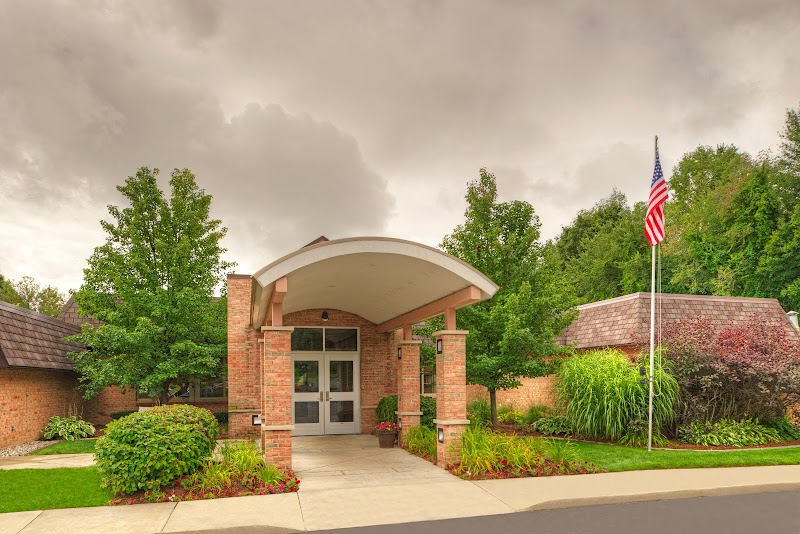
Who Owns and Operates Marshall Nursing And Rehabilitation Community?

Marshall Nursing and Rehabilitation Community is owned by a for-profit company. For-profit facilities operate as businesses with obligations to shareholders or private owners. The facility is operated by ATRIUM CENTERS, a chain that manages multiple nursing homes. With 60 certified beds and approximately 48 residents (about 80% occupancy), it is a smaller facility located in Marshall, Michigan.

How Does Marshall Nursing And Rehabilitation Community Compare to Other Michigan Nursing Homes?

Compared to the 100 nursing homes in Michigan, Marshall Nursing and Rehabilitation Community's overall rating (1 stars) is below the state average of 3.1, staff turnover (59%) is significantly higher than the state average of 46%, and health inspection rating (1 stars) is much below the national benchmark.

What Should Families Ask When Visiting Marshall Nursing And Rehabilitation Community?

Based on this facility's data, families visiting should ask: "What changes have been made since the serious inspection findings, and how are you preventing similar issues?" "How do you ensure continuity of care given staff turnover, and what is your staff retention strategy?" "Can you walk me through typical staffing levels on day, evening, and night shifts?" "Can I visit during a mealtime to observe dining assistance and food quality?" These questions are particularly relevant given the facility's Immediate Jeopardy citations, the facility's high staff turnover rate, and the below-average staffing rating.

Is Marshall Nursing And Rehabilitation Community Safe?

Based on CMS inspection data, Marshall Nursing and Rehabilitation Community has documented safety concerns. Inspectors have issued 1 Immediate Jeopardy citation (the most serious violation level indicating risk of serious injury or death). The facility has a 1-star overall rating and ranks #100 of 100 nursing homes in Michigan. Families considering this facility should ask detailed questions about what corrective actions have been taken since these incidents.

Do Nurses at Marshall Nursing And Rehabilitation Community Stick Around?

Staff turnover at Marshall Nursing and Rehabilitation Community is high. At 59%, the facility is 13 percentage points above the Michigan average of 46%. Registered Nurse turnover is particularly concerning at 69%. RNs handle complex medical decisions and coordinate care — frequent RN changes can directly impact care quality. High turnover means new staff may not know residents' individual needs, medications, or preferences. It can also be disorienting for residents, especially those with dementia who rely on familiar faces. Families should ask: What is causing the turnover? What retention programs are in place? How do you ensure care continuity during staff transitions?

Was Marshall Nursing And Rehabilitation Community Ever Fined?

Marshall Nursing and Rehabilitation Community has been fined $105,860 across 2 penalty actions. This is 3.1x the Michigan average of $34,137. Fines at this level are uncommon and typically indicate a pattern of serious deficiencies, repeated violations, or failure to correct problems promptly. CMS reserves penalties of this magnitude for facilities that pose significant, documented risk to resident health or safety. Families should request specific documentation of what issues led to these fines and what systemic changes have been implemented.

Is Marshall Nursing And Rehabilitation Community on Any Federal Watch List?

Marshall Nursing and Rehabilitation Community is not on any federal watch list. The most significant is the Special Focus Facility (SFF) program, which identifies the bottom 1% of nursing homes nationally based on persistent, serious quality problems. Not being on this list means the facility has avoided the pattern of deficiencies that triggers enhanced federal oversight. This is a positive indicator, though families should still review the facility's inspection history directly.