

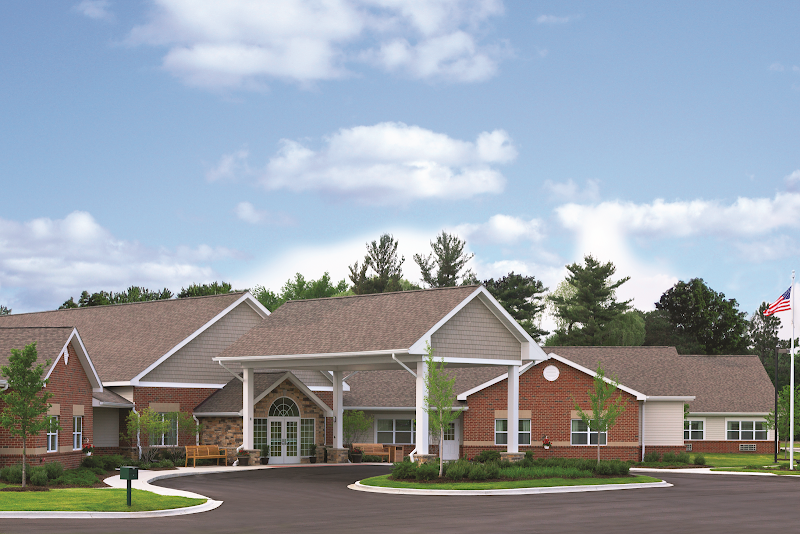
Brittany Manor

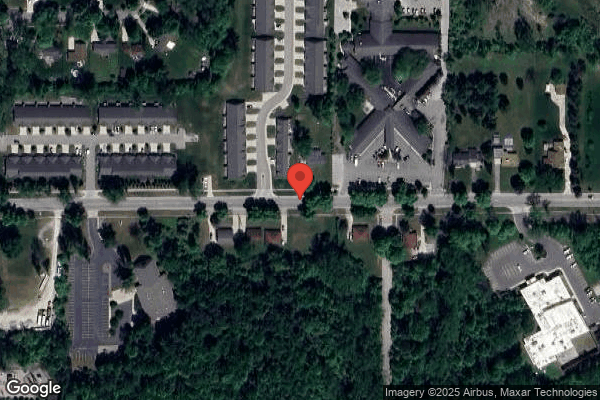
3615 East Ashman Street, Midland, MI 48642 (989) 631-0460
For profit - Limited Liability company 140 Beds CIENA HEALTHCARE/LAUREL HEALTH CARE Data: November 2025
Trust Grade
50/100
#188 of 422 in MI
Last Inspection: March 2025

Within standard 12-15 month inspection cycle. Federal law requires annual inspections.

Overview

Brittany Manor has a Trust Grade of C, which means it is average and sits in the middle of the pack compared to other nursing homes. It ranks #188 out of 422 facilities in Michigan, placing it in the top half, and #2 out of 3 in Midland County, indicating that only one local option is better. The facility is improving, with a decrease in reported issues from 10 in 2024 to 6 in 2025. Staffing is a strength with a 4 out of 5 stars rating and a turnover rate of 43%, which is slightly below the state average, suggesting that staff are familiar with the residents. While there are no fines on record, which is a positive sign, there were serious incidents reported, including a failure to identify a resident's worsening condition in time, resulting in unnecessary pain and a delay in treatment for a fracture. Additionally, another resident experienced a preventable fall due to inadequate supervision, leading to facial injuries that required hospital care. These findings highlight the need for improved monitoring and adherence to care plans, balancing the facility's strengths in staffing and its ongoing improvements with some significant areas of concern.

Trust Score
C
50/100
In Michigan
#188/422
Top 44%
Safety Record
High Risk
Review needed
Inspections
Getting Better
10 → 6 violations
Staff Stability
○ Average
43% turnover. Near Michigan's 48% average. Typical for the industry.
Penalties
✓ Good
No fines on record. Clean compliance history, better than most Michigan facilities.
Skilled Nurses
✓ Good
Each resident gets 48 minutes of Registered Nurse (RN) attention daily — more than average for Michigan. RNs are trained to catch health problems early.
Violations
⚠ Watch
18 deficiencies on record. Higher than average. Multiple issues found across inspections.
★★★☆☆
3.0
Overall Rating
★★★★☆
4.0
Staff Levels
★★★☆☆
3.0
Care Quality
★★★☆☆
3.0
Inspection Score
Stable
2024: 10 issues
2025: 6 issues

The Good

  • 4-Star Staffing Rating · Above-average nurse staffing levels
  • Full Sprinkler Coverage · Fire safety systems throughout facility
  • No fines on record
  • Staff turnover below average (43%)

    5 points below Michigan average of 48%

Facility shows strength in staffing levels, fire safety.

The Bad

3-Star Overall Rating

Near Michigan average (3.1)

Meets federal standards, typical of most facilities

Staff Turnover: 43%

Near Michigan avg (46%)

Typical for the industry

Chain: CIENA HEALTHCARE/LAUREL HEALTH CARE

Part of a multi-facility chain

Ask about local staffing decisions and management

The Ugly 18 deficiencies on record

3 actual harm
Mar 2025 4 deficiencies
CONCERN (D)

Potential for Harm - no one hurt, but risky conditions existed

Resident Rights (Tag F0550)

Could have caused harm · This affected 1 resident

**NOTE- TERMS IN BRACKETS HAVE BEEN EDITED TO PROTECT CONFIDENTIALITY** R34 Review of the Electronic Medical Record (EMR) admission Record reflected R34 originally admitted to the facility 2/25/25 and...

Read full inspector narrative →
**NOTE- TERMS IN BRACKETS HAVE BEEN EDITED TO PROTECT CONFIDENTIALITY** R34 Review of the Electronic Medical Record (EMR) admission Record reflected R34 originally admitted to the facility 2/25/25 and has current pertinent diagnoses of Feeding Difficulties and Need for Assistance with Personal Care. The Minimum Data Set (MDS) dated [DATE] reflected a Brief Interview for Mental Status (BIMS) score of 12 out of 15 which indicated the Resident was mildly cognitively impaired. Section GG (titled Functional Abilities and Goals) of this MDS revealed R34 required Substantial /maximal assistance with eating and that a Helper does more than half the effort. On 3/25/25 at 11:53 AM lunch service was observed to be progress in the North Hall Dining Room. Initially present were three residents at one table, two residents at another, and two residents sitting at tables by themselves. All residents except one resident, (R34) sitting by herself, were eating. R34 reported she has not received her meal yet. At 12:00 PM a female resident was pushed by a staff member to sit at the table with R34. This new resident was immediately provided a meal tray that was set up by the staff. A male resident in a power wheelchair then arrived at a nearby table and was immediately provided a meal. At 12:04 PM a staff member provided coffee and an orange-colored drink to the resident sitting at the table with R34. R34 did not have any beverages. At 12:06 PM a staff member asked R34 if she was done eating and ready to return to her room. R34 reported she had not received her meal yet and the staff member told her she would let someone know. At 12:08 PM a staff member brought a covered tray and set it before R34 telling her she would be back with a clothing protector. While the staff member was away R34 reported she finally got her meal. R34 reported her meal was still covered because she requires assistance with eating. R34 reported the food usually isn't hot enough. R34 reported she has asked staff to reheat her food and stated, they won't do it. When asked if staff have actually told her that before R34 nodded her head yes. At 12:15 PM the staff member returned with a clothing protector and began assisting R34 with her meal. At 12:18 PM the staff member left R34 to assist other residents who had finished their meals and were wanting to leave the Dining Room. At 12:20 PM the staff member returned to the table with R34 and resumed assisting her with her meal. On 3/26/25 at 12:20 PM, R34 was sitting at a table by herself in the North Hall Dining Room. It was observed that R34 had a device attached to her right hand that held a fork allowing her to feed herself. R34 reported that the food was cold again and she had asked for tomato soup. R34 reported that after her lunch the previous day she was not taken back to her room for an hour and that it hurt her bottom on which there was a sore. During an interview conducted 3/27/25 at 8:01 AM the North Unit Manager (UM) K reported that the nurses are responsible for making sure the meal trays are dispensed to the residents. UM K reported the Dining Room is served first then the residents who take their meals in their rooms. UM K was informed of the observation of delayed meal service for R34 on 3/25/25 and that the Resident reported the food was usually cold. UM K was also informed that R34 reported an extended wait to return to her room after the meal and that this prolonged wait caused the Resident discomfort. UM K did not offer any comments or additional information. Based on observation, interview, and record review, the facility failed to proved dignified care and services for two facility residents (R10 and R34). Findings: Resident #10 (R10) Review of an admission Record revealed R10 was a [AGE] year-old male, admitted to the facility on [DATE], with pertinent diagnoses which included: tracheostomy, diabetes mellitus with diabetic neuropathy, kidney disease, and heart disease. Review of a Minimum Data Set (MDS) assessment for R10, with a reference date of 2/25/25 revealed a Brief Interview for Mental Status (BIMS) score of 12, out of a total possible score of 15, which indicated R10 was moderately cognitively impaired. Review of R10's Care Plan revealed R10 required the use of a mechanical lift and the assistance of 2 staff members to transfer from his bed to his wheelchair. During an observation and interview on 03/26/25 at 08:48 AM, R10 pressed his call light and reported that he was ready to get up and into his wheelchair for the day. R10 reported that it frequently took greater than 30 minutes to have his call light answered and wait times were worse on 3rd shift. The following observations were made while in the hallway outside of R10's room: At 08:52 AM a Certified Nurse Aide (CNA) M entered R10's room, turned off his call light, and reported she had to assist another resident and stated, I'll come back. From 08:53 AM-09:14 AM R10's call light was inactive, and no staff entered his room. At 09:14 AM R10 initiated his call light. At 09:16 AM a housekeeping staff member entered his room to identify his needs. The housekeeping staff member exited his room and notified CNA M that R10 required assistance. The call light remained active. At 09:19 AM CNA M entered R10's room, turned off his call light, and left the room to assist a resident in a different room. At 09:21 AM CNA M entered R10's room, stated she had to go get a sling (for the mechanical lift) and I'll be back. R10's call light remained inactive. At 09:24 AM CNA M brought a mechanical lift sling to R10's room and exited his room. R10's call light remained inactive. At 09:26 AM this surveyor entered R10's room and observed R10 visibly upset (shaking his head and scowling). R10 reported staff would frequently shut his call light off and exit his room which caused feelings of frustration. At 09:31 AM R10 initiated his call light. At 09:32 AM a CNA entered R10's room and assisted R10 (44 minutes from the initial call light activation). During an interview on 03/27/25 at 12:00 PM, Nursing Home Administrator (NHA) reported the expectation is that a staff member will leave the call light on until the residents' needs are met. Review of the facility policy Call Lights last revised 3/12/25 revealed, Policy-Call lights will be placed within the resident's reach and answered in a timely manner .Responding to a Call Light .3. Go to the location of the call light, and turn off the light if you are able to meet the resident request .
CONCERN (D)

Potential for Harm - no one hurt, but risky conditions existed

Deficiency F0804 (Tag F0804)

Could have caused harm · This affected 1 resident

**NOTE- TERMS IN BRACKETS HAVE BEEN EDITED TO PROTECT CONFIDENTIALITY** Resident #41 (R41) Review of an admission Record reflected R41 originally admitted to the facility on [DATE] with diagnoses that...

Read full inspector narrative →
**NOTE- TERMS IN BRACKETS HAVE BEEN EDITED TO PROTECT CONFIDENTIALITY** Resident #41 (R41) Review of an admission Record reflected R41 originally admitted to the facility on [DATE] with diagnoses that included paraplegia, depression, anxiety and moderate to severe protein-calorie malnutrition. R41 was their own responsible party. During an interview on 3/25/2025 at 2:05 PM, R41 reported that they were bored with the food, the meals are not very hot and the coffee that is served at the facility is very cold. R41 said they resort to a [delivery service] to bring hot coffee, and despite the delivery distance, the coffee is still hotter than the coffee served at the facility. During an observation of the lunch service on 3/26/2025 at 12:16 PM, an insulated cart containing meal trays was delivered to the unit where R41 lived. R41's tray was the last tray to be delivered and was intercepted at 12:31 PM (15 minutes after the insulated cart was delivered to the unit) by the surveyor to test for palatability and temperature. Staff were instructed to obtain a new meal for R41 at this time. During an observation on 3/26/25 at 12:18 PM, Dietary Manager (DM) C confirmed the temperature of the coffee in the covered mug on R41's meal tray was 109 degrees Fahrenheit. The turkey served with the meal was 126 degrees Fahrenheit, green beans were 133 degrees Fahrenheit, and stuffing was 144 degrees Fahrenheit. DM C said when the food was plated in the kitchen, and the appropriate holding temperatures were maintained. DM C reported that the coffee was poured an hour prior to the temperature observation and the temperature loss is when the food leaves the kitchen and goes onto the unit, Certified Nurse Aides (CNA's) can't deliver the trays right away. DM C said that staff often have to remind to keep the insulated cart doors closed during delivery of meal trays to help maintain palatable temperatures. During a follow-up interview on 3/26/25 at 1:31 PM, R41 reported a notable an improvement in the taste and temperature of the meal and coffee because the staff had to get a fresh tray after the surveyor used the meal originally intended for them to test temperatures. R41 said they enjoyed the meal very much and ate every last bite. Based on observation, interview, and record review, the facility failed to ensure food and beverages were enjoyable for three facility Residents (R34, R59, and R41) out of 19 residents reviewed. Findings: R34 Review of the Electronic Medical Record (EMR) admission Record reflected R34 originally admitted to the facility 2/25/25 and has current pertinent diagnoses of Feeding Difficulties and Need for Assistance with Personal Care. The Minimum Data Set (MDS) dated [DATE] reflected a Brief Interview for Mental Status (BIMS) score of 12 out of 15 which indicated the Resident was mildly cognitively impair. Section GG (titled Functional Abilities and Goals) of this MDS revealed R34 required Substantial /maximal assistance with eating and that a Helper does more than half the effort. On 3/25/25 at 11:53 AM lunch service was observed to be in progress in the North Hall Dining Room. Initially present were three residents at one table, two residents at another, and two residents sitting at tables by themselves. All residents except one resident, (R34) sitting by herself, were eating. R34 reported she has not received her meal yet. At 12:00 PM a female resident was pushed by a staff member to sit at the table with R34. This new resident was immediately provided a meal tray that was set up by the staff. A male resident in a power wheelchair then arrived at a nearby table and was immediately provided a meal. At 12:04 PM a staff member provided coffee and an orange-colored drink to the resident sitting at the table with R34. R34 did not have any beverages. At 12:06 PM a staff member asked R34 if she was done eating and ready to return to her room. R34 reported she had not received her meal yet and the staff member told her she would let someone know. At 12:08 a staff member brought a covered tray and set it before R34 telling her she would be back with a clothing protector. While the staff member was away R34 reported she finally got her meal. R34 reported her meal was still covered because she requires assistance with eating. R34 reported the food usually isn't hot enough. R34 reported she has asked staff to reheat her food and stated, they won't do it. When asked if staff have actually told her that before R34 nodded her head yes. At 12:15 PM the staff member returned with a clothing protector and began assisting R34 with her meal. At 12:18 PM the staff member left R34 to assist other residents who had finished their meals and were wanting to leave the Dining Room. At 12:20 PM the staff member returned to the table with R34 and resumed assisting her with her meal. On 3/26/25 at 12:20 PM R34 was sitting at a table by herself in the North Hall Dining Room. It was observed that R34 had a device attached to her right hand that held a fork allowing her to feed herself. R34 reported that the food was cold again and she had asked for tomato soup. R59 Review of the medical record reflected R59 admitted to the facility 2/26/25 with pertinent diagnoses that included Protein Calorie Malnutrition and Muscle Wasting Atrophy. The MDS dated [DATE] reflected a BIMS score of 12 out of 15 which indicated the Resident was mildly cognitively impaired. On 3/25/25 at 3:13 PM an interview was conducted with R59 in her room. R59 reported she eats her meals in the North Dining Room about half of the time and the rest in her room. R59 reported the food is always cold. R59 reported the coffee is cool. R59 stated It's not their (staff's) fault R59 indicated the staff are busy and I don't know how you would keep food warm on a tray all the way to the room. On 3/26/25 at 12:17 PM in the room of R59 the R59 reported that the temperature of her lunch was better today but indicated it was still not warm enough. R59 again reported, it's not their fault. During an interview conducted 3/27/25 at 8:01 AM the North Unit Manager (UM) K reported that the nurses are responsible for making sure the meal trays are dispensed to the residents. UM K reported the Dining Room is served first then the residents who take their meals in their rooms. UM K was informed of the observation of delayed meal service for R34 on 3/25/25 and that the Resident reported the food was usually cold. UM K was informed of the two interviews with R59 that the food was cold and that the Resident had stated that it was not the fault of the staff. UM K stated that R59 is very forgiving. UM K did not offer any additional comments or information
CONCERN (E)

Potential for Harm - no one hurt, but risky conditions existed

Deficiency F0658 (Tag F0658)

Could have caused harm · This affected multiple residents

**NOTE- TERMS IN BRACKETS HAVE BEEN EDITED TO PROTECT CONFIDENTIALITY** Based on interview and record review, the facility failed to 1.) accurately document administration of controlled substances and...

Read full inspector narrative →
**NOTE- TERMS IN BRACKETS HAVE BEEN EDITED TO PROTECT CONFIDENTIALITY** Based on interview and record review, the facility failed to 1.) accurately document administration of controlled substances and 2.) ensure narcotic medications were administered following the physician order for 4 residents (Residents #23, #74, #84, and #10), reviewed for controlled substances, resulting in medication errors. Findings: Resident #23 (R23) Review of an admission Record revealed R23 was a [AGE] year-old male, admitted to the facility on [DATE], with pertinent diagnoses which included: generalized anxiety disorder. Review of R23's Order Summary dated 3/5/25 revealed, diazePAM (Valium) Oral Solution 5 MG/5ML .Give 4 ml via PEG-Tube two times a day for ANTIANXIETY AGENTS. To be administered at 8:00 AM and 9:00 PM. Review of R23's Controlled Substance Proof of Use form revealed 1 dose of diazepam was administered on 3/7/25 at 9:45 AM. R23's 9:00 PM dose of diazepam was not documented as dispensed. Review of R23's March Medication Administration Record revealed both doses of R23's diazepam was documented as administered on 3/7/25. Review of R23's Electronic Medical Record revealed no documentation for the withholding of R23's even dose of diazepam on 3/7/25. Resident #74 (R74) Review of an admission Record revealed R74 was an [AGE] year-old male, admitted to the facility on [DATE], with pertinent diagnoses which included: anxiety disorder. Review of R74's Order Summary dated 3/4/25 revealed, Ativan Oral Tablet 0.5 MG (Lorazepam) *Controlled Drug* Give 0.5 tablet by mouth every 6 hours as needed for Anxiety for 14 Days. Review of R74's Controlled Substance Proof of Use form revealed: *On 3/5/25 at 8:00 PM a dose of Ativan was dispensed. *On 3/7/25 at 9:00 PM a dose of Ativan was dispensed. *On 3/16/25 at 8:00 PM a dose of Ativan was dispensed. Review of R74's March Medication Administration Record revealed no documentation that R74's Ativan was administered on 3/5/25, 3/7/25, or 3/16/25. Resident #84 (R84) Review of an admission Record revealed R84 was a [AGE] year-old male, admitted to the facility on [DATE], with pertinent diagnoses which included: anxiety disorder. Review of R84's Order Summary dated 3/11/25 revealed, LORazepam (Ativan) Tablet 0.5 MG *Controlled Drug* Give 1 tablet by mouth every 6 hours as needed for Anxiety until 03/19/2025 23:59 (11:59 PM). Review of R84's Controlled Substance Proof of Use form revealed: *On 3/16/25 at 9:00 PM a dose of Ativan was dispensed. *On 3/20/25 at 3:00 AM a dose of Ativan was dispensed. *On 3/20/25 at 8:00 PM a dose of Ativan was dispensed. Review of R84's March Medication Administration Record revealed no documentation that R84's Ativan was administered on 3/16/25, or on 3/20/25 at 3:00 AM and 8:00 PM. Review of R84's Electronic Medical Record revealed no documentation of an order for Ativan dated 3/20/25. Resident #10 (R10) Review of an admission Record revealed R10 was a [AGE] year-old male, admitted to the facility on [DATE], with pertinent diagnoses which included: diabetic neuropathy. Review of R10's Order Summary dated 1/24/24 revealed, Norco Oral Tablet 5-325 MG (Hydrocodone-Acetaminophen) *Controlled Drug* Give 1 tablet by mouth two times a day for pain. To be administered at 8:00 AM and 8:00 PM. Review of R10's Controlled Substance Proof of Use form revealed 1 dose of Norco was dispensed on 3/8/25 at 8:39 AM. Review of R10's March Medication Administration Record revealed both the 8:00 AM and 8:00 PM doses of Norco were administered. During an interview on 3/27/25 at 1:20 PM, Director of Nursing (DON) confirmed the above medication errors/discrepancies and reported medication error reports were generated and 1:1 education as provided. Review of Fundamentals of Nursing ([NAME] and [NAME]) 11th edition revealed, The National Coordinating Council for Medication Error Reporting and Prevention (2021) defines a medication error as any preventable event that may cause inappropriate medication use or jeopardize patient safety. Medication errors include inaccurate prescribing, administering the wrong medication, giving the medication using the wrong route or time interval, administering extra doses, and/or failing to administer a medication. Preventing medication errors is essential. [NAME], [NAME] A.; [NAME], [NAME] G.; Stockert, [NAME] A.; Hall, [NAME]. Fundamentals of Nursing - E-Book (p. 639). Elsevier Health Sciences. Kindle Edition.
CONCERN (E)

Potential for Harm - no one hurt, but risky conditions existed

Medical Records (Tag F0842)

Could have caused harm · This affected multiple residents

**NOTE- TERMS IN BRACKETS HAVE BEEN EDITED TO PROTECT CONFIDENTIALITY** Based on interview and record review the facility failed to maintain a complete and accurate medical record for 5 residents (R2,...

Read full inspector narrative →
**NOTE- TERMS IN BRACKETS HAVE BEEN EDITED TO PROTECT CONFIDENTIALITY** Based on interview and record review the facility failed to maintain a complete and accurate medical record for 5 residents (R2, R69, R73, R76 & R88) out of 19 residents reviewed. Findings: Resident #88 (R88) Review of a closed clinical record for a Death investigation during the annual recertification survey revealed R88 originally admitted to the facility on [DATE] with a cognitive communication deficit, aphasia (inability to speak), a history of aspiration (inhalation of particulate into the lungs), and received nutrition through a feeding tube. Review of a Nurses Note dated 1/28/2025 at 2:20 AM reflected (R88) passed away at 1:51 AM 1/28/2025. Daughter (name), PA (physician assistant), DON (Director of Nursing), & Funeral home notified per daughter's request. Progress notes leading up to R88's death were reviewed and revealed the following: Review of a Change in Condition note dated 1/22/2025 at 10:10 AM revealed (R88) moaning on and off all night, per CNA (Certified Nurse Aide). (R88) moaning a few times today with grimacing on her face. A CBC (complete blood count), CMP (comprehensive metabolic panel) and an abdominal x-ray were ordered at this time. Review of a Nurses Note dated 1/23/2025 at 8:55 AM, indicated R88 was sent to the Emergency Department for a CT (computerized tomography) scan to rule out ileus (inability of the intestine to contract normally to remove waste out of the body)/possible obstruction (bowel obstruction). R88 returned to the facility on 1/23/2025 at 5:00 PM with a diagnosed Urinary Tract Infection (UTI) and an order to administer an antibiotic. Review of a Nurses Note dated 1/25/2025 at 10:31 AM reflected R88 was moaning during a transfer. Vital signs indicated R88's respirations (breaths per minute) was 24, heart rate was 150 beats per minute and oxygen saturation (SaO2) was 79% (on room air, normal SaO2 is between 95-100%). The nurse administered supplemental oxygen and after speaking to R88's daughter, obtained an order for oral Roxanol (a highly concentrated solution of the narcotic analgesic morphine sulfate). The note indicated R88's vital signs returned to normal with the supplemental oxygen in place at 2 liters (2L). Review of a Nurses Note dated 1/26/2025 at 12:30 PM, R88's daughter came to visit and provided information regarding funeral home. Review of a Dietary Note dated 1/27/2025 at 12:14 PM reflected R88's daughter was informed .prior formula now available. Order placed this date for 2Cal HN (a high-calorie, high-protein nutritional supplement designed for individuals who require increased caloric and protein intake.) Review of a Nurses Note dated 1/27/2025 at 5:50 PM (8 hours before R88 passed away) reflected R88's daughter was given an update on R88's status which was stable. The note indicated (R88's) son in law came to visit (R88) and stated he thought she looked better then (sic) she did over the weekend. Review of a Nurses Note dated 1/27/2025 at 10:54 PM reflected (R88) currently grimacing/moaning. PRN (as needed) morphine administered, she also has a low grade fever of 99.1. Patient has some pulmonary edema at auscultation of the lungs, PA notified and directed order for a CXR (chest x-ray) stat (right away). Patient was repositioned HOB (head of bed) @ (at) 45 degrees, cool towel applied on forehead for LGF (low grade fever). Supplemental O2 (oxygen) @ 2L, Patient stat (sic) @ 90%. Will continue to monitor for any acute change of condition. The note does not indicate R88's daughter was notified of the change in condition and new order for a chest x-ray. During an interview on 3/26/2025 at 4:26 PM, Licensed Practical Nurse (LPN) L reported she was the nurse on duty at the time R88 passed away and had spoken to R88's daughter during the shift, before R88 passed away. LPN L said that R88's death was not entirely unexpected, but no one expected her to pass away that night, it was a shock on 1/28/2025. LPN L said that she was very concerned about R88's lung sounds which sounded nasty with a lot of fluid. LPN L said she notified the physician and got an order for a chest x-ray and indicated she and CNA's were checking on R88 at least every 30-45 minutes, vital signs were measured with every check. LPN L said she did not ask for R88 to be sent to the hospital because R88's daughter did not want R88 to go back to the hospital after having just been there a few days prior. LPN L said she thought she documented a full physical assessment or change in condition on 1/28/2025. LPN L said she would have written vital signs down on a piece of paper, but did not know where they would be in the electronic health record if she didn't add them. Review of O2 Sats Summary & Blood Pressure Summary reflected the last oxygen saturation & blood pressure was recorded on 1/27/25 at 7:09 AM. A Temperature Summary indicated the last temperature taken was on 1/27/25 at 9:23 PM. Review of the entire Electronic Medical Record (EMR) did not reflect a full physical assessment, or recent vital signs had been recorded after LPN L assumed care for R88 on 1/27/2025 and before she passed away on 1/28/2025. No indication R88 had been placed on comfort care with death anticipated was documented. The progress notes do not indicate R88's daughter did not want R88 sent to the hospital was documented. During an interview on 3/27/2025 at 9:45 AM, the DON reported that the facility had not investigated R88's death because it was not unexpected. The DON said that R88's daughter did not want R88 sent to the hospital again, the morphine was added for comfort, and the tube feeding formula was changed because R88's daughter thought it would be less irritating to R88's digestive system. The DON reviewed R88's clinical record and reported she did not see documentation to support the clinical decision making, physical assessments and vital sign monitoring leading up to R88's death. Resident #69 (R69) Review of an admission Record reflected R69 admitted to the facility with diagnosis that included acute respiratory failure with hypoxia and a need for assistance with personal care. R69 was their own responsible party. Review of a Notification of Medicare Non-Coverage indicated The Effective Date Coverage of Your Current Skilled Services Will End: 11/15/2024. The form describes R69's right to appeal the decision and includes a space for a signature of the recipient of care to indicate the notice was received and understood. The notice was signed by R69's wife and was not dated. During an interview on 3/27/2025 at 9:50 AM, the DON reported that R69 remained in the facility and shared a room with his wife who would often take control of R69's affairs if R69 was asleep or otherwise busy. The DON reviewed R69's EMR and was not able to locate a progress note or business office/administrative note that would indicate the notice was provided to R69 in a timely manner and there was no explanation for why R69 did not sign the notice himself. Resident #2 (R2) Review of an admission Record revealed R2 was a [AGE] year-old male, admitted to the facility on [DATE], with pertinent diagnoses which included: Major Depressive Disorder. R2 had a guardian. Review of R2's Order Summary dated 2/1/25-2/16/25 revealed, FLUoxetine (Prozac/antidepressant) HCl Oral Tablet 20 MG (Fluoxetine HCl) Give 1 capsule by mouth one time a day . Review of R2's Order Summary dated 2/17/25 revealed, FLUoxetine HCl Oral Capsule 10 MG (Fluoxetine HCl) Give 1 capsule by mouth one time a day . Review of R2's Nurses Note dated 2/17/25 revealed, New order to decrease Prozac to 10mg PO qd (by mouth every day). Resident and family informed of order update. Review of R2's Electronic Medical Record revealed no documentation that R2's guardian was involved in and consented to the Gradual Dose Reduction (GDR) of R2's Prozac. Review of R2's Nurses Note dated 3/27/2025 written by Director of Nursing (DON) revealed, F/U (follow up) with resident niece on order to decrease Prozac on 2/17. Niece stated she was notified and had been in agreement with plan. DON explained progress note did not reflect agreement and niece confirmed she understood the rationale and agreed with plan at the time of the change . Resident #73 (R73) Review of an admission Record revealed R73 was a [AGE] year-old female, admitted to the facility on [DATE], with pertinent diagnoses which included: major depressive disorder. R73 had a Durable Power of Attorney (DPOA) activated. Review of R73's Order Summary dated 7/19/25-2/25/25 revealed, SEROquel Oral Tablet 25 MG (Quetiapine Fumarate) Give 25 mg by mouth at bedtime . Review of R73's Order Summary dated 2/25/25 revealed, SEROquel Oral Tablet 25 MG (Quetiapine Fumarate) Give 12.5 mg by mouth at bedtime . Review of R73's Order Summary dated 2/25/25 revealed, Ativan Oral Tablet 0.5 MG (Lorazepam) Give 0.5 tablet by mouth every 24 hours as needed for Anxiety Only to be given on shower days, 30-60 minutes before the resident showers. Review of R73's Nurses Note dated 2/25/2025 revealed, New Order-Decrease Seroquel to 12.5 mg at bedtime. Ativan 0.25 to be given on shower days only. Give 30-60 minutes before shower .Family Notified . Review of R73's Electronic Medical Record revealed no documentation that R73's DPOA was involved in and consented to the Gradual Dose Reduction (GDR) of R73's seroquel or was provided education on the risk versus benefit of Ativan. Resident #76 (R76) Review of an admission Record revealed R76 was a [AGE] year-old male, admitted to the facility on [DATE], with pertinent diagnoses which included: paranoid personality disorder. R76 had a guardian. Review of R76's Order Summary revealed ZyPREXA Oral Tablet 2.5 MG (Olanzapine) Give 1 tablet by mouth at bedtime for antipsychotic had been discontinued. Review of R76's Resident At Risk note dated 3/13/25 revealed, Reviewed Clinical Indicator: Resident was seen by psych np (nurse practitioner) on 3/11/25 .Do (sic) to successful GDR of Zyprexa per np will d/c (discontinue), Will continue to observe for changes in mood and behavior. Review of R76's Electronic Medical Record revealed no documentation that R76's guardian had consented to the discontinuation of Zyprexa. During an interview on 3/27/25 at 10:40 AM, DON reported she was unable to contact R76's guardian to confirm they were educated on and participated in his Zyprexa GDR/discontinuation. During an interview on 03/27/25 at 08:36 AM, Nursing Home Administrator (NHA) confirmed the documentation for R2, R73, and R76's GDR's was lacking and did not reflect risk versus benefit education documentation or guardian/POA consent. During an interview on 3/27/25 at 10:40 AM, DON reported R2, R73, and R76's documentation did not support that their guardian/POAs had been educated on the risk versus benefits and consented to the GDR's of the psychotropic medications. DON reported that the expectation for staff was to ensure all elements of documentation were in place which included notification of a recommendation of a change in medication, consenting to medication changes, as well as education to guardian/POAs and/or family members.
Jan 2025 2 deficiencies 2 Harm
SERIOUS (G) 📢 Someone Reported This

A family member, employee, or ombudsman was alarmed enough to file a formal complaint

Actual Harm - a resident was hurt due to facility failures

Quality of Care (Tag F0684)

A resident was harmed · This affected 1 resident

**NOTE- TERMS IN BRACKETS HAVE BEEN EDITED TO PROTECT CONFIDENTIALITY** Based on interview and record review, the facility failed to promptly identify a change in condition and act upon those changes ...

Read full inspector narrative →
**NOTE- TERMS IN BRACKETS HAVE BEEN EDITED TO PROTECT CONFIDENTIALITY** Based on interview and record review, the facility failed to promptly identify a change in condition and act upon those changes for 1 resident (R4) out of 4 residents reviewed for quality of care, resulting in R4 experiencing unnecessary pain, a delay in evaluation and surgical intervention for a femur fracture. Findings: Resident #4 (R4) Review of an admission Record revealed R4 was an [AGE] year-old male, admitted to the facility on [DATE], with pertinent diagnoses which included: difficulty in walking, muscle wasting and atrophy, need for assistance with personal care, weakness, history of falls prior to admission, and dementia. Review of R4's Brief Interview for Mental Status (BIMS) dated 11/26/24 revealed a score of 11, out of a total possible score of 15, indicating R4 was moderately cognitively impaired. (Last assessment obtained prior to his fall on 1/12/25.). R4's BIMS dated 1/17/25 revealed a score of 15, indicating R4 was cognitively intact. During an interview on 01/23/2025 at 11:15 AM, R4 reported that on 1/12/25 he slipped and fell in the bathroom which resulted in him experiencing pain in his right hip. R4 reported he was assisted back to bed following the fall but experienced significant pain with movement stating he was too painful to move. R4 reported that he couldn't get out of bed and remained in his bed until his transfer to the hospital on 1/14/25. R4 reported that he wanted to go (to the hospital) sooner and was unsure of the cause of the delay in transfer. During an interview on 01/23/2025 at 12:05 PM , Family Member/Emergency Contact (FMEC) C reported that R4 sustained a fall on Sunday 1/12/25 and his wife went to the facility to assess his condition. FMEC C reported that at that time he was in bed and was reporting pain. FMEC C stated that R4 just stayed in bed because he couldn't do anything else and reported as long as he was not moved and remained in bed his pain was manageable. FMEC C reported that it wasn't until Tuesday (1/14/25) that they determined he needed to be evaluated in the emergency department to identify the root cause of his pain/change in condition. FMEC C reported he met R4 at the hospital where he was in shock to find out the extent of R4's injuries and the number of fractures sustained from the fall as well as the need for immediate surgical intervention and was concerned with the delay in his transfer to the hospital with the significant injuries. Review of R4's Incident Report dated 1/12/25 revealed, This was at the beginning of shift he was in bed watching tv. I passed his meds and he took them with no issues. Moments later he put his call light on and before we was able to answer it I heard him at his doorway and when I turned around and noticed him standing with urinal in hand he lost his balance and landed on his right side, no head injuries or any other injuries noted during shift. He was really confused and stated that he was going to bathroom .Notes: 1/13/2025 Resident seems really confused UA (urinalysis) collected to rule out possible UTI (urinary tract infection). 1/13/2025 (no time documented) F/u (follow up) to resident fall on 1/12/25. Therapy attempted to screen this day post fall and resident refused due to new onset of pain .Noted resident is not bearing weight on the right leg. Increased ADL assistance provided. PA (physician assistant) notified and new order obtained for Xray of rt (right) femur/hip for dx (diagnosis): hip pain. Resident has 0/10 pain at rest, non- pharmalogical (sic) pain interventions in place. (Company name omitted) notified of new orders for Xray and will be completed within 24 hours . Confirming the facility was aware that the resident was experiencing pain with movement and had a change of condition of (inability to bear weight on right leg and altered mental status). The resident was not sent to the emergency department despite the change of condition both physically and cognitively and the knowledge that an xray could not be immediately obtained. Review of R4's Post Fall Evaluation dated 1/12/25 revealed, Confused a&o x 1-2 (alert and oriented to person, place, time, situation is x4) .unknown baseline but was told by other staff members that he's normally not that confused (indicating a change in R4's mental status) .he lost his balance and landing sitting up at the right side. He didn't hit his head and denied any pain or discomfort .monitoring throughout shift . Review of R4's Resident At Risk dated 1/13/25 revealed, .Action Taken: Assessed head to toe, rom (range of motion), v/s (vital signs), more confusion ua completed. There was no documentation revealing the outcome of the range of motion assessment despite documentation that R4 was no longer able to bear weight on his right leg and had pain with movement. Review of R4's Order Details dated 1/13/25 at 5:39 PM revealed, X-Ray for right femur/hip DX: Hip Pain. Review of R4's Electronic Medical Record revealed no documentation that the x-ray could not be completed or that the physician was notified of the delay in treatment. Review of R4's Occupational Therapy Missed Visit Details dated 1/13/25 revealed, Pt (patient) unable to be seen today due to having a fall this morning and having right hip pain. Pt unable to stand following fall and 2PA (2 person assist). Nursing addressing . Review of R4's Interdisciplinary Team note dated 1/13/25 revealed, Fall 1/12/25 @ 7:15pm .Resident currently on PT/OT case (physical therapy/occupational therapy) load and when OT approached for treatment that day, he stated he could not participate r/t (related to) too much pain in his right LE (lower extremity/leg), nursing notified of change. Review of R4's Occupational Therapy Treatment Encounter Note dated 1/14/25 revealed, .nursing stated that awaiting xray to come in for stat (immediate) order . Review of R4's Provider Progress Note dated 1/14/25 . Patient had a fall yesterday morning landing on his right hip. He has been unable to weight bear since the fall. Xray was ordered yesterday but has not been done yet. Pain is getting worse as he is requiring being turned q 2 hours for (sic) prevent pressure areas. Discussed with nursing for patient to be sent out for xray and evaluation as if xray is negative, then why can he not weight bear. Nursing will notify Primary care . Extremities .Positive pain noted of the right hip/thigh with any movement . Currently unable to bear weight on right LE . Confirming a delay in obtaining the xray. Review of R4's Pain Summary revealed pain scores of 0/10 indicating no pain. Important to note R4 stated he did not experience pain at rest, only with movement. Review of R4's Electronic Medical Record revealed no comprehensive physical assessments or comprehensive pain assessments following the fall assessment to identify the quality of pain (sharp, dull, achy), aggravating factors (movement), the physical appearance of the injured leg, his cognitive status (had the confusion resolved or continued), or the results of his urinalysis. Review of R4's Tasks for lying to sitting, sitting to standing, and toileting from the time of the fall on 1/12/25-1/14/25 revealed R4 was no longer performing these tasks as he had before and either required a significant change in assistance or did not perform the task. Review of R4's Nurses Note dated 1/14/2025 at 09:02 AM revealed, Resident is c/o pain to left and right hip. Resident has had recent fall and fell on right hip. EMS notified to transfer resident to (name omitted) hospital for evaluation. Son notified of transfer. Review of R4's Nurses Note dated 1/14/2025 at 9:16 AM revealed the ambulance arrived to transport R4 to the emergency department at that time. Approximately 38 hours from the time of the fall. Review of R4's Emergency Department Progress Note dated 1/14/2025 1:26 PM revealed, . presents to the (name omitted) emergency department via EMS (emergency medical services/ambulance) for evaluation following a fall which occurred 2 days prior to arrival . The patient is a resident at [NAME] Manor and reports he had a mechanical fall in the bathroom on the evening of 1/12 .He was helped back to bed and was not ambulatory from that time. He had right hip tenderness which was aggravated by any kind of movement .Imaging studies revealed a right intertrochanteric femur fracture, right inferior pubic ramus fracture, possible sacral insufficiency fracture, and small right retroperitoneal hematoma .Right lower extremity shortened and externally rotated (physical deformity in his right leg) . Review of R4's hospital Tertiary Trauma Survey (trauma provider consultation) dated 1/15/2025 revealed, .Extremities: Neurovascular intact bilaterally, 2+ pulses bilateral radial bilateral DP pulses, external rotation of the right lower extremity that is slightly shortened. Pain over the right hip on palpation. Plan: Right intertrochanteric femur fracture Right inferior pubic ramus fracture Possible acute sacral insufficiency fracture Right retroperitoneal hematoma -Hemoglobin 7.6 from 7.9 from 8.2 Acute blood loss anemia -Likely related to #1 and #2 . Confirming a physical change in R4's right leg from the injury identified by a second provider. During an interview via email on 1/23/2025 at 3:37 PM, Director of Nursing (DON) was asked for documentation of additional monitoring/assessments regarding R4's injury and/or mental status change based on the note monitoring throughout shift on the Post Fall Evaluation dated 1/12/25. DON replied There was a provider who saw him on 1/14 and then he was sent out d/t the pain. There were interventions that she did nonpharmalogically r/t the pain that day- relaxation, positioning and rest- noted on 1/13. Confirming additional monitoring/assessments had not been completed. DON was asked to provide documentation as to why the x-ray was not completed and/or physician notified it could not be completed on 1/13/25. DON stated, The xray was ordered but he went out the hospital and it was done there. There was no documentation provided for the rationale of the delay of the xray or physician notification. During an interview via email on 1/23/2025 at 7:00 PM, DON stated, per our conversation we discussed nurses making a fall progress note every shift for three days, however per our policy there is just to be an assessment done for 72 hrs and doesn't indicate the frequency. Review of Fundamentals of Nursing ([NAME] and [NAME]) 11th edition revealed, Assessing the characteristics of pain allows you to understand the type of pain, its pattern, and the types of interventions that bring relief .Quality: People use a variety of words to describe the quality of their pain (e.g., pain, ache). Ask patients to describe their discomfort using their own words whenever possible; then use these words consistently to obtain an accurate report. For example, say, Tell me what your discomfort feels like. What do you call it? The patient may describe the pain as aching, crushing, throbbing, sharp, or dull. If the patient reports the pain as dull, ask if it is still dull or if it has changed when you return to assess the patient's pain .Aggravating and precipitating factors: Various factors or conditions bring on or make pain worse. Ask a patient to describe activities that cause or aggravate pain, such as physical movement, positions, drinking coffee or alcohol, urination, swallowing, eating food, or psychological stress. Also ask them to demonstrate actions that cause a painful response, such as coughing or turning a certain way .Behavioral effects: When a patient has pain, assess verbalization, vocal response, facial and body movements, and social interaction. A verbal report of pain is a vital part of assessment. You need to be willing to listen and understand. When a patient is unable to communicate pain, it is especially important for you to be alert for behaviors that indicate it (Box 44.9). [NAME], [NAME] A.; [NAME], [NAME] G.; Stockert, [NAME] A.; Hall, [NAME]. Fundamentals of Nursing - E-Book (p. 1141-1143). Elsevier Health Sciences. Kindle Edition.
SERIOUS (G) 📢 Someone Reported This

A family member, employee, or ombudsman was alarmed enough to file a formal complaint

Actual Harm - a resident was hurt due to facility failures

Accident Prevention (Tag F0689)

A resident was harmed · This affected 1 resident

**NOTE- TERMS IN BRACKETS HAVE BEEN EDITED TO PROTECT CONFIDENTIALITY** This citation pertains to intake # MI00149549 Based on observation, interview, and record review, the facility failed to ensure ...

Read full inspector narrative →
**NOTE- TERMS IN BRACKETS HAVE BEEN EDITED TO PROTECT CONFIDENTIALITY** This citation pertains to intake # MI00149549 Based on observation, interview, and record review, the facility failed to ensure a resident was transferred following care planned interventions and standards of practice for 1 resident (Resident #1) out of 4 residents reviewed for accidents and safety, resulting in R1 sustaining a preventable fall with facial bruising and lacerations requiring hospital treatment. Findings: Resident #1 (R1) Review of an admission Record revealed R1 was an [AGE] year-old female, admitted to the facility on [DATE], with pertinent diagnoses which included: difficulty in walking, muscle wasting and atrophy, and need for assistance with personal care. Review of R1's Brief Interview for Mental Status (BIMS) dated 12/17/24 revealed a score of 12, out of a total possible score of 15, indicating R1 was moderately cognitively impaired. R1 had a fall at the facility on 11/7/24 and 12/30/24 confirming she was a high risk for falls. During an observation on 01/22/2025 at 11:48 AM, R1 was sitting up in a wheelchair in her room and was noted to have yellow/blue/gray bruising around her right eye spreading down to her cheekbone. Review of R1's Physical Therapy Discharge Summary dated 12/20/24 revealed, .Discharge Recommendations: 1 PA (physical assist) for all functional mobility, RW (rolling walker) use while ambulating with staff . Review of R1's Care Plan last revised 12/19/24 revealed, AMBULATION/WALKING: Resident is limited assist x1 with rolling walker . Review of R1's Care Plan last revised 1/14/25 revealed, AMBULATION/WALKING: Resident is limited assist x1 with rolling walker. Walk to and from the bathroom with gait belt and rolling walker . During an interview on 01/23/2025 at 9:47 AM, Family Member/Guardian (FMG) A reported that R1 had fallen on 1/13/25 in the early morning. FMG A reported that she met with R1 the day of the fall and R1 reported to her that her bed was broken and moved when they were attempting to transfer her back to bed. FMG A reported that a facility nurse called her to notify her of R1's fall and reported that R1 was leaning towards the right during a transfer and the Certified Nursing Assistant (CNA) lost control resulting in R1 falling and smashed her face on the frame of the bed. FMG A reported that R1 was to be transferred with her walker and a gait belt to be safe and the CNA did not follow her care planned interventions for transfer. FMG A reported she discussed her concerns with R1's bed not locking to a facility nurse and the nurse reported to her that when R1's style of bed was in the lowest position the wheels would not lock which was also confirmed by maintenance staff. FMG A reported the CNA lacked the education/understanding of the mechanics of R1's bed and should have ensured the bed was in a locked position prior to transferring R1. The facility nurse reported to FMG A that R1's fall was preventable, and the CNA should have ensured the bed was locked, a gait belt in place, and her walker utilized during R1's transfer back to bed. Review of R1's Interdisciplinary Note dated 1/13/25 revealed, 1/13/25 @ 2am Resident was being assisted back from the bathroom by CNA and was transferring back into bed when she began leaning and CNA lost control of the transfer and resident fell, hitting her head on the bed frame. Laceration to right side of face, sent to ER (emergency room) for evaluation and returned w/ (with) tests negative .Staff educated to use gait belt and utilize RW (rolling walker) for transfers and ambulation in room. Review of R1's Hospital Record dated 1/13/25 revealed, .The patient is a [AGE] year-old female presents to the ED with fall and skin tear below her right eye .The wound is too close to the eyelid and the skin is too thin for primary closure with sutures or Dermabond. A nonadherent dressing was placed . Review of R1's Post Fall Evaluation dated 1/13/25 revealed, Fall Description Details .Getting back into bed after using the bathroom .w/c (wheelchair) next to bed. CNA assisted resident to standing position-lost balance (and) resident fell .gait belt not in use. Describe initial intervention to prevent future falls: Gait belt to be used during transfers (and) walker-CNA educated . During an interview on 1/23/25 at 9:26 AM, Director of Nursing (DON) confirmed that CNA B did not use a gait belt while transferring R1 which resulted in a fall with a facial laceration. DON reported that due to R1's improper transfer a meeting was scheduled for CNAs for gait belt/transfer education. During an interview via email on 01/23/2025 at 3:37 PM, DON reported that prior to R1's fall, the use of a gait belt was not on R1's care plan because it is a standard of practice. DON stated that due to the statement that the bed moved during the transfer we wanted to cover all bases and just replace the bed. Review of a Disciplinary Action Record for CNA B dated 1/16/25 revealed, Date of Infarction: 1-13-25 .Care plan not being followed. Resident was transferred without a gait belt .(CNA B) stated she helped the resident (R1) off the toilet (and) didn't use gait belt. She stated the bed moved (and) that's why/how the resident moved (and) hit her head. Review of Fundamentals of Nursing ([NAME] and [NAME]) 11th edition revealed, Several methods are used to help a patient ambulate. For those who can bear weight easily provide support at the waist with a gait belt so that the patient's center of gravity remains midline. The belt helps you to stabilize patients if they lose their balance. [NAME], [NAME] A.; [NAME], [NAME] Griffin; Stockert, [NAME] A.; Hall, [NAME]. Fundamentals of Nursing - E-Book (p. 796). Elsevier Health Sciences. Kindle Edition.
Apr 2024 10 deficiencies
CONCERN (D)

Potential for Harm - no one hurt, but risky conditions existed

Deficiency F0578 (Tag F0578)

Could have caused harm · This affected 1 resident

During record review and interview the facility failed to ensure the advanced directives, Do Not Resuscitate documentation was completed with two signatures for one (R#48) of one resident reviewed for...

Read full inspector narrative →
During record review and interview the facility failed to ensure the advanced directives, Do Not Resuscitate documentation was completed with two signatures for one (R#48) of one resident reviewed for completed advanced directives. Findings Include. Resident #48 (R48) Record review revealed R48's Do Not Resuscitate (DNR) was signed on 03/07/24 but did not have 2 witness signatures as required. During an interview on 04/03/24 at 12:17 PM, Social Worker (SW) S stated they usually have 2 signatures, his does not. Writer asked if she would expect to see two signatures for witnesses? SW S stated yes.
CONCERN (D)

Potential for Harm - no one hurt, but risky conditions existed

Transfer Notice (Tag F0623)

Could have caused harm · This affected 1 resident

**NOTE- TERMS IN BRACKETS HAVE BEEN EDITED TO PROTECT CONFIDENTIALITY** Based on observation, interview, and record review, the facility failed to ensure that written notification required for facilit...

Read full inspector narrative →
**NOTE- TERMS IN BRACKETS HAVE BEEN EDITED TO PROTECT CONFIDENTIALITY** Based on observation, interview, and record review, the facility failed to ensure that written notification required for facility-initiated transfers were provided to residents or resident representatives for 2 (Resident #24 and #38) of 2 residents reviewed for hospitalization, resulting in the potential of residents and/or representatives being un-informed of the reason for transfer and their appeal rights. Findings include: Resident #38 (R38) Review of the medical record revealed that Resident #38 (R38) was readmitted to facility 2/21/24 with diagnoses including sepsis, difficulty in walking, weakness, congestive heart failure, peripheral vascular disease, and chronic kidney disease. Review of the Minimum Data Set (MDS) with an Assessment Reference Date (ARD) of 3/20/24 reflected that R38 had a Brief Interview for Mental Status (BIMS-a cognitive screening tool) score of 15 (cognitively intact). Review of two separate Discharge MDSs with ARDs of 10/5/23 and 2/13/24 reflected that R38 had unplanned discharges to an acute care hospital, on each date, and that her return to the facility was anticipated. In an observation and interview on 4/02/24 at 1:17 PM, R38 was observed sitting in wheelchair, at bedside, dressed in long sleeve shirt and navy pants. R38 stated that she had been hospitalized twice within the last 6 months for infections and fluid retention, had spent about a week in the hospital each time before returning to the facility, and did not recall her nurse or anyone else at the facility reviewing or providing her with a written notice pertaining to the hospital transfer on either date. Review of R38's medical record completed with the following findings noted: Nurses Notes dated 2/13/24 at 6:40 PM stated, Resident sent out to ER [Emergency Room] .Son was present when resident was sent out to ER. SNF/NF (Skilled Nursing Facility/Nursing Facility) to Hospital Transfer Form and SBAR (situation, background, assessment, recommendation) Communication Form both dated 2/13/24 indicated that R38 was transferred to the hospital for elevated heart rate and temperature. No indication noted within the 2/13/24 Nurses Note or any other progress note on or after the date of transfer or within the SNF/NF Transfer Form or SBAR Communication Form to reflect that a written notice of hospital transfer was provided to R38 or her responsible party. Further review of the medical record was not noted to include a completed/scanned copy of the facility's written notice of hospital transfer form for the 2/13/24 transfer. Nurses Notes dated 10/5/23 at 8:33 AM stated, call 911; [R38's name] has a temp [temperature] of 100.6, BP [Blood Pressure] 89/41, Pulse 117, resp [respirations] 16. [R38's name] is unable to answer standard questions .I will be notifying family. SNF/NF to Hospital Transfer Form dated 10/5/23 reflected the same vital signs as indicated within the 10/5/23 8:33 AM Nurses Note and indicated that R38 was her own responsible party and had intact decision-making capacity. No indication noted within the 10/5/23 Nurses Note or any other progress note on or after the date of transfer or within the SNF/NF Transfer Form to reflect that a written notice of hospital transfer was provided to R38 or her responsible party. Further review of the medical record was not noted to include a completed/scanned copy of the facility's written notice of hospital transfer form for the 10/5/23 transfer. In an interview on 4/4/24 at 9:14 AM, Licensed Practical Nurse (LPN) K stated that when preparing a resident for a hospital transfer she would complete paperwork including the SBAR Communication Form and SNF/NF to Hospital Transfer Form and provide both to EMS (Emergency Medical Services) at the time of hospital transport. LPN K initially denied knowledge of a separate written notice of hospital transfer form that she would review with a resident or responsible party prior to hospital transfer but upon review of the facility form titled Facility-Initiated Transfer For Nursing Homes, LPN K stated that she had vague familiarity with the form and had rarely completed. LPN K further stated that she had prepared and sent R38 to the hospital on [DATE] and confirmed that she had not reviewed or provided a written notice of hospital transfer to R38 or to her responsible party at the time of the transfer. In an interview on 4/4/24 at 9:47 AM, Assistant Director of Nursing (ADON) C stated that the process for preparing a resident for hospital transfer included completing and sending the SBAR Communication Form, SNF/NF to Hospital Transfer Form, demographic/face sheet, code status paperwork, and medication list as well as initiating, reviewing, and providing a copy of the facility's bed hold and written notice of hospital transfer forms to the resident or the responsible party. Upon review of R38's scanned medical record documents, ADON C confirmed that she was unable to locate a copy of the written notice of hospital transfer for either R38's 2/13/24 or 10/5/23 hospitalizations and confirmed that upon review of progress notes on and after the 2/13/24 and 10/5/23 transfers that no indication was included to reflect that a transfer notice had been provided to R38 or her responsible party for either of the hospitalizations. Review of the facility policy titled Transfer and Discharge with a 3/26/24 revised date stated, Purpose .The transfer and discharge process must provide sufficient preparation and orientation of residents to ensure a safe and orderly transfer or discharge from the facility .Contents of the notice .1. The reason for transfer or discharge; 2. The effective date of transfer or discharge; 3. The specific location to which the resident is transferred or discharged .; 4. A statement of the resident's appeal rights .; 5. The name, address (mailing and email) and telephone number of the Office of the State Long-Term Care Ombudsman .Procedure: Emergency Transfer to Acute Care .1. When a resident is transferred on an emergency basis to an acute care facility, notice of the transfer is provided to the resident and the resident representative as soon as practicable . Resident #24 (R24) Review of the medical record revealed Resident #24 (R24) was initially admitted to the facility on [DATE] and readmitted on [DATE] with diagnoses that included Dialysis, kidney disease, and schizophrenia. According to Resident #24 (R24)'s Minimum Data Set (MDS) dated [DATE], revealed R24 scored 15 out of 15 (cognitively intact) on the Brief Interview for Mental Status (BIMS- a cognitive screening tool) and had no behaviors. R24 required maximum assistance with toileting, showering/bathing, getting dressed and personal hygiene. Record review revealed R24 was hospitalized on [DATE] with complaint of drainage from her arteriovenous (AV) fistula site and chills. R24 had a right upper arm extremity AV fistula revision on 02/14/24 with vascular surgery. Went to see Vascular surgeon and they sent her to emergency room for further care. Record review did not reveal any bed holds, transfers or discharges for dates of 05/28/23, 01/06/24, 03/20/24. During an interview on 04/04/24 at 12:22 PM, Assistant Director of Nursing (ADON) C stated she would have to find them and scan it to this writer. ADON C also added R24 has been in and out of the hospital. During an interview on 04/04/24 at 1:45 PM, ADON C stated she was unable to provide completed bed hold policies, transfer and discharges for the above dates.
CONCERN (D)

Potential for Harm - no one hurt, but risky conditions existed

Deficiency F0625 (Tag F0625)

Could have caused harm · This affected 1 resident

**NOTE- TERMS IN BRACKETS HAVE BEEN EDITED TO PROTECT CONFIDENTIALITY** Based on observation, interview and record review, the facility failed to ensure the bed hold policy was provided for 2 (Residen...

Read full inspector narrative →
**NOTE- TERMS IN BRACKETS HAVE BEEN EDITED TO PROTECT CONFIDENTIALITY** Based on observation, interview and record review, the facility failed to ensure the bed hold policy was provided for 2 (Resident #24 and #38) of 2 residents reviewed for hospital transfer, resulting in the potential for resident's and/or representatives to be uninformed of the facility's bed hold policy. Findings include: Resident #38 (R38) Review of the medical record revealed that Resident #38 (R38) was readmitted to facility 2/21/24 with diagnoses including sepsis, difficulty in walking, weakness, congestive heart failure, peripheral vascular disease, and chronic kidney disease. Review of the Minimum Data Set (MDS) with an Assessment Reference Date (ARD) of 3/20/24 reflected that R38 had a Brief Interview for Mental Status (BIMS-a cognitive screening tool) score of 15 (cognitively intact). Review of two separate Discharge MDSs with ARDs of 10/5/23 and 2/13/24 reflected that R38 had unplanned discharges to an acute care hospital, on each date, and that her return to the facility was anticipated. In an observation and interview on 4/02/24 at 1:17 PM, R38 was observed sitting in wheelchair, at bedside, dressed in long sleeve shirt and navy pants. R38 stated that she had been hospitalized twice within the last 6 months for infections and fluid retention, had spent about a week in the hospital each time before returning to the facility, and did not recall her nurse or anyone else at the facility reviewing or providing her with a bed hold policy prior to rehospitalization on either date. Review of R38's medical record completed with the following findings noted: Nurses Notes dated 2/13/24 at 6:40 PM stated, Resident sent out to ER [Emergency Room] .Son was present when resident was sent out to ER. SNF/NF (Skilled Nursing Facility/Nursing Facility) to Hospital Transfer Form and SBAR (situation, background, assessment, recommendation) Communication Form both dated 2/13/24 indicated that R38 was transferred to the hospital for elevated heart rate and temperature. No indication noted within the 2/13/24 Nurses Note or any other progress note on or after the date of transfer or within the SNF/NF Transfer Form or SBAR Communication Form to reflect that the facility's bed hold policy was reviewed or provided to R38 or her responsible party. Further review of the medical record was not noted to include a completed/scanned copy of the facility's bed hold policy for the 2/13/24 transfer. Nurses Notes dated 10/5/23 at 8:33 AM stated, call 911; [R38's name] has a temp [temperature] of 100.6, BP [Blood Pressure] 89/41, Pulse 117, resp [respirations] 16. [R38's name] is unable to answer standard questions .I will be notifying family. SNF/NF to Hospital Transfer Form dated 10/5/23 reflected the same vital signs as indicated within the 10/5/23 8:33 AM Nurses Note and indicated that R38 was her own responsible party and had intact decision-making capacity. No indication noted within the 10/5/23 Nurses Note or any other progress note on or after the date of transfer or within the SNF/NF Transfer Form to reflect that the facility's bed hold policy was reviewed or provided to R38 or her responsible party. Further review of the medical record was not noted to include a completed/scanned copy of the facility's bed hold policy for the 10/5/23 transfer. In an interview on 4/4/24 at 9:14 AM, Licensed Practical Nurse (LPN) K stated that when preparing a resident for a hospital transfer, she would complete paperwork including the SBAR Communication Form and SNF/NF to Hospital Transfer Form and provide both to EMS (Emergency Medical Services) at the time of hospital transport. Additionally, LPN K stated that she printed and provided the facility's bed hold policy to the resident at the time of the hospital transfer and then scanned a copy into the Document section of the EMR (electronic medical record). LPN K confirmed familiarity with R38 and that she had facilitated her hospital transfer within the last few months. Upon review of R38's scanned documents, LPN K stated that she was unable to locate a bed hold policy for R38's 10/5/23 transfer as she would have expected. Per LPN K, if she would have completed and provided a bed hold policy to either R38 or her son, she would have scanned it into R38's medical record herself but that she did not see one and therefore could not confirm that the policy had been provided. In an interview on 4/4/24 at 9:47 AM, Assistant Director of Nursing (ADON) C stated that the process for preparing a resident for hospital transfer included completing and sending the SBAR Communication Form, SNF/NF to Hospital Transfer Form, demographic/face sheet, code status paperwork, and medication list. ADON C further stated that the assigned nurse initiated and provided the facility's bed hold policy to the resident and/or responsible party at the time of the hospital transfer and that a copy of the form was retained and scanned into the EMR. Upon review of R38's scanned medical record documents, ADON C confirmed that she was unable to locate a copy of the completed bed hold policy for either R38's 2/13/24 or 10/5/23 hospitalizations and confirmed that upon review of progress notes on and after the 2/13/24 and 10/5/23 transfers that no indication was included to reflect that the bed hold policy had been provided to R38 or her responsible party for either of the hospitalizations. Review of the facility policy titled Transfer and Discharge with a 3/26/24 revised date stated .Procedure: Emergency Transfer to Acute Care .3. A facility designee will provide notice, in writing, of the facility's bed-hold and readmission policies to the resident and resident representative, if applicable, at the time of transfer, or in the case of emergency transfer within 24-hours and documented in the medical record . Resident #24 (R24) Review of the medical record revealed Resident #24 (R24) was initially admitted to the facility on [DATE] and readmitted on [DATE] with diagnoses that included Dialysis, kidney disease, and schizophrenia. According to Resident #24 (R24)'s Minimum Data Set (MDS) dated [DATE], revealed R24 scored 15 out of 15 (cognitively intact) on the Brief Interview for Mental Status (BIMS- a cognitive screening tool) and had no behaviors. R24 required maximum assistance with toileting, showering/bathing, getting dressed and personal hygiene. Record review revealed R24 was hospitalized on [DATE] with complaint of drainage from her arteriovenous (AV) fistula site and chills. R24 had a right upper arm extremity AV fistula revision on 02/14/24 with vascular surgery. Went to see Vascular surgeon and they sent her to emergency room for further care. Record review did not reveal any bed holds, transfers or discharges for dates of 05/28/23, 01/06/24, 03/20/24. During an interview on 04/04/24 at 12:22 PM, Assistant Director of Nursing (ADON) C stated she would have to find them and scan it to this writer. ADON C also added R24 has been in and out of the hospital. During an interview on 04/04/24 at 1:45 PM, ADON C stated she was unable to provide completed bed hold policies, transfer and discharges for the above dates.
CONCERN (D)

Potential for Harm - no one hurt, but risky conditions existed

Assessment Accuracy (Tag F0641)

Could have caused harm · This affected 1 resident

Based on observation, interview and record review, the facility failed to ensure the Minimum Data Set (MDS) assessment was accurately coded for one (Resident #3) of 18 residents reviewed for MDS, resu...

Read full inspector narrative →
Based on observation, interview and record review, the facility failed to ensure the Minimum Data Set (MDS) assessment was accurately coded for one (Resident #3) of 18 residents reviewed for MDS, resulting in the potential for inaccurate care plans and unmet care needs. Findings include: Review of the medical record revealed that Resident #3 (R3) was initially admitted to facility 11/1/23 with diagnoses including acute respiratory failure with hypercapnia (buildup of carbon dioxide in bloodstream), pneumonia, congestive heart failure, and chronic obstructive pulmonary disease. Review of the Minimum Data Set (MDS) with an Assessment Reference Date (ARD) of 2/8/24 revealed that R3 had a Brief Interview for Mental Status (BIMS-a cognitive screening tool) score of 14 (cognitively intact). Section O of the same MDS reflected that R3 did not use an invasive or non-invasive mechanical ventilator. In an observation and interview on 4/2/24 at 10:43 AM, R3 was observed sitting upright in bed, toward right edge, with over the bed table positioned laterally to bed at right side with a non-invasive mechanical ventilator observed on top of the table. R3 stated that she suffered from significant respiratory problems and was required to wear a BiPAP (bilevel positive airway pressure-a non-invasive mechanical ventilation system that delivers pressurized oxygen through a mask), was concerned that the mask seemed to leak, and was waiting for the respiratory therapist to assist her. Review of R3's Physician Order dated 2/2/24 stated, AVAPS [Auto-adjusting positive airway pressure machine-a non-invasive mechanical ventilation system that self-adjusts based on an individual's breathing pattern] during hours of sleep . PMR (Physical Medicine Rehabilitation) Initial Evaluation Note with an indicated 2/2/24 10:43 AM date of service stated, .Patient states that she has not worn her AVAPS since around 7am this morning . Nurses Notes dated 2/3/24 at 11:30 PM stated, AVAP on resident and running at this time. Nursing Summary Note dated 2/8/24 at 10:40 AM stated, .uses CPAP [continuous positive airway pressure-a non-invasive mechanical ventilation system]. In an interview on 4/03/24 at 1:53 PM, Registered Nurse/Minimum Data Set Coordinator (RN/MDS Coordinator) J stated that she transitioned to the MDS Coordinator position in August 2023, that she was currently the facility's only MDS Nurse but that corporate MDS Nurses assisted remotely. RN/MDS Coordinator J confirmed familiarity with R3, stated that she had respiratory issues and that she utilized an AVAP machine, but that she was not always compliant with ordered usage. Upon review of Section O of R3's Quarterly MDS with an ARD of 2/8/24, RN/MDS Coordinator J acknowledged that the coding was incorrect as reflected that R3 had not used a Non-invasive Mechanical Ventilator during the 2/2/24 through 2/8/24 assessment period although confirmed that review of physician and nursing progress notes during the same period reflected that R3 had used her AVAP. RN/MDS Coordinator J further stated that to her understanding a modification to the Quarterly MDS with an ARD of 2/8/24 would need to be completed and would be contacting the Clinical Resource Specialist for further direction. In a follow-up interview on 4/3/24 at 2:25 PM, RN/MDS Coordinator J stated that she had already coordinated with the Clinical Resource Specialist, that a Modification of the Quarterly MDS with an ARD of 2/8/24 had already been completed to reflect R3's usage of a Non-invasive Mechanical Ventilator, and that a facility audit was underway to ensure all other residents with non-invasive mechanical ventilation were coded correctly.
CONCERN (D)

Potential for Harm - no one hurt, but risky conditions existed

PASARR Coordination (Tag F0644)

Could have caused harm · This affected 1 resident

**NOTE- TERMS IN BRACKETS HAVE BEEN EDITED TO PROTECT CONFIDENTIALITY** Based on interview and record review, the facility failed to assure PASRR assessment was completed timely for one of one reviewe...

Read full inspector narrative →
**NOTE- TERMS IN BRACKETS HAVE BEEN EDITED TO PROTECT CONFIDENTIALITY** Based on interview and record review, the facility failed to assure PASRR assessment was completed timely for one of one reviewed for PASRR (Resident #61), resulting in the potential for this resident not maintaining or achieving their highest practicable psychosocial well-being. Findings include: Resident #61 (R61) Review of the medical record revealed Resident #61 (R61) was initially admitted to the facility on [DATE] with diagnoses that included dementia, delusions, depressant, anxiety, repeated falls, and uses a walker to assist with ambulation. According to Resident #61 (R61)'s Minimum Data Set (MDS) dated [DATE], revealed R61 scored 02 out of 15 (severely cognitive impairment) on the Brief Interview for Mental Status (BIMS- a cognitive screening tool) and had no behaviors. R61 required minimal assistance with toileting, showering/bathing, getting dressed and personal hygiene. R61 uses a walker to assist with ambulation. Record review revealed that R61 had a 3878 level 2 yearly evaluation was completed on 01/18/23. R61 did not have the yearly evaluation prior to 01/18/24. During an interview on 04/03/24 at 12:20 PM, SW S stated the 3878 last dated 01/18/23 would have been updated by the NHA A. During an interview on 04/03/24 at 12:32 PM, NHA A provided a 3878 dated 02/21/24, after the due date and was completed today, 04/03/24.
CONCERN (D)

Potential for Harm - no one hurt, but risky conditions existed

Deficiency F0657 (Tag F0657)

Could have caused harm · This affected 1 resident

**NOTE- TERMS IN BRACKETS HAVE BEEN EDITED TO PROTECT CONFIDENTIALITY** Resident #1 (R1) Review of the medical record revealed Resident #1 (R1) was initially admitted to the facility on [DATE] with di...

Read full inspector narrative →
**NOTE- TERMS IN BRACKETS HAVE BEEN EDITED TO PROTECT CONFIDENTIALITY** Resident #1 (R1) Review of the medical record revealed Resident #1 (R1) was initially admitted to the facility on [DATE] with diagnoses that included severe intellectual disabilities, deaf nonspeaking, cerebral palsy, Alzheimer's disease and spinal stenosis. According to Resident #1 (R1)'s Minimum Data Set (MDS) dated [DATE], revealed R1 scored 00 out of 15 (severely cognitive impaired) on the Brief Interview for Mental Status (BIMS- a cognitive screening tool) and had no behaviors. R1 required extensive assistance with toileting, showering/bathing, getting dressed and personal hygiene. R1 uses a [NAME] ergo scoot chair for mobility. Record review revealed R1 was a hospice patient and hospice company used a hospice binder to communicate with facility staff. R1 had her hospice binder behind the nurse's station. This hospice binder contained past visit notes made by hospice disciplines. Record review revealed R1's care plan documented she received activities of daily living (ADL) care/baths from the hospice aide and the facility aides as scheduled. Record review did not a hospice care plan in the binder. Nor did it contain any coordination of care or plan of care. Review of the facility care plan revealed the ADL portion on the care plan under interventions, had not been updated since 01/14/22. During an interview on 04/04/24 at 08:21 AM, certified nursing assistant (CNA) T stated R1 had a shower schedule at the nurse's station. CNA T also stated R1 wasn't put on that shower list, not sure why maybe because hospice gave her the shower this morning. CNA T stated she did not know what list she was on. During an observation on 04/04/24 at 08:27 AM, NHA A going through the hospice binder behind the nurse's station looking for requested documentation that was not in the hospice binder or electronic medical records (EMR). During an interview on 04/04/24 at 08:28 AM, licensed practical nurse (LPN) U stated the shower sheet in on the front cover of the green binder. During an interview and observation on 04/04/2 at 4 08:31 AM, LPN V stated the shower sheet should have what days the hospice comes in for R1 showers. LPN V also stated she didn't know why R1 was not marked for shower days. Shower assignment sheet was dated 11/27/23. LPN V stated they would have to look in the computer to see what days hospice CNAs were coming in. Hospice binder nor the shower sheet was current on who was giving R1 her showers on certain days. Record review did not reveal an updated calendar for CNA and nurse visit days. March 2024 is blank and there is no April 2024 calendar in the binder. Noted a client scheduling report that was received via fax and put in the hospice binder on 04/04/24 at 6:39am during this survey. Based on observation, interview and record review, the facility failed to revise the Care Plan for two (Resident #1 and #66) of 18 reviewed for Care Plans, resulting in inaccurate Care Plans and the potential for unmet care needs. Findings include: Resident 66 (R66) Review of the medical record reflected Resident 66 (R66) was a [AGE] year old female admitted to the facility with diagnosis that include multiple sclerosis, osteoporosis and major depression. R66 scored 14 out of 15 (cognitively intact) on the Brief Interview for Mental Status . On 04/02/24 01:46 PM, R66 reported having a fractured right tibia while being ambulated to the bathroom, upon additional probing R66 stated this occurred in November 2023 and then firmly stated she no longer wished to talk about it and ended the interview. Review of the incident and accident report dated 11/03/23 reflected License Practical Nurse (LPN) E was notified by Certified Nursing Assistant (CNA)'s F and G that they had to lower R66 to the floor when they were walking R66 to the bathroom, CNA'S F and G reported R66 had increased due to increased, and a gait belt and the walker were in place. The Incident and Accident report reflected CNA G statement as I was assisting resident to the restroom and the resident became weak and we gently lowered her to the ground. CNA F statement We were going to walk the resident to the bathroom and we were unable to get to the wheelchair in time and lowered her to the floor. LPN E notified the physician, an x ray was obtained and showed an acute right proximal tibia fracture and was transferred to the hospital. The Incident and Accident report reflected the immediate intervention to prevent future falls would be staff to walk behind R66 with wheelchair. On 04/03/24 at 1:41 pm CNA G was contacted and a voicemail was left. CNA F was then contacted via phone on 04/03/24 01:42 PM CNA F stated the incident was too long ago and she could not recall any details, she asked what her statement was and it was repeated word for word as, CNA F stated that was what occurred. When queried about the wheelchair CNA F stated it was in the room but not within reach, which way why R66 was lowered to the floor. Review of the Therapy Communication Form to Nursing/MDS dated 11/01/23 reflected R66 should be a two person functional for ambulation with rolling walker and wheelchair follow behind. Review of R66's fall care plan reflected the therapy recommendation was not updated on the care plan until after R66 was lowered to the ground on 11/03/23. On 04/04/24 at 7:45 am during an interview with Rehab Director D she reported R66 was picked up on therapy on 11/01/23, record review reflected therapy recommended R66 have two persons functional for ambulation with rolling walker and wheelchair follow behind. Rehab Director D reported nursing was responsible to update care plans. On 04/04/24 at 10:28 AM during an interview with Assistant Director of Nursing (ADON) C she offered no explanation why R66's care plan was not updated on 11/01/23 when the therapy recommendation was made. ADON C further explained that updating care plans will change the [NAME] (a guide used by the CNA's on how to care for residents) thus had the care plan been updated so would the [NAME], resulting in R66 being sat in her wheelchair opposed to the floor.
CONCERN (D)

Potential for Harm - no one hurt, but risky conditions existed

ADL Care (Tag F0677)

Could have caused harm · This affected 1 resident

Based on observation, interview, and record review, the facility failed to provide assistance with activities of daily living (ADLs) for 1 (Resident #38) of 1 resident reviewed for ADLs, resulting in ...

Read full inspector narrative →
Based on observation, interview, and record review, the facility failed to provide assistance with activities of daily living (ADLs) for 1 (Resident #38) of 1 resident reviewed for ADLs, resulting in unmet care needs and the potential for a decline in emotional and physical health. Findings include: Review of the medical record revealed that Resident #38 (R38) was readmitted to facility 2/21/24 with diagnoses including sepsis, difficulty in walking, weakness, muscle wasting, and need for assistance with personal care. Review of the Minimum Data Set (MDS) with an Assessment Reference Date (ARD) of 3/20/24 revealed that R38 had a Brief Interview for Mental Status (BIMS-a cognitive screening tool) score of 15 (cognitively intact). Section GG of the same MDS revealed that R38 was independent with eating and oral hygiene; required supervision with upper body dressing; and required moderate assistance lower body dressing, toileting hygiene, and showering. In an observation and interview on 4/02/24 at 1:17 PM, R38 was observed sitting in wheelchair, at bedside, dressed in long sleeve shirt and navy pants. R38 stated she believed she was supposed to get showers twice weekly on Mondays and Thursdays, that staff hadn't offered or provided her a shower in quite some time, wasn't sure why and was frustrated as everyone knew how much she enjoyed them. R38 further stated that she routinely accepted offered showers except for a time or two when I wasn't feeling well but denied shower refusal during the past several weeks. Review of R38's ADL Care Plan Focus indicated, [R38's name] has a functional ability deficit and requires assistance with self care . with an associated Intervention that reflected, Bathing: [R38's name] is extensive with one staff assistance to bathe . with an 11/6/23 revision date indicated. Review of documentation included within R38's Shower/Bathing-Monday & Thursday Night Shift task included entries on 3/18/24 at 16:56 (4:56 PM) and 3/22/24 at 05:59 (5:59 AM) which reflected that a shower/bath was Not Applicable and on 3/28/24 at 19:42 (7:42 PM) which reflected Resident Refused. Further review of documentation was not noted to include entries for the scheduled Monday showers on 3/25/24 or 4/1/24. R38's last documented shower was noted to be 3 weeks prior on 3/14/24 at 09:10 (9:10 AM). Review of R38's Progress Notes from 3/18/24 to 4/4/24 and Skilled Care Notes on date of (3/18/24, 3/22/24, 3/25/24, 3/28/24, and 4/1/24) and date following (3/19/24, 3/23/24, 3/26/24, 3/29/24, 4/2/24) scheduled showers was not noted to include any documentation pertaining to shower refusal. In an interview on 4/03/24 at 10:32 AM, Certified Nurse Aide (CNA) I stated that each resident was scheduled for 2 showers per week, that completion of the shower would be documented within POC (Point of Care-electronic documentation used by staff to record care provided at or near the point of care) and that any care refusal would be indicated within that same POC task. CNA I further stated that upon a resident refusal of a shower, that resident would be approached 2 additional times and that after the third refusal, the nurse would be notified. CNA I confirmed familiarity with R38 as stated that she was a full time day shift CNA on the hall where R38 resided. Per CNA I, R38 was alert, able to make all needs known, and required extensive assist with transfers, toileting, and bathing. CNA I denied knowledge that R38 ever refused assist with grooming or dressing and had routinely accepted scheduled showers but stated that since R38 had changed rooms, she was now a night shift shower and therefore had not provided over the last couple of weeks. In an interview on 4/04/24 at 8:39 AM, Assistant Director of Nursing (ADON) C stated that each resident was scheduled for a twice weekly shower or bed bath based on their room number, that the assigned CNA would document completion of shower within POC, and that any refusal would be indicated within the same POC task. ADON C further stated that with any shower refusal, the resident should be reapproached and if refusal continued the assigned nurse should be alerted so that a nurse's note could be completed to reflect shower refusal and any nurse follow-up. ADON C Confirmed familiarity with R38, stated that she occasionally refused cares and/or showers and that any episode of shower refusal would be indicated by the CNA within R38's shower task. Upon review of R38's Showering/Bathing task, ADON C confirmed that R38 was scheduled for showers on Monday and Thursday night shift, that documentation for R38's 3/18/24 and 3/22/24 scheduled shower indicated Not Applicable, that the task included no entry or documentation for R38's 3/25/24 or 4/1/24 scheduled shower dates, and per the available documentation, the last shower that R38 had received was on 3/14/24. ADON C could offer no explanation as to why documentation would reflect Not Applicable or why scheduled shower date entries were missing as stated that if R38 had refused the scheduled shower on any of the indicated dates, documentation should have been completed to reflect Resident Refused. Upon review of R38's Progress and Skilled Care Notes from 3/18/24 to 4/4/24, ADON C stated that she did not see any documentation to reflect that R38 had refused scheduled showers on any of the indicated dates and would be following up with staff regarding the completion and documentation of resident showers. Review of the facility policy titled Routine Resident Care with a 3/7/23 revised date stated, Residents receive the necessary assistance to maintain good grooming and personal/oral hygiene .
CONCERN (D)

Potential for Harm - no one hurt, but risky conditions existed

Quality of Care (Tag F0684)

Could have caused harm · This affected 1 resident

**NOTE- TERMS IN BRACKETS HAVE BEEN EDITED TO PROTECT CONFIDENTIALITY** Based on observation, interview, and record review the facility failed to provide an assessment/intervention for bowel constipat...

Read full inspector narrative →
**NOTE- TERMS IN BRACKETS HAVE BEEN EDITED TO PROTECT CONFIDENTIALITY** Based on observation, interview, and record review the facility failed to provide an assessment/intervention for bowel constipation for one resident (#236) of one resident reviewed for constipation. Findings Included: Resident #236 (R236) Review of the medical record revealed R236 was admitted to the facility 03/23/2024, discharged 03/202024 and readmitted [DATE] with diagnoses that included metabolic encephalopathy (global cerebral dysfunction), hyponatremia (low sodium) , pneumonia, breast cancer, urinary tract infection, muscle wasting, Parkinson's disease, hypertension, macular degeneration, anxiety, hypothyroidism (low thyroid hormone), neuropathy(nerve damage/pain), and gastro-esophageal reflux. The most recent Minimum Date Set (MDS) with and Assessment Reference Date (ARD) of 03/26/2024, revealed a Brief Interview for Mental Status (BIMS) of 14 (cognitively intact) out of 15. During observation and interview on 04/02/2024 at 04:00 p.m. R236 was observed sitting in her wheelchair at the side of her bed. She explained that she had been readmitted to the facility approximately five days previous and she has yet to have a bowel movement and it had been causing her some discomfort. She explained that she has informed the staff, but nothing had been given to her to alleviate the constipation. Review of R236's medical record revealed a care plan problem which stated At risk for complications of hypothyroidism such as: intolerance to cold, decreased appetite, weight gain, dry skin, mood changes, constipation, fatigue & bradycardia R/T: Dx: Hypothyroidism. Potential for changes in appetite/PO intake and weight r/t dx Anxiety, side effects of psych meds. Review of R236's medical record had not demonstrated any medication that had been ordered to alleviate constipation and Aprils Medication Administration Record (MAR) did not demonstrate any medication given to alleviate constipation. Review of R236's Nursing Comprehensive Evaluation dated 03/30/2024 revealed she last had a bowel movement on 03/30/2024. Review of R236's Toilet Continence Task (documentation of bowel movements) demonstrated that she a large bowel movement on 03//2024 and all dates since re-admission, on 03/30/2024) demonstrated response note required. During an interview on 04/03/2024 at 10:47 a.m. Licensed Practical Nurse (LPN) L explained that the midnight nursing staff monitored resident bowel movements. If a resident was identified as not having a bowel movement in three days an alert would be produced on the alert section of the nursing dashboard. She explained that the resident would then be assessed, and nursing staff would contact the attending physician to initiate a bowel protocol to alleviate constipation. LPN L verified that R236 had not had a bowel movement since readmission and verified that she is currently not receiving any medication to alleviate constipation. LPN L could not explain why the facility bowel protocol has not been initiated. In an interview on 04/23/2024 at 10:57 a.m. Assistant Director of Nursing (ADON) C explained that the facility monitors residents for bowel movements. She explained that resident that had not had a bowel movement in three days would be identified by and alert on the facility computerized dashboard. She explained that those residents would be assessed and started on the facility bowel protocols that included possible orders such as: Milk of Magnesia, Dulcolax suppository, Fleets enema, and Soapsuds enema. ADON C confirmed that R236 had not had a bowel movement since she had been re-admitted on [DATE]. ADON C also confirmed that R236 had not received any medication to alleviate constipation. ADON C could not explain why R236 had not been assessed for constipation or been started on the facility bowel protocol for alleviation of constipation.
CONCERN (D)

Potential for Harm - no one hurt, but risky conditions existed

Deficiency F0697 (Tag F0697)

Could have caused harm · This affected 1 resident

Based on observation, interview, and record review the facility failed to administer pain medication in a timely manner for one resident (#77) of one resident reviewed for timely administration of pai...

Read full inspector narrative →
Based on observation, interview, and record review the facility failed to administer pain medication in a timely manner for one resident (#77) of one resident reviewed for timely administration of pain medication. Findings Included: Resident #77 (R77) Review of the medical record revealed R77 was admitted to the facility 02/23/2024 with diagnoses that included nontraumatic intracerebral hemorrhage (stroke), chronic pain, cerebral infarction (stroke), hemiplegia (paralysis) on right dominate side, weakness, dorsalgia (back pain), hypertension, hyperlipidemia (high fat content in blood), anxiety, asthma, bipolar disorder, post-traumatic stress disorder, depression, arthritis, chronic obstructive pulmonary disease (COPD), and muscle wasting. The most recent Minimum Data Set (MDS) with the Assessment Reference Date (ARD) of 03/12/2024, revealed a Brief Interview for Mental Status (BIMS) of 9 (moderately impaired cognition) out of 15. During observation and interview on 04/02/2024 at 11:39 a.m. R77 was observed sitting up in her wheelchair, next to her bed. She was observed to have distraught facial expressions and explained that she had been requesting pain medication since approximately at 09:00 a.m. R77 explained that she was experiencing pain in her arms and legs on the right side of her body. Review of the medical record demonstrated that R77 was prescribed Norco (hydrocodone-acetaminophen) 5mg (milligrams)-325mg tablet to be given every 6 hours as need for pain, the order was implemented as of 03/06/2024. Review of R77's April Medication Administration Record (MAR) she was given the pain medication Norco 5-325mg one tablet on 04/02/2024 at 12:19 p.m. During observation and interview on 04/03/2024 at 08:34 a.m. R77 was observed siting up in her wheelchair at the side of her bed. She explained that she had finally- 2 hours later received her pain medication, the previous day, and that it was effective. R77 explained that she currently was not experiencing any pain. In a telephone interview on 04/03/2024 at 02:02 p.m. Licensed Practical Nurse (LPN) P confirmed that she had been responsible for providing care to R77 on the day shift 04/02/2024. She explained that she did remember that R77 had pain during her shift and that she had been administrated pain medication. LPN P was asked if she knew when the pain medication had been requested and when it had been provided? LPN P could not verify what time the pain medication had been given but she explained that she would have given the pain medication as soon as she had been notified that R77 was experiencing pain. LPN P could not remember which Certified Nurse Aide (CNA) had informed her R77 was experiencing pain. During an interview on 04/03/2024 at 02:37 p.m. Certified Nursing Aide (CNA) M explained that she had provided care to R77 during the day shift of 04/02/2024. She explained that she did remember that R77 had expressed that she needed pain medication at 08:00 a.m. that morning and she had notified Licensed Practical Nurse (LPN) P as soon as R77 had expressed pain. During an interview on 04/03/2024 at 02:43 p.m. Nurse Manager (NM) N explained that it was her expectation that if a resident is experiencing pain that the responsible nurse would assess the resident pain and provide ordered pain medication, if available. NM N explained that this entire process of assessment and verification should not delay administration of pain medication for longer than 30 minutes. NM N verified that R77 had received pain medication on 04/02/2024 at 12:19 p.m. NM N was asked if R77 had requested pain medication between 08:00 a.m. and 09:00 a.m. if it should have taken until 12:19 p.m. to give the medication. NM N responded that is way to long.
CONCERN (E)

Potential for Harm - no one hurt, but risky conditions existed

Grievances (Tag F0585)

Could have caused harm · This affected multiple residents

During a resident council meeting on 04/04/24 at 10:45 AM, 7 residents were in attendance. Anonymous residents stated they had voiced concerns with the call light wait time to the nursing staff, then ...

Read full inspector narrative →
During a resident council meeting on 04/04/24 at 10:45 AM, 7 residents were in attendance. Anonymous residents stated they had voiced concerns with the call light wait time to the nursing staff, then to the administration and it still had not been resolved. Anonymous residents stated they turn their call light on and had to sit and wait. CNA will go into the room to see what they need and then tell them there is someone else in line in front of them. Also stated afternoons and nights are the worst. During an interview on 04/04/24 at 11:44 AM, anonymous resident stated she filed/verbal complaint within the last month. One staff had been removed from her hall. On another concern the CNA still works on the floor and will not provide her care, she goes to get another CNA to do it. Anonymous resident stated she was most upset that the CNA knows she filed a concern regarding her and the administration did not keep it confident. Also stated the first concern, they brought in the grievance form, which she could not read, told her what it said and asked her to sign it. She added that she was not sure what the form said as she cannot read. Based on observation, interview, and record review the facility failed to record, track, and respond to resident concerns/grievances for two residents (#1, #232) and two residents in confidential resident council meeting resulting in the potential of resident concerns not being addressed and the potential for care needs unmeet. Findings Included: Resident #232 (R232) Review of the medical record revealed R232 was admitted to the facility 03/11/2024 with diagnoses that included chronic obstructive pulmonary disease (COPD), nicotine dependence, hypokalemia (low potassium) hypocalcemia (low calcium), muscle weakness, morbid obesity, gastro-esophageal reflux, ischemic cardiomyopathy (heart damage), hyperlipidemia (high fat content in blood), atherosclerotic heart disease (damage to major blood vessels in the heart), type 2 diabetes, hypertension, and congestive heart failure (CHF). During observation and interview on 04/02/2024 R232 was observed sitting on the side of his bed. R232 explained that he had placed his call light on Thursday or Friday night, because he need assistance. He explained that someone came to his door and refused to come in and assist him. R232 did not know that person's name but explained that he had reported it to Physical Therapy Assistant (PTA) R. When asked if he had been offered to complete a Grievance Form/Concern Form he explained that he had not. R232 also explained that no follow-up had been completed to his knowledge. Review of the facility provided Grievance Log for the last nine months did not demonstrate any concerns that had been completed for R232. In an interview on 04/03/2024 at 01:22 p.m. Nurse Unit Manager (NUM) N was asked if she was aware of any concern regarding R232 about an employee refusing to answer his call light and attend to his request. NUM N explained that she was not aware of any concern that she had been informed of. NUM N explained that if she was aware of this type of concern, she would have completed a facility Resident, Family, Employee, and Visitor Assistance Form and provide it to the Nursing Home Administrator (NHA) A In an interview on 04/03/2024 at 01:37 p.m. Physical Therapy Assistant (PTA) R explained that R232 had explained to her that he had told her that it frequently takes 45 minutes for someone to answer his call light and he had told her that a black girl did not want to answer his call light. PTA R explained that she could not remember what she had done with that information. PTA R could not remember if she had told anyone about R232's concern. When asked if she had completed a facility Resident, Family, Employee, and Visitor Assistance Form she explained that she had not. When asked why she did not complete a Resident, Family, Employee, and Visitor Assistance Form, she explained that resident tell her about delay in response to call lights so frequently that many times she does not complete a Resident, Family, Employee, and Visitor Assistance Form. In an interview on 04/03/2024 at 03:27 p.m. Nursing Home Administrator (NHA) A explained that her expectation was that if residents' concerns could not be addressed immediately that a Resident, Family, Employee, and Visitor Assistance Form was to be completed. Once she received the Resident, Family, Employee, and Visitor Assistance Form she would direct the concern to the appropriate department and then resolution of the concern would occur. NHA A was asked if a resident had reported that an employee would not answer a call light, would that require a Resident, Family, Employee, and Visitor Assistance Form. NHA responded Likely. NHA A was asked if she was aware of a concern regarding R232 with an employee standing in his doorway and refusing to answer his light? NHA A responded that she was not aware of that concern. Review of Facility policy entitle Care Program, origination date of 10/01/2010 and last revised 03/13/2023, stated Purpose: to ensure that the facility actively resolves any concerns/grievances submitted orally or in writing to the Administrator, Director of Nursing, or any other member of the facility's staff. Section entitled Concern, Action, Response, Evaluation (Care) process demonstrated number 2 with stated If the facility receives a concern/grievance orally, staff should document the concern using the Guest/Resident, Family, Employee and Visitor Assistance Form. Resident #1 (R1) On 04/02/2024 at approximately 11:45 am during the initial dining observation this surveyor was approached by a visitor of Resident 1 (R1) and will be referred to as family member H. Family member H was observed to be upset and who reported she hoped something could be done about the facility being poorly staffed and the lengthy call light response time citing last Friday 3/29/24 the hallway where R1 resides had one Certified Nursing Assistant (CNA) to care for approximately 20 residents. Family member H stated she had complained numerous times to the Nursing Home Administrator (NHA A, Unit managers, Director of Nursing and had even contacted the Regional Director of Operations about her concerns with staffing and nothing gets addressed. Review of the facility grievance log from September 2023 to April 2024 was reviewed, there were no grievance/concern form filed related R1, family member H that pertained to call light response time and the concern with low staffing levels. On 04/03/24 03:28 PM, during an interview with NHA A she reported being aware of family member H's multiple complaints about call light response time and low staffing levels. NHA A agreed family member H visits daily and frequently makes comments and voices concerns. When queried why there were no grievance/concern forms to address the family member H's concern related to staffing, NHA A stated that their was, review of the log reflected family member H's concern pertained to running out of medication , not staffing. NHA A then stated she submits concerns electronically to the corporate system and there had been issues with submission-thus it must have been an oversight on the computers part but she had hard copies. It was requested at that time for all concern/grievance forms related to staffing for the past two months. NHA A reported she had a whole bunch just over the past few weeks. Again citing family member H visits daily and always had complaints about staffing levels. On 04/04/24 at 8:20 am NHA A stated she does not have any concern forms for concerns for call lights from the last two months.
Aug 2023 1 deficiency 1 Harm
SERIOUS (G) 📢 Someone Reported This

A family member, employee, or ombudsman was alarmed enough to file a formal complaint

Actual Harm - a resident was hurt due to facility failures

Accident Prevention (Tag F0689)

A resident was harmed · This affected 1 resident

**NOTE- TERMS IN BRACKETS HAVE BEEN EDITED TO PROTECT CONFIDENTIALITY** Based on interview and record review, the facility failed to provide adequate supervision and assistance for 2 Residents (R2 and...

Read full inspector narrative →
**NOTE- TERMS IN BRACKETS HAVE BEEN EDITED TO PROTECT CONFIDENTIALITY** Based on interview and record review, the facility failed to provide adequate supervision and assistance for 2 Residents (R2 and R4) to prevent falls, resulting in R2 sustaining multiple falls with injuries and loss of use of her arms and R4 remaining at high risk of falls with injuries. Findings include: Review of R2's face sheet, dated 8/25/23 revealed R2 was an [AGE] year old female admitted to the facility on [DATE] and had diagnoses that included: dementia, wedge compression fracture of sacrum (2/15/23), wedge compression fracture of 5th lumbar vertebra (2/14/23), fracture of the 1st lumbar vertebra (12/28/23, fracture of 4th lumbar vertebra (12/28/23), difficulty walking, muscle wasting, need for assistance with personal care, and fracture of T11-12 vertebra (11/5/21). R2 was not her own responsible party. Review of R2's care plan dated 3/10/23 revealed R2 had a laceration to her right brow r/t (related to) a fall. Review of R2's care plan dated 3/10/23 revealed R2 had a skin tear to her right-hand r/t (related to) a fall. Review of R2's care plan dated 4/4/23 revealed R2 was exhibiting an increase in behaviors of wandering and entering other resident rooms. R2 was swearing/yelling at staff with redirection and delusional thinking that her bedding needs to be changed but when staff look at the bedding the bedding was dry. R2 was prone to urinary tract infections which often increased her behavioral issues. Review of R2's care plan dated 5/15/23 revealed R2 had a red area on her back related to a fall. Review of R2's activity of daily living care plan created on 2/14/23 revealed R2 required assist of 2 people for bed mobility, and a back brace on, as of 5/8/23 R2 was no longer able to walk, required assistance of 2 people for dressing, required staff assistance with toilet use; as of 5/25/23 R2 was not able to use a toilet and required a bed pan with assist of 2 people. On 2/15/23 R2 was independent feeding herself and as of 5/25/23 R2 was totally dependent for feeding. Review of R2's fall care plan initiated on 2/14/23 and last revision on 5/26/23 revealed R2 sustained the following injuries related to falls, compression fractures of L 3 and 5, T11 and T12. R2 was known to self-transfer and did not ask for assistance to get out of her wheelchair or bed. Review of the interventions revealed no information on how the facility planned to supervise R2 when she was awake due to knowing R2 would try to self-transfer and had sustained multiple injuries from self-transferring. Review of R2's, Minimum Date Set (MDS), a nursing assessment, dated 2/20/23, section G revealed R2 required extensive assistance of 1 person for bed mobility, extensive assistance of 2 people for transfers, R2 did not walk in the last 7 days, and required extensive assistance of 1 person to use the toilet. Review of R2's, Minimum Date Set (MDS), a nursing assessment, dated 5/5/23, section G revealed R2 required extensive assistance of 1 person for bed mobility, extensive assistance of 2 people for transfers, did not walk in the last 7 days, and required extensive assistance of 2 people for toilet use. Review of the facility fall timeline for R2, provided by the Director of Nursing (DON) on 8/23/23 at 5:26 PM, revealed R2 had 11 falls from 12/15/23 to 5/21/23. The causes of the falls included unsafe transfers (no indication of being assisted when transfers resulted in falls), weakness, independent toilet use (no indication she was assisted when falls occurred in bathrooms. Interventions did not include any increased supervision except for 2 occasions. During an interview with the Director of Nursing (DON) and Unit Manager F on 8/25/23 at 8:45 AM, R2's fall timeline provided by the DON was reviewed. The DON and UM F confirmed R2 required physical assistance with all of her activities of daily living, R2 was not her own responsible party, R2 did not have any safety awareness and had repeated falls with injuries throughout her stay in the facility. The DON and UM F confirmed they only implemented interventions to attempt to supervise R2 after two of her halls. The DON and UM F denied any process of assessing the safety interventions placed for effectiveness. The DON denied any tracking of unsafe behaviors like self-transferring. The DON denied any assessments being completed for toilet needs, wake or sleep cycles. The DON and UM F confirmed they did not place any interventions that required staff to supervise R2 while awake. Review of R2's incident and accident report dated 5/21/23 at 9:20 AM, revealed Licensed Practical Nurse (LPN) C completed the incident report. The report indicated R2 had an unwitnessed fall in the hall. R2 was found on her stomach with her legs extended, left arm to side of body and right arm under her chest. R2's wheelchair was near her feet, and it was facing the door. R2 reported she hit her head and she had a red area in the center of her forehead. R2 reported she was bending over to pick something up when she fell out of her wheelchair. The following injuries listed, 1) reddened skin right knee, 2. injury right palm unable to determine, 3. Redden skin face. R2's wheelchair brakes were not locked, she was confused, had impaired memory. Review of R2's, Post Fall Evaluation, dated 5/21/23 at 9:20 AM, revealed she had an unwitnessed fall when she tried to pick stuff up and was found lying in the hall on her stomach with her legs extended, left arm to the side of her body and right arm under her chest. Three hours before the fall R2 received her morning care, ate breakfast and was out socializing in the hallway. The intervention to prevent falls listed that R2 was sent to the emergency room for evaluation and treatment. During a telephone interview with LPN C on 8/23/23, LPN C was provided the documentation she placed on R2's incident and accident report on 5/21/23. LPN C recalled R2 had multiple falls while in the facility and they all tried to keep an eye on her. LPN C said she would try to keep R2 with her at the medication cart while she passed medication. LPN C said she could not take R2 into residents' rooms and she had 24 other residents to care for that day. LPN C recalled seeing R2 in the hall moving about in her wheelchair independently. LPN C said she normally works with Certified Nurse Aides (CNA's) D and E on Sundays and could not recall what the CNA's were doing at the time of the fall. LPN C said the facility does not have any program in place to supervise their wandering residents with poor safety awareness. LPN C said we just to our best to monitor their location while we provide care. Review of R2's hospital emergency room report dated 5/21/23 revealed R2 fell in the nursing home and sustained cervical cord compression injury with myelopathy (compression of the nerves in the neck causing loss of movement and pain). R2 was admitted to the hospital for observation and was discharge back to the facility on 5/24/23. Review of R2's emergency room report dated 5/25/23 at 12:29 AM revealed R2 was admitted back to the hospital after being discharge back to the facility on 5/24/23. R2 was coughing and vomiting. R2 was in a neck collar. R2's fall on 5/21/23 resulted in a C3/4-disc displacement that resulted in loss of movement and weakness in all 4 extremities. R2 was admitted and had neurological work ups. It was determined R2 was not a surgical candidate and due her poor prognosis she was place on palliative care. Review of hospital physician note dated 5/31/23 at 7:46 AM revealed, R2 passed away and was pronounced dead per nursing protocol. All records related to R2's falls was requested on 8/23/23 at 12:16 PM. There was no indication which staff were working at the time of R2's falls other than the incident report generated by LPN C. There were no interviews of staff provided. Telephone calls were made to contact CNA D and E to confirm whether they provided care for R2 on 5/21/23 when she fell, and CNA D and E did not return telephone calls. Timeline of falls indicated: Review of R2's incident and accident report dated 5/13/23 at 21:10 (9:10 PM) revealed R2 was in another resident's room attempting to use the toilet and an unknown CNA witnessed R2 slide off a shower chair. R2 sustained a 3 cm x 4 cm red area to her right upper back. R2 had been observed 10 minutes prior to the fall in a hallway. R2 refused assistance to use the toilet at 19:34 (8:34 PM). R2 had been talking about going home since 18:00 (6:00 PM). Review of the Post Fall Evaluation for R2 dated 5/13/23 at 9:10 PM, revealed, R2 self-transferred in another resident's bathroom and fell back on a shower chair. R2 had been wandering and talking about going home since 6:00 PM. R2 was assisted back to her room several times. The intervention placed post fall was to offer R2 assistance with toilet use after supper. (staff did encourage R2 to use the toilet prior to this on 5/13/23 and it was not successful at stopping this fall). Review of R2's incident and accident report dated 5/10/23 at 17:35 (5:45 PM) revealed R2 had an unwitnessed fall in her bathroom and was found by a social services employee. An unknown CNA assisted R2 back into her wheelchair. The report indicated R2 was walking without assistance and has problems with balance. There was no indication of an assessment or injuries. Review of R2's, Post Fall Evaluation dated 5/10/23 at 17:45 (5:45 PM), revealed R2 had an unwitnessed fall in her bathroom. R2 had last been observed at 17:15 (5:15 PM). R2 was her normal self that day. Review of R2's incident and accident report dated 4/30/23 at 23:40 (11:40 PM) revealed, R2 had an observed fall in her room. R2 was found on the floor on her left side in front of her wheelchair that was about 3 feet from R2's bed. R2 said she was trying to straighten up the blankets on her bed. The immediate action taken was to monitor for signs and symptoms of a urinary tract infection (UTI). The report revealed R2 frequently self-transfers, and they put her back brace in R2's chair to encourage her to use it when she gets up. The report indicated R2 was confused, had impaired memory and had a recent change in cognition. There was not assessment or indication of any injury. Review of R2's, Post Fall Evaluation dated 4/30/23 at 23:40 (11:40 PM) revealed R2 had an unobserved fall in her room. R2 was confused and this was her normal mental status. R2 was assisted to the toilet at 11:00 PM and was observed in bed around 11:20 PM. They were going to continue to monitor for signs and symptoms of a UTI, there was no indication of any injury. No new interventions to increase supervision or assistance were located. Review of R2's Post Fall Evaluation, dated 3/31/23 at 14:40 (2:40 PM) revealed, R2 self-transferred and slipped out of her wheelchair. Root cause of the fall with abnormal vital signs, amount of assistance in effect and medical status/physical condition/Diagnoses, no intervention to increase supervision or assistance were located. Review of R2's Post Fall Evaluation, dated 3/10/23 at 1:40 AM revealed, R2 had an unwitnessed fall in her room. R2 was found on the floor and her wheelchair brakes were not locked. R2 was observed up in her room [ROOM NUMBER] minutes prior to the fall rummaging through her drawer. The root cause of the fall was mood or mental status. No intervention to increase supervision or assistance was located. New interventions were dycem (equipment in seat of wheelchair to prevent sliding) and anti-rollbacks (self-applying wheelchair brakes). Review of R2's Post Fall Evaluation, dated 2/9/23 at 4:30 PM revealed, R2 had an unwitnessed fall in her bathroom when she self-transferred. R2 was sent to the emergency room for evaluation. The root cause was environmental factors/items out of reach. No interventions to increase supervision or assistance were located. The only intervention listed was to remove a shelving unit. Review of R2's Post Fall Evaluation dated 12/28/22 r 9:15 PM, revealed, R2 had an unwitnessed fall in her room attempting to self-transfer, R2 was seen 30 minutes prior to the fall, the root cause was medical status/Physical condition/Diagnoses and mood or mental status. The intervention was to move her room closer to the nurse's station. Review of R2's Post Fall Evaluation dated 12/25/22, at 8:36 AM, revealed R2 had an unobserved fall in her room attempting to self-transfer the root cause was medical status/Physical condition/Diagnoses. No intervention to increase supervision or assistance was located. Interventions listed were sent to the emergency room and continue to treat for a urinary tract infection. Review of R2's Post Fall Evaluation dated 12/15/22 at 7:55 PM, revealed R2 had an unwitnessed fall in her room when she was walking independently. R2 was known to have increased confusion for the last 2 days and her oxygen levels were in the 80's. The root cause was medical status/Physical condition/Diagnoses. No intervention to increase supervision or assistance was located. The interventions listed were applied oxygen, sent to emergency room and assist with transfers. Review of R2's Post Fall Evaluation dated 12/15/22 at 3:45 PM, revealed R2 had an unwitnessed fall in the bathroom when she self-transferred to the toilet. No root cause was provided. No intervention to provide increased supervision or assistance was located. The intervention was to change out the toilet riser. Resident (R4) Review of R4's face sheet dated 8/23/23 revealed she was a [AGE] year-old female admitted to the facility on [DATE] and had diagnoses that included: difficulty in walking, weakness, need for assistance with personal care, fracture of the 4th cervical vertebra, dementia, and history of falling. R4 was not her own responsible party. Review of R4's fall timeline provided by the Director of Nursing (DON) on 8/24/23 at 3:14 PM, revealed R4 had 3 falls in the last 5 months. The fall on 4/12/23 was caused by a medication, the fall on 4/17/23 was caused by R4 not using her walker and loss of balance and the fall on 8/8/23 was caused by a seizure. Review of R4's fall care plan dated revision on 6/7/23 revealed, R4 was a risk for falls related to a C4 fracture, unsteadiness prior to admission, weakness, decreased mobility, poor safety awareness, anemia, and dementia. Interventions did not include how R4 was to be supervised when she was awake. Review of R4's activities of daily living (ADL) care plan dated revision on 6/7/23 revealed R4 required physical assistance of one person for transfers as of 6/7/23. R4 required physical assistance of one person with a rolling walker for walking as of 6/7/23 and revision on 8/24/23. R4 was listed as being independent with toilet use as of 6/7/23 and revision on 6/12/23. R4 was observed in her room in a lazy boy style chair on 8/23/23 at 3:00 PM, R4's eyes were closed and she did not respond to calling her name. There were no staff visible in the hall and no staff in R4's room. R4 was not supervised at this time. Review of R4's Physical Therapy Evaluation dated 4/19/23 revealed, Patient referred to PT (physical therapy) due to exacerbation of decrease in strength, decrease in functional mobility, decrease in transfers, reduced ability to safely ambulate, reduced functional activity tolerance, reduced static and dynamic balance and increased need for assistance form others indicating the need for PT to assess functional abilities, increase independence with gait, facilitate (l) with all functional mobility, promote safety awareness, enhance rehab potential, improve dynamic balance, increase functional activity tolerance, increase LE (lower extremity) ROM (range of motion), and strength and facilitate discharge planning. Review of R4's Post Fall Evaluation, dated 4/12/23 at 12:00 PM revealed, R4 had an unobserved fall in her room, she was found in front of her recliner. The hall huddle note revealed, R4 grabbed her wheelchair instead of her walker when she got up despite the walker being in reach. The root cause of the fall was vital signs abnormal or significant, blood pressure increased and medication. No intervention to increase supervision was noted. The only intervention was to have the one of R4's medications evaluated. Review of R4's Post Fall Evaluation, dated 4/17/23 at 18:30 (6:30 PM) revealed, R4 had an unwitnessed fall in her room. R4 was care planned to be independent with transfers and was self-transferring. The fall huddle revealed, Resident ambulating with out walker in room, causing her to lose her balance. The root cause was mood or mental status. No intervention to increase supervision or assistance with located the intervention was to have physical therapy evaluate and obtain labs/clinical evaluation. Review of R4's Post Fall Evaluation dated 8/8/23 at 7:37 AM revealed, R4 had a fall in her room that was observed by R4's roommate. The root cause was seizure activity. Intervention was to provided physical assist of one person for transfers. No intervention was located to indicate how the facility was going to supervise R4 to ensure she received assistance with transfers. During an interview with Unit Manager, Registered Nurse G on 8/25/23 at 10:25 AM, UM G confirmed R4 had 3 falls in the last 5 months, and R4 cannot remember to use her call light for assistance. R4 was assessed to need assistance with walking and transfers. R4 spends most of her time in her room and has continued to self-transfer and walk without assistance. UM G said they do not track her unsafe behaviors like walking and self-transferring. UM G denied doing any wake/sleep pattering or assessments for toileting needs. UM G denied implementing any increased supervision and assistance for R4. UM G denied any ongoing assessment of new interventions to prevent falls. UM G said the care plan for falls is addressed post fall and quarterly.
Jun 2023 1 deficiency
CONCERN (E) 📢 Someone Reported This

A family member, employee, or ombudsman was alarmed enough to file a formal complaint

Potential for Harm - no one hurt, but risky conditions existed

Deficiency F0658 (Tag F0658)

Could have caused harm · This affected multiple residents

**NOTE- TERMS IN BRACKETS HAVE BEEN EDITED TO PROTECT CONFIDENTIALITY** Based on observation, interview, and record review, the facility failed to follow professional standards of nursing practice for...

Read full inspector narrative →
**NOTE- TERMS IN BRACKETS HAVE BEEN EDITED TO PROTECT CONFIDENTIALITY** Based on observation, interview, and record review, the facility failed to follow professional standards of nursing practice for medication administration for 3 residents (Resident #27, #32, and #56) reviewed for the provision of nursing services, resulting in medication not administered following the physician order, medications administered outside of physician ordered parameters, and the potential for less than therapeutic effects of medications, decreased effectiveness of medications, and the potential for the worsening of medical conditions. Findings: Resident #27 (R27) Review of an admission Record revealed R27 was a [AGE] year-old male, originally admitted to the facility on [DATE], with pertinent diagnoses which included: gastro-esophageal reflux (acid reflux) and heart disease. Review of R27's Physician-Plan of Care Review dated 6/6/23 at 5:16 PM revealed, .Hypertension currently treated with doxazosin, lisinopril and Norvasc, however, blood pressures have been on the lower side so we will hold Norvasc if systolic blood pressure is less than 110 and hold lisinopril if systolic blood pressure is less than 120 . Review of R27's Physician Order with the start date 6/7/23 at 7 AM revealed, AmLODIPine Besylate Tablet 5 MG Give 1 tablet via PEG-Tube one time a day for HTN (hypertension) hold if BP less than 110 (do not administer medication if top number of blood pressure is less than 110). Review of R27's Physician Order with the start date 6/7/23 at 7 AM revealed, Lisinopril Tablet 30 MG Give 30 mg via PEG-Tube one time a day for HTN hold if SP less than 120 (do not administer medication if top number of blood pressure is less than 120). Review of R27's June Medication Administration Record revealed a checkmark indicating the amlodipine and lisinopril were administered on 6/7/23 and 6/8/23 at 7 AM. Review of R27's Blood Pressure Log revealed no blood pressure assessment on 6/7/23. Confirming physician ordered parameters were not evaluated prior to the administration of the amlodipine and lisinopril. Review of R27's Blood Pressure Log revealed R27's blood pressure on 6/8/23 at 7:03 AM was 111/58. Confirming R27's lisinopril was administered outside of the physician ordered parameters. Review of R27's Physician Order dated 4/13/22 revealed, Enteral Feed Order four times a day related to ENCOUNTER FOR ATTENTION TO GASTROSTOMY (Z43.1) Check resident for residual, if greater than 250 cc hold tube feeding for 1 hour and recheck, if still greater than 100 cc call the physician. To be completed at 7 AM, 12 PM. 5 PM, 9 PM. Review of R27's Physician Order dated 5/7/22 revealed, Protonix Packet 40 MG (Pantoprazole Sodium) Give 1 packet via PEG-Tube in the morning for GERD (acid reflux) Empty the contents of the packet into the barrel of the syringe. Add 10 mL of apple juice and gently tap or shake the barrel of the syringe. Repeat at least 2 times to ensure no granules remain in the syringe and avoid bending the tubing. During an observation on 6/7/23 at 7:55 AM, Licensed Practical Nurse (LPN) D administered 5 medications through R27's peg tube which included amlodipine 5 mg, lisinopril 30 mg, and Protonix 40 mg. LPN D poured the Protonix packet into a plastic cup and mixed it with water. LPN D then assessed R27's peg tube placement by inserting air into the peg tube while using the stethoscope to auscultate (listen) R27's abdomen. LPN D did not assess for gastric residual volume (GRV). LPN D then completed medication administration for R27. LPN D did not empty the packet of the Protonix directly into the barrel of the syringe and add 10 ml of apple juice. Resident #32 (R32) Review of an admission Record revealed R32 was an [AGE] year-old female, originally admitted to the facility on [DATE], with pertinent diagnoses which included: hypertension. Review of R32's Physician Order dated 4/5/23 revealed, hydrALAZINE HCl Oral Tablet 10 MG Give 1 tablet by mouth three times a day for HTN (hypertension) Hold if SP < 120 (do not administer the medication if the systolic pressure/top number is less than 120). Review of R32's May Medication Administration Record revealed a checkmark indicating the hydralazine was administered outside the ordered parameters on the following dates and times: 5/9/23 at 7 AM: BP 117/54 5/19/23 at 7 AM: BP 110/69 5/23/23 at 7 AM: BP 113/66 5/3/23 at 1 PM: BP 115/68 5/9/23 at 1 PM: BP 117/54 5/19/23 at 1 PM: BP 110/69 5/23/23 at 1 PM: BP 118/70 5/8/23 at 9 PM: BP 103/58 5/12/23 at 9 PM: BP 104/54 5/21/23 at 9 PM: BP 115/63 5/25/23 at 9 PM: BP 85/62 Review of R32's Blood Pressure Log revealed that on 5/9/23 R32's blood pressure was assessed at 07:58 AM and at 9:06 PM. Confirming that R32's blood pressure was not assessed prior to the 1 PM dose of hydralazine. Review of R32's Blood Pressure Log revealed that on 5/18/23 at 9:29 PM R32's blood pressure was 110/69. On 5/19/23 R32's blood pressure was assessed 1 time throughout the day at 8:09 PM. Confirming that R32's blood pressure was not assessed prior to the 5/19/23 7 AM and 1 PM dose of hydralazine and the blood pressure measurement from the previous day was documented. Resident #56 (R56) Review of an admission Record revealed R56 was an [AGE] year-old female, originally admitted to the facility on [DATE], with pertinent diagnoses which included: orthostatic hypotension and syncope. Review of R56's Physician Order dated 5/24/23 revealed, Midodrine HCl Oral Tablet 5 MG Give 1 tablet by mouth three times a day for Hypotension .Hold if SBP >140 (do not administer medication if systolic blood pressure/top number is greater than 140) **DO NOT CHANGE TIMES**5 AM, 8 AM, 11 AM** Review of R56's Physician Order dated 5/26/23 revealed, Midodrine HCl Oral Tablet 5 MG Give 1 tablet by mouth three times a day for hypotension .HOLD IF SBP GREATER THAN 140. DO NOT CHANGE TIMES**5 AM, 8 AM, 11 AM** Review of R56's May Medication Administration Record revealed a checkmark indicating the Midodrine was administered outside the ordered parameters on the following dates and times: 5/31/23 at 8 AM: BP 153/85 5/24/23 at 11 AM: BP 156/84 5/29/23 at 11 AM: BP 161/81 5/31/23 at 11 AM: BP 153/85 Review of R56's Blood Pressure Log revealed that on 5/31/23 R56's blood pressure was assessed 6:12 AM and was not assessed again until 6/1/23. Confirming that R56's blood pressure was not assessed prior to the 11 AM dose of Midodrine. Review of R56's June Medication Administration Record revealed a checkmark indicating the Midodrine was administered outside the ordered parameters on the following dates and times: 6/5/23 at 5:00 AM: BP 154/72 6/7/23 at 8:00 AM: BP 154/81 During an interview on 6/8/23 at 7:17 AM, Registered Nurse (RN) F reported that any resident receiving medications through a peg tube should have placement and gastric residual volume assessed prior to medication administration. RN F reported that parameters for medication administration should be assessed prior to medication administration. During an interview on 6/8/23 at 9:25 AM, Assistant Director of Nursing (ADON) H reported that parameters for medication administration are based off each individual and ordered by the provider. Director of Nursing (DON) B reported that approximately 2-3 weeks ago, it was identified that a nurse was administering medication outside of physician ordered parameters. 1:1 education was provided to the nurse that administered the medication outside of parameters and re-education for all licensed nurses would be completed at the next nurses meeting. Review of the facility policy Medications Administration-Enteral last revised 6/24/22 revealed, .Verify placement of NG or G-tube by using a piston syringe to aspirate stomach contents . Review of Fundamentals of Nursing ([NAME] and [NAME]) 10th edition revealed, .19. Perform hand hygiene. Apply clean gloves. Check placement of feeding tube by observing gastric contents and checking pH of aspirate contents. Gastric pH less than 5.0 is a good indicator that tip of tube is correctly placed in stomach (Boullata et al., 2017; [NAME] et al., 2015). 20. Check for gastric residual volume (GRV). Draw up 10 to 30 mL of air into a 60-mL syringe and connect syringe to feeding tube. Flush tube with air and pull back slowly to aspirate gastric contents . [NAME], [NAME] A.; [NAME], [NAME] Griffin; Stockert, [NAME] A.; Hall, [NAME]. Fundamentals of Nursing - E-Book (p. 617). Elsevier Health Sciences. Kindle Edition. Review of Fundamentals of Nursing ([NAME] and [NAME]) 10th edition revealed, Health care provider- initiated interventions are dependent nursing interventions that require an order from a health care provider. The interventions are based on a physician's or nurse practitioner's choices for treating or managing a medical diagnosis .As a nurse you intervene by carrying out the health care provider's written and/ or verbal orders. Administering a medication, implementing an invasive procedure (e.g., inserting a Foley catheter, starting an IV infusion), and preparing a patient for diagnostic tests are examples of health care provider- initiated interventions. [NAME], [NAME] A.; [NAME], [NAME] Griffin; Stockert, [NAME] A.; Hall, [NAME]. Fundamentals of Nursing - E-Book (p. 246). Elsevier Health Sciences. Kindle Edition.
Understanding Severity Codes (click to expand)
Life-Threatening (Immediate Jeopardy)
J - Isolated K - Pattern L - Widespread
Actual Harm
G - Isolated H - Pattern I - Widespread
Potential for Harm
D - Isolated E - Pattern F - Widespread
No Harm (Minor)
A - Isolated B - Pattern C - Widespread

Questions to Ask on Your Visit

  • "Can I speak with families of current residents?"
  • "What's your RN coverage like on weekends and overnight?"

Our Honest Assessment

Strengths
  • • No fines on record. Clean compliance history, better than most Michigan facilities.
  • • 43% turnover. Below Michigan's 48% average. Good staff retention means consistent care.
Concerns
  • • Multiple safety concerns identified: 3 harm violation(s). Review inspection reports carefully.
  • • 18 deficiencies on record, including 3 serious (caused harm) violations. Ask about corrective actions taken.
  • • Grade C (50/100). Below average facility with significant concerns.
Bottom line: Mixed indicators with Trust Score of 50/100. Visit in person and ask pointed questions.

About This Facility

What is Brittany Manor's CMS Rating?

CMS assigns Brittany Manor an overall rating of 3 out of 5 stars, which is considered average nationally. Within Michigan, this rating places the facility higher than 0% of the state's 100 nursing homes. This mid-range rating indicates the facility meets federal standards but may have areas for improvement.

How is Brittany Manor Staffed?

CMS rates Brittany Manor's staffing level at 4 out of 5 stars, which is above average compared to other nursing homes. Staff turnover is 43%, compared to the Michigan average of 46%. This relatively stable workforce can support continuity of care.

What Have Inspectors Found at Brittany Manor?

State health inspectors documented 18 deficiencies at Brittany Manor during 2023 to 2025. These included: 3 that caused actual resident harm and 15 with potential for harm. Deficiencies causing actual harm indicate documented cases where residents experienced negative health consequences.

Who Owns and Operates Brittany Manor?

Brittany Manor is owned by a for-profit company. For-profit facilities operate as businesses with obligations to shareholders or private owners. The facility is operated by CIENA HEALTHCARE/LAUREL HEALTH CARE, a chain that manages multiple nursing homes. With 140 certified beds and approximately 88 residents (about 63% occupancy), it is a mid-sized facility located in Midland, Michigan.

How Does Brittany Manor Compare to Other Michigan Nursing Homes?

Compared to the 100 nursing homes in Michigan, Brittany Manor's overall rating (3 stars) is below the state average of 3.1, staff turnover (43%) is near the state average of 46%, and health inspection rating (3 stars) is at the national benchmark.

What Should Families Ask When Visiting Brittany Manor?

Based on this facility's data, families visiting should ask: "Can I visit during a mealtime to observe dining assistance and food quality?" "How do you handle medical emergencies, and what is your hospital transfer rate?" "Can I speak with family members of current residents about their experience?"

Is Brittany Manor Safe?

Based on CMS inspection data, Brittany Manor has a clean safety record: no substantiated abuse findings (meaning no confirmed cases of resident harm), no Immediate Jeopardy citations (the most serious violation level indicating risk of serious injury or death), and is not on the Special Focus Facility watch list (a federal program monitoring the lowest-performing 1% of nursing homes). The facility has a 3-star overall rating and ranks #100 of 100 nursing homes in Michigan. While no facility is perfect, families should still ask about staff-to-resident ratios and recent inspection results during their visit.

Do Nurses at Brittany Manor Stick Around?

Brittany Manor has a staff turnover rate of 43%, which is about average for Michigan nursing homes (state average: 46%). Moderate turnover is common in nursing homes, but families should still ask about staff tenure and how the facility maintains care continuity when employees leave.

Was Brittany Manor Ever Fined?

Brittany Manor has no federal fines on record. CMS issues fines when nursing homes fail to meet care standards or don't correct problems found during inspections. The absence of fines suggests the facility has either maintained compliance or corrected any issues before penalties were assessed. This is a positive indicator, though families should still review recent inspection reports for the full picture.

Is Brittany Manor on Any Federal Watch List?

Brittany Manor is not on any federal watch list. The most significant is the Special Focus Facility (SFF) program, which identifies the bottom 1% of nursing homes nationally based on persistent, serious quality problems. Not being on this list means the facility has avoided the pattern of deficiencies that triggers enhanced federal oversight. This is a positive indicator, though families should still review the facility's inspection history directly.