Medilodge of Milford

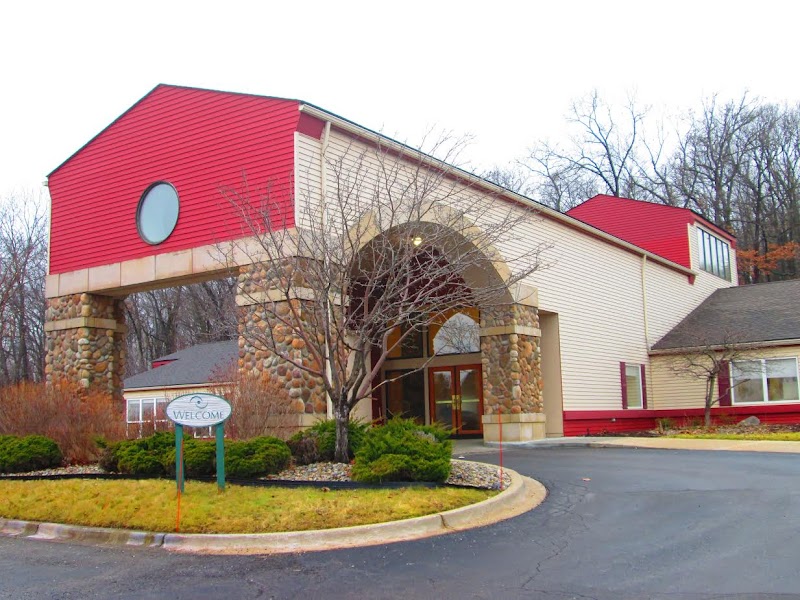
555 Highland Ave, Milford, MI 48381 (248) 685-1460
For profit - Limited Liability company 111 Beds MEDILODGE Data: November 2025
Trust Grade
60/100
#146 of 422 in MI
Last Inspection: August 2024

Within standard 12-15 month inspection cycle. Federal law requires annual inspections.

Overview

Medilodge of Milford has a Trust Grade of C+, which means it is slightly above average but not exceptional. It ranks #146 out of 422 nursing homes in Michigan, placing it in the top half of facilities in the state, and #8 out of 43 in Oakland County, indicating there are only a few better local options. The facility is improving, having reduced its number of issues from 13 in 2023 to 9 in 2024. Staffing is average with a 38% turnover rate, which is below the state average, suggesting that staff are relatively stable and familiar with residents. While there have been no fines, which is a positive sign, recent inspections found serious concerns, including a resident developing a pressure ulcer due to inadequate care and another resident experiencing significant weight loss because they were not provided necessary nutritional supplements. Overall, while there are strengths in staffing stability and no fines, families should be aware of the recent serious incidents that need addressing.
Trust Score
C+
60/100
In Michigan
#146/422
Top 34%
Safety Record
Moderate
Needs review
Inspections
Getting Better
13 → 9 violations
Staff Stability
○ Average
38% turnover. Near Michigan's 48% average. Typical for the industry.
Penalties
✓ Good
No fines on record. Clean compliance history, better than most Michigan facilities.
Skilled Nurses
○ Average
Each resident gets 33 minutes of Registered Nurse (RN) attention daily — about average for Michigan. RNs are the most trained staff who monitor for health changes.
Violations
⚠ Watch
39 deficiencies on record. Higher than average. Multiple issues found across inspections.
★★★★☆
4.0
Overall Rating
★★★☆☆
3.0
Staff Levels
★★★★★
5.0
Care Quality
★★★☆☆
3.0
Inspection Score
Stable
2023: 13 issues
2024: 9 issues

The Good

  • 5-Star Quality Measures · Strong clinical quality outcomes
  • Full Sprinkler Coverage · Fire safety systems throughout facility
  • No fines on record
  • Staff turnover below average (38%)

    10 points below Michigan average of 48%

Facility shows strength in quality measures, fire safety.

The Bad

Staff Turnover: 38%

Near Michigan avg (46%)

Typical for the industry

Chain: MEDILODGE

Part of a multi-facility chain

Ask about local staffing decisions and management

The Ugly 39 deficiencies on record

2 actual harm
Dec 2024 1 deficiency
CONCERN (D) 📢 Someone Reported This

A family member, employee, or ombudsman was alarmed enough to file a formal complaint

Potential for Harm - no one hurt, but risky conditions existed

Accident Prevention (Tag F0689)

Could have caused harm · This affected 1 resident

This citation pertains to Intakes: MI00146265 and MI00148408. Based on observation, interview, and record review, the facility failed to ensure fall precautions were implemented for one resident (R904...

Read full inspector narrative →
This citation pertains to Intakes: MI00146265 and MI00148408. Based on observation, interview, and record review, the facility failed to ensure fall precautions were implemented for one resident (R904) with a history of falls out of three residents reviewed for falls resulting in the potential for recurrence of falls and injury. Findings include: On 12/4/24, a clinical record review revealed R904 was admitted to the facility for nursing care and rehabilitation on 11/15/24. R904 required surgical intervention for a fall sustained at home resulting in a right hip fracture. R904's medical history included chronic kidney disease, urinary retention, heart disease, and heart attack. A BIMS (Brief Interview for Mental Status) score was unobtainable when assessed due to acute delirium with hallucinations. Clinical record review revealed R904 sustained a fall at the facility on 11/17/24 and 11/26/24. Care plan initiated on 11/16/24 and revised on 11/27/24 documented Resident Focus: .at risk for falls/injury related to debility, right hip <sic> FX (fracture), encephalopathy and possible delirium with hallucinations. R904 was documented with the following interventions: Fall mats on each side of the bed. Initiated 11/27/24 Ensure resident's room is free from accident hazards (e.g., ensuring there are no trip hazards). Initiated 11/27/24 Food/fluids within reach. Initiated 11/27/24 Place call light within reach. Initiated 11/27/24 On 12/4/24 at 10:40 AM, R904 was observed in a wheelchair in the middle of the room facing towards the window. No floor mats were observed next to the bed, within the room, closet, or bathroom. One square of carpeting was observed under the right wheel of the head of bed, unattached, lying across, exposing the subfloor. Two squares of carpet in the middle of the room, in front of where R904 was sitting, was observed with minimal lifting and not flush with majority of square surface area. Three Styrofoam cups, one dated 12/4 with a lid and straw, and a plastic bottled water was observed on a dresser table next to the wall, under a mounted television. The tray table was placed in front of the dresser table preventing reach to fluids. The call light was observed at the head of the bed, clipped to the bed linens, out of reach. On 12/4/24 at 11:30AM, R904's care plan was reviewed with R904's assigned Licensed Practical Nurse A (LPN A). LPN A performed an observation of the above findings and acknowledged fall precaution interventions were not in place. On 12/4/24 at 11:55, the Director of Nursing (DON) observed the findings and acknowledged fall precaution interventions were not in place. Review of the facility policy titled: Fall Prevention Program, dated 10/2023 documented: .Residents will receive care and services in accordance with the level of risk to minimize the likelihood of falls .risk factors and environmental hazards will be evaluated .
Aug 2024 8 deficiencies
CONCERN (D)

Potential for Harm - no one hurt, but risky conditions existed

Deficiency F0658 (Tag F0658)

Could have caused harm · This affected 1 resident

**NOTE- TERMS IN BRACKETS HAVE BEEN EDITED TO PROTECT CONFIDENTIALITY** Based on observation, interview, and record review, the facility failed to provide nursing care and services according to profes...

Read full inspector narrative →
**NOTE- TERMS IN BRACKETS HAVE BEEN EDITED TO PROTECT CONFIDENTIALITY** Based on observation, interview, and record review, the facility failed to provide nursing care and services according to professional standards of practice for one (R203) of one resident reviewed for tube feeding. Findings include: On 8/12/24 at 10:18 AM, R203 was observed lying in bed. R203 was receiving nutrition via a PEG (Percutaneous Endoscopic Gastrostomy) tube (a tube surgically placed into the stomach to deliver nutrition). The PEG tube pump was running at 45 milliliters per hour (ml/hr) and the bottle of formula was dated 8/12/24. On 8/13/24 at 9:01 AM, R203 was observed lying in bed. R203 was receiving nutrition via a PEG tube. The PEG tube pump was running at 45 ml/her and the bottle of formula was dated 8/13/24. A review of R203's clinical record revealed R203 was admitted into the facility on 7/22/24 and readmitted on [DATE] with diagnoses that included: prostate cancer, chronic kidney disease, and ST elevation myocardial infarction (STEMI), and gastrointestinal hemorrhage. A review of an Minimum Data Set (MDS) assessment dated [DATE] revealed R203 had intact cognition and had a feeding tube. A review of R203's Physician's orders revealed no order for tube feeding that indicated the prescribed formula, rate, and feeding instructions until 8/13/24, five days after R203 was readmitted into the facility. It should be noted that R203's tube feeding was observed to be administered on 8/12/24 and 8/13/24. There was an active order with a start date of 8/9/24 to Cleanse (PEG) tube site with soap and water daily and as needed. Apply drain sponge as needed. site may be left open to air if clean and no drainage. A review of R203's August 2024 Treatment Administration Record (TAR) indicated this order was completed on 8/9/24, 8/10/24, 8/11/24, and 8/12/24 as evidenced by an electronic signature from the nurse who carried out the order. On 8/13/24 at approximately 10:30 AM, an observation of R203's PEG tube site was conducted with the Wound Care Coordinator, Licensed Practical Nurse (LPN) 'A'. LPN 'A' lifted R203's gown and revealed a dressing applied to R203's PEG tube site. The dressing was dated 8/9/24, four days earlier. LPN 'A' removed the dressing which was soiled with thick, caramel colored drainage. It should be noted that it was documented on the TAR that R203 received treatment to the PEG tube site daily since his readmission on [DATE]. On 8/13/24 at approximately 10:50 AM, an interview was conducted with the Director of Nursing (DON). When queried about how often PEG tube sites should be monitored, cleaned, and dressed, the DON reported at least daily. At that time, the DON was asked when R203's tube feeding order was put into place. The DON reported he would look into it. On 8/13/24 at 11:05 AM, the DON followed up and reported the PEG site dressing should have been changed according to physician's orders and the nurse should not have signed out that it was done if it was not. The DON further said the order for R203's tube feeding was not entered until that day, 8/13/24, but the nurse wrote the order in the progress note on admission on [DATE]. When queried as to how the nurses knew what tube feeding to administer each day since 8/8/24 and how it was known whether or not R203 received daily tube feeding, the DON did not offer a response.
CONCERN (D)

Potential for Harm - no one hurt, but risky conditions existed

Quality of Care (Tag F0684)

Could have caused harm · This affected 1 resident

**NOTE- TERMS IN BRACKETS HAVE BEEN EDITED TO PROTECT CONFIDENTIALITY** R305 On 8/12/24 at approximately 10:47 a.m., R305 was observed in their room, standing up next to their bed. R305 was observed t...

Read full inspector narrative →
**NOTE- TERMS IN BRACKETS HAVE BEEN EDITED TO PROTECT CONFIDENTIALITY** R305 On 8/12/24 at approximately 10:47 a.m., R305 was observed in their room, standing up next to their bed. R305 was observed to have a dry dressing on each knee that appeared to be worn and losing their adhesive properties. Neither dressing on their knees were dated and appeared to be worn. A worn dry dressing dated 8/10/24 was observed on R305's right elbow. R305 was queired if they had fallen and they indicated they had and had scraped their knees and elbow. On 08/12/24 at approximately 3:33 p.m., R305 was observed in their room, lying down in a low bed. R305 still had on the dry dressings on both knees with the edges of the dressings starting to become unattached. On 8/13/24 at approximately 8:55 a.m., R305 was observed in their room, lying in their bed. R305 was observed to have a dry dressing on their right knee that was still undated with no dressing on their left knee with an uncovered pink skin abrasion. R305's right elbow had a dry dressing dated 8/10/24. On 8/13/24 at approximately 10:46 a.m. R305 was observed in their room, lying in their bed. R305 was observed to have a dry dressing on their right knee that was undated and no dressing on their left knee with an uncovered pink skin abrasion. R305's right elbow had a dry dressing dated 3/10/24. R305 was queried if any staff had changed their dressing and they reported that nobody had. R305 was queired what happened to their dressing on their left knee and they indicated it had fallen off the previous day and that nobody had applied a new dressing. On 8/12/24 the medical record for R305 was reviewed and revealed the following: R305 was initially admitted to the facility on [DATE] and had diagnoses including Dementia and Type 2 Diabetes Mellitus. A Nursing progress note dated 8/10/24 revealed the following: At approximately 0100 (1:00 a.m.), lodger noted to be laying on his right side on the floor, in front of bathroom door, with knees bent up to waist. Lodger assessed for injury, abrasion noted to right knee, and skin tear noted to right elbow. Lodger denies hitting his head, and AROM (active range of motion) noted to all 4 extremities. Writer asked lodger what had happened and lodger states he was trying to move the mat. No mat located in room by writer. Neuro (neurological) checks complete and noted to be WNL (within normal limits) for lodger. Lodger noted to be incontinent of urine at this time. Lodger assisted to his feet per 3 staff, and assisted onto toilet. Lodger then assisted onto bed per 3 staff. On Call provider notified, and DON (Director of Nursing) notified. Will notify family in a.m. A Fall assessment dated [DATE] titled Fall-Initial-V2 was reviewed and revealed the following: Date of fall-8/10/24 New orders related to the fall: [Yes] 9a. Describe New Physician Orders-Clean right knee abrasion and right elbow skin tear with soap and water, apply TAO (triple antibiotic ointment) and dry dressing daily . Further review of R305's medical record did not reveal any noted transcribed Physician orders for R305's right knee abrasion and right elbow skin tears noted in the fall assessment dated [DATE]. A review of R305's August 2024 treatment administration record (TAR) did not reveal any treatments administered to R305's right knee or right elbow were documented as having been completed. On 8/14/24 at approximately 9:03 a.m., during a conversation with the Director of Nursing (DON), the DON was queried regarding the process for transcribing orders and they reported that the facility Nurse should have transcribed the Physician's orders for R305's dry dressing skin abrasions but did not and did not date knee dressing. The DON indicated they would input the orders for R305's dry dressings into the the electronic medical record so it can be completed by the Nurse and documented per the Physician's orders. On 8/14/24 a policy addressing the procedures for non-pressure wound care was requested from the facility Administrator and they reported they did not have a policy/procedure guide for non-pressure wounds. Based on observation, interview, and record review, the facility failed to accurately assess wounds, perform wound care treatments, coordinate with a comprehensive wound care team consisting of a wound care practitioner, document treatment plans, and implement physician's orders for wound care treatments for two residents, (R#'s 101 and 305) of three residents reviewed for skin impairments, resulting in verbalized complaints, fear of staff competency and infection, and R101 voluntarily leaving the facility for wound care at the hospital. Findings include: R101 On 8/13/24 at 2:09 PM, a review of R101's closed record revealed they admitted to the facility on [DATE] and discharged [DATE]. R101's diagnoses included: cutaneous abscess of buttock, and hidradenitis suppurativa, a chronic inflammatory skin disorder characterized by painful nodules, abscesses, and scarring. R101's post-operative records from the hospital revealed they underwent incision and drainage of multiple buttock, back, thigh, and perianal abscesses with significant abscess cavities under the skin and, .extensive purulent material and tunneling The paperwork further revealed R101 had three penrose drains (a straight, flexible tube that drains fluid from a surgical site) placed to the wound. A review of a Nursing admission Evaluation dated 5/21/24 was reviewed and revealed R101 admitted with a right buttock surgical wound. Neither the evaluation nor the nursing admission note dated 5/21/24 made any mention of the presence of wound drains. It was further noted the first practitioner note entered into the record by Nurse Practitioner G made no mention of the drains or the treatment to be applied to the wound, the note only read, .Wound Care consult for ongoing wound management . Continued review of R101's closed record revealed a Skin & Wound Evaluation dated 5/22/24 and documented R101 had a, 22. Other skin impairment specified on the form as rose pin, it was unclear what was meant by a rose pin wound. The form contained 21 types of wounds the assessing nurse could have checked including, 10. Hidradenitis Suppurativa (R101's diagnoses), or, 20. Surgical. It was of note, the assessment did not include any mention of the three wound drains. R101's Treatment Administration Record (TAR) was reviewed and revealed an order dated 5/24/24 (three days after admission and the day R101 left the facility) to monitor the wound drains. It was further discovered two orders were written on 5/22/24 for treatment to R101's buttocks that both read, .Cleanse with wound cleanser. Pat dry. Apply Bordered Foam as directed to buttock . It was noted both orders on the TAR were blank and not signed off as having been completed on 5/22/24. A review of Dr. 'H's progress note dated 5/23/24 was reviewed and read, .I am evaluating .today for an admission history and physical. Patient has a history of hydradenitis <sic> suppurativa and was hospitalized and treated for a right gluteal abscess status post incision and drainage .patient says he felt he got good wound care here .but today his nurse did something different and he is not sure he is getting the best wound care .all wounds to be managed by the wound care team here at the facility . It was noted Dr. 'H's progress notes did not indicate the type of wound care treatment or how often the treatment was to be done, nor did the note indicate the presence of drains. A review of a progress note dated 5/24/24 at 10:05 PM was conducted and read, Lodger Requested to Leave Stating He Does Not Feel He Is Receiving the Care He Needs for His Surgical Wound. This Nurse Offered to Change the Dressing, Lodger Declined Stating I Have Made Up My Mind, I Am Returning to the Hospital, They Know How to Properly Care for My Wound .He Is Driving Himself to the Hospital . <sic> On 8/13/24 at 1:20 PM, an interview was conducted with Wound Care Nurse 'A'. Nurse 'A' was asked if there was a wound care physician, physician's assistant or nurse practitioner at the time of R101's admission and said there was not. Nurse 'A' then said they assessed R101 on admission, placed the treatment orders and Dr. 'H' signed off on them. They were asked about the presence of drains and confirmed R101 admitted with drains. They were asked why this was not documented and had no explanation but said it should have been noted. They were then asked about the missed treatment on 5/22/24 and said it should have been done by R101's assigned nurse. They further reported R101 told them on 5/23/24 they were concerned with the nurses ability/competency to care for their wounds and they reported the concern to Dr. 'H'. Nurse 'A' confirmed R101 left the faciity on 5/24/24. On 8/14/24 11:03 AM, an interview was conducted with Dr. 'H' regarding R101. They were asked about the documentation for the specific treatment of R101's wounds and said they deferred to the facility's wound care team and did not document specific treatment orders in their progress notes. They were asked if they were aware at the time of R101's admission the Wound Care Team only consisted of Nurse 'A' and said they were aware the facility was challenged with finding a wound care physician. Dr. 'H' was then asked about the documentation of the presence of drains and agreed it was missed. Dr. 'H' further reported R101 did express to them their concerns about the treatment of their wounds and said it was reported to the facility's Administrator and Director of Nursing. An interview via telephone was conducted with R101 on 8/13/24 at 2:35 PM. They were asked about their stay at the facility and said, It was a disaster. R101 further reported they had surgery and were sent to the facility for wound care. They said the only nurse who seemed like they knew what they were doing was the first nurse, Nurse 'A'. They further reported no one seemed comfortable doing the treatments and the day before they left (5/23/24) the nurse sprayed something on their wound that caused it to, burn like crazy. R101 was asked if any treatments were missed and said they did not recall. R101 said they spoke to the doctor and they needed answers about the staff's competency to care for their wounds. They said they were told someone would come and speak to them but no one ever did. They said they were fearful of an infection and decided to return to the hospital.
CONCERN (D)

Potential for Harm - no one hurt, but risky conditions existed

Pressure Ulcer Prevention (Tag F0686)

Could have caused harm · This affected 1 resident

**NOTE- TERMS IN BRACKETS HAVE BEEN EDITED TO PROTECT CONFIDENTIALITY** Based on observation, interview, and record review, the facility failed to timely assess pressure ulcers present on admission in...

Read full inspector narrative →
**NOTE- TERMS IN BRACKETS HAVE BEEN EDITED TO PROTECT CONFIDENTIALITY** Based on observation, interview, and record review, the facility failed to timely assess pressure ulcers present on admission into the facility in a timely manner, and implement preventative measures to maintain skin integrity for one (R203) of two residents reviewed for pressure ulcers. Findings include: On 8/12/24 at 10:18 AM, R203 was observed lying on his back in bed. Two pairs of heel protector boots were observed in the room, on a chair and on the floor, not applied to R203's feet. R203's feet were pressed against the foot board of the bed. A low air loss mattress was observed. R203 reported he had sores on his feet. A review of R203's clinical record revealed R203 was admitted into the facility on 7/22/24 and readmitted on [DATE] with diagnoses that included: prostate cancer, chronic kidney disease, and ST elevation myocardial infarction (STEMI). A review of an Minimum Data Set (MDS) assessment dated [DATE] revealed R203 had intact cognition, required substantial/maximum assistance for bed mobility and transfers, did not walk, and had three unstageable pressure ulcers (obscured full-thickness skin and tissue loss) that were present on admission. On 8/13/24 at 9:01 AM, R203 was observed lying in bed. R203 reported staff applied heel protector boots on that day, but they did not always put them on. Further review of R203's clinical record revealed the following: A review of a Nursing admission Evaluation dated 7/22/24, that was not complete and in progress revealed R203 was admitted with pressure ulcers to the left toe, left heel, right toe, and right heel with eschar (dead or devitalized tissue). A review of a Nursing Evaluation Summary progress note dated 7/22/24 written by the Director of Nursing (DON) and MDS Coordinator revealed, .Unstageable heel ulcers bilateral and necrotic areas noted on both great toes . A review of a History of Physical completed by Physician 'E' revealed no documentation of R203's pressure ulcers. Further review of all evaluations conducted by the facility's medical providers (Physician 'E' and Nurse Practitioner - NP 'G') revealed no documentation that R203 had pressure ulcers or an evaluation of the pressure ulcers. A review of a Skin Assessment dated 7/29/24 revealed R203 had existing pressure ulcers to the bilateral heels and great toes. It was documented that boots and offloading in place. A review of R203's Wound Evaluations and Skin & Wound Evaluations revealed R203's feet were not assessed by LPN 'A' until 8/9/24 when he was readmitted into the facility from the hospital. R203 was transferred to the hospital on 7/29/24 and 7/31/24 and returned the same day and was admitted to the hospital from [DATE] through 8/8/24. A review of Skin & Wound Evaluations for R203 on 8/9/24 and 8/12/24 revealed R203 had an unstageable pressure ulcers to the left and right heels that were present on admission, filled with 100 percent eschar; and deep tissue injuries (DTIs) to the left and right great toes that were present on admission. A review of R203's Physician's Orders revealed orders dated 7/22/24 for treatment to the bilateral heels and toes for unstageable ulcers. An order for offloading boots on at all times while in bed was ordered on 7/22/24 and discontinued on 7/22/24. However, R203 continued to have pressure ulcers to his bilateral great toes and heels. A review of a Nursing Evaluation Summary progress note dated 8/8/24 revealed R203 was admitted into the facility on that day. It was documented that R203's BL (bilateral) heels have necrotic (dead) tissue. On 8/13/24 at approximately 10:30 AM, R203's feet were observed with Wound Care Coordinator, Licensed Practical Nurse (LPN) 'A'. At that time, R203 had heel protector boots on. An observation of R203's right foot revealed a black area to the great toe, a black area on the outer bottom part of the heel, and a second darkened area on the back of the heel. An observation of R203's left foot revealed a black area to the tip of the great toe and a black area described by LPN 'A' as all eschar located on the inner part of the heel. LPN 'A' reported that R203 needed a bed extender. On 8/13/24 at approximately 10:50 AM, an interview was conducted with LPN 'A'. When queried about how often she assessed residents' wounds, LPN 'A' reported she conducted wound assessments every week on Monday. When queried about why there was no documented assessment of R203's pressure ulcers to the heels and toes until 8/9/24, LPN 'A' reported R203 did not have any wounds until he returned to the facility from the hospital on 8/8/24. When queried about the MDS assessment, nursing admission assessment, skin assessment, and treatment orders that indicated R203 had pressure ulcers to his bilateral heels and great toes, LPN 'A' did not offer a response. On 8/13/24 at 1:16 PM, an interview was conducted with the DON. When queried about the facility's process for assessing residents' pressure ulcers, the DON reported they were assessed by LPN 'A' and the wound provider weekly. LPN 'A' reported the wound provider started working in the facility two weeks ago and did not come to the facility on 8/12/24. The DON reported any assessment completed by LPN 'A' was documented in the electronic medical record. When queried about why R203's pressure ulcers were not assessed until 8/9/24 when he was admitted with them on 7/22/24, the DON reported he had to look into it. At that time, any evaluations of R203's pressure ulcers conducted by a medical provider was requested. No additional information was provided prior to the end of the survey.
CONCERN (D)

Potential for Harm - no one hurt, but risky conditions existed

Incontinence Care (Tag F0690)

Could have caused harm · This affected 1 resident

**NOTE- TERMS IN BRACKETS HAVE BEEN EDITED TO PROTECT CONFIDENTIALITY** Based on observation, interview, and record review, the facility failed to ensure a thorough and accurate assessment was done up...

Read full inspector narrative →
**NOTE- TERMS IN BRACKETS HAVE BEEN EDITED TO PROTECT CONFIDENTIALITY** Based on observation, interview, and record review, the facility failed to ensure a thorough and accurate assessment was done upon admission, physician's orders for an indwelling urinary catheter were in place, and the catheter was securely anchored for one (R204) of three residents reviewed for urinary catheters. Findings include: On 8/12/24 at 10:25 AM, R204 was observed sleeping in a chair in the room where his wife resided. R204's was observed with tubing from a urinary catheter exiting the bottom of his long pajama pants. The urinary catheter drainage bag was observed hung on R204's walker which was next to the resident and therefore the tubing was stretched from the pant leg to the walker. On 8/13/24 at 10:25 AM, R204 was observed ambulating with a walker. Tubing from the urinary catheter was observed coming out of the bottom of R204's pant leg and attached to the drainage bag that was attached to the bottom of the walker making contact with the floor. The tubing was observed dragging on the floor as R204 walked. On 8/13/24 at approximately 10:50 AM, an interview was conducted with the Director of Nursing (DON) who was present on the unit during the above observation. When queried about whether R204's catheter was anchored properly, the DON reported he could get a leg bag (a smaller drainage bag that is worn on the leg when you are up out of bed). When queried about what orders and monitoring should be in place for residents admitted with indwelling urinary catheters, the DON reported there should be physician's orders for the catheter. At that time, the DON was asked if the appropriate orders and monitoring were done for R204. The DON reported he would look into it. On 8/13/24 at approximately 11:30 AM, the DON reported R204 did not have an order for the indwelling urinary catheter. A review of R204's clinical record revealed the following: R204 was admitted into the facility on 8/9/24 for respite care. R204 received hospice services. A review of a Nursing admission Evaluation for R204 revealed documented vital signs from his previous admission on [DATE]. The evaluation indicated R204 was continent of urine and did not indicate that R204 had an indwelling urinary catheter. The evaluation was dated 8/11/24, two days after R204 was admitted into the facility. A review of the Certified Nursing Assistant (CNA) task for catheter care indicated R204 received catheter care on 8/13/24. There was no documentation that R204 received catheter care prior to that date. A review of R204's physician's orders revealed no physician's orders for R204's catheter until 8/13/24 which included an order to ensure the catheter was anchored in place. There was no care plan initiated until 8/13/24 for catheter care. A review of R204's progress notes indicated no notes that indicated R204 had an indwelling urinary catheter. A review of R204s CNA task for Urinary Continence revealed CNAs documented R204 was continent of urine twice on 8/10/24 and 8/11/24, and once on 8/12/24 and 8/13/23. The task included a section to check Continence Not Rated due to Indwelling Catheter. In response to the question, What was the toileting bladder activity?, two CNAs documented, Used bed pan/commode/urinal/toilet despite R204 having a urinary catheter. Three CNAs documented R204 toileted himself. A review of a facility policy titled, Catheter Care Procedure - Urinary dated 2/28/23, revealed, in part, the following: .Residents with indwelling catheters will be provided catheter care in accordance with current clinical standards. This may include: .every shift .with each bowel movement .as needed and per request .Leg bags may be utilized for ambulatory residents .Catheters should be secured to prevent pulling and damage to the urethral meatus. This may be accomplished by .utilizing the appropriate drainage device (leg bag or catheter bag) .Catheters should be emptied every shift or as needed .urinary output should be recorded per facility protocol .
CONCERN (D)

Potential for Harm - no one hurt, but risky conditions existed

Tube Feeding (Tag F0693)

Could have caused harm · This affected 1 resident

**NOTE- TERMS IN BRACKETS HAVE BEEN EDITED TO PROTECT CONFIDENTIALITY** Based on observation, interview, and record review, the facility failed to ensure appropriate care was provided to prevent dislo...

Read full inspector narrative →
**NOTE- TERMS IN BRACKETS HAVE BEEN EDITED TO PROTECT CONFIDENTIALITY** Based on observation, interview, and record review, the facility failed to ensure appropriate care was provided to prevent dislodgement of a PEG (Percutaneous Endoscopic Gastrostomy) tube (a tube surgically placed into the stomach to deliver nutrition), physicians orders for nutrition and hydration were in place, and care to the PEG tube site was provided according to physician's orders for one (R203) of one resident reviewed for tube feeding, resulting in the PEG tube being torn from R203's stomach requiring a hospital transfer, the potential for poor nutritional and hydration status, pain, infection and skin breakdown. Findings include: On 8/12/24 at 10:18 AM, R203 was observed lying in bed. R203 was receiving nutrition via a PEG tube. The PEG tube pump was running at 45 milliliters per hour (ml/hr) and the bottle of formula was dated 8/12/24. On 8/13/24 at 9:01 AM, R203 was observed lying in bed. R203 was receiving nutrition via a PEG tube. The PEG tube pump was running at 45 ml/her and the bottle of formula was dated 8/13/24. A review of R203's clinical record revealed R203 was admitted into the facility on 7/22/24 and readmitted on [DATE] with diagnoses that included: prostate cancer, chronic kidney disease, and ST elevation myocardial infarction (STEMI), and gastrointestinal hemorrhage. A review of an Minimum Data Set (MDS) assessment dated [DATE] revealed R203 had intact cognition and had a feeding tube. A review of a Transition of Care form from the hospital dated 8/8/24 revealed R203 had a primary diagnosis of dehydration and prerenal azotemia (caused by decreased blood flow to the kidneys which can be caused by dehydration or blood loss from a hemorrhage). Instructions for 250 cc (cubic centimeters) of free water flushes every 4 hours was included in the discharge instructions. A review of R203's Physician's orders revealed no order for tube feeding that indicated the prescribed formula, rate, and feeding instructions until 8/13/24, five days after R203 was readmitted into the facility. The orders entered on 8/13/24 indicated R203 was to receive 250 ml (milliliters) of free water, five days after R203 was readmitted into the facility. There was an active order with a start date of 8/9/24 to Cleanse (PEG) tube site with soap and water daily and as needed. Apply drain sponge as needed. site may be left open to air if clean and no drainage. A review of R203's August 2024 Treatment Administration Record (TAR) indicated this order was completed on 8/9/24, 8/10/24, 8/11/24, and 8/12/24 as evidenced by an electronic signature from the nurse who carried out the order. On 8/13/24 at approximately 10:30 AM, an observation of R203's PEG tube site was conducted with the Wound Care Coordinator, Licensed Practical Nurse (LPN) 'A'. LPN 'A' lifted R203's gown and revealed a dressing applied to R203's PEG tube site. The dressing was dated 8/9/24, four days earlier. LPN 'A' removed the dressing which was soiled with thick, caramel colored drainage. On 8/13/24 at approximately 10:50 AM, an interview was conducted with the Director of Nursing (DON). When queried about how often PEG tube sites should be monitored, cleaned, and dressed, the DON reported at least daily. At that time, the DON was asked when R203's tube feeding order was put into place. The DON reported he would look into it. On 8/13/24 at 11:05 AM, the DON followed up and reported the PEG site dressing should have been changed according to physician's orders and the nurse should not have signed out that it was done if it was not. The DON further said the order for R203's tube feeding was not entered until that day, 8/13/24, but the nurse wrote the order in the progress note on admission on [DATE]. When queried as to how the nurses knew what tube feeding to administer each day since 8/8/24 and how it was known whether or not R203 received daily tube feeding, the DON did not offer a response. A review of R203's progress notes revealed the following: A Nursing Evaluation Summary dated 8/8/24 revealed R203 was readmitted into the facility. It was documented R203 was on peg-tube feeding but only mentioned the type of formula and the rate. A Nurses' Note dated 7/29/24 noted, Therapy was working with resident when peg tube accidentally was torn out. Small trauma to opening noted, stomach contents draining .911 called .transferring to (hospital) for eval and treatment . A progress note written by NP 'G' on 7/30/24 noted, .Chief Complaint .PEG tube traumatically pulled out and replaced .PEG tube traumatically pulled out while working with therapy by accident the other day. Went to the ER (emergency room) and it was replaced . An Alert Note dated 7/31/24 noted, .CNA (Certified Nursing Assistant) called writer to room because his (R203) peg tube dressing was wet .(R203) c/o (complained of) abdominal pain, abdominal contents coming out of site .transfer to hospital . R203 returned to the facility the same day after the PEG tube was replaced. On 8/13/24 at 9:52 AM, the Administrator and DON were asked to provide any incident reports and/or investigations for R203. The Administrator reported there were no investigations or incident reports for the resident. A review of a Physical Therapy (PT) Treatment Encounter Note dated 7/29/24 revealed, R203 was seen by Physical Therapy Assistant (PTA) 'F'. PTA 'F' documented, .Patient's feeding tube came out of his abdomen after amb (ambulation) . On 8/13/24 at approximately 12:41 PM, an interview was conducted with PTA 'F'. When queried about what happened with R203's PEG tube on 7/29/24, PTA 'F' reported she worked with the resident on ambulation using a gait belt. PTA 'F' reported the gait belt was positioned off of the PEG tube site. PTA 'F' further reported R203 was tired and wanted to lay down. PTA 'F' assisted R203 to sit at the side of the bed and when he laid down she heard a suction and his stomach was wet and the PEG tube was completely out. PTA 'F' reported she did not know what happened. She remembered the tubing was long and that she used a gait belt but was unable to say how it was traumatically pulled out. On 8/13/24 at approximately 12:52 PM, an interview was conducted with the DON. When queried about whether the incident of R203's PEG tube being traumatically pulled out during therapy was investigated, the DON reported he would have to check with therapy. On 8/13/24 at approximately 1:23 PM, the DON followed up and stated, Therapy said they don't think it was anything they did to cause the PEG tube to be traumatically pulled out. The DON reported he did not investigate it from a nursing standpoint. A review of a facility policy titled, Feeding tubes, revised on 6/30/22, revealed, in part, the following: .Feeding tubes will be utilized according to physician orders .
CONCERN (D)

Potential for Harm - no one hurt, but risky conditions existed

Deficiency F0710 (Tag F0710)

Could have caused harm · This affected 1 resident

**NOTE- TERMS IN BRACKETS HAVE BEEN EDITED TO PROTECT CONFIDENTIALITY** Based on observation, interview and record review the facility failed to ensure a physician and/or physician extender evaluated ...

Read full inspector narrative →
**NOTE- TERMS IN BRACKETS HAVE BEEN EDITED TO PROTECT CONFIDENTIALITY** Based on observation, interview and record review the facility failed to ensure a physician and/or physician extender evaluated and assessed a new/worsened pressure ulcer for one (R85) of two residents reviewed for pressure ulcers, resulting in the lack of pressure ulcer assessment by the physician, and the potential for inconsistent and timely documentation of wound status, and/or decline of the wound. Findings include: On 8/12/24 at 12:21 PM, R85 was observed in room appeared to be resting. When R85 was asked how they were doing and stated that their bottom was hurting and could not get comfortable due to the pain, other than that R85 was content. A record review revealed that R85 was admitted to the facility on [DATE] with diagnoses of Parkinson's diseases, pressure ulcers of sacral region and muscle weakness. R85 had a brief interview for mental status score of 15, indicating an intact cognition. A further review of the chart revealed that R85's wound care orders had been updated that morning 8/12/24. A review of the status of the wound, revealed no progress note from a provider since 2/2024. On 8/13/24 at 12:00 PM the Wound care nurse was interviewed and asked what wound care company they used. The Wound care nurse explained they just got a new provider two weeks ago. When further questioned on who was the provider was used prior too two weeks ago, the Wound care nurse stated, We have not had a provider for several months. The doctors were supposed to put in their own notes or assessments of the wounds after we round on their patients weekly. The wound care nurse was then asked about R85 and if they could provide the notes for the wound. The wound care nurse stated she would look and get back with this surveyor. On 8/14/24 at around 10 AM, the Medical director was interviewed by another surveyor and stated that she did not do progress notes on wounds, but put her notes in to follow up with the wound care team. The Medical director was then asked who did the wound care team consist of at the facility. She stated the Wound care nurse since the facility just got a new provider recently. The Medical director was informed of no progress notes or physician follow up with the wound care for R85. The Medical director stated, Correct, there is one now. No additional information was provided by the exit of survey.
CONCERN (D)

Potential for Harm - no one hurt, but risky conditions existed

Laboratory Services (Tag F0770)

Could have caused harm · This affected 1 resident

Based on interview and record review, the facility failed to ensure labs were obtained timely for one resident (R40) of one resident reviewed for labs, resulting in the potential for unmet medical car...

Read full inspector narrative →
Based on interview and record review, the facility failed to ensure labs were obtained timely for one resident (R40) of one resident reviewed for labs, resulting in the potential for unmet medical care needs. Findings include: On 8/12/24 at 1:20 PM, a review of R40's clinical record revealed a note entered into the record on 7/8/24 by Nurse Practitioner (NP) 'G' that read, .Check a CMP (comprehensive metabolic panel, a routine blood test that measures 14 different substances in a blood sample) and CBC (complete blood count, a blood test to look at a wide range of conditions) to monitor fluid volume status . A note entered into R40's record by Nurse 'I' on 7/19/24 at 10:48 AM was reviewed and read, .Resident asked nurse why his blood work from 7/8/24 still hadn't been completed yet, Dr. ('H') in the building at the time and resident asked her about it. Dr. ('H') ordered for blood work to be reordered STAT today . Continued review of R40's record revealed a note entered into R40's record by Nurse 'I' on 7/23/24 at 12:00 PM that read, .Resident stated that he still had not gotten bloodwork <sic> drawn from 7/19/24, nurse saw phlebotomist in building and asked why it was not done yet and to have it completed today. Labs drawn today . A review of R40's physician's orders was conducted and revealed orders dated 7/8/24 and 7/19/24 for a CBC and a CMP. It was noted the orders each had a status of Completed. On 8/13/24 at 2:52 PM, a review of R40's facility provided lab results were reviewed and only included CBC and CMP results collected on 7/22/24 and reported to the facility on 7/23/24. No results were provided for labs ordered on 7/8/24 or 7/19/24. On 8/14/24 at 9:30 AM, an interview was conducted with the facility's Director of Nursing and they acknowledged the labs were not drawn and sent on 7/8/24 or 7/19/24. A review of a facility policy titled, Laboratory and Diagnostic Guidelines revised 10/2023 was conducted and read, Policy: This guideline is set up to track the timely completion, reporting and monitoring of laboratory and diagnostic tests, results, and notifications which are used to monitor resident status and/or therapeutic medication levels .
CONCERN (D)

Potential for Harm - no one hurt, but risky conditions existed

Infection Control (Tag F0880)

Could have caused harm · This affected 1 resident

**NOTE- TERMS IN BRACKETS HAVE BEEN EDITED TO PROTECT CONFIDENTIALITY** Based on observation, interview and record review the facility failed to follow infection control guidance for one resident (R30...

Read full inspector narrative →
**NOTE- TERMS IN BRACKETS HAVE BEEN EDITED TO PROTECT CONFIDENTIALITY** Based on observation, interview and record review the facility failed to follow infection control guidance for one resident (R306) of three residents reviewed for urinary catheters. Findings include: On 8/12/24 at approximately 10:43 a.m., R306 was observed in their room, lying in their bed. R306's catheter draining bag was observed located not below the bladder (indicating a risk for urine to backflow up into the bladder causing infection). R306 was noted not to have any signage on their door that indicated staff were to apply enhanced barrier precautions (EBP) when providing direct care to them. R306 was queired if staff were wearing any protective gowns when caring for them and they indicated nobody had. On 8/12/24 at approximately 3:32 p.m., R306 was observed in their room, lying in their bed. R306's catheter draining bag was still observed high and located not below bladder. R306's door was still noted to not contain any information that staff were to apply EBP. On 8/13/24 at approximately 8:54 a.m., R306 was observed in their room lying in their bed. R306's door was still not observed to have any signage informing staff that they were to don EBP when providing care to R306. On 8/13/24 at approximately 1:13 p.m., Physical Therapy Assistant F (PTA F) was observed providing therapy services to R306 in their room. PTA F was queired if they had used enhanced barrier precautions while doing therapy with R306 and they indicated they did not because they did not see a sign on 306's door. PTA F then reported that R306 should have had an EBP sign on their door because they had a catheter. On 8/12/24 the medical record for R306 was reviewed and revealed the following: R306 was initially admitted to the facility on [DATE] and had diagnoses including Contact with and suspected exposure to Covid-19 and Hemiplegia and Hemiparesis following Cerebral vascular disease affecting right non-dominant side. A Physician evaluation dated 8/9/24 revealed the following: This is an [AGE] year-old admitted to [name of facility] on 8/8/24 from [name of hospital] due to bright red blood per rectum. GI (Gastrointestinal) was consulted. Symptoms improved spontaneously. Lower GIB (gastrointestinal bleeding) suspected due to hemorrhoids, as family reports that patient has had recurrent episodes of bright red blood per rectum and work up found hemorrhoids to be the culprit Hospital course was complicated by large volume urinary retention requiring foley catheter, severe constipation, and E.coli UTI (urinary tract infection). A review of R306's Physician orders did not reveal any orders for enhanced barrier precautions. A review of R306's careplan did not reveal any plan of care for enhanced barrier precautions. On 8/13/24 at approximately 1:16 p.m., Registered Nurse C (RN C) was queried regarding R306's indwelling catheter and then not being provided EBP by the facility staff and they reported that R306 needed to have EBP due to the catheter and that they should have a sign on the door and a Physician's order. At that time, an observation of R306's room was conducted with RN C and they indicated they did not have a sign and would have to put one on the door to alert staff and implement an order in for EBP since R306 had an indwelling catheter. On 8/13/24 a facility document titled Enhanced Barrier Precautions was reviewed and revealed the following: Policy: It is the policy of this facility to implement enhanced barrier precautions for the prevention of transmission of multidrug-resistant organisms (MDRO) .b. Even if the resident is not known to be infected or colonized with a MDRO, an order for enhanced barrier precautions will be obtained for residents with any of the following: II. Indwelling medical devices (e.g., central lines, urinary catheters .3. a. Make gowns and gloves readily available near or outside of the resident's room .e. Provide education to residents and their visitors about enhanced barriers precautions
Sept 2023 13 deficiencies 2 Harm
SERIOUS (G) 📢 Someone Reported This

A family member, employee, or ombudsman was alarmed enough to file a formal complaint

Actual Harm - a resident was hurt due to facility failures

Pressure Ulcer Prevention (Tag F0686)

A resident was harmed · This affected 1 resident

**NOTE- TERMS IN BRACKETS HAVE BEEN EDITED TO PROTECT CONFIDENTIALITY** This citation pertains to Intake MI 00133995 Based on observation, interview and record review, the facility failed to ensure ti...

Read full inspector narrative →
**NOTE- TERMS IN BRACKETS HAVE BEEN EDITED TO PROTECT CONFIDENTIALITY** This citation pertains to Intake MI 00133995 Based on observation, interview and record review, the facility failed to ensure timely interventions to reduce the risk of pressure ulcer development, perform accurate and timely skin assessments and ensure orders were clarified for one (R38) of four residents reviewed for pressure ulcers, resulting in R38 acquiring a device related pressure ulcer on the spine. Findings Include: R 38 On 9/12/23 at 9:50 AM, R38 was observed lying in bed on her back sleeping. Padded boots were observed in a wheelchair against the wall across from the bed. R38 was asked if they had any wounds or sores on their body. R38's Family Member present in the room explained R38 had a wound on her ankle and a wound on her back from a back brace. When asked about the wound on R38's ankle, R38's Family Member lifted up the bed covers and a flat pillow was observed under R38's lower legs, however her heels were in direct contact with the mattress. R38's Family Member was asked how she got the wound on her back. R38's Family Member explained the staff were putting her brace on when she was in bed, and had left it on all night and the injury is from the brace. Review of the clinical record revealed R38 was originally admitted into the facility on [DATE] and readmitted [DATE] with diagnoses that included: compression fracture of fourth lumbar vertebra, peripheral vascular disease and rheumatoid arthritis. According to her Minimum Data Set (MDS) assessment dated [DATE], R38 had severely impaired cognition and required the assistance of staff for all activities of daily living, (ADL's) including 2 person extensive assistance for bed mobility. The MDS assessment also indicated R38 had no pressure ulcers. Review of R38's pain care plan revealed an intervention initiated 8/28/23 that read, TLSO (thoracic lumbar sacral orthosis - a brace that limits movement in the spine) back brace to be worn at all times while awake. Remove Q (every) shift and check skin integrity. Report any redness or abnormalities to the MD (doctor). On 9/12/23 at 12:39 PM, R38 was observed lying on her back sleeping. The padded boots were still observed in the same spot in the wheelchair, they did not appear to have been moved. Review of R38's progress notes revealed a nursing note dated 9/12/23 at 3:10 PM that read in part, Assessed residents skin today after being notified by staff of new skin issue. Noted medical device related pressure injury to spine stage 2, boggy heels . Skin measurements being entered. Care plan updated to reflect these areas and interventions updated. Residents (Family Member) present at time of assessment. Review of R38's impaired skin integrity care plan revised 9/12/23 read in part, Medical device related pressure injury stage 2 (partial-thickness loss of skin with exposed dermis) . R/t (related to) fragile skin, decreased mobility, back brace. There were no interventions initiated, revised or mentioned with the back brace or the padded boots in the skin integrity care plan. On 9/13/23 at 9:06 AM, R38 was observed lying on her back sleeping, the padded boots were on top of the bedstand next to the bed. On 9/13/23 at 9:10 AM, Licensed Practical Nurse (LPN) E, who served as the wound care nurse, was interviewed and asked about R38's wounds. LPN E explained they had found a stage 2 pressure ulcer from the back brace and boggy heels the day before. On 9/13/23 at 9:24 AM, during observation of R38's wounds with LPN E, R38's right heel was observed to have an approximately 1.5-2 inch diameter of redness on the inner aspect of the heel. LPN E was queried what she would call the redness. LPN E explained she would call it a stage 1 (intact skin with a localized area of non-blanchable redness). When told the padded boots had not been observed on R38's feet on 9/12/23 and that morning, LPN E explained they should be on her feet. Observation of R38's back revealed a linear wound approximately 2-2.5 inches in length by 1 inch in width with eschar (dead or devitalized tissue that is hard or soft in texture, usually black . and may appear scab-like) and slough (non-viable yellow, tan . tissue) obscuring part of the wound. LPN E was queried what stage would she call R38's wound. LPN E explained she would call it an unstageable (full-thickness skin and tissue loss in which the extent of tissue damage within the ulcer cannot be confirmed because the wound bed is obscured by slough or eschar) pressure ulcer. On 9/13/23 at 9:34 AM, R38's Family Member was asked if they knew how R38 had gotten a wound on her back. R38's Family Member explained he had been told that it was on her all night and that is what caused the injury. On 9/13/23 at 9:51 AM, Therapy Manager G, who was also a Physical Therapist (PT), was interviewed and asked if it was usual to have residents' wear back braces when they were in the bed. Therapy Manager G appeared to look away and did not answer the question. When asked why the back brace had been left on R38 when she was in bed, Therapy Manager G explained the staff would try to educate R38's Family Member, but they would insist it be kept on R38. Therapy Manager G was asked for any documentation that R38 and her Family Member had been educated on the back brace and/or that R38's Family Member had insisted on the back brace while R38 was in bed. No documentation was provided by the end of the survey. On 9/13/26 at 11:01 AM, the Director of Nursing (DON) was interviewed and asked if a resident should ever get a device related pressure ulcer/injury. The DON explained that it should not happen, and it was unfortunate that R38 acquired one. The DON was asked why R38's back brace was kept on her when she was in bed. The DON had no answer. On 9/13/23 at 11:16 AM, Registered Nurse (RN) L, who served as Unit Manager, was interviewed and asked about R 38 wearing the back brace while in bed. RN L explained the hospital discharge orders said to keep the brace on at all time. When asked why R38 would need the back brace while in bed, RN L explained they had thought it was for pain control. RN L was asked if anyone had clarified the back brace order, or scheduled a follow-up appointment for R38. RN L explained neither had been done. Review of the hospital discharge paperwork dated 9/23/23 revealed in part, Recommended Follow Up Information: . Internal Medicine . Follow Up within 3-7 days . Patient to wear back brace at all times . Follow up Within 3-7 days . Neurological Surgery . Follow Up Within 1 to 2 weeks . It should be noted that R38 had been admitted into the facility for over three weeks, or 16 days. On 9/13/23 at 12:39 PM, R38's Family Member was interviewed and asked if they had told staff to keep R 38's back brace on her while she was in bed. R38's Family Member explained they had not told them to put it on her when she was in bed.
SERIOUS (G) 📢 Someone Reported This

A family member, employee, or ombudsman was alarmed enough to file a formal complaint

Actual Harm - a resident was hurt due to facility failures

Deficiency F0692 (Tag F0692)

A resident was harmed · This affected 1 resident

**NOTE- TERMS IN BRACKETS HAVE BEEN EDITED TO PROTECT CONFIDENTIALITY** This citation pertains to intake #'s MI00131500. Based on observation, interview, and record review, the facility failed to ens...

Read full inspector narrative →
**NOTE- TERMS IN BRACKETS HAVE BEEN EDITED TO PROTECT CONFIDENTIALITY** This citation pertains to intake #'s MI00131500. Based on observation, interview, and record review, the facility failed to ensure adequate interventions to prevent weight loss for one resident (R90) of five residents reviewed for nutrition, resulting in a 15.69% weight loss from June 2023 to August 2023. Findings include: On 9/13/23 at 8:23 AM, R90's breakfast meal tray was observed on their bedside table in their room. The items on the meal tray were compared to the items on the meal ticket and it was noticed R90 had not been given their Health Shake supplement. It was further noted R90's tray had been set up for them, but R90 was laying at less than a 30-degree angle (almost flat) in their bed attempting to feed themselves some pureed eggs. No staff were observed in the room at that time. On 9/13/23 at 12:21 PM, an observation of R90's lunch meal was conducted. The items on the tray were compared to the meal ticket and it was noted R90 was supposed to receive a Health Shake supplement, however; the Health Shake was not observed to be on the meal tray. No staff were observed in the room at that time. A review of R90's clinical record revealed they admitted to the facility on [DATE] with diagnoses that included: femur fracture, stroke, aphasia, hemiplegia, and dysphagia. R90's Minimum Data Set assessment dated [DATE] was reviewed and revealed they had not been assessed for cognition, and at the time of admission R90 required only set-up assistance with dining. It was further documented in the record R90 had a language barrier. It was also noted through skin assessment documentation dated 7/4/23 and 8/9/23 R90 developed two stage two pressure ulcers (Partial thickness loss of dermis presenting as a shallow open ulcer with a red pink wound bed, without slough, may also present as an intact or open/ruptured serum-filled blister usually over a bony prominence), on their sacrum and one on their right heel. R90's documented weights were reviewed and revealed the following: 6/24/23 102.0 lbs. 7/12/23 91.4 lbs. 7/20/23 90.1 lbs. 8/3/23 86.5 lbs. 8/7/23 85.0 lbs. 8/14/23 85.9 lbs. 8/21/23 86.0 lbs. A review of R90's physician's orders was conducted and indicated they were on a pureed diet. A review of a dietary progress note dated 7/7/23 was conducted and read, .adding 4oz HealthShake <sic> TID (three times a day) at meals . Continued review of Dietary progress notes dated: 7/19/23, 7/25/23, 7/27/23, 7/28/23, 8/9/23, 8/17/23, and 8/23/23 was conducted but did not outline any additional interventions such as additional supplements, increased weight monitoring, cueing, or increased assistance with eating. A review of R90's Certified Nursing Aide (CNA) task for amount of meals eaten for a 30-day look-back period was conducted and revealed the following: 8/15/23 documentation for two meals eaten 8/16/23 documentation for one meal eaten 8/18/23 documentation for one meal eaten 8/19/23 no documentation for any meals eaten 8/20/23 documentation for one meal eaten 8/24/23 no documentation for any meals eaten 8/30/23 documentation for one meal eaten 9/2/23, 9/3/23, 9/4/23, 9/5/23, 9/7/23, 9/8/23 and 9/11/23 documentation for one meal eaten. On 09/13/23 at 1:46 PM, an interview was conducted with Registered Dietician (RD) 'N' regarding R90. They were asked when it was identified R90 had a significant weight loss, should weight monitoring have been increased and should the food acceptance records document every meal. RD 'N' said they should have increased weight monitoring and they would have recommended filling out the food acceptance record for every meal. They were asked R90 should have been considered for some additional assistance and cueing and said they could have been. A review of a facility provided policy titled, Nutritional Management revised 1/1/2022 was conducted and read, .The facility provides care and services to each resident to ensure the resident maintains acceptable parameters of nutritional status in the context of his or her overall condition.
CONCERN (D)

Potential for Harm - no one hurt, but risky conditions existed

Deficiency F0578 (Tag F0578)

Could have caused harm · This affected 1 resident

**NOTE- TERMS IN BRACKETS HAVE BEEN EDITED TO PROTECT CONFIDENTIALITY** Based on interview and record review the facility failed to ensure a legally authorized resident representative signed a DNR (do...

Read full inspector narrative →
**NOTE- TERMS IN BRACKETS HAVE BEEN EDITED TO PROTECT CONFIDENTIALITY** Based on interview and record review the facility failed to ensure a legally authorized resident representative signed a DNR (do not resuscitate) form (part of an advance directive) for one resident (R72) of one resident reviewed for advance directives. Findings include: On [DATE] the medical record for R72 was reviewed and revealed the following: R72 was initially admitted to the facility on [DATE] and had diagnoses including Adult Failure to Thrive and Congestive heart failure. A review of R72's MDS (Minimum Data Set) with an ARD (Assessment Reference Date) of [DATE] revealed R72 needed extensive assistance with most of their activities of daily living. R72's BIMS score (brief interview for mental status) was five indicating severely impaired cognition. A DNR form titled Do Not Resuscitate Order dated [DATE] was reviewed and revealed that it was signed by R72's daughter as a patient advocate A competency evaluation titled Decision Making Determination Form signed on [DATE] by attending Physician and [DATE] by licensed Psychologist was reviewed and indicated that R72 was incapable of making decisions regarding medical treatment Further review of R72's medical record did not reveal any legal documentation (durable power of attorney or legal guardianship etc .) that provided legal authorization for R72's daughter to be able to make informed medical decisions such as withdrawing CPR (Cardiopulmonary resuscitation). On [DATE] at approximately 1:26 p.m., during a conversation with social worker J (SW J), SW J was queried for any legal paperwork which provided the legal authorization for R72's daughter to sign a DNR form withholding emergency medical treatment. On [DATE] at approximately 2:36 p.m., during a follow-up conversation with SW J, SW J reported they did not have any legal paperwork that provided legal authority to R72's daughter to make advanced directive decisions for R72. On [DATE] a facility document titled Residents' Rights Regarding Treatment and Advance Directives was reviewed and revealed the following: Policy: It is the policy of this facility to support and facilitate a resident's right to request, refuse and/or discontinue medical or surgical treatment and to formulate an advance directive. Definitions: Advance directive is a written instruction, such as a living will or durable power of attorney for health care, recognized under State law (whether statutory or as recognized by the courts of the State), relating to the provision of health care when the individual is incapacitated .4. The facility will periodically assess the resident for decision-making abilities and approach the health care proxy or legal representative if the resident is determined not to have decision making capacities. 5. The facility will identify or arrange for an appropriate representative for the resident to serve as primary decision maker if the resident is assessed as unable to make relevant health care decisions. 6. The facility will define and clarify medical issues and present them to the resident or legal representative as appropriate. 7. During the care planning process, the facility will identify, clarify, and review with the resident or legal representative whether they desire to make any changes related to any advance directives . No legal documentation that authorized R72's daughter to make advance directive decisions for R72 was provided by the end of the survey.
CONCERN (D) 📢 Someone Reported This

A family member, employee, or ombudsman was alarmed enough to file a formal complaint

Potential for Harm - no one hurt, but risky conditions existed

Notification of Changes (Tag F0580)

Could have caused harm · This affected 1 resident

This citation pertains to intake #'s MI00131529 and MI00138838. Based on interview, and record review, the facility failed to ensure family notification was made for a change of condition for one res...

Read full inspector narrative →
This citation pertains to intake #'s MI00131529 and MI00138838. Based on interview, and record review, the facility failed to ensure family notification was made for a change of condition for one resident (R104), of two residents reviewed for notification of changes. Findings include: A complaint was received by the State Agency that alleged the family was not made aware of R104's fall. A review of R104's clinical record was conducted and revealed a progress note entered into the record on 7/26/23 at 11:36 PM by Nurse 'M' that read, .Lodger (R104) fell around 9:45 in their room, a CNA (Certified Nurse Aide) saw Lodger on the floor and notified nurse . It was noted the progress note did not indicate the resident's family had been made aware of the fall. A review of an assessment titled, Fall - Initial - V 2 dated 7/27/23 was conducted and also did not indicate family had been made aware of the fall. On 9/14/23 at 10:59 AM, an interview was conducted with the facility's Director of Nursing (DON) regarding R104's fall. The DON indicated the nurse should have notified the family and documented it in the record. A review of a facility provided policy titled, Fall Prevention Program revised 1/1/2022 was conducted and read, .6. When any resident experiences a fall, the facility will: .d. Notify the physician and family .F. Document all assessments and actions .
CONCERN (D) 📢 Someone Reported This

A family member, employee, or ombudsman was alarmed enough to file a formal complaint

Potential for Harm - no one hurt, but risky conditions existed

Grievances (Tag F0585)

Could have caused harm · This affected 1 resident

This citation pertains to intake #MI00138838 Based on interview and record review, the facility failed to document and follow up on family grievances for one resident (R#104) of one resident reviewed ...

Read full inspector narrative →
This citation pertains to intake #MI00138838 Based on interview and record review, the facility failed to document and follow up on family grievances for one resident (R#104) of one resident reviewed for grievances, resulting in feelings of frustration. Findings include: A complaint was received by the State Agency that alleged the facility failed to follow up on grievances after speaking with facility staff regarding multiple concerns. A review of R104's clinical record was conducted and revealed a progress note entered into the record on 7/26/23 at 11:36 PM by Nurse 'M' that read, .Lodger (R104) fell around 9:45 in their room, a CNA (Certified Nurse Aide) saw Lodger on the floor and notified nurse . On 9/14/23 at 11:34 AM, an interview was conducted with Unit Manager 'L' regarding whether they had spoken with R104's family. They said they did, and the family had voiced concerns about not being notified of the fall and R104 experiencing intermittent left and right leg pain. They were asked if they documented any of the family's concerns on a grievance form and said they did not, they reported the concerns to the Director of Nursing, but they should have filled out the form. A review of a facility provided policy titled, Quality Assistance Procedure revised 1/1/22 was conducted and read, .1. Any resident, his or her representative (sponsor), family member, or resident advocate may file a Quality Assistance Form 5. Upon receipt of the Quality Assistance Form/request, the department manager will investigate the allegations and submit a written report of such findings to the administrator .
CONCERN (D)

Potential for Harm - no one hurt, but risky conditions existed

Comprehensive Care Plan (Tag F0656)

Could have caused harm · This affected 1 resident

**NOTE- TERMS IN BRACKETS HAVE BEEN EDITED TO PROTECT CONFIDENTIALITY** Based on observation, interview and record review, the facility failed to implement a comprehensive care plan for one (R95), of ...

Read full inspector narrative →
**NOTE- TERMS IN BRACKETS HAVE BEEN EDITED TO PROTECT CONFIDENTIALITY** Based on observation, interview and record review, the facility failed to implement a comprehensive care plan for one (R95), of one residents reviewed for dialysis care plans. Findings include: On 9/12/23 at 10:05 AM, R95 was observed sitting in a wheelchair in her room. R95 was asked if she received hemodialysis. R95 explained she went to the hemodialysis center three times a week, on Monday, Wednesday and Fridays. Review of the clinical record revealed R95 was admitted into the facility on 8/10/23 with diagnoses that included: end stage renal disease, dependence on renal dialysis and anemia in chronic kidney disease. According to the Minimum Data Set (MDS) assessment dated [DATE], R95 was cognitively intact and required the assistance of staff for activities of daily living (ADL's). The MDS assessment also indicated R95 was on dialysis. Review of R95's care plan revealed no dialysis care plan, or interventions to ensure R95's specialized needs were met. On 9/14/23 at 2:27 PM, the Director of Nursing (DON) was interviewed and asked if R95 should have a dialysis care plan. The DON explained R95 should have a dialysis care plan. When told there was no care plan, the DON explained they would get one. Review of a facility policy titled, Comprehensive Care Plans revised 6/30/22 read in part, .The comprehensive care plan will describe, at a minimum, the following: .The services that are to be furnished to attain or maintain the resident's highest practicable physical, mental, and psychosocial well-being . Any specialized services . the facility will provide .
CONCERN (D) 📢 Someone Reported This

A family member, employee, or ombudsman was alarmed enough to file a formal complaint

Potential for Harm - no one hurt, but risky conditions existed

Deficiency F0658 (Tag F0658)

Could have caused harm · This affected 1 resident

**NOTE- TERMS IN BRACKETS HAVE BEEN EDITED TO PROTECT CONFIDENTIALITY** Based on observation, interview and record review, the facility failed to ensure medications were available for administration f...

Read full inspector narrative →
**NOTE- TERMS IN BRACKETS HAVE BEEN EDITED TO PROTECT CONFIDENTIALITY** Based on observation, interview and record review, the facility failed to ensure medications were available for administration for one residents (R59) of one residents reviewed for Nursing standards of practice. Findings include: On 9/12/23 the medical record for R59 was reviewed and revealed the following: R59 was initially admitted to the facility on [DATE] and had diagnoses including Polyosteoarthritis, Dementia and Repeated Falls. A review of R59's MDS (Minimum Data Set) with an ARD (Assessment Reference Date) of 8/11/23 revealed R59 needed extensive assistance with most of their activities of daily living. R59's BIMS score (Brief interview for mental status) was five indicating severely impaired cognition. A review of R59's careplan revealed the following: Focus-The resident has/is at risk for acute & chronic pain related to Left Humerus fracture (healing), arthritis, chronic low back pain, Osteoporosis, Hx (history) of Left Femur fracture .Interventions-Administer pain medications as ordered. Give 1/2 hour before treatments or care . A review of R59's Physician ordered medications revealed the following: Lidocaine Pain Relief 4 % Patch Apply to mid back topically in the morning for Pain related to LOW BACK PAIN, UNSPECIFIED. -Start Date-7/13/2023 0700 Aspercreme Lidocaine Patch 4 % (Lidocaine) Apply to L (left) posterior shoulder topically two times a day for Left posterior shoulder pain -Start Date-11/17/2022 0900 A review of R59's progress notes pertaining to R59's lidocaine patch administration to the left posterior revealed the following: 8/23/23-supply n/a (not available), 8/21/23-supply n/a, 8/16/23-supply n/a, 8/15/23-supply n/a, 8/2/23-n/a, 8/1/23-n/a A review of R59's progress notes pertaining to R59's lidocaine patch administration to their mid back revealed the following: 8/23/23-supply n/a (not available), 8/21/23-supply n/a, 8/16/23-supply n/a, 8/15/23-supply n/a, 8/2/23-n/a, 8/1/23-n/a A review of R59's August 2023 Medication Administration Record (MAR) revealed the following dates in which R59's lidocaine patches were not administered on both affected areas: 8/1, 8/2, 8/15, 8/16, 8/21 and 8/23. On 9/14/23 at approximately 10:56 a.m. Nurse Manager E (NM E was queried regarding the missing lidocaine patches for R59 that were not available for administration in August to treat R59's pain and they reported that it is the facility practice of the Nursing staff to notify the Central supply staff member when patches are running low to ensure an uninterrupted supply is available to administer. NM E was queried if the facility should always have medication available for administration and they indicated they should and that the Nursing staff have procedures in place to prevent medication from running out. On 9/14/23 a facility document titled Medications Unavailable was reviewed and revealed the following: Policy: This facility shall use uniform guidelines for unavailable medications. Policy Explanation and Compliance Guidelines: 1. The facility maintains a contract with a pharmacy provider to supply the facility with routine, prn (as needed), and emergency medications. 2. A STAT supply of commonly used medications is maintained in-house for timely initiation of medications. 3. The facility shall follow established procedures for ensuring residents have a sufficient supply of medications. 4. Medications may be unavailable for a number of reasons. Staff shall take immediate action when it is known that the medication is unavailable: a. Determine reason for unavailability, length of time medication is unavailable, and what efforts have been attempted by the facility or pharmacy provider to obtain the medication. b. Notify physician of inability to obtain medication upon notification or awareness that medication is not available. Obtain alternative treatment orders and/or specific orders for monitoring resident while medication is on hold. 5. If a resident misses a scheduled dose of the medication, staff shall follow procedures for medication errors, including physician/family notification, completion of a medication error report, and monitoring the resident for adverse reactions to omission of the medication.
CONCERN (D)

Potential for Harm - no one hurt, but risky conditions existed

Deficiency F0688 (Tag F0688)

Could have caused harm · This affected 1 resident

**NOTE- TERMS IN BRACKETS HAVE BEEN EDITED TO PROTECT CONFIDENTIALITY** Based on observations, interview, and record review, the facility failed to implement interventions to maintain or prevent furth...

Read full inspector narrative →
**NOTE- TERMS IN BRACKETS HAVE BEEN EDITED TO PROTECT CONFIDENTIALITY** Based on observations, interview, and record review, the facility failed to implement interventions to maintain or prevent further decline in range of motion for one (R14) of one Resident reviewed for range of motion and positioning resulting in a potential for further decline in range of motion or worsening of contractures. Findings include: R14 R14 was originally admitted to the facility on [DATE]. R14's admitting diagnoses included poly-osteoarthritis, stroke, joint contractures (limited movement in joints), and loss of vision. R14 was confined to bed and needed extensive staff assistance with their Activities of Daily Living (ADL - mobility in bed, dressing, eating etc.). Based on a Minimum Data Set (MDS) assessment with an assessment reference date of 6/8/23, R14 had a Brief interview for Mental Status (BIMS) score of 8/15, indicative of moderate cognitive deficits. An initial observation was completed on 9/12/23 at approximately 10:30 AM. R14 was observed in their bed. R14 was observed on their back with both shoulders close to their body, both elbows flexed (bent), and both hands with fingers closed. Fingers were in contact with palms with potential to compromise the skin integrity of their hands. R14 was unable to open their fingers on both hands and was able to move their elbow and shoulder minimally on the left side. A follow up observation was completed later that day at approximately 11:45 AM. R14 was observed in their bed, with their fingers closed and arms and elbows flexed (bent) close to their body. On 9/13/23, an observation was completed at approximately 9:30 AM. R14 was observed in their bed, lying on their back. R14 had both shoulders close to their body, both elbows flexed (bent), and both hands with fingers closed. When R14 was asked to open their fingers, R14 was unable to do it. R14 had minimal movement in their elbow and shoulder on the left side. A follow up observation was completed later that day, at approximately 11:00 AM and 11:45 AM. R14 was observed in their bed with their fingers closed. R14 did not have any orthotics (A support, brace, or splint used to support, align, prevent, or correct the function of movable parts of the body) or any intervention such as a rolled wash cloth, hand roll etc. to maintain joint mobility and skin integrity. A review of R14 Electronic Medical Record (EMR) revealed that R14 was originally admitted to the facility on [DATE]. R14 was discharged from the facility on 9/17/22 to the hospital and they were readmitted back to the facility on 9/27/22. R14 was a long term resident of the facility. A review of R14's physician orders did not reveal any orders for restorative nursing program to maintain the current range of motion and to prevent further decline. A review of R14's care plan revealed that they were at risk for joint pain due to their diagnoses and comorbidities. The care plan review did not identify R14's risk for further impairment with joint mobility and did not have any interventions in place. A review of Occupational Therapy (OT) evaluation dated 9/14/22, revealed the following range of motion assessment (R14 did not have any recent occupational therapy evaluations on EMR): UE ROM (Upper Extremity Range of Motion): R (Right) UE ROM - Impaired L (Left) UE ROM - Impaired RUE ROM - Shoulder - Impaired; Elbow/Forearm - Impaired; Wrist - impaired; Hand - Impaired; Thumb - Impaired; Index Finger - Impaired; Middle Finger - Impaired; Ring Finger - Impaired; Little Finger - Impaired LUE ROM - Shoulder - Impaired; Elbow/Forearm - Impaired; Wrist - impaired; Hand - Impaired; Thumb - Impaired; Index Finger - Impaired; Middle Finger - Impaired; Ring Finger - Impaired; Little Finger - Impaired A Physical Therapy evaluation dated 9/14/22 (approximately one year ago), revealed the following. R14 did not have any recent physical therapy evaluations on EMR. RLE ROM (Right Lower Extremity Range of Motion) - Impaired LLE ROM (Left Lower Extremity Range of Motion) - Impaired OT evaluation dated 9/14/22 read, Patient has contracture .will trial a hand roll for good skin integrity which clearly indicated that R14 was at risk for further contractures and did not have any interventions in place. An interview was completed with Therapy Manager (Staff member G) on 9/13/23, at approximately 11:20 Am. During the interview staff member G was queried if R14 was receiving skilled therapy services. Staff member G reviewed the EMR and reported that R14 was not receiving any therapy services. Staff member G confirmed that R14 received skilled services in September 2022, prior to their discharge from the facility. Staff member G reported that long-term residents were referred to restorative nursing after the discontinuation of skilled therapy services. Staff member G also reported that if any Residents had contractures, the rehabilitation team would do further ROM assessment after a screen, and make recommendations to the restorative team. Staff member G was requested to provide the restorative referral documentation for R14 and was not received prior to the survey exit. An interview was completed with Director of Nursing (DON) on 9/14/23, at approximately 9 AM. The DON was queried about the restorative program. The DON reported that they were providing oversight to the restorative program, and they had one Certified Nursing Assistant (CNA) providing the restorative services for the residents. The DON was queried specifically on R14's restorative plan. The DON reported that R14 was not currently on a restorative program, and they would follow up and have their therapy team evaluate and follow up. The DON was notified that R14 had no readmission rehabilitation screen. The DON reported that they would follow up. A facility provided document titled Restorative Nursing dated 10/23/20, read in part, The goal of the Restorative Nursing includes improving and/or maintaining independence in activities of daily living and mobility Definition: Level I Restorative Nursing - A reasonable expectation that improvement in function will occur. May need in conjunction with skilled therapy. Level II Restorative Nursing - A reasonable expectation that improvement will continue to occur with resident participation and goal setting. Level III Restorative Nursing - The resident goal(s) or highest level has been achieved. The goal(s) now become the prevention or minimization of functional decline or impact on activities of daily living. Programs based on technique: Range of motion (passive) Range of motion (active) Splint or brace assistance .
CONCERN (D) 📢 Someone Reported This

A family member, employee, or ombudsman was alarmed enough to file a formal complaint

Potential for Harm - no one hurt, but risky conditions existed

Accident Prevention (Tag F0689)

Could have caused harm · This affected 1 resident

**NOTE- TERMS IN BRACKETS HAVE BEEN EDITED TO PROTECT CONFIDENTIALITY** This citation pertains to intake #MI00131529 Based on observation, interview and record review the facility failed to ensure int...

Read full inspector narrative →
**NOTE- TERMS IN BRACKETS HAVE BEEN EDITED TO PROTECT CONFIDENTIALITY** This citation pertains to intake #MI00131529 Based on observation, interview and record review the facility failed to ensure interventions to reduce falls were implemented for one resident (R59) of eight residents reviewed for accidents/hazards. Findings include: On 9/12/23 at approximately 10:16 a.m., R59 was observed in their room, laying in their bed, bilateral floor mats were observed next to R59's bed. R59's walker and wheelchair were observed on the other side of room far away from R59's bed. R59 was queried if they had any falls and they indicated they have fallen. On 9/12/23 at approximately 11:01 a.m., and 4:04 p.m., R59 was observed in their room, laying in their bed. R59's bathroom was observed to not contain a commode over the toilet. On 9/13/23 at approximately 8:52 a.m., R59 was observed in their room, laying in their bed. R59 was still observed to have their walker out of reach from the bed. R59 was also not observed to have a commode over their toilet in their bathroom. On 9/13/23 at approximately 1:51 p.m., R59 was observed in their room, laying in their bed with walker next to the bed. R59's bathroom was observed to still not contain a commode above the toilet. On 9/14/23 at approximately:50 a.m., R59 was observed in their room, laying in their bed. R59's bathroom was observed to still not contain a commode above toilet. On 9/12/23 the medical record for R59 was reviewed and revealed the following: R59 was initially admitted to the facility on [DATE] and had diagnoses including Polyosteoarthritis, Dementia and Repeated Falls. A review of R59's MDS (Minimum Data Set) with an ARD (Assessment Reference Date) of 8/11/23 revealed R59 needed extensive assistance with most of their activities of daily living. R59's BIMS score (Brief interview for mental status) was five indicating severely impaired cognition. A review of R59's careplan (a comprehensive plan of care) revealed the following: Focus-The resident is at risk for falls related to: fall with injury, orthostatic hypotension, Poor safety awareness. Hx (history) fall with fracture .Date Initiated: 07/14/2021 .Interventions-encourage the resident to come to common areas, while awake to aid in supervision .Ensure walker is within easy reach .· place a commode above toilet-Date Initiated: 06/05/2023 . A review of R59's fall (incident/accident) reports revealed the following: Unwitnessed fall on 5/30/23-Notes-6/1/23-Resident was observed on the floor in front of the dresser, in residents room. Resident has dx (diagnosis) of dementia, is impulsive and has poor safety awareness. New intervention to ensure walker is within easy reach of resident .Witnessed fall on 6/5/23-Notes-6/5/23-Resident observed on the floor in their bathroom. Resident has dementia, poor safety awareness. New intervention to for <sic> over the toilet commode with grab bars . On 9/14/23 at approximately 10:56 a.m., during a conversation with Nurse Manager E (NM E), NM E was queried regarding R59's falls and fall interventions. NM E Stated that R59 has had a few falls and the fall Interventions were noted in their careplans. NM E was informed of the previous observations of the walker being out of reach and the commode not being in place in the bathroom and they indicated they should have been in place would have to get the interventions implemented. On 9/14/23 a facility document titled Fall Prevention Program was reviewed and revealed the following: Policy: Each resident will be assessed for the risks of falling and will receive care and services in accordance with the level of risk to minimize the likelihood of falls .5. Each resident's risk factors and environmental hazards will be evaluated when developing the resident's comprehensive plan of care. a. Interventions will be monitored for effectiveness. b. The plan of care will be revised as needed .
CONCERN (D) 📢 Someone Reported This

A family member, employee, or ombudsman was alarmed enough to file a formal complaint

Potential for Harm - no one hurt, but risky conditions existed

Deficiency F0806 (Tag F0806)

Could have caused harm · This affected 1 resident

This citation pertains to intake #'s MI00131500 and MI00131529. Based on observation, interview, and record review, the facility failed to ensure resident food preferences for two residents, (R62 and ...

Read full inspector narrative →
This citation pertains to intake #'s MI00131500 and MI00131529. Based on observation, interview, and record review, the facility failed to ensure resident food preferences for two residents, (R62 and R41) and three residents from the group meeting who wished to remain anonymous, of 17 residents reviewed for dining, resulting in verbalized complaints and disappointment with meals. Findings include: R62 and R41 On 9/12/23 at approximately 10:40 AM, R62 was observed sitting in their wheelchair. The resident was alert and able to answer questions asked. R62 reported some concerns regarding the food received at the facility. The resident stated that they were a vegetarian and the facility was not able to accommodate their meal choices and often had to bring in their own food. R62 stated that despite requests and grievance, they still received food with meat in it and noted that on a few occasions they would provide what they were told was vegetable soup, it would have pieces of sausage in it. On 9/12/23 at approximately 12:33 PM, R62 was observed eating lunch in their room. The resident was eating a bowl of vegetable soup. They noted that it came from a can of soup that they had brought in from the outside and was heated up by the facility. R62's meal ticket noted that the facility was going to provide a marinated chicken thigh, sugar snap peas and oven browned potatoes. R62 stated they were not sure why they even get the ticket with meat on it. When asked if they had every made complaints/grievances about food choices/concerns, R62 noted that they did. A review of R62's grievances was conducted and revealed, in part, the following: Quality Assistance Form (4/28/23): .Name (R62) .Staff Person (herein after Activity Director (AD) P Details: No vegetarian food .Staff assigned to Review (hereinafter Dietary Manager (DM) Q) .Findings: Resident likes certain foods which are not available @supplier. Some have been purchased @ local stores .family brings in preferred foods .Describe .Not a full vegetarian menu . (date 5/4/23). Quality Assistance Form (5/26/23): . Name (R62) and R62's roommate (R41) .AD P .Details: R62 and R41 were served shrimp and they are allergic .tray cards reflect allergies . Quality Assistance Form (5/26/23): .Name (R62) .Staff Person (AD P) .Details: always offered menu- when asked out of rice, peas and veg (vegetable) .Findings: There are many items offered .including the vegetable of the day . Plan/Action: If resident wants rice always available, family can supply instant rice and kitchen can warm it . Quality Assistance Forms (7/28/23): .Name (R62) .Staff Person (AD P) .Details: No snack for 500 halls .Findings: Isolated incident Plans: .Educate staff and follow daily supplements . On 9/14/23 at approximately 11:04 AM, an interview was conducted with AD P. When asked about the grievances that mention the facility is not providing food per their vegetarian preferences, AD P noted that the resident does identify themselves as a vegetarian. They reported that they are not sure why the kitchen does not adhere to her requests, despite R62's family comments that the resident is not a vegetarian. With respect to concerns about her request for rice and vegetables, AD P noted that rice and vegetables should be considered a staple for the resident. AD P noted that they were aware that R62 and R41 were given shrimp, despite an allergy. On 9/14/23 at approximately 11:10 AM, an interview was conducted with DM Q. DM 'Q was asked about the concerns reported by R62. DM 'Q reported that the resident eats meat at times and they try to work with the family to bring in the resident's food requests. With respect to following resident food ticket requests, DM 'Q noted that they were working with staff on ensuring proper meal requests are honored and allergy issues were addressed. Group Meeting On 9/13/23 at approximately 10:47 a.m., during the group meeting, the residents were queried how the facility was performing as it pertains to food service and delivery. Three residents who were anonymous stated that the food is served cold and that they preferred hot food served hot. Another resident reported that they do not receive their preferred vegetarian diet and that when they are served their vegetarian meals, it is not palatable nor acceptable. Another resident in the group reported they have an allergen to shellfish and that they have been served shellfish multiple times. The group reported that the dietary staff should be double checking the meal tickets to ensure food preferences and allergies are noted on the ticket and the food served accordingly. On 9/13/23 A review of the resident council minutes was conducted and revealed the following: 4/28/23-No vegetarian food .Food is cold, sometimes potatoes are not done all the way, Nachos need more toppings .Is your food served at the proper temperature? [No. Food is usually cold] .5/26/23-Food not hot enough, [R62] and [R41] served shrimp and they are allergic .6/30/23-Cold and poorly cooked food, out of choice, lack of seasoning . The facility policy titled, Resident Food Preferences (1/1/22) was reviewed and documented, in part: Policy: Nutritional assessments will include an evaluation on individual food preferences . Policy Explanation and Compliance Guidelines: The Dietary Manager or designee will visit residents periodically to determine if revisions are needed regarding food preferences. The nursing staff will inform the kitchen about resident requests .The Food Service Department will offer food substitutes for individuals who do not want to eat the primary meal .The facility's Quality Assessment and Assurance (QA & A) program will periodically review issues related to food preferences and meals and try to identify trends about meal offerings, food preparation, etc .
CONCERN (D) 📢 Someone Reported This

A family member, employee, or ombudsman was alarmed enough to file a formal complaint

Potential for Harm - no one hurt, but risky conditions existed

Deficiency F0825 (Tag F0825)

Could have caused harm · This affected 1 resident

**NOTE- TERMS IN BRACKETS HAVE BEEN EDITED TO PROTECT CONFIDENTIALITY** Based on observation, interview, and record review the facility failed to complete a timely rehabilitation screening and/or eval...

Read full inspector narrative →
**NOTE- TERMS IN BRACKETS HAVE BEEN EDITED TO PROTECT CONFIDENTIALITY** Based on observation, interview, and record review the facility failed to complete a timely rehabilitation screening and/or evaluation and initiate interventions for a one resident (R14) of one reviewed for impaired mobility, resulting in the likelihood for further decline in range of motion, impairment with skin integrity, and increase in pain during Activities of Daily Living (ADL). Findings include: R14 A record review revealed R14 was originally admitted to the facility on [DATE]. R14's admitting diagnoses included poly-osteoarthritis, stroke, joint contractures (limited movement in joints), and loss of vision. R14 was confined to bed and needed extensive staff assistance with their Activities of Daily Living (ADL - mobility in bed, dressing, eating etc.). Based on a Minimum Data Set (MDS) assessment with an assessment reference date of 6/8/23, R14 had a Brief interview for Mental Status (BIMS) score of 8/15, indicative of moderate cognitive deficits. An initial observation was completed on 9/12/23 at approximately 10:30 AM. R14 was observed in their bed. R14 was observed on their back with both shoulders close to their body, both elbows flexed (bent), and both hands with their fingers closed. Their fingers were in contact with their palms with the potential to compromise the skin integrity of their hands. R14 was unable to open fingers on both hands and able to move their elbow and shoulder minimally on the left side. A follow up observation was completed later that day at approximately 11:45 AM. R14 was observed in their bed, with their fingers closed and arms and elbows flexed (bent) close to their body. On 9/13/23, an observation was completed at approximately 9:30 AM. R14 was observed in their bed, lying on their back. R14 had both shoulders close to their body, both elbows flexed (bent), and both hands with fingers closed. When R14 was asked to open their fingers, R14 was unable to do it. R14 had minimal movement in their elbow and shoulder on the left side. A follow up observation was completed later that day, at approximately 11:00 AM and 11:45 AM. R14 was observed in their bed with their fingers closed. R14 did not have any orthotics (A support, brace, or splint used to support, align, prevent, or correct the function of movable parts of the body) or any intervention such as rolled wash cloth, hand roll etc. to maintain joint mobility and skin integrity. A review of R14's Electronic Medical Record (EMR) revealed that R14 was originally admitted to the facility on [DATE]. R14 was discharged from the facility on 9/17/22 to the hospital and they were readmitted back to the facility on 9/27/22. R14 was a long-term resident of the facility. A review of R14's EMR did not reveal a rehabilitation screen and/or evaluation completed after their readmission to the facility on 9/27/22. A review of R14's physician orders did not reveal any orders or referral for restorative nursing program to maintain the current range of motion and to prevent further decline in range of motion. Review of the most recent Occupational Therapy (OT) evaluation dated 9/14/22 (completed approximately one year ago), revealed the following range of motion assessment: UE ROM (Upper Extremity Range of Motion): R (Right) UE ROM - Impaired L (Left) UE ROM - Impaired RUE ROM - Shoulder - Impaired; Elbow/Forearm - Impaired; Wrist - impaired; Hand - Impaired; Thumb - Impaired; Index Finger - Impaired; Middle Finger - Impaired; Ring Finger - Impaired; Little Finger - Impaired LUE ROM - Shoulder - Impaired; Elbow/Forearm - Impaired; Wrist - impaired; Hand - Impaired; Thumb - Impaired; Index Finger - Impaired; Middle Finger - Impaired; Ring Finger - Impaired; Little Finger - Impaired A Physical Therapy evaluation dated 9/14/22 (approximately one year ago), revealed the following. R14 did not have any recent physical therapy evaluations on EMR. RLE ROM (Right Lower Extremity Range of Motion) - Impaired LLE ROM (Left Lower Extremity Range of Motion) - Impaired OT evaluation dated 9/14/22 read, Patient has contractures .will trail a hand roll for good skin integrity which clearly indicated that R14 was at risk for further contractures and did not have any interventions in place. Further review of OT evaluation revealed a goal that read, Patient will tolerate a hand roll in RUE 1-2 hours without pain or skin irritation. R14's OT Discharge summary dated [DATE] (when R14 was discharged to hospital) revealed that R14 was able to tolerate right hand roll for 50 minutes without any pain or skin irritation. When R14 was readmitted back to the facility (from hospital), facility failed to screen, and/or evaluate to implement interventions to maintain the range of motion for upper and lower extremities. A review of quarterly rehabilitation screens (screen completed by licensed therapists or licensed therapist assistants by observation, staff interviews and record reviews) dated 2/27/23 and 5/.27/23 did not reveal any recommendations for further evaluations due to contractures. The quarterly rehabilitation screen sections for UE (upper extremity) and LE (lower extremity) orthotics/splints (braces) for 2/27/23 and 5/27/23 did not have entry. There were no current range of motion assessments available on R14's EMR. The last ROM assessment for R14 was measured during the Physical and Occupational therapy evaluation that was completed on 9/14/22 (approximately one year ago). An interview was completed with Therapy Manager (Staff member G) on 9/13/23, at approximately 11:20 Am. During the interview, staff member G was queried if R14 was receiving skilled therapy services. Staff member G reviewed the EMR and reported that R14 was not receiving any therapy services. Staff member G confirmed that R14 received skilled services in September 2022, prior to their discharge from the facility. Staff member G reported that long-term residents were referred to restorative nursing after the discontinuation of skilled therapy services. Staff member G also reported that if any Resident's had contractures rehabilitation team would do further ROM assessment after rehabilitation screen and make recommendations to the restorative team. Staff member G was requested to provide the rehabilitation screen that was completed after readmission on [DATE] and the restorative referral documentation for R14. Staff member G reported that they kept all the rehabilitation screens in a binder in the rehab office and provided copies of the quarterly rehabilitation screens completed on 2/27/23 and 5/27/23. Staff member G later reported that they were not able to find the rehabilitation screen and restorative referral that was completed after R14 was readmitted to the facility on [DATE]. Staff member Greported there was a transition with the rehabilitation service providers, and they were unable to locate the records. There was no further explanation on why R14, who had contractures of their extremities did not have any current range of motion assessment/measurements and why they were addressed after the quarterly screens completed on 2/27/23 and 5/27/23. A review of the facility provided document titled Therapy screenings read in part, Therapists will conduct a brief, hands off resident assessment which consists of a review of the medical chart and resident observation when appropriate to determine if a therapy evaluation is warranted. Screenings will be conducted with consideration of federal, state and facility requirements. Procedure: 1. Residents who are new admissions and readmissions to the facility will be screened after entering the facility. 2. Residents identified as having a 'significant change' by the facility will be screened by therapy and recommended for restorative intervention. 3. Residents may receive screenings on a quarterly and annual basis when required by the facility policy. 4. Screenings will be completed by therapists or assistants, as permitted by the state practice act .
CONCERN (D)

Potential for Harm - no one hurt, but risky conditions existed

Deficiency F0847 (Tag F0847)

Could have caused harm · This affected 1 resident

**NOTE- TERMS IN BRACKETS HAVE BEEN EDITED TO PROTECT CONFIDENTIALITY** Based on interview and record review the facility failed to ensure that two (R4 and R51) residents/legal responsible representat...

Read full inspector narrative →
**NOTE- TERMS IN BRACKETS HAVE BEEN EDITED TO PROTECT CONFIDENTIALITY** Based on interview and record review the facility failed to ensure that two (R4 and R51) residents/legal responsible representatives received a clear understanding of the facility's Binding Arbitration agreement prior to signing the document and ensured that the representative had the legal ability to sign the document. Findings include: During the entrance conference the facility reported that the Binding Arbitration was offered to all residents entering into the building. The facility provided a list of residents that had agreed to Binding Arbitration. The facility policy titled, Binding Arbitration Agreements was reviewed and documented, in part: This facility asks all residents to enter into an agreement for binding arbitration. We do not require binding arbitration as a condition of admission to, or as a requirement to continue to receive care at, this facility .Binding Arbitration is a binding agreement by the parties to submit to arbitration all or certain disputes which have arisen or may arise between them in respect of a defined legal relationship, whether contractual or not. The decision is final, can be enforced by a court, and can only be appealed on very narrow grounds .When explaining the arbitration agreement, the facility shall: a. Explicitly inform the resident or his or her representative of his or her right not to sign the agreement as a condition of admission .b. Explain to the resident and his or her representative in a form and manner that he or she understands .c. Ensure the resident or his or her representative acknowledges that he or she understands the agreement . R4 A review of R4's clinical record revealed the resident was initially admitted to the facility on [DATE] with diagnoses that included: atrial fibrillation, unspecified dementia and type II diabetes A review of the Minimum Data Set (MDS) with an assessment date of 8/23/23 noted the resident had a Brief Interview for Mental Status (BIMS) score of 6/15 (cognitively impaired cognition). Continued review of R4's clinical record contained no competency evaluation pertaining to the resident following admission on [DATE]. The resident's face sheet indicated a family member as a responsible party but did not indicate the family member was noted as a Durable Power of Attorney (DPOA). A document titled Alternative Dispute provided by the facility, revealed, in part: .This Agreement for Alternative Dispute Resolution in made on 8/15/23 by and between the (name redacted) facility and R5 .2. Voluntary Nature of this Agreement: This is a voluntary agreement, and you have the right to not sign this agreement .a typed initial from R4's family was noted . 19. You acknowledge and agree; .that you have fully read, understand and are voluntarily entering into this agreement; and you had the opportunity to ask questions before signing this agreement . The document was signed by R4's family member on 8/24/23. A facility representative signature was signed on 8/25/23. On 8/31/23 at approximately 12:12 PM, a phone interview was conducted with R4's family member. When asked if they were aware that they had entered into Binding Arbitration on their spouse's behalf, they reported that they had signed a number of documents and did not remember everything that they had signed. When asked if the facility explained the terms of Binding Arbitration, R4's spouse stated that they did not. When asked if they had been given a thorough explanation as to Binding Arbitration would they have signed the document, R4's family member reported that they most likely would not have signed the agreement. R51 A review of R51's clinical record revealed the resident was initially admitted to the facility on [DATE] with diagnoses that included: fracture of right clavicle and right ankle sprain A review of the resident's MDS indicated the resident had a BIMS score of 15/15 (cognitively intact cognition). A signed copy of a Binding Arbitration agreement was provided by the facility. The document was signed by R51 on 3/29/23 and facility representative (hereinafter Activity Director (AD) P). On 9/14/23 at approximately 12:01PM, an interview was conducted with R51. R51 was asked if they recalled signing a Binding Arbitration agreement on 3/29/23 and if facility staff explained the details of what signing binding arbitration meant. R51 stated that they had signed a number of papers that were given to them but did not recall receiving an explanation as to what Binding Arbitration meant. They stated that had they had the details been explained to them, they most likely would not have signed the document. On 9/14/23 at approximately 10:53 AM, an interview was conducted with Staff R. Staff R reported that they had been working at the facility for about four months. Staff 'R was asked about how they address Binding Arbitration agreements with residents. They reported that the resident's receive a packet when they enter the building with a number of documents to sign, including a Binding Arbitration agreement. They ask that resident and/or resident representatives read through the documents and sign them. When asked if they were aware of what entering into a Binding Arbitration went, Staff R reported that it means that residents will go to Arbitration and not to court. When asked what happens if resident's that go to Arbitration are not happy with the Arbitrator's decision, Staff R reported that they were not sure. On 8/31/23 at approximately 2:18 PM, an interview was conducted with the Acting Administrator. When asked if they were familiar with Binding Arbitration agreements, the Administrator noted that to their understanding the document was an option offered for residents to resolve a disagreement. They further noted that the agreement was voluntary and if a resident and/or their legal representative signed the document and decided they did not want to go to Binding Arbitration they could utilize other means. When asked if a resident is not able to sign the document can a representative sign the document, Staff R was not certain.
CONCERN (D) 📢 Someone Reported This

A family member, employee, or ombudsman was alarmed enough to file a formal complaint

Potential for Harm - no one hurt, but risky conditions existed

Safe Environment (Tag F0921)

Could have caused harm · This affected 1 resident

This citation pertains to intake #MI00131529 Based on observation, interview and record review the facility failed to ensure a clean/comfortable and homelike environment for two residents (R30 and R72...

Read full inspector narrative →
This citation pertains to intake #MI00131529 Based on observation, interview and record review the facility failed to ensure a clean/comfortable and homelike environment for two residents (R30 and R72) of two residents reviewed for the Physical environment. Findings include: On 9/12/23 at approximately 10:20 a.m. R30 was observed in their room up in their bed. R30 was observed to have a large hole in their drywall behind them. R30 was queried regarding the hold and reported Look at my room. It's a disaster. The carpet is up back there. Staff are tripping over it. Then I got this hole next to my head. On 9/13/23 at approximately 8:54 a.m. R72 was observed in their room, laying in their bed. R72 was observed to have a large hole in their drywall next to their bed. On 9/14/23 at approximately 8:52 a.m., R72 was observed in their room, laying in their bed. R72 was still observed to have the same large hole in in their drywall next to their bed. On 9/14/23 at approximately 9:09 a.m., R30 was observed in their room, laying in their bed. R30 was still observed to have a large hole in their drywall next to their head with the drywall torn out. R30 stated they still haven't fixed it. It's been there since I've been here. On 9/14/23 at approximately 9:36 a.m., during a tour with Maintenance Director O (MD O), MD O was shown the hole in R30's drywall and the carpet torn up behind their bed. MD O stated that staff should have utilized the TELS program to notify maintenance of the environmental concerns. MD O was queried if they had been made aware of the needs for repairs of R30 and R72's room and they indicated they were not made aware of it but had they been aware they could have fixed it. On 9/14/23 a facility document titled Preventive Maintenance Program was reviewed and revealed the following: A Preventative Maintenance Program shall be developed and implemented to ensure the provision of a safe, functional, sanitary, and comfortable environment for residents, staff, and the public. Policy Explanation and Compliance Guidelines: l . The Maintenance Director is responsible for developing and maintaining a schedule of maintenance services to ensure that the buildings, grounds, and equipment are maintained in a safe and operable manner. 2. The Maintenance Director shall assess all aspects of the physical plant to determine if Preventative Maintenance (PM) is required. Required PM may be determined from manufacturer's recommendations, maintenance requests, life safety requirements, or experience. 3. If preventative maintenance is required, the Maintenance Director may decide what tasks need to be completed and how often to complete them. 4. The Maintenance Director may develop a calendar to assist with keeping track of all tasks. 5. Documentation may be completed for all tasks and kept in the TELS program.
Aug 2022 17 deficiencies
CONCERN (D)

Potential for Harm - no one hurt, but risky conditions existed

Deficiency F0554 (Tag F0554)

Could have caused harm · This affected 1 resident

**NOTE- TERMS IN BRACKETS HAVE BEEN EDITED TO PROTECT CONFIDENTIALITY** R24 On 8/22/22 at 10:16 AM, R24 was observed in bed. Observed on the bedside table next to the resident was a medication cup tha...

Read full inspector narrative →
**NOTE- TERMS IN BRACKETS HAVE BEEN EDITED TO PROTECT CONFIDENTIALITY** R24 On 8/22/22 at 10:16 AM, R24 was observed in bed. Observed on the bedside table next to the resident was a medication cup that contained two white large oval pills. When asked, R24 stated the nurse left their Tylenol pills for them to take after their breathing treatment. Review of the medical record revealed there was no assessment completed for R24 to self-administer their Tylenol medication. Further review of the medical record revealed R24 was admitted to the facility on [DATE] with diagnoses that included chronic respiratory failure, chronic obstructive pulmonary disease, atrial fibrillation, and dependence on supplemental oxygen. A MDS assessment dated [DATE] documented a BIMS score of 15 indicating intact cognition and requiring staff assistance for all Activities of Daily Living (ADLs). Review of the August 2022 Medication Administration Record (MAR) documented the Acetaminophen (Tylenol) 500 MG (milligram) tablet, give 2 tablets by mouth every 6 hours as needed for pain. The nurse documented the Tylenol as administered at 8:40 AM, on 8/22/22. Review of the facility policy titled Medication - Resident Self-Administration of revised 1/1/22, documented in part . It is the policy of this facility to support each resident's right to self-administer medication. A resident may only self-administer medications after the facility's interdisciplinary team has determined which medications may be self-administered safely . When determining if self-administration is clinically appropriate for a resident, the interdisciplinary team should at a minimum consider the following . The medications appropriate and safe for self-administration . physical capacity to swallow without difficulty . resident's cognitive status, including their ability to correctly name their medications and know what conditions they are taken for . resident's capability to follow directions . The results of the interdisciplinary team assessment are recorded in the resident's medical record . Review of a facility policy titled Medication Administration revised 1/1/22, documented in part . Medications are administered by licensed nurses . Administer medication as ordered . Observe resident consumption of medication . On 8/23/22 at 12:49 PM, the DON was interviewed and asked about R24's Tylenol being left at the bedside for the resident to administer themselves. The DON stated medications should not be left at the bedside and the DON stated they will follow up with the nurse to provide additional education. R66 On 8/22/22 at 10:01 AM, R66 was observed sitting in a recliner chair in their room. Observed next to the resident was two inhalers (albuterol sulfate and Symbicort) and a nasal spray ([NAME] nasal decongestion). When asked, the resident stated they take the medications when needed. Review of the medical record revealed no assessment completed for the resident to self-administer any of their medications. Further review of the medical record revealed R66 was admitted to the facility on [DATE] with a readmission date of 7/7/22 and diagnoses that included: chronic obstructive pulmonary disease and chronic respiratory failure. A MDS assessment dated [DATE] documented a BIMS score of 14 indicating intact cognition and requiring staff assistance for all ADLs. On 8/23/22 at 12:47 PM, the DON was asked about R66's two inhalers and nasal spray observed at the resident's bedside with no assessment completed for the resident to self-administer their own medications and the DON replied the nurses should put the medication on the medication cart or do a self-administration assessment on the resident. Based on observation, interview and record review the facility failed to ensure three residents (R24, R29 and R66) were assessed to safely self-administer their own medication. Findings include: Resident #29 On 8/22/22 at approximately 10:21 a.m., R29 was observed in their room, laying in their bed. R29 was observed to have an open bottle of biofreeze on their bedside table. R29 was queried if they were using the biofreeze and how they applied it. R29 reported that they rub it on their shoulders when their joints hurt and that the Nurses put it on their lower extremities that they cannot reach. R29 was queried how long they have had the biofreeze on their table and they indicated they could not remember how long, but that they just kept it there for when they needed it. On 8/23/22 at approximately 8:52 a.m., R29 was observed in their room lying in their bed. R29 was queried if they still had the biofreeze and they indicated that they did and that they had to hide it because the Nursing staff had come in their room the previous evening, asked if they still had it and had told them they could not because they did not have an order to put it on themselves. R29 indicated they had to put it in their pillow case. Shortly after the observation, the Director of Nursing (DON) was made aware of R29 hiding the biofreeze. On 8/23/22 the medical record for R29 was reviewed and revealed the following: R29 was initially admitted to the facility on [DATE] and had diagnoses including Osteoarthritis, Muscle weakness and Gastro-esophageal reflux disease. A review of R29's MDS (minimum data set) with an ARD (Assessment Reference Date) of 6/9/22 revealed R29 needed extensive assistance with most of their activities of daily living. R29's BIMS score (brief interview of mental status) was 10 indicating moderately impaired cognition. A review of R29's physician orders revealed the following: Biofreeze Roll-On Gel 4 % (Menthol Topical Analgesic) Apply to right thigh topically one time a day for pain . Further review of R29's Physician order revealed no order for R29 to self-administer the biofreeze. A review of R29's plan of care revealed no plan of care for R29's administering their own biofreeze. On 8/23/22 at approximately 12:59 p.m., the Director of Nursing (DON) was queried pertaining to R29's biofreeze being observed on their bedside table and that R29 reported they had been administering their biofreeze themselves. The DON indicated that they did not see the biofreeze when they went to search the room, but that R29 should not be putting on their own biofreeze and the Nursing staff should be keeping in the medication cart and they should be applying it. The DON was queried regarding the process for self-administration and they indicated that R29 would have to be assessed for it.
CONCERN (D)

Potential for Harm - no one hurt, but risky conditions existed

Deficiency F0658 (Tag F0658)

Could have caused harm · This affected 1 resident

Based on observation, interview and record review the facility failed to ensure one resident (R54) was administered eye drops according to professional standards of practice. Findings include: On 8/2...

Read full inspector narrative →
Based on observation, interview and record review the facility failed to ensure one resident (R54) was administered eye drops according to professional standards of practice. Findings include: On 8/23/22 at 9:42 AM, Licensed Practical Nurse (LPN) A was observed administering Brimonidine Tartrate - Timolol eye drops to R54. LPN A was observed to have lifted the top eyelid of the left eye and applied an eye drop and then lifted the top eyelid of the right eye and applied an eye drop. Review of a facility policy titled Medication - Eye Drops or Ointments revised 1/1/22, documented in part . Eye medications are administered as ordered by the physician and in accordance with professional standards of practice . Steady hand holding the medication, as needed, on resident's forehead . With other hand, pull down lower eyelid to form a pouch of the conjunctival sac, instructing resident to look up . squeeze the prescribed number of drops into the conjunctival sac . LPN A failed to pull down R54's lower lid to form the conjunctival sac and administer the eye drops according to professional standards. On 8/23/22 at 12:45 PM, the Director of Nursing (DON) was interviewed and asked about the observation of LPN A administering the eye drops to R54 and stated they would follow up and provide the nurse with additional education.
CONCERN (D)

Potential for Harm - no one hurt, but risky conditions existed

Quality of Care (Tag F0684)

Could have caused harm · This affected 1 resident

**NOTE- TERMS IN BRACKETS HAVE BEEN EDITED TO PROTECT CONFIDENTIALITY** DPS #2 Based on observation, interview and record review, the facility failed to ensure one resident (R72) consistently receive...

Read full inspector narrative →
**NOTE- TERMS IN BRACKETS HAVE BEEN EDITED TO PROTECT CONFIDENTIALITY** DPS #2 Based on observation, interview and record review, the facility failed to ensure one resident (R72) consistently received their right leg wound treatment as ordered by the physician. Findings include: R72 On 8/22/22 at 12:02 PM, R72 was observed lying on their back in bed. Observed on the resident's lower right leg was a wound patch dated 8/20/22. When asked R72 stated the patch should be changed every day. Review of the medical record documented the following order, . Cleanse with wound cleanser. Pat dry. Apply Hydrogel and Bordered Foam as directed to RT (Right) leg (shin). Skin barrier wipe to peri wound. Every evening shift for skin tear . Start Date 8/20/22 . The order was signed off as administered on 8/20/22 and 8/21/22. Further review of the medical record revealed R72 was admitted to the facility on [DATE] with diagnoses that included: Type 2 diabetes mellitus, bone marrow transplant and history of malignant neoplasm of breast and other organs. On 8/22/22 at 3:46 PM, Licensed Practical Nurse (LPN) A the nurse assigned to R72 and the same nurse that signed the right leg treatment as completed on 8/20/22 and 8/21/22 was interviewed. When brought into the room of R72 and asked to verify the date noted on the resident's leg, the nurse confirmed it was dated 8/20/22. When asked how often the treatment should be completed, LPN A stated every other day. When informed of the orders having already been reviewed and documented for the right leg treatment to be completed daily, LPN A stated in part, . this is not an excuse but it was very hectic yesterday and it was so much going on . LPN A confirmed the treatment had not been completed on 8/21/22 as documented in the resident's record. On 8/23/22 at 12:42 PM, the Director of Nursing (DON) was interviewed and asked about the expectation of the facility nurses completing treatments as ordered by the physician, especially if the nurse signed the treatment as completed when the treatment was not completed and the DON replied, the nurses should be completing the treatments as ordered by the physician. This citation pertains to Intake #MI00130577 and has two deficient practice statements. DPS#1 Based on observation, interview and record review, the facility failed to ensure anticoagulant medication was ordered and administered per the residents needs for one resident (R87) reviewed for change in condition. Findings include: A Complaint was filed with the State Agency (SA) that alleged R87 was not receiving his medication as ordered, suffered a second blood clot, and needed extended hospitalization. The Complainant reported via a phone interview on 8/23/22 at approximately 2:27 PM, that they went to the facility on 8/16/22 to pick up R87 for a medical appointment and the resident told the Complainant that he did not receive the correct medication(s), including his anticoagulant medication. When the Complainant asked the Nurse on-duty as to the medications administered to R87, the Nurse was not forthcoming. The Complainant then took the resident to his appointment outside the facility, he was nauseous and vomited. He was then transferred to the Emergency Department at (name redacted) Hospital where he was found to have abdominal issues as well as additional clotting. The Complainant noted that she contacted the Facility to express her concerns and talked with the Administrator and a male nurse, who she believed was the Director of Nursing (DON). She indicated that they did not address any of her concerns and noted that the resident could not be re-admitted to the facility. Review of R87's clinical record documented the resident was admitted to the facility on [DATE] with diagnoses that included: acute embolism and thrombosis of unspecified deep veins of right lower extremity (a condition that results from a blood clot or a deep vein thrombosis (DVT) that usually forms in the legs), glaucoma and Gastro-Esophageal Reflux Disease (GERD). The resident's initial assessment noted he was cognitively intact. Review of R87's Care Plan documented, in part: Focus (date initiated 8/12/22): The resident is receiving anticoagulant therapy Eliquis r/t DVT Right lower extremity .Interventions: Administer medications as ordered . A Transition of Care Form from (name redacted) Hospital Medication List (faxed to facility on 8/11/22) documented in part, the following: Apixaban (Eliquis 5mg oral tablet) 2 Tab by mouth two times daily (6 days). Apixaban (apixaban 5mg oral tablet) 1 Tab by mouth two times daily - starting 8/16/22. Prescription Order details faxed to the facility on 8/11/22, documented, in part, the following: Eliquis 5 mg 2 tabs by mouth BID for 6 days (start date 8/10/22) Apixaban 5 mg - 1 tab by mouth BID - starting on 8/16/22. Several Orders for Eliquis (Apixaban) were documented in R87's chart as follows: Order Date: 8/12/22- Apixaban Tablet 5 MG- Give 1 tablet by mouth at bedtime related to DVT. D/C 8/12/22. Order Date: 8/12/22- Apixaban Tablet 5 MG- Give 2 tablet by mouth at bedtime related to DVT until 8/15/22. Order Date: 8/12/22- Apixaban Tablet 5 MG -Give 1 tablet by mouth at bedtime related to DVT. Order Date: 8/15/22- Apixaban Tablet 5 MG - Give 2 tablet by mouth two times a day for DVT until 8/17/22 and give 1 tablet by mouth two times a day for DVT prevention. A review of the Medication Administration Record documented Apixaban (Eliquis) was only administered to R87 as follows: 8/12/22 (9:00 PM): (Order read: Apixaban Tablet 5 MG -give 2 tablets by mouth at bedtime.) 8/13/22: No Apixaban was given to the resident 8/14/22: No Apixaban was given to the resident. 8/15/22: (Order read: Apixaban tablet 5 MG -Give 2 tablet by mouth two times a day for dvt until 8/17/22) -No dose was provided at 9:00 AM. An Order Note (8/15/22) documented: .This system has identified this order as being outside of the recommended dose for this drug: Apixaban Tablet 5 MG .Give 2 tablets by mouth two times a day for DVT until 8/17/22 and Give 1 table by mouth two times a day for dvt prevention. An Order Administration Note (8/17/22): .at Hospital (name redacted). *It should be noted that there were no additional notes regarding R87 leaving the facility on 8/16/22 or follow-up hospital records. emergency room records from (name redacted) Hospital were reviewed and documented, in part, the following: admission Date (8/16/22) .Assessment: Diagnosis: .small bowel obstruction .DVT of femoral vein of right lower extremity .GI bleed .Orders placed: Vascular Ultrasound .DVT .HPI (history of present illness) .past medical history of significant Crohn's disease .patient states he was feeling nauseous this morning on his way to get his monthly Stelara injection .Patients spouse noticed that the patient was very week and nurses in the parking lot saw him and called EMS .she tells me that patient received blood transfusion last week when admitted to (name redacted) hospital .he was hospitalized 8/5-8/12 .during that admission he also had venous duplex performed .8/9 showed occlusive deep vein thrombosis extending from the right common femoral vein through right calf veins .CT abdomen performed today (8/16/22) shows DVT of the right external iliac and visualized right femoral veins. Patient was discharged to skilled nursing facility, but according to spouse they have not been giving him his home meds .Wife is not certain if patient received Eliquis since being discharged from the Hospital .Eliquis on hold .Okay to start IV heparin .Pt's current activity level states strict bedrest . On 8/23/2022 at approximately 3:00 PM, an interview and record review were conducted with the DON. The DON reported that they never met the Resident. When asked as to the protocol pertaining R87's orders for Eliquis/Apixaban, the DON noted that the initial order was incorrectly placed on 8/12/22. When asked as to why the resident did not receive any Eliquis on 8/13/22, 8/14/22 and the morning of 8/15/22, the DON noted there was no reason as to why it was not ordered correctly and given to R87. The DON noted that the medication was most likely available in back-up. The DON noted that he remembered that the resident's wife did call the facility to express some concerns, he recalled that she was not happy with a nurse who she believed was rude and did not provide the information she requested. On 8/24/22 at approximately 9:48 AM, an interview was conducted with Physician N. When asked about the failure to provide Eliquis to R87, Physician N reported that she believed that the admitting facility nurse got confused as to the correct order for the Eliquis. Physician N noted that when residents are admitted to the facility the hospital scripts should be entered and then a second nurse should ensure that they are implemented correctly. Physician N noted that another nurse noticed the error on Monday, August 15, 2022, and a correct order was placed. When asked if she was aware as to why R87 did not return to the facility, Physician N reported that they heard the resident went out with his wife for an injection. On 8/24/22 at approximately 3:55 PM, a return phone call was received from Nurse AA. Nurse AA reported that they initially placed the Medication Orders for R87 when he was admitted . She noted that the protocol at the facility is to call the physician and clarify the orders and after that a second nurse should verify the orders. Nurse AA reported that she did receive in-service on or about August 19, 2022. A request for a facility policy pertaining to the reconciliation of medications for Residents admitted and/or readmitted to the facility was made. A facility policy titled, Medication Administration (1/1/22) was provided and documented, in part: Policy: Medications are administered by licensed nurses, or other staff who are legally authorized to do so .as ordered by the physician and in accordance with professional standards of practice .
CONCERN (D)

Potential for Harm - no one hurt, but risky conditions existed

Pressure Ulcer Prevention (Tag F0686)

Could have caused harm · This affected 1 resident

**NOTE- TERMS IN BRACKETS HAVE BEEN EDITED TO PROTECT CONFIDENTIALITY** Based on observation, interview and record review the facility failed to timely inform the physician of a buttock wound for one ...

Read full inspector narrative →
**NOTE- TERMS IN BRACKETS HAVE BEEN EDITED TO PROTECT CONFIDENTIALITY** Based on observation, interview and record review the facility failed to timely inform the physician of a buttock wound for one of three residnets (R35) reviewed for pressure ulcers. Findings include: On 8/23/22 at 10:14 AM, R35 was observed laying on their back sleeping in bed. The resident was not awakened by verbal stimuli. Review of a Medical Provider note dated 8/16/22 at 6:03 AM, documented in part . Chief Complaint . Worsening incontinence associated dermatitis . Nursing reports that patient's incontinence associated dermatitis on the coccyx has now worsened and is on his thigh . He (R35) states that it is very painful and has gotten much worse. He states that he is uncomfortable all the time due to the dermatitis . Review of the medical record revealed R35 was admitted to the facility on [DATE] with a readmission date of 9/7/21 and diagnoses that included: hemiplegia and hemiparesis following cerebral infarction affecting left non-dominant side, spinal stenosis, chronic kidney disease stage 3 and flaccid neuropathic bladder. A Minimum Data Set (MDS) assessment dated [DATE] documented a Brief Interview for Mental Status score of 9 indicating moderately impaired cognition and requiring staff assistance for all Activities of Daily Living (ADLs). On 8/24/22 the facility's Wound Nurse (WN) T was asked to accompany the surveyor in observing the buttock area of R53. At 9:32 AM, the resident was observed awake sitting up in bed. When asked R35 agreed to have their buttock area observed. WN T and an aide was observed to have turned the resident to their side. Observed was an excoriated area that covered the resident's lower back, buttocks, and upper thigh areas. The left buttock was observed to have a 2x2 dressing on it. WN T was asked to remove the 2x2 dressing which revealed a quarter size open area on the resident's left buttock. R35 screamed in pain continuously and the observation was concluded. R35 stated the left cheek hurts real bad. When asked WN T stated they were not informed of the open area observed on the resident's left buttock. When the surveyor stated that someone was aware of the opening as the 2x2 dressing was observed on the wound, WN T agreed. WN T stated they will call the doctor to get an appropriate treatment and add the resident to be seen at the next wound consultation day. Review of the medical record revealed no documentation of the physician being notified of the left buttock opening and no treatment implemented to the left buttock wound prior to the observation. On 8/24/22 at 10:52 AM, the Director of Nursing (DON) was interviewed and stated they were aware of the observation with WN T and the identification of the left buttock wound on R35 and will have to follow up with the nurse.
CONCERN (D)

Potential for Harm - no one hurt, but risky conditions existed

Deficiency F0688 (Tag F0688)

Could have caused harm · This affected 1 resident

**NOTE- TERMS IN BRACKETS HAVE BEEN EDITED TO PROTECT CONFIDENTIALITY** Based on observation, interview and record review the facility failed to ensure adequate indication for use, Physician orders an...

Read full inspector narrative →
**NOTE- TERMS IN BRACKETS HAVE BEEN EDITED TO PROTECT CONFIDENTIALITY** Based on observation, interview and record review the facility failed to ensure adequate indication for use, Physician orders and interventions were in place for the application of a resting hand splint for one of one resident (R85) reviewed for positioning/mobility. Findings include: On 8/22/22 at approximately 11:04 am., R85 was observed in their room up in their bed. R85 was observed to have a contracted left hand curled into a fist. R85 was observed without any device protecting their hand. R85 was queried if the staff were applying any braces/splints to their hand and they indicated they were sometimes and nodded to their left side. A resting hand splint was observed on R85's night stand. On 8/23/22 at approximately 8:43 a.m., R85 was observed in their room, laying in their bed. R85 was still observed to have their left hand balled into a fist without any devices applied. A resting hand splint was observed on the nightstand. R85 was queried if the staff have applied the brace recently and they indicated no. On 8/24/22 at approximately 10:17 a.m., R85 was observed in their room laying in their bed. R85 was observed to have their left hand balled into a fist. R85 was observed to still have the resting hand splint on their dresser. R85 was queried regarding the application of the splint and they indicated that the staff put it on them about 7:00 PM. the previous night and took it off around 3:00 AM because it started to hurt. R85 was queried how often the staff are applying the splint to their left hand and they indicated that it was put on whenever they (the staff) feel like it. On 8/23/22 the medical record for R85 was reviewed and revealed the following: R85 was initially admitted to the facility on [DATE] and had diagnoses including Hemiplegia and Hemiparesis following cerebral infarction (stroke) affecting left non-dominant side. A review of R85's MDS (Minimum Data Set) with an ARD (Assessment Reference Date) of 8/7/22 revealed R85 needed extensive assistance from facility staff with most of their activities of daily living. R85's BIMS (brief interview of mental status) score was 15 indicating they had intact cognition. Section G indicated R85 had upper extremity impairment on one side. A review of R85's active Physician orders revealed no order for how often or how long R85's splint should be applied. A review of R85's care plan and [NAME] did not reveal any focused interventions on how or when to apply R85's splint. On 8/24/22 at approximately 10:19 a.m., CNA V was queried regarding the application of R85's splint. CNA V indicated that they thought it was supposed to be put on every two hours but that they put it on whenever R85 wants it on. On 8/24/22 at approximately 10:24 a.m., Therapy Director W (TD W) was queried regarding the application of R85's hand splint. TD W indicated that R85 had not been seen by therapy for the splint since 2021 and they indicated they did not know when it should be applied but that based off the last evaluation it should be applied as tolerated. TD W was queried why there was no Physician order for the application of the splint or it being included in R85's plan of care when the facility staff were applying it and they indicated they did know but that they would have to put something in place and talk to Nursing. An Occupational Therapy Discharge Summary with a signed date of 9/10/21 for R85 was reviewed and revealed the following: Objective Profess/Functional Comparison with Goals .STG (short term goal #3.0 .Patient will tolerate orthotic applied daily to left ue (upper extremity) 3-5 hours, with good skin integrity applied consistently Discharge-inconsistently tolerating left back wrist support .LTG#4.0-Caregivers will demonstrate good understanding of donning/doffing splint on patient .Discharge Recommendations and Status .Discharge Recommendations: Continue 24 hour care, splint worn as tolerated . On 8/24/22 at approximately 3:50 p.m., TD W was queried again regarding any further documentation for R85's splint. TD W Indicated they did not have any further documentation and that they would have to get an order and add it to their care plan to be applied as tolerated. On 8/24/22 a facility document titled Restorative Range of Motion and Splints/Braces Program was reviewed and revealed the following: Purpose: To promote and/or maintain the resident's highest practicable level of physical, mental, and psycho-social well-being. To ensure that a resident who enters our facility without a limited range of motion does not experience reduction in range of motion unless the' resident's clinical condition demonstrates that a reduction is unavoidable and that a resident with limited range of motion receives appropriate treatment and services to increase range of motion and/or to prevent further decrease in range of motion .Splint/Brace Program: Recommendations for splints/braces to be made by Physical Therapist/Occupational Therapist (PT/OT). Nursing to collaborate when they recognize a possible need for splints/braces. Schedule for application and removal of splints/braces per PT/OT. As appropriate, through verbal and physical guidance and direction, teach the resident how to apply, remove, manipulate, and care for braces and/or splints. Staff to follow schedule for application and removal of splint/brace. With application and removal, assess the resident's skin and circulation under the device and reposition the affected limb in correct alignment. Checking under splints for skin condition and circulation should be documented in CNA documentation and Nursing TAR/eTAR (treatment application record) .
CONCERN (D)

Potential for Harm - no one hurt, but risky conditions existed

Accident Prevention (Tag F0689)

Could have caused harm · This affected 1 resident

**NOTE- TERMS IN BRACKETS HAVE BEEN EDITED TO PROTECT CONFIDENTIALITY** Based on observation, interview and record review the facility failed to perform root cause analysis for multiple falls and impl...

Read full inspector narrative →
**NOTE- TERMS IN BRACKETS HAVE BEEN EDITED TO PROTECT CONFIDENTIALITY** Based on observation, interview and record review the facility failed to perform root cause analysis for multiple falls and implement effective resident centered fall interventions to prevent further falls for one of one resident (R54) reviewed for falls. Findings include: On 8/22/22 at 10:47 AM, R54 was observed lying in bed on their back. Observed across their forehead was a big white gauze taped from the resident's left to right temple. Abrasions observed on the left side of the resident's eye. The gauze was dated 8/22/22. Review of the medical record revealed R54 was transferred from their previous facility (a sister facility) that is within the same corporation of their current facility. The resident was admitted into their current facility on 7/7/22 with diagnoses that included: Parkinson's disease, glaucoma, hallucinations, psychotic disorder with delusions and history of falling. A Minimum Data Set assessment dated [DATE] documented a Brief Interview for Mental Status score of 11, indicating moderately impaired cognition and required staff assistance for all Activities of Daily Living (ADLs). Review of R54's preadmission paperwork provided by the facility's sister facility documented a diagnosis of an unspecified fall and documented multiple falls in the provided progress notes. Review of an admission Fall Risk Evaluation dated 7/8/22, documented a Score of 26, indicating a high risk and requiring interventions to be implemented. Review of a care plan titled The resident is at risk for falls related to: Parkinson's disease initiated 7/8/22, documented the following initial interventions, . Be sure the resident's call light is within reach and encourage the resident to use it for assistance as needed . Bed in low position when not providing care . Ensure eyeglasses are clean and on resident when awake . Provide for activities of daily living such as incontinence care, transfers, ambulation, as written in the activities of daily living plan of care . On 8/24/22 at 3:40 PM, the Administrator provided multiple incident reports of R54 falls since being admitted to the facility. Review of an incident report dated 8/9/22 at 5:25 AM, documented in part . Un-witnessed . Nursing Description . CENA (aide) observed pt. (patient) sitting on the floor next to her bed . Resident Description: Resident Unable to give Description . Immediate Action Taken . Skin, VS (vital signs), Neuro s/s (signs and symptoms), and ROM (range of motion) assessed . No injuries observed at time of incident . Mental Status- Oriented to Person . Predisposing Environmental Factors- Poor Lighting . Predisposing Physiological Factors- Confused, Impaired Memory . Predisposing Situation Factors- (blank) . No Witnesses found . There was no documentation in the clinical record of the Interdisciplinary team meeting to identify the root cause of this fall. Review of the fall care plan documented a new intervention initiated on 8/9/22, which documented Encourage resident to leave door open to aid in supervision. It was noted on the resident MDS assessment and admission fall risk assessment as not being able to ambulate. The resident is unable to close their own door. Review of an incident report dated 8/13/22 at 3:53 PM, documented in part . Un-witnessed . Nursing Description: Resident observed sitting on the floor next to her bed . Resident Description: (blank) . Immediate Action Taken . Resident assessed . No injuries observed at time of incident . Mental Status- Oriented to Person . Predisposing Environmental Factors- (blank) . Predisposing Physiological Factors- Confused . Predisposing Situation Factors- (blank) . No Witnesses found . Review of the fall care plan documented a new intervention, implemented three days later on 8/16/22, which documented offer toileting before meals. Review of the medical record revealed no documentation of the Interdisciplinary team to have met to discuss and identify the root cause of the fall. Review of an incident report dated 8/17/22 at 6:09 PM, documented in part . Nursing Description: heard another resident in hallway calling, found resident on floor, next to bed . Resident Description: Was trying to get to an apptment <sic> . Immediate Action Taken . assessed skin no issus <sic> . No injuries observed at time of incident . Mental Status- Oriented to Person . Predisposing Environmental Factors- None . Predisposing Physiological Factors . Confused . Predisposing Situation Factors- None . No Witnesses found . Review of another fall incident report dated 8/17/22 at 10:28 PM, noted an additional fall. Review of the fall care plan revealed no new interventions implemented. Review of the medical record revealed no documentation of the Interdisciplinary team to have met to discuss and identify the root cause of the fall. Review of an incident report dated 8/22/22 at 3:01 AM, documented in part, . Un-witnessed . Nursing Description: Lodger (R54) laying on left side on floor next to bed . Resident Description: Lodger says she was going to see doctor . Immediate Action Taken . Two person transfer into bed, vs (vital signs) taken, Neuro checks done, assessed lodger, ROM done to all extremities no pain, Cuts on forehead and side of left eye cleaned and dressing applied . Laceration . Face . Mental Status- Oriented to Person . Lodger has ½ in (inches) cut on forehead, lodger has ¾ in cut outside of left eye . Both sites cleaned applied Vaseline gauze and dressing . Predisposing Environmental Factors- Furniture . Predisposing Physiological Factors- Confused . Predisposing Situation Factors- (blank) . Other info- lodger is confused . No witnesses found . Review of the fall care plan documented two new interventions Apply fall mat to left side of the bed . Remove furniture father away from bed . On 8/24/22 at 3:40 PM, the Director of Nursing (DON) was interviewed and asked why the facility failed to implement an effective resident centered fall care plan for R54 knowing that the resident was a high fall risk with a history and diagnosis of falls (information provided by their sister facility), the DON was also asked about the lack of IDT meetings to identify the root cause of falls and the implementation of effective and appropriate interventions to prevent further falls. The DON stated they would look into it and follow up. At 4:03 PM, the DON returned and stated they could not provide any further information and the plan is to do further education with the facility staff on falls.
CONCERN (D)

Potential for Harm - no one hurt, but risky conditions existed

Incontinence Care (Tag F0690)

Could have caused harm · This affected 1 resident

**NOTE- TERMS IN BRACKETS HAVE BEEN EDITED TO PROTECT CONFIDENTIALITY** R23 On 8/23/22 at 10:31 AM, R23 was observed lying in bed sleeping. On the right side of the bed hung a urinary catheter bag wit...

Read full inspector narrative →
**NOTE- TERMS IN BRACKETS HAVE BEEN EDITED TO PROTECT CONFIDENTIALITY** R23 On 8/23/22 at 10:31 AM, R23 was observed lying in bed sleeping. On the right side of the bed hung a urinary catheter bag with light brown cloudy urine and sediments noted throughout the tubing and bag. [NAME] dried matter was observed on the outside of the catheter tubing and bag. Review of the medical record revealed R23 was admitted to the facility on [DATE] and readmitted on [DATE] with diagnoses that included: dementia, Alzheimer's disease, and neuromuscular dysfunction of bladder. A MDS assessment dated [DATE] documented Severely impaired for cognitive skills for daily decision making and required staff assistance for all ADLs. Review of a care plan titled The resident has (Indwelling Suprapubic) Catheter RT (related to) chronic urinary retention hx (history) of cystocele/rectocele last revised on 1/29/20, documented the following interventions in part . Monitor and document output as per facility policy . Monitor/record/report to MD (Medical Doctor) for s/sx (signs/symptoms) UTI (Urinary Tract Infection) . cloudiness . deepening of urine color . Review of the medical record revealed no documentation of the physician being notified of the poor condition of the urinary catheter tubing and bag or the sediments and cloudiness of R23's urine. On 8/24/22 at 10:58 AM, the DON was asked about the urinary catheter bag and tubing condition and why the physician was not informed of the urine characteristics. The DON stated they would look into it. Based on observation, interview and record review, the facility failed to provide urinary catheter care and services to two of two residents (R23 and R62) reviewed for use of urinary catheter, resulting in the increased potential for urinary tract infections, cross contamination, and the potential for dislodgement of the catheter tubing. Findings include: According to the facility's policy titled, Appropriate Use of Indwelling Catheters dated 1/1/2022, .Any decision regarding the use of an indwelling urinary catheter will be based on the resident's condition and goals for treatment .The use of an indwelling urinary catheter will be in accordance with physician orders, which will include the diagnosis or clinical condition making the use of the catheter necessary, size of the catheter, and frequency of change .The plan of care will address the use of an indwelling urinary catheter, including strategies to prevent complications. R62: On 8/22/22 at 10:30 AM, R62 was observed in a transmission-based precaution room (due to lack of covid-19 vaccination status) was observed laying in their bed. A urinary catheter drainage bag was observed hooked onto a toilet commode placed next to the bed. The tubing however was observed with thick, chunky white sediment. R62 was asked about their urinary catheter and reported they had the catheter placed while in the hospital and thought it might be coming out this week. They further expressed they had stage four lung cancer and was also hoping to discharge so they could Die at home. Review of the clinical record revealed R62 was admitted into the facility on 6/30/22 and readmitted on [DATE] with diagnoses that included: urinary tract infection (7/22/22), malignant neoplasm of lower lobe right bronchus or lung, panlobular emphysema, and malignant neoplasm of mediastinum. According to the Minimum Data Set (MDS) assessment dated [DATE], the resident had intact cognition, received limited assistance of one-person physical assist for toilet use, and had an indwelling urinary catheter. Review of the physician orders revealed there were no orders for the use of, monitoring of, or assessment of an indwelling urinary catheter. Review of the discontinued orders revealed although there were orders in place from 7/23/to 8/6/22, the resident had been hospitalized and upon readmission, the orders were not continued. Review of the current care plans also revealed a care plan initiated on 8/11/22 mentioned a recent indwelling catheter, but only identified interventions for the urine, not the indwelling catheter. A care plan was not put into place until 8/23/22 (once identified during the survey). On 8/23/22 at 10:00 AM, Nurse 'P' (who was assigned to R62 on 8/22 and 8/23) was asked about whether there were any orders for the resident's use of an indwelling urinary catheter. Nurse 'P' did not address whether there was an order or not and reported they would monitor and if any changes, would notify the Physician. When asked if they had identified any concerns such as chunky, thick sediment in the tubing (as seen on 8/22/22) they reported I've seen that. When asked if they notified anyone about the appearance of the urine in the tubing, they reported they had not. Nurse 'P' also reported the resident had the indwelling urinary catheter when she first got to the facility but that the resident had been there for months. Nurse 'P' also reported the resident had issues with pseudo UTI's (Urinary Tract Infections) and stones. When asked how would staff know what type of catheter to use, in the event of an issue if there was no order, Nurse 'P' reported that should be indicated in the orders as well. On 8/23/22 at 10:11 AM, an interview was conducted with Nurse Practitioner (NP 'O'). When asked about R62's lack of orders for the indwelling urinary catheter, they reported the facility usually implemented standing orders for those. When informed that there were none in place, they reported they would follow up. When asked if anyone had informed them of any changes recently to the urine, such as chunky, thick sediment, NP 'O' reported no, but they should have. On 8/23/22 at 12:55 PM, an interview was conducted with the Director of Nursing (DON). When asked about the facility's process for monitoring the use of an indwelling urinary catheter, the DON reported there should be orders the use of, monitoring of, and the anchor. The DON was informed of the concerns with the appearance of the sediment in the catheter drainage tubing and reported they would have to follow up. The DON further reported they had just implemented the orders and care plan for the indwelling urinary catheter today.
CONCERN (D)

Potential for Harm - no one hurt, but risky conditions existed

Deficiency F0692 (Tag F0692)

Could have caused harm · This affected 1 resident

**NOTE- TERMS IN BRACKETS HAVE BEEN EDITED TO PROTECT CONFIDENTIALITY** R23 Review of the medical record revealed R23 was admitted to the facility on [DATE] and readmitted on [DATE] with diagnoses tha...

Read full inspector narrative →
**NOTE- TERMS IN BRACKETS HAVE BEEN EDITED TO PROTECT CONFIDENTIALITY** R23 Review of the medical record revealed R23 was admitted to the facility on [DATE] and readmitted on [DATE] with diagnoses that included: dementia, Alzheimer's disease and neuromuscular dysfunction of bladder. A MDS assessment dated [DATE] documented Severely impaired for cognitive skills for daily decision making and required staff assistance for all ADLs. Review of the Weight Summary revealed the following: 6/6/22- 159.2 lbs. (pounds) 7/6/22- 135.2 lbs., a -15.08 % loss in one month. 7/6/22- 135.7 lbs. (confirmed by the facility staff obtaining the weight two more times on this day). 8/3/22- 176.8 lbs. (a 30.67% gain in less than a month). 8/4/22- 176.8 lbs. (weight retaken and confirmed accuracy). 8/6/22- 176.8 lbs. On 8/24/22 at 1:01 PM, with the Registered Dietician (RD) U in attendance, R23 was weighed by the facility staff using the Hoyer lift scale. The resident reading was noted at 173.9 lbs. Review of the medical record revealed no documentation of the physician being notified of the sudden weight gain of 30.67% in less than a month. On 8/24/22 at 1:40 PM, Physician W was interviewed and asked if they were informed of the 30.67% weight gain for R23 in less than a month and Physician W stated they should have been notified, however they were unaware of the resident's weight gain. The physician questioned the accuracy of the weights and the surveyor informed the physician of the observed weight obtained by the facility staff that day confirming the resident at 173.9 lbs. currently. Review of a facility policy titled Weight Monitoring revised 1/1/22, documented in part . Weight Analysis: The newly recorded resident weight should be compared to the previous recorded weight. A significant change in weight is defined as . 5% change in weight in 1 month (30 days) . 7.5% . in 3 months . 10% . in 6 months . The physician should be informed of a significant change in weight . Based on observation, interview and record review, the facility failed to ensure ongoing assessment and monitoring for weight fluctuations for two of two residents (R23 and R67) reviewed for nutrition, resulting in significant/severe weight loss and the potential for further clinical compromise. Findings include: According to the facility's policy titled, Nutritional Management dated 1/1/2022, .Nursing staff shall obtain the resident's height and weight upon admission, and subsequently in accordance with facility policy . According to the facility's policy titled, Weight Monitoring dated 1/1/2022, .Weights should be recorded at the time obtained .Newly admitted residents - monitor weight weekly for 4 weeks .Residents with weight loss - monitor weight weekly .The newly recorded resident weight should be compared to the previous recorded weight. A significant change in weight is defined as .5% change in weight in 1 month (30 days) .7.5% change in weight in 3 months (90 days) .The physician should be encouraged to document the diagnosis or clinical conditions that may be contributing to the weight loss . This policy did not address severe weight loss (Greater than 5% in 1 month; Greater than 7.5% in 3 months; Greater than 10% in 6 months), or when to obtain a re-weight) or when re-weights should be completed. R67 On 8/23/22 at 8:03 AM, R67 was observed lying in bed slightly turned to their right side with a long pillow behind their back and another pillow between their knees. R67 was asleep and did not awaken upon approach. Tube feeding was actively running via a pump. Review of the clinical record revealed R67 was admitted into the facility on 6/2/22 and readmitted on [DATE] with diagnoses that included: gastrostomy status, pressure ulcer of sacral region stage 4, type 2 diabetes mellitus with hyperglycemia, unspecified protein-calorie malnutrition, sepsis, dysphagia, bed confinement status, contracture unspecified joint, psychomotor deficit following cerebral infarction, and hemiplegia and hemiparesis following cerebral infarction affecting right dominant side. According to the Minimum Data Set (MDS) assessment date 7/22/22, R67 had moderately impaired cognition, required extensive assistance of two or more persons for most aspects of care, had a height of 67 inches, weighed 132 pounds (lbs), had no weight loss or gain, received artificial nutrition via a feeding tube and had a mechanically altered therapeutic diet. A nutrition care plan initiated 6/3/22, last revised 7/28/22 indicated the resident had a gastrostomy tube placed 7/2022. Interventions included, RD (Registered Dietician) to evaluate and make diet change recommendations PRN (as needed). Review of R67's weights since 6/3/22 indicated an admission weight of 129 lbs, and the most recent weight on 8/17/22 as 107.7 lbs. (indicating a severe weight loss of 16.51%). Further review of the weights revealed multiple fluctuations in weights, some 20 or more pounds within 3-7 days and no re-weights upon changes more than five lbs. Weight documentation included: An admission weight on 6/3/22 via a sitting scale was noted as 129.0 lbs. On 6/7/22, two weights via hoyer scale both were noted as 109 lbs (a loss of 20 lbs in 4 days). There was no re-weight documented. On 6/15/22, a weight via hoyer scale was noted as 117.0 (a gain of 8 lbs in 8 days). There was no re-weight documented. There were no weights available for review after 6/15 through when the resident was hospitalized on [DATE]. R67 was hospitalized from [DATE] to 7/16/22, and upon readmission now had a feeding tube. On 7/17/22 a weight via hoyer scale was noted as 152.1 lbs. (35.1 lbs more than the last noted weight on 6/15/22). On 7/21/22 a weight via hoyer scale was noted as 132.0 (a loss of 20.1 lbs in four days). There was no re-weight documented. The next weight was not noted until 8/14/22 (24 days later). On 8/14/22 a weight via patient lift was noted as 116.5 lbs. (a loss of 15.5 lbs in 24 days). There was no re-weight documented. The next weight was not noted until 8/17/22 (3 days later). On 8/17/22 a weight via hoyer scale was noted as 107.7 lbs (a loss of 8.8 lbs in 3 days). There was no further documentation of any weights in the clinical record, nor was there any documentation from the RD or Physician until 8/22/22. Review of the progress notes included: An entry on 8/22/22 at 10:01 AM by RD 'C' which read, .Resident is triggered for weight loss, -24.3% x 4 weeks, -21.3% x 2 ½ months. CBW (Current Body Weight) (8/17/22): 107.7#, BMI 16.9. Weight fluctuations noted per current and previous admissions, ranging from 107-152#, question the accuracy of the 152#. UBW likely in the 120s .weekly weights for monitoring .Pureed diet (level 1), nectar thick liquids, SLP (Speech Language Pathologist) has assessed and determined current diet is least restrictive and best tolerated. Intake at meals variable, staff/family provide extensive assistance with feeding task. Tube feed in place to provide supplemental needs, recent increase in rate s/p (status post) weight loss triggers .Nutritional needs with IBW (Ideal Body Weight) 135# .increased nutritional/hydration needs for wound healing, weight loss, recent c-diff .Will continue to follow monthly and PRN for high risk, enteral feeds, weight loss, wounds. On 8/24/22 at 12:26 PM, an interview was conducted with RD 'C' who reported they worked full time at the facility for about two years. When asked about what the facility's process was for obtaining weights and when to do re-weights for R67, RD 'C' reviewed the above referenced documentation and reported the re-weights don't look like they were done in a timely manner. RD 'C' reported they had recently adjusted the rate of tube feeding and supplementation. When asked who was responsible for monitoring the weights and identifying if they were not being done timely, especially for nutritionally compromised residents and RD 'C' reported they looked at weights daily and will tell staff verbally to get done. When asked if they were looked at daily, how did R67's weights go unaddressed for so long, RD 'C' reported they were not sure why this was not done for this resident. RD 'C' further reported that re-weights should be done when there is a difference of five lbs greater or less than the last documented weight and should be redone within 24 hours. RD 'C ' was requested to observe a current weight for R67 and they reported they would coordinate this. On 8/24/22 at 12:59 PM, RD 'C' reported that R67 was refusing to be weighted now, even with family at bedside. On 8/24/22 at 1:45 PM, an interview was conducted with R67's attending Physician (Physician 'N'). When asked about the resident's weight fluctuations, Physician 'N' reported they recently had a lot of edema and intravenous fluids in the hospital, then the edema improved on it's own and now the resident continued to lose weight. When asked why there was no documentation addressing R67's weight loss or clinical rationale as just explained, they reported they didn't document that in their notes, but instead had a hard copy communication form with RD 'C' who then was responsible to put their review with the physician in the RD's progress notes. Physician 'N' was informed that that documentation had not occurred. Physician 'N' provided four communication forms from 6/13/22, 6/15/22, 8/17/22 and 8/22/22. When asked why these were not a part of the clinical record, Physician 'N' was not able to offer any further explanation. Physician 'N' acknowledged the concerns with lack of timely monitoring and was unable to offer any further explanation as to why the weights were not completed per facility and in accordance with professional standards.
CONCERN (D)

Potential for Harm - no one hurt, but risky conditions existed

Medication Errors (Tag F0758)

Could have caused harm · This affected 1 resident

**NOTE- TERMS IN BRACKETS HAVE BEEN EDITED TO PROTECT CONFIDENTIALITY** Based on observation, interview, and record review, the facility failed to provide justification for the use of an antipsychotic...

Read full inspector narrative →
**NOTE- TERMS IN BRACKETS HAVE BEEN EDITED TO PROTECT CONFIDENTIALITY** Based on observation, interview, and record review, the facility failed to provide justification for the use of an antipsychotic medication, document and monitor targeted behaviors and symptoms, and perform a gradual dose reduction and aim testing or one of five residents (R37) reviewed for unnecessary medications. Findings include: On 8/22/22 at approximately 10:04 AM, R37 was observed lying in bed leaning to the left side. The resident was alert and asked if they had any pain, the resident pointed to top/right back side of her head and stated, A little here. Review of R37's clinical record revealed the resident was admitted to the facility on [DATE] with diagnoses that included: Cerebrovascular Disease, Dementia, and repeated falls. A review of the Minimum Data Set (MDS) noted the resident had a Brief Interview for Mental Status (BIMS) score of 2/15 (severely cognitively impaired). The MDS behavior Section noted no hallucinations, delusions, or behavior issues. Review of R37's Physician's Orders revealed an initial order for Seroquel (an antipsychotic medication) 100 milligram (MG) at bedtime for anxiety. A second order for 50 MG of Seroquel give 1 tablet by mouth one time a day for anxiety. These orders had a start date of 9/16/21. A Pharmacy Medication Review Progress note (9/28/21): Text: rec: 2. Seroquel. *It should be noted there was no response to the pharmacy recommendation documented in the resident's electronic record. An order dated 10/5/21 revealed an order for Seroquel 100 MG at bedtime for Delusional Disorders (emphasis added). A second order for 50 MG of Seroquel give 1 tablet by mouth one time a day for Delusional Disorders (emphasis added). R37's Care Plan (date initiated 9/20/2021) Focus: the resident uses psychotropic medications (Specify Seroquel and Trazadone) r/t (due to) depression, anxiety, insomnia .Interventions: Administer psychotropic medications as ordered by physician. Monitor for side effects and effectiveness . Review of the resident's Medication Administration Record (MAR) for the months starting 9/16/21 through 8/23/22 documented R37, continued to receive Seroquel 100 MG at bedtime and 50 MG during the day. Continued review of R37's clinical record was conducted. There were no notes in the record pertaining to any psychiatric and/or psychological services provided to the resident. There were no indication of any GDR (gradual dose reduction) attempts for Seroquel. There was no indication of any behavior symptom and/or progress notes pertaining to delusions prior to or after the change in order on 10/5/21. On 8/24/22 at approximately 9:23 AM, an interview and record review were conducted with Staff I and Corporate Social Services Consultant (Staff H). Staff I reported that they were not currently licensed as a social worker and started working at the facility about three months ago. When queried as to the justification of the continuous use of Seroquel for R37 since admission to the facility, without any GDR attempts, psychiatric services and/or interventions, Staff I reported that generally residents are referred to psychiatric services to justify the use of an antipsychotic, but as R37 was on Hospice, possibly it was their recommendation. Staff H reported that Hospice Services did not dictate psychotropic medications. On 8/24/22 at approximately 10:52 AM, an interview was conducted with the Director of Nursing (DON). The DON had provided a paper response to the pharmacy recommendation dated 9/28/21 that noted the physician response was to remain on Seroquel due to delusions. The DON reported that the record should be kept in the resident's electronic records and was working on doing so. When asked as to anything that would indicate the resident was delusional as per the response, the DON noted that they could not find anything. A facility policy titled, Medication-Psychotropic (revised 1/1/2022) was reviewed and documented, in part: Policy: Residents are not given psychotropic drugs unless the medication is necessary to treat specific condition as diagnosed and documented in the clinical record .the attending physician will assume leadership in medication management .a. Pre-admission screening .shall be utilized for determining the use of medications ordered upon admission .psychotropic medications shall be initiated only after medical, physical, functional, psychosocial, and environmental causes have been identified .Non-pharmacological interventions .should be included in the documentation .Residents who use psychotropic drugs shall receive gradual dose reduction, unless clinically contraindicated .The facility shall identify the indication for use .using pre-admission screening .The physician in collaboration with the consultant pharmacist shall re-evaluate the use of the medication
CONCERN (D)

Potential for Harm - no one hurt, but risky conditions existed

Deficiency F0773 (Tag F0773)

Could have caused harm · This affected 1 resident

**NOTE- TERMS IN BRACKETS HAVE BEEN EDITED TO PROTECT CONFIDENTIALITY** Based on observation, interview and record review, the facility failed to timely report an abnormal lab to the physician for one...

Read full inspector narrative →
**NOTE- TERMS IN BRACKETS HAVE BEEN EDITED TO PROTECT CONFIDENTIALITY** Based on observation, interview and record review, the facility failed to timely report an abnormal lab to the physician for one of one resident (R63) reviewed for lab services, resulting in a delay in change of treatment for R63's hypothyroidism disease. Findings include: Review of the medical record revealed R63 was admitted to the facility on [DATE] with a readmission date of 12/29/21 and diagnoses that included Hypothyroidism. A MDS assessment dated [DATE] documented a BIMS score of 15 indicating intact cognition and requiring staff assistance for all ADLs. Review of a laboratory report dated 5/11/22 at 1:24 PM, documented a Thyroid Stimulating Hormone (TSH) level of 23.800 H (High). The normal range was documented as 0.350 - 5.500. Written on the report was a note to increase the dose to 100 mcg (microgram) and to repeat the TSH level in one month, this was signed by the physician on 6/1/22 (3 weeks after the lab was completed). Review of the medical record revealed no documentation of the physician being notified of the 5/11/22 TSH results until 6/1/22. Review of a facility policy titled Laboratory and Diagnostic Guidelines revised 1/1/22, documented in part . This guideline is set up to track the timely completion, reporting and monitoring of laboratory and diagnostic tests, results, and notifications which are used to monitor resident status and/or therapeutic medication levels . Non-critical or non-urgent test results that are abnormal should have physician notification within 24 hours unless the physician has provided specific notification parameters . All notifications, attempts at notifications, and response should be noted in the resident's medical record . On 8/24/22 at 10:45 AM, the DON was interviewed and asked about the delay of notification to the physician regarding R63's abnormal TSH results and the delay in the physician reviewing them and implementing medication changes based off the abnormal labs and the DON stated they would look into it and speak with the doctor. The DON stated usually the doctors and nurses check routinely on the resident labs.
CONCERN (D)

Potential for Harm - no one hurt, but risky conditions existed

Deficiency F0775 (Tag F0775)

Could have caused harm · This affected 1 resident

**NOTE- TERMS IN BRACKETS HAVE BEEN EDITED TO PROTECT CONFIDENTIALITY** R18 On [DATE] the medical record for R18 was revived and revealed the following: R18 was initially admitted to the facility on [...

Read full inspector narrative →
**NOTE- TERMS IN BRACKETS HAVE BEEN EDITED TO PROTECT CONFIDENTIALITY** R18 On [DATE] the medical record for R18 was revived and revealed the following: R18 was initially admitted to the facility on [DATE] and had diagnoses including type two diabetes mellitus with diabetic polyneuropathy. A Physicians order dated [DATE] for a laboratory diagnostic was reviewed and revealed the following: HgbA1c (Hemoglobin A1c - a simple blood test that measures your average blood sugar levels over the past 3 months) and lipid panel on next lab draw .one time only for medication monitoring for 2 Days. Further review of the medical record did not reveal any documentation of the laboratory results ordered by the Physician on [DATE]. On [DATE] at approximately 1:02 p.m., the Director of Nursing (DON) was queried why the laboratory documentation for R18 ordered on [DATE] was not available for review in the medical record and they indicated that they would have to look for them because they were not in the medical record yet. The DON indicated that they were waiting to be scanned in and again that they would have to find them. On [DATE] at approximately 2:47 p.m., during a conversation with the Administrator, the Administrator was queried regarding the observations of laboratory and radiology results not being available for review in resident medical records during the survey. The Administrator indicated that they have had an issue with getting the documents scanned into the medical records because the employee that was responsible for scanning them into the medical record has had some issues where they were unable to get it done on a consistent basis. The Administrator indicated they were in the process of training an additional employee to assist with scanning documents into the medical records. R74 On [DATE] at approximately 1:30 PM, R74 was observed lying in bed. A wheelchair was observed close to the resident's bed. The resident was alert and able to answer questions asked. The resident reported that she had been at the hospital about a week or so ago. A review of R74's clinical record revealed the resident was initially admitted to the facility on [DATE] and their last re-entry was on [DATE] with diagnoses that included: Urinary Tract Infection, sepsis and kidney failure. A review of the Minimum Data Set (MDS) noted the resident had a Brief Interview for Mental Status (BIMS) score of 12/15 (moderately cognitively intact). Further review of R74's clinical record noted in part: Physician Progress Note ([DATE]): Called daughter and left a voicemail pt. is having urinary complaints and increased pain check labs including a UA .C &S . Nurses Note ([DATE]): Dr. Notified ordered U and A (urinalysis) and A Culture urine, CBC CMP stat . Progress Note ([DATE]): Nursing reports that patient has been having complaints of severe back pain .A UA (urinalysis) was done and is negative . Nurses Note ([DATE]): Resident complaining .pain and not feeling well Upon assessment vitals 102/68 HR (heart rate) 107 transferred was made to Hospital . Continued review of R74's clinical record was conducted. There was no documentation of any lab results noted in the resident's electronic record. Based on interview and record review the facility failed to ensure laboratory reports were contained in the clinical record for three of four residents (R3, R18, and R74) reviewed for laboratory services, resulting in the increased potential for inability to effectively monitor changes in resident's condition due to lack of supporting documentation. Findings include: According to the facility's policy titled, Laboratory and Diagnostic Guidelines dated [DATE], .All notifications, attempts at notifications, and response should be noted in the resident's medical record .Documentation of the above should be completed in the resident's medical record as explained in the documentation section of this procedure . R3: Review of the clinical record revealed R3 was admitted into the facility on [DATE] with diagnoses that included: unspecified dementia without behavioral disturbance, anemia, polyosteoarthritis, glaucoma, and unilateral primary osteoarthritis right knee. Review of a nursing note on [DATE] at 10:24 PM read, Resident noted with episodes of confusion and behavior that is not normal with patient. Notified tem <sic> health physician who ordered UA C/S (urinalysis culture and sensitivity test), CBC (complete blood count), CMP (complete metabolic panel) and ammonia level (STAT) for patient. Labs has been drawn for patient at about 10pm. Awaiting result of labs . Review of the electronic clinical record revealed the section labeled laboratory read, No Reports Found. Additional review of the scanned documents revealed there were no lab results from [DATE]. The most recent available labs for review were from [DATE]. On [DATE] at 9:32 AM, a phone interview was conducted with Lab Staff 'S' who confirmed they provided lab services for the facility. When asked to verify if labs had been completed for R3, Lab Staff 'S' reported they had results for the CBC, CMP, UA from 8/16, but there were no ammonia results as this was canceled for no specimen received. When asked how the results were sent to the facility, they indicated the facility was built into their system which had recently changed, so that they would be able to be viewed directly by facility staff. On [DATE] at 9:47 AM, an interview was conducted with the Director of Nursing (DON). When asked about the facility's process for obtaining and following up on labs, the DON reported if lab results were abnormal, the nurse would call the Nurse Practitioner (NP) who was at the facility daily and should have a follow up note. When asked if the labs should be available for review in the EMR, the DON reported they should. When asked why the STAT lab orders from [DATE] were not available for review in the clinical record as of today (six days later), the DON was unable to offer any further explanation. On [DATE] at 10:11 AM, an interview was conducted with NP 'O' who was assigned to R3. They reported they came to the facility on Tuesdays and Thursdays and was on call every other week. When asked about R3's labs and whether they had been able to access the results for review as there was no documented follow up in R3's clinical record, NP 'O' reported they had looked at the results in the lab portal and felt the resident had not had a change in mental status as documented by other staff. When asked about their lack of documentation, they reported they hadn't put their notes in yet, but would do so today.
CONCERN (D)

Potential for Harm - no one hurt, but risky conditions existed

Deficiency F0779 (Tag F0779)

Could have caused harm · This affected 1 resident

**NOTE- TERMS IN BRACKETS HAVE BEEN EDITED TO PROTECT CONFIDENTIALITY** Based on interview and record review the facility failed to ensure radiology reports were contained in the clinical record for o...

Read full inspector narrative →
**NOTE- TERMS IN BRACKETS HAVE BEEN EDITED TO PROTECT CONFIDENTIALITY** Based on interview and record review the facility failed to ensure radiology reports were contained in the clinical record for one (R67) of one resident reviewed for radiology services, resulting in the increased potential for inability to effectively monitor changes in resident's condition due to lack of supporting documentation. Findings include: According to the facility's policy titled, Laboratory and Diagnostic Guidelines dated 1/1/2022, .All notifications, attempts at notifications, and response should be noted in the resident's medical record .Documentation of the above should be completed in the resident's medical record as explained in the documentation section of this procedure . Review of the clinical record revealed R67 was admitted into the facility on 6/2/22 and readmitted on [DATE] with diagnoses that included: gastrostomy status, pressure ulcer of sacral region stage 4, type 2 diabetes mellitus with hyperglycemia, unspecified protein-calorie malnutrition, sepsis, dysphagia, bed confinement status, contracture unspecified joint, psychomotor deficit following cerebral infarction, hemiplegia and hemiparesis following cerebral infarction affecting right dominant side, and neuromuscular dysfunction of bladder. According to the MDS assessment date 7/22/22, R67 had moderately impaired cognition, and required extensive assistance of two or more persons for most aspects of care, including bed mobility and transfers. Review of the nursing notes included an entry on 8/17/22 at 12:12 PM which read, patient stated the pain in lower / mid back has increased and requested xray. physician ordered one time xray. patient also requested pain medication, physician changed to Q6 (every six hours) from PRN (as needed). family aware. Review of physician orders included a radiology order on 8/17/22 for Xray of lower / mid back r/t (related to) increased pain one time only for xray of lower / mid back for increased pain for 1 Day. Review of the section of the electronic clinical record labeled results for radiology read, No Reports Found. Additional review of the scanned documents revealed there was no radiology results from 8/17/22. On 8/24/22 at 2:30 PM, an interview was conducted with Physician 'N'. When asked about whether they had been able to review any radiology reports, Physician 'N' reported they had and would be able to print a copy. Physician 'N' provided the copy and when asked if that should be filed in the clinical record, they reported it should but that they had been in the hopper (area of facility where print outs of the results were stored).
CONCERN (E)

Potential for Harm - no one hurt, but risky conditions existed

Deficiency F0565 (Tag F0565)

Could have caused harm · This affected multiple residents

Based on interview and record review, the facility failed to provide adequate and timely resolutions to grievances expressed by the resident council for four of 17 residents who attended the confident...

Read full inspector narrative →
Based on interview and record review, the facility failed to provide adequate and timely resolutions to grievances expressed by the resident council for four of 17 residents who attended the confidential resident council interview, resulting in unresolved complaints from residents. Findings include: Review of the facility's Resident Council minutes provided by the facility from 8/27/21 to 7/29/22 identified multiple environmental concerns and poor response to call lights. On 8/23/22 at 2:00 PM, a confidential interview was conducted with 17 members who reported they either sometimes or frequently attended the resident council meeting in the facility. During the interview, the residents reported multiple complaints that were expressed in previous resident council meetings that have not yet been resolved. When asked about the facility's response to their concerns, it was reported that staff indicated they were going to follow up, but the concerns remained unresolved. It was reported by multiple residents that the response to call lights was an ongoing concern. When asked by a show of hands how many experience issues with long response to call lights (over a half an hour), 15 of the 17 residents reported having to wait 30-45 minutes in response to activated call lights. The group was asked by a show of hands how many experienced issues with environmental needs such as tables, chairs, lights, etc. and 4 of the 17 residents reported having ongoing concerns that had not been addressed yet. Resident responses included: I made a list of items that needed to be fixed in my room and haven't been back yet. That was two weeks ago! The wheel on my bed is caught, stuck and I've called the front desk and asked to have maintenance come in, I'm still waiting. My overhead light still doesn't work. My roommate has had a missing tv remote since beginning of July 2022 and she's been without this whole time. Maintenance is aware. When asked about whether these concerns had been brought up during resident council meetings, the residents reported it had. When asked about the facility's response to these concerns, they reported it was not being addressed and had remained a concern. Multiple residents expressed concerns that there were no staff on the floor when they went on lunch breaks and asked if there should be one person remaining. Another resident reported they had to call 911 because there was no staff responding to their call light. One resident reported they witnessed a resident fall and had to get the visitor to help since there was no staff to help. On 8/23/22 at 5:00 PM, the Activity Director (Staff 'M') was requested to provide any documentation of follow-up to the grievances identified in the resident council minutes provided. On 8/24/22 at 9:00 AM, Staff 'M' reported they had followed up with the Administrator regarding the documentation of follow-up to identified group grievances and the Administrator reported to them that all grievance forms were provided to the survey team earlier in the survey. Staff 'M' was asked to review the same documentation provided and identified several grievance forms from the past resident council meetings for food concerns. They were unable to find any regarding response to call lights and other environmental concerns. Staff 'M' reported they would continue to look and had recently started keeping copies of the grievance forms as they were not always returned. There was no additional documentation provided by the end of the survey.
CONCERN (E)

Potential for Harm - no one hurt, but risky conditions existed

Safe Environment (Tag F0584)

Could have caused harm · This affected multiple residents

**NOTE- TERMS IN BRACKETS HAVE BEEN EDITED TO PROTECT CONFIDENTIALITY** Based on observation, interview and record review, the facility failed to maintain a safe, clean and comfortable environment for...

Read full inspector narrative →
**NOTE- TERMS IN BRACKETS HAVE BEEN EDITED TO PROTECT CONFIDENTIALITY** Based on observation, interview and record review, the facility failed to maintain a safe, clean and comfortable environment for two residents (R37 and R71) whose room environment was observed, multiple residents that utilize the 200-hallway lounge/handrails, and four of 17 residents that attended the confidential resident council interview. Findings include: Observations from 8/22/22 at 9:30 AM to 8/24/22 at 3:30 PM revealed the following concerns: The handrails located near the 200-hall lounge, throughout the 200 hall and leading towards the entrance to the 100 hall were observed to be constructed of both wood and plastic material. There were multiple sections of the plastic portion of the handrails that were either ill-fitted or broken with exposed, sharp plastic edges. Additionally, the overbed table for R37 was observed to having missing, broken plastic edges and the exposed particle board appeared to have been colored over with black marker. The edge was positioned close to the resident's bilateral arms while seated in the bed. On 8/23/22 at 11:20 AM, an interview was conducted with the Maintenance Director (Staff 'Q'). They reported there were three staff members for their department and routinely made rounds of the environment. When asked if there were any documentation of audits, such as those for the handrails, Staff 'Q' reported they did not but that handrails were part of what was monitored. Staff 'Q' reported they were aware of several areas on the 200 hallway that needed to be pushed back together. Staff 'Q' was asked to observe the handrails located near the 200-hall lounge, throughout the 200 hall and the area towards the 100 hall. At that time, Staff 'Q' confirmed the same observations and reported they were not aware of the broken pieces. Staff 'Q' was also asked to observe R37's broken overbed table and reported that it should've been replaced. When asked why they were not aware of these concerns prior to this survey and what their facility's process was for reporting concerns, they reported the facility used an electronic reporting system but that they also received a lot of written and verbal notes. Staff 'Q' was requested to provide any documentation of what had been monitored or audited but there was no further documentation provided by the end of the survey. Review of the facility's Resident Council minutes for the past six months included environmental concerns such as bathroom lights not working and no battery in a thermostat. On 8/23/22 at 2:30 PM, during the confidential resident council interview, four of the 17 residents in attendance verbalized concerns with various environmental issues which included: broken light fixtures, wheel on bed in need of repair, and missing television remotes. Resident responses included: I made a list of items that needed to be fixed in my room and haven't been back yet. That was two weeks ago! The wheel on my bed is caught, stuck and I've called the front desk and asked to have maintenance come in, I'm still waiting. My overhead light still doesn't work. My roommate has had a missing tv remote since beginning of July 2022 and she's been without this whole time. Maintenance is aware. Resident #71 On 8/22/22 at approximately 10:06 am., R71 was observed in their room, laying up in their bed. R71 was observed to have a soiled brief filled with bowel movement (BM) and multiple wipes with BM on them placed on top their dresser. R71 was queried how long the soiled brief and wipes had been on their dresser and they indicated that the CNA (certified Nursing assistant) came in around 6:00 am, changed them, and put their soiled brief/wipes on the dresser. R71 further reported the CNA informed them that they would come back after they had found another staff member to assist them in pulling R71 up in their bed and that they never came back after they had left the room. On 8/22/22 at approximately 10:32 a.m., R71 was observed in their room, laying in their bed. R71 was still observed to have their soiled brief on top of the dresser with the wipes containing BM. At that time, the Director of Nursing (DON) was shown the soiled brief and wipes containing BM on top of the dresser and they indicated that was not the standard of practice on how to dispose of soiled briefs and wipes. The DON Indicated they should have been placed in the garbage for proper disposal. On 8/23/22 the medical record for R71 was reviewed and revealed the following: R71 was initially admitted to the facility on [DATE] and had diagnoses including Morbid obesity and Congestive heart failure. A review of R71's MDS (Minimum Data Set) with an ARD (Assessment Reference Date) of 8/6/22 revealed R71 needed extensive assistance from facility staff with toileting and personal hygiene. R71's BIMS score (brief interview of mental status) was 15 indicating intact cognition.
CONCERN (E)

Potential for Harm - no one hurt, but risky conditions existed

Deficiency F0745 (Tag F0745)

Could have caused harm · This affected multiple residents

**NOTE- TERMS IN BRACKETS HAVE BEEN EDITED TO PROTECT CONFIDENTIALITY** R35 Review of the medical record revealed R35 was admitted to the facility on [DATE] with a readmission date of 9/7/21 and diagn...

Read full inspector narrative →
**NOTE- TERMS IN BRACKETS HAVE BEEN EDITED TO PROTECT CONFIDENTIALITY** R35 Review of the medical record revealed R35 was admitted to the facility on [DATE] with a readmission date of 9/7/21 and diagnoses that included: dementia, anxiety disorder, bipolar disorder, and major depressive disorder. A Minimum Data Set (MDS) assessment dated [DATE] documented a Brief Interview for Mental Status score of 9 indicating moderately impaired cognition and requiring staff assistance for all Activities of Daily Living (ADLs). Review of an Annual Resident Review (ARR) dated 10/27/21 documented in Section II (the screening criteria) Yes as the resident having Dementia, Anxiety Disorder, Major Depressive Disorder and Bipolar Disorder. The screening section also documented the resident receiving quetiapine and duloxetine medications. Further review of the ARR form documented in part . If any answer to items 1 - 6 in SECTION II is Yes, send ONE copy to the local Community Mental Health Services Program (CMHSP), with a copy of form DCH-3878 if an exemption is requested. The nursing facility must retain the original in the patient record and provide a copy to the patient or legal representative . Review of the medical record revealed the DCH-3878 form was not completed by the physician and filed in the patient record. On 8/23/22 at 2:07 PM, the Corporate Social Services (CSS) H was interviewed and when asked about the missing DCH-3878 form for R35, CSS H stated, they are the assigned staff responsible for completing all of the PASSAR documentation for the facility because the worker they have currently in the social services department does not have a degree and cannot complete the PASSAR's. CSS H acknowledged R35's DCH-3878 form as not being completed, however reminded the doctor to complete it when they come in. When asked why it took from October 2021 to current (August 2022) to identify and follow up with the physician to complete the DCH-3878 form, when it is almost time for the facility to complete the annual form again. CSS H stated it is a problem and told the social services staff at the facility to stay on top of it. Review of a facility policy titled Resident Assessment - Coordination with PASARR Program (Michigan) revised 1/1/22, documented in part . The Social Services Director shall be responsible for keeping track of each resident's PASARR screening status, and referring to the appropriate authority this includes annual reviews and change of condition . R37 On 8/22/22 at approximately 10:04 AM, R37 was observed lying in bed leaning to the left side. The resident was alert and asked if they had any pain, the resident pointed to top/right back side of her head and stated, A little here. Review of R37's clinical record revealed the resident was admitted to the facility on [DATE] with diagnoses that included: Cerebrovascular Disease, Dementia, and repeated falls. A review of the Minimum Data Set (MDS) noted the resident had a Brief Interview for Mental Status (BIMS) score of 2/15 (severely cognitively impaired). The MDS behavior section E noted no hallucinations, delusions, or behavior issues. An order dated 10/5/21 revealed an order for Seroquel 100 MG at bedtime for Delusional Disorders (emphasis added). A second order for 50 MG of Seroquel give 1 tablet by mouth one time a day for Delusional Disorders (emphasis added). Further review of the clinical record revealed there were no psych evaluations available for review, or any documentation from social services to address the resident's use of the antipsychotic for delusions and/or anxiety. Additionally, review of the last Social Service Progress Review (dated 6/19/22) and authored by Staff I - noted R37 as usually understood, oriented, independent for decision making and without memory issues. A BIMS score of two (severely cognitively impaired) was documented, however the form failed to address the resident's current behavior status, psychoactive medication review and any social services Interventions. There were no Care Plans focused on Delusions/Behaviors however a Care Plan (date initiated 9/20/2021) documented Focus: the resident uses psychotropic medications (Specify Seroquel and Trazadone) r/t (related to) depression, anxiety, insomnia .Interventions: Administer psychotropic medications as ordered by physician. Monitor for side effects and effectiveness . Review of the task section of the electronic health record to identify and document behavior symptoms for past 30 days revealed there were no resident specific mood or behaviors identified. On 8/24/22 at 9:23 AM, an interview was conducted with Staff 'I' and Corporate Social Services Consultant (Staff 'H'). At that time, Staff 'I' reported they were not currently licensed as a social worker but was in school for social work and had started working at the facility about three months ago. Staff 'I' reported they worked full time and were currently the only social services staff for the facility. When asked as to R37's need social services, Staff I reported that they were not familiar with the resident and noted the resident was on Hospice.Based on observation, interview and record review, the facility failed to provide medically related social services to three of three residents (R35, R37 and R78) reviewed for social services, resulting in the increased potential for unaddressed physical, mental, and psychosocial needs of the resident. Findings include: R78: On 8/22/22 at 11:12 AM, R78 was observed lying in bed and reported some concerns with late medication. A note on the dry erase board read no smoking. When asked about the note, R78 reported they were a smoker but used the patch while they were staying in the facility. R78 reported they were looking forward to returning to their home in the community. Review of the clinical record revealed R78 was admitted into the facility on 7/29/22, discharged on 8/6/22 and readmitted on [DATE] with diagnoses that included: other specified depressive episodes, peritoneal abscess, chronic osteomyelitis, paraplegia, chronic obstructive pulmonary disease, type 2 diabetes mellitus, and acquired absence of left leg above knee. According to the Minimum Data Set (MDS) assessment dated [DATE], R78 had no communication concerns, scored 12/15 on brief interview for mental status exam (a score of 8-12 suggests moderately impaired cognition), had trouble falling asleep for 2-6 days, felt tired or had little energy for 2-6 days during this look back period of 7 days, and received antidepressant medication for four of the past seven days. Review of the physician orders included: Bupropion HCL (an antidepressant medication) tablet 100 milligrams (MG) give 1.5 tablet by mouth one time a day for depression. This was ordered on 8/10/22. patient takes antidepressant need for a psych eval. This was ordered on 8/10/22. Review of the progress notes included: A nursing note on 8/14/22 at 5:55 AM read, Pt was caught smoking in room by CNA (Certified Nursing Assistant), Nurse was alerted and removed cigarettes and lighter from room. Pt denies smoking despite situation. [NAME] (Director of Nursing) was notified and instructed Nurse to remind Pt (Patient) of facility policy. Pt demonstrates understanding of information by acknowledging smoking in the room was unsafe. Will continue to monitor pt. A nursing note on 8/6/22 at 9:20 PM read, Patient was sent to ER (Emergency Room) per on call doc due to when RN (Registered Nurse) and CNA went to change him and do wound care. Upon entering the room RN found the patient laying on his left side flailing saying he had a bad dream and he can't let go of the bumper. RN saw his nephrostomy tube was removed and the bevel was visible . A nursing note on 8/5/22 at 7:31 PM read, dressing change to coccyx resident has c/o (complaints of) of seeing things like a tree changing to person . Further review of the clinical record revealed there were no psych evaluations available for review, or any documentation from social services to address the resident's use of the antidepressant medication, smoking, psychosocial, mood or behavioral concerns. There was only one entry of a discharge planning meeting on 7/31/22 which did not include any nursing representative. Additionally, review of two initial social service history assessments dated 8/1/22 and 8/12/22 revealed only the BIMS and patient health questionnaire were completed by Social Services Assistant (Staff 'I'). The rest of the assessment which included psychosocial, mood, behavioral needs was incomplete (left blank). Review of the care plans revealed there were no psychosocial, mood or behavior care plans. There was a care plan for the resident's use of antidepressant medication, but had no further details of the resident's specific need. Only two interventions were identified to administer medication and monitor for adverse reactions. Review of the task section of the electronic health record to identify and document behavior symptoms for past 30 days revealed there were no resident specific mood or behaviors identified. On 8/22/22 at 3:46 PM, an interview was conducted with Staff 'I' and Corporate Social Services Consultant (Staff 'H'). At that time, Staff 'I' reported they were not currently licensed as a social worker but was in school for social work and had started working at the facility about three months ago. Staff 'I' reported they worked full time and were currently the only social services staff for the facility. Staff 'H' reported they were the consultant for the entire company in Michigan. Staff 'H' further reported the previous Director of Social Services had left at the end of April (2022) and they had not been successful with finding a permanent replacement. When asked how often they were at the facility, they reported since April/May about four or five times but was available by phone. Staff 'I' was asked about the lack of completed initial social service assessments and reported they were told they only needed to complete the BIMs and PHQ-9 portion. When asked who had told them, they did not respond. On 8/24/22 at 10:15 AM, Staff 'I' was asked about whether they had reviewed the resident's concerns following smoking in their room, concerns with nightmares and hallucinations and they reported the Administrator had spoken to the resident about the smoking but they had not been aware of any issues with hallucinations or nightmares. On 8/24/22 at 10:57 AM, an interview was conducted with the Director of Nursing (DON). When asked who was responsible for coordinating and conducting the interdisciplinary team care conferences to review resident's plan of care, the DON reported that was Staff 'I'. When asked why there was no nursing staff at R78's conference on 7/31, the DON reported they had been covering the unit R78 resided on since early spring and that a new nurse manager had started just last week. The DON reported social services should have informed the floor nurse to stop by the care conference to answer some questions. When asked how staff documented and/or reported concerns with changes in the resident's mood or behaviors, the DON reported they reviewed notes put into the electronic medical record during their morning meetings as well as caring partners which were assigned staff that saw residents. When asked if they could recall any recent discussion about R78, they reported none. On 8/24/22 at 11:33 AM, the Administrator provided documentation of the job description for Staff 'I' which read, .Social Services Assistant .Education: Should be a high school graduate or its equivalent. Some college preferred .Essential Functions: Assists with psychosocial intervention .Conducts resident assessments at admission, upon condition change and/or annually .Completes the social service portion of the MDS . The Administrator was informed of the concern identified with social services and acknowledged the concerns. The Administrator further reported challenges as the previous Social Work Director (Staff 'G') had been gone since the end of April. When asked who provided supervision for Staff 'I' in the absence of a Director, the Administrator reported that was mostly Staff 'H'.
CONCERN (E)

Potential for Harm - no one hurt, but risky conditions existed

Deficiency F0761 (Tag F0761)

Could have caused harm · This affected multiple residents

**NOTE- TERMS IN BRACKETS HAVE BEEN EDITED TO PROTECT CONFIDENTIALITY** On 8/24/22 at approximately 8:55 a.m., The Nurses' cart next to room [ROOM NUMBER] containing resident medication was observed t...

Read full inspector narrative →
**NOTE- TERMS IN BRACKETS HAVE BEEN EDITED TO PROTECT CONFIDENTIALITY** On 8/24/22 at approximately 8:55 a.m., The Nurses' cart next to room [ROOM NUMBER] containing resident medication was observed to be unlocked and unattended by any Nursing staff. On 8/24/22 at approximately 8:58 a.m., Nurse X was observed coming out of a resident's room and returning to the medication cart. Nurse X was queried regarding the observed unlocked and unattended mediation cart and they indicated they should have locked it when they left it. At that time, Nurse X was then observed locking the cart. On 8/24/22 a facility document titled Medication Administration was reviewed and revealed the following: Policy: Medications are administered by licensed nurses, or other staff who are legally authorized to do so in this state, as ordered by the physician and in accordance with professional standards of practice, in a manner to prevent contamination or infection . Based on observation, interview and record review, the facility failed to ensure proper labeling and safeguarding of drugs and biologicals, resulting in the potential for misuse, contamination, and medication administration errors. Findings include: On 8/23/22 at 10:00 AM, an observation of the medication cart with Nurse 'P' revealed an opened container of glucose test strips that were not date marked as to when they were opened. Nurse 'P' was asked if the strips should be dated when opened and if they knew when the bottle had been opened. Nurse 'P' reported they should be dated when opened and was unable to tell when the bottle was originally opened, since there was no date on the bottle. On 8/23/22 at 12:56 PM, the Director of Nursing (DON) was asked if glucose testing strips should be dated when opened and they reported they should. The DON was informed of the observation during medication storage review. According to the manufacturer's glucose test strips insert, When you first open the vial, write the date on the vial label. Use the test strips within 3 months of first opening the vial .
CONCERN (F)

Potential for Harm - no one hurt, but risky conditions existed

Garbage Disposal (Tag F0814)

Could have caused harm · This affected most or all residents

Based on observation, interview, and record review, the facility failed to maintain the exterior refuse area in a sanitary manner, resulting in the increased potential for odors and the attraction of ...

Read full inspector narrative →
Based on observation, interview, and record review, the facility failed to maintain the exterior refuse area in a sanitary manner, resulting in the increased potential for odors and the attraction of rodents and pests. This deficient practice had the potential to affect all residents, staff, and visitors. Findings include: On 8/22/22 at 9:45 AM, the exterior dumpster area was observed, and the ground surrounding the dumpsters was littered with trash bags, food debris, disposable plates and cups, straws, and various trash debris. In addition, the lid on the first dumpster was up, and the lids on the second dumpster were warped and when closed, left a large gap and were not tight fitting. On 8/22/22 at 11:00 AM, Maintenance Supervisor Q was queried regarding who was responsible for maintaining the exterior refuse area, and stated that Housekeeping was responsible, but further stated that many times, he has to clean up the area himself. Review of the facility's policy Disposal of Garbage and Refuse dated 1/1/22 noted: .7. Refuse containers and dumpsters kept outside the facility shall be designed and constructed to have tightly fitting lids, doors or covers. Containers and dumpsters shall be kept covered when not being loaded. Surrounding area shall be kept clean so that accumulation of debris and insect/rodent attractions are minimized.
Understanding Severity Codes (click to expand)
Life-Threatening (Immediate Jeopardy)
J - Isolated K - Pattern L - Widespread
Actual Harm
G - Isolated H - Pattern I - Widespread
Potential for Harm
D - Isolated E - Pattern F - Widespread
No Harm (Minor)
A - Isolated B - Pattern C - Widespread

Questions to Ask on Your Visit

  • "Can I speak with families of current residents?"
  • "What's your RN coverage like on weekends and overnight?"

Our Honest Assessment

Strengths
  • • No fines on record. Clean compliance history, better than most Michigan facilities.
  • • 38% turnover. Below Michigan's 48% average. Good staff retention means consistent care.
Concerns
  • • 39 deficiencies on record, including 2 serious (caused harm) violations. Ask about corrective actions taken.
Bottom line: Mixed indicators with Trust Score of 60/100. Visit in person and ask pointed questions.

About This Facility

What is Medilodge Of Milford's CMS Rating?

CMS assigns Medilodge of Milford an overall rating of 4 out of 5 stars, which is considered above average nationally. Within Michigan, this rating places the facility higher than 99% of the state's 100 nursing homes. This rating reflects solid performance across the metrics CMS uses to evaluate nursing home quality.
How is Medilodge Of Milford Staffed?

CMS rates Medilodge of Milford's staffing level at 3 out of 5 stars, which is average compared to other nursing homes. Staff turnover is 38%, compared to the Michigan average of 46%. This relatively stable workforce can support continuity of care.

What Have Inspectors Found at Medilodge Of Milford?

State health inspectors documented 39 deficiencies at Medilodge of Milford during 2022 to 2024. These included: 2 that caused actual resident harm and 37 with potential for harm. Deficiencies causing actual harm indicate documented cases where residents experienced negative health consequences.
Who Owns and Operates Medilodge Of Milford?

Medilodge of Milford is owned by a for-profit company. For-profit facilities operate as businesses with obligations to shareholders or private owners. The facility is operated by MEDILODGE, a chain that manages multiple nursing homes. With 111 certified beds and approximately 101 residents (about 91% occupancy), it is a mid-sized facility located in Milford, Michigan.

How Does Medilodge Of Milford Compare to Other Michigan Nursing Homes?

Compared to the 100 nursing homes in Michigan, Medilodge of Milford's overall rating (4 stars) is above the state average of 3.1, staff turnover (38%) is near the state average of 46%, and health inspection rating (3 stars) is at the national benchmark.

What Should Families Ask When Visiting Medilodge Of Milford?

Based on this facility's data, families visiting should ask: "Can I visit during a mealtime to observe dining assistance and food quality?" "How do you handle medical emergencies, and what is your hospital transfer rate?" "Can I speak with family members of current residents about their experience?"

Is Medilodge Of Milford Safe?

Based on CMS inspection data, Medilodge of Milford has a clean safety record: no substantiated abuse findings (meaning no confirmed cases of resident harm), no Immediate Jeopardy citations (the most serious violation level indicating risk of serious injury or death), and is not on the Special Focus Facility watch list (a federal program monitoring the lowest-performing 1% of nursing homes). The facility has a 4-star overall rating and ranks #1 of 100 nursing homes in Michigan. While no facility is perfect, families should still ask about staff-to-resident ratios and recent inspection results during their visit.

Do Nurses at Medilodge Of Milford Stick Around?

Medilodge of Milford has a staff turnover rate of 38%, which is about average for Michigan nursing homes (state average: 46%). Moderate turnover is common in nursing homes, but families should still ask about staff tenure and how the facility maintains care continuity when employees leave.

Was Medilodge Of Milford Ever Fined?

Medilodge of Milford has no federal fines on record. CMS issues fines when nursing homes fail to meet care standards or don't correct problems found during inspections. The absence of fines suggests the facility has either maintained compliance or corrected any issues before penalties were assessed. This is a positive indicator, though families should still review recent inspection reports for the full picture.

Is Medilodge Of Milford on Any Federal Watch List?

Medilodge of Milford is not on any federal watch list. The most significant is the Special Focus Facility (SFF) program, which identifies the bottom 1% of nursing homes nationally based on persistent, serious quality problems. Not being on this list means the facility has avoided the pattern of deficiencies that triggers enhanced federal oversight. This is a positive indicator, though families should still review the facility's inspection history directly.