
West Hickory Haven

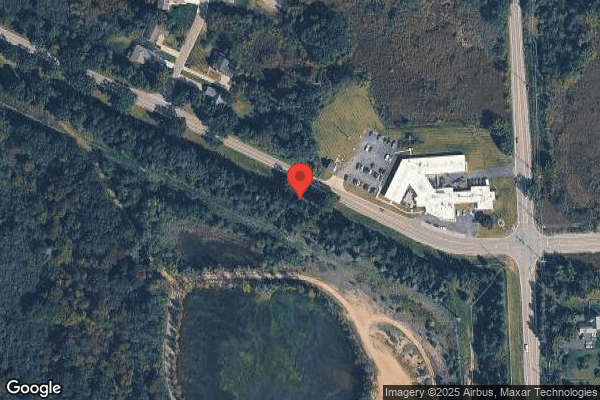
3310 W Commerce Rd, Milford, MI 48380 (248) 685-1400
For profit - Limited Liability company 101 Beds THE PEPLINSKI GROUP Data: November 2025 2 Immediate Jeopardy citations
Trust Grade
0/100
#422 of 422 in MI
Last Inspection: March 2025

Within standard 12-15 month inspection cycle. Federal law requires annual inspections.

Overview

West Hickory Haven has received a Trust Grade of F, indicating significant concerns about the quality of care provided at this facility. Ranking #422 out of 422 nursing homes in Michigan places it in the bottom tier of facilities in the state, and it is also ranked #43 out of 43 in Oakland County, meaning there are no better local options available. Although the facility is improving, with the number of health issues decreasing from 22 to 6 over the past year, there are still serious problems, including $100,435 in fines, which is concerning and higher than 86% of Michigan facilities. Staffing is average with a 68% turnover rate, which is notably higher than the state average, but the facility does have some strengths, such as average RN coverage that is essential for catching issues. Specific incidents, like failures to protect residents from sexual abuse and allowing a resident to elope unsupervised, highlight significant risks that families should consider carefully. Overall, while there are some improvements, the facility has serious weaknesses that need to be addressed.

Trust Score
F
0/100
In Michigan
#422/422
Bottom 1%
Safety Record
High Risk
Review needed
Inspections
Getting Better
22 → 6 violations
Staff Stability
⚠ Watch
68% turnover. Above average. Higher turnover means staff may not know residents' routines.
Penalties
✓ Good
$100,435 in fines. Lower than most Michigan facilities. Relatively clean record.
Skilled Nurses
○ Average
Each resident gets 40 minutes of Registered Nurse (RN) attention daily — about average for Michigan. RNs are the most trained staff who monitor for health changes.
Violations
⚠ Watch
51 deficiencies on record. Higher than average. Multiple issues found across inspections.
★☆☆☆☆
1.0
Overall Rating
★★★☆☆
3.0
Staff Levels
★★★☆☆
3.0
Care Quality
★☆☆☆☆
1.0
Inspection Score
Stable
2024: 22 issues
2025: 6 issues

The Good

  • Full Sprinkler Coverage · Fire safety systems throughout facility
  • No fines on record

Facility shows strength in fire safety.

The Bad

1-Star Overall Rating

Below Michigan average (3.1)

Significant quality concerns identified by CMS

Staff Turnover: 68%

22pts above Michigan avg (46%)

Frequent staff changes - ask about care continuity

Federal Fines: $100,435

Well above median ($33,413)

Significant penalties indicating serious issues

Chain: THE PEPLINSKI GROUP

Part of a multi-facility chain

Ask about local staffing decisions and management

Staff turnover is elevated (68%)

20 points above Michigan average of 48%

The Ugly 51 deficiencies on record

2 life-threatening 6 actual harm
Aug 2025 2 deficiencies 1 Harm
SERIOUS (G) 📢 Someone Reported This

A family member, employee, or ombudsman was alarmed enough to file a formal complaint

Actual Harm - a resident was hurt due to facility failures

Accident Prevention (Tag F0689)

A resident was harmed · This affected 1 resident

**NOTE- TERMS IN BRACKETS HAVE BEEN EDITED TO PROTECT CONFIDENTIALITY** This citation has two deficient practices.Deficient Practice #1This citation pertains to intake #2581294Based on interview and r...

Read full inspector narrative →
**NOTE- TERMS IN BRACKETS HAVE BEEN EDITED TO PROTECT CONFIDENTIALITY** This citation has two deficient practices.Deficient Practice #1This citation pertains to intake #2581294Based on interview and record review the facility failed to prevent an avoidable accident for one resident (R203), of three residents reviewed for accident hazards, resulting in injury requiring transfer to the emergency room. Findings include:Based on interview and record review the facility failed to prevent an avoidable accident for one resident (R203), of three residents reviewed for accident hazards, resulting in injury requiring transfer to the emergency room. Findings include:A complaint received by the State Agency alleged R203 was not properly secured during a ride in the transport van and sustained a fall from their wheelchair that resulted in injury requiring a transfer to the emergency room. On 8/26/25 at 10:41 AM, a review of R203's closed clinical record revealed they admitted to the facility on [DATE] and discharged to the emergency room on 3/17/25. R203's diagnoses included: heart disease, muscle wasting, abnormal posture, anxiety disorder and adjustment disorder. R203's Minimum Data Set assessment dated [DATE] revealed R203 had moderately impaired cognition and used a wheelchair for mobility.A review of a note entered into the record by the facility's Director of Nursing (DON) dated 3/17/25 at 12:43 PM, was reviewed and read, .Called to lobby by administrator who states resident fell out of chair during transport. Daughter at resident side and states that while stop <sic> Mom fell forward out of wc (wheelchair). Foot pedals on <sic> and resident fell to knees and then fell forward and hit head on seat in front .Assisted resident to bedroom and assisted to bed.Resident co (complained of) pain to left hip with ROM (range of motion), skin tears to bilateral shins dressed, during assessment 02 (oxygen level) declined to 83% and o2 <sic> (oxygen therapy) started and O2 above 90%. Noted development of hematoma during assessment. 911 called to transport for evaluation.On 8/26/25 at 12:43 PM, a review of a facility provided incident report dated 3/17/25 was reviewed and read, Witnessed fall.Incident Location: Out of Facility/During Transport.Nursing Description: Called to lobby by administrator who states resident fell out of chair during transport. Daughter at resident side <sic> and states that wat <sic> stop Mom fell forward out of wc (wheelchair).Resident Taken to Hospital? Y (yes). The report documented a bruise to the chest, a bruise to the face, a hematoma (localized area of blood outside of the blood vessels) to face, and skin tears to the right and left lower legs. Continued review of the report read, Notes.Resident expresses pain to mouth and bilateral shins.called out in pain with ROM to left hip.Abrasion across nose bridge. Blood from mouth.SPO2 (oxygen saturation) 83% (Normal levels 95%-100%) .911 called to eval and treat at ED (emergency department).Notes 3/17/25 Staff and daughter interview: (Staff Member ‘A') reported that she did not have the seatbelt latched properly and when she stopped the van, (R203) fell out of wc. Daughter.reports that they were on way <sic> to schedule <sic> doctors appt (appointment) and there was an accident.root cause: Resident was not restrained properly in van. When van stopped resident came forward and fell.Conclusion: (R203) had an accident while (Facility Name) van was transporting. (Facility Name) admitted that (R203) was not secured properly in the van and was sent to the hospital for evaluation of injuries.On 8/26/25 at 2:42 PM, an interview was conducted with the facility's Administrator. The Administrator indicated Staff ‘A' admitted they secured the wheelchair to the van but while talking to R203's daughter they got distracted and forgot to place a seatbelt across R203's waist, and when they stopped R203 fell forward out of the wheelchair.On 8/26/25 at 3:12 PM, a request for a policy regarding accidents and providing a safe environment was made and the Administrator indicated the facility did not have a policy.Deficient Practice #2This citation pertains to intake #2581294Based on observation, interview, and record review, the facility failed to immediately intervene and thoroughly investigate the details of an elopement, by two residents (R#'s 201 and 202) resulting in the potential for resident elopements in the future. Findings include:A complaint received by the State Agency alleged R201 and R202 eloped from the facility and were found in the parking lot by a male staff member.On 8/26/25 at 9:30 AM, a review of R201's progress notes revealed an Interdisciplinary Team Note entered into the record on 5/16/25 by Nurse ‘B' that read, (R201) is alert to self and often ambulates throughout the facility.On 5/3/25 and 5/10/25 he did exit the facility through the front doors and staff saw him and redirected him into the facility. He was visualized by staff the entire time.A review of R201's clinical record revealed they admitted to the facility on [DATE] with diagnoses that included Alzheimer's disease, adjustment disorder, mood disorder, and delirium. R201's Minimum Data Set (MDS) assessment dated [DATE] was reviewed and revealed R201 had severely impaired cognition and was independent with mobility.It was noted there was no progress note in R201's record that documented the elopements on 5/3/25 and 5/10/25.On 8/26/25 at 10:25 AM, a review of R202's progress notes revealed an Interdisciplinary Team Note entered into the record on 5/16/25 by Nurse ‘B' that read, (R202) is alert to self and often ambulates throughout the facility with walker.On 5/3/25 he did exit the facility through the front doors and staff saw him and redirected him into the facility.A review of R202's clinical record revealed they admitted to the facility on [DATE] with diagnoses that included: dementia, traumatic brain injury, falls, and muscle weakness. R202's MDS assessment dated [DATE] revealed R202 had severely impaired cognition and was independent with mobility with a walker. It was noted there was no progress note in 202's record that documented the elopement on 5/3/25.On 8/26/25 at 11:10 AM, a request for any incident/accident reports with accompanying investigations were requested for R201 and R202. There were no reports or investigations regarding R201's elopements on 5/3/25 and 5/10/25 or R202's elopement on 5/3/25 provided.On 8/26/25 at 1:45 PM, phone calls were placed to all male nursing staff members who worked on 5/3/25 who may have had knowledge of R201 and R202's elopements. A voicemail was left for Certified Nurse Aide (CNA) ‘C', and CNA ‘D', and an interview conducted with CNA ‘E' who denied any knowledge of the incident.On 8/26/25 at 2:55 PM, an interview was conducted with the facility's Administrator, Director of Nursing (DON) and Corporate Nurse ‘J'. They were first asked if a progress note should have been entered into R201 and R202's records on the date they eloped from the facility and said there should have been a note entered into the records. They were then asked why an investigation into the incident(s) was not conducted and the Administrator indicated they had a soft file regarding what happened. They were asked if they would provide the file and said they would.A review of the file revealed only R201 and R202's face sheets and a typed paragraph summarizing the incident. about the incident that read, On 5/3/25 at approximately 3:10 PM CNA ‘K' went to the front door due to it alarming and put the code in to turn off the alarm at approximately 3:15 PM, CNA ‘D' was coming in from his break and saw (R201) walking in the parking lot.At this same time Nurse ‘L' saw (R202) walking by the [NAME] emergency exit door and went out and brought him in.CNA ‘K' received an education that if there is no one around the door that you cannot just turn the alarm off, that you must go outside and check the surrounding area. On 8/26/25 at 3:00 PM, multiple questions were posed regarding the paragraph summarizing the incident. The Administrator and DON were first asked how R201 and R202 exited the locked front door. They said they held the egress door for 15 seconds, the door unlocked and they walked out. They were then asked about the progress note documented by Nurse ‘B' on 5/16/25 regarding the incident on 5/3/25 that read, .he (R201) did exit the facility through the front doors and staff saw him and redirected him into the facility. He was visualized by staff the entire time. and how if R201 was visualized the entire time, he was found by CNA ‘D' in the parking lot, to which they had no explanation. They were then asked what door R202 eloped from since they were observed by Nurse ‘L' outside of the [NAME] hallway emergency exit and said they did not know but thought it was the front door. They were asked if they reviewed any camera footage from front lobby door to aid their investigation and said they did not. Finally, they were asked if they interviewed any involved staff members regarding the incident and said they did not.On 8/26/25 at 3:20 PM, a review of a facility provided policy titled, Accident/Incident Reports was conducted and read, Policy: It is the policy of this facility to complete an accident/incident report for.accidents or incidents where there is injury or the potential to result in injury.Purpose: To establish a standard accident/incident completion and to ensure the facility meets the responsibility to make every effort to decrease the likelihood of a recurrence by investigating incidents, understand how they occur and take appropriate preventive action.3. RESPONSE TO A SOUNDING DOOR ALARM.b. Check the exit door for any exiting residents by means of a visual check. A visual check means observing the area around the exit and may require leaving the building and checking the grounds. c. If an exit door alarm is triggered, the cause is evaluated and re-set after the resident is re-directed and their safety is assured.
CONCERN (D) 📢 Someone Reported This

A family member, employee, or ombudsman was alarmed enough to file a formal complaint

Potential for Harm - no one hurt, but risky conditions existed

Notification of Changes (Tag F0580)

Could have caused harm · This affected 1 resident

**NOTE- TERMS IN BRACKETS HAVE BEEN EDITED TO PROTECT CONFIDENTIALITY** This citation pertains to intake #2581294Based on interview and record review the facility failed to notify the resident's respo...

Read full inspector narrative →
**NOTE- TERMS IN BRACKETS HAVE BEEN EDITED TO PROTECT CONFIDENTIALITY** This citation pertains to intake #2581294Based on interview and record review the facility failed to notify the resident's responsible parties of an elopement for two residents (R#'s 201 and 202) of three residents reviewed for changes of condition. Findings include:A complaint received by the State Agency alleged two resident's eloped from the facility and their responsible parties were not notified.On 8/26/25 at 9:30 AM, a review of R201's progress notes revealed an Interdisciplinary Team Note entered into the record on 5/16/25 by Nurse ‘B' that read, (R201) is alert to self and often ambulates throughout the facility.On 5/3/25 and 5/10/25 he did exit the facility through the front doors and staff saw him and redirected him into the facility. He was visualized by staff the entire time.A review of R201's clinical record revealed they admitted to the facility on [DATE] with diagnoses that included Alzheimer's disease, adjustment disorder, mood disorder, and delirium. R201's Minimum Data Set (MDS) assessment dated [DATE] was reviewed and revealed R201 had severely impaired cognition and was independent with mobility. Documentation in the record did not indicate R201's responsible party had been notified of the elopement.On 8/26/25 at 10:25 AM, a review of R202's progress notes revealed an Interdisciplinary Team Note entered into the record on 5/16/25 by Nurse ‘B' that read, (R202) is alert to self and often ambulates throughout the facility with walker.On 5/3/25 he did exit the facility through the front doors and staff saw him and redirected him into the facility.A review of R202's clinical record revealed they admitted to the facility on [DATE] with diagnoses that included: dementia, traumatic brain injury, falls, and muscle weakness. R202's MDS assessment dated [DATE] revealed R202 had severely impaired cognition and was independent with mobility with a walker. Documentation in the record did not indicate R202's responsible party had been notified of the elopement.On 8/26/25 at 12:35 PM, an interview was conducted with R201's family member/responsible party and they were asked if they had been made aware R201 had eloped through the front door of the facility and said they had not been made aware.A review of a facility provided policy titled, Wandering Resident Exit Seeking Management was conducted and read, .7. Upon return of an eloped resident:.c. The resident's family/legal representative shall be notified of the resident's status.
Mar 2025 4 deficiencies
CONCERN (D)

Potential for Harm - no one hurt, but risky conditions existed

Accident Prevention (Tag F0689)

Could have caused harm · This affected 1 resident

**NOTE- TERMS IN BRACKETS HAVE BEEN EDITED TO PROTECT CONFIDENTIALITY** R64 On 3/11/25 at approximately 11:03 AM, R64 was observed sitting in a large activity/dining room with other residents. R64 was...

Read full inspector narrative →
**NOTE- TERMS IN BRACKETS HAVE BEEN EDITED TO PROTECT CONFIDENTIALITY** R64 On 3/11/25 at approximately 11:03 AM, R64 was observed sitting in a large activity/dining room with other residents. R64 was alert but not able to answer questions appropriately. A review of the resident clinical record revealed the resident was initially admitted to the facility on [DATE] with diagnoses that included: cerebral infarction (ischemic stroke). A review of the resident Minimum Data Set (MDS) noted the resident had a Brief Interview for Mental Status (BIMS) score of 7/15 (severe cognitive impairment). Progress Note (11/13/24): Staff was transferring resident off the toilet to her wheelchair when her foot began to slide from under her . R64's care plan was reviewed and documented, in part: Focus: R64 has altered functional mobility and ADL's (activities of daily living) .Interventions: .Ability to leave on toilet - No (2/1/24) .Bed Mobility: asses of two .Ambulatory: Non-Ambulatory (2/1/24) .Fall Risk Management: Encourage Non-skid Footwear (2/1/24) .11/13/24 .Resident is to wear shoes during all transfers .Transfer: One Assist, Right AFO (ankle foot orthosis - brace requiring a shoe) on when out of bed .Transfer: .Two Assist (2/1/24) . An Incident/Accident (IA) report provided by the facility was reviewed and documented, in part: Witnessed Fall .Date: 11/13/24 at 2:05 PM .Staff was transferring resident off the toilet to her wheelchair when her feet began to slide from under her .Immediate Action Taken .Shoes placed on residents feet .Notes: R64 is a 2 assist for transfers and as staff were assisting to transfer her form the toilet to w/c (wheelchair) she became weak .At the time of resident occurrence, CNA verbally re-educated on need for non-skid foot protection with for ambulation and .transfers and resident need 2 assist, and required to follow care plan . *It was noted on the IA that the CNA involved in the incident was CNA R. An attempt to contact CNA R was made via telephone on 3/13/25 at approximately 1:45 PM. No return call was made prior to the end of the Survey. The Survey personnel file noted that the CNA R resigned from the facility on 11/21/24. On 3/13/25 at approximately 2:01 PM, an interview was conducted with the Director of Nursing (DON). When asked about the incident causing R64 to fall to the floor, the DON reported that they did not recall the entire event, however recalled educating CNA R that that R64 was a two person assist. Based on observation, interview and record review, the facility failed to appropriately transfer a resident per their assessed needs for two (R51 and R64) of six residents reviewed for falls. Findings include: R51 On 3/12/25 at 9:43 AM, R51 was observed sitting on the side of the bed. An ankle-foot orthosis (AFO) brace on their left foot was observed. R51 was asked if they had fallen recently. R51 explained as they were transferring from their wheelchair to the toilet, their feet got tangled up because they have a paralyzed foot. R51 was asked how many staff members were present when they were being transferred. R51 explained there was only one. When asked how many staff are usually present when they were being transferred, R51 explained usually there would be only one staff present. Review of the clinical record revealed R51 was admitted into the facility 3/3/22 and readmitted [DATE] with diagnoses that included: hemiplegia (paralysis) affecting left nondominant side, need for assistance with personal care and lack of coordination. According to the Minimum Data Set Assessment (MDS) dated [DATE], R51 had intact cognition, had upper and lower body impairment on one side, and was dependent on staff for transfers. Review of R51's Activities of Daily Living (ADL) care plan revealed an intervention revised 2/28/25 that read, TRANSFER: Two Assist, AFO to left leg when out of bed. Additional review of all R51's revised ADL care plans revealed from the initial care plan dated 3/7/22, R51 was always a two person assist for transfers. Review of R51's progress notes revealed an Interdisciplinary Documentation by Registered Nurse (RN) G dated 3/10/25 at 1:43 PM that read in part, Writer notified of CNA (Certified Nursing Assistant) having to lower resident to the floor due to resident losing her balance during a transfer to the toilet . On 3/12/25 at 10:18 AM, CNA E, an agency CNA, was interviewed and asked how they knew what the transfer status of a resident was. CNA E explained each residents' care plan was posted on the inside of their closet door. On 3/12/25 at 10:26 AM, observation was made of RN G of assisting R51 and a Family Member out of the bathroom and telling R51 she was assisting because R51 was a two person assist. R51 replied in a surprised voice, I am?. On 3/12/25 at 10:97 AM, observation of R51's closet revealed R51's ADL care plan posed in plastic sleeves and read the same, TRANSFER: Two Assist, AFO to left leg when out of bed. On 3/12/25 at 10:31 AM, the Therapy Director (TD) was interviewed and asked about R51's transfer status. The TD explained R51 was a two person assist due to their left leg paralysis, and that R51 overestimated their abilities. On 3/12/25 at 10:38 AM, the Director of Nursing (DON) was interviewed and asked about R51's fall. The DON explained she had been told R51 did not want to wait for another staff member, so the CNA just transferred R51 by herself. The DON was asked if it was ever acceptable to transfer a resident assessed as a two person assist with only one person. The DON explained there should always be two people if they are care planned for two people. When asked who the CNA was, the DON explained it was CNA I, who was an agency CNA. Review of CNA I's employment file revealed an Education Acknowledgement signed 8/1/24 that included Care Plans. On 3/13/25 at 10:36 AM, a phone call was made to CNA I and a voice mail was left. No return call was received prior to the end of the survey.
CONCERN (D)

Potential for Harm - no one hurt, but risky conditions existed

Deficiency F0849 (Tag F0849)

Could have caused harm · This affected 1 resident

**NOTE- TERMS IN BRACKETS HAVE BEEN EDITED TO PROTECT CONFIDENTIALITY** Based on observation, interview, and record review, the facility to provide adequate care coordination related to hospice servic...

Read full inspector narrative →
**NOTE- TERMS IN BRACKETS HAVE BEEN EDITED TO PROTECT CONFIDENTIALITY** Based on observation, interview, and record review, the facility to provide adequate care coordination related to hospice services for one Resident (R52) of two residents reviewed for hospice services. Findings include: Review of R52's Minimum Data Set (MDS) assessment, dated 2/14/25, revealed R52 was admitted to the facility on [DATE], with diagnoses including lung disease, alcohol abuse, pressure ulcers, and dementia. The assessment revealed R52 could feed themselves with set-up, and was dependent for toileting, bed mobility (rolling), and transfers. The Brief Interview for Mental Status (BIMS) assessment revealed a score of 14/15, which showed R52 was cognitively intact. The pain assessment showed R52 had at least moderate pain frequently over the past five-day assessment period, which occasionally interfered with their sleep. The nutritional assessment showed R52 was edentulous, was 61 tall, and weighed 79 pounds upon admission. The assessment showed no behaviors or symptoms of depression. The assessment showed R52 was receiving oxygen, on hospice care, and was receiving opioid pain medication. On 3/11/25 at 11:07 a.m., R52 was laying in their hospital bed, wearing a hospital gown, and was receiving oxygen via a nasal canula. R52 appeared thin and underweight, with protruding bony prominences, and an empty pudding cup container on their bedside table. R52 stated they knew they were pressing their call light frequently. When asked why, they stated, I feel lonely. R52 appeared unsettled and anxious, and said they were uncomfortable. R52 was observed fidgeting with their hands and demonstrated little eye contact. On 3/11/25 at 11:09 a.m., R52 stated, No, it is not going well here. R52 reported they struggled when they had to wait anywhere from 15 minutes to a half hour to receive their pain meds for very high pain in their stomach. R52 reported they could receive their pain medication every two hours, and they needed it to be on time, as they had high pain when the pain medication was wearing off. R52 pushed their soft touch pad call light for pain medication during the interview, as they believed it was due. On 3/11/25 at 11:11 a.m., R52's nurse, Licensed Practical Nurse (LPN) S, an agency nurse, answered their call light. R52 stated they wanted their pain medicine due to high pain. LPN S explained to R52 they were due for their pain medication in 15 minutes. R52 expressed they needed their pain medication now but understood they had to wait and shared with LPN S it was difficult to wait due to excessive pain. R52 looked at the clock, read the time, and said the morphine and Tylenol were due at 11:26 a.m R52 was alert and oriented to herself, place, time, and situation. On 3/11/25 at 11:17 a.m., R52 stated they could not wait a half hour for their pain meds for severe stomach pain. On 3/11/25 at approximately 11:45 a.m., the Director of Nursing (DON) arrived, and was informed of R52's concerns regarding their unmanaged pain and needing more chocolate pudding, which R52 also shared with the DON. The DON reported to this Surveyor that R52 appeared to be receiving the maximal pain medication, as they received morphine every two hours, and they had called the hospice agency due to R52's high pain, who had scheduled their morphine every 3 hours. Review of R52's physician orders showed their morphine (short acting) was scheduled every four hours, and every two hours prn (as needed) for breakthrough pain. On 3/12/25 at 1:46 p.m., R52's nurse, Registered Nurse (RN) J, was asked for assistance finding R52's hospice care book, to review their hospice plan of care and review the communication notes, per standards of practice and regulatory requirements, as the facility management reporting they used binders for hospice documentation. RN J looked at the unit nurse's station with this Surveyor, and in the Electronic Medical Record (EMR), and did not find the communication notes or current hospice plan of care. A hospice communication book was found in R52's name, with blank green cardstock pages which were not completed. RN J agreed this was not completed, and asked the Unit Manager, RN U, to assist them. RN U looked for another communication book for R52 and agreed it was not on the unit with the other hospice care books. RN U said they would search in other places for the book, but the expectation was R52's hospice communication book would be located there. On 3/12/25 at 1:54 p.m., a second manager, RN C, came to assist to locate R52's hospice binder with care plan and communication documentation. Both managers found the old hospice notes prior to R52 admitting to this facility in the EMR in the documentation section as Referral Notes (not labeled hospice or company name), however both reported they could not locate any current notes showing hospice care and facility coordination from R52's admission to the facility from 2/04/25 to 3/12/25. The expectation per standards of practice for hospice care in the facility per both unit managers was the hospice communication notes would have been on the unit typically, and the plan of care would have been there or in the EMR, so staff could readily access the notes, for care coordination, appropriate interventions, any significant change, and record keeping requirements for hospice care. On 3/12/25 at 2:15 p.m., this Surveyor emailed the Nursing Home Administrator (NHA) to see if they could provide R52's missing hospice documentation, including all hospice visit communication notes, a current care plan, and assessments, from 2/04/25 to the present, 3/12/25. This Surveyor shared with the NHA they remained missing, per review by both unit managers, RN J, and Surveyor. The NHA emailed this Surveyor back they did not have the missing hospice care documentation, and would attempt to locate the documents. They reported they understood the concern. On 3/12/25 at approximately 3:45 p.m., R52's hospice care notes were received, in part, during their current stay, from the NHA. It was noted they did not include any nursing visits beyond 2/21/25, which was shared with the NHA, who reported they would continue to request the remainder of R52's hospice care notes from R52's hospice care provider. Surveyor noted this would be concerning if R52 had not been seen by the hospice nurse since 2/21/25, per the current records. The NHA reported they understood the concern. On 3/12/25 at 4:28 p.m., R52 was observed in their hospital bed, appearing tired, wearing her oxygen via nasal canula. R52 spoke softly, and reported they were not having a good day. When asked why, R52 stated they wanted their pillows adjusted. R52 appeared restless and was fidgeting with their bedding, trying to reach their pillow. R52 pressed their call light and Certified Nurse Aide (CNA) V arrived, and adjusted R52 by pulling them up in bed and adjusting their pillows. An empty chocolate pudding cup was observed on R52's bedside table. This Surveyor asked R52 what would help them to feel calm. R52 stated getting their pain medication on time, getting chocolate pudding whenever they wanted it, and having their call light answered on time would bring them peace and comfort. On 3/12/25 at approximately 4:40 p.m., CNA V reported R52 was attention seeking, and doing about anything to get to keep them in their facility room, as they struggled to be alone. CNA V reported R52 sometimes used their bed remote to raise their head of the bed all the way in the air, so they appeared to be almost sliding down when they left the room, to get them to return to their room. CNA V stated they were worried about them falling out of the bed. CNA V explained they had been in their room 25 to 30 times already on their day shift, and R52 was on their call light every five to ten minutes. CNA V stated they had other residents to care for and could not sit in R52's room. CNA V reported they were giving R52 pudding constantly and they did not know how to handle these requests, as R52 was not satisfied when they had pudding, and soon after would request pudding again. CNA V asked if anything else could be done, and if this Surveyor had any ideas. CNA V was asked if they had followed up with their nurse or nursing management and stated they had not. Review of R52's nursing hospice note dated 2/21/25 revealed in the narrative section, .SNV (Skilled Nursing Visit). Received patient (R52) lying in the hospital bed, awake and alert. Patient (R52) was yelling out into hallway. 4 people to come (sic) into her room. Patient (R52) appeared agitated/restless throughout visit and spoke with facility nurse manager, who states patient is restless most of the day, constantly asking for pudding cups, but does not eat all her meals . The hospice note showed R52 was using Lorazepam a few times a day as needed, and they recommended Lorazepam to be increased to scheduled twice a day. The note showed R52's medical and behavioral presentation had changed little from 2/21/25, and there were no other hospice notes available. On 3/13/25 at 11:11 a.m., Physician Q (who was familiar with R52) was asked (in person) about R52's ongoing agitation, restlessness, reports of high pain, and psychosocial distress, including self-reported loneliness, as evidenced frequent use of their call light, possible attention seeking behaviors (verses pain), as well as their seeming insatiable appetite for pudding, without reported satiety. Surveyor and Physician Q reviewed the EMR, Egress, the electronic filing system, and the hospice nursing care notes, which still showed the last hospice nursing visit was on 2/21/25. Physician Q was asked to explain the process for care coordination with R52's hospice and facility care team, and documentation expectations. Physician Q reported the expectation was R52 would be seen by a hospice nurse weekly, and the notes should have been available and found in the EMR. Physician Q acknowledged they had not seen any current hospice care notes. Physician Q reported the hospice team should have had their social worker making more recent visits due to R52's ongoing anxiety, restlessness, and agitation, and may have considered involving pastoral (spiritual) services, pending R52's wishes. Physician Q shared they believed the social worker and/or care team should have worked to identify the cause of R52's pervasive anxiety, such as were they afraid of dying, wanting to go home, or other unknown reasons. Physician Q conveyed their expectation would be the most recent, current hospice documentation would be readily available in the EMR, and there should be ongoing communication documented between the hospice providers and the nursing and physician/medical care team in the medical record (which was not currently found with mutual record review). Physician Q reported if they had been made aware of R52's ongoing psychosocial concerns and high anxiety, they may have requested psych services would have been involved in R52's care and planned to follow-up. Review of the R52's physician orders on 3/13/25 with Physician Q revealed they had concerns regarding R52's medications. Physician Q stated if they had been made aware of R52's high anxiety, they could have potentially prescribed an anxiety medication which was longer acting, such as Clonazepam, to mitigate (mood) peaks and troughs, as they explained their current medication, Lorazepam, was shorter acting, and may have contributed to R52's ongoing reports and observations of anxiety, including their restlessness and behavioral presentation. Physician Q reported they planned to speak with the hospice provider immediately to address R52's medication concerns. Physician Q stated they had a concern if the hospice provider was adjusting the medication and not doing a follow-up, since the recent nursing documentation was unavailable. Physician Q additionally noted new orders were just placed in the EMR during the interview on 3/13/25 by hospice to increase R52's short acting Morphine to every three hours (received from the DON) and reported there were possibly better medication options, such as MS Contin, which was a longer acting morphine, as R52 was currently on Roxanol, which was a shorter acting Morphine. Physician Q reported they would have been expected to have been contacted by the hospice provider and a discussion to have ensued to coordinate R52's medications, as they were frequently in the facility (including on 3/13/25) and oversaw R52's care as their facility physician provider, along with the medical director. Physician Q stated they were both readily available and accessible. Physician Q explained a longer-acting pain medication would help R52 not to be using her call light around the clock to try to get her pain medication exactly two hours later when it was due, which may have been challenging for staff at times. Physician Q reported they had communication concerns with R52's hospice provider. On 3/13/25 at approximately 11:56 a.m., the NHA was asked if they had obtained any additional hospice records, per their earlier report there may have been some missing documents in the first batch of hospice notes received. At 12:02 p.m., the NHA reported they had received some additional hospice notes a few minutes prior and were placing them into Egress, the State facility shared electronic filing system. On 3/13/25 at 12:05 p.m., review of the Egress Electronic filing system showed additional hospice visit notes for R52 were uploaded, including nursing visits notes after 2/21/25. On 3/13/25 at 12:10 p.m., the NHA was asked why the hospice notes were not readily available for facility staff to have access and available to review for a resident (R52) currently on hospice care. The NHA reported their health information manager no longer worked at the facility, and they wondered if the records had gone to their email and had not been printed. The NHA stated, This is a process we are going to have to get better at ., and reported they understood the concern. The NHA was asked if they had a policy respective to documentation filing and availability, given these concerns. The NHA reported they did not have a policy related to this. A hospice policy was provided, upon request, but did not include documentation expectations. On 3/13/25 at 12:20 p.m., Physician Q followed up with this Surveyor, and showed this Surveyor R52's new orders they had just received from the DON, which included a psych consult (for psychosocial concerns), and MS Contin was ordered yet the short acting Roxanol remained in place. Physician Q' reported they planned to follow up with the hospice provider regarding the new orders, as they had some concerns and planned to provide hospice care coordination before approving the orders, as they were reviewing the pain medication orders further. Physician Q was made aware of the missing hospice nursing notes newly available by the NHA, which showed nursing visits had occurred after 2/21/25. On 3/13/25 at 12:38 p.m., the DON asked to meet with this Surveyor, and reviewed the newly received hospice nursing notes and the new physician orders, as described by Physician Q. The DON provided notes which showed the newly available hospice nursing notes, which showed the hospice nurse saw R52 on: 3/07/25, 2/28/25, 2/21/25, and prior, and their visit was due this week. This Surveyor asked the DON about the records not being available in the facility for their staff. The DON reported they understood the concern related to documentation being unavailable, per the NHA's description. The DON clarified they understood the concern related to the need for improved hospice care coordination and updated interventions with the facility, respective to R52's ongoing agitation, restlessness, pain, and behavioral concerns. On 3/13/25 at 1:25 p.m., R52's hospice nurse, Registered Nurse (RN) W, was asked about their hospice care coordination with the facility during a phone interview, respective to R52's ongoing concerns related to restlessness, agitation, pain, behavioral presentation, psychosocial needs, and decreased satiety. RN W reported the disconnect on the notes may have been R52 was transferred to the current facility from another skilled care facility, and there may have been a delay in facility receipt due to this process. RN W reported they completed their notes timely and submitted them to their hospice provider, and could not speak to that process, i.e. what happened after they completed their electronic documentation. RN W clarified they logged their visits by hand on a green log form in a hospice binder in the facility, and were unclear why this was not found during the survey for R52. RN W explained they were only at the facility once a week, and since R52's anxiety medication had been increased, they had not been made aware by facility staff of R52's symptoms of anxiety including restlessness and agitation remained an ongoing concern. RN W reported they had been made aware of medication changes and typically with palliative medication changes, they went through the hospice physician and did not communicate with R52's in house physician team, including Physician Q and or the facility Medical Director, per their hospice process. Review of the policy, Hospice Care, revised June 2018, revealed, It is the policy of this facility to screen terminally residents who may be eligible for Hospice Benefit and provide the resident and / or authorized representative with options for these services. Purpose: To support the family and resident and provide the Interdisciplinary Team with additional expertise in pain management, symptom control and bereavement assistance when determined reasonable and necessary .Procedure: 1. Pursuant to regulations, hospice services must be reasonable and necessary for the palliation or management of the terminal illness as well as related conditions .2. Hospice is responsible for providing hospice services. The nursing facility provide room and board and care unrelated to the terminal illness. 3. The process of delivering palliative services continues within the dual regulations of the Nursing Facility and Hospice. 4. The Care Plan will reflect the hospice philosophy and be based on an assessment of the resident's needs and specific living arrangements within the nursing home. 5. The plan of care will reflect the residents' current medical, physical, psychosocial, and spiritual needs .a. Hospice will reflect these coordinated services on the facilities template for the plan of care within the medical record. b. The plan of care will reflect which services are provided by the nursing facility and which are provided by hospice. c. The facility and hospice (provider) are responsible for performing their respective functions, which have been agreed upon and included in the jointly developed Plan of Care .7. During the provision of hospice services, the attending physician remains in charge . Review of the facility and provider hospice contract, signed 2/04/25, revealed on Page 12: 4.2.4. Facility shall promptly inform Hospice of any change in the condition of a Patient. This includes, without limitation, a significant change in a Patient's physical, mental, social, or emotional status, (and/or) clinical complications that suggest a need to alter the Plan of Care .4.3: Mutual responsibilities. Hospice and Facility shall communicate with one another regularly and as needed for each particular patient. Each Party is responsible for documenting such communication in its respective clinical records to ensure that the needs of patients are met 24 hours a day. Hospice shall periodically review with the facility representative to verify that Hospice supplied Facility with a copy of each Patient's (Hospice) Plan of Care .
CONCERN (E)

Potential for Harm - no one hurt, but risky conditions existed

Deficiency F0557 (Tag F0557)

Could have caused harm · This affected multiple residents

**NOTE- TERMS IN BRACKETS HAVE BEEN EDITED TO PROTECT CONFIDENTIALITY** Based on observation, interview and record review the facility failed to ensure residents personnel clothing was routinely retur...

Read full inspector narrative →
**NOTE- TERMS IN BRACKETS HAVE BEEN EDITED TO PROTECT CONFIDENTIALITY** Based on observation, interview and record review the facility failed to ensure residents personnel clothing was routinely returned to them from laundry for three residents (R39, R57 and R56) and multiple residents who asked to remain anonymous at the resident council meeting. This had the potential to affect all residents who relied on the facility to care for their laundry. Findings include: Resident Council On 3/12/25 at 10:00 AM, a Resident Council meeting was conducted with 10 residents who asked to remain anonymous. The residents were asked about life in the facility and any concerns they might have. Multiple residents expressed issues pertaining to their clothing not being returned to them. One resident reported that laundry is sent out of the facility and many times it does not come back to their room. They noted that the person in charge of laundry had been out for over two months, and they believed that added to the confusion. Another resident reported that they had a special [NAME] football shirt that had never been returned and/or replaced. A third resident reported that several sweaters had not been returned. The resident's indicated that the facility is aware of the issue however, they still do not get their own clothes back. R39 On 3/11/25 at approximately 10:37 AM, R37 was observed lying in bed. The resident was alert and reported that they had entered the facility in February 2025. When asked about concerns at the facility, R39 reported they were missing some clothing items. The resident specifically noted that shirts containing the names and numbers of local football players was missing from their room. An observation of the residents' clothes located in their closet did not have any names or labels on the clothes. R37 reported that they did not have a proper pen to label their clothes and noted if they did have one, it may have been difficult for them to write their own names. A review of R39's clinical record revealed the resident was initially admitted to the facility on [DATE] with diagnoses of type II diabetes and pressure ulcers. The resident had a Brief Interview for Mental Status (BIMS) Score of 14/15 (cognitively intact cognition). *It should be noted that an inventory list could be located in the resident's clinical record. R57 On 3/11/25 at approximately 10:27 AM, R57 was observed lying in bed. The resident was alert and able to answer all questions asked. R57 was asked about life in the facility and reported that they had been a resident for several years. They indicated that they were mostly happy with the care provided with the exception of a delay in turning them as well as missing clothing items. R57 reported that they had several shirts of various colors (blue, purple and red) as well as pajamas provided by family that were never returned. On 3/13/25 at approximately 8:18 AM, an observation and interview were conducted with the Administrator and Laundry Staff D. The interview took place in the Laundry/Storage room. Resident clothes were observed hanging up on hangers. Laundry Staff 'D reported that they had been working at the facility for over 20 years and noted that they had been out over the past two months. They further indicated that laundry is always sent out to an outside company. Laundry Staff D indicated that clothing should be labeled, but it's not always and this makes it difficult to return to the right resident. Further, at times laundry does not even come back to the facility and might be lost at the outside laundry company. Laundry Staff D noted that at times they believe Agency staff need to be further educated on resident's laundry and the process at the facility. The Administrator noted that they recognized the problem and attempted to replace clothing when made aware, however they were aware that this did not negate that residents' original clothes should not go missing. R56 On 3/11/25 at 10:55 AM, R56 was observed lying on their bed. R56 appeared sleepy, and did not answer questions asked. On 3/11/25 at 1:33 PM, R56's Durable Power of Attorney (DPOA) was interviewed by phone and asked about care at the facility. The DPOA explained she had to keep buying R56 clothing and blankets because the facility kept losing R56's belongings in the laundry . on Christmas Day, when she came to visit, R56 was in a facility provided gown and had only a thin blanket on the bed which was under a window and it was very cold that day, she went out to her car to get her emergency blanket to take it back in and put it on R56 . has seen other residents wearing R56's clothes . sometimes other residents clothes are in R56's closet. R56's DPOA was asked if R56's clothing and blankets were labeled with R56's name. The DPOA explained she makes sure all R56's clothing and blankets are labeled. On 3/13/25 at 8:58 AM, Laundry Aide D was interviewed and asked about the laundry process. Laundry Aide M explained they used a local laundry and never have had an issue with them, but felt that agency staff did not understand the facility's laundry system. On 3/13/25 at 9:55 AM, Certified Nursing Assistant (CNA) N was interviewed and asked about the laundry. CNA N explained she was a recent hire at the facility and had to adjust to how the facility did laundry . they put all the personal clothing into one bag and all the commercial stuff like towels and linens into another bag . then the laundry aide will bring back the personal clothes and stock the linen closets. On 3/13/25 at 10:00 AM, observation of R56's clothes in the closet revealed R56's name written in permanent marker on the inside of the neck of their tops. On 3/13/25 at 10:28 AM, the Administrator was asked about the laundry at the facility. The Administrator explained Laundry Aide D had worked at the facility for years and pretty much knows what clothes belong to which resident, but when Laundry Aide D is not there, sometimes the other staff can not read the name written on the clothing. When asked if they had a label machine for clothing, the Administrator explained they did not. Review of a facility policy titled, Missing Items(s) revised July 2008 read in part, .Residents are entitled to retain and use personal clothing and possessions as space permits . When resident's personal clothing is lost, the facility staff will investigate its location and return the item to the resident or provide written response to the resident about the investigation .
CONCERN (E)

Potential for Harm - no one hurt, but risky conditions existed

Deficiency F0678 (Tag F0678)

Could have caused harm · This affected multiple residents

**NOTE- TERMS IN BRACKETS HAVE BEEN EDITED TO PROTECT CONFIDENTIALITY** Based on observation, interview and record reviews the facility failed to ensure all staff, including agency staff could timely ...

Read full inspector narrative →
**NOTE- TERMS IN BRACKETS HAVE BEEN EDITED TO PROTECT CONFIDENTIALITY** Based on observation, interview and record reviews the facility failed to ensure all staff, including agency staff could timely identify a resident's code status (R72) in the event of an emergency, failed to ensure the physician orders reflected the resident's wishes regarding their code status for four (R's 72, 51, 56 & 174 of four residents reviewed for code statuses. This deficient practice had the ability to affect all 74 residents residing in the facility at the time of the survey. Findings include: R72 A review of R72's Nursing notes revealed a note dated [DATE] at 7:42 AM, that documented in part . Writer alerted by CNA (Certified Nursing Assistant) @ (at) 4:30am that resident on side of bed writer entered room and resident found at side of bed warm to touch, pale in color resident assisted into bed by nursing staff and assessed by writer very faint pulse Code Blue called and CPR (Cardiopulmonary Resuscitation) initiated @ 4:38am . time of death at 5:08am police on site . This note was documented by Licensed Practical Nurse (LPN) B, who was later identified as an agency nurse (not facility-hired staff, but contracted). Review of the medical record revealed R72 was admitted to the facility on [DATE], with diagnoses that included respiratory failure. On [DATE] at 12:09 PM, a telephone interview was conducted with LPN B. When asked about the noted delay in initiating CPR (Caridopulminary Rescussitation), LPN B explained how they worked for an agency and remember R72, because they had not returned to the facility to work after R72 expired. LPN B stated once they identified R72 with no pulse they went on the computer to find R72's code status and was unable to locate it. LPN B stated they called the Director of Nursing (DON) at home to tell them what was going on and that they were unable to find R72's code status. LPN B stated the DON informed them of a binder located on the unit that contained papers of every resident wishes. LPN B stated they eventually found the binder and found R72's paper located in the binder but the document was unclear and it was a number system that they did not understand. LPN B stated there was one other nurse on duty that came over and reviewed the document and informed LPN B that the number documented for R72 meant that R72 was considered a full code. LPN B stated the code was called and they went to R72's room to initiate CPR. LPN B stated in part . It was so unclear (R72's code status) and that's why I have not gone back yet (to work at the facility) . I will never go back . their (facility) code system is just unclear . A review of R72's physician orders revealed no implementation of R72's code status. Further review of the physician orders noted the following order . Refer to Preferred Treatment Option for Advanced Directives . After review of the electronic medical record, located under the facility's Document tab, a Resident Preferred Treatment Option document was found. Review of the Resident Preferred Treatment Option document noted the resident to be Option of Status 4. This required the reader to go to option Status 4 and read the document that noted . Status 4: The resident is to be hospitalized for any treatments that exceed the nursing home's capabilities and that are necessary to extend life or maintain comfort. Such treatments are to include resuscitation and surgical intervention . At the bottom of the document noted the Physician's signature and writing that noted Full Code . This system did not ensure immediate identification of the residents' code status in an event of an emergency. On [DATE] at 9:22 AM, the Administrator was asked to provide the facility's orientation documentation and check list for all agency staff. A review of the orientation documentation and check list for agency staff provided by the facility's Administrator revealed no documentation or review of the facility's code status system or Preferred Treatment Option for Advance Directives system. This revealed that the agency staff was not trained on where to locate the resident code status and the agency staff was not trained on the facility's Preferred Treatment Option Advance Directives. R51 Review of the clinical record revealed R51 was admitted into the facility on [DATE] and readmitted [DATE] with diagnoses that included: hemiplegia (paralysis) affecting left nondominated side, major depressive disorder and dementia. According to the Minimum Data Set (MDS) assessment dated [DATE], R51 had intact cognition. Review of physician orders revealed an order with a start date of [DATE] that read, Refer to Preferred Treatment Option for Advanced Directives. Further review of the physician orders revealed no implemented order of R51's code status. Review of the Document tab for R51 revealed a document titled, RESIDENT PREFERRED TREATMENT OPTION that was marked with Status 4 and signed [DATE] with a hand written note at the bottom that read, Status 4 - Full Code and signed by the physician. R56 On [DATE] at 10:55 AM, R56 was observed lying on their bed. R56 appeared sleepy, and did not answer questions asked. Review of the clinical record revealed R56 was admitted into the facility on [DATE] with diagnoses that included: dementia, heart failure and anxiety disorder. According to the MDS assessment dated [DATE], R56 had severely impaired cognition. Review of physician orders revealed an order with a start date on [DATE] that read, Refer to Preferred Treatment Option for Advanced Directives. Further review of R56's physician orders revealed no order implemented for the DNR. Review of the Document tab for R56 revealed a document titled, DO NOT RESUSCIATE ORDER EXECUTED BY ATTENDING PHYSICIAN AND DPOA OR GUARDIAN that was signed [DATE]. The tab also revealed a document titled, RESIDENT PREFERRED TREATMENT OPTION that was marked Status 3: The resident is to be hospitalized for any treatments that exceed the nursing home's capabilities and that are necessary to extend life of maintain comfort. Such treatments are not to include resuscitation Surgical intervention is limited to conditions with a high probability of a successful outcome. signed [DATE]. R174 A review of R174's clinical record revealed the resident was admitted to the facility on [DATE] with diagnoses that included Alzheimer's disease. The resident was noted to have a Brief Interview for Mental Status (BIMS) score of 9/15 (moderately cognitively impaired). There was no indication in the resident's electronic record that noted the resident's code status and additional end of life wishes. During the Survey, the facility had reported that resident's code status would be found in a binder located near the nurse's station. An attempt to locate the binder, including R174's code status and end of life wishes was made on [DATE] at approximately 12:35 PM. Two Certified Nursing Assistants (CNAs) attempted to locate the facility code status binder. They were not able to find it and thought perhaps code status would be found in the resident's closets. At approximately 1:00 PM on [DATE], the DON was asked to locate the binder. The DON did point out where the binder was located. A document titled, Resident Preferred Treatment Option was reviewed and noted the resident was Status 3: The resident is to be hospitalized for any treatments that exceed the nursing home's capacities and that are necessary to extend life or maintain comfort. Such treatments are not to include resuscitation. Surgical intervention is limited to conditions with a high probability of a successful outcome. A second review of R174's electronic record was conducted. Again, no documentation was found. On [DATE] at 1:57 PM, the Administrator and DON was interviewed and informed of the concern regarding the delay of the agency staff not being able to immediately identify R72's code status, informed of the resident's code status to not be located under the facility's physician tab and the concern of the current residents' code status to not be immediately available in an event of an emergency. The Administrator and DON acknowledge the concern, however, the DON asked if the corporate Clinical Support Nurse (CSN) C could join the interview to explain the facility's process. At 2:08 PM, CSN C entered the conference room and stated the facility has a paper copy that is kept in a binder at the nurses station. CSN C stated although the code status order is not located under the physician orders, the physician signs the bottom of the Preferred Treatment Option Advance Directives document and they considered that to be the physician's order. CSN C stated the document should be uploaded in the document tab once signed by the physician. At this time R174's electronic record was then pulled up. The Administrator, DON and CSN C reviewed the documentation under the Documents tab and confirmed that the Resident Preferred Treatment Option was not located in the resident's record and should have been. CSN C stated they understood the concern regarding the agency staff to not be trained on the code status system. CSN C was asked why in the facility's Electronic Medical Record where there was a line that read Code Status: it had a link that read (Advance Directive), but when the link was clicked on, it brought up No Files Found. CSN C explained it would be helpful if the link would actually pull up the document, but they were not able to link it. CSN C also explained they did not want to put the code status in there because they were afraid of someone entering it wrong and providing the wrong information. Review of the facility's policy titled Cardiopulmonary Resuscitation (CPR) dated [DATE], revealed no clarification or directive for staff on where to locate, find and identify the residents who requested CPR or DNR (Do Not Resuscitate) status. No further explanation or documentation was provided by the end of the survey.
Dec 2024 2 deficiencies
CONCERN (D) 📢 Someone Reported This

A family member, employee, or ombudsman was alarmed enough to file a formal complaint

Potential for Harm - no one hurt, but risky conditions existed

Medication Errors (Tag F0758)

Could have caused harm · This affected 1 resident

**NOTE- TERMS IN BRACKETS HAVE BEEN EDITED TO PROTECT CONFIDENTIALITY** This citation pertains to intake #MI00148257. Based on observation, interview and record review, the facility failed to ensure m...

Read full inspector narrative →
**NOTE- TERMS IN BRACKETS HAVE BEEN EDITED TO PROTECT CONFIDENTIALITY** This citation pertains to intake #MI00148257. Based on observation, interview and record review, the facility failed to ensure monitoring and documentation of specific targeted symptoms/behaviors and attempts and non-pharmacological interventions prior to the use of PRN (as needed) anti-anxiety medications for one resident (R#501) of three residents reviewed for psychotropic medications. Findings include: A complaint received by the State Agency alleged residents were not properly receiving psychotropic medications. On 12/16/24 at 12:25 PM, R501 was observed in their room sitting on their bed. R501 appeared calm with a flat affect. They were asked about their stay at the facility and verbalized one concern about a staff member that was reported to the Administrator. A review of R501's clinical record revealed they admitted to the facility on [DATE] with diagnoses that included: schizophrenia, bipolar disorder, respiratory failure, muscle wasting and atrophy, dysphagia, and diabetes. A Minimum Data Set (MDS) assessment dated [DATE] indicated severely impaired cognition evidenced by a Brief Interview For Mental Status (BIMS) score of 5/15, however a significant change MDS dated [DATE] revealed an updated BIMS score of 13/15 (intact cognition) after they had been treated with antibiotics for a urinary tract infection. A review of R501's physician orders and Medication Administration Records (MAR) was conducted and revealed the following: November 2024: An order for lorazepam (anti-anxiety medication) 1 milligram (mg) every four hours as needed for nine days initiated 11/26/24. The MAR indicated the medication had been given four times on 11/26/24, 11/27/24, and 11/29/24, and three times on 11/28/24, and 11/30/24. December 2024: Several orders for lorazepam discontinued and re-ordered on different dates for 1 mg every for hours as needed. The MAR indicated the medication had been given four times on 12/2/24, and 12/6/24, three times on on 12/1/24, 12/7/24, and 12/9/24, twice on 12/4/24, 12/5/24 and 12/10/24, and once on 12/8/24 and 12/12/24 thru 12/15/24. It was calculated between 11/26/24 and 12/15/24, R501 had received 46 doses of the as needed lorazepam. Continued review of R501's clinical record including: progress notes, care plans, and behavior monitoring was conducted and revealed no evidence of specifically identified target symptoms/behaviors for R501, nor did the documentation reveal any attempts at non-pharmacological interventions attempted prior to the administration of the as needed lorazepam. On 12/16/24 at 3:04 PM, an interview was conducted with Social Services Director 'B'. They were asked about their knowledge of the use of as needed anti-anxiety medications, the requirements for identified specific target symptoms/behaviors, and the use of non-pharmacological interventions prior to the administration of the medications and said, I don't have any idea, further stating it was, Not brought to me as part of my work-flow. On 12/16/24 at 3:33 PM, an interview was conducted with the facility's Administrator and Director of Nursing (DON) regarding their knowledge and use of as needed anti-anxiety medications. The DON said an order should be written for the medication for 14 days, there should be documentation of the behavior/symptom being treated, evidence of what non-pharmacological interventions were attempted, and a follow-up assessment of the resident. A review of a facility provided policy titled, Psychotropic Medication Gradual Dose Reduction (GDR) Guidance dated May 2018 was conducted and read, Policy: It is the policy of this facility to not provide psychotropic medication to residents unless the medication is necessary to treat a specific condition as diagnosed and documented in the clinical record .Procedure: 1. The facility will not use psychotropic medications to address behaviors without first determining if there is a medical, physical, functional, psychological, social or environmental cause of the residents' behavior(s). a. The holistic approach to behavior management will involve an assessment of underlying contributors to behaviors .b. In collaboration with the family and/or authorized representatives the facility will make attempts to become familiar with the cultural, medical, and psychological information about the resident to identify potential environmental and other triggers to prevent or reduce behavioral symptoms and/or distress, they types and consequences of exhibited behaviors by the resident and the interventions that me be indicated for the type of behavior .3. As needed (PRN) orders for psychotropic medication should be limited to 14 days .12. A behavior monitoring record will be implemented for residents receiving psychotropic medication .
CONCERN (F) 📢 Someone Reported This

A family member, employee, or ombudsman was alarmed enough to file a formal complaint

Potential for Harm - no one hurt, but risky conditions existed

Food Safety (Tag F0812)

Could have caused harm · This affected most or all residents

**NOTE- TERMS IN BRACKETS HAVE BEEN EDITED TO PROTECT CONFIDENTIALITY** This citation pertains to intake #MI00148743. Based on observation, interview, and record review the facility failed to ensure a...

Read full inspector narrative →
**NOTE- TERMS IN BRACKETS HAVE BEEN EDITED TO PROTECT CONFIDENTIALITY** This citation pertains to intake #MI00148743. Based on observation, interview, and record review the facility failed to ensure a sanitary kitchen, food items past their use date were discarded, and food was labeled with an open and use-by date. This deficient practice had the potential to affect all residents who consume meals from the kitchen. Findings include: A complaint received by the State Agency alleged food was not being stored and served in a sanitary manner. On 12/16/24 at 9:00 AM, the facility's Administrator reported they did not have a kitchen supervisor at the time and the Corporate Registered Dietician (who was not in the building at the time) was overseeing kitchen operations until a new Certified Dietary Manager was hired. On 12/16/24 from 9:10 AM until 10:08 AM, observations of the kitchen, dry storage areas, and walk-in refrigerator and walk-in freezer were conducted with the facility's Administrator and revealed the following: A stainless steel table with a toaster on the top was observed to have a drawer storing clean serving utensils. The bottom of the drawer revealed a large buildup of food crumbs amongst the utensils and in the corners of the drawer. At that time, the Administrator instructed [NAME] 'D' to wash the utensils and clean the drawer. A drawer on the serving/steam table containing clean scoops was observed to have a build up of food crumbs in the bottom and corners, including a half of a hardened crust of bread. The reach-in cooler in the kitchen was observed with two undated foam cups of what the Administrator said was soup. It further contained a plastic serving tray with a clear to-go container of undated cottage cheese, and five undated half peanut butter and jelly sandwiches. At that time, [NAME] 'B' said they had been prepared earlier in the morning. They were asked why they did not have a date on them and said they usually dated them when they prepared them, but it hadn't been done yet. A kitchen rag soiled with brown stains covered the coffee maker over-flow tray. The reach-in refrigerator across from the dry storage area revealed four hard boiled eggs in a plastic storage container with no discard/use-by date, a plastic container of cheese slices with no use-by/discard date, a second plastic container of cheese slices with a use-by date of 12/15, a large plastic container of fruit cocktail with no use-by/discard date, a half of a large stick of butter with no use-by/discard date, and a plastic container labeled banana pudding with a use-by date of 12/5/24. At that time, the Administrator said all food should be labeled with an open date and/or a use-by/discard date per facility policy. The reach in freezer across from the dry storage area revealed a bag of frozen hash brown patties with accumulated ice crystals on them in an open manufacturers paper sack that did not indicate an open or use-by/discard date, a second bag of hash brown patties in an unopened manufacturers paper sack that had rips and tears in it, and a clear plastic sack labeled Salisbury steak patties in black marker that did not have an open or use-by/discard date. The dry storage areas revealed an opened bag of semi-sweet chocolate chips with a use by date of 12/6/24, an open bag of brownie mix with no use-by/discard date, six packets of light ranch salad dressing in a plastic container that had no use-by/discard date (it was further noted there were no manufacturer use by dates on the product), a large case of potatoes with no received or use-by/discard date, an open bag of miniature marshmallows with no open or use-by/discard date, an opened large bottle of imitation vanilla with no open or use-by/discard date, a large can of chili/[NAME] island sauce with dents in the can, three packages of hamburger buns with no received or use-by/discard date, and nine loaves of white bread with no received or use-by/discard date. The area also contained five cartons of thickened orange juice with a use by date of November 2024; of the five, one of the carton's packaging appeared compromised and leaked through the plastic top. The plastic top was observed to be growing a green, fuzzy textured substance on the plastic top and on the top of the carton. Two others observed had a brown sticky substance leaked on the carton packaging. An observation of the walk-in refrigerator revealed an egg carton that held 30 eggs. Four eggs remained in the carton, one was observed cracked and two eggs and several empty slots in the carton were observed with what appeared to be a clear and yellow broken egg substance. Continued observation of the walk-in refrigerator revealed the following: a case of individual boxes of donut holes with instructions on the packaging that indicated the product was to be kept frozen and thawed at room temperature with no date of when they were removed from the freezer, several snack-sized packages of grapes that were observed to have a white, fuzzy substance growing on them, and two cases of bacon with no open or use-by/discard date. An observation of the walk-in freezer revealed a leak from the motor/fan/cooling unit that caused a thin build-up of ice on top of a frozen pizza, two frozen pies, in two frozen pie crusts, and on the floor under the unit. A review of a facility provided policy titled, Food Supply Storage and Dating revised November 2024 was conducted and read, Policy: It is the policy of this facility that food and non-food items and supplies used in food preparation shall be stored according to uniform standards, food storage guidelines supplied by the manufacturer and or qualified food vendors utilized by this facility .1. The 'used by' date is the last date a food can be consumed .Dry Storage .8. Remove from dry storage any items for which the expiration date is expiring . According to the 2017 FDA (Food and Drug Administration) Food Code section 3-501.17: Ready-to-eat, potentially hazardous food prepared and held in a food establishment for more than 24 hours shall be clearly marked to indicate the date or day by which the food shall be consumed on the premises, sold, or discarded when held at a temperature of 41 degrees Fahrenheit or less for a maximum of 7 days. Refrigerated, ready-to- eat, potentially hazardous food prepared and packed by a food processing plant shall be clearly marked, at the time the original container is opened in a food establishment and if the food is held for more than 24 hours, to indicate the date or day by which the food shall be consumed on the premises, sold, or discarded, and: (1) The day the original container is opened in the food establishment shall be counted as Day 1; and (2) The day or date marked by the food establishment may not exceed a manufacturer's use-by date if the manufacturer determined the use-by date based on food safety. According to the 2017 FDA Food Code section 4-601.11 Equipment, Food-Contact Surfaces, Nonfood-Contact Surfaces, and Utensils, .(C) Nonfood-contact surfaces of equipment shall be kept free of an accumulation of dust, dirt, food residue, and other debris. According to the 2017 FDA Food Code section 6-501.12 Cleaning, Frequency and Restrictions, (A) Physical facilities shall be cleaned as often as necessary to keep them clean.
Sept 2024 3 deficiencies
CONCERN (D) 📢 Someone Reported This

A family member, employee, or ombudsman was alarmed enough to file a formal complaint

Potential for Harm - no one hurt, but risky conditions existed

Free from Abuse/Neglect (Tag F0600)

Could have caused harm · This affected 1 resident

**NOTE- TERMS IN BRACKETS HAVE BEEN EDITED TO PROTECT CONFIDENTIALITY** This citation pertains to Intake Number: MI00146312 Based on interview and record review, the facility failed to protect the res...

Read full inspector narrative →
**NOTE- TERMS IN BRACKETS HAVE BEEN EDITED TO PROTECT CONFIDENTIALITY** This citation pertains to Intake Number: MI00146312 Based on interview and record review, the facility failed to protect the residents' right to be free from physical abuse by a resident for two (R805 and R808) of five residents reviewed for abuse, resulting in R806 punching R808 in the head and six days later R806 punching R805 in the face, neck and chest causing psychosocial harm using the reasonable person concept. Findings include: A review of a Facility Reported Incident (FRI) submitted to the State Agency revealed R806 came into contact with (R805's) foot with her walker and (R806) then made contact with closed fists to (R805's) face, neck, and chest area. This was witnessed by two staff members. A review of R805's clinical record revealed R805 was admitted into the facility on [DATE] with diagnoses that included: vascular dementia. A review of a MDS assessment dated [DATE] revealed R805 had severely impaired cognition, delusions, and verbal behaviors. A review of R805's progress notes revealed a note dated [DATE] that read, Writer notified of resident's foot being rolled over and hit 3 (times) by another resident . On [DATE] at 10:25 AM, an interview and observation were attempted with R805. However, staff reported R805 was transferred to the hospital that morning and was not currently present in the facility. A review of R806's clinical record revealed R806 was admitted into the facility on [DATE], readmitted on [DATE], and expired on [DATE] with diagnoses that included: dementia with anxiety, adjustment disorder with anxiety, and Alzheimer's disease. A review of R806's MDS assessment revealed R806 had severely impaired cognition and no behaviors. A review of a nursing progress note written on [DATE] at 1:57 PM, revealed documentation that noted R806 rolled over another resident's foot and hit her three times. A review of an investigation conducted by the facility in regards to the incident of R806 running over R805's foot and hitting her three times revealed the following: A handwritten statement from Housekeeper (HK) 'C' noted, I (HK 'C') seen (R806) run over (R805's) foot with her walker. (R805) yelled at her (R806) to stop then (R806) proceeded to punch (R805) 3 (times) on the right side of her chest. A handwritten statement from CNA 'D' noted, I saw (R806) punching (R805) today. They both live across the rooms from each other. (R806) punched (R805) at least 2 to 4 times. She punching her front of ice room on her face and neck. A signed statement written by CNA 'E' dated [DATE] noted, .At times (R806) has showed constant signs of aggression towards staff and other residents. Due to her confusion and the confusion of others aggressive interactions have taken place. Majority of the time (R806) is the one to start the altercation. As between these two residents (R805 and R806) she is known to wander into others rooms the most. I am very familiar with (R805) and can say that she hardly ever leaves her room to go into anyone elses and start any type of problems. A review of a typed investigation summary revealed R805 and R806 were cognitively impaired and unable to participate in an interview. The summary documented the following, Investigation Summary .During interviews with staff and residents it was determined that (R805) had stepped into the hallway near her room as she does periodically during the day to approach staff instead of using her call light. While in the hallway (R806) came up to her with her 4-wheeled walker, unaccompanied by staff and made contact with (R805's) foot using her walker, seemingly unintentionally (It should be noted that the intentional act of rolling over R805's foot was not addressed in either statement by the witnesses). (R805) reacted, telling (R806) to stop. (R806) then struck (R805) with closed hands to her face, neck, and chest area .(R806) was placed on 1:1 observation assigned to a staff member to lessen the likelihood of additional incidents .Conclusion .the facility is able to verify that the alleged incident in fact did occur as witnessed by two staff members . Further review of R806's progress notes revealed the following: A note written on [DATE] that read, .Writer got called to room by room mate because resident is walking around room bottom naked with roommate clothes on after leaving bm (bowel movement) on her bed and roommate's bed . A note written on [DATE] that read, Resident's roommate was interviewed and she stated that the resident threw BM at her in the middle of the night . A note written on [DATE] at 8:45 PM that read, .refused a shower .went for a walk. Around 10 min (minutes later) the main entry alarm went off and stopped soon after .resident was up front trying to get out and saying she wanted to kill herself .yelling at staff .grabbed the guide rail at the side of the wall and became combative, yelling, swatting, grabbed at CNA (Certified Nursing Assistant)'s shirt and tried to rip it .Resident took off her own shirt and tried to rip it .grabbed CNAs hoodies and started hitting her with her slipper, swore at her and attempted to bite her .grabbed the nursing cart and was yelling and started throwing medicine cups onto groups and trying to rip off side of cart .grabbed a cup out of another resident's hand . A note written on [DATE] that read, Resident continues to go in and out of rooms .easily agitated and difficult to redirect. Staff member is with resident at all times . A note written on [DATE] that read, Resident was in another room .flipped writer the middle finger and said <expletives> . A note written on [DATE] that read, Resident found in an empty room bathroom putting on pull ups . A note written on [DATE] that read, Early in shift resident was found in neighbor's closet. Yelled at writer to get out .At lunch time resident went into bathroom and had BM on floor and in toilet . Further review of the facility's investigation into the incident between R806 and R805 revealed no mention of R806's behaviors that she exhibited prior to the incident on [DATE]. On [DATE] at 4:14 PM, an interview was conducted with CNA 'D', one of the witnesses to the incident between R806 and R805 on [DATE]. CNA 'D' reported she witnessed R806 punch R805 in the face, neck, and shoulder. When queried about whether R806 had a history of aggressive behavior, CNA 'D' stated, She is very aggressive. Always fighting other residents. CNA 'D' further reported that on the unit where R806 resided, There's so much fighting over there. They are all so hyper all the time. On [DATE] at 4:18 PM, a telephone interview was attempted with HK 'C'. HK 'C' was not available for an interview prior to the end of the survey. On [DATE] at 4:44 PM, R808 was interviewed. When queried about any incidents or altercations with other residents, R808 reported a few months ago, R806 resided in the room next door and they shared a bathroom. R806 came through the bathroom into R808's room. R808 told R806 that she was in the wrong room. R806 became very agitated and punched R808 in the face, then laid on R808's bed. A review of R808's clinical record revealed R808 was admitted into the facility on [DATE]. A review of R808's MDS assessment revealed R808 had intact cognition. A review of an investigation conducted by the facility revealed an Investigation Summary that read, On [DATE] at approximately 10:15 am (six days prior to the incident between R806 and R805), R808 was sitting in her room in her wheelchair just inside her door, the door to her room was open toward the bathroom door that sits between her room and another resident's room. The bathroom was shared. The bathroom door was closed. The resident, (R806) has a room on the other side of the bathroom. (R808) was watching television when the bathroom door opened behind her wheelchair pushing the room door into the back of her wheelchair. (R808) rolled her wheelchair forward to allow the doors to open about a foot. (R806) pushed herself through the door as (R808) said Go the other way and something to the effect of this isnt your room. (R806) then made contact with (R808's) left side of her face, temple and head area with a closed fist .(R806) was provided a CNA assigned only to her for 24 hours to reduce the risk of other occurrences .The facility is able to verify that the alleged incident in face occurred even though there were no witnesses as (R808) is cognitively intact and staff heard the commotion and witnessed (R806) in (R808's) room at the time of the alleged incident . A review of a signed statement written by CNA 'D' revealed on [DATE] (the day before the incident between R806 and R808), (R806) went into (another resident's) room all naked .and when I tried to take her back to room, she tried to hit me and on [DATE], (R806) walked into (R808's) room started beating her and when (CNA 'E') and I tried to take her to her room, she tried to hit me as well. On [DATE] at 4:54 PM, an interview was conducted with the facility Administrator who did not work in the facility at the time of the above mentioned incidents. The Administrator could not provide any additional information other than what was documented, but reported it would be expected that effective interventions were implemented to prevent repeated resident to resident abuse.
CONCERN (D) 📢 Someone Reported This

A family member, employee, or ombudsman was alarmed enough to file a formal complaint

Potential for Harm - no one hurt, but risky conditions existed

Quality of Care (Tag F0684)

Could have caused harm · This affected 1 resident

**NOTE- TERMS IN BRACKETS HAVE BEEN EDITED TO PROTECT CONFIDENTIALITY** This citation pertains to Intake Number(s): MI00146702. Based on observation, interview, and record review, the facility failed ...

Read full inspector narrative →
**NOTE- TERMS IN BRACKETS HAVE BEEN EDITED TO PROTECT CONFIDENTIALITY** This citation pertains to Intake Number(s): MI00146702. Based on observation, interview, and record review, the facility failed to thoroughly assess a resident with a change in condition and notify the physician for one (R801) of two residents reviewed for changes in condition. Findings include: A review of a complaint submitted to the State Agency revealed an allegation that the staff refused to call the physician at R801's request when she was not feeling well. R801 was diagnosed with COVID-19 and was hospitalized for five days. On 9/25/24 at 12:30 PM, R801 was observed lying in bed. R801 was alert and able to participate in an interview. When queried about any recent hospitalizations, R801 reported in August 2024 she started feeling sick with a severe headache. R801 reported she was concerned because she had multiple sclerosis (MS) and a compromised immune system and there was a COVID outbreak in the facility at that time. R801 explained she notified the nurse of the headache and the nurse gave her pain medication which did not relieve the headache. Then the nurse gave her a different pain medication which did not relieve the headache. R801 reported she asked to be tested for COVID-19, swabbed her own nose, and the test was positive. R801 reported the next shift nurse came in and she still did not feel well. R801 explained that she was afraid of how she felt and really wanted the nurse to contact the physician. R801 reported nobody ever took her vital signs or performed an assessment and the nurse (R801 did not know her name) refused to contact the physician. R801 reported the nurse told her she could not give her additional pain medications and she would not call the doctor because she didn't want to get in trouble. R801 told the nurse she was going to call 911 if she did not call the doctor and the nurse said Do what you have to do. R801 called 911 who stayed on the line with her. R801 reported she was so upset when she called and told them she was sick, alone, afraid, and upset because they were not addressing her medical needs. Eventually there was a knock at the door and it was EMS (emergency medical services) and R801 heard the nurse tell them they could leave because R801 was confused and overstepped her bounds. R801 yelled out I am not confused and EMS came in and took her to the hospital of her choice. R801 reported she was hospitalized for about five days and required intravenous fluids and medications, oxygen because her oxygen level was 90 percent when she arrived at the hospital, and needed potassium supplementation. A review of R801's clinical record revealed R801 was admitted into the facility on 4/25/24 and readmitted on [DATE] (R801 was hospitalized from [DATE] until 8/21/24) with diagnoses that included: COVID-19 (8/18/24) and MS. A review of a Minimum Data Set (MDS) assessment dated [DATE] revealed R801 had intact cognition. A review of R801's progress notes revealed the following: A progress note written on 8/18/24 by Licensed Practical Nurse (LPN) 'F' documented, During this shift, resident c/o (complained of) headache. Writer gave PRN (as needed) Tramadol ( a pain medication) and rechecked resident 1 hour post administration. Resident stated the Tramadol did nothing to take away the headache. Writer then gave PRN Tylenol per orders. Resident stated that she felt tired and ache <sic>, but that the Tylenol seemed to be helping with the pain. Writer completed a COVID test and the COVID test was (positive). Notified (physician) and will continue to monitor symptoms . A progress note written on 8/19/24 by Charge Nurse, LPN 'G' documented, Writer called resident to see why she went to the hospital. Resident stated she had a horrible headache that wouldn't go away and she received her prn pain meds but didn't work. Resident stated she asked the nurse to see if she can call the doctor to get something stronger. The nurse stated I can only give what you have in your orders, resident stated she told the nurse she was going to call 911 and the nurse stated Go ahead and do what you need to do. Resident call 911 and was sent to (hospital) on August 18 in the evening. It was documented in a progress note dated 8/21/24 that R801 was readmitted to the facility. There was no progress note that indicated when and why R801 went to the hospital prior to LPN 'G's progress note after she called R801 at the hospital. A review of hospital records for R801 revealed a History of Physical dated 8/19/24 that documented, .COVID-19 infection .acute respiratory failure requiring oxygen .PRN breathing treatment and cough suppressants . On 9/25/24 at 2:56 PM, an interview was conducted with LPN 'F'. When queried about R801 on 8/18/24, LPN 'F' reported R801 complained of a headache, she gave medication to treat it, tested her for COVID-19, notified the physician of the positive COVID-19 test, and passed the information on to the next shift. When queried about whether R801's vital signs were done or any further assessment, LPN 'F' reported vital signs were done daily and documented in the vitals tab. LPN 'F' could not provide any additional information about whether she checked R801's vital signs due to her not feeling well and positive COVID-19 test. On 9/25/24 at 3:00 PM, an interview was conducted with LPN 'G'. When queried about why she contacted R801 at the hospital on 8/19/24, LPN 'G' reported she was not sure what happened and why R801 went to the hospital. LPN 'G' confirmed there was no documentation of why and when R801 went to the hospital but was hearing about what was happening over the weekend and called the resident because she was cognitively intact. LPN 'G' reported there was an agency nurse who worked when R801 went to the hospital and she should have assessed R801, documented the assessment, and contacted the physician if R801 was not feeling well and requested the physician to be contacted. LPN 'G reported it was to be documented in the progress notes. LPN 'G' further reported that nurse was not allowed to work in the facility after that night. On 9/25/24 at 3:15 PM, an interview was conducted with the Director of Nursing (DON) who did not work at the facility at the time of R801's hospital transfer. The DON reported the expectation of the nurse when a resident had a change in condition was to assess the resident, including vital signs, and contact the medical provider. The assessment and physician's response should be documented in a progress note.
CONCERN (D) 📢 Someone Reported This

A family member, employee, or ombudsman was alarmed enough to file a formal complaint

Potential for Harm - no one hurt, but risky conditions existed

Accident Prevention (Tag F0689)

Could have caused harm · This affected 1 resident

**NOTE- TERMS IN BRACKETS HAVE BEEN EDITED TO PROTECT CONFIDENTIALITY** This citation pertains to Intake #MI00146039 Based on observation, interview and record review the facility failed to ensure a r...

Read full inspector narrative →
**NOTE- TERMS IN BRACKETS HAVE BEEN EDITED TO PROTECT CONFIDENTIALITY** This citation pertains to Intake #MI00146039 Based on observation, interview and record review the facility failed to ensure a resident received proper care to prevent a fall for one (R807) of two reviewed for falls. Findings include: A complaint was filed with the State Agency (SA) that alleged on June 21, 2024; a staff person attempted to conduct routine personal hygiene on R807 on their own. The staff person allowed the resident to fall between the bed and the wall. The fall caused bruising to the resident and a transfer to the hospital. On 9/25/24 at approximately 10:40 AM, R807 was observed sitting in their wheelchair on top of a Hoyer lift sling. The resident was alert but not able to answer any questions asked. A review of R807's clinical record noted the resident was admitted to the facility on [DATE] with diagnoses that included: neurocognitive disorder with Lewy bodies, need for assistance with personal care, and abnormalities of gait and mobility. A review of the resident's Minimum Data Set (MDS) revealed the residents Brief Interview for Mental Status (BIMS) noted them as severely cognitively impaired. Continued review of R807's clinical record revealed the following: 6/21/24-Alert Note: Writer was called into R807's room. She was lying on the floor on her right side between the bed and the wall .Skin assessment performed, red on right side back area. Right pupil non-reactive and some swelling in the back of her head at the right side .On call Provider notified with new orders to transfer to hospital for evaluation. Writer called 911 . (Authored by Nurse 'A). 6/22/24 - Fall Management: .Balance: Not able to attempt test without physical support .Mobility: Confined to a chair .Continence .Incontinent .History- During past 90 days there has been 0 falls .Summary: Nursing assessment performed .red on right side of back area .some swelling in the back of her head at the right side .new orders to transfer resident to hospital .R807 requires 2 persons for brief changes and activity in bed. She is unable to assist or control any movement with assistance on either side of the bed. On person on each side of the bed during care would prevent falling out of bed. (Authored by Nurse A). An Investigation/Accident (IA) report was provided by the facility and documented, in part, the following: Witnessed Fall .Date: 6/21/24 (8:50 PM) .Incident Description: CNA (certified nursing assistant) called writer to R807's room. She was lying on her right side between the bed and the wall .Statement: CNA B was changing R807's brief, she was rolled over on her bed remote and fell out of the bed onto the floor .Notes: Immediate Action: Staff educated on resident safety while providing care in bed .Resident interview: Resident unable to speak . On 9/25/24 at approximately 2:17 PM, a phone interview was conducted with Nurse A regarding R807's fall on 6/21/24. Nurse A noted that they no longer work at the facility and could not recall what happened on 6/21/24 nor could they identify the CNA involved. *It should be noted that a review of Nurse A's personnel record indicated the nurse was terminated from employment in July 2024. On 9/25/24 at approximately 2:21 PM, a phone call was made to CNA B. No contact was made, and a voice message could not be left. Review of CNA Bs personnel record noted CNA B no longer worked at the facility. Documents noted in their personnel record noted attempts were made to provide in-service training regarding resident care and safety on or about 6/24/25. The in-service notes indicated that CNA B refused to participate in re-education. On 9/25/24 at approximately 3:21 PM, an interview was conducted with the interim Director of Nursing (DON). The DON had reported that they were employed by an outside company and started working at the facility in the beginning of September 2024 as a number of staff including the prior DON were no longer employed by the facility. When asked about R807 and the fall that occurred on 6/21/24, the DON noted that they were not employed when the accident occurred, however based on their review of the IA it appeared as if CNA B rolled the resident incorrectly away from her while doing a brief change and/or linen change. The DON noted that if the CNA had rolled the resident correctly, they most likely would not have ended up on the floor between the bed and their window.
Apr 2024 3 deficiencies 1 Harm
SERIOUS (G) 📢 Someone Reported This

A family member, employee, or ombudsman was alarmed enough to file a formal complaint

Actual Harm - a resident was hurt due to facility failures

Free from Abuse/Neglect (Tag F0600)

A resident was harmed · This affected 1 resident

**NOTE- TERMS IN BRACKETS HAVE BEEN EDITED TO PROTECT CONFIDENTIALITY** This citation pertains to intake #MI00143690. Based on observation, interview and record review, the facility failed to protect ...

Read full inspector narrative →
**NOTE- TERMS IN BRACKETS HAVE BEEN EDITED TO PROTECT CONFIDENTIALITY** This citation pertains to intake #MI00143690. Based on observation, interview and record review, the facility failed to protect the resident's right to be free from physical abuse by a resident for two (R905 & R906) of nine residents reviewed for abuse resulting in R906's right arm fracture when R906 was pushed to the floor by R905 as heard by (R909). Findings include: Review of a Facility Reported Incident (FRI) dated 3/21/24 revealed there was a resident to resident physical abuse incident which resulted in injury. On 4/10/24 at 11:35 AM, R906 was observed walking in their room with a sling on their right arm. R906 was asked about the sling. R906 explained it (right arm) was broken and it hurt a lot. When asked how their arm was broken, R906 explained they had been taking a puzzle to R905's spouse when R906 pushed them and R906 fell to the floor and broke their arm. R906 was asked if they ever had any interaction with R906 before that incident. R906 explained R905 had been their roommate, but they had a disagreement and R906 had moved out of the room. R906 was asked if anyone had witnessed the altercation when their arm was broken. R906 explained that R909 had told them they had heard the whole thing. Review of the clinical record revealed R906 was admitted into the facility on [DATE] and readmitted [DATE] with diagnoses according to the face sheet that included: 3-part fracture of surgical neck of right humerus (right upper arm), dementia with anxiety and insomnia. According to the Minimum Data Set (MDS) assessment dated [DATE], R906 scored 11/15 on the Brief Interview for Mental Status (BIMS) exam, indicating moderately impaired cognition. Review of the closed record revealed R905 was admitted into the facility on 3/11/24 with diagnoses that included: encephalopathy, adjustment disorder with anxiety and stroke. According to the MDS assessment dated [DATE], R905 scored 10/15 on the BIMS exam, indicating moderately impaired cognition. Review of R905's progress notes revealed a nursing note dated 3/20/24 at 6:02 PM read in part, Resident had a verbal altercation with roommate resident was moved . Review of R906's progress notes revealed a nursing note dated 3/21/24 at 7:01 PM read in part, .Writer heard resident yell out 'OH!' Writer turned around only to observe resident lying in the hallway on (their) right side saying '(R905) pushed me down!' Other resident was standingover [sic] (them) trying to help (them) off the floor. Both residents were separated .ROM (range of motion) attempted on R (right) arm but resident could not move it and was in pain ratin [sic] 10/10 .911 called .transported resident to hospital for evaluation. Review of R906's hospital discharge paperwork revealed a discharge diagnosis, 2-part displaced fracture of surgical neck of right humerus. Review of a psychiatric note for R905 dated 3/25/24 read in part, .Pt (patient) had an altercation with (their) ex-roommate on 3/21; and (they) ended up pushing (their) ex-roommate resulting in a fall and right arm fracture . On 4/10/24 at 2:07 PM, R909 that stated they heard the whole thing was interviewed and asked about the incident between R905 and R906 and explained they were lying in their bed with the door closed, but heard R905 and R906 arguing loudly and heard R906 say, 'Let go of me! You're hurting me!' then there was a loud crash. The resident then proceeded to explain that they got out of bed and opened the door and R905 was on the floor, flat on their back. Review of the clinical record revealed R909 was admitted into the facility on 9/29/23 with diagnoses that included: heart failure, gastro-esophageal reflux disease and osteoarthritis. According to the MDS assessment dated [DATE], R909 had a score of 13/15 on the BIMS exam, indicating intact cognition. On 4/10/24 at 2:33 PM, the Director of Nursing (DON), who served as the Abuse Coordinator, was interviewed and asked about R906's broken arm. The DON explained there was a physical altercation that occurred between R905 and R906 that resulted in R906 falling and breaking their arm. When informed of the interview with R909 hearing the altercation, the DON explained she had interviewed R909 right after the incident and R909's story was the same. Review of a facility policy titled, Identification of Abuse revised 3/2019 read in part, .Abuse is defined .as 'the willful infliction of injury, unreasonable confinement, intimidation, or punishment with resulting physical harm' .Physical abuse includes hitting, slapping, pinching, kicking etc .Physical abuse has occurred whenever there had been some type of impermissible or unjustifiable physical contact that has resulted in injury or harm .Willful: As used in the definition of abuse, 'means the individual must have acted deliberately, not that the individual must have intended to inflict injury or harm'.
CONCERN (D) 📢 Someone Reported This

A family member, employee, or ombudsman was alarmed enough to file a formal complaint

Potential for Harm - no one hurt, but risky conditions existed

Grievances (Tag F0585)

Could have caused harm · This affected 1 resident

This Citation pertains to intake MI00143562. Based on interview and record review, the facility failed to provide and document evidence of prompt resolution to grievances identified by family for one ...

Read full inspector narrative →
This Citation pertains to intake MI00143562. Based on interview and record review, the facility failed to provide and document evidence of prompt resolution to grievances identified by family for one (R907) resident of one resident reviewed for activity of daily living(ADLs) resulting in unresolved grievances and the potential for the resident not be assisted with meals. Findings include: Review of a complaint filed with the State Agency (SA) included concerns with the quality of care R907 had received while being in care of the facility. On 4/10/24 at 9:42AM an interview was conducted with Family Member C. Family Member C went on to state that R907 was in the intense critical care unit (ICU) for 3 days, R907 was very ill and the facility caused it. Family Member C stated, I had the facility send [R907] to the hospital for a urinary tract infection(UTI), when they returned to the facility they completed their antibiotics and once the antibiotics was completed I asked the facility if they could conduct another urinalysis culture and sensitivity because I had taken care of R907's super pubic catheter for 6 years prior to being admitted to this facility so I was aware that there were frequent UTIs and [R907] had become resistant to a lot of antibiotic treatments. I spoke with the physician assistant and explained my concern and she stated she would not order anything because [R907] was fine. A few days later [R907] was sent to the emergency room, and was admitted to the ICU because they were becoming septic and had pneumonia and remained in the hospital for 2 weeks. We decided to place [R907] on hospice because of this situation. The facility also has [R907]'s dentures. Family Member C stated R907 also required assistance with meals, and staff would not help with meal times which resulted in R907 not eating and losing weight because food was not opened and set up appropriate for them. On 4/10/24 a copy of all grievances for R907 was requested and the facility did provide. The grievance received on 2/26/24 was submitted by the ombudsman and it wrote visited with resident today 2/26/24 at lunch time, food is not cut up, still does not have adaptive silverware, should have a plate with built up sides, unopened snacks- should have been opened for them. The facility responded to the grievance on 4/10/24 with kitchen to cut up food and supply adaptive silverware, certified nursing assistants to check food is cut up with proper silverware in place. On 4/10/24 at 11:11 AM the Director of nursing (DON) was interviewed and asked how does the facility address grievances and what is the time frame for follow up. The DON replied, When the grievance is verbal we write it down and address it immediately and put in a progress note. If it is an email we address it just as quick. Then once the concern has been addressed we contact the person that made the grievance and let them know what we did and see if they are satisfied with the changes and then put the response in the progress notes. I would call the family back. The DON was asked what happened in the case with R907 with the grievance that was submitted on 2/26/24 and it was followed up on 4/10/24 with out any follow up progress notes and R907 was discharged from facility on 3/22/24. The DON replied, We followed up immediately. We even started education with staff in regard to assisting with meals. The DON was then asked to provide the educations they did with staff and was asked if she aware of R907's missing dentures (as noted on the progress note dated 3/26/24). The DON replied that she was not aware that dentures were missing and that she would ask the administrator. On 4/10/24 the DON provided the education for helping with meal time in regards to the grievance dated for 4/9/24 as the start date of education. No additional information was provided by the exit of survey.
CONCERN (E) 📢 Someone Reported This

A family member, employee, or ombudsman was alarmed enough to file a formal complaint

Potential for Harm - no one hurt, but risky conditions existed

Pharmacy Services (Tag F0755)

Could have caused harm · This affected multiple residents

**NOTE- TERMS IN BRACKETS HAVE BEEN EDITED TO PROTECT CONFIDENTIALITY** R906 On 4/10/24 at 11:35 AM, R906 was observed in their room with a sling on their right arm. R906 was asked about their arm. R9...

Read full inspector narrative →
**NOTE- TERMS IN BRACKETS HAVE BEEN EDITED TO PROTECT CONFIDENTIALITY** R906 On 4/10/24 at 11:35 AM, R906 was observed in their room with a sling on their right arm. R906 was asked about their arm. R906 explained it was broken, and it was very painful, but they had a difficult time getting pain medications when they asked for them. Review of the clinical record revealed R906 was admitted into the facility on [DATE] and readmitted [DATE] with diagnoses according to the face sheet that included: 3-part fracture of surgical neck of right humerus (right upper arm), dementia with anxiety and insomnia. According to the Minimum Data Set (MDS) assessment dated [DATE], R906 had moderately impaired cognition. Reconciliation between R906's March 2024 and April 2024 Medication Administration Records (MAR's) and Controlled Drug Receipt/Record/Disposition Forms (CDR) for, Oxycodone 5 mg (milligrams) give 1 tablet by mouth every 8 hours as needed for pain revealed the following discrepancies: 3/9/24 at 9:00 PM one tablet signed out on the CDR, the MAR was blank, indicating the medication was not given. 3/10/24 at 9:00 PM one tablet signed out on the CDR, the MAR was blank. 3/23/24 at 9:00 PM one tablet signed out on the CDR, the MAR was blank. 3/27/24 at 9:00 PM one tablet signed out on the CDR, the MAR was blank. 3/30/24 at 5:00 AM one tablet signed out on the CDR, the MAR was blank. 4/5/24 at 12:07 PM one tablet signed out on the CDR, the MAR documented a tablet was given at 9:38 AM. 4/7/24 at 9:00 PM one tablet signed out on the CDR, the MAR was blank. On 4/10/24 at 2:33 PM, the Director of Nursing (DON) was interviewed and asked about the discrepancies between R906's CDR's and MAR's for Oxycodone. The DON explained she was not aware of the discrepancies but would look into the matter. When asked if audits were done on the CDR's, the DON explained she would perform an audit of one CDR from every cart monthly. Review of a facility policy titled, Controlled Medication Storage, Security & Disposition revised 12/2016 read in part, .Medications included in the Drug Enforcement Administration (DEA) classification as controlled substances are subject to special handling, storage, disposal and record keeping in the facility . This citation pertains to intake #MI00143562. Based on interview and record review, the facility failed to maintain a system to account for the accurate usage and reconciliation of controlled medications for two (R908 and R906) of three residents reviewed for medication administration, resulting in the potential for medication errors and drug diversion. Findings include: Review of a complaint received by the State Agency identified concerns that medications were not being administered per the physician's orders. It should be noted that the facility was recently found to be out of compliance with medication administration during the recertification survey on 2/7/24 and had a plan of correction date of 3/5/24. R908 On 4/10/24 at 11:15 AM, the Director of Nursing (DON) was requested to provide all controlled substance records for R908 since March 2024. Review of the clinical record revealed R908 was admitted into the facility on 9/19/23, readmitted on [DATE] and had not been discharged since readmission. Diagnoses included: unspecified dementia moderate with anxiety, brief psychotic disorder, unilateral primary osteoarthritis, and acute respiratory failure with hypoxia. According to the Minimum Data Set (MDS) assessment dated [DATE], R908 had severe cognitive impairment and received scheduled and as needed (PRN) pain medication. A significant change MDS assessment was in progress due to the resident being signed onto hospice on 4/3/24. Review of the Controlled Drug Receipt/Record/Disposition (CDR) record for R908's Morphine Oral Concentrate (Roxanol - a narcotic pain medication) 20 MG/ML (Milligrams/Milliliters) 0.25 ML (5 MG) by mouth every four hours as needed and the Medication Administration Records (MARs) revealed the following discrepancies: On 4/5/24 at 7:30 PM, 0.25 ML was removed on the CDR, but not signed by the nurse on the MAR. On 4/7/24 at 6:30 AM, 0.25 ML was removed on the CDR, but not signed by the nurse on the MAR. On 4/8/24 at 12:00 AM, 0.25 ML was removed on the CDR, but not signed by the nurse on the MAR. Review of the CDR for R908's Lorazepam (Ativan - an antianxiety medication) 0.5 MG 1 tablet by mouth one time a day at bedtime (HS)/1 tablet by mouth one time a day as needed for anxiety and agitation and the MARs revealed the following discrepancies: This CDR form was documented as received by the pharmacy on 2/28/24 with a quantity of 30 tablets received. From 3/11/24 to 3/20/24, the MARs documented (via a check mark) that the scheduled Lorazepam 0.5 MG was administered. However, review of the CDR revealed multiple discrepancies which included: The CDR form had no documentation of Lorazepam medication removal from 3/11/24 to 3/20/24. The first entry of medication removal for the above medication was on 3/10/24 at 7:58 AM with a note that one was given and 29 were left. The next entry of medication removal was on 3/21/24 at 8:00 PM which noted one was given and 28 were left. Additionally, further review of the CDR form included the following medication removal for times outside of the physician order (for scheduled at bedtime and one time a day PRN): On 4/7/24 at 1:45 AM, one tablet was given and nine were left. On 4/7/24 at 6:30 AM, one tablet was given and eight were left. On 4/7/24 at HS, one tablet was given and eight were left. R908 received an additional dose of PRN Ativan with no documentation of the discrepancies, or that the physician had been notified. On 4/8/24 at 12:00 AM, one tablet was given and six were left. On 4/8/24 at 4:15 AM, one tablet was given and six were left. R908 received an additional dose of PRN Ativan with no documentation of the discrepancies, or that the physician had been notified. Review of an additional order for Ativan (Lorazepam) from 4/1/24 read, Ativan Oral Tablet 0.5 MG (Lorazepam) Give 1 tablet by mouth one time only for anxiety until 04/02/2024 07:00 - give at 7:00 a.m. prior to leaving for appnt (appointment). The MAR documented this medication had been given on 4/1/24 at 8:56 PM, instead of 4/2/24 at 7:00 AM, and in addition to the scheduled Lorazepam on 4/1/24 at Review of two CDR forms for R908's Lorazepam 0.5 MG tablet revealed there were two separate entries that a Lorazepam 0.5 MG tablet was removed on 4/1/24 at 9:00 PM; one was removed on the CDR for dated 2/28/24, and one was removed on the CDR form dated 3/18/24. The CDR form dated 3/18/24 contained only two documented removals on 3/22/24 at 9:00 PM with one tablet given and 29 left, and on 4/1/24 at 9:00 PM with one tablet given and 28 left. There was no documentation in the clinical record which addressed these discrepancies such as whether there was an error, physician had been notified, or that the facility had identified a potential medication error. On 4/10/24 at 12:30 PM, the DON was asked what the process should be for administering controlled medication and reported the nurses should sign off on the paper (CDR form) and write on the form and then document on the MAR, and if they didn't, it was considered a medication error. When asked who was responsible for completing audits and/or monitoring to identify any concerns, the DON reported they were responsible. When asked how often that occurred, the DON reported they usually try to do that once a month. On 4/10/24 at 2:50 PM, the DON was asked to clarify the documentation provided which included both the scheduled and as needed (PRN) medication on the same CDR form and they reported that was their pharmacy's process and had been since they started working in their role about seven months ago. When asked if there were any other additional documentation to provide, the DON reported what was provided was copies of the current CDR forms and originals of the non-current records. The DON reported there was no additional documentation as they had provided what they had available. There was no additional documentation provided by the end of the survey. The DON was unable to explain the discrepancies identified.
Feb 2024 14 deficiencies 1 Harm
SERIOUS (G) 📢 Someone Reported This

A family member, employee, or ombudsman was alarmed enough to file a formal complaint

Actual Harm - a resident was hurt due to facility failures

Accident Prevention (Tag F0689)

A resident was harmed · This affected 1 resident

**NOTE- TERMS IN BRACKETS HAVE BEEN EDITED TO PROTECT CONFIDENTIALITY** This citation has two deficient practice statements Deficient Practice #1 Based on observation, interview and record review the ...

Read full inspector narrative →
**NOTE- TERMS IN BRACKETS HAVE BEEN EDITED TO PROTECT CONFIDENTIALITY** This citation has two deficient practice statements Deficient Practice #1 Based on observation, interview and record review the facility failed to ensure effective interventions to reduce injury from falls were in place for one resident (R19) at risk of falling, of seven residents reviewed for accidents/hazards, resulting in R19 sustaining a non-displaced nasal fracture and diffuse bruising to bridge of nose and surrounding left eye. Findings include: On 2/05/24 at approximately 9:09 a.m., R19 was observed in their room, laying in their bed. R19 was observed to have dark bruising above their left eye. R19 was queried how they got the bruise above their eye and they indicated they fell out of the bed on the left side and hit their face on the tile floor and broke their nose. R19 was queried which side they fell out of the bed on and they indicated it was the left side of the bed where their bed remote, nightstand and call button were clipped. R19 was observed to have a mat next to their bed on the opposite side (right side) of the bed and nothing preventing injury from falling on the left side where they reported they had previously fallen. R19 was queried if they had landed on a mat when they had fallen out of the bed and they indicated they did not and that the mat had been on the wrong side when they fell, and that it should be where all their items are located on the left side. On 2/6/24 at approximately 9:00 a.m., R19 was observed in their room, laying in their bed. R19 was observed to still have their Fall mat located next to bed on the right side on the floor. No mat was observed on the left side of the bed where all their items were that they reach for. On 2/07/24 at approximately 9:10 a.m., R19 observed in their room, laying in their bed. R19 was still observed to have the one mat at right side of of their bed. No mat was observed on the other side of the bed where the bed remote and call button were clipped. R19 was queried again if the mat should be on the other side and they indicated that it should and that sometimes they (the staff) had the mats on each side. On 2/5/24 the medical record for R19 was reviewed and revealed the following: R19 was initially admitted to the facility on [DATE] and had diagnoses including Dementia, Muscle weakness, Need for assistance with personal care and Morbid obesity. A review of R19's MDS (minimum data set) with an ARD (assessment reference date) of 11/14/23 revealed R19 had a BIMS score (brief interview for mental status) of six indicating severely impaired cognition. A review of R19's comprehensive plan of care revealed the following: Focus-[R19] has the potential risk for falls or injury related to her reduced functional mobility with increased weakness. Requires staff assistance to complete transfers and to reach the toilet. She has a history of frequent falls and no longer recognizes when her movements exceed her functional capabilities. She continues to be self-determined to transfer and ambulate without alerting staff. She demonstrates proper use of call light but does not utilize it consistently. She is prescribed medication that can contribute to a disturbed gait Date Initiated: 01/30/2023. Revision on: 09/14/2023 .Interventions-See ADL (activities of daily living) plan of care for fall risk interventions. Date Initiated: 01/30/2023 . Further review of the comprehensive plan of care revealed the following: Focus-[R19] altered functional mobility and ADL's related to weakness, depression, chronic back issues that causes her weakness .Date Initiated: 01/30/2023. Revision on: 08/14/2023 .Interventions-10/4/23 Fall mat at bedside to prevent injury. Date Initiated: 01/30/2023. Revision on: 01/31/2024 . A review of R19's progress notes, Physician evaluations and Incident/Accident reports pertaining to their falls revealed the following: 10/3/2023-Interdisciplinary Documentation-Writer observed resident sitting on the floor in the bathroom, Resident stated while trying to hold on to the rail to get pants pulled up after a shower resident slid on the floor. 10/4/2023-Interdisciplinary Documentation-Resident had a fall in her room at 1230. She stated she attempted to get from her wheelchair into bed by herself without using her call light. She was found on her knees by the bed trying to crawl into her bed, after her room mate called for assistance. The CNAs (Certified Nursing Assistants) came in to sit with the resident until nursing arrived . 1/21/2024-Interdisciplinary Documentation-Called to residents room. Observed Resident on the floor laying on her back. She stated I hit my head. Nose and left side of forehead red and swollen. Assist back to bed via hoyer lift with 2 staff assist. Obtained order from on call provider to send to ER (emergency room) for CT (computed tomography) of head. Daughter aware. Message left for Management staff. EMS (Emergency Medical Services) currently on unit. Sending to [Name of local hospital]. An incident/accident report dated 1/21/24 revealed the following: Incident Description: Nursing Description: Observed Resident on the floor next to her bed laying on her back. Resident Description: I rolled out of bed and hit my head .Notes: .1/22/2024 RCA (root cause analysis): Resident rolled out of bed onto the floor reaching for her bed controls .1/22/2024 Facial bruising with non-displaced nasal fracture . A Physician evaluation dated 1/22/24 revealed the following: Chief Complaint / Nature of Presenting Problem: Fall with nasal fracture. History Of Present Illness: Patient had fall out of bed last night and sustained a non-displaced nasal fracture per ER (emergency room) paperwork. She does complain of pain and is requesting some stronger pain medication at this time. She has diffuse bruising to bridge of nose and surrounding left eye. She states it is tender to touch and the [NAME] (pain medication) is not relieving the pain .DIAGNOSIS, ASSESSMENT AND PLAN .Nasal fracture-Non-displaced with no surgical intervention needed. Will continue to monitor for healing. Add Tramadol 25mg BID (twice daily) x 5 days for pain and schedule [NAME] 500mg (milligrams) TID (three times a day) x 5 days .Fall-Patient with high risk of falls due to debility and dementia .Dementia without behavioral disturbance Patient continues to require 24 hour care and supervision . 2/3/2024-Interdisciplinary Documentation-Observed resident at bedside on her knees facing the head of the bed. Her upper body was leaning on the top of her mattress. Staff, was assisting resident with peri care and was going to put a new brief on her. Staff asked resident to turn to her L (left) side and as the resident turned, she rolled out of bed and onto her knees on the floor. 2/4/2024-Interdisciplinary Documentation-Note Text: .continues for witnessed change of elevation. LOC (level of care) and ROM (range of motion) remain baseline. Small yellow bruise measuring 3cm (centimeters) x3xcm observed to R (right) knee. On 2/7/24 at approximately 1:46 p.m., during a conversation with Nurse O, Nurse O was queried if they were the Nurse assigned to R19 on 1/21/24 and they indicated that they were. Nurse O was queried if R19 was a high risk of falling and they indicated that they were. Nurse O was queried regarding R19's fall on 1/21 and they reported that they came to the room to find R19 on the floor and that they had hit their face after rolling out of the bed. Nurse O was queried if the mat was down to prevent injury from the fall and they indicated that there was no mat on the floor on the side that R19 fell out of, so they hit their face on the tile floor. Nurse O indicated after the fall they told the DON (Director of Nursing) that R19 should have had mats on both sides of the bed since their bed remote, call light button and table were located on the side that they fell out of. On 2/07/24 at approximately 11:36 a.m., R19's falls were reviewed with the Director of Nursing (DON). The DON was queried if R19 was at risk for falling out of the bed and they reported that they were. The DON was queried regarding R19's fall mat only being on one side of the bed when they fell on 1/21/24 and landed on the tile floor and they indicated that the mat should have been located on the side that they had fallen out of in which all their items were clipped on (the left side) such as bed control, call button, bedside table etc were located. At that time, the DON was informed that the mat had been located on the opposite side of the bed (the side that did not contain the items) when R19 fell and fractured their nose and they reported that they would have to get R19 another mat. On 2/7/24 a facility document titled Accident/Incident Report-Fall Management was reviewed and revealed the following: 6. It is recognized that not all falls can be prevented, the facility will utilize applicable elements of the systematic process of assessment, intervention, and monitoring to minimize fall risk and injury including: a. Fall risk screening b. Care plan interventions c. Evaluation of the response to interventions and balancing risk with the residents right to self-determination and independence d. Comfort Rounds and promotion of a culture of safety e. Assessment of sensory contributors f. Medication Review g. Orthostatic Hypotension h. Behavioral and Diagnosis risk factors i. History of falls with root cause analysis j. Pain management . DPS #2 Based on observation, interview, and record review, the facility failed to provide adequate supervision for one (R49) of four residents reviewed for accidents, resulting in R49 repeatedly wandering into other residents' rooms and consuming a topical skin ointment. Findings include: On 2/6/24 between 8:30 AM and 8:45 AM, R49 was observed wandering on the [NAME] and Sapphire Units going in and out of other residents' rooms. On 2/6/24 at 1:12 PM, a confidential interview was conducted with residents who attend the resident council meetings at the facility. When queried about any additional concerns the residents had regarding the care and services provided by the facility, one resident who wished to remain anonymous reported R49 walked in and out of resident rooms and took their personal belongings. The same resident reported he woke up to R49 standing over him in bed and stated, That scared the hell out of me! A second resident who wished to remain anonymous reported R49 entered other residents' rooms and took their remote controls, had gotten in other residents' beds, and that it was an ongoing problem. That same resident reported that R49 came into her room with a female resident, sat on the other bed, and he began taking his shirt off. The resident had to alert staff to get them out of her room. All six residents reported they had a problem with R49 entering their rooms. They expressed understanding that R49 had cognitive impairment, but reported it still made them uncomfortable when he entered their rooms. Review of R49's clinical record revealed R49 was admitted into the facility on 7/15/22 with diagnoses that included: Alzheimer's Disease. Review of a Minimum Data Set (MDS) assessment dated [DATE] revealed R49 had severely impaired cognition and behaviors that included physical, verbal, other, rejection of care, and wandering. Review of R49's progress notes revealed the following: On 1/30/23, it was documented in a progress note that R49's wife was concerned about the resident's increased wandering into other residents' rooms and that the other residents were getting mad and R49 ate other resident's chocolate. R49's wife requested increased supervision for R49. On 2/1/24, it was documented in a progress note that R49 was discovered to have eaten multiple packets of chamoysn, which is a topical skin protectant ointment that contains menthol and Zinc Oxide. On 2/7/24 at approximately 10:10 AM, an interview was conducted with Clinical Care Coordinator (CCC), Licensed Practical Nurse (LPN) 'B'. When queried about the incident when R49 ate topical skin protectant ointment, LPN 'B' reported a Certified Nursing Assistant (CNA) reported to her that she thought R49 ate the ointment because there were empty packets in the trash can. LPN 'B' assessed R49 and his mouth was observed to be coated with a thick, pink substance that looked the same as the ointment packets found in the trash. When queried about how R49 accessed the topical medication, LPN 'B' reported she did not know how he got it, but it was discovered some of the CNAs were storing the ointment in resident rooms for easy access instead of having it locked in the treatment cart. LPN 'B' reported it should have been locked up. LPN 'B' explained that wandering is not a new behavior for R49 and that it was something he did constantly. LPN 'B' stated, It is an issue with him and he is actually becoming more aggressive now an sometimes threatening so it is harder to redirect him. LPN 'B' reported she was aware that other residents were upset with R49 wandering into their rooms and the facility tried to put up stop sign barriers to try to deter R49 from entering, but it did not always stop him. LPN 'B' reported R49's wife was concerned about the increased wandering and requested that he received one to one supervision. LPN 'B' explained it was suggested to the DON but she said it was not in the facility budget to provide one to one supervision long term unless the family paid for it. When queried about what was currently in place to prevent R49 from wandering into other residents' rooms, LPN 'B' reported they just had to try to redirect him. On 2/7/24 at 10:31 AM, an interview was conducted with the DON. When queried about R49's wandering behaviors, the DON reported she was aware that he walked in and out of other residents' rooms. When queried about what interventions were in place to prevent that from happening in order to keep other residents safe and comfortable, as well as R49, the DON reported the CNAs and nurses were responsible to redirect R49. When queried about whether one to one supervision was ever discussed per R49's wife's request, the DON reported she was not sure about one to one supervision, but staff should be watching him. On 2/7/24 at 10:45 AM, while conducting an observation of the medication room located behind the nurse's station with the Director of Nursing (DON), R49 was observed using a walker and entered the nurse's station and walked toward the medication room. The DON redirected R49 back to the hallway. At approximately 10:55 AM, R49 wandered back into the nurse's station toward the medication room. The DON redirected R49 to the hallway a second time and closed the half sized barrier door that separated the nurse's station from the hallway (resident area). At that time, the DON instructed staff to take R49 to an activity. However, staff did not prevent R49 from entering the nurse's station area. On 2/7/24 at approximately 11:05 AM, an interview was conducted with the Administrator. When queried about the facility's ability to supervise residents with constant wandering behaviors on a one to one basis, the Administrator reported they do not have the capacity to provide one to one supervision on a long term basis, but can for periods of time until the resident was deemed safe. Interview with Administrator. 1:1 not for long term but until they can be deemed safe. Review of R49's care plans revealed no care plan to address R49's wandering into other residents' rooms, taking their belongings, or consuming topical medication. Review of R49's Wandering Risk Assessment Scale dated 1/10/24 revealed R49 was assessed to be at high risk to wander. Review of the CNA task for Behavioral Care for R49 revealed wandering was not included as a behavior that was monitored. Review of a facility policy titled, Wandering Resident Exit Seeking Management, revised on 1/2023, revealed, in part, the following, .Wandering: Aimless or purposeful motor activity that causes a social problem such as becoming lost, leaving a safe environment, or intruding in an inappropriate place .The MDS process .will be utilized to continue to assess and evaluate the risk quarterly and post significant change in status .The 24-hour report will be used to communicate a change in resident wandering behavior or cognition on an on-going basis .Each resident's level of supervision .will be modified according to these assessments. The plan of care will be updated accordingly .
CONCERN (D) 📢 Someone Reported This

A family member, employee, or ombudsman was alarmed enough to file a formal complaint

Potential for Harm - no one hurt, but risky conditions existed

Resident Rights (Tag F0550)

Could have caused harm · This affected 1 resident

**NOTE- TERMS IN BRACKETS HAVE BEEN EDITED TO PROTECT CONFIDENTIALITY** Based on observation, interview, and record review, the facility failed to provide a dignified dining experience for two (R29 an...

Read full inspector narrative →
**NOTE- TERMS IN BRACKETS HAVE BEEN EDITED TO PROTECT CONFIDENTIALITY** Based on observation, interview, and record review, the facility failed to provide a dignified dining experience for two (R29 and R53) residents reviewed during the dining observation. Findings include: On 2/5/24 at 11:54 AM, an observation of the lunch meal in the Sunshine Dining Room was conducted. On 2/5/24 at 12:07 PM, Certified Nursing Assistant (CNA) 'A' provided feeding assistance to R29 while standing. Approximately 10 minutes later another staff member brought CNA 'A' a chair and instructed him to sit. On 2/6/24 at 8:59 AM, an interview was conducted with CNA 'A'. CNA 'A' reported staff were required to sit while providing feeding assistance and acknowledged that he stood while feeling R29. Review of R29's clinical record revealed R29 was admitted into the facility on 8/31/16 and readmitted on [DATE] with diagnoses that included: Alzheimer's Disease. Review of a Minimum Data Set (MDS) assessment dated [DATE] revealed R29 had severely impaired cognition and was dependent on staff assistance for eating. On 2/6/24 at 11:56 AM, an observation of the lunch meal in the Sunshine Dining Room was conducted. Multiple residents were served their meals on a cafeteria style tray. On 2/6/24 at approximately 12:05 PM, R53 was seated near a table with two other residents. Staff placed R53's lunch tray beside her. R53 immediately grabbed at the plate and attempted to eat peas with her hands. At that time, Clinical Care Coordinator (CCC), Licensed Practical Nurse (LPN) 'B' stated, She is a feeder, to another staff member, referring to R53. At that time, the staff member removed R53's tray from the table which caused R53 to become agitated and relocated her to the back corner of the dining room. Review of R53's clinical record revealed R53 was admitted into the facility on 3/30/21 with diagnoses that included: dementia. Review of a MDS assessment dated [DATE] revealed R53 had severely impaired cognition and required set up help and supervision only. On 2/7/24 at 10:37 AM, an interview was conducted with the Director of Nursing (DON). When queried, the DON reported staff were not to refer to residents who required feeding assistance as feeder and staff were to be seated when assisting with feeding residents. On 2/7/24 at 11:25 AM, a request for the facility's dining protocol was made. It was not provided prior to the end of the survey.
CONCERN (D)

Potential for Harm - no one hurt, but risky conditions existed

Deficiency F0557 (Tag F0557)

Could have caused harm · This affected 1 resident

**NOTE- TERMS IN BRACKETS HAVE BEEN EDITED TO PROTECT CONFIDENTIALITY** Based on observation, interview, and record review, the facility failed to ensure one (R56) of six residents who attended the re...

Read full inspector narrative →
**NOTE- TERMS IN BRACKETS HAVE BEEN EDITED TO PROTECT CONFIDENTIALITY** Based on observation, interview, and record review, the facility failed to ensure one (R56) of six residents who attended the resident council interview, was allowed to retain possession of their personal property after a temporary room change. Findings include: On 2/6/24 at 1:12 PM, during an interview with members of the resident council, they were asked if they had any concerns about their stay in the facility. R56 reported the facility changed her room about a month ago due to problem with the heating system. R56 reported all of her belongings remained in her previous room and she wished to have them in her current room. R56 explained when she asked staff to move her belongings to her current room, she was told they had to stay in her previous room because she would eventually move back there. R56 expressed dissatisfaction with that response because there are many residents who wander the hallways and go through other residents' belongings. Review of R56's clinical record revealed, R56 was admitted into the facility on 3/3/22 and readmitted on [DATE]. Review of a Minimum Data Set (MDS) assessment dated [DATE] revealed R56 had intact cognition. Review of R56's Census List revealed R56 was moved from her previous room to her current room on 1/16/24. On 2/7/24 at approximately 10:00 AM, an observation of R56's previous room was conducted. R56's personal belongings were observed in the room. On 2/7/24 at approximately 10:10 AM, an interview was conducted with Clinical Care Coordinator (CCC), Licensed Practical Nurse (LPN) 'B'. When queried about why R56's personal belongings remained in her previous room after she was moved to a new room, LPN 'B' reported she did not know why, but she was told not to move R56's belongings. LPN 'B' reported R56 would move back to her previous room when the heat was repaired. On 2/7/24 at approximately 11:00 AM, an interview was conducted with the Administrator. When queried about why R56 was not allowed to have possession of her personal belongings while temporarily placed into a different room, the Administrator stated, She can have them. On 2/7/24 at 11:25 AM, a request was made to the Administrator for the facility's policy regarding personal property. The policy was not provided prior to the end of the survey.
CONCERN (D)

Potential for Harm - no one hurt, but risky conditions existed

Deficiency F0561 (Tag F0561)

Could have caused harm · This affected 1 resident

**NOTE- TERMS IN BRACKETS HAVE BEEN EDITED TO PROTECT CONFIDENTIALITY** Based on observation, interview and record review, the facility failed to ensure assessments were made following a resident's re...

Read full inspector narrative →
**NOTE- TERMS IN BRACKETS HAVE BEEN EDITED TO PROTECT CONFIDENTIALITY** Based on observation, interview and record review, the facility failed to ensure assessments were made following a resident's request to use their personal electronic wheelchair at the facility for one resident (R47) of three residents reviewed for choices. Findings include: On 2/6/24 at approximately 1:00 PM a resident council meeting was conducted. During the meeting R47 expressed a concern that the facility was not allowing the resident to utilize their personal electronic wheelchair that was stored outside of the facility (R47 was observed in a standard wheelchair). A review of R47's clinical record revealed the resident was initially admitted to the facility on [DATE] with diagnoses that included: peripheral vascular disease, type II diabetes and acute/chronic respiratory failure. A review of the Minimum Data Set (MDS) noted the resident had a Brief Interview for Mental Status (BIMS) score of 13/15 (cognitively intact cognition) and was there own responsible party. The resident was also receiving Hospice services. Continued review of the resident's clinical record documented, in part: 1/8/24: Interdisciplinary Documentation: (name redacted) Hospice social worker came to speak with this social worker. We went to speak with R47 together regarding the electronic wheelchair. R47 was informed that the chair would not be effective for him due to safety of transfers since R47 utilizes mechanical lift for transfers .R47 did admit that he wanted to transfer to another facility .R47 was initially irritated as he sees another resident utilizing an electric wheelchair .social worker expressed the concern that individuals must be assessed if electronic wheelchairs are beneficial for the resident as well if the resident can maneuver the chair appropriately . *It should be noted that the resident's electronic record showed no indication that an assessment was completed regarding the use of an electric wheelchair. 1/8/24: Hospice Note: .Summary of today's visit findings: Facility SW (social worker) contacted (name redacted) family member to discuss R47's desire to have electric wheelchair at facility. Family member was in agreement of safety risk and not in favor of him having it at this time . On 2/6/24 at approximately 3:19 PM, an interview and record review were conducted with Physical Therapy Supervisor (PTS) M. PTS M reported that they had been working at the facility for approximately two months. When asked if they were familiar with R47 and had ever assessed the resident for the use of an electric wheelchair, PTS M reported that they had not done an assessment. PTS M noted that the resident was a Hospice patient and as such they would need approval from Hospice to conduct the assessment, but following approval they would complete an assessment. On 2/6/24 at approximately 3:28 PM, a phone interview was conducted with Hospice Manager K. Manager K was asked as if they were asked to approve an assessment of R47 for the use of an electric wheelchair. Manager K stated that the Hospice SW and Facility SW had a conversation with R47's DPOA (Durable Power of Attorney) and they felt it was a safety risk. There was no indication that R47 was involved in the conversation. *It should be noted that R47 has yet to be deemed incompetent and is their own responsible party. On 2/7/24 at approximately 10:22 AM, an interview was conducted with SW E. When asked about R47's choice to have their personal electric wheelchair at the facility, SW E reported that the conversation was discussed a month or so ago with R47's family member and the Hospice SW. During the meeting they decided that the electric wheelchair would not be safe for the resident. When asked if the resident was their own responsible party and could make their own decisions, they reported that he was. When asked if they felt PT would be the best to perform a thorough assessment for an electric wheelchair, SW E reported that they would.
CONCERN (D)

Potential for Harm - no one hurt, but risky conditions existed

PASARR Coordination (Tag F0644)

Could have caused harm · This affected 1 resident

**NOTE- TERMS IN BRACKETS HAVE BEEN EDITED TO PROTECT CONFIDENTIALITY** Based on interview and record review the facility failed to appropriately coordinate/update and submit a Level one PASARR (Pread...

Read full inspector narrative →
**NOTE- TERMS IN BRACKETS HAVE BEEN EDITED TO PROTECT CONFIDENTIALITY** Based on interview and record review the facility failed to appropriately coordinate/update and submit a Level one PASARR (Preadmission screening/annual resident review) form to the LCMHSP (local community mental health services program) for two (R2 and R56) of two residents reviewed for PASARR's. Findings include: On 2/05/24, the medical record was reviewed for R2 and revealed the following: R2 was initially admitted to the facility on [DATE] and had diagnoses including Anxiety disorder, Major depressive disorder and Dysthymic disorder. A PASARR form dated 3/2/23 was reviewed in the record in which all of the indicated check mark boxes had no marked indicating R2 did not have Dementia or a mental illness, was prescribed treatment for mental illness or dementia, had received an anti-psychotic or antidepressant in the previous 14 days, or had presenting evidence of mental illness or dementia etc . Further review of the record indicated that R2 had mental health diagnoses at the time the PASARR form was completed on 3/2/23 including Bipolar Disorder (2017) and Other depressive episodes (2017) A review of R2's prescribed medications for March 2023 revealed R2 was receiving Sertraline HCl Tablet 100 MG (milligrams) at bedtime for depression. A social services note dated 2/6/24 revealed the following: 2/5/2024 Note Text: Quarterly-He does have a mental health diagnosis of bipolar, anxiety, depression, dementia and cognitive communication deficit. He is on an antidepressant for his mood. Psych (Psychiatry) services are on board to monitor mental health symptoms and med nd <sick> is on a medication for his mood. Psych services are implemented to monitor medications and symptoms . On 2/06/24 at approximately 2:04 p.m., during a conversation with Social Worker E (SW E), SW E was queried regarding R2's PASARR form dated 3/2/23 that had documented all no check marks on it, when the record review had indicated R2 had mental illness and was prescribed an antidepressant. SW E reported that the PASARR form had been done incorrectly and that a new one had to be completed and submitted to the LCMHSP for review. SW E indicated that they had been the the facility for approximately four months and they had been aware that residents had incorrect/outdated PASARR forms and were working to correct/update them. R56 Review of R56's clinical record revealed R56 was admitted into the facility on 3/3/22 and readmitted on [DATE] with diagnoses that included: panic disorder, major depressive disorder, and anxiety disorder. Review of R56's prescribed medications revealed orders that included: paroxetine HCl, a medication used to treat depression, panic attacks, and anxiety. Further review of R56's clinical record revealed R56 did not have a PASARR form completed since 2022. On 2/7/24 at 12:15 PM, an interview was conducted with Social Worker 'E'. Social Worker 'E' reported PASARR forms were completed annually for residents. When queried about when R56 last had one completed, SW 'E' reported she would look into it. On 2/7/24 at 1:15 PM, SW 'E' reported R56 did not have a PASARR completed in 2023 and should have. A facility document titled PASARR Screening was reviewed and revealed the following: Policy: It is the policy of this facility to ensure the Pre-admission Screening / Annual Resident Review (PASARR) is performed prior to admission to this facility, annually and as indicated with a change in condition. The Level I screening and the Level II evaluation procedures and forms are the same for Pre-admission Screening (PAS) and Annual Resident Review (ARR) .Purpose: To comply with the federal PASARR screening requirements that may trigger further assessment of placement options for resident with diagnosis of mental illness / developmental disability. To identify prospective and current nursing facility residents who meet the criteria for mental health services.
CONCERN (D) 📢 Someone Reported This

A family member, employee, or ombudsman was alarmed enough to file a formal complaint

Potential for Harm - no one hurt, but risky conditions existed

Deficiency F0658 (Tag F0658)

Could have caused harm · This affected 1 resident

**NOTE- TERMS IN BRACKETS HAVE BEEN EDITED TO PROTECT CONFIDENTIALITY** Based on observation, interview, and record review, the facility failed to ensure medications were administered and medical trea...

Read full inspector narrative →
**NOTE- TERMS IN BRACKETS HAVE BEEN EDITED TO PROTECT CONFIDENTIALITY** Based on observation, interview, and record review, the facility failed to ensure medications were administered and medical treatments were signed as completed appropriately according to professional standards of practice for two (R20 and R3) residents. Findings include: R20 On 2/5/24 at 10:08 AM, R20 was observed lying in their bed. A medicine cup was observed on the over bed table with six pills in it. R20 was asked what was in the medicine cup. R20 explained the pills were a Vitamin D; a Magnesium; an allergy medication; a stool softener; and a controlled substance medication, two Adderall tablets. R20 was asked why the cup of pills was on their table. R20 explained the nurse had brought the pills, but they did not want to take their medication yet, so the nurse had left the pills on the table for them to take when they were ready. Review of the medical record revealed R20 was admitted into the facility on 4/25/23 with diagnoses that included: multiple sclerosis, major depressive disorder and chronic fatigue. According to the Minimum Data Set (MDS) assessment dated [DATE], R20 was cognitively intact. Review of R20's February 2024 Medication Administration Record (MAR), the medications scheduled to be given at 11:00 AM included: Amphetamine-Dextromphetamine (Adderall), give 2 tablets; Magnesium Oxide tablet; Zyrtec (antihistamine - allergy) 10 mg; Cholecalciferol (Vitamin D); and Docusate Sodium (stool softener). All were signed on the MAR as administered by the nurse. On 2/6/24 at 3:05 PM, the Director of Nursing (DON) was interviewed and asked if medications could be left in a medicine cup in a resident's room. The DON explained it was never acceptable to leave medications in a resident's room, if a nurse charted a resident took a medication, they had to watch the resident take the medication. R3 Review of R3's clinical record revealed R3 was admitted into the facility on [DATE] with diagnoses that included: Alzheimer's Disease, cerebral infarction. Review of Minimum Data Set (MDS) assessment dated [DATE] revealed R3 had severely impaired cognition and no indicators of pain. Review of R3's progress notes revealed an Interdisciplinary Documentation written by Clinical Care Coordinator (CCC), Licensed Practical Nurse (LPN) 'B' on 2/1/24 that noted, Writer made aware this am (morning) that resident was c/o (complaining of) pain to right foot when attempting to put on footwear, upon observation there is light discoloration skin is intact writer applied comfort foams to both heels for .tx (treatment) Wound care, DON (Director of Nursing) notified. Review of Physicians Orders for R3 revealed an order for Apply comfort foam to b/l (bilateral) heels change q (every) 3 days and PRN (as needed). Review of R3's Treatment Administration Record (TAR) revealed the order was signed off as completed on 2/3/24 and 2/6/23. On 2/6/24 at 9:45 AM, an observation of R3's feet was conducted with Wound Care Coordinator, LPN 'I'. LPN 'I' reported she was not made aware of any skin issues for R3. LPN 'I' removed R3's shoe and sock from her right foot. There was no dressing observed to R3's right heel as ordered. LPN 'I' removed R3's shoe and sock from her left foot. A dressing was observed on R3's left heel and it was dated 2/1/24. On 2/6/24 at 10:06 AM, LPN 'I' was further interviewed. LPN 'I' acknowledged the date of 2/1/24 documented on the dressing to R3's left heel and the absence of a dressing to R3's right heel during the earlier observation. On 2/6/24 at 10:14 AM, an interview was conducted with the DON. When queried about the observation of the absence of a dressing to R3's right foot and a dressing dated 2/1/24 to R3's left foot and the documentation on R3's TAR that indicated treatment was done on 2/3/24 and 2/6/24, the DON reported the nurses should not sign off on the TAR unless the treatment was completed.
CONCERN (D) 📢 Someone Reported This

A family member, employee, or ombudsman was alarmed enough to file a formal complaint

Potential for Harm - no one hurt, but risky conditions existed

ADL Care (Tag F0677)

Could have caused harm · This affected 1 resident

Based on observation, interview, and record review, the facility failed to provide adequate assistance with eating for one (R41) resident observed during dining observation. Findings include: On 2/5/2...

Read full inspector narrative →
Based on observation, interview, and record review, the facility failed to provide adequate assistance with eating for one (R41) resident observed during dining observation. Findings include: On 2/5/24 at 11:54 AM, an observation of the lunch meal in the Sunshine Dining Room was conducted. R41 was seated at a table with a plate of food in front of her. R41 repeatedly picked up the plate and attempted to move away from the table. Staff directed R41 back to the table and told her to eat. On 2/5/24 at 12:00 PM, R41 was placed back at the table and her plate was placed on the table in front of her by Activity Aide 'F'. As soon as Activity Aide 'F' walked away from the table, R41 picked up her plate and attempted to leave the table. Activity Aide 'F' brought R41 back to the table and told R41 to eat her lunch. No physical assistance was provided by any nursing staff at that time. On 2/5/24 at 12:07 PM, Certified Nursing Assistant (CNA) 'A' provided feeding assistance to another resident seated at the same table as R41. CNA 'A' put food onto R41's fork from across the table and handed R41 the fork. R41 did not attempt to eat the food on the fork and instead put it into a napkin. R41 then put more food on the fork and attempted to put it on another resident's plate. CNA 'A' repeatedly told R41 to keep her food on her plate and Activity Aides 'F' and 'G' verbally instructed R41 to eat. On 2/5/23 between 12:10 PM and 12:20 PM, R41 placed food into a napkin and pushed food around with a fork on her plate and tried to put food on another resident's plate. On 2/5/23 at approximately 12:25 PM, Licensed Practical Nurse (LPN) 'B' instructed CNA 'H' to ask R41 if she was done eating because she is just playing with her food. At that time, R41 had not eaten one bite of food and no physical assistance had been provided. At that time, CNA 'A' left the table and assisted another resident. R41 appeared interested in eating and moved her fork around her plate and then looked around the room. On 2/5/23 at 12:27 PM, CNA 'H' asked R41 is she was going to eat. When CNA 'H' walked away from the table, she stated, She (R41) said, I don't even know what she said. On 2/5/23 at 12:30 PM, approximately a half hour after R41 was served lunch, CNA 'H' sat down beside R41 and physically assisted her with eating. When fed, R41 opened her mouth and accepted the food. On 2/6/24 at 8:59 AM, an interview was conducted with CNA 'A'. When queried about the level of assistance R41 required for eating, CNA 'A' reported until recently she did not require any assistance, but lately she required more help at times. On 2/7/24 at 10:37 AM, an interview was conducted with the Director of Nursing (DON). When queried about what staff should do if a resident with severely impaired cognition was not eating any food on their own, the DON reported they should be encouraged to eat, but staff should attempt to feed them if that was unsuccessful.
CONCERN (D) 📢 Someone Reported This

A family member, employee, or ombudsman was alarmed enough to file a formal complaint

Potential for Harm - no one hurt, but risky conditions existed

Quality of Care (Tag F0684)

Could have caused harm · This affected 1 resident

**NOTE- TERMS IN BRACKETS HAVE BEEN EDITED TO PROTECT CONFIDENTIALITY** Based on observation, interview, and record review, the facility failed to thoroughly assess a resident who had new onset of pai...

Read full inspector narrative →
**NOTE- TERMS IN BRACKETS HAVE BEEN EDITED TO PROTECT CONFIDENTIALITY** Based on observation, interview, and record review, the facility failed to thoroughly assess a resident who had new onset of pain, contact the physician in a timely manner, and provide treatment according to physician's orders for one (R3) of two residents reviewed for changes in condition. Findings include: On 2/5/24 at 9:19 AM, R3 was observed seated in a wheelchair in her room. R3 was wearing shoes and her feet were resting on top of the foot rests of the wheelchair. R3 was not verbally responsive to questions. Review of R3's clinical record revealed R3 was admitted into the facility on [DATE] with diagnoses that included: Alzheimer's Disease, cerebral infarction. Review of Minimum Data Set (MDS) assessment dated [DATE] revealed R3 had severely impaired cognition and no indicators of pain. Review of R3's progress notes revealed an Interdisciplinary Documentation written by Clinical Care Coordinator (CCC), Licensed Practical Nurse (LPN) 'B' on 2/1/24 that noted, Writer made aware this am (morning) that resident was c/o (complaining of) pain to right foot when attempting to put on footwear, upon observation there is light discoloration skin is intact writer applied comfort foams to both heels for .tx (treatment) Wound care, DON (Director of Nursing) notified. Further review of R3's clinical record revealed no additional documentation regarding further assessment of R3's pain to the right foot. Review of Physicians Orders for R3 revealed an order for Apply comfort foam to b/l (bilateral) heels change q (every) 3 days and PRN (as needed). Review of R3's Treatment Administration Record (TAR) revealed the order was signed off as completed on 2/3/24 and 2/6/23. On 2/6/24 at 9:45 AM, an observation of R3's feet was conducted with Wound Care Coordinator, LPN 'I'. LPN 'I' reported she was not made aware of any skin issues for R3. LPN 'I' removed R3's shoe and sock from her right foot. R3 grimaced as if she was in pain and pulled her foot away from LPN 'I' when she handled it. There was no dressing observed to R3's right heel as ordered. LPN 'I' reported she did not see any skin alteration to R3's right foot. R3 was unable to verbalize the location of the pain. LPN 'I' removed R3's shoe and sock from her left foot. R3 pulled her foot away when LPN 'I' touched it. R3's toenails appeared long and according to LPN 'I' some redness was observed on the bottom of R3's third toe. A dressing was observed on R3's left heel and it was dated 2/1/24. LPN 'I' acknowledged that R3 appeared to experience pain when her feet were being touched and reported she was going to call Physician 'J'. On 2/6/24 at 9:56 AM, an interview was conducted with LPN 'B'. When queried about the progress note written on 2/1/24 and where the discoloration was located, LPN 'B' reported it was faint light purple discoloration to the heel. LPN 'B' reported R3 often propped her feet up on the foot rests so she put an intervention in place for comfort foam to both heels for prophylactic treatment. LPN 'B' reported she notified Wound Care Coordinator, LPN 'I' and the DON of her assessment. LPN 'B' did not contact the physician. On 2/6/24 at 10:06 AM, LPN 'I' was further interviewed. LPN 'I' reported she was not sure if LPN 'B' told her about R3's right foot in passing, but she did not assess R3's skin because there was no open area reported. LPN 'I' acknowledged the date of 2/1/24 documented on the dressing to R3's left heel and the absence of a dressing to R3's right heel during the earlier observation. On 2/6/24 at 10:14 AM, an interview was conducted with the DON. When queried about the facility's process when a resident expressed new onset of pain, the DON reported the nurse conducted an assessment and contacted the physician for orders. When queried about what she was contacted about regarding R3 on 2/1/24, the DON reported LPN 'B' reported R3's right heel felt boggy so she was going to put an order in for heel protectors and leave a message for LPN 'I'. The DON was not aware that LPN 'I' did not assess R3's foot. The DON reported the medical provider should have been contacted on 2/1/24. When queried about the observation of the absence of a dressing to R3's right foot and a dressing dated 2/1/24 to R3's left foot and the documentation on R3's TAR that indicated treatment was done on 2/3/24 and 2/6/24, the DON reported the nurses should not sign off on the TAR unless the treatment was completed. On 2/6/24 at 11:32 AM, the DON and LPN 'I' followed up and reported they assessed R3 and they believe it was her toenails that were causing pain, the physician would evaluate her the following day, but the physician should have been contacted on 2/1/24. On 2/7/24 at 2:00 PM, an interview was conducted with Physician 'J'. Physician 'J' reported medical providers should be contacted if a resident has new onset of pain or a change in condition. Physician 'J' reported she was not notified until 2/6/23, six days after R3 first experienced new pain to her foot on 2/1/24. Physician 'J' reported she evaluated R3 that day and her right heal had slow blanching redness so a heel protector was added and her Tylenol dosage was increased at that time. Further review of R3's clinical record revealed no indication of foot pain prior to the progress note written on 2/1/24.
CONCERN (D)

Potential for Harm - no one hurt, but risky conditions existed

Deficiency F0692 (Tag F0692)

Could have caused harm · This affected 1 resident

**NOTE- TERMS IN BRACKETS HAVE BEEN EDITED TO PROTECT CONFIDENTIALITY** Based on interview and record review the facility failed to ensure timely nutritional assessments and interventions were complet...

Read full inspector narrative →
**NOTE- TERMS IN BRACKETS HAVE BEEN EDITED TO PROTECT CONFIDENTIALITY** Based on interview and record review the facility failed to ensure timely nutritional assessments and interventions were completed/implemented for one resident (R63) of four residents reviewed for Nutrition. findings include: On 2/05/24 at approximately 9:38 a.m. R63 was observed in their room, laying in their bed. R63 was queried if they have lost any weight and they reported that they had and that the food tasted horrible. On 2/5/24 the medical record for R63 was reviewed and revealed the following: R63 was initially admitted on [DATE] and had diagnoses including Need for assistance with personal care and Weakness. A review of R63's comprehensive plan of care revealed the following: Focus-[R63] is at risk for altered nutritional status r/t (related to) high BMI (body mass index) with edema noted on admission, diuretics in place. DM (diabetes) dx (diagnosis) with insulin use; dysphagia requiring mechanically altered diet; .History of having significant weight loss and gain. Recently healed pressure injury. Dislikes prostat. Date Initiated: 12/15/2022 A review of R63's weights revealed the following: 7/21-231 9/21-210.4 (8.92 % loss from previous) 9/25-202.4 and 10/3-200.4. A review of R63's progress notes pertaining to their weight loss during September revealed no nutritional notes addressing R63's weight loss until 1/12/24 which revealed the following: 1/12/2024-Interdisciplinary Documentation- RD (Registered Dietician) Review: [R63] currently has a wound and per wound tracking it is slowly healing. [R63] has been refusing to eat and therefore is not receiving adequate nutrition to heal wound. [R63] does not like Pro-stat, will recommend Juven 1 packet daily as well as vitamin C and zinc supplements . A Quarterly Nutritional assessment dated 9/21 revealed the following-1. Current Weight 210.4. Weight Changes-7.5% in 90 days .[R63]has been nutritionally stable this quarter with the exception of her most recent weight of 210.4. This is a 7.8% weight loss from her normal range, but unsure if accurate. She had a coccyx wound that healed at the end of August. Her risk factors include conditions associated with COPD (Chronic Obstructive Pulmonary Disease), DM2 (Diabetes Type 2) GERD (Gastroesophageal reflux disease) and high BMI. Requested re-weight. No new recommendations at this time. A Quarterly Nutritional assessment dated [DATE] revealed the following: 1. Weight Review 1. Current Weight-186. 2. Weight changes- 10% in 180 days. RD Review: [R63] has a pressure ulcer that has increased in size. She has experienced some weight fluctuations and her current weight reflects an 8.8% weight loss over one month, but she has been stable since 11/19 .She dislikes prostat and has been refusing it. Recommend we d/c (discontinue) this and start double protein portions at meal. On 2/7/24 at approximately 1:50 p.m., during an interview with Registered Dietician P (RD P), RD P was queried how long the facility dietician has to assess after an identified weight loss and they indicated that it is seven days and that an evaluation should be completed with a progress note assessing the weight loss and interventions that are recommended would be included in the progress note. RD P was queried regarding the continued weight loss for R63 throughout September 2023 and into December, ending with the weight documented at 186 lbs on the quarterly assessment on 12/13/23 and they indicated that they did not see any notes/assessments between the two quarterly assessments addressing the continued weight loss. RD P indicated that the assessment on 9/21 requested a re-weight to verify the weight loss but nothing was noted after that date until the next quarterly assessment on 12/13/23 in which double proteins were recommended to be started.
CONCERN (D)

Potential for Harm - no one hurt, but risky conditions existed

Medication Errors (Tag F0758)

Could have caused harm · This affected 1 resident

**NOTE- TERMS IN BRACKETS HAVE BEEN EDITED TO PROTECT CONFIDENTIALITY** Based on interview and record review the facility failed to ensure non-pharmacological interventions were attempted prior to the...

Read full inspector narrative →
**NOTE- TERMS IN BRACKETS HAVE BEEN EDITED TO PROTECT CONFIDENTIALITY** Based on interview and record review the facility failed to ensure non-pharmacological interventions were attempted prior to the administration of a PRN (as needed) anti-anxiety medication for one resident (R6) of five residents reviewed for unnecessary psychotropic medications. Findings include: On 2/6/24 the medical record for R6 was reviewed and revealed the following: R6 was initially admitted to the facility on [DATE] and had diagnoses including Dementia, Adjustment disorder with mixed anxiety or depressed mood , Brief psychotic disorder and mood disorder with depressive features. A Physicians order dated 1/31/24 revealed the following: LORazepam Oral Tablet 0.5 MG (milligrams)(Lorazepam) *Controlled Drug* Give 1 tablet by mouth at bedtime for anxiety AND Give 1 tablet by mouth every 24 hours as needed for anxiety A review of R6's comprehensive plan of care revealed the following: Focus-[R6] has the potential for psychosocial distress related to: dementia progression, psychotic disorder and mood disorder. [R6] has impaired cognitive function due to his dementia diagnosis Date Initiated: 09/19/2023 Revision on: 12/17/2023 . A review of R6's January Medication Administration Record (MAR) in which the PRN administration of their Lorazepam was administered was reviewed and revealed the following dates in which the PRN dose was documented as given: 1/1, 1/2, 1/6, 1/7, 1/9, 1/15, 1/18, 1/20, 1/21, 1/22, 1/24, 1/26, 1/28 and 1/30. A review of R6's lorazepam PRN administration notes revealed the following dates in which R6's PRN lorazepam was administered without any documented non-pharmacological interventions being attempted prior to administration by either the Nurse or the Certified Nursing Assistant in January 2024: 1/9, 1/15, 1/18, 1/21, 1/22, 1/24, 1/26 and 1/30. On 02/06/24 at approximately 2:12 p.m., during a conversation with Social Worker E (SW E) was Interviewed pertaining to R6's Lorazepam administration. SW E was queried if the facility staff should be attempting non-pharmacological interventions prior to the PRN lorazepam administration and they reported that nursing staff should be attempting them before giving the medication and it should be documented in the notes at what was attempted.
CONCERN (D) 📢 Someone Reported This

A family member, employee, or ombudsman was alarmed enough to file a formal complaint

Potential for Harm - no one hurt, but risky conditions existed

Deficiency F0806 (Tag F0806)

Could have caused harm · This affected 1 resident

Based on interview and record review, the facility failed to ensure resident food preferences were honored for four of six anonymous residents who attended the confidential resident council interview....

Read full inspector narrative →
Based on interview and record review, the facility failed to ensure resident food preferences were honored for four of six anonymous residents who attended the confidential resident council interview. Findings include: On 2/6/24 at 1:12 PM, a confidential interview was conducted with six residents who attend the resident council. When queried about any concerns they had with the care and services provided by the facility, one resident who wished to remain anonymous reported they used to be able to order ice cream daily and they were recently told that they can no longer provide it. When asked if an explanation was given, the resident reported he was told it was because they were eating too much ice cream. The resident reported it was something he looked forward to each day. Three additional residents agreed and reported they were informed they could no longer have ice cream unless it was served as a planned menu item. On 2/7/24 at 9:56 AM, an interview was conducted with Dietary Manager 'C'. When queried about whether there was a change in ability to receive ice cream, Dietary Manager 'C' reported the residents still received ice cream, but he had limited room to store stuff. Dietary Manager 'C' stated, If I give them ice cream all the time, then I won't have it when it's on the menu. Dietary Manager 'C' reported there was a supply issue and that was another reason he cannot provide ice cream as much as he used to. Dietary Manager 'C' explained he put orders in for food and it did not always come in. On 2/7/24 at approximately 11:00 AM, an interview was conducted with the Administrator. The Administrator reported she was unaware of any storage or supply issues in the kitchen or that residents had been limited in ordering ice cream. The Administrator reported ice cream was on the always available menu and therefore they could order it every day if they preferred. Review of a facility document titled, Always Available Snacks revealed ice cream as a choice.
CONCERN (D)

Potential for Harm - no one hurt, but risky conditions existed

Infection Control (Tag F0880)

Could have caused harm · This affected 1 resident

Based on observation, interview, and record review, the facility failed to utilize appropriate hand hygiene during dining assistance for three (R29, R45, and R41) residents observed during the dining ...

Read full inspector narrative →
Based on observation, interview, and record review, the facility failed to utilize appropriate hand hygiene during dining assistance for three (R29, R45, and R41) residents observed during the dining observation. Findings include: On 2/5/24 at 11:54 AM, an observation of the lunch meal in the Sunshine Dining Room was conducted. Three residents were seated at one table, R29, R45, and R41. At 12:07 PM, Certified Nursing Assistant (CNA) 'A' was observed to put food onto R41's fork and hand it to her, then began feeding R29. While feeding R29, CNA 'A' then made contact with R45's fork without performing hand hygiene, then returned to feed R29. CNA 'A' was observed to rub his hand on his nose and then continue to feed R29 without performing hand hygiene. At 12:10 PM, CNA 'A' stopped feeding R29 and assisted R45 without performing hand hygiene. CNA 'A' opened R45's ketchup packet, put the ketchup on her food, then placed the packet directly on R29's plate. CNA 'A' went back to feed R29 without performing hand hygiene. R45 was observed to push the ketchup packet through her food with a fork. On 2/6/24 at 8:59 AM, an interview was conducted with CNA 'A'. When queried about hand hygiene during feeding assistance, CNA 'A' reported hand hygiene was performed when switching from one resident to another. On 2/7/24 at 10:37 AM, an interview was conducted with the Director of Nursing (DON). The DON reported staff were to perform hand hygiene between each resident when assisting with feeding and if you made contact with your nose, hand hygiene would be performed. Review of a facility policy titled, Hand Hygiene, revised on 9/2022, revealed, in part, the following, It is the policy of this facility to for staff members to frequently perform hand hygiene to assist with prevention/reduction of the spread of infection .Hands may be cleaned using liquid soap and water or alcohol hand rub .before and after caring for different residents .In addition to the above, the Food Code specified that food service workers perform hand hygiene .After touching bare human body parts other than clean hands and clean, exposed portions of arms .
CONCERN (E)

Potential for Harm - no one hurt, but risky conditions existed

Deficiency F0761 (Tag F0761)

Could have caused harm · This affected multiple residents

Based on observation, interview, and record review, the facility failed to ensure expired medications were removed from two of three medication carts and one medication storage room and the appropriat...

Read full inspector narrative →
Based on observation, interview, and record review, the facility failed to ensure expired medications were removed from two of three medication carts and one medication storage room and the appropriate locked storage of a Schedule IV medication. Findings Include: On 02/07/2024 at 09:35 AM, An observation of the medication cart stationed on the Sapphire Unit was conducted with Nurse N. Upon review of the resident's daily medication drawer, this surveyor identified a bag from an outside healthcare system pharmacy containing one bottle of Lorazepam 0.5 milligram (mg) tablets. This Surveyor inquired to Nurse N what is the facilities protocol for Lorazepam storage. Nurse N stated Lorazepam should not be stored in the location where it was found by this surveyor. Record review of the facilities Controlled Medication Storage, Security & Disposition Policy (Effective June 2006, Revised: December 2016) Procedure: #3 states: .Medications listed in Schedules II, III, IV, and V are stored under double lock separated from other medications . On 02/07/2024 at 10:01 AM, an observation of the medication cart stationed on the [NAME] Unit was conducted with Nurse B. This surveyor identified: Two containers of blood glucose test sticks opened and not dated. One bottle of Nitroglycerin 0.4 mg tablets was identified in the back left hand corner of the resident's daily medication drawer with no identifiers. One box of Acetaminophen 650 mg suppositories was noted having 12/31/2023 written on the box with a black marker. When questioned, Nurse B verified that was the date the box was opened for administration. Upon examination of the box, the manufacturers expiration date was dated June 2023. Upon completion of the [NAME] Unit medication cart observation, Nurse B indicated the above findings will be discarded. On 02/07/2024 at 10:45 AM, an observation of the facilities only medication storage room was conducted with the Director of Nursing (DON). Upon review of the medication refrigerator, two 100 milliliter(ml) bags containing 148 mg of Gentamicin were stored with the following use by dates: Bag one, Use By:02/02/2024. Bag two, Use By: 02/04/2024. Further review of the medication refrigerator revealed one bottle of Lactinex with a noted expiration date of 02/06/2024. The DON indicated the disposal of the above findings will be managed. Record review of the facilities Medication Storage and Stability Policy paragraph #13 states: .Outdated, contaminated, or deteriorated medications, are immediately removed from stock, disposed of according to procedures for medication disposal .
MINOR (B)

Minor Issue - procedural, no safety impact

Deficiency F0912 (Tag F0912)

Minor procedural issue · This affected multiple residents

Based on observation, interview and record review, the facility failed to provide 80 square feet per resident in multiple resident rooms for 6 of 37 resident rooms (#s: 60, 61, 62, 63, 67 and 70), res...

Read full inspector narrative →
Based on observation, interview and record review, the facility failed to provide 80 square feet per resident in multiple resident rooms for 6 of 37 resident rooms (#s: 60, 61, 62, 63, 67 and 70), resulting in the potential for inadequate space. Findings Include: On 02/05/2024, a review of the facility's bed count information sheets, and observation of Medicare/Medicaid resident rooms revealed the following: ROOM SQ. FT. # OF BEDS 60 236 3 61 237 3 62 237 3 63 314 4 67 237 3 70 300 4 The health and safety of the residents were not affected by the room size, and there were no complaints regarding the size of the rooms.
Aug 2023 2 deficiencies 1 Harm
SERIOUS (G) 📢 Someone Reported This

A family member, employee, or ombudsman was alarmed enough to file a formal complaint

Actual Harm - a resident was hurt due to facility failures

Accident Prevention (Tag F0689)

A resident was harmed · This affected 1 resident

**NOTE- TERMS IN BRACKETS HAVE BEEN EDITED TO PROTECT CONFIDENTIALITY** This citation pertains to intake: MI00138956. Based on interview and record reviews the facility failed to consistently provide ...

Read full inspector narrative →
**NOTE- TERMS IN BRACKETS HAVE BEEN EDITED TO PROTECT CONFIDENTIALITY** This citation pertains to intake: MI00138956. Based on interview and record reviews the facility failed to consistently provide adequate supervision to prevent further falls for one (R707) of two residents reviewed for falls, resulting in the resident to have been transferred to the hospital and to have received four stitches to their lip for a through and through laceration, obtained multiple bruising, and a hematoma to left outer orbital area with slight bruising and pain using the reasonable person concept. Findings include: Review of a complaint submitted to the State Agency (SA) documented in part, . It was discovered that (R707 name) had a through and through laceration that required four stitches . (R707 name) also had a prior laceration on her elbow that should have been repaired, but it was too late. (R707 name) is covered in bruises. The bruises could be from falling, but (R707 name) does have a bruise on her right wrist. The bruise looks almost like she was grabbed (thumbprint), but it is unknown for sure. There is a concern that (R707) had injuries that needed further care, and she did not receive it . This concern was submitted by a Medical Doctor (MD) A. Review of the medical record revealed R707 was admitted to the facility on [DATE] with diagnoses that included: Alzheimer's disease, psychotic disorder with hallucinations and delusions, anxiety, postconcussional syndrome and major depressive disorder. A Minimum Data Set (MDS) assessment dated [DATE], documented a Brief Interview for Mental Status (BIMS) score of 00 (which indicated severely impaired cognition) and required staff assistance for all Activities of Daily Living (ADLs). Review of a Fall Management assessment dated [DATE], documented in part . Has the residents Behavior changed in the previous 90 days? Yes . Standing Balance . Not able to attempt test without physical support . Ambulates with problems and uses assistive devices .During the past 90 days there have been: 3+ Falls .has had multiple falls recently r/t (related to) medications changes, and terminal restlessness . The resident fall score was documented at 16.0. Review of the progress notes and the facility's Incident and Accident (I&A) reports revealed the following: A progress note dated [DATE] at 10:01 AM, documented in part . Resident attempted to sit in seat, missed chair and fell to floor on bottom . A progress note dated [DATE] at 5:23 AM, documented in part . Resident observed sitting on the floor in her bedroom in front of her bed in an upright position with her back leaning on her bed. Resident unable to describe related to baseline confusion . Review of a I&A dated [DATE] at 3:26 AM, documented in part . had an unwitnessed change in plane from bed to a seated position on the floor in her room . Resident Unable to give Description . Review of a second, I&A dated [DATE] at 4:36 AM, document in part . Resident observed sitting on the floor in her bedroom in front of her bed in an upright position with her back leaning on her bed . Resident unable to describe related to baseline confusion . Review of progress note dated [DATE] at 11:49 PM, documented in part . Resident was observed on the floor near the side of the bedside . Review of a progress note dated [DATE] at 5:53 PM, documented in part . Pt (patient) was sitting in chair and slid down to floor . Further review of the progress notes and I&A's revealed R707 continued to have multiple falls on the following dates: [DATE], [DATE], [DATE], [DATE], [DATE], [DATE], [DATE], [DATE], [DATE], and [DATE]. Review of a Nurse Practitioner (NP) consultation dated [DATE], documented in part . Chief Complaint . Fall, bruising, Agitation, anxiety . Patient with increased anxiety and agitation. Staff is unable to redirect and patient has experience unwitnessed falls resulting in a bruise to her arm and also to her left forehead. Patient is on hospice care and much of the issue is trying to find the right formula of medications for her, where she is comfortable, but not over-medicated . Patient did have an unwitnessed fall this morning which resulted in a large bruise with hematoma to left outer orbital area with slight abrasion. EMS was called to building to assess, however patient remained in facility due to hospice status . Review of a NP consultation dated [DATE], documented in part . Patient with continued increased anxiety and agitation. Seroquel was increased at last visit and Ativan was added on a PRN (as needed) dosing schedule. Agitation continued through the weekend and hospice increased timing of Ativan, along with adding Morphine on a PRN basis . Patient is continuing to pace facility with increased fall risk secondary to debility. She is difficult to re-direct and requires 1:1 attention . Review of a progress note dated [DATE] at 8:12 AM, documented in part . S/W (spoke with) (hospice nurse name and hospice company name) who reported a decline in the offer of resident 1:1 staffing. Resident has medication available to assist with residents restless behavior . Review of the medical record revealed no documentation of the facility to have provided the one-on-one attention as documented by the NP. Review of a progress note dated [DATE] at 4:56 AM, documented in part . Alarm sounding, entered room observed (R707 name) trying to get up out of bed, noted bleeding on her face and her lower lip is split. Uncertain how this occurred . Review of a progress note dated [DATE] at 7:02 PM, documented in part . resident room mate who is A & O x4 (alert and oriented x4) . reported seeing (R707 name) get up from the floor at the early morning hours. (R707) had struck her lip on the feet of the bedside table resulting in an open area to the lip . resident to the hospital for stitches . (R707 name) has return <sic> from the hospital via ems (emergency medical services) with lip laceration repair . Review of a progress note dated [DATE] at 8:03 AM, documented in part . Resident was observed on the floor in the hallway. There is a skin tear on the right arms <sic> . On [DATE], a NP note documented in part . Patient with continued anxiety and agitation at various times during the day. Medications have been adjusted multiple times in discussion and agreement with hospice. Continued medication adjustments are needed and patient continues with increased agitation and restlessness. She has had multiple falls over the last week and continues to run around facility in a manic state at times. She did strike her face against bedside table causing a laceration to her lower lip. She was sent out to ER (emergency room) for sutures and returned shortly after. Since that time she has chewed out the sutures lip is open . Will continue to monitor . Discussion with nursing staff, hospice RN, hospice NP and pharmacist have ensued for possible medication management of agitation as staff is providing all non-pharmologic interventions including 1:1 supervision. Patient is currently on scheduled Ativan BID (twice per day), along with Morphine every 4 hours . She is also receiving Seroquel 25 mg (milligrams) in AM and afternoon and 50mg QHS (every hour of sleep). She is in bed during exam, however agitated and restless . She is restless and moaning . Review of the medical record revealed no documentation of the 1:1 supervision to have been done consistently. Review of a progress note dated [DATE] at 5:17 PM, documented in part . Resident was observed on the floor in the room. There is a skin tear on the back of resident head . Review of the progress notes revealed R707 expired in the facility six days later on [DATE]. On [DATE] at 12:23 PM, the Administrator, DON and Social Worker (SW) B was all interviewed together and asked why the facility did not ensure that a 1:1 was provided at all times for R707 to ensure adequate supervision and safety of the resident considering the medical provider documented that the resident needed 1:1 supervision, the numerous falls and injuries that R707 obtained due to their declining status and the multiple medication changes as documented due to the residents increased restlessness and anxiety, the Administrator replied they would look into it and follow back up. The Administrator, DON, and SW B were asked what the criteria was to implement the 1:1 and remove the 1:1 supervision for R707 and the Administrator again stated they would look into it and follow back up. On [DATE] at 1:40 PM, the Regional Director Nurse (RDN) C entered the conference room and stated they could provide information on R707 since they were covering the building and helping with R707 when they were in the facility. When asked why the facility did not provide consistent 1:1 supervision to R707 for safety as directed by the medical practitioner, RDN C stated 1:1 supervision was provided intermittently based on how R707 presented each shift. RDN C was asked what the criteria was to provide or remove the 1:1, considering there was no documentation on the plan of care for the criteria of the 1:1. RDN C stated the resident had some good days and bad days. RDN C then stated they had numerous conversations with the hospice group and stated . I told them that we have a distress resident, and we aren't meeting her needs . RDN C stated the resident was not resting at night and they had attempted many medication changes in attempt to stabilize the resident. RDN C was again asked why adequate supervision was not in place for R707 knowing that they were declining, had multiple medication changes to control their restlessness, agitation, and anxiety, had multiple injuries due to falls, had impaired safety judgment and medical professionals to have documented that a 1:1 was needed for R707. RDN C then stated they believed that they could provide documentation to show R707 had a 1:1 most of the time. RDN C was asked to provide the documentation. RDN C returned shortly after and stated they were unable to provide documentation of a 1:1 being provided consistently for R707. No further explanation or documentation was provided by the end of the survey.
CONCERN (E) 📢 Someone Reported This

A family member, employee, or ombudsman was alarmed enough to file a formal complaint

Potential for Harm - no one hurt, but risky conditions existed

Deficiency F0740 (Tag F0740)

Could have caused harm · This affected multiple residents

**NOTE- TERMS IN BRACKETS HAVE BEEN EDITED TO PROTECT CONFIDENTIALITY** This citation pertains to intake: MI00138956. Based on interview and record reviews the facility failed to consistently provide ...

Read full inspector narrative →
**NOTE- TERMS IN BRACKETS HAVE BEEN EDITED TO PROTECT CONFIDENTIALITY** This citation pertains to intake: MI00138956. Based on interview and record reviews the facility failed to consistently provide behavioral services for one (R707) of two residents reviewed for falls. Findings include: Review of a complaint submitted to the State Agency (SA) documented in part, . It was discovered that (R707 name) had a through and through laceration that required four stitches . (R707 name) also had a prior laceration on her elbow that should have been repaired, but it was too late. (R707 name) is covered in bruises. The bruises could be from falling, but (R707 name) does have a bruise on her right wrist. The bruise looks almost like she was grabbed (thumbprint), but it is unknown for sure. There is a concern that (R707) had injuries that needed further care, and she did not receive it . This concern was submitted by a Medical Doctor (MD) A. Review of the medical record revealed R707 was admitted to the facility on [DATE] with diagnoses that included: Alzheimer's disease, psychotic disorder with hallucinations and delusions, anxiety, postconcussional syndrome and major depressive disorder. A Minimum Data Set (MDS) assessment dated [DATE], documented a Brief Interview for Mental Status (BIMS) score of 00 (which indicated severely impaired cognition) and required staff assistance for all Activities of Daily Living (ADLs). Review of the medical record revealed the resident was signed on to hospice care on [DATE]. Review of the medical chart revealed R707 was initially receiving consistent behavioral services, however further review of the medical chart revealed the last behavioral consultation which was dated [DATE], documented in part . Complaint: psychosis, anxiety, depression . Pt (patient) was seen for psych med review as requested by pcp (primary care physician) and agreed by hospice . Aricept and Namenda were stopped. PRN (as needed) Haldol was started and then later stopped d/t (due to) S/E (side effects); and Risperdal liquid was increased by hospice. Melatonin 5 mg was scheduled on 5/24 by PCP after discussing with hospice. Pt has hx (history) of refusing PO (by mouth) meds (medications). Per chart, pt has been taking melatonin. Pt was on PRN Ativan 0.5 mg (milligram) before, and the order expired. RN (Registered Nurse) contacted hospice requesting to resume PRN Ativan and order Tylenol for her hip pain. Nursing staff reported pt is still wandering at night. Pt sleeping in room . Unable to reach hospice RN to discuss POC (plan of care). Message left with hospice RN to call this writer . Review of prior behavioral consultations revealed the following: On [DATE], the behavioral consultation documented in part, . Complaint: psychosis, agitation . seen for follow up. Risperdal was increased by pcp (primary care physician) on 3/21 as agreed by pt's (patient's) daughter. Pt's chart reviewed. Case discussed with PCP. PCP decided to increase Risperdal liquid from 0.25 mg to 0.5 mg q (every) day first and would wait on adjust Zoloft at this time. Repeated labs have been ordered to monitor Na+ (Sodium). PRN melatonin is also ordered for insomnia. RN reported pt would refuse pills at time. She is compliant with liquid meds. Pt still has episodes of delusions. She requires frequent redirection. Pt seen sitting in chair. She is very confused. She did not mention that she was trapped in a basement during visit. She asked staff to help her find a new pair of pants . No aggression noted by staff . +memory loss; confused; episodes of anxiety/agitation; hx (history) of paranoid delusions; no delusions noted during visit . Mental Status Exam: Demeanor: confused, Orientation: self only, Attention/concentration: short attention spans Judgement: +impaired; Speech: clear, Rate: +Normal; Volume: +Normal; Language: Difficulty finding the right words, Thought Process: +Organized with redirection; Flight of Ideas: +Mild; Thought Process: +Organized with redirection; Flight of Ideas; +Mild; Thought Content: confused; hx of paranoid delusions . Memory/Immediate: +Impaired; Memory/Recent: +Impaired; Memory/Remote: +Impaired; Fund of knowledge: +Poor; Abstract Thinking: *Impaired . Mood: +Anxious; Affect: +Restricted; Sleep: +Trouble staying asleep; per staff . Gait and Station: ambulatory with supervision . Adjustment disorder with mixed anxiety and depressed mood . Plan: Pt has hx of paranoid delusions and agitation/aggression. PCP increased Risperdal liquid from 0.25 mg to 0.5 mg q (every) day on 3/21 as agreed by daughter. PCP decided to wait on adjusting zoloft at this time. PRN melatonin was started by pcp on 3/21 as well. Repeated labs have been ordered to monitor pt's NA+ (sodium). Will review labs at follow up when available. Recommend continuing Risperdal liquid as it was recently adjusted. Continue Zoloft and prn melatonin at this time. Continue to monitor mood and behaviors. Encourage participation in activities of interest as tolerated . Psychotic disorder with hallucinations due to known physiological condition . Plan: Pt has hx (history) of distressful visual hallucinations and delusions. Recommend continuing Risperdal liquid 0.5 mg q day as it was recently increased as agreed by daughter . Alzheimer's disease with early onset . Plan: continue Aricept and Namenda at this time . Insomnia due to other mental disorder . Plan: See #1. Will monitor prn melatonin use . Dementia . severe, with psychotic disturbance . Plan: See #1. Redirect and reassure. Continue Aricept and Namenda at this time . On [DATE], the behavioral consultation documented in part . Complaint: psychosis, agitation, aggression . seen for follow-up. Pt's chart reviewed. Pt was sent to ER (Emergency Room) on 4/10 for aggression and increased confusion. Pt was discharged back the same day with no new orders . No aggression noted since re-admission. Discussed case with PCP, DON (Director of Nursing) and RN. Risperdal liquid ran out and med was ordered. Pharmacist has not delivered the med yet. Staff will follow up . ASSESSMENT & PLAN . Adjustment disorder with mixed anxiety and depressed mood . Plan: Pt completed prophylactic liquid ABX (antibiotic) d/t (due to) increased confusion/agitation and hx (history) of recurrent UTI (urinary tract infection). Risperdal liquid ran out and med was ordered. Med not delivered yet. Staff will follow up. Continue Risperdal liquid and Zoloft liquid as they were recently adjusted. Continue to monitor mood and behaviors. Continue behavioral interventions . Psychotic disorder with hallucinations due to known physiological condition . Plan: Pt has hx of distressful visual hallucinations and delusions. Continue Risperdal liquid as it was recently increased . Alzheimer's disease with early onset . Plan: continue Aricept and Namenda at this time . Insomnia due to other mental disorder . Plan: See #1. Pt slept well since re-admission, per staff. Will monitor prn melatonin use . Dementia . severe, with psychotic disturbance . Plan: See #1. Redirect and reassure. Continue Aricept and Namenda at this time . Indication For Visit: Follow-Up per the request of: patient, family, PCP or facility staff. Evaluate efficacy of medications and any prior changes. Monitoring recent status change . Interactive Complexity was present because of: Will assess for opportunities for GDR (gradual dose reduction) at regular intervals. Resident's chart, vital signs, med orders and pertinent labs reviewed. Collaborate with PCP, nursing and SW (Social Worker) . Target symptoms have not been sufficiently relieved by non-pharmacological interventions RISKS vs BENEFITS REVIEWED: In my professional opinion, the continued use of the present medication regimen is in accordance with relevant current standards of practice. Any type of dose reduction at this time would likely impair resident function and cause psychiatric instability by exacerbation of underlying symptoms, so resident is NOT a candidate for Gradual Dose Reduction at the present time . Review of the Physician and Nurse Practitioner (NP) and Doctor of Osteopathic Medicine (DO) consultations revealed the following: On [DATE], a NP note documented in part . increased agitation and anxiety . She is slightly agitated and talking to self, will calm with redirections . On [DATE], a DO note documented in part . seen in follow-up but is quite somnolent. Hospice was in the facility earlier and stated they had difficulty getting her to wake up even with a sternal rub. This afternoon she is sleepy but she does respond verbally when spoken with . Medications are reviewed and though Klonopin had been ordered a few weeks ago there were problems with the pharmacy sending the medication. Review of the EMR (electronic medical record) shows that she has been getting 0.25 mg of Klonopin at bedtime for the past 5 days only. Proximately 1 week ago, due to extreme agitation and anxiety, hospice increased risperidone to 0.75 ml (milliters) twice daily and scheduled lorazepam 1 mg every 12 hours. Did reach out to hospice today with recommendations to hold the Klonopin and change Ativan back to as needed with ongoing monitoring. Due to residents sleepiness neither the Ativan or Klonopin will be given today . The Ativan will be changed back to a twice daily as needed with monitoring frequency of use . Risperidone continued at current dosage with reevaluation depending on behaviors, side effects, etc . Plan: Voicemail was left with (hospice RN name and hospice company name) regarding the above plan of care. All the medication changes discussed were made with orders discussed with the residents charge nurse . On [DATE], a DO note documented in part . Chief Complaint . Not sleeping well . The resident is still having difficulty sleeping at night, reversed sleep cycle, with wandering going into others rooms, etc Today resident was actually up and ambulating in the halls . recommendation to maintain current Risperdal but increase the at bedtime Seroquel to 50 mg. If this appears to be providing some benefit then can consider decreasing the Risperdal and perhaps making substitution for Seroquel only, even in the daytime. Will continue daily as needed lorazepam as well as at bedtime melatonin . On [DATE], a DO note documented in part . Resident continue to have ambulate/pace the hallways appearing restless and at time agitated . Possibility of reaction to the Risperdal noted as akathisia was discussed. We had initiated Seroquel at bedtime to aid with sleep and she does appear to be tolerating this . Will GDR Risperdal to 0.5 mg and reach out to psych services for guidance on when to initiate Seroquel in the a.m . Risperidone is decreased to 0.5 mg. Awaiting feedback from psych services for guidance . On [DATE], a DO note documented in part . Chief Complaint . Medication management-dementia with behaviors . Resident is seen, and discussed in detail, with hospice regarding ongoing management of residents antipsychotics. Resident had been on Risperdal which, in previous discussion, was thought to perhaps be causing akathisia as a side effect thus it had been recommended to transition to Seroquel. The Risperdal has been undergoing GDR while she has Seroquel in place at bedtime also, in hopes, of having more quality of sleep. Reach out to psych services a couple days ago but did hear back today regarding no further need to GDR the Risperdal rather we can discontinue and begin a daytime dose. Hospice was made aware that the transition can take place. Resident was ambulating in the hall when seen alert with her typical baseline confusion . In conjunction with hospice and psych service input, the Risperdal will be discontinued, and Seroquel will be added to the a.m. while maintaining at bedtime dosing. We will continue to monitor for benefit but also potential side effects. Hopefully this will be better tolerated and will allow the resident to be less restless and get better sleep. She does have lorazepam Intensol if necessary and she continues on Zoloft . Staff to continue monitoring and notify service of any acute clinical concerns . On [DATE], a DO note documented in part . follow-up agitation/restlessness . Due to concerns of possible side effects from Risperdal, resident was transitioned off the Risperdal onto Seroquel and is not receiving a 25 mg daytime dose along with a 50 mg evening dose . Spoke with her nurse today who stated that she seemed much better- noted that she is not demonstrating same degree of restlessness or agitation. Is ambulating but not racing up and down the halls or grabbing on to other residents or staff. Is much easier to redirect. Resident so far seems to be doing much better with the Seroquel than she did with the Risperdal. We will continue the current Seroquel dosing but there is room for further adjustment. As she is on hospice services psych cannot officially follow but does do curbside consultation with us to optimize her regimen to give her the greatest benefit . On [DATE], a NP note documented in part . Patient with increased anxiety and agitation. Staff is unable to redirect and patient has experience unwitnessed falls resulting in a bruise to her arm and also to her left forehead. Patient is on hospice care and much of the issue is trying to find the right formula of medications for her, where she is comfortable, but not over-medicated. Multiple different interventions have taken place in the past. Spoke with hospice RN today regarding POC and it was decided to increased her Seroquel, along with maintaining her PRN Ativan for breakthrough anxiety. Patient did have an unwitnessed fall this morning which resulted in a large bruise with hematoma to left outer orbital area with slight abrasion. EMS (Emergency Medical Services) was called to building to assess, however patient remained in facility due to hospice status. Moods and behaviors continued to be labile during the morning and staff has difficult time redirecting patient . On [DATE], a NP note documented in part . Patient with continued increased anxiety and agitation. Seroquel was increased at last visit and Ativan was added on a PRN dosing schedule. Agitation continued through the weekend and hospice increased timing of Ativan, along with adding Morphine on a PRN basis. Hospice RN is in the facility this morning for visit and discussion regarding continued anxiety. Patient is continuing to pace facility . She is difficulty to re-direct and requires 1:1 attention . ambulating around facility, visibly agitated and uncomfortable and unsteady on feet . Increase Seroquel to TID (three times a day). 25 mg in AM and afternoon and 50mg in evening. Continue Ativan 1 mg every 3 hours PRN. Monitor for effectiveness. Behavior log for 48-72 hours to monitor dosing and effectiveness of medications . On [DATE], a NP note documented in part . Patient with continued anxiety and agitation at various times during the day. Medications have been adjusted multiple times in discussion and agreement with hospice. Continued medication adjustments are needed and patient continues with increased agitation and restlessness. She has had multiple falls over the last week and continues to run around facility in a manic state at times. She did strike her face against bedside table causing a laceration to her lower lip. She was sent out to ER (emergency room) for sutures and returned shortly after. Since that time she has chewed out the sutures lip is open . Will continue to monitor . Discussion with nursing staff, hospice RN, hospice NP and pharmacist have ensued for possible medication management of agitation as staff is providing all non-pharmologic interventions including 1:1 supervision. Patient is currently on scheduled Ativan BID, along with Morphine every 4 hours . She is also receiving Seroquel 25 mg in AM and afternoon and 50mg QHS (every hour of sleep). She is in bed during exam, however agitated and restless . She is restless and moaning . On [DATE], a DO note documented in part . Resident sustained an incident the evening of 8/14 in which she was observed on the floor in her room. The assigned aide did witness her falling out of the bed hitting the back of her head on the corner of the bedside table . There was a small skin tear to the posterior scalp . Resident has had several medication adjustments and or changes over the preceding 30 days. This had been done in conjunction with hospice care and has been directed to her underlying restlessness/agitation and anxiety. She did have some recent Depakene adjustment. Additionally, she continues and twice daily and at bedtime Seroquel . Review of the progress notes revealed R707 expired four days later in the facility. Review of the care plans revealed a care plan titled . has the potential for psychosocial distress related to: anticipated dementia progression . revealed no documentation of identified targeted behaviors or non-pharmacological interventions implemented for the residents behaviors. Further review of the care plans revealed no documentation of identified targeted behaviors, non-pharmacological interventions or a plan of care implemented for behavioral management. On [DATE] at 12:23 PM, the Administrator, Director of Nursing (DON) and Social Worker (SW) B was all interviewed together and asked what the targeted behaviors for R707 were and what nonpharmalogical interventions were implemented for the targeted behaviors and the DON and SW B stated they would look into it and follow back up. The Administrator, DON and SW B was then asked why none of R707's care plans identified targeted behaviors and nonpharmacological interventions for staff to utilized, the DON and SW B stated they would look into it and follow back up. The Administrator, DON and SW B was then asked why behavioral services was stopped for R707 despite multiple documentation to have revealed the resident to have been unstable, SW B replied they believed psych services stopped because the resident was on hospice. When asked about the behavioral group to have consulted with the resident while they were on hospice services on [DATE] and identifying the behavioral group to have consulted with and oversaw the behavioral care of many hospice residents, the Administrator, DON, and SW B stated they would look into it and follow back up. The Administrator, DON, and SW B was then asked if they attempted to obtain any other behavioral services for R707 and SW B stated No because that was the behavioral group the facility had a contract with. At that time, they were asked to provide the behavioral group contract. Review of the behavioral group contract revealed no documentation of the behavioral group not being able to consult with hospice residents. On [DATE] at 1:40 PM, Regional Director Nurse (RDN) C entered the conference room and stated they could provide information on R707 since they were covering the building and helping with R707 when they were in the facility. RDN C was then asked why the behavioral services stopped for R707 and RDN C replied they would look into it and follow back up. RDN C stated they had numerous conversations with the hospice group and stated . I told them that we have a distress resident and we aren't meeting her needs . RDN C stated the resident was not resting at night and they had attempted many medication changes in attempt to stabilize the resident. RDN C was then asked what R707's behaviors were and what nonpharmacological interventions were implemented for those behaviors and RDN C stated they would look into it and follow back up. At 2:58 PM, RDN C returned and stated they called the behavioral group and believe it was possibly only the one practitioner that would not consult with hospice residents. RDN C stated the facility is looking into why R707 could not have behavioral services in place while they were on hospice. RDN C was asked why the facility did not look into the matter when it was occurring, when R707 was documented to have been in distress and the need for the behavioral group to have overseen R707's care in consistent collaboration with the medical and hospice personnel for R707 and RDN C stated there was another DON in the facility at that time and they were not informed of everything that was going on at that time. No further explanation or documentation was received by the end of the survey.
Jul 2023 4 deficiencies
CONCERN (D) 📢 Someone Reported This

A family member, employee, or ombudsman was alarmed enough to file a formal complaint

Potential for Harm - no one hurt, but risky conditions existed

Resident Rights (Tag F0550)

Could have caused harm · This affected 1 resident

**NOTE- TERMS IN BRACKETS HAVE BEEN EDITED TO PROTECT CONFIDENTIALITY** This citation pertains to Intake Number(s): MI00135870. Based on observation, interview, and record review, the facility failed ...

Read full inspector narrative →
**NOTE- TERMS IN BRACKETS HAVE BEEN EDITED TO PROTECT CONFIDENTIALITY** This citation pertains to Intake Number(s): MI00135870. Based on observation, interview, and record review, the facility failed to treat one (R710) of three residents in a dignified manner. Findings include: On 7/11/23 at approximately 1:25 PM, an interview was conducted with R710. During the interview, Nurse 'L' knocked on R710's door and walked in without waiting for the resident's response, interrupted the conversation and stated, I have to take your blood pressure, then began applying the blood pressure cuff without regard to what the resident was doing. On 7/12/23 at approximately 10:38 AM, an interview was conducted with the Director of Nursing (DON). When queried about whether it was appropriate for staff to enter a resident's room and began providing care when the resident was engaged in a conversation with someone, the DON reported it was not and further education needed to be provided. Review of R710's clinical record revealed R710 was admitted into the facility on 6/25/21 and readmitted on [DATE]. Review of a Minimum Data Set (MDS) assessment dated [DATE] revealed R710 had intact cognition. On 7/12/23 at 11:52 AM, a policy regarding dignity was requested from the Administrator. The Administrator reported there was no a specific policy regarding dignity.
CONCERN (D) 📢 Someone Reported This

A family member, employee, or ombudsman was alarmed enough to file a formal complaint

Potential for Harm - no one hurt, but risky conditions existed

Report Alleged Abuse (Tag F0609)

Could have caused harm · This affected 1 resident

**NOTE- TERMS IN BRACKETS HAVE BEEN EDITED TO PROTECT CONFIDENTIALITY** This citation pertains to Intake MI00135469 Based on observation, interview and record review, the facility failed to report an ...

Read full inspector narrative →
**NOTE- TERMS IN BRACKETS HAVE BEEN EDITED TO PROTECT CONFIDENTIALITY** This citation pertains to Intake MI00135469 Based on observation, interview and record review, the facility failed to report an injury of unknown origin to the Abuse Coordinator and/or State Agency in a timely manner for one (R703) of six residents reviewed for abuse. Findings include: A Facility Reported Incident (FRI) was filed with the State Agency on 3/30/23 that alleged in part, .(R703) presented . with a bruised forehead and eye . On 7/11/23 at 10:35 AM, R703 was observed lying in bed. R703 was sleepy and not able to coherently answer questions asked. Review of the clinical record revealed R703 was admitted into the facility on 5/24/19 with diagnoses that included: Alzheimer's disease, arthritis and anxiety disorder. According to the Minimum Data Set (MDS) assessment dated [DATE], R703 was severely cognitively impaired and was independent to limited assistance of staff for activities of daily living (ADL's). Review R703's progress notes revealed an Interdisciplinary Documentation note written on 3/23/23 at 4:30 PM that read in part, (R703)has a yellow skin discoloration noted to her forehead measuring 7cm (centimeters) x 7.5 cm, a small purple skin discoloration noted to the left inner canthus of the eye 2cm x 3 cm, and light blue colored skin discoloration to her right cheek 2 cm x 2 cm. An abrasion was noted to her left knee measuring 0.1 x 0.5 cm . Further review of the FRI read in part, .Name of staff who became aware of the event: (Licensed Practical Nurse - LPN J) . Date and time of two-hour report: 3/23/23 at 4:19pm . Staff interviewees dated 3/29/23 read in part, Licensed Practical Nurse (LPN) E: I worked . 3/21, 3/22 & 3/23. I noticed the bruising to (R703's) forehead on Wednesday (3/22/23) & Thursday (3/23/23), it was yellowish green. It looked to be old. I did not check risk management, but assumed it was from a fall or something prior . LPN F: I worked on . 3/22, I noticed a yellowish colored bruise to her forehead. I asked the CNA's (Certified Nursing Assistants) what happened, no one knew. I thought it was an old bruise . On 7/11/23 at 3:37 PM, LPN F was interviewed by phone and asked about R703's bruised forehead and eye on 3/22/23. LPN F explained she noticed the bruising, and asked around to see if anyone knew anything about the bruising, but no one knew about it. When asked to describe the bruising, LPN F explained the bruise did not look fresh, it looked like it was healing, like it had been there for a while, it was not red, it had more of a circle around it like it was healing. LPN F was asked if she had informed the Administrator or Director of Nursing (DON), who was the abuse coordinator. LPN F denied notifying anyone of the bruise. On 7/11/23 at 5:28 PM, LPN E was interviewed by phone and asked about the bruise to R703's forehead. LPN E explained she noticed the bruising on 3/22/23 and asked other people, but the did not know anything about it, so she did not know if it was a new bruise or not. When asked what the bruise looked like, LPN E explained it did not look new, it was yellowish. LPN E was asked if she had notified the Administrator or DON of R703's bruise. LPN E explained she had not. On 7/12/23 at 10:22 AM, LPN J was interviewed and asked about the bruise to R703's forehead. LPN J explained she saw the bruise on 3/23/23, but did not remember what it looked like. When asked if she had written a statement or progress note about the bruise, LPN J explained she did not remember if she had or not. LPN J was asked who she told about the bruise. LPN J explained she told both the Administrator and DON. On 7/12/23 at 12:00 PM, The Administrator was interviewed and asked about the nurses that said they had seen the bruising to R703's forehead on 3/22/23, but it was not reported to the State Agency until 3/23/23. The Administrator explained the nurses were educated they should always check risk management to see if there is anything there, if there is not, they should report it. On 7/12/23 at 2:00 PM, the DON was interviewed and asked when should an unexplained new bruise be reported. The DON explained it should be reported the first time it was seen. When asked about the bruise to R703's forehead not being reported until a day after two nurses had said they noticed the bruise, the DON explained the nurses should have reported the bruise on 3/22/23. Review of a facility policy titled, Identification of Abuse revised 3/2019 read in part, .It is the policy of this facility to encourage any employee who has reasonable cause to believe that a resident has been subject to abuse, neglect, exploitation or endangerment to report it to the facility Administrator and/or Director of Health Care Services . Injuries of Unknown source: The source of the injury was not observed by any person or the source of the injury could not be reasonable explained by the resident; and The injury is suspicious because of the extent of the injury or the location of the injury .
CONCERN (D) 📢 Someone Reported This

A family member, employee, or ombudsman was alarmed enough to file a formal complaint

Potential for Harm - no one hurt, but risky conditions existed

Accident Prevention (Tag F0689)

Could have caused harm · This affected 1 resident

**NOTE- TERMS IN BRACKETS HAVE BEEN EDITED TO PROTECT CONFIDENTIALITY** This citation pertains to Intake Number(s): MI00135870 Based on observation, interview, and record review, the facility failed t...

Read full inspector narrative →
**NOTE- TERMS IN BRACKETS HAVE BEEN EDITED TO PROTECT CONFIDENTIALITY** This citation pertains to Intake Number(s): MI00135870 Based on observation, interview, and record review, the facility failed to provide adequate supervision and an environment free of accident hazards for one (R709) of three residents reviewed for accidents and supervision. Findings include: Review of a complainant submitted to the State Agency revealed an allegation that the facility doesn't properly monitor residents and they are allowed to wander in and out of other residents rooms, and stealing personal items .wandering residents also get into the nursing cart and take things . On 7/11/23 at approximately 10:20 AM, an observation was made of the Emerald Unit. The medication cart was observed to be unlocked and unattended. R709 was observed seated in a wheelchair with a lap buddy (a cushioned device that fits across the lap to assist with maintaining proper posture and prevent leaning out of the wheelchair) applied across their lap. R709 was holding the handle of a metal mop wringer. The wringer component had areas of rust, sharp areas, and the ability to retract when the handle was pulled. At that time, Certified Nursing Assistant (CNA) 'M' was interviewed and asked about the device in R709's hand. CNA 'M' confirmed it was a mop wringer and asked, How did she get that? There was no housekeeping equipment observed in the hallway at that time. On 7/11/23 at 11:45 AM, R709 was observed on the back end of the Emerald unit in a wheelchair. R709 had one shoe on and the other shoe was in the hallway around the corner. R709 had a lap buddy attached across their lap and was attempting to self propel in the wheelchair. R709 pulled on a shower chair that was in the hallway to attempt to propel forward. R709 continuously ran into the shower chair, then moved forward and grabbed onto a mechanical lift that was in the hallway and used that to propel forward in the wheelchair. Nurse 'L', CNA 'M', and CNA 'N' were observed at the nurse's station conversing. R709 continued to attempt to propel by grabbing the mechanical lift and eventually moved away and was able to make their way toward the wall leading to the emergency exit. R709 repeatedly leaned forward to grab the metal heat register that ran along the bottom of the wall to try to pull their self toward the wall. At 11:50 AM, R709 grabbed the grates on the heat register and tried to pull forward using their fingers in the grates. R709 repeatedly ran their wheelchair into the heat register. R709 grabbed the side of the heat register which had a open area with sharp edges and pulled their self into the corner to the right of the emergency exit directly facing the wall. At 12:05 PM, CNA 'N' delivered a lunch tray to a resident room on the same hallway where R709 was in the corner, but did not notice R709. At 12:07 PM, CNA 'N' delivered R709's lunch tray to their room and discovered they were not in there. R709 remained in the corner until 12:10 PM, 25 minutes after R709 began making their way to the corner, when CNA 'N' then took R709 to their room to eat lunch. On 7/11/23 at 1:10 PM, the medication and treatment carts on the Emerald Unit was observed to be unlocked and unattended. Nurse 'L' exited a resident's room and was interviewed. Nurse 'L' reported the carts should have been locked. On 7/11/23 at 1:40 PM, an interview was conducted with CNA 'N'. When queried about the level of supervision required for R709, CNA 'N' reported R709 was an extensive watch and reported they usually stayed in their room. CNA 'N' stated, We just have to watch her. CNA 'N' was not aware R709 was in the corner by the emergency exit until they delivered their meal tray and could not find the resident. On 7/11/23 at 1:45 PM, an interview was conducted with Nurse 'L'. When queried about supervision of R709, Nurse 'L' explained they barely had time to pass medications and do wound treatments, did not know who the CNAs were for the day, and reported it was difficult to supervise residents. Nurse 'L' further explained that they left the medication and treatment carts unlocked because I can't lock it and unlock it constantly and pass medications timely. On 7/12/23 at 10:38 AM, an interview was conducted with the Director of Nursing (DON). When queried about the level of supervision required for R709, the DON reported they did not require one to one supervision, but staff were required to watch her. The above observations from 7/11/23 of R709 with the mop wringer and being in the corner were shared. The DON stated, Sounds like we need to increase supervision for her. Review of R709's clinical record revealed R709 was admitted into the facility on 7/18/22 with diagnoses that included: dementia. Review of a Minimum Data Set (MDS) assessment dated [DATE] revealed R709 had severely impaired cognition. A policy regarding resident supervision was requested from the Administrator on 7/12/23 at 11:52 AM. The Administrator reported the facility did not have a policy regarding supervision of residents.
CONCERN (E) 📢 Someone Reported This

A family member, employee, or ombudsman was alarmed enough to file a formal complaint

Potential for Harm - no one hurt, but risky conditions existed

Deficiency F0726 (Tag F0726)

Could have caused harm · This affected multiple residents

Based on observation, interview, and record review, the facility failed to ensure one (Nurse 'L') of five staff members reviewed for competency, were properly trained and evaluated for competency befo...

Read full inspector narrative →
Based on observation, interview, and record review, the facility failed to ensure one (Nurse 'L') of five staff members reviewed for competency, were properly trained and evaluated for competency before working the floor, resulting in R710 not being treated in a dignified manner, medication and treatment carts being left unlocked, and lack of knowledge about R709's plan of care. This had the potential to affect all residents assigned to Nurse 'L'. Findings include: On 7/11/23 at 10:38 AM, during an observation of the Emerald Unit, the medication cart was observed to be unlocked and unattended. R709 was observed sleeping in a wheelchair with a lap buddy restraint applied to the wheelchair across their lap. R709 was holding the handle of a metal mop wringer. On 7/11/23 at 11:45 AM, R709 was observed unsupervised and in a corner in their wheelchair without staff knowledge for 25 minutes. R709 had a lap buddy restraint applied to the wheelchair. On 7/11/23 at 1:10 PM, the Emerald Unit medication and treatment carts were observed to be unlocked and unattended. Nurse 'L', who was assigned to the unit reported they were supposed to be locked. On 7/11/23 at 1:25 PM, an interview was conducted with R710. During the interview, Nurse 'L' knocked on R710's door, entered without waiting for an invitation from the resident, and began taking the resident's blood pressure without acknowledging they were engaged in a conversation at that time. On 7/11/23 at 1:45 PM, an interview was conducted with Nurse 'L'. When queried about R709's lap buddy restraint and when staff were to remove it, Nurse 'L' reported they were not sure where to find that information other than the physician's order. Nurse 'L' reported they were extremely stressed out, assigned to 20 residents, was unable to get their medications passed timely, never worked in a nursing home, and did not know how to use the electronic medical record (EMR) system. Nurse 'L' reported they received minimal orientation to the facility and had one day with a nurse who was from a staffing agency who told them they did not have to do certain nursing tasks and could not answer questions. Nurse 'L' reported they were then placed with a different nurse who was unable to answer questions. Nurse 'L' stated, People without training are training people! and explained they get conflicting information from everyone they work with. Nurse 'L' reported they now work along on the Emerald Unit because they were not comfortable working on [NAME] Unit. Nurse 'L' reported they did not know who the nurse aides were, when they went on break, and that they did not communicate any information to them. Nurse 'L' reported they left the medication cart unlocked because I can't lock and unlock it constantly and pass medications and said it was a ridiculous system that they were not used to coming from a non-long term care setting. Review of Nurse 'L's personnel file revealed they were hired on 6/21/22. The file did not include any paperwork that indicated orientation was completed. Besides hand washing and Personal Protective Equipment (PPE) use, there was no evidence of any skills or competencies that were evaluated prior to working on their own. On 7/12/23 at approximately 11:00 AM, the Director of Nursing (DON) was interviewed. When queried about how new nurses were oriented to the facility and ensured that they were competent to take a set on their own, the DON reported the facility was in the process of revamping the orientation process. It was explained by the DON that the nurse was assigned to three separate rotations which consisted of working on all units and with different precepting nurses, in addition to a classroom orientation. When queried about Nurse 'L' and the training they received, the DON reported they asked Nurse 'L' if they needed any assistance on multiple occasions and Nurse 'L' repeatedly declined help and was not receptive to guidance. The DON reported Nurse 'L' expressed that they were fine working along on Emerald Unit. When queried about how Nurse 'L' was evaluated to ensure they were competent to provide care, the DON repeated that Nurse 'L' was paired with a few nurses and then was not receptive to help. At that time, the DON was asked to provide the names of the staff who provided training to Nurse 'L' and any evidence that competencies were evaluated. The names of the trainers/preceptors were not provided prior to the end of the survey. On 7/12/23 at 11:35 AM, an interview was conducted with the regional clinical support nurse (Nurse 'K') who explained they just started in a new role as Clinical Education nurse as it was identified yesterday (7/11/23) that there were concerns with the orientation process for new hires. Nurse 'K' reported they became aware of the training issues with Nurse 'L' on 7/11/23 and explained the training was not adequate. On 7/12/23 at 11:45 AM, the DON provided a blank document titled, Licensed Nurse Orientation and Skills Check and explained Nurse 'L' was responsible to bring the document to work and have it completed. When queried about who was responsible to ensure it was completed to ensure the skills were checked, the DON reported they did not know. The document included a section for the Staff Development Director/HR (Human Resources), Nurse Preceptor, and Employee to initial and date each skill area. The skills that on the document included: Documentation System, Report System, Safety, Physician Communication/Orders, Emergency Procedures, Medication Administration, Basic Skills Checklist, Infection Control, and Portable Bladder Scan Use. On 7/12/23 at 12:33 PM, Nurse 'K' was further interviewed. When queried about who was responsible to oversee the skills checklist to ensure the nurses had the skills needed to be assigned to the floor, Nurse 'K' reported the DON was responsible to review the form after every training rotation and any areas that required additional training would be addressed. A policy regarding the new hire process and nursing competencies was requested from the Administrator. The Administrator reported the facility did not have policies regarding those topics.
Mar 2023 9 deficiencies 1 IJ
CRITICAL (J) 📢 Someone Reported This

A family member, employee, or ombudsman was alarmed enough to file a formal complaint

Immediate Jeopardy (IJ) - the most serious Medicare violation

Free from Abuse/Neglect (Tag F0600)

Someone could have died · This affected 1 resident

**NOTE- TERMS IN BRACKETS HAVE BEEN EDITED TO PROTECT CONFIDENTIALITY** This citation pertains to intake MI00133977. Based on observation, interview, and record review the facility failed to protect r...

Read full inspector narrative →
**NOTE- TERMS IN BRACKETS HAVE BEEN EDITED TO PROTECT CONFIDENTIALITY** This citation pertains to intake MI00133977. Based on observation, interview, and record review the facility failed to protect residents' right to be free from sexual abuse by another resident involving four (R40, R63, R10, and R4) of nine residents reviewed for abuse, resulting in Immediate Jeopardy to health and safety of residents when R40, a male resident, engaged in repeated inappropriate sexual contact with R4, R10, and R63, all of whom were severely cognitively impaired females who were unable to consent. Using the reasonable person concept, the sexual abuse resulted in the potential for serious psychosocial harm and/or injury to R63, R10, and R4, and it resulted in the likelihood that that additional sexual abuse would occur with vulnerable residents. Immediate Jeopardy: The Immediate Jeopardy began 01/13/2023. The Immediate Jeopardy was identified on 03/08/2023. The Administrator was notified of the Immediate Jeopardy on 03/08/023 at 4:08 PM, and a plan to remove the immediacy was requested. The immediacy was removed on 03/08/2023 based on the facility's implementation of an acceptable plan of removal as verified on-site by the survey team. Although the immediacy was removed, the deficient practice was not corrected and remained patterned with potential for more than minimal harm that is not immediate jeopardy due to sustained compliance that has not been verified by the State Agency. Findings include: Review of a facility policy provided by the facility entitled Abuse Prevention Overview (revised on 02/2023) read, in part, Policy: It is the policy of this facility to provide the highest quality of care possible and utilize policies that protect residents from acts of abuse .Purpose: To protect the residents right to be free from verbal, sexual, physical, and psychological abuse, corporal punishment, and involuntary seclusion by anyone including, but not limited to, facility staff, other residents . Under the Prevention heading it read, 4. The facility will develop care plans, which include interventions for behaviorally challenged residents ., and under the Respond and Identity heading it read, .2. The facility will identify, correct, and intervene in situations in which abuse, neglect and /or misappropriation of resident property is more likely to occur . Review of a facility policy entitled Identification of Abuse (revised on 03/2019) read, in part, .Procedure: Facility staff will be educated according to the following definitions to assist staff to recognize and report potential abuse Definitions: .Sexual Abuse: 'non-consensual sexual contact of any type with a resident.' R40 Review of the clinical record revealed that R40 was admitted to the facility on [DATE]. Diagnoses included dementia, schizophrenia, conversion disorder with seizure (a brain disease), and high blood pressure. Per the most recent Significant Change Minimum Data Set (MDS) assessment (dated 01/19/2023), R40 required supervision with set up for bed mobility, transfers, and toileting, and R40 was significantly cognitively impaired. Review of R40's care plan found the following: .AMBULATION: Independent as tolerated with rolator walker (4 wheeled with seat) .Date Initiated: 11/21/2022 . On 03/07/2023 at 10:55 AM, R40 was observed attending an activity in the dinning room. R40 presented as confused with unclear speech, and they had a rolator walker next to them. On 03/08/2023 at 09:30 AM, R40 was observed seated in a chair by the back left window of the common room across from the Sapphire nurses' station. There were five female residents (four in wheelchairs, one ambulatory) present in the room, along with one male resident. There were no staff members present. A male CNA (Certified Nurse Assistant) entered the room at 09:30 AM, but they did not interact with R40. At approximately 9:40 AM, a housekeeper entered the room to clean tables, and the CNA left shortly after. There were no staff members at the nurses' station during this entire period. On 03/08/2023 at 09:42 AM, R40 left the common room and walked down the hall to their room-no staff were with them. R40 entered their room and sat in a chair, and at 09:42 AM, Nurse E entered the room to give medication to R40's roommate. At 09:44 AM, R40 exited their room and walked back to the common room across from the nurses' station unaccompanied by staff. There were three female residents present, all in wheelchairs, and one male resident. There were no staff members in the room, nor at the nurses' station. Staff members walked by the room but did not check on R40. At 09:54 AM, R40 again exited the common room and walked back to their room, unaccompanied by staff. On 03/08/2023 at 09:57 AM, R40 left their room and walked up the hall to the common room across from the nurses' station. R40 then sat at a table on the left side of the room. There were staff, including the DON, were in the room tending to an exit seeking resident. Staff left the room at varying times, with the DON remaining the longest. At 10:06 AM, the DON left the room, leaving no staff present with R40 and other residents, including five female residents. On 03/08/2023 at 10:09 AM, R4, who uses a wheelchair, entered the dining room and joined R40 at the table. R40 and R4's faces were in very close proximity to each other. Staff were not present for this. Staff entered the room a few minutes after and took R40 to an activity. On 03/08/2023 at 03:20 PM, R40 was observed in the main dinning room with several residents, including eight female residents, one of which was seated at the same table as R40. There were no staff members present, and staff did not enter the room until 03:23 PM when this writer called their attention to an issue with another resident. Review of the clinical record revealed a progress note dated 01/09/2023 that read, in part, Resident dx, with psychotic disturbance, mood disturbance, anxiety, schizophrenia/unspecified. Resident referred to Social Service due to increased restlessness and impulsivity. Social Worker spoke with resident verbally and through written communication. Social worker discussed personal boundaries with resident and acceptable behavior when feeling the need to hug others. Resident is currently on Transition Hospice. Recommendation is to have resident seen by [psychology] . A progress note dated 01/10/2023 read, in part, Spoke with [hospice]. Resident will be discharged from Hospice as of 1/12/23. Resident was not seen by [psychology] d/t (due to) patients Hospice payor source. Spoke with [psychology service], resident will be seen for a med review on 1/24/23 . Review of a Facility Reported Incident (FRI) submitted to the State Agency on 01/11/2023 read, in part, .On 1/11/23: at 11:10am, [Housekeeper F] observed [R40] and [R63] in the hallway, near the sunshine dining room. [R40] was standing with [their] walker and [R4]in her gerichair. [R40] was standing over [R63] placing closed mouth kisses to [R63's] face and neck. When [R40] saw [Housekeeper F] [R40] stood and walked with [their] walker to his room. [Housekeeper F] then went to report the encounter to the abuse coordinator, [Former Director of Nursing (DON)]. [Housekeeper F] returned to the Sapphire hallway with [Dietary [NAME] G] a few minutes later. [R40] was with [R63] once again with an open hand on top of [their] clothing on [their] breast. [Dietary [NAME] G] walked with [R40] to the dining room and [Housekeeper F] moved [R63] into the sunshine dining room. Both informed [Nurse E of the incident . Review of the FRI revealed a witness statement from Housekeeper F that read, I came around the nurse's station on Sapphire Hall, I observed [R40] standing with [their] walker, standing over [R63] who was in [their] chair. [R40] was kissing with a closed mouth to [R63's] cheek and neck. When [R40] saw me and walked to [their] room, I felt [R63] was safe to stay there until I could get help. No one was available on the hall, so I went to tell [Former DON], the abuse coordinator. I went back to the sapphire hall with [Dietary [NAME] G] a few minutes later and [R40] was standing next to [R63] in the hall again. I saw [R40's] hand placed on [R63], but I could not see where [their] hand was placed. [R40] was leaning his face toward her face again. I pulled [R63's] chair away from [R40] while [Dietary [NAME] G] walked [R40] to the main dining room. I pushed [R63] in [their] chair into the sunshine dining room and I then told [Nurse E] who was the nurse for Sapphire and [Former DON], the abuse coordinator about the second encounter. Note that Housekeeper F did not provide immediate supervision for either resident after witnessing the first encounter, thereby not safeguarding R63 from experience additional abuse, and amount of time the residents were left unsupervised was not specified. On 03/08/2023 at 05:14 PM, a voicemail was left Housekeeper F. Housekeeper F did not call back by the end of the survey. Review of the FRI revealed a witness statement from Dietary [NAME] G that read. I was coming to Sapphire Hall with [Housekeeper F] from the main dining room, [R63] was sitting in [their] chair in the hallway, [R40] was standing over [R63] leaning down with [their] open hand on [R63's] breast on top of [their] clothing and kissing [them] with a closed mouth to [their] cheek. I redirected [R40] to the main dining room and told [Nurse E], the nurse on Sapphire Hall. [Housekeeper F] helped separate them and [Attending Physician W] came from the office to assist. On 03/08/23 at 05:14 PM, Dietary [NAME] G was interviewed via phone. Dietary [NAME] G shared that they no longer work for the facility as of January. Dietary [NAME] G recounted the incident as described in their witness statement, stating that they saw R40 kissing R63 with one had on R63's breast. When asked about R40's behavior, indicated that staff all started noticing R40 doing it quite frequently after. When asked for details, Dietary [NAME] G went on to say that R40 would look for R63 and other female residents, suggesting that it was like R40 was looking for a girlfriend. When asked about specific instances, Dietary [NAME] G indicated that they did not see other instances, however they heard others talk about the behavior. R63 Review R63's clinical record revealed that they were admitted to the facility on [DATE]. Diagnoses included vascular dementia, depression, heart failure, hypothyroidism, high cholesterol, high blood pressure, and chronic obstructive pulmonary disease (a lung disease). Review of the most recent Quarterly MDS assessment (dated 01/02/2023) revealed that R63 was totally dependent, requiring the assistance of two or more people for transfers and toileting, and extensive assistance from two more people for bed mobility, and dressing. Per this assessment, R63 was not ambulatory nor were they able to move independently in their room or throughout the facility, and they were significantly cognitively impaired. Review of R63 care plan found the following: .AMBULATION: Non Ambulatory .Date Initiated 03/30/2021 . ASSISTIVE DEVICES: Geri-chair (a padded recliner on wheels) .Date Initiated: 10/06/2021 . On 03/07/2023 at 09:41 AM, R63 was observed awake, lying in bed awake. They presented as confused and lethargic with nonsensical speech. A geri chair was near their bed. Review of R63's clinical record revealed an Interdisciplinary Documentation Note dated 01/11/2023 that read, in part, Licensed staff on duty reported that today, [R40] approached [R63] and displayed impulsive, witnessed physical contact including open mouthed-quick kisses to her cheek and neck, and open-handed touching to her chest area. [R63] turned their head away and provided increased personal space reminders to [R40] with an outstretching of her right arm and hand . The note further read, .Notifications were made to [R63's family member(Family Member l)] who requested a room change since the two residents share a unit. Room change request honored and completed. Note that this was not an intervention initiated by the facility, rather a request from Family Member I due to the proximity of R63 to R40. Review of the FRI under the section Immediate Action Taken read, in part, [R40] was placed on 1:1 observation during waking hours and 15-minute checks while sleeping. The FRI also indicated that on 01/12/2023, a referral was made to send R40 to an out of state psychiatric hospital, but on 01/14/2023, this hospital informed the facility that they could not accept R40 due to their recent discharge from hospice care. R40's record did not reveal an indication that referrals were made to other hospitals. A physician progress note revealed that R40 was seen by Physician W on 01/11/2023 for a follow-up regarding the incident between R40 and R63. This note read, in part, Plan: Medications are reviewed with no changes are this time with the exception of ABT (antibiotic) for possible UTI (urinary tract infection). Psych services .Staff to continue to monitor for any adverse repercussions or clinical changes and notify service. Review of the clinical record found no evidence that R40 was followed by psychology. Furthermore, as described above, R40 could not be seen by psychology until they discharged from hospice, and R40 did not discharge from hospice until 01/12/2023. R40 was not seen by psychology until 01/18/2023-see below for details. Documentation of the one-on-one observation was titled [Facility Name] 24 HOUR STAFFING SHEET, which was the staffing schedule for the day, broken down by unit and shift. Each schedule was dated at the top, with a date range on 01/11/2023 to 01/12/2023. Some of the CNA names on the list were highlighted. On 03/08/2023 at 01:36 PM, the DON was asked who was assigned to one-on-observation of R40. The DON indicated the CNA's highlighted were assigned to one-on-one observation of R40. However, R40's name was not on this document to indicate that this person, was in fact assigned to R40, nor was there separate documentation accounting for the one-on-one observation of R40. It should also be noted that, for some days, the CNA highlighted were not assigned to the Sapphire unit, which is where R40 resided. The DON stated that the highlighted CNAs were reassigned to the Sapphire unit to provide one-on-one observation. Documentation was not provided to indicate reassignments. Review of 15-minute check documentation dated 01/12/2023 entitled Resident Visual Observation Assessment with R40's name at the top. At 6:00 AM, 6:15 AM, and 6:30 AM, it was noted that R40 was awake in the hallway, indicating that one on one observation should have been in place, yet CNA highlighted on the 24 HOUR STAFFING sheet for the morning shift indicated that the shift did not start until 6:30 AM. Review of a progress note written on 01/24/2023 by the DON read, Note from 1/13/23 @ 1300 changed to Q (every)15 visual checks based on [R40] not displaying any behaviors while [they] had a 1:1 sitter. Review of Review of 15-minute check documentation dated 01/13/2023 revealed that the form was blank, with no indication that 15-minutes checks were completed, nor was there documentation that 15-minute checks occurred the morning of 01/14/2023. Review of a second FRI read, in part, Date of Incident: 1/14/2023 at 9:50 AM .Sequence of events: On 1/14/23 at 9:50 AM, [Cook L] witnessed .[R10] was sitting in [their] gerichair, in the sunshine dining room while [R40] stood over [R10] with [their] left head under [R10's] blouse, the placement of the hand was on [R10's] abdomen, [R10] was stating to [R40] 'don't do that.' [R40] was redirected away from [R10]. On 03/08/2023 at 05:36 PM, a voicemail was left for Dietary [NAME] L. Dietary [NAME] L did not call back by the end of the survey. On 03/08/2023 at 05:31 PM, a phone interview was conducted with Nurse E as they were the nurse assigned to the unit t the time of the incident between R40 and R10. Nurse E indicated that they did not witness the incident, but they knew it was reported. They could not recall details. R10 Review of the clinical record revealed that R10 was admitted to the facility on [DATE]. Diagnoses included vascular dementia, conversion disorders with seizures, history of stroke, high blood pressure, dysphagia (a swallowing problem), and depression. Review of the most recent Quarterly MDS assessment (dated 01/02/2023) revealed that R10 was totally dependent, requiring the assistance of two or more people for bed mobility, transfers, dressing, and toileting. Per this assessment, R10 was not ambulatory nor were they able to move independently in their room or throughout the facility, and they were significantly cognitively impaired. Review of R10's care plan found the following: .AMBULATION: Non Ambulatory .Date Initiated 09/12/2017 . ASSISTIVE DEVICES: High back reclining WC with Left arm bolster, left padded armrest, foot buddy and front and rear anti-tip bars. MECHANICAL LIFT .Date Initiated: 06/06/2017 . On 03/08/2023 at 03:47 P, R10 was observed awake, lying in bed. They were alert, but they presented as very confused. It should be noted that R10's room was directly across from R40s. Review of the FRI under the section Immediate Action Taken read, in part, in part, [R40] was placed on 1:1 observation during waking hours and 15-minute checks while sleeping On 1/14/23 a referral was sent to [an out of state psychiatric hospital] intake unit for [R40] .On 1/14/23 [Clinical Care Coordinator A] received a call from the [out of state psychiatric hospital] indicating that that they were unable to accept [R40] for care at this time related to [their] recent discharge from hospice. R40's record did not reveal an indication that referrals were made to other hospitals. Review of R40's care plan revealed Review of R40's care plan found the following: .*1:1 staffing when up and Q15 minute checks when in bed at night x 48 hours then reassess, due to new onset impulsive behaviors .Date initiated: 01/14/2023. [Facility Name] 24 HOUR STAFFING SHEETs were reviewed for 01/14/2023 to 01/30/2023. Again, per the DON, the CNA names highlighted indicate which staff were assigned to one-on-one observation of R40, and, again, R40's name was not listed to indicate the highlighted CNA, was in fact assigned to R40, nor was there separate documentation accounting for the one-on-one observation of R40. Also, for some dates, the highlighted CNAs were not assigned to R40's unit. Furthermore, the following dates and shifts did not have a CNA assigned to one-on-one observation: 01/18/2023, afternoon shift; 01/21/2023, afternoon shift; 01/22/2023, afternoon shift; 01/26/2023, afternoon shift; 01/30/2023, afternoon shift. No documentation to indicated that one-on-one observation continued past 01/30/2023. No interventions were added to R40's care plan. Documents entitled Resident Visual Observation Assessment were reviewed to assess 15-minute checks while R40 was in bed at night. No documentation was provided for 01/14/2023 to 01/21/2023. For 01/22/2023 at 10:00 PM, R40 was noted to be asleep, in their room at 10:00 PM, but the 15-minute check fields for 01/22/2023 at 10:15 PM to 01/23/2023 at 5:45 AM were blank. From 01/23/2023 at 08:45 AM to 09:45 PM. The Resident Visual Observation Assessment for 01/23/2023 to 01/24/2023, 15-minute check fields were completed, but R40 should have been on one-to-one observation. No documentation was provided for 01/24/2023 to 01/25/2023. The assessment dated [DATE] did not have any 15-minute check fields completed from 10:00 PM to 07:45 AM. The assessment dated [DATE] did not have any 15-minute check fields completed for 10:00 PM to 8:15 AM. The assessment dated [DATE] did not have any 15-minute check fields completed for 10:00 PM to 06:30 AM. The assessment dated [DATE] did not have any 15-minute check fields completed for 10:00 PM to 06:00 AM. The assessment dated [DATE] did not have any 15-minutes checks for the midnight shift. A physician progress note revealed that R40 was seen by Physician W on 01/16/2023. This note read, in part, Resident is seen today in follow-up to a second recent episode of inappropriate behaviors directed towards another female resident .as this is a second event in a short time, an order was given for sertraline (an antidepressant) daily with psych to follow-up regarding sexually inappropriate behaviors .Plan: Resident is off of hospice as of 01/12/2023 so psych assessment/management plan can now be put in place .further POC (plan of care) pending psych. A progress note dated 01/17/2023 read, Referred to [psychology]. To be seen on 1/18/23. Behavior packet and notes in SW (Social Worker) office. Note that this referral was placed seven days after Physician W initially indicated on 01/11/2023 that R40 should be seen by psychology and five days after R40 was discharged from hospice service on 01/12/2023. Review of a psychology consult date 01/18/2023 found the following recommendations: continuation of sertraline, a structured routine, divisional activities, and mood and behavior monitoring. Review of another FRI read, in part, Incident Summary: [R40] was observed by a staff member in the dining room, sitting in a chair next to [R4] sitting in [their] wheelchair. [R40] had one hand on the underside of [R4's] knee area and one hand up [their] blouse .[R40] placed on observations . Note that the type of observation was not provided. Review of R40's clinical record revealed a progress note dated 03/04/2023 which read, in part, [R40] was observed on this date in the dining room at 1830, engaged in physical touch with [R4], using [their] hand to touch [R4] under [their] shirt on the chest area .Increased visual surveillance checks initiated by the staff and remain ongoing. The type of visual surveillance was not reported, and additional review of progress notes did not reveal details as to what was provided. On 03/08/2023 at 04:59 PM, the Administrator reported that CNA M witnessed the incident. Review of the clinical record revealed that R4 was admitted to the facility on [DATE]. Diagnoses included Alzheimer's disease, and category five blindness in right eye (blindness with no light perception), and that R4 was receiving hospice services. Review of the admission MDS assessment (dated 02/06/2023) found that R4 required limited, one-person physical assistance for bed mobility, transfers, and toileting, and extensive one-person assistance for dressing. Per this assessment, R4 was severely cognitively impaired. Review of R4's care plan found the following: .AMBULATION: 1PA (a person assistance) with walker .Date Initiated: 01/30/2023 .LOCOMOTION: Independent in wheelchair .Date Initiated: 01/30/2023 . On 03/07/2023 at 11:07 AM, R4 was observed in their room, sitting up in a wheelchair. They presented as confused and very hard of hearing. On 03/08/2023 at 09:02 AM, a phone interview was conducted with R4's medical power of attorney-Family Member J. When asked about the what happened on 03/04/2023, Family Member J stated, I guess [R4] was fondled in the cafeteria by a male resident. Family Member J indicated that they were out of state at the time of the incident, and only just return the evening prior to the interview. When asked what the facility said they are doing to keep R4 safe, Family Member J stated that they were told that staff were monitoring [R40] every 15 minutes. Family Member J shared during the interview that R4's husband was physically abusive, and R4 was very leery of men. When asked, Family Member J stated that they shared this with the facility. Family Member J gave permission for Family Member K to be interviewed. On 03/08/2020 at 09:11 AM, Family Member K was interviewed. When asked what happened on 03/04/2023, Family Member K stated that they received a call from Family Member J and was told that R4 had been molested. Family Member K went to the facility to visit R4, and they spoke with an unknown staff member about how hard it is to get someone settled into a facility. Family Member K expressed to the staff member that every time they visit, R4 wants to leave, and per Family Member K, this staff member said, So do you want to transfer [R4] to another facility. Family Member K told the staff member that they thought R40 was on 15-minute checks before this incident, and the staff member said yes. Family Member K then asked, How did this happen? Family Member K stated that the staff member did not offer a response. On 03/08/2023 at 05:41 PM, a message was left for CNA M. CNA M did not call back by the end of the survey. No documentation of one-to-one supervision of R40 following the incident on 03/04/2023 was provided. Resident Visual Observation Assessment dated 03/04/2023 to 03/06/2023 were review. For the assessment dated [DATE], illegible text was written over the checks for approximately 11:00 PM to 1:15 AM-individual 15-mintue check fields were not completed. Fields from 12:30 AM to 5:45 AM were blank, as were fields from 07:15 AM to 05:45 PM. For the assessment dated [DATE], the 15-minute check fields from 10:00 PM to 06:45 AM were blank, as were the fields from 07:15 PM to 09:45 PM. No additional documentation of 15-minute checks was provided. Review of a psychology consult note dated 03/6/2023 read, in part, .Psych visit was requested as [R40] continues to exhibit inappropriate behavior problems .Plan/Monitoring outcomes/future sessions/review of Treatment Plan/Discharge from treatment/additional recommendations: Continue to meet with patient to work on goals . No interventions regarding R40's continued behaviors were recommended. Review of R40's progress notes revealed the following note dated 03/07/2023 that read, in part, Met with [R40's family member (Family Member H)] today and offered a room change to Emerald, near the Emerald lounge and in a high traffic area for supervision .[Family Member H] wants to think about it .[Family Member H] is considering moving [R40] back to the AFC (adult foster care) setting in the community . On 03/08/2023 at 11:05 AM, Family Member H was interviewed regarding the three incidents. When asked what interventions the facility provided for R40, Family Member H reported that the facility checked for a bladder infection, started sertraline, and provided more activities and supervision. Family Member H indicated that R40's mood was better when they had one-on-one observation. Family Member H stated that they were approached about moving R40 to another room, but they stated that switching rooms is not the answer. Repeatedly during this interview, Family Member H indicated that the issue is they need for more supervision. Family Member H referenced the attempt to move R40 to an out of state psychotic hospital, which Family Member H did not want to do as they would not be able to visit R40. Family Member H also stated that they do not want to move R40 to another setting as they were in very poor health before admitting to the facility and their health has greatly improved. On 03/08/2023 at 10:22 AM, an interview was conducted with Nurse E. When asked about R40's interactions with other residents, Nurse E reported that R40 has been inappropriate with women. When asked how many times this happened, Nurse E indicated that they knew of three, but could not be sure. Nurse E could not recall the incidents in January, and they indicated that they were not working during the incident on 03/04/2023. Nurse E reported that R40 was on one-on-one observation for a very long time. When asked, Nurse E could not recall a timeframe, but that R40 had been on one-to-one observation a lot. When asked about what interventions were put in place since the incident on 03/04/2023, they indicated 15 minutes checks over the weekend, though possibly one to one observation at night. Nurse E indicated that staff are doing eyes on now-meaning no one-to-one observation or 15 minutes checks. Nurse E reported that she told staff the morning of this interview to not leave R40 alone with female residents. When told about the multiple observations made of R40 being alone in the dining room with multiple female residents, Nurse E was not aware. During this interview, R4-the resident involved in the incident on 03/04/2023-attempted to enter R40's room. R40 was not in the room at the time, and Nurse E redirected R4. Nurse E indicated that they did not know the details as to which resident R40 inappropriately touched on 03/04/2023 until told by this writer. On 03/08/2023 at 11:41 AM, CNA O was interviewed. When asked about R40's contact with female residents, CNA O stated that R40 can get friendly. When asked for clarification, CNA O indicated hand holding, and that they had seen R40 try to kiss female residents. CNA O indicated that R40 had been good for a while until last weekend. When asked how many times R40 had had inappropriate contact with female residents, CNA O thought there were two, but was unsure. When asked about the incidents in January, CNA O indicated that R40 was put on one-to-one observation for a long time. They indicated that R40 had been behaving well, and was switch to 15-minute checks, then just eyes on. When asked about what interventions were in place since the incident on 03/04/2023, CNA O was not sure, but suggested one-to-one observation over the weekend, then 15-minute checks. CNA O indicated that R40 was currently eyes on for supervision. On 03/08/2023 at approximately 01:10 PM, the DON, who was also the facility's abuse coordinator, was approached to provide documentation on one-to-one observations and 15-minute checks for R40. DON mentioned the incident on 03/04/2023, and when asked why one-to-one observation was not put in place for R40, the DON reported that one-to-one observation could not be provided due to not having enough staff. When asked what interventions were put in place, the DON indicated that R40 was placed on 15-minute checks, and that these checks should still be in place. When told that the staff who were interviewed were not aware that R40 should have 15-minute checks, and that they thought he was just eyes on, the DON was not able to offer an explanation. When asked how staff were informed when residents are placed on 15-minute checks, the DON stated that they were informed verbally. On 03/08/2023 at approximately 12:25 PM, an interview was conducted with Social Services [TRUNCATED]
SERIOUS (G) 📢 Someone Reported This

A family member, employee, or ombudsman was alarmed enough to file a formal complaint

Actual Harm - a resident was hurt due to facility failures

Accident Prevention (Tag F0689)

A resident was harmed · This affected 1 resident

**NOTE- TERMS IN BRACKETS HAVE BEEN EDITED TO PROTECT CONFIDENTIALITY** Based on observation, interview and record reviews the facility failed to consistently determine the causes that contributed to ...

Read full inspector narrative →
**NOTE- TERMS IN BRACKETS HAVE BEEN EDITED TO PROTECT CONFIDENTIALITY** Based on observation, interview and record reviews the facility failed to consistently determine the causes that contributed to multiple falls and failed to revise the care plan with effective interventions to help prevent further falls for two (R61 who had a diagnosis of dementia, and R68) of four residents reviewed for falls, resulting in R61 to have continued falls which required two transfers to the hospital and surgical intervention for an acute right intertrochanteric fracture with varus angulation. Findings include: R61 On 3/8/23 at 12:03 PM, R61 was observed sitting in their wheelchair eating lunch. On 3/9/23 at 8:42 AM, R61 was observed sitting in their wheelchair in their bathroom with two staff members by their side. Review of the medical record revealed R61 was admitted to the facility on [DATE] with diagnoses that included: dementia, weakness, muscle wasting/atrophy and repeated falls. A Minimum Data Set (MDS) assessment dated [DATE], documented a Brief Interview for Mental Status (BIMS) score of 5, which indicated severely impaired cognition and required staff assistance for all Activities of Daily Living (ADLs). Review of a referral documentation dated 10/19/22 which was provided to the facility upon R61's admission documented in part, . Fall Risk . pt (patient) is a fall risk and family is unable to provide needed required care . On 3/7/23 at 10:20 AM, all fall incident reports from October 2022 to March 2023 was requested from the Administrator for review. Review of a Nursing note dated 11/16/22 at 2:16 PM, documented in part . observed sitting on the floor in . dining room . explained she tried to move a stationary chair to sit down and when she sat, missed the chair . Review of the incident reports provided by the facility revealed no incident report completed or provided for the date of 11/16/22. Review of a care plan titled Potential risk for fall or injury . dated initiated 10/23/22 (three days after admission into the facility) documented the following interventions, . Assess orthostatic hypotension prn (as needed) . Resident cannot use call light consistently for assistance anticipate and intervene for needs, Evaluate side effects of thromboprophylaxis therapy . Examine internal and external risk factors upon admission and post fall as noted on the fall risk assessment tool . Examine the residents diagnosis and orders and assess the ability to ambulate and bear weight- provide direction to staff via care card . review of the relationship of fall risk and medication side effects prn . Post - Fall review room for environmental factors/re-enact situations prn to assist with development of cause specific interventions ,neurological check prn . Review and modify environmental factors as indication . Review medication with potential side effects that could contribute to gait disturbance- care plan risk vs benefit prn . See ADL (activties of daily living) plan of care for fall risk interventions . Review of the fall care plan revealed no modifications, revisions or new interventions implemented since 10/23/22. Review of the ADL care plan documented on 11/18/22 an intervention was added to Consult PT (physical therapy)/OT (occupational therapy) for falls. Review of a Nursing note dated 1/3/23 at 7:32 AM, documented in part, . observed on knees on window side of bed . She tells me she was trying to push my feet into my slippers . UA (urinalysis) was ordered but delayed due to holiday weekend . PT and OT to eval and treat . Review of an incident report dated 1/3/23 at 5:08 AM, documented in part . Unwitnessed fall . observed on the window side of bed, on her knees with top of her body on bed . Resident Description . Well, I was trying push my feet into my slippers, I didn't fall or hurt myself. She told me she was on her knees, I just went down . Her roommate activated the light to alert staff . Therapy notified . Review of a Nursing note dated 1/3/23 at 8:20 PM, documented in part . Resident observed on floor next to bed. Resident assessed for immediate injuries . Hematoma to back of head observed with small amount of bleeding . Resident stated, I was trying to put my slippers on. I'm glad I hit my head and not my hip because my head is thick. Resident is on Apixaban 2.5 mg (milligram) BID (twice a day) . 911 called by writer . and being sent to (hospital name) . Review of an incident report dated 1/3/23 at 8:14 PM, documented in part . Un-witnessed . Resident observed on floor next to her bed . noted to have pain in head and hematoma . 911 called . Root cause (R61) is pleasantly confused d/t (due to) dementia and fell hitting her head . still awaiting results on urine C&S (Culture and Sensitivity) to start antibiotics . Review of the hospital documentation dated 1/3/23, documented in part . Patient presents for chief complaint of head injury on Eliquis. Reportedly tripped while making food in her kitchen at the nursing home . recently diagnosed with a UTI (Urinary Tract Infection) but not started on antibiotics yet . they (facility) are awaiting urine culture . when she arrived in the ER (Emergency Room) she was found to be in atrial fibrillation with RVR (Rapid Ventricular Response) with ventricular rate at 146, and she was started on Cardizem drip . The resident was transferred back to the facility on 1/9/23. Review of the ADL care plan documented on 1/4/23 and intervention was added which documented . UA (urinalysis) was ordered awaiting results, PT and OT eval and treat. Tylenol 500 mg scheduled 3 x daily x 7 days . This indicated the facility was awaiting to rule out a urinary tract infection, however failed to implement an effective intervention in attempt to prevent future falls. Review of a Nursing note dated 1/26/23 at 2:50 AM, documented in part . Resident was observed on the floor near the side of the bedside . Review of an incident report dated 1/26/23 at 2:15 AM, documented in part . Un-witnessed . Writer was notified by staff members (R61) is on the floor next to the bedside with non-grip socks on . Resident Description: I was trying to get the water off the floor then I slid out of bed . The medication was reviewed by the clinician and the pain medication was noted to possibly contributing to the falls. The pain medication times were changed, and lab work was ordered to r/o (rule out) hyponatremia . results came back this morning Sodium is WNL (Within Normal Limits) . Review of the ADL care plan documented on 1/26/23 and intervention was added to order a BNP <sic> Basic Metabolic Panel and a medication review was completed. Review of a Interdisciplinary Documentation note dated 2/1/23 at 7:19 PM, documented in part . witnessed fall (fall from 1/31/23). Resident did not verbalize any c/o (complaints of) pain or discomfort throughout shift . Review of an incident report dated 1/31/23 at 3:38 AM, documented in part . Staff noted to writer that resident stood up from her wheelchair in the sunshine room and started walking with a noticeable unsteady gait. Staff stated that she rushed up to prevent resident from falling but before she reached near the resident. Resident <sic> already slide <sic> down on the floor on her butt grabbing her wheelchair with her right hand. Writer came in and observed resident lying on the floor on her back stating I fell again, thank goodness it is not as bad as the last time I went to the hospital . Resident stated I just like falling, but it was not bad this time. Help me off this floor . Conclusion . dipped urine and it was clean . This indicated the facility failed to review, modify or revise the implemented interventions to prevent further falls. Review of a Nursing note dated 2/3/23 at 2:51 PM, documented in part . Resident was seen trying to walk from bathroom to bed and fell . Review of a Nursing note dated 2/3/23 at 10:42 PM, documented in part . Resident continue to display extreme anxiety and agitation. Poor safety precautions. Since 640pm resident had multiple falls. Resident continue to get up out of her w/c (wheelchair) or bed. 1 on 1 placed per order. Observed 5 falls in a 4 hr. (hour) period. Notified on call Team Health MD (medical doctor) and DON (director of nursing). Day shift nurse stated urine dip was negative. MD ordered hydroxyzine 25mg (milligram) x1 . Review of a Nursing note dated 2/4/23 at 12:04 AM, documented in part . Observed resident on the floor on her buttocks. Brief and pants pulled down to her ankles. Resident also stated I used the bathroom . Roommate stated she never made to the bathroom . Alert with extreme, anxiety and confusion. Hydroxyzine ordered . in w/c 1on1 observation initiated . This indicated the resident had three falls on the date of 2/3/23. Review of an incident report dated 2/3/23 at 2:45 PM, documented in part . Resident was seen by (aide name) trying to walk from bathroom and fell . Resident Description: I don't know what I was doing . Placed resident on toilet, changed brief, placed resident back in bed . seen by (aide name) trying to walk from bathroom and fell . Thought about UTI (Urinary Tract Infection) when speaking with doc (doctor). She have a UA (urinalysis) on 2/2 which was negative . Added a fall mat next to bed . Review of an incident report dated 2/3/23 at 6:52 PM, documented in part . Observed resident lying on the floor sitting on her buttocks . Resident Description . I was trying to get the broom to sweep up . (aide name) stated she seen resident lose her footing and slip onto the floor hitting her buttocks . It is preferred that she receives 1 PA (physical assistance) for transfers and ambulation but R61 has impaired cognition and is unable to recall that information . Intervention: Urinalysis completed and repeated with no acute infection indications . Review of an incident report dated 2/3/23 at 11:00 PM, documented in part . Observed resident sitting on the floor in her room near her bed . Resident Description: resident confuse stating she in the room with me . Notified MD ordered Hydroxyzine 25 mg x1 as well as neuro-checks 1on1 observation . was displaying increased confusion and impaired balance. It is preferred that she utilize staff assistance with transfers, ambulation and toileting but R61 has impaired cognition and is unable to recall this. A dipstick ua was collected and negative for acute infection . was placed with 1:1 staffing. A medication review was completed by the PCP (primary care physician) on call. Bowel review completed for constipation risks-none noted, footwear inventory completed and options all in place and in good repair. PT/OT screen and tx as indicated . Intervention: 1:1 care x 8 hours, medication review completed by PCP . This indicated multiple repetitive interventions documented (ex). Medication review and PT/OT screening. The intervention for a one-on-one staff supervision was implemented for 8 hours and removed. Increased supervision for eight hours for a resident who has a history of falls, confusion, a diagnosis of dementia and who continued to have multiple falls without effective interventions implemented, was not an effective intervention. Review of the ADL care plan documented on 2/3/23, a fall matt at beside was implemented, on 2/4/23 the bowel pattern was reviewed to rule out constipation, PT/OT eval and Tx as indicated, UA to rule out infection (no infection was identified) and the footwear inventory was completed and ensured all foot wear was in good condition, however no interventions were implemented to prevent further falls for R61 who had dementia with ongoing multiple falls. Review of an incident report dated 2/18/23 at 12:46 PM, documented in part . Resident observed sitting on her bottom on the floor in the dining room . Resident was unable to give an accurate description of what occurred leading up to the fall . She was assisted into wc post assessment for injury and placed note in maintenance logbook to apply anti-rollback brakes for residents wc . Assisted resident back to her room and to her bed. Upon transfer to her bed, resident c/o pain in her R (right) hip. Resident stated there was pain with rotation of R hip and avoided applying weight onto Hip with transfer. Resident was assisted into bed with 2PA (two person assist) . obtained verbal order for 2 View STAT (immediate) R hip X-ray. Applied ice to R hip for 15-minute intervals and gave scheduled Tramadol which was effective for controlling pain . Review of a Nursing note dated 2/18/23 at 7:48 PM, documented in part . Received res (resident) x-ray results revealing R hip fracture . order to transfer to ER (emergency room) . Review of the hospital discharge paperwork provided to the facility documented in part . Emergency Department (ED) Arrival Date 2/18/23 . HR (heart rate) 104 . SBP (systolic blood pressure) 202 . DBP (diastolic blood pressure) 103 . Chief Compliant - Mild hip pain . present as a Trauma Consult to the ED via EMS (emergency medical services) after falling earlier in the day at her Living Facility (facility name). Daughter at bedside reports patient fell out of her wheelchair after lunch in the main room after people were leaving. Patient was not seen falling. Per daughter on Sunday 2/12 patient fell at least 5 times out of her chair. Patient has been falling daily per daughter . Family is concerned about the multiple falls the patient has been having recently. Daughter states she would like to talk to Ortho (orthopedic) before making a decision about surgery. Patient is presently confused and very pleasant in her confusion. She does not clearly recall the fall or the other falls. Patient is alert and oriented x1 . Work up was significant for Acute right intertrochanteric fracture with varus angulation . Further review if the hospital paperwork revealed R61 underwent an Open Reduction and Internal Fixation (ORIF) surgical procedure on 2/20/23 and was discharged back to the facility on 2/23/23 under hospice care. On 3/9/23 at 11:43 AM, the Director of Nursing (DON) was interviewed and asked about the concerns of the facility's interdisciplinary team to have consistently identified the root cause analysis of R61 falls and modified, revised and implemented effective interventions in attempts to prevent further falls and the DON stated the notes documented in the note section on every incident report is what the interdisciplinary team discussed, however will review the record in attempts to provide additional documentation and/or explanation. Upon the end of survey, the DON provided additional information that was reviewed offsite. Review of the additional information provided included a handwritten note that documented the following in part, . 1/26/23 . attempting to get water from floor and slid out of bed. Intervention: BMP r/o hyponatremia /med review. 1/31/23 . got up from chair to walk self-determining. Intervention: wedge cushion for w/c. 2/3/23 (2:45 PM) Independent use of restroom. Intervention: mat next to bed after assisting with restroom. 2/3/23 (6:52 PM) . resident reports she was looking for a broom to sweep. Intervention: UA completed. 2/3/23 at 11:00 PM, increased confusion. Intervention: urine dip. 2/18/23 added antiroll back (on wheelchair) . Review of a facility policy titled Accident/Incident Report Fall Management Revised: 10/00 documented in part, . To establish a standard for accident / incident completion and to evaluate the facility responsibility to make every effort to decrease the likelihood of a recurrence by investigating incidents, understand how they occur and applying appropriate action . It is recognized that not all falls can be prevented, the facility will utilize applicable elements of the systematic process of assessment, intervention and monitoring to minimize fall risk and injury including . Fall risk screening . Care plan interventions . Evaluation of the response to interventions and balancing risk with the residents right to self-determination and independence . Comfort Rounds and promotion of a culture of safety . Assessment of sensory contributors . Medication Review . Orthostatic Hypotension . Behavioral and Diagnosis risk factors . History of falls with root cause analysis . Pain management . Resident #68 On 3/07/23 at approximately 9:32 a.m., R68 was observed in their room, laying in their bed. R68 was observed to have a fall mat next to their bed. R68's call button (an electronic device used to notify facility staff of an assistance request) was observed on the ground behind their bed, out of reach. A second call button that was a touch pad was observed on a table out of reach. On 3/08/23 at approximately 3:30 p.m., R68 was observed in their room, laying in their bed. R68 was still observed to have their call button on the floor and behind their bed. A touch pad call button was still observed on the table out of reach of R68. R68's wheelchair was observed to not contain any anti-rollback bars (adaptive bars used to prevent wheelchairs from rolling back) or anti-tipper devices (adaptive equipment used to prevent wheelchairs from tipping over) equipped to it. On 3/9/23 at approximately 8:25 a.m., R68 was observed in their room, up in their wheelchair. R68 was still not observed to have any call buttons within reach of their person. R68's wheelchair was still observed without any anti-tipper or anti-rollback bars equipped on their wheelchair. On 3/9/25 at approximately 10:06 a.m., R68 was observed up in wheelchair with Nurse Manager A (NM A). R68 was still observed without anti tippers or anti-rollback devices on their wheelchair. NM A was queried as they inspected R68's wheelchair regarding the lack of anti-tipper or anti-rollback devices and they stated they did not see them on it. NM A was queried if R68 should have their call button within reach of them incase R68 needed to use it and they indicated they should and was observed putting the call putting within reach of R68. NM A was queried if R68 was at risk of falling and they indicated they were. NM A was queried why R68 did not have the anti-rollback or anti-tipper devices on their wheelchair and they reported they did not know but that R68 may have to reassessed for them. On 3/8/23 the medical record for R68 was reviewed and revealed the following:R68 was initially admitted to the facility on [DATE] and last readmitted on [DATE]. R68 had diagnoses including Repeated falls, Muscle weakness and Abnormal Posture. A review of R68's Minimum Data Set (MDS with an ARD (Assessment Reference Date) of 1/23/23 revealed R68 needed extensive assistance with most of their activities of daily living. R68 was documented as having severely impaired cognition. An incident/accident form dated 2/4/23 revealed the following: Incident Description: .Nursing Description: Writer was notified by staff members resident was on the floor next to the wheelchair with non-grip socks on. Writer and staff members assisted the resident back to bed. Resident Description: Resident unable to give description .Notes: 2/6/23-Completed follow up assessment with resident. Care plan review completed for progression of interventions .Review of her environment reveals interventions are noted at the bedside including: Provided no back slipper, anti-rollback brakes, and anti-tip bars provided fall mat added to left side of bed and right side against wall for comfort. No walker at bedside, touch pad and call light at bedside . A review of R68's comprehensive plan of care revealed the following: Focus-[R68] has altered functional mobility and ADL's (activities of daily living) related to her recent hospitalization related to a UTI's (Urinary tract infections) that contributed to increased weakness and debility. She is being transferred from another facility and her UTI has resolved. She has COPD (Chronic obstructive pulmonary disease) with increased SOB (shortness of breath). She is very hard of hearing. Blind in the right eye. She is self determined to complete tasks independently without recognizing her limitations .Interventions: Fall-Risk Management: Encourage Non-skid Footwear, Maintain personal items within reach . 7-21-22: Anti-rollback bar; anti-tip bars 8/10/22-Fall mat added to left side of bed. Right side against wall for comfort. 8/22/22- No walker at bedside, PT (Physical Therapy) screen; touch pad call light .
CONCERN (D) 📢 Someone Reported This

A family member, employee, or ombudsman was alarmed enough to file a formal complaint

Potential for Harm - no one hurt, but risky conditions existed

Deficiency F0554 (Tag F0554)

Could have caused harm · This affected 1 resident

Based on observation, interview and record review the facility failed to ensure one resident (R37) of one residents reviewed for self-administration, was assessed for the safe self-administration of m...

Read full inspector narrative →
Based on observation, interview and record review the facility failed to ensure one resident (R37) of one residents reviewed for self-administration, was assessed for the safe self-administration of medication. Findings include: On 3/07/23 at approximately 9:42 a.m., R37 was observed in their room, up in their wheelchair. R37 was observed to have a nasal spray (Mometasone furoate) on their nightstand. R37 was queried regarding the administration of the nasal spray and they indicated they use it because the building is dry and they use it in the morning. On 3/07/23 at approximately 4:02 p.m., R37 was observed in their room up in their wheelchair. R37 was still observed to have the Mometasone furoate nasal spray on their nightstand. On 3/08/23 at approximately 12:23 p.m., R37 was observed in their room up in their wheelchair. R37 was still observed to have the Mometasone furoate nasal spray on their nightstand. On 3/09/23 at approximately 9:20 a.m., R37 was observed in their room, up in their wheelchair. R37 was still observed to have Mometasone Furoate on the nightstand next to bed. R37 was queried if the facility Nursing staff knew about it being on the nightstand and they reported they did and that have had it there for a long time. On 3/7/23 the medical record for R37 was reviewed and revealed the following: R37 was initially admitted to the facility on and had diagnoses including Allergic Rhinitis. A review of R37's MDS (Minimum Data Set) with an ARD (Assessment Reference Date) of 12/19/22 revealed R37 needed limited assistance from staff with personal hygiene. A Physician's order dated 2/6/23 revealed the following: Nasonex Nasal Suspension 50 MCG/ACT (Mometasone Furoate (Nasal) 1 spray in both nostrils one time a day for congestion Further review of R37's medical record did not reveal any Physician orders for the self-administration of the Nasonex Medication, that R37 had been assessed for safe self-administration of the nasal spray or that self-administration of medication had been included in R37's comprehensive plan of care. On 3/09/23 at approximately 10:59 a.m., during a conversation with the Director of Nursing (DON), the DON was queried regarding the process to ensure a resident was safe to self-administer medication. The DON indicated R37 should have had an assessment in their record that indicated they were safe to self-administer medication, that a Physician's order and a careplan indicating that self-administration was part of the plan of care would be also in their record. At that time, The DON was queried if R37 had the appropriate orders and assessments in their record and they reported they did not. On 3/9/23 a facility document titled Self Administration of Medication was reviewed and revealed the following: Policy: It is the policy of this facility that each resident has the right to self-administer medications if they express the desire to do so and are assessed as capable. Each resident has a right to self-administer drugs unless the interdisciplinary team, as defined by §483.21(b)(2)(ii), (code of federal regulations) has determined that this practice is unsafe. Residents not seeking to self-administer medications will defer this responsibility to the facility .Purpose: To maintain the highest level of independence and self-determination possible .Procedure: 1. During the initial 14-day assessment period, the resident will be evaluated by the interdisciplinary team to determine the resident ' s potential and desire for self-administration of medications. 2. Self-Administration is assessed only for those residents who: a. Have expressed the desire to self-administer b. Have demonstrated minimal cognitive, visual, and physical abilities as determined by the interdisciplinary team. c. Have a written health care practitioner order to self-administer. 3. The self-administration summary form will be completed by a member of the interdisciplinary team as requested by resident preference. 4. The following are individual considerations in making a determination of clinical appropriateness for self-administration: a. Review the types of medications appropriate and safe for self-administration b. A review of the resident ' s physical capacity to swallow without difficulty and to open medication packages c. Review the resident ' s cognitive status, including their ability to correctly name their medication and the conditions for which it is prescribed. d. The resident ' s capacity to follow directions and tell time to know when medications need to be taken e. The resident ' s comprehension of instructions for the medications they are taking, including the dose, timing, and signs of side effects, and when to report to facility staff. f. The resident ' s ability to understand what refusal of medication is, and appropriate steps taken by staff to educate when this occurs. g. The resident ' s ability to ensure that medication is stored safely and securely 5. Medications omitted from inclusion in Self-Administration include: a. Controlled medication will continue to be administered by nursing staff b. Medication which have been recently introduced where the dose needs to be stabilized, e.g., warfarin c. Medications that require special storage conditions or refrigeration 6. If a resident who requests to self-administer is considered not capable to administer medications, the resident / responsible party will be notified and an explanation provided. 7. If the resident is considered able to and capable and chooses to self-administer medications the option is available with the following guidelines. a. Medications will be stored in the residents designated lock box to prohibit access by unauthorized personnel. b. Based on Health Care Practitioner Order and capable Self-Administration of Medication Assessment, life-saving medications may be stored at bedside e.g., bronchodilators, Nitroglycerin, SL Isosorbide. c. Non-Medication items including non-medicated skin moisturizers and skin protectants can be stored at bedside e.g., Artificial Tears, Lip Balm, Zinc Oxide or menthol-based barrier creams or lotions. d. A supply of medications will be kept in a locked drawer or bedside for self-administration. e. If in a locked drawer, the resident will keep a key to the drawer and a duplicate key will be kept in the medication room or medication cart. f. The resident will assume responsibility to take the medication the appropriate times. g. The electronic Medication Administration Record (eMAR) must still be checked by the licensed nurse at each medication pass. The licensed nurse will use the electronic chart code to indicate self-administration. 8. Medication irregularities will prompt a re-evaluation of the resident capability to self-administer. 9. Resident self-administering medication will be re-evaluated annually, with a change in condition and prn to determine the potential for continued safe self-administration of medications. 10. A summary of this evaluation will be documented in the medical record .
CONCERN (D)

Potential for Harm - no one hurt, but risky conditions existed

Deficiency F0604 (Tag F0604)

Could have caused harm · This affected 1 resident

**NOTE- TERMS IN BRACKETS HAVE BEEN EDITED TO PROTECT CONFIDENTIALITY** Based on observation, interview, and record review, the facility failed to ensure that physical restraints are used only to trea...

Read full inspector narrative →
**NOTE- TERMS IN BRACKETS HAVE BEEN EDITED TO PROTECT CONFIDENTIALITY** Based on observation, interview, and record review, the facility failed to ensure that physical restraints are used only to treat resident's medical symptoms, with a least restrictive device for the least amount of time after an assessment, with a physician order and informed consent from resident or resident representative for one of one resident (R8). This deficient practice has the likelihood for physical discomfort, psychosocial distress utilizing the reasonable person concept. Findings include: A facility policy titled Restraint Protocol dated May 2001, revised in November 2008 read in part .restraint use in this facility will only be considered to treat medical symptom/condition that endangers the physical safety of the resident or other residents and under the following conditions: a. As a last resort measure after a trail period where least restrictive measures have been attempted and proven unsuccessful b. With a physician order c. With consent of the resident or authorized representative d. When the benefits outweigh risks If the restraint use is deemed necessary, the goal will be to use the least restrictive type of restraint for the shortest period of time possible. R8 was initially admitted to the facility on [DATE] with dementia with behavioral disturbance, bipolar disorder, spinal stenosis, osteoporosis, and muscle weakness. R8 has a BIMS (Brief Interview of Mental Status) score of 00, indicative of severe cognitive impairment. R8 needed extensive staff assistance for mobility in bed and transfers. R8 used a wheelchair for their mobility. During an observation on 3/7/23 at approximately 2:45 PM, R8 was observed sitting in a wheelchair with a lap buddy (A cushion that is placed in front of the wheelchair, on top of the resident's lap. The protruding ends of the cushion latched to the wheelchair arm rests on both sides,acting as a soft lap tray) and an anti-roll back device in wheelchair. On 3/8/23 at approximately 9:30 AM, R8 was observed sitting up in wheelchair near the nursing station in the Sapphire Hall. R8 had the lap buddy on. A second observation was completed on 3/8/23 at approximately 10:25 AM. R8 was observed in the hallway self-propelling their wheelchair with lab buddy on. Few subsequent observations were completed on 3/8/23 at approximately 10:50 AM, 11:30 AM and 12:30 PM. R8 was observed sitting in their wheelchair with lap buddy during all these observations. During the observation completed at 10:50 AM, R8 was observed in their room sitting in wheelchair with the lap buddy on. This Surveyor asked R8 if they could remove the cushion. This Surveyor had to repeat the question due to cognitive abilities of R8. R8's responses were not consistent. R8 was not able to remove the lap buddy from the wheel chair. During the observation at 11:30 AM and 12:30 PM, R8 was observed in the Sunshine dining room with staff present. During one observation R8 was observed eating lunch, sitting in wheelchair with the lab buddy on. On 3/9/23 two observations were completed at approximately 8:05 AM and 10 AM. R8 was observed in their wheelchair in the Sunshine dining room with the lap buddy on. During all the above observations staff did not release the lap buddy or reposition R8 while they were up in the wheelchair, including mealtimes. R8 is not able to release the lap buddy on their own based on multiple observations. Review of R8's EMR (Electronic Medical Record) revealed an incomplete restraint/enabler assessments dated 10/26/22 and 1/26/23. The assessment dated [DATE] stated A lap buddy is in place to aid in wheelchair positioning to encourage upright positioning and decrease pelvic thrusting when in wheelchair. She is able to remove lap buddy at will and does not limit her mobility about the facility under the summary. The assessment did not have any medical symptoms that necessitates the need for the lap buddy. Assessment areas that covered the least restrictive alternatives, consent, and physician order sections were blank. Further review of R8's EMR revealed that were no physician order and consent from the resident representative for the lap buddy use in wheelchair. Restraint assessment dated [DATE] read that R8 had a Velcro lap buddy in the wheelchair. There was no physician order for Velcro lap buddy in the EMR. R8's care plan read lap buddy was added on 7/19/22. R8's care plan and communication for nursing assistants did not indicate releasing and repositioning schedule for the lap buddy. On 3/8/23 at approximately 11:45 AM an interview was completed with staff member D regarding the rehabilitation team evaluation process for assistive and positioning devices. Staff member D reported that they completed an admission screening for all residents, followed up quarterly and as needed based on referral. When queried on the lap buddy for R8 and who had completed the assessment, staff member D reported that therapy assessed and provided recommendations. Staff memeber D also added that restraint assessment for R8 was completed by the nursing care coordinator. On 3/89/23 at approximately 8:15 AM, an interview was completed with staff member A. Staff member A was queried on the lap buddy for R8 with incomplete assessments, no physician order, and observations where staff failed to release the lap buddy and reposition R8. Staff member A reported that R8 can release the lap buddy sometimes. Staff member A agreed that R8 was not able to release the lap buddy intentionally or when asked to remove consistently. Staff member A also reported that they will follow up and update the care plan and pertinent documents for R8.
CONCERN (D) 📢 Someone Reported This

A family member, employee, or ombudsman was alarmed enough to file a formal complaint

Potential for Harm - no one hurt, but risky conditions existed

Quality of Care (Tag F0684)

Could have caused harm · This affected 1 resident

**NOTE- TERMS IN BRACKETS HAVE BEEN EDITED TO PROTECT CONFIDENTIALITY** This citation pertains to Intake Number(s): MI00133699. Based on observation, interview, and record review the facility failed t...

Read full inspector narrative →
**NOTE- TERMS IN BRACKETS HAVE BEEN EDITED TO PROTECT CONFIDENTIALITY** This citation pertains to Intake Number(s): MI00133699. Based on observation, interview, and record review the facility failed to identify and treat a wound for one (R22) of one resident reviewed for skin conditions. Findings include: Review of the clinical record revealed that R22 was admitted to the facility on [DATE]. Diagnoses include dementia, depression, anxiety, breast cancer, type two diabetes, obesity, hypothyroidism, high cholesterol, high blood pressure, and muscle weakness. Per the most recent Quarterly Minimum Data Set (MDS) assessment, R22 required extensive assistance of two or more people for bed mobility, transfers, and dressing. They were totally dependent on two or more people for toileting and totally dependent on one person for bathing. Per this assessment, R22 was severely cognitively impaired. Further review of this MDS assessment revealed that R22 was at risk for developing pressure ulcers. On 03/07/2023 at 11:06 AM, R22 was observed in their room, sitting up in a wheelchair. They presented as confused and could not be understood when asked questions. On 03/09/2023 at 03:08 PM, the DON was observed providing R22's wound care. When asked about the presence of wounds, the DON stated that the only open area R22 had was on their sacrum. R22's family member was present and reported that there were two areas of concern on R22's bottom, and, upon observation, those areas were closed, though a dressing was in place as a preventative measure. R22's family member also reported that they had a wound on their left leg. Removal of a non-stick dressing applied to R22's left thigh revealed a stage two wound that was a little less than an inch long. Review of the clinical record revealed the following skin care order: Cleanse B (bilateral) buttock wounds with wound cleanser gently pat dry aplly (sic) thin layer of calmoseptine to wound bed and cover with large telfa adherent dressing provided by hospice every day and evening shift for wound care B buttocks .Active 2/21/2023 14:00 . A second order read, Cleanse skin tear to LLE (left lower extremity) with NS (Normal saline) and apply band aid daily until healed every day shift for skin tear .Active 3/3/2023 07:00. No orders were found regarding the treatment of the wound on R22's left thigh. On 03/09/2023 at 03:45 PM, the DON was interviewed. When asked about the wound on R22's left thigh, the DON stated that R22 did not have a wound on her left thigh, rather they had a skin tear sustained from a fall on 03/02/2023 that was covered with a Band-Aid. On 03/09/2023 at 04:04 PM, the DON was interviewed again. When asked about orders for treating the wound on R22's left thigh, the DON stated the only orders in place were for buttocks wounds. The DON stated again that R22 did not have a wound on their left thigh.
CONCERN (D)

Potential for Harm - no one hurt, but risky conditions existed

Deficiency F0688 (Tag F0688)

Could have caused harm · This affected 1 resident

**NOTE- TERMS IN BRACKETS HAVE BEEN EDITED TO PROTECT CONFIDENTIALITY** Based on observation, interview and record reviews the facility failed to consistently apply splint devices to one (R38) of thre...

Read full inspector narrative →
**NOTE- TERMS IN BRACKETS HAVE BEEN EDITED TO PROTECT CONFIDENTIALITY** Based on observation, interview and record reviews the facility failed to consistently apply splint devices to one (R38) of three residents reviewed for a limited Range Of Motion (ROM), resulting in the potential for the resident to have a worsened contracture. Findings include: On 3/7/23 at 10:29 AM, R38 was seen in their room in a geri chair. The left and right hand of the resident was observed to be contracted. No splint devices were observed on their hands. A brief interview was conducted with the resident at that time. On 3/9/23 at 12:11 PM, R38 was observed in the dining area in their geri chair. The left and right hands were observed with no splints applied. Review of the medical record documented R38 was admitted into the facility on [DATE] with a readmission date of 5/14/22 and diagnoses that included: parkinsons disease, dementia and weakness. A Minimum Data Set (MDS) assessment dated [DATE] documented a Brief Interview for Mental Status (BIMS) score of 00, which indicated severely impaired cognition and required staff assistance for all Activities of Daily Living (ADLs). Review of an Occupational Therapy Discharge Summary dated 5/16/22 - 5/26/22, documented in part . Patient will tolerate 2-3 hours of wear time of B [NAME] guards with zero signs of redness and/or discomfort in order to maintain skin integrity and reduce further contractures of (bilateral) B hands . Pt (patient) and Caregiver Training: Instructed patient and primary caregivers in splinting/orthotic schedule ([NAME] guards) in order to maintain skin integrity and for contracture management with 100% carryover demonstrated by primary caregivers . Review of a physician order dated 5/31/22 documented . B [NAME] guards placed in both hands as tolerated during waking hours . Review of a care plan titled (R38) is here for rehab . with an initiated date of 11/12/19, documented the following intervention . B (bilateral) [NAME] guards in both hands as tolerated during waking hours . start date 5/31/22. Review of the aide documentation titled Task: Restorative-Splint / Brace Assistance revealed no documentation for a 30 day look back of the staff to have attempted to have applied the resident's hand splints. Review of the progress notes revealed no documentation of the resident to have refused or to not have tolerated the application of the hand splints. Review of the February and March 2023 Treatment Administration Record (TAR) revealed multiple days that the staff failed to have applied the splints to R38 hands. On 3/9/23 at 12:28 PM, the Director of Nursing (DON) was interviewed and asked why R38 splints were not applied daily as ordered and the DON stated they would look into it and follow back up. At 1:31 PM, the DON returned and stated the facility put the order on the TAR so that the nurses could ensure that the tasks were completed. When asked about the multiple blanks identified on the TAR of the splints to not have been applied and no notes indicating why the DON acknowledged the concern. No further information or documentation was provided by the end of survey.
CONCERN (D) 📢 Someone Reported This

A family member, employee, or ombudsman was alarmed enough to file a formal complaint

Potential for Harm - no one hurt, but risky conditions existed

Deficiency F0761 (Tag F0761)

Could have caused harm · This affected 1 resident

**NOTE- TERMS IN BRACKETS HAVE BEEN EDITED TO PROTECT CONFIDENTIALITY** Based on observation and interview, the facility failed to ensure that medications were properly secured limiting access to auth...

Read full inspector narrative →
**NOTE- TERMS IN BRACKETS HAVE BEEN EDITED TO PROTECT CONFIDENTIALITY** Based on observation and interview, the facility failed to ensure that medications were properly secured limiting access to authorized personnel in two of three medication carts reviewed for medication storage, resulting in the potential for unauthorized entry into the medication cart. This deficient practice has the potential to affect multiple residents in the facility. Findings include: On 3/7/23 at approximately 10:30 AM, it was observed that the medication cart labeled Diamond, parked across from room [ROOM NUMBER], near the entrance to the nursing station on the unit was unlocked. There was no nurse observed in the hallway. While surveyor was waiting for a nurse, an unknown male resident who appeared to have cognitive impairment was walking down the hall. The unknown resident stopped in front of the medication cart for a few seconds and continued to walk towards the end of the hall. After approximately five minutes, staff member B came by the medication cart. This Surveyor queried about the nurse for the cart. Staff member B reported that nurse for that medication cart was in another hall. At approximately, 10:37 AM, staff member C came to the medication cart. Staff member C was queried why the medication cart was left unlocked. Staff member C reported that they did not know why it was unlocked and that the medication cart was a split cart for two hallways, handled by two nurses. Staff member C also reported that she was the nurse on another hall. On 03/08/23 at approximately 03:15 PM, an unlocked treatment cart was observed near the nurses' station on the Emerald unit, with no staff in sight. One ambulatory resident, who was cognitively impaired and was often seen wandering on the unit during the survey, was unattended at the other end of the hall, towards the facility exit. Approximately three minutes later, Infection Control Manager N was observed walking down the hall, and, when asked they were not able to locate the nurse. When asked to look at the treatment cart, Infection Control Manager N confirmed that it was unlocked. When asked about standard of practice regarding medication carts, Infection Control Manager N indicated that the cart should be locked.
CONCERN (F) 📢 Someone Reported This

A family member, employee, or ombudsman was alarmed enough to file a formal complaint

Potential for Harm - no one hurt, but risky conditions existed

Deficiency F0725 (Tag F0725)

Could have caused harm · This affected most or all residents

Based on observation, interview and record review, the facility failed to ensure there was sufficient Nursing staff to meet resident needs. Findings include: On 3/8/23 at approximately 10:48 a.m., dur...

Read full inspector narrative →
Based on observation, interview and record review, the facility failed to ensure there was sufficient Nursing staff to meet resident needs. Findings include: On 3/8/23 at approximately 10:48 a.m., during the anonymous group meeting, the residents were queried if their was enough staff to give care to them and three of the residents present indicated there was not enough staff to watch all of the residents who wander and are cognitively impaired. One resident indicated that they feel they were prisoners in their room because they have to keep their door closed all the time or else the wandering residents who are not watched good enough will walk into their room and take their things or sit on their bed. On 3/8/23 at approximately 1:36 p.m., during a conversation with the Director of Nursing (DON), the DON was queried regarding the staffing levels in the building and supervision provided for R40 on 3/4/23. The DON indicated they did not have enough staff in the building on 3/4/23 due to inclement weather to provide the one to one supervision that was needed to prevent a resident to resident altercation from occurring. On 3/09/23 at approximately 9:07 a.m., Certified Nursing Assistant S (CNA S) was queried regarding the staffing levels in the facility. CNA S reported the facility is short CNA's on many weekend shifts. CNA S was queried how the short staffing levels on the weekend shifts impacted resident care and they indicated that residents will have to wait a long time for call lights to be answered and that residents will not be able to get out of bed. CNA S indicated that they have been on the only CNA on their hallway multiple times and they were not able to get to everyone who needed help. On 3/09/23 at approximately 9:35 a.m., CNA T was queried regarding the staffing levels in the facility. CNA T reported that they work approximately twice a week in the facility and the facility is short staffed most of the time they work. CNA T indicated that on some recent shifts they were responsible for caring for 19 residents by themselves and they were unable to get showers done or answer call lights because they were by themselves and the Nurse had to pass medications so they could not help with resident care. On 3/09/23 at approximately 9:40 a.m., CNA U was queried regarding the staffing levels in the facility. CNA U reported there were not enough CNA's scheduled to properly supervise all the residents that wander in the hallway. CNA U reported that on a recent shift they were the only CNA and were responsible for caring for 23 residents by theirself. CNA U indicated that when they are short staffed they may go into a room to render care and then other residents with wandering behaviors cannot be supervised and they go into other residents rooms. CNA U indicated that a few residents in the facility needed one-to-one supervision to protect the other residents and that it could not be provided. On 3/09/23 at approximately 9:52 a.m., CNA V was queried regarding the staffing levels in the facility. CNA reported that they work approximately 40 hours in the facility and half the time they work they do not have enough CNA's to be able to care for the residents. CNA V indicated that they help change residents but that when they are in the room providing incontinence care that is when wandering residents walk into other residents rooms because they cannot be supervised. CNA V indicated that the Nurses cannot help supervise because they are in resident rooms passing medication. On 3/09/23 at approximately 10:27 a.m., Nurse x was queried regarding the staffing levels in the facility. Nurse x reported that some days have adequate staffing and some days do not. Nurse X was queried how resident care was affected on the days in which the staffing levels were not adequate and they indicated that many times they only have three Nurses to cover the entire building and when that happens, medications are not administered on time. Nurse X indicated that they have been hours late giving medications due to staffing shortages in the facility. Nurse X indicated that the facility has many residents with wandering behaviors and when they are short staffed they have to prioritize between medication administration and ensuring the residents with behaviors are watched and redirected. On 3/09/23 at approximately 12:15 p.m., R37 was observed in their room, up in their wheelchair. R37 was queried regarding the Nurse staffing levels in the facility. R37 reported that their is an issue with agency Nurse aides calling off and nobody coming in to replace them and when that happens call lights don't get answered. R37 was queried how they knew when CNA's call off and they indicated that the regular aides will come into the room to answer their call light and apologize for the long wait because other CNA's called off and nobody came in. On 3/09/23 at approximately 2:03 p.m., Scheduler Y was queried regarding their process for ensuring sufficient staffing. Scheduler Y reported that they are not able to staff the facility according to acuity unless the Director of Nursing gives them the overriding permission. Scheduler Y indicated that they have a ratio based off of the facility census that dictates how many Nurses and CNA's are put on the schedule. On 3/9/23 at approximately 4:09 p.m., The facility Administrator indicated they did not have a policy on ensuring sufficient staffing.
CONCERN (F) 📢 Someone Reported This

A family member, employee, or ombudsman was alarmed enough to file a formal complaint

Potential for Harm - no one hurt, but risky conditions existed

QAPI Program (Tag F0867)

Could have caused harm · This affected most or all residents

Based on observation, interview and record reviews the facility failed to implement an effective Quality Assurance & Performance Improvement (QAPI) program that identified abuse issues and implemented...

Read full inspector narrative →
Based on observation, interview and record reviews the facility failed to implement an effective Quality Assurance & Performance Improvement (QAPI) program that identified abuse issues and implemented appropriate plans of action to correct quality deficiencies and maintain sustained compliance, this had the ability to affect all residents who resided in the facility. Findings include: On 3/8/23 at 4:08 PM, the facility was provided with an Immediate Jeopardy concern regarding the failed implementation of effective interventions and adequate supervision for one R40 who was observed on 1/11/23 to have kissed the neck and touched the breast of R63. This resulted in two additional incidents to have occurred. On 1/14/23 R40 was observed with their hand under the front of R10's blouse. On 3/4/23 R40 was observed with one hand on R4's knee and the other hand under the front of R4's blouse. On 3/9/23 at 2:01 PM, the Administrator was asked to provide the sign in sheet for the January 2023 QAPI meeting. The Administrator reviewed the QAPI book and stated they could not provide a sign in sheet of a January 2023 QAPI meeting to have been conducted. Review of the facility's Quality Assurance Performance Improvement Plan updated 3/3/23, documented in part . Abuse . Data collection frequency - immediately . Data analysis frequency- weekly . Data will be communicated with- Executive Leadership, QAPI committee . Communicate data analysis via . meetings . as needed, weekly . This indicated the facility QAPI committee failed to meet in January 2023 despite the multiple sexual abuse incidents at the facility. On 3/9/23 at 2:20 PM, the Administrator was asked to identify three priority problems identified in the facility that the QAPI team was currently working to improve. The Administrator replied falls, revision of the abuse policy and ensuring all psychotropic medications had the correct diagnosis. This indicated the facility failed to prioritize the abuse concerns identified to timely intervene, implement adequate supervision and interventions to ensure the safety of all vulnerable residents that resided at the facility. The QAPI committee failed to identify the facility's abuse incidents as an opportunity for improvement. Further review of the facility's Quality Assurance Performance Improvement Plan updated 3/3/23, documented in part . Our QAPI plan includes the policies and procedures use to . Identify and prioritize problems and opportunities for improvement . will aim for the highest levels of safety, excellence in clinical interventions . No further explanation or documentation was provided by the end of survey.
Dec 2022 8 deficiencies 1 IJ
CRITICAL (J) 📢 Someone Reported This

A family member, employee, or ombudsman was alarmed enough to file a formal complaint

Immediate Jeopardy (IJ) - the most serious Medicare violation

Accident Prevention (Tag F0689)

Someone could have died · This affected 1 resident

**NOTE- TERMS IN BRACKETS HAVE BEEN EDITED TO PROTECT CONFIDENTIALITY** This citation pertains to Intake Number(s): MI00133117 and MI00132321. Based on observation, interview, and record review the fa...

Read full inspector narrative →
**NOTE- TERMS IN BRACKETS HAVE BEEN EDITED TO PROTECT CONFIDENTIALITY** This citation pertains to Intake Number(s): MI00133117 and MI00132321. Based on observation, interview, and record review the facility failed to respond to an alarming door after one (R801) of three residents reviewed for elopement who had exit seeking behaviors and severely impaired cognition, exited the front door, held open by a visitor, without staff knowledge. This resulted in an Immediate Jeopardy (IJ) to the health and safety of the resident when R801 was found by an off-duty staff member crossing a heavily trafficked road with no sidewalks and was eventually found walking on the side of the road toward oncoming traffic approximately a quarter mile away from the facility. This had the likelihood to cause serious harm, serious injury, and/or death. Findings include: Review of a Facility Reported Incident (FRI) submitted to the State Agency on 11/26/22 and a complaint received on 11/30/22 revealed R801 eloped from the facility. An unannounced, onsite investigation was conducted from 12/14/22 through 12/20/22. On 12/14/22, an observation of the outside of the facility revealed the facility was located on the corner of two heavily trafficked roads that intersected, one going east and west that the front of the facility faced, and one that went north and south that the side of the facility faced. There were no sidewalks on either side of both roads. There were no crosswalks at the intersections of the roads. A narrow shoulder was observed on both sides of each road. To the side of the road that ran east and west, a ditch was observed on the south side of the road and uneven ground sloping on an incline was observed on the north side of the road. A wooded area with tall trees was observed alongside the road that ran east to west. The speed limit of both roads was fifty miles per hour (MPH). On 12/14/22 at 2:32 PM, R801 was not in his room. It was explained by staff that R801 was on a leave of absence with his family member. On 12/15/22 at 8:18 AM, R801 was not in his room. At 9:12 AM, the Director of Nursing (DON) assisted with finding R801. After searching for R801, it was discovered that R801 was with the dentist. On 12/15/22 at approximately 3:30 PM, Nurse 'E' was asked where R801 was located as he was not in his room. Nurse 'E' reported R801 wandered throughout the facility, visited with certain residents in their room, used the bathroom on another unit, and was rarely in his room. After approximately five minutes, R801 was observed pushing another resident in a wheelchair. R801 was observed to be independently ambulatory. Review of R801's clinical record revealed R801 was admitted into the facility on 6/1/22 with diagnoses that included: Alzheimer's Disease. Review of a Minimum Data Set (MDS) assessment dated [DATE] revealed R801 had severely impaired cognition and was independent with no assistance needed for transfers and walking. Review of R801's Wandering Risk Assessment Scale forms dated 6/1/22, 6/13/22 and 9/12/22 revealed R801 was at high risk for wandering. Review of R801's care plans revealed a care plan initiated on 6/3/22 and revised on 6/27/22 that documented, He (R801) will often wander throughout the facility looking for exit doors .he finds comfort in going outside with staff . Review of a psychosocial care plan initiated on 6/8/22 and revised on 9/9/22 revealed, Family report exit seeking but easily redirectable .Behavior monitoring utilize log for patterning and intervention revision as indicated . Review of R801's progress notes revealed a note dated 11/26/22, written by Nurse 'E', that documented, Writer received phone call from staff member (Certified Nursing Assistant - CNA 'M') who was calling from her car but still at the facility after having finished her shift. (CNA 'M') informed this writer that (R801) was walking down (street name that facility was located on) Resident stated, 'I thought my wife would be home by then but evidently she was not done grocery shopping. I waited around then I wanted to give myself some time to think.' When writer asked resident how he was able to get out of the facility, resident stated, 'Actually, there were quite a few people walking out and they were holding the door, so I went for a walk to do some thinking.' Staff immediately retrieved (R801) and returned him to this facility .Writer checked resident's exit seeking transmitter device for proper functioning; device on his ankle is properly functioning but the bracelet was loose, so writer replaced the bracelet with a new one. Resident was immediately placed on 1:1 direct supervision with a staff member .This writer tested all exit doors in this facility for proper functioning of alarm system with a new exit seeking transmitter device that was verified to be working by using a (wander alert device) tester. All exit doors tested positive for proper alarm sounding when triggered by properly functioning (wander alert device) within range of exit doors . Further review of R801's progress notes revealed R801 was assigned one to one supervision in June 2022 due to wandering. Review of a progress note dated 8/5/22 revealed, Patient attempted to exit the building without assistance. (Wander alert device) in place and alarm sounded. Staff followed the patient outside and he was retuned within one minute . Review of a progress note dated 11/19/22 revealed, (R801) has been exit seeking this evening, going from the exit door on Sapphire to the exit door on [NAME] and opening the exit door in the Sunshine dining room. He was quickly diverted after opening the Sunshine dining room by staff. The door did alarm, however the door opened easily for him . On 12/15/22 at 8:34 AM, an interview was conducted with CNA 'M'. When queried about the day (11/26/22) R801 got out of the facility, CNA 'M' reported she left her shift around 3:00 PM and noticed she left her purse at the facility. CNA 'M' returned to the facility and left again at approximately 3:20 PM. CNA 'M' explained as she approached the corner in her vehicle, she observed R801 waiting to cross the intersection. At that time, CNA 'M' turned left, pulled into the back parking lot of the facility, parked her car, and contacted Nurse 'E' who was R801's assigned nurse at that time. CNA 'M' stated, By the time I got to him, he crossed the street. CNA 'M' reported she initially could not see R801 and thought he entered the wooded area on the side of the road, but found him approximately a quarter mile away, walking on the side of the road (there was a small gravel strip on the side of the road) toward oncoming traffic. CNA 'M' further reported at that time, Nurse 'E' and Nurse 'B' caught up to R801 and all three assisted R801 back to the facility. CNA 'M' reported it took approximately 10 minutes from the time she parked the car and walked back to the facility with R801. When queried about whether R801 exhibited any exit seeking behaviors during her shift, CNA 'M' reported R801 was ripping at the alarm on his ankle and tried to remove it. CNA 'M' reported she reported the behavior to Nurse 'L', but the ankle bracelet remained on R801's ankle when she left her shift at 3:00 PM. On 12/15/22 at 1:08 PM, an interview was conducted with Nurse 'E'. When queried about the day (11/26/22) R801 eloped from the facility, Nurse 'E' reported she was seated at the nurses' station located between the Sapphire and [NAME] hallways. Nurse 'E' received a phone call from CNA 'M' who recently left the facility when her shift was over. Nurse 'E' explained that CNA 'M' told her she saw R801 walking down (the street the facility was located on). Nurse 'E' explained she notified Nurse 'B' who was assigned to the [NAME] hallway, and they ran out of the break room door and down the road until they caught up to R801 and CNA 'M'. Nurse 'E' reported R801 had crossed the road at the intersection and was walking on the gravel strip on the side of the road going toward oncoming traffic when herself and Nurse 'B' caught up to the resident. Nurse 'E' explained she found out R801 was missing from CNA 'M' and left the building to get the resident due to the phone call. Nurse 'E' explained she was not responding to a door alarm and stated, I don't even know if I heard an alarm, but when we returned to the building an alarm was going off and (CNA 'C') had to let us in. On 12/15/22 at 10:07 AM, a telephone interview was conducted with Nurse 'B'. Nurse 'B' was asked to explain the facility's protocol for responding to an alarming door. Nurse 'B' explained if an alarm was sounding, you would go to the nearest exit to respond to the door. Nurse 'B' further explained if you noticed a resident was missing, you would announce it on the overhead speaker and conduct a head count of residents. Nurse 'B' explained that residents who were at risk of elopement generally had a wander alert device which would alarm if they attempted to leave through one of the doors. When queried about the incident of R801 eloping from the facility on 11/26/22, Nurse 'B' reported he was assigned to the [NAME] hallway and was passing medications when Nurse 'E' summoned him to help find R801 who was outside of the building. Nurse 'B' explained that himself and Nurse 'E' immediately ran out of the break room door and saw R801 across the road that ran north and south alongside the building. Nurse 'B' reported that CNA 'M' had already caught up to R801 and they all brought the resident back to the facility. When queried about whether there was an alarm sounding at the time he was alerted of R801's elopement, Nurse 'B' reported he could not remember and that he might not have heard it if he was at the end of the [NAME] hallway. Nurse 'B' explained he responded to R801 being outside because Nurse 'E' notified him, not because he responded to a door alarm. On 12/15/22 at 10:09 AM, a phone interview was conducted with CNA 'C'. When queried about what happened the day R801 eloped from the facility on 11/26/22, CNA 'C' reported she worked second shift from 2:30 PM until 11:00 PM on that date. CNA 'C' explained that she thought R801's wife came to the facility and was going to take him out but ended up staying at the facility and R801 received a shower. CNA 'C' stated, I honestly did not know he left the building until I let him and the nurses and aide back into the building. CNA 'C' reported she had to let them in because the alarm needed to be disengaged. CNA 'C' further explained that she saw him at some point prior to finding out he left but did not know he left. CNA 'C' explained there was a monitor at the nurses' station that had view of the front door of the facility and the monitor would also show which door was alarming if it was set off. CNA 'C' stated, From what I recall, the door was alarming but there was a group of family leaving so she did not notice the resident. On 12/15/22 at approximately 9:15 AM, an observation was made of the front door wander alert system with the DON, as the Maintenance Director was not working that day. The front door required a code to be entered on a keypad to exit that door. When the wander alert device was at a close distance from the front door, the lock engaged, and the door could not be opened. If the wander alert bracelet device was further back from the door, the code allowed the door to open. If the door was held open after the code was entered and the wander alert device was passed through the doorway, an alarm sounded and could clearly be heard at each nurses' station and faintly in the hallways in between. The alarm could only be disengaged by entering the code at the door that was alarming. On 12/15/22 at approximately 10:20 AM, review of the video footage of the facility's front door on 11/26/22 was conducted with the Administrator. Review of the video footage revealed on 11/26/22 at 3:23 PM, R801 exited the front door to the outside of the building while an unknown person held the first door open and then the second door. R801 is observed going to the left. The Administrator pointed to the light on the key code box and reported the light meant the alarm was engaged and sounding. A visitor is observed in the lobby near the front door. No staff are observed coming to the front door. At approximately 3:26 PM, two people (identified as Nurse 'B' and Nurse 'E' by the Administrator) are observed running past the front door of the facility on the outside. At 3:31 PM, Nurse 'B', Nurse 'E', and CNA 'M' are observed with R801. They entered the first door from the outside of the building and CNA 'C' disengaged the alarm using the code box to let them into the facility. At that time, the Administrator was asked what the facility did because of R801's elopement on 11/26/22. The Administrator reported they checked all the wander alert devices for placement and functioning, checked the door alarms, conducted a missing resident drill, and posted a sign on the door to alert visitors not to let residents out. When queried about what was done about the lack of staff response to the alarming door, the Administrator reported Nurse 'B' and Nurse 'E' responded to the alarm and that was why they were running outside. It should be noted that during surveyor interviews, staff indicated they did not respond to an alarm on 11/26/22 and they either were unsure if an alarm was sounding or did not respond to the alarm. Nurse 'E' indicated they went outside after alerting Nurse 'B' because they were alerted by CNA 'M' who happened to come back to the facility to get her purse and left again and saw R801. On 12/15/22 at 1:27 PM, a telephone interview was conducted with CNA 'A' who worked on 11/26/22 on a different unit than where R801 resided. When queried about whether she was aware of R801's elopement on 11/26/22, CNA 'A' reported she worked that day, but did not hear about it until the following day. When queried about the facility's protocol for responding to door alarms, CNA 'A' explained the alarms went off quite a bit when visitors leave and they leave the door open, so we are always running up to shut off the alarm. CNA 'A' further reported that R801's wife took him out of the building often and did not always sign him out or left staff know. On 12/15/22 at 1:55 PM, an interview was conducted with Nurse 'I' who was assigned to the Emerald Unit on 11/26/22. The Emerald Unit was located to the right of the front lobby. When queried about their response to the door alarm on 11/26/22, Nurse 'I' reported she did not recall an alarm going off and stated, If the front door alarm goes off, usually someone gets it. Nurse 'I' then reported that she thought she heard an alarm but it is such a common occurrence for it to go off and I was passing medications so I just figured someone would do their job and turn off the alarm. Nurse 'I' reported she did not respond to the alarm and assumed someone else did because it was eventually cleared. Nurse 'I' explained she was not aware of R801's elopement until the following Monday when Administration called her for an interview. On 12/15/22 at 2:04 PM, an interview was conducted with the Administrator. When queried about the required timeframe to respond to a door alarm, the Administrator reported it should be addressed immediately. When queried about who was responsible to respond, the Administrator reported all staff are responsible to respond. Review of the facility's Elopement Drill Log forms for 2022 revealed a minimum of one drill on each shift was conducted on a quarterly basis. The log revealed drills were conducted on all three shifts in March 2022 and September 2022. Review of an Elopement Drill Record dated 3/24/22 at 12:56 PM (first shift) revealed, Nursing leadership to receive additional training. Temp. (temporary) staff needs additional training. Review of an Elopement Drill Record dated 3/30/22 at 3:38 PM (second shift) revealed, Additional Training needed. Review of an Elopement Drill Record dated 3/31/22 at 6:12 AM (third shift) revealed, Additional Training needed. Review of an Elopement Drill Record form dated 9/14/22 at 4:54 PM (second shift), revealed, Poor response - Ended with a round-table discussion of responsibilities. More drills needed. There was no evidence provided by the facility of any additional drills conducted after the poor response to the 9/14/22 elopement drill. The next documented drill was conducted after R801 eloped from the facility. Review of the investigation conducted by the facility into R801's elopement on 11/26/22 revealed CNA 'C' heard the front door alarm on 11/26/22 but could not respond right away because she was transferring another resident. Additional statements from witnesses did not indicate the staff responded to the door alarm but responded to the call from the off-duty CNA (CNA 'M') who found R801 outside. There was no indication in the facility's investigation that addressed the lack of response to the door alarm until nine minutes later when CNA 'C' let Nurse 'B', Nurse 'E', and CNA 'M' back into the facility with R801. Review of a facility policy titled, Wandering Residents Exit Seeking Management revised 2/2021, revealed, in part, the following: .RESPONSE TO A SOUNDING DOOR ALARM .Check the alarm panel to determine which door has been triggered. DO NOT ASSUME someone else has already done this .Check the exit door for any exiting resident by means of a visual check .If an exit door alarm is triggered, the cause is evaluated and re-set after the resident is re-directed, and their safety is assured . The IJ began on 11/26/22, it was identified by the survey team on 12/15/22 and the facility was notified of the IJ on 12/15/22, and a removal plan was requested. On 12/17/22, the State Agency completed onsite verification that the Immediate Jeopardy was removed on 12/15/22, however the facility remained out of compliance at a scope of pattern and severity of potential for more than minimal harm that is not Immediate Jeopardy due to sustained compliance that has not been verified by the State Agency.
SERIOUS (G) 📢 Someone Reported This

A family member, employee, or ombudsman was alarmed enough to file a formal complaint

Actual Harm - a resident was hurt due to facility failures

Deficiency F0760 (Tag F0760)

A resident was harmed · This affected 1 resident

**NOTE- TERMS IN BRACKETS HAVE BEEN EDITED TO PROTECT CONFIDENTIALITY** This citation pertains to Intake Number(s): MI00129826. Based on interview and record review, the facility failed to ensure medi...

Read full inspector narrative →
**NOTE- TERMS IN BRACKETS HAVE BEEN EDITED TO PROTECT CONFIDENTIALITY** This citation pertains to Intake Number(s): MI00129826. Based on interview and record review, the facility failed to ensure medications were administered to the correct resident for one (R806) of one resident reviewed for medication errors, resulting in a significant medication error when R805's medication was administered to one (R806) of one resident reviewed for medication errors. Due to the significant medication error, R806 required administration of an opioid reversal agent and was transferred to the hospital. Findings include: Review of a complaint submitted to the State Agency revealed R806 was admitted to the hospital on [DATE]. The complaint intake documented, Today, the daughter found the patient nonresponsive at her ECF (extended care facility). As per daughter, the nursing staff had given the patient 60 mg (milligrams) morphine ER (extended release). This was said to have been on accident (she was given another resident's medication by mistake .In the ED (emergency department), the patient was noted to be hypotensive (low blood pressure) and received a total of 3.5 L (liters) IVF (intravenous fluids) . Review of R806's clinical record revealed R806 was admitted into the facility on 6/9/22, transferred to the hospital on 7/15/22, and readmitted on [DATE] with diagnoses that included: metabolic encephalopathy, alcohol dependence, and dementia. Review of a Minimum Data Set (MDS) assessment revealed R806 had severely impaired cognition. Review of an Interdisciplinary Documentation progress note dated 7/15/22, written by Nurse 'G', revealed the following documentation: 1030 medication error, N.P (Nurse Practitioner) in building, she evaluated and ordered V.S. (vital signs) to be done and close watching. 1030 (AM) B/P (blood pressure) 86/58 HR (heart rate) 83 1100 (AM) B/P 92/57 HR 84 1130 (AM) B/P 93/63 HR 87 1200 (AM) B/P 94/64 HR 86 1230 (AM) B/P 93/65 HR 85 1300 (1:00 PM) B/P 96/62 HR 84 With each of these interactions, she was responsive, alert, eyes open and talking. Daughter came to visit and at 1400 (2:00 PM) noted she was not talking, vs remain stable 110/57, HR 74. Call placed to (Physician 'S'), and orders obtained for Narcan (opioid reversal agent used for suspected or known overdose of opiates) .04mg/ml (milligram per milliliter). This was given at about 1435(1:35 PM) and send to hospital. 911 called information given over the phone and they arrived at 2:45 (PM). At this time she lethargic, but responsive and talking . On 12/19/22 at 4:16 PM, the Administrator and Director of Nursing (DON) were asked to provide any incident reports, including any medication error reports for R806. Review of a Medication Discrepancy form for R806 revealed on 7/15/22 at 10:00 AM Nurse went into resident room used MAR (medication administration record) asked pt (patient) is she was (R805) she said 'Yes I am'. Nurse gave meds (medications). The form documented the discrepancy could not have endangered the life or welfare of the resident because Pt has hx (history) of substance abuse. The actual discrepancy was gave meds to wrong pt. It was documented that Nurse 'G' walked out and realized I was in wrong room. It was documented Nurse 'G' notified the physician but the medication discrepancy form did not document which medications R806 received. At the time the Administrator provided that form, it was explained this was all the facility had on that incident. On 12/20/22 at 8:47 AM, an interview was conducted with the DON. When queried about the facility's policy for ensuring residents received the correct medications, the DON reported nurses double checked in the computer with the patient identifier. When queried about why it was determined no harm could occur for R806 due to a history of substance abuse, the DON reported it was decided along with the NP that R806 was not at risk due to her history. When queried about whether there was any investigation into the incident that explained the risk to R806, evaluated whether any other residents were affected, and explained what medications were given to R806, the DON reported she had a soft file in her office and would provide it. On 12/20/22 at 9:15 AM, the DON reported she could not find the soft file. On 12/20/22 at 9:25 AM, the DON provided a typed, undated document titled, REPORT ON (R805) and explained it was her investigation. Review of the document revealed the following: .On 1/15/22 @ 1000 (10:00 AM) (staff) made a med error when asked (R806) if she was (R805), she replied yes. Was given Celexa 40 mgs (a medication used to treat depression) Ativan 1mg tab (a medication used to treat anxiety) and Morphine 60 mg ER (a medication used to treat pain) po (by mouth). (Nurse 'G') realized when she came out of the room, she was in the wrong room. Then realized she gave the wrong resident the wrong medication . The rest of the report was quoted from the progress note mentioned above. Review of R806's Physicians Orders revealed R806 was not prescribed any opioid medications and was prescribed Celexa 20 mg in the morning for depression. There was an order dated 7/15/22 for Narcan. Review of a progress note written by the NP on 7/15/22 revealed, Patient seen due to the fact that she received the incorrect medications this morning. She did receive some opioids that were not intended for her and given in error .she is sleeping and more lethargic .Patient was a prior opioid user, so is not naive. (It should not noted that R806 was not currently prescribed any opioid medications). A policy pertaining to medication administration was requested from the Administrator. Review of a policy provided by the facility titled, Medication Administration by the Various Routes, revised March 2022, revealed, in part, the following: It is the policy of this facility to administer medication in agreement with standards of practice .Medications supplied for one resident are not administered to another resident .To ensure accuracy of the administration of medications, staff administering the medication are responsible for checking to see if the drug and dosage schedule on the residents' administration record matches the label on the medication container .Double check the label with the Medication Administration Record .Identify unfamiliar residents using the photo ID .
CONCERN (D) 📢 Someone Reported This

A family member, employee, or ombudsman was alarmed enough to file a formal complaint

Potential for Harm - no one hurt, but risky conditions existed

Grievances (Tag F0585)

Could have caused harm · This affected 1 resident

**NOTE- TERMS IN BRACKETS HAVE BEEN EDITED TO PROTECT CONFIDENTIALITY** Based on observation, interview, and record review the facility failed to document and address the concerns related to care and ...

Read full inspector narrative →
**NOTE- TERMS IN BRACKETS HAVE BEEN EDITED TO PROTECT CONFIDENTIALITY** Based on observation, interview, and record review the facility failed to document and address the concerns related to care and personal belongings verbalized to the facility staff by the resident for one (R809) of one resident reviewed for grievances resulting in unresolved concerns related to care and personal belongings. Findings include: Review of the clinical record revealed that R809 was admitted to the facility on [DATE] with diagnosis that included: cerebral infarction, hemiplegia weakness, and Parkinson's disease . Review of the most recent Minimum Data Set (MDS) dated [DATE], revealed R809 was cognitively intact and required extensive staff assistance with bed mobility, transfers, bathing, and dressing. During an interview on 12/14/22 at 2:30 PM, when asked about care concerns at the facility, R809 reported that there is one aide who works in the afternoon who doesn't smile and disappears when I ask for something. R809 reported that she has requested two staff members not to assist with her showers. R809 also reported that her expensive fan, a gift from her sister was broken by facility staff in June. R809 also reported that the previous administrator took the dehumidifier and Christmas lights from the room a few months ago, due to safety concerns. R809 reported that she has not received any refund for these items. R809 also reported that her headboard was broken. R809 stated that all these concerns have been brought to the attention of facility staff and still not resolved. During this same interview an observation of R809's room revealed 2 broken parts of the fan sitting next to bed. Also observed the right side of headboard was bent inwards. Observed a large crack on the right outer side of the headboard, approximately 12 inches long. Review of the Resident Assistance Form dated 8/12/22 for R809, revealed, I don't want Certified Nursing Assistant (CNA) 'P' and CNA 'O' to give me showers anymore and had expressed concerns about the staff attitude. Facility response on under Action to be Taken states CNA 'N' and CNA 'O') were spoken to by Director of Health Care Services (DHCS - DON). Educated staff about call light fatigue. Check with ---- to see shower assignment changed. Review of the Resident Assistance Form dated 8/23/22 for R809, revealed, need room rearranged, white fan broke, don't want CNA 'N' and CNA 'O' to do showers, not enough food for seconds/food tastes bad. Facility response dated 8/23/22 states Room rearranged; shower assignment changed; ----to follow-up with resident reg: fan broke by staff. Review of the Resident Assistance form dated 11/10/22 for R809 revealed, .change shower days to M-W-F, CNA's using phone, fan replace, delayed response to call lights . Facility Response on Resident Assistance Form dated 11/10/22 states, if you can bring a receipt we will replace; the other items were handled by previous administrator, can't get hold of him; shower list updated, changed showers to Monday, Wednesday and Friday . Facility failed to provide proof of follow up education or counselling for the staff (CNA- 'N' and CNA- 'O') listed on the grievance form s dated 8/12/22 and 8/23/22. DON reported that facility does not have any documentation on follow up with the CAN 'N' and CNA 'O'. DON provided a copy of handwritten note and stated that she (DON) met with Resident 809 on 12/15/2022. The note was written on CNA point of care audit report for R809. The note stated I never told them they couldn't take care of me. But it is my preference, they don't take care of me. I just don't like working them. Because they are not cheerful. Review of the point of care audit report from 8/1/22 to 12/10/22 corroborated that CNA 'N' and CNA 'O' were assigned to care for R809 between 8/13/22 and 12/10/22, even after reporting grievances, with no evidence of follow-up. Facility failed to repair or replace R809's personal fan that was broken by the facility staff and headboard after it was brought to the attention of the facility staff. Review of the facility policy titled Missing Items revised November 2016 revealed Residents personal items, such as television, radio, clocks, furniture etc., if accidentally broke by staff shall be repaired or replaced by the facility. Review of the facility policy titled Resident Assistance Policy dated June 2020 revealed, Complaints made to the facility may be oral or in writing. Written complaints in any form will be accepted. This facility will ensure that an individual responsible for receiving complaints is on duty 24 hours per day, 7 days a week. If an oral complaint is not resolved to the satisfaction of the complainant, the individual receiving the complaint will assist in reducing an oral complaint to writing. All complaints will be promptly reviewed, and an investigation initiated within fifteen (15) days of the facilities receipt of the complaint. The complainant has the right to obtain a written decision regarding the grievance. If the complainant is not satisfied with the investigation or action taken in response to a written complaint, arrangements will be made for a meeting with the facility administrator upon request. This meeting will be held in the facility as soon as possible, but within 7 days unless a later date or another place is mutually decided on
CONCERN (D) 📢 Someone Reported This

A family member, employee, or ombudsman was alarmed enough to file a formal complaint

Potential for Harm - no one hurt, but risky conditions existed

Deficiency F0602 (Tag F0602)

Could have caused harm · This affected 1 resident

**NOTE- TERMS IN BRACKETS HAVE BEEN EDITED TO PROTECT CONFIDENTIALITY** This citation pertains to Intake Number: MI00133122. Based on observation, interview, and record review, the facility failed to ...

Read full inspector narrative →
**NOTE- TERMS IN BRACKETS HAVE BEEN EDITED TO PROTECT CONFIDENTIALITY** This citation pertains to Intake Number: MI00133122. Based on observation, interview, and record review, the facility failed to ensure misappropriation of medication did not occur for one (R802) of four residents reviewed for misappropriation of resident property, resulting in the disappearance of 15 tablets of controlled pain medication that belonged to R802. Findings include: Review of Facility Reported Incident (FRI) submitted to the State Agency on 11/28/22 revealed R802's medication was missing from the medication cart. On 12/14/22 at 4:30 PM, R802 was observed seated in a wheelchair in his room. When asked if he had any concerns, R802 reported his only concern was pain from arthritis in his thumbs. Review of R802's clinical record revealed R802 was admitted into the facility on 9/6/18 and readmitted on [DATE] with diagnoses that included: Alzheimer's Disease and rheumatoid arthritis of both hands. Review of R802's Physicians Orders revealed an order for hydrocodone-acetaminophen 5-325 milligrams (MG) three times a day for pain. Hydrocodone-acetaminophen is a Schedule II controlled substance (a narcotic pain medication that has a high potential for abuse and dependence). Review of R802's Medication Administration Record (MAR) for November 2022 revealed R802 did not receive his scheduled doses of narcotic pain medication on 11/27/22 at 6:00 AM and 1:00 PM as indicated by the nurse's documentation of '9' which meant it was not given and to refer to the progress notes. Review of R802's progress notes revealed a note dated 11/27/22 at 5:37 AM that read, Medication requires new script, pharmacy states medication refill is too soon and will need DON (Director of Nursing) auth (authorization) to pay for sooner refill. Review of the investigation conducted by the facility revealed the following: A typed summary completed by the Administrator and DON that documented, Investigation: Displaced Norco (hydrocodone-acetaminophen) 5mg/325mg 15 tablets .Name: (R802) .Alleged Perpetrator: No identified perpetrator .Details of event: 11/27/2022 1530 (3:30 PM) DON was notified that there was a 15-count blister pack of Norco 5mg/325mg missing for (R802). I was informed that a new prescription was sent to the pharmacy. The pharmacy stated they couldn't fill it d/t (due to) it only being delivered 10 days ago (11/15/2022), and a 15-day supply was delivered. DON called pharmacy and authorized a refill on this medication so resident had his pain medications .11/27/22: A review of the delivery report on (pharmacy's) website was conducted by the (DON) that showed narcotic deliveries made on the day in question (11/15/22). One 30 blister pack and one 15 blister pack of Norco were delivered signed off by 2 nurses and put in the Sapphire cart with 2 nurses signing off. That was the only narcotic delivered that evening for the Sapphire cart. The staff nurses added two narcotics to the shift-to-shift count sheet. Which concluded that the 15 pack of Norco was originally placed in the proper place. The delivery sheet the nurses signed off on shows the two cards were delivered and were again signed by two nurses .Checked all nursing carts and both med rooms to see if the narcotics ended up in the wrong cart. The 15-blister pack in question was not found . .Conclusion: .A search of the facility narcotic storage areas was completed, and the blister pack was unable to be located. Based on interview and records review that facility was unable to identify a perpetrator of diversion. It was verified as delivered by pharmacy packing slips on 11/15/22 and verified as added to the count sheet by two nurses upon delivery on 11/16/22. The count of narcotic cards was completed daily and did not identify any deviation until 11/27/22 when the facility nurse attempted to refill the residents Norco prescription and the pharmacy reported it was too soon . Review of a Dispensed Controlled Medications report from the pharmacy revealed 45 tablets of hydrocodone-acetaminophen 5/325 mg was dispensed by the pharmacy on 11/15/22 for R802. Review of a Packing Slip from the contracted pharmacy revealed blister packs containing 30 and 15 (to equal 45) hydrocodone-acetaminophen 5/325 mg tablets prescribed to R802 were shipped on 11/15/22 and delivered to the facility on [DATE]. The form was signed by two nurses, Nurse 'P' and Nurse 'B' which indicated they received the medication from the pharmacy. On 12/19/22 at 11:38 AM, an interview was conducted with the DON. When queried about what happened with R802's 15 tablets of hydrocodone-acetaminophen, the DON reported the facility confirmed they were delivered on 11/16/22 and received by Nurse 'P' and Nurse 'B'. The DON explained Nurse 'E' reported the issue with the missing medication to her when pharmacy would not refill the medication on 11/27/22 due to it being too soon to refill it. The DON further explained that it was confirmed the medication was delivered, but they were unable to determine what happened to it. On 12/19/22 at approximately 2:45 PM, an interview was conducted with Nurse 'E'. When queried about R802's narcotic pain medication, Nurse 'E' reported she noticed it was running low around 11/22/22 and he had one card with some pills in it and requested a refill from the pharmacy. Nurse 'E' explained she did not know there was supposed to be a second blister pack of medications that was delivered on 11/16/22. Nurse 'E' explained the pharmacy said they could not reorder the narcotic pain medications because they just delivered 45 tablets on 11/16/22. Nurse 'E' reported they worked again on 11/27/22 and there was one pill left for R802, they called the pharmacy, and they instructed they would need authorization from the DON because insurance would not cover it. Review of a facility policy titled, Abuse Prevention Overview revised March 2019, revealed, in part, the following: It is the policy of this facility to provide the highest quality of care possible and utilize policies that protect resident from .misappropriation of personal property .
CONCERN (D) 📢 Someone Reported This

A family member, employee, or ombudsman was alarmed enough to file a formal complaint

Potential for Harm - no one hurt, but risky conditions existed

Report Alleged Abuse (Tag F0609)

Could have caused harm · This affected 1 resident

**NOTE- TERMS IN BRACKETS HAVE BEEN EDITED TO PROTECT CONFIDENTIALITY** This citation pertains to Intake Number(s): MI00131943. Based on interview and record review, the facility failed to report an a...

Read full inspector narrative →
**NOTE- TERMS IN BRACKETS HAVE BEEN EDITED TO PROTECT CONFIDENTIALITY** This citation pertains to Intake Number(s): MI00131943. Based on interview and record review, the facility failed to report an allegation of neglect to the State Agency for one (R808) of two residents reviewed for abuse and neglect. Findings include: Review of a complaint submitted to the State Agency revealed it was alleged that R808 was neglected at the facility. On 12/19/22 at 8:56 AM, a phone interview was conducted with the complainant who reported multiple complaints about the facility and explained she completed multiple concern forms and spoke with the Administrator. On 12/19/22 at 9:54 AM, the Administrator and Director of Nursing (DON) were asked to provide any grievance or concern forms for R808 and any associated investigations. Review of a Resident Assistance Form dated 8/18/22 revealed the following documented concerns expressed by a family member of R808: (Nurse 'Q') said to me when I walked up to her, 'I know your mom is wet. The CNAs (Certified Nursing Assistants) will come in. It is not my job to babysit CNAs. I'm passing meds (medications).' .Then I was looking for my daughter. (Nurse 'Q') came back up to me with an attitude saying, 'We are not stopping care of other residents to change your mom.' .CNA If we get her in the chair for lunch she'll sit there until the end of my shift, because we don't have the staff to get her up and down all day .CNA handed sheets to granddaughter (Who is 14) to clean pt (patient) up. Then went to lunch and the nurse told family again when asked, she'll clean up (R808) after her break .I always see her sitting behind nurse station and in resident rooms looking at her phone . The form documented the DON was aware of the concerns. The form was signed by R808's family member on 8/19/22. The documented Facility Response was Removed agency (Nurse 'Q') .Spoke with CNAs regarding proper care of residents .(Nurse) written up . The form was signed off by the DON on 8/29/22. On 12/19/22 at approximately 2:00 PM, the DON was interviewed about the above mentioned resident assistance form for R808. When queried about what she did after she received the concerns from R808's family member, the DON reported Nurse 'Q' was not allowed to work in the facility any longer and she educated the CNAs. When queried whether the allegations of neglect were investigated and/or reported to the Abuse Coordinator and State Agency, the DON reported she was not sure because there was a different Administrator at that time. On 12/19/22 at approximately 2:15 PM, the Administrator was interviewed. When queried about who the facility's Abuse Coordinator was, the Administrator reported it was the DON. When queried about the allegations of neglect documented on the concern form for R808, the Administrator reported she was not the Administrator at the time of the complaint, but based on what she reviewed, it should have been immediately reported to the State Agency and investigated. The Administrator further reported she was unable to find an investigation into the concerns. Review of R808's clinical record revealed R808 was admitted into the facility on 6/7/22, readmitted [DATE], discharged [DATE] with diagnoses that included: metabolic encephalopathy, altered mental status, emphysema, and vascular dementia. Review of a Minimum Data Set (MDS) assessment dated [DATE] revealed R808 had moderately impaired cognition and required extensive to total physical assist by one to two staff member for transfers, bed mobility, and all activities of daily living. Review of a facility policy titled, Abuse Prevention Overview revised March 2019, revealed, in part, the following: .Alleged incidents are reported immediately to the facility administrator and to the State Agency as required and outlined in the facility policy for reporting abuse .The facility will identify and investigate all suspicion or allegations of abuse . The policy mentioned in the above policy was not provided by the facility.
CONCERN (E) 📢 Someone Reported This

A family member, employee, or ombudsman was alarmed enough to file a formal complaint

Potential for Harm - no one hurt, but risky conditions existed

Abuse Prevention Policies (Tag F0607)

Could have caused harm · This affected multiple residents

This citation pertains to Intake Number: MI00133122. Based on interview and record review, the facility failed to ensure pre-employment screening that included fingerprinting was conducted for two sta...

Read full inspector narrative →
This citation pertains to Intake Number: MI00133122. Based on interview and record review, the facility failed to ensure pre-employment screening that included fingerprinting was conducted for two staff members. Findings include: Review of a facility policy titled, Abuse Prevention Overview, revised 3/2019, revealed, in part, the following: .All potential employees will be screened for a history of abuse, neglect, or mistreatment of residents .Screening of potential employees will include requesting information from previous and or current employers, verifying information with appropriate licensing boards and certification registries, completing a criminal history check, and sex offender registry check . Review of a facility policy titled, Criminal History Record Checks, dated 3/2019, revealed, in part, the following: .It is the policy of this facility to conduct a criminal history background check on all individuals accepting a good faith offer of employment. This includes independently contracted individuals and those seeking clinical privileges that regularly provide direct services to resident in accordance with current requirements .This facility may grant conditional employment, or clinical privileges to the applicant prior to receiving the results of this check provided that the applicant submits fingerprints within 10 business days of their start date where required, completes all applicable forms, and is supervised by employees who have passed their background check . Review of a Facility Reported Incident (FRI) submitted to the State Agency on 11/28/22 revealed there was a report of missing narcotic pain medication for R802. Review of the facility's investigation revealed two facility nurses expressed suspicious behavior by Nurse 'F' that included asking nurses for keys to medication/treatment carts. On 12/19/22, Human Resources Director (HR) 'R' and the Administrator were asked to provide background check information, including results of fingerprinting for Nurse 'F'. HR 'R' provided a printed copy of Nurse 'F's personnel file and it did not include evidence of fingerprinting. On 12/19/22 at 3:18 PM, the Administrator reported Nurse 'F' was taken off the schedule because she never got fingerprinted. When queried about when Nurse 'F' began working in the facility, the Administrator reported she started in June 2022. Review of Nurse 'F's time punches from 11/1/22 through 12/19/22 revealed Nurse 'F' worked on the following days: 11/1/22, 11/4/22, 11/5/22, 11/6/22, 11/12/22, 11/14/22, 11/19/22, 11/20/22, 11/26/22, 11/27/22, 11/28/22, 12/2/22, 12/4/22, 12/10/22, 12/11/22, 12/16/22, 12/17/22, and 12/18/22. Review of a grievance/concern for R808 dated 8/18/22 revealed it was reported that Nurse 'Q' told R808's family member, 'I know your mom is wet. The CNAs (Certified Nursing Assistants) will come in. It is not my job to babysit CNAs. I'm passing meds (medications). The concern form further noted, Nurse 'Q' said the following to R808's family member, We are not stopping care of other residents to change your mom. The form documented that the Director of Nursing (DON) removed Nurse 'Q' from working in the facility (Nurse 'Q' provided nursing services in the facility through a contracted staffing agency). On 12/20/22 at 2:08 PM, the Administrator was asked to provide background check information, including results of fingerprinting for Nurse 'Q'. At 5:17 PM, the Administrator reported they had not yet received Nurse 'Q's personnel file from the staffing agency. On 12/20/22 at 6:20 PM, the Administrator provided a file for Nurse 'Q' that included results from a state wide criminal background check database which indicated the check was processed on 12/20/22 at 3:57 PM, after the information was requested from the Administrator. There was no evidence that fingerprints had been obtained prior to the time Nurse 'Q' provided direct nursing services in the facility, according to the facility policy.
CONCERN (E) 📢 Someone Reported This

A family member, employee, or ombudsman was alarmed enough to file a formal complaint

Potential for Harm - no one hurt, but risky conditions existed

Incontinence Care (Tag F0690)

Could have caused harm · This affected multiple residents

**NOTE- TERMS IN BRACKETS HAVE BEEN EDITED TO PROTECT CONFIDENTIALITY** This citation pertains to Intake Number(s): MI00131943. Based on interview and record review, the facility failed to monitor bow...

Read full inspector narrative →
**NOTE- TERMS IN BRACKETS HAVE BEEN EDITED TO PROTECT CONFIDENTIALITY** This citation pertains to Intake Number(s): MI00131943. Based on interview and record review, the facility failed to monitor bowel movements for one (R808) of two residents reviewed for bowel management. Findings include: Review of a complaint submitted to the State Agency revealed it was alleged the facility was not keeping track of R808's bowel movements. Review of R808's clinical record revealed R808 was admitted into the facility on 6/7/22, readmitted [DATE], discharged [DATE] with diagnoses that included: metabolic encephalopathy, altered mental status, emphysema, and vascular dementia. Review of a Minimum Data Set (MDS) assessment dated [DATE] revealed R808 had moderately impaired cognition and required extensive to total physical assist by one to two staff member for transfers, bed mobility, and all activities of daily living. The MDS revealed R808 was frequently incontinent of stool. Review of R808's care plans revealed a care plan initiated on 6/8/22 that documented, .has potential for altered elimination .assess bowel sounds as indicated .medications as ordered to aid with bowel evacuation .record the frequency of bowel movements on (Certified Nursing Assistants - CNA documentation record) . Review of R808's Documentation Survey Report (documentation of care provided by CNAs) for June 2022, July 2022, August 2022, and September 2022 revealed inconsistent documentation by CNAs in both the section for Bowel & Bladder which tracked whether the resident experienced bowel continence, incontinence, or no bowel movement; and the section that documented the size and consistency of the bowel movement. Based on the CNA documentation being left blank, it could not be determined when R808 had a bowel movement. On 12/20/22 at 3:38 PM, an interview was conducted with the Director of Nursing (DON). When queried about how residents were monitored for bowel movements, the DON reported the CNAs charted in their electronic system, unless it was an exception that needed to be reported to the nurse, then the nurse would write a progress note. R808's CNA documentation for bowel movements was reviewed with the DON. The DON reported she could not tell by the documentation when R808 had bowel movements due to all of the blank entries. Review of a facility policy titled, Bowel & Bladder Management, revised May 2010, revealed, in part, the following: .Interventions to prevent and manage constipation .Assess the residents bowel record .Evaluate the resident's response to interventions through the use of a bowel record .The purpose of a routine bowel protocol is to facilitate early identification of constipation (as indicated by individual resident bowel patterns and as documented on a bowel record), and to reduce episodes of constipation .
CONCERN (E) 📢 Someone Reported This

A family member, employee, or ombudsman was alarmed enough to file a formal complaint

Potential for Harm - no one hurt, but risky conditions existed

Pharmacy Services (Tag F0755)

Could have caused harm · This affected multiple residents

**NOTE- TERMS IN BRACKETS HAVE BEEN EDITED TO PROTECT CONFIDENTIALITY** This citation pertains to Intake Number: MI00133122. Based on observation, interview, and record review, the facility failed to ...

Read full inspector narrative →
**NOTE- TERMS IN BRACKETS HAVE BEEN EDITED TO PROTECT CONFIDENTIALITY** This citation pertains to Intake Number: MI00133122. Based on observation, interview, and record review, the facility failed to ensure there was an effective protocol to accurately account for all controlled substances in the facility, resulting in the disappearance of 15 tablets of R802's narcotic pain medication. Findings include: Review of Facility Reported Incident (FRI) submitted to the State Agency on 11/28/22 revealed R802's medication was missing from the medication cart. Review of a facility policy titled, Controlled Medication Storage, Security, and Disposition revised 12/2016, revealed, in part, the following: .The medication nurse on duty maintains possession of the key to the controlled medication storage areas and assumes responsibility for controlled substance key custody throughout the duration of their shift .A controlled medication accountability record is prepared when receiving or checking in a Schedule II, III, IV, or V medications .Upon receipt of delivery two (2) nurses will verify receipt of narcotics and sign for delivery .Together nurses will inspect both the individual drug containers and the corresponding count sheets to verify the accuracy of the amount of doses remaining on the individual prescription. Counts should begin with the total amount sent per prescription (i.e., if 3 blister packs of 30 were sent, the descending count should begin with #90 and decrease from that point). Each prescription should have a corresponding count sheet(s) Both nurses will account for the number of different prescriptions (indicates blister pack(s), baggies or box with multiple vials enclosed, bottle or individual vials or ampules all bearing the same Rx (prescription) number/date). This will be accomplished by reconciling count sheets .Controlled substance count sheets can be separated by existing controls and new controls received each shift .Control sheets received prior to shift will be counted and placed in the column labeled total Rxes at the start of the Shift. Multiple sheets for the same Rx will be counted as 1. (This number would include any medications emptied and sent to the Director for reconciliation) .The number placed in the total RXes at the start of shift should match the number in the column at end of shift from the previous entry. If not, an investigation will ensure to reconcile the discrepancy .Control sheets corresponding to the medications received during the shift will be counted and placed in the column labeled Rec ' d from pharmacy.Count sheets corresponding to those send to the Director (of Nursing) for reconciliation and destruction should be counted and placed in the column labeled Empty to DON. This column should bear the count for any control sent to another unit as with a room change .Any discrepancy in controlled substance medication count is reported to the Director of Health Care Services (Director of Nursing - DON). The director or designee will investigate and make a reasonable effort to reconcile reported discrepancies. Irreconcilable discrepancies are documented on a medication discrepancy form. If a major discrepancy or pattern of discrepancies occurs or if there is apparent criminal activity, the Director of Health Care Services will notify the Administrator and the consultant Pharmacist. A determination is made regarding the criteria to notify the police in the case of potential criminal activity, Bureau of Health Care Services in the case of misappropriation of property, and / or the licensing board to report an identified licensed nurse . On 12/14/22 at 4:30 PM, R802 was observed seated in a wheelchair in his room. When asked if he had any concerns, R802 reported his only concern was pain from arthritis in his thumbs. Review of R802's clinical record revealed R802 was admitted into the facility on 9/6/18 and readmitted on [DATE] with diagnoses that included: Alzheimer's Disease and rheumatoid arthritis of both hands. Review of R802's Physicians Orders revealed an order for hydrocodone-acetaminophen 5-325 milligrams (MG) three times a day for pain. Hydrocodone-acetaminophen is a Schedule II controlled substance (a narcotic pain medication that has a high potential for abuse and dependence). Review of R802's Medication Administration Record (MAR) for November 2022 revealed R802 did not receive his scheduled doses of narcotic pain medication on 11/27/22 at 6:00 AM and 1:00 PM as indicated by the nurse's documentation of '9' which meant it was not given and to refer to the progress notes. Review of R802's progress notes revealed a note dated 11/27/22 at 5:37 AM that read, Medication requires new script, pharmacy states medication refill is too soon and will need DON auth (authorization) to pay for sooner refill. Review of the investigation conducted by the facility revealed the following: A typed summary completed by the Administrator and DON that documented, Investigation: Displaced Norco (hydrocodone-acetaminophen) 5mg/325mg 15 tablets .Name: (R802) .Alleged Perpetrator: No identified perpetrator .Details of event: 11/27/2022 1530 (3:30 PM) DON was notified that there was a 15-count blister pack of Norco 5mg/325mg missing for (R802). I was informed that a new prescription was sent to the pharmacy. The pharmacy stated they couldn't fill it d/t (due to) it only being delivered 10 days ago (11/15/2022), and a 15-day supply was delivered. DON called pharmacy and authorized a refill on this medication so resident had his pain medications .11/27/22: A review of the delivery report on (pharmacy's) website was conducted by the (DON) that showed narcotic deliveries made on the day in question (11/15/22). One 30 blister pack and one 15 blister pack of Norco were delivered signed off by 2 nurses and put in the Sapphire cart with 2 nurses signing off. That was the only narcotic delivered that evening for the Sapphire cart. The staff nurses added two narcotics to the shift-to-shift count sheet. Which concluded that the 15 pack of Norco was originally placed in the proper place. The delivery sheet the nurses signed off on shows the two cards were delivered and were again signed by two nurses .Checked all nursing carts and both med rooms to see if the narcotics ended up in the wrong cart. The 15-blister pack in question was not found . .Conclusion: .A search of the facility narcotic storage areas was completed, and the blister pack was unable to be located. Based on interview and records review that facility was unable to identify a perpetrator of diversion. It was verified as delivered by pharmacy packing slips on 11/15/22 and verified as added to the count sheet by two nurses upon delivery on 11/16/22. The count of narcotic cards was completed daily and did not identify any deviation until 11/27/22 when the facility nurse attempted to refill the residents Norco prescription and the pharmacy reported it was too soon . Review of a Dispensed Controlled Medications report from the pharmacy revealed 45 tablets of hydrocodone-acetaminophen 5/325 mg was dispensed by the pharmacy on 11/15/22 for R802. Review of a Packing Slip from the contracted pharmacy revealed blister packs containing 30 and 15 (to equal 45) of hydrocodone-acetaminophen 5/325 mg tablets prescribed to R802 were shipped on 11/15/22 and delivered to the facility on [DATE]. Both blister packs had the same prescription number. The form was signed by two nurses, Nurse 'P' and Nurse 'B' which indicated they received the medication from the pharmacy. Review of a Controlled Substance Shift Inventory form for the Sapphire medication cart revealed the following: On 11/16/22, two prescriptions (Rx's) (Rxs are defined by the number of items - blister packs, bottles, etc. being counted, each item counts as '1') were received from the pharmacy on 11/16/22 which brought the count from 38 to 40. On 11/19/22, on the 7:00 AM to 3:00 PM shift, the total Rx's at the start of the shift was '44'. It was documented that two items were emptied to DON' and the total number of Rx's at the end of shift was '42' On 11/19/22 at 11:00 PM it was documented there was '40' Rx's at the start of the shift, no Rx's were received from the pharmacy, and no items were emptied to the DON. The count at the end of the shift was documented as '40'. There was nothing documented that explained the discrepancy between the end count at 3:00 PM and the new entry at 11:00 PM. On 11/19/22 at 10:00 PM it was documented one Rx was received from the pharmacy which brought the total count to '41'. There was no documented explanation to explain the discrepancy of 1 less Rx. On 11/20/22 and 11/21/22 the counts appeared to be altered as evidenced by the appearance of the number being written over to change the number. There were no initials to indicate who crossed out the previous numbers/wrote over top the previous numbers. On 11/20/22 3:00 PM-11 PM shift -1 was documented in red pen next to the entry written in black ink that noted '0'. The rest of the inventory sheet did not reflect any discrepancies to justify R802's missing blister pack of 15 tablets of narcotic pain medication which would have been '1' item on the inventory sheet. Review of R802's Controlled Drug Receipt/Record Disposition Form revealed Nurse 'P' and Nurse 'B' signed the form on 11/16/22 and documented the Quantity Received as 30 for Hydrocodone-Acetaminophen 5/325 mg. The prescription sticker from the pharmacy documented 1 of 2 .QTY (quantity) 30 of 45. On 12/19/22 at 11:38 AM, an interview was conducted with the DON. When queried about the facility's protocols for ordering, receiving, counting, and administering controlled substances, the DON explained that the pharmacy typically delivered medications during the third shift between 10:30 PM and 6:30 AM unless there was a newly admitted resident or a resident required STAT (immediate) medication. The DON reported when the pharmacy delivered medication, specifically controlled substances, two nurses signed that they received it, verified the order was accurate and matched the prescription, signed the packing slip, took the blister packs to the appropriate medication cart, and signed the medications into the cart by logging the amount of Rxs on the Controlled Substance Shift Inventory form, and created a new Controlled Drug Receipt/Record/Disposition form for each resident who received a new prescription supply of a controlled substance. The DON explained that at the beginning and end of each shift, the incoming and outgoing nurse counted all controlled substance Rx's in the medication cart and documented the total number of Rxs (blister packs, bottles, containers, etc) at the beginning of the shift and at the end of the shift. If any Rxs were received by the pharmacy during that shift, they would be logged on the inventory form and if any Rx's were removed during the shift, they would be logged on the inventory sheet. The end count from the previous sheet should always match the beginning count on the next shift. The DON explained that if there ever was a discrepancy it was reported to her. When queried about how controlled substances were monitored to ensure the number of Rx's documented as removed from the medication carts matched the actual number of physical blister packs (or containers) removed, the DON reported in the past the nurses were required to turn in all removed containers to the DON, but in June 2022 the pharmacy instructed the facility that they did not need to turn in the empty packages and from that point forward, the empty packages were no longer given to the DON. At that time, the Controlled Substance Shift Inventory form for the Sapphire cart mentioned above was reviewed with the DON. When queried about the discrepancy identified on the Controlled Substance Shift Inventory form as mentioned above (The starting count at 11:30 PM on 11/20/22 that did not match the end count on 11/20/22 on the 7:00 AM to 3:00 PM shift), the DON reported any discrepancy should have been identified and reported to her. When queried about who made the changes to the totals on 11/19/22 and the DON reported she did not know who changed the counts and reported the red pen was her own documentation that she wrote on there during the investigation. The DON explained that if a nurse needed to change any documentation on the log, it should be crossed out and initialed by the person who changed the documentation and if there was any discrepancy, it should have been reported to her.
Understanding Severity Codes (click to expand)
Life-Threatening (Immediate Jeopardy)
J - Isolated K - Pattern L - Widespread
Actual Harm
G - Isolated H - Pattern I - Widespread
Potential for Harm
D - Isolated E - Pattern F - Widespread
No Harm (Minor)
A - Isolated B - Pattern C - Widespread

Questions to Ask on Your Visit

  • "What changes have you made since the serious inspection findings?"
  • "Why is there high staff turnover? How do you retain staff?"
  • "Can I speak with families of current residents?"
  • "What's your RN coverage like on weekends and overnight?"

Our Honest Assessment

Strengths
  • • Licensed and certified facility. Meets minimum state requirements.
Concerns
  • • Multiple safety concerns identified: 2 life-threatening violation(s), 6 harm violation(s), $100,435 in fines, Payment denial on record. Review inspection reports carefully.
  • • 51 deficiencies on record, including 2 critical (life-threatening) violations. These warrant careful review before choosing this facility.
  • • $100,435 in fines. Extremely high, among the most fined facilities in Michigan. Major compliance failures.
  • • Grade F (0/100). Below average facility with significant concerns.
Bottom line: Trust Score of 0/100 indicates significant concerns. Thoroughly evaluate alternatives.

About This Facility

What is West Hickory Haven's CMS Rating?

CMS assigns West Hickory Haven an overall rating of 1 out of 5 stars, which is considered much below average nationally. Within Michigan, this rating places the facility higher than 0% of the state's 100 nursing homes. A rating at this level reflects concerns identified through health inspections, staffing assessments, or quality measures that families should carefully consider.

How is West Hickory Haven Staffed?

CMS rates West Hickory Haven's staffing level at 3 out of 5 stars, which is average compared to other nursing homes. Staff turnover is 68%, which is 22 percentage points above the Michigan average of 46%. High turnover can affect care consistency as new staff learn residents' individual needs. RN turnover specifically is 65%, which is notably high. RNs provide skilled clinical oversight, so turnover in this role can affect medical care quality.

What Have Inspectors Found at West Hickory Haven?

State health inspectors documented 51 deficiencies at West Hickory Haven during 2022 to 2025. These included: 2 Immediate Jeopardy (the most serious level, indicating potential for serious harm or death), 6 that caused actual resident harm, 42 with potential for harm, and 1 minor or isolated issues. Immediate Jeopardy findings are rare and represent the most serious regulatory concerns. They require immediate corrective action.

Who Owns and Operates West Hickory Haven?

West Hickory Haven is owned by a for-profit company. For-profit facilities operate as businesses with obligations to shareholders or private owners. The facility is operated by THE PEPLINSKI GROUP, a chain that manages multiple nursing homes. With 101 certified beds and approximately 68 residents (about 67% occupancy), it is a mid-sized facility located in Milford, Michigan.

How Does West Hickory Haven Compare to Other Michigan Nursing Homes?

Compared to the 100 nursing homes in Michigan, West Hickory Haven's overall rating (1 stars) is below the state average of 3.1, staff turnover (68%) is significantly higher than the state average of 46%, and health inspection rating (1 stars) is much below the national benchmark.

What Should Families Ask When Visiting West Hickory Haven?

Based on this facility's data, families visiting should ask: "What changes have been made since the serious inspection findings, and how are you preventing similar issues?" "How do you ensure continuity of care given staff turnover, and what is your staff retention strategy?" "Can I visit during a mealtime to observe dining assistance and food quality?" "How do you handle medical emergencies, and what is your hospital transfer rate?" These questions are particularly relevant given the facility's Immediate Jeopardy citations and the facility's high staff turnover rate.

Is West Hickory Haven Safe?

Based on CMS inspection data, West Hickory Haven has documented safety concerns. Inspectors have issued 2 Immediate Jeopardy citations (the most serious violation level indicating risk of serious injury or death). The facility has a 1-star overall rating and ranks #100 of 100 nursing homes in Michigan. Families considering this facility should ask detailed questions about what corrective actions have been taken since these incidents.

Do Nurses at West Hickory Haven Stick Around?

Staff turnover at West Hickory Haven is high. At 68%, the facility is 22 percentage points above the Michigan average of 46%. Registered Nurse turnover is particularly concerning at 65%. RNs handle complex medical decisions and coordinate care — frequent RN changes can directly impact care quality. High turnover means new staff may not know residents' individual needs, medications, or preferences. It can also be disorienting for residents, especially those with dementia who rely on familiar faces. Families should ask: What is causing the turnover? What retention programs are in place? How do you ensure care continuity during staff transitions?

Was West Hickory Haven Ever Fined?

West Hickory Haven has been fined $100,435 across 4 penalty actions. This is 2.9x the Michigan average of $34,083. Fines at this level are uncommon and typically indicate a pattern of serious deficiencies, repeated violations, or failure to correct problems promptly. CMS reserves penalties of this magnitude for facilities that pose significant, documented risk to resident health or safety. Families should request specific documentation of what issues led to these fines and what systemic changes have been implemented.

Is West Hickory Haven on Any Federal Watch List?

West Hickory Haven is not on any federal watch list. The most significant is the Special Focus Facility (SFF) program, which identifies the bottom 1% of nursing homes nationally based on persistent, serious quality problems. Not being on this list means the facility has avoided the pattern of deficiencies that triggers enhanced federal oversight. This is a positive indicator, though families should still review the facility's inspection history directly.