Lake Woods Nursing & Rehabilitation Center
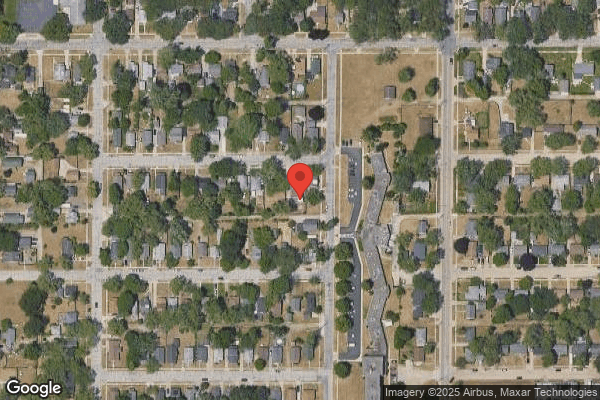
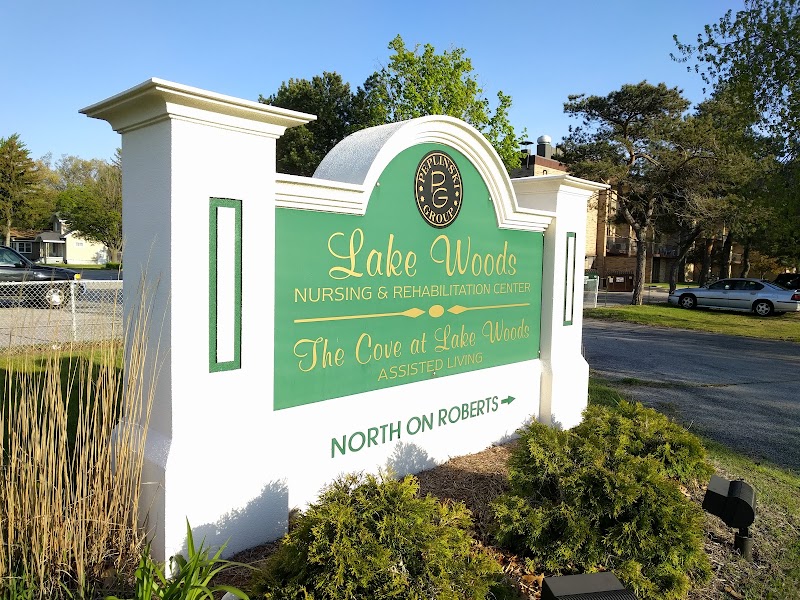
1684 Vulcan Street, Muskegon, MI 49442 (231) 777-2511
For profit - Corporation 90 Beds THE PEPLINSKI GROUP Data: November 2025 1 Immediate Jeopardy citation
Trust Grade
0/100
#290 of 422 in MI
Last Inspection: May 2025

Inspected within the last 6 months. Data reflects current conditions.

Overview

Lake Woods Nursing & Rehabilitation Center has received a Trust Grade of F, indicating significant concerns regarding the quality of care provided. Ranking #290 out of 422 facilities in Michigan places it in the bottom half of nursing homes statewide, while its county rank of #2 out of 6 suggests that only one other local facility performs better. Although the facility is improving, having reduced issues from 26 in 2024 to 7 in 2025, there are still serious concerns, including $67,541 in fines, which is higher than 81% of Michigan facilities, and a staffing turnover rate of 62%, well above the state average of 44%. Specific incidents include a critical failure to prevent a resident at risk of elopement from leaving the facility unsupervised, and a serious incident where a resident developed a stage 3 pressure ulcer due to inadequate care. While staffing ratings are average, the facility lacks sufficient RN coverage compared to most state facilities, which raises concerns about the level of oversight in resident care.

Trust Score
F
0/100
In Michigan
#290/422
Bottom 32%
Safety Record
High Risk
Review needed
Inspections
Getting Better
26 → 7 violations
Staff Stability
⚠ Watch
62% turnover. Above average. Higher turnover means staff may not know residents' routines.
Penalties
✓ Good
$67,541 in fines. Lower than most Michigan facilities. Relatively clean record.
Skilled Nurses
⚠ Watch
Each resident gets only 28 minutes of Registered Nurse (RN) attention daily — below average for Michigan. Fewer RN minutes means fewer trained eyes watching for problems.
Violations
⚠ Watch
41 deficiencies on record. Higher than average. Multiple issues found across inspections.
★★☆☆☆
2.0
Overall Rating
★★★☆☆
3.0
Staff Levels
★★★☆☆
3.0
Care Quality
★★☆☆☆
2.0
Inspection Score
Stable
2024: 26 issues
2025: 7 issues

The Good

  • Full Sprinkler Coverage · Fire safety systems throughout facility
  • No fines on record

Facility shows strength in fire safety.

The Bad

2-Star Overall Rating

Below Michigan average (3.1)

Below average - review inspection findings carefully

Staff Turnover: 62%

16pts above Michigan avg (46%)

Frequent staff changes - ask about care continuity

Federal Fines: $67,541

Well above median ($33,413)

Moderate penalties - review what triggered them

Chain: THE PEPLINSKI GROUP

Part of a multi-facility chain

Ask about local staffing decisions and management

Staff turnover is elevated (62%)

14 points above Michigan average of 48%

The Ugly 41 deficiencies on record

1 life-threatening 3 actual harm
May 2025 7 deficiencies 1 Harm
SERIOUS (G)

Actual Harm - a resident was hurt due to facility failures

Pressure Ulcer Prevention (Tag F0686)

A resident was harmed · This affected 1 resident

**NOTE- TERMS IN BRACKETS HAVE BEEN EDITED TO PROTECT CONFIDENTIALITY** Based on observation, interview and record review, the facility failed to prevent a pressure ulcer for 1 Resident (R26) of 2 Res...

Read full inspector narrative →
**NOTE- TERMS IN BRACKETS HAVE BEEN EDITED TO PROTECT CONFIDENTIALITY** Based on observation, interview and record review, the facility failed to prevent a pressure ulcer for 1 Resident (R26) of 2 Residents reviewed for pressure ulcers resulting in R26 developing a stage 3 pressure ulcer. Findings included: Review of R26 admission Record dated 5/1/25 revealed he was [AGE] years old, admitted on [DATE] and had diagnoses that included: diabetes mellitus 2, abnormal posture, major depressive disorder, muscle weakness, muscle spasms, muscle wasting and atrophy, glaucoma, and dementia. He was his own responsible party. R26 was observed receiving a bed bath on 4/29/25 at 9:47 AM. R26's head was tilted to the left and he was unable to move his neck to an upright position. R26 was able to move his right hand and arm. R26 was not able to move his left hand, left arm or both legs. R26 yelled out in pain every time he was moved. Two Certified Nurse Aides (CNA's) provided the care. Every time they moved R26 they verbally informed him just prior to moving him. Once he was not moving, he stopped yelling. They talked to him about what kind of snack he wanted after they were done with care to distract him from his pain. They elevated his left foot on a pillow when they were completed with care. No other pressure relieving device for the foot was observed. R26's left foot was wrapped with gauze dated 4/29/25. R26's specialty air mattress was set on firm. The CNA's were asked what R26's specialty air mattress was to be set at, and they did not know the setting or change the setting when they completed the care. During an interview with the Director of Nursing (DON) on 5/1/25 at 11:12 AM, R26 had a facility acquired pressure ulcer, stage 3, ulcer on his left heel that was discovered on 3/4/25 and measured 3.0 x 3.0. The DON said R26 had a history of pressure ulcers. The DON provided a timeline of measurements for this wound. The last measurement was dated 4/04/25 and measured 3.0 x 1.1 x 0.2. The next measurement was on 4/10/25 and revealed the pressure ulcer was on the left heel and left lateral foot, measured 3.0 cm x 2.8 cm x 0.2 cm. The last measurement for the left heel and left lateral foot was dated 4/24/25 and measured 1.2 cm x 0.8 cm x 0.2. cm The DON was not able to find the cause for the pressure ulcer. Review of the facility pressure ulcer policy did not reveal any process for determining the cause of a pressure ulcer. During an interview with the DON and Nursing Home Administrator (NHA) on 4/30/25 at 2:49 PM the Surveyor reported that R26's specialty mattress was set on the firm setting yesterday and staff did not know what setting the specialty mattress was supposed to be at. The NHA said she currently had the manuals on her desk for the mattress and they were working on reviewing and implementing a plan to address this. The surveyor requested a copy of the mattress manual. The DON went to R26's room with the surveyor at this time and the mattress was set on comfort and the toggle for alternative or float was in the middle position (not the same settings as observed on 4/29/25). The DON could not say what R26's setting should be or if the toggle switch was to be in the middle position. Upon exit the facility did not provide the mattress manual or provide clarification of the proper settings for R26's mattress. R26 had a pressure-relieving boot on the end of the bed that was not on him. The DON offered to put the pressure-relieving boot on R26's foot but he refused to let her. R26's left foot was floated up on a pillow. During an interview with the DON on 5/1/25 at 11:12 AM, the DON was not able to locate any physician notes or interdisciplinary notes that discussed the cause of R26's pressure ulcer. The DON referred to R26's care plan that indicated he refuses care at times. The DON was not able to locate any documentation of R26's refusing pressure relief prior to 3/4/25 when he was noted to have a stage 3 pressure ulcer on his left heel or any discussion with R26's guardian about pressure relief refusals. The DON referred to R26's care plan which indicated that he refused care at times. The DON did not have any expectations for staff to document, reapproach or attempt to determine the reason for R26's refusal to allow care or pressure relief. During a telephone interview with R26's guardian on 5/1/25 at 12:31 PM, the guardian was not aware R26 was refusing pressure relief prior to the development of the pressure ulcer on his left heel. The guardian was aware R26 had a pressure ulcer. The guardian was aware R26 gets angry and refuses care at times but said he can get over it quickly and then allows care. The guardian said she has asked the facility to reach out to R26's brother by telephone when he is refusing care as his brother can help calm him down better than she can. Review of R26's care plan dated 4/27/25 revealed, R26 clinical condition reveals skin integrity impairment is unavoidable evidenced by his preferred sedentary preference to remain in bed despite education of associated risks. He has muscle wasting and atrophy, exposure of skin to fecal and urinary incontinence, poor nutritional intake and his chronic pain. Other risk factors include his diagnosis of diabetes resulting in altered sensation due to neurological damage and delayed wound healing. He has the propensity to decline cares, treatments and staff members that he is not familiar with. Foot drop to the left foot and pressure injury to the left foot. Hx (history) of pressure to his buttock that is resolved. Interventions included, alternating pressure mattress at preferred settings (resident and staff were not able to state preferred settings), ensure resident is wearing a (name of pressure relieving) boot while in bed to reduce pressure on heals, initiated 12/2/24 (not offered during observation on 4/29/25 and refused during observation on 4/30/25), Off-load heels in bed onto pillows as he will accept, Inspect with care and report changes promptly to charge nurse, initiated 4/27/25 (No indication to report residents refusal of pressure relief, or devices or time frame to reapproach or best approach were located or to contact guardian or his brother with refusals were located). Review of Fundamentals of Nursing ([NAME] and [NAME]) 10th edition revealed, Repositioning (turning) patients is a consistent element of evidence-based pressure injury prevention (EPUAP, NPIAP, PPPIA, 2019a). The twofold aim of repositioning should be to reduce or relieve pressure at the interface between bony prominence and support surface (bed or chair) and to limit the amount of time the tissue is exposed to pressure (Maklebust and [NAME], 2016). Elevating the head of the bed to 30 degrees or less decreases the chance of pressure injury development from shearing forces (WOCN, 2016). Change the immobilized patient's position according to tissue tolerance, level of activity and mobility, general medical condition, overall treatment objectives, skin condition, and comfort (EPUAP, NPIAP, PPPIA, 2019a). A standard turning interval of 1.5 to 2 hours does not always prevent pressure injury development; repositioning intervals are based on patient assessment. Some patients may need more frequent position changes, while other patients can tolerate every-2-hour position changes without tissue injury. When repositioning, use positioning devices to protect bony prominences (WOCN, 2016). [NAME], [NAME] A.; [NAME], [NAME] Griffin; Stockert, [NAME] A.; Hall, [NAME]. Fundamentals of Nursing - E-Book (p. 1255). Elsevier Health Sciences. Kindle Edition.
CONCERN (D) 📢 Someone Reported This

A family member, employee, or ombudsman was alarmed enough to file a formal complaint

Potential for Harm - no one hurt, but risky conditions existed

Free from Abuse/Neglect (Tag F0600)

Could have caused harm · This affected 1 resident

**NOTE- TERMS IN BRACKETS HAVE BEEN EDITED TO PROTECT CONFIDENTIALITY** This citation refers to MI00152461 Based on interview and record review, the facility failed to protect the residents' right to ...

Read full inspector narrative →
**NOTE- TERMS IN BRACKETS HAVE BEEN EDITED TO PROTECT CONFIDENTIALITY** This citation refers to MI00152461 Based on interview and record review, the facility failed to protect the residents' right to be free from physical abuse for 2 of 18 residents (R58, and R60), resulting in residents being physically abused. Findings include: R60 A review of R60's admission Record, dated 4/30/25, revealed they were an [AGE] year-old resident admitted to the facility on [DATE]. In addition, R60's admission Record revealed multiple diagnoses that included Dementia, severe with agitation, dementia with psychotic disturbance, unsteadiness on feet, history of falls and dysphagia, and oropharyngeal phase. A review of R60's Minimum Data Set (MDS) (a tool used for assessing a resident's care needs), dated 02/04/25, revealed a Brief Interview for Mental Status (BIMS) (a scale used to determine a resident's cognitive status) score of 99 which revealed R60 was severely cognitively impaired. On 04/29/25 at 01:19 PM, an R60 was observed in the TV room sitting in a lazy boy watching TV. R60 was clean, well-groomed, however she did not participate in verbal encounter with this surveyor. During the observation Certified Nurse's Aide (CNA) C stated (Name of R60) is now on a 1-1 since she went into the wrong resident's room, and they had an incident. Review of R60's Interdisciplinary Documentation Note dated 04/12/2025 at 20:57 reflected (Name of R60) entered (Identification Number used for Resident 58's) room and mistakenly got into his bed. A staff member walking past observed resident (Identification Number used for R58) with his hands on (Name of R60's) shoulder and him make contact with an open hand to the side of her face. The staff member immediately intervened. (Name of R60) does not have any injuries and though upset at the time of the interaction, returned to her psychosocial baseline following staff support. Review of the facility two-hour report date 4/12/25 at 8:53 PM, submitted by NHA reflected the following Immediate Action: Residents were immediately separated, and (Name of R60) was assisted from the room. Both residents were assessed for injury and neither had any redness, bruising or swelling. One to one supervision was immediately implemented for (Name of R60) due to her propensity to wander into other resident's rooms and inadvertently have undesired interactions. Review of Housekeeper (HK) K's handwritten statement dated 4/12/25 reflected, I heard screaming coming from (Name of Area in the building) so I tried to find out where the screaming was coming from. When I looked in (Name of R58's) room I saw that he had (Name of R60) pinned to his bed using his hands & then releasing his hands to & started slapping her on each side of her face. I yelled for (Name of License Practical Nurse (LPN) M) and in general help and that's when (Name of Certified Nurses Aide (CNA) L) came in & stopped it. Review of CNA L's Witness Statement dated 4/12/25 reflected, I didn't see the incident I was in room [ROOM NUMBER] changing resident. I came out as soon as I heard the housekeeper yelling for (Name of LPN M). I walked (Name of R60) down to the nurse's station. She said he hit her on his arms, legs, stomach, chest, face. Review of LPN's M Witness Statement undated reflected, (Name of HK K) yelled and waved me down, reported (Name of R58) had (Name of R60) who was lying down in his bed. He was standing over her had her arms held down then started slapping her alternating sides of her face with the palm of his hand. Upon my observation he was standing in his room on the other side of his bed, and he appeared confused and (Name of R60) was crying. Review of R60's Interdisciplinary Documentation Progress Notes dated 4/14/2025 at 05:23 reflected, Up wandering a great deal of the night. Would not comply with the suggestion to go to bed. However, she was not crying much this shift. Review of R60's Short Term Care Plan Date 4/12/25 under problem potential for latent injury related to incident face, chest, and abdomen. Review of R60's Care Plan revealed: (Name of R60) has altered mobility and ADL's (Activities Daily Living) related to difficulty with motor function and increased confusion, disorientation secondary to advancing dementia, and poor safety awareness. She has a history of wandering and at times will wander in rooms in the facility requiring redirection. Date Initiated: 05/09/2023 Revision on: 09/09/2024. Intervention includes 1:1 supervision in place on each shift while (Name of R60) is awake. Date initiated: 06/12/2024 Revision on: 04/18/2025 Further review of R60's medical record reflected she was also involved in another Facility Reported Incident (FRI) on 3/20/25 at approximately 4:00 PM when R60 wandered into another room and began yelling and grasped one of the residents' arms. Facility interventions for this incident included a stop sign for the resident's doorway and a staff member has been added as a companion to (Name of R60) during the evening/sundowning hours to support (Name of R60) during times of increased confusion. Further review of R60's care plan noted that 3/21/25 the resident was placed on 15 minute checks. Review of Psychological Evaluation dated March 27, 2025, reflected the following: Referral Statement: (Name of R60) continues with some abnormal /noxious behaviors. As of late/she had entered another resident's room and there was a mild degree of physical altercation. The patient had actually grabbed that resident. R58 Review of R58's face sheet dated 5/1/25 revealed he was admitted on [DATE] and had diagnoses that included: cerebral autosomal dominant arteriopathy with subcortical infarcts and leukoencephalopathy (genetic brain disease), vascular dementia, diabetes mellitus 2, and major depressive disorder. He was not his own responsible party. A review of R58's Minimum Data Set (MDS) (a tool used for assessing a resident's care needs), dated 04/14/25, revealed a Brief Interview for Mental Status (BIMS) (a scale used to determine a resident's cognitive status) score of 01 which revealed R58 was severely cognitively impaired. R58 was observed in bed on 4/30/25 at 2:11 PM. R58 was lying in bed with his head at the foot of the bed. R58 was slow to respond to his name and questions. R58 had no recall of having any difficulty with other residents or of problems with other residents coming into his room.
CONCERN (D)

Potential for Harm - no one hurt, but risky conditions existed

Quality of Care (Tag F0684)

Could have caused harm · This affected 1 resident

**NOTE- TERMS IN BRACKETS HAVE BEEN EDITED TO PROTECT CONFIDENTIALITY** Based on interview and record review, the facility failed to follow a physician order for 1 of 17 sampled residents (R36), resul...

Read full inspector narrative →
**NOTE- TERMS IN BRACKETS HAVE BEEN EDITED TO PROTECT CONFIDENTIALITY** Based on interview and record review, the facility failed to follow a physician order for 1 of 17 sampled residents (R36), resulting in R36 not having a digoxin level checked for over a year. Findings include: A review of R36's admission Record, dated 5/1/25, revealed R36 was a [AGE] year-old resident admitted to the facility on [DATE]. In addition, R36's admission Record revealed multiple diagnoses that included congestive heart failure and osteoarthritis. A review of R36's Pharmacist Medication Regimen Reviews, dated 6/1/24 to 5/1/25, revealed the pharmacist had noted on 4/3/25 that the last digoxin level that had been obtained on R36 had been on 4/12/24. The pharmacist recommended that a digoxin level be obtained now then every 6 months for this medication (digoxin) with a narrow therapeutic window (medications where the concentration or dose required to be effective is very close to the concentration or dose that produces a toxic or adverse effect). A review of R36's medical record, dated 4/12/24 to 5/1/25, failed to reveal that a digoxin level had been obtained, or ordered, per the pharmacist's recommendation on 4/3/25. R36's medical record did confirm that the last digoxin level result that was in the medical record was dated 4/12/24. On 5/1/25 at 11:30 AM, the Nursing Home Administrator (NHA) was notified that the surveyor could not locate documentation in R36's medical record that a digoxin level had been obtained per the pharmacist's recommendation on 4/3/25 (or an order for when it will be drawn next). A copy of the digoxin level results or an order for the digoxin level to be obtained was requested from the NHA. A second review of R36's medical record, dated 4/12/24 to 5/1/25, revealed that an order to obtain a digoxin level now and then q6 months (every 6 months) was written on 5/1/25 at 12:08 PM (after the surveyor had asked for additional information from the NHA). A review of R36's Order Summary Report, dated 5/1/25, revealed the following: - R36 had a physician's order, dated 5/10/24, for digoxin 125 mcg (micrograms) to be given once a day. - R36 had an active order (no stop date), dated 5/10/24, for a digoxin level to be obtained every six months. During an interview on 05/01/25 at 01:44 PM, Clinical Support (CS) G confirmed that R36's digoxin level for the 4/3/25 pharmacy recommendation was ordered today after the surveyor had requested the information. CS G stated that for some reason, the facility had failed to order a digoxin level when they ordered other laboratory values (vitamin B12 and magnesium) that were also recommended on R36's pharmacy recommendation for 4/3/25. During an interview on 05/01/25 at 01:47 PM, the Director of Nursing (DON) confirmed that R36's last digoxin level that had been obtained was on 4/12/24. The DON also confirmed that R36 had an active order that had been written on 5/10/24 and did not know why another digoxin level had not been obtained six months after that (November 2024). A review of the article Digoxin monitoring and toxicity management in The Pharmaceutical Journal, dated 1/3/23, revealed, Digoxin has a narrow therapeutic window, meaning there is a small margin between the benefit of its effects and toxicity; therefore, monitoring is an important part of its use . In serious cases of toxicity, ventricular tachycardia (fast heart rate) and ventricular fibrillation (a life-threatening heart rhythm that results in a rapid, inadequate heartbeat) may occur. Adverse arrhythmias are most common in patients if there is pre-existing heart disease or in electrolyte disturbances, such as hypokalaemia (low potassium levels that can result in fatigue, muscle cramps, and abnormal heart rhythms) . (https://pharmaceutical-journal.com/article/ld/digoxin-monitoring-and-toxicity-management)
CONCERN (D)

Potential for Harm - no one hurt, but risky conditions existed

Accident Prevention (Tag F0689)

Could have caused harm · This affected 1 resident

**NOTE- TERMS IN BRACKETS HAVE BEEN EDITED TO PROTECT CONFIDENTIALITY** R42 A review of R42's admission Record, dated 5/01/25, revealed they were an [AGE] year-old resident re-admitted to the facilit...

Read full inspector narrative →
**NOTE- TERMS IN BRACKETS HAVE BEEN EDITED TO PROTECT CONFIDENTIALITY** R42 A review of R42's admission Record, dated 5/01/25, revealed they were an [AGE] year-old resident re-admitted to the facility on [DATE]. In addition, R42's admission Record revealed multiple diagnoses that included Vascular Dementia with behavioral disturbance, affective mood disorder, insomnia, and dysphagia oropharyngeal phase. A review of R42's Minimum Data Set (MDS) (a tool used for assessing a resident's care needs), dated 03/31/25, revealed a Brief Interview for Mental Status (BIMS) (a scale used to determine a resident's cognitive status) score of 99 which revealed R42 was severely cognitively impaired. Further review of R42's quarterly MDS reflected the resident only needed assistance with Setup or Clean-up for eating. During a lunch observation on 4/29/25 at 11:37 AM, R42 was observed sitting on a couch in the fishbowl (Name of the lobby located by entrance door) waiting for lunch. Certified Nursing Assistant (CNA) N was observed placing a gown and clothing protector on the resident. CNA N provided R42 a spoon and a bowl of mechanically altered potpie and then left R42 to assist other residents with their lunch. R42 was only provided the one bowl. No beverages were provided. Staff were not observed in the immediate area due to assisting other residents with their lunch trays. After approximately 20 minutes CNA N was asked why R42 did not have anything else to eat or drink. CNA N stated, (Name of Resident) likes to mix her drinks in her food, so I will start her off with one bowl and then give her drinks in-between. CNA N provided R42 a glass of orange juice a few minutes later that she fully consumed. Further observation of R42's 4/29/25 meal service reflected that she gave up eating with her plastic spoon and switched over to using her fingers. R42 had been unsuccessful at getting the spoon into her mouth. A large portion of residents lunch was observed on her hands, down the front of her gown and clothing protector and on the table. R42 was left on her own until staff cleaned her up. Review of R42's 3-26-2025 08:22 Interdisciplinary Care Conference Documentation reflected, She remains on a puree diet with regular liquids. She has a history of pocketing food and chewing on it for a few hours after she is done eating. She enjoys her snacks and treats. Review of R42's Dietary Order dated 2/24/25, reflected resident was on Regular diet. Pureed texture. Thin consistency. Allow mechanical soft snacks per approved list. During a lunch observation on 04/30/25 at 11:37 AM, R42 was observed being brought down to the fishbowl to eat at the table. Staff placed a gown and clothing protector over the resident prior to placing her lunch in front of her (a single bowl no beverage) and handed her a plastic spoon. R42 is observed struggling to eat with the plastic spoon and would drop her food down the front of her and on the table. Resident ate approximately one in every three bites attempted. During the 4/30/24 lunch observation R42 was observed chewing the same bite of food for approximately 4 minutes. Staff were noted walking through the fishbowl delivering lunches, however, none of them appeared to be monitoring R42. Further dining observation of R42 on 04/30/25 at 12:13 PM, a concern was brought to the DON's attention about (Name of R42) possibly pocketing food in her mouth and that the resident (still) had nothing to drink. (R42 had just placed a bite in her mouth approximately a minute prior to talking with the DON.) DON stated she would get her something to drink and have someone come sit with her. DON further stated, (Name of R42) does not like anyone touching her food or assisting her with eating she does not do well with that. Staff had not been observed interacting with R42 after her lunch had been placed in front of her. On 4/30/25 at 12:18 PM, Unit Manager (UM) O sat down at the table next to R42. R42 had been chewing on the same bite of food for approximately 7 minutes when UM O asked (Name of R42) to open her mouth. UM O upon observation of residents' mouth stated, you still have quite a bit of food in there, why don't you take a drink. (Staff had just dropped off a beverage in front of the resident.) R42 proceeded to chew on the same bite for several more minutes before finally swallowing. Observation of R42 after finishing her lunch on 4/30/25, reflected most of residents' lunch had ended up on the table and on the gown, she was wearing to protect her clothing. Review of R42's Interdisciplinary Care Conference Documentation at 10:59 on 4/30/25 (Effective Date) reflected a Care Conference was held with (Name of R42's son) and the IDT. Further review of the document appeared similar to R42's 3/27/25 Interdisciplinary Care Conference Documentation. During an interview on 05/01/25 at 01:17 PM, Social Services (SS) P was asked if they had a Care Conference with (Name of R42's Son) yesterday? SS P stated, No we did not meet with him yesterday, but I did try to get a hold of him. SS P further stated she wanted to review residents care due to losing weight, and to review her code status. Based on observation, interview, and record review, the facility failed to prevent accident hazards by safely transporting a resident in a wheelchair for 1 (R34) and monitoring one resident (R42) known for pocketing food during meals of 6 residents reviewed for accident hazards. Findings include: A review of R34's admission Record, dated 4/30/25, revealed R34 was a [AGE] year-old resident admitted to the facility on [DATE]. In addition, the admission Record revealed multiple diagnoses that included unsteadiness on feet, difficulty walking, dementia, bipolar disorder, schizophrenia, Parkinsonism, generalized muscle weakness, and dizziness and giddiness. A review of R34's Minimum Data Set (MDS) (a tool used for assessing a resident's care needs), dated 1/7/25, revealed a Brief Interview for Mental Status (BIMS) (a scale used to determine a resident's cognitive status) score of 13 which revealed R34 was cognitively intact. In addition, R34's MDS revealed they had a one-sided lower extremity range of motion impairment and could operate a manual wheelchair with supervision or touching assistance (helper provides verbal cues and/or touching/steadying assistance). A review of R34's functional mobility and ADL's (activities of daily living) care plan, revised 12/13/24, revealed R34 needs encouragement to propel his own wheelchair, but staff can assist him as needed. During an observation on 04/30/25 at 12:05 PM, R34 stopped Scheduling Manager (SM) A in the hallway and asked her to take him to the Bathing room. SM A looked directly at the surveyor as they approached and walked by R34 and herself, stated she would help him after the surveyor had passed by them, and then pushed R34 in his wheelchair without foot pedals from the hallway outside room [ROOM NUMBER], down the hall, and to the Bathing room next to The Shore Nursing Station. During an interview on 05/01/25 at 08:20 AM, Certified Nursing Assistant (CNA) C stated, They (residents) need foot pedals for us to push them. CNA C further stated even if a resident can lift their feet and/or legs, staff still need to put foot pedals on their wheelchair before pushing it down the hallway. During an interview on 05/01/25 at 08:25 AM, CNA E stated residents need to have foot pedals on their wheelchair before staff can push them down the hallway. CNA E also stated that even if a resident can lift their feet and/or legs, staff still need to put foot pedals on their wheelchair before pushing it down the hallway. On 05/01/25 at 09:15 AM, a copy of the facility's policy and procedure on staff transporting residents in their wheelchairs was requested from the Nursing Home Administrator (NHA). During an interview on 05/01/25 at 01:20 PM, SM A stated staff are only supposed to push residents in their wheelchairs when they have foot pedals. SM A further stated they are never supposed to push them without foot pedals down the hallway. During an interview on 05/01/25 at 01:50 PM, Clinical Support (CS) G stated the facility did not have a policy that addressed transporting residents in wheelchairs. She stated it was a standard of practice that they do not push them without foot pedals. CS G further stated the facility goes over this subject during orientation with a slide show presentation. The surveyor requested a copy of what new employees are shown at orientation regarding transporting residents in wheelchairs. During an observation on 05/01/25 at 03:15 PM, CNA F was observed pushing R34 in his wheelchair without foot pedals down the hallway to the main dining room. A review of the facility's Nursing Orientation Checklist, undated, revealed under the topic Safety is everyone's responsibility the subtopic No Pedals, No Push. A review of the article Guidelines for Pushing Wheelchairs, dated 3/28/23, revealed, When pushing a wheelchair, safety should always be the top priority. Here are some safety guidelines to keep in mind: Always lock the wheelchair brakes before helping the user in or out of the chair. Use a firm grip on the wheelchair handles and keep your back straight and shoulders relaxed. Be aware of your surroundings and avoid obstacles and uneven surfaces. Always use the footrests when the user is sitting in the chair, and make sure they are properly adjusted. When going down ramps or inclines, always walk backward and use your body weight to control the wheelchair's speed . (https://alzheimerslab.com/guidelines-for-pushing-wheelchairs)
CONCERN (D)

Potential for Harm - no one hurt, but risky conditions existed

Medical Records (Tag F0842)

Could have caused harm · This affected 1 resident

**NOTE- TERMS IN BRACKETS HAVE BEEN EDITED TO PROTECT CONFIDENTIALITY** Based on interview and record review, the facility failed to maintain complete medical records for 2 of 17 sampled residents (R2...

Read full inspector narrative →
**NOTE- TERMS IN BRACKETS HAVE BEEN EDITED TO PROTECT CONFIDENTIALITY** Based on interview and record review, the facility failed to maintain complete medical records for 2 of 17 sampled residents (R26 and R36). Findings include: Timely documentation of the following types of information should be made and maintained in a patient's (resident's) EHR (electronic health record) to support the ability of the health care team to ensure informed decisions and high quality care in the continuity of patient care- Assessments; Clinical problems; Communications with other health care professionals regarding the patient . Order acknowledgement, implementation, and management; Patient clinical parameters . Patient documentation frequently is used by professionals who are not directly involved with the patient's care. If patient documentation is not timely, accurate, accessible, complete, legible, readable, and standardized, it will interfere with the ability of those who were not involved in and are not familiar with the patient's care to use the documentation. (ANA's (American Nursing Association) Principles for Nursing Documentation- Guidance for Registered Nurses, 2010, www.nursingworld.org). R26 A review of R26's admission Record, dated 5/1/25, revealed R26 was a [AGE] year-old resident admitted to the facility on [DATE]. R26's admission Record revealed they had multiple diagnoses that included depression and diabetes. A review of R26's Pharmacist Medication Regimen Reviews, dated 6/1/24 to 5/1/25, revealed the pharmacist had noted potential medication and/or medication-related (e.g., reason for use of a medication, adequate monitoring of a medication, etc.) irregularities on 8/6/24, 11/4/24, and 4/3/25. However, a review of R26's medical record failed to reveal what those irregularities and/or pharmacist recommendations were. On 5/1/25 at 11:30 AM, the Nursing Home Administrator (NHA) was notified that the surveyor could not locate in R26's medical record the pharmacist's recommendations for the irregularities that were noted in the Pharmacist Medication Regimen Reviews for 8/6/24, 11/4/24, and 4/3/25. Copies of those recommendations were requested from the NHA, if they were located. On 5/1/25 at 1:15 PM, the facility provided the surveyor with copies of R26's pharmacist recommendations with supporting documentation for 8/6/24, 11/4/24, and 4/3/25. However, a second review of R26's medical record failed to reveal that these recommendations were present in the medical records. During an interview on 05/01/25 at 02:57 PM, Clinical Support (CS) G stated that R26's 8/6/24, 11/4/24, and 4/3/25 pharmacy recommendations were not in R26's medical record. CS G stated the 8/6/24 recommendation was a nursing one and they were previously not entering them into residents medical records. CS G further stated the 11/4/24 recommendation was in the pharmacy computer system, and they had to get it from there today. In addition, CS G stated the 4/3/25 recommendation had been signed by the physician but was still waiting to be uploaded into R26's medical record (it had been signed on 4/7/25- 24 days prior to this interview). R36 A review of R36's admission Record, dated 5/1/25, revealed R36 was a [AGE] year-old resident admitted to the facility on [DATE]. In addition, R36's admission Record revealed multiple diagnoses that included congestive heart failure and osteoarthritis. A review of R36's Pharmacist Medication Regimen Reviews, dated 6/1/24 to 5/1/25, revealed the pharmacist had noted a potential medication and/or medication-related irregularity on 12/3/24. However, a review of R36's medical record failed to reveal what the irregularity and/or pharmacist recommendation was for 12/3/24. On 5/1/25 at 11:30 AM, the Nursing Home Administrator (NHA) was notified that the surveyor could not locate in R36's medical record the pharmacist's recommendation for the irregularity that was noted in the Pharmacist Medication Regimen Review for 12/3/24. A copy of the 12/3/24 pharmacist's recommendation with supporting documentation (if applicable) was requested from the NHA. On 5/1/25 at 12:10 PM, the facility provided the surveyor with a copy of R36's pharmacy recommendation for 12/3/24 with supporting documentation. However, a second review of R36's medical record failed to reveal that the pharmacist's recommendation for 12/3/24 was present in the medical record. During an interview on 05/01/25 at 01:44 PM, CS G stated R36's pharmacy recommendation for 12/3/24 was not in R36's medical record. CS G stated the recommendation had been in the pharmacy's computer system and the facility was able to obtain information from that system.
CONCERN (D)

Potential for Harm - no one hurt, but risky conditions existed

Safe Environment (Tag F0921)

Could have caused harm · This affected 1 resident

Based on observation and interviews, the facility failed to maintain a safe, functional, sanitary, and comfortable environment. This resulted in an increased potential for contamination and a possible...

Read full inspector narrative →
Based on observation and interviews, the facility failed to maintain a safe, functional, sanitary, and comfortable environment. This resulted in an increased potential for contamination and a possible decrease in satisfaction of living. Findings Include: During a tour of the facility with Maintenance Director I, starting at 1:29 PM on 4/29/25, observation of the spa room near activities, found a strong odor and bowel movement in the commode with clean folded towels stacked next to the sink. Further observation of the shower floor found an area near the front of the shower where roughly a dozen one-inch square tiles were missing. When asked if he was aware of the floor, MD I stated he was not. While looking for the missing tiles, MD I picked up a piece of trash on the shower floor and found it to be a gold tooth filling. When asked if he knew of any residents missing one, MD I was unsure. During a tour of the clean linen room, at 1:35 PM on 4/29/25, it was observed that the bottom rack of the clean linen cart was open wire shelving, leaving clean linens at the bottom of the cart open and exposed to contamination. Further observation under the linen cart found an accumulation of trash, dust, and dirt. When asked if the cart ever gets moved out of the room, MD I stated it usually stays there. During a tour of the spa room near the end of the hall, at 2:05 PM on 4/29/25, it was observed that bowel movement was in the commode and found smeared on the padded cover for the plumbing under the sink. Further observation of the room found a corner shower area not in use with dust accumulation on equipment and the shower fixture.
CONCERN (F)

Potential for Harm - no one hurt, but risky conditions existed

Infection Control (Tag F0880)

Could have caused harm · This affected most or all residents

**NOTE- TERMS IN BRACKETS HAVE BEEN EDITED TO PROTECT CONFIDENTIALITY** Based on observation, interview, and record review, the facility failed to have an active and ongoing plan for reducing the risk...

Read full inspector narrative →
**NOTE- TERMS IN BRACKETS HAVE BEEN EDITED TO PROTECT CONFIDENTIALITY** Based on observation, interview, and record review, the facility failed to have an active and ongoing plan for reducing the risk of Legionella and other opportunistic pathogens of premise plumbing (OPPP). This deficient practice has the increased potential to result in waterborne pathogens to exist and spread in the facility's plumbing system and an increased risk of respiratory infection among any or all the residents in the facility. Findings include: During a tour of the facility, with Maintenance Director (MD) I, at 1:44 PM on 4/29/25, observation of the Soiled Utility room, near the salon, found brown discolored water dispensed out of the hot and cold-water fixtures when the faucet above the hopper was turned on. When asked if this was an area that is regularly flushed, MD I stated they were not flushing this fixture and have been focusing on vacant rooms. During a tour of the facility, at 2:00 PM on 4/29/25, observation of the Soiled Utility room, near resident room [ROOM NUMBER], found little to no water filling the basin of the commode, indicating the hopper had not been flushed in so long the water had evaporated from the basin. Water dispense from the mop sinks hot and cold fixtures were found discolored before running clear. During a tour of the Spa room near the end of the hall, at 2:05 PM on 4/29/25, it was observed that a shower in the corner of the spa room was found with equipment and supplies on the floor of the shower area. Further review of the shower found dust accumulation on the shower hose and spray wand. When asked if this was an area that gets flushed, MD I stated that its not. When the surveyor tried to flush the water from the shower, neither the surveyor nor MD I could get the water to run. MD I stated he would look into it. During a tour of the janitors sink near the end of the hall, at 2:11 PM on 4/29/25, it was observed that no cold handle was available to turn on the cold supply on. Upon turning the hot supply into a bucket, the water was brown and discolored and turned clear. Using a [NAME] tool to open on the cold supply, dark black turning to brown water dispensed from the fixture for five to ten seconds. During a tour of the laundry room, at 2:25 PM on 4/29/25, it was observed that a hot water line near the washing machine was found not in use, with no handle and with a cap covering the hose bib where the water would dispense. When asked if this is something that gets routinely flushed, MD I stated it does not. During an interview with MD I and Director of Facilities (DOF) J it was found that the facility currently does an annual test for free chlorine. When asked if any of the free chlorine measurements are taken from the hot water supply. DOF J stated he has only been doing cold water samples. When asked if any testing is done on the two hot water systems that service the residents of this facility, Director of Facilities J stated that they will start to incorporate readings in those areas as well. A review of the facility provided document entitled .Executive Summary and Risk Assessment, dated 2021, found that: The (Water Management) team considers the water distribution system for adherence to control measure and critical limits listed in the CDC Toolkit for Controlling Legionella in Potable Water Systems which include: .Water Age, Flushing, Flush low-flow pipe runs and dead legs at least weekly. Flush infrequently used fixtures regularly.
Oct 2024 4 deficiencies
CONCERN (D) 📢 Someone Reported This

A family member, employee, or ombudsman was alarmed enough to file a formal complaint

Potential for Harm - no one hurt, but risky conditions existed

Transfer Notice (Tag F0623)

Could have caused harm · This affected 1 resident

**NOTE- TERMS IN BRACKETS HAVE BEEN EDITED TO PROTECT CONFIDENTIALITY** This citation pertains to intake MI00146846. Based on interview and record review, the facility failed to 1.) Notify the Residen...

Read full inspector narrative →
**NOTE- TERMS IN BRACKETS HAVE BEEN EDITED TO PROTECT CONFIDENTIALITY** This citation pertains to intake MI00146846. Based on interview and record review, the facility failed to 1.) Notify the Resident and Resident Representative in writing with the reason for a transfer out of the facility 2.) Send a discharge notice to a representative of the Office of the State Long Term Care (LTC) Ombudsman for a facility-initiated discharge, 3) Send discharge papers to the receiving hospital for 1 resident, Resident #1 (R1) of three residents reviewed for transfers and discharges, resulting in R1 receiving an involuntary discharge with no notice or place to live. Findings: Review of the Notice of Transfer or Discharge Policy and Procedure revised in July of 2023 reflects . 2. Facility -Initiated Transfer (FIT) a. The FIT-100 form, and process will be used when there is a transfer of a resident from the federally certified nursing home to another facility, such as acute care hospital, with the expectation that the resident will return to the federally certified nursing home. i. Prepare the Facility-Initiated Transfer and Appeal Form (FIT-100) ii. Provide the FIT-100 form to the resident and/or authorized representative along with an envelope and postage for an appeal request, iii. A copy of this notice will be placed in the resident's medical record iv. A monthly list of all facility-initiated transfers is provided to the Michigan Long Term Care Ombudsman at MLTCOP@meij.org. Further review of the Policy and Procedure reflected, 3. Involuntary Transfer or Discharge (ITD) and Facility-Initiated Discharge a. Prepare the ITD-100 form - Have an initial discussion with the resident and/ or authorized representative to assist in identification of transfer or discharge location b. If the destination changes and this change was initiated by the facility, and updated notice with the new destination will be issues. This change restarts the 30-day timeline for transfer or discharge. Resident #1 (R1) Review of admission Record revealed R1 was a [AGE] year-old male, readmitted to the facility on [DATE], with pertinent diagnoses which included: Dementia, Bipolar II Disorder, psychotic disorder with delusions, major depressive disorder, anxiety disorder. Review of a Minimum Data Set (MDS) assessment for R1 with a reference date of 7/29/24 revealed a Brief Interview for Mental Status (BIMS) score of 99 and was unable to participate in the cognitive interview. Further review of R1's MDS history reflected 5 discharge assessments between 6/5/24 to 9/7/24 and 4 Entry Tracking Records between 6/05/24 to 10/23/24. During an interview on 10/23/24 at 8:58 AM, R1's Guardian L revealed that the facility notified her by phone that the facility was sending R1 to the hospital because he was having behaviors and had hit staff. Guardian L stated the facility later informed her in a telephone call that they would not take him back. Guardian L stated she never received any discharge paperwork and the poor guy has now been in the hospital for almost 2 months because they cannot find placement for him. Guardian L revealed further frustration because (Name of Local Agency that provides social work and counseling) dropped R1 as a client and Neuropsych will not take him either. During an interview on 10/23/24 at 4:10 PM, the Nursing Home Administrator (NHA) and Director of Nursing (DON) were not able to provide the 9/7/24 transfer paperwork for R1 because they stated they had not completed any. The NHA and DON were not able to provide evidence of initiating Involuntary Discharge paperwork for the resident and/or resident's Guardian because the NHA stated they had not started one. The NHA and DON confirmed that they talked to Guardian L and informed her on the telephone that the facility sent R1 to the hospital and that they were not accepting him back to the facility. Review of R1's Medical Record revealed there was no paperwork for R1's hospital transfer/discharge on [DATE] located. The facility was not able to provide a copy of any paperwork prior to survey completion. Review of the facility Admission/Discharge To/From Report from 8/22/24-10/22/24 reflected that the facility discharged R1 to (Name of Local Hospital) on 9/7/24. During an interview on 10/23/24 at approximately 4:14PM, local Ombudsman O stated she was unaware R1 had an involuntary discharge to the hospital and that the resident was still there. Ombudsman O revealed the information the facility provided to their offices reflected, they sent the resident for acute care and did not check the box on if he was returning or not returning to the facility. If they (the facility) are not allowing the residents to return they are supposed to fill out the involuntary discharge paperwork. They did not follow the process or procedures. They are supposed to send a monthly list of discharges to the state. During an interview on 10/23/24 at 11:51 AM, Registered Nurse (RN) P said that R1 was not longer at the facility because the facility sent R1 to the hospital due to hitting a staff member. RN P said R1 would become combative and agitated. RN P said R1's behaviors would come on abruptly and he could walk down the hall and without warning hit or lash out at someone. RN P also stated that R1 had been at the facility for a long time and the behaviors have escalated over the last year. She stated not knowing why the behaviors had escalated and thought it could be due to disease progression. Review of R1's Care Plan initiated on 10/24/23 reflected R1 had a history of being physically and verbally aggressive with peers and staff and had behaviors since admitting to the facility. Interventions initiated on 10/23/24 included Psychoactive medication is being administered for the diagnosis of anxiety and major depression with psychotic symptoms.Identify behavioral precipitants, if possible, to assist with further defining effective dementia care and trauma informed care.With presentation of behavioral and psychological symptoms of dementia, attempt use of social interventions such as tactile stimulation, sorting objects, appropriate touch, music and sounds, etc., to increase stimulation of the senses and to decrease negative behaviors. Review of a progress note dated 9/7/24 at 10:18 AM revealed that on 9/7/24 at 0755 Registered Nurse (RN K) gave R1 his meds while Certified Nursing Assistant (CNA K) was providing 1:1 supervision and he spit them out. R1 was pushing CNA K and punched her in the stomach twice. CNA K then threw a glass of water she was holding at R1 getting the water on his face. R1 called CNA K a b*tch as he laid down and dried off his face. RN K had CNA K leave the situation and Licensed Practice Nurse (LPN M) stayed with R1 while RN K called DON. The Administration notified the corporate office, the guardian, and called the police and EMS to have R1 taken to the ER. Review of progress note dated 09/07/2024 at 10:22 AM, reflected, Police and EMS arrived at 0830 to transport R1 to the ER. Review of a progress note dated 9/7/24 at 12:47 PM reflected that RN K was notified by the DON that R1 would not be allowed to return to the facility per direction of herself, the NHA, and [NAME] President (VP) of the company. RN K called the ER and informed the hospital staff that the facility would not allow R1 to return to the facility. Further review of progress note dated 09/07/2024 at 13:28 reflected that RN K received a call from the hospital physician caring for R1 in the ER with an update and stated that he would speak with social services at the hospital regarding the facility refusal to take resident back. RN K notified the DON of the conversation, and the DON stated that the administration was aware of the situation and would deal with the ramifications of not accepting R1 back to the facility.
CONCERN (D) 📢 Someone Reported This

A family member, employee, or ombudsman was alarmed enough to file a formal complaint

Potential for Harm - no one hurt, but risky conditions existed

Safe Transfer (Tag F0626)

Could have caused harm · This affected 1 resident

**NOTE- TERMS IN BRACKETS HAVE BEEN EDITED TO PROTECT CONFIDENTIALITY** This citation pertains to intake MI00146846. Based on interview and record review, the facility failed to allow a resident to re...

Read full inspector narrative →
**NOTE- TERMS IN BRACKETS HAVE BEEN EDITED TO PROTECT CONFIDENTIALITY** This citation pertains to intake MI00146846. Based on interview and record review, the facility failed to allow a resident to return to the facility after being sent to the hospital for aggressive behavioral issues for one resident, Resident #1 (R1), of three residents reviewed for facility-initiated transfers, resulting in R1 being involuntary discharged to the hospital without a home to return to. Findings: Resident #1 (R1) Review of admission Record revealed R1 was a [AGE] year-old male, readmitted to the facility on [DATE], with pertinent diagnoses which included: Dementia, Bipolar II Disorder, psychotic disorder with delusions, major depressive disorder, anxiety disorder, and obstructive sleep apnea. Review of a Minimum Data Set (MDS) assessment for R1 with a reference date of 7/29/24 revealed a Brief Interview for Mental Status (BIMS) score of 99 and was unable to participate in the cognitive interview. Further review of R1's MDS history reflected 5 discharge assessments between 6/5/24 to 9/7/24 and 4 Entry Tracking Records between 6/05/24 to 10/23/24. During an interview on 10/23/24 at 8:58 AM, R1's Guardian L revealed that the facility notified her by phone that the facility was sending R1 to the hospital because he was having behaviors and had hit staff. Guardian L stated the facility later informed her in a telephone call that they would not take him back. Guardian L stated she never received any discharge paperwork and the poor guy has now been in the hospital for almost 2 months because they cannot find placement for him. Guardian L revealed further frustration because (Name of Local Agency that provides social work and counseling) dropped R1 as a client and Neuropsych will not take him either. Review of a progress note dated 9/7/24 at 10:18 AM revealed that on 9/7/24 at 0755 Registered Nurse (RN K) gave R1 his meds while Certified Nursing Assistant (CNA K) was providing 1:1 supervision and he spit them out. R1 was pushing CNA K and punched her in the stomach twice. CNA K then threw a glass of water she was holding at R1 getting the water on his face. R1 called CNA K a b*tch as he laid down and dried off his face. RN K had CNA K leave the situation and Licensed Practice Nurse (LPN M) stayed with R1 while RN K called DON. The Administration notified the corporate office, the guardian, and called the police and EMS to have R1 taken to the ER. Review of progress note dated 09/07/2024 at 10:22 AM, reflected, Police and EMS arrived at 0830 to transport R1 to the ER. Review of a progress note dated 9/7/24 at 12:47 PM reflected that RN K was notified by the DON that R1 would not be allowed to return to the facility per direction of herself, the NHA, and [NAME] President (VP) of the company. RN K called the ER and informed the hospital staff that the facility would not allow R1 to return to the facility. Further review of progress note dated 09/07/2024 at 13:28 reflected that RN K received a call from the hospital physician caring for R1 in the ER with an update and stated that he would speak with social services at the hospital regarding the facility refusal to take resident back. RN K notified the DON of the conversation, and the DON stated that the administration was aware of the situation and would deal with the ramifications of not accepting R1 back to the facility. During an interview on 10/23/24 at 4:10 PM, the Nursing Home Administrator (NHA) and Director of Nursing (DON) were not able to provide the 9/7/24 transfer paperwork for R1 because they stated they had not completed any. The NHA and DON were not able to provide evidence of initiating Involuntary Discharge paperwork for the resident and/or resident's Guardian because the NHA stated they had not started one. The NHA and DON confirmed that they talked to Guardian L and informed her on the telephone that the facility sent R1 to the hospital and that they were not accepting him back to the facility.
CONCERN (D) 📢 Someone Reported This

A family member, employee, or ombudsman was alarmed enough to file a formal complaint

Potential for Harm - no one hurt, but risky conditions existed

Deficiency F0761 (Tag F0761)

Could have caused harm · This affected 1 resident

This citation refers to MI00147470. Based on observation, interview, and record review, the facility failed to secure 1 of 3 medication carts (Harbor Medication Cart), resulting in the potential for m...

Read full inspector narrative →
This citation refers to MI00147470. Based on observation, interview, and record review, the facility failed to secure 1 of 3 medication carts (Harbor Medication Cart), resulting in the potential for misappropriation of resident medications. Findings include: During an observation on 10/22/24 at 07:55 AM, the Harbor Medication Cart was left unlocked (the lock was in a pulled-out position and the red/orange dot- which would indicate the cart was unlocked- was clearly visible) and unattended in the hallway outside of a resident room. In addition, because the medication cart was left unlocked, the controlled substances that were stored in the medication cart were only under a single lock vs. the requirement that controlled substances are secured by a double lock system. There were not any staff within visual range of the medication cart. Residents were also observed in the hallway at the time of the observation. During the observation on 10/22/24 at 07:55 AM, Agency Registered Nurse (RN) A returned to the Harbor Medication Cart while the surveyor was writing down information for that cart. RN A stated, uh oh and then proceeded to tell the surveyor the oncoming nurse was running late. RN A stated she was just helping out and trying to administer some medications to the residents before the next nurse came on shift. During an interview on 10/22/24 at 2:30 PM, Licensed Practical Nurse (LPN) C stated she always locks her medication cart before she walks away from it. She stated the only time she would leave her medication cart and not lock it would be if there was an emergency situation, such as a resident fell or was in imminent danger. She stated if that happened, she would ask someone to lock it for her as she responded to the emergency situation. During an interview on 10/23/24 at 11:40 AM, RN B stated she always locks her medication cart when she walks away from it. She stated she does this to prevent people from wandering by and opening it. During an interview on 10/23/24 at 12:45 PM, the Director of Nursing (DON) stated the nurses should lock their medication carts when they walk away from them. A review of the facility's Medication Storage & Stability policy and procedure, revised April 2021, revealed, 2. Only licensed nurses, consultant pharmacist, and those lawfully authorized to administer medications are allowed access to medications. Medication rooms, carts, and medication supplies are locked or attended by persons with authorized access. A review of the facility's Controlled Medication Storage, Security & Disposition policy and procedure, revised December 2016, revealed, Medications listed in Schedules II, III, IV, and V are stored under double lock separated from other medications .
CONCERN (D) 📢 Someone Reported This

A family member, employee, or ombudsman was alarmed enough to file a formal complaint

Potential for Harm - no one hurt, but risky conditions existed

Medical Records (Tag F0842)

Could have caused harm · This affected 1 resident

This citation refers to MI00147470. Based on observation, interview, and record review, the facility failed to safeguard the confidentiality of medical records for 1 of 83 facility residents (R9), res...

Read full inspector narrative →
This citation refers to MI00147470. Based on observation, interview, and record review, the facility failed to safeguard the confidentiality of medical records for 1 of 83 facility residents (R9), resulting in the potential for unauthorized access to resident medical records and the potential for the loss of resident privacy and confidentiality of their personal health information. Findings include: During an observation on 10/22/24 at 7:55 AM, the computer screen on top of the Harbor Medication Cart was observed open to R9's electronic Medication Administration Record, (e-MAR). R9's personal and health identifying information (e.g., picture, name, room number, physician's name, and allergies) and medications were visible to anyone walking by the medication cart. No staff were visible within sight of the medication cart. During the observation on 10/22/24 at 7:55 AM, Agency Registered Nurse (RN) A returned to the Harbor Medication Cart while the surveyor was taking notes. RN A stated, uh oh and then proceeded to tell the surveyor the oncoming nurse was running late. RN A stated she was just helping out and trying to administer some medications to the residents before the next nurse came on shift. During an interview on 10/22/24 at 2:30 PM, Licensed Practical Nurse (LPN) C stated she will close her computer screen when she walks away from the medication cart by allowing it to go to sleep. LPN C stated, But it does not really hide it. If a resident walks by the med (medication) cart and touches the mouse or bumps the cart, the screen will pop back up. LPN C further stated there was not a way for the staff to hide or lock the computer screen to keep unauthorized people from seeing it when the nurse is away from the cart. LPN C stated the only way she really knows of to keep someone from using the mouse to re-open an e-MAR was to minimize the screen. She stated however the minimized screen would log her out of the computer system if it was left open for too long and she would have to completely log back in. During an interview on 10/23/24 at 11:40 AM, RN B stated she hides her computer screen (pushes a button that displays a message that the screen was hidden if someone moves the mouse) when she walks away from her medication cart. She stated she does this to prevent people from reading it as they walk by. RN B also stated she also does this to protect resident privacy. During an interview on 10/23/24 at 12:45 PM, the Director of Nursing (DON) stated the nurses should hide their computer screens when they walk away from the medication carts. A review of the facility's HIPAA (Health Insurance Portability and Accountability Act): Compliance, Confidentiality Statement & Employee Use of Protected Health Information (PHI) policy and procedure, revised January 2024, revealed, Close computer programs before leaving desktop or laptop computers.
Aug 2024 2 deficiencies
CONCERN (D) 📢 Someone Reported This

A family member, employee, or ombudsman was alarmed enough to file a formal complaint

Potential for Harm - no one hurt, but risky conditions existed

Free from Abuse/Neglect (Tag F0600)

Could have caused harm · This affected 1 resident

**NOTE- TERMS IN BRACKETS HAVE BEEN EDITED TO PROTECT CONFIDENTIALITY** This citation pertains to intake #: MI00145370 Based on interviews and record review, the facility failed to protect a resident'...

Read full inspector narrative →
**NOTE- TERMS IN BRACKETS HAVE BEEN EDITED TO PROTECT CONFIDENTIALITY** This citation pertains to intake #: MI00145370 Based on interviews and record review, the facility failed to protect a resident's (Resident #5) right to be free from physical abuse from another resident (Resident #4). Findings: Resident #4 (R4) Review of an admission Record revealed R4 was an [AGE] year-old male, admitted to the facility on [DATE], with pertinent diagnoses which included: dementia with agitation and behavioral disturbances and major depressive disorder. Review of a Minimum Data Set (MDS) assessment for R4, with a reference date of 4/24/24 revealed a Brief Interview for Mental Status (BIMS) score of 7, out of a total possible score of 15, which indicated R4 was severely cognitively impaired. Review of R4's Care Plan revised 4/21/24 revealed, (R4) has the potential for psychosocial distress related to: anticipated dementia progression, expressing sadness / anger / empty feeling over lost roles and status. Wanderguard is in place due to unsafe wandering. Confusion and memory loss present. DX (diagnosis) of depression. Orders for psychotropic medications .Interventions/Tasks . If/when (R4) becomes agitated, attempt to redirect by offering snack or drink. Attempt to engage him in conversation that is meaningful to him . Review of R4's Care Plan revised 4/22/24 revealed, Altered functional mobility and ADL's (Activities of Daily Living) related to generalized weakness, dementia, confusion. Resident can ambulate independently with his wheeled walker, and at a fast pace. Given his dementia being questioned will increase his agitation which can lead him to be combative with cares . Review of R4's Order Summary dated 4/17/24 and April Medication Administration Record revealed, OLANZapine Oral Tablet 5 MG (Zyprexa) Give 1.5 tablet by mouth at bedtime for depression. The medication was administered on 4/18/24 and was discontinued on 4/19/24. (Zyprexa is an antipsychotic medication). Review of R4's Care Conference dated 4/19/24 with Interdisciplinary Team and R4's Power of Attorney revealed medications, medical condition, and care plan were reviewed. The note reflected R4's behaviors of wandering and exit seeking but did not reflect R4 exhibiting combative/physical aggressive behaviors. The note did not reflect a discussion/rationale for the discontinuation of Zyprexa. (There was no documentation that an additional care conference had been completed prior to R4's transfer on 5/30/24). Review of R4's Behavioral Support Intervention Analysis revealed: 1. Start of Behavioral Log Review-4/17/24 2. End of Behavioral Log Review-4/24/24 3. Type and Number of Behaviors-(R4) has wandering noted daily. He wanders throughout the facility and into other resident's room. He has a wanderguard in place due to unsafe wandering and exit seeking Orders for Zyprexa and Remeron which are used for dx of depression . Indicating R4 was receiving Zyprexa throughout the lookback period. There were no combative behaviors noted. Review of R4's Psychiatric Evaluation dated 4/22/24 revealed, .(R4) is an 85yo (year old) male who is referred for an evaluation and medication management of his dementia with behaviors. He is currently taking Zyprexa 2.5mg nightly .Since being at Lake Woods, he has been exit seeking and wandering .He has been observed slamming doors and throwing his walker .Recommendations .Increase Zyprexa 5mg nightly .Follow up 4 wks (weeks) or sooner if indicated . Review of R4's Electronic Health Record revealed no documentation from the Interdisciplinary Team or provider for the abrupt discontinuation of the Zyprexa on 4/19/24. Review of the FDA guidelines for Zyprexa revealed the medication should not be stopped abruptly and should be done under the supervision of a provider. Review of the National Library of Medicine (NLM) article Olanzapine revealed, .Clinicians should monitor patients while discontinuing olanzapine therapy, as there is a risk of physical withdrawal and rebound symptoms. Hence olanzapine should be tapered gradually . Review of R4's Order Summary dated 4/25/24 revealed, OLANZapine Oral Tablet 5 MG (Zyprexa) Give 0.5 tablet by mouth at bedtime for depression 2.5 MGs of Zyprexa. Review of R4's Interdisciplinary Documentation dated 4/27/2024 written by Social Services (SS) K revealed, (R4) was seen on 4/22/24 by (psychiatric provider) and the IDT (Interdisciplinary Team) reviewed report, PCP (primary care provider) agreed to restart (R4's) Zyprexa. CCC (Clinical Care Coordinator) was informed and medication was restarted. SS (Social Services) will continue to assess, offering support as needed. Review of R4's Electronic Health Record revealed no documentation from the Interdisciplinary Team or provider for restarting Zyprexa at 2.5mg instead of the recommended 5mg from the psychiatric consult on 4/22/24. Review of R4's Health Care Provider Note dated 5/6/24 revealed, .There is no new medical or nursing concerns . Mood is stable, no behavioral issues . and did not reflect and change in R4's behaviors or mood. Review of R4's HCP (Health Care Provider) Visit dated 5/13/24 revealed, .No nursing concerns today . and did not reflect and change in R4's behaviors or mood. Review of R4's Interdisciplinary Documentation dated 5/15/2024 revealed, .(R4's daughter in law) informed writer that (R4) loves to tinker with things and will often attempt to disassemble things. (R4's daughter in law) talked about getting resident a busy board. Writer informed (R4's daughter in law) that she would share this info with the activity department . Review of R4's Interdisciplinary Documentation dated 5/15/2024 revealed, (R4's) roommate scheduled to discharge 5/16; resident is packing all of his belongings in belief that he is also leaving. States he is waiting for his ride. Unable to redirect from being exit seeking this round. Writer contacted son and left voicemail. Review of R4's Care Plan did not reflect R4's family member's recommendation and R4 was not provided a busy board to assist with his restlessness/agitation/wandering behaviors. Review of R4's Interdisciplinary Documentation dated 5/17/2024 revealed, .Resident has been very confused, and not knowing who he was .He was yelling at this nurse, because he was confusing me, I didn't know what he was talking about. His roommate discharged home yesterday, and I feel he's confused about that. No new interventions were implemented despite the identification of a possible psychological stressor. Review of R4's Interdisciplinary Documentation dated 5/18/2024 revealed, resident combative with staff and other residents. Resident hitting staff and throwing items such as walker at staff. Resident fell when throwing walker at CNA (Certified Nursing Assistant) talking to him. When this nurse went to evaluate resident for injuries and find out what happened from resident point of view resident refused to answer or let this nurse assess for injuries. Resident again got combative and yelling at this nurse and CNA in room. DON notified, dr notified. fall paperwork completed by staff nurse and calls completed. A linked note dated 5/20/2024 revealed, resident not combative to other residents. no resident on resident contact. Only resident to staff combative behavior. During an interview via telephone on 08/19/2024 at 3:04 PM, Nursing Home Administrator (NHA) (on leave since 8/11/24) reported she followed up with the nurse that wrote the note on 5/18/24 to ensure there had been no resident to resident abuse. The nurse clarified her documentation with the linked note on 5/20/24. Review of R4's Interdisciplinary Documentation dated 5/18/2024 revealed, Resident observed wandering into other residents rooms. When redirection was attempted by staff, he became combative, swinging his fist, throwing his walker at staff and falling onto buttocks. Writer obtained vital signs, performed pain assessment and assisted resident up onto feet returning walker. Resident educated on entering female residents rooms to which he responded I was going to my car. Resident became agitated and exit seeking, looking for the keys to his car. He removed wander guard (sic) from his ankle and proceeded to attempt to exit facility. On Call physician (name omitted) contacted and notified. New Order for Ativan 0.5 mg q 8 hours prn (every 8 hours as needed) for agitation called to (name omitted) Pharmacy. Daughter in Law (name omitted) contacted and notified of incident and changes. Review of R4's Behavioral Care Log from 4/22/24 through 5/18/24 (documentation completed twice daily) revealed R4 began displaying physical aggression on 5/18/24 which was a change from his documented baseline behaviors. Review of R4's Electronic Health Record revealed a comprehensive assessment and/or medication review was not completed with the Interdisciplinary team, the provider, and the family despite an increase in the number of R4's behaviors, the intensity of his behaviors (physical violence), and his fall. Review of R4's Interdisciplinary Documentation dated 5/19/2024 revealed, Resident awake 0530 (5:30 AM) combative with staff and trying to Hit (initials omitted) when walking by. Very disruptive . Monitor closely. Review of R4's Electronic Health Record did not reflect how staff would monitor R4 more closely (1:1 supervision, increased staffing on unit, 15 minute checks, etc). The care plan did not reflect changes in R4's monitoring. Review of R4's Interdisciplinary Documentation dated 5/19/2024 revealed, Resident came to harbor fire exit door and attempted to kick the door open. Resident was unable to open door. Resident then attempted to come behind nurses station. When this nurse attempted to redirect resident from behind desk resident started throwing hand sanitizer at this nurse. This nurse again attempted to redirect resident and resident started hitting this nurse. DON was called and resident actions reported to RN on terrace. RN on terrace already aware and making calls and arrangements for resident care. Resident made his way back to terrace on his own. Clarified with Nurse Consultant (NC) D on 08/19/2024 at 3:36 PM the nurse was completing documentation to have R4 transferred to the emergency department. Review of R4's Interdisciplinary Documentation dated 5/19/2024 revealed, Resident reported from prior nurse resident since waking after having given Ativan on prior shift has been more agitated and becoming combative staff, as another resident was walking in the hallway he wheeled toward her and started yelling at her to get away from him, we were able to intervene and keep residents safe, he was yelling at staff to not look at him, do not go near him , he propelled his walker down to the other end of the building, was kicking at fire extinguisher yelling at staff and throwing items. I called NP (Nurse Practitioner name omitted) on call, due to risk of harm to himself and others order given to send to ED (Emergency Department) for evaluation and treatment. Family (Son/POA and daughter in law names omitted) will meet resident at ED, (Nurse Practitioner name omitted) stated they would not have been able to calm him down when he gets this agitated . Indicating R4 was beginning to display aggression towards other residents, not just staff, and staff were no longer able to redirect/deescalate R4. R4 returned from the emergency department with a new order for Zyprexa 5mg. Review of R4's Order Summary dated 5/20/24 revealed, ZyPREXA Oral Tablet 5 MG (Olanzapine) Give 1 tablet by mouth one time a day for Agitation. (The dose that was recommended on 4/22/24 by the psychiatric consultant). Review of the NLM article Olanzapine revealed, .Daily administration of olanzapine leads to reaching the steady-state plasma concentration in about one week . Indicating the increased dose would not reach full efficacy for 1 week. Review of R4's Interdisciplinary Documentation dated 5/21/2024 revealed, .Continues to wander into others rooms, and use their bath rooms (sic) . Review of R4's Interdisciplinary Documentation dated 5/23/2024 revealed, Resident continues to become combative with staff when redirection is attempted. He wandered into other residents rooms this evening, taking his pants down, urinating and yelling I want everything that belongs to me or a lawsuit will be made. Review of R4's Interdisciplinary Documentation dated 5/24/2024 revealed, Resident agitated this morning, refusing to use his restroom or unit restroom, pushing past writer and entering the room of another resident. Writer attempted to assist resident and redirect out of room. He became combative, striking writer in chest with closed fist. He took his pants off and entered Room (number omitted) and used restroom. He allowed staff to assist in putting his pants back on and went back into room to eat breakfast. After eating his meal, (R4) began banging on the walls of his room . Review of R4's Electronic Health Record revealed that no new care planned interventions and/or comprehensive physical assessments were initiated despite R4 exhibiting new/worsening wandering behaviors (using other resident bathrooms and urinating in resident rooms on 5/21/24, 5/23/24, and 5/24/24). Review of R4's Interdisciplinary Documentation dated 5/24/2024 at 11:00 AM revealed, Writer witnessed resident exiting his room, ambulating without his walker, losing balance and falling onto his knees then laying on floor .Root cause determined to be Increased agitation/restlessness. Antianxiety medication administered causing lethargy. Intervention: Medication review/intervention and Discontinuation of Ativan 0.5mg . R4's antianxiety medication (ativan) was discontinued despite the root cause of the fall being identified as agitation/restlessness. Review of R4's Interdisciplinary Documentation dated 5/24/2024 at 5:30 PM revealed, Resident observed becoming combative with CNA staff when attempting to redirect to his room. Resident then went into another resident's room and laid in bed with him. When attempt was made to assist him out he threw bedside table at staff then exited room, snatched supply holder off the side of medication cart and began to snatch blankets and pillows from other residents. He knocked over walker and began throwing items in reach at staff. Writer unable to redirect at this time as resident is a threat to his own safety as well as others. On call physician (nurse practitioner name omitted) contacted and notified of events and gave verbal order to start Ativan 0.5mg PRN. DON contacted and notified. Review of R4's Interdisciplinary Documentation dated 5/24/2024 at 5:45 PM revealed, (R4) refused dinner tray and ambulated to dining room asking to be served. When tray was presented to him, he refused again. He then went into maintenance closet and took off all of his clothing, becoming combative with staff when attempting to redirect him. After being escorted to be toileted, resident ambulated to the Harbor unit, entering resident's rooms and taking their belongings. He again, became combative when redirection was attempted. When told that this was not his room, he responded It is now. After being escorted back to unit, resident wandered into other resident's rooms for approximately an hour. He then allowed staff to assist him into bed . Review of R4's Interdisciplinary Documentation written by SS K revealed, On 5/24/24 writer observed (R4) in the hallway with only a shirt on. As writer was walking towards (R4), staff approached him attempting to redirect him back to his room. Resident was agitated and aggressive with staff and writer. (R4) entered another male resident's room and refused to leave. As staff attempted to assist resident with putting a brief and pants on, (R4) continued to be aggressive with them .(R4) has had an increase in aggressive behaviors. Writer did speak with resident's daughter in law (name omitted) this morning, updating her on possible psych placement . Writer will seek psych placement for (R4). Review of R4's Interdisciplinary Documentation dated 5/25/24 revealed, About 6:30 am this morning, the CNA's observed resident walking down the hall way toward the fish bowl with his walker and no pants or pull up on, stated he needed the bathroom, CNA attempted to redirect resident in the right direction and he punched her in the face, causing a bruise near her left eye. Resident became very combative, kicking swinging his arms and cursing . Review of R4's Electronic Health Record revealed there were no new care planned interventions initiated or increased supervision for R4 to protect other residents despite increased agitation/restlessness, a fall, an escalation of behaviors to resident physical contact/getting into bed with another resident, and a physical assault on a staff member resulting in a bruised left eye. SS K documented the need to seek inpatient psychiatric services on 5/24/24 and the licensed nurse documented a concern to R4's safety as well as others (resident and staff) safety on 5/25/24. Review of R4's Interdisciplinary Documentation dated 5/25/2024 revealed, .(Nurse Practitioner name omitted) would like us to try to get urine from resident to dip . indicating a concern that R4 was exhibiting symptoms of a urinary tract infection. There were no Interdisciplinary Documentation or other progress notes completed on 5/26/24. Review of R4's Interdisciplinary Documentation dated 5/28/2024 revealed, (R5) stated that this resident punched him in his eye the day prior (5/27/24). Stated that he didn't say anything because he was embarrassed . There were no other notes documented on 5/28/24. Review of R4's Interdisciplinary Documentation dated 5/29/2024 revealed, Resident continues wandering into others rooms and attempting to exit facility through emergency doors. PRN Ativan administered for restlessness effective for only an hour .Resident difficult to redirect as he becomes combative with staff. R5's room was changed following the physical assault by his roommate (R4). There was no additional action taken by the facility to protect all residents and to prevent a possible reoccurrence prior to his transfer to the inpatient psychiatric hospital on 5/30/24 at approximately 12:00 PM. Review of R4's Petition for mental Health Treatment dated/signed 5/29/24 by SS K revealed, .History of being combative, physically and verbally aggressive with others. (R4) has confusion, short and long term memory loss present. DX (Diagnosis) of Dementia with behavioral disturbances and agitation .(R4) punched a staff member in the eye which resulted in her having a black eye. He has been delusional, combative, aggressive, throwing things at others, climbing in bed with others (sic) residents. SS K documented that she would seek psychiatric placement for R4 on 5/24/24 in an Interdisciplinary Documentation. Resident #5 (R5) Review of an admission Record revealed R5 was an [AGE] year-old male, admitted to the facility on [DATE], with pertinent diagnoses which included: mild cognitive impairment, weakness, anxiety, and major depressive disorder. Review of a Minimum Data Set (MDS) assessment for R5, with a reference date of 4/29/24 revealed a Brief Interview for Mental Status (BIMS) score of 8, out of a total possible score of 15, which indicated R5 was moderately cognitively impaired. Review of R5's Skin Assessment dated 5/28/24 revealed, While administering resident his mighty shake, writer observed that resident had dark red bruising under his under his right eye. Writer saw resident an hour prior to assist him in toileting and did not see bruising to eye. When asked what happened he responded, (R4) punched me yesterday, I didn't say anything because I was embarrassed . Review of the Witness Statement written by Licensed Practical Nurse (LPN) O dated 5/28/24 revealed, While administering (R5) his mighty shake, writer observed that he had bruising his r (right) eye. When asked what happened, he stated, (R4) punched me. I did not witness this incident. (R5) states that it happened last night. Review of the Witness Statement written by CNA L dated 5/28/24 revealed, I did not finish anything. I was just finishing my break. Review of the Witness Statement written by CNA M dated 5/28/24 revealed, I was doing care on a resident and did not witness the incident. Review of the Witness Statement written by CNA N (no date) revealed, Did not witness anything. Review of the Witness Statements indicated insufficient staff available to provide appropriate supervision for a resident with known increased behaviors. Review of the Facility Reported Incident (FRI) investigation revealed: .(R5) reported that the cause of the bruising was due to his roommate making contact with his eye. (R5) provided several different timelines throughout interviews stating this happened the day prior, the night prior and then in the last interview a few weeks ago which would have been well before observed bruising and his first initial statements. However, (R5) has been consistent in reporting the cause of the bruising . To maintain (R5's) safety and the safety of others (R5) was offered and accepted a different room. This created a private room for (R4) which mitigated risk to others and met (R5's) preference not to room with (R4) as well as to be in a bed 1 position .(Confirming no other action was taken by the facility to protect the residents to prevent a possible reoccurrence besides R5's room change despite R4's ongoing/increasing wandering in the facility.) Coordination with (R4's) family to obtain history and best care plan were recent with revisions on 4/21/24 .(Confirming R4's care plan had not been updated with R4's increased behaviors.) Conclusion: The allegation cannot be verified or refuted due to there being no reliable witnesses at the time of the incident that caused bruising to (R5's) eye. (R5) is not a reliable historian however based on circumstantial observations including (R5's) statement, despite inconsistent timelines, new onset bruising to his right eye and observations of (R4's) increased agitation it is reasonable to conclude that an interaction took place between (R4) and (R5) that resulted in (R5) obtaining a bruise . Further review of the facility investigation revealed, .(R4) had worsening combative behaviors that were increasingly difficult to redirect. Health care provider recommended inpatient psych for medication management and resident was subsequently admitted . (Confirming the facility was aware of R4's increasing physically aggressive/assaultive behaviors and staffs difficulty/inability to redirect the resident.) Review of an email received on 08/16/2024 at 4:43 PM from the facility revealed, Zyprexa was restarted on 4/25/24 per psych provider (names omitted.) Psych consult recommendation made to increase Zyprexa was reviewed by (Nurse Practitioner name omitted) & IDT, declined increase at that time. Zyprexa increased from 2.5mg to 5mg on 5/21/24 due to increase in behaviors. Transferred to (inpatient psychiatric facility) on 5/30-6/14/24. During an interview via telephone on 08/19/2024 at 3:04 PM, NHA confirmed that R4's Care Plan had not been updated with new intervention since 4/21/24 and no other interventions had been implemented. NHA reported she had not been notified of R4 laying in another residents bed. During an interview on 08/19/2024 at 3:21 PM, SS K and DON could not provide documentation from the Interdisciplinary team and provider regarding the abrupt stopping of Zyprexa on 4/19/24 or a rationale from the provider, Interdisciplinary team, and family related to continuing/restarting Zyprexa at 2.5mg instead of the recommended 5mg by the psychiatric consultant on 4/25/24. SS K reported if she had spoken with R4's family/responsible party she would have documented it (in the Interdisciplinary Documentation). NC D reviewed R4's Electronic Health Record and confirmed there was no documentation related to the above concerns available. Review of the facility policy Abuse Prevention Overview last revised March 2019 revealed, .Prevention .2. The facility will provide supervision of staff and residents to the extent possible .3. The facility will provide a qualitative and quantitative analysis of incident accident reports. 4. The facility will develop care plans, which include interventions for behaviorally challenged residents. Respond and Identify .The facility will identify, correct, and intervene in situations in which abuse, neglect and/or misappropriation of resident property is more likely to occur . Protect-1. the facility will provide resident protection as indicated while an investigation is in progress as outlined in the policy for resident protection during an abuse investigation, including .*Increased supervision of the alleged victim and residents . Review of the National Library of Medicine (NLM) article Olanzapine revealed, .Daily administration of olanzapine leads to reaching the steady-state plasma concentration in about one week .Clinicians should monitor patients while discontinuing olanzapine therapy, as there is a risk of physical withdrawal and rebound symptoms. Hence olanzapine should be tapered gradually . [NAME] K, Saadabadi A. Olanzapine. [Updated 2023 [DATE]]. In: StatPearls [Internet]. Treasure Island (FL): StatPearls Publishing; 2024 Jan-. Available from: https://www.ncbi.nlm.nih.gov/books/NBK532903/
CONCERN (D) 📢 Someone Reported This

A family member, employee, or ombudsman was alarmed enough to file a formal complaint

Potential for Harm - no one hurt, but risky conditions existed

Accident Prevention (Tag F0689)

Could have caused harm · This affected 1 resident

**NOTE- TERMS IN BRACKETS HAVE BEEN EDITED TO PROTECT CONFIDENTIALITY** This citation pertains to intake #: MI00146179 Based on observation, interview, and record review, the facility failed to ensure...

Read full inspector narrative →
**NOTE- TERMS IN BRACKETS HAVE BEEN EDITED TO PROTECT CONFIDENTIALITY** This citation pertains to intake #: MI00146179 Based on observation, interview, and record review, the facility failed to ensure adequate supervision for 1 of 12 residents (Resident #1) reviewed for safety, resulting in R1 left unsupervised outside. Findings: During an observation on 08/15/2024 at 7:25 AM, the front entrance/main entrance of the facility had 2 sets of doors. The first set of doors was unlocked, the second set of doors required a code to enter. There was a doorbell attached to the wall. Resident #1 (R1) Review of an admission Record revealed R1 was an [AGE] year-old female, admitted to the facility on [DATE], with pertinent diagnoses which included: dementia, heart failure, and stage 4 kidney disease. Review of a Minimum Data Set (MDS) assessment for R1, with a reference date of 7/15/24 revealed a Brief Interview for Mental Status (BIMS) score of 6, out of a total possible score of 15, which indicated R1 was severely cognitively impaired. Review of R1's Assessment for Outdoor Independence dated 7/13/24 revealed, (R1) is alert and oriented X2 BIMS score is 6/15 indicating cognitive impairment. Resident self propels in her wheelchair and is able to transfer as a 2 assist. She has cognitive or physical impairments which could impede on her independent safety. Outdoor independence is not recommended at this time. Review of R1's Fall Assessment dated 7/17/24 revealed, Resident is A&OX2. Resident gets short of breath easily and has poor balance she is a two assist with ambulation and transfers and 1 assist with bed mobility. Review of R1's Interdisciplinary Documentation dated 7/11/24 revealed, Per (day center) (R1) will be getting picked up for the day center M/W/F (Monday, Wednesday, and Friday) starting Friday 7/12. Schedule will be as follows: Mon PU (pick up) 9:20am DO (drop off) 3:40pm Weds PU 8:45am DO 1:40pm Fri PU 9:50am DO 2pm. Review of R1's Interdisciplinary Documentation dated 7/18/24 revealed, (R1) is a recent admission to the facility. She is [AGE] years old. She is alert and oriented x's 2-3. She scores 6 on the BIMS. She is able to communicate her needs and use her call light .She is able to transfer with one staff assistance. She has vascular wounds on her bilateral great toes which cause her some discomfort when bearing weight. She is able to propel her w/c (wheelchair) .She is at risk for falls r/t (related to) diabetic neuropathy and pain in her feet, blindness in one eye, and psychotropic medication use .She states she has pain in her neck, and her feet .(R1) is frequently incontinent. She has diuretic medication as ordered which may contribute to urge incontinence. She wears absorbent briefs . Indicating R1 required staff assistance with ADLs (Activities of Daily Living). Review of R1's Interdisciplinary Documentation dated 7/19/24 revealed, Resident had blood sugar drop to 72 and was symptomatic. Resident was given snacks and assisted to bed. (Provider name omitted) notified and aware blood sugar eval to be assessed. Per [NAME] & [NAME]/Fundamentals of Nursing, symptomatic hypoglycemia (low blood sugar) can result in diaphoresis, shakiness, confusion, loss of consciousness. Indicating R1 required nursing supervision to ensure adequate blood sugar levels and interventions to treat hypoglycemia. Review of R1's Interdisciplinary Documentation dated 7/22/24 revealed, This writer helped (R1) outside today at 9:20am when a (day center) bus was at (the attached assisted living) picking up residents for the day center, after a call was made from (day center) stating that they were outside ready for pick ups. I let the dispatcher know (R1) was being wheeled outside and would be ready. This writer saw (day center) bus pull into the parking lot and around to where (R1) was sitting. A few hours later 11:50ish am, (Registered Nurse/RN C) came wheeling (R1) inside and stated that (day center) never picked her up for the day center. (R1) reported to the nurse that her scalp was hot and that she had been sitting in the sun for a while. A call was made to (day center). (Director of Nursing) was notified. Review of a Witness Statement dated 7/31/24 written by Infection Prevention Manager (IPM) I revealed, Unaware resident was unattended outside. Brought to my attention that (day center) bus did not pick up resident for clinic visit. Resident previously observed just before bus arrival sitting outside with activities present sitting at front entrance benches. Resident was assessed by nursing at bedside and had no skin related issues. Review of R1's Short Term Care Plan-Sun Burn dated 7/22/24 revealed it was initiated due to out in sun for 3 hrs (hours). Sun burn (check) skin/scalp . Review of a Witness Statement dated 8/1/24 written by Certified Nursing Assistant (CNA) E revealed, I seen (R1) outdoors, waiting for her bus ride to an appt. (appointment) as well as other residents. The bus pulled up and did not get out to get her. And kept going but I didn't or wasn't aware she was getting picked up. Review of a Witness Statement dated 8/1/24 written by CNA G revealed, I (CNA G) was at fishbowl (receptionist desk) when I observed (R1) going outside to be picked up by (day center) around 9 am. After finishing my rounds and going back up to the fishbowl she was still outside. The statement did not reflect that CNA G went outside to determine if R1 required assistance back into the building and/or her needs were met (toileting, hydration, nutrition, pain, etc.) Review of a Witness Statement dated 8/1/24 written by Administrative Assistant-Assisted Living (AAAL) F revealed, I was at the fishbowl when the (day center) man called and said he was here to pick the residents up at the (assisted living) and MRM B asked him was he getting (R1) and he said yes after they get on the bus but he just kept driving off instead of pulling up to the nursing home and getting her. Review of a Witness Statement dated 7/31/24 written by Activity Aide (AA) H revealed, I arrived at (name of facility) (sic) at 9:30 am, I observed (R1) sitting by flower boxes. I said hello, she smiled and waved, I went inside to clock in . The statement did not reflect that AA H made additional observations of R1 following the interaction. Review of a Witness Statement dated 7/31/24 written by AA J revealed, I do not recall there being an incident. Indicating Activity Staff were not present with R1 while she was outside. Review of a Witness Statement (no date) written by Medical Records Manager (MRM) B revealed, On 7/22 (R1) was schedule for (day center). (Day center) called stating they were outside to pick up residents from the (assisted living) and (name of facility) (sic). I then told them I was wheeling (R1) outside for pick up. I saw the bus pull around the parking lot and park in front of (R1). After that I went off to a meeting. Around 11:50 AM (RN C) came in wheeling (R1) stating she had not been picked up by (day center). Instead had been left outside with Activity Staff .(Director of Nursing) was notified. During an interview on 08/19/2024 at 12:39 PM, MRM B reported that on 7/22/24 the day center van was at the attached assisted living picking up residents and wanted R1 outside. MRM B reported she wheeled R1 outside the front doors and observed the day center bus pull up. MRM B reported she was on her way to a meeting and did not observe the day center bus driver assist R1 onto the bus. MRM B reported she was notified by Registered Nurse (RN) C that R1 was never picked up and had been outside during that time. MRM B confirmed that there was a code required to enter the building at the second set of front entrance doors. If a staff member wasn't in the fishbowl (reception area enclosed with glass), a doorbell could be utilized to alert staff. MRM B reported R1 did not have access to a call light outside and was unsure if R1 had a personal cellphone. Review of R1's Inventory of Personal Effects revealed no cell phone listed. Confirming R1 did not have a personal cell phone available for use. Review of the investigative notes and witness statements revealed no Witness Statement completed by RN C. During an interview on 08/19/2024 at 1:14 PM, RN C reported she was aware that R1 had been taken outside at approximately 9:30 AM on 7/22/24 to be picked up by the day center. RN C reported she left the facility for her lunch but did not recall visualizing R1 at that time. RN C reported when she returned from lunch around 12:30 (PM) she noticed R1 by the flag pole outside of the main entrance of the facility. RN C reported she went up to R1 and asked (day center) didn't pick you up? to which R1 replied no and reported she was getting really warm and her scalp was warm. RN C reported R1 had been outside for about 3 hours. RN C reported she asked R1 why she didn't ask for assistance back into the building and reported that R1 was not very vocal and didn't want to inconvenience anyone. RN C confirmed that when she visualized R1 she was alone and did not have staff supervision. RN C confirmed that R1 could self-propel in her wheelchair but was not sure she would be able to open the front doors independently or find the doorbell. RN C reported she immediately notified management of the incident but was not asked to complete a witness statement. Review of the Facility Reported Incident (FRI) investigation revealed, .Investigation: (day center) program administrator reported to the Administrator that she was made aware resident (and day center participant) (R1) waited outside for period of time while awaiting transportation and asked if a facility reported event had been entered. Due to this allegation an investigation was initiated .Date and time of two-hour report:: 7/31/24 at 4:45 PM .Immediate Action: On 7/22/24 the resident was assisted back inside the facility by a licensed nurse. (R1) explained that she had been outside waiting for the (day center) transport to take her to the day center as planned, however the bus did not pick her up. A skin assessment was completed by a licensed nurse as (R1) stated her scalp was warm and she had erythema (redness) to her scalp but no raided, or open areas . Ambulatory Status: Extensive Assist with Walker Locomotion Status: Independent and requires one Assist to Propel Wheelchair at times . BIMS: 06/15, indicating severe cognitive impairment . Alleged Victim Interview: (R1) was able to verbalize her thoughts/feelings at the time of the missed transportation. (R1) expressed that she was frustrated (day center) did not pick her up, as this had been an ongoing issue. It is (R1's) pattern to go to the day center with (name omitted) and this is something she wanted to do. She was frustrated that she (was) waiting a long time for the bus and it did not come . Investigation Summary .(R1) was outside awaiting transport were interviewed related to their observations of (R1) and her pickup. (R1) was noted to be outside awaiting transport, not in any distress, and provided oversight by staff coming and going from the facility and outside for various reasons. (R1) was noted to be on the sidewalk just beyond the front doors. She did not request for a staff member to bring her inside, until nurse (RN C) offered, and she accepted . (R1) was visible to staff the duration of time she was outside. She was sitting at/near the flower boxes just outside the front doors which can be seen by the DON (Director of Nursing) office as well as the reception desk. Multiple staff members come and go from those doors during those times. Both staff and resident families were outside with other residents and noted that (R1) was not in distress, able to ask assistance should she need it and did when she did not want to wait any longer. Staff nurse (RN C) assisted (R1) back inside. (R1's) care plan was reviewed and indicates that she enjoys sitting outside in the warm weather. She is alert and oriented and able to make her needs known, while verbalizing her preferences. She is able to self-propel short distances in her wheelchair. When she was ready to come back inside, she verbalized it to the nurse and was assisted back in .Facility staff justifiably believed (R1) was successfully picked up and could not have predicted that the (day center) driver did not load her into the transport vehicle and take her to the day center . During an interview via telephone with Interim Nursing Home Administrator (INHA), DON, and Nurse Consultant (NC) D present on 08/19/2024 at 3:04 PM, NHA (on leave since 8/11/24) reported that the incident on 7/22/24 was not investigated/reported until 7/31/24 because staff had not notified her of the event. NHA reported the day center notified her of the incident on 7/31/24 after R1's responsible party filed a grievance with the day center regarding the bus driver leaving R1 and immediately started an investigation. NHA reported she was unable to connect with RN C to obtain her witness statement. NHA was asked to provide documentation that R1 was assessed and/or was offered to be brought inside between the observation of AA H and RN C and confirmed that there was no documentation to verify that R1 had been assessed and that her needs were met and confirmed that she was unable to identify any facility staff members that assessed R1 and/or offered to bring R1 inside during that time period. NHA reported that R1's care plan revealed that she enjoyed sitting outside in the warm weather but was not aware of the Assessment for Outdoor Independence that indicated that outdoor independence was not recommended. NHA reported she spoke with R1's responsible party and was told that R1 doesn't want to bother anybody the I'm fine kind of thing. NHA reported that R1 was observed by multiple staff while she was outside and was able to make her needs known/request to be brought inside (despite the lack of a call light system and cell phone to communicate her needs and/or notify staff of an emergency, staff assessment/communication with R1, and R1's behavior of not wanting to ask for assistance bother anybody.) During an interview on 08/19/2024 at 12:52 PM, DON and INHA reported there were no policies for transportation/resident hand off but reported the expectation would be for staff to stay with a resident until they visualized the resident on the transport bus. INHA reported that staff education regarding resident transportation was initiated following the incident. Review of the staff education Outdoor Independence and Transportation revealed, OUTDOOR INDEPENDENCE *Nurses stations and the fish bowl have an updated list of residents deemed capable of outdoor independence *Residents not on this list should never be unsupervised outside *Residents must sign out before going outside TRANSPORATION TO (day center) PROCESS *(Day center) dispatch will notify the facility when they arrive to pick up a resident *If the resident is to be transported, (Name of Facility) staff will assist the resident to the transportation vehicle for a handoff *Residents deemed not capable of outdoor independence should wait inside for transport and staff assistance.
Jun 2024 1 deficiency 1 Harm
SERIOUS (G) 📢 Someone Reported This

A family member, employee, or ombudsman was alarmed enough to file a formal complaint

Actual Harm - a resident was hurt due to facility failures

Free from Abuse/Neglect (Tag F0600)

A resident was harmed · This affected 1 resident

**NOTE- TERMS IN BRACKETS HAVE BEEN EDITED TO PROTECT CONFIDENTIALITY** This Citation pertains to Intake Number MI00144963. Based on observation, interview, and record the facility failed to protect t...

Read full inspector narrative →
**NOTE- TERMS IN BRACKETS HAVE BEEN EDITED TO PROTECT CONFIDENTIALITY** This Citation pertains to Intake Number MI00144963. Based on observation, interview, and record the facility failed to protect the resident's right to be free from physical abuse by a resident for one resident (Resident #2) of three residents reviewed for abuse and neglect, resulting in Resident #2 being pushed, fracturing her right radius and the right femoral neck after falling. Findings include: Review of a Facility Reported Incident (FRI) submitted to the State Agency on 05/31/24 revealed there was a resident to resident altercation occurred when (Name of R1) pushed (Name of R2) stating that she was in his way near the front lobby/dining room area. Resident have been separated and assessed by a licensed nurse to have no injury. There was no harm or psychosocial distress. Resident #1 (R1): A review of R1's admission Record, revealed R1 was a [AGE] year-old resident admitted to the facility on [DATE] with pertinent diagnosis that include Epilepsy, Bipolar Disorder, Post-Traumatic Stress Disorder, Cerebral infarction, and muscle weakness. A review of R1's Minimum Data Set (MDS) (a tool used for assessing a resident's care needs), dated 4/15/24, revealed a Brief Interview for Mental Status (BIMS) (a scale used to determine a resident's cognitive status) score of 11 which revealed R1 was mildly impaired. Review of R1's progress notes revealed an Interdisciplinary Documentation dated 5/31/2024 at 16:15, written by the DON, that noted, It was observed that resident pushed resident (identified as R2) in the entryway to the dining room. (Name of R1) states that he asked her to move several times and she was in his way, so he pushed her. (Name of R1) was very aggressive and agitated. (Name of R1) was observed with his shirt unbuttoned and yelling, using obscene language. (Name of R1) was assessed for injuries of which none were noted. (Name of R1) yelled out at writer to kick him out of here. Writer explained that was not the process. Review of R1's progress notes revealed an Interdisciplinary Documentation dated 6/01/2024 at 06:35, written by (Name of Registered Nurse (RN) D) noted, I had a conversation with resident this morning regarding incident he had last night, resident stated he is acting out because he doesn't want to be here anymore and wants to send him too someplace else. I explained having negative behaviors, using vulgar language, being disrespectful and hurting others in not the way to handle it. I asked for him to be kind, treat others with respect and to talk to me if he is feeling frustrated or getting upset before taking it out on others. I offered resident to eat his meals in his room or the day room's and he agreed to eat in the day rooms which is less stimulating of environment. Further review of R1's progress notes reflect R1 was having increasing behaviors days prior to 5/31/24 incident including: - On 5/26/2024 at 12:12, Patient observed being verbally aggressive towards staff, patient told staff to shut the fu*k up and stop talking! Staff tried to escort patient out of harbor dining room, but patient refused, writer then came to harbor DR to redirect patient to room for lunch, patient was reluctant but agreed to go to his room. Writer educated resident on behavior towards staff and staff is to monitor and identify early signs such as irritability or aggression and to redirect resident to have quiet time alone or to perform other fun activities that (Name of R1) can enjoy. - On 5/27/2024 at 07:26, Resident was cussing at CNA when she was talking to him about being kind and respectful if he were to eat in dining room for breakfast. Resident chose to have negative behaviors and told CNA said, go fuck yourself, fuck off . We then explained to resident for breakfast we would have him eat in his room. - On 5/28/2024 at 09:54, resident is expressing behaviors and outbursts of anger toward staff. This am resident was cussing at staff while in dining area. When resident was redirected to a calmer environment to help with agitation resident stated, just kick me out. resident was escorted out of dining area and incident was resolved. Review of Health Care Practitioner (HCP) Visit Progress Note dated 6/3/2024 at 13:30, revealed, . They are seen and examined today after report of violent behavior, pushing another resident over with both hands resulting in broken bones. Patient says he remembers the encounter and does not know why he did this. During an interview with a witness on 6/11/24 at 2:20 PM, Medical Records (MR) A stated, she was sitting here (front desk) when I looked up and saw (Name of R1) in his wheelchair jerk forward in his chair (right in the doorway) and then I heard and saw (through the dining room windows) (Name of R2) yell and fall to the dining room floor. She was shaking and on the floor. The nurse that was working on the cart nearby came quickly and did a full assessment including vitals. The resident stated her wrist hurt. Both residents were separated. MR A further revealed that the incident happened fast, I did not really hear anything prior to the incident. Just a sudden commotion, a raised voice, her falling. During an interview on 6/11/24 at approximately 3:00 PM, Registered Nurse (RN) D stated (Name of R1's) behaviors have been increasingly getting worse. He can't go to the dining room due to conflicts with other residents and staff. The day after the incident happened (Name of R1) told me he did it because he wanted to get out of this place. His goal was to act out and go to his former living situation. He told me he will do what he can to go back. He knows what exactly what he is doing is wrong. During an interview on 6/11/24 at 3:45 PM, Social Services (SS) B revealed that R1's guardian wants the resident treated in house by our psych provider. SS B confirmed R1's behaviors have recently increased and as a result he was started on Ativan this morning. Resident previously lived in an independent living situation, and he wants to go back. He acts out because he thinks he can get out and get free. During an interview on 6/12/24 at 10:10 AM, R1 stated, I was told I pushed someone, but I don't remember. Resident further stated, she wouldn't move, she was whining and yelling at me when she was on the floor. Resident completed the interview by stating he didn't want to talk. Resident#2 (R2): A review of R2's admission Record, revealed R2 was a [AGE] year-old resident admitted to the facility on [DATE] with pertinent diagnosis that include Peripheral Vascular Disease, Dementia, major depressive disorder, and anxiety disorder. A review of R2's Minimum Data Set (MDS) (a tool used for assessing a resident's care needs), dated 3/11/24, revealed a Brief Interview for Mental Status (BIMS) (a scale used to determine a resident's cognitive status) score of 03 which revealed R2 was severely cognitively impaired. On 6/11/24 at 2:26 PM, R2 was observed in her bed sleeping with her arm in a sling. During an interview on 6/11/24 at 2:30 PM, Registered Nurse (RN) C stated R2 was verbalizing pain today. RN C revealed prior to her fall she would walk and was independent with most cares. She now needs assistance with her cares an allowed staff to assist her with her lunch today due to her injury and being right-handed. During an interview on 3/11/24 at approximately 3:50 PM, SS B revealed (Name of R2) had been out in about the last couple of months eating her meals in the dining room and going to watch the activities. Not necessarily participate but she would go and watch. During an observation/interview on 3/12/24 at 9:23 AM, R2 is in bed and reveals she is in pain. Resident revealed some guy/man was mean to her and pushed her down in the dining room. When asked if she felt safe resident stated, I hurt. Review of R2's progress notes revealed an Interdisciplinary Documentation dated 5/31/2024 at 16:15, written by DON, that noted, It was witnessed that resident (Identified as R1) pushed resident in the entryway of the dining room causing her to fall onto her buttocks. Residents were immediately separated and assessed for injury, (Name of R2) reported that her right wrist hurt. FROM, no tenderness with palpation, no bruising. Order obtained for X-ray of right wrist. Review of R2's progress notes revealed an Alert Note dated 5/31/2024 at 21:57, Nurse writer was in hallway at med cart when commotion was heard in dining room. Nurse (writer) put med's away and went to dining room. Resident was noted on the floor laying on her back. BP 161/74, P 96, R 19, O2 98% RA, T 97.4 temporal. Resident noted guarding right wrist. Bruising and swelling noted. Right arm elevated on pillow. Upon skin assessment, skin tear noted to right elbow measuring 4 cm x 1 cm x 0 cm. First aid applied. Awaiting x-ray. Review of progress note dated 6/01/2024 at 19:06, reflected, Writer obtained x-ray results for resident. Results read as follows: Acute fractures of the distal radius and ulna styloid process. Writer contacted physician on call and received verbal order to send to ER for further evaluation and treatment. Resident made aware and guardian made aware. Writer also informed DON. No new concerns. Review of R2's hospital After Visit Summary dated 6/01/24 -6/05/24 revealed that resident was seen an admitted to the hospital for displaced right femoral neck fracture and a comminuted intra-articular distal radius fracture on the right side with some shortening and impaction. Review of R2's progress note dated 06/05/2024 at 18:04 revealed, Care plan updated - falls, transfer status, bed mobility, dressing, toileting. Review of R2's Section GG Data Collection -2023 for discharge Effective Date 6/03/2024 revealed the resident required the following Self Care assistance at, 05. Setup or clean-up assistance: Helper sets up or cleans up: resident completes activity. Helper assists only prior to or following the activity. In the areas listed below: 1A. EATING: The ability to use suitable utensils to bring food and / or liquid to the mouth and swallow food and/or liquid once the meal has been placed before the resident. 2B. ORAL HYGIENE: The ability to use suitable items to clean teeth. Dentures (if applicable): The ability to insert and remove dentures into and from the mouth, and manage denture soaking and rinsing using the equipment: 3C. TOILET HYGIENE: The ability to maintain perineal hygiene, adjust clothes before and after voiding or having a bowel movement. If managing an ostomy, include wiping the opening but not managing equipment. 4D. PERSONAL HYGIENE: The ability to maintain personal hygiene, including combing hair, shaving, applying make-up, washing/drying face, and hands. (excludes baths/showers, and oral hygiene). Further review of R2's assessment reflected in all areas of Mobility she was 06. Independent: resident completes the activity by themselves with no assistance from a helper. The Mobility areas that were reviewed included: 5B. MOBILITY - SIT TO LYING: The ability to move from sitting on the side of the bed to lying flat on the bed. 6C. MOBILITY - LYING TO SITTING ON THE SIDE OF THE BED: The ability to move from lying on the back to sitting on the side of the bed and with no back support. 7D. MOBILITY SIT TO STAND: The ability to come to a standing position from sitting in a chair, wheelchair, or on the side of the bed. 8E. MOBILITY CHAIR / BED-TO-CHAIR TRANSFER: The resident ability to transfer to and from a bed to a chair (or wheelchair) 9F. MOBILITY TOILET TRANSFER: The ability to get on and off a toilet or commode. 10FF. TUB/SHOWER TRANSFER: The ability to get in and out of the tub/shower. 11I. MOBILITY WALK 10 FEET: Once standing the ability to walk at least 10 feet in a room, corridor, or similar space. Review of R2's Section GG Data Collection -2023 for Admission/5-day Effective Date 6/06/2024 revealed the resident required the following increases of Self Care assistance in the areas listed below: 2B. ORAL HYGIENE: The ability to use suitable items to clean teeth. Dentures (if applicable): The ability to insert and remove dentures into and from the mouth and manage denture soaking and rinsing using the equipment: Partial / Moderate Assist helper does LESS THAN HALF the effort. Helper lifts, holds, or supports trunk or limbs, but provides less than half the effort. 3C. TOILET HYGIENE: The ability to maintain perineal hygiene, adjust clothes before and after voiding or having a bowel movement. If managing an ostomy, include wiping the opening but not managing equipment. Substantial/maximal assistance: Helper does MORE THAN HALF the effort. Helper lifts or holds trunk or limbs and provides more than half the effort. 4D. PERSONAL HYGIENE: The ability to maintain personal hygiene, including combing hair, shaving, applying make-up, washing/drying face, and hands. (excludes baths/showers, and oral hygiene). Partial / Moderate Assist helper does LESS THAN HALF the effort. Helper lifts, holds, or supports trunk or limbs, but provides less than half the effort. Further review revealed R2 now required, Substantial / maximal assist: helper does MORE THAN HALF the effort. Helper lifts or holds trunk or limbs and in the provides more than half the effort. In the following Mobility areas: 5B. MOBILITY - SIT TO LYING: The ability to move from sitting on the side of the bed to lying flat on the bed. 6C. MOBILITY - LYING TO SITTING ON THE SIDE OF THE BED: The ability to move from lying on the back to sitting on the side of the bed and with no back support. 7D. MOBILITY SIT TO STAND: The ability to come to a standing position from sitting in a chair, wheelchair, or on the side of the bed. 8E. MOBILITY CHAIR / BED-TO-CHAIR TRANSFER: The resident ability to transfer to and from a bed to a chair (or wheelchair) 10FF. TUB/SHOWER TRANSFER: The ability to get in and out of the tub/shower. Review of 9F. MOBILITY TOILET TRANSFER: The ability to get on and off a toilet or commode. Reflected R2 was now Dependent - Helper does ALL of the effort. Resident does none of the effort to complete the activity. Or the assistance of 2 or more helpers is required for the resident to complete the activity. Mobility section 11I. MOBILITY WALK 10 FEET: Once standing the ability to walk at least 10 feet in a room, corridor, or similar space. Reflected this was Not attempted due to medical condition or safety concern. Review of R2's Care Plan reflected numerous intervention/task areas have been initiated and revised on or after 6/05/24 as a result of residents fall. Abuse, is defined at §483.5 as the willful infliction of injury, unreasonable confinement, intimidation, or punishment with resulting physical harm, pain or mental anguish. Abuse also includes the deprivation by an individual, including a caretaker, of goods or services that are necessary to attain or maintain physical, mental, and psychosocial well-being. Instances of abuse of all residents, irrespective of any mental or physical condition, cause physical harm, pain, or mental anguish. It includes verbal abuse, sexual abuse, physical abuse, and mental abuse including abuse facilitated or enabled through the use of technology. Willful, as defined at §483.5 in the definition of abuse, and means the individual must have acted deliberately, not that the individual must have intended to inflict injury or harm.
May 2024 14 deficiencies 1 Harm
SERIOUS (G)

Actual Harm - a resident was hurt due to facility failures

Pressure Ulcer Prevention (Tag F0686)

A resident was harmed · This affected 1 resident

**NOTE- TERMS IN BRACKETS HAVE BEEN EDITED TO PROTECT CONFIDENTIALITY** R23 Review of the admission Record reflected R23 admitted to the facility 11/15/23 with diagnosis that included End Stage Renal ...

Read full inspector narrative →
**NOTE- TERMS IN BRACKETS HAVE BEEN EDITED TO PROTECT CONFIDENTIALITY** R23 Review of the admission Record reflected R23 admitted to the facility 11/15/23 with diagnosis that included End Stage Renal Disease (on dialysis), Dementia, and History of Stroke. Review of the admission Minimum Data Set (MDS) dated [DATE] reflected R23 received nutrition through a feeding tube. The MDS reflected R23 was at risk for developing pressure sores and admitted with one stage 2 pressure sore. Review of the Skin Assessment dated 1/11/24 reflected moisture associated skin damage (MASD) of the sacral area. Review of the Skin assessment dated [DATE] reflected MASD of the sacral area and the addition of a stage I wound on the left ankle measuring 1 x 0.5 centimeter (cm). Review of the Physician Assistant (PA) documentation dated 1/31/24 revealed an open wound on the right hand. The PA documented that the facility identified this wound on 1/12/24 although the Skin Assessment of 1/17/24 did not include this finding. The MASD of the coccyx had progressed to a stage 2 pressure injury measuring 0.5 x 0.3 x0.1 cm. Lastly, the wound on the left ankle had increased from the size noted above to 1.8 x 1.8 x 0.1 cm. The PA documented Pressure injury of left ankle, unstageable. The policy provided by the facility titled Skin at Risk Assessment Documentation, Staging, and Treatment last revised 1/2020, was reviewed. The policy reflected, Definitions, Unstageable Pressure Injury: Full-thickness skin and tissue loss in which the extent of the tissue damage within the ulcer cannot be confirmed because it is obscured by slough or eschar. If slough or eschar is removed, a Stage 3 or Stage 4 pressure injury will be revealed. Review of the PA wound documentation dated 2/7/24 included evaluation of the above wounds and reflected the new addition of an unstageable right ankle pressure injury. The above PA documentation of 2/7/24 for follow up on the wounds of R23 was given further review. The documentation reflected a wound on the left ankle first identified 1/17/24 and a new wound on (R23's) right ankle. The PA documentation reflected that staff state they stopped the (pressure relieving) boots. The documentation reflected the unstageable wound on the left ankle measured 1.4 x 1.5 x 0.1 cm. The new unstageable wound on the right ankle, identified after staff had stopped the boots, measured 1.1 x 1.3 x 0.1 cm. On 3/1/24 the EMR reflected a Doctor's Order Refer to Wound clinic. Review of the Wound Clinic documentation dated 3/18/24 revealed R23 had bilateral malleolus (outer ankle) ulcers. The documentation reflected the Wound Specialist measured the wound on the left ankle to be 2.4 x 2.2 x 0.3 cm (an increase in size from 2/7/24) and the right ankle wound measured 1.5 x 1 x 0.2 cm. The Wound Specialist recommended a change in treatment using Santyl, Aquacel and soft wraps. The Wound Specialist also documented Patient is in need of protective boots the PRAFO type boots (pressure-relieving boots) and to follow-up approximately one month. Review of the Treatment Administration Record (TAR) for R23 reflected the change in treatment to santyl and daily dressing changes recommended by the Wound Specialist had been implemented. The EMR reflected the one month follow up with the Wound Specialist was scheduled for 4/24/24. However, no documentation was found that this appointment was kept. Also, the medical record does not reflect the PRAFO type boot recommended 3/18/24 were implemented until 5/8/24. This is approximately seven weeks after the Wound Specialist's recommendation. The medical record reflected that in the month following the Wound Specialist evaluation when the recommended PRAFO boots were not implemented the left ankle wound worsened from 2.4 x 2.2 x 0.3 cm in size to 3.3 x 3 x 0.4 cm documented on 4/19/24. Similarly, the wound on the right ankle worsened from 1.5 x 1 x 0.2 cm to 2.0 x 2.0 x 0.1cm. Review of the TAR for April 2024 for R23 revealed that five dressing changes to the left ankle were not documented as completed and four dressing changes to the right ankle were not documented as completed. On 5/16/24 at 12:27 AM an interview was conducted with the Director of Nursing (DON) and Corporate Consultant (CC) U in the office of the Nursing Home Administrator (NHA). The DON reported R23 was wearing padded boots but these were stopped, as noted by the PA on 2/7/24, because the DON felt the boots were the cause of the wounds. The DON reported that the family of R23 felt the wounds were getting worse and R23 was then seen by the Wound Specialist. The DON reported that she was disappointed the Wound Specialist had recommended implementation of the pressure-relieving boots despite documentation that the wounds had worsened. The DON reported she had discussions with the in-house medical provider about the pressure-relieving boots but was not able to provide any documented rationale for not implementing the Wound Specialist's recommendation. The medical record Progress Notes for R23 were reviewed and revealed: -Interdisciplinary Team (IDT) entry on 2/21/24 at 7:55 AM by the Registered Dietician (RD) that R23 continues with impaired skin integrity. R23 has multiple co-morbidities that are compromising healing of her wounds . weight has been stable .Will continue to follow wound healing progression. -IDT entry on 2/23/24 at 10:58 AM by the RD, stable target weight. -IDT entry on 2/26/24 at 2:23 PM, weight has been unstable, fragile skin and palpable bony prominences, (R23) has multiple diagnosis contributing to the unavoidable areas of pressure injury development they are severe protein caloric malnutrition .she requires assistance with mobility .has double incontinence (bowel and bladder) .Her Care Plan has interventions in place to promote wound healing. -IDT entry 3/18/24 at 7:27 AM, (R23) continues with wounds to her right and left ankle .all of which are healing very well. This is the same date R23 was evaluated by the Wound Specialist and a trend of increasing size in wound measurements was documented. The IDT documentation suggests wounds, in general, are unavoidable for R23. However, no documentation was found that indicated why each wound was unavoidable when it was identified. The MDS dated [DATE] Section GG reflects R23 is dependent on staff for repositioning off pressure areas. The Progress Notes do not reflect R23 refuses repositioning or has demonstrated an inability to tolerate repositioning. R23 is dependent on the facility to provide sufficient healing nutrition via feeding tube. R23 has double incontinence, is unable to perform self-care, and is dependent on the facility for monitoring when cleaning the skin of urine and stool is needed. Review of the EMR comprehensive Care Plan reflects, despite the identification of impaired skin and several wounds since 1/11/24, no interventions have been added or revised since the Care Plan for impaired skin was initiated on 11/23/23. Review of the EMR did not reveal that the recommended follow-up Wound Clinic evaluation had transpired. No documentation was found in the EMR that the Wound Specialist had been informed that the recommended PRAFO boots were not implemented, that nine wound treatments during April 2024 were not documented as completed, or that the wounds had worsened. Other than documentation by RD, no IDT documentation was found of efforts to mitigate alleged unavoidable factors or co-morbidities that contribute to impaired skin. As of survey exit no further documentation was provided by the facility. R37 Review of the Face Sheet and Minimum Data Set (MDS) dated [DATE] revealed R37 admitted to the facility on [DATE] with diagnosis of (but not limited to) bilateral below the knee amputations, traumatic brain injury, heart failure, and neuromuscular dysfunction of the bladder. Brief Interview for Mental Status (BIMS) reflected a score of 15 out of 15 which represented R37 was cognitively intact. During an interview on 5/15/24 at 10:36 AM, R37 stated that staff were not changing his dressings to his back and suprapubic catheter like they were supposed to. R37 said he has a foul odor coming from one of them. During an observation and interview on 5/15/24 at approximately 10:50 AM, Licensed Practical Nurse (LPN) H and Certified Nurse Assistant (CNA) I repositioned R37 in bed and while he was turned onto his left side, this Surveyor and staff observed a dressing to the mid back that had a date of 5/14/24 on it. There was a scab noted to the right upper leg that was approximately the size of a quarter without a dressing. R37 stated a staff member told him it was like a blister and it had an odor to it. According to the Skin Assessment dated 5/13/24 4:29 PM there were no open areas or pressure ulcers. According to the progress notes on 5/14/24 at 11:19 PM reflected, While applying biofreeze (muscle ointment) I felt patch on the residents back he has a wound on the middle of his back approximately 2-3 in x 3/4 width. The area was cleaned and dressing was applied. It was also noted he has scabs on the right leg from adhesive and the catheter that was about the size of a quarter. During a follow up interview and record review on 5/15/24 at 10:50 AM, LPN H stated there were no orders entered at this time for the wound care and she would look into it. At approximately 12:30 PM, LPN H confirmed that there were no treatment orders and no short term care plan initiated for the new unstageable pressure ulcer to the mid back or open area to the right thigh. According to the Skin Assessment dated 5/15/24 locked at 1:54 PM, reflected a new open are to the mid back (no measurements) and dressing was applied. A new open area to the right upper thigh area 1 cm x 3 cm left open to the air. The note reflected the wound nurse would follow up tomorrow. According to the Wound Measurement assessment completed on 5/16/24, reflected a new unstageable pressure ulcer to the mid lower back that was 6.8 cm x 1.8 cm x 0.1 cm and a new unstageable pressure ulcer to the right thigh that did not contain a measurement. The facility failed to ensure that newly developed skin issues are thoroughly assessed including a measurement, initiate a short term care plan and obtain a treatment order from the physician. Based on observations, interview and record review, the facility failed to assess, monitor, implement pressure relief and treat for wounds and pressures ulcers for 3 Residents (R23, R37, R48,) of 4 resident reviewed for pressure ulcers, resulting in R37 developing an unstageable pressure ulcer on his back and a new pressure ulcer on his right thigh, R48's wound on her leg increasing in size and the pressure ulcer on her buttock worsening, and R23 missing wound treatments/assessments. Findings included: Review of R48's face sheet dated 5/20/24 revealed, she a [AGE] year-old female admitted on [DATE], she had diagnoses that included: pressure ulcer of left heel, unstageable, diabetes mellitus 2, lymphedema, pressure ulcer of right buttock, stage 2, non-pressure chronic ulcer of left calf, weakness, abnormalities of gait and mobility, and need for assistance with personal care. R48 was her own responsible party. During an interview with R48 on 05/13/24 at 1:41 PM, R48 was very concerned about the wound on her left heel, back of her left leg and her buttock. R48 was on her back in bed and the back of her left leg was in contact with her mattress. There were no positioning pillows or devices visible in her room. R48 said she was not able to roll or reposition herself. R48 said staff will not tell her if her wounds are getting worse and she is unable to see her wounds herself. R48 was frustrated with not knowing when the facility was going to do her wound care and she was not aware of her transportation or follow up medical appointments. During an interview with R48 on 05/16/24 at 8:45 AM, R48 was on her back in bed with her left leg flat in full contact of the mattress. R48 was not aware of any turning schedule or plan for pressure relief. R48 said she was not able to roll or reposition herself. There were no positioning pillows visible in the room to support her off her back side. R48 was pleased that she was seen by the wound care staff that morning and had received a written note of her follow up medical appointment for her wounds. Review of R48's Activity of Daily Living (ADL) care plan dated 4/17/24 revealed was dependent for all ADL's and required assistance of 1 person or bed mobility. R48 was not able to walk. R48 required the assistance of 2 person and a lift to get in/out of a wheelchair. R48 was using incontinence products for elimination. Review of R48's potential risk for impaired skin integrity revealed the following interventions: assist with re-positioning with use of a draw sheet as needed to prevent friction/shear, measure open areas upon admission, and weekly, prn (as needed). There was no indication of how often staff were to assist with repositioning. There was no indication of where R48 had skin breakdown and devices to be used to prevent/reduce pressure when repositioning other than cushion in wheelchair, and pressure reducing mattress. During an interview with the Director of Nursing (DON) on 5/20/24 at 10:27 AM, the DON reviewed R48's medical record. The DON located information that indicated R48 was admitted with skin break down on her left heel, left leg and buttock. The DON was not able to locate any documentation on the wound sizes or stages on admission. The DON reviewed R48's hospital records and could not find full descriptions with size and stages of R48's wounds on the day of discharge. During an interview with the Director of Nursing (DON) on 5/20/24 at 10:27 AM, the DON said R48's left heel was assessed 2 days after discharge and every 7 to 8 days after the first assessment. R48's left heel was assessed to be healing. R48's back of her leg was assessed the day after admission be a vascular wound the measured 3.0 cm x 1.5 cm x 0.1 cm. The wound on R48's back of her left legs was assessed to have increased in size on 4/24/24 6.0 cm x 8.0 cm x 3.2. The DON could not locate any information that explained why the wound was increasing in size, or change in treatment. The last recorded measurements for the wound on the back of R48's left leg was done on 5/16/24, 6.9 cm x 3.8 cm x 0.1 cm. DON could not locate any documentation for the reason the wound had declined. The first assessment for the wound or R48's buttock was completed the day after her admission on [DATE], the wound was assessed as healed on 4/24/24. On 5/16/24 R48 was assessed as have a 0.2 x 0.7 x 0.1. There was no indication as to the cause of the wound opening again. The DON said her expectation is a full wound assessment on admission, and weekly. The DON could not locate any education for pressure relief needs, timing or risk/benefit discussion when R48 was requesting to stay up in her wheelchair.
CONCERN (D) 📢 Someone Reported This

A family member, employee, or ombudsman was alarmed enough to file a formal complaint

Potential for Harm - no one hurt, but risky conditions existed

Deficiency F0561 (Tag F0561)

Could have caused harm · This affected 1 resident

**NOTE- TERMS IN BRACKETS HAVE BEEN EDITED TO PROTECT CONFIDENTIALITY** Based on observation, interview and record review, the facility failed to ensure resident choices were honored for one of four r...

Read full inspector narrative →
**NOTE- TERMS IN BRACKETS HAVE BEEN EDITED TO PROTECT CONFIDENTIALITY** Based on observation, interview and record review, the facility failed to ensure resident choices were honored for one of four residents (Resident #26) reviewed for choices, resulting in feelings of frustration and distress. Findings include: R26 A review of R26's admission Record, dated 5/16/24, revealed R26 was an [AGE] year-old resident admitted to the facility on [DATE]. In addition, R26 had multiple diagnoses that included Chronic Obstructive Pulmonary Disease, Weakness, Dysphagia Oropharyngeal Phase, Muscle Weakness, Acquired Absence of Left Leg Above Knee, Diabetes mellitus due to underlying condition with diabetic polyneuropathy, and Phantom Limb Syndrome with Pain. During an interview on 05/14/24 at 11:20 AM, R26 was found in Bed 1 a few doors down from her assigned room. R26 revealed she was in here recouping from yesterday/last night. R26 stated that while she was in the dining room last night (5/13/24) the following incident occurred, my roommate (Name of R7) came into the dining room on her power chair and threatened to hit me, she blew up on me. She was in the dining room yelling, swearing, and shaking her fist at me. To protect me they (staff) took her out of the dining room and had me stay in this room with the door closed last night so she wouldn't see me. During an interview on 05/14/24 at 11:36 AM, R26 further revealed she was moved from her room [ROOM NUMBER]-2 to room [ROOM NUMBER]-1. R26 stated I want to go back to my room today, it's been my room for 3 years. R26 further revealed how important her room is to her and that she is on hospice. During an interview on 05/16/24 at 12:44 PM, NHA revealed she had separated (Name of R26) from her roommate because of an incident in the dining room. That night she (R26) roomed w/ resident next door and was excited because she stated they were having a slumber party. NHA further stated, resident was agreeable to moving rooms then she was not. She is still seeing where she wants to go. She has not made up her mind which room she is going to be in. That's ok we are letting her feel her way. During an interview on 05/16/24 at 02:01 PM, R26's Responsible Party (RP) AA revealed she had talked with (Name of Social Worker) (SW) Q I told her my mom does not want to move rooms. She wants to go back to her other room. My mom told me she likes to be by the wall. During an interview on 5/15/24 at 2:40 PM, Certified Nurse's Aide (CNA) II stated that she knows R26 want's her room and that it has been her room for about 3 years. CNA II further revealed that (Name of R26) does not like her roommate because she yells and is very mean to her and has expressed that she does not like when she comes back to her room intoxicated and on edge. During a follow-up interview on 05/20/24 at 08:58 AM, R26's RP AA revealed My mom really wants to stay in her room, on Saturday (5/18/24) I went in and saw my mom, she really doesn't want to change rooms. She likes (Name of Roommate) she is staying with; however, she doesn't want to stay in that room because she doesn't want to be in there when the resident passes. Staff told her she could have a worse roommate, then (Name of R7) if she does go back to her room. She has had some bad roommates; she doesn't want somebody worse. Her stuff is still in the other room. RP AA further revealed my mom's previous roommate is hardly in the room. I do not understand why they can't move her. Observation of R26 on 05/20/24 at 9:45 AM found resident to still be in her new room (in a bed away from the wall) with what appeared to be her belongings. R26 stated I really did not want to change rooms, but it's over for now. Resident revealed they (staff) started moving rooms on Saturday/Sunday. When asked why she moved rooms, R26 stated staff told me I could end with a roommate that is worse than her (Name of former Roommate R7). Resident revealed she doesn't want that, and her current roommate is quiet and a pleasant person. Resident states she just feels she has to try and stay as far away from (Name of R7) so they are not in any trouble. R26 expressed she wants to move back into her room as soon as possible.
CONCERN (D)

Potential for Harm - no one hurt, but risky conditions existed

Notification of Changes (Tag F0580)

Could have caused harm · This affected 1 resident

**NOTE- TERMS IN BRACKETS HAVE BEEN EDITED TO PROTECT CONFIDENTIALITY** This citation pertains to intake MI00144325. Based on interview and record review, the facility failed to notify the responsible...

Read full inspector narrative →
**NOTE- TERMS IN BRACKETS HAVE BEEN EDITED TO PROTECT CONFIDENTIALITY** This citation pertains to intake MI00144325. Based on interview and record review, the facility failed to notify the responsible party after resident falls for 2 residents (Resident #135 and #58) of 2 residents reviewed for notification of changes, resulting in the physician and family/guardian not being notified of resident changes of condition and the potential for delayed medical intervention and care. Findings include: Resident #135 Review of an admission Record revealed Resident #135 admitted to the facility on [DATE] with pertinent diagnoses which included metabolic encephalopathy (brain function disturbances caused by chemical imbalance in the blood), unsteadiness on the feet, and anxiety. Review of a Minimum Data Set (MDS) assessment for Resident #135, with a reference date of 4/23/2024 revealed a Brief Interview for Mental Status (BIMS) score of 12, out of a total possible score of 15, which indicated Resident #135 was moderately cognitively impaired. Review of Resident #135's Accident Report, dated 4/23/2024 at 7:48 PM, revealed Resident #135 fell to the floor unwitnessed and notification was not made to the physician or family. Review of Resident #135's Interdisciplinary Documentation, dated 4/23/2024 at 7:43 PM, revealed Resident #135 fell to the floor unwitnessed and notification was not made to the physician or family. In an interview on 5/16/2024 at 10:04 AM, Corporate Consultant U reported the physician and family were not notified after Resident #135's fall on 4/23/2024. Corporate Consultant U reported the physician and family should have been notified as Resident #135 had sustained a fall with potential for injury. Review of facility policy/procedure Accident/Incident Report Fall Management, revised June of 2018, revealed .It is the policy of this facility to complete an accident incident report for . falls . Procedure . Notify the family and health care practitioner as soon as possible with assessment findings and document the notification post fall . Review of facility policy/procedure Change in Resident Condition Physician/Family Notification, revised March of 2021, revealed .The health care practitioner will be promptly notified when . The resident is involved in an accident which results in injury and has the potential for requiring practitioner intervention . The resident, or authorized representative will be notified when . The resident is involved in an accident which results in injury and has the potential for requiring practitioner intervention . Resident #58 (R58) Review of the facility admission Record reflected R58 admitted to the facility 6/23/22 with diagnoses that included: Alzheimer's Disease, Dementia and Weakness. Review of the Minimum Data Set (MDS) dated [DATE] reflected R58 is severely cognitively impaired but is independent for ambulation. On 513/24 at 2:00 PM, R58 was observed walking in the hall and presented with extensive facial bruising. Review of the Electronic Medical Record (EMR) revealed a Progress Note dated 5/10/24 at 1:49 AM that new bruising was noted to the right side of the forehead of R58. The EMR did not reflect that the Medical Provider or the Responsible Party had been notified. Review of the EMR reflected a Progress Note dated 5/14/24 at 10:38 AM that the Medical Provider and the Responsible Party had been notified three days later, on 5/13/24 of the incident that resulted in the facial bruising. On 5/16/24 at 11:52 AM an interview was conducted with the Director of Nursing (DON) and Corporate Consultant (CC) U in the office of the Nursing Home Administrator (NHA). CC U reported that the nurse did not complete the notifications to the proper parties as is the expectation. CC U acknowledged that the notifications were completed on 5/13/24 and not on 5/10/24.
CONCERN (D) 📢 Someone Reported This

A family member, employee, or ombudsman was alarmed enough to file a formal complaint

Potential for Harm - no one hurt, but risky conditions existed

Report Alleged Abuse (Tag F0609)

Could have caused harm · This affected 1 resident

**NOTE- TERMS IN BRACKETS HAVE BEEN EDITED TO PROTECT CONFIDENTIALITY** Based on observation, interview, and record review, the facility failed to implement policies and procedures for ensuring the re...

Read full inspector narrative →
**NOTE- TERMS IN BRACKETS HAVE BEEN EDITED TO PROTECT CONFIDENTIALITY** Based on observation, interview, and record review, the facility failed to implement policies and procedures for ensuring the reporting of a resident-to-resident incident for 2 residents' (R7 & R26) out of 13 residents reviewed for abuse and neglect, resulting in the potential for ongoing abuse and/or neglect. Findings include: Review of the facility policy Abuse/Suspected Abuse; Crime Investigation & Reporting last revised February 2023 revealed, It is the policy of this facility to encourage and support all residents, covered individuals, and families, to report any suspected acts involving resident mistreatment, neglect, exploitation, abuse and crimes, misappropriation of resident property or injuries of unknown source. Allegations of abuse and crime are thoroughly investigated and properly reported in accordance with Federal Regulation including the Elder Justice Act. R26 A review of R26's admission Record, dated 5/16/24, revealed R26 was an [AGE] year-old resident admitted to the facility on [DATE]. In addition, R26 had multiple diagnoses that included Chronic Obstructive Pulmonary Disease, Weakness, Dysphagia Oropharyngeal Phase, Muscle Weakness, Acquired Absence of Left Leg Above Knee, Diabetes mellitus due to underlying condition with diabetic polyneuropathy, and Phantom Limb Syndrome with Pain. During an interview on 05/14/24 at 11:20 AM, R26 was found in Bed 1 a few doors down from her assigned room. R26 revealed she was in here recouping from yesterday/last night. R26 stated that while she was in the dining room last night (5/13/24) the following incident occurred, my roommate (Name of R7) came into the dining room on her power chair and threatened to hit me, she blew up on me. She was in the dining room yelling, swearing, and shaking her fist at me. To protect me they (staff) took her out of the dining room and had me stay in this room with the door closed last night so she wouldn't see me. Resident further stated, My roommate just yells at me and has threatened to hit me multiple times. I told staff multiple times, but they didn't do anything about it. R26 further revealed she does not like confrontation, so she kept her mouth shut while it was going on. On 5/14/24 at approximately 12:30 PM a review of R26's Electronic Medical Record (EMR) occurred. R26's EMR reflected no incidents were documented between 5/09 - 5/14/24. Records were requested from NHA via email on 5/14/24 at 4:19 PM, for R26 regarding any incident, accident, concern form or grievances from 12/1-5/14/24. Review of an email from the NHA on 5/14/24 at 4:40 PM revealed there are no incident, accident reports for (Name of R26). The email further reflected they were reviewing grievances. On 5/16/24 a concern/grievance was provided in writing concerning R26 and R7 from R26's Responsible Party (RP) AA. Review of the concern email from RP AA on 5/13/24 at 9:25 AM revealed the following: I wanted to let you know something and put in a complaint.We went back to her (R26's) room and seen smoke, I knew she (R7) was vaping. This is so wrong my mom already has health issues, and she does not need this. When I said something to the nurse, she said she would ask her if she would give it to her. We had left the room, I'm not sure if she did or not. Then we told mom's aid and she said oh, she does that all the time. RP AA further wrote, Mom also told me that she is always yelling at her for no reason, and all hours of the night. When she is mad, she makes as much noise as she can so my mom can't sleep. This is so unfair she has to live with someone so disrespectful. I would like to know what you are going to do about this. Review of the facility response to RP AA 5/13/24 9:25 AM reflected Please see attached and *Floors were very dirty on 5/12/24. Looked like they had not been cleaned in a long time. (The allegation about the flooring was not found in the written email provided for review.) Further review of the facility response under How can we address your issues? Ensure that (Name of R26) is content/safe with a roommate. Current roommate is not a good fit for (Name of R26). Do not allow vaping in her room or in the facility. Clean (Name of R26's) room as needed and floors throughout the facility. The response was dated 5/14/24. During an interview on 05/16/24 at 02:01 PM with R26's Responsible Party (RP) AA revealed, I was in to visit my mom on Mother's Day. During the visit I went back to my (Name of R26's) room and I saw smoke. (Name of R7) was vaping in their room so I reported it. My mom (R26) felt she was going to be yelled at and reported to me yesterday (Name of R7) came into the dining room after dinner on Monday and started screaming and yelling at her. My mom was relocated to another room for the night. I think (Name of R7) took it out on my mom because I reported her vaping to the staff. During an interview on 05/16/24 at 12:44 PM NHA revealed I was standing in dining room when it happened. (Name of R7) rolled into the dining room and was not making sense. She was asking (Name of R26) if she was talking smack behind her back. (Name of R26) didn't want to talk and she was not acknowledging her. (Name of R7) was upset and trying to talk so I just separated them. That night we had R26 room w/another resident so we could separate them and let things could cool down. NHA further stated, that (Name of R7) was being very loud and that there was no yelling, shaking of fists, or threats of any kind. NHA did confirm that a note should have been documented in (Name of R26's) record. R7 A review of R7's admission Record, dated 5/16/24, revealed R7 was a [AGE] year-old resident admitted to the facility on [DATE]. In addition, R7 had multiple diagnoses that included Post polio Syndrome, Hypothyroidism, Alcohol Abuse, Bipolar Disorder, Major Depressive, Anxiety and Post-Traumatic Stress Disorders. During the survey process R7 was unavailable for interview due to being out on Leave of Absence (LOA). A review of R7's Electronic Medical Record (EMR) progress notes on 5/13/24 at 21:14 reflected, Resident was noted being aggressive to her roommate. She was talking loudly to her roommate. The roommate was crying when we approached her. (Name of R7) left and went back to her room. Once we finish talking to the roommate, she went back to the dining room and attempted to start arguing again. We were right behind her and defused the situation. (Name of R7) then left the building and returned under the influence of something. She ran into the doorway; she was talking loudly going down the hall. She kept leaving the building and coming back. It was late she was attempting to leave; we knew she was under the influence of something I was concerned so I call the administrator she said if I didn't think she was safe to call the police. She left the facility, and I did call the police. (Name of officer) came in and attempted to speak with her she was still being loud and rude with the officer. He could see where she was in the room pouring drinks on the floor, she went over to her roommates' side and started throwing her stuff around. She continued with this behavior well into the night. She finally calmed down and was quiet in her room [ROOM NUMBER] pm. During an interview on 5/16/24 at 2:40 PM, Certified Nurse's Aide (CNA) II revealed R7 is always coming into the building intoxicated, and she often is yelling at (Name of R26) and is very mean to her. (Name of R26) has expressed she does not like it when (Name of R7) comes back intoxicated and it puts her on edge because she is rude and belligerent. On 05/16/24 at 03:22 PM, DON was asked to provide a copy of the complaint submitted by (Name of Resident 26's) daughter to (Name of Social Services person.) DON and Social Services were asked if the dining room incident was reported, why was it not documented in (Name of R26's) record and it was in (Name of R7's). During a follow-up interview on 05/16/24 at 03:33 PM, NHA stated she was in the dining room when the incident occurred between the residents. NHA stated she had since read the nurses note in R7's chart from 5/13/24 and can see a concern might be alleged when reading it. NHA revealed that a late entry note was being documented in (Name of R26's) record due to investigation of alleged verbal abuse between resident (Name of R26) and her roommate (R7). NHA emphasized they always report everything to the State, and she spends hours doing this. NHA also confirmed that the residents were separated after the dining room incident on 5/13/24. On 5/16/24 at approximately 4:30 PM, NHA revealed she had reported the incident between (Name of R7 & Name of R26.)
CONCERN (D) 📢 Someone Reported This

A family member, employee, or ombudsman was alarmed enough to file a formal complaint

Potential for Harm - no one hurt, but risky conditions existed

Deficiency F0657 (Tag F0657)

Could have caused harm · This affected 1 resident

**NOTE- TERMS IN BRACKETS HAVE BEEN EDITED TO PROTECT CONFIDENTIALITY** The following citation pertains to intake #MI00143643. Based on interview and record review, the facility failed to revise care ...

Read full inspector narrative →
**NOTE- TERMS IN BRACKETS HAVE BEEN EDITED TO PROTECT CONFIDENTIALITY** The following citation pertains to intake #MI00143643. Based on interview and record review, the facility failed to revise care plans for 2 residents (Resident #136 and #23) of 3 residents reviewed for care plan revision, resulting in Resident #136's care plan not being revised after a fall and Resident 23's care plan not being revised with the development and worsening of pressure ulcers. Findings include: Resident #136 Review of an admission Record revealed Resident #136 admitted to the facility on [DATE] with pertinent diagnoses which included heart failure, difficulty walking, and dementia. Review of a Minimum Data Set (MDS) assessment for Resident #136, with a reference date of 4/8/2024 revealed a Staff Assessment for Mental Status score of 3, which indicated Resident #136 was severely cognitively impaired. Review of Resident #136's Incident/Accident Checklist completed by Registered Nurse (RN) BB after Resident #136's fall on 3/15/2024 revealed .new fall care plan intervention in place . Review of a history of Resident #136's increased risk for falls Care Plan interventions revealed no update or change to the care plan after her fall on 3/15/2024. In an interview on 5/15/2024 at 1:02 PM, Corporate Consultant U reviewed Resident #136's care plan history and reported that there were no updates to her care plan after her fall on 3/15/2024. Corporate Consultant U reported there should have been an update to Resident #136's fall care plan after her fall on 3/15/2024. In an interview on 5/15/2024 at 2:10 PM, RN BB reported Resident #136 fell while attempting to get out of bed on 3/15/2023. RN BB reviewed Resident #136's care plan and could not find and post fall interventions. RN BB reported she would have contacted the medical provider and most likely would have placed a new care plan intervention for 15 minute observations in this situation. In an interview on 5/15/2024 at 2:17 PM, RN Unit Manager Z reported nursing staff were to immediately place a new care plan intervention into the resident's chart after a fall. RN Unit Manager Z reported the team would review the incident and care plan later to ensure the revision was appropriate. RN Unit Manager Z was not able to locate any updates to Resident #136's care plan after her fall on 3/15/2024. In an interview on 5/15/2024 at 2:37 PM, the Director of Nursing (DON) reported floor staff are expected to update care plans immediately after falls and the team meets later to review the fall and follow up regarding the appropriateness of the care plan change. The DON reviewed Resident #136's care plan and did not see any care plan updates after her fall on 3/15/2023. Resident #23 (R23) Review of the admission Minimum Data Set (MDS) dated [DATE] reflected R23 admitted to the facility 11/15/23 with one stage 2 pressure sore, and was at risk for developing pressure sores. Review of the Skin Assessment dated 1/11/24 reflected moisture associated skin damage (MASD) of the sacral area. Review of the Skin assessment dated [DATE] reflected MASD of the sacral area and the addition of a stage I wound on the left ankle measuring 1 x 0.5 centimeter (cm). Review of the Physician Assistant (PA) documentation dated 1/31/24 revealed an open wound on the right hand. The PA documented that the facility identified this wound on 1/12/24 although the Skin Assessment of 1/17/24 did not include this finding. The MASD of the coccyx had progressed to a stage 2 pressure injury measuring 0.5 x 0.3 x0.1 cm. Lastly, the wound on the left ankle had increased from the size noted above to 1.8 x 1.8 x 0.1. Review of the PA wound documentation dated 2/7/24 included evaluation of the above wounds and reflected the addition of an unstageable right ankle pressure injury. Review of the EMR comprehensive Care Plan and revisions reflected a Focus of (R23) has impaired skin integrity related to fragile aging skin, decreased wound healing secondary to (diabetes mellitus), decreased nutritional intake . and was initiated 11/23/24 and revised on 2/19/24. The Goal is Improvement and prevention of impaired skin and was initiated on 11/23/23 and revised 5/9/24. Neither the Focus nor Goal of the Care Plan reflected revisions were made any time new wounds were identified. Review of the Interventions for this Care Plan Focus are all dated 11/23/23 without any revisions despite the identification and progression of wounds documented on the Skin Assessments and the PA evaluations. The Short Term Care Plan, Wound and Skin for R23 located in a binder and the Nurses Station was reviewed. This Short-Term Care Plan identified the pressure injuries on the left and right ankles. However, this document is dated 4/19/24 which is well after the initial documentation of these areas. No other documentation was provided by the facility prior to survey exit.
CONCERN (D) 📢 Someone Reported This

A family member, employee, or ombudsman was alarmed enough to file a formal complaint

Potential for Harm - no one hurt, but risky conditions existed

ADL Care (Tag F0677)

Could have caused harm · This affected 1 resident

**NOTE- TERMS IN BRACKETS HAVE BEEN EDITED TO PROTECT CONFIDENTIALITY** Based on observation, interview and record review the facility failed to provide 1 Resident (R78) with scheduled showers of 3 Re...

Read full inspector narrative →
**NOTE- TERMS IN BRACKETS HAVE BEEN EDITED TO PROTECT CONFIDENTIALITY** Based on observation, interview and record review the facility failed to provide 1 Resident (R78) with scheduled showers of 3 Residents reviewed for activities of daily living, resulting in R78 having feelings of frustration. Findings included: Review of R78's face sheet revealed the was an [AGE] year-old male that was admitted on [DATE] and had diagnoses that included: difficulty in walking, muscle weakness, and need for assistance with personal care. R78 was his own responsible party. On 5/13/24 at 11:14 AM, R78 was in his room sitting in his wheelchair. R78 was frustrated because he was scheduled for a shower on 5/11/24 and staff said they did not have time to give him a shower, but they would provide a shower on 5/12/24. R78 said he is to get a shower every Wednesday and Saturday evening. R78 again requested a shower on 5/12/24 and again staff said they did not have time to give him a shower. R78 said he had an outside medical appointment this week and really needed a shower before going to that medical appointment. Review of R78's shower task from 4/24/24 to 5/18/24 showed he had a shower every Wednesday and Saturday evening except Saturday 5/11/24 was marked as refused at 9:12 PM. During an interview with R78 and Unit Manager (UM) Z on 5/15/24 at 11:20 AM, R78 reported he did not get a shower Saturday 5/11/24 or Sunday 5/12/24. R78 expressed frustration that staff did not have enough time to give him a shower on 5/11/24 and did not find time on 5/12/24 as they had promised. UM Z said staff are to report any showers that are refused to the nurse in charge and they are to follow up with the resident and document the refusal in the progress notes. UM Z, said she would look into the concern. Prior to exit UM Z did not provide any additional information. Review of R78's progress notes for 5/11/24 revealed no indicating R78 refused a shower on 5/11/24.
CONCERN (D) 📢 Someone Reported This

A family member, employee, or ombudsman was alarmed enough to file a formal complaint

Potential for Harm - no one hurt, but risky conditions existed

Accident Prevention (Tag F0689)

Could have caused harm · This affected 1 resident

**NOTE- TERMS IN BRACKETS HAVE BEEN EDITED TO PROTECT CONFIDENTIALITY** R58 Review of the facility admission Record reflected R58 admitted to the facility 6/23/22 with diagnoses that included: Alzheim...

Read full inspector narrative →
**NOTE- TERMS IN BRACKETS HAVE BEEN EDITED TO PROTECT CONFIDENTIALITY** R58 Review of the facility admission Record reflected R58 admitted to the facility 6/23/22 with diagnoses that included: Alzheimer's Disease, Dementia, and Weakness. Review of the Minimum Data Set (MDS) dated [DATE] reflected R58 is severely cognitively impaired but is independent for ambulation. On 513/24 at 2:00 PM, R58 was observed walking in the hall and was noted to have extensive facial bruising. Purple bruising with yellow edges from the nose under the right eye that extended to the outer right orbit. Also bruising above the right and left eye that extended into the hair line with the lower portion purple and fading to green and yellow. Bruising also was observed lateral to the left eye. Review of the Electronic Medical Record (EMR) revealed a Progress Note dated 5/10/24 at 1:49 AM that bruising was noted to the right side of the forehead of R58. The note indicated vital signs were taken. The EMR did not reflect a neurological assessment, or a Fall Assessment was conducted, or that the Medical Provider or the Responsible Party had been notified. Review of the Neurological Assessment form for R58 reflected it had been initiated 5/13/24 for the incident that occurred on 5/10/23. The instructions on the form directed initial neurological checks are to start at the acute phase (time of incident) and in 15-minute intervals with decreasing frequency over time for a total of seven days. Review of the EMR reflected a Progress Note dated 5/14/24 at 10:23 AM an additional assessment of the bruising had been conducted. Another Progress Note entry that day at 10:38 AM reflected the Medical Provider and the Responsible Party were notified on 5/13/24 which was three days after the incident. On 5/16/24 at 11:52 AM an interview was conducted with the Director of Nursing (DON) and Corporate Consultant (CC) U in the office of the Nursing Home Administrator (NHA). CC U reported that the nurse did not complete a full Fall evaluation, an Incident Report, or had started serial neurological checks after an unwitnessed fall with facial bruising. CC U acknowledged that the nurse should have initiated these. The policy provided by the facility titled Accident/Incident Report Fall Management last revised 6/18 was reviewed. Review of the document reflected the It is the policy of this facility to complete an accident/ incident report for unexplained bruises or abrasions, accidents, or incidents where there is injury or the potential to result in injury, falls . And Accident/ Incident Reports are reported to the health care practitioner and authorized resident representative as soon as possible. And Procedure: 1. Licensed personnel are responsible for the initiation and completion of the Accident/ Incident Report. And 4. D. Assessment of head injury with initial neurological evaluation if indicated. And 7. Notify the family and health care practitioner as soon as possible with assessment findings and document the notification post fall. On 5/15/24 at 9:22 AM an email request was sent to the NHA requesting the job descriptions for Licensed Practical Nurses and Registered Nurses. The facility provided the undated document titled Nurse Supervisor Job Description and Performance Standards. The document reflected the Purpose of this position included to provide and coordinate nursing care in compliance with facility policies and procedures and to assess residents and take appropriate actions. The document reflected The primary functions and responsibilities of the position are as follows: these included 1. Follow established standards of nursing practices and implement facility policies and procedures, .4. Obtain report from nurse being relieved and record sufficient information for follow-up action as necessary, 5. Provide report to nurse coming on duty, including sufficient information for follow-up action as necessary. Approximately ten nursing shifts had transpired from the date of incident on 5/10/24 until 5/13/24 before the serial neurological assessments were initiated. This indicated that the incident and expected follow up monitoring of R58 was not included in shift to shift reporting as directed by the Nurse Job Description. However, the delay in initiating the serial neurological checks, the delay in completing the Accident/Incident Report, and the delay in notifications reflected that the information was not passed on shift to shift but also that licensed staff did not question the obvious bruising to the face of R58. This Resident, known to frequently walk the hall, can easily be observed by staff who are also in the hall Following the initial Progress Note entry of the incident on 5/10/24 two observations were documented in the EMR of R58 ambulating in the hall with only entry of 5/11/24 at 9:18 AM noting the facial bruising. However, no documentation in the EMR revealed that a licensed nurse had identified or documented that appropriate action needed to be taken to Follow established standards of nursing practices and implement facility policies and procedures as indicated in the Nurse Job Description provided by the facility. This citation refers to MI00144528. Based on interview and record review, the facility failed to: 1) prevent an elopement for 1 of 1 resident (R73) reviewed for elopements and 2) failed to complete post-fall assessments on 1 of 3 residents (R58) reviewed for falls, resulting in R73 leaving the facility unbeknownst to staff, the potential for R73 sustaining serious injuries during the elopement, and the potential for staff not identifying a change in condition timely for R58 which could result in a serious physical outcome post-fall. Findings include: R73 A review of R73's admission Record, dated 5/15/24, revealed R73 was an [AGE] year-old resident admitted to the facility on [DATE]. In addition, R73 had multiple diagnoses that included Dementia and Alzheimer's Disease. A review of R73's Minimum Data Set (MDS) (a tool used for assessing a resident's care needs), dated 4/15/23, revealed a Brief Interview for Mental Status (BIMS) (a scale used to determine a resident's cognitive status) assessment that indicated R73 had short-term and long-term memory problems with inattention and disorganized thinking. In addition, R73 had severely impaired cognitive decision-making skills. A review of R73's progress notes, dated 4/10/24 to present revealed the following: - Interdisciplinary Documentation, dated 5/10/24 at 10:55 PM, revealed, Writer (The Director of Nursing) notified of resident outside on facility grounds at approximately 1800 (6:00 PM). Writer interviewed staff and it was reported that [name of R73] was outside at approximately 1800 wearing flannel pajama pants, tee shirt, grip socks and slippers. The temperature outside at that time was 60 degrees and sunny. Upon re-entering the building, [name of R73] was in good spirits and smiling, he agreeably followed staff back into the building where a skin assessment and vital sign assessment was performed. The skin assessment revealed a scratch to his right forearm approximately 5.0 x 0.1 x 0.1 cm (centimeters) and a pinpoint scratch to his left elbow approximately 0.1 x 0.1 x 0.1 cm . - Interdisciplinary Documentation, dated 5/10/24 at 11:22 PM, revealed, This writer (the Nursing Home Administrator) was made aware that resident exited the facility without immediate knowledge of staff before being located on facility grounds and assisted back into the facility by a staff member . A review of R73's Wandering Risk Assessment Scale, dated 4/17/24, revealed R73 scored a 16 (High Risk). The Wandering Risk Assessment also revealed, [Name of R73] wears an exit seeking transmitter to alert the staff when he is exceeding a safe range of movement or attempting to exit the building. He is at risk to wander into others personal space increasing his risk for injury. A review of the facility's investigative file for the incident on 5/10/24, revealed the following: - Investigation Summary form, undated, revealed R73 left the facility unassisted on 5/10/24 at 5:12 PM. He was assisted back to the facility with a staff member at 6:22 PM. He did not leave facility grounds and had no injury. He was not observed to be in any distress. However, the summary also revealed R73 had a scratch to his forearm (5 cm x 0.1 cm x 0.1 cm) and a pinpoint scratch to his elbow (0.1 cm x 0.1 cm x 0.1 cm). - Certified Nursing Assistant (CNA) A's written and signed statement, dated 5/14/24, revealed CNA A saw R73 when she came into the facility. She stated the [brand name of exit seeking transmitter] alarm was sounding when she came into the facility, so she shut it off. She stated as she left the lobby area, she did not see R73 leave the facility. - CNA B's written and signed statement, dated 5/10/24, revealed she was getting ready to do her rounds when she answered a phone call. The caller stated there was a male with green socks on trying to get into cars. She stated she immediately told the nurse and facility staff started to do a head count. After doing the head count, they realized R73 was missing. Staff then went outside to search for R73. - CNA C's written and signed statement, dated 5/10/24, revealed she was informed that a resident was missing. She stated a head count was initiated and the staff began looking for R73. She stated she walked over to the Harbor Unit double doors by the Human Resources Office and went out the back door to the outside. She stated as she walked across the alley way, she spotted R73 in a car with the seatbelt on. She stated she was able to get R73 back into the facility, even though he was combative with her when she opened the car door, and he slapped her arms and tried to run her into the walls when they came back into the building. - CNA D's written and signed statement, dated 5/10/24, revealed the staff realized R73 was missing when they went to take him his dinner tray. During an interview on 5/14/24 at 3:10 PM, Daughter ([NAME]) E (R73's daughter) stated the facility lost my father outside the building Friday (5/10/24) night. She stated the facility did not notice R73 was gone until they saw someone did not pull his dinner ticket (prepare R73's meal tray to deliver it to him). [NAME] E stated R73 was gone for over an hour. [NAME] E stated the staff found R73 sitting in a complete stranger's (not an employee's) unlocked car, in the back seat, with his seatbelt buckled. She stated she was told he was found in a parking lot behind the facility that did not belong to the facility. [NAME] E stated she was very upset, as was her whole family, because anything could have happened to R73 in that hour he was gone, and the facility would not have known about it. That's a very bad area. There are shootings and stabbing's in that area. Someone could have shot or stabbed my father. They could have driven off with him and no one would have known. During an interview on 5/14/24 at 4:50 PM, [NAME] F (another of R73's daughters) stated her mom told her on Saturday (5/11/24) that R73 had gotten out of the facility on 5/10/24. She stated the facility called her mom and left a message saying he got out of the facility, and he was ok. [NAME] F stated her mom told her that the facility made it sound like it was no big deal that R73 got out of the facility. [NAME] F stated when she came in yesterday (5/13/24) she asked staff what happened. They told her they did not know. She stated she called the Nursing Home Administrator (NHA) this morning and asked her about it. The NHA told her that on Friday (5/10/24) at 5:12 PM, a staff member was coming into the facility and 2 seconds after she walked through the door, R73 walked out the door. [NAME] F stated she was told the staff member did not see R73 sneak out of the building when she came in. [NAME] F the NHA told her that they noticed R73 was missing when no one picked up his meal ticket to deliver his dinner to him. The NHA stated they noticed this at 6:12 PM (according to the cameras per the NHA) and it took them 10 minutes to find R73. [NAME] F was told R73 was brought back into the facility at 6:22 PM. She stated therefore R73 was gone for an hour before anyone noticed he was missing. [NAME] F also stated she was told that the facility staff found R73 in an unlocked car behind the facility buckled into the front seat. She stated the NHA told her that it was ok that R73 had gotten out of the facility because he did not go too far. During the interview on 5/14/24 at 4:50 PM, [NAME] F was in tears as she was talking about this incident. She stated, This is a dangerous area. My dad could have been shot by someone. There are shootings around here. Whoever owned that car could have seen him in it and shot him. She also stated she felt R73 could have been abducted off the streets. [NAME] F also stated she asked the NHA if R73 was wearing his [brand name of exit seeking transmitter] at the time. The NHA told her that he was, but it did not go off. [NAME] F asked the NHA why did R73's [brand name of exit seeking transmitter] did not go off when he walked through the exit door if he was wearing it. She stated she was told R73's [brand name of exit seeking transmitter] did not go off because the staff member had put the code in to open the door two seconds before R73 walked out the door. Therefore, the exit alarm would have been deactivated for those two seconds. [NAME] F stated since this incident happened, she noticed R73 had a new [brand name of exit seeking transmitter] on the opposite ankle that the previous one was on. She stated that makes her wonder if R73's [brand name of exit seeking transmitter] had malfunctioned. [NAME] F also stated that there had been twice in the past that they could not find R73 when she came to visit him. She stated one of those times the facility told her that if they could not locate R73 in the building, then she needed to get in her car and search the neighborhood herself for him. However, they did locate R73 in another resident's room at the far end of the hall watching TV with the other resident. A review of the Front Lobby Camera and Harbor Unit Camera footage on 5/15/24 at 1:00 PM with the NHA and another surveyor revealed the following: - R73 come into the camera view on 5/10/24 at 4:54:30 PM (4:54 PM and 30 seconds) (camera time). R73 walked over to the windows on the left side of the door and looked outside. R73 then moved to the windows on the right side of the doors at 4:54:48. - CNA A (as identified by the NHA) walked into the alcove area between the two sets of doors at 4:55:55 PM and was observed putting in the door code to enter the facility. R73 was standing next to the door frame on the right side of the doors at that time. - CNA A entered the facility and pulled the door shut behind her at 4:55:58 PM. She then turned her back to R73 and was observed putting in a code on the keypad on the inside of the door to the left of the door. As CNA A was putting in the second set of codes R73 opened the door behind CNA A from the right side at 4:56:08. R73 then exited the facility and walked out of view of the camera to the right side of the door. - After putting in the second set of door codes, CNA A walked away from the door and off camera without looking behind her. Soon after CNA A left the area the Front Lobby Camera was covering, another resident (R58) was observed pushing on the front door and the door did not open (was locked). - R73 was observed on the Harbor Unit Camera being escorted back into the facility by CNA C at 6:22 PM. During an interview on 5/15/24 at 1:00 PM (during the viewing of the facility cameras), the NHA stated the Front Lobby Camera time stamp is 17 minutes slow (R73 exit time would have been 5:12 PM with the adjusted time per the NHA). She stated the time stamp on the Harbor Unit Camera was in real time. The NHA stated CNA A put in the door code to enter the facility. She stated when CNA A came into the facility and pulled the door close behind her, she must have thought the door was secured. The NHA then stated CNA A then put in the [brand name of exit seeking transmitter] code to shut the alarm off (the alarm was sounding because when CNA A entered the facility R73 was standing next to the door). The NHA stated CNA A must not have realized that a resident can still get out the door after she puts in the [brand name of exit seeking transmitter] code because it takes a couple of seconds for the lock to re-engage after the code is entered. The NHA stated CNA A should have seen R73 and realized that was why the alarm was going off instead of assuming the door was secured and the alarm was only going off because a resident was close enough to the door to set it off.
CONCERN (D) 📢 Someone Reported This

A family member, employee, or ombudsman was alarmed enough to file a formal complaint

Potential for Harm - no one hurt, but risky conditions existed

Incontinence Care (Tag F0690)

Could have caused harm · This affected 1 resident

**NOTE- TERMS IN BRACKETS HAVE BEEN EDITED TO PROTECT CONFIDENTIALITY** Based on observation, interview, and record review, the facility failed to follow physician orders to clean and flush a catheter...

Read full inspector narrative →
**NOTE- TERMS IN BRACKETS HAVE BEEN EDITED TO PROTECT CONFIDENTIALITY** Based on observation, interview, and record review, the facility failed to follow physician orders to clean and flush a catheter for 1 (R37) of 4 residents reviewed for catheter care and management. Findings include: R37 Review of the Face Sheet and Minimum Data Set (MDS) dated [DATE] revealed R37 admitted to the facility on [DATE] with diagnosis of (but not limited to) bilateral below the knee amputations, traumatic brain injury, heart failure, and neuromuscular dysfunction of the bladder. Brief Interview for Mental Status (BIMS) reflected a score of 15 out of 15 which represented R37 was cognitively intact. During an interview on 5/15/24 at 10:36 AM, R37 stated that staff were not changing his dressings to his back and suprapubic catheter like they were supposed to. R37 said he has a foul odor coming from one of them. During an observation and interview on 5/15/24 at approximately 10:50 AM, Licensed Practical Nurse (LPN) H was observed as she changed the suprapubic (SP) tube dressing. LPN H removed the old dressing and used a partially open pack of 4 x 4 gauze pieces to wipe around the tube. LPN H stated she peeled the corner of the package open and pre moistened them with Normal Saline and then completed the dressing change. According to the orders the area should be cleansed with soap and water. According to the Treatment Administration Record (TAR) for April 2024 and May 2024 reflected, SP catheter site: cleanse with soap and water, cover with a drain sponge every evening shift for cath (catheter) site care. This treatment was not signed out as done on the following days and there were no corresponding progress notes as to why the treatments were not done on 4/19/24, 4/20/24, 4/21/24, 4/23/24 and 4/30/24. According to the April 2024 TAR, SP Catheter-every shift empty foley catheter drainage bag Q (every) shift & record output, There was a spot to record this data 3 times daily. There was nothing recorded for the day shift on 4/4/24, afternoon and night shift for 4/19/24, and the afternoon shift for 4/20/24, 4/21/24, 4/30/24. According to the April 2024 and May 2024 TAR there was an order to irrigate the catheter that reflected, Acetic Acid Irrigation Solution 0.25% (Acetic Acid) Use 60 cc via irrigation two times a day for S/P (suprapubic) catheter flush. This treatment was not marked as completed on the AM shifts of 4/4/24, 4/8/24, 4/21/24, 5/1/24, 5/7/24, and 5/9/24 and there were no corresponding progress notes as to why the treatments were not done.
CONCERN (D) 📢 Someone Reported This

A family member, employee, or ombudsman was alarmed enough to file a formal complaint

Potential for Harm - no one hurt, but risky conditions existed

Menu Adequacy (Tag F0803)

Could have caused harm · This affected 1 resident

**NOTE- TERMS IN BRACKETS HAVE BEEN EDITED TO PROTECT CONFIDENTIALITY** Based on observation, interview and record review, the facility failed to provide palatable food for 1 Resident (R48) of 28 samp...

Read full inspector narrative →
**NOTE- TERMS IN BRACKETS HAVE BEEN EDITED TO PROTECT CONFIDENTIALITY** Based on observation, interview and record review, the facility failed to provide palatable food for 1 Resident (R48) of 28 sampled residents, resulting in the potential for poor nutrition and poor wound healing. Findings included: Review of R48's face sheet dated 5/20/24 revealed, she a [AGE] year-old female admitted on [DATE], she had diagnoses that included: pressure ulcer of left heel, unstageable, diabetes mellitus 2, lymphedema, pressure ulcer of right buttock, stage 2, non-pressure chronic ulcer of left calf, weakness, abnormalities of gait and mobility, and need for assistance with personal care. R48 was her own responsible party. During an interview with R48 on 05/13/24 at 1:41 PM R48 was very concerned the food being cold and not being able to eat food that was cold. R48 said she tells the staff, but they do not have time to reheat her food, so she just does not eat. R48 was observed in bed on 5/16/24 at 9:01 AM, R48's breakfast tray was in front of her and looked untouched but R48 said she had taken a bite of her omelet but it was cold so she would not eat it. R48 said she asked staff to heat it up but they said they did not have time. During an interview with Dietary Manager (DM) DD on 5/16/24 at 9:01 AM, DM DD said he was aware R48's complaint of cold food and said he had completed a resident concern form. DM DD provided a copy of R48's concern form dated 5/9/24 about cold food. DM DD said he had not followed up with R48 yet, but staff had been instructed to reheat her food when she requested. DD was informed that R48 is reporting staff do not have time to reheat her food and it remains and ongoing concern.
CONCERN (D) 📢 Someone Reported This

A family member, employee, or ombudsman was alarmed enough to file a formal complaint

Potential for Harm - no one hurt, but risky conditions existed

Deficiency F0825 (Tag F0825)

Could have caused harm · This affected 1 resident

**NOTE- TERMS IN BRACKETS HAVE BEEN EDITED TO PROTECT CONFIDENTIALITY** Based on observation, interview, and record reveiew, the facility failed ensure 1 resident (R64) of 1 Resident reviewed for ther...

Read full inspector narrative →
**NOTE- TERMS IN BRACKETS HAVE BEEN EDITED TO PROTECT CONFIDENTIALITY** Based on observation, interview, and record reveiew, the facility failed ensure 1 resident (R64) of 1 Resident reviewed for therapy services, had follow up appointment related to medical equipment needed for physical therapy, resulting in pain and frustration with the use of the equipment. Findings included: Review of R64's ADL (activities of daily living) care plan revealed he was [AGE] years old and had diagnose that included encephalopathy (brain disease) and epilepsy (seizure disorder), Left above the knee amputation. No interventions for staff to assist him with his prothesis were located. Review of R64's discharge care plan revealed that on 9/19/23 his guardian agreed with a long term plan for nursing home care. During an interview with R64 on 5/13/24 at 12:52 PM he expressed frustration with the facility not assisting him to get adjustments completed on his prosthetic leg, he explained he stopped using it because it hurt. R64 said the therapist wanted him to keep the leg all day but it dug into his groin. R64 said when he would not leave it on all day they stopped therapy. On 5/15/24 at 9:01 AM the Nursing Home Administrator (NHA) was notified of R64's concern about needing adjustments on his prosthesis. Review of R64's Physical Therapy Evaluation and Plan of Treatment dated 2/8/24 revealed, Clinical Impressions: Pt (patient) referred to PT (Physical Therapy) due to fall during functional transfers; also expressed desire to be able to use L (left) prosthetic leg. Pt (patient) presents upon PT eval with tightness in bilat (bilateral) hip flexors for sitting in w/c (wheelchair) mostly, forward lean in standing with FWW (front wheeled walker), decreased coordination impacting safety with functional transfers. Pt educated on importance of wearing L (left) prosthetic leg during the day and not just during therapy in order to incorporate use of prosthetic leg with functional tasks. PT verbalized understanding of POC (plan of care). There was no indication R64's guardian was involved in the therapy plan of care. Review of R64's Physical Therapy note dated 2/13/24 revealed, Orthotic/Prosthetic Mngmt (management): instruction in proper use, care and wearing time of device, analysis/checkout of patient's response to wearing orthotic/prosthetic device, instruction in proper use, care and wearing time of prosthetic device and techniques to inhibit abnormal movement patterns. Patient required max to total assist to donn (put on) prosthetic. *There was no indication of expected wearing time, tolerance to wearing or indication the facility staff were instructed to assist R64 with the use of his prosthetic leg or that R64's guardian was involved to advocate for R64. Review of R64's Physical Therapy note dated 2/9/24 revealed, Therapeutic Activities: transfer training to increase functional task performance, dynamic balance activities while standing and facilitation of position in space with cues for trunk and hips extension to reduce UE's (upper extremities) lean of FWW (front wheeled walker). Pt tolerated 1 min. (minute) x 3 reps (repetitions)m 40 sec (seconds) x 1 with FWW. Review of R64's Physical Therapy note dated 2/12/24 revealed, Pt (patient) able to take 4 steps with prosthesis on and used 2ww (2 wheeled walker). Pt required instruction in standing upright, right knee ext (extension) and weight shifting. Review of R64's Physical Therapy note dated 2/13/24 revealed he was progressing with the use of his prothesis and again was provided instructions with wearing time (no specific times given). There was no indication facility staff were trained to assist 64 with putting the prosthesis on or wearing time. Review of R64's Physical Therapy noted dated 2/16/24 revealed R64 was discontinued from therapy per his request (no reason why R64 was refusing to do therapy or indication his guardian was notified or assisted to advocate for him was located). During an interview with the Director of Nursing (DON) on 5/16/24 at 10:00 AM a note dated 12/23/23 was reviewed from the company doing the adjustments on the prostetic for R64's and indicated R64 was to return on 1/8/24. The DON said she would follow up to see what was happening. On 5/16/24 at 11:12 AM the DON provided documentation that indicated R64 did have the follow up appointment on 1/8/24 and they recommended returning on 4/2/24. The DON said the facility could not provide transportation on 4/2/24 and she would work on setting up another appointment today. Upon exit the facility did not provide any additional information that would indicate R64 should not continue to use his prothesis or continue with adjustments. No information was provided on any staff assistance being provided to assist R64 with his prothesis other than Physical Therapy. During an interview with R64's legal guardian on 5/16/24 at 11:26 AM, EE, was able to recall he had talked to R64's therapy staff in the past but could not recall dates or specific information. EE did not recall knowing R64 was still requesting to use his prothesis and still needed adjustments. ''EE was supportive of assisting R64 with his needs and said he would follow up to assist the facility with whatever R64 needed.
CONCERN (D) 📢 Someone Reported This

A family member, employee, or ombudsman was alarmed enough to file a formal complaint

Potential for Harm - no one hurt, but risky conditions existed

Medical Records (Tag F0842)

Could have caused harm · This affected 1 resident

**NOTE- TERMS IN BRACKETS HAVE BEEN EDITED TO PROTECT CONFIDENTIALITY** R26 A review of R26's admission Record, dated 5/16/24, revealed R26 was an [AGE] year-old resident admitted to the facility on [...

Read full inspector narrative →
**NOTE- TERMS IN BRACKETS HAVE BEEN EDITED TO PROTECT CONFIDENTIALITY** R26 A review of R26's admission Record, dated 5/16/24, revealed R26 was an [AGE] year-old resident admitted to the facility on [DATE]. In addition, R26 had multiple diagnoses that included Chronic Obstructive Pulmonary Disease, Weakness, Dysphagia Oropharyngeal Phase, Muscle Weakness, Acquired Absence of Left Leg Above Knee, Diabetes mellitus due to underlying condition with diabetic polyneuropathy, and Phantom Limb Syndrome with Pain. During an interview on 05/14/24 at 11:20 AM, R26 was found in Bed 1 a few doors down from her assigned room. R26 revealed she was in here recouping from yesterday/last night. R26 stated that while she was in the dining room last night (5/13/24) the following incident occurred, my roommate (Name of R7) came into the dining room on her power chair and threatened to hit me, she blew up on me. She was in the dining room yelling, swearing, and shaking her fist at me. To protect me they took her out of the dining room and had me stay in this room last night. Resident further stated, My roommate just yells at me and has threatened to hit me multiple times. I told staff multiple times, but they didn't do anything about it. R26 further revealed she does not like confrontation, so she kept her mouth shut while it was going on. On 5/14/24 at approximately 12:30 PM a review of R26's Electronic Medical Record (EMR) occurred. R26's EMR reflected no incidents of any kind were documented between 5/09 - 5/14/24. During an interview on 05/16/24 at 02:01 PM with R26's Responsible Party (RP) AA revealed, I was in to visit my mom on Mother's Day. During the visit I went back to my (Name of R26's) room and I saw smoke. (Name of R7) was vaping in their room so I reported it. My mom (R26) felt she was going to be yelled at and reported to me yesterday (Name of R7) came into the dining room after dinner on Monday and started screaming and yelling at her. My mom was relocated to another room for the night. I think (Name of R7) took it out on my mom because I reported her vaping to the staff. During an interview on 05/16/24 at 12:44 PM, NHA revealed I was standing in dining room when it happened. (Name of R7) rolled into the dining room and was not making sense. She was asking (Name of R26) if she was talking smack behind her back. (Name of R26) didn't want to talk and she was not acknowledging her. (Name of R7) was upset and trying to talk so I just separated them. That night we had R26 room w/another resident so we could separate them and let things could cool down. NHA further stated, that (Name of R7) was being very loud and that there was no yelling, shaking of fists, or threats of any kind. NHA did confirm that a note should have been documented in (Name of R26's) record. This citation refers to MI00142853 and the annual survey Based on interview and record review, the facility failed to maintain complete and accurate medical records for 3 of 29 (R5, R26, and R137) sampled residents, resulting in the potential for providers not having an accurate and complete picture of the resident's stay at the facility. Findings include: R137 A review of R137's admission Record, dated 5/14/23, revealed R137 was a [AGE] year-old resident admitted to the facility on [DATE]. In addition, R137 had multiple diagnoses that included toxic encephalopathy (brain swelling caused by an infection or exposure to toxic substances), vascular dementia, depression, anxiety, and cognitive communication deficit. A review of the facility's investigative documentation for an incident on 2/8/24 revealed the following: - Facility investigation, undated, revealed a CNA (certified nursing assistant) staff member stopped by R62's and R137's room because she did not observe R62 in his bed where he had last been seen a little while before. When the CNA went into R62's and R137's room, she saw R62 coming from R137's side of the room. She also observed R137 had an open area to his eyebrow. The CNA stated R137 indicated that he and R62 had been arguing and then R62 punched him. However, the incident was not witnessed by staff. - CNA J's written and signed statement, dated 2/8/24, revealed she was checking on R62 and R137 because she had not seen R62 in his bed. She stated as she was walking into their room, she noticed R62 coming from R137's bedside. CNA J stated R62 looked angry and his fist was balled up. She stated she asked R62 what happened, and he stated he did not know. CNA J stated she went to see R137 and he was hurt and she then called for help. - CNA K's written and signed statement, dated 2/8/24, revealed she saw a CNA enter R62's and R137's room. She heard the CNA yell for help and when CNA K walked in the room, she saw R137's head was bleeding. She walked R62 out of the room and took him to the TV room. - A review of R137's progress notes, dated 1/8/24 to 3/8/24 and 3/5/24 to present, revealed the following: - Interdisciplinary Documentation, dated 2/9/24, revealed, Resident A&O x1 (alert and oriented to self) with confusion noted. Denies pain . Steri strips to LEFT eyebrow laceration intact. No drainage noted. Neuro (neurological) assessment WNL (within normal limits). Resident is resting in bed with eyes closed. Respirations even and non labored. Call light in reach. * No note in medical record regarding the incident on 2/8/24. However, the progress note mentioned steri strips to left eyebrow laceration, but not a possible cause of the laceration. A review of R137's Skin Assessment, dated 2/8/24, revealed, Left eye laceration 2 cm and little redness . However, the Skin Assessment form did not indicate the reason for the skin assessment (e.g., routine or post-incident assessment). During an interview on 5/14/24 at 2:25 PM, Licensed Practical Nurse (LPN) O stated if there is an incident, such as a resident-to-resident incident (e.g., a physical and/or verbal altercation between residents), she would de-escalate the situation, separate the residents, and report the incident to the Nursing Home Administrator (NHA) or on-call person if it occurs after hours. LPN O further stated she would do a skin assessment on the residents and notify the responsible parties (if the resident(s) are not their own persons). LPN O also stated she would fill out an incident report and document the incident the residents' medical records (e.g., progress notes). During an interview on 5/14/24 at 2:30 PM, LPN P stated if there were an incident between residents, she would separate the residents and she would put the residents on 1:1 supervision (a staff member continuously watching the resident) until they could determine a course of action for them. She stated she would immediately contact the NHA or whoever was in charge and notify them of the incident. LPN P stated she would also do a skin assessment on the residents, get vitals (e.g., blood pressure, pulse, respirations), contact their families, and contact the physician. She would also contact the police. We contact the police for every incident no matter what it is. LPN P finally stated she would complete an incident report and document the incident in the residents' medical records. During an interview on 5/14/24 at 3:30 PM with the NHA and DON, they both stated all incidents should be documented in the resident's medical record. Clear, accurate, and accessible documentation is an essential element of safe, quality, evidence-based nursing practice . Documentation of nurses' work is critical as well for effective communication with each other and with other disciplines. It is how nurses create a record of their services for use by payors, the legal system, government agencies, accrediting bodies, researchers, and other groups and individuals directly or indirectly involved with health care. It also provides a basis for demonstrating and understanding nursing's contributions both to patient care outcomes and to the viability and effectiveness of the organizations that provide and support quality patient care . Documentation is sometimes viewed as burdensome and even as a distraction from patient care. High quality documentation, however, is a necessary and integral aspect of the work of registered nurses in all roles and settings . (ANA's (American Nursing Association) Principles for Nursing Documentation- Guidance for Registered Nurses, 2010, www.nursingworld.org). R5 Review of R5's face sheet revealed he was an [AGE] year-old male admitted to the facility on [DATE] and had diagnoses that included dementia, glaucoma and anxiety disorder. R5 was not his own responsible party. Findings included: During an interview with R5 on 5/15/24 at 8:45 AM he complained about the way the second shift staff put him to bed. He reported he almost fell. Unit Manager UM Z was notified of this concern and R5 also reported at that time that this had happened on another occasion. R5 also reported that he had been molested by a resident. During an interview with R5's guardian on 5/14/24 at 11:31 AM, R5's guardian said R5 had been making allegations about rough transfers and being molested since he was in the last nursing home. Review of a facility reported incident, dated 5/13/24 at 1:45 PM, for R5 revealed, R5 had concerns about someone molesting him and someone throwing him in bed. Review of R5's progress notes for 5/13/24 revealed no progress notes on that date. Review of R5's progress notes for 5/14/24 at 5:28 PM revealed, R5 reported multiple concerns which met criteria for BHS (reporting to the State Agency) reporting. No indication of the actual concerns.
CONCERN (D) 📢 Someone Reported This

A family member, employee, or ombudsman was alarmed enough to file a formal complaint

Potential for Harm - no one hurt, but risky conditions existed

Infection Control (Tag F0880)

Could have caused harm · This affected 1 resident

Based on observation, interview, and record review, the facility failed to maintain clean and sanitary medical equipment at bedside for one Resident (R53) reviewed, resulting in the potential for the ...

Read full inspector narrative →
Based on observation, interview, and record review, the facility failed to maintain clean and sanitary medical equipment at bedside for one Resident (R53) reviewed, resulting in the potential for the use of an unsanitary medical device. Findings: The Minimum Data Set (MDS) for R53 dated 3/25/24 Section K reflected R53 has a feeding tube. Section K also reflected R53 received 26 to 50% of the total calories received through the feeding tube. On 5/13/24 at 11:23 AM, R53 was asleep in bed. Observed on the night stand next to the bed was a graduated vessel and a large syringe used for the Resident's feeding tube. It was observed that the vessel was dated 3/30/24 and contained a sticky substance in the bottom of the vessel. The large syringe was not dated. An off-white substance, assume left-over nutritional material, remained at the bottom of the syringe barrel, and filled the tip of the syringe. This indicated that the undated syringe had not been cleaned after the last use. On 5/13/23 at 2:30 PM an interview was conducted with the Director of Nursing (DON) in the room of R53. The DON was asked about the condition of the dated graduated vessel with the sticky substance in the bottom and the undated syringe with the off-white matter in the barrel and the tip. The DON reported that she did not think that R53 was still receiving nutrition through the feeding tube but only flushes. The DON acknowledge that the unclean medical equipment should have been discarded. However, on leaving the room the DON did not discard these items and they remained at bedside for use. On 5/14/23 at 11:28 AM and again on 5/16/24 at 9:18 AM the graduated vessel dated 3/30/24 and the undated syringe with the off-white material in the barrel and tip remained at the bedside of R53. Images retained.
CONCERN (D) 📢 Someone Reported This

A family member, employee, or ombudsman was alarmed enough to file a formal complaint

Potential for Harm - no one hurt, but risky conditions existed

Deficiency F0882 (Tag F0882)

Could have caused harm · This affected 1 resident

Based on interview and record review, the facility failed to ensure the Infection Preventionist (IP) completed specialized training in infection prevention and control, resulting in the potential for ...

Read full inspector narrative →
Based on interview and record review, the facility failed to ensure the Infection Preventionist (IP) completed specialized training in infection prevention and control, resulting in the potential for knowledge deficits pertaining to current infection prevention and control standards and infectious disease outbreaks. Findings include: According to the Centers for Medicare and Medicaid Services (CMS) Infection Prevention, Control & Immunizations pathway, dated April of 2024, the designated Infection Preventionist is required to complete specialized training in infection prevention and control prior to assuming the role of the Infection Preventionist. In an interview on 5/16/2024 at 1:02 PM, the Director of Nursing (DON) reported there was not currently an employee with specialized training in infection prevention. The DON reported Registered Nurse (RN) Unit Manager Z is the new facility IP and had been working on her IP certificate but had not yet completed her certificate. RN Unit Manager Z reported she took over as the IP a few months ago and had been working on her IP certificate but had not yet taken her test for completion of the certificate.
CONCERN (E) 📢 Someone Reported This

A family member, employee, or ombudsman was alarmed enough to file a formal complaint

Potential for Harm - no one hurt, but risky conditions existed

Quality of Care (Tag F0684)

Could have caused harm · This affected multiple residents

**NOTE- TERMS IN BRACKETS HAVE BEEN EDITED TO PROTECT CONFIDENTIALITY** Resident #135 Review of an admission Record revealed Resident #135 admitted to the facility on [DATE] with pertinent diagnoses w...

Read full inspector narrative →
**NOTE- TERMS IN BRACKETS HAVE BEEN EDITED TO PROTECT CONFIDENTIALITY** Resident #135 Review of an admission Record revealed Resident #135 admitted to the facility on [DATE] with pertinent diagnoses which included metabolic encephalopathy (brain function disturbances caused by chemical imbalance in the blood), unsteadiness on the feet, and anxiety. Review of a Minimum Data Set (MDS) assessment for Resident #135, with a reference date of 4/23/2024 revealed a Brief Interview for Mental Status (BIMS) score of 12, out of a total possible score of 15, which indicated Resident #135 was moderately cognitively impaired. Review of Resident #135's Accident Report, dated 4/23/2024 at 7:48 PM, revealed Resident #135 sustained an unwitnessed fall and nursing staff began neurological assessments. Review of Resident #135's Neurological Assessments, begun 4/23/2024, revealed checks were missing documentation on 4/24/24 at 6:30 AM, 8:30 AM, 10:30 AM, and 12:30 PM, on 4/25/24 at 00:30 AM, 8:30 AM, and 12:30 PM, and on 4/26/24 at 8:30 AM. Review of Resident #135's Accident Report, dated 4/26/2024 at 4:40 PM, revealed Resident #135 sustained another fall that was heard but not witnessed by nursing staff. Further review revealed neurological assessments continued from Resident #135's fall on 4/23/2024 but did not restart on 4/26/2024. In an interview on 5/16/2024 at 10:48 AM, Corporate Consultant U reported nursing staff should have restarted Resident #135's neurological assessments when he fell on 4/26/2024 as the fall was not witnessed. In a telephone interview on 5/16/2024 at 11:09 AM, Registered Nurse (RN) CC reported she was the first nurse to respond to Resident #135's fall on 4/26/2024. RN CC reported she heard a noise, then saw him laying on the threshold of his doorway on his back. RN CC reported she did a set of neurological assessments when she evaluated Resident #135 after his fall and expected his nurse to continue the neurological checks. Resident #136 Review of an admission Record revealed Resident #136 admitted to the facility on [DATE] with pertinent diagnoses which included heart failure, difficulty walking, and dementia. Review of a Minimum Data Set (MDS) assessment for Resident #136, with a reference date of 4/8/2024 revealed a Staff Assessment for Mental Status score of 3, which indicated Resident #136 was severely cognitively impaired. Review of Resident #136's Accident Report, dated 3/15/2024 at 4:09 PM, revealed Resident #136 sustained a fall and neurological assessments were initiated. Review of Resident #136's Neurologoical Assessments, begun 3/15/2024 at 4:15 PM, revealed the neurological assessment stopped abruptly during the Q 1hr checks after 7:00 PM on 3/15/2024 and were not finished. In an interview on 5/15/2024 at 11:08 AM, Corporate Consultant U reported she was aware Resident #135's neurological assessments for her fall on 3/15/2024 were stopped before being completed and she was not sure why. Corporate Consultant U reported the normal process is to use the paper neurological assessment sheet until all timeframes are completed. Review of facility policy/procedure Accident/Incident Report Fall Management, revised June of 2018, revealed .Following unusual occurrences, vital signs will be monitored as follows . A resident who sustains a head injury or suspected head injury will have the neurological assessment completed as indicated . R20 R20 admitted to the facility 12/22/21 with pertinent diagnoses that included Diabetes Mellitus. On 5/14/24 at 9:12 AM a medication administration observation was conducted with Licensed Practical Nurse (LPN) O. LPN O was observed at the medication cart preparing the morning medications for R20. LPN O had prepared all the medication listed on the Medication Administration Record (MAR) except for Lantus insulin 25 units to be administered subcutaneously. When asked about this LPN O reported that the night shift nurse (previous shift) had administered the insulin. LPN O did not give a reason why the nurse did not sign out the Lantus in the EMR and indicated that this was not unusual for herself to sign out this medication. LPN O reported that she and the night nurse had talked about it during the shift change report. Review of the MAR for May 2024 for R20 was later reviewed. It was noted that LPN O had signed out as administered by her the Lantus 25 units for the AM dose on 5/14/24 for R20. On 5/16/24 at 11:52 AM an interview was conducted with the Director of Nursing (DON) and Corporate Consultant (CC) U in the office of the Nursing Home Administrator (NHA). The DON was informed of the observation and the interview with LPN O. The DON indicated that signing out medications another nurse had administered was inconsistent with facility practice. This citation pertains to intake #MI00143643 and MI00144325. Based on observations, interviews and record review the facility failed to follow standards of care for 5 Residents (R20, R39, R78, R135, R136) out of 28 sampled residents, resulting in R39 not having her lower extremities assessed and evaluated by her physician, R78 not having his wounds treated as ordered, R20 potentially having a serious medication error and R135 and R136 not having a complete set of neurological assessments after a fall. R39 Review of R39's face sheet dated 5/20/24 revealed she was an [AGE] year-old female admitted to the facility on [DATE] and had diagnoses that included chronic kidney disease, stage 3, muscle weakness, weakness and need for assistance with personal care. R39 was her own responsible party. R39 was observed in bed on 5/13/24 at 1:28 PM. R48 complained of both ankles being swollen, she poked them with her finger and the skin dented in leaving a mark for a few seconds. R48 was concerned as to the reason and wanted her physician to address this concern. Review of R39's care plan revealed she had a care plan for increased potential with acute condition change with cardiopulmonary, metabolic, or infectious complications related to increased risk for heart attack and/or stroke secondary to HTN (hypertension) and hyperlipidemia (elevated cholesterol), history of UTI's (urinary tract infections) dated 8/14/23. Interventions included assess and document edema, breath sounds, circumoral (around the mouth) or nail bed cyanosis, dated 8/14/24.) The Nursing Home Administrator (NHA) was notified of R39's concern about her ankle swelling and wanting a physician to address this concern on 5/15/24 at 10:46 AM. On 5/16/24 at 10:45 AM, R39 was observed in bed with her feet elevated, she remained concerned about her ankle swelling and again poked her finger into her ankles leaving a indentation. R39 said she has had this ankle problem for 2 to 3 weeks and was still waiting for her physician to address this concern. The NHA was notified again on 5/16/24 at 12:47 PM that she was still waiting for confirmation that a physician was going to address her ankle swelling. Review of R39's medical record revealed failed to provide any indication the facility was addressing R39's swollen ankles until the Surveyor addressed R39's concerns to the NHA on 5/13/24. Upon exit the facility failed to provide any information that R39's swollen ankles had addressed prior to 5/13/24. R78 Review of R78's face sheet dated 5/20/24 revealed he was an [AGE] year-old male admitted to the facility on [DATE] and had diagnoses that included: idiopathic aseptic necrosis of right toes (a condition that causes bone tissue to die due to loss of blood flow), idiopathic aseptic necrosis of left toes, weakness and need for assistance with personal care. R78 was his own responsible party. R78 was observed in his room on 5/13/24 sitting in a wheelchair he had black boots with Velcro closures on both feet. R78 explained that he was losing his toes due to poor circulation and the staff were not doing his daily dressing changes. Review of R78's April, Treatment Administration Record (TAR) revealed, Paint necrotic areas and ulcerated areas on bilateral feet with iodine (prevents infection), let dry, place 2 x 2 gauze between the toes on the left foot then wrap both feet with kerlix and secure with tape. Every day shift every other day for wound care, D/C (discontinue) 4/10/24. Treatments were marked as being done on 4/2/24, and 4/8/24. The treatment boxes for 4/4/24, 4/6/24, and 4/10/24 were left blank (indicating the treatments were not done). Review of R78's April, Treatment Administration Record (TAR) revealed, Right medial knee wound: cleanse with saline and gauze and cover with a band aid every other day for wound care. D/C (discontinue) 4/7/24. The treatment was marked completed on 4/2/24 and the boxes were blank for the treatments 4/4/24 and 4/6/24 (indicating the treatments were not done). Review of R78's May Treatment Administration Record (TAR) revealed, Paint necrotic areas and ulcerated areas on bilateral feet with iodine (prevents infection), let dry, place 2 x 2 gauze between the toes on the left foot then wrap both feet with kerlix and secure with tape. Every day , D/C (discontinue) 5/14/24. The boxes for 5/12/24 and 5/13/24 were marked as completed. The boxes for 5/10/24 and 5/11/24 were left blank (not completed). Registered Nurse (RN) Z changed the dressings on R78's toes on 5/15/24 at 11:20 AM. R78 again expressed concern that the dressings were not being changed daily and he had no way to know what time staff planned to change the dressings. RN Z explained the facility had a change in wound care providers and all medical orders for dressing changes occurred with the change in provider and staff were also expressing concerns that it was not clear what shift was assigned to do dressing changes. Upon exit there was no documentation provided that ensured R78 was being provided his wound treatments as ordered.
Feb 2024 5 deficiencies
CONCERN (D) 📢 Someone Reported This

A family member, employee, or ombudsman was alarmed enough to file a formal complaint

Potential for Harm - no one hurt, but risky conditions existed

Resident Rights (Tag F0550)

Could have caused harm · This affected 1 resident

**NOTE- TERMS IN BRACKETS HAVE BEEN EDITED TO PROTECT CONFIDENTIALITY** This citation pertains to intake MI00142132 and MI00142485 Based on observations, interview and record review, the facility fail...

Read full inspector narrative →
**NOTE- TERMS IN BRACKETS HAVE BEEN EDITED TO PROTECT CONFIDENTIALITY** This citation pertains to intake MI00142132 and MI00142485 Based on observations, interview and record review, the facility failed to treat 2 Residents (R5 and R7) of two reviewed with dignity, resulting in pain and feelings of frustration. Findings included: Review of R5's face sheet dated 2/21/24 revealed he was a [AGE] year-old male admitted to the facility on [DATE] and had diagnoses that included: fractured left tibia (lower leg bone), abnormal gait (walking) and mobility, low back pain, and weakness. He was his own responsible party. Review of R5's Brief Interview of Mental Status (BIMS) dated 1/8/24 revealed he scored 14/15 (normal cognition). During and observation/interview on 2/21/24 at 8:19 AM, R5 was up in his wheelchair moving about independently in his wheelchair. R5 was asked about his care. R5 was visibly upset and reported he was glad to be going home today. He reported he did not always receive his pain medications and when they did provide it, they did not provide it timely. He reported he waited over an hour on many occasions. R5 said his daughter came in on multiple occasions and made a written complaint about his care. He felt like they made his daughter sign the form that everything was fixed, but he just gave up trying to get better care. R5 was very upset with how the direct care staff treated him and his daughter. R5 said his daughter came in early in his stay (date unknown) and tried to talk to the staff about how important it was for his to get his pain medication on time and 3 staff came in and started yelling at his daughter. R5 was fearful of letting staff know he was unhappy with his care because of how angry they got when concerns were mentioned. R5 was asked if he would like to meet with the Nursing Home Administrator (NHA) today to go over his concerns he responded they do not listen. He did give the Surveyor permission to review his concerns with the facility administration. During a telephone interview with R5's family member (FM) O on 2/21/24 at 11:23 AM, O confirmed she assisted R5 complete a concern form and met with R5's Social Services Worker (SSW) H on multiple occasions. FM O said it took about 3 weeks for them to make improvements but never did get his pain medication to him timely. FM O said one night a staff member came in and reached down his pants without warning and yell to someone else, he is dry. FM O said this scared R5. FM O could not recall if she reported the incident of staff reaching down R5's pants. She said there were so many issues. FM O said she did sign the form that she was satisfied because they made some improvements and R5 was too frustrated to continue to talk about the issues with the facility. FM O said she sets up R5's medication for him at home because his has vision problems, but he can take them timely at home. She reported he uses his cell phone to track the time. FM O reported R5 has had severe chronic pain for years and he goes to a pain clinic where they prescript his narcotic pain medications. FM O recalled the day she tried to talk to the staff about R5 only getting 1 shower in 15 days and not getting his pain medication timely. FM O said 3 staff members (names unknown) came in and starting yelling at her, she said a manager (unknown name) eventually came in and got the staff to stop yelling. FM O said she reported this incident but was not sure of the date. FM O said most of her conversations with SSW H. During an interview with SSW H on 2/21/24 at 12:10 PM she recalled having some conversations with R5 and his daughter. She recalled assisting R5's daughter fill out a concern form. The Surveyor requested all documentation related to R5's care concerns. SSW O provided an emailed that she sent to R5's family member that revealed, I will complete a concern form on your behalf and share it with Registered Nurse P . There was no indication of when SSW O talked to R5 or family member O. there was no indication what the concerns were. Review of R5's Resident Assistance Form dated 1/15/24 provided by SSW O revealed, Call light is not being answered in a timely manner. R5 called his daughter over the weekend a few times to tell her that is light had been on for over ½ hour - Only 1 shower since admitted , on 1/10/24 (not the correct date). Rec (requested) breathing treatment at 6 pm when supposed to get it in the am. Wore same socks for a week & a half. Asked for pain pill & CNA (unknown) forgot. Dated: Shared 1/15/24. Time 11:10 am. Under the area for how can we address your issues? Revealed, R5's daughter would like her dad R5 to receive the necessary care need to make improvements so he can return home. Receive showers twice a week and as needed. Call light answered in a timely manner. Receive breathing treatment in am. Signed by R5's family member on 2/20/24. The facility response revealed. Staff encouraged to offer prn (as needed) pain medication when it comes close to being due. R5 is offered a shower twice a week and refused numerous times. Shower given as allows. Action taken addressed showers but not pain medication or breathing treatments. The box for, I am satisfied was marked but R5 and his family member did not sign it and no date was provided. Facility Follow-up revealed, Continue to meet with daughter and ensure increased satisfaction. During an interview with the Director of Nursing (DON) and Nursing Home Administrator (NHA) on 2/21/24 at 12:52 PM, it was confirmed that R5 only received 1 shower in his first 15 days here. There were some documented refusals of showers. The DON and NHA denied any check and balance system to ensure staff were marking the correct box. There was no system to determine the reason for refusal or ensure the Residents were offered showers based on there preference. They could not locate any information related to the shower refusals or that they had followed up R5 or his daughter when shower was not completed twice a week as requested on 1/15/24. They could not locate any follow up information on slow call light response or pain medication concern. SSW O could not locate any documentation of follow up or conversations with R5 or his family member. R7 Review of R7's face sheet dated 2/22/24 revealed she was an [AGE] year-old female admitted to the facility on [DATE] and had diagnoses that included: hypoxia (lack of oxygen to the brain), muscle weakness, diabetes mellitus 2, moderate protein-calorie malnutrition, pressure ulcer back, (stage 3), dysphagia (difficulty swallowing) and difficulty in walking. R7 was her own responsible party. During an observation and interview with R7 on 2/21/24 at 10:32 AM, R7 was up in her wheelchair in her room. R7 was slid forward in her wheelchair, her back was against the back of the wheelchair in contact with her pressure ulcer. R7 was unable to position herself to take pressure off her back or buttock. She complained of left-hand pain from an injury that occurred while she was at the facility, back pain and buttock pain. R7 said they got her out of bed at 6:30 AM, this morning and they refused to put her back in bed because therapy wants her up for lunch. R7 put on her call light. Certified Nurse Aides (CNA's), L, M and N. Responded to the call light and confirmed R7 had been up since 6:30 AM and therapy wanted her up in the wheelchair until after lunch. However, they agreed to follow R7's request for bed at this time and used an electronic lift to put her in bed. During the interview with R7 on 2/21/24 at 10:32 AM she said when she is in bed there are times when her pain is a zero, and most days when she is up in her wheelchair her pain gets to a 5 but she cannot take anything over a 5. She said her pain was an 8 right now as she cried. When they put her back to bed, she cried out in pain multiple times. Once she was settled back down in bed her pain went down to a 5 without any pain medications being given, just change of position. R7 expressed frustration and fear that the staff would not listen to her and was worried about her safety and one person that provide care had already injured her. During an interview with the NHA on 2/21/24 at 11:00 AM the NHA confirmed that R7's hand was injured during care at the facility. The NHA was not aware staff were insisting she stay up in her wheelchair from before breakfast to after lunch and said she would investigate. Review of R7's care plan revealed, Altered functional mobility and ADL's (activities of daily living) related to recent hospitalization s/p (status post) CABG (coronary artery bypass surgery) with multiple complication in hospital since 10/21/23. Dependent self-care and mobility. She is alert and prefers to be in her w/c (wheelchair) daily. She can understand others and can verbalize her needs and preferences. Interventions included: 2-person care giver at all times, Dependent for ADL's, transfer: mechanical lift. No indication therapy requested up before breakfast until after lunch. No indication she can adjust herself for pressure relief or pain when she is up in her wheelchair. R7 was observed up in her wheelchair on 2/22/24 at 8:15 AM, R7 said the CNA told her today she had to stay up in her wheelchair until after lunch as therapy was directing her schedule. R7 remained frustrated and fearful that her needs were not being met safely. During an interview with R7's Unit Manager (UM) P on 2/22/24 at 8:24 AM, UM P said she had not been informed about R7's concern about not being put back to bed when her pain is out of control. UM P reviewed R7's care plan and she could not find any information that indicated therapy was insisting on R7 stay up in her wheelchair. UM P said she would look into it and confirmed the CNA's should put residents back to bed when they request even if therapy wanted the resident to stay up.
CONCERN (E) 📢 Someone Reported This

A family member, employee, or ombudsman was alarmed enough to file a formal complaint

Potential for Harm - no one hurt, but risky conditions existed

Accident Prevention (Tag F0689)

Could have caused harm · This affected multiple residents

**NOTE- TERMS IN BRACKETS HAVE BEEN EDITED TO PROTECT CONFIDENTIALITY** This citation pertains to intake MI00142132 Based on observation, interview and record review, the facility failed to provide ad...

Read full inspector narrative →
**NOTE- TERMS IN BRACKETS HAVE BEEN EDITED TO PROTECT CONFIDENTIALITY** This citation pertains to intake MI00142132 Based on observation, interview and record review, the facility failed to provide adequate supervision to prevent falls for 1 Resident (R6) of 3 residents reviewed for falls, resulting in R6 having multiple avoidable falls. Findings included: Review of R6's face sheet dated 2/22/24 revealed she was a [AGE] year-old female admitted to the facility on [DATE] and had diagnoses that included: encephalopathy (Brain disease), dementia, bipolar disorder, difficulty walking, weakness and chronic pain. R6 was not her own responsible party. Review of R6's care plan dated revision on 1/22/24 revealed, R6 is at increased risk for decreased functional mobility and ADL's (activities of daily living) related to increase risk for fatigue and weakness, decreased alertness, increased confusion, and muscle weakness, secondary to encephalopathy, increased difficulty handling complex tasks, decreased coordination and motor function, increased confusion and disorientation secondary to vascular dementia. She exercises her right to self-determination without realizing her movement exceed functional capabilities. Review of interventions revealed she required assistance of one person to walk with a walker. There was no indication on the amount of assistance she required for transfers. There was no indication on how R6 was going to be supervised when awake, no indication of sleep needs or safety needs when sleeping. Review of R6's care plan dated revision on 1/9/24 revealed, R6 is at increased risk for falls related to increased weakness and fatigue secondary to encephalopathy, alcoholic hepatitis and hypothyroidism, increased risk for falls or injury secondary to epilepsy, and paralytic gait, she exercises her right to self-determination with realizing her movements exceed functional capabilities secondary to decreased cognition due to vascular dementia. She tends to lean forward in her wheelchair. There was no indication on the amount of assistance she required for transfers. There was no indication on how R6 was going to be supervised when awake, no indication of sleep needs or safety needs when sleeping. On 2/22/24 at 9:00 AM, Certified Nurse Aide (CNA) Q said she was assigned to R6 today and arrived at 6:00 AM, CNA Q said the night shift staff left at 6:00 AM so she did not get report on R6. CNA Q said R6 was sleeping when she arrived, she woke R6 up to do morning care and placed her in her reclining wheelchair. CNA Q said R6 did not wake up for breakfast and was still sleeping. R6 said they do not supervise R6 when she is up in her wheelchair, and she said she had no idea of her sleep patterns. CNA ''Q said R6 cannot tell anyone what she needs. R6 was observed on 2/22/24 at 9:05 AM sleeping in a reclining wheelchair in a busy area in front of the nurse's station. The area was observed to have residents walking/moving in wheelchairs and visitor walking about. Staff were not stationed in view of R6 at that time. Review of R6's last Brief Interview of Mental Status (BIMS) dated 11/27/23 revealed she scored 3/15 (severely cognitively impaired). Review of R6's behavioral care task revealed staff were to track verbal aggression/swearing, physical aggression, crying, delusion, hallucination, negative statements, restlessness, public disrobing, throwing food or body waste, disruptive sounds, and pacing. There was no indication they were tracking unsafe transfers or any safety concerns. R6 had no behaviors marked from 1/23/24 to 2/21/24. Review of R6's incident and accident reports from 9/12/23 to 2/21/24 revealed R6 had 7 falls. 5 of the 7 falls were unwitnessed falls. There were no investigations with any of the falls. There was no indication of staff assigned to care for R6 at the time of the fall. There was no investigation of R6's behaviors prior to the falls. There was no indication when the resident was last observed or what care had been provided. There was no indication of what R6's wake/sleep cycle was or normal routine. There was no indication of what was different at the time of the fall (unmet needs) that contributed to the fall. The root causes only address what was happening in the moment of the falls. Fall dates and times: 9/12/23 at 6:30 AM, 9/15/23 at 12:35 PM, 12/16/23 at 6:45 AM, 12/22/23 at 9:35 PM, 12/25/23 at 11:00 AM, 1/13/24 at 10:05 AM and 1/19/24 at 9:50 AM. Review of R6's Psychiatric Periodic Evaluation dated 1/29/24 revealed, History of Present Illness: R6 is a 63 yo (year old) who is being seen today for medication management of agitation and dementia. She continues to talk Ativan 1 mg (anxiety medication) nightly, Invega 3mg (medication to treat schizophrenia), Depakote 125 mg twice a day (mood stabilizer and anti-seizure medication), Her Invega was moved to evening time, Staff report she had a break seizure on 12/30/23 and was taken to the ER (emergency room), She fell on 1/19/24 and primary care continues to follow. She was evaluated in her wheelchair in the dining room. She was sleeping upon approach but easily woke to her name being called. It was difficult to understand her remarks about her sleep. She reports energy is good and appetite is eh. She always and still feels depressed. She denies feeling anxious at this time. She does have some hopelessness but not helpless. She always has passive suicidal ideation. She denies homicidal thoughts or psychotic symptoms. Care Plan revealed, Resident continues to need assistance with ADL's (Activities of Daily Living) medication management, feeding and safety. During an interview the Director of Nursing (DON) on 2/22/23 at 10:03 AM, the DON said she was not able to locate any investigation for any of R6's falls, she was not able to locate any information on R6's wake/sleep cycles, bathroom or routine needs. The DON was asked how they implement supervision when R6 is up and moving. The DON could not locate any supervision plan of care or information on R6's normal routine/behavior. The DON could not say how often R6 has unsafe transfers of wandering behaviors.
CONCERN (E) 📢 Someone Reported This

A family member, employee, or ombudsman was alarmed enough to file a formal complaint

Potential for Harm - no one hurt, but risky conditions existed

Deficiency F0697 (Tag F0697)

Could have caused harm · This affected multiple residents

**NOTE- TERMS IN BRACKETS HAVE BEEN EDITED TO PROTECT CONFIDENTIALITY** This citation pertains to intake MI00142132 and MI00142485 Based on observations, interviews and record review, the facility fai...

Read full inspector narrative →
**NOTE- TERMS IN BRACKETS HAVE BEEN EDITED TO PROTECT CONFIDENTIALITY** This citation pertains to intake MI00142132 and MI00142485 Based on observations, interviews and record review, the facility failed to provide adequate pain relief, accurate assessment of pain, and pain medication as ordered to 2 Residents (R5 and R7), resulting in R5 and R7 experiencing unnecessary pain. Findings included: Review of R 5's face sheet dated 2/21/24 revealed he was a [AGE] year-old male admitted to the facility on [DATE] and had diagnoses that included: fractured left tibia (lower leg bone), abnormal gait (walking) and mobility, low back pain, and weakness. He was his own responsible party. Review of R5's care plan dated 1/4/24 revealed, R5 has a potential for alteration in comfort: fracture of left leg. Goal: R5 will have effective pain relief with interventions as evidence by verbal responses indicating relief; and/or no facial grimace, and no behavioral indication of discomfort. There was no indication of his long-term chronic pain and his expectation of effective pain relief. During and observation/interview on 2/21/24 at 8:19 AM, R5 was up in his wheelchair moving about independently in his wheelchair. R5 was asked about his care. R5 was visibly upset and reported he was glad to be going home today. He reported he did not always receive his pain medications and when they did provide, they did not provide it timely. R5 said he has had chronic pain for 20 years. He takes Morphine twice a day and Oxycodone every 6 hours. R5 said the Morphine works the best. R5 said he never takes Oxycodone and Morphine together at home, but because they cannot give them to him on time here, they often give them at the same time. R5 said he has a hard time here knowing when he can take his next Oxycodone because they do not provide it every six hours he can not recall when he can take the next dose when they do not stay on schedule. R5 said he never has a day when his pain is less than 5 and when he gets his medication on time, he can keep it at that level. R5 said many days his pain has reached 8-10 here. During a telephone interview with R5's family member on 2/21/24 at 11:23 AM, she confirmed she assisted R5 complete a concern form and met with R5's Social Services Worker (SSW) H on multiple occasions. R5's family member said she sets up R5's medication for him at home because his has vision problems, but he can take them timely at home. She reported he uses his cell phone to track the time. R5's family member reported R5 has had severe chronic pain for years and he goes to a pain clinic where they prescribe his narcotic pain medications. R5's family member recalled reporting R5 had not been getting his pain medication timely with several staff members at the facility. R5's family member said he has never had a pain level of 0 in years, he lives in pain daily and it is very important for him to take his pain medications on time so that it does not get out of control. During an interview with SSW H on 2/21/24 at 12:10 PM she recalled having some conversations with R5 and his daughter. She recalled assisting R5's daughter complete a concern form. The Surveyor requested all documentation related to R5's care concerns. On 2/21/24 at 12:30 PM, SSW H provided an email that she sent to R5's family member that revealed, I will complete a concern form on your behalf and share it with Registered Nurse P . There was no indication of when SSW H talked to R5 or R5's family member. There was no indication what the concerns were. Upon exit SSW did not provide any additional information/documentation that verified how the facility did follow up and verified his concerns were being addressed. The concern form that was provided was not signed by R5 or his family member. Review of R5's Resident Assistance Form dated 1/15/24 provided by SSW H revealed, getting pain medication on time was listed as one of the concerns. During an interview with the Director of Nursing (DON) and Nursing Home Administrator (NHA) on 2/21/24 at 12:52 PM R5's concern form was reviewed, they confirmed staff had been recording R5's pain level as 0 on many occasions and they were unable to locate any follow up conversations that indicated R5 was satisfied with the timelines of pain medications or his pain control. Review of R5's Controlled Drug Receipt/Record/Disposition Form dated 2/14/24 Quantity Received 30, revealed, doses of oxycodone IR tab 10 mg were signed out starting on 2/13/24. The dose on 2/14/24 was signed out at 14:40 (2:40 PM), the next dose signed out was 2/15/24 at 1:00 AM (over 11 hours later and it was not recorded on the Medication Administration Record (MAR) so it is not known what happened to this dose. R5 had the next dose signed out was 2/15/24 at 7:00 AM (6 hours), the next dose was signed out at 2/15/24 at 13:30 (1:30 PM 6.5 hours) however this dose was not recorded as given on the Medication Administration Record (MAR) so it is not known what happened to this dose. R5 had 6 other doses recorded as signed out on this form that did not appear on the Medication Administration Record. Review of R5's pain assessment scores on his February, Medication Administration Record (MAR) for assessment of pain, when providing oxycodone reveals scores between 0 and 8. His pain relief was always recorded as effective. See interviews with R5 and his family. He has not experienced a zero-pain rating in years. Review of R5's February MAR revealed that he received Morphine Sulfate, two times a day and it was scheduled at 8:00 AM and 4:00 PM, his pain was assessed daily to be between 0 and 9. During an interview with Licensed Practical Nurse (LPN) G on 2/21/14 at 8:05 AM, LPN G reported R5 cannot always recall his pain level, she expressed concern with some confusions since his admission. Review of R5's progress noted dated 2/21/24 at 7:30 AM revealed LPN G noted R5's PRN Administration was: Effective. Follow-up Pain Scale was: 0. Review of R5 MAR for Morphine dated 2/21/24 revealed he was to get his Morphine at 8:00 AM and his pain was 0 and signed by LPN G. Review of R5 MAR for Oxycodone HCL 10 mg tablet dated 2/21/24 revealed LPN G gave it at 7:30 AM and his pain was a 3. During an interview with LPN G on 2/21/24 at 9:55 AM, LPN G said she gave the Morphine and the Oxycodone at the same time to R5 that morning and he told her his pain was a 3, but she woke him up out of a sound sleep to give him the medications. LPN G was asked to question R5 at this time about his pain this morning. The surveyor stood outside of R5's room out of sight and R5 reported it was 8 when he got up and it was a 6-7 now. This statement was consistent with what R5 had told the Surveyor earlier this morning. LPN G was asked why she record a zero and 3 for pain if she had only done one pain assessment and LPN G showed the surveyor how she does the pain score for the Morphine was in a different location in the electronic medical record and it was done by using a drop-down box. LPN G said she must have hit the wrong box. During and interview with the Director of Nursing (DON) and Nursing Home Administrator (NHA) on 2/22/24 at 8:15 AM they confirmed they had identified the facility did not have accurate accounting of R5's Oxycodone usage, they provided a highlighted copy of his MAR and Controlled Drug Receipt/Record/Disposition Form showing they were unable to account for 8 of the doses on the form. They were aware of concerns with proper assessment of his pain. They acknowledged that R5 was not the only resident that was identified as having concerns with narcotic accounting. R7 Review of R7's face sheet dated 2/22/24 revealed she was an [AGE] year-old female admitted to the facility on [DATE] and had diagnoses that included: hypoxia (lack of oxygen to the brain), muscle weakness, diabetes mellitus 2, moderate protein-calorie malnutrition, pressure ulcer back, (stage 3), dysphagia (difficulty swallowing) and difficulty in walking. R7 was her own responsible party. During an observation and interview with R7 on 2/21/24 at 10:32 AM, R7 was up in her wheelchair in her room. R7 was slid forward in her wheelchair, her back was against the back of the wheelchair in contact with her pressure ulcer. R7 was unable to position herself to take pressure off her back or buttock. She complained of left-hand pain from an injury that occurred while she was at the facility, back pain and buttock pain. R7 said they got her out of bed at 6:30 AM, this morning and they refused to put her back in bed because therapy wants her up for lunch. R7 put on her call light. Certified Nurse Aides (CNA's), L, M and N. Responded to the call light and confirmed R7 had been up since 6:30 AM and therapy wanted her up in the wheelchair until after lunch. However, they agreed to follow R7's request for bed at this time and used an electronic lift to put her in bed. During the interview with R7 on 2/21/24 at 10:32 AM she said when she is in bed there are times when her pain is a zero, and most days when she is up in her wheelchair her pain gets to a 5 but she cannot take anything over a 5. She said her pain was an 8 right now as she cried. When they put her back to bed, she cried out in pain multiple times. Once she was settled back down in bed her pain went down to a 5 without any pain medications being given, just change of position. During an interview with the NHA on 2/21/24 at 11:00 AM the NHA confirmed that R7's hand was injured during care at the facility. The NHA was not aware staff were insisting she stay up in her wheelchair from before breakfast to after lunch and said she would investigate. Review of R7's care plan revealed, Altered functional mobility and ADL's (activities of daily living) related to recent hospitalization s/p (status post) CABG (coronary artery bypass surgery) with multiple complication in hospital since 10/21/23. Dependent self-care and mobility. She is alert and prefers to be in her w/c (wheelchair) daily. She can understand others and can verbalize her needs and preferences. Interventions included: 2-person care giver at all times, Dependent for ADL's, transfer: mechanical lift. No indication therapy requested up before breakfast until after lunch. No indication she can adjust herself for pressure relief or pain when she is up in her wheelchair. R7 was observed up in her wheelchair on 2/22/24 at 8:15 AM, R7 said the CNA told her today she had to stay up in her wheelchair until after lunch as therapy was directing her schedule. During an interview with R7's Unit Manager (UM) P on 2/22/24 at 8:24 AM, UM P said she had not been informed about R7's concern about not being up put back to bed when her pain is out of control. UM P reviewed R7's care plan and she could not find any information that indicated therapy was insisting on R7 stay up in her wheelchair. UM P said she would look into it and confirmed the CNA's should put residents back to bed when they request even if therapy wanted the resident to stay up.
CONCERN (E) 📢 Someone Reported This

A family member, employee, or ombudsman was alarmed enough to file a formal complaint

Potential for Harm - no one hurt, but risky conditions existed

Pharmacy Services (Tag F0755)

Could have caused harm · This affected multiple residents

**NOTE- TERMS IN BRACKETS HAVE BEEN EDITED TO PROTECT CONFIDENTIALITY** R8 Review of the Face Sheet revealed R8 was admitted to the facility on [DATE]. R8's admission assessment revealed R8 had cognit...

Read full inspector narrative →
**NOTE- TERMS IN BRACKETS HAVE BEEN EDITED TO PROTECT CONFIDENTIALITY** R8 Review of the Face Sheet revealed R8 was admitted to the facility on [DATE]. R8's admission assessment revealed R8 had cognitive impairment and had an appointed resident representative for making medical and financial decisions. According to the Controlled Drug Receipt/Record/Disposition Form with date range of 2/13/24 - 2/21/24, Oxycodone 5 mg was signed out 10 times. According to the February Medication Administration Record (MAR), R8 had an order for Oxycodone 5 mg every 6 hours for chronic pain. From 2/13/24 - 2/21/24 there were 8 doses signed out. When compared to the Controlled Drug Receipt/Record/Disposition Form the MAR was missing the doses dated 2/14/24 and 2/18/24. There was no evidence the medications were given, diverted, or destroyed. R9 Review of the Face Sheet revealed R9 was admitted to the facility on [DATE] and had an appointed resident representative for making medical and financial decisions. According to the February MAR, R9 had an order for Lorazepam 0.5 mg twice daily. The record was reviewed from 2/13/24 - 2/21/24 and it was signed out each day for 8:00 AM and 8:00 PM as given. According to the Controlled Drug Receipt/Record/Disposition Form with date range of 2/13/24 - 2/21/24, Lorazepam 0.5 mg was signed out twice daily except on 2/16/24 when there was only one dose dispensed at 7:00 PM. There was no dose signed out for 8:00 AM as the MAR reflected was given. There was no evidence the medication was given, diverted, or destroyed. The Surveyor made two written requests for R9's Controlled Drug Receipt/Record/Disposition Form with date range of 2/1/24 - 2/12/24 on 2/22/24 at 1:05 PM and 3:09 PM. The NHA stated she was unable to locate the form for review. During an interview 2/22/24 at approximately 3:45 PM, Medial Records (MR) V stated that she was advised that the Controlled Drug Receipt/Record/Disposition Forms need to be retained for 30 days. MR V stated she looked for the record requested, and it could not be located. No further documents were made available for review prior to the exit of this survey. This citation pertains to intake MI00142132 Based on interview and record review the facility failed to accurately account for the dispensing of 4 Residents (R5, R7, R8, R9) narcotic medications of 4 Residents reviewed for narcotic medication use, resulting in the potential for overdose, missing doses, and drug diversion. Findings included: The facility provided a copy of Controlled Medication Storage, Security and Disposition dated 6/2006 with a revision dated of 12/2016 for review. The policy reflected, 12. Controlled medication accountability records are maintained in a separate binder for ease of access and auditing purposes . Review of R 5's face sheet dated 2/21/24 revealed he was a [AGE] year-old male admitted to the facility on [DATE] and had diagnoses that included: fractured left tibia (lower leg bone), abnormal gait (walking) and mobility, low back pain, and weakness. He was his own responsible party. Review of R5's care plan dated 1/4/24 revealed, R5 has a potential for alteration in comfort: fracture of left leg. Goal: R5 will have effective pain relief with interventions as evidence by verbal responses indicating relief; and/or no facial grimace, and no behavioral indication of discomfort. There was no indication of his long-term chronic pain and his expectation of effective pain relief. During and observation/interview on 2/21/24 at 8:19 AM, R5 was up in his wheelchair moving about independently in his wheelchair. R5 was asked about his care. R5 was visibly upset and reported he was glad to be going home today. He reported he did not always receive his pain medications and when they did provide, they did not provide it timely. R5 said he has had chronic pain for 20 years. He takes Morphine twice a day and Oxycodone every 6 hours. R5 said the Morphine works the best. R5 said he never takes Oxycodone and Morphine together at home, but because they cannot give them to him on time here, they often give them at the same time. R5 said he has a hard time here knowing when he can take his next Oxycodone because they do not provide it every six hours he cannot recall when he can take the next dose when they do not stay on schedule. R5 said he never has a day when his pain is less than 5 and when he gets his medication on time, he can keep it at that level. R5 said many days his pain has reached 8-10 here. During a telephone interview with R5's family member on 2/21/24 at 11:23 AM, she confirmed she assisted R5 complete a concern form and met with R5's Social Services Worker (SSW) H on multiple occasions. R5's family member said she sets up R5's medication for him at home because his has vision problems, but he can take them timely at home. She reported he uses his cell phone to track the time. R5's family member reported R5 has had severe chronic pain for years and he goes to a pain clinic where they prescribe his narcotic pain medications. R5's family member recalled reporting R5 had not been getting his pain medication timely with several staff members at the facility. R5's family member said he has never had a pain level of 0 in years, he lives in pain daily and it is very important for him to take his pain medications on time so that it does not get out of control. During an interview with SSW H on 2/21/24 at 12:10 PM she recalled having some conversations with R5 and his daughter. She recalled assisting R5's daughter complete a concern form. The Surveyor requested all documentation related to R5's care concerns. On 2/21/24 at 12:30 PM, SSW H provided an email that she sent to R5's family member that revealed, I will complete a concern form on your behalf and share it with Registered Nurse P . There was no indication of when SSW H talked to R5 or R5's family member. There was no indication what the concerns were. Upon exit SSW H did not provide any additional information/documentation that verified how the facility did follow up and verified his concerns were being addressed. The concern form that was provided was not signed by R5 or his family member. Review of R5's Resident Assistance Form dated 1/15/24 provided by SSW H revealed, getting pain medication on time was listed as one of the concerns. During an interview with the Director of Nursing (DON) and Nursing Home Administrator (NHA) on 2/21/24 at 12:52 PM R5's concern form was reviewed, they confirmed staff had been recording R5's pain level as 0 on many occasions and they were unable to locate any follow up conversations that indicated R5 was satisfied with the timelines of pain medications or his pain control. Review of R5's Controlled Drug Receipt/Record/Disposition Form dated 2/14/24 Quantity Received 30, revealed, doses of Oxycodone IR tab 10 mg were signed out starting on 2/13/24. The dose on 2/14/24 was signed out at 14:40 (2:40 PM), the next dose signed out was 2/15/24 at 1:00 AM (over 11 hours later and it was not recorded on the Medication Administration Record (MAR) so it is not known what happened to this dose. R5 had the next dose signed out was 2/15/24 at 7:00 AM (6 hours), the next dose was signed out at 2/15/24 at 13:30 (1:30 PM 6.5 hours) however this dose was not recorded as given on the Medication Administration Record (MAR) so it is not known what happened to this dose. R5 had 6 other doses recorded as signed out on this form that did not appear on the Medication Administration Record. Review of R5's pain assessment scores on his February, Medication Administration Record (MAR) for assessment of pain, when providing Oxycodone reveals scores between 0 and 8. His pain relief was always recorded as effective. See interviews with R5 and his family. He has not experienced a zero-pain rating in years. Review of R5's February MAR revealed that he received Morphine Sulfate, two times a day and it was scheduled at 8:00 AM and 4:00 PM, his pain was assessed daily to be between 0 and 9. During an interview with LPN G on 2/21/24 at 9:55 AM, LPN G said she gave the Morphine and the Oxycodone at the same time to R5 that morning and he told her his pain was a 3, but she woke him up out of a sound sleep to give him the medications. LPN G was asked to question R5 at this time about his pain this morning. The surveyor stood outside of R5's room out of sight and R5 reported it was 8 when he got up and it was a 6-7 now. This statement was consistent with what R5 had told the Surveyor earlier this morning. LPN G was asked why she record a zero and 3 for pain if she had only done one pain assessment and LPN G showed the surveyor how she does the pain score for the Morphine was in a different location in the electronic medical record and it was done by using a drop-down box. LPN G said she must have hit the wrong box. During an interview with Corporate Consultant Registered Nurse (CCRN) R and the Nursing Home Administrator on 2/21/24 at 2:54 PM all R5's Controlled Drug Receipt/Record/Disposition Forms for all of his narcotic pain medications since admission were requested. At first, they said they only keep them for 30 days and when the sheets presented did not show 30 days of use, they said they do not keep any of them. During a telephone interview with the facility Pharmacist K on 2/21/24 at 4:17 PM, Pharmacist K confirmed the facility changed their policy to maintain Controlled Drug Receipt/Record/Disposition Forms when the previous administration was there. Pharmacist K was not aware of how the facility planned to maintain accurate records for narcotic medication distribution. Pharmacist K said she does monthly random audits for controlled substances and frequently they indicate concerns. Pharmacist K said she uses the Controlled Drug Receipt/Record/Disposition Forms when she does her audits and provides the facility with a copy of her audit every month. During an interview with the Director of Nursing (DON) and Nursing Home Administrator (NHA) on 2/22/24 at 8:15 AM they confirmed they had identified the facility did not have accurate accounting of R5's Oxycodone usage, they provided a highlighted copy of his MAR and Controlled Drug Receipt/Record/Disposition Form showing they were unable to account for 8 of the doses on the form. They were aware of concerns with proper assessment of his pain. They acknowledged that R5 was not the only resident that was identified as having concerns with narcotic accounting. They acknowledged that they reviewed the facility-controlled Medication Storage, Security & Disposition Policy and they are to maintain the proof of use sheets for all narcotic medications. The pharmacy Controlled Substance Audits were requested at this time. Review of the Controlled Substance Audit for 2/14/24 revealed that 3 residents were reviewed, and the pharmacist was not able to located 7 doses of controlled substance for the 3 residents on their MAR and they had been signed out on Controlled Drug Receipt/Record/Disposition Forms. There was no indication of what the facility plan was to ensure that Residents controlled substances were accurately accounted for in the future. R7 Review of R7's face sheet dated 2/22/24 revealed she was an [AGE] year-old female admitted to the facility on [DATE] and had diagnoses that included: hypoxia (lack of oxygen to the brain), muscle weakness, diabetes mellitus 2, moderate protein-calorie malnutrition, pressure ulcer back, (stage 3), dysphagia (difficulty swallowing) and difficulty in walking. R7 was her own responsible party. During the interview with R7 on 2/21/24 at 10:32 AM she said when she is in bed there are times when her pain is a zero, and most days when she is up in her wheelchair her pain gets to a 5 but she cannot take anything over a 5. She said her pain was an 8 right now as she cried. When they put her back to bed, she cried out in pain multiple times. Once she was settled back down in bed her pain went down to a 5 without any pain medications being given, just change of position. R7 had no concerns with getting her pain medications. Review of R7's Medication Administration Record for February 2024 revealed R7 was receiving the following pain medications that were controlled substances: Gabapentin Oral Solution 250 MG/5ML, give 6 ml via PEG-Tube three times a day for pain and Hydrocodone-Acetaminophen Oral Tablet 5-325 MG, give 1 tablet via PEG=Tube every 4 hours as needed for moderate to severe pain. Review of R7's Controlled Drug Receipt/Record/Disposition Forms for R7 for February 2024 revealed the facility could not accurately account for 19 doses.
CONCERN (E) 📢 Someone Reported This

A family member, employee, or ombudsman was alarmed enough to file a formal complaint

Potential for Harm - no one hurt, but risky conditions existed

Deficiency F0761 (Tag F0761)

Could have caused harm · This affected multiple residents

Based on observation, interview, and record review, the facility failed to ensure 1 of 3 medication carts were under double lock for controlled substances and accounted for each shift change by 2 nurs...

Read full inspector narrative →
Based on observation, interview, and record review, the facility failed to ensure 1 of 3 medication carts were under double lock for controlled substances and accounted for each shift change by 2 nurses. Findings include: The facility provided a copy of Controlled Medication Storage, Security and Disposition dated 6/2006 with a revision dated of 12/2016 for review. The policy reflected, 3. Medications listed in Schedules II, III, IV, and V are stored under double lock separated from other medications .The medication nurse on duty maintains possession of the key to the controlled medication storage areas and assumes responsibility for controlled substance key custody throughout the duration of their shift .6. A physical inventory of controlled medication is conducted by two licensed nurses and is documented on the controlled substance accountability record at each shift changes or whenever there is an exchange of keys between off-going and on-coming licensed nurses . During an observation and interview on 2/22/24 at approximately 11:30 AM, Licensed Practical Nurse (LPN) U stated that she just took shift at 6:00 AM this morning and was in procession of the controlled substance keys for the Harbor medication cart. Review of the Facility Shift To Shift Narcotic Count Record reflected no signature since 2/21/24 at 10:00 PM, which was only signed by the off going nurse and no signature for the on coming midnight nurse. The next line for 2/22/24 AM were completely blank for off going and oncoming nurses. According to the form Register Nurse (RN) S was the last one to sign the sheet which represents who should be in possession of the keys at the time of this audit, but instead LPN U had possession of the keys. LPN U was asked to account for all the controlled substance. LPN U stated that there is one controlled substance stored in the medication refrigerator. LPN U was observed unlocking the medication room door and opening the refrigerator (that was not under a separate/double lock). LPN U showed this Surveyor a bottle of liquid Gabapentin with R7's name on it for review. When asked who has a key to this medication room LPN U stated, All of the med nurses. When asked if the refrigerator is to be locked, LPN U stated that she didn't think they had a key for it. This citation pertains to intake MI00142132
Sept 2023 3 deficiencies 1 IJ
CRITICAL (J) 📢 Someone Reported This

A family member, employee, or ombudsman was alarmed enough to file a formal complaint

Immediate Jeopardy (IJ) - the most serious Medicare violation

Accident Prevention (Tag F0689)

Someone could have died · This affected 1 resident

**NOTE- TERMS IN BRACKETS HAVE BEEN EDITED TO PROTECT CONFIDENTIALITY** This citation refers to MI00139088. Based on observation, interview, and record review, the facility failed to prevent an elopem...

Read full inspector narrative →
**NOTE- TERMS IN BRACKETS HAVE BEEN EDITED TO PROTECT CONFIDENTIALITY** This citation refers to MI00139088. Based on observation, interview, and record review, the facility failed to prevent an elopement resulting in an immediate jeopardy when one Resident (R14) who was a known elopement risk, of three residents reviewed for elopement risk, was let outdoors by a staff member who did not know the resident. This deficient practice resulted in the elopement and potential for serious harm, injury, impairment, or death to R14 and all other residents assessed as an elopement risk. Findings include: The Immediate Jeopardy (a situation in which entity noncompliance has placed the health and safety of residents in its care at risk for serious injury, serious harm, serious impairment or death) began on 6/17/23 when R14 eloped from the facility. The Nursing Home Administrator was notified of the Immediate Jeopardy on 9/7/23 at 4:20 PM. The surveyor confirmed by observation, interview, and record review that the Immediate Jeopardy was removed on 6/19/23 and the deficient practice corrected on 6/26/23, prior to the start of the survey and was therefore past noncompliance. A review of R14's admission Record, dated 9/7/23, revealed R14 was a [AGE] year-old resident admitted to the facility on [DATE]. In addition, R14's admission Record revealed multiple diagnoses that included dementia with agitation, dementia with behaviors, and dementia with psychotic disturbance. A review of R14's Minimum Data Set (MDS) (a tool used for assessing a resident's care needs), dated 5/30/23, revealed a Brief Interview for Mental Status (BIMS) (a scale used to determine a resident's cognitive status) score of 99 which revealed R14 was unable to complete the assessment. A staff assessment of R14's mental status revealed he had short-term and long-term memory problems with inattention and disorganized thinking. The staff assessment also revealed R14 had severely impaired cognitive decision-making skills. SITUATION A review of R14's progress notes, dated 6/1/23 to 6/24/23, revealed the following: - Interdisciplinary Documentation, dated 6/1/23, revealed, he is at increased risk for exit seeking [proper name of wristband alert device] is in place . - Interdisciplinary Documentation, dated 6/2/23, revealed, Resident exit seeking frequently this shift and needing frequent redirection. Also needing reminders to not push others who are in w/c (wheelchair). Other residents are getting upset as [name of R14] pushes them without asking ect (etcetera) . Will continue to redirect and inform oncoming nurse of behaviors. - Interdisciplinary Documentation, dated 6/8/23, revealed, Has [proper name of wristband alert device] in place for exit seeking behaviors. - Interdisciplinary Documentation, dated 6/13/23, revealed, Has [proper name of wristband alert device] in place for exit seeking behaviors. - Interdisciplinary Documentation, dated 6/14/23, revealed, Has [proper name of wristband alert device] in place for exit seeking behaviors. - Interdisciplinary Documentation, dated 6/17/23, revealed, [Name of R14] was noted to be outside of the facility and staff were notified. Staff assisted resident back into the facility without incident. An assessment was completed by [name of Licensed Practical Nurse (LPN) T] and resident is free from injury or distress. 1:1 (one-to-one) supervision initiated . - Interdisciplinary Documentation, dated 6/20/23, revealed, This entry is for 6/17/2023. At 1530 (3:30 PM) [name of Certified Nursing Assistant (CNA) P] reported to [name of LPN T] that [R17] reported to her that he witnessed [name of R14] outside walking toward [name of the 5-lane main road a block from the facility]. [Name of LPN T] immediately reported it to all staff, then called [name of Clinical Care Coordinator (CCC) W] then 911. [Name of CNA P] immediately went outside to look for [name of R14]. A few other CENA (certified nursing assistants) got in their vehicle to search for [name of R14]. They found him approximately 1 mile away on [name of a 5-lane main road approximately a mile from the facility] walking on side walk heading south. [Name of R14] was wearing a T-shirt, jogger pants, socks, and tennis shoes. Outside temp (temperature) at time 73 degrees. [Name of R14] stated that someone told him he could leave and that he was going to visit his sister. Complete head to toe assessment complete no injuries noted, [Name of R14] not short of breath or sweaty upon return to the facility. Vital signs stable. All door alarms assessed and are in working order, all residents with [proper name of wristband alert device] assessed, all in place and functional . - Interdisciplinary Documentation, dated 6/24/23, revealed, [Name of R14] was exit seeking this morning, he would tell writer see you later and attempt to open the exit doors. [Name of R14] was easily redirected away from the exit doors. Resident's mood and behavior were at baseline. He displayed no s/s (signs or symptoms) of agitation or distress. [Proper name of wristband alert device] is in place due to unsafe wandering and exit seeking . A review of staff statements for R14's elopement on 6/17/23 revealed the following: - Dietary Aide (DA) O's written and signed statement, dated 6/19/23, revealed on 6/17/23 at around 3:30-4:30 PM she let a family out of the facility. She stated there were residents in the immediate area. DA O stated a man (R14) said I need out to go home. She stated she debated letting him out, but after waiting a few minutes she decided to let him out because she thought he was a family member. DA O stated she should have found the nurse and double checked to make sure the man (R14) was not a resident. But she did not want to insult [a] family member if it (he) was [a family member]. DA O stated she used the code to let R14 out, but the door alarmed, and she did not know how to turn it off. She stated a couple of aides came and turned off the alarm for her. DA O stated she later learned that the man was a resident (R14) and not a visitor. - Activity Aide (AA) Q's written and signed statement, dated 6/22/23, revealed a resident informed her that R14 had walked off and he was unsure if [name of R14] should be out. She stated she and CNA P went out the front [door] to see if they could see R14, but they could not. AA Q stated she then went back into the building and notified LPN T (R14's nurse). - Housekeeper (HSK) R's written and signed statement, dated 6/22/23, revealed on 6/17/23 at 2:00 PM, she had seen R14 standing in the lobby with other residents. HSK R stated around 3:00 PM, she had been asked by a nurse if she had seen R14. She stated she told her (the nurse) that she had last seen R14 around 2:00 PM in the lobby. HSK R stated she helped to search for R14. She stated around 3:45 PM to 4:00 PM, she saw two CNA's coming in the front door with R14. HSK R stated she heard R14 say, They knew where I was at because someone knew I was leaving. - CNA P's typed and unsigned statement, undated, revealed she was returning to the facility from break when a resident informed her that R14 had left the building. She stated she told the housekeeper to report it to the nurse and she jumped into her car to search for R14. CNA P stated she searched down [name of the 5-lane main road a block from the facility] and the side streets looking for R14. - CNA G's typed and unsigned statement, undated, revealed on 6/17/23 at approximately 3:30 PM, a resident told her and CNA U that R14 was walking up the street. She stated Registered Nurse (RN) V told her, CNA N, and CNA U to go outside and look for him. CNA G stated they took CNA N's car and started searching for R14. She stated at approximately 4:00 PM, they found R14 walking on the sidewalk on [name of a 5-lane main road approximately a mile from the facility]. CNA G stated R14 was unharmed. She stated R14 told them he was going home when they asked him where he was going. CNA G stated they offered R14 a ride, assisted him into the car, and drove him back to the facility. - CNA N's typed and unsigned statement, undated, revealed on 6/17/23 at approximately 3:30 PM, LPN T told her that R14 had gotten outside. She stated she informed other staff of this and started walking up the street looking for R14. CNA N stated she did not see him, so she, CNA G, and CNA U left in her car and started driving around. She stated they found R14 at approximately 4:00 PM walking up [name of a 5-lane main road approximately a mile from the facility] on the sidewalk near the [name of an ice cream shop] one mile from the facility. CNA N stated when they asked him where he was going R14 told them he was going home. CNA N stated they offered him a ride, assisted him into the car, and drove him back to the facility. - LPN T's typed and unsigned statement, undated, revealed on 6/17/23 at 2:40 PM, R14 was standing near the Terrace Nursing station. She stated she was not aware that R14 had left the Terrace unit until CNA P told her that someone said R14 was seen outside. - CNA U's typed and unsigned statement, undated, revealed on 6/17/23 at approximately 3:30 PM, a resident told her and CNA G that R14 was walking up the sidewalk toward [name of the 5-lane main road a block from the facility]. CNA U stated she immediately went outside to look for him. She stated her, CNA G, and CNA N jumped into CNA N's car and found R14 walking up [name of a 5-lane main road approximately a mile from the facility] on the sidewalk at 4:00 PM. CNA U stated R14 told them he was going home when they asked him where he was going. She stated they offered him a ride, assisted him into the car, and drove him back to the facility. - RN V's typed and signed statement, dated 6/17/23, revealed on 6/17/23 at around 3:25 PM, she had been informed that a resident had been observed outside the facility walking toward [name of the 5-lane main road a block from the facility]. She stated she notified staff that there was an elopement and headed outside through the administration lobby doors. RN V stated she saw CNA U and CNA G searching the neighborhood west of the facility. She stated she went east along [name of the 5-lane main road a block from the facility] for a few blocks and then returned to the facility after she did not see R14. - R17's typed and unsigned statement, undated, revealed on 6/17/23 at approximately 3:20 PM he was outside the facility on the sidewalk. He saw R14 walking on the sidewalk toward [name of the 5-lane main road a block from the facility]. He stated when he came back into the building, he told a staff member because it was not normal to see R14 outside. During an interview and observation on 9/7/23 at 10:00 AM, the Nursing Home Administrator (NHA) visibly startled and deeply inhaled suddenly (gasped) when the surveyor dropped their clipboard on the nurse's station desk (it made an unintended loud noise because it was heavily loaded with papers). The NHA stated the noise the clipboard made was a gunshot. The surveyor asked the NHA why she thought the noise was a gunshot and she stated that the area around the facility was not necessarily safe. CCC W was also present at the nurse's station during the interview. CCC W also visibly startled and deeply inhaled suddenly (gasped) when the surveyor dropped their clipboard on the nurse's station desk. CCC W verbalized that she also thought the noise the clipboard made was a gunshot and agreed with the NHA that the area around the facility was not necessarily safe. A review of video footage of incident on 6/17/23 was conducted on 9/7/23 at 11:30 AM with the NHA. The NHA stated the time stamp on the video camera footage was 7 minutes fast from actual time, so there will be a time difference between the video camera footage and what the time the facility listed in their investigation. The NHA also stated the facility does not have any cameras that cover the outside of the facility, so the only video camera footage they have was from the camera in the front lobby. The NHA verbally identified by name all staff and residents in the video during the viewing. The following is a timeline of the incident using the video camera time stamp: - 3:05 PM- R14 wandering in lobby. Walking on and off camera. R14 not going near exterior lobby door. - 3:18 PM- R14 talking with a visitor in front of exterior lobby door. - 3:19 PM- DA O observed inputting the door code on the panel and letting the visitor out exterior lobby door. R14 tried to follow the visitor, but DA O stopped him before he went through the exterior lobby door. DA O then appeared to be walking around the lobby looking around (possibly for staff) while R14 stood in front of the exterior lobby door. - 3:20 PM- DA O observed talking with R14 in front of the exterior lobby door, entered the door code on the panel, and let R14 outside. As R14 was leaving through the exterior lobby doors, R14 and DA O waved good-bye to each other. R14 was observed turning left on the sidewalk (in the direction of the 5-lane main road located a block from the facility) after exiting through the door and walking off camera. - 3:27 PM- R17 was observed outside in front of the exterior lobby door talking with AA Q and pointing in the direction that R14 was seen walking after he exited the building and walked off camera. AA Q came into the facility through the exterior lobby doors with R17, CNA P was seen going in the direction R17 had pointed, and AA Q was seen walking off camera. - 4:02 PM- R14 entered the facility through the exterior lobby door with staff. *Total time R14 was out of the facility was 42 minutes. A second review of the video footage of incident on 6/17/23 was conducted on 9/7/23 at 2:10 PM with the NHA. There was only one other resident observed in the lobby area on 6/17/23 from 3:05 PM to 3:20 PM. That resident was observed across the lobby from the exterior doors and did not go near those doors during this time. In addition, the NHA verified that this other resident was not an elopement risk and did not have a wristband alert device. Therefore, the only wristband alert device that would have set off the alarm when R14 exited through the exterior lobby doors would have been R14's. During an observation on 9/8/23 at 7:50 AM with one other surveyor, the most likely direct route that R14 would have taken from the facility to where he was found by staff on 6/17/23 was driven. The surveyors noted that R14 could have taken a sidewalk along the main roads the entire route (except for having to cross a parking lot between where the facility property ended and where the sidewalk began again along the 5-lane main road one block from the facility). However, R14 would have had to cross at least the one 5 lane main road, even if it was at the crosswalk where the main road that was one block from the facility met the other main road (another 5-lane road) that he was found on. This would be considering that R14 was actually found across the street from the ice cream shop and not on the same side of the road as the ice cream shop. The total driven mileage was 0.9 miles per the car's odometer. However, R14 could have easily walked one mile since the car used could not be driven up to the facility's exterior lobby door or over the curb and grass area to the sidewalk running along the initial 5 lane main road. During an observation on 9/8/23 at 7:50 AM with one other surveyor, the most likely direct route that R14 would have taken from the facility to where he was found by staff on 6/17/23 was observed to have moderate traffic on both 5 lane main roads. In addition, the ice cream shop where he was found (or found by) appeared to not have been in business for some time (the paint was faded, and the building and grounds appeared to be neglected with trash and weeds growing along the building and the building grounds). The neighborhood around the ice cream shop was observed to have boarded up and abandoned buildings, houses in disrepair, and cars that seemed to be abandoned and/or in need of serious repair in parking lots/driveways. During the onsite survey, past noncompliance (PNC) was cited after the facility implemented actions to correct the noncompliance which included. The Immediate Jeopardy that began on 6/17/23 was removed on 6/19/23 when the facility began staff education (including the facility's elopement policy, the search and activation process, posting elopement risk residents, not sharing door codes, risks associated with using the wristband alert device codes versus the standard door codes to open the doors, and steps to verify residents versus visitors and the standard and wristband alert device codes were reset (changed). The deficient practice was corrected on 6/26/23 after the facility increased the visibility of the resident elopement risk posting; reviewed and revised, if necessary, resident care plans; increased activities for residents on the dementia unit during the late afternoon/sundowning hours (the time when residents with dementia can become more confused as the day gets later and the light of the day starts to fade) to decrease aimless wandering; performed a successful elopement drill to test staff retention of educational knowledge; and completed education for all facility staff. The facility was able to demonstrate monitoring of the corrective action and maintained compliance.
CONCERN (D) 📢 Someone Reported This

A family member, employee, or ombudsman was alarmed enough to file a formal complaint

Potential for Harm - no one hurt, but risky conditions existed

Quality of Care (Tag F0684)

Could have caused harm · This affected 1 resident

**NOTE- TERMS IN BRACKETS HAVE BEEN EDITED TO PROTECT CONFIDENTIALITY** This intake pertains to intake number MI00136899, MI00138532 and MI00138627. Based on observations, interviews, and record revie...

Read full inspector narrative →
**NOTE- TERMS IN BRACKETS HAVE BEEN EDITED TO PROTECT CONFIDENTIALITY** This intake pertains to intake number MI00136899, MI00138532 and MI00138627. Based on observations, interviews, and record review the facility failed to assess, monitor and treat 2 Residents' (R2 and R12) medical needs, resulting in R2 not being adequately assessed for fluid retention and requiring hospitalization/treatment for fluid retention and R12 not being provided post-surgical care as directed by her surgeon. Findings include: R2 Review of R2's face sheet dated, 9/8/23 revealed she was an [AGE] year-old female admitted on [DATE] and last admission was on 2/16/23. She had diagnoses that included, chronic respiratory failure with hypoxia, diabetes mellitus, muscle weakness, dysphagia (difficult swallowing), morbid (severe) obesity, chronic diastolic (congestive) heart failure, and chronic kidney disease, stage 3. She was her own responsibility party. Review of R2's electronic medical record (EMR) revealed the following weights were recorded. 1/10/23 296.6 pounds, 2/16/23 254.4 pounds, 2/17/23 288.6, 3/10/23 299.2 pounds, 4/4/23 302.2 pounds, and 5/12/23 312.2 pounds. After every weight the record showed significant weight changes or 5 to 10 percent. Review of R2's EMR reviewed no documentation or reweights or explanation of the significant weight changes. Only one Nutrition Assessment was in R2 EMR which was completed on admission. Review of R2's initial Nutritional Services Review dated 1/19/23 revealed that she was assessed to be at risk for altered nutritional status due to congestive heart failure (CHF), chronic respiratory failure, diabetes, anxiety, depression and chronic kidney disease (stage 3). These conditions could lead to altered labs as well as altered weight and fluid status. Review of R2's EMR revealed she was hospitalized on [DATE] to 2/16/23 and was treated with IV medications for fluid overload and she was hospitalized again on 5/21/23 and was again treated with IV medications related to fluid overload. During an interview with Registered Dietitian (RD) Y on 9/7/23 at 10:00 AM, RD Y confirmed she only assessed R2 on admission and there were no additional Nutritional Assessments documented in R2's EMR from admission to her discharge on [DATE]. RD Y was aware R2 was hospitalized in February and required intravenous (IV) medication due to fluid overload. RD Y said normally she would assess residents for nutrition and fluid needs after a hospitalization but could not locate any assessment. RD Y confirmed R2's weights were not recorded correctly and indicated the incorrect weights should have been crossed out so the significant weight change information would have been corrected. RD could not locate any interventions in R2's record for assessing fluid gain. RD Y said all residents are to be assessed every 90 days. RD Y was not able to locate a 90-day assessment. During an interview with R2's Facility Physician (FP) Z on 9/8/23 at 12:00 PM, Z reviewed R2's hospitalizations on 2/10/23 and 5/21/23 and confirmed R2 was treated for fluid overload. FP Z was asked how the facility was assessing R2 for fluid retention and Z noted that the R2's weight recorded did not appear to be accurate and indicated that daily weights would be the best monitor for fluid gain. FP Z confirmed she did not order daily weights and did not have any intervention in place for the facility to accurately report fluid gain. R12 Review of R12's face sheet dated 9/6/23 revealed she was a [AGE] year-old female admitted to the facility on [DATE] and she had diagnoses that included: paraplegia (loss of movement in her legs), muscle weakness, and rheumatoid arthritis. R12 was her own responsible party. Review of R12's care plan revealed she had a care plan for impaired functional mobility and activities of daily living dated initiated 6/28/21 and revision on 9/7/23. Interventions included: total assistance with bathing, bed mobility assist of 2 people, dressing assist of 2 people, eating requires physical assistance of one person in her room, elimination: wears incontinence products, may place liner in brief check and change before and after meals, AM and HS (evening) cares and as needed during comfort rounds, Transfer: Mechanical lift---FOLLOW GUIDE FOR SLING TYPE AND LOOP. R12 was observed in bed on 9/6/23 at 10:00 AM. R12 did not have any ice or sleeve on her right arm. R12 said she had surgery on her right arm last month and the facility did not apply ice to her arm or provide range of motion exercise at the frequency the surgeon requested post-surgery. R12 expressed frustration with not receiving all the care she should get as she should have been offered ice for her arm this morning and staff do not always have time to put the sleeve on her arm to prevent swelling. R12 said she received a morning care and had her incontinence brief changed around 8:00 AM staff did not have time to provide ice and put her arm sleeve on. This Surveyor was with R12 from 10:00 AM until noon and staff did not offer ice or to assist R12 with her arm sleeve. During an interview with Occupational Therapy Assistant (COTA) CC on 9/7/23 at 9:15 AM, COTA said she provided R12 therapy which included deep tissue massage and passive range of motion (ROM) exercises for R12's right arm. CC said R12 never refuses therapy and is making slow gains in her ROM, but she still does not have any functional use of her right arm and has very limited function of her left hand. CC was not aware of what R12's current orders were for using her arm sleeve or using ice. CC referred me to Occupational Therapist DD During an interview with Occupational Therapist (OT) DD on 9/7/23 at 11:55 AM. DD confirmed she evaluated R12 for OT on 8/15/23 and R12 returned from the hospital on 8/11/23. DD said 8/11/23 was a Friday and there was no skilled OT available to do the evaluation until 8/15/23 which caused the 4-day delay in therapy services. OT DD reviewed the referral she completed for nursing to do range of motion exercises on 8/15/23 and said R12 needed ROM several times a day and nursing could do range of motion exercise with her activities of daily living. OT DD said R12 needed range of motion daily and therapy is only 5 days a week. OT DD was not aware if R12 was receiving any range of motion exercises from nursing. OT DD confirmed R12 received an arm sleeve to prevent swelling and nursing was to take it on/off daily. Review of R12's discharge surgery instructions dated 8/10/23 revealed, Cold therapy: Use the ice pack you used in the hospital often when you get home. -Keep it on 15-20 minutes every hour you are awake for the first week after surgery. Place a towel between the pack and your skin to prevent chills, Never sleep with the ice pack on your incision as it may cause frost bite. - After the first week use the ice pack three to 4 times a day, especially after stretching or PT (physical therapy). -Please continue to use cold therapy as long as you feel you need pain medication. Often using cold therapy is a quicker and healthier way to reduce pain than using medication. Activity: - Remember: the best progress is made by doing exercises consistently, several times daily (a minimum of three). You will find that you recover faster if you take responsibility for your own exercise program, in addition to participating in a physical therapy program. During an interview with Unit Manager (UM) W on 9/7/23, W was not able to locate any information showing nursing was providing any range of motion exercises for R12 and W was not aware of the nursing referral completed by OT on 8/15/23 in R12's EMR for nursing to do range of motion exercised until today. W said she placed a call to R12's surgeon to clarify orders today and at this time Occupational Therapy will be the ones doing range of motion exercise. W was able to locate instructions for applying ice to R12's arm however the order was not written until 8/28/23 and staff did not document doing ice the morning of 8/6/23 as ordered. W said there were some notes post-surgery showing staff occasionally offered ice but there was not indication ice was being offered as often as the surgeon recommended. W reviewed the orders for R12's arm sleeve and indicated it was not clear how long the sleeve was to be on daily and said she would get the order clarified.
CONCERN (D) 📢 Someone Reported This

A family member, employee, or ombudsman was alarmed enough to file a formal complaint

Potential for Harm - no one hurt, but risky conditions existed

Deficiency F0725 (Tag F0725)

Could have caused harm · This affected 1 resident

**NOTE- TERMS IN BRACKETS HAVE BEEN EDITED TO PROTECT CONFIDENTIALITY** This intake pertains to intake MI00138532, MI00138627 and MI00138674 Based on observations, interviews, and record reviews, the ...

Read full inspector narrative →
**NOTE- TERMS IN BRACKETS HAVE BEEN EDITED TO PROTECT CONFIDENTIALITY** This intake pertains to intake MI00138532, MI00138627 and MI00138674 Based on observations, interviews, and record reviews, the facility failed to provide adequate nursing staffing to meet 1 Resident's (R12) care needs resulting in R12 not receiving timely incontinence care and other care in a timely manner. Findings include: Review of R12's face sheet dated 9/6/23 revealed she was a [AGE] year-old female admitted to the facility on [DATE] and she had diagnoses that included: paraplegia (loss of movement in her legs), muscle weakness, and rheumatoid arthritis. R12 was her own responsible party. Review of R12's care plan revealed she had a care plan for impaired functional mobility and activities of daily living dated initiated 6/28/21 and a revision on 9/7/23. Interventions included: total assistance with bathing, bed mobility assist of 2 people, dressing assist of 2 people, eating requires physical assistance of one person in her room, elimination: wears incontinence products, may place liner in brief check and change before and after meals, AM and HS (evening) cares and as needed during comfort rounds, Transfer: Mechanical lift---FOLLOW GUIDE FOR SLING TYPE AND LOOP. R12 was observed in bed on 9/6/23 at 10:00 AM. R12 said she received morning care and had her incontinence brief changed around 8:00 AM. R12 said staff are to check her every 2 hours for incontinence. R12 reported she has no bladder control and has frequent urination. R12 said she has had many urinary tract infections (UTI) and knows it is important to have her brief changed every two hours to prevent UTI's. R12 said staff do not come to check her and change her every 2 hours and frequently report they do not have enough staff to assist her with a brief change every 2 hours. R12 reported she had surgery on her right elbow last month and staff were to assist with putting ice on/off every 30 minutes after surgery and this did not happen because caregivers reported they did not have enough staff to do that. R12 said she has reported the lack of care to management on multiple occasions and things get better for a little while, but it does not last. R12 was very frustrated with not receiving the care she needs constantly. This Surveyor went to the nursing desk on R12's unit at 11:15 AM and reported to Licensed Practical Nurse (LPN's) H and I that R12 was reporting she had not had any care since 8:00 AM and she was requesting to have her incontinence brief changed. LPN's H and I said R12's caregiver was at lunch right now and there was only one caregiver on the unit at this time, so R12 would need to wait until both caregivers were on the unit. On 9/6/23 at 11:50 AM, Certified Nurse Aides (CNA) K and L came into R12 room to provide incontinence care. CNA K and L confirmed that the last time they came to check on R12 and offered any care was around 8:00 AM this morning. They both reported that R12 did request for them to return around 10:30 AM but they both reported that they were busy caring for other residents at that time. They both reported that they had 8 residents in their group to care for and they must work together most of the shift as the majority of these residents (total of 16) require assistance of 2 caregivers to provide care. They reported management was aware they are not able to provide for all needs of the residents due to the number of residents that require assistance of 2 people. CNA K and L reported they just do the best that they can do. CNA K and L removed R12 soiled double brief (liner in the brief), provided incontinence care and replaced the double brief. R12 said she requested the double brief because she wets so much it overflows into the bed if they do not do a double brief. CNA K and L did not offer to get ice for R12's arm or offer to put the edema sock on R12's arm. CNA K and L said they had many residents to assist with lunch. This Surveyor was in R12's room or in eyesight of R12's room on 9/6/23 from 10:00 AM until 12:00 PM. No staff were observed coming into R12's room to offer care until 11:30 AM. During an interview with the Nursing Home Administrator (NHA) on 9/6/23 a request was made for all of R12's grievances for the last year. On 9/6/23 at 1:13 PM the NHA provided R12's grievances which included some that reported she was not getting the care she needed. The grievances had short term follow up and were resolved. The Surveyor shared the observation of no care offered for almost 4 hours earlier on 9/6/23 and staff reporting the workload was too extensive to meet all resident needs every 2 hours. The NHA denied any knowledge of staff not being able to complete all care needs and said she would investigate it and get back to me. Review of the NHA typed document outlining R12's concerns of not receiving care revealed R12 complained of not receiving proper care on 1/7/23, 1/16/23 and 5/4/23. There was no indication the NHA followed up with R12 after her complaint was resolved for 5/4/23. On 9/12/23 at 11:55 AM, the NHA said she had talked with the staff assigned to R12 and confirmed staff were reporting the workload was too difficult to complete. The NHA said she made assignment changes and informed staff they are to report to her when they can not complete their assignments.
Apr 2023 5 deficiencies
CONCERN (D)

Potential for Harm - no one hurt, but risky conditions existed

ADL Care (Tag F0677)

Could have caused harm · This affected 1 resident

**NOTE- TERMS IN BRACKETS HAVE BEEN EDITED TO PROTECT CONFIDENTIALITY** Based on observation, interview and record review, the facility failed to ensure that one resident (R51) reviewed for personal h...

Read full inspector narrative →
**NOTE- TERMS IN BRACKETS HAVE BEEN EDITED TO PROTECT CONFIDENTIALITY** Based on observation, interview and record review, the facility failed to ensure that one resident (R51) reviewed for personal hygiene care received necessary nail care, resulting in a dependent resident not receiving timely and appropriate personal care to maintain comfort and hygiene. Findings include: Review of face sheet dated 4/27/23 revealed R51 initially admitted to the facility on [DATE] and most recently readmitted on [DATE] with diagnoses that included congestive heart failure, muscle weakness, traumatic brain injury, immobility syndrome (paraplegic), and paraplegia. R51 was their own responsible party and their most recent BIMS (Brief interview for Mental Status) assessment dated [DATE] revealed a score of 15/15, indicating the resident was cognitively intact. On 04/25/23 at approximately 12:45 PM an interview was completed with R51 in their room. R51 admitted that he declines showers and wound changes at times, but stated he had not gotten help with cutting his fingernails after asking multiple times. R51 was viewed to have fingernails that were approximately 1/4 inch past his fingertips, they appeared to be crusted with debris and the ring finger fingernail on his right hand was broken and jagged. R51 stated it's a losing battle asking for help with that. R51 stated he had gotten a shower, but nail care has not been done as a part of the shower. R51 stated I gave up, it's been a couple weeks since I asked directly, I just started asking for a washcloth to hold at night so at least I don't scratch up my chest with this one. He gestured to the broken nail on his right hand. A second interview was completed on 4/26/23 at approximately 2:35 PM with R51 in their room. R51's nails were viewed to be in the same condition as the previous day and a washcloth was viewed in the bed with him. He confirmed this was a washcloth that staff provided and he held it to help him not scratch himself. R51 stated no one had offered to assist him with nail care since he had last spoken to the surveyor. On 4/26/23 at approximately 2:45 PM, the NHA (Nursing Home Administrator) was made aware of the concerns with R51's nails. A follow up interview was completed with the NHA on 4/27/23 at approximately 9:10 AM. The NHA stated they agreed that his nail condition should have been noticed and addressed. The NHA stated there are staff that complete comfort rounds at least weekly and nail care should be addressed at that time. The NHA stated staff should also address nail care during regular daily care if a resident needed it. The NHA admitted she had spoken to the resident to encourage them to take a shower earlier in the week and had not noted the state of his nails. Review of R51's personal hygiene tasks in the electronic medical record revealed personal hygiene was documented 1-2 times daily for the last 30 days and only 3 refusals were documented. Most days total dependence or extensive assistance was marked revealing the resident was not able to complete personal hygiene on his own. Review of facility provided document regarding comfort rounds revealed one of the items to complete included nail care, shaven. This task is marked with an x which the key revealed to mean met on 4/13/23, 4/14/23, 4/20/23 and 4/21/23. There was no information in the notes section regarding any refusals of care by R51.
CONCERN (D)

Potential for Harm - no one hurt, but risky conditions existed

Drug Regimen Review (Tag F0756)

Could have caused harm · This affected 1 resident

**NOTE- TERMS IN BRACKETS HAVE BEEN EDITED TO PROTECT CONFIDENTIALITY** Based on interview and record review, the facility failed to ensure timely physician response to pharmacy recommendations for on...

Read full inspector narrative →
**NOTE- TERMS IN BRACKETS HAVE BEEN EDITED TO PROTECT CONFIDENTIALITY** Based on interview and record review, the facility failed to ensure timely physician response to pharmacy recommendations for one sampled resident (R8) out of five residents with drug regimen reviews, resulting in unnecessary and unmonitored medication use. Findings include: Resident #8 Review of R8's face sheet dated 4/27/23 revealed she initially admitted to the facility on [DATE] with diagnoses that included: Fracture of femur, dementia, repeated falls, bipolar disorder and retention of urine. R8 was not her own responsible party. Review of R8's Pharmacist Medication Review dated 4/4/23 revealed a recommendation: This resident has an order for olanzapine (Zyprexa) 7.7 mg po HS (antipsychotic medication) and Trazadone 50 mg po HS (antidepressant medication). Both are due for a gdr (gradual dose reduction) consideration at this time. Recommendations: Please evaluate if resident is a candidate for a gdr at this time. CMS requires that antipsychotics used to manage behavior or stabilize mood be evaluated quarterly and undergo GDR attempts in 2 separate quarters in the first year in which a resident is admitted or after the facility has initiated the medication, then at least annually unless clinically contraindicated. There was no documented physician response to this recommendation. Review of facility provided documentation revealed fax confirmation sheets from 4/5/23 at 1:41 PM and 4/17/23 at 3:47 PM to the physician group/healthcare provider that manages R8's care. On 04/27/23 at approximately 1:15 PM an interview was completed with the NHA (Nursing Home Administrator) regarding R8's pharmacy review. The NHA confirmed that they (the pharmacy review) had been send to the physician group, but there had been no response. She stated they tend to have struggles with the physician group responsible for R8 responding in a timely manner. Corporate Consultant L confirmed they are in the process of addressing the issue of this provider not responding timely to communication regarding resident needs.
CONCERN (D)

Potential for Harm - no one hurt, but risky conditions existed

Deficiency F0883 (Tag F0883)

Could have caused harm · This affected 1 resident

**NOTE- TERMS IN BRACKETS HAVE BEEN EDITED TO PROTECT CONFIDENTIALITY** Based on interview and record review, the facility failed to ensure 1 of 5 residents (R54) was offered the influenza vaccine dur...

Read full inspector narrative →
**NOTE- TERMS IN BRACKETS HAVE BEEN EDITED TO PROTECT CONFIDENTIALITY** Based on interview and record review, the facility failed to ensure 1 of 5 residents (R54) was offered the influenza vaccine during influenza season, resulting in R54 or their responsible party not being given the option to receive or decline the vaccine. Findings include: A review of R54's admission Record, dated 4/27/23, revealed R54 was an [AGE] year-old resident admitted to the facility on [DATE] and re-admitted on [DATE]. In addition, R54's admission Record revealed multiple diagnoses that included a cerebral infarction (brain bleed), dementia, and depression. In addition, R54's admission Record revealed she had an activated power of attorney for health care decisions. A review of R54's Minimum Data Set (MDS) (a tool used for assessing a resident's care needs), dated 1/24/23, revealed a Brief Interview for Mental Status (BIMS) (a scale used to determine a resident's cognitive status) score of 5 which revealed R54 was severely cognitively impaired. A review of R54's electronic medical record revealed the last time R54 and/or their responsible party had been offered the influenza vaccine was on 1/18/22 (during the 2021 to 2022 influenza season) and they had refused the vaccine. During an interview on 04/27/23 at 11:00 AM, the Director of Nursing (DON) (who was also the infection control preventionist) stated she usually readdresses influenza vaccines yearly. She stated she sends out a yearly letter letting families know they will be giving the influenza vaccines. The DON stated the letter has the latest information on the influenza vaccine they will be administering that season and families are asked to contact the facility if they want their loved ones to receive the vaccine or they can opt to refuse it. The DON reviewed R54's electronic medical record and her infection control logs/files and stated R54 and/or her responsible party had not been asked if she wanted the influenza vaccine this influenza season (2022 to 2023). Therefore, she did not know if R54 or their responsible party had wanted her to receive the vaccine or if they wanted to decline it again.
CONCERN (E)

Potential for Harm - no one hurt, but risky conditions existed

Deficiency F0698 (Tag F0698)

Could have caused harm · This affected multiple residents

**NOTE- TERMS IN BRACKETS HAVE BEEN EDITED TO PROTECT CONFIDENTIALITY** Based on interview and record review, the facility failed to maintain ongoing communication with the dialysis facility for one r...

Read full inspector narrative →
**NOTE- TERMS IN BRACKETS HAVE BEEN EDITED TO PROTECT CONFIDENTIALITY** Based on interview and record review, the facility failed to maintain ongoing communication with the dialysis facility for one resident (R71), resulting in the facility not consistently communicating information to the dialysis center prior to R71's treatments. Findings include: A review of R71's admission Record, dated 4/26/23, revealed R71 was a [AGE] year-old resident admitted to the facility on [DATE]. In addition, R71's admission Record revealed multiple diagnoses that included end stage renal disease, diabetes, and dependence on renal dialysis. A review of R71's Minimum Data Set (MDS) (a tool used for assessing a resident's care needs), dated 2/28/23, revealed a Brief Interview for Mental Status (BIMS) (a scale used to determine a resident's cognitive status) score of 12 which revealed R71 was cognitively intact. During an interview on 04/25/23 at 10:45 AM, R71 stated the facility does not always fill out a communication sheet and send it with him when he goes to the dialysis center for his treatments. A review of R71's Activities of Daily Living (ADL) care plan, dated 5/25/22 and revised on 2/28/23, revealed R71 receives dialysis treatments three times a week (Monday, Wednesday, and Friday). A review of R71's electronic medical record, dated 1/25/23 to 4/26/23 revealed the following: - The dialysis center communicated information to the facility (one-way communication) on 1/25/23, 1/27/23, 2/1/23, 2/8/23, 2/20/23, 3/1/23, 3/6/23, 3/29/23, 4/7/23, 4/21/23, 4/24/23, and 4/26/23. - The facility and the dialysis center communicated information to each other (two-way communication) on 2/22/23, 4/5/23, 4/10/23, 4/17/23, and 4/19/23. - There was not any documentation that there was communication between the facility and the dialysis center on 1/30/23, 2/3/23, 2/6/23, 2/10/23, 2/13/23, 2/15/23, 2/17/23, 2/27/23, 3/3/23, 3/8/23, 3/10/23, 3/13/23, 3/15/23, 3/17/23, 3/20/23, 3/22/23, 3/24/23, 3/27/23, 3/31/23, 4/3/23, 4/12/23, and 4/14/23. A review of R71's progress notes, dated 1/25/23 to 4/26/23, failed to reveal any days that R71 refused to go to the dialysis center for treatment. During an interview on 04/26/23 at 2:30 PM, Licensed Practical Nurse (LPN) A stated when a resident to goes to the dialysis center, she is supposed to fill out her portion on a communication sheet that goes with the resident. She stated when the resident comes back, they bring with them the communication sheet with the portion filled out on it from the dialysis center staff. During an interview on 04/27/23 at 02:00 PM, Registered Nurse (RN) B stated when she sends a resident to dialysis, she will fill out her portion on the dialysis communication sheet and send it with the resident. She stated the dialysis center will send the form back with their portion filled out.
CONCERN (F)

Potential for Harm - no one hurt, but risky conditions existed

Infection Control (Tag F0880)

Could have caused harm · This affected most or all residents

**NOTE- TERMS IN BRACKETS HAVE BEEN EDITED TO PROTECT CONFIDENTIALITY** Shower room During an observation of the first spa room, starting at 1:58 PM on 4/25/23, it was observed that two, half dollar s...

Read full inspector narrative →
**NOTE- TERMS IN BRACKETS HAVE BEEN EDITED TO PROTECT CONFIDENTIALITY** Shower room During an observation of the first spa room, starting at 1:58 PM on 4/25/23, it was observed that two, half dollar size, prescription patches were stuck to the inside stainless-steel wall of the shower. Further review found one patch stated, Exelon Patch 9.5 mg dated 1/20, and the second patch stated, Nicotine Patch dated 2/15. Review of the white wall hung spa cabinet found intermingled personal hygiene products and cleaning supplies. These included stainless-steel cleaner, lemon kleen, body lotion, and shampoo. On 04/26/23 at 02:35 PM an observation was made of CNA G and CNA trainee H in resident's room on the Harbor Unit speaking to a resident and CNA G had her mask pulled down below her chin. On 4/26/23 at 2:45 PM CNA I was viewed entering a resident's room on the Harbor unit with their mask below their nose and covering their mouth. A review of the Centers for Disease Control and Prevention (CDC) Use of Personal Protective Equipment (PPE) When Caring for Patients with Confirmed or Suspected COVID-19 policy and procedure, undated, revealed, PPE must remain in place and be worn correctly for the duration of work in potentially contaminated areas . Respirator/facemask should be extended under chin. Both your mouth and nose should be protected. Do not wear respirator/facemask under your chin or store in scrubs pocket between patients. R8 Review of R8's face sheet dated 4/27/23 revealed she initially admitted to the facility on [DATE] with diagnoses that included: Fracture of femur, dementia, repeated falls, bipolar disorder and retention of urine. R8 was not her own responsible party. On 4/25/23 at 10:43 AM an observation was made in R8's room. R8's catheter bag was viewed laying directly on the floor. During an interview with R8's power of attorney on 04/27/23 at approximately 10:30 AM, she stated R8 was prone to urinary tract infections. Based on observation and record review, the facility failed to maintain proper infection control practices in the facility, potentially affecting all facility residents, resulting in improper wearing of personal protective equipment (face masks), R8's catheter bag being left on the bare floor, an unclean shower room, and the potential for the spread of illness and/or disease. Findings include: During an observation on 04/26/23 at 02:15 PM, Licensed Practical Nurse (LPN) C was observed at the medication cart across the hall from the Shore Nurse's Station with her surgical mask positioned below her nose, but covering her mouth. During an observation on 04/26/23 at 02:20 PM, certified nursing assistant (CNA) D was observed coming out of a resident room on the Harbor unit after providing care. CNA D had her surgical mask positioned below her nose, but covering her mouth. During an observation on 04/26/23 at 02:20 PM, CNA E was observed walking down the hallway on the Terrace unit with her surgical mask positioned below her nose, but covering her mouth. During an observation on 04/26/23 at 02:25 PM, LPN A was observed in the resident dining room administering oral medications to a resident with her surgical mask pulled down under her chin. During an observation on 04/26/23 at 02:20 PM, LPN A was observed with her surgical mask positioned below her nose at the Shore Nurse's Station. During an observation on 04/27/23 at 08:30 AM, laundry aide (LA) F was observed walking down the Harbor unit hallway with her surgical mask positioned below her nose, but covering her mouth.
Understanding Severity Codes (click to expand)
Life-Threatening (Immediate Jeopardy)
J - Isolated K - Pattern L - Widespread
Actual Harm
G - Isolated H - Pattern I - Widespread
Potential for Harm
D - Isolated E - Pattern F - Widespread
No Harm (Minor)
A - Isolated B - Pattern C - Widespread

Questions to Ask on Your Visit

  • "What changes have you made since the serious inspection findings?"
  • "What safeguards are in place to prevent abuse and neglect?"
  • "Why is there high staff turnover? How do you retain staff?"
  • "Can I speak with families of current residents?"
  • "What's your RN coverage like on weekends and overnight?"

Our Honest Assessment

Strengths
  • • Licensed and certified facility. Meets minimum state requirements.
Concerns
  • • Multiple safety concerns identified: Federal abuse finding, 1 life-threatening violation(s), 3 harm violation(s), $67,541 in fines, Payment denial on record. Review inspection reports carefully.
  • • 41 deficiencies on record, including 1 critical (life-threatening) violation. These warrant careful review before choosing this facility.
  • • $67,541 in fines. Extremely high, among the most fined facilities in Michigan. Major compliance failures.
  • • Grade F (0/100). Below average facility with significant concerns.
Bottom line: This facility has a substantiated abuse finding. Extreme caution advised. Explore alternatives.

About This Facility

What is Lake Woods Nursing & Rehabilitation Center's CMS Rating?

CMS assigns Lake Woods Nursing & Rehabilitation Center an overall rating of 2 out of 5 stars, which is considered below average nationally. Within Michigan, this rating places the facility higher than 0% of the state's 100 nursing homes. A rating at this level reflects concerns identified through health inspections, staffing assessments, or quality measures that families should carefully consider.

How is Lake Woods Nursing & Rehabilitation Center Staffed?

CMS rates Lake Woods Nursing & Rehabilitation Center's staffing level at 3 out of 5 stars, which is average compared to other nursing homes. Staff turnover is 62%, which is 16 percentage points above the Michigan average of 46%. High turnover can affect care consistency as new staff learn residents' individual needs. RN turnover specifically is 60%, which is notably high. RNs provide skilled clinical oversight, so turnover in this role can affect medical care quality.

What Have Inspectors Found at Lake Woods Nursing & Rehabilitation Center?

State health inspectors documented 41 deficiencies at Lake Woods Nursing & Rehabilitation Center during 2023 to 2025. These included: 1 Immediate Jeopardy (the most serious level, indicating potential for serious harm or death), 3 that caused actual resident harm, and 37 with potential for harm. Immediate Jeopardy findings are rare and represent the most serious regulatory concerns. They require immediate corrective action.

Who Owns and Operates Lake Woods Nursing & Rehabilitation Center?

Lake Woods Nursing & Rehabilitation Center is owned by a for-profit company. For-profit facilities operate as businesses with obligations to shareholders or private owners. The facility is operated by THE PEPLINSKI GROUP, a chain that manages multiple nursing homes. With 90 certified beds and approximately 80 residents (about 89% occupancy), it is a smaller facility located in Muskegon, Michigan.

How Does Lake Woods Nursing & Rehabilitation Center Compare to Other Michigan Nursing Homes?

Compared to the 100 nursing homes in Michigan, Lake Woods Nursing & Rehabilitation Center's overall rating (2 stars) is below the state average of 3.1, staff turnover (62%) is significantly higher than the state average of 46%, and health inspection rating (2 stars) is below the national benchmark.

What Should Families Ask When Visiting Lake Woods Nursing & Rehabilitation Center?

Based on this facility's data, families visiting should ask: "What changes have been made since the serious inspection findings, and how are you preventing similar issues?" "What safeguards and monitoring systems are in place to protect residents from abuse or neglect?" "How do you ensure continuity of care given staff turnover, and what is your staff retention strategy?" "Can I visit during a mealtime to observe dining assistance and food quality?" These questions are particularly relevant given the facility's Immediate Jeopardy citations, the substantiated abuse finding on record, and the facility's high staff turnover rate.

Is Lake Woods Nursing & Rehabilitation Center Safe?

Based on CMS inspection data, Lake Woods Nursing & Rehabilitation Center has documented safety concerns. The facility has 1 substantiated abuse finding (meaning confirmed case of resident harm by staff or other residents). Inspectors have issued 1 Immediate Jeopardy citation (the most serious violation level indicating risk of serious injury or death). The facility has a 2-star overall rating and ranks #100 of 100 nursing homes in Michigan. Families considering this facility should ask detailed questions about what corrective actions have been taken since these incidents.

Do Nurses at Lake Woods Nursing & Rehabilitation Center Stick Around?

Staff turnover at Lake Woods Nursing & Rehabilitation Center is high. At 62%, the facility is 16 percentage points above the Michigan average of 46%. Registered Nurse turnover is particularly concerning at 60%. RNs handle complex medical decisions and coordinate care — frequent RN changes can directly impact care quality. High turnover means new staff may not know residents' individual needs, medications, or preferences. It can also be disorienting for residents, especially those with dementia who rely on familiar faces. Families should ask: What is causing the turnover? What retention programs are in place? How do you ensure care continuity during staff transitions?

Was Lake Woods Nursing & Rehabilitation Center Ever Fined?

Lake Woods Nursing & Rehabilitation Center has been fined $67,541 across 2 penalty actions. This is above the Michigan average of $33,754. Fines in this range indicate compliance issues significant enough for CMS to impose meaningful financial consequences. Common causes include delayed correction of deficiencies, repeat violations, or care failures affecting resident safety. Families should ask facility leadership what changes have been made since these penalties.

Is Lake Woods Nursing & Rehabilitation Center on Any Federal Watch List?

Lake Woods Nursing & Rehabilitation Center is not on any federal watch list. The most significant is the Special Focus Facility (SFF) program, which identifies the bottom 1% of nursing homes nationally based on persistent, serious quality problems. Not being on this list means the facility has avoided the pattern of deficiencies that triggers enhanced federal oversight. This is a positive indicator, though families should still review the facility's inspection history directly.