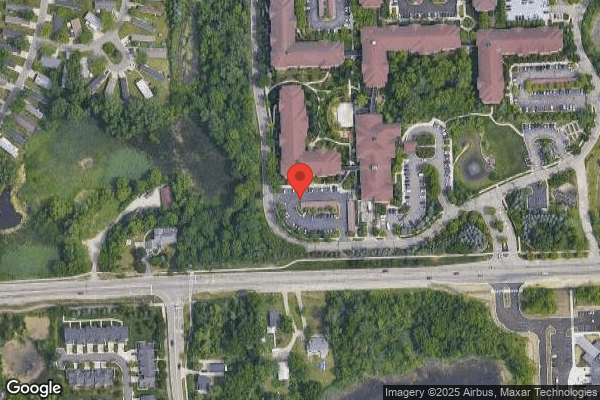
Fox Run Village

41215 Fox Run Road, Novi, MI 48377 (248) 668-8720
Non profit - Corporation 44 Beds ERICKSON SENIOR LIVING Data: November 2025
Trust Grade
68/100
#117 of 422 in MI
Last Inspection: March 2025

Within standard 12-15 month inspection cycle. Federal law requires annual inspections.

Overview

Fox Run Village has a Trust Grade of C+, indicating a decent level of care that is slightly above average, but not without its flaws. It ranks #117 out of 422 nursing homes in Michigan, placing it in the top half of facilities in the state, and #7 out of 43 in Oakland County, meaning there are only six local options that are better. The facility is improving, reducing issues from 13 in 2024 to 5 in 2025, though it still has a staffing turnover rate of 52%, which is average for Michigan. While the facility maintains a good overall star rating of 4 out of 5, it has faced some concerning inspection findings, such as improper food storage in the kitchen and issues with maintaining timely medical records, which could affect resident care. Additionally, during a recent influenza outbreak, there were lapses in infection control practices that could lead to cross-contamination, highlighting both strengths and weaknesses in their operations.

Trust Score
C+
68/100
In Michigan
#117/422
Top 27%
Safety Record
Low Risk
No red flags
Inspections
Getting Better
13 → 5 violations
Staff Stability
⚠ Watch
52% turnover. Above average. Higher turnover means staff may not know residents' routines.
Penalties
⚠ Watch
$13,748 in fines. Higher than 85% of Michigan facilities, suggesting repeated compliance issues.
Skilled Nurses
✓ Good
Each resident gets 65 minutes of Registered Nurse (RN) attention daily — more than 97% of Michigan nursing homes. RNs are the most trained staff who catch health problems before they become serious.
Violations
⚠ Watch
23 deficiencies on record. Higher than average. Multiple issues found across inspections.
★★★★☆
4.0
Overall Rating
★★★★☆
4.0
Staff Levels
★★★☆☆
3.0
Care Quality
★★★★☆
4.0
Inspection Score
Stable
2024: 13 issues
2025: 5 issues

The Good

  • 4-Star Staffing Rating · Above-average nurse staffing levels
  • Full Sprinkler Coverage · Fire safety systems throughout facility
  • No fines on record

Facility shows strength in staffing levels, fire safety.

The Bad

Staff Turnover: 52%

Near Michigan avg (46%)

Higher turnover may affect care consistency

Federal Fines: $13,748

Below median ($33,413)

Minor penalties assessed

Chain: ERICKSON SENIOR LIVING

Part of a multi-facility chain

Ask about local staffing decisions and management

The Ugly 23 deficiencies on record

Mar 2025 5 deficiencies
CONCERN (D)

Potential for Harm - no one hurt, but risky conditions existed

Deficiency F0658 (Tag F0658)

Could have caused harm · This affected 1 resident

**NOTE- TERMS IN BRACKETS HAVE BEEN EDITED TO PROTECT CONFIDENTIALITY** Based on observation, interview and record review, the facility failed to ensure Nursing standards of practice were followed for...

Read full inspector narrative →
**NOTE- TERMS IN BRACKETS HAVE BEEN EDITED TO PROTECT CONFIDENTIALITY** Based on observation, interview and record review, the facility failed to ensure Nursing standards of practice were followed for medication administration for one resident (R5) of five residents reviewed for medication administration. Findings include: On 03/11/25 at approximately 10:52 a.m., R5 was observed in their room, laying in their bed. R5 was observed to have eye drops and a medication cup with three white pills in it without a Nurse in the room providing supervision. R5 was queried how they received their pills in the cup, and they reported the Nurse had given it to them to take and did not wait for them to take them all, left the room and never returned. At that time, R5 was observed to take their hand and grab the pills one by one out of the cup and swallow them. On 3/12/25 at approximately 9:29 a.m., during a medication administration observation, Nurse E was observed to administer a Cyancobalamin (vitamin B-12) 1,000 mcg tablet in a medication cup with multiple other medications in together in the cup at the same time. A review of the pharmacy instructions for the administration of the Cyancobalamin revealed the Cyancobalamin was to be administered sublingually (under the tongue). Further review of the pharmacy instructions revealed the following: dissolve under tongue only. On 03/12/25 at approximately 9:49 a.m., during a review of the medication administration observation with Nurse E, Nurse E was queried why they administered the cyancobalamin with the rest of the medications in the medication cup to R5 instead of following the pharmacy instructions and administering it sublingually, and they indicated that they usually do administer it sublingual but had forgotten that morning. On 3/11/25 the medical record for R5 was reviewed revealed the following: R5 was last admitted to the facility on [DATE] and had diagnoses including Congestive heart failure and Polyneuropathy. A review of R5's MDS (minimum data set) with an ARD (Assessment reference date) of 1/3/25 revealed R5 needed assistance from facility staff with their activities of daily living. A Physician order revealed the following: Refresh Tears 0.5 % eye drops (2 drops) DROPS Both Eyes Notes: Indication: for dry eyes (Dispense as written) OK to SELF ADMINISTER/LEAVE AT BEDSIDE., Instructions: . Further review of the medical record did not reveal any other Physician orders for the self-administration of any other medications On 3/13/25 at approximately 9:00 a.m., during a conversation with the Assistant Director of Nursing, (ADON), the ADON was queried regarding both of the medication observations pertaining to R5's medication administration and they indicated that it was the responsibility of the Nursing staff to follow the rights of medication administration including clarifying the pharmacy instructions vs the orders and ensuring residents have successfully ingested all the medications that were administered by providing supervision during administration.
CONCERN (D)

Potential for Harm - no one hurt, but risky conditions existed

ADL Care (Tag F0677)

Could have caused harm · This affected 1 resident

**NOTE- TERMS IN BRACKETS HAVE BEEN EDITED TO PROTECT CONFIDENTIALITY** Based on observation, interview and record review, the facility failed to consistently provide assistance with oral hygiene for ...

Read full inspector narrative →
**NOTE- TERMS IN BRACKETS HAVE BEEN EDITED TO PROTECT CONFIDENTIALITY** Based on observation, interview and record review, the facility failed to consistently provide assistance with oral hygiene for one (R34) of two residents reviewed for activities of daily living (ADLs). Findings include: On 3/11/25 at 10:18 AM, R34 was observed lying in bed. When asked if they had any concerns with the facility's care R34 reported they had concerns with staff not always assisting them with brushing their teeth most of the time. R34 reported oral care had not been done yet today. On 3/11/25 at 12:39 PM, R34's call light was lit up in the hallway and the door was closed. Upon entering the room, the resident was observed lying in bed on their back with a lunch meal on an overbed tray in front of them. When asked if they had pressed their light for help, R34 reported their bed controller fell to the floor and they couldn't reach it. The bed remote controller was observed on the floor under the bed. When asked if they had received any oral care yet, R34 reported not yet. The resident further reported they were used to doing that by themselves when they were in their apartment before coming here. R34 stated, I'm dependent on them to do it when I can't get out of bed in my chair. They reported they required a mechanical lift with a sling and two people to get them out of bed. When asked if they were having any mouth/tooth pain, they stated no but also reported they had a dental appointment next week for a routine cleaning and that seemed to be when they got their teeth cleaned. They further reported they took pride in the fact they always took good care of their teeth and now was worried it wasn't being done like it should. On 3/11/25 at 12:43 PM, the Care Assistant (CA 'D') who was assigned to R34 entered the room to inquire about the activated call light. R34 reported the bed remote had fallen. At that time, CA 'D' was asked about what care had been provided to R34 earlier this morning. They reported they had only given them their meal trays. When asked if they had provided any oral care to R34 this morning, CA 'D' reported they had not. When asked about why not, such as if their assignment was too much, CA 'D' reported they were busy and had eight residents in their assignment. When asked if they had reported to the Nurse they were not able to complete any of the resident care needs, they reported they did not. Review of the clinical record revealed R34 was admitted into the facility on 9/19/24 with diagnoses that included: displaced bimalleolar fracture of right lower leg, other fracture of right lower leg, pleural effusion, and unspecified injury of head. According to the Minimum Data Set (MDS) assessment dated [DATE], R34 scored 7/15 on Brief Interview for Mental Status Exam (BIMS) which indicated severe cognitive impairment (however the resident was able to recall specific details during this survey that were correct) and required setup or clean-up assistance in which the helper sets up or cleans up and the resident completes the activity for oral hygiene. According to the resident's holistic care plans, R34 required one-person limited assistance with grooming, and had natural teeth. There was no specific care plan for the resident's oral hygiene status, however the care plan for assistance in bathroom identified they required total dependence of one-person physical assist. Review of the oral care documentation provided by the facility included documentation that staff were to provide documentation of the level of assistance required for all ADL (which covered section GG of the MDS assessment for all three shifts: 7:30 AM-3:30 PM; 3:30 PM-11:30 PM; and 11:30 PM-7:30 AM). The documentation provided revealed several shifts and dates from 3/1-3/12/25 that were left blank and others varied from R34 being dependent, requiring supervision, to being independent. There were no refusals of care documented. On 3/12/25 at 4:00 PM, an interview was conducted with the Assistant Director of Nursing (ADON). When informed of the observation and interview of R34 with CA 'D', the ADON reported oral care should be included as part of the morning care and CA 'D' had received routine training about that. The ADON further reported the staffing assignments were well within reason to be able to provide care and that should not have been an issue. When asked if they were aware if R34 had any behaviors of refusal of care, the ADON reported they were not aware of any refusal of care, but that from time to time the resident liked to stay in bed. On 3/13/25 at 9:00 AM, the facility was requested to provide any dental consultations since admission for R34. On 3/13/25 at 9:50 AM, the Administrator reported they didn't have any notes regarding dental, but reported R34 did have an appointment on 3/19/25 at 2:00 PM with the dentist on campus. Review of the documentation provided by the facility for Oral Care was an excerpt from the [NAME] Procedure which read, .Oral care promotes patient comfort, nutritional intake, and oral health, and reduces dental plaque, oral colonization, and mucosal inflammation . On 3/13/25 at 9:57 AM, an interview was conducted with the MDS Coordinator (Nurse 'F'). When asked about the ADL documentation provided for R34, Nurse 'F' reported that was how the facility documented oral care. They reported they had reviewed the same documentation provided to this surveyor and confirmed the blank entries, fluctuations in assistance required, and lack of any noted refusals.
CONCERN (D)

Potential for Harm - no one hurt, but risky conditions existed

Quality of Care (Tag F0684)

Could have caused harm · This affected 1 resident

**NOTE- TERMS IN BRACKETS HAVE BEEN EDITED TO PROTECT CONFIDENTIALITY** Based on interview and record review, the facility failed to ensure medications were available for administration for one reside...

Read full inspector narrative →
**NOTE- TERMS IN BRACKETS HAVE BEEN EDITED TO PROTECT CONFIDENTIALITY** Based on interview and record review, the facility failed to ensure medications were available for administration for one resident (R143) of one resident reviewed for new admissions. Findings include: On 03/11/25 at approximately 11:17 a.m., R143 was observed to be in their room, laying in their bed. R143 was observed to have a catheter draining amber colored urine into a drainage bag. On 3/12/25 the medical record for R143 was reviewed and revealed the following: R143 was initially admitted to the facility on [DATE] and had diagnoses including Retention of Urine and Encounter for fitting and adjustment of urinary device. A review of R143's March 2025 Medication Administration Record (MAR) revealed R143 was not administered the following medications on 3/11/25 (a day after being admitted on [DATE]): 1. doxycycline hyclate 100 mgcapsule (1) CAPSULE Oral Two Times Daily for Two Days Starting 03/10/2025 .(10:00 AM dose-med on order) .2. midodrine 5 mg tablet (1tab) (TABLET) Oral Three Times Daily Starting 03/11/2025 .(9:00 AM dose-Med on order and 1:00 PM dose-med on order) .3. famotidine 20 mg tablet (1) TABLET Oral One Time Daily Starting 03/11/2025 .(9:00 AM dose-on order) .4. ascorbic acid (vitamin C) 500 mg tablet (2) TABLET Oral Two Times Daily Starting 03/11/2025 .(9:00 AM dose-on order) . 5. Banatrol Plus oral powder packet (1 packet) POWDERIN PACKET (EA) Oral Three Times Daily Starting 03/11/2025 .(9:00 AM dose-on order and 1:00 PM dose-on order) .6. ferrous sulfate 324 mg (65 mg iron) tablet, delayed release (1 tab) TABLET,DELAYED RELEASE (ENTERICCOATED) Oral One Time Daily Starting 03/11/2025 .(9:00 AM dose-on order) .7. alpha lipoic acid 600 mg tablet (1 tab) TABLET Oral One Time Daily Starting 03/11/2025 .(9:00 AM dose-med on order) . On 3/13/25 at approximately 9:00 a.m., during a conversation with the Assistant Director of Nursing (ADON), the ADON was queried regarding the process for ensuring medications were available for administration the following shift for newly admitted residents. The ADON reported that the admitting Nurse ensures the medication orders are entered into the EMR (electronic medical record) and reconciles the medications with the medical provider during their admission assessment. The ADON was queried regarding R143 not having their medications available the day after their admission and the ADON indicated that the admitting Nurse should have implemented a STAT (ASAP) delivery to be made from the pharmacy as a drop ship which arrives in 2-4 hours or the Nurse should have checked the backup box to ensure the medications were administered timely and according to Physician orders. At that time the ADON indicated they would have to look into the issue. No further information was provided before the end of the survey as to why R143 did not have their medications available the following day for administration.
CONCERN (D)

Potential for Harm - no one hurt, but risky conditions existed

Incontinence Care (Tag F0690)

Could have caused harm · This affected 1 resident

**NOTE- TERMS IN BRACKETS HAVE BEEN EDITED TO PROTECT CONFIDENTIALITY** Based on observation, interview and record review the facility failed to ensure Physician orders were in place and appropriate c...

Read full inspector narrative →
**NOTE- TERMS IN BRACKETS HAVE BEEN EDITED TO PROTECT CONFIDENTIALITY** Based on observation, interview and record review the facility failed to ensure Physician orders were in place and appropriate catheter care was provided for one resident (R143) of two residents reviewed for indwelling catheters. Findings include: On 03/11/25 at approximately 11:17 a.m., R143 was observed to be in their room, laying in their bed. R143 was observed to have a catheter tube draining amber colored urine into a drainage bag. On 3/12/24 at approximately 2:44 p.m., R143 was observed in their room, walking around in their hospital gown, dragging their catheter tubing and urine collection bag on the floor without any privacy bag in it. R143's catheter tubing was not observed to be secured and was observed to be pulling away from their body as they were walking. On 3/12/25 the medical record for R143 was reviewed and revealed the following: R143 was initially admitted to the facility on [DATE] and had diagnoses including Retention of Urine and Encounter for fitting and adjustment of urinary device. A review of R143's holistic assessment 7.0 revealed the following: Continence-Urine Retention .I use a(n): suprapubic catheter .Catheter size 18Fr .Diagnosis Urine Retention Urine: [NAME] . A review of R143's Physician orders did not reveal any active Physician orders for the instruction/care or monitoring of R143's Suprapubic catheter On 3/12/25 at approximately 2:41 p.m., the medical record for R143 was reviewed with Nurse E. Nurse E was queired if R143 had any Physician orders addressing the care and monitoring of their catheter. Nurse E was observed reviewing the record and reported that R143 did not have any orders for the care of their catheter and that the Nurse who admitted them should have place them in the record. At that time, Nurse E reported that they would have to put in the orders for R143's catheter care including orders for their dressing change every day and general catheter care per shift. On 03/13/25 at approximately 9:00 a.m., during a conversation with the Assistant Director of Nursing (ADON), the ADON was queired regarding the admitting physician orders for R143's catheter care. The ADON indicated that the orders for catheter care should be entered by the admitting nurse when the initial evaluation is completed, so that documentation of the care can be done. The ADON indicated they would review the concern and return if they had any further information. No further information regarding the lack of Physician orders for R143's catheter was provided by the end of the survey.
CONCERN (E)

Potential for Harm - no one hurt, but risky conditions existed

Infection Control (Tag F0880)

Could have caused harm · This affected multiple residents

**NOTE- TERMS IN BRACKETS HAVE BEEN EDITED TO PROTECT CONFIDENTIALITY** Based on observation, interview, and record review, the facility failed to ensure appropriate infection control practices for re...

Read full inspector narrative →
**NOTE- TERMS IN BRACKETS HAVE BEEN EDITED TO PROTECT CONFIDENTIALITY** Based on observation, interview, and record review, the facility failed to ensure appropriate infection control practices for residents on droplet precautions during an influenza outbreak, and implementation of Enhanced Barrier Precautions (EBP) affecting multiple residents reviewed for infection control, including R93, R21 and R15. This deficient practice has the likelihood to result in cross-contamination and the continued development and spread of infection and disease. Findings include: R93 On 3/11/25 at 10:09 AM, R93's door was closed and the resident was heard coughing very loudly from the hallway. There were several signs taped to the outside of the door which included: a rehab treatment schedule, a sheet that read, STOP PLEASE SEE NURSE, a sheet that showed the sequence of putting on personal protective equipment (PPE) for a gown, mask or respirator, goggles or face shield, and gloves, and a sheet that showed the sequence of removing PPE. There was no signage to identify what type of precautions the resident was on, or what specific PPE to use. There was no Nurse or Care Assistant (CA) observed in the hallway for approximately 10 minutes. On 3/11/25 at 10:19 AM, CA 'D' was observed exiting R93's room wearing only a black KN95 mask (no gown, face shield/goggles, or gloves). CA 'D' was not observed to wash their hands, or use hand sanitizer, and proceeded to exit the room into the hallway. On 3/11/25 at 10:20 AM, an interview was conducted with CA 'D'. When asked about why R93 was on isolation precautions, CA 'D' pointed to the signs on the door, confirmed there was nothing specific posted and stated they thought it was for the flu. When asked what PPE was required to be worn, CA 'D' reported a gown and a N95 mask. When asked why they had not donned PPE when they were in R93's room, CA 'D' reported they just went into the room to give the resident their meal tray and acknowledged the meal was delivered later than usual. When asked if again what PPE should be worn upon entering the room, CA 'D' stated when they touched the resident or do something in the room they put on N95 mask, gloves, and gown. CA 'D' confirmed there were no N95 masks available in the PPE cart outside the room. CA 'D' then went to go find the Nurse to inquire about the N95 masks. On 3/11/25 at 10:27 AM, Nurse 'E' was observed in the hallway coming from the central dining area. When asked about the specific isolation precautions for R93, Nurse 'E' reported the resident was on droplet precautions. When asked what PPE should be donned prior to entering the room, Nurse 'E' reported anyone entering the room should be wearing an N95 mask. When informed there were no masks available on the PPE cart outside the room, Nurse 'E' reported the N95 masks were kept in the nursing station. When asked how visitors would know to go there to obtain those, or what specific PPE needed to be donned/doffed, Nurse 'E' reported that was a good question and most visitors usually approached them. When informed that they were not observed as available for approximately 10 minutes, Nurse 'E' acknowledged they were doing medication administration at this time. When asked if the PPE carts should have all required PPE available, they reported they should. On 3/11/25 at 10:45 AM, CA 'D' was observed outside of R93's room wearing a disposable gown, the same black KN95 mask as observed earlier, as well as a N95 mask over the KN95 mask. When asked about the donning of both masks, they reported that was ok, so they could continue to use the KN95 mask. They were requested to follow-up with nursing administration regarding that practice. CA 'D' then removed the black KN95 mask and put it into their pocket. On 3/11/25 at 10:48 AM, upon CA 'D' entering R93's room, Nurse 'E' was observed exiting the resident's room with the entire nursing pushcart that contained several items including: disposable straws, spoons, cups, a laptop, a sharps container, and an opened container of yogurt. Nurse 'E' was not observed to use hand sanitizer upon exiting the room, nor sanitizing any of the items on the push cart. Nurse 'E' then immediately proceeded to go into R21's room (which was not currently on any precautions as there was no signage or PPE cart at/near the resident's room but should have been on enhanced barrier precautions for an open wound per physician orders as of 2/27/25). Nurse 'E' was overhead asking the resident if they were ready for their medications. Review of the clinical record revealed R93 was admitted into the facility on 3/7/25 with diagnoses that included influenza A. There was no Minimum Data Set (MDS) assessment completed at this time. According to the physician's orders in the hard chart, R93 was on droplet precautions for influenza A since admission on [DATE]. Review of the care plans revealed there were none for resident's diagnosis of influenza A or what specific isolation precautions to follow. R21 On 3/11/25, multiple observations were made of R21's room. There were no signs posted identifying R21 was on any precautions, or PPE carts made available until the morning of 3/12/25. On 3/12/25 at approximately 9:30 AM, R21's room now had signage that indicated they were on enhanced barrier precautions (EBP) and a PPE cart was in the hallway outside of their room. Review of the clinical record revealed R21 was admitted into the facility on 4/14/23 with diagnoses that included: chronic systolic heart failure, dementia without behavioral disturbance, chronic kidney disease, sarcoidosis, chronic obstructive pulmonary disease, and Alzheimer's disease. According to the MDS assessment dated [DATE], R21 had severe cognitive impairment (scored 5/15 on BIMS) and no skin/wound concerns. Review of the physician orders revealed no orders included in the hard chart identified R21 had wound care orders to the left heel which started on 2/29/25. Additionally, R21 had orders for enhanced barrier precautions due to a wound on 2/27/25, but this was not observed as implemented during the survey until 3/12/25. Further review of the progress notes revealed R21 was on droplet precautions for +influenza A starting on 3/4/25, tested positive on 3/7/25 and was removed off droplet isolation on 3/11/25. It should be noted there were no isolation precautions observed in use via either signage or PPE cart on 3/11/25. R15 On 3/11/25 at 10:52 AM, the resident was observed working with therapy staff in their room. There was no EBP signage posted, or PPE cart available and/or in place at that time. On 3/12/25 at 8:15 AM, R15's room was now identified as the resident being on EBP. Observation of the PPE cart revealed there were only disposable yellow gowns available. There were no gloves or hand sanitizer available for use. Review of the clinical record revealed R15 was admitted into the facility on 1/27/25 with diagnoses that included: hypo-osmolality and hyponatremia, influenza due to other identified influenza virus with other respiratory manifestations (onset date 2/26/25), presence of right artificial knee joint, aftercare following joint replacement surgery, and acute posthemorrhagic anemia. According to the MDS assessment dated [DATE], R15 had intact cognition. Review of the physician orders revealed orders for EBP were not written until 3/12/25. Review of the progress notes revealed changes to the resident's right knee on 3/10/25 which included: An entry on 3/10/25 at 4:25 PM by Nurse 'I' read, Blister filled with pus to right knee noted 1x1cm (centimeter), open, not warm to touch and it is not affected per [Physician 'K']. The wound cleansed with NS (Normal Saline). TAO (Treatment As Ordered) applied and covered with Opti foam daily until healed. After treatment the blister open and purulent discharge noted . An entry on 3/10/25 at 1:16 PM by Nurse 'I' read, .the wound to right knee, open, has purulent drainage, not warm to touch and it is not affected <sic> per [Physician 'K']. Ordered placed to change the dressing daily . Additional review of the care plans revealed there were none implemented to address the resident's use of EBP or droplet precautions for when they were identified as positive for influenza A on 2/26/25. On 3/12/25 at 3:47 PM, an interview was conducted with the infection Preventionist who also performed duties as the Assistant Director of Nursing (ADON). They reported they just took over the infection control program about a month ago. At that time, the ADON was informed of the concerns regarding the facility's infection control practices as observed, including interviews with staff. The ADON reported the staff had recently received multiple education and training including what to don/doff, how to ensure supplies were available, and the specific requirements including what and how to don/doff for residents on droplet precautions and EBP. When asked if staff should be bringing the nursing pushcart into rooms that were on droplet precautions, the ADON reported the WOW (Workstation on Wheels) should be disinfected upon leaving an isolation room. They further reported the observations and interviews with staff were not reflected of their training. When asked if the facility's decision to not post specific signage of the type of precaution and what specifically to don and doff, how were staff and/or visitors to know exactly what to do, the ADON reported they should see the nurse or also should be on the care plan. When asked how staff and/or visitors would access the care plans given those were kept in binders inside the rooms and would have to enter those rooms, without following appropriate infection control practices, the ADON reported that was a good question and was not able to offer any further explanation. On 3/13/25 at 10:40 AM, an interview was conducted with the Director of Nursing (DON). At that time, the same concerns were reviewed as with the ADON. The DON confirmed the reported observations and interviews were not in accordance with appropriate infection control practices and also was not what staff were educated to do. In regard to Nurse 'E' bringing the WOW into a droplet precaution room, the DON reported there is no reason that should have been brought into the room. Review of the documentation provided for the specific isolation precautions included: A facility document titled, Continuing Care Isolation Precautions Resource Tool which included: .Enhanced Barrier Precautions .PPE Requirements .Gloves and gown prior to the high-contact care activity .PPE to be changed before caring for another resident .Make PPE, including gowns and gloves available and accessible to staff before performing high contact activities .Ensure access to alcohol-based hand rub is available . .Droplet Precautions All residents infected with a disease which spreads through droplets during coughing, sneezing or talking. Examples include Influenza .When PPE Used .Any Room Entry .PPE Requirements .Gloves, Gown, Mask (Surgical or N95 Masks), Protective eyewear, (Don prior to room entry, doff prior to room exit) .PPE to be changed before caring for another resident .Isolation Cart at entryway .Appropriate Signage in place . On 3/11/25 there were three rooms that were noted to have a posting stating STOP SEE NURSE. There was instruction for how to don and doff personal protective equipment (PPE), but no information on what PPE to put on. On 3/13/25 at 10:00 AM, an infection control meeting was conducted with the Assistant Director Of Nursing (ADON) / Infection control preventionist (ICP). They were asked about the rooms that had the signage STOP SEE NURSE and asked how visitors and staff members would know what PPE to wear or what's required if the type of isolation nor the instructions for what to wear is not available on the posting. The ADON explained that individuals are supposed to see the nurse and they should be able to tell individuals what is required. The ADON was then asked what if a nurse is not present, how would one know what to do or what isolation is present. The ADON replied, that it was being discussed with corporate, because this facility is very big on homelike environment and making sure the residents are dignified, but understood the safety in having the correct information present so employees and visitors could properly protect themselves. No additional information was provided by the exit of survey.
May 2024 3 deficiencies
CONCERN (D) 📢 Someone Reported This

A family member, employee, or ombudsman was alarmed enough to file a formal complaint

Potential for Harm - no one hurt, but risky conditions existed

Deficiency F0658 (Tag F0658)

Could have caused harm · This affected 1 resident

**NOTE- TERMS IN BRACKETS HAVE BEEN EDITED TO PROTECT CONFIDENTIALITY** This citation pertains to intake # MI00144708 Based on interview and record review, the facility failed to ensure services met p...

Read full inspector narrative →
**NOTE- TERMS IN BRACKETS HAVE BEEN EDITED TO PROTECT CONFIDENTIALITY** This citation pertains to intake # MI00144708 Based on interview and record review, the facility failed to ensure services met professional standards for medication administration and documentation of controlled substances and medication documentation according to order changes for one resident (R901) of one reviewed for professional standards, resulting in R901 not receiving medication in accordance with the physician order. Findings include: Review of a complaint filed with the State Agency (SA) alleged a physician order for Morphine was ordered around 2:00 PM on 5/8/24 and the facility failed to administer for many hours later in the day resulting in R901 to .suffer for hours without ordered Morphine . A record review revealed that R901 was admitted to the facility on [DATE] for physical therapy rehabilitation and aftercare for spinal surgery from a fractured vertebrae. A comprehensive assessment for R901 was not available due to the short-term stay. A clinical record review documented R901 was alert, orientated, and capable of making their needs known. A medication record review identified a request was sent from the facility to the pharmacy via fax for removal of controlled medication Morphine Sulfate (an opioid pain relieving medication) from the contingency supply-controlled medications on 5/8/24 at 1:42 PM. The Controlled Substances Proof of Use worksheet documented the first dose of ordered Morphine was administered on 5/8/24 at 8:26 PM. The Director of Nursing (DON) was interviewed and indicated when the request for removal form is faxed, the medication is in general available to pull from the PYXIS (an automated machine used for dispensing medications) within 15 minutes. The DON acknowledged nursing should have identified the delay and if the medication was not available, then a follow up call to the pharmacy should have been done. The DON further clarified if the medication is not made available after a call to the pharmacy, the DON should have been made aware. The DON confirmed nursing should have followed up on the order soon after it was sent to the pharmacy and administered the morphine to R901 timely to when originally ordered. Review of the facilities policy title; Medication Administration, Receipt, Storage & Disposal dated 10/2023 documented: .When the licensed nurse determines that an ordered medication is unavailable .Call the pharmacy and let them know which medication is needed as soon as possible . Further review of the original order transcribed on Controlled Substances Proof of Use form documented: Morphine Concentrate20 mg/ml (milligram/milliliter) 0.25ml/5mg PO (by mouth) SL (sublingual) Every 6 hours. The Resident medication profile was reviewed and on 5/8/24 at 10:19 AM the order was changed from administering every six hours, to every three hours. On 5/9/24, the order was changed to administer every two hours. On 5/10/24, the dose was increased from 5mg, to 10 mg every three hours, and on 5/10/24, the ranges changed again from every three hours to every two hours. The DON was questioned when narcotic changes are made, does the controlled substance worksheet have to be updated. The DON confirmed every time a change is made, whether it be dose or timing, a new worksheet must be produced. The DON was provided the only worksheet identified with the original transcribed order (Morphine 20mg/ml 0.25/5mg PO.SL Every 6 hours) and the DON acknowledged a new worksheet should have been completed for every change. Review of the facilities policy title; Medication Administration, Receipt, Storage & Disposal dated 10/2023 documented: .Medication management in Continuing Care (CC) will include ordering, transcribing, receiving, proper storage, accurate documentation .Medications are administered in accordance with Nursing Standards of practice .
CONCERN (D) 📢 Someone Reported This

A family member, employee, or ombudsman was alarmed enough to file a formal complaint

Potential for Harm - no one hurt, but risky conditions existed

Accident Prevention (Tag F0689)

Could have caused harm · This affected 1 resident

**NOTE- TERMS IN BRACKETS HAVE BEEN EDITED TO PROTECT CONFIDENTIALITY** This citation pertains to intake #MI00144708. Based on interview and record review, the facility failed to ensure adequate, and ...

Read full inspector narrative →
**NOTE- TERMS IN BRACKETS HAVE BEEN EDITED TO PROTECT CONFIDENTIALITY** This citation pertains to intake #MI00144708. Based on interview and record review, the facility failed to ensure adequate, and accurate assessment, investigation, and monitoring of a resident post fall with injury for two (R901 and R904) of three residents reviewed for accidents. Findings include: R901 A complaint filed with the State Agency alleged concerns regarding R901's fall and post-fall investigation. Review of the clinical record revealed R901 was admitted into the facility for skilled therapy on [DATE] around 6:15 PM with diagnoses that included: wedge compression fracture and multiple fracture of ribs. R901 was signed onto hospice following a fall with injury within a few hours of admission on [DATE], which resulted in likely traumatic head injury per Physician evaluation, subsequent significant decline in overall status, and the resident died on [DATE]. According to the Minimum Data Set (MDS) assessment for death in facility dated [DATE], there were no details of the resident's cognition, or falls. However, documentation upon admission on [DATE] indicated the resident was alert with some confusion. Review of the progress notes included: An entry on [DATE] at 12:26 AM for [DATE] at 9:00 PM by Licensed Practical Nurse (LPN 'D' - who was R901's assigned nurse) read, Resident arrived at neighborhood approx. (approximately) 6:15pm via ambulance/stretcher and accompanied by two EMTs (Emergency Medical Technicians). She appeared to be in pain during the transfer process. She had been hospitalized on [DATE] following multiple falls in her independent apartment. Hospital records indicate multiple acute and chronic compression fractures, moderate to severe lumbar stenosis, rib fractures, traumatic ecchymosis .She is alert and responsive, with some confusion .She had a large BM (Bowel Movement) at the time of transfer and staff performed incontinence care. Observed at that time that resident had foley catheter in place draining clear straw colored urine. Her daughter followed behind ambulance to assist mother and is a good historian .Skin assessment indicates extensive bruising related to multiple falls. Bruising observed on scalp, around both eyes and cheeks, down both upper extremities, including dark purple ecchymosis on bilateral hands, with small skin tear or ruptured ecchymosis to back of L (Left) hand. Very large dark purple traumatic ecchymosis to left flank, hip and lower back, as well as smaller, but widespread bruising down bilateral thighs, shins and ankles. Observed pink rash-like appearance under abdominal fold from hip-to-hip. Large area of what appeared to be surgical bandaging down the center spine from cervical through the thoracic area. Nurse did not remove these dressings at that time, as resident wanted to eat and rest. No open areas observed on her coccyx/buttocks area, heels or bony prominences. The next entry on [DATE] at 2:25 AM for [DATE] at 11:00 PM, by LPN 'D' read, Approx 9:00pm, CENA (Certified Nursing Assistant) alerted this nurse that [R901] was found on the floor in her room. Upon entering the room, nurse observed resident lying face down on her bathroom floor with her head near the base of the toilet. Her walker was tipped over and her foley catheter and drainage tubing was observed wound around the leg of the walker, having become dislodged from resident's body. Also observed that resident had experienced a BM (bowel movement) incontinent episode .neurochecks initiated, and the afternoon supervisor was alerted to come to the neighborhood to assist. While the resident had extensive periorbital bruising upon arrival, it appears that new, fresh periorbital bruising evident, particularly beneath the L eye and above the R (Right) brow. Supervisor notified the resident's daughter, who is staying in the resident's independent living apartment .and the provider on call. Orders obtained for neurochecks, and bladder scans q (every) 6 hours r/t (related to) the removed foley, with ISC for volumes >300ml (milliliters) . An entry on [DATE] at 7:56 AM by Registered Nurse (RN 'E') read, New admit. AO x 3 (Alert and Oriented to person, place and time) with confusion . An entry on [DATE] at 2:34 PM by LPN 'G' read, received in bed resting. Alert and able to make needs known .Around lunch time resident had a change in condition. Resident respirations were 24 with an audible wheeze and distended upper abdomen. SpO2 (blood oxygen level) ranging between 90-91% on RA (Room Air). Resident had a fixed stare. Provider was notified of change in condition. Orders given for a hospice consult. Social worker notified of orders and comfort medications put in place. Resident in bed resting with daughter at bedside. An entry on [DATE] at 8:31 AM by RN 'I' read, .Resident observed grimacing and moaning when care provided. Scheduled morphine & ativan given per orders .Resident noted to have blue tinge around her mouth when head of bed is lowered . An entry on [DATE] at 9:19 PM by LPN 'J' read, Writer received resident in bed sleeping, daughters at bedside .Scheduled medication administered, resident tolerated. At 6:30 pm writer observed no signs of life, daughters at bedside .Hospice Nurse arrived to unit, resident pronounced at 8:06 pm . Review of the facility's fall investigation included an incident report completed by RN 'F' documented multiple inconsistencies which conflicted with other documentation following the fall incident on [DATE]. The report documented, in part: Incident Date: [DATE] .9:00 PM .Fall .Found on floor .Fall involved the following device .Walker .Resident used the walker when getting out of her bed, tripped on her call light, and fell .Level of Injury: Minor .Other type of injury .scar to the underside of her left eye .Pain Scale .0 .Is this a new onset of pain? No .Mental Status: Any change in Baseline Condition .No Change from Baseline (Alert and Oriented at the resident's baseline) .Musculoskeletal Function: Any change in Baseline Condition .No Change from Baseline .Health condition post incident .No Change from Baseline .Post incident, were Neuro Checks initiated by nursing staff .Yes .At the time of the event, was resident transferred to acute care hospital .No .Person completing the Incident Report form .[Name of RN 'F'] [DATE] 10:33 PM .Conclusions of the Investigation: Patient got out of bed, used the walker, and tripped over the call light . This report conflicted from other documentation from R901's assigned nurse (LPN 'D') who was the nurse that responded to the resident being on the floor and identified the resident's catheter tubing was caught around the legs of the walker, not a call light. This report failed to identify any specific details of existing injuries and only identified a scar to the underside of her left eye. There was no other details included of any interviews with staff, or details of an investigation. Additional conflicted documentation was identified upon review of R901's Neurological Check Flow Sheet which documented the first 15 minute neurocheck was done on [DATE] at 8:00 PM (approximately 1 hour prior to the actual fall), then continued for every 15 minutes at 8:15 PM, 8:30 PM, 8:45 PM, then every 30 minutes on [DATE] at 9:00 PM, then 9:30 PM, then 10:00 PM, then 10:30 PM, then every 1 hour on 5/7 at 11:30 PM and [DATE] at 12:30 AM. The next section of times to monitor for neurochecks every eight hours on [DATE] at 8:30 AM, 4:30 PM, 5/9 at 12:30 AM, and 5/9 at 8:30 AM were all blank (incomplete). There was no additional documentation of neurocheck monitoring available for review (or provided by end of the survey) to show any additional monitoring was completed as required by facility policy. Review of follow-up documentation by nursing administration revealed no identification of concerns regarding documentation discrepancies on the incident report, or neurochecks. On [DATE] at 12:55 PM, a phone interview was completed with RN 'F'. When asked to recall the events of R901's fall on [DATE], RN 'F' reported they had recently started working at the facility on [DATE]th as an afternoon Nurse Supervisor for the facility, including the assisted living and independent living communities. They further reported if there was a call for help, they would fill out the report. They recalled one of the nurses needed help, believed R901 was a new resident and had just gotten admitted , LPN 'D' was swamped with her med pass and the resident fell. RN 'F' stated, I said I'd do the incident report. I didn't find her on the floor, [LPN 'D'] did. Not sure who the CNA was. When asked if they had received any training or education on what the facility's process was for completing post-fall assessments, they reported they were not sure. When asked about their conflicting documentation of the fall occurring due to the call light wrapped around the walker, and LPN 'D' who documented it was a foley catheter tubing that had also been pulled out, RN 'F' reported they were not sure. RN 'F' further reported LPN 'D' said R901 fell and needed help filling out the paperwork because she was so busy. When asked how the resident's neurocheck assessments were initiated prior to the fall occurrence, RN 'F' reported they were not able to offer any further explanation. On [DATE] at 1:23 PM, a phone interview was completed with LPN 'D'. When asked to recall the events of R901's fall on [DATE], LPN 'D' reported a nursing assistant came to them to let them know they found R901 on the floor. LPN 'D' reported they went to her room and observed the resident on the bathroom floor, face down on the floor with their head toward the toilet. She had a tipped over walker, and she had come in with a foley catheter and the foley catheter tubing was wrapped around the legs of the walker and she had had another episode of bowel incontinence. LPN 'D' the explained the fall occurred around 9:00 PM and after they had assessed the resident, she was awake, alert, responding and moving all of her extremities. She didn't complain of pain and said help me. LPn 'D' stated, I couldn't really lift her myself not safely. There were four of us who helped roll her onto her back, then we got her up in the wheelchair, then into bed. LPN 'D' further reported because R901 had fallen unwitnessed and appeared she had hit her head, they did an initial set of vitals and started neurochecks. When asked how RN 'F' became involved, LPN 'D' reported they had contacted RN 'F' as the nurse supervisor and did another assessment because it appeared she had more bruising. It appeared there was new bruising around her eyes. When asked who should be completing the actual fall report, LPN 'D' reported they were completing R901's admission assessment at that time, so RN 'F' completed the fall report. When asked about the discrepancy of when the neurochecks were started and why they weren't completed as required, LPN 'D' reported RN 'F' had initiated the neurocheck flowsheet and re-confirmed R901 fell around 9:00 PM. When asked if they had provided care to R901 following this incident, they reported they did not. On [DATE] at 3:00 PM, an interview and record review were completed with the Director of Nursing (DON). At that time, the DON confirmed the discrepancies in the documentation on the fall report by RN 'F' and the documentation in the progress notes by LPN 'D'. When asked about the conflicting time of how the neurochecks would've been started an hour prior to the fall, and why they weren't completed as indicated on the neurocheck flow sheet, the DON was unable to offer any further explanation. R904 Review of the clinical record revealed R904 was admitted into the facility on [DATE] with diagnoses that included: acute on chronic diastolic heart failure, chronic diastolic heart failure, type 2 diabetes mellitus with diabetic chronic kidney disease, and osteoarthritis. According to the MDS assessment dated [DATE], R904 had short term memory problems with moderately impaired decisions and had no falls since entry or prior assessment. Review of the facility's roster matrix identified R904 had a fall. Review of the incident report provided by the facility documented R904 had an unwitnessed fall on [DATE] at 6:09 PM and was found on the floor in the bathroom, with a laceration to his head (right) with moderate amount of blood present. R904 was sent out to the hospital and returned just after midnight (on the night of the fall) since R904 was also on Aspirin. There was no neurocheck flowsheet initiated for R904 available for review in the clinical record. On [DATE] at 3:10 PM, the DON was asked why neurochecks were not initiated for R904 following their fall with head laceration and they reported they might not have since he was sent to the hospital. The DON also reported that the facility staff would go off of any new orders received if the provider wanted neurochecks completed. When asked whether the provider (Physician) had been notified upon R904's return to the facility a few hours after the fall, the DON confirmed the documentation indicated the physician was notified only by writing in the log book. The DON was asked if the physician should've been notified by phone of the resident's return, specifically following a head injury post fall, the DON reported the nurse should've called the physician or on-call provider and neurochecks should've been completed per facility's process/policy. According to the facility's policy titled, Neurological Assessment dated 4/2024: .Unless otherwise indicated by the provider, a Neurological Assessment is performed using the Neurological Check Flow Sheet (located in the EMR [generate Assessment] .Utilizing the directions and codes on the Neurological Check Flow Sheet, observe and document neurological assessment findings .Significant changes in the neurological assessment, notification of the Provider and notification of family are documented in the nurses' notes by the licensed nurse .
CONCERN (D) 📢 Someone Reported This

A family member, employee, or ombudsman was alarmed enough to file a formal complaint

Potential for Harm - no one hurt, but risky conditions existed

Deficiency F0761 (Tag F0761)

Could have caused harm · This affected 1 resident

Based on observation and interview, the facility failed to ensure proper storage of medications in two of two medication carts reviewed resulting in the potential of dispensing expired medications and...

Read full inspector narrative →
Based on observation and interview, the facility failed to ensure proper storage of medications in two of two medication carts reviewed resulting in the potential of dispensing expired medications and storing unidentifiable medications in the narcotic cart. Findings include: On 5/29/24 at 9:20 AM, An unlocked medication cart was observed containing multiple bottles of Senna (stool softener medication) which had expired in 2023. Registered Nurse (RN) B acknowledged the cart serves as dual purpose as the unit treatment cart and as an overflow medication cart. RN B confirmed medications located in the cart are retrieved if needed and administered. When asked who is responsible for reviewing expiration dates within the cart, RN B responded the nursing staff on midnights should be. At 9:30 AM, The Director of Nursing (DON) arrived on the unit and was informed of the observation of expired Senna medication bottles in the first cart reviewed. The DON acknowledged expired medications are not to be stored and or administered. The DON remained present as the first drawer of the narcotic cart was opened by Licensed Practical Nurse (LPN) K and three loose pink colored pills were observed in the back left corner of the drawer placed in between two medication cups. The DON removed the medications and acknowledged unidentifiable medications are not to be stored within the narcotic storage cart. Review of the facilities policy title; Medication Administration, Receipt, Storage & Disposal dated 10/2023 documented: .Medication management in Continuing Care (CC) will include proper storage .expired medications shall be destroyed within 30 days or sooner per state regulations, in the facility .All medications will be kept in their original containers .
Feb 2024 10 deficiencies
CONCERN (D)

Potential for Harm - no one hurt, but risky conditions existed

PASARR Coordination (Tag F0644)

Could have caused harm · This affected 1 resident

**NOTE- TERMS IN BRACKETS HAVE BEEN EDITED TO PROTECT CONFIDENTIALITY** R#2 Review of the medical record revealed R2 was admitted to the facility on [DATE] with diagnoses that included: dementia and h...

Read full inspector narrative →
**NOTE- TERMS IN BRACKETS HAVE BEEN EDITED TO PROTECT CONFIDENTIALITY** R#2 Review of the medical record revealed R2 was admitted to the facility on [DATE] with diagnoses that included: dementia and hallucinations. An MDS (Minimum Data Set) dated 11/6/23 documented severely impaired cognition and required staff assistance for all activities of daily living (ADLs). Review of the medical record revealed a PASARR (Preadmission Screening and Resident Review) level I was completed on 8/17/23 and no PASARR II. On 2/6/24 at 3:03PM requested either a PASARR II or completed exemption from SW I. On 2/7/24 at 10:39AM SW I stated that they did a screening, level II was never submitted, and it was now submitted. SW I did not recall why it got missed. Based on observations, interviews, and record reviews the facility failed to ensure a level one OBRA screening (Omnibus Budget Reconciliation Act) was submitted to the Community Mental Health Services Program (CMHSP) for a level two evaluation for two (R's 7 and 2) of two residents reviewed for PASAR (Preadmission screening/resident review). Findings include: R7 On 2/5/24 at 10:35 AM, R7 was observed lying on their back in bed and an interview was conducted with the resident at that time. Review of a Level I OBRA screening dated 7/24/23, documented the resident to have diagnoses of anxiety and bipolar and documented the resident to have been prescribed antipsychotic, antidepressant, and antianxiety medications. Further review of the medical record revealed no documentation of a Level two evaluation to have been completed. Review of the medical record revealed R7 was admitted to the facility on [DATE], with diagnoses that included: anxiety disorder and bipolar disorder. Review of the physician orders documented the following orders: Rexulti 1 mg for depressive disorder Cymbalta 30 mg for depressive disorder Lamotrigine 25 mg for bipolar On 2/6/24 at 1:09 PM, the Social Worker (SW) I was interviewed and asked if the level one assessment on 7/24/23 was submitted to CMHSP for a level two evaluation to be completed or if the facility had documentation to provide that a level two assessment was completed for R7 and SW I stated they would look into it and follow back up. On 2/7/23 at 10:39 AM, SW I returned and stated the Level one screening was not submitted and they were unsure on how that got missed. SW I stated they have now submitted the Level one screening to CMHSP for review.
CONCERN (D)

Potential for Harm - no one hurt, but risky conditions existed

Quality of Care (Tag F0684)

Could have caused harm · This affected 1 resident

**NOTE- TERMS IN BRACKETS HAVE BEEN EDITED TO PROTECT CONFIDENTIALITY** Based on interview and record review the facility failed to effectively collaborate with the hospice agency for one resident (R2...

Read full inspector narrative →
**NOTE- TERMS IN BRACKETS HAVE BEEN EDITED TO PROTECT CONFIDENTIALITY** Based on interview and record review the facility failed to effectively collaborate with the hospice agency for one resident (R2) of one resident reviewed for hospice services. Findings include: On 2/5/24 at 10:06 AM, R2 was observed laying on her back with her breakfast on her chest, asleep, with pillows under both arms. Review of the medical record revealed R2 was admitted to the facility on [DATE] with diagnoses that included: stroke, hallucinations, dementia. On 2/6/24 at 10:28 AM Nurse S was queried regarding how the facility collaborates care with the hospice agency, Nurse S reported that she was unsure and that she had only worked at the facility for a short time. They stated that they began working October of 2023. When asked where the hospice care plan is she again reported that she was unsure. They referred me to the facility visit and collaboration sheet in the hospice binder, which was found to be blank. Nurse S stated that their (hospice) visits are sporadic and not care planned. On 2/6/24 at 12:34 PM, CNA T was asked if they knew how hospice services were communicated to facility staff caring for the residents, they stated the nurses would know that answer. CNA T was unable to provide any additional details. On 2/5/24 a review of the hospice binder for R2 was completed, a log of the hospice aide visits was found, which included dates/times for the visits and the associated hospice aide's names only. On 2/7/24 at 8:59 AM an interview with the DON (director of nursing) was conducted. The DON was queried about how the facility collaborates with hospice, the DON stated that the hospice nurse is usually at the facility 5 days per week. They were unable to provide a clear answer to how the services are communicated and if they collaborate. They stated that ADON A communicates with hospice the most and may be able to provide a more clear answer. On 2/7/24 at 9:24 AM ADON (assistant director of nursing) A, stated that the nurse is at the facility Monday through Friday and communicates verbally with clinical staff and the hospice nurse will document in the residents hard chart (not in the designated hospice binder). When asked if there was any clear communication to the facility staff on when, how often and what types of hospice services will be provided, ADON A stated the services are sporadic, is communicated verbally on a weekly basis and to her knowledge, there is not communication done in print for the facility staff to reference. On 2/7/24 at approximately 11 AM, Hospice nurse U was queried on how the hospice care team collaborates with the facility staff in regards to what time of care will be provided, when, what and how often. Nurse U stated that they see residents Monday through Friday, the facility staff know who she is and to call her if they need anything. Nurse U was not able to provide a record or process that was in place to collaborate and communicate care regularly with the facility staff.
CONCERN (D)

Potential for Harm - no one hurt, but risky conditions existed

Accident Prevention (Tag F0689)

Could have caused harm · This affected 1 resident

**NOTE- TERMS IN BRACKETS HAVE BEEN EDITED TO PROTECT CONFIDENTIALITY** Based on observations, interviews, and record reviews the facility failed to ensure the required assistance level for bed mobili...

Read full inspector narrative →
**NOTE- TERMS IN BRACKETS HAVE BEEN EDITED TO PROTECT CONFIDENTIALITY** Based on observations, interviews, and record reviews the facility failed to ensure the required assistance level for bed mobility was provided to one (R18) of four residents reviewed for accidents. Findings include: On 2/5/24 at 1:19 PM, R18 was observed sitting in their wheelchair in their room. A limited interview was conducted with the resident at that time. Review of the medical record revealed R18 was admitted to the facility on [DATE] with diagnoses that included: Alzheimer's disease and dementia and required a two person staff assistance for bed mobility. Review of a Nursing note dated 12/17/23 at 10:24 PM, documented in part . Staff was attempting to change resident, while turning res. (resident) towards staff res. Started to pull on the fame <sic> of the bed, and res. Fell. Staff nurse assessed res. And noted an abrasion on the left side of the lower back measuring 10 cm (centimeters) by 1 cm, and redness noted to the back of the head slightly raised . Review of the medical record confirmed R18 required a two person assist for bed mobility. Review of a Resident Incident Report Form dated 12/17/23, documented in part . Staff was attempting to change resident. ADON (Assistant Director of Nursing): Staff member assisted resident for incontinence care, resident began having actions and expressions, grabbing onto bed rail, staff member tried to intervene to prevent fall, but resident pulled weight over, resulting in fall. Resident is a two person assist for bed mobility. Abrasion noted to L (left) side of back, no pain upon palpation . Counseling for staff involved regarding bed mobility safety, care plan direction and actions and expressions management . On 2/6/24 at 2:52 PM, the ADON A was interviewed and asked about R18's fall on 12/17/23 and the ADON A stated the care associate breached the care plan and performed R18's care alone. ADON A stated R18 required a two person assist at the time of the fall.
CONCERN (D)

Potential for Harm - no one hurt, but risky conditions existed

Drug Regimen Review (Tag F0756)

Could have caused harm · This affected 1 resident

**NOTE- TERMS IN BRACKETS HAVE BEEN EDITED TO PROTECT CONFIDENTIALITY** Based on observation, interview and record review the facility failed to consistently provide a rationale for declination of the...

Read full inspector narrative →
**NOTE- TERMS IN BRACKETS HAVE BEEN EDITED TO PROTECT CONFIDENTIALITY** Based on observation, interview and record review the facility failed to consistently provide a rationale for declination of the pharmacist's monthly medication regimen review for two residents (R2 and R15) of the two residents reviewed. Findings include: R2 On 2/5/24 at 10:06 AM, R2 was observed laying on her back with her breakfast on her chest, asleep, with pillows under both arms. Review of the medical record revealed R2 was admitted to the facility on [DATE] with diagnoses that included: stroke, hallucinations, dementia. Pharmacy consultation report dated December 18, 2023, indicated that Physician C chose to decline the pharmacist recommendation to consider attempting a GDR (Gradual dose reduction) from Seroquel (a psychiatric medication) 25 mg (milligrams) twice daily to Seroquel 25 mg at bedtime. The rationale provided on the consultation report deferred the decision to behavioral health services with no further supporting information. On 2/7/24 at 11:28 AM an interview was conducted with the DON (director of nursing) and ADON (assistant director of nursing), A. A request was made for supporting documentation of declination of the pharmacy recommendation for December 18, 2023. On 2/07/24 at 03:20 PM, Physician C stated that for psychiatric medications and for potential GDR's they defer to Behavioral Health services. Physician C also reported that Behavioral Health services do not see hospice residents and R2 was receiving Hospice services, therefore no provider was providing a supporting rationale for the declination of the pharmacy recommendation. R15 On 2/5/24 at 11:46 AM R15 was observed laying on her back, asleep with their spouse at their bedside. Review of the medical record revealed R15 was admitted to the facility on [DATE] with diagnoses that included: dementia, anxiety, and delusions. A pharmacy consultation report dated December 18, 2023, indicated that Physician C chose to decline the pharmacist recommendation to consider changing R15's Olanzapine from 2.5mg twice per day to 5mg at bedtime, due to the medications long half-life and the increased risk for potential adverse events. The rationale provided on the consultation report deferred the decision to behavioral health services with no further supporting information. On 2/7/24 at 11:28 AM, an interview was conducted with the DON (director of nursing) and ADON (assistant director of nursing), A. Request was made for supporting documentation of declination of the pharmacy recommendation for December 18, 2023. On 2/07/24 at 03:20 PM, Physician C stated that for psychiatric medications and for potential GDR's they defer to Behavioral Health services. Physician C also reported that Behavioral Health services do not see hospice residents and R15 was receiving Hospice services, therefore no provider was providing a supporting rationale for the declination of the pharmacy recommendation.
CONCERN (D)

Potential for Harm - no one hurt, but risky conditions existed

Deficiency F0757 (Tag F0757)

Could have caused harm · This affected 1 resident

**NOTE- TERMS IN BRACKETS HAVE BEEN EDITED TO PROTECT CONFIDENTIALITY** Based on interview and record review, the facility failed to justify the use of antibiotics in according with current practice/g...

Read full inspector narrative →
**NOTE- TERMS IN BRACKETS HAVE BEEN EDITED TO PROTECT CONFIDENTIALITY** Based on interview and record review, the facility failed to justify the use of antibiotics in according with current practice/guidance for one (R8) of four residents reviewed for antibiotic medication use. Findings include: According to the Centers for Disease Control (CDC) and Prevention NHSN (National Healthcare Safety Network) updated January 2024: Healthcare-associated Infection Surveillance Protocol for Urinary Tract Infection (UTI) Events for Long-Term Care Facilities .Criterion For residents with an indwelling catheter in place .One or ore of the following (Signs and Symptoms and Laboratory and Diagnostic Testing) .4. New onset confusion/functional decline with no alternate diagnosis AND Leukocytosis [defined by NHSN as > 10,000 cells/mm^3, or Left shift (> 6% or 1,500 bands/m^3)] .AND A positive urine culture with no more than 2 species of microorganisms, at least one of which is a bacterium of =105 CFU (Colony Forming Units)/ml . According to the facility's policy titled, Antibiotic Management dated 5/2021, approved on 3/20/23: .Antibiotic prescribing will be done in a manner that optimizes safe and appropriate use of antibiotics, enhances clinical outcomes while minimizing unintended consequences of antimicrobial use (e.g., toxicity, resistance), and reduce healthcare costs without adversely affecting quality of care . This policy did not include the updated CDC requirements in regard to antibiotic use. Review of the clinical record revealed R8 was admitted into the facility on 5/22/20, and readmitted on [DATE] with diagnoses that included: hemiplegia and hemiparesis following cerebral infarction affecting right dominant side, neuromuscular dysfunction of bladder, and benign prostatic hyperplasia without lower urinary tract symptoms. According to the Minimum Data Set (MDS) assessment dated [DATE], R8 had impaired communication, short and long term memory were ok with modified independent cognitive skills for daily decision-making, and had an indwelling urinary catheter. Review of R8's physician orders included an antibiotic medication order for Cipro 250 MG (Milligrams) tablets two times a day for seven days that was started on 1/30/24 for UTI by Physician 'C'. Review of R8's urine cultures revealed the most recent culture obtained on 1/24/24 resulted in Escherichia coli (E.coli). (The urine culture from 10/16/23 also indicated a result of Escherichia coli.) Further review of the clinical documentation revealed there was no physician/provider assessment for for R8 since the urine test was ordered and antibiotic was started, nor were any labs ordered/obtained as required with the current practices for justification for antibiotic use for resident with catheters and suspected UTI. The most recent lab work completed for R8 was on 11/13/23. The most recent physician assessment was on 1/16/24 which indicated no concerns with the resident's urine and/or catheter. On 2/7/24 at 8:19 AM, an interview was conducted with the Infection Preventionist (IP 'O'). IP 'O' was asked to explain the facility's process for monitoring and ensuring justification for antibiotic medication use to ensure medications were not being prescribed unnecessarily. IP 'O' reported they pulled a medication report on a daily basis that shows what's ordered, also reviews the 24 hours report, and they would go into the chart, review nursing notes, provider notes, what the symptoms were and why the antibiotic was initiated. IP 'O' further reported they utilized an electronic system in which the information that was entered would prompt if criteria was met or not met and that was based off of McGeer's criteria (a set of infection surveillance definitions adapted from existing surveillance definitions such as the Centers for Disease Control and Prevention (CDC) with input from consensus discussions among infectious disease physicians, geriatricians, and infection control nurses to provide standardized guidance for infection surveillance and research studies in nursing homes). IP 'O' reported if not met, they would reach out to the providers and get their clinical rationale. When asked what the clinical rationale was for R8, IP 'O' reviewed their documentation and reported It was foley and agitation, so it met criteria. Also experienced mental decline. IP 'O' was queried about whether that was different from the actual baseline as the documentation reviewed indicated R8 had episodes of non-compliance/agitation due to limited speech and they deferred to the provider for further explanation. When asked if there was any lab work ordered, IP 'O' reported there was not and lab work was not always needed. When asked if there had been any consideration that R8 may have a colonized infection given the same urine results, IP 'O' reported they didn't think that was the reason, because the resident usually had hematuria and had history of UTIs. When asked when their electronic program had last been updated, IP 'O' reported they weren't sure but thought it was regularly updated. When queried about the software documentation of being reviewed in 2017, IP 'O' was unable to offer any further explanation. When asked how they became informed of any changes/revisions to requirements with infection control practices, they received updates from CDC (Centers for Disease Control). On 2/7/24 at 9:01 AM, an interview was conducted with the Director of Nursing (DON). The DON was informed of the concerns with R8 being prescribed an antibiotic medication without obtaining all required diagnostics and they reported they had not been aware of the recent CDC changes, but would follow-up. On 2/7/24 at 9:31 AM, an interview was conducted with Nurse Practitioner (NP 'D') who works with Physician 'C'. When asked about why R8 was started on an antibiotic on 1/30/24 and what was the clinical rationale, NP 'D' reported the resident had been hospitalized for urine and typically presented with hematuria. They further reported on clinical presentation, R8 had altered mental status, pain (arm for another issue), and very agitated. When asked about the lack of provider assessment, NP 'D' reported they typically provided a visit not, but was not able to circle back to do that this time. When asked if they had considered lab work if they suspected a UTI, NP 'D' reported they don't order labs every time someone had a UTI and reported they knew R8 had based on presentation. NP 'D' was informed of the recent McGeer/CDC requirements for prescribing antibiotics for residents with catheter and suspected UTI and they reported they had not been aware of the need requiring lab work.
CONCERN (D)

Potential for Harm - no one hurt, but risky conditions existed

Medication Errors (Tag F0758)

Could have caused harm · This affected 1 resident

**NOTE- TERMS IN BRACKETS HAVE BEEN EDITED TO PROTECT CONFIDENTIALITY** Based on observations, interviews, and record reviews the facility failed to ensure gradual dose reductions (GDRs) for psychotro...

Read full inspector narrative →
**NOTE- TERMS IN BRACKETS HAVE BEEN EDITED TO PROTECT CONFIDENTIALITY** Based on observations, interviews, and record reviews the facility failed to ensure gradual dose reductions (GDRs) for psychotropic medications were completed, implement a care plan that identified targeted behaviors and non-pharmacological interventions for behaviors, and maintain behavioral data for two (R's 7 and 25) of five residents reviewed for unnecessary medications. Findings include: R7 On 2/5/24 at 10:35 AM, R7 was observed lying on their back in bed and an interview was conducted with the resident at that time. Review of the medical record revealed R7 was admitted to the facility on [DATE], with diagnoses that included: anxiety disorder and bipolar disorder. Further review of the medical record revealed R7 was prescribed Rexulti 1 mg for depressive disorder in November 2023 and also was prescribed Cymbalta 30 mg (milligrams) for depressive disorder and Lamotrigine 25 mg for bipolar disorder. Review of the medical record revealed no documentation of targeted behaviors identified by the facility staff. Review of the care plans revealed no documentation that identified the targeted behaviors for R7 and contained no documentation of any nonpharmacological interventions implemented to address any behaviors for R7. Review of the medical record revealed one behavioral consultation dated 11/1/23, no other consultations were identified in the resident's record. Further review revealed no documentation of an AIMS (Abnormal Involuntary Movement Scale) assessment for R7. R25 On 2/5/24 at 10:43 AM, R25 was observed sitting up in bed. A care giver hired by the resident's family was also observed in the room sitting on the chair next to R25's bed. A limited interview was conducted with R25 at that time. Review of the medical record revealed R25 was admitted to the facility on [DATE], with diagnoses that included: Parkinson's disease with dyskinesia, anxiety disorder, neurocognitive disorder with Lewy bodies, obsessive-compulsive disorder, psychotic disorder with hallucinations, mood disorder, and anxiety disorder. Review of the physician orders documented the following: Mirtazapine 7.5 mg, Zoloft 50 mg, Seroquel 25 mg and clonazepam 0.5 mg. Review of the medical record revealed no documentation of targeted behaviors identified by the facility staff. Review of the care plans revealed no documentation that identified the targeted behaviors for R25 and contained no documentation of any nonpharmacological interventions implemented to address any behaviors for R25. On 2/7/24 at 12:33 PM, the Director of Nursing (DON) and Social Worker (SW) I was interviewed and asked if a GDR attempt or AIMS was ever completed for R7? The DON stated they would look into it and follow back up. The DON and SW I was then asked to provide all care plans for R25. Review of the provided care plans for both R's 7 & 25 revealed no identification of targeted behaviors for either resident or non-pharmacological interventions implemented for any behaviors. On 2/7/24 at 2:57 PM, the DON and SW I returned and confirmed the facility could not provide documentation of an GDR attempt for R7's psychotropic medications and could not provide documentation of an AIMS to have been completed for this resident. At this time the DON and SW I was asked to identify the identified targeted behaviors and non-pharmacological interventions implemented for R's 7 and 25 and neither the DON or SW I could provide the targeted behaviors or non-pharmacological interventions for either resident. Review of a facility policy titled Psychoactive Medication dated 6/2021 documented in part . Psychoactive medication therapy shall be used only when it is necessary to achieve specific treatment goals. Once treatment goals have been achieved, residents on psychoactive medications will receive gradual dose reductions and behavioral interventions, as clinically indicated, in an effort to discontinue these medications .
CONCERN (D)

Potential for Harm - no one hurt, but risky conditions existed

Antibiotic Stewardship (Tag F0881)

Could have caused harm · This affected 1 resident

Based on interview and record review the facility failed to maintain an antibiotic stewardship program that included consistent implementation of protocols for appropriate antibiotic use for two (R233...

Read full inspector narrative →
Based on interview and record review the facility failed to maintain an antibiotic stewardship program that included consistent implementation of protocols for appropriate antibiotic use for two (R233 and R234) of four residents reviewed. Findings include: Review of the facility's antibiotic stewardship line listings for October 2023 revealed R234 was prescribed Macrobid for a urinary tract infection, no signs or symptoms were included. Clinical record review revealed .dysuria-complaining of burning with urination per daughter ., no documentation of an assessment of the resident was found to confirm the daughters report of dysuria. A urinalysis was provided which was positive for nitrates, protein and leukocytes, however a culture and sensitivity test was not provided. Further review of the medical record revealed no signs or symptoms identified by the nursing staff. Review of line listing for September 2023 indicated that R233 met criteria for appropriate use of an antibiotic (Macrobid) however the Antibiotic Prescribing Review form completed by Infection Preventionist O indicated R233 did not meet criteria. Despite Infection Preventionist O indicating that the prescribed Macrobid did not meet criteria, R233 received the full course of antibiotic regimen. On 2/7/24 at 1:44 PM, an interview was conducted with Infection Preventionist (IP) O, they stated that they had been in the IP role for 14 months and the facility uses McGeer's criteria for determining appropriate antibiotic use. They further stated that their program does not monitor or review community acquired infections. Infection Preventionist (IP) O was queried regarding the vast majority of residents listed on each month's line listing met criteria for the last six months reviewed with the exception of one resident. IP O acknowledged their line listing was incorrect and stated they had way more than one person that did not meet criteria. IP O was asked to provide clinical documentation of the above residents to have met criteria since the survey team was unable to easily locate that information. On 2/7/24 3:28 PM a follow up interview was conducted with Infection Preventionist (IP) O returned with the physician consult for R234, which confirmed the daughter of R234 reported to the provider of burning with urination. IP O also provided the Antibiotic prescribing review document for R233, which identified the prescribed antibiotic to not be appropriate for R233. IP O was then asked why the antibiotic was not stopped for R233 at that time and IPI O stated the antibiotic was stopped when identified. IP O then stated the facility recently implemented a new process for their antibiotic stewardship program to accurately be able to identify if an infection meets criteria and the appropriateness of a prescribed antibiotic. When asked the start date of the facility's new process IP O was not able to recall. Review of the September 2023 Medication Administration Record (MAR) for R233 revealed R233 received the full course of antibiotics prescribed. The facility's Antibiotic Management policy states Antibiotic prescribing will be done in a manner that optimizes safe and appropriate use of antibiotics, enhances clinicals outcomes while minimizing unintended consequences of antimicrobial use (e.g., toxicity, resistance), and reduce healthcare costs without adversely affecting quality of care.
CONCERN (E)

Potential for Harm - no one hurt, but risky conditions existed

Resident Rights (Tag F0550)

Could have caused harm · This affected multiple residents

Based on observation, interview and record review, the facility failed to ensure residents were treated in a dignified and respectful manner. This deficient practice had the potential to affect multip...

Read full inspector narrative →
Based on observation, interview and record review, the facility failed to ensure residents were treated in a dignified and respectful manner. This deficient practice had the potential to affect multiple residents that resided on the Cardinal unit. Findings include: According to the facility's policy titled, Resident Rights - Continuing Care dated 6/6/2023 documented: .The facility will promote and protect the rights of each resident and places and strong emphasis on individual dignity .The facility will adhere to state and federal regulatory requirements pertaining to Resident Rights .Residents have a right .to be treated with respect and dignity . On 2/5/24 at 2:02 PM, an observation was made from the inside the nursing station which revealed three employees talking in the main hallway of the Cardinal unit, in direct view of open resident rooms and residents in the lounge area, loudly discussing their concerns with not being able to have a break. One of the three employees was then observed to swear loudly, stating F*** this multiple times. When one of the employees attempted to tell this employee to be quiet, the same employee responded with F*** this and proceeded to walk by resident rooms and beyond the double doors to a staff only area. On 2/5/24 at 2:10 PM, an interview was conducted with the Director of Nursing (DON) and Assistant Director of Nursing (ADON). When informed of the observation of the staff interactions and responses, the DON asked if this was in view of residents and was informed this was in front of opened resident rooms and the lounge area. The DON indicated that should not have occurred and would address it immediately.
CONCERN (E)

Potential for Harm - no one hurt, but risky conditions existed

Deficiency F0761 (Tag F0761)

Could have caused harm · This affected multiple residents

On 2/7/24 at 10:20 AM, the medication storage room on the Tulip Wing was observed to be unlocked. Nurse R stated that the medication storage room was not normally used to store medications and was a g...

Read full inspector narrative →
On 2/7/24 at 10:20 AM, the medication storage room on the Tulip Wing was observed to be unlocked. Nurse R stated that the medication storage room was not normally used to store medications and was a general storage area. This Surveyor observed a bin of resident medications in the unlocked storage room. Nurse R reported that the medications were for a resident that had been discharged . Nurse R was asked how medications for discharged residents should be handled. They stated they should be placed into a sealed bag to return to pharmacy and should be stored in a locked room until that time. On 2/7/24 at 12:12 PM DON (director of nursing) was notified of the previously mentioned medications that were found in the unlocked storage room. When asked how discharge medications should be handled DON stated once a resident has been discharged , medications should be scanned and bagged immediately for return to the pharmacy and medication storage units should always remain locked. Based on observation, interview and record review, the facility failed to properly store, secure, and/or dispose medications, including controlled drugs in one of two medication carts and one of two medication rooms, resulting in increased potential for diversion and misappropriation. Findings include: According to the facility's policy titled, Narcotics/Controlled Substances dated 5/2021: .All controlled substances/medications are kept under double lock . On 2/6/24 at 8:02 AM, observation of the medication cart on the Cardinal unit revealed one of the two medication carts positioned on the outside of the nursing station was unlocked without any nursing staff present or in direct supervision. The cart was able to be opened without a key and contained various blood glucose monitoring supplies as well as a locked compartment in which controlled drugs were stored. On 2/6/24 at 8:04 AM, an employee (Nurse 'Q') was observed to slowly pull the cart around the corner of the nursing station. When queried about the unlocked cart, Nurse 'Q' reported they just saw that and proceeded to lock it. Nurse 'Q' further reported it should always be locked and reported they were not the nurse assigned, but was moving the cart to stock additional supplies. The assigned nurse (Nurse 'L') was in a resident's room with the door closed. On 2/6/24 at 8:14 AM, Nurse 'Q' was asked about the unlocked medication cart and reported they had already heard about that and it should've been locked. They also clarified the regular meds were kept in the individual rooms and the narcotics were kept in the cart that had been unlocked.
CONCERN (F)

Potential for Harm - no one hurt, but risky conditions existed

Food Safety (Tag F0812)

Could have caused harm · This affected most or all residents

Based on observation, interview and record review, the facility failed to ensure food items were stored, dated, and discarded appropriately, failed to maintain the kitchen in a sanitary manner, and fa...

Read full inspector narrative →
Based on observation, interview and record review, the facility failed to ensure food items were stored, dated, and discarded appropriately, failed to maintain the kitchen in a sanitary manner, and failed to ensure the dry storage room was free from pests. This deficient practice had the potential to affect all residents in the facility. Findings include: On 2/5/24 from 10:27 AM to 11:00 AM, an initial tour of the kitchen was conducted with the General Manager (GM 'E'). The following concerns were observed: 1) The flooring in the dry storage room was littered with debris (plastic utensils, unidentified food crumbs, and dried stains on the floors underneath the metal storage racks). 2) The dry storage room had three separate cardboard boxes of dry food items (one box with real semi-sweet chocolate chips, one box with cran-raisins, and one box with walnuts). Each of these food items were stored in a blue plastic bag inside the cardboard box. These blue plastic bags were not adequately sealed and were left open to air. When GM 'E' turned these boxes around on the metal shelving unit, there were several small, black, flying insects released. When asked about the storage of the items, GM 'E' reported their staff needed to make sure those were pulled closed, and proceeded to attempt to re-close the bags. They did not remove the items and when the flying insects were pointed out, GM 'E' offered no response. 3) The ceiling exhaust vent in the chemical storage room was observed to have a thick layer of dust accumulation. 4) The kitchen flooring near the ovens and hood vent were observed to have debris scattered throughout and underneath the counters. 5) There was a large white bin with cornmeal located underneath one of the meal prep counters. The label was difficult to read but documented it had been placed on 4/25/22 with a use by date of 4/25/23. When asked about the labeling, GM 'E' attempted to peel off the label and reported they would have someone put today's date. When asked why they were putting today's date if they label indicated it was to be used by 4/25/23, GM 'E' reported the facility rarely used the cornmeal and likely it wasn't from that long ago. When asked how could they label and date today if they were unable to identify when it was opened/used, GM 'E' reported they will see when they got the last bag of cornmeal and since they didn't use the whole lot, it would be that date. 6) The walk-in fridge had a large, clear, plastic container without a lid, which exposed the inside contents which was a large quantity of sliced zucchini. The container had a sticker label with a prepared date of 2/4 and a use by date of 2/7. When asked about how the sliced zucchini should be stored, GM 'E' reported they should be covered and reported they were going to be used today. When asked if they were still going to be used since they were not stored properly, GM 'E' reported Actually no and removed the container from the walk-in fridge. 7) There was a plastic bag stored on the top shelf of the walk-in fridge, next to other food items. When asked to verify the contents, GM 'E' reported that was an employee's lunch, more specifically drinks and proceeded to move it to a lower shelf. When asked if any employee items should be stored in the facility's fridge, GM 'E' reported they thought it was ok if it was on a different area, not with other food items. 8) The walk-in fridge had a push cart that had a box of pre-made brownies and caramel apply cheesecake slices that had broken plastic wrap and an unsealed box that exposed these food items. When asked about the uncovered food items, GM 'E' did not respond and proceeded to remove the items from the fridge. 9) The walk-in freezer was observed to have a very thick layer of ice build-up on the ceiling and the flooring in the one side of the freezer. There were many food items stored directly beneath. When asked if the food items should be stored underneath the ice-build up, GM 'E' reported they didn't think that was a problem as there was no visible ice observed on the food items and began moving some of the food around on the shelving unit and exposed a box with a layer of ice particles on the outside of the cardboard box. GM 'E' reported having an issue with the ice-build up and had someone come out a few times but wasn't able to fix it from happening and they usually had someone come in to chip away at the ice on the floor and ceiling. They further reported they were not sure if it was the heating element, but the drips and ice build-up occurred when the defrost mode kicks in, which happened several times a day. 10) The shelving unit close to the ice-build up was observed to have a cardboard box of pre-made brownies that had a broken plastic covering which exposed the contents and a cardboard box of meal cutlets was stored directly on top, which came into direct contact with the exposed brownies. When asked about the storage of these items, GM 'E' reported they would be removed and discarded. 11) At 10:55 AM, upon exiting the walk-in fridge, the same large container of sliced zucchini was now observed on the meal prep table with a blue lid on top. When asked why those were still in use when GM 'E' indicated they would be disposed earlier, they offered no response and went over the move the container to the other side of the kitchen and stated they would be discarded. On 2/7/24 AT 9:00 AM, an interview was conducted with the Administrator. At that time, they were informed of the concerns identified during the kitchen and reported they would follow-up. According to the 2017 FDA Food Code section 3-302.11 Packaged and Unpackaged Food - Separation, Packaging, and Segregation, (A) FOOD shall be protected from cross contamination by: .(3) Cleaning EQUIPMENT and UTENSILS as specified under 4-602.11(A) and SANITIZING as specified under § 4-703.11 According to the 2017 FDA Food Code: Section 3-501.17: Ready-to-eat, potentially hazardous food prepared and held in a food establishment for more than 24 hours shall be clearly marked to indicate the date or day by which the food shall be consumed on the premises, sold, or discarded when held at a temperature of 41 degrees Fahrenheit or less for a maximum of 7 days. Refrigerated, ready-to- eat, potentially hazardous food prepared and packed by a food processing plant shall be clearly marked, at the time the original container is opened in a food establishment and if the food is held for more than 24 hours, to indicate the date or day by which the food shall be consumed on the premises, sold, or discarded, and: (1) The day the original container is opened in the food establishment shall be counted as Day 1; and (2) The day or date marked by the food establishment may not exceed a manufacturer's use-by date if the manufacturer determined the use-by date based on food safety. Section 4-602.13 Nonfood-Contact Surfaces, Nonfood-contact surfaces of equipment shall be cleaned at a frequency necessary to preclude accumulation of soil residues. Section 6-501.111 Controlling Pests, The PREMISES shall be maintained free of insects, rodents, and other pests. The presence of insects, rodents, and other pests shall be controlled to eliminate their presence on the PREMISES by: .(B) Routinely inspecting the PREMISES for evidence of pests; .and (D) Eliminating harborage conditions. Section 6-501.12 Cleaning, Frequency and Restrictions, (A) Physical facilities shall be cleaned as often as necessary to keep them clean. Section 6-501.14 Cleaning Ventilation Systems, Nuisance and Discharge Prohibition. (A) Intake and exhaust air ducts shall be cleaned and filters changed so they are not a source of contamination by dust, dirt, and other materials. Section 7-209.11 Storage, Except as specified under §§ 7-207.12 and 7-208.11, Employees shall store their personal care items in facilities as specified under 6-305.11(B), and Section 6-403.11 Designated Areas, .(B) Lockers or other suitable facilities shall be located in a designated room or area where contamination of food, equipment, utensils, linens, and single-service and single use articles can not occur.
Mar 2023 5 deficiencies
CONCERN (D)

Potential for Harm - no one hurt, but risky conditions existed

ADL Care (Tag F0677)

Could have caused harm · This affected 1 resident

**NOTE- TERMS IN BRACKETS HAVE BEEN EDITED TO PROTECT CONFIDENTIALITY** Based on observation, interview and record review the facility failed to ensure scheduled showers were provided for one (R2) of ...

Read full inspector narrative →
**NOTE- TERMS IN BRACKETS HAVE BEEN EDITED TO PROTECT CONFIDENTIALITY** Based on observation, interview and record review the facility failed to ensure scheduled showers were provided for one (R2) of one resident reviewed for Activities of Daily Living (ADLs). Findings include: On 3/28/23 at approximately 1:30 PM, R2 was observed in their room. R2 was alert and able to answer all questions asked. When asked about care in the facility, R2 reported a concern with respect to receiving their showers as scheduled. The resident noted that they were to receive showers on Tuesdays and Saturdays. R2 stated that on the past Saturday (3/25/23) they were offered a bed bath as the staff were too busy and noted that a bed bath is definitely not what they wanted. In addition, R2 indicated that prior to Saturday they missed their showers for over a week. R2 reported that they noted their concerns to Staff. A review of R2's clinical record documented they were admitted to the facility on [DATE] with diagnoses that included the following: Anxiety Disorder, Fracture left hip, Urinary Tract Infection and past Polio Syndrome. A review of the resident's Minimum Data Set (MDS) noted a Brief Interview for Mental Status (BIMS) score of 15/15 (cognitively intact cognition) and required extensive/total two person assist for transfers. A review of the facility shower book for March 2023 indicated that R2 was to receive showers on Tuesday/Saturday (afternoons). The facility reported that all shower sheets were kept in a paper binder and could not be viewed on their electronic record. A review of the R2's shower sheets for the Month of March 2023 revealed the following: 3/25/23 - Bed Bath, 3/22/23 - Shower. 3/11/23 -Shower. There were no documents that indicated R2 received showers on 3/14/23 and 3/18/23 and their next shower set for Tuesday 3/21/23 was not given until (Wednesday) 3/22/23. On 3/29/23 at approximately 10:04 AM, an interview was conducted with Staff P who reported they were in charge of collecting shower sheets and indicated that they could not locate any additional sheets. Staff P further noted that it they are not in the binder, they most likely were not done. On 3/30/23 at approximately 3:36 PM, an interview was conducted with the Director of Nursing (DON). When queried as the facility policy/protocol for showers, the DON reported that showers should be provided two times per week, unless refused, and documented in the shower binder. The DON noted that showers are not documented in the resident's clinical record. The facility was asked to provide an ADL policy for review. A policy titled, Care/Service Plans was provided and documented, in part: Each guest/resident will have an individualized Care/Service plan developed . There was no further documentation that specified ADLs.
CONCERN (D)

Potential for Harm - no one hurt, but risky conditions existed

Deficiency F0761 (Tag F0761)

Could have caused harm · This affected 1 resident

**NOTE- TERMS IN BRACKETS HAVE BEEN EDITED TO PROTECT CONFIDENTIALITY** Based on observation, interview and record review the facility failed to ensure medication was securely stored for one resident ...

Read full inspector narrative →
**NOTE- TERMS IN BRACKETS HAVE BEEN EDITED TO PROTECT CONFIDENTIALITY** Based on observation, interview and record review the facility failed to ensure medication was securely stored for one resident (R4) for one resident reviewed for medication concerns. Findings include: On 3/28/23 at approximately 12:19 PM, R4 was observed in their room sitting on their wheelchair. The resident was alert and could answer some questions asked. A prescription bottle of Desenex 2% (a powder used to treat skin infections) was observed on the top the resident's in-room medical cabinet. R4 was not able to provide any information pertaining to the use of the medication observed. The medication was observed in the same location on 3/28/23 at approximately 3:32 PM and again on 3/29/23 at 7:42 AM. On 3/29/23 at approximately 10:50 AM, Assistant Director of Nursing (ADON) A was asked about the bottle of Desenex 2% that was observed on top of the resident's medical cabinet. ADON A noted that the bottle should be locked up. When asked if the resident was able to self-administer the medication, ADON A noted that they would look into the resident's record. On 3/29/23 at approximately 12:44 PM, ADON A reported that the resident did have an order for use of the Desenex 2% powder, but there was no physician order and/or care plan for the self-administration of the medications. The ADON noted that the medication should have been locked up after the treatment was offered. A review of R4's clinical record revealed the resident was admitted to the facility on [DATE] with diagnoses that included: cerebral infarction (stroke), anxiety and chronic kidney disease. A review of the resident's Minimum Data Set (MDS) noted the resident had a Brief Interview for Mental Status (BIMS) score of 12/15 (moderate impaired cognition) and required one person assist for most activities of daily living (ADLs). An order for Phytoplex 2% topical powder 2 times per day was noted in the resident's record. The facility policy titled, Self-Administration of Medications and Treatment (10/1/2012) was reviewed and documented, in part, the following: .Each resident will be assessed by a licensed nurse during the completion of the Holistic Assessment if they are capable of self-administering the medication .Medications and treatments are delivered to the .residents suite where the .resident promptly places medications in designated cabinet and locks cabinet .
CONCERN (D)

Potential for Harm - no one hurt, but risky conditions existed

Deficiency F0883 (Tag F0883)

Could have caused harm · This affected 1 resident

**NOTE- TERMS IN BRACKETS HAVE BEEN EDITED TO PROTECT CONFIDENTIALITY** Based on interview and record review, the facility failed to implement their policy and ensure accurate tracking and administrat...

Read full inspector narrative →
**NOTE- TERMS IN BRACKETS HAVE BEEN EDITED TO PROTECT CONFIDENTIALITY** Based on interview and record review, the facility failed to implement their policy and ensure accurate tracking and administration of the Influenza and/or Pneumococcal vaccinations for residents residing in the facility for three (R2, R25 and R26) of five residents reviewed for influenza and pneumococcal vaccinations. Findings include: R2 Review of the medical record revealed R2 was admitted into the facility on [DATE]. Further review of the medical record revealed no documentation of R2 ever receiving a Pneumococcal vaccine, or documentation of education or a consent for a Pneumococcal vaccination had been provided. R25 Review of the medical record revealed R25 was admitted into the facility on [DATE]. Further review of the medical record revealed no documentation of R25 ever receiving an Influenza or Pneumococcal vaccine, or documentation of education or consents for Influenza and Pneumococcal vaccinations had been provided. R26 Review of the medical record revealed R26 was admitted into the facility on [DATE]. Further review of the medical record revealed no documentation of R26 ever receiving an Influenza or Pneumococcal vaccine, or documentation of education or consents for Influenza and Pneumococcal vaccinations had been provided. On 3/30/23 at 10:21 AM, Assistant Director of Nursing (ADON) A and Infection Preventionist (IP) B were interviewed concurrently and asked about R2, R25's and R26's Influenza and/or Pneumococcal vaccinations. Both ADON A and IP B explained they would research the medical records for the information. On 3/30/22 at 12:59 PM, ADON A explained they were unable to find evidence R2 or R26 had been offered or given the Influenza and/or Pneumococcal vaccines. For R25, ADON A provided a physician progress note dated 6/9/21 (almost 1.5 years prior to R25 ' s admission into the facility) that read in part, she does not receive any vaccinations per husband including flu, pneumonia and Covid vaccination . No documentation the vaccinations had been offered, or any education provided to the residents and/or their representatives was provided. Review of a facility policy titled, Screenings and Vaccinations dated 6/2021 read in part, .To identify a standard for ensuring that residents and employees are offered and receive available vaccinations . Before being offered the vaccine, all staff members, residents or the resident representative will receive education regarding the benefits, risks and potential side effects associated with the vaccine . The resident ' s medical record . will include documentation that indicates: a. proof of education regarding the benefits, risks and potential risks associated with the vaccine .
CONCERN (D)

Potential for Harm - no one hurt, but risky conditions existed

Deficiency F0887 (Tag F0887)

Could have caused harm · This affected 1 resident

**NOTE- TERMS IN BRACKETS HAVE BEEN EDITED TO PROTECT CONFIDENTIALITY** Based on interview and record reviews the facility failed to educate and offer the COVID-19 vaccination for one (R25) of five re...

Read full inspector narrative →
**NOTE- TERMS IN BRACKETS HAVE BEEN EDITED TO PROTECT CONFIDENTIALITY** Based on interview and record reviews the facility failed to educate and offer the COVID-19 vaccination for one (R25) of five residents reviewed for the COVID-19 immunization. Findings include: Review of the medical record revealed R25 was admitted into the facility on [DATE]. Further review of the medical record revealed no documentation of R25 ever receiving a COVID-19 vaccine, or documentation of education or consents for COVID-19 vaccination had been provided. On 3/30/23 at 10:21 AM, Assistant Director of Nursing (ADON) A and Infection Preventionist (IP) B were interviewed concurrently and asked about R25's COVID-19 vaccination. Both ADON A and IP B explained they would research the medical record for the information. On 3/30/22 at 12:59 PM, ADON A explained they were unable to find evidence R25 had been offered or given the COVID-19 vaccines. ADON A provided a physician progress note dated 6/9/21 (almost 1.5 years prior to R25's admission into the facility) that read in part, she does not receive any vaccinations per husband including flu, pneumonia and Covid vaccination . No documentation the vaccinations had been offered, or any education provided to the residents and/or their representatives was provided. Review of a facility policy titled, Screenings and Vaccinations dated 6/2021 read in part, .To identify a standard for ensuring that residents and employees are offered and receive available vaccinations . Unless specified, the term vaccine/vaccination pertains to the following: Influenza, Pneumococcal and Covid-19 immunizations . Before being offered the vaccine, all staff members, residents or the resident representative will receive education regarding the benefits, risks and potential side effects associated with the vaccine . The resident ' s medical record . will include documentation that indicates: a. proof of education regarding the benefits, risks and potential risks associated with the vaccine .
CONCERN (F)

Potential for Harm - no one hurt, but risky conditions existed

Medical Records (Tag F0842)

Could have caused harm · This affected most or all residents

**NOTE- TERMS IN BRACKETS HAVE BEEN EDITED TO PROTECT CONFIDENTIALITY** Based on interview and record review, the facility failed to maintain complete, timely and readily accessible medical records, r...

Read full inspector narrative →
**NOTE- TERMS IN BRACKETS HAVE BEEN EDITED TO PROTECT CONFIDENTIALITY** Based on interview and record review, the facility failed to maintain complete, timely and readily accessible medical records, resulting in disjointed medical records, and the potential for caregivers not having an accurate and complete picture of the resident's status and stay at the facility. This deficient practice had the ability to effect all 36 residents at the facility. Findings include: Review of the facility's electronic medical record (EMR) revealed no documentation of residents' code status. On [DATE] at approximately 1:00 PM, Licensed Practical Nurse (LPN) O was asked where residents' code status was documented. LPN O explained code status was in the hard chart in the nurse station. (It should be noted that there were two nurse stations at the facility, and all but four resident rooms were located down a hall and around a corner from the nurse station.) LPN O was asked what happened when a resident was found unresponsive. LPN O explained one staff member would stay with the resident while another staff member would run to the nurse station to find the code status. Review of a resident hard chart revealed the code status was not the first page when opening the chart, but behind a tab labeled Advance Directives . On [DATE] at 9:27 AM, LPN F was asked where residents' code status was documented. LPN F explained it was in the hard charts. When asked how that worked when a resident was found unresponsive, LPN F explained she tried to give resident' s code status in report so no one had to run to the nurse station. On [DATE] at 3:56 PM, the Director of Nursing (DON) was interviewed and asked about only having resident code status in the hard charts in the nurse stations. The DON explained this was the first facility she had been to where resident code status was not in the EMR. When asked if the nurses usually always had their computers with them, the DON agreed. The DON was asked if a resident was found unresponsive, then someone had to run to the nurse station, find the chart, open it, find the correct tab, see the code status as full code, then run back to start cardiopulmonary resuscitation (CPR) was an appropriate amount of time before CPR was started. The DON explained that time is of the essence when starting CPR on a full code resident. R6 Review of the medical record revealed R6 was admitted into the facility on [DATE] with diagnoses that included: fracture of right pubis, multiple sclerosis and dementia. According to the Minimum Data Set (MDS) assessment dated [DATE], R6 had severely impaired cognition and required the assistance of staff for all activities of daily living (ADL ' s). Review of R6's hard chart revealed a do not resuscitate (DNR) order signed only by the physician, there was no signature of R6 or R6's representative. Further review of R6's hard chart revealed two forms titled, PHYSICIAN' S CERTIFICATION OF CAPACITY/INCAPACITY TO MAKE AN INFORMED DECISION . (It should be noted there must be two physicians to rule a person incapacitated.) One form was signed and dated on [DATE] and the other form was signed and dated [DATE], six months later. On [DATE] at 3:24 PM, Social Worker (SW) L was asked if there was a DNR order R6 had signed as it was not in the EMR or the hard chart. Business Office Manager (BOM) M , who was present, explained the form was probably in the memory care unit, located in an adjacent building, and she would go look for it. SW L was asked about the Capacity/Incapacity form signed by two doctors six months apart. SW L explained she would look into the matter. On [DATE] at 3:53 PM, SW L provided documentation that R6 had signed a DNR form on [DATE] and also provided a Capacity/Incapacity form signed on [DATE] by the same doctor that had signed the form in the hard chart on [DATE]. SW L explained both forms were from the memory care unit, and they had to go get them from that unit. On [DATE] at 10:21 AM, Assistant Director of Nursing (ADON) A and Infection Preventionist (IP) B were interviewed as part of the Infection Control review and asked for three residents ' , R2, R25 and R26, declination forms for the Influenza and/or Pneumococcal and/or COVID-19 vaccinations. Neither ADON A or IP B could locate the forms. ADON A explained they would have to scour through the hard charts to find the declination forms. None of the forms were provided by the end of the survey. R23 On [DATE] at approximately 3:45 PM, a review of R23 hard chart was reviewed in an attempt to identify monthly pharmacy recommendations. During the review it was observed that a pharmacy Consultation Report dated [DATE]) documented, in part: .Recommendations .Please monitor a valproic acid trough concerntation on the next convenient lab day, 2 weeks after any dosage changes and every 6 months thereafter, and as clinically indicated .Physician Response: Accept the recommendation above . A review of both the electronic and paper medical charts for R23 was conducted to ensure the recommendation was completed. No documents could be found in the resident's chart. On [DATE] at approximately 4:09 PM, Nurse E was asked if they could locate that the recommendation that allegedly had been addressed by the physician. Nurse E obtained a paper order dated [DATE] that noted obtain Depakote Level on [DATE]. When asked as to the lab results in the resident's record, Nurse E was not able to find it in R23's record, but noted that they could look up the findings using a system not available to the Surveyor. When asked if the finding should be located in the resident's clinical record Nurse B noted that it should be made accessible. On [DATE] at approximately 4:30 PM, during a Quality Assurance and Performance Improvement (QAPI) interview, the Administrator was queried as to whether the facility was aware and/or had addressed any concerns regarding their failure to maintain a complete readily accessible medical records for the residents. The Administrator indicated that they were aware that it was difficult to locate certain documentation in the resident's records and some staff had expressed difficulty with the facility's medical record system. Review of a facility policy titled, Medical Records Services revised 5/2021 read in part, .The Medical Record Service is organized and staffed in a manner designed to assure that records are maintained for each resident in accordance with accepted professional standards and applicable low [sic] .
Understanding Severity Codes (click to expand)
Life-Threatening (Immediate Jeopardy)
J - Isolated K - Pattern L - Widespread
Actual Harm
G - Isolated H - Pattern I - Widespread
Potential for Harm
D - Isolated E - Pattern F - Widespread
No Harm (Minor)
A - Isolated B - Pattern C - Widespread

Questions to Ask on Your Visit

  • "Can I speak with families of current residents?"
  • "What's your RN coverage like on weekends and overnight?"

Our Honest Assessment

Strengths
  • • No major safety red flags. No abuse findings, life-threatening violations, or SFF status.
Concerns
  • • 23 deficiencies on record. Higher than average. Multiple issues found across inspections.
  • • $13,748 in fines. Above average for Michigan. Some compliance problems on record.
Bottom line: Mixed indicators with Trust Score of 68/100. Visit in person and ask pointed questions.

About This Facility

What is Fox Run Village's CMS Rating?

CMS assigns Fox Run Village an overall rating of 4 out of 5 stars, which is considered above average nationally. Within Michigan, this rating places the facility higher than 99% of the state's 100 nursing homes. This rating reflects solid performance across the metrics CMS uses to evaluate nursing home quality.

How is Fox Run Village Staffed?

CMS rates Fox Run Village's staffing level at 4 out of 5 stars, which is above average compared to other nursing homes. Staff turnover is 52%, compared to the Michigan average of 46%.

What Have Inspectors Found at Fox Run Village?

State health inspectors documented 23 deficiencies at Fox Run Village during 2023 to 2025. These included: 23 with potential for harm.

Who Owns and Operates Fox Run Village?

Fox Run Village is owned by a non-profit organization. Non-profit facilities reinvest revenue into operations rather than distributing to shareholders. The facility is operated by ERICKSON SENIOR LIVING, a chain that manages multiple nursing homes. With 44 certified beds and approximately 39 residents (about 89% occupancy), it is a smaller facility located in Novi, Michigan.

How Does Fox Run Village Compare to Other Michigan Nursing Homes?

Compared to the 100 nursing homes in Michigan, Fox Run Village's overall rating (4 stars) is above the state average of 3.1, staff turnover (52%) is near the state average of 46%, and health inspection rating (4 stars) is above the national benchmark.

What Should Families Ask When Visiting Fox Run Village?

Based on this facility's data, families visiting should ask: "Can I visit during a mealtime to observe dining assistance and food quality?" "How do you handle medical emergencies, and what is your hospital transfer rate?" "Can I speak with family members of current residents about their experience?"

Is Fox Run Village Safe?

Based on CMS inspection data, Fox Run Village has a clean safety record: no substantiated abuse findings (meaning no confirmed cases of resident harm), no Immediate Jeopardy citations (the most serious violation level indicating risk of serious injury or death), and is not on the Special Focus Facility watch list (a federal program monitoring the lowest-performing 1% of nursing homes). The facility has a 4-star overall rating and ranks #1 of 100 nursing homes in Michigan. While no facility is perfect, families should still ask about staff-to-resident ratios and recent inspection results during their visit.

Do Nurses at Fox Run Village Stick Around?

Fox Run Village has a staff turnover rate of 52%, which is 6 percentage points above the Michigan average of 46%. Moderate turnover is common in nursing homes, but families should still ask about staff tenure and how the facility maintains care continuity when employees leave.

Was Fox Run Village Ever Fined?

Fox Run Village has been fined $13,748 across 6 penalty actions. This is below the Michigan average of $33,216. While any fine indicates a compliance issue, fines under $50,000 are relatively common and typically reflect isolated problems that were subsequently corrected. Families should ask what specific issues led to these fines and confirm they've been resolved.

Is Fox Run Village on Any Federal Watch List?

Fox Run Village is not on any federal watch list. The most significant is the Special Focus Facility (SFF) program, which identifies the bottom 1% of nursing homes nationally based on persistent, serious quality problems. Not being on this list means the facility has avoided the pattern of deficiencies that triggers enhanced federal oversight. This is a positive indicator, though families should still review the facility's inspection history directly.