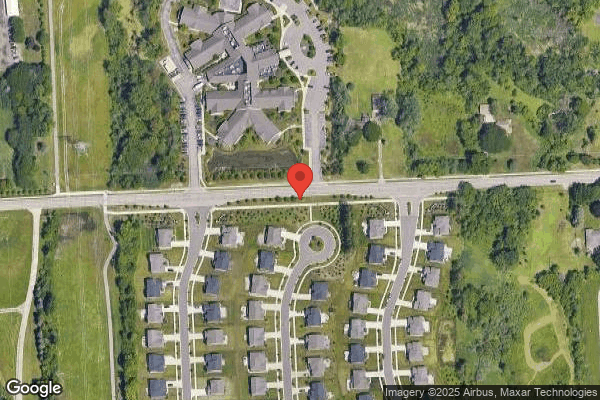

WellBridge of Novi

48300 11 Mile Road, Novi, MI 48374 (248) 662-2300
For profit - Limited Liability company 100 Beds THE WELLBRIDGE GROUP Data: November 2025 1 Immediate Jeopardy citation
Trust Grade
3/100
#352 of 422 in MI
Last Inspection: April 2025

Within standard 12-15 month inspection cycle. Federal law requires annual inspections.

Overview

Families considering WellBridge of Novi should be aware that it received a Trust Grade of F, which indicates significant concerns and places it in the bottom tier of nursing homes. It ranks #352 out of 422 facilities in Michigan, meaning it is in the bottom half, and #28 out of 43 in Oakland County, suggesting that there are only a few local options that are worse. The facility's performance is worsening, as issues have increased from 9 in 2024 to 13 in 2025. Staffing is a strength with a rating of 4 out of 5 stars and a turnover rate of 51%, which is average for the state but indicates some instability. However, the facility has faced serious issues, including a critical citation for failing to properly monitor a resident, contributing to their death due to an acute stroke, and incidents of residents sustaining injuries from falls due to lack of supervision, highlighting safety concerns. While there are some strengths, the overall picture suggests families should proceed with caution.

Trust Score
F
3/100
In Michigan
#352/422
Bottom 17%
Safety Record
High Risk
Review needed
Inspections
Getting Worse
9 → 13 violations
Staff Stability
⚠ Watch
51% turnover. Above average. Higher turnover means staff may not know residents' routines.
Penalties
⚠ Watch
$233,532 in fines. Higher than 93% of Michigan facilities. Major compliance failures.
Skilled Nurses
○ Average
Each resident gets 33 minutes of Registered Nurse (RN) attention daily — about average for Michigan. RNs are the most trained staff who monitor for health changes.
Violations
⚠ Watch
32 deficiencies on record. Higher than average. Multiple issues found across inspections.
★★☆☆☆
2.0
Overall Rating
★★★★☆
4.0
Staff Levels
★★★☆☆
3.0
Care Quality
★★☆☆☆
2.0
Inspection Score
Stable
2024: 9 issues
2025: 13 issues

The Good

  • 4-Star Staffing Rating · Above-average nurse staffing levels
  • Full Sprinkler Coverage · Fire safety systems throughout facility
  • No fines on record

Facility shows strength in staffing levels, fire safety.

The Bad

2-Star Overall Rating

Below Michigan average (3.1)

Below average - review inspection findings carefully

Staff Turnover: 51%

Near Michigan avg (46%)

Higher turnover may affect care consistency

Federal Fines: $233,532

Well above median ($33,413)

Significant penalties indicating serious issues

Chain: THE WELLBRIDGE GROUP

Part of a multi-facility chain

Ask about local staffing decisions and management

The Ugly 32 deficiencies on record

1 life-threatening 4 actual harm
May 2025 2 deficiencies 1 IJ
CRITICAL (J) 📢 Someone Reported This

A family member, employee, or ombudsman was alarmed enough to file a formal complaint

Immediate Jeopardy (IJ) - the most serious Medicare violation

Quality of Care (Tag F0684)

Someone could have died · This affected 1 resident

**NOTE- TERMS IN BRACKETS HAVE BEEN EDITED TO PROTECT CONFIDENTIALITY** This citation pertains to intake: MI00153179. Based on interview and record reviews the facility failed to adequately assess/mo...

Read full inspector narrative →
**NOTE- TERMS IN BRACKETS HAVE BEEN EDITED TO PROTECT CONFIDENTIALITY** This citation pertains to intake: MI00153179. Based on interview and record reviews the facility failed to adequately assess/monitor a resident with an identified change of condition, notify the Physician of continued decline and transfer the resident to a higher level of care in a timely manner, for one of six residents reviewed for a change in condition, resulting in an approximately 12 hour delay in identifying and treating the resident for an acute stroke contributing to the resident's death. The deficient practice resulted in the increased likelihood of serious harm, serious injury and/or death to occur. Findings include: The Immediate Jeopardy (IJ) began on [DATE] when the facility staff failed to adequately assess/monitor R802 who had an identified change of condition and notify the Physician of the continued decline. The IJ was identified on [DATE] and the Administrator was notified of the Immediate Jeopardy on [DATE] at 4:08 PM. A plan of removal was requested at that time to remove the immediacy. The surveyor team confirmed by Observation, Interview and Record review that the Immediate Jeopardy was removed on [DATE] based on the facility's implementation of an acceptable plan of removal. The noncompliance remains at an isolated event with the potential for more then minimal harm that is not immediate jeopardy due to sustained compliance that has not been verified by the State Agency (SA). A review of a complaint submitted to the SA documented allegations of the facility's failure to timely address a change in condition and the delayed transfer to the hospital for R802 that resulted in death . An Emergency Documentation ED Triage report dated [DATE] at 7:40 AM, documented in part . pt (patient) to ed (emergency department) via EMS (emergency medical services) pt was found unresponsive low 02 (oxygen level) upon arrival pt AOx0 (alert and oriented times zero) . Transferred From: Skilled nursing facility . Glasgow coma Scale (measures the extent of impaired consciousness and severity of brain injury)- Eye Opening Response Glasgow: To pain . Best Verbal Response Glasgow: None . Best Motor Response Glasgow: Flaccid . Glasgow Coma Score: 4 (indicates a severe level of impaired consciousness and suggests serious neurological impairment) . Temperature Rectal . 100.0 . Pulse Rate: 114 . Respiratory Rate: 24 . Systolic Blood Pressure 170 . Diastolic Blood Pressure 93 . Oxygen Saturation: 84% . Oxygen Therapy: Non rebreather . Tracking Acuity: 1 - Immediate . Diagnosis . unresponsive . Level of Consciousness . unresponsive . intubated . A review of the medical record revealed R802 was admitted to the facility on [DATE], with the primary diagnosis of aftercare following joint replacement surgery. A Minimum Data Set (MDS) assessment dated [DATE] documented a Brief Interview for Mental Status (BIMS) score of 15, indicating intact cognition. R802 was mostly Independent with some limited assistance needed for Activities of Daily Living (ADLs). The resident was their own responsible party and signed to be a Full Code status. An Admission nursing assessment dated [DATE], documented R802 to be oriented to person, place, time, situation and noted to be verbally appropriate. Further review of the assessment documented breath sounds to be clear and heart sounds to be regular. The assessment documented the admission vitals as follows: Temperature 97.6. Pulse 94, Respirations 18 and Blood Pressure 125/75. A review of the complaint submitted to the SA documented on [DATE], . the resident was throwing up non-stop. The complainant states the resident had to use a garbage can to throw up in because staff weren't around to give him an appropriate container . A review of the medical record and progress notes, revealed no documentation of R802's emesis episodes, however a Zofran 4 MG (milligram) tablet was ordered on [DATE]. The order noted . Give 1 tablet by mouth one time only for Nausea and Vomiting for 1 Day Nausea and Vomiting . A review of the [DATE] Medication Administration Record (MAR) documented the Zofran medication to have been administered on [DATE] at 1:36 PM. A review of the blood pressure summary documented on [DATE] at 8:30 AM, R802's blood pressure was 167/101 mmHg (millimeters of mercury). A review of the medical record revealed no progress notes on [DATE], however a Physician order for hydralazine HCl 25 mg tablet was ordered on [DATE], that noted . one time only for elevated bp (blood pressure) for 1 Day . This medication was documented as administered on [DATE] at 6:26 PM. A review of the Blood Pressure Summary documented the following on [DATE]: At 9:55 AM- 177/109 mmHg At 10:04 AM- 172/106 mmHg At 10:30 AM- 167/101 mmHg A review of the [DATE] MAR documented Metoprolol Tartrate 50 mg by mouth one time only for HTN (hypertension- high blood pressure) for 1 Day. This medication was documented as administered on [DATE] at 10:16 AM. A review of the progress notes revealed the following: On [DATE] at 11:42 AM, a Physician Assistant (PA)- later identified as PA D note documented in part . Reason for visit . Request by patient/family/nurse regarding cough, Urianry <sic> sx (symptoms) . Patient seen and examined. Resting comfably <sic> in bed. Awake, alert, in no acute distress. No <sic> as respisnvei <sic> to answering questions as usual. Afebrile, non-toxic. C/o (complaints of) cough. Not eating or drinking much per nurse. Pt (patient) had N/V (nausea/vomiting) over the weekend- resoled <sic>. BP elevated over the weekend and this AM (morning). Received hydralazine over the weekend. Per nurse, pt requesting melatonin to be discontinue due to nausea from it. Also, C/o dysuria (painful urination), urgency, urianru <sic> frequency. +generalized weakness. C/O pain, worse with movement and better with rest and meds (medications). Denies fevers, chills. Denies CP, SOB (shortness of breath) , N/V, abd (abdominal) pain. Tolerating PT (physical therapy)/OT (occupational therapy) . Physical Exam BP 169/99 P (pulse) 99 R (respirations) 22 T (temperature) 98.6 02 (oxygen saturation) 90% . chronically ill appearing, appears weak . PERRLA (pupils equal, round, reactive to light and accommodation), EOMI (extraocular movements intact), MMM (moist mucous membranes), + HOH (hard of hearing), CV (cardiovascular): RRR (regular rate and rhythm), S1 S2 (first and second heart sounds), Resp (respiratory): CTAB (clear to auscultation bilaterally), no wheezes, no rales . Alert, awake, some confusion, appropriate mood and affect. Assessment N/V- resolved, Urianry <sic> sx, Dehydration, HTN (hypertension) Insomnia, S/P (status post) fall Left femoral neck fracture s/p anterior THA (total hip arthroplasty) . DVT (deep vein thrombosis) ppx (prophylactically) per ortho (orthopedics) . Plan . Dehydration: check CBC (complete blood count) BMP (basic metabolic disorder) stat (immediately). Begin IV (intravenous) fluids as patient not eating/drinking much today per nurse. Cough: Check labs, check CXR (chest x-ray) and covid. Urianry <sic> sx: check labs, check UA (urinalysis) C&S (culture & sensitivity). HTN: Metoprolol 50mg x1 this AM with improvement. Pt (patient) not on meds. Monitor for persistent elevations . d/w (discussed with) patient at length and pt verbalized an understanding of all risks and instructions. All questions answered. Pt verbalized an understanding of all instructions. D/W staff at length . A Nursing note dated [DATE] at 1:25 PM, documented in part . The Change in Condition/s reported . Altered mental status . Guest is less responsive than baseline. Not eating or drinking. Irregular movement of arms. High BP (blood pressure)/ P (pulse) . Primary Care Provider responded with the following feedback . stat labs, stat CXR, IV (intravenous) fluids . Blood Tests Urinalysis or culture X-ray . New Intervention Orders: IV or subcutaneous fluids . This note was documented by Licensed Practical Nurse (LPN) A. A Physician note dated [DATE] at 10:49 PM, documented in part . labs reviewed- leukocytosis (elevated white blood cell count) noted. Pt with Urianry <sic> sx and dark, cloudy urine per nurse. Will begin IV Rocephin (antibiotic) 1 gm (gram) QD (every day) x7 days- 1sr <sic> dose today . Further review of the complaint submitted to the SA and interviews conducted with the complainant noted that on [DATE] the family visited the resident and found them . laying in bed with his tongue hanging out of his mouth and his breathing was shallow . female nurse on the afternoon shift told (the family) the resident was getting a Covid test and could possibly have pneumonia because he hadn't been responsive and was unable to be woken from his sleep . A review of the [DATE] MAR revealed the following medications were not administered on [DATE] for the HS (hour of sleep) doses: Apixaban 2.5 mg for DVT (deep vein thrombosis/blood clot) prophylaxis, Aspirin 81 mg for DVT prophylaxis, Calcium Carbonate 500 mg, Metformin 500 mg, Senna-Docusate Sodium 8.6-50mg, and Sodium Chloride solution 0.9% intravenously for dehydration. There was no documentation in the medical record of the Physician to have been notified of the omitted medications. A Nursing note dated [DATE] at 6:54 AM, documented . Chest x-ray reviewed, unremarkable. Resident has remain in the same condition throughout the shift. Resident is stable, yet unarousable . This note was documented by LPN B who worked the midnight shift on [DATE] from 7:00 PM on [DATE] to 7:00 Am on [DATE]. Review of the medical record revealed no documentation of any additional assessment of the resident on the midnight shift despite LPN B to have documented that the resident remained unarousable all shift. A review of a facility policy titled Acute Condition Changes revised [DATE], documented in part . Before contacting a physician about someone with an acute change of condition, the nursing staff will make detailed observations and collect pertinent information to report to the Physician . Phone calls to attending or on-call physicians should be made by an adequately prepared nurse who has collected and organized pertinent information, including the resident's current symptoms and status . The nursing staff will contact the Physician based on the urgency of the situation. For emergencies, they will call or page the Physician and request a prompt response . A review of the medical record revealed on [DATE] at 9:24 PM, R802's vital signs were documented as: BP 169/99 mmHg, Temperature 98.6, Pulse 99, Respirations 22, and 02 Sats 90% on room air. (Note this is the same vitals documented in the Physician Assistant - PA D note from 11:42 AM on [DATE]. The medical record revealed no adequate monitoring of the resident from [DATE] at 9:24 PM to [DATE] at 7:14 AM. On [DATE] at 7:14 AM a pulse was noted at 115 beats per minute. At 7:15 AM R802's temperature was noted as 100.5 F (Fahrenheit) and 02 Sat was noted at 79% on room air (normal readings would be 90% or above). There was no documentation of a blood pressure obtained at this time. A review of a Nursing note dated [DATE] at 7:22 AM, documented . Per provider, resident is being sent out to hospital 911 . This note was documented by LPN B. A review of the hospital records revealed the following: A History & Physical dated [DATE], documented in part . comes to the emergency room with acute hypoxic respiratory failure, sepsis secondary to UTI (urinary tract infection), acute toxic encephalopathy. He has been also intubated. Right now, he is in ICU (intensive care unit). Management per ICU team . An Admit/Progress Note dated [DATE], documented in part . ICU team at bedside to round at 0900. Patient is off sedation, does not follow commands. Pending CT (computerized tomography scan) Head . seen and examined . breathing over vent, withdrawing to pain but no response to commands pupils equal but non reactive . The patient does have cerebral edema (swelling of the brain) (Addendum [DATE]) . A Neurosurgery Consultation note dated [DATE], documented in part . Patient . with recent history of left hip fracture s/p (status post) THA (total hip arthroplasty) on [DATE], reportedly on Eliquis for DVT prophylaxis who presented to hospital from rehab facility on [DATE] . Patient was discharged to rehab facility in good condition was awake alert and oriented and answering questions appropriately. At some point on . [DATE], patient became unresponsive not answering questions. For unknown reasons, patient was not brought to the ER (emergency room) for evaluation until the morning of [DATE]. This morning ([DATE]) CT head was obtained which demonstrated bilateral cerebellar infarcts (stroke) with mass effect on the fourth ventricle and obstructive hydrocephalus (the flow of cerebrospinal fluid is blocked along one or more passages connecting the ventricles). Neurosurgery was consulted in this regard. At the time of evaluation, patient intubated off sedation. Does not open eyes pupils 4 mm (millimeters) nonreactive, absent cough/gag/oculocephalic (neurological test used to assess the brainstem function) reflexes . Recommendations: Long discussion was had with patient's brother and sister at bedside. CT findings and patient's clinical status and neuroexam were described in depth to family. We explained that given his poor neurological exam, his prognosis is extremely guarded and his likelihood of functional recovery is quite low. He has likely suffered some irreversible damage to his brain/brainstem based on neuroexam . Ultimately given the patient's poor prognosis, his brother and sister agreed that patient would not want to undergo surgery and elected for comfort measures . Review of a Discharge Documentation dated [DATE], noted the resident was pronounced deceased at 2:01 AM. A review of the Certificate of Death documented the only cause of death noted as . Acute Stroke . Approximate Interval Between Onset and Death four to five Days . On [DATE] at 12:16 PM, LPN B was interviewed via telephone and was asked where they document the residents vitals that are obtained, LPN B replied they document it in the (Electronic Medical Record) chart. LPN B was asked about the vitals not being obtained for R802 on the nightshift of [DATE] into [DATE]. LPN B stated they were unsure why there was no vitals documented. LPN B could not recall the values obtained. LPN B then stated in part . It was alarming to me (R802's presentation/status). I had been off two or three days. Dayshift said he (R802) was already like that (unresponsive) and the Physician had been notified. Based on what I was told we were not able to send him (R802) to the hospital . When asked why they were not allowed to send R802 to the hospital, LPN B replied that the dayshift nurse (LPN A) had informed them of that in their verbal shift report at the change of shift. LPN B then stated in part . The same thing the unit manager (Unit Manager- UM, later identified as UM G) told me as well and I blew up on him. I tried advocating for him (R802) throughout the night . When asked who they contacted in attempts to advocate for R802, LPN B stated the provider that was on call, they were unsure of who it was. LPN B stated in part . I told him (UM G) No, you need to come and look at him and he needs to go to the hospital. I was pissed off the entire night and I begged them to send him and they told me I cannot . LPN B was asked why R802's medications had not been administered for the evening of [DATE] and stated in part . No, he couldn't take nothing. He (previously) was A&O x4 (alert and oriented times four) which is why I was so upset. He would get up on his own and do his own personal care. He would talk to me (in the past), but he couldn't do any of that when I came on shift. He was not responding to me at all. When I went in there (R802's room) I was shocked that they would not let me send him to the hospital. It was upsetting they would not allow me to send him to the hospital. The IV and antibiotics was not enough for me, but they would not allow us to send him out. I had to wait until the morning to talk to (UM G name). I blew up on him. I went off and told (UM G) it was unsafe and this is my license and he (R802) needed to go to the hospital . It was very disheartening because I wanted to send him out when I got to work (at the beginning of their shift) but they told me that I could not . LPN B then stated . Please talk to (LPN A name) first because they (Administration team) have a habit of trying to cover their stuff up. (LPN A) was upset too because they wouldn't let her send him out before on dayshift . When asked who is they that they keep referring to, LPN B kept referencing the report given to them by LPN A of not being able to send the resident to the hospital. On [DATE] at 12:31 PM, a message was left on LPN A voicemail to return the call. On [DATE] at 1:05 PM, an interview was conducted with UM G. When asked how often a resident with an identified change of condition should be assessed and monitored, UM G replied in part . it depends on the change of condition, very frequently the nurse should be spending a lot of time with that patient if they were responsive and now unresponsive. At least hourly . UM G was then asked about R802 and UM G stated they remembered the resident had a change from their baseline and the Nurse and PA was in there (R802's room). UM G stated they didn't have a chance to see the resident that day. UM G stated they were approached by the Nurse the next day who said (R802) was not doing well and they did not like the way that (R802) was presenting. UM G stated . I told the PA he didn't look good and ensured I had a fresh set of vitals . UM G stated they were instructed to send R802 to the hospital. On [DATE] at 1:18 PM, a message was left on PA D's voicemail to return the call. At 1:24 PM, a text message was sent to the Medical Doctor (MD) C who was the Physician assigned to R802. A reply was not received that day. At 1:37 PM, LPN A returned the surveyor's call. When asked about R802 on the day of [DATE], LPN A replied when they came on duty R802's blood pressure was way up. LPN A stated they called to get an order for something and kept checking on R802 because . he was not responding normally . LPN A stated R802 was very hard of hearing and had speaker things that they would utilize. LPN A stated R802 was not eating and . he wasn't very responsive . LPN A stated R802 would respond by groaning but . he was getting worse responsive wise . LPN A stated they notified (PA D) and the PA ordered a few things. LPN A stated they then talked to UM G (their supervisor) who was sitting with (Unit Nurse Manager- UNM J) and . they would not get off their butts and I was pissed . LPN A stated they talked to R802's brother and stated they really thought R802 needed to go to the hospital. LPN A stated . (UM G name) told me no, you already have orders for him (R802) . LPN A stated I told (UM G name) to go down there and look at (R802) and LPN A stated UM G told them they were busy. LPN A stated . I was so scared . I was like please come and look at him and set eyes on him all the CNAs (Certified Nursing Assistants) said this is not him (R802's presentation) . The Nurse (LPN B) sent him out because she had enough . LPN A then stated in part . I am an LPN but I have been doing this for a million years and I asked (UM G name) to come and see him and he wouldn't. It was not a good situation and the managers put a stop to it and wouldn't allow us to send him out. I was pissed about it. This has happened before, there have been other incidents. There is a lot of things that they do there, they don't let us chart the truth . It was disturbing and the fact that we got no support and I couldn't do what I wanted to do and send him to the hospital because I had no manager support . Despite to have verbalized that R802 needed to go to the hospital, neither LPN A or LPN B called emergency services timely. At 1:58 PM, PA D returned the surveyor's call. When asked if they were notified of the change in condition of the resident becoming unresponsive, PA D stated in part . I was notified in the morning and prior to leaving the shift he (R802) was stable. He was able to talk to me when I assessed him and I ordered labs and he was awake and alert. No, I wasn't aware until they reported to me the next morning . On [DATE] at 3:35 PM, the Administrator and Director of Nursing (DON) was interviewed and asked if they were familiar with R802. The DON stated they believed he came to the facility after he had a fall. The DON remembered the resident was hard of hearing and had a headset that looked like a Walkman (assisted him with hearing). The DON stated they remember the resident would always come down to the community room to eat. The DON stated they remember the resident told them their story (on what happened that caused them to be at the facility) but they couldn't remember it. At this time the Administrator and DON were both interviewed on the concerns of the facility staff inadequately assessing/monitoring a resident with an identified change of condition, the failure to notify the Physician of continued decline and the delay in transferring the resident to a higher level of care, both acknowledged the concerns and offered no additional explanation at that time. At 5:57 PM, a second phone call was received from LPN A who stated the facility Administration team were repeatedly calling them. LPN A stated . They told me that I couldn't tell the nurse (LPN B) not to call the doctor for the resident with a change in condition. I told them I didn't tell the nurse (LPN B) not to . They kept trying to blame me and I hung up on them . On [DATE] at 9:07 AM, the [NAME] President of Operations (VPO) H, Medical Doctor (MD) C and Regional Nurse Consultant (RNC) I requested to provide additional information. MD C reported they had information that they felt would be useful for the investigation. MD C went on to verbalize that they talked to their PA (PA D) who had examined R802 on [DATE] and the resident didn't have any signs/symptoms of a stroke. MD C stated the stroke was identified the day after the resident went into the hospital and the resident was moving his limbs in the ER. MD C stated the resident was on a blood thinner and aspirin and they don't believe that they could have change the direction of how the incident played out. The findings of inadequate assessment/monitoring, lack of notification to the Physician of the continued decline and the delay in transferring the resident to the hospital was discussed. MD C was asked if they were notified by the nursing staff of the continued decline of R802 and MD C stated they were not notified. RNC I stated the medical team was not aware of a continued decline and believed there was a glitch in the facility's EMR as to the reason a blood pressure was not documented on the morning of [DATE]. It was discussed with VPO H, MD C and RNC I that if they had any additional information they could provide it for further review. On [DATE] at approximately 10:00 AM, UM G and the DON was recalled together for a second interview. UM G was asked about being informed multiple times by the nursing staff of the concern of R802'si ws condition declining, the request for them to set eyes on R802 and to send R802 to the hospital. UM G replied they recalled being asked about the patient and informing the nurse that if it was any change of condition with the resident to notify the provider. When asked if they told the nursing staff that R802 was not going to the hospital, UM G stated they did not say that (R802) was not going to the hospital and remembered telling the staff to contact the provider for changes. UM G was asked to recall [DATE] the morning R802 was transferred to the hospital. UM G stated the nurse said (R802) wasn't presenting well. UM G stated they remember going into the room with the nurse and they could not recall who obtained the vitals that morning, but they remembered they called PA D who instructed the resident to be sent out. UM G stated they remember the resident only responded to painful stimuli. When asked what was different about R802 from the evaluation completed the day before by PA D and (R802) not presenting well on the morning of [DATE], if there was no alleged changes for R802 throughout the night and UM G stated in part . with the new vitals that we just obtained which is the new change of condition and we sent him out . The DON was asked if they felt it was acceptable practice for a resident to have an identified change of condition and not be closely monitored or have vitals obtained from [DATE] at 9:24 PM until [DATE] at 7:14 AM, especially considering the one time doses of blood pressure medications that were given in attempts to control R802's blood pressure. The DON replied . I expect them to follow the physician orders . The DON was asked if there needed to be an order for the nurse to monitor and obtain the vitals of a resident with an identified change of condition and the DON repeated that they expected the nurses to follow the Physician orders. On [DATE] at 11:30 AM, RNC I entered into the conference room and stated that Unit Nurse Manager (UNM) J seen R802 on [DATE]. Shortly after UNM J entered the conference room and stated LPN A was believed to be irritated with their assignment on [DATE] because they were normally assigned to another part of the facility. UNM J stated they remember (R802)'s vitals to be fine and beautiful. UNM J stated they remembered that R802 was responsive when they saw them just slow to respond. UNM J stated they were in the room with LPN A. When asked where their documentation was of their assessment from R802, UNM J stated they did not document the assessment. UNM J was asked what time they went off duty on [DATE] and stated they leave the facility by 4 or 4:30 PM. On [DATE] at 10:14 AM, a voicemail was left on the surveyors phone from LPN A which noted in part, . He (R802) would move you know moan and and <sic> and kind of push away . he (R802) wasn't unresponsive on my shift. He responded to movement to. He would mumble and try and talk . he was the same . he didn't get worse on my shift . No additional information was provided to the survey team before the end of the survey. The Immediate Jeopardy that began on [DATE] was removed on [DATE] wen the facility took the following actions to remove the immediacy, including the following: Resident 802 no longer resides at the facility. Root cause: The physician was not notified by LPN A and LPN B of the resident's continued decline (unresponsive, not alert, not responding, and unable to take medications), leading to the resident being transferred to the hospital. A one-time audit was completed for the last 14 days of nurses notes and change of conditions to ensure appropriate MD notification and follow-up was completed. There are no concerns noted. Licensed Nurses were re-educated on [DATE] on the change of condition policy, including appropriate assessment, and timely notification of the physician to prevent serious injury, harm, and or death. SYSTEM CHANGE: The facility nurse leadership team did a one-time visual assessment of all current residents to ensure no change in condition is noted and required physician notification is completed timely. No concerns were noted. The policy on change in condition was reviewed and deemed appropriate. DON/designee will review 5 charts weekly x 12 weeks to ensure appropriate MD notification and change of conditions have been completed timely. Non- compliance will be addressed immediately. Audits will be forwarded to QAPI (Quality Assurance Process Improvement) committee for review and recommendations. COMPLIANCE DATE: [DATE]
CONCERN (D) 📢 Someone Reported This

A family member, employee, or ombudsman was alarmed enough to file a formal complaint

Potential for Harm - no one hurt, but risky conditions existed

Deficiency F0635 (Tag F0635)

Could have caused harm · This affected 1 resident

**NOTE- TERMS IN BRACKETS HAVE BEEN EDITED TO PROTECT CONFIDENTIALITY** This citation pertains to Intake Number(s): MI00153132. Based on interview and record review, the facility failed to accurately ...

Read full inspector narrative →
**NOTE- TERMS IN BRACKETS HAVE BEEN EDITED TO PROTECT CONFIDENTIALITY** This citation pertains to Intake Number(s): MI00153132. Based on interview and record review, the facility failed to accurately reconcile and implement physician's orders from the hospital upon admission into the facility for one (R803) of two residents reviewed for admission orders, resulting in increased psychiatric symptoms including agitation, throwing objects, and combativeness. Findings include: A review of a complaint submitted to the State Agency revealed an allegation of R803 not receiving appropriate care by the facility. On 5/27/25 at 11:18 AM, an interview was conducted with the complainant. The complainant reported concerns about how R803 presented when she visited her in the facility prior to being discharged . The complainant reported R803 had a diagnosis of bipolar disorder and had a recent psychiatric hospitalization where she was started on a new medication (Abilify) in addition to the medications she took previously, including Lithium (a mood stabilizer that treats or prevents manic episodes of bipolar disorder). The complainant explained she was concerned when she saw R803 in the facility because she had developed slurred speech and other symptoms such as difficulty swallowing. On 5/29/25 and 5/30/25, an unannounced, onsite investigation was conducted. A review of R803's clinical record revealed R803 was admitted into the facility on 5/9/25 and discharged home on 5/18/25 with diagnoses that included: bipolar disorder. A review of a Minimum Data Set (MDS) assessment dated [DATE] revealed R803 had moderately impaired cognition and no behaviors during the assessment period. A review of R803's Discharge Summary from the hospital provided to the facility upon admission into the facility on 5/9/25 revealed the following orders with instructions to continue the medications and when the next dose was due: Lithium 300 milligrams (mg) once a day with the next dose due 5/10/25 in the morning. Lithium 600 mg once a day (in the evening) due 5/9/25 in the evening. A review of R803's Physician's Orders and Medication Administration Record (MAR) revealed the following: An order dated 5/9/25 for Lithium Carbonate ER (extended release) 300 mg give 2 tablet by mouth at bedtime for Bipolar. (It should be noted the hospital discharge instructions did not note the order to be an ER tablet. There was no order for the 300 mg dose of Lithium that R803 was supposed to get in the morning daily. A review of R803's MAR revealed she received the 300 mg ER dose of Lithium at bed time on all days she resided in the facility, 5/10/25 through 5/17/25. R803 did not receive the dose on the evening of 5/9/25 as the medication was not on hand or in backup. A review of R803's progress notes revealed the following: On 5/10/25 at 5:04 PM it was documented R803 was throwing things at 7:00 AM, was yelling that she wanted to go home. R803 yelled and threw things throughout the day, and banged on a cabinet at 5:10 PM. On 5/11/25 at 6:09 AM it was documented R803 was awake during the whole shift, was very combative and uncooperative with care, continuously banged on cabinets, and screamed during the night. On 5/11/25 at 6:20 PM, it was documented R803 was very combative, threw everything in her room in the trash after visitors left because she wanted to go home, kept getting in and out of bed on her own without a wheelchair, and threw all her meals. On 5/12/25 at 6:48 AM it was documented R803 was very confused and uncooperative with care, continuously banged on cabinet doors while screaming about wanting to go home, spit up food into trash, threw personal items at staff, was aggressive with staff, and remained awake and agitated all night. On 5/12/25 at 11:45 AM, R803 was seen by Physician 'C' who documented R803 was confused, but did not note any behaviors. It was documented R803's medications were reviewed at that time. However, there was nothing noted that R803's Lithium dose should be changed from what it was in the hospital discharge instructions. On 5/12/25 at 4:49 PM it was documented R803 was very confused and uncooperative with care, continuously spit up food into hands and floor, threw personal items at staff, and was aggressive when redirected. On 5/13/25 at 6:25 AM it was documented R803 spit medication out at bedside, slammed the closet door repeatedly throughout the night and continued to do so until 7:00 AM. On 5/13/25, the following was documented in a Pharmacy Recommendation, RE: Lithium Extended-Release - Resident currently receiving 600 mg PO (by mouth) QPM (at night). Hospital discharge order indicate that resident was receiving 300 mg PO QAM (every morning) AND 600 mg PO QPM. Please clarify appropriate dosing. Further review of R803's progress notes and Physician's Orders revealed no changes to R803's Lithium orders after the pharmacy recommendation was made. R803 was seen by Physician 'C' on 5/14/25 after a fall and it was documented R803's bipolar disorder was stable. On 5/15/25 at 7:11 AM it was documented R803 was very uncooperative and combative, banged on cabinets, continuously spit and threw objects at staff, constantly got out of bed and wheelchair without assistance, did not sleep all night, and was disruptive. On 5/16/25 at 6:21 AM it was documented R803 was up and awake all night, very restless, and hyperverbal. On 5/16/25 at 9:40 AM, the following was documented in a discharge management note written by the Nurse Practitioner (NP): R803 appeared at her baseline mental status, was confused, had agitation at times secondary to bipolar disorder which was stable. On 5/16/25 at 10:10 AM it was documented R803 screamed, asked for applesauce and then threw it at the wall, screamed, and pulled her hair. R803 was discharged on 5/18/25 without any changes to her Lithium per hospital discharge instructions. On 5/29/25 at 10:04 AM, an interview was conducted with the Director of Nursing (DON). When queried about who was responsible for entering the physician's orders when a resident was admitted into the facility, the DON reported it was a collaboration between the floor nurses and the unit managers. When queried about who ensured the admission orders were accurate, the DON reported the unit managers did a second check for accuracy. When asked why R803's Lithium order did not get implemented upon admission according to the hospital discharge instructions, the DON reported she would look into it. On 5/29/25 at 10:45 AM, an interview was conducted with Physician 'C' via the telephone. When queried about what could happen if a resident with bipolar disorder treated with Lithium was given too small of a dose too quickly, Physician 'C' said it would not be dangerous, but the resident could certainly become very hyper (manic). When queried about whether he reviewed R803's medication when he saw her on 5/12/25 and if he was aware of the behaviors she was having, Physician 'C' reported he recalled the resident being calm when he evaluated her, knew she had falls throughout her stay, but could not recall any behaviors. Physician 'C' reported the staff call him whenever there is an issue but did not recall being notified of anything being wrong behaviorally. When queried about how it was ensured that the orders on the hospital discharge summary were accurately reconciled and ordered for the resident at the facility, Physician 'C' reported there were multiple layers of people who reviewed the order, including nurses and pharmacy. Physician 'C' said R803 should have received her full dose of Lithium during her stay and stated, We missed it. On 5/29/25 at 10:55 AM, Physician 'C' called back and reported he spoke with the DON who told him nursing did not contact him because R803's behaviors were because she wanted to go home. When asked if it could be a result of not receiving her full dose of Lithium, Physician 'C' reported he understood the concern, but wanted to give all the information he could. On 5/29/25 at approximately 1:45 PM, a follow up interview was conducted with the DON. When queried about whether she found any additional information to justify why R803's Lithium order was not entered according to the hospital discharge instructions, the DON stated, We are all human and said they go through second and third checks to ensure accuracy and said the orders should have been entered accurately on admission. The DON then said pharmacy did not catch the error. When queried about the Pharmacy Recommendation documented on 5/13/25, the DON did not offer a response. A review of a facility policy titled, Reconciliation of Medications on Admission (undated) revealed, in part, the following, .The purpose of this procedure is to ensure medication safety by accurately accounting for the resident's medications, routes and dosages upon admission or readmission to the facility .Gather the information needed to reconcile the medication list .list all medications from the medication history, discharge summary, the previous MAR (if applicable), and the admission orders (sources) .Review the list carefully to determine if there are discrepancies/conflicts .If there is a discrepancy or conflict in medications, dose, route or frequency, determine the most appropriate action to resolve the discrepancy .Document findings and actions .
Apr 2025 10 deficiencies
CONCERN (D)

Potential for Harm - no one hurt, but risky conditions existed

Grievances (Tag F0585)

Could have caused harm · This affected 1 resident

Based on observation, interview, and record review, the facility failed to address grievances for two residents (R#'s 29 and 81) of two residents reviewed for grievances, resulting in verbalized compl...

Read full inspector narrative →
Based on observation, interview, and record review, the facility failed to address grievances for two residents (R#'s 29 and 81) of two residents reviewed for grievances, resulting in verbalized complaints and frustration between roommates. Findings include: On 4/15/25 at 9:30 AM, R81 was up in their room seated in their wheelchair. They were asked if they had any concerns and said they do not get along with their roommate, R29. On 4/15/25 at 9:32 AM, R29 was observed in their bed. They were asked if they had any concerns and agreed with R81 saying they did not get along. R29 was asked if facility staff were aware they didn't get along and they said staff were aware and they requested a room change about a month ago. They were asked if they filed a grievance and if the facility had followed up with them and they said they didn't know they could file a form and no one had followed up regarding their concerns. On 4/16/25 at 9:59 AM, grievances for R81 and R29 were requested, and it was reported by the Administrator neither resident had any grievances on file. 4/16/25 at 10:29 AM, a review of a progress note entered into R29's record by Social Worker 'K' on 4/3/25 was conducted and read, Note Text: Discussion held at bedside with guest regarding interpersonal interactions with roommate. Reviewed expectations for navigating shared spaces. Guest amenable to the discussion .All concerns addressed, no questions or issues at this time. SW will continue to follow and support as needed. On 4/16/25 at 10:35 AM, a review of a progress note entered into R81's record by Social Worker 'K' on 4/3/25 was conducted and read, Note Text: Discussion held with guest regarding interpersonal interactions with roommate. Reviewed expectations for navigating shared spaces and encouraged guest to request assistance from staff as needed. Guest amenable to the discussion. All concerns addressed, no questions or issues at this time. SW will continue to follow and support as needed. On 4/16/25 at 11:09 AM, an interview was conducted with Social Worker 'K' regarding R29 and R81. They were asked if they filled out a grievance form regarding them not getting along and requesting room changes and they said they did not. A review of a facility provided policy titled, RESIDENT CONCERN POLICY was conducted and read, Step 1. Tell your grievance(s) to one of the individuals listed below: Director of Nursing, Administrator, Social Service Director .Step 2. If you are not satisfied with the staff person's response please complete our Resident's Assistance Form/Grievance Form. Let us know if you need help in completing the form. Step 3. Submit the form to our Administrator or Director of Nursing. Step 4. If you are not satisfied with the center ' s written response, complete a request for the administrator to review the investigation findings .3. We will give you a written response as soon as possible but not later than 10 business days following completion of the investigation. 4. We will follow-up to ensure your grievance has been addressed satisfactorily and use findings of our investigation as part of our Quality Improvement Program .
CONCERN (D)

Potential for Harm - no one hurt, but risky conditions existed

Assessment Accuracy (Tag F0641)

Could have caused harm · This affected 1 resident

**NOTE- TERMS IN BRACKETS HAVE BEEN EDITED TO PROTECT CONFIDENTIALITY** Based on interview, and record review, the facility failed to ensure Minimum Data Set (MDS) Assessments were completed accuratel...

Read full inspector narrative →
**NOTE- TERMS IN BRACKETS HAVE BEEN EDITED TO PROTECT CONFIDENTIALITY** Based on interview, and record review, the facility failed to ensure Minimum Data Set (MDS) Assessments were completed accurately for one (R2) of 20 reviewed. Findings include: According to the Long-Term Care Facility Resident Assessment Instrument (RAI) 3.0 User's Manual. Link to the LTCF RAI User's Manual: https://www.cms.gov/files/document/finalmds-30-rai-manual-v1191october2024.pdf: .an accurate assessment requires collecting information from multiple sources .Those sources must include the resident and direct care staff on all shifts, and should also include the resident's medical record, physician . Review of the clinical record revealed R2 was initially admitted on [DATE] and readmitted on [DATE] with diagnoses that included: gastrostomy status, aphasia, altered mental status, other seizures, acute kidney failure, type 2 diabetes mellitus with hyperglycemia, moderate protein-calorie malnutrition, adult failure to thrive, myelopathy, unspecified dementia, and malignant neoplasm of thyroid gland. Review of R2's physician orders for nutritional/dietary needs included: Enteral Feed three times a day 240 mL (milliliters) bolus free water via PEG (Percutanous Endoscopic Gastronomy - the placement of a feeding tube through the skin and the stomach wall) TID (three times a day), total 720 mL daily. Enteral Feed in the morning Bolus 60 mL free water via PEG pre- and post EN (enteral nutrition) administration. Enteral Feed in the morning Glucerna 1.5 (1 can- 237 mL) bolus via PEG QD (once daily) to provide 356 kcal (kilocalories); 19.6 g (grams) protein; 180 mL free water. Regular diet, Pureed texture, Honey consistency; Cueing at meals, Double protein portions, DM (Diabetes Mellitus) modifications, spoon sips only, Supplement mighty shake BID (twice a day) and at activities as appropriate, or magic cup in place of ice cream at activities. Review of the Minimum Data Set (MDS) assessments identified the following inaccuracies: The MDS dated [DATE] documented section (K0520 B. Feeding Tube) was not marked (left blank) and only section C. Mechanically altered diet and D. Therapeutic diet were check marked. This section of the assessment was completed by Staff 'J'. The MDS assessment dated [DATE], also incorrectly coded section K0520 B. Feeding Tube (left blank). This was completed by MDS Nurse 'H'. On 4/16/25 at 11:55 AM, an interview was conducted with MDS Nurse 'H'. When asked about why R2 was documented as not having tube feeding on the MDS assessment from 3/7/25, when they were, MDS Nurse 'H' reported they weren't sure that person worked at the facility anymore. They were requested to have the MDS Coordinator (MDS Nurse 'I') come for an interview. When MDS Nurse 'H' was asked about their documentation on the MDS dated [DATE] that incorrectly marked no for tube feeding, MDS Nurse 'H' reported they were not able to offer any further explanation. On 4/16/25 a 12:23 PM, and interview was conducted with the Corporate Registered Dietician (RD 'S') and MDS Nurse 'I'. When asked about the MDS inaccuracies, RD 'S' reported Staff 'I' was a former MDS nurse that worked remotely to assist with completing assessments. When asked how that was missed if visual assessment and review of orders revealed tube feeding was in use at the time of both of these assessments, MDS Nurse 'I' reported the remote worker would use the information from assessments that were completed with facility staff and they were unable to offer any further explanation as to the inaccuracies, but would have to submit modifications.
CONCERN (D)

Potential for Harm - no one hurt, but risky conditions existed

Deficiency F0658 (Tag F0658)

Could have caused harm · This affected 1 resident

Based on observation, interview and record review the facility failed to ensure consistent professional standards of practice were utilized by two nurses (Licensed Practical Nurse- LPN) LPN A and LPN ...

Read full inspector narrative →
Based on observation, interview and record review the facility failed to ensure consistent professional standards of practice were utilized by two nurses (Licensed Practical Nurse- LPN) LPN A and LPN B of four nurses reviewed for medication administration observation for one resident (R31). Findings include: On 4/16/25 at 8:41 AM, LPN A was observed preparing the morning medications for R31. LPN A completed their medications checks and instructed LPN B (a newly hired nurse in training) to obtain clonazepam from the controlled medication cabinet in the hallway. At 8:46 AM LPN B returned and gave LPN A the pill in a medication cup. LPN A added the pill to the rest of R31's morning medications. LPN A then gave LPN B the cup containing R31's morning medications to administer. LPN B administered the morning medications to R31. LPN A then signed off on the medications as administered. A review of a facility policy titled Medication Administration dated 9/1/23, documented in part . Right resident, right drug, right dose, right route, right reason, right documentation and right time, are applied for each medication being administered. A triple check of these Rights is recommended at three steps in the process of preparation of a medication . The person who prepares the dose for administration is the person who administers the dose .The individual who administers the medication dose records the administration on the resident's MAR/eMAR(medication administration record) directly after the medication is given . The resident's MAR/eMAR is initialed by the person administering the medication . LPN A prepared the medications and failed to administer the medications to R31. LPN B administered the medications and failed to complete the rights and checks prior to the medication administration and LPN A signed off for the medications they did not administer. On 4/16/25 at 9:33 AM, the Director of Nursing (DON) was informed of the medication observation with LPN A and LPN B and stated the nurse that pulled the medications should have administered the medications. The DON acknowledged LPN A and LPN B did not follow protocol. No further explanation or documentation was provided by the end of the survey.
CONCERN (D)

Potential for Harm - no one hurt, but risky conditions existed

Quality of Care (Tag F0684)

Could have caused harm · This affected 1 resident

**NOTE- TERMS IN BRACKETS HAVE BEEN EDITED TO PROTECT CONFIDENTIALITY** Based on interview and record review, the facility failed to obtain neurology consult documentation and implement recommendation...

Read full inspector narrative →
**NOTE- TERMS IN BRACKETS HAVE BEEN EDITED TO PROTECT CONFIDENTIALITY** Based on interview and record review, the facility failed to obtain neurology consult documentation and implement recommendations to start medication for multiple sclerosis (MS) and ensure timely follow-up evaluation was coordinated per recommendation for one (R47) of one resident reviewed for quality of care. Findings include: On 4/15/25 at 9:17 AM, R47 was observed lying in bed, eating their breakfast meal. When asked about whether they had any concerns with the care at the facility, R47 reported they were concerned they were not receiving medication like they should and at times felt weaker. Review of the clinical record revealed R47 was initially admitted into the facility on [DATE] and readmitted on [DATE] with diagnoses that included: multiple sclerosis, pneumonia, acute and chronic respiratory failure with hypoxia, and interstitial pulmonary disease. According to the quarterly Minimum Data Set (MDS) assessment dated [DATE], R47 had intact cognition. Review of a neurology consultation document dated 12/13/24 with Neurologist (Physician 'Q') read, .is seen for multiple sclerosis .was last seen way back in July and missed her last two appointments .has been on Aubagio in the past and would like to go back on the Aubagio .Assessment & Plan .Started teriflnomide 7 mg (milligrams) tablet, 1 (one) tablet daily, #30, 30 days starting 12/13/2024, Ref. (Refill) x1 .IMPRESSION: Multiple sclerosis. PLAN: We will restart Aubagio. I have asked the patient to return for reevaluation in three months and have follow-up blood work before her next visit. Further review of the interdisciplinary team documentation in the clinical record revealed there was no further follow-up appointments with Physician 'Q' completed or scheduled as of this review. Review of R47's facility physician (Physician 'L' who also functioned as the Medical Director) and extender documentation revealed no entries which addressed the neurologist's recommendation to restart the MS medication as recommended on 12/13/24, or issues with not being able to coordinate follow-up appointment with neurology. Review of the incident reports provided by the facility indicated R47 had multiple falls from December 2024 to March 2025 which identified the resident feeling weak during attempts to self-transfer. Review of a single grievance form from R47 dated 3/7/25 documented, in part: .Frustrated medication from neurologist never started .Explained process for starting medication. Daughter called to get order faxed .Faxed medication received - provided to nursing and order place <sic> after physician review . Review of the physician order history revealed R47 was prescribed Teriflunomide (Aubagio) Oral Tablet 7 MG Give 1 tablet by mouth in the morning for MS for 30 Days. This order was received on 3/7/25, had a start Date of 3/8/25 and ended on 4/7/25. There was no documentation from the provider as to the clinical rationale for why this medication was only prescribed for 30 days, or plan for follow-up. On 4/16/25 at 10:50 AM, a phone interview was conducted with R47's Neurology office. When asked to confirm scheduled visits since July 2024, the scheduler confirmed R47 had not been seen since 12/13/24, but did have an appointment scheduled for 5/2/25 (two months beyond Physician 'Q's recommendation for follow-up.). They further reported there were several appointments that had been canceled but was unable to provide any further details. On 4/16/25 at 11:11 AM, the facility was requested to provide policies for coordination of outside appointments and follow-up of implementing recommendations from these appointments. (There was no documentation that addressed this request provided by the end of the survey.) On 4/16/25 at 11:03 AM, an interview was conducted with the Social Services Coordinator (SSC 'K') who confirmed their Care Transitions department was responsible for coordinating outside referral appointments for the residents, including R47's neurology appointment. SSC 'K' was asked to provide any documentation of arrangements made or if there were any issues with not being able to make arrangements as recommended and they reported they would follow-up. SSC 'K' reported that although they began working at the facility in February 2025, they would look to see what other documentation might be available for review. On 4/16/25 at 12:55 PM, SSC 'K' provided consultations for R47's appointments since 2024 which revealed there were two for the neurologist from 12/13/24 and 2/19/24. They further reported they just confirmed today (after the concern was identified during the survey) that R47 had an appointment scheduled for 5/2/25 and they would work on obtaining transportation. When asked why the resident had not been scheduled prior to 5/2/25 as the recommendation was for follow-up in three months, SSC 'K' reported they were not able to answer that question and also confirmed there was no documentation they could find in regard to if appointments were previously scheduled and canceled. On 4/16/25 at 1:35 PM, an in-person interview was conducted with Physician 'L'. When asked to explain the process when residents saw outside physician's and recommendations were made, how they became aware and what follow-up was done, Physician 'L' reported they see a letter and note from the physician and usually follow-up if they come back with instructions. If they don't come back with anything, then we will just review but don't always make a note in our notes. Physician 'L' further reported they should document in their progress notes and if they agree with the recommendation would be glad to honor that. When asked why the medication such as the one prescribed for R47's MS was ordered for only 30 days, Physician 'L' reported they thought that because the pharmacy only allowed 30 days. When asked why other medications that were ordered for R47 were not just limited to 30 days, Physician 'L' reported they were not able to answer that question, but would follow-up. When asked once a resident was started on an MS medication, should that medication be taken consistently and they reported it's an MS medication and they should stay on. When asked if they were aware R47's initial recommendation from 12/13/24 was to start the MS medication, and the resident had not received it until R47 brought it up as a concern on 3/7/25, and had not been receiving the medication now since 4/7, they reported they were not aware and would have to follow-up. On 4/16/25 at 2:02 PM, Physician 'L' reported the facility didn't have any update from neurology until March (when R47 complained) and the Administrator talked to the daughter and we got the letter and they (neurology) wanted it for 30 days. When asked why the facility did not follow-up in December 2024 if they didn't receive paper work timely, Physician 'L' reported the primary neurology office was supposed to fax the order and someone from here should've followed-up. Physician 'L' further acknowledged their documentation should reflect clinical rationale and did not. On 4/16/25 at 2:05 PM, an interview was conducted with the Director of Nursing (DON). When asked about the facility's process if the resident consults with an outside specialist and returned without documentation, what should happen, the DON reported the nurse of the resident or the Unit Manager should follow-up. They were informed of the concerns with the lack of timely follow-up for R47 and they reported they would be further investigating to see what happened.
CONCERN (D)

Potential for Harm - no one hurt, but risky conditions existed

Accident Prevention (Tag F0689)

Could have caused harm · This affected 1 resident

**NOTE- TERMS IN BRACKETS HAVE BEEN EDITED TO PROTECT CONFIDENTIALITY** Based on observation, interview and record review, the facility failed to ensure an environment free from accident hazards for o...

Read full inspector narrative →
**NOTE- TERMS IN BRACKETS HAVE BEEN EDITED TO PROTECT CONFIDENTIALITY** Based on observation, interview and record review, the facility failed to ensure an environment free from accident hazards for one (R64) of four residents reviewed for accidents. Findings include: On 4/15/25 at 9:40 AM, R64 was observed lying in bed. The entire left side of the bed was against the wall and the wall outlet which had two white and two red outlets was observed to have the entire right portion of the outlet cover broken off and missing. The mattress was observed directly touching the outlet. R64 was also observed to have a breakfast tray on the overbed tray table that was within three feet of the outlet. Additionally, next to the head of the bed was a tall metal pole used to hang tube feeding that was observed broken and leaning to the left. On 4/15/25 at 9:42 AM, R64 pressed their call light and stated they needed someone to help change my diaper. On 4/15/25 at 9:43 AM, Certified Nursing Assistant (CNA 'C') was observed to respond to the call light. On 4/15/25 at 3:00 PM, Nurse 'G' was asked to observe R64. Upon entry to the room, they confirmed the same observations as observed at 9:40 AM. Nurse 'G' reported they would contact maintenance staff right away. On 4/15/25 at 3:03 PM, Maintenance Staff 'E' came to the room with another maintenance staff and confirmed the broken outlet. When asked if the broken outlet was protected by GFCI (Ground Fault Circuit Interrupter - A safety device that shut off electrical power when they detect ground faults to prevent electrocution, electric shocks and burns.), Maintenance Staff 'E' reported they weren't sure but another outlet a few feet to the right of the broken outlet might be connected and would get a tool to check and confirm. On 4/15/25 at 3:07 PM, Corporate Infection Preventionist (Nurse 'F' was asked about the broken tube feeding pole and reported they had been aware the pole was leaning and had recently been fixed. Upon entering R64's room, they confirmed it was broken and would be replaced. On 4/15/25 at 3:10 PM, Maintenance Staff 'E' returned ro R64's room and upon checking the outlets, confirmed the broken outlet was not connected to the GFCI. When asked if they were notified about the broken outlet before now, they reported they were not. Review of the facility's work order report documentation since March 2025 revealed no concerns identified/reported for R64's tube feeding pole or broken outlet. Review of the clinical record revealed R64 was initially admitted into the facility on 9/4/22 and readmitted on [DATE] with diagnoses that included: anoxic brain damage, acute metabolic acidosis, type 2 Diabetes mellitus with ketoacidosis without coma, dysphagia, gastrostomy status, esophageal obstruction, diaphragmatic hernia without obstruction or gangrene, acute kidney failure, hematemesis, functional quadriplegia, unspecified severe protein-calorie malnutrition, bipolar disorder, and chronic respiratory failure unspecified whether with hypoxia or hypercapnia. According to the Minimum Data Set (MDS) assessment dated [DATE], R64 had intact cognition, had impairment on both sides of their upper extremities, had impairment to one side of the lower extremity, and was dependent upon most aspects of care. Care plans identified R64 frequently scooted in bed, received tube feeding and an oral diet and fluids. According to the facility's policy titled, Fire Safety and Prevention dated October 2012: .Whoever identifies a fire hazard, or other conditions that could develop into a fire hazard, must report the situation to the department director or Maintenance Director as soon as practical .The following fire safety precautions must be followed in the facility at all times: Electrical Precautions .Never touch an electrical appliance when you are wet .Do no use defective equipment .Do not use gasoline, benzene, etc., inside .Store chemicals, cleaners, etc., as instructed on the containers .
CONCERN (D)

Potential for Harm - no one hurt, but risky conditions existed

Incontinence Care (Tag F0690)

Could have caused harm · This affected 1 resident

**NOTE- TERMS IN BRACKETS HAVE BEEN EDITED TO PROTECT CONFIDENTIALITY** Based on observation, interview, and record review, the facility failed to ensure one (R87) of one resident reviewed for bowel a...

Read full inspector narrative →
**NOTE- TERMS IN BRACKETS HAVE BEEN EDITED TO PROTECT CONFIDENTIALITY** Based on observation, interview, and record review, the facility failed to ensure one (R87) of one resident reviewed for bowel and bladder, who was continent of bladder and bowel, received assistance to maintain continence. Findings include: On 4/15/25 at 9:50 AM, R87 was observed sitting up in bed. Family members were present in the room and R87 was getting ready to go to an appointment. An interview was conducted with R87 and his family members. R87 reported having to wait a long time for his call light to be answered at times. When asked what he needed assistance with, R87 reported he had to wait for his brief to be changed after urinating or having a bowel movement. R87 reported he did not use the toilet in the bathroom. R87's family member reported they were working on getting a bedside commode so R87 could use that instead of going to the bathroom in a brief. A review of R87's clinical record revealed R87 was admitted into the facility on 3/3/25 with diagnoses that included: right femur fracture. A review of a Minimum Data Set (MDS) assessment dated [DATE] revealed R87 had intact cognition, no behaviors, was dependent for toileting hygiene, dependent for transfers, including a toilet transfer, and was always continent of urine and stool. A review of R87's Admission/Re-Admission assessment form dated 3/3/25 revealed R87 was continent of urine and stool. On 4/15/25 at 3:55 PM, R87 was further interviewed. R87 reported that at times he was not asked if he needed help or needed his incontinence brief changed and other times staff were not available to change him right away if he activated the call light. When queried about whether he was able to tell when he had to urinate or have a bowel movement, R87 reported he could tell. When queried about whether he was able to sit on the toilet, R87 reported he was physically able to sit up, but required some assistance transferring from the bed to the wheelchair and needed some assistance getting to the toilet. R87 reported the staff did not take him to the toilet and that he went to the bathroom in a brief and then they cleaned him and changed him. When queried when the last time staff assisted him to the toilet was, R87 reported they never put him on the toilet. When asked if he would prefer to use the toilet if he had assistance to get there, R87 reported he would prefer the toilet. R87 reported he did not express a concern to anyone because the staff usually just change me. On 4/15/25 at 4:09 PM, Certified Nursing Assistant (CNA) 'T' was interviewed. When queried about how the CNAs knew if a resident was continent or incontinent, CNA 'T' reported they talked to the nurses or asked the resident, but often put briefs on residents because sometimes they were continent and sometimes they were not. When queried about whether R87 utilized incontinence briefs or the toilet, CNA 'T' stated, I put a brief on him. I do not take him to the toilet. When asked how she knew that was appropriate for R87, CNA 'T' stated, I don't usually work over here but acknowledged working with R87 in the past and always used a brief. On 4/15/25 at 4:12 PM, an interview was conducted with Licensed Practical Nurse (LPN) 'U'.When queried about how residents were assessed for continence or incontinence, LPN 'U' explained they were assessed when they were admitted into the facility from the hospital and also they reviewed the hospital records. When queried about how the CNAs would know whether a resident was continent or incontinent of urine or stool, LPN 'U' reported it would be on the care plan and also on the [NAME] (care guide used by CNAs) for the CNA and the nurses would let the CNAs know. When queried about R87's continence status, LPN 'U' stated, He's incontinent and uses briefs. When queried about where she got that information from, LPN 'U' reported it was on the care plan. When queried about the admission Assessment and MDS assessment that identified R87 as continent of urine and stool, LPN 'U' stated, We have to follow what is in place from therapy. When queried about whether there were any instructions from therapy to not assist R87 to the toilet, LPN 'U' reported it would be documented on the care plan. On 4/15/25 at approximately 4:30 PM, a review of R87's care plans revealed a care plan initiated on 3/3/25 that read, Risk for Urinary retention or Incontinence related to BPH (benign prostatic hyperplasia). Interventions included, Provide incontinent care/products as needed. There were no care plans that addressed R87's urinary or bowel continence and interventions to prevent incontinence. On 4/16/25 at 8:44 AM, an interview was conducted with the Director of Nursing (DON). When queried about whether a care plan should be developed with interventions for residents who were assessed to be continent of urine and stool and whether those interventions would be added to the [NAME] for the CNAs, the DON reported she was not sure and would look into it. Additional documentation was provided including: An admission Summary dated 3/3/25 that highlighted a sentence that noted R87 had a urinal but had problems with urination. The note did not indicate R87 was incontinent or that he should not be taken to the toilet. A Skilled Charting note dated 3/28/25 with a highlighted section that noted R87 did not have any concerns. However, R87 reported during the interview on 4/14/25 that he had not expressed a concern to anyone because the staff change his brief and have not offered to take him to the toilet. A Skilled Charting note dated 3/30/25 with a highlighted section that noted, Continent of b/b (bowel and bladder), with episodes of incontinence. The note did not indicate R87 should not be taken to the toilet and instead use a brief. A Occupational Therapy (OT) Treatment Encounter Note dated 4/2/25 with a highlighted section that noted R87 required partial/moderate assistance for toileting and Toilet/Commode Transfers. There was no documentation that indicated R87 was not supposed to be assisted to the toilet. An OT Therapy Progress Report dated 4/8/25 with a highlighted section that noted R87 was dependent on staff for toilet transfers on 3/4/25 and required partial/moderate assistance on 4/1/25 and 4/8/25. There was no documentation that indicated R87 was not able to be assisted to the toilet. An Occupational Therapy Treatment Encounter Note dated 4/4/25 with a highlighted section that noted, Toilet transfer training onto commode. There was no documentation provided or follow up received by the end of the survey regarding why R87 did not have care planned interventions in place to help maintain continence or documentation that provided evidence of staff transferring R87 to the toilet instead of the resident urinating or having a bowel movement in a brief.
CONCERN (D)

Potential for Harm - no one hurt, but risky conditions existed

Deficiency F0710 (Tag F0710)

Could have caused harm · This affected 1 resident

**NOTE- TERMS IN BRACKETS HAVE BEEN EDITED TO PROTECT CONFIDENTIALITY** Based on observation, interview, and record review, the facility failed to ensure a physician documented an assessment for a com...

Read full inspector narrative →
**NOTE- TERMS IN BRACKETS HAVE BEEN EDITED TO PROTECT CONFIDENTIALITY** Based on observation, interview, and record review, the facility failed to ensure a physician documented an assessment for a competency evaluation for one resident, (R84) of one resident reviewed for competency. Findings include: On 4/15/25 at 9:25 AM, R84 was observed in their room sitting at the bedside. An interview was conducted with R84 and they said they were no longer receiving rehab and were not sure why they were still residing in the facility. They had no complaints but did express their desire to no longer reside in a long term care setting. R84 was asked what precipitated their admission to the facility and said in September 2024 they were living alone, independently in the community where they sustained a fall, broke numerous bones and admitted to the facility for rehab after hospitalization. On 4/15/25 at 3:04 PM, a review of R84's clinical record revealed they admitted to the facility on [DATE] with diagnoses that included: tibia, fibula, and radius fractures, osteoarthritis, diabetes, adjustment disorder and mood disorder. R84's admission Brief Interview for Mental Status (BIMS) score was a 10 indicating moderately impaired cognition. Continued review of R84's clinical record revealed a document titled DETERMINATION OF INABILITY TO PARTICIPATE IN HEALTHCARE DECISIONS signed by Psychologist 'R' ON 12/23/24 and Dr. 'L' on 12/24/24 that indicated R84 was, .unable to participate in medical or mental health treatment decisions . The form continued to read, .This determination is based on examination and by the facts and circumstances noted in the patient's medical record . The form indicated indicated R84's Power of Attorney had been activated and they were no longer their own responsible party. R84's record did not include any documentation regarding why R84 underwent a competency evaluation at that time, three months after their admission to the facility. Furthermore, the record did not include any assessment data from either Psychologist 'R' or Dr. 'L' that indicated R84 was not capable of making their own decisions. On 4/16/25 at 10:42 AM, a second interview was conducted with R84. They were asked if they were aware they underwent a competency evaluation and based on the evaluation their Power of Attorney had been activated. They said they were not aware. They said they had suffered from some memory loss after their hospitalization but they said they felt they had returned to their baseline and believed their memory to be, very good. R84 then went on to say they would like to make their own decisions regarding their care. On 4/16/25 at 11:49 AM, an interview was conducted with Social Worker 'K' regarding the facility's process for competency evaluations. Social Worker 'K' said they would start with a BIMS score and if it was between ten and twelve, further evaluation for memory and decision making would be done by psychiatric services and the attending physician. They were asked if psychiatric services would document in the record and said they would. They were then asked if the attending physician would perform an assessment prior to being the second required signature on the competency evaluation. They said they did not think the attending physician did and assessment and they signed the form based on the psychiatric service provider's assessment. At that time, documentation of any assessments done for R84's competency evaluation was requested. On 4/16/25 12:53 PM, Social Worker 'K' followed up with a document signed by Psychologist 'R' on 12/23/24 that read, .Evaluation of cognitive ability to participate in medical decision-making .She knew where she was and the current date/season .Mental status guided by the SPMSQ (Short portable mental status questionnaire) was normal .It is recommended that the patient may benefit from having support with significant decisions .Psychology Exam .Orientation: +Person; +Place +Inconsistent/Variable; .Memory/Immediate: +Grossly intact; Memory/Recent: +Grossly intact; Memory/Remote: +Grossly intact; .Assessment & Plan: Adjustment disorder with anxiety . It was noted the document signed by Psychologist 'R' did not indicate R84 was not competent to make their own decisions. On 4/16/25 at 1:47 PM, an interview was conducted with Dr. 'L' regarding their role with competency evaluations and whether they documented any assessments when making a determination. They said they did not, but they should document an assessment to justify their decision when evaluating competency. A review of a facility provided policy titled, Physician Services was reviewed and read, .The resident's Attending Physician participates in the resident's assessment and care planning, monitoring changes in resident's medical status, and providing consultation or treatment when called by the facility .
CONCERN (D)

Potential for Harm - no one hurt, but risky conditions existed

Deficiency F0757 (Tag F0757)

Could have caused harm · This affected 1 resident

**NOTE- TERMS IN BRACKETS HAVE BEEN EDITED TO PROTECT CONFIDENTIALITY** Based on interview, and record review the facility failed to ensure an antibiotic medication was administered within the prescri...

Read full inspector narrative →
**NOTE- TERMS IN BRACKETS HAVE BEEN EDITED TO PROTECT CONFIDENTIALITY** Based on interview, and record review the facility failed to ensure an antibiotic medication was administered within the prescribed parameters and not in excessive dose for one (R2) of five reviewed for unnecessary medication. Findings include: Review of the clinical record revealed R2 was initially admitted on [DATE] and readmitted on [DATE] with diagnoses that included: urinary tract infection, extended spectrum beta-lactamase (ESBL - a bacteria resistant to some antibiotics). According to the Minimum Data Set (MDS) assessment dated [DATE], R2 had severe cognitive impairment, did not receive antibiotic medication during this review period of seven days. Review of R2's urine culture results collected 4/1/25, reported on 4/6/25 documented a result of SOURCE URINE, ORGANISM 1 10,000 CFU (Colony Forming Unit)/ML (Milliliters) PROTEUS MIRABILIS, ESBL. Review of the physician orders included two orders for an antibiotic medication which included: Start Date - 4/7/25 at 7:00 AM, Discontinue Date 4/9/25 at 12:02 PM, LevoFLOXacin Tablet 500 MG (Milligrams) Give 1 tablet by mouth in the morning for Infection for 7 Days. Start Date - On 4/10/25 at 7:00 AM, LevoFLOXacin Tablet 500 MG Give 1 tablet via PEG-Tube (Percutaneous endoscopic gastrostomy - the placement of a feeding tube through the skin and the stomach wall) in the morning for infection for 7 Days. Further review of R2's Medication Administration Record (MAR) revealed the resident received this medication for a total of 9 doses from 4/7/25 to 4/15/25. There was no other documentation in the electronic medical record that identified the Physician/Extenders rationale for the additional two doses as documented as administered on the MAR, or the reason for the change in orders on 4/9/25. On 4/15/25 at 4:01 PM, an interview was conducted with the Corporate Infection Preventionist (Nurse 'F' who reported the current Infection Preventionist (Nurse 'M') was on vacation. When asked about R2's recent orders for antibiotic and precautions for ESBL, Nurse 'F' reported R2 had started on the antibiotic on 4/7/25 and the order changed on 4/10/25 but they were not sure why or who changed the order. Nurse 'F' reported just this morning Nurse 'M' had notified the facility remotely to pull the contact precaution signage for the ESBL. Nurse 'F' reported they would attempt to find out why the order was changed between 4/9 and 4/10 and confirmed there was currently no documentation in the clinical record to clarify this. On 4/15/25 at 4:15 PM, Nurse 'F' provided a phone text message from Nurse 'M' on 4/15/25 at 9:03 AM to remove the contact precaution signage. When asked to confirm the total dose of antibiotic R2 received, Nurse 'F' confirmed documentation reflected the resident received a total of nine doses. When asked about lack of documentation of physician justification/clinical rationale for two additional doses, Nurse 'F' confirmed there was no documentation but was looking into that further with the nursing staff. There was no further follow-up from Nurse 'F' by the end of the survey. On 4/16/25 at 9:15 AM, an interview was conducted with the Director of Nursing (DON). The DON was informed of the concern that R2 received two additional days of antibiotic and no clinical rationale from the provider or facility staff regarding the change in orders the DON reported they were aware of that and further reported the resident had initially been ordered the antibiotic to be given orally, but following a recent swallow study, the order was changed back to administer via peg and when the order was put in the system it automatically calculated seven days and should have been adjusted at that time.
CONCERN (D)

Potential for Harm - no one hurt, but risky conditions existed

Deficiency F0761 (Tag F0761)

Could have caused harm · This affected 1 resident

Based on observation, interview and record reviews the facility failed to ensure all expired medications were removed from the residents medication storage units for one (R31) of five residents observ...

Read full inspector narrative →
Based on observation, interview and record reviews the facility failed to ensure all expired medications were removed from the residents medication storage units for one (R31) of five residents observed for the medication administration observation. Findings include: On 4/16/25 at 8:41 AM, LPN A was observed preparing the morning medications for R31. Included in the morning medications was a senna-plus pill. The expiration date on the senna-plus bottle was observed to be 12/2024. LPN A and LPN B failed to check the expiration date of the senna-plus medication. LPN A then gave LPN B the cup containing R31's morning medications to administer and LPN B administered the morning medications to R31. After the medication observation, LPN A and LPN B were both asked to check the expiration date of the senna-plus bottle and LPN A and LPN B stated the medication should have not been administered and removed the medication from R31's medication storage cabinet. A review of a facility policy titled Storage of Medications dated June 2019 documented in part, . The nurse will check the expiration date of each medication before administering it . No expired medication will be administered to a resident . All expired medications will be removed from the active supply and destroyed in the facility or returned to the pharmacy for destruction, regardless of amount remaining . On 4/16/25 at 9:33 AM, the Director of Nursing (DON) was interviewed and informed of the expired medication that was administered to R31 during the medication administration observation with LPN A and LPN B. The DON stated they had been informed of the error and completed additional education with both nurses. No further explanation or documentation was provided.
CONCERN (D)

Potential for Harm - no one hurt, but risky conditions existed

Infection Control (Tag F0880)

Could have caused harm · This affected 1 resident

**NOTE- TERMS IN BRACKETS HAVE BEEN EDITED TO PROTECT CONFIDENTIALITY** Based on observation, interview and record review, the facility failed to ensure enhanced barrier precautions (EBP) policies and...

Read full inspector narrative →
**NOTE- TERMS IN BRACKETS HAVE BEEN EDITED TO PROTECT CONFIDENTIALITY** Based on observation, interview and record review, the facility failed to ensure enhanced barrier precautions (EBP) policies and protocols were followed and maintained for one (R64) of seven residents reviewed for infection control. Findings include: On 4/15/25 at 9:00 AM, R64's door was observed closed. Signage on the hallway wall near the doorframe indicated the resident was on EBP and a storage bin contained various PPE (Personal Protective Equipment) which included disposable face masks, gloves, and gowns. The EBP signage further read, STOP ENHANCED BARRIER PRECAUTIONS EVERYONE MUST: Clean their hands, including before entering and when leaving the room. PROVIDERS AND STAFF MUST ALSO: Wear gloves and a gown for the following High-Contact Resident Care Activities: Dressing, bathing/Showering, Transferring, Changing Linens, Providing Hygiene, Changing briefs or assisting with toileting, Device care or use: central line, urinary catheter, feeding tube, tracheostomy, Wound care: any skin opening requiring a dressing . On 4/15/25 at 9:40 AM, R64 was observed lying in bed. At 9:42 AM, R64 reported they needed someone to help me change my diaper and pressed the call light button on the wall. On 4/15/25 at 9:43 AM, Certified Nursing Assistant (CNA 'C') was observed entering the room in response to the call light, but did not use hand sanitizer upon entry into the room. CNA 'C' was then observed to close the door to the room, without donning/doffing any PPE. On 4/15/25 at 9:51 AM, CNA 'C' exited the room and returned with a hospital gown. They were not observed to use hand sanitizer upon re-entering the room, or donning any PPE. On 4/15/25 at 9:55 AM, CNA 'C' exited the room carrying a bag with soiled linens. On 4/15/25 at 9:58 AM, an interview was conducted with CNA 'C'. When asked about what type of care they had just provided to R64, CNA 'C' reported the resident had a bowel movement and they had changed their gown too. When asked about whether they should've put on any PPE, CNA 'C' reported they didn't think (R64) had anything that they needed to use that for. When informed of the details on the signage, CNA 'C' reported they never did that for him and no one else did either. On 4/15/25 at 3:07 PM, Corporate Infection Preventionist (Nurse 'F') who was covering for the facility's Infection Preventionist (Nurse 'M') was informed of the concern with lack of infection control protocol for R64 and informed of the earlier observation and interview. They reported that should not have occurred and staff had repeatedly been in-serviced about EBP. Review of the clinical record revealed R64 was initially admitted into the facility on 9/4/22 and readmitted on [DATE] with diagnoses that included: anoxic brain damage, acute metabolic acidosis, type 2 Diabetes mellitus with ketoacidosis without coma, dysphagia, gastrostomy status, esophageal obstruction, diaphragmatic hernia without obstruction or gangrene, acute kidney failure, hematemesis, functional quadriplegia, unspecified severe protein-calorie malnutrition, bipolar disorder, and chronic respiratory failure unspecified whether with hypoxia or hypercapnia. According to the MDS assessment dated [DATE], R64 had intact cognition, had impairment on both sides of their upper extremities, had impairment to one side of the lower extremity, received nutrition via tube feeding and oral food and was dependent upon most aspects of care. According to the facility's policy titled, Enhanced Barrier Precaution - Policy - Procedures dated 4/1/2024: .Enhanced Barrier Precautions (EBP) are an infection control intervention designed to reduce the transmission of resistant organisms that employs targeted gown and glove use during high contact resident care services .The facility will implement EBP, effective 4/1/2024, following CDC (Centers for Disease Control) and CMS (Centers for Medicare & Medicaid Services) guidance .For Enhanced Barrier Precautions, signage should also clearly indicate the high-contact resident care activities that require the use of gown and gloves .
Jan 2025 1 deficiency
CONCERN (D) 📢 Someone Reported This

A family member, employee, or ombudsman was alarmed enough to file a formal complaint

Potential for Harm - no one hurt, but risky conditions existed

Deficiency F0660 (Tag F0660)

Could have caused harm · This affected 1 resident

**NOTE- TERMS IN BRACKETS HAVE BEEN EDITED TO PROTECT CONFIDENTIALITY** This citation pertains to intake #MI00149107. Based on interview and record review the facility failed to involve a court appoin...

Read full inspector narrative →
**NOTE- TERMS IN BRACKETS HAVE BEEN EDITED TO PROTECT CONFIDENTIALITY** This citation pertains to intake #MI00149107. Based on interview and record review the facility failed to involve a court appointed-legal guardian in the discharge process for one resident (R502) of three residents reviewed for discharge planning, resulting in R502 signing themselves out of the facility without the legal guardian's knowledge. Findings include: On 1/9/25 a complaint submitted to the State Agency was reviewed and alleged R502 had signed themselves out of the facility against medical advice (AMA) without the legal guardian being involved in the decision on 11/17/24. On 1/9/25 the medical record for R502 was reviewed and revealed the following: R502 was initially admitted to the facility on [DATE] and had diagnoses including Adult failure to thrive, Cognitive communication deficit and Heart failure. A patient demographics hospital document from R502's initial admission in June 2024 was reviewed and revealed R502 had a legal guardian. A letters of guardianship document signed by the [NAME] County probate court Judge on 9/30/24 indicated R502 had a court appointed legal guardian. A PASARR (Preadmission screening and resident review) dated 10/15/24 completed by the hospital Social Worker was reviewed and indicated R502 had a public guardian and had a history of major depression and psychosis A review of R502's facility census revealed they were discharged on 11/17/24 and was readmitted on [DATE]. A progress note dated 11/17/2024 at 15:05 revealed the following: Writer entered residence room resident was up in bed watching TV, Vitals were assessed , medication was administered. At 1504 Resident became very agitated saying that he wanted to go home, resident called his friend, friend came resident started to get dressed. Writer educated him on the importance of staying and also informed him that he was leaving AMA. Resident still decided to leave , he got in a red car with his friend. On call NP (Nurse Practitioner) notified along with on call manager . A progress note dated 11/19/24 revealed the following: guest admitted back to facility, .guest admitted with cell phone no charger and clothing. guest was offered lunch and snacks upon arrival. guest consumed meal with no concerns. guest is currently in bed with call light and fluids with in reach. A progress note dated 11/20/24 revealed the following: Spoke with guardian; guardian wanted to make sure resident is not to have any contact with [name of neighbor]-his neighbor; they are pressing charges against him; resident is allowed to speak with [name of brother], his brother, but [brother] can not make any decisions regarding resident ' s care. On 1/9/25 at approximately 10:56 a.m., during a conversation with R502's legal guardian D (LG D), LG D indicated that they were never contacted before R502 signed themselves out on 11/17/24. LG D reported that they were not involved in the discharge planning process until after R502 had been brought back to the facility and reported that it was dangerous that the facility let R502 leave without consulting them to ensure R502 was safe in the community and had an appropriate discharge plan. On 1/9/25 at approximately 1:56 p.m., during a conversation with the facility Administrator, the Administrator was asked why R502 was permitted to leave the facility without notifying the legal guardian and discussing the discharge plan with them. The Administrator indicated that there was little information in the record that identified R502 had a legal guardian and that after they were brought back, they reviewed the PASARR form which gave some information that R502 had a legal guardian. The Administrator indicated they completed a past non-compliance as a result of failing to contact R502's guardian before the discharge and had audited all the PASARR forms to ensure residents that had guardians had updated guardianship information and audits were ongoing. The Administrator indicated that the Social Worker at that time was educated on completing thorough reviews of PASARR forms upon admission and that the facility's compliance date to be back in compliance was 11/28/24.
Apr 2024 1 deficiency 1 Harm
SERIOUS (G) 📢 Someone Reported This

A family member, employee, or ombudsman was alarmed enough to file a formal complaint

Actual Harm - a resident was hurt due to facility failures

Accident Prevention (Tag F0689)

A resident was harmed · This affected 1 resident

**NOTE- TERMS IN BRACKETS HAVE BEEN EDITED TO PROTECT CONFIDENTIALITY** This citation pertains to intake: MI00144138. Based on interviews and record review, facility failed to implement interventions ...

Read full inspector narrative →
**NOTE- TERMS IN BRACKETS HAVE BEEN EDITED TO PROTECT CONFIDENTIALITY** This citation pertains to intake: MI00144138. Based on interviews and record review, facility failed to implement interventions and or provide adequate supervision to prevent injuries/falls for one (R901) of two Residents reviewed for falls, resulting in hospitalization for left hip fracture, preceded by emergency room visits, with subsequent decline in overall condition, pain (per the reasonable person concept) and death. Findings include: Review of the complaint received by the State Agency read in part, (relationship omitted) has had multiple falls, with the most previous breaking (gender omitted) hip. A review of R901's death certificate dated 3/6/24 read manner of death Accident; Describe how the injury occurred Fall; place of injury nursing home. R901 was admitted to the facility for skilled nursing care and rehabilitation after hospitalization. R901's admitting diagnoses included respiratory failure, heart failure, acute urinary tract infection, anxiety, and depression. R901 had dysphagia (difficulty with swallowing) and they were receiving their nutrition and hydration through a Percutaneous Endoscopic Gastrostomy (PEG) tube. Based on the Minimum Data Set (MDS) assessment dated [DATE], R901 had severe cognitive impairments. R901 was transferred to the hospital on 2/11/24 after a fall at the facility and they were admitted to the hospital with a hip fracture. A nursing progress note dated 2/11/24 at 8:12 read, New order in place to transfer resident to ER (emergency room) for further evaluation due to SPO2 (oxygen level) desaturations, increased confusion, and restlessness. Transferred a resident to ER via 911 at 6:40. DON (Director of Nursing) notified. Further review of the nursing progress note dated 2/11/24 at 5:04 read in part, At approx 0030, 2/11/24, CNA (Certified Nursing Assistant) assigned to 500 hall alerted writer into the room. Writer noted resident in sitting position on the floor with back against the bed, legs extended to full length, CNA states that resident was lying in prone position when she entered the room at first, she assisted him in sitting position for comfort prior to alerting writer. Resident assessed for injuries; Discomfort observed with ROM (range of motion) assessment. Assisted back in bed with the help of CNA New orders for stat-x-ray and PRN (as needed) pain medication in place. PRN Ativan 0.5 mg given r/t (related to) restlessness. Review of R901's discharge summary from the hospital dated 1/30/24 (prior to admission to facility), revealed R901 was nonverbal and they were receiving intra-venous (IV) antibiotics for a urinary tract infection and they had altered mentation. The History & Physical note by the attending physician at the facility dated 1/31/24 revealed an assessment section that included R901 had gait instability and ataxia (unsteady walking) and they were under fall precautions. Further review of R901's Electronic Medical Record (EMR) revealed a Speech Language Pathology (SLP) evaluation dated 1/31/24. Cognitive-communicative skills section of SLP evaluation read in part: Ability to understand others = rarely/never understands; follows 1-step direction= usually, with prompts/cues; ability to express ideas/wants=rarely/never understood clearly indicating that the R901 had poor insight about their current physical and medical condition with severely impaired safety awareness primarily due to their cognitive impairments that was exacerbated by their communication deficits. SLP evaluation assessment summary section read, Barriers likely to impact discharge to next level = Exacerbation of cognitive impairment; Patient characteristics that may impact treatment = lacks insight into condition and risk factors. Review of R901's admission fall risk assessment dated [DATE] revealed a score of 13, indicative of moderate risk for falls. A care transition/social services progress note dated 1/31/24 also revealed that R901 was alert and oriented x1, indicting severe cognitive impairment and they were non-verbal. A review of R901's fall care plan initiated on admission, dated 1/30/24, revealed the following interventions: Administer medications, encourage and assist to bed after therapy, evaluate lab tests, evaluate x-rays, neuro checks per protocol, reinforce need to call for assistance. R901's care plan did not have any safety interventions based on their cognitive impairments, communication deficits and their overall functional impairments/health condition during the admission to the facility. A nursing progress note dated 2/1/24 at 07:18 read, Resident AxOx0, unable to express concerns. PICC (Peripherally Inserted Central Catheter) was placed around 19:00. Patient was combative and pulling at PEG tube and trying to get out of bed. PEG tube was secured. Safety measures, patient bed was lowered to ground and call light within reach. Review of [NAME] (electronic patient care information sheet) for Certified Nursing Assistants (CNA) had the following interventions under safety section: Encourage and assist resident into bed after therapy and Reinforce need to call for assistance. There were no other resident specific safety interventions that were in place for R901 from admission to discharge. A nursing progress note dated 2/1/24 at 15:30 read, Writer was notified of patient noted on the floor.patient was assisted to bed .patient unable to state why he was on the floor. A change of condition progress note dated 2/1/24 at 10:40 revealed that R901 had a fall (approximately 3 hours) after the initial observation of R901's combative behavior/restlessness. Further review of the note revealed a section that read nursing observation, evaluation, and recommendation and the section was blank. The section that read Primary care Provider Feedback was blank. Review of R901's incident/accident report received via e-mail from the facility administrator revealed the following information: R901 had an unwitnessed fall on 2/1/24 and predisposing physiological factors were confusion and unsteady gait. The note read patient unable to state why he was on the floor. It must be noted that R901 was non-verbal and had severe cognitive deficits. Further review of the incident and accident report did not reveal a thorough follow-up and root cause analysis of the fall with an appropriate/resident specific post fall intervention to prevent any further falls/injuries on R901's care plan. A nursing progress on 2/2/24 at 7:09 read in part, unable to express concerns or communicate needs Resident continues making effort to dislodge PEG tube and attempts to get out of bed. CNA assigned to Resident found him in the bathroom at approx 03:25. No evidence of fall . There was no evidence of any interventions based on EMR and timeline of interventions document provided by the facility despite resident making attempts for unassisted and unsafe transfers. A nursing progress note on 2/2/24 at 10:07 (approximately 3 hours later) revealed R901 had a fall. The note read Writer notified by staff that resident was on the floor. Writer went to the room and noticed the patient was on the floor on the side of his bed sitting on his bottom. Patient had a skin tear on each arm that was bleeding and a small gash in the back of his head. Patient is nonverbal and unable to express if he was in any pain. Patient went to hospital at 9:20 for further evaluation . R901 returned from the emergency room on 2/2/24. Review of R901's fall risk assessment dated 2/224 at 17:14 revealed a score of 20, (increase by 7 points from the previous score), indicative of high risk for falls. There was no change in R901's care plan despite the increase in risk with a recent fall and injury. There were no nursing progress notes for 2/2/24 and 2/3/24 after R901 had returned from the emergency room. A progress note dated 2/4/24 at 18:35 revealed that R901 was attempting to ambulate unassisted and had a fall. The note read Skin laceration and bleeding noted on left forearm. Resident appeared to be alert after hitting his head .NP (name omitted) ordered writer to send resident for further evaluation for PICC line insertion due resident current medical status. The night nurse informed the writer that PICC line was pulled out by the resident earlier this morning . A change in condition note dated 2/4/24 at 18:15 revealed that R901 had fall and altered level of consciousness. Nursing observation, evaluation and recommendations read Resident has chronic confusion with poor safety awareness. R901 was sent to ER for further evaluation. R901 returned from the ER the same day. Discharge summary from the ER read, you have a head injury. It does not appear serious this time. But, symptoms of more serious problem, such as a mild brain injury (concussion) or bruising or bleeding in the brain may appear later. For this reason, you or someone caring for you will need to watch for the symptoms listed . An investigative summary note dated 2/5/24 at 10:10 read, Root cause analysis was completed and identified that guest incident occurred despite a fall plan in place and followed. Contributing safety factors for this guest for this guest included: anxiety, depression, malnutrition .The root cause of this event was guest attempting to self-transfer. Conclusion: Follow-up assessments support that guest did not experience any functional decline in his conditions. Safety measures are in place per plan of care .There were no lasting effects from the incidents and resolved without complications. No changes in neuro status. It must be noted that R901 had multiple staff observations of attempts for unassisted transfers/ambulation with 3 falls. Review of R901's fall care plan revealed a note under the focus regarding the fall incident on 2/4/24. There were no additional fall preventions/supervision measures implemented despite 3 falls since admission and 2 ER visits, in less than 72 hours. The fall prevention intervention under fall care plan that was added after admission was transfers/ambulates with 2-person assist with assistive device on 1/31/24. A progress note dated 2/6/24 at 3:46 read, During start of shift patient was agitated. Patient was pulling at his PEG tube, trying to get out of bed. Patient's son was called and advised to come and sit with son due to his behaviors and was told no 'That is our f .g job' .Patient would benefit with one-on-one care. A progress note dated 2/7/24 at 00:13 read in part, Resident received on shift fully naked standing without assistance .Resident constantly up without assistance and reminded to use walker . Resident appears to be confused . There was no evidence that R901 received the supervision/additional interventions they needed after multiple falls. R901 was in their room during all the fall events based on the medical records. Nursing progress notes revealed that R901 was agitated on 2/8/24 and 2/9/24. R901 was transferred out to the hospital on 2/8/24 for a dislodged PEG tube and PICC line. The nursing progress note read Resident very agitated tonight. He was constantly trying to get out of bed . R901 was seen by the practitioner on 2/9/24 due to anxiety, restlessness and agitation and they were ordered to have Ativan (a narcotic anti-anxiety) medication as needed. On 2/11/24, R901 sustained another unwitnessed incident in the room when they were observed in the prone position by the CNA. R901 was transferred to hospital and admitted with a hip fracture. An e-mail request was sent to the facility administrator to provide the fall prevention/supervision intervention that were provided for R901. The document received had the following details: Fall: 2/1/2024 - 10:40am - unwitnessed fall in room - no injury noted - offer and assist with transfer back to bed after therapy. Fall: 2/2/2024 - 17:07 - unwitnessed fall in room - abrasion and 2 skin tears - sent to ED for further evaluation. Fall: 2/4/2024 - 11:40 - witnessed fall in room - laceration - sent to ED for further evaluation Fall: 2/11/2024 - :30 - unwitnessed fall in room - left hip pain - sent to ED for further evaluation. During an interview with the complainant on 4/29/24 at approximately 4:50 PM, they reported that R901 had multiple falls during the stay at the facility. The complainant reported that R901 did not have the staff supervision they needed during their stay and they had expressed their concerns, and that after the last fall R901, was admitted to hospital. R901 had a hip fracture and they had hip surgery. The complainant added that R901 went home with family. Their condition had worsened and they had passed away on 3/6/24. An interview was completed with staff member A on 4/30/24 at approximately 9:45 AM. Staff member A was queried how they had received information on the resident care and staff member Areported that they had received information from their electronic medical record (EMR). An interview was completed with the DON on 4/30/24 at approximately 3:55 PM. During the interview the DON was queried what was facility protocol if a resident were a high fall risk. The DON reported that they would order fall prevention interventions like: make sure that wheelchair brakes were locked, low bed, fall mat etc. The DON was queried specifically on R901's fall prevention interventions who had severe cognitive impairment and a communication deficit. The DON reported that R901 was weak when they were admitted . When queried about the multiple falls and ER visits why R901 and the intervention/supervision the facility had in place after every incident, the Administrater and DON provided a copy of the care plan that was in the EMR under mood and activity sections for leisure activities, family support etc. No further information was provided prior to the exit of the survey. A facility provided document titled Falls and Fall Risk, managing with a revision date of December 2007 read in part, Based on previous evaluations and current data the staff will identify interventions related to residents' specific risks and causes to try to prevent the resident from falling and to try to minimize complications from falling. Prioritizing approaches to managing falls and fall risk: 1. Staff with the input of the attending physician will identify appropriate interventions to reduce the risk of falls. If a systematic evaluation of a resident form risk identifies several possible interventions the staff may choose to prioritize interventions. (i.e. to try one or a few at a time rather than many at once). 2. Examples of initial approaches might include exercise and balance training or a rearrangement of room furniture. If a medication is suspected as a possible cause of a residence falling the initial intervention might be to taper or stop that medication. 3. In conjunction with the consultant pharmacist and nursing staff the attending physician will identify and adjust medications that may be associated with an increased risk of falling or indicate why those medications could not be tapered or stopped even for a trial period. 4. If falling recurs despite initial interventions, staff will implement additional or different interventions or indicate why the current approach remains relevant. 5. If underlying causes cannot be readily identified or corrected staff will try various interventions. Based on the assessment and of the nature or category of falling until falling is reduced or stopped or until the reason for the continuation of the falling is identified as unavoidable .
Mar 2024 6 deficiencies
CONCERN (D) 📢 Someone Reported This

A family member, employee, or ombudsman was alarmed enough to file a formal complaint

Potential for Harm - no one hurt, but risky conditions existed

Deficiency F0658 (Tag F0658)

Could have caused harm · This affected 1 resident

**NOTE- TERMS IN BRACKETS HAVE BEEN EDITED TO PROTECT CONFIDENTIALITY** Resident 29 On 3/19/24 at 7:32 AM, a medication administration observation was conducted with Licensed Practical Nurse (LPN) B f...

Read full inspector narrative →
**NOTE- TERMS IN BRACKETS HAVE BEEN EDITED TO PROTECT CONFIDENTIALITY** Resident 29 On 3/19/24 at 7:32 AM, a medication administration observation was conducted with Licensed Practical Nurse (LPN) B for R29. At the conclusion of this observation, LPN B verified all medications for R29 were administered. On 3/19/24 around 9:00 AM, a medication reconciliation was reviewed for the medications administered to R29 and revealed that Polyethylene Glycol (MIRALAX-medication for constipation) 17 grams was administered. LPN B was interviewed and stated Miralax was offered to R29 after this surveyor finished medication administration observation but stated the mediation was refused. This surveyor indicated to LPN B that documentation on the medication record indicated it was given and LPN B confirmed it was not. On 3/20/24 at 12:10 PM the Director of Nursing (DON) was notified that LPN B had documented in the medication administration record for R29 the ordered Miralax was given, but confirmed to this surveyor it was refused. The facilities Charting and Documentation Policy (Revised 2008) was reviewed and states .Documentation of procedures and treatments shall include care-specific details and shall include: Whether the resident refused the procedure\treatment . R233 On 3/18/24 at 9:38 AM, R233 was observed lying on their bed. R233's right foot had a dressing wrapped around the entire foot that was dated 3/16/24. R233 was asked about the dressing on their foot. R233 explained they had surgery on their foot and was going to the foot doctor that afternoon for a follow-up appointment. Review of the clinical record revealed R233 was admitted into the facility on [DATE] and readmitted [DATE] with diagnoses that included: chronic total occlusion of artery of the extremities, peripheral vascular disease and diabetes. According to the MDS assessment dated [DATE], R233 was cognitively intact. Review of R233's March 2024 Medication Administration Record (MAR) revealed an order for wound care that read, right lower extremity, cleanse with generic wound cleanser, pat dry, apply betadine soaked 4x4 gauze, cover with dry 4x4 gauze, wrap with kerlix, wrap with ace bandage, in the morning every other day for wound carae [sic] with a start date of 3/14/24. The wound care was marked as done by Licensed Practical Nurse (LPN) D on 3/18/24. On 3/19/24 at 9:33 AM, R233 was observed lying on their bed. R233 was asked if LPN D had changed the dressing on their foot the day before. R233 explained LPN D was going to change the dressing, but they told her they were going to the doctor and it would be changed there, so LPN D did not change the dressing. On 3/19/24 at 9:57 AM, LPN D was interviewed by phone and asked if she had changed R233's dressing the day before. LPN D explained she had not changed the dressing as R233 was going to the foot doctor. LPN D was asked why it had been marked off on the MAR as having been completed. LPN D explained she did not know why, it was maybe a mistake. When asked if the identifier on the MAR was hers, LPN D explained it was. On 3/19/24 at 10:07 AM, the DON was interviewed and asked if it was appropriate for a nurse to mark a treatment as done before they actually did the treatment. The DON explained a nurse could always go back and change the completion to refused or not done. The DON was asked if documentation had to be changed after the fact, was it truly accurate documentation. The DON had no answer. This citation pertains to Intake(s) MI00137603, MI00138610 and MI00138725 Based on observation, interview and record review, the facility failed to ensure resident's medications were stored securely and medication/treatment administration were followed per professional standards of practice for three residents (R2, R233 and R29). Findings include: R2 On 3/18/24 at approximately 9:34 AM during the initial tour of the facility, R2 was observed sitting in bed. The resident was waiting for assistance to get dressed and out of bed. The medication storage cabinet located next to their bed was slightly open and the keys were inside the lock. The cabinet contained several different medications. Nurse E entered the resident's room to address the call light. When asked if nursing staff should leave the keys in the resident's medication storage cabinet, Nurse 'E reported they should not. On 3/19/24 at 11:36 AM, an interview was conducted with the Director of Nursing (DON). The DON was asked if the keys should remain in the resident's locked medication cabinets, they reported that they should not.
CONCERN (D)

Potential for Harm - no one hurt, but risky conditions existed

Quality of Care (Tag F0684)

Could have caused harm · This affected 1 resident

**NOTE- TERMS IN BRACKETS HAVE BEEN EDITED TO PROTECT CONFIDENTIALITY** DPS #2 Based on observation, interview and record review, the facility failed to ensure interventions for edema per physician r...

Read full inspector narrative →
**NOTE- TERMS IN BRACKETS HAVE BEEN EDITED TO PROTECT CONFIDENTIALITY** DPS #2 Based on observation, interview and record review, the facility failed to ensure interventions for edema per physician recommendations were implemented for one (R6) of one resident reviewed for edema. Findings include: On 3/18/24 at 10:27 AM, R6 was observed sitting in a wheelchair in their room, next to the bed with a tray table in front of them. R6's legs were observed to be hanging down (dangling) with R6's feet on the floor. R6's legs were observed to be very swollen (edema). R6 was asked about the edema. R6 explained their legs were very swollen, and had been like that for a while. R6 was not wearing compression stockings, nor were footrests attached to the wheelchair. Review of the clinical record revealed R6 was admitted into the facility on 2/17/24 with diagnoses that included: atrial fibrillation, heart failure and diabetes. According to the Minimum Data Set (MDS) assessment dated [DATE], R6 had moderately impaired cognition, and was dependent for wheelchair mobility. Review of R6's cardiac care plan initiated 2/17/24 revealed interventions that read in part, .encourage to elevate feet/lower extremities while in bed r/t (related to) edema . Report to physician any signs or symptoms of CAD (coronary artery disease): .dependent edema, changes in cap (capillary) refill, color/warmth of extremities. Review of R6's progress notes revealed: A physician note dated 2/19/24 at 7:33 PM by Dr. F read in part, .Extremities no edema . A physician note dated 2/21/24 at 10:49 AM by Nurse Practitioner (NP) G read in part, Reason for visit: Increased BLE (bilateral lower extremity) edema . Ext (extremities): +1-2 BLE edema . A physician note dated 2/23/24 at 10:59 AM by NP G read in part, .Ext: + 1 BLE edema . A late entry physician note dated 2/29/24 at 12:51 PM by Physician Assistant (PA) H read in part, .Ext: 2+ BLE edema . Edema: .Rec (recommend) elevating legs, decrease Na (sodium/salt) intake . A physician note dated 3/5/24 at 2:56 PM by PA H read in part, .Ext: 2+ BLE edema . Edema: .Rec elevating legs, decrease Na intake . A late entry physician note dated 3/7/24 at 3:01 PM read in part, .Ext: 1+ BLE edema . Edema: .Rec elevating legs, decrease Na intake . A physician note dated 3/12/24 at 12:56 PM read in part, .Ext 1+ BLE edema . Edema: .Rec elevating legs, decrease Na intake . A late entry physician note dated 3/14/24 at 1:24 PM read in part, .Ext 1+ edema . Edema: .Rec elevating legs, decrease Na intake . A physician note dated 3/19/24 at 11:24 AM read in part, .Ext 1-2+ BLE/pedal (foot) edema . Edema: .Rec elevating legs, decrease Na . On 3/18/24 at 2:37 PM, 3/19/24 at 9:43 AM, 3/19/24 at 2:13 PM and 3/20/24 at 11:10 AM, R6 was observed sitting in their wheelchair with no footrests next to the bed with a tray table in front of them with their legs dangling, and no compression stockings. On 3/20/24 at 11:10 AM, Licensed Practical Nurse (LPN) B, R6's assigned nurse, was interviewed and asked about R6's edema. LPN B explained R6 did not like to be in the bed during the day. LPN B was asked if R6 had to be in bed to elevate their legs. LPN B explained R6 had footrests that could be used. When asked why they were not being used, LPN B went into R6's bathroom, retrieved a pair of footrests, and put them on R6's wheelchair. LPN B then explained the footrests could not be elevated and would go get some that could, or get a stool for R6 to elevate their legs. LPN B was observed to carry the footrests out of the room, and ask a therapy staff member where to get elevating footrests. On 3/20/24 at 11:17 AM, R6 was asked if their legs were usually kept elevated. R6 explained no one elevated their legs . they were not able to lift their legs, they were too heavy and had a hard time getting into the bed due to their legs being so heavy. R6 was asked if anyone at the facility had told them to keep their legs elevated to help with the swelling. R6 explained no one had told them elevating their legs would help. On 3/20/24 at 11:19 AM, the Director of Nursing (DON) was asked about R6's BLE edema. The DON explained R6 did not like to sit in the bed. The DON was asked if R6 had to be in bed to have their legs elevated. The DON explained R6 could have elevated legs while in the wheelchair. When informed the footrests found in R6's bathroom were not the type that could be elevated and LPN B had to find some that would, the DON had no answer. The DON was informed R6 had been observed for three days with their legs dangling, yet multiple physician notes recommendations were to elevate R6's legs. The DON explained she would look into it. On 3/20/24 at 11:42 AM, Certified Nursing Assistant (CNA) C, R6's assigned CNA, was interviewed after assisting LPN B with R's elevating footrests and asked if R6's legs were routinely elevated. CNA C explained R6 did not like to be in the bed. When asked if R6 could only have their legs elevated while in bed, CNA C had no answer. This citation has two deficient practice statements (DPS). DPS #1 Based on observation, interview, and record review, the facility failed to accurately assess a resident upon readmission to the facility and during subsequent skin assessments for one (R56) of two residents reviewed for an ostomy (a surgical procedure that creates an opening from an area inside of the body to the outside), resulting in the lack of monitoring and removal of stitches to the site where R56's cholecystostomy tube (a tube inserted into the gallbladder to drain fluid) was removed. Findings include: A review of a Physician Progress Note dated 2/28/24, written by Nurse Practitioner (NP) 'G', revealed R56 removed her biliary tube (cholecystostomy tube) that morning and was sent to the emergency department (ED) for evaluation. On 3/19/24 at 8:30 AM, a review of R56's electronic medical record (EMR) revealed the following documentation: R56 was admitted into the facility on 2/9/24 with diagnoses that included: acute cholecystitis. A review of R56's Minimum Data Set (MDS) assessment dated [DATE] revealed R56 had severely impaired cognition. A review of an admission Summary progress note dated 2/29/24 revealed R56 returned to the facility from the hospital. There was no documentation regarding the biliary tube. A review of Order Notes dated 3/5/24, 3/7/24, 3/11/24, and 3/14/24,written by Physician Assistant (PA) 'H' revealed the following documentation: Percutaneous (through the skin) chole (cholecystostomy) tube c/d/i (clean/dry/intact) .Dislodged percutaneous cholecystostomy tube s/p (status post) replacement . A review of R56's Physician's Orders revealed no orders for a biliary tube and/or any care to the site after R56 returned to the facility on 2/29/24. On 3/19/24 at approximately 8:50 AM, R56 was observed lying in bed. When asked if she had a biliary drainage tube, R56 was confused and was unable to answer the question. On 3/19/24 at 9:02 AM, an interview was conducted with Registered Nurse (RN) 'I'. When queried about whether R56 had a biliary drainage tube, RN 'I' reported she did not know. At that time, an observation of R56's abdominal area was conducted with RN 'I'. On the right side of R56's abdominal area, a dirty bandage with a plastic clamp was observed. Above the dressing, stitches were observed. At that time, RN 'I' reviewed R56's clinical record and confirmed there were no physician's orders for the care of the surgical wound with stitches observed on R56's abdomen. On 3/19/24 at 9:10 AM, a second observation of R56's abdomen was made with the Director of Nursing (DON). The DON explained the clamp was where the biliary tube was removed. The DON removed the clamp and the dirty bandage and confirmed there were stitches present. On 3/19/24 at 9:22 AM, an interview was conducted with the DON. When queried about who was responsible for ensuring orders were entered for surgical wounds upon readmission from the hospital, the DON reported the floor nurses were responsible to enter orders from the hospital. When queried about where R56's discharge instructions were located, the DON reported if a resident was gone from the facility for less than 24 hours they did not always receive discharge instructions from the ED. When queried about what should have been in place for R56 when she returned from the hospital on 2/29/24, the DON reported the admitting nurse should have identified that the tube was removed and R56 had stitches and appropriate orders to clean and monitor the site should have been implemented. The DON further reported that the area to R56's abdomen that contained stitches, as well as the bandage, and the clamp that was not being used because R56 no longer had a biliary tube should have been identified during subsequent skin assessments. When queried about when R56's stitches should have been removed, the DON reported R56's skin looked good. When queried about PA 'H's documentation on 3/5/24, 3/7/24, 3/11/24, and 3/14/24 that noted Percutaneous (through the skin) chole (cholecystostomy) tube c/d/i (clean/dry/intact) .Dislodged percutaneous cholecystostomy tube s/p (status post) replacement . and whether that was accurate when R56 did not have a tube any longer, the DON did not offer a response. At that time, any additional hospital records were requested from the DON. No further information was received prior to the end of the survey. On 3/19/24 at 9:34 AM, approximately 10 minutes after the DON was interviewed, R56's progress notes were reviewed. For each evaluation of R56 conducted by PA 'H' on 3/5/24, 3/7/24, 3/11/24, and 3/14/24, a late entry note was documented that noted, Addendum: percutaneous tube not present. Was pulled out by resident on 2/28. It was documented in a progress note that R56's stitches were removed on 3/19/24 at 11:15 AM. There was no documentation by a medical provider or nursing staff regarding R56's stitches that remained in her abdomen from 2/29/24 until 3/19/24, 20 days after R56 was readmitted into the facility. On 3/20/24 at 3:30 PM, an interview was conducted with the facility's Medical Director, Physician 'F'. Physician 'F' reported the facility should have identified R56 had stitches to her abdomen, the site should have been monitored, and the stitches should have been removed prior to 3/19/24. A review of a facility policy titled, admission Assessment and Follow Up: Role of the Nurse (undated) revealed, in part, the following, .Conduct a physical assessment, including .Skin . A review of a facility policy titled, Physician Services revealed, in part, the following: .Complete and accurate medical records are the standard .
CONCERN (D)

Potential for Harm - no one hurt, but risky conditions existed

Incontinence Care (Tag F0690)

Could have caused harm · This affected 1 resident

**NOTE- TERMS IN BRACKETS HAVE BEEN EDITED TO PROTECT CONFIDENTIALITY** Based on observation, interview, and record review, the facility failed to evaluate and implement interventions and services for...

Read full inspector narrative →
**NOTE- TERMS IN BRACKETS HAVE BEEN EDITED TO PROTECT CONFIDENTIALITY** Based on observation, interview, and record review, the facility failed to evaluate and implement interventions and services for removal of a urinary catheter resulting in a Catheter Associated Urinary Tract Infection (CAUTI) for one resident (R43) reviewed for urinary catheter. Findings include: On 3/18/24 at 12:33 PM, during an interview, Resident 43 (R43) was observed awake lying in bed with a foley catheter (urinary tube placed in bladder to aid in draining the bladder) containing clear yellow urine hanging from the left side of bedframe. Conversing appropriately, R43 stated the urinary catheter was new for her and did not have one prior to admission to the hospital nor at their prior residence. R43 indicated she believed it was placed because it is hard for her to get to the bathroom due to her weakness on one side. She acknowledged she can get to the bathroom; it just takes time because she needs to get stronger. On 3/19/24, A clinical record reviewed revealed R43 was admitted to the facility on [DATE], after being hospitalization for a syncopal episode (brief loss of consciousness) at her prior residence. Further diagnosis of a urinary tract infection was diagnosed while hospitalized , treated, then transferred to this facility with a urinary catheter. R43's past medical history includes multiple strokes resulting in right sided hemiplegia (weakness on one side of the body), diabetes, heart disease, chronic kidney disease, and wounds related to peripheral vascular disease. Brief interview for mental status (BIMS) dated 11/20/2023 score totaled 15 indicating the resident is cognitively intact. On 3/19/24 at 3:50 PM, an interview with the Director of Nursing (DON) was conducted. The DON stated that when a resident arrives to the facility from the hospital with a newly placed urinary catheter, within a week, the resident is evaluated for removal and interventions are implemented including a trial of void (TOV) over a three-day period is typically conducted (before the removal of the catheter). Further review of the facility's Urinary Incontinence-Clinical Protocol (Revised October 2010) Treatment/Management #1 stated: . If a resident admitted from the hospital with a newly placed indwelling catheter, the attending physician and staff will evaluate for the potential for removing . Treatment Management #3 .The staff will identify environmental interventions and assistive devices that facilitate toileting . The Care plan was reviewed with the DON: Initiated 11/17/2023 and revised on 1/31/2024 Focus: .Use of indwelling catheter related to Terminal illness or severe impairment which makes positioning or clothing changes uncomfortable, or which is associated with irretractable pain . This surveyor informed the DON R43 stated the catheter was new for her, she can get up to the bathroom, it just takes time because she needs to get stronger. The DON stated she was aware R43 was able to ambulate with assistance. The DON confirmed she was unable to locate documentation to support the facility implemented interventions to remove R43's catheter. When inquired if a urologist was consulted, the DON stated there was not a urology consult. Upon further record review, on 2/1/2024 R43's medical record indicated complaints of difficulty urinating, urgency, and feeling frequent sensation to urinate. Urinalysis resulted abnormal and urine culture returned on 2/5/2023 resulted as positive confirming R43 had acquired a urinary tract infection. According to the Centers for Disease Control and Prevention,(https://www.cdc.gov/hai/ca_uti/uti.html) .The most important risk factor for developing a CAUTI is prolonged use of the urinary catheter. Therefore, catheters should only be used for appropriate indications and should be removed as soon as they are no longer needed .
CONCERN (D)

Potential for Harm - no one hurt, but risky conditions existed

Drug Regimen Review (Tag F0756)

Could have caused harm · This affected 1 resident

**NOTE- TERMS IN BRACKETS HAVE BEEN EDITED TO PROTECT CONFIDENTIALITY** Based on interview and record review, the facility failed to ensure pharmacist recommendations were addressed during a monthly m...

Read full inspector narrative →
**NOTE- TERMS IN BRACKETS HAVE BEEN EDITED TO PROTECT CONFIDENTIALITY** Based on interview and record review, the facility failed to ensure pharmacist recommendations were addressed during a monthly medication regimen review (MMR) for two (R71, R52) of five residents reviewed for unnecessary medications. Findings include: R71 On 3/19/24 at 12:08 PM, record review revealed R71 was originally admitted to the facility on [DATE] with anxiety, bipolar, diabetes and gastroesophageal reflux disease GERD (stomach contents enter into the throat). Minimum data set assessment dated [DATE] indicated a brief interview for mental status (BIMS) score totaling 12, indicating cognitively intact. The Monthly Medication Review (MMR) from pharmacy documented the following recommendations for R71's currently prescribed Famotidine (medication that decreases stomach acid): 11/18/2023 Pharmacist recommends: The resident has been on Famotidine 20 milligram(mg) two times daily since 6-23. Acute dose therapy of H-2 antagonists is not usually indicated for a duration longer than 60 days. Please consider decreasing to a maintenance dose of Famotidine 20 mg once daily. 12/12/2023 Pharmacist recommends: The resident has been on Famotidine 20 milligram(mg) two times daily since 6-23. Acute dose therapy of H-2 antagonists is not usually indicated for a duration longer than 60 days. Please consider decreasing to a maintenance dose of Famotidine 20 mg once daily. 01/09/2024 Pharmacist recommends: Pending Recommendation from last month. On 3/19/24 at 12:37 PM, an interview was conducted with the Director of Nursing (DON) regarding the facilities MMR process. The DON explained she receives an email from pharmacy and then follows up the recommendation with the physician. The DON further reviewed the medical progress notes of R71 from 11/18/23, 12/12/24, 01/09/24 and confirmed the recommendations were missed and the physician did not change the medication per pharmacy recommendations until January 2024. Review of the Physician Services Policy Revised August 2006 states .The resident's attending physician is responsible for prescribing new therapy to ensure the resident receives quality care and medical treatments . R52 On 3/18/24 at approximately 11:28 AM, R52 was observed lying in bed. The resident was alert but not able to answer any questions asked. A review of R52's clinical record revealed the resident was initially admitted to the facility on [DATE], the last readmission was noted as 7/13/23 with diagnoses that included: unspecified dementia without behavioral disturbance, Type II diabetes, and major depressive disorder. A review of the resident's Minimum Data Set (MDS) dated [DATE] noted the resident had a Brief Interview for Mental Status (BIMS) score of three (severely cognitively impaired). A review of R52's monthly medication reviews revealed in part, the following: Pharmacist recommends (4/19/23): Resident continues on Remeron 15 mg daily for depression. Please re-evaluate therapy can consider a gradual dose reduction (GDR) at this time or document the risk vs.(verse) benefit for continued therapy .Is follow up required? : yes . *It should be noted that no follow up response was found in the resident's electronic record. The resident's Medication Administration Record (MAR) documented that the resident continued to receive the Remeron 15 mg daily. Pharmacist recommendation (6/14/23): .Resident continues on Remeron 15 mg daily for depression. Please re-evaluate. Therapy can consider a gradual dose reduction at this time or document the risk vs. benefit for continued therapy .Is follow up required?: yes . *It should be noted that no follow up response was found in the resident's electronic record. The resident's MAR documented that the resident continues to receive the Remeron 15 mg daily. There were no attempts to GDR the medication or any notes that documented the risk vs. benefits for the continuation of the medication. On 3/19/24 at approximately 2:21 PM, an interview was conducted with the DON. When asked if the facility is responsible for obtaining a timely response to a pharmacy's recommendation they indicated that it should be done. When queried as to R52's pharmacy recommendation to GDR their Remeron, the DON reported that they were not working at the facility during that time, but noted a follow-up should have been completed.
CONCERN (D)

Potential for Harm - no one hurt, but risky conditions existed

Medication Errors (Tag F0758)

Could have caused harm · This affected 1 resident

**NOTE- TERMS IN BRACKETS HAVE BEEN EDITED TO PROTECT CONFIDENTIALITY** Based on observation, interview and record review, the facility failed to provide justification and consent for the use of antip...

Read full inspector narrative →
**NOTE- TERMS IN BRACKETS HAVE BEEN EDITED TO PROTECT CONFIDENTIALITY** Based on observation, interview and record review, the facility failed to provide justification and consent for the use of antipsychotic (Quetiapine) medication for one (R52) of five residents reviewed for unnecessary medication. Findings include: On 3/18/24 at approximately 1:28 AM, R52 was observed lying in bed. The resident was alert but not able to answer any questions asked. A review of R52's clinical record revealed the resident was initially admitted to the facility on [DATE], the last readmission was noted as 7/13/23 with diagnoses that included: unspecified dementia without behavioral disturbance, Type II diabetes, and major depressive disorder. A review of the resident's Minimum Data Set (MDS) dated [DATE] noted the resident had a Brief Interview for Mental Status (BIMS) score of three (severely cognitively impaired). There were no behaviors noted on the residents MDS. Continued review of R52's clinical record noted the following: Order (7/13/23 ): .Quetiapine Fumarate Oral Tablet 25 MG (Brand name is Seroquel (an antipsychotic medication used to treat schizophrenia and/or Bipolar disease) give 1 tablet by mouth at bedtime related to bipolar disorder). *It should be noted that there was no documentation in the resident's electronic record either under the diagnoses section and/or additional areas including, but not limited to care plans that indicated R52 had a diagnosis of BiPolar disease. An order was noted in R52's (name redacted) Hospital Patient Discharge Summary dated 7/13/23 for Quetiapine (Seroquel 25 mg oral tablet) by mouth once a day at bedtime. *Again, there was no diagnosis of BiPolar disease in the documentation. A review of R52's Medication Administration Record (MAR) from 7/13/23 through 3/13/24 revealed that the resident received the ordered Quetiapine 25 mg by mouth at bedtime for approximately eight months. A Determination of Inability to Participate in Healthcare Decisions was completed on 3/11/24. Order Note (3/14/24) read as follows: .Family treating to discontinue Seroquel. Will d/c and monitor patients' symptoms . (Authored by Physician Assistant (PA) H). On 3/19/24 at approximately 1:06 PM, an attempt to locate any documentation in R52's electronic record that indicated the resident was being seen by psychiatric services was made. No documents were found at that time. An attempt to locate any consent forms for the use of the antipsychotic medication Quetiapine/Seroquel was made. No consent forms were located in the resident's electronic record. On 3/19/24 at approximately 2:09 PM, an interview and record review were conducted with Social Service Coordinator (SSC) J. SSC J was queried as to R52's diagnoses, their order for the psychotropic medication (Quetiapine/Seroquel), whether the resident was or continues to be seen psychiatric services, their consent to the medication and the discontinuation of the medication at the resident's representative's request. SSC J noted that they were aware the resident had been deemed incompetent on or about 3/11/24 by both a licensed psychologist and physician. They reported that the resident was showing signs of decline, had suffered some falls and had trouble communicating with staff. However, prior to that they noted there were no records that indicated R52 was regularly seen by psych services. With respect to R52 being identified as Bipolar in the order for (Quetiapine/Seroquel) they were not able to locate the diagnosis anywhere in the resident's chart. SSC J reported that they were not responsible for the order and/or the discontinuation of the resident's medication. On 3/19/24 at approximately 2:21 PM, the Director of Nursing (DON) was interviewed regarding R52's need for psychotropic medication. The DON reported that they were not aware of the order as they did not start working in the facility until September 2023. On 3/19/24 at approximately 2:30 PM, an interview was conducted with the Administrator who was also noted a licensed social worker. The Administrator was asked about R52, including but not limited to, their order for Seroquel, correct diagnosis for the medication, consent for the use of the medication, the lack of psych services and the resident's DPOA (durable power of attorney) who requested the medication be discontinued. The Administrator reported that they would look into the resident's record. On 3/20/24 at approximately 2:18 PM, the Administrator was asked as to whether they were able to obtain any further information for the use of the Seroquel. The Administrator noted that they were unable to obtain any further information and noted that there may have been some difficulty in wording the DPOAs request. On 3/20/24 at approximately 3:25 PM, an interview was conducted with Medical Director (MD) F. When asked as to the facility's protocol regarding antipsychotic medications, they reported the facility must ensure an accurate rationale for the medication and obtain consent from either the resident or the resident's legal representative. The facility policy titled, Use of Psychotheraputic Medications/Social Services (11/2/17) was reviewed and documented, in part: .Policy Statement: A resident will not receive psychotherapeutic medications unless behavioral programming and/or environmental changes have failed to sufficiently address a resident's behavioral symptoms .Purpose: To ensure that psychotherapeutic medications are only used as necessary to treat symptoms that do not respond to other intervention .to inform residents and their responsible persons about psychotherapeutic medications and their side effects, and monitor medication use goals, potential negative outcomes and to monitor efficacy .
CONCERN (E) 📢 Someone Reported This

A family member, employee, or ombudsman was alarmed enough to file a formal complaint

Potential for Harm - no one hurt, but risky conditions existed

Infection Control (Tag F0880)

Could have caused harm · This affected multiple residents

Based on observation, interview, and record review, the facility failed to ensure appropriate infection control practices during medication administration observation for three residents (R284, R59, R...

Read full inspector narrative →
Based on observation, interview, and record review, the facility failed to ensure appropriate infection control practices during medication administration observation for three residents (R284, R59, R20) of four resulting in the increased likelihood for the spread of infection. Findings include: On 3/19/24 at 8:22 AM, medication administration was conducted with Licensed Practical Nurse (LPN) N for R284. Medications were identified to be administered without observing hand hygiene. LPN N confirmed when asked if hand hygiene was performed and acknowledged it was not. As this surveyor exited the room, LPN N removed the blood pressure equipment from the room that was used on R284 and left it in the hallway. It was observed that no sanitation of the equipment was provided. LPN N was asked if there was a process of handling the equipment in between residents. After this surveyor questioned if it was cleaned, LPN N stated Oh yes, it should be cleaned, let me go get the stuff to wipe it down. On 3/19/24 at 8:47 AM, medication administration was conducted with LPN O for R59. As medication was being retrieved from the cabinet, LPN O began instruction of identifying the medications and was observed to prepare to open the medication. This surveyor interjected and questioned if hand hygiene was performed. LPN stated it was not. On 3/19/24 at 8:55 AM, LPN O was observed for another medication observation for R20. As medication was being retrieved from the cabinet, LPN O began instruction of identifying the medications and was observed as preparing to open them. This surveyor interjected and questioned if hand hygiene was performed. LPN O stated it was not. On 3/19/24 at 10:55 AM, this surveyor identified the rolling desks on units 200, 400, 600 used by nursing for medication preparation and administration, having strips of tape adhered on the sides of the desks, black colored tape residue on the back of the desks, and an overall unsanitary appearance was observed. It was observed the tops of these desks were not sanitized in between resident medication administration. On 3/19/24 at 12:45 PM, the Director of Nursing (DON) was informed concerns of hand hygiene during medication administration and the sanitation of medical equipment and equipment used for medication preparation and administration. The DON agreed hand hygiene should have been performed without this surveyor prompting and was provided the location of the units where the desks were identified as looking unsanitary. Review of the facilities Hand Washing and Hand Hygiene Policy (Policy # NRS-182D, revised 4/29/2020) .Hand hygiene for each facility will follow the CDC definition of cleaning your hands by using handwashing with soap and water or alcohol-based hand sanitizer, essential in reducing the risk of transmission of infection . Review of the facilities Medication Administration General Guidelines (01/21) states .Hands are washed with soap and water before administration, hands are washed with soap and water again after administration and with any resident contact . Review of the facilities Cleaning and Disinfection of Resident-Care Items and Equipment #3 .Resident-care equipment, will be cleaned and disinfected before reuse by another resident .
Mar 2024 2 deficiencies
CONCERN (D) 📢 Someone Reported This

A family member, employee, or ombudsman was alarmed enough to file a formal complaint

Potential for Harm - no one hurt, but risky conditions existed

Quality of Care (Tag F0684)

Could have caused harm · This affected 1 resident

**NOTE- TERMS IN BRACKETS HAVE BEEN EDITED TO PROTECT CONFIDENTIALITY** This intake pertains to Intake Number(s): MI00142258. Based on interview and record review, the facility failed to thoroughly as...

Read full inspector narrative →
**NOTE- TERMS IN BRACKETS HAVE BEEN EDITED TO PROTECT CONFIDENTIALITY** This intake pertains to Intake Number(s): MI00142258. Based on interview and record review, the facility failed to thoroughly assess and timely address a resident experiencing a change in condition and administer medications according to physician's orders for one (R802) of one resident reviewed for changes in condition, resulting in a delay in care. Findings include: A review of a complaint submitted to the State Agency revealed allegations that included R802 contacting the complainant at 2:30 AM on [DATE] and reported that the facility was mismanaging his medications, was unable to get assistance to the bathroom, and that the nurse told him that he almost died. The complainant arrived at the facility later that morning and R802's skin was yellow and he was gasping for air. The complainant reported having difficulty finding assistance and notified the dietician who went to get further assistance. the complainant explained the nurse manager and a physical therapist came to R802's room, the nurse manager reached for the oxygen tank, but it was empty. When she returned and began to set up the oxygen and apply it to the resident's face, people came to the door and the nurse manager said 'Stop, he has a DNR (Do-Not-Resuscitate)'. According to the complainant, after that, R802 passed away. The complainant reported the cause of R801's death was Pulmonary Embolism (a blood clot that blocks and stops blood flow to an artery in the lung and can be life-threatening) and R802 did not receive his prescribed anticoagulants (medication used to thin the blood to prevent blood clots) properly. A review of a Certificate of Death for R802 revealed R802's date of death was [DATE] at 11:14 AM. The cause of death was noted as Pulmonary Embolism and indicated it was days between onset and death. A review of R802's clinical record revealed R802 was admitted into the facility on [DATE] and discharged on [DATE] with diagnoses that included: acute embolism and thrombosis of superficial veins of upper extremity and hypertension. R802 was listed as his own responsible party. A review of R802's hospital records from his hospital stay prior to being admitted into the facility revealed R802 had a pulmonary embolism while in the hospital and required anticoagulant medication to treat it. A review of R802' physician's orders revealed R802 was prescribed apixaban (an anticoagulant medication) 5 milligrams (mg), two tablets, two times a day (BID). A review of R802's Medication Administration Record (MAR) revealed R802 did not receive the second dose (scheduled at 7:00 PM) of apixaban on [DATE] and [DATE]. On [DATE], a 9 was documented on the MAR which indicated Other/See Nurse Notes. On [DATE], nothing was documented and the MAR was blank without a nurse's signature. A review of R802's progress notes revealed no documentation that explained why the two doses of apixaban were not administered on [DATE] and [DATE] at 7:00 PM. Further review of R802's progress notes revealed the following: A Physician Progress Note dated [DATE] noted, .Patient complained of feeling dizzy occasionally and has been checking his own BP (blood pressure) readings with his machine, noting some low readings at 79/50, no documented readings that low in chart .Hypertension - BP log reviewed currently running on the lower side, dc (discontinue) norvasc (a medication used to treat high blood pressure). Continue clonidine (a medication used to treat high blood pressure). Parameters in place. Monitor and adjust meds as needed .PE stable, continue (apixaban) . A Physician Progress Note dated [DATE] noted, .anxious, upset .anxious regarding his medications and blood pressure .requesting to administer his own medications due to the timing of his medications. Assurance given . A Skilled Charting note dated [DATE] at 6:34 AM noted, .B/P was 74/38 he self administers his own clonidine. On call provider notified no new orders. MD and Nursing director notified. Writer adjusted resident, elevated feet and offered fluids .Resident may need a PRN (as needed) midodrine (a medication used to treat symptoms of low blood pressure when standing up) order d/t (due to) consistent low systolic pressure . This note was written by Licensed Practical Nurse (LPN) 'H'. There was no further documentation that indicated R802's blood pressure and vitals were monitored after the low reading was obtained. A Medication Administration Note dated [DATE] at 9:23 AM noted, bp-83/58 medication was held. The note was written by LPN 'I'. A Skilled Charting note dated [DATE] at 1:29 PM noted, Writer notified guest B/P was low and order to transfer to ED (emergency department) was given. Writer was at bed side while waiting for EMS (emergency medical services) transport. Guest began to go into respiratory distress. Guest was given 4L(liters) of O2 (oxygen) via nasal cannula. Guest became unresponsive, guest has current and uploaded Do Not Resuscitate order. Guest pronounced at 11:23 (AM) by outside services. Funeral home notified and body to be picked up . There was no documentation of R802's oxygen level prior to administration of 4 liters of oxygen, the time of administration of oxygen, what R802's oxygen level was after administration of oxygen, and what additional interventions were implemented after R802 began to go into respiratory distress. A review of R802's Blood Pressure Summary revealed no additional documented blood pressure readings after it was documented at 6:34 AM that R802's blood pressure was low at 74/38. On [DATE] at approximately 4:40 PM, an interview was conducted with Registered Dietitian (RD) 'G'. RD 'G' was able to recall R802. RD 'G' reported being in the hallway when R802's family member asked her to find a nurse. RD 'G' explained she notified, Unit Manager, Registered Nurse (RN) 'J'. RD 'G' further explained that she did not see R802 and his family member was concerned because he wasn't the same as he was previously and was having trouble breathing. RD 'G' did not recall the time. On [DATE] at 8:40 AM, a phone interview was conducted with LPN 'H', the nurse assigned to R802 on the night shift of [DATE] beginning at 7:00 PM and ending at 7:00 AM on [DATE]. LPN 'H' recalled R802 and reported she remembered him because he was allowed to self-administer his medications. LPN 'H' explained that R802 did not seem to have enough knowledge of his condition to safely monitor his blood pressure and administer his medications. LPN 'H' explained it was reported from the previous shift that R802 had a locked box at his bedside and that he was allowed to self administer his medications. LPN 'H' reported she was not comfortable signing off on the MAR that R802 took medications that she did not visually see him take. LPN 'H' reported R802 recorded his own blood pressure readings and wrote them down on a sheet of paper and she recalled they were low. LPN 'H' reported sometime during the shift, R802 was found passed out on the toilet and she received assistance from a CNA and another nurse and they assisted R802 to bed. LPN 'H' recalled R802's blood pressure reading was low with the systolic in the low 70's. When LPN 'H' reviewed R802's personal record of blood pressure readings they were low. LPN 'H' was concerned there was no physician's order for midodrine. The provider was contacted by LPN 'H' and no new orders were given so LPN 'H' made R802 comfortable and gave him water. LPN 'H' reported she continued to monitor his vital signs. However, there was not documentation of any additional blood pressure readings. LPN 'H' reported she wrote down additional blood pressure readings for R802 and gave a copy to the DON. LPN 'H' reported she contacted the on call Nurse Practitioner (NP) to report R802's change in condition and did not receive any directives until approximately two hours later. LPN 'H' reported she had to contact the DON, but when the text is sent to the on call provider, it also goes to the attending physician and medical director. When queried about why she did not document that R802 was found passed out on the toilet, LPN 'H' did not offer a response. On [DATE] at 9:35 AM, an interview was conducted with RN 'J'. RN 'J' was queried about the facility's protocols for self-administration of medications and what is put into place if a resident had a change in condition. RN 'J' reported that even if a resident was able to self-administer medications, the nurse had to physically confirm that the resident took the medication and also monitor vitals if it was a medication that had parameters in place. When queried about what they were notified about on [DATE] regarding R802, RN 'J' reported RD 'G' asked if she could see R802 because he was having trouble breathing. RN 'J' further explained she placed an oxygen monitor on him and took his vitals and his oxygen level was in the low 90s. RN 'J' reported oxygen was administered to R802, the provider was notified, and 911 was called. RN 'J' could not remember what other interventions were implemented after oxygen was applied or what R802's oxygen level was after it was applied. RN 'J' recalled that R802 had a pulse and no CPR (cardio pulmonary resuscitation) was provided because R802 had a DNR order. RN 'J' reported that if a resident had a DNR order, but was still breathing, they would continue to provide treatment of the condition. RN 'J' did not recall the time of the event and explained she first applied the oxygen and then the Director of Nursing (DON) took over while RN 'J' called 911. On [DATE] at 10:05 AM, a phone interview was attempted with NP 'K'. A message was left. NP 'K' did not return the call prior to the end of the survey. On [DATE] at 10:21 AM, an interview was conducted with LPN 'I', who documented R802 had a low blood pressure reading on the morning of [DATE] and held the blood pressure medication. LPN 'I' recalled R802. When queried about how R802 self-administered his medications and monitored his blood pressures, LPN 'I' reported R802 did not self-administer medications on her shift because the lock box had already been taken from him due to his blood pressure dropping. LPN 'I' received report from LPN 'H' that R802's blood pressure was outside of parameters and he remained outside of parameters (low blood pressure) when LPN 'I' checked his blood pressure. LPN 'I' reported she administered R802's other medications but not the blood pressure medication and contacted the provider who said she would come to see the resident when she did her rounds. LPN 'I' explained the next time she saw R802, R802 had the change of condition. LPN 'I' reported that was her first time working with R802 and was told he was infatuated with his blood pressure, had his own blood pressure machine, and took it over and over obsessively. When queried about what the previous shift reported regarding R802 passing out on the toilet, LPN 'I' said someone in therapy told her R802 was dramatic and got on the toilet and pretended to pass out. Further review of R802's clinical record revealed R802 was assessed on [DATE] for self-administration of medications which indicated R802 would verbally report medication administration to the nurse. The assessment indicated if the resident was deemed appropriate for self administration of medications it would be documented on the care plan. A review of R802's care plans revealed no care plan regarding self-administration of medications. A review of R802's Physician's Orders revealed orders dated [DATE] that were not created until [DATE] after R802 had expired in the facility that indicated R802 may administer own medications and to query guest to ensure consumption of medications left at bedside. On [DATE] at 11:30 AM, an interview was conducted with the DON. When queried about how residents who self-administered medications were monitored when they had a change in condition or had medications that had parameters, the DON reported if a resident was assessed to self-administer medications the nurse was to talk to the resident to ask them if they took the medication and if so, they would document the medication as administered on the MAR. The DON reported the nurses were not necessarily observing the consumption of the medication. When queried about R802, the DON reported R802 and his daughter requested to self administer medications and monitor his own blood pressure using his own machine brought from home. The DON reported nurses were verbally told about R802's self administration of medications. When queried about why R802 did not have any orders in place to self-administer medications until after he expired on [DATE], the DON reported it was discovered on [DATE] that the order was still in queue from [DATE] and did not get finalized. The DON explained that R802 had a log that he recorded his blood pressures on. At that time, R802's blood pressure log that he was keeping was requested. The DON reported they did not keep a copy of his blood pressures and the facility also checked them. When queried about the physician's note that mentioned R802's readings were not consistent with the blood pressure readings documented in the clinical record, the DON did not offer a response. The DON was further interviewed. When queried about the process when a resident experienced a change in condition, the DON explained the nurse conducted an assessment, documented the assessment on the change of condition form, contacted the provider, and if no timely response, the nurse contacted the medical team via tiger text. When queried about when the DON first became aware of R802's low blood pressure, the DON reported she thought the nurse texted her and because she was not on site she told her to contact the on call provider. The DON explained she did not remember what was reported to her. When queried about LPN 'H's report of R802 being found passed out on the toilet, the DON reported she was not made aware of that. When queried about what the expectation was for documenting an assessment of a resident who had a change in condition, the DON stated, We can't speculate on what the nurse did or didn't do or what should have been done. When queried about whether R802 was evaluated by a medical provider after he was discovered to have a change of condition on the night shift of [DATE] going into [DATE], the DON reported the provider was in the building on [DATE]. (It should be noted there was no documentation of an evaluation of R802 by a medical provider on [DATE]). When queried about what should have been done to continue to monitor R802 after he was found to have low blood pressure on [DATE] by the [DATE] second shift nurse, the DON did not offer a response. The DON reported at some point she received a text saying R802 was being sent to the hospital due to low blood pressure. At that time, the DON was further interviewed about the progress note she wrote on [DATE] at 1:29 PM that indicated she was notified that R802 had low blood pressure and was going to be sent to the hospital. The DON reported RN 'J' sent her a text message saying R802 was being sent out for low blood pressure. The DON explained she went to R802's room a little bit after she received the text and EMS was already on my tail. The DON explained that R802 digressed really quickly and when she walked into R802's room, EMS walked right in behind her. (It should be noted that RN 'J' reported the DON took over while she went to call 911). When queried about who applied oxygen to R802 and what his oxygen level was when it was first applied, what it was after application, and what additional interventions were attempted if the oxygen level did not improve, the DON reported she did not know who applied the oxygen to R802 and did not know what was done afterwards. At that time, the DON was queried about why R802 did not receive his second dose of apixaban on [DATE] and [DATE]. On [DATE] at approximately 12:00 PM, the DON reported she contacted the nurses responsible regarding the missed doses of R802's apixaban. No additional information was provided prior to the end of the survey. On [DATE] at 1:00 PM, a phone interview was conducted with the captain from the local fire department (FD 'N'). FD 'N' read from the EMS run sheet which indicated 911 was called at 11:05 AM for a resident who was incoherent with low blood pressure. EMS arrived to the facility at 11:11 AM. It was documented R802 was unconscious and not breathing and the time of death was 11:23 AM on [DATE]. A review of R802's O2 Sats (saturation) Summary revealed on [DATE] at 9:21 AM (approximately two hours prior to calling 911) R802's oxygen level was 92 percent. There was no documentation regarding when the 4 liter of oxygen was applied, no additional oxygen levels documented in the clinical record, and no documentation of what was done after the oxygen was applied. On [DATE] at 1:28 PM, the Administrator was asked if there was anything else the facility would like to provide. No additional information was provided prior to exiting the facility. A review of a facility policy titled Acute Condition Changes, revised 12/2021, revealed the entire document was not provided. The following was documented, .The nursing staff will contact the Physician based on the urgency of the situation. For emergencies, they will call or page the Physician and request a prompt response (within approximately one-half hour or less) .The Attending Physician (or a practitioner providing backup coverage) will respond in a timely manner to notification of problems or changes in condition and status .The Nurse and Physician will discuss and evaluate the situation . The policy did not include what was required as far as assessment by the nurse. A review of a facility policy titled, Charting and Documentation, undated, revealed, in part, the following, All observations, medications administered, services performed, etc. must be documented in the resident's clinical records .Documentation of procedures and treatments shall include care-specific details and shall include at a minimum .The date and time the procedure/treatment was provided .The name and title of the individual(s) who provided the care .The assessment date and/or any unusual findings obtained during the procedure/treatment .How the resident tolerated the procedure/treatment .
CONCERN (D) 📢 Someone Reported This

A family member, employee, or ombudsman was alarmed enough to file a formal complaint

Potential for Harm - no one hurt, but risky conditions existed

Accident Prevention (Tag F0689)

Could have caused harm · This affected 1 resident

This citation pertains to Intake Number(s): MI00142602. Based on interview and record review, the facility failed to apply a thermal hot pack safety to one (R801) of one resident reviewed for burns, r...

Read full inspector narrative →
This citation pertains to Intake Number(s): MI00142602. Based on interview and record review, the facility failed to apply a thermal hot pack safety to one (R801) of one resident reviewed for burns, resulting in a burn to the right foot. Findings include: A review of a complaint submitted to the State Survey Agency revealed an allegation that the facility placed a hand warmer between her foot and sock by a nurse which resulted in a third degree burn to the right foot which developed gangrene. A review of a Physical Therapy Treatment Encounter Note(s) for R801 that was attached to the complaint revealed on 9/25/23, Pt (patient) c/o (complained of) R (right) foot pain this date, with consent pt allowed PTA (Physical Therapy Assistant) to examine foot. Upon inspection PTA noticed a burn on the dorsum (top) of the R foot. Pt reported having a hot pack in that area last night. Reported the burn to RN (Registered Nurse) for further skin assessment and treatment. A review of R801's clinical record revealed R801 was admitted into the facility on 9/20/23 with diagnoses that included: peripheral vascular disease (PVD). R801 was discharged to the hospital on 9/25/24 and did not return to the facility. A review of R801's hospital records revealed R801 was admitted into the hospital on 9/25/23. It was documented that there was a dressing applied to R801's right dorsal foot. A review of an Infectious Disease Progress Note revealed the following documentation, .two small wounds to dorsal foot which patient states is burn from hot pack at SAR (sub acute rehab) . A review of a Podiatry Consult revealed R801 had a superficial burn, right dorsal mid foot. A review of R801's progress notes in the facility's electronic medical record did not include any documentation of an application of a hot pack to R801's right foot or that R801's foot sustained a burn. A review of a Skin & Wound Evaluation for R801 dated 9/25/24, completed by Licensed Practical Nurse (LPN) 'C', revealed R801 had a blister to the right dorsum foot that was acquired in the facility that measured 6.9 centimeters (cm) in length by 5.0 cm in width. The wound was described as an intact blister. The surrounding tissue was described to be fragile and red (erythema) with non-pitting edema (swelling) less than four centimeters around the wound. There was no documentation about the blister being caused by a hot pack. On 3/4/24 at 11:44 AM, an interview was conducted with LPN 'C'. When queried about the blister to R801's right foot as documented on the Skin & Wound Evaluation on 9/25/24, LPN 'C' reported R801 notified her that her right foot was bothering her. LPN 'C' looked at R801's right foot which was red with a blister. R801 reported that she asked for a hot or cold pack because her foot was hurting and someone brought her a hot or cold pack. LPN 'C' did not know who applied the hot or cold pack and explained they used to be stored in the supply closet, but have now been removed. LPN 'C' reported R801 was transferred to the hospital that day due to another issue and the Director of Nursing (DON) was aware of the skin alteration. On 3/4/24 at 12:26 PM, an interview was conducted with Physical Therapy Assistant (PTA) 'B' via the telephone. When queried about what occurred with R801's right foot on 3/4/24, PTA 'B' reported R801 said her right foot was hurting. PTA 'B' looked at R801's foot and the top of the foot was red. PTA 'B' reported R801 said a nurse put a hot pack on her foot because she was experiencing pain. PTA 'B' notified the nurse about R801's foot. On 3/4/24 at 12:45 PM, any incident reports with associated investigations for R801 were requested from the Administrator. On 3/4/24 at 1:27 PM, the Administrator reported there were no incident reports for R801. On 3/4/24 at 1:39 PM, any investigation regarding R801 was requested from the Administrator. On 3/4/24 at 1:53 PM, the Administrator provided an investigation file for R801. A review of the investigation file for R801 revealed the following: A One-On-One Inservice Record dated 9/26/23 for LPN 'D' that read, If you give patient hot pack you need to go back and check they are using it properly and remove if needed. A typed statement signed by LPN 'C' dated 9/25/23 that read, I walked in to give (R801) morning medications, when she asked for me to look at her foot because it was hurting. When I removed her sock, it was red and inflamed and hurt her to the touch. I asked her what happened to her foot, she stated, 'I asked for heating pad and someone brought me one and never came back, and I woke up to my foot hurting' .Once my full skin assessment .was completed for the patient, I notified the DON of what was going on with the patient. A typed document titled, (R801) Timeline 9/25/23, signed by the DON on 9/27/23, read, Approximately 0600 (6:00 AM) during med pass, (LPN 'D') provided guest with an Instant Hot Pack, he popped hot pack open, placed in cloth skin protector bag, and assisted patient to apply to her right foot. (R801) asked guest if he needed to come back and remove it for her. Guest stated she could remove when don, which would be in 20-30 minutes. During morning med pass (LPN 'C') was notified by guest that her foot hurt because he hot pack was on it too long. (LPN 'C') .reported .the concern with her foot .to the PA (Physician Assistant) .9/25/23, nurses educated on following up when providing hot packs and that hot packs are no longer stored in the stock room, they will be provided after nursing and therapy reviewed .9/26/23, (LPN 'D') was educated to return to room and check guest after giving a hot pack . A Safety Data Sheet for (brand name) Instant Hot Pack was included in the file. Further review of R801's clinical record revealed no physician's order for a hot pack, no documentation of increased pain, and no documentation that a hot pack was applied to R801's right foot. On 3/4/24 at 2:03 PM, a phone interview was attempted with LPN 'D'. LPN 'D' was not available for an interview prior to the end of the survey. On 3/4/24 at 2:08 PM, a phone interview was conducted with Physician 'A'. Physician 'A' reported a physician's order was not required to apply a hot pack to a resident for pain relief and explained it was no different than an over-the-counter medication. Physician 'A' reported R801's diagnosis of PVD did not require additional precautions when applying a hot pack properly and reported there was no way to know R801 would sustain a burn from the hot pack. When queried about how R801 sustained a burn if the hot pack was used properly and her condition did not have an affect on her sustaining a burn, Physician 'A' reported they did not know if would have a negative impact on her and they no longer use the hot packs. On 3/4/24 at 2:30 PM, an interview was conducted with the DON. When queried about the facility's protocol for using a hot pack for residents, the DON reported the nurses and Certified Nursing Assistants (CNAs) no longer administer hot packs after R801 sustained a burn from one. The DON reported the therapy department can administer hot packs. When queried about what kind of monitoring should have been done for R801 after staff applied a hot pack to her right foot, the DON reported R801 was cognitively intact so she could have removed it herself, but the nurse should have checked on the resident. A review of the manufacturer's instructions for (brand name) instant hot packs read, .clinically safe to apply directly to the skin for no longer than 20 minutes .
May 2023 3 deficiencies 1 Harm
SERIOUS (G) 📢 Someone Reported This

A family member, employee, or ombudsman was alarmed enough to file a formal complaint

Actual Harm - a resident was hurt due to facility failures

Accident Prevention (Tag F0689)

A resident was harmed · This affected 1 resident

**NOTE- TERMS IN BRACKETS HAVE BEEN EDITED TO PROTECT CONFIDENTIALITY** This citation pertains to intake #MI00135770. Based on observation, interview and record review the facility failed to ensure ap...

Read full inspector narrative →
**NOTE- TERMS IN BRACKETS HAVE BEEN EDITED TO PROTECT CONFIDENTIALITY** This citation pertains to intake #MI00135770. Based on observation, interview and record review the facility failed to ensure appropriate supervision was provided for two residents (R901 and R902) of two residents reviewed for elopement resulting in R901 and R902 having unauthorized exits from the building and R902 sustaining injuries that required an acute transfer to the hospital. Findings include: Review of multiple complaints reported to the State Agency included allegations that R902 got out of the facility unsupervised, fell and received a head injury and R901 got out of the building at night while unsupervised. Resident #902 On 5/16/23 the medical record was reviewed and revealed the following: R902 was initially admitted to the facility on [DATE] and had diagnoses including Anxiety and Altered Mental status. A review of R902's MDS (Minimum Data Set) with an ARD (Assessment Reference Date) of 2/10/23 revealed R902 needed extensive assistance from staff with most of their activities of daily living. R902 needed supervision from staff with walking. R902's BIMS score (brief interview for mental status) was 12 indicating moderately impaired cognition. A Physician's order dated 2/12/23 revealed the following: Wanderguard check every shift for placement, function, and expiration date two times a day A review of R902's careplan revealed the following: Focus-Resident at risk for wandering or elopement r/t (related to) altered mental state, exit seeking behavior-Date Initiated: 02/12/2023 . An incident note dated 3/11/23 revealed the following: Writer was informed by another staff member that resident was observed in the staff parking lot sitting on the curb. When writer approached resident and staff, writer observed blood on the ground and a large, raised area located on the left side of her eye, head and blood on face and ground. Writer and other staff assisted with getting resident up into chair and returning resident inside the facility. When writer returned resident into room writer preformed a complete skin assessment and then observed an abrasion on resident Left knee. Resident pupils were equal and reactive to light however resident began to c/o (complain of) of being able to hold eye open and writer trying to assist. Resident is A&O x 1 (alert to person only) and speech became slow to response to question asked by writer. Resident was able to move all extremities although resident had c/o pain with movement. Writer attempted to ask resident what occurred, and resident was unable to informed writer of what occurred R/T (related to) orientation. Writer contacted on call [Nurse Practitioner] and an order was given to transfer to hospital. Resident BP (blood pressure) 155/95 P (pulse) 88 SPO2 (oxygen saturation rate) 96% RA (room air), resp. (respirations)18, Temp (temperature) 97.1 forehead non-contact. The last time writer observed resident was 6:15pm in the north DR (dining room) sitting her chair eating dinner. An incident report dated 3/11/23 revealed the following: Incident Description Date:3/11/202318:52 (6:52 PM.) Resident Location: 600 Corridor .Nursing Description: Approximately 6:52 PM. Writer was informed by another staff member that resident was observed in the staff parking lot sitting on the curb. When writer approached resident and staff writer observed blood on the ground and a large, raised area located on the left side of her eye, head and blood on face and ground. The last time writer observed resident was 6:15pm in the north DR sitting her chair eating dinner .Resident Description: Resident Unable to give Description .Immediate Action Taken Description: Writer and other staff assisted with getting resident up into chair and returning resident inside the facility. When writer returned resident into room writer preformed a complete skin assessment and then observed an abrasion on resident Left knee. Resident pupils were equal and reactive to light however resident began to c/o of being able to hold eye open and writer trying to assist. Resident is A&O x 1 and speech became slow to response to question asked by writer. Resident was able to move all extremities although resident had c/o pain with movement. Writer attempted to ask resident what occurred, and resident was unable to informed <sic> writer of what occurred R/T (related to) orientation. Writer contacted on call [Nurse Practitioner]and an order was given to transfer to hospital .Resident Taken to Hospital? Y .injuries Observed at Time of Incident .Injury Type: Unable to determine .Injury Location 38) Left knee (front) Injury Type: Unable to determine . Injury Location 4) Face . A Physician progress note dated 3/13/23 revealed the following: Reason for visit: - Request by patient/family/nurse regarding agitation. S (systems): Patient seen and examined. Sitting comfortably in chair. Pt (patient) with fall over the weekend and went to ER (emergency room) and returned back to facility. Pt is calm and cooperative during exam. In no acute distress. + generalized weakness. Denies constipation or diarrhea. Pt is pleasantly confused,forgetful, a poor historian .ROS (range of systems) 6 systems reviewed/2pt each negative- unable to obtain from patient due to dementia Physical Exam BP 146/76 P 74 R 17 T 98.3 O2 99% . non-toxic,chronically ill appearing, appears weak Skin: No gross rashes. Left periorbial ecchymosis and abrasion left side of face/cheek . On 5/16/23 at approximately 10:04 a.m., Nurse U was queried regarding R902's elopement from the facility on 3/11/23. Nurse U reported they were made aware of the elopement by Certified Nursing Assistant K (CNA K) and that when they went outside they observed R902 sitting on the curb of the back staff parking lot with blood on their forehead and knees and blood on the cement. Nurse U was queried if they were aware that R902 had been outside and had fallen and they reported they had not been aware until CNA K had informed them of it. Nurse U indicated that R902 was with Nurse V when they went outside to get them. Nurse U reported they assisted R902 back into the building, assessed them and notified the Nurse Practitioner of the injuries who ordered R902 to be sent out to the hospital because they had an unwitnessed fall outside. Nurse U was queried if R902 had presented with wandering behaviors and they indicated that they did and that R902 needed supervision from staff. Nurse U was queried how R902 made it outside without anyone knowing and reported that they were watching them the best they could that day but that they have more than one resident they were responsible for. Nurse U reported they had last seen R902 about 6:15 p.m., eating dinner in the dining room. Nurse U was queried if R902 should have been outside without supervision and they reported they should not have been outside and nobody had heard the alarms from the emergency exit door. On 5/16/23 at approximately 10:46 am., Maintenance Director E (MD E) was queried regarding the checking of alarms on the emergency exit door that R902 went out of. MD E Stated that there had been a few elopements out of the specific door and that the alarms were functioning but indicated that their administrator at the time had instructed them to increase the pitch of the alarm. On 5/16/23 at an undocumented time, Nurse V was queried regarding R902's elopement from the building on 3/11/23. Nurse V reported they were walking to their car for a break and had seen R902 already sitting alone on the curb with blood on their knees and forehead and No other staff members present. Nurse V reported that as they were trying to talk to R902 who was confused and Nurse U came outside a few minutes later to take her into the building. On 5/16/23 at approximately 1:26 p.m., during a conversation with the Director of Nursing (DON), the DON was queired regarding elopement of R902. The DON indicated they were in training at that time, but had reviewed the incident. The DON reported that the alarm for the emergency door was working but the facility had inserviced the Nursing staff on being more vigilant with residents who had wandering behaviors which included not being in the office and being present in the hallways with their computers. On 5/16/23 at approximately 2:36 p.m., CNA K was queried how they became aware that R902 had eloped from the facility and they reported that they had looked out the window and saw Nurse V talking with R902 who was observed sitting on the curb in the back parking lot. CNA K indicated that it appeared Nurse V looked like they needed help with R902 so they went to R902's Nurse (Nurse U) and informed them that R902 was outside. R901 The Administrator at the time of the survey had been in their position since 5/8/23. The [NAME] President of Operations (Staff 'M') was in the role of interim Administrator from 2/24/23 to 5/7/23. The Director of Nursing (DON) was in their role since 3/22/23. The Corporate Clinical Staff (Nurse 'A') had been in the DON role from 2/25/23 to 3/21/23. It should be noted that the facility reported Nurse 'A' was unavailable for an interview due to travel. The facility was informed that any interviews would need to be conducted by the end of the survey. Review of the clinical record revealed R901 was admitted into the facility on 1/22/21 and readmitted on [DATE] with diagnoses that included: Parkinson's disease, unspecified dementia, unspecified severity, with other behavioral disturbance (onset date 1/22/2021), wandering in diseases classified elsewhere (onset date 4/12/23), anxiety disorder, depression, insomnia, and cognitive communication deficit (onset date 1/22/21). According to the MDS assessment dated [DATE], R901 had no communication concerns, and scored 12/15 on BIMS (Brief Interview for Mental Status exam) which indicated moderately impaired cognition. On 5/16/23 at 10:39 AM, R901 was observed seated in the common area talking to two staff members. A wanderguard device was secured to their left ankle. At 3:25 PM, Nursing staff reported the resident was picked up by his wife around 11:00 AM and would not return until after dinner. Review of the resident's elopement risk assessments included three since their initial admission which included: On 1/22/21, Low risk for wandering (score 4.0). On 3/8/23, Low risk for wandering (score 4.0). (The portion of this assessment that asked if the resident was a Known wanderer/hx (history) of wandering was left blank, despite an elopement on 3/7/23.) On 4/12/23, Moderate Risk for Wandering (score 7.0). Review of the care plans included: A care plan for Resident at risk for wandering or elopement r/t (related to) altered mental state due to dementia. was initiated on 4/12/23, revised last on 4/27/23 and included the following interventions: Allow for safe wandering within the facility. Check Wanderguard bracelet for placement q (every) shift. Encourage family/caregiver participation and support. Initiate Wander Alert System. Reassure if resident feels lost, abandoned or disoriented. Remind resident that they are in the right place. Remove objects that are reminder of leaving. Another care plan for, At risk for behavior symptoms r/t dementia, Anxiety, Parkinson's Disease, Cerebral Infarction, Cognitive Communication deficit, Depression, Insomnia. Behavior of sitting himself on floor, sleeping on floor. States if he has enough falls, his wife will take him home. History of urinating in cups and in inappropriate places (attempting to urinate in areas other than bathroom ie. dining room., was initiated on 8/23/2022, reviewed last on 4/12/23. There were no interventions that identified any wandering/exit seeking behaviors. Neither of these care plans had been reviewed/revised following an elopement incident on 3/7/23 and behaviors of wanting to leave on 3/19/23, until 4/12/23. Review of the progress notes included: An entry on 3/7/23 at 11:44 AM with a Created Date: 3/8/2023 05:45:08 by Nurse 'G' read, Incident occurrence: resident was found outside of 500 hall emergency exit doors by CNA (Certified Nursing Assistant). Banging on the doors to get in. elopement precautions initiated, with frequent rounds performed by staff to ensure residents safety. Supervisor notified via CNA and requested written statements from nursing staff. resident is alert and orient x3 and he has full ROM (Range of Motion) of limbs, no injuries or complaints. monitoring continues .supervisor (Staff 'O') text per CNA. written statements from Nurse writer and attending CNA. and submitted under supervisor door. A second entry on 3/7/23 at 11:40 AM with a Created Date: 3/8/2023 05:45:28 by Nurse 'G' read, Incident occurrence: resident was found outside of 500 hall emergency exit doors by CNA. Banging on the doors to get in. elopement precautions initiated, with frequent rounds performed by staff to ensure residents safety. Supervisor notified via CNA and requested written statements from nursing staff. resident is alert and orient x3 and he has full ROM of limbs, no injuries or complaints. monitoring continues. wife .called and notified, and Np (Nurse Practitioner)/Dr on call. and supervisor (Staff 'O') text per CNA. written statements from Nurse writer and attending CNA. An entry on 3/8/23 at 6:09 AM by Nurse 'G' read, please evaluate for wandergard <sic> for safety, (name of Physician 'Q') made aware of request. An entry on 3/13/23 at 2:05 PM by Nurse 'R' read, wife in to visit today and is reporting confusion, stated that pt (patient) called her in the middle of the night last night wanting his brothers phone numbers, but they have been dead for over 25 years, writer notified her that pt is having labs drawn tomorrow, and when psych services come in he is on the list to be seen. An entry on 3/18/23 at 11:11 AM by Nurse 'R' read, pt is alert with confusion noted, pt is aggressive and screaming at staff trying to redirect pt, writer attempted to call wife .but her phone is disconnected, staff was able to redirect pt to his room where he has calmed down some, safety maintained and call light in reach. An entry on 3/19/23 at 4:01 PM by Nurse 'R' read, pt alert with confusion noted, behaviors noted today were just talking about wanting to leave, but did not actively head towards the exit, his wife .came in to visit today, incontinent, pt needs reminders to keep a pull up on, safety maintained and call light in reach. An entry on 4/12/23 at 1:16 PM by Nurse 'J' read, Guest has baseline intermittent confusion. Trying or wanting to 'go home'. Restless, pacing or making repetitive movements and moving with wheelchair aimlessly at times. Placed guest on wanderguard. NP (Nurse Practitioner and family member notified. An entry on 4/29/23 at 9:15 PM by Nurse 'T' read, CNA on 800 hall heard door alarm sounding. She immediately walked to door and observed resident exiting the door in his wheelchair. CNA alerted staff nurse while she stayed with resident while trying to reason with resident to go back in the building. Writer then came outside where resident was trying to persuade CNA to help him to a car in the parking lot where he thought someone was waiting on him. Resident agreed to go back into the building .10 minute checks were put in place per DON. Snacks and drinks were provided while resident was in room. Resident fell asleep shortly after he ate his snacks. An entry on 4/29/23 at 9:29 PM by Nurse 'C' read, Resident exhibiting signs of increased anxiety, staff tried to calm resident with redirection and were unsuccessful, resident attempted to leave the building. Call made to on call provider, one time order for 0.5 Ativan given. A Late Entry on 5/3/23 at 9:03 PM for 4/29/23 at 9:01 PM by Nurse Practitioner (NP 'S') read, Writer notified of patient's increased agitation and elopement attempt. Order given for one time ativan 0.5 mg (milligram) dose. Patient with occasional anxiety with agitation related to wanting to return home. Benefit of medications outweighs risk. Wanderguard in place for safety. Continue to monitor behaviors and need for medications adjustment. Review of the physician orders, and administration records included an order started on 4/12/23 and was scheduled to be completed daily at 7:30 AM and 7:00 PM which read, Wanderguard check every shift for placement, function, and expiration date. Placed on LLE (Left Lower Extremity) - Exp (Expires): January 2026. Two times a day related to WANDERING IN DISEASES CLASSIFIED ELSEWHERE. On 5/16/23 at 10:33 AM, an interview was conducted with Receptionist (Staff 'F'). When asked if there was any documentation such as a binder or anything of who the facility's identified residents at risk for elopement were, Staff 'F' reported they didn't have anything written like a list or anything but they knew who the residents were and deferred to speak with the Director of Nursing (DON). On 5/16/23 at 10:45 AM, an interview was conducted with Nurse 'H' who was assigned to R901. When asked about where they would document R901's behaviors, such as in a progress notes or log, Nurse 'H' reported they were normally able to calm him down and so they didn't document that. They did report they were aware of an incident last week where he became aggressive but hasn't done that with them. When asked if family visited, they reported the wife visits daily and is usually what triggers his exit seeking behaviors. When asked about the facility's process for monitoring residents that were elopement/wandering risk, such as checking to make sure the wanderguard bracelet was functioning, Nurse 'H' reported, We just make sure it's on his leg. Nobody told me about anything like that. His works because it set off the alarm last week. On 5/16/23 at 11:40 AM, a phone interview was conducted with Nurse 'J'. When asked about R901's exit seeking behaviors, their note on 4/12/23, and the reason for placing the wanderguard bracelet, they reported it was for a precautionary reason and there were times when he'd push on the door and say he wanted to go home. Nurse 'J' further reported, He's pleasantly confused and at times unpredictable. Just put safety measures. When asked what they did to check the functioning of the wanderguard bracelet, Nurse 'J' reported We need to check expiration date and if it's attached. We will push near door if have time. When asked if the door alarm sounds, Nurse 'J' stated, It will sound, especially in front door and will lock .Wife visits for about an hour and when she leaves, he asks Where's my wife. On 5/1/23 at 11:58 AM, an interview was conducted with Nurse 'G'. When asked to recall the elopement incident from 3/7/23, Nurse 'G' reported they had been passing medications on the 600 hall when Staff 'K' reported they found (R901) outside. They immediately went over to the 500 hall and reported it was a little distance but didn't hear the door alarming or anything. Staff 'G' reported Staff 'K' told them they already got the resident back in their room. Staff 'G' reported when they asked Staff 'K' how they found the resident, Staff 'K' reported to them that they didn't find the resident, the resident was outside and banging on the door by the time they got up to check on the noise. Staff 'G' also reported that Staff 'K' had seen R901 outside and banging on the door to get back in when they responded to a call light in a room which was right next to the exit door and that the resident had put on their call light due to concerns about the banging noise. Staff 'G' reported when they went down the hallway to the resident at the end, they asked the resident (that had their call light on next to the exit door) if they heard or saw R901 walk by and they reported they didn't hear or see anything. Staff 'G' further reported concern that it was in the middle of the night and it was very scary for them as it was cold outside that day too. (According to the website www.timeanddate.com, the weather at the time and location where R901 was found on 3/7/23 between 6:00 PM - 12:00 AM was clear and 36/34 degrees F (Fahrenheit). Staff 'G' further reported approximately two days later, another resident got out the same door. Staff 'G' reported R901 had no injuries and wasn't likely out there long cause they weren't cold and their body temp didn't dip, but the resident had dementia and thankfully knew enough to bang on the door to get back in. When asked to recall the staff that found R901, Staff 'G' reported that was Staff 'K. When asked who would place the wanderguard bracelet if it was determined a resident needed one, or if they had done that for R901 and they reported, they were not sure but thought that might be maintenance. Nurse 'G' reported they Tiger texted the physician their information about wanting the wanderguard and that's how the ball gets rolling. Nurse 'G' further reported when they came in the next night, they were concerned and looked for a wanderguard but didn't see one, so they told R901 they didn't want any issue with the door tonight. Nurse 'G' also reported they made the resident raise their leg to confirm if the bracelet was there or not and there wasn't one on. Nurse 'G' then reported they only worked a few times a week and later on they noticed he had one on, but wasn't sure how long after that. When asked about the order to verify function of the wanderguard and to explain how that was done and who was responsible for the 7:00 PM checks, Nurse 'G' stated they weren't sure if the days shift did that, or if they should but reported, Probably should be night shift, but I don't always do that. When asked how it would be checked, they reported, they didn't know and haven't seen any device to check it like they used at other facilities. Nurse 'G' further reported that although they didn't check it, it was on him when last looked and they had been assigned to the resident last night, they knew to keep a closer eye on R901. On 5/16/23 at 12:17 PM, an interview was conducted with the Maintenance Director (Staff 'E') and Administrator. When asked about what they could explain as far as the door alarms not sounding, or were too low, Staff 'E' reported they had gone to check around the time of R901's elopement on 3/7/23 and it was working. They further reported they did turn the pitch up the next day as the panel defaulted to a default pitch, but they didn't have any documentation of that, only that the doors were checked for functioning. When asked if a resident had a wanderguard bracelet, how would the door alarm if the resident got close (and Staff 'E' reported the doors are always locked but able to be opened within 15 seconds), if the resident were to walk by the door, it would lock down and the alarm sound was different than the 15 second delay egress sound. When asked if they recalled staff reporting they couldn't hear the alarm, Staff 'E' reported they did and that's when we (Former Non-Licensed Administrator Staff 'L') proceeded to change the pitch. When asked how the nurses would check the wanderguard device to ensure they were functioning, as indicated in the physician orders, Staff 'E' reported they would bring the resident up to the door to check it, there wasn't a device that checks while secured on the resident. On 5/16/23 at 1:43 PM, the DON was asked who was responsible for placing the wanderguard device on a resident that was identified as elopement risk, and reported that would be the nurses and those were available in the medication rooms. When asked how the nurses would check the function of the wanderguard devices, the DON reported there was a controller device. At that time, observation of the two facility medication rooms revealed there were no wanderguard devices available. The DON reported they did have one in their office and showed they had one device available. The DON was informed of the concern with the conflicting documentation of the events surrounding R901's first elopement on 3/7/23, the lack of nurses actually verifying the device was functioning, the inaccurate elopement risk assessment on 3/8/23, and the lack of review of any care plans/interventions until 4/12/23. They offered no further explanation or clarification and indicated they would have to re-educate their staff. On 5/16/23 at 2:31 PM, attempted to contact Staff 'L' and a message was left to return the call. On at 5/16/23 at 2:45 PM, Staff 'L' returned the call and reported they had spoken to Staff 'M' who informed them that the State might be calling. Staff 'L' reported their last day working at the facility was 5/1/23. When asked to recall the elopement incident from 3/7/23, Staff 'L' reported they were going off memory but they recalled R901 walked out and stopped into roommate's room. They further reported R901 told another resident they were going to the the movies and exited the door. Staff 'L' reported one of their staff watched R901 walk out the door and he turned right back around and started knocking on the door. Staff 'L' was informed that the concern was that the staff interviewed that were present at the time of the elopement incident both recalled the exact same account of incidents which did not match what they were saying. Staff 'L' reported they were not able to offer any further explanation about that. Staff 'L' did report that the door alarm was very quiet, so they had maintenance raise the level of the alarm on that door. When asked if that was after R901's, or R902's elopement, the reported they weren't sure. When asked about whether the facility had discussed implementation of a wanderguard device following the elopement incident on 3/7/23, Staff 'L' reported they had and realized R901's BIMS score was too high to do that and there was a cut-off where that was appropriate or not. Staff 'L' was informed that the documented BIMS prior to and just after the elopement incident on 3/7/23 both indicated the resident had moderately impaired cognition and multiple documentation that reflected increased confusion and agitated behaviors. Staff 'L' offered no further explanation. Review of the facility's documentation provided for wandering/exit-seeking included an undated policy that referenced former federal regulations. The document read, .The staff will identify residents who are at risk for harm because of unsafe wandering (including elopement) .The staff will assess at-risk individuals for potentially correctable risk factors related to unsafe wandering .The resident's care plan will indicate the resident is at risk for elopement or other safety issues .Interventions to try to maintain safety will be included in the resident's care plan .Nursing staff will document circumstances related to unsafe actions, including wandering, by a resident .Staff will institute a detailed monitoring plan, as indicated for residents who are assessed to have high risk of elopement or other unsafe behavior .Staff will notify the Administrator and Director of Nursing immediately, and will institute appropriate measures (including searching) for any resident who his discovered to be missing from the unit or facility.
CONCERN (D) 📢 Someone Reported This

A family member, employee, or ombudsman was alarmed enough to file a formal complaint

Potential for Harm - no one hurt, but risky conditions existed

Deficiency F0740 (Tag F0740)

Could have caused harm · This affected 1 resident

**NOTE- TERMS IN BRACKETS HAVE BEEN EDITED TO PROTECT CONFIDENTIALITY** Based on interview and record review the facility failed to ensure behavioral health services and follow-up after a mental statu...

Read full inspector narrative →
**NOTE- TERMS IN BRACKETS HAVE BEEN EDITED TO PROTECT CONFIDENTIALITY** Based on interview and record review the facility failed to ensure behavioral health services and follow-up after a mental status/behavioral decline for one (R901) of three residents reviewed for behavioral needs, resulting in delayed and/or unmet emotional and mental well-being care needs and the increased potential for direct care staff to be unaware of how to address R901's behaviors and further likelihood of unmet care needs. Findings include: Review of the clinical record revealed R901 was admitted into the facility on 1/22/21 and readmitted on [DATE] with diagnoses that included: Parkinson's disease, unspecified dementia, unspecified severity, with other behavioral disturbance (onset date 1/22/2021), wandering in diseases classified elsewhere (onset date 4/12/23), anxiety disorder, depression, insomnia, and cognitive communication deficit (onset date 1/22/21). According to the Minimum Data Set (MDS) assessment dated [DATE], R901 had no communication concerns, and scored 12/15 on BIMS (Brief Interview for Mental Status exam) which indicated moderately impaired cognition. On 5/16/23 at 10:39 AM, R901 was observed seated in the common area talking to two staff members. A wanderguard device was secured to their left ankle. At 3:25 PM, Nursing staff reported the resident was picked up by his wife around 11:00 AM and would not return until after dinner. Review of the resident's elopement risk assessments included three since their initial admission which included: On 1/22/21, Low risk for wandering (score 4.0). On 3/8/23, Low risk for wandering (score 4.0). (The portion of this assessment that asked if the resident was a Known wanderer/hx (history) of wandering was left blank, despite an elopement on 3/7/23.) On 4/12/23, Moderate Risk for Wandering (score 7.0). Review of the care plans included: A care plan for Resident at risk for wandering or elopement r/t (related to) altered mental state due to dementia. was initiated on 4/12/23, revised last on 4/27/23 and included the following interventions: Allow for safe wandering within the facility. Check Wanderguard bracelet for placement q (every) shift. Encourage family/caregiver participation and support. Initiate Wander Alert System. Reassure if resident feels lost, abandoned or disoriented. Remind resident that they are in the right place. Remove objects that are reminder of leaving. Another care plan for, At risk for behavior symptoms r/t dementia, Anxiety, Parkinson's Disease, Cerebral Infarction, Cognitive Communication deficit, Depression, Insomnia. Behavior of sitting himself on floor, sleeping on floor. States if he has enough falls, his wife will take him home. History of urinating in cups and in inappropriate places (attempting to urinate in areas other than bathroom ie. dining room., was initiated on 8/23/2022, reviewed last on 4/12/23. There were no interventions that identified any wandering/exit seeking behaviors. There were no care plans that identified resident's aggressive behaviors, yelling or whether psych would be consulted. The elopement was not identified until 4/12/23. Review of the progress notes included multiple incidents of R901's elopement and exit-seeking attempts, aggression and yelling with staff, multiple falls, etc. which included: An entry on 3/7/23 at 11:44 AM with a Created Date: 3/8/2023 05:45:08 by Staff 'G' read, Incident occurrence: resident was found outside of 500 hall emergency exit doors by CNA (Certified Nursing Assistant). Banging on the doors to get in. elopement precautions initiated, with frequent rounds performed by staff to ensure residents safety. Supervisor notified via CNA and requested written statements from nursing staff. resident is alert and orient x3 and he has full ROM (Range of Motion) of limbs, no injuries or complaints. monitoring continues .supervisor (Staff 'O') text per CNA. written statements from Nurse writer and attending CNA. and submitted under supervisor door. A second entry on 3/7/23 at 11:40 AM with a Created Date: 3/8/2023 05:45:28 by Staff 'G' read, Incident occurrence: resident was found outside of 500 hall emergency exit doors by CNA. Banging on the doors to get in. elopement precautions initiated, with frequent rounds performed by staff to ensure residents safety. Supervisor notified via CNA and requested written statements from nursing staff. resident is alert and orient x3 and he has full ROM of limbs, no injuries or complaints. monitoring continues. wife .called and notified, and Np (Nurse Practitioner)/Dr on call. and supervisor (Staff 'O') text per CNA. written statements from Nurse writer and attending CNA. An entry on 3/8/23 at 6:09 AM by Staff 'G' read, please evaluate for wandergard <sic> for safety, (name of Physician 'Q') made aware of request. An entry on 3/13/23 at 2:05 PM by Staff 'R' read, wife in to visit today and is reporting confusion, stated that pt (patient) called her in the middle of the night last night wanting his brothers phone numbers, but they have been dead for over 25 years, writer notified her that pt is having labs drawn tomorrow, and when psych services come in he is on the list to be seen. An entry on 3/18/23 at 11:11 AM by Staff 'R' read, pt is alert with confusion noted, pt is aggressive and screaming at staff trying to redirect pt, writer attempted to call wife .but her phone is disconnected, staff was able to redirect pt to his room where he has calmed down some, safety maintained and call light in reach. An entry on 3/19/23 at 4:01 PM by Staff 'R' read, pt alert with confusion noted, behaviors noted today were just talking about wanting to leave, but did not actively head towards the exit, his wife .came in to visit today, incontinent, pt needs reminders to keep a pull up on, safety maintained and call light in reach. An entry on 4/12/23 at 1:16 PM by Staff 'J' read, Guest has baseline intermittent confusion. Trying or wanting to 'go home'. Restless, pacing or making repetitive movements and moving with wheelchair aimlessly at times. Placed guest on wanderguard. NP (Nurse Practitioner and family member notified. An entry on 4/29/23 at 9:15 PM by Staff 'T' read, CNA on 800 hall heard door alarm sounding. She immediately walked to door and observed resident exiting the door in his wheelchair. CNA alerted staff nurse while she stayed with resident while trying to reason with resident to go back in the building. Writer then came outside where resident was trying to persuade CNA to help him to a car in the parking lot where he thought someone was waiting on him. Resident agreed to go back into the building .10 minute checks were put in place per DON. Snacks and drinks were provided while resident was in room. Resident fell asleep shortly after he ate his snacks. An entry on 4/29/23 at 9:29 PM by Staff 'C' read, Resident exhibiting signs of increased anxiety, staff tried to calm resident with redirection and were unsuccessful, resident attempted to leave the building. Call made to on call provider, one time order for 0.5 Ativan given. A Late Entry on 5/3/23 at 9:03 PM for 4/29/23 at 9:01 PM by Nurse Practitioner (NP 'S') read, Writer notified of patient's increased agitation and elopement attempt. Order given for one time ativan 0.5 mg (milligram) dose. Patient with occasional anxiety with agitation related to wanting to return home. Benefit of medications outweighs risk. Wanderguard in place for safety. Continue to monitor behaviors and need for medications adjustment. An entry on 5/8/23 at 12:01 PM, by Care Transitions (Staff 'N') read, Quarterly assessments completed with guest at bedside. Guest is A&Ox2 (person and place). Guest was pleasant and cooperative. He is able to communicate to the staff and can express his ADL (Activities of Daily Living) needs. Speech is adequate, Vision is adequate, and Hearing is adequate. He received a score of 8/15 on the BIMS, which indicates moderately impaired .Guest has diagnosis of Anxiety, depression, insomnia and parkinsons. Currently receiving Sertraline, Memantine and Mirtazapine. Guest receives ancillary services (Dental, Podiatry, Optometry & Audiology) .Care transitions will continue to monitor for changes or concerns. Guest is a Long-Term Care resident. Return to community to be asked on comprehensive assessments only. See POC (Plan of Care) for goals and interventions. This quarterly assessment did not reflect any specific mood/behaviors which included the exit seeking, aggression, yelling and increase in confusion. Further review of the clinical record revealed there were no psych consultations available for review for R901. On 5/16/23 at 2:57 PM, the Administrator was requested to have the Care Transition staff responsible for R901 come to the conference room. On 5/16/23 at 2:59 PM, Care Transitions (Staff 'D') reported they began working at the facility in February 2023 and also had help from the MDS nurse and Staff 'N' had been helping out but would be starting officially the end of this month. When asked who was responsible for assessing, identifying, and monitoring residents that had behaviors or needed referrals to psych, Staff 'D' reported that would be the DON (Director of Nursing) who handled that. Staff 'D' was asked about the quarterly assessment on 5/8/23 and concern with lack of any behvaioral health needs or anything regarding mood/behaviors and they reported they did not do that assessment and was unable to offer any further details. Staff 'D' was requested to provide any documentation of psych evaluations since March 2023 and they reported they would follow-up. There was no further follow-up by the facility by the end of the survey. Upon further review of the clinical record, an order for a psych consultation for R901 had been ordered today (5/16/23).
CONCERN (F) 📢 Someone Reported This

A family member, employee, or ombudsman was alarmed enough to file a formal complaint

Potential for Harm - no one hurt, but risky conditions existed

Deficiency F0895 (Tag F0895)

Could have caused harm · This affected most or all residents

**NOTE- TERMS IN BRACKETS HAVE BEEN EDITED TO PROTECT CONFIDENTIALITY** This citation pertains to intake #MI00135770. Based on interview and record review, the facility failed to implement and enforce...

Read full inspector narrative →
**NOTE- TERMS IN BRACKETS HAVE BEEN EDITED TO PROTECT CONFIDENTIALITY** This citation pertains to intake #MI00135770. Based on interview and record review, the facility failed to implement and enforce their compliance and ethics program to prevent and detect potential criminal, civil and administrative violations in promoting quality of care with the potential to affect all residents. Findings include: Due to the critical content of the interviews and evidence provided during this survey with repeated verbalization of staff concerns related to potential retaliation by the facility, all staff will be identified as Staff unless the position title is critical to deficiency understanding. An abbreviated survey was completed on 5/16/23 that investigated multiple confidential and anonymous complaints with multiple allegations related to unethical standards of nursing and administrative practices regarding altering documentation regarding a resident's elopement from the facility. Review of multiple complaints with multiple allegations reported to the State Agency included: (name of staff redacted) that is in corporate of (facility name) is making staff members lie/falsify documentation about two incidents when patients elope out of the building in the past three weeks - residents has eloped out of the building and (name of staff redacted) has threaten/compel staff members to lie when documenting. one of the residents that got outside of the building and fell and hurt Themselves. The other resident escaped out of the building and was banging on the door, but (name of staff redacted) wanted the nurses and CNAs (Certified Nursing Assistants) to lie. .On an unknown date two weeks ago, (resident name redacted) got out of the nursing home. The doors in the hallway are locked but the patients are able to get out by holding down the button. No one was in the hallway to hear the alarms sounding off. (Resident name redacted) got out of the building at night and was banging on the door of the nursing home to get back inside. He was not injured, its unknown how long he was outside before being let back inside. Corporate nurse (staff name redacted) was advising staff to lie about (resident name redacted) getting out. .on an unknown date 1 week ago, (resident name redacted) got out of the nursing home unsupervised. (Resident name redacted) slipped outside and fell. (Resident name redacted) did injure herself on her head. A previous incident of another resident getting out unsupervised occurred a week prior. Nurse (name of staff redacted) advised all staff to lie about the residents getting out of the nursing home. One staff member wrote the truth in her notes about (resident name redacted) exiting the nursing home and (name of staff redacted) was upset with the staff member for reporting the truth. According to the facility's policy regarding their ethics/compliance progress, .Corporate Compliance This Company prides itself on its commitment to operating in a legal and ethical manner .The plan explains the legal and ethical standards that govern our business activities. It provides guidance to employees in reaching legal and ethical solutions to the challenges they face in their daily activities. The plan also informs all employees of the resources available to ensure compliance with applicable laws and regulations and to report areas of concern. The corporate compliance plan applies to all employees. Compliance is a cooperative effort and we thank you in advance for your commitment to promoting ethical behavior .Employees should contact the Corporate Compliance Officer with concerns of suspected or actual illegal activity Whistleblower If an employee has knowledge of , or a concern of , suspected or actual illegal, fraudulent, unethical, or endangering activity, the employee is encouraged to contact his or her immediate supervisor, the Executive Director, Human Resources, or any supervisor with whom he or she feels comfortable. If the employee would be uncomfortable or otherwise reluctant to report to one of these individuals, the employee could report the suspected or actual event directly to the Corporate Compliance Officer. An employee who files a report in good faith will not be retaliated against . The Administrator at the time of this survey had been in their position since 5/8/23. The [NAME] President of Operations (Staff 'M') had been in the role of interim Administrator from 2/24/23 to 5/7/23. The Director of Nursing (DON) was in their role since 3/22/23. The Corporate Clinical Staff (Nurse 'A') had been in the DON role from 2/25/23 to 3/21/23. It should be noted that the facility reported Nurse 'A' was unavailable for an interview due to travel. The facility was informed that any interviews would need to be conducted by the end of the survey. On 5/16/23 at 10:30 AM, the Administrator was asked about the ability to view previous video camera footage and it was later reported the video was only kept for two weeks at most, so this was not possible. Review of the clinical record revealed (eloped resident) was admitted into the facility on 1/22/21 and readmitted on [DATE] with diagnoses that included: Parkinson's disease, unspecified dementia, unspecified severity, with other behavioral disturbance (onset date 1/22/2021), wandering in diseases classified elsewhere (onset date 4/12/23), anxiety disorder, depression, insomnia, and cognitive communication deficit (onset date 1/22/21). According to the MDS assessment dated [DATE], R901 had no communication concerns, and scored 12/15 on BIMS (Brief Interview for Mental Status exam) which indicated moderately impaired cognition. On 5/16/23 at 10:39 AM, (eloped resident) was observed seated in the common area talking to two staff members. A wanderguard bracelet was secured to their left ankle. At 3:25 PM, Nursing staff reported the resident was picked up by his wife around 11:00 AM and would not return until after dinner. Review of R901's soft file provided by the facility included an incident report labeled Elopement. The contents included several typed statements which included a typed document with Staff 'K's handwritten name and a date of 3/7/23 (no time). There were no handwritten statements included in the soft file for review. The typed statement read, I was standing near the call light monitor doing my charting. I saw the 500 hall door alarm alert on the monitor, and I could hear the alarm going off. I went to the 500 hall and I could see (eloped resident) pushing at the exit door. He went out the door as I was walking down to get him. He started knocking on the door and yelling, Let me in. I opened the door and brought him in, took him to his room to get his w/c (wheelchair). I asked him where he was going and he only answered, Wrong door. I went to tell the nurse what happened and I contacted the nurse manager on call. He (eloped resident) was outside of the door for maybe 30 seconds. He was fine, he had on shoes and long sleeves. He didn't fall or hurt himself. After notifying the nurse and the manager, I took him to his room and got him ready for bed. He stayed in bed sleeping for the remainder of my shift. There was another typed statement which was undated and only identified the initials for the other resident which read, Yesterday evening, I was in my room (room [ROOM NUMBER]). (eloped resident) poked his head in my door, and we spoke briefly, he left my doorway, turning left. Next thing you know, I heard the exit door alarming and the door close. I heard him knocking to get back in. A CENA was at the door immediately to open it. The incident report documented it had been completed by Staff 'G' and read, .Nursing Description .resident was found outside of 500 hall emergency exit doors by CNA (Certified Nursing Assistant). Banging on the doors to get in .Resident Description .It was the wrong door. I went through the wrong door is all, you saw me turn around so quickly and start knocking .Description .Resident was assisted back in the building .he was not attempting to elope at time of exiting building. Verified with guest, wife, physician that guest is own responsible party and is allowed to leave the building as he wishes .(The section for Mental Status was left blank/incomplete) .No Witnesses found .No notifications found . The Notes section of this form dated 3/7/2023 (no time) by Nurse 'A' read, IDT (Interdisciplinary Team) reviewed incident. Guest is own responsible party, recent BIMS (Brief Interview for Mental Status Exam) 13/15 (which indicated intact cognition), guest exited the building and immediately turned around knocking on the door to be let back in. Nursing staff was present on the 500 hall and observed guest pushing the door open and exiting the hall; staff opened the door and assisted (eloped resident) to his room. IDT does not consider this an elopement event as guest is own responsible party, guest knew he did not intend to be outside of the building and immediately knocked on the doors to get back in, and a staff had him in their vision while he was outside of the door. It should be noted that review of a BIMS evaluation completed on 3/8/23 by Staff 'P' documented, This writer completed a BIMS on guest score on BIMS 09/15 moderately impaired, guest is able to make informed consents at this time, able to make needs known. The BIMS referenced and included in the soft file for (eloped resident) in the IDT note on 3/7/23 by Nurse 'A' was noted as completed on 3/30/23 by the current DON. However, the day after this incident, (eloped resident) had been assessed as moderately impaired cognition. It is unknown how or why the referenced BIMS from 3/30/23 was used as part of the investigation from 3/7/23 and the BIMS evaluation completed on 3/8/23 was not. On 5/16/23 at 11:58 AM, an interview was conducted with Staff 'G'. When asked to recall an elopement incident from 3/7/23, Staff 'G' reported they had been passing medications on the 600 hall when Staff 'K' reported they found (eloped resident) outside. They immediately went over to the 500 hall and reported it was a little distance but didn't hear the door alarming or anything. Staff 'G' reported Staff 'K' told them they already got the resident back in their room. Staff 'G' reported when they asked Staff 'K' how they found the resident, Staff 'K' reported to them that they didn't find the resident, the resident was outside and banging on the door by the time they got up to check on the noise. Staff 'G' also reported that Staff 'K' had seen (eloped resident) outside and banging on the door to get back in when they responded to a call light in another resident's room which was right next to the exit door and that the resident had put on their call light due concerns about the banging noise. They were not sure how long (eloped resident) had been outside. Staff 'G' reported when they went down the hallway to the other resident's room (which is the last room before the exit door), they asked the resident if they heard or saw (eloped resident) walk by and they reported they didn't hear or see anything other than the banging from the outside. Staff 'G' further reported concern that it was in the middle of the night and it was very scary for them as it was cold outside that day too. (According to the website www.timeanddate.com, the weather at the time and location where (eloped resident) was found on 3/7/23 between 6:00 PM - 12:00 AM was clear and 36/34 degrees F (Fahrenheit). Staff 'G' further reported approximately two days later, another resident got out the same door. Staff 'G' reported (eloped resident) had no injuries and wasn't likely out there long cause they weren't cold and their body temp didn't dip, but the resident had dementia and thankfully knew enough to bang on the door to get back in. When asked to recall the staff that found (eloped resident), Staff 'G' reported that was Staff 'K. On 5/16/23 at 12:41 PM, an interview was conducted with Staff 'K'. When asked to recall an elopement incident from 3/7/23, Staff 'K' reported they had just gotten done putting everyone to bed and had been sitting near the call light monitor near the round about when they first heard a banging noise. They went down the hall and heard the banging louder and also heard someone yelling for help and to let them in, so they hurried up and put the pin in the door and brought (eloped resident) to their room and let Staff 'G' know. They also informed Staff 'O'. Staff 'K' reported (eloped resident) had not done that before with them and when they offered to get the resident ready for bed, (eloped resident) reported they wanted to hang out. Next thing, they heard the yelling. When asked if the alarm was sounding, Staff 'K' reported it was, but was lower and not able to be heard until they got closer to the exit door down the hallway. When asked to recall if they wrote a witness statement, or was asked to sign a typed statement, Staff 'K' reported they wrote a written statement and gave that to Staff 'G' who then was to give to Staff 'O'. Staff 'K' reported they did not recall signing any typed document. At that time, Staff 'K' was asked to review the typed document with their name on it which read, I was standing near the call light monitor doing my charting. I saw the 500 hall door alarm alert on the monitor, and I could hear the alarm going off. I went to the 500 hall and I could see (eloped resident) pushing at the exit door. He went out the door as I was walking down to get him. He started knocking on the door and yelling, 'Let me in.' I opened the door and brought him in, took him to his room to get his w/c (wheelchair). I asked him where he was going and he only answered, Wrong door. I went to tell the nurse what happened and I contacted the nurse manager on call. He (eloped resident) was outside of the door for maybe 30 seconds. He was fine, he had on shoes and long sleeves. He didn't fall or hurt himself. After notifying the nurse and the manager, I took him to his room and got him ready for bed. He stayed in bed sleeping for the remainder of my shift. Staff 'K' reported that was not correct, they never saw a door alarm alert on the monitor as noted, and when asked when the alarm went off, Staff 'K' reported they didn't hear it go off until they were closer to another resident's room to answer the call light, which had been in response to the banging noise and it was the other resident letting us know someone was there (outside the door). When asked about the typed documentation that they could see (eloped resident) pushing at the exit door, and saw them go out the door, Staff 'K' stated No, he was already outside. You can check the cameras you can see that too and I bolted down the hallway when I heard the yelling. When asked about the typed documentation of their recall of how long (eloped resident) was outside, Staff 'K' reported they didn't know how long he was out, but responded to the call light, banging and yelling and the resident was already outside. They did not see the resident go through the door. Staff 'K' was unable to explain the conflicting typed statement versus recall of events and further expressed concern that their name was on a document which was not accurate. On 5/16/23 at 1:25 PM, the DON was asked about their recollection of the elopement incident from 3/7/23 and reported they were not in the current role at that time and had been in training since 3/14/23 with Nurse 'A' who was the DON at that time, therefore they were unable to offer any further information. At 1:43 PM, the DON was informed of the concern with the conflicting/inaccurate documentation and whether they had been aware of any allegations of falsification of documentation reported by staff. The DON acknowledged the concerns and denied being aware of any allegations of falsifications and that they were not involved in the statements with staff for the incident on 3/7/23, that would've been Nurse 'A'. The DON did report that (eloped resident) had a wanderguard bracelet placed on 4/12/23. On 5/16/23 at 2:09 PM, the Administrator reported Nurse 'A' was not available for interview. When asked if they could provide any further explanation into the elopement incident for (eloped resident), they reported they were not able to since they were not at the facility at that time. They reported Staff 'L' (former non-licensed Administrator) had handled the day-to-day facility functions while Staff 'M' was the interim Administrator. On 5/16/23 at 2:31 PM, attempted to contact Staff 'L' and a message was left to return the call. On at 5/16/23 at 2:45 PM, Staff 'L' returned the call and reported they had spoken to Staff 'M' who informed them that the State might be calling. Staff 'L' reported their last day working at the facility was 5/1/23. When asked to recall the elopement incident from 3/7/23, Staff 'L' reported they were going off memory but they recalled (eloped resident) walked out and stopped into roommate's room. They further reported (eloped resident) told the other resident that they were going to the the movies and exited the door. Staff 'L' reported one of their staff watched (eloped resident) walk out the door and he turned right back around and started knocking on the door. Staff 'L' was informed that the concern was that the staff interviewed that were present at the time of the elopement incident both recalled the exact same account of incidents which did not match what they were saying, or what was reflected in the documentation from Nurse 'A'. Staff 'L' reported they had no further explanation or information to provide. On 5/16/23 at 4:05 PM, an interview was conducted with the other resident who put on their call light when they heard the banging on the door. When asked what they could recall about an incident where another resident set off the door alarm outside their room and was banging to get back in, the other resident reported the resident (eloped resident) wheeled by frequently (in wheelchair) and what they knew from staff was that he had dementia. The resident further reported at the most he (eloped resident) would wave when going by but never spoke. When asked about an undated, typed statement with their initials, the other resident reported they didn't sign or initial any document and they would not have said the resident spoke to them, because he never did. The resident reported they pressed their call light because of the banging noise and said someone (R901) got out and couldn't get back in. When asked if they recalled hearing a door alarm, the resident reported yes, but the banging was louder than the alarm. Review of the other resident's clinical record revealed an admission into the facility on 1/18/23 with an intact cognition. Their profile also indicated they were their own responsible party. On 5/16/23 at 3:18 PM, the Administrator was asked to provide the last known phone number for Staff 'O' which was provided at 3:39 PM. At 3:45 PM, Staff 'O' was attempted to be contacted at the number provided, but their mailbox was full and unable to leave a message. On 5/16/23 at approximately 4:30 PM during the exit conference with the Administrator, DON, and Staff 'M', concerns were reviewed which included the facility's ethics/compliance in regard to the inconsistence/conflicting documentation with the events surround the elopement event on 3/7/23 for (eloped resident). No one in attendance had any further specific questions about the concern and Staff 'M' reported they had a lot of new staff and would have to work on building the team back up. Review of a voluntarily provided email from Nurse 'A' on 5/17/23 at 2:02 PM, revealed the following: I'm sorry I was not available for the complaint survey. I have a few pieces of information I am hoping you will review. I believe a former manager (name of Staff 'O') made this complaint .I have attached a screenshot where (name of Staff 'O') told another staff that she would call the state on the facility for staffing. This is while she worked under the DON who she followed to another facility I do believe (name of Staff 'O') and staff involved in the incident changed their statements to cause issues at (facility name). Review of the alleged reviews provided by Nurse 'A' included allegations from an unknown screen name user as (specific name redacted) which identified concerns that the DON and Nurse 'A' want staff to falsify documentation.
Feb 2023 7 deficiencies 2 Harm
SERIOUS (G) 📢 Someone Reported This

A family member, employee, or ombudsman was alarmed enough to file a formal complaint

Actual Harm - a resident was hurt due to facility failures

Deficiency F0660 (Tag F0660)

A resident was harmed · This affected 1 resident

**NOTE- TERMS IN BRACKETS HAVE BEEN EDITED TO PROTECT CONFIDENTIALITY** This citation pertains to Intake Number(s): MI00134357. Based on interview and record review, the facility failed to discharge o...

Read full inspector narrative →
**NOTE- TERMS IN BRACKETS HAVE BEEN EDITED TO PROTECT CONFIDENTIALITY** This citation pertains to Intake Number(s): MI00134357. Based on interview and record review, the facility failed to discharge on e (R88) of three residents reviewed for discharge, with physician ordered oxygen, resulting in an emergent hospital transfer for acute respiratory failure with hypoxia (low blood oxygen levels) and hypercapnia (high levels of carbon dioxide in the blood) and an admission to the intensive care unit (ICU). Findings include: Review of a complaint submitted to the State Agency on 1/17/23 revealed it was alleged R88 was discharged home without oxygen and was admitted to the hospital in intensive care. On 2/10/23 at 3:56 PM, the complainant reported R88 was started on oxygen while a resident at the facility and discharged without it even though their oxygen was low when not using it. The complainant reported the home health care (HHC) nurse attempted to contact the facility and eventually R88 was sent to the hospital and admitted into intensive care. On 2/14/23 at 11:14 AM, during a conversation with the complainant, it was clarified that R88 was not sent home with any oxygen or supplies to treat their wound on their foot. It was further reported that the HHC nurse (HHC Nurse 'Q') attempted to contact the facility and did not receive a response. The complainant explained that R88's oxygen levels were so low the home health nurse called emergency. The complainant reported oxygen arrived at their home five days after R88 was discharged , but they were already admitted to the hospital in intensive care. Review of R88's hospital records revealed R88 was admitted into the hospital on 1/14/23 and discharged on 1/22/23. Review of ED (emergency department) Provider Notes dated 1/14/23 revealed, .Patient presents with Shortness of Breath .Patient presents emergency department with noted increased dyspnea (shortness of breath) .Patient states being with hypoxia as she does not use oxygen at home .Shortness of Breath Severity: Severe .Timing: Constant .Relieved by: Oxygen .Worsened by: Deep breathing .Ineffective treatments: Rest .Physical Exam .Resp (respiratory rate) 32 (a respiratory rate over 25 is considered abnormal) .Patient noted to having increased oxygen requirements and to have further interventions, along with nitro drip and bipap. ICU notified as will further escalate oxygen requirement . Review of a hospital Discharge Summary for R88 revealed a diagnosis of acute respiratory failure with hypoxia and hypercapnia which was resolved in the hospital. Review of R88's facility clinical record revealed R88 was admitted into the facility on [DATE] and discharged on 1/12/23 with diagnoses that included: congestive heart failure (CHF). Review of a Minimum Data Set (MDS) assessment dated [DATE] revealed R88 had intact cognition, required extensive assistance for bed mobility, total assistance with transfers, and used oxygen while a resident. Review of R88's progress notes on 2/12/23 revealed the following: A Skilled Charting note dated 12/24/22 noted, .Started on oxygen at 2 liters per NC (nasal cannula) as pt.'s (patient's) pulse ox (oximetry) is 85 (percent) is 89 % (percent) on RA (room air). Pulse ox is 84 (percent) on oxygen . A Skilled Charting note dated 12/25/22 noted, .Using oxygen at 2 liters per NC . A Radiology note dated 12/27/22 revealed a diagnosis of CHF. A Skilled Charting note dated 1/3/23 noted, .Oxygen at at all times at 2 liters per NC, pulse ox maintained above 90%. A Physician Progress Note dated 1/3/23 noted, .on O2 (oxygen) supplementation . A Skilled Charting note dated 1/4/23 noted, .Oxygen at at <sic> all times at 2 liters per NC, pulse ox maintained above 90% . An Order Note dated 1/5/23 noted, .on O2 supplementation .continue O2 supplementation as instructed . A Care Transition Note dated 1/9/23, written by Care Transitions Coordinator (CTC) 'J', noted, This writer provided guest with Medicare non-coverage paperwork. This writer explained to guest NOMNC (Notice of Medicare Non-Coverage) per guest understood and will not appeal. Will discharge home on [DATE] with home health services. This writer also provided a copy to guest . A Care Transition Note dated 1/9/23, written by CTC 'J', noted, This writer sent referral to (HHC agency) per family request for continuity of care for DC (discharge) on 1/12/23, per guest request. A Physician Progress Note dated 1/11/23 documented, .Discharge management .O2 98% .NC in place .continue current rx (prescription) plan . Review of R88's Physicians Orders revealed the following orders: 1. D/C with home health services, nurse, nurse aide, PT (physical therapy) dated 1/9/23. 2. Oxygen at 2 LPM via nasal cannula continuously with a start date of 12/27/22 and was active at the time of R88's discharge on [DATE]. Review of R88's Treatment Administration Records for January 2023 revealed R88 received 2LPM of oxygen continuously from 1/1/23 through 1/12/23 (the day of discharge) as indicated by electronic signatures by the nurses each shift daily. Review of R88's Discharge Review dated 1/11/23 revealed the following documentation: Recap of Stay .Special treatments or procedures .PT/OT (occupational therapy), Skilled nursing care, dietary, wound care, pain management . The form did not mention R88 required oxygen. Review of R88's Discharge Instruction Form dated 1/11/23 (and locked the same day) revealed R88 was referred for HHC services. In the section for Current Treatments and Therapies oxygen therapy was not included. It was documented that R88's family/guest received discharge instructions and acknowledged understanding of information on 1/12/23 (the day after the form was completed) and did not include a signature from the family or guest. Review of a Team Conference form dated 1/11/23 (locked on 2/7/23) revealed no date and time of the meeting. It was documented the social worker and recreation therapy attended the meeting. In the nursing section meds reviewed was documented. There was no documentation of R88's oxygen needs. On 2/13/23 at 4:24 PM, an interview was conducted with CTC 'J'. When queried about the facility's discharge process, CTC 'J' reported they conducted a team conference for residents who were ready to be discharged and the meeting typically included CTC 'J' and therapy staff. CTC 'J' explained if the guest or family requested other departments to attend, CTC 'J' asked them to come. CTC 'J' reported the DON did not attend the discharge conference unless the resident or family requested it. When queried about why R88 was not discharged home with oxygen, CTC 'J' stated, I went in there to talk to her and she wasn't using oxygen. When queried about the active physician's order that was in place since 12/27/22 that indicated R88 required 2 LPM of continuous oxygen therapy, CTC 'J' reported they did not review the physician's orders and went by what was observed or if the resident requested something. When queried about how it was ensured resident's were sent home with the required medical equipment such as oxygen, CTC 'J' reported nursing ordered oxygen and it was the responsibility of the DON. CTC 'J' reported they only set up HHC or private care duty. On 2/13/23 at 4:57 PM, the Director of Nursing (DON) was interviewed. When queried about the facility's discharge process and how it was ensured that residents were discharged home with the required medical equipment, the DON reported there were interdisciplinary team (IDT) meetings where residents' needs were discussed. The DON explained that she did not always attend those meetings and that they were facilitated by CTC 'J' and therapy. The DON reported that any medical equipment needed would be discussed at the IDT meeting for discharge. When queried about who was responsible to order oxygen for a resident being discharged , the DON reported she was responsible. When queried about why R88 did not go home with oxygen, the DON reported she ordered oxygen for her and it was delivered to her house. At that time, any evidence that oxygen was provided to R88 at the time of discharge was requested. The DON logged into the software the facility used to order medical equipment from (not available in R88's electronic medical record). The following was documented: Encounter: 01/12/2023 .Face-to-Face Oxygen .(R88) is .currently diagnosed with chronic diastolic (congestive) heart failure .The face-to-face encounter occurred on 01/12/2023 for oxygen therapy. Her chronic hypoxia-related symptoms include shortness of breath (dyspnea), coughing, rapid breathing, fast heart rate, and use of accessory muscles when breathing Although patient's condition improved with this treatment, she remains hypoxic. Oxygen therapy is now required .An oximetry test was performed during an outpatient visit on 01/12/2023. The patient was tested at rest and in a chronic stable state. During the rest test, the patient's SpO2 (pulse ox) was 85% .She will use home oxygen at a flow rate of 2 LPM 24 hours a day via nasal cannula. The patient's oxygen saturation is expected to improve with oxygen therapy. The patient will use gaseous portable oxygen because she is mobile in the home .Products: Home Oxygen Concentrator .Portable O2 Option. The document was digitally signed by Physician Assistant (PA) 'S' on 1/14/23 at 10:56 PM (two days after R88 was discharged from the facility). The DON provided evidence from the medical equipment ordering software that oxygen was delivered to R88's home on 1/18/23, six days after R88 was discharged from the facility. At that time, the DON was queried about whether oxygen would have been available prior to the PA signing it on 1/14/23. The DON reported it would not have been delivered until the order was signed by the practitioner and that was likely why it was not delivered prior to R88's discharge. The DON reported she sent an oxygen concentrator home with R88 and R88's daughter. At that time, evidence that oxygen was sent home with the resident was requested. On 2/13/23 at 5:19 PM, the DON followed up and reported R88 was sent home without oxygen because it was supposed to be delivered. The DON further explained that R88's daughter called up to the facility because oxygen had not been delivered. The DON reported the daughter came back to the facility to get the oxygen concentrator. The DON reported it was not ordered prior to 1/12/23 because the family was deciding if they wanted to keep R88 in the facility. There was no documentation in R88's medical record that indicated oxygen was included in the discharge planning conference and instructions. There was no documentation in R88's medical record that indicated they were sent home with oxygen until it could be delivered. There was no documentation that indicated R88 or their family requested R88 to stay in the facility past the planned discharge date . On 2/15/23 at 9:45 AM, a phone interview was conducted with HHC Nurse 'Q' who was the HHC nurse who saw R88 after they were discharged from the facility on 1/12/23. HHC 'Q' reported she reviewed R88's discharge information and saw R88 experienced oxygen saturation levels way below 90 percent and that R88 was supposed to be set up with oxygen supplies. HHC Nurse 'Q' reported she contacted the facility and talked to the DON and a social worker and expressed concern about the lack of oxygen provided and it was difficult to get any information. HHC 'Q' reported she made sure to see R88 back to back (days) and had to send her to the hospital because she was hypoxic. When queried about whether there was an oxygen concentrator available during her visit at R88's home, HHC 'Q' reported there was no oxygen available. HHC Nurse 'Q' explained oxygen was eventually delivered four to five days later but R88 had already been transferred and admitted to the hospital. Review of a Resident Grievance/Complaint Form provided by the DON on 2/14/23 revealed R88's daughter called on 1/12/23 at 12:00 PM to say when she got home w/ (with) mom after discharge, oxygen had not been delivered yet as promised. Told daughter if needed to bring mom back up to get tanks/concentrator from our supply. Told to take her to hospital if SOB (short of breath) or in distress but denied any distress .Daughter came back to facility and obtained a blue concentrator and agreed to return it when (oxygen supplier) delivered the home oxygen supply. DON brought concentrator to front and instructed receptionist to give to daughter upon arrival. Apologized to daughter - oxygen was ordered late because daughter kept telling us they were appealing. Instructed daughter to take mom to hospital if in resp. (respiratory) distress .1/18/(23) (software for ordering medical equipment) updated order as completed and delivered . The grievance was signed by the DON. Additional documentation was made by the scheduler on 1/23/(23) that noted, Family returned concentrator. Notified housekeeping. In the section to document the actions taken to remedy the situation, the DON documented, Orders were confirmed submitted to (oxygen supplier) via (software) - (PA 'S') signed orders on 1/16/23 (four days after R88 was discharged home). It should be noted that the facility was aware that R88 did not have oxygen delivered to their home at the time of discharge on [DATE], as evidenced by the order not yet being signed by a medical practitioner. There was no documented evidence in the medical record or discharge paperwork that indicated R88 came back to the facility and was provided with oxygen. Review of a facility policy titled, Discharge or Transfer of Resident, revised 8/5/21, revealed, in part, the following: .PROCEDURE: Discharge to Home or Lesser Level of Care .Obtain discharge order from attending physician .Complete Post-Discharge Plan of Care: .Include instruction for post discharge care .Document in the Medical Record whom the information was reviewed with .
SERIOUS (G) 📢 Someone Reported This

A family member, employee, or ombudsman was alarmed enough to file a formal complaint

Actual Harm - a resident was hurt due to facility failures

Deficiency F0725 (Tag F0725)

A resident was harmed · This affected 1 resident

On 2/14/23 at approximately 4:04 p.m., The Director of Nursing (DON) was queried regarding the staffing level for the morning of 2/12/23. The DON reported that they had worked the floor on the night s...

Read full inspector narrative →
On 2/14/23 at approximately 4:04 p.m., The Director of Nursing (DON) was queried regarding the staffing level for the morning of 2/12/23. The DON reported that they had worked the floor on the night shift of 2/11/23 and had multiple staff members call off for the day shift that started at 7:00 AM. The DON reported they had thought they had one CNA coming in to help but they also ended up not showing up. The DON reported that three or four CNA's are normally required for the unit to operate efficiently. On 2/14/23 a facility document titled Staffing was reviewed and revealed the following: Policy Statement-Our facility provides adequate to meet needed care and services for our resident population . This citation pertains to Intake Number(s): MI00130570, MI00130946, MI00128064, MI00133318. Based on observation, interview, and record review, the facility failed to ensure there was sufficient nursing staff to care for all 84 residents in the facility. This resulted in extended call light response times, delay in incontinence care for R188, and delay in medication administration for R190 and R189 who was tearful due to pain and expressed feeling like they were going to have a panic attack when they did not receive their morning medications until several hours after they were due to be given. Findings include: On 2/12/23 at 8:54 AM, an observation of the call light monitor located on the unit revealed several call lights were activated, including R188's since 7:56 AM (58 minutes earlier) and another resident on the 100 hallway since 8:19 AM (35 minutes earlier). On 2/12/23 at 9:00 AM, R188 was observed in their room with a visitor. When queried about the care in the facility, R188's family member reported there was not enough staff at the facility. They explained they arrived approximately 45 minutes prior and had to change R188's brief and bed linens. R188's family member reported that occurred often and there were not enough certified nursing assistants (CNAs) to care for the residents. When asked when the call light was activated, R188's family member stated, It doesn't even matter because they don't come anyway. I already changed her. According to the call light monitor, R188's call light was activated at 7:56 AM, 58 minutes earlier. On 2/12/23 at approximately 8:56 a.m. Nurse N was queried regarding the staffing level at that time. Nurse N reported their was only one Certified Nursing Assistant (CNA) for the 100, 200, and 300 hallways. Nurse N reported they were trying to assist the CNA with passing trays for breakfast and would not be able to pass their medications on time and were unable to assist in getting residents out of bed and up in their wheelchairs. Nurse N reported that lots of call lights were going off and were late to being answered because of the lack of CNA's present on the unit. Nurse N reported there were three to four CNAs typically assigned to the unit on a day shift and there was only one currently working since the start of the shift. On 2/12/23 at approximately 9:02 a.m. CNA S was queried regarding the staffing level in the facility. CNA S reported they were the only CNA for three of the halls and that they had not been able to answer any call lights (resident request for assistance) because they were the only CNA and had been busy passing breakfast trays. CNA S reported they had been the only CNA on the unit since 7:00 AM and that other aides calling off of work had been a problem. CNA S was queried if they had sufficient staff to meet the resident needs at that time and they reported they did not. On 2/12/23 at approximately 9:08 a.m., Nurse T was queried regarding the staffing level in the facility. Nurse T reported there was only one CNA (CNA S) for three hallways and that was not enough to meet resident needs. Nurse T was queried how only one CNA affected resident care and they reported that call lights were late and that residents could not get up for the day because CNA S had been passing breakfast trays. On 2/12/23 at 10:36 AM, R189 was observed lying on their bed. When asked about the care they received in the facility, R189 reported there was not enough staff. R189 explained they experienced call light response times as long as two and half hours. R189 became tearful and reported they put their call light on a half hour prior because they had not received their morning medications. While tearful, R189 stated, They just forget about you. There's only me and one other person on this hall and they just forget about you. R189 reported they were in pain at that time and the pain was located in their hip. R189 stated, It's killing me! R189 stated, I feel neglected and ignored! At that time (10:40 AM), an observation was made of the call light monitor which indicated R189 activated their call light 31 minutes prior at 10:09 AM. When queried about whether anyone had come in to answer their call light, R189 reported nobody came so they went into the hallway where they told Staff 'R' (an administrator from a sister facility). R189 reported Staff 'R' said he would find R189's nurse and nobody ever came back to help her. When queried about the level of pain they had, R189 stated, The worst! 10 out of 10 because I have been waiting so long. If I get it on time, my pain is managed. R189 explained they were supposed to receive a pain medication at 6:00 AM that they received every six hours for breakthrough pain and another pain medication that was supposed to be administered with their 9:00 AM medications. R189 reported they did not receive the dose at 6:00 AM or any 9:00 AM medications. At approximately 10:42 AM, Staff 'R' was asked who was supposed to pass R189's medications. Staff 'R' said he would go get the nurse. At that time, Nurse 'N' told R189 that she had to put a pain patch on another resident and then she would come right back. At 10:44 AM, Staff 'R' reported he texted another staff member to see if they could give R189's medications right away. R189 stated, My 6AM med is also due at 12pm and it's almost 11:00 AM and I haven't had it yet! My hip is hurting so bad but I had to walk on it to come out here to see what was going on. At 10:51 AM, Nurse 'N' had not came back to R189. Nurse 'N' was observed on the 200 hall going in and out of multiple residents' rooms. On 2/12/23 at 10:54 AM, Regional Clinical Director (RCD) 'M' entered R189, spoke with R189 and left the room. On 2/12/23 at 10:59 AM, RCD 'M' told R189 she would get their nurse right then to give them their medication. On 2/12/23 at 11:00 AM, Nurse 'N' arrived on the 400 unit to pass R189's medications. At that time, Nurse 'T' came to the 400 unit and Nurse 'N' asked Nurse 'T' if they were assigned to R190 (the only other resident on the 400 unit). Nurse 'T' reported they were not sure if they were assigned to any residents on the 400 hallway. It was determined Nurse 'N' was assigned to R189 and Nurse 'T' was assigned to R190. Both nurses reported they had not yet administered medications to R189 and R190. On 2/12/23 at approximately 11:00 AM, an interview was conducted with R190. R190 reported they had not yet received their morning medications. R190 explained they usually received them right after the breakfast tray was delivered, but they did not. At 11:46 AM, R190 reported they had not yet received their medication. Review of R190's Medication Administrator Record (MAR) revealed no electronic signature from the nurse that indicated R190's morning medications had been administered. On 2/12/23 at 11:10 AM, Nurse 'N' was observed to pass R189's medications. R189 stated, I feel like I'm having a panic attack! During the medication pass observation, R189 was observed to know the names, spelling, and dosage of each medication and what each medication was for. Prior to administration of a oxymorphone HCL extended release (a narcotic pain medication used to treat severe pain) 40 milligram (mg) tablet, R189 reported a pain level of seven out of 10 with 10 being the highest level of pain. At that time, R189 received 0.25 mg of alprozalam (a medication used to treat anxiety). R189 reported to Nurse 'N' that they did not receive their 6:00 AM dose of oxycodone 20 mg which they said helped with breakthrough pain. R189 expressed concern that they did not receive the previous dose, but it was time for the next dose at 12:00 PM. R189 asked Nurse 'N' if she could take the 40 mg and 20 mg together and Nurse 'N' reported she had to contact the physician. At that time, Nurse passed the following medications to R189 and explained they were due at 9:00 AM: sucralafate (used to treat gastric ulcers - Nurse 'N' explained she gave the 12:00 PM dose because the 9:00 AM dose was missed), latuda (an antipsychotic medication), loratadine (an allergy medication), oxybutynin (used to treat urinary urgency) , verapamil HCL ER (a medication used to treat high blood pressure), divalproex DR (a mood stabilizer), and potassium chloride (a supplement used to treat low potassium levels). At approximately 11:30 AM, Nurse 'N' removed 20 mg of oxycodone from the narcotic box and administered it to R189. When Nurse 'N' asked R189 their level of pain, R189 stated, 12 out of 10! and explained that was the most important pain medication because it treated breakthrough pain. Nurse 'N' was not observed to contact the physician about administering the 40 mg oxymorphone and 20 mg oxycodone at the same time. On 2/12/23 at approximately 11:40 AM, Nurse 'N' was interviewed. When queried about why R189's medications were given late, Nurse 'N' reported there was only one CNA covering three hallways and therefore the nurses had to help with other tasks such as answering call lights and was not able to get the medications passed timely. Nurse 'N' reported she did not know she had a resident on the 400 hallway. On 2/12/23 at 11:46 AM, review of R189 and R190's clinical records revealed no progress notes that indicated their physicians were contacted regarding late medication administration. On 2/12/23 at 1:00 PM, review of R189's progress notes revealed a note written by the Director of Nursing (DON) at 12:14 PM and designated as a late entry effective at 9:13 AM noted the physician was contacted and approved for meds to be administered late. Also confirmed and approved of administering oxycodone 20 mg and oxymorphone ER 40 mg at same time per guest request. It should be noted that Nurse 'N' did not indicate the physician was contacted during the medication administration observation and stated she needed to contact him, but was not observed to. According to interview with Nurse 'N' between the times of 11:00 AM and 11:40 AM, they were not aware they were assigned to R189 on the 400 unit. On 2/13/23 at 11:00 AM, a confidential interview was conducted with members of the resident council. When asked about any concerns they had about their care in the facility, all ten residents indicated they felt the facility was short of nursing staff. One resident reported medications often came late and that it was worse on the weekends. Another resident reported on 2/12/23 they activated their call light because they wanted to get up to go eat in the dining room for breakfast. The resident explained they resided on the 100 hallway and nobody came and their call light was on for 30 to 40 minutes. The same resident reported they were admitted to the facility on ly four days prior and they rang it all night before and nobody answered it. Another resident reported they had to wait two hours before to have their call light answered.
CONCERN (D) 📢 Someone Reported This

A family member, employee, or ombudsman was alarmed enough to file a formal complaint

Potential for Harm - no one hurt, but risky conditions existed

Deficiency F0578 (Tag F0578)

Could have caused harm · This affected 1 resident

**NOTE- TERMS IN BRACKETS HAVE BEEN EDITED TO PROTECT CONFIDENTIALITY** Based on observation, interview, and record review, the facility failed to identify the appropriate decision maker for one (R188...

Read full inspector narrative →
**NOTE- TERMS IN BRACKETS HAVE BEEN EDITED TO PROTECT CONFIDENTIALITY** Based on observation, interview, and record review, the facility failed to identify the appropriate decision maker for one (R188) of one resident reviewed for advance directives and ensure there was accurate and consistent documentation of the resident's medical treatment wishes. Findings include: On [DATE] at 7:56 AM, R188 was observed seated in a wheelchair visiting with a family member. At that time R188 did not engage in conversation. On [DATE] at approximately 9:00 AM, R188 was observed visiting with another family member. R188 was engaged in conversation and able to answer questions clearly about their care. On [DATE] at 1:44 PM, review of R188's clinical record revealed the following: R188 was admitted into the facility on [DATE] with diagnoses that included: fracture of right femur, history of non-Hodgkin lymphoma, atrial fibrillation, hyperlipidemia, hypertension, and dementia. Review of R188's profile in the electronic medical record (EMR) indicated R188's code status was Do Not Resuscitate (DNR). Review of Physicians Orders revealed an active order dated [DATE] that read, Do Not Resuscitate. Further review of R188's clinical record revealed no DNR form signed by R188, the physician, and witnesses or any evidence of a competency evaluation that indicated R188 was not able to make decisions. On [DATE] at approximately 1:00 PM, further review of R188's clinical record revealed a Code Status Form signed by R188 on [DATE] that indicated a Full Code status for R188. The form read, I understand by signing below that I will receive Cardiopulmonary Resuscitation in the event my heart stops or I stop breathing. By signing below as the legally responsible party I understand that the resident wishes are consistent with receiving CPR as described . Review of the profile for R188 at that time revealed R188 remained DNR with an active physician's order for DNR. On [DATE] at 1:25 PM, an interview was conducted with Care Transitions Coordinator (CTC - social services staff) 'J'. When queried about when advance directives and preferred code status was discussed with residents and/or their responsible parties, CTC 'J' reported the nurses spoke with resident's upon admission and entered the code status into the EMR. When queried about why R188 had a physicians order for a DNR as of [DATE] with no corresponding paperwork that indicated it was their decision, CTC 'J' reported they had R188 complete a Code Status Form that morning ([DATE]) at which time they selected full code status. When queried about why R188 remained a DNR in the EMR and how the decision was made to make R188 a DNR upon admission on [DATE], CTC 'J' reported they did not know. When queried about the process to make a resident DNR code status, CTC 'J' reported the code status form that indicated DNR must be signed by the resident (if competent to make medical treatment decisions), the resident's physician, and two witnesses. CTC 'J' reviewed the physicians order for DNR and it indicated the order was entered by Nurse 'O'. CTC 'J' reported that R188 did not have a legal guardian or active power of attorney and was competent to make their own medical decisions. Further review of R188's progress notes revealed the following: A Care Transitions Note dated [DATE], written by Administrator in Training (AIT) 'P' that read, .Guest wishes to be a DNR . On [DATE] at 2:00 PM, an interview was conducted with AIT 'P'. When queried about the progress note that documented R188 wished to be a DNR, AIT 'P' explained they did not have that discussion with R188 and received that information from R188's face sheet which indicated they were a DNR. On [DATE] at 2:10 PM, an interview was conducted with the Director of Nursing (DON). When queried about the facility's process for determining a resident's code status and discussing advance directives, the DON reported the admission nurse had the initial conversation with the resident or their legal representative, had the code status form signed, entered a physicians order, and followed up with the physician. When queried about how a resident was designated DNR code status, the DON reported the resident, physician, and two witnesses had to sign the code status form. When queried about R188's DNR code status/physicians order on [DATE] with no corresponding code status form, the DON reported CTC 'J' spoke with the resident on that day ([DATE]), 13 days after admission and R188 wished to be a full code. The DON reported she would have to look into how she was made a DNR at admission on [DATE]. On [DATE] at approximately 3:30 PM, the DON provided a Code Status Form for R188 that was completed on [DATE] and explained that it had not yet been scanned into the EMR. The form was signed by R188's daughter, physician, and two witnesses on [DATE] and it indicated Do-Not Resuscitate Order. The form read, This do-not-resuscitate order is issued by (Physician 'I'), attending physician for (Physician 'I' - that space was designated to 'type of print declarant's (resident's) name') .I authorize that in the event the declarants/ward's heart and breathing should stop, no person shall attempt to resuscitate the declarant. I understand the full import of this order and assume responsibility for its execution . The DNR order was signed by R188's daughter. When queried about why R188's daughter was permitted to sign a DNR order for a resident who was their own responsible party, the DON reported R188 asked their daughter to sign it. Upon further review of R188's clinical record it was revealed that there was no documentation that indicated R188 wished for their daughter to sign off on a DNR order. At that time, facility policies on advance directives, code status, and decision making were requested. On [DATE] at 9:50 AM, an interview was conducted with Nurse 'O'. When queried about why they had R188's daughter sign a DNR order upon admission on [DATE], Nurse 'O' reported they had a conversation with R188 regarding their wishes and they wanted to be a DNR. Nurse 'O' reported R188 was too weak to sign the form and said their daughter could sign it. Nurse 'O' reported R188 was their own responsible party and their daughter did not have any legal authority over their care. There was no documentation that indicated the conversation was conducted with R188 and that they requested their daughter to sign a DNR order. Review of a facility policy titled Advance Directives (no revision date), revealed, in part the following: .Prior to or upon admission of a resident to our facility, the Social Services Director or designee will; inquire of the resident, and/or his/her family members, about the existence of any written advance directive .Information about whether or not the resident has executed an advance directive shall be displayed prominently in the medical record . Policies regarding code status and decision making were requested but not received prior to the end of the survey.
CONCERN (D) 📢 Someone Reported This

A family member, employee, or ombudsman was alarmed enough to file a formal complaint

Potential for Harm - no one hurt, but risky conditions existed

PASARR Coordination (Tag F0644)

Could have caused harm · This affected 1 resident

**NOTE- TERMS IN BRACKETS HAVE BEEN EDITED TO PROTECT CONFIDENTIALITY** Based on interview and record review the facility failed to ensure a Change in Condition level one screening 3877 (Department of...

Read full inspector narrative →
**NOTE- TERMS IN BRACKETS HAVE BEEN EDITED TO PROTECT CONFIDENTIALITY** Based on interview and record review the facility failed to ensure a Change in Condition level one screening 3877 (Department of Community Health Form-3877) was sent to the local Community Mental Health Services Program (CMHSP) for a level two OBRA (Omnibus Budget Reconciliation Act) evaluation upon an identified change in the resident's condition for one resident (R57) of three residents reviewed for Preadmission Screening/Annual Resident Review (PASARR). On 2/12/23 the medical record for R57 was reviewed and revealed the following: R57 was initially admitted to the facility on [DATE] and had admitting diagnoses including Schizophrenia, Depression and Anxiety disorder. A review of R57's MDS (Minimum Data Set) with an ARD (Assessment Reference Date) of 11/18/22 revealed R57 needed extensive assistance from facility staff with their activities of daily living. A Physician's order dated 11/28/22 revealed the following: Quetiapine Fumarate Tablet (Antipsychotic medication) 50 MG (milligrams) Give 1 tablet by mouth three times a day related to Schizophrenia. A review of R57's careplan revealed the following: Focus-At risk for changes in mood r/t (related to) Anxiety, Depression, Delirium due to known physiological condition, New environment with recent hospitalization, Effects of CVA (stroke), Schizophrenia, Trauma. Date Initiated: 11/12/2022 . A level one-pre admission screening form-3877 for R57 dated 11/11/22 was reviewed which had all [No] boxes checked indicating that R57 did have have a current diagnosis of Mental Illness or Dementia, had not received treatment for Mental Illness or Dementia, did not routinely receive one or more prescribed antipsychotic or antidepressant medications within the last 14 day or had presenting evidence of mental illness or dementia, including significant disturbances in thought, conduct, emotions, or judgment or had presenting evidence may include, but is not limited to, suicidal ideations, hallucinations, delusions, serious difficulty completing tasks, or serious difficulty interacting with others. A Physicians progress note dated 1/29/23 revealed the following: pt (patient/R57) with Adjustment disorder with mixed anxiety and depressed mood and Schizophrenia currently on Seroquel an Manx. Pt (patient) with behavior changes and agitation when she first arrived at [nursing facility]. Behaviors and agitation were both improved with medication adjustments . On 2/14/23 at approximately 2:56 p.m., Care Transition Specialist J (CTS J) was queried regarding R57's form-3877 and why it had not been updated with R57's Schizophrenia diagnosis and R57 being prescribed an antipsychotic and sent into the CMHSP for a level two evaluation. CTS J reported they were still training on how to update pre-admission screening forms and were being assisted by CTS L in a facility audit of 3877 forms to see who needed to be updated and sent in for level two evaluations. On 2/14/23 at approximately 3:20 p.m., CTS L was queried regarding R57's 3877 form. CTS L indicated that R57 should have had an updated change in condition form filled out shortly after their admission to the facility and sent in to have a level two evaluation performed due to their Schizophrenia diagnosis and R57 being ordered Quetiapine. On 2/14/23 at approximately 4:36 p.m., CTS L reported that they had reviewed R57's 3877 form and that an updated 3877 form had been created and sent in to the CMHSP on 2/13/23 for the level two evaluation to be performed.
CONCERN (D) 📢 Someone Reported This

A family member, employee, or ombudsman was alarmed enough to file a formal complaint

Potential for Harm - no one hurt, but risky conditions existed

ADL Care (Tag F0677)

Could have caused harm · This affected 1 resident

**NOTE- TERMS IN BRACKETS HAVE BEEN EDITED TO PROTECT CONFIDENTIALITY** R45 On 2/12/23 at 9:48 AM, R45 was observed sitting in a wheelchair in her room. Multiple long facial hairs were observed on R4...

Read full inspector narrative →
**NOTE- TERMS IN BRACKETS HAVE BEEN EDITED TO PROTECT CONFIDENTIALITY** R45 On 2/12/23 at 9:48 AM, R45 was observed sitting in a wheelchair in her room. Multiple long facial hairs were observed on R45's chin, approximately 1 inch long. R45 was asked about the facial hairs. R45 explained she did not like the facial hair, but no one offered to shave them, and she could not do anything about them. On 2/13/23 at 11:23 AM, R45 was observed sitting in a wheelchair in the dining room. The long facial hairs were observed on R45's chin. Review of the clinical record revealed R45 was admitted into the facility on 2/11/19 with diagnoses that included: dementia, peripheral vascular disease and major depressive disorder. According to the MDS assessment dated [DATE], R45 was cognitively intact and required the assistance of staff for ADL's. Review of R45's ADL Care Plan revised 1/3/23 revealed interventions that read in part, .Assist the pt (patient) with showers/bed baths . Assist with dressing, hygiene and toilet needs . On 2/14/23 at 12:17 PM, the DON was interviewed and asked how often a resident with facial hair should be shaved. The DON explained the staff should offer to shave a resident with every shower, or if facial hair is observed. When asked why R45's unwanted facial hair was so long, the DON had no explanation. R94 A complaint was filed with the State Agency that alleged in part, .(R94 s) [Family Member], would visit him and assist him with showers . The week of 5/1-5/8 (2022), [Family Member] was out of the country . (R94) received one shower during the week [Family Member] was out of town . Review of the closed record revealed R94 was admitted into the facility on 4/23/22 with diagnoses that included: metabolic encephalopathy, diabetes and major depressive disorder. According to the MDS assessment dated [DATE], R94 was cognitively intact and required the assistance of staff for ADL's. Review of R94's ADL Care Plan initiated 4/24/22 had interventions that read in part, .Assist the pt with showers/bed baths . On 2/13/23 at 11:14 AM, CNA G was interviewed and asked about showers/bed baths. CNA G explained residents were scheduled to get two showers a week and they were documented in the computer. Review of R94's CNA documentation for May 2022 revealed one Bathing/Showers documented as done on 5/2/22, the remaining 10 days: 5/1/22, 5/3/22, 5/4/22, 5/5/22, 5/6/22, 5/7/22, 5/8/22, 5/9/22, 5/10/22 and 5/11/22 were all marked with N indicating no shower or bed bath was given. On 12/15/23 at 12:17 PM, the DON was interviewed and asked why R94 only received one shower in May 2022. The DON had no explanation. Review of a facility policy titled, Shower/Tub Bath revised 10/2010 read in part, .The purposes of this procedure are to promote cleanliness, provide comfort to the resident . Documentation: The following information should be recorded on the resident ' s ADL record and/or in the resident ' s medical record: 1. The date and time the shower/tub bath was performed . This citation pertains to intake#'s MI00126112 and MI00128467. Based on observation, interview and record review, the facility failed to complete and/or document the completion of regular bathing and/or nail care for three residents (Resident #'s 45, 94 and 97) of seven reviewed for activities of daily living (ADL's) Findings include: On 2/12/23 a concern submitted to the Stage Agency was reviewed which indicated R97 was not provided regular bathing during their stay at the facility. On 2/12/23 The medical record for R97 was reviewed and revealed the following: R97 was last admitted to the facility on [DATE] and had diagnoses including Failure to thrive and Congestive heart failure. A review of R97's MDS (Minimum Data Set) with an ARD (Assessment Reference Date) of 11/5/21 revealed R97 needed extensive assistance from facility staff with most of their activities of daily living. A review of R97's careplan revealed the following: Focus-Actual ADL/Mobility deficit, r/t (related to) syncope, falls, dementia, tinnitus, .Date Initiated: 12/13/2021 .Interventions-Assist the pt (patient) with showers/bed baths . A review of R97's CNA (Certified Nursing Assistant) bathing documentation during their stay at the facility revealed R97 was only provided bathing on 11/10, 11/27 and 12/1. No opportunities for bathing were documented as being refused. On 2/15/23 at approximately 1:00 p.m., during a conversation with the Director of Nursing (DON), the DON was queried why R97 only had three documented episodes of bathing during their stay and they indicated they were not sure. The DON was queried what the facility bathing standard was and they reported that residents are offered bathing twice weekly and it should be documented by the CNA's. The DON was queried for any more documentation that R97 was provided scheduled bathing during their stay and none was provided by the end of the survey.
CONCERN (D) 📢 Someone Reported This

A family member, employee, or ombudsman was alarmed enough to file a formal complaint

Potential for Harm - no one hurt, but risky conditions existed

Pressure Ulcer Prevention (Tag F0686)

Could have caused harm · This affected 1 resident

**NOTE- TERMS IN BRACKETS HAVE BEEN EDITED TO PROTECT CONFIDENTIALITY** This citation pertains to Intake MI00133334. Based on interview and record review, the facility failed to implement timely inter...

Read full inspector narrative →
**NOTE- TERMS IN BRACKETS HAVE BEEN EDITED TO PROTECT CONFIDENTIALITY** This citation pertains to Intake MI00133334. Based on interview and record review, the facility failed to implement timely interventions and prevent pressure ulcers for one (R90) of two residents reviewed for pressure ulcers, resulting in R90 developing a Deep Tissue Pressure Injury (DTPI - intact skin with localized area of persistent non-blanchable deep red, maroon, purple discoloration due to damage of underlying soft tissue) and a Stage 1 (intact skin with a localized area of non-blanchable redness) Pressure Injury. Findings include: A complaint was filed with the State Agency that alleged in part, .(R90) also received SDTIs (Suspected Deep Tissue Injury) on both of her heels during her 2 weeks stay . Review of the closed record revealed R90 was admitted into the facility on [DATE] with diagnoses that included: right hip fracture, atrial fibrillation and hypertension. According to the Minimum Data Set (MDS) assessment dated [DATE], R90 was cognitively intact and required the extensive to total assistance of staff for activities of daily living (ADL ' s). Review of R90 ' s Skin & Wound Evaluation dated 10/18/22 read in part, .Pressure . Deep Tissue Injury . Left Heel . In-House Acquired . Length: 1.7 cm (centimeters) . Width: 0.7 . Review of another Skin & Wound Evaluation for R90 dated 10/18/22 read in part, .Pressure . Stage 1 . Right Heel . In-House Acquired . Length: 1.3 cm . Width: 2.3 cm . Review of R90 ' s progress notes revealed a wound note dated 10/18/22 at 6:15 PM that read in part, Skin assessed . right heel has small non-blanching area, left heel has small scabbed area . has green heel lift boots in room but declined to wear, heels floated using a pillow . On 2/14/23 at 12:22 PM, the Director of Nursing (DON) was interviewed and asked about R90 developing pressure injuries to both heels while at the facility. The DON explained she did not know as she had not been at the facility when R90 was a resident. The DON was asked to confirm when R90 ' s heel protectors had been ordered. The DON explained the physician order for R90 ' s heel protectors had been entered 10/18/22. On 2/14/23 at 2:16 PM, Regional Nurse Consultant (RNC) K was interviewed and asked why there was no order for R90 ' s heel protectors until after R90 developed pressure injuries to both heels. RNC K explained the staff should have known to float R90 ' s heels when she was in bed. RNC K was asked if there was no order, how would the staff know to float R90 ' s heels. RNC K had no explanation. Review of a facility policy titled, Pressure Ulcers/Skin Breakdown - Clinical Protocol revised 10/2010 read in part, .The nursing staff and Attending Physician will assess and document an individual ' s significant risk factors for developing pressure sores . The physician will authorize pertinent orders related to wound treatments, including pressure reduction surfaces .
CONCERN (E) 📢 Someone Reported This

A family member, employee, or ombudsman was alarmed enough to file a formal complaint

Potential for Harm - no one hurt, but risky conditions existed

Deficiency F0761 (Tag F0761)

Could have caused harm · This affected multiple residents

**NOTE- TERMS IN BRACKETS HAVE BEEN EDITED TO PROTECT CONFIDENTIALITY** This citation pertains to intake# MI00131276 Based on observation, interview and record review, the facility failed to ensure me...

Read full inspector narrative →
**NOTE- TERMS IN BRACKETS HAVE BEEN EDITED TO PROTECT CONFIDENTIALITY** This citation pertains to intake# MI00131276 Based on observation, interview and record review, the facility failed to ensure medications were appropriately dated and stored in five (R70, R55, R22, and R243) resident's rooms. Findings include: On 2/12/23 at 11:56 AM, an observation of R70's room medication storage cabinet was conducted with Licensed Practical Nurse (LPN) B. A vial of Lispro Insulin was undated. It was confirmed with LPN B the vial was open and had been used. On 2/13/23 at 11:46 AM, an observation of R55's room medication storage cabinet was conducted with LPN C. A vial of Levimir Insulin was undated, and a vial of Aspart Insulin was undated. It was confirmed with LPN C that both vials were open and had been used. LPN C was asked when should a vial of Insulin be dated. LPN C explained vials should be dated as soon as they were taken out of the refrigerator and put in a resident ' s medication cabinet. On 2/13/23 at 11:55 AM, an observation of R22 ' s room medication storage cabinet was conducted with LPN C . A vial of Levimir and a vial of Aspart were both undated. Both Insulins were confirmed with LPN C to be open and used. On 2/14/23 at 2:52 PM, the Director of Nursing (DON) was interviewed and asked if Insulin vials should be dated. The DON explained all Insulin vials should be dated when they are opened and used the first time. When asked how long a vial of Insulin was good for after opening, the DON explained they were good for 28 days. Review of a facility policy titled, Labeling/Dating Medications dated 4/17/19 read in part, .The facility will label each tube, eye drop, insulin and other medications that are multi-use dosage and indicated a date opened on the box or the individual container . Resident #243 On 2/12/23 at approximately 10:37 a.m., R243 was observed in their room, laying in their bed. R243 was observed to have an albuteral inhaler on their bedside nightstand. R243 was queried if they have used the inhaler and they indicated they had used it a few times. R243 indicated that they cannot use it and have to get the Nurse to administer it for them. On 2/13/23 at approximately 12:07 p.m. and 12:46 p.m., R243 was observed in their room, laying in their bed. R243 was still observed to have their inhaler on their bedside nightstand. On 2/13/23 at approximately 12:54 p.m., Nurse D was queried regarding the storage of R243's inhaler at the bedside. Nurse D reported that they did not know if R243 had a Physician order for it to be at the bedside. Nurse D was then observed reviewing R243's Physician orders and their plan of care in the medical record and reported R243 did not have any Physician orders and nothing was in the care plan that indicated they could have the inhaler at the bedside. R243 then indicated they would have to lock up the inhaler since R243 did not have the hand strength to use it anyway. On 2/12/23 the medical record for R243 was reviewed and revealed the following: R243 was initially admitted to the facility on [DATE] and had diagnoses including Chronic obstructive pulmonary disease and Respiratory failure. A review of R243's MDS with an ARD of 2/7/22 revealed R243 needed assistance from facility staff with most of their activities of daily living. A Physician order dated 2/1/23 revealed the following: Albuterol Sulfate HFA Inhalation Aerosol Solution 108 (90 Base) MCG/ACT (Albuterol Sulfate) two puff inhale orally every six hours as needed for sob, wheezing related to Chronic obstructive pulmonary disease. No other Physician orders were present in the record that indicated R243 was able to self-administer their inhaler and keep it at the bedside. On 2/14/23 at approximately 4:05 p.m. during a conversation with the Director of Nursing (DON), the DON was queried regarding the storage of R243's inhaler on their nightstand. The DON reported they were aware of the concern and that any resident that wishes to keep medication at the bedside needs to have physician orders for self assessment and for them to be assessed for the safety of self-administration. The DON reported that R243's inhaler should have been locked up.
Understanding Severity Codes (click to expand)
Life-Threatening (Immediate Jeopardy)
J - Isolated K - Pattern L - Widespread
Actual Harm
G - Isolated H - Pattern I - Widespread
Potential for Harm
D - Isolated E - Pattern F - Widespread
No Harm (Minor)
A - Isolated B - Pattern C - Widespread

Questions to Ask on Your Visit

  • "What changes have you made since the serious inspection findings?"
  • "Can I speak with families of current residents?"
  • "What's your RN coverage like on weekends and overnight?"

Our Honest Assessment

Strengths
  • • Licensed and certified facility. Meets minimum state requirements.
Concerns
  • • Multiple safety concerns identified: 1 life-threatening violation(s), 4 harm violation(s), $233,532 in fines. Review inspection reports carefully.
  • • 32 deficiencies on record, including 1 critical (life-threatening) violation. These warrant careful review before choosing this facility.
  • • $233,532 in fines. Extremely high, among the most fined facilities in Michigan. Major compliance failures.
  • • Grade F (3/100). Below average facility with significant concerns.
Bottom line: Trust Score of 3/100 indicates significant concerns. Thoroughly evaluate alternatives.

About This Facility

What is Wellbridge Of Novi's CMS Rating?

CMS assigns WellBridge of Novi an overall rating of 2 out of 5 stars, which is considered below average nationally. Within Michigan, this rating places the facility higher than 0% of the state's 100 nursing homes. A rating at this level reflects concerns identified through health inspections, staffing assessments, or quality measures that families should carefully consider.

How is Wellbridge Of Novi Staffed?

CMS rates WellBridge of Novi's staffing level at 4 out of 5 stars, which is above average compared to other nursing homes. Staff turnover is 51%, compared to the Michigan average of 46%.

What Have Inspectors Found at Wellbridge Of Novi?

State health inspectors documented 32 deficiencies at WellBridge of Novi during 2023 to 2025. These included: 1 Immediate Jeopardy (the most serious level, indicating potential for serious harm or death), 4 that caused actual resident harm, and 27 with potential for harm. Immediate Jeopardy findings are rare and represent the most serious regulatory concerns. They require immediate corrective action.

Who Owns and Operates Wellbridge Of Novi?

WellBridge of Novi is owned by a for-profit company. For-profit facilities operate as businesses with obligations to shareholders or private owners. The facility is operated by THE WELLBRIDGE GROUP, a chain that manages multiple nursing homes. With 100 certified beds and approximately 92 residents (about 92% occupancy), it is a mid-sized facility located in Novi, Michigan.

How Does Wellbridge Of Novi Compare to Other Michigan Nursing Homes?

Compared to the 100 nursing homes in Michigan, WellBridge of Novi's overall rating (2 stars) is below the state average of 3.1, staff turnover (51%) is near the state average of 46%, and health inspection rating (2 stars) is below the national benchmark.

What Should Families Ask When Visiting Wellbridge Of Novi?

Based on this facility's data, families visiting should ask: "What changes have been made since the serious inspection findings, and how are you preventing similar issues?" "Can I visit during a mealtime to observe dining assistance and food quality?" "How do you handle medical emergencies, and what is your hospital transfer rate?" "Can I speak with family members of current residents about their experience?" These questions are particularly relevant given the facility's Immediate Jeopardy citations.

Is Wellbridge Of Novi Safe?

Based on CMS inspection data, WellBridge of Novi has documented safety concerns. Inspectors have issued 1 Immediate Jeopardy citation (the most serious violation level indicating risk of serious injury or death). The facility has a 2-star overall rating and ranks #100 of 100 nursing homes in Michigan. Families considering this facility should ask detailed questions about what corrective actions have been taken since these incidents.

Do Nurses at Wellbridge Of Novi Stick Around?

WellBridge of Novi has a staff turnover rate of 51%, which is 5 percentage points above the Michigan average of 46%. Moderate turnover is common in nursing homes, but families should still ask about staff tenure and how the facility maintains care continuity when employees leave.

Was Wellbridge Of Novi Ever Fined?

WellBridge of Novi has been fined $233,532 across 4 penalty actions. This is 6.6x the Michigan average of $35,414. Fines at this level are uncommon and typically indicate a pattern of serious deficiencies, repeated violations, or failure to correct problems promptly. CMS reserves penalties of this magnitude for facilities that pose significant, documented risk to resident health or safety. Families should request specific documentation of what issues led to these fines and what systemic changes have been implemented.

Is Wellbridge Of Novi on Any Federal Watch List?

WellBridge of Novi is not on any federal watch list. The most significant is the Special Focus Facility (SFF) program, which identifies the bottom 1% of nursing homes nationally based on persistent, serious quality problems. Not being on this list means the facility has avoided the pattern of deficiencies that triggers enhanced federal oversight. This is a positive indicator, though families should still review the facility's inspection history directly.