Pomeroy Living Rochester Skilled Rehabilitation
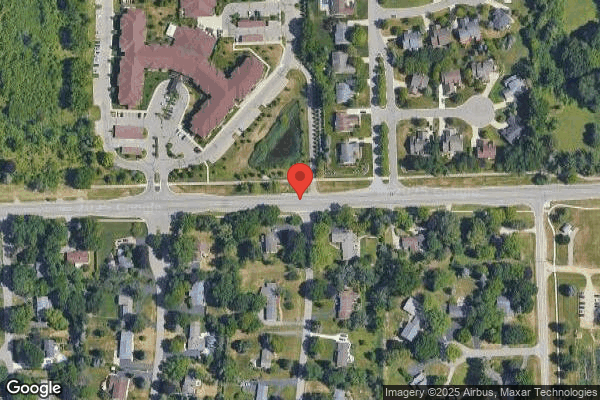
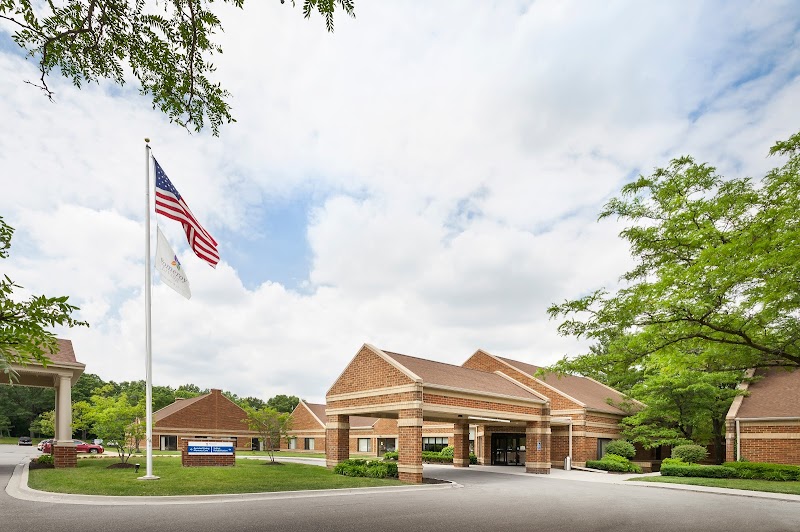
3500 West South Blvd, Rochester Hills, MI 48309 (248) 852-7800
For profit - Corporation 182 Beds Independent Data: November 2025
Trust Grade
40/100
#324 of 422 in MI
Last Inspection: February 2025

Within standard 12-15 month inspection cycle. Federal law requires annual inspections.

Overview

Pomeroy Living Rochester Skilled Rehabilitation has a Trust Grade of D, which means the facility is below average and raises some concerns about care quality. With a state rank of #324 out of 422 in Michigan, they fall in the bottom half of facilities, and they rank #24 out of 43 in Oakland County, indicating limited local options that are better. The facility is showing signs of improvement, with the number of identified issues decreasing from 16 in 2024 to 14 in 2025. Staffing is a relative strength with a 4 out of 5-star rating, but turnover is at 45%, which is about average for the state. While there have been no fines recorded, which is positive, there have been serious incidents including a failure to identify and treat a urinary tract infection for a resident, leading to hospitalization, and another resident's significant decline in health due to a lack of timely intervention for changes in condition. Additionally, there were concerns about food safety practices in the kitchen that could pose health risks to all residents. Families should weigh these strengths and weaknesses when considering this facility for their loved ones.
Trust Score
D
40/100
In Michigan
#324/422
Bottom 24%
Safety Record
Moderate
Needs review
Inspections
Getting Better
16 → 14 violations
Staff Stability
○ Average
45% turnover. Near Michigan's 48% average. Typical for the industry.
Penalties
✓ Good
No fines on record. Clean compliance history, better than most Michigan facilities.
Skilled Nurses
○ Average
Each resident gets 40 minutes of Registered Nurse (RN) attention daily — about average for Michigan. RNs are the most trained staff who monitor for health changes.
Violations
⚠ Watch
45 deficiencies on record. Higher than average. Multiple issues found across inspections.
★★☆☆☆
2.0
Overall Rating
★★★★☆
4.0
Staff Levels
★★★☆☆
3.0
Care Quality
★★☆☆☆
2.0
Inspection Score
Stable
2024: 16 issues
2025: 14 issues

The Good

  • 4-Star Staffing Rating · Above-average nurse staffing levels
  • Full Sprinkler Coverage · Fire safety systems throughout facility
  • No fines on record
  • Staff turnover below average (45%)

    3 points below Michigan average of 48%

Facility shows strength in staffing levels, fire safety.

The Bad

2-Star Overall Rating

Below Michigan average (3.1)

Below average - review inspection findings carefully

Staff Turnover: 45%

Near Michigan avg (46%)

Typical for the industry

The Ugly 45 deficiencies on record

2 actual harm
Aug 2025 2 deficiencies 1 Harm
SERIOUS (G) 📢 Someone Reported This

A family member, employee, or ombudsman was alarmed enough to file a formal complaint

Actual Harm - a resident was hurt due to facility failures

Incontinence Care (Tag F0690)

A resident was harmed · This affected 1 resident

**NOTE- TERMS IN BRACKETS HAVE BEEN EDITED TO PROTECT CONFIDENTIALITY** This citation pertains to the complaint: 2594578. Based on interviews and record reviews the facility failed to timely identify ...

Read full inspector narrative →
**NOTE- TERMS IN BRACKETS HAVE BEEN EDITED TO PROTECT CONFIDENTIALITY** This citation pertains to the complaint: 2594578. Based on interviews and record reviews the facility failed to timely identify signs/symptoms of a urinary tract infection (uti), failed to consistently inform the Physician/NP (nurse practitioner) of identified signs/symptom, and failed to timely treat a uti for one (R202) of three residents reviewed for a change of condition, resulting in the resident to be hospitalized in the intensive care unit for urosepsis (urinary tract infection spreads to the bloodstream) and ultimately admitted into hospice care. Findings include:A review of a hospital Emergency Medicine consult dated 8/19/25 at 11:55 AM, documented in part . present to the Emergency. for altered mental status and hypotension. they <sic> she is acting worse than baseline. Patient is unable to provide any history at this point in time. They identified that the patient's urine is foul smelling. She does have a Foley catheter in place. Tachycardia present. Respiratory distress present. Laboratory evaluation identifies a significant urinary tract infection and evaluation of the CAT scan identifies that the Foley catheter that was recently placed may not have been completely inserted. When it was removed the area was covered with stool. The patient is dehydrated and initially was hypotensive though that has improved during her emergency department stay. Sepsis. Final Impression: 1)AMS (altered mental status) 2)UTI 3)Sepsis 4) palliative care.A review of the medical record revealed R202 was transferred from another nursing facility and admitted to the facility on [DATE], with a diagnosis of dementia. The resident was documented to have severely impaired cognition and required staff assistance for all activities of daily living.Review of the transferring nursing home documentation provided to the facility staff upon R202's admission revealed no documented behaviors or urinary concerns. A review of a Physician History and Physical dated 8/1/25, documented in part . transferred from (previous nursing home name) for placement, she is seen and examined, laying in bed comfortably, not in distress, no new complaints, no new events over night, and no new issues per nursing staff. Foley catheter. No change in cognition. in no acute distress.A review of the progress notes revealed the following: A nursing note dated 8/2/25 at 1:25 AM, documented in part Observed resident continuingly removing brief and clothes and pulling call light cord out of the wall. Resident is in a very confused mental state at this time. Observed crying and pulling at shirt to remove immediately. Observed thick cloudy urine in foley tubing. Foul odor to urine.There was no documentation of the Physician to have been notified of the abnormal urine findings. A nursing note dated 8/4/25 at 11:01 AM, documented in part residents urine bag was changed due to the old one clogged with sediment.A nursing note dated 8/10/25 at 6:24 PM, documented in part . Resident foley is draining appears very dark in color, unsure if due to dehydration or blood due to resident continuously pulling at indwelling foley. Will leave message in dr (doctor) book regarding issue.A nursing note dated 8/12/25 at 2:54 PM, documented in part . Writer noted cloudy and discoloration to urine, increased confusion and resident presented with back pain. NP (nurse practitioner) in house and ordered for urine dip and if positive to send out. Writer dipped urine with 125++ noted of leucocytes <sic>. Urine placed in total lab book for p/u (pick up). Writer changed Foley catheter bag and irrigated Foley, Labs also placed for CBC (complete blood count) and CMP (comprehensive metabolic profile) for 8/13/25.A nursing note dated 8/13/25 at 11:27 AM, documented in part . Assistance provided with breakfast. stating she did not want any more as she was about to throw up. refuses to consume more than 1 or 2 sips of water, UA (urinalysis) still pending, no results yet.A nursing note dated 8/14/25 at 6:15 PM, documented in part . Foley draining but odd coloring, full of sediment. Still awaiting urinalysis results.A nursing note dated 8/16/25 at 6:38 PM, documented in part . resident was baning <sic> her hand repeatly <sic> on the table and screaming. Family was called to help console the resident.A nursing note dated 8/16/25 at 6:42 PM, documented in part . resident was up the whole night screaming, banging her hand on the table and grabbing her foly <sic> and wrapping it around her head.A nursing note dated 8/17/25 at 12:19 AM, documented in part . observed by nurse laying in bed playing in her stool. Resident with stool all over her hands.A nursing note dated 8/18/25 at 2:07 AM, documented in part . Resident complains of back pain Tylenol provided and norco (controlled pain medication) reordered.A nursing note dated 8/18/25 at 4:41 AM, documented in part . Resident has a pending UA and CS (culture and sensitivity). Lab book states CMP (comprehensive metabolic panel) and CBC (complete blood count) blood specimen pending.A review of a urinalysis, urine culture and sensitivity report collected on 8/12/25 and resulted on 8/18/25, revealed an abnormal UA with an identified organism of > (more than)100,000 of E.Coli present in R202's urine. The report noted the antibiotics the organism was resistant and sensitive to. A review of the medical record revealed no documentation of the identified abnormal UA and C&S results, no notification to the Physician/NP and no treatment implemented for the infection. Further review of the medical record revealed no results or documentation of the CMP and CBC to have been completed. A Physical Medicine and Rehabilitation (PMR) note dated 8/19/25 at 10:51 AM, documented in part . Patient is resting in bed. Not responding to verbal stimuli. ROS (review of systems) unable to assess. pt (patient) with significant decline, unable to participate. Patient was standing CGA (contact guard assist) last week during therapy. D/w (discuss with) RN (registered nurse), states UA sent last week, no result noted at this time. D/w RN regarding purple urine in foley bag. D/w RN agonal breathing (gasping for air), 02 (oxygen) applied, RN called EMS (emergency medical services) and IM (internal medicine) regarding sig. (significant) change in patient condition, to be sent to hospital.Further review of the urinalysis, urine culture and sensitivity report noted on the bottom sent on this AM (clinician's initials) 8/19/25. This indicated the staff failed to report the results to the Physician/NP on 8/18/25 and was delayed a day and sent to the Physician/NP on 8/19/25. The collected date of the urinalysis was noted on the report as 8/12/25 and the resulted date was noted as 8/18/25, a six day delay from the facility's contracted lab to have reported the abnormal urinalysis to the facility and the delay in the reporting of the culture and sensitivity results. A review of a hospital Urology consult dated 8/20/25 at 7:52 AM, documented in part . Chief Complaint: AMS (altered mental status), hypotension. She was found to have urosepsis in ED (emergency department) and was transferred to ICU (intensive care unit) and is <sic> pressors at this time. She does not arouse to verbal or gentle physical stimuli at this time. Foley in place with amber urine now but was red upon exchange. UA positive, Ucx (urine culture) pending. Bcx (blood culture) positive with E. Coli. LA (lactic acid) 8.8. WBC (white blood cells) 17.6 (H- high) 08/20/2025. Impression. Hematuria. UTI, sepsis. PLAN: In ICU. UA positive. Ucx pending. Bcx positive. On zosyn (antibiotic), did get cefepime (antibiotic). ID (infectious disease) consulted. Trend WBC (white blood cells).A review of a hospital Hospitalist consult dated 8/22/25 at 12:14 PM, documented in part . Change in mental status-toxic metabolic encephalopathy. Lactic acidosis due to septic shock, UTI with sepsis, Acute renal failure, multifactorial, Hematuria.Plan -Patient is transferred to inpatient hospice -Remains hypotensive, noted shallow breathing, decreased respiratory rate today. presented to the hospital with septic shock. Patient initially was admitted to the intensive care unit with change in mentation with lactic acidosis urinary tract infection. Received a fluid resuscitation pressor support was evaluated by multidisciplinary team. has had acute renal failure on presentation. Patient has declined to decline despite maximal medical therapy and after meeting with palliative care team patient had a hospice informational visit. Pressors were discontinued patient remained hypotensive, lethargic and was transferred to inpatient hospice. I have discussed during the intensive care unit admission and today with the (R202's family member). is agreeable with plan of care and. understands the grave prognosis. Patient has shallow breathing remains hypotensive with minimal urine output.On 8/27/25 at 8:27 AM, the Director of Nursing (DON) was interviewed and asked about the delayed UA, culture and sensitivity results and the DON stated they were newly employed with the facility and realized coming in that there were issues with the contracted laboratory. The DON stated they started a past non compliance regarding the laboratory services. The DON identified delayed completion and reporting of test results. At 9:02 AM, the DON stated they were trying to find a new laboratory provider for the facility. The DON was asked about R202's clinical signs/symptoms of a UTI that was not initially reported to the Physician/NP, the failure to timely identify and treat R202's UTI and the DON acknowledged the concern, stating they were awaiting the results of the testing before treatment was started. The DON explained that the resident was newly admitted to the facility so the staff was unaware of the change from the resident's baseline. The DON was asked why the CBC and CMP was not ordered/completed. The DON stated they read the note regarding the test pending, however they could not find results. A review of a facility policy titled Acute Change in Condition dated July 2021, documented in part . An Acute Change of Condition (ACOC) is a sudden, clinically important deviation from a resident's baseline in physical, cognitive, behavioral, or functional domains. Clinically important means a deviation that, without intervention, may result in complications or death. Resident's are assessed upon admission to establish Baseline Data. Changes (symptoms) in a resident's condition are communicated by any staff member to nurses. Document in the medical record all interventions to address the change of condition. Changes (symptoms) are communicated to the physician.No further explanation or documentation was provided by the end of the survey.
CONCERN (D) 📢 Someone Reported This

A family member, employee, or ombudsman was alarmed enough to file a formal complaint

Potential for Harm - no one hurt, but risky conditions existed

Deficiency F0773 (Tag F0773)

Could have caused harm · This affected 1 resident

**NOTE- TERMS IN BRACKETS HAVE BEEN EDITED TO PROTECT CONFIDENTIALITY** This citation pertains to the complaint: 2594578. Based on interviews and record reviews the facility failed to order laboratory...

Read full inspector narrative →
**NOTE- TERMS IN BRACKETS HAVE BEEN EDITED TO PROTECT CONFIDENTIALITY** This citation pertains to the complaint: 2594578. Based on interviews and record reviews the facility failed to order laboratory tests as directed by the Physician/Nurse Practitioner, ensure timely/efficient laboratory services, ensure promptly notify the Physician of abnormal results and failed to develop a policy and/or procedure for ordering laboratory test, obtaining & reporting abnormal values to the Physician for one (R202) of three residents reviewed for a change in condition. Findings include: A review of the medical record revealed R202 was admitted to the facility on [DATE], with a diagnosis of dementia. The resident was documented to have severely impaired cognition and required staff assistance for all activities of daily living.A review of a nursing note dated 8/12/25 at 2:54 PM, documented in part . Writer noted cloudy and discoloration to urine, increased confusion and resident presented with back pain. NP (nurse practitioner) in house and ordered for urine dip and if positive to send out. Writer dipped urine with 125++ noted of leucocytes <sic>. Urine placed in total lab book for p/u (pick up). Writer changed Foley catheter bag and irrigated Foley. Labs also placed for CBC (complete blood count) and CMP (comprehensive metabolic panel) for 8/13/25. care updated.A review of a nursing note dated 8/18/25 at 4:41 AM, documented in part . Resident has a pending UA (urinalysis) and CS (culture and sensitivity) <sic>. Lab book states CMP and CBC blood specimen pending.A review of the medical record revealed the CBC and CMP order was never implemented as directed. Further review of the medical record revealed no results of a CBC or CMP. A review of a urinalysis, urine culture and sensitivity report collected on 8/12/25 and resulted on 8/18/25, revealed an abnormal UA with an identified organism of > (more than)100,000 of E.Coli present in R202's urine. The report noted the antibiotics the organism was resistant and sensitive to. Review of the medical record revealed no documentation of the identified abnormal UA and C&S, no notification to the Physician/NP and no treatment implemented for the infection. Further review of the urinalysis, urine culture and sensitivity report noted on the bottom sent on this AM (clinician's initials) 8/19/25. This indicated the staff failed to report the results to the Physician/NP on 8/18/25 and was delayed a day and sent to the Physician/NP on 8/19/25. The collected date of the urinalysis was noted on the report as 8/12/25 and the resulted date was noted as 8/18/25, a six-day delay from the facility's contracted lab to have reported the abnormal urinalysis to the facility and the delay in the reporting of the culture and sensitivity results. Review of a nursing note dated 8/19/25 at 11:16 AM, documented in part . Resident was sent to (hospital name) for evaluation vis <sic> EMS (emergency medical services), resident urine appeared dark emesis in color, Resident was experience <sic> mental status change without following command.On 8/26/25 at 9:27 AM, the Administrator was asked to provide the facility policy on the ordering and report of lab results. At 10:08 AM, the Administrator replied the facility did not have a policy regarding the ordering and reporting of lab results. On 8/27/25 at approximately 8:27 AM, the Director of Nursing (DON) was interviewed and asked about the facility's protocol regarding implementing and ordering the labs as directed by the Physician/NP and the DON replied the facility staff put in the orders into the laboratory website and the lab worker would come to the facility in about two days, stat (immediate) right away if needed. The DON was asked the facility's protocol in how the staff identify and report abnormal lab findings to the Physician. The DON stated the lab results are emailed to them (DON) and faxed to the facility. The DON explained Monday through Fridays the unit ward clerk would obtain the faxed laboratory reports and provided them to the staff. The DON stated on the weekends the Nursing supervisor would obtain the reports and provide it to the staff. The DON was asked about the CBC and CMP that was supposed to be ordered for R202. The DON stated they saw that it was documented and noted to be pending, however the facility did not have the results. The DON stated they had identified issues/concerns with the facility's contracted lab services and was working toward a solution. The DON was then asked about R202's abnormal UA and C&S results to have been reported on 8/18/25, however not reported to the Physician until 8/19/25. The DON stated they recognized the long processing times with the third-party laboratory to have been problematic and stated the nurse should have followed up on 8/18/25 when the abnormal UA & C&S was completed to report it to the Physician. The DON stated they had started education with the nursing staff regarding the concern. No further explanation or documentation was provided.
Feb 2025 12 deficiencies
CONCERN (D)

Potential for Harm - no one hurt, but risky conditions existed

Deficiency F0558 (Tag F0558)

Could have caused harm · This affected 1 resident

Based on observation, interview, and record review, the facility failed to ensure water was provided and kept within resident's reach for one resident, (R33) of one resident reviewed for accommodation...

Read full inspector narrative →
Based on observation, interview, and record review, the facility failed to ensure water was provided and kept within resident's reach for one resident, (R33) of one resident reviewed for accommodation of needs. Findings include: On 2/25/25 at 9:39 AM, R33 was observed sleeping in their bed. It was further observed R33 had no water for drinking at their bedside. An observation of their bedside table situated parallel to the bed on the left side revealed a typed note taped to the top that read, PLEASE place this tray table above her abdomen so she can reach her drink! .She is often dehydrated as table & water is out of reach . Further review of the room revealed a chalkboard on the bathroom door that read, Keep my water within my limited reach of Rt (right) hand. On 2/25/25 at 2:32 PM, 2/26/25 at 8:48 AM, 10:05 AM, and 2:30 PM, R33 was observed in their bed. The tray table with water for drinking was observed to the left side of the bed, out of reach from their right hand. A review of R33's care plan was conducted and read, .ADL (activities of daily living)-Decreased ability to self care .Interventions .Keep my call light and my frequently used personal item within my reach. Encourage and remind me to use call light for assistance . On 2/27/25 at 9:02 AM, the observations of R33's water not placed in reach were shared with the Assistant Director of Nursing and they acknowledged the concern. On 2/27/25 at 8:19 AM, a policy regarding accommodation of needs was requested via e-mail, however; it was not provided by the end of the survey.
CONCERN (D)

Potential for Harm - no one hurt, but risky conditions existed

Deficiency F0578 (Tag F0578)

Could have caused harm · This affected 1 resident

**NOTE- TERMS IN BRACKETS HAVE BEEN EDITED TO PROTECT CONFIDENTIALITY** Based on observation, interview and record review, the facility failed to follow end of life wishes for one of one resident (R41...

Read full inspector narrative →
**NOTE- TERMS IN BRACKETS HAVE BEEN EDITED TO PROTECT CONFIDENTIALITY** Based on observation, interview and record review, the facility failed to follow end of life wishes for one of one resident (R417) reviewed for advance directives. Findings include: On [DATE] at 1:43 PM, during and interview, R417 was asked about their end of life wishes. R417 reported, they did not want to receive Cardiopulmonary resuscitation (CPR) because R417 did not want their chest to be cracked open and be placed on a breathing tube. R417 was then asked who was responsible for making medical decisions for them, R417 stated that they would be in control of decision making until they were unable to do so. R417 reported, they signed a paper the day before to become a Do Not Resuscitate (DNR). A review of the record revealed that R417 was admitted to the facility on [DATE] with the diagnoses of depression, anxiety and COVID-19. The most recent Minimum Data Set (MDS) indicated a Brief Interview for Mental Status score of 15, which indicated no cognitive impairments. The record also revealed that R417 was a full code, indicating an attempt of full resuscitation if the resident's heart were to stop beating. On [DATE] at 1:48 PM, Nurse N was interviewed and asked, in the event R417 was to become unresponsive, what would the facility do for them. Nurse N replied that R417 was a full code so they would start CPR. On [DATE] at 3:07 PM, the social work department, Social Work Director AA and Social Services BB was interviewed about the code status of R417 as to why they were still a full code even though R417 requested to become an DNR. Social service BB reported that when they gave R417 the paperwork (to change from a full code to a DNR) they explained that it can take 24-48 hours to have the physician sign and the status be changed in the medical record. The Social Work Director AA was then asked, why could a verbal order not be taken to honor the resident's wishes. Social Work Director AA reported that it was not in their scope to transcribe verbal orders. Social Work Director AA was asked could the nurse take verbal orders until the physician can physically come in and sign the orders and the Social Work Director AA responded that nurses can take verbal orders but the advanced directives were not done this way, that they would wait the 24-48 hours until the physician came in to change someone's code status. On [DATE] the Director of Clinical Services was interviewed and asked could Nurses take verbal orders from physicians for code status. Director of clinical services explained that the nurses could take verbal orders. A review of the facility's policy Advance Directive Policy dated [DATE] revealed the following: .Do-Not-Resuscitate Order-A do-not-resuscitate (DNR) order is a written document in which the resident expresses their wish that if their breathing and heartbeat cease, they do not want anyone to attempt to resuscitate them .DNRs may .be requested by the resident themselves. Becomes effective upon signature .Procedure: .Complete DNR .Place copies of all paperwork in chart .Review advance directives at least annually . No addition information was provided at the exit of survey.
CONCERN (D) 📢 Someone Reported This

A family member, employee, or ombudsman was alarmed enough to file a formal complaint

Potential for Harm - no one hurt, but risky conditions existed

Deficiency F0658 (Tag F0658)

Could have caused harm · This affected 1 resident

**NOTE- TERMS IN BRACKETS HAVE BEEN EDITED TO PROTECT CONFIDENTIALITY** This citation pertains to intake #MI00148138. Based on observation, interview and record review, the facility failed to follow n...

Read full inspector narrative →
**NOTE- TERMS IN BRACKETS HAVE BEEN EDITED TO PROTECT CONFIDENTIALITY** This citation pertains to intake #MI00148138. Based on observation, interview and record review, the facility failed to follow nursing professional standards of practice related to medication administration for two (R29 and R368) of two residents reviewed for professional standards. Findings include: R29 Review of the clinical record revealed R29 was admitted into the facility on 7/8/23 and readmitted on [DATE] with diagnoses that included: type 2 diabetes mellitus with diabetic neuropathy. According to the Minimum Data Set (MDS) assessment dated [DATE], R29 had intact cognition, had orders for insulin and received insulin injections for seven of the last seven days. Review of the physician orders identified R29 was to have their blood sugar (BS) level checked at 7:30 AM and parameters were in place to administer insulin depending on what the BS result was. On 2/26/25 at 9:45 AM, review of R29's Medication Administration Record (MAR) revealed the was no documentation (blank) for if this had been completed as ordered. On 2/26/25 at 9:47 AM, Nurse 'E' who was assigned to R29 was asked about where they documented BS results. Nurse 'E' reported that should be on the MAR. When asked about R29's lack of documentation on the MAR, Nurse 'E' reported they had obtained the resident's BS earlier, but did not document it and further stated, I'll do that right now. When asked when that should be documented, Nurse 'E' reported when it's (the blood sugar) obtained. On 2/26/25 at 12:13 PM, an interview was conducted with the Assistant Director of Nursing (ADON). When asked about the facility's practice for monitoring and documenting BS's for diabetic residents, the ADON reported the physician orders should be followed. The ADON was informed about the concerns with R29 and discussion with Nurse 'E' and they reported the nurse should've documented that immediately. The ADON further reported staff were educated if it was documented, it wasn't completed. The ADON reported the BS's should've been documented at the time it was obtained, in accordance with the physician orders and entered on the MAR. R368 On 2/25/25 at 10:19 AM, an interview was conducted with R368 who was observed sitting in a wheelchair in their room. R368 stated they were concerned because the staff had not taken their vital signs yet or administered their blood pressure medications. R368 stated they were concerned because they were having problems with their blood pressure. On 2/25/25 at 10:21 AM, Registered Nurse (RN) D (the assigned nurse for R368) was interviewed and asked how many residents they were responsible for and RN D replied approximately 15 residents. RN D was asked if they were late in administering the resident medications for the morning and RN D stated they were not. RN D was then asked about obtaining R368's blood pressure and the administration of R368's blood pressure medications. RN D then stated that R368's medications are a little late, however RN D stated they would administer the medications to R368 next. A review of the Physician orders and Medication Administration Record (MAR) for February 2025 revealed the following: Nifedipine ER (extended release) 30 mg (milligrams) tablet by oral route once daily for hypertension. This was scheduled for 9:00 AM. Metoprolol Succinate ER 50 mg tablet by oral route once daily for hypertension. This was scheduled for 9:00 AM. A review of the administration times of R368's blood pressure medication revealed the Nifedipine ER was documented as administered at 10:32 AM and the Metoprolol was documented as administered at 10:32 AM. On 2/27/25 at 12:23 PM, the Assistant Director of Nursing (ADON) A (who covered the medical care/questions as the facility's Director of Nursing (DON) was not present for the survey) was interviewed and informed of the interviews with R368 and RN D. ADON A was asked about the normal protocol for medication administration in the facility was and ADON A replied the nurses have an hour before or after (the prescribed time) to administer medications. ADON A stated if the nurse was running late they should have called the doctor to inform them and let management know so that we can help out. No further explanation or documentation was provided by the end of the survey.
CONCERN (D) 📢 Someone Reported This

A family member, employee, or ombudsman was alarmed enough to file a formal complaint

Potential for Harm - no one hurt, but risky conditions existed

ADL Care (Tag F0677)

Could have caused harm · This affected 1 resident

**NOTE- TERMS IN BRACKETS HAVE BEEN EDITED TO PROTECT CONFIDENTIALITY** Based on observations, interviews and record reviews the facility failed to consistently provide assistance for oral care for a ...

Read full inspector narrative →
**NOTE- TERMS IN BRACKETS HAVE BEEN EDITED TO PROTECT CONFIDENTIALITY** Based on observations, interviews and record reviews the facility failed to consistently provide assistance for oral care for a dependent resident, one (R58) of three residents reviewed for Activities of Daily Living (ADLs). Findings include: On 2/25/25 at 11:00 AM, R58 was observed in the community room playing a game with their daughter. R58 was asked if they had any concerns with the facility's care. R58's daughter replied that their dad always made sure their hygiene was up to par and they had concerns with the staff not assisting R58 with brushing their teeth. R58's daughter explained that R58 can brush their own teeth if staff set up their tooth brush and tooth paste and handed R58 their toothbrush, however staff were not ensuring the assistance was being provided. R58 was asked if staff assisted with brushing their teeth this morning and R58 replied No. A review in the medical record revealed R58 was admitted to the facility on [DATE], with diagnoses that included: traumatic subdural hemorrhage encounter, muscle weakness, and dysphagia. R58 required staff assistance for all ADLs. A review of a care plan titled ADL- Decreased ability to self care included the following intervention, . Provide me assistance for ADL, bathing, toileting, dressing, transferring, grooming, hygiene as needed. Encourage me to participate in self care as I can tolerate . On 2/27/25 at 11:56 AM, R58 was observed sitting in their wheelchair in the community room talking to a peer. R58's teeth was noted to be visibly dirty with plaque. R58 was asked if the staff provided assistance for them to brush their teeth and R58 responded No. R58 confirmed their teeth had not been brushed this morning. On 2/27/25 at 11:58 AM, Certified Nursing Assistant (CNA) P (the CNA assigned to R58) was interviewed and asked why they had not assisted R58 with brushing their teeth this morning and CNA P stated R58 was already up and dressed when they got on duty this morning. CNA P stated since the midnight CNA had gotten R58 up for the day, they assumed the midnight CNA assisted R58 with their oral care. On 2/27/25 at 12:21 PM, the Assistant Director of Nursing (ADON) A (who covered the medical care/questions as the facility's Director of Nursing (DON) was not present for the survey) was interviewed and asked about the responsibility and coordination of care regarding R58's oral care and ADON A responded that R58's oral care should have been completed when they were provided assistance with getting out of bed and dressed for the day. ADON A stated they would follow up on the concern. No further explanation or documentation was provided by the end of the survey.
CONCERN (D) 📢 Someone Reported This

A family member, employee, or ombudsman was alarmed enough to file a formal complaint

Potential for Harm - no one hurt, but risky conditions existed

Quality of Care (Tag F0684)

Could have caused harm · This affected 1 resident

**NOTE- TERMS IN BRACKETS HAVE BEEN EDITED TO PROTECT CONFIDENTIALITY** R48 On 2/26/25 at 8:44 AM, Nurse 'O' was observed taking a breakfast tray to R48. While delivering the meal tray, R48 asked Nurs...

Read full inspector narrative →
**NOTE- TERMS IN BRACKETS HAVE BEEN EDITED TO PROTECT CONFIDENTIALITY** R48 On 2/26/25 at 8:44 AM, Nurse 'O' was observed taking a breakfast tray to R48. While delivering the meal tray, R48 asked Nurse 'O' Do you need to check my sugar? Nurse 'O' responded Oh, I'll let the nurse know. Nurse 'O' exited the room and when asked if they were R48's Nurse, they reported they were not, they were the MDS Nurse and reported they would find the nurse. Nurse 'O' proceeded to continue passing other meal trays and was not observed following up with R48's assigned nurse (Nurse 'N'). On 2/26/25 at approximately 8:50 AM, Nurse 'N' was observed exiting a room from further down the unit and upon approach reported they were in the process of passing out breakfast trays. When asked if anyone had let them know about R48's query about blood sugar (BS) check, Nurse 'N' reported they had not. When asked if they had obtained R48's BS level yet this morning, Nurse 'N' reported they did not as they were told they needed to pass out meal trays. On 2/26/25 at 8:52 AM, an interview was conducted with Nurse 'N' who confirmed they were assigned to R48. When asked if they had been informed of R48 wanting their BS checked, they reported they were not and further reported they had not had a chance yet this morning to obtain any BS levels. When asked about when BS monitoring should be completed, Nurse 'N' reported those would normally be done at 8:00 AM, but was told they had to pass meal trays. When asked if they normally delayed their medication administration to pass meal trays, Nurse 'N' reported they did not. Review of the clinical record revealed R48 was initially admitted into the facility on 2/4/25, readmitted on [DATE] with diagnoses that included: diabetes due to underlying condition with diabetic neuropathy. According to the Minimum Data Set (MDS) assessment dated [DATE], R48 had intact cognition, had orders for insulin and received insulin injections for four of the last seven days. Review of the physician orders included orders to administer an insulin medication (Humalog KwikPen) per sliding scale (based on the BS level) and was ordered to be done before meals. The Medication Administration Record (MAR) prompted the nursing staff this was to be done at 7:30 AM, 11:30 AM, and 4:30 PM. Further review of the MAR revealed the section which prompted Nurses to document the dose given and site it was administered was blank on 2/24/25 and 2/25/25. Only the BS results were documented. As of this review on 2/26/25 at 9:26 AM, there were no BS results or documentation this had been completed yet for R48. R85 On 2/25/25 at approximately 9:17 a.m., R85 was observed in their room, up in their wheelchair. R85 was queried if they had any concerns with with their care and R85 indicated that their legs were swollen and nobody was doing anything about it. R85's bilateral lower extremities (BLE) were observed to have some swelling. No wraps or compression stockings were observed. R85 was queried if the Nursing staff were wrapping anything on their legs and they reported they were not. On 2/26/25 at approximately 9:02 a.m., R85 was observed in their room, up in their wheelchair. R85 was queried how their legs were feeling and they indicated they were still a little swollen with fluid. R85 was queried if any staff were putting on wraps on their legs and they indicated they were supposed to but that nobody could find them any to put on. On 2/27/25 at approximately 9:47 a.m , R85 was observed in their room, up in their wheelchair. R85 was observed with ACE wraps on their bilateral legs. R85 reported that the wound Nurse had came to their room the last night and put them on for the first time. R85 reported that they had to be at dialysis for an hour longer the previous day to take some excess fluid off. On 2/25/25 the medical record for R85 was reviewed and revealed the following: R85 was initially admitted to the facility on [DATE] and had diagnoses including Chronic kidney disease and Type 2 Diabetes. A review of R85's MDS (minimum data set) with an ARD (assessment reference date) of 2/8/25 revealed R85 needed assistance from facility staff with most of their activities of daily living. R85's BIMS score (brief interview for mental status) was 15 indicating intact cognition. A review of R85's careplan revealed the following: Focus-CARDIAC DISEASES: CHF (Congestive heart failure) .Goals-With the measures put in place my risks for CHF exacerbation will be reduced .Interventions-Assess my location and character edema. Notify my MD (Medical Doctor) as needed. Medical, Nursing Active. Effective: 2/10/2025 Observe me for signs and symptoms of fluid excess such as weight gain, increased blood pressure, full/bounding pulse, jugular vein distention, SOB (shortness of breath), moist cough, rales, rhonchi, wheezing, edema, worsening of edema, increased urinary output, nausea/vomiting, liquid stools. Medical, Nursing. Active Effective: 2/10/2025 . A Nurse Practitioner's note dated 2/21/25 revealed the following: .Complaints and Symptoms Patient complains of: Cardiovascular (Central/Peripheral): Edema (4+ edema BLE), Lower extremity (leg) swelling .Physical Exam: Patient has non-palpable pulse to BLE. Patient has 4+ edema to BLE Plan .Elevate BLE above the level of the heart Offload Bilateral Heels Ace Wraps to BLE: on in AM, off in PM (please wrap from toes to knees) . A review of R85's Physician orders revealed the following: Ace Wraps to BLE on in AM, Off in PM; Wrap from toes to knees. Chart refusals. Start date 2/22/25. Frequency noted as on 6:00AM-10:00 AM. Off 8:00PM-11:00PM. A review of R85's Treatment Administration Record (TAR) for February 2025 revealed the days in which R85's Ace Wraps were documented as not applied in the AM as ordered: 2/24, 2/25 and 2/26. On 2/27/25 at approximately 10:24 a.m., Nurse Q was queried regarding R85's swollen legs. and R85's report that staff have not previously been applying the ACE wraps to their legs. Nurse Q reported that the wound care Nurse had put the wraps on the previous night and that they had never put them on R85. Nurse Q indicated they did not know where the ACE wraps were. On 2/27/25 at approximately 2:34 p.m., the ADON (Assistant Director of Nursing) was queried regarding the missing ace wraps for R85. The ADON Stated that they were aware R85 did not have them, because they had only bought four wraps previously and other residents were also in need of them. This citation pertains to intake #MI00150390. Based on observations, interviews and record reviews the facility failed to timely implement a fungal rash treatment (R372), timely implement treatment for edema (R85) and failed to obtain a physician ordered blood sugar level (R48), for three of 24 sampled residents reviewed for quality of care. Findings include: R372 On 2/25/25 at 12:47 PM, R372 was observed lying on their back in bed. R372's husband was observed sitting by the bedside. When asked about any concerns R372 had, R372's husband explained that R372 was prescribed an ointment in the hospital for a fungal rash that had started on R372's buttocks. R372's husband stated the hospital noted the cream on R372's discharge paperwork however they believed the facility failed to implement the treatment. R372's husband stated they saw the rash yesterday and it worsened and spread to R372's groin area. R372's husband stated they are in the facility every day and all day, except overnight and they had never seen staff apply the cream. R372's husband stated they had informed multiple staff members of the prescribed cream, however no one was listening and expressed their frustration. A review of the medical record revealed R372 was admitted to the facility on [DATE] with diagnosis that included: pneumonia, shortness of breath, diaper dermatitis and required staff assistance for all Activities of Daily Living (ADLs). On 2/26/25 at 9:10 AM, an observation of R372's buttocks and groin area was made with the assistance of the Assistant Director Of Nursing (ADON) A. A red/purplish fungal rash was observed around the anus, left/right buttock and groin area on R372. A review of the hospital discharge documents that was provided to the facility upon R372's admission included the following: . After Visit Summary Start taking . miconazole nitrate (MICATIN) . miconazole nitrate 2% Oint (Ointment). Apply 1 Application topically 2 times daily. Apply to affected area . A review of the admission orders for R372 revealed no implementation of the miconazole nitrate ointment. A review of the medical record revealed no documentation or clarification on why the ointment was not implemented upon admission. A review of the physician orders revealed the Miconazole nitrate cream was ordered on 2/25/25 at 4:22 PM. This is after R372's husband had informed the surveyor of the concern and three days after the resident's admission into the facility. On 2/27/25 at 9:03 AM, the facility's Assistant Director of Nursing (ADON) A (who covered the medical care/questions as the facility's Director of Nursing (DON) was not present for the survey) was interviewed and asked why R372's Miconazole Nitrate ointment was not ordered and implemented upon admission as directed by the hospital. The ADON A stated they would look into it. The ADON A was asked if R372's physician at the facility did not agree with the course of treatment and changed the treatment order to another medication would that be documented in the medical record and ADON A stated R372's cream should have been implemented if the hospital noted it on the discharge paperwork. ADON A then stated if the physician did not agree with the course of action it should have been documented in the resident's chart. ADON A stated they would look into it and follow back up. No further explanation or documentation was provided by the end of the survey.
CONCERN (D) 📢 Someone Reported This

A family member, employee, or ombudsman was alarmed enough to file a formal complaint

Potential for Harm - no one hurt, but risky conditions existed

Deficiency F0692 (Tag F0692)

Could have caused harm · This affected 1 resident

**NOTE- TERMS IN BRACKETS HAVE BEEN EDITED TO PROTECT CONFIDENTIALITY** Based on observation, interview, and record review, the facility failed to monitor documented weights and ensure timely nutritio...

Read full inspector narrative →
**NOTE- TERMS IN BRACKETS HAVE BEEN EDITED TO PROTECT CONFIDENTIALITY** Based on observation, interview, and record review, the facility failed to monitor documented weights and ensure timely nutritional interventions were implemented to prevent significant weight loss for one resident (R23) of four residents reviewed for nutrition, resulting in a 22.94% weight loss from October 30, 2024 to December 2, 2024. Findings include: On 2/25/25 at approximately 10:27 a.m., R23 was observed in their wheelchair in the common area. R23 was observed to be thin and was queried if they had lost any weight and they reported that they had. On 2/25/25 the medical record for R23 was reviewed and revealed the following: R23 was initially admitted to the facility on [DATE] and had diagnoses including Moderate protein-calorie malnutrition and - Chronic kidney disease, stage 3. A review of R23's MDS (minimum data set) with an ARD (assessment reference date of 1/29/25 revealed R23 needed assistance from facility staff with most of their activities of daily living. R23's BIMS score (brief interview for mental status) was 15 indicating intact cognition. R23's recorded weights revealed the following: 10/30/24-148 lbs. 11/6/24-131.8 lbs. ( loss of -10.95%) 11/26/24-117.6 lbs. ( further loss of -10.77%) 12/2/24-114.05 lbs. (continued loss of -3.02%). A Nutritional assessment dated [DATE] revealed the following: Resident is .admitted s/p (status post) .s/p laparotomy > total colectomy with end ileostomy, .who is on a minced & moist diet, is able to feed herself and has a variable appetite consuming 25-100% of her meals. She has her own teeth (many missing) and SLP (speech pathology) is currently working with her regarding her mechanically altered diet. She usually weighs 140's-150's, her recent weights: 8/28=140.2 lbs., 7/14=141 lbs and her CBW (current body weight) is 148 lbs. She does have BLE (bilateral lower extremity) edema so weight loss is possible with decreasing edema. Her skin is free from pressure ulcers although she does have an ostomy. Resident is at nutritional risk d/t (due to) moderate PCM (protein calorie malnutrition) > temporal, clavicle, deltoid wasting, low po (oral) intake, mechanically altered diet. Will continue to monitor her weight, po intake and labs as avail and will make changes prn (as needed) .Care plan initiated. Further review of the facility's Dietary notes and assessments for the time period between 10/30/24 and 12/3/24 did not reveal any assessments/reviews addressing R23's significant/continued weight loss. A Dietary note dated 12/4/24 revealed the following: CBW (current body weight) 114lbs indicating significant weight loss. Her UBW (usual body weight) used to be ~140-150lbs. Resident's admission weight on 10/25 was 148, 10/27 148, 10/30 148. Then sudden drop in weight was noted on 11/6 at 131.8 and further on 11/27 117.6 and on 12/2 114. When she was readmitted she has BLE (bilateral lower extremity) edema, receiving diuretic for the same which might have contributed in some weight loss. She also hx (history) of c-diff s/p (status post) laparotomy, total colectomy with end ileostomy, a-fib, .She is on a minced & moist diet, is able to feed herself and has a variable appetite consuming 25-100% of her meals. She is receiving Dronabinol which may treat nausea and vomiting caused by chemo (chemotherapy) and help stimulate appetite. Also receiving supplement Medpass 2.0 120cc (cubic centimeters) BID (Reduced sugar) to promote wound healing and d/t (due to) variable meal intake. Skin with chronic unstageable pressure injury to sarcococcyx <sic> . RD (Registered Dietician) encouraged Resident for nutrition and hydration. Recommend to be up for meals in dining area. Resident requested for diet upgrade for which SLP (speech pathology) has been notified. Recommend to increased Medpass supplement (reduced sugar) to 120cc TID (three times a day). Monitor weekly weights. Check labs. Will continue to monitor weight trends, po (oral) intake, labs, skin integrity and follow up as needed . On 2/27/25 at approximately 10:38 a.m., Registered Dietician F (RD F) was interviewed regarding R23's significant weight loss in November 2024. RD F was queried why no dietary assessments or reviews addressing R23's continued weight loss in November was present in the record. RD F was observed reviewing R23's medical record and reported a previous RD was covering the facility at that time and that they had started covering the residents at the end of November 2024. RD F was queried what the process was for residents with identified weight loss and they reported that they review weights every morning for weight loss and if they notice a significant weight loss would evaluate the resident and recommend new nutritional interventions to try to maintain weight. RD F indicated they could not find any assessments or reviews from the dietary department in November 2024 indicating they had reviewed R23's weight loss. RD F reported that they did review R23's nutritional status and weight loss on 12/4/24 (per their progress note in the record) in which they recommended an increase in a nutritional supplement and had requested for their diet to be evaluated for an upgrade by speech pathology. RD F reported that after they had evaluated R23 in early December and their weight was able to be maintained and R23 did not have any further significant weight loss. RD F was queried for any additional documentation that R23's significant weekly weight losses in November 2024 had been reviewed/addressed and they indicated they would look for anything missing. On 2/27/25 a facility document titled Weight Management was reviewed and revealed the following: Residents will be monitored for significant weight change on a regular basis. Residents are expected to maintain acceptable parameters of nutritional status, such as usual body weight and protein levels, unless the resident's clinical condition demonstrates that this is not possible. Since ideal body weight charts have not yet been validated for the institutionalized elderly, weight loss (or gain) is a guide for determining nutritional status. Therefore, the evaluation of significant weight gain or loss over a specific period is an important part of the assessment process 6. Ensure that each resident identified with significant weight change is on a weekly schedule. 7. Ensure that each resident with significant weight change has a current assessment by the RD . No further documentation was provided by the end of the survey. During the onsite survey, past noncompliance (PNC) was cited after the facility implemented actions to correct the noncompliance which included the dietician reviewing weights daily basis and making recommendations for identified weight losses. The facility was able to demonstrate monitoring of the corrective action and maintained compliance.
CONCERN (D) 📢 Someone Reported This

A family member, employee, or ombudsman was alarmed enough to file a formal complaint

Potential for Harm - no one hurt, but risky conditions existed

Unnecessary Medications (Tag F0759)

Could have caused harm · This affected 1 resident

Based on observation, interview, and record review, the facility failed to ensure a medication error rate less than 5% when three medication errors were made for two residents (R#'s 12 and 50) of four...

Read full inspector narrative →
Based on observation, interview, and record review, the facility failed to ensure a medication error rate less than 5% when three medication errors were made for two residents (R#'s 12 and 50) of four residents reviewed during the medication pass observation, resulting in a medication error rate of 10.34%. Findings include: On 2/25/25 at 10:21 AM, Nurse 'U' was observed preparing medications for administration to R12. Nurse 'U' prepared multiple medications including a 10 mg cetrizine (allergy medication) tablet. They said R12 had a 5 mg (milligram) midorine (medication to treat low blood pressure) tablet due at that time and they were going to hold it because R12's blood pressure and heart rate were too low for administration. They reported R12's blood pressure was 115/58 and their heart rate was 58. Nurse 'U' proceeded to R12's room and administered the prepared medications. Upon completion of the administration, Nurse 'U' signed the medications out in the medication administration record. On 2/25/25 at 3:51 PM, a review of R12's physician's orders and medication administration record were reviewed and revealed the midorine medication had no blood pressure or heart rate parameters to indicate the medication should have been held. It was further discovered R12 did not have an order for cetrizine 10 mg, instead they had an order for a similar medication, loratidine 10 mg. On 2/26/25 at 12:53 PM, an interview was conducted with Nurse 'U' regarding their reasoning for holding the midorine medication on 2/25/25. They said it was because R12's systolic blood pressure was below 110, though it was reported and recorded as 115/58 on 2/25/25. They were asked to review the order and confirm the medication had physician ordered parameters to hold the medication. When they reviewed the order they reported there were no instructions to hold the medication and said they would reach out to the Nurse Practitioner to add them. They were then asked about the allergy medication and confirmed they administered 10 mg of cetrizine. They were asked to pull the order for the 10 mg cetrizine and they pulled up an order for Claritin (generic name, loratidine allergy medication). At that time they realized the error between the ordered Claritin (loratidine) and the cetrizine they administered. On 2/27/25 at 9:02 AM, the medication errors observed were shared with the facility's Assistant Director of Nursing (ADON) and they acknowledged the concern. R50 On 2/26/25 at 8:25 AM, an observation for medication administration was completed with Nurse E for R50. Nurse E reported that R50 only had one medication due at that time because it was not the window for medications to be administered. Nurse E was asked, why were they administering a nighttime medication in the morning, Nurse E reported, that it was not a night time medication and that they took that medication themselves during the day time as well. Nurse E then prepared one pill Atorvastatin (cholesterol medication recommended to give at nighttime) 40 milligrams(mg). Nurse E entered resident room and stated to the residents here is your vitamin. Nurse E was asked, why did they tell R50 that the medication was a vitamin when it was a cholesterol medication. Nurse E reported, R50's family member requested that they call all medications vitamins so R50 would not refuse. A record review was completed, revealing that R50's medication (Atorvastatin 40mg tablet) was ordered to give one tablet by oral route once daily at bedtime. On 2/26/25 at 12:22 PM, Nurse E was interviewed and shown the medical record. Nurse E was asked why they administered a nighttime medication at 8:25 AM, Nurse E reported, the order was incorrect, and they would reach out to the physician to get the order corrected. On 2/26/25 at 2:05 PM the Assistant Director of Nursing (ADON) and Administrator were present for interview. The ADON was asked should a nighttime medication be given during the day and what the process was for medications that are ordered incorrectly. The ADON reported that the order should have been clarified with physician for the correct time of administration. No additional information was presented by the exit of survey.
CONCERN (D)

Potential for Harm - no one hurt, but risky conditions existed

Antibiotic Stewardship (Tag F0881)

Could have caused harm · This affected 1 resident

Based on interview and record review the facility failed to implement an effective antibiotic stewardship program that included consistent implementation of protocols for appropriate antibiotic use fo...

Read full inspector narrative →
Based on interview and record review the facility failed to implement an effective antibiotic stewardship program that included consistent implementation of protocols for appropriate antibiotic use for three (R418, R29 and R97) of three residents. Findings include: R418 A review of R418 record revealed that in the month of January they were started on Keflex (antibiotic) 500 milligrams (mg) twice a day for five days. The physician also ordered labs. There was no documentation of any signs and symptoms for the need for the antibiotic or labs. R418 arrived from the hospital on contact precautions for clostridium difficile (c. diff-an infection of the bowel often caused by the over use of antibiotics) and was prescribed an antibiotic that started 1/6/25 and was supposed to continue for 10 days, however the order was not transcribed correctly upon admission. R29 A review of R29's medical record revealed that in the month of February 2025, they were prescribed ertapenem antibiotic without a start date and that the first dose was not given. R97 A review of R97's medical record revealed that in the month of February 2025, they were started on Keflex for 7 days and was prescribed for 2/17/25. R97 did receive antibiotics for the 7-day duration but the antibiotic was started back on 2/21/22 (a delay in treatment). On 2/27/24 at 10:25 AM, an interview with the facility's infection control preventionist (ICP) and the Director of clinical services was completed. They were asked about what happened with R418 missing labs and why didn't they complete the remaining five days of antibiotics for c. diff and if R29 should have a stop date for the ertapenem and will they receive the missing first dose of antibiotics., and finally for R97, what the signs and symptoms for the restarting of the Keflex were and who prescribed the medication. The ICP replied, that the labs should have been done for R418, and the order was put in incorrectly for c. diff antibiotics. For R29, they should have a stop date, and they would fix the order and will add the first dose that was missed on for an extra day at the end. For R97, the ICP replied they were unsure why the medication was restarted. No additional information was provided by the exit of survey.
CONCERN (E) 📢 Someone Reported This

A family member, employee, or ombudsman was alarmed enough to file a formal complaint

Potential for Harm - no one hurt, but risky conditions existed

Deficiency F0761 (Tag F0761)

Could have caused harm · This affected multiple residents

**NOTE- TERMS IN BRACKETS HAVE BEEN EDITED TO PROTECT CONFIDENTIALITY** Based on observation, interview, and record review, the facility failed to ensure medications were stored appropriately for one ...

Read full inspector narrative →
**NOTE- TERMS IN BRACKETS HAVE BEEN EDITED TO PROTECT CONFIDENTIALITY** Based on observation, interview, and record review, the facility failed to ensure medications were stored appropriately for one resident (R367) of one resident reviewed for medication storage as well as properly stored, labeled, and dated in five of five medication carts reviewed. Findings include: R367 On 2/25/25 at 12:06 PM, R367 was observed lying on their back in bed. An interview was conducted with the resident at that time. Observed on their bedside table was a tube of Triad ointment. A review of the medical record revealed no documentation or assessment of R367 to be able to self-administer the Triad ointment. On 2/27/25 at 12:26 PM, the Assistant Director of Nursing (ADON) A (who covered the medical care/questions as the facility's Director of Nursing (DON) was not present for the survey) was interviewed and asked about the Triad ointment observed by R367's bedside and ADON A replied that R367 is unable to apply the ointment to themselves and that the ointment should have been stored in the treatment cart. Medication Carts On 2/27/25 at 8:19 AM, a request for a policy for medication administration was made via e-mail, however; it was not provided by the end of the survey. On 2/26/25 at 12:45 PM, an observation of the [NAME] Hall medication cart #1 was conducted. It was observed the lock was engaged but the top left drawer and the second right drawer were ajar and could be opened without unlocking the cart. At that time, Nurse 'U' came to the cart and was asked to unlock the cart, secure all drawers tightly and re-engage the lock. After doing so, it was observed the right second drawer was then not able to be opened, but the top left drawer could still be opened with the lock engaged. Further review of the cart revealed a Humalog flex pen (generic insulin lispro) with an open date of 12/1/24 and a Lantus (generic insulin glargine) flex pen with no open date. It was also discovered food items (applesauce cups and hot cocoa packets) were stored in the bottom drawer of the cart with medications and the liquid drug disposal system. On 2/26/25 at 1:00 PM, a review of the medication cart #2 on the [NAME] unit was completed with Nurse 'E'. The cart revealed a Novolog flex pen (generic insulin aspart) and a Lantus flex pen with no dates they were placed in the cart. The cart further revealed six cups of applesauce, four cups of pudding and a cup of prune juice stored in the bottom left drawer with resident's oral medications. On 2/26/25 at 1:15 PM, an observation of medication cart #1 on the [NAME] unit was conducted with nurse 'V'. The cart revealed three open tubes of diclofenac gel (topical pain relief) stored alongside oral medications in the bottom right drawer. The bottom left draw revealed two cups of applesauce stored with resident's oral medications. On 2/26/25 at 1:20 PM, an observation cart of medication cart #2 on the [NAME] Unit was conducted with Nurse 'W' and the following was observed: a Humalog (generic insulin lispro) flex pen with no date it, had been placed in the cart, two Humalog flex pens in a plastic zipper bag with a green label that read, REFRIGERATE UPON ARRIVAL with neither pen containing a date it had been placed in the cart, a second zipper bag with the green refrigeration label containing an insulin glargine (trade name Lantus) flex pen, a Lantus flex pen, and a Novolog flex pen, none with dates when they had been placed in the cart, and an insulin lispro (trade name Humalog) flex pen with no patient name or date when it had been placed in the cart. At that time, Nurse 'W' said the cart being reviewed was not their usual cart. They were then asked if insulin pens should be labeled and dated and said they should. On 2/27/25 at 9:18 AM, an interview was conducted with the facility's Assistant Director of Nursing and they were asked if the insulin pens should be dated and said they should be refrigerated until they are placed in the cart for use and contain a date of when they were placed in the cart. A review of drug manufacturer's recommendations for insulin storage was conducted and revealed the following: Humalog (generic insulin lispro), Novolog (generic insulin aspart) and Lantus (generic insulin glargine) unopened should be refrigerated at 36-46 degrees Fahrenheit and once opened should be discarded after 28 days. On 2/27/25 at 10:26 AM, Nurse 'K' was requested to observe their medication cart. Upon observation of the medication drawer that contained multiple medication cartridges (with foil backing), there were several loose pills stored on the bottom of the drawer that were green, yellow, blue, and white in color. When asked if they could identify the pills, or who they were for, Nurse 'K' stated I have no idea. They removed the pills with their bare hands, then placed the pills into a clear medication cup and took to the medication room to dispose in a container labeled drug disposal. On 2/27/25 at 2:32 PM, an interview was conducted with the Assistant Director of Nursing (DON). When informed of the concern with the observation of the medication cart with Nurse 'K', they reported that was a frequent problem (with medications in the cartridges) but the carts should be reviewed upon starting to ensure those were maintained.
CONCERN (F)

Potential for Harm - no one hurt, but risky conditions existed

Food Safety (Tag F0812)

Could have caused harm · This affected most or all residents

**NOTE- TERMS IN BRACKETS HAVE BEEN EDITED TO PROTECT CONFIDENTIALITY** Based on observation, interview, and record review, the facility failed to prepare food in accordance with professional standard...

Read full inspector narrative →
**NOTE- TERMS IN BRACKETS HAVE BEEN EDITED TO PROTECT CONFIDENTIALITY** Based on observation, interview, and record review, the facility failed to prepare food in accordance with professional standards for food service safety. This deficient practice has the potential to result in food borne illness among all residents that consume food from the kitchen. Findings include: On 2/25/25 between 8:35 AM-9:15 AM, during an initial observation of the kitchen, the following items were observed: In the walk-in cooler, there was dried up milk on the floor underneath the milk crates. The inside bottom shelf of the Victory freezer was soiled with food spills and food debris. On 2/25/25 at 9:00 AM, Corporate Chef Y confirmed the soiled flooring in the walk-in cooler and inside the Victory freezer, and stated they would be cleaned right away. According to the 2017 FDA Food Code section 4-602.13 Nonfood-Contact Surface, Nonfood-contact surfaces of equipment shall be cleaned at a frequency necessary to preclude accumulation of soil residues. The ceiling vent located near the ice machine was coated with dust. According to the 2017 FDA Food Code section 6-501.14 Cleaning Ventilation Systems, Nuisance and Discharge Prohibition, (A) Intake and exhaust air ducts shall be cleaned and filters changed so they are not a source of contamination by dust, dirt, and other materials. The flooring underneath and behind the ice machine was observed with a heavy buildup of trash debris and a black, mold-like substance on the floor tiles. At the hand sink located next to the Southbend skillet, there was a hose hanging on the wall, with a continuous flow of dripping water onto the floor. The floor was wet with a black mold-like substance on the surface of the floor tiles. The flooring underneath the 3 compartment sink was wet, with a black mold-like substance observed on the surface of the tiles. There was a buildup of food debris on the floor underneath the racks in the dry storage room. On 2/25/25 at 12:00 PM, Corporate Chef X stated they haven't had a porter in the kitchen for a while, so while they do mop the floors, they don't get deep cleaned as often as they should. According to the 2017 FDA Food Code section 6-501.12 Cleaning, Frequency and Restrictions, (A) Physical facilities shall be cleaned as often as necessary to keep them clean. The trash can for the hand sink located next to the Southbend skillet was heavily soiled on the exterior with black and brown stains. According to the 2017 FDA Food Code section 5-501.116 Cleaning Receptacles, .(B) Soiled receptacles and waste handling units for REFUSE, recyclables, and returnables shall be cleaned at a frequency necessary to prevent them from developing a buildup of soil or becoming attractants for insects and rodents. The floor drain located underneath the soiled drainboard of the dish machine was observed with numerous small drain flies. According to the 2017 FDA Food Code section 6-501.111 Controlling Pests, The PREMISES shall be maintained free of insects, rodents, and other pests. The presence of insects, rodents, and other pests shall be controlled to eliminate their presence on the PREMISES by: .2. (B) Routinely inspecting the PREMISES for evidence of pests; 3. (C) Using methods, if pests are found, such as trapping devices or other means of pest control as specified under §§ 7-202.12, 7-206.12, and 7-206.13; and 4. (D) Eliminating harborage conditions. On 2/25/25 at 12:15 PM, Dietary Staff Z was observed measuring the internal temperatures of the food items on the steam table in the [NAME] kitchenette. Staff Z retrieved a thermometer from inside a binder. Staff Z did not sanitize the thermometer probe, and began measuring the internal temperatures the food items on the steam table. Staff Z then took the temperatures of all the food items on the steam table, without ever using a probe wipe to clean the thermometer probe. On 2/25/25 at 12:20 PM, Chef X was queried about the expectation from staff when taking the temperature of food items, and confirmed that the thermometer should have been cleaned with a probe wipe initially as well as in-between each food item.
CONCERN (F)

Potential for Harm - no one hurt, but risky conditions existed

Deficiency F0838 (Tag F0838)

Could have caused harm · This affected most or all residents

Based on interview and record review the facility failed to ensure the facility assessment was reviewed and revised in accordance with current regulatory requirements. This has the potential to affect...

Read full inspector narrative →
Based on interview and record review the facility failed to ensure the facility assessment was reviewed and revised in accordance with current regulatory requirements. This has the potential to affect all 117 residents. Findings include: According to the Centers for Medicare & Medicaid Services (CMS) memo: QSO (Quality Safety & Oversight)-24-13-NH, dated 6/18/2024, revised Facility Assessment requirements effective 8/8/2024 included: .In conducting the facility assessment, the facility must ensure .Active involvement of the following participants in the process: (i) Nursing home leadership and management, including but not limited to, a member of the governing body, the medical director, an administrator, and the director of nursing/ and (ii) Direct care staff, including but not limited to, RNs (Registered Nurse), LPNs (Licensed Practical Nurse)/LVNs (Licensed Vocational Nurse), NAs (Nurse Aide), and representatives of the direct care staff, if applicable. (iii) The facility must also solicit and consider input received from residents, resident representatives, and family members . On 2/26/25 at 11:10 AM, review of the documentation provided for the Facility Assessment Tool revealed this had last been updated on 1/10/25. Review of the section that identified Persons (names/titles) involved in completing assessment included only the following staff: the Administrator, Director of Nursing, Assistant Director of Nursing, Infection Preventionist, Social Services Director, Dietary manager, Housekeeping/Laundry Manager, and Maintenance Director. There was no documentation included within this facility assessment that identified the facility had obtained active involvement with the Medical Director, direct care staff, and obtained input from residents, resident representatives, and family members. On 2/27/25 at 8:23 AM, an interview was conducted with the Administrator regarding the facility assessment documentation provided and some areas that had questions marks within the document itself. They reported they may have provided a working copy and would submit a revised copy. When asked if they had included any resident and family input into the facility assessment, the Administrator reported they had not yet. When asked if they were aware of the requirements to the facility assessment effective 8/8/24, the Administrator did not give a definitive response but reported that was around the time they started in their role and would have to work on that. When asked if they might have attended any resident council meetings to obtain input, the Administrator reported they had not due to having simultaneous other meetings when resident council was held. On 2/27/25 at 9:00 AM, the Administrator provided an updated facility assessment last updated 1/10/25 which included additional details of the number of direct care staff in their staffing plan. There was no additional documentation provided to address the concerns identified above.
CONCERN (F)

Potential for Harm - no one hurt, but risky conditions existed

Infection Control (Tag F0880)

Could have caused harm · This affected most or all residents

**NOTE- TERMS IN BRACKETS HAVE BEEN EDITED TO PROTECT CONFIDENTIALITY** R48 On 2/25/25 at 9:10 AM, an interview was conducted with the resident. R48 reported they had been at the facility for about fo...

Read full inspector narrative →
**NOTE- TERMS IN BRACKETS HAVE BEEN EDITED TO PROTECT CONFIDENTIALITY** R48 On 2/25/25 at 9:10 AM, an interview was conducted with the resident. R48 reported they had been at the facility for about four weeks, but recently had been hospitalized . There was a bandage to their right lower extremity and an urinary catheter drainage bag was secured to the left side of the bed. There was no Enhanced Barrier Precaution (EBP) signage posted on the door, nor was there any personal protective equipment (PPE) available for use. When asked about their wound and urinary catheter, they reported they had those for about four weeks now. Additional observations from 9:15 AM to 12:00 PM revealed staff entering in/out of R48's room without cleaning hands. On 2/25/25 at 11:53 AM, an interview was conducted with Certified Nursing Assistant (CNA 'T') who was assigned to R48. When asked about whether R48 had an indwelling urinary catheter or utilized any infection control precautions, CNA 'T' reported only that the resident was discharging today (which was R48's roommate). When asked if they were sure R48 was discharging today and if it could be their roommate, CNA 'T' reported they needed to go talk with their supervisor. Review of the clinical record revealed R48 was initially admitted into the facility on 2/4/25, readmitted on [DATE] with diagnoses that included: diabetes due to underlying condition with diabetic neuropathy, Extended spectrum beta lactamase (ESBL) resistance, cellulitis of right and left lower limb, chronic respiratory failure, and lymphedema. According to the MDS assessment dated [DATE], R48 had no communication concerns, had intact cognition, and had an indwelling urinary catheter. On 2/25/25 at 12:04 PM, Unit Manager (UM 'M') approached and stated they were available to answer any questions. When asked about who was in the bed occupied by R48 (as R48 was not included in the documentation provided to the survey team to be in their current room), UM 'M' reported the resident admitted yesterday (the clinical record showed R48 readmitted on [DATE]) and was a readmission. UM 'M' confirmed the resident had a urinary catheter and when asked about the wounds, they reported the resident has cellulitis and has wounds on her legs. When asked if the resident should be on EBP, UM 'M' reported Yes, they should be. They were unable to explain why they had not been implemented. R78 On 2/25/25 at 9:51 AM, R78 was observed lying in bed. There was a urinary catheter drainage bag secured to the side of the bed. The signage posted on the door identified the room was on Enhanced Barrier Precautions and further instructed, .EVERYONE MUST: Clean their hands, including before entering and when leaving the room . There was a cart in the hallway just outside the room that contained several disposable gowns, two N-95 masks and two face shields. There were no disposable gloves, hand-sanitizer, or hand-wipes in the cart, and there was no hand sanitizer on the walls or in the hallway available for use. On 2/25/25 at 9:52 AM, Certified Nursing Assistant (CNA 'S') was observed exiting the room next to R78 and entered into R78's room without cleaning hands (using hand sanitizer, wipes, etc). CNA 'S' was observed to go over to R78's bedside and began moving their bedside tray table around and removed R78's meal tray to return to a cart near the nursing desk. CNA 'S' then re-entered R78's room without cleaning their hands before and upon exiting the room. On 2/25/25 at 10:04 AM, Staff was observed placing a container of Sani-Hands in the top drawer of the cart outside R78's room. Linens: On 2/25/25 at 10:49 AM, the linen cart in the hallway outside of room C54 was observed with scattered candy wrappers and there was a thick white creamy substance spilled directly on top of linen cart material that consisted of a thick mesh-like plastic covering. The inside of this linen cart was observed to have various linens (towels, bed sheets, blue pads, and gowns). Additionally, there were other non-linen items stored directly touching and scattered about which included pink basins, several boxes of disposable gloves that were opened, and various personal care supplies (shampoo, lotion). On 2/25/25 at 10:55 AM, the linen cart across from room A32 was observed to have various linens stored directly touching other non-linen supplies which included clear trash bags, disposable briefs, pink basins, and various personal care items. On 2/25/25 at 10:57 AM, the linen cart across from room A43 was observed to have various linens stored directly touching other non-linen supplies which included a pink basin with personal care items, several bottles of perineal cleanser, and an opened box of disposable gloves. On 2/25/25 at 11:02 AM, the linen cart across from room A62 was observed to have various linens stored directly touching other non-linen supplies which included disposable briefs, skin repair cream, and two opened boxes of disposable gloves. On 2/25/25 at 11:15 AM, a staff member (wearing maroon colored scrubs) was observed accessing the linen cart outside of room A63, while holding towels, gowns and linens in their arms directly pressed against and in contact with their upper body and proceeded to walk down the hallway. On 2/26/25 at 9:31 AM, a staff member (wearing maroon colored scrubs) was observed exiting the clean utility room and entering room D61 with clean linens that were held directly pressed against and in contact with their upper body. On 2/26/25 at 12:13 PM, an interview was conducted with the Assistant Director of Nursing (ADON) who was currently acting as the interim DON while the DON was out sick. The ADON was also the facility's Infection Preventionist. When asked about the storage of linens, and how they should be transported/held when staff obtained clean linen, the ADON reported all staff were in-serviced upon hire that linens should be held away from them and to consider anything else they might come into contact with as contaminated. The ADON was informed of the concerns with the observations and reported that should not have occurred. When asked what should be stored on/within the linen carts, the ADON reported various linens and mentioned at times the staff might use pink basins that had individual shampoos and things like that. The ADON was informed of the multiple observations of the linen carts from 2/25 - 2/26/25 and was asked to observe a few of the linen carts. Upon observation of the linen cart on [NAME] unit, the ADON confirmed there were various items other than linens, including gloves, pink basin with toiletries, and garbage bags stored within the linens. The ADON reported those would be removed immediately. Upon observation of the [NAME] unit, the ADON confirmed the linen cart contained various items that should not have been stored with the linens, including trash bags and disposable gloves and confirmed those items should not have been stored with the linens. R53 On 2/25/25 at approximately 10:19 a.m., R53 was observed in the common area, up in their wheelchair. R53 was observed to have a catheter bag hanging from the wheelchair. R53's room was observed to not have any signage for EBP (enhanced barrier precautions). On 2/26/25 at approximately 8:32 a.m., R53 was observed in their room, laying in their bed. R53's room door was still observed to not contain any signage indicating R53 should be provided enhanced barrier precautions while providing direct care or to ensure hands were disinfected prior to entering R53's room. On 2/26/25 between 8:32 a.m., and 8:36 a.m., three facility staff members were observed entering R53's room without sanitizing their hands prior to entering the room. At that time, the staff members were observed providing direct care to R53. On 2/27/25 at approximately 8:33 a.m., R53's room was still observed without any signage indicating R53 was to be provided EBP while providing care. On 2/27/25 at approximately 11:36 a.m., R53 was observed in their wheelchair by the Nursing station. R53 was observed to have their catheter tubing dragging on the facility floor. On 2/25/25 the medical record for R53 was reviewed and revealed the following: R53 was last admitted to the facility on [DATE] and had diagnoses including Parkinson's disease and Chronic kidney disease. A review of R53's MDS (minimum data set) with an ARD (assessment reference date) of 1/17/25 revealed R53 needed assistance from facility staff with most of their activities of daily living. R53's BIMS score (brief interview for mental status) was three indicating severely impaired cognition. A review of R53's comprehensive plan of care revealed the following: With interventions implemented by the facility, my risk for urinary tract infection due to use of catheter will be reduced through next review Interventions-EBP as ordered .Effective 2/25/2025 . On 2/27/25 at approximately 9:07 a.m., during a conversation with the Infection Control Preventionist (ICP)/ADON, was interviewed pertaining to EBP for R53. The ICP reported that R53 should have had EBP signage on their door indicating staff should be donning EBP while providing care and should be sanitizing their hands prior to entering their room. Based on observation, interview and record review the facility failed to ensure enhanced barrier precautions (EBP)policies and protocols were followed and maintained for three residents (R48, 53, & and 78), maintain linen carts, as well as a system of surveillance that consistently documented signs and symptoms of infections and consistently tracked and trended infections, this had the ability to affect all 117 residents residing at the facility. Findings include: Review of the facility's Infection Control program revealed the following: The program revealed no consistent documentation of signs and symptoms and laboratory (Lab) data results for residents with infections that were listed for the months of January 2025 and February 2025. On 2/27/25 at 10:25 AM an interview with the facility's infection control preventionist (ICP) and the Director of clinical services was asked about the missing Lab data and signs and symptoms for the line listing for the months for January and February, and who was responsible for ensuring that all items are completed to finish the monthly surveillance. The ICP nurse replied that they were responsible for ensuring that the surveillance was completed and that required labs were documented and completed. The ICP also stated that for signs and symptoms that they rely on the floor nurse's documentation but if there were not any signs documented then they had nothing to go by. A review of a facility policy titled Surveillance for Infections (Revision date May 2021) documented in part, . Surveillance of infections occurring will be conducted on a regular basis by the infection control preventionist Conditions which meet the McGeer's criteria of infection are considered an infection . The infection preventionist should evaluate each set of signs and symptoms of potential infection . the Infection Preventionist should utilize a facility schematic to assist in identifying facility trends. This will enable the infection control team to identify potential issues of cross contamination from all sources . No addition information was provided by the exit of survey
Oct 2024 3 deficiencies
CONCERN (D) 📢 Someone Reported This

A family member, employee, or ombudsman was alarmed enough to file a formal complaint

Potential for Harm - no one hurt, but risky conditions existed

Quality of Care (Tag F0684)

Could have caused harm · This affected 1 resident

**NOTE- TERMS IN BRACKETS HAVE BEEN EDITED TO PROTECT CONFIDENTIALITY** This citation pertains to intake(s): MI00146420, MI00146542, MI00146558, MI00145342, & MI00147417. Based on interviews and reco...

Read full inspector narrative →
**NOTE- TERMS IN BRACKETS HAVE BEEN EDITED TO PROTECT CONFIDENTIALITY** This citation pertains to intake(s): MI00146420, MI00146542, MI00146558, MI00145342, & MI00147417. Based on interviews and record reviews the facility failed to ensure medications and treatments were administered/applied as prescribed by the physician, failed to ensure the timely administration of medications and failed to treat a change of condition timely for three (R's 401, 402, & 403) of five residents reviewed for medications/treatments. Findings include: R402 A review of a complaint submitted to the State Agency (SA) documented concerns of the facility's failure to address R402's change of condition timely which resulted the R402 leaving the facility Against Medical Advice (AMA). A review of the medical record revealed R402 was admitted to the facility on [DATE] and discharged against medical advice on 7/22/24. R402 was admitted with diagnoses that included: aftercare following surgery, absence of left leg below the knee A review of the medical record revealed the following progress notes: A Nursing note on 7/22/24 at 12:26 PM, documented in part . Res (resident) had one episode of emesis noted . Writer contacted NP (nurse practitioner) and NP gave verbal order for STAT (immediate) abdominal x-ray to be completed . A Nursing note on 7/22/24 at 4:30 PM, documented in part . Writer had multiple encounters with res and partner at bedside. Partner requested that the ABD (abdominal) plate x-ray that was ordered to be stopped. NP not in agreeance . res still vomiting. Writer was given order to give a 1 time dose of Zofran. Order was given. When giving medication partner attempted to give medication and res would not open mouth, res stated 'fuck you', partner then says yeah you made <sic> and then says 'yeah the nurse can hear you'. Partner then proceeded to say we want to leave and gave writer paper with home care information on it. Writer then explained that this was already discussed last week and that the MD (medical doctor) was not okay with res leaving at this time, for safety reasons. Writer then went to UM (unit manager) and explained the situation. UM came out of room and stated res and stated <sic> that it will be an AMA. NP notified of res going AMA. Paperwork signed . The above notes were documented by Licensed Practical Nurse (LPN) B. The UM mentioned in the above note was no longer employed at the facility at the time of the survey. On 10/15/24 at 1:27 PM, a voicemail was left on LPN B's cell phone. LPN B did not reply or return this surveyor's call. A review of the medical record revealed the nurse failed to implement the Zofran order as documented above. Further review revealed no documentation of the Zofran to have been administered to the resident. A STAT x-ray was ordered at 12:26 PM, and had not been completed by 4:30 PM, when the resident decided to sign out AMA. On 10/15/24 at 2:55 PM, the Director of Nursing (DON) was interviewed and asked about the incident that involved R402 leaving the facility AMA. The DON stated they remembered the resident and incident and remembered being informed by LPN B that the resident was sick and vomiting. The DON stated LPN B informed them that they notified the physician and received an order for Zofran and an abdominal x-ray. The DON stated the nurse informed them of R402 wanting to the leave the facility. The DON was asked why the Zofran order was never transcribed in the resident's chart and administered. The DON stated they would look into it and follow back up. On 10/16/24 at 8:26 AM, a follow up interview was conducted with the DON. The DON stated they were not able to find a Zofran order implemented for R402. The DON stated the facility has a policy for Zofran to be a standing order for the residents. The DON was then asked why the standing order for Zofran had not been transcribed in the residents record for administration and the DON acknowledged the concern. No further explanation or documentation was provided by the end of the survey. R403 Review of a complaint submitted to the SA documented allegations of the facility night shift nursing staff failing to consistently apply their skin treatment and failing to administer their medication timely as ordered by the physician. A review of the medical record revealed R403 was admitted to the facility on [DATE] with medical diagnoses that included: chronic respiratory failure, chronic obstructive pulmonary disease (copd), and anxiety disorder. A Minimum Data Set (MDS) assessment dated [DATE] documented a Brief Interview for Mental Status (BIMS) score of 15 that indicates intact cognition. Review of the medication administration audits for the month of August and October 2024 revealed the following: August- on 8/24/24 Magnesium gluconate 12.5 mg (milligram) scheduled for 9:00 PM was administered at 2:56 AM on 8/25/24. Triad paste to the buttocks and upper inner thighs was ordered to be applied twice a day. The medication was not applied on the night shift for the dates of 8/14, 8/19, 8/21, 8/22, 8/23 and 8/31/24. October- on 10/5/24 Aripiprazole 5 mg, Carvedilol 6.25 mg, Cholecalciferol 50 mcg, Claritin 10 mg, Cymbalta 60 mg, Docusate sodium 100 mg, Dulero aerosol inhaler, Flonase nasal spray, Multivitamin, Lasix 40 mg, Lisinopril 20 mg, Miralax 17 gm (gram), Norvasc 5 mg, Pepcid 10 mg, Prozac 20 mg and Spiriva inhalation solution all scheduled for 9AM (except Aripiprazole & Flonase scheduled for 10 AM), were all administered at 11:45 AM. A review of the facility policy titled Medication Pass Guidelines updated 8/2011, documented in part . Purpose To assure the most complete and accurate implementation of physicians' medication orders and to optimize drug therapy for each resident by providing the administration of drugs in an accurate, safe, timely, and sanitary manner . Administer medication within 60 minutes before or after the scheduled time. Unless otherwise specified by the physician, routine medications are administered according to the established medication administration schedule for the facility . On 10/16/24 at 9:43 AM- the DON was interviewed and asked about the expectations of the nursing staff to administer medications timely to the residents. The DON confirmed that medications should be given within the hour before and after the schedule time. The DON stated per their knowledge they have not received any feedback from the floor nursing staff regarding not being able to administer their medications timely. The DON was asked about the expectations of skin treatment being applied during the nightshift and the DON acknowledged the skin treatment should be applied as ordered by the physician. No further explanation or documentation was provided by the end of the survey. R401 A complaint was filed with the State Agency (SA) that alleged R401 was not getting their physician ordered pain patch weekly. The complainant reported that on 5/31/24 they went to visit R401, and they had a pain patch on that was dated 5/11/24. A review of R401's clinical record revealed the resident was initially admitted to the facility on [DATE] with diagnoses that included, in part, the following: rheumatoid arthritis, depressive disorder and obstructive sleep apnea. The resident had a Brief Interview for Mental Status (BIMS) score of 15 (cognitively intake cognition). Continued review of R401's clinical record noted an order dated 5/10/24 that read: .buprenorphine 10 mcg (micrograms)/hour weekly transdermal patch .apply patch by transdermal route (administered on skin) every week for 1 month .for pain . A second order read: .5/13/24 .Order: Buprenorphine 10 mcg .apply 1 patch .by transdermal route every week .on Friday at 10:00 AM . A review of R401's Medication Administration Record (MAR) for the month of May 2024 noted the resident received the buprenorphine patch on 5/11/24 and/or 5/12/24. There was no documentation that indicated the resident received any further patch for the month of May 2024. On 10/16/24 at approximately 9:36 AM, an interview and record review were conducted with the Director of Nursing (DON). The DON was asked as to why R401 did not receive the buprenorphine pain patch as ordered in May 2024. The DON reported that they believed the order was to apply the patch monthly. The DON was asked to provide documentation and/or orders that indicated R401 was to receive the pain patch monthly. No documentation was provided by the end of the survey.
CONCERN (D) 📢 Someone Reported This

A family member, employee, or ombudsman was alarmed enough to file a formal complaint

Potential for Harm - no one hurt, but risky conditions existed

Respiratory Care (Tag F0695)

Could have caused harm · This affected 1 resident

**NOTE- TERMS IN BRACKETS HAVE BEEN EDITED TO PROTECT CONFIDENTIALITY** R403 Review of a complaint submitted to the State Agency (SA) documented concerns of R403 having difficulty breathing due to the...

Read full inspector narrative →
**NOTE- TERMS IN BRACKETS HAVE BEEN EDITED TO PROTECT CONFIDENTIALITY** R403 Review of a complaint submitted to the State Agency (SA) documented concerns of R403 having difficulty breathing due to the staff failure to follow the supplemental oxygen liter order as prescribed. A review of the medical record revealed R403 was admitted to the facility on [DATE] with diagnoses that included chronic respiratory failure, chronic obstructive pulmonary disease (copd) and obstructive sleep apnea. At the time of survey R403 was admitted to the hospital. A review of the physician orders, Medication Administration Record (MAR) and Treatment Administration Record (TAR) documented the following orders: Oxygen Device: nasal cannula Rate: 4 L (liters)/min (minute) Continuous. Times of Administration 7 AM to 7 PM and 7 PM to 7 AM- 24 hours continuously. Cpap (continuous positive airway pressure) with 02 (supplemental oxygen) 3 liters on at q (every) hs (hour of sleep). Start date: 7/13/24. This revealed the facility had two oxygen orders implemented with different oxygen liters to be administered at the same time. Further review of the MARs and TARs revealed the facility nurses signing off for both the 3 and 4 liters of oxygen being administered at the same time duration. Review of the medical record revealed no documentation of the identification of the conflicted orders and no documentation of the clarification of how many liters should have been administered to the resident during sleeping hours. On 10/15/24 at 3:35 PM, the Director of Nursing (DON) was interviewed and asked about the supplemental oxygen continuous order of 4 L and asked about the CPAP orders of 3 L to be administered during the same time period and asked which order the nurses were supposed to follow and implement. The DON stated they would look into it and follow back up. On 10/16/24 at 8:28 AM, a follow up interview was conducted with the DON and with the ADON (assistant director of nursing) in attendance. The DON and ADON were asked about the follow up of the supplemental oxygen administration concerns. The DON stated they identified that the CPAP liters was recommended by the respiratory therapist, however the continuous oxygen order was ordered by the primary physician. The DON and ADON was asked why no one clarified the orders with the physician and/or why the respiratory therapist was not instructed to coordinate the oxygen administration care with the primary physician. The DON and ADON acknowledged the concern and stated moving forward they would ensure the coordination of care and ensure all conflicting orders were clarified. No further explanation or documentation was provided by the end of the survey. This citation pertains to Intake(s) #'s MI00145342 and MI00146542. Based on interview and record review the facility failed to provide oxygen (O2) services per physician order for two (R401 and R403) out of five residents reviewed for respiratory services resulting in R401's O2 saturation levels dropping to an extremely low level requiring immediate hospitalization. Findings include: R401 A complaint was filed with the State Agency (SA) that alleged on 7/2/24, R401 was sent to an outside medical appointment with their pulmonologist with an empty Oxygen (O2) tank. The resident's 02 saturation level dropped to 80% (a low level requiring immediate medical attention-normal readings are between 90-100%). The physician's office attempted to use an oxygen concentrator to improve the resident's oxygen level however they were unable to do so. The physician's office then sent R401 via EMS (emergency medical services) to the hospital. A review of R401's clinical record revealed the resident was initially admitted to the facility on [DATE] with diagnoses that included, in part, the following: rheumatoid arthritis, depressive disorder and obstructive sleep apnea. The resident had a Brief Interview for Mental Status (BIMS) score of 15 (cognitively intake cognition). An order with a start date of 12/26/23 documented R401 was to receive Oxygen via a nasal cannula at the rate of 2 L (liters) continuously. A progress note dated 7/2/24 at 11:12 PM noted, resident went to a doctor's appointment in the morning, did not return during evening shift, a call was received by one of the nurses in the unit, was told that resident was sent to hospital from Doc's office. (Name redacted) Hospital records with an admission date of 7/2/24 noted, .Name: R401 .Chief complaint: patient presents with hypoxia (an absences of enough oxygen in the tissues to sustain bodily functions) .had been sent by facility to med eval with a depleted O2 tank. Pt was hypoxic and transferred to hospital .admitted .Assessment and Plan: Hypoxia due to mechanical supply issue .02 dependence .Xray-chest .concerning for pneumonia .Differential Diagnosis: includes but not limited to hypoxia secondary to lack of oxygen .ED (emergency Department) .presents with complaints of shortness of breath. He was at pulmonology appointment and he was sent there without oxygen. His oxygen was low on arrival. EMS (emergency medical services) was called he could not get his sats up even with a non-breather. He was transported to our facility .EMS reports c/c (concerns) of hypoxia and SOB (shortness of breath) that occurred today. EMS states .center did not place pt on baseline 2 L 02 and his 02 levels desated to 70-80%. Pt returned to appropriate 02 levels when EMS arrived and placed on 12 L NRB (non-rebreather - mask that provides a high concentrate of oxygen . On 10/16/24 at approximately 9:36 AM, an interview was conducted with the Director of Nursing (DON). The DON was queried as to R401 being sent to their pulmonologist with an empty tank of oxygen. The DON reported that they were aware of the incident and noted that the facility's Assistant Director of Nursing (ADON) A tried to deliver a full tank of 02 to the physician's office but the resident had been taken to the hospital via EMS. The DON reported that the nurse should have ensured that the resident's tank was full prior to sending them out for their appointment. On 10/16/24 at approximately 9:47 AM, an interview was conducted with ADON A. When queried as to incident involving R401, ADON 'A reported that they were made aware that the resident was sent with an empty 02 tank but did not recall bringing one to the physician's office. ADON A reported that Nurse F was the staff person working with R401 and they should have ensured the resident was sent with full tank of 02. On 10/16/24 at approximately 10:49 AM, an interview was conducted with Nurse F. When asked about R401 being sent out without a full tank of 02, Nurse F reported that they believed the tank was full and noted that perhaps it leaked during transfer. Nurse F reported that they received in-service education on ensuring residents who required 02 were provided a necessary amount prior to leaving the facility. Review of the facility policy titled, Oxygen Administration (release date: 2011) documented, in part, the following: Purpose: A resident will receive oxygen per physician's orders and facility protocol .Oxygen source: cylinder, liquid tank, or concentrator .
CONCERN (E) 📢 Someone Reported This

A family member, employee, or ombudsman was alarmed enough to file a formal complaint

Potential for Harm - no one hurt, but risky conditions existed

Deficiency F0804 (Tag F0804)

Could have caused harm · This affected multiple residents

**NOTE- TERMS IN BRACKETS HAVE BEEN EDITED TO PROTECT CONFIDENTIALITY** R406 R406 was a long-term resident, originally admitted to the facility on [DATE]. R406's admitting diagnoses included lung canc...

Read full inspector narrative →
**NOTE- TERMS IN BRACKETS HAVE BEEN EDITED TO PROTECT CONFIDENTIALITY** R406 R406 was a long-term resident, originally admitted to the facility on [DATE]. R406's admitting diagnoses included lung cancer, respiratory failure, heart failure, anxiety disorder, and chronic obstructive pulmonary disease (COPD). Based on the current Minimum Data Set (MDS) assessment, R406 had a Brief Interview for Mental Status (BIMS) score 15/15, indicative of intact cognition. An initial observation was completed on 10/15/24 at approximately 10:30 AM. During an interview R406 reported that they had a concern about cold food. R406 added that they preferred to eat in their room and the food was cold on most days. When queried further if that any pattern such as any particular meal or days, R406 reported that it was lunch and dinner that was served cold. R406 added that cold breakfast was also an issue on some days. R406 reported that meat gets overcooked and tough. During the interview R406's spouse was present in the room. They reported that it was an ongoing concern. Later that day at approximately, 1:40 PM, R406 was observed sitting up in their wheelchair and eating lunch. When queried about their lunch, R406 reported that it was cold. On 10/16/24, at approximately 9:00 AM, R406 was observed in their bed eating breakfast. R406 was queried about their breakfast. Reported that they liked what they had, still not hot, warmer than usual. Review of facility's resident council minutes from 10/15/24 revealed that residents who attended the meeting had concerns about cold food. It read, Breakfast is always cold and dinner is sometimes cold. On 10/16/24 at approximately 8:20 AM a dietary staff member delivered the breakfast cart to Christie - C hall. At approximately 5 minutes later Registered Dietician (RD) E was asked to pull a tray from cart to check the serving temperatures. Temperatures were checked by the RD. Pancakes were at 98 degrees and scrambled eggs were at 115 degrees. An interview with the RD E was completed on 10/16/24 at approximately 8:20 AM. They were queried about the serving process. RD E reported that most residents ate breakfast in their rooms. Trays were prepared in the kitchen and they were sent on the carts to each unit. They added for lunch and dinner the food was served from the satellite kitchen/steam tables from the dining room. When queried further about the meal service for residents who preferred to eat in their rooms, they added that staff were serving from the steam table, individually. The trays were assembled by the dietary staff member at the steam table and staff members delivered trays individually to every room for residents who were not in the dining room. When queried how did they monitor the temperature of the trays they were prepared, how did they ensure food temperature was maintained on the assembled trays, and the trays were delivered timely to ensure appetizing temperature and palatability. RD E reported that staff were supposed to serve the assembled trays right away. They added that if they had staffing challenges they had used a cart to deliver lunch and dinner to deliver room trays and did not provide any further explanation. They were notified of the concern with food temperature. On 10/16/24 at approximately 12:20 PM, the Administrator was notified of the concerns with the cold food from multiple residents. They were notified of the concerns with the serving process for the residents who preferred to eat in their rooms and they reported that they understood the concern and they would follow up. A facility policy on food palatability was requested via e-mail. The survey team did not receive the appropriate policy prior to survey exit. This citation pertains to intake(s): MI00145837. Based on observation, interview and record reviews the facility failed to ensure meals were served at a desirable temperature for three (R's 404, 405 & 406) of five residents reviewed for meals, including residents via the resident council meeting resulting in meal dissatisfaction. Findings include: Review of multiple complaints submitted to the State Agency (SA) documented concerns regarding the palatability of the facility's food. On 10/15/24 at 12:41 PM, an interview was conducted with R405. R405 verbalized concerns regarding the facility's food. R405 stated in part . breakfast was always ice cold and stated their kids brought them food to the facility every day to eat because the facility's food was inedible. On 10/16/24 at 7:56 AM, Dietary Aide (DA) D was observed delivering the food tray cart for unit A. At 8:00 AM, the aide was observed obtaining the trays to provide the residents on unit A with their breakfast tray. Observed on top of the cart were two resident trays, as well as multiple resident trays observed inside of the cart. At 8:04 AM, one of the trays that was observed on the top of the cart was obtained for a test tray review. Identified on the tray was a coffee with notable steam coming from the top ,orange juice that felt cold to touch, oatmeal, brown sugar, salt/pepper, creamer, 2% reduced fat milk, pancakes, eggs, and a round sausage. A taste of the oatmeal and eggs were noted to be warm. A bite into the pancake and sausage was noted to be cold. A second bite from the middle of both the pancake and sausage was confirmed to be ice cold. R404 On 10/15/24 at approximately 11:45 AM, R404 was observed in their bedroom sitting on their bed. The resident was alert and able to answer questions and asked about life at the facility. R404 noted that their biggest concern at the facility was the food. They reported that the food is often cold and on a number of occasions they do not get what they ordered, specifically, coffee. Review of a Resident Assistance Form (Grievance) dated 7/28/24 documented, in part: Name (R404) .What is your concern: Not getting coffee with lunch or dinner .When did the problem or incident occur .over the past 2 months but past weekend was bad . A review of R401's clinical record revealed the resident was initially admitted to the facility on [DATE] with diagnoses that included: chronic obstructive pulmonary disease, depressive disorder and type II diabetes. A review of the residents MDS noted the resident's BIMS score was 14/15 (cognitively intact cognition).
Jun 2024 1 deficiency
CONCERN (D) 📢 Someone Reported This

A family member, employee, or ombudsman was alarmed enough to file a formal complaint

Potential for Harm - no one hurt, but risky conditions existed

Pressure Ulcer Prevention (Tag F0686)

Could have caused harm · This affected 1 resident

**NOTE- TERMS IN BRACKETS HAVE BEEN EDITED TO PROTECT CONFIDENTIALITY** This citation pertains to Intake Number(s): MI00144974. Based on observation, interview, and record review, the facility failed ...

Read full inspector narrative →
**NOTE- TERMS IN BRACKETS HAVE BEEN EDITED TO PROTECT CONFIDENTIALITY** This citation pertains to Intake Number(s): MI00144974. Based on observation, interview, and record review, the facility failed to complete skin assessments on a consistent basis and thoroughly complete assessments of existing pressure ulcers for one (R702) of two residents reviewed for pressure ulcers. Findings include: A review of a complaint submitted to the State Agency revealed an allegation the facility was not providing adequate and appropriate care to prevent and treat pressure sores. On 6/26/24 at approximately 9:15 AM, R702 was observed in bed eating breakfast with the assistance of a staff member. R702 was lying on their back positioned slightly to their left side. On 6/26/24 at 12:23 PM, R702 was heard making a groaning noise from the hallway. R702 was lying in bed on their back positioned slightly to their left side as they were earlier in that day. When asked if he needed help, R702 groaned and was not able to answer the question. At that time, Licensed Practical Nurse (LPN) 'B' asked R702 if he needed to be repositioned and he indicated he did. A review of R702's clinical record revealed R702 was admitted into the facility on 1/10/19 and readmitted on [DATE] with diagnoses that included: Parkinson's Disease. The record further revealed R702 was receiving hospice services. A review of R702's Minimum Data Set (MDS) assessment dated [DATE] revealed R702 had severely impaired cognition; was dependent on staff for all Activities of Daily Living (ADLs), bed mobility, and transfers; and had one stage 1 pressure ulcer (non-blanchable erythema of intact skin). A review of R702's weekly head to toe skin assessments revealed the last skin assessment was completed on 6/3/24 and documented R702 had a wound. A review of R702's progress notes revealed a wound care progress note completed by the former wound care nurse on 6/6/24 (20 days prior to the current date) that read, Wound to coccyx with 3.5 cm (centimeters) x (by) 4.0 cm, wound to left buttock with 1.0 cm x 0.5 cm wound bed for both wound pink with scanty serosanguineous drainage. The documentation did not reveal any additional descriptions including they type of wounds. On 6/26/24 at 1:50 PM, an interview was conducted with the facility's wound care coordinator, Registered Nurse (RN) 'A'. RN 'A' reported floor nurses did wound treatments daily and head to toe skin assessments weekly. RN 'A' along with the contracted wound provider (Nurse Practitioner - NP 'D') assessed existing wounds. In regards to R702, RN 'A' reported that because R702 was on hospice, NP 'D' evaluated his wounds on a monthly basis and they (RN 'A') assessed the wounds weekly. RN 'A' reported R702 had multiple pressure ulcers that were being treated. RN 'A' explained there was another wound care coordinator working with her until about two weeks ago. At that time RN 'A' was queried about the last time R702's pressure ulcers were assessed by herself and/or NP 'D'. RN 'A' said NP 'D' last saw R702 on 5/14/24, the former wound nurse assessed his wounds on 6/6/24, and they (RN 'A') assessed the wounds weekly since then, but had not documented the assessments in the electronic clinical record yet. When queried about the former wound care nurse's assessment, RN 'A' reported the assessment was not complete. At that time, R702's progress notes were reviewed and revealed a wound consult note dated 5/24/24 completed by NP 'D' that noted R702 had the following wounds: Wound #1 - Coccyx, stage 2 pressure ulcer (partial thickness skin loss with exposed dermis) that measured 2.5 cm in length (L) by 2 cm in width (W) and 0.01 cm in depth (D) with a moderate amount of serous drainage. It was documented the wound was deteriorating. Wound #2 - Right Buttock, stage 2 pressure ulcer that measured 3 cm L x 2 cm W x 0.01 cm D. It was documented the wound was deteriorating. Wound #3 - Right hip, stage 3 pressure ulcer (full thickness skin loss) that measured 1 cm L x 0.3 cm W x 0.2 cm D. It was documented the wound was stable. Wound #4 - Left hip, Deep Tissue Pressure Injury (DTPI - Persistent non-blanchable deep red, maroon or purple discoloration) that measured 2 cm L x 2 cm W. It was documented the wound was improving. NP 'D' documented, Nursing home staff was instructed to monitor aforementioned wounds for erythema, purulent discharge, fever, any sign of infection, or any worsening of the documented wounds . It was noted the documented assessment conducted by the former wound nurse only mentioned two wounds, one to the coccyx which increased in size, and one to the left buttock. It was also noted there was not an assessment of a wound to the left buttock when NP 'D' conducted their evaluation. At that time, RN 'A' was further interviewed and it was reported by RN 'A' that NP 'D' would be evaluating R702's pressure ulcers on 6/28/24. RN 'A' reported she had notes regarding the last two assessments she did of R702's pressure ulcers. RN 'A' was asked to provide the assessments. On 6/26/24 at 2:15 PM, RN 'A' provided two Skin/Shower Assessment forms for R702 that included the following handwriting documentation labeled on a body diagram (RN 'A' confirmed these forms were not considered part of the resident's clinical record): 6/13/24 1. L (left) Hip 2.3 x 2 DTI (deep tissue injury) 2. Coccyx Stage 2 3.8 x 4 cm sero.sang (serosanguinous) which was an increase in size 3. R (right) Butt (buttock) St (stage) 2 3 x 2 x 0.01 sero.sang. 4. R. Hip st 3 1 x 0.3 x 0.2 sm. (small) serous 6/21/24 1. Maroon DTI 2.3 x 2 stable 2. Coccyx stage 2 3.6 x 3.8 stable 3. Rt Butt 3 x 2.1 x 0.01 stable There was no assessment of R702's right hip. When queried, RN 'A' reported R702 still had a wound to the right hip. On 6/26/24 at approximately 2:30 PM, an interview was conducted with the Director of Nursing (DON). At that time, R702's clinical record and the handwritten skin assessments provided by RN 'A' were reviewed with the DON. The DON reported head to toe skin assessments were to be completed by the assigned nurse weekly. The DON confirmed the last head to toe weekly assessment was completed on on 6/3/24. The DON explained all assessments were required to be entered into the clinical record at the time of the assessment. A review of a facility policy titled, Skin Management Facility Guidelines, revised December 2017, revealed, in part, the following: .Place each resident on a weekly head-to-toe skin assessment .Establish a day of the week to measure all pressure ulcers . A review of a facility policy titled, Medical Records Management, revised October 2012, revealed, in part, the following: .The medical record must contain enough information to show that the facility knows the status of the resident, has adequate plans of care, and provides sufficient evidence of the effects of care provided .
Mar 2024 12 deficiencies
CONCERN (D)

Potential for Harm - no one hurt, but risky conditions existed

Deficiency F0558 (Tag F0558)

Could have caused harm · This affected 1 resident

**NOTE- TERMS IN BRACKETS HAVE BEEN EDITED TO PROTECT CONFIDENTIALITY** Based on observation, interview and record review the facility failed to ensure appropriate size pull-up underwear (facility pro...

Read full inspector narrative →
**NOTE- TERMS IN BRACKETS HAVE BEEN EDITED TO PROTECT CONFIDENTIALITY** Based on observation, interview and record review the facility failed to ensure appropriate size pull-up underwear (facility provided single-use disposable underwear) was provided for two residents (R20 and R218) of two residents reviewed for accommodation of resident needs. Findings include: R20 On 3/04/24 at approximately 9:54 a.m., R20 was observed in their room, laying in their bed. R20 was queried if they had any concerns regarding their care and they indicated that their pullups they were wearing were too tight and that the facility had ran out of XXL and only provided them XL (extra-large) and not XXL. R20 indicated that they are Supposed to have XXL pullups and the XL ones they had been provided were too small. R20's bathroom was observed to contain a package of XL pull-ups with two remaining in the package. R20's closet was observed to contain a sizing sign that indicated R20 was to have XXL pullups. On 3/5/24 at approximately 9:48 a.m., R20 was observed in their room, laying in their bed. R20 was queried if staff had any provided XXL pullup underwear for them and they indicated they had not and they still had to use the XL underwear which were still too tight. At that time, R20's room as observed to still only contain XL sized pullup underwear. On 3/5/24 at approximately 9:53 a.m., Certified Nursing Assistant B (CNA B) was observed to enter R20's room with two packages of pullup underwear. CNA B was queried what size the pullups were and they reported that they were XL. CNA B was observed to not check the resident sizing indicator in R20's closet that indicated R20 was to be provided XXL pullups. On 3/4/24 the medical record for R20 was reviewed and revealed the following: R20 was initially admitted to the facility 10/6/2018 and last admitted on [DATE] and had diagnoses including Overactive bladder and Irritable bowel syndrome. A review of R20's MDS (Minimum data Set) with an ARD (assessment reference date) of 1/25/24 revealed R20 had a BIMS score (brief interview for mental status) of 12 indicating moderately impaired cognition. A review of R20's comprehensive plan of care revealed the following: Focus-Falls: I am at risk for fall/injury related to decreased mobility, poor safety awareness, I have a dx (diagnoses) of overactive bladder. Use of multiple meds (medications) (cardiac, psychotropic and narcotic) .Interventions-Maintain adequate supply of pull ups . On 3/6/24 at approximately 11:45 a.m., during a conversation with the DON (Director of Nursing) and ADON (Assistant Director of Nursing), the DON was queried regarding the availability of XXL pullups in the facility and they indicated they had an adequate supply of XXL pullups. The DON reported R20 is sized for their appropriate pullup and they indicated that the sizing is located in the closets and the CNA's should be referencing the correct sizing when providing the pullups. R218 On 3/5/24 at approximately 3:30 PM, R218 reported that they were not provided a brief/pull-up that fit them correctly. The resident noted that they were fearful that the unfitted brief could lead to a pressure ulcer and/or cause their bedding to get wet. On 3/6/24 at approximately 8:16 AM, R218 was observed lying in bed. The resident again stated that they had not received a brief that fit correctly. The resident pulled off their blanket to show the Surveyor that the brief was not an appropriate fit and that their linen was wet. Following the above observation, Certified Nursing Assistant (CNA) L was interviewed about the protocol for obtaining briefs for the residents. CNA L reported that briefs are stored in central supply and are brought down by supply staff. CNA L stated they do not obtain the briefs from central supply as they are placed in residents' rooms by other staff. When asked if they were aware of the size that best fit R218, they indicated that they were not aware of the proper size. On 3/6/24 at approximately 10:01 AM, an interview was conducted with the Acting Director of Nursing (DON). The DON was questioned about ensuring the correct brief sizes are provided for residents. The DON reported that Central Supply staff are to assess a resident to guarantee a correct size.
CONCERN (D)

Potential for Harm - no one hurt, but risky conditions existed

Safe Environment (Tag F0584)

Could have caused harm · This affected 1 resident

**NOTE- TERMS IN BRACKETS HAVE BEEN EDITED TO PROTECT CONFIDENTIALITY** Based on observation, interview and record review the facility failed to ensure resident's rooms were maintained in a clean, com...

Read full inspector narrative →
**NOTE- TERMS IN BRACKETS HAVE BEEN EDITED TO PROTECT CONFIDENTIALITY** Based on observation, interview and record review the facility failed to ensure resident's rooms were maintained in a clean, comfortable and homelike manner for five (R1, R13, R17, R30, R49) of five residents reviewed for the environment. Findings include: On 3/4/24 at 9:52 AM, R49 was observed lying in bed. The sink in R49's room, located outside of the bathroom was observed to be cracked. The sink was porcelain and was noted to have several cracks with a piece of porcelain missing around the metal drain at the base, causing a sharp edge which created a safety hazard for residents. R13 shares the same room with R49. On 3/4/24 at 9:59 AM, R1 was observed sitting in a wheelchair next to his bed. The sink, located outside of the bathroom was observed to be cracked. The sink had a hard, plastic coating that was cracked including a large crack which created a raised, sharp area on the back side of the basin portion of the sink, which created a safety hazard for residents. R30 shares the same room with R1. On 3/5/24 at approximately 9:14 AM LPN N was observed to use the cracked sink in R1 and R30's room to wash her hands. On 3/5/24 at 2:47 PM an interview was conducted with maintenance staff member M. When queried about the condition of the sinks in rooms [ROOM NUMBERS] on [NAME] hall, he reported that he was not aware that they were broken. Maintenance staff M reported that he does monthly temperature checks on each sink but had not observed them to be broken. When asked what his plan was to ensure resident safety he said that he would close them down and make sure nobody used them. On 3/6/24 at 11:32 AM an interview with NHA was conducted regarding the two broken sinks. When asked if he was aware of the broken sinks a receipt for replacement sinks was produced, dated for 3/5/24. When asked why the hazards hadn't been addressed prior to this surveyor bringing it to their attention he restated that the supplies had been purchased and the sinks would be replaced R17 On 3/04/24 at approximately 9:46 a.m., R17 was observed in their room, up in their bed. R17 was observed to have a refrigerator in their room that contained three cups of unsealed peaches which were dated 2/9/24. R17 was queried how often staff were checking their refrigerator for expired food and they indicated they do not see anyone check the refrigerator. At that time, no logs were available for the refrigerator indicating the last time they had been inspected for expired/opened food items.
CONCERN (D)

Potential for Harm - no one hurt, but risky conditions existed

Deficiency F0658 (Tag F0658)

Could have caused harm · This affected 1 resident

**NOTE- TERMS IN BRACKETS HAVE BEEN EDITED TO PROTECT CONFIDENTIALITY** Deficient Practice Statement #1 Based on observation, interview, and record review, the facility failed to ensure medications we...

Read full inspector narrative →
**NOTE- TERMS IN BRACKETS HAVE BEEN EDITED TO PROTECT CONFIDENTIALITY** Deficient Practice Statement #1 Based on observation, interview, and record review, the facility failed to ensure medications were documented in the medical record accurately per professional standards for two residents (R15 and R362) resulting in the potential for inaccurate medical records and missed care needs. Findings include: R362 Clinical record review revealed R362 was admitted to this facility on 2/16/24 for admitting diagnosis of lung cancer, hypertension (high blood pressure) and peripheral vascular disease. A Minimum Data Set (MDS) assessment dated [DATE] revealed a Brief Interview for Mental Status (BIMS) score of ten, indicating a moderately impaired cognition. On 3/5/24 at 8:27 AM, Licensed Practical Nurse (LPN) T was observed for medication preparation and administration for R362. During preparation LPN T stated the ordered Metoprolol and Amlodipine (medications used to treat high blood pressure) were not going to be administered for R362 as the blood pressure taken prior registered low at 103/80. On 3/5/24 at 11:30 AM, A Medication reconciliation of R362 medication was reviewed and revealed the Metoprolol and Amlodipine were administered by LPN T at 9:00 AM. 03/05/24 12:23 PM, LPN T was questioned if the Metoprolol and Amlodipine were administered. LPN T verified in the computer at the nurses' station that both meds were signed off as given when in fact they were not. LPN T stated he was unsure why he signed them as given and immediately corrected R362's medication administration record. R15 A clinical record review revealed R15 was admitted to this facility March 11, 2023 for cirrhosis, muscular dystrophy, major depression, morbid obesity, and pancreatic insufficiency. Minimum Data Sheet (MDS) dated [DATE] revealed a Brief Interview for Mental Status (BIMS) score of 15, indicating an intact cognition. On 3/5/24 at 10:53 AM, while conversing with R15 at bedside, this surveyor identified a white colored pill sitting on a tray table next to R15's soda. R15 was inquired what the pill was and R15 replied Oh, that's my Trazadone, (a medication to treat major depressive disorder) and I forgot to take it last night. On 3/5/24 at 11:11, LPN C was requested to come to the bedside. LPN C removed the pill immediately and discarded it into the facilities drug disposal container. LPN C reviewed the medication orders for R15, and confirmed Trazadone was not ordered as a self-administration medication and should of not been left at the bedside. On 3/6/24 at 2:34PM, the Director Of Nursing was informed of R15's ordered Trazadone medication left at bedside and no orders were in place for self-administration. Review of the Facilities Policy Titled: Medication Pass Guidelines Updated August 2011, Procedure 5 states: .Observe that the resident swallow's oral drugs. Do not leave medications with the resident to self-administer unless the resident is approved for self-administration of the medication . Deficient Practice #2 Based on observation, interview and record review the facility failed to ensure privacy was provided during toileting/dressing assistance for one resident (R65) of one residents reviewed for Nursing standards. Findings include: On 3/05/24 at approximately 10:09 a.m., R65 was observed in their room laying in their bed from the common area hallway. R65 was observed to have a brief change occur along with dressing assistance being provided by Certified Nursing Assistant J (CNA J). At that time, R65's privacy curtain was not being utilized and the door to R65's room was observed to be open while the care was being provided exposing R65 to the common area hallway. On 3/5/24 at approximately 10:12 a.m., the Assistant Director of Nursing (ADON) was observed to walk towards the common area and was queried regarding CNA J completing a brief change without utilizing the privacy curtain or closing their room door and they indicated that they had noticed the same thing and just educated them on providing privacy during care. On 3/5/24 the medical record for R65 was reviewed and revealed the following: R65 was initially admitted to the facility on [DATE] and had diagnoses including Chronic obstructive pulmonary disease and Muscle weakness. A review of R65's MDS (minimum data set) with an ARD (assessment reference date) of 2/13/24 revealed R65 had a BIMS score (brief interview for mental status) of 10 indicating moderately impaired cognition. A review of R65's comprehensive careplan revealed the following: I was admitted from hospital to [name of facility] for rehab D/T (due to) recent hospitalization for Covid and kidney stone. I need 1 person assistance with transfers, needs limited/extensive/ help with ADL care, toileting, bed mobility, bathing, dressing, locomotion, and hygiene Interventions-Provide me assistance for ADL (activities of daily living), bathing, toileting, dressing, transferring, grooming, hygiene as needed .
CONCERN (D)

Potential for Harm - no one hurt, but risky conditions existed

Quality of Care (Tag F0684)

Could have caused harm · This affected 1 resident

**NOTE- TERMS IN BRACKETS HAVE BEEN EDITED TO PROTECT CONFIDENTIALITY** Based on observation, interview and record review the facility failed to ensure necessary labs were completed for a resident wit...

Read full inspector narrative →
**NOTE- TERMS IN BRACKETS HAVE BEEN EDITED TO PROTECT CONFIDENTIALITY** Based on observation, interview and record review the facility failed to ensure necessary labs were completed for a resident with an observed change in condition for one (R219) of three residents reviewed for pain/catheter care/laboratory services. Findings include: On 3/4/24 at approximately 9:54 AM, R219 was observed lying in bed. The resident was moaning and had their hand on their stomach and appeared thin. A full breakfast tray containing an egg, hashbrown patty, toast and a bowl of oatmeal was on the table next to the resident. When asked about care provided in the facility, the resident was not able to provide a verbal response. A review of R219's clinical record revealed the resident was admitted to the facility on [DATE] with diagnoses that included: need for assistance with personal care, unspecified protein-calorie malnutrition and dysphagia following a cerebral infarction. A review of the resident Minimum Data Set (MDS) indicated the resident had a Brief Interview for Mental Status (BIMS) score of 11/15 (moderately impaired cognition). On 3/5/24 at approximately 8:30 AM, a second interview was attempted. The resident was not in the room and the roommate noted that R219 was taken to the hospital. Continued review of the resident's clinical record provided the following documentation: Nursing Note (2/15/24) : Patient is alert can express needs and concerns. admitted from (name redacted) Hospital for UTI (urinary tract infection) . Nursing Note (2/26/28): PT (physical therapy) alerted writer that the resident had a change in condition, noticed she didn't eat or drink. Writer assessed the resident, resident stated their name only .Writer noticed dark amber urine in drainage bag .writer did a urine dip, and it was positive for protein, specific gravity and ketone. Resident does have a history of UTI .contacted NP (nurse practitioner), waiting on orders . Authored by Nurse Q at 11:57 AM. Nursing Note (2/26/24): Follow up: NP responded and wanted to send out urine sample. Sample in in the fridge on [NAME] (hall), waiting to be picked up. Encourage the res to drink water .Res stated that she feels like she has an infection observed res rubbing lower abdomen, she stated she had pain . Authored by Nurse 'Q at 2:40 PM. Dietary Order (2/25/24): .Regular Diet Texture: Mechanical soft/chopped fluid consistency: Thin Liquid 1:1 feed .First entered by Speech Therapist (ST) P on 2/26/24; 12:39 PM .signed off by Nurse Practitioner (NP) S on 2/28/24 at 2:43 PM Order changed from: .Diet: Regular Diet Texture: Mechanical soft/chopped fluid consistency . order changed to .Regular Diet Texture: puree Fluid Consistency: Thin liquid 1:1 feed. Nurse Practitioner Notes (2/28/24): Patient seen and examined because she requires a refill on her methadone and as needed Norco. The patient is complaining of pain during today's visit and is requesting pain medication .Physical Exam: Patient is sitting up in bed complaining of pain . Dietary Note (2/28/24): Staff reported decrease in appetite and more confusion. Recommend staff to provide assistance with meals. Obtain weight . Authored by RD O. Quality of Life (2/29/24): Reviewed at quality-of-life resident showing decline with therapy . Nursing (3/5/24): Writer went to assess res before giving morning meds and help CNA with transferring. Resident was alert and not responsive. Writer proceeded to get vitals BP 105/65, HR (heart rate): 25, (average heartbeat is between 60-100 beats per minute), Temp 97.3, resp: 16 .Res was gargling and making a moaning sound when speaking to res. Res unable to make needs known. Writer communicated to NP that she will be sent out O2 (oxygen) @ (answer left blank) .Most current weight 139 .Date of most current weight 2/16/24. An attempt to locate the results of the urine sample that was obtained by Nurse Q on 2/26/24 was conducted. There was no order found in the resident's electronic record. The results of the urine sample could not be found in the resident's record. On 3/6/24 at appropriately 2:56 AM, an interview and record review were conducted with the Acting Director of Nursing (DON). The DON was asked if they could locate the results of the urine specimen. The DON could not find the results in the electronic record. Nor were they able to locate the order. During the interview the DON attempted to contact the lab company used by the facility. The lab company reported that they did not have any results. During the interview attempts were made to contact both NP 'S and Nurse Q. When asked as to whether attempts should have been made to ensure the urine specimen for R219 who was experiencing a significant decline, was obtained and results were received, the DON noted that they should have been completed. On 3/6/24 at approximately 3:16 PM, a phone interview was conducted with NP S. NP S was queried as to the change in condition for R219. They indicated that they do not recall placing an order for the urine sample and noted that often they are in the field and do not have access to the internet to place the order, as such they ask the Nurses to ensure that the order is placed in the resident's records. NP 'S recalled that the last time they saw the resident was on 2/27/24. They noted that they were focused on the resident's pain as well as the removal of the catheter. They noted that at that time they believed the lab results were still pending. On 3/6/24 at approximately 4:30 PM, a phone interview was conducted with Nurse Q. Nurse 'Q was queried as to R219's change in condition and urine sample. Nurse Q reported that they remembered the resident was complaining of pain in the abdominal area and there was dark urine in the foley bag. They further noted that they did a urine dip and obtained a urine sample and placed it in the refrigerator on [NAME] Hall. When asked if they remember creating an order to ensure the sample was obtained by laboratory services, they could not recall.
CONCERN (D)

Potential for Harm - no one hurt, but risky conditions existed

Accident Prevention (Tag F0689)

Could have caused harm · This affected 1 resident

**NOTE- TERMS IN BRACKETS HAVE BEEN EDITED TO PROTECT CONFIDENTIALITY** Based on observations and interview the facility failed to properly store unused oxygen tanks (for R42) resulting in the potenti...

Read full inspector narrative →
**NOTE- TERMS IN BRACKETS HAVE BEEN EDITED TO PROTECT CONFIDENTIALITY** Based on observations and interview the facility failed to properly store unused oxygen tanks (for R42) resulting in the potential for injury or accidents from an unsecured oxygen tank. Findings include: On 3/4/24 at 11:58 AM, R42 was observed in his room sitting in wheelchair as a nurse attempted to hook up his oxygen tank. The room was a three-person suite with one bed by the door and two beds by the window. Further observations revealed that there were seven oxygen tanks by the bed positioned at the door and two additional ones at the foot of R42's bed. Out of the nine oxygen tanks, four of the tanks were not placed in a secure device and were free standing. On 3/4/24 at 3:05 PM an interview with the director of nursing(DON) and the administrator was conducted regarding how and where oxygen tanks should be stored they stated there was a room for oxygen tanks and they should be placed in some type of holster. The DON was asked if they were aware that R42 had nine oxygen tanks in their room, they replied, No and stated they would check it out. There was no additional information provided by the exit of survey. This citation has two deficient practices Deficient Practice #1 Based on observation, interview and record review the facility failed to ensure interventions to prevent injury from falling were provided for one resident (R93) of one residents reviewed for accidents/hazards. Findings include: On 3/4/24 at approximately 1:45 p.m., R93 was observed in their room, laying in their bed. R93's family member (guardian) was present during observation and was queried if R93 had any falls in the facility and they indicated that they have fallen out of the bed. At that time, no mat preventing injury from falling out of the bed was observed next to R93's bed. On 3/5/24 at approximately 8:48 a.m., R93 was observed in their room, laying in their bed. R93 was observed to be in a lower bed. R93 reported they had urinated in their bed and were waiting for some help. R93 was observed not to have a fall mat ( a floor mat utilized to prevent injury from falling) next to their bed. On 3/5/24 at approximately 3:09 p.m., R93 was observed in their room, laying in their bed. R93 was observed in a lower bed. No fall mat was observed next to their bed. On 3/6/24 at approximately 8:53 a.m., R93 was observed in their room, laying in their bed. R93 was observed to not have any mat's next to their bed to prevent injury from falling. On 3/5/24 the medical record was reviewed and revealed the following: R93 was initially admitted to the facility on [DATE] and had diagnoses including Hemiplegia following cerebral infarction affecting left nondom (non-dominant) side, Dementia and Chronic pain. A review of R93's comprehensive care plan revealed the following: Falls-I am at risk for fall/injury related to decrease mobility. Interventions-Fall mat at bedside . A progress note dated 1/24/24 revealed the following: I/A (Incident/Accident)1/9- [R93] was found on the floor by [Name of staff member] when she went in to do room mates dressing change when she discovered him on the floor. we made sure he was not in any pain and we assisted him back in bed. it is unclear as to why he was trying to get out of bed in the first place but I reminded him repeatedly to press call light if he needs assistance he responded okay, and thanked us for assisting him back in bed . A second progress noted dated 1/24/24 revealed the following: Screened patient this date due to recent fall. Patient is able to change/adjust positioning in bed as needed. Patient is in concave mattress and OT (Occupational Therapy) recommends bed be kept in lowest position and fall mat placed on floor for increased safety . On 03/06/24 at approximately 11:50 a.m., during a conversation with the Director of Nursing (DON), the DON was queried regarding the lack of a fall mat next to R93's bed. The DON reviewed R93's careplan and indicated that they were supposed to have the fall mat that was indicated on the plan of care.
CONCERN (D)

Potential for Harm - no one hurt, but risky conditions existed

Incontinence Care (Tag F0690)

Could have caused harm · This affected 1 resident

**NOTE- TERMS IN BRACKETS HAVE BEEN EDITED TO PROTECT CONFIDENTIALITY** Based on observation, interview, and record review, the facility failed to ensure appropriate urology services was provided for ...

Read full inspector narrative →
**NOTE- TERMS IN BRACKETS HAVE BEEN EDITED TO PROTECT CONFIDENTIALITY** Based on observation, interview, and record review, the facility failed to ensure appropriate urology services was provided for one resident (R98) reviewed for urinary catheters, resulting in the increased likelihood of a urinary tract infection. Findings include: A review of the clinical record revealed R98 was originally admitted to the facility on [DATE], with admitting diagnosis of a neurogenic bladder (chronic suprapubic catheter), schizophrenia, congestive heart failure, and diabetes. Review of the Minimum Data (MDS) dated [DATE] revealed Brief Interview for Mental status (BIMS) score as unable to determine. On 3/4/24 at 10:00 AM, R98 was observed lying in bed asleep. A urinary catheter bag was hanging from the lower left bed frame. The urinary drainage bag had approximately 400 milliliter (ml) straw colored urine. Inside the drainage tubing was considerable amounts of thick pus-like, white, cloudy sediment. On 3/4/24 at 2:04 PM, A second observation was made to R98 and revealed the urinary catheter bag was hanging from the lower left bed frame. The urinary drainage bag revealed straw colored urine. Inside the drainage tubing considerable amounts of thick pus-like, white, cloudy sediment was observed. On 3/5/24 at 8:56 AM, R98 was observed eating breakfast and stated she did not remember this surveyor from the day before and requested I come back after she eats. The urinary drainage bag revealed straw colored urine. Inside the drainage tubing considerable amounts of thick pus-like, white, cloudy sediment. On 3/5/24 at 2:52 PM, this surveyor requested to Licensed Practical Nurse (LPN) C and Registered Nurse (RN) D to assess the output from the R98's suprapubic catheter. LPN C stated the thick appearing white cloudy sediment collecting within the catheter tubing was not normal. LPN C reviewed the nursing progress notes and stated there was no documentation of the physician being notified and stated the physician should have been made aware of the abnormal output. Registered Nurse (RN) D assessed the supra pubic catheter at the surgical insertion point from the resident's pubic region. RN D removed the top part of the incontinent brief revealing scant brown sediment collected onto the brief. The abdomen was lifted to expose the surgical insertion point of the suprapubic catheter and revealed a clear liquid substance pooled around the surgical insertion point and into the skin folds of the abdomen. RN D stated it appears the catheter is leaking. While assessing the insertion site, two certified nurse assistants (CNA) arrived at bedside. While CNA E was draining urine from the catheter bag, she stated to CNA F that white stuff in the tubing doesn't look good, is that discharge? RN D replied to CNA E and CNA F that the catheter is leaking, and it appears there is a discharge in the tubing. On 3/6/24 at 8:40 AM, R98 stated she has had the suprapubic catheter for 12 years and has had issues with it. When asked if she follows up with a urologist, R98 stated she has not seen one in a while. The urinary drainage bag revealed straw colored urine. Inside the drainage tubing considerable amounts of thick pus-like, white, cloudy sediment was observed. On 3/6/24 at 9:32 AM, An interview and a record review of R98's urology history was conducted with the Director of Nursing (DON) and the Assistant Director of Nursing (ADON) G. The DON reviewed the medical record of R98 and confirmed the resident has never been assessed by a urologist since admission and stated the resident should have been seen by urology. The DON requested to ADON G to contact the physician as soon as possible and have a urology consult ordered. Record review of the facilities Bowel and Bladder Policy dated November 2010 .Each resident admitted to the Nursing Care Unit will have an assessment of bowel and bladder function. Based upon this assessment, an individualized program for bowel and bladder functioning will be developed, implemented, periodically evaluated .
CONCERN (D)

Potential for Harm - no one hurt, but risky conditions existed

Deficiency F0692 (Tag F0692)

Could have caused harm · This affected 1 resident

**NOTE- TERMS IN BRACKETS HAVE BEEN EDITED TO PROTECT CONFIDENTIALITY** Based on observation, interview and record review the facility failed to ensure a resident with a history of protein-calorie mal...

Read full inspector narrative →
**NOTE- TERMS IN BRACKETS HAVE BEEN EDITED TO PROTECT CONFIDENTIALITY** Based on observation, interview and record review the facility failed to ensure a resident with a history of protein-calorie malnutrition received weekly weights and 1:1 feeding as ordered for one (R219) of two residents reviewed for nutrition/hydration. Findings include: On 3/4/24 at approximately 9:54 AM, R219 was observed lying in bed. The resident was moaning and had their hand on their stomach and appeared thin. A full breakfast tray containing an egg, hashbrown patty, toast and a bowl of oatmeal was on the table next to the resident. When asked about the full plate of food as well as care provided in the facility, R219 was not able to answer. A review of R219's clinical record revealed the resident was admitted to the facility on [DATE] with diagnoses that included: need for assistance with personal care, unspecified protein-calorie malnutrition and dysphagia following a cerebral infarction. A review of the resident Minimum Data Set (MDS) indicated the resident had a Brief Interview for Mental Status (BIMS) score of 11/15 (moderately impaired cognition). Continued review of the resident's clinical record provided the following documentation: Nursing Note (2/15/24) : Patient is alert can express needs and concerns. admitted from (name redacted) Hospital for UTI (urinary tract infection) . Dietary Note (2/21/24): R219 .admitted to the facility following hospitalization for UTI .Hospital records reviewed: ht 5'5, wt was 139# (pounds) .on mechanical soft diet with thin liquids .Resident in room .able to make needs well known, she stated appetite is improving .can feed self with set up assistance . Authored by Registered Dietician (RD) O Nursing Note (2/26/28): PT (physical therapy) alerted writer that the resident had a change in condition, noticed she didn't eat or drink. Writer assessed the resident, resident stated their name only .Writer noticed dark amber urine in drainage bag .writer did a urine dip, and it was positive for protein, specific gravity and ketone. Resident does have a history of UTI .contacted NP (nurse practitioner), waiting on orders . Authored by Nurse Q at 11:57 AM. Nursing Note (2/26/24): Follow up: NP responded and wanted to send out urine sample. Sample in in the fridge on [NAME] (hall), waiting to be picked up. Encourage the res to drink water .Res stated that she feels like she has an infection observed res rubbing lower abdomen, she stated she had pain . Authored by Nurse 'Q at 2:40 PM. Dietary Order (2/25/24): .Regular Diet Texture: Mechanical soft/chopped fluid consistency: Thin Liquid 1:1 feed .First entered by Speech Therapist (ST) P on 2/26/24; 12:39 PM .signed off by Nurse Practitioner (NP) S on 2/28/24 at 2:43 PM Order changed from: .Diet: Regular Diet Texture: Mechanical soft/chopped fluid consistency . order changed to .Regular Diet Texture: puree Fluid Consistency: Thin liquid 1:1 feed. Nurse Practitioner Notes (2/28/24): Patient seen and examined because she requires a refill on her methadone and as needed Norco. The patient is complaining of pain during today's visit and is requesting pain medication .Physical Exam: Patient is sitting up in bed complaining of pain . Dietary Note (2/28/24): Staff reported decrease in appetite and more confusion. Encourage more fluids .recommended to add supplement Med pass 2.0 120cc (cubic centimeters) BID (twice per day)for additional nutritional support .Recommend staff to provide assistance with meals. Obtain weight . Authored by RD O. Quality of Life (2/29/24): Reviewed at quality-of-life resident showing decline with therapy . Nursing (3/2/24): Resident alert with confusion. Resident declining as evidenced by difficulty swallowing water, crushed meds in pudding and difficulty of straw use . Nursing (3/5/24): Writer went to assess res before giving morning meds and help CNA (certified nursing assistant) with transferring. Resident was alert and not responsive. Writer proceeded to get vitals BP (blood pressure)105/65, HR (heart rate): 25, Temp (temperature) 97.3, resp: (respirations) 16 .Res was gargling and making a moaning sound when speaking to res. Res unable to make needs known. Writer communicated to NP that she will be sent out O2 (oxygen)@ (answer left blank) .Most current weight 139 .Date of most current weight 2/16/24. The electronic vital section noted only the only weight that was obtained. The weight was taken on 2/16/24 and noted the resident weighed 139.8 pounds. Review of the resident's care plan documented, in part: .Focus: Activities of Daily Living (ADL) .Intervention: My diet orders, Assist me with set-up and completion as needed .Focus: Nutritional Status: Risk for Weight Loss: I am at nutritional risk related to advanced age dx including cerebral infarction, dysphasia .Goals: My weight done weekly x4 weeks then monthly or as needed .Offer alternative meals or supplement if meal intake <50% . A Resident CNA Documentation History Review for Eating was reviewed from (2/15/24-3/5/24). The document provided the CNA with information to complete 1 person assist for Supervision and 1-Set-up only at Scheduled time (6-7:30 AM(breakfast), 12:30-2PM(lunch)and 6-7:30 PM (Dinner). Staff were to enter time and percentage of the meal and liquids consumed during the meal. A review of R219's Eating/Liquid documented the following: 2/22/24: 11:15 AM (breakfast): % eaten: 25 %. No liquid consumption was recorded. 2/22/24: 6:38 PM (lunch): % eaten: 25 %. No liquid consumption was recorded. 2/22/24: 6:38 PM(dinner): % eaten: 10%. No liquid consumption was recorded. 2/23/24: 6-7:30 (breakfast) NOT DOCUMENTED 2/23/24: 7:18 PM (lunch): Eaten 0%. No liquid consumption was recorded. 2/23/24: 7:18 PM (dinner): Eaten 0%. No liquid consumption was recorded. 2/24/24: 6:33 PM (breakfast): Eaten 25% .Liquids consumed 25% 2/24/23: 6:31 PM(lunch): Eaten 25% .Liquids consumed 25% 2/24/24: 6:32 PM (dinner): Eaten 25% .Liquids consumed 25% 2/25/24: 6:32 PM (breakfast): Eaten 100% .Liquids consumed 100% 2/25/24: 6:31 PM (lunch): Eaten 50% .Liquids consumed 50% 2/25/24: 6:31 PM (dinner): Eaten 25% .Liquids consumed 50% 2/26/24: 6:42 PM (breakfast): Eaten: 0% .No liquids consumption recorded. 2/26/24: 6:42 PM (lunch): Eaten: 10% .No liquids consumption recorded. 2/26/24: 6:41 PM (dinner): Eaten: 0% .No liquids consumption recorded. 2/27/24: 2:17 PM (breakfast): Eaten: 10% .No liquids consumption recorded. 2/27/24: 2:17 PM (lunch): Eaten: 10% .No liquids consumption recorded. 2/27/24: 4:26 AM (dinner): Eaten: 50%.liquids consumption 50% .120 ml. 2/28/24: 5:20 PM (breakfast): Eaten: 75% .No liquids consumption recorded. 2/28/24: 5:20 PM (lunch): Eaten: 75% .No liquids consumption recorded. 2/28/24: 4:24 AM(dinner): Eaten: 50% .liquids consumption 100% .240 ml. 2/29/24: 6AM-7:30 AM (breakfast): NO DOCUMENTATION. 2/29/24: 12:30-2 PM (lunch): NO DOCUMENTATION 2/29/24: 4:24 AM (dinner): Eaten: .liquid consumption 100% .240 ml. 3/1/24: 5:11 PM (breakfast): Eaten: 50% .liquids consumed 50% 3/1/24: 5:11PM (lunch): Eaten: 25% .liquids consumed 25%. 3/1/24: 4:56 PM (dinner): Eaten: 25% .liquids consumed 25%. 3/2/24: 8:30-11 AM (breakfast): NO DOCUMENTATION 3/2/24: 12:30- 2 PM (lunch): NO DOCUMENTATION 3/2/24: 4:24 AM (dinner): Eaten: 25% .liquids consumed 50% .120 ml. 3/3/24: 8:30-11 AM (breakfast): NO DOCUMENTATION 3/3/24: 12:30- 2 PM (lunch): NO DOCUMENTATION 3/3/24: 4:23 AM (dinner): Eaten: 50% .liquids consumed 50% .120 ml. 3/4/24: 8:30-11 AM (breakfast): NO DOCUMENTATION 3/4/24: 12:30- 2 PM (lunch): NO DOCUMENTATION 3/4/24: 4:23 AM (dinner): Eaten: 50% .liquids consumed 100% .240 ml. On 3/5/23 at approximately 12:18 PM, an interview and record review were conducted with RD O. RD O was asked the facility protocol for obtaining weights and reported that when residents are admitted to the facility, staff will obtain an initial weight and follow-up with weekly weights for four weeks. When queried as to why R219 had only received one weight since admission, RD O reported that they believed the resident refused to get weighed. When asked to provide any documentation that the resident refused, RD O was not able to obtain any documentation. When queried as to why there was nothing in the care plan and/or the CNA task documentation that noted the resident was changed to 1:1 feeding per order on 2/26/24, RD O reported that the order was issued by ST (Speech therapy) P and believed that staff were aware that the resident was 1:1 for feeding. On 3/6/24 at approximately 9:47 AM, an interview and record review were conducted with the Acting Director of Nursing (DON). The DON was queried regarding weekly weights for R219. The DON noted that the resident should have been weighed and if they refused it should have been documented. When asked as to why staff were not made aware via the resident's electronic record, that they required 1:1 feeding of pureed food, the DON reported that they believe for some reason the order was left pending and never made it to the resident's record. When asked if staff should have indicated the resident's food and liquid intake as scheduled, the DON noted that it should have been completed. An interview was conducted with ST P on 3/6/24 at approximately 10:06 AM. When asked about R219, ST P reported that they noticed a decline in the resident's ability to feed themselves and put in an order to ensure the resident received 1:1 feeding and a change to pureed food. ST P noted that nursing staff should have been made aware that the resident was having a decline in feeding themselves. When told that a tray of eggs, hashbrowns and toast was observed in the residents room, ST P again indicated that the order was changed from mechanical soft to puree via 1:1 feeding.
CONCERN (D)

Potential for Harm - no one hurt, but risky conditions existed

Drug Regimen Review (Tag F0756)

Could have caused harm · This affected 1 resident

**NOTE- TERMS IN BRACKETS HAVE BEEN EDITED TO PROTECT CONFIDENTIALITY** Based interview and record review, the facility failed to consistently ensure the physicians review, action and rationale of ide...

Read full inspector narrative →
**NOTE- TERMS IN BRACKETS HAVE BEEN EDITED TO PROTECT CONFIDENTIALITY** Based interview and record review, the facility failed to consistently ensure the physicians review, action and rationale of identified medication irregularities documented by the Pharmacy monthly medication reviews were documented and maintained in the resident's medical record for one (R55) of five residents reviewed for unnecessary medications. Findings include: On 3/4/24 the medical record for R55 was reviewed and revealed the following: R55 was initially admitted on [DATE] and had diagnoses including: depression and high cholesterol. A review of R55's MDS (minimum data set), dated 1/22/24 revealed R55 had a BIMS score (brief interview of mental status) of 5, indicating a severely impaired cognition. A review of the monthly medication regimens reviewed for R55 revealed the following dates in which irregularities were noted by the pharmacist during their monthly review: 11/15/23, 12/21/23, 1/3/24, 2/24/24. Further review of the medical record revealed no documentation that the physician had acknowledged the irregularities during those months. November and December MRR's stated The resident is currently receiving statin therapy. There are no lipids in the chart. Suggest checking fasting lipids to monitor effectiveness of therapy and potential adverse effects. A lipid panel order was not placed until 3/4/24. January and February MRR's stated The resident is currently on a sliding scale with HUMOLOG insulin. Recent AGS Beers Criteria suggest avoiding the use of a sliding scale insulin due to the risk of hypoglycemia without improvement in hyperglycemia management. Please evaluate if this patient my benefit from the addition of a long acting insulin or an increase in their current medication(s). If the sliding scale insulin is continued, please provide documentation to support therapy. A response was not documented until 3/1/24. On 3/6/23 at 1:25 PM an interview was conducted with the Director Of Nursing (DON). DON stated that their MRR process is that the consultant sends the recommendations, they are reviewed by the DON and the medical director, if recommendations for changes are made they go to the residents primary care provider, if they agree then the changes are made, they are then scanned into the medical record and any recommendation are executed at that time. When queried why the November and December recommendations were not addressed in a timely manner she stated that the previous DON had not given them to the provider for review and that it will be added to QAPI (quality assurance performance improvement).
CONCERN (D)

Potential for Harm - no one hurt, but risky conditions existed

Deficiency F0773 (Tag F0773)

Could have caused harm · This affected 1 resident

**NOTE- TERMS IN BRACKETS HAVE BEEN EDITED TO PROTECT CONFIDENTIALITY** Based on interview and record review the facility failed to ensure a laboratory diagnostic was completed in a timely manner per ...

Read full inspector narrative →
**NOTE- TERMS IN BRACKETS HAVE BEEN EDITED TO PROTECT CONFIDENTIALITY** Based on interview and record review the facility failed to ensure a laboratory diagnostic was completed in a timely manner per Physician's order for one resident (R20) of one residents reviewed for laboratory diagnostics. Findings include: On 3/4/24 the medical record for R20 was reviewed and revealed the following: R20 was initially admitted to the facility on [DATE] and last admitted on [DATE] and had diagnoses including Overactive bladder and Irritable bowel syndrome. A review of R20' MDS (Minimum data Set) with an ARD (assessment reference date) of 1/25/24 revealed R20 had a BIMS score (brief interview for mental status) of 12 indicating moderately impaired cognition. A Physicians order dated 12/6/23 revealed the following: Check UA (urine analysis) with culture A second Physician's order dated 12/28/2023 revealed the following: Check UA with culture A Physician's evaluation dated 12/6/23 revealed the following: History of Present Illness: Patient is a [R20 demographics] here for long-term care. No chest pain shortness breath or palpitations no fevers or chills tolerating orals positive bowel movement. Patient complaining of increased urinary frequency no burning no odor. Will check UA CNS (culture & sensitivity) .Assessment/Plan: 5. Recurrent UTIs (Urinary tract infections) check ua c/s (culture & sensitivity) . A second Physician's evaluation dated 12/24/23 revealed the following: History of Present Illness: Patient is a [R20 demographics] here for long-term care. No chest pain shortness breath or palpitations no fevers or chills tolerating orals positive bowel movement. Patient complaining of increased urinary frequency no burning no odor. UA CNS was not check. Reordered and D/W (discussed with) nurse [Name of floor Nurse] .Assessment/Plan: 5. Recurrent UTIs check ua c/s Further review of R20's medical record did not reveal any results from the UA with culture order on 12/6/23 or the UA with culture order on 12/28/23. On 3/6/24 at approximately 11:45 a.m., during a conversation with the Director of Nursing (DON) and the Assistant Director of Nursing (ADON), the ADON was queried regarding the Physician's order for the UA on 12/6/23 and the second UA ordered on 12/28/23. The ADON indicated that it was ordered on 12/6 and reordered on 12/28 but had no records they were ever completed. The ADON proceeded to state they did not know if the UA was ever done and that they had recently started with a new laboratory company because the previous one stopped coming out. The ADON indicated that the Nursing staff would have had to dip the urine and send it out for the culture and sensitivity to be completed but they did not see any records of that being done. No results from the UA's ordered by the Physician on 12/6/23 or on 12/28/23 were provided by the end of the survey.
CONCERN (E)

Potential for Harm - no one hurt, but risky conditions existed

Deficiency F0804 (Tag F0804)

Could have caused harm · This affected multiple residents

Based on observation, interview and record review the facility failed to ensure that meals were served at a preferred temperature and in a palatable manner for two (R212 and R213) and multiple anonymo...

Read full inspector narrative →
Based on observation, interview and record review the facility failed to ensure that meals were served at a preferred temperature and in a palatable manner for two (R212 and R213) and multiple anonymous residents who attended the resident council meeting. This deficient practice had the potential to affect residents that received meals. Findings include: On 3/4/24 at approximately 9:43 AM, R212 was observed sitting in their room. A full breakfast tray was on the tray table next to where they were sitting. The resident was alert and able to answer questions. When asked about life in the facility, R212 reported that they had been in the building for over a week and that most things, with the exception of the food, where going ok. R212 stated that they did not eat their breakfast of eggs, hashbrown and toast because it was served cold. R212 further noted that it was not the first time their food was served cold, and, on another occasion, they did not provide utensils at dinner. On 3/4/24 at approximately 10:15 AM, R213 was observed in their room. When asked about care in the facility they reported that they were not happy with the meal service as their food was always served cold. R213 indicated that residents on their hall received their food last. On 3/5/24 at 3:15 PM, a Resident Council meeting was conducted with ten residents that asked to remain anonymous. During the meeting the residents reported issues regarding food, the majority of the resident stated that if they eat in their room the food is often served cold. One resident stated that their breakfast is always cold. Another resident reported that every day they request hot water for their tea and it is always cold. A third resident noted that their eggs are always cold. Some of the residents also reported that at times they do not get the food that they requested, including fruit. Another resident reported that often oatmeal is provided but they never get brown sugar. A Resident noted that many times they will ask to have their food reheated, but that staff do not always reheat their food. The residents noted that their concerns were expressed at previous resident council meetings. A review of resident council notes revealed concerns about food were expressed in September 2023 (cold food, out of brown sugar, sweetener, pepper, sugar), October 2023 (can we get a pot of hot water) November 2023 (residents are not getting what they ordered, can staff remember utensils on trays), December 2023 (Could you get a canvas to cover the open carts of food to keep them warm, nurses and CNAs (certified nursing assistant) are going on break during meals, could we have more help passing trays so residents can get their food warm), January 2024 (water for tea has been cold), February 2024 (can we get more fruit). On 3/6/24 at approximately 8:47 AM, an interview was conducted with Activity Director (AD) H. AD H was asked about the resident's concerns pertaining to food, including but not limited to, cold food. AD H reported that they were aware of the residents concerns and noted that they were aware that residents that were not eating in the dining room were getting meals that were cold. On 3/6/24 at approximately 9:56 AM, an interview was conducted with Dietary Manager (DM) I. DM I reported that they started at the facility in September 2024 and was working on ensuring food was served at a palatable temperature. They noted that the food coming from the kitchens usually temped appropriately but felt it was a delay in getting the trays to those eating in their rooms that caused an issue with the temperature. They also noted that the tray carts did not have a door on them that would also help to keep the trays warm. On 3/6/24 at 9:56 AM, an interview regarding food temperatures and palatability was discussed with the Acting Administrator. The Administrator noted that they were aware of resident's food concerns and stated that the facility was attempting to get residents to eat in the dining room(s) to ensure temperature palatability. They also reported they were aware of the lack of doors on the food carts and had ordered them but were not yet at the facility. The facility policy titled, Food Temperatures (revised 12/2014) was reviewed and documented, .Foods will be maintained at proper temperature to insure food safety and acceptable palatability and resident satisfaction .
CONCERN (E)

Potential for Harm - no one hurt, but risky conditions existed

Infection Control (Tag F0880)

Could have caused harm · This affected multiple residents

On 3/5/24 at 8:56 AM, LPN N was observed passing morning medications to R13 without performing hand hygiene prior to preparing and administering them. LPN N prepped medications at the medication cart,...

Read full inspector narrative →
On 3/5/24 at 8:56 AM, LPN N was observed passing morning medications to R13 without performing hand hygiene prior to preparing and administering them. LPN N prepped medications at the medication cart, administered scheduled morning medications, R13 requested Tylenol at that time, LPN N returned to the med cart to retrieve the Tylenol, reentered R13's room, administered the Tylenol and only washed her hands prior to leaving the resident's room for the second time. On 3/5/24 at 9:14 AM, LPN N was approached in the hallway by R1, where he requested his morning Questran (medication used to lower cholesterol). LPN N prepped the medication in the hallway, followed R1 to his room, set the medication on the tray table, waited for R1's breakfast tray to arrive, and only washed her hands prior to leaving the resident's room. On 3/5/24 at 9:22 AM LPN N was observed passing medications to R37. LPN N prepped the medications at the medication cart, administered the medications to R37 and only washed her hands prior to leaving the resident's room. On 3/5/24 at 9:34 AM LPN N was observing passing morning medications to R3. Two medications did not fall from the package into the medication cup, LPN N donned gloves, replaced the medications that had fallen on the medication cart, removed gloves, no hand hygiene was performed before or after donning gloves, medications were administered to R3, LPN N returned to the medication cart without performing hand hygiene. On 3/6/24 at 1:25 PM an interview was conducted with the DON. When queried about their hand hygiene policy related to medication administration, the DON stated hand hygiene is pretty universal and should be completed before med pass, and after leaving the resident room, soap and water should be used if hands are visibly soiled. Review of a facility policy titled Medication Pass Guidelines, revised August 2011, documented in part .Follow sanitary practices. Wash hands prior to medication preparation for each medication pass. Wash hands after direct resident contact. This citation has two deficient practices. Deficient Practice Statement #1 Based on observation, interview, and record review, the facility failed to ensure appropriate hand hygiene for six residents (R362, R364, R13, R37, R1, R3) of six observed during medication administration resulting in the potential for the spread of infection. Findings include: Resident 362 and Resident 364 On 3/5/24 at 8:27 AM, Licensed Practical Nurse (LPN) T was observed for medication preparation and administration for R362 and R364. Hand hygiene was not performed pre and post administration to both residents. When questioned to LPN T if hand hygiene was performed, LPN T acknowledged hand hygiene was not completed it and should have been. On 3/6/24 at 02:16 PM, The Director Of Nursing (DON) was informed by this surveyor that hand hygiene was not performed during medication administration between residents. The DON confirmed that staff should be performing hand hygiene before and after resident contact. Review of the facilities Infection Prevention Manual, Hand Hygiene Policy Revised June 2013 stated: .All personnel shall follow our established hand hygiene procedures to prevent the spread of infection and disease to other personnel, patients, and visitors . Paragraph 4(b) .Appropriate hand hygiene must be performed under the following conditions: Before and after direct resident contact (for which hand hygiene is indicated by professional practice) . Deficient Practice #2 Based on observation, interview, and record review, the facility failed to utilize correct infection control practices and protocols for disposing of contaminated Personal Protective Equipment (PPE) for one (R216) of five residents reviewed for COVID-19 (Coronavirus Disease 2019). This had the potential to affect all 123 residents who resided in the facility. On 3/4/24 at approximately 11:15 AM, R216's door was observed with signage that indicated the resident was on contact/droplet precautions. The signage instructed those entering the room to perform hand hygiene prior to and upon exit, as well as don a gown, N-95 respirator mask, and gloves prior to entry. Upon exiting R216's room, there was no trash receptacle observed inside the room near the door to dispose of the PPE. The only trash receptacle observed in the resident's room was a small garbage can located in the resident's bathroom and did not contain a liner. After exiting out of R216's room, Certified Nursing Assistant (CNA) K was observed putting on PPE to enter into the resident's room. When asked where they discard (doff) their PPE before the exit the room, CNA K reported that they knew there was no place to dispose PPE so they would take the PPE out of the room and down to the soiled utility room.
CONCERN (F)

Potential for Harm - no one hurt, but risky conditions existed

Food Safety (Tag F0812)

Could have caused harm · This affected most or all residents

Based on observation, interview, and record review, the facility failed to maintain the kitchen and equipment in a sanitary manner, and failed to ensure food items were dated and discarded when expire...

Read full inspector narrative →
Based on observation, interview, and record review, the facility failed to maintain the kitchen and equipment in a sanitary manner, and failed to ensure food items were dated and discarded when expired. This deficient practice had the potential to affect all residents that consume food from the kitchen. Findings include: On 3/4/24 between 9:10 AM-9:30 AM, during an initial tour of the kitchen with Dietary Manager (DM) I, the following items were observed: In the walk-in cooler, there was a large puddle of spilled milk on the floor, bloody meat juices on a tray where a vacuum sealed, cooked ham was stored, an undated container of sliced deli ham, and a container of cottage cheese with a best-by date of 2/16. DM I confirmed the ham should have been dated and stated the cottage should have been discarded. According to the 2017 FDA Food Code section 3-302.11 Packaged and Unpackaged Food - Separation, Packaging, and Segregation, (A) Food shall be protected from cross contamination by: .(2) Except when combined as ingredients, separating types of raw animal foods from each other such as beef, fish, lamb, pork, and poultry during storage, preparation, holding, and display by: .(b) Arranging each type of food in equipment so that cross contamination of one type with another is prevented,. According to the 2017 FDA Food Code section 3-501.17: Ready-to-eat, potentially hazardous food prepared and held in a food establishment for more than 24 hours shall be clearly marked to indicate the date or day by which the food shall be consumed on the premises, sold, or discarded when held at a temperature of 41 degrees Fahrenheit or less for a maximum of 7 days. Refrigerated, ready-to- eat, potentially hazardous food prepared and packed by a food processing plant shall be clearly marked, at the time the original container is opened in a food establishment and if the food is held for more than 24 hours, to indicate the date or day by which the food shall be consumed on the premises, sold, or discarded, and: (1) The day the original container is opened in the food establishment shall be counted as Day 1; and (2) The day or date marked by the food establishment may not exceed a manufacturer's use-by date if the manufacturer determined the use-by date based on food safety. The door gasket for the True reach-in refrigerator #3 was observed to be torn and hanging down from the bottom edge of the door. DM I confirmed the torn gasket and stated it would be replaced. According to the 2017 FDA Food Code section 4-501.11 Good Repair and Proper Adjustment, (A) Equipment shall be maintained in a state of repair and condition that meets the requirements specified under Parts 4-1 and 4-2. (B) Equipment components such as doors, seals, hinges, fasteners, and kick plates shall be kept intact, tight, and adjusted in accordance with manufacturer's specifications. The 3 large, white rolling bins with bulk oatmeal, flour, etc, were soiled on the outside with food spills and debris. There was a black, 3 shelf rolling cart that was heavily soiled with food crumbs and spills. According to the 2017 FDA Food Code section 4-601.11 Equipment, Food-Contact Surfaces, Nonfood-Contact Surfaces, and Utensils, .(C) Nonfood-contact surfaces of equipment shall be kept free of an accumulation of dust, dirt, food residue, and other debris. A metal shelving unit, where clean cutting boards were stored, was heavily soiled with grease, and littered with greasy cardboard boxes and various pieces of garbage. DM I confirmed the shelf was in need of cleaning. According to the 2017 FDA Food Code section 4-903.11 Equipment, Utensils, Linens, and Single-Service and Single-Use Articles, (A) Except as specified in (D) of this section, cleaned equipment and utensils, laundered linens, and single-service and single-use articles shall be stored: (1) In a clean, dry location;. The top, interior surface of the microwave was soiled with dried on food debris. According to the 2017 FDA Food Code section 4-602.13 Nonfood-Contact Surface, Nonfood-contact surfaces of equipment shall be cleaned at a frequency necessary to preclude accumulation of soil residues. On 3/4/24 at 9:35 AM, the concentration of the sanitizer in the 3 compartment sink was tested with test strips provided by DM I. The Smart Power test strips did not change color to denote the presence of smart power sanitizer (active ingredients Dodecylbenzene sulfonic Acid and Lactic Acid) . Underneath the sink, there was a container of quaternary ammonia sanitizer hooked up to the chemical dispenser. When queried, DM I confirmed that they were using quaternary ammonia for their sanitizer, instead of the smart power sanitizer. DM I confirmed that staff had been using the wrong test strips. According to the 2017 FDA Food Code section 4-501.116 Warewashing Equipment, Determining Chemical Sanitizer Concentration, Concentration of the SANITIZING solution shall be accurately determined by using a test kit or other device. On 3/4/24 at 12:30 PM, the [NAME] Terrace kitchenette was observed. In the True reach-in refrigerator, there was an undated bowl of tuna salad, a red, sticky substance pooled on the bottom surface, and juice spills on the tray holding milk cartons. In addition, the door gasket for the True refrigerator was torn and loose.
Apr 2023 2 deficiencies 1 Harm
SERIOUS (G) 📢 Someone Reported This

A family member, employee, or ombudsman was alarmed enough to file a formal complaint

Actual Harm - a resident was hurt due to facility failures

Quality of Care (Tag F0684)

A resident was harmed · This affected 1 resident

**NOTE- TERMS IN BRACKETS HAVE BEEN EDITED TO PROTECT CONFIDENTIALITY** This citation pertains to Intake Number: MI00135098. Based on interview and record review, the facility failed to respond to a c...

Read full inspector narrative →
**NOTE- TERMS IN BRACKETS HAVE BEEN EDITED TO PROTECT CONFIDENTIALITY** This citation pertains to Intake Number: MI00135098. Based on interview and record review, the facility failed to respond to a change in condition in a timely manner for one (R801) of two residents reviewed for changes in condition, resulting in the resident being transferred and admitted into the hospital after they refused medications, decreased food intake, and refused nursing care for four to five days. Findings include: Review of a complaint submitted to the State Agency revealed allegations that R801 suffered a decrease in physical and cognitive function due to his lack of food, water, and meds (medications) .There are concerns that (R801) should have been sent to the hospital sooner .he is now on hospice . On 4/27/23, an unannounced onsite investigation was conducted. Review of R801's clinical record revealed the following: R801 was admitted into the facility on 1/18/23 and discharged to the hospital on 1/29/23 with diagnoses that included: COVID-19 (Coronavirus Disease 2019), cardiomyopathy (a disease of the heart muscle that makes is harder to pump blood to other parts of the body), chronic right heart failure, viral pneumonia, hypertension (high blood pressure), atrial fibrillation (an irregular heart rhythm that can lead to blood clots in the heart), hyperlipidemia (high cholesterol), unstable angina (chest pain), insomnia, constipation, congestive heart failure, and anxiety disorder. Review of a Minimum Data Set (MDS) assessment dated [DATE] revealed R801 had intact cognition, required extensive physical assistance with all activities of daily living besides eating, bed mobility, and transfers, and had experienced weight loss. Review of R801's progress notes revealed the following: On 1/19/23, a Social Services progress note documented R801 had a history of being non-compliant with taking medication. On 1/24/23, a Medical progress note written by Physician 'D' documented, completed isolation .comfortable .no pain or discomfort .cooperative . On 1/24/23, a Dietary progress note documented, CBW (current body weight): 125.6 # (pounds). Weight is down from 134# x 5 days .Patient tells this writer that he just can't get hungry. Patient appears down and depressed to writer. Writer notes that patient was dx (diagnosed) with depression while in the hospital per doctor's note .Writer spoke with IDT (interdisciplinary team) regarding appetite and mood .Writer notified doctor of weight change . On 1/26/23 at 11:44 AM, a Nursing progress note documented, Resident displays very combative behavior, refused to take medications, and consistently pulling out nasal cannula, when writer attempts to put O2 (oxygen) supply back in place resident pushes writer hands away. NP (Nurse Practitioner) 'E' alerted of behavior and ordered to continue to monitor and report any changes in behavior . On 1/26/23 at 2:32 PM, a Physical/Rehab progress note documented, .Nursing reports that patient was combative last night, pulled call light out of wall, is refusing medications and basic ADL care and refusing oxygen .Currently will not verbally answer questions. RN (registered nurse) states that she was just in the room and was told to get out of the room .Currently has his oxygen off .RN reports oxygen was 94% .Oral mucosa is dry .combative behavior .Psych consult placed .Patient refusing medications and oxygen .(NP 'E') notified of behavior: refusing medication, and oxygen. Nursing to continue to monitor . On 1/27/23 at 2:51 AM, a Nursing progress note documented, .Resident refused all his medications, writer explained to resident the importance and danger of not taking medications, which resident verbalized understanding, but still refused . There was no indication that a medical provider was contacted about R801 refusing their medications. On 1/27/23 at 1:40 PM, a Nursing progress note documented, .Noncompliant with medication administration. Resident refused meals and was noted to be physically aggressive . There was no indication that a medical provider was contacted about R801 refusing their medications, meals, or physically aggressive behavior. On 1/28/23 at 3:39 AM, a Nursing progress note documented, .non compliant with all nursing care. Resident refused medication and adl care. Resident became combative and aggressive . There was no indication that a medical provider was contacted about R801 refusing their medication and care or their combative and aggressive behaviors. On 1/29/23 at 2:07 AM, a Nursing progress note documented, .refused writer to get VS (vital signs) or give medications as ordered. Explained to resident the need for taking medications, continues to refuse .resists care . There was no indication that a medical provider was contacted about R801 refusing their medication. It should be noted that this was the fourth day it was documented R801 refused their medications. On 1/29/23 at 11:41 AM, a Nursing progress note documented, Resident has been, for days refusing to allow vitals to be taken, refused to eat and drink, refusing his medications. EMS (emergency medical services) called . Review of R801's Physician's Orders and Medication Administration Record (MAR) revealed R801 refused the following medications and treatments on the following dates and times: Entresto (a medication used to treat heart failure) 97 mg (milligrams)-103 mg tablet give 1 tablet two times a day was not administered on 1/25/23 at 9:00 AM and 9:00 PM, 1/26/23 at 9:00 AM and 9:00 PM, 1/27/23 at 9:00 AM and 9:00 PM, 1/28/23 at 9:00 AM and 9:00 PM, and 1/29/23 at 9:00 AM. R801 missed a total of nine doses. It was documented that R801 refused to take the medication at those times. Atorvastatin (a medication used to treat high cholesterol) 40 mg once daily at bedtime was not administered on 1/25/23, 1/26/23, 1/27/23, and 1/28/23. R801 missed a total of four doses. It was documented that R801 refused to take the medication at those times. Aspirin (a medication used to prevent blood clots) 81 mg daily was not administered on 1/26/23, 1/27/23, 1/28/23, and 1/29/23. R801 missed a total of four doses. It was documented that R801 refused to take the medication at those times. Lasix (a medication used to treat fluid retention in people with CHF) 20 mg once daily was not administered on 1/26/23, 1/27/23, 1/28/23, and 1/29/23. It was documented that R801 refused to take the medication at those times. Metoprolol tartrate (a medication used to treat high blood pressure) 25 mg two times a day was not administered on 1/25/23 at 9:00 AM and 9:00 PM, 1/26/23 at 9:00 AM and 9:00 PM, 1/27/23 at 9:00 AM and 9:00 PM, 1/28/23 at 9:00 AM and 9:00 PM, and 1/29/23 at 9:00 AM. It was documented that R801 refused to take the medication at those times. Norvasc (a medication used to treat high blood pressure) 10 mg once daily was not administered on 1/26/23, 1/27/23, 1/28/23, and 1/29/23. It was documented that R801 refused to take the medication at those times. Plavix (a medication used to prevent heart attacks, strokes, and blood clots) 75 mg once daily was not administered on 1/26/23, 1/27/23, 1/28/23, and 1/29/23. It was documented that R801 refused to take the medication at those times. Zoloft (a medication used to treat depression and anxiety) 50 mg once daily was not adminstered on 1/25/23, 1/26/23, 1/27/23, 1/28/23, and 1/29/23. It was documented that R801 refused to take the medication at those times. Further review of R801's clinical record revealed there was no documentation that indicated a medical provider was contacted regarding the missed medications mentioned above, their combative behaviors, or their refusal of ADL care and nutrition. There was no indication in R801's clinical record that they were seen by behavioral health services. On 4/27/23 at 3:23 PM, the Director of Nursing (DON) was interviewed. When queried about when a medical provider should be notified if a resident refused significant medications, the DON reported the nurse should attempt to offer the medication to the resident a few times and if they continued to refuse they would document it as a refusal. The DON reported it should be no more than a couple days before the medical provider was contacted about a resident missing their medications. When queried about R801's missed doses of medications for four to five days and the eventual transfer to the hospital, the DON reported the medical provider should have been contacted at the most two days and should have also been notified of the changes in behavior that included combativeness, poor nutrition, and refusal of ADL care. On 4/27/23 at 4:09 PM, a policy regarding medication refusals and/or refusal of care was requested. According to the DON, the facility did not have a policy.
CONCERN (D) 📢 Someone Reported This

A family member, employee, or ombudsman was alarmed enough to file a formal complaint

Potential for Harm - no one hurt, but risky conditions existed

Deficiency F0745 (Tag F0745)

Could have caused harm · This affected 1 resident

**NOTE- TERMS IN BRACKETS HAVE BEEN EDITED TO PROTECT CONFIDENTIALITY** This citation pertains to Intake Number: MI00135098. Based on interview and record review, the facility failed to provide medica...

Read full inspector narrative →
**NOTE- TERMS IN BRACKETS HAVE BEEN EDITED TO PROTECT CONFIDENTIALITY** This citation pertains to Intake Number: MI00135098. Based on interview and record review, the facility failed to provide medically related social services for one (R801) resident who exhibited behaviors that included refusal of medications, refusal of assitance with activities of daily living, poor nutritional intake, and exhibiting new combative and aggressive behaviors. Findings include: Review of a complaint submitted to the State Agency revealed allegations that R801 suffered a decrease in physical and cognitive function due to his lack of food, water, and meds (medications) .There are concerns that (R801) should have been sent to the hospital sooner .he is now on hospice . On 4/27/23, an unannounced onsite investigation was conducted. Review of R801's clinical record revealed the following: R801 was admitted into the facility on 1/18/23 and discharged to the hospital on 1/29/23 with diagnoses that included: COVID-19 (Coronavirus Disease 2019), cardiomyopathy (a disease of the heart muscle that makes is harder to pump blood to other parts of the body), chronic right heart failure, viral pneumonia, hypertension (high blood pressure), atrial fibrillation (an irregular heart rhythm that can lead to blood clots in the heart), hyperlipidemia (high cholesterol), unstable angina (chest pain), insomnia, constipation, congestive heart failure, and anxiety disorder. Review of a Minimum Data Set (MDS) assessment dated [DATE] revealed R801 had intact cognition, required extensive physical assistance with all activities of daily living besides eating, bed mobility, and transfers, and had experienced weight loss. Review of R801's progress notes revealed the following: On 1/19/23, a Social Services progress note documented, R801 had a history of being non-compliant with taking medication and had a history of depression. On 1/24/23, a Dietary progress note documented, CBW (current body weight): 125.6 # (pounds). Weight is down from 134# x 5 days .Patient tells this writer that he just can't get hungry. Patient appears down and depressed to writer. Writer notes that patient was dx (diagnosed) with depression while in the hospital per doctor's note .Writer spoke with IDT (interdisciplinary team) regarding appetite and mood .Writer notified doctor of weight change . On 1/26/23 at 11:44 AM, a Nursing progress note documented, Resident displays very combative behavior, refused to take medications, and consistently pulling out nasal cannula, when writer attempts to put O2 (oxygen) supply back in place resident pushes writer hands away. NP (Nurse Practitioner) 'E' alerted of behavior and ordered to continue to monitor and report any changes in behavior . On 1/26/23 at 2:32 PM, a Physical/Rehab progress note documented, .Nursing reports that patient was combative last night, pulled call light out of wall, is refusing medications and basic ADL care and refusing oxygen .Currently will not verbally answer questions. RN (registered nurse) states that she was just in the room and was told to get out of the room .Currently has his oxygen off .RN reports oxygen was 94% .Oral mucosa is dry .combative behavior .Psych consult placed .Patient refusing medications and oxygen .(NP 'E') notified of behavior: refusing medication, and oxygen. Nursing to continue to monitor . On 1/27/23 at 2:51 AM, a Nursing progress note documented, .Resident refused all his medications, writer explained to resident the importance and danger of not taking medications, which resident verbalized understanding, but still refused . There was no indication that a medical provider was contacted about R801 refusing their medications. On 1/27/23 at 1:40 PM, a Nursing progress note documented, .Noncompliant with medication administration. Resident refused meals and was noted to be physically aggressive . There was no indication that a medical provider was contacted about R801 refusing their medications, meals, or physically aggressive behavior. On 1/28/23 at 3:39 AM, a Nursing progress note documented, .non compliant with all nursing care. Resident refused medication and adl care. Resident became combative and aggressive . There was no indication that a medical provider was contacted about R801 refusing their medication and care or their combative and aggressive behaviors. On 1/29/23 at 2:07 AM, a Nursing progress note documented, .refused writer to get VS (vital signs) or give medications as ordered. Explained to resident the need for taking medications, continues to refuse .resists care . There was no indication that a medical provider was contacted about R801 refusing their medication. It should be noted that this was the fourth day it was documented R801 refused their medications. On 1/29/23 at 11:41 AM, a Nursing progress note documented, Resident has been, for days refusing to allow vitals to be taken, refused to eat and drink, refusing his medications. EMS (emergency medical services) called . Further review of R801's clinical record revealed there was no documentation that indicated R801 was evaluated by a social worker after they had been exhibiting a change in behavior which included refusal of care and medications, poor intake, and aggressive and combative behavior. There was no indication in R801's clinical record that they were seen by behavioral health services after the Physical/Rehab provider documented psychiatric services was consulted on 1/26/23. There was no documentation that indicated R801 was assessed to determine why they began refusing care and medications. Review of R801's care plans revealed there was no care plan developed that addressed R801's refusal of care and medications or their combative and aggressive behaviors. On 4/27/23 at approximately 3:00 PM, an interview was conducted with Social Worker (SW) 'C'. When queried about what the social services department's role was when a resident began exhibiting new behaviors such as refusal of care and medications, not wanting to eat and/or poor appetite, and aggressive and combative behaviors, SW 'C' reported typically the social work department would be notified if a resident exhibited those types of behaviors and it would be determined if they needed to be evaluated by behavioral health services. SW 'C' reported a care plan would also be developed with interventions to address the behaviors. When queried about whether social services or behavioral health services evaluated R801 to determine why they began refusing care and what was put into place to address their behaviors, SW 'C' reported they would look into it. On 4/27/23 at 3:37 PM, SW 'C' followed up and reported there was no indication that R801 was seen by a social worker or anyone from behavioral health services to address their behaviors. SW 'C' reported there was no care plan developed. On 4/27/23 at 3:23 PM, the Director of Nursing (DON) was interviewed. When queried about R801's changes in behaviors, the DON reported social services and/or behavioral health services should have been notified, as well as the medical provider. On 4/27/23 at 4:08 PM, a policy regarding medically related social services was requested from the Administrator. A policy was not provided prior to the end of the survey.
Feb 2023 13 deficiencies
CONCERN (D) 📢 Someone Reported This

A family member, employee, or ombudsman was alarmed enough to file a formal complaint

Potential for Harm - no one hurt, but risky conditions existed

Deficiency F0660 (Tag F0660)

Could have caused harm · This affected 1 resident

**NOTE- TERMS IN BRACKETS HAVE BEEN EDITED TO PROTECT CONFIDENTIALITY** This citation pertains to intake #'s MI00133398 and MI00133889 Based on interview and record review the facility failed to ensur...

Read full inspector narrative →
**NOTE- TERMS IN BRACKETS HAVE BEEN EDITED TO PROTECT CONFIDENTIALITY** This citation pertains to intake #'s MI00133398 and MI00133889 Based on interview and record review the facility failed to ensure the appropriate discharge planning and process implementation was completed for two residents (R87 and R294) of four residents reviewed for discharge planning. Findings include: Resident #87 On 1/31/23 a complaint that was submitted to the State Agency was reviewed which alleged R87 did not receive any medication or paper prescriptions upon discharge and their prescriptions were not available at the pharmacy or provided to the group home after being discharged from the facility on 1/14/23 and as a result R87 had to go back to the hospital to obtain a supply of medication. On 1/31/23 at approximately 1:11 p.m., during a conversation with friend R, friend R reported that R87 had discharged to a group home on the morning of 1/14/23 and the group home was not provided any of R87's physical medications or paper prescriptions and that their medications were not called into a pharmacy upon discharge. As a result of the group home not being to get R87's medication, R87 had to go without their medication and had to return to the hospital to get a medication supply. On 2/01/23 The medical record was reviewed. R87 was initially admitted to the facility on [DATE] and was discharged on 1/14/23. R87 had diagnoses including Alzheimer's disease, Moderate protein-calorie malnutrition and Atrial fibrillation. A review of R87's MDS (Minimum Data Set) with an ARD (Assessment Reference Date) of 12/24/22 revealed R87 needed extensive assistance from facility staff with most of their activities of daily living. R87's BIMS score (brief interview of mental status) was four indicating severely impaired cognition. A form titled Discharge Notice/Home Care completed on 1/14/23 revealed the following: Were medications sent home with patient? [No] was marked. An assessment form titled Home Care Guide revealed the following: .Discharge Prescriptions-Were hand written prescriptions given? [No] .Prescriptions were called into the following pharmacy: Pharmacy Name: Facility transfer .Pharmacy Phone Number [left blank] .Discharge Medications-Were medications sent home with patient? [No] . A progress note dated 1/14/23 at 2:21 p.m. revealed the following: Resident alert and oriented X1-2 (person place), assist X1 and incontinent. Resident discharged to [Name of group home] and left facility via wheelchair van at 1200 . Resident #294 On 1/31/23 a complaint submitted to the State Agency was reviewed which alleged the Home Health Agency that the facility had arranged for discharge did not accept R294's insurance and subsequently was unable to open R294's case to provide being services upon discharge. On 2/01/23 medical record for R294 was reviewed and revealed the following: R294 was initially admitted to the facility on [DATE] and discharged home on [DATE]. R294 had diagnoses including Heart failure and Chronic kidney disease. A progress note dated 12/8/22 at 8:58 am., revealed the following: Late entry from 12/7/22. SW (Social Worker) met with resident in her room where she was lying down comfortably watching television. Resident is alert and oriented x2, able to make her needs known with clear speech. She admitted to facility after a hospital stay due to SOB (shortness of breath) She tested positive for COVID-19 while at the hospital. Prior to admission she was living in a two story home with her daughter and granddaughters who provided her help with ADLs (activities of daily living). She was ambulating with a 2WW (two-wheeled walker) and able to manage most of her ADLs on her own. She spent most of her time on the first level where she has access to a bathroom and shower. Current d/c(discharge) plan is to return home with support from family. Completed BIMS assessment with a score of 10/15 suggesting moderately impaired cognition. Resident stated the year was 2024 and needed cueing to remember the words blue and bed. Resident reports she has noticed some short-term memory deficits, but feels she's able to make decisions regarding her day .Discharge plan is to return home where she has support from her daughter and granddaughters. No further concerns, will assist with discharge. A Social Services progress note dated 12/13/22 revealed the following: SW (Social Worker) spoke with resident daughter regarding discharge planning, Resident will be returning home where she lives with her daughter. A Social Services progress note dated 12/6/22 revealed the following: .Discharge Notice-Resident: [R294] Room Number: [R294's room number] Location: Home. discharge date : [DATE] Transportation: Daughter will pick up at 11am. Discharge plan: DME: None needed. Home Care: [Name of Home Health Agency] Medication plan: [Name and Phone number of Pharmacy] Primary Care Physician. [Name and Phone number of primary care Physician] A Nursing progress note dated 12/18/23 at 12:46 p.m., revealed the following: Resident was discharged to home with [Name of Home Health Agency] to follow up. Resident was picked up by daughter. Discharge paperwork and belongings went with resident . On 2/1/23 at approximately 1:16 p.m. Social Work Supervisor S (SWS S) was queried regarding the discharge planning process for R87 and R294 and how verification of insurance is confirmed for Home Health Agencies. SWS S reported the Home Health referral will be made to to the HHC (Home Health Care Agency) and if the HHC cannot accept the insurance they will usually call back and let the Social Services Department know that another referral to a different company would need to be made before discharge. At that time, SW S was queried if the Social Services Department had verified that the Home Health Agency arranged for R294 could accept their insurance and provide services before R294 was discharged and they indicated they would have to investigate. SWS S was also queried regarding the process for ensuring residents have access to medications post discharge. SWS S indicated that the facility does not provide paper prescriptions or medications upon discharge but that the Social Services Department notifies the attending prescriber of the residents that are discharging and the prescriber calls in the prescriptions for the residents prior to discharge. SWS S was queried if they were aware of any concerns that R294 and R87 did not have access to their medications upon discharge and they indicated that they would have to look into the concern. On 2/1/23 at approximately 2:55 p.m., during a follow-up conversation with SWS S pertaining to the earlier identified discharge concerns for R294 and R87, SWS S reported that they had investigated the concerns pertaining to R294's home health care and that the Social Services Department had made the referral to the HHC but had never verified if the HHC could accept R294's insurance to begin providing services upon discharge. SWS S was queried regarding the provision of R294's medications and they indicated that the Social Services Department had informed the prescriber that of R294's discharge date and the medications that need to be called into the pharmacy but reported that the medications were not called in to the pharmacy until 12/28/22. SWS S queried regarding the concern for R87 regarding access to their medication upon discharge and SWS S reported that the attending prescriber was made aware of the need to call in the medications upon discharge to the pharmacy but that it did not happen. SWS S was as queried who's responsibility it was to ensure that the Home Health Agencies are able to take a residents insurance and provide services upon discharge and ensure that residents are provided access to their medications and they indicated it was the Social Services Department. SWS S was queried regarding the process of having the facility's attending prescriber calling in medications and the concerns with both R294 and R87 having the process completed and they indicated that they would have to review the process again to ensure residents have access to medication upon discharge. On 2/2/23 a facility document titled Discharge Planning Process was reviewed and revealed the following: Policy:-It is the facility policy to develop and implement an effective discharge planning process that focuses on the residents ' discharge goals, the preparation of residents to be active partners and effective transition to post discharge care, and the reductions of factors leading to preventable readmissions .
CONCERN (D)

Potential for Harm - no one hurt, but risky conditions existed

Quality of Care (Tag F0684)

Could have caused harm · This affected 1 resident

**NOTE- TERMS IN BRACKETS HAVE BEEN EDITED TO PROTECT CONFIDENTIALITY** Based on observation, interview and record review, the facility failed to ensure assessment and monitoring of bowel status for o...

Read full inspector narrative →
**NOTE- TERMS IN BRACKETS HAVE BEEN EDITED TO PROTECT CONFIDENTIALITY** Based on observation, interview and record review, the facility failed to ensure assessment and monitoring of bowel status for one (R15) of one resident reviewed for constipation. Findings include: On 1/31/23 at 9:45 AM, R15's door was closed, R15 could be heard yelling out and staff could be heard talking to R15. On 1/31/23 at 10:50 AM, R15 was observed sitting in a wheelchair in her room. R15 was asked about what had happened earlier when she was yelling. R15 explained sometimes she yelled out. When asked why she yelled, R15 explained, her stomach hurt, and that she had not had a bowel movement (BM) in five days, but did not know how she could have one because she could not get out of the wheelchair. Review of the clinical record revealed R15 was admitted into the facility on [DATE] and readmitted [DATE] with diagnoses that included: depression, irritable bowel syndrome and constipation. According to the Minimum Data Set (MDS) assessment dated [DATE], R15 was cognitively intact, required the extensive assistance of staff for all activities of daily living (ADL's), including 2+ extensive assistance for toileting. The MDS assessment also indicated R15 was occasionally incontinent of bowel. Review of R15's Certified Nursing Assistant (CNA) Documentation Record for January 2023 revealed the last BM that was documented was on 1/20/23. Review of R15's census revealed R15 was discharged to the hospital on 1/21/23 and readmitted [DATE], and discharged to the hospital on 1/27/23 and readmitted [DATE]. Review of R15's hospital discharge paperwork dated 1/25/23 read in part, .Your primary diagnosis was: Constipation . Assessment/Plan: .Start aggressive bowel regimen . Review of R15's January 2023 Medication Administration Record (MAR) revealed: An order with a start date of 1/25/23 for, biscodyl 10 mg (milligram) rectal suppository . insert 1 suppository by rectal route once daily as needed forconstipation [sic]. No suppository was documented as given. An order with a start date of 1/31/23 for, Fleet Enema 19 gram-7 gram/118 mL (milliliter) . give 1 suppository [sic] by rectal route once daily as needed. Review of R15's progress notes revealed a note dated 1/31/22 at 3:18 PM by Licensed Practical Nurse (LPN) D that read in part, .Enema given PRN (as needed), no BM has been observed at this time . On 2/1/23 at multiple times throughout the day, R15 could be heard yelling out from her room. On 2/1/23 at 3:54 PM, R15 was observed lying in bed. R15 was asked if she had a recent BM. R15 explained it had been six days since she had a BM. When asked if the staff were giving her anything to help her have a BM, R15 explained they had given her an enema the night before, but it had not worked. R15 also explained she had not been able to eat much of her lunch. On 2/1/23 at 4:02 PM, LPN D was interviewed and asked about R15. LPN D explained she had given R15 an enema the night before, but it did not work. When asked if R15's abdomen was distended, LPN D palpated R15's abdomen and explained it felt like there was a lot of scar tissue. On 2/1/23 at 4:11 PM, the Director of Nursing (DON) was interviewed and asked if there was any documentation R15 had a BM since 1/20/23. The DON explained she would look into it. On 2/2/23 at 8:29 AM, the DON provided documentation R15 had a small BM on 1/31/22. Review of R15's CNA Documentation Record for January 2023 revealed a discrepancy between the current record and the record that had been saved on 1/31/23 at 3:42 PM. The current record documented on 1/31/23 7:00 AM - 7:00 PM , BM Type: f (formed) . BM Size: s (small) . # of BM: 1. The saved record documented on 1/31/23 7:00 AM - 7:00 PM, BM Type: NA (not applicable) . BM Size: NA . # of BM: 0. On 2/2/23 at 9:10 AM, R15 was observed sitting in a wheelchair in her room. When asked how she was feeling, R15 explained she felt much better as she had two BM's the night before. R15 was asked how long it had been since she had a BM previously. R15 explained it had been six days. On 2/2/23 at 9:24 AM, CNA M, who had been R15 assigned CNA on 1/31/23, was interviewed and asked about the change in the CNA documentation record. CNA M explained she had not changed what she had documented as she did not know how to do that. On 2/2/23 at 9:29 AM, LPN B, R15's assigned nurse, was interviewed and asked how she knew the last time a resident had a BM. LPN B explained usually the CNA's would tell her or she would ask the resident herself. When asked how long a resident could go without a BM before an intervention was started, LPN B explained after three days medications should be given. LPN B was informed R15 had gone six days without a BM, but had two the night before. LPN B commented on how R15 was not yelling out like she had been doing lately. On 2/2/23 at 9:35 AM, the DON was interviewed and asked about the discrepancy in the CNA Documentation Record. The DON explained she could not explain the discrepancy. The DON was asked about the protocol to track resident BM's. The DON explained the CNA's notify the nurses, and after three days with no BM, the bowel protocol is followed to start medications. When asked how R15 could go six days with no BM, the DON had no answer. On 2/2/23 at 10:16 AM, Social Services (SS) L was interviewed and asked about R15's yelling out. SS L explained R15 would frequently yell out, and when she asked her why, R15 would tell her it was because her stomach hurt. When asked if R15 had been yelling out that morning, SS L explained R15 had been much quieter than she had been that morning. Review of a facility policy titled, Bowel Management Interventions updated 8/2011 read in part, .Monitor the resident daily for bowel movements . The nurse should monitor the bowel records and address residents whose pattern has changed from baseline or who have not had a bowel movement for three days . Notify MD (Medical Doctor) of any discomfort .
CONCERN (D) 📢 Someone Reported This

A family member, employee, or ombudsman was alarmed enough to file a formal complaint

Potential for Harm - no one hurt, but risky conditions existed

Pressure Ulcer Prevention (Tag F0686)

Could have caused harm · This affected 1 resident

**NOTE- TERMS IN BRACKETS HAVE BEEN EDITED TO PROTECT CONFIDENTIALITY** Based on observation, interview, and record review, the facility failed to ensure timely assessments, implement pressure reducin...

Read full inspector narrative →
**NOTE- TERMS IN BRACKETS HAVE BEEN EDITED TO PROTECT CONFIDENTIALITY** Based on observation, interview, and record review, the facility failed to ensure timely assessments, implement pressure reducing interventions, and ensure physician ordered treatments were implemented for three residents (R#'s 55, 65, and 245), of five residents reviewed for pressure ulcers, resulting in the potential for the development of new pressure ulcers, the worsening of existing pressure ulcers, and delayed wound healing. A review of a facility provided document titled, Pressure Ulcer & Skin Care Management released May 2015, was conducted and read, A resident who enters the facility without pressure ulcers does not develop pressure ulcers unless the resident's clinical condition demonstrates that they were unavoidable; and a resident having pressure ulcers receives necessary treatment and services to promote healing, prevent infection, and reduce the risk of new pressure ulcers from developing . R55 On 1/31/23 at 10:58 AM, R55 was observed in their bed equipped with a low air loss mattress. No soft heel boots were observed on their feet. They were asked if they had any wounds and said they used to have one on their left heel and currently had one on their back/buttocks area. On 2/1/23 at 11:35 AM, R55 was observed in their bed. R55 was not observed to have any soft heel boots in place. Their calves were elevated with a flat pillow in an attempt to elevate their heels from the mattress surface, however; their heels were observed directly in contact with the mattress causing indentations in the surface. At that time, R55 granted permission to observe their heels. Their heels appeared intact but felt boggy to the touch. R55 said their left heel was painful when light pressure was applied and when it was in contact with the mattress. An observation of R55's dresser drawers was conducted with their permission, and revealed soft heel boots stored in the bottom drawer. On 2/1/23 at 2:50 PM and 2/2/23 at 9:15 and 11:15 AM, R55 was observed in their bed asleep. R55 did not have soft heel boots in place and their heels were not elevated from the mattress surface during the observations. A review of R55's clinical record was conducted and revealed they admitted to the facility on [DATE] with diagnoses that included: cerebrovascular disease, generalized anxiety disorder, high blood pressure, and pressure ulcers added as a diagnosis on 7/2022. R55's Minimum Data Set (MDS) assessment dated [DATE] revealed R55 had moderately impaired cognition, was non-ambulatory, and required extensive to total assistance from one to two staff members for transferring, bed mobility dressing, hygiene, and bathing. A review of R55's most recent assessment for the development of pressure ulcers dated 5/8/22 revealed they were At risk for the development of pressure ulcers. A review of R55's weekly skin assessments in the record revealed the skin assessments to be completed on 6/6/22, 6/8/22, 6/15/22, 6/22/22, and 6/29/22 were all completed and entered into the record on 6/30/22. A review of R55's wound care consultation notes from Nurse Practitioner (NP) 'Q' dated 7/20/22, 8/3/22, 8/10/22, 8/17/22, 8/24/22, 9/21/22, 10/19/22, 11/16/22, 12/14/22, and 1/11/23 was conducted and each consultation read, .Pressure Relief/Offloading .SOFT HEEL PROTECTOR BOOTS . R65 On 1/31/23 at 11:27 AM and 2:07 PM and 2/1/22 at 10:48 AM and 2:45 PM, R65 was observed seated in their wheelchair in the [NAME] unit dining room. R65's feet and heels were on the foot pedals of the wheelchair and R65 had non-skid slipper socks on their feet. On 2/2/23 at 9:10 AM R65 was observed in bed being assisted with their breakfast meal. R65 was not observed to have heel boots on their feet and their feet were directly resting on the mattress surface. On 2/2/23 at 11:20 AM, R65 was observed seated in their wheelchair in the [NAME] unit dining room. R65's feet and heels were resting on the foot pedals of the wheelchair and R65 had non-skid slipper socks on their feet. A review of R65's clinical record revealed they they admitted to the facility on [DATE] with diagnoses that included: Alzheimer's disease, vascular dementia with behaviors, cerebrovascular disease, and diabetes. R65's most recent MDS assessment dated [DATE] revealed R65 had severely impaired cognition, was non-ambulatory, and required extensive assistance from one to two staff members for all activities of daily living. A review of R65's assessment list was conducted and revealed R65 had a skin assessment completed on 9/19/22, and the next documented assessment was dated 10/17/22. A review of R65's progress notes revealed a note dated 9/27/22 that indicated R65 had developed a fluid filled blister to their left heel. A wound care consultation from NP 'Q' dated 9/28/22 further documented a fluid filled blister to R65's left heel with a recommendation to apply a dry dressing and use .SOFT HEEL LIFT BOOTS . Continued review of R65's notes revealed the following: Wound care consultation notes dated 10/5/22, 10/12/22, and 10/19/2 that indicated the left heel remained with a fluid filled blister and the right heel had developed a deep tissue injury. The recommendations were to apply a dry dressing to each heel every two days and use soft heel lift boots. A wound care note dated 10/26/22 revealed R65's bilateral heels had developed eschar (dead tissue), and recommendations were made to continue with bilateral dry dressings every two days and the use of soft heel lift boots. A wound care note dated 11/2/22 indicated NP 'Q' performed a bedside surgical debridement of the dead tissue to R65's left heel and made a recommendation for therahoney sheets (wound care treatment) to the left heel. A wound care note dated 11/9/22 indicated R65's left heel wound was classified as a Stage 3 pressure ulcer (Full thickness skin loss involving damage or necrosis of subcutaneous tissue that may extend down to, but not through, underlying fascia) after the surgical debridement on 11/2/22 and during the visit on 11/9/22 a surgical debridement was performed on their right heel with the wound being resolved by NP 'Q'. NP 'Q's recommendation for the left heel wound was therahoney sheets every other day to the wound, and the use of soft heel lift boots. A wound care note dated 11/16/22 documented R65's left heel pressure ulcer with the recommendation to use therahoney sheets on the wound every other day. A wound care note dated 11/23/22 documented R65's left heel pressure ulcer with the recommendation to use medihoney gel daily and as needed. A wound care note dated 11/30/22 documented R65's left heel pressure with the recommendation to use manuka honey gel daily and as needed. A review of R65's Treatment Administration Record (TAR) for November 2022, revealed NP 'Q's recommendation for therahoney sheets, medihoney gel, or manuka honey gel had never been ordered or implemented. R65's only wound care orders on the TAR were for cleansing bilateral heels with wound cleanser, apply and ABD (large bandage) bandage and wrap with kerlix (bulky dressing) until 11/25/22, when an order was placed to, Paint bilateral heels with betadine, cover with ABD and wrap with kerlix. It was noted the order on 11/25/22 was active and signed off as completed until 12/16/22. It was further noted NP 'Q's notes never documented a recommendation for betadine to bilateral heels. A wound care note dated 12/14/22 was reviewed and revealed R65 remained with a stage 3 pressure ulcer to their left heel and NP 'Q' recommended therahoney sheets every other day and as needed. A wound care note dated 12/21/22 was reviewed and revealed R65 remained with a stage 3 pressure ulcer to their left heel and NP 'Q' recommended therahoney sheets every other day and as needed as well as added R65 was to have, .SOFT HEEL LIFT BOOTS-When in bed and chair . A review of R65's Certified Nursing Assistant (CNA) tasks was reviewed and did not include a task to ensure R65's soft heel boots were in place when in bed and in the chair. R245 On 2/1/23 at 2:35 PM a review of R245's closed clinical record revealed they most recently re-admitted to the facility on [DATE] and discharged on 5/4/22 with diagnoses that included: end stage renal disease with dependence of dialysis, heart failure, epilepsy, stroke and pressure ulcers. A review of R245's wound care consults from NP 'Q' were reviewed and revealed on 4/20/22 and 4/27/22, R245 had a stage 2 pressure ulcer (partial thickness loss of dermis presenting as a shallow open ulcer with a red or pink wound bed, without slough or bruising) that measured 1.3 cm (centimeters) x 2 cm x 0.01 cm with an area of 2.6 sq (square) cm and a volume of 0.026 cubic cm. It was noted NP 'Q' recommended medihoney wound care treatment daily. A wound consult dated 5/4/22 was reviewed and revealed R245's pressure ulcer worsened from a stage 2 to a stage 3 pressure ulcer (full thickness skin loss involving damage or necrosis of subcutaneous tissue that may extend down to, but not through, underlying fascia) and increased in size to 4 cm x 3 cm x 0.3 cm with an area of 12 sq cm and a volume of 36 cubic cm. On 5/4/22 NP 'Q' recommended silvadene (wound care treatment) daily and as needed. A review of R245's Treatment Administration Records (TAR) for 4/2022 was conducted and revealed NP 'Q's recommendation for medihoney made on 4/20/22 was not implemented until 4/30/22. A review of R245's TAR for 5/2022 was conducted and revealed R245 had an order for medihoney as well as an order for santyl (wound care treatment) and it was documented both treatments were being applied to the coccyx. On 2/2/23 at 12:26 PM, an interview was conducted with Wound Care Nurse 'AA' regarding concerns identified with R#'s 55, 65 and 245. Nurse 'AA' indicated they had only been in the role of the Wound Care Nurse for two months and they were aware of problems with the wound care program. They were asked where staff could find the required interventions for residents and said the CNA's could find them in their tasks, and the nurses should be reviewing the care plans. At that time, it was brought to their attention neither R55 nor R65 had a CNA task for the use of soft heel lift boots. They were then asked who was responsible for putting in the wound care orders from the Wound Care Consultant and said they rounded with NP 'Q' and then they wrote the orders based on NP 'Q's recommendations. It was brought to their attention that prior to their taking over the role, multiple times, NP 'Q's orders were not implemented, and in R245's case they had two different orders for wound care treatments to R245's pressure ulcer.
CONCERN (D) 📢 Someone Reported This

A family member, employee, or ombudsman was alarmed enough to file a formal complaint

Potential for Harm - no one hurt, but risky conditions existed

Accident Prevention (Tag F0689)

Could have caused harm · This affected 1 resident

**NOTE- TERMS IN BRACKETS HAVE BEEN EDITED TO PROTECT CONFIDENTIALITY** Based on observation, interview and record review, the facility failed to implement fall interventions per plan of care for one ...

Read full inspector narrative →
**NOTE- TERMS IN BRACKETS HAVE BEEN EDITED TO PROTECT CONFIDENTIALITY** Based on observation, interview and record review, the facility failed to implement fall interventions per plan of care for one (R62) of two residents reviewed for accidents, resulting in the increased potential for R62 to sustain additional fall with injuries. Findings include: Review of the survey documentation provided by the facility identified R62 had a recent fall with major injury. Review of R62's medical provider note on 1/24/23 at 7:34 AM read, .hard cervical collar in place .Extensive bruising and ecchymosis over the forehead, left eye, and nose .1. Status post fall resulted in multi-trauma including head concussion 2. Closed fracture of nasal bone with facial contusion. 3. Nondisplaced fracture of the nasomaxillary spine. 4. Fracture of the right C4 foramen transversarium. 5. Closed traumatic dislocation of proximal interphalangeal joint of the right ring finger. 6. Mental status changes/toxic metabolic encephalopathy, multifactorial including a fall and head trauma with baseline advanced dementia . Review of R62's fall documentation provided by the facility since September 2022 included: A fall occurred on 10/11/22 at 8:35 AM which read, .Resident was observed on the floor, face down, blood coming from her nose, was asked what she was trying to do but did not reply .Indicate location of Injury .big bump (left forehead) .tiny abrasion (right knee) .Physician Statement .okay send her out for evaluation .What did you do to try to prevent the incident from happening again? to continue plan of care - OT (Occupational Therapy) eval for wheelchair eval . A fall occurred on 12/3/22 at 5:00 PM which read, .Nurse just came out at room B1011 for the new admit and on my way to the Nurse station and witnessed the resident fell forward on her wheelchair face down to the floor .Indicate location of Injury Bruise/Hematoma .dislocation L (Left) ring finger .After first aid was given, called 911, assist resident on wheelchair .Physician Statement .MD advise resident to send to Hospital .What did you do to try to prevent the incident from happening again? Check the resident q (every) 15 minutes. Sent to the hospital for eval and treatment . A fall occurred on 12/20/22 at 7:50 PM which read, .Resident was observed by staff leaning forward with both hands on the dining table that was in front of her which caused table to move forward, she fell on her knees and the rest of her body with her leg rest being removed from wheelchair .Indicate location of Injury .Small bruise (arrow and marking on document to left knee) .Physician Statement .okay for neck (cervical spine) xray .What did you do to try to prevent the incident from happening again? Place resident in front on nurse's station desk in her wheelchair . Review of R62's fall risk assessments revealed they had been identified as a high fall risk since 5/17/22. According to the documentation in R62's clinical record, the resident was to have a pommel cushion, high-backed wheelchair, and a lumbar support cushion following the fall on 12/3/22. On 2/1/23 at 9:38 AM, R62 was observed seated in the dining/activity room directly across from the nursing station at a table which was set up with a telephone, calculator, phonebook, puzzle, keyboard, and at cup of crayons. The resident was seated in a high-backed wheelchair which had a large square (seat cushion) placed directly behind their back in the chair. The resident did not appear to be seated on any cushion (only the bottom seat portion of the wheelchair). The floor underneath of the resident's wheelchair was observed to have a large puddle of clear liquid about two feet wide. On 2/1/23 at 9:50 AM, R62 was observed to push themselves away from the table and propel toward the entrance of the dining/activity room. R62 became tearful and Nurse 'C' was observed to go to the resident to ask them what was wrong. R62 reported they were upset police were going to take them away and was easily reassured by Nurse 'C'. The puddle of clear liquid remained on the floor without any staff identifying the spill as a potential accident hazard. On 2/1/23 at 9:51 AM, Nurse 'C' was asked about the cushion placed behind R62's back and reported that was for comfort. When asked about whether they should have a seat cushion such as a pommel cushion, Nurse 'C' reported R62 was thicker, so the pommel cushion would just squish down. R62 continued to make repetitive crying noises and holding Nurse 'C's hand. When asked if there should be any other cushion behind R62's back, Nurse 'C' reported That's a regular cushion. Should be underneath. On 2/1/23 at 9:57 AM, Nurse 'C' was then observed to bring R62 over towards the medication cart. R62 repeatedly stated to Nurse 'C' I'm falling and was observed to lean slightly forward. Nurse 'C' responded to R62, You're not falling, just don't lean forward please. Further review of the clinical record revealed R62 was initially admitted into the facility on 6/30/21, discharged to the hospital on [DATE], and readmitted on [DATE] with diagnoses that included: unspecified nondisplaced fracture of fourth cervical vertebra, subsequent encounter for fracture with routine healing, fracture of nasal bones, subsequent encounter for fracture with routine healing, maxillary fracture unspecified side subsequent encounter for fracture with routine healing, unspecified fracture fourth bone, right hand, subsequent for fracture with routine healing, and unspecified dementia with behavioral disturbance. Review of the Minimum Data Set (MDS) assessment dated [DATE] documented R62 had one fall with major injury. Review of the Significant Change MDS assessment dated [DATE] documented R62 had long and short term memory impairment with severely impaired decision making skills, received scheduled and prn pain medication, with occasional pain, and required extensive assistance of two or more people for bed mobility, was totally dependent upon two or more people for transfers, and required extensive assist of one for personal hygiene. Review of R62's care plans included: A fall care plan initiated on 7/7/21, reviewed 12/21/22 documented, I am at risk for fall/injury related to cognitive impairment, decreased mobility, functional deficits, medications, impulsive, and hx (history) of falls. Interventions included: When not in bed, continue to keep resident in common areas, added 12/7/22. High back wheel chair with lumbar support, added 11/4/22. Pommel cushion in wheelchair for positioning, added 12/12/22. When up, place in front of nursing station desk, added 12/21/22. On 2/1/23 at 10:11 AM, an interview was conducted with Unit Manager 'V'. When asked about what fall interventions were in place, Unit Manager 'V' reported R62 had a high-backed chair and lumbar support. When asked if there were any other interventions that should be in place, Unit Manager 'V' reported a pommel cushion (a cushion placed in the seat of a wheelchair to assist limiting sliding forward in the wheelchair) had been requested by the family and approved by palliative care. When asked if that should be in place as per plan of care, Unit Manager 'V' reported it should and would also be reflected on the fall care plan and CNA (Certified Nursing Assistant) care guide. On 2/1/23 at 10:18 AM, Unit Manager 'V' obtained R62's lumbar support cushion from their room, removed the square seat cushion, and placed the lumbar support cushion on the back portion of the wheelchair. Once placed, the lumbar support cushion which was several inches thick was observed to push the resident's upper body straight up in the wheelchair. Unit Manager 'V' was asked if the appropriateness of the lumbar support cushion had ever been discussed as an interdisciplinary team as a potential contribution to falls, given the thickness of the cushion and the positioning of the resident in the wheelchair and they offered no further explanation. On 2/1/23 at 10:22 AM, an interview was conducted with the CNA assigned to R62. CNA 'W' reported they had only been working at the facility since 1/17/23. When asked about whether they were aware of any specific interventions to prevent falls and/or assist with positioning such as a pommel cushion or lumbar support cushion, CNA 'W' stated No, not that I'm aware of. Just has her seat (wheelchair). When asked to identify if R62 was currently seated on any type of cushion, CNA 'W' went over to R62, observed and reported there was nothing on the seated portion of the wheelchair. On 2/1/23 at 10:27 AM, Unit Manager 'V' was asked how direct care staff would know about the specific resident interventions and they accessed R62's information via an electronic program on the wall. Review of the CNA care guide identified a high-backed wheelchair with lumbar support and pommel cushion.
CONCERN (D)

Potential for Harm - no one hurt, but risky conditions existed

Incontinence Care (Tag F0690)

Could have caused harm · This affected 1 resident

Based on observation, interview and record review the facility failed to ensure Physician orders were in place for the provision of care and monitoring of an indwelling catheter for one resident (R295...

Read full inspector narrative →
Based on observation, interview and record review the facility failed to ensure Physician orders were in place for the provision of care and monitoring of an indwelling catheter for one resident (R295) of two residents reviewed for catheter care. Findings include: On 1/31/23 at approximately 10:25 a.m., R295 was observed in their room from the hallway with the door open. R295 was observed to have a urinary catheter with urine draining into the drainage bag from hallway. No privacy bag or flap was applied to conceal R295's drainage bag from the hallway. R295's catheter tubing was observed to have a kink at the bottom of the tubing. On 1/31/23 at approximately 4:00 p.m., R295 was observed in their room from the hallway. R295 was still observed to have their urinary catheter with their drainage bag halfway filled with urine from the hallway. On 2/1/23 at approximately 10:23 a.m., R295 was observed in their room. R295 was observed to have urine in their catheter drainage bag that was facing the door. No privacy bag was observed to covering the catheter drainage bag. On 1/31/23 The medical record for R295 was reviewed and revealed the following: R295 was initially admitted the facility on 1/27/23 and had diagnoses including Benign prostatic hyperplasia with lower urinary tract symptoms and Unspecified atrial fibrillation. A review of the Physician orders for R295's catheter care was completed which revealed no Physician orders were in place for R295's indwelling catheter. On 2/2/23 at approximately 11:37 a.m., during a conversation with the Director of Nursing (DON), the DON was queried regarding the process for the care for an indwelling catheter. The DON indicated that each resident with an indwelling catheter would have Physician orders for the care and monitoring of it put into place upon admission to the facility. At that time, a review of R295's Physician orders for their catheter was conducted with the DON which revealed no Physician orders were in place for the care or monitoring of the catheter until 2/1/23. The DON was queried why no Physician orders for the care and monitoring of R295's catheter were in the medical record until 2/1/23 and they indicated the Physician orders should have been entered in the EMAR (electronic medical record) when R295 was admitted the facility. On 2/2/23 a facility document titled Indwelling Catheter Care was reviewed and revealed the following: Purpose- Routine catheter care helps prevent infections and other complications, and is usually performed daily. This can be performed by a C.N.A. (Certified Nursing Assistant) Fundamental Information-Maintenance- Inspect the catheter and tubing periodically to detect compression or kinking that could obstruct urine flow. Keep the drainage tube and collection bag lower than bladder at all times. Empty the collection bag at least every 8 hours .
CONCERN (D) 📢 Someone Reported This

A family member, employee, or ombudsman was alarmed enough to file a formal complaint

Potential for Harm - no one hurt, but risky conditions existed

Deficiency F0692 (Tag F0692)

Could have caused harm · This affected 1 resident

**NOTE- TERMS IN BRACKETS HAVE BEEN EDITED TO PROTECT CONFIDENTIALITY** This citation pertains to intake# MI00133889. Based on interview and record review the facility failed to ensure Physician order...

Read full inspector narrative →
**NOTE- TERMS IN BRACKETS HAVE BEEN EDITED TO PROTECT CONFIDENTIALITY** This citation pertains to intake# MI00133889. Based on interview and record review the facility failed to ensure Physician orders were followed for the monitoring of weights for one resident (R87) of four residents reviewed for nutrition, resulting in the potential for unidentified weight loss. Findings include: On 1/31/23 a complaint submitted to the State Agency was reviewed which alleged R87 had lost weight during their stay because they had lost their dentures and the facility was not doing anything prevent the weight loss. On 2/1/23 The medical record was reviewed. R87 was initially admitted to the facility on [DATE] and was discharged on 1/14/23. R87 had diagnoses including Alzheimer's disease, Moderate protein-calorie malnutrition and Atrial fibrillation. A review of R87's MDS (Minimum Data Set) with an ARD (Assessment Reference Date) of 12/24/22 revealed R87 needed extensive assistance from facility staff with most of their activities of daily living. R87's BIMS score (brief interview of mental status) was four indicating severely impaired cognition. A Physician's order dated 12/20/22 revealed the following: Weights Weekly x 4 weeks (weighed once a week for four weeks) on admission then monthly there after. A dietary progress note dated 12/26/22 revealed the following: [R87 demographics] admitted s/p (status post) exploratory laparotomy > gastric perforation, gastric ulcer, has a history of alzheimers, schizophrenia, constipation, a-fib (atrial fibrillation) who is on a regular diet, feeds herself with a fair appetite consuming 50-75% of her meals. She has an upper denture and a bridge for the bottom and wears these while eating. She denies any difficulty with chewing or swallowing. She has no idea what her UBW (usual body weight) is and her hospital weight was 115.7#. Her CBW (current body weight) is 121.2#. Her weight is stable at this time. Her skin is intact. Abnormal labs include: albumin 2.1 (L); total protein 4.2 (L); Hgb. 8.8 (L); Hct. 29.1 (L). We have added a health shake BID (twice a day) to her lunch & dinner trays to help with her low albumin level and fair po intake. Resident is at nutritional risk d/t (due to) moderate PCM (protein calorie malnutrition)> clavicle, buccal wasting, recent surgery, low po (by mouth) intake at times and low albumin level. Will continue to monitor her weight, po intake and labs as avail (available) and will make changes prn (as needed) . A dietary note dated 1/13/23 at 11:39 a.m., revealed the following: CBW: 111.4# with a re-weight of 111.6#. Weight is down from 121.2# x 3 weeks. Hospital weight was 115#. Possible admission weight error. Diet: regular/regular/thin. Supplements: health shakes BID. PO intake is fair-good, 50-75%. Resident often eats in the dining room. Reports that her appetite is good and that she is getting plenty to eat. Resident does have Alzheimer's with confusion. States that she enjoys OJ (orange juice) in the morning. Writer will add a 206 Juice to breakfast. Reviewed medications. Will continue to follow and monitor . A review of R87's documented weights revealed the following: 12/20/22-121.2 lbs . 1/11/23-111.4 lbs .1/12/23-111.6 lbs . Further review of R87's recorded weights revealed no documentation of weights between the admission day weight on 12/20/22 of 121.2 lbs and the weight recorded on 1/11/23 of 111.4 lbs. No documentation of refusal of the Physician ordered weekly weights was noted during that timeframe. On 2/2/23 at approximately 10:27 a.m., Registered Dietician Z (RD Z) was queried regarding the lack of R87's Physician ordered weekly weights and the weight loss identified on 1/13/23 of 9.6 lbs since admission. RD Z reported that the weekly weights should have been completed per the Physician order and that they usually are monitoring the weekly weights that need to be done and will notify the Nursing staff if weights are not being completed as ordered. RD Z indicated that once they were made aware of the weight loss, they ordered an additional nutritional juice supplement to R87's breakfast meal. RD Z was queried if the weekly weights had been completed as ordered if a trend of weight loss could have been identified earlier and they indicated it could have. RD Z was queried if they had been made aware of the concern that R87 had lost their dentures and they indicated they had not been made aware of the allegation but if they had they could have modified the diet to accommodate R87's ability to eat. On 2/2/23 a facility document titled Unintended Weight Change was reviewed and revealed the following: FUNDAMENTAL INFORMATION The Dietition and DON (Director of Nursing) are responsible for coordination of an interdisciplinary approach to managing the processes for prediction, prevention, treatment, monitoring, and calculation or unintended weight loss/gain .PROCESS 1. Weigh all new residents upon admission (within 72 hours) , and weekly X 4 .
CONCERN (D)

Potential for Harm - no one hurt, but risky conditions existed

Respiratory Care (Tag F0695)

Could have caused harm · This affected 1 resident

**NOTE- TERMS IN BRACKETS HAVE BEEN EDITED TO PROTECT CONFIDENTIALITY** Based on observation, interview and record review the facility failed to ensure oxygen therapy was administered per Physician's ...

Read full inspector narrative →
**NOTE- TERMS IN BRACKETS HAVE BEEN EDITED TO PROTECT CONFIDENTIALITY** Based on observation, interview and record review the facility failed to ensure oxygen therapy was administered per Physician's order for one resident (R298) of one resident reviewed for respiratory care. Findings include: On 1/31/23 at approximately 10:55 a.m., R298 was observed in their room, laying in their bed. R298 was observed to have oxygen therapy infusing via nasal cannula. R298's oxygen tubing was observed not to be dated. R298 was queried how many liters per minute (LPM) they were supposed to be provided and they reported three liters per minute. R298's oxygen concentrator was observed to be set on 1.5 LPM. On 1/31/23 at approximately 4:02 p.m. R298 was observed in their room, laying in their bed. R298 was observed to have oxygen infusing through a nasal cannula. R298 was observed to have oxygen infusing at 2 LPM. On 2/1/23 at approximately 12:17 p.m., R298 was observed in their room, laying in their bed. R298 was observed to have oxygen infusing through a nasal cannula at 3 LPM. On 2/1/23 at approximately 2:24 p.m., R298 was observed in their room, laying in their bed. R298 was observed to have oxygen infusing through a nasal cannula at 3 LPM. On 1/31/23 the medical record for R298 was reviewed and revealed the following: R298 was initially admitted to the facility on [DATE] and had diagnoses including Covid-19, Morbid obesity and Asthma. A review of R298's Physician orders did not reveal any active orders for the administration of R298's oxygen therapy. A review of R298's baseline plan of care did not reveal any indications that R298 was on oxygen therapy. On 2/1/23 at approximately 2:45 p.m., R298's medical record was reviewed with Nurse Manager K (NM K). NM K was queried how much oxygen R298 should have administered to them and NM K indicated they did not know because their was no Physician's order for oxygen therapy. NM K indicated that R298 should have a Physicians order for oxygen administration indicating how many liters per minute should be administered. NM K indicated that the Physician would have to be notified an an appropriate order for oxygen administration would be entered into the medical record. On 2/2/23 a facility document titled Oxygen Administration was reviewed and revealed the following: Purpose- A resident will receive oxygen per physician' s orders and facility protocol. The resident' s disease, physical condition, and age will help determine the most appropriate method of administration. This is performed by a licensed nurse or respiratory therapist .
CONCERN (D)

Potential for Harm - no one hurt, but risky conditions existed

Deficiency F0813 (Tag F0813)

Could have caused harm · This affected 1 resident

**NOTE- TERMS IN BRACKETS HAVE BEEN EDITED TO PROTECT CONFIDENTIALITY** Based on observation, interview, and record review, the facility failed to follow their policy regarding monitoring temperature ...

Read full inspector narrative →
**NOTE- TERMS IN BRACKETS HAVE BEEN EDITED TO PROTECT CONFIDENTIALITY** Based on observation, interview, and record review, the facility failed to follow their policy regarding monitoring temperature and proper functioning of refrigerators for two (R14 and R28) residents reviewed for having a personal refrigerator. This deficient practice may result in potentially hazardous food being held outside of the proper temperature and the increased risk of contamination and food-borne illness. Findings include: According to the facility policy titled Personal Refrigerators dated 9/2012 .Personal refrigerators are inspected on weekly basis by a designated facility member. Inspections include temperature checks and a check of electrical cord placement. The policy also states that a staff member of the facility reviews the policy with resident or responsible party. On 1/31/23 at approximately 10:10 AM, R14 was observed to have a personal refrigerator in the room. The refrigerator was observed to have two small undated container of mustard and salad dressing along with several packaged food items. The internal thermometer revealed a temperature of 44 degrees. There was no temperature log in R14's room to review whether the facility had been monitoring this personal refrigerator. When R14 was interviewed about the monitoring of the fridge, R14 noted that no one from facility checks the fridge. R14 was cognitively intact according to the MDS (Minimum Data Set) assessment dated [DATE]. A second observation was completed on R14's room on 1/31/23 at approximately 4PM. Internal thermometer had a temperature of 43 degrees. On 1/31/23 at approximately 10:55 AM, R28 was observed to have a personal refrigerator in the room. The refrigerator was observed to have a small container of undated dressing and packaged fruits. When R28 was queried about the monitoring, R28 noted that no one checks. There was no thermometer inside the refrigerator. There was no temperature log in R28's room to review whether the facility had been monitoring this personal refrigerator. R28 was cognivetely intact according to the MDS (Minimum Data Set) assessment completed on 12/22/22. A second observation was completed on R28's room on 2/1/23 at approximately 9:15 AM. The refrigerator was observed to have two cartons of milk and container of undated dressing. There was no thermometer in the refrigerator. There were no logs in room to review whether facility had been monitoring the temperature. On 1/31/22 Maintenance Supervisor (staff T) was queried regarding monitoring of personal refrigerator. Staff T provided the monitoring logbook for personal refrigerators and the policy. Review of temperature logbook revealed no temperature monitoring for R14 and R28's personal refrigerators from September 2022 to January 2023. Review of records also revealed that the facility failed to review the policy for personal refrigerator with R14 and R28.
CONCERN (E)

Potential for Harm - no one hurt, but risky conditions existed

Pharmacy Services (Tag F0755)

Could have caused harm · This affected multiple residents

**NOTE- TERMS IN BRACKETS HAVE BEEN EDITED TO PROTECT CONFIDENTIALITY** Based on observation, interview and record review, the facility failed to ensure accurate documentation of administered medicati...

Read full inspector narrative →
**NOTE- TERMS IN BRACKETS HAVE BEEN EDITED TO PROTECT CONFIDENTIALITY** Based on observation, interview and record review, the facility failed to ensure accurate documentation of administered medications for three resident (R7, R8 and R34) in one of four medication carts reviewed. Findings include: On 2/2/23 at 11:45 AM, a review was conducted of Medication Cart 1 on the [NAME] Unit with Licensed Practical Nurse (LPN) D. LPN D was asked to reconcile narcotic medications randomly selected from the narcotic log book on a count sheet with the actual amount of pills in the narcotic drawer. The first resident selected was R7's Oxycodone-Acetaminophen 5 mg (milligrams) - 325 mg tablet. LPN D gave a number one less than the number recorded on a count sheet in the log book. LPN D explained she had given that medication to the resident, but had not written it down on the count sheet in the log book. When asked when should it be recorded, LPN D explained she should have written it when she gave it. LPN D was asked if she had given any other medications without writing them down on a count sheet. LPN D explained she had also given R7's Gabapentin 400 mg capsule, R8's Ativan gel 2 mg/ml (milliters) gel, and R34's Clonazepam 0.5 mg tablet. All these medications were counted to one less than what was recorded on a count sheet in the narcotic log book. R7 Review of the medical record revealed R7 was admitted into the facility on [DATE] and readmitted [DATE] with diagnoses that included: epilepsy, stroke and anxiety. Review of R7's February 2023 Medication Administration Record (MAR) revealed both the Oxycodone-Acetaminophen 5 mg - 325 mg and the Gabapentin 400 mg had been documented as given by LPN D. R8 Review of the medical record revealed R8 was admitted into the facility on [DATE] with diagnoses that included: muscle weakness, hyperlipidemia and personality and behavioral disorder. Review of R8's February 2023 MAR revealed the order for as needed Ativan 2 mg/ml had not been signed of as given. R34 Review of the medical record revealed R34 was admitted into the facility on 8/20/18 and readmitted [DATE] with diagnoses that included: epilepsy, depression and mood disorder. Review of R34's February 2023 MAR revealed the Clonazepam 0.5 mg had been documented as given by LPN D. On 2/2/23 at 1:50 PM, the Director of Nursing (DON) was informed of the discrepancies found between the narcotic count sheets and the actual medication in LPN D medication cart. The DON explained any narcotic medications are to be recorded on the count sheet as they are removed from the medication cart, and then documented on the MAR when the resident takes the medication. The DON was asked if it was ever acceptable to remove narcotic medications without recording them, then go back at a later time and document them. The DON said no. Review of a facility policy titled, Controlled Substance Storage dated June 2019 read in part, .Medications included in the Drug Enforcement Administration (DEA) classification as controlled substances are subject to special handling, storage, disposal, and recordkeeping in the facility .
CONCERN (E)

Potential for Harm - no one hurt, but risky conditions existed

Drug Regimen Review (Tag F0756)

Could have caused harm · This affected multiple residents

**NOTE- TERMS IN BRACKETS HAVE BEEN EDITED TO PROTECT CONFIDENTIALITY** R33 Record review for R33 revealed that irregularities were identified by the pharmacist during monthly medication regimen revie...

Read full inspector narrative →
**NOTE- TERMS IN BRACKETS HAVE BEEN EDITED TO PROTECT CONFIDENTIALITY** R33 Record review for R33 revealed that irregularities were identified by the pharmacist during monthly medication regimen review on 11/23/22, 7/25/22 and 3/17/22. R33's electronic medical record did not have any documentation on physician review for the identified irregularities. Facility failed to provide any additional documentation on physician follow up. Based on interview and record review, the facility failed to ensure the attending physician reviewed and acknowledged recommendations and irregularities identified by the consultant pharmacist during medication regimen reviews for four (R4, R17, R33 and R62) of five residents reviewed for Medication Regimen Review (MRR). Findings include: According to the facility's policy titled, Medication Monitoring dated June 2019: .Resident-specific irregularities and/or clinically significant risks resulting from or associated with medications are documented in the resident's medical record and reported to the attending physician, the Director of Nursing, the Medical Director, and if appropriate, the Administrator .The Consultant Pharmacist's recommendations are acted on by the prescriber and/or the facility's nursing staff. If the prescriber does not respond to the recommendation directed to him/her, the Director of Nursing and/or the Consultant Pharmacist may contact the Medical Director . R4 Review of the clinical record revealed R4 was initially admitted into the facility on [DATE] and readmitted on [DATE] with diagnoses that included: primary osteoarthritis, end stage renal disease, type 2 diabetes mellitus with diabetic chronic kidney disease, delusional disorders, acute on chronic combined systolic and diastolic heart failure, hypertensive heart disease with heart failure, major depressive disorder recurrent, development disorder of speech and language, generalized anxiety disorder, restlessness and agitation, retinal dystrophy, diabetes due to underlying condition with ketoacidosis with coma, and idiopathic gout. Review of the pharmacy recommendations revealed an irregularities on 6/14/22, 7/25/22, 9/23/22 11/23/22, and 12/20/22. There was no documentation available in the clinical record of what the specific irregularities/recommendations were and whether they had been addressed. R62 Review of the clinical record revealed R62 was initially admitted into the facility on 6/30/21 and readmitted on [DATE] with diagnoses that included: unspecified nondisplaced fracture of fourth cervical vertebra, subsequent encounter for fracture with routine healing, fracture of nasal bones, subsequent encounter for fracture with routine healing, maxillary fracture unspecified side subsequent encounter for fracture with routine healing, unspecified fracture fourth bone, right hand, subsequent for fracture with routine healing, unspecified dementia, unspecified severity with behavioral disturbance, paroxysmal atrial fibrillation, sleep terrors, panic disorder, and obstructive sleep apnea. Review of the pharmacy recommendations revealed an irregularity on 2/14/22. There was no documentation available in the clinical record of what the specific irregularities/recommendations were and whether they had been addressed. R17 On 2/2/23 at 9:29 AM, a review of R17's clinical record revealed irregularities/recommendations identified by the pharmacist on 6/14/22, 11/23/22, and 12/20/22. No documention was available in the record that identified the specific irregularities/recommendations and whether they had been addressed. On 2/1/23 at 3:59 PM, the Director of Nursing (DON) was asked where the documentation could be found for any identified irregularities and physician follow up. The DON reported that documentation should be scanned in under the document tab. The DON was informed that this documentation was not available for review under that section of the electronic clinical record and further reported those were sent daily from the pharmacy, they printed them out, discussed with the Physician and then put them in the box to be scanned and uploaded. The DON reported they would follow up with medical records to see if there were documents not scanned or needed to be scanned in. On 2/2/23 at 9:51 AM, the Director of Nursing was requested to provide the pharmacy drug regimen recommendations and Physician response/follow-up for R4, R17, R33, and R62. On 2/2/23 at 11:15 AM, during an interview with the DON and Director of Clinical Services, when asked about the follow up to the earlier request for the pharmacy documentation for recommendations, the DON reported they were continuing to search to provide for review, but that they would likely have to change their process as their current process was to review the recommendations with the Physician via phone and then taking a verbal order. There was no additional documentation provided by the end of the survey.
CONCERN (E)

Potential for Harm - no one hurt, but risky conditions existed

Deficiency F0761 (Tag F0761)

Could have caused harm · This affected multiple residents

**NOTE- TERMS IN BRACKETS HAVE BEEN EDITED TO PROTECT CONFIDENTIALITY** Based on observation, interview and record review, the facility failed to ensure medications were appropriately stored in one of...

Read full inspector narrative →
**NOTE- TERMS IN BRACKETS HAVE BEEN EDITED TO PROTECT CONFIDENTIALITY** Based on observation, interview and record review, the facility failed to ensure medications were appropriately stored in one of four medication carts, one of two medication rooms and one (R346) resident room. Findings include: On 1/31/23 at 9:57 AM, R346 was observed lying in bed. R346's eyes were open, but she did not respond when questions were asked. On top of the nightstand, next to R346's bed a bottle of Derma Klens, multiple opened and unopened Activon ointment tubes, A&D ointment tubes, Calazime lotion tubes, a whitish paste in a medication cup and gauze dressings were observed. R346's nurse was observed in the hallway passing medications, the treatment cart was locked and no one was doing wound care. Review of the medical record revealed R346 was admitted into the facility on 1/12/23 with diagnoses that included: metabolic enephalopathy, blindness right eye and chronic kidney disease. On 2/1/23 at 11:23 AM, Registered Nurse (RN) K, who served as Unit Manager, was interviewed and asked about all the treatment medications left on R346's nightstand. RN K explained they should not be left out, they should be locked in the treatment cart when not being used. On 2/2/23 at 11:45 AM, a review was conducted of Medication Cart 1 on the [NAME] Unit with Licensed Practical Nurse (LPN) D. LPN D immediately unlocked the medication cart and opened the third drawer on the right and removed a plastic shopping bag and a fanny pack out of the cart. When asked what was in the items removed from the medication cart, LPN D explained it was her personal items in the fanny pack and her lunch in the shopping bag. LPN D then proceeded to take her fanny pack and unlock the medication room and leave the items in the medication room. On 2/2/23 at 11:55 AM, an observation of the [NAME] Unit medication room was conducted with Unit Manager (UM) E. LPN D's personal items were observed on the counter of the medication room. In the medication refrigerator, a pill bottle with a syringe of Prevnar 20 (a pneumococcal vaccine). The vaccine was labeled for R60 and it had an expiration date of 11/28/22. UM E explained it should have been removed from the refrigerator when it had expired. Review of the clinical record revealed R60 was admitted into the facility on 5/24/22 with diagnoses that included: heart failure, hypertension and diabetes. Review of R60's June 2022 Medication Administration Record (MAR) revealed R60 had refused the vaccination on 6/2/22. On 2/2/23 at 1:50 PM, the Director of Nursing (DON) was interviewed and asked if personal items and lunches could be stored in medication carts and/or medication rooms. The DON said no. When informed of the vaccine that expired on 11/28/22 was found in the medication refrigerator, the DON explained it should have been disposed of when it expired. Review of a facility policy titled, Medication Storage in the Facility dated June 2019 read in part, .Medications and biologicals are stored safely, securely, and properly . All expired medications will be removed from the active supply and destroyed in the facility or returned to [Pharmacy] for destruction .
CONCERN (E)

Potential for Harm - no one hurt, but risky conditions existed

Antibiotic Stewardship (Tag F0881)

Could have caused harm · This affected multiple residents

**NOTE- TERMS IN BRACKETS HAVE BEEN EDITED TO PROTECT CONFIDENTIALITY** Based on interview and record review, the facility failed to operationalize an antibiotic stewardship program which consistently...

Read full inspector narrative →
**NOTE- TERMS IN BRACKETS HAVE BEEN EDITED TO PROTECT CONFIDENTIALITY** Based on interview and record review, the facility failed to operationalize an antibiotic stewardship program which consistently ensured appropriate clinical indication for use of antibiotic medications. This deficient practice affected multiple residents at the facility. Findings include: A review of a facility provided policy titled, Antibiotic Stewardship Program dated 9/12/18 was conducted and read, .The Association for professionals in Infection Control (APIC) defines antimicrobial stewardship as a coordinated program that promotes the appropriate use of antimicrobials (including antibiotics), improves patient outcomes, reduces microbial resistance, and decreases the spread of infections caused by multidrug-resistant organisms . On 2/2/23 at 12:12 PM, a review of facility provided documents from the infection control program were reviewed for evidence of the appropriate prescribing of antibiotics. The documents revealed the following: The October 2022 Infection Control Line Listing form for the [NAME] unit revealed three infections identified as facility acquired. The first infection indicated an antibiotic had been prescribed for a urinary tract infection with N/A documented for symptoms and no cultures performed. The second infection indicated an antibiotic had been prescribed for a urinary tract infection (UTI) with only two symptoms listed and no urine cultures performed. The third infection indicated an antibiotic had been prescribed for a lower respiratory infection with the symptoms listed as, WET COUGH, and no cultures or x-rays obtained. It was noted these three infections did not meet McGeer's criteria, a set of criteria including symptoms and diagnostics that are used to determine infections and justify antibiotic use. The line listing for the [NAME] unit revealed four urinary tract infections identified as facility acquired and treated with antibiotics. The infections were noted to be missing McGeer's criteria symptoms and urine cultures to justify the use of the antibiotics. The line listings for the [NAME] unit listed a urinary tract infection and a lower respiratory infection treated with antibiotics. The symptoms and diagnostics documented for both infections was, N/A (not applicable). The December 2022 Infection Control Line Listing form for the [NAME] unit revealed two infections identified as facility acquired. The first infection indicated an antibiotic had been prescribed for a UTI with DOES NOT MEET CRITERIA documented as the symptoms and no cultures obtained. The second infection indicated an antibiotic was prescribed for an infection documented as Other and symptoms listed as, ELEVATED WBC (white blood cells). The line listing for the [NAME] unit revealed a UTI treated with antibiotics with DOES NOT MEET CRITERIA documented as the symptoms and no cultures obtained. The line listing for the [NAME] unit listed a urinary tract infection treated with antibiotics and no urine cultures obtained. On 2/2/23 at 2:38 PM, an interview was conducted with the facility's Director of Nursing (DON) and Infection Control Preventionist. They were asked how they determined the appropriate use of antibiotics and said they used McGeer's criteria as well as input from the physician when infections did not meet the criteria. The infections in question from the line listings were reviewed and concerns with the appropriate use of antibiotics were acknowledged.
CONCERN (F)

Potential for Harm - no one hurt, but risky conditions existed

Food Safety (Tag F0812)

Could have caused harm · This affected most or all residents

Based on observation, interview, and record review, the facility failed to ensure food items were labeled and dated, and failed to maintain sanitary conditions in the kitchen. This deficient practice ...

Read full inspector narrative →
Based on observation, interview, and record review, the facility failed to ensure food items were labeled and dated, and failed to maintain sanitary conditions in the kitchen. This deficient practice had the potential to affect all residents that consume food from the kitchen. Findings include: There was a heavily soiled cart, with sticky brown and tan stains on the shelves, with cardboard boxes on the cart, that was next to the hand sink. There were gnats observed flying around the cart. According to the 2017 FDA Food Code section 6-501.12 Cleaning, Frequency and Restrictions, (A) Physical facilities shall be cleaned as often as necessary to keep them clean. In the walk-in cooler, there was a clear, plastic container of red sauce that was unlabeled and undated, a 1 gallon container of thousand island dressing that was opened and undated, a 1 gallon container of slaw dressing opened 1/16/23, a 1 gallon container of creamy caesar dressing that was opened and undated, a 1 gallon container of mayonnaise that was opened and undated, and a small ham wrapped in plastic wrap that was undated. According to the 2017 FDA Food Code section 3-501.17: Ready-to-eat, potentially hazardous food prepared and held in a food establishment for more than 24 hours shall be clearly marked to indicate the date or day by which the food shall be consumed on the premises, sold, or discarded when held at a temperature of 41 degrees Fahrenheit or less for a maximum of 7 days. Refrigerated, ready-to- eat, potentially hazardous food prepared and packed by a food processing plant shall be clearly marked, at the time the original container is opened in a food establishment and if the food is held for more than 24 hours, to indicate the date or day by which the food shall be consumed on the premises, sold, or discarded, and: (1) The day the original container is opened in the food establishment shall be counted as Day 1; and (2) The day or date marked by the food establishment may not exceed a manufacturer's use-by date if the manufacturer determined the use-by date based on food safety. In the dish machine room, the back-splash on the soiled side of the dish machine was heavily soiled with black stains. The clean drainboard of the dish machine was soiled with food debris. According to the 2017 FDA Food Code section 4-602.13 Nonfood-Contact Surfaces, Nonfood-contact surfaces of equipment shall be cleaned at a frequency necessary to preclude accumulation of soil residues. Dietary Staff DD was observed washing dishware at the 3 compartment sink. When asked if there were test strips to check that the sanitizer level was adequate to ensure sanitization of the dishware, Dietary Staff DD stated I haven't seen those lately. Chef CC was queried about the availability of test strips and stated I've been trying to get those ordered. According to the 2017 FDA Food Code section 4-501.116 Wreathing Equipment, Determining Chemical Sanitizer Concentration, Concentration of the SANITIZING solution shall be accurately determined by using a test kit or other device. Dietary Staff DD was observed with a pan of whole beef roasts, cutting each roast into slices at the slicer. The internal temperature of one of the beef roasts was measured to be 45 degrees Fahrenheit. When queried, Dietary Staff DD stated the beef had been cooked yesterday, and was to be sliced and served today. When asked if staff utilized cooling logs, Dietary Staff DD stated no. Chef CC was queried about the use of cooling logs and stated they did not utilize cooling logs. According to the 2017 FDA Food Code section 3-501.14 Cooling, 1. (A) Cooked POTENTIALLY HAZARDOUS FOOD (TIME/TEMPERATURE CONTROL FOR SAFETY FOOD) shall be cooled: 1. (1) Within 2 hours from 57ºC (135ºF) to 21ºC (70°F); and 2. (2) Within a total of 6 hours from 57ºC (135ºF) to 5ºC (41°F) or less. In the dry storage room located in the main kitchen, there was a dusty ceiling vent cover located above the bread rack. According to the 2017 FDA Food Code section 6-501.14 Cleaning Ventilation Systems, Nuisance and Discharge Prohibition, (A) Intake and exhaust air ducts shall be cleaned and filters changed so they are not a source of contamination by dust, dirt, and other materials. The high temperature dish machine was tested in the presence of Chef CC, with an irreversible registering temperature indicator (a paper thermometer utilized to test the surface temperature of dishware to ensure adequate sanitation). The test strip did not change color to black, indicating that the surface temperature of the dishware had not reached 160 degrees Fahrenheit for adequate sanitization. 2 more strips were sent through the dish machine, which also did not change color to black. Chef CC was queried if staff are keeping logs for the dish machine, to ensure that it is properly sanitizing, and stated That I don't know, I'm kind of new here. When queried as to how long he has been managing the kitchen, Chef CC stated that he started in August 2022. On 1/31/23 at 10:00 AM, Dietary Staff EE was observed bringing 2 carts of soiled dishware to the dish machine to be cleaned. When asked if there was a log kept for checking the dish machine, or if the dish machine had been checked for sanitization before use, Dietary Staff EE stated, No, I wasn't shown how to do that. According to the 2017 FDA Food Code section 4-703.11 Hot Water and Chemical, After being cleaned, EQUIPMENT FOOD-CONTACT SURFACES and UTENSILS shall be SANITIZED in: .(B)Hot water mechanical operations by being cycled through EQUIPMENT that is set up as specified under §§ 4-501.15, 4-501.112, and 4-501.113 and achieving a UTENSIL surface temperature of 71°C (160°F) as measured by an irreversible registering temperature indicator;.
Understanding Severity Codes (click to expand)
Life-Threatening (Immediate Jeopardy)
J - Isolated K - Pattern L - Widespread
Actual Harm
G - Isolated H - Pattern I - Widespread
Potential for Harm
D - Isolated E - Pattern F - Widespread
No Harm (Minor)
A - Isolated B - Pattern C - Widespread

Questions to Ask on Your Visit

  • "Can I speak with families of current residents?"
  • "What's your RN coverage like on weekends and overnight?"

Our Honest Assessment

Strengths
  • • No fines on record. Clean compliance history, better than most Michigan facilities.
  • • 45% turnover. Below Michigan's 48% average. Good staff retention means consistent care.
Concerns
  • • 45 deficiencies on record, including 2 serious (caused harm) violations. Ask about corrective actions taken.
  • • Grade D (40/100). Below average facility with significant concerns.
Bottom line: Trust Score of 40/100 indicates significant concerns. Thoroughly evaluate alternatives.

About This Facility

What is Pomeroy Living Rochester Skilled Rehabilitation's CMS Rating?

CMS assigns Pomeroy Living Rochester Skilled Rehabilitation an overall rating of 2 out of 5 stars, which is considered below average nationally. Within Michigan, this rating places the facility higher than 0% of the state's 100 nursing homes. A rating at this level reflects concerns identified through health inspections, staffing assessments, or quality measures that families should carefully consider.

How is Pomeroy Living Rochester Skilled Rehabilitation Staffed?
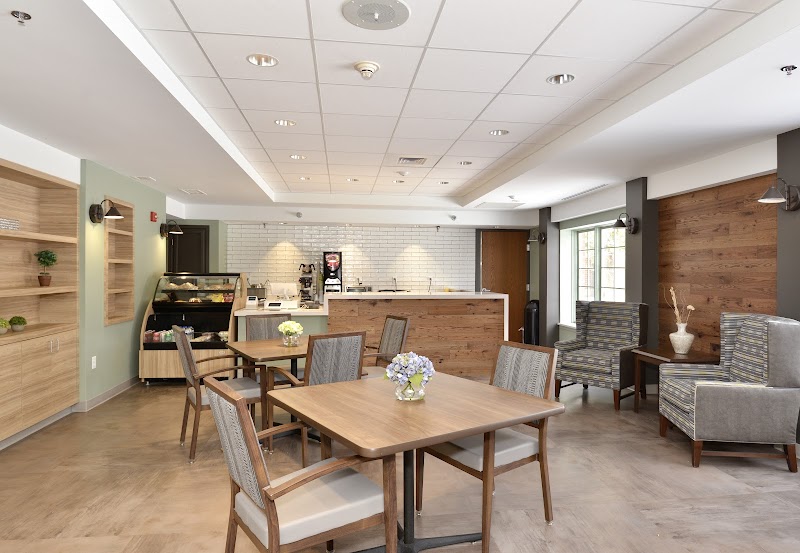
CMS rates Pomeroy Living Rochester Skilled Rehabilitation's staffing level at 4 out of 5 stars, which is above average compared to other nursing homes. Staff turnover is 45%, compared to the Michigan average of 46%. This relatively stable workforce can support continuity of care.

What Have Inspectors Found at Pomeroy Living Rochester Skilled Rehabilitation?

State health inspectors documented 45 deficiencies at Pomeroy Living Rochester Skilled Rehabilitation during 2023 to 2025. These included: 2 that caused actual resident harm and 43 with potential for harm. Deficiencies causing actual harm indicate documented cases where residents experienced negative health consequences.

Who Owns and Operates Pomeroy Living Rochester Skilled Rehabilitation?

Pomeroy Living Rochester Skilled Rehabilitation is owned by a for-profit company. For-profit facilities operate as businesses with obligations to shareholders or private owners. The facility operates independently rather than as part of a larger chain. With 182 certified beds and approximately 109 residents (about 60% occupancy), it is a mid-sized facility located in Rochester Hills, Michigan.

How Does Pomeroy Living Rochester Skilled Rehabilitation Compare to Other Michigan Nursing Homes?

Compared to the 100 nursing homes in Michigan, Pomeroy Living Rochester Skilled Rehabilitation's overall rating (2 stars) is below the state average of 3.1, staff turnover (45%) is near the state average of 46%, and health inspection rating (2 stars) is below the national benchmark.

What Should Families Ask When Visiting Pomeroy Living Rochester Skilled Rehabilitation?

Based on this facility's data, families visiting should ask: "Can I visit during a mealtime to observe dining assistance and food quality?" "How do you handle medical emergencies, and what is your hospital transfer rate?" "Can I speak with family members of current residents about their experience?"

Is Pomeroy Living Rochester Skilled Rehabilitation Safe?

Based on CMS inspection data, Pomeroy Living Rochester Skilled Rehabilitation has a clean safety record: no substantiated abuse findings (meaning no confirmed cases of resident harm), no Immediate Jeopardy citations (the most serious violation level indicating risk of serious injury or death), and is not on the Special Focus Facility watch list (a federal program monitoring the lowest-performing 1% of nursing homes). The facility has a 2-star overall rating and ranks #100 of 100 nursing homes in Michigan. While no facility is perfect, families should still ask about staff-to-resident ratios and recent inspection results during their visit.

Do Nurses at Pomeroy Living Rochester Skilled Rehabilitation Stick Around?

Pomeroy Living Rochester Skilled Rehabilitation has a staff turnover rate of 45%, which is about average for Michigan nursing homes (state average: 46%). Moderate turnover is common in nursing homes, but families should still ask about staff tenure and how the facility maintains care continuity when employees leave.

Was Pomeroy Living Rochester Skilled Rehabilitation Ever Fined?

Pomeroy Living Rochester Skilled Rehabilitation has no federal fines on record. CMS issues fines when nursing homes fail to meet care standards or don't correct problems found during inspections. The absence of fines suggests the facility has either maintained compliance or corrected any issues before penalties were assessed. This is a positive indicator, though families should still review recent inspection reports for the full picture.

Is Pomeroy Living Rochester Skilled Rehabilitation on Any Federal Watch List?

Pomeroy Living Rochester Skilled Rehabilitation is not on any federal watch list. The most significant is the Special Focus Facility (SFF) program, which identifies the bottom 1% of nursing homes nationally based on persistent, serious quality problems. Not being on this list means the facility has avoided the pattern of deficiencies that triggers enhanced federal oversight. This is a positive indicator, though families should still review the facility's inspection history directly.