WellBridge of Rochester Hills
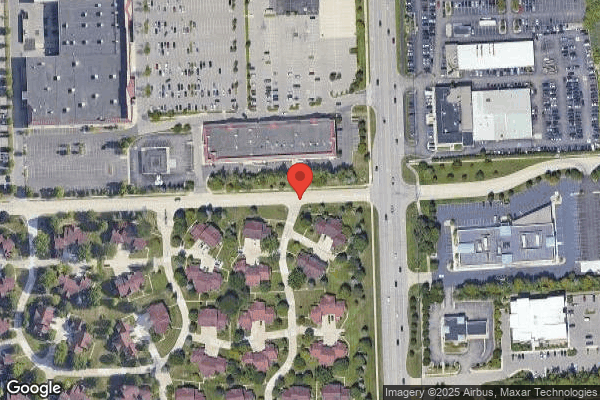

252 Meadowfield Drive, Rochester Hills, MI 48307 (248) 218-4800
For profit - Limited Liability company 100 Beds THE WELLBRIDGE GROUP Data: November 2025
Trust Grade
33/100
#256 of 422 in MI
Last Inspection: September 2024

Within standard 12-15 month inspection cycle. Federal law requires annual inspections.

Overview

WellBridge of Rochester Hills has received a Trust Grade of F, indicating significant concerns about the quality of care provided. This facility ranks #256 out of 422 nursing homes in Michigan, placing it in the bottom half of the state, and #14 out of 43 in Oakland County, meaning only 13 local options are better. The facility is showing signs of improvement, having decreased from 8 issues in 2024 to 4 in 2025, but it still faces serious challenges, including two serious incidents related to resident care. Staffing is rated average with a 3/5 star rating and a turnover rate of 48%, which is similar to the state average, but concerningly, it has less RN coverage than 92% of Michigan facilities, which can impact the quality of care. Specific incidents include a resident being pushed without proper adjustment leading to leg pain, and another resident developing a stage 3 pressure ulcer due to inadequate preventative measures. While there are some positive aspects, like the facility's 5/5 star rating for quality measures, families should weigh these strengths against the significant concerns highlighted in recent inspections.

Trust Score
F
33/100
In Michigan
#256/422
Bottom 40%
Safety Record
High Risk
Review needed
Inspections
Getting Better
8 → 4 violations
Staff Stability
⚠ Watch
48% turnover. Above average. Higher turnover means staff may not know residents' routines.
Penalties
⚠ Watch
$22,523 in fines. Higher than 96% of Michigan facilities. Major compliance failures.
Skilled Nurses
⚠ Watch
Each resident gets only 22 minutes of Registered Nurse (RN) attention daily — below average for Michigan. Fewer RN minutes means fewer trained eyes watching for problems.
Violations
⚠ Watch
27 deficiencies on record. Higher than average. Multiple issues found across inspections.
★★★☆☆
3.0
Overall Rating
★★★☆☆
3.0
Staff Levels
★★★★★
5.0
Care Quality
★★☆☆☆
2.0
Inspection Score
Stable
2024: 8 issues
2025: 4 issues

The Good

  • 5-Star Quality Measures · Strong clinical quality outcomes
  • Full Sprinkler Coverage · Fire safety systems throughout facility
  • No fines on record

Facility shows strength in quality measures, fire safety.

The Bad

3-Star Overall Rating

Near Michigan average (3.1)

Meets federal standards, typical of most facilities

Staff Turnover: 48%

Near Michigan avg (46%)

Higher turnover may affect care consistency

Federal Fines: $22,523

Below median ($33,413)

Minor penalties assessed

Chain: THE WELLBRIDGE GROUP

Part of a multi-facility chain

Ask about local staffing decisions and management

The Ugly 27 deficiencies on record

2 actual harm
Jun 2025 2 deficiencies
CONCERN (D) 📢 Someone Reported This

A family member, employee, or ombudsman was alarmed enough to file a formal complaint

Potential for Harm - no one hurt, but risky conditions existed

Deficiency F0561 (Tag F0561)

Could have caused harm · This affected 1 resident

**NOTE- TERMS IN BRACKETS HAVE BEEN EDITED TO PROTECT CONFIDENTIALITY** This citation pertains to Intake Number(s): MI00152206. Based on observation, interview, and record review, the facility failed ...

Read full inspector narrative →
**NOTE- TERMS IN BRACKETS HAVE BEEN EDITED TO PROTECT CONFIDENTIALITY** This citation pertains to Intake Number(s): MI00152206. Based on observation, interview, and record review, the facility failed to provide care according to the preference of the resident's legal decision maker for one (R901) of two residents reviewed for care planning and activities of daily living. Findings include: A review of a complaint submitted to the State Agency (SA) revealed an allegation that R901 was not getting two showers per week. On 6/4/25 at 9:10 AM, R901 was observed sitting up in bed. R901 appeared to have a language barrier, but seemed to understand some questions. When queried about when she received showers, R901 asked on which days was she was supposed to get them and said she thought Monday and Thursday. R901 was unable to clearly answer questions regarding showers and bathing. On 6/4/25 at 10:05 AM, an interview was conducted with R901's family member (FM), FM 'A'. FM 'A' reported they were the legal decision maker for R901 and they wanted R901 to get full showers at least two times a week and bed baths were not to be given in place of a shower. R901 reported on Monday, 6/2/25, R901 received a bed bath instead of a shower. R901 further explained they reported their concern to the Administrator and they arranged a time for FM 'A' to be present in the facility the following day, 6/3/25 at 2:00 PM to ensure R901 received a shower. FM 'A' reported they arrived at the facility at 2:00 PM and was informed R901 received a shower before lunch. FM 'A' reported the facility told her R901 refused showers at times, but FM 'A' told them to contact her so that she could attempt to communicate with R901 in her language to help convince her to shower, as she may not understand what the staff wanted to do. On 6/4/25, the Administrator was asked to provide any grievance/concern forms for R901 since March 2025. The Administrator reported he talked to R901's family on a daily basis and did not document all concerns on forms, but would provide evidence of other forms of communication. A review of copies of email conversation between FM 'A' and the facility provided by the Administrator revealed the following: On 6/2/25 at 7:48 PM, an email was sent to the Director of Nursing (DON) by FM 'A' and it read, Why is my grandma (R901) still getting bed baths? I was told she got a bed bath today by the nurse because you guys are short staffed! I don't know how much more clear I need to be that my grandma is to always get a full shower not bed baths for any circumstance or I need to be called. I am sick and tired of her not getting her full showers . The DON responded and said they would look into the concern. On 6/3/25 at 5:09 PM, an email was sent to the DON by FM 'A' and it read, .I have also spoke with the new u it <sic> manager and made it very clear to him that we want her to get full showers twice a week and no bed baths if there are any issues I'm always available to call or Face Time via her phone . A review of R901's clinical record revealed R901 was admitted into the facility on 7/5/24 and readmitted on [DATE] with diagnoses that included: End Stage Renal Disease (ESRD) and Parkinson's Disease. A review of R901's Minimum Data Set (MDS) assessment dated [DATE] revealed R901 had severely impaired cognition, was dependent on staff for showers and baths, and was not assessed for tub/shower transfers due to it being not applicable. A review of R901's Tasks (where the Certified Nursing Assistants - CNAs document the care they provided) revealed a task for Bathing/Showers: Monday and Friday AM Shift NO BED BATHS. The last documented shower for R901 was on 5/26/25. It was documented on 5/30/25 that R901 refused a shower. However, there was no further documentation of a shower after that date. According to R901's Monday and Friday schedule, R901 should have received a shower on 6/2/25. A review of R901's care plans revealed no intervention to specify R901 should receive full showers and not bed baths on their scheduled shower days. An intervention was initiated on 7/5/24 that read, Assist the pt (patient) with showers/bed baths. A review of a Skilled Charting progress note dated 5/30/25 at 2:00 PM revealed, Guest refused shower x 2. Unit manager and 2 CNAs present. Guest stated she got cleaned up in the morning and would take a shower on Monday. On 6/4/25 at 2:30 PM, an interview was conducted with the Administrator. When queried about how the facility ensured R901 received full showers instead of bed baths per the family's preference, the Administrator reported they initially switched the showers to be scheduled on days R901 did not go to dialysis and continued to educate staff. The Administrator reported the staff on R901's hallway were not always consistent so they offered a room change to a different hallway but FM 'A' refused. The Administrator reported the plan of care should be followed regardless of whether the staff think they are short of staff. The Administrator reported on 6/2/25, the CNA gave R901 a bed bath instead of a shower and CNA was provided with education. The Administrator stated, We try our best and if a shower cannot be given, a bed bath should always be offered. When queried about where showers were documented, the Administrator reported in the CNA Task. When queried about what happened on 6/3/25 with R901's shower, the Administrator reported they scheduled a time with the family so they could come to the facility when R901 received her shower, but the nurse had an opportunity to give her a shower and did it before the family got there. When queried about where that shower was documented, the Administrator did not offer a response. A review of an Employee Corrective Action form dated 6/2/25 revealed CNA 'D' received education regarding the following: .Guest received bed bath on 6/2 .Guest .is to have showers only as stated in the Kardex (CNA care guide) and shower schedule .
CONCERN (D) 📢 Someone Reported This

A family member, employee, or ombudsman was alarmed enough to file a formal complaint

Potential for Harm - no one hurt, but risky conditions existed

Quality of Care (Tag F0684)

Could have caused harm · This affected 1 resident

**NOTE- TERMS IN BRACKETS HAVE BEEN EDITED TO PROTECT CONFIDENTIALITY** This citation pertains to Intake Number(s): MI00153363. Based on interview and record review, the facility failed to treat the r...

Read full inspector narrative →
**NOTE- TERMS IN BRACKETS HAVE BEEN EDITED TO PROTECT CONFIDENTIALITY** This citation pertains to Intake Number(s): MI00153363. Based on interview and record review, the facility failed to treat the resident's high blood sugar in a timely manner for one (R902) of one resident reviewed for diabetes management. Findings include: A review of a complaint submitted to the State Agency (SA) revealed an allegation that R902's blood sugar was 452 at 9:00 PM, he needed an insulin shot, and did not receive treatment until 2:00 AM the next day. On 6/4/25 at 9:15 AM, an interview was conducted with R902. When queried about any concerns about his care in the facility, R902 reported a recent issue with his blood sugar. R902 explained his blood sugar was 452 one evening at 9:00 PM. He pressed the call light and a nurse came in. He informed the nurse he needed insulin and she told him she could not give it without a physician's order. R902 further explained at 12:00 AM, the nurse came back and said the physician never called back so she could not give him additional insulin. R902 reported he was irritated because at home he managed his own insulin and the doctor who managed his diabetes gave him specific instructions on how to monitor his blood sugar and administer insulin when needed. R902 reported the facility was not following the same regimen. R902 had his own personal glucose monitoring device in his room and reported he checked his own blood sugar levels in addition to the nurse. R902 said on the evening when his blood sugar was high, he was not able to receive additional insulin until 2:00 AM and then his blood sugar started to come down. R902 reviewed some notes he had and said the date of the event was 5/24/25 and he discussed his concerns with the Administrator. A review of R902's clinical record revealed R902 was admitted into the facility on 5/16/25 with diagnoses that included: type 2 diabetes. A review of a Minimum Data Set (MDS) assessment dated [DATE] revealed R902 had intact cognition. A review of R902's Physician's Orders revealed the following orders: Insulin Aspart (fast acting insulin) 100 units/milliliter (ml) - inject 12 units subcutaneously four times a day (QID) Insulin Glargine (long acting insulin) 100 unit/ml - inject 16 units in the morning A one time order for Insulin Aspart ordered on 5/25/25 at 2:16 AM A review of R902's Medication Administration Record (MAR) for May 2025 revealed on 5/24/25 at 9:00 PM, R902's blood sugar was recorded as 420 mg/dl (milligrams per deciliter) by Licensed Practical Nurse (LPN) 'C', which indicated R902's blood sugar was very high. A review of R902's progress notes revealed a Skilled Charting progress note dated 5/25/25, written by LPN 'C' that read, .He had c/o (complained of) a high BS (blood sugar). Writer collected guest BS, results were 420, writer administered 12 units long-acting insulin as ordered. Writer notified on call HCP (Health Care Provider), after an hour no response. Writer recheck guest BS results were 412. Guest was insisting writer give him more insulin. Writer as well as the supervisor informed guest that the HCP was notified and we were waiting on a response. Writer and supervisor also explained that he was given a long-acting insulin and we could not just inject him with more because it could drop his sugar too low (R902's order for long acting insulin was for the morning). The supervisor than <sic> called the HCP, no answer. Writer rechecked guest BS at (1:24 AM) reading was 337. A review of a Skilled Charting progress note dated 5/25/25 at 2:21 AM revealed, On call HCP gave order for 6 units of Novolog (insulin aspart), recheck BS in 2 hours. It should be noted that that order was received five hours after R902 first notified the nurse of the high BS and it was recorded on the MAR as 420 mg/dl. A review of R902's care plan for diabetes mellitus revealed interventions initiated on 5/16/25 that read, Obtain blood sugar results, sliding scale as ordered by MD (physician). Notify MD of any abnormal results (It should be noted R902 did not have sliding scale insulin ordered) and Follow diabetic protocol as per MD order. Notify MD if any abnormals occur (It should be noted there were no specific parameters included in the physician's orders). On 6/4/25 at 3:16 PM, an interview was attempted with LPN 'C' via the telephone. However, LPN 'C was not available for interview prior to the end of the survey. On 6/4/25 at 3:20 PM, an interview was conducted with the Administrator. When queried about what R902 told him about his concerns regarding the way his high blood sugar was managed on 5/24/25, the Administrator denied R902 reported anything to him and said Unit Manager, Registered Nurse (RN) 'B' talked to R902 regarding his medications before. On 6/4/25 at 3:36 PM, an interview was conducted with RN 'C'. When queried about the process for addressing a resident's high blood sugar, when all ordered insulin had already been administered, RN 'C' reported the medical providers were typically very responsive and it would be expected that the nurse contacted the provider via the facility's text messaging system. RN 'C' reported there was always an on-call provider available after hours. When queried about what timeframe would be reasonable to wait for the provider to call back, RN 'C' reported about 30 minutes. When queried about what the nurse should do if the provider did not call back, RN 'C' reported they could always contact the provider again or contact another provider. RN 'C' denied having knowledge of R902's concern about his blood sugar management on the evening of 5/24/25. When queried about whether five hours was a reasonable amount of time to wait for the provider to call back, RN 'C' reported it was a long time, but he wasn't symptomatic. On 6/4/25 at 4:00 PM, an interview was conducted with the Director of Nursing (DON). When queried about what would be considered a timely response in regards to a physician calling back after being notified of a change in resident's condition, specifically, an elevated blood sugar that potentially needed to be treated with insulin, the DON stated, A half hour to an hour. When queried about the process for notifying the medical provider, the DON reported the facility had an on-call Nurse Practitioner (NP) after 7:00 PM and the attending physicians were included in the text messages that were sent out. When queried about the five hour delay in getting a hold of the medical provider when R902's blood sugar was high, the DON stated, They could have contacted the provider. A review of a facility policy titled, Nursing Care of the Resident with Diabetes Mellitus (undated) revealed, in part, the following, .Glucose Monitoring .Normal ranges are approximately 70-130 mg/dl before meals and (less than) 180 mg/dl after meals . A review of a facility policy titled, Acute Condition Changes - Clinical Protocol (undated) revealed, in part, the following, .The Attending Physician (or a practitioner providing backup coverage) will respond in a timely manner to notification of problems or changes in condition and status .The staff will notify the Medical Director for additional guidance and consultation if they do not receive a timely or appropriate response .
Mar 2025 1 deficiency
CONCERN (E) 📢 Someone Reported This

A family member, employee, or ombudsman was alarmed enough to file a formal complaint

Potential for Harm - no one hurt, but risky conditions existed

Accident Prevention (Tag F0689)

Could have caused harm · This affected multiple residents

**NOTE- TERMS IN BRACKETS HAVE BEEN EDITED TO PROTECT CONFIDENTIALITY** This citation pertains to Intake #: MI00150503. Based on observation, interview, and record review facility failed to investigat...

Read full inspector narrative →
**NOTE- TERMS IN BRACKETS HAVE BEEN EDITED TO PROTECT CONFIDENTIALITY** This citation pertains to Intake #: MI00150503. Based on observation, interview, and record review facility failed to investigate an incident of hot liquid spill (unknown resident) and failed to implement interventions/supervision related to falls for two (R801 and R803) of four residents reviewed for accidents resulting in a fall with major injury and hospitalization (R803); with potential for continued falls for R803. Findings include: A complaint received by the State Agency read in part, (R801- name omitted) had a fall and sustained a hip fracture. Complainant also states the (R801- name omitted) had a laceration on head .was found in the lunch area after fall. R801 R801 was admitted to the facility on [DATE] after a hospital stay from 11/4/24 to 11/10/24. R801 was living at home with their family member prior to admission to the hospital and was admitted to hospital after a fall. R801's admitting diagnoses included wedge compression of lumbar spine due to fall, mixed Alzheimer's disease and vascular dementia, mood disorder, anxiety, and history of mini strokes and falls. Based on the Minimum Data Set (MDS) assessment dated [DATE], the Brief Interview for Mental Status (BIMS) assessment was scored a 1/15, indicative of severe cognitive impairment (when manually added the assessment scores). Review of MDS assessment dated [DATE] did not reflect R801's fall history and their fracture prior to recent admission to facility. An interview with the complainant was completed on 3/13/25 at approximately 1:15 PM. During the interview the complainant reported that R801 sustained a left hip fracture after their fall in the facility lunchroom on 2/20/25 and they were transferred to the hospital, after their request. Staff were not going to send their mother to the hospital until they had insisted to transfer them. They added that their mother had multiple falls at the facility, in their room and in the dining room. They added that their mother kept trying to stand up; that facility knew that they were a fall risk. They added that there were no staff members watching their mother when they were in dining room and their mother had fallen in the dining room prior to this incident on 2/20/25. They reported that their mother was receiving hospice services during their stay at the facility. They also added that they started taking their mother to an adult day care facility on Fridays approximately 3 weeks prior to the transfer to the hospital and their mother was staying at the other facility for about 6 hours at a time. A follow up interview was completed with a family member was completed on 3/13/25 at approximately 1:45 PM. The family member reported that they visited their family member regularly at the facility. They added the residents would sit in the dining room after lunch and the facility staff were not monitoring them. They reported that in December (approximately before Christmas) they were in the lunchroom and a resident spilled coffee on themselves and they had to find a staff member and got assistance as there were no staff in the dining room. They identified the staff member as the therapist, who came and assisted the resident. (This incident was confirmed by a facility staff member). Review of R801's hospital records dated 2/20/25 revealed that they were admitted to the hospital after a fall at the facility and they were diagnosed with a closed and displaced fracture of the left femur and head injury to the left forehead. Review of R801's admission fall risk assessment dated [DATE] reveled a score of 16, indicative of high risk for falls. Review of R801's care plan revealed the following interventions that were initiated on 11/10/24 and read: Administer medications as ordered by physician; evaluate lab test and x-ray PRN (as needed); neuro-checks per protocol; reinforce the need to call for assistance; requires 1-person assist with transfers, non-ambulatory. It must be noted that R801 had significant cognitive deficits. R801 did not have any other resident specific fall prevention interventions in place based on their admission fall risk assessment, their diagnosis, cognitive and physical limitations with history of falls. Review of R801's hospital records (prior to admission to hospital) revealed a care management note dated 11/5/24. The note read patient currently has a sitter for safety .referral sent to (Skilled Nursing Facility name omitted) - will need 24-hour sitter for acceptance . Review of R801's physical and occupational therapy evaluation dated 11/8/24 revealed significant deficits with safety due severe cognitive impairment. Review of R801's Electronic Medical Record (EMR) revealed the nursing progress note dated 2/20/25 at 17:17 (5:17 PM) that read in part, CENA (Certified Nursing Assistant) approached the writer asking for assistance with change in elevation in the dining room. Writer entered the dining room and observed a staff member supporting guest .laceration noted to left temple, blood beginning to clot .left lower extremity (LLE) range of motion (ROM) impaired with decrease ROM noted .son arrived and requested guest to go to hospital. At that time multiple nurses notified the son (name omitted) that hospice would be sending someone to evaluate. Son insisting guest to go to hospital . Review of the fall care plan dated 2/20/25 included the intervention that read Activities to notify nursing when activity has ended and guest will be unattended in the dining room. A request was sent to facility administrator to provide all the incident and accident (I&A) reports for R801 from 11/10/24 to 2/20/25. Received I&As for the following dates: 11/24/24, 12/16/24, 1/2/25, 2/25/25, and 2/20/25. Review of I&A reports revealed that R801 had falls in the common area (s) on 12/16/24, 2/5/25 and 2/20/25. I&A dated 12/16/24 read, Guest was observed lying on her left side on the floor in front of her w/c (wheelchair) next to the couch in the common area outside of the north team room, it appears that the guest was trying to self-transfer from the w/c to the couch . I&A dated 2/5/25 read, Nurse was notified by activities aide that resident was on the floor in the dining room. She states that she did not see her fall. Resident observed on the floor in the dining room lying on her left side between the tables . I&A dated 2/20/25 read, CENA approached writer asking for assistance w/ (with) change in elevation in dining room. Writer entered dining room and noted staff member supporting guest who was positioned on buttock w/ legs stretch outward and flat. Wheelchair w/in reach and to the front/left of guest. Dining room chair to the right of guest . Review of the statement from the facility administrator dated 2/21/25 read, I was rounding the north side of the building just before 4pm on Thursday 2/20 and was walking through the dining room coming from the 700-hallway side and just finished talking to (name omitted) briefly. When walking through the dining room I saw a blur out of my peripheral and heard a thud. I turned and (R801's name omitted) was on the floor and her dining room chair was fallen over backwards. I went to her and kneeled down behind her and tried to prop her head up off the ground I called out for (CNA) A and LPN B- name omitted). Both came to the north dining room and assisted with getting (R801) back into the wheelchair. An interview with LPN B was completed on 3/14/25 at approximately 10:30 AM. LPN B was called to complete the assessment on R801 after their fall in the dining room on 2/20/25. LPN B reported that they recalled the incident and they were notified by the Certified Nursing Assistant (CNA) that R801 was on the floor in the North dining room and they completed the initial assessment. They were not assigned to the unit and they were notified of the fall and they did the assessment. An interview with CNA A was completed on 3/14/25 at approximately 12:20 PM. They reported that they had been working at the facility for 2 years. They were queried about R801's fall on 2/20/25. They reported that they remembered the incident. They reported that they were walking down the dining room and they heard someone calling. They observed R801 was on the floor in the dining room and the administrator was holding R801 in back. They went and notified LPN B and they had both assisted R801. R803 R803 was a long-term resident of the facility. R803 was originally admitted to the facility on [DATE]. R803's admitting diagnoses include dementia, stroke, visuo-spatial neglect after stroke, history of falls, mood disturbance and anxiety. Based on the Minimum Data Set (MDS) assessment dated [DATE] R803 had a BIMS score of 2/15, indicative of significant cognitive impairment. An initial observation was completed on 3/13/25 at approximately 3:05 PM. R803 was observed sitting in their wheelchair in the room. R803's bedside table was in front of their wheelchair. R803's call light was laying on their lap and the clip to secure call light was broken. R803 had their bed against the wall on the right side and had perimeter mattress. R803 was sitting in a regular wheelchair with a cushion. The wheelchair did not have any safety devices (anti-tip and dycem - nonslip sheet). The back of the wheelchair had rubber tips on both sides (which had to be removed to install the anti-tips). R803 was sitting on a cushion and there was no dycem visible on top or below the cushion on the corner. R803 was able to answer simple questions. Later that day a follow up observation approximately at 3:30 PM. R803 was observed sitting in their room in their wheelchair. Call light was on lap with broken clip. There were no anti-tips attached to their wheelchair. Follow-up observations were completed on 3/14/24. During an observation completed at approximately 7:30 AM, R803 was observed outside of their room in their wheelchair with a staff member. The staff member was assisting R803 to the dining room for breakfast. R803 was observed sitting in the same wheelchair. There were no anti-tips attached to the wheelchair. The call light was on their bed and the clip was broken. At approximately 7:50 AM, a staff member was assisting R803 with their breakfast in the dining room. At approximately 7:55 AM, staff member assisted R803 back to their room. R803 was sitting in their wheelchair in front of their bed facing the television on the wall. The call light (with a broken clip) was on R803's bed. R803's wheelchair did not have any anti-tips and there was no dycem on top of the cushion and they were not visible under the cushion on the corners. Review of R803's fall risk assessment dated [DATE] revealed a score of 16, indicative of high risk for falls. Review of R803's care plan revealed a fall care plan that included the following interventions: 2 PA (person assist) for transfers; non ambulatory; administer medications as ordered by physician; anti-tips applied to wheelchair (initiated on 4/3/24); dycem to wheelchair (initiated on 3/10/24); encourage and assist guest to common area/dining room for activities and meals, winged mattress for perimeter awareness, bed in low position etc. An interview was completed Licensed Practical Nurse (LPN) E on 3/14/25 at approximately 7:45 AM in the hallway where R803 was residing. LPN E was the nurse assigned to care for R803 during that shift. LPN E' was queried about the fall preventions interventions they had in place for R803 and where did they find the information. LPN E had their computer on wheels in the hallway and they had checked R803's Electronic Medical Record (EMR) and pulled up the orders for R803 and they reported that they would find the interventions under orders. They were notified that all interventions were not under physician orders and asked if they were able review the care plan for R803. They reviewed the EMR for a few seconds and reported that they did not how to review the care plans and they needed to check with someone and they had left the unit for a few minutes. At approximately 8 AM in the hallway, a follow-up interview was completed with LPN E. They were queried about R803's care plan and if they were able to check with anyone. They reported that they had checked and they pulled up the care plan for R803. They read the interventions listed under the care plan. They were asked if they could show the anti-tip bars and dycem on R803's wheelchair. LPN E reported that R803 got anxious and they were falling risk and that is why they had the device in the wheelchair. LPN E walked in the room and checked the wheelchair and stated it was supposed to be in the back of wheelchair and they were not sure. Throughout this time R803 was in the room by themselves with a call light with a broken clip was on their bed that was behind the wheelchair. LPN E stated that they needed to go check with someone and had left the room/unit. At approximately 8:10 AM, LPN E returned to the hallway with Regional Nurse Consultant (RC) C. LPN E reported to RC C that R803 did not have their anti-tips. RC C confirmed that there were no anti-tips to the wheelchair. RC C reported that R803 might have just received this wheelchair and they were notified that R803 had been sitting in the same wheelchair since yesterday and were notified of the observations. They were also notified of the concern with dycem and RC C was notified of the prior observations. RC C reported that R803 would get easily agitated and they needed the device (s) and they would follow-up. They were also notified of the dycem that was not in wheelchair. RC C was also notified of the broken call light clip and the call light that was not within reach, in the bed. They picked up the call light from bed and confirmed that it was broken and they would follow up. At approximately 8:50 AM (on 3/14/25) RC C came over and reported that they understood the concerns and they had changed R803's care plan to have anti-roll back and they had provided the dycem. An interview with Physical Therapist Assistant (PTA) D' was completed on 3/14/25 at approximately 10 AM. They were queried that if they recalled an incident that happened in the dining room when a family member of a resident had called to assist another resident who had spilled hot coffee. PTA D reported that they remembered the incident and it was a few months ago. They reported that this was a resident with cognitive deficits who had spilled coffee in the dining room. They were walking by and they were asked by another family member to assist. PTA D reported that they did not know the name or the room number for this resident. They added that the coffee was warm and they had spilled it on their thighs. They added that they took this (unknown) resident to the nurse and they believed it was the 400-hall nurse, but they were not able confirm. They also believed that this resident was no longer at the facility. They did not have any other specifics. An initial interview with the Director of nursing (DON) was completed on 3/14/25 at approximately 10:15 AM. During the interview there was another staff member in the room. They were queried about if they were aware of an incident where a resident had spilled hot coffee in the dining room. The DON reported that they did not recall any incident. They were notified that the incident was witnessed by a facility staff member, who assisted the resident. They were queried of their protocol for residents that have spilled hot beverages on them. The DON reported that their staff were expected to notify them any such incidents with any injures. They were not aware of any such incidents and they would check if they had any investigations. An interview Unite Manager (UM) F was completed on 3/14/25 at approximately 12 PM. UM F reported that they covered 3 units (500, 600 and 700 hallways). They were queried about their expectations/facility process for admission fall risk assessment and implementation of resident specific interventions for their new residents. UM F reported that upon admission the admitting nurse completed a fall risk assessment and implemented generic fall interventions for all new residents admitted to the facility. During their stay if residents had falls or there were any changes they added additional interventions. UM F was queried further if the initial interventions were resident specific based on their admission fall risk assessment i.e. would there be any additional resident specific fall prevention interventions implemented for a high-risk resident (s) that would be different from a moderate or a lower risk resident, they reported that their initial interventions were generic, the same for all their new residents. They did not provide any rationale on why they were not resident specific based on their assessments. UM F was queried about what generic interventions were ordered for their new residents. They checked the EMR and shared the following interventions: administer meds, evaluate labs and test x-rays, transfer status, neuro check per protocol, ambulation/transfer. They added that additional interventions were added after root cause analysis after an incident. UM F was queried about R801's (who was a high-risk for falls on admission, with diagnosis of fracture and severe cognitive impairment) fall preventions interventions upon admission to facility. They checked the EMR and reported that R801 had the generic interventions (as above) were ordered upon admission in addition to an intervention reinforce need to call for assistance. It must be noted that R801 had severe cognitive deficits and may not be able to call for assistance due to confusion. A follow up interview was completed with the DON on 3/14/24 at approximately 12:30 PM. The DON was queried about their staff expectations for fall risk assessments and implementation of interventions upon admission. The DON reported that admitting nurses were completing admission fall risk assessments and implemented standard interventions for residents who were at risk. They were queried if the fall preventions interventions were resident specific based on their admission risk assessment and they reported that admission interventions were only generic/standard regardless of their risk level and they added additional resident specific interventions were added as need based on root cause analysis if they had any incidents during their stay. The DON was queried about the purpose of the admission fall risk assessment if admission interventions were generic; not resident specific, they did not provide any explanation. The DON was queried about R801 who had a sitter in the hospital prior to discharge and why they did have any additional resident specific interventions. The DON reported that they were not aware R801 had a sitter at the hospital and usually their admissions team reviewed hospital documentation, not the clinical team. The DON was queried on what their expectations were to ensure all fall prevention intervention(s) were in place as ordered/recommended. They reported that the nurses, unit managers, and clinical leaders were supposed to check during their daily rounds.The DON was notified of concern related to R801's resident specific fall prevention interventions and R803's interventions that were not in place. They reported that they understood the concerns. A follow-up interview with RC C was completed on 3/14/25 at approximately 1 PM. RC C confirmed that their team was unaware of staff witnessed incident of an unknown resident who had spilled coffee in the dining room that was also witnessed by another family member. RC C was notified of the concerns with R801's fall prevention interventions that were not resident specific and R803's fall prevention interventions that were not in place. They reported that they understood the concerns and they would follow up. Review of facility provided document titled Accidents and Incidents - Investigating and Reporting with a revision date of 2011 (revised approximately 14 years ago) read in part, All accidents or incidents involving residents, employees, visitors, vendors, etc. occurring on our premises shall be investigated and reported to the administrator. The document did not address facility process on fall risk assessment on admission, implementation of resident specific meaningful interventions, and process to monitor the implemented interventions were in place.
Feb 2025 1 deficiency
CONCERN (D) 📢 Someone Reported This

A family member, employee, or ombudsman was alarmed enough to file a formal complaint

Potential for Harm - no one hurt, but risky conditions existed

Free from Abuse/Neglect (Tag F0600)

Could have caused harm · This affected 1 resident

**NOTE- TERMS IN BRACKETS HAVE BEEN EDITED TO PROTECT CONFIDENTIALITY** This Citation pertains to intake MI00148469 Based on [observations/interviews/record review], the facility failed to protect the...

Read full inspector narrative →
**NOTE- TERMS IN BRACKETS HAVE BEEN EDITED TO PROTECT CONFIDENTIALITY** This Citation pertains to intake MI00148469 Based on [observations/interviews/record review], the facility failed to protect the resident ' s (R402) right to be free from mental and physical abuse by staff (CNA B). Findings include: On 11/27/24 a complaint was submitted to the State Agency for alleged verbal and physical abuse to R402. On 2/12/25 at 9:42 AM, Family Member (FM) A was interviewed. FM A was asked about the alleged abuse that R402 had gone through. FM A reported that on 11/27/24 at around 5:30 AM, a Certified Nursing Assistant (CNA) B had hit R402 on the hand and degraded a demented resident when they called R404 Grumpy several times. FM A reported that the night before 11/26/24 they placed a camera in the room because there was suspicion of abuse. A review of the video camera footage revealed that CNA B entered R402's room told R402 Happy Birthday and proceeded to change and get them dressed for the day. CNA B started a brief change on R402 when CNA B was observed shoving R402's hand away and began calling R402 Grumpy. Throughout the video CNA B called R402 Grumpy and said Happy Birthday Grumpy. As the video continued R402 was pulling away from CNA B and CNA B made an intimidating gesture towards R402. A record review revealed that R402 was admitted to the facility on [DATE] with a medical diagnosis of dementia, major depressive disorder, and anxiety disorder and received hospice services. R402's Minimum data set (MDS) revealed R402's Brief Interview For Mental Status Score (BIMs) of three, indicating severe cognitive impairment. On 2/12/25 at 11:57 AM, an interview with the Administrator was conducted. The Administrator was asked what the outcome of the investigation for R402 was. The Administrator reported that cameras are not a part of corporate policy but we did educate CNA B on how to talk to individuals, on the company policy for abuse, peri care and, quality of care. The Administrator was asked if they were able to see the video footage and if so what were their thoughts on how the CNA interacted with R402. The Administrator reported that they did see the video footage and that was why CNA B was reeducated. There was no additional information provided by exit of the survey.
Sept 2024 3 deficiencies 1 Harm
SERIOUS (G) 📢 Someone Reported This

A family member, employee, or ombudsman was alarmed enough to file a formal complaint

Actual Harm - a resident was hurt due to facility failures

Accident Prevention (Tag F0689)

A resident was harmed · This affected 1 resident

**NOTE- TERMS IN BRACKETS HAVE BEEN EDITED TO PROTECT CONFIDENTIALITY** Resident #8 This citation pertains to Intake: MI00145995 A review of a complaint filed with the State Agency included an allegat...

Read full inspector narrative →
**NOTE- TERMS IN BRACKETS HAVE BEEN EDITED TO PROTECT CONFIDENTIALITY** Resident #8 This citation pertains to Intake: MI00145995 A review of a complaint filed with the State Agency included an allegation that R8 was sliding down in their chair and staff pushed the resident without adjusting resident and caused leg pain. Clinical record review revealed R8 was admitted to the facility on [DATE] as a transfer from another Skilled Nursing Facility for Long Term Care. R8 has a medical history which includes, Parkinson's (disease that affects the nervous system), dementia, depression, absence of left leg above the knee, heart failure, diabetes with neuropathy (nerve damage), chronic kidney disease, and requires hemodialysis ( a procedure to externally remove waste from the body). R8 is verbal in native language, speaks limited English. The Brief Interview Mental Status (BIMS) dated 7/19/24 scored 4/15 indicating R8 has severe cognitive impairment. On 9/5/24 at 9:59 AM, a telephone interview was conducted with the complainant and stated that on 7/28/24 while on the phone (Facetime) with R8, they observed the staff were transferring R8 by pulling the reclining wheeled chair, her bottom was falling off and was screaming of leg pain. The complainant called the police, a report was made, and called 911 for R8 to be transported to the Emergency Department for evaluation. Progress Note dated 7/28/24 documented while the family was speaking to R8 in native language, R8 complained of 10/10 leg pain while being transferred via Hoyer lift to stretcher and required pain medication. 9/11/24 at 09:00 AM, an interview with the Nursing Home Administrator confirmed that two of the facility's Certified Nursing Assistants (CNA) were transporting R8 in the wheeled chair improperly. The NHA remarked there was video of the incident, but it has since been wiped out and unable to retrieve for review. The NHA confirmed the transfer was not dignified, the resident was being pulled, not pushed. The NHA, confirmed the family was on Facetime, translated for R8, which then lead to calling the Police. Family was concerned of leg trauma and was sent to the ED per family request for evaluation. An inquiry for medical documentation from ED Visit was requested, and the NHA was unable to provide the ED after visit summary. On 9/11/24 at 12:09 PM, an interview was conducted with CNA G. Per CNA G, R8 was in a reclining wheeled chair, and recalled R8 was slipping down into the chair and was then pulled up. CNA G indicated the chair is difficult to maneuver and while transporting, R8 started yelling of leg pain, was taken back to their room and informed the assigned nurse. Resident #35 A clinical record review revealed R35 was admitted to the facility on [DATE] with medical history of hypertension, respiratory failure, repeated falls, muscle weakness, malnutrition, sacral pressure ulcer, atrial fibrillation (abnormal heartbeat) and colon resection with colostomy placement (bag appliance attached to the outer abdomen to collect waste). A Brief Interview of Mental Status (BIMS) score revealed 1/15 indicating severe cognitive impairment. Record review revealed on 7/12/24 at 5:34 AM, R35 was found on the floor. A skin assessment discovered an abrasion on the left scalp. R35 indicated to nursing staff that they rolled out of the bed and hit their head hard on the floor. Root cause determined that R35 had poor cognition and safety awareness. Record review revealed on 7/24/24 at 2:20 AM, R35 was found lying on their right side on the floor, and the bed was elevated to its highest position. R35 sustained abrasion injuries to the right buttock, right knee, face, and left outer ankle. Root cause determined R35 raised the bed to highest position, has poor cognition and safety awareness, and rolled out of the bed. On 7/24/24, Plan of care was updated to include bolsters to the side of the mattress to prevent from rolling out of bed. Record review revealed on 8/25/24 at 1:00PM, R35 was observed laying on their left side on the floor. R35 had sustained trauma, redness and swelling to their left eye. Root cause determined poor cognition and safety awareness, restless when in room. Plan of care updated to include encouraging guest to be in common areas while awake and in chair. Record review revealed on 9/7/24 at 6:44 PM, R35 was observed on the floor and reported rolled out of bed. Root cause was determined R35 becomes restless if in bed to eat, has poor cognition, impulsive, and would benefit to eat in the dining room. Plan of care updated to include and encourage guest to go to dining room. On 9/9/24, Prior to morning care, R35 was observed lying in bed in the high position. R35 was observed asleep in the fetal position facing the wall, brief on, legs very thin, floor matt noted next to bed, tray table middle of room, oxygen delivered via nasal canula not on correctly and laying on top of forehead. On 9/10/24 at 10:14 AM, R35 was observed asleep, with television on. The tray table with three full beverages and television remote were observed in the middle of room out of reach for resident. On 9/10/24 at 11:28 AM, R35 was observed in wheelchair propelling out of room independently, repeating I am going to fall oxygen tubing was off and on the floor in room. Assigned Licensed Practical Nurse (LPN) M was observed assisting R35 and redirecting for lunch and encouraged R35 to go to dining room for lunch. R35 agreed and was wheeled to dining room. On 9/10/24 at 11:57 AM, R35 was observed in the dining room with one other resident at table both waiting for lunch to be served. R35 was observed calmly moving backward from the table and propelled self towards the middle of dining room. Moments later, Registered Nurse (RN) L was observed speaking with R35, then observed RN L wheeling R35 out of the dining area prior to meal delivery and opportunity to eat. On 9/10/24 at 12:08 PM, R35 was observed alone in the middle of the 300 hallway. After minutes of observation, RN L was observed walking toward R35 and overheard asking if they want to go watch the birds. On 9/10/24 at 12:40 PM, R35 was observed lying in bed assisted by CNA O eating a peanut butter sandwich and bacon. When inquired why R35 was not eating in the dining room, CNA O replied I don't know. LPN M was also inquired why R35 did not remain in the dining room for lunch. LPN M replied in a frustrated tone that R35 should not be eating in bed, should have remained in dining area but RN L Took Over and that is why R35 is eating in bed. 09/10/24 at 2:45 PM, an interview was conducted with the Director of Nursing (DON) who was aware R35 has had four episodes of being found on the floor since admission on [DATE]. The DON acknowledged they have implemented interventions to prevent falls, but R35 continues to be found on the floor. When inquired what measures were being implemented, the DON stated more frequent brief changes and commented Activities was involved but if R35 wants to go back to bed, that is their choice. The DON referenced other possible interventions could involve Hospice & Palliative services, and further stated that gets complicated when a Guardian is involved. R25 A complaint was filed with the State Agency (SA) that alleged R25 was dropped during a Hoyer lift transfer and/or injured by the Hoyer lift on more than one occasion. Following each accident R25 had to go to the hospital due to pain and injury. On 9/9/24 at approximately 10:50 AM, R25 was observed lying in bed. The resident was alert and able to answer most questions asked. When asked about care provided in the facility and if they had had any falls and/or accidents, R25 reported that they had. R25 stated that a few weeks ago they fell from the Hoyer lift during a transfer and hit their head and had to go to the hospital. They also noted they had another incident just a few days prior to that incident involving the Hoyer lift. Also, they had another incident a few months ago. R25 noted that the girls were not using the chair and lift correctly. A review of R25's clinical record revealed the resident was initially admitted to the facility on [DATE] with diagnoses that included: type II diabetes, morbid obesity and unspecified dementia. A review of the resident's Minimum Data Set (MDS) indicated the resident had a Brief Interview for Mental Status (BIMS) score of 8/15 (moderately cognitively impaired). Further review of the resident's record indicated the resident required a Hoyer lift for transfers. Continued review of R25's clinical/hospital records, revealed, in part, the following: 5/17/24 (12:05 AM)-Total Body Skin Assessment: .Skin Color .Normal .Temperature: Warm(normal) .Condition (normal) . 5/17/24(2:06 PM)-Skilled Charting: Noted an elevated bruised skin on the right lower leg of unknown origin, is tender and painful, informed NP (nurse practitioner) and got order for an x-ray . Authored by Nurse I. *It should be noted that there was no further assessment noted in the resident's clinical record pertaining to the unknown injury noted above. Further it was reported that Nurse I no longer works at the facility. 5/20/24-Skilled Charting : new order for Doxycycline 100 mg BID (twice per day) for cellulitis . 5/20/24-Skilled Charting: Writer spoke with guest regarding bruise on her right lower extremity(RLE). She stated her leg bumped into the mechanical lift during transfer to her chair last week. She reported this was accidental . 5/24/24-Skilled Charting: RLE (right lower extremity) swollen, warm to touch and redness with moderate pain 5/10 transfer guest to ER (emergency room) for evaluation .transferred to (name redacted) Hospital . 5/24/24 (Hospital Records): ED (emergency department) .R25 presents with leg pain. It started a few days ago after an injury at her facility. Swelling continues to worsen which prompted her visit .swelling and hematoma noted to lower leg patient states several days ago, staff was attempting to use the Hoyer lift to move her out of bed when it swung around and hit her R (right) leg to the arm of the lift. She states then she had severe pain in her leg extending from her R ankle to her R thigh. She describes the pain in her leg as a burning sensation .Discharge Summary (6/3/24) .Injury of right lower leg .Hematoma of right lower leg . *It should be noted that the Hospital records included a photograph of R25's right lower leg that displayed a large black/purple bruise that appeared to be caused by trauma. 7/29/24 (Skilled Charting): During rounds it was brought to this writers attention that earlier today when staff was attempting to transfer the guest (R25) to the chair, during the transfer .while pulling her back the Hoyer titled, they had to bring down quickly to avoid a fall and, in the process, she bumped the top of her head, forehead, numbness to lower face and lips, pain in b/l (bilateral) ribs left more than right .Guest was sent out to (name redacted hospital) for further evaluation . 7/29/24 (Hospital Records): .ED (emergency department) .Chief Complaint: Head Injury .patient presents to the Emergency Center today .with reports of head injury .it is reported that the patient was being transferred from chair back to bed when a part of a Hoyer lift fell out and hit the left/top side of patient's head. The patient reports this occurred around 2 PM .and specifies that the bar that holds the bands from the lift struck the side of her face on the left .patient also mention that when she was being lifted, she was hit on the left arm . 8/8/24 (Skilled Charting): Guest being transferred from bed to wheelchair by the Hoyer with two aides assisting. During the transfer the Hoyer began to lean over causing guest to fall Doctors order to send guest out to ER for a cat scan of her head. Guest was complaining of head pain 8/10. 8/8/24 (Hospital Records): .Chief Complaint: FALL from Hoyer lift at (name redacted) Facility when being attempted to be lowered into a chair .hit head twice on large beam that lowers Hoyer, rates head pain 8/10 .left-sided headache and bilateral shoulder pain s/p (status post) being hit by a Hoyer lift around 11:00 AM today .she was being lowered into a chair by care staff .when became destabilized and impacted her head and shoulders bilaterally on the beam of the Hoyer lift .nose feels numb . On 9/10/24 at approximately 10:58 AM, a request was made for all Incident and Accident (IA) reports pertaining to R25 including but not limited to all documentation that accompanied the investigation. No IA was provided for the incident noted on 5/17/24 (injury of unknown origin). As for the IA for the incidents that occurred on 7/28/24 and 8/24/24 the following information was provided and reviewed: 7/29/24-IA: .Date: 7/29/24(2:00 PM) .Resident (R25) .Person Preparing Report (Nurse K) Nursing Description: While transferring guest into Hoyer with the assistance of other aides, the Hoyer hit guest in the head as they were bringing her down. CNA let writer know. Writer observed and assessed guest .Immediate Action Taken: Guest let writer know she had a headache and would like a pain pill .Notes (7/31/24): Reviewed report that guest was being transferred by three CNAs by Hoyer lift from her bed to chair. During the transfer, the Hoyer lift titled .In the process the Hoyer lift made contact with her head .Hoyer lift was checked and found to be in working condition .Hoyer lift can accommodate up to 600 lbs.(pounds) to be used for her transfer and coaching given to all parties involved . *It should be noted that no accompanying documents were provided for this IA. There was no indication in the IA document as to the staff involved in the transfer of R25 or interviews involving R25. On 9/11/24 at approximately 12:08 PM, an interview was conducted with Nurse K. When asked about the incident that occurred on 7/29/24 and the staff that were involved, Nurse K stated that they were not in the room when the accident occurred but recalled being told by a CNA that R25 hit her head on the Hoyer lift. Nurse K was not able to provide the name of any of the staff that were involved in the incident, including the name of the CNA who reported the incident to her. 8/8/24-IA: .Date: 8/8/24 (12:00 PM) .Resident (R25) .Incident Description: Guest was being transferred to the Hoyer from bed to chair when lift tipped over causing guest to fall on her broad chair. Guest also landed on top of one of the aides that was assisting with the transfer .Immediate Action Taken: .after reports of hitting head, she was sent to the hospital .450 lb. Hoyer removed from room, replaced with 600 lb. Hoyer .Level of Pain: 8 Notes: .Root cause determined to be that during transfer using the 450 lb. lift the lift malfunctioned and tipped causing the guest to fall into the back of the broad chair which then tipped over. The 450 lb. Hoyer lift is no longer safe for guest 450 lb. Hoyer lift was removed from use for guest and replaced with 600 lb. Hoyer . On 9/10/24 at approximately 2:34 PM, an interview was conducted with the Director of Nursing (DON). The DON was asked about the incident that occurred on 5/17/24 and lack of any IAs. The DON reported that an IA was not completed and was not aware of the staff involved in the incident. The DON was then asked if there were any accompanying documents that would indicate who was involved in the incident that occurred on 7/29/24. The DON reported that they were not certain and did not believe there was any further investigation documentation. When asked about the incident that occurred on 8/8/24 the DON noted that they believed they had additional documentation to provide. The DON returned after the interview noted above with additional information. Again, the DON reported that an IA was not done for the incident on 5/17/24 and noted that the wording injury of unknown origin was written incorrectly by Nurse I . The DON did provide a half one-page document (dated 5/20/24) that they had authored that read: .On 5/17/24, nurse noted an elevated bruise on RLE (right lower extremity) that was tender and painful. Guest said she bumped it during a transfer to from bed to W/C by mistake on the transfer equipment. Guest could not remember exact date or time .she said it was sometime last week .Nurse assessed RLE .guest was diagnosed with RLE cellulitis which was treated with ABX (antibiotics) . It is inconclusive if the bruise is a result of a bump or from RLE cellulitis. The second document provided by the DON included a handwritten and signed statement by Nurse J. The statement read, in part, the following: On 8/8/24 I was taking care of R25 .I asked another co-worker to help me .we got the wheelchair positioned .We pushed the Hoyer under the bed and hooked up the Hoyer sling .we pushed the Hoyer under the bed and hooked up the Hoyer sling that was under her. We then proceed to move R25 toward the chair. We had to turn the Hoyer one time after we lifted her from the bed .Head was facing the window .my co-worker then continued to help position her over the wheelchair. My co-worker was at the top of the wheelchair. I was at the side operating the Hoyer and guiding it into the chair. R25 was halfway into the wheel and the wheelchair and Hoyer began to tip backward. The weight of guest and Hoyer tipping caused the wheelchair to tip as well . On 9/11/24 at approximately 11:35 AM, a phone interview was conducted with Nurse J. Nurse J reported that they had been employed by the facility for three years. When asked about the incident that occurred on 8/8/24, Nurse J reported that they were acting as a CNA on that day due to staffing and worked along with CNA G. They confirmed that when transferring the resident, the Hoyer started to tip over and then the wheelchair tipped over causing the resident to fall. When asked about the Hoyer that was used, Nurse J reported they just grabbed the first Hoyer that they saw. Nurse J noted that they must have used a lift applicable for 450 lbs. and indicated the resident's weight was under 450lbs. Nurse J was asked if there was any documentation in R25's chart that indicated a Hoyer lift that would accommodate resident up to 600 lbs. needed to be used during transfers. Nurse J responded that they were not aware at the time as to what Hoyer to use. On 9/11/24 at approximately 12:00 PM, an interview was conducted with CNA G. CNA G reported that at the facility for about six months. When asked as to the incident involving R25, they reported that they had worked with R25 just a few times and was assigned to the resident on 8/8/24 and was asked to assist Nurse J. CNA G stated that during the transfer something happened to the lift, and it tilted and so did the resident's chair. They indicated that the resident fell partially on them, and they were also injured. CNA G was asked about the Hoyer lift that was used. CNA G noted that they were not aware that they should have used a Hoyer lift that would accommodate residents up to 600lbs. Review of the facility policy titled, Safe Lifting and Movement of Residents (): Policy Statement: In order to protect the safety and well-being of staff and residents, and to promote quality care, this facility uses appropriate techniquest and devices to lift and move residents .Staff will document resident transferring and lifting needs in the care plan. Such assessments shall include .Residents size .Staff responsible for direct resident care will be trained in the use of .mechanical lifting devices .Mechanical lifts shall be made readily available and accessible to staff 24 hours a day .Maintenance shall perform routine checks and maintenance of equipment used for lifting to ensure that it remains in good working order .all equipments design and use will meet or exceed guidelines and regulations concerning resident safety and use of restraints .Safe lifting and movement of residents is part of an overall facility employee health and safety program .provides training on safety, ergonomics and proper use of equipment . Based on observation, interview, and record review, the facility failed to safely assist with a transfer to the toilet, wheelchair, and bed, complete a thorough and timely investigation to determine the root cause of injuries and accidents, and implement effective interventions to prevent multiple falls for four (R9, R8, R25, and R35) of seven residents reviewed for accidents, resulting in R9 falling during a transfer to the toilet and sustaining a tibia fracture that required surgery, R25 sustaining a hematoma that required treatment in the hospital after being injured during a mechanical lift transfer and two additional hospitalizations regarding hoyer lift injuries, and R35 sustaining abrasions to the legs and face after falling. Findings include: Resident #9 (R9) On 9/9/24 at approximately 1:00 PM, R9 was observed sitting up in bed. An immobilizer brace was observed on R9's right leg which extended from the ankle to above the knee. When queried about what happened, R9 reported she fractured her tibia (shinbone) when being assisted onto the toilet. R9 reported Licensed Practical Nurse (LPN) 'B' assisted her in the bathroom. R9 reported she stood up by pushing up on the arm rests of the wheelchair, then grabbed the assist bars, and began to pivot to move onto the toilet, but started slipping. R9 further explained LPN 'B' then grabbed her under the arms but could not prevent her from falling. R9 stated, I felt so bad. I took her (LPN 'B') out. R9 reported she was transferred to the hospital expecting to get a cast and instead I ended up with three and a half hours of surgery. R9 reported she experienced a lot of pain since the fracture and had to keep her leg straight. When queried about whether LPN 'B' used a gait belt to assist with the transfer, R9 stated, I don't' think so. A review of R9's clinical record revealed R9 was admitted into the facility on 4/29/24 and readmitted on [DATE] with diagnoses that included: Right tibia fracture (7/16/24). A review of a Minimum Data Set (MDS) assessment dated [DATE] revealed R9 had intact cognition, was not assessed for toilet transfers, and was dependent on staff for transfers to chair from the bed/bed to chair with no history of falls. Review of a significant change MDS dated [DATE] had one sided impairment to the lower extremity, was dependent for transfers, toilet transfers were not attempted, and had recent orthopedic surgery to repair fractures. It was documented R9 did not have any falls since the last MDS assessment. A review of a progress note written by LPN 'B' on 7/10/24 at 10:58 AM revealed, During transfer to toilet guest right knee buckled. Guess assisted to floor by writer .ROM (range of motion) intact .Guest assisted back to bed . A review of a SBAR (Situation Background Appearance Review and Notify) Communication Form dated 7/10/24 revealed the physician ordered a STAT (right away) X-ray. On 9/10/24 at 7:48 AM, incident reports and any associated investigations for R9 were requested from the Administrator. A review of a Fall incident report for R9 dated 7/10/24 at 10:48 AM revealed, Writer assisted resident to toilet. During transfer guest right knee buckled. Writer assisted resident to floor. It was documented R9 reported her knee buckled and it was the first time that happened. It was documented ROM (range of motion) was intact with decrease in the RLE (right lower extremity). R9 was assisted back to bed by writer and orders for stat X-ray were obtained. R9's documented pain level was seven out of 10. There were no documented statements. In the notes section (which was explained to be the facility's investigation), the following was documented, Reviewed report that guest was being assisted to the toilet by nurse. Guest was at the time a 1pa (one personal physical assist) with transfers and non ambulatory. During the transfer the guest felt her knee buckle and she was lowered to the floor. She was assessed for pain and injury, pain noted in her leg, ROM within her normal limits .Physician ordered stat x-ray which came back positive for leg fracture. Guest was then sent to the hospital for further evaluation. Root cause determine to be that guest being transfer as ordered with 1pa and at this time her knees buckled from under her and she was lowered to the floor. Plan of care updated to have guest become a 2pa for transfers for safety. There was no additional information provided. On 9/11/24 at 11:02 AM, an interview was conducted with LPN 'B' regarding R9's fall on 7/10/24. LPN 'B' reported she was helping out and took R9 to the bathroom after putting her in the wheelchair. LPN 'B' reported R9 required assistance from one staff member for transfers. Once in the bathroom, LPN 'B' locked the wheelchair, R9 stood up and held on to the assist bars and LPN 'B' grabbed the back of her (R9's) pants to help her pivot to the toilet. LPN 'B' explained that while pivoting to the toilet, R9's leg gave out and she had to help lower the resident to the floor by grabbing her underneath the arm pits. LPN 'B reported she did not use a gait belt to assist with the toilet transfer. LPN 'B' reported she received education regarding properly transferring residents. When queried about how R9 got up from the floor, LPN 'B' reported a Certified Nursing Assistant (CNA) assisted her by lifting R9 from under her arms and putting her into the wheelchair. LPN 'B' said R9 was then transferred from the wheelchair to the bed by her arm pits and her pants. Further review of R9's progress notes revealed R9 was readmitted into the facility on 7/16/24 with a Closed fracture of right tibia. On 7/19/24, R9 was seen by a medical provider for uncontrolled pain and additional pain medication was added for breakthrough pain. A review of an OT (Occupational Therapy) Discharge Summary for dates of service 4/30/24 through 7/10/24 revealed on 6/29/24 R9 was evaluated as needing max pa (maximum physical assist) at parallel bar, max pa with increased difficulty to pivot feet for Pt (patient) will demo toilet transfer and hygiene with set up assist in bathroom. It was documented R9 was discharged from OT due to being transferred to the hospital on 7/10/24. On 9/11/24 at 12:26 PM, an interview was conducted with the Director of Nursing (DON) and Nurse Manager, Registered Nurse (RN) 'C'. When queried about the proper technique for transferring a resident who required maximum assistance from one person, no response was given. When queried about the facility's policy on the use of gait belts, the DON reported gait belts were not typically used unless therapy recommended it. When queried about what was done to look into R9's fall that occurred in the bathroom on 7/10/24, the DON reported that R9's leg buckled during a transfer and that the appropriate assistance was provided. When queried about whether residents should be transferred by holding on to the back of their pant and/or under their arm pits, no response was given. On 9/11/24 at 12:50 PM, an interview was conducted with the Director of Therapy who confirmed R9 was max assist for toilet transfers at the time of the fall on 7/10/24 based on the last documented assessment. When queried about the use of gait belts, the Director of Therapy reported that would have to be discussed with the facility staff, but from a therapy perspective a gait belt should always be used for safety for residents who require assistance with transfers.
CONCERN (D)

Potential for Harm - no one hurt, but risky conditions existed

Deficiency F0658 (Tag F0658)

Could have caused harm · This affected 1 resident

**NOTE- TERMS IN BRACKETS HAVE BEEN EDITED TO PROTECT CONFIDENTIALITY** Based on observation, interview and record review the facility failed to ensure nursing staff correctly provided residents with ...

Read full inspector narrative →
**NOTE- TERMS IN BRACKETS HAVE BEEN EDITED TO PROTECT CONFIDENTIALITY** Based on observation, interview and record review the facility failed to ensure nursing staff correctly provided residents with their physician ordered medications for three (R25, R30 and R45) out of three residents reviewed for professional standards. Findings include: On 9/9/25 at approximately 10:33 AM, R30 was observed sitting in their wheelchair in their room. When asked about care provided in the facility, R30 reported that at times they do not receive their medication timely. On 9/9/24 at approximately 10:50 AM, R25 was observed lying in bed. The resident was alert and able to answer most questions asked. When asked about care provided in the facility, R25 reported that they had been dropped and hit by a Hoyer lift and indicated that they felt staffing needed additional training in certain areas. On 9/10/24 at approximately 10:58 AM, Incident and Accident (IAs) reports were requested for R25 and R30. The facility was asked to include all documentation that accompanied the investigation, including interviews with staff and residents. No IA's were provided for R30. IAs were provided for R25 that included a report dated 7/4/24. Review of the IA revealed, in part, the following: Medication Error .Date: 7/4/24 .Resident: R25 .Person Preparing Report: Nurse F .Incident Description: Writer administered wrong medication to guest, physician, DON (Director of Nursing) and guest notified. Immediate Action Taken: Nursing 1:1 education between writer and DON .Notes: Reviewed report that the nurse administered incorrect medication in error .Root cause determined to be that nurse was preparing medication for two guests at one time. Nurse was educated/coached on proper med pass processes . *It should be noted that the IA did not contain any documentation as to the other Guest/Resident, nor did it provide the name of the medication given in error. A record of R25's clinical record revealed the resident was initially admitted to the facility on [DATE] with diagnoses that included: type II diabetes, morbid obesity and unspecified dementia. A review of the resident's Minimum Data Set (MDS) indicated the resident had a Brief Interview for Mental Status (BIMS) score of 8/15 (moderately impaired cognition). R25 did not have an order for Xanax. Continued review of R25's clinical record showed no notes that indicated the resident was given the wrong medication or that the resident was notified. On 9/11/24 at approximately 2:12 PM, an interview was conducted with Nurse F. Nurse F was asked about the incident that occurred on 7/4/24. Nurse F reported that they had worked a long shift and when it came time to pass medication, they mistakenly gave R25 medication that should have been given to another resident. Nurse F was not able to provide the name of the resident but noted their room number. Confirmation regarding rooms indicated the resident at issue was R30. When asked what type of medication was given, Nurse F reported that did not recall the exact name but believed it was an antianxiety medication. Review of Nurse Personnel record revealed a document titled, Employee Corrective Action. The document noted the following: Date: 7/6/24 Employee Name: Nurse F .Job Title: RN (registered nurse) .Describe situation and/or concerns: On 7/4 and 7/5 employee had med errors involving two different guests. Employee had prepared two guest medications at the same time and administered wrong meds to 1 guest. On 7/5 employee administered incorrect med and dose to 1 guest .Supervisor's signature: DON (Director of Nursing) . On 9/11/24 at approximately 2:35 PM, an interview was conducted with the DON. When asked about the medication errors involving Nurse F, the DON indicated they were aware of the incidents. The DON reported that on 7/4/24, Nurse 'F gave R25, R30's Xanax. The DON noted that when Nurse F knew that she had made the error, they went and gave R30 their ordered dose as well. As for the incident that occurred on or about 7/5/24, the DON indicated that they believed it involved R45 but was not able to provide an IA. The DON stated that they believed Nurse 'F gave R45 an extra dose of their ordered Ativan and failed to give them their ordered Trazadone. A review of R30's clinical record noted the resident was initially admitted to the facility on [DATE] with diagnoses that included: type 2 diabetes, major depressive disorder, adjustment disorder with mixed anxiety. A review of R30's MDS, noted a BIMS score of 15. R30 had an order for Xanax Tablet .25 MG (milligrams), give 1 tablet by mouth two times a day related to adjustment disorder with anxiety. A review of R45's clinical record noted the resident was initially admitted to the facility on [DATE] with diagnoses that included: acute respirator failure, type II diabetes and peripheral vascular disease. A review of R45's MDS, noted a BIMS score of 15/15 (cognitively intact cognition). R45 had an order for Lorazepam/Ativan give 1 MG (milligram) tablet by mouth two times per day related to anxiety disorder. A review of the facility policy titled, Adverse Consequences and Medication-Related Problems revealed, in part .Policy Statement: The facility evaluates medication usage to prevent and detect adverse consequences and medication-related problems such as adverse drug reactions .the staff .shall strive to minimize adverse consequences by .Following relevant clinical guidelines and manufacturers specifications for use, dose, administration, duration, and monitoring of the medications .
CONCERN (D)

Potential for Harm - no one hurt, but risky conditions existed

Quality of Care (Tag F0684)

Could have caused harm · This affected 1 resident

**NOTE- TERMS IN BRACKETS HAVE BEEN EDITED TO PROTECT CONFIDENTIALITY** Resident #12 Clinical record review revealed R12 was admitted to the facility on [DATE] with medical diagnosis that included: hy...

Read full inspector narrative →
**NOTE- TERMS IN BRACKETS HAVE BEEN EDITED TO PROTECT CONFIDENTIALITY** Resident #12 Clinical record review revealed R12 was admitted to the facility on [DATE] with medical diagnosis that included: hyperlipidemia, gastro-esophageal reflux disease (GERD), hypothyroidism, asthma, heart disease, and diabetes. R12 has anxiety, depression, bipolar, and dementia without behavioral disturbance. The Brief Interview for Mental Status assessed in July 2024 scored 12/15 indicating R12 has moderate cognitive impairment. On 9/9/24 at 1:47 PM, R12 was observed, neat, clean, well-groomed sitting in the Bistro area watching television. Upon initial interview, R12 was very pleasant and capable of holding conversation appropriately. After introductions, R12 was questioned if they had any concerns. R12 replied (in a frustrated tone) that for the past three weeks, they have been complaining of abdominal itching and groin irritation and needed an antifungal powder. R12 specifically mentioned the medication Nystatin (a medication used to treat fungal infections). R12 commented that the skin issue has happened before and that was the medication that was used. According to R12, they have told many nursing staff about the irritation, they did not do anything or look at it. R12 remarked there was conversation with a Doctor and the Doctor instructed R12 to tell the nurse and have the nurse call. During the end of the interview, R12 asked to be provided with Nystatin. On 9/11/24 at 10:08 AM, With permission from R12, a skin assessment observation was made with Registered Nurse (RN) F of R12's abdominal folds, and peri-area. Upon observation, the abdominal fold was raised and identified within the left mid medial area, multiple raised red, and white colored scaly patches. R12 admitted that the area is itchy, and that Nystatin Powder was needed. Upon further observation of the peri area, RN F wiped the area upon inspection and R12 stated Ouch! That hurts. The entire groin and peri-area was observed to be red indicating it was not a recent/new developed irritation. When asked a second time if the nursing staff was aware, R12 replied the exact answer as she disclosed on Monday 9/9/24. That the nurses were told, nothing has been done, and nobody has looked at it. R12 further commented again about how the Doctor was informed and the Doctor instructed to tell the nurses which R12 stated they told the nurse. RN F reviewed R12's medications after the skin observation and confirmed no orders were implemented for the skin and commented the Doctor will be contacted the findings from the observation. On 9/11/24 at 11:26 AM, an Interview with the Director of Nursing (DON) was completed, the DON was made aware of the skin observation with RN F and replied, This is the first I am hearing of any of this. On 9/11/24 at 12:54 PM, The DON commented that R12 was assessed by the Facility Nurse Practitioner and informed the DON all skin impairments were new. The DON further commented that R12 had episodes of impaired cognition and must not remember things .The DON further commented that R12 has a history of using Nystatin that's why R12 knew the name of the medication. Based on observation, interview, and record review, the facility failed to identify and treat new venous ulcers, ensure physician oversight, and accurately assess a change in skin condition for two (R21 and R12) of three residents reviewed for non-pressure skin conditions. Findings include: Resident #21 (R21) On 9/9/24 at 9:14 AM, R21 was observed seated in a wheelchair with her feet flat on the ground. R21's legs were very swollen. The right leg was observed unwrapped with no dressing and the skin was bright red and peeling. The sock on R21's right foot was stained with tan colored drainage and the top of the foot appeared swollen. R21's left leg was covered by her pant leg. There appeared to be a tight bandage near the ankle and the skin below it was bright red. R21's sock on the left foot was falling off and revealed her foot which was very swollen and red. On 9/9/24 at 11:18 AM, R21 was observed seated in a wheelchair with her feet flat on the ground. R21's left leg was observed wrapped with an elastic bandage that was visibly saturated with drainage and appeared tight at the bottom of the leg due to swelling. R21's sock on the right foot remained saturated with what appeared to be dried drainage and the sock on the left foot remained falling off of R21's foot. At 1:11 PM, R21 remained seated in a wheelchair with her feet on the ground with the bandage and socks in the same condition as documented above. On 9/9/24 at 1:30 PM, a review of R21's active physician's orders revealed R21 had an order to clean the bilateral lower extremities with soap and water, apply an antimicrobial dressing, where indicated, cover with a multi-layer compression bandage system used to venous leg ulcers, secure with a woven gauze dressing, and cover with an elastic skin protection sleeve. There were no physician's orders for any treatment to R21's feet. On 9/9/24 at 1:30 PM, a review of R21's Wound Evaluation assessments revealed R21 was evaluated on 9/5/24 and had a blister to the left lateral calf. In the picture of the left lateral calf, R21's right foot is visible which shows an open area to the top of the right foot. A review of a Total Body Skin Assessment dated 9/5/24 revealed R21 did not have any new wounds identified. A review of a Physician Progress Note dated 9/9/24 at 8:36 AM revealed no documentation of wounds to R21's legs or feet. It was documented in the progress note that R21 had, .significant swelling both legs. Patient very noncompliant with elevating legs .+2-3 edema both legs .Patient is very noncompliant with elevating legs, and is also aware. Patient always refuses to elevate her legs . Further review of Physician Progress Notes revealed no documentation of any venous wounds to her legs or feet. On 9/9/24 at 3:36 PM, an observation of R21's legs and feet was conducted with Unit Manager, Licensed Practical Nurse (LPN) 'A'. LPN 'A' asked R21 if she could observe her legs and feet. R21 agreed, but asked that she not unwrap the bandage on the left leg. When LPN 'A' removed the sock from R21's left foot, five shallow, open areas, weeping with clear drainage were observed on the top of the foot. R21's left foot was very swollen on the top from the ankle to the toes. When LPN 'A' removed the sock from R21's right foot, she verbalized it was, wet. An open area, resembling a ruptured blister was observed to the top of the right foot and the foot was swollen, shiny, and red from the ankle to the toes. LPN 'A' reported R21 often refused care when queried about the lack of dressings on R21's right leg and bilateral feet. When asked to describe the areas identified on the tops of R21's feet, LPN 'A' did not offer a response and said she was going to have LPN 'D' (R21's assigned nurse) dress the wounds. On 9/9/24 at approximately 3:50 PM, LPN 'D' reported R21 refused to allow her to do wound care. When queried about the open areas to the tops of R21's bilateral feet, LPN 'D' reported R21 refused wound care that morning (9/9/24) and did not assess her feet that day. LPN 'D' explained that if new skin alterations were identified, they notified the physician and the Director of Nursing (DON). When queried about what was on the tops of R21's feet, LPN 'D' reported she was not qualified to assess the wounds and it would be deferred to the DON. On 9/9/24 at 4:20 PM, an interview with the DON was conducted. When queried about the facility's process when new wounds were identified on a resident, the DON reported nurses should document the wounds, notify the physician and family, and take a picture of the wound. The DON reported the facility did not employ a Wound Nurse and did not contract with an outside wound provider. The DON reported she was responsible to review the photos taken and sign off on the assessment of the wound and the attending physician provided oversight of wounds. At that time, an observation of R21's feet was conducted with the DON. When asked to describe the open areas to R21's bilateral feet, the DON said they must be new and did not give a description. When queried about where new skin impairments would be documented, the DON reported she would have to look into it but usually in the progress notes or the Wound Evaluation. Further review of R21's clinical record revealed R21 was admitted into the facility on 5/4/24 with diagnoses that included: congestive heart failure and peripheral vascular disease. A review of a Minimum Data Set (MDS) assessment dated [DATE] revealed R21 had moderately impaired cognition, no behaviors including rejection of care, and had one venous ulcer. A review of a Wound Note dated 9/5/24 and written by LPN 'D revealed, Heels intact pink and blanchable with edema noted .Wound orders in and pics updated . There was no documentation in the progress note or the Wound Evaluation of the open area to the top of R21's right foot that was visible in the photo from the 9/5/24 Wound Evaluation of the left leg. A review of a progress note written by LPN 'D' on 9/9/24 at 8:33 AM revealed R21 refused to have her dressings changed. There was no documentation that R21 refused to have her pants and socks that were saturated with drainage changed. On 9/10/24 at approximately 10:00 AM, the DON and Regional Clinician, Registered Nurse (RN) 'E' followed up and reported R21 was seen by the physician on the morning on 9/9/24 and he did not document any new skin impairments. In addition, no skin impairments were documented on the skin assessment dated [DATE]. When queried about whether the physician physically assessed R21's skin, the DON reported sometimes R21 did not let him look at her skin. When queried about whether it should be documented if she refused a skin assessment, the DON reported the physician documented R21 was noncompliant about elevating her legs. The DON reported the open areas identified on the tops of R21's bilateral feet must have developed between the time she was seen by the physician at 8:33 AM and 3:36 PM when LPN 'A' removed the socks. There was no explanation given regarding the photo of R21's right foot in the 9/5/24 Wound Evaluation of the left leg. Further review of R21's clinical record at that time, revealed no documentation of R21 refusing to allow her saturated pants and socks to be changed or the physician evaluation of her skin. A review of facility policy titled, Pressure Ulcers/Skin Breakdown-Clinical Protocol (focused on the physician's involvement in skin management) revealed, in part, the following, .During resident visits, the physician will evaluate and document the progress of wound healing-especially for those with complicated, extensive, or non-healing wounds . No other skin management policies were received.
Jul 2024 2 deficiencies
CONCERN (D) 📢 Someone Reported This

A family member, employee, or ombudsman was alarmed enough to file a formal complaint

Potential for Harm - no one hurt, but risky conditions existed

Deficiency F0602 (Tag F0602)

Could have caused harm · This affected 1 resident

**NOTE- TERMS IN BRACKETS HAVE BEEN EDITED TO PROTECT CONFIDENTIALITY** This citation pertains to Intake MI00145482 Based on interview and record review the facility failed to prevent misappropriation...

Read full inspector narrative →
**NOTE- TERMS IN BRACKETS HAVE BEEN EDITED TO PROTECT CONFIDENTIALITY** This citation pertains to Intake MI00145482 Based on interview and record review the facility failed to prevent misappropriation of a controlled substance medication for one (R401) of three residents reviewed for misappropriation of resident property. Findings include: A Facility Reported Incident (FRI) was filed with the State Agency that alleged in part, .there was a discrepancy with the count of a controlled substances that belonged to the resident . the 400-hall controlled count sheet was off for (R401's) klonopin (a Schedule IV anti-anxiety medication). The count went from 25 to 22 with no signature accounting for its administration . Review of a facility policy titled Abuse, Neglect and/or Misappropriation of Resident Funds or Property revised 3/15/23 read in part, .Misappropriation means the deliberate misplacement, exploitation, or wrongful temporary or permanent user [sic] of a resident's belongings or money without the resident(s) consent . Review of the clinical record revealed R401 was admitted into the facility on 8/11/22 and readmitted [DATE] with diagnoses that included: generalized anxiety disorder, dementia with behavioral disturbance and bipolar disorder. According to the Minimum Data Set (MDS) assessment dated [DATE], R401 had moderately impaired cognition and received anti-anxiety medications. Review of R401's physician orders revealed an order with a start date 5/13/24 for clonazepam (klonopin) 0.5 MG (milligrams), give 1 tablet by mouth at bedtime. Review of a Controlled Substance Proof-Of-Use Record (count sheet) for R401's clonazepam 0.5 MG revealed there were 29 tablets dispensed by the pharmacy on 6/11/24. One tablet was removed on 6/14 at 8:00 PM for a count of 28 tablets. One tablet was removed on 6/15/24 at 9:00 PM for a count of 27 tablets. One tablet was removed on 6/16/24 at 9:00 PM for a count of 26 tablets. One tablet was removed on 6/17 at 9:00 PM for a count of 25 tablets. One tablet was removed on 6/18 at 9:30 PM for an unknown amount of tablets. The next line on the count sheet was dated 6/19 at 7:17 PM had actual count written twice then had 22 circled with two initials next to it. There was no documentation on how the number of tablets remaining went from 25 to 22 with only one line in between. Further review of the count sheet for R401's clonazepam 0.5 MG revealed on 6/18/24 the amount of tablets remaining difficult to verify as a possible 22 appeared to have been written over another number that could not be deciphered. On 7/16/24 at 1:17 PM, Licensed Practical Nurse (LPN) A was interviewed and asked about R401's clonazepam count sheet. LPN A explained she had been R401's assigned day shift nurse on 6/18/24 and 6/19/24 and had counted the controlled substances with the midnight shift nurse, Registered Nurse (RN) G at the end of her shift on 6/18/24 and the count was correct . then when she came in the next morning and counted with RN G, she had the blister pack with the tablets in it and RN G had the count sheet . RN G read there were 22 tablets and that is what was in the blister pack . then when she counted at the end of her shift on 6/19/24 with LPN B she had the count sheet and could not make out the number of tablets remaining, there should have been 24, but there were 22 in the blister pack. When asked why she had not noticed the discrepancy during her 12 hour sift, LPN A explained she never gave any of the medication as R401 only gets the clonazepam at night. On 7/16/24 at 1:57 AM, LPN B was interviewed by phone and asked about R401's clonazepam count sheet. LPN B explained when she and LPN A were counting the controlled substances at the beginning of her midnight shift on 6/19/24, LPN A said she could not read the number on the sheet, so she looked at it, and could not read it either and wrote the actual count of tablets remaining on the count sheet and she and LPN A signed their initials on the sheet and notified the Director of Nursing (DON). On 7/16/24 at 2:49 PM, RN G was interviewed by phone and asked about R401's clonazepam count sheet. RN G explained she had not noticed the number was off when she gave R401 the tablet, she just wrote the number down . she did not notice the count was off until she and LPN A were counting the medications RN G was asked what she did when she saw the count was off from the count sheet. RN G explained she had told LPN A to report it to the DON, but she had not stayed because she was going on vacation. Review of a 6 Panel urine drug test that had been performed for RN G on 6/21/24 at 10:11 AM revealed the 6 Panel test did not include testing for benzodiazepine (drug classification of clonazepam). Review of the facility's FRI investigation of R401's missing clonazepam revealed the investigation was inconclusive as to who diverted R401's medication, however, it was concluded there were two clonazepam tablets that were unaccounted for. On 7/16/24 at 3:43 PM, the Administrator and DON were interviewed and asked why the urine drug test ordered for RN G did not test for benzodiazepine. The Administrator explained somehow the test had not been ordered correctly. The Administrator was asked if there was any further investigations or documents related to R401's missing clonazepam. No additional information was provided before the end of the survey. Review of a facility policy titled, Medication Storage In The Facility dated 9/1/23 read in part, .A controlled substance count sheet is prepared by (Contracted Pharmacy) or the facility for all Schedule II-V medications . At each shift change or when keys are transferred, a physical inventory of all controlled substances, including refrigerated items, is conducted by two licensed nurses and is documented .
CONCERN (E) 📢 Someone Reported This

A family member, employee, or ombudsman was alarmed enough to file a formal complaint

Potential for Harm - no one hurt, but risky conditions existed

Deficiency F0761 (Tag F0761)

Could have caused harm · This affected multiple residents

This citation pertains to Intake MI00145482 Based on interview and record review, the facility failed to ensure controlled substances were stored in locked compartments in the 400-Hall. This deficienc...

Read full inspector narrative →
This citation pertains to Intake MI00145482 Based on interview and record review, the facility failed to ensure controlled substances were stored in locked compartments in the 400-Hall. This deficiency had to ability to affect all residents with prescribed controlled substances residing on the 400-Hall. Findings include: A Facility Reported Incident (FRI) was filed with the State Agency that alleged in part, .there was a discrepancy with the count of a controlled substances . the 400-hall controlled count sheet was off for (room) 402 klonopin (a Schedule IV anti-anxiety medication). The count went from 25 to 22 with no signature accounting for its administration . The date of the occurrence was documented as 6/18/24. Review of facility provided nursing schedules for 6/18/24 and 6/19/24 revealed for the 400 Hall Licensed Practical Nurse (LPN) A had been the day shift (7:00 AM-7:00 PM) nurse on 6/18/24 and 6/19/24, Registered Nurse (RN) G and RN E had been the midnight shift (7:00 PM-7:00 AM) on 6/18/24, and LPN B had been the midnight shift nurse on 6/19/24. On 7/16/24 at 12:48 PM, RN E was interviewed by phone and asked about the controlled substances in the 400-Hall on 6/18/24. RN E explained that was the one and only shift she had worked at the facility . before her shift started, she was talking to the day shift nurse who told her the lock was broken on the controlled substance box and the Director of Nursing (DON) was aware and a work order had been put in . but all the controlled substances were still in the box, they were not moved to a box that would lock . she decided then she would just get through that 12-hour shift, but this facility was not the place for her. RN E was asked if she had given any controlled substances that night. RN E explained RN G did not let her remove any controlled substances, RN G would remove them then give the medication to her to give to the residents. On 7/16/24 at 1:17 PM, LPN A was interviewed and asked if the lock on the controlled medication box had been broken on 6/18/24 and/or 6/19/24. LPN A explained she knew it had been broken, but did not remember when. LPN A was asked if she had told RN E or RN G that the lock was broken. LPN A denied she had told either RN E or RN G the lock was broken. When asked if she had talked to RN E before RN G got there, LPN A explained she had chatted with RN E. On 7/16/24 at 1:57 PM, LPN B was interviewed by phone and asked if the controlled medication lock box had been broken when she worked on 6/19/24. LPN B explained she could not remember if it was broken or not. On 7/16/24 at 2:44 PM, the Maintenance Director was interviewed and asked if the lock on the controlled box had been reported as broken. The Maintenance Director explained he had replaced the lock on that box . The Maintenance Director was asked for the work order that had been put in for that lock. Review of a work order created by the DON on 6/20/24 at 5:00 AM read in part, .400 hall control cabinet lock is broke . The work order documented I replaced both of the locks on 6/20/24 at 3:50 PM. On 7/16/24 at 2:49 PM, RN G was interviewed by phone and asked if the lock on the controlled substance box was broken on 6/18/24. RN G explained she had gotten in report when she came on that the lock on the box was broken and that the DON had said to just keep an eye on the box. On 7/16/24 at 3:43 PM, the DON was interviewed and asked when she had been informed the lock on the controlled substance was broken in the 400 Hall. The DON explained she put in a work order when she heard about the lock being broken. The DON was asked where should the controlled substance medications be kept if the lock on the box was broken. The DON explained if the lock was broken, all the medications should be moved to a box that had a working lock. Review of a facility policy titled, Medication Storage In The Facility dated 9/1/23 read in part, .Schedule II-V controlled substances and other medications subject to abuse or diversion are stored in a permanently affixed, double-locked compartment separate from all other medications .
Apr 2024 2 deficiencies
CONCERN (D) 📢 Someone Reported This

A family member, employee, or ombudsman was alarmed enough to file a formal complaint

Potential for Harm - no one hurt, but risky conditions existed

Quality of Care (Tag F0684)

Could have caused harm · This affected 1 resident

**NOTE- TERMS IN BRACKETS HAVE BEEN EDITED TO PROTECT CONFIDENTIALITY** This citation pertains to Intake Number(s): MI00143710. Based on observation, interview, and record review, the facility failed ...

Read full inspector narrative →
**NOTE- TERMS IN BRACKETS HAVE BEEN EDITED TO PROTECT CONFIDENTIALITY** This citation pertains to Intake Number(s): MI00143710. Based on observation, interview, and record review, the facility failed to identify and treat a wrist fracture in a timely manner for one (R701) of three residents reviewed for changes in condition. Findings include: A review of a complaint submitted to the State Agency revealed allegations that R701 fell and the facility did not seek timely treatment afterwards. On 4/15/24 at 11:35 AM, R701 was observed lying on his back, sleeping. A cast was observed on R701's left arm. On 4/15/24 at 2:00 PM, an interview was conducted with R701. When queried about what happened to his left arm, R701 stated, I fell. When asked it was painful, R701 reported he experienced pain when he did not take pain medication. A review of R701's clinical record revealed R701 was admitted into the facility on 1/13/24 and readmitted on [DATE] with diagnoses that included: a fracture of the left wrist and hand (dated 4/10/24) and a displaced fracture of the left ulna (the long bone in the forearm) (dated 4/10/23). A review of a Minimum Data Set (MDS) assessment dated [DATE] revealed R701 had moderately impaired cognition, a pain level of three (out of 10 with 10 being the most severe pain), and no history of falls. A review of a Skilled Charting progress note dated 2/6/24 revealed R701 fell from the bed. A review of a Physician Note dated 2/7/24 revealed R701 was forgetful and does not recall multiple falls. A review of a eMAR (Electronic Medication Administration Record) note revealed R701 received two tablets of acetaminophen after he complained of pain to the left upper extremity. A review of a Facility Reported Incident (FRI) submitted to the State Agency by the facility for R701 revealed on 2/24/24 at 12:38 PM, R701 alleged he was abused over night during his care (on the midnight shift of 2/23/24. A review of the Investigation Summary revealed R701 told the Administrator he was hit and fell to the floor hurting his wrist. A review of a written and signed statement by Licensed Practical Nurse (LPN) 'B' revealed, Guest told aide he was picked up and slammed by a tall big guy the night before and that his arm hurt. I went into room to assess guest and some swelling was present to his left lower arm but no bruising. When asked what happened, patient states he stood up and a guy pulled him down by his arms back into the bed. Patient was unable to give any other details. A review of a statement given by Certified Nursing Assistant (CNA) 'H' on 2/24/24 revealed R701 told her he got his ass beat last night. By some tall guy . A review of a Physician Note dated 2/25/24, written by Physician 'D', revealed R701 had left wrist bruising and swelling. It was documented R701 did not recall any trauma or injury. However, it should be noted that the previous physician evaluation on 2/7/24 revealed documentation that R701 was forgetful and did not recall a fall he had the day prior. The 2/25/24 note revealed, Large bruise on the left hand/wrist dorsal (back) side noted with edema (swelling) but no tenderness. Range of motion of the left wrist is normal and no pain with deep palpation or range of motion. Unclear etiology, patient does not recall trauma or injury but cannot rule out patient bumping his hand into the bed railing or furniture leading to possible small hematoma and bruising. Clinically do not suspect fracture and do not think patient needs x-ray, continue monitors closely . There was no documentation in that note that indicated the physician was aware that R701 made an allegation of physical abuse or that he may have fell. A review of a Skilled Charting progress note dated 3/9/24 revealed R701 was observed on the floor during breakfast. The following was documented, Left wrist appears to be swollen, guest states it was from him falling previously. No new orders. A review of a Skilled Charting progress note dated 3/10/24 revealed R701 fell in his room. There was no documentation of the appearance of R701's left wrist. A review of a Skilled Charting progress note dated 3/30/24 revealed R701 complained of pain to his left wrist which was five out of 10 pain level. R701 requested Motrin instead of Tylenol. It was documented by the nurse that Wrist is visibly swollen. Guest denies injury to wrist. On call physician notified. New order received for Motrin . A review of a Physician Progress Note dated 4/1/24 revealed the following, Patient is complaining of left wrist pain, denies any recent fall/trauma or injury (It should be noted that R701 had three previous falls prior to that date and made an allegation of abuse). On exam swelling the left wrist noted but no bruising or signs of trauma noted. Unclear etiology but most probably osteoarthritis .Will do X-ray of the left wrist but clinically do not suspect fracture . A review of a Skilled Charting progress note dated 4/2/24 revealed R701 had an X-ray done for his left wrist on 4/1/24 which was positive for a radial fracture (wrist). R701 was sent to the hospital. A review of R701's hospital records revealed the following: An ED (Emergency Department) Note dated 4/2/24 documented, .presents to the Emergency Center today for evaluation after a fall. Patient reports he fell a few days ago and landed on his left wrist .He currently has left wrist pain .He has an obvious deformity and edema to the left wrist .No ecchymosis to left forearm or wrist .Left wrist and forearms x-rays .IMPRESSION: Comminuted (broken into multiple fragments), impacted (when the bone gets compressed or squashed causing the broken ends to push into each other), and angulated (a specific type of fracture where the normal axis of the bone has been altered, causing the distal portion of the bone to point off in a different direction. It is usually caused by landing on the bone at an angle after a fall or being hit suddenly from an angle) fracture distal radius .Displaced fracture ulnar styloid (injury involving the end of the bony part of the wrist) .Multiple attempts to reach ECF (extended care facility) unsuccessful, did reach receptionist once but was unable to speak with nursing/care staff. Spoke with pt's (patient's) son who states he saw pt on Saturday (3/30/24) noted wrist deformity and was told by nurse who reviewed records last fall was March 10th, son noted wrist was deformed with no bruising or redness . A History and Physical evaluation noted, .patient was found to have a left wrist fracture .insist that he does not have any fracture patient has dementia and is poor historian .: Further review of R701's clinical record revealed he was readmitted into the facility on 4/10/24. The admission Summary noted, .Guest has c/o (complained of) pain being a 10 on a scale of 0-10 in his wrist. Guest describes the pain as sharp and the pain is constant. Guest states that moving his wrist makes it worse and resting and ice helps it feel better . A review of R701's physician orders and MAR revealed he had an order for hydrocodone-acetaminophen (a narcotic pain medication used to relieve moderate to severe pain) 5-325 milligrams every 6 hours as needed which was started on 4/10/24. R701 received the pain medication one time on 4/11/24, 4/12/24, 4/13/24, and 4/15/24 and two times on 4/14/25 with pain levels between three and eight. On 4/15/24 at 1:34 PM, a telephone interview was conducted with LPN 'B'. When queried about what happened with R701 on 2/24/24, LPN 'B' reported that the day shift CNA said R701 alleged a big guy kicked my ass last night. When LPN 'B' assessed R701, he complained of pain to his left wrist which originally did not have any bruising but explained by the following day He definitely had bruising and swelling, but I wasn't his nurse that day. On 4/15/24 at 1:38 PM, a telephone interview was conducted with R701's family member who reported on 3/30/24 he visited R701 and immediately noticed his right forearm was deformed and swollen. When R701's family member asked R701 what happened, R701 said he fell and he thought his wrist was broken. R701's family member addressed the issue with the assigned nurse who went to the room to assess R701's arm. At that time, R701 told the nurse that his arm hurt. The nurse reviewed R701's clinical record and told R701's family member that R701 fell, but it was on 3/10/24 which would have been 20 days earlier. When R701 inquired about whether an X-ray was done, the nurse told him he had to talk to Administration who was not available that day. R701's family member explained that R701 was discovered to have a wrist fracture and the ER doctor was concerned that the injury appeared to have gone on for a significant amount of time. On 4/15/24 at 2:40 PM, a telephone interview was conducted with LPN 'C', the nurse who was assigned to R701 on 3/30/24 when R701's family member was visiting. When queried about what occurred with R701's wrist on 3/30/24, LPN 'C' reported R701 complained of pain in his wrist and R701's family member reported pain to her. LPN 'C reported she contacted the physician and reported that R701's wrist was swollen and painful and the physician changed R701's Tylenol order to Motrin per the resident's request, but did not order an X-ray. On 4/15/24 at 3:26 PM, a telephone interview was conducted with Physician 'D'. Physician 'D' was familiar with R701. When queried about whether he was aware of R701's falls that occurred on 2/6/24, 3/9/24, and 3/10/24 and that R701 made an allegation of abuse on 2/24/24, the day before he documented bruising and swelling to R701's wrist, Physician 'D' reported he did not remember the abuse allegation and knew that he had multiple falls. When queried about why no X-ray was done to rule out a fracture when there was bruising, swelling, and deformity (according to the hospital records), Physician 'D' reported there was swelling, but no bruising, and he could not produce any palpable pain. Physician 'D' reported he was surprised R701's wrist was fractured when he received the results on 4/2/24 because he has never seen a fracture that did not produce some kind of pain. On 4/15/24 at approximately 3:45 PM, an interview was conducted with the Director of Nursing (DON) who reported she was aware of R701's wrist being swollen, his falls, and the allegation of abuse. When queried about the lack of X-ray completed, the DON reported they followed the physician's orders and he did not think R701 needed an X-ray. A review of a facility policy titled, Acute Condition Changes - Clinical Protocol revealed, in part, the following: .Before contacting a physician about someone with an acute change of condition, the nursing staff will make detailed observations and collect pertinent information to report to the Physician .The nursing staff will contact the Physician based on the urgency of the situation .The Nurse and Physician will discuss and evaluate the situation .The Physician should ask questions to clarify the situation .The nursing staff and physician will discuss possible causes of the condition change based on factors including resident history, current symptoms, medication regimen, and existing test results .If necessary, the Physician will order diagnostic tests or evaluate the resident directly .The Physician will help identify and authorize appropriate treatments .
CONCERN (D) 📢 Someone Reported This

A family member, employee, or ombudsman was alarmed enough to file a formal complaint

Potential for Harm - no one hurt, but risky conditions existed

Deficiency F0710 (Tag F0710)

Could have caused harm · This affected 1 resident

**NOTE- TERMS IN BRACKETS HAVE BEEN EDITED TO PROTECT CONFIDENTIALITY** This citation pertains to Intake MI00143662 Based on interview and record review, the facility failed to ensure a physician and/...

Read full inspector narrative →
**NOTE- TERMS IN BRACKETS HAVE BEEN EDITED TO PROTECT CONFIDENTIALITY** This citation pertains to Intake MI00143662 Based on interview and record review, the facility failed to ensure a physician and/or physician extender evaluated and assessed pressure ulcers for one (R702) of three residents reviewed for pressure ulcers. Findings include: Review of the closed record revealed R702 was admitted into the facility on 6/30/23 with diagnoses that included: fracture of right femur, encounter for other orthopedic aftercare and hypertension. According to the Minimum Data Set (MDS) assessment dated [DATE], R702 was cognitively intact and had no pressure ulcers upon admission. Review of R702's admission wound progress note dated 7/2/23 at 7:39 AM read in part, Guest has red slow to blanch boggy heals bilaterally . sacrum and coccyx are red and blanching . Review of R702's July 2023 Medication Administration Record (MAR) revealed an order with a start date of 7/2/23 for, Skin Prep to bilateral heels r/t (related to) redness/boggy, two times a day for protection. Review of wound evaluations revealed R702 developed a Stage 2 (partial-thickness loss of skin with exposed dermis) sacrum pressure ulcer and a Deep Tissue Injury (DTI - intact skin with localized area of persistent non-blanchable deep red, maroon, purple discoloration due to damage of underlying soft tissue) pressure injury to the right heel on 7/9/23. Review of a Skin & Wound Evaluation for R702 dated 7/12/23 a DTI to the left heel that was documented as Present on Admission. It should be noted, there was no documentation of a DTI, order for treatments, or heel lift protectors put into place before 7/12/23. Review of physician progress notes revealed: A History and Physical note dated 7/1/23 by Dr. J read in part, .Here for physical therapy needs . main complaint is generalized weakness . REVIEW OF SYSTEMS: Full 14-point review of systems was done . SKIN: Warm and dry. EXTREMITIES: Decreased range of motion of the right hip . A Physician Note dated 7/10/23 at 3:47 PM by Nurse Practitioner (NP) K read in part, .Patient seen and examined . Skin: Inspection and palpation: no rash or lesions . Physician Visits dated 7/11/23 at 12:35 PM, 7/18/23 at 6:41 AM and 7/20/23 at 9:48 AM by Dr. J contained no mention of R702's pressure ulcer/injuries, they all documented in part, .SKIN: Warm and dry . Physician Notes dated 7/12/23 at 3:00 PM, 7/14/23 at 4:41 PM, 7/17/23 at 4:06 PM, and 7/19/23 at 4:07 PM, by NP K contained no mention of R702's pressure ulcer/injuries, they all documented in part, .Skin: Inspection and palpation: no rash or lesions . On 4/15/24 at 4:25 PM, Dr. J was interviewed by phone and asked about the lack of documentation of a physician assessing and evaluating R702's pressure ulcer/injuries. Dr. J explained he was an Internal Medicine specialist, not a wound doctor and his visits were very focused on the medical necessity reason he was there for. Dr. J was asked when would he normally assess and/or evaluate a pressure ulcer or injury. Dr. J explained the nurse would have to specifically notify him that a wound was infected or needed debridement (removed debris or infected/dead tissue from wound) for him to evaluate them. When questioned how he knew what orders to put in for wound care if he had not seen the wounds, Dr. J explained the wound orders were basically nursing orders entered by nursing and he just signed off on whatever order they wrote for. On 4/15/24 at 4:49 PM, NP K was interviewed by phone and asked about the lack of documentation of R702's pressure ulcer/injuries. NP K explained that basically she focuses on what the resident was admitted for , and since R702 was admitted for surgical aftercare, she was focused on ensuring the correct orders were entered. Review of a facility policy titled, Physician Services revised 8/2006 read in part, .The resident's Attending Physician participated in the resident's assessment and care planning, monitoring changes in resident's medical status, and providing consultation or treatment .
Feb 2024 1 deficiency
CONCERN (E) 📢 Someone Reported This

A family member, employee, or ombudsman was alarmed enough to file a formal complaint

Potential for Harm - no one hurt, but risky conditions existed

Pharmacy Services (Tag F0755)

Could have caused harm · This affected multiple residents

**NOTE- TERMS IN BRACKETS HAVE BEEN EDITED TO PROTECT CONFIDENTIALITY** This citation pertains to intake #'s MI00140124 and MI00141728. Based on interview and record review the facility failed to ens...

Read full inspector narrative →
**NOTE- TERMS IN BRACKETS HAVE BEEN EDITED TO PROTECT CONFIDENTIALITY** This citation pertains to intake #'s MI00140124 and MI00141728. Based on interview and record review the facility failed to ensure medications were administered per physician's orders for one resident (R802) of three residents reviewed for medication administration, resulting in verbalized complaints and feelings of frustration. Findings include: Complaints were received by the State Agency that medications were not being administered per the physician's orders. On 2/6/24 at 9:30 AM, an interview was conducted with R802. They were asked if they received all of their medications and verbalized their frustration of the facility frequently running out of, or not administering their topical pain patches. They said the were supposed to receive a total of four patches, but a lot of time they only received two. They were asked if they knew why and said they did not know, but they could go two or three days before they received all four. A review of R802's clinical record was conducted and indicated they admitted to the facility on [DATE] with diagnoses that included: morbid obesity, diabetes, polyosteoarthritis, low back pain, and muscle weakness. A review of R802's physician orders and medication administration records (MAR's) was conducted and revealed the following: October 2023: Icy Hot pain patches to bilateral knees and shoulders coded as a 4 (chart code for medication held with the reason of Pulse below 60/min) on 10/4/23, 10/4/23, 10/6/24 and 10/14/23. It is unclear why the topical pain patch was held for a pulse rate less than 60 beats per minute. It was further documented the patches were coded as a 3 (chart code for medication held with the reason of Absent from home) on 10/7/23, 10/15/23, 10/25/23, 10/26/23, and 10/29/23. It was noted R802's other medications scheduled for the same time as the topical patches (9 AM) were documented as administered despite the Absent from home chart coding for the patches. November 2023: Icy Hot pain patches to bilateral knees and shoulders coded as a 3 (Absent from home) on 11/3/23, 11/8/23, 11/11/23, 11/12/23, 11/20/23, 11/25/23, and 11/26/23. It was noted R802's other medications scheduled at the same time as the patches (9 AM) were documented as given. December 2023: Icy Hot pain patches to bilateral knees and shoulders coded as a 3 (Absent from home) on 12/4/23, 12/13/23, and 12/15/23. It was noted R802's other medications scheduled at the same time as the patches (9 AM) were documented as given. January 2024: Cymbalta medication (for depressing) blank on the MAR on 1/3/24, 1/6/24, 1/8/24 thru 1/10/24, 1/16/24 thru 1/18/24, 1/22/24 thru 1/24/24, 1/26/24, and 1/30/24. On 2/6/24 at 3:33 PM, an interview was conducted with the facility's Director of Nursing (DON) and Corporate Nurse Consultant 'A'. They were asked if Icy Hot Pain patches were ordered for each resident or if they were kept in the house stock and said they were in the house stock. They were then asked about the chart coding for holding the medication related to a pulse rate less than 60 beats per minute. They indicated it was probably a charting mistake by the nursing staff. When asked what the chart coding Absent from home meant, it was explained that coding would be used if a resident was out of the building. The MAR's were reviewed with the DON and the Nurse Consultant 'A', and they said they would be looking into it. A review of a facility provided policy titled, Administering Medications was conducted and read, .Medications shall be administered in a safe and timely manner, and as prescribed .
Aug 2023 10 deficiencies 1 Harm
SERIOUS (G) 📢 Someone Reported This

A family member, employee, or ombudsman was alarmed enough to file a formal complaint

Actual Harm - a resident was hurt due to facility failures

Pressure Ulcer Prevention (Tag F0686)

A resident was harmed · This affected 1 resident

**NOTE- TERMS IN BRACKETS HAVE BEEN EDITED TO PROTECT CONFIDENTIALITY** Based on observation, interview and record review the facility failed to ensure appropriate interventions and treatments were in...

Read full inspector narrative →
**NOTE- TERMS IN BRACKETS HAVE BEEN EDITED TO PROTECT CONFIDENTIALITY** Based on observation, interview and record review the facility failed to ensure appropriate interventions and treatments were in place to prevent the development/worsening of a heel ulcer for one resident (R38) of three residents reviewed for pressure ulcers, resulting in R38 obtaining a stage 3 pressure ulcer on their right heel. Findings include: On 8/1/23 at approximately 10:07 a.m., R38 was observed up in a geriatric chair (medical reclining chair) No heel protector boots were observed to be on R38's right heel. On 8/1/23 the medical record for R38 was reviewed and revealed the following: R38 was initially admitted to the facility on [DATE] and had diagnoses including CVA (stroke) and Hypertension. A review of R38's MDS (Minimum Data Set) with an ARD (Assessment Reference Date) of 7/11/23 revealed R38 was dependent on staff for most of their activities of daily living. R38's BIMS score (brief interview for mental status) was four indicating severely impaired cognition. A Physician progress note dated 7/24/23 revealed the following: Assessment/plan:.Cellulitis of left lower leg/foot .Patient has wound to the left heel which is declining/worsening slowly now has surrounding erythema (redness) with foul smell to it possible cellulitis (infection). Start patient on Keflex 500 mg (milligrams) four times a day for 10 days and monitor. Pressure ulcer left heel unstageable (pressure wounds are staged from one to four, stage four being the worst wound involving all layers of skin/fat/muscle)-Patient has left heel pressure ulcer unstageable (wound bed cannot be staged due to unviable tissue covering the wound bed) has slough at base, also surrounding erythema and cellulitis. Patient is at high risk for worsening wounds and nonhealing because of poor nutritional status and patient's overall decline. Continue local wound care, try to keep pressure off the heels and floaters . A wound note dated 7/27/23 revealed the following: Guest skin assessment completed. Guest has breakdown/open areas on both heels . TX (treatment) completed for Bilateral Heels. Guest also has a red area on her L (left) rear thigh. Chamosyn applied. Braden score 14. All bony prominences free of skin breakdown. Denies pain. Will continue with current plan or care. A second wound note dated 7/27/23 revealed the following: Writer noted open area on Guest R (right) Heel. Writer cleaned open area with NS (normal saline), applied santyl (ointment used to remove nonviable skin) and a ABD (abdominal) pad. Also wrapped the R (right) Heel in kerlix. Guest son notified, MD (Medical Doctor) notified, [NAME] (Director of Nursing) notified. A skin & wound evaluation dated 7/27/23 revealed the following description of R38's right heel pressure ulcer: Type-Pressure .Stage-Stage 3 (damage extends through all layers of skin, into the muscle): Full-thickness skin loss .Acquired-In-House Acquired .Staged by-In-house nursing .Wound measurements-Area-1.3 cm. Length-1.5 cm. Width-1.2 cm .Wound bed-[Not indicated] .Exudate-[Not indicated] .Periwound-Edges: Attached: Edge appears flush with wound bed or as a sloping edge .Surrounding Tissue-Dark reddish brown. Fragile: Skin that is at risk for breakdown .Treatment: Cleansing Solution-Normal Saline . Debridement-Biologic .Secondary Dressing-Dry .Additional Care-Heel Suspension/Protection device .Progress: New . A review of R38's Physician orders for the treatment of R38's right heel wound identified on 7/27/23 revealed no treatment orders for their Right heel were put into place until 8/1/23 which indicated the following: Right heel: cleanse with normal saline, apply skin prep and leave OTA (open to air) No Physician order was noted in the order history that pertained to the Santyl and ABD pad indicated on the Nursing note dated 7/27/23. A review of R38's July and August 2023 Treatment Administration Record (TAR) and Medication Administration Record (MAR) revealed no treatments were provided to R38's open area on their right heel in July and the first treatment that was completed on the right heel was not until 8/1/23. No documentation of administration that the Santyl and ABD pad treatment indicated on the Nursing note dated 7/27/23 were present in the administration record. Further review of R38's Physician ordered interventions to prevent breakdown of R38's heels revealed no orders for heel protectors until 8/1/23 which revealed the following order Foam heel protectors as tolerated. A review of R38's comprehensive plan of care revealed the following: Focus-The resident has actual impairment to skin integrity r/t (related to) fragile skin, incontinent of bowel & bladder w (with) incontinent products, uses hoyer lift, fragile skin r/t age and terminal condition, DTI (deep tissue injury) to Left Heel, R heel IAD (incontinence associated dermatitis) to Right thigh -Terminal Dx (diagnosis):late effects of cerebrovascular dse (disease) on Hospice Date Initiated: 09/29/2022 Revision on: 07/28/2023 .Interventions-Heel boots while in bed & geri-chair as tolerated. Date Initiated: 08/01/2023 . On 8/2/23 at approximately 1:23 p.m., during a conversation with Medical Director/Physician C (MD C), MD C was queried regarding the identification of R38's wound on the right heel on 7/27/23. MD C reviewed the record and reported that the order for treatment was to be Santyl QD (every day) at that time MD C was informed that their were no Physician orders in place to treat R38's right heel wound until 8/1/23 and they indicated that orders should have been implemented when the wound was found for treatment every day. MD C was queried regarding the preventative interventions to prevent heel breakdown since R38 already had a skin impairment on their left heel and they indicated that boots should be worn. MD C was informed that no orders for foam protectors had been implemented until 8/1/23 and they reported that they should have had them on before that. On 8/02/23 at approximately 2:30 p.m., Nurse O was queried pertaining to the identification of R38's right heel wound on 7/27/23 and the subsequent orders for treatment. Nurse O reported that they had called the on call provider and got the order for the Santyl dressing. Nurse O was queired regarding the lack of Physician orders for the Santyl dressing and they indicated that they must have forgot to put it in. They indicated they have been busy and that they were gone for a few days. Nurse O was queried regarding the process to ensure wound care orders are implemented and they reported that they should have put in the Physician's order at the time it was found and that the facility did not have a wound care doctor or wound care nurse to follow up on orders and new wounds. On 08/03/23 at approximately 10:29 a.m., during a conversation with Nurse Manager B (NM B), NM B was queried regarding the pressure relieving interventions for R38's heels. NM B indicated they thought R38 had heel protectors on them and an Alternating pressure mattress. At that time, NM B was queried for documentation of heel protectors and they indicated they did not have any orders for them prior to 8/1/23. NM B indicated that R38 should have had the Physician's order for the heel protectors prior to 8/1/23. NM B was queired regarding the lack of administration of R38's Right heel pressure ulcer until 8/1/23 and they indicated that Nurse O should have put the orders in place when the wound was identified. On 8/03/23 at approximately 11:43 a.m., R38's right heel wound was observed to have the following description. R38's right heel wound was an open wound approximately nickel sized with a dime size gray wound bed noted with surrounding skin appeared ok, with the exception of approximately 2 centimeters of gray/white (nonviable) skin being observed. R38's Wound bed could not be visualized, due to gray dime sized area noted in the center of the wound. On 8/3/23 a facility document titled Pressure Ulcers/Skin Breakdown-Clinical Protocol was reviewed and revealed the following: Assessment and Recognition-The nursing staff and Attending Physician will assess and document an individual's significant risk factors for developing pressure sores; for example, immobility, recent weight loss, and a history of pressure ulcer(s). In addition, the nurse shall assess and document/report the following .b.Full assessment of pressure sore including location, stage, length, width and depth, presence of exudates or necrotic tissue .f. Current treatments, including support .Treatment/Management-The physician will authorize pertinent orders related to wound treatments, including pressure reduction surfaces, wound cleansing and debridement approaches, dressings (occlusive, absorptive, etc.), and application of topical agents .
CONCERN (D) 📢 Someone Reported This

A family member, employee, or ombudsman was alarmed enough to file a formal complaint

Potential for Harm - no one hurt, but risky conditions existed

Deficiency F0558 (Tag F0558)

Could have caused harm · This affected 1 resident

**NOTE- TERMS IN BRACKETS HAVE BEEN EDITED TO PROTECT CONFIDENTIALITY** Resident #66 On 8/01/23 at approximately 9:25 a.m. R66 was observed in their room, up in their wheelchair. R66 was observed to h...

Read full inspector narrative →
**NOTE- TERMS IN BRACKETS HAVE BEEN EDITED TO PROTECT CONFIDENTIALITY** Resident #66 On 8/01/23 at approximately 9:25 a.m. R66 was observed in their room, up in their wheelchair. R66 was observed to have their call button on the floor behind them with their Water cup and TV remote noted to be located on their drawer, out of reach. R66 was queried if they could reach their water cup or their call button and they reported they could not. R66 was queried if they knew where their water cup located was and they indicated they did not. R66's eyes appeared to be unable to track appropriately. On 8/2/23 at approximately 12:57 p.m., R66 was observed in their room, sitting in their wheelchair. R66 was observed to have their water cup out of reach on top of their clothing drawer and their call button was observed to be behind the their bed, hung up on the wall. R66 was queried if they knew where the items were and they indicated they did not. On 8/3/23 at approximately 8:44 a.m., R66 was observed in their room, up in their wheelchair. R66's call button was observed hung up on wall behind their bed and out of reach. R66's water cup was observed on top of clothing drawer also out of reach. On 8/03/23 at approximately 9:31 a.m., R66's room was entered with Nurse Manager B (NM B). NM B was shown R66's call button to still be hung up on the wall behind R66's bed out of reach and their water cup observed on drawer out of reach. Nurse Manager B indicated that the call light should not be hung up behind them and the water cup should be within reach at all times. NM B was queried if R66 had visual deficits and they indicated that they did. NM B was then observed to take the call button off of the wall and clip it R66's shirt and pull the bedside table close to them and place the water cup within reach. On 8/1/23 the medical record for R66 was reviewed and revealed the following: R66 was initially admitted to the facility on [DATE] and had diagnoses including Heart Failure, Hypertension and Hyperlipidemia. A review of R66's MDS (minimum data set) with an ARD (Assessment reference date) of 6/15/23 revealed R66 needed extensive assistance with mots of their activities of daily living. R66's BIMS score was 99 indicating severely impaired cognition. Section B indicated R66 had impaired vision. A review of R66's careplan revealed the following: Focus-Potential for alteration in communication r/t (related to) Dx (diagnoses): Blindness, CVA (stroke), Visual Disturbance .Date Initiated: 09/11/202. A review of the facility policy titled, Quality of Life- Accommodation of Needs (revised August 2011) documented, in part: Policy Statement . Our facility's environment and staff behaviors are directed toward assisting the resident in maintaining and/or achieving independent functioning, dignity and well-being .2. The resident's individual needs and preferences, including the need for adaptive devices and modifications to the physical environment, shall be evaluated upon admission and reviewed on an ongoing basis .B. Staff shall arrange toiletries and personal items so that they are in easy reach of the resident . A review of the facility policy titled, Equipment -General Use for All Residents documented, in part: Policy Statement . Our facility shall provide routine equipment for the general use of the resident population .Wheelchairs, walkers .etc. are maintained by our facility for the general use of all residents . Based on observation, interview and record review the facility failed to provide necessary medical equipment and water needed to ensure residents care needs were met for two (R45 and R66) out of four residents reviewed for accommodation of needs/choices . Findings include: R45 On 8/1/23 at approximately 10:03 AM, R45 was observed lying in bed. The resident was alert and able to answer questions asked. R45's family member was in the room during the interview. R45 reported that they were admitted to the facility for physical therapy (PT) the first week of July 2023 following surgery on their left knee. When asked as to the therapy they were receiving, R45 reported that there was a delay in therapy as the facility did not have any Hoyer slings to assist the resident out of bed to the therapy room. In addition, it also limited the resident from obtaining showers, leaving their room to go outside or to the dining area. R45's family member further reported that because there was a delay in obtaining the Hoyer sling, they had to purchase a sling on their own. They further reported that a nurse tried to provide a sling, but it actually was a sling used for the sit-to-stand and it was broken. Both R45 and their family member noted that for over a week the resident did not get out of bed and received physical therapy only in their bed. R45 noted that they came to the facility for therapy to assist with transferring from bed and chair to floor and help walking. R45 and their family member felt that the delay in obtaining the Hoyer sling set PT back and they needed additional time prior to discharge. The facility provided a Grievance form that noted the following: .Name of Resident (R45) .date the incident occurred (7/7-7/13/23) . Describe the nature of the grievance/complaint .Door shut and call light not working. No sling. Document the actions taken to remedy the situation .Educate staff or call light in reach .Slings ordered .Investigation Summary: Husband bought personal sling .purchased 6 new slings at time of admission . A review of R45's clinical record revealed the resident was admitted to the facility on [DATE] with diagnoses that included: aftercare join replacement, pain in left knee and arthritis. A review of the residents Minimum Data Set (MDS) noted the resident had a Brief Interview for Mental Status (BIMS) score of 15/15 (cognitively intact). A review of the resident [NAME] (file task system noting resident care needs) noted R45 required transfers via a Hoyer lift. A review of R45's Care Plan documented, in part: Focus: Risk for falls .Interventions:Resident transfers via Hoyer lift Ambulate with therapy only (7/6/23) . Review of R45's Physical Therapy Evaluation & Plan of Treatment form documented, in part: .Frequency 5 time(s)/week .Duration 30 days (7/7/23-8/5/23) .Objective Progress/Short-Term Goals: .Patient will improve ability to safely transfer from lying n back to sitting on the side of bed, feet flat on the floor with partial assistance . (Target 7/20/23) New Goal .Patient will safely ambulate on level surfaces 25 feet using parallel bars with Substantial/Maximal Assist with adequate toe clearance, with continuous steps and with functional dynamic balance to facilitate increased participation in functional activity .(Target 7/20/23) . On 8/3/23 at approximately 9:04 AM, an interview was conducted with Physical Therapy Manager (PTM) J regarding R45's therapy. When asked about R45's PT and the lack of a Hoyer sling, PTM J stated that they recalled that the facility was having an issue obtaining slings for the Hoyer lift as they were on back order. When asked if this caused a delay in R45's PT, PTM J noted that PT was done in the resident's bed, similar to when resident's received care during the COVID-19 outbreak. *It should be noted that review of R45's clinical record showed no indication that the resident was on contact precautions for COVID-19 or any other infection. Further, the facility reported upon admission that there were no cases of COVID-19 in the building. On 8/3/23 at approximately 9:24 AM, an interview was conducted with the Administrator. The Administrator was asked about the delay in obtaining Hoyer slings for residents needing to transfer via a Hoyer lift. The Administrator reported that the facility had a number of residents entering the building at the same time that needed a Hoyer lift for transfers. As such, the facility attempted to order additional slings and they were on back order, so they used another company. The Administrator provided documentation that noted slings were delivered to the facility on 7/13/23 and 7/15/23.
CONCERN (D) 📢 Someone Reported This

A family member, employee, or ombudsman was alarmed enough to file a formal complaint

Potential for Harm - no one hurt, but risky conditions existed

Investigate Abuse (Tag F0610)

Could have caused harm · This affected 1 resident

**NOTE- TERMS IN BRACKETS HAVE BEEN EDITED TO PROTECT CONFIDENTIALITY** Based on interview and record review the facility failed to timely remove Certified Nursing Assistant (CNA) K from the facility ...

Read full inspector narrative →
**NOTE- TERMS IN BRACKETS HAVE BEEN EDITED TO PROTECT CONFIDENTIALITY** Based on interview and record review the facility failed to timely remove Certified Nursing Assistant (CNA) K from the facility after it was alleged, they physically abused one resident (R190) out of two residents reviewed for abuse. This deficient practice had the ability to affect all resident's receiving care from CNA K. Findings include: Two Complaints and a Facility Reported Incident (FRI) incident were reported to the State Agency that alleged R190 was physically harmed and abused by CNA K . The facility policy titled, Abuse, Neglect and/or Misappropriation of Resident Funds or Property (revised 3/15/2023) was reviewed and documented, in part, the following: (Name Redacted) Company and Managed Communities will not tolerate verbal, sexual, physical or mental abuse .Protection & Identification .The Administrator and/or Director of Nursing (DON) must be notified of all alleged violations involving abuse .If the events that cause the allegation involve abuse or result in serious bodily injury, the facility administrator or DON will report to appropriate licensing agencies .(name redacted) Company and Managed Communities will take all action necessary to prevent the abuse, neglect .from occurring while it is conducting its investigation of the incident . Review of the Investigation/Accident (IA) form submitted to the SA documented, in part: On 5/30 (2023) .Nurse Supervisor called the .Abuse Coordinator/Administrator at approximately 3:40 AM to share concerns for possible abuse. The incident was submitted to the SA at 5:29 AM on 5/30 .Nurse Supervisor stated R190 had sent an email about the incident .to voice her concern and to document the incident .R190's allegation is that the aide would not identify herself, she was left on a bed pan and her butt was hurting, she asked for the nurse, and that's when <sic>repositioned her left leg was affected and then became painful .CNA K has been suspended during the ongoing investigation .Upon completion of the investigation .CNA K will not be working the (Number redacted) Hall . A review of R190's clinical record revealed the resident was admitted to the facility on [DATE] with diagnoses that included: cerebral infarction, dysphasia, type II diabetes and kidney disease. Review of the resident Minimum Data Set (MDS) noted the resident had a Brief Interview for Mental Status score of 14/15 (cognitively intact) and required extensive one to two person assist for most Activities of Daily Living (ADL). A Skilled Charting Noted dated 5/30/23 documented, in part: .Guest has c/o (complains of) pain to upper and lower LE (left extremity) . The Administrator was asked to provide CNA K's personnel record. Their record was reviewed and revealed that CNA K's last day working at the facility was on 7/3/23. CNA K had a verbal warning that noted that residents were not being checked or changed resulting in residents being left in urine and feces for several hours. *It should be noted that there was no documentation that pertained to the allegation noted on 5/30/23. The facility was asked to provide documentation as to the working schedule for CNA K including CNA K's punch card. Punch cards documented that CNA K punched in on 5/29/23 at 10:38 PM and punched out at 7 :00 AM and then punched in on 5/30/23 at 7:27 AM and punched out at 3:30 PM. On 8/3/23 at approximately 2:20 PM, an interview was conducted with the Administrator/Abuse Coordinator. When asked about the allegation submitted by R190, the Administrator/Abuse Coordinator noted that on 5/30/23 at around 3:30/4:00 AM they received a call from Nursing Staff that R190 had alleged they were physically abused by CNA K. The Administrator noted that they reported the incident to the SA. When asked if they removed CNA K from the facility following the allegation, they reported that they did not, but indicated that they did not work with the R190. On 8/3/23 at approximately 3:50 PM, a phone interview was conducted with CNA K. CNA K reported that they no longer worked at the facility. CNA K was asked if they continued to work following the allegation made by R190. They reported that they continued to work through the end of the shift and into the next day as there was scheduled training.
CONCERN (D) 📢 Someone Reported This

A family member, employee, or ombudsman was alarmed enough to file a formal complaint

Potential for Harm - no one hurt, but risky conditions existed

Transfer Notice (Tag F0623)

Could have caused harm · This affected 1 resident

**NOTE- TERMS IN BRACKETS HAVE BEEN EDITED TO PROTECT CONFIDENTIALITY** Based on interview and record review, the facility failed to notify, in writing the reason for a discharge out of the facility t...

Read full inspector narrative →
**NOTE- TERMS IN BRACKETS HAVE BEEN EDITED TO PROTECT CONFIDENTIALITY** Based on interview and record review, the facility failed to notify, in writing the reason for a discharge out of the facility to a representative of the State Long term Care Ombudsman for one (R86) of three residents reviewed for discharges. This deficient practice has the potential to affect all residents that discharged from the facility. Findings include: A review of R86's clinical record revealed the resident was admitted into the facility on 6/13/23 and discharged on 7/7/23 against medical advice (AMA). Diagnoses included: traumatic subdural hemorrhage without loss of consciousness, repeated falls, cognitive communication deficit, paroxysmal atrial fibrillation, type 2 diabetes mellitus, and dementia in other diseases classified elsewhere without behavioral disturbance, psychotic disturbance, mood disturbance, and anxiety. According to the Minimum Data Set (MDS) assessment dated [DATE], R86 had severe cognitive impairment and was expected to be discharged to the community. Review of the progress notes included: An entry on 7/7/23 at 1:16 PM, Care Transition (Staff 'H') read, DPOA (Durable Power of Attorney) paperwork brought in from wife that indicates that she should be DPOA and is dated seven years after the paperwork from the son's paperwork. Wife is going to take guest home. An entry on 7/7/23 at 2:15 PM by Nurse 'I' read, Guest left AMA with wife, no remaining medications given to guest prior to leaving facility. Wife aware of guest not finishing recommended therapy, still refused further treatment. MD/DON (Doctor of Medicine/Director of Nursing) aware of guest status. An entry on 7/7/23 at 2:29 PM by Staff 'H' read, Referral made to APS (Adult Protective Services) for concerns with guest leaving facility prior to therapy recommendations. On 8/3/23 at 8:50 AM, an interview was conducted with the Administrator. When asked to provide the documentation the facility provided to the Ombudsman for notification of discharges, the Administrator reported they had been in their role for about five months and was not familiar with who did that, but would follow-up. On 8/3/23 at 1:25 PM, the Administrator reported they followed up and confirmed there was no documentation that any resident discharges had been sent to the Ombudsman, other than what the facility had sent today once they realized that should be done. When asked who was responsible for sending discharge documentation to the ombudsman, the Administrator reported that was the Care Transition staff and they were not aware they had to do that before today. The Administrator was requested to provide a facility policy for this process and reported there was no policy and should follow the requirements in the federal regulation.
CONCERN (D) 📢 Someone Reported This

A family member, employee, or ombudsman was alarmed enough to file a formal complaint

Potential for Harm - no one hurt, but risky conditions existed

Deficiency F0645 (Tag F0645)

Could have caused harm · This affected 1 resident

**NOTE- TERMS IN BRACKETS HAVE BEEN EDITED TO PROTECT CONFIDENTIALITY** Based on observation, interview and record reviews, the facility failed to ensure a level I Preadmission Screening (PAS)/Annual ...

Read full inspector narrative →
**NOTE- TERMS IN BRACKETS HAVE BEEN EDITED TO PROTECT CONFIDENTIALITY** Based on observation, interview and record reviews, the facility failed to ensure a level I Preadmission Screening (PAS)/Annual Resident Review (ARR) Mental Illness/Intellectual Disability/Related Conditions Identification was completed and sent to the local community mental health for a level II OBRA (Omnibus Budget Reconciliation Act of 1993) evaluation for one (R78) of one resident reviewed for PASARRs. This deficient practice resulted in the potential for the resident to be excluded from receiving necessary care and services appropriate to meet their mental health and intellectual disability needs. Findings include: On 8/1/23 at 9:35 AM, R78 was overheard talking in their room. Upon entry into the room at 9:37 AM, R78 was observed in their room alone. R78 was observed sitting in their wheelchair next to their bed. A brief interview was conducted with the resident at that time. Review of the medical record revealed R78 was admitted to the facility on [DATE] with a readmission dated of 6/15/23 with diagnoses that included: hemiplegia and hemiparesis following cerebral infarction, major depressive disorder, and bipolar disorder. Review of a Minimum Data Set (MDS) assessment dated [DATE], section A1500 for Preadmission Screening and Resident Review (PASRR) was marked No for the question Has the resident been evaluated by level II PASRR and determined to have a serious mental illness and/or intellectual disability or a related condition . Review of the medical record revealed a Level I Screening completed on 6/6/23 by the transferring facility which documented the resident as a . Hospital Exempted Discharge . RX (prescription) Xanax, Cymbalta, Seroquel . Further review of the medical record revealed no documentation of a Level I screening to have been completed by the facility. R78 remained in the facility more than 30 days and was required to have a Level I screening completed and submitted to the local community mental health for a level II OBRA evaluation. On 8/2/23 at 2:32 PM, Care Transitions Director (CTD) H was interviewed and asked if a resident admitted to the facility with a Level I (PASARR) hospital exemption when should the next Level I PASARR be completed, CTD H replied within 30 days. CTD H was asked to provide the documentation of R78's Level I PASARR screening. CTD H stated they would look into it and follow back up. Shortly after, CTD H returned and provided a receipt of a 3877-78 Detail document which revealed a modification made by CTD H on 8/2/23 and listed the original referring agency name of the transferring facility that initially completed the hospital exemption level I screening on 6/6/23. At 3:04 PM, CTD H was recalled for a second interview and asked about the modification made by them today (8/2/23) and asked about the referring agency dated 6/6/23 to have the name of the transferring facility documented and CTD H stated initially R78 was supposed be discharged home within 30 days, however that did not happen. CTD H stated I guess we just missed it. CTD H confirmed they had submitted the modification for a level II screening to be completed on 8/2/23. No further explanation or documentation was provided by the end of the survey.
CONCERN (D) 📢 Someone Reported This

A family member, employee, or ombudsman was alarmed enough to file a formal complaint

Potential for Harm - no one hurt, but risky conditions existed

Deficiency F0658 (Tag F0658)

Could have caused harm · This affected 1 resident

**NOTE- TERMS IN BRACKETS HAVE BEEN EDITED TO PROTECT CONFIDENTIALITY** R291 Medication Administration Observation On 8/2/23 at 9:15 AM, an observation was conducted of Licensed Practical Nurse (LPN) ...

Read full inspector narrative →
**NOTE- TERMS IN BRACKETS HAVE BEEN EDITED TO PROTECT CONFIDENTIALITY** R291 Medication Administration Observation On 8/2/23 at 9:15 AM, an observation was conducted of Licensed Practical Nurse (LPN) G to have prepared the morning medications for R291. LPN G was observed to have administered the by mouth medications to R291 then prepared the resident's Ipratropium-Albuterol 0.5-2.4 (3 MG- milligram/3 ML- milliliter) solution into their nebulizer machine. LPN G started the nebulizer machine and placed the nebulizer mask on R291. LPN G turned to the surveyor and stated R291 had a self-administration assessment to administer their own nebulizer treatment, LPN G then exited R291's room. R291 was left alone in their room with their nebulizer treatment being administered. Review of the medical record revealed R291 did not have an assessment completed to self-administer their nebulizer treatment and did not have a physician's order implemented to self-administer their nebulizer treatments. LPN G did not stay with R291 to ensure the nebulizer treatment was administered correctly and to its entirety. LPN G did not review R291's record to ensure a self-administration assessment had been completed for R291's nebulizer treatments. On 8/3/23 at 1:04 PM, the DON was interviewed and asked if it was the facility's protocol to leave (and/or be out of sight) of residents who are being administered nebulizer treatments and the DON replied the residents should not be left alone to administer their nebulizer treatments unless they have a self-administration assessment completed. The DON was then informed of the observation with LPN G and R291 and the DON stated they would look into the concern. No further explanation or documentation was provided by the end of the survey. Based on observation, interview and record review the facility failed to ensure accepted Nursing standards were utilized for two residents (R24 and R291) of two residents reviewed for standards of practice which included providing supervision during Nebulizer administration and ensuring medications were reordered for uninterrupted administration. Findings include: Resident #24 On 8/1/23 at approximately 9:18 a.m., R24 was observed in room, up in bed. R24 was observed to have a pain patch on their left upper shoulder/back. R24 was queried if they were in pain and they indicated they do and the patches help with relieving it. R24 was queried if they have been getting their pain patches on a regular basis and they reported that sometimes they do not get them or the staff don't take them off. On 8/1/23 the medical record was reviewed and revealed the following: R24 was initially admitted to the facility on [DATE] and had diagnoses including Need for Personal assistance, Low back pain and Muscle weakness. R24's MDS (minimum data set) with an ARD (assessment reference date) of 7/7/23 revealed R24 needed extensive assistance from facility staff with most of their activities of daily living. R24's BIMS (Brief Interview for Mental Status) score was 10, indicating moderately impaired cognition. A Physician's order dated 6/5/23 revealed the following: Lidocaine External Patch 4 % (Lidocaine) Apply to bilateral knees topically one time a day for Pain remove after 12 hours and remove per schedule A second Physician's order dated 6/12/23 revealed the following: Lidocaine External Patch 4 % (Lidocaine) Apply to both shouldes <sic> topically in the morning for shoulder pain A review of R24's July 2023 Medication Administration Record (MAR) revealed the following dates in which R24 was not administered their lidocaine patches for their knees: 7/6, 7/12, 7/13, 7/14, 7/15 and 7/16 A review of R24's July 2023 MAR revealed the following dates in which R24 was not administered their lidocaine patches for their shoulders: 7/6, 7/12, 7/13, 7/14, 7/15 and 7/16 A review of R24's EMAR (electronic medication administration record) notes for the dates in which they were not administered their lidocaine patches revealed the following: 7/6-Apply to both shouldes <sic> topically in the morning for shoulder pain-not available-on order from pharmacy, 7/6-Apply to bilateral knees topically one time a day for Pain remove after 12 hours and remove per schedule not available-on order from pharmacy, 7/12-Apply to both shouldes topically in the morning for shoulder pain-n/a (not available), 7/13-Apply to both shouldes topically in the morning for shoulder pain-not available, 7/13-Apply to bilateral knees topically one time a day for Pain remove after 12 hours and remove per schedule-not available, 7/14-Apply to bilateral knees topically one time a day for Pain remove after 12 hours and remove per schedule- on order. Writer will call pharmacy to check on status, 7/14-Apply to both shouldes topically in the morning for shoulder pain-on order. The number code on the MAR for 7/15 and 7/15 administration of the patches was 9 which indicated other/see notes. Further review of the EMAR progress notes did not reveal any explanation on why R24 was not administered their lidocaine patches on 7/15 and 7/16. On 08/03/23 at approximately 10:29 a.m., during a conversation with Nurse Manager B (NM B), NM B was queried how the facility ran out of lidocaine patches for R24. NM B indicated that when the patches run low it is the Nurses responsibility to notify the pharmacy to ensure there is no disruption in the administration of the medication. NM B reported that the Nursing staff should have notified pharmacy before R24 ran out of patches and a second option would have been to contact the Physician and discuss getting a new order and pulling the 5% lidiocaine patches from the backup supply to ensure R24 did not go without their medication. NM B was queried as to why multiple days went by without R24 being administered their patches and they indicated that the Nurses could have had a drop shipment done from the pharmacy to get it on the next delivery. On 8/3/23 a facility document titled Medication Ordering and Receiving From Pharmacy Provider was reviewed and revealed the following: POLICY Medications and related products are received from the provider pharmacy on a timely basis. The nursing care center maintains accurate records of medication order and receipt. PROCEDURES 1. Ordering medications from provider pharmacy: a. All new medication orders are transmitted to the pharmacy. The prescriber ' s medication order includes all required elements. (Refer to Section 2 - Medication Orders) b. If utilizing a cycle fill or anniversary fill system, all routinely used dosage forms are provided by automatic dispensing and no reorder is required of these medications. For remaining routine and PRN orders, repeat medications (refills for a new supply) are ordered by writing the medication name and prescription number, or applying the peel-off bar coded label from the prescription label on the reorder sheet and faxing or otherwise transmitting the order to the pharmacy. Reorder routine medications by the re-order date on the label to assure an adequate supply is on hand. c. If not utilizing cycle fill or anniversary fill system, all medications shall be reordered in advance by writing the medication name and prescription number, or applying the peel-off bar coded label from the prescription label on the reorder sheet and faxing or otherwise transmitting the order to the pharmacy. d. All medication order changes or discontinuations must be communicated to the pharmacy, timely, in order to provide the correct quantities and accurate labeling when doses or administration frequencies are modified. e. New medications, except for emergency or stat medications, are ordered as follows: If the first dose of medication is scheduled to be given before the next regularly scheduled pharmacy delivery, please telephone or transmit the medication orders to the pharmacy immediately upon receipt. Inform the pharmacy of the need for prompt delivery. Section 3.2 Medication Ordering and Receiving From Pharmacy Provider Ordering and Receiving Non-Controlled Medications- Timely delivery of new orders is required so that medication administration is not delayed. If available, the emergency kit is used when the resident needs a noncontrolled medication prior to pharmacy delivery .
CONCERN (D)

Potential for Harm - no one hurt, but risky conditions existed

Quality of Care (Tag F0684)

Could have caused harm · This affected 1 resident

**NOTE- TERMS IN BRACKETS HAVE BEEN EDITED TO PROTECT CONFIDENTIALITY** Based on interview and record review the facility failed to ensure Physician orders were completed in a timely manner for two re...

Read full inspector narrative →
**NOTE- TERMS IN BRACKETS HAVE BEEN EDITED TO PROTECT CONFIDENTIALITY** Based on interview and record review the facility failed to ensure Physician orders were completed in a timely manner for two residents (R46 and R66) of two residents reviewed for quality of care. Findings include: Resident #46 On 8/1/23 the medical record for R46 was reviewed and revealed the following: R46 was initially admitted to the facility on [DATE] and had diagnoses including Repeated falls, Dementia and Muscle weakness. A review of R46's Minimum Data Set (MDS) assessment with an ARD (assessment reference date) of 6/8/23 revealed R46 needed extensive assistance from facility staff with most of their activities of daily living. R46 was documented as having severely impaired cognition. A Physician's progress note dated 7/24/23 revealed the following: Assessments/Plans: Type 2 diabetes mellitus without complication--Patient previously was on oral hypoglycemics but discontinued in the hospital Monitor fasting blood sugars daily for 7 days-Diabetic diet . A review of R46's documented fasting blood sugars revealed no documented blood sugars since 6/12/23. Further review of R46's Physician orders did not reveal any active or discontinued orders for fasting blood sugars for seven days. Resident #66 On 8/1/23 the medical record for R66 was reviewed and revealed the following: R66 was initially admitted to the facility on [DATE] and had diagnoses including Heart Failure, Hypertension and Hyperlipidemia. A review of R66's MDS (minimum data set) with an ARD (Assessment reference date) of 6/15/23 revealed R66 needed extensive assistance with most of their activities of daily living. R66's Brief Interview for Mental Status (BIMS) score was 99 indicating severely impaired cognition. Section B indicated R66 had impaired vision. A Physicians progress note dated 7/21/23 revealed the following: Assessment/Plan-Chronic systolic congestive heart failure-Patient with underlying CHF (Congestive heart failure), no significant edema of the legs noted. No dyspnea or shortness of breath. Continue Entresto 24-26 twice daily, will discontinue Aldactone because no leg edema and potassium is 5.0 borderline Continue with low-salt diet and monitor clinically . Further review of the medical record revealed the following active Physician's order with an order date of 2/19/23: Aldactone Oral Tablet 25 MG (Spironolactone) Give 1 tablet by mouth in the morning related to ESSENTIAL (PRIMARY) HYPERTENSION (I10) . On On 8/2/23 at approximately 1:23 p.m., during a conversation with Medical Director/Physician C (MD C), MD C was queried regarding the Aldactone that should have been discontinued (d/c) on 7/21/23. MD C indicated that it should have have been d/c'd on that date and that they had missed discontinuing the order. MD C was queired why R66's aldactone should have been discontinued and they indicated that at that point they had no edema and no longer needed it they would discontinue it that day. MD C was also queried regarding the order for R46's fasting blood sugars to be monitored for seven days and they indicated that it was also missed and that they would put the order in so that their blood sugars could be monitored to ensure they no longer needed the oral hypoglycemic medications.
CONCERN (D) 📢 Someone Reported This

A family member, employee, or ombudsman was alarmed enough to file a formal complaint

Potential for Harm - no one hurt, but risky conditions existed

Accident Prevention (Tag F0689)

Could have caused harm · This affected 1 resident

**NOTE- TERMS IN BRACKETS HAVE BEEN EDITED TO PROTECT CONFIDENTIALITY** Based on observation, interview, and record reviews the facility failed to implement adequate and individualized interventions t...

Read full inspector narrative →
**NOTE- TERMS IN BRACKETS HAVE BEEN EDITED TO PROTECT CONFIDENTIALITY** Based on observation, interview, and record reviews the facility failed to implement adequate and individualized interventions to prevent further falls for two (R's 46 & 51) of three residents reviewed for falls. Findings include: R51 On 8/1/23 at 10:22 AM, R51 was observed sitting up in bed eating breakfast. A brief interview was conducted with the resident at that time. Review of the medical record revealed R51 was admitted to the facility on [DATE] with a readmission date of 7/16/23, and diagnoses that included: acute kidney failure, cardiac pacemaker, and type 2 diabetes mellitus. A Minimum Data Set (MDS) assessment dated [DATE], documented a Brief Interview for Mental Status (BIMS) score of 13 (which indicated intact cognition) and required a two-person physical assist for transfers, as well as staff assistance for all Activities of Daily Living (ADLs). Review of the preadmission hospital documentation provided to the facility on R51's admission contained a History and Physical that documented in part . This is for date of admission [DATE] . CHIEF COMPLAINT: I was weak. I fell. getting weaker . he fell and having excruciating back pain, then hit his head . Review of the admission Fall Risk assessment dated [DATE] at 9:26 PM, documented the resident at a Moderate Risk level with a score of 9. The fall risk assessment documented in part . Recent Falls . History of Falls within last six months- Multiple Falls . Medication Use- Narcotic's . Gait Analysis- Decrease in muscle coordination . This indicated the resident had a history of falls. Review of a Risk for falls care plan (initiated 12/2/22) documented the following interventions, . Administer medications as ordered by physician . Evaluate lab tests . Evaluate X-rays . Guest 2PA (two person assist) for transfers . Neuro checks per protocol and Reinforce need to call for assistance . The care plan implemented did not contain adequate individualized interventions to help prevent further falls for R51 who was identified as having a history of falls. Review of the progress notes revealed the following: On 5/23/23 at 7:45 PM, a Nursing note documented in part . Guest sent to the hospital d/t (due to) fall that occurred on previous shift. Upon arriving to shift, writer found out that guest fell. Writer went and assessed guest. Guest stated that he hit his head really hard. Redness and bump noted to back of head. MD (Medical Doctor) notified of incident. Order to send guest to hospital for CT (Computed tomography scan) . On 5/24/23 at midnight, a Nursing note documented the guest returned from the hospital and the CT was negative. Review of a facility incident and accident report dated 5/23/23 at 6:50 PM, documented in part . Guest rec'd (received) sitting at the bedside with a small bump noted on the back of his head. Staff nurse & CNA (certified nursing assistant) assisted guest back to bed after falling in his room. Call light within reach & not activated at the time of fall . Guest states he was 'doing something stupid he wasn't supposed to be doing'. He was trying to hang his blanket over the chair in his room. When he leaned forward, he fell out of his w/c (wheelchair) & onto the floor. Reported that he bumped the back of his head 'really hard' but did not lose continuousness <sic>. Stated that his wheelchair was not locked when he fell . Orders to send guest to ED (Emergency Department) . On 8/3/23 at 8:25 AM, the Director of Nursing (DON) was interviewed and asked about the lack of adequate and individualized interventions implemented for R51 who had a history of falls and the DON stated they would look into it and follow back up. No further explanation or documentation was provided to explain the lack of adequate and individualized interventions implemented for R51 who had a history of falls identified upon admission to the facility. Resident #46 On 8/1/23 at approximately 9:59 a.m., R46 was observed in room, laying in a low bed sleeping. R46 had fall mats on both sides of bed indicating a potential risk for falls. On 8/1/23 the medical record for R46 was reviewed and revealed the following: R46 was initially admitted to the facility on [DATE] and had diagnoses including Repeated falls, Dementia and Muscle weakness. A review of R46's MDS with an ARD (assessment reference date) of 6/8/23 revealed R46 needed extensive assistance from facility staff with most of their activities of daily living. R46's was documented as having severely impaired cognition. A review of R46's incident and accident reports pertaining to their falls in the facility revealed the following: 5/4/23 at 11:45-Incident Description-Nursing Description: This writer was called into room by housekeeper who was on hallway, stated she believed guest fell while trying to self transfer to toilet. Guest observed in a side lying position on left side. Guest alert to baseline, and kept verbalizing he needed to the restroom. Resident Description: I was trying to go to the bathroom Immediate Action Taken-Description: Guest transferred to bed with 2PA (two person assistance). Complained of excruciating pain in left hip with bulging area noted. MD (Medical Doctor) notified, orders given to transfer guest to hospital. PERRLA (pupil exam), VSS (vitals), report given to EMS (emergency medical system), called daughter [name of daughter] to notify her of what happened. All questions and concerns addressed. Guest left via ems for [name of local hospital] .Other info: Call light not activated, guest attempting to toilet with no assistance .Incident Location: Resident's Bathroom 7/21/23 at 11:19-Incident Description-Nursing Description: Nurse witnessed guest on the bathroom floor sitting upright between trash can and toilet upon entering room. Resident Description: Guest stated he was attempting to go to the bathroom, when he lost his footing and sat down. Immediate Action Taken-Description: Guest was helped back into his wheelchair and brought out with the nurse to be monitored, and for vitals to be taken .Incident Location: Resident's Bathroom A review of R46's progress notes revealed the following: 5/26/23-The guest arrived at 8pm via [name of ambulance company] and two EMS attendants. Two daughters are at the bedside. The guest was transferred from [name of local hospital]. Admitting dx: left hip fx (fracture).The guest has been prescribed a puree diet/nectar thick liquids. The guest has a floor beside the bed due to the guest attempting to climb out of bed while hospitalized . 7/21/23 revealed the following: -Guest was observed on the bathroom floor in a sitting position. No injuries occurred patient stated he was in no pain, family, and physician notified. Neuros started A review of R46's plan of care revealed the following: Focus-Risk for falls r/t (related to) History of falls, left hip fracture with recent surgery; polypharmacy; Cardiovascular diagnosis, Cognitive Impairment Factors: Dementia, hx (history) of CVA (stroke), pain, Unsteady gait; hx of dizziness. /giddiness .Interventions:-1 Person, ambulate with therapy only-Date Initiated: 6/21/2023 .Administer medications as ordered by physician-Date Initiated: 09/12/2018 .Anti-rollback to wheelchair Date Initiated: 12/14/2022 .Environmental Modification: Clutter free pathways, adequate lighting, frequently used items within reach, bed in lowest position. Date Initiated: 09/12/2018 .Fall 7.21 offer to toilet after meals Date Initiated: 07/21/2023 .Floor mats while in bed Date Initiated: 06/06/2023 . Further review of the plan of care revealed no interventions to address R46's specific circumstances on 5/4/23 when they were found in the bathroom trying to transfer to the toilet until after their second fall in the bathroom on 7/21/23. On 08/03/23 at approximately 10:29 a.m., during a conversation with Nurse Manager B (NM B), NM B was queried regarding the toielting intervention for R46 after their fall on 7/21/23. NM B indicated that it was put into place to try to see if they could reduce the urge for R46 to use the bathroom unassisted. NM B was queried why the intervention was added after their second fall in the bathroom at approximately the same period of time as R46's fall on 5/4/23 and they indicated that after R46's fracture on 5/4 he went to the hospital and did not come back for a few weeks and the facility forgot to review the fall and add the intervention until their second fall in the bathroom on 7/21. NM B was queired had the facility revised to the plan of care to address the specific circumstances of their fall on 5/4 when R46 was readmitted to the facility, that R46's urge to use the bathroom on 7/21 could have been reduced by offering toileing after meals and they reported that they understood. On 8/3/23 a facility document titled Falls and Fall risk, Managing was reviewed and revealed the following: Policy Statement-Based on previous evaluations and current data, the staff will identify interventions related to the residents specific risks and causes to try and prevent the resident from falling and to try to minimize complications from falling .
CONCERN (D)

Potential for Harm - no one hurt, but risky conditions existed

Deficiency F0761 (Tag F0761)

Could have caused harm · This affected 1 resident

Based on observation, interview, and record review, the facility failed to ensure appropriate storage and labeling of medication in one of 14 hallway medication storage wall units. Findings include: O...

Read full inspector narrative →
Based on observation, interview, and record review, the facility failed to ensure appropriate storage and labeling of medication in one of 14 hallway medication storage wall units. Findings include: On 8/1/23 at 12:55 PM, an observation of the 300 hall medication storage wall unit was conducted with Nurse 'A'. There was a clear medication cup that contained 7 light yellowish/tan colored pills that had another clear medication cup stacked on top of the pills. There was no labeling of what the medication was, or any other details. Nurse 'A' was asked about the unlabeled pills and they reported the pills were Melatonin and should not have been stored like that, they should've been in an actual bottle. On 8/2/23 at 10:05 AM, the Director of Nursing (DON) was asked about whether they had been notified of the concern with medication storage/labeling with Nurse 'A' on 8/1/23 and reported they had been notified. The DON further reported the medication should not have been stored in there like that, and should be in a bottle.
CONCERN (E) 📢 Someone Reported This

A family member, employee, or ombudsman was alarmed enough to file a formal complaint

Potential for Harm - no one hurt, but risky conditions existed

Deficiency F0554 (Tag F0554)

Could have caused harm · This affected multiple residents

**NOTE- TERMS IN BRACKETS HAVE BEEN EDITED TO PROTECT CONFIDENTIALITY** R8 On 8/1/23, at approximately 11:50AM, an observation was completed. R8 was observed in their room lying on their bed with oxyg...

Read full inspector narrative →
**NOTE- TERMS IN BRACKETS HAVE BEEN EDITED TO PROTECT CONFIDENTIALITY** R8 On 8/1/23, at approximately 11:50AM, an observation was completed. R8 was observed in their room lying on their bed with oxygen on at 3 liters/minute. R8 had a nightstand on the left side of their bed. There were two inhalers on top the nightstand. When asked about the inhalers, they reported that they had been keeping it and using it since they had come into the facility. The Resident handed both inhalers to the surveyor upon request. They were Ventolin HFA and Trelegy Ellipta. R8 was queried if the facility staff were aware of the inhalers. R8 reported that the staff were aware. R8 reported that they ran out of their first Trelegy Ellipta inhaler and the facility had reordered it, and this was their second one. R8 reported that they had been using the inhalers once a day in the morning and as needed if they had trouble breathing. A second observation was completed on 8/1/23, at approximately, 3:40 PM. R8 was in lying on their bed. Ventolin HFA and Trelegy Ellipta inhalers were observed on the nightstand next to bed. The Resident handed the inhalers to the surveyor upon request. It was noted that Ventolin HFA had 100 doses left and Trelegy Ellipta had 12 doses left. A review of R8's Electronic Medical Record (EMR) revealed that R8 was admitted to the facility on [DATE]. R8's admitting diagnoses included Chronic Obstructive Pulmonary Disease (COPD), chronic respirator failure and Parkinson's' disease. R8 had a Brief interview for Mental Status Score of 13/15, indicative of intact cognition. Further review of R8's EMR revealed an order dated 3/10/23 that read Trelegy Ellipta inhalation Aerosol Powder Breath Activated 100-62. 5-25 MCG/ACT 1 puff inhale orally for COPD with acute exacerbation. Oral rinse and spit after use. There were no physician orders for Ventolin HFA inhaler. Further review of records did not reveal any nursing assessment for self-administration of inhalers by R8. There were no physician orders and no care plan for self-administration of these inhalers. An interview was complete with staff member A on 8/1/23, at approximately 4:40 PM. Staff member A was queried on R8's inhalers at bedside and what was the facility's protocol. Staff member Areported that they would complete a nursing assessment to ensure the resident can safely administer the medication and complete their follow up. Staff member A was notified that there was no inhaler self-administration assessment for R8. Staff member A was further queried on the Ventolin inhaler and if they had any physician order. Staff member A reported that R8 had brought the Ventolin inhaler when they got admitted to the facility and resident was using one inhaler. An interview was completed with Director of Nursing (DON) on 8/2/23, at approximately 8:40 AM. The DON was queried about the facility's self-administration of medication protocol. The DON reported that nursing staff will do an assessment for self-administration upon admission or as needed. If the resident was able to appropriately self-administer, staff obtained a physician order and completed the care plan prior to leaving medications at bedside. The DON was queried on R8 and the two inhalers at bedside, including the Ventolin with no physician order. the DON reported that they had obtained an order for Ventolin and completed the self-administration assessment for R8 on 8/1/23 and confirmed that had not been place. A facility document titled Medication Self Administration by Resident dated 10/07, read in part, Residents who desire to self-administer medications are permitted to do so with a prescriber's order and if the nursing care center's interdisciplinary team has determined that the practice would be safe Procedures: 1. If the resident desires to self-administer medications, an assessment is conducted by the inter disciplinary team . R290 On 8/1/23 at 10:35 AM, upon initial screening of the facility, R290's room was observed. Multiple medications were observed on R290's bedside table such as: allergy-nose nasal spray fluticasone 50 mcg (micrograms), refresh optive advanced lubricant eye drops, Sterilid antimicrobial eyelid cleanser, saline nasal gel with aloe vera and diclofenac sodium topical gel. Review of the medical record revealed R290 was readmitted to the facility on [DATE], with diagnoses that included: parkinson's disease, dementia, and allergic contact dermatitis. Review of the physician orders revealed no orders for R290 to self-administer any of their medications. Further review of the physician orders revealed no orders implemented for the lubricant eye drops, antimicrobial eyelid cleanser or saline nasal gel. Review of R290's care plans revealed no care plan implemented for R290 to self-administer their own medications. Review of the assessments revealed no documentation of a self-administration for medication assessment completed for R290. On 8/2/23 at 9:45 AM, R290 was observed lying in bed. observed on the bedside table was the diclofenac sodium topical gel. When asked R290 stated a male staff wearing a gray jacket came last night and removed all of their medications that they had at their bed side. When asked why, R290 stated the male staff stated it was for safety reasons. When asked why they did not remove the diclofenac sodium topical gel, R290 was unsure. At 9:48 AM, Licensed Practical Nurse (LPN) F (the assigned nurse for R290) was asked to accompany the surveyor in R290's room. Once in the room the diclofenac sodium topical gel was observed on the bedside table with LPN F. LPN F was then asked if the treatment was supposed to be stored on the resident's bedside table and LPN F replied No and stated the medication should be stored in the locked cabinet. LPN F then proceeded to obtain the diclofenac sodium topical gel and stored it in the medication/treatment cabinet. On 8/3/23 at 8:22 AM, the Director of Nursing (DON) was interviewed and asked what the facility's protocol is for allowing residents medications to remain at the bedside for self-administration. The DON replied the resident should have an assessment completed for self-administration of their medications and be care planned to administer their own medications. The DON was then informed of the observations with R290, and the DON replied they were unaware that R290 had medications at their bedside and will follow up. No further explanation or documentation was provided by the end of the survey. Resident #24 On 8/01/23 at approximately 9:18 a.m., R24 was observed in their room, laying in their bed. R24 was observed to have an allergy nasal spray (fluticasone Propionate) in front of them, on their bedside table. R24 was queried if they had used it without Nursing present and they indicated they had used it multiple times daily and that the building is stuffy so they keep it close to them. On 8/1/23 the medical record was reviewed and revealed the following: R24 was initially admitted to the facility on [DATE] and had diagnoses including Need for Personal assistance, Low back pain and Muscle weakness. R24's MDS (minimum data set) with an ARD (assessment reference date) of 7/7/23 revealed R24 needed extensive assistance from facility staff with most of their activities of daily living. R24's BIMS (brief interview for mental status) score was 10 indicating moderately impaired cognition. Further review of R24's medical record did not reveal any Physician orders for the self-administration of their nasal spray or any assessments that determined R24 was safe to self-administer the nasal spray. A review of R24's careplan did not reveal any plan of care that R24 was safe to self administer their medication. On 8/03/23 at approximately 10:29 a.m., Nurse Manager B (NM B) was queried regarding the self-administration of R24's nasal spray and they indicated that they were aware that some residents had medications at the bedside without being assessed for self-administration. NM B was queried if R24 had been assessed to self-administer their nasal spray and they reviewed the medical record and then reported they had not and that R24 did not have a Physician's order to self-administer medication and it was not part of their plan of care. Based on observation, interview and record review, the facility failed to ensure four (R8, R24, R61, and R290) of four residents reviewed for medications were assessed for the safe self-administration of medication and to have medication kept at bedside. Findings include: R61: On 8/1/23 at 11:15 AM, R61 was observed seated in a wheelchair at bedside. At that time, a bottle of fluticasone propionate nasal suspension (nasal spray) was observed on the overbed tray table. When the resident was asked about the nasal spray, they reported they were told by nursing staff that they could have it at bedside to use when needed. When asked if anyone had assessed them to be able to do that, R61 reported No. On 8/2/23 at 8:20 AM, R61 was observed seated in a wheelchair, eating breakfast. Upon approach, R61 reported As you can see they took the nasal spray. They further reported that the Director of Nursing (DON) had come by yesterday and said it (Flonase nasal spray) couldn't be out like that. Review of the clinical record revealed R61 was admitted into the facility on 7/7/23 with diagnoses that included: displaced intertrochanteric fracture of right femur, acute respiratory failure with hypoxia, chronic obstructive pulmonary disease, and type 2 diabetes mellitus without complications. According to the Minimum Data Set (MDS) assessment dated [DATE], R61 was assessed as having intact cognition. Review of the resident's physician order included an order that started on 7/8/23 which read, Fluticasone Propionate Nasal Suspension 50 MCG (micrograms)/ACT 1 spray in both nostrils in the morning related to chronic obstructive pulmonary disease with acute exacerbation. Further review of the clinical record revealed there was no assessment, physician order, or care plan that indicated the resident was able to maintain medication/biologicals at bedside and self-administer until 8/2/23 (after concerns were already identified during the recertification survey). On 8/2/23 at 10:05 AM, the DON was asked about R61's nasal spray that was observed at bedside on 8/1/23, and confirmed they had spoken with the resident and was now assessed for being able to self-administer as of 8/1/23. When asked what the facility's process was to evaluate and determine whether residents were able to self-administer medications/biologicals or keep at bedside, the DON reported that should all be done at the time of admission and confirmed that had not been done for R61.
Jun 2023 2 deficiencies
CONCERN (D) 📢 Someone Reported This

A family member, employee, or ombudsman was alarmed enough to file a formal complaint

Potential for Harm - no one hurt, but risky conditions existed

Deficiency F0697 (Tag F0697)

Could have caused harm · This affected 1 resident

**NOTE- TERMS IN BRACKETS HAVE BEEN EDITED TO PROTECT CONFIDENTIALITY** This citation pertains to Intake # MI00136933 Based on observation, interview, and record review, the facility failed to ensure ...

Read full inspector narrative →
**NOTE- TERMS IN BRACKETS HAVE BEEN EDITED TO PROTECT CONFIDENTIALITY** This citation pertains to Intake # MI00136933 Based on observation, interview, and record review, the facility failed to ensure that an ordered pain medication was made available and administered timely for one of one resident (R703) reviewed for pain management resulting in the potential for reduced efficacy of the pain management regimen with prolonged pain. Findings include: Review of the Electronic Medical Record (EMR) revealed that R703 was admitted to the facility on [DATE] after hospitalization related to a fall at home. R703's admitting diagnoses included left femur fracture. R703 had a surgery of the left hip during hospitalization and was admitted to the facility for skilled nursing care and rehabilitation. Review of R703's Brief Interview of Mental Status revealed a score of 15/15, indicative of intact cognition. R703's physician orders revealed the following orders for pain. These orders were initiated on 2/11/23, the first day, when R703 was admitted to the facility. Review of the Pain medication orders read in part, Methocarbamol 750 mg (milligrams) oral tablet - Give one tablet by mouth every 6 hours as needed for pain related to unspecified fracture . Oxycodone HCl oral tablet 5 mg. - Give one tablet by mouth every 4 hours for moderate pain related acute pain due to trauma . Oxycodone HCl oral tablet 5mg. - Give two tablets by mouth every 2 hours as needed for pain related acute pain due to trauma . Acetaminophen oral tablet 500 mg. - Give 2 tablets every 12 hours as needed for pain related to . Review of R703's electronic Medication Administration Record (MAR) revealed R703 received one 5 mg. oxycodone on 2/12/23 at 4PM (first dose administered). R703 did not receive any of the ordered pain medications approximately over 24 hours. Review of R707's EMR also revealed that R703 was admitted to the facility at approximately 2:15PM on 2/11/23 based on the nursing progress note. Review of R703's pain assessment revealed one pain assessment for 2/11/23 at 8:05PM, marked 0. The next pain assessment was completed on 2/12/23, at 9:03AM. The pain level read 6 out of 10. R703 did not receive any of their ordered pain medications during this time. The first does was administered at 4:00 PM (approximately seven hours) after R703 reported moderate pain level of 6/10. An interview was completed with R703 on 5/31/23 at approximately, 4:15 PM. During the interview R703 had confirmed their concerns with their pain management during their stay at the facility. An interview with DON was completed on 6/1/23, at approximately 12:45 PM. The DON was queried on R703's orders for pain management and the plan facility had in place to manage their pain. DON reviewed the EMR for R703 and reported the pain medications that were ordered by the physician. DON was queried on when R703 received their first dose of pain medication. The DON confirmed that R703 received their dose of pain medication on 2/12/23 at 4PM. The DON was queried on why R703 was not administered any pain medications when they had reported a pain level of 6/10 at 9:03 AM. The DON reported that R703 should have received their pain medications as ordered. The DON also reported that the facility had a medication backup system available but did not provide any further explanation. Review of a facility policy titled Pain Assessment and Management,with a revised date of October 2010, read in part, The purpose of the procedure is to help staff identify pain resident, and to develop interventions that are consistent with the Resident's goals, needs and address the underlying causes of pain. 1. The pain management program is based on a facility wide commitment to Resident comfort. 2. Pain management is defined a s the process of alleviating the residents' pain to a level that is acceptable to the resident and is based on his or her clinical condition and established treatment goals. 3. Pain management is a multidisciplinary care process that includes the following: a. Assessing the potential for pain. b. Effectively recognizing the presence of pain. c. Identifying the characteristics of pain. d. Addressing the underlying causes of pain. e. Developing and implementing approaches to pain management
CONCERN (E) 📢 Someone Reported This

A family member, employee, or ombudsman was alarmed enough to file a formal complaint

Potential for Harm - no one hurt, but risky conditions existed

ADL Care (Tag F0677)

Could have caused harm · This affected multiple residents

**NOTE- TERMS IN BRACKETS HAVE BEEN EDITED TO PROTECT CONFIDENTIALITY** R707 Review of the medical record revealed R707 was admitted to the facility on [DATE] after a hospital stay. R707's admitting d...

Read full inspector narrative →
**NOTE- TERMS IN BRACKETS HAVE BEEN EDITED TO PROTECT CONFIDENTIALITY** R707 Review of the medical record revealed R707 was admitted to the facility on [DATE] after a hospital stay. R707's admitting diagnoses included pulmonary embolism (a sudden blockage of blood vessels that sends blood to lungs), respiratory failure, and ischemic cardiomyopathy (a disease of the heart muscle that makes it harder for the heart to pump blood to the rest of the body). R707 was living with their family prior to onset of this illness and admission to hospital on 9/10/22. Review of the medical record documented R707's Brief Interview of Mental Status (BIMS) was a 15/15 indicative of intact cognition. A review of the care transition assessment/note dated 9/21/22 revealed R707 needed staff assistance with their mobility and ADL's such as grooming, bathing, dressing. Review of R707's care plan dated 9/19/22 read: assist the pt. (patient) with showers/bed baths. Review of R707's Electronic Medical Record (EMR) revealed, an occupational therapy evaluation dated 9/20/22. The evaluation revealed that R707 needed substantial staff assistance with their hygiene and bathing. The surveyor was unable to review R707's ADL care on EMR as R707 was no longer a resident of the facility. R707 was transferred to hospital on [DATE], due to a change in their medical condition that required a higher level of care. A request was sent to the administrator to provide the documentation ADL care that was provided for R707 during their stay the facility. An EMR report on R707's ADL care was received via e-mail. Review of the ADL report for R707 revealed the following for bathing/showers: The report read Did you have shower/bed bath Y- Yes N - No NA - Not applicable. The following dates had the following legends with staff initials: 9/20/22 - No bath/shower - Day shift 9/21/22 - No bath/shower - Day Shift 9/21/22 - No bath/shower - Evening Shift 9/22/22 - No bath/shower - Evening Shift 9/23/22 - Yes bath/shower - Day Shift 9/24/22 - No bath/shower - Day Shift 9/25/22 - Blank - with no entry for the date 9/26/22 - Blank - with no entry for the date 9/27/22 - Not Applicable - Day shift 9/28/22 - No bath/shower - Day Shift 9/29/22 - Not Applicable - Day shift 9/30/22 - Blank - with no entry for the date 10/1/22 - No bath/shower - Day shift 10/1/22 - No bath/shower - Evening shift 10/2/22 - No bath/shower - Day shift 10/2/22 - No bath/shower - Evening shift 10/3/22 - No bath/shower - Day shift 10/4/22 - No bath/shower - Evening shift 10/4/23 - No bath/shower - Night shift 10/5/23 - No bath/shower - Day shift 10/6/22- No bath/shower - Day shift 10/6/22- Not Applicable - Evening shift 10/7/22- No bath/shower - Day shift 10/8/23 - No bath/shower - Day shift 10/8/22- No bath/shower - Evening shift 10/9/22 - No bath/shower - Day shift The report revealed that R707 received one bath/shower during their stay at the facility between 9/20/22 and 10/9/22 based on review of R707's EMR and ADL report provided by the facility. An interview with family member G was completed on 5/31/23, at approximately 4 PM. Family member G reported that they had concerns with R707's care and they had received only one bath during their stay at the facility. An interview with the DON was completed on 6/1/23, at approximately, 2:30 PM. The DON was queried on their protocol for showers. The DON reported that residents typically received two showers every week. Facility staff provided additional showers as needed based on the resident/family request. The DON was queried on the shower/bath documentation. The DON reported that Certified Nursing Aides (CNA) provided showers and documented on the EMR (point of care documentation on the kiosks). Nurses also marked on the treatment record based on the interviews with resident or information from CNAs and that both records should match. The DON was requested to check for any additional information that they might have, however no additional information by the end of survey. A facility policy titled Shower/Tub Bath read in part, The following information should be recorded on resident's ADL record and/or in the resident's medical record. Documentation: 1. The date and time the shower/tub bath was performed. 2. The name and title of the individual who are assisted the resident with shower/tub bath. 3. All assessment data . 4. How resident tolerated shower/tub bath Reporting: 1. Notify supervisor if resident refuses shower/tub bath R702 On 6/1/23 at 9:40 AM, R702 was observed in their bed. R702 was awake, alert and able to answer some questions asked. When asked when their last shower was provided, R702 could not provide a specific date/time. A review of R702's clinical record was conducted and revealed they admitted on [DATE] and most recently re-admitted on [DATE]. R702's diagnoses included: nontraumatic intracerebral hemorrhage, type II diabetes, and osteoarthritis. R702's most recent Minimum Data Set (MDS) assessment dated [DATE] revealed R702 had moderately impaired cognition, was non-ambulatory, and required extensive assistance of one to two staff members for ADL care. A grievance form dated 5/9/23 was reviewed and documented, in part: .Name of Resident (R702) .Describe the nature of the grievance/complaint .Concerns: .Showers .email .2. Bed baths were supposed to be Tuesdays and Fridays. This has maybe happened a few times since they have been there . A review of physician's orders and medication administration/treatment records (MAR/TAR) revealed an order that indicated R702 was to receive showers on Tuesdays and Fridays during the PM shift. A review of R702's MAR's, TAR's and CNA task documentation for showers was conducted and revealed the following: 5/5/23: Nurse signed off on the MAR/TAR a shower was given, CNA documentation in the record was No as to Did you have a shower/Bed bath. 5/9/23: Nurse signed off on the MAR/TAR a shower was given, CNA documented No as to Did you have a shower/Bed bath. 5/12/23: Nurse signed off on the MAR/TAR a shower was given, CNA documentation in the record was No as to Did you have a shower/Bed bath. 5/19/23: Nurse signed off on the MAR/TAR a shower was given. *It should be noted that there was no CNA documentation for this date. 5/30/23: Nurse did NOT sign on the MAR/TAR that a shower was given, a CNA documentation in the record indicated they gave a shower. R704 On 6/1/23 at 3:20 PM, R704 was observed lying in bed. The resident was alert, but not able to answer all the questions asked. A review of R704's clinical record was conducted and revealed R704 was initially admitted [DATE] and readmitted to the facility on [DATE] with diagnoses that included: mucopurulent conjunctivitis, blepharitis right eye, dementia and heart failure and R704's most recent MDS assessment dated [DATE] was reviewed and indicated R706 had severely impaired cognition and required extensive assistance from one staff member for personal hygiene and bathing. A review of R704's MAR's, TAR's and CNA task documentation for showers was conducted and revealed the following: The MAR/TAR indicated an order for Shower Days Tue/Fri PM Shift. Nurse(s) signed off that showers were provided on 5/2/23, 5/5/23, 5/9/23, 5/12/23, 5/16/23, 5/19/23, 5/23/23, 5/26/23, and 5/30/23: CNA documentation for a 30-day lookback period included no entry of Yes for showers. On 6/1/23 at approximately 2:34 PM, an interview was conducted with the Director of Nursing (DON). When asked about the facility protocol pertaining to showers, the DON reported that residents are to get showers/bed baths at least twice per week as ordered. The DON further indicated that the CNAs complete the showers and enter they were completed in the resident's electronic TASK form. They then are to report to the Nurses that it was completed, and the Nurses are to enter documentation as completed into the resident's MAR/TAR. When asked as to how the Nurse's confirm the completion of the showers, the DON noted that the TASK and MAR/TAR dates should match to ensure the task was completed. The DON was asked to provide any further documentation that would corroborate that the showers marked as completed by the Nurses was actually completed. No documentation was provided by the end of the Survey. This Citation pertains to Intake(s) #MI00132018, MI00136013, and MI00136594 Based on observation, interview, and record review, the facility failed to consistently assist with activities of daily living (ADLs) to ensure showers/baths and personal hygiene were provided to five (R701, R702, R704, R706 and R707) of five residents reviewed for ADLs. Findings include: Complaints were submitted to the State Agency (SA) that alleged resident's were not receiving timely ADL care. R701 On 6/1/23 at 9:40 AM, R701 was observed in their bed. R701 was awake, alert and participated in verbal conversation about their time in the facility. At the time of the interview, it was noted R701 had several long hairs growing from their chin. They were asked if the hairs bothered them; R701 said they did and they wanted them shaved off. A review of R701's clinical record was conducted and revealed they admitted on [DATE] and most recently re-admitted on [DATE]. R701's diagnoses included: pneumonia, Alzheimer's disease, heart failure, anxiety disorder, and falls. R701's most recent Minimum Data Set (MDS) assessment dated [DATE] revealed R701 had moderately impaired cognition, was non-ambulatory, and required extensive assistance of one staff member for personal hygiene, and bathing. A review if R701's Certified Nursing Aide (CNA) tasks revealed a task to offer showers on Tuesdays and Thursdays on the day shift. A review of physician's orders and medication administration records (MAR's) revealed an order that indicated R701 preferred a shower on Tuesdays and Thursdays during the day shift. A review of the treatment administration record revealed an physicians' order that indicated R701 received their showers on Wednesday and Saturdays during the day shift. A review of R701's MAR's, TAR's (treatment administration record) and CNA task documentation for showers was conducted and revealed the following: 5/4/23: Nurse signed off on the MAR a shower was given, CNA documentation in the record was N/A (not applicable) 5/9/23: Nurse signed off on the MAR a shower was given, CNA documented No for the task of showering. 5/11/23: Nurse signed off on the MAR a shower was given, CNA documentation in the record was N/A. 5/16/23 and 5/18/23: Nurse signed off on the MAR a shower was given, CNA documented No for the task of showering. 5/20/23: Nurse signed off on the TAR a shower was given, no CNA documentation in the record indicated they gave a shower. 5/23/23: Nurse signed off on the MAR a shower was given, no CNA documentation in the record indicated they gave a shower. 5/24/23: Nurse signed off on the TAR a shower was given, CNA documented No for the task of showering. 5/25/23: Nurse signed off on the MAR a shower was given, no CNA documentation in the record indicated they gave a shower. A nursing progress note on 5/27/23 at 11:54 PM read, .shower Days We/Sat (Wednesday/Saturday) PM shift at bedtime .patient asleep p, per CNA she will shower patient 5/28/23. It was noted there was no documentation on 5/28/22 that indicated a shower was given. 5/30/23: Nurse signed off on the MAR a shower was given, CNA documented No for the task of showering. 5/31/23: Nurse signed off on the MAR a shower was given, CNA 'documented; No for the task of showering. On 6/1/23 at 1:50 PM, R701 was observed seated in the communal area preparing to participate with the group for Bingo. It was observed R710 remained with long facial hairs in their chin. R706 On 6/1/23 at 1:50 PM, R706 was observed seated in the communal area preparing to participate with the group for Bingo. It was observed R706 had several long hairs growing from their chin. A review of R706's clinical record was conducted and revealed R706 most recently admitted to the facility on [DATE] with diagnoses that included: anemia, heart disease, Alzheimer's disease, peripheral vascular disease, diabetes, and falls. R706's most recent MDS assessment dated [DATE] was reviewed and indicated R706 had severely impaired cognition and required extensive assistance from one staff member for personal hygiene and bathing. A review of R706's A review of R701's MAR's, TAR's and CNA task documentation for showers was conducted and revealed the following: 5/4/23, 5/8/23, 5/11/23, 5/15/23, 5/18/23, 5/22/23, and 5/25/23: Nurse signed off on the MAR a shower was given, CNA documentation for a 30-day lookback period included only two entries (5/18/23, and 5/29/23) of NA.
Jul 2022 3 deficiencies
CONCERN (D)

Potential for Harm - no one hurt, but risky conditions existed

PASARR Coordination (Tag F0644)

Could have caused harm · This affected 1 resident

**NOTE- TERMS IN BRACKETS HAVE BEEN EDITED TO PROTECT CONFIDENTIALITY** Based on interview and record review the facility failed to complete an annual OBRA (Omnibus Budget Reconciliation Act) Level II...

Read full inspector narrative →
**NOTE- TERMS IN BRACKETS HAVE BEEN EDITED TO PROTECT CONFIDENTIALITY** Based on interview and record review the facility failed to complete an annual OBRA (Omnibus Budget Reconciliation Act) Level II Evaluation for one (R25) of one resident reviewed for PASARR's (Preadmission Screen Resident Review). Findings include: Review of the clinical record revealed R25 was admitted to the facility on [DATE] with a readmission date of 11/23/21 and diagnoses that included: Parkinson's disease, bipolar disorder, and anxiety disorder. Review of an OBRA Level II Evaluation dated 4/13/21, documented in part . (County name) completed an OBRA Level II Evaluation on the above-named individual and made a recommendation on placement and services . REASON FOR THE DETERMINATION: The individual's physical, mental, and psychosocial needs can be adequately met in a nursing facility . If the above-named individual remains in the nursing facility, a Level II Evaluation is needed by April 12, 2022 . Review of the medical record revealed no documents of a OBRA Level II Evaluation completed for the year 2022. Further review revealed no OBRA evaluations completed after the 4/13/21 evaluation. On 7/13/22 at 8:19 AM, the Director Of Care Transition (DOCT) I was interviewed and asked about the OBRA Level II evaluation and stated they recently did an audit in the facility and believe the resident Level II was identified and requested to be completed. A request was made to provide a copy of the request sent, date, time, and county contact person to whom it was sent. DOCT I stated they would follow up. At 9:08 AM, a completed application to have a Level II evaluation completed for R25 was provided, however failed to provide documentation of the date, time, and county representative personnel phone number to which it was sent. At 9:53 AM, a second request was made for DOCT I to provide the requested information. No further documentation or explanation was received by DOCT I by the end of survey. On 7/13/22 at 11:53 AM, a telephone interview was conducted with a Neighborhood Service Organization (NSO) J worker (who oversees the Level II screenings for Oakland County) who stated the facility has not submitted a request for a Level II screening for this resident for the year 2022. NSO J stated the last request received from the facility was on 3/24/21.
CONCERN (D)

Potential for Harm - no one hurt, but risky conditions existed

Deficiency F0658 (Tag F0658)

Could have caused harm · This affected 1 resident

**NOTE- TERMS IN BRACKETS HAVE BEEN EDITED TO PROTECT CONFIDENTIALITY** Based on observation, interview, and record review, the facility failed to ensure medications were administered per professional...

Read full inspector narrative →
**NOTE- TERMS IN BRACKETS HAVE BEEN EDITED TO PROTECT CONFIDENTIALITY** Based on observation, interview, and record review, the facility failed to ensure medications were administered per professional standards for one resident (R19) of one resident reviewed for professional standards with medication administration. Findings include: A review of a facility provided policy titled, Medication Administration dated 1/2021 was conducted and read, .Medications are administered as prescribed in accordance with manufacturers' specifications, good nursing principles and practices and only by persons legally authorized to do so .3. Prior to administration, review and confirm medication orders for each individual resident on the Medication Administration Record .Medication Administration: 1. Medications are administered in accordance with the written orders of the prescriber .Documentation .2. If a dose of regularly scheduled medication is withheld, refused, or given at other than the scheduled time .An explanatory note is entered If two consecutive doses of a vital medication are withheld or refused, the physician is notified . A request for a policy regarding re-ordering medications or following up with the pharmacy for missing medications was requested on 7/13/22 at 10:15 AM and 1:28 PM, however; was not received by the end of the survey. On 7/12/22 at 2:25 PM, a review of R19's clinical record was conducted and revealed they admitted to the facility on [DATE], discharged to a COVID19 Recovery Center (CRC) on 6/21/21 and returned to the facility on 7/1/22. R19's diagnoses included: dementia, muscle weakness, diabetes, heart disease and psychotic disorder. R19's Minimum Data Set assessment dated [DATE] revealed R19 had moderately impaired cognition, was ambulatory and required set up assistance for most activities of daily living. A review of a progress note entered into the medical record by Registered Nurse (RN) 'A' on 7/7/22 at 5:12 PM that read, .(R19) has a rash she said started today. The rash is on her upper chest close to neck. I applied hydrocortizone creme <sic> 1%, will forward this information to the oncoming nurse to further evaluate. I will monitor as well . A review of R19's physician's progress notes, orders, and medication administration records (MAR) and treatment administration records (TAR) was conducted and did not reveal any indication the physician had been notified of the rash, an order had been placed for hydrocortisone cream or it had been documented as being applied on either the MAR or TAR. On 7/12/22 at 1:37 PM, an interview was conducted with RN 'A' regarding their progress note on 7/7/22 where they documented they applied hydrocortisone to a rash on R19's chest and neck. RN 'A' said they noticed red bumps on their neck and chest and said R19 complained of mild itching. RN 'A' said they obtained some hydrocortisone cream from the facility's stock medication supply and applied it to the rash. They said they informed the on-coming nurse to monitor the area. RN 'A' was asked if they informed the physician of the newly developed rash or if they obtained an order for the hydrocortisone cream. They said they did not. They were asked about the facility's policy and whether they were supposed to get an order and said they did not think so, because it had started to go away by the end of their shift and R19 was 'coherent' and able to verbalize about the rash. RN 'A' said they thought R19 was maybe having a reaction something like laundry detergent. On 7/12/22 at 1:44 PM, a review of R19's physician's orders was conducted and revealed a verbal order from Dr. 'D' dated 7/1/22 for Lovenox (anticoagulant) solution prefilled syringe 30 mg/0.3 mL inject 3 mL subcutaneously one time a day for covid19, scheduled for 6 AM. R19's MAR was reviewed and revealed the following for the Lovenox: 7/3/22 the medication was documented by Nurse 'B' as held with an accompanying note that read, .On Order . 7/4/22 the medication was documented by Nurse 'C' as held with an accompanying note that read, .order unclear .medication not present . 7/5/22 the medication was documented by Nurse 'M' as held with no accompanying note 7/6/22 and 7/7/22 R19 refused the medication 7/8/22-7/10/22 the medication was documented as administered 7/11/22 the medication was documented by Nurse 'B' as held with an accompanying note that read, .on order . On 7/12/22 at 2:02 PM, an interview was conducted with the facility's Director of Nursing (DON) regarding RN 'A's progress note and whether they should have informed the physician and received an order for the hydrocortisone cream. The DON indicated they would check the facility policy but thought they should have. At that time, they were also asked about the Lovenox being held for several days and if the medication was in the facility's back-up supply. The back-up supply was observed with the DON at that time and it was discovered R19's dosage of Lovenox was not stocked in the back-up supply. The DON then explained someone should have called the pharmacy to investigate the missing medication and documented the follow-up.
CONCERN (D)

Potential for Harm - no one hurt, but risky conditions existed

Deficiency F0692 (Tag F0692)

Could have caused harm · This affected 1 resident

**NOTE- TERMS IN BRACKETS HAVE BEEN EDITED TO PROTECT CONFIDENTIALITY** Based on observation, interview and record review, the facility failed to obtain necessary weights and ensure residents were rec...

Read full inspector narrative →
**NOTE- TERMS IN BRACKETS HAVE BEEN EDITED TO PROTECT CONFIDENTIALITY** Based on observation, interview and record review, the facility failed to obtain necessary weights and ensure residents were receiving adequate intake and assistance with feeding, for two (R11 and R62) out of two residents reviewed for nutrition. Findings include: Resident #11 On 7/12/22 at approximately 8:23 AM, R11 was observed sleeping in their bed. The resident's breakfast was observed untouched on the bedside table. A return visit was made at approximately 9:30 AM, the resident was still sleeping, and breakfast tray remained on the bedside table. A review of the R11's clinical record documented the resident was initially admitted to the facility on [DATE] and re-admitted on [DATE] with diagnoses that included, in part: Urinary Tract Infection (UTI), hypoxia, chronic kidney disease and anxiety. A review of the resident's Minimum Data Set (MDS) noted the resident had a Brief Interview for Mental Status (BIMS) score of 11/15 (moderately intact cognition). On 7/12/22 at approximately 3:54 PM and 7/13/22 at approximately 12:48 PM review of the resident's weights, documented, in part, the following: 5/24/2022: 186.0 Lbs (wheelchair): Warnings: -10% change over 180 day(s) [comparison Weight 2/1/2021, 214.8 Lbs .) *This was the last weight noted in the resident's clinical record. 5/17/2022: 187.3 Lbs (standing): Warnings: -7.5% change . 5/10/2022: 188.8: Lbs (wheelchair): Warnings: -5.0% change over 30 days . 5/3/2022: 192.0 Lbs (wheelchair): Warnings: -5.0% change over 30 days 4/26/2022: 191.6 Lbs (wheelchair): Warnings: -5.0% change over 30 days 4/20/2022: 189.4 Lbs (standing): -10% change over 180 days Further review of the resident's record noted that last dietary assessment was on 4/20/22. A review of the last progress note dated 4/21/22 authored by Registered Dietician (RD) H read, in part: WEIGHT WARNING: Value: 189.4 .10 % change over 180 days (12.6%, 27.2) .Spoke with guest's daughter re: weight change, informed of .weight prior to hospital. Daughter indicated they gave her Boost and Boost pudding in the hospital, and she is consuming. Explained I had offered but guest declined. Stated she would be in to visit later and would try to encourage her to consume. Will recommend Ensure once daily at bedtime to help promote weight stability. A review of R11's Care Plan documented, in part: Alteration in nutritional status as evidence by .kidney failure .Guest with significant weight loss while hospitalized . Intervention: .House high protein supplement as ordered. (4/21/22). *It should be noted this was the only intervention added to the care plan following the 4/20/22 assessment. The electronic plan of care Task for eating acceptance (30 days) was reviewed and documented, in part, the following: 0-25% 6/18/22, 6/21/22, 6/25/22, 6/28/22, 7/2/22, 7/6/22 25-50%: 6/14/22, 6/15/22, 6/16/22, 6/17/22, 6/19/22, 6/20/22, 7/4/22, 7/5/22, 7/7/22 *It should be noted that no food acceptance records were documented for 7/8/22, 7/9/22, 7/10/22 and 7/12/22. On 7/13/22 at approximately 12:50 PM, an interview was conducted with RD H. RD H was asked about the facility's nutritional policy/protocol, including, but not limited to weights, feeding assistance, interventions, and assessments. RD H reported that all new admits will be weighed one time per week for a minimum of four weeks. For those residents who remained long term at the facility, RD H noted that weights are done monthly, unless the residents are showing weight loss at or about 5%, then generally weekly weights would be added. RD H further noted that weights are usually done on Tuesday's and then reviewed by her on Wednesdays to verify accuracy. When asked how interventions, specifically supplements such as ensure are monitored, RD H stated that generally nursing staff will report it was provided on the MAR (medication administration record). When further asked how the amount of intake of the supplements is monitored, RD H reported that the intake amount is not reviewed by her and noted there is no documentation in the resident's chart for amount consumed. When asked about residents who require 1:1 assistance with eating, RD H reported that it was not up to her to determine. However, if residents are 1:1 assist, it should be noted on their meal ticket and a tray should not be placed in front of a resident, unless there is staff to assist with the meal. She also reported that at times, all staff may drop off trays for the residents and then the Certified Nursing Assistants (CNA) will come and assist with feeding and note the amount consumed in the electronic record. On 7/13/22 at approximately 1:25 PM, R11 was observed in sitting in a wheelchair in their room. The lunch meal was observed on the bedside table, and it appeared as if the resident only consumed a few bites of the apple pie dessert and a bite or two of the main meal. Nurse N was asked to weigh the resident and R11 agreed. Nurse N stated that she needed to assist with care for another resident and would weigh R11 when she was finished. Nurse N returned at approximately 1:55 PM and asked the resident why she did not eat her lunch meal and also noted that she had not eaten much of her breakfast meal. Nurse N then took R11 to the scale and weighed the resident in her wheelchair. The weight was noted as 216.8 lbs. The resident was returned to her room and transferred from the wheelchair to her bed. CNA O then weighed the wheelchair on the same scale that read 37.8 lbs, for a weight of 179 lbs. A weight loss of 7 lbs since the last weight on 5/24/22 (noted as 186 lbs). A further review of R11's clinical record was conducted on 7/13/22 at approximately 2:20 PM. It was noted that a new weight was added to the electronic record as follows: Date 7/12/2022 (6:07 PM) .Wt: 187.4 lbs (no scale type was added). RD H was interviewed again and asked about the weight added to the resident's record. RD H reported that she had audited a number of resident's charts and was attempting to get current weights for several of the residents, including R11 as she had not been weighed since 5/24/22. She further noted that she had requested that a midnight aide obtain the weight for R11. However, the CNA did not put the weight into the record last night 7/12/22) and RD H stated that she just added the weight to the record (7/13/22) but was able to adjust the date and time. When told that a weight was just obtained by Nurse N at 179 lbs vs. the 187.4 weight obtained the night before, RD H stated that she would investigate the matter. R62 On 7/11/22 at approximately 10:41AM, R62 was observed lying in bed. The resident was alert, but not able to answer any questions asked. Private Care Giver (PCG) P was in the room with the resident and reported that she had been providing care for the resident at home for almost six years as the resident has Alzheimer's Disease. PCG P stated that the resident was admitted over two weeks ago following a fall with a hip fracture and was originally placed in another room on contact precautions as she was not vaccinated for COVID-19. PCG P stated that the resident requires full assistance with Activities of Daily Living and required 1:1 feeding assistance with meals. PGG P also noted that the resident currently has sores on both the left and right heel but noted that she did not have them at home or in the hospital. She did note that the R62 had a pressure sore on her coccyx that was acquired at home and noted it was very small and almost healed prior to her hospitalization. A review of R62's clinical record revealed the resident was admitted to the facility on [DATE] with diagnoses that included: fracture of the right femur, Alzheimer's disease, and muscle weakness. A review of the residents MDS noted she had a BIMS score of 6/15 (severely cognitively impaired). Further review of the MDS documented the resident required total assist with one person for bed mobility, total two person assist for bed transfers and extensive one person assistance for meals. Continued review of R62's clinical record was conducted and revealed, in part, the following: Dietary Profile (6/28/22) documented, in part: .3. Resident/Family concerns about texture of food .Family states usually cut food into bite size pieces and assisted with feeding . (Authored by RD H) admission Summary Note (6/28/22): .Alert to self, unable to make needs known, staff to anticipate needs. Bony prominences assessed, open are to coccyx .Regular diet with mech soft texture. Patient is 1:1 feed . A review of the weights taken for R62 showed only one weight dated 6/28/22 (179.8 lbs). A second weight was struck out. On 7/12/22 at approximately 8:24 AM, R62 was observed lying in bed sleeping. A breakfast tray was on her bedside table. At 8:45 AM, R62 was still in bed sleeping. The tray was still on the bedside table. At 9:10 AM, the resident was in bed, awake, with the head of the bed had been lifted and an uneaten breakfast tray was on the table in front of her. The Resident was staring at her food. When asked if she was hungry the resident did not respond. At approximately 9:45 AM, the resident again was sitting in the bed, awake, with the head of the bed lifted staring at her meal and the uneaten breakfast tray in front of her. On 7/12/22 at approximately 10:10 AM, the resident was observed lying in bed. There was no breakfast tray in the room. PCG Q was observed in the room with the resident. PCG Q indicated that she, along with PCG P provide care services for R62 at home and were in provided full care in the facility, due to facility protocol. When asked about the breakfast tray that was on R62's bedside table, PCG Q stated she did not believe the resident ate breakfast or was provided assistance with the meal. PCG Q noted that she does not believe the resident receives 1:1 assistance with meals unless she or PCG P assists. PCG Q also noted that she does not believe R62 is turned on a regular basis, especially when she was on precautions as she now had a pressure sore on both the right and left heel. On 7/13/22 at approximately 9:00 AM, the electronic food acceptance form was reviewed and did not note any food acceptance for 7/12/22. A review of the facility policy titled, Weight documented, in part, the following: Each individual's weight will be determined and documented upon the first three days of admission to the facility .Weights: Nursing will be responsible for the initial determination of each individual's weight. Subsequent measurements for weight will be documented in the electronic medical record Weights will be obtained weekly for 4 weeks after admission. Subsequent weights will be obtained monthly unless physician's orders or an individual's condition warrants more frequent determinations. This will be determined by the Registered Dietitian .The RD .will be responsible for determining weight range. This will be documented on the initial .assessment and assessments.
Understanding Severity Codes (click to expand)
Life-Threatening (Immediate Jeopardy)
J - Isolated K - Pattern L - Widespread
Actual Harm
G - Isolated H - Pattern I - Widespread
Potential for Harm
D - Isolated E - Pattern F - Widespread
No Harm (Minor)
A - Isolated B - Pattern C - Widespread

Questions to Ask on Your Visit

  • "What safeguards are in place to prevent abuse and neglect?"
  • "Can I speak with families of current residents?"
  • "What's your RN coverage like on weekends and overnight?"

Our Honest Assessment

Strengths
  • • Licensed and certified facility. Meets minimum state requirements.
Concerns
  • • Multiple safety concerns identified: Federal abuse finding, 2 harm violation(s). Review inspection reports carefully.
  • • 27 deficiencies on record, including 2 serious (caused harm) violations. Ask about corrective actions taken.
  • • $22,523 in fines. Higher than 94% of Michigan facilities, suggesting repeated compliance issues.
  • • Grade F (33/100). Below average facility with significant concerns.
Bottom line: This facility has a substantiated abuse finding. Extreme caution advised. Explore alternatives.

About This Facility

What is Wellbridge Of Rochester Hills's CMS Rating?

CMS assigns WellBridge of Rochester Hills an overall rating of 3 out of 5 stars, which is considered average nationally. Within Michigan, this rating places the facility higher than 0% of the state's 100 nursing homes. This mid-range rating indicates the facility meets federal standards but may have areas for improvement.
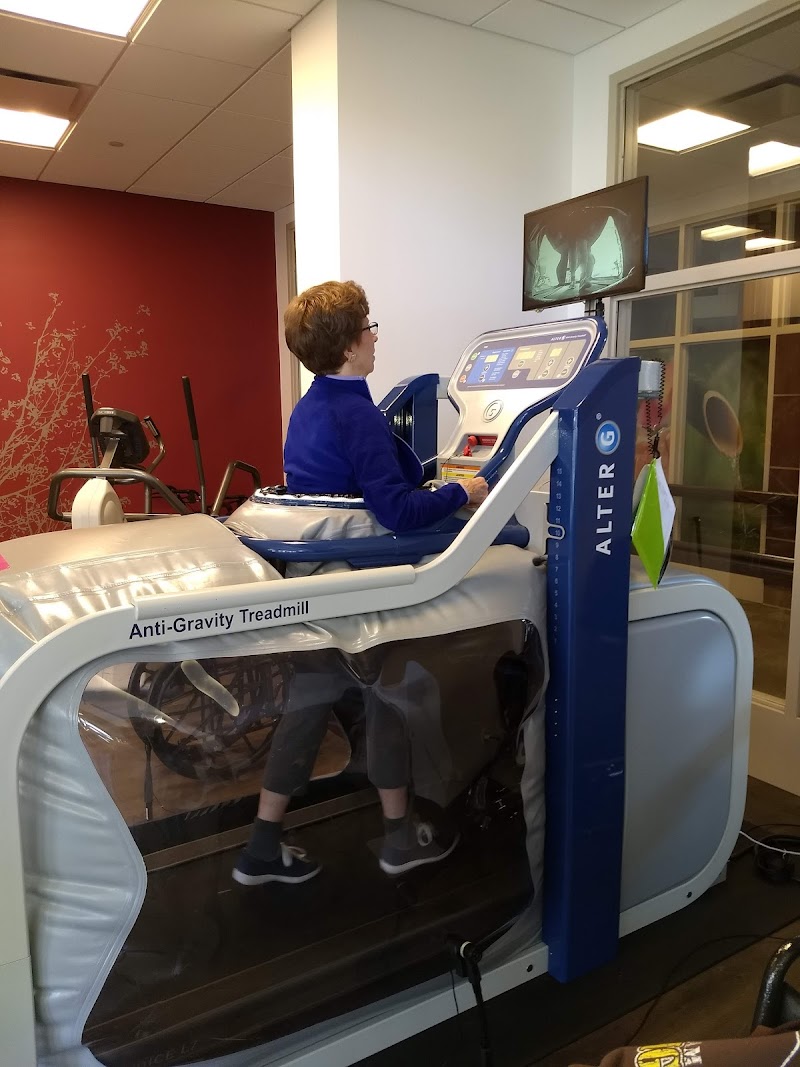
How is Wellbridge Of Rochester Hills Staffed?

CMS rates WellBridge of Rochester Hills's staffing level at 3 out of 5 stars, which is average compared to other nursing homes. Staff turnover is 48%, compared to the Michigan average of 46%. RN turnover specifically is 69%, which is notably high. RNs provide skilled clinical oversight, so turnover in this role can affect medical care quality.

What Have Inspectors Found at Wellbridge Of Rochester Hills?

State health inspectors documented 27 deficiencies at WellBridge of Rochester Hills during 2022 to 2025. These included: 2 that caused actual resident harm and 25 with potential for harm. Deficiencies causing actual harm indicate documented cases where residents experienced negative health consequences.
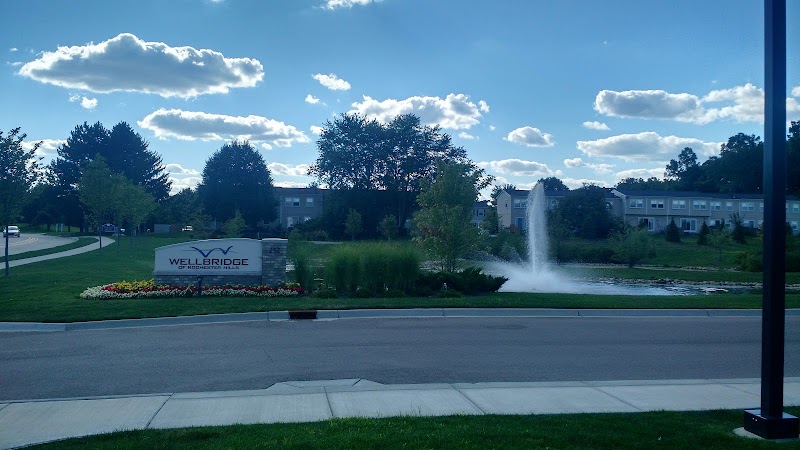
Who Owns and Operates Wellbridge Of Rochester Hills?

WellBridge of Rochester Hills is owned by a for-profit company. For-profit facilities operate as businesses with obligations to shareholders or private owners. The facility is operated by THE WELLBRIDGE GROUP, a chain that manages multiple nursing homes. With 100 certified beds and approximately 95 residents (about 95% occupancy), it is a mid-sized facility located in Rochester Hills, Michigan.

How Does Wellbridge Of Rochester Hills Compare to Other Michigan Nursing Homes?

Compared to the 100 nursing homes in Michigan, WellBridge of Rochester Hills's overall rating (3 stars) is below the state average of 3.1, staff turnover (48%) is near the state average of 46%, and health inspection rating (2 stars) is below the national benchmark.

What Should Families Ask When Visiting Wellbridge Of Rochester Hills?

Based on this facility's data, families visiting should ask: "What safeguards and monitoring systems are in place to protect residents from abuse or neglect?" "Can I visit during a mealtime to observe dining assistance and food quality?" "How do you handle medical emergencies, and what is your hospital transfer rate?" "Can I speak with family members of current residents about their experience?" These questions are particularly relevant given the substantiated abuse finding on record.

Is Wellbridge Of Rochester Hills Safe?

Based on CMS inspection data, WellBridge of Rochester Hills has documented safety concerns. The facility has 1 substantiated abuse finding (meaning confirmed case of resident harm by staff or other residents). The facility has a 3-star overall rating and ranks #100 of 100 nursing homes in Michigan. Families considering this facility should ask detailed questions about what corrective actions have been taken since these incidents.

Do Nurses at Wellbridge Of Rochester Hills Stick Around?

WellBridge of Rochester Hills has a staff turnover rate of 48%, which is about average for Michigan nursing homes (state average: 46%). Moderate turnover is common in nursing homes, but families should still ask about staff tenure and how the facility maintains care continuity when employees leave.

Was Wellbridge Of Rochester Hills Ever Fined?

WellBridge of Rochester Hills has been fined $22,523 across 1 penalty action. This is below the Michigan average of $33,304. While any fine indicates a compliance issue, fines under $50,000 are relatively common and typically reflect isolated problems that were subsequently corrected. Families should ask what specific issues led to these fines and confirm they've been resolved.

Is Wellbridge Of Rochester Hills on Any Federal Watch List?

WellBridge of Rochester Hills is not on any federal watch list. The most significant is the Special Focus Facility (SFF) program, which identifies the bottom 1% of nursing homes nationally based on persistent, serious quality problems. Not being on this list means the facility has avoided the pattern of deficiencies that triggers enhanced federal oversight. This is a positive indicator, though families should still review the facility's inspection history directly.