Hoyt Nursing & Rehab Centre
1202 Weiss St, Saginaw, MI 48602 (989) 754-1419
For profit - Limited Liability company 128 Beds NEXCARE HEALTH SYSTEMS Data: November 2025
Trust Grade
20/100
#285 of 422 in MI
Last Inspection: May 2025

Inspected within the last 6 months. Data reflects current conditions.

Overview

Hoyt Nursing & Rehab Centre has received a Trust Grade of F, indicating poor performance with significant concerns regarding care. Ranking #285 out of 422 facilities in Michigan places it in the bottom half, and #6 out of 11 in Saginaw County means only five local options are worse. The trend is worsening, with issues increasing from 9 in 2024 to 20 in 2025. Staffing is a relative strength, with a rating of 4 out of 5 stars and a turnover rate of 43%, which is slightly below the state average. However, the facility has faced serious incidents, including a resident developing a Stage IV pressure ulcer and another resident suffering from abuse that resulted in a black eye. These findings, along with a lack of timely medical assessments, raise concerns about the quality of care provided.
Trust Score
F
20/100
In Michigan
#285/422
Bottom 33%
Safety Record
High Risk
Review needed
Inspections
Getting Worse
9 → 20 violations
Staff Stability
○ Average
43% turnover. Near Michigan's 48% average. Typical for the industry.
Penalties
✓ Good
No fines on record. Clean compliance history, better than most Michigan facilities.
Skilled Nurses
○ Average
Each resident gets 36 minutes of Registered Nurse (RN) attention daily — about average for Michigan. RNs are the most trained staff who monitor for health changes.
Violations
⚠ Watch
35 deficiencies on record. Higher than average. Multiple issues found across inspections.
★★☆☆☆
2.0
Overall Rating
★★★★☆
4.0
Staff Levels
★★★★☆
4.0
Care Quality
★★☆☆☆
2.0
Inspection Score
Stable
2024: 9 issues
2025: 20 issues

The Good

  • 4-Star Staffing Rating · Above-average nurse staffing levels
  • 4-Star Quality Measures · Strong clinical quality outcomes
  • Full Sprinkler Coverage · Fire safety systems throughout facility
  • No fines on record
  • Staff turnover below average (43%)

    5 points below Michigan average of 48%

Facility shows strength in staffing levels, quality measures, fire safety.

The Bad

2-Star Overall Rating

Below Michigan average (3.1)

Below average - review inspection findings carefully

Staff Turnover: 43%

Near Michigan avg (46%)

Typical for the industry

Chain: NEXCARE HEALTH SYSTEMS

Part of a multi-facility chain

Ask about local staffing decisions and management

The Ugly 35 deficiencies on record

3 actual harm
May 2025 14 deficiencies 1 Harm
SERIOUS (G)

Actual Harm - a resident was hurt due to facility failures

Pressure Ulcer Prevention (Tag F0686)

A resident was harmed · This affected 1 resident

Based on observation, interview and record review, the facility failed to prevent the development of a facility-acquired, Stage IV pressure ulcer for one resident (Resident #58) of two residents revie...

Read full inspector narrative →
Based on observation, interview and record review, the facility failed to prevent the development of a facility-acquired, Stage IV pressure ulcer for one resident (Resident #58) of two residents reviewed, resulting in the development of a new left heel pressure injury, while residing in the facility with the potential for pain /discomfort, prolonged illness, and infections. Findings include: Resident #58: In an interview on 05/20/25 at 08:56 AM Resident #58 stated that she has a new sore to the bottom of her foot that she did not have when she came. Resident #58 was noted to be seated in a reclining position in the bed watching (Detroit) Tiger baseball on TV. Observation of APM air mattress to bed was in place set to 27-minute cycle with #5 comfort level settings. There were no soft boots noted on the resident at that time. Record review of Resident #58's 'Skin & Wound' tab in the electronic medical record revealed that on 1/9/2025 a wound photo noted left heel eschar, a new pressure injury. Measurements of the left heel pressure injury were documented as: new exact date 1/9/2025 length 3.58cm x width 3.25cm with black eschar noted, pressure wound in-house acquired. In an interview and record review on 05/21/25 at 12:52 PM, the Unit manager Registered Nurse L was asked by the state surveyor how the wound got to eschar without anyone noticing. RN L stated that it was the former Assistant Director of Nursing's (ADON) unit at the time the heel wound was discovered. RN L manages units 1 & 2 There is no manager for that 300 unit right now. Record review of Resident #58's Skin assessments documented no skin injuries until 1/9/2025 when eschar was noted . RN L stated skin assessments should be done weekly every 7 days; aides are to notify nurses on shower days. Residents get 2 showers a week. Once reported to the nurse, the nurses establish a treatment, notify the physician, and implement the weekly photos of the progression. There is no wound nurse here in our facility. Floor nurses do the treatments If the treatment is not working, notify physician to get new orders. Record review of Resident #58's pressure ulcer photo on 2/17/2025 by the former Director of Nursing Staging wound- left heel Level 4 on 2/17/2025, cannot backstage a wound. RN L was asked again, how did it get from nothing to eschar with no treatments or documentation. RN L reviewed Resident #58's Skin care plan and stated that there was no pressure relieving devices. a care plan to turn and reposition frequently, observed skin daily and report issues, aides did not follow the care plan. Was the pressure ulcer avoidable? RN L stated yes avoidable, could have used profo/soft boots or repositioning and added skin prep to heels, elevate heels, and wash and dry heels daily. In an observation (of Resident #58's left heel wound) and interview on 05/21/25 at 01:24 PM with Licensed Practical Nurse (LPN) N, Resident #58 stated I don't know how it got there. My foot hurts, I don't know why it hurts, it just does. Resident #58 started to scream when asked to look at her left heel, no, no, no, it hurts when they touch it. Reapproach/re-try tomorrow for observation. In an interview on 05/21/25 at 02:19 PM, the Director of Nursing and Clinical Consultant A notified the state surveyor that there were no nursing policies for: Pressure ulcer staging for skin, nursing documentation policy, physician order policy, and/or standards of care policy. The Clinical Consultant stated, we have standards used by Google. The nurses use their cell phones. Observation and interview on 05/22/25 at 08:12 AM with Licensed Practical Nurse (LPN) C of Resident #58's left heel dressing dated 5/20/2025 drainage was noted on the dressing, wound packing alginate with foam border dressing. LPN C applied gloves and removed the foam dressing to observe the wound site. No measuring device was brought into the room, estimated to be golf ball size wound area with alginate packing noted with serosanginous drainage that fell out of the wound. LPN C then the old dressing was placed back on wound and sock re-applied by the nurse. In an interview and record review on 05/22/25 at 08:22 AM, Registered Nurse (RN)/Infection Control Nurse/Staff education Nurse K reviewed Resident #58's electronic medical record 'Skin & Wound' photos of the 1/9/2025 left heel wound, blackened with eschar. RN K stated that it would first appear as a reddened area, then into a fluid-filled blister within a couple of days, and, if not getting pressure relieved, the blister will turn to eschar/black tissue. The looks of that would take more than a week, but less than a month. Residents do get showers twice weekly and as needed, The Certified Nurse Assistants (CNA) should be completing skin checks with each shower and reporting to the nurse. and the nurse initiates the photos and skin Assessment forms. Record review of facility's 'Wound Management Program' policy, dated 8/17/2017, noted that to ensure that residents who are admitted with, or acquire, wounds, receive treatment and services to promote healing, prevent complications, and prevent new skin conditions from developing Monitor skin changes during routine daily care .
CONCERN (D)

Potential for Harm - no one hurt, but risky conditions existed

Deficiency F0578 (Tag F0578)

Could have caused harm · This affected 1 resident

**NOTE- TERMS IN BRACKETS HAVE BEEN EDITED TO PROTECT CONFIDENTIALITY** Based on interview and record review the facility to timely update and formulate advance directives for two residents (#37 and #...

Read full inspector narrative →
**NOTE- TERMS IN BRACKETS HAVE BEEN EDITED TO PROTECT CONFIDENTIALITY** Based on interview and record review the facility to timely update and formulate advance directives for two residents (#37 and #239) of two residents reviewed for advance directives (legal documents that allow a person to identify decisions about end-of-life care ahead of time). Findings Include: Resident #37: On [DATE] at 3:20 PM, a review was conducted of Resident #37's medical record and it indicated she admitted to the facility on [DATE] with diagnoses that included Atherosclerotic Heart Disease, Diabetes, Hypertension, Dementia, Orthopedic aftercare, Anxiety and Depression. Further review of Resident #37's chart showed there had been no discussion with the resident or her daughter regarding formulating advance directives. Social Services Assessment [DATE]: -No mention of advance directives nor is there is section within this assessment to address it. Progress Notes: [DATE] at 02:27: Resident arrived via (ambulance) 2 pa (person assist) resident here for after care of electrical cervical laminectomy, resident can make her needs known .she also have very high anxiety . Scanned Documents: There were no updated advance directives forms uploaded into Resident #37's record from her [DATE] admission. On [DATE] at 11:36 AM, an interview was conducted with Social Worker Q regarding Resident #37's advance directives. Review was conducted of the Social Work assessment, and it was explained there is not a section available in that assessment that prompts them to ask about advance directives. Further review was conducted of the progress notes and scanned documents and there was nothing that was located that indicated it was discussed with the resident upon her admission to gather her wishes. Social Worker 'Q stated advance directive should be reviewed with each resident upon admission and updated as needed. Resident #239: On [DATE] at 12:10 PM, a review was conducted of Resident #239's medical record and it indicated he was admitted to the facility on [DATE] with diagnoses that included, Muscle Disorder, Dysphagia, Dementia, Atrial Fibrillation, Chronic Kidney Disease, Ataxia, Cardiac Murmur, Alzheimer's Disease and Heart Failure. Further review revealed Resident #239's daughter is his responsible party. Physician Orders: CPR (Cardiopulmonary resuscitation) by Default- initiated on [DATE] DNR- Do Not Resuscitate - initiated on [DATE] Resident Dashboard: Code Status: (Advance Directives) CPR by Default, DNR- Do Not Resuscitate DNR Order: Completed with appropriate signatures on [DATE]. On [DATE] at 12:50 PM, Social Worker R stated Resident #239's daughter brought in all his documents, and they updated his code status to DNR. Review was conducted of his medical record and in his orders both CPR and DNR were listed. Social Worker R reported staff must have added the updated code status and not removed the previous one. The social worker explained she is not able to initiate or update the orders sections. Review was completed of facility policy entitled, Resident Code Policy, revised [DATE]. The policy stated, .Upon admission the admission coordination, admission nurse or social worker will review residents' choices related to code status .
CONCERN (D)

Potential for Harm - no one hurt, but risky conditions existed

Deficiency F0657 (Tag F0657)

Could have caused harm · This affected 1 resident

Based on observation, interview and record review, the facility failed to update care plans for one resident (#69) of two residents reviewed, resulting in a failure to add interventions for timely rew...

Read full inspector narrative →
Based on observation, interview and record review, the facility failed to update care plans for one resident (#69) of two residents reviewed, resulting in a failure to add interventions for timely reweighs of Resident #69 to prevent weight loss. Findings include. Resident #69: Observation on 05/20/25 at 02:25 PM of Resident #69 was lying in bed with the head of the bed elevated. Resident #69 was noted to have loose skin to neck and upper arm areas. The surveyor questioned possible weight loss. Record review of resident medical record weights log on 04/07/2025, the resident weighed 131.4 lbs. On 05/07/2025, the resident weighed 121.2 pounds which is a -7.76 % Loss in 30 days. Record review of Resident #69's 'Nutritional' care plan date initiated 8/1/2024 and revision date of 2/27/2025 revealed that there were no added interventions to address the new weight loss of 10.2 pounds in 30 days. There were interventions to re-weigh the resident in a timely manner, or when to re-weigh on a regular basis. In an Interview on 05/21/25 at 02:45 PM with the Registered Dietitian (RD) M stated that Resident #69 did have a weight loss. She previously had a weight gain, she wants to level out, I removed one of her supplements, she was on supplement since admission April 2024, due to wound protein needs, she has a wound stage 4. I removed a protein shake that was higher in calories, I removed it last month. Record review of Resident #69's weight log revealed weight on 5/5/25 of 138.1 then on 5/12/2025 125.2 pounds, her weights i cannot tell you what's going on with her. The CNAs do the weights, inconsistent weights from sitting to mechanical weights were documented. Weights from 4/7/2025 through 5/7/2025 were a 10-pound weight loss. I reviewed her weights, wrote notes. Record review of resident care plans- revealed no added interventions for closer monitoring of weight loss. Record review of the facility Weight policy, did not state when to get a re-weight on a resident, there were no specified time frame noted for re-weight expectations of Certified Nurse Assistant in a timely manner. The Registered Dietitian (RD) M stated My expectation would be within 48 hours is what I would expect. The standards of care for dietitians are 48 hours to get a re-weight. Review of the policy tells me that weekly weight x4 weeks from admission and then once monthly, unless an order from doctor, or a weight change of 3/5# plus or minus, then a re-weight is done, then we go to weekly weights.
CONCERN (D)

Potential for Harm - no one hurt, but risky conditions existed

Quality of Care (Tag F0684)

Could have caused harm · This affected 1 resident

**NOTE- TERMS IN BRACKETS HAVE BEEN EDITED TO PROTECT CONFIDENTIALITY** Based on observation, interview and record review, the facility failed to document and notify the physician of a popped/ruptured...

Read full inspector narrative →
**NOTE- TERMS IN BRACKETS HAVE BEEN EDITED TO PROTECT CONFIDENTIALITY** Based on observation, interview and record review, the facility failed to document and notify the physician of a popped/ruptured boil/skin condition for one resident (Resident #36), resulting in Resident #36 having a right anterior neck boil that was 'popped by a staff member with no physician's order, no documentation of the wound site and drainage, with the potential for infection. Findings include: In an interview on 05/21/25 at 02:19 PM with the Director of Nursing and Clinical Consultant A notified the state surveyor that there were no nursing policies for: Pressure ulcer staging policy for skin, Nursing documentation policy, physician order policy, and/or standards of care policy. The Clinical Consultant stated, we have standards used by goggle, nurses use their phones. Resident #36: Record review of Resident #36's 'Skin assessment' form dated 5/9/2025 noted a boil to right side back of neck, there were no measurements of size of diameter and/or height, color or edema of the boil noted. The nurse practioner was notified and orders of warm compress and monitor were ordered. Record review of Resident #36's progress notes dated 4/1/2025 through 5/22/2025 at 11:00AM revealed there to be no mention of a boil to the back of resident's neck or that the boil had been popped by staff. Record review of Resident #36's physician orders for the month of May 2025 revealed: On 5/10/2025 to apply warm compress to back of residents neck and monitor twice a day for wound care AND one time only for 1 day. Record review of the Treatment Administration Record for May 2025 revealed: On 5/10/2025 to monitor boil on back of neck for signs/symptoms of infection and notify physician every shift. On 5/21/2025 treatment of: cleanse boil on back of neck with normal saline and apply triple antibiotic ointment and cover with a 4x4 gauze dressing one time a day until healed. One time a day for ruptured boil on the back of neck until 6/3/2025. Start 5/21/2025. Observation and interview on 05/22/25 10:15 AM with the Director of Nursing (DON) and of Resident #36 had left back a left neck area with dressing in place, not dated. Observation of Resident #36's room noted no enhanced barrier precautions and no preventive caddie over the door. Observation of Resident #36's right side rear neck dressing noted Blood seeping through dressing onto his navy-blue sweatshirt. The state surveyor Observed the Director of Nursing (DON) with dressing tray with supplies on her way to Resident #36's room. The state surveyor observed DON to close the window blinds and drew the privacy curtain between beds (no enhanced barrier of gown worn). The DON used Hand sanitizer and gloved, removed old dressing, observed a ping pong size lump with bright red bleeding noted, drainage to run down neck. The DON placed triple antibiotic ointment using a swab stick was applied, and boarder gauze dressing was applied. During the dressing change observation Resident #36 stated that the nurse the nurse popped it (boil) yesterday, and the blood hit the wall. Record review of Resident #36's physician orders revealed that the resident was on anticoagulant Eliquis 5mg oral daily and Aspirin 81mg oral daily (both medications inhibit clotting factors). In an interview on 05/22/25 at 11:05 AM with Registered Nurse (RN)/Infection Control nurse/Staff education K what was the Dressing change expectations? RN K stated A saturated dressing should be changed as needed. Enhanced barrier of a gown should be worn. She was not aware that Resident #36 had an open wound, or that there was a need for enhance barrier precautions, or to follow the wound for healing/infection. Record review with RN K of Resident #36's physician orders revealed that there was no order for the popping of the boil to right back neck of resident #36. There were no progress notes, no physician notes and no care for the boil added to the care plans. Record review of the facility 'Assessment, Resident' policy dated 7/1/2008, revealed the purpose to identify the resident's care needs, to develop a comprehensive plan of care for the residents . (9.) Examine the head and neck: (c.) Drainage. (D.) Open areas. (G.) Growths and document assessment. In an Interview and record review on 05/22/25 at 11:11 AM with the Director of (DON) of Resident #36 was notified that Resident #36 stated that the nurse popped (boil) it yesterday. He stated the blood hit the wall. Record review of Resident #36's progress notes revealed there to be no notes regarding the boil, the popping/rupture of the boil as reported by the resident. Record review of resident care plan revealed that there was no mention of the boil or to monitor. In the interview with the DON stated that she did the PRN dressing change and wrote an order for a dressing change scheduled. No, she did not wear a gown for the change. I don't know who popped the boil, no there was not an order to pop it. Not sure if the physician knew about the boil, there is no notes. In an interview on 05/22/25 at 11:47 AM with Resident #36 stated the nurse, she squeezed the boil earlier this week. The nurse (Licensed Practical Nurse B) while they were looking at it, she squeezed it (the boil), and the blood squirted on the wall. It was the Licensed Practical Nurse (LPN) B she got blood on her watch and had to wipe it off. It does feel better, it hurt like the dickens when she squeezed, after it popped it took the pressure off it. It does seem to keep bleeding. When she popped the boil, I thought I'd need a blood transfusion, it seemed like a lot of blood came out. Record review of Resident #36's admission Minimum Data Set (MDS) dated [DATE] revealed a Brief Interview of Mental status (BIMS) score of 15 out of 15, cognitively intact. Record review of Licensed Practical Nurse (LPN) Bs 'Nurse skills/competencies assessment' form dated 6/27/2024 as satisfactory for receiving orders/entering orders in electronic record, Communication with physician/Dr. Notification, Wound assessment, measuring, staging. Wound documentation/pressure reducing devise. The competencies form was signed off by the Director of Nursing services on 6/27/2024 In an interview and record review on 05/22/25 at 12:15 PM with the clinical consultant A revealed I wrote the order for the dressing change on 5/21/2025, Record review of resident progress notes revealed that there were no notes regarding the boil on the back of right neck. There was no physician assessment noted of the boil to the right anterior side of the neck and no order to pop/rupture the boil.
CONCERN (D)

Potential for Harm - no one hurt, but risky conditions existed

Deficiency F0688 (Tag F0688)

Could have caused harm · This affected 1 resident

**NOTE- TERMS IN BRACKETS HAVE BEEN EDITED TO PROTECT CONFIDENTIALITY** Based on observation, interview and record review the facility failed to implement continuation of preventative mobility service...

Read full inspector narrative →
**NOTE- TERMS IN BRACKETS HAVE BEEN EDITED TO PROTECT CONFIDENTIALITY** Based on observation, interview and record review the facility failed to implement continuation of preventative mobility services for one resident (#37) of one resident reviewed for restorative therapy services. Findings Include: Resident #37: On 5/20/2025 at 2:55 PM, Resident #37 was observed sitting in her wheelchair in her room. She stated she was waiting on a ramp and bathroom handrails to be installed at her daughter's home and then she would be discharged home. Resident #37 expressed concern that since being cut from therapy on 5/13/25, she is scared she will lose the advances she made, which will make the transition back home more difficult. Resident #37 was asked if she is in a restorative program, and she stated she is not. She reported facility staff only get her out of bed, assist with care and help her in /out of the wheelchair. On 5/20/2025 at 3:20 PM, a review was conducted of Resident #37's medical record and it indicated she admitted to the facility on [DATE] with diagnoses that included Atherosclerotic Heart Disease, Diabetes, Hypertension, Dementia, Orthopedic aftercare, Anxiety and Depression. Further review of Resident #37's chart yielded the following: Care Plan: I have actual ADL/MOBILITY deficit R/T (related to) post op cervical laminectomy for cervical spine stenosis, resp failure, acute on chronic neck pain, h/o cervical paraspinal muscle spasms, diabetes with polyneuropathy, dementia with behavior disturbance, OA , h/o rt hip hemiarthroplasty, weakness and reduced mobility . Ambulation: 1PA with 2ww (two wheeled walker) . On 5/21/2025 at approximately 1:00 PM, staff in the therapy gym were asked if Resident #37 is currently on therapy. They stated she is no longer on therapy as she preparing for discharge home but they were uncertain if she was receiving restorative therapy. On 5/21/2025 at 2:20 PM, MDS (Minimum Data Set) Nurse S shared the resident was discharged from therapy services on 5/13/2025 and she is not currently on a restorative program. Nurse S shared she received an email from the Therapy Manager T at 1:16 PM requesting Resident #37 be added to their restorative program. Nurse stated the delay was therapy thought she was being discharged home shortly after therapy services ended and she ended up staying longer than expected. On 5/21/2025 at 4:05 PM, an interview was conducted with Therapy Program Manager T regarding Resident #37. She explained the resident was not discharged off of therapy on a restorative program as at the time there were no plans for long term care. The plan was for Resident #37 to be discharged home with her daughter shortly after. Manager T stated the resident was on an ambulation program (floor staff walking her during their shifts) but stated she did not know if that was occurring. It was expressed it was unknown how it was concluded she was being discharged home went the Case Conference notes contradict that. Manager T shared they were not aware the resident would remain at the facility until appropriate provisions were made for her at her home. Further review was completed of Resident #37's record: Care Conference 5/2/2025: .Resident is wanting a referral to waiver to see if she qualifies for in services in hope of going home with extra help . Physical Therapy Discharge 5/15/2025: .Patient discharged to reside in this LTC facility .D/C location: Family members home .Discharge recommendations: CGA for mobility with 2ww, patient is staying here for a few days and discharging with family . Occupational Therapy Discharge 5/14/2025: .D/C (discharge) location: patient discharged to live with family member, friends or others . D/C reason: Highest practical level achieved .Prognosis to maintain CLOF (current level of functioning): Good with strong family support . Resident was discharged from therapy services on 5/13/2025. It can be noted upon discharge from therapy services on 5/13/2025, the waiver program had just completed their assessment of Resident #37. The process can be lengthy for approval and take additional time for the equipment that needs to be installed at the home. It is unknown why Resident #37 was not referred to the facility restorative program to maintain her current level of functioning as stated in the discharge plan, when it was evident the plan was for her to remain at the facility until appropriate and comprehensive services were in place for her to discharge home. It is unknown where the gap in communication occurred that effected the resident's continuation of mobility services. On 5/22/2025 at 8:20 AM, an interview was conducted with Social Worker R regarding Resident #37's discharge plans. It was explained she will be discharged to her daughters' home once she is approved for the appropriate service. The assessment was completed on 5/12/2025 and if approved they will provide extra chore provider, install the ramp and bathroom handrails that are needed. Social Worker R shared there was a conversation held with therapy regarding keeping her on therapy services with her secondary insurance as she would still be at the facility awaiting the wavier decision and the mobility equipment at the house. They knew at the care conference on 5/2/2025 that she would not be discharging, and it's discussed in morning meetings. On 5/22/2025 at 12:10 PM, CNA U was observed speaking with Resident #37 in the hallway. The CNA stated she was just informed this morning of the resident being added to the restorative nursing program. CNA U was asked what the ambulation in the residents Kardex meant and it was explained it was the residents transfer status. Resident #37 reported prior to today the staff were not walking her with the walker. Review was conducted of the facility policy entitled; Restorative Program dated 2/21/2018. The policy stated, Based on the comprehensive assessment of a resident and consistent with the residents needs and choices, the facility will provide the necessary care and services to ensure that a residents abilities in activities of daily living do no diminish .Candidates for restorative nursing program may be identified in the following ways: .after discharge from a skilled therapy service in conjunction with a therapy service .
CONCERN (D)

Potential for Harm - no one hurt, but risky conditions existed

Deficiency F0691 (Tag F0691)

Could have caused harm · This affected 1 resident

**NOTE- TERMS IN BRACKETS HAVE BEEN EDITED TO PROTECT CONFIDENTIALITY** Based on observation, interview and record review, the facility failed to ensure the prevention of cross contamination during co...

Read full inspector narrative →
**NOTE- TERMS IN BRACKETS HAVE BEEN EDITED TO PROTECT CONFIDENTIALITY** Based on observation, interview and record review, the facility failed to ensure the prevention of cross contamination during colostomy care for 2 resident's (Resident's #40 and #69) of 2 resident's reviewed for ostomy care, resulting in the high potential for cross contamination, resident and staff illness with possible hospitalization. Findings Include: Resident #40: Review of the Face Sheet, care plans dated 6/24, and diagnosis list, revealed Resident #40 was [AGE] years old, admitted to the facility on [DATE], had a Guardian in place for medical and finical decisions, and was dependent on staff for all Activities of Daily Living/ADL's. The residents' diagnosis included, Acute kidney failure, carrier or suspected carrier of Methicillin Susceptible Staphylococcus Aures (antibiotic resistant organism), ulcerative pancolitis, chronic kidney disease, anemia, high blood pressure, diabetes, anxiety disorder, ileostomy status (artificial opening in large intestines), Bipolar disorder, Crohn's disease, cognitive communication deficit, and visual hallucinations. Residents' physician order dated 5/16/25 stated, Monitor ostomy appliance and change as needed and report any redness, inflammation or drainage from site. every shift. Review of Resident #40's Alteration in bowel elimination care plan dated 4/10/25, stated Change ostomy appliance as needed and report any redness, inflammation or drainage from site. Interview done with nurse, Unit Manager/Charge Nurse, RN L stated We usually change the colostomy bags every 3 days or so, the aides ask for new bags about daily; every 7 days is not good. During an interview done on 5/22/25 at 9:40 a.m., Infection Control, RN K said usually they (ostomy bag change orders) are changed weekly, every 7 days; it should say that, I'll fix the orders today (on 5/22/25). 5/22/25 at 9:20 am, observation of ostomy care done by Nursing Assistant/CNA J revealed, she (CNA J) had the same soiled gloves throughout the whole procedure, and (with same gloves on) put trash in bags, put bag on floor, picked up bag's and took to residents exit door, then put them both on the floor. She then removed the soiled gloves, washed her hands and was going to take the contaminated bags out of the room with no gloves on (contaminating her washed hands). Infection Control Nurse K saw this and started to take the two soiled bags out herself after gloving her right hand prior to touching the bags. During an interview done on 5/22/25 at 9:35 a.m., CNA J stated I contaminated the bags, I know I should of taken my gloves off (taken the soiled gloves off after doing procedure, prior to tying bags up and removing them from the bedside to the floor. During an interview done on 5/22/25 at 11:00 a.m., Infection Control Nurse, RN K stated She (CNA J) contaminated closed bag with dirty gloves. Before removing the soiled linen bag and the trash bag, she should have washed her hands and then came back and gathered the bags exited the room. I don't have a policy that says that but that's what should be done. Review of the facility All Staff Education, safe handling of linen and trash done on 5/22/25 stated Soiled linen and trash bags should never touch the floor. You should never tie off bags with contaminated gloves on. Review of the facility Routine Care of Your Ostomy policy dated 5/20/25, revealed primarily at home wear time (how long between ostomy bags) is personal preference. A ostomy pouch with a built-in filter will last the longest. The policy also stated, We do not recommend a wear time longer than five to seven days. Review of the facility Hand washing and Hand Hygiene policy dated 4/29/20, stated Purpose: To ensure appropriate hand hygiene which is essential in reducing the risk of transmission of infectious agents. To protect our residents, visitors, and staff, each facility will promote hand hygiene practices during all care activities and working in locations within facility; after contact/potential contact with blood or body fluids. Resident #69: Observation on 05/20/25 at 09:16 AM during the initial screening process of Resident #69 was lying in bed, with a bump noted under clothing. Surveyor question air bag/colostomy? Record review of Resident #69's Medication Administration Record (MAR) and Treatment Administration Records (TAR) for January 2025 revealed to 'Monitor the resident's colostomy and colostomy collection bag for any bleeding each shift. February 2025 revealed to 'Monitor the resident's colostomy and colostomy collection bag for any bleeding each shift. 3/30/2025 through 5/21/2025 revealed 'Monitor the resident's colostomy/bag for any signs of bleeding'. On 5/22/2025 the facility implemented a new order of: Change ostomy wafer and bag every 7 days and as needed. Every night shift Thursday for care, start date 5/22/2025. Record review on 05/20/25 at 10:20 AM of Resident #69's electronic medical record physician orders revealed that the ostomy was to be monitored, there was no order to change the colostomy bag every 7 days until 5//22/2025. There were no orders noted to change the colostomy bag at least every 7 days as manufacture recommendations.
CONCERN (D)

Potential for Harm - no one hurt, but risky conditions existed

Deficiency F0692 (Tag F0692)

Could have caused harm · This affected 1 resident

Deficiency Text Not Available

Read full inspector narrative →
Deficiency Text Not Available
CONCERN (D)

Potential for Harm - no one hurt, but risky conditions existed

Tube Feeding (Tag F0693)

Could have caused harm · This affected 1 resident

**NOTE- TERMS IN BRACKETS HAVE BEEN EDITED TO PROTECT CONFIDENTIALITY** Based on observation, interview and record review, the facility failed to ensure supervision, follow care-planned interventions ...

Read full inspector narrative →
**NOTE- TERMS IN BRACKETS HAVE BEEN EDITED TO PROTECT CONFIDENTIALITY** Based on observation, interview and record review, the facility failed to ensure supervision, follow care-planned interventions and physician's orders for one resident (Resident #81) of one resident reviewed for NPO status (nothing by mouth), resulting in access to water at bedside, resident's admitted consumption of the water with the likelihood of asymptomatic aspiration going unnoticed/unassessed. Findings include. Resident #81: On 5/20/25, at 8:59 AM, Resident #81 resting in bed awake. There is an enteral feed pump on a pole without feed solution. There was a clear plastic lidded cup with an open straw on their over bed table with approximately ¾'s full of water. There is an additional clear plastic cup 1/3 full of water with a white plastic spoon. On 5/20/25, at 9:03 AM, CNA P entered Resident #81's room and was overheard speaking to the resident I have to throw it away because the ice chips melted. On 5/20/25, at 11:19 AM, a record review of Resident #81's electronic medical record revealed an admission on [DATE] with diagnoses that included dysphagia following stroke, bilateral above the knee amputations and subdural hemorrhage. Resident #81 has intact cognition and required extensive assistance with all Activities of Daily Living. A review of the Physician Orders revealed Nothing By Mouth (NPO) diet, NPO texture, NPO consistency Active 2/25/2025. A review of the Focus NUTRITION care plan revealed Provide diet as ordered: NPO Ice chips allowed under strict precautions and guidelines including: sitting upright in wheelchair being alert being placed at the nurses station or have staff supervise in his room only use ice chips from the main kitchen ice machine provide oral care prior to giving ice chips Can have ice chips 2x daily Date Initiated: 02/25/2025 . Revision on: 02/28/2025 . by (Speech Therapist ) . On 5/20/25, at 11:22 AM, Resident #81 was observed in bed with the head of bed elevated. The lidded plastic cup with an open straw of water remained on the overbed table. Resident #81 offered that he can have ice chips only and that night shift gave him the cup of water. The second cup with the plastic spoon is no longer at their bedside. Resident #81 did admit to taking sips of the water through the straw. Resident #81 was asked when was the last time they were up in their wheelchair and Resident #81 offered, about a week ago. On 5/20/25, at 11:24 AM, Nurse E was asked if Resident #81 was able to have oral fluids at bedside and Nurse E stated, no he can only have ice chips. Nurse E was alerted that there was a glass of water with an open straw at bedside. On 5/20/25, at 11:26 AM, an observation of Resident #81's room was conducted along with Nurse E. Nurse E picked up the glass of water. Resident #81 admitted to taking sips of the water and offered NO, to coughing or choking and I don't know why I failed the test. Nurse E offered that they only bring in 2 or 3 ice cubes for the resident at a time. On 5/20/25, at 4:15 PM, Corporate Nurse A was asked if they were aware that Resident #81 had 2 cups of water at their bedside and that the resident stated they took sips with the straw of the water and Corporate Nurse A stated, no. Corporate Nurse A reviewed the record and offered, a chest X-ray was ordered and resulted to assess resident to rule out pneumonia signs and symptoms. On 5/21/25, at 9:38 AM, Resident #81 was resting in bed. There was an 8 by 11-inch poster above the residents head of bed on the wall. A record review of the poster revealed NPO ICE CHIPS WHEN SITTING UP IN W/C. On 5/21/25, at 11:00 AM, Speech Therapist O was interviewed regarding Resident #81's speech therapy progress and NPO status. ST O stated, that he did fail the barium swallow test about four weeks ago with aspiration with no coughing or choking noted. ST O offered, another swallow test could not be reordered for about four weeks. ST O offered, that he did allow the resident to have ice chips under supervision with parameters that was noted on the care plan. On 5/22/25, at 8:15 AM, Resident #81 was resting in bed. There was an additional 8 by 11-inch poster on the wall. A record review of the second poster revealed NPO see nurse with questions. A further record review of Resident #81's progress notes revealed the following: Effective Date 5/20/2025 12:47 Note Text: cup of water found at bed side resident stated he had a sip of the water. Unable to know how much water he consumed. Resident is care plan to have ice chips. This writer listen to lungs and sounds clear. Contacted DR . he would like chest x-ray. 5/20/2025 . X-Ray of chest reviewed. Sent to Dr . 5/20/2025 20:11 . This writer checked on resident throughout shift he does not complain of any shortness of breath he denies coughing. Reassess lung sounds still clear. 5/21/2025 07:35 . This writer assessed lung sounds lungs are clear vitals within range no temperature. Resident does not complain of SOB. Resident states he has not been coughing. This writer did not observe coughing when assessing resident. 5/21/2025 15:50 . Resident assessment Respiratory rate 17 resident is not using any accessory muscles to breath. Dose not complain of SOB nails capillary refill 2 seconds oxygen saturation at 97% skin is normal in color lungs assessed and sound clear. Resident appears to be calm watching tv when this writer went in residents room. No abnormalities were found.
CONCERN (D)

Potential for Harm - no one hurt, but risky conditions existed

Deficiency F0726 (Tag F0726)

Could have caused harm · This affected 1 resident

**NOTE- TERMS IN BRACKETS HAVE BEEN EDITED TO PROTECT CONFIDENTIALITY** Based on observation, interview and record the review the facility failed to prevent medication errors and missed admission medi...

Read full inspector narrative →
**NOTE- TERMS IN BRACKETS HAVE BEEN EDITED TO PROTECT CONFIDENTIALITY** Based on observation, interview and record the review the facility failed to prevent medication errors and missed admission medication doses for one resident (Resident #240) of one resident reviewed for new resident admission. Findings include: Resident #240: On 5/20/2025 at 9:37 AM, Resident #240 was observed laying in bed and it appeared she was holding something in her mouth. Her daughter had called via Facetime (while this writer was in the room) and explained if her pills are administered whole, at time she will not swallow them. Two nurses entered the room and readjusted Resident #240 in the room and Nurse F stated she administered her medications this morning and they were crushed, in applesauce. The resident eventually opened her mouth and there was nothing found. Quick review was completed of Resident #240 physician orders and there was no, order located for crushing of medications. On 5/20/2025 at approximately 1:00 PM, a review was conducted of Resident #240's medical record and it indicated she admitted to the facility on [DATE] with diagnoses that included, Metabolic Encephalopathy, Interstitial Pulmonary Disease, Dementia, Acute Kidney Failure, Diabetes, Rheumatoid Arthritis, Anxiety, Aphasia and Hypertension. Further review yielded the following results: Hospital Discharge Records: .Current Meds (from admission, onwards) .5/6/2025 at 2100 -atorvastatin (Lipitor) at bedtime .5/6/2025 2100-insulin glargine (Lantus) injection 12 units SubQ at bedtime .5/6/2025 apixaban (Eliquis) table 5 mg 2times day . Physician Orders: There was no order found for crushed medications MAR (Medication Administration Record): Per hospital discharge records Resident #240 was scheduled for three medications the evening of her arrival at the facility. The facility entered all medications to commence on 5/7/2025 and due to that error Resident #240 missed three medications that were available in the facility's back up. The medications are as follows: Lantus Subcutaneous Solution 100 Unit/ML (milliliter)-inject 12 unit subcutaneously at bedtime. Initiated on 5/17/2025 at 1800. First dose was administered on 5/7/2025. Lipitor Oral Tablet 80 MG - Give 1 tablet by mouth at bedtime. Initiated on 5/7/2025 in 1900. First dose was administered on 5/7/2025. Apixaban Oral Tablet 5 MG- Give 1 tablet by mouth two times a day (upon rising and at bedtime). initiated on 5/7/2025 at 0700. First dose was administered on 5/7/2025 upon rising. Progress Notes: 5/6/2025 at 20:13: Resident arrived at the facility via (ambulance) from (hospital) post failure to thrive. Resident here long term. Orientated to her room and how to use call light and bed control . On 5/20/25 at 4:20 PM, Clinical Care Coordinator L reported for residents' medications that are crushed there should be a standing physician order for it. In addition to the order, it can be located on the resident's dashboard and the report sheets that are created by the DON (Director of Nursing) and Nurse E. Coordinator L was alerted to the what was observed the day prior with Resident #240 and a review was conducted of her chart. We were not able to locate the standing order in any of the above mentioned places. On 5/21/2025 at 11:20 AM, Nurse F stated if residents' medications are crushed, they are on their report sheet, the resident dashboard and it would be a physician order but that is also dependent on which nurses input the admission medications. Review was conducted of Resident #240's chart and an order for medications to be administered crushed was not located. On 5/21/2025 at 1:52 PM, a review was conducted of Resident #240's record in the presence of Clinical Care Coordinator L. It was pointed out the discharged medications (Lipitor, Lantus and Eliquis) were all due to be administered the evening of her arrival but were not initiated in her medical record to begin until the next day. Coordinator L stated they should have been entered to begin on 5/6/2025, pulled from backup if available and ordered from pharmacy. The facility provided a list of medications available in their back up and all three medications were available but not administered nor inputted correctly into her MAR. Review was completed of Nursing admission Checklist, it stated the following, .Initial the medication orders on the DC summary and update sheet with changes prior to paperwork being scanned .
CONCERN (D)

Potential for Harm - no one hurt, but risky conditions existed

Deficiency F0757 (Tag F0757)

Could have caused harm · This affected 1 resident

**NOTE- TERMS IN BRACKETS HAVE BEEN EDITED TO PROTECT CONFIDENTIALITY** Based on observation, interview and record review, the facility failed to attempt a Gradual Dose Reduction (GDR) for one residen...

Read full inspector narrative →
**NOTE- TERMS IN BRACKETS HAVE BEEN EDITED TO PROTECT CONFIDENTIALITY** Based on observation, interview and record review, the facility failed to attempt a Gradual Dose Reduction (GDR) for one resident (Resident #49) of one resident reviewed for mood, resulting in a lack of an attempt at a GDR for psychotropic medications, Cymbalta and Trazadone. Findings include. Resident #49: On 5/20/25, at 8:37 AM, Resident #49 was resting in their bed with their eyes open and did not respond to good morning. On 5/20/25, at 8:40 AM, CNA P offered Resident #49 doesn't always respond depending on their morning mood. On 5/20/25, at 3:03 PM, Resident #49 was in their room in their wheelchair eating a snack. On 5/21/25, at 1:14 PM, a record review of Resident #49's electronic medical record revealed an admission on [DATE] with diagnoses that included Stroke, Depression and Dementia. Resident #49 had severely impaired cognition and required assistance with all Activities of Daily Living. A review of the Physician orders revealed: Cymbalta Oral Capsule Delayed Release Particles 20 MG (Duloxetine HCl) Give 1 capsule by mouth in the morning for depression . Active 4/18/2024 07:00 Trazodone HCl Oral Tablet (Trazodone HCl) Give 25 mg by mouth at bedtime related to OTHER INSOMNIA . Active 4/17/2024 21:00 A review of the two most recent physician visit notes on 5/7/25' and 5/11/2025 revealed no mention of the psychotropic medications or an attempt at a GDR. On 5/21/25, at 1:30 PM, the facility was asked to provide Gradual Dose Reduction (GDR) documentation for Resident #49's psychotropic medications, Cymbalta and Trazadone. On 5/21/25, at 2:15 PM, Social Worker Director Q was interviewed regarding Resident #48's psychotropic medications. SW Director Q offered that Resident #49 had been in the facility for over a year and had not had a GDR on either medication. SW Director Q offered, they would talk to the physician about a GDR on both medications. SW Director Q was asked if Resident #49 had any attempt at a GDR of either medication and SW Director Q offered, there was no attempt at a GDR and no failure of a GDR. SW Director Q was asked to provide any documentation the facility had on risk versus benefits and physician documentation regarding the psychotropic medications. On 5/21/25, at 2:59 PM, a record review along with the SW Director Q regarding Resident #49's physician visits were conducted. A physician visit note on 10/11/2024 mentioned sleeping habits erratic she's been on trazadone since admission. A review of the two most recent physician visit notes on 5/7/25 and 5/11/25 did not mention a planned attempt at a GDR. On 5/22/25, at 10:58 AM, the Administrator was asked regarding the lack of GDR for Resident #49's psychotropic medications and the Administrator offered, we would do a GDR with her but she has just met her year here . A review of the facility provided GRADUAL DOSE REDUCTION OF PSYCHOTROPIC MEDICATIONS Date November 3, 2017 revealed 1. Within 1 year in which a resident is admitted on psychotropic medications/1 -year after initiation 2. Gradual dose Reduction Attempts in 2 separate quarters with at least 1 - month between attempts .
CONCERN (D)

Potential for Harm - no one hurt, but risky conditions existed

Deficiency F0761 (Tag F0761)

Could have caused harm · This affected 1 resident

Observation of facility medication cart Hall 300 was done on 5/20/25 at 9:15 a.m.; during the observation accompanied by Nurse, LPN B, the following was found: -Resident #19's Brimonidine 2% eye drop...

Read full inspector narrative →
Observation of facility medication cart Hall 300 was done on 5/20/25 at 9:15 a.m.; during the observation accompanied by Nurse, LPN B, the following was found: -Resident #19's Brimonidine 2% eye drops (for glaucoma) were found open and partly used with no open or use-by dates on the vial. -Resident #14's Lantus insulin (Glargine insulin) was open, partly used with no dates on the insulin pen at all (28 day use once open). During an interview done on 5/20/25 at 9:25 a.m., Nurse, LPN B stated It should be dated, I'll throw it out. -Resident #11's Potassium Cl 10% liquid (K+, potassium) was open and partly used with no dates on the bottle at all. During an interview done on 5/20/25 at 9:30 a.m., Nurse B stated It needs a date on it (the bottle of medication). Review of the facility Pharmacy policy Medication Storage in the Facility dated June 2019, stated Drugs dispensed in the manufacturer's original container will carry the manufacture's expiration date is reached unless: In a multi-dose injectable vial, an item for which the manufacture has specified a usable life after opening. Based on observation, interview and record review, the facility failed to store and discard medications for 4 of 5 medication carts reviewed, resulting in a lack of dating of multi-dose medications (insulins/Inhalers/eye drops), accu-check solution and sticks opened and undated. Findings include: Observation and interview on 05/20/25 at 08:45 AM with licensed Practical Nurse (LPN) D of the 400-unit medication cart revealed: In the top drawer of the cart there to be a clear plastic medication 30ml cup with 4 white capsules noted already set-up in the drawer. LPN D stated that she did not put those in the cart and that they were already in the cart when she came on duty at 6:30AM and they were already in the cart. LPN D stated that she believed the capsules were Acidophiles capsules. Observation of the left-hand small drawer revealed there to be blood sugar monitoring supplies. Observation of the Accu-check solutions were not dated when opened and blood sugar sticks note to be undated also. Observation, interview and records review on 05/20/25 at 09:28 AM with Licensed Practical Nurse (LPN) C of the 500-unit Medication cart revealed: Resident #59 medications: Azelastine 0.1% nasal spray opened and used but not dated, Symbicort 80/4.5 inhaler container and a Ventolin HFA inhaler both used and with no open dates. Record review of Resident #59's May 2025 Medication Administration Record (MAR) revealed that medications of Fluticasone proplonate nasal suspension 50mcg/ACT ordered on 10/7/2024 and were documented as administered on 5/20/2025. Symbicort inhalation aerosol 80-4.5mcg/ACT, two puffs ordered on 10/7/2024 were documented as administered on 5/20/2025. Ventolin HFA aerosol inhaler 108 (90 base) mcg/ACT two puffs inhaled orally every 6 hours as needed for wheezing/shortness of breath ordered 10/6/2024 was opened and not dated. Resident #31 medications: Albuterol Sulfate 0.083% inhalation/3ml ampules foil opened and with no open date. Resident #190 medications: Airsupra 90mcg/80mcg inhaler- Licensed Practical Nurse (LPN) C stated he's dead, not even a current resident. Record review of Resident #190's progress notes revealed that resident #190 passed away on 5/10/2025. Observation of the blood sugar monitoring supplies revealed Accu-check sticks opened and not dated 50 pcs. only 4 in container. Observation and interview on 05/20/25 at 11:16 AM with Licensed Practical Nurse E of the 100-unit medication cart and medication room revealed: Observation of blood sugar monitoring supplies of Accu-check solution Assure-Prism control solutions both bottles were open with no dates. Observation of the 100/200 units Medication room revealed a Statsafe dispenser for medication back-up. Observation of the medication refrigerator revealed there to be Tuberculin testing solution vials noted 4 boxes in a bag frozen to the wall of the refrigerator. The state surveyor tugged the bag off the frozen ice connected to the wall of the refrigerator and LPN E touched the frozen ice on the bag to verify the frozen condition. Record review of the facility 'Medication Storage in the Facility' policy dated 6/2019 revealed medications and biologics are stored safely. and properly, following manufactures recommendations or those of the supplier . Expiration Dating (Beyond-use dating) (C.) Certain medications or package types, such as IV solution and multiple dose injectable vials, once opened, require an expiration date shorter than the manufacturer's expiration date to ensure medication purity and potency. (b.) Once opened, these will be good to use until the manufacture's expiration date is reached unless the medication is: (1.) In a multi-dose injectable vial. (2.) An item for which the manufacturer has specified a usable life after opening. (D.) When the original seal of a manufacturer's vial is initially broken, the vial will be dated. (1.) The nurse shall place a date opened sticker on the medication and enter the date opened and the new date of expiration. The expiration date of the vial will be 30 days unless the manufacturer recommends another date or regulations/guidelines require different dating.
CONCERN (D)

Potential for Harm - no one hurt, but risky conditions existed

Food Safety (Tag F0812)

Could have caused harm · This affected 1 resident

Based on observation, interview and record review, the facility failed to 1) maintain food preparation and kitchen equipment in a sanitary and good working condition, and 2) ensure that the kitchen wa...

Read full inspector narrative →
Based on observation, interview and record review, the facility failed to 1) maintain food preparation and kitchen equipment in a sanitary and good working condition, and 2) ensure that the kitchen walk-in freezer was properly maintained (excessive ice build-up on 2 of 3 fans and ceiling frozen condensation). Findings Include: During the initial kitchen tour done on 5/20/25 at 9:30 a.m., accompanied by Culinary Specialist G, the following observations were made: On 5/20/25 starting at 8:15 a.m., a walk through done in the kitchen with Culinary Specialist G, the following was observed: -At 8:16 a.m., observation was made of 4 silver metal containers with food in them sitting in the food warmer with no dates on any of them. -At 8:17 a.m., 2 clean and ready for use silver metal pans were found wet inside (they were stacked inside one another). -At 8:19 a.m., 2 clean and ready for use silver metal pans were found to have dried on food particles inside of them. -At 8:20 a.m., a large cake silver metal pan that was stacked in other metal pans was found to be wet inside. -At 8:22 a.m., 2 large clean and ready for use knifes were found with dried on food and white powder substance in the knife container. -At 8:23 a.m., 4 clean and ready for use white food plates sitting in the plate warmer were found to have dried on food particles on them. -At 8:30 a.m., the walk-in freezer was found to have ice build-up on the top of the freezer near the fans and 2 of the 3 fans had ice on the cover of the far left and middle fan. During an interview done on 5/20/25 at 8:35 a.m., the Director of Maintenance H stated We chip the ice off weekly, we know it builds up. We did have it fixed once. During an interview done on 5/20/25 at 2:45 p.m., Dietary Manager I revealed the facility walk-in freezer was de-iced weekly. She confirmed the facility is aware of the ice/condensation build-up regarding the freezer. During an interview done on 5/21/25, Infection Control nurse, RN K and this surveyor reviewed 6 months of IC kitchen rounds revealed no documentation of the inside of the walk-in freezer's ice build-up.
CONCERN (D)

Potential for Harm - no one hurt, but risky conditions existed

Infection Control (Tag F0880)

Could have caused harm · This affected 1 resident

**NOTE- TERMS IN BRACKETS HAVE BEEN EDITED TO PROTECT CONFIDENTIALITY** Based on observation, interview and record review, the facility failed to 1) ensure 1 residents' (Resident #19) urinary catheter...

Read full inspector narrative →
**NOTE- TERMS IN BRACKETS HAVE BEEN EDITED TO PROTECT CONFIDENTIALITY** Based on observation, interview and record review, the facility failed to 1) ensure 1 residents' (Resident #19) urinary catheter bag was not on the contaminated floor of 2 residen's reviewed for urinary catheters, and 2) ensure 1 resident's (Resident #76) nebulizer equipment was stored properly when clean, dry and not in use of 3 residents' reviewed for proper respiratory equipment storage. Findings Include: Resident #19: Review of the Face Sheet, diagnosis list, care plans dated 7/20 with re-admission of 5/12/25, revealed Resident #19 was [AGE] years old, not able to make her own healthcare decisions, receiving Hospice services, and totally dependent on staff for all Activities of Daily Living/ADL's. The resident's diagnosis included bladder cancer with possible malignancy involving bone, chronic pain, pathological fractures of right and left femur's, acute kidney failure, Alzheimer's disease, diabetes, osteoarthritis, and Dementia. Review of the physician order dated 5/13/25, the resident had a 16F 10 cc balloon urinary Foley in place (due to bladder diagnosis). Observation made on 5/20/25 at 9:39 a.m., revealed Resident #19 in her bed sleeping, and the residents' urinary catheter bag was sitting directly on the floor at the bottom of the right side of the bed. On 5/21/25 at approximately 11:00 a.m., Resident #19 was sleeping and the urinary catheter bag was observed for a second time, sitting on the floor at the bottom of the right side of the bed. During an interview done on 5/20/25 at 1:45 p.m., Infection Control Nurse, RN K stated They (urinary catheter bags) should not be on the floor. It (catheter bag) should still be able to be hooked up so it's not touching the floor if it's a short bed. Review of the facility Catheter Drainage/Specimen Collection policy dated July 1, 2008, stated If resident is in bed, coil the tubing gently on the bed and attach drainage bag to frame of the bed. Resident #76: Review of the Face Sheet, Physician orders dated 3/16/25, and care plans dated 3/25, revealed Resident #76 was [AGE] years old, admitted to the facility on [DATE], alert, and depended on staff for all ADL's. The residents diagnosis included chronic heart and lung disease, and severe protein-calorie malnutrition. Review of the Physician order dated 5/19/25, stated Ipratroplum-Albuterol Inhalation Solution 0.5-2.5 mg/3ml 3 milliliter inhale orally every 6 hours related to chronic obstructive pulmonary disease with exacerbation. During an observation done on 5/20/25 at 11:00 a.m., the resident's inhalant nebulizer equipment was sitting on the left bedside table, dry, and not in a protective bag. The resident was not in the room at the time. During an interview done on 5/20/25 at 1:45 p.m., Infection Control Nurse, RN K stated once the nebulizer and mask is dry, it's stored in a plastic bag.
CONCERN (D)

Potential for Harm - no one hurt, but risky conditions existed

Deficiency F0919 (Tag F0919)

Could have caused harm · This affected 1 resident

**NOTE- TERMS IN BRACKETS HAVE BEEN EDITED TO PROTECT CONFIDENTIALITY** Based on observation, interview and record review the facility failed to maintain an operational resident call system for two re...

Read full inspector narrative →
**NOTE- TERMS IN BRACKETS HAVE BEEN EDITED TO PROTECT CONFIDENTIALITY** Based on observation, interview and record review the facility failed to maintain an operational resident call system for two residents (#10 and #16) of ten residents reviewed for call system functionality. Findings Include: During Resident Council on 5/21/2025 at 10:20 AM, Resident #16 stated her call light was not functioning properly, as it would not illuminate outside her door when she pressed it for assistance. About two weeks ago, maintenance staff had to fix it as it was not working appropriately. She expressed if she required something of staff, they were not aware she needed assistance. On 5/21/2025 at 3:40 PM, Maintenance Director H conducted a test of Resident #16's call light for functionality. Director H engaged the call light from the resident's bed and the light outside of her door did not turn on. He proceeded to test the bathroom call light which worked as it should. He circled back to the bedroom call light and this time it did work appropriately. Director H explained the bathroom call light can become stuck in the on/off position and cancel out the functionality of the bedroom call lights. Their maintenance team is aware there were call light system has issues, but they have not been approved to replace it. A few rooms on each hallway were checked for call light functionality and the following was found: room [ROOM NUMBER]: Resident #10 was observed in her wheelchair on the side of bed closet to the bathroom. The call light was on the opposite side of the bed and not accessible to the resident. Director H engaged the call light, and it did not come on outside of the door. He tested the bathroom light which worked appropriately and went back to Resident #10's call light which then began to work. Upon turning the call light off, it popped right back on, and this occurrence happened two more times. Director H would gently sit the call light down and it would trigger it. Director H explained the button was sticky, but he was going to change out the call light cord. On 5/22/2025 at 9:15 AM, Maintenance Director H reported the last time he completed a work order for Resident #16's call light was on 5/1/2025 when he replaced the bulb and button. He added he also does monthly call light audit checks across the facility for functionality.
Apr 2025 3 deficiencies 2 Harm
SERIOUS (G) 📢 Someone Reported This

A family member, employee, or ombudsman was alarmed enough to file a formal complaint

Actual Harm - a resident was hurt due to facility failures

Free from Abuse/Neglect (Tag F0600)

A resident was harmed · This affected 1 resident

**NOTE- TERMS IN BRACKETS HAVE BEEN EDITED TO PROTECT CONFIDENTIALITY** This Citation pertains to Intake Numbers MI00151907 and MI00152097. Based on observation, interview and record review, the facil...

Read full inspector narrative →
**NOTE- TERMS IN BRACKETS HAVE BEEN EDITED TO PROTECT CONFIDENTIALITY** This Citation pertains to Intake Numbers MI00151907 and MI00152097. Based on observation, interview and record review, the facility failed to prevent resident-to-resident abuse/assault of one resident (Resident #101), resulting in Resident #101, who was totally dependent for all care and had bilateral lower limb amputations and upper extremities contractures, receiving a black eye with facial contusions while residing in the facility. Findings include. Record review of the Health Care Association of Michigan (HCAM) 'Rights or Residents in Michigan Nursing Facilities' 2022 booklet revealed 'You have the right to designate a representative, in accordance with state law and any legal surrogate so designated may exercise the resident's rights to the extent provided by state law . Respect & Dignity: The right to receive written notice, including the reason for the change, before your room or roommate in the facility is changed. Safe environment: You have the right to a safe, clean, comfortable and homelike environment, including but not limited to receiving treatment and supports for daily living. Record review of facility 'Abuse/neglect and/or Misappropriation of Resident Funds or Property' policy dated 3/15/2023 revealed the purpose was to assure each resident in the center (facility) is free from abuse, neglect and exploitation. (vi) Neglect: is defined as the failure of the facility, its employees or service providers to provide goods and services to a resident that are necessary to avoid physical harm, pain, mental anguish or emotional distress. Neglect occurs when the facility is aware of, or should have been aware of goods or services that a resident requires but the facility fails to provide . Physical abuse: includes hitting, slapping, punching and kicking . Resident #102: Observation was made on 4/10/2025 at 8:46 AM of Resident #102 lying in bed asleep with the head of bed elevated. He did not respond to his name. The state surveyor observed a black eye/bruising to the left side of face. Soft touch call light was clipped to gown within reach. No roommate was noted in the room and only one name was on the room door. Observed bilateral hand contractures, and bilateral amputee lower extremities. Record review of Resident #102's electronic medical record (EMR) revealed that the resident had a legal guardian in place and had a medical diagnosis of vascular dementia. Record review of Resident #102's Behavioral Care consult visit notes revealed diagnoses of bipolar disorder, dementia, depression, schizophrenia, encephalopathy and other medical conditions of bilateral lower limb amputations. Record review of the facility incident report, dated 4/4/2025 at 8:30 AM, revealed that Resident #102 stated another resident made contact with his eye. The other resident denies doing so. Record review of the facility-provided timeline on 4/4/25 at 8:30 AM showed that the Nursing Home Administrator was notified that Resident #102 had a swollen eye and bruising. Resident #102 was noted to state he hit me and pointed toward the window (next bed over). The timeline note Resident #102 Brief Interview of Mental Status (BIMS) score was 5 out of 15, indicating severe cognitive impairment. The timeline also noted that Resident #104 had bruising on the right fingers/hand. The timeline noted Resident #104's Brief Interview of Mental Status (BIMS) score of 11 out of 15, indicating slight cognitive impairment. In an observation and interview on 4/10/2025 at 9:24 AM, Resident #104 was observed on the long-term care side of the building, private room with only one bed noted in the room. Resident #104 was observed walking from the therapy gym to his room with therapy staff. Resident #104 stated I was in another room; I had a doctor in to see me yesterday, to look at my right hand. No, I did not hit anyone, the roommate talked so bad, about that when he was in prison and how he would stab white people in the prison. He had his feet cut off. He treated women terrible, and I asked him to please don't talk that way, I asked him if he had any compassion for the human race. I was standing up in the room, and he started talking about how he would stab white mother fuckers like me in prison. The way he talked about women and white people. I told him he was disgusting to the human race. No, I did not hit him. The conversation was bad from him. No, I did not hit him in the eye. I just pushed him away. The Saginaw Police came originally, and he looked at my hand and my hand was all red. My right hand was red from I don't know I was a police officer. Record review of Resident #104's 'Bed Transfer Form', dated 4/2/2025, revealed that Resident #104 was to move to room [ROOM NUMBER]-1 but was placed in room [ROOM NUMBER]-2 instead. An interview on 4/10/2025 at around 10:00 AM with the social services designee K revealed that Resident #102 is pretty much laid back and stays to himself, listens to music, and he will sit out in the common area. Not much to say about Resident #102. Resident #104 is very aggressive and I only seen that when he got very verbally aggressive with his wife, he was addressing his talking to her but approaching me. His demeanor was toward his wife, she was just explaining how he gets upset. I did go into speak with Resident #102 after the incident, and he stated I don't know why, I don't know why he (Resident #104) was hitting him (Resident #102). Resident #102 said that he was yelling out, why are you doing this, why are you doing this man. I don't know why any staff didn't hear him. Resident #104, I did talk to him with his wife, and he did not say anything. Resident #104 is manipulative and will turn the conversation as to what he wants to talk about. Placement for Resident #104 was moved to a private room and staff has been keeping their eyes on him. He only really comes out for meals. We are keeping everybody safe. We did referral him to another facility and they declined him. He does need a secured unit. Because he does threaten to leave, is on a wander guard. My safety thing is to get him placement in a secure memory facility, in the meantime I do know my staff are to watch him and keep him in sight. In an interview on 4/10/2025 at 1:50 PM via phone, Certified Nurse assistant (CNA) G revealed, I was Resident #102's aide that day, I noticed that he had a swollen eye, he began to tell me what happened that he was hit in the eye stating He hit me looking toward the window where the roommate was. Resident #102 has hand contractures, and his Range of motion and arm extension is limited. He does not feed himself; we assisted him with meals. The roommate (Resident #104) was in the room getting dressed. I brought in his breakfast tray and Resident #104 was sitting up on the edge of the bed, but he wanted his meal in the dining room. So, I took the tray to the 500-hallway dining room and the resident was in his wheelchair and went in that direction. No, I did not hear any shouts or yelling come from that room. I start my day at 6:30 AM, we do a walk through with off going staff Certified Nursing Assistance's and then pass trays at 7:00 AM. I took Resident #102's tray into the room and turned on his light and he turned his head and there was a black eye. I told my nurse. In an interview on 4/10/2025 at 1:59 PM via phone, Certified Nurse Assistant (CNA) H revealed, It wasn't my hall, CNA G told me about it. I went to look at the left eye was swollen with dry blood on his nose and on the pillow. Resident #102 kept saying He kept hitting me, I told him to stop. Resident #102 has hand contractures and could not hit back. At the time the roommate was out of the room. The nurse also was in the room and asked him about being hit. The Roommate (Resident #104) was up in Wheelchair in the hallway and was asked if he hit Resident #102 and he shook his head yes. The Nursing Home Administrator took the Roommate #104 to the conference room, and he had a bruised right hand. In an interview on 4/10/2025 at 2:04 PM, Licensed Practical Nurse (LPN) I revealed that The Certified Nurse Assistant (CNA) G came to me ask me if I'd seen Resident #102's black eye. CNA G was going to feed Resident #102 and seen a black eye. She let me know and I went to the room and Resident #102 told me he wants to press charges. I asked him what happened, he stated that man over there, kept hitting me. Resident #102 has bilateral hand/arm contractures, and he can't hit back. I saw his left eye was swollen closed, with a bloody dry nose and blood drops on the pillow. I went and notified the Nursing Home Administrator; the Infection Control nurse D was with me. Resident #102 just said that he wanted to press charges. Resident #102 will talk crap with the staff or to himself. Resident #102 has been to prison for 4 years and talks prison crap and that could have upset the roommate, because he was a police office. Resident #102 does not like the police, he says they killed his brother and he was in prison. I don't know why they moved Resident #102's original roommate out of that room and moved this new guy Resident #104 into the room. On 4/10/2025 at 2:15 PM, the Nursing Home Administrator presented 5-day investigation for resident-to-resident assault on 4/4/2025. Attempt for past non-compliance, which was rejected due to no time of compliance by team manager. In an interview on 4/10/2025 at 2:50 PM, Registered Nurse (RN) Infection Control Preventionist D revealed, I did go to the resident room that morning with Licensed Practical Nurse (LPN) I. We went in and turned on the light and Resident #10 had a left purple, swollen eye with dried blood on the nose and pillow. We did do an ice pack to his eye and assessed it and went told the Nursing Home Administrator. At that time Resident #102 could not tell us what happened at that moment. We went to talk to roommate Resident #104 who was up in his wheelchair in the hallway. We asked him (Resident #104) to come to the conference room to assess his right hand. Resident #104 had a new bruise to his right hand with purple bruising to the 3 outer knuckles of the hand that was purple and warm to touch. Resident #104 stated that he was surprised someone did not do it sooner the way he was talking to people. No, I did not put the assessment in [NAME] medical chart about his purple bruised hand. I was just reviewing it for the Nursing Home Administrator and I just thought that the nurse would do the actual assessment of the resident post altercation and chart it. The Nursing Home Administrator and I went back to Resident #102's room and asked what happened? Resident #102 stated that he got hit by him (Resident #104). Resident #102 could not say when or what time. Resident #104 stated that Resident #102 was being mean to the girls/staff. Registered Nurse/Unit Manager C was also in the resident's room. Record review of police report, dated 4/4/2025, showed that the incident occurred with the victim being Resident #102 and an Assault and Battery by the suspect, Resident #104. Injuries: Resident #104 had a swollen right hand with obvious bruising. Resident #102 had a swollen left eye with obvious bruising. In an observation on 4/11/2025 at 8:12 AM, the state surveyor observed Certified Nursing assistant (CNA) N seated at bedside feeding Resident #102 with his breakfast meal. An interview and record review on 4/11/2025 at 8:15 AM with social services designee K revealed that she had hallways 300/400/500 long-term, right then she had the entire building. All 89 residents, the other social worker left almost 2 weeks ago. Procedure for Bed transfers: The Interdisciplinary team (IDT) bring it to the morning meeting, we discuss who would be a good fit for another room or area in building, who could we put together as a good fit. We then decide and reach out to the family members, both families are notified, I had (unsampled resident) that was in room [ROOM NUMBER]-2 and he was moved down the hall. They said that (unsampled resident) was moved to a doorway bed closer to the nurse station/cart for monitoring, just to make sure he doesn't roll out of bed, history of wanting to do things for himself, and falls. Resident #104 had just come over from the short term hall, the other social worker had him on the 100/200 hallway and transferred him to long-term care stay. The Nursing Home Administrator gives out task for room transfer/moves and the staff member is to notify the family members. The staff member once they notify family members then fill out a bed transfer form so that we know the transfer can happen. Resident #102 doesn't really bother anyone, he normally is asking where his daughter is, or he talks about [NAME], prison or smack/stuff. Resident #102 and Resident #104 were put together, I would say that it was not a good fit for them to be together. It was a team decision and bad choice. Resident #102 and (unsampled resident) had been roommates for a long time and there were no issues between them. It did not warrant a room move. Record review of the 'Job Description' Social Services undated, revealed that the social worker provides social services to residents and their families to assist them in dealing with the impact of illness and extended care placement . (8.) Inform residents and/or responsible parties of change of roommate(s) and room changes. (11.) Follow federal and state skilled nursing facilities regulations and departmental policies and procedures. In an interview on 4/11/2025 at 8:31 AM with Nursing Home Administrator and Nurse Consultant F, the state surveyor requested the Bed Transfer policy, they stated there was none, but had a Pass Non-Compliance for bed transfers. Surveyor will let the manager know of PNC. Surveyor asked for PNC at this time and the NHA stated that she would need to review it before the surveyor could have it. In an interview on 4/11/2025 at 8:46 AM, the Nursing Home Administrator revealed there was no Bed transfer policy we do not have a policy on bed changes, we would follow the regulation guidance. Guidance states that we must notify the family of the moving roommate and the family of the receiving roommate. We kind of go by request, or concerns. We decide in the IDT team meeting and coordinate with resident and family members. We had an Interdisciplinary team (IDT) meeting and decided to move (unsampled resident) out of 411-2, why? He is Hard of hearing, and a resident that is typically louder running his TV and that would not affect (unsampled resident). I asked Registered Nurse/Unit Manager C to arrange Resident #104's transfer, and Resident #102's roommate transfer would by Assistant Director of Nursing/unit manager B notification. Resident #104 was a former policeman and moved him into Resident #102's room, we talked about Resident #102 would exit seek and become very upset and if the wife is present, she will tell him he is stay permanently. He has triggers to his behavior. He is clearly upset about being here. It was a failure to notify the family member of Resident #102, I should have checked that it was done. We do realize that there has not been a time of compliance. In an interview on 4/11/2025 at 9:10 AM on the bed transfer of Resident #104 on 4/2/2025, Registered Nurse/Unit Manager C stated, A bed transfer starts usually the Nursing Home Administrator (NHA) and Director of Nursing (DON) figure out who is going to Long Term Care (LTC) side from rehab, they inform us and we have to contact the family to ask if the room move is ok with them. We can't move them until we get their approval. We can get an email/on the dashboard and in morning meeting Interdisciplinary team (IDT) meeting, The NHA give us task to complete related to the moves. I had Resident #104 to be moved from my unit to the LTC unit. Record review of the bed transfer form dated 4/2/2025, I did fill that form out. room [ROOM NUMBER]-1, that was the room number that they had assigned to him, he did not go their because? I am not sure why he did not go to room [ROOM NUMBER]-1 that would be a housekeeping question? Resident #102's responsible party should have been notified by Unit manager of LTC or Social service designee about a new roommate. The state surveyor inquired about Resident #102 and Resident #104 should be put together. Registered Nurse/Unit Manager C stated I don't know if that would have been a good fit for those to be together. In an interview on 4/11/2025 at 9:43 AM, the Director of Nursing (DON) revealed that room transfers are discussed in morning meeting if a rehab resident is staying and converted to Long Term Care (LTC), we discuss it as a team to see if they are a good fit for the roommate, then it is tasked to the social worker to go and inform the resident and responsible party, the social workers are to notify. There is transfer forms in the electronic record, per our policy there is a form that will state there is a room change. As part of the regulation, we did inform the DPOA/Resident of incoming roommate. Should Resident #102 and Resident #104 be roommates? The DON Stated, I am not sure I was not here that week. I don't know anything about Resident #104. Resident #102 he does talk crap and tells the ladies they look good, and he does have contractures of the arms bilateral, bilateral amputee one BKA and one AKA. He could not defend himself from harm. I don't know why it was not heard by staff, I don't know when it occurred. In an interview on 4/11/2025 at 9:53 AM, the Nursing Home Administrator related the resident-to-resident investigation, it occurred 4/4/2025 and that she was notified at 8:30 AM. The NHA stated that during the investigation the facility narrowed down the time to a check and change at 6;00 AM there was no eye swelling or black eye. Then at 8;30 AM Certified Nursing Assistant (CNA) went into the room to assist with breakfast and turned on the light and noted the swollen eye and reported it to the nurse right away. NHA stated that sometime between 6-8:00 AM. NHA interviewed the staff, and they did not hear or observe any yelling or occurrence. The staff do go to the nurse station and then go out to the unit and do a room-to-room review, they should be laying eyes on each resident. Resident #102 was noted to be sleeping. The CNA stated that she did peek in and laid eyes on Resident #102, but she did not turn the light on before 830 AM. A resident-to-resident interaction there appears to be physical contact between the residents involved. Resident #104 had bruised knuckles to the right hand and had the ICP nurse do an assessment in the conference room. Resident #102 was sent out to the hospital and came back to us, there were no fractures, just broken blood vessels, we did Tylenol and ice pack prior to hospitalization, he left at 11:30 AM via ambulance to hospital. Record review of Resident #102's hospital record, dated 4/4/2025, revealed significant periorbital edema, ecchymosis (bruising) over the left eye. Atrophy of the hand muscles bilaterally. Below-the-knee amputation on the left,and above-the-knee amputation on the right. Left arm held in flexion and adduction had has clenched fist. Claw hand of the right hand. Diagnosis: (1.) Periorbital hematoma of left eye. (2.) Assault. (3.) subconjunctival hemorrhage of left eye. In an interview on 4/11/2025 at 10:41 AM, Nursing Home Administrator revealed the facility did not have a supervision policy for the monitoring of resident safety.
SERIOUS (G) 📢 Someone Reported This

A family member, employee, or ombudsman was alarmed enough to file a formal complaint

Actual Harm - a resident was hurt due to facility failures

Quality of Care (Tag F0684)

A resident was harmed · This affected 1 resident

**NOTE- TERMS IN BRACKETS HAVE BEEN EDITED TO PROTECT CONFIDENTIALITY** This Citation pertains to Intake Number MI00151904. Based on interview and record review, the facility failed to 1) Ensure that ...

Read full inspector narrative →
**NOTE- TERMS IN BRACKETS HAVE BEEN EDITED TO PROTECT CONFIDENTIALITY** This Citation pertains to Intake Number MI00151904. Based on interview and record review, the facility failed to 1) Ensure that a timely, complete and accurate resident assessment was done for a change of condition and 2) Transfer a resident to the hospital in a timely manner for 1 resident (Resident #101) of 5 residents reviewed for quality of resident care, resulting in a failure to transfer to the hospital during an acute change of condition, decreased blood pressure, increased pulse rate, increased temperature, and, subsequently, death. Findings Include: Resident #101: Review of the Face Sheet, Minimum Data Set (MDS, resident assessment toll), dated [DATE], nursing and physician progress notes dated [DATE] through [DATE], and care plans dated 3/25, revealed Resident #101 was 59 years-old, alert, admitted to the facility on [DATE] from the hospital with a diagnosis of sepsis, and dependent on staff for Activities of Daily Living. The resident's diagnoses included, pneumonic, acute on chronic respiratory failure with hypoxia, atrial fibrillation, metabolic encephalopathy, schizophrenia, bipolar disorder, heart failure, hemiplegia and hemiparesis, stroke, occlusion and stenosis of bilateral carotid arteries, acute kidney failure, muscle weakness, major depressive disorder, anxiety, chronic heart and lung disease, diabetes, epilepsy, high blood pressure, migraine, heart disease, history of infections. The resident was on 3 liters of oxygen at the facility and had a feeding tube. Hospital Record Prior to admission: Review of Hospital records dated [DATE] (day of discharge to the facility), stated 59 y old female patient presented on [DATE] with chief complaint of found unresponsive at (Nursing Home). Patient was initially started on Zosyn and Zyvox (antibiotics) and was admitted to ICU. Problem Based Management: Severe sepsis with Septic shock due to bilateral pneumonia form suspected aspiration. The resident had recently been re-admitted to the facility after hospitalization due to severe sepsis with septic shock likely due to aspiration pneumonia. Review of the facility nursing notes, dated [DATE] at 17:35 (5:35 p.m.), stated Nurse and CNA (Nursing Assistant) went in the room, nurse looked at the resident and immediately went to check for a pulse not found. Nurse touched the resident and found that resident was cold to touch and unresponsive. Nurse went to call a Code blue as resident was a full code. CPR initiated by two nurses at 1645 (4:45 p.m.). Review of the facility electronic medication administration record (EMAR) dated 4/25, revealed on [DATE] at 1317 (1:17 p.m.), Nurse O gave the Resident #101 Tylenol 325 mg x 2 tabs for increased temperature/temp. of 101 (temp. taken at 9:00 a.m.,on [DATE]) by CNA P). Review of the facility nursing notes dated [DATE] at 9:00 a.m. through 5:35 p.m., revealed no documentation of any physical or cognitive assessments (due to condition change, increase in temp. and pulse rate). During an interview done on [DATE] at 2:15 p.m., Nurse, RN O stated No, I did not do an assessment; yes I was supposed to. I know I should of charted better and done a assessment. During an interview done on [DATE] at 3:39 p.m., CNA P stated I told her (Nurse O) about her (Residents #101) temp. (101 F) and pulse (110) at 9:00 a.m. (on [DATE]); I know it was 9:00 a.m., because that's when I do vitals and if not normal, we report it to the nurses. I don't trust working with her (Nurse O), her responses are delayed. When I told her (Nurse O), she repeated the temp. and pulse back to me and said, I'll give her medication. During an interview done on [DATE] at 3:50 p.m., the Director of Nursing/DON stated I think she (Nurse O) did nothing after she was told the vitals; I think it's horrible. The Aide (CNA P) notified the nurse right away at 9:00 a.m., and she did not do anything until 1:17 p.m. (gave Tylenol, did not call doctor to inform of change of condition to send to ER). From 9:00 a.m. to 1:17 p.m., for 4 hours and 17 minutes she (Nurse O) did nothing. During a second interview done on [DATE] at 3:30 p.m., Nurse O stated I didn't call the doctor with the temp. and pulse change. The resident was not transferred to the hospital for evaluation when notified of an increased temperature and pulse with a known history of sepsis. During an interview done on [DATE] at 10:00 a.m., Infection Control/Education Nurse, RN stated She (Nurse O) should have first re-checked the temp. and called the doctor (to transfer to ER). During an interview done on [DATE] at 8:30 a.m., Social Service K stated The next day (on [DATE]) the CNA's told me she (CNA P) had told the nurse her temp. was high. The nurse did nothing; I told her if the nurse does not do anything go to another manager and tell them Review of the resident's facility Pain and Diabetes care plans dated [DATE], stated Notify physician if signs or symptoms of fluid imbalance such as neck vein distention, difficulty breathing, increased heart rate, monitor/document/report to MD s/sx (signs & symptoms) of hypoglycemia, sweating, tremor, increased heart rate. Review of the nursing notes dated [DATE], revealed the resident had a pulse of 110 on [DATE]. Review of the facility Registered Staff Nurse job description (un-dated) stated This position is responsible for performing the primary functions of nursing assessments, planning, implementing, and evaluating the care of all assigned residents. Assess resident condition, observe and evaluate resident symptoms, progress and reactions to treatments and medications and take correct action as necessary, accurately record resident observations in clinical records, strong critical thinking and decision-making skills, a high level of analytical abilities, ability to concentrate in performing and planning professional nursing care. Review of the facility Assessment Resident policy dated [DATE], stated Procedure is a Head-to-Toe review of the resident's functional status. Purpose: To identify the resident's care needs, Procedure: Chief complaint, Pain, Level of consciousness, speech, palpate temporal and carotid pulses, assess for tenderness, palpate femoral pulses, condition of skin (includes color, dry, tacky), color of extremities, temperature of extremities, orientation to time, place and person, ability to follow instructions. Review of the facility Change of Condition policy dated [DATE], stated Family and/or responsible party are notified anytime there is a change in the resident's condition or plan of care. Any other time there has been a change in the resident's condition will be done in a timely manner. Notify appropriate party and record in resident's medical record.
CONCERN (D) 📢 Someone Reported This

A family member, employee, or ombudsman was alarmed enough to file a formal complaint

Potential for Harm - no one hurt, but risky conditions existed

Notification of Changes (Tag F0580)

Could have caused harm · This affected 1 resident

This Citation pertains to Intake Number MI00151907. Based on observation, interview and record review, the facility failed to notify a resident's responsible party of a roommate change for one residen...

Read full inspector narrative →
This Citation pertains to Intake Number MI00151907. Based on observation, interview and record review, the facility failed to notify a resident's responsible party of a roommate change for one resident (Resident #102) of 2 residents reviewed, resulting in Resident #102 having a new roommate moved into his room without the responsible party's notification prior to the move, which resulted in a resident-to-resident injury. Findings include: Resident #102: Observation was made on 4/10/2025 at 8:46 AM of Resident #102, who was lying in bed asleep with the head of bed elevated. He did not respond to his name. The state surveyor observed a black eye and bruising to the left side of face. Soft touch call light was clipped to gown within reach. No roommate was noted in the room and only one name was on the room door. Observed bilateral hand contractures, and bilateral amputee lower extremities. Record review of Resident #102's electronic medical record revealed that the resident had a legal guardian in place and had a medical diagnosis of vascular dementia. Record review of Resident #102's Behavioral Care consult visit notes revealed diagnoses of bipolar disorder, dementia, depression, schizophrenia, encephalopathy and other medical conditions of a bilateral lower limb amputation. Record review of the facility incident report, dated 4/4/2025 at 8:30 AM, revealed that Resident #102 stated another resident made contact with his eye. The other resident denies doing so. In a record review of the facility-provided timeline on 4/4/25 at 8:30 AM, the Nursing Home Administrator (NHA) was notified that Resident #102 had a swollen eye and bruising. Resident #102 was noted to state he hit me and pointed toward the window (next bed over). The timeline noted Resident #102's Brief Interview of Mental Status (BIMS) score was 5 out of 15, indicating severe cognitive impairment. The timeline noted that Resident #104 was noted to have bruising on the right fingers/hand. The timeline noted Resident #104 Brief Interview of Mental Status (BIMS) score of 11 out of 15, slight cognitive impairment. An interview on 4/11/2025 at 8:46 AM with the Nursing Home Administrator revealed there was no Bed transfer policy we do not have a policy on bed changes, we would follow the regulation guidance. Guidance state that we must notify the family of the moving roommate and the family of the receiving roommate. We kind of go by request, or concerns. We decide in the IDT team meeting and coordinate with resident and family members. We had an Interdisciplinary team (IDT) meeting and decided to move (unsampled resident) out of 411-2, why? He is Hard of hearing, and a resident that is typically louder running his TV and that would not affect (unsampled resident). I asked Registered Nurse/Unit Manager C to arrange Resident #104's transfer, and Resident #102's roommate transfer would be by Assistant Director of Nursing/unit manager B notification. Resident #104 was a former policeman and moved him into Resident #102's room, we talked about how Resident #104 would exit seek and become very upset and, if the wife was present, she will tell him he is staying permanently. He has triggers to his behavior. He is clearly upset about being here. It was a failure to notify the family member of Resident #102, I should have checked that it was done . Record review of the Health Care Association of Michigan (HCAM) 'Rights or Residents in Michigan Nursing Facilities' 2022 booklet revealed 'You have the right to designate a representative, in accordance with state law and any legal surrogate so designated may exercise the resident's rights to the extent provided by state law . Respect & Dignity: The right to receive written notice, including the reason for the change, before your room or roommate in the facility is changed.
Jan 2025 3 deficiencies
CONCERN (D) 📢 Someone Reported This

A family member, employee, or ombudsman was alarmed enough to file a formal complaint

Potential for Harm - no one hurt, but risky conditions existed

Deficiency F0657 (Tag F0657)

Could have caused harm · This affected 1 resident

Deficiency Text Not Available

Read full inspector narrative →
Deficiency Text Not Available
CONCERN (D) 📢 Someone Reported This

A family member, employee, or ombudsman was alarmed enough to file a formal complaint

Potential for Harm - no one hurt, but risky conditions existed

Quality of Care (Tag F0684)

Could have caused harm · This affected 1 resident

Deficiency Text Not Available

Read full inspector narrative →
Deficiency Text Not Available
CONCERN (D) 📢 Someone Reported This

A family member, employee, or ombudsman was alarmed enough to file a formal complaint

Potential for Harm - no one hurt, but risky conditions existed

Medication Errors (Tag F0758)

Could have caused harm · This affected 1 resident

Based on observation interview and record review, the facility failed to ensure informed consent for psychotropic medications used to treat mood and behavior disorders for 4 residents (#101, #102, #10...

Read full inspector narrative →
Based on observation interview and record review, the facility failed to ensure informed consent for psychotropic medications used to treat mood and behavior disorders for 4 residents (#101, #102, #103, #104) of 4 sampled residents, resulting in the lack of informed consents prior to the initiation or change in dosage of a psychoactive medication and the likelihood for uniformed care and a knowledge deficiency related to medication. Finding include: Record review of facility 'Use of Psychotherapeutic Medications' policy/procedure dated 6/23/2019 revealed a resident will not receive psychotherapeutic medications unless such medication is needed to treat a specific condition as diagnoses and documented in the clinical record with clearly defined target behaviors and non-pharmacological interventions are not effective. Psychotherapeutic medications include antianxiety, antidepressant, antipsychotics, and hypnotics. Procedure: Document informed consent from the resident and/or responsible party along with education regarding potential side-effects. Record review of facility 'Change of Condition-Resident Family/Responsible Party Notifiction' policy dated 4/16/2014 revealed the family and/or responsible party are notified anytime there is a change in condition or change in medication Resident #101: Record review of Resident #101's December 2024 Medication Administration Record (MAR) revealed behavior and mood medications: Anti-psychotic medication: Abilify (Aripiprazole) 10mg give 1 tablet by mouth in the morning related to bipolar disorder/schizophrenia. Start date 12/20/2024. Anxiolytic medication: Buspirone (Buspirone HCI) 5mg given by mouth two times a day related to generalized anxiety disorder start date 6/6/2024 and discontinued on 12/14/2024 Anxiolytic medication: Buspirone (Buspirone HCI) 10mg by mouth two times a day related to generalized anxiety disorder start date 12/14/2024. Anti-psychotic medication: Seroquel (Quetiapine Fumarate) 50mg give one tablet by mouth two times a day related to schizoaffective disorder/bipolar disorder. Start date 10/22/2024 and discontinued 12/7/2024. Anti-psychotic medication: Seroquel (Quetiapine Fumarate) 100mg give one tablet by mouth two times a day related to schizoaffective disorder/bipolar disorder. Start date 12/8/2024. Resident #102: Record review of Resident #102's January Medication Administration Record (MAR) revealed behavior and mood medications: Anxiolytic medication: Buspirone (Buspirone HCI) 75mg give 1 tablet by mouth in the morning related to major depressive disorder start date 6/14/2024. Antidepressant medication: Zoloft (Sertraline HCI) 150mg by mouth one time a day related to major depressive disorder, start date 8/1/2023. Anxiolytic medication: Ativan (Lorazepam) 0.5mg give 1 tablet every 8 hours for anxiety, start date 10/15/2024. Anticonvulsant medication: Depakote (Divalproex sodium) 250mg give 1 tablet by mouth every 8 hours related to hallucinations, start date 3/11/2024. Resident #103: Record review of Resident #103's January Medication Administration Record (MAR) revealed behavior and mood medications: Antidepressant medication: Remeron (mirtazapine) 15mg give 1 tablet by mouth at bedtime related to schizoaffective disorder, start date 9/28/2024. Anticonvulsant medication: Valproic acid (Depakote) 250mg give 4 capsules by mouth every 12 hours related to schizoaffective disorder. Antihistamine Medication: Vistaril (hydroxyzine pamoate) give 1 capsule by mouth every 8 hours related to nervousness, start date 9/28/2024. Resident #104: Record review of Resident #104's January Medication Administration Record (MAR) revealed behavior and mood medications: Anti-psychotic medication: Risperdal (Risperidone) give 1 tablet via peg-tube at bedtime related to schizophrenia, start date 11/15/2024. Antidepressant medication: Zoloft (Sertraline HCI) 25mg give 1 tablet via peg-tube in the morning related to major depressive disorder. Take along with 50mg tab to equal 75mg. start date 11/26/2024. Antidepressant medication: Zoloft (Sertraline HCI) 50mg give 1 tablet via peg-tube in the morning related to major depressive disorder. Take along with 25mg tab to equal 75mg. start date 11/26/2024. Anxiolytic medication: Buspirone (Buspirone HCI)) 10mg give 1 tablet via peg-tube every 12 hours related to vascular dementia with anxiety. Start date 11/16/2024. Anxiolytic medication: Ativan (Lorazepam) 0.5mg give 1 tablet via peg-tube every 8 hours for anxiety, start date 11/16/2024. In an interview and record review on 1/15/2025 at 10:20Am with Social work designee C about psychotropic medication consents stated I go from the physician order, I have not gotten an outside guardian consent, but we would put a note in the progress to call the guardian and let them know about the change, and they say yes or no to the medication change. (Behavior Contracted services) would recommend the medication, the physician would order or agree, and pharmacy reviews the medication. No, I don't have any consent forms for medications. We don't use them it's just a verbal consent. I have never gotten a consent written, just verbal. I don't even have a paper consent form, reviewed the file cabinet. Social work designee C looked through the medical records of Resident #101, #102, #103, #104 and her file cabinet for forms or paper consents. None were found. Interview and record review on 1/15/2025 at 10:28AM with Social Services Director B of Resident #101's electronic medical record for consents stated that Abilify is an anti-psychotic medication. It does need a consent, we use 2 forms, Psychoactive medication monitoring sheet and then the psychotherapeutic medication information sheet. Process for anti-psychotic we do consult with IDT in morning contact guardian/responsible party, physician orders specify why on medication, the 2 forms, and contact pharmacy services, and use (Behavior Contracted services) recommendation form. Record review of Resident #101, #102, #103, #104 behavior and mood medication consents revealed that there were no recent updated consents for medication changes or initiation of new medications since In a second interview and record review on 1/15/2025 at 11:13 AM with Social Services Director B reviewed Resident #101's signed consent for Abilify? review of the medical record revealed medication was ordered on 12/18/2024, no consent for the medication found. Resident #101 Has been receiving Abilify since 12/19/2024 through today (1/15/2025) roughly a month. Review of the forms in the miscellaneous heading of Point Click Care electronic record, none found. Social Services Director B stated There should have been a consent when medication was ordered, the SW designee should have opened up the 2 facility forms psycho active monitoring and therapeutic information sheets, and guardianship services to contact for consent. Record Review the nurse note dated 12/19/2024 (Behavior Contracted services) recommend Abilify. Notify of guardian was not done on 12/19/2024 of new medication starting. Review of Resident #101's medical record revealed there was no consents for medications changes or start of new medications since 7/21/2023. Record review of Resident #102's medical record revealed there was no consents for medications changes or start of new medications since 3/4/2024. Record review of Resident #104's medical record revealed there was no consents for medications changes or start of new medications since 9/24/2024.
Dec 2024 1 deficiency
CONCERN (D) 📢 Someone Reported This

A family member, employee, or ombudsman was alarmed enough to file a formal complaint

Potential for Harm - no one hurt, but risky conditions existed

Pressure Ulcer Prevention (Tag F0686)

Could have caused harm · This affected 1 resident

**NOTE- TERMS IN BRACKETS HAVE BEEN EDITED TO PROTECT CONFIDENTIALITY** This citation pertains to Intake Number MI00148622. Based on interview and record review the facility failed to operationalize t...

Read full inspector narrative →
**NOTE- TERMS IN BRACKETS HAVE BEEN EDITED TO PROTECT CONFIDENTIALITY** This citation pertains to Intake Number MI00148622. Based on interview and record review the facility failed to operationalize the facility policy for wound management for one resident (R4) of three residents reviewed for wounds, resulting in a missed weekly skin picture, a missed weekly assessment and the potential for the wound to worsen. Findings include: R4 is [AGE] years old and admitted to the facility on [DATE] with diagnoses that include age related physical debility, reduced mobility, cerebral infarction and hypertension. R4 has a brief interview for mental status (BIMS) score of 12, indicating moderately impaired cognition. Review of the electronic medical record (EMR) of R4, revealed R4 was admitted to the facility on [DATE] with a Stage 2 (partial thickness skin loss, appearing as a shallow open sore) pressure injury on the coccyx. R4 discharged to the hospital on [DATE] and returned to the facility on [DATE]. Review of the wound evaluation on 10/04/2024 (upon readmission to the facility) revealed the coccyx wound is now a Stage 3 (full thickness tissue loss, subcutaneous fat is visible in the wound) pressure injury. A wound picture and assessment were completed and revealed the wound measured 8.46cm long and 6.8cm wide. On 10/28/2024 a wound evaluation was completed on the Stage 3 coccyx wound. Review of the EMR revealed that a wound evaluation, including a picture and assessment was not completed for the week of 11/03/2024. On 11/11/2024 a wound evaluation was completed on the Stage 3 coccyx wound. On 12/26/2024 at 01:49pm, an interview was conducted with the Director of Nursing (DON). The DON was asked about the coccyx wound on R4. The DON stated that R4 was admitted to the facility with a Stage 2 pressure injury to the coccyx. R4 went to the hospital and returned to the facility in October with the coccyx wound now being a Stage 3. The DON stated that at one point the wound started to get worse, even with treatment, turning and repositioning and having an air mattress on the bed. The DON was asked about the missed weekly assessment and what the policy is for assessing pressure injuries. The DON stated that the facility is supposed to take pictures and assess the wounds weekly. The DON was asked about the missed assessment resulting in no picture or assessment being completed between the weeks of 10/28/2024 and 11/11/2024. The DON stated it was an oversight, I know my staff completed the treatment, but they must not have taken pictures to complete the assessment. Review of the policy titled, Wound Management Program revision date 08/17/2017, revealed: Process (management of pressure ulcers/non pressure wounds): 4. Complete the following documentation weekly, as applicable to type of wound/skin condition: -Weekly pressure ulcer wound documentation and picture in wound rounds.
Sept 2024 1 deficiency
CONCERN (D) 📢 Someone Reported This

A family member, employee, or ombudsman was alarmed enough to file a formal complaint

Potential for Harm - no one hurt, but risky conditions existed

Deficiency F0692 (Tag F0692)

Could have caused harm · This affected 1 resident

**NOTE- TERMS IN BRACKETS HAVE BEEN EDITED TO PROTECT CONFIDENTIALITY** This Citation pertains to Intake Number MI00146711 Based on interview and record review the facility failed to order free water ...

Read full inspector narrative →
**NOTE- TERMS IN BRACKETS HAVE BEEN EDITED TO PROTECT CONFIDENTIALITY** This Citation pertains to Intake Number MI00146711 Based on interview and record review the facility failed to order free water flushes (additional water provided to help meet daily fluid needs) for one resident (Resident #701) of two residents reviewed for enteral nutrition feedings, resulting in Resident #701 not receiving appropriate hydration from 07/12/2024 to 07/16/2024 (five days) with the possibility of dehydration. Findings Include: Resident #701: On 9/5/2024 a review was completed of Resident #701's records and it indicated she admitted to the facility on [DATE] with diagnoses that included, Hypomagnesemia, Atrial Fibrillation, Gastrostomy Infection, Dysphagia, Anxiety and Solitary Pulmonary Nodule. Further review revealed the following: Hospital Discharge Tube Feed Orders: .Recommend TF (tube feed) of Jevity 1.5 continuous @ goal rate of 45 mL (milliliter) x 22 hrs (holding 1 hr (hour) pre/post Synthroid administration) .FWF (Free water flush) 180 Q4H (every four hours) . admission Tube Feed Orders: Enteral Feed Order every day and evening shift Jevity 1.5 continuous at 45ml/hr. Initiated on 7/13/2024. admission Dietary Assessment 7/17/2024: Recommend- Bolus feeding Jevity 1.5 4 x/day (1.5,1,1,1.5). Providing: 1775 kcals, 75.5 pro, 900mL. Free water flush: Recommend 125ml pre- and Post flush providing 1000mL. It can be noted upon admission the free water flush order for Resident #701 was not inputted. In turn the resident received no documented hydration from 7/12/2024 to 7/16/2024 (five days). On 7/17/2024 the Registered Dietitian completed the initial assessment, and this is when the free water flush was added. On 9/5/2024 at 4:25 PM, an interview was conducted with Registered Dietitian H regarding Resident #701's enteral feed order. Dietitian H stated the resident had a weight loss over the course of one week and they changed her order to nocturnal to promote more hunger during the day. This writer asked Dietitian H to show this writer the order for the admission free water flush . Upon reviewing the MAR (Medication Administration Record) Resident #701 did not have free water flushes ordered until the afternoon of 7/17/2024. Dietitian H was asked if it's documented on the FAR (Food Administration Record) the percentage of liquids the resident consumes with meals, and she stated they do not. On 9/9/2024 at 10:42 AM, Physician K was asked if he was aware Resident #701 did not receive five days of free water flushes. He shared he does recall being informed of this but agreed it was a concern if residents are not receiving the appropriate hydration. On 9/9/2024 at 11:17 AM, Clinical Care Coordinator (CCC) L was queried regarding the process for residents admitted on enteral nutrition. The CCC stated the admitting nurse would input the enteral nutrition orders based on the discharge summary from the hospital. She stated if the free water flushes were not listed on the discharge summary the nurse could contact the physician to obtain the order. The CCC was informed Resident #701 did not have orders for free water flushes until five days after her admission. On 9/9/2024 at 11:40 AM, Registered Dietitian H reported she did locate the hospital discharge order for the free water flushes. Which was in a separate document from the other discharge medications. Dietitian H was asked even if the document was overlooked were staff able to contact the physician to obtain an order until the nutrition assessment was completed, the dietitian stated, yes. Review was completed of the facility policy entitled, Enteral Nutritional Feeding, revised 9/23/2019. The policy stated, .To provide liquid nourishment and adequate hydration through a tube, into the stomach. Enteral Tube Feeding: The physician order is to include the following: a. Formula; b. Route; c. Rate; d. Gravity or pump; e. Start and stop times; f. Total amount of free water intake to be consumed in 24 hours .The Dietitian or Licensed Nurse will determine how much water allowance is distributed and this will be documented in the medical record .
Jun 2024 7 deficiencies
CONCERN (D)

Potential for Harm - no one hurt, but risky conditions existed

ADL Care (Tag F0677)

Could have caused harm · This affected 1 resident

**NOTE- TERMS IN BRACKETS HAVE BEEN EDITED TO PROTECT CONFIDENTIALITY** Based on observation, interview and record review, the facility failed to provide Activities of Daily Living assistance for two ...

Read full inspector narrative →
**NOTE- TERMS IN BRACKETS HAVE BEEN EDITED TO PROTECT CONFIDENTIALITY** Based on observation, interview and record review, the facility failed to provide Activities of Daily Living assistance for two residents (Resident #9, Resident #47) of five residents reviewed for ADL assistance, resulting in overgrown toenails, lack of showers, missed lunch meal with the likelihood of decreased mood and hunger. Findings include: Resident #9: On 6/12/24, at 9:23 AM, Resident #9 was resting in their bed. Resident #9 was asked if they were comfortable and Resident #9 pulled their sheet and exposed their toenails and stated, ow, ow. Resident #9's toenails were grossly long and slightly curled over the ends of their toes. On 6/13/24, at 1:00 PM, a record review of Resident #9's electronic medical record revealed an admission on [DATE] with diagnoses that included Stroke, Dysphagia and Muscle weakness. Resident #9 had severely impaired cognition and required extensive assistance with Activities of Daily Living. A review of the Task: Bath/Shower/Bed Bath Look Back: 30 (days) revealed . did the resident receive their bath, shower, or bed bath? The following dates were documented of a bed bath or shower: 5/20/2024 5/27/2024 6/3/2024 6/10/2024 On 6/17/24, at 8:16 AM, an observation along with the DON of Resident #9's toenails was conducted. The DON exposed their toenails as Resident #9 pulled back their feet. Resident #9 was asked if they hurt and Resident #9 stated, yes, yes. The DON was also alerted that Resident #9 had only been getting showers once a week for the last month. On 6/17/24, at 10:00 AM, Social Worker M was asked to provide the most recent podiatrist visit for Resident #9 and Social Worker M offered that the resident hadn't seen the podiatrist since they started their position and the next Podiatry visit was on July 1st. On 6/17/24, at 4:27 PM, the DON entered the conference room and offered a record review of the shower schedule. Resident #9 was listed for Mondays only. The DON offered that when the shower schedule got updated, Resident #9 had not been added to Friday's which would have been their second scheduled shower for the week. Resident #47: On 6/17/24, at 1:40 PM, an observation of the dining on the east end of the facility was conducted. There was a lunch tray sitting on top of a table, covered with plastic wrap for Resident #47. The tray appeared untouched. The meal ticket revealed ALERTS: 1:1 assistance. Nurse F was asked if Resident #47 refused their lunch and CNA J walked up and offered, I didn't know he didn't eat. CNA J offered that they were assisting another resident at the end of the hall and offered that Resident #47 had a hospice visit today and hadn't been eating lately. On 6/17/24, at 1:50 PM, the Director of Nursing was alerted of the untouched lunch meal for Resident #47 and entered the dining room as CNA J was exiting with Resident #47's lunch meal. CNA J stated to the DON that they were helping with another resident and didn't know he didn't get his tray. The DON instructed to have the kitchen make a new tray for Resident #47. On 6/17/24, at 2:28 PM, Resident #47 was sitting up in their bed. Nurse F was assisting with their lunch meal. Resident #47 had consumed half of their ice cream and was still taking bites.
CONCERN (D)

Potential for Harm - no one hurt, but risky conditions existed

Pressure Ulcer Prevention (Tag F0686)

Could have caused harm · This affected 1 resident

**NOTE- TERMS IN BRACKETS HAVE BEEN EDITED TO PROTECT CONFIDENTIALITY** Resident #66: During initial tour on 6/12/2024, Resident #66 was observed resting in bed enjoying a snack. She was pleasantly c...

Read full inspector narrative →
**NOTE- TERMS IN BRACKETS HAVE BEEN EDITED TO PROTECT CONFIDENTIALITY** Resident #66: During initial tour on 6/12/2024, Resident #66 was observed resting in bed enjoying a snack. She was pleasantly confused and not able to hold a conversation with this writer. On 6/12/2024 at approximately 2:00 PM, a review was conducted of Resident #66's medical records and it revealed she admitted to the facility on [DATE] with diagnoses that included Hemiplegia and Hemiparesis, Hypertension, Atrial Fibrillation and Mood Disorder and required staff assistance with ADL (Activities of Daily Living)'s. Further review of Resident #66's records yielded the following results: Physician Orders: Cleanse left heel with wound cleanser, pay dry, skin prep to peri wound, cut aquacel ag to fit, place on wound bed place on wound bed cover with an aquacel heel cushion and change every other day. Ordered on 5/7/2024. Skin prep to right heel, two times a day. Ordered on 5/7/2024. Progress Notes: 5/1/2024 at 06:37: During skin assessment noted to see a starting pressure ulcer to right heel. Skin is intact with an outline of area of pressure. Skin prep applied and ordered twice a day. 5/1/2024 at 12:40: Daughter called and informed about red right heel. Blue heel floater is ordered to be used while in bed. Physician Progress Notes: 5/7/2024 at 19:19: No mention of left heel pressure ulcer. 5/26/2024 at 16:48: No mention of left heel pressure ulcer. 6/13/2024 at 21:24: No mention of left heel pressure ulcer. Wound Evaluation Notes: May 7, 2024: 3.36 cm (centimeters )x 2.28 cm x 2 cm. Pressure, unstageable. 70% slough, 10% eschar, light serosanguineous drainage. Pt (patient) noted to have a pressure until the left heel. Cleansed with normal saline and applied skin prep to area. New orders for wound care to cleanse left heel with wound cleanser, pay dry, skin prep to peri wound, cut aquacel ag to fit, place on wound bed cover with an aquacel heel cushion and change every other day. May 13, 2024: 2.59 x, 2.05 cm x 1.72 cm. unstageable, in house acquired on 5/1/2024. Light serosanguineous drainage. Cleanse left heel with wound cleanser, pay dry, skin prep to peri wound, cut aquacel ag to fit, place on wound bed cover with an aquacel and covered with foam dressing. Pt tolerated well. May 24, 2024: 2.57 x, 1.8 cm x 1.65 cm x 0.1 cm. Unstageable in house acquired pressure ulcer on left heel. 50% granulation, 50% eschar. Light serosanguineous drainage .Wound bed pink with some necrotic tissue present, small amount of serouse drainage present no odor or s/s (signs and symptoms) of infection. June 4, 2024: 0.98 cm x 1.51 cm x 0.85 cm. Unstageable in house acquired pressure ulcer on left heel. Light serosanguineous drainage. Left heel, wound bed pink with some necrotic tissue present on lateral side, small amount of serous drainage present no odor or s/s of infection. June 11, 2024: 0.55 x 0.98 cm x 0.68 cm. Unstageable in house acquired pressure ulcer on left heel. Light serous drainage. Left heel, wound bed appears to be dark red. Scant amount of serosang noted. No odor or s/s of infection . On 6/17/2024 at 12:00 PM, an interview was conducted with Unit Manager T regarding Resident #66's facility acquired pressure ulcer. Manager T shared they noticed a reddened circle on her left heel on 5/1/2024 and it began to spread on 5/7/2204. On 5/1/2024 they implemented heels up, as she was not able to reposition herself in bed. Manager T continued the wound is from pressure and was acquired at the facility and has remained unstageable. This writer and Manager T reviewed Resident #66's care plan and there were interventions for prevention of pressure ulcers until after the wound developed. We further reviewed Resident #66's physician progress notes and could not find any documentation that indicated the wound had been assessed by him. Manager T expressed understanding of this writers' concerns. Based on observation, interview and record review, the facility failed to implement a comprehensive pressure ulcer prevention and skin management program for one resident (Resident # 66) of two residents reviewed, resulting in Resident #66 developing an unstageable (unknown depth) pressure ulcer, unnecessary pain, and the likelihood for a decline in health status. Findings include:
CONCERN (D)

Potential for Harm - no one hurt, but risky conditions existed

Deficiency F0688 (Tag F0688)

Could have caused harm · This affected 1 resident

**NOTE- TERMS IN BRACKETS HAVE BEEN EDITED TO PROTECT CONFIDENTIALITY** Based on observation, interview and record review, the facility failed to implement and operationalize a comprehensive restorati...

Read full inspector narrative →
**NOTE- TERMS IN BRACKETS HAVE BEEN EDITED TO PROTECT CONFIDENTIALITY** Based on observation, interview and record review, the facility failed to implement and operationalize a comprehensive restorative nursing program for one resident (Resident #1) of one resident reviewed, resulting in a lack of consistent Range of Motion (ROM) joint measurements, a lack of a well-defined and planned interventions and implementation of ROM for a resident with contractures, inaccurate documentation of Passive ROM (PROM) exercises, Resident #1 verbalizing discontentment and experiencing a decline in ROM, worsening contractures/ROM, unnecessary pain, and the likelihood for further decline. Findings include: Resident #1: On 6/12/24 at 3:14 PM, Resident #1 was not observed in their room. An alternating air mattress was present on the Resident's bed. Certified Nursing Assistant (CNA) V entered the Resident's room. When asked where Resident #1 was, CNA V revealed the Resident was out of the building at a wound care appointment. Record review revealed Resident #1 was admitted to the facility on [DATE] with diagnoses which included Multiple Sclerosis (MS), functional quadriplegia (immobility from another medical condition), pressure ulcer (wound caused by pressure), and contracture, unspecified joint. Review of the Minimum Data Set (MDS) assessment dated [DATE] revealed the Resident was cognitively intact, dependent upon staff for all Activity of Daily Living (ADL) completion and had impaired ROM in both upper and lower extremities. Review of Resident #1's Electronic Medical Record (EMR) revealed a care plan entitled, I have a potential/actual ADL deficit R/T (related to): MS, quadriplegia . contracture . muscle spasticity, muscle weakness . reduced mobility . (Initiated: 6/23/23; Revised: 6/12/24). The care plan included the interventions: - I want to get up at 6 am (Initiated: 8/15/23) - Nursing Rehab: Passive ROM to both upper and both lower extremities each am and each pm (Initiated: 7/6/23) - Ambulation: non-ambulatory (Initiated and Revised: 1/22/24) - Transfer 2 PA (Person Assist) total lift (Initiated and Revised: 7/6/23) - Bed mobility 2PA (Initiated and Revised: 7/6/23) A review of Resident #1's EMR revealed the following documentation: - 7/6/23 at 4:15 PM: Restorative Note . Resident was recently admitted with MS with contractures of all extremities. Nursing restorative PROM (Passive Range of Motion- someone else moves the joint/extremity) program initiated-see tasks and CP (Care Plan). - 10/2/23 at 8:21 PM: Restorative Note . Resident reportedly has been accepting restorative ROM in am/pm . continues with contractures of all extremities with no change . remains dependent for all mobility and ADL care . Speech therapy is currently working with staff for . education for oral care. OT discharged 8/1 and has a panacea tilt and recline w/c (Med-[NAME] wheelchair) . at risk for further ROM declines . - 12/27/23 at 10:48 AM: Restorative Note . Resident reportedly has been accepting am/pm restorative most days . has had two refusals reported this month . continues with contractures of all extremities with no change . remains dependent for all mobility and ADL care . at risk for further ROM declines . - 3/18/24 at 9:01 PM: Restorative Note . Resident reportedly has been recently tolerating/accepting Restorative ROM daily . continues with contractures of all extremities with no change . remains dependent for all mobility and ADL care . at risk for further ROM declines . Review of Task documentation in Resident #1's EMR revealed the task, Nursing Rehab: Passive ROM (PROM) to both upper and both lower extremities each am and each pm. The task including the following sections for documentation: - Question 1: Amount of minutes spent providing Range of Motion (passive) - Question 2: Did Resident complete his/her goal? - Question 3: Did Resident exceed his/her goal? Note: The task did not include specific joints, exercises, and/or number of repetitions. Review of the ROM documentation for the prior 30 days revealed Resident #1 received an average of 4.35 minutes of ROM daily. The range of minutes of PROM provided ranged from zero (no documentation) to 15 minutes and the most frequent number of PROM documented when provided was three minutes. The EMR did not include a goal. However, the documentation indicated the Resident completed their goal 34 times and exceeded their goal 11 times in the prior 30 days. There was no documentation of minutes for 10 of the scheduled times. At 11:43 AM on 6/13/24, Resident #1 was observed in their room. The Resident was sitting in a Med-[NAME] brand (high back, reclining wheeled chair with solid leg and footrests) chair with their eyes closed. The back of the chair was reclined approximately 15 degrees with their legs down. Resident #1's feet and heels were positioned directly against the footrest of the chair. Their arms were bent at the elbows and crossed with their hands upward towards their chest. On 6/13/24 at 2:06 PM, Resident #1 was observed in their room, sitting in the same position in the chair. An interview was completed this time. When queried regarding their ability to move their extremities, Resident #1 revealed they were dependent upon staff for assistance and had contractures in all of their extremities. Resident #1 was asked if they were receiving Therapy services and revealed they were not. When queried if they were receiving Restorative Nursing and/or ROM exercises, Resident #1 stated, They only do it when I ask. Resident #1 then stated, I am only contracted like this because I forget to ask. Resident #1 was then asked about documentation in their EMR specifying staff were providing ROM once to twice daily and stated, That ain't true. When queried if they have pain, Resident #1 replied, I'm one pain patch. They started giving me morphine (narcotic medication for severe pain) and that worked for a while, but it stopped (working). When queried where they had pain, Resident #1 stated, My joints in general, legs and shoulders. Resident #1 then stated, It is the worst in the middle of the night. Review of therapy documentation in Resident #1's EMR revealed the Physical Therapy (PT) documentation present was from 2024. - PT Evaluation & Plan of Treatment . Certification Period: 1/25/24 - 1/25/24 . Reason for Referral . ROM assessment . Musculoskeletal System Assessment . PROM - (R) Wrist Flexion = 70°; Extension = 75° . PROM - (L) Hip Flexion = 5° (degrees); Extension = 0° . PROM - (L) Shoulder: Flexion = 10°; Extension = 0°; Abduction = 45° . PROM - (L) Elbow /Forearm Flexion = 130° (Normal is 147-149); Extension = -140° (Normal Extension is -2 to -10) . PROM - (L) Shoulder: Flexion = 10° (normal 157.1-161.5); Extension = 0° (Normal 147.7 to 151.5); Abduction = 45° (Normal 150) . Functional Limitations Present due to Contracture = No . - PT Evaluation & Plan of Treatment . Certification Period: 4/8/24 - 5/5/24 . Objective Progress / Short-Term Goals . #1 . Patient to tolerate PROM BLE (Bilateral Lower Extremities) and care giver education with PROM with care to enable to prevent further tightness . PLOF (Prior Level of Function): NT (Not Tolerated) . Baseline (4/8/24) Patient understands the plan for PROM BLE to be done by caregivers . Long-Term Goals . #1 . Patient to tolerate PROM BUE and care giver education with PROM with care to enable to prevent further tightness . PLOF: NT . Baseline (4/8/24) Patient understands the plan for caregiver education . Focus of Plan of Treatment = Restoration . Reason for Referral: To establish ROM program by floor staff . Musculoskeletal System Assessment . PROM - (L) Hip: Flexion = 5°; Extension = 0°; Abduction = 10°; Adduction = 0° (Abduction and Adduction measurements not included on prior assessment) . PROM - (R) Elbow / Forearm: Flexion = 130°; Extension = -125°; Pronation = 0°; Supination = 0° . PROM - (L) Shoulder: Flexion = 10°; Extension = 45° (Abduction not included in documentation) . Functional Limitations Present due to Contracture = Yes . Will PT treat to address Contracture impairment? = no, Nursing is managing patient's contracture impairment . Exercise Prescription . Range of Motion . to Address Patient's ROM Limitations: PROM BUE and LE . - PT Discharge Summary . Dates of Service: 4/8/24- 5/3/24 . Patient was seen for 1 day(s) during the 5/2/2024 - 5/3/2024 progress period . Objective Progress . Long-Term Goals . #1 . Patient to tolerate PROM BUE and care giver education with PROM with care to enable to prevent further tightness . Baseline (4/8/24) Patient understands the plan for caregiver education . Previous (5/1/24): Patient able to tolerate PROM, at times c/o pain in UE . Discharge (5/3/24): Caregivers demonstrate understanding of providing PROM BLE and UE . Discharge Recommendations: Caregivers to continue with PROM BLE and UE with care . Restorative Program Established/Trained = Not Indicated at This Time . Functional Maintenance Program Established/Trained = Not Indicated at This Time . Review of PT assessment documentation revealed N/A was documented for all AROM (Active Range of Motion). An interview was conducted with Therapy Director G on 6/13/24 at 4:18 PM. When queried regarding Resident #1's ROM, Director G relayed the Resident had Bilateral upper and lower extremity impairment. When queried regarding AROM, Director G indicated the Resident was completely dependent upon staff and did not have any AROM. Director G was queried if Resident #1 was currently receiving Therapy Services and revealed they were not. When asked the last time Resident #1 had been seen by therapy, Director G revealed they were seen in April 2024. When queried if the Resident had contractures, Director G replied they did. Director G was then queried regarding the facility Restorative Nursing program and stated, Yeah. We discuss in the morning meeting. Director G then stated, Range of Motion programs are just ROM with AM and PM care. When asked if Therapy services referred and/or were involved in developing a Restorative Nursing plan, Director G reiterated leadership staff discuss residents at the facility morning meeting and made determinations regarding Restorative Nursing. When queried if Therapy staff complete a referral and/or recommendation form for Restorative Nursing, Director G revealed there was no form completed and information was discussed verbally in the morning meeting. Director G was then asked why Resident #1 was referred to Therapy in April 2024 and replied, Range of Motion. When queried if Resident #1 was receiving Restorative/ROM when they referred to Therapy, Director G stated, Yes. When asked if the reason Resident #1 was referred to Therapy was due to a decline in ROM, Director G stated, We picked (Resident #1) up to make sure that it (Restorative/ROM) was appropriate and effective and revealed they were unable to recall if the Resident had a decline without reviewing the Resident's EMR documentation. When asked if Therapy services obtain ROM measurements, Director G replied they do and stated all ROM measurements are obtained by the Physical Therapist. With further inquiry regarding Resident #1's ROM measurements, Director G proceeded to print and review several EMR assessments. When asked to see the assessments, as not all PT documentation was available in the EMR, Director G declined and would not allow this Surveyor to review the therapy documentation. When queried the reason Resident #1 was picked up by Therapy in January 2024, Director G verbalized it was related to ROM concerns. When queried if the Resident was receiving Restorative/ROM prior to January 2024, Director G indicated they were. Director G was then asked to review Resident #1's ROM measurements. When asked if the Resident had a decline in ROM, Director D stated they had. Director D was then queried regarding the task in Resident #1's EMR specifying, Passive ROM to both upper and both lower extremities each AM and each PM. When asked what joints and what specific PROM exercises (flexion, abduction, extension, etc.) were supposed to be completed as part of the Restorative Program, Director G was unable to provide a response. When asked if a specific number of repetitions were supposed to be completed for each joint/PROM exercise and if the joint was supposed to be held for a specific number of seconds, Director G did not provide a response. When queried if purposeful PROM exercises are more beneficial in preventing decline in ROM and/or contractures, Director G confirmed they were. When asked why purposeful and detailed PROM exercises were not ordered, provided, and documented for Resident #1, Director G reiterated ROM is completed by floor staff during care. When queried if ROM measurements were completed prior to January 2024 upon the Resident's admission to the facility, Director G indicated they would need to look. When asked if the Resident had a decline in ROM since their admission, Director D confirmed some of the Resident's PROM measurements have decreased. Director G verbalized the Resident decreased ROM when they were admitted to the facility. When queried why ROM was not measured for the same joints in the January and April PT Evaluation assessments, an explanation was not provided. When queried why Resident #1 experienced a decline in ROM necessitating Therapy in January and April 2024 if they were receiving PROM twice daily, Director G was unable to provide an explanation. Resident #1's Therapy Documentation and ROM measurements were requested at this time but not received by the conclusion of the survey. An interview was completed with Certified Nursing Assistant (CNA) W on 6/17/24 at 1:58 PM. When queried regarding Restorative Nursing Services in the facility, CNA W revealed the facility did not a dedicated Restorative CNA. When asked if Resident #1 was on a Restorative Program and/or receiving any ROM exercises, CNA W stated, I do ROM when I get them dressed. With further inquiry, CNA W revealed the Resident is unable to move their arms and/or legs by themselves. When queried regarding completion of Resident #1's PROM exercises, CNA W indicated they move the Resident's arms and legs to put clothes on. CNA W was asked if they do any specific PROM/stretching exercises and stated, I don't know what (Resident #1) can do. CNA W was then asked about documentation of PROM in the EMR. When queried what the total number of minutes signified in the PROM task documentation, CNA W stated, However long I was in the room. When asked to clarify if they were saying they documented the total number of minutes they were in Resident's room providing care or if they documented the total number of minutes spent providing ROM. CNA W verbalized they document the total number of minutes they spend in Resident #1's room. When asked if they are providing PROM the entire time they are in the room, CNA W verbalized they are not. On 6/17/24 at 2:50 PM, Resident #1's Restorative Nursing/PROM Task documentation, included in the Survey Documentation Report, was requested from the Director of Nursing (DON). The requested documentation was not received by the conclusion of the survey. An interview was conducted with the Director of Nursing (DON) on 6/17/24 at 3:55 PM. When queried what should be included documentation of the number of minutes spent providing PROM to Residents, the DON indicated documentation should reflect the actual number of minutes that ROM was provided. The DON was informed of CNA statement regarding documentation as well as Resident #1 stating staff did not provide PROM unless asked to do so while documenting completion. The DON confirmed Resident #1 was cognitively intact and able to verbalize concerns. When queried regarding the lack of specific joint and PROM exercise identification in the task, as well as confirmation of decline in an area of Resident #1's PROM by Director G, the DON did not provide an explanation. A policy/procedure related to Restorative Nursing was requested from the facility Administrator on 6/13/24 at 11:39 AM but not received by the conclusion of the survey. References: Zwerus, E. L., Willigenburg, N. W., [NAME], V. A., Somford, M. P., Eygendaal, D., & van den Bekerom, M. P. (2019). Normative values and affecting factors for the elbow range of motion. Shoulder & elbow, 11(3), 215-224. https://doi.org/10.1177/1758573217728711 [NAME] LR, [NAME] P, Varacallo M. Anatomy, Shoulder and Upper Limb, Glenohumeral Joint. [Updated 2023 [DATE]]. In: StatPearls [Internet]. Treasure Island (FL): StatPearls Publishing; 2024 Jan-. Available from: https://www.ncbi.nlm.nih.gov/books/NBK537018/
CONCERN (D) 📢 Someone Reported This

A family member, employee, or ombudsman was alarmed enough to file a formal complaint

Potential for Harm - no one hurt, but risky conditions existed

Accident Prevention (Tag F0689)

Could have caused harm · This affected 1 resident

**NOTE- TERMS IN BRACKETS HAVE BEEN EDITED TO PROTECT CONFIDENTIALITY** Resident #43: On 6/12/24, at 11:36 AM, Resident #43 was sitting in their wheelchair in the common area near the nurse station. ...

Read full inspector narrative →
**NOTE- TERMS IN BRACKETS HAVE BEEN EDITED TO PROTECT CONFIDENTIALITY** Resident #43: On 6/12/24, at 11:36 AM, Resident #43 was sitting in their wheelchair in the common area near the nurse station. Resident #43 had a wander guard bracelet to their left ankle. On 6/12/24, at 1:26 PM, a record review of Resident #43's electronic medical record revealed an admission on [DATE] with diagnoses that included Dementia, Rib fractures and history of falling. Resident #43 required extensive assistance with Activities of Daily Living and had severely impaired cognition. A review of the progress notes revealed 5/26/2024 09:08 Behavior Note DOCUMENT BEHAVIOR, PRECIPITATING FACTORS, INTERVENTION AND RESPONSE:: Resident up walking. Went to south side 300 hall exit and went out. Nurse at resident side and brought back inside. Wander guard placed on left ankle. There was no other documentation noting the wander guard that was placed. A review of the Physician orders revealed no order to check placement nor function of the wander guard that was placed on the resident. A review of the care plans revealed the wander guard nor exit seeking/wandering was care planned for Resident #43. On 6/13/24, at 2:06 PM, Nurse R was asked if Resident #43 wandered and was an elopement risk and Nurse R stated, he has a wander guard and the sign on his door so he knows that's his room. On 6/17/24, at 11:44 AM, Resident #43 was sitting in the common area near the nurses station. Nurse P was asked if they could ensure their wander guard was working and Nurse P came back with a hand held digital machine. Nurse P placed the machine near the wander guard and revealed the wander guard was functioning. Nurse P was asked how often they check wander guard function and Nurse P stated, we check for placement but maintenance staff checks for function. On 6/17/24, at 3:40 PM, Maintenance staff S was asked how they check the wander guards for function and Maintenance Staff S stated, we check the doors but not the wander guards. Resident #51: During initial tour on 6/12/2024, Resident #51 was observed in her bedroom. The resident was pleasantly confused but appeared to be in good spirits. On 6/13/2024 at approximately 1:30 PM, a review was completed of Resident #51's medical records and it indicated the resident admitted to the facility on [DATE] with diagnoses that included Hemiplegia, Vascular Dementia, Heart Disease, Aphasia and Major Depressive Disorder. Further review of Resident #51's records yielded the following: Progress Notes: .transportation dropped mom off wrong place and then a new guy picked mom up dropped her off to the correct place for her scheduled appointment .if we can put a plan together with transportation that's suitable for safety . On 6/12/2024 at 2:15 PM, the Administrator was queried regarding Resident #51 being dropped off at the wrong location for her appointment. The Administrator explained the contracted transportation company driver did drop Resident #51 off at the wrong medical office. Shortly after his departure, the office contacted the driver to alert him he dropped off the resident at the incorrect location and the driver circled back to pick up the resident and transported her to the correct facility. The administrator stated they provide the company with a form that has the time of the appointment, address and if family is meeting them there, which in their case Resident #51's daughter met them at the office. The Administrator Review was completed of Transportation Form sent to the transportation company and the grievance from the Transportation Form, indicated the resident name, date of appointment/time (5/22/24) , pick up address, destination address, suite number and stated, daughter will meet. The grievance filed stated the following, Mom (Resident #51) was transported to incorrect place. Scheduler didn't answer my call. Staff member had poor customer service .Transportation did go to wrong building driver took resident to correct building and resident attended appt . The driver was not aware Resident #51 was dropped off at the wrong facility until he was alerted to this fact and subsequently went back to pick her up and drop her off at the correct location. On 6/17/2024 at 3:26 PM, the Administrator was asked the procedure when transporting residents to appointments upon arrival. It was explained the driver would assist the resident into the facility, alert the front desk of their arrival and provide required documentation (if applicable). The administrator was asked if this was the process how did the situation with Resident #51 occur and an answer was unable to be provided. The Administrator asserted the resident still made her appointment and now a staff member will always ride with her to appointments even if her daughter is meeting them there. The administrator was asked if the drivers from both contracted companies received training on the expectations of the facility when transporting their residents. It was explained a discussion was held with the owner of the company involved regarding procedures but not their other contracted transportation company nor were the drivers educated on their procedure. The facility resolved the concern for Resident #51 but not for their resident population that utilizes both transport companies. The facility does not have a process/procedure for transportation of residents nor do the drivers have instructions from the facility (that was able to be produced) when dropping residents off at their scheduled appointments. It's a high probability this could occur again as a process change was not fully enacted. Review was completed if the facility's, Contract Agreement for Transportation, the contact was executed on November 10, 2021. The agreement did not address the expectations of the transportation drivers upon dropping the residents off at their appointment. Resident #67: On 6/12/2024 at 1:09 PM, Resident #67 was observed in his room resting in bed. He stated the staff took his smokes, and he was confused as to why. It can be noted his room had an odor of cigarettes. On 6/13/2024 at approximately 7:30 AM, Resident #67 was observed preparing to smoke on the sidewalk directly in front of the facility. Resident #67 was observed attempting to light the cigarette and trembling greatly as he lit the cigarette and proceeded to smoke. After about 5 minutes he leaned over t the right, extinguished the cigarette in the rocks and placed the cigarette butt in his pocket. On 6/13/2024 at approximately 11:00 AM, a review was completed of Resident #67's medical records and it revealed he admitted to the facility on [DATE] with diagnoses that included, Bradycardia, Schizoaffective Disorder, Dementia, Cocaine abuse and pulmonary disease. Further review was conducted of Resident #67's medical records and it showed the following: Smoking Assessment: 2/5/2024: Resident states he cannot safely cross the street on his own, but he will have family assist at times of visits to assist. He was deemed safe to smoke. 4/30/2024: Deemed safe to smoke. 6/13/2024 at 10:31 AM: Deemed unsafe to smoke with burns to his fingers, hands shakes or tremble. Progress Notes: 6/12/2024 at 11:04: Pt (patient) was found in his room lying flat on his back smoking a cigarette, doing room rounds. It was noted that he also has uncontrollable shaking. Pt was informed that its a no smoking facility. Pt was confused. He was unaware of where he was and who this writer was of whom he speaks to daily by name. Smoking assessment to be completed and education was also done with patient. 6/13/2024 at 11:09: Smoking assessment complete and pt was found unsafe at this time. Cigarettes was removed from his room and several cigarette buts. Patient was informed on change and did not agreed with the change . Care Plan: There was nothing in the resident's care plan related to him smoking. On 6/13/2024 at 3:00 PM, an interview was conducted with Unit Manager T regarding Resident #67's ability to safely smoke. The manager report they conduct daily rounds and when she entered his room on 6/12/24 he was flat on his back in bed, smoking a cigarette. He seemed to be more confused during this encounter and stated to the manager, why are you doing this to me, even after she explained the safety risks with him smoking in the room. Today, Manager T completed a smoking assessment on the resident and found burns on his thumb and his tremors are increased. In his room she found two lighters, two packs of cigarettes, 8 cigarette butts and one single cigarette. Manager T was unsure as to how he had these in his possession as he was supposed to give them to the nurse upon completion of smoking. Manager T was asked where Resident #67 is supposed to smoke at, and she reported he should self-propel to the end of the sidewalk off campus. The manager was provided with the observation from earlier this morning of the resident smoking in front of the building at 7:30 AM. She was further informed that after he extinguished the cigarette, he placed it in his pocket. Manager T that is not where he is supposed to smoke at as they are a non-smoking facility, and he should dispose of the cigarettes in the appropriate cigarette refuse. Review was completed of the facility policy entitled, Resident Non-Smoking Centers/Staff Smoking Policy, revised 10/20/2023. The policy stated, .Document in the EMR the education of the resident/representative on the Nonsmoking policy to include prohibiting possession or storage of cigarettes, e-cigarettes, lighters or any other tobacco products in the facility. The facility will not provide supervised smoking at any time .Smoking is prohibited in any room, ward, or individual enclosed space where flammable liquids, combustible gases, or oxygen is used or stored . This Citation pertains to Intake Number MI00144673 for Resident #51. Based on observation, interview and record review, the facility failed to ensure a safe shower for one resident (Resident #14), care plan and ensure a functioning wander guard for one resident (Resident #43), ensure proper supervision for one resident (Resident #67) who was smoking in his room, and ensure a safe transportation to a medical appointment for one resident (Resident #51), resulting in an unsafe shower with the likelihood for a fall with injury and verbalization of pain during the shower, an unsafe Wanderguard with the likelihood of elopement and injury, a dangerous environment for a census of 76 residents due to a resident smoking in the facility, and a resident being dropped off for a medical appointment at the wrong facility, with the likelihood of injury, and fear of being driven to further appointments. Findings Include: Resident #14: Review of the face Sheet, MDS dated [DATE]/2024, progress notes dated 5/25/2024 through 6/12/2024, and physician orders dated 5/25/2024, revealed Resident #14 was [AGE] years old, alert and his own person, non-ambulatory and was admitted to the facility on [DATE], from acute care and required staff assistance with all ADLs'. The resident's diagnosis included, falls, hematoma (bruising) of soft tissue, Parkinson's Disease, morbid obesity, muscle weakness, Lymphedema, reduced mobility, anemia (low iron), Acute Kidney Disease, high blood pressure, Diabetes, fluid overload, heart disease, and Atrial Fibrillation. Review of the resident's facility weight's dated 5/28/24 through 6/12/24, revealed at the time the resident was showered (on 6/13/24), his was was 314.4 Lbs. Observation was made on 6/13/24 at 10:51 a.m., of 4 Nursing Assistants/CNA's (CNA's H, I, J and K) giving Resident #14 a shower in the 100/200 shower room. The resident was lifted using the Hoyer lift from his bed to his wheelchair using the blue with purple sling. The right and left side of the residents hips, buttocks and lower back had a hangover of approximately 4 to 5 inches on either side; the sling was to small for the residents size. When the resident got to the shower room, the CNA's using the Hoyer lift transferred him to the shower chair. When the CNA's were attempting to remove the sling from underneath the resident, he almost slid out of the shower chair twice. The resident yelled in pain several times while staff were removing the sling. Then the resident had a large bowel movement and there was no bucket that went under the shower chair available so staff continued to start his shower until several minutes later another staff came to clean up the shower floor. During the shower the resident was sidling down in the shower chair. One CNA was left with the resident while in the shower, the others left the room. The resident began to slide out of the shower chair and all the CNA's picked him up using his arms and legs and had to quickly put him back in the chair before he fell. The resident was large and was unable to get himself back into the shower chair by himself. When his shower was completed, it took 3 CNA's and a manger team member to get the sling back under him; he was sidling out of the shower chair. A larger sling was used to put him from the shower chair back into his wheelchair after the shower was completed. All the CNA's in the shower room agreed the sling was to small for a safe transfer. Observation of the original sling used for the resident revealed no written guidance for weight or size of resident on the tag. Observation of the shower room used for the residents shower done on 6/13/24 at 11:00 a.m., revealed no sign, or guidance for Hoyer sling size posted. Review of the facility residents [NAME] (un-dated), revealed Transfer 2PA (2 person) Hoyer lift. No documentation of sling size was found. During an interview done on 6/13/24 at 11:00 a.m., CNA H stated That's the biggest one (Hoyer sling) we have; the one he was using was to big and he didn't like it. No one told us which one to use (which sling to use for the resident). 6/13/24 at 10:45 a.m., Interview done with Therapy Director G stated nursing does sling assessments. During an interview done on 6/13/24 at 11:15 a.m., the Administrator stated Therapy does not do sling assessments, nursing does it. The Administrator and this surveyor reviewed the resident's electronic medical record and were unable to find an assessment for appropriate sling size. No directions were given to the staff regarding which sling to use until 6/13/24, after the shower observation. Review of the facility Hoyer used for Resident #14 guidance for sling usage stated, Sling sizes range from Small to XL, and have a weight capacity 1,000 lbs. Keep in mind that the sling must fit the body style and size of the person, and the person using the Able to put on or remove from a chair or seated position Available with head support Multiple loop sizes Instructions Sling Care Instructions Accessory Inspection Checklist Sling Sizing Chart Sling with Head Support Sizing Chart Spacer Fabric Flyer Wipeable Sling www.exsling.com
CONCERN (D)

Potential for Harm - no one hurt, but risky conditions existed

Deficiency F0760 (Tag F0760)

Could have caused harm · This affected 1 resident

Based on observation, interview and record review, the facility failed to provide a safe subcutaneous injection for one resident (Resident #14), resulting in the likelihood of decreased efficacy, unwa...

Read full inspector narrative →
Based on observation, interview and record review, the facility failed to provide a safe subcutaneous injection for one resident (Resident #14), resulting in the likelihood of decreased efficacy, unwanted side effects of an intramuscular injected blood thinner (Heparin) into the abdomen, bruising and/or a hematoma. Findings include: Resident #14: On 6/17/24, at 1:20 PM, during medication administration task, Nurse F prepared medications for Resident #14. Nurse F gathered 3 oral medications and then gathered a vial of Heparin 5000 units for subcutaneous injection. Nurse F looked in the top drawer for a syringe and needle. Nurse F offered that they needed to get a syringe and needle from the medication room. Nurse F entered the med room and searched in multiple boxes for a needle and syringe. Nurse F pulled out a syringe with a 1 and 1/2 inch needle, cleaned the heparin vial and drew up the medication into the syringe. Nurse F did not replace the cap and held the syringe in their left hand while they reached over the exposed needle and grabbed another syringe. Nurse F then replaced the exposed needle with a new 1 and 1/2 inch needle. Nurse F was asked where the Heparin injection was going and Nurse F stated, in his belly. Nurse F entered Resident #14''s room and offered to the resident they had their heparin injection. Nurse F exposed the left side of Resident #14's abdomen, cleaned the area with alcohol pad, uncapped the syringe and was about to inject with the 1 and 1/2 needle. Nurse F was asked if they were sure they had the right sized needle and Nurse F stated, after a short pause, Oh, I was thinking of an IM (intramuscular) and left out of the room. Nurse F walked to the med cart and disposed of the prepared injection. Nurse F gathered an insulin syringe and prepared a new dose of heparin. Nurse F then entered Resident #14's room, used an alcohol pad and injected the heparin into the left side of the abdomen. After exiting the residents room, Nurse F was asked what sized needle is required for a subcutaneous injection and Nurse F stated the bigger the number the lower the needle. Nurse F was asked what length needle is required for a subcutaneous injection and what length needle is required for an intramuscular injection and Nurse F stated, I can't think of it off hand. On 6/17/2024, at 2:00 PM, the Director of Nursing was alerted that Nurse F was about to inject a subcutaneous medication with an intramuscular needle into Resident #14's abdomen. On 6/17/2024, at 3:00 PM, a review of the facility provided competency for Nurse F revealed the Nurse was competent in injections in November, 2023. On 6/17/2024, at 3:10 PM, a record review of Resident #14's electronic medical record revealed a physician order Heparin Sodium (Porcine) Injection Solution 5000 Unit/ML (Heparin Sodium (Porcine)) Inject 5000 unit subcutaneously every 8 hours for preventive . Active 05/25/2024 . According to medlineplus.gov, Heparin should not be given intramuscularly because of the danger of hematoma formation.
CONCERN (D)

Potential for Harm - no one hurt, but risky conditions existed

Infection Control (Tag F0880)

Could have caused harm · This affected 1 resident

**NOTE- TERMS IN BRACKETS HAVE BEEN EDITED TO PROTECT CONFIDENTIALITY** Medication Administration Task On 6/13/2024, at 8:00 AM, Nurse P prepared and administered medications for a resident returned ...

Read full inspector narrative →
**NOTE- TERMS IN BRACKETS HAVE BEEN EDITED TO PROTECT CONFIDENTIALITY** Medication Administration Task On 6/13/2024, at 8:00 AM, Nurse P prepared and administered medications for a resident returned to the medication cart and began preparing medications for Resident #55 who was in enhanced barrier precautions. Nurse P did not perform hand hygiene prior to medication preparation. Nurse P gathered the medications to include 3 inhalation medications and entered the room. Nurse P did not perform hand hygiene, donned gloves and administered all 3 inhalation medications. Upon exit, Nurse P removed gloves and did not perform hand hygiene. Nurse P walked to the medication cart opened up the drawer and placed the inhalation medications into the corresponding boxes and closed the drawer. Nurse P still had not performed any form of hand hygiene. On 6/13/2024, at 8:35 AM, Nurse P began to prepare medications for Resident #65 which included 6 oral medications. Nurse P entered the room handed them to the resident who spilled the medications onto their gown and bedding. Nurse P donned gloves and picked up the pills and placed them back into the plastic med cup. Nurse P removed the gloves and left out to their computer to that ensure the medications were all accounted for. Nurse P entered the room and handed the med cup with the 6 spilled medications to the resident who consumed them. Nurse P exited the room, moved their medication cart and planned to continue medication pass. Nurse P was asked how they clean their hands during med pass and during glove use and Nurse P quickly used alcohol hand sanitizer. Based on observation, interview and record review, the facility failed to implement and operationalize a comprehensive infection control program, encompassing outcome and process surveillance, and failed to ensure appropriate hand hygiene during care resulting in lack of accurate and comprehensive infection control tracking, surveillance and data monitoring/analysis and the likelihood for spread of microorganisms and illness to all 67 facility residents. Findings include: An interview and review of the facility Infection Control (IC) program was completed with IC Registered Nurse (RN) C on 6/17/24 at 10:50 AM. When queried regarding monitoring and tracking of residents with potential infections and residents with infectious organisms who are not receiving an antibiotic, RN C stated, Not and revealed they do not maintain documentation of tracking. Resident #14: Proper Hand Hygiene: Review of the face Sheet, MDS dated [DATE]/2024, progress notes dated 5/25/2024 through 6/12/2024, and physician orders dated 5/25/2024, revealed Resident #14 was [AGE] years old, alert and his own person, non-ambulatory and was admitted to the facility on [DATE], from acute care and required staff assistance with all ADLs'. The resident's diagnosis included, pressure ulcer on coccyx, hematoma (bruising) of soft tissue, Parkinson's Disease, morbid obesity, muscle weakness, Lymphedema, reduced mobility, chronic pain, Acute Kidney Disease, high blood pressure, Diabetes, and heart disease. An observation was done on 6/13/24 at 12:05 p.m., of wound care done by Nurse, LPN F. During the wound care, Nurse F cleaned the resident's coccyx wound, removed her dirty gloves and immediately put on a new pair of gloves. The nurse did not wash her hands or use alcohol after removing her dirty gloves. Review of the facility hand washing policy dated 4/29/20, stated hand hygiene (wash hands or use alcohol antiseptic) before and after applying gloves. Review of the facility Infection and Control Program dated 11/22/19, the facility was to comply with Federal regulations related to infection control. During an interview done on 6/17/24 at 2:24 p.m., the Infection Control Nurse, RN C stated remove gloves, wash hands and put more gloves on, diffidently wash in between (changing gloves).
CONCERN (E)

Potential for Harm - no one hurt, but risky conditions existed

Resident Rights (Tag F0550)

Could have caused harm · This affected multiple residents

**NOTE- TERMS IN BRACKETS HAVE BEEN EDITED TO PROTECT CONFIDENTIALITY** Resident #17: On 6/12/24, at 8:58 AM, Resident #17 was lying in bed. Their urinal had 250 milliliters of urine inside. The urina...

Read full inspector narrative →
**NOTE- TERMS IN BRACKETS HAVE BEEN EDITED TO PROTECT CONFIDENTIALITY** Resident #17: On 6/12/24, at 8:58 AM, Resident #17 was lying in bed. Their urinal had 250 milliliters of urine inside. The urinal was sitting on their overbed table next to candy snacks and water. Resident #17 was asked if the staff empty it for them and Resident #17 stated, it will sit there all day and night. On 6/12/24, at 12:20 PM, Resident #17 was lying in their bed. Their urinal now had 450 milliliters of urine in it. Resident #17 was asked if they put their call light on would staff come empty it and Resident #17 stated, yeah if they come but that sometimes takes too long. Resident #17 was asked if they used it while is was full or urine and Resident #17 stated, yeah, I peed more in it. Resident #17 had a bandage to their left foot that was saturated with drainage that had leaked onto their bed sheet. The area was approximately 1 foot square and appeared dried. On 6/12/24, at 3:50 PM, Resident #17 was lying in their bed and the drainage to their bed sheet remained along with their saturated dressing to their left foot. Resident #17 offered that the nurse came in and was going to change it but that had been a couple hours ago. On 6/12/24, at 3:53 PM, Nurse Q entered Resident #17's room and was asked what was all over their bed sheet and Nurse Q offered that looks like drainage and it appears the dressing has moved up a bit. On 6/13/24, at 7:49 AM, Resident #17 was lying in their bed. The drainage on the bed sheet from their left foot wound remained. Resident #17 offered that they didn't change the bed sheet but changed their dressing. On 6/13/24, at 2:00 PM, a record review of Resident #17's electronic medical record revealed an admission on [DATE] with diagnoses that included Osteomyelitis, Diabetes and history of Kidney transplant. Resident #17 required assistance with Activities of Daily Living and had intact cognition. A review of the Focus Risk for Urinary incontinence r/t (related to) .elevated PSA -reduced mobility Date Initiated: 05/20/2024 Goal Will attain/maintain as clean and dry dignified state as possible . Interventions/Tasks . Keep urinal in reach at bedside per his request and empty as needed. Date Initiated: 05/20/2024 . On 6/17/24, at 9:08 AM, Resident #17 was lying in their bed. Resident #17 lifted their foot up off the bed and their dressing to their left foot was dry and intact. There was a large amount of dried drainage to their bed sheet under their foot. Resident #17 now had a blue urinal holder attached to their overbed table with their urinal inside and empty. On 6/17/24, at 9:13 AM, Nurse O entered Resident #17's room and was asked what was all over the bed sheet and Nurse O stated, we will get your sheet changed. Resident #62: On 6/12/24 at 11:18 AM, an interview was completed with Resident #62 in their room. When queried how long they had been at the facility, Resident #62 replied they had been there for approximately a year and a half. When asked the reason they came to the facility, Resident #62 replied, I am 92 (years old) and revealed they came to the facility from the hospital. When queried regarding the care they were receiving at the facility, Resident #62 stated, Not enough help here. When my cath (indwelling urinary catheter drainage bag) is full I have to call them (staff) and tell them because the pee goes all over the floor. When asked if they were saying the staff do not routinely empty their catheter drainage bag, Resident #62 confirmed that was what they were saying. Resident #62 then stated, The nurses and aides (Certified Nursing Assistants- CNA) are rude. When asked how the staff are rude, Resident #62 stated, (Staff) don't have time to treat people like human beings. When asked what they meant, Resident #62 replied, I'm scared to say anything. Resident #62 was asked why they were scared to say anything and revealed they were scared that the staff would take it out on them if they spoke out. Resident #62 then stated, They don't like it when I speak back to them. I took care of patients for 20 years and revealed they were a direct patient care provider, had family who also worked in health care, and knew what should happen. With further inquiry, Resident #62 stated, They say to me, 'What do you want?' in a mean way from the doorway. When asked to say the phase to this Surveyor, in the same way that staff speak to them, Resident #62 spoke in a very demeaning and rude tone and manner. Resident #62 then stated, They don't answer my call light, I see them walk right by. Resident #62 verbalized their call light is their lifeline and reinforced how important is to them to know that someone will answer it and be there if they need help. When asked if the staff come back to answer their call light if they walk past, Resident #62 replied sometimes and stated, I put my light on and instead of answering it, they (staff) yell from the doorway. Resident #62 revealed they felt not entering their room and yelling from the doorway was very disrespectful. Resident #62 verbalized they are able to do things for themselves and indicated they worry for the other Residents who cannot talk. When asked what they meant, Resident #62 stated, I just wish (the staff) would be more polite and treat them like they are human. They just leave them who can't talk. Resident #62 them became tearful and stated, I just want them to treat people like they are human. They need help. Resident #62 continued, I have to get my own water out of the faucet in my bathroom and revealed water is not routinely passed to Residents. When queried what they do if the staff do not answer their call light, Resident #62 revealed they walk to the nurses' station to tell the staff what they need. Record review revealed Resident #62 was originally admitted to the facility on [DATE] and most recently re-admitted on [DATE] with diagnoses which included falls, depression, Transient Ischemic Attack (TIA- sometimes called a mini stroke), seizures, unspecified dysfunction of the bladder, and legal blindness. Review of the Minimum Data Set (MDS) assessment dated [DATE] revealed the Resident was moderately cognitively impaired and required supervision with toileting, bathing, and ambulation. The MDS further detailed the Resident had an indwelling urinary catheter. At 12:11 PM on 6/12/24, Resident #62's call light was on, and the Resident was observed exiting their room and walking towards the nurses' station. An interview was completed with Resident #62 in their room on 6/13/24 at 2:57 PM. When queried how their day was, Resident #62 verbalized the same concerns regarding treatment by facility staff as on 6/12/24 and stated, The Aides are mean and nasty. They come to the door and say, what do you want? Resident #62 revealed the staff will also ask them what their problem is. When asked how that makes them feel, Resident #62. An interview was completed with Resident #62's Family Member Witness U on 6/17/24 at 8:01 AM. When queried regarding Resident #62's care in the facility, Witness U stated, They are short staffed. Witness U revealed it is good that (Resident #62) can get up and go to the bathroom themselves because of the facility being short staffed. When queried if they had any concerns regarding the Resident's care, Witness U stated, No way to make private phone calls. (Resident #62) had to go to the nurses' station. When asked if the facility had a cordless phone that Residents could use, Witness U replied they did not and calls had to be made from the phone at the nurses' station where everyone was able to hear what was being said. Witness U was then asked if they had seen staff ask the Resident, What do you want? in a rude manner and/or not come into their room when responding to the call light and replied, Yes. Witness U stated, I've seen that saying that from the door. They (staff) will ask (Resident #62), 'What is your problem?' Resident #33: In 6/12/24 at 2:08 PM, Resident #33 was observed sitting in their wheelchair in their room with their head down and chin on their chest. Upon knocking and entering the room, Resident #33 looked up and an interview was completed. When queried how they are treated by facility staff, Resident #33 revealed the staff do not always treat them respectfully. When asked what they meant, Resident #33 replied, Those girls (staff) had to get out. When asked what they meant, Resident #33 revealed they had told staff to leave their room on several occasions because they were being rude and disrespectful to them. When queried what happened when they told the staff to leave, Resident #33 revealed they did not get any help. When queried what the staff said to them, Resident #33 did not reply. When asked how it made them feel, Resident #33 revealed it made them upset enough to tell them to get out of their room. Record review revealed Resident #33 was admitted to the facility on [DATE] with diagnoses which included falls, dementia, and pain. Review of the MDS assessment dated [DATE] revealed the Resident was severely cognitively impaired and required supervision to total assistance to complete ADLs with the exception of set-up assistance for eating. Based on observation, interview and record review, the facility 1) Failed to ensure that five residents' (Resident #11, Resident #14, Resident #33, Resident #58 and Resident #62), call lights were available, within reach, and answered in a timely manor, 2) Failed to ensure that two residents (Resident #33 and Resident #62) were treated in a respectful and dignified manor, 3) Failed to ensure that one resident's (Resident #17) bedding was clean and the urinal emptied, 4) Failed to ensure that one resident (Resident #14) had a phone available for use, and 5) Failed to ensure that two residents' (Residents #11 and Resident #58) food requests were honored, resulting in verbalization of anger regarding phone availability and undignified communication from staff, having no call light available or within reach for requests or emergencies with the likelihood of injury due to no assistance available, and feeling down and depressed from lack of dignity. Findings Include: Review of the facility copy of Rights of Residents in Michigan Nursing Facilities, Health Care Association of Michigan, 2022 revealed all resident's have the right to be treated with dignity and respect. Call lights, Resident Phone Availability, and Food Preference: Review of the facility Call Light Policy dated 5/1/2017, stated Call lights will be placed within reach of the resident. During an interview done on 6/17/24 at 8:23 a.m., with Social Worker M stated We do rounds on call light's, and we put it on a call light sheet. I have heard complaints from residents about staff taking long to answer call lights. We get together in a meeting and talk about it. I think within 15 minutes the light needs to be answered. Review of a blank copy of the facility Call Light Audit form (un-dated) revealed management was auditing 5 residents daily for 10 weeks for call light response times, call light available, light within reach, and staff communication (was it respectful). During an interview done on 6/12/24 at 3:43 p.m., the Administrator stated that resident's call lights should be answered within 15 minutes. During an interview done on 6/12/24 at 3:40 p.m., the facility educator/Infection Control Nurse C stated that resident's call lights should be answered within 15 minutes, but 5 (minutes) would be best. Resident #11-Food Preference: Review of the Face Sheet, Minimum Data Set/MDS (assessment tool dated 4/24), progress notes dated 5/1/24 through 6/12/24, revealed Resident #11 was [AGE] years old, alert and their own person and admitted to the facility on [DATE]. The resident's diagnosis included, acute respiratory failure, heart failure, kidney disease, pneumonia, major depression, metabolic disease, and required staff assistance with all Activities of Daily Living/ADLs'. Review of Resident #11's facility Nutritional care plan dated 4/4/24, stated honor food preferences. Review of the resident's meal ticket dated 6/12/24, revealed regular diet and no dislikes. During an interview done on 6/12/24 at 9:06 a.m., Resident #11 stated I don't get any eggs. The resident said they got eggs only once a week and had requested to have them more often. During an interview done on 6/17/24 at 8:23 a.m., Registered Dietitian N said the resident did not have any dietary restrictions, and he could have eggs. We have a dietary aide that goes around a couple of times of week and asks all the resident's what they would like to eat that week; she goes over the menu with them. RD N said there was no food preference policy or procedure that she was aware of. Review of the facility Culinary Concierge job description stated, This job is responsible for providing assistance in all food functions as directed and in accordance with established food policies. During an interview done on 6/17/24 at 10:13 a.m., the Administrator stated, they go around and see what they (resident's) want to eat. The Administrator did not know if the facility had a policy. No one gave this surveyor a policy/procedure for the Culinary Concierge job. Resident #14-Call Light-Phone availability: Review of the face Sheet, MDS dated [DATE]/2024, progress notes dated 5/25/2024 through 6/12/2024, and physician orders dated 5/25/2024, revealed Resident #14 was [AGE] years old, alert and his own person, non-ambulatory and was admitted to the facility on [DATE], from acute care and required staff assistance with all ADLs'. The resident's diagnosis included, falls, hematoma (bruising) of soft tissue, Parkinson's Disease, morbid obesity, muscle weakness, Lymphedema, reduced mobility, anemia (low iron), Acute Kidney Disease, high blood pressure, Diabetes, fluid overload, heart disease, and Atrial Fibrillation. During an interview done on 6/12/24 at 9:21 a.m., Resident #14 stated Sometimes it takes hours for them to answer my light, they say they were out to lunch, or they were helping somebody else. I don't have a phone I can use to call anyone because It's hard for me to get out of bed and to the nurse's station. They said the only phone available was the one at the nurse's station, it's hard for me to get out of bed to use that phone (resident was a Hoyer lift for transfers and had chronic pain with wounds). During an interview done on 6/17/24 at 10:55 a.m., Social Worker #1 M stated The only phones available are the two phones at the desk (at the 100/200 nursing station; both landlines). During an interview done on 6/17/24 at 10:58 a.m., Nurse, RN A stated, There should be one (portable phone for resident use) available, but I don't know where it is, I am new here. Nurse A was not aware of any policy or procedure regarding resident phone usage. During an interview done on 6/17/24 at 11:00 a.m., Nurse, LPN B stated, There was a phone available (portable phone for resident use); they took it, we don't have it anymore. Social Worker #1 M and nurse's A and B looked at the 100/200 hall nursing station and none of them were able to find a portable resident phone. Resident #58-Call Light-Food Preference: Review of the Face Sheet, MDS (dated 5/24), progress notes dated 5/15/24 through 6/12/24, revealed Resident #11 was [AGE] years old, alert and their own person, required staff assistance with all ADLs', and was admitted to the facility on [DATE]. The resident's diagnosis included, seizures, sacral pressure ulcer, disorder of the brain, left sided hemiplegia due to stroke, contractures of left upper arm, and social exclusion with rejection. Review of the care plan dated 5/15/24, revealed the resident was unable to use the left side due to a stroke. During an observation and interview done on 6/12/24 at 9:08 a.m., Resident #58 stated Sometimes I lay on it (call light), I can't find it. Observation revealed the resident's call light was clipped to his bottom sheet under his pillow, he was unable to reach it when asked, due to left sided weakness and contractures. Observation done on 6/12/24 at 12:00 p.m., the resident called the surveyor into the room and asked if they could get his call light off the floor because he wanted his lunch. During an interview done on 6/12/24 at 9:02 a.m., the resident stated, I asked for eggs, and they said there was no eggs; I complained and then she got me some. During an interview done on 6/17/24 at 8:25 a.m., Registered Dietitian N said there was no reason why Resident #58 could not have eggs, we serve them daily. Review of the facility Nutritional care plan dated 5/15/24, revealed the resident's food preferences were to be honored.
Jun 2023 6 deficiencies
CONCERN (D)

Potential for Harm - no one hurt, but risky conditions existed

Deficiency F0697 (Tag F0697)

Could have caused harm · This affected 1 resident

**NOTE- TERMS IN BRACKETS HAVE BEEN EDITED TO PROTECT CONFIDENTIALITY** Based on observation, interview, and record review the facility failed to reorder Resident #11's pain medication in a timely man...

Read full inspector narrative →
**NOTE- TERMS IN BRACKETS HAVE BEEN EDITED TO PROTECT CONFIDENTIALITY** Based on observation, interview, and record review the facility failed to reorder Resident #11's pain medication in a timely manner, resulting in one resident (Resident #11) not being administered seven doses of Neurontin from 5/5/2023 to 5/7/2023, resulting in increased pain and feelings of frustration. Findings include: Resident #11: During Resident Council on 06/09/23, Resident #11 reported in May 2023 she did not receive her medication for two days. She iterated while she did not receive her medications the pharmacy delivered medication a few times a day. She reported increased pain and frustration with the facility. On 6/9/2023 at approximately 3:15 PM, a review was completed of Resident #11's record and it revealed she was admitted to the facility on [DATE] with diagnoses that included, Anxiety, Depression, Heart Disease, Osteoporosis and Cardiac Murmur. Resident #11 can make her needs known to facility staff. Further review of her records revealed the following: Physician Orders: - Neurontin Oral Capsule 400 MG (milligrams)- give 1 capsule by mouth every 8 hours for pain. MAR (Medication Administration Record): -Resident # 11 missed seven doses of Neurontin 400 MG that she receives three times a day for pain from 5/5/2023 to 5/7/2023. It was administered once on 5/5/2023, not administered on 5/6/2023 and administered once on 5/7/2023. The MAR has the denotation OS, which indicates other/see nurses notes. Care Plan: Focus: Pain Management rt (related to) dorsalgia, osteoarthritis, abdominal hernia, h/o gastric ulcers, dyspepsia, allergies Interventions: .Medications as ordered . Progress Notes: 5/5/2023 at 07:41: Medication Administration Note Note Text: Norco Oral Tablet 10-325 MG Give 1 tablet by mouth every 6 hours for pain Med not here from Pharmacy, waiting for a signed CII. 5/5/2023 at 13:25: Medication Administration Note Note Text: Neurontin Oral Capsule 400 MG Give 1 capsule by mouth every 8 hours for pain Med not here from Pharmacy. Waiting for signed CII. 5/5/2023 at 23:00: Medication Administration Note Note Text: Neurontin Oral Capsule 400 MG Give 1 capsule by mouth every 8 hours for pain med not avail 5/6/2023 at 05:22: Medication Administration Note Note Text: Neurontin Oral Capsule 400 MG Give 1 capsule by mouth every 8 hours for pain med not avail 5/6/2023 at 13:48: Medication Administration Note Note Text: Neurontin Oral Capsule 400 MG Give 1 capsule by mouth every 8 hours for pain not available to administer, script faxed to physician for signature and messages left related to need of script. No new scripts received as of yet. 5/7/2023 at 02:37: Medication Administration Note Note Text: Neurontin Oral Capsule 400 MG Give 1 capsule by mouth every 8 hours for pain on order. 5/7/2023 at 14:36: Medication Administration Note Note Text: Neurontin Oral Capsule 400 MG Give 1 capsule by mouth every 8 hours for pain per pharmacy to be delivered tonight. On 6/14/2023 at 8:27 AM, CCC (Clinical Care Coordinator) M was queried as to why Resident #11 missed seven does of Neurontin from 5/5/2023 to 5/7/2023. Coordinator C reported there was an issue with the physician completing the CII timely. He reported the CII is faxed to the physician, they sign and fax back to facility, the nurses then fax to pharmacy. Coordinator M stated this process should take a maximum of four hours to complete. This writer and Coordinator M reviewed Resident #11's progress notes and MAR. Coordinator M stated facility staff documentation was lacking and it did not appear facility staff contacted management regarding the issue. Upon review it was found the CII was faxed to the physician initially on 5/5/2023 and again on 5/6/2023. The resident was administered the medication after 7 missed doses on 5/7/2023 at 10 PM. Coordinator M' was queried as to why staff would wait until a resident's medications are empty to reorder them. Coordinator M stated they held an education regarding ordering medications days in advance to account for situations of this nature. On 6/14/2023 at 9:38 AM, an interview was conducted with the DON (Director of Nursing) regarding timely ordering of controlled substances and expectation of their physicians. The DON reported they have implemented a new process for controlled substances ordering and discussions were held with facility nurses regarding timely ordering or narcotics to prevent delay in them being delivered to the facility. On 6/16/2023 at 2:20 PM, a review was completed of the facility policy entitled, Medication Ordering and Receiving from Pharmacy Provider, Ordering and Receiving Controlled Medications, dated 1/23. The policy stated, .requested from the pharmacy a minimum of 3 days in advance of need to assure an adequate supply is on hand .
CONCERN (D)

Potential for Harm - no one hurt, but risky conditions existed

Deficiency F0761 (Tag F0761)

Could have caused harm · This affected 1 resident

Based on observation, interview and record review, the facility failed to ensure that controlled medication shift change sheet's had the correct daily count for 3 medication carts (100 Hall, 200 Hall,...

Read full inspector narrative →
Based on observation, interview and record review, the facility failed to ensure that controlled medication shift change sheet's had the correct daily count for 3 medication carts (100 Hall, 200 Hall, and 300 Hall), resulting in the likelihood for missing narcotics, residents not receiving pain medications (narcotics) per orders and increased pain. Findings include: During medication pass done on 6/9/23 at 6:58 a.m. on the cart on the 300 Hall, accompanied by Nurse, LPN L, the controlled medication sheets for shift change were counted and errors were found in the documentation of numbers of narcotic medication containers. Review of the 300/400 Hall Controlled Medications Shift Change Sign Out Sheets revealed, on 5-/7/23, 5-/8/23, 5/14/23, 5/15/23 and on 5-/28/23, there was a total of 5 day's that the staff documented the wrong narcotic container (approximately 30 individual pills in each) count (one greater or one less then actual count on each shift/day). Review of the 100 Hall cart revealed on 6/5/23, 6/6/23, 6/7/23, 6/8/23 and 6/9/23 there were a total of 5 day's that the count of containers were off (by 1 each day). Review of the 200 Hall cart revealed on 6/2/23, 6/3/23, 6/4/23, 6/5/23, 6/6/23, 6/8/23 and on 6/9/23, there was a total of 7 days that the count of narcotic containers were off (by 1 each day). During an interview done on 6/9/23 at 9:36 a.m., the Director of Nursing said the nurses missed the correct container counted on the controlled narcotic shift sheet's because they went too fast; it was a documentation issue. During an interview done on 6/9/23 at approximately 2:00 p.m., the Director of Nursing counted all residents' narcotics in the facility compared to pharmacy sheet's and found it to be correct, but the shift change count sheets were incorrect. Review of the facility Medication Controlled Substances policy dated 1/23, reported The Director of Nursing and the Consultant Pharmacist establish a system of records of receipt and disposition of all controlled drugs in sufficient detail to enable an accurate reconciliation, and determine that drug records are in order and that an account of all controlled drugs is maintained and periodically reconciled. At each shift change, a physical inventory of controlled medications, as defined by state regulation, is conducted by two licensed clinicians and is documented on an audit record. Current controlled medication accountability records and audit records are kept by the nursing care center. When completed, audit and accountability records are kept on file according to state and federal regulations.
CONCERN (D)

Potential for Harm - no one hurt, but risky conditions existed

Deficiency F0825 (Tag F0825)

Could have caused harm · This affected 1 resident

**NOTE- TERMS IN BRACKETS HAVE BEEN EDITED TO PROTECT CONFIDENTIALITY** Based on interview and record review, the facility failed to ensure two residents (Resident #20 and Resident #69) received Resto...

Read full inspector narrative →
**NOTE- TERMS IN BRACKETS HAVE BEEN EDITED TO PROTECT CONFIDENTIALITY** Based on interview and record review, the facility failed to ensure two residents (Resident #20 and Resident #69) received Restorative Nursing services per physician's orders of 18 residents sampled for Restorative Services, resulting in the likelihood for deconditioning, decline, and depression. Findings include: During an interview done on 06/13/23 at 7:48 a.m., restorative Nursing Assistant/CNA J stated I am restorative, the only one. I am here 5 days, may 3 day's I am pulled to the floor when they need staff. I was pulled today (on 6/13/23) because of staffing. No one does restorative when I do not, when I am not here no one does it; (Restorative Director K) gives me a list and I just do it (when not pulled to the floor). Resident #20: Review of the Face Sheet, Minimum Data Set (MDS), dated 6/21, Nursing notes dated 6/23, Physician orders dated 6/23 and care plans dated 6/15/23, revealed Resident #20 was 76 years-old, alert and interviewable, dependent on staff for all Activities of Daily Living (ADL) and admitted to the facility on [DATE]. The resident's diagnoses included, diabetes, heart failure, chronic kidney disease, atrial fibrillation (fast heart rate), presbyopia (loss of near focus due to age), hypertension and adjustment disorder. During an interview done on 6/8/23 at 9:00 a.m., Resident #20 was in her room and verbalized that she did not get rehab done, can't remember the date; when they don't have staff it doesn't get done. Review of Resident #20's Physician's order, dated 6/15/23, reported Restorative Nursing (Restorative Aide J does restorative care). Review of Resident #20's ADL care plan, dated 6/15/23, reported ROM (range of motion) to both upper and both lower extremities with am/pm care. Encourage active ROM as able. Review of Resident #20's ADL sheets dated 5/23, revealed on 5/31/23 the resident had no documentation of receiving restorative nursing per orders. Resident #69: Review of the Face Sheet, Minimum Data Set, dated 6/23, Nursing notes, dated 6/23, Physician's orders, dated 6/9/23 and care plans, dated 6/9/23, revealed Resident #69 was 76 years-old, confused and not interviewable, had a feeding tube, dependent on staff for all ADL's and admitted to the facility on [DATE] and re-admitted on [DATE]. The resident's diagnoses included, Systemic Inflammatory Response of organs, Dementia, Sepsis (severe infection), acute respiratory failure, anxiety disorder, anemia (low iron), feeding tube placement, Hemiplegia, chronic kidney disease, and Dysphagia (difficulty swallowing). Review of Resident #69's Physician's orders dated 6/923, reported Restorative Nursing. Review of Resident #69's ADL care plan, dated 6/9/23, reported Active ROM to both upper and both lower extremities each am and each pm. Review of the facility Restorative Program, dated 2/21/18, reported PURPOSE: the facility will provide the necessary care and services to ensure that a resident's abilities in activities of daily living do not diminish unless circumstances of the individual's clinical condition or choices demonstrate that such diminution was unavoidable. PROCESS: The applicable restorative interventions will be assigned, which may include: ROM, ambulation, transfer, ADL's, adaptive equipment, splinting, bed mobility, bathing, dressing, oral care, toileting, communication and/or dining. The program(s) will be identified in the resident's medical record. The Restorative policy did not identify a Restorative Aide, nor give instructions to re-assign staff to do the daily Restorative tasks for identified resident's when the Restorative Aide is pulled to the floor due to low staffing. Review of the facility Activities of Daily Living ADL) policy, dated 7/08, reported Purpose: To assist resident in achieving maximum functional ability with dignity and self-esteem, to improve quality of life. Review of Resident #69's ADL sheets, dated 5/23, revealed on 5/31/23 the resident had no documentation of receiving restorative nursing per orders. During an interview done on 6/14/23 at approximately 10:00 a.m., the Director of Nursing revealed when the Restorative Aide got pulled to the floor (5/13/23), no one assigned her restorative residents so therefore the floor Nursing Assistant/CNA was not assigned to the task, and it did not get done. During a second interview done on 6/14/23 at 11:00 a.m., the Director of Nursing stated There is no documentation when the Restorative Aide gets pulled (pulled to the floor to work).
CONCERN (D)

Potential for Harm - no one hurt, but risky conditions existed

Infection Control (Tag F0880)

Could have caused harm · This affected 1 resident

Based on observation, interview and record review, the facility failed to 1) Ensure that one medication cart (100 Hall) was clean and sanitary, 2) Ensure that one Certified Nursing Assistant's (CNA J)...

Read full inspector narrative →
Based on observation, interview and record review, the facility failed to 1) Ensure that one medication cart (100 Hall) was clean and sanitary, 2) Ensure that one Certified Nursing Assistant's (CNA J) and one Nurse's (LPN I) finger nails were within facility dress code guidelines (non-artificial and short), and 3) Ensure that the Infection Control program analyzed monthly resident and staff infections completely and accurately, resulting in the likelihood for cross contamination of medications in the med cart, cross contamination and skin injury from staff to residents due to contaminated long nails and increased antibiotic usage with the likelihood for resistant bacteria. Findings Include: Medication Cart: On 6/13/23 at 7:21 a.m., during observation of medication pass, 100 Hall med cart's second, third and fourth drawers were noted to have an extensive amount of dirt and dust in the bottom front and sides of each. During an interview done on 6/13/23 at 7:25 a.m., Nurse, LPN I stated I don't know who is supposed to clean the med carts; we (nurse's) check the dates of the med's. During an interview done on 6/14/23 at 9:05 a.m., the Director of Nursing stated, The nurse's clean the med carts. The Director of Nursing said the facility did not have a policy for cleaning medication carts. Dress Code/Nails: During observation of medication pass done on 6/13/23 at 7:21 a.m., this surveyor noticed Nurse I and Nursing Assistant/CNA J's artificial (acrylic), long (approximately 1 inch in length) nails they both had on. During an interview done on 6/13/23 at 7:30 a.m., Nurse I when asked if the facility allowed artificial long nails for direct care givers stated, No we can't have them, I have not had a chance to I have not had a chance to get them soaked off yet. During an interview done on 6/13/23 at 7:30 a.m., CNA J stated No, we aren't supposed to have them (artificial long nails). During an interview done on 6/13/23 at 9:06 a.m., the DON stated No, they know they can't have fake nails, they have to be short. During an interview done on 6/13/23 at 9:21 a.m., the Administrator stated, The direct Supervisors are supposed to monitor staff nails. During an interview done on 6/13/23 at 9:23 a.m., the Infection Control Nurse, RN B said she had not done checks/audits of direct staff nails, however they were not allowed to have artificial or long nails if working with residents and stated, their direct supervisors are supposed to monitor that. Review of the facility Appearance and Dress Standards policy dated 11/1/2018, reported Nails must be short (no more than 1/8 inch long) and clean. Acrylic nails are not to be worn by patient care providers. Infection Control Analysis: On 6/8/23 at 7:50 a.m., the Infection Control Nurse/IC, RN B and this surveyor reviewed the facility IC program. Review of the facility March, April and May of 2023 Monthly Infection Control Analysis packet's, revealed on the last page incomplete summaries of trends and correction action plans. Review of March, April, and May's 2023's Summaries of Trends and Correction Action Plan's, revealed numbers of infections filled in with no correlation between resident infections and the color coated resident infection maps. No documentation of clearly analyzing resident urinary tract, respiratory and skin infections regarding cross contamination or lack of proper peri (UTI) care was found. No documentation of staff call-in's regarding dates related to similar resident infections was found. The summary was incomplete regarding analyzing all resident infections, staff illnesses relating to (or not related) resident infections, and no detailed follow-up plan, staff education, or if the education was completed with the percent of staff who were educated was found. Review of the May 2023, Summary of Trends and Correction Action Plan, revealed it was not completed and the monthly infection control analysis (5/23) was not complete, it was blank. During an interview done on 6/8/23 at 8:00 a.m., Infection Control Nurse, RN B stated I am too busy filling it (facility Monthly Infection Control Analyzing tool) out, I can't get it done. I am new in this job. When this surveyor asked IC Nurse B questions regarding resident infections and possible cross contaminations of resident to resident and staff to resident, she had to keep going back to her original data collection to answer, she was unable to read the monthly summary and have an all-inclusive picture of resident and staff infections. No instructions or policy on how fill the facility Monthly Infection Control Analyzing packet was given to this surveyor. Review of the facility Infection Prevention and Control Program, dated 11/22/19, reported, the facility must establish a surveillance plan, based on a facility assessment for identifying and the implementation of appropriate transmission-based precautions. Establish a system to prohibit employees with a communicable disease or infected skin lesions from direct contact with residents or their food (no analyzing of employee illnesses was found for March, April or May 2023). Perform surveillance activities to monitor and investigate causes of infection and manner of spread in order to prevent infections in the facility. Analyze in a timely manner (incomplete resident infection data collection was found for May 2023), clusters or trends of infection, changes in prevalent organisms, and any increase in the rate of infection. Provide ongoing analysis of surveillance data and review of data and documentation of follow-up activity (staff education, education dates and percent of staff educated) in response.
CONCERN (E)

Potential for Harm - no one hurt, but risky conditions existed

ADL Care (Tag F0677)

Could have caused harm · This affected multiple residents

**NOTE- TERMS IN BRACKETS HAVE BEEN EDITED TO PROTECT CONFIDENTIALITY** Based on observation, interview, and record review the facility failed to complete scheduled showers and accurately document Ran...

Read full inspector narrative →
**NOTE- TERMS IN BRACKETS HAVE BEEN EDITED TO PROTECT CONFIDENTIALITY** Based on observation, interview, and record review the facility failed to complete scheduled showers and accurately document Range of Motion (ROM) and Activities of Daily Living (ADL) for four residents (Resident #11, Resident #16, Resident #41, and Resident #45), resulting in Resident #11, Resident #16, and Resident #41 not consistently being showered by facility staff with inaccurate documentation and facility staff failing to accurately document ROM activities for Resident # 45. Findings include: Resident #11: During initial tour on 06/09/23, Resident #11 reported over the past few weeks she had not received many of her showers. She stated she had a shower the night prior but was not sure why they were inconsistent and expressed displeasure. On 6/9/2023 at approximately 3:15 PM, a review was completed of Resident #11's record and it revealed she was admitted to the facility on [DATE] with diagnoses that included, Anxiety, Depression, Heart Disease, Osteoporosis and Cardiac Murmur. Resident #11 can make her needs known to facility staff. Further review of her records revealed the following: Care Plan: Interventions: .bed bathe/shower twice weekly and PRN (as needed) . Showers Schedule: Resident #11 is scheduled for showers on Monday's and Friday's. Shower Documentation: Review of last 30 days of Resident #11 showers were reviewed from 5/16/2023 to 6/14/2023. Resident #11 only received 3 showers during this time frame. Many of the entries indicated, Not scheduled/Not assigned, and this selection was chosen on many of Resident #11's scheduled shower days. During this 30-day period Resident #11 should have received 10 showers. On 6/9/2023 at 3:57 PM, an interview was conducted with CCC (Clinical Care Coordinator) M regarding shower documentation for Resident #11. This writer and CCC M reviewed the documentation for Resident #11, and he stated he was unsure why CNA's (Certified Nursing Assistant) would chart not scheduled/not assigned on their assigned shower days. CCC M stated they should be charting if a resident received a shower/ bed bath or if they refused, they should alert the nurse of the refusal. CNA N and O were in the vicinity during this discussion and were queried what, not scheduled/not assigned, means on their shower documentation. They both reported it means this was not the residents scheduled shower day and they did not receive a shower. They both stated they were unsure why CNA's would chart that on days the resident was scheduled for a shower. CCC M was informed multiple residents were not receiving their showers and their documentation indicated they were not received because they were not their scheduled days. Resident #16: On 06/08/23 during initial tour, Resident #16 reported her showers have been sporadic, and she had missed at least a week worth of showers recently. On 6/9/2023 at approximately 9:15 AM, a review was completed of Resident #16's medical records and it revealed the resident was admitted to the facility on [DATE] with diagnoses that included, Respiratory Failure, Kidney Disease, Atrial Fibrillation and Diabetes. Further review of the resident's chart yielded the following: Care Plan: Interventions: .Offer bed bath or shower twice a week . Shower Schedule: Resident #16 is scheduled for showers on Tuesday's and Saturday's. Shower Documentation: Review of last 30 days of Resident #16's showers were reviewed from 5/11/2023. The documentation indicated Resident #16 only received one bed bath during this 30-day period. Furthermore, there were only 5 shower entries for the resident during this time period. Resident #41: On 6/9/2023 at approximately 9:45 AM, a review was completed of Resident #41's medical record and it revealed the resident was admitted to the facility on [DATE] with diagnoses that included, Heart Failure, Heart Disease, Cardiac Pacemaker, Diabetes, and Hypertension. Further review was completed, and the following was reviewed: Care Plan: Interventions: .offer showers twice a week . Shower Schedule: Resident #41 is scheduled to receive showers on Tuesday's and Saturday's. Shower Documentation: Review of the last 30 days of Resident #41's showers were reviewed from 5/11/2023 to 6/9/2023. Resident #41 was not showered during this 30 day look back period and many of the charted entries were, Not scheduled/Not assigned. On 06/14/23 at 09:39 AM, an interview was conducted with the DON (Director of Nursing) regarding residents receiving their showers and documentation. The DON expressed there is an issue with the residents' showers, and they will be addressing it. The DON reported if staff mark not assigned/not scheduled, that means it is not the residents scheduled day for a shower. On 6/16/2023 at 10:20 AM, a review was completed of the facility policy entitled, Bathing - Tub/Shower, dated 7/1/2006. The policy stated, To cleanse the skin; To provide comfort for the resident; To observe the condition of the skin; Honor resident preference for time and type of bathing . The facility policy does not address appropriate documentation of showers . Resident #45: Active ROM Missing Documentation: Review of Resident #45's ADL daily task documentation dated 5/15/23 through 6/12/23, revealed a total of 17 days of missing documentation of completion regarding the order to do Active ROM to both upper and both lower extremities each am and pm (twice daily), and a total of 19 shifts of no documentation with the 17 day's. Below are the day's and shift of missing documentation: Missing Documentation Day's: -On 5/16/23, on the am shift -On 5/17/23, on the am shift. -On 5/18/23, on the am shift. -On 5/19/23, on the am shift. -On 5/22/23, on the am shift. -On 5/26/23, on the am and pm shifts. -On 5/27/23, on the am shift. -On 5/28/23, on the am shift. -On 5/31/23, on the am shift. -On 6/2/23, on the am shift. -On 6/3/23, on the am shift. -On 6/4/23, on the am shift. -On 6/6/23, on the am shift. -On 6/7/23, on the am shift. -On 6/9/23, on the am and pm shifts. -On 6/10/23, on the am shift. -On 6/12/23, on the pm shift. During an interview done on 6/8/23 at 11:05 a.m., Rehab Director, RN K stated We have gone over charting several times, I think it's a documentation thing. When this surveyor asked Rehab Director K if she did audits of ADL documentation, she said no. During an interview done on 6/13/23 at 11:00 a.m., the Director of Nursing stated They (staff-Nursing Assistants) are supposed to document all ADL's done in their tasks. Review of the facility Activities of Daily Living policy dated July 1, 2008, reported Purpose: TO assist resident in achieving maximum functional ability with dignity and self-esteem. To improve quality of life.
CONCERN (E)

Potential for Harm - no one hurt, but risky conditions existed

Deficiency F0700 (Tag F0700)

Could have caused harm · This affected multiple residents

**NOTE- TERMS IN BRACKETS HAVE BEEN EDITED TO PROTECT CONFIDENTIALITY** Based on observation, interview and record review the facility failed complete timely assessments to determine the need for enab...

Read full inspector narrative →
**NOTE- TERMS IN BRACKETS HAVE BEEN EDITED TO PROTECT CONFIDENTIALITY** Based on observation, interview and record review the facility failed complete timely assessments to determine the need for enabler bars, monitor residents' continued use of bedrails, implement timely care plans, and obtain consent prior to use for four residents (Resident #13, Resident #16, Resident #18 and Resident #41) of 18 residents reviewed for bed mobility resulting in the potential for entrapment, decline in mobility and death. Findings include: Resident #13: On 6/9/2023 at approximately 10:45 AM, Resident #13 was observed to have bilateral assist bars attached to her bed which she stated is to assist with her bed mobility. On 6/9/2023 at approximately 2:00 PM, review was completed of Resident #13's medical record and it revealed the resident was admitted to the facility on [DATE] with diagnoses that included, Dementia, Hemiplegia and Hemiparesis, Bipolar Disorder, Chronic Kidney Disease, Schizophrenia and Depression. Resident #13 is cognitively intact and able to make her own decisions. Further review was completed of the resident's chart, and it yielded the following results: Care Plan: Interventions: Bilateral assist bars to encourage independence with bed mobility . Physician Orders: Bilateral assist bars to encourage independence and bed mobility . order is dated 2/23/23. Side Rail Assessment: Resident #13's assessment was completed on 5/18/23, which is three months after her bilateral assist bars were installed on her bed. It can be noted the facility failed to assess the initial need for Resident #13's assist bars. There were no measurements or appropriate safety inspections completed for functionality and possibility of entrapment. Resident #16: On 06/08/23 during initial tour, Resident #16 was observed in her room and there were bilateral assist bars attached to her bed. On 6/9/2023 at approximately 9:15 AM, a review was completed of Resident #16's medical records and it revealed the resident was admitted to the facility on [DATE] with diagnoses that included, Respiratory Failure, Kidney Disease, Atrial Fibrillation and Diabetes. Further review of the resident's chart yielded the following: Physician Orders: Bilateral assist bars to encourage independence with bed mobility. Initial order was added on 9/10/2021 and updated on 2/23/2023. Care Plan: Interventions: Bilateral assist bars to encourage independence with bed mobility . Side Rail Assessments: Resident #16's side rail assessments were not consistent in their frequency, they were 5 and 6 months apart. They were completed on the following dates: - 5/21/2022 - 10/5/2022 - 11/18/2022 - 5/15/2023 It can be noted Resident #16 does not have an assist bar consent, timely ongoing assessment of need nor measurements/ appropriate safety inspections for functionality and entrapment. Resident #18: During initial tour on 6/9/2023, Resident #18 was observed to have left sided assist bars attached to her bed. On 6/9/2023 at approximately 10:05 AM, a review was completed of Resident #18's medical records and it revealed the resident was admitted to the facility on [DATE] with diagnoses that included, Alzheimer's, Dementia, Cardiac Murmur, Metabolic Encephalopathy, Hypertension and Spinal Stenosis. Further review yielded the following results: Physician Orders: Assist bar on left side of bed to promote increased independence during bed mobility . Order dated 2/23/2023. Care Plan: Assist bar on left side of bed to promote increased independence during bed mobility . Care plan task for Resident #18's assist bar was initiated on 2/23/2023. Side Rail Assessment: Resident #18's side rail assessments were not consistent in their frequency. They were completed on the following dates: - 6/27/2022 - 12/16/2022 - 3/9/2023 - 6/5/2023 It can be noted Resident #18 does not have an assist bar consent, timely monitoring for continued use and measurements/ appropriate safety inspections for functionality and entrapment. Resident #41: On 6/9/2023 at approximately 9:30 AM, Resident #41 was observed to have bilateral assist bars connected to her bed. On 6/9/2023 at approximately 9:45 AM, a review was completed of Resident #41's medical record and it revealed the resident was admitted to the facility on [DATE] with diagnoses that included, Heart Failure, Heart Disease, Cardiac Pacemaker, Diabetes, and Hypertension. Further review was completed, and the following was reviewed: Physician Orders: Bilateral assist bars to encourage independence with bed mobility . ordered dated 2/23/2023. Care Plan: Interventions: Bilateral assist bars to encourage independence with bed mobility . Side Rail Assessment: Resident #41's has one side rail assessment dated [DATE]. It can be noted Resident #41 does not have an assist bar consent, initial assessment for need/usage of, measurements/ appropriate safety inspections for functionality completed for usage of assist bars. It can be noted the facility process for enabler bars is not consistent from resident to resident. Each resident reviewed had different pieces of the process completed at varying times since enabler bar installation. On 6/9/2023 at approximately 2:30 PM, an interview was conducted with Maintenance Director P, regarding safety checks for functionality of facility assist bars. Director P explained his department receives a maintenance request through their electronic system to attach the assist rail(s) to a specific resident bed. Once they attach the rails, they complete measurement for the first five days and provide those measurements to the nursing department. Director P added the DON (Director of Nursing) will alert his department as to when measurements are needed for a specific resident's bed rails. Director P reported he does not keep the measurements the DON requests and provides them to the DON upon completion. Monthly, his department completes checks of each bed in the facility for functionality and safety. Director P explained during the monthly safety checks they will measure, check for safety and entrapment of the beds with assist bars as well. Maintenance department uses a facility room roster to ensure every bed is inspected but they do not maintain the documentation that proved it is completed for each room. Director P explained they check off the task in their system, but the task is not specific to each room (or each bed with enabler bars). On 6/9/2023 at 3:00 PM, an interview was conducted with Regional Clinical Director Q regarding the procedure for assist bars. Regional Clinical Director Q reported upon installment they initiate measurements for 3 days, complete an assessment, acquire physician order and consent, add care planned intervention and IDT (interdisciplinary team) will meet to discuss if they meet criteria for the assist bars. Assessments for continued need, functional and safety are completed quarterly. On 6/14/2023 at 9:40 AM, an interview was conducted with the DON (Director of Nursing) regarding the inconsistency of their process for resident assist bars. The DON was aware of the concern and expressed there was a disconnect in the process and they are working to streamline it. On 6/16/2023 at 1:00 PM, a review was completed of the facility policy entitled, Bedrail Use, revised 1/4/2016. The policy stated, To maintain resident safety when deemed medically necessary .On admission and when resident/responsible parties inquire about the use of side rails, provide the A Guide to Bed Safety handout. This handout includes risk factors or use and alternatives. Completed Side Rail Assessment when clinical or safety need is present .a physician order is required for side rails and much include medical necessity. Bed Rail measurement and ongoing monitoring. Bed Rail Measurement Form to be completed day of installation, daily for four days after install and then quarterly thereafter .Care plan must be updated to reflect indication and duration. Maintenance department to complete safety checks initially and every 60 days .
Understanding Severity Codes (click to expand)
Life-Threatening (Immediate Jeopardy)
J - Isolated K - Pattern L - Widespread
Actual Harm
G - Isolated H - Pattern I - Widespread
Potential for Harm
D - Isolated E - Pattern F - Widespread
No Harm (Minor)
A - Isolated B - Pattern C - Widespread

Questions to Ask on Your Visit

  • "What safeguards are in place to prevent abuse and neglect?"
  • "Can I speak with families of current residents?"
  • "What's your RN coverage like on weekends and overnight?"

Our Honest Assessment

Strengths
  • • No fines on record. Clean compliance history, better than most Michigan facilities.
  • • 43% turnover. Below Michigan's 48% average. Good staff retention means consistent care.
Concerns
  • • Multiple safety concerns identified: Federal abuse finding, 3 harm violation(s). Review inspection reports carefully.
  • • 35 deficiencies on record, including 3 serious (caused harm) violations. Ask about corrective actions taken.
  • • Grade F (20/100). Below average facility with significant concerns.
Bottom line: This facility has a substantiated abuse finding. Extreme caution advised. Explore alternatives.

About This Facility

What is Hoyt Nursing & Rehab Centre's CMS Rating?

CMS assigns Hoyt Nursing & Rehab Centre an overall rating of 2 out of 5 stars, which is considered below average nationally. Within Michigan, this rating places the facility higher than 0% of the state's 100 nursing homes. A rating at this level reflects concerns identified through health inspections, staffing assessments, or quality measures that families should carefully consider.
How is Hoyt Nursing & Rehab Centre Staffed?
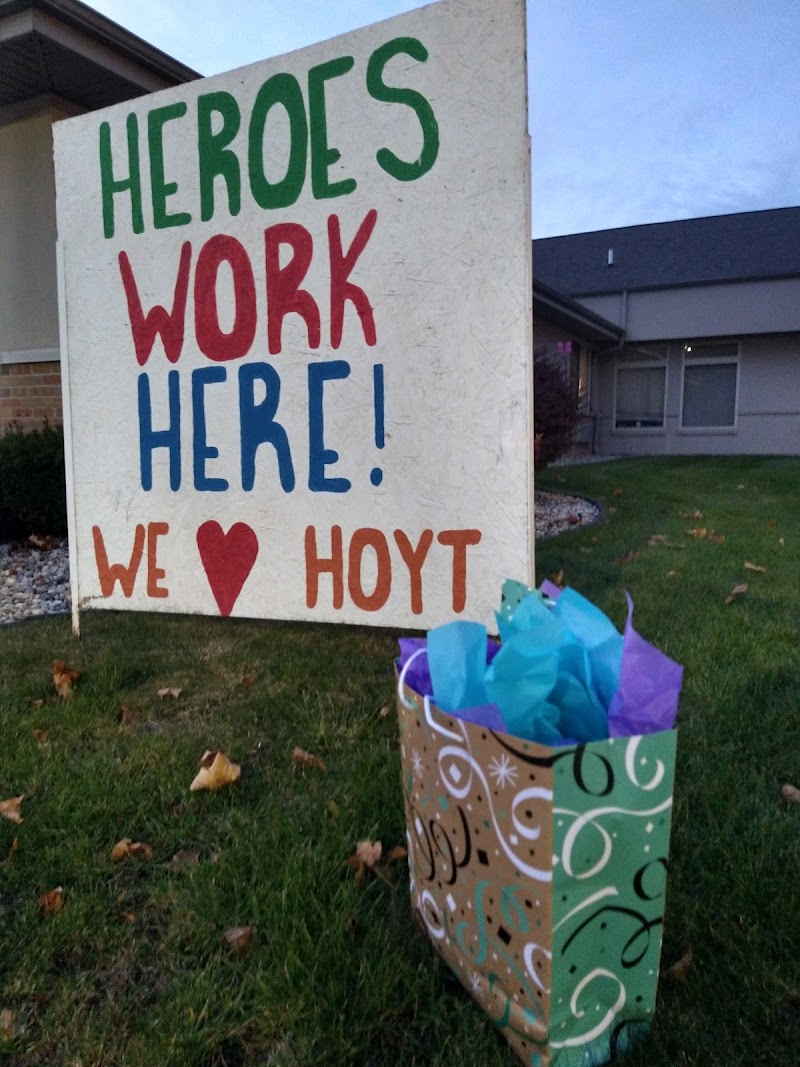
CMS rates Hoyt Nursing & Rehab Centre's staffing level at 4 out of 5 stars, which is above average compared to other nursing homes. Staff turnover is 43%, compared to the Michigan average of 46%. This relatively stable workforce can support continuity of care.

What Have Inspectors Found at Hoyt Nursing & Rehab Centre?

State health inspectors documented 35 deficiencies at Hoyt Nursing & Rehab Centre during 2023 to 2025. These included: 3 that caused actual resident harm and 32 with potential for harm. Deficiencies causing actual harm indicate documented cases where residents experienced negative health consequences.

Who Owns and Operates Hoyt Nursing & Rehab Centre?

Hoyt Nursing & Rehab Centre is owned by a for-profit company. For-profit facilities operate as businesses with obligations to shareholders or private owners. The facility is operated by NEXCARE HEALTH SYSTEMS, a chain that manages multiple nursing homes. With 128 certified beds and approximately 87 residents (about 68% occupancy), it is a mid-sized facility located in Saginaw, Michigan.

How Does Hoyt Nursing & Rehab Centre Compare to Other Michigan Nursing Homes?

Compared to the 100 nursing homes in Michigan, Hoyt Nursing & Rehab Centre's overall rating (2 stars) is below the state average of 3.1, staff turnover (43%) is near the state average of 46%, and health inspection rating (2 stars) is below the national benchmark.

What Should Families Ask When Visiting Hoyt Nursing & Rehab Centre?

Based on this facility's data, families visiting should ask: "What safeguards and monitoring systems are in place to protect residents from abuse or neglect?" "Can I visit during a mealtime to observe dining assistance and food quality?" "How do you handle medical emergencies, and what is your hospital transfer rate?" "Can I speak with family members of current residents about their experience?" These questions are particularly relevant given the substantiated abuse finding on record.

Is Hoyt Nursing & Rehab Centre Safe?

Based on CMS inspection data, Hoyt Nursing & Rehab Centre has documented safety concerns. The facility has 1 substantiated abuse finding (meaning confirmed case of resident harm by staff or other residents). The facility has a 2-star overall rating and ranks #100 of 100 nursing homes in Michigan. Families considering this facility should ask detailed questions about what corrective actions have been taken since these incidents.

Do Nurses at Hoyt Nursing & Rehab Centre Stick Around?

Hoyt Nursing & Rehab Centre has a staff turnover rate of 43%, which is about average for Michigan nursing homes (state average: 46%). Moderate turnover is common in nursing homes, but families should still ask about staff tenure and how the facility maintains care continuity when employees leave.

Was Hoyt Nursing & Rehab Centre Ever Fined?

Hoyt Nursing & Rehab Centre has no federal fines on record. CMS issues fines when nursing homes fail to meet care standards or don't correct problems found during inspections. The absence of fines suggests the facility has either maintained compliance or corrected any issues before penalties were assessed. This is a positive indicator, though families should still review recent inspection reports for the full picture.

Is Hoyt Nursing & Rehab Centre on Any Federal Watch List?

Hoyt Nursing & Rehab Centre is not on any federal watch list. The most significant is the Special Focus Facility (SFF) program, which identifies the bottom 1% of nursing homes nationally based on persistent, serious quality problems. Not being on this list means the facility has avoided the pattern of deficiencies that triggers enhanced federal oversight. This is a positive indicator, though families should still review the facility's inspection history directly.