MyMichigan Medical Center-Sault
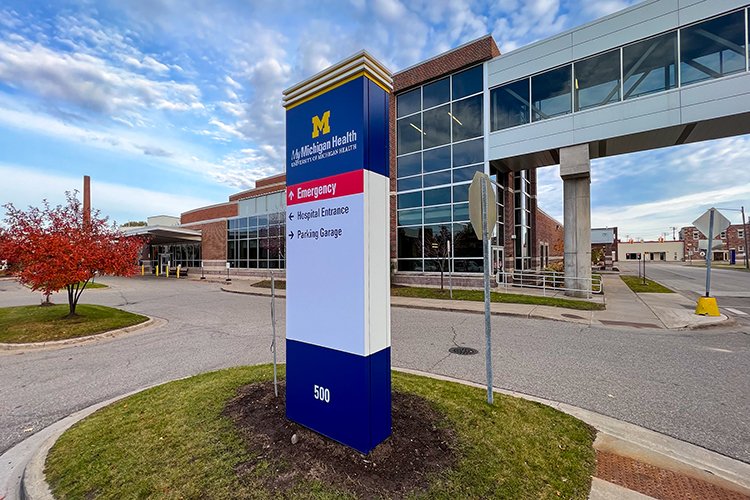
500 Osborn Boulevard, Sault Ste. Marie, MI 49783 (906) 635-4460
Non profit - Corporation 51 Beds Independent Data: November 2025
Trust Grade
23/100
#396 of 422 in MI
Last Inspection: December 2024

Within standard 12-15 month inspection cycle. Federal law requires annual inspections.

Overview

MyMichigan Medical Center-Sault has received a Trust Grade of F, indicating significant concerns about the quality of care provided at this facility. With a state rank of #396 out of 422, they are in the bottom half of nursing homes in Michigan, and they rank #2 out of 2 in Chippewa County, meaning there is only one local option that is better. The facility is improving, having reduced issues from 10 in 2024 to 5 in 2025, but this still highlights ongoing challenges. Staffing levels are a strength, with a 4/5 star rating and a 0% turnover rate, which is well below the state average, indicating staff stability; however, the facility has faced serious incidents, including a resident falling and fracturing their femur due to improper transfer practices and another resident receiving the wrong medication, resulting in hospitalization. While the facility has good RN coverage, with more than 78% of Michigan facilities, the overall quality of care remains concerning, as evidenced by fines of $4,545 and a low overall star rating of 1/5.

Trust Score
F
23/100
In Michigan
#396/422
Bottom 7%
Safety Record
High Risk
Review needed
Inspections
Getting Better
10 → 5 violations
Staff Stability
○ Average
Turnover data not reported for this facility.
Penalties
✓ Good
$4,545 in fines. Lower than most Michigan facilities. Relatively clean record.
Skilled Nurses
✓ Good
Each resident gets 68 minutes of Registered Nurse (RN) attention daily — more than 97% of Michigan nursing homes. RNs are the most trained staff who catch health problems before they become serious.
Violations
⚠ Watch
30 deficiencies on record. Higher than average. Multiple issues found across inspections.
★☆☆☆☆
1.0
Overall Rating
★★★★☆
4.0
Staff Levels
★☆☆☆☆
1.0
Care Quality
★★☆☆☆
2.0
Inspection Score
Stable
2024: 10 issues
2025: 5 issues

The Good

  • 4-Star Staffing Rating · Above-average nurse staffing levels
  • Full Sprinkler Coverage · Fire safety systems throughout facility
  • No fines on record

Facility shows strength in staffing levels, fire safety.

The Bad

1-Star Overall Rating

Below Michigan average (3.1)

Significant quality concerns identified by CMS

Federal Fines: $4,545

Below median ($33,413)

Minor penalties assessed

The Ugly 30 deficiencies on record

3 actual harm
Mar 2025 1 deficiency
CONCERN (D) 📢 Someone Reported This

A family member, employee, or ombudsman was alarmed enough to file a formal complaint

Potential for Harm - no one hurt, but risky conditions existed

Free from Abuse/Neglect (Tag F0600)

Could have caused harm · This affected 1 resident

**NOTE- TERMS IN BRACKETS HAVE BEEN EDITED TO PROTECT CONFIDENTIALITY** Based on observation, interview and record review, the facility failed to ensure the residents right to be free from abuse for t...

Read full inspector narrative →
**NOTE- TERMS IN BRACKETS HAVE BEEN EDITED TO PROTECT CONFIDENTIALITY** Based on observation, interview and record review, the facility failed to ensure the residents right to be free from abuse for two Residents (R10 and R11) of four residents reviewed for sexual abuse, resulting in the potential for psychosocial harm including feelings of humiliation and fear based on a reasonable person standard. Findings include: Review of a facility five-day investigation summary, submitted to the State Agency (SA) on 2/23/2025 at 6:04 p.m., revealed the following: On 2/23/25, [R10] was sitting in the dining room across the table from [R11] when [CNA C] heard [R10] ask [R11] 'come here and come on, you want to touch it. [CNA C] witnessed [R10] with his penis pulled through the bottom of the left leg of his shorts in his hand. Review of the Minimum Data Set (MDS) assessment, dated 3/6/2025, revealed R10 was admitted to the facility on [DATE] and had diagnoses including anxiety, sleep disorder and dementia. Further review of the MDS assessment revealed R10 was independent for transfers and ambulation and scored 11 out of 15 on the Brief Interview for Mental Status (BIMS), indicating he was cognitively intact. Review of the MDS assessment, dated 2/12/2025, revealed R11 was admitted to the facility on [DATE] and had diagnoses including dementia, anxiety and depression. Further review of the MDS assessment revealed R11 required partial/moderate assistance (helper does less than half the effort) with sit to stand and chair/bed to chair transfers and was independent with wheelchair mobility. R11 scored 00 out of 15 on the BIMS, indicating she had severe cognitive impairment. On 3/12/2025 at 10:15 a.m. R11 was observed lying in her bed, awake and holding a small stuffed animal. When greeted, R11 smiled. An interview at the time of the observation revealed R11 had no recollection of the reported event that occurred on 2/23/2025. On 3/12/2025 at 10:20 a.m., R10 was observed lying in his bed with his eyes closed. R10 was wearing black pants, a t-shirt and black athletic-type shoes. R10 did not respond to this Surveyor's knock on the door or verbal greeting. During a telephone interview on 3/12/2025 at 12:19 p.m., R10's legal guardian reported he did not want R10 to be interviewed again related to the alleged incident on 2/23/2025. R10's guardian reported R10 had a long-standing history of depression and he did not want to exacerbate the condition. R10's guardian reported asking the Resident if he exposed himself to R11 and asking her to touch his penis. R10's guarding stated R10 reply was I don't remember. and I won't do it again. During an interview on 3/12/2025 at 2:20 p.m., Certified Nursing Assistant (CNA) C reported witnessing R10 ask R11 to touch his exposed penis on 2/23/2025. CNA C reported R10 was seated across the table from R11 in the dining room. Upon turning around to retrieve a product from the refrigerator, CNA C stated, I heard [R10] say 'Hey come over here, you want to touch it?' CNA C reported upon turning back around to face the dining room, she witnessed R10 talking to R11 with his penis pulled through the leg of his shorts. CNA C reported R10 had his penis in his hand and was shaking it and R11 appeared confused and responded to R10 by stating huh? CNA C reported upon approaching R10, he ceased the activity, placed his penis back inside the leg of his shorts without any redirection like he knew it was wrong. CNA C was queried as to whether R10 had exhibited sexual behaviors toward others in the past. CNA C reported she was aware R10 had a past incident with another resident in the facility which the State Agency had been in to investigate. CNA C was unaware of the prior incident involving R11 on 1/19/2025. CNA C stated, I should have known something was up. When asked what she meant, CNA C reported R10 was out of his usual routine on 2/23/2025 and stated, I noticed [R10] at a table he normally does not sit at. When asked to clarify, CNA C reported on 2/23/2025 R10 entered the dining room at a time out of his normal routine and sat at a table of female residents, which he never did, and was acting sneaky. CNA C stated staff recognized the risk and removed some of the ladies from the dining area. According to CNA C, R10 had a history of watching pornography and masturbating in public areas of the facility. When asked why R10 was not redirected from the dining room if his behavior was suspicious, CNA C reported she thought R10's prior behaviors were only directed toward a specific resident, who had already been removed from the dining area and away from R10. Review of an incident report, provided by the Director of Nursing (DON) and dated 1/19/2025 at 11:55 p.m., revealed the following: This nurse went to check where [R10] was as he had recently been sitting in the dining room . went around the hallway towards the large bathroom. [R10's) one hand was on a female resident's shoulder and what appeared to be pulling down his shorts. This nurse immediately asked what he was doing, and he quickly adjusted his shorts and went to his bedroom . Further review of the incident report revealed R10 to be in the large bathroom with R11. During an interview on 3/13/2025 at 9:33 a.m., Registered Nurse (RN) D recalled working on 2/23/2025 and being informed by staff of R10's presence in the dining room. RN D reported she was aware R10 had a history of inappropriate sexual behavior but understood the behavior to be directed toward a specific resident, whom staff had removed from the dining room upon R10's entry. When asked if she was aware R10 had a history of sexual behaviors directed toward other residents, RN D reported she was aware of R10's prior behavior of exposing himself in public areas within the facility but was unaware of any incident involving R11 until after the incident on 2/23/2025. Review of a physician encounter note, dated 11/20/2024 at 2:08 p.m., revealed the following: GDR [gradual dose reduction] paxil [anti-depressant medication] from 30 mg [milligrams] to 20 mg for depression/anxiety and associated symptoms with intent to continue monitoring symptoms . Continue non-pharm [pharmacological] interventions might also include: Avoiding over stimulation of TV or radio programs, radios, magazines; involve crafts that occupy his hands to help prevent inappropriate touching or public masturbation, providing stuffed animal such as replica of the pink [NAME] where he is able to fondle the puppet rather than others; provide clothing that lacks zippers . scheduled times for providing privacy in satisfying patient's own sexual drive. During an interview on 3/13/2025 at 10:50 a.m., Social Worker (SW) F reported she had worked with R10 since his admission to the facility. When asked when R10's inappropriate sexual behaviors began, SW F reported R10's behaviors had been present since admission but seemed to worsen at times when R10 was depressed or bored. SW F reported R10 had a dose reduction of his antidepressant medication in December 2024 which she believed contributed to R10's increase in inappropriate sexual behaviors. When asked if R10 was provided with non-pharmacological interventions to deter inappropriate sexual behaviors, SW F reported R10 was provided with pornographic materials to view in the privacy of his own room. SW F stated R10 would not engage in the viewing of the materials in his room but proceeded to view the materials and masturbate in public areas of the facility including the dining room in view of other residents, which was inappropriate. SW F reported R11 did not recall the incident on 2/23/25 and showed no change in her behavior since the incident. Review of R10's Psychiatric Outpatient Evaluation, dated 2/25/2025, revealed the following: The patient's recent concerning behaviors are discussed with him. He reports he has been told by staff that he exposed himself to another female peer on the unit. He does not recall the event. When asked if he felt this was appropriate or inappropriate, he states that it was inappropriate. During an interview on 3/13/2025 at 11:45 a.m., the Nursing Home Administrator (NHA) confirmed R10 was known to have exhibited sexually inappropriate behaviors, including coercion and public sexual acts in the facility prior to the event involving R11 on 2/23/2025. When asked if staff should have anticipated the incident on 2/23/2025 due to the prior incident in which R10 was found in the large bathroom with R11 on 1/19/2025, the NHA did not offer a response and stated, it seems the dining room is a trigger for his behavior. Review of R10's care plan revealed the following: [R10] is at risk and/or has behaviors . making sexually inappropriate statements to staff . engaging in sexual actions in public area of facility [with] other residents . increased social/behavioral disinhibitions because of cognitive loss . [R10] lacks the capacity to make choices regarding sexual activity due to appointment of guardianship. Date initiated, 4/01/2024. Interventions: Provide intervention and redirection when [R10] is attempting or engaging residents where he is displaying inappropriate actions for public areas. Date initiated, 4/01/2024. The care plan had nothing to address preventing the behaviors from occurring in the first place. The focus was on a previous resident R10 had an inappropriate interaction with, and failed to address other potential victims in prevention of further sexual abuse potential. Review of R11's care plan revealed the following: [R11] has a behavior problem of invading others personal space, not easily redirected/physical aggression [with] staff . and other residents during incidental contact . Date initiated, 4/01/2024. It was noted in review of R11's care plan, there were no foci, goals or interventions developed and implemented to reduce the likelihood of R11 being exposed to R10's sexually inappropriate behaviors or to alert staff of the incidents that occurred between R10 and R11 on 1/19/2025 and 3/23/2025. Review of the undated facility policy titled, [Facility Name] Abuse Prevention, revealed the following: Purpose: To protect the resident's right to be free from verbal, sexual, physical and psychological abuse . Prevention: The facility will provide supervision of staff and residents to the fullest extent possible . Protect: Responding immediately to protect the alleged victim .
Feb 2025 1 deficiency 1 Harm
SERIOUS (G) 📢 Someone Reported This

A family member, employee, or ombudsman was alarmed enough to file a formal complaint

Actual Harm - a resident was hurt due to facility failures

Accident Prevention (Tag F0689)

A resident was harmed · This affected 1 resident

**NOTE- TERMS IN BRACKETS HAVE BEEN EDITED TO PROTECT CONFIDENTIALITY** This citation pertains to intake MI00150095. Based on observation, interview and record review, the facility failed to follow ca...

Read full inspector narrative →
**NOTE- TERMS IN BRACKETS HAVE BEEN EDITED TO PROTECT CONFIDENTIALITY** This citation pertains to intake MI00150095. Based on observation, interview and record review, the facility failed to follow care planned interventions to ensure staff performed safe transfers for two Residents (#1 and #3) of four residents reviewed. This deficient practice resulted in actual harm when Resident #1 experienced a fall resulting in a right femur fracture and subsequently required surgical intervention and pain. Findings include: Resident #1 (R1) Review of a Witnessed Fall, report, provided by the Director of Nursing (DON) and dated 1/29/2025 at 5:41 p.m., revealed the following: Resident [R1] was ambulating x 1 CNA [Certified Nursing Assistant] assist to toilet when legs became weak, and the resident was lowered to the ground with a gait-belt . Immediately post lowering the resident complained of right leg pain. RLE [right lower extremity] appeared to be shortened and foot inverted . did [complain of] right leg/thigh pain .The resident was assisted with a transfer sheet onto a stretcher and immediately transferred to the ED [emergency department]. Review of R1's Emergency Department Evaluation Note, dated 1/29/2025 at 5:00 p.m., revealed the following: Patient [R1] . from our long-term care facility that presents following a fall from standing . Reports landing and hitting her right hip on the ground . Reporting pain 10 out of 10. Patient was noted to have shortening and internal right rotation of her right lower extremity . preliminary bedside read of right knee x-ray revealed a distal femur spiral fracture [fracture of the distal thigh bone resulting from a twisting motion] . Review of R1's x-ray report, dated 1/29/2025 at 8:11 p.m., revealed R1 had a comminuted [broken in at least two places], displaced fracture of the distal femur. Review of R1's hospital Procedure Note, provided by the DON, dated 1/30/2025, revealed R1 underwent right distal femur open reduction internal fixation (surgical procedure to place an implant to stabilize broken bones) on 1/30/2025 at 3:12 p.m. Review of the facility incident investigation summary submitted to the State Agency (SA) on 2/6/2025 at 4:43 p.m., revealed the following: The facility investigation concludes that [CNA C] . transferred [R1] as a one-assist while [R1] was care planned as a two-assist transfer . Review of the most recent quarterly Minimum Data Set (MDS) assessment, dated 1/9/2025, revealed R1 was admitted to the facility on [DATE] with diagnoses including heart failure, chronic obstructive pulmonary disease (COPD) and dementia. Further review of the MDS revealed R1 had severe cognitive impairment and required substantial/maximal assistance (helper does more than half the effort) for sit to stand, chair/bed-to-chair and toilet transfers (the ability to get on and off a toilet or commode). On 2/19/2025 at 11:15 a.m., R1 was observed seated in a wheelchair at a table in the dining room. R1's right leg was elevated and resting on a leg rest while her left leg was in a dependent position with her left foot resting on the left foot pedal. During a telephone interview on 2/19/2025 at 2:20 p.m., CNA C recalled R1's fall on 1/29/2025. CNA C stated she was assisting R1 to the bathroom by positioning R1, seated in a wheelchair, between the entrance to R1's room and the bathroom doorway. CNA C stated she placed a gait belt around R1's upper abdomen and assisted the R1 to take a couple steps into bathroom from the chair and then assisted R1 to pivot into position in front of the toilet. While turning to position R1 in front of the toilet, R1 began calling out I'm falling. CNA C stated R1 was facing the doorway, with the toilet to R1's right side, when R1 began to fall. CNA C reported she was standing in front of R1 at that time and using one hand to grip the gait belt and her other hand to grasp the waistband of R1's pants, and lowered R1 to the ground at which time R1 reported pain in her right leg. When asked what position R1's right leg was in after the fall, CNA C stated she [R1] was sitting on it. CNAC stated no other staff were present to assist her in transferring R1 to the toilet. When asked what R1's transfer was in accordance with R1's comprehensive care plan, CNA C reported the care planned interventions were posted on the inside of R1's closet but she did not check R1's care plan prior to the attempt to transfer R1 to the toilet on 1/29/2025. CNA C stated, I had seen the resident transferred a million times with only one-person assistance, so I thought it [R1's transfer status] hadn't changed. Review of R1's care plan revealed the following, in part: [R1] has an ADL [activities of daily living] self-care performance deficit [related to] dementia, limited mobility, pain to her lower back . Interventions: Two assist with gait belt and wheeled walker, able to bear full weight but uses two people to enable the standing position, Date Initiated: 9/24/2025, Resolved: 2/05/2025 . Toilet Use: [R1] requires assistance by 2 staff for toileting, Date Initiated: 5/02/2024. Further review of R1's care plan revealed: [R1] is at risk for falls related to unsteady gait, weakness, poly-pharmacy and evidenced by unable to walk or transfers without assistance, Date Initiated: 4/01/2024 . During an interview on 2/19/2025 at 4:00 p.m., the DON confirmed the facility investigation determined the root cause of R1's fall on 1/29/2025 was staff failure to follow R1's comprehensive care plan related to R1's transfer status. The DON reported CNA C attempted to transfer R1 alone when R1 was care planned for two-person assistance for toileting. The DON reported staff should follow the resident-specific interventions related to transfer status to ensure resident safety. When asked how staff know what each resident's transfer status was, the DON stated individual care plan reports are posted inside each resident's closet for easy reference by staff. Resident #3 (R3) Review of the MDS assessment, dated 2/19/2025, revealed R3 was admitted to the facility on [DATE] with diagnoses including dementia, anxiety and a history of repeated falls. Further review of the assessment revealed R3 had severe cognitive impairment and required substantial/maximal assistance (helper does more than half the effort) for sit to stand, chair/bed-to-chair and toilet transfers (the ability to get on and off a toilet or commode). Review of R3's care plan on 2/19/2025 at 10:58 a.m. revealed the following: [R3] has an ADL self-care performance deficit [related to] cognitive, loss, weakness, history of pelvic fracture . Date Initiated: 5/03/2024 . Transfers: [R3] requires assistance by 2 staff to transfer with the [sit-to-stand] lift (yellow sling). Date Initiated. 5/23/2024. Revision on 2/12/2025. On 2/19/2025 at 1:24 p.m., R3 was observed being transferred from a wheelchair to the toilet by CNA D and Registered Nurse (RN) A using a sit-to-stand mechanical lift. CNA D fastened a green trimmed lift sling around R3's torso and attached the sling to the lift. RN A instructed R3 to hold the hand grips as CNA D began to lift the resident from the wheelchair. R3 was observed unable to place her feet flat on the base of the lift to allow her to stabilize her position on the lift. CNA D lowered R3 back down to a seated position in the wheelchair and reported R3 was not appropriate to use the sit-to-stand mechanical lift due to R3's inability to place her feet flat on the base of the lift for stability. CNA D stated R3 would be transferred to the bed for care delivery. RN A was observed securing a gait belt around R3's upper abdomen. Seated in the wheelchair, R3 was positioned next to her bed and RN A stood on R3's left side while CNA D stood in front of R3 as they pulled R3 to standing and pivoted the Resident to a seated position on the bed. Immediately following the observation, the care plan report attached inside of the door of R3's closet was reviewed with CNA D and RN A. Upon review of the care plan, CNA D reported R3 was care planned for two-person assist with the [NAME]-lift [sit-to-stand lift] using a yellow sling. CNA D reported the yellow sling was broken therefore they had to use green because there were no other slings available for use. The care plan revealed no intervention indicating R3 could be transferred with a gait belt and two-person assist if R3 was unable to use sit-to-stand lift to transfer. CNA D stated R3 was hit and miss with her transfer ability and because she knew R3, she felt the R3t was appropriate to transfer with a gait belt and two-person assistance. When asked if facility policy allowed for staff to use a lesser means of transfer when Resident's failed at the care planned transfer status, RN A stated she was unsure of what was acceptable according to facility policy. CNA D reported R3's transfer status changed, and staff are not alerted when changes to care plans were made. CNA D stated staff must check for changes by checking the care plans daily. During an interview on 2/19/2025 at 2:38 p.m., Physical Therapist (PT) G reported R3 was recently referred for evaluation due to staff concerns R3 could not always transfer safely with just the use of a gait belt and staff assistance. PT G confirmed R3's transfer status was changed to a two-person assist with the sit-to-stand mechanical lift. When asked if it was appropriate for staff to utilize a lesser means of assistance without further evaluation, PT G stated staff should obtain a therapy evaluation to ensure residents are safe to use less assistance. During an interview on 2/19/2024 at 4:00 p.m., the Director of Nursing (DON) reported the facility did not have a policy related to safe, staff-assisted transfers. The DON stated the facility was in the process of reviewing policies for relevance to the long-term care setting and would be considering a policy related to staff-assisted transfers. A review of the National Institute of Health (NIH) National Library of Medicine guidelines located at https://www.ncbi.nlm.nih.gov/books/NBK564305/, accessed on 3/3/25, regarding patient/resident safety for transfer from a bed to a wheelchair read as follows: Transferring patients from a bed to a wheelchair requires understanding the patient's needs. Always communicate with the person being transferred so that assistance is given at the appropriate time, allowing for coordination between the assistant and the patient. A one-person assist may be performed if the patient can bear weight on both lower extremities and predictably take small steps. If these criteria are not met, a 2-person transfer or a mechanical lift may be necessary to transfer the patient safely . This would indicate a more supportive transfer assistance would be more appropriate in the above observation of R3 and not a less supportive transfer.
Jan 2025 2 deficiencies
CONCERN (D) 📢 Someone Reported This

A family member, employee, or ombudsman was alarmed enough to file a formal complaint

Potential for Harm - no one hurt, but risky conditions existed

Report Alleged Abuse (Tag F0609)

Could have caused harm · This affected 1 resident

**NOTE- TERMS IN BRACKETS HAVE BEEN EDITED TO PROTECT CONFIDENTIALITY** This citation pertains to MI00149861 Based on interview and record review, the facility failed to notify the state agency of a r...

Read full inspector narrative →
**NOTE- TERMS IN BRACKETS HAVE BEEN EDITED TO PROTECT CONFIDENTIALITY** This citation pertains to MI00149861 Based on interview and record review, the facility failed to notify the state agency of a resident-to-resident sexual abuse allegation to the state agency for two Residents (#1 and #3) of four Residents reviewed for abuse. This deficient practice resulted in the potential for sexual abuse abuse. Findings include: Resident #1 (R1) Review of R1's Minimum Data Set (MDS) assessment dated [DATE], revealed admission to the facility on 7/12/22, with active diagnoses that included: dementia and depression. R1 scored a 9 of 15 on the Brief Interview of Mental Status (BIMS) assessment reflective of moderate cognitive impairment. Resident #3 (R3) Review of R3's MDS assessment dated [DATE], revealed admission to the facility on [DATE], with active diagnoses that included: dementia, anxiety disorder, and depression. R3 scored a 3 of 15 on the BIMS assessment reflective of severe cognitive impairment. Review of R1's behavior note dated 1/18/25 at 15:45 revealed R1 was sitting next to R3 in the dining room, and R3 was holding onto R1's exposed penis. During an interview on 1/30/25 at 3:27 p.m., Registered Nurse (RN) C confirmed that Certified Nurse Aide (CNA) D reported that R1 was holding R3's penis in the dining room and that the incident was documented by RN C and reported to the Director of Nursing (DON). During a phone interview on 1/30/25 at 3:45 p.m., CNA D stated, I saw R1 and R3 sitting close to one another in the dining room and when I walked by I saw R3 holding onto R1's penis .R1 asked R3 to grip onto it harder .I took R3 away from the dining room and reported it to RN C right away and she called the DON . During an interview on 1/30/25 at 12:19 p.m., the Nursing Home Administrator (NHA) acknowledged the incident was not reported to the State Agency (SA). During an interview on 1/31/25 at 7:37 a.m., the DON stated the incident on the 18th was not investigated and the incident was not reported to the SA. Review of Facility policy titled LTC (Long Term Care) Resident Abuse, Neglect or Mistreatment last reviewed 1/25, read in part .The Administrator or designee will report to the state officials, as designate by law and investigate all allegations .the Administrator or designee ill contact state and law enforcement within .24 hours of all allegations and will complete the investigation within 5 days .The results of the investigation shall be reported to official (State and Federal agencies) in accordance with State and Federal law and within five working days .
CONCERN (D) 📢 Someone Reported This

A family member, employee, or ombudsman was alarmed enough to file a formal complaint

Potential for Harm - no one hurt, but risky conditions existed

Deficiency F0657 (Tag F0657)

Could have caused harm · This affected 1 resident

**NOTE- TERMS IN BRACKETS HAVE BEEN EDITED TO PROTECT CONFIDENTIALITY** This citation pertains to MI00149861 Based on interview and record review, the facility failed to ensure care plans were updated...

Read full inspector narrative →
**NOTE- TERMS IN BRACKETS HAVE BEEN EDITED TO PROTECT CONFIDENTIALITY** This citation pertains to MI00149861 Based on interview and record review, the facility failed to ensure care plans were updated promptly and revised appropriately for two Residents (#1 and #3) of four residents reviewed for care plans. This deficient practice resulted in care plans which did not reflect resident needs. Findings include: Resident #1 (R1) Review of R1's Minimum Data Set (MDS) assessment dated [DATE], revealed admission to the facility on 7/12/22, with active diagnoses that included: dementia and depression. R1 scored a 9 of 15 on the Brief Interview of Mental Status (BIMS) assessment reflective of moderate cognitive impairment. Resident #3 (R3) Review of R3's MDS assessment dated [DATE], revealed admission to the facility on [DATE], with active diagnoses that included: dementia, anxiety disorder, and depression. R3 scored a 3 of 15 on the BIMS assessment reflective of severe cognitive impairment. Review of R1's behavior note dated 1/18/25 at 15:45 revealed R1 was sitting next to R3 in the dining room, and R3 was holding onto R1's exposed penis. Review of the care plan's for R1 and R3 did not reveal an updated revision or intervention to mitigate the resident-to-resident altercation in the dining room. During an interview on 1/31/25 at 9:11 a.m., The Director of Nursing (DON) was asked about updating the residents care plan to mitigate the resident-to-resident altercation and the DON said the care plans were not updated, reviewed, or revised after the incident and indicated the facility normally revises the care plan after each incident. Review of facility policy titled LTC (Long Term Care) Resident Care Planning last revised 9/23, read in part, .The care plan shall be implements with documentation in the resident's clinical record. Evaluation of the results of the planned care or intervention shall be documents in the residents clinical record. The care plan shall be reviewed and elements of care evaluated periodically as necessary to reflect the resident's condition .a resident care conference shall be held periodically .to evaluate the residents needs and to provide for the appropriate revision of the resident care plan .
Jan 2025 1 deficiency
CONCERN (D) 📢 Someone Reported This

A family member, employee, or ombudsman was alarmed enough to file a formal complaint

Potential for Harm - no one hurt, but risky conditions existed

Investigate Abuse (Tag F0610)

Could have caused harm · This affected 1 resident

This Citation Pertains to Intake Number MI00149462. Based on interview and record review the facility failed to ensure a complete and thorough investigation was completed on an incident of potential a...

Read full inspector narrative →
This Citation Pertains to Intake Number MI00149462. Based on interview and record review the facility failed to ensure a complete and thorough investigation was completed on an incident of potential abuse involving two Residents (#30 and #31) out of three Residents reviewed for abuse. This deficient practice resulted in the potential for undetected abuse. Findings include: Resident #30 (R30)/Resident #31 (R31) A Facility Reported Incident (FRI) was received on 1/1/25 at 7:45 PM, which read in part: Incident Summary Registered Nurse (RN E) reported to NHA (Nursing Home Administrator) . witness and Resident Assistant (RA D) reported . she heard (R31) ask (R30) to touch him on the groin. (R30) subsequently placed her hand on (R31's) groin. Residents were immediately separated . On 1/16/25 at 1:25 PM, the NHA and this surveyor viewed the dining room video of the incident between R30 and R31. The residents involved in the FRI were present in the video but were seated at a far distance from the camera. No sound was recorded. R30 does lean in and is visibly closer to R31 several times but her hand is not visible nor is the lap of R30. She does not wheel away or appear to take offense. At least three other residents were seated in the dining room closer to the camera and several people move in and out of the camera view during the timeframe of the FRI from 2:43 PM until 3:06 PM on 1/1/25. The witness, RA D, was seen in the video entering the dining room and working serving beverages at 2:51 PM. At 3:06 PM, RN E came into the dining room and wheeled R30 out of the room. During an interview on 1/16/25 at 1:35 PM, the NHA was asked about the investigation into the FRI. The investigation folder was reviewed and did not contain any witness statements from RA D or RN E who separated R30 and R31 and did not contain an incident report with details of the event. The other residents and those seated or walking through the dining room during the 23 minutes R30 and R31 were seated together were not interviewed. Other staff working that shift who may have had observations were not interviewed and no statements were obtained. When asked why the hospitality aide had not separated R30 and R31 but instead left the dining room to get a nurse, the NHA did not know. When asked if there had been an incident report completed as part of the electronic medical record the answer was no. When asked if any witness statements had been taken the answer was no. The facility policy titled LTC (Long Term Care) Abuse, Neglect or Mistreatment, last reviewed 01/2025 read in part: .Resident's care and treatments shall be monitored by all staff, on an ongoing basis, to assure residents are free from abuse, neglect or mistreatment. It is the responsibility of the staff to provide a safe environment for the residents. Allegations of resident abuse, neglect, or misappropriation of property or mistreatment will be reported to the LTC Administrator at which time the LTC Administrator can delegate to the Director of Nursing or designee. The delegated person will thoroughly investigate . 6. An incident report will be completed .9. Results of the investigation shall be reported to officials . The report shall include: i. Witness statements; j. A list of people in the area at the time of the incident:
Dec 2024 10 deficiencies
CONCERN (D)

Potential for Harm - no one hurt, but risky conditions existed

Transfer Notice (Tag F0623)

Could have caused harm · This affected 1 resident

Resident #1 (R1) Review of R1's EMR progress notes revealed R1 was transferred to the emergency department on 7/29/2024 and admitted to the hospital with discharge back to the facility on 8/01/2024. F...

Read full inspector narrative →
Resident #1 (R1) Review of R1's EMR progress notes revealed R1 was transferred to the emergency department on 7/29/2024 and admitted to the hospital with discharge back to the facility on 8/01/2024. Further review of R1's EMR revealed no documentation of notification of transfer or discharge was provided to R1 or their representative. Review of the July 2024 transfer and discharge list provided to the Long-Term Care Ombudsman revealed R1's transfer and hospitalization was not included on the list. Review of the facility policy titled, Transfer (Internal and External) and Discharge, last revised 9/2023, revealed the following: Purpose: To ensure residents are appropriately transferred or discharged from the LTC [Long Term Care] . During review of the policy, it was noted the policy included no language or instruction on the provision of notification of transfer or discharge to the resident, the resident's representative or the facility's assigned Long-Term Care Ombudsman. Based on interview and record review, the facility failed to notify, in writing, the resident, resident's representative and a representative of the Office of the State Long-Term Care Ombudsman of the transfer to the hospital for two Residents (#16 and #1) for two residents reviewed for transfers out of the facility. Findings include: Resident #16 (R16) A review of the electronic medical record (EMR) revealed on 9/13/24, R16 was transferred to the hospital and returned 9/16/24. The notification of transfer or discharge to be provided to R16 or their representative, and the notification to the Ombudsman was unable to be located in the EMR. During an interview on 12/4/24 at 11:20 AM, the Nursing Home Administrator (NHA) presented the September Ombudsman transfer log. This log did not list R16. The NHA stated after the change in leadership the notices of transfer had not been done. The NHA also stated the ombudsman log might not be complete and may not include all the discharges.
CONCERN (D)

Potential for Harm - no one hurt, but risky conditions existed

Deficiency F0625 (Tag F0625)

Could have caused harm · This affected 1 resident

Resident #1 (R1) Review of R1's EMR progress notes revealed R1 was transferred to the emergency department on 7/29/2024 and admitted to the hospital with discharge back to the facility on 8/1/2024. Fu...

Read full inspector narrative →
Resident #1 (R1) Review of R1's EMR progress notes revealed R1 was transferred to the emergency department on 7/29/2024 and admitted to the hospital with discharge back to the facility on 8/1/2024. Further review of R1's EMR revealed no documentation indicating R1 or their representative was provided information on the facility bed hold policy or agreement at the time of transfer or after hospitalization. Review of the facility policy titled, Transfer (Internal and External) and Discharge, last revised 9/2023, revealed the policy did not include any language or instruction related to the provision of bed hold agreement before or upon transfer out of the facility. Based on interview and record review, the facility failed to provide written notification of the bed-hold policy to residents or their representatives prior to a hospital transfer for two Residents (#16 and #1) of two residents reviewed for hospital transfers. Findings include: Resident #16 (R16) A review of the electronic medical record (EMR) revealed on 9/13/24, R16 was transferred to the hospital and returned 9/16/24. The EMR revealed no documentation indicating R16 or their representative was provided information on the facility bed hold policy or agreement at the time of transfer or after hospitalization. During an interview on 12/4/24 at 11:20 AM, the Nursing Home Administrator (NHA) stated the bed hold policy was not reviewed with the resident or the responsible party at the time of transfer.
CONCERN (D)

Potential for Harm - no one hurt, but risky conditions existed

Quality of Care (Tag F0684)

Could have caused harm · This affected 1 resident

**NOTE- TERMS IN BRACKETS HAVE BEEN EDITED TO PROTECT CONFIDENTIALITY** Based on observation, interview and record review, the facility failed to physically assess an acute change in condition and fai...

Read full inspector narrative →
**NOTE- TERMS IN BRACKETS HAVE BEEN EDITED TO PROTECT CONFIDENTIALITY** Based on observation, interview and record review, the facility failed to physically assess an acute change in condition and failed to timely identify and treat constipation for one Resident (#18) of one resident reviewed for change in condition, resulting in abdominal discomfort, nausea, and the potential for worsening of medical condition and complications of constipation. Findings include: Resident #18 (R18) Review of R18's Minimum Data Set (MDS) assessment, dated 10/23/2024, revealed admission to the facility on [DATE] with diagnoses including peripheral vascular disease, Type 2 diabetes mellitus with hyperglycemia, left above the knee amputation and gangrene (tissue death from infection or lack of blood flow) of the right foot. Further review of the MDS assessment revealed R18 was cognitively intact and required extensive/maximal assistance with transfers and toileting. On 12/2/2024 at 10:13 a.m., R18 was observed seated in bed, holding a tissue to her mouth. Further observation revealed a green emesis bag on top of the over bed table positioned in front of R18 in bed. R18 was observed, diaphoretic (sweating) with a pale color. R18 reported she was nauseous and had been vomiting that morning. R18 was unable to continue the interview and requested privacy. During an interview on 12/2/2024 at 12:40 p.m., Licensed Practical Nurse (LPN) G reported being aware R18 was nauseous and had been vomiting that morning. LPN G reported she was unsure why R18 was not feeling well. A review of R18's electronic medical record (EMR) conducted on 12/2/2024 at 11:20 a.m. and 12/4/2024 at 10:15 a.m. No documented physical assessment of R18 was observed, including checking the resident for fever, bowel sounds and assessment of the abdomen or blood glucose evaluation on 12/2/2024 to correspond with the Resident's condition. Further review of the EMR revealed no documentation of physician notification related to R18's condition or nausea and vomiting on 12/2/2024. During an interview on 12/4/2024 at 10:55 a.m., the Director of Nursing (DON) reported nursing staff informed her they believed R18's nausea and vomiting on 12/2/2024 was related to constipation, and therefore the physician was not notified because the facility had standing orders for bowel care. The DON stated nursing staff should have conducted a physical assessment and blood glucose check in response to R18's condition on 12/2/2024. The DON reviewed R18's record at the time of the interview and confirmed no physical assessment or blood glucose check was documented for R18 for the timeframe of 12/2/2024 through the date and time of this interview. The DON confirmed nursing assessment is a standard of practice and should be conducted to promptly identify potential complications related to illness and change in condition. Review of the facility's, admission Standing Orders, for bowel care, presented by the DON, revealed the following: A) Colace 200 mg [milligram], by mouth every PM; B) Milk of Magnesia 30 ml [milliliter] by mouth at bedtime on day 2, without BM [bowel movement] or as needed; C) Bisacodyl suppository in AM on day 3 without BM; D) Fleet enema if no BM 1 hour after suppository; E) Soap suds enema day 4, without BM. Review of R18's EMR including point of care documentation titled, B&B - Bowel Elimination, for November and December 2024 revealed documentation R18 had no bowel movements from 11/18/2024 at 2:54 a.m. until 11/24/2024 at 5:59 a.m. (approximately 6 days). Review of R18's November 2024 Medication Administration Record (MAR) revealed the bowel care standing orders were not implemented until 11/23/2024 at 8:34 a.m. with administration of a dose of Milk of Magnesia 30 ml., more that five days after R18's last bowel movement. It was noted there were no documented refusals of bowel care for R18 from 11/18/2023 through 11/24/2024 in the EMR or included on the November 2024 MAR. It was also noted there was no documentation of physician notification of the Resident's condition during the referenced timeframe. Review of R18's progress notes revealed the following: 11/23/2024, 18:33 [6:33 p.m.], Resident complaining of stomach pain [related to] constipation. MOM [Milk of Magnesia] administered as directed with noted results. Further review of R18's point of care documentation for B&B -Bowel Elimination, revealed the Resident did not have a bowel movement recorded from 11/30/2024 at 2:00 p.m. until 12/03/2024 at 3:41 p.m., a timeframe of more than three full days with no bowel movement. Review of R18's December 2024 MAR revealed no initiation of bowel protocol or documented refusals during the three-day period R18 did not have a bowel movement.
CONCERN (D)

Potential for Harm - no one hurt, but risky conditions existed

Deficiency F0692 (Tag F0692)

Could have caused harm · This affected 1 resident

**NOTE- TERMS IN BRACKETS HAVE BEEN EDITED TO PROTECT CONFIDENTIALITY** Based on observation, interview and record review, the facility failed to ensure appropriate feeding assistance for one Resident...

Read full inspector narrative →
**NOTE- TERMS IN BRACKETS HAVE BEEN EDITED TO PROTECT CONFIDENTIALITY** Based on observation, interview and record review, the facility failed to ensure appropriate feeding assistance for one Resident (#20) of one resident reviewed for nutrition, resulting in the potential for decreased intake and weight loss. Findings include: Resident #20 (R20) A review of R20's Minimum Data Set (MDS) assessment, dated 11/6/2024 revealed R20 was admitted to the facility on [DATE] and had diagnoses including dementia and arthritis. Further review of the MDS assessment revealed R20 had severe cognitive impairment. Review of R20's, Medical Nutrition Therapy Assessment, completed by Certified Dietary Manager (CDM) C on 11/11/2024 at 2:49 p.m. revealed R20 had a history of weight loss/underweight BMI [body mass index]. Further review of the Assessment reviewed the following: . verbal reports from CNA [certified nursing assistant] and NSG [nursing] indicate signs resident may need increased cueing and assistance [related to] gradual cognitive decline and increased dexterity/pain [related to] rheumatoid arthritis . Staff advised to encourage resident to dine in MDR [main dining room] for increased monitoring, cueing, and assistance when needed. Review of R20's care plan revealed the following: The resident has potential nutritional problem [related to]: cachexia [weight and muscle loss] . chronic poor intake . [history] of weight loss . Interventions: Assist needed for meals/snacks: At minimum needs set up assist + [plus] supervision [due to] food hoarding tendencies and/or disposing of food in inappropriate places. Due to progressing arthritis and cognitive decline, may need cuing and limited assist at times . encourage resident to dine in MDR to better monitor for increase assistance needs . Encourage intake and all nutritional interventions in place. On 12/2/2024 at 12:57 p.m., an unidentified staff person was observed delivering R20's noon meal tray to the Resident's room. R20 was observed in the room, sleeping in her wheelchair. Upon setting the meal tray down, two foam cups with lids and two unopened straws atop the over bed table were positioned approximately three feet from where R20 was sleeping, the unidentified assistant left the room and R20 remained sleeping. Further observation at 1:08 p.m. revealed R20 still asleep in her wheelchair and her meal untouched with the unopened straws resting on the over bed table near the two foam cups filled with liquids. An observation of the tray card on R20s meal tray revealed the following: Alerts: encourage eating in MDR for [greater] assistance. Needs cueing [and] assist during meals. On 12/2/2024 at 1:23 p.m., R20 was observed awake, still seated in her wheelchair approximately three feet from the over bed table and meal tray. R20 was pleasantly confused and when asked if she was going to eat her meal she stated, I'm going to try. Upon exiting R20's room, two unidentified staff members were observed approaching R20's doorway, and from the hallway, asked R20 if she was finished with her meal to which R20 was heard replying, I haven't even started yet. The two staff members told R20 they would check back later and then left R20s doorway and continued down the hall. Further observation on 12/2/2024 at 1:50 p.m. revealed R20 seated in a wheelchair in her room with the meal tray still atop her over bed table with all food remaining untouched and the drinks still covered and without the straws inserted. The two straws remained unopened and sitting on the table next to the drinks. At that time, CNA H and CNA I entered R20's doorway and asked R20 if she was finished with her meal. R20 responded I haven't even started. Neither CNA H or CNA I entered R20's room to provide cueing or assist with her meal before leaving the doorway and continuing down the hall. On 12/4/24 at 9:03 a.m., R20 was observed sitting in her bed. A plate with one-half slice of toast, a full bowl of sausage pieces and a full bowl of scrambled eggs were positioned in front of R20 on an over bed table. Both the sausage and the eggs appeared untouched. When asked if she was going eat her meal, R20 responded, oh, I don't know. There were no staff present in R20's room at the time of the observation. During an interview on 12/4/24 at 2:02 p.m., CDM C reported R20's progressive dementia puts her at risk of decreased dietary intake and weight loss. CDM C confirmed R20 required cueing and assistance with meals and stated she was unaware R20 was not receiving assistance with meals when the Resident was served in her room. CDM C reported R20's dietary intake improved greatly with assistance and cueing. CDM C stated R20 had cognitive decline and difficulty with arthritis in her hands which made eating difficult at times. Review of the facility policy titled, Feeding the Resident on Long Term Care, last revised 9/2023, revealed the following: Purpose: To assist the patient/resident who is physically, medically or cognitively unable to feed themselves. Further review of the policy revealed no language or instruction related to feeding assistance provided per the CDM recommendations or the resident's person-centered care plan. .
CONCERN (D)

Potential for Harm - no one hurt, but risky conditions existed

Unnecessary Medications (Tag F0759)

Could have caused harm · This affected 1 resident

Based on observation, interview and record review the facility failed to ensure a medication error rate less than five percent for 1 Resident of 4 residents reviewed for medication administration, res...

Read full inspector narrative →
Based on observation, interview and record review the facility failed to ensure a medication error rate less than five percent for 1 Resident of 4 residents reviewed for medication administration, resulting in 2 observed medication errors out of 25 opportunities, and a medication error rate of eight percent. Findings include: Resident #26 (R26) On 12/4/2024 at 8:37 a.m., Licensed Practical Nurse (LPN) J was observed preparing a dose of insulin from a Humalog Kwikpen (rapid-acting insulin pen) for administration to R26. Prior to dialing the prescribed dosage in the pen, LPN J primed the pen needle by dialing two units, holding the pen horizontally with the needle pointed sideways, and depressing the dose knob to release the insulin into the needle. LPN J then dialed the pen to deliver 13 units for administration, as prescribed. LPN J reported R26 was also due to receive 25 units of long-acting insulin. After attaching the needle to R26's Lantus Solostar (long-acting insulin pen), LPN J dialed two units and proceeded to prime the needle by depressing the dose knob to release the insulin with the pen held horizontally and needle pointed sideways. LPN J then dialed the pen to deliver the prescribed 25 units of Lantus. Immediately following preparation of R26's medication, LPN J was observed administering R26's Lantus insulin into his left lower abdomen. After depressing the dose knob to release the 25 units of insulin, LPN J immediately removed the needle from the resident. LPN J then administered R26's Humalog insulin into his right lower abdomen. After depressing the dose knob to release the 13 units of insulin, LPN J held the needle in place for three seconds before removing the needle from the resident. During an interview immediately following the observation, LPN J acknowledged priming both insulin pens with the pens held horizontally and needles pointed sideways. LPN J also stated she was aware she did not hold the needles in place for any more than three seconds after pushing the dose knobs on the pens to release the insulin. Review of the manufacturer's recommendations for use of the Humalog KwikPen, accessed on 12/5/2024 and last revised 7/2023, revealed the following: . Prime before each injection. Priming your pen means removing the air from the needle and cartridge that may collect during normal use . To prime your pen, turn the dose knob to select 2 units. Hold your pen with the needle pointing up. Tap the cartridge holder gently to collect air bubbles at the top. Continue holding your pen with the needle pointing up. Push the dose knob in until it stops. Giving your injection: Insert the needle into your skin. Push the Dose Knob all the way in. Continue to hold the dose knob in and slowly count to 5 before removing the needle. Review of the manufacturer's recommendation for use of the Lantus Solostar, accessed on 12/5/2024 and last revised 8/2022, revealed the following: . Step 3. Perform a safety test: Dial a dose of 2 units. Hold pen with the needle pointing up and lightly tap the insulin reservoir so the air bubbles rise to the top of the needle. This will help you get the most accurate dose. Press the injection button all the way in and check to see that insulin comes out of the needle . Step 5. Inject your dose: Keep the pen straight, insert the needle into your skin. Use your thumb to press the injection button all the way down. When the number in the dose window returns to [zero] as you inject, slowly count to 10 before removing. Counting to 10 will make sure you get your full insulin dose.
CONCERN (D)

Potential for Harm - no one hurt, but risky conditions existed

Deficiency F0808 (Tag F0808)

Could have caused harm · This affected 1 resident

. Based on observation, interview, and record review, the facility failed to ensure therapeutic diets were served as prescribed for three Residents (#14, #26, and #34) of six residents reviewed for th...

Read full inspector narrative →
. Based on observation, interview, and record review, the facility failed to ensure therapeutic diets were served as prescribed for three Residents (#14, #26, and #34) of six residents reviewed for therapeutic diets. This deficient practice resulted in the potential for health complications and contributed to an inability for residents to meet their goals. Findings include: Resident #14 (R14) On 12/2/24 at 12:46 PM, R14 was observed in the facility dining room eating lunch. The meal tray card for R14 read: Special Diets: Low Sugar ~Thin Liquids and Standing (order): ½ (one half) portion desserts. R14 had received two oatmeal raisin cookies. The Certified Dietary Manager (CDM) C observed the meal. When CDM C observed two cookies were served to R14 (the standard portion size), and the meal tray card instructions indicated 1/2 portion dessert, CDM C stated, That is incorrect. The resident should have received one cookie. The resident was observed eating both cookies. A review of the Electronic Medical Record (EMR) for R14 revealed Diet order: Low Sugar diet, IDDSI (International Dysphagia Diet Standardization Initiative) Regular/Easy to Chew (Level 7) texture, IDDSI Thin (Level 0) consistency, prescribed on 4/1/2024. The care plan for R14 included a focus of: The resident has potential nutritional problem r/t (related to): *Medical/Physical conditions - Obesity: may have intake in excess of metabolic needs . DM (diabetes) . *Diet .Therapeutic diet order r/t DM *Weight . -Anticipate beneficial wt (weight) loss d/t (due to) resident goal weight . Date Initiated: 4/1/2024 Revision on: 11/6/2024 Approaches for this care plan problem included: *Diabetic . *Provide diet as ordered: Low sugar; Level 7/Easy to chew Level 0/Thin liquids *Requests small portions and ½ portion of desserts . *Request & honor menu selections while adhering to/encouraging ordered diet. *Provide positive reinforcement for compliance with diet: -Provide and encourage low sugar/calorie snacks . -Assist resident as needed in choosing appropriate portions. *Preferred portion size: Small Date Initiated: 04/01/2024 Revision on: 08/05/2024 The nutritional assessment written 11/6/2024 included, Staff to continue encouraging low sugar food/fluid choices and provide all interventions in place. Resident #26 (R26) On 12/2/24 at 12:21 PM, R26 was eating lunch in the facility dining room and had chosen to eat his two oatmeal raisin cookies first. R26's meal tray card indicated a Special Diet: Low Sugar, ~Thin Liquids (Level 0). Another section of the tray card read Caution with sugar/carbs (carbohydrates)! CDM C observed this meal and was asked what the caution statement meant. CDM C said a low sugar diet should receive half portions of the dessert and explained the portion size with this meal was one cookie rather than two. The CDM said the servers should have only served one cookie to R26. A review of the EMR for R26 revealed a Diet order of Low Sugar diet, IDDSI Regular (Level 7) texture, IDDSI Thin (Level 0) consistency, prescribed on 4/1/2024. The care plan for R26 indicated a focus of: The resident has potential nutritional problem r/t: *Medical/Physical conditions -Dementia dx (diagnosis); has confusion/memory deficits. May have decreased interest in food, appetite changes, and/or changes in food preferences. May struggle to recognize food/beverages, and/or be unsure how to feed self. -DM type 1; not well controlled at times. *Diet: -Therapeutic diet order r/t DM type 1. -Hx (history) of poor intake. *Weight: -Recent significant unintended weight gain . Care Plan approaches included: *Diabetic . *Provide diet as ordered: Low sugar; Level 7/Regular; Level 0/Thin liquids. Date Initiated: 04/01/2024 Revision on: 11/25/2024 Resident #34 (R34) On 12/4/24 at approximately 1:15 PM, R34 was observed in her room eating lunch. Her tray card indicated a Low Sugar diet with regular texture and regular thin liquids and instruction to serve ½ portion of dessert. R34 received a full serving of cherry pie. The EMR for R34 included a diet order of: Low Sugar diet, Regular (Level 7) texture, Thin (Level 0) consistency, prescribed on 11/6/2024. The care plan for R34 included a focus of: (R34) has nutritional problem or potential nutritional problem related to: * Medical/Physical conditions -Recent CVA (cerebrovascular accident)/TIA (transient ischemic attack) [stroke/stroke like symptoms] w (with)/mild L (left) side weakness. -Generalized weakness.-FTT (failure to thrive) diagnosis. -DM (diabetes) type 2. -Macular degeneration; highly impaired vision. *Diet -Restrictive therapeutic diet order .-Poor intake at times . Date Initiated: 11/13/2024 Revision on: 12/04/2024 The care plan interventions included: Provide diet as ordered: Low Sugar; Level 7/Regular textures;Level 0/Thin liquids. During an interview on 12/3/24 at 12:04 PM, CDM C stated the facility used a very liberalized diabetic diet and provided the LTC (Long Term Care) Therapeutic diet descriptions/definitions guide. The low sugar diet was defined in this guide as: No added sugar; ½ portion dessert. CDM C indicated the food servers should be serving ½ portion of desserts to those on the low sugar diet. During the lunch meal observation on 12/4/24 at 12:15 PM, the dessert of the meal was cherry pie served in clear bowls. R14, R26, and R34 were observed receiving the same size portion of cherry pie dessert as other residents. On 12/4/24 at approximately 12:30 PM, an interview was conducted with Dietary Staff E who was serving in the facility dining room. Staff E pointed out he was serving a cherry pie for dessert. Staff E said, All of the desserts are the same. When asked if residents on the low sugar diets were getting 1/2 portion of the dessert, Staff E replied, No. .
CONCERN (D)

Potential for Harm - no one hurt, but risky conditions existed

Infection Control (Tag F0880)

Could have caused harm · This affected 1 resident

**NOTE- TERMS IN BRACKETS HAVE BEEN EDITED TO PROTECT CONFIDENTIALITY** Based on observation, interview and record review, the facility failed to ensure the use of enhanced barrier precautions (EBP) d...

Read full inspector narrative →
**NOTE- TERMS IN BRACKETS HAVE BEEN EDITED TO PROTECT CONFIDENTIALITY** Based on observation, interview and record review, the facility failed to ensure the use of enhanced barrier precautions (EBP) during wound care according to the physician's order and current standards of practice for one Resident (#15) of two residents reviewed for wound care, resulting in the potential for the spread of multidrug-resistant organisms (MDROs). Findings include: Resident #15 (R15) Review of the Minimum Data Set (MDS) assessment, dated 10/30/2024, revealed R15 was admitted to the facility on [DATE] with diagnoses including Alzheimer's dementia, diabetes, bullous pemphigoid (an autoimmune disease causing large, fluid-filled blisters), and a stage two pressure injury (partial thickness loss of tissue) to the right buttock. On 12/2/2024 at 9:37 a.m. a sign indicating the use of enhanced barrier precautions (EBP) for all high-contact care activities, was observed attached to the left side of R15's doorway. The sign stated, Everyone Must: . Wear gloves and a gown for the following high-contact resident care activities . Wound Care: any skin opening requiring a dressing . Wound care was observed performed by Licensed Practical Nurse (LPN) G with assistance from Certified Nursing Assistant (CNA) I on 12/03/2024 at 2:35 p.m. An open wound was observed on R15's right buttock. LPN G stood on the right side of R15's bed to deliver care and CNA I was observed standing on the left side of the bed to assist in positioning R15 on her left side during wound care. LPN G and CNA I were not wearing protective gowns during the observation of the R15's wound care. During an interview, immediately following the wound care observation, LPN G was asked about the sign indicating use of EBP during high-contact care attached to R15's doorway. LPN G reported she was unaware of the need for EBP during wound care for R15. Review of R15's electronic medical record (EMR) revealed the following active physician's order: Enhanced barrier precautions; follow higher level precautions, if ordered, every shift for wounds . Order Dated: 5/20/2024. Review of R15's care plan revealed the following: Impaired skin integrity due to bullous pemphigoid . Stage 3 pressure injury (history of reopening). Date initiated: 4/01/2024 . Interventions . Use of enhanced barrier precautions with any high-contact resident activity. Date Initiated: 10/16/2024. Review of the Centers for Disease Control and Prevention (CDC) guideline titled, Implementation of Personal Protective Equipment (PPE) use in Nursing Homes to Prevent Spread of Multidrug-resistant Organisms (MDROs), dated 4/02/2024, revealed the following: Nursing home residents with wounds and indwelling medical devices are at especially high risk of both acquisition of and colonization with MDROs. The use of gown and gloves for high-contact resident care activities is indicated, when contact precautions do not otherwise apply, for nursing home residents with wounds and/or indwelling medical devices regardless of MDRO colonization .
CONCERN (E)

Potential for Harm - no one hurt, but risky conditions existed

Deficiency F0810 (Tag F0810)

Could have caused harm · This affected multiple residents

. Based on observation, interview, and record review, the facility failed to provide dining adaptive equipment for four Residents (#26, #23, #3, and #24) of 6 residents reviewed for dining assistive d...

Read full inspector narrative →
. Based on observation, interview, and record review, the facility failed to provide dining adaptive equipment for four Residents (#26, #23, #3, and #24) of 6 residents reviewed for dining assistive devices. This deficient practice resulted in increased difficulty with food consumption and independent eating, as well as the potential for decreased food/fluid intake and risk for weight loss. Findings include: Resident #26 (R26) On 12/2/24 at 12:21 PM, R26 was eating lunch in the facility dining room and was observed with regular utensils including a knife, fork, and spoon. R26's meal tray card included Adaptive Equip: No Knives/cut food as needed for resident. Certified Nurse Aide (CNA) K approached the resident and removed the knife without explanation. When questioned CNA K was not sure why the resident could not have knives. A review of the electronic medical record (EMR) for R26 revealed a care plan including a focus of: The resident has potential nutritional problem r/t (related to): Medical/Physical conditions -Dementia dx (diagnosis); has confusion/memory deficits. May have decreased interest in food, appetite changes, and/or changes in food preferences. May struggle to recognize food/beverages, and/or be unsure how to feed self. Care Plan approaches included:*Adaptive equipment/modifications: -No knives; all food in bite-size pieces.*Assist needed for meals/snacks: Usually independent; may need set-up assist & supervision at times .Date Initiated: 04/01/2024 Revision on: 11/25/2024 Resident #23 (R23) On 12/3/24 at 8:40 AM, R23 was observed eating breakfast on a regular plate and was eating unassisted with her fingers. R23's meal tray card included instructions for: Adaptive Equip: . Divided plate . CNA D stated R23 did well attempting to feed herself and said a divided plate helped her. The care plan for R23 included a focus of: The resident has potential nutritional problem r/t: *Medical conditions -Dementia; has frequent confusion and memory deficits; may have decreased interest in food, appetite changes, and/or changes in food preferences. May be unsure how to feed self .*Diet:-Poor appetite at times. *Weight:-Hx (history) of significant weight loss .Date Initiated: 04/01/2024 Revision on: 11/18/2024. The care plan approaches included: Offer to make meal into a sandwich; resident prefers finger food . Date Initiated: 04/01/2024 Revision on: 11/18/2024 Resident #3 (R3) On 12/4/24 at 12:41 PM, R3 was eating her lunch in the dining room. Her meal included two coffee cups and water in a Styrofoam cup. All beverages were uncovered. There was a lid sitting on the table. The meal tray card for R3 included instructions of: Adaptive Equip: Cup w (with)/lid (with lid) . CNA D said the tray card has instructions that lids were needed and they should have been on the beverages. The care plan for R3 included a focus of: The resident has potential nutritional problem r/t: Medical/Physical conditions -Dementia and hx of traumatic brain injury; has confusion & memory deficits .Intake: -Hx of poor frequent poor appetite . Date Initiated: 04/01/2024 Revision on: 10/15/2024 The care plan approaches included: .Adaptive Equipment/Modifications: -All beverages in cup w/lid . Date Initiated: 04/01/2024 Revision on: 10/15/2024 Resident #24 (R24) On 12/4/24 at approximately 1:00 PM, R24 was observed eating lunch in her room. R24 had a small plastic fork as her only utensil. R24 stated, I can't eat that well with a plastic fork and I really need a spoon for my dessert. The meal tray card did not indicate plastic utensils were needed for R24. During an interview in the serving area on 12/4/24 at approximately 1:10 PM, Dietary Staff E and CNA D were asked about R24's utensils and stated, We ran out of forks. They only could find a soup spoon left to deliver to R24. The staff members stated they gave out plastic forks to approximately 6-8 of the last trays served. .
CONCERN (F)

Potential for Harm - no one hurt, but risky conditions existed

Food Safety (Tag F0812)

Could have caused harm · This affected most or all residents

. Based on observation, interview, and record review, the facility failed to store, prepare, and serve food in accordance with professional standards for food service safety as evidenced by: A. Faili...

Read full inspector narrative →
. Based on observation, interview, and record review, the facility failed to store, prepare, and serve food in accordance with professional standards for food service safety as evidenced by: A. Failing to ensure that food items were kept free from contamination due to improper storage or due to potential thawing and refreezing. B. Failing to properly clean and sanitize dishes and utensils. C. Failing to ensure food preparation surfaces in the dietary department were properly sanitized. D. Failing to ensure that food items were dated and discarded on or before the expiration date. This deficient practice had the potential to result in food borne illness among any or all 35 residents in the facility. Findings include: During a tour of the kitchen with Registered Dietitian (RD) A on 12/2/24 at 10:00 AM, a walk-in freezer (#2) had no internal thermometer and large chunks of ice had formed on the floor of the freezer under the condenser. RD A stated there was a work order to look at this problem. There was evidence of ice cascades on food product under the condenser. RD A stated this condition was not optimum and said, The (food) product is not protected. The temperature log for freezer #2 was reviewed for the month of November and was found to have 8 days with no temperatures recorded. The tour continued and the back walk-in freezer (#5) also had no internal thermometer and had a large chunk of ice formed on the ceiling and ice on the floor. A steam table pan of uncovered cooked rice was on a cart directly under the condenser. The cart had a frozen puddle of clear liquid on the top shelf next to the open rice pan. Another cart was observed in this freezer (#5) with 6 small, uncovered steam table pans of marinara sauce and 6 small, uncovered steam table pans of chili on its top shelf. The temperature log for freezer #5 was reviewed for the month of November and was found to have 9 days with incomplete documentation and 8 days with no temperatures recorded . With the presence of ice cascades and freezer temperatures not being consistently monitored for safety, it could not be concluded the food had not had periods of thawing. The tour continued and observations were made of the three-compartment sink which was operational with all three sinks filled and being used to wash, rinse and sanitize food contact surfaces of utensils, pans, and lids. An interview to determine the procedure for testing the sanitizing chemicals was conducted at this time with dietary Staff B. A demonstration by Staff B using a QT40 (sanitizer level) test strip held in the sanitizing solution for 10 seconds took place. The strip was compared to the dispenser and had a color corresponding to 0 ppm (parts per million) signifying no sanitizer was present in the sink. Staff B indicated the test strip should be 200 ppm. RD A was also present. Staff B tested the solution twice and then opened a spool of new test strips, but all test strips registered zero ppm. The sanitizing bucket used to sanitize food preparation surfaces was observed on the counter with cleansing cloths floating in the solution. This bucket was tested and registered 0 ppm indicating sanitizer was not present. During a tour of the Long Term Care satellite kitchen on 12/2/24 at 10:23 AM, the service area reach-in freezer was observed to contain: - Unlabeled, open to air, meat patties without a date of preparation or a use by date - An unsealed plastic bag labeled beef hot dogs dated 11/3, open to air - Omelets with unreadable marking on the plastic bag without a use by date - Unlabeled potato patties with unreadable marking on the plastic bag. On 12/2/24 at 11:08 AM, the Director of Nursing (DON) observed the above food items in the freezer and said Yes I can't tell the dates. I will alert dietary. On 12/3/24 at 10:42 AM, the dietary walk-in freezer #5 continued to have ice remaining on the floor and on food packaging. Items under the condenser had evidence of ice on the outer packaging including pita bread with a hole ripped in the top of the package. Walk-in freezer #2 also continued to have ice remaining on the floor and contained a foil steam table pan labeled chopped steak 12/5 which was observed open to air and was located under the condenser unprotected. The facility policy titled Floor Supplies/Nursing Pantries/Food from an Outside Source Policy dated as last revised 6/2024 read in part: .All perishable and nonperishable items .delivered to the floor are labeled and have an expiration date, after which the item is to be removed and discarded .Expired, out-of-date, opened or uncovered, unlabeled and improperly stored items are discarded .Temperatures of patient refrigerators are recorded daily by food service staff on a refrigerator log . The FDA Food Code 2017 States: - 3-305.11 Food Storage. (A) Except as specified in (B) and (C) of this section, FOOD shall be protected from contamination by storing the FOOD: (1) In a clean, dry location; (2) Where it is not exposed to splash, dust, or other contamination; - 3-501.17 Ready-to-Eat, Time/Temperature Control for Safety Food, Date Marking. (A) Except when PACKAGING FOOD using a REDUCED OXYGEN PACKAGING method as specified under § 3-502.12, and except as specified in (E) and (F) of this section, refrigerated, READY-TO_EAT, TIME/TEMPERATURE CONTROL FOR SAFETY FOOD prepared and held in a FOOD ESTABLISHMENT for more than 24 hours shall be clearly marked to indicate the date or day by which the FOOD shall be consumed on the PREMISES, sold, or discarded when held at a temperature of 5ºC [Celsius] (41ºF [Fahrenheit]) or less for a maximum of 7 days. The day of preparation shall be counted as Day 1 - 3-307.11 Miscellaneous Sources of Contamination. FOOD shall be protected from contamination that may result from a factor or source not specified under Subparts 3-301 - 3-304.14 Wiping Cloths, Use Limitation. (A) Cloths in-use for wiping FOOD spills from TABLEWARE and carry-out containers that occur as FOOD is being served shall be: (1) Maintained dry; and (2) Used for no other purpose. (B) Cloths in-use for wiping counters and other EQUIPMENT surfaces shall be: (1) Held between uses in a chemical sanitizer solution at a concentration specified under § 4-501.114; - 4-501.114 Manual and Mechanical Warewashing Equipment, Chemical Sanitization -Temperature, pH, Concentration, and Hardness. A chemical SANITIZER used in a SANITIZING solution for a manual or mechanical operation at contact times specified under 4-703.11(C) shall meet the criteria specified under §7-204.11 Sanitizers, Criteria, shall be used in accordance with the EPA-registered label use instructions, P and shall be used as follows: .C) A quaternary ammonium compound solution shall: (1) Have a minimum temperature of 24ºC (75ºF), P (2) Have a concentration as specified under § 7-204.11 and as indicated by the manufacturer's use directions included in the labeling, P and (3) Be used only in water with 500 MG [milligrams]/L ([liter] hardness or less or in water having a hardness no greater than specified by the EPA-registered label use instructions; - 4-702.11 Before Use After Cleaning. UTENSILS and FOOD-CONTACT SURFACES of EQUIPMENT shall be SANITIZED before use after cleaning. .
CONCERN (F)

Potential for Harm - no one hurt, but risky conditions existed

Deficiency F0868 (Tag F0868)

Could have caused harm · This affected most or all residents

. Based on interview and record review, the facility failed to ensure that a Quality Assurance and Performance Improvement (QAPI) program committee was composed of the required committee members. This...

Read full inspector narrative →
. Based on interview and record review, the facility failed to ensure that a Quality Assurance and Performance Improvement (QAPI) program committee was composed of the required committee members. This deficient practice resulted in the potential for ineffective coordination of medical care and delayed resolution of facility issues placing all 35 residents of the facility at risk for quality care concerns. Findings include: During an interview on 12/4/24 at 3:10 PM, the Nursing Home Administrator (NHA) stated the QAPI committee previously met quarterly and now met monthly. The NHA reviewed the Long Term Care (LTC) QAPI Sign In or meeting attendance records for the required members and identified the following: - On 2/15/24 the QAPI meeting included the NHA, the Director of Nursing (DON), the Medical Director, the Infection Preventionist (IP), plus 3 other members. - The next record of a QAPI meeting was not until 6/20/24 which included the NHA, the DON, the IP, plus 5 other members. The Medical Director was not in attendance. - On 7/18/24 the QAPI meeting was held and included, the DON, the IP, plus 4 other members. The Medical Director and the NHA were not in attendance. - On 8/15/24 the QAPI meeting was held and included the required members. - On 9/19/24 the QAPI meeting was held and included the NHA, the DON/IP, plus 3 other members. The Medical Director was not in attendance. - On 10/17/24 the QAPI meeting was held and included the NHA, the DON/IP, plus 3 other members. The Medical Director was not in attendance. - On 11/14/24 the QAPI meeting was held and included the required members. The facility policy Quality Assurance Performance Improvement Program - LTC was dated as last revised 9/2023 and read in part, QAPI members required at each meeting include: LTC Medical Director, Director of Nursing, Member of Management, three other employees, minimum. The policy did not include the requirement of the infection preventionist attending the QAPI meetings. .
Oct 2023 7 deficiencies
CONCERN (D)

Potential for Harm - no one hurt, but risky conditions existed

Incontinence Care (Tag F0690)

Could have caused harm · This affected 1 resident

Based on observation, interview, and record review the facility failed to ensure appropriate catheter care to prevent urinary tract infections for two Residents (R12 and R27) out of two residents revi...

Read full inspector narrative →
Based on observation, interview, and record review the facility failed to ensure appropriate catheter care to prevent urinary tract infections for two Residents (R12 and R27) out of two residents reviewed for catheter care. This deficient practice resulted in the potential for urinary tract infections. Findings include: Resident R12 During an observation on 10/18/23 at 3:01 p.m., peri care and catheter care was completed for R12 by Certified Nurse Aide (CNA) E. When asked about any history of urinary tract infections (UTI's), R12 said he was currently on antibiotics for a UTI. CNA E used one cloth to cleanse R12's right groin crease, left groin crease, and the penis. The same dirty cloth was used to clean the tubing. A clean fold of the washcloth was not used on the tubing, but rather areas of the cloth that had already come into contact with the residents' unclean skin. CNA E removed her dirty gloves and without the performance of hand hygiene donned clean gloves and removed the dirty linens from the bed. CNA E removed the dirty gloves and again donned clean gloves without hand hygiene. CNA E pushed R12's over bed table into the Resident's bathroom using dirty gloves. The over bed table was covered with resident mail, notebooks, and personal items. The bathroom garbage can under sink was full to overflowing. 550 cc's (cubic centimeters) of R12's dark yellow urine was emptied into the toilet. The toilet was flushed with CNA E's dirty gloves. During an interview on 10/18/23 at 3:15 p.m., when asked what should have been done between doffing dirty gloves and donning of new gloves, CNA E stated, I should have performed hand hygiene, for sure I should have done that. CNA E acknowledged she had not performed hand hygiene or hand washing between removal of dirty gloves and donning clean gloves. During an interview on 10/18/23 at 3:20 p.m., Registered Nurse (RN)/Wound Care Nurse F was asked about the failure of staff to perform hand hygiene between removal of dirty gloves and donning clean gloves. RN F stated, That would be a problem. RN F acknowledged touching environmental surfaces contaminated by dirty gloves during catheter care would have the potential to contaminate the catheter tubing with infectious organisms during catheter care. R27 During an observation of peri care and catheter care on 10/18/23 at 2:21 p.m., CNA G used her clean gloves to raise R27's bed using the electronic bed remote. CNA G used the same, now dirty gloves, to complete peri care/catheter care. CNA G continued with the same dirty gloves to empty R27's urine from the catheter drainage bag. CNA G used the same dirty gloves to raise the bed using the electronic bed remote. CNA G removed her dirty gloves, did not perform hand hygiene, and touched R27's personal papers and moved them from over bed table. CNA G touched the top and bottom of the over bed table and handed the contaminated electronic bed remote back to R27. CNA G touched the remote buttons with her dirty right hand. During an interview on 10/19/23 at 10:46 a.m., the Nursing Home Administrator (NHA) confirmed hand hygiene should be performed between the removal of dirty gloves and donning clean gloves, and prior to touching environmental surfaces with contaminated hands. Review of the facility Routine Hand Hygiene policy, reviewed 2/2022, revealed the following, in part: Handwashing is generally considered the MOST IMPORTANT SINGLE PROCEDURE for preventing hospital acquired infections. PROCEDURE: I. Indications for hand hygiene and hand antisepsis. A. When hands are visibly dirty or contaminated with proteinaceous material or are visibly soiled with blood or other body fluids . B. If hands are not visibly soiled, use an alcohol-based hand rub for routinely decontaminating hands . C. Decontaminate hands before having direct contact with patients . F. Decontaminate hands after contact with a patient's intact skin . G. Decontaminate hands after contact with body fluids or excretions, mucous membranes, nonintact skin, and wound dressings if hands are not visibly soiled . H. Decontaminate hands if moving from a contaminated-body site to a clean-body site during patient cares. I. Decontaminate hands after contact with inanimate objects (including medical equipment) in the immediate vicinity of the patient . J. Decontaminate hands after removing gloves .
CONCERN (D)

Potential for Harm - no one hurt, but risky conditions existed

Deficiency F0692 (Tag F0692)

Could have caused harm · This affected 1 resident

**NOTE- TERMS IN BRACKETS HAVE BEEN EDITED TO PROTECT CONFIDENTIALITY** . Based on observation, interview, and record review the facility failed to recognize, address, and evaluate the fluid needs of ...

Read full inspector narrative →
**NOTE- TERMS IN BRACKETS HAVE BEEN EDITED TO PROTECT CONFIDENTIALITY** . Based on observation, interview, and record review the facility failed to recognize, address, and evaluate the fluid needs of one resident (R15) out of six residents reviewed for nutritional status. This deficient practice resulted in the potential for fluid overload and medical complications. Findings include: During the lunch meal on 10/19/23 at 12:55 PM, R15 was observed to receive two 12-ounce cups containing beverages. The meal ticket indicated R15 was to receive a diet of ground meat and included FLUID RESTRICTION and indicated an amount of 330 ml (milliliters) for this tray. During an interview on 10/19/23 at 1:10 PM, Certified Nurse Aide (CNA) E confirmed R15 had received two 12-ounce cups or two 360 ml containers (totaling 720 ml) containing beverages for lunch. This amount served exceeded the 330 ml fluid planned for R15. The Electronic Medical Record (EMR) of R15 revealed a current diet order of General Diet with Total Fluid Intake per Day (ml/day): 1800. The Nutritional assessment dated [DATE] also confirmed this diet order and specified Has frequent weight fluctuations r/t (related to ) BLE (Bilateral Lower Extremity) fluid status .LE (Lower Extremity) edema . 1800 ml Fluid Restriction (1000 ml dietary; 800 ml nursing). Diagnoses for R15 included Fluid Overload The Care Plan for R15 listed a problem of Risk of Nutritional Deficit with identified nutritional risks including: Fluid Restriction (added 12/19/22), and unintended weight gain prior to admission, initiated 11/14/22. Interventions for this problem included: - Encourage fluids up to fluid restriction - See Special Nutrition lists and meal tickets for scheduled supplements, fortified foods, and/or additional preferences. The Dietary Special Nutrition list included R15 as a Fluid Restriction with instructions of 1800 ml Fluid Restriction (1000 ml dietary; 800 ml nursing). On 10/19/23 at 10:30 AM, the bed-side table of R15 was observed to have one 16-ounce (or 480ml) container of fluid and one 12 ounce (or 360 ml) of fluid. This was a total of 840 ml of fluids. , Licensed Practical Nurse (LPN) F confirmed the amounts in each container. During an interview on 10/19/23 at 10:45 AM, Licensed Practical Nurse (LPN) G stated, I do not think she (R15) is on a fluid restriction. LPN G referred to the EMR and confirmed there was an 1800 ml fluid restriction ordered. LPN G stated R15 had medications which were given with 60 ml three times per day and 30 ml liquid supplement was also prescribed one time per day. LPN G stated the nursing staff did not document fluid given. During an interview on 10/19/23 at approximately 2:00 PM, the Nursing Home Administrator (NHA) stated she had reviewed the policies and did not find a policy specific to fluid restrictions but would expect those serving the residents to follow the meal ticket instructions. On 10/19/23 at 3:17 PM, the NHA followed up via email confirming Fluid restrictions should be documented similarly (on meal tickets and mds [Minimum Data Set [Assessments]] and special nutrition lists) . During an interview on 10/20/23 at 11:20 AM, the NHA stated the facility did not document resident I and O (measured fluid intake or output). .
CONCERN (D)

Potential for Harm - no one hurt, but risky conditions existed

Deficiency F0810 (Tag F0810)

Could have caused harm · This affected 1 resident

. Based on observation, interview, and record review, the facility failed to provide dining adaptive equipment for two Residents (R15 and R17) of three residents reviewed for dining assistive devices....

Read full inspector narrative →
. Based on observation, interview, and record review, the facility failed to provide dining adaptive equipment for two Residents (R15 and R17) of three residents reviewed for dining assistive devices. This deficient practice resulted in increased difficulty with food consumption and independent eating, as well as the potential for decreased food/fluid intake and risk for weight loss. Findings include: Resident #15 (R15) During the breakfast meal in the main dining room on 10/18/23 at 9:02 AM. R15 was observed with her eyes closed and an untouched breakfast meal of scrambled eggs, corned beef and yogurt. The beverage was a pink juice in a Styrofoam cup with a straw and no lid. The meal ticket for R15 indicated Adaptive Equipment all beverages in cup with lid . The Nutritional Assessments dated 5/2/23 and 8/1/23 indicated Additional Adaptive Equipment: All beverages in cups with lids. The Care Plan for R15 listed a problem of Risk of Nutritional Deficit which included Self-feeding difficulty due to shakiness/weakness/cognitive impairment, initiated 11/14/22. Interventions for this problem included: To promote independence at meals, provide the following adaptive equipment: Cups with lids . Resident #17 (R17) During the lunch meal in the main dining room on 10/19/23 at 1:00 PM, R17 was observed eating unassisted with two regular spoons and a fork. The meal ticket for R17 indicated, Adaptive Equipment No knives, Hot bvg (beverage) in travel mug with lid. Serve soup in mug. Built up silverware. R17 did not have built up silverware and her soup was served in a regular bowl not a travel mug. The soup had spilled onto her plate with other food. R17 had beans served in a side dish which had been dumped onto her plate. No main dish item had been eaten. The meal ticket also stated in the Special Instructions NEEDS ASSIST AT ALL MEALS. The Care Plan for R17 listed a problem of Risk of Nutritional Deficit which included interventions of adaptive equipment, soup in mug and no knives. During an interview on 10/19/23 at approximately 2:00 PM, the Nursing Home Administrator (NHA) stated she had reviewed the policies and did not find a policy specific to adaptive equipment but would expect those serving the residents to follow the meal ticket instructions. On 10/19/23 at 3:17 PM, the NHA followed up via email that (The facility) also honor(s) the recommendations of adaptive equipment per OT (Occupational Therapy) and resident preferences if safe. (Adaptive Equipment) should be documented on meal tickets and mds (Minimum Data Set [Assessments]) and special nutrition lists. .
CONCERN (E)

Potential for Harm - no one hurt, but risky conditions existed

Deficiency F0806 (Tag F0806)

Could have caused harm · This affected multiple residents

. Based on observation, interview, and record review the facility failed to honor resident food preferences for 5 of 6 residents (R6, R13, R15, R18 and R26) reviewed for nutritional services. This def...

Read full inspector narrative →
. Based on observation, interview, and record review the facility failed to honor resident food preferences for 5 of 6 residents (R6, R13, R15, R18 and R26) reviewed for nutritional services. This deficient practice resulted in decreased meal enjoyment and the potential for weight loss and nutritional decline. Findings include: Resident #6 (R6) During the breakfast meal in the main dining room on 10/18/23 at 9:27 AM, R6 was observed sleeping in front of her breakfast. The meal ticket indicated preferences of Coffee, encourage protein and bananas . R6 did not receive coffee or bananas. R6 was observed to only eat her yogurt. R6 did not touch other food or fluid served. The Care Plan for R6 listed a problem of Risk of Nutritional Deficit including history of weight loss which was initiated 11/16/21. Interventions for this problem included: - Request and honor meal selections while adhering to/encouraging ordered diet. - Food preferences included: Coffee . bananas . - See Special Nutrition lists and meal tickets for scheduled supplements, fortified foods, and/or additional preferences. Resident #13 (R13) During rounds on 10/18/23 at 10:41 AM, the breakfast meal for R13 was observed and included scrambled eggs, corn beef hash, and (brand name) supplement. R13's food was not touched and remained on his tray table. The meal ticket indicated preferences of Likes milk; prefers green tea. Omelet is a favorite. R13 did not receive milk, tea, or an omelet. When asked how everything was, R13 pointed to the tray and asked if there was tea. There was only a supplement, and he took some sips then put the supplement back on his tray and requested tea or a coke. No tea had been provided per the meal ticket. The Care Plan for R13 listed a problem of Risk of Nutritional Deficit which included a history of insidious weight loss (revised 9/12/23), initiated 3/22/22. Interventions for this problem included: - Request and honor meal selections while adhering to/encouraging ordered diet. - Food preferences include: .Likes milk of any kind, prefers green tea . - See Special Nutrition lists and meal tickets for scheduled supplements, fortified foods, and/or additional preferences. Resident #15 (R15) During the breakfast meal in the main dining room on 10/18/23 at 9:02 AM, R15 was observed with her eyes closed and an untouched breakfast meal of scrambled eggs, corned beef, and yogurt was in front of her. The beverage was a pink juice in a Styrofoam cup with a straw and no lid. The meal ticket for R15 indicated preferences of Prefers white bread, 2% milk and water - no ice . None of these Special Instructions had been honored. At 9:20 AM, the meal was cleared, and no alternate was offered. More coffee was served. Coffee was not listed on the meal ticket. During the breakfast meal in the main dining room on 10/19/23 at 8:04 AM, R15 was observed with a breakfast meal of a muffin, ground ham and scrambled eggs and cran apple juice. The meal ticket for R15 indicated preferences of Prefers white bread, 2% milk and water - no ice . None of these Special Instructions had been honored. The meal ticket also included Daily Breakfast notes to serve a (brand name) supplement 330 ml (milliliters) fluid for this tray . During an interview on 10/19/23 at approximately 8:15 AM, Certified Nursing Assistant (CNA) B revealed she had not served R15 the (brand name) supplement, but instead poured cran-apple juice into the Styrofoam cup without a lid. During the lunch meal on 10/19/23 at 12:55 PM, R15 again did not receive preferences as indicated on the meal ticket Prefers white bread, 2% milk and water - no ice . There was no water and no supplement served to R15. The Care Plan for R15 listed a problem of Risk of Nutritional Deficit which included unintended weight gain prior to admission, initiated 11/14/22. Interventions for this problem included: - Request and honor menu selections - Food preferences include: Prefers 2% milk, white bread, diet soda, and water with no ice . - See Special Nutrition lists and meal tickets for scheduled supplements, fortified foods, and/or additional preferences. - Meal ticket updated with preferences; provided alternate food lists Resident #18 (R18) During the breakfast meal in the main dining room on 10/18/23 at 9:17 AM, R18 was observed in front of her untouched breakfast of bacon (two strips), scrambled eggs, and corned beef hash. The meal ticket for R18 indicated a Dislikes/DO NOT SERVE section which included: {Chooses not to eat meat/fish} . The lower section of the meal ticket had Special Instructions included If food with meat by chance requested: must be Ground . R18 received two types of meat (whole bacon strips and corned beef). Neither were touched. The Care Plan for R18 listed a problem of Risk of Nutritional Deficit which included specific food preferences, likely inadequate protein intake (Does not like meat/fish) and chewing /swallowing difficulty, initiated 2/9/23. Interventions for this problem included: - Request and honor meal selections while adhering to/encouraging ordered diet. - Food preferences include: Dislikes all meat and fish . - See Special Nutrition lists and meal tickets for scheduled supplements, fortified foods, and/or additional preferences. Resident #26 (R26) During the breakfast meal in the main dining room on 10/18/23 at 9:06 AM, R26 was observed with eyes closed and head down in front of her untouched breakfast which included corned beef hash and scrambled eggs. Her fork was on the floor and there was only a knife and napkin near her plate. At 9:20 AM an unidentified CNA walked by and removed a spoon from R26's lap and handed it to R26 who woke up but did not seem to know what to do with the spoon. R26 did not respond or feed herself. The meal ticket for R26 included Daily Breakfast notes to serve a (brand name) supplement and 2-Hard boiled eggs . The lower section of the meal ticket had Special Instructions which included .May prefer finger-foods. R26 did not receive hard boiled eggs or the (brand name) supplement. During the breakfast meal in the main dining room on 10/19/23 at 8:25 AM, R26 was observed with her breakfast which included scrambled eggs served in front of her. The meal ticket for R26 included Daily Breakfast notes to serve a (brand name) supplement and 2-Hard boiled eggs . R26 was not eating. When she was asked, Do you like hard boiled eggs? R26 replied Yes, better than scrambled eggs. The Care Plan for R26 listed a problem of Risk of Nutritional Deficit which included history of very poor appetite and intake and dementia often confused, needs supervision re-direction at times, initiated 6/25/20. Interventions for this problem included: - Request and honor meal selections. - Offer to make meal into sandwich; resident often prefers finger food - See Special Nutrition lists and meal tickets for scheduled supplements, fortified foods, and/or additional preferences. .
CONCERN (F)

Potential for Harm - no one hurt, but risky conditions existed

Infection Control (Tag F0880)

Could have caused harm · This affected most or all residents

During an interview on 10/17/23 at 4:10 PM, R33 stated he got a cold but I'm almost over it. R33 remarked his roommate also was sick and was sleeping during the day which was unusual. R33 stated many ...

Read full inspector narrative →
During an interview on 10/17/23 at 4:10 PM, R33 stated he got a cold but I'm almost over it. R33 remarked his roommate also was sick and was sleeping during the day which was unusual. R33 stated many residents seemed to be sick. This Citation will have two deficient practice statements: A and B. A. Based on observation, interview, and record review, the facility failed to establish and maintain a complete infection control program to prevent, identify, report, investigate, and control the spread of infections and communicable diseases based on accepted national standards. This deficient practice resulted in an unidentified facility-wide outbreak of COVID-19 that affected 25 of 34 facility residents. Findings include: On 10/17/23 at 2:30 p.m., upon entrance to the facility the Nursing Home Administrator (NHA) was asked if the facility had any active COVID-19 cases in-house. The NHA reported there were no cases of COVID-19 in the resident or staff population, and none had been reported in the recent past. Staff were observed without facial masks, and the survey team was notified masking was not necessary. During a survey team meeting on 10/17/23 at 4:17 p.m., the Director of Nursing (DON) was identified as the Infection Preventionist (IP) and was working on completion of the Centers for Disease Control (CDC) Infection Control Training program and certification. During an observation on 10/18/23 at 7:00 a.m., two staff members were observed to be coughing as this Surveyor entered the facility from the elevator. One unidentified staff member was coughing behind the nurses' desk, and one masked nurse (LPN K) was coughing at the [NAME] medication cart she was manning. LPN K said she had cold symptoms for the last three of four days, had continued to work, and had not tested for COVID-19. LPN K said she did not believe the facility was testing residents or staff who were symptomatic with COVID-19 symptoms. When asked what the facility policy was regarding testing for COVID-19 when residents had upper respiratory symptoms similar to COVID-19, LPN K said she did not know what the facility policy was and would need to check with the NHA. During an interview and observation on 10/18/23 at 7:05 a.m., Licensed Practical Nurse (LPN) I confirmed she had been off on sick leave the previous week. LPN I was observed to be sniffling with a raspy voice. LPN 'I said she was sucking on a cough drop. LPN I was not wearing a mask. When asked about the COVID-19 testing policy of the facility for residents and staff who had respiratory symptoms consistent with COVID-19, LPN 'I said she did not think the facility tested anyone for COVID-19. During an interview on 10/18/23 at 8:02 a.m., Registered Nurse (RN) M was preparing medications on the North Hall. When asked if there were any residents with potential symptoms of COVID-19 on the North Hall, RN M identified two residents: one unidentified resident with a scratchy throat and R5 with congestion. When asked if residents with symptoms would be tested for COVID-19, RN M stated, That would be a doctors call to test for COVID-19. During an interview on 10/18/23 at 9:15 a.m., the (NHA) was asked if there was any other monthly information prepared by the IP other than monthly Infection Map(s) and a typewritten dated list of individuals that were included on the Infection Map. The NHA said that was all there was and confirmed no monthly summaries were prepared to correlate infection control data between months/years/or during outbreaks in the facility. When asked when the last infectious outbreak occurred in the facility, the NHA stated, Just a few weeks ago. When asked if that was in September or October of 2023, the NHA stated, perhaps both. During the continued interview on 10/18/23 at 9:15 a.m. the Line Listing for October 2023 was reviewed with the NHA and revealed the following, in part: In October 2023: Mapping identified Resident (R7) and R28) (in rooms next to each other) with C-diff. The October line listing did not include R19 who also was active with C-diff in October of 2023. The NHA said R19 should have been on the Line Listing and the Infection Control Mapping for October 2023, but was not identified at all in the October infection control documentation. The NHA stated, That is my fault. I was trying to make sure it was done for when you got here. The IP was out on leave, and the fill-in IP was taking the course but not trained. When asked why R19 was not on the mapping for October 2023, the NHA again stated, That is my fault. When asked who would be available to review the facility infection control program, the NHA said I could review it with her, but stated she was not a nurse, and not trained in IC. The NHA said there was no one in the facility that was acting as the IP at that time. When asked if there were only three infections in October 2023 - the NHA stated, I am not sure because I have not entered any this week because the back-up IP just went on vacation this week. During this interview the NHA was asked for documentation showing any residents during the last three weeks that had presented with signs and symptoms of COVID-19. During an interview on 10/18/23 at 8:05 a.m., RN N confirmed she had tested on e Resident (R2) for COVID-19 and reported R2 had tested negative. RN N said they had asked the acute care hospital infection preventionist about the cold symptoms in the facility, and asked if those residents should be tested for COVID-19. RN N stated, I would have been swabbing them all (for COVID-19). RN N did not know the facility policy for symptomatic testing for COVID-19 among the resident population presenting with upper respiratory symptoms. RN N asked what the policy was. Both RN N and RN M, who were also present during the interview, confirmed they had not been testing residents or staff with symptoms that may be indicative of COVID-19 and were not sure what the policy regarding symptomatic testing for COVID-19 stated. During an interview on 10/18/23 at 8:30 a.m., LPN L and LPN I were both asked what the facility policy was regarding testing of residents or staff who showed potential symptoms of COVID-19. Neither staff member knew what the policy was regarding symptomatic testing for COVID-19. During an interview on 10/18/23 at approximately 4:00 p.m., the NHA provided a list of 23 of 34 Residents who had previous reported or currently had symptoms reflective of a potential COVID-19 infection in the past three weeks. Review of the facility COVID-19 Employee Testing and Reopening policy, approved 6/20/2023, revealed the following, in part: Procedure: Testing will be based on Table 1 in QSO-20-38-NH for all LTC staff and staff assigned to LTC. Refusal of Testing or Missing Testing: 1. For any resident who refuses to be tested, all efforts will be made to obtain the test. Residents who cannot be tested will remain under strict isolation, and full PPE will be used, or they will be transferred to a regional hub or other nursing facility who has a COVID unit and is capable of caring for a potential COVID positive resident. 2. Employees who refuse testing will not be able to work or enter the LTC unit. Review of CMS (Centers for Medicare & Medicaid Services) QSO-20-38-NH, revised 9/23/2022, (referred to as the procedure to be followed for symptomatic resident and staff COVID-19 testing in the facility COVID-19 Employee Testing policy) revealed the following, in part: Table 1: Testing Summary: Testing Trigger: Symptomatic individual identified. Staff: Staff, regardless of vaccination status, with signs or symptoms must be tested. Residents: Residents, regardless of vaccination status, with signs or symptoms must be tested . Refusal of Testing: Facilities must have procedures in place to address staff who refuse testing. Procedures should ensure that staff who have signs or symptoms of COVID-19 and refuse testing are prohibited from entering the building until the return-to-work criteria are met. If outbreak testing has been triggered and a staff member refuses testing, the staff member should be restricted from the building until the procedures for outbreak testing have been completed . During an observation and interview on 10/19/23 at 8:10 a.m., RN M reported R28 had just come off of precautions for C-diff. The room door remained open. RN M stated, [R28] has been coughing for approximately 3 weeks, had a chest x-ray with no pneumonia, and was not tested for any respiratory infections, including COVID-19. R28 coughed multiple times while observed from the hallway. Transmission Based Precaution (TBP) signage on R28's door, in isolation for C-diff (Clostridium Difficile), showed an alcohol base hand rub (ABHR) pump bottle to perform hand hygiene. The signage did not indicate enteric precautions that required washing of hands to prevent spread of C-diff between facility residents. Review of the facility C. Difficile Infection policy, reviewed 2/2022, revealed the following, in part: Follow the Isolation Guidelines and make sure Enteric Precautions are being followed. Strict and thorough hand washing with soap and water after every contact with the patient/patient's environment. DO NOT USE alcohol hand rub/gel since this is less effective on Clostridium Difficile spores . Observation on 10/19/23 at 8:13 a.m., found Resident R7 in the room next to R28 back on C-diff precautions. No signage was present on the Personal Protective Equipment (PPE) cart showing hands must be washed to prevent transmission of C-diff. During a telephone interview on 10/19/23 at 1:07 p.m. the DON/IP was interview with the NHA present in person. When asked about completion of specialized infection control training the NHA said the DON was not trained for the IP position. When asked about the status of completion of the infection control training, the DON said she had just registered for the training the previous week and she had not completed any of the training modules. The NHA said their IP staff member was out on leave which had been extended. The NHA confirmed the DON had stepped into the IP position September 1st, 2023, and had been responsible for the daily tasks of the IP position since then. During an interview and review of the monthly infection control mapping and listings on 10/19/23 at 1:14 p.m., the DON said they were using the infection control line list as the antibiotic stewardship listing. If residents did not meet the criteria of an infection, they were not added to the line list or the mapping. When asked how symptomatic residents with potentially communicable diseases are tracked, the DON said the staff kept minutes every morning of people to watch for infections. When asked where those individuals were tracked on a monthly basis, the DON stated, We do not map those residents. Residents are only mapped if they are on antibiotics. I probably would not put them on the line listing. We are so small that we talk about every resident every day. During an interview on 10/19/23 at 1:30 PM when asked who was responsible for carrying residents such as R19 over from September 2023 to October 2023, when their symptoms continued, the DON stated, The desk nurse would carry over [R19] to the line listing for October. When asked who would know it was there responsibility to carry that information forward, the DON stated, Probably no one. Review of a facility resident list, received on 10/19/23 at 3:05 p.m., from the NHA, revealed 25 of 34 residents had tested positive for COVID-19 that day (10/19/23). These residents were not identified on the October 2023 line listing, which included only three residents. The NHA acknowledged the facility infection control program should have been tracking resident signs and symptoms of COVID-19 and testing to prevent the spread of the communicable disease. The NHA said they had not contacted the Health Department. During a telephone interview on 10/20/23 at 9:26 a.m., the NHA confirmed she had provided the facility Outbreak policy for review. The NHA also confirmed that there was no job description for the long-term care IP position, with only one job description from the acute care hospital. The NHA confirmed testing of all facility residents on 10/19/23 found 25 residents of 34 facility residents positive for COVID-19. Additionally, the NHA indicated Five staff members also tested positive. Review of the LTC COVID 19 Plan, approved 9/20/22, revealed the following, in part: 1. It is considered an outbreak when there is a (one) positive case of COVID on the unit. 2. Test all residents, at a minimum weekly until the unit is 14 days without any new positive tests . 8. Staff that are symptomatic will make arrangements for testing with occ (occupational) Health or the Nursing supervisor . 12. Residents are off isolation 10 days after positive test. Review of the facility COVID-19 Visitation Guidelines - Long Term Care policy, approved 6/20/23, revealed the following, in part: .There will be strict adherence to infection control and safety rules to keep LTC residents safe . If during outbreak testing, LTC has 10% of residents test positive in a 7-day period, the health Department will be asked to issue a suspension of visitation for 14 days at a time. Review of the Employee Illness Log revealed the following staff members reported illnesses with potential symptoms of COVID-19, with no documentation of testing for COVID-19 although potentially symptomatic for COVID-19: 1. 10/13 - 10/14, LPN I - URI (Upper Respiratory Infection), no return-to-work date on form. (Refused to test for COVID-19 on 10/19/23) During an interview on 10/19/23 at 2:10 p.m., LPN I approached the survey team and stated that she refused to be tested for COVID-19 even though she was observed to be sniffling, congested, and sucking on a cough drop. LPN I stated, If I test positive for COVID they don't pay me anymore. 2. 10/11, LPN P, Migraine 3. 10/16, CNA O, V (vomiting) + chills, no return-to-work date on form. Review of the CDC Interim Infection Prevention and Control Recommendations for Healthcare Personnel During the Coronavirus Disease 2019 (COVID-19 Pandemic, Updated May 8, 2023, revealed the following, in part; The recommendations in this guidance continue to apply after the expiration of the federal COVID-19 Public Health Emergency .Source control is recommended for individuals in healthcare setting who: Have suspected or confirmed SARS-DoV-2 infection or other respiratory infection (e.g., those with runny nose, cough, sneeze . Perform SARS-CoV-2 Viral Testing: Anyone with even mild symptoms of COVID-19, regardless of vaccination status, should receive a viral test for SARS-CoV-2 as soon as possible . Healthcare facilities responding to SARS-CoV-2 transmission within the facility should always notify and follow the recommendations of public health authorities . Nursing Homes: Assign one or more individuals with training to IPC to provide on-site management of the IPC program . B. Based on interview and record review, the facility failed to develop and follow a comprehensive Water Management Plan (WMP) to address the control and spread of Legionella bacteria in the facility water system. The failure to develop a comprehensive Water Management Plan has the potential for the proliferation and transmission of Legionella in the circulating water of the building and the spread of Legionella infections in all 47 residents. Findings include: On 10/18/23 the undated document: FACILITY WATER SYSTEM PROGRAM & RISK ASSESSMENT´ and the document Control Measure, Water Treatment Program results were reviewed. An additional document was produced titled under the facility's previous name, dated 4/21/2021, and was identified as Policy: Water Management Plan. On 10/19/23 at 9:30 AM, an interview with Maintenance Director/ Staff A was conducted to review the facility's WMP for the control of Legionella in the water supply system. Staff A produced the above documents as the WMP program for Legionella control and stated the Facility Water System Program & Risk Assessment document was replacing the Policy: WMP (henceforth, referred to as the current) under the new and current ownership. Staff A stated the facility was in the process of implementing the new plan. Within the Policy document, a control measure for chlorine concentration was found and stated the concentration was to be above 0.5 ppm (parts per million). No other control measures were identified. A review of the log sheet titled control measure-WMH/LTC water treatment program results revealed the facility was testing for chlorine residual on a quarterly basis, every three months. Three entries on the log showed concentrations below the 0.5 ppm control limit: 10/5/22= .4 ppm; 3/6/23 = .3 ppm; 9/5/23 = .4 ppm. During the interview with Staff A, it was requested to demonstrate there had been corrective action conducted by the facility in response to the failure to meet a control limit. No corrective actions were presented. Further review of the past WMP demonstrated it lacked any corrective action for times when control limits were not met. Review of the current WMP submitted on behalf of the new ownership lacked the following parameters related specifically to the control and mitigation of Legionella: **Specific control points within the facility were not identified. **Specific Control measures, (disinfectant concentration, Time or controlling temperature) were not identified. ** Specific control limits and what parameters were to be measured. ** Any corrective action related to the events when measured and documented control limits were not met. ** Specific information related to how and the frequency of monitoring would occur. ** Specific information related to how the collected data would be evaluated.
CONCERN (F)

Potential for Harm - no one hurt, but risky conditions existed

Deficiency F0882 (Tag F0882)

Could have caused harm · This affected most or all residents

Based on observation, interview, and record review the facility failed to consistently employ the services of an Infection Preventionist (IP) who completed specialized training in infection prevention...

Read full inspector narrative →
Based on observation, interview, and record review the facility failed to consistently employ the services of an Infection Preventionist (IP) who completed specialized training in infection prevention and control and was responsible for the facility's infection control program. This deficient practice resulted in an unidentified outbreak of COVID-19 with the potential to affect all 34 vulnerable residents. Findings include: During an interview on 10/18/23 at 9:15 a.m., when asked about the lack of Infection Control Monthly Summaries the Nursing Home Administrator (NHA) stated, That is my fault. I was trying to make sure it (Infection Control documentation) was done for when you got here. The NHA said the specially trained IP, Registered Nurse (RN) J was out on leave, and the fill-in IP [Director of Nursing (DON)] was taking the course but had not completed the specialized infection control training and was also on leave. When asked who would review the facility infection control during the recertification survey, the NHA said she was not a nurse, and not trained in IC. The NHA said she was the only staff member available to review the infection control task as there was no one in the facility that was acting as the IP at the time of the survey. During an interview on 10/19/23 at 1:07 p.m., with the NHA in person and the DON in attendance via telephone the NHA acknowledged the DON had not completed the infection control specialized training and had just registered for the training the previous week. The DON confirmed she had signed up for the infection control training but had not completed any of the assignments, although she had been acting as the IP since September 1, 2023. The NHA said the former DON (RN H) had completed the infection control training, but when they had stepped down from the DON position, they had turned down the responsibility of the IP position and not functioned in the capacity of the IP. Beginning September 1, 2023, no qualified IP staff member had provided oversight of infection control program of the facility. During a telephone interview on 10/20/23 at 9:26 AM the NHA was asked about the IP Job Description that was provided for review. The NHA said the job description was for the acute care hospital and did not cover what the IP duties were in the long-term care (LTC) facility. When asked for a job description of the LTC IP, the NHA said the acute care hospital job description was the only one available. No LTC specific job description was present to delineate the tasks and responsibilities assigned to the LTC IP. Review of the acute care hospital Quality, Patient Safety, and Infection Prevention Specialist Job Description revealed the following, in part: .Coordinates surveillance of healthcare associated infections through medical record reviews, culture reviews, as well as internal and external reports. Analyzes surveillance information and each hospital-acquired infection . Maintains knowledge of infection prevention alerts, best practice recommendations at the national, state, and regional level to ensure (Healthcare Agency) is prepared and follows best practices, i.e., CDC (Center for Disease Control), MDHHS (State Department of Health and Human Services . Develops and maintains system infection prevention programs, policies, procedures, and plans to meet these requirements . Maintains knowledge and competence through journal reviews, state and national forums, and conference/meeting attendance, and network group participation. Provide subject matter expertise related to infection prevention . On October 19th, 2023, following review of the facility infection control program and testing of symptomatic residents and staff, an outbreak of Covid-19 was newly identified affecting 25 of 34 residents and five staff members.
MINOR (C)

Minor Issue - procedural, no safety impact

Staffing Information (Tag F0732)

Minor procedural issue · This affected most or all residents

. Based on observation, interview, and record review, the facility failed to complete and post the daily nurse staffing information at the beginning of each shift. This deficient practice resulted in ...

Read full inspector narrative →
. Based on observation, interview, and record review, the facility failed to complete and post the daily nurse staffing information at the beginning of each shift. This deficient practice resulted in the inability of residents and visitors to determine the number of staff available to provide resident care and had the potential to affect all 34 residents in the facility. Findings include: During an observation on 10/17/2023 at 2:28 PM, a review of the daily nursing staffing sheet posted at the main nurses' station revealed the most current staff posting was dated 10/13/2023. During an interview on 10/18/2023 the Nursing Home Administration stated the staffing posting was kept at the main nurses' station and was completed at the end of each day, but on observation the most current posting was from 10/13/2023. The NHA stated the postings were not current and indicated the Director of Nursing completed the postings, but she was on vacation, and they had not been completed. The NHA stated the postings were done after the fact. During an interview on 10/19/23 at approximately 9:00 AM, the Nursing Home Administrator (NHA) stated she had reviewed the policies and did not find a policy specific to daily nurse staffing postings. .
Jul 2023 2 deficiencies 2 Harm
SERIOUS (G) 📢 Someone Reported This

A family member, employee, or ombudsman was alarmed enough to file a formal complaint

Actual Harm - a resident was hurt due to facility failures

Accident Prevention (Tag F0689)

A resident was harmed · This affected 1 resident

**NOTE- TERMS IN BRACKETS HAVE BEEN EDITED TO PROTECT CONFIDENTIALITY** This citation pertains to intake MI00138227. Based on observation, interview and record review, the facility failed to safely tr...

Read full inspector narrative →
**NOTE- TERMS IN BRACKETS HAVE BEEN EDITED TO PROTECT CONFIDENTIALITY** This citation pertains to intake MI00138227. Based on observation, interview and record review, the facility failed to safely transfer one Resident (R35) of three residents reviewed for accidents. This deficient practice resulted in actual harm when R35 fell to the floor and sustained a left femur (thigh bone) fracture and left tibia (shin bone) dislocation with subsequent hospitalization, surgical intervention and pain. Findings include: On 7/26/2023 at 10:20 a.m., R35 was observed in her room, sitting in bed. R35 was observed wearing an immobilizing leg brace on her left leg. R35's left lower extremity could not be visualized due to being covered by the brace from her mid-thigh to ankle. R35's left ankle appeared deformed and contracted up toward midline and to the lateral (left) side of her body so that her ankle appeared to be where her heel would normally rest. R35's right lower extremity appeared to have been surgically removed above her right knee. During an interview at the time of the observation, R35 reported she had her right leg surgically removed a few years ago. R35 stated she no longer walked after her right leg amputation. When asked if she could stand on her left leg, R35 reported due to her chronic left ankle deformity she was unable to bear weight on her left leg. R35 reported she always transferred with the assistance of two people and the use of a full body mechanical lift. R35 stated she recently fell during a transfer from her wheelchair to her bed. R35 stated her left leg was broken in three places from the fall and her left knee was dislocated. R35 stated she underwent a surgical intervention to repair her left knee but opted out of repair for the thigh frature. R35 reported she had a surgical incision from left knee up to left hip and was required to keep the immobilizer brace on at all times. When asked about pain, R35 winced and stated her current pain level in her left lower extremity was consistently seven on a scale of 10 (highest severity). R35 was queried regarding the circumstances leading to the fall resluting in her left femur fracture and knee injury. She stated Certified Nurse Aide (CNA) A and CNA D picked her up and carried her to her wheelchair so she could visit with family. When she wanted to return to bed, CNA A was the only aide available and he attempted to place a sling for the total (full body), mechanical lift underneath her as she sat in the wheelchair. R35 stated CNA A instructed her to place her arms around his neck and hold on as he attempted to lift the Resident, at which time she attempted to place weight on her deformed, left foot and started to fall. R35 reported CNA A tried to catch her but CNA A fell and then she fell on her left knee and left hip with her upper body coming to rest on top of CNA A. R35 was admitted to the facility on [DATE] and had diagnoses including rheumatoid arthritis, right AKA (above the knee amputation), chronic pain syndrome, and osteoarthritis deformans (misshaping of joints due to wearing down of cartilage between bones). A review of R35's Minimum Data Set (MDS) assessment, dated 6/21/2023, revealed she required extensive, one-person physical assistance with bed mobility and R35's transfer status was not assessed due to the activity not occurring during the five-day lookback period for the assessment. Further review revealed R35 scored 15 out of 15 on the Brief Interview for Mental Status (BIMS), indicating she was cognitively intact. A review of R35's MDS assessment prior to the 6/21/2023 assessment, dated 4/5/2023, revealed she required extensive, two-person assistance with transfers (how the resident moves between surfaces including: to or from bed, chair, wheelchair or standing position). A review of R35's electronic medical record (EMR) revealed the following: 6/29/2023 15:51 (3:51 p.m.) - Nurse Note . Fall during transfer with lift from chair - while cena (CNA) was attempting to place sling under resident's leg for transfer, she slipped forward sliding out of wheelchair seat . cena tried to hold her up but she was unable to hold on to him and she landed on top of cena and both went to the floor. Resident gently slid to her buttocks by cena . Resident c/o (complained of) left hip area pain and left knee pain, small bruise developing to left knee . xrays ordered left hip, knee, tib/fib (lower leg). 6/30/2023 09:00 (9:00 a.m.) - Nurse Note . States pain is 9/10 to left leg. Baseline pain is usually 8/10. Small bruise noted to left knee with some swelling . 6/30/2023 13:40 (1:40 p.m.) - Nurse Note . Resident was sent to ED . A review of R35's Diagnostic Imaging Report, dated 6/29/2023, revealed the following result: 1. Posterior dislocation of the left tibia (shinbone). 2. Comminuted fracture (broken in more than two places) distal left femur. A review of R35's Emergency Department (ED) Note, dated 6/30/2023at 1:46 p.m., revealed the following: Fall yesterday/Left leg pain . she developed pain in the left leg immediately. The pain has been constant, persistent and there is (sic) been swelling and some deformity down to the left leg or knee . ultimately showed a distal comminuted femur fracture, and dislocated tibia she has had previous knee replacement on that side . we do not have orthopedic coverage at this time, and it is anticipated that she will need to be transferred to facility with orthopedic coverage . A review of R35's hospital History and Physical Report, dated 7/1/2023 at 12:52 a.m., revealed the following: (R35) . transfer from (ED) for a left femur (fracture) . was being transferred to her bed from wheelchair without the (name brand full body mechanical lift) and was dropped on the floor . presented . as trauma transfer . admitted to medical surgical unit with an orthopedic surgery consultation . A review of R35's Orthopedic Progress Note, dated 7/1/2023 at 2:21 a.m., revealed R35 underwent an attempted close reduction in OR (operating room) under general anesthesia on 7/1/2023. Per the EMR, R35 returned to the facility on 7/01/2023 at 3:53 p.m. Further review of R35's EMR revealed the following: 7/09/2023 05:27 (5:27 a.m.) - Nurse Note . Resident reports 9/10 continuous pain to left leg with 10/10 intermittent (frequent) spasms and 9/10 burning pain to left leg. 7/09/2023 10:59 (10:59 a.m.) - Nurse Note . (R35) brought down to (ED) this morning for her (complaint of) pain 10/10 for the past 2 days . she is still having spasms and uncontrollable pain . A review of R35's Emergency Department (ED) Note, dated 7/09/2023, revealed the following: She was seen here . after falling on June 29 (2023) . was found to have a distal left femur fracture with an associated posterior dislocation of the left knee joint . Records indicate that there (was) an attempt at closed reduction under general anesthesia what was unsuccessful, and she returned to (facility) . will plan whatever operative procedure may be necessary to achieve reduction of her dislocated knee . A review of R35's hospital History and Physical Report, dated 7/09/2023, revealed the following: Plan: A total knee arthroplasty (joint replacement). I talked to patient about fixating her (left) distal femur to get her out of pain . She is not interested on a further operation . R35 returned to the facility on 7/17/2023. During an interview on 7/27/2023 at 2:00 p.m., CNA A reported R35 fell on 6/29/2023 when he attempted to transfer the Resident unassisted. CNA A stated R35 requested to be transferred back to bed and CNA D was busy assisting another resident. CNA A then stated he decided to use the full body mechanical lift, unassisted, to transfer R35. CNA A reported he had difficulty positioning the lift sling under R35 while she was seated in the wheelchair. CNA A stated R35 began to slip out of the wheelchair, at which time he went to the hallway to see if any staff were available but no staff were visible. CNA A was asked if R35 was falling out of the wheelchair to which he answered no, but he was worried she would. CNA A reported he went back to assist R35 and made another attempt to place the sling under R35, but was unsuccessful. CNA A stated he then asked R35 if she wanted him to physically pick her up. CNA A stated R35 then placed her arms around his shoulders, and he attempted to pick R35 up and carry her to bed. CNA A reported his knees buckled and both he and R35 fell to the ground. A query was made as to what R35's transfer status was prior to the fall. CNA A stated R35's care guide listed her as a two-person, physical assist. CNA A was remorseful and stated he regretted not waiting for assistance to transfer R35. A review of R35's Care Guide, dated 6/27/2023 at 5:46 p.m., revealed the following: Transfer: Used to transfer - Maxi Lift (full body mechanical lift), 2 person assist. Comment: maxi lift and 2 person or able to use bath trolley. During an interview on 7/27/2023 at 2:35 p.m., the Director of Nursing (DON) stated she was aware of R35's fall on 6/29/2023 but unaware CNA A attempted to carry R35 from her wheelchair to the bed, resulting in the fall. The DON confirmed R35 was care planned to be transferred using two-person assistance, both prior to and after the fall. The DON reported staff should never physically carry a resident. The facility policy related to safely transferring a resident was requested at this time. A review of the facility policy titled LTC Transfer belt/Gait belt, reviewed 7/13/2023 and provided by the DON, revealed the following: To ensure physical safety of resident and staff during transfer and/or ambulation a gait belt will be used on all resident for transfers and ambulation . Note to the Staff Member: In order to prevent a potentially serious injury to yourself or the resident, you must be aware of you own physical strength and capabilities before lifting a resident. If unsure of your or the resident's ability to perform the transfer, get help before attempting the transfer. It was noted the policy did not mention referring to a resident's care guide to determine transfer status prior to transferring a resident.
SERIOUS (G) 📢 Someone Reported This

A family member, employee, or ombudsman was alarmed enough to file a formal complaint

Actual Harm - a resident was hurt due to facility failures

Deficiency F0760 (Tag F0760)

A resident was harmed · This affected 1 resident

**NOTE- TERMS IN BRACKETS HAVE BEEN EDITED TO PROTECT CONFIDENTIALITY** This citation pertains to intake MI00136508. Based on interview and record review, the facility failed to ensure freedom from si...

Read full inspector narrative →
**NOTE- TERMS IN BRACKETS HAVE BEEN EDITED TO PROTECT CONFIDENTIALITY** This citation pertains to intake MI00136508. Based on interview and record review, the facility failed to ensure freedom from significant medication errors for one Resident (R20) of three residents reviewed for medication administration. This deficient practice resulted in actual harm when R20 was administered another Resident's (R35) narcotic medication, resulting in R20 becoming unresponsive, requiring resuscitation and hospitalization. Findings include: A review of R20's Emergency Department Note, dated 4/22/2023, revealed the following: (R20) presents the (sic) emergency department sent over from long-term care for acute altered mental status change. In emergency department . unresponsive to voice . has shallow and slow repirations . When she was initially evaluated in the emergency department she is found to be hypoxic (absence of enough oxygen to sustain bodily functions) to the low 80s (normal range 95-100) . placed on nonrebreather (mask used to deliver high concentrations of oxygen) oxygen . 2 mg (milligrams) of Narcan (opioid reversal medication), within 30 seconds, the patient became much more alert, somewhat agitated with staff, speaking clearly but clearly somewhat confused . Urinalysis was positive for oxycodone (intermediate-acting narcotic medication). This is not on her medication list so unclear how she would have ingested this however clinically she did appear to have an acute opioid overdose given her brisk response to Narcan. This was repeated in the emergency department after the initial 2 mg dose. She did seem to have return of her encephalopathy (altered brain function), so she was given another 0.4 mg IV (intravenous) dose . standing order was placed for repeat doses as needed . admission to ICU (Intensive Care Unit) for observation, Narcan administration as needed . hypoxia presumed at this time to be due to acute opioid intoxication. A review of R20's hospital History and Physical Report, dated 4/22/2023, revealed the following: Assessment & Plan: 1. Opioid Intoxication. Toxic metabolic encephalopathy secondary to opioid ingestion. Opioid ingestion with unintentional overdose . patient required multiple doses of Narcan . will be admitted to the ICU in case that she needs a Narcan drip . Right lower lobe pneumonia . patient has new right lower lobe infiltrate. Could represent aspiration . R20 was admitted to the facility on [DATE] and had diagnoses including Alzheimer's disease, hypertension, anxiety, and depression. A review of R20's annual Minimum Data Set (MDS) assessment, dated 2/1/2023, revealed R20 had severe cognitive impairment. A review of R20's electronic medical record (EMR) revealed the following: 4/22/2023 15:16 (3:16 p.m.) - Nurse Note . (R20) sleeps in this shift . eyes look hazy and pinpoint . sitting up in dining room but does not eat . had not taken any morning medication at this point due to sleeping in this a.m. Cena (CNA) attempts to feed (R20) for lunch but (R20) not chewing or swallowing . 1430: writing checks on (R20) . laying awake in bed and does look at this writer when being spoken to . holding breath on and off .not taken medications or taken (sic) in food or fluid . ER (Emergency Room) called . (R20) will be taken down to (Emergency Room). A review of R20's April 2023 Medication Administration Record (MAR), provided by the Nursing Home Administrator (NHA), revealed the Resident was not prescribed oxycodone or any narcotic pain medications. A review of the facility Incident Investigation report, signed by the Nursing Home Administrator (NHA) and dated 4/28/2023, revealed the following: . spoke with both nurses . who worked night shift on Friday night . (Registered Nurse [RN] B) said that she had a good shift . did talk about another resident (R35), had been up all night vomiting . I went and spoke to (R35) to see how she was feeling . (R35) reported . I just kept throwing up . (R35) reported she usually takes her oxycodone around midnight. She thought she might try another nausea pill around that time . and if she kept it down and was still okay by (1:30 a.m.) she would try and take it. When (R35) decided she would try and take the pain medicine (oxycodone), she stated (RN B) didn't bring the right oxy (oxycodone) . I then asked (RN B) if the wrong medication could have possibly been given, and what happened with (R35's) oxycodone . (RN B) indicated (R35) had vomited her pills up into her washcloth. I went back and asked (R35) if she had vomited any medication up and (R35) denied that she did . After thorough review of the chart, interviewing witnesses, and compiling information, it is suspected that (R20) received (R35's) oxycodone on the evening of 4/21/2023. (R35's) room is right next door to (R20's) and the location of their medications in the medication cart are right next to each other. It is suspected that the proper way of identifying resident to administer medications, utilizing the photos provided both in the chart and in the medication care, was not followed, causing the medication error. A review of R35's most recent, complete MDS assessment, dated 6/21/2023, revealed she scored 15 out of 15 on the Brief Interview for mental Status, indicating she was cognitively intact. A review of R35's April MAR revealed the following order: Oxycodone 80 mg tab, ER (extended release), q8h (every eight hours) 0800, 1600, 0000 (8:00 a.m., 4:00 p.m., 12:00 a.m.). It was noted the MAR provided by the NHA did not include the actual dates and times the medication was administered. A review of R35's Controlled Substance proof-of-Use Record, for the prescribed oxycodone 80 mg tablets, revealed a dose signed out by RN 'B on 4/21/2023 at 12:00 a.m. Attempts to contact RN B were made on 7/27/2023 at 10:15 a.m. and 11:45 a.m. No return call was received from RN B prior to the end of the survey on 7/27/2023 at 5:30 p.m. or anytime thereafter. During an interview on 7/27/2023 at 10:00 a.m., the DON reported she was unsure of how the medication error occurred. The DON confirmed R20 was not prescribed oxycodone and there was no suspicion of family or anyone outside the facility providing the medication to the Resident. The DON stated RN B's contract was not renewed, and she would no longer be working for the facility. When asked what immediate actions were taken to ensure this type of medication error would not occur again, the DON reported recent nursing education on medication administration was conducted and RN B was observed for competency prior to her departure from employment. A review of the facility policy titled LTC (Long Term Care) Medication Administration, last reviewed 5/25/2023, revealed the following: Purpose: To ensure nursing staff are following the proper rights of medication administration. All medications are to be administered by licensed medical or nursing personnel in accordance with the Medicine and Nurse Practice Acts of the State of Michigan. Medications prescribed for one resident may not be administered to another resident. Medication errors and drug reactions are immediately reported to the Director of Nursing or Administrator on call and the attending physician and recorded in the resident's clinical record as well as on an incident report. Included with the facility investigation documents was a form titled Long Term Care Staff Meeting, dated 6/15/2023. A review of the form revealed the purpose of the meeting included Education: Med Errors . and Policy review. Also included with the investigation documents was the Observation of (RN B), completed by the DON and dated 5/4/2023. It was noted the documentation did not include audits of medication administration, other than the observation of RN B on 5/4/2023, to ensure compliance with the facility policy and professional standards of practice.
Oct 2022 6 deficiencies
CONCERN (D)

Potential for Harm - no one hurt, but risky conditions existed

Pressure Ulcer Prevention (Tag F0686)

Could have caused harm · This affected 1 resident

**NOTE- TERMS IN BRACKETS HAVE BEEN EDITED TO PROTECT CONFIDENTIALITY** Based on observation, interview and record review, the facility failed to implement timely assessments and interventions accordi...

Read full inspector narrative →
**NOTE- TERMS IN BRACKETS HAVE BEEN EDITED TO PROTECT CONFIDENTIALITY** Based on observation, interview and record review, the facility failed to implement timely assessments and interventions according to professional standards of practice and physician's orders, to prevent the development and worsening of pressure injuries for two Residents (#33 and #10) of two residents reviewed for pressure injuries. This deficient practice resulted in Resident #33's pressure injuries worsening and when Resident #10 developed an unstageable pressure injury. Findings include: Resident #33 A review of Resident #33's most recent Minimum Data Set (MDS) assessment, dated 9/16/2022, revealed Resident #33 was admitted to the facility on [DATE] and had the following diagnoses: diabetes, end-stage renal disease, peripheral arterial disease, bilateral above the knee amputations, and dementia. Further review of the MDS assessment revealed Resident #33 required extensive, two-person assistance with bed mobility, toilet use and personal hygiene. A review of Section M - Skin Conditions of the 9/16/2022 MDS assessment revealed, Resident #33 was at risk of developing pressure injuries and was assessed as having one Stage 2 pressure injury (partial loss of dermis, presenting with a shallow open ulcer, with a red or pink wound bed, without slough) present on admission/reentry. A review of Resident #33's electronic medical record (EMR) revealed Resident #33 was hospitalized from [DATE] and readmitted on [DATE], with a Stage 2 (partial thickness wound) pressure injury. A review of Resident #33's WC Wound Assessment/Care, documentation revealed the following: 09/02/22 14:00 (2:00 p.m.). Left buttock . Bilateral coccyx. Wound Type: Pressure Ulcer . Wound Staging: Stage II (2), Length 1 cm (centimeter), Width 2 cm, Depth .01 cm. POA (present on admission) two small areas to bilateral coccyx/sacrum. Diffuse erythema surrounding wound. Wounds cleansed with normal saline and sacral foam dressing applied . A review of Resident #33's physician orders revealed the following: Dressing/Wound/Incision Care Q3D (every three days). Start: 9/02/22 14:14 (2:14 p.m.). Stage 3 pressure injury to coccyx and left buttocks: 1) Irrigate with normal saline, pat dry. 2) Apply collagen to wound base and cover with bordered foam dressing. 3) Change Q3 days and PRN (as needed). An observation on 10/12/2022 at 10:36 a.m., revealed the facility Wound Care Nurse, Registered Nurse (RN) G approach Resident #33 to gain consent to administer wound care and dressing changes for the pressure injuries at that time. Resident #33 stated she did not wish for this Surveyor to be present during wound care and deferred care to a later time. No observation of Resident #33's Stage 3 coccyx and left buttock pressure injuries could be obtained during the survey. A review of Resident #33's EMR with RN G, on 10/12/2022 at 10:47 a.m., revealed Resident #33 was assessed as having two Stage 2 pressure injuries (coccyx and left buttock) upon readmission to the facility on 9/02/2022, following hospitalization. Further review of Resident #33's EMR with RN G revealed no documented care of the Resident's coccyx and left buttocks wounds from her initial assessment and care documented on 9/02/2022 at 2:00 p.m. until 9/14/2022. Further review of the Resident's EMR revealed no wound assessments were completed from 9/02/2022 at 2:00 p.m. until 9/20/2022 at 2:00 p.m. A review of the WC Wound Assessment/Care, documentation dated 9/20/2022 at 2:00 p.m. revealed the following: (1) Left buttocks. Pressure Ulcer. Present on admission: No. Stage III (Stage 3, full thickness tissue loss, fat may be visible)), Length: 2.5 cm, Width 1.5 cm, Depth .2 cm . (2) Right buttocks. Pressure Ulcer. Present on admission: No. Stage III, Length 2 cm, Width 1.5 cm, Depth .2 cm . (3) Coccyx. Pressure Ulcer. Present on admission: Yes. Stage II, Length 1 cm, Width 2 cm, Depth .1 cm . Bilateral buttocks assessed, worsening noted to pressure injures. Wounds both have scattered mix of yellow adipose (fat) tissue and red granulation tissue. During an interview at the time of the record review, RN G reported Resident #33 was hospitalized on [DATE] and returned to the facility on 9/09/2022, therefore there would be no documented wound care or assessment of Resident #33's pressure injuries during that time period. RN G stated she was unsure why there was no wound care documented as provided from 9/03/2022 through 9/06/2022 and 9/09/2022 through 9/13/2022. RN G stated without consistent wound care and documented assessments, there was no way of determining if the wounds were healing or worsening, and if alteration of care was needed to promote healing. RN G reported Resident #33 often refused care. RN G stated she would review Resident #33's behavior charting to determine if Resident #33 refused care at any time from 9/02/2022 through 9/13/2022. On 10/12/2022 at approximately 11:00 a.m., RN G provided documentation titled Resident Behaviors, dated 9/03/2022 through 9/20/2022. A review of the documentation with RN G revealed Resident #33 refused care on 9/12/2022. Further review of the documentation revealed the following: 9/12/2022, 15:35 (3:35 p.m.), Refusing care several times to have dressing changed, states come back tomorrow. RN G confirmed no other documentation of Resident #33 refusing wound care could be found. A review of the facility policy titled LTC Pressure Ulcer Protocol, dated 6/04/2019, revealed the following, in part: 21. Document would assessment findings by wound care clinician or designee weekly. Resident 10 According to the MDS assessment, dated 7/27/22, R10 was admitted to the facility on [DATE] with the following diagnoses: stroke, hemiplegia-affected left side of body, cancer, and heart failure. R10 required at least two staff assist with bed mobility, transfers, and toilet use. The same assessment showed R10 BIMS score was 15/15 which indicated intact congnition. R10 was identified as being at risk for pressure ulcer development but did not have one or more unhealed pressure ulcer(s) Satge 1 or higher at the time of this assessment. During an observation and interview on 10/11/22 at 9:21 a.m., R10 was lying on her back with the head of the bed elevated in a bariatric sized bed. A trapeze bar was noted over her head. R10 expressed the need for therapy since she had a stroke and was weak on her left side. The left arm was supported. When asked about potential skin concerns, R10 said she had a sore underneath her right thigh and left heel. The left-heel did not contain a pressure relieving boot. Review of R10's Care Plan, print date 10/11/22, read in part, has impaired mobility due to a stroke. 10/11/22: deep tissue injury to the left heel Healed/resolved: -Has stage 2 pressure ulcer to left buttocks-Healed on 2/21/22-Deep tissue injury to left heel-2/21/22-Evolved to Stage 3-Healed on 6/1/22 .If pressure ulcer present put placards over bed: Stage 1 place PUP1, Stage 2 PUP2, Stage 3 PUP3, Stage 4 PUP4 .Elevate heels off the bed .heel boot on left heel. On 10/12/22 at 11:41 a.m., a wound care observation was performed by Wound Care Nurse/Registered Nurse (RN) G and assisted by Licensed Practical Nurse (LPN) H. The left heel foam dressing was removed. R10 said, ouch when the dressing adhesive was slowly pulled away from the skin. The heel's blister was broken. When cleansed with normal saline, serosanguinous drainage was noted to the gauze. The base of the heel contained yellow sediment and no odor was noted. Povidine-iodine was ordered but not used due to the broken skin. RN G obtained the following wound measurements: 1.5 cm (length) x 3.1 cm (width) x 0 cm (depth) (centimeter). RN G identified the wound as unstageable/deep tissue injury and indicated a placard of Stage3 PUP3 will be placed above the bed. No placard was in place at the time of the wound care observation. When quiered about interventions in place prior to the second pressure ulcer to R10's left heel, RN G said the Care Plan said to elevate the heels off the mattress. RN G confirmed R10's heel boot was ordered and placed after the identification of the second, left heel pressure ulcer. Review of the facility's LTC Pressure Ulcer Protocol (PUP) replaces 2/12/2013, read in part, Stage 3 pressure ulcer-full thickness skin loss involving damage or necrosis of subcutaneous tissue that may extend down to, but not through, underlyying facia .
CONCERN (D)

Potential for Harm - no one hurt, but risky conditions existed

Respiratory Care (Tag F0695)

Could have caused harm · This affected 1 resident

**NOTE- TERMS IN BRACKETS HAVE BEEN EDITED TO PROTECT CONFIDENTIALITY** Based on observation, interview, and record review, the facility failed to provide oxygen services per standards of practice, fa...

Read full inspector narrative →
**NOTE- TERMS IN BRACKETS HAVE BEEN EDITED TO PROTECT CONFIDENTIALITY** Based on observation, interview, and record review, the facility failed to provide oxygen services per standards of practice, facility policy, and physician orders for one Resident (#134) of one resident reviewed for oxygen services. This deficient practice resulted in the potential for the development of respiratory infections and/or distress. Findings include: On 10/10/22 at approximately 12:50 p.m., an observation of Resident #134's room showed a nasal cannula (a device to deliver oxygen through the nose) was observed sitting on his bed side table not placed in protective bag. Resident #134 was still eating his lunch in the main dining room. The tubing was connected to a valve that was on the bedroom wall. The date of the tubing read 10/5/22. On 10/11/22 at 9:10 a.m., Resident #134's nasal cannula was noted to be across his bedside table with a small gray basin used to stop the nasal cannula from falling onto the floor. The tubing continued to be exposed and not placed in a protective bag. There were papers, a phone charger, and a coffee mug near the tubing. The date of the tubing was still labeled 10/5/22. On 10/12/22 at 10:22 a.m., Resident #134's oxygen tubing was now hanging loosely over the valve coming out of the wall. The tubing was still not placed in a protective bag while Resident #134 was not using the oxygen and was out in the main dining room for an activity. An interview was conducted with Licensed Practical Nurse (LPN) H on 10/12/22 at 10: 48 a.m. During this interview, LPN H was asked if Resident #134 indeed uses oxygen. LPN H stated that he does not normally wear it during the day, but she did not know if the resident wore it at night. An observation was made of Resident #134's oxygen in his room, and LPN H stated again that she did not know if that nasal cannula was even Resident #134's or if it belonged to his roommate who discharged . An interview was conducted with Resident #134 who stated that he sometimes wears his oxygen at night, but it is not a routine thing. Review of Resident #134's Electronic Medical Record (EMR) revealed admission to the facility on [DATE]. Resident #134's physician orders for October 2022 read, in part, Oxygen Administration as Directed; order date 10/5/22 .titrate oxygen 'yes' titrate O2 (oxygen) sat (saturation) greater than 90% . Resident #134's orders did not specify what flow rate his oxygen should be at or when to change his oxygen tubing. Review of Resident #134's care plans did not address the need or use for oxygen. Review of the facility's policy Oxygen Administration reviewed on 10/5/21 did not address where nasal cannula should properly be stored when not in use, care plan documentation for the use of oxygen, or when staff are to change the tubing.
CONCERN (D)

Potential for Harm - no one hurt, but risky conditions existed

Deficiency F0741 (Tag F0741)

Could have caused harm · This affected 1 resident

Based on interview and record review, the facility failed to provide dementia-specific care training and abuse training for employees before assigning them to work independently with residents. This d...

Read full inspector narrative →
Based on interview and record review, the facility failed to provide dementia-specific care training and abuse training for employees before assigning them to work independently with residents. This deficient practice resulted in the potential for inappropriate staff-to-resident interactions and unmet resident care needs, potentially effecting facility residents with dementia. Findings include: On 10/12/22 at approximately 8:30 a.m., this surveyor reviewed facility personnel records. The following was noted during review of five new hire personnel files: Licensed Practical Nurse (LPN) O who's hire date to the facility was 5/16/22 did not receive abuse or dementia training until 6/13/22 (28 days after hire). Resident Assistant/Staff P who's hire date to the facility was 6/17/22 did not receive abuse or dementia training until 8/8/22 (52 days after hire). An interview with the Nursing Home Administrator (NHA) was conducted on 10/12/22 at 9:43 a.m. The NHA confirmed that these staff were providing care to residents with dementia and should have completed their abuse and dementia training prior to working on the floor with the residents. Review of the facility policy Orientation reviewed 7/12/22 read, in part, It is the policy of (facility name) to maintain a new-hire employee orientation program to provide information regarding the hospital's mission .safety management programs which include patient safety .Each Department Director is responsible for completing the First Five Day Orientation with all new employees. In addition to the checklist, the new employee must complete the safety modules and tests and those should be sent to Human Resources with the First Five Day Checklist for filing in the personnel file. Each Department Director is responsible for developing and conducting an intradepartmental orientation for all new personnel. The director is responsible for overseeing the process to ensure that their employees receive orientation to the intradepartmental policies/procedures .Documentation from each department worked in verifying the employee's competency and skills have been assessed and evaluated must be forwarded to the Human Resources Department upon completion of orientation .
CONCERN (E)

Potential for Harm - no one hurt, but risky conditions existed

Infection Control (Tag F0880)

Could have caused harm · This affected multiple residents

**NOTE- TERMS IN BRACKETS HAVE BEEN EDITED TO PROTECT CONFIDENTIALITY** Based on observation, interview and record review, the facility failed to 1) implement appropriate infection control procedures ...

Read full inspector narrative →
**NOTE- TERMS IN BRACKETS HAVE BEEN EDITED TO PROTECT CONFIDENTIALITY** Based on observation, interview and record review, the facility failed to 1) implement appropriate infection control procedures to screen visitors upon entry to the facility for Covid-19 and, 2) failed to ensure transmission-based precautions (TBP) were followed for residents under observation for signs and symptoms of Covid-19. This deficient practice resulted in the potential for spread of Covid-19 (a highly, transmissible, infectious disease) throughout the facility. Findings include: 1) An observation on 10/10/2022 at 12:10 p.m., revealed the facility entrance directly across from the Spruce Street parking lot to be unlocked. Further observation revealed inside the entrance was an open box of surgical masks. There was no staff present in the entrance vestibule and no Covid-19 or respiratory illness screening equipment or questionnaires were observed to be present at the entrance. Upon entering the building, surveyors followed signs through several hallways to the elevator leading to the second-floor facility, without being stopped or questioned by staff passed in the hallways. There was no Covid-19 screening equipment, questionnaires or staff present to conduct Covid-19 or respiratory illness screening prior to boarding the elevator. Upon exiting the elevator onto the long-term care unit, two unidentified residents were observed to be sitting in the hall between the elevator and the nurses' station. The Nursing Home Administrator (NHA) greeted surveyors at the nurses' station. When asked about visitor screening for Covid-19 and respiratory illness, the NHA pointed to a binder located on a high counter at the nurses' station entrance and reported visitors screen themselves upon entry to the facility. The NHA opened the binder and asked surveyors to complete a questionnaire. A review of the questionnaire revealed the following: Long Term Care Covid-19 Visitor Screening Daily Log Further review revealed the screening log consisted of the following questions: Have you read and understand the posted Covid screening question? and Can you answer NO to all screening questions posted? Included were lines for date and signature. It was noted there were no questions listed on the screening form regarding signs and symptoms of Covid-19 or respiratory illness. There was no thermometer present in the visitor screening area for screening visitor's temperature for fever. No signage alerting visitors to perform hand hygiene was observed to be in the screening area. The NHA stated there should be a list of screening questions posted on the inside of the binder for visitors to reference upon entering the facility. Further observation revealed no screening questions on or in the visitor screening binder. The NHA reported she was unsure why the questions were not posted or how long the screening questions were absent from the binder. During an interview on 10/12/2022 at 10:25 a.m., the facility Infection Preventionist, Registered Nurse (RN) I reported all visitors enter the facility from the elevator or stairway near the nurses' station. RN I stated visitors were responsible for screening themselves upon entry to the facility. When queried regarding the potential for visitors with illness entering the facility unmasked and/or with signs and symptoms of Covid-19 or respiratory illness, RN I confirmed there was a possibility of infectious visitors entering the facility prior to screening for the illnesses. RN I reported residents frequently sit in the hallway near the nurses' station and unscreened visitors come in close proximity to residents prior to approaching the nurses' station to perform self-screening. RN I stated the nurses' station is not manned 24/7 (24 hours per day, seven days per week). A review of the facility policy titled Covid-19 Visitation Guidelines - Long Term Care, dated 10/7/2022, revealed the following, in part: Visitor Requirements: 1. There will be strict adherence to infection control and safety rules to keep LTC residents safe. 2. Consistent with CMS: QSO-20-39-NH, visitors will be screened for symptoms and potential exposure to Covid-19. A review of QSO-20-39-NH, revised 9/23/2022, revealed the following, in part: Core Principles of COVID-19 Infection Prevention: Visitors who have a positive viral test for COVID-19, symptoms of COVID-19, or currently meet the criteria for quarantine, should not enter the facility. Facilities should screen all who enter for these visitation exclusions. Hand hygiene (use of alcohol-based hand rub is preferred) . These core principles are consistent with the Centers for Disease Control and Prevention (CDC) guidance for nursing homes and should be adhered to at all times. 2) An observation on 9/10/2022 at 12:42 p.m., revealed a TBP cart positioned in the hallway to the left of Resident #234's doorway. No signs were observed on or near Resident #234's doorway alerting staff or visitors to the need for PPE (personal protective equipment) upon entering the Resident's room. Licensed Practical Nurse (LPN) M, present in the hall at the time of the observation, reported Resident #234 was in TBP due to being newly admitted to the facility and unvaccinated for Covid-19. A review of Resident #234's electronic medical record (EMR) revealed the Resident was admitted on [DATE]. Further review revealed Resident #234 never received vaccinations for Covid-19 prior to admission and declined Covid-19 vaccination upon admission. An observation on 10/11/2022 at 7:40 a.m., revealed a facility housekeeper, Staff N inside Resident #234's TBP room. Staff N was using a wet mop to clean the floor and was within six feet of Resident #234, who was sitting up in his bed. Signs were observed adhered to the door of Resident #234's room alerting those entering to the requirement for the use of eye protection, N95 (high filtration respirator) masks, protective gowns and gloves while in the Resident's room. Staff N was observed wearing a surgical mask and no other PPE. Upon exiting Resident #234's room and without changing the surgical mask or performing hand hygiene, Staff N was observed to approach the room directly across the hall. A query of Staff N at that time revealed he was unaware Resident #234 was in TBP. When asked why he did not heed the instructions adhered to Resident #234's door, Staff N replied he does not look at the doors for signs and no one alerted him Resident #234 was in TBP. Staff N confirmed he did not don gloves, eye protection, protective gown or an N95 mask while in Resident #234's room. Staff N stated he did not change his surgical mask or perform hand hygiene after exiting the TBP room. During an interview on 10/12/2022 at 10:07 a.m., RN I reported all newly admitted residents not up to date with COVID vaccination were placed in TBP for 10 days following admission to monitor for signs and symptoms of Covid-19. RN I stated the expectation is all staff heed signs on doors and follow transmission-based precautions by donning eye protection, N95 masks, gloves and protective gowns when entering the room of residents under observation for signs and symptoms of Covid-19. RN I confirmed Resident #234 was in TBP due to being a new admission and unvaccinated for Covid-19. A review of the facility policy titled Isolation Precautions, updated 12/01/2020, revealed the following, in part: Standard Precautions: Wear a gown whenever anticipating that clothing will have direct contact with the patient or potentially contaminated environmental surfaces or items in the patients' room . Droplet Precautions: IV. For patients with suspected SARS (Covid) . wear both eye protections and respiratory protections (N95 or higher) .
CONCERN (F)

Potential for Harm - no one hurt, but risky conditions existed

Food Safety (Tag F0812)

Could have caused harm · This affected most or all residents

**NOTE- TERMS IN BRACKETS HAVE BEEN EDITED TO PROTECT CONFIDENTIALITY** Based on observation, interview and record review, the facility failed to store, prepare, distribute, and serve food in accordan...

Read full inspector narrative →
**NOTE- TERMS IN BRACKETS HAVE BEEN EDITED TO PROTECT CONFIDENTIALITY** Based on observation, interview and record review, the facility failed to store, prepare, distribute, and serve food in accordance with professional standards for food service safety as evidenced by: A. Failing to ensure used and contaminated food contact surfaces were isolated away from food preparation areas. B. Failing to maintain the ice machine/dispenser in clean and sanitary manner. C. Failing to ensure hot potentially hazardous foods were maintained at proper temperatures and staff were educated to holding temperature of foods. D. Failing to ensure that staff wore hair restraints when in the kitchen during preparation and service times. E. Failing to ensure proper back flow protection was provided at two locations in the kitchen. This deficient practice has the potential to result in food borne illness among any or all of the 37 residents in the facility. Findings include: A. On 10/10/22 at approximately 1:45 PM a cart of soiled cups, plates, glasses and other food service items were observed wheeled through the kitchen, in close proximity to the food preparation and cooking areas towards the four compartment sink. An interview was conducted with kitchen manager (KM) B at this time and learned the mechanical dish machine was not functional. All dishes were being washed, rinsed and sanitized using the four compartment sink, which was located on the north wall of the kitchen where the food preparation and cooking activities were conducted. During this interview with KM B, the source of the soiled dishes was hospital patient and long term care resident rooms. When the potential of cross contamination between the soiled dishes and food preparation area was addressed, KM B stated I had not thought of that. We don't have anywhere else to wash the dishes. The FDA Food Code 2013 states: 3-302.11 Packaged and Unpackaged Food - Separation, Packaging, and Segregation. (A) FOOD shall be protected from cross contamination by: (3) Cleaning EQUIPMENT and UTENSILS as specified under 4-602.11(A) and SANITIZING as specified under § 4-703.11; and 3-305.11 Food Storage. (A) Except as specified in ¶¶ (B) and (C) of this section, FOOD shall be protected from contamination by storing the FOOD: (1) In a clean, dry location; (2) Where it is not exposed to splash, dust, or other contamination; and 3-305.14 Food Preparation. During preparation, unPACKAGED FOOD shall be protected from environmental sources of contamination. B. On 10/11/22 at approximately 9:30 AM, the ice/water dispensing machine, located in the connecting hall adjacent to the main dining room was observed. The interior of the chute where the ice was dispensed was observed to be coated with a dark brown to yellow bio film. An interview with KM B was conducted on 10/11/22 at approximately 10:00 AM. KM B was asked if it was known who was responsible for the cleaning and maintenance of the ice dispenser. KM B stated she did not know. On 10/11/22 at approximately 10:15 AM an interview with the Nursing Home Administrator (NHA) was conducted related to the ice dispenser. The NHA stated she was not sure but would find out. At 1:30 PM, the NHA stated the maintenance department was responsible for the maintenance of the machine. The facility was requested to provide documentation of the previous six months of cleaning and the policy and procedure used to clean the machine. At 3:00 PM an untitled document was provided by the NHA who stated that it was printed by the maintenance department. Under the sate completed column, the date of 9/12/22. When asked about the policy and procedures used to clean the machine, the NHA stated they use the manufacturer's directions. These directions were requested to be provided for review and were not provided by the completion of the survey. The FDA Food Code 2013 states: 4-601.11 Equipment, Food-Contact Surfaces, NonfoodContact Surfaces, and Utensils. (A) EQUIPMENT FOOD-CONTACT SURFACES and UTENSILS shall be clean to sight and touch. Pf (B) The FOOD-CONTACT SURFACES of cooking EQUIPMENT and pans shall be kept free of encrusted grease deposits and other soil accumulations. (C) NonFOOD-CONTACT SURFACES of EQUIPMENT shall be kept free of an accumulation of dust, dirt, FOOD residue, and other debris C. On 10/11/22 at 11:48 AM observations were made of the noon meal service at the serving counter in the main dining room. Hot food was observed in stainless steel hotel pans being held in an electric steam table. A pan containing vegetable soup was measured to have a temperature of 124°F. Dietary Aide (DA) D was observed preparing to serve food, and was asked if the temperatures of the food had been measured. (DA) D stated she had not yet, then began taking temperatures and recording them in a notebook. The vegetable soup had not been measured. At approximately 11:57 AM (DA) D put her thermometer down. (DA) D was asked if she had completed taking the temperatures of the foods and was ready to be served. (DA) D stated Yes. (DA) D was then asked what temperature she had measured for the container of vegetable soup. (DA) D stated Oh, I didn't do that one. It didn't have a serving utensil in it. I was waiting. (DA) D then proceeded to take the temperature and record it in the log book. A review of the log book revealed (DA) D had written down the temperature of 128°F. (DA) D was asked if the recorded temperature of 128°F was accurate, to which (DA) D replied Yes. When asked if that temperature was okay, (DA) D stated Yes. The lowest it can be is 125°, right? (DA) D continued on to say or is it 130°, 140°, 135°? When asked if she had been instructed of the proper holding temperature, (DA) D stated I can't remember. The FDA Food Code 2013 states: 3-501.16 Time/Temperature Control for Safety Food, Hot and Cold Holding. (A) Except during preparation, cooking, or cooling, or when time is used as the public health control as specified under §3-501.19, and except as specified under (B) and in (C ) of this section, TIME/TEMPERATURE CONTROL FOR SAFETY FOOD shall be maintained: (1) At 57°C (135°F) or above, except that roasts cooked to a temperature and for a time specified in 3-401.11(B) or reheated as specified in 3-403.11(E) may be held at a temperature of 54°C (130°F) or above; D. On 10/10/22 at approximately 12:45 PM, the initial tour of the kitchen was conducted. During this observation period, Kitchen supervisor (KS) C was observed having a full facial beard and not wearing any hair restraint as he walked through the kitchen. Other staff, wearing hair restraints and having long hair were observed with significant portions of their hair unrestrained by the hair net, with hair resting on their shoulders and hanging below their ears while preparing food and conducting dish washing duties. The FDA Food Code 2013 states: 2-402.11 Effectiveness. (A) Except as provided in ¶ (B) of this section, FOOD EMPLOYEES shall wear hair restraints such as hats, hair coverings or nets, beard restraints, and clothing that covers body hair, that are designed and worn to effectively keep their hair from contacting exposed FOOD; clean EQUIPMENT, UTENSILS, and LINENS; and unwrapped SINGLE-SERVICE and SINGLE-USE ARTICLES. E. During the initial tour of the kitchen on 10/10/22 at 12:45 PM, the overhead sprayer, located over the garbage disposal on the east wall, was observed hanging below the overflow rim of the flanking drain boards of the disposal. A Bunn coffee machine was also observed in the main kitchen, near the dietary office. This coffee machine was directly connected to the potable water supply with a 3/8 stainless steel water connecting hose. No backflow device was present between the wall fixture where the hose originated and the coffee machine. A label on the back of the coffee machine stated: .this equipment must be installed with adequate backflow protection to comply with federal, state and local codes. The FDA Food Code 2013 states: 5-202.13 Backflow Prevention, Air Gap. An air gap between the water supply inlet and the flood level rim of the PLUMBING FIXTURE, EQUIPMENT, or nonFOOD EQUIPMENT shall be at least twice the diameter of the water supply inlet and may not be less than 25 mm (1 inch). and 5-203.14 Backflow Prevention Device, When Required. A PLUMBING SYSTEM shall be installed to preclude backflow of a solid, liquid, or gas contaminant into the water supply system at each point of use at the FOOD ESTABLISHMENT, including on a hose [NAME] if a hose is attached or on a hose [NAME] if a hose is not attached and backflow prevention is required by LAW,
CONCERN (F)

Potential for Harm - no one hurt, but risky conditions existed

Room Equipment (Tag F0908)

Could have caused harm · This affected most or all residents

Based on observation, interview and record review, the facility failed to maintain the main kitchen dish machine in safe operating condition, as evidenced by the machine's non-functional status for th...

Read full inspector narrative →
Based on observation, interview and record review, the facility failed to maintain the main kitchen dish machine in safe operating condition, as evidenced by the machine's non-functional status for the previous 10 months. The continued intermittent failure of the machine has the potential to result in ineffective handling of dirty and clean food service items, as well as residents relegated to eating their meals from foam clamshell containers, potentially resulting in disease transmission and frustration of any or all 37 residents. Findings include: On 10/10/22 at 12:45 PM, soiled dishes were observed on a cart in the main floor kitchen in the food preparation area. An interview with Kitchen Manager (KM) B was conducted at this time and learned the dish machine had not been operational since October 1, 2022. Prior to that, the dish machine had been out of service on numerous occasions, resulting in staff having to conduct all dish washing activities in the food preparation area in the four compartment sink. All disposal food service materials were also having to be used during these occasions, and included using Styrofoam take-out clamshell containers, plastic flatware. Cups, glasses and some specialized utensils were being transported from the resident rooms, back to the kitchen and entering the food preparation area for washing, rinsing and sanitizing. On 10/10/222 at 1:45 PM, an interview with Registered Dietitian (RD) A was conducted regarding the dish machine. RD A stated that under the old hospital management, a new dish machine had been approved for purchase. However, since the transition to a new company merge and management organization, the purchase had been put on hold. Currently there was not any approval for the purchase of a new dish machine. On 10/11/22 at 9:30 AM, an interview with KM B was conducted regarding the dish machine. KM B stated they had begun keeping track of the days in which the machine had not been functional. Since August of 2022 the following dates were documented as having the kitchen absent of a functioning dish machine: August: 11, 15, 25-31 September: 1-12, 19, 29, 30 October: 1-11 (present) Work orders were requested for the previous 12 months regarding the dish machine repairs. The following dates included work orders and invoices for repairs, from the vendor, of the dish machine when it was not functional: 11/09/21, 12/13/21, 12/17/21 ,5/27/22, 6/8/22, 7/12/22 , 8/25/22, 8/26/22, 9/8/22, The repair vendor had not been to the facility since the September 29, 2022 machine failure.
Understanding Severity Codes (click to expand)
Life-Threatening (Immediate Jeopardy)
J - Isolated K - Pattern L - Widespread
Actual Harm
G - Isolated H - Pattern I - Widespread
Potential for Harm
D - Isolated E - Pattern F - Widespread
No Harm (Minor)
A - Isolated B - Pattern C - Widespread

Questions to Ask on Your Visit

  • "Can I speak with families of current residents?"
  • "What's your RN coverage like on weekends and overnight?"

Our Honest Assessment

Strengths
  • • $4,545 in fines. Lower than most Michigan facilities. Relatively clean record.
Concerns
  • • Multiple safety concerns identified: 3 harm violation(s), Payment denial on record. Review inspection reports carefully.
  • • 30 deficiencies on record, including 3 serious (caused harm) violations. Ask about corrective actions taken.
  • • Grade F (23/100). Below average facility with significant concerns.
Bottom line: Trust Score of 23/100 indicates significant concerns. Thoroughly evaluate alternatives.

About This Facility

What is Mymichigan Medical Center-Sault's CMS Rating?

CMS assigns MyMichigan Medical Center-Sault an overall rating of 1 out of 5 stars, which is considered much below average nationally. Within Michigan, this rating places the facility higher than 0% of the state's 100 nursing homes. A rating at this level reflects concerns identified through health inspections, staffing assessments, or quality measures that families should carefully consider.

How is Mymichigan Medical Center-Sault Staffed?

CMS rates MyMichigan Medical Center-Sault's staffing level at 4 out of 5 stars, which is above average compared to other nursing homes.

What Have Inspectors Found at Mymichigan Medical Center-Sault?

State health inspectors documented 30 deficiencies at MyMichigan Medical Center-Sault during 2022 to 2025. These included: 3 that caused actual resident harm, 26 with potential for harm, and 1 minor or isolated issues. Deficiencies causing actual harm indicate documented cases where residents experienced negative health consequences.

Who Owns and Operates Mymichigan Medical Center-Sault?

MyMichigan Medical Center-Sault is owned by a non-profit organization. Non-profit facilities reinvest revenue into operations rather than distributing to shareholders. The facility operates independently rather than as part of a larger chain. With 51 certified beds and approximately 33 residents (about 65% occupancy), it is a smaller facility located in Sault Ste. Marie, Michigan.

How Does Mymichigan Medical Center-Sault Compare to Other Michigan Nursing Homes?

Compared to the 100 nursing homes in Michigan, MyMichigan Medical Center-Sault's overall rating (1 stars) is below the state average of 3.1 and health inspection rating (2 stars) is below the national benchmark.

What Should Families Ask When Visiting Mymichigan Medical Center-Sault?

Based on this facility's data, families visiting should ask: "Can I visit during a mealtime to observe dining assistance and food quality?" "How do you handle medical emergencies, and what is your hospital transfer rate?" "Can I speak with family members of current residents about their experience?"

Is Mymichigan Medical Center-Sault Safe?

Based on CMS inspection data, MyMichigan Medical Center-Sault has a clean safety record: no substantiated abuse findings (meaning no confirmed cases of resident harm), no Immediate Jeopardy citations (the most serious violation level indicating risk of serious injury or death), and is not on the Special Focus Facility watch list (a federal program monitoring the lowest-performing 1% of nursing homes). The facility has a 1-star overall rating and ranks #100 of 100 nursing homes in Michigan. While no facility is perfect, families should still ask about staff-to-resident ratios and recent inspection results during their visit.

Do Nurses at Mymichigan Medical Center-Sault Stick Around?

MyMichigan Medical Center-Sault has not reported staff turnover data to CMS. Staff turnover matters because consistent caregivers learn residents' individual needs, medications, and preferences. When staff frequently change, this institutional knowledge is lost. Families should ask the facility directly about their staff retention rates and average employee tenure.

Was Mymichigan Medical Center-Sault Ever Fined?

MyMichigan Medical Center-Sault has been fined $4,545 across 2 penalty actions. This is below the Michigan average of $33,124. While any fine indicates a compliance issue, fines under $50,000 are relatively common and typically reflect isolated problems that were subsequently corrected. Families should ask what specific issues led to these fines and confirm they've been resolved.

Is Mymichigan Medical Center-Sault on Any Federal Watch List?

MyMichigan Medical Center-Sault is not on any federal watch list. The most significant is the Special Focus Facility (SFF) program, which identifies the bottom 1% of nursing homes nationally based on persistent, serious quality problems. Not being on this list means the facility has avoided the pattern of deficiencies that triggers enhanced federal oversight. This is a positive indicator, though families should still review the facility's inspection history directly.