Lahser Hills Care Centre
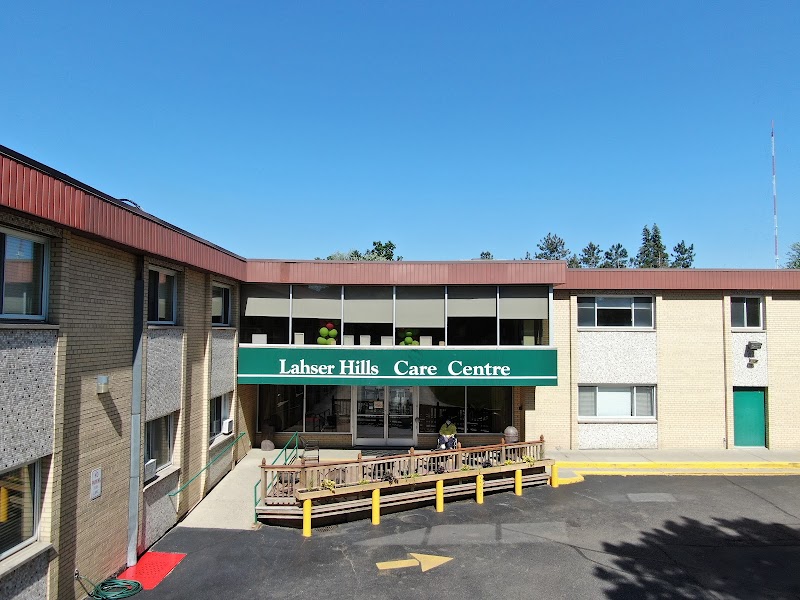
25300 Lahser Rd, Southfield, MI 48034 (248) 354-3222
For profit - Limited Liability company 127 Beds NEXCARE HEALTH SYSTEMS Data: November 2025 1 Immediate Jeopardy citation
Trust Grade
18/100
#288 of 422 in MI
Last Inspection: June 2025

Inspected within the last 6 months. Data reflects current conditions.

Overview

Lahser Hills Care Centre has received a Trust Grade of F, indicating significant concerns about the facility's care quality. It ranks #288 out of 422 nursing homes in Michigan, placing it in the bottom half of facilities statewide, and #19 out of 43 in Oakland County, meaning only a few local options are better. Although the facility is showing improvement, with the number of issues decreasing from 12 in 2024 to 10 in 2025, it still has a troubling history, including a critical incident where a resident in respiratory distress was not properly monitored or transferred for care, resulting in their death. Staffing is a relative strength with a 4/5 star rating, but the turnover rate of 53% is average, suggesting some staff stability. However, the facility faces concerns with $47,320 in fines, which points to compliance issues, and serious incidents like the development of pressure ulcers that were not adequately addressed, highlighting ongoing risks to resident safety.
Trust Score
F
18/100
In Michigan
#288/422
Bottom 32%
Safety Record
High Risk
Review needed
Inspections
Getting Better
12 → 10 violations
Staff Stability
⚠ Watch
53% turnover. Above average. Higher turnover means staff may not know residents' routines.
Penalties
✓ Good
$47,320 in fines. Lower than most Michigan facilities. Relatively clean record.
Skilled Nurses
○ Average
Each resident gets 38 minutes of Registered Nurse (RN) attention daily — about average for Michigan. RNs are the most trained staff who monitor for health changes.
Violations
⚠ Watch
41 deficiencies on record. Higher than average. Multiple issues found across inspections.
★★☆☆☆
2.0
Overall Rating
★★★★☆
4.0
Staff Levels
★★★☆☆
3.0
Care Quality
★★☆☆☆
2.0
Inspection Score
Stable
2024: 12 issues
2025: 10 issues

The Good

  • 4-Star Staffing Rating · Above-average nurse staffing levels
  • Full Sprinkler Coverage · Fire safety systems throughout facility
  • No fines on record

Facility shows strength in staffing levels, fire safety.

The Bad

2-Star Overall Rating

Below Michigan average (3.1)

Below average - review inspection findings carefully

Staff Turnover: 53%

Near Michigan avg (46%)

Higher turnover may affect care consistency

Federal Fines: $47,320

Above median ($33,413)

Moderate penalties - review what triggered them

Chain: NEXCARE HEALTH SYSTEMS

Part of a multi-facility chain

Ask about local staffing decisions and management

The Ugly 41 deficiencies on record

1 life-threatening 3 actual harm
Jun 2025 8 deficiencies 1 Harm
SERIOUS (G)

Actual Harm - a resident was hurt due to facility failures

Pressure Ulcer Prevention (Tag F0686)

A resident was harmed · This affected 1 resident

**NOTE- TERMS IN BRACKETS HAVE BEEN EDITED TO PROTECT CONFIDENTIALITY** Based on observation, interview and record review, the facility failed to prevent pressure ulcer formation, document accurate sk...

Read full inspector narrative →
**NOTE- TERMS IN BRACKETS HAVE BEEN EDITED TO PROTECT CONFIDENTIALITY** Based on observation, interview and record review, the facility failed to prevent pressure ulcer formation, document accurate skin assessments and implement interventions for one (R80) of three residents reviewed for pressure ulcers resulting in R80 acquiring a Stage 4 (full-thickness skin and tissue loss). Findings include: On 6/3/25 at 9:51 AM, R80 was observed lying in their bed. R80 was asked if they had any wounds or sores. R80 explained they had a couple wounds on their bottom. When asked if they had developed the wound at the facility or if they were present when they were admitted , R80 explained one developed at the facility. Review of the clinical record revealed R80 was admitted into the facility on 1/17/25 and readmitted [DATE] with diagnoses that included: paraplegia, hypertension and stroke. According to the Minimum Data Set (MDS) assessment dated [DATE], R80 was cognitively intact. The MDS assessment also indicated in section M0300 that R80 had one facility acquired Stage 4 pressure ulcer. Review of R80's skin management care plan revealed an intervention initiated 1/17/25 that read, CNA's (Certified Nursing Assistants) will check my skin daily with care and report anything unusual they notice to the nurse. Review of R80's Total Body Skin Assessment dated 3/25/25 documented 0 in the box for Enter the # (number) of New Wounds. Review of R80's March 2025 Treatment Administration Record (TAR) revealed an order with a start date of 3/19/25 that read, Lotrimin AF (anti-fungal) External Cream 1 % . Apply to bilateral gluteal topically two times a day for rash until 04/01/2025 23:59 (11:59 PM) cleanse bilateral gluteal fold apply cream x 2 weeks. The treatment was marked as completed two times a day from 3/19/25 until it was discontinued on 3/25/25. Review of R80's Wound Evaluation dated 3/25/24 read in part, .#3 - Pressure - Unstageable (Slough and/or eschar); Body Location: Location not set; New - Minutes old; acquired: In-House Acquired . Length 3.24 cm (centimeters; Width 1.69 cm; Deepest Point 1.5 cm .Goal of Care: Healable . Review of R80's Wound Evaluation dated 4/1/25 read in part, .#3 - Pressure - Stage 4; Body Location: Right Ischium (bony protuberance of the sit bone); Stable - 7 days old; Acquired: In-House Acquired .Length 1.33 cm; Width 0.76 cm; Deepest Point 1.6 cm .Goal of Care: Healable .Progress: Stable . Review of R80's Wound Evaluations dated 4/8/25, 4/15/25, 4/22/25, 4/29/25, 4/29/25, 5/6/25, 5/13/25, 5/20/25, 5/27/25 revealed wound #3 on the Right Ischium was documented as Stable or Improving, none documented stalled, deteriorating. On 6/4/25 R80 was out of the facility on outside appointments. Review of a Skin & Wound Evaluation dated 6/3/25 read in part, .Type: Pressure . Stage: Stage 4 .Location: Right Ischium .Length 0.8 cm .Width 0.7 cm .Depth 1.0 cm .Undermining 1.9 cm .Goal of Care: Healable .Progress: Stable . On 6/5/25 at 8:42 AM, R80 was observed sitting up in the bed eating breakfast. R80 was asked about observation of wound care. R80 explained their wounds had already been changed that morning and as it was painful was hesitant to have it done again. R80 was asked if they knew how they acquired the wound. R80 pointed to their motorized wheelchair, that had a reclining seat, and explained they used to be up in their chair all day and now tried to only be in the chair for two hours at a time and felt that contributed to the wound. On 6/5/25 at 10:40 AM, the Director of Nursing (DON) was interviewed and shown the picture of R80's Right Ischium wound on the Wound Evaluation dated 3/25/25. The DON was asked if a wound should ever be first identified as an Unstageable pressure ulcer. The DON acknowledged the concern. When asked about the Total Body Skin assessment dated [DATE] that documented no new wounds and the Lotrimin Cream documented as applied two times a day, the DON had no answer. The DON was asked if the wound in the picture could have developed that day. The DON acknowledged the wound would had not developed that day. On 6/5/25 at approximately 12:30 PM, the DON provided an undated, unsigned document that read in part, .On 3/25/25- patient developed stage 4 to right ischium. Seen by wound care on 3/25, documentation of skin breakdown and worsening are unavoidable. Recommend hospice and palliative services . This occurred despite consistent implementation of pressure injury prevention interventions related to limited mobility and paralysis secondary to paraplegia and CVA (stroke). Neuropathy causing diminished sensation, and patient's refusals of hospice or palliative care support . The DON was asked if the wound could be truly unavoidable since it was continuing to heal and had never deteriorated in the two months since it had been identified. The DON acknowledged the concern. Review of a facility policy titled, Pressure Ulcers/Skin Breakdown - Clinical Protocol revised 10/2010 read in part, .the nurse shall assess and document/report the following: .b. Full assessment of pressure sore including location, stage, length, width and depth, presence of exudates or necrotic tissue .
CONCERN (D)

Potential for Harm - no one hurt, but risky conditions existed

Deficiency F0561 (Tag F0561)

Could have caused harm · This affected 1 resident

**NOTE- TERMS IN BRACKETS HAVE BEEN EDITED TO PROTECT CONFIDENTIALITY** Based on observation, interview and record review, the facility failed to provide a working clock for one (R67) of one resident ...

Read full inspector narrative →
**NOTE- TERMS IN BRACKETS HAVE BEEN EDITED TO PROTECT CONFIDENTIALITY** Based on observation, interview and record review, the facility failed to provide a working clock for one (R67) of one resident reviewed for choices. Findings include: On 6/3/25 at 9:42 AM, R67 was observed lying in their bed. R67's bed was positioned so that R67 had a clear, direct view of the door. A clock was observed directly above the door. The time on the clock was 1:05, and the second hand was not moving. R67 was asked how long the clock had been broken. R67 explained it had never worked since they had been in that room, someone would put a new battery in the clock and it would work for 45 minutes then stop again. R67 was asked how they knew what time it was. R67 explained they had a cellular phone they could use for the time, but since the clock was above the door, every time they looked at the door they saw the broken clock and it was an annoyance. Review of the clinical record revealed R67 was admitted into the facility on [DATE] and readmitted [DATE] with diagnoses that included: Parkinson's disease, kidney disease and diabetes. According to the Minimum Data Set (MDS) assessment dated [DATE], R67 was cognitively intact. Review of R67's census documentation, R67 had been in their room since 1/1/24. On 6/4/25 at 8:49 AM and on 6/5/25 at 8:40 AM, the clock in R67's room was at the same time of 1:05. On 5/5/25 at 10:10 AM, the Maintenance Supervisor was interviewed and asked about the clock in R67's room. The Maintenance Supervisor explained he was unaware of any issue with the clock in R67's room, and would check to see if it had been entered into their maintenance system (TELS). On 6/5/25 at 10:15 AM, Licensed Practical Nurse (LPN) E was interviewed and asked about the clock in R67's room. LPN E explained she remembered putting it into TELS a month or so ago that it needed a battery. LPN E was informed R67 had said it only worked for 45 minutes after a new battery was put in. LPN E explained it was probably more then 45 minutes, but she would put it into TELS to get R67 a new clock. On 6/5/25 at 11:35 AM, Certified Nursing Assistant (CNA) F was interviewed by phone and asked about the clock in R67's room. CNA F explained about a month ago, R67 had told her the clock was not working so she had told one of the maintenance men and they put a new battery in it, even though they had put a new one in not too long before that. When asked if she had put it into the TELS system, CNA F explained she had just told the maintenance man. On 6/5/25 at approximately 12:00 PM, the Maintenance Supervisor explained there was no ticket in the TELS system about the clock in R67's room. Review of a facility policy titled, Resident Rights revised 10/2009 read in part, .Residents are entitled to exercise their rights and privileges to the fullest extent possible .
CONCERN (D)

Potential for Harm - no one hurt, but risky conditions existed

Safe Environment (Tag F0584)

Could have caused harm · This affected 1 resident

**NOTE- TERMS IN BRACKETS HAVE BEEN EDITED TO PROTECT CONFIDENTIALITY** Based on observation, interview, and record review, the facility failed to ensure a safe homelike environment for two Residents ...

Read full inspector narrative →
**NOTE- TERMS IN BRACKETS HAVE BEEN EDITED TO PROTECT CONFIDENTIALITY** Based on observation, interview, and record review, the facility failed to ensure a safe homelike environment for two Residents (R15 and R99) of two residents reviewed for equipment safety, when their toilet durable medical equipment was found in disrepair. Findings include: On 6/03/25 at 1:30 p.m., R99's bathroom was observed in room [ROOM NUMBER]-1. There was a gray metal toilet safety frame (bedside commode) over their toilet. The left plastic armrest (when seated on the commode) was observed with an opening where the occupant's hand would push from to stand up. The opening was cracked, with sharp, jagged edges, placing R99 and any occupants at risk for skin tears. On 6/03/25 at 1:33 p.m., R99 observed their bathroom, and stated, Oh, that needs to be fixed, as that could cut people (sitting) on it. On 6/03/25 at 3:03 p.m., R99 was observed dressed, seated in a manual wheelchair. On 6/03/25 at 3:04 p.m., R99 confirmed they used their bathroom for toileting occasionally. Review of R99's most recent skin assessment, dated 5/28/25, showed no skin tears or new skin concerns. Review of the Electronic Medical Record (EMR) revealed R99 scored 15/15 on the Brief Interview for Mental Status (BIMS) assessment, which showed they scored as cognitively intact. Further review revealed they were their own responsible party. Review of R99's Care Plan, accessed 6/05/25, revealed they required one-person assist for transfers and toileting. On 6/03/25 at 12:28 p.m., R15 was observed in the dining room, seated upright in a high back manual recline wheelchair. R15 was assisted by staff to eat their lunch. On 6/03/25 at 1:32 p.m., R15's adjoining bathroom was observed in room [ROOM NUMBER]. The same toilet safety frame over the toilet was observed in disrepair. On 6/03/25 at 1:35 p.m., Certified Nurse Aide (CNA) L reported they were R15's aide, and had not noticed the open, cracked left arm on R15 and R99's toilet safety frame over their toilet. CNA L reported this would place residents who used the commode at risk for a skin tear. On 6/03/25 at 1:44 p.m., the Director of Nursing (DON) reported they had observed the cracked armrest on R99's and R15's toilet safety frame in their adjoining bathroom on 6/03/25. The DON confirmed they were replacing the toilet safety frame. The DON reported they understood the concerns and risk for skin tears or injury from the disrepaired equipment. Review of a new work order, dated 6/03/25, revealed the raised toilet seat was replaced in room [ROOM NUMBER]. Review of the policy, Safe, Homelike Environment, revised October 2009, revealed, Policy Statement: Residents are provided with a safe, clean, comfortable and homelike environment and encouraged to use their personal belongings to the extent possible. Policy Interpretation and Implementation Person-Centered Care Characteristics of a Personalized, Homelike Setting Characteristics .1. Staff shall provide person-centered care that emphasizes the residents' comfort, independence and personal needs and preferences. 2. The facility staff and management shall maximize, to the extent possible, the characteristics of the facility that reflect a personalized, homelike setting .
CONCERN (D)

Potential for Harm - no one hurt, but risky conditions existed

Deficiency F0646 (Tag F0646)

Could have caused harm · This affected 1 resident

**NOTE- TERMS IN BRACKETS HAVE BEEN EDITED TO PROTECT CONFIDENTIALITY** Based on interview and record review the facility failed to notify the local state mental health authority of Preadmission Scree...

Read full inspector narrative →
**NOTE- TERMS IN BRACKETS HAVE BEEN EDITED TO PROTECT CONFIDENTIALITY** Based on interview and record review the facility failed to notify the local state mental health authority of Preadmission Screening and Resident Review (PASARR) changes for one (R60) of two residents reviewed for PASARR. Findings include: Review of the clinical record revealed R60 was admitted into the facility on 3/3/25 with diagnoses that included schizophrenia, unspecified. According to the survey software, R60 was identified as having no PASARR II with a mental illness diagnosis. (PASARR Level II is a comprehensive evaluation by the appropriate state-designated authority and determines whether the individual has MD (Mental Disorder), ID (Intellectual Disorder) or a related condition, determines the appropriate setting for the individual and recommends what, if any, specialized services and/or rehabilitative services the individual needs.) Further review of the admission Minimum Data Set (MDS) assessment dated [DATE] documented R60 scored a 14/15 on the Brief Interview for Mental Status Exam (BIMS) which indicated intact cognition, had a diagnosis of schizophrenia and received antipsychotic medication. However, the MDS section that prompted staff to respond yes or no for Is the resident currently considered by the state level II PASARR process to have serious mental illness and/or intellectual disability or a related condition? was inaccurately marked as 0.No. Review of R60's mental health evaluations since admission included the following two consultations with contracted Psych Physician Assistant/PA 'J' in which neither assessments identified dementia as a primary diagnosis, but did identify the resident's MD. The psych consultation on 3/18/25 documented, in part: .Facility currently is utilizing the following psychiatric diagnosis for the resident: F20.9 SCHIZOPHRENIA, UNSPECIFIED Psychiatry/psychology are being asked to clarify the following: Pt (Patient) HX (history) and diagnoses; best medical intervention. Patient's daughter, who is her guardian, was reached via telephone and provided extensive past hx as well as past medication hx. Patient has long hx of schizophrenia, which was triggered by a car accident when she was a teenager. Following this; she had multiple episodes of psychosis where she became unintelligible and unable to communicate appropriately. She would improve and resolve and would not need the antipsychotic meds for long stretches and would maintain a normal mood & affect, eating well and doing well overall. Then she would relapse; with repetition of this cycle. Her daughter was raised by other family as the patient was unable to care for her children, and the children would have to help monitor their mother when she became psychotic. Pt has hx of paranoia, erratic and bizarre behaviors (stripping naked and leaving the house) and she did live with her sister for some time; and her sister (who had dementia) did not believe that the patient needed the medications for schizophrenia. However, with any small changes in the patient's own health or that of her sister (with whom she was residing), the patient would deteriorate mental. Dementia process was noted with cognitive decline starting in 2010/2011. Pt was moved to a facility and was wandering at her other facility. Ultimately she required a wanderguard as she did leave the facility one night for no reason .ASSESSMENT & PLAN Undifferentiated schizophrenia [F20.3] (worsening) Plan: Patient's schizophrenia appears to be undifferentiated, based on HX provided from daughter. She was medicated for many years with good control of psychosis . The psych consultation on 5/12/2025 documented, in part: .ORIENTATION-The patient is oriented to time, place, person, and situation (oriented x4). She is able to identify that yesterday was Mother's Day. There is no inconsistency or variability in orientation .Attention and concentration are good .Judgment is intact .Insight is intact, though patient does not believe her hoarding behaviors are problematic, stating she just keeps things she might need in the future .Impulse control is intact, There are no signs of resistance, impulsiveness, or oppositional behavior .Speech is slow but clear, coherent, and not slurred .Thought processes are organized and remain so with redirection .There are no delusions, paranoia, or hallucinations, The patient denies perceptual disturbances, No delusional or bizarre material is expressed .Immediate, recent, and remote memory are grossly intact without any impairment .The patient demonstrates a good fund of knowledge, There are no signs of impairment .Mood is normal, without signs of depression, anxiety, agitation or psychosis. The patient appears euthymic and reports doing very well at this time .There are no symptoms of delirium present, Patient exhibits hoarding behaviors .Diagnosis: Schizophrenia .Assessment and Plan F20.3 - Undifferentiated schizophrenia Status: Improving / Not at Goal .Patient was in the midst of a psychotic episode upon facility admission but appears more alert and communicative today. Currently on risperidone 25 mg twice daily. Hoarding behaviors are considered a component of her mental illness and dementia. No medication changes indicated; nonpharmacologic interventions have been successful with staff assisting patient in cleaning and organizing her room. Will continue to monitor for psychotic symptoms, though patient currently denies hallucinations and presents with organized thought processes . Review of the only available PASARR for R60 revealed a 3877 form dated 9/13/24 completed by Nurse 'K' (former Corporate Nurse) that documented yes for R60 having mental illness and dementia, and routinely received one or more prescribed antipsychotic or antidepressant medications within the last 14 days. The explanation for any yes responses documented, Dx (Diagnosis): Dementia, Adjustment disorder with mixed anxiety and depressive mood, Schizophrenia. Medications: Seroquel (an antipsychotic medication). Further review of the clinical record revealed there was no revision to the above 3877 or evidence the facility had submitted a change in condition to the local mental health agency for evaluation. On 6/3/25 at 2:49 PM, an interview was conducted with the Social Service Director (SSD 'A'). When asked about whether R60 had any additional PASARR documentation other than the forms from their previous facility, SSD 'A' reported they would follow-up. On 6/4/25 at 9:16 AM, an interview was conducted with SSD 'A'. When asked about R60's lack of level II evaluation, SSD 'A' confirmed there was none completed and repeated the reason was R60 had come from another facility with a dementia exemption and wouldn't be needed to be submitted again until next year. When asked why there was no review of the admission PASARR to determine if a change in condition should be considered given the psych evaluations and the facility's BIMS assessment which indicated intact cognition, SSD 'A' offered no further response. On 6/4/25 at 9:37 AM, SSD 'A' returned and further reported R60 did not need a level II evaluation due to the dementia diagnosis. There was no further evidence that a change of condition had been initiated and submitted to the local mental health for consideration of a level II evaluation. On 6/4/25 at 11:15 AM, an interview was conducted with the Administrator. They were informed of the interview with SSD 'A' and concerns with lack of change of condition for level II evaluation for R60 and reported they would follow-up with SSD 'A'. A that time, they were requested to provide a facility policy for PASARR. On 6/4/25 at 4:18 PM, the Administrator reported via email Policy for: PASARR- We follow regulations on PASARR.
CONCERN (D)

Potential for Harm - no one hurt, but risky conditions existed

Quality of Care (Tag F0684)

Could have caused harm · This affected 1 resident

**NOTE- TERMS IN BRACKETS HAVE BEEN EDITED TO PROTECT CONFIDENTIALITY** Based on observations, interview, and record review, the facility failed to ensure that wound care was completed according to ph...

Read full inspector narrative →
**NOTE- TERMS IN BRACKETS HAVE BEEN EDITED TO PROTECT CONFIDENTIALITY** Based on observations, interview, and record review, the facility failed to ensure that wound care was completed according to physician's orders for two residents (R13 and R6) of three reviewed for impaired skin conditions (non pressure related). Findings include: R6 On 6/3/25 at 9:40 AM, R6 was observed in their room sitting in their chair located near the bed. R6 appeared to be dressed and ready for the day. With further observation of R6, there were two kerlex bandages around the resident's ankles that were dirty and unkempt with a date of 5/27 with initials that appeared to be a CN. R6 was asked if they knew why their legs were wrapped up and how often did the facility change the bandages but R6 could not recall or answer for either question. A review of the record revealed that R6 was admitted to the facility on [DATE] with a medical diagnosis of dementia, type two diabetes, and varicose veins. A further review of the record revealed that R6's dressings to the legs were to be changed daily. On 6/4/25 at 12:20 PM, an interview was conducted with the Unit Manager R and the [NAME] President of Clinical Operations (VP Q). When asked why did staff members document on a treatment that was not completed and should staff chart off on items that were not completed, the Unit Manager R and VP Q stated it should not have been charted as completed if it was not and they would have to find out more information as to why and who documented for six days that they were changing the bandages when they were not. R13 On 6/3/25 at 10:45 AM, R13 was observed in the bed resting with left foot propped on a pillow. It was wrapped in kerlex with an ace wrap over it and had a strong odor coming through the bandages. R13 was asked about the wound on the left foot and asked when was the last time the facility changed it (because it was an undated bandaged that was applied). R13 reported the staff had changed it on that Saturday (5/31/25) but it was to be done daily and that they are to use a solution called dakins so it would not stink. A review of the record revealed that R13 was admitted to the facility on [DATE] with the diagnosis of venous insufficiency, type two diabetes, and chronic pain due to trauma. R13 had a Brief Interview for Mental Status Score (BIMs) of 15 which indicated no cognitive impairments. A further review of the record revealed that R13 had a physician's order for daily dressing changes and that staff had signed off that treatments had been completed. However the observed treatment had no date of when it was last changed, had significant odor from the wound site, and the interview with R13 reported the wound dressing had not been changed since Saturday. On 6/4/25 at 12:20 PM, an interview with the Unit Manager R and VP Q was conducted and they were asked if they required staff to date the treatments when completed. Unit Manager R stated yes, staff should date the treatments to assure they are completed. Unit Manager R was then asked why the treatments had not been dated for R13 and they reported they would look into it. There was no additional information provided by the exit of the survey.
CONCERN (D)

Potential for Harm - no one hurt, but risky conditions existed

Deficiency F0757 (Tag F0757)

Could have caused harm · This affected 1 resident

Based on interview and record review, the facility failed to ensure freedom from unnecessary antibiotic therapy for three (R40, R85, and R86) of three residents reviewed for unnecessary antibiotic (AB...

Read full inspector narrative →
Based on interview and record review, the facility failed to ensure freedom from unnecessary antibiotic therapy for three (R40, R85, and R86) of three residents reviewed for unnecessary antibiotic (ABT) use, resulting in the potential for the development of antimicrobial resistance. Findings include: On 6/4/25 at 3:00 PM, review of the facility's infection control program with Infection Control Preventionist (ICP) C revealed the following: R40 was documented in March 2025 as having a facility acquired infection listed as Urinary, the signs and symptoms were Fever-Low grade, Altered mental status, the comments included Criteria Not Met .No culture results . R40's March 2025 Medication Administration Record (MAR) included an order for Cipro Oral Tablet 500 MG (milligrams) .Give 1 tablet by mouth two times a day for UTI (urinary tract infection) for 3 Days, and documented as given from 3/24/25-3/26/25. ICP C was asked if R40 had a culture and sensitivity (C&S) done to see if there was an infection and what was the low grade fever. ICP C explained no C&S was ordered, and she had found in a progress note on 3/14/25 a temperature of 100.1. ICP C was asked how a one time slightly elevated temperature 10 days before antibiotics were prescribed was documented as a sign or symptom. ICP C had no answer. When asked how was it determined which antibiotic to use when the organism was not identified by a C&S, ICP C explained she did not know. R85 was documented in April 2025 as having a facility acquired infection listed as Urinary, the signs and symptoms were Altered mental status, the comments included Criteria Not Met .Culture Results Pending .ABT (antibiotic therapy) started prior to culture . R85's April 2025 MAR included an order for Cipro Oral Tablet 500 MG .Give 1 tablet by mouth every morning and at bedtime for UTI for 5 Days, and documented as given 4/1/25-4/6/25. ICP C was asked what the C&S results were. ICP C explained there was a progress note dated 3/31/25 that read, .URINE COLLECTED ON 3/28 DROPED [sic] OFF ON 3.29 TO TOLD TO RUN .UA reordered. ICP C also explained a C&S was not reordered for R85. ICP C was asked if an altered mental status indicated a UTI. ICP C explained it did not. Review of R85's progress notes revealed a Nursing Note created 3/29/25 at 11:24 AM by the Director of Nursing (DON) that read, Urine sample pending collection. Per antibiotic stewardship guidelines, the resident is not having any signs or urinary symptoms. Abt will not be initiated without positive symptoms and culture as the risk outweighs the benefits at the current moment. Behaviors will continue to be monitored and nursing will continue to attempt retrieving urine sample. Provider agreeable to current plan. ICP C was asked why there was a progress note by the DON on 3/29/25 saying no antibiotics and then antibiotics were started on 4/1/25 without a C&S or additional signs or symptoms. ICP C had no answer. R86 was documented in April 2025 as having a facility acquired infection listed as Urinary, the signs and symptoms were Altered mental status, the comments included Criteria Not Met .Culture Result Pending, ABT started from abnormal UA . R86's April 2025 MAR included an order for Cipro Oral Tablet 500 MG .Give 1 tablet by mouth two times a day for UTI for 5 Days, and documented as given 4/24/25-4/29/25. ICP C was asked about the C&S results. ICP C explained the C&S came back negative for infection on 4/26/25. ICP C was asked if the C&S was negative on 4/26/25, why did R86 continue to get the antibiotic for the full five days until 4/29/25. ICP C agreed the antibiotics should have been stopped when the C&S came back negative and had not answer as to why they had not been stopped. On 6/5/25 at approximately 12:30 PM, the DON provided Risk Vs. (versus) Benefit for Antibiotic Use documents for R40, R85 and R86. The DON was asked how there was a benefit for R86 to receive an antibiotic when the C&S confirmed there was no infection. The DON acknowledged the concern. When asked about the benefit of antibiotics for R40 and R85 when the only symptom was altered mental status, the DON acknowledged the concern.
CONCERN (E)

Potential for Harm - no one hurt, but risky conditions existed

Deficiency F0692 (Tag F0692)

Could have caused harm · This affected multiple residents

**NOTE- TERMS IN BRACKETS HAVE BEEN EDITED TO PROTECT CONFIDENTIALITY** Based on observation, interview, and record review, the facility failed to ensure weights were taken appropriately and verified ...

Read full inspector narrative →
**NOTE- TERMS IN BRACKETS HAVE BEEN EDITED TO PROTECT CONFIDENTIALITY** Based on observation, interview, and record review, the facility failed to ensure weights were taken appropriately and verified as accurate per professional standards of nutritional practice for one Resident (R21) of two residents reviewed for nutritional status, with multiple facility residents affected who were weighed. Findings include: On 6/03/25 at 9:46 a.m., R21 was observed dressed, seated on the edge of their bed. R21 was thin in stature. Their breakfast tray was observed in front of them on a tray table, which included scrambled eggs, biscuits and gravy and two bowls of cereal, with juice, milk, and coffee. R21 showed this Surveyor their meal ticket. It was noted the word Oatmeal was scratched out with a black marker. R21 was observed feeding themselves breakfast. The ticket showed R21 was on a regular diet with thin liquids. On 6/03/25 at 9:48 a.m., R21 reported they wanted Oatmeal every day, and their dentures were loose, which they wanted addressed to help them chew food more easily. Review of R21's Electronic Medical Record (EMR) showed their weights until 2/04/24 were documented as follows (in the Vitals section): 1/08/25: 182.0 pounds (in standing). 1/15/25: 183.0 pounds (in sitting). 1/15/25: 183.8 pounds (in sitting). 1/20/25: 183.8 pounds (in sitting). 2/04/25: 144.4 pounds (in sitting). The weight record reflected a 39.4-pound weight change in a two-week period, from 1/20/25 to 2/04/25, which would be atypical. On 6/03/25 at approximately 9:50 a.m., R21 was asked about any significant weight loss during their stay. R21 responded they were not specifically aware of a significant weight loss but could not be certain. Review of R21's census revealed they were admitted to the facility on [DATE]. Review of R21's initial dietary assessment, dated 1/07/25, revealed they were on a regular diet with mechanical soft textures, and had upper and lower dentures. The assessment showed their hospital weight was 77.1 kg (169.97 pounds), nearly 170 pounds, and said they were consuming 75% to 100% of meals. The assessment further revealed R21 had no difficulty swallowing and had some difficulties chewing due to loose dentures and they had requested follow-up. The recommendations revealed: Diet as ordered, obtain weights per protocol, and honor food preferences as feasible. Review of R21's hospital weight records, from the hospital discharge record, printed 1/06/25, dated 12/31/24 to 1/01/25, revealed a weight of 66.9 kg (kilograms = 147.48 pounds), from their most recent admission. Review of R21's (hospital) After Visit Summary, dated 12/26/24 through 1/06/25, printed 1/06/25, revealed R21's height as 6 feet, 2 inches, and a weight of 147 pounds and 7.8 ounces (66.9 kg). Review of R21's Minimum Data Set (MDS) assessment, dated 1/12/25, revealed R21 was admitted to the facility on [DATE], with diagnoses including dementia and anxiety. The assessment revealed R21 required set up with eating, moderate assistance with transfers, and supervision with wheelchair mobility. The Brief Interview for Mental Status (BIMS) assessment revealed a score of 10/15, which showed R21 had moderate cognitive impairment. The nutrition assessment revealed R21 was 72 tall and weighed 184 pounds upon admission. The MDS weight was noted as a significant difference from their hospital weight. Review of R21's Dietary Weight Change note, dated 2/11/25 at 3:27 p.m., revealed R21's current body weight was 144.4 pounds. The note described, .(R21's) weight loss may be r/t (related to) weighing errors and/or varying PO (by mouth) intake at/between meals .Goal is weight stability at this time. Reweight requested .Obtain weights per protocol . On 6/05/25 at 12:59 p.m., RD M was asked about R21's wide fluctuation in weight, and significant weight loss per the EMR weight documentation, which showed a considerable weight loss of nearly 40 pounds for R21, from 1/08/25 through 2/04/25. RD M explained the facility had scale discrepancies and inconsistencies across staff weighing the facility residents at that time. RD M reported the facility completed a Past Non-Compliance (PNC), and said the main deficiency was one of the scales was not calibrated properly. RD M explained the facility had since calibrated the scales and had a consistent person taking the residents' weights, to ensure the weights were taken the same way, by the same person, and with the same scale. RD M was asked what they did about R21's significant documented weight loss, per their notes and the weights in the EMR. RD M reported they notified R21's physician and family member when the significant weight loss (or change) was discovered, which was reflected in their notes, and worked to discover the cause. On 6/05/25 at approximately 1:10 p.m., RD M was asked to review R21's facility admission hospital records with this Surveyor. RD M reviewed the hospital discharge weight of 66.9 kg on 12/31/25 to 1/01/25 and agreed this was 147.48 pounds. R21 reported they had missed this. RD M was asked if they typically reviewed the hospital weight when a resident admitted to the facility, and acknowledged this was part of their typical process when completing the initial dietary assessment. RD M explained their typical resident weighing process was to obtain weekly weights for residents the first four weeks since their admission, and then monthly after, unless there were any significant changes. RD M reported they understood the concerns, and confirmed the facility had corrected the concerns. RD M understood the concern about referencing the hospital weight in their documentation accurately. Significant weight loss for R21 was not verified, given their admission weight was about 147 pounds per hospital documentation, with consistent weights obtained after 2/04/25. On 6/05/25 at 2:10 p.m., the concerns related to inaccurate weights and related process concerns for R21, and multiple facility residents were shared with the Nursing Home Administrator (NHA), and the Executive Director, NHA O, including RD M reporting the concerns had been addressed after they were discovered by February 2025 and the hospital and initial weight discrepancy. The NHA asked to follow-up with the Survey team after further review. On 6/05/25 at 2:35 p.m., the Director of Nursing (DON) shared with the survey team the inaccurate residents' weights were related to significant discrepancies from two of their standard scales, which maintenance verified. The DON reported they reweighed all the residents once this was discovered and ensured all facility residents had an accurate weight. This Surveyor shared there was a concern reported regarding how one staff member was weighing residents inaccurately. The DON clarified the scale inaccuracy was the root cause of the inaccurate weights. This Surveyor shared concerns about the hospital weight not being reflected accurately upon R21's admission by RD M, which may have helped the weight discrepancies for R21 to be discovered sooner. The DON shared sometimes hospital weights were not accurate, and they were not aware of this concern. The DON confirmed there was a Past Non-Compliance (PNC) which the facility had completed to address the concern, and they would have this loaded into the State Electronic Data share system. On 6/05/25 at 3:05 p.m., the DON shared with the survey team the scales were only off by three to five pounds, and there was a staff member who was weighing residents inaccurately, which had been addressed. The DON reported the staff member was reassigned to another department and they were not weighing facility residents since 2/04/25. The DON reported R21's denture concerns had been addressed, per recommendations of the dentist during the 4/2025 visit, and R21 declined diet modification and implants. A copy of the PNC document was received in the State Electronic data share system on 6/05/25 by 3:07 p.m. Review of the policy, Weight and Height Measurement, revised 2/10/24, revealed, Purpose: 1. To obtain a baseline weight and height for each resident upon admission. 2. To maintain constant control of weight changes. 3. To assess nutrition and hydration status of resident. 4. To identity significant changes in condition. Note: Residents are weighed on admission and weekly x (times) 4 weeks. Then monthly unless otherwise requested by nursing. The registered dietician or the attending physician to monitor the resident's condition. Resident's height is measured on admission and annually . There was no mention in the policy regarding obtaining the initial weight from the hospital, the calibration of scales, consistency regarding how to weigh residents, or documentation triggers when weight inconsistencies were noted. During the onsite survey, past noncompliance (PNC) was cited after the facility implemented actions to correct the noncompliance which included: The identification of residents' weight inconsistencies and errors, given significant weight fluctuations for multiple facility residents discovered by facility staff. Registered Dietician (RD) M observed weight fluctuations ranging from 30 to 70 pounds on multiple residents over a short period of time. The root cause of the inaccurate weights was determined to be from staff error, per the PNC. Reeducation was provided to involved staff, and a consistent staff member was trained to take the residents' weights in the facility, per the facility weight policy. A one-time audit was completed on 2/04/25 to identify residents requiring a reweigh to ensure accuracy of prior weight changes, when noted. Ongoing audits were completed by the Registered Dietician and or designee for 12 weeks to ensure compliance, with reeducation and disciplinary action as warranted. The facility was able to demonstrate monitoring of the corrective action and maintained compliance.
CONCERN (E)

Potential for Harm - no one hurt, but risky conditions existed

Antibiotic Stewardship (Tag F0881)

Could have caused harm · This affected multiple residents

Based on interview and record review, the facility failed to consistently maintain a system that consistently met criteria for antibiotic use, this had the ability to affect any resident prescribed an...

Read full inspector narrative →
Based on interview and record review, the facility failed to consistently maintain a system that consistently met criteria for antibiotic use, this had the ability to affect any resident prescribed an antibiotic of the 107 residents that resided in the facility. Findings include: Review of the facility's Infection Surveillance books revealed multiple incidents of antibiotics prescribed that did not meet antibiotic use criteria, including residents treated for Urinary Tract Infections (UTI's) with no signs and symptoms of infection and no lab results to confirm an infection. On 6/4/25 at 3:00 PM, the facility's Infection Control Preventionist (ICP) C was interviewed and asked what criteria was used for antibiotic use. ICP C confirmed the facility used McGeer's Criteria. ICP C was asked about antibiotics prescribed for UTI's with no culture and sensitivity (C&S - to indicate if an infection was actually present and what antibiotic the bacteria was sensitive to). ICP C explained she was trying to educate the nurses' to ask for a C&S when calling the doctor, and to not just get a Urinalysis (UA). When asked if only a UA was ordered, how was it determined what antibiotic to use if there was no C&S. ICP C had no answer. Review of a facility policy titled, Infection Prevention and Control Program revised 11/2019 read in part, .Protocols to review clinical signs and symptoms and laboratory reports to determine if the antibiotic is indicated or if adjustments to therapy should be made .
Mar 2025 2 deficiencies
CONCERN (D) 📢 Someone Reported This

A family member, employee, or ombudsman was alarmed enough to file a formal complaint

Potential for Harm - no one hurt, but risky conditions existed

Respiratory Care (Tag F0695)

Could have caused harm · This affected 1 resident

**NOTE- TERMS IN BRACKETS HAVE BEEN EDITED TO PROTECT CONFIDENTIALITY** This citation pertains to Intake(s): MI00151185 Based on observation, interview and record review, the facility failed to ensur...

Read full inspector narrative →
**NOTE- TERMS IN BRACKETS HAVE BEEN EDITED TO PROTECT CONFIDENTIALITY** This citation pertains to Intake(s): MI00151185 Based on observation, interview and record review, the facility failed to ensure an oxygen dependent resident was provided continuous physician ordered respiratory care for one (R601) of two residents reviewed for respiratory care, resulting in R601's SPO2 (blood oxygen saturation level) to have dropped to an abnormal range level and the resident being transferred to the hospital for a higher level of care. Findings include: A Complaint was filed with the State Agency (SA) that alleged that on 3/12/25, R601 was observed in the dining room unattended. R601 was found to be lethargic and slumped over the table with a puddle of urine underneath them. R601's oxygen tank was determined to be empty. In addition, the humidity bottle for the concentrator in their room was also empty. The Complainant noted that R601 was sent to the hospital as their 02 levels were not stable. On 3/26/25 at approximately 10:00 AM, R601 was observed sleeping in bed. The resident was alert but not able to answer any questions asked. The residents 02 concentrator was running at 3L (liters) via a nasal canula. A review of R601's clinical record revealed the resident was initially admitted to the facility on [DATE] and readmitted on [DATE] with diagnoses that included: chronic kidney disease, Chronic Obstructive Pulmonary Disease (COPD), altered mental state, type II diabetes and alcohol abuse. A review of R601's Minimum Data Set (MDS) revealed the resident had a Brief Interview for Mental Status (BIMS) score of 8/15 (moderately intact cognition). The resident was noted as their own responsible party and had been receiving Hospice services starting on or about 7/8/24. The resident was also noted as FULL CODE. Continued review of the R601's clinical record revealed, in part, the following: Order (start 6/20/24): Humidified Oxygen 3L/min via Nasal Canula every shift related to Chronic Obstructive Pulmonary Disease . Care Plan: Focus: Potential/Actual alteration in oxygen exchange due to COPD .Intervention: Humidified 02 as ordered: 3 L via Nasal Cannula (3/29/2024) .Focus: ADL (activities of daily living) deficit r/t (related to) COPD with oxygen .Interventions: Transfer 2 PA (person assist) Hoyer to Geri Chair . 3/12/25 (4:00 PM) Nurses Note: Received resident at shift change in dining room with empty oxygen tank and soiled brief. Mouth was very dry and and <sic> bloody. Authored by Nurse B O2 Sats (saturation): 3/12/24 (6:04 PM): 80% 3/12/25: Change in Condition Evaluation (11:23 PM Lock Date): Resident (R601) .Situation: Abnormal vital signs .Altered Mental Status .Pain .Shortness of Breath .Most Recent Blood Pressure: 60/48 .Most Recent 02 Sats .80% (3/12/2024) .Oxygen via Nasal Canula .Decreased level of consciousness' .Increased confusion .unable to eat or swallow .Describe respiratory changes .Shortness of breath .Abrupt onset of SOB (shortness of breath) .Lack of Oxygen for several hours .send to hospital . 3/12/25 (7:11 PM): Resident is full code and on Hospice .Hospice Nurse to evaluate resident. Agreed with decision to transfer out to hospital. Printable Discharge Hospital Form (Last Activity Date 3/19/25): .Chief Complaint: AMS (Altered Mental Status) .History of Present Illness: .diabetes, COPD on home oxygen .Patient is a poor historian .EMS (emergency medical services) was called for low blood pressure and hypoxia (absence of enough oxygen in the tissues to sustain bodily functions) .Upon arrival BP (blood pressure) 88/61 .in ED (emergency department) patient was placed on non-rebreather (a medical device used to deliver a high concentration of oxygen in emergency situation) . On 3/26/25 at approximately 9:55 AM, the facility was asked to provide all IA (Incident/Accident) reports for R601. Reports were received at 11:58 AM. There were no IA's that addressed the incident involving an empty oxygen tank, causing respiratory concerns. On 3/26/25 at approximately 10:40 AM, the Director of Nursing (DON) was interviewed regarding the incident(s) involving R601. The DON was queried as to R601's not continuously receiving ordered 02 and sustaining a SPO2 drop to 80%, the DON reported that they were aware and noted that they had a document that detailed the incident. The DON stated they would forward the document. On 3/25/25 at approximately 12:45 PM, an untitled document provided by the DON was reviewed and documented, in part: .Staff were interviewed .Nurse B was providing care to other residents up until 4:00 PM when she noted resident in respiratory distress. She stated that her (R601) oxygen tank was empty, mouth had dried blood, and her brief needed to be changed. Resident was taken back to her room where she was placed on her concentrator at 3L .The resident was scoring high pain .At this time, the resident's pulse oximetry was 86%. Nurse B increased her oxygen flow to 5L/min and her oxygen level improved (*It should be noted that there is no documentation in the resident's clinical record of the 02 level increasing) .Hospice was contacted .Nurse B reported that when the hospice nurse arrived, she wanted to give PRN (as needed) morphine. When Nurse B checked her vital signs the resident's blood pressure was 60/48 .At this time, it was determined that the resident would be sent out to the hospital .Change in Condition Review .On 3/12/25 at approximately 4 PM, Nurse B, noticed that the resident had labored breathing and hypotension, which resulted in her being sent to the emergency room at approximately 7:44 PM .upon investigation, the resident was taken to the dining room around or shortly after breakfast. She remained in the dining room until approximately 4 PM .Facility has determined that the resources required to stabilize the resident were not available and she required higher level of care . On 3/25/25 at approximately 3:18 PM, an interview was conducted with Nurse B. Nurse B reported that they have been employed by the facility for about two years and worked as a Registered Nurse (RN) for over 25 years. Nurse B was asked about the incident involving R601's respiratory decline. Nurse B reported that they entered the building around 3:00 PM on 3/12/25. Upon entry they spoke with the outgoing nurse and then started to complete rounds. They were assigned to the hall where R601 resided. During their rounds they were approached by a nursing student who reported to them that R601's oxygen tank was empty. Nurse B reported that they went to the dining room and observed R601 slumped over in a wheelchair with an empty oxygen tank on the back of the chair and observed that their mouth was dry and bloody. Nurse B reported that R601 normally sits in a Geri Chair and was surprised to see them in a wheelchair with the empty oxygen tank. Nurse B also reported that the resident generally uses a 02 concentrator to alleviate dry mouth concerns and ensure continuous oxygen. Nurse B reported that concentrators are portable and should have accompanied the resident to the dining room. Nurse B further reported that when they noticed the resident was lethargic, had urinated themselves and appeared to be in pain, they took them back to their room to assess them. Nurse B noted that they hooked them up to their concentrator at the ordered 3 L and had trouble obtaining a pulse ox. R601's oxygen was noted at 80%. They increased it to 5 L and noted that they were able to get their 02 status up to 86%. Nurse B reported that R601's blood pressure was also very low (60/48) showing signs of hypoxia. Nurse B contacted the Hospice nurse who came to the facility and determined that the resident should be sent out to the Hospital. On 3/26/25 at approximately 3:48 PM, a phone interview was conducted with Physician C. Physician C was asked if they were aware of the incident that occurred on 3/12/25. Physician C recalled that R601 was sent to the hospital for hypoxia and low blood pressure. When asked if R601 should continuously be receiving 02, they noted that they should. The facility policy titled, Oxygen Administration was reviewed and documented: .The purpose of this procedure is to provide guidelines for safe oxygen administration .Verify there is a physician's order for the procedure .Steps in the Procedure .Turn on the Oxygen. Unless otherwise ordered start the flow of oxygen .place appropriate oxygen device on the resident . Adjust the oxygen device on the resident so that it is comfortable for the resident and the proper flow of oxygen is being administered .check the .tank .to be sure they are in good working order .
CONCERN (D) 📢 Someone Reported This

A family member, employee, or ombudsman was alarmed enough to file a formal complaint

Potential for Harm - no one hurt, but risky conditions existed

Deficiency F0745 (Tag F0745)

Could have caused harm · This affected 1 resident

**NOTE- TERMS IN BRACKETS HAVE BEEN EDITED TO PROTECT CONFIDENTIALITY** This citation pertains to Intake #MI00151195 Based on observation, interview and record review the facility failed to timely eva...

Read full inspector narrative →
**NOTE- TERMS IN BRACKETS HAVE BEEN EDITED TO PROTECT CONFIDENTIALITY** This citation pertains to Intake #MI00151195 Based on observation, interview and record review the facility failed to timely evaluate the competency of a resident and obtain legal guardianship for a resident with impaired cognition for one (R601) of three residents reviewed for Hospice Services. Findings include: A Complaint was filed with the State Agency (SA) that alleged R601 does not have a guardian, power of attorney, or conservator and they are receiving Hospice Services. On [DATE] at approximately 10:00 AM, R601 was observed sleeping in bed. The resident was alert but not able to answer any questions asked. A review of R601's clinical record revealed the resident was initially admitted to the facility on [DATE] and readmitted on [DATE] with diagnoses that included: chronic kidney disease, Chronic Obstructive Pulmonary Disease (COPD), altered mental state, type II diabetes and alcohol abuse. A review of R601's Minimum Data Set (MDS) revealed the resident had a Brief Interview for Mental Status (BIMS) score of 8/15 (moderately intact cognition). The resident was noted as their own responsible party and had been receiving Hospice services starting on or about [DATE]. The resident was also noted as FULL CODE. Continued review of R601's clinical record noted, in part: [DATE]: Social Service Note: Writer met with resident .alert and oriented x2 with forgetfulness and confusion .Discussed end-of-life wishes, full code, she verbalized save my life. No current advanced directives discussed guardianship process with her husband (herein after Husband D) who was present-in-person. Provided copy of guardianship petition .BIMS score 7/15 (severely cognitively impaired) . [DATE]: Social Service Note: Residents Husband D, came to SW (social worker) office and informed writer that he has to turn my wife over to you guys, I just can't take care of her 24/7 no more, I have too much going on. Husband D also stated that he needs assistance with .petition for guardianship. He handed writer petition for guardianship not completed and signed his name at the bottom .Writer can smell alcohol on Husband Ds breath .Writer informed Husband D that she will have the business office follow-up with him and that the facility can initiate the petition for guardianship. [DATE]: Active Discharge Planning Note: Discharge care conference was conducted today. Husband D was not present. Resident was signed on to hospice services . *It should be noted that there was no documentation in R601's clinical electronic record that noted the resident and/or Husband D signed the resident onto hospice. There were no documents that noted who was R601's DPOA (Durable Power of Attorney). [DATE]: Psychiatric Service Notes: R601 .seen today for scheduled follow-up. Patient was last seen on [DATE] (prior to hospice services) .patient seen in her room .Patient is alert, oriented to herself .believing we are in a hospital but is confused about the date, believing it is [DATE] . [DATE]: Social Service Note: .Resident is currently her own RP (responsible party) no current advanced directive in place . [DATE]: Care Review/Care Conference (lock date [DATE]): .Guardianship discussed with husband due to resident's cognitive impairment/decline. Husband understands importance of guardianship and will let writer know when he is ready to file guardianship . [DATE]: Psychiatric Service Notes: .Patient was seen in her room resident in her bed and appeared very lethargic .patient was unable to answer questions . [DATE]: Initial Social Service Assessment: R601 Cognitive Abilities: Resident unable to engage in BIMS assessment, severely impaired cognition .unable to make needs know at this time .Plan to inquire about guardian . [DATE]: Hospital Records: History of Present Illness' .Patient is poor historian .Phone call placed to patients emergency contact/spouse (Husband D) with no answer .Patient was receiving hospice services .discharged from their service today .Palliative Care Progress Note: .Notes also indicating that there has been difficulty reaching patients spouse and may be concerns for domestic violence, patient may need legal guardian to make timely medical decisions on behalf of patient .patient at bedside, .nonverbal, unable to follow commands, unable to participate in goals of care discussion at this time . On [DATE] at approximately 12:32 PM, an interview and record review were conducted with Social Worker (SW)E and Social Service Employee (SSE) F. SW E reported that they were a licensed MSW and SSE F noted that they were not a licensed social worker. Both SSD E and SSE F were queried as to the facility policy(s) /protocol regarding guardianship, competency evaluations and end-of-life wishes including Hospice. SSE F was specifically queried as to their notes dated [DATE] and [DATE] that indicated they recommended starting legal guardianship why nothing had been completed for over 11 months. SSE F reported that they had attempted to have Husband D complete the paperwork, but it has still not been done. SSE F was asked if they had made any attempts to seek alternative Guardianship as they were not able to obtain paperwork from Husband D. SSE E stated they had not. When asked if attempts were made to seek a competency evaluation for R601, they noted that they had not. Both SSE E and SW F were asked to locate documentation pertaining to who agreed and signed off to place R601 on hospice services on or about [DATE] and again on [DATE] when R601 returned from a week's stay at the hospital. Both SW E and SSE F were not able to locate documentation at that time and were not sure on who completed the hospice forms. SSE F was asked if they had discussed Hospice services with R601, including their wishes for code status, hospitalization. On [DATE] at approximately 2:00 PM, a Hospice agreement signed by Husband D was provided. The document(s) dated [DATE] noted the following: .admission Consent . Lists Patient Name: R601 .My designee is (has R601's name scratched out with Husband D's name in place) .Document titled Opioid Start Talking) .Patient name: [R601] .Name of controlled substance .Morphine Concentrate .Dosage 100 mg/5 .20 mg .) Signed by Husband D Physicians Orders for Scope of Treatment .DO NOT attempt Resuscitation/CPR (NO CPR, allow Natural Death) .Comfort-Focused treatment . On [DATE] at approximately 2:28 PM, a phone interview was conducted with Husband D. Husband D was asked about Guardianship and the Hospice consent form that was signed on [DATE]. Husband D reported that nobody at the facility was giving him assistance or contacting him about hospice. He reported that he did not have transportation and felt he was bamboozled into signing the hospice form when someone came to the house and wasn't even clear on what he was signing. He further noted that he had not seen R601 in over a month and wanted them to return home. On [DATE] at approximately 4:00 PM, the facility provided the original consent for Hospice (dated [DATE] signed by R601). The documents provided did not include consent for morphine or any document for Scope of Treatment. The facility policy titled, Job Description/Social Worker was reviewed and in part, read: .The social worker provides Social Services to residents, their families, and significant others to enable them to deal with the impact of illness and extended care plan .Assisting residents/responsible parties with financial and legal matters such as drafting petitions for guardianship/conservatorship .Assisting residents to determine how they would like to make decisions about their heath care, and whether or not they would like anyone else to be involved in those decisions .
Dec 2024 2 deficiencies 1 Harm
SERIOUS (G) 📢 Someone Reported This

A family member, employee, or ombudsman was alarmed enough to file a formal complaint

Actual Harm - a resident was hurt due to facility failures

Pressure Ulcer Prevention (Tag F0686)

A resident was harmed · This affected 1 resident

**NOTE- TERMS IN BRACKETS HAVE BEEN EDITED TO PROTECT CONFIDENTIALITY** This citation pertains to Intake MI00148859 Based on observation, interview and record review, the facility failed to prevent pr...

Read full inspector narrative →
**NOTE- TERMS IN BRACKETS HAVE BEEN EDITED TO PROTECT CONFIDENTIALITY** This citation pertains to Intake MI00148859 Based on observation, interview and record review, the facility failed to prevent pressure ulcer formation, document accurate skin assessments, implement interventions and complete pressure ulcer wound care per physician orders for two (R903 and R904) of three residents reviewed for pressure ulcers resulting in R903 acquiring one Stage 4 (full-thickness skin and tissue loss) which became infected and required antibiotics and acquired a Deep Tissue Pressure Injury (DTPI - persistent non-blanchable deep red, maroon or purple discoloration) and R904 who aquired an unstageable wound to their coccyx. Findings include: R903 A complaint was filed with the State Agency (SA) that alleged in part, .the resident . has developed a wound on (their) buttocks . it's the size of a silver dollar . can see deep inside the hole and it smells bad . On 12/30/24 at 10:02 AM, R903 was observed lying in bed. R903 was asked if they had any wounds or sores on their body. R903 indicated they did and pointed to their right buttock. Review of the clinical record revealed R903 was admitted into the facility on 7/5/24 with diagnoses that included: encephalopathy, diabetes and dementia. According to the Minimum Data Set (MDS) assessment dated [DATE], R903 had severely impaired cognition and required the assistance of staff for all activities of daily living (ADL's), including bed mobility. The MDS assessment also indicated R903 had one facility acquired Unstageable (obscured full-thickness skin and tissue loss) pressure ulcer. On 12/30/24 at 10:12 AM, Licensed Practical Nurse (LPN) B, who served as the Wound Treatment Nurse, was interviewed and asked about R903's wounds. LPN B explained R903 was admitted with a wound on their left upper buttock, but that wound was resolved; a wound on their right ischium (lower back/hip) that was facility acquired, it had become necrotic (dead tissue) and required debridement (removal of dead, damaged, or infected tissue); and a DTPI on their left heel that was facility acquired. On 12/30/24 at 10:30 AM, observation of R903's wounds with LPN B and Certified Nursing Assistant (CNA) C revealed the wound on the right ischium appeared obscured by slough (non-viable tissue) approximately 3.5 centimeters (cm) x 3 cm and had depth. The wound on the left heel appeared to have an approximately 1.5 cm x 2.5 cm darkened area surrounded by an outer ring approximately 4 cm x 5.5 cm that appeared to have been from a blister. Review of documentation of R903's wounds revealed: A nursing progress note dated 11/724 at 10:22 PM read in part, .New wound identified. Right buttock . A Skin & Wound Evaluation dated 11/7/24 documented, .Type: .Moisture Associated Skin Damage (MASD) . Right Gluteus . New . Length: 2.4 cm . Width: 2.0 cm . 100% of wound covered, surface intact . A Wound Evaluation dated 11/7/24 at 7:54 PM documented .#4 - MASD . Right Gluteus a picture revealed an open area, obscured by slough A physician progress note dated 11/12/24 at 11:13 AM read in part, .Developed an unstageable ulcer to the right Ischial area. Covered entirely with yellow necrotic slough that is tightly adherent . A Wound Evaluation dated 11/12/24 at 11:11 AM documented, .#4 - Pressure - Unstageable . Right Gluteus . Length 2.83 cm . Width 1.7 cm . A physician progress note dated 11/26/24 at 12:02 PM read in part, .Stage 4 ulcer to the right Ischial area with scattered thin fibrinous exudate . A physician progress note dated 12/10/24 at 12:53 PM read in part, Stage 4 ulcer to the right Ischial area entirely covered with dark, necrotic eschar (dead or devitalized tissue). Requires a round of surgical debridement . Superficial layer of the necrotic eschar debrided at bedside using scalpel and forceps. At his point, patient started feeling pain. So debridement was discontinued although the base was still dark/necrotic. Depth 2.5 cm . Start PO (by mouth) Abx (antibiotics) Augmentin 875 mg (milligrams) bid (two times a day) x 1 week . A physician progress note dated 12/17/24 at 1:32 PM read in part, .Stage 4 ulcer to the right ischial fold with fibrinous necrotic slough that ' s hanging loose. Picked off the hanging slough using the scalpel and forceps . Current depth at 3 cm . Developed hemorrhagic blister with underlying [sic] dark discoloration to the left heel related to DTPI . A physician progress note dated 12/24/24 at 1:59 PM read in part, .Stage 4 ulcer to the right ischial fold with fibrinous necrotic slough that ' s coming loose. Picked off using the scalpel and forceps. Current depth at 3 cm . Hemorrhagic blister with underlying dark discoloration to the left heel related to DTPI . Review of R903's November 2024 Treatment Administration Record (TAR) revealed an order for Wound care: Rt (right) gluteal: Med Honey on 4x4 gauze and cover with dry border gauze daily and prn (as needed) - Start Date - 11/12/24 revealed blank boxes on 11/16/24 and 11/17/24, indicating the treatment was not done. Review of R903's December 2024 TAR revealed an order for Wound Nurse: Right Ischial loose packing with quarter strength Dakin's solution moistened gauze and cover with dry dressing daily and prn every day shift for wound care - Start Date - 12/11/24 revealed blank boxes 12/11/24, 12/12/24, 12/13/24, 12/14/24, 12/15/24. Review of R903's December 2024 Medication Administration Record (MAR) revealed an order for, Amoxicillin-Pot Clavulanate (Augmentin) Oral Tablet 875-125 MG . Give 1 tablet by mouth every 12 hours for wound infection . The Augmentin was started on 12/10/24 and ended on 12/17/24. On 12/30/24 at 1:45 PM, the Director of Nursing (DON) was interviewed and asked about the first identification of R903's right ischial wound being labeled as MASD when the picture showed an unstageable pressure ulcer. The DON agreed a wound should be identified before it became an unstageable pressure ulcer. When informed of the missing documentation on the TAR's, the DON explained he would look into it. On 12/30/24 at 2:56 PM, the DON explained LPN G had written a couple progress notes about the wound treatments were done on those days. The DON was asked if it was acceptable for a nurse to write a progress note instead of signing off on the TAR. The DON explained the TAR needed to be signed of whether there was a progress note or not. Review of nursing progress notes written by LPN G revealed a note dated 12/12/24 at 1:40 PM that read in part, .Writer gave resident PRN norco before doing wound tx (treatment) . On 12/30/24 at 3:29 PM, LPN G was interviewed by phone and asked if she had done the wound treatment for R903 on 12/12/24 when she wrote the progress note. LPN G explained she did not do the treatment, she only gave the resident the pain medication before the Wound Treatment Nurse did the treatment. LPN G was asked who signed off that the treatment was done, the Wound Treatment Nurse, or the floor nurse. LPN G explained the TAR is signed by the nurse that does the treatment, if the floor nurse does it, she signs it, if the treatment nurse does it, she signs it. On 12/30/24 at 3:47 PM, the DON was informed LPN G had been interviewed and said she had only given the pain medications, not completed the treatments. The DON had no explanation as to why there were five consecutive days with no treatments documented as done. R904 Complaints were filed with the SA that alleged residents were not provided with needed care to prevent pressure ulcers. A review of R904's clinical record revealed the resident was initially admitted to the facility on [DATE] with diagnoses that included: alcohol induced chronic pancreatitis, depression and calorie malnutrition. Review of the resident's MDS noted the resident had a BIMS score of 10/15 (moderately cognitively impaired). An initial assessment noted that R904 had no skin conditions, including pressure ulcers. The original Braden Scale (a tool used to predict the risk of pressure ulcers in patients) dated 8/20/24 noted a score of 14 (Moderate Risk). Continued review of R904's clinical record revealed the following: 8/27/24: [NAME] Scale (updated): Score 11 (High Risk). *Noted change in the scale from Moderate to High. Care Plan: Focus: Skin management (date initiated 8/20/24) .Sacrum (revised 11/26/24) . Interventions: Assist me with floating my heels (8/20/24) .CNA's will check my skin daily with care and report anything unusual they notice to the nurse (8/20/24) .Encourage me to make small, shifts in my position (8/20/24) .Supplements as ordered (8/20/24) .Treatment mediation as ordered (8/20/24) . *It should be noted that there were no additional interventions in place other than those placed in the care plan on 8/20/24. 11/24/24 - Nurses Note: Nurse noted fragile area on sacrum . 11/24/24- Order NS (normal saline) cleanse to sacrum area apply triad paste QS (every shift) to fragile area every shift for wound care. A review of the MAR/TAR (Medication/Treatment Administration Record) noted the resident did not receive treatment to the sacrum as ordered on 11/25/24 (Day), 11/27/24 (Day), 11/28/24 (Evening), 12/1/24 (Day) . 11/27/24 - Skin and Wound Evaluation (Lock Date: 12/30/24): Describe - Type: other .Location (blank) .acquired: In-House Acquired .How long has this wound been present: New .Exact Date: (blank) .Staged by: health care provider .Wound Measurements: Area 4.4 cm .length 6.4 cm .Width cm .Granulation .Notes: Open area to sacrum. Dr (name redacted) to assess. 12/3/24 .Progress: New . *It should be noted that this evaluation was not fully complete and not locked until 12/30/24 over one month after it was started. 12/3/24: Physicians Note (late entry): Wound rounds correction/Addendum note: Developed non-intact area of dark discoloration to the coccyx and adjoining buttocks .related to DTPI .currently base with necrotic slough that's separating from the margin and appears as unstageable . 12/3/24 -Skin and Wound Evaluation (Lock Date: 12/30/34): Describe: Pressure .Stage: Deep Tissue Injury .Location: (blank) .acquired: In house acquired .How long has the wound been present (new) .exact date (blank) .Wound measurements: Area 14.1 mg .Length 6.1 cm .Width 3.0 cm .Wound bed (slough) .Type: Serosanguineous .Goal of care: Slow to heal Additional Care: (blank) .Progress: deteriorating .Notes (blank). *It should be noted that this evaluation was not completed/locked until 12/30/24 and the evaluation regarding the stage of the pressure ulcer. 12/6/24: Order: Wound Care: Coccyx and adjoining buttocks cleanse with wound cleanse with wound cleanse pat dry and apply Medi Honey to 4x4 gauze and cover with border gauze change daily and PRN .every day shift for wound care. The MAR/TAR noted the treatment was done only on 12/7/24 as the resident was discharged to the hospital on [DATE]. On 12/30/24 at approximately 2:20 PM, an interview was conducted with Wound Nurse B. Nurse B was queried as to their involvement regarding treatment for residents with wounds. Nurse B noted that when facility staff notify them of a resident with skin/wound concerns they will assess the resident, attempt to determine the resident's nutrition status, ensure labs have been reviewed and then implement interventions into the resident's care plan. When asked if they had been informed by staff that the resident had a change in their Braden Scale early in August 2024, Nurse 'B stated they were not made aware. When asked if they had been made aware of any nutritional concerns prior to the finding of skin concerns, Nurse B reported that they had been made aware following the residents' wound status. Nurse B was asked if they were aware that the resident's MAR/TAR revealed several missing treatments. Nurse B responded that they had not been made aware, but noted documentation should have been noted in the resident's record. When asked about interventions that might have been put into place to attempt to reduce the chance of acquiring a wound at the facility, Nurse B noted that they believed that an order had been placed for an air loss mattress. *It should be noted that an order was placed on or about 12/1/24. The intervention was not placed in the resident's care plan. On 12/30/24 at approximately 3:06 PM, an interview was conducted with the DON. The DON was asked about R904's development of an unstageable pressure ulcer to their coccyx. The DON reported that they were aware of R904's pressure ulcer and was aware of concerns pertaining to their food and fluid intake. When queried as to what interventions other than those noted on 8/20/24 (admission date) were put in to protect R904 from acquiring an unstageable pressure ulcer, the DON was able to confirm that an order for an air loss mattress was put in place on 12/1/24. However, when asked if R904 who had a documented change in their Braden Scale status and obvious concerns with food and fluid intake, should have received additional interventions, the DON noted that further attempts could have been made. When asked if treatment orders should be administrated as ordered, the DON noted that they should have been. The facility policy titled, Pressure Ulcer Prevention Program was reviewed and documented, in part: Policy: It is our policy that newly admitted residents will be assessed for the presence of pressure ulcers or other skin breakdown. Residents will also be assessed for risk of development of pressure ulcers. Interventions to eliminate, modify or minimize risk factors will be introduced at the earliest time possible. Our goal will be to prevent facility acquired pressure ulcers unless the resident's clinical condition demonstrates that they were unavoidable .A risk assessment will be completed .using the Braden Scale upon admission, weekly for four weeks, then quarterly .The Braden Scale will reflect the minimum interventions .
CONCERN (D) 📢 Someone Reported This

A family member, employee, or ombudsman was alarmed enough to file a formal complaint

Potential for Harm - no one hurt, but risky conditions existed

Infection Control (Tag F0880)

Could have caused harm · This affected 1 resident

**NOTE- TERMS IN BRACKETS HAVE BEEN EDITED TO PROTECT CONFIDENTIALITY** Based on observation, interview, and record review, the facility failed to ensure appropriate infection control practices relate...

Read full inspector narrative →
**NOTE- TERMS IN BRACKETS HAVE BEEN EDITED TO PROTECT CONFIDENTIALITY** Based on observation, interview, and record review, the facility failed to ensure appropriate infection control practices related to enhanced barrier precautions (EBP) for two residents (R903 and R904) of three residents reviewed for wounds, resulting in the potential for the spread of infection. Findings include: Review of a facility policy titled, Enhanced Barrier Precaution (EBP) Policy and Procedure dated 9/23/22 read in part, .Enhanced Barrier Precautions expand the use of PPE (personal protective equipment) and refer to the use of gown and gloves during high-contact resident care activities that provide opportunities for transfer of MDROs (multi-drug resistant organisms) to staff hands and clothing. High-Contact Resident Care Activities include: Dressing; Bathing/showering; Transferring; Providing hygiene; Changing linens; Changing briefs or assisting with toileting; Device care or use: central line, urinary catheter, feeding tube, tracheostomy/ventilator; Wound care: any skin opening requiring a dressing . On 12/30/24 at 10:02 AM, R903 was observed lying in bed. No EBP sign was posted on the door into R903's room, the only PPE in R903's room was a box of gloves on the wall. No isolation cart of PPE supplies was observed inside or outside R903's room, in the hallway or at the nurse station. Review of the clinical record revealed R903 was admitted into the facility on 7/5/24 with diagnoses that included: encephalopathy, diabetes and dementia. According to the Minimum Data Set (MDS) assessment dated [DATE], R903 had severely impaired cognition and required the assistance of staff for all activities of daily living (ADL's), including bed mobility. The MDS assessment also indicated R903 had one facility acquired Unstageable (obscured full-thickness skin and tissue loss) pressure ulcer. On 12/30/24 at 10:25 AM, Certified Nursing Assistant (CNA) C was observed in R903's room changing R903. CNA C was not wearing an isolation gown, the only PPE used were gloves. On 12/30/24 at 10:30 AM, observation of wound care for R903 with Licensed Practical Nurse (LPN) B, who served as the Wound Treatment Nurse, and CNA C revealed neither wearing isolation gowns while providing direct wound care to R903. Review of R903 ' s physician orders revealed an active order with a start date of 10/24/24 that read, enhanced barrier precautions as directed. This includes gowns and gloves for high-contact resident care activities, Specify why: wounds On 12/30/24 at 1:30 PM, LPN D, R903's assigned nurse, was interviewed and asked if R903 was on EBP. LPN D explained yes, since R903 had wounds, they would be on EBP. LPN D was asked why there was no sign on R903 ' s door, or PPE supplies. LPN D looked in R903's room and at the nurse station and found no PPE. LPN D explained when R903 was admitted into hospice, the hospice staff came and took all of the facility's supplies out of the room and brought their own, and explained the PPE supplies were probably removed at that time as well. On 12/30/24 at 1:35 PM, Registered Nurse (RN) F, who served as Unit Manager for R903's unit, was interviewed and asked if R903 was on EBP. RN F explained R903 was on EBP for wounds. When informed there was no sign, and no PPE available, RN F had no explanation. On 12/30/24 at 1:40 PM, RN E, who served as the Infection Control Nurse, was interviewed and informed there was no EBP sign on R903 ' s door, no available PPE, and hygiene care and wound care had been observed performed without staff wearing gowns, RN E had no answer. On 12/30/24 at 1:45 PM, the Director of Nursing (DON) was interviewed and informed of R903 having no EBP sign on their door, and no available PPE. The DON explained the PPE is usually stored at the nurse station on that unit. The DON was informed there was no PPE found at the nurse station and it had been observed R903 had received hygiene and wound care without staff wearing gowns. The DON had no explanation. R904 A review of R904s clinical record revealed the resident was initially admitted to the facility on [DATE] with diagnoses that included: alcohol induced chronic pancreatitis, depression and calorie malnutrition. Review of the resident's MDS noted the resident had a BIMS score of 10/15 (moderately cognitively impaired). An initial assessment noted that R904 had no skin conditions, including pressure ulcers. 11/24/24 - Nurses Note: Nurse noted fragile area on sacrum . 11/24/24- Order NS (normal saline) cleanse to sacrum area apply triad past QS (every shift) to fragile area every shift for wound care. A review of the MAR/TAR (Medication/Treatment Administration Record) noted the resident did not receive treatment to the sacrum as ordered on 11/25/24 (Day), 11/27/24 (Day), 11/28/24 (Evening), 12/1/24 (Day) . 11/27/24 - Skin and Wound Evaluation (Lock Date: 12/30/24): Describe - Type: other .Location (blank) .acquired: In-House Acquired .How long has this wound been present: New .Exact Date: (blank) .Staged by: health care provider .Wound Measurements: Area 4.4 cm (centimeters) .length 6.4 cm .Width cm .Granulation .Notes: Open area to sacrum. Dr (name redacted) to assess 12/3/24 .Progress: New . *It should be noted that this evaluation was not fully complete and not locked until 12/30/24 over one month after it was started. 12/3/24: Physicians Note (late entry): Wound rounds correction/Addendum note: Developed non-intact area of dark discoloration to the coccyx and adjoining buttocks .related to DTPI (deep tissue pressure injury) base with necrotic slough that's separating from the margin and appears as unstageable . There was no order placed for the resident to be on enhanced barrier precautions when treatment to the wound was ordered. On 12/30/24 at approximately 3:06 PM, an interview was conducted with the DON. The DON was asked if residents who were being treated for pressure wounds should be placed on Enhanced Barrier Precautions. The DON reported that was the facility's protocol to do so. The DON attempted to locate an order but nothing was found in R904's record prior to the end of the survey. The DON confirmed that an order should have been placed.
May 2024 10 deficiencies
CONCERN (D) 📢 Someone Reported This

A family member, employee, or ombudsman was alarmed enough to file a formal complaint

Potential for Harm - no one hurt, but risky conditions existed

Resident Rights (Tag F0550)

Could have caused harm · This affected 1 resident

**NOTE- TERMS IN BRACKETS HAVE BEEN EDITED TO PROTECT CONFIDENTIALITY** This citation pertains to Intake MI00143763 Based on observation, interview and record review, the facility failed to treat a re...

Read full inspector narrative →
**NOTE- TERMS IN BRACKETS HAVE BEEN EDITED TO PROTECT CONFIDENTIALITY** This citation pertains to Intake MI00143763 Based on observation, interview and record review, the facility failed to treat a resident with dignity and respect for one (R19) of two residents reviewed for dignity. Findings include: On 4/29/24 at 9:24 AM, R19 was observed sitting in a geriatric chair (geri-chair) in the corner of the dining room eating breakfast along with ten other residents. R19 announced they had to go to the bathroom. Certified Nursing Assistant (CNA) D, from across the room told R19 they would have to wait until they were done eating before they could be taken to the bathroom. On 4/29/24 at 9:36 AM, R19 again announced they had to go to the bathroom. CNA D did not respond in any way to R19. On 4/29/24 at 9:38 AM, CNA D went over to R19, who was done eating their breakfast, and asked R19 why they had spilled their drink all over themselves as now she would have to change them. It was observed the table in front of R19 was wet along with R19's shirt, which also had food debris on it. On 4/29/24 at 9:41 AM, CNA D was observed to maneuver R19 in the geri-chair out of the corner of the dining room and pull R19 facing backwards through the dining room, to the end of the nurse station and down the hallway to the shower room. Review of the clinical record revealed R19 was admitted into the facility on 7/11/23 with diagnoses that included: dementia, schizoaffective disorder and major depressive disorder. According to a Brief Interview for Mental Status (BIMS) assessment dated [DATE], R19 had severely impaired cognition. Review of R19's Nutritional Preferences care plan included an intervention revised 4/15/24 that read in part, .supervision and assistance as needed. I tend to need 1:1 assistance near the end of my meal . On 5/1/24 at 10:06 AM, the Director of Nursing (DON) was interviewed and asked if it was appropriate to pull residents backwards in a geri-chair. The DON explained that residents should always be pushed so the resident is facing forward. When informed of the observations on 4/29/24, the DON had no explanation. Review of a facility document titled, Right of Resident in Michigan Nursing Facilities dated 11/28/16 read in part, .As a basic premise, all residents have the right to a dignified existence, self-determination, and communication with and and access to persons and services inside and outside of the facility .
CONCERN (D)

Potential for Harm - no one hurt, but risky conditions existed

Deficiency F0645 (Tag F0645)

Could have caused harm · This affected 1 resident

**NOTE- TERMS IN BRACKETS HAVE BEEN EDITED TO PROTECT CONFIDENTIALITY** Based on interview and record review, the facility failed to ensure a level I Preadmission Screening (PAS)/Annual Resident Revie...

Read full inspector narrative →
**NOTE- TERMS IN BRACKETS HAVE BEEN EDITED TO PROTECT CONFIDENTIALITY** Based on interview and record review, the facility failed to ensure a level I Preadmission Screening (PAS)/Annual Resident Review (ARR) Mental Illness/Intellectual Disability/Related Conditions Identification was completed accurately and sent to local community mental health for a level II OBRA (Omnibus Budget Reconciliation Act of 1993) evaluation for one (R49) of one resident reviewed for PASARR's resulting in the potential for the resident to be excluded from receiving necessary care and services appropriate to meet their mental health and intellectual disability needs. Findings include: Review of the clinical record revealed R49 was admitted into the facility on 1/4/24 and readmitted [DATE] with diagnoses that included: schizophrenia, adjustment disorder with mixed anxiety and depressed mood, psychotic disorder with delusions and hallucinations. According to the most recent comprehensive Minimum Data Set (MDS) assessment dated [DATE], section A1500 for Preadmission Screening and Resident Review (PASRR) was left blank. Review of R49's Level I Screening dated 12/27/23 revealed the form was marked as Hospital Exemption Discharge . SECTION II - Screening Criteria . 1.Yes The person has a current diagnoses of Mental Illness . 2.Yes The person has received treatment for Mental Illness . 3.Yes The person has routinely received one or more prescribed antipsychotic or antidepressant medications within the last 14 days . If any answer to items 1 - 6 in SECTION II is Yes, send ONE copy to the local Community Mental Health Services Program (CMHSP), with a copy of form DCH-3878 if an exemption is requested . Further review of the clinical record revealed there was no evidence that a Level I evaluation had been completed by the facility. On 5/1/24 at 10:08 AM, the Social Worker Director (SWD) was interviewed and asked why a Level I evaluation had not been completed in January 2024 for R49. The SWD explained the Level I had been overlooked. On 5/1/24 at 10:32 AM, the Administrator was asked for a policy on PASARR. The Administrator explained they did not have a policy but the facility followed the Federal Regulations regarding PASARR.
CONCERN (D)

Potential for Harm - no one hurt, but risky conditions existed

Respiratory Care (Tag F0695)

Could have caused harm · This affected 1 resident

**NOTE- TERMS IN BRACKETS HAVE BEEN EDITED TO PROTECT CONFIDENTIALITY** Based on observation, interview and record review, the facility failed to ensure continuous oxygen was provided per physician or...

Read full inspector narrative →
**NOTE- TERMS IN BRACKETS HAVE BEEN EDITED TO PROTECT CONFIDENTIALITY** Based on observation, interview and record review, the facility failed to ensure continuous oxygen was provided per physician orders for one (R19) of one resident reviewed for oxygen therapy. Findings include: On 4/29/24 at 9:24 AM, R19 was observed sitting in a geriatric chair (geri-chair) in the corner of the dining room eating breakfast. An oxygen concentrator was observed next to R19 and nasal cannula tubing was connected to the concentrator providing oxygen to R19. On 4/29/24 at 9:41 AM, Certified Nursing Assistant (CNA) D was observed pulling R19 backward in the geri-chair in one hand while pulling the oxygen concentrator in the other hand from the dining room, down two hallways to a shower room. R19's nasal cannula tubing was still attached to the oxygen concentrator, no oxygen tank was observed. It should be noted, the oxygen concentrator had to be plugged in to work, it contained no battery power supply. Review of the clinical record revealed R19 was admitted into the facility on 7/11/23 with diagnoses that included: dementia, schizoaffective disorder and major depressive disorder. According to a Brief Interview for Mental Status (BIMS) assessment dated [DATE], R19 had severely impaired cognition. Review of R19's physician orders revealed an order for, O2 (oxygen) 2L (liters) every shift continuous. On 4/30/24 at 8:42 AM, R19 was observed sitting in a geri-chair in the corner of the dining room. The breakfast R19 was eating appeared to be mostly eaten. Licensed Practical Nurse (LPN) F was observed wheeling an oxygen concentrator into the dining room, plugging it in and attaching R19's nasal cannula tubing to it. No oxygen tank was observed to have been used before the oxygen concentrator was provided. On 4/30/24 at 8:47 AM, multiple oxygen tanks were observed at the nurse station on R19's unit. On 4/30/24 at 11:06 AM, R19 was observed sitting in a geri-chair in the common area. The wheel of the geri-chair was directly on the nasal cannula tubing, preventing oxygen from reaching R19 from the oxygen concentrator. On 4/30/24 at 11:10 AM, Licensed Practical Nurse (LPN) F was interviewed and asked why oxygen tanks were not utilized for residents on continuous oxygen therapy. LPN F explained they had tried using the oxygen tanks, but they would run out of oxygen quickly. On 5/1/24 at 9:30 AM, R19 was observed sitting in a geri-chair in the corner of the dining room eating breakfast. An oxygen tank was observed hanging from the back of the geri-chair. The nasal cannula tubing was observed completely wrapped around the oxygen tank, none of the tubing was attached to R19. On 5/1/24 at 10:06 AM, the Director of Nursing (DON) was interviewed and asked if a resident on continuous oxygen should be transported with an oxygen tank or concentrator. The DON explained oxygen tanks should be used when transporting residents. When informed oxygen tanks were not being used when transporting R19, the DON had no explanation. Review of a facility policy titled, Oxygen Administration revised 11/19/13 read in part, .Safely administer oxygen to the resident when insufficient oxygen is being carried by the blood to the tissues . A Licensed Nurse will be responsible for the correct administration of oxygen to the resident but may delegate this task to another staff person trained and deemed competent in the use of oxygen . A reserve oxygen tank should e available on the unit to provide continuity of care .
CONCERN (D)

Potential for Harm - no one hurt, but risky conditions existed

Pharmacy Services (Tag F0755)

Could have caused harm · This affected 1 resident

**NOTE- TERMS IN BRACKETS HAVE BEEN EDITED TO PROTECT CONFIDENTIALITY** Based on observation, interview, and record review, the facility failed to ensure all controlled substances were accounted for a...

Read full inspector narrative →
**NOTE- TERMS IN BRACKETS HAVE BEEN EDITED TO PROTECT CONFIDENTIALITY** Based on observation, interview, and record review, the facility failed to ensure all controlled substances were accounted for and accurately documented for one (215) resident reviewed. Findings include: R215 On 5/1/24 at 10:00 AM, R215 was observed lying in bed. R215's Pain Management Physician (Physician 'L') was at R215's bedside. At that time, R215 reported he was experiencing severe pain to his right knee and he wanted to know what was causing the pain. R215 had Jackson Pratt drains extending from the side of both knees (two on the left side and one on the right side) that contained small amounts of brownish-pink opaque drainage and immobilizer devices applied to both legs. When asked by Licensed Practical Nurse (LPN) 'N' if she could remove the immobilizers to observe R215's skin, R215 reported he would not allow her to remove them until he received his pain medication because it would be too painful. R215 reported that after he received his pain medication and waited 30 minutes he would allow removal of the immobilizers and treatment to be done to his knees. On 5/1/24 at 10:07 AM, a review of R215's physician's orders revealed the following order: An active order with a start date of 4/30/24 for (Oxycodone [with] Acetaminophen (a schedule II controlled substance - a regulated drug due to the high potential for abuse and dependence - used to treat moderate to severe pain) 10-325 MG (milligrams). Give 1 tablet by mouth every 4 hours as needed for pain. A review of R215's Medication Administration Records (MAR) for April 2024 and May 2024 revealed as of 10:07 AM on 5/1/24, R215 had not received pain medication (Oxycodone with acetaminophen) since 10:07 PM on 4/30/24. There was no documentation on R215's May 2024 MAR that indicated he received any pain medication on that day. Further review of R215's clinical record revealed R215 was readmitted into the facility on 4/17/24 with a diagnosis of septic arthritis to the bilateral knees. A review of R215's Minimum Data Set (MDS) assessment dated [DATE] revealed R215 had intact cognition. On 5/1/24 at 11:04 AM, an interview was conducted with the wound care nurse (LPN 'O'). LPN 'O' reported R215 preferred his wound treatments to be completed first thing in the morning, but he refused to have her do the treatment to his knees due to pain on that morning. At that time, R215 reported LPN 'N' gave him his pain medication approximately 45 minutes prior and he would allow LPN 'O' to remove the knee immobilizers and administer treatment to his knees. LPN 'O' administered wound care to R215's bilateral knees. R215 verbalized significant pain during the treatments, was unable to talk through the pain, was tearful, braced himself using the bilateral enabler bars, grimaced, and yelled out. On 5/1/24 at approximately 12:00 PM, an interview was conducted with the Director of Nursing (DON). When queried about R215's pain during wound treatment, the DON explained Nurse Practitioner (NP) 'M' changed R215's pain medication regimen the previous day due to increased pain and that the order was for every four hours as needed. When queried as to why R215 had not received pain medication since 10:07 PM on 4/30/24, the DON reported he would look into it. On 5/1/24 at 12:19 PM, the DON provided a Individual Resident's Controlled Substance Record (a form used to ensure all controlled substances are accounted for) for R215 for the Oxycodone-acetaminophen and explained that on 5/1/24, R215 received one dose at 2:10 AM, one dose at 6:10 AM, and one dose at 10:13 AM based on the nurses' signatures and documentation that they pulled one tablet from R215's medication supply. When queried about the lack of documentation on the MAR that would have indicated the nurses administered the medication after they pulled it from the supply, the DON reported it should be documented on the MAR, but because the nurses documented they pulled the medication from the supply that was evidence it was administered to the resident. On 5/1/24 at 12:25 PM, the DON followed up and reported he interviewed R215 who said he received the pain medication from the midnight nurse. The DON reported the midnight nurse should have signed out on the MAR that she administered the medication after pulling it from the supply. On 5/1/24 at approximately 1:30 PM, the DON followed up and reported the midnight nurse (LPN 'P') added documentation to the MAR to indicate the Oxycodone-acetaminophen was administered at 2:10 AM and 6:10 AM. There was no documentation on the MAR that showed LPN 'N' administered the 10:13 AM dose (although R215 did verbally confirm he received it). The DON explained the nurses had 24 hours to go back and document administration of medications, including controlled substances. When queried about whether that process would allow for identification of diversion of drugs, the DON did not offer a response. A policy regarding controlled substances was requested. However, the policy received did not include procedures on administration of controlled substances, only ordering. A review of a facility policy titled, Medication Administration dated 1/2021, revealed, in part, the following: .The individual who administers the medication dose, records the administration on the resident's MAR immediately following the medication being given. In no case should the individual who administered the medications report off-duty without first recording the administration of any medication .
CONCERN (D)

Potential for Harm - no one hurt, but risky conditions existed

Deficiency F0757 (Tag F0757)

Could have caused harm · This affected 1 resident

**NOTE- TERMS IN BRACKETS HAVE BEEN EDITED TO PROTECT CONFIDENTIALITY** Based on interview and record review, the facility failed to administer blood pressure medications according to physician ordere...

Read full inspector narrative →
**NOTE- TERMS IN BRACKETS HAVE BEEN EDITED TO PROTECT CONFIDENTIALITY** Based on interview and record review, the facility failed to administer blood pressure medications according to physician ordered parameters for one (R59) of five residents reviewed for unnecessary medications, resulting in the resident receiving a medication used to treat low blood pressure when it was not needed. Findings include: A review of R59's clinical record revealed R59 was admitted into the facility on [DATE] and readmitted on [DATE] with diagnoses that included: hypertension (high blood pressure) and hypotension (low blood pressure). A review of a Pharmacy Recommendation progress note dated 12/14/23 revealed, The resident has an order for Midodrine 5mg PO (by mouth) BID (two times a day) (Hold for SBP >120). Please review administration record/hold orders with nursing staff with regards to compliance/accuracy, for medication safety. A review of a Pharmacy Recommendation progress note dated 4/18/24 revealed, The resident has order for Midodrine BID, with hold orders SBP >120. Please ensure the BP is being documented on the MAR along with each of these administrations . A review of R59's active physician's orders revealed the following: A discontinued order that was in place from 8/22/23 until 2/23/24 for Midodrine HCl .5 MG (milligrams). Give 1 tablet by mouth two times a day for low BP (blood pressure) hold for SBP (systolic blood pressure - top number) > (greater than) 120 mmHg (millimeters of mercury). An active order with a start date of 3/13/24 for Midodrine HCl .5 MG .1 tablet by mouth every morning and at bedtime for Hypotension. Hold for SBP greater than 120 . A review of R59's Medication Administration Records (MAR) revealed R59 received Midodrine outside of parameters (SBP greater than 120) on the following dates: January 2024 1/2/24 (5:00 PM dose) - 128/76 1/4/24 (5:00 PM dose) - 128/72 1/7/24 (8:00 AM dose) - 122/63 1/11/24 (5:00 PM dose) - 155/72 1/13/24 (8:00 AM dose) - 124/53 1/19/24 (8:00 AM dose) - 143/59 1/21/24 (8:00 AM dose) - 151/76 1/22/24 (5:00 PM dose) - 128/68 1/24/24 (8:00 AM dose) - 124/76 1/24/24 (5:00 PM dose) - 126/76 1/25/24 (5:00 PM dose) - 121/73 February 2024 2/1/24 (8:00 AM dose) - 126/59 2/11/24 (5:00 PM dose) - 123/62 2/12/24 (5:00 PM dose) - 123/77 2/14/24 (5:00 PM dose) - 121/72 2/17/24 (5:00 PM dose) - 122/85 2/20/24 (8:00 AM dose) - 125/64 A review of R59's March 2024 MAR revealed no documentation of R59's blood pressure. It was documented on the MAR that R59's morning dose of Midrodrine was held on 3/15/24, 3/30/24, and 3/31/24. However, no BP was documented on the MAR. A review of a progress note revealed R59's blood pressure was 118/60 which would have been within parameters to receive the medication (SBP was less than 120 mmHg). There was no documentation of R59's blood pressure on 3/30/24 and 3/31/24 to indicate why R59's Midodrine was held. There was no documented blood pressure in R59's clinical record to determine if R59's Midodrine should have been administered. A review of R59's April 2024 MAR revealed no documentation of R59's blood pressure at the time of Midodrine administration. It was documented on the MAR that R59's morning dose of Midrodrine was held on 4/3/24, 4/5/24, and 4/8/24. There was no progress note to indicate why the Midrodrine was held on 4/3/24 and 4/8/24. On 4/5/24, it was documented the Midrodrine was held when R59's blood pressure was 103/61 which was below the parameters for which it should have been held. There was no documented blood pressure in R59's clinical record to determine if R59's Midodrine should have been administered. On 4/30/24 at 8:15 AM, an interview was conducted with the Director of Nursing (DON). The DON reported nurses should administer medications according to physician ordered parameters. At that time R59's March 2024 and April 2024 MARs were reviewed with the DON. The DON reported there should be a space to document the blood pressure on the MAR to go along with the parameters ordered. The DON reviewed the vital's tab in the electronic medical record and the progress notes and confirmed R59's blood pressure was not documented. A review of a facility policy titled, Medication Administration dated 1/2021, revealed, in part, the following: .Medications are administered in accordance with written orders of the prescriber .Obtain and record any vital signs as necessary prior to medication administration .
CONCERN (D)

Potential for Harm - no one hurt, but risky conditions existed

Medication Errors (Tag F0758)

Could have caused harm · This affected 1 resident

**NOTE- TERMS IN BRACKETS HAVE BEEN EDITED TO PROTECT CONFIDENTIALITY** Based on observation, interview and record review the facility failed to ensure a resident received psychotropic medication as o...

Read full inspector narrative →
**NOTE- TERMS IN BRACKETS HAVE BEEN EDITED TO PROTECT CONFIDENTIALITY** Based on observation, interview and record review the facility failed to ensure a resident received psychotropic medication as ordered for one (R265) out of five residents reviewed for unnecessary medication. Finding include: On 4/29/24 at approximately 9:29 AM, R265 was observed lying in bed. The resident was not able to answer any questions asked and appeared to be in a catatonic state. Three family members were also in the room. One identified themselves as the resident's guardian and a second family member reported that they were a licensed pharmacist. They reported that R265 was admitted to the facility on [DATE] for physical therapy and nursing care. The family members were asked as to the care provided by the facility. One of the family members indicated that they were disappointed that the facility was administering the drug Klonopin/Clonazepam (a drug classified as a psychotropic medication) three times per day to the resident. The family member noted that the resident had been on other psychotropic medication for some time but felt there was no need to add Klonopin as another scheduled medication. The family continued to express concerns with the facility and noted that they were going to find another facility that would better accommodate the resident. A review of R265 Hospital Transfer Record located in their electronic record noted medications that were recommended to be continued in SNF (skilled nursing facility). The drug Klonopin/Clonazepam was not noted in that section, but a handwritten note read Clonazepam/Klonopin .5 mg 3xd (three times per day) PRN (as needed). Continued review of R265's clinical record revealed the resident was admitted to the facility on [DATE] with diagnoses that included: failure to thrive and unspecified dementia without behavioral disturbances. The resident's record noted that the resident was severely cognitively impaired. An order dated 4/24/24 documented, Klonopin oral tablet .5 MG/Controlled substance -give 1 tablet by mouth every 8 hours for panic disorder. A review of R265's Medication Administration Record (MAR) recorded that the resident received Klonopin .5mg on 4/24/24 (2PM/10PM), 4/25/24 (6AM/2PM and 10PM), 4/26/24 (6AM/2PM and 10PM), 4/27/24 (6AM/2PM and 10PM), 4/28/24 (6AM/2PM and 10PM) and 4/29/24 (6AM). On 4/30/24 at approximately 8:14 AM, an interview was conducted with the Director of Nursing (DON). The DON was asked as to why R265 was placed on scheduled Klonopin three 3 times per day as opposed to the order noted in the Hospital records as PRN. The DON reported they would have to review the resident's records. The DON returned on 4/30/24 at approximately 8:49 AM and noted that the scheduled order for Klonopin appeared to be put in by Physician Q as scheduled and suggested contacting the physician. On 4/30/24 at approximately 3:25 PM, a phone interview was conducted with Physician Q. When asked about the scheduled Klonopin .5mg for R265, Physician Q reported that they remember receiving a call from nursing staff that the resident was exhibiting behavioral concerns when staff were attempting to take their vitals. They noted that the order was supposed to be PRN and must have been put in wrong by the Nurse. Physician Q stated that the order sent to pharmacy would show that order was to be PRN. On 4/30/24 at approximately 3:49 PM, the DON was notified as to Physician Q's response. The DON was able to confirm that the order was noted as PRN. When asked as to orders for psychotropic medications that are PRN, the DON reported with PRN medications we would have tried non-pharmacological interventions prior to administering the medications. A review of the facility policy titled, Controlled Substance Medication Orders documented, in part: Each controlled substance medication order is documented in the resident's medical record with the date, time and signature of the person receiving the prescription. The medication order is recorded on the physician order sheet .and recorded on the MAR .The prescription is faxed to the pharmacy by the prescriber or prescriber's agent .if this is not possible, the facility nurse on duty faxes the prescription to the pharmacy .the pharmacy prepares the medications based on the faxed copy .
CONCERN (D)

Potential for Harm - no one hurt, but risky conditions existed

Unnecessary Medications (Tag F0759)

Could have caused harm · This affected 1 resident

Based on observation, interview, and record review, the facility failed to ensure a medication error rate of less than five percent when total of two medication errors were observed for one resident (...

Read full inspector narrative →
Based on observation, interview, and record review, the facility failed to ensure a medication error rate of less than five percent when total of two medication errors were observed for one resident (R54) out of four residents observed during medication administration for a total of 32 opportunities resulting in an error rate total of 6.25%. On 4/30/24 at 8:46 AM, a medication administration observation was conducted with Licensed Practical Nurse (LPN) I for R54. A prepackaged medication identified as Clopidogrel (Plavix, a medication that prevents the blood from clotting) 75 milligram (mg) was removed from the packaging, and placed into the medication cup. Further observation revealed LPN I removed a bottle from the medication cart and was identified as Aspirin Enteric Coated (EC) 81 mg, removed 1 tablet, and placed into the medication cup. LPN I was then observed providing the medications to R54 and verified oral administration. On 4/30/24, a medication reconciliation of the physicians' orders was conducted and revealed the Clopidogrel (Plavix) 75mg was ordered to be given at 7:00 PM and administration of the medication as observed around 9:00 AM was not documented. Further reconciliation revealed the Aspirin 81 mg was not ordered by the ordering provider as enteric coated. On 4/30/24 at 4:49 PM, The Director of Nursing (DON) was interviewed and informed of the medication reconciliation findings for R54. The DON acknowledged the errors and indicated notification of R54's physician would be contacted. Review of the facility policy titled Medication Administration General Guidelines Section 7.1 01/21, stated: .Prior to administration, review and confirm medication orders for each resident on the Medication Administration Record (MAR). Compare the medication and dosage schedule on the resident's MAR .Verify medication is correct three times .When pulling medication package from med cart, when dose is prepared, before dose is administered .
CONCERN (E)

Potential for Harm - no one hurt, but risky conditions existed

Deficiency F0658 (Tag F0658)

Could have caused harm · This affected multiple residents

**NOTE- TERMS IN BRACKETS HAVE BEEN EDITED TO PROTECT CONFIDENTIALITY** R95 On 4/29/24, a Clinical record review revealed R95 was admitted on [DATE] under Hospice Care services with a diagnosis of hea...

Read full inspector narrative →
**NOTE- TERMS IN BRACKETS HAVE BEEN EDITED TO PROTECT CONFIDENTIALITY** R95 On 4/29/24, a Clinical record review revealed R95 was admitted on [DATE] under Hospice Care services with a diagnosis of heart failure, end stage kidney disease, malnutrition, and chronic obstructive pulmonary disease (COPD). A Brief Interview for Mental Status (BIMS) score totaled 11 indicating R95 had moderate impaired cognition. On 4/29/24 at 10:14 AM, during the initial introduction to R95, an observation of the bedside table revealed a box containing a medication inhaler identified as Fluticasone-Salmeterol (a medication used to treat worsening of COPD). When asked if the medication was provided by the nurse, R95 replied it is kept on the table and it is taken by self whenever it is needed. On 4/29/24 at 4:28 PM, an observation with Registered Nurse (RN) K verified Fluticasone-Salmeterol Inhaler remained at R95's bedside. RN K reviewed the Electronic Medical Record (EMR) and confirmed there was no provider order for the medication to be self-administered and the medication should not be left at the bedside. On 4/29/24 at 4:39 PM, the Director of Nursing (DON) was informed a Fluticasone-Salmeterol Inhaler was observed at R95's bedside. The DON acknowledged resident medications that do not have self-administering orders are not to be left at a resident's bedside. Review of the facility Medication Administration Policy Section 7.1 01/21, stated .Residents are allowed to self-administer medications when specifically authorized by the prescriber, the nursing care center's Interdisciplinary Team (IDT), and in accordance with procedures for self-administration . Review of the facilities Medication Administration Policy Section 7.1 01/21, stated: .Medications are administered as prescribed in accordance with good nursing principles and practices . A review of a facility policy titled, Medication Administration dated 1/2021, revealed, in part, the following: .The individual who administers the medication dose, records the administration on the resident's MAR immediately following the medication being given. In no case should the individual who administered the medications report off-duty without first recording the administration of any medication . R11 On 4/29/24 at 9:58 AM, R11 was observed lying in bed. A medicine cup with four white tablets was observed on the three drawer bedside table. R11 was asked if they knew what medications were in the medicine cup. R11 explained they did not know. When asked how long the medications had been sitting there, R11 explained they did not know. Review of the clinical record revealed R11 was admitted into the facility on 1/19/24 with diagnoses that included: dementia, heart disease and hypertension. According to the MDS assessment dated [DATE], R11 had moderately impaired cognition and required the assistance of staff for activities of daily living (ADL's). On 5/1/24 at 10:05 AM, observation of R11's medications with LPN G revealed: Atorvastatin 10 mg (milligrams), a white tablet; Melatonin 5 mg, a white tablet; Metoprolol Succinate 25 mg, a white tablet; and Sennosides-Docusate Sodium 8.6-50 mg, a white tablet, were all ordered to be given at 9:00 PM. Review of R11's April 2024 MAR revealed all four medications, Atorvastatin, Melatonin, Metoprolol Succinate and Sennosides-Docusate Sodium were signed off as given on 4/28/24 at 9:00 PM. On 5/1/24 at 10:06 AM, the DON was interviewed and asked if nurses could leave medications at the bedside. The DON explained nurses should make sure resident took all medication before they were signed off as given. R265 On 4/29/24 at approximately 9:29 AM, R265 was observed lying in bed. The resident was not able to answer any questions asked and appeared to be in a catatonic state. Three family members were also in the room. One identified themselves as the resident's guardian and a second family member reported that they were a licensed pharmacist. They reported that R265 was admitted to the facility on [DATE] for physical therapy and nursing care. The family members were asked as to the care provided by the facility. One of the family members indicated that they were disappointed that the facility was administering the drug Klonopin/Clonazepam (a drug classified as a psychotropic medication) three times per day to the resident. The family member noted that the resident had been on other psychotropic medication for some time but felt there was no need to add Klonopin as another scheduled medication. The family continued to express concerns with the facility and noted that they were going to find another facility that would better accommodate the resident. A review of R265's Hospital Transfer Record located in their electronic record noted medications that were recommended to be continued in SNF (skilled nursing facility). The drug Klonopin/Clonazepam was not noted in that section, but a handwritten note read Clonazepam/Klonopin .5 mg 3xd (three times per day) PRN (as needed). Continued review of R265's clinical record revealed the resident was admitted to the facility on [DATE] with diagnoses that included: failure to thrive and unspecified dementia without behavioral disturbances. The resident's record noted that the resident was severely cognitively impaired. An order dated 4/24/24 documented, Klonopin oral tablet .5 MG/Controlled substance -give 1 tablet by mouth every 8 hours for panic disorder. A review of R265's Medication Administration Record (MAR) recorded that the resident received Klonopin .5mg on 4/24/24 (2PM/10PM), 4/25/24 (6AM/2PM and 10PM), 4/26/24 (6AM/2PM and 10PM), 4/27/24 (6AM/2PM and 10PM), 4/28/24 (6AM/2PM and 10PM) and 4/29/24 (6AM). On 4/30/24 at approximately 8:14 AM, an interview was conducted with the DON. The DON was asked as to why R265 was placed on scheduled Klonopin three 3 times per day as opposed to the order noted in the Hospital records as PRN. The DON reported they would have to review the resident's records. The DON returned on 4/30/24 at approximately 8:49 AM and noted that the scheduled order for Klonopin appeared to be put in by Physician Q as scheduled and suggested contacting the physician. On 4/30/24 at approximately 3:25 PM, a phone interview was conducted with Physician Q. When asked about the scheduled Klonopin .5mg for R265, Physician Q reported that they remember receiving a call from nursing staff that the resident was exhibiting behavioral concerns when staff attempted to take their vitals. They noted that the order was supposed to be PRN and must have been put in wrong by the Nurse. Physician Q stated that the order sent to pharmacy would show that order was to be PRN. On 4/30/24 at approximately 3:49 PM, the DON was notified as to Physician Q's response. The DON was able to confirm that the order was noted as PRN and confirmed possibly Nurse R put the order in wrong. Based on observation, interview, and record review, the facility failed to ensure medications were administered, documented, and stored according to professional standards of practice for four (R215, R11, R95, and R265) residents reviewed. Findings include: R215 On 5/1/24 at 10:00 AM, R215 was observed lying in bed. R215's Pain Management Physician (Physician 'L') was at R215's bedside. At that time, R215 reported he was experiencing severe pain to his right knee and he wanted to know what was causing the pain. R215 had Jackson Pratt drains extending from the side of both knees (two on the left side and one on the right side) that contained small amounts of brownish-pink opaque drainage and immobilizer devices applied to both legs. When asked by Licensed Practical Nurse (LPN) 'N' if she could remove the immobilizers to observe R215's skin, R215 reported he would not allow her to remove them until he received his pain medication because it would be too painful. R215 reported that after he received his pain medication and waited 30 minutes he would allow removal of the immobilizers and treatment to be done to his knees. On 5/1/24 at 10:07 AM, a review of R215's physician's orders revealed the following order: An active order with a start date of 4/30/24 for (Oxycodone [with] Acetaminophen (a schedule II controlled substance - a regulated drug due to the high potential for abuse and dependence - used to treat moderate to severe pain) 10-325 MG (milligrams). Give 1 tablet by mouth every 4 hours as needed for pain. A review of R215's Medication Administration Records (MAR) for April 2024 and May 2024 revealed as of 10:07 AM on 5/1/24, R215 had not received pain medication (Oxycodone with acetaminophen) since 10:07 PM on 4/30/24. There was no documentation on R215's May 2024 MAR that indicated he received any pain medication on that day. Further review of R215's clinical record revealed R215 was readmitted into the facility on 4/17/24 with a diagnosis of septic arthritis to the bilateral knees. A review of R215's Minimum Data Set (MDS) assessment dated [DATE] revealed R215 had intact cognition. On 5/1/24 at 11:04 AM, an interview was conducted with the wound care nurse (LPN 'O'). LPN 'O' reported R215 preferred his wound treatments to be completed first thing in the morning, but he refused to have her do the treatment to his knees due to pain on that morning. At that time, R215 reported LPN 'N' gave him his pain medication approximately 45 minutes prior and he would allow LPN 'O' to remove the knee immobilizers and administer treatment to his knees. LPN 'O' administered wound care to R215's bilateral knees. R215 verbalized significant pain during the treatments, was unable to talk through the pain, was tearful, braced himself using the bilateral enabler bars, grimaced, and yelled out. On 5/1/24 at approximately 12:00 PM, an interview was conducted with the Director of Nursing (DON). When queried about R215's pain during wound treatment, the DON explained Nurse Practitioner (NP) 'M' changed R215's pain medication regimen the previous day due to increased pain and that the order was for every four hours as needed. When queried as to why R215 had not received pain medication since 10:07 PM on 4/30/24, the DON reported he would look into it. On 5/1/24 at 12:19 PM, the DON provided a Individual Resident's Controlled Substance Record (a form used to ensure all controlled substances are accounted for) for R215 for the Oxycodone-acetaminophen and explained that on 5/1/24, R215 received one dose at 2:10 AM, one dose at 6:10 AM, and one dose at 10:13 AM based on the nurses' signatures and documentation that they pulled one tablet from R215's medication supply. When queried about the lack of documentation on the MAR that would have indicated the nurses administered the medication after they pulled it from the supply, the DON reported it should be documented on the MAR, but because the nurses documented they pulled the medication from the supply that was evidence it was administered to the resident. On 5/1/24 at 12:25 PM, the DON followed up and reported he interviewed R215 who said he received the pain medication from the midnight nurse. The DON reported the midnight nurse should have signed out on the MAR that she administered the medication after pulling it from the supply. On 5/1/24 at approximately 1:30 PM, the DON followed up and reported the midnight nurse (LPN 'P') added documentation to the MAR to indicate the Oxycodone-acetaminophen was administered at 2:10 AM and 6:10 AM. There was no documentation on the MAR that showed LPN 'N' administered the 10:13 AM dose (although R215 did verbally confirm he received it). The DON explained the nurses had 24 hours to go back and document administration of medications, including controlled substances. When queried about whether that process would allow for identification of diversion of drugs, the DON did not offer a response. A policy regarding controlled substances was requested. However, the policy received did not include procedures on administration of controlled substances, only ordering. On 5/1/24 at 12:23 PM, during a nursing skin assessment for R215, a packaged medication identified as Diltiazem 30 milligram (mg) one tablet was observed on R215' tray table next to ostomy supplies and beverage cups. The DON entered the room at which time this surveyor pointed to the medication. As the DON removed the packaged medication, R215 indicated the medication was left on the table last night by the nurse.
CONCERN (E)

Potential for Harm - no one hurt, but risky conditions existed

Deficiency F0761 (Tag F0761)

Could have caused harm · This affected multiple residents

Based on observation, interview, and record review, the facility failed to ensure safe and secure storage of medication from three of three medication carts reviewed to assure medications are inaccess...

Read full inspector narrative →
Based on observation, interview, and record review, the facility failed to ensure safe and secure storage of medication from three of three medication carts reviewed to assure medications are inaccessible to unauthorized staff and residents. Findings Include: On 4/30/24 at 8:35 AM, a medication administration observation was conducted with Registered Nurse (RN) E. Medications were prepared from the medication cart identified as Second Floor Short Hall. After medications were prepared for a resident, RN E proceeded into the resident's room leaving the medication cart unlocked, unattended, and out of sight. Review of the facilities policy, Medication Administration General Guidelines Section 7.1, 01/21 stated: . The medication cart is kept closed and locked when out of sight of the medication nurse . On 4/30/24 at 9:19 AM, A medication administration observation was conducted with Licensed Practical Nurse (LPN) I from the medication cart identified as Second Floor Middle. LPN I recognized an ordered medication was not available in the cart and proceeded to walk away, leaving the cart with previously pulled medications on top of the cart. A second medication administration observation with LPN I was conducted. During medication preparation, LPN I dropped two medication pills onto the floor, then placed them on top of the cart. The two loose pills remained on top of the cart as LPN I walked away to administer medications. Upon return to the medication cart LPN I was queried if medications are to remain on top of the cart unattended. LPN I acknowledged both administrations of medications were left unattended and confirmed medications are not to be left and then disposed of the loose medications. Review of the facility policy, Medication Administration General Guidelines Section 7.1, 01/21 stated: .During administration of medications .No medications are kept on top of cart . On 4/30/24 at 9:40 AM, The medication cart identified as Second Floor Long Hall was inspected with Licensed Practical Nurse (LPN) J. When LPN J opened the drawer of the medication cart a blue plastic container labeled 2N-227-1 was observed to have an unidentifiable pink pill laying in the top left corner. When queried of the loose pill, LPN J acknowledged it was unidentifiable and disposed of it. Review of the facility policy Medication Storage Section 4.1, 01/21 stated: .Medications without secure closures are immediately removed and disposed of according to medication disposal . On 4/30/24 at 4:49 PM, The Director of Nursing (DON) was informed of the medication administration and storage observations. The DON acknowledged medications are not to remain unattended and medication carts are to be locked when not visible with the nurse. The DON acknowledged loose medications pills should not be in the medication carts.
CONCERN (F)

Potential for Harm - no one hurt, but risky conditions existed

Food Safety (Tag F0812)

Could have caused harm · This affected most or all residents

Based on observation, interview, and record review, the facility failed to maintain sanitary conditions in the kitchen. This deficient practice had the potential to affect all residents that consume f...

Read full inspector narrative →
Based on observation, interview, and record review, the facility failed to maintain sanitary conditions in the kitchen. This deficient practice had the potential to affect all residents that consume food from the kitchen. Findings include: On 4/29/24 between 8:30 AM-9:05 AM, during an initial tour of the kitchen, with Dietary Manager S and Culinary Specialist T present in the kitchen, the following items were observed: The bulk flour bin was observed with no label identifying the contents inside. Culinary Specialist T stated that another staff member had just wiped it down, and the label must have come off. According to the 2017 FDA Food Code section 3-302.12 Food Storage Containers, Identified with Common Name of Food, Except for containers holding FOOD that can be readily and unmistakably recognized such as dry pasta, working containers holding FOOD or FOOD ingredients that are removed from their original packages for use in the FOOD ESTABLISHMENT, such as cooking oils, flour, herbs, potato flakes, salt, spices, and sugar shall be identified with the common name of the FOOD. The 2 bulk rice bins located next to the flour bin, were observed with dried on food splatter on the lid and on the outside surface of the bin. According to the 2017 FDA Food Code section 4-602.13 Nonfood-Contact Surface, Nonfood-contact surfaces of equipment shall be cleaned at a frequency necessary to preclude accumulation of soil residues. The milk cooler was observed with pooling milk on the interior bottom surface, underneath the milk crates. According to the 2017 FDA Food Code section 4-601.11 Equipment, Food-Contact Surfaces, Nonfood-Contact Surfaces, and Utensils, .(C) Nonfood-contact surfaces of equipment shall be kept free of an accumulation of dust, dirt, food residue, and other debris. The flooring in front of the stove was observed with a large spill of a white, granular substance. The flooring behind the trash can next to the coffee maker, was observed with a buildup of food debris. The flooring next to the spice rack was observed with a large pile of spilled thyme spices. The flooring in the dry storage room was observed with food debris underneath the racks. When queried about the cleaning of the floors, Dietary Manager S confirmed the food debris on the floor and stated staff is supposed to mop every night. According to the 2017 FDA Food Code section 6-501.12 Cleaning, Frequency and Restrictions, (A) Physical facilities shall be cleaned as often as necessary to keep them clean.
Sept 2023 4 deficiencies 1 Harm
SERIOUS (G) 📢 Someone Reported This

A family member, employee, or ombudsman was alarmed enough to file a formal complaint

Actual Harm - a resident was hurt due to facility failures

Accident Prevention (Tag F0689)

A resident was harmed · This affected 1 resident

**NOTE- TERMS IN BRACKETS HAVE BEEN EDITED TO PROTECT CONFIDENTIALITY** This citation refers to Intake #MI00137826 Based on interview and record review, the facility failed to ensure a safe and proper...

Read full inspector narrative →
**NOTE- TERMS IN BRACKETS HAVE BEEN EDITED TO PROTECT CONFIDENTIALITY** This citation refers to Intake #MI00137826 Based on interview and record review, the facility failed to ensure a safe and proper transfer from the bed to Geri chair for one resident (R808) of two residents reviewed for falls/accidents, resulting in seven stitches over the left eye, two lumps (hematomas) on the forehead, bruising to the left side of their neck, bruising on the left side of their chest, pain, and a three-day hospital stay. Findings include: A Complaint was filed with the State Agency (SA) that alleged R808 was a two-person transfer in need of a Hoyer lift and was transferred by only one Certified Nursing Assistant (CNA) who used a sit-to-stand (a medical device that assists individuals with limited mobility in standing up from a seated position) and the resident fell during the transfer and sustained injuries requiring hospitalization. A review of R808's clinical record was conducted and revealed that the resident was initially admitted to the facility on [DATE] and readmitted on [DATE] with diagnoses that included: nontraumatic hemorrhage, laceration, unspecified fall and dementia. A review of the Minimum Data Set (MDS) dated [DATE] indicated the resident was severely cognitively impaired and was a total dependent/two person assist for transfers. Continued review of R808's clinical record documented, in part: 4/29/23 (6:40 AM) Nurse Note: .writer was called to room by CNA, resident was on the floor bleeding, writer went in observed pt.(patient) lying with left face down on the left side of the bed in blood, resident was responsive at that time, writer asked CNA what happened and she said she got her dressed turn around to grab the sit-to-stand machine and pt. fell. Resident was assessed for injury left side forehead was swollen and bleeding .911 was called they arrived at (6:04 AM) and pt. was sent to (name redacted) Hospital . 5/1/23 Nurse Note: .Resident returned from .Hospital around 7:45 PM via ambulance .admitted to hospital d/t (due to) fall. Alert x2 .Skin assessed, 7 stitches over L (left) eye, 2 lumps on forehead, bruise on L side of neck, bruise on L side of chest, bruises on both arms . R708's Care Plan was reviewed and noted in part: Focus: I have an actual ADL/Mobility deficit r/t decreased mobility (9/2/21) .Interventions: Transfer 2 PA (person assist) with Hoyer lift (a total body medical device that is used for resident transfers) -Geri chair when out of bed . R808's [NAME] (resident care list) was reviewed and read: Transfer: transfer 2 PA with Hoyer lift Geri chair when out of bed . The facility provided an Incident/Accident (IA) report that documented, in part: Date: 4/29/23 - 9AM -Person Preparing Report: Nurse J .Resident: R808 .Incident Description: Writer was called to room writer was called to room by CNA, resident was on the floor bleeding, writer went in observed pt. lying with left face down on the left side of the bed in blood . writer asked CNA what happened and she said she got her dressed turn around to grab the sit-to-stand machine and pt. fell .Immediate Action: resident assessed for injury left side forehead was swollen and bleeding .911 was called .resident requires increase of assist from 1 to 2 for ADLs. Therapy to screen .Root Cause analysis: .CNA educated; Care Plans reviewed .Was resident taken to Hospital: N . On 9/6/23 at approximately 1:34 PM, a phone call was made to Nurse J. Nurse J answered the phone but did not complete the interview. On 9/7/23 at approximately 11:05 AM, a phone interview was conducted with CNA K. CNA K reported that they no longer worked at the facility. CNA K was asked as to the incident pertaining to R808 and reported that on 4/29/23 they attempted to get the resident out of bed and into their Geri Chair. They thought R808 utilized a sit-to-stand, so prior to getting them in the sit-to-stand they placed the resident on the side of the bed. They then turned around to get the sit-to-stand that was in close proximity of the bed and when they turned around, R808 fell headfirst on to the floor. They noticed the resident was bleeding and went to get a Nurse. When asked if they were aware that the R808 care plan indicated the resident was a two person assist and needed a Hoyer lift for transfers, CNA K stated that at the time of the incident they were not aware of R808's transfer status as they did not have a password to get into the resident's [NAME]. CNA K noted that when they could not get into the [NAME] they asked another staff person who noted the resident utilized a sit-to-stand. When asked why they started the transfer on their own, CNA K reported that that is how they were going to transfer. When asked if they received any training following the incident, CNA K reported that the facility was supposed to provide a training packet but they never received one. On 9/7/23 at approximately 1:45 PM, an interview and record review were conducted with the DON (Director of Nursing) and Corporate Nurse I. When asked about the incident involving R708 that occurred on 4/29/23, the DON noted that the resident required a two person assist with a Hoyer for transfers. They reported that following the incident, CNA K received training on how to use the [NAME] and transfers. An unsigned document was provided that noted: .Date 5/1/23 . Employee Name: CNA K . Supervisor: DON . Describe situation: CNA . transferring resident . 4/29/29 .Resident fell of side bed and had a laceration .Describe Desired/Expected Behavior: CNA educated to read [NAME] before transferring resident for safety. CNA stated she knows how to use [NAME] . The DON noted that the CNA refused to sign the document. Nurse I reported that it may be possible that R808 had enough trunk support to allow the CNA to place them at the side of the bed. On 9/7/23 at approximately 3:08 PM, an interview was conducted with Physical Therapy Manager (PTM) L. PTM L was asked as to R808's last therapy assessment and their ability to sit alone on the side of their bed. PTM L reported that the last PT provided to R808 ended on 1/4/23 and at that time the resident was discharged as needing Maximum assistance. They further stated that they had tried to work with the resident on trunk support, however the resident was not capable of sitting alone on the side of their bed. Further, the resident was not to be transferred by one person nor should a gait belt be used. The facility policy titled, Transfer Techniques (July 8, 2008) was reviewed and documented, in part: Purpose: To transfer a resident from bed to chair .Equipment: Mechanical lift if necessary .Obtain assistance of another individual if necessary for safe transfer .
CONCERN (D) 📢 Someone Reported This

A family member, employee, or ombudsman was alarmed enough to file a formal complaint

Potential for Harm - no one hurt, but risky conditions existed

ADL Care (Tag F0677)

Could have caused harm · This affected 1 resident

**NOTE- TERMS IN BRACKETS HAVE BEEN EDITED TO PROTECT CONFIDENTIALITY** This citation pertains to Intake Number(s): MI00138563. Based on observation, interview, and record review, the facility failed ...

Read full inspector narrative →
**NOTE- TERMS IN BRACKETS HAVE BEEN EDITED TO PROTECT CONFIDENTIALITY** This citation pertains to Intake Number(s): MI00138563. Based on observation, interview, and record review, the facility failed to ensure one (R805) of two residents reviewed for activities of daily living, received showers according to their plan of care. Findings include: Review of a complaint submitted to the State Agency revealed an allegation that R805 had poor hygiene and the facility was not keeping the resident clean and it was unknown how often R805 received baths or showers. On 9/6/23 at 9:25 AM, R805 was observed lying on their back. When queried about care in the facility, R805 did not participate in the interview. On 9/7/23 at approximately 3:45 PM, R805 was observed lying in bed. When queried about when R805 received showers, R805 reported they were not given showers. Review of R805's clinical record revealed R805 was admitted into the facility on [DATE] and readmitted on [DATE] with diagnoses that included: dementia, hypertension, hypothyroidism, pressure ulcers, and history of strokes. Review of a Minimum Data Set (MDS) assessment revealed R805 had severely impaired cognition, no behaviors including no rejection of care, and was totally dependent on staff for bathing. Review of R805's care plans revealed a care plan initiated on 1/4/23 that read, I have a actual ADL deficit R/T (related to): dementia, cerebral infarction, and metabolic encephalopathy. An intervention was initiated on 5/1/23 that read, Shower or bed bath on Monday and Thursday afternoon shift per my preference and as needed. Review of the Certified Nursing Assistant (CNA) Task for Bath/Shower/BedBath for the past 30 days revealed as of 9/7/23, R805's last documented shower was two weeks prior on 8/24/23. On 9/7/23 at approximately 4:00 PM, Assistant Director of Nursing (ADON) 'D' was interviewed. ADON 'D' explained that residents received showers as needed. That they had two scheduled showers each week and if they wanted or needed additional showers, they could have them. ADON 'D' explained that the CNAs documented showers in the electronic medical record under the Bath/Shower/BedBath task. At that time, ADON 'D' reviewed the shower task for R805 and it was confirmed that there was no documented shower for R805 since 8/24/23. On 8/28/23, it was documented resident not available and on 8/31/23, Not applicable was documented.
CONCERN (E) 📢 Someone Reported This

A family member, employee, or ombudsman was alarmed enough to file a formal complaint

Potential for Harm - no one hurt, but risky conditions existed

Pressure Ulcer Prevention (Tag F0686)

Could have caused harm · This affected multiple residents

**NOTE- TERMS IN BRACKETS HAVE BEEN EDITED TO PROTECT CONFIDENTIALITY** This citation pertains to intake(s): MI00137911, MI00138369, & MI00138641. Based on observation, interview, and record review t...

Read full inspector narrative →
**NOTE- TERMS IN BRACKETS HAVE BEEN EDITED TO PROTECT CONFIDENTIALITY** This citation pertains to intake(s): MI00137911, MI00138369, & MI00138641. Based on observation, interview, and record review the facility failed to timely initiate treatment and consistently and accurately implement the wound practitioner treatment as recommended for two (R's 805 & 807) of four residents reviewed for pressure ulcers. Findings include: R807 Review of a complaint submitted to the State Agency (SA) documented concerns of adequate care to not have been provided to the pressure wounds for R807. An unannounced survey was conducted to investigate the complainant's concerns. On 9/6/23 at 11:40 AM, R807 was observed laying on their back in bed. An interview was attempted but the resident would not awake with verbal prompts. At 11:55 AM, a skin observation was conducted with Licensed Practical Nurse (LPN) C and Certified Nursing Assistant (CNA) H. R807 feet were observed to have a white gauze wrapped on the lower left foot, the left heel was visible and not covered with the gauze. The gauze was observed to have no date noted on the treatment. LPN C confirmed there was no date documented on the left foot treatment and was unsure of when the treatment was applied to the left foot when asked. The right foot was observed with no treatment or gauze applied to it. The coccyx was observed with no treatment to the area, when asked LPN C and CNA H was unaware of when the treatment was removed for the coccyx area. Review of the medical record revealed R807 was admitted to the facility on [DATE] with a readmission date of 6/14/23 and diagnoses that included: dementia, chronic ischemic heart disease, diastolic congestive heart failure, and edema. A Minimum Data Set (MDS) assessment dated [DATE] documented a Brief Interview for Mental Status (BIMS) of 3 (which indicated severely impaired cognition) and required staff assistance for all ADLs (activities of daily living). Review of the progress notes revealed the following: On 6/14/23 at 8:23 PM, a Physician Services note documented in part . admitted for continued nursing support and rehabilitation . Patient was stabilized and transferred back to (facility initials) . Skin: Non-icterus . On 6/14/23 at 10:15 PM, a Nursing note documented in part . admitted from (hospital name) . pressure ulcers is observed on resident coccyx . The physician assessment failed to identify or document any abnormal skin conditions to the coccyx area. Review of a Skin & Wound Evaluation dated 6/16/23 (with a lock date of 6/20/23) documented in part . Pressure . Deep Tissue Injury (DTI) . Sacrococcygeal . Area 0.7 cm (centimeters) 2, 2.9 cm Length, 0.7 cm Width, < 0.1 cm Depth . The wound was classified as a DTI but was noted to have some depth to it, this would indicate the wound was more severe than a DTI when assessed two days later on 6/16/23. Review of a Nursing note dated 6/16/23 at 9:25 AM, documented in part . Wound care re-admission Assessment . risk for development of wounds and delay in wound healing . admission skin assessment completed <sic> open areas noted to b/l (bilateral) buttock surrounding by a large area of dark discoloration . care plan updated picture loaded . with measurements . This note also indicated that open areas were identified on the buttocks upon admission, which would indicate the wound was more severe than a DTI. Review of the physician orders and Medication Administration Record (MAR) and Treatment Administration Record (TAR) revealed no treatment implemented for the coccyx area until three days later (from admission) on 6/17/23. Review of the June 2023 MAR and TAR documented in part . Cleanse coccyx with wound cleanser, apply skin prep to surrounding skin, apply duoderm Monday, Friday, and PRN (as needed). Every day shift for wound care . This order was implemented and signed by the staff daily instead of what was ordered by the wound practitioner, which was to be applied every Monday and Friday and PRN. Review of a Physician's Note dated 6/19/23 at 12:11 PM, documented in part . Wound Rounds . Seen on wound rounds re: area to the coccyx and buttocks . admitted with an area to the coccyx and adjoining buttocks related to DTPI (Deep Tissue Pressure Injury). Non-intact. Rx (treat) with Duoderm and change q (every) Tuesday and Friday, and prn . Review of a Physician's Note dated 6/27/23 at 1:22 PM, documented in part . Wound Rounds . admitted with an area to the coccyx and adjoining buttocks related to DTPI, now surfaced, presenting as stg (stage) 2 ulcer (Partial-thickness loss of skin with exposed dermis) . scant drng (drainage) . apply hydrocolloid change q (every) Tuesday and Friday, and prn . Review of the June 2023 MAR and TAR revealed the treatments continued to be applied daily instead of the Tuesday, Friday and PRN as ordered by the wound practitioner on 6/19/23. The order implemented documented every Monday, Friday, and PRN. This indicated the facility staff continued to apply the treatment incorrectly. Review of a Physician's Note dated 7/3/23 at 11:45 AM, documented in part . Seen on wound rounds re (regarding): area to the coccyx and buttocks . Area to the coccyx and adjoining buttocks related to DTPI. Non-intact. Continue to apply hydrocolloid and change q Tuesday and Friday, and prn . Review of a Physician's Note dated 7/11/23 at 11:51 AM, documented in part . Wound Rounds . Seen on wound rounds re: area to the coccyx and buttocks . Stage 3 ulcer to the coccyx and adjoining buttocks improving. Epithelializing and dark area getting lighter. Continue to apply hydrocolloid and change q Tuesday and Friday, and prn . This indicated the wound worsened in less than a month of the identification of the wound on the coccyx. Review of the July 2023 MAR and TAR revealed the treatments continued to be applied daily instead of the Tuesday, Friday and PRN as ordered by the wound practitioner on multiple consultations. This indicated the facility staff continued to apply the treatment incorrectly until 7/13/23 when the order was discontinued. Review of a Physician's Note dated 8/22/23 at 9:48 AM, documented in part . Seen on wound rounds . Stage 3 ulcer to the coccyx and adjoining buttocks healed. With brittle epithelium. Continue to apply prophylactic hydrocolloid dressing and change q Tuesday and Friday, and prn. Blanching heels. Rx with prophylactic skin prep and cover with ABD (abdominal) + Kerlix q Tuesday and Friday and prn . The observation conducted on 9/6/23 revealed no treatment applied to the coccyx or right heel. Review of the August and September 2023 MAR and TAR revealed the treatment to the coccyx and heels had not been completed by the nursing staff since 8/22/23. On 9/6/23 at 4:06 PM, the Director of Nursing (DON) was interviewed and asked about the identification of R807's wound upon readmission to the facility on 6/14/23 and why there was an initial delay to implement treatment for the coccyx area. The DON stated they would look into it and follow back up. The DON was then asked how the wound practitioner recommended treatment orders are reviewed and implemented, the DON responded and stated the wound nurse will round with the wound practitioner then implement the recommended orders in the resident's physician orders. The DON was then asked about the treatment order implemented on 6/17/23 and being applied daily when the recommended order was every Mon, Friday, and PRN. The DON stated they would look into it. The DON was then asked about the treatment changes for the coccyx and the implementation of the bilateral heel treatments on 8/22/23 that was never completed by the staff and the DON stated they would look into it. The DON did not return with an explanation or any documentation regarding these concerns for R807 by the end of the survey. On 9/7/23 at approximately 9:40 AM, Wound Nurse (WN) A was interviewed and when asked stated they were newly employed by the facility with an estimated month of employment. When asked, WN A explained they would normally round with the wound practitioner every week. They review the progress notes and compare them to the orders and implement the recommended treatment. WN A stated they also talk about the new orders in the daily morning meetings and if anything is missed when implementing the orders, the team would fix it. WN A was then asked if a skin impairment was identified what the facility's protocol is, WN A stated if staff identifies any skin changes, they are to put basic treatment in, which would be like gauze or wound pad, staff are to notify them, and they will notify the wound practitioner and add the resident to the wound rounds to be assessed by the wound practitioner. WN A was asked about the identification of R807's wound upon readmission to the facility on 6/14/23, the initial delay to implement treatment for the coccyx area, and why the treatment order on 6/17/23 was implemented incorrectly and applied everyday. WN A was also asked why the treatment for the coccyx and the implementation of the bilateral heel treatment on 8/22/23 was never completed since implemented and WN A stated they would look into it and follow back up. At 11:43 AM, WN A returned (accompanied by Regional Nurse Personnel (RNP) I) stated the missed documentation is their fault. WN A stated they completed the August and September 2023 treatments however failed to sign for them. WN A was then asked why R807 didn't have treatment applied to their coccyx or right heel when observed on 9/6/23 and WN A stated maybe it fell off. At this time the RNP I stated R807 was admitted with a DTI to the coccyx upon admission and had a low air loss mattress and that was sufficient treatment at the time, however, was unable to explain why treatment was then implemented three days later on 6/17/23 for the coccyx area. No further explanation or documentation was provided by the end of the survey. R805 Review of a complaint submitted to the State Agency revealed an allegation that R805 had a bed sore on their buttocks and was not being turned often enough. On 9/6/23 at 9:25 AM, R805 was observed lying on their back with a purple foam wedge cushion slightly underneath their right side. R805 was receiving enteral nutrition through a PEG (percutaneous endoscopic gastrostomy) tube When queried about whether R805 had any sores on their backside, R805 reported they did. When asked if treatment was done on a daily basis, R805 reported treatment was not done every day. On 9/6/23 at 11:36 AM, R805 remained in the same position as the previous observation at 9:25 AM. Review of R805 clinical record revealed R805 was admitted into the facility on [DATE] and most recently readmitted on [DATE] with diagnoses that included: dementia, hypothyroidism, hypertension, and history of strokes. Review of a MDS assessment dated [DATE] revealed R805 had severely impaired cognition, no behaviors including rejection of care, required extensive physical assistance from at least two staff members for bed mobility, total physical assistance from at least two staff members for transfers, and had one unstageable (full-thickness skin and tissue loss obscured by slough - non-viable tissue or eschar - dead or devitalized tissue ) pressure ulcer that was acquired at the facility. Review of R805's Skin & Wound Evaluations revealed the following: On 6/6/23, R805 was assessed to have Moisture Associated Skin Damage (MASD) to their coccyx measuring 2.7 centimeters (cm) in length (L) by 2.2 cm in width (W) and less than 0.1 cm in depth (D). The assessment notes documented, Developed a rash with denudation (loss of surface layers) to the coccyx and peri-rectal area related to MASD. Rx (treat) with duoderm two times a week. On 7/3/23, R805 was assessed to have an unstageable pressure ulcer to their coccyx that measured 1.5 cm (L) by 1.1 cm (W) by less than 0.1 cm (D) filled with 80 percent eschar. At that time, the treatment was Santyl (a medication that removes dead tissue). The assessment notes documented, Unstageable ulcer to the coccyx and adjoining buttocks. Base with necrotic tissue . On 9/4/23, R805 was assessed by Licensed Practical Nurse (LPN), WN 'A', who was the facility's wound care coordinator. The assessed noted that R805 had an unstageable pressure ulcer to their coccyx that measured 4.6 cm (L) by 4.7 cm (W) by 1.0 cm (D) with 1.5 cm of undermining (the destruction of tissue or ulceration extending under the skin edges so that the pressure ulcer is larger at its base than at the skin surface) filled with 20 percent eschar and no slough, bleeding, exudate was not assessed but it was documented the dressing was saturated. Review of a Physician Note dated 9/5/23 (the day after the above mentioned wound assessment), written by Wound Provider, Physician 'M', revealed, Seen on wound rounds re: coccyx, buttocks .Stage 4 (full-thickness skin and tissue loss with exposed or directly palpable fascia, muscle, tendon, ligament, cartilage or bone in the ulcer) ulcer to the coccyx and adjoining buttocks .scant scattered slough .moderate serosanguinous drainage (clear liquid mixed with blood) .Change Rx to the wound base to loose packing with quarter strength Dakin's solution (bleach solution) moistened gauze, apply triad paste to the surrounding area . Physician 'M''s note did not mention the undermining that was documented on the assessment dated [DATE], the day before. On 9/6/23 at 12:05 PM, an observation of R805's coccyx was conducted with Nurse 'E'. A brief saturated with urine was removed from R805. A half dollar sized wound was observed on R805's buttocks with clear, light brown drainage. The wound was observed to have an undetermined amount of depth and tunneling and a foul smell was present when the dressing was removed from the wound. Review of R805's MARs and TARs revealed R805 did not receive wound treatment to their coccyx on the following dates: 8/11/23, 8/13/23, 8/14/23, 8/17/23, 8/18/23, 8/21/23, 8/22/23, 8/26/23, 9/2/23 (on this date the MAR documented to see the nurses note. However, the nurses note did not document why the treatment was not completed), 9/3/23, 9/4/23, and 9/5/23, as evidenced by no nurses signature on the MAR or TAR to indicate the treatment was done. On 9/7/23 at 9:50 AM, an interview was conducted with WN 'A'. When queried about whether he was aware that R805 had 12 missed wound treatments since 8/11/23, WN 'A' did not offer a response. WN 'A' reported that if it was discovered a wound treatment was not done, it should be completed as soon as possible and documented as a PRN (as needed ) treatment on the TAR. On 9/7/23 at approximately 11:00 AM, the DON was interviewed. When queried about R805's missing treatments, the DON reported she was not aware and would have to talk to WN 'A'. No further information regarding R805's missing treatments was received prior to the end of the survey.
CONCERN (E) 📢 Someone Reported This

A family member, employee, or ombudsman was alarmed enough to file a formal complaint

Potential for Harm - no one hurt, but risky conditions existed

Infection Control (Tag F0880)

Could have caused harm · This affected multiple residents

R816 On 09/06/2023 at 12:15 pm, Resident #816 was observed with a cup in his hand and reaching his hand inside of an ice cooler with another cup, retrieving ice and pouring it into his cup. R816 then ...

Read full inspector narrative →
R816 On 09/06/2023 at 12:15 pm, Resident #816 was observed with a cup in his hand and reaching his hand inside of an ice cooler with another cup, retrieving ice and pouring it into his cup. R816 then closed the cooler and continued to self-propel through hallway. Resident 816 has a BIMs score of 11 On 09/07/2023 at 8:50 am, the Infection Control Nurse G was interviewed and asked how does the facility go about getting/giving residents ice/water? Per the Infection Control Nurse G, the night shift gets new cups, dates them, and then dayshift and other shifts fill up cups as necessary throughout the day. The Infection Control Nurse G was asked where the coolers were located and stated that they are usually near the nurses' station or near the clean utility closets. When asked how often and when are the ice coolers cleaned, the Infection Control Nurse G reported in the beginning of the day is when they are typically cleaned and they are sent downstairs to the kitchen where they (the kitchen) clean them, fill them back up (with ice) and send them too the floors. Infection Control Nurse G stated, We educate staff members and residents on how to use the ice coolers. This citation pertains to Intake number(s): MI00138261. Based on observation, interview, and record review, the facility failed to follow infection control practices related to safe and sanitary disposal of biohazardous material located on five of five medication carts and sanitary use of an ice cooler (when R816 was observed reaching in an ice bin and removing ice with their bare hands). Findings include: On 9/6/23 at 9:30 AM, an observation of the 2 North middle medication cart revealed the sharps disposal container (Safe, disposable container for needles, syringes, lancets, razors and sharp objects that could contain biohazardous material such as blood) was overflowing with syringes that were accessible from outside of the medication cart. The container was located inside a door that had a lock, but was taped shut. On 9/6/23 at 9:37 AM, the 1 North Long medication cart was observed with a sharps disposal container that was overflowing with syringes that were accessible from the outside of the medication cart. Nurse 'F' was observed to have a second sharps container on top of the medication cart. Nurse 'F' was interviewed. When queried about why the sharps container was overflowing, Nurse 'F' reported there were no other containers available and said This one is almost full too, referring to the one on top of the medication cart. Nurse 'F' stated, I can change them out. On 9/6/23 at 9:40 AM, the 2 North short medication cart was observed with a sharps disposal container that was overflowing with syringes that were accessible from outside of the medication cart. At that time, Nurse 'E', who was assigned to that cart, was interviewed. When queried about why the used syringes were not inside of the sharps disposal container, Nurse 'E' stated, I don't know how to answer that, but I can change it out. Nurse 'E' reported the central supply staff was responsible to replace the sharps containers when they were full, but she was not working that day. At that time, the Director of Nursing (DON) was interviewed. When queried about why the sharps disposal containers were overflowing with accessible used syringes, the DON reported the person who typically changed them out was out on leave. On 9/6/23 at 9:43 AM, an observation of the medication cart on the 2 South unit, which is a locked unit where residents with dementia reside. Multiple used syringes were observed to be overflowing from the sharps disposal container, accessible from the outside of the medication cart. When queried about the overflowing sharps container, Nurse 'B' reported the facility started using a new kind of container and there is not a lid on it and it required some force to push the syringes into the container. Nurse 'B' proceeded to push the used syringes into the container without using gloves. When queried about the safety of having accessible used syringes to residents who wander the unit, Nurse 'B' reported it was unsafe. On 9/7/23 at 8:45 AM, Director of Infection Control, IC Nurse 'G' was interviewed. When queried about the overflowing syringes and the facility's protocol for disposing of sharps, IC Nurse 'G' reported the facility started using a new container that they melt on site to dispose of the sharps, but due to how it was placed in the medication carts you cannot see the window that would alert the nurse when it was full. Central Supply staff was responsible for changing out the full containers, but if she was not available, they should still be changed out and not overflowing. IC Nurse 'G' stated, If there is any resistance going in, it is full and should be replaced. Review of a facility provided document titled, OSHA Bloodborne Pathogen Exposure Control Plan revealed, .Sharps disposal containers will be easily accessible to personnel and located in areas where sharps are used or may be found. The following guidelines and procedures will be followed: Sharps disposal containers will be closable, puncture resistant When sharps containers are 3/4 full they will be sealed to prevent spillage and/or overfilling and discarded .
Apr 2023 9 deficiencies 1 IJ
CRITICAL (J) 📢 Someone Reported This

A family member, employee, or ombudsman was alarmed enough to file a formal complaint

Immediate Jeopardy (IJ) - the most serious Medicare violation

Quality of Care (Tag F0684)

Someone could have died · This affected 1 resident

**NOTE- TERMS IN BRACKETS HAVE BEEN EDITED TO PROTECT CONFIDENTIALITY** This citation pertains to intake #MI00129778 This citation contains three Deficient Practice Statements (DPS). DPS #1 Based on ...

Read full inspector narrative →
**NOTE- TERMS IN BRACKETS HAVE BEEN EDITED TO PROTECT CONFIDENTIALITY** This citation pertains to intake #MI00129778 This citation contains three Deficient Practice Statements (DPS). DPS #1 Based on interview and record review the facility failed to consistently monitor a resident in respiratory distress, notify the physician of ineffective interventions and failed to transfer the resident to a higher level of care for appropriate treatment for one (R312) of three residents reviewed for infection prevention and control, resulting in staff to not have completed and documented consistent respiratory assessments and monitoring once staff identified R312 with a low oxygen saturation rate of 72%, staff failed to inform the physician of the supplemental oxygen to not have been effective, and failed to transfer the resident to a higher level of care for further treatment causing Immediate Jeopardy (IJ), when R312 expired two hours and twenty five minutes after staff identified the change of condition. This continued practice puts other residents at risk for serious harm and/or death. Findings include: The IJ began on [DATE]. The IJ was identified on [DATE] at 1:30 PM, the Administrator was notified and a plan to remove the immediacy was requested. The immediacy was removed on [DATE] at 1:06 PM, based on the facility's implementation of an acceptable plan of removal verified on-site by the surveyor. Review of the medical record revealed R312 was initially admitted to the facility on [DATE] and readmitted on [DATE] with diagnoses that included: dementia and Huntington's disease. A Minimum Data Set (MDS) assessment dated [DATE], documented severely impaired cognitive skills for daily decision making and required staff assistance for all Activities of Daily Living (ADLs). Review of a Nursing note dated [DATE] at 10:00 PM, documented in part . Resident observed having chest congestion with low SPO2 (oxygen saturation level) @ (at) 72% R/A (room air), writer applied non re-breather @10LPM (liters per minute), residents V/S (vital signs) 77/55, 60, 92.5, resident remains A/O (alert and oriented) non verbal, skin warm to touch, has no s/s (signs or symptoms) of pain, no facial grimace noted, HOB (head of bed) elevated to facilitate breathing, writer called and spoke with (Physician B name) and informed of change in condition, resident is a DNR (Do Not Resuscitate), gave v/o (verbal order) to keep 02 (oxygen) applied as needed, writer called and left message for Responsible party . DON (Director of Nursing) notified. This note was documented by Licensed Practical Nurse (LPN) A. Review of a Change in Condition Evaluation for dated [DATE] at 10:00 PM, documented in part . Abnormal vital signs . This started on: [DATE] . Primary Diagnosis (left blank) . Additional pertinent diagnosis(es) - Dementia . Specify other directives: DNR . Other resident or family preferences for care: DNR . Are these the most recent vital signs taken after the change in condition occurred? Yes . Blood Pressure 77/55 . [DATE] 22:00 . Position: Sitting r (right)/arm . Most Recent Pulse . Pulse: 60 bpm (beats per minute) . [DATE] 22:00 . Respiration: 16 (Breaths/min) . [DATE] 22:00 . Most Recent Temperature (section left blank) . Most Recent 02 sats . 02 sats: 72% . [DATE] 22:00 . Method: Room Air . Is oxygen saturation <90%? Yes . Mental Status Evaluation (compared to baseline .) Decreased level of consciousness (sleepy, lethargic) . Specify the decreased level of consciousness: Sudden change in level of consciousness or responsiveness . Describe respiratory changes: Labored breathing . Other respiratory changes . Describe labored breathing: Acute onset of change from usual pattern, OR with chest pain, labored respirations, or unstable vital signs . Describe respiratory signs and symptoms: CONGESTION WITH LABORED BREATHING . Complete the following 5 questions to evaluate the cognitively impaired resident . Breathing: (section left blank) . Negative vocalization: None . Facial expression: Smiling or inexpressive . Body language: Relaxed . Consolability: No need to console . Neurological Evaluation- No changes observed . Laboratory Tests/Diagnostic Procedures . Abnormal Results: None to report . Since the change in condition occurred have the symptoms or signs gotten: Better . Things that make the condition or symptoms better are: 02 APPLIED HOB ELEVATED . This condition, symptom or sign has occurred before: No . Other relevant information: RESIDENT IS A DNR . What do you think is going on with the resident . LPN (Licensed Practical Nurse): The resident appears: HAS SOME MILD CHEST CONGESTION, LABORED BREATHING . Have you reviewed and acknowledged the notifications? Yes . Reported to primary care clinician: (Physician B name) . Date and time of clinician notification: [DATE] 2200 (10 PM) . Orders obtained from the clinician: Oxygen . This change of condition was documented by LPN A. Review of the medical record revealed no follow up vitals obtained, no documentation of any follow up monitoring completed, no documentation of R312's SPO2 levels after the supplemental oxygen was applied, no documentation of the resident's respiration levels, no documentation of any further respiratory assessment or monitoring of the resident's condition. On [DATE] at 10:37 AM, LPN A was interviewed via telephone and asked about the change of condition incident with R312 on [DATE]. LPN A was asked about any follow up monitoring and vitals after the change of condition was identified and where it was documented at. LPN A stated they monitored the resident but didn't know why there was no documentation to reflect that. LPN A stated R312 oxygen saturation level never came back up and they were unable to stabilize R312's oxygen saturation level after providing the supplemental oxygen, when asked if the physician was aware that the supplemental oxygen was not effective, LPN A did not recall. When asked why R312 was not sent to the hospital if LPN A was unable to stabilize the resident oxygen saturation levels and LPN A documented the resident had congestion with labored breathing, LPN A stated because (R312) was a DNR. LPN A was asked to explain what a DNR is, LPN A replied Do Not Resuscitate, but if they're in distress we apply oxygen because (R312) is not resuscitated so we don't send (R312) out to the hospital . LPN A stated they realized it was difficult for the surveyor to understand but the nursing facility is different than the hospitals. LPN A stated it was the facility's protocol to try and maintain the resident at the nursing facility. When asked if they were aware of R312 to have had an Advance Directive in place, LPN A responded they did not know. LPN A stated in part . the change of condition (with R312) happened rapidly and unexpected . Review of a Advance Directive policy provided by the facility (revision date [DATE]) documented in part . Advance Directives allow residents to give directions for their care in the event that they become incapable of participating in their medical decisions due to their physical or mental condition. Often these directions deal with the resident's desires concerning end of life issues. These directives guide our health care team and allow the incapacitated resident to retain autonomy and privacy . Residents are under no obligation to provide Advance Directives. We offer the resident the opportunity to give us instruction for his/her care in the event the resident is unable to make decisions about his/her care during a terminal illness . We are obligated to follow the resident's wishes as expressed in valid Advance Directives . EMERGENCY CARE AND TREATMENT WITHOUT ADVANCE DIRECTIVES: If the resident does not have Advance Directives and a medical emergency arises, we will follow our policies to assure the resident received the emergency medical care necessary to prolong life . Call 911 and transfer to acute care hospital without prior notice to family or physician if condition is life threatening . 1:1 (one on one) care until emergency no longer exists, or resident transferred . Emergency Care not related to terminal illness with a DNR or No Hospitalization order. In the event of a life threatening crisis that is unexpected and unrelated to end of life issues the facility will operate under a conservative approach and initiate measures to stabilize the resident . Review of the admission contract signed for R312, contained the same documentation as noted above in the facility's Advance Directive policy (as documented above) and was signed by R312's representative. Review of the medical record revealed no documentation that R312 or R312's legal representative had formulated an Advance Directive. Further review of the medical record revealed no Advance Directive on file and no changes made in the social worker notes or assessment that R312's representative requested any changes to be made. Review of the most recent Code Status Form in the medical record dated [DATE], documented in part . DO-NOT-RESUSCITATE ORDER . Patient Advocate Consent/Guardian Consent . I authorize that in the event the declarants/ward's heart and breathing should stop, no person shall attempt to resuscitate the declarant. I understand the full import of this order and assume responsibility for its execution . This order will remain in effect until it is revoked as provided by law . This form was signed by R312's daughter, Physician B and witnesses. The resident's breathing or heart did not stop when LPN A initially identified the change in condition with R312 and therefore continued monitoring, continued care and/or transfer to a higher level of care should have been provided to stabilize the resident. Review of a Nursing note dated [DATE] at 11:32 PM, documented in part . Writer has made several attempts to notify family of residents changed in condition without success, messages left for (R312's family member names) . to call facility, with no return calls, endorsed to oncoming nurse . Review of a Nursing note dated [DATE] at 12:25 AM, documented in part . At approximately 12:25am: unresponsive to physical and verbal stimuli, Skin warm to touch. Absent pulse, respiration, and blood pressure noted. Advance directives: DNR. Family aware of change in condition and stated they were on the way. Family arrived, support from staff given. [Local police department] called and made aware. Police arrived at approximately 12:40am. Police spoke with the facility medical Director. DON notified and made aware of resident's change in condition. At approximately 5:15am funeral home picked up remains, family present. Funeral home signed release order. Report given to oncoming nurse . Review of the medical record contained no documentation of any comfort medications or interventions provided to the resident after the change of condition was identified. On [DATE] at 10:57 AM, the DON (who was recently hired at the facility in February 2023 and was not employed at the facility at the time of R312's inpatient care), the Clinical Regional Director (CRD) C (who was the clinical director at the time of R312's incident, however as of the end of [DATE] was no longer overseeing the facility) and CRD D (who started on [DATE] and who is the current clinical regional director of the facility) was all interviewed together and asked the expectation of staff if they identify a change of condition with a resident who has a code status of a DNR and specifically identified with an oxygen saturation level of 72%, CRD D responded the resident should be assessed, oxygen applied, review the code status and call the physician. CRD D stated staff should complete a change of condition form and notify the family. CRD D stated pulse ox monitoring should be performed and a staff member with the resident monitoring them until they are stable. When asked, CRD D stated all documentation of monitoring should be documented in the medical chart. At this time, R312's change of condition as documented on [DATE] was reviewed with the DON, CRD C and CRD D. The concerns of the lack of monitoring, obtaining follow up vitals and documentation of R312 who was identified with an oxygen saturation level of 72% and who staff applied a non rebreather mask at 10 LPM, which was not effective in stabilizing the resident's respiratory status with no documentation of notifying the physician that the intervention was ineffective and the decision made to not send the resident out to a higher level of care for further treatment was reviewed. The DON, CRD C and CRD D acknowledged the concerns and stated they would look into it and follow back up. At 11:50 AM, CRD C returned and stated they reviewed the incident and were unable to find any additional information or documentation. CRD C stated they understood the concerns. On [DATE] at 1:30 PM, the facility's Administrator was served an Immediate Jeopardy template regarding R312's change of condition and the actions of the facility staff that followed the identified change of condition. On [DATE] at 2:11 PM, CRD D entered into the conference room where the surveyors worked and stated they wanted to know why R312's change of condition incident is categorized as an Immediate Jeopardy. CRD D stated they expected the incident to be categorized as a G harm level, but not Immediate Jeopardy and wanted the surveyor to explain why it was immediate jeopardy. All concerns that were initially presented to the DON, CRD D and CRD C were again repeated and CRD D was informed that an immediate action was necessary to prevent the incident from happening to any additional residents. On [DATE] at 2:47 PM, a telephone interview was conducted with Physician B (the physician who LPN A initially contacted regarding R312's change of condition and the physician who was assigned to R312 while at the facility). Physician B was presented with the concerns that involved the change of condition, follow up monitoring and follow up notification to the physician regarding the unstable respiratory status of R312. Physician B stated they honestly did not remember the incident. Physician B stated they remembered receiving a call about R312 but could not recall what it was regarding. When read the assessment of R312 as documented by LPN A and what directive they would have given to the staff, Physician B stated To be honest with you if they called me about a patient below 90 (SPO2) I would advised them to be sent out to the hospital. Physician B stated again that they could not remember the incident. On [DATE] at 3:07 PM, the Administrator escorted Physician B into the conference room where the surveyors worked and stated that Physician B would like to have a second interview with the surveyor. Physician B started off the conversation stating they had a chance to review the resident's medical record. Physician B then went on to state that if staff contacted them now (currently) regarding a resident who is a DNR with a pulse ox of 72% they would want to make that resident comfortable. When asked if the staff informed them that the initial order to apply the oxygen was ineffective and did not raise the SPO2 levels of R312, Physician B denied to have been notified of the oxygen not being effective. Physician B was then asked if they gave the staff directive to not send R312 to the hospital and the physician replied they could not remember. When asked why the facility did not follow the facility's policies regarding R312's change of condition, Physician B stated So I should have put an order to not send to the hospital? Physician B was informed that it was documented in the medical record that R312 had legal representatives in place and that conversation and decision is one that should have been conducted with the legal representatives so that the facility could implement their wishes, this is a decision that cannot be solely decided by the physician without involving the legal representatives. Physician B was asked once again if they gave the directive to the nursing staff to not send R312 to the hospital with the resident's change of condition as documented on [DATE] and Physician B stated in part . I didn't. I don't remember with this resident. I just don't . Physician B thanked the surveyors for their time and the surveyors thanked Physician B for their time and Physician B exited the conference room. Review of the medical record revealed no physician order that documented No Hospitalization for R312. Review of a Physician note dated [DATE] at 4:24 PM, (the last physician note documented in R312's chart) documented in part . Reason for the visit E/M for dementia, anxiety, dysphagia, and Huntington's disease. Also seen for multiple medical condition more than 3 requiring monitoring and prevent decline. Patient seen and examined Vital signs, medications, labs, and chart reviewed . no reported hx (history) of vomiting, constipation, or diarrhea, no sob (shortness of breath) no hematuria (blood in urine) no loc (loss of consciousness) or seizure activity . awake, not aware, chronically debilitated . Lungs CTA (clear to auscultate) bilaterally, no acute distress, no rales, or wheezes; no clubbing/cyanosis . A&P (Assessment & Plan): 1. Dementia: no evidence of behavioral disturbances at time of exam. Continue supportive care 2. Anxiety: stable on current RX (medication). No anxiety/agitation noted on exam 3. Dysphagia: tolerating prescribed diet. Continue 1:1 feed. Maintain aspiration precautions 4. Huntington's disease: stable on current dose of Austedo. Continue supportive care . Review of the progress notes and Medical record revealed no documentation of the resident to have been under hospice services at the time of death, nor was there documentation in the medical record that indicated resident's health status to have been declining prior to the identification of the change of condition documented on [DATE], with death of the resident following two hours and twenty-five minutes later. Further review of the progress notes documented the following Infection Note dated [DATE] at 11:14 AM (four days before the resident expired), . Per CDC (Centers for Disease Control and Prevention) guidelines, all residents have been offered chemoprophylactic treatment for influenza outbreak. At this time, the pharmacy is unable to fulfill any prophylaxis orders due to national shortage of Tamiflu. Resident was made aware. DPS #2 Based on observation, interview, and record reviews the facility failed to identify left arm edema and notify the physician of the edema for one (R61) of one resident reviewed for edema. Findings include: On [DATE] at 10:46 AM, R61 was observed lying on their back in bed. The left arm was observed to have edema from the upper arm to the fingers, when compared to the right arm. Review of the medical record revealed R61 was admitted to the facility on [DATE] with a readmission date of [DATE] and diagnoses that included: dementia, dysphagia, gastrostomy, muscle weakness, history of transient ischemic attack and cerebral infarction without residual deficits and hypertension. A Minimum Data Set (MDS) assessment dated [DATE] documented a Brief Interview for Mental Status (BIMS) score of 4 (which indicated severely impaired cognition) and required staff assistance for all Activities of Daily Living (ADLs). Review of the physician orders documented orders for Metoprolol 25 MG (milligram) via PEG (percutaneous endoscopic gastrostomy) every 12 hours for hypertension and Losartan Potassium 100 MG once a day for hypertension. Review of the care plans revealed one intervention which was to report edema to the nurse. No further interventions were documented regarding any identified edema. Review of a Dietary note dated [DATE] at 10:59 AM, documented in part . Weight gradually increasing. Wt (weight) gain may be r/t (related to) excess energy intake via PEG . or possible edema . no labs to review . + (positive) trace edema noted 4/7 . The note does not specify where the trace edema is identified. Review of a Physician's Note dated [DATE] at 3:40 PM, documented in part . LEs (lower extremities): + trace Edema . Further review of the physician note revealed no documentation of directive given to staff regarding the monitoring or interventions for the trace edema identified in the lower extremities. Review of the medical record and progress notes revealed no documentation of the left arm edema identified by the facility staff. On [DATE] at 1:58 PM, the Director of Nursing (DON) was asked to go with the surveyor to the room of R61. It was explained to R61 that an observation would be made of their arms and legs. R61 shook their head yes. The DON then pulled down R61's top sheet revealing R61's arms and legs. Observation revealed both of R61's feet and left upper arm to fingers to have edema present. Once in the hallway the DON was asked why staff had not identified the edema on R61, documented it in the medical record and inform the physician. The DON stated they would look into it and follow back up. On [DATE] at 3:21 PM, the DON stated they completed an assessment on the resident and reported the findings to the physician. No further explanation or documentation was provided by the end of survey. Resident #4 Deficient Practice Statement #3 Based on interview and record review the facility failed to follow-up in a timely manner with Physician recommendations for one resident (R4) of three residents reviewed for quality of care. Findings include: On [DATE] at approximately 10:04 a.m., R4 was observed in their room and laying in their bed. R4 was observed to be in a hospital gown and had unclear speech. On [DATE] the medical record for R4 was reviewed and revealed the following: R4 was last admitted on [DATE] and had diagnoses including Dementia, Abdominal Pain and Constipation. A review of R4's MDS (Minimum Data Set) with an ARD (Assessment Reference Date) of [DATE] revealed R4 was dependent on staff for assistance with their activities of their daily living. R4 was documented as having severely impaired cognition. A Physical Medicine and Rehab (PM&R) evaluation dated [DATE] revealed the following: Physician's Note-Note Text: PM&R/ Pain Management at [facility] .Reason for Visit: I am seeing and treating the patient (pt) today to treat her for pain, as the pt needed her Norco pain meds refilled. Chief Complaint: Ouch when I moved her bilateral (b/l) contracted knees today. Pt seen & examined today on Tuesday [DATE]. Pt was complaining of pain, the location of the pain is to both her contracted knees, the duration of the pain has been for 16+ months, the pain is daily, the pain was described as ouch when I touched and moved her knees, the pain is worse with touching her knees and no pain meds, the pain is better with the pain meds, there is no radiation of the pain, and the pt did not rate the pain out of 10 today for me. Plan: 1.) Today I electronically prescribed the following Prescription (Rx) order online to the Pharmacy for:- Norco 5/325 mg, one (1) tab po q 8 (eight) hours prn: pain, #6 (six) count 7.) I recommend daily Senna & Colace to help prevent Opioid Induced Constipation from Norco Further review of the medical record for R4 did not reveal any Physician orders were implemented for Senna and Colace in R4's medication regimen. A review of R4's March and [DATE] medication administration record (MAR) revealed no opportunities of administration of Senna or Colace. Further review of R4's MAR revealed Norco was still a part of their medication regimen. On [DATE] at approximately 3:20 p.m. during a conversation with the Director of Nursing (DON), the DON was queried for information pertaining to the implementation delay in R4's senna and colace not being added to their medication regimen and they indicated they would have to look into the concern. On [DATE] at approximately 11:51 a.m., during a conversation with Regional Clinical Regional Director C (CRD C), CRD C followed up regarding the concern of providing senna and colace to R4. RCD C indicated that it was missed and should have been added to the medication regimen. RCD C indicated that the Nursing staff are supposed to review the reports in the clinical meetings but it was not done. RCD C indicated they would have to get it added to medication regimen.
CONCERN (D) 📢 Someone Reported This

A family member, employee, or ombudsman was alarmed enough to file a formal complaint

Potential for Harm - no one hurt, but risky conditions existed

Resident Rights (Tag F0550)

Could have caused harm · This affected 1 resident

**NOTE- TERMS IN BRACKETS HAVE BEEN EDITED TO PROTECT CONFIDENTIALITY** Based on observation, interview, and record review, the facility failed to ensure an environment in which residents were provide...

Read full inspector narrative →
**NOTE- TERMS IN BRACKETS HAVE BEEN EDITED TO PROTECT CONFIDENTIALITY** Based on observation, interview, and record review, the facility failed to ensure an environment in which residents were provided privacy and treated in a dignified manner for three residents (R416, R23, and R55) of three residents reviewed for privacy/dignity. Findings include: R416 A record review revealed R416 was admitted to the facility on [DATE] with the diagnoses that included urinary tract infection, urinary retention and hematuria (blood in the urine). Based on an initial observation on 4/19/23, at approximately 11:30 AM, R416's room door had signage that read, Contact Precautions. R416 had two visitors in the hallway and were observed speaking with the nurse. The visitors were observed entering R416's room wearing a personal protective equipment (gown and gloves). A subsequent observation was completed on 4/19/23, at approximately, 1:25 PM. R 416 was observed in their bed with a facility provided gown. The two visitors who were observed earlier in the hallway were observed sitting in the room. R416 had a foley (urinary) catheter bag hooked to the side of the bed. The foley bag was approximately half full. The foley bag had no privacy cover/bag. The foley bag with urine was visible to the visitors who were visiting R416. On 4/19/23, at approximately 8:55 AM another observation was completed. R416 was observed in their bed with a gown. The foley bag had approximately 800 CC (cubic centimeters) of urine with no privacy cover/bag. R416 reported that they were not allowed to go out of their room. At approximately 12:25 PM, a 2nd observation was made of R416 laying in their bed and the foley bag was exposed with no privacy bag/cover. An interview was completed with staff member E on 4/19/23, at approximately, 2:15 PM. Staff member E was queried about the contact precautions and if the resident was allowed to come out of their room. Staff member E reported that that the facility did not require any resident to stay in their rooms. R416 were allowed to come out of their room as they preferred. The staff member added that they educated the resident on risks and benefits. Staff member E was queried on why R416 did not have a privacy bag, staff member reported that the resident should have had a privacy bag and they would follow up. Resident #23 On 4/18/23 at approximately 10:28 a.m., R23 was observed sitting in a Geri-Chair (geriatric reclining chair) being transported down the hallway. R23 was observed being pulled backwards down the hallway, unable to where they were heading by life enrichment aide N (LEA N). On 4/18/23 at approximately 10:30 a.m., LEA N was observed again pulling R23 backwards in their Geri chair from the facility day room to their room. R23 was still not able to see where LEA N was taking them. R23 was queried if they preferred to see where they were going and they indicated they would. On 4/18/23 at 10:37 a.m., LEA N was queried if they have even been trained on how to transport residents in a dignified manner in Geri chairs and they indicated they had not been trained. Resident #55 On 4/18/23 at approximately 1:24 p.m., R55 was observed sitting in the dining room with multiple other residents at their table eating. R55 was observed to be not eating their food. A staff member was observed asking Certified Nursing Assistant G (CNA G) if they knew why R55 was not eating. CNA G was observed to loudly shout out he's a feeder to the other staff member. R55 and other residents in the dining room were able to hear CNA G label R55 a feeder. CNA G was queried if using lables such as feeder was appropriate and they indicated it was not. On 4/20/23 at approximately 3:57 p.m., the Director of Nursing (DON) was queried on how staff were to appropriately transport residents in Geri-chair's and the DON indicated that they did not know. On 4/21/23 a facility document titled Quality of Life-Dignity was reviewed and revealed the following: Policy Statement Each resident shall be cared for in a manner that promotes and enhances quality of life, dignity, respect and individuality. Policy Interpretation and Implementation-1. Residents shall be treated with dignity and respect at all times. 2. Treated with dignity means the resident will be assisted in maintaining and enhancing his or her self-esteem and self-worth .7. Staff shall speak respectfully to residents at all times, including addressing the resident by his or her name of choice and not labeling or referring to the resident by his or her room number, diagnosis, or care needs .10. Staff shall promote, maintain and protect resident privacy, including bodily privacy during assistance with personal care and during treatment procedures. 11. Demeaning practices and standards of care that compromise dignity are prohibited. Staff shall promote dignity and assist residents as needed by: a. Helping the resident to keep urinary catheter bags covered; .
CONCERN (D) 📢 Someone Reported This

A family member, employee, or ombudsman was alarmed enough to file a formal complaint

Potential for Harm - no one hurt, but risky conditions existed

ADL Care (Tag F0677)

Could have caused harm · This affected 1 resident

**NOTE- TERMS IN BRACKETS HAVE BEEN EDITED TO PROTECT CONFIDENTIALITY** This citation pertains to Intake Number MI00133944. Based on observation, interview, and record review, the facility failed to p...

Read full inspector narrative →
**NOTE- TERMS IN BRACKETS HAVE BEEN EDITED TO PROTECT CONFIDENTIALITY** This citation pertains to Intake Number MI00133944. Based on observation, interview, and record review, the facility failed to provide showers regularly for one (R20) of six residents reviewed for activities of daily living (ADLs). Findings include: Review of a facility policy titled, Activities of Daily Living (ADL) (Daily Life Functions) dated 7/1/08, revealed, in part, the following: PURPOSE .To assist resident in achieving maximum functional ability with dignity and self-esteem .To provide assistance to residents as necessary . On 4/18/23 at 10:24 AM, R20 was observed lying in bed wearing a hospital gown. R20's hair appeared disheveled and not clean. When queried about the care provided in the facility, R20 reported they had difficulty getting showers on their scheduled shower days which were Wednesdays and Saturdays. R20 reported they had not been showered in weeks and they had not received a bed bath either. R20 reported if they were cleaned up in bed, it was not a full bath. R20 reported they preferred a shower to a bed bath. Review of R20's clinical record revealed R20 was admitted into the facility on 9/19/22 with diagnoses that included: hemiplegia, type 2 diabetes, chronic obstructive pulmonary disease (COPD), depression, anxiety, and fibromyalgia. It was documented that R20 had contractures to the left shoulder, left elbow, left wrist, and left hand. Review of a Minimum Data Set (MDS) assessment dated [DATE] revealed R20 had intact cognition, no behaviors, required total physical assistance from at least two staff members for bathing, and was always incontinent. Review of the Certified Nursing Assistant (CNA) tasks for Bath/Shower/Bed Bath for R20 on 4/18/23 at 10:45 AM revealed R20 had a Bed Bath on 4/9/23 (9 days prior) and a shower on 4/6/23 (12 days prior). On 4/20/23 at 1:05 PM, an interview was conducted with Unit Manager, Nurse 'L'. Nurse 'L' reported that residents should receive showers on at least their scheduled shower days and as needed. Nurse 'L' was not aware that R20 had not received their showers.
CONCERN (D)

Potential for Harm - no one hurt, but risky conditions existed

Pressure Ulcer Prevention (Tag F0686)

Could have caused harm · This affected 1 resident

**NOTE- TERMS IN BRACKETS HAVE BEEN EDITED TO PROTECT CONFIDENTIALITY** Based on observation, interview, and record review, the facility failed to implement and follow up on pressure reducing interven...

Read full inspector narrative →
**NOTE- TERMS IN BRACKETS HAVE BEEN EDITED TO PROTECT CONFIDENTIALITY** Based on observation, interview, and record review, the facility failed to implement and follow up on pressure reducing interventions order by the physician and indicated treatment plan for one (R86) of one resident reviewed for pressure ulcers, resulting in the potential for development of new pressure ulcers, worsening of existing vascular ulcers, and delayed wound healing. Findings include: R86 was initially admitted to the facility on [DATE]. R86 was a long-term resident of the facility. R86 was recently hospitalized due to a fall and readmitted back to the facility on 4/3/23. R86 had t diagnoses that included: Dementia, osteoarthritis, vascular ulcer to left heel, major depressive disorder, history of falls, and overactive bladder. R86 had a BIMS (Brief Interview of Mental Status) score of 6, indicative of severe cognitive impairment. A review of R86's MDS (Minimum Data Set) assessment dated [DATE] revealed that R86 needed extensive staff assistance for their mobility in bed, to get in and out of bed, and assistance with their activities of daily living. An initial observation of R86 and their room were completed on 4/18/23, at approximately 3:35 PM. R86 was observed sitting in high back reclining wheelchair at the nursing station. R86's bed was placed against the wall on the right side and the bed had a regular foam mattress with a built up perimeter. On 4/19/23 at approximately 12:50 PM, R86 was observed sitting at the nursing station. R86 was working on their coloring book. Two subsequent observations of R86 and their room were completed that same day, at approximately, 3:00 PM and 4:30 PM. During both observations R86 was observed sitting at the nursing station. R86's room had their bed positioned against the wall on the right side with a same foam mattress and a built-up perimeter. A review of R86's EMR (Electronic Medical Record) revealed a Braden assessment (pressure sore risk assessment) dated 1/24/23 with a Braden score of 13, indicative of moderate risk for pressure ulcer. R86 had a vascular ulcer to their left heel and were receiving wound care services. R86 had a physician order dated 2/18/23 that read, low air loss mattress, check functionality Q (every) shift. A review of R86's care plan revealed that R86 was at high risk for skin break down due to decreased mobility, incontinence of bladder and bowel and other comorbidities. R86's care plan had the interventions for skin management that included: low air loss mattress, initiated on 2/18/23; staff assistance with turning and repositioning in bed and wheelchair that initiated on 2/11/21. On 4/20/23, at approximately 10:00 AM, DON was interviewed in R86's room. DON was queried about the type of mattress that was on R86's bed. DON reported that R86 had a perimeter mattress, not a low air loss mattress. When queried on why R86 had an order and a care plan for low air loss mattress and did not have one, the DON reported that they were different mattresses and would check with the nurse manager. No further explanation was provided why R86 did not have a low air loss mattress that was ordered by the physician and listed as an intervention due to their risk for skin breakdown.
CONCERN (D)

Potential for Harm - no one hurt, but risky conditions existed

Deficiency F0688 (Tag F0688)

Could have caused harm · This affected 1 resident

**NOTE- TERMS IN BRACKETS HAVE BEEN EDITED TO PROTECT CONFIDENTIALITY** Based on observation, interview and record review the facility failed to ensure splints/braces were applied per Physician's orde...

Read full inspector narrative →
**NOTE- TERMS IN BRACKETS HAVE BEEN EDITED TO PROTECT CONFIDENTIALITY** Based on observation, interview and record review the facility failed to ensure splints/braces were applied per Physician's order for one resident (R4) of two residents reviewed for positioning/mobility. Findings include: On 4/18/23 at approximately 10:04 a.m., R4 was observed in their room, laying in their bed. R4 was observed without any braces or splints applied to them. R4 was observed to have multiple braces on top of their clothing cabinet. On 4/19/23 at approximately 8:57 a.m., R4 was observed in their room, laying in their bed. R4 was observed to not have any splints/braces applied. R4's braces were still observed in the same spot on top of their clothing cabinet. On 4/19/23 at approximately 11:37 a.m., R4 was observed in their room, laying in their bed. R4 was still observed not to have any splints or braces applied. R4's braces were still observed in the same position on top of their clothing cabinet. On 04/18/23 the medical record for R4 was reviewed and revealed the following: R4 was last admitted on [DATE] and had diagnoses including Dementia, Abdominal Pain and Constipation. A review of R4's MDS (Minimum Data Set) with an ARD (Assessment Reference Date) of 3/7/23 revealed R4 was dependent on staff for assistance with their activities of their daily living. R4 was documented as having severely impaired cognition. A Physician's order dated 2/8/23 revealed the following: Left elbow splint. Apply in AM and remove at HS. Check skin under splint when applying and removing. two times a day A second Physician's order dated 2/8/23 revealed the following: Bilateral knee braces. Apply in AM and remove after lunch QD (every day) as resident tolerates. Gentle ROM (range of motion) before applying. Check skin under braces when applying and removing. two times a day Remove after Lunch. A review of R4's Treatment administration record (TAR) and medication administration record (MAR) revealed no documentation of R4 being offered their elbow splints or knee braces. A review of R4's CNA (Certified Nursing Assistant) task documentation revealed no documentation that the CNA's were offering R4 their elbow splints or knee braces. A review of R4' careplan revealed the following: Focus-I have an actual ADL (activity of daily living) deficit R/T (related to): Cognitive impairment, contractures, muscle spasms, hemiplegia 2/2 (secondary to) history of CVA (stroke). I am incontinent of B&B (bowel and bladder). I have upper and lower dentures Date Initiated: 10/15/2019 .Interventions: · Apply bilateral hand splints as tolerated,Check skin underneath when applying and removing.· Apply bilateral knee braces in AM/remove after lunch as resident tolerates. Check skin under braces when applying and removing braces . On 4/20/23 at approximately 10:52 a.m. during a conversation with Nurse Manager E (NM E), NM E was queried regarding the documentation of the Nursing staff offering the application of R4's braces and splints per the Physician orders. NM Eindicated that it should be in the administration record somewhere but they would have to look for the documentation and would return. On 4/20/23 at approximately 12:39 p.m. NM E indicated that the bracing and splinting for R4 was not being done and no documentation could be provided that indicated R4 was offered their elbow splints and braces. NM E reported that they had to re-write the orders and put the splints and braces on the [NAME] (CNA care guide) so that going forward the braces and splints could be applied.
CONCERN (D) 📢 Someone Reported This

A family member, employee, or ombudsman was alarmed enough to file a formal complaint

Potential for Harm - no one hurt, but risky conditions existed

Incontinence Care (Tag F0690)

Could have caused harm · This affected 1 resident

**NOTE- TERMS IN BRACKETS HAVE BEEN EDITED TO PROTECT CONFIDENTIALITY** This citation pertains to Intake Number MI00132707 and MI00129778. Based on observation, interview, and record review, the faci...

Read full inspector narrative →
**NOTE- TERMS IN BRACKETS HAVE BEEN EDITED TO PROTECT CONFIDENTIALITY** This citation pertains to Intake Number MI00132707 and MI00129778. Based on observation, interview, and record review, the facility failed to provide incontinence care to two (R104 and R48) of two residents reviewed for bowel and bladder, resulting in resident distress and discomfort when they had to wait an extended period of time in a urine soaked brief. Findings include: On 4/18/23 at 10:02 AM, R104's call light was observed to be activated. At that time, R104 was observed lying in bed. When queried about why they activated their call light, R104 reported they were wearing the same incontinence brief that they went to sleep in the night prior and that the brief was soaked with urine and they needed assistance to change it. R104 became tearful and reported they turned their call light on multiple times since 8:00 AM. R104 reported they put their call light on around 8:00 AM but fell back asleep and had been trying to get assistance since 9:30 AM when they woke back up. R104 stated, I don't understand how they can treat people like this. At approximately 9:45 AM, a CNA entered R104's room and told R104 they were looking for their CNA. At that time, the CNA turned off R104's call light and left the room. R104 became tearful and reported the CNAs kept turning off the light and they would activate it again in ten minutes if nobody came. R104 stated, They come in, but they don't help you. On 4/18/23 at 10:09 AM, the same CNA entered R104's room and told R104 they were Still looking for him. The CNA turned off R104's call light and left the room. On 4/18/23 at 10:13 AM, R104's call light was observed to be activated. A different CNA than the earlier observation, entered R104's room. R104 reported they needed to be changed and the CNA stated, Let me go find your aide. The CNA turned off R104's call light and left the room. On 4/18/23 at 10:16 AM, CNA 'J' (R104's assigned CNA) was observed exiting another resident's room. At that time, R104's call light was not activated because the CNA had turned it off. Therefore, CNA 'J' walked past R104's room. On 4/18/23 at 10:36 AM, over one hour since R104 had first activated their call light for assistance with incontinence, CNA 'J' entered R104's room to provide help. At 10:44 AM, R104 was further interviewed. R104 reported their bed linens required changing because they had soaked through their brief and the bed linens onto the mattress. Review of R104's clinical record revealed R104 was admitted into the facility on 3/8/23 with diagnoses that included: hemiplegia, type 2 diabetes mellitus, and chronic kidney disease. Review of a Minimum Data Set (MDS) assessment dated [DATE] revealed R104 had intact cognition, required total physical assist from at least two staff members for transfers, bed mobility, and toilet use, and was always incontinent of urine and stool. Review of R104's care plans revealed there was no care plan to address R104's incontinence. Review of R104's progress notes revealed a Physician's Note written on 3/14/23 that documented R104 requested for wear two incontinence briefs but that it was explained that was not an acceptable practice and could lead to adverse reactions . On 4/19/23 at approximately 2:38 PM, no CNAs were observed on the hallway of the 2 North Unit. R48 yelled from their room, Help! Please Change me! Change me! At that time, R48 was interviewed. R48 reported they needed to be changed. R48 was observed seated in a wheelchair. A strong odor was present in R48's room and their pants were wet from the crotch area of their pants and down their pant leg. R48 was tearful and stated, Please! Change me!. At that time, a staff member in the hallway was asked if they knew who R48's CNA was. They said they did not know and asked Nurse 'A' and Nurse 'K' who were standing in the dining room at the end of the hall. R48 continued to yell out for someone to change them. The staff member in the hallway asked CNA 'I' if they could assist R48 at that time. CNA 'I' explained they were helping other residents and could not. The other staff member left the unit. R48 continued to yell to be changed. On 4/19/23 at approximately 2:45 PM, Nurse 'A' was observed sitting in a chair in the dining room talking with Nurse 'K'. When queried about who was going to assist R48 who was wet with urine, Nurse 'K' reported they were aware R48 needed incontinence care and that the resident wanted to attend the bingo activity but that the resident had to wait until their assigned CNA was available to help them. When queried about whether there was another staff member available to assist R48, Nurse 'A' stated, Other aides don't help with residents who they are not assigned to. When asked if Nurse 'A' or Nurse 'K' could help R48, Nurse 'K' stated, I'm just over here to get a wheelchair and Nurse 'A' reported they would go find a CNA to help. R48 continued to yell out and ask to be changed. Review of R48's clinical record revealed R48 was admitted into the facility on 5/7/19 and readmitted on [DATE] with diagnoses that included: Ogilvie syndrome, paraplegia, morbid obesity, retention of urine, endometriosis, dementia, psuedobulbar affect, edema, major depressive disorder, multiple sclerosis, aphasia, and type 2 diabetes mellitus. Review of an MDS assessment dated [DATE] revealed R48 had severely impaired cognition and required extensive physical assistance from at least two staff members for toilet use, and was always incontinent of urine and stool. On 4/19/23 at 2:55 PM, an interview was conducted with the second floor unit manager, Nurse 'L'. When queried about the facility's protocol for providing incontinence care to residents who needed it, Nurse 'L' reported any CNA was required to assist residents with care, not only the assigned CNA. Nurse 'L' explained that if a resident was wet and/or soiled, they should be changed at that time and the call light should not be deactivated until the resident's need was met. Nurse 'L' further explained that the nurses were expected to assist if there were no CNAs available at that time. A policy regarding incontinence care was requested, but was not provided prior to the end of the survey.
CONCERN (D)

Potential for Harm - no one hurt, but risky conditions existed

Deficiency F0760 (Tag F0760)

Could have caused harm · This affected 1 resident

Based on observation, interview, and record review the facility failed to ensure that one (R99) was free of any significant medication errors. Findings include: On 4/19/23 at approximately 8:42 AM, L...

Read full inspector narrative →
Based on observation, interview, and record review the facility failed to ensure that one (R99) was free of any significant medication errors. Findings include: On 4/19/23 at approximately 8:42 AM, Licensed Practical Nurse (LPN) M was observed for the morning Medication Administration. LPN M was observed to have prepared the morning medications for R99. LPN M entered into the resident's room and placed the pill cup on the bed side table. While placing the cup down, a large white round pill rolled on the floor. LPN M did not acknowledge the dropped pill. LPN M was observed to have administered the medications that remained in the cup to R99. LPN M walked out of the resident's room into the hallway and was called back into the room by the surveyor. The surveyor pointed out the round white pill on the floor and the nurse stated they were unaware that the pill fell from the cup. LPN M obtained the dropped pill and verified it against R99 medications. The pill was identified to be Ciprofloxacin HCl 250 MG (milligrams). LPN M retrieved a dose from the facility's back up supply and administered it to the resident. Review of the physician orders and Medication Administration Record (MAR) for April 2023 documented an order for Ciprofloxacin, one tablet twice a day for 5 days. The 4/20/23 morning administration was the last dose to be administered to the resident for the antibiotic treatment. Had the surveyor not intervened, the antibiotic dose would have been omitted.
CONCERN (D)

Potential for Harm - no one hurt, but risky conditions existed

Deficiency F0761 (Tag F0761)

Could have caused harm · This affected 1 resident

**NOTE- TERMS IN BRACKETS HAVE BEEN EDITED TO PROTECT CONFIDENTIALITY** Based on observation, interview, and record review, the facility failed to properly store a controlled substance and ensure it w...

Read full inspector narrative →
**NOTE- TERMS IN BRACKETS HAVE BEEN EDITED TO PROTECT CONFIDENTIALITY** Based on observation, interview, and record review, the facility failed to properly store a controlled substance and ensure it was not expired for one of two medication rooms reviewed. Findings include: Review of a facility policy titled, Medication Storage .Storage of Medication, dated 1/2021, revealed, in part, the following: .Controlled medications must be stored separately from non-controlled medications. The access system (key, security codes) used to lock Schedule II medications and other medications subject to abuse, cannot be the same access system used to obtain the non-scheduled medications. Schedule II medications and preparations must be stored in a separately locked permanently affixed compartment .Outdated .medications .are immediately removed from stock, disposed of according to procedures for medication disposal . On [DATE] at 9:25 AM, an observation of the medication storage room located on the 1 North Unit was conducted with Nurse 'E'. A container of diazepam suppositories (a controlled substance) was observed in a tray of other medications that were not controlled substances. Although there was a lock on the refrigerator, the diazepam was not secured in a separate locked box. A label on the diazepam container read Do not use after [DATE]. At that time, Nurse 'E' removed the diazepam from the refrigerator. On [DATE] at 9:30 AM, an interview was conducted with Nurse 'E'. When queried about whether the diazepam was stored properly, Nurse 'E' reported it was locked in the refrigerator, but not in a separate locked box. When queried about whether the medication should have been stored in the refrigerator when it was expired, Nurse 'E' reported the resident was admitted the night before and the medication came with the resident. Nurse 'E' reported a new order was required since the medication was expired. On [DATE] at 11:55 AM, an interview was conducted with Regional Clinical Director 'C'. Regional Clinical Director 'C' reported that controlled substances were to be locked in a separate locked box within another locked area and if medications were expired, they were removed from the refrigerator and destroyed per facility policy.
CONCERN (D)

Potential for Harm - no one hurt, but risky conditions existed

Laboratory Services (Tag F0770)

Could have caused harm · This affected 1 resident

**NOTE- TERMS IN BRACKETS HAVE BEEN EDITED TO PROTECT CONFIDENTIALITY** Based on interview and record review the facility failed to ensure a Physician ordered laboratory (lab) draw was completed timel...

Read full inspector narrative →
**NOTE- TERMS IN BRACKETS HAVE BEEN EDITED TO PROTECT CONFIDENTIALITY** Based on interview and record review the facility failed to ensure a Physician ordered laboratory (lab) draw was completed timely for one resident (R40) of one residents reviewed for laboratory diagnostics. Findings include: On 4/18/23 the medical record for R40 was reviewed and revealed the following: R40 was last admitted to the facility on [DATE] and had diagnoses including Type two diabetes mellitus and Heart failure. A Pharmacy recommendation dated 1/23/23 revealed the following: Pharmacy Recommendation PHARMACIST RECOMMENDS:: PHYSICIAN RECOMMENDATION: Recommend the following labs for monitoring: -- Valproic acid level -- Ammonia level -- Fasting lipid panel -- HgbA1c level .FOLLOW-UP REQUIRED:: Y [Yes] . A Physician's order dated 1/24/23 revealed the following: Valproic acid Ammonia Fasting lipid panel Hb A1C one time only related to TYPE 2 DIABETES MELLITUS WITHOUT COMPLICATIONS (E11.9);MAJOR DEPRESSIVE DISORDER, RECURRENT, UNSPECIFIED (F33.9);HYPERLIPIDEMIA, UNSPECIFIED (E78.5) for 3 Days A Pharmacy recommendation dated 3/10/23 revealed the following: Pharmacy Recommendation PHARMACIST RECOMMENDS:: NURSING RECOMMENDATION: Please investigate as the following lab results could not be located in this resident's chart: Valproic acid Ammonia Fasting lipid panel Hb A1C (ordered in electronic medical record on 1/24/23). Further review of the medical record did not reveal any lab results for Valporic acid, Ammonia, Fasting lipid panel or HbA1C until 3/14/23 which revealed R40 had valporic acid and hemoglobin A1C outside of the reference ranges provided by the laboratory provider. On 4/19/23 at approximately 3:20 p.m. during a conversation with the Director of Nursing (DON), the DON was queried for information pertaining to the delay in getting R40's labs drawn and not being completed until 3/14/23. The DON indicated that they would have to look into the concern. On 4/20/23 at approximately 11:51 a.m., during a conversation with the Clinical Regional Director C (CRD C), CRD C indicated that the lab draw ordered on 1/24/23 was missed and not followed up until they were reordered in the middle of March 2023. CRD C was queried regarding the process to ensure the laboratory diagnostics are completed as ordered and they indicated that Nursing administration should be printing off the lab order listing to identify the outstanding labs that still needed to be completed. On 4/20/23 a facility document titled Lab and Diagnostic Test Results - Clinical Protocol was reviewed and revealed the following: 1. The physician will identify and order diagnostic and lab testing based on diagnostic and monitoring needs. 2. The staff will process test requisitions and arrange for tests. 3. The laboratory, diagnostic radiology provider, or other testing source will report test results to the facility .1. A nurse will review all results. a. If the staff who first receive or review lab and diagnostic test results cannot follow the remainder of this procedure for reporting and documenting the results and their implications, another nurse in the facility (supervisor, charge nurse, etc.) should follow or coordinate the procedure .
Apr 2023 4 deficiencies
CONCERN (D) 📢 Someone Reported This

A family member, employee, or ombudsman was alarmed enough to file a formal complaint

Potential for Harm - no one hurt, but risky conditions existed

Deficiency F0561 (Tag F0561)

Could have caused harm · This affected 1 resident

**NOTE- TERMS IN BRACKETS HAVE BEEN EDITED TO PROTECT CONFIDENTIALITY** This citation pertains to intake #MI00134990. Based on observation, interview, record review, the facility failed to ensure that...

Read full inspector narrative →
**NOTE- TERMS IN BRACKETS HAVE BEEN EDITED TO PROTECT CONFIDENTIALITY** This citation pertains to intake #MI00134990. Based on observation, interview, record review, the facility failed to ensure that resident preferences were honored for one (R709) of one resident reviewed for choices, resulting in feelings of frustration and loss of autonomy. Findings include: Review of a complaint reported to the State Agency (SA) on 3/7/23 alleged the resident was left in bed a majority of the time, all day, every day and had been taken out of bed that day only because the State surveyors were in the building. According to the facility's policy titled, Acknowledgment of Resident Rights dated August 2011: .Federal and state laws guarantee certain basic rights to all residents of this facility. These rights include the resident's right to .Choose .treatment and participate in decisions and care planning . On 4/6/23 at 8:47 AM, R709 was observed laying in bed watching television. When asked about their preference for daily routine, such as getting up for the day, R709 reported ongoing concerns that staff didn't get them up and spent most of their time in bed. On 4/6/23 at 12:57 PM, R709 was observed to remain laying in bed eating lunch with a family visitor. When R709 was asked if anyone had been in to offer to get them up, they reported there was an aide who came in around 10:00 AM to ask if he wanted to get up, but they had not done that yet. Review of the clinical record revealed R709 was admitted into the facility on 9/27/17 and readmitted on [DATE] with diagnoses that included: unspecified sequelae of cerebral infarction, neuromuscular dysfunction of bladder, other arthritis, major depressive disorder recurrent, and type 2 diabetes mellitus without complications. Review of the care plans included: I have an actual ADL (Activity of Daily Living)/Mobility deficit, r/t (related to) decrease Mobility and I need assistance with my ADL's. I often refused care because I prefer certain staff to provide care for me. Even when care is offered regularly. I may refuse if the staff I prefer is not on duty . Initiated 4/11/18, Revised 12/6/22. Interventions, included, Offer me an early rise in the am per my preference. On 4/6/23 at 1:15 PM, an interview was conducted with Certified Nursing Assistant (CNA 'L') who confirmed they were assigned to R709 and further reported they had not worked with that resident before today. When asked if they had offered to get R709 out of bed today, CNA 'L' reported they had spoken to the resident after breakfast and the resident said yes. When asked why R709 had not gotten up then since they asked earlier and the resident agreed, CNA 'L' stated, If get him up in chair, then would have to lay him down again for shower. When asked why that would be a concern to get out of bed and have to lay down again if that was their preference, CNA 'L' offered no further response. On 4/6/23 at 1:20 PM, an interview was conducted with the Director of Nursing (DON). When asked about what time residents should be gotten up if they had preference for an early rise in their plan of care, the DON reported staff should get them up early and that a few residents liked later around 10:30/11:00 AM. The DON further reported R709 was very particular with their plan of care and will say no at times. The DON was informed that was evident, but also was informed of the discussion with CNA 'L' and their reason for not getting the resident up and the DON acknowledged that was not appropriate and would follow-up.
CONCERN (D) 📢 Someone Reported This

A family member, employee, or ombudsman was alarmed enough to file a formal complaint

Potential for Harm - no one hurt, but risky conditions existed

Investigate Abuse (Tag F0610)

Could have caused harm · This affected 1 resident

**NOTE- TERMS IN BRACKETS HAVE BEEN EDITED TO PROTECT CONFIDENTIALITY** A facility policy entitled Abuse, Neglect, and/or Misappropriation of Resident Funds or Property (revised on 03/15/2023) read, i...

Read full inspector narrative →
**NOTE- TERMS IN BRACKETS HAVE BEEN EDITED TO PROTECT CONFIDENTIALITY** A facility policy entitled Abuse, Neglect, and/or Misappropriation of Resident Funds or Property (revised on 03/15/2023) read, in part, .DEFINITIONS: .Injury of Unknown Origin -is an injury that was not observed an could not be easily explained by the resident and the injury is suspicious do to the severity, location, or the number of injuries at once or over time .INVESTIGATION .Time frame for investigation .The investigation shall be initiated immediately, after the Administrator has knowledge of the incident, but in no even shall the investigation take longer than five (5) working day .Investigation Protocol .As part of the investigation, the Administrator, or his/her designee, shall take the following action: (a) Interview the resident .and all witnesses. Witnesses shall include anyone who (1) witnessed or heard the incident; (2) came in close contact with either the resident the day of the incident (including other residents, family members, etc.); (3) employees who worked closed with the accused employee(s) and/or alleged victim the day of the incident. To the extent possible, all interviews should be summarized into a written statement, which is signed and dated . This citation pertains to intake #MI00133931. Based on observation, interview, and record review, the facility failed to thoroughly investigate injuries of unknown origin for one resident (R#706) of four residents reviewed for injuries of unknown origin, resulting in the potential for undetected incidences of abuse. Findings include: On 4/6/23 at 1:20 PM, the facility was requested to provide any incident/accident reports and accompanying investigation documentation for R706. A review of R706's clinical record was conducted and revealed they admitted to the facility on [DATE], and most recently re-admitted [DATE] after suffering a hip fracture. R706's diagnoses included: dementia, bipolar disorder, major depressive disorder, Parkinson's disease, bladder cancer, and urinary retention. A review of R706's Minimum Data Set (MDS) assessment dated [DATE] revealed R706 had moderate cognitive impairment, was non-ambulatory and required total assistance from two staff members for transferring. R706's previous MDS assessment dated [DATE] also indicated they required total assistance from two staff members for transferring. A review of R706's progress notes was conducted and revealed a note dated 2/16/23 at 3:18 PM, entered into the record by Nurse 'H' that read, .writer was notified by staff that resident is complain <sic> of left leg pain during patient care. upon assessment writer observed resident left thigh swollen and resident stated pain of 6 from 0-10 and writer administer <sic> resident schedule <sic> pain medication. Resident also said she fall <sic> from previous shift. DON (Director of Nursing) and physician notified and order to do Xray . It was noted there was no assessment or progress note from the previous shift that indicated R706 had a fall on the previous shift. A second progress note dated 2/17/23 at 9:33 AM, entered into the record by the DON read, Late entry: on 2/16/23 at approx. 1430, writer evaluated patient for pain in hips bilaterally due to patient giving earlier report to floor nurse with a 6/10 pain level to hip (left). Patient appeared A (alert) and O (oriented) to self. Patient expressed mild pain generally. Hips were able to be moved with ROM (range of motion) completely. No grimace, or complaint of pain with nurse moving legs and hips for assessment. No bruising or and skin alteration noted. Soft boots were present bilaterally to feet for protection. Patient explained that she had not been out of bed in the last few days w/o (without) help. Patient tolerated ROM to bilateral hips well . It was noted the DON's progress note did not mention anything about whether R706 experienced a fall. A progress note on 2/17/23 indicated R706's X-ray revealed a hip fracture and R706 had been sent to the emergency room. Continued review of R706's record revealed a fall assessment completed by Nurse 'H' (day shift nurse) for R706's alleged fall on the previous night shift. A review of R706's hospital record for their admission on [DATE] thru 2/24/23 was conducted and read, .XR (X-ray) hip 2 view .Right hip: There is a displaced fracture .Left hip: Displaced and impacted femoral neck fracture . Continued progress notes indicated R706 received an X-ray and had fractured their hip. On 4/6/23 at 2:00 PM, an interview was conducted with Nurse 'H' regarding their progress note dated 2/16/23. They were asked if R706 had a fall on their shift and said they did not, but R706 told them they fell on the previous shift. Nurse 'H' was asked who worked the previous shift and said Nurse 'I' was the previous shift nurse. Nurse 'H' was asked if they received a shift hand-off report from Nurse 'I' and said they did not remember. They were asked if anyone else reported to them R706 had a fall on the night shift, previous to their shift and said no one had mentioned anything. Nurse 'H' was then asked why they did a fall assessment for R706 when they had no evidence R706 had sustained a fall. Nurse 'H' said they did the assessment because they were instructed to by management. On 4/6/23 at 2:15 PM, R706 was observed in the second floor dining room in their wheelchair. R706 was asked if they had any falls in the facility and replied with, I have seizures. Casual conversation was attempted with R706 but they were non-responsive to attempts. R706 was asked again at the end of the conversation if they had any falls at the facility and said, I vomited. On 4/6/23 at 2:30 PM, a review of the facility provided documentation for R706's alleged fall was reviewed. The documentation provided consisted of an incident report dated 2/16/23 completed by Nurse 'H' that repeated their progress note from the record on 2/16/23 at 3:18 PM, and additionally described the immediate actions taken. On 4/6/23 at 3:20 PM, an interview was conducted with the facility's DON regarding R706's hip fractures. The DON was asked how they determined the fractures were a result of a fall and the DON reported, they could not determine the cause was from a fall. The DON was asked if they spoke to any other staff to determine whether R706 did or did not fall and said they did. The DON was asked to provide any additional investigation documentation including any interviews with other staff members, especially staff members who worked the evening R706 reported they fell. On 4/6/23 at approximately 4:00 PM, a review of additional documentation provided regarding R706's hip fractures was conducted and revealed a summary that read, .On 2/16/23 at approx. (approximately) 1400 (2 PM), (R706) reported to a nurse that she had fall a day or two ago. She stated that her hip hurt slightly. Per my investigation with (Nurse 'H') she had not fallen on his shift. He worked the 14 <sic>, but not the 15th. On the 16th she had some reported swelling. Per the regional director and I, the DON, we visited patient to ask her about her fall. The patient told the regional director that she had NOT been out of bed at all for a few days I also interviewed (Nurse 'I'), (Unit Manager 'O'), and (Nurse 'P'). No falls were reported by any staff member and patient is unable to get self back in bed. The documentation provided did not include any written statements from Nurse 'I', Unit Manager 'O', or Nurse 'P'. It was further noted no interviews were conducted with any Nurse Aides or any other staff or residents in attempt to determine the cause of R706's fractures.
CONCERN (D) 📢 Someone Reported This

A family member, employee, or ombudsman was alarmed enough to file a formal complaint

Potential for Harm - no one hurt, but risky conditions existed

Accident Prevention (Tag F0689)

Could have caused harm · This affected 1 resident

**NOTE- TERMS IN BRACKETS HAVE BEEN EDITED TO PROTECT CONFIDENTIALITY** Based on observation, interview, and record review, the facility failed to complete a thorough investigation and identify the ro...

Read full inspector narrative →
**NOTE- TERMS IN BRACKETS HAVE BEEN EDITED TO PROTECT CONFIDENTIALITY** Based on observation, interview, and record review, the facility failed to complete a thorough investigation and identify the root/cause/analysis after falls with injuries for two (R704 and R705) of two residents reviewed for falls, resulting in the potential for further falls with injury. Findings include: R704 R704 was initially admitted to the facility on [DATE] with diagnoses that include Alzheimer's Dementia and adjustment disorder. R704 was sent out to the hospital after a fall with fracture to their right mandible (jawbone) on 3/12/23. R704 was readmitted back to the facility on 3/20/23. R704 sustained another fall from their wheelchair on 4/3/23. R704 was transferred back to hospital and had not returned back to the facility. Based on record review, R704 had a Brief Interview for Mental Status (BIMS) score of 00, indicative of severe cognitive impairment. R707's nursing progress notes dated 2/25/23 and 2/26/23 revealed that the resident was able to ambulate after their admission to the facility. Further review of R704's care plan and nursing progress note dated 2/27/23,3/1/23, 3/6/23 and 3/7/23 revealed that R704 had an 1:1 sitter/supervision in place due to unsteady walking and restlessness. A nursing progress note dated 3/9/23 at 00:31 revealed, .Resident keeps trying to get out of wheelchair. Resident do not have 1:1 and leaving .unattended is not safe. Review of the facility provided incident/accident reports for R704 revealed that, on 3/12/23, R704 was ambulating in the hallway and lost their balance. R704 was sent out to hospital with fracture of right mandible, and they were readmitted back to the facility on 3/20/23. The incident report did not contain any additional investigation and/or root/cause/analysis. Review of the incident/accident report dated 4/3/23 revealed that R704 fell face forward from their wheelchair after a failed reposition attempt and the resident was unable to give a description. R704 was transferred to the hospital for care after the fall and had not returned to the facility. There were no staff interview(s), investigation, and/or root/cause/analysis for the fall. An interview was completed with staff member D on 4/6/23 at approximately 3:30 PM, regarding the one-on-one supervision documentation and a full investigation and root cause analysis for the fall events. E-mail requests were sent on 4/6/23 requesting documentation for evidence for one-to-one supervision for R704, completed investigation reports, and root cause analysis for the fall events. Facility did not provide any of the requested information prior to the exit. R705 R705 was initially admitted to the facility on [DATE] and then readmitted to facility on 3/5/23 after a hospitalization for a right hip fracture from a fall at the facility. R705's admitting diagnoses included: right hip fracture with intra-medullary nailing surgery, anxiety disorder, history of cerebrovascular accidents (strokes), and history of falls. Findings include: An observation was completed on 4/6/23 at approximately 10:00 AM. R705 was observed lying in their bed in a hospital gown eating their breakfast. R705 was queried about the fall, and they reported that they fell when trying to get out of their wheelchair. R705 reported that they have been here at the facility over six months, and they did not have any family support. A subsequent observation was completed later that day at approximately 11 AM. R705 was in their bed, in their hospital gown with their eyes closed. Review of R705's Minimum Data Set Assessment (MDS) dated [DATE] revealed that R705 had a Brief Interview of Mental Status (BIMS) Score of 15, indicative of intact cognition. Nursing progress dated 2/26/23, revealed that R705 reported that they had a fall a few days ago and complained of increased right hip pain. The provider ordered right hip x-rays. Nurses note dated 2/27/23 read, DON notified Dr (Doctor) of stat right hip x-ray results ordered from patient c/o (complaints of) of right hip pain starting just a few days ago. Results of x-ray show acute intertrochanteric right femoral neck fracture. Last patient fall was on 1/27/23, with no c/o pain at that time . Resident was transferred to hospital. R705's MDS assessments dated 12/1/22 and 8/29/22, prior to the fall, revealed that R705 needed extensive staff assistance to get in and out of their bed (getting in and out of the surfaces that approximately at the same height level). A review of the facility provided incident/accident reports for R705 from 1/1/23 to 4/6/23 did not reveal any incident or accident report between 1/26/23 and 2/26/23 (the date R705 complained of increased right hip pain). There were no other incident reports or facility investigation reports on the root/cause/analysis for the new diagnosis of right hip fracture. Facility provided a note completed by the DON that revealed that R705 did not report falling to the staff and reported to EMS (Emergency Medical Services). The summary included the staff that were interviewed, and no nurse or nursing assistant reported falls during their shifts. The report had two nurse interviews. R705 had five falls (between 1/123 and 4/6/23) based on the reports provided by the facility and staff members that had assisted R705 back to their wheelchair or bed after the fall events. An interview with the Director of Nursing (DON) and staff member D was completed on 4/6/23 at approximately 11:35 AM. They were asked to confirm if the incident and accident report packet for R705 included all the events between 1/1/23 and 4/6/23. Staff member D confirmed that the packet included all the reports. When queried on R705's complaints of right hip pain on 2/26/23, staff member reported that they had no incident/accident reports for that day or days preceding the complaints of right hip pain. Staff member D reported that they had a few staff statements. Facility provided copies of statements from two nurses and summary. One of the statements from a staff member, dated 2/28/23 at 13:20, read, .was in excruciating pain, brought back to room. When asked what happened he said he fell the night before . There was one other interview from another staff member, dated 2/282/23 at 13:25 read, I worked Friday 2/24 and Monday 2/27. I did not notice any fall He stays in the wheelchair and needs assistance to get in and out of wheelchair . There were no nursing assistant interviews or other staff interviews or root/cause/analysis or a thorough investigation report. Staff member D was queried on how R705 would have transferred from the floor without staff assistance when they needed staff assistance to transfer from bed to wheelchair. No further explanation was provided. An interview was completed with staff member Q on 4/6/23 at approximately 12:10 PM. Staff member Q was queried on R705's level of assistance for functional transfers prior to the right hip fracture. Staff member Q reviewed the therapy records and reported that R705 needed one person assistance for bed to wheelchair and toilet transfers. Staff member Q also reported that R705 was not able to transfer from the floor on their own. A facility policy titled Fall Reduction Program, revised on 9/25/16 read in part, If fall occurs Charge Nurse to complete the following: Physical assessment of resident and observation of environment Immediate interventions as identified by physical assessment and environmental observation. Incident Report Notify physician. Notify resident responsible party/family member Pain Assessment as applicable with new onset of pain . IDT to review each incident to complete root cause analysis Complete physical review of environment Complete/review Fall Assessment. Discuss and determine root cause Summarize IDT analysis in the incident report .
CONCERN (E) 📢 Someone Reported This

A family member, employee, or ombudsman was alarmed enough to file a formal complaint

Potential for Harm - no one hurt, but risky conditions existed

Quality of Care (Tag F0684)

Could have caused harm · This affected multiple residents

**NOTE- TERMS IN BRACKETS HAVE BEEN EDITED TO PROTECT CONFIDENTIALITY** This citation pertains to intake #MI00134990. Based on observation, interview and record review, the facility failed to ensure a...

Read full inspector narrative →
**NOTE- TERMS IN BRACKETS HAVE BEEN EDITED TO PROTECT CONFIDENTIALITY** This citation pertains to intake #MI00134990. Based on observation, interview and record review, the facility failed to ensure adequate monitoring of blood glucose (sugar) levels for one (R709) of three residents reviewed for quality of care, resulting in the lack of appropriate monitoring and management of diabetes. Findings include: A review of a complaint reported to the State Agency (SA) on 3/7/23 that alleged the facility had not been adequately monitoring blood sugar (BS) levels for a diabetic resident that received insulin three times a day. On 4/6/23 at 8:47 AM, R709 was observed laying in bed watching television. When asked about how the facility handled the resident's BS monitoring and insulin orders, R709 reported they were concerned that the nursing staff were not monitoring BS levels like they should and at times, refused the insulin because they were not sure whether they needed it or how they felt at the time. Review of the clinical record revealed R709 was admitted into the facility on 9/27/17 and readmitted on [DATE] with diagnoses that included: type 2 diabetes mellitus. According to the Minimum Data Set (MDS) assessment dated [DATE], R709 had no communication concerns, had an intact cognition, and received insulin for 7 days during this assessment period of 7 days. Review of the care plans included: I have Diabetes Mellitus. Created 10/5/17, initiated 4/11/18, and revised 2/6/23. Interventions included: I prefer to receive my insulin at 10:00AM and 4:00PM. Monitor/document/report to MD (Medical Doctor) PRN (as needed) s/sx (signs and symptoms) of hypoglycemia (low blood sugar - no examples identified). Monitor/document/report to MD PRN for s/sx of hyperglycemia (high blood sugar - no examples identified). BEHAVIOR .I am noted to refuse scheduled insulin and attempt to regulate regimen of my insulin to my discretion . Created 1/22/20, initiated 12/29/22, revised 1/12/23. Review of the current physician orders included the following insulin orders: Lantus Solution 100 Unit/ML (Milliliters) Inject 18 unit subcutaneously at bedtime for DIABETES. Ordered 11/22/22. Insulin NPH (Neutral Protamine [NAME]) Isophane & Regular Suspension (70-30) 100 UNIT/ML Inject 40 unit subcutaneously two times a day for DIABETES BEFORE MEALS. There were no current physician orders to monitor R709's blood sugars. Review of the order history revealed the last physician order for BS monitoring was discontinued on 11/20/22. There were also no parameters for the BS levels and/or when nursing staff should notify the physician. Review of R709's Medication Administration Records revealed there were no BS levels documented. Review the vitals tab section of the electronic medical record for BS's revealed that since 11/20/22, R709 had only 11 BS entries documented. These included: 3/20/23 at 4:55 PM = 244 3/20/23 at 4:43 PM = 244 3/9/23 at 11:32 AM = 115 2/26/23 at 9:44 AM = 277 2/20/23 at 9:58 AM = 258 2/15/23 at 8:45 AM = 164 2/2/23 at 8:5 AM = 155 2/1/23 at 2:40 PM = 311 1/31/23 at 6:39 PM = 212 11/24/22 at 9:23 AM = 103 11/23/22 at 10:26 AM = 123 On 4/6/23 at 11:15 AM, an interview was conducted with Nurse Manager 'N' and Corporate Clinical Staff (Nurse 'D'). When asked to review R709's physician orders, Nurse 'D' confirmed there were no current orders and would provide contact information to discuss further with Nurse Practitioner (NP 'M'). On 4/6/23 at 11:37 AM, a phone interview was conducted with NP 'M'. When asked if there was a clinical rationale for why the facility had not been monitoring R709's blood sugars despite receiving insulin three times a day, NP 'M' reported the facility definitely should be having BS's monitored and thought maybe when the resident went to the hospital a week or so ago, that didn't get put into the order. NP 'M' was informed that last physician order for BS monitoring had been discontinued on 11/20/22 per review of the order history. NP 'M' was asked how often R709's blood sugars should be checked and stated Should be getting checked AC (Ante Cibum = before meals) and HS ([NAME] Somni = at bedtime). NP 'M' further reported that R709 had his own way and will say he doesn't want insulin, but the nurses should document that and that would not change anything with the nurses monitoring the blood sugars for him and that should be done. On 4/6/23 at 4:16 PM, the facility reported that there was no policy for glucose monitoring and was considered a professional standard of practice.
Mar 2023 2 deficiencies
CONCERN (D) 📢 Someone Reported This

A family member, employee, or ombudsman was alarmed enough to file a formal complaint

Potential for Harm - no one hurt, but risky conditions existed

Grievances (Tag F0585)

Could have caused harm · This affected 1 resident

**NOTE- TERMS IN BRACKETS HAVE BEEN EDITED TO PROTECT CONFIDENTIALITY** This citation pertains to intake #MI00134114. Based on observation, interview, and record review the facility failed to document...

Read full inspector narrative →
**NOTE- TERMS IN BRACKETS HAVE BEEN EDITED TO PROTECT CONFIDENTIALITY** This citation pertains to intake #MI00134114. Based on observation, interview, and record review the facility failed to document and address the concerns related to missing personal belongings verbalized to the facility staff by the resident for one (R703) of two residents reviewed for grievances, resulting in unresolved concerns. Findings include: According to the facility's policy titled, RESIDENT CONCERN POLICY dated 2/26/19: .Our time frames for investigating your grievances are: A. Immediately (no later than 2 hours) - for abuse, neglect or misappropriation. B. As soon as possible, but within 5 days - for anything that has caused actual harm. C. As soon as possible but within 15 days - for any other grievance .We will give you a written response as soon as possible but not later than 30 days after we receive your request .We will follow-up to ensure your grievance has been addressed satisfactorily and use findings of our investigation as part of our Quality Improvement Program . Review of R703's clinical record revealed the resident was admitted into the facility on [DATE] for a five day hospice respite stay and discharged back home with family on 12/24/22. Diagnoses included: unspecified dementia without behavior disturbance, psychotic disturbance, mood disturbance, and anxiety; and Alzheimer's disease with late onset. According to the Minimum Data Set (MDS) assessment dated [DATE], R703 had severely impaired cognition. Review of the progress notes included an entry on 12/24/22 at 2:41 PM, by Nurse 'Y' that read, A&O x1-2 (alert and oriented) with much confusion .Incontinent of B/B (Bladder/Bowel). 2 PA (Person Assist) transfer. Poor appetite with meals. Resident confrontational, resistant to care, yells, rude, disrespectful and curses at staff. Constantly repeats herself. Clothing, eye drops and remaining medications given to daughter, black winter boots missing. Review of R703's electronic PERSONAL BELONGINGS INVENTORY showed a status of In Progress and the entire form was left incomplete (blank). Review of a scanned hard copy of R703's INVENTORY OF PERSONAL EFFECTS dated 12/19/22 included 1 pair of black boots. On 3/8/23 at 11:00 AM, an interview was conducted with Nurse 'Y'. When asked what they could recall about R703's family reporting a concern about missing items at discharge on [DATE], Nurse 'Y' reported they recalled the daughter stated R703's boots were missing and they searched, but also couldn't find them in the room. Nurse 'Y' further reported they had used bags to wrap around the residents grippy slipper socks and that they had used a wheelchair to transport the resident into the car on the day of discharge. When asked whether they had initiated a concern/grievance form and/or notified anyone, Nurse 'Y' reported they had not completed a form but had notified the Director of Housekeeping (Staff 'CC'). On 3/8/23 at 11:13 AM, an interview was conducted with Staff 'CC'. When asked if they could recall what had been done about R703's missing boots, Staff 'CC' reported the first they heard about R703's concern was yesterday and they were not aware of any concerns for missing items prior to that. Staff 'CC' reported they had been on vacation at the time of R703's discharge, but documentation should've been completed by the person receiving the complaint and then if not able to find the items, would be given to (Name of Administrator) to close and replace or reimburse. On 3/8/23 at 1:00 PM, an interview was conducted with the Social Services Director (Staff 'O'). When asked about R703's complaint of missing items, they reported they had not been aware of that and if there was a concern, a form should have been initiated by the staff receiving the complaint. On 3/8/23 at 2:00 PM, an interview was conducted with the Administrator. The Administrator reported they had not been aware of R703's family concern about missing items until now and would follow-up with them. The Administrator reported their Social Services department was responsible for overseeing resident concerns/grievances, and they would be involved with follow-up as well.
MINOR (C) 📢 Someone Reported This

A family member, employee, or ombudsman was alarmed enough to file a formal complaint

Minor Issue - procedural, no safety impact

Abuse Prevention Policies (Tag F0607)

Minor procedural issue · This affected most or all residents

Based on interview and record review, the facility failed to develop and implement written policies and procedures for their Abuse policy in accordance with current regulatory standards. This deficien...

Read full inspector narrative →
Based on interview and record review, the facility failed to develop and implement written policies and procedures for their Abuse policy in accordance with current regulatory standards. This deficient practice has the potential to affect all 111 residents that reside within the facility. Findings include: On 3/8/23 at 8:55 AM, review of the facility's current policy titled, ABUSE, NEGLECT AND/OR MISAPPROPRIATION OF RESIDENT FUNDS OR PROPERTY dated 9/22/2022 failed to include/address the required CMS (Centers for Medicare & Medicaid Services) written policies and procedures that were effective 10/21/22, implemented on 10/24/22 as identified below: III. Prevention: The facility must have and implement written policies and procedures to prevent and prohibit all types of abuse, neglect, misappropriation of resident property, and exploitation that achieves (but is not limited to): -Establishing a safe environment that supports, to the extent possible, a resident's consensual sexual relationship and by establishing policies and protocols for preventing sexual abuse, such as the identify when, how, and by whom determinations of capacity to consent to a sexual contact will be made and where this documentation will be recorded; and the resident's right to establish a relationship with another individual, which may include the development of or the presence of an ongoing sexually intimate relationship; -Identifying, correcting and intervening in situations in which abuse, neglect, exploitation, and/or misappropriation of resident property is more likely to occur. This includes the implementation of policies that address the deployment of trained and qualified, registered, licensed, and certified staff on each shift in sufficient numbers to meet the needs of the residents, and assure that the staff assigned have knowledge of the individual residents' care needs and behavioral symptoms, if any; -Assuring that residents are free from neglect by having the structures and processes to provide needed care and services to all residents, which includes, but is not limited to, the provision of a facility assessment to determine what resources are necessary to care for its residents competently; -The identification, ongoing assessment, care planning for appropriate interventions, and monitoring of residents with needs and behaviors which might lead to conflict or neglect, such as: *Verbally aggressive behavior, such as screaming, cursing, bossing around/demanding, insulting to race or ethnic group, intimidating; *Physically aggressive behavior, such as hitting, kicking, grabbing, scratching, pushing/shoving, biting, spitting, threatening gestures, throwing objects; *Sexually aggressive behavior such as saying sexual things, inappropriate touching/grabbing; *Taking, touching, or rummaging through other's property; *Wandering into other's rooms/space; *Residents with a history of self-injurious behaviors; *Residents with communication disorders or who speak a different language; and *Residents that require extensive nursing care and/or are totally dependent on staff for the provision of care. -Ensuring the health and safety of each resident with regard to visitors such as family members or resident representatives, friends, or other individuals subject to the resident's right to deny or withdraw consent at any time and to reasonable clinical and safety restrictions; VI. Protection: The facility must have written procedures that ensure that all residents are protected from physical and psychosocial harm during and after the investigation. This must include: -Responding immediately to protect the alleged victim and integrity of the investigation; -Examining the alleged victim for any sign of injury, including a physical examination or psychosocial assessment if needed; -Increased supervision of the alleged victim and residents; -Room or staffing changes, if necessary, to protect the resident(s) from the alleged perpetrator; -Protection from retaliation; and -Providing emotional support and counseling to the resident during and after the investigation, as needed. The facility must have written procedures that must include: -Immediately reporting all alleged violations to the Administrator, state agency, adult protective services and to all other required agencies (e.g., law enforcement when applicable) within specified timeframes; -Assuring that reporters are free from retaliation or reprisal . -Reporting to the State nurse aide registry or licensing authorities any knowledge it has of any actions by a court of law which would indicate an employee is unfit for service . -Defining how care provision will be changed and/or improved to protect residents receiving services; -Training of staff on changes made and demonstration of staff competency after training is implemented; -Identification of staff responsible for implementation of corrective actions; -The expected date for implementation; and -Identification of staff responsible for monitoring the implementation of the plan. VIII. Coordination with QAPI: The facility must develop written policies and procedures that define how staff will communicate and coordinate situations of abuse, neglect, misappropriation of resident property, and exploitation with the QAPI program under §483.75. Cases of physical or sexual abuse, for example by facility staff or other residents, always require corrective action and tracking by the QAA Committee, at §483.75(g)(2). This coordinated effort would allow the QAA Committee to determine: *If a thorough investigation is conducted; *Whether the resident is protected; *Whether an analysis was conducted as to why the situation occurred; *Risk factors that contributed to the abuse (e.g., history of aggressive behaviors, environmental factors); and *Whether there is further need for systemic action such as: *Insight on needed revisions to the policies and procedures that prohibit and prevent abuse/neglect/misappropriation/exploitation, *Increased training on specific components of identifying and reporting that staff may not be aware of or are confused about, *Efforts to educate residents and their families about how to report any alleged violations without fear of repercussions, *Measures to verify the implementation of corrective actions and timeframes, and *Tracking patterns of similar occurrences. On 3/8/23 at 11:23 AM, an interview was conducted with the Administrator who was also the facility's Abuse Coordinator. The Administrator was asked about whether the policy provided was their complete Abuse policy and they provided an additional abuse policy which only contained revisions to the definition of mistreatment. Upon review of the policy with the Administrator, they were informed of the concern that not all of the required components were included. When asked if the staff's recent abuse in-services in February 2023 were based off the policy provided, the Administrator reported it had been. When asked if they were aware of recent regulatory requirements and revisions they reported they relied upon their corporate staff for any policy changes and once given that, would re-educate staff. On 3/8/23 at 3:45 PM, during the exit conference with the facility's Administrative team, the above concerns were discussed and it was reported that revisions to their Abuse policy were being made at this time.
Understanding Severity Codes (click to expand)
Life-Threatening (Immediate Jeopardy)
J - Isolated K - Pattern L - Widespread
Actual Harm
G - Isolated H - Pattern I - Widespread
Potential for Harm
D - Isolated E - Pattern F - Widespread
No Harm (Minor)
A - Isolated B - Pattern C - Widespread

Questions to Ask on Your Visit

  • "What changes have you made since the serious inspection findings?"
  • "Can I speak with families of current residents?"
  • "What's your RN coverage like on weekends and overnight?"

Our Honest Assessment

Strengths
  • • Licensed and certified facility. Meets minimum state requirements.
Concerns
  • • Multiple safety concerns identified: 1 life-threatening violation(s), 3 harm violation(s), $47,320 in fines, Payment denial on record. Review inspection reports carefully.
  • • 41 deficiencies on record, including 1 critical (life-threatening) violation. These warrant careful review before choosing this facility.
  • • $47,320 in fines. Higher than 94% of Michigan facilities, suggesting repeated compliance issues.
  • • Grade F (18/100). Below average facility with significant concerns.
Bottom line: Trust Score of 18/100 indicates significant concerns. Thoroughly evaluate alternatives.

About This Facility

What is Lahser Hills Care Centre's CMS Rating?

CMS assigns Lahser Hills Care Centre an overall rating of 2 out of 5 stars, which is considered below average nationally. Within Michigan, this rating places the facility higher than 0% of the state's 100 nursing homes. A rating at this level reflects concerns identified through health inspections, staffing assessments, or quality measures that families should carefully consider.
How is Lahser Hills Care Centre Staffed?
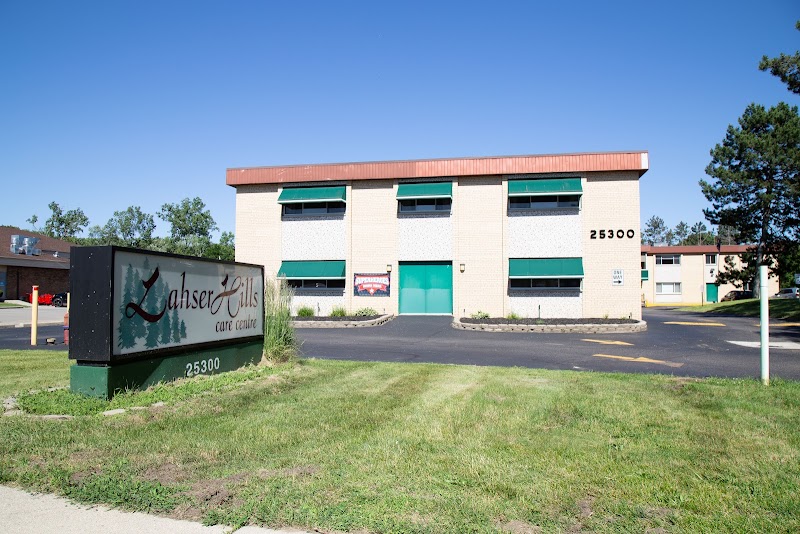
CMS rates Lahser Hills Care Centre's staffing level at 4 out of 5 stars, which is above average compared to other nursing homes. Staff turnover is 53%, compared to the Michigan average of 46%.

What Have Inspectors Found at Lahser Hills Care Centre?

State health inspectors documented 41 deficiencies at Lahser Hills Care Centre during 2023 to 2025. These included: 1 Immediate Jeopardy (the most serious level, indicating potential for serious harm or death), 3 that caused actual resident harm, 36 with potential for harm, and 1 minor or isolated issues. Immediate Jeopardy findings are rare and represent the most serious regulatory concerns. They require immediate corrective action.

Who Owns and Operates Lahser Hills Care Centre?

Lahser Hills Care Centre is owned by a for-profit company. For-profit facilities operate as businesses with obligations to shareholders or private owners. The facility is operated by NEXCARE HEALTH SYSTEMS, a chain that manages multiple nursing homes. With 127 certified beds and approximately 98 residents (about 77% occupancy), it is a mid-sized facility located in Southfield, Michigan.

How Does Lahser Hills Care Centre Compare to Other Michigan Nursing Homes?

Compared to the 100 nursing homes in Michigan, Lahser Hills Care Centre's overall rating (2 stars) is below the state average of 3.1, staff turnover (53%) is near the state average of 46%, and health inspection rating (2 stars) is below the national benchmark.

What Should Families Ask When Visiting Lahser Hills Care Centre?

Based on this facility's data, families visiting should ask: "What changes have been made since the serious inspection findings, and how are you preventing similar issues?" "Can I visit during a mealtime to observe dining assistance and food quality?" "How do you handle medical emergencies, and what is your hospital transfer rate?" "Can I speak with family members of current residents about their experience?" These questions are particularly relevant given the facility's Immediate Jeopardy citations.

Is Lahser Hills Care Centre Safe?

Based on CMS inspection data, Lahser Hills Care Centre has documented safety concerns. Inspectors have issued 1 Immediate Jeopardy citation (the most serious violation level indicating risk of serious injury or death). The facility has a 2-star overall rating and ranks #100 of 100 nursing homes in Michigan. Families considering this facility should ask detailed questions about what corrective actions have been taken since these incidents.

Do Nurses at Lahser Hills Care Centre Stick Around?

Lahser Hills Care Centre has a staff turnover rate of 53%, which is 7 percentage points above the Michigan average of 46%. Moderate turnover is common in nursing homes, but families should still ask about staff tenure and how the facility maintains care continuity when employees leave.

Was Lahser Hills Care Centre Ever Fined?

Lahser Hills Care Centre has been fined $47,320 across 2 penalty actions. The Michigan average is $33,552. While any fine indicates a compliance issue, fines under $50,000 are relatively common and typically reflect isolated problems that were subsequently corrected. Families should ask what specific issues led to these fines and confirm they've been resolved.

Is Lahser Hills Care Centre on Any Federal Watch List?

Lahser Hills Care Centre is not on any federal watch list. The most significant is the Special Focus Facility (SFF) program, which identifies the bottom 1% of nursing homes nationally based on persistent, serious quality problems. Not being on this list means the facility has avoided the pattern of deficiencies that triggers enhanced federal oversight. This is a positive indicator, though families should still review the facility's inspection history directly.