Medilodge of Southfield
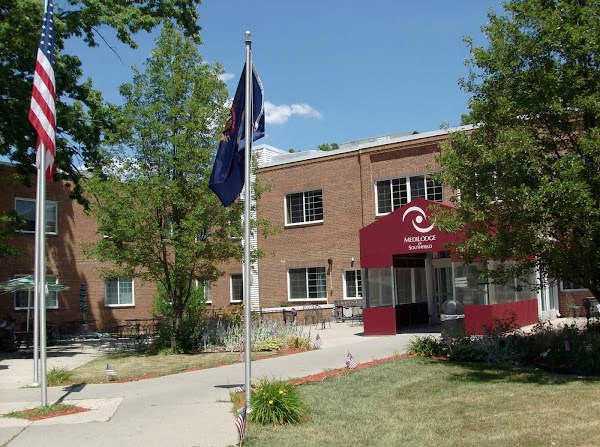
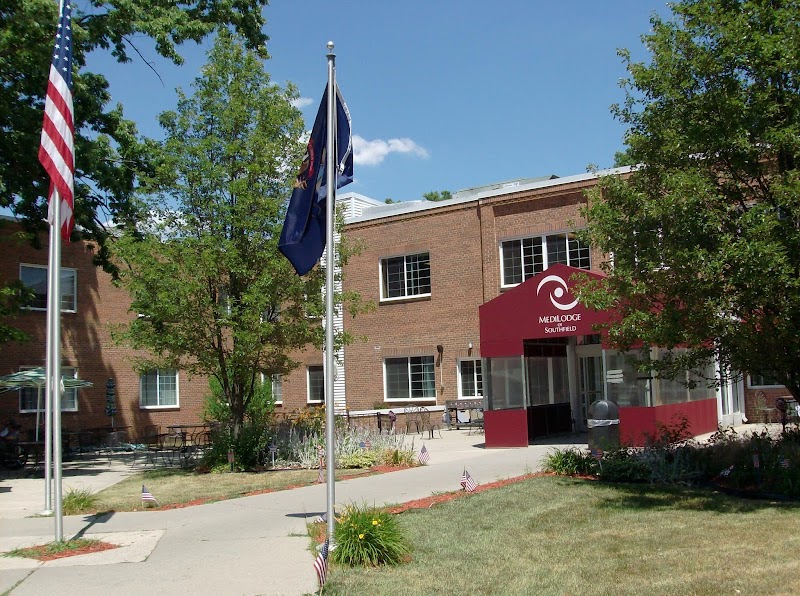
26715 Greenfield Rd, Southfield, MI 48076 (248) 557-0050
For profit - Corporation 185 Beds MEDILODGE Data: November 2025 4 Immediate Jeopardy citations
Trust Grade
0/100
#389 of 422 in MI
Last Inspection: August 2025

Inspected within the last 6 months. Data reflects current conditions.

Overview

Medilodge of Southfield has received a Trust Grade of F, which indicates significant concerns about the facility's care and operations. With a state rank of #389 out of 422 and a county rank of #31 out of 43, it places in the bottom half of Michigan facilities, suggesting families may want to consider other options. Although the facility is improving as it has reduced its number of issues from 37 in 2024 to 24 in 2025, serious concerns remain, including a critical incident where staff failed to investigate allegations of inappropriate sexual contact, putting residents at risk. Staffing is average with a turnover rate of 44%, and while RN coverage is also average, the alarming $203,659 in fines indicates ongoing compliance issues. Families should weigh these serious weaknesses against the facility's strengths before making a decision.
Trust Score
F
0/100
In Michigan
#389/422
Bottom 8%
Safety Record
High Risk
Review needed
Inspections
Getting Better
37 → 24 violations
Staff Stability
○ Average
44% turnover. Near Michigan's 48% average. Typical for the industry.
Penalties
✓ Good
$203,659 in fines. Lower than most Michigan facilities. Relatively clean record.
Skilled Nurses
○ Average
Each resident gets 33 minutes of Registered Nurse (RN) attention daily — about average for Michigan. RNs are the most trained staff who monitor for health changes.
Violations
⚠ Watch
104 deficiencies on record. Higher than average. Multiple issues found across inspections.
★☆☆☆☆
1.0
Overall Rating
★★★☆☆
3.0
Staff Levels
★★★☆☆
3.0
Care Quality
★☆☆☆☆
1.0
Inspection Score
Stable
2024: 37 issues
2025: 24 issues

The Good

  • Full Sprinkler Coverage · Fire safety systems throughout facility
  • No fines on record
  • Staff turnover below average (44%)

    4 points below Michigan average of 48%

Facility shows strength in fire safety.

The Bad

1-Star Overall Rating

Below Michigan average (3.1)

Significant quality concerns identified by CMS

Staff Turnover: 44%

Near Michigan avg (46%)

Typical for the industry

Federal Fines: $203,659

Well above median ($33,413)

Significant penalties indicating serious issues

Chain: MEDILODGE

Part of a multi-facility chain

Ask about local staffing decisions and management

The Ugly 104 deficiencies on record

4 life-threatening 5 actual harm
Aug 2025 17 deficiencies 1 IJ
CRITICAL (J) 📢 Someone Reported This

A family member, employee, or ombudsman was alarmed enough to file a formal complaint

Immediate Jeopardy (IJ) - the most serious Medicare violation

Quality of Care (Tag F0684)

Someone could have died · This affected 1 resident

**NOTE- TERMS IN BRACKETS HAVE BEEN EDITED TO PROTECT CONFIDENTIALITY** Based on observation, interview and record reviews the facility failed to adequately assess/monitor residents experiencing ident...

Read full inspector narrative →
**NOTE- TERMS IN BRACKETS HAVE BEEN EDITED TO PROTECT CONFIDENTIALITY** Based on observation, interview and record reviews the facility failed to adequately assess/monitor residents experiencing identified changes of condition, notify the Physicians of their continued decline and transfer the residents to higher levels of care in a timely manner, for four residents (R7, R97, R168 and R175) of four residents reviewed for changes in condition, resulting in R7 not being transferred to a higher level of care and expiring, R97 having a critically low hemoglobin level and expiring, R168 having to be transferred to the hospital and subsequently intubated and R175 contracting sepsis resulting in shock. These deficient practices resulted in the increased likelihood of serious harm, serious injury and/or death to occur. Findings include:The Immediate Jeopardy (IJ) began on [DATE] when the facility staff failed to implement Physician ordered interventions for R7 who had an identified change of condition including tachycardia and timely notify the Physician of the continued decline.The IJ was identified on [DATE] and the Administrator was notified of the Immediate Jeopardy on [DATE] at approximately 2:11 PM. A plan of removal was requested at that time to remove the immediacy.The surveyor team confirmed by Observation, Interview and Record review that the Immediate Jeopardy was removed on [DATE] based on the facility's implementation of an acceptable plan of removal. The noncompliance remains at an isolated event with the potential for more than minimal harm that is not immediate jeopardy due to sustained compliance that has not been verified by the State Agency (SA).R168 On [DATE] the medical record for R168 was reviewed and revealed the following: R168 was initially admitted to the facility on [DATE] and had diagnoses including Paroxysmal atrial fibrillation, Cardiac arrest and Hypertension. A review of R168's MDS (minimum data set) with an ARD (assessment reference date) of [DATE] revealed R168 was dependent on staff for most of their activities of daily living. R168's BIMS score (brief interview for mental status) was zero indicating severely impaired cognition. A Physican progress note dated [DATE] revealed the following: . pt (patient) seen for routine f/u (follow-up) after recent admission to this facility for long term care and possible rehab. Per chart review, pt had recent prolonged hospitalization at [name of local hospital] after suffering a cardiac arrest on [DATE] due to a large pulmonary embolism. He underwent 4 cycles of CPR (Cardiopulmonary resuscitation) .underwent mechanical thrombectomy for PE (Pulmonary embolism) .CVS (cardiovascular system): s1/s2 audible, tachycardia .4. A-fib/sinus tachycardia. -continue Xarelto and BBs (beta blockers). Add Cardizem for better BP (blood pressure) and rate control. -recent Echo 6/2025 preserved EF (ejection fraction) 60-65% .-d/w (discussed with) RD (Registered Dietician) and LPN (Licensed Practical Nurse) to increase FWF (free water flushes) to 250 q (every) 6 hrs (hours) in addition to TF (tube feeding). 5. HTN(Hypertension) /elevated BP. -continue Metoprolol, add Cardizem. 6. Dysphagia 2/2 #1 s/p (status/post) peg (percutaneous endoscopic gastrostomy) tube. -continue TF (tube feeding) per RD, increase FWF (free water fluids) to 250 q (every) 6 hrs (hours).POC (plan of care) d/w LPN, check routine labs, add CCBs (calcium channel blockers). A review of R168's Physican orders revealed R168's Cardizem was never administered to them and the increase of FWF to 250 Q 6 hours was never transcribed to the electronic Physican orders. A review of R168's Beats per minute (BPM's) revealed the following abnormal pulse vitals. [DATE] at 01:36 (139 PBM), [DATE] at 14:15 (138 BPM), [DATE] at 13:00 (138 BPM), [DATE] at 12:52 (138 BPM), [DATE] at 06:16 (138 BPM), [DATE] at 16:58 (126 BPM), [DATE] at 14:04 (132 BPM), [DATE] at 10:48 (144 BPM), [DATE] at 05:54 (130 BPM, [DATE] at 17:53 (138 BPM), [DATE] at 14:11 (137 BPM), [DATE] at 05:11 (136 BPM). A review of R168's progress notes revealed the following: [DATE] at 12:57-Note Text: Cardizem LA Tablet Extended Release 24 Hour 240 MG Give 1 tablet by mouth one time a day for HTN/Afib/tachycardia-not available [DATE]-Note Text: Writer checked resident’s vitals BP 122/87, HR (heart rate) 139 BPM, Temp: 97.5 F, SPo2 (oxygen saturation) 85%, Resp 39 breaths/min, BS (blood sugar) 196. Placed resident on 4L (liters)of oxygen via NC (nasal cannula). Did not do breathing treatment as HR was 139. Attempted to call MD (Medical Doctor), no answer. EMS (Emergency Medical System) called. Resident transferred to gurney by 3 paramedics and transported to [local hospital) by ambulance . [DATE]-Note Text: chief complaints/ History of present illness Call received from the nearest recording patience and becoming very short of breath and hypoxic and tachycardic with heart rates going up to 139 and pulse ox amateur and down to 85%And the time did not appear to be febrile Review of systems Patient not able to consistently answer/able to tell symptoms .Physical exam as listed above patient was . tachycardic otherwise unchanged from the past Assessment and planAcute hypoxia and tachycardia with shortness of breath /respiratory distress -patient was transferred to [local hospital] by EMS With help of the nurse on duty . [DATE]-Note Text: Addendum Pt (patient) in [local hospital] .-still appearing very short of breath and hypoxic /tachycardic with temperature of 102°F -requiring intubation/ventilation . On [DATE] at approximately 1:48 p.m., Physician QQ was interviewed pertaining to R168 being sent out to the hospital on [DATE]. Physican QQ indicated that on [DATE] they had ordered the cardizem and increase of FWF to 250 to try to bring down R168's heart rate and that they had thought that the orders had been entered into the electronic record. On [DATE] at approximately 4:49 p.m., during a conversation with the Director of Nursing (DON), the DON was queried regarding the Cardizem and FWF and reported that the orders should have been entered by the doctor or the Nurse that they had spoken with. The DON was queried regarding the cardizem not being available on [DATE] and they indicated that it is available in the back up and should have been administered. The DON was queried regarding R168's abnormal BPM's for the four days leading up to them being sent out to the hospital and they indicated that there should have been follow-up from the Nurses with the Physican to address it. Complaint # 2587232 Resident 97 On [DATE] a review of the record revealed that R97 was re-admitted to the facility on [DATE] with the diagnosis of End stage renal disease, anemia, renal dialysis with a brief interview for mental status score (BIMs) of 15 which indicated no cognitive impairment. A further review of the record revealed that R97 had a critically low hemoglobin of 5.7 on [DATE] and was sent to the hospital on [DATE]. R97 had a history of low hemoglobin as well as a history of being sent out to the hospital for the low levels. On [DATE] at 11:23 AM, a telephone interview was conducted with Family member “KK”, they were asked if they had any additional information, they would like to add to the complaint that was submitted to the state agency (SA). Family member “KK” reported that their sibling had expired in the hospital at 11:33 PM on [DATE] with a hemoglobin level of 3.2. Family member “KK” reported that the facility was aware of the low blood levels and would check them weekly. The facility was also good at sending R97 to the hospital when the hemoglobin level was about 5. Being Jehovah’s Witness, R97 would have refused a blood transfusion (per religious belief) but the hospital usually would give them iron and do other bloodless options to bring the hemoglobin to a stable level. Family member “KK” reported, that R97's hemoglobin had been a constant problem and when their hemoglobin was at 5 or lower, they would start to get confused and tired. Family member “KK” was asked, would R97, have wanted to be transferred to the hospital? Family member “KK” replied, Yes, she always went out. On [DATE] at 2:20 PM, an interview with Nurse “G”, was conducted and asked how did R97 present to them during their shift. Nurse “G” reported that R97 did not look well during their shift, but they continued to monitor the resident because the medical providers were aware of the critically low Hemoglobin of 5.7 and gave no new orders. R97 was alert and oriented and seemed to be at their baseline, just more tired since resident was dialyzed the day prior, so it was normal for them. R97, remained stable for the duration of their shift reported Nurse “G”. On [DATE] at 2:25 PM, an interview with the Director of Nursing (DON) was conducted. They were asked what the facility process was on change in conditions. The DON reported that they write a progress note and start a significant change. The significant change would be followed up with a meeting every Tuesday, Wednesday, and Thursday until the residents either get better or sent to a higher level of medical help. The DON was then asked about the process of reporting critically low lab levels. The DON reported that they notify the provider immediately to see if they wanted to add or change any orders or want the resident sent to the hospital, we also would put a progress notes in and start an SBAR(situation, background, assessment, and recommendation) tool. The DON was then asked, was staff expected to use current vital signs and documentation for the SBAR tool, the DON replied, yes. A review of the record revealed that on [DATE] at 7:22 PM a progress note was created and stated, “Resident labs came back, and hemoglobin is 5.72 and hematocritis [sic]19.6. HCP (healthcare provider) notified, no new orders.” On [DATE] at 6:40 PM a SBAR Commnication form and progress note was completed for the transfer to hospital. On [DATE] at 12:27 PM, an interview with Nurse Practitioner (NP) “II” was conducted. They were asked if they were notified for R97's critical hemoglobin level, the NP replied, No. NPII reported that they worked closely with NP “JJ” with R97's plan of care. NP “II” reported that R97 had a history of low hemoglobin levels and was a Jehovah’s Witnesses, refused blood transfusions and would get sent right back to the facility after being evaluated by the hospital. NP “II” was asked, why R97 was not sent to the hospital for the critical lab levels. NP “II” reported that they were unsure and if they were aware of the lab value they would have sent R97. NP “II” stated that they sent everyone to the hospital with critical lab values regardless of their religion, unless they refused to go. On [DATE] at 3:00PM, an interview with NP “JJ” was conducted, they were asked were they notified of the critical lab value for R97? NP “JJ” reported that they were notified of the critical lab value and since R97 was Jehovah’s witnesses and usually refused blood transfusions, they were not sent to hospital. NP “JJ” reported that they called the dialysis unit in an attempt to collaborate with the provider to see if they would order iron infusion on the day of their dialysis. NP “JJ” was asked did they physically assess R97, NP “JJ” reported they had not but they did ask the nurse if R97 was on their menstrual cycle or had any bleeding from anywhere and had them follow up if anything changes. The next day I called NP “II” but they informed them that R97 had been transferred to the hospital. NP “JJ” was asked why did they not send R97 to the hospital. NP “JJ” reported that, R97 did not accept blood products and at the time of being notified R97 was asymptomatic and if R97 experienced symptoms they would have sent them to hospital. On [DATE] at 9:35 AM, an interview with the DON was conducted, they were asked to provide documentation for the SBAR, the change in condition, documentation/care plan that stated they refused to go to the hospital for critically low hemoglobin. The DON reported that they would look into it. No additional information was provided by exit of survey. R7 Clinical record review revealed R7 was admitted to the facility on [DATE] for rehabilitation and Nursing care. R7 had an impaired genitourinary (urinary organs) status related to ESRD (End-Stage Renal Disease) and received in house dialysis on Tuesday, Thursday and Saturday. R7 required a tracheostomy (surgical opening in the windpipe to assist with breathing), and had impaired cardiovascular status related to hypertension. R7 was alert, oriented and capable of making their needs known. A Brief Interview of Mental Status (BIMS) scored 15/15, signifying R7 was cognitively intact. A record review of a Nursing Progress note dated [DATE] at 5:55 AM, authored by Licensed Practical Nurse (LPN) “X” documented R7 expressed they wanted to be sent to the hospital due to feeling short of breath, and their breathing “…just felt off…” and had a Blood Pressure (BP) reading of 146/110. On [DATE] at 4:40 PM, a telephone interview was conducted with LPN “X” who recalled the incident and remarked they were a newer Nurse and not familiar with tracheostomies and relied on R7 who explained to them they felt like they had a “plug” deep down and performed suctioning with little to no secretions. LPN “X” contacted the on-call Provider on [DATE] around 6:30-7:00 AM, (was not sure of the name) told them R7 was requesting to go to the hospital and commented R7 always wants to go to the hospital. LPN “X” remarked the comment was posed as if R7 liked to “cry wolf”. LPN “X” took orders to give a one-time dose of Clonidine (medication to treat high blood pressure), a breathing treatment and Tylenol and have day shift reassess. Record review of the Medication Administration revealed the Clonidine documented within the progress note, was not documented as an order and not documented as given. Per Regional Clinical Director “BB”, an override report from Pharmacy Liaison “CC” was pulled from [DATE] to [DATE] and confirmed the verbal order for R7 to be administered Clonidine on [DATE] was not pulled as an override. On [DATE] at 12:20 PM, the Medical Director explained when on call Providers are contacted on off hours they are triaged, and a daily report is generated for the entire Provider team. The Medical Director explained the On Call Triage Provider was Nurse Practitioner (NP)“HH”. Per the Medical Director, there was no follow up with R7 on [DATE] and on Thursday [DATE]. NP “Z” who typically sees residents at this facility had a last-minute emergency and Attending Physician “AA” was on call but did not see Residents that day, therefore R7 did not have a Provider assess them in person. Nursing documented R7 still did not feel well, so much so they did not want to go to Dialysis. And no documentation reflected a Provider was contacted that R7 was still not feeling well and refused to attend dialysis. The Medical Director remarked if they had seen them, they would have been more concerned about them refusing dialysis due to risk of volume overload and would have either convinced them to have dialysis in-house or send them out l as they were requesting and receive dialysis at the hospital. On [DATE] at 1:16 PM, a telephone interview with Regional Dialysis Manager “W” provided documentation that R7’s scheduled dialysis for Thursday [DATE] was rescheduled due to R7 was not feeling well. Record review of the Progress notes dated [DATE] and [DATE] revealed no documentation or thorough follow up from a Provider or Nursing what R7’s change of condition entailed and why they were not feeling well. On [DATE] at 10:38 AM, a telephone interview with Certified Nurse Assistant (CNA) “Y” confirmed they were familiar with R7 and remarked they were so nice and called them their “buddy”. R7 could tell you what they wanted and recalled that they wanted to go to the hospital. Per CNA “Y” they went into R7’s room on [DATE] around 3:00 AM observed them up, they requested water and was watching television. Per CNA “Y” they went in around 6:30 AM and R7 was observed unresponsive and a Code Blue (a code for a life-threatening medical emergency) was called, and CPR (Cardiopulmonary Resuscitation) was initiated. Record review of the State of Michigan Certificate of Death documented R7 was pronounced dead at the facility on [DATE] at 7:07 AM due to End Stage Renal Disease. R175 On [DATE] at 10:50 AM, R175 was observed lying in her bed with a low air loss mattress receiving oxygen through a tracheostomy (surgical hole in the windpipe). Two poles were observed in the room, one with tube feed infusion equipment and the other with intravenous (IV) infusion equipment. R175 did not respond to questions asked. Review of the clinical record revealed R175 was originally admitted into the facility on [DATE] and readmitted [DATE] with diagnoses that included: diabetes, tracheostomy status and toxic encephalopathy. According to the BIMS staff assessment dated [DATE], R175 had severely impaired cognition. Review of R175’s progress notes revealed: An admission note dated [DATE] at 6:56 PM read in part, “…resident was admitted to (local Long Term Acute Care -LTAC- hospital) for metabolic encephalopathy underlying sepsis…” A nursing note dated [DATE] at 11:33 PM by RN “Q” read in part, “Resident vitals were 126/68 HR (heart rate) 135 spO2 [sic] (percent of oxygen in the blood). Writer notified physician about resident HR. Physician gave an order to writer to do a STAT CXR (chest x-ray) and metoprolol (beta-blocker medication) 12.5 BID (two times a day)… A nursing note dated [DATE] at 6:31 AM by RN “Q” read in part, “Resident spO2 [sic] decreased to 88%. Writer suctioned the resident trach (tracheostomy). Resident secretion has become thick. Resident spO2 is still remaining 88%. Writer informed Physician about the resident spO2. Writer was given an order ‘Duoneb (inhalation medication) q4 (every 4 hours) PRN (as needed)’… A nursing note dated [DATE] at 7:34 AM read in part, “Resident was unresponsive to verbal/physical/pain response. BS (blood sugar) was unreadable by glucometer, tachycardia (high heart rate), tachypneic (high respiratory rate) and diaphoretic (sweating). Physician was contacted but was unable to answer phone. Writer contacted DON who agreed an emergency transfer should be ordered. BP (blood pressure) 80/49 HR 131 RR (respiratory rate) 38 T (temperature 97.4 Spo2 86%” It should be noted, there were no progress notes found from any Medical Provider, from R175’s first admission or from the second admission on [DATE]. Review of R175’s vitals tab in the clinical record revealed documentation on [DATE] at 6:54 PM, when R175 was admitted , then no documentation until [DATE] at 7:45 AM when R175 was sent to the hospital. Review of R175’s discharge paperwork from the hospital dated [DATE] revealed R175’s admitting diagnosis was septic shock (the last and most severe stage of sepsis – immune system has an extreme reaction to an infection). On [DATE] at 12:07 PM, Nurse Practitioner (NP) “O” was interviewed and asked if she had seen R175. NP “O” explained she had at the hospital and at the facility. When asked about the lack of progress notes, NP “O” explained she was behind in writing notes. On [DATE] at 3:08 PM, the DON was interviewed and asked how often vitals should be done for a new admission. The DON explained they should be taken on admission and every shift. When informed of the lack of vitals for R175, the DON acknowledged the concern. The DON was asked how long had R175’s HR been elevated prior to the progress note on [DATE] at 11:33 PM, and if the HR had decreased or stayed the same until R175 was sent to the hospital on [DATE]. The DON asked to see if there was a SBAR Communication Form completed. Review of a SBAR document dated [DATE] at 8:28 AM revealed the only boxes with information were the boxes the electronic medical record system auto-populated by the system, including the vitals that were taken on [DATE] at 6:45 PM, three days prior. The DON explained without R175’s vitals documented, the lack of progress notes and an empty SBAR, it was hard to see what the story was. On [DATE] at 9:36 AM, Dr. “P”, R175’s attending physician, was interviewed by phone and asked about the lack of Medical Provider progress notes. Dr. “P” explained sometimes he was late in documenting. Dr. “P” was asked if he followed up after being call about R175 having a HR of 135 and he gave orders for a chest x-ray and Metoprolol. Dr. “P” explained he usually looked to see what was documented in the chart. When informed there were no vitals documented for R175, Dr. “P” had no answer. Dr. “P” explained residents were “sicker” when admitted now than they used to be in the past. Dr. “P” was asked if residents were sicker now, did not that require more monitoring. Dr. “P” had no answer. On [DATE] at 10:02 AM, RN “Q” was interviewed by phone and asked about R175 during her first admission. RN “Q” explained she worked the midnight shift on weekends and had R175 when she was first admitted on Friday [DATE], then when she came back on Saturday [DATE], R175 was different, her BS was elevated and her HR was high… called the doctor, who ordered an x-ray… was surprised it was negative for pneumonia, knew something was not right, then on Sunday [DATE] her breathing got worse. RN “Q” was asked if she took vitals as none were documented. RN “Q” explained she did, must not have put them in the computer. On [DATE] at 10:10 AM, LPN “R”, who was R175’s day shift nurse on [DATE] and [DATE], was interviewed by phone and asked if he had taken R175’s vitals. LPN “R” explained he “always” took vitals before giving medications. When informed there were no vitals documented for R175, LPN “R” had no answer. LPN “R” was asked if R175’s HR had been elevated. LPN “R” explained he thought her HR at baseline was a little elevated, like 90 to 100. When informed R175 had been sent to the hospital with Septic Shock, LPN “R” explained he never saw any symptom of Septic Shock, she had been stable. LPN “R” was asked if any Medical Provider had seen R175 on her first admission. LPN “R” explained usually there are no Medical Provider’s that come to the facility on the weekends. Review of a facility policy titled, “Notification of Changes” revised [DATE] read in part, “…Circumstances requiring notification include: 1. Accidents… 2. Significant change in the resident’s physical, mental, or psychosocial conditions such as deterioration in health, mental or psychosocial status… 3. Circumstances that require a need to alter treatment… 4. A transfer or discharge of the resident from the facility…” The Immediate Jeopardy that began on [DATE] was removed and the deficient practice corrected on [DATE] when the facility took the following actions to remove the immediacy. The facility assessed current residents for a change in condition by reviewing labs and vital signs. Education was provided to nursing staff on assessment, notifying the physician and implementing orders and documentation.
CONCERN (D)

Potential for Harm - no one hurt, but risky conditions existed

Resident Rights (Tag F0550)

Could have caused harm · This affected 1 resident

Based on observation, interview and record review the facility failed to ensure residents were treated with dignity during nursing care for one resident (R59) out of two residents reviewed for dignity...

Read full inspector narrative →
Based on observation, interview and record review the facility failed to ensure residents were treated with dignity during nursing care for one resident (R59) out of two residents reviewed for dignity/respect. Findings include:Based on observation, interview and record review the facility failed to ensure residents were treated with dignity during nursing care for one resident (R59) out of two residents reviewed for dignity/respect. Findings include:On 8/12/25 at approximately 9:16 AM, Certified Nursing Assistance (CNA) T was observed changing R59. There was no privacy curtain wrapped around the resident's bed. R59 shared a room with two other residents. One resident was ambulating around the room and was able to observe the resident being changed. The Surveyor was interviewing another resident and had the potential to view R59 during care. CNA T left the room and R59 was sitting on the side of the bed. Their call light was on the floor.Following the observation, Nurse K was asked about the call light on the floor and the failure of CNA T to ensure R59's privacy curtain was used. Nurse K lifted the call light off the floor and noted that while the privacy curtain should have been used, they believed it was not working and when they tried to pull it around the resident it was not working. Nurse K reported that they would ensure it was fixed. Nurse K was asked if they knew how long it was not in working correctly but was not able to provide a date.On 8/14/25 at approximately 12:05 PM, R59 was observed sitting in their room. They were asked if their privacy curtain had been fixed. R59 noted they believed so, but was not certain and noted that they were legally blind. When asked about the incident that occurred on 8/12/25, R59 reported that they were not happy that they were exposed during care.On 8/14/25 at approximately 12:50 PM, the Administrator was asked about the facility's protocol for ensuring privacy during care. The Administrator reported that nursing staff should ensure residents privacy during care and noted that they were not aware of the situation that occurred on 8/12/25 and would ensure the privacy curtain was working correctly and discuss the concern with staff.The facility policy titled, Promoting/Maintaining Resident Dignity (10/26/23) was reviewed and documented, in part: Policy: It is the practice of this facility to protect and promote resident rights and treat each resident with respect and dignity as well as care for each resident in a manner and in an environment, that maintains or enhances resident's quality of life.All staff members are involved in providing care to residents to promote and maintain resident dignity.maintain resident privacy.
CONCERN (D)

Potential for Harm - no one hurt, but risky conditions existed

Deficiency F0558 (Tag F0558)

Could have caused harm · This affected 1 resident

**NOTE- TERMS IN BRACKETS HAVE BEEN EDITED TO PROTECT CONFIDENTIALITY** Based on observation, interview, and record review facility failed to provide appropriate equipment (in a timely manner) for two...

Read full inspector narrative →
**NOTE- TERMS IN BRACKETS HAVE BEEN EDITED TO PROTECT CONFIDENTIALITY** Based on observation, interview, and record review facility failed to provide appropriate equipment (in a timely manner) for two residents (R176 & R177) of two residents reviewed for reasonable accommodation of needs. This deficient practice has the potential for accidents and improper care with feelings of frustration and dissatisfaction. Findings include:R176Record review revealed R176 was admitted to the facility on [DATE] for skilled rehabilitation and nursing needs after hospitalization. R176's admitting diagnoses included acute respiratory failure with hypoxia, Chronic Obstructive Pulmonary Disease (COPD), morbid obesity, diabetes and pulmonary embolism (blood clot in lungs). Based on Brief Interview for Mental Status assessment (BIMS) dated 8/11/25 revealed a score of 15/15, indicative of intact cognition.An initial observation was completed on 8/12/25 at approximately 9:20 AM. R176 was observed laying on their bed. A few minutes later they were observed from the hallway outside of their room. They were observed sitting on the edge of the bed. When the surveyor walked into room R176 was observed sitting on the bed frame on the left side of the bed and the mattress was pushed over to the right. They had a 4 wheeled walker in the front. R176 reported that they came over to the facility last Thursday from the hospital. The room had two regular chairs and a regular wheelchair folded up. R176 was queried if they were comfortable and why they were sitting on the bed frame. They reported they needed something to sit on, and they were unable to sit on the mattress as their feet wouldn't touch the ground with the mattress. They were asked if they were comfortable sitting on the edge of the bed and if they could sit on a chair. R176 reported that they needed an extra wide chair and wheelchair the facility did not have any. They added that they were not comfortable sitting for an extended period of time on the edge of the bed without any back support and they had to sit on the edge of bed to watch television on the left side of the bed. R176 reported that they had a wide recliner chair in the hospital and stated that I hope I get a chair soon. R176 was queried about if they had spoken with any staff and they reported the staff members were aware and were unsure why they did not have an appropriate chair/wheelchair to sit on. During the conversation R176 was leaning back and forth to get themselves comfortable.During a follow-up observation on 8/12/25 at approximately 11:25 AM (from the hallway), R176 was observed sitting on the edge of their bed. They were rocking back and forth a few times; then they leaned forward on to their 4 wheeled walker and stood up to stretch their back and sat back down. They appeared uncomfortable.Later in the afternoon another follow-up observation and interview were completed at approximately 1:10 PM. R176 was in their room in bed. During this interview R176 confirmed again their concern about not having an appropriate chair to sit on and no one had spoken with them or provided any updates.Review of hospital discharge summary and the internal admission notification revealed the R176's height, weight and their need for bariatric equipment prior to admission to the facility on 8/7/25.During an interview with the unit manager (UM) V on 8/13/25 at approximately 9:15 AM they were queried why R176 did not have an appropriate chair or wheelchair to sit in the room and observations of R176 sitting on the bed frame trying to get themselves comfortable; UM V reported that they were going to order R176 a bariatric bed that goes lower and a wider chair/wheelchair. When queried further why did R176 not have the appropriate equipment since they were admitted (7 days) they did not provide any further explanation. R177Record review revealed R177 was admitted to facility on 8/7/25 after hospitalization for skilled nursing care and rehabilitation services. R177's admitting diagnoses included exacerbation of Chronic Obstructive Pulmonary Disease (COPD), respiratory failure, Obstructive Sleep Apnea, morbid obesity, and hyperventilation syndrome. Based on Brief Interview for Mental Status Assessment (BIMS) dated 8/11/25, R177 had score of 15/15, indicative of intact cognition.An initial observation was completed on 8/12/25 at approximately 10:15 AM. R177 was observed in their bed. R177 was so close to the edge of the bed on the left side of the bed and there was approximately 3-4 inches of space on the right side of the bed. The bed did not have enough room to safely roll to the side. An initial interview was completed during this observation. They reported that they came over to the facility last Thursday. When queried about their bed to see if they were comfortable, R177 reported that the bed was too small and there was no room to turn; they had been lying flat on their back. They added that they were told that they were getting a wider bed on the day they were admitted to the facility, and they did not know why they still did not have one. They added that the bed did not have any bars to hold on and it was very tricky to turn in bed. They did not have a bariatric wheelchair or chair in their room. R177 had a roommate, and the room did not appear to have enough space to accommodate all the bariatric equipment.A follow-up interview was completed with the resident later that day at approximately 2:45 PM. During the interview R177 confirmed they had concerns about longer waiting times and over the weekend they had to wait several hours for help. They also confirmed that they had spoken with the staff and voiced their care concerns and their bed being too small.A follow-up observation was completed on 8/13/25 at approximately 9:25 AM. R177 was observed laying on their back in the same bed. They confirmed that no one from the facility had provided them with any updates about a wider bed.Review of R177's Electronic Medical record revealed a care plan dated 8/7/25. R177 needed two-person assistance with mobility in bed and toileting. Review of R177's discharge documents from the hospital revealed R177's height, weight and the need for bariatric set up prior to admission to the facility. R177's care plan dated 8/8/25 revealed that R177 needed a bariatric Hoyer lift for transfers.During an interview completed with UM V on 8/13/25 at approximately 9:15 AM they were queried about R177's bed and room set up. UM V reported they were ordering a wider bed for R177. They were queried why R177 did not have an appropriate since admission to the facility until the concern was brought to the attention of facility by the surveyor, UM V did not provide any further explanation.An e-mail was sent to the facility administrator on 8/13/24 at 9:23 AM requesting the grievances and facility follow-ups for R177 since their admission to the facility. The facility did not provide any grievance reports.An e-mail was sent to the facility administrator on 8/13/25 at 4:59 PM requesting proof of the order for R176 and R177's equipment. The facility provided the delivery document that beds were delivered on 8/13/25 later in the afternoon. The proof of delivery did not have any details on when the order was placed.On 8/13/25 at approximately 10:15 AM an initial interview was completed with the facility administrator. During this interview the Regional Director of Operations (RDO) DD was present in the room. They were notified of observations for R176 and R177 and concerns about not having the appropriate bariatric equipment. The administrator reported that the bed was ordered yesterday (8/12/25). They were queried about why they were not ordered when they were admitted to the facility, and they have been at the facility since 8/7/25 they did not provide any further explanation.An interview with Rehab Manager (RM) OO was completed on 8/13/25 at approximately 2:30 PM. They were queried of the wheelchair for R176, and they reported that physical therapy was trying some of their equipment from the facility but were also ordering a new wheelchair through a vendor. They were also asked why R177 could not have any enabler bars on the bed, and they stated they would follow up. They were notified of concerns about not having the right equipment since admission and they reported that they understood the rationale of the concern.An interview with customer service representative for the facility's rental equipment vendor PP was completed via phone 8/14/25 at approximately 9:20 AM. They were provided with the order number and queried when the order was placed. The representative PP reported that they would deliver all their equipment the same day. They checked the records and reported that they took the order from the facility on 8/13/25 before noon and the equipment was delivered on 8/13/25 in the afternoon.An interview with the Director of Nursing (DON) was completed on 8/13/25 at approximately 4:30 PM. They were notified of the equipment concerns for R176 and R177 and queried about their process. The DON reported that R176 and R177 were admitted through central admissions, and they did not have enough time to get the appropriate equipment before they were admitted . When queried further why they were not ordered for several days after the admission and until the concern was brought to the attention of the facility by the surveyor, they did not provide any further explanation. They reported that they understood the rationale for the concern.Review of facility provided document titled Accommodation of Needs with a revision date of 12/28/23 read in part, Policy: The facility will treat each resident with respect and dignity and will evaluate and make reasonable accommodations for the individual needs and preferences of a resident, except when the health and safety of the individual or other residents would be endangered.Policy Explanation and Compliance Guidelines: 1. The facility will make reasonable accommodations to individualize the resident's physical environment including their personal bathroom and bedroom and the common living areas within the facility.2. The facility will ensure that common areas frequented by residents are accommodating physical limitations and enhance their abilities to maintain independence.3. Facility staff shall make efforts to reasonably accommodate the needs and preferences of the residents as they make use of their physical environment.4. Based on individual needs and preferences, the facility will assist the resident in maintaining and/or achieving independent functioning, dignity, and well-being to the extent possible.
CONCERN (D)

Potential for Harm - no one hurt, but risky conditions existed

Grievances (Tag F0585)

Could have caused harm · This affected 1 resident

Based on interview and record review facility failed to follow up timely about the grievances expressed by the resident and follow their grievance process for one (R177) of one resident reviewed for g...

Read full inspector narrative →
Based on interview and record review facility failed to follow up timely about the grievances expressed by the resident and follow their grievance process for one (R177) of one resident reviewed for grievances. This deficient practice has the potential for dissatisfaction and frustration with the care/services received during their stay at the facility. Findings include: R177Record review revealed R177 was admitted to facility on 8/7/25 after hospitalization for skilled nursing care and rehabilitation services. R177's admitting diagnoses included exacerbation of Chronic Obstructive Pulmonary Disease (COPD), respiratory failure, Obstructive Sleep Apnea, morbid obesity, and hyperventilation syndrome. Based on Brief Interview for Status Assessment (BIMS) dated 8/11/25 R177 had score of 15/15, indicative of intact cognition.An initial observation was completed on 8/12/25 at approximately 10:15 AM. R177 was observed in their bed. R177 was so close to the edge of the bed on the left side of the bed and there was approximately 3-4 inches of space on the right side of the bed. An initial interview was completed during this observation. They reported that they came over to the facility last Thursday. When queried about the services and care, R177 reported that the facility staff were not very responsive when they needed help, especially at night and weekends. When they were queried further they added that they had to wait several hours for assistance over the weekend when they had called for help and they were very concerned. When queried if they had spoken with any facility staff member about their concern; R177 reported that they spoke with the nurses and they did not remember their names. When queried about their bed if they were comfortable, R177 reported that it was too small and there was no room to turn. They added that they were told that they were getting a wider bed on the day they were admitted to the facility and they did not know why they still did not have one. They added the bed did not have any bars to hold on and it was very tricky to turn in bed, even with staff assistance.A follow-up interview was completed with the resident later that day at approximately 2:45 PM. During the interview R177 confirmed they had concerns about longer waiting times and the over the weekend when they had to wait several hours for help. They had also confirmed that they had spoken with the staff and voiced their care concerns and their bed being too small.Review of R177, the Electronic Medical Record revealed a care plan dated 8/7/25. R177 needed two-person assistance with mobility in bed and toileting.An e-mail was sent to the facility administrator on 8/13/24 at 9:23 AM requesting the grievances and facility follow-ups for R177 since their admission to the facility. The facility did not provide any grievance reports.Review of R177's Speech Language Pathology evaluation dated 8/9/25 revealed that R177's executive function, memory, and problem-solving skills were within functional limits.An initial interview with Unit Manager (UM) V was completed on 8/13/25 at approximately 9:15 AM. UM V was queried if they were of aware of any concerns regarding R177. UM V stated Yes and they heard about it yesterday. When queried further they initially reported they heard about care concern from a Certified Nursing Assistant (CNA) that R177 waited a long time for staff assistance. UM V then stated that they heard the concern from a nurse, who worked on the unit, but they were not a regular nurse for the unit. When queried further they reported they went and spoke with R177 with their Regional Director of Operations (RDO). UM V also added that they interviewed the staff who had worked on the unit.A follow-up observation was completed on 8/13/25 at approximately 9:25 AM. R177 was observed in the same bed laying on their back. They were queried if anyone from the management team had spoken with him about the concerns they had and followed up. R177 reported several staff members have been coming in and out; they did not know who they were and no one had asked them about their concerns.A follow-up interview with the Unit Manager (UM) V was completed on 8/13/25 at approximately 1 PM when they had approached the surveyor. UM V reported that they had spoken with R177 and they did not have any concerns. UM V also added that R177 reported that they were getting the care but not thorough care that staff were not wiping the resident clean. When queried further about their follow up when they had the concern they reported that they should have initiated the grievance process and followed up.During an interview with R177's family member (who were listed as the 1st emergency contact) on 8/14/25 at approximately 8:20 AM, they reported that their father had expressed concern about long waiting time to get staff assistance and they had waited over 4 hours to get staff assistance on one occasion. R177's family member also added that their father informed them that facility staff members were aware of their care concerns. An interview with the facility administrator was completed on 8/13/25 at approximately 10:15 AM. During this interview the Regional Director of Operations (RDO) DD was present in the room. The administrator was queried if they were aware of R177's care concerns and they reported that they went and spoke with R177 earlier that day and they did not have any concerns. They were notified of the interviews with the resident and the interview with UM V who were aware of the concerns that were reported by a staff member and queried about the expectations for their staff. The Administrator reported that staff and UM V should have followed their facility's grievance process. They were notified of the concern with follow up on R177's concern and both the administrator and RDO DD reported that they understood the rationale for the concern and staff should have followed the facility grievance process.An interview with Director of Nursing (DON) was completed on 8/13/25 at approximately 4:35 PM. They were notified of the R177's concern and interview with UM V and their response. They were queried about the expectations for their staff. The DON reported that the staff were expected to notify them of the concerns and should have initiated the grievance investigation/follow-up process. They were notified of the concern and they reported that they understood the concern.Review of facility provided document titled Quality Assistance Procedure with a revision date of 10/30/23 read in part, Policy: Residents, their representatives (sponsors), other interested family members, or resident advocates may file a Quality Assistance Form. The facility will provide a designated staff person who is approved by the resident or family group and the facility and who is responsible for providing assistance and responding to written requests that result from group meetings. The facility will consider the views of a resident or family group and act upon the assistance request and recommendations of such groups concerning issues of resident care and life in the facility.Policy Explanation and Compliance Guidelines:1. Any resident, his or her representative (sponsor), family member, or resident advocate may file a Quality Assistance Form concerning treatment, medical care, behavior of other residents, staff members, theft of property, etc., without fear of threat or reprisal in any form.2. Upon admission, residents are provided with written information on how to file a Quality Assistance Form.3. Quality Assistance forms will be placed in areas of the facility for easy access by those wishing to issue a concern4. Quality Assistance request may be submitted orally or in writing. The administrator may delegate the responsibility of Quality Assistance investigation to appropriate department manager5. Upon receipt of a written Quality Assistance Form/request, the department manager will investigate the allegations and submit a written report of such findings to the administrator 6. The administrator will review the findings with the person investigating the complaint to determine what corrective actions, if any, need to be taken.
CONCERN (D) 📢 Someone Reported This

A family member, employee, or ombudsman was alarmed enough to file a formal complaint

Potential for Harm - no one hurt, but risky conditions existed

Deficiency F0628 (Tag F0628)

Could have caused harm · This affected 1 resident

**NOTE- TERMS IN BRACKETS HAVE BEEN EDITED TO PROTECT CONFIDENTIALITY** This citation pertains to intake #2572077Based on interview and record review the facility failed to thoroughly complete a disch...

Read full inspector narrative →
**NOTE- TERMS IN BRACKETS HAVE BEEN EDITED TO PROTECT CONFIDENTIALITY** This citation pertains to intake #2572077Based on interview and record review the facility failed to thoroughly complete a discharge summary for two residents (R172 and R173) of five residents reviewed for discharges. Findings include: R172 On 8/12/25 a concern submitted to the State Agency was reviewed which alleged R172 and R173 were inappropriately discharged from the facility. On 8/13/25 the medical record for R172 was reviewed and revealed the following: R172 was initially admitted to the facility on [DATE], had diagnoses including Edema and Cellulitis and was discharged on 9/7/24. A review of R172's MDS (minimum data set) with an ARD (assessment reference date) of 6/30/24 revealed R172 needed assistance from facility staff with most of their activities of daily living. R172's BIMS score (brief interview of mental status) was 15 indicating intact cognition. A review of R172's Discharge to Home/Community/AL(assisted living)/Equal Care Setting assessment (a documented provided to the resident upon discharge that has a summary of their care) revealed the following areas that were left blank on the form: B. Nutrition and Allergies-1.Diet ordered by physician at time of discharge: [Blank]. 2. Calorie Information and Special Instructions: [Blank] .4.Dietary Recap: [Blank]. 5. Name of Dietary Services person completing section: [Blank] .D. Activities. 1. Activities Recap: [Blank] 2. 2.Name of Activities person completing section: [Blank] .E. Nursing Summary: Skin/Wounds: [Blank] .Assistance with Care and Activities of Daily Living: 2. Dressing [Blank]. 3. Bathing [Blank]. 4. Eating [Blank] 5. Toileting [Blank] .Devices:7. Assistive Devices (check all that apply) [Blank]. Recap: 8. Nursing Recap [Blank]. 9. Name of Nursing person completing section [Blank]. F. Medications: .2.At the time of discharge, did your facility provide the resident's current reconciled medication list to the resident, family and/or caregiver? [Blank]. 3. At the time of discharge to another provider, did the facility provide the resident's current reconciled medication list to the subsequent provider? [Blank] .J. Discharge Services and Equipment: 1. Home Care Agency-[Blank] .3. Meal Agency-[Blank]. 4. State Ombudsman (include contact number)-[Blank] .Equipment-[Blank] R173 On 8/13/25 the medical record for R173 was reviewed and revealed the following: R173 was initially admitted to the facility on [DATE], had diagnoses including Presence of Pacemaker and [NAME] insufficiency and was discharged on 9/7/24. A review of R173' MDS (minimum data set) with an ARD (assessment reference date) of 9/5/24 revealed R173 required set-up assistance or supervision from facility staff with their activities of daily living. R173's BIMS score (brief interview of [NAME] status) was 15 indicating intact cognition. A review of R173's Discharge to Home/Community/AL/Equal Care Setting assessment (a documented provided to the resident upon discharge that has a summary of their care) revealed the following areas that were left blank on the form: B. Nutrition and Allergies-1.Diet ordered by physician at time of discharge: [Blank]. 2. Calorie Information and Special Instructions: [Blank] .4.Dietary Recap: [Blank]. 5. Name of Dietary Services person completing section: [Blank] E. Nursing Summary: Skin/Wounds: [Blank] .Assistance with Care and Activities of Daily Living: 2. Dressing [Blank]. 3. Bathing [Blank]. 4. Eating [Blank] 5. Toileting [Blank] .Devices:7. Assistive Devices (check all that apply) [Blank]. Recap: 8. Nursing Recap: n.a 9. Name of Nursing person completing section: n.a F. Medications: .2.At the time of discharge, did your facility provide the resident's current reconciled medication list to the resident, family and/or caregiver? [Blank]. 3. At the time of discharge to another provider, did the facility provide the resident's current reconciled medication list to the subsequent provider? [Blank] .J. Discharge Services and Equipment: 1. Home Care Agency-[Blank] .3. Meal Agency-[Blank]. 4. State Ombudsman (include contact number)-[Blank] .Equipment-[Blank] On 8/13/25 at approximately 3:16 p.m., during a conversation with Social Work Director C (SWD C), SWD C was queried regarding the mostly blank discharge forms for both R172 and R173 and the lack of clinical information that was provided up on discharge and they indicated that they did identify the same issue around that time with facility staff failing to complete the discharge form, SWD C reported that each discipline in the facility should have filled out their sections completely. On 8/13/25 a facility document titled Discharge Planning Process was reviewed and revealed the following: Policy: It is the policy of this facility to develop and implement an effective discharge planning process that focuses on the resident's discharge goals, the preparation of residents to be active partners and effectively transition them to post-discharge care, and the reduction of factors leading to preventable readmissions 1. Upon discharge of a resident (other than in emergency to hospital or death) a discharge summary will be provided to the receiving care provider. The Discharge Summary should include a. An overview of the resident's stay that includes but not limited to: diagnoses, course of illness/treatment or therapy, and pertinent lab, radiology, and consultation results' b. A final summary of the resident's status at the time of discharge that is available for release to authorized persons and agencies, with the consent of the resident or resident's representative. c. Reconciliation of all pre-discharge medications with the resident's post discharge medication to include prescription and over the counter medications
CONCERN (D)

Potential for Harm - no one hurt, but risky conditions existed

Pressure Ulcer Prevention (Tag F0686)

Could have caused harm · This affected 1 resident

**NOTE- TERMS IN BRACKETS HAVE BEEN EDITED TO PROTECT CONFIDENTIALITY** Based on observation, interview and record review the facility failed to ensure timely interventions were implemented to prevent...

Read full inspector narrative →
**NOTE- TERMS IN BRACKETS HAVE BEEN EDITED TO PROTECT CONFIDENTIALITY** Based on observation, interview and record review the facility failed to ensure timely interventions were implemented to prevent the development of two facility acquired pressure ulcers for one (R21) out of three residents reviewed for pressure sores/wounds. Findings include: On 8/12/25 at approximately 10:37 AM, R21 was observed lying in bed. Next to their bed was a pair of heel boot protectors. When asked why their boots were on the wheelchair, R21 reported that they are used for their heels that had sores and was waiting for staff to put them on as they no longer were able to do it on their own. They noted that they had been at the facility for several years and never had a problem with their heels, but a few months ago they started. R21 further noted that they believe they got the pressure ulcer because their heels were rubbing on the bed sheet.A review of R21's clinical record was conducted and revealed the resident was initially admitted to the facility on [DATE] with diagnoses that included: Type II diabetes, generalized anxiety disorder and depression. A review of R21's Minimum Data Set (MDS) with a target date of 6/9/25 noted the resident had a Brief Interview for Mental Status (BIMS) score of 15/15 (cognitively intact cognition) and was marked No for the questions Resident has a pressure ulcer/injury, a scar over bony prominence. In addition, it was marked No as to the resident at risk of developing the pressure ulcer and No as to whether the resident had one or more unhealed pressure ulcers.Continued review of R21's clinical record documented, the following:3/26/25: Physician Progress Note: .Has been having some intermittent L (left) heel pain on/off . *It should be noted that no interventions/orders for the left heel were put in following the physician visit.4/10/25: Order: Voltaren (arthritis pain relief- with a side effect noting may cause blisters) apply to left heel topically every shift for pain. *It should be noted that this order for pain relief was placed approximately 15 days after R21 complained of pain. 4/14/25: Skin Assessment: R21.Are there any new abnormal skin areas.Site: Left heel. Comments.DTI (deep tissue injury).soft, red and boggy, tender to touch.refer to wound care.4/17/25: Psychiatry Follow-up: .Patient seen in his room today with no signs of depression.anxiety. He has been having issues with his foot, as he appears he may have developed a blister.that may be a diabetic wound.The patient states he will see a wound care doctor on Monday but has not yet seen them.4/21/25: Skin and Wound Evaluation: [R21].Type: Blister.Location: Left heel.Acquired: In-house.Area: 4.3 cm (centimeter).Length 3.1 cm.Width 1.9.Notes: Resident prefers not to wear heel lift boots. *It should be noted that there was no documentation that indicated R21's heel boots were either ordered or refused.Care Plan: Focus: Resident has impaired skin integrity as evidenced by: Diabetes to Right heel, Blister to left heel.related to wearing shoes without socks.Date initiated 4/23/25.Revision on 8/5/25.Interventions: Administer medications as ordered (4/23/25).Encourage resident to reposition self if able.Pressure redistribution device in chair (4/23/25).Heel Protectors while in bed (8/12/25). *It should be noted that there was no orders for the Heel Protectors noted in R21's electronic medical record as of 8/13/25.4/19/25: Order: Wound care to eval and tx R/t ulcer of left heel.4/19/25: Order Administration: .Voltaren External Gel.Apply to L heel. Resident refused stating that the wound care nurse told him not to have it apply anymore.4/20/25: Charting: .L heel xray results reveals no fracture or osteomyelitis.:.5/12/25: Physician Progress Note: .initially admitted to the facility in November of 2021.EHR (electronic health record) notes patient is having left foot pain.with.a left foot decubitus ulcer.An X-ray has been done which did not show any fracture of osteomyelitis.6/19/25: NP/PA (nurse practitioner/physician assistant) Progress Note: .Per.patient is having left foot pain with left foot plantar fasciitis and a left foot decubitus ulcer.Patient seen in hallway.He states his wound is 'worse' because he was not offloading his heel properly in bed. He has pain when he tries to put pressure on his heel. 7/14/25: Alert Note: Skin and Wound- new wound identified via S & W (skin/wound) eval.Care plan up to date.7/21/25: Physician Progress Note: .Seen for eval (evaluation) heel ulcers now has changes over both heels.7/28/25: Skin Issues: .Location: left heel.type: Blister.Wound acquired in-house.painful.(.92cm(centimeters)-length).(1.09 cm- width).(.2 cm-depth).#002: skin issue has been evaluated.Right heel.Diabetic foot ulcer.Length-2.53 (cm).Width 1.88(cm).2 area.3.74 undermining.slough 20%. Eschar 80% .8/9/25: Pertinent Charting: .Site of infection: Right Heel.Reason for antibiotics.new signs and symptoms.On 8/14/25 at approximately 1:05 PM, an interview was conducted with Wound Care Nurse (WCN) NN. WCN NN reported they are a LPN (licensed practical nurse) and started as the wound care nurse at the facility in August 2024. WCN NN was asked as to the facility's protocol to prevent facility acquired pressure ulcers. WCN reported that new admits are assessed as to their potential for wounds. Skin assessments are then done weekly by nursing staff. If staff notice any change in skin conditions, they are to notify WCN NN. WCN NN noted that there have been no wound physicians in the facility for several months . WCN NN was then queried about the two pressure ulcers recently acquired by R21 and what interventions, if any, were put in place to prevent their development. WCN NN reported that they were made aware of R21 left heel in April 2025 and started treatments for the wound and initially believed it may have been caused by him not wearing socks with shoes. When asked if they were aware that the physician noted some concerns in March 2025. They noted that they were not made aware at that time. WCN NN was then asked as to interventions to prevent the development of the pressure ulcer on the right heel. They reported the resident might be having some vascular issues and is scheduled to see an outside physician in the future.On 8/14/25 at approximately 1:28 PM, R21's heel wounds were observed. The left heel appeared to be healing. The right heel appeared to be one inch in diameter with black eschar (nonviable dead tissue) obscuring the wound bed. The eschar appeared to be slightly raised and not completely attached.A review of the facility document titled Pressure Ulcers/Pressure Injury Prevention and Treatment-Clinical Protocol (last reviewed/revised on 3/20/24) was reviewed and revealed the following: Policy.Based on the comprehensive assessment of a resident, a resident receives care, consistent with professional standards of practice, to prevent pressure ulcers and does not develop pressure ulcers unless the individual's clinical condition demonstrates that they were unavoidable; and a resident with pressure ulcers receives necessary treatment and services, consistent with professional standards of practice to promote healing, prevent infection, and prevent new ulcers from developing 9. Change of condition/New Skin alteration: A. Complete head to toe skin assessment, document in the medical record; .B. Notify Physician; .C. Obtain new orders as needed; .D. Notify the resident and resident's representative of all new and/or non/healing worsening PU/PI's; (Pressure Ulcers/Pressure Injuries) E. Complete new Norton's Plus scale; .F. Refer to Registered Dietician as needed; .G. Update plan of care to reflect any new risk, goals, and interventions; .H. Initiate significant change MDS as indicated.
CONCERN (D)

Potential for Harm - no one hurt, but risky conditions existed

Incontinence Care (Tag F0690)

Could have caused harm · This affected 1 resident

**NOTE- TERMS IN BRACKETS HAVE BEEN EDITED TO PROTECT CONFIDENTIALITY** Based on observation, interview, and record review the facility failed to ensure that catheter orders and monitoring were in pla...

Read full inspector narrative →
**NOTE- TERMS IN BRACKETS HAVE BEEN EDITED TO PROTECT CONFIDENTIALITY** Based on observation, interview, and record review the facility failed to ensure that catheter orders and monitoring were in place for one resident (R174) of one resident reviewed for catheter care resulting in the potential for infection and other complications. Findings include:On 8/12/25 at 9:43 AM, R174 was observed, lying in bed with foley Cather on ground and with no privacy bag. An attempt to interview R174 was made R174 was not verbal or able to understand questions.A review of the record revealed that R174 was readmitted to the facility on [DATE] with the medical diagnosis of Cognitive communication deficit, Alzheimer disease and dementia with a brief interview for mental status score (BIMs) that was skipped due to it not being conducted. A further review of the medical record indicated that there were no orders in place for a foley Cather nether was a care plan put into place. On 8/13/25 at 1:30 PM an interview was conducted with the Director of Nursing (DON), and asked what the protocol was with someone with a foley catheter. The DON reported that the resident should have a diagnosis, orders, privacy bag, stat lock (anchoring device), care plan and continuous monitoring. The DON was invited to observe R174. R174 was observed lying in bed with the foley catheter directly resting on the ground with no privacy bad. The DON then educated the nurse who was caring for R174 on the observed findings. The DON was asked did R174 have a diagnosis for a foley catheter, the DON reported they would have to check back.
CONCERN (D)

Potential for Harm - no one hurt, but risky conditions existed

Respiratory Care (Tag F0695)

Could have caused harm · This affected 1 resident

**NOTE- TERMS IN BRACKETS HAVE BEEN EDITED TO PROTECT CONFIDENTIALITY** Based on observation, interview, and record review, the facility failed to obtain physician orders for two residents (R176 & R95...

Read full inspector narrative →
**NOTE- TERMS IN BRACKETS HAVE BEEN EDITED TO PROTECT CONFIDENTIALITY** Based on observation, interview, and record review, the facility failed to obtain physician orders for two residents (R176 & R95) of three residents reviewed for respiratory care resulting in the potential for respiratory difficulties related to no orders for R176's Bi-level Positive Airway Pressure (BiPAP - a breathing aid/machine that helps people with breathing difficulties) and no orders for R95's tracheostomy care/speaking valve (a surgical procedure that creates an opening in the trachea/windpipe to allow for breathing and/or to remove secretions). Findings include: On 8/12/25 at 9:51 AM, R95 was observed in their room with their eyes closed, lying in bed with a tracheostomy(trach) which had a purple speaking valve to assist the resident with communication and speech. R95 was on room air (breathing on their own without supplemental oxygen), with suction and trach supplies set up near the bed. A review of the record revealed R95 was admitted to the facility on [DATE] with the medical diagnosis of Trach Status, Muscle weakness and cough with a Brief interview for mental status (BIMs) of 15 completed on 6/12/25 indicating no cognitive impairments. A further review of the record reveal that R95 did not have any orders to monitor, clean, or check the speaking valve. On 8/12/25 at 12:07PM, an interview with the Director of Nursing (DON) was conducted The DON was asked for the protocol with residents with a speaking valve, should there be monitoring order, cleaning orders and/or periods of rest noted? The DON explained that they would reach out to the corporate Respiratory therapist to clarify speaking valve orders/protocol. No additional information, was provided by the exit of survey. R176 Record review revealed R176 was admitted to the facility on [DATE] for skilled rehabilitation and nursing needs after hospitalization. R176’s admitting diagnoses included acute respiratory failure with hypoxia, Chronic Obstructive Pulmonary Disease (COPD), morbid obesity, diabetes and pulmonary embolism (blood clot in lungs). Based on the Brief Interview for Mental Status assessment (BIMS) dated 8/11/25, R176 had intact cognition. An initial observation was completed on 8/12/25 at approximately 9:25 AM. R176 was observed laying on their bed. They reported that they came over to the facility last Thursday from the hospital. They reported that they had been using a BiPAP machine at home for years and they also had one while they were at the hospital. They pointed to a machine that was on the nightstand on the left side of their bed and reported that the facility provided a CPAP ((Continuous Positive Airway Pressure machine that delivers the same pressure during both inhalation and exhalation) and they were unsure why they did not have the right machine (BIPAP). R176 also added that they were using the unit the facility had provided them with as they needed something to sleep. A follow up observation and interview was completed later that day at approximately 1:10 PM. During this interview R176 confirmed again their concern about not having the right breathing aid. They reported that they can feel the difference but they needed to use something so they could sleep. R176 also confirmed that they had not received any information from the nursing staff on the rationale. Review of R176’s hospital discharge summary revealed that R176 was admitted to the hospital with diagnosis of acute on chronic respiratory failure with hypoxia and hypercapnia, Obstructive Sleep Apnea (sleep disorder where breathing repeatedly stops and starts during sleep due to a blockage in airway) and was on BiPAP. Review of hospital discharge orders revealed a BiPAP order that read: BiPAP Set Rate-12 Breaths/min; IPAP (Inspiratory Positive Airway Pressure-18 CmH2O; EPAP/Expiratory Positive Airway Pressure)-5 CmH2O; Minute Ventilation:13.3 L/min. Review of facility admission orders did not reveal any orders for BiPAP and the admission care plans that did not reveal any care plan that R176 was receiving any BiPAP. Review of R176’s nursing admission progress notes from 8/7/25 did not reveal any documentation on BiPAP. A nursing progress note dated 8/13/25 at 2:13, read, “Resident CPAP (Continuous Positive Airway Pressure) is on….”. It must be noted that CPAP is a different breathing aid than BiPAP with no physician order. An interview with Registered Nurse (RN) “I” who was assigned to care for R176 was completed on 8/13/25 at approximately 8:35 AM. RN “I” was queried about the equipment that R176 had at their bed side. RN “I” confirmed that it was a CPAP (not BiPAP that was ordered at discharge) that R176 used at nighttime and they confirmed that there were no physician orders. They added the admitting nurse verified that residents had the right equipment and had placed those orders in the chart. They added that they would call the attending physician and obtain orders and would ensure that they had the right equipment and set-up. An interview with Unit Manager “V” was completed on 8/13/25 at approximately 8:55 AM. They were questioned about the process for obtaining physician orders for appropriate equipment that was ordered upon discharge from the hospital and how did they ensure that they had the appropriate set up as ordered by the physician. UM “V” added that the equipment was ordered through their vendor; the admitting nurses ensured the accuracy of the settings and unit manager would follow up after. They were queried about R176’s equipment and concerns with residents not having the right equipment and no physician order for the equipment they had at bedside. UM “V” reviewed the medical record and confirmed that R176 should have orders for BiPAP upon admission there were no orders and they were unsure of the equipment that R176 was currently using. They added they would call the attending physician and obtain an order and would add them to their care plan. UM “V” also confirmed that they did not have any respiratory therapist to ensure that R176 had the right equipment and set up. UM “V” was notified of the concerns and they reported that they understood the rationale for concern and they would follow up. An interview with the Director of Nursing (DON) was completed on 8/13/25 at approximately 4:15 PM. The DON was questioned about the process for obtaining physician orders for the equipment that was ordered and to ensure the accuracy of the settings. The DON reported that the equipment was ordered by their admissions coordinator based on the discharge orders from the hospital and the admitting nurse ensured the orders were in place as well as the accuracy of the equipment settings. They were notified of the concerns for R176 and they reported that they understood the concerns. An interview with the facility administrator was completed on 8/13/25 at approximately 10:15 AM. During this interview the Regional Director of Operations (RDO) “DD” was present in the room. They were notified of the concerns of R176 not having the physician orders for BiPAP that was ordered upon discharge and nursing staff not following up to ensure the R176 had the right equipment with the right settings as ordered. Review of the facility provided document titled “Positive Airway Pressure (PAP) Therapy” with a revision date of 6/23/25 read in part, “Purpose: Positive Airway Pressure therapies have a wide range of applications in nursing home facilities. Health benefits of appropriately administered PAP therapy depend substantially on selection of the appropriate delivery device, input of accurate pressure level settings, correct application of delivery interface and equipment, and compliance from the user. It is imperative that knowledgeable and competent healthcare personnel are present in the setup, initiation, and monitoring of PAP therapies. Definitions: Continuous Positive Airway Pressure (CPAP) - One continuous pressure delivered and maintained throughout the respiratory cycle. Bi-level Positive Airway Pressure (BiPAP) - One level of positive pressure is delivered for inspiration, followed by a decrease to a second set pressure to allow for expiration. Average Volume Assured Pressure Support (AVAPs) - Provides a targeted tidal volume by automatically adjusting the inspiratory pressure support within a set range. Auto-adjusting Positive Airway Pressure (APAP) - Continuous delivery of pressure, with the delivered pressure fluctuating to meet the users ventilatory needs based on previous breaths taken. Procedure Explanation: Any method of PAP therapy administration must have an order in the residents EMR by a licensed provider to include the mode, pressure settings, liter flow of oxygen if applicable, and frequency of use. The respiratory therapist provides assistance to the residents in initiating therapy, ensuring the interface mask or pillows fit appropriately and comfortably and provide documentation in the residents EMR (electronic medical record). If a respiratory therapist is not assigned to the unit, therapy is only to be applied by knowledgeable and competent personnel…”.
CONCERN (D) 📢 Someone Reported This

A family member, employee, or ombudsman was alarmed enough to file a formal complaint

Potential for Harm - no one hurt, but risky conditions existed

Deficiency F0745 (Tag F0745)

Could have caused harm · This affected 1 resident

**NOTE- TERMS IN BRACKETS HAVE BEEN EDITED TO PROTECT CONFIDENTIALITY** This citation pertains to intake #1194668.Based on observation, interview, and record review, the facility failed to provide med...

Read full inspector narrative →
**NOTE- TERMS IN BRACKETS HAVE BEEN EDITED TO PROTECT CONFIDENTIALITY** This citation pertains to intake #1194668.Based on observation, interview, and record review, the facility failed to provide medically related social services related to discharge planning for one (R138) of one resident reviewed for social services. Findings include:Review of a complaint filed with the State Agency included allegations that R138 has expressed their desire to move to a different facility, but staff won't assist them with completing the transfer.On 8/12/2025 at 10:36 AM, R138 was observed lying in bed with oxygen via nasal cannula. When asked to review their concerns, R138 reported they have been wanting to go to another nursing home and have been asking social work staff for months, but nothing is being done. They further reported they were supposed to transfer to another nursing home and wanted to be back in the Detroit area and had a facility set up in March 2025, but they ended up being hospitalized around the time of transfer and instead of going to the new nursing home, they returned to the current facility. When asked what they have been told by the facility's social service staff, R138 stated they tell me they have spoken to different social service staff and are told they are looking into it but have had no follow-up.Review of the clinical record revealed R138 was admitted into the facility on [DATE], discharged on 3/6/25 and readmitted on [DATE] with diagnoses that included: chronic respiratory failure with hypoxia, morbid obesity due to excess calories, other pulmonary embolism without acute cor pulmonale, fracture of unspecified part of neck of right femur (3/13/25), contracture of muscle in right and left lower legs, unilateral primary osteoarthritis right knee, and repeated falls.According to the Minimum Data Set (MDS) assessment dated [DATE], R138 had intact cognition, had no behavior concerns, and did not have an active discharge plan to return to the community.According to the profile section of the electronic medical record (EMR), R138 was identified as their own responsible party for both financial and clinical needs.Review of the care plans included:Resident plans to discharge to Another SNF (Skilled Nursing Facility/Nursing Home) Clinic. This was initiated on 4/28/25. There were only two interventions which read, Coordinate care/discharge with new facility upon discharge (initiated 4/28/25), and Encourage resident/family/responsible party to participate in the discharge planning process. (initiated 4/28/25).Review of the social service progress notes revealed no documentation of what attempts had been completed to transfer R138 to another nursing home.Review of the social service assessments since March 2025 included:Social Service Progress Review - V 10 dated 6/9/25, locked 6/11/25 documented, .Things that make you become anxious/agitated: Being here .Has accepted placement .2. No .Describe .wants to transfer .Describe and indicate any interventions being used to address placement acceptance .Looking for relocation .Review of Discharge Plan .Looking to transferring to another SNF Clinic .Referral Status .none . Social Service Progress Review - V 10 dated 7/28/25 - locked 7/30/25 documented, .Things that make you become anxious/agitated .Being here in a facility .Has accepted placement .2. No .Describe .Wants to transfer .Review of Discharge Plan .LTC (long term care) until able to transfer .Referral Status .(blank) .On 8/13/25 at 11:45 AM, an interview was conducted with the Social Service Director (SSD ‘C') who reported they had been in their role since July 2024. SSD ‘C' further reported there have been several changes since the last recertification survey in the social service staff and they were currently the only licensed social worker. SSD ‘C' reported Social Service Assistant (Staff ‘D') had only been working at the facility for a short time.When asked if they were aware of R138's desire to transfer to another facility, SSD ‘C' reported they were. When asked what had been done to assist with this process, SSD ‘C' reported R138 was set up to transfer to the facility they wanted but it didn't work out. SSD ‘C' reported they attempted to transfer to other facilities but further reported the resident wanted a specific lift (this was not identified in the resident's clinical record - in progress notes, care plans, or social service assessments). SSD ‘C' reviewed the documentation available for R138 and confirmed there was no other details included as to what facilities had been attempted, or any other specifics details. SSD ‘C' reported they would follow-up with Staff ‘D', however there was no further follow-up or documentation provided by the end of the survey.According to the facility's policy titled, Discharge Planning Process dated 10/20/2023: .The facility will support each resident in the exercise of his or her right to participate in his or her care and treatment, including planning for discharge .The facility will document any referrals to local contact agencies or other appropriate entities made for the purpose of the resident's interest in returning to the community .The facility will update a resident's comprehensive care plan and discharge plan, as appropriate, in response to information received from referrals to local contact agencies or other appropriate entities .The facility will assist residents and their resident representatives in choosing an appropriate post-acute care provider (i.e. another SNF .that will meet the resident's needs, goals and preferences .The Social Services Director, or designee, shall compile available data as needed on other post-acute care options to present to the resident, including, but not limited to .Data on providers within the resident's desired geographic areas, where available .
CONCERN (D)

Potential for Harm - no one hurt, but risky conditions existed

Dental Services (Tag F0791)

Could have caused harm · This affected 1 resident

**NOTE- TERMS IN BRACKETS HAVE BEEN EDITED TO PROTECT CONFIDENTIALITY** Based on observation, interview and record review, the facility failed to ensure routine dental services were provided for one r...

Read full inspector narrative →
**NOTE- TERMS IN BRACKETS HAVE BEEN EDITED TO PROTECT CONFIDENTIALITY** Based on observation, interview and record review, the facility failed to ensure routine dental services were provided for one resident (R18) of one resident reviewed for ancillary services. Findings include:On 8/12/2025 at approximately 11:50 a.m., R18 was observed in their room, up in their wheelchair. R18 was observed to not have any teeth with their gum lines showing. R18 was queried if they have ever seen a dentist at the facility to examine their gums or to get dentures and they indicated they have not but would like dentures to be able to eat harder foods. On 8/13/25 at approximately 8:45 a.m., R18 was observed in their room, eating breakfast. R18 was queried regarding their ability to eat their soft breakfast, and they reported that they cannot eat anything hard because they have no teeth. On 8/13/25 the medical record for R18 was reviewed and revealed the following: R18 was initially admitted to the facility on [DATE] and had diagnoses including Dysphagia and Heart Failure. A review of R18's MDS (minimum data set) with an ARD (assessment reference date) of 5/20/25 revealed R18 needed supervision from facility staff with most of their activities of daily living. R18's BIMS score (brief interview of mental status) was 10 indicating moderately impaired cognition. A dietary note dated 4/8/25 revealed the following: Resident being seen for weight loss. Weight trend: 5.6%/8.6# x1 month and -10.4%/16.8# x6 months. Weight previously stable x5months. CBW (current body weight) 144.6# with BMI (body mass index) 29.2. Reviewed CBW/wt trend with resident- reports she has been consuming roughly two meals a day and that she does not wish to lose more weight. States she has been eating her chips and sodas. Observed chip stash and a bag of eaten chips at bedside.Resident had c/o (complaints of) pain on L (left) arm and did have x-ray 2/27/25 that revealed humeral fracture. Hospital records for evaluation showed dx (diagnosis) of bone contusion. Follow up x-ray on L arm was negative for fractures. Current diet order: Regular diet, Level 3 texture, Regular fluid, thin consistency- resident states she consumed pizza from outside the facility for lunch today. Referred to SLP (speech and language pathologist) for potential diet upgrade. Resident states she would also like to see if she can get dentures r/t (related to) she is edentulous (without teeth). Collaborated with social work. A Psychiatry evaluation dated 4/9/25 revealed the following: Abnormal weight loss *: Patient has experienced a 6 pound weight loss over 1 month (5% loss) and a 16 pound weight loss over 6 months (10% loss). Patient reports she is only accustomed to eating 2 meals a day instead of 3 but states she will try to increase to 3 meals daily after being notified of weight loss. Dietitian reports patient needs new dentures which is making eating difficult. Will monitor weight closely, consider dental evaluation for new dentures, and consider nutritional supplements if weight loss continues . A review of R18's routine dental consultations did not reveal any dental examinations/consults in their record since 3/5/22. On 8/13/25 at approximately 3:04 p.m., the facility Social Work Director C (SWD C) was queried regarding the lack of dental consults for R18 and R18's indications of wanting dentures in April 2025 due to their weight loss. They indicated they were unaware of the need of R18 to see the dentist would make sure they were seen on the next scheduled examination date. SWD C indicated they previously had some issues with dental services but did not know about R18's need for a referral to be seen for dentures.
CONCERN (D)

Potential for Harm - no one hurt, but risky conditions existed

Infection Control (Tag F0880)

Could have caused harm · This affected 1 resident

**NOTE- TERMS IN BRACKETS HAVE BEEN EDITED TO PROTECT CONFIDENTIALITY** Based on observation, interview and record review the facility failed to ensure proper infection control protocols and practices...

Read full inspector narrative →
**NOTE- TERMS IN BRACKETS HAVE BEEN EDITED TO PROTECT CONFIDENTIALITY** Based on observation, interview and record review the facility failed to ensure proper infection control protocols and practices for implementation of enhanced barrier precautions (EBP) and transmission-based precautions (TBP) for two (R5 and R10) of three residents reviewed for infection control. This deficient practice has the likelihood to result in cross-contamination and the spread of infection and disease. Findings include:R10 Record review revealed R10 was admitted to the facility on [DATE] for skilled nursing and rehabilitation services after hospitalization. R10’s admitting diagnoses included sepsis, Urinary Tract Infection (UTI) complicated, with Extended Spectrum Beta-Lactamase resistance (ESBL) (ESBLs are enzymes that specifically target and degrade certain antibiotics, rendering them ineffective), history of viral hepatitis, reduced mobility and weakness. An initial observation was completed on 8/12/25 at approximately 10:20 AM. R10 was observed in their bed. R10’s door had a signage that read “Enhanced Barrier Precautions” and the door had a holder with Personal Protective Equipment (PPE – gown, mask, and gloves). Based on definition from Centers for Disease Control and Prevention (CDC) EBPs are an infection control intervention designed to reduce transmission of multidrug-resistant organisms (MDROs) that involve gown and glove use during high-contact resident care activities for residents known to be colonized or infected with a MDRO as well as those at increased risk of MDRO acquisition (e.g. residents with wounds or indwelling medical devices). Review of R10’s Electronic Medical Record (EMR) revealed dated 7/23/25 that read, “Use enhanced barriers while performing high-contact activity with the resident related to ESBL (extended sprctrum betalactamase) every shift”. Further review revealed that R10 was still receiving antibiotics for their infection diagnosed during the hospital stay. An order dated 7/23/25 read “Fosfomycin Tromethamine Oral Packet 3 GM (gram) (Fosfomycin Tromethamine) Give 1 packet by mouth one time a day every Fri for ESBL for 30 Days”. Review of discharge orders from hospital in the hospital transfer form dated 7/23/25 read in part, “Place patient in contact isolation for E. coli ESBL positive in urine…”. Based on definition from CDC contact isolation/precautions are described as specific measures taken to prevent the transmission of infectious agents that are spread by direct or indirect contact with the resident or their environment. Contact precautions require healthcare personnel to wear gowns and gloves every time they enter a resident's room. Contact precautions are implemented for residents with known infections that can be transmitted through contact. Review of facility’s internal admission communication memo included with the hospital referral had resident admission details (diagnosis, admission date/time, room number, physician etc.) and had “contact isolation: ESBL in urine”. During the follow up observation completed on 8/13/25 at approximately 8:35 AM, R10 was observed in their bed. Room door had the same signed that read “Enhanced Barrier Precautions”. An interview with Registered Nurse (RN) “I” was completed on 8/13/25 at approximately 8:45 AM. They were queried about the signage on the door and why. RN “I” reported that R10 had UTI (urinary tract infection), and it was colonized (Colonization means bacteria are present and growing on or inside a person/animal without causing any noticeable illness or harm) and that is why R10 was on EBP. When RN “I” was queried about the current antibiotics that R10 was on and the discharge orders from the hospital, RN “I” reported that R10 should have been contact precautions not EBP and they got this resident confused with another resident. They added they would let the Infection Preventionist know. An interview with the facility’s infection preventionist (IPC) “GG” was completed on 8/13/25 at approximately 11:35 AM. They reported that they recently accepted the Infection Preventionist role on an interim basis. They were queried about R10 and the current orders for antibiotics and discharge orders from the hospital and why this resident was on EBP and not on contact precautions. IPC “GG” reviewed the EMR and reported that R10 should have been on contact precautions, not EBP. IPC “GG” was notified of the concern and agreed and reported that they would update the orders, care plan, and change the signage on the R10’s room door. At approximately 12:45 PM, the signage on R10’s room door read “CONTACT PRECAUTIONS”. Two staff members from the therapy department were observed entering into R10’s room with no PPE and the door was closed. A few minutes later they were observed when the door was opened, and they exited the room, which was brought to the attention of the unit manager (UM) “V” who were in the hallway outside R10’s room. UM “V” was notified of the concern, and they reported that all staff should be following the precautions as ordered. An interview with the Director of Nursing (DON) was completed on 8/13/25 at approximately 4:25 PM. They were notified of the concerns. DON reported that their team would review the discharge records from hospital and would make a decision for appropriate precautions. They added that IPC “GG” was covering in the current role on an interim basis and might have received guidance from other team members. When queried about staff expectations for PPE use, the DON reported that they were notified by the nursing team about staff members not using appropriate PPE and they understood the concerns. On 8/14/25 at approximately 4:25 PM, the facility administrator and Regional Director of Operations (RDO) “GG” were notified of the concerns. The administrator reported that they were aware of the concerns and they did not have any questions. A facility provided document titled “Infection Prevention and Control Program” with a revision date of 12/27/23 read in part, “Policy: this facility has established and maintains an infection prevention and control program designed to provide a safe, sanitary, and comfortable environment to help prevent the development and transmission of communicable diseases and infections as per accepted national standards and guidelines. Definitions: “Staff” includes facility staff (direct and indirect care functions), contracted staff, consultants, volunteers, others who provide care and services to residents on behalf of the facility, and students in the facilities nursing aid training programs or from affiliated academic institutions. Policy Explanation and Guidelines: 1. The designated infection preventionist is responsible for oversight of the program and serves as a consultant to our staff on infectious diseases, resident room placement, implementing isolation precautions, staff and resident exposures, surveillance, and epidemiological investigations of exposures of infectious diseases. 2. Staff are responsible for following policies and procedures related to the program. 3. Surveillance: a. A system of surveillance is utilized for prevention, identifying, reporting, investigating and controlling infections and communicable diseases for residents, staff, volunteers, visitors and other individuals providing services under a contractual agreement based upon a facility assessment and accepted national standards. b. The infection preventionist serves as the leader in surveillance activities, maintains documentation of incidents, findings, and any corrective actions made by the facility and report surveillance findings to the facilities quality assessment performance improvement. c. Licensed nurses participate in surveillance through assessment/evaluation of residents and reporting changes in condition to the resident’s physicians and management staff, per protocol for notification of changes and in-house reporting of communicable diseases and infections. 4. Standard Precautions: a. Staff shall assume that all residents are potentially infected or colonized with an Organism that could be transmitted during the course of providing resident care services. b. Hand hygiene shall be performed in accordance with our facilities established hand hygiene procedures. c. Staff shall use personal protective equipment (PPE) according to established facility policy. d. Licensed staff shall adhere to safe injection and medication administration practices, as described in relevant facility policies. e. Environmental cleaning and disinfection shall be performed according to facility policy. Staff have responsibilities related to the cleanliness of the facility and should report problems outside of their scope to the appropriate department. 5. Isolation Protocol: (Transmission Based Precautions): a. A resident with an infection or communicable disease shall be placed on transmission-based precautions as recommended by the current CDC guidelines. b. And residents on transmission based precautions should be placed into a private or single room if available/appropriate, are cohorted with other residents with the same pathogen, or share a room with the roommate with limited risk factors, in accordance with national standards next bullet C residents should be placed on the least restrictive transmission based precaution one of the shocked us to duration possible under the circumstances. c. When a resident on transmission-based precautions must leave the residents’ care or unit in nurse will, that unit shall communicate to all involved departments the nature of isolation and shall prepare the resident for transport in accordance with the current transmission-based precaution guidelines d. When a resident on transmission-based precautions must lead the resident care unit in nurse on that unit dash area shall communicate to all involved departments nature of isolation and shall prepare the resident for transport in accordance with the transmission-based precaution guidelines….”. R5 On 8/12/2025 at 9:36 AM, R5 was observed lying in bed, asleep and did not awaken upon entry to the room. There was no signage posted on the door, but there was an over the door PPE (Personal Protective Equipment) caddy that contained disposable gowns, surgical masks, and gloves. On 8/12/2025 at 9:38 AM, a Certified Nursing Assistant (CNA) approached the room and started to grab PPE that was hung from the door, but then was redirected by staff and left to go down the hallway. On 8/12/2025 at 9:40 AM, Nurse ‘F’ was asked about the PPE on R5’s door and they reported they weren’t their nurse but would find out. A quick review of the electronic medical record (EMR) revealed R5 had current orders for EBP that were in effect since 2/13/25 for due to a wound. On 8/12/25 at 9:42 AM, Nurse ‘F’ returned and reported it was because the bed to the right of R5 has a dialysis port. On 8/12/25 at 9:43 AM, a CNA returned to the room with another CNA and began talking to R5 about getting them cleaned up and dressed for the day and closed the door. None of the nursing staff were observed to don/doff any PPE upon entry, or upon exit from the room. There were no disposable gowns observed in the trash can in the room. On 8/12/25 at 10:13 AM, R5 was now observed dressed and seated in a wheelchair. Their entire right foot was observed to be wrapped in white bandages with a piece of tape dated 8/12/25. Continued observations of R5 on 8/13/25 revealed there was no signage placed that indicated what, if any precautions were in place. Review of the clinical record revealed R5 was admitted into the facility on 8/21/24 and readmitted on [DATE] with diagnoses that included: type 2 diabetes mellitus with other specified complication, Alzheimer's disease with late onset, paranoid schizophrenia, other encephalopathy, and arterial ulcer. According to the MDS assessment dated [DATE], R8 had BIMS 9/15, had no venous or pressure ulcers but is at risk. Further review of the progress notes included: An entry on 8/11/25 at 6:53 AM read: “Skin Issues: Skin Issue: #001: Skin issue has been evaluated. Location: Right Dorsum 2nd Digit (Second toe). Issue type: Arterial. Progress: Stable: previously deteriorating wound characteristics plateaued. Wound acquired in-house. It is unknown how long the wound has been present….Staged by: In-house nursing. Length (cm) (Centimeter): 0.54 Width (cm): 0.73 Depth (cm): 0.2 Area (cm2) (cubic centimeter): 0.31 Undermining: No. Tunneling: No. Epithelial: 20%. Granulation: 80%. Slough: 0%. Eschar: 0%. Exudate amount: Moderate. Exudate type: Serous: clear watery fluid, which is separated from solid elements. Odor after cleansing: None. Other: pink or red. Periwound: Attached. Surrounding tissue: Maceration. Induration: None present. Edema: No swelling or edema. Periwound temperature: Normal. Dressing appearance: Intact. Dressing saturation: Moderate 26-75%. Cleansing solution: Generic wound cleanser. Primary dressing: Calcium alginate. Secondary dressing: Dry. Modalities: None. Additional care: Incontinence management. Additional care: Turning / repositioning program. Additional care: Moisture barrier. Additional care: Mattress with pump.Skin Issues Note: Wound is stable. Treatment is Calcium Alginate, Dry Dressing.Skin issue education: Turn every 2 hours. Skin issue education: Change / shift positions frequently. Skin issue education: Moisture barrier. Skin issue notification: Guardian. Skin issue notification: Provider.” Review of the current physician orders included: Cleanse with wound cleanser. Pat dry. Apply Calcium Alginate as directed to Right Dorsum 2 nd Digit (Toe). Cover with Dry Dressing every day shift for wound care AND as needed for wound care. This order started on 8/12/25. (There were previous wound care orders in place prior to this order.) Use enhanced barriers while performing high-contact activity with the resident. For wound every shift. This order started on 2/13/25. On 8/13/25 at 11:25 AM, an interview was conducted with the current Infection Preventionist (IP ‘A’). They reported they were in their role as Interim IP since about 6/20/25. When asked to explain how the facility implemented EBP and determined who was on and what should be done, IP ‘A’ reported they usually discussed that in team meetings and coordinated with the wound care nurse to identify which resident has wounds and reported anyone with wounds would require EBP. When asked about R5's wounds, they reported they received information from the wound care nurse it was resolved and they thought it was the end of last week. When informed of the concerns that R5 was observed with wound care treatment since 8/12, has current orders for EBP and wound care notes with measurements of current wounds, IP ‘A’ reported if the resident no longer had wounds, the wound care nurse would change the order to discontinue EBP. When asked what would be implemented for a resident that was on EBP, IP ‘A’ stated there would be signage on the door, an orange dot by their name, gowns, gloves and hand sanitizer that’s to be used on the walls and all nursing carts. IP ‘A’ was informed of the observations of lack of EBP use and knowledge from staff of R5 being on EBP and they reported they would have to follow-up. There was no additional information provided by the end of the survey. On 8/14/25 at 11:56 AM, further review of the physician orders included: Use enhanced barriers while performing high-contact activity with the resident r/t (related to) wound. every shift. Active start date 8/13/25. According to the facility's policy titled, Enhanced Barrier Precautions (EBP) dated 3/26/2024: .Initiation of Enhanced Barrier Precautions .an order for enhanced barrier precautions will be obtained for residents with any of the following .wounds (e.g., chronic wounds such as pressure injuries, diabetic foot ulcers, unhealed surgical wounds, and chronic venous stasis ulcers .Indwelling medical devices .Infection or colonization with a CDC-targeted MDRO when Contact Precautions do not otherwise apply .Implementation of Enhanced Barrier Precautions may include but is not limited to .Make gowns and gloves readily available near or outside of the resident's room .Position a trash can for discarding PPE after removal, prior to exiting the room or before providing care to another resident in the same room .High-contact resident care activities to consider include .Dressing .Providing personal hygiene .Changing briefs or assisting with toileting .
CONCERN (E) 📢 Someone Reported This

A family member, employee, or ombudsman was alarmed enough to file a formal complaint

Potential for Harm - no one hurt, but risky conditions existed

ADL Care (Tag F0677)

Could have caused harm · This affected multiple residents

**NOTE- TERMS IN BRACKETS HAVE BEEN EDITED TO PROTECT CONFIDENTIALITY** This citation pertains to intake #'s 1194664 and 1194670.Based on observation, interview and record review the facility failed t...

Read full inspector narrative →
**NOTE- TERMS IN BRACKETS HAVE BEEN EDITED TO PROTECT CONFIDENTIALITY** This citation pertains to intake #'s 1194664 and 1194670.Based on observation, interview and record review the facility failed to ensure residents received assistance with oral hygiene, incontinence care, bathing, and nail care for three (R8, R138, and R152) of seven residents reviewed for Activities of Daily Living (ADL). Findings include:R152 On 8/12/25 at 10:19 AM, R152 was observed lying in his bed with his hands on his chest. R152 was asked if he was able to move both arms. Upon R152 moving his left hand, that had been covering his right hand, it was observed the fingernails on R152’s right hand were approximately ½ to ¾ inches long. R152’s fingernails on his left hand were approximately ¼ to ¾ inches long. R152 was asked if he wanted his fingernails long. R152 explained he wanted them short, but no one at the facility had ever cut them. Review of the clinical record revealed R152 was admitted into the facility on 7/2/25 with diagnoses that included: dysphagia following cerebral infarction (difficulty swallowing after a stroke), hypertension and dementia. According to the Minimum Data Set (MDS) assessment dated [DATE], R152 had severely impaired cognition. Review of R152’s ADL care plan revised 7/11/25, revealed R152 required assistance of staff for all ADL’s. On 8/13/25 at 9:49 AM, R152 was observed lying in bed. When asked about his fingernails, R152 showed both hands and the fingernails appeared to look the same. R152 was asked how often he received showers or bed baths. R152 explained he did not know. When asked what days he was supposed to get showers, R152 explained he did not know. Review of Certified Nursing Assistant (CNA) documentation for R152 revealed a task titled, “Bath on designated days” that only documented two bed baths, on 7/27/25 and 7/28/25. On 8/14/25 at 9:49 AM, CNA “S” was interviewed and asked where showers or bed baths were documented. CNA “S” explained it was documented in the computer. When asked who at the facility cut fingernails, CNA “S” explained the CNA’s cut fingernails. On 8/14/25 at 10:23 AM, CNA “T” and CNA “U” were interviewed and asked who cut fingernails. CNA “T” explained the CNA’s cut them. When asked how often fingernails were cut, CNA “U” explained fingernails were cut when they were getting long, or the resident requested them to be cut. On 8/14/25 at 10:25 AM, the Unit Manager (UM) for R52’s Unit, UM “V”, was interviewed and asked how often residents received a shower or bed bath. UM “V” explained residents received showers twice a week on set days, but could have them more often if they wanted. UM “V” was asked how often fingernails were cut. UM “V” explained some residents preferred them long, but all other residents’ nails should be cut when they were getting long. UM “V” was informed in the six weeks R152 had been at the facility, he had only received two bed baths. UM “V” explained she would look into that. Upon observation of R152’s fingernails with UM “V”, UM “V” asked R152 if he would let her cut his fingernails. R152 nodded his head to indicate agreement and explained he wanted them short. On 8/14/25 at 12:32 PM, R152 was observed with short fingernails. R152 explained he was happy they were cut, and he felt better. No additional documentation for R152’s showers or bed baths was provided prior to the end of the survey. R8 On 8/12/2025 at 10:19 AM, R8 was observed walking independently throughout the hallways, wearing a red bike helmet. When approached, R8 did not respond verbally, but smiled. On 8/12/25 at 12:20 PM, a phone interview was conducted with R8’s Legal Guardian (LG). When asked about whether they had any concerns with the resident’s care since they recently admitted into the facility, the LG reported they had concerns about the staff not brushing his teeth. They further expressed concern that prior to admission, the resident came from a horrible situation of neglect in an adult-living facility in which neglect was substantiated including neglect of oral care. The LG reported “I’m concerned about his teeth…His breath smelled really bad. I shouldn’t have to come and ask them to brush, that should be part of the routine.” When asked if anyone had reached out to them to discuss his refusals, or attempt to have them intervene if refusals continued, the LG reported they did not. Review of the clinical record revealed R8 was admitted into the facility on 7/14/25 with diagnoses that included: other disorders of psychological development, cerebral palsy, type 2 diabetes mellitus without complications, congenital cataract, abnormal weight loss, adult failure to thrive, and microcephaly. According to the Minimum Data Set (MDS) assessment dated [DATE], R8 had severe cognitive impairment, had no behavior concerns such as refusing care, has functional limitation in range of motion to one side of both upper and lower extremities, does not use a mobility device, and requires partial/moderate assistance with oral hygiene. Review of the section of the electronic medical record (EMR) for documentation of oral care over the past 30 days revealed oral care was done only once a day, or not at all. Documentation included: On 8/12/25 done at 22:59; On 8/11/25 at 09:03 (check marked as Resident Refused with no further follow-up); On 8/10/25 done at 22:59; On 8/9/25 at 14:59 (check marked as “NO” for the question was oral care provided) and done at 22:45; On 8/8/25 at 8:56 (check marked as Resident Refused with no further follow-up) and done at 16:57; On 8/7/25 at 09:12 (check marked as Resident Refused with no further follow-up) and done at 17:30; There was no oral care documented for 8/5/25; On 8/3/25 at 09:37 (check marked as “NO” for the question was oral care provided) and done at 21:19; On 8/2/25 at 10:08 (check marked as Resident Refused with no further follow-up) and 17:16 (check marked as “NO” for the question was oral care provided); On 8/1/25 at 20:33 (check marked as “NO” with no further follow-up); There was no oral care documented for 7/31/25; On 7/30/25 at 09:37 (check marked as “NO” with no further follow-up) and done at 22:59; On 7/29/25 at 08:55 (check marked as Resident Refused with no further follow-up). The entries marked as NO and Resident Refused from 7/29/25 - 8/12/25 were all signed off by Certified Nursing Assistant (CNA ‘E’). R138 On 8/12/2025 at 10:36 AM, R138 was observed lying in bed with oxygen via nasal cannula. When asked about whether they had any concerns with receiving assistance with care, R138 reported concerns with incontinence care and stated “You only get changed once in an eight hour shift…Most of the time when I get changed, it’s just before they (Nursing Assistants) go home, maybe 2:30 PM. They say I’m heavy and difficult to change and can’t do without help…They’re also giving me water pills so you know I need to be changed more than once.” Review of the clinical record revealed R138 was admitted into the facility on [DATE], discharged on 3/6/25 and readmitted on [DATE] with diagnoses that included: chronic respiratory failure with hypoxia, morbid obesity due to excess calories, and contracture of muscles in right and left lower leg. According to the MDS assessment dated [DATE], R138 had intact cognition, had no behavior concerns (such as refusal of care), was always incontinent of bowel and bladder, and was not on a bowel toileting program. According to the profile section, R138 was identified as their own responsible party for both clinical and financial decisions. Review of the task section of the EMR which documented if shower/baths were given included: “ADL-I prefer shower/Sponge bath Wednesdays and Saturdays. The documentation for the past 30 days included only two entries on 7/16/25 and 8/13/25. The sections for 8/2, 8/6 and 8/9 were left blank. Further review of the documentation for R138’s “Bladder Elimination” section of the EMR prompted direct care staff to document Qshift (Day 7:00 AM - 3:00 PM, Evening 3:00 PM - 11:00 PM, and Night 11:00 PM - 7:00 AM). However upon review of the documentation, there were multiple blank (incomplete) entries that coincided with the concerns reported by R138 which included: On 8/2 day and evening shift (blank); On 8/3 day and night shift (blank); On 8/4 evening shift (blank); On 8/5 day shift (blank); On 8/6 day shift (blank); On 8/9 day and evening shift (blank); On 8/10 day shift (blank); On 8/11 day and evening shift (blank). On 8/14/25 at 11:30 AM, an interview was conducted with the Director of Nursing (DON). When asked about the facility's expectations for documenting resident care provided, the DON reported it should be put in as “real time” (when care was actually provided). When asked if the EMR system alerted the facility if there were missed opportunities for ADL documentation and they reported in the morning they get a report that shows a percentage per unit and the expectation is to have better than 85% and should flag if for example no shower was given or if it was refused. The DON then pulled up the task sections of the EMRs for both R8 and R138 and reported they saw the same limited documentation for bathing, incontinence care and oral care. When asked what should happen if a resident refused care such as bathing, incontinence care, or oral care and the DON stated anyone who refuses should immediately let the nurse know and then follow up later. The DON further stated “We usually ask three times.” The DON reviewed R8's oral care documentation of refusals and when asked why it was marked as No for if oral care was provided but not noted as refused, and also about all the refusals or “No” responses were from the same CNA (CNA ‘E’) the DON reported they had no idea and would have to follow-up with that CNA. On 8/14/25 at 1:17 PM, a phone interview was conducted with CNA ‘E’. When asked about their documentation of “No” oral care and refusals, CNA 'E' reported the resident did not allow them to brush their teeth and always refused for them. When asked what they did when the resident refused oral care, i.e., did they notify anyone, CNA 'E' reported they no, they just documented refused and “No” in the electronic medical record. According to the facility's policy titled, Activities of Daily Living (ADLs) dated 12/28/2023: .A resident who is unable to carry out activities of daily living receives the necessary services to maintain good nutrition, grooming, and personal and oral hygiene .
CONCERN (E)

Potential for Harm - no one hurt, but risky conditions existed

Deficiency F0761 (Tag F0761)

Could have caused harm · This affected multiple residents

Based on observation, interview and record review, the facility failed to properly store and secure medications and biologicals in one of eight medication carts and one of four medication rooms observ...

Read full inspector narrative →
Based on observation, interview and record review, the facility failed to properly store and secure medications and biologicals in one of eight medication carts and one of four medication rooms observed for medication storage. Findings include:On 8/14/25 at 12:32 PM, the Back Hall medication cart on the 1 North Unit was observed with LPN “L”. Upon opening the top left drawer, LPN “L” picked up a medicine cup of pills that was sitting in the drawer. The cup was not covered or labeled with a resident name. LPN “L” was asked what the medicine cup of pills was. LPN “L” explained she had prepared the medications for a resident, but they were not in their room, so she put it in the drawer to give them when they came back to the room. When asked who the resident was, LPN “L” explained she did not remember their name as she did not usually work that unit. A review of the stock medicine in the top left drawer revealed a bottle of Aspirin 81 milligrams (mg) that had a manufacturer expiration date of 1/2025. On 8/14/25 at 1:35 PM, the 1 North medication room was observed with LPN “M”. There were two small refrigerators one on top of the other. LPN “M” explained the top refrigerator was for the applesauce used for medication administration and protein supplements. In the door of the refrigerator was a clear plastic cup and straw that appeared to be iced coffee that still contained ice. When asked if the iced coffee was a residents’ or staff, LPN “M” explained she believed it was staff. In the bottom refrigerator medications were kept. A multidose vial of Aplisol (Tuberculin Purified Protein Derivative) had an open date of 5/28/25. When asked how long a multidose vial was good after opening, LPN “M” explained she did not know. On 8/14/25 at 2:05 PM, the Director of Nursing (DON) was interviewed and informed of the expired medications and the staff food in the medication room refrigerator. The DON explained there should never be any staff food in the medication room. Review of the manufacturer’s package insert for Aplisol dated 11/2013 read in part, “…Vials in use more than 30 days should be discarded due to possible oxidation and degradation which may affect potency…” According to the facility's policy titled, Medication Storage dated 1/30/2024: .All drugs and biologicals will stored in locked compartments (i.e., medication carts, cabinets, drawers .Only authorized personnel will have access to the keys to locked compartments .Narcotics and Controlled Substances .Schedule II drugs and back-up stock of Schedule III, IV and V medications are stored under double-lock and key . On 8/12/2025 at 10:15 AM, during an observation of the facility’s secured memory care unit which had many residents ambulating and/or self-propelling in the hallway, the medication cart assigned to Nurse ‘F’ was observed unlocked. There was no nurse observed within the area that had direct supervision of the unsecured medication cart. A short time later, Nurse ‘F’ returned to the cart and stated, “Oh no, dang it, I thought I had locked the cart. On 8/13/2025 at 8:06 AM, during an observation of the breakfast meal on the facility’s secured memory care unit, a medication cart was observed stored in the areas just outside of the dining room and was unlocked. The nurse assigned to that medication cart was Nurse ‘G’ and they were not observed to have direct supervision of the cart, they were administering medication to a resident who was eating breakfast in the dining room. A short time later, a Corporate staff was observed to walk by the cart and engage the locking mechanism. On 8/13/2025 at 8:09 AM, Nurse ‘G’ returned to the cart, unlocked it to obtain additional medication, then left the cart unlocked and proceeded to leave the area again. At that time, upon opening the top drawer of the unlocked medication cart, there was a small container of applesauce dated 8/12/25 and a gold watch stored in with the lancets used to obtain blood for blood sugar monitoring. On 8/13/25 at 8:11 AM, Nurse ‘G’ returned to the medication cart and was asked to complete a further observation of the contents of the cart. When asked about why the cart was left unlocked, Nurse ‘G’ reported “Oh, I forgot to lock it?”. They were informed of both observations and offered no further response. When asked about whether the applesauce should be stored in the top drawer of the medication cart, Nurse ‘G’ reported that was because this was a dementia unit and residents took stuff off the top of the cart. When asked the gold watch stored in and touching the lancets, Nurse ‘G’ removed the watch and placed in another area of the top drawer. When asked if any resident belongings should be stored in the medication cart, Nurse ‘G’ reported sometimes there was and sometimes things might also be kept in the narcotic box. Upon observation of the narcotic box, Nurse ‘G’ retrieved a black cell phone. When asked if they could identify who’s phone that was or who put it there, Nurse ‘G’ reported they were not sure. On 8/13/2025 at 8:15 AM, an interview was conducted with the Director of Nursing (DON). When asked if there should be any resident belongings stored in the medication carts, the DON stated, unless they have money they might store in lock box until able to give to administration. When asked if applesauce should be stored in the medication cart, they reported it should be a cooler with ice that's usually on top of the med cart. When asked if the medication carts should be locked when unsupervised, the DON reported they should always be locked when the Nure is not at the cart. The DON was informed of the multiple observations and reported they would have to follow-up.
CONCERN (E)

Potential for Harm - no one hurt, but risky conditions existed

Deficiency F0804 (Tag F0804)

Could have caused harm · This affected multiple residents

**NOTE- TERMS IN BRACKETS HAVE BEEN EDITED TO PROTECT CONFIDENTIALITY** Based on observation, interview and record reviews the facility failed to ensure meals were maintained and served at a palatable...

Read full inspector narrative →
**NOTE- TERMS IN BRACKETS HAVE BEEN EDITED TO PROTECT CONFIDENTIALITY** Based on observation, interview and record reviews the facility failed to ensure meals were maintained and served at a palatable temperature affecting multiple residents, including multiple residents from the confidential group interview, resulting in dissatisfaction with meals and the potential for nutritional decline. Findings include: On 8/13/25 at approximately 2:30 PM, a Resident Council meeting was held with seven residents who asked to remain anonymous. Residents were asked about the food provided at the facility. One resident noted that they reside on the second floor and often food is served late and thus their food is cold. They noted that when they choose to eat in their room, they are always served last. Another resident reported that at times food is also cold when eating in the dining room. They noted that the facility may help residents get to the first-floor dining room at around 5:00 PM, but often they must wait until staff come and sometimes, they wait till almost 6:30 PM, resulting in cold food. Past Resident Council Minutes were reviewed and revealed the following: Date of Meeting: 4/7/25… New Business…Residents report that their breakfast is usually cold…”. Date of Meeting: 4/21/25…New Business…Residents report floor staff are stating they are not able to reheat food…When eating in the dining room residents report ice cream is served melted…”. “Date of Meeting: 6/2/25 .New Business…Meal served on 6/1/25 reported no steam coming from the steamtable…The BBQ Cheeseburger and fries were served cold in in the dining room on the 1st floor. Residents reported the meal was cold for room trays as well…”. “Date of Meeting: 7/7/25…New Business…Residents state lunch and dinner are served cold…”. On 8/13/25 at approximately 3:01 PM, an interview was conducted with Activity Director (AD) “EE” along with Corporate Activity Director (CAD) “FF”. AD “EE” reported they have been with the facility for about six weeks. CAD FF noted they started to fill in as the Activity Director in April 2025. When asked about the residents who reported concerns regarding cold food, they reported they were aware that residents had concerns regarding cold food. They noted that food was cooked to a correct temperature however, when staff did not serve food timely it resulted in cold food. On 8/14/2025 at approximately 12:50 PM an interview with the Administrator was conducted. When asked if they were aware of resident's concerns pertaining to cold food, they reported that they were new to the facility and were aware of the resident council notes pertaining to cold food. They noted that perhaps the minutes referred to old concerns but as they were new to the facility they could not confirm one way or another. A temperature test for food palatability was completed with the Dietary Manager (DM) “LL” on 8/14/25. Lunch cart for 2-North unit arrived on the floor at approximately 1:05 PM. Nursing staff started passing the trays to residents’ rooms. DM “LL” arrived on the unit at approximately 1:20 PM, while staff were still passing the lunch trays. Temperature of the check on the test tray completed by DM “LL” revealed the following: The tray had regular meals that was served for lunch: Milk, Coffee, Juice/Fruit Punch, Pork, Cabbage, potatoes, and desert/pie. The food temperatures were as follows: Milk - 52.4 degrees Coffee – 121 degrees Juice – 61.8 degrees Dessert/Cream pie - 54 – icing on the pie appeared melty and was soft/mushy Cabbage - 121 Pork – 102.3 degrees Potatoes – 102.1 degrees An interview was completed with DM “LL” after the temperature test and queried why the food temperatures were not meeting the requirements and resident concern about cold food from multiple residents. DM “LL” reported they were using plate warmers, and they were unsure why they food temperatures were not meeting their requirements, and they would look into their process. [NAME] also added that sometimes the staff were busy, and the trays were not served timely. They were notified that for the staff started serving approximately 5 minutes after the cart arrived today. They reported that they understood the concern.
CONCERN (F) 📢 Someone Reported This

A family member, employee, or ombudsman was alarmed enough to file a formal complaint

Potential for Harm - no one hurt, but risky conditions existed

Deficiency F0570 (Tag F0570)

Could have caused harm · This affected most or all residents

**NOTE- TERMS IN BRACKETS HAVE BEEN EDITED TO PROTECT CONFIDENTIALITY** This citation pertains to intake #1194668.Based on record review and interview, the facility failed to purchase a surety bond in...

Read full inspector narrative →
**NOTE- TERMS IN BRACKETS HAVE BEEN EDITED TO PROTECT CONFIDENTIALITY** This citation pertains to intake #1194668.Based on record review and interview, the facility failed to purchase a surety bond in an amount equal to the current balance of personal funds held in the resident trust fund. This deficient practice has the potential to affect 82 resident's that have funds managed by the facility. Findings include:On [DATE] at 2:24 PM, the facility was requested to provide a list of residents that have personal funds managed by the facility (resident trust fund), and the facility's surety bond (an agreement between the principal [the facility], the surety [the insurance company], and the oblige [either the resident or the State acting on behalf of the resident], wherein the facility and the insurance company agree to compensate the resident (or the State on behalf of the resident) for any loss of residents' funds that the facility holds, safeguards, manages, and accounts for).Review of the documentation provided revealed the provided list of residents that had current balances as of [DATE] included Total Accounts: 82 .Current balance $63,240.36 .The facility's surety bond which was dated [DATE] - [DATE] documented it was only for $45,000.00.On [DATE] at 8:32 AM, an interview was conducted with the Business Office Manager (Staff ‘H‘) who reported they had been in their role for about a year. When asked about the residents included on the documentation that had money in the facility's resident trust fund, Staff ‘H' confirmed there was at least one resident that had expired [DATE] but was still showing as having funds. They reported they were not sure why that happened and would follow-up. When asked about the surety bond amount which was much lower than the current balance for [DATE], Staff ‘H' reported they would follow-up.On [DATE] at 10:40 AM, Staff ‘H' provided additional documentation and reported the trust fund balances from previous months were lower than $45,000 and further reported they had not processed the patient pay amounts for the month of August yet, so it would be lower amount that what it was showing. Staff ‘H' was asked if there was a specific date the resident's patient pay amounts were removed for payment and they indicated there was not, and it varied. They were informed the current surety bond provided did not cover the current balance and remained a concern.On [DATE] at 1:15 PM, Staff ‘H' reported the facility's trust fund balance documentation of previous months were under $45,000 and they were still waiting to process patient pay amounts for the month. When asked if that usually occurs on a specific date, Staff ‘H' stated the dates varied for multiple residents. Staff ‘H' was informed the concern remained since the current balance of the resident trust fund was significantly higher than the amount of the surety bond.On [DATE] at 9:44 AM, the facility was requested to provide a policy regarding the surety bond. At 9:59 AM, the Administrator reported they did not have a policy regarding surety bond.
CONCERN (F)

Potential for Harm - no one hurt, but risky conditions existed

Food Safety (Tag F0812)

Could have caused harm · This affected most or all residents

Based on observation, interview, and record review facility failed to maintain food service equipment based on professional standards for food service safety resulting in the potential to result in fo...

Read full inspector narrative →
Based on observation, interview, and record review facility failed to maintain food service equipment based on professional standards for food service safety resulting in the potential to result in food borne illness among all residents who consume food/drinks from the kitchen. Findings include:An initial kitchen tour was completed on 8/12/25 at approximately 8:50 AM with the Dietary Manager (DM) LL. The ice machine filter cover in the kitchen appeared brown in color. The ice machine filter did not have any date labels on the filter. DM LL was questioned about their process for ice machine cleaning and maintenance. They reported that the facility utilized an outside vendor for cleaning and the unit was cleaned two weeks ago. When queried about the color and further documentation, DM LL reported that the records were maintained by the facility's maintenance department. They were requested to provide the cleaning/maintenance records after their last annual/re-certification survey to the current date. They were not sure why the ice machine filter had no service dates. The ice machine had a service sticker with handwritten service data with the following information:The sticker read Ice Machine Maintenance Log and had the following dates: 5/13/24; 8/22/24; 7/30/24; 1/26/24 and 3/3/23.A request for ice machine service/filter change documentation was requested to the facility administrator. The facility provided additional documentation revealed ice machine service/filter change records dated 5/22/24 and 1/26/24 (approximately over 15 months ago). There were no other records for any routine inspection, cleaning and filter change between these two periods.A review of the latest correspondence sent to the facility administration in December-2024 by the County's Environmental Health Epidemiologist recommended to follow the control measures as part of the facility's Water Management Plan (WMP) and to ensure that facility's water management team is implementing the facility's WMP. Review of facility's WMP book revealed the section titled Operation, Maintenance, and Control Limits. The sub-section for routine maintenance, monitoring, and cleaning for ice machine revealed a plan that included:Daily - Visual monitoringMonthly - Cleaning/De-scaling; Filter inspectionDuring a follow up interview with DM LL on 8/14/25 at approximately 9:50 AM, they were notified of the concern with the routine maintenance and cleaning of the ice machine. They reported that they understood the concern. When queried about the process and their expectations, UM LL reported that they expected to clean and change filters at least every 3-6 months and they were unsure of the facility policy. They added that the facility maintenance director was completing the checks and scheduling filter changes.An interview with Maintenance Director MM was completed on 8/14/25 at approximately 12:20 PM. They reported that they had been at this since September-2024 and added that they were not sure how often the facility was doing the monitoring and filter changes prior. Maintenance Director MM was notified of the concern, and they reported that they understood and added that were going to start doing the monitoring quarterly.An interview with the facility administrator was completed on 8/14/25 at approximately 4:15 PM. During this interview Regional Director of Operations (RDO) DD was present in the office. They were notified of the concerns with routine monitoring and maintenance of ice machines. The administrator reported that they understood the concern and did not have any further explanation.A facility provided document titled Ice Storage with a revision date 7/1/25 did not reveal any specific monitoring and maintenance protocols. It read Our facility has established procedures for cleaning and disinfecting ice machines and ice storage chests which adhere to the manufacturer's instructions and maintains a copy of these guidelines. No additional guidelines for maintenance were provided prior to the survey exit.According to the 2022 FDA Food Code Section 5-205.15 System Maintained in Good Repair, A plumbing system shall be: (A) Repaired according to law; P and(B) Maintained in good repair. According to Food Code Section 4-602.13 Nonfood-Contact Surfaces. Nonfood-CONTACT SURFACES of EQUIPMENT shall be cleaned at a frequency necessary to preclude accumulation of soil residues.
CONCERN (F)

Potential for Harm - no one hurt, but risky conditions existed

Deficiency F0865 (Tag F0865)

Could have caused harm · This affected most or all residents

Based on interview and record review, the facility failed to identify area of deficiency and maintain an effective quality assurance and performance improvement program (QAPI) for respiratory care, ca...

Read full inspector narrative →
Based on interview and record review, the facility failed to identify area of deficiency and maintain an effective quality assurance and performance improvement program (QAPI) for respiratory care, catheter care and residents experiencing changes in condition. This practice has the potential to affect all residents that reside in the facility. Findings include:On 8/15/25 at approximately 11:12 a.m., a review of the facility's QAPI program was conducted with the facility Administrator. The Administrator reported they have only been the Administrator for a few weeks but was aware there were some areas of concern regarding the QA program. The Administrator was queried what action plans the facility had been working on to maintain sustained compliance and reported that a few areas of concern that they had identified were respiratory and catheter care. The Administrator was queried what interventions they had in place to maintain compliance for catheter care and they indicated they were doing audits and reviewing Physican orders. The Administrator was queried what was being done to address respiratory care and they reported they had been working on ensuring tracheostomy care was being done correctly. At that time, the Administrator was queried regarding the concerns the survey team had identified during the survey including catheter care and respiratory care and they indicated that they would have to review their process. The Administrator was queried regarding the survey teams concerns regarding identifying compliance issues potentially related to resident deaths and hospitalizations and they reported they did not identify concerns with those areas as the Director of Nursing and been reviewing deaths and hospitalizations. The Administrator indicated that they were working to immediately correct the survey teams identified deficiencies in those areas. Cross-Reference tags F684, F690 and F695. On 8/15/25 a facility document titled QAPI plan was reviewed and revealed the following: Purpose: It is the policy of this facility to systematically collect data as part of the QAPI program to ensure the care and services it delivers meet acceptable standards of quality in accordance with recognized standards of practice. In addition, the purpose of this document is to serve as a plan to assist the facility in development, implementation, and maintenance of an effective, comprehensive, data driven QAPI program that focuses on indicators of the outcomes of care and quality of life. The goal is to create a process that ensures care and services delivered meet accepted standards of quality. The QAPI plan is supported by multiple, specific policies and procedures to support the facility in the above stated purpose. Key components of this plan may include but are not limited to 1. Tracking and measuring performance. 2. Establishing goals and thresholds for performance improvements. 3 Identifying and prioritizing quality deficiencies 4. Systematically analyzing underlying causes of systemic quality deficiencies.5. Developing and implementing corrective action or performance improvement activities. 6. Monitoring and evaluating the effectiveness of corrective action/performance improvement activities and revising as needed. Prioritization of program activities that focus on high-risk, high-volume, or problem- prone areas as identified in the facility assessment that reflects the specific units, programs, departments and unique population the facility serves. Explanation and Compliance Guidelines: 1. Data will be collected from all departments, residents, and family members. a. Sources of data include, but are not limited to varying for situational awareness: i. The facility assessment ii . Paper and electronic medical records iii. Stand up meeting data collection/ stand down meeting follow up iv. Grievance logs v. Medical record audits and drug regimen reviews vi. Skilled care claims vii. Clinical logs such as for falls, pressure injuries, and weights (including SOC meetings) viii. Staffing trends ix. Incident and accident reports, including reports of adverse events or abuse, neglect, or exploitation (Risk Management, FRI/SRI (Reportable events) Log) x. Minimum Data Set (MDS) (Carewatch data sets) xi. Quality measures (QM report)/ 5 Star Reports xii. Survey outcomes/ Plan of Correction Support Calls/ QCR results xiii. Staff, resident, and family satisfaction surveys (Resident Voice 72, 7 day and Discharge survey as well as the entire caring partners program. Caring partners data in the Power BI System) xiv. Suggestions from staff, residents and families- given formally or informally in care conferences, at staff meetings or shift to shift huddles. xv. Trigger calls man xvi. DON Weekly Report xvii. Facility Dashboard Review xviii. Return to Hospital Report/Review xix. Infection control binder basics audits xx. Dietary Quick Rounds/ Monthly Sanitation Audits xxi. Resident Council Minutes xxii. Family Council Minutes xxiii, Safety Committee Meeting/ Outcomes xxiv. Compliance Line Calls xxv. Business Development Workbook xxvi. Health Care Source reports (Recruitment/Retention/ Applicant flow reports) xxvii. New Hire/Turnover reports xxviii. DSO (Days Sale Outstanding)/Cash Report/ Medicaid Pending/LOCD Logs XXIX. Pharmacy Scorecard/ Pharmacist review xxx. TELs compliance report (Preventative maintenance/ work orders) xxxi. Triple Check Weekly/Month1y tool xxxii. QAPI QAD Audits b. Facility staff are responsible for following departmental procedures for data collection, whether by policy or forms instructions related to the data collection. c. Sample data collection forms vaty depending on the source. 2, Data collection methodology is to be consistent, reproducible and accurate to produce valid and reliable data, and support all departments and the facility assessment.3. The facility will determine the frequency of data collection based on the issue identified and facility QAA committee. 4. Performance indicators will be established based on data and will be monitored/evaluated in the QAA Committee meetings. a. A combination of process, outcome, and use measures will be utilized to monitor progress towards goals. The type of measure used will be appropriate to the type of data being collected. b. Goals will be modified as necessary. 5. Facility QAA Committee shall be interdisciplinary and shall: a. Consist at a minimum of:i. The Director of Nursing Services ii. The Medical Director of his/her designee; iii. At least three other members of the facility's staff, at least one of which must be the administrator, owner, a board member or other individual in a leadership role; and iv. The Infection Preventionist v. A member of direct care staff b. Meet at least quarterly, but generally monthly, and as needed (adhoc QAPI meetings) to coordinate and evaluate activities under the QAPI program, such as identifying issues with respect to which quality assessment and assurance activities, including performance improvement projects under the QAPI program, are necessary c. Develop and implement appropriate plans of action to correct identified qualify deficiencies. d. Regularly review and analyze data, including data collected under the QAPI program and data resulting from drug regimen reviews, and act on available data to make improvements. e. The QAA committee must sign to verify approval of all plans of correction written. Program Development Guidelines: l . Program Design and Scope. The QAPI program will be ongoing, comprehensive, and will address the full range of care and services provided by the facility. b. At a minimum, the QAPI program will: i. Address all systems of care and management practices. ii. Include clinical care, quality of life, and resident choice. iii. Utilize the best available evidence to define and measure indicators of quality and facility goals that reflect processes of care and facility operations that have been shown to be predictive of desired outcomes for residents of a Skilled Nursing Facility (SNF) or Nursing Facility (NF)
May 2025 2 deficiencies
CONCERN (D) 📢 Someone Reported This

A family member, employee, or ombudsman was alarmed enough to file a formal complaint

Potential for Harm - no one hurt, but risky conditions existed

Report Alleged Abuse (Tag F0609)

Could have caused harm · This affected 1 resident

**NOTE- TERMS IN BRACKETS HAVE BEEN EDITED TO PROTECT CONFIDENTIALITY** This citation pertains to Intake Number(s): MI00152656 Based on interview and record review, the facility failed to report an al...

Read full inspector narrative →
**NOTE- TERMS IN BRACKETS HAVE BEEN EDITED TO PROTECT CONFIDENTIALITY** This citation pertains to Intake Number(s): MI00152656 Based on interview and record review, the facility failed to report an allegation of misappropriation of resident property and the facility's investigation into the allegation to the State Agency within the required time frame for one (R802) of three residents reviewed for misappropriation of property. Findings include: A review of a Facility Reported Incident (FRI) submitted to the State Agency (SA) on 4/11/25 at 11:48 AM revealed an allegation that the facility did not prevent misappropriation of R802's property (a pink wallet). On 5/28/25, on unannounced, onsite investigation was conducted. A review of R802's clinical record revealed R802 was admitted into the facility on [DATE], readmitted on [DATE], and discharged to the hospital on 4/9/25 with diagnoses that included: systemic lupus erythematosus. A review of R802's Minimum Data Set (MDS) assessment dated [DATE] revealed R802 had moderately impaired cognition and no behaviors. A review of a Nurse's Note progress note dated 4/5/25 revealed, Resident alert and able to make own needs known. Reported to this writer at around 0230 (2:30 AM) that she was missing 2 wallets from her purse. She stated that the 2 wallets are pink in color and one of them had her state ID (identification) and her Social Security card. The administrator called and was notified. A review of an investigation conducted by the facility revealed the following: A Quality Assistance Form dated 4/6/25 that documented staff communicated to the Administrator R802 reported they were missing a pink wallet. It was assigned to Housekeeping Supervisor (HS) 'A' to review and the documented findings noted, Will search laundry for 2 days and follow up with (R802). The section for Plan/Actions was left blank. The following was documented in the resolution section, Search for 2 days. Nothing was found. The form was signed by HS 'A' on 4/9/25 and the rest of the form was blank and did not indicate R802 was followed up with. A typed document (investigation) revealed the following: .(Facility Name) - Misappropriation .Date of Incident: 4/11/2025 (It should be noted that according to the progress note and Quality Assistance Form mentioned above, R802 reported a missing wallet on 4/5/25) .BIMS (Brief Interview for Mental Status): 15 (A score of 15 indicated R802 had intact cognition) .Documentation of Notifications .State Survey Agency: 4/11/2025 (six days after R802 initially reported the missing wallet according to the progress note in the clinical record) .On 4/5/2025, (Certified Nursing Assistant - CNA 'F') called Admin (Administrator) around 2:30am and stated (R802) said she is missing her wallet. (CNA 'F') stated she searched the entire room and found 2 wallets. At that time (R802) said those are not the wallets she was looking for, it was a pink wallet. The wallets that were found were both black. (R802) insisted she had a pink wallet. Admin reported the missing wallet to (HS 'A') and instructed her to search laundry to see if the wallet was send <sic> down in the resident's sheets by mistake. (R802) does not usually get out of the bed and keeps her personal item in the bed with her. (R802) stated she was not accusing anyone of stealing the wallet but she needs to locate it because he <sic> identification and social security card is in the wallet . .(HS 'A' ) stated she search laundry for 2 days 4/6 and 4/7 to see if the wallet would be in laundry. She reported being unable to locate a wallet . .(R802's roommate) reported that she knows (R802) has a purse that she keeps her personal items in and she knows she has a wallet .unable to identify what color the wallet is due to (R802) having several items .(R802) rarely leaves the room and she always keeps her purse in bed with her . .On 4/8 (three days after R802 reported the missing wallet) (R802) was experiencing a change of condition and was unable to speak due to having a sore throat. She was unable to give further input about the missing wallet . .On 4/9 (R802) was sent to the hospital due to change of condition . .On 4/11 (R802's sister) came to the facility and stated some <sic> had stolen (R802's) wallet out her purse before she was sent to the hospital and she called the police to come and search her room. She reported her state ID card and her social security card was in the wallet . .(R802) remains hospitalized as of 4/16 . .Determination .In conclusion, the facility COULD NOT substantiate misappropriation. (R802) nor her sister were able to identify anyone who may have stolen the resident's wallet. The resident remains hospitalized and unable to assist with further investigation efforts . A Statement of Witness form indicated CNA 'F' was interviewed via telephone by the Administrator on 4/16/25. It was documented on the form that the date of the incident was 4/5/25. The Statement of Witness noted, Admin received a phone called that (R802) said her wallet was missing. When she and nurse .searched the room they found 2 wallets but (R802) said those were not the ones and she had a 3rd one that is pink that she cannot find. It has her ID and SS (Social Security) care in it. A second Statement of Witness form indicated R802's sister was interviewed via the telephone by the Administrator on 4/16/25. The following was documented as the statement, Admin called (R802's sister) over the phone to get more info on the missing wallet. (R802's sister) stated it was a missing purse. Admin stated (R802) had told her it was pink wallet. (R802's sister) was still there in the hospital with (R802) and she asked her what was missing. (R802) confirmed it was her wallet with SS card and state ID. The third and final Statement of Witness form indicated R802's roommate was interviewed on 4/16/25 and documented what was included in the summary mentioned above. There was no indication in the investigation summary or the Statement of Witness forms that any other residents were interviewed to determine if anyone else was missing personal items. There was no evidence that R802 was interviewed outside of the initial allegation being made on 4/5/25. There was no evidence that any other staff members were interviewed other than CNA 'F' who R802 reported the allegation to. On 5/28/25 at 12:33 PM, an interview was conducted with the Administrator, who was the Abuse Coordinator for the facility. When queried about what was done to investigate R802's allegation of a missing wallet that contained her ID card and SS card, the Administrator reported she completed a concern form and asked Housekeeping Supervisor (HS) 'A' to check in the laundry but nothing was found. When queried about what was done to investigate further when no wallet was found in the laundry, the Administrator reported when the staff called her on 4/5/25 and said R802 had multiple wallets I assumed that was one of them. When asked if R802 was interviewed to obtain more information about the missing wallet, the Administrator said she did not interview her. The Administrator explained that she reported the missing wallet to the SA on 4/11/25 after R802's family called and said R802's wallet was stolen prior to her going to the hospital. The Administrator reported R802 had a lot of stuff in her room and never said it was stolen just missing and further explained that she would not assume any missing item was stolen and would just try to find the item so when R802 told the staff her wallet was missing on 4/5/25, the Administrator said if the resident told her it was stolen she would have investigated it as stolen. However, the Administrator did not talk to the resident at that time and stated, I don't have to talk to her to see if it was missing or stolen. When queried about what was done to investigate the missing wallet after R802's sister reported it as stolen, the Administrator reported R802's roommate was interviewed. The Administrator reported she did not interview any other residents to determine if anyone else in the facility had missing items and stated, Nobody reported anything missing. The Administrator reported by the time R802 was in the hospital she was unable to be interviewed. The Administrator reported no additional staff were interviewed about the wallet. .A review of the facility's policy titled, Abuse, Neglect and Exploitation reviewed/revised on 1/10/24 revealed, in part, the following, .An immediate investigation is warranted when suspicion of abuse, neglect, and exploitation, or reports of abuse, neglect or exploitation occur .Written procedures for investigations include .Identifying and interviewing all involved persons, including the alleged victim, alleged perpetrator, witnesses, and other who might have knowledge of the allegations .Providing complete and thorough documentation of the investigation .
CONCERN (D) 📢 Someone Reported This

A family member, employee, or ombudsman was alarmed enough to file a formal complaint

Potential for Harm - no one hurt, but risky conditions existed

Investigate Abuse (Tag F0610)

Could have caused harm · This affected 1 resident

**NOTE- TERMS IN BRACKETS HAVE BEEN EDITED TO PROTECT CONFIDENTIALITY** This citation pertains to Intake Number(s): MI00152656 Based on interview and record review, the facility failed to thoroughly i...

Read full inspector narrative →
**NOTE- TERMS IN BRACKETS HAVE BEEN EDITED TO PROTECT CONFIDENTIALITY** This citation pertains to Intake Number(s): MI00152656 Based on interview and record review, the facility failed to thoroughly investigate an allegation of misappropriation of resident property for one (R802) of three residents reviewed for misappropriation of property. Findings include: A review of a Facility Reported Incident (FRI) submitted to the State Agency (SA) on 4/11/25 at 11:48 AM revealed an allegation that the facility did not prevent misappropriation of R802's property (a pink wallet). On 5/28/25, on unannounced, onsite investigation was conducted. A review of R802's clinical record revealed R802 was admitted into the facility on [DATE], readmitted on [DATE], and discharged to the hospital on 4/9/25 with diagnoses that included: systemic lupus erythematosus. A review of R802's Minimum Data Set (MDS) assessment dated [DATE] revealed R802 had moderately impaired cognition and no behaviors. A review of a Nurse's Note progress note dated 4/5/25 revealed, Resident alert and able to make own needs known. Reported to this writer at around 0230 (2:30 AM) that she was missing 2 wallets from her purse. She stated that the 2 wallets are pink in color and one of them had her state ID (identification) and her Social Security (SS) card. The administrator called and was notified. A review of an investigation conducted by the facility revealed the following: A Quality Assistance Form dated 4/6/25 that documented staff communicated to the Administrator R802 reported they were missing a pink wallet. It was assigned to Housekeeping Supervisor (HS) 'A' to review and the documented findings noted, Will search laundry for 2 days and follow up with (R802). The section for Plan/Actions was left blank. The following was documented in the resolution section, Search for 2 days. Nothing was found. The form was signed by HS 'A' on 4/9/25 and the rest of the form was blank and did not indicate R802 was followed up with. A typed document (investigation) revealed the following: .(Facility Name) - Misappropriation .Date of Incident: 4/11/2025 (It should be noted that according to the progress note and Quality Assistance Form mentioned above, R802 reported a missing wallet on 4/5/25) .BIMS (Brief Interview for Mental Status): 15 (A score of 15 indicated R802 had intact cognition) .Documentation of Notifications .State Survey Agency: 4/11/2025 (six days after R802 initially reported the missing wallet according to the progress note in the clinical record) .On 4/5/2025, (Certified Nursing Assistant - CNA 'F') called Admin (Administrator) around 2:30am and stated (R802) said she is missing her wallet. (CNA 'F') stated she searched the entire room and found 2 wallets. At that time (R802) said those are not the wallets she was looking for, it was a pink wallet. The wallets that were found were both black. (R802) insisted she had a pink wallet. Admin reported the missing wallet to (HS 'A') and instructed her to search laundry to see if the wallet was send <sic> down in the resident's sheets by mistake. (R802) does not usually get out of the bed and keeps her personal item in the bed with her. (R802) stated she was not accusing anyone of stealing the wallet but she needs to locate it because he <sic> identification and social security care is in the wallet . .(HS 'A' ) stated she search laundry for 2 days 4/6 and 4/7 to see if the wallet would be in laundry. She reported being unable to locate a wallet . .(R802's roommate) reported that she knows (R802) has a purse that she keeps her personal items in and she knows she has a wallet .unable to identify what color the wallet is due to (R802) having several items .(R802) rarely leaves the room and she always keeps her purse in bed with her . .On 4/8 (three days after R802 reported the missing wallet) (R802) was experiencing a change of condition and was unable to speak due to having a sore throat. She was unable to give further input about the missing wallet . .On 4/9 (R802) was sent to the hospital due to change of condition . .On 4/11 (R802's sister) came to the facility and stated some <sic> had stolen (R802's) wallet out her purse before she was sent to the hospital and she called the police to come and search her room. She reported her state ID card and her social security card was in the wallet . .(R802) remains hospitalized as of 4/16 . .Determination .In conclusion, the facility COULD NOT substantiate misappropriation. (R802) nor her sister were able to identify anyone who may have stolen the resident's wallet. The resident remains hospitalized and unable to assist with further investigation efforts . A review of the Long Term Care Provider Portal (the database for FRIs) revealed the facility submitted the allegation of misappropriation of R802's wallet to the SA on 4/11/25 (six days after R802 initially reported it missing) and they did not submit the investigation to the SA in the required timeframe of five working days. The investigation was submitted to the SA on 4/25/25, 10 working days after the allegation was submitted to the SA. On 5/28/25 at 12:33 PM, an interview was conducted with the Administrator, who was the Abuse Coordinator for the facility. When queried about why R802's missing wallet was not reported to the SA when R802 initially reported it missing on 4/5/25, the Administrator reported when the staff called her and said R802 had multiple wallets I assumed that was one of them. When queried about the investigation summary that noted R802 was adamant the wallets found were not the one she alleged was missing, the Administrator reported she had HS 'A' look for it in laundry and they did a concern form. The Administrator explained that she reported the missing wallet to the SA on 4/11/25 after R802's family said it was stolen. The Administrator reported R802 had a lot of stuff in her room and did not say it was stolen just missing and further explained that she would not assume any missing item was stolen and would try to find the item. When queried about the process for reporting and investigating missing items of value, the Administrator reported they would be reported according to the abuse policy. When queried as to why the investigation was not reported within five working days which would have been 4/28/25, the Administrator said she reported it on 4/18/25 and pointed to the hand written date on the investigation folder. At that time, evidence that the investigation was submitted to the SA by 4/18/25 was requested. On 5/28/25 at 1:12 PM, the Administrator followed up and reported she looked into the five day investigation and said it was not submitted timely. A review of the facility's policy titled, Abuse, Neglect and Exploitation reviewed/revised on 1/10/24 revealed, in part, the following, .The facility will have written procedure that include .Reporting of alleged violations to the Administrator, state agency .and to all other required agencies .within specific timeframes as required by state and federal regulations: .Not later than 24 hours if the vents that cause the allegation do not involve abuse and do not result in serious bodily injury .The Administrator will follow up with government agencies, during business hours, to confirm the initial report was received, and to report the results of the investigation when final within 5 working days of the incident, as required by state agencies .
Apr 2025 1 deficiency
CONCERN (D) 📢 Someone Reported This

A family member, employee, or ombudsman was alarmed enough to file a formal complaint

Potential for Harm - no one hurt, but risky conditions existed

ADL Care (Tag F0677)

Could have caused harm · This affected 1 resident

**NOTE- TERMS IN BRACKETS HAVE BEEN EDITED TO PROTECT CONFIDENTIALITY** This citation pertains to intake# MI00151103. Based on interview and record review, the facility failed to ensure incontinence ...

Read full inspector narrative →
**NOTE- TERMS IN BRACKETS HAVE BEEN EDITED TO PROTECT CONFIDENTIALITY** This citation pertains to intake# MI00151103. Based on interview and record review, the facility failed to ensure incontinence care was provided in a timely manner for one resident (R905) of two residents reviewed for Bowel and Bladder. Findings include: On 4/24/25 a complaint submitted to the State Agency was reviewed which alleged R905 was left soiled when a Certified Nursing Assistant (CNA) had refused to provide incontinence care on 2/25/25. On 4/24/25 the medical record for R905 was reviewed and revealed the following: : R905 was initially admitted to the facility on [DATE] and had diagnoses including Brain damage and Muscle weakness. A review of R905's MDS (minimum data set) with an ARD (assessment reference date) of 3/5/25 revealed R905 was dependent on staff for all of their activities of daily living. R905's cognition was documented as severely impaired. A review of R905's comprehensive careplan revealed the following: Focus-[R905]/Resident incontinence related to Quadriplegia. Date Initiated: 02/14/2025 Interventions-Assist resident with toileting needs. Date Initiated: 02/14/2025 . On 4/24/25 at approximately 10:19 a.m., R905's legal guardian (LG) was queried if they had been made aware of R905 being left soiled by a CNA on 2/25/25 and they reported they had been and the afternoon Nurse that day had informed them about it. R905's LG indicated that the day shift CNA did not change R905 and had left them soiled and had been disciplined for the failure to provide the care. R905's LG reported they had walked into R905's room, they were still soiled from the day shift and two other CNA's from the afternoon shift had to come in and clean R905 up and complete the brief change. LG indicated they had let management know and had written the concern on a form. On 4/24/25 at approximately 11:15 a.m., Nurse A was queried regarding R905 being left soiled during the day shift on 2/25/25. Nurse A reported that they were the Nurse assigned to R905 that day and that they had asked CNA C to do a brief change and clean up R905. Nurse A indicated that when they went to check on R905 before they left for shift change, R905 was still soiled and CNA C had left the unit without informing them. Nurse A indicated they had left R905 soiled and their guardian had came in at the start of the afternoon shift (after 3:00 PM) and they were upset that R905 was still soiled and had not been changed. Nurse A reported that they had reported the incident to management and that they had disciplined CNA C for the failure to provide care. On 4/24/25 at approximately 12:06 p.m., during a conversation with the facility Administrator, the Administrator was queried regarding the incontinence care concern for R905 that had been submitted to them in a grievance form. The Administrator reported that Nurse Manager B (NM B) had handled most of the investigation and CNA C was terminated for not providing the care to R905 that Nurse A had instructed them to provide. On 4/24/25 at approximately 12:25 p.m., NM B was queried regarding the allegation that CNA C did not provide care for R905 on 2/25/25. NM B reported they were aware of the concern and reported that CNA C failed to provide incontinence care as instructed by Nurse A and as a result was terminated from the facility. On 4/24/25 a concern/quality assistance form filled out by R905's LG dated 2/25/25 was reviewed and revealed the following: Assistance Needed [Care] .Details: On Tuesday, February 25, 2025, I arrived at the facility about 3:45 p.m. When I got to the unit, the Nurse for second shift pulled me to the side and said to me that before I go to my sisters room that she hasn't been cleaned up. The Nurse from first shift which was [Nurse A] was still there and working with cleaning her up as well as writing up the aide. She stated that the Nurse [Nurse A] told the aide to clean her up and the aide left out quickly without doing it I went to her room and [Nurse A] and [CNA] was in there. My sister was soiled heavily everywhere. The stool was going up her stomach, was in her peg tube, on her gown, all under her lap and the pillow under her knees. It was awful [Nurse A] told me what happened She said she's upset because she told the aide to clean her up and if she needed help she would have helped her. When [Nurse A] went into the room the next time she saw that she hadn't been cleaned up and the girl left This is the second time that someone has left my sister soiled People don't want to do their job, or don't want to help my sister that can't do for herself. I am requesting that the Unit Manager do rounds before the end of the morning shift to see if my sister has been changed. It's not fair to her and she or anybody doesn't deserve that kind of treatment .Findings: .Charge Nurse provided info that day shift CNA was given directive to care for resident which was not provided .Plan/Actions: Discharge of CNA. Care was provided by other team members. Continue to provide check and changes in a timely manner A facility document titled Performance Improvement Form dated 2/26/25 for [CNA C] was reviewed and revealed the following: Reason for Counseling/Corrective Action-Employee was given directive by the charge nurse to render care to a resident in room [R905's room] on 2/25/25. Employee was also instructed to let the Nurse know when the task was compete as the residents sister was coming for a visit. These instructions were given at approx. (approximately) 2:40 PM. Employee failed to follow the directive and failed to render care to a dependent resident, residents' sister came into the room and seen that her loved one was not cared for and was soiled This is a violation of the employee handbook standards of conduct: Failure to render care to a resident and refusing a directive by a facility supervisor Corrective Action Plan-Employee will be discharged . Failure to follow directive given by a facility supervisor, failure to render care to a resident and unsatisfactory probationary period During the onsite survey, past noncompliance (PNC) was cited after the facility implemented actions to correct the noncompliance which included termination of CNA C and regular rounding by facility management for R905. The facility was able to demonstrate monitoring of the corrective action and maintained compliance since 2/26/25.
Mar 2025 1 deficiency
CONCERN (D) 📢 Someone Reported This

A family member, employee, or ombudsman was alarmed enough to file a formal complaint

Potential for Harm - no one hurt, but risky conditions existed

Report Alleged Abuse (Tag F0609)

Could have caused harm · This affected 1 resident

**NOTE- TERMS IN BRACKETS HAVE BEEN EDITED TO PROTECT CONFIDENTIALITY** This citation pertains to Intake Number(s): MI00150901, MI00151135, MI00151140, MI00151161. Based on interview and record review...

Read full inspector narrative →
**NOTE- TERMS IN BRACKETS HAVE BEEN EDITED TO PROTECT CONFIDENTIALITY** This citation pertains to Intake Number(s): MI00150901, MI00151135, MI00151140, MI00151161. Based on interview and record review, the facility failed to report multiple allegations of sexual abuse by a staff member to the Abuse Coordinator and/or State Survey Agency in a timely manner for one (R801) of four residents reviewed for abuse, and one unidentified resident, resulting in a delay in investigation and R801 exhibiting signs of fear and distress when a male Certified Nursing Assistant (CNA) regularly assigned to the unit continued working after the allegations were made. Findings include: A review of a complaint submitted to the State Agency on 3/5/25 revealed allegations that a male staff (Certified Nursing Assistant - CNA 'E's first name only) touched R801's breast on two separate occasions. No additional details were given at that time. On 3/11/25 at 5:30 PM, the complainant was interviewed. The complainant reported R801 told them on two separate occasions that CNA 'E' touched her breasts. The complainant explained the first time, which was about 2-3 weeks ago, they just thought R801 was confused and did not report it to the Administrator/Abuse Coordinator. The second time, R801 mentioned CNA 'E' touching her breasts while in front of CNA 'E' and according to the complainant, CNA 'E's reaction was suspicious and R801 appeared more agitated when CNA 'E' was around. The complainant reported they notified the Administrator on 3/4/25, the same day R801 reported the allegation a second time. The complainant explained they contacted the State Agency because the Administrator did not seem to take the report seriously and did not write anything down so they wanted to ensure it was investigated. The complainant explained R801 had dementia, but did not typically complain about things or people and was usually pleasant. A review of a complaint submitted to the State Agency on 3/11/25 revealed allegations that R801 was sexually abused by a male staff member at the facility. It was noted that the complainant was contacted by the facility's Administrator who informed them of allegations that R801's breasts were played with, oral sex was performed on her and other sexual abuse. On 3/12/25 at 7:17 AM, the complainant was interviewed via the telephone. The complainant explained on 3/10/25, the facility's Administrator contacted them and said R801 was sexually abused by a male staff member who played with her breasts and performed oral sex. The complainant reported R801 typically had a sunny demeanor but was selective about who she spoke to. The complainant was present in the facility when Physician 'I' performed an evaluation on R801 and explained R801 started crying and screamed, Don't let them hurt me. Please don't let them hurt me. The complainant reported a change in R801's disposition for approximately 2 weeks noted by increased agitation with people and talking less. The complainant said they initially thought it was due to dementia, but was now concerned it was a trauma response after hearing about the allegations. According to the complainant, R801 reported multiple times that someone touched her genital area and referred to the area by using a slang word for vagina in Arabic. A review of a complaint submitted to the State Agency on 3/11/25 revealed allegations that an unknown male staff member was caught sexually assaulting (R801) by another staff member .the male staff had his mouth on (R801's) genital area and there was some form of penetration. A review of a complaint submitted to the State Agency on 3/12/25 revealed allegations that Within the past 24 hours, an employee had been touching multiple patients' breasts and vaginas. There is concern that (R801) may be one of the persons that was touched appropriately. An unannounced onsite investigation was conducted on 3/12/25 and 3/13/25. A review of R801's clinical record revealed R801 was admitted into the facility on [DATE] and discharged on 3/10/25 with diagnoses that included: dementia. A review of a Minimum Data Set (MDS) assessment dated [DATE] revealed R801 had clear speech, was sometimes understood and sometimes understood others, had severely impaired cognition, no behaviors, and required staff assistance for activities of daily living. A review of an Encounter progress note written by Physician 'I' on 3/11/25 revealed, .Chief Complaint/Nature of Presenting Problem: concern for assault .I received a phone call yesterday from the facility administrator that (R801) had spoken to a staff member today indicating that she had been touched inappropriately by one of the staff members in the area of her breasts and genital area. She apparently became extremely upset when describing this .I received a call in the afternoon to come to the facility to examine (R801). Her daughter and her niece were present in the room during this exam. (R801) was very upset and agitated during the brief examination, more so than her usual level of anxiety and agitation .The exam was a visual exam and there was no palpation because (R801) appeared to be very upset and it was my impression that performing any palpation would further upset her . A review of a Social Services Progress Note dated 3/10/25 at 11:35 AM revealed, SW (Social Work) spoke to resident regarding a reported incident. Individual provided SW with information regarding the reported incident . A review of a NHA (Nursing Home Administrator) - Asst. (Assistant) NHA progress note dated 3/10/25 revealed, Admin informed of an alleged incident with the resident . A review of a Nurses' Notes progress note dated 3/10/25 revealed, New orders to transfer to hospital per family (for pelvic exam and rape kit). (Physician 'I') in to examine. No noted trauma to peri-area. On 3/12/25 at 11:37 AM, an interview was conducted via the telephone with the alleged perpetrator, CNA 'E'. CNA 'E' expressed they were highly upset because they were accused of touching a resident. CNA 'E' stated, I didn't come here for that. These residents are sporadic and have a lot of behaviors and emotions. I am a fairly attractive male CNA so I know where these kinds of things (allegations) come from. It is upsetting how hard I work and how seriously I take my job to be accused of touching a resident. CNA 'E' continued and reported doing rounds and changed R801's brief. When queried about the date they were referring to, CNA E' did not offer a response and continued talking. CNA 'E' reported they changed R801's brief and after they completed the brief change R801 was delusional and saying things out loud. CNA 'E' explained they did not think anything of it and ignored what R801 said. When queried about what R801 said, CNA 'E' said R801 said something like 'You know what you did?' and I didn't do anything to this particular resident. CNA 'E' further explained that the next time R801 saw them in the activities room she yelled out, I hate you! in front of other staff and residents. CNA 'E' stated, I can see how that would alarm someone. CNA 'E' further reported they typically ignored what residents said because they were on the dementia unit then stated, I was shocked! I work too hard to do that. With all the young ones around, I'm not going to do that to a resident. CNA 'E' then began talking about other staff members who were suspended before. CNA 'E' stated, I'm confident in my word. A review of the nursing staff assignment sheets from 2/15/25 through 3/10/25 revealed CNA 'E' was only assigned to R801 on 2/17/25 which was consistent with the documentation made in R801's clinical record. On 3/12/25 at 1:17 PM, an interview was conducted with Physician 'I' via the telephone. Physician 'I' reported they did a visual examination of R801 on 3/10/25 after there were allegations that R801 was touched inappropriately. Physician 'I' reported R801 was more tearful and agitated than normal. A review of an investigation started by the facility revealed the following: A Statement of Witness dated 3/10/25 documented in interview of R801 conducted by Social Services Director (SSD) 'B'. It was documented R801 informed social work that a male touched her on her private area. Resident was asked where. Resident pointed down at her genitals. Resident then shouted, 'He was playing with it with his mouth. Resident then proceeded to cry. Social Worker proceeded to ask if she knew the male. Resident stated that she did not know the name of the individual. Social Worker asked resident if individual was giving care to her; resident answer (stated) no. A Statement of Witness dated 3/11/25 documented an interview with Activity Director (AD) 'A' conducted by the Administrator that noted, On Friday, 3/6/25, (Activity Aide - AA 'D') informed me of incident on 2 North with a resident (R801) stating a staff member (CNA 'E') was touching her. I informed (AA 'D') to address the concern with the Abuse Coordinator (Administrator). (AA 'D') informed me Abuse Coordinator was in a meeting at the time and was unable to speak with her On 3/12/24 at 2:05 PM, an interview was conducted with AD 'A'. AD 'A' reported they began working in the facility in August 2024. When queried about the facility's protocol when any allegation of abuse was made, AD 'A' reported all allegations were reported to the Administrator. When queried about whether any staff or residents every reported any allegations of abuse to them, AD 'A' reported one of their employees told them about an allegation and they were instructed to notify the Administrator. When queried about what was reported to them, AD 'A' said a resident was shouting out He touched me. He touched me. AD 'A' explained the staff member who reported it to them was AA 'D' who attempted to notify the Administrator, but said the Administrator was in a meeting. AD 'A' reported they told AD 'D' to make sure the Administrator was notified and left for the day. AD 'A' reported they did not notify the Administrator because they told AA 'D' to, but AA 'D' only worked a couple days a week so they were not sure if it was every reported. On 3/12/25 at 2:15 PM, an interview was conducted with SSD 'B'. SSD 'B' reported on 3/10/25, they received a notice from the Administrator to follow up with R801 regarding allegations of abuse. SSD 'B' reported R801 was selective in who they talked to and SSD 'B' had good rapport with R801. SSD 'B' asked R801 what happened and R801 began crying. SSD 'B' explained they were careful not to ask leading questions and R801 reported a man touched her down there (and pointed to her genital area) with his mouth (and pointed to her mouth). On 3/12/25 at 2:55 PM, an interview was conducted with AA 'D' via the telephone. AA 'D' reported R801 alleged CNA 'E' touched her breasts on two separate occasions. When queried about whether they reported the allegations to anyone, AA 'D' reported she notified her manager (AD 'A') and the Administrator on 3/4/25 or 3/5/25. AA 'D' explained when they reported R801's allegations to AD 'A', a social worker (later identified as Social Service Assistant - SSA 'J') and another activities aide were in the room. AA 'D' explained SSA 'J' who was in the room said a female resident on the same unit as R801 said a CNA raped her. When queried about the interaction with the Administrator when the allegations made by R801 were reported, AA 'D' explained they went to the Administrator's office, knocked on the door and asked if they could talk to them for a minute. The Administrator was rude and said No. We are in a meeting. AA 'D' reported they walked away from the door and they were going to find a piece of paper to write the concern on and slip it under the Administrator's door but instead of going home, they stayed in the building. AA 'D' explained they verbally told the Administrator about R801's allegation of sexual abuse (CNA 'E' touching her breasts) and they did not write anything down. After that AA 'D' went home. AA 'D' further reported AA 'K' had concerns about CNA 'E' and R801 that they heard about. On 3/12/25 at 4:05 PM, an interview was conducted with SSA 'J'. When queried about what she knew about allegations made by R801, SSA 'J' reported they were in the office with AD 'A' when an activities staff came in and said they wanted to report abuse allegations. SSA 'J' said the staff member said a male staff member touched R801 inappropriately. SSA 'J' denied any allegations expressed to them from residents. When queried about whether they notified the Administrator about the allegations reported by the activities staff, SSA 'J' reported they did not report to the Administrator because the activity staff reported it to their manager and I was just in the room. On 3/12/25 at 4:23 PM, an interview was conducted with AA 'K'. When queried about any allegations made by R801, AA 'K' said they were sitting upstairs a week or two ago in the activity room with R801 and other residents. AA 'K' further reported when CNA 'E' would walk into the room, R801 would become agitated and started cussing at him and stated, He's stupid! He's a dumbass! I hate him! AA 'K' asked R801 what was wrong and R801 replied, Do you really want to know? He comes to my room and rips my clothes off. He's a rapist!. When queried about whether AA 'K' reported R801's allegation of sexual abuse to anyone, AA 'K' said they did not and stated, It was time for me to go, so I left. AA 'K' explained a coworker had similar concerns that they were going to report to the Administrator so AA 'K' assumed the Administrator was aware. On 3/13/25 at 10:36 AM, an interview was conducted with the Administrator who was the designated Abuse Coordinator for the facility. When queried about the facility's protocol if staff became aware of allegations of abuse, the Administrator reported staff were supposed to tell them immediately and their phone number was posted in the facility. They could call, text, come to the office, or put a statement under the door if it was closed. When queried about who was responsible to report reasonable suspicion of a crime to law enforcement and the State Agency, the Administrator reported they were responsible but anyone was allowed to make a report. When queried about when and how they became aware of the sexual abuse allegations made by R801, the Administrator reported on Monday (3/10/25) the unit manager notified them that they police were in the building. The police said they were there to interview R801 because they received report of allegations of abuse. The police said they received a call from Adult Protective Services (APS) that someone anonymously reported that a staff member named (CNA 'E's first name) touched R801's breasts. The Administrator reported they had a CNA by that name (CNA 'E'). According to the Administrator, the police reported they received the report the week prior to when they came to the facility. The Administrator further reported after the police showed up, SSD 'B' interviewed R801 who said a male put his mouth on her genitals. The Administrator explained at that time, they reported the allegations to the State Agency. When queried about why CNA 'E' was the only male suspended when there were two other male CNAs who worked on the unit where R801 resided, the Administrator reported because CNA 'E's name was what was reported to police. When queried about what was reported the week prior by activities staff, the Administrator stated, Nothing. The Administrator explained AA 'D' came to their office door but they were in a meeting. According to the Administrator AA 'D' did not return or report any allegations of abuse to them. The Administrator said no staff member reported any sexual abuse allegations to them, but somebody reported to the police and APS. On 3/13/25 at 1:30 PM, a second interview was conducted with the Administrator. The Administrator reported that when AA 'D' reported sexual abuse allegations made by R801 to AD 'A', in the presence of SSA 'J', all staff that were aware of the allegations should have reported to the Administrator immediately. A review of a facility policy titled, Abuse, Neglect and Exploitation revised 1/10/24 revealed, in part, the following, .The facility will make efforts to ensure all residents are protected from physical and psychosocial harm, as well as additional abuse, during and after the investigation .The facility will have written procedures that include .Reporting of alleged violations to the Administrator, state agency, adult protective services and to all other required agencies (e.g. law enforcement when applicable) within specified timeframes as required .Immediately, but not later than 2 hours after the allegation is made, if the events that cause the allegation involve abuse or result in serious bodily injury .Promoting a culture of safety and open communication in the work environment prohibiting retaliation against any employee who reports a suspicion of a crime .
Jan 2025 3 deficiencies
CONCERN (D) 📢 Someone Reported This

A family member, employee, or ombudsman was alarmed enough to file a formal complaint

Potential for Harm - no one hurt, but risky conditions existed

Notification of Changes (Tag F0580)

Could have caused harm · This affected 1 resident

**NOTE- TERMS IN BRACKETS HAVE BEEN EDITED TO PROTECT CONFIDENTIALITY** This citation pertains to intake: MI00147960 & MI00147915. Based on observation, interview and record reviews the facility fail...

Read full inspector narrative →
**NOTE- TERMS IN BRACKETS HAVE BEEN EDITED TO PROTECT CONFIDENTIALITY** This citation pertains to intake: MI00147960 & MI00147915. Based on observation, interview and record reviews the facility failed to notify the family of R707 of a fall and notify both legal guardians for R706 of an accident that resulted in an injury, for two of three residents reviewed for an injury of unknown origin. Findings include: R706 Review of a complaint submitted to the SA documented an allegation of the facility to have failed to have notified both legal guardians of an accident that resulted in an injury for R706. On 1/21/25 at 12:09 PM, R706 was observed laying back in a geri chair next to their bed. A blue sling for the hoyer was observed under the resident. A brief interview was attempted with the resident at that time. Review of a Letters of Guardianship form dated 2/6/24, documented Full guardianship appointed to two individuals for R706. The facility's medical record documented both of the appointed individuals as guardians. A review of a Nursing note dated 10/31/24 at 1:56 AM, documented in part . Writer was in <sic> informed by assigned CENA that during transfer with hoyer lift resident hit his head on lift resulting in hematoma of right forehead. Assessment by writer did not reveal any changes physically or mentally from resident's baseline . Reported to oncoming nurse that resident had hematoma to right forehead. Informing oncoming nurse how incident happened. Resident resting comfortably . Further review of the medical record revealed one of the two legal guardians for this resident was notified. A review of a facility policy titled Notification of Changes revised 08/29/2024, documented in part . The facility must inform . and/or notify the resident's family member or legal representative . when there is a change requiring such notification . Accidents . resulting in injury . Significant change in the resident's physical, mental or psychosocial condition such as deterioration in health, mental or psychosocial status . Circumstances that require a need to alter treatment . A change in resident rights . On 1/22/25 at 8:59 AM, the Director of Nursing (DON) was interviewed and asked about the incident and the failure to notify both legal guardians of the incident with R706. The DON explained they were newly hired at the facility and was not the DON at the time of the incident. The DON stated their understanding is they would notify one of the guardians and that guardian would notify the other. The DON was asked if they considered that family dynamics to have played a role regarding this resident's care and if the facility considered that the two guardians were not cordial with each other and did not communicate with each other. If two individuals were legally appointed by the court to have dual guardianship over the resident, why then did the facility staff not notify both guardians of the resident accident that resulted in the injury. The DON stated they feel that both guardians should have been notified. No further explanation or documentation was provided before the end of the survey. R707 Review of a complaint submitted to the State Agency (SA) documented in part, . received a call from facility staff on 11/05/2024 . rushed to the facility . the social worker casually mentioned that the resident fell. The complainant states this was the first time she was told that the resident had a fall and staff never formally notified her . A review of the medical record revealed R707 was admitted to the facility on [DATE] with diagnoses that included: sepsis, end stage renal disease and dependence on renal dialysis. Review of the progress notes documented the following: On 11/5/24 at 4:13 AM, . Resident then rolled herself out of the bed and was observed on the floor. (physician made aware) . On 1/21/25 at 12:08 PM, the Administrator was asked to provide all I & A's (Incident and Accident report) for R707. An I & A was not provided for the 11/5/24 fall. A review of a Fall assessment completed on 11/5/24 at 3:56 AM, documented the follow up from the fall and the implementation of a fall mat. Further review of the medical record revealed no documentation of notification to the family. A review of a facility policy titled Fall Prevention Program revised 10/26/2023, documented in part . When any resident experiences a fall, the facility will . Notify physician and family . On 1/22/25 at 11:54 AM, the DON was interviewed and asked about the failure to notify R707's family regarding the fall noted on 11/5/24. The DON stated they were not employed with the facility at the time of the incident, however their expectation would be for staff to notify the physician, family and/or guardian for all falls. No further explanation or documentation was provided by the end of the survey.
CONCERN (D) 📢 Someone Reported This

A family member, employee, or ombudsman was alarmed enough to file a formal complaint

Potential for Harm - no one hurt, but risky conditions existed

Deficiency F0660 (Tag F0660)

Could have caused harm · This affected 1 resident

**NOTE- TERMS IN BRACKETS HAVE BEEN EDITED TO PROTECT CONFIDENTIALITY** This citation pertains to intake: MI00147960. Based on interview and record reviews the facility failed to coordinate effective...

Read full inspector narrative →
**NOTE- TERMS IN BRACKETS HAVE BEEN EDITED TO PROTECT CONFIDENTIALITY** This citation pertains to intake: MI00147960. Based on interview and record reviews the facility failed to coordinate effective discharge planning that met the needs and provided care giver support for one (R707) of two residents reviewed for discharges. Findings include: On 1/21/25 at 11:49 AM, during a telephone interview with the complainant, the complainant stated in part, . she was discharged on the 14th of December. She was supposed to received home health care and she still has not. Allegedly the doctor was supposed to complete paperwork and they didn't. She has a PEG (percutaneous endoscopic gastrostomy tube) tube and dialysis . open wounds . The complainant stated how they reached out to the facility Social Worker multiple times regarding their concerns with their loved one's discharge. Review of the medical record revealed R707 was admitted to the facility on [DATE] with diagnoses that included: sepsis, end stage renal disease, sacral pressure ulcer, dysphagia, dependence on renal dialysis, cognitive communication deficit and adult failure to thrive. A review of a Discharge to Home/Community . document dated 12/10/24 at 2:24 PM, failed to contain documentation in the following sections: Diet ordered by physician at the time of discharge, calorie information and special instructions, Dietary Recap, Cognitive needs, Communication Needs, Psychosocial Needs . Further review of the discharge document noted in part, . Social Services Recap . Individual has been engaged in services though <sic> her time at (facility's name). Individual will discharge to home with significant other. Individual will be sent home with home healthcare (home health care agency name, number and email). Resident requested a wheelchair. Resident will have medications sent home with her the day of discharge. Incident <sic> will discharge without incident. Resident has chair time of dialysis at chose place (dialysis center name) . Review of the progress notes revealed the following: 12/14/24 at 9:52 PM, . Resident discharged at 8:30 pm, accompanied by Daughter (name) . Resident at <sic> Daughter were given follow up paperwork and educated to call 911 in case of an emergency. 12/18/24 at 3:32 PM, a Social Services note documented in part . Individual insurance did not cover for requested walker. On 1/21/25 at 1:28 PM, the Social Service Director (SSD) A was interviewed and asked about the discharge planning and preparation for R707. SSD A replied they setup home health care for the resident and set up dialysis services in the community. SSD A was asked if they were aware that to this day (1/21/25) home health care has not provided services to the resident and/or care giver support. SSD A stated they were aware of an issue regarding the home health agency to have not received the correct prescription from the facility doctor. SSD A stated they remembered calling the doctor to inform them of the issue and the doctor stated they would take care of it. SSD A stated they did not know it was an ongoing issue because they did not hear anything else about the concern after that. SSD A stated they would look into it further and follow back up. On 1/22/25 at 9:08 AM, a follow up interview was conducted with SSD A and Social Worker (SW) E was in attendance. SSD A stated they talked to the director of the home health care agency and the doctor did not follow up and the prescription needed for the home health services is still an issue. SSD A stated how they were unaware that it was still an issue because the last time they talked to the doctor, the doctor stated they would handle it. SSD A stated because they didn't hear anything back from the family, they assumed everything was okay. SSD A stated they probably should have followed up with the family. On 1/22/25 at 11:54 AM, the Director of Nursing (DON) was interviewed and asked about the lack of coordination of R707's discharge. The DON stated they were newly employed by the facility and was not the DON at the time of R707's discharge. The DON stated everyday the facility has a stand up meeting every morning and a stand down meeting every evening where the facility interdisciplinary team discuss discharges for the week and ensure the needed equipment and services are in place for discharge. The DON stated they believed the facility's discharge planning is effective, however was unsure of what happened in the case of R707's discharge. On 1/22/25 at 12:11 PM, the Administrator was interviewed and asked about the lack of coordination and services for R707's discharge and the Administrator replied they are usually informed of the facility's discharges for the week. The Administrator stated they are usually informed of any concerns or issues that involved discharges, however, was not informed of any concerns regarding R707's discharge. A review of a facility policy titled Discharge Summary and Plan of Care revised on 10/26/23, documented in part . It is policy of this facility to ensure that a discharge planning process is in place which addresses each resident's discharge goals and needs, including caregiver support and referrals to local contact agencies . No further explanation or documentation was provided by the end of the survey.
CONCERN (D) 📢 Someone Reported This

A family member, employee, or ombudsman was alarmed enough to file a formal complaint

Potential for Harm - no one hurt, but risky conditions existed

ADL Care (Tag F0677)

Could have caused harm · This affected 1 resident

**NOTE- TERMS IN BRACKETS HAVE BEEN EDITED TO PROTECT CONFIDENTIALITY** This citation pertains to intake: MI00147759. Based on observation, interview and record reviews the facility failed to ensure ...

Read full inspector narrative →
**NOTE- TERMS IN BRACKETS HAVE BEEN EDITED TO PROTECT CONFIDENTIALITY** This citation pertains to intake: MI00147759. Based on observation, interview and record reviews the facility failed to ensure staff consistently provided assistance with brief changes/toileting needs for one (R705) of three residents reviewed for Assistance of Daily Living. Findings include: Review of a complaint submitted to the State Agency (SA) documented the following in part . On Sunday October 20, 2024 . I found my sister laying in her urine and massive amounts of feces. I took pictures of how it looked. My sister had been laying there for quite some time that the feces dried up and stained her gown. It went through her brief, through the blue pad and on the fitted sheet. The feces had gone between her legs and upward. She had been laying there at least a few hours if not the whole day without being changed . I wrote up a complaint . dropped it off . (Nurse Unit Manager - NUM C name) called me to tell me that she will issue a write up for the aide and remove her (alleged aide that failed to provide care) from the set (set of care for R705) . Review of the medical record revealed R705 was admitted to the facility initially in 2022 and readmitted to the facility on [DATE]. R705 was admitted with diagnoses that included: acute respiratory failure with hypoxia, tracheostomy status, dependence on supplemental oxygen, quadriplegia and anoxic brain damage. On 1/22/25 at 1:25 PM, Nurse Unit Manager (NUM) C was interviewed and asked about the complaint from R705's family for the date of 10/20/24. NUM C stated they could not recall the incident. NUM C stated they would look into it and follow back up. At 1:48 PM, NUM C returned and provided a form. Review of the form titled Performance Improvement Form dated 10/22/24, documented in part . Reason for counseling/corrective action . Failing to provide care as stated on page 42 of the handbook. Date of 10/20/24 report . Written warning . Care will be provided on a professional level; Following the policy of this facility . The document had CNA G noted as the staff receiving the performance counseling. On 1/22/25 at 2:05 PM, Certified Nursing Assistant (CNA) G (the assigned dayshift aide for the shift of the alleged lack of care provided to R705) was interviewed and asked about the alleged incident of the failure to provide adequate care to R705 on 10/20/24. CNA G stated on that particular day (R705) had been having loose bowel that required them to be changed every two hours. CNA G stated the family of R705 had requested that the resident briefs were to remain opened and not sealed by the side sticky tabs that are used to close the brief. CNA G stated they had informed the nurse assigned to R705 of the resident loose stool all day. CNA G explained they changed R705 for the last time before going off shift and to their understanding the family of R705 found the resident with stool on them and their bed and hour and thirty minutes after they had left the facility. CNA G stated the staff was aware that the resident was having loose stool that day and questioned why the resident had not been check in the hour and 30 minutes past their shift. CNA G stated the unit manager did approach them with a written counseling regarding the incident however was unable to serve CNA G the counseling due to their union representative not being present. On 1/23/25 at 9:50 AM, a voicemail was left for CNA F (the CNA that was identified as the CNA assigned to R705 on 10/20/24, evening shift) to return the surveyors call. A call was not received by the end of the survey. No further explanation or documentation was provided by the end of the survey.
Oct 2024 2 deficiencies
CONCERN (D) 📢 Someone Reported This

A family member, employee, or ombudsman was alarmed enough to file a formal complaint

Potential for Harm - no one hurt, but risky conditions existed

Resident Rights (Tag F0550)

Could have caused harm · This affected 1 resident

**NOTE- TERMS IN BRACKETS HAVE BEEN EDITED TO PROTECT CONFIDENTIALITY** This citation has two deficient practices. Deficient Practice #1 This citation pertains to intake #MI00147354. Based on observ...

Read full inspector narrative →
**NOTE- TERMS IN BRACKETS HAVE BEEN EDITED TO PROTECT CONFIDENTIALITY** This citation has two deficient practices. Deficient Practice #1 This citation pertains to intake #MI00147354. Based on observation, interview, and record review, the facility failed to ensure resident's rights related to the appropriateness of placement on a locked, secured unit for one resident (R702) of three residents reviewed for resident's rights, resulting in feelings of frustration after being moved to a locked, secured unit. Findings include: A complaint was received by the State Agency that alleged resident's who were not appropriate for placement on a locked, secured unit were placed there. On 10/28/24 at 10:02 AM, a review of R702's clinical record revealed they admitted to the facility on [DATE] and most recently re-admitted on [DATE] with diagnoses that included: bipolar schizoaffective disorder, dementia, falls, and major depressive disorder. R702's most recent Brief Interview for Mental Status score was 9, indicating moderately impaired cognition. A review of the resident's census tab in the electronic medical record revealed that on 8/3/24, R702 had been moved from the 2 South unit to the 2 North unit, a locked, secured unit for dementia care. R702's progress notes were reviewed and revealed the following: A nursing note dated 8/3/24 at 2:58 PM that read, .Resident was moved to (Room # on the 2 North unit). Guardian and family notified. A Social Services progress note dated 8/6/24 at 9:54 AM that read, .Writer spoke with guardian on the phone and discuss recent room change. Guardian requested that resident be moved back to previous room. A nursing note entered into the record from Former Director of Nursing (DON) 'E' on 8/6/24 at 10:00 AM that read, .Writer spoke with guardian regards to resident room change. Writer explained rt <sic> resident constantly on and off unit, resident forgets how to get back to her unit and have <sic> to be redirected by staff, Writer updated Guardian on situation and understand for the need for resident to be on secured unit. Writer explained to Guardian plans for wander guard (a device worn by a resident that alarms if they are too close to one of the sensors placed in the facility, such as near an exit door) and once placed we will assess resident to go back to room . A nursing note dated 8/6/24 at 12:56 PM that read, Resident ambulates unit at baseline. does not seek exits, attends activities with peers, no behavioral concerns. A Social Services Progress note dated 8/6/24 at 4:03 PM that read, .Spoke with individual. According to individual she reports that she is not happy. 'I want to leave' .individual reports that she does not like it here because she cannot move around like she normally does . A Social Services Progress note dated 8/7/24 at 2:04 PM that read, .Spoke with individual regarding care .'I want to go back to the other side' (2 South). SW (Social Work) asked what's on the other side <sic>. Individual stated <sic> my bedroom. SW then asked what <sic> wrong with her new room individual reports that the room she is currently in (on 2 North) is not her room . A Social Services Progress note dated 8/8/24 at 1:25 PM that read, .spoke with individual regarding concerns of individuals (R702) move to another unit. Individual reports that she does not want to be on 2 north <sic> . 'I want (Nurse 'G', nurse on 2 South); I want to be back with her.' Individual also reports that her unit is too loud . An Interdisciplinary progress note dated 8/19/24 at 1:08 PM that read, .The writer did a follow up on the legal guardian for care conference. Guardian is concern <sic> about patient being on 2 north <sic> . A Social Services Progress note dated 8/20/24 at 4:56 PM that read, Per resident, she is still asking about her room. A nursing note entered into the record from Former Director of Nursing (DON) 'E' on 9/4/24 at 5:16 PM that read, Writer had meeting with guardian with regards to resident room change, Guardian express that she thought resident will return to prior room after wander (wander guard) placement. Writer explained to guardian that wander guard is an second entity as to prevent, however resident is at a high risk rt (related to) progression in dementia .Guardian . wanted to know if she had a decline . A Social Services Progress note dated 9/7/24 at 1:19 PM that read, .Individual request to see SW regarding her room status. According to individual she reports that she wants to go back to her room . A Social Services Progress note dated 9/17/24 at 2:16 PM that read, .: SW spoke to individual per individual request. Individual states she wants her old room back and states that she will stop eating if she cannot go back . A Social Services Progress note dated 10/23/24 at 2:19 PM that read, SW spoke to individual. Individual continues to display repetitive behaviors, however individual cognition has not change <sic> individual continues to display baseline cognition. A review of R702's progress notes from May 2024 until October 2024 did not reveal any documented evidence of R702 exit seeking, entering other's rooms, or attempting to elope. R702's Documentation Survey Reports were reviewed and revealed the following: May 2024, no documented behaviors, all entries were coded as a 12-None of the above observed which indicated no behaviors including 2-repeats movements or 7-wandering. June 2024, no documented behaviors, all entries were coded as a 12-None of the above observed. July 2024, no documented behaviors, all entries were coded as a 12-None of the above observed, or N/A (not applicable). August 2024, 73 of 93 entries for the month were coded as 12-None of the above observed, two were coded as 7-Wandering and the remaining 18 entries were blank. September 2024, 10 of 90 entries were coded 7-Wandering, however; the follow up question for Which intervention was effective for this behavior? was documented as 4-Redirection. On 10/28/24 at 12:45 PM, an interview was conducted with R702 in their room. They were asked if they previously resided on another unit and said they had. They said they did not like their room and, Want to go back to their old room on the other side, on the 2 South unit. They were asked if they had their wander guard bracelet on their leg, said they did and pulled their sheet aside so the wander guard could be observed on their left ankle. On 10/29/24 at 10:55 AM, an interview was conducted with Social Services Director 'H'. They described R702 as a, minimum elopement risk. They were asked about R702's placement on the 2 North locked/secured unit and said they used to reside on 2 South but they would wander downstairs and sit in the lobby. They said during the week on day shift there was plenty of supervision but they were fearful R702 would elope and they changed her room to 2 North for her safety. They were asked if a wander guard was in place and said it was. They were then asked if the wander guard intervention alone had been tried prior to placing her on the locked/secured unit and said they did not think so. They were asked to provide any additional documentation of behaviors, exit seeking, or interventions attempted prior to placing R702 on the secured/locked unit, however; none were received by the end of the survey. On 10/29/24 at 11:17 AM, an interview was conducted with R702's Court Appointed Legal Guardian Caseworker who said they visited the resident minimum once a month. They were asked about R702's placement on the locked/secured unit beginning August 2024 and said, both her and R702's family did not believe R702 should be on the 2 North unit. They said there were a lot of staff in the building that cared for R702 and also told them R702 should not have been placed on that unit. The Caseworker further cited fear of R702's decline since moving to the 2 North unit. Finally, the Caseworker said they were told that after the placement of the wander guard R702 could be re-assessed for placement back to the 2 South unit but had been told with no explanation they were going to remain on the 2 North unit. On 10/29/24 at approximately 1:30 PM, a review of R702's elopement assessment dated [DATE] was reviewed and did not reveal a calculation of a measurable score to define the risk of elopement. It was further noted that despite the resident being marked yes for several, Potential Risk Factors/Resident Status R702 was marked No for an elopement while in the home, No for leaving the facility without supervision, and No for leaving the facility without staff. Section 3. of the assessment indicated Yes for resident is at risk and, Elopement/wandering risk as evidence by: Un Safe <sic> wandering. It was noted there were no follow-up elopement assessments after the placement of the wanderguard <sic> and room change to the 2 North unit On 10/29/24 at 1:58 PM, an interview was conducted with the facility's interim Director of Nursing (DON), and Regional Clinical Nurse Consultant 'I'. They were asked about the criteria for determining whether a resident is appropriate for placement on a locked/secured unit and indicated an assessment was done. They were asked if the assessment had a measurable score to calculate elopement risk and said it did not and the person conducting the assessment and Interdisciplinary Team (IDT) met to make the determination. They verbalized numerous behaviors witnessed by staff of R702 being an elopement risk, and were then asked why the behaviors were not documented, but had no explanation. Next, they were asked what other interventions (diversionary activities, increased supervision, wander guard, etc.) had been attempted prior to placing R702 on the locked/secured unit and said they didn't believe anything else had been attempted. They were then asked why the wander guard and placement on their old unit had not been attempted and had no response. Finally they were asked if the resident had been re-assessed after the wander guard was placed for movement back to their old unit and said they had just begun a process for re-assessing residents for placement on that unit. A review of an undated facility provided document titled, Memory Care Unit Criteria was reviewed, however; the policy did not address the assessment or placement criteria for assignment to the locked/secured unit. A review of a second facility provided titled, Promoting/Maintaining Resident Dignity was conducted and read, It is the practice of this facility to protect and promote resident rights and treat each resident with respect and dignity as well as car for each resident in a manner an in an environment, that maintains or enhances resident's quality of life by recognizing each resident's individuality . Deficient Practice #2 This citation pertains to intake #MI00147408. Based on observation, interview, and record review the facility failed to ensure treatment in a dignified manner for one resident (R711) of three residents reviewed for dignity. Findings include: A review of a facility provided policy titled, Promoting/Maintaining Resident Dignity was conducted and read, It is the practice of this facility to protect and promote resident rights and treat each resident with respect and dignity as well as car for each resident in a manner an in an environment, that maintains or enhances resident's quality of life by recognizing each resident's individuality . On 10/29/24 at 9:10 AM, R711 approached the surveyor and said they were looking for some socks they believed were left in the shower room on the 2 North unit. R711 was accompanied to the shower room and an observation of the shower room revealed a housekeeping cart in the doorway to the shower room blocking entry. Housekeeper 'J' emerged from the shower room to the cart and was asked if they had seen any socks in the room. They exasperatedly threw their hands/arms in the air, shrugged their shoulders and in a rude and short tone said, I don't know. They were informed R711 was looking for some socks they believed they left in there and in another short and rude tone said, I just got here. They were then asked if they could look since they were in the shower room cleaning and for a third time in a rude and short tone said, I don't see any, I'm just a housekeeper. They then turned their back and retreated back into the shower room to resume their duty. This exchange was witnessed by R711. R711 was informed a nurse would be alerted regarding their missing socks. On 10/29/24 at 9:15 AM, R711 approached the surveyor and said, I heard her, see how rude she is, as they pointed to housekeeper 'J'. They further went on to say staff are Rude, and Cold, and Make you want to get out of here real quick. On 10/29/24 at 9:41 AM, an interview was conducted with Housekeeping Supervisor 'K'. They were asked about the expectation when responding to resident requests and said staff should assist if they can, if not they were expected to get a nurse or an aide. The exchange witnessed by R711 was discussed with Supervisor 'K' and they said they would be addressing the concern.
CONCERN (D) 📢 Someone Reported This

A family member, employee, or ombudsman was alarmed enough to file a formal complaint

Potential for Harm - no one hurt, but risky conditions existed

Accident Prevention (Tag F0689)

Could have caused harm · This affected 1 resident

**NOTE- TERMS IN BRACKETS HAVE BEEN EDITED TO PROTECT CONFIDENTIALITY** This citation has two deficient practices. Deficient practice #1 This citation pertains to Intake #MI00147275 Based on interview...

Read full inspector narrative →
**NOTE- TERMS IN BRACKETS HAVE BEEN EDITED TO PROTECT CONFIDENTIALITY** This citation has two deficient practices. Deficient practice #1 This citation pertains to Intake #MI00147275 Based on interview and record review the facility failed to ensure adequate staffing and proper bed mobility were provided to prevent a fall for one (R701) of four residents reviewed for falls. Findings include: A complaint was made to the State Agency (SA) that alleged R701 slipped out of bed and noted that the resident was a two person assist for bed mobility and transfers and a Certified Nursing Assistant (CNA) attempted to change the resident on their own. A review of R701's clinical record revealed the resident was initially admitted to the facility on [DATE] with diagnoses that included: end stage renal failure, type II diabetes and a pressure ulcer of sacral region. A review of the resident Minimum Data Set (MDS) dated [DATE] noted the resident had a Brief Interview for Mental Status (BIMS) score of 00/15 (severely cognitively impaired). The resident's Care Plan documented, in part, Focus: Resident has an ADL (activities of daily living) self-care performance deficit related to Dx (diagnosis) Muscle weakness .Bed Mobility: 2 person assist (date initiated 6/13/24) .Toileting: 2 person assist (6/13/24) . A review of the facility's Incident/Accident (IA) report read as follows: Fall during staff assist .Date 9/28/24 .Resident: R701 .Incident description .writer informed that resident slid out of bed while ADL care was being .Statements: Name: Nurse B Nurse states when she assess situation noted .CNA reported that resident slid out of bed doing ADL (activities of daily living) care .Name: Nurse Aide (NA) C reported that during ADL care resident slid out of bed . An attempt to contact NA C was made on 10/28/24 at approximately 3:00 PM. A second attempt was made at 3:09 PM. No return call was made by the end of the survey. It should be noted that NA C was no longer employed by the facility. On 10/29/24 at approximately 9:50 AM, a phone interview was conducted with Nurse B. When asked about the fall incident that occurred on 9/28/24, Nurse B reported that they were not assigned to the resident that day, but NA 'C' let her know that the resident had slipped out of bed. Nurse B stated that they went into the resident's room and helped get them back in to bed. Nurse B reported that that the resident was a two person assist for bed mobility and transfers. On 10/29/24 at approximately 10:29 AM, an interview was conducted with the acting Director of Nursing (DON). The DON reported that after the fall, NA C re-enacted how R701 fell. They showed the DON how they had rolled her in an incorrect way. At that time the DON asked NA C if they had checked the [NAME] (plan of care for nurse aides) to determine the proper way to assist the resident during a brief change. NA C indicated that they did not. The DON also indicated that NA C should have worked directly with another CNA as they had not yet received their CNA license. A review of the facility policy titled, Falls-Clinical Protocol (11/2/23) revealed, in part: Policy Explanation and Compliance guidelines .Based on the assessment an initial plan of care will be developed and implemented to address identified risk .Goals of the place of care may include the interdisciplinary team, physician, resident and responsible party when possible .Interventions should be developed and implemented .Residents abilities and deficits .interventions for direct care givers should be placed on the CNA care card or similar format . Deficient Practice #2 Based on observation, interview and record review the facility failed to ensure an environment free from hazards for one (R707) out of two residents reviewed for the environment. Findings include: On 10/28/24 at approximately 9:34 AM, R707 was observed lying in bed. The resident was alert and able to answer all questions asked. A long orange extension cord was observed plugged in behind the resident's bed and extended to their roommate's low air loss mattress. When asked about the extension court, R707 noted they were not sure why it was there. They noted that a week or so ago the extension cord was plugged into a different location and extended out to the hall. When asked about further environmental issues, R707 noted that there was a flood in their bathroom that caused problems with them using the bathroom. On 10/29/24 at 10:50 AM, a room observation and interview were conducted with Maintenance Director A. Maintenance Director 'A' was asked as to the facility's policy/protocol regarding extension cords in residents' rooms. Maintenance Director A reported that there had been a power outage at the facility about a week or so ago and the cord was plugged into a different plug and extended into the hallway. They noted that after the power outage had resolved the extension cord should have been removed. The facility policy titled, Electrical Safety (1/1/22) documented: Policy: It is our policy to provide a safe and healthful environment .Extension Cord Safety: Extension cords shall be used for temporary use only my maintenance personnel .extension cords shall not be used as a substitute for fixed wiring of a structure .extension cords shall be removed immediately upon completion of the purpose for which they were used .
Oct 2024 4 deficiencies
CONCERN (D) 📢 Someone Reported This

A family member, employee, or ombudsman was alarmed enough to file a formal complaint

Potential for Harm - no one hurt, but risky conditions existed

Resident Rights (Tag F0550)

Could have caused harm · This affected 1 resident

**NOTE- TERMS IN BRACKETS HAVE BEEN EDITED TO PROTECT CONFIDENTIALITY** Based on observation, interview, and record review, the facility failed to interact with a resident in a dignified and respectfu...

Read full inspector narrative →
**NOTE- TERMS IN BRACKETS HAVE BEEN EDITED TO PROTECT CONFIDENTIALITY** Based on observation, interview, and record review, the facility failed to interact with a resident in a dignified and respectful manner for one (R505) of two residents reviewed for dignity and respect. Findings include: On 9/30/24 at 11:05 AM, during an interview with R505, Nurse Aide (NA) 'I' knocked on R505's door, entered, asked R505 if their call light was in reach. R505 said that was the first time anyone asked her that and asked why it was only asked when the State Agency was in the building. NA 'I' breathed out as if irritated, did not say anything further to R505, turned around, walked quickly out of the room, and aggressively pulled the door closed, which made a loud noise. At that time, R505 reported NA 'I' was a non-certified Nurse Aide who did tasks such as changing linens and passing water. R505 reported they frequently acted unprofessionally toward the resident. On 9/30/24 at approximately 11:30 AM, an interview was conducted with NA 'I'. When asked her name, NA 'I' stated, What did I do? NA 'I' was asked their name again and provided their first name. When asked their last name, NA 'I' stated, What's yours? At that time, NA 'I' was queried about their interaction with R505 and if it was appropriate to not respond to the resident and slam the door behind them when walking out. NA 'I' stated, I didn't slam the door. On 9/30/24 at approximately 11:35 AM, the above observation and interaction was shared with the Director of Nursing (DON). The DON reported that it was no acceptable conduct and they would provide discipline and education to NA 'I'. A review of R505's clinical record revealed R505 was admitted into the facility on 2/23/23 with diagnoses that included: hyperlipidemia, chest pain, and rheumatoid arthritis. A review of a Minimum Data Set (MDS) assessment dated [DATE] revealed R505 had intact cognition.
CONCERN (D) 📢 Someone Reported This

A family member, employee, or ombudsman was alarmed enough to file a formal complaint

Potential for Harm - no one hurt, but risky conditions existed

Free from Abuse/Neglect (Tag F0600)

Could have caused harm · This affected 1 resident

**NOTE- TERMS IN BRACKETS HAVE BEEN EDITED TO PROTECT CONFIDENTIALITY** This citation pertains to Intake Number(s): MI00146090. Based on interview and record review, the facility failed to protect the...

Read full inspector narrative →
**NOTE- TERMS IN BRACKETS HAVE BEEN EDITED TO PROTECT CONFIDENTIALITY** This citation pertains to Intake Number(s): MI00146090. Based on interview and record review, the facility failed to protect the residents' right to be free from verbal abuse by staff and verbal abuse (as witnessed by R514) by a resident for two (R501 and R502) of five residents reviewed for abuse. Findings include: A review of a Facility Reported Incident (FRI) submitted to the State Agency on [DATE] revealed an allegation of verbal and physical abuse by Certified Nursing Assistant (CNA) 'J' toward R501. A review of an incident report for R501 dated [DATE] at 2:14 PM revealed R501 reported to Licensed Practical Nurse (LPN) 'M' that on [DATE] during the evening shift, the assigned Certified Nursing Assistant (CNA) shuffle him to the wheel chair while he was adjusting the temperature and also shuffle him to the bed. It was documented R501 informed the charge nurse on the night shift and called the police. It was further noted that R501 was alert and oriented to person, place, time, and situation. A review of the documented investigation conducted by the facility into the above mentioned allegation revealed, On [DATE], (R501) reported that he entered his room where (CNA 'J') was caring for his roommate (R514). (R501) stated that (R514) asked (CNA 'J') if she could adjust the air conditioning unit as he felt it was stuffy in there. (R501) did not want the air on and went in front of the A/C (air conditioning) unit. (CNA 'J') then grabbed the handles on his wheelchair and pushed him out of his way. (R501) stated that he started calling (CNA 'J') a 'Bitch' and stated that he will make her lose her job and sue her for everything she has. He then stated that the CNA stated, 'I am a Christian woman' and started telling him bible verses. (R501) then stated that as he was walking over to his bed, the CNA shoved him onto the bed and started swearing at him . It was documented that R501's roommate (R514) who had intact cognition, was interviewed and confirmed CNA 'J' called R501 a Bastard after R501 called CNA 'J' a Bitch. The investigation noted the facility substantiated verbal abuse by CNA 'J' toward R501 and CNA 'J' was terminated from working in the facility. On [DATE] at 8:45 AM, an interview was conducted with R501. However, R501 was fixated on talking about other things and did not engage about the above incident. On [DATE] at approximately 2:30 PM, a second interview was attempted with R501. However, R501 was not available for an interview. A review of R501's clinical record revealed R501 was admitted into the facility on [DATE] and readmitted on [DATE] with diagnoses that included: bipolar disorder. A review of R501's Minimum Data Set (MDS) assessment dated [DATE] revealed R501 had intact cognition and verbal and other behaviors, including rejection of care. Further review of R501's clinical record revealed a progress note dated [DATE] that documented R501's roommate (R502) accused R501 of verbal and threatening behavior. R501 was petitioned to the hospital. A review of R502's clinical record revealed R502 was admitted into the facility on [DATE] and expired in the facility on [DATE] with diagnoses that included prostate cancer, anxiety disorder, and bipolar disorder. A review of a MDS assessment dated [DATE] revealed R502 had intact cognition and no behaviors. R502 received hospice services. Further review of R502's clinical record revealed a progress note dated [DATE] that noted R502's brother reported to the nurse that R502's roommate (R501) is threatening him. It was documented the nurse spoke with R502 and R502 was observed crying, saying, 'I'm not moving out of the room for him and I don't feel safe with him' . A review of R502's progress notes revealed a Social Services Progress Note written on [DATE] (two days after the incident mentioned above) that read, .Resident was asked if he felt safe in the facility and he replied, 'no' . A review of a Social Services Progress Note dated [DATE] noted, .Resident informed writer that his former roommate came to his room last night but was 'nice' to him . A review of an investigation conducted by the facility in regards to the alleged incident mentioned above between R501 and R502 revealed the following: .(R502's) brother reported to the nurse that (R502) was upset because his roommate (R501) was yelling and swearing at him. His brother stated to the nurse, (R501) stated to (R502) 'Your ass will be out of this room by Monday!' This made (R502) upset and he started to cry .a (CNA) that was caring for (R502) stated she did witness (R501) being verbally aggressive toward (R502) .In conclusion, after a thorough investigation, which included staff and resident interviews, the investigation did show that the facility was able to substantiate (R502's) allegation of verbal abuse by (R501) . Further review of R501's progress notes revealed multiple incidents of aggressiveness toward other residents prior to the verbal abuse toward R502 on [DATE], as follows: On [DATE], it was documented in a Nurses' Note that R501 was yelling very loud and pointing his finger at the other resident. On [DATE], it was documented in a Nurses' Note that R501 was displaying aggressive behavior with other residents and staff, and has also threatening <sic> other resident with violence. Resident is posing harm to other residents and staff . On [DATE], it was documented in a Social Services Progress Note that R501 was observed yelling, pointing his finger in peer resident's face, and threatening harm to peer resident on this date . On [DATE], it was documented in a Nurses' Note that R501 came to the nursing station where two residents were sitting and talking. R501 asked a visiting resident about the resident meeting. When the visiting resident respond to his question he proceeded to say F*** you B***h and other derogatory words as he rolled away. On [DATE], it was documented in a Nurses' Note that R501 told his roommate, Next time you wake me up I will give you the reason why you will be going back to the hospital. On [DATE], it was documented by the former Assistant Administrator (AA 'A') in a progress note, Staff reported to writer that other staff are afraid of resident d/t (due to) his extremely aggressive behaviors. Resident has been verbally abusing staff . On [DATE] at 2:00 PM, an interview was conducted with the Administrator, who was the Abuse Coordinator for the facility. The Administrator acknowledged that CNA 'J' verbally abused R501 on [DATE] and R501 verbally abused R502 on [DATE]. The Administrator, who had periods of absence from the facility during that timeframe and AA 'A' would have been in charge, denied knowing about any other resident to resident incidents perpetrated by R501.
CONCERN (D) 📢 Someone Reported This

A family member, employee, or ombudsman was alarmed enough to file a formal complaint

Potential for Harm - no one hurt, but risky conditions existed

Investigate Abuse (Tag F0610)

Could have caused harm · This affected 1 resident

**NOTE- TERMS IN BRACKETS HAVE BEEN EDITED TO PROTECT CONFIDENTIALITY** Based on interview and record review, the facility failed to investigate multiple incidents of resident to resident abuse perpet...

Read full inspector narrative →
**NOTE- TERMS IN BRACKETS HAVE BEEN EDITED TO PROTECT CONFIDENTIALITY** Based on interview and record review, the facility failed to investigate multiple incidents of resident to resident abuse perpetrated by one (R501) of five residents reviewed for abuse, resulting in the potential for continued and unidentified abuse and the lack of identifying three victims to ensure their safety and well being. Findings include: On 9/30/24 at 8:45 AM, an interview was conducted with R501. R501 did not answer questions directly and engaged in tangential conversation. A review of R501's clinical record revealed R501 was admitted into the facility on 1/30/24 and readmitted on [DATE] with diagnoses that included: bipolar disorder. A review of R501's Minimum Data Set (MDS) assessment dated [DATE] revealed R501 had intact cognition and verbal and other behaviors, including rejection of care. A review of R501's progress notes revealed multiple documented incidents of resident to resident abuse perpetrated by R501, as follows: 1. On 5/3/24 it was documented R501 was yelling, pointing finger in peer resident's face and threatening harm to peer. 2. On 5/6/23, it was documented R501 said F*** you B***h to another resident an other derogatory words. 3. On 6/3/24, it was documented R501 threatened their roommate and stated if he woke him up he would give him a reason to be going back to the hospital. A review of a progress note written by AA 'A' on 6/11/24 revealed staff reported they were afraid of R501 due to his extremely aggressive behavior. On 10/1/24 at 1:05 PM, the Administrator was asked to provide all incident reports and investigations related to resident to resident incidents for R501 since May 2024. On 10/1/24 at 2:00 PM, an interview was conducted with the Administrator. The Administrator reported they had an incident report from 5/1/24, but did not have any others related to the above documented incidents. The Administrator reported they were not aware of the documented incidents on 5/3/24, 5/6/24, and 6/3/24 as they were on leave at the time. The Administrator reported they could not locate any investigations related to those incidents and did not know who the alleged victims were. The Administrator reported the above incidents on 5/3/24, 5/6/24, and 6/3/24 were not reported to the State Agency and AA 'A' was the acting Administrator during that time frame. AA 'A' was no longer an employee of the facility at the time of the survey. On 10/1/24 at 11:25 AM, a telephone interview was attempted with AA 'A'. AA 'A' was not available for interview prior to the end of the survey. On 10/1/24 at 2:05 PM, an interview was conducted with the DON. When queried about any knowledge of the resident to resident incidents documented in R507's clinical record on 5/3/24, 5/6/24, and 6/3/24, the DON denied knowing about them. The DON reviewed the documentation in R501's clinical record at that time and was unable to identify the other residents involved. When queried about how it was ensured the alleged victims felt safe and were unharmed by the verbal abuse by R501, the DON reported that would have been determined at the time of the investigation. The DON was unable to provide any evidence of investigations into the documented verbal abuse and threatening behaviors by R501 on 5/3/24, 5/6/24, and 6/3/24. A review of a facility policy titled, Abuse, Neglect and Exploitation, revised on 1/10/24, revealed, in part, the following: .An immediate investigation is warranted when suspicion of abuse .or reports of abuse .occur .The facility will make efforts to ensure all residents are protected from physical and psychosocial harm .during and after the investigation .
CONCERN (E) 📢 Someone Reported This

A family member, employee, or ombudsman was alarmed enough to file a formal complaint

Potential for Harm - no one hurt, but risky conditions existed

Report Alleged Abuse (Tag F0609)

Could have caused harm · This affected multiple residents

**NOTE- TERMS IN BRACKETS HAVE BEEN EDITED TO PROTECT CONFIDENTIALITY** This citation pertains to Intake Number(s): MI00146327 and MI00146090. Based on interview and record review, the facility failed...

Read full inspector narrative →
**NOTE- TERMS IN BRACKETS HAVE BEEN EDITED TO PROTECT CONFIDENTIALITY** This citation pertains to Intake Number(s): MI00146327 and MI00146090. Based on interview and record review, the facility failed to report an allegation of neglect and multiple resident to resident abuse incidents to the Administrator and the State Agency for two (R507 and R501) of five residents reviewed for abuse and three unknown residents, resulting in the allegations not being investigated and the potential for unidentified and continued abuse and neglect. Findings include: R507 A review of a complaint submitted to the State Agency alleged R507 had a change in condition that was not addressed in a timely manner, did not receive adequate tracheostomy (trach - a tube surgically placed into the windpipe to assist with breathing) care, and needed to be changed. The complainant alleged a nurse was yelling in the hallway. On [DATE] at approximately 10:00 AM, an interview was conducted with an individual who wished to remain anonymous (Person 'N'). Person 'N' expressed concern about a situation they witnessed on [DATE]. They heard a nurse yelling at a Certified Nursing Assistant (CNA) for sleeping during the midnight shift and the nurse yelled at another nurse for not properly taking care of R507's trach, not cleaning them up, and not sending them to the hospital sooner. Person 'N' reported they heard the nurse talking about how R507 was wet and soiled with bowel movement (BM) and their trach was dirty and needed to be suctioned. Person 'N' reported CNA 'B' worked a double on that unit (2 South) and there was a nurse (Licensed Practical Nurse - LPN 'G') who worked the front of the 2 South Unit from 3:00 PM until 11:00 PM and they moved to the set on the back hall of the 2 South Unit at 11:00 PM until 7:00 AM. It was reported that LPN 'F' came in for the shift that started at 11:00 PM but was late. LPN 'F' yelled at LPN 'G' because they did not inform them of R507's change in condition. Person 'N' heard LPN 'G' talking about R507's oxygen level and that they needed to be suctioned and LPN 'F' said they were not going to take full responsibility for R507's condition because they were like that when they arrived for their shift. A review of R507's clinical record revealed R507 was admitted into the facility on [DATE] and discharged to the hospital on [DATE] with diagnoses that included: respiratory failure. R507 had a tracheostomy, a PEG tube, and a colostomy. A review of R507's progress notes revealed the following: A Nursing Summary dated [DATE] that documented R507 was non-verbal, had a trach with continuous oxygen delivered via the trach mask at 10 liters per minute, an indwelling urinary catheter, a PEG tube, and a colostomy. It was documented R507 had a low grade fever of 99.8 (degrees Fahrenheit - F). A Nurses' Note dated [DATE] at 9:33 AM documented R507's heart rate was 122 and temperature was 101.1 degrees F. R507 was given Tylenol and the physician ordered a STAT (right away) chest X-Ray. There were no progress notes written during the afternoon shift (3:00 PM to 11:00 PM) or the midnight shift (11:00 PM to 7:00 AM) on [DATE] for R507. A review of the nursing staff schedule and assignment sheet for [DATE] revealed LPN 'G' worked the afternoon shift and was assigned to the front hall of the 2 South Unit and LPN 'F' worked the midnight shift and was assigned to the back hall of the 2 South Unit. A review of LPN 'F's time punches revealed they punched in at 11:25 PM on [DATE]. On [DATE] at 2:50 PM, an interview was conducted with LPN 'F' over the telephone. When queried about what occurred with R507 on the midnight shift of [DATE], LPN 'F' reported they were concerned that LPN 'G' neglected R507 and explained that if they did not check on R507 when they did, R507 could have died. LPN 'F' explained, they arrived late for their shift around 11:15 PM and when they checked on R507, the resident was unstable. There was no nurse on the hallway to give report to LPN 'F' so they were unsure what was going on. LPN 'F' reported R507's vital signs were very abnormal (Heart rate was high and oxygen was low) and they needed to be sent out to the hospital immediately. LPN 'F' reported R507's colostomy was bursting due to being full and BM leaked onto the resident and the bed. R507's trach appeared clogged and dirty according to LPN 'F'. LPN 'F' explained they immediately called the Registered Nurse (RN) in the building, RN 'H', since R507 was unstable and because they wanted a witness to the condition of R507. LPN 'F' reported they eventually found the other nurse who worked that hall on the afternoon shift, which was LPN 'G', and they were at the other medication cart on their cell phone. LPN 'F' said that LPN 'G' refused to give report from the afternoon shift. When queried about how LPN 'F' obtained the keys to the medication cart and whether the controlled substances were counted with LPN 'G', LPN 'F' reported they did not count the controlled substances and LPN 'G' threw the keys at me. LPN 'F' said they had to send R507 out to the hospital and LPN 'G' refused to print a face sheet and just sat on his phone. RN 'H' came to the unit and assessed and provided care to R507 while LPN 'F' called 911 and got paperwork together. LPN 'F' explained they told the CNAs they had to clean R507 up before the ambulance came because they could not send the resident to the hospital in that condition. When queried about whether they contacted the Administrator or Director of Nursing (DON) regarding their concern that R507 was neglected, LPN 'F' reported they did not report it to anyone other than the other nurses in the building (RN 'H' and LPN 'C') because patient safety was my concern at the time. LPN 'F' stated, (LPN 'G') does not care about his residents. He neglects them. On [DATE] at 4:05 PM, an interview was conducted over the telephone with RN 'H'. When queried about what occurred with R507 on the midnight shift of [DATE], RN 'H' reported the midnight nurse called them because a resident (R507) was in distress and the nurses wanted to call 911. RN 'H' assessed R507 and their heart rate was very high, their oxygen level was low, and they were having difficulty breathing. RN 'H' administered a breathing treatment to R507 while LPN 'F' called 911 and got the paperwork together. RN 'H' reported when they arrived to the 2 South Unit, LPN 'F' and LPN 'G' were arguing in the hallway. RN 'H' denied knowing why they were arguing, but said LPN 'F' was upset when they received R507 and things were not in place. When queried about what that meant, RN 'H' said R507's colostomy leaked onto the bed sheets. RN 'H' did not provide any additional information. On [DATE] at 7:52 AM, an interview was conducted over the telephone with CNA 'B'. When queried about R507 on the midnight shift of [DATE], CNA 'B' reported they were not assigned to R507 on the midnight shift. The midnight shift nurse, LPN 'F', was upset because R507 needed to go to the hospital and had BM on her from the colostomy and had a wet brief. CNA 'B' reported they assisted with cleaning R507 up before they went to the hospital. On [DATE] at 8:13 AM, an interview was attempted with LPN 'C' via the telephone. LPN 'C' was not available for an interview prior to the end of the survey. On [DATE] at 9:40 AM and 10:04 AM, an interview was attempted with LPN 'D', an orientee assigned with LPN 'H' on [DATE]. LPN 'D' was not available prior to the end of the survey. On [DATE] at 10:25 AM, an interview was attempted with CNA 'E', the CNA assigned to R507 on the afternoon shift of [DATE]. CNA 'E' was not available for an interview prior to the end of the survey. On [DATE] at 10:41 AM, an interview was conducted with the Director of Nursing (DON). When queried about the facility's protocol for the incoming and outgoing nurses, the DON reported the outgoing nurse was to stay on the unit previously assigned to until the incoming nurse arrived, report was given, and controlled substances were counted. When queried about who was responsible to ensure CNAs provided appropriate care, the DON reported the assigned nurse was. When queried about whether they were made aware of any concerns about R507's condition on the midnight shift of [DATE], the DON reported she only knew that R507 had a change in condition and was sent to the hospital. When queried about who was supposed to be notified if someone had a concern of neglect of a resident by a staff member, the DON reported they would be notified as well as the Administrator. The DON denied being notified of allegations of neglect toward R507. On [DATE] at approximately 11:00 AM, an interview was conducted with the Administrator, who was the facility's Abuse Coordinator. The Administrator reported they began working in the facility in [DATE], but was on leave until [DATE]. In their absence, Assistant Administrator (AA) 'A' was the facility's Abuse Coordinator, but they no longer worked at the facility. When queried about the facility's protocol when there was concerns about neglect of a resident, the Administrator reported, the Abuse Coordinator was to be contacted immediately. The Administrator reported they were not aware of any allegations of neglect for R507. On [DATE] at 11:25 AM, a telephone interview was attempted with AA 'A'. AA 'A' was not available for an interview prior to the end of the survey. R501 On [DATE] at 8:45 AM, an interview was conducted with R501. R501 did not answer questions directly and engaged in tangential conversation. A review of R501's clinical record revealed R501 was admitted into the facility on [DATE] and readmitted on [DATE] with diagnoses that included: bipolar disorder. A review of R501's Minimum Data Set (MDS) assessment dated [DATE] revealed R501 had intact cognition and had verbal and other behaviors, including rejection of care. A review of R501's progress notes revealed multiple documented incidents of resident to resident abuse perpetrated by R501, as follows: 1. On [DATE] it was documented R501 was yelling, pointing finger in peer resident's face and threatening harm to peer. 2. On [DATE], it was documented R501 said F*** you B***h to another resident an other derogatory words. 3. On [DATE], it was documented R501 threatened their roommate and stated if he woke him up he would give him a reason to be going back to the hospital A review of a progress note written by AA 'A' on [DATE] revealed staff reported they were afraid of R501 due to his extremely aggressive behavior. On [DATE] at 1:05 PM, the Administrator was asked to provide all incident reports and investigations related to resident to resident incidents for R501 since [DATE]. On [DATE] at 2:00 PM, an interview was conducted with the Administrator. The Administrator reported they had an incident report from [DATE], but did not have any others related to the above documented incidents. When queried about when resident to resident incidents would be reported to the State Agency, the Administrator reported if there was verbal abuse, including threatening behavior, and physical abuse. The Administrator reported the above incidents on [DATE], [DATE], and [DATE] were not reported to the State Agency and AA 'A' was the acting Administrator during that time frame. On [DATE] at 2:05 PM, an interview was conducted with the DON. When queried about any knowledge of the resident to resident incidents documented in R507's clinical record on [DATE], [DATE], and [DATE], the DON denied knowing about them. The DON reported all allegations or incidents of resident to resident abuse were to be reported to the DON and Administrator. The DON and the Administrator were unable to identify the other residents involved. A review of a facility policy titled, Abuse, Neglect and Exploitation, revised on [DATE], revealed, in part, the following: .verbal abuse means the use of oral, written, or gestured communication or sounds that willfully includes disparaging and derogatory terms to resident .or within their hearing distance regardless of their age, ability to comprehend, or disability .The facility will have written procedures that include .reporting of alleged violations to the Administrator, state agency .immediately, but not later than 2 hours after the allegation is made, if the vents that cause the allegation involve abuse .
Jul 2024 14 deficiencies
CONCERN (D)

Potential for Harm - no one hurt, but risky conditions existed

Deficiency F0602 (Tag F0602)

Could have caused harm · This affected 1 resident

**NOTE- TERMS IN BRACKETS HAVE BEEN EDITED TO PROTECT CONFIDENTIALITY** Based on observation, interview, and record review the facility failed to ensure that one (R395) of one resident reviewed for ab...

Read full inspector narrative →
**NOTE- TERMS IN BRACKETS HAVE BEEN EDITED TO PROTECT CONFIDENTIALITY** Based on observation, interview, and record review the facility failed to ensure that one (R395) of one resident reviewed for abuse, was free from misappropriation of their social security money when the money was rerouted to the facility without consent of the resident. Findings include: On 7/29/24 at 9:40AM, R395 was observed in their room lying in bed reading a book. R395 was asked how their experience at the facility was. R365 stated that the overall experience had been pleasant however a few weeks ago the facility started to take their money because their payor source had changed and the money from social security income (SSI) was no longer coming to her, but to the facility. R395 stated, When it happened, I didn't know when it was going to occur because I didn't authorize them to do so, I wasn't able to pay my phone bill and my other monthly things that I've had to pay. So, it has been really frustrating. A record review revealed that R395 was admitted to the facility on [DATE] with a diagnosis of chronic obstructive pulmonary disease with acute exacerbation, cellulitis of the lower right limb and bipolar disorder. With a Brief interview for mental status score of 15, indicating an intact cognition. On 7/30/24 at 1:08PM, an interview with the Business Office Manager (BOM) was conducted.She was asked how R395's SSI check no longer going to the Resident, and how the facility receives it now. The BOM replied, My Assistant sent a request (for the SSI to since R395 was refusing the pay amount on their account. I told them that all those funds we would be receiving except for the 60 dollars because they refused to pay the balance. We filed for a direct payee request to SSI that the money comes directly to the facility. The BOM was then asked does a cognitively intact person have to consent to changing their payee information? The BOM replied no we do not need consent, it was a direct request made so that we be paid . Sometimes the Social Security Office approve it sometimes they don't. We have filed for several people and some of our request were approved and some were not. 7/30/24 at 1:28PM the Administrator was interviewed and asked do the facility need consent in order to may a payee change request to the Social Security office the Administrator stated we do not need consent we can just file it for them. 07/30/24 02:32 PM an interview was conducted with the administrator and the BOM and they were asked how do you determine if a competent person is incapable of handling their own funds? They replied, it is case by case bases. R395 refused to pay us and resident bragged about not paying us. R395 would do things like go to the store come back with big bags full of items and stated to us the it would be a cold day in hell before I give that money. They were then asked If a person doesn't want to pay you do they have that right not too, they replied no they don't have the right because they are in the nursing home we give them the 60 dollars and that they owe us the rest. The BOM stated she was given direction from her corporate office that filing for payee request was the next option. And when R395 leave the nursing home facility they will become come their own payee again. The BOM and admin were further questioned and asked, did R395 state that they were not going to pay their bill. They replied no R395 never stated that they were not going to pay us and that they were going to use funds from another spot once it was located. But that's not how it works. No additional information was provided by exit of survey.
CONCERN (D)

Potential for Harm - no one hurt, but risky conditions existed

Comprehensive Care Plan (Tag F0656)

Could have caused harm · This affected 1 resident

**NOTE- TERMS IN BRACKETS HAVE BEEN EDITED TO PROTECT CONFIDENTIALITY** Based on interview, and record review, the facility failed to develop resident-specific comprehensive care plans for two (R137 a...

Read full inspector narrative →
**NOTE- TERMS IN BRACKETS HAVE BEEN EDITED TO PROTECT CONFIDENTIALITY** Based on interview, and record review, the facility failed to develop resident-specific comprehensive care plans for two (R137 and R246) of 29 residents reviewed for care plans, resulting in lack of identified mood, behavior, targeted symptoms and use of psychotropic medication for R137, and lack of hospice needs for (R246). Findings include: R137 On 7/29/24 at 1:10 PM, a phone interview was conducted with R137's legal guardian (LG). When asked about the resident's use of psychotropic medication and recent behaviors, the LG reported the resident had been recently diagnoses with Alzheimer's and seizures. The LG further reported the resident had a memory problem for a couple of years, but recently had gotten worse. The LG reported an incident at the hospital at night in which the resident tried to push past the guards and had been given medication to sedate. Review of the resident's current physician orders included: Risperdal oral tablet 1 MG (Milligrams) (Risperidone) give 1 mg by mouth in the evening for dementia. This was started on 5/23/24. Risperdal oral tablet 1.5 mg by mouth one time a day (ordered in the morning) for dementia. This was started on 5/24/24. Further review of the clinical record revealed R137 was admitted into the facility on 5/23/24 with diagnoses that included: encephalopathy, other seizures, and unspecified dementia unspecified severity, without behavioral disturbance, psychotic disturbance, psychotic disturbance, mood disturbance, and anxiety. Review of the documentation during R137's hospital stay just prior to their admission to the facility revealed R137 was receiving psychiatry follow up for dementia with behavioral disturbance and was receiving Risperdal 1.5 mg po (by mouth) am (in the morning), risperdal 1 mg po qhs (at bedtime), trazodone 100 mg po qhs (every night), lexapro 10 mg po qam, zyprexa 5 mg TID prn (as needed), zyprexa 10 mg IM (intramuscular) QD prn and also had a sitter due to elopement risk. None of these recent mood/behaviors were identified and/or reflected within the resident's assessments, or plan of care. According to the admission Minimum Data Set (MDS) assessment dated [DATE], R137 had severe cognitive impairment, had no potential indicators of psychosis such as hallucinations or delusions, had physical behavioral symptoms directed towards others which occurred one to three days, received antipsychotic medication on a routine basis with no indication noted. According to the psychotropic drug use care area assessment (CAA), .Currently using Escitalopram (antidepressant), Trazodone (antidepressant), Rirperdone <sic> (antipsychotic) and Olanzapine (antipsychotic) .Will Psychotropic Drug Use be addressed in the care plan? Yes . Review of the care plans revealed the care plans initiated were not specific to address the resident's targeted behaviors to warrant use of the multiple psychotropic medication and potential interventions that were specific to R137 and included: A psychotropic medication use care plan initiated on 5/23/24 with no further revision read: Resident takes psychotropic/mood stabilizer medication as evidenced by (blank). There was no specific details of the medication prescribed, or clinical rationale. A behavioral care plan initiated 5/23/24, last revised 5/24/24 read: [Name of R137] has behavior(s) related to Dx (Diagnosis): Dementia and Encephalopathy, Unspecified as evidenced by: physically <sic> aggression (attempting to use her <sic> cane as a weapon) towards staff during redirection attempts. Although there was a psych consultation on 6/12/24 that identified they were not considering a gradual dose reduction at that time due to target symptoms have not been sufficiently relived <sic> by non-pharmacological interventions, review of the care plans, assessments and progress notes revealed there were no resident-specific targeted behaviors identified to monitor. On 7/30/24 at 8:15 AM, an interview was conducted with the Director of Social Services (Social Worker 'A') who reported they had just started working at thr facility on 7/15/24, along with two other full-time social service staff. When asked about the facility's process for ensuring residents had targeted behaviors identified for use of psychotropic medication, they reported they were still in the process of completing chart reviews and making revisions as needed. When asked to review R137's clinical record and what their identified targeted behaviors were, they reported they didn't see any specific targeted behaviors, there was reference of agitation and hitting out at staff with his cane (noted as a one time incident at the time of admission), but confirmed the current order for the risperdal medication was for dementia. On 7/31/24 at 3:00 PM, an interview was conducted with the Director of Nursing (DON). At that time, upon review of R137's clinical record, the DON was informed of the concern for lack of resident-specific care plans and interventions to address their use of psychotropic medication and targeted behaviors. The DON expressed understanding and reported they would have to follow-up. According to the facility's policy titled, Behavior Management Program dated 10/27/2023: .antipsychotic drug therapy is necessary to treat a specific condition as diagnosed and documented in the clinical record. To ensure that the residents who use anti-psychotics .receive gradual dose reductions and behavioral interventions, unless clinically contraindicated, in an effort to discontinue the drugs .Residents on an antipsychotic .will be reviewed by the Behavior Management team .The team will explore the root cause of behaviors/mood. The team will identify target behaviors and an individualized plan of care .IDT (Interdisciplinary Team) will also review all residents with behaviors or on psychoactive medications quarterly with the MDS cycle and assess for a possible GDR .Resident documentation of observed behaviors will be maintained and monitored using our electronic medical records (EMR) system .Documentation may include but not limited to the following .A description of the behavior or symptom observed and or reported behavior may include the following: Reason, Place, Intervention, and outcome .Name of the staff completing the report, and date .Social Service team members will monitor behaviors which may include but not limited to .Review of EMR Dashboard .Review with IDT during morning report/clinical .New residents .Information is documented in residents EMR chart in the Behavior Management Monthly Meeting Note . R246 Review of the clinical record revealed R246 was admitted into the facility on 6/20/24 and signed onto hospice on 7/18/24. Diagnoses included: malignant neoplasm of unspecified part of unspecified bronchus or lung, mild protein-calorie malnutrition, type 2 diabetes mellitus with unspecified complications, dysphagia, and unspecified diastolic heart failure. According to the MDS assessment dated [DATE], R246 had intact cognition, and was not on hospice. Review of the care plans revealed there were none initiated for R246's hospice care. On 7/30/24 at 9:22 AM, the MDS Coordinator (Nurse 'C') was asked about when significant change MDS should be completed when a resident signs onto hospice. The MDS Coordinator reported as soon as they find out. When asked about R246, they reported they had completed a significant change MDS due to their decline, but had not completed one since signing onto hospice. Nurse 'C' further reported they thought the resident had come off and on hospice, but was informed the documentation indicated they had remained since signing on 7/18/24 When asked about who would implement hospice care plans, Nurse 'C' reported that would be all disciplines and were unable to offer any explanation as to why that had not yet been completed. On 7/31/24 at 3:05 PM, an interview was conducted with the DON. Concerns were reviewed related to the lack of individualized care plan for R246's change in status to hospice on 7/18/24 and they confirmed a care plan should've been developed but was unable to offer any explanation of why that did not occur for R246. According to the facility's policy titled, Comprehensive Care Plans dated 6/30/2022: .The comprehensive care plan will describe, at a minimum, the following .The services that are to be furnished to attain or maintain the resident's highest practicable physical, mental, and psychosocial well-being .The comprehensive care plan will be prepared by an interdisciplinary team .The comprehensive care plan will be reviewed and revised by the interdisciplinary team after each comprehensive and quarterly MDS assessment .
CONCERN (D)

Potential for Harm - no one hurt, but risky conditions existed

Deficiency F0657 (Tag F0657)

Could have caused harm · This affected 1 resident

**NOTE- TERMS IN BRACKETS HAVE BEEN EDITED TO PROTECT CONFIDENTIALITY** R46 On 7/29/24 at approximately 12:19 p.m., R46 was observed in their room, laying in a low bed. A Floor mat (mat used to provid...

Read full inspector narrative →
**NOTE- TERMS IN BRACKETS HAVE BEEN EDITED TO PROTECT CONFIDENTIALITY** R46 On 7/29/24 at approximately 12:19 p.m., R46 was observed in their room, laying in a low bed. A Floor mat (mat used to provide cushioning in case of falling) was observed up against their wall. R46 was queried if they had fallen out of their bed and they indicated they had. On 7/29/24 the medical record for R46 was reviewed and revealed the following: R46 was initially admitted to the facility on [DATE] and had diagnoses including Congestive heart failure and Acute embolism and thrombosis of unspecified deep veins of unspecified lower extremity. A review of R46's MDS (minimum data set) with an ARD (assessment reference date) of 6/30/24 revealed R46 needed assistance from facility staff with their activities of daily living. R46's BIMS score (brief interview for mental status) was 13 indicating intact cognition. A progress note dated 6/24/24 revealed the following: .Progress Note .after assessment staff heard resident ask for help and went into his room and noted him sitting on the floor left side of the bed stating he was trying to get the gum off his shoes. denies hitting head denied pain ROM (range of motion) completed no noted injury staff assist resident back to bed staff educated resident on risk vs benefit of getting out of bed without assistance, using call light and put bed in lowest position give call light and place mat at left side of bed. NP (Nurse Practitioner), Manager resident stated he was fine and no need to call siblings A review of R46's comprehensive careplan was reviewed and revealed the following: Resident is at risk for falls/injury related to generalized weakness Date Initiated: 06/25/2024. Further review of the careplan revealed no mat interventions noted on the plan of care. On 7/31/24 at approximately 12:57 p.m., Nurse Manager L (NM L) was queried why R46's mat to the left side of their bed was not added to their comprehensive plan of care and they indicated the Nurse should have updated the careplan to put the floor mat into it but only added the low bed intervention and forgot to add the mat. NM L was queried if the direct care staff review the [NAME] (care guide) to ascertain what interventions should be in place and they indicated that they did and that the interventions come from the care plan. Based on observation, interview and record review, the facility failed to ensure care plan reviews were completed with the required interdisciplinary (IDT) team for two (R246 and R137) residents, and ensure the care plan was revised to reflect the current status of the resident's post-fall interventions for one (R26) of 29 residents reviewed for care plan revisions, resulting in the lack of opportunity for the Residents, their legal representatives, and/or family members to participate in the discussion of treatment options and decisions which pertained to their care, and direct care staff being unaware of changes in the resident's care needs following a fall. Findings include: According to the facility's policy titled, Comprehensive Care Plans dated 6/30/2022: .The comprehensive care plan will describe, at a minimum, the following .The services that are to be furnished to attain or maintain the resident's highest practicable physical, mental, and psychosocial well-being .The comprehensive care plan will be prepared by an interdisciplinary team, that includes, but is not limited to: a. The attending physician. b. A registered nurse with responsibility for the resident. c. A nurse aide with responsibility for the resident. d. A member of the food and nutrition services staff. e. The resident and the resident's representative, to the extent practicable. f. Other appropriate staff or professionals in disciplines as determined by the resident's needs or as requested by the resident. Examples include, but are not limited to: i. The RAI (Resident Assessment Instrument) Coordinator. ii. Activities Director/Staff. iii. Social Services Director/Social Worker. iv. Licensed therapists. v. Family members, surrogate, or others desired by the resident. vi. Administration. vii. Discharge Coordinator. viii. Mental Health Professional. ix. Chaplain .The comprehensive care plan will be reviewed and revised by the interdisciplinary team after each comprehensive and quarterly MDS assessment .Every effort will be made to schedule care plan meetings at the best time of the day for the resident and family .When a resident has no family, the ombudsman may be invited to attend the care plan meeting if desired by the resident .A summary of the comprehensive care plan will be given to the resident and/or representative and will include: A. the initial goals of the resident B. Summary of the resident's medications and dietary instructions C. Services and treatments D. Any updates completed at the care plan meeting. R246 Review of the clinical record revealed R246 was admitted into the facility on 6/20/24 and signed onto hospice on 7/18/24. Diagnoses included: malignant neoplasm of unspecified part of unspecified bronchus or lung, mild protein-calorie malnutrition, type 2 diabetes mellitus with unspecified complications, dysphagia, and unspecified diastolic heart failure. According to the significant change Minimum Data Set (MDS) assessment dated [DATE], R246 had intact cognition, and was not on hospice (although the resident signed onto hospice on 7/18/24). Further review of the clinical record revealed no documentation that a care planning review conference had been conducted with the resident, family, or the required members of the interdisciplinary team. On 7/30/24 at 9:22 AM, the MDS Coordinator (Nurse 'C') was asked about when significant change MDS should be completed when a resident signs onto hospice. The MDS Coordinator reported as soon as they find out. When asked about R246, they reported they had completed a significant change MDS due to their decline, but had not completed one since signing onto hospice. Nurse 'C' further reported they thought the resident had come off and on hospice, but was informed the documentation indicated they had remained since signing on 7/18/24. When asked about the facility's process for care planning reviews with the residents and their families, Nurse 'C' reported they did have care conferences and just started documenting those under the assessment portion of the clinical record on the discharge to community assessment. When asked if that would be for all residents, including those that did not intend to discharge, Nurse 'C' indicated it was. They also reported some residents might have had a hard copy that was documented on in the past. When asked about R246 and whether they had a care planning conference conducted since their admission, Nurse 'C' reported they would review and follow-up. Nurse 'C' was asked who schedules the care conferences and they reported they did the scheduling of the meeting, but the Interdisciplinary Team (IDT) does the actual meeting. When asked if there were any concerns with scheduling/conducting these care planning reviews, Nurse 'C' declined to respond. They were asked to provide any further documentation that R246 had been offered or the facility had conducted a care planning review. On 7/30/24 at 9:35 AM, the Administrator reported there was no care conference scheduled or completed for R246. R137 Review of the Discharge Planning Evaluation-V4 assessment dated [DATE] documented a care planning review was completed with the resident's guardian, by phone and the sections for Attendee/Participant Information Care plan conference attendee/participant Name, title/relationship to resident, and method of attendance/participation (e.g., in person, email, phone, etc.) was documented as: [R137's name]-self (in person); [R137 legal guardian's name]-legal guardian/brother (in person); [Name of former Social Service Assistant (SSA 'Q')] (in person); and [Name of Business Office Manager 'R'] (in person). There was no documented evidence that all required members participated in this care planning review including the physician/extender, Certified Nursing Assistant (CNA) directly involved in their care, activities, or dietary. Further review of the clinical record revealed R137 was admitted into the facility on 5/23/24 with diagnoses that included: encephalopathy, unspecified dementia unspecified severity, without behavioral disturbance, psychotic disturbance, psychotic disturbance, mood disturbance, and anxiety; other seizures, unspecified atrial fibrillation, and essential hypertension. According to the admission MDS assessment dated [DATE], R137 had severe cognitive impairment. The clinical record identified R137 had a court appointed legal guardian.
CONCERN (D) 📢 Someone Reported This

A family member, employee, or ombudsman was alarmed enough to file a formal complaint

Potential for Harm - no one hurt, but risky conditions existed

ADL Care (Tag F0677)

Could have caused harm · This affected 1 resident

**NOTE- TERMS IN BRACKETS HAVE BEEN EDITED TO PROTECT CONFIDENTIALITY** Based on observation, interview and record review, the facility failed to provide activity of daily living care including timely...

Read full inspector narrative →
**NOTE- TERMS IN BRACKETS HAVE BEEN EDITED TO PROTECT CONFIDENTIALITY** Based on observation, interview and record review, the facility failed to provide activity of daily living care including timely brief change, associated peri-care and linen change for one (R29) resident of two residents reviewed for Activities of Daily Living (ADLs). Findings include: On 7/29/24 at 11:12 AM, R29 was observed sitting in a wheelchair, a strong urine smell was present, and the resident's bed had been striped of linens and remained unmade. R29 reported they were soiled and needed assistance getting changed as they had a big mess. R29 reported that the staff member that striped their bed was aware he needed to be changed but had not come back to assist him. On 7/29/24 at 1:13 PM R29 was observed once again sitting in their wheelchair in their room, they reported that they remained in a soiled brief and the bed was observed to remain unmade, strong urine odor still was present. R29 reported that they had went down to the dining room for lunch in their soiled brief. On 7/31/24 at approximately 10:00 AM, the DON was notified of R29 being left in soiled brief and the bed being left unmade. The DON was unable to offer any explanation at that time. Review of the clinical record revealed R29 was admitted to the facility on [DATE] with diagnoses that included: repeated falls, need for assistance with personal care and muscle weakness. According to the Minimum Data Set (MDS) assessment dated [DATE], R29 scored 15/15 which indicated intact cognition. Review of the facility's policy titled Activities of Daily Living (ADLs), updated 12/28/2023, documented in part A resident who is unable to carry out activities of daily living receives the necessary services to maintain good nutrition, grooming, and personal and oral hygiene.
CONCERN (D)

Potential for Harm - no one hurt, but risky conditions existed

Pharmacy Services (Tag F0755)

Could have caused harm · This affected 1 resident

Based on observation, interview and record review the facility failed to ensure narcotic medication for discharged resident (R445) was disposed of in a timely manner. Findings include: On 7/30/24 at a...

Read full inspector narrative →
Based on observation, interview and record review the facility failed to ensure narcotic medication for discharged resident (R445) was disposed of in a timely manner. Findings include: On 7/30/24 at approximately 4:30 PM during a review of the medication cart, R445's narcotic log for Hydrocodone-APAP 5-325mg revealed that R445 had discharged (indicated by DC on the narcotic log) however 38 tablets remained in the narcotic drawer. LPN X reported that R445 had been discharged several weeks prior and that it was the responsibility of the director of nursing (DON) to dispose of medications for discharged residents. Unit Manager Y and LPN X reported that the DON was aware that R445 had discharged , and the medications needed to be disposed of. The DON was notified with this surveyor present and the medications were disposed of. The DON reported they would provide a copy of the facility policy that stated the appropriate timeline for when medications should be disposed of. On 7/31/24 at 9:56 AM, the DON was queried again about the facility's policy related to when/how discharged narcotics should be disposed of. The DON was unable to locate the answer during the interview but reported their current process is for the unit manager to pull the medications off of the medication cart and the unit manager and DON will destroy the medications together. The DON was unsure of where the communication breakdown occurred and reported that they were not aware of the medications needing to be disposed of prior to the survey. The DON further stated that they should not be left in the medication cart for two months following a discharge. Review of R445's clinical record indicated they were discharged from the facility on 5/27/24. The unused narcotic medications were discovered on 7/30/24, two months after R445 was discharged . Review of the facility's policy titled Medication-Destruction of Unused Drugs updated 1/18/24, documented in part Schedule II, III, and IV controlled drugs must be destroyed by the Director of Nursing services and another licensed nurse .
CONCERN (D)

Potential for Harm - no one hurt, but risky conditions existed

Deficiency F0776 (Tag F0776)

Could have caused harm · This affected 1 resident

**NOTE- TERMS IN BRACKETS HAVE BEEN EDITED TO PROTECT CONFIDENTIALITY** Based on interview and record review the facility failed to ensure a Physician ordered diagnostic (duplex scan) was obtained per...

Read full inspector narrative →
**NOTE- TERMS IN BRACKETS HAVE BEEN EDITED TO PROTECT CONFIDENTIALITY** Based on interview and record review the facility failed to ensure a Physician ordered diagnostic (duplex scan) was obtained per the physician's order for one resident (R46) of one residents reviewed for radiology diagnostics. Findings include: On 7/29/24 the medical record for R46 was reviewed and revealed the following: R46 was initially admitted to the facility on [DATE] and had diagnoses including Congestive heart failure and Acute embolism and thrombosis of unspecified deep veins of unspecified lower extremity. A review of R46's MDS (minimum data set) with an ARD (assessment reference date) of 6/30/24 revealed R46 needed assistance from facility staff with their activities of daily living. R46's BIMS score (brief interview for mental status) was 13 indicating intact cognition. A Physician progress note dated 7/2/24 revealed the following: chief complaints/History of present illness Complaining of swelling rt (right) arm/ hand. No Current Venous catheters in place Denies any pain - no swelling of face etc Review of systems Venous dopplers BUE (bilateral upper extremity)-->LEFT Basilic vein SVT (Superficial Thrombophlebitis) only. No Redness of arm VENOUS DOPPLERS -NEG (negative) for DVT (deep vein thrombosis)/ Basilic vein SVT + (positive) .Left basilic vein SVT/ Rt (right) arm swelling ( likely dependent edema ) - no IV cath (catheter) in place- No palpable thrombus or tenderness (nursing exam) - Tylenol for pain - NSAIDs if any sign of Supfthrombphlebitis appear. - REPEAT venous Dopplers on Monday 7/8/2024- to assess any progression of thrombosis esp into deep veins --> will treat appropriately if progression A Nurse Practitioner evaluation dated 7/5/24 revealed the following: 7/2/24: Duplex scan ordered by IM (internal medicine) for RUE (right upper extremity) edema. Results pending. -7/5/24: Results show L basilic vein SVT. IM aware. Plan to repeat on 7/8/24. Patient encouraged to elevate right arm as tolerated A Physician's order dated 7/3/24 revealed the following: Right upper extremity Venous Duplex to r/o (rule out) DVT one time only for r/t (related to) previous results on 7/2 until 07/09/2024 23:59 Further review of R46's medical record did not reveal any results of the repeat [NAME] Duplex diagnostic order. On 7/31/24 at approximately 12:57 p.m., during a conversation with Nurse Manager L (NM L), NM L was queried for the results of the venous duplex diagnostic that was supposed to be repeated on 7/8/24 and indicated that it was never done and they had to reorder it. On 7/31/24 a facility document titled Laboratory and Diagnostic Guidelines was reviewed and revealed the following: Policy: This guideline is set up to track the timely completion, reporting and monitoring of laboratory and diagnostic tests, results, and notifications which are used to monitor resident status and/or therapeutic medication levels. Policy Explanation and Compliance Guidelines: 1. The facility may consider tracking laboratory (lab) and diagnostic test through various sources. The system is based on the lab provider and facility efficiency. a. Tracking log b. Electronic portal c. Calendar d. Other 2. Routine laboratory or diagnostic test may be placed on a calendar or schedule, or other mechanism. The mechanism should allow for ease of the facility staff to recognize upcoming lab and diagnostic tests. 3. Lab and diagnostic test ordered for future dates should also be placed in the same system, again to allow for ease of the facility staff to recognize. 4. Each Lab or entity will have its own process for requisitions. 5. When a new order for labs/diagnostic test is received the nurse should review previous orders for like test to determine if there is conflict, overlap, or rescheduling required. 6. Unless specifically ordered by the physician, routine orders that would fall on a Saturday, Sunday, or holiday may be drawn on the following business or lab day. 7. STAT labs may be obtained per physician order 7 days per week. 8. Orders which require more than one sample, for example stools for occult blood should be placed on a separate line on the log/calendar or per laboratory requirements. 9. The physician should be notified of all refused lab/diagnostic test orders and reason why. 10. The physician should be notified if the lab/diagnostic test is unable to be completed, reason why, and request for new orders. 11. The physician should be notified of all lab/diagnostic test results based on the below parameters. a. Critical lab results or urgent diagnostic should be called to the physician upon receipt. o If at any time the resident is symptomatic or if in the clinician's expert opinion the resident needs evaluation and there has been no response from a physician, the Medical Director will be notified. b. Non-critical or non-urgent test results that are abnormal should have physician notification within 24 hours unless the physician has provided specific notification parameters. Policy- Laboratory and Diagnostic Guidelines c. Normal lab/diagnostic results may be faxed to the physician to be reviewed during normal physician hours, unless the physician has ordered immediate reporting of the result. 12. All notifications, attempts at notifications, and response should be noted in the resident's medical record. 13. Results should also be reported to the resident and/or responsible party, including any new orders.
CONCERN (D)

Potential for Harm - no one hurt, but risky conditions existed

Infection Control (Tag F0880)

Could have caused harm · This affected 1 resident

**NOTE- TERMS IN BRACKETS HAVE BEEN EDITED TO PROTECT CONFIDENTIALITY** Based on observation, interview and record review the facility failed to follow core infection control procedures for enhanced b...

Read full inspector narrative →
**NOTE- TERMS IN BRACKETS HAVE BEEN EDITED TO PROTECT CONFIDENTIALITY** Based on observation, interview and record review the facility failed to follow core infection control procedures for enhanced barrier precautions (EBP) for two residents (R93 and R297) of three residents reviewed for transmission based precautions. Findings include: Resident #93 On 7/30/24 at approximately 11:14 a.m., Certified Nursing Assistant P (CNA P) was observed in R93's room doing a transfer with a mechanical lift (hoyer) with R93 up in the sling. CNA P was observed to not be wearing any gloves or protective gown during the transfer. At that time, R93's door was observed to contain signage that indicated staff were be donning gloves and a gown when performing transfers. On 7/30/24 at approximately 11:20 a.m., CNA P was queried regarding the transfer for R93 and if the safety protocol was for them to have on gloves and a gown and they indicated that they should have been but had forgotten. On 7/30/24 a review of R93's medical record was reviewed and revealed the following: R93 was initially admitted to the facility on [DATE] and had diagnoses including Paraplegia and Muscle weakness. A review of R93's comprehensive plan of care revealed the following: Focus-Resident requires enhanced barrier precautions related to diabetic foot ulcer, dialysis, MRDO (multidrug-resistant organisms) HX (history). Date Initiated: 5/16/2024 Interventions-Use gown and gloves when providing direct care. Face protection may be needed if performing activity with risk of splash or spray. Date Initiated: 05/16/2024 Utilize Enhanced Barrier Precautions when providing high contact resident care activities (dressing, bathing, transferring, personal hygiene, changing linens, changing briefs/assisting with toileting, device care: central lines, urinary catheters, feeding tubes, tracheostomy/ventilators, wound care, dialysis) Date Initiated: 05/16/2024 . Resident #297 On 7/30/24 at approximately 9:48 a.m., R297 was observed in their room, laying in their bed being provided dressing care by CNA S. CNA S was not observed to have any gown on while proving the dressing care. R297's door was observed to contain signage that indicated R297 was on enhanced barrier precautions that included use of a gown when providing dressing assistance. On 7/30/24 at approximately 9:50 a.m., Nurse T was queried if R297 was on enhanced barrier precautions and if CNA S should be in the room assisting R297 with dressing without donning a protective gown and they indicated they should have a gown on. Nurse T was then observed reviewing R297's medical record and indicated that R297 had an order for enhanced barrier precautions and indicated they would have educate CNA S. On 7/30/24 the medical record for R297 was reviewed and revealed the the following: R297 was initially admitted to the facility on [DATE] and had diagnoses including Dependence on Renal Dialysis and Chronic obstructive pulmonary disease. A Physician's order dated 7/29/24 revealed the following: Use enhanced barriers while performing high-contact activity with the resident. every shift A review of R297's comprehensive plan of care revealed the following: Focus-[R93] requires enhanced barrier precautions related to pressure ulcer and surgical wounds Date Initiated: 07/29/2024 Interventions-Utilize Enhanced Barrier Precautions when providing high contact resident care activities (dressing, bathing, transferring, personal hygiene, changing linens, changing briefs/assisting with toileting, device care: central lines, urinary catheters, feeding tubes, tracheostomy/ventilators, wound care, dialysis) Date Initiated: 07/29/2024 . On 7/31/24 at approximately 12:57 p.m., Nurse Manager L was queried regarding the observations of CNA P and CNA S providing care for residents who required the use of enhanced barrier precautions and they indicated that they should have on gowns and gloves. On 7/31/24 a facility document titled Enhanced Barrier Precautions (EBP) was reviewed and revealed the following: Policy: It is the policy of this facility to implement enhanced barrier precautions for the prevention of transmission of multidrug-resistant organisms .Definitions: Enhanced barrier precautions refer to an infection control intervention designed to reduce transmission of multidrug-resistant organisms that employs targeted gown and gloves use during high contact resident care activities. Policy Explanation and Compliance Guidelines: 1. Recognition of need: a. Staff receive training on enhanced barrier precautions upon hire and at least annually. b. Staff receive training on high-risk activities and common organisms that require enhanced barrier precautions. c. The facility will have discretion on how to communicate to staff which residents require the use of EBP, as long as staff are aware of which residents require the use of EBP prior to providing high-contact care activities. 2. Initiation of Enhanced Barrier Precautions - a. Nursing staff may place residents with certain conditions or devices on enhanced barrier precautions empirically while awaiting physician orders. b. Even if the resident is not known to be infected or colonized with a MDRO, an order for enhanced barrier precautions will be obtained for residents with any of the following: i. Wounds (e.g., chronic wounds such as pressure injuries, diabetic foot ulcers, unhealed surgical wounds, and chronic venous stasis ulcers. Note: Wounds generally include chronic wounds, not shorter-lasting wounds such as skin breaks or skin tears covered with an adhesive bandage (e.g. Band-Aid®) or similar dressing. ii. Indwelling medical devices (e.g., central lines, urinary catheters, feeding tubes, tracheostomy / ventilator tubes). Note: A peripheral intravenous line (not a peripherally inserted central catheter) is not considered an indwelling medical device for the purposes of EBP. iii. Infection or colonization with a CDC (Centers for Disease Control and Prevention)-targeted MDRO when Contact Precautions do not otherwise apply. c. The facility will have the discretion in using EBP for residents who do not have a chronic wound or indwelling medical device and are infected or colonized with an MDRO (Multidrug-resistant organisms) that is not currently targeted by the CDC. 3. Implementation of Enhanced Barrier Precautions may include but is not limited to- a. Make gowns and gloves readily available near or outside of the resident's room. Note: Face protection may also be needed if performing activity with risk of splash or spray (i.e., wound irrigation Tracheostomy care). b. PPE for enhanced barrier precautions is only necessary when performing high-contact care activities and may not be needed to be donned prior to entering the resident's room. c. Ensure access to alcohol-based hand rub. d. Position a trash can for discarding PPE after removal, prior to exiting the room or before providing care for another resident in the same room. e. Provide education to residents and their visitors about enhanced barriers precautions. f. Do not restrict room placement or out-of-room activities due to enhanced barrier precautions. g. See Table 1 for implementing Contact versus Enhanced Barrier Precautions for more information. 4. High-contact resident care activities to consider include: a. Dressing b. Bathing c. Transferring d. Providing personal hygiene e. Changing linens f. Changing briefs or assisting with toileting g. Device care or use: central lines, urinary catheters, feeding tubes, tracheostomy/ventilator tubes h. Wound care: for chronic wounds described above
CONCERN (D)

Potential for Harm - no one hurt, but risky conditions existed

Deficiency F0883 (Tag F0883)

Could have caused harm · This affected 1 resident

**NOTE- TERMS IN BRACKETS HAVE BEEN EDITED TO PROTECT CONFIDENTIALITY** Based on interview and record review, the facility failed to maintain an effective immunization program (for influenza and pneum...

Read full inspector narrative →
**NOTE- TERMS IN BRACKETS HAVE BEEN EDITED TO PROTECT CONFIDENTIALITY** Based on interview and record review, the facility failed to maintain an effective immunization program (for influenza and pneumonia) for two (R77 and R82) of five residents reviewed for vaccinations resulting in the potential for influenza and pneumonia infections. Findings include: R77 A record review revealed that R77 was a long-term resident of the facility and originally admitted to the facility on [DATE]. R77's diagnoses included respiratory failure, brain damage, diabetes, quadriplegia (paralysis of all four limbs) and seizures. R77 was breathing through a tracheostomy tube (an opening surgically created through the neck into the trachea/windpipe to allow air to fill the lungs) with supplemental oxygen. R77 received their nutrition via a PEG (Percutaneous Endoscopic Gastrostomy (PEG) is a tube surgically placed on the stomach to receive nutrition and hydration). R77 had a legal guardian. Review of R77's clinical record revealed an influenza consent dated 9/22/23 and they had received influenza vaccine. Further review of a clinical record revealed an immunization record revealed the following: Influenza vaccine administered on 9/22/22. Last pneumococcal vaccine - PCV23 administered on 11/7/22. Further review of the clinical record did not reveal that the facility had provided education on influenza vaccine and offered the influenza vaccine in 2023. Clinical records also did not reveal that R77/legal guardian was offered a dose of PCV15 or PCV20 as recommended by the Center for Disease Control and Prevention's (CDC) pneumococcal vaccine schedule for adults with immunocompromising conditions. R82 R82 was a long-term resident of the facility and originally admitted to the facility on [DATE]. R77's diagnoses included respiratory failure due to pneumonia, diabetes, quadriplegia (paralysis of all four limbs) and stroke. R82 was breathing through a tracheostomy tube (an opening surgically created through the neck into the trachea/windpipe to allow air to fill the lungs) with supplemental oxygen. R82 received their nutrition via PEG (Percutaneous Endoscopic Gastrostomy/PEG is a tube surgically placed in the stomach to receive nutrition and hydration). R82 had a legal guardian. Review of R82's clinical record reveled a pneumococcal vaccine consent signed by the guardian dated 12/16/21. Review of immunization records revealed that R82 that last pneumococcal vaccine-PCV23 administered on 3/1/22. Further review of clinical record did not reveal that R82/legal guardian was offered a dose of PCV15 or PCV20 as recommended by the CDC's pneumococcal vaccine schedule for adults with immunocompromising conditions. An interview with Director of Nursing (DON) was completed on 7/31/24, at approximately 1:40 PM. During the interview, the DON reviewed the clinical records for R77 and R82 and confirmed that R77 (influenza and pneumococcal) and R82 (pneumococcal) did not receive their vaccinations. When queried further they reported that both residents should have been offered/administered and they were not sure how it was missed. The DON reported that they would follow up with the facility's infection preventionist. Review of the document provided by the facility titled Influenza Vaccination with a revision date of 10/26/23 read in part, It is the policy of this facility to minimize the risk of acquiring, transmitting or experiencing complications from influenza by offering our residents, staff members, and volunteer workers annual immunization against influenza. Definitions: Medical Contraindication is a condition or risk that precludes the administration of a treatment or intervention because of the substantial probability to harm to the individual may occur. Policy Explanation and Compliance Guidelines: 1. It is the policy of this facility, in collaboration with the medical director, to have an immunization program against influenza disease in accordance with national standards of practice. 2. Influenza vaccinations will be routinely offered annually from October 1st through March 31st unless such immunization is medically contraindicated, the individual has already been immunized during this time period or refuses to receive the vaccine. If the influenza vaccine becomes available early and is released from the pharmacy, administration may take place prior to October 1st, in conjunction with CDC guidance. 3. Additionally, influenza vaccinations will be offered to residents upon availability of the seasonal vaccine until influenza is no longer circulating in the facility's geographic area. 4. Following assessment for potential medical contraindications, influenza vaccinations may be administered in accordance with physician-approved standing orders. 5. Prior to the administration of the influenza vaccine, the person receiving the immunization, or his/her legal representative, will be provided with a copy of CDC's current vaccine information statement relative to the influenza vaccination . Review of the facility provided document titled Pneumococcal Vaccine (Series) with a revision date of 10/30/23 read in part, It is our policy to offer our residents, staff, and volunteer workers immunization against pneumococcal disease in accordance with current CDC guidelines and recommendations. Policy Explanation and Compliance Guidelines: 1. Each resident will be assessed for pneumococcal immunization upon admission. Self-report of immunization shall be accepted. Any additional efforts to obtain information shall be documented, including efforts to determine date of immunization or type of vaccine received. 2. Each resident will be offered a pneumococcal immunization unless it is medically contraindicated or the resident has already been immunized. Following assessment for any medical contraindications, the immunization may be administered in accordance with physician-approved standing orders. 3. Prior to offering the pneumococcal immunization, each resident or the resident's representative will receive education regarding the benefits and potential side effects of the immunization. a. The individual receiving the immunization, or the resident representative, will be provided with a copy of CDC's current vaccine information statement relative to that vaccine. b. If necessary, the vaccine information statement will be supplemented with visual presentations or oral explanations to assist vaccine recipients in understanding. 4. The resident/representative retains the right to refuse the immunization. A consent form shall be signed prior to the administration of the vaccine and filed in the individual's medical record. 5. The type of pneumococcal vaccine (PCV15, PCV20, or PPSV23/PPSV) offered will depend upon the recipient's age and susceptibility to pneumonia, in accordance with current CDC guidelines and recommendations. 6. Usually only one (1) pneumococcal polysaccharide vaccination (PPSV) is needed in a lifetime. However, based on an assessment and practitioner recommendation, additional vaccines may be provided. 7. A pneumococcal vaccination is recommended for all adults 65 years' and older and based on the following recommendations: a. For adults 65 years' or older who have not previously received any pneumococcal vaccine: Give 1 dose of PCV15 or PCV20. i. If PCV15 is used, this should be followed by a dose of PPSV23 at least one year later. The minimum interval is 8 weeks and can be considered in adults with an immunocompromising condition, cochlear implant, or cerebrospinal fluid leak ii. If PCV20 is used, a dose of PPSV23 in NOT indicated .
CONCERN (D)

Potential for Harm - no one hurt, but risky conditions existed

Deficiency F0917 (Tag F0917)

Could have caused harm · This affected 1 resident

**NOTE- TERMS IN BRACKETS HAVE BEEN EDITED TO PROTECT CONFIDENTIALITY** Based on observation, interview, and record review, the facility failed to ensure functional furniture (bed with working remote)...

Read full inspector narrative →
**NOTE- TERMS IN BRACKETS HAVE BEEN EDITED TO PROTECT CONFIDENTIALITY** Based on observation, interview, and record review, the facility failed to ensure functional furniture (bed with working remote) was provided for one (R16) of 14 residents reviewed for the environment task, resulting in the potential loss of independence, dignity, and well-being due to poor positioning during meals. Findings include: On 7/29/24 at 10:10 AM, R16 was observed laying flat in bed. When asked about whether they had any concerns, R16 reported their bed didn't go up and down due to a broken bed remote control and This is my 24 hour position now. R16 further reported because they weren't able to put the head of the bed up and down, they had to try to eat while laying down. On 7/29/24 at 1:45 PM, 7/30/24 at 8:25 AM, and 7/31/24 at 8:20 AM, R16 was observed attempting to eating breakfast while laying flat in bed. R16 was asked if anyone had followed up with them and they reported they were told a new bed controller had to be ordered. When asked if they were offered the use of another bed until that occurred, they reported No. Review of the clinical record revealed R16 was admitted into the facility on 2/18/23 with diagnoses that included: pressure ulcer of unspecified site, unspecified stage, adult failure to thrive, major depressive disorder single episode moderate, generalized anxiety disorder, and lymphedema. According to the Minimum Data Set (MDS) assessment dated [DATE], R16 had intact cognition. Review of the care plans included an Activities of Daily Living (ADL) care plan initiated 9/26/23, revised on 7/24/24 that read: [Name of R16] has an ADL self-care performance deficit related to Weakness, Failure to Thrive .likes to eat her meals in her room. Interventions included: EATING: Independent - offer assistance with meal setup as needed. On 7/30/24 at 2:45 PM, an observation of R16's bed was conducted with the Maintenance Director (Staff 'B') from a sister facility since the facility was currently without a Maintenance Director. When asked about the lack of bed remote for the resident to move the bed up and down, Staff 'B' reported a new remote was ordered on 7/26/24 but they were unsure when that would come in. When asked if there was any consideration to swap the bed for a functioning one since there were open rooms, Staff 'B' reported they didn't think so. On 7/31/24 at 12:00 PM, the Director of Nursing (DON) reported they didn't have any specific policy for position during meals, but the residents should be positioned in a manner in which they can eat comfortably. The DON was informed of the concerns with R16 throughout the survey and poor positioning due to the broken bed control and the discussion with the maintenance director on 7/30/24. The DON reported they would follow-up.
CONCERN (E) 📢 Someone Reported This

A family member, employee, or ombudsman was alarmed enough to file a formal complaint

Potential for Harm - no one hurt, but risky conditions existed

Safe Environment (Tag F0584)

Could have caused harm · This affected multiple residents

**NOTE- TERMS IN BRACKETS HAVE BEEN EDITED TO PROTECT CONFIDENTIALITY** This citation pertains to intake #MI00145602. Based on observation, interview and record review, the facility failed to maintain...

Read full inspector narrative →
**NOTE- TERMS IN BRACKETS HAVE BEEN EDITED TO PROTECT CONFIDENTIALITY** This citation pertains to intake #MI00145602. Based on observation, interview and record review, the facility failed to maintain a safe, clean, comfortable and homelike environment, affecting multiple residents throughout the facility. Findings include: Review of a complaint submitted to the State Agency included allegations that the facility was not clean. On 7/29/24 at 10:10 AM, room [ROOM NUMBER] which had three residents in the room, was observed to have a warm air temperature. There were three residents in the room that were observed laying in bed, with blankets on. The residents all reported concerns with being too warm. One resident reported the facility staff took their fan to clean it a couple of weeks ago and never brought them back and they were very uncomfortable and hot. During this interview, there were several flying insects observed throughout the room. The resident in 220-3 did not have a privacy curtain. When asked about the lack of curtain, the resident reported it had been removed a while ago and was never put back up. (The privacy curtain remained missing the duration of the survey, until identified as a concern by the surveyor.) On 7/29/24 at 10:40 AM, room [ROOM NUMBER] which had three residents in the room, was observed to have very warm air temperature which was significantly warmer than in the hallway. On 7/29/24 at 10:50 AM, observation of the 2-north unit (secured memory care) revealed a hallway handrail secured to the wall across from room [ROOM NUMBER] had a missing end cap which exposed a sharp plastic and metal end. There were several residents observed walking throughout the hallways at this time. Additionally, a strong urine odor was observed throughout the 2-north lounge, however there were no residents, or tables in the area. The odor source was unable to be identified. On 7/29/24 at 10:57 AM, room [ROOM NUMBER] was observed to have soiled privacy curtains which were covered with a dark colored substance in several areas. On 7/29/24 at 11:00 AM, observation of room [ROOM NUMBER]'s temperature was conducted with the Maintenance Director (Staff 'B'). At that time, the room temperature was 80.8 degrees Fahrenheit. On 7/29/24 at 11:11 AM, and 1:50 PM, the privacy curtain in room [ROOM NUMBER]-3 was observed pulled down from the ceiling with only five hooks securing it to the ceiling. The two trash cans in the room did not have any trash can liners, but contained various garbage and debris. On 7/30/24 at 2:45 PM, an interview was conducted with the Maintenance Director (Staff 'B'). When asked about who was responsible for maintaining the facility's environmental needs, Staff 'B' reported they were helping out temporarily and were from a sister facility since the facility was currently without a Maintenance Director. At that time, Staff 'B' was requested to observe several rooms and areas throughout the facility and confirmed the same observations as above. Additional observations of the 2-north unit with Staff 'B' revealed several concerns with the flooring on the unit. The flooring was observed in multiple areas to have lifted seams and gaps which created potential accident/trip hazards. When asked about the missing and soiled privacy curtains, Staff 'B' reported that was the responsibility of housekeeping to ensure the curtains were cleaned and in place. On 7/31/24 at 8:30 AM, an interview was conducted with the Housekeeping & Laundry District Manager (Staff 'D') who reported they were interim Manager at this facility for a couple of months covering the manager that had been on medical leave. When asked about the housekeeper's duties in regard to privacy curtains, they reported that was something they should be looking for when they cleaned on a daily basis and if soiled, they would remove to wash then replace. When asked if they should identify if curtains were missing, or in need of repair, should that be identified and they reported yes and they also should be notified by staff when concerns came up. When asked if they had been aware of any concerns since Monday, they reported they had not since Monday. At that time, they were asked to observe room [ROOM NUMBER] and confirmed the missing privacy curtain. On 7/31/24 at 8:35 AM, upon observing room [ROOM NUMBER], Staff 'D' also confirmed the privacy curtain was pulled down from the ceiling and the trash cans were missing liners. At that time, a nurse aide entered the room and reported to Staff 'D' they caught the resident pulling that down on Friday (7/26/24). Staff 'D' confirmed they had not been made aware of that concern According to the facility's policy titled, Safe and Homelike Environment dated 1/1/2022: .Housekeeping and maintenance services will be provided as necessary to maintain a sanitary, orderly and comfortable environment .The facility will maintain comfortable and safe temperature levels .The facility should strive to keep the temperature in common resident areas between 71 and 81 degrees Fahrenheit .Report any unresolved environmental concerns to the Administrator . According to the facility's policy titled, Handrails dated 1/1/2022: .Routine maintenance on handrails will be completed by the maintenance department .Handrails that are loose or incorrect in any way can be reported by visitors, residents, staff, etc. to any staff member .Staff members will report all handrail issues to the maintenance department.
CONCERN (E)

Potential for Harm - no one hurt, but risky conditions existed

Accident Prevention (Tag F0689)

Could have caused harm · This affected multiple residents

**NOTE- TERMS IN BRACKETS HAVE BEEN EDITED TO PROTECT CONFIDENTIALITY** R41 On 7/29/24 at 11:06AM R41 was observed in room sitting in wheelchair facing the window. R41's call light was observed on the...

Read full inspector narrative →
**NOTE- TERMS IN BRACKETS HAVE BEEN EDITED TO PROTECT CONFIDENTIALITY** R41 On 7/29/24 at 11:06AM R41 was observed in room sitting in wheelchair facing the window. R41's call light was observed on the floor. R41 was observed with a knot on their head. R41 was asked about the falls that were reviewed in their chart, and R41 stated, Yes, I've fallen a couple of times trying to reach for items. A record review revealed that R41 had fallen on the floor trying to reach for an item that had fallen on 7/14/24 and 7/22/24. Further review or the record revealed a knot found on 7/22/24 on R41's forehead. R41 was sent to the hospital for further evaluation. Review of the plan of care revealed the facility implemented an intervention for R41 to use a Reacher and to push call light to ask for assistance. On 7/30/24 at 12:03PM, the Unit Manager(UM) was interviewed and asked is if added or modified interventions should be implemented on the residents care plans. UM stated they should. The UM was informed that the call light was on the floor as well as Reacher. The UM explained that she would look into it. No additional information was provided by the exit of the survey. DPS #3: Based on interview and record review, the facility failed to provide adequate supervision for one (R22) of one resident reviewed for elopement (A resident with reduced impulse control, cognitive impairment, and history of wandering/elopement), resulting in the resident leaving the facility's premises without staff's knowledge and the increased potential for injuries from unsafe choices. R22 A review of the clinical record revealed that R22 was originally admitted to the facility on [DATE]. R22's admitting diagnoses included schizophrenia, bipolar disorder, major depressive disorder, and drug induced dyskinesia (involuntary, erratic movements of the face, arms, legs or trunk), urinary retention and diabetes. Based on Minimum Data Set (MDS) assessment completed on 5/19/24, R22 had Brief Interview for Mental Status (BIMS) score of 11/15, indicative of cognitive impairment. R22 was using a manual wheelchair and needed staff assistance to get in and out of their wheelchair as well as their Activities of Daily Living (ADLs) such as transferring to toilet, toilet/personal hygiene, dressing etc. R22 had a public guardian appointed by the court. An initial observation was attempted on 7/29/24 at approximately 10:15 AM. R22 was not in their room. The surveyor queried the Certified Nursing Assistant (CNA) M who was assigned to care for R22, they reported that R22 was outside smoking and added R22 was with a staff member. Approximately an hour later the surveyor attempted a second interview with R22, however they were not in their room. Later that afternoon at approximately 2 PM a third attempt was made and R22 was not in their room. An interview was completed with Licensed Practical Nurse (LPN) N on 7/29/24, at approximately 2:10 PM. LPN N was queried about R22 and they reported that a CNA was assisting R22 in the restroom and added that R22 goes out multiple times a day to smoke and reported that they signed out with the nurse when they want to go out to smoke. LPN N showed the surveyor a document that R22 used to sign in/out. A follow up observation was completed on 7/30/24 at approximately 8:30 AM. Staff were serving breakfast trays. R22 was not in their room. Surveyor queried LPN N and they reported that R22 was outside smoking with a staff member. When queried if they were always supervised by a staff member outside, they reported R22 had the supervision after they had the elopement. The surveyor went outside at approximately 9:05 AM and observed R22 smoking with three other residents in southwest corner of the building across from the facility parking lot. A staff member was observed (CNA O) with the residents. During this observation CNA O was queried about their role. They reported that they were providing supervision for R22. When queried further CNA O reported that they started providing 1:1 supervision after R22 had left the facility a few months ago and added they had changed the system. CNA O confirmed that R22 did not have any staff supervision prior to the recent elopement incident. It must be noted that the exit from the unsecured parking lot lead to a busy (four lane) road with speed limit of 40 miles per hour. Review of a summary of the facility reported incident submitted to the State Agency read in part, On 5/16/24 (R22 name omitted) signed (R22 gender omitted) out of the facility on an LOA at 8:30 AM then 10:10 AM then 11:07 AM and then at 1:07 PM . was also seen by the CNA around 5:00 PM. CNA noticed at 6:00 PM that she did not see the resident in (gender omitted) room for dinner and notified the nurse name omitted. A code yellow was initiated, and staff immediately started looking for the resident inside the facility and outside grounds of the facility the surrounding neighborhood and businesses were also searched .The police were notified. Guardian was notified and staff called the surrounding hospitals . The Resident was sitting in the lobby of the emergency room at (hospital name omitted) . Review of the psychiatry practitioner note dated 5/22/24 read in part, The patient indicates (gender omitted) is doing OK at this time and notes that (gender omitted) did go out to (hospital name omitted) on . own when his knee legs were hurting (gender pronoun omitted) was outside smoking and (gender pronoun omitted) legs were bothering (gender pronoun omitted) so (gender omitted) got on the bus and went there. Two police officers helped (gender pronoun omitted) get off the bus and get into (hospital name omitted). (gender omitted) was at the hospital .waiting for the doctor to evaluate legs when people from this facility came to help (gender pronoun omitted) return to the NH . The patient feels that he understands that (gender omitted) should not leave this property and he does accept the reasoning that he needs to remain here for safety. We need to keep (gender pronoun omitted) safe and if (gender omitted) departs, we won't know what is happening and we won't know if (gender omitted) is safe any longer. However, the patient does struggle with impulse control and rational thought. Review of R22's progress notes dated 7/26/24 at 22:56, (10:56 PM) read, risk of elopement remains on one on one and hourly safety checks. Sleeping at this time. A Progress notes dated 7/25/24 and 7/24/24 read that R22 was at risk for elopement and they were under 1:1 supervision. There were multiple progress notes between 5/17/24 and 7/24/24 that R22 remains to be a risk for elopement and they had 1:1 supervision from the staff member. A progress note dated 6/4/24 by assistant Nursing Home Administrator (NHA) revealed the meeting with R22's guardian. The note read in part, writer discussed with guardian since our facility is a non-smoking facility we were unable to meet accommodate his needs safely .Guardian started stating that she was never told that there was an issue with his smoking . A progress note dated 5/17/24 at 10:42 AM read in part, resident while up this morning, stayed by the elevator and double doors, wanting to leave the unit. Hourly monitoring ongoing, writer educated on Resident safety verbalized understanding, but continue to make attempts to leave the unit resident assigned 1:1. A social services progress notes dated 5/17/24 read in part, Resident was educated (BIMS 11/15) today on asking CNA for help when (gender omitted) needs help .Guardian agrees and submitted a letter to facility on August 25, 2023, stating that resident has been instructed not to leave the grounds of the facility and that resident understand (gender omitted) lose smoking privileges. Writer informed guardian /case manager honor resident's right to smoke continues to promote a non-smoking environment/facility and guardian must consent to resident smoking independently and resident must be safe to sign self out to smoke off the property of the facility, but not in the crossroads or crossing the street Guardian is aware that resident is an elopement risk and unsafe to smoke independently . Review of an elopement assessment dated [DATE] and prior revealed that R22 had exited the facility, had history of wandering with poor decision-making skills and they were a risk for elopement. A follow-up assessment dated [DATE] documented for R22 read IDT reviewed resident for elopement precautions. Resident does not exhibit behaviors of elopement activity. Resident removed from elopement precautions at this time. However, a smoking assessment dated [DATE] and the MDS assessment dated [DATE] revealed that R22 had memory and cognitive deficits. A psychiatry practitioner note dated 5/8/24 revealed that R22 had impaired insight, judgement and impulse control. It must be noted that R22 continued to sign themselves out to go out and smoke throughout the above noted time frames, without staff supervision, until 5/17/24 after the elopement incident. This was confirmed by record review and staff members during the interview. An interview was completed with LPN N on 7/30/24 at approximately 11:50 AM. LPN N was queried about R22 and how they had been handling the supervision of R22. They reported the sign out process had changed after R22 had an elopement. After the incident, R22 had required staff supervision when they went out to smoke. LPN N confirmed the facility had changed the sign out/sign in process after the incident. An initial interview was conducted with the Director of Nursing (DON) on 7/30/24 at approximately 11: 55 AM. The DON was queried about R22 and the elopement incident on 5/16/24. The DON reported that R22 used to sign out on their own and went out to smoke (when they elopement occurred) The DON stated R22 was assigned 1:1 staff supervision after the 5/16/24 elopement incident. An interview was completed with Nursing Home Administrator (NHA) on 7/31/24 at approximately 8:15 AM. NHA was queried regarding the facility's protocol/process for residents who leave to smoke and have cognitive impairments/impaired judgment for supervision in reference to R22. NHA reported that R22's guardian signed a consent for them to go out and smoke. When queried how their interdisciplinary team of clinicians determined that it was safe practice to let a resident with impaired cognition/judgement, with history of wandering and elopement, was allowed to sign themselves out, to go off the facility premises to smoke; no further explanation. The NHA reported an intervention was implemented for the 1:1 supervision for R22 after the incident. The NHA stated they sent referrals out to other facilities for a possible transfer. NHA stated they understood the concern and they were reviewing their facility processes. An interview with Regional Social Worker (RSW) K was completed on 7/31/24 at approximately 9:05 AM. When queried if it was safe to allow a resident with impaired cognition/judgement, with history of wandering and elopement, to sign themselves out, to go off the facility premises to smoke, RSW Kreported that the facility followed the guardian wishes. When queried about the potential for elopement prior to the 5/16/24 incident for R22 and what the facility process was to ensure that there was adequate supervision for residents with cognitive impairments. RSW K reported that they understood the concern and they would review the facility process with NHA. An interview was conducted with NHA, DON, Regional Nurse Consultant's (RNC)-RNC U, and RNC V on 7/31/24 at approximately 9:35 AM. The surveyor explained the concern with the facility process on how R22 was allowed to sign in/out themselves with their cognitive impairments and the concern of R22 to not have adequate supervision while they were off the facility premises. RNC U and RNC V reported that they had reassessed all of the facility's residents and they had implemented 1:1 supervision for R22 after the incident. They reported that facility had implemented a process to provide supervision for residents with cognitive impairments and who wished to smoke after this incident. They also added that they had identified the concern with the current facility process and had started working on a plan. Later during the survey, the facility provided documents titled POC work sheet for elopement with an alleged compliance date of 7/26/24. A facility provide document titled Unsafe Wandering & Elopement Prevention with a revision date of 1/1/22 read in part, Every effort will be made to prevent unsafe wandering and elopement episodes while maintaining the least restrictive environment for residents who are at risk for elopement. Nursing personnel must report and investigate all reports of missing residents. Policy Explanation and Compliance Guidelines: 1. All residents who are at risk for harm because of unsafe wandering will be assessed by the interdisciplinary care planning team. 2. The residents care plan will be modified to indicate the resident is at risk for allotment episodes. Staff will be informed at shift change of the modifications to the residents' care plan. 3. Interventions for unsafe wandering and elopement attempts will be entered onto the residents' care plan and medical record. 4. Should an elopement episode occur the contributing factors, as well as the interventions tried, will be documented on the nurses' notes. 5. If the resident is discovered to be missing a search shall begin immediately. 6. It is the responsibility of all personnel to report any resident attempting to leave premises, or suspected of being missing, to the licensed nurse in charge as soon as practical . This citation has three deficient practices (DPS). DPS#1 Based on observation, interview and record review the facility failed to ensure a resident transfer was completed per the plan of care for one resident (R93) of six residents reviewed for accidents/hazards/supervision. Findings include: On 7/30/24 at approximately 11:14 a.m., Certified Nursing Assistant P (CNA P) was observed in R93's room doing a transfer with a mechanical lift (hoyer) with R93 up in the sling. R93 was observed suspended in the air for multiple minutes swinging in the sling while CNA P directed the lift and lowered R93 down into their chair by themselves. On 7/30/24 at approximately 11:20 a.m., CNA P was queried regarding the transfer for R93 and if the safety protocol was for two people to complete a mechanical lift transfer and they indicated that it was but that they could not find anyone to help them. CNA P indicated they knew a hoyer lift transfer required to people to be safe. On 7/30/24 a review of R93's medical record was reviewed and revealed the following: R93 was initially admitted to the facility on [DATE] and had diagnoses including Paraplegia and Muscle weakness. A review of R93's comprehensive plan of care revealed the following: Focus-[R93] has an ADL (activities of daily living) self-care performance deficit related to resident paraplegia Interventions-TRANSFERS: with 2 person assist AND use of mechanical lift (HOYER) and (size/color of sling). Date Initiated: 12/14/2023 . On 7/31/24 at approximately 12:57 p.m., Nurse Manager L was queried how many staff are needed to safely completed a mechanical lift transfer and they indicated that two staff should be completing the transfer with a hoyer lift. DPS #2 Based on observation, interview and record review the facility failed to ensure appropriate interventions to reduce injury from falling were in place for two residents (R41 and R46) of six residents reviewed for accidents/hazards/supervision. Findings include: On 7/29/24 at approximately 12:19 p.m., R46 was observed in their room, laying in a low bed. A Floor mat (mat used to provide cushioning in case of falling) was observed up against their wall. R46 was queried if they had fallen out of their bed and they indicated they had. On 7/31/24 at approximately 8:57 a.m., R46 was observed in their room, laying in their bed. R46 was observed without a mat next to their bed. On 7/29/24 the medical record for R46 was reviewed and revealed the following: R46 was initially admitted to the facility on [DATE] and had diagnoses including Congestive heart failure and Acute embolism and thrombosis of unspecified deep veins of unspecified lower extremity. A review of R46's MDS (minimum data set) with an ARD (assessment reference date) of 6/30/24 revealed R46 needed assistance from facility staff with their activities of daily living. R46's BIMS score (brief interview for mental status) was 13 indicating intact cognition. A progress note dated 6/24/24 revealed the following: .Progress Note .after assessment staff heard resident ask for help and went into his room and noted him sitting on the floor left side of the bed stating he was trying to get the gum off his shoes. denies hitting head denied pain ROM (range of motion) completed no noted injury staff assist resident back to bed staff educated resident on risk vs (verse) benefit of getting out of bed without assistance, using call light and put bed in lowest position gave call light and and placed mat at left side of bed. NP (Nurse Practitioner), Manager resident stated he was fine and no need to call siblings A review of R46 Comprehensive Careplan revealed the following: Resident is at risk for falls/injury related to generalized weakness Date Initiated: 06/25/2024 On 7/31/24 at approximately 12:57 p.m., Nurse Manager L (NM L) was queried why R46's mat to the left side of their bed was not observed to be in place or added to their comprehensive plan of care and they indicated the Nurse should have updated the careplan to put the mat into it but only added the low bed intervention and forgot to add the mat. NM L was queried if the direct care staff review the [NAME] (care guide) to ascertain what interventions should be in place and they indicated that they did and that the interventions come from the care plan and that the mat should have been on it. NM L was queried regarding the facility policy for fall interventions and they indicated that an incident and accident report should be done with the interventions indicated on it and added to the plan of care. NM L was queried why R46 did not have an incident report for their fall on 6/24/24 and they indicated that one should have been completed but was not.
CONCERN (E) 📢 Someone Reported This

A family member, employee, or ombudsman was alarmed enough to file a formal complaint

Potential for Harm - no one hurt, but risky conditions existed

Deficiency F0760 (Tag F0760)

Could have caused harm · This affected multiple residents

**NOTE- TERMS IN BRACKETS HAVE BEEN EDITED TO PROTECT CONFIDENTIALITY** Based on interview and record review the facility failed to ensure that residents were free of any significant medication errors...

Read full inspector narrative →
**NOTE- TERMS IN BRACKETS HAVE BEEN EDITED TO PROTECT CONFIDENTIALITY** Based on interview and record review the facility failed to ensure that residents were free of any significant medication errors for one (R70) of one resident reviewed for medication errors. Findings include: On 7/30/24 at 10:12 AM R70 was interviewed and reported that they had not received their monthly migraine medication (Emgality) for several months. R70 reported the medication really helps with their migraines that they stated were linked to their Multiple Sclerosis diagnosis. Review of the clinical record revealed R70 was admitted into the facility on 7/7/2023 with diagnoses that included: Multiple Sclerosis and headache syndrome. According to the Minimum Data Set (MDS) assessment dated [DATE], R70 had scored 15/15 on the Brief Interview for Mental Status exam, which indicated intact cognition. Review of R70's clinical record revealed an order for Emgality (galcanezumab) 120mg/ml (milligram/milliliter) Solution, inject 2ml subcutaneously one time every 28 days for migraine dated 2/1/2024. Further review of the clinical record, including R70's medication administration record (MAR) for Emgality, revealed: On April 20, 2024, it was documented 9-Other/See Progress Notes indicating the dose was not given. The associated progress note read Writer notified the pharmacy, pharmacy stated that they (sic) need an approval from the DON before sending the medication out .the approval was needed since January. On May 18, 2024, it was documented 9-Other/See Progress Notes indicating the dose was not given. The associated progress note read Pharmacy was contacted this morning pharmacy stated that (sic) need an approval from DON because this is an high cost medication. On June 15, 2024, it was documented 9-Other/See Progress Notes indicating the dose was not given. The associated progress note read Medication administration to be schedule to be administered by the physician Resident did not receive their monthly dose of Emgaility for three months (April, May and June). On 7/31/24, the DON was interviewed regarding the missing doses of Emgality. The DON reported having knowledge of a change in the pharmacy that supplied the medication but would need to follow up to determine why the resident did not receive the medication for three months. The DON confirmed that each missing dose should have been reported to the physician. The DON was informed that did not happen. No further explanation of the missing doses was received prior to the end of the survey. Review of the facility policy titled Medication Errors, updated 1/24/24, documented in part The facility shall ensure medications will be administered as follows: According to physician's orders .
CONCERN (F)

Potential for Harm - no one hurt, but risky conditions existed

Food Safety (Tag F0812)

Could have caused harm · This affected most or all residents

Based on observation, interview, and record review, the facility failed to maintain sanitary conditions in the kitchen. This deficient practice had the potential to affect all residents that consume f...

Read full inspector narrative →
Based on observation, interview, and record review, the facility failed to maintain sanitary conditions in the kitchen. This deficient practice had the potential to affect all residents that consume food from the kitchen. Findings include: On 7/29/24 between 8:45 AM-9:15 AM, during an initial observation of the kitchen with District Manager E, the following items were observed: The handwashing sink located near the dish machine room was blocked by 3 carts and not accessible. The trash can near the handwashing sink had no liner inside, and when the lid was opened, numerous gnats flew out from inside the trash can. According to the 2017 FDA Food Code section 5-205.11 Using a Handwashing Sink, 1. (A) A HANDWASHING SINK shall be maintained so that it is accessible at all times for EMPLOYEE use. Pf In addition to the hand sink, there were gnats observed near the steam table, and there was a heavy concentration observed near the 3 compartment sink. Underneath the 3 compartment sink, there was standing water, and a swarm of gnats was observed on the floor tiles. When queried, District Manager E confirmed the gnats and stated that a pest control company had been in for the gnats approximately 3 weeks ago. In the chemical/mop room, there was a mop bucket with sludge on the inside bottom surface, and standing water on the floor. There were numerous gnats observed flying about in the chemical/mop room. District Manager E stated the mop bucket would get cleaned out right away. According to the 2017 FDA Food Code section 6-501.111 Controlling Pests, The PREMISES shall be maintained free of insects, rodents, and other pests. The presence of insects, rodents, and other pests shall be controlled to eliminate their presence on the PREMISES by: .4. (D) Eliminating harborage conditions. On the clean dishware rack near the 3 compartment sink, there were stacks of clean pans observed with visible water droplets/moisture on the insides. District Manager E confirmed the pans should have been dry before stacking. According to the 2017 FDA Food Code section 4-903.11 Equipment, Utensils, Linens, and Single-Service and Single-Use Articles, .(B) Clean equipment and utensils shall be stored as specified under (A) of this section and shall be stored: (1) In a self-draining position that allows air drying; . There was a steady leak of water from the discharge pipe underneath the dish machine. Standing water was observed on the floor. District Manager E stated they would let Maintenance know about the leak. According to the 2017 FDA Food Code section 5-205.15 System Maintained in Good Repair, A plumbing system shall be: (A) Repaired according to law; P and(B) Maintained in good repair. There was a stack of milk crates stacked up across from the ice machine. Inside one of the crates, was a container of cottage cheese and an unopened milk carton. District Manager E stated the items should have been discarded.
CONCERN (F)

Potential for Harm - no one hurt, but risky conditions existed

Deficiency F0925 (Tag F0925)

Could have caused harm · This affected most or all residents

**NOTE- TERMS IN BRACKETS HAVE BEEN EDITED TO PROTECT CONFIDENTIALITY** R26 On 7/29/24 at approximately 10:55 AM an observation was completed. R26 was observed in their bed and they were receiving nut...

Read full inspector narrative →
**NOTE- TERMS IN BRACKETS HAVE BEEN EDITED TO PROTECT CONFIDENTIALITY** R26 On 7/29/24 at approximately 10:55 AM an observation was completed. R26 was observed in their bed and they were receiving nutrition through their PEG (Percutaneous Endoscopic Gastrostomy/PEG is a tube surgically placed on the stomach to receive nutrition and hydration) tube. Based on the Minimum Data Set (MDS) assessment dated [DATE], R26 was dependent on staff for their mobility in bed and had impaired range of motion on both upper extremities. R26 had two roommates. The surveyor observed 3 house flies in the R26's area of the room. One fly was sitting on their bedside and 2 flies were sitting on R26's gown on their upper chest area. When this surveyor queried R26, they reported that it had been ongoing and they were upset. They reported that they were not able to move their arms to swat the flies and added I wish they would get an exterminator. R102 On 7/29/24 at approximately 11:05 AM an observation was completed. R102 was in laying on their bed. R102 was a roommate to R26. Based on the Minimum Data Set (MDS) assessment dated [DATE] R102 had a Brief Interview for Mental Status (BIMS) score of 15/15, indicative of intact cognition. The surveyor queried R102 about the flies in the room. R102 stated, They are nerve wrecking. R102 added that it had been ongoing for while and they were not sure where they were coming from. When queried if the facility staff were aware, they reported staff were able to see them when they came into the room and were aware of the situation. The surveyor also observed house flies in the hallway between rooms [ROOM NUMBERS]. Based on observation, interview, and record review, the facility failed to maintain an effective pest control program, resulting in the presence of gnats and flies (R26 and R102) throughout the facility and resident complaints. This deficient practice had the potential to affect all residents in the facility. Findings include: On 7/29/24 between 8:45 AM-9:15 AM, during an initial observation of the kitchen with District Manager E, numerous gnats were observed in the following kitchen locations: The trash can near the handwashing sink had no liner inside, and when the lid was opened, numerous gnats flew out from inside the trash can. In addition, there were gnats observed near the steam table, and there was a heavy concentration observed near the 3 compartment sink. Underneath the 3 compartment sink, there was standing water, and a swarm of gnats was observed on the floor tiles. In the chemical/mop room, there was a mop bucket with wet sludge on the inside bottom surface, and standing water on the floor. There were numerous gnats observed flying about in the chemical/mop room. On 7/29/24 at 9:20 AM, when queried about the gnats, District Manager E confirmed that the gnats have been a problem, and stated that a pest control company had been in the kitchen approximately 3 weeks ago. Review of a pest control service report dated 5/24/24 noted: Spoke with Maintenance .the only concerns he had to report was the gnat activity in the kitchen .Heavy Nat(sic) activity was found upon inspection of the kitchen .Gnat activity is due mostly to poor sanitation in the kitchen including stagnant standing water and food debris. Review of a pest control service report dated 7/9/24 noted: Monthly service completed. I spoke to Maintenance Manager .he advised of complaints of gnats from the kitchen staff. Review of the facility's policy Pest Control Program dated 01/01/2022 noted: It is the policy of this facility to maintain an effective pest control program that eradicates and contains common household pests and rodents.
Jul 2024 1 deficiency
CONCERN (D) 📢 Someone Reported This

A family member, employee, or ombudsman was alarmed enough to file a formal complaint

Potential for Harm - no one hurt, but risky conditions existed

Deficiency F0602 (Tag F0602)

Could have caused harm · This affected 1 resident

**NOTE- TERMS IN BRACKETS HAVE BEEN EDITED TO PROTECT CONFIDENTIALITY** This citation pertains to Intake Number(s): MI00145377. Based on interview and record review, the facility failed to ensure two ...

Read full inspector narrative →
**NOTE- TERMS IN BRACKETS HAVE BEEN EDITED TO PROTECT CONFIDENTIALITY** This citation pertains to Intake Number(s): MI00145377. Based on interview and record review, the facility failed to ensure two (R806 and R812) of three residents reviewed for abuse, were free from misappropriation of their money and property, resulting in a staff member electronically transferring $13.00 of R806's money to himself and $142.00 to an unknown person using a mobile payment service application, and the same staff member stealing R812's cellular phone. Findings include: A review of a Facility Reported Incident (FRI) that was submitted to the State Agency revealed R806 alleged on 4/15/24 that while trying to order lunch with Certified Nursing Assistant (CNA) 'A', she tried to send money through a mobile payment service application on her cell phone. At that time, CNA 'A' asked R806 to give him her phone and said he had a faster way of doing it. The next day, R806 noticed all of her money was gone and was sent to a person (Person 'G') she did not know. R806 reported she did not send money to Person 'G'. On 7/10/24, the above allegation was investigated onsite. A review of R806's clinical record revealed R806 was admitted into the facility on [DATE] and discharged home on 6/11/24 with diagnoses that included: lupus. A review of a Minimum Data Set (MDS) assessment dated [DATE] revealed R806 had intact cognition. A review of an investigation conducted by the facility into the above mentioned allegation of misappropriation of R806's money revealed the following: An Investigation Summary noted, On 5/29/2024, (R806) stated to her nurse that on April 14th, 2024, (CNA 'A') manipulated her (mobile payment service application). On April 15th, she stated CNA 'A' took $129 from her (mobile payment service application) and set it to an unknown individual .Investigation .On 5/29/2024, (R806) reported to her nurse, on April 14th, she asked (CNA 'A') if he could pick up lunch for her. He stated yes he would. He came to (R806's) room to get the money. While trying to (use the mobile payment service application) from (R806's) phone, he (CNA 'A') stated 'Let me see your phone, I have an easier way to do it.' (R806) stated he then took her phone and used his phone to scan her phone for the (mobile payment service application) transaction. The next day, 4/15, (R806) noticed a transaction in the amount of $129, was taken and set to an unknown individual named (Person 'G'). (R806) stated she has never sent money to anyone by this name, nor does she know how to utilize (mobile payment service application) to send money to an unknown person. (R806) was very adamant that (CNA 'A') was the individual that made the transaction. (CNA 'A') was interviewed and he did show the Administrator the (mobile payment service transaction) was sent by (R806) to his (mobile payment service application) on 4/14/24, in the amount of $13 to pick up her food. Administrator informed (CNA 'A') that staff should never make any form of monetary transactions amongst staff and residents. (R806) stated that she did not mention this during the time that it happened because she in fear of retaliation and she wanted to wait until she discharged home this month .Conclusion .In conclusion, after a thorough investigation, which included resident interviews, staff interviews, the investigation did show that the facility was able to substantiate misappropriation. (R806) is a competent resident and very rarely has complaints against staff. (CNA 'A') did show the Administrator (mobile payment service) transaction between himself and (R806), in the amount of $13 for the pickup of her food .(CNA 'A') was terminated from the facility on 5/30/24 . On 7/10/24 at 1:46 PM, an interview was conducted with Assistant Administrator 'C', who was the facility's Abuse Coordinator. When queried about how they found out about R806's allegation of misappropriation by CNA 'A', Assistant Administrator 'C' indicated R806 reported the incident to a nurse. Assistant Administrator 'C' explained the facility conducted an investigation and the misappropriation of R806's money through the mobile payment service application was substantiated. Assistant Administrator 'C' further explained they reviewed R806's phone and they were able to verify a $13 transaction to CNA 'A' and a $129 transaction to Person 'G' at the same time. When queried about what the facility did after they substantiated the misappropriation, Assistant Administrator 'C' reported they terminated CNA 'A', reimbursed R806, and interviewed other residents to identify any additional concerns with missing money. According to Assistant Administrator 'C', no further concerns were identified. On 7/10/24, a request for the police report was made to the local police department using the case number provided by the facility. The records bureau at the police department explained there was no police report for R806 under that case number, but there were notes regarding a theft related to another resident at the facility. A review of incident notes provided by the police department revealed on 5/28/24, R812 reported her phone was stolen when she was at physical therapy (PT). It was documented R812 said her (cellular phone) was taken at 11AM yesterday and noticed it gone at noon . A review of the State Agency's electronic system for reporting allegations and incidents of abuse revealed the facility reported an allegation of misappropriation regarding R812 that noted, On 5/27, resident (R812) stated her phone was missing Resident's room was searched, laundry was searched on 5/27. On 5/28/24 when surveillance cameras were able to be reviewed, Admin (Administrator) saw staff member (CNA 'A'), entering and exiting the room. A review of the facility's investigation submitted to the State Agency revealed the following notation, On 5/27/2024, (R812) reported to the Therapy Manager that when she came back from therapy, she noticed her phone was missing. Staff searched her room for the phone and checked laundry for the phone. On 5/28, Administrator queried (R812). (R812) stated before she went to therapy, she had her phone on the bed and when she came back, the phone was gone .During the investigation, it was identified by camera surveillance, during the timeframe of (R812) being in therapy, that (CNA 'A') was observed looking suspicious, before entering her room. When (CNA 'A') exited the room, it was observed, he reached into his pocket as he walked back toward his unit. According to the schedule, (CNA 'A') was a CNA that was assigned to (a different unit than where R812 resided). Nurses and CNAs were queried that worked on (R812's unit) during this time frame. Staff stated, (CNA 'A') would have had no reason to go into (R812's) room while she was in therapy .In conclusion, after a thorough investigation, which included resident interviews, camera surveillance review and staff interviews, the investigation did show that the facility was able to substantiate misappropriation .(CNA 'A') was terminated from the facility to ensure residents safety . A review of R812's clinical record revealed R812 was admitted into the facility on 2/6/18 with diagnoses that included: multiple sclerosis. A review of a MDS assessment dated [DATE] revealed R812 had intact cognition. A review of a facility policy titled, Abuse, Neglect and Exploitation, revised on 10/24/22, revealed, in part, the following, It is the policy of this facility to provide protections for the health, welfare, and rights of each resident by developing and implementing written policies and procedures that prohibit and prevent .misappropriation of property .'Misappropriation of Resident Property' means the deliberate misplacement, exploitation, or wrongful, temporary, or permanent, use of a resident's belongings or money without the resident's consent . During the onsite survey, past noncompliance (PNC) was cited after the facility implemented actions to correct the noncompliance which included terminating the staff, interviewing other residents, reporting the incident to the police and state agency, and monitoring for misappropriation. The facility was able to demonstrate monitoring of the corrective action and maintained compliance.
Jun 2024 3 deficiencies 1 IJ (1 affecting multiple)
CRITICAL (K) 📢 Someone Reported This

A family member, employee, or ombudsman was alarmed enough to file a formal complaint

Immediate Jeopardy (IJ) - the most serious Medicare violation

Infection Control (Tag F0880)

Someone could have died · This affected multiple residents

**NOTE- TERMS IN BRACKETS HAVE BEEN EDITED TO PROTECT CONFIDENTIALITY** This citation pertains to Intake(s): MI00144759 & MI00144593. Based on observations, interviews, and record reviews the facilit...

Read full inspector narrative →
**NOTE- TERMS IN BRACKETS HAVE BEEN EDITED TO PROTECT CONFIDENTIALITY** This citation pertains to Intake(s): MI00144759 & MI00144593. Based on observations, interviews, and record reviews the facility failed to implement measures/restrictions implemented by the County's health department after the identification of a facility resident diagnosed with presumptive healthcare associated Legionella (a type of bacteria that causes pneumonia), failed to timely and accurately conduct surveillance of the facility's infections, and failed to ensure water management meetings were being conducted as documented in the facility's policy for three residents (R705, R706 and R708) of six reviewed for infection control. This had the ability to also affect 140 of 140 residents that resided in the facility at the time of the survey, resulting in non-compliance with the local Health Department/County's Epidemiologist restrictions and the risk of growth and spread of Legionella. The facility failed to maintain an effective infection surveillance program and failed to conduct water management meetings as indicated in the facility policy, which resulted in an Immediate Jeopardy (IJ). The IJ was identified on 6/13/24 at 1:00 PM. The IJ began on 5/21/24. The Assistant Administrator (AA) B who was the acting Administrator in the absence of the facility's Administrator during the survey was notified of the IJ on 6/13/24 at 4:10 PM, and a plan of removal was requested to remove the immediacy. The IJ was removed and verified on 6/13/24 based on the provider's implementation of removal. Although the immediacy was removed the facility's deficient practice was not corrected and remained widespread with the potential for harm that is not immediate jeopardy. Findings include: Review of an email sent from the County's Epidemiologist (CE) A dated 5/15/24 at 12:10 PM, documented in part .Thank you for meeting with us today. As mentioned on the call, this case is what CDC (Centers for Disease Control and Prevention) considers a presumptive healthcare associated case in that the case spent the 10 days prior to symptom onset at the facility. The (county name) County Health Division will be completing an environment investigation at your facility (date and time) .While the investigation and environmental sampling are pending, the Health Division is making the following restrictions .Continue or immediately begin surveillance - order urinary antigen tests and a respiratory sputum panel with Legionella cultures for any resident with clinical presentation consistent with pneumonia. Ideally, the specimen collection for culture and urinary antigen tests should be done simultaneously, and if possible, before initiation of antibiotic therapy. Reporting a number of patients with those symptoms in the last six months and testing for those with symptoms in the last month will suffice. Please report any results back to me .Identify the water/plumbing system that serves the case's room. Begin bottled water and ice restrictions for all patient rooms/areas on the water system. Water and ice received through a filter of 0.2 microns can be used instead .It is imperative to order and install the filters as soon as possible in order to use the water system. Filters are recommended to be maintained and replaced according to manufacturer recommendations .Remove aerators from all sink faucets. Avoid using sinks in resident rooms until 0.2 micron filters can be installed on faucets . This email was addressed to the facility's Administrator and Corporate personnel. The survey team entered the facility on 6/12/24 for an unannounced survey and was escorted to a room with an attached bathroom. The bathroom sink did not have a filter on the faucet and there was no signage hung alerting the surveyors to not use the sink/water. The facility staff failed to inform the surveyors of the current Legionella restrictions implemented by the Health Department. There was no hand sanitizer or hand wipes provided. An initial facility observation was completed on 6/12/24 at approximately 11:00 AM. During this observation on the 2nd floor (North unit) locked unit that housed residents with cognitive impairments, multiple residents were observed ambulating with/without assistive devices and in their wheelchairs on the unit. Residents were observed walking in and out of their rooms and in the hallways. The faucet in the hallway to the dining room area was dripping and it did not have a filter installed on the faucet. There were no signs alerting residents/staff not to use the sink. The faucets were observed in the bathrooms of the following resident rooms: 204, 205, and 206. The faucets did not have any point of use filters and had running cold water. There were no signs near the faucets/in the bathrooms alerting residents/visitors not to use the water. During this observation an interview with CNA E (who was assigned to the unit) was conducted at approximately 11:15 AM. During the interview CNA E was queried if they were aware of any concerns related to the facility's water. They reported that they were aware of the water issues related to Legionella and they were using the water from jugs that were kept at the nursing stations. They pointed to a cart that had 5-gallon water jugs and a cooler with ice. They reported they were using the jug water to provide to the residents for hydration. They also reported that the facility had installed a filter on the shower, and they were giving showers to the residents. CNA E was queried how they were washing their hands (before, after and/or during the shower if need be). They reported that they were asked to use hand sanitizers and hand wipes. When queried what did they do if their hands were visibly soiled or had to wash after care, showers etc. and they had reported that they were using sanitizer and wipes. CNA 'E' confirmed that the shower room faucet did not have an appropriate filter and they were not able to wash their hands. CNA 'E' was questioned about the residents' rooms. They confirmed that the faucets in resident bathrooms were working and did not have any filters. They added that residents were not supposed to use the sinks and they did not understand why water supply to sinks were not shut down. When queried about the residents who needed close supervision due to their cognitive abilities who were ambulatory and how they were monitoring these residents to make sure they were safe and not using the water from the sinks, they reported that was a concern and they were doing their best to monitor. CNA 'E' reported that there were seven residents who were able to ambulate/move around in their wheelchair between rooms [ROOM NUMBERS]. There were also other ambulatory residents in the back of the hall. A follow up observation was conducted on the 1st floor shower room on the South hallway across from room [ROOM NUMBER] at approximately 1:00 PM on 6/12/24. The faucet on the hand wash sink did not have a filter. An unopened 5-gallon water container was observed on the floor near the sink. The shower room did not have hand sanitizer and/or hand wipes. There were no signs posted in the shower room alerting not to use the water from the sink. An interview with the Licensed Practical Nurse (LPN) D who was assigned to the 1-south hallway was conducted at approximately 1:05 PM. The surveyor accompanied the LPN to the shower room on the 1st floor on South Hall. LPN D was queried about how they were handling the water situation and providing care for the Residents. They reported that there was a filter in the shower, they were getting ice from outside, and they were using hand sanitizers. LPN D was queried on how staff were washing hands after a shower, they reported that they were using the sink and hand sanitizer. When queried further they reported that staff used bottled water to wash hands. When queried about the unopened 5-gallon bottle on the floor and how staff were able to lift the container, get water and wash their hands, LPN D did not provide any further explanation. LPN D was queried about how staff provided bed baths for their residents. They reported that staff were getting water from the showers into a wash basin and carried to the resident rooms. It must be noted that throughout these observations completed on 6/12/24 and 6/13/24, no staff members were observed taking water from the shower rooms to resident rooms for any bed baths/ADL (Activity of Daily Living) care. An interview with Registered Nurse (RN) F was conducted on 6/12/24, at approximately 1:15 PM. They were assigned to the 1-south hall. RN F was queried about how they were handing the water situation. RN F reported that there were filters in the shower rooms; they were using hand sanitizer and wipes to clean their hands. RN F was queried about the running water in the resident bathroom sinks and they reported that the hot water to the sinks were turned off and cold water was still on. RN F stated the residents knew they were not supposed to use the bathroom sinks, and they were provided with hand wipes. When queried further on how they were monitoring all the residents to ensure they were not using the sinks including residents who had cognitive impairment, RN F reported that most of their residents were alert and did not provide any further explanation. Follow up room observations were completed on 6/12/24, at approximately 4 PM on the same loop where the R708 (first resident identified with presumptive Legionella at the facility) resided to check the bathrooms sinks for filters. R708 resided in room [ROOM NUMBER], that had a shared bathroom with room [ROOM NUMBER]. The shared bathroom between rooms [ROOM NUMBERS] had a filter installed on the water line under the sink. There was water dripping from the filter. A pink wash basin was placed under the filter and there was puddle of water on the floor around the basin. There were no filters installed in any other resident rooms in the south hallway and the sinks had running cold water. There were no signs in the bathrooms alerting residents, staff, and visitors to not use the sinks. Several bathrooms did not have any hand sanitizers. During these observations residents were queried. Two residents reported they were using their bathroom sinks to wash their hands. One resident reported that they did not have hot water, but they were able to use cold water to wash their hands. One other resident reported, We can't even brush our teeth, it has been a while. An observation of a shared bathroom between room [ROOM NUMBER] and 128 had a large puddle of unknown white fluid under the sink. Observations made on 6/12/24 starting at 4:09 PM, of multiple rooms were conducted- 101 & 102 shared bathroom, 103, 104 & 105 shared bathroom, 106 & 108 shared bathroom, 107 shower/sink, 110 & 112 shared bathroom, 111 & 113 shared bathroom, 114 & 116 shared bathroom, 115, 118, 201, 202 & 203 shared bathroom, 204, 205 water visualized running, 206, 207, 208, 209 constant drip, sink visualized half full with water & 211 shared bathroom, 210 & 212 shared bathroom, 213 & 215 shared bathroom, 214 & 216 shared bathroom, 217, and 218 a constant drip from the bathroom sink was observed. None of the rooms contained filters on the sinks or shower. There were no hand wipes or source of water observed in any of the resident rooms to ensure good hand hygiene was maintained. An observation was completed on the 2nd floor south hallway on 6/12/24 at approximately 4:30 PM. There was one filter installed on the shower. There were no filters installed on the hand wash sink in the shower room. There was no bottled water and there was no hand sanitizer in the shower room. During a follow-up room observation in the same hall on 6/13/24, at approximately 9:30 AM, a water cup filled with water was placed over the bathroom sink in room [ROOM NUMBER] that read 6/13 - 223-1. There were no filters in any of the resident room bathrooms sinks on the unit. Most of the bathrooms on the unit did not have any hand sanitizers. An interview was completed with the Assistant Administrator (AA B) on 6/12/24 at approximately 12:40 PM. AA B was queried if they had any Legionella concerns at the facility and they had reported that they did. They added that one Resident (R708) was transferred to hospital from the facility and the facility was notified by the County Health Department that R708 tested positive for Legionnaires' disease at the hospital. AA B also added that the County Health Department team was onsite at the facility, and they gave recommendations. They also added that they were doing precautionary testing and following the recommendations from the County Health Department. The surveyor requested the recommendations they had received from the local County Health Department. AA B reported that they received it via e-mail, and they would share. Later AA B provided a copy of the letter from the County Epidemiologist (CE A). The letter was not dated and when queried AA B they reported that they had copied the information from the e-mail. The surveyor had requested AA B to share the email communication between the facility and local County Health Department. Facility did not provide the information; however, the information was received from the CE A via e-mail. A follow up interview was completed with AA B on 6/12/24 at approximately 12:50 PM, and they were queried about the current measures they had in place. They reported the shower rooms had filters and residents were able to take showers and there was a filter installed on the hand wash sink in the kitchen. They were using bottled water for cooking needs and for drinking since 5/15/24 and they had been in touch with the County Health department. AA B also added that Residents and families were communicated with via mail, and they were notified in person. AA B was queried if they had any water consultants assisting with the implementation of preventative/control measures and they reported that they had their internal team and did not have any third-party consultants and they were meeting monthly. They also reported that they believed the hand wash sinks in shower rooms were functional i.e. had appropriate filters in place. Later during rounds, it was observed that shower room sinks did not have any filters. They were queried if the residents/families were sent any follow up communication since the initial communication, and they reported that they had not sent any further communication. An interview with the CE A was completed via phone on 6/12/24, at approximately 1:45 PM. CE A were queried on presumptive Legionella case and their recommendations/follow up with the facility. CE A had reported that R708 who tested positive for Legionnaire's was a resident of the facility. R708 had remained in the facility for the entire incubation period (the time it takes for an infection to develop after an individual was exposed to disease causing organism such as Legionella bacteria) and had tested positive at the hospital. The facility was initially notified on 5/15/24 and an onsite environmental investigation and sampling was completed on 5/17/24. CE A stated their reports were pending, waiting for the test results. CE A had shared that the facility was provided with the measures they needed to implement immediately. They were queried if the facility's water was safe to use without the 0.2-micron filters on resident bathroom sinks, hand wash stations in the shower rooms etc. CE A confirmed that it was not safe to use the water without the filters and the facility was notified of the recommendation about three weeks ago. They had also followed up with a maintenance staff member (Senior Maintenance Director) SMD G from the organization on having the appropriate filters in place. They were unaware that the 0.2-micron filters were not in place in all locations as per their recommendations and reported that they would follow up with their facility contact, SMD G. After the telephone interview, CE A provided the surveyor the e-mail communications that was initially provided to the facility after the health department visit at the facility 5/17/24. A request was sent via e-mail to AA B to provide the receipts for the 0.2-micron filters that were currently installed in shower rooms, ice machine etc. Review of the facility provided document revealed that SMD G had placed the order for filters on 5/22/24; 7 days after the initial directive was received was received from the County health department. Further review of the receipt revealed the order was shipped via ground shipping. It was unclear on when the facility had received and installed the filters based on the information provided during the survey. An interview with the facility Director of Maintenance (DM H) was completed on 6/12/24, at approximately 2:10 PM. DM H was queried about the current process with the presumptive Legionella concern at the facility. They reported that the facility currently had 0.2- micron filters at the following locations, four in the shower rooms (one in each shower room x 4), two were in ice machines, one in the kitchen, one in the shared bathroom for rooms 120 & 121, and one in their dialysis unit. They added that they were using bottled water for drinking, cooking etc. When queried why they did not have any filters in Resident bathroom sinks and hand wash sinks in the shower rooms etc., DM H reported that they were just following the instructions from the management, and they understood the concern. They were queried further about the running water in the sinks and reported the hot water was turned off based on the information they had received that Legionella bacteria did not grow in cold water. They had confirmed that the facility management and the SMD G were involved and aware of the current facility process. They also added that first test recommended by the County health department was completed on 6/3/24 (16 days after the initial e-mail was sent to complete water sampling at 14 different locations at the facility) and the results were currently pending. A follow-up interview was completed via phone with CE A later that day (6/12/24), at approximately 3:35 PM. CE A was notified of the observations on running cold water in the resident room bathroom sinks, shower rooms etc. and queried if that was acceptable. CE A confirmed that was not safe and that was not their guidance provided to the facility. CE A also stated the facility should have signage posted on areas where the water was not safe to use, and they also stated the facility was highly recommended to use water management consultants who specialize in this area. An interview with RN I was completed on 6/12/24 at approximately 4:35 PM. RN I was assigned on the 2-south hall. RN I was queried on their process with the water situation and when providing care for their residents. They reported that they were using hand sanitizer and wipes. When queried further about handwashing/infection control, they reported that there was no place for staff to wash their hands and they had to use hand sanitizers and wipes. They added the process was not ideal and they were doing the best they can. An interview was completed with the Director of Nursing (DON) on 6/13/24 at approximately 9 AM. During part of this interview, the Regional Nurse Consultant (RNC J) was present. The DON was queried on how they had been handling resident care by following the infection control measures and recommendations from the County Health Department. They reported on the nursing end, staff were providing bottled water to the residents for drinking. The water from the shower rooms with filters were used for showers. The DON was queried about how nursing staff were doing bed baths, and they reported the staff were supposed to use water from the filtered showers. The DON was informed of the observations made by the surveyor on 1st and 2nd floor that staff were not getting water from the shower rooms as reported. During the interview, RNC J reported the local County Health Department guidance were recommendations based on presumptive case (R708) who tested positive at the hospital. RNC J stated (R708) was using a BiPAP machine (a device that helps with breathing) which could have been the potential source. When queried further that R708 had never left the facility prior to the hospital transfer (where they were diagnosed with Legionella) and why the facility had not implemented the County health department guidance/restrictions, they reported that they understood the concerns. RNC J was queried if they had a water management consultant assisting with their processes, RNC J reported that was just a recommendation and they had an internal team handling the situation. RNC J was queried further on who was their internal water management expert and they reported that they would find out and report back. No additional information was received by the end of the survey. On 6/13/24 at 12:39 PM, AA B and the DON were interviewed and asked why the sinks in the resident rooms did not have the 0.2 micron filters installed as directed by the County's Health Department and Epidemiologist. AA B stated the shower rooms on each floor had a filter attached to one shower head and they felt that was sufficient for each floor. At 3 PM, AA B and the DON were interviewed a second time and queried on where and how staff performed their hand hygiene. They reported that staff were supposed to use wipes and hand sanitizer. The DON confirmed that there was no handwashing sink for the nursing staff. They were queried on how they were monitoring the residents to ensure that they were not using the water from the bathroom as there was still running cold water. DON replied that staff were supposed to round and monitor. When queried further if it was practical and effective to monitor every movement of every resident in the facility with the staff, DON reported that they understood the concern. The DON was queried why the bathrooms in the resident rooms and common areas did not have any signage alerting not to use the water and the interview/observations were shared that residents were still using the sinks. The DON reported they should have signs and they would follow up. During an interview on 6/13/24 at 12:53 PM, SMD G was queried on why filters were not installed at each water source, as recommended by the Local Health Department, and SMD G stated it was being discussed at the upper management level. When inquired about protecting the residents from using water, SMD G stated the staff were supposedly going to monitor water usage on the resident halls. No additional explanation or documentation was provided by the end of the survey. INFECTION CONTROL SURVEILLANCE On 6/12/24 at 9:12 AM, upon entrance into the facility, AA B was asked to provide the facility's Infection Control Surveillance program for the last six months. A second request was made at 10:56 AM. A third request was made at 11:43 AM. At 11:53 AM, the DON provided January to April 2024 surveillance and stated they were currently working on May and June 2024. When asked how they were currently working on May 2024 considering the current date of 6/12/24, the DON stated the Infection Control Nurse (ICN) was not in the facility today. When asked if the Infection Control documents were maintained in the facility, the DON confirmed they were. The DON was then asked to provide both the May and June 2024 surveillance in its current state. Review of multiple medical records identified R's 705 and 706, to have been symptomatic and diagnosed with Pneumonia in May 2024. R705 A complaint received by the State Agency revealed that facility was not following infection prevention measures even after the facility water system was tested for Legionella. A document attached with the complaint revealed a letter sent from the facility dated 5/20/24 addressed to the residents, families and staff that read in part, .this letter is to provide information about a presumptive case of Legionnaires' disease at (Name of the facility omitted) and measures we are taking to protect the health of our residents, staff and visitors (Name of the facility omitted) is working closely with (name of county omitted) Health Department to investigate the source of this infection and take actions to prevent other people from becoming ill .we are taking a number of proactive measures in cooperation with (name of county omitted) Health Department . Record review revealed that R705 was a long-term resident of the facility. R705 was originally admitted to the facility on [DATE]. R705's diagnoses included dementia, mood disorder, depression, and history of falls. Based on the Minimum Data Set (MDS) assessment dated [DATE], R705 had Brief Interview for Mental Status (BIMS) score of 7/15, indicative of severe cognitive deficits. An observation was completed on 6/13/24, at approximately 10 AM. R705 was observed in their bed with their eyes closed. There was an oxygen concentrator sitting next to the bed and a Geri chair (recliner chair) was parked on the right side of the bed. Review of the Electronic Medical Record (EMR) revealed that R705 had a public guardian. Review of R705's progress notes revealed the following documentation: On 5/18/24 at 10:54 a nurses note read in part, Patient was having shortness of breath on arrival. I checked her O2, and it was 84%. I called the on-call doctor. They gave me new orders. They were put in for oxygen nasal canula 2 liters .Mucinex for 3 days every 12 hours chest x-ray 2 views . On 5/20/24 at 23:17 chest x-ray done at 4:45 PM. On 5/20/24 at 20:38 a note read in part, .called x-ray co .results patchy modest bilateral airspace disease, pneumonia should be considered in appropriate clinical setting. Recommended follow up .New orders to start doxycycline (antibiotic) 100 mg. BID (2 times/day) x 7 days . On 5/21/24 at 12:22 a note read in part., writer call and spoke with pharmacy regarding doxycycline not available in back up. Pharmacy stated med is coming out this afternoon . On 5/21/24 at 21:38 a note read in part, Resident is on ABT (antibiotic) for respiratory infection . On 5/22/24 a practitioner note read in part, Reason for visit: E&M (Evaluation and Management) of PNA (pneumonia), .and multiple other medical conditions requiring monitoring . Nursing progress notes from 5/23/24, 5/24/24, 5/25/24, 5/26/24, and 5/27/24 revealed that R705 continued to receive antibiotics for pneumonia. Review of the physician orders and progress note did not reveal that R705 was ordered any respiratory sputum panels with Legionella cultures and urinary antigen tests as directed by the County health department due to recent positive case of Legionnaire's disease. An interview was completed with R705's Guardian on 6/13/24 at approximately 10:55 AM. The Guardian was asked if they had received any notification from the facility regarding Legionella. The Guardian had checked with the case worker for R705 and reported that they did not receive any notification from the facility. An interview was completed with the DON on 6/13/24, at approximately 9 AM. The DON was queried about the current testing process for any residents with respiratory symptoms. The DON reported they were using the swabs and urinary antigen testing based on the recommendations from the County health department. The DON was queried about tests that were completed for R705 who was diagnosed with pneumonia on 5/20/24 and had received antibiotics. The DON reviewed the EMR for R705 and confirmed that they did not complete a swab or urinary antigen test for the resident, and they were not sure how it was missed. They also added that facility infection preventionist (ICN C) was ordering the tests and following up on any resident with pneumonia symptoms. R706 A review of R706's medical record revealed R706 was admitted to the facility on [DATE], with diagnoses that included: Dementia, Alzheimer's disease and chronic obstructive pulmonary disease and required staff assistance for all ADLs. Review of the progress notes revealed the following: On 5/15/24 at 3:06 AM, a Physician Progress Note documented in part . Seen for persistent cough . On 5/17/24 at 3:13 AM, a Physician Progress Note documented in part . Patient has been coughing lately and appears to be slightly lethargic below his baseline alertness . On 5/20/24 at 3:19 AM, a Physician Progress Note documented in part . Followed up for continued lethargy . Will repeat X-ray to make sure there is no acute process . On 5/21/24 at 2:55 PM, a Nurses' Note documented in part . Advised NP (Nurse Practitioner) of recent new onset of generalized weakness, unable to transfer himself without assistance from staff, and continued on going cough . On 5/21/24 at 3:45 PM, a NP/PA (Physician Assistant) Progress Note documented in part . Patient seen and examined following complaint of wheezing, cough, weakness, and AMS (Altered Mental Status), will order CXR (chest x-ray) . ordered 1 gm (gram) rocephine (antibiotic) and prednisone taper (steroid medication) . On 5/22/24 at 10:37 PM, a Pertinent Charting-Infections/Signs Symptoms note documented in part . Site of infection: lungs . Patient had a positive CXR result for pneumonia, wheezing and coughing . Patient was placed on oral ABT (antibiotics) x 10 days . Patient is on droplet precautions . Patient started on oral ABT for pneumonia . On 6/12/24 at 1:04 PM, the ICN C provided the May 2024 Surveillance. ICN C was asked why May 2024's Infection Surveillance was not completed before today and ICN C explained they wait until the month was over to gather and put together the surveillance data and information. ICN C then stated they were currently working on June 2024 data to provide. Review of the May 2024 Infection Control Surveillance documents noted the following in part: INFECTION CONTROL SUMMARY May 2024 . We had a resident test positive for Legionella in the hospital which we have negative results for the facility quarterly water testing. We tested two residents that showed signs of respiratory symptoms, and all received back negative results for Legionella in urine and sputum . R's 705 and 706 were not identified as having signs/symptoms of Legionella. The line listing documented R705 to have treatment of doxycycline 100 mg (milligram- antibiotic), however the line listing did not document a diagnosis or symptoms. Further review of the line listing documented R706 to have pneumonia and to have the treatment of levofloxacin 750 mg (antibiotic). Further review of May's 2024 Infection Control documents revealed no urinary or sputum testing for Legionella for R's 705 & 706. The documents did contain three resident's sputum tests for Legionella, however no urinary testing was completed for the three tested residents as documented in the May 2024 summary. ICN C failed to identify all residents with signs/symptoms of Legionella and test as directed by the Health Department using urinary and sputum testing and failed to document and rep[TRUNCATED]
CONCERN (D) 📢 Someone Reported This

A family member, employee, or ombudsman was alarmed enough to file a formal complaint

Potential for Harm - no one hurt, but risky conditions existed

Quality of Care (Tag F0684)

Could have caused harm · This affected 1 resident

**NOTE- TERMS IN BRACKETS HAVE BEEN EDITED TO PROTECT CONFIDENTIALITY** Based on interviews and record reviews the facility failed to ensure physician notification and follow-up for a resident with a ...

Read full inspector narrative →
**NOTE- TERMS IN BRACKETS HAVE BEEN EDITED TO PROTECT CONFIDENTIALITY** Based on interviews and record reviews the facility failed to ensure physician notification and follow-up for a resident with a change of condition for one (R701) of four residents reviewed for quality of care. Findings include: Review of a complaint submitted to the State Agency (SA) documented concerns of the facility's failure to provide timely medical care which resulted in the death of R701. Review of the medical record revealed R701 was admitted to the facility on [DATE], with diagnoses that included multiple sclerosis, asthma, and chronic kidney disease with heart failure. Review of a Nursing note dated 5/18/24 at 1:52 PM, documented in part . Resident informed nurse she feels as though she has food poisoning writer contacted DR (doctor), no answer or reply. Writer awaiting call back for further orders. Review of a Nursing note dated 5/18/24 at 10:14 PM, documented in part . upon making rounds at beginning of shift, resident daughter at her bedside stated her mother had not been feeling well today and she had brought her soup, soup was well tolerated. Vital <sic> obtained <sic> BP (blood pressure) 108/87, HR (heart rate) 71, Temp (temperature) 97.2 02 (oxygen saturation) 97%. Resident stated her back was hurting, Pain medication given, lidocaine patch applied. Rounding assignment resident was observed with no stimuli, Faint pulse, performed sternum Rub, No additional stimuli observed, called code blue, 911 called. Resident was taken to (hospital name and city), Family notified of transfer, Physician made aware. This note was documented more than nine hours after the initial attempt to notify the physician of R701's change of condition. There was no additional documentation of the facility nurses to have contacted the physician to inform them of the reported change of condition for R701. The vitals documented above were the same parameters documented in the vitals tab with the times ranging from 4:01 PM to 5:03 PM, with the exception of the resident's pain level to have been documented at a level 8. On 6/12/24 at 10:35 AM, an interview was conducted with R701's daughter (mentioned above in the nurses note) and they were asked how their mother was doing on the evening of their visit on 5/18/24. R701's daughter said they called that day around 12:16 PM and talked to the day shift nurse assigned to R701, who explained R701 was not feeling well. The day shift nurse reported they contacted the doctor and were waiting for a response. R701's daughter explained they went to the facility and the evening shift nurse assigned to R701 informed them that R701 was sick, had diarrhea and vomited. R701's daughter said the evening shift nurse checked the computer and explained the doctor was notified, pending a response. R701's daughter reported when they visited R701 that evening, R701 said they felt like they had food poisoning, their stomach was bothering them so bad and R701 was throwing up with diarrhea. R701's daughter reported they spoke to the evening nurse to find out the status of the physician notification and the evening nurse said they were in the middle of assisting another resident who had a tracheostomy and a temperature of 105 (degrees Fahrenheit) and they would get back to R701's daughter. R701's daughter reported the evening nurse explained the physician never called back. R701's daughter reported they left the facility so their mother could get rest and a few hours later they received a call from the evening nurse that R701 was unresponsive, CPR was started, and they were being transferred to (hospital name). The evening shift nurse was later identified as Licensed Practical Nurse (LPN) K. Review of a hospital records revealed R701 had expired a short time after arriving to the Emergency Department. On 6/13/24 at 8:35 AM, a telephone interview was conducted with LPN K. When asked about R701 on the evening of 5/18/24, LPN K recalled receiving report from the off going nurse that R701 was feeling well, and they were waiting for a reply from the physician. LPN K was asked if they attempted to get in touch with the physician, as there was no documentation they attempted to follow up on the change of condition verbalized by R701. LPN K reported they attempted to reach out to the physician but had not received a reply as well. LPN K was asked the name of the physician they contacted being that 5/18/24 was on the weekend. LPN K reported they usually contacted the primary physician noted on the resident's record. LPN K was asked about the facility's protocol when the nurses were unable to reach the primary physician on the weekends and LPN K reported they would continue to attempt to follow up with the primary physician. LPN K was asked what symptoms were identified with R701 that made them not feel well and LPN K said they could not recall the exact details, however, did remember the resident had pain and loose stool. Review of the medical record revealed no documentation of additional monitoring or physician follow-up until the physician was informed of the resident's transfer to the hospital. On 6/13/24 at 2:11 PM, the Director of Nursing (DON) was interviewed and asked about the facility's protocol on notification to the physician of a change of condition on the weekends if the primary physician does not reply. The DON explained the nurses had multiple people, they could call including Nurse Practitioners and the Medical Director if the primary physician did not return their calls. The DON was then asked to provide any additional information or documentation that the physician was notified or responded to R701's change of condition on 5/18/24 and the directive given to the staff by the physician. The DON reported they would look into it and follow back up. The DON reported they could not find any additional information to provide. No further explanation or documentation was provided before the end of the survey.
CONCERN (E) 📢 Someone Reported This

A family member, employee, or ombudsman was alarmed enough to file a formal complaint

Potential for Harm - no one hurt, but risky conditions existed

Safe Environment (Tag F0921)

Could have caused harm · This affected multiple residents

**NOTE- TERMS IN BRACKETS HAVE BEEN EDITED TO PROTECT CONFIDENTIALITY** Based on observation and interview, the facility failed to maintain general repair and cleanliness of resident rooms, bathrooms,...

Read full inspector narrative →
**NOTE- TERMS IN BRACKETS HAVE BEEN EDITED TO PROTECT CONFIDENTIALITY** Based on observation and interview, the facility failed to maintain general repair and cleanliness of resident rooms, bathrooms, and common areas for all residents residing on 1st floor South unit, and 2nd floor North and South units, resulting in the potential for avoidable contamination and decrease in satisfaction of living. Findings include: An initial facility observation was completed on 6/12/24 at approximately 11:00 AM. During this observation on the 2nd floor (North unit) locked unit that housed residents with cognitive impairments, multiple residents were observed ambulating with/without assistive devices and in their wheelchairs on the unit. The faucet in the sink on the hallway to the dining room area was dripping water. There were six residents sitting in the dining room area. There were food crumbs and other debris on the floor. The dining room had a strong offensive odor. The hallway floors were sticky with multiple areas of dried fluid stains. There was a puddle of water on the floor next to a cart that had 5-gallon water container and cooler with ice that was located on the hallway across from the shower room entrance. The 2nd floor South hallway floors were sticky with multiple dried liquid stains outside rooms 225, 226, between rooms [ROOM NUMBERS]. A housekeeper was observed in the hallway. They were emptying the trash and mopping the rooms. The housekeeper did not clean the hallways. There was debris and stains along the hallways by rooms 232, 233, 237, 239, and dried up unknown liquid stains between rooms [ROOM NUMBERS]. A broken bedside table was observed in the hallway outside of room [ROOM NUMBER]. Follow up room observations were completed on 6/12/24 later that day, at approximately 4:00 PM on the 1st floor South hallway. room [ROOM NUMBER] had a shared bathroom with room [ROOM NUMBER]. The shared bathroom between rooms [ROOM NUMBERS] had a filter installed on the line under the sink. There was water dripping from the filter. A pink wash basin was placed under the filter and there was a puddle of water on the floor around the basin. It must be noted that multiple observations had been completed during the survey. The floor was wet in that bathroom from the water leak and the pink basin was under the filter in the same area during all observations. The shared bathroom between room [ROOM NUMBER]/128 had a large puddle of unknown white fluid under the sink. A follow up observation was completed on the 2nd floor south hallway on 6/12/24 at approximately 4:30 PM. The debris and the stains that were observed during the initial observations (as noted above) were observed during the follow up observation. The hallway floors were sticky. It did not appear that anyone had cleaned the hallways. During a follow-up room observation in the same hall on 6/13/24, at approximately 9:30 AM, on the 2nd floor North hallway a large a dried-up unknown liquid stain was in the hallway across the shower room. There was debris in the hallway across from room [ROOM NUMBER]. There were four residents sitting and watching TV in the living room area of the North unit. Food and other debris were observed on the living room area floor. The 2nd floor South unit hallways had the same dried liquid stains and debris that were observed on 6/12/24. A water cup filled with water was observed over the bathroom sink, in the shared bathroom between rooms [ROOM NUMBERS]. The writing on the water cup that read 6/13 - 223-1. It must be noted that facility was following the guidance from local County health department due to a presumptive Legionella positive from the facility and the water from bathroom sinks did not have the recommended filters and were not safe to use. The bathroom sink had two soiled towels. The trash can was overflowing with trash that included soiled briefs and there was trash on the bathroom floor. On the 1st floor, room [ROOM NUMBER]'s shared bathroom had unknown liquid was observed to be accumulating behind the toilet. The shared bathroom between room [ROOM NUMBER] and 128 had a large puddle of unknown white fluid under the sink as it was observed on 6/12/24. During an interview on 6/13/23 at approximately 2:40 PM, Housekeeper (HK L) was asked if they cleaned the hallway floors and stated, I don't do the hallways. Floor care does it. HK L continued to say that they were responsible for the resident room cleaning. An observation of the 1st floor south hallway was conducted with Assistant Administrator (AA B) and Director of Nursing (DON) on 6/13/24, at approximately 2:50 PM. An interview with AA B was completed during that observation as the housekeeping supervisor was unavailable. Dried liquid stains in the hallways, water leak in room [ROOM NUMBER]/121-bathroom, unknown liquid puddle on the shared bathroom between rooms 126/128 and the similar observations on the 2nd floor were shared. AA B was queried on who was responsible to clean the hallways, common areas etc. AA B stated that it was the housekeeper's role to make sure the resident rooms and hallways were clean. They added that housekeepers worked between 7:00 AM and 3:30 PM and the facility had floor technicians who worked daily after 7:00 PM. When the observations and concerns were shared with AA 'B', they reported they understood. A facility provided document titled Safe and Homelike Environment with a revision date 1/1/22 read in part, In accordance with residents' rights, the facility will provide a safe, clean, comfortable, and homelike environment, allowing the resident to use his or her personal belongings to the extent possible. This includes ensuring that the resident can receive care and services safely and that the physical layout of the facility maximizes resident independence and does not pose a safety risk. Definitions: Adequate lighting means levels of illumination suitable to tasks the resident chooses to perform or the facility staff must perform. Comfortable lighting means lighting that minimizes glare and provides maximum resident control, where feasible, over the intensity, location, and direction of lighting to meet their needs or enhance independent functioning. Comfortable and safe temperature levels means that the ambient temperature should be in a relatively narrow range that minimizes residents' susceptibility to loss of body heat and risk of hypothermia/hyperthermia and is comfortable for the residents. Comfortable sound levels mean levels that do not interfere with the resident's hearing, levels that enhance privacy when privacy is desired, and levels that encourage interaction when social participation is desired. Environment refers to any environment in the facility that is frequented by residents, including (but not limited to) the residents' rooms, bathrooms, hallways, dining areas, lobby, outdoor patios, therapy areas and activity areas. A homelike environment is one that de-emphasizes the institutional character of the setting, to the extent possible, and allows the resident to use those personal belongings that support a homelike environment. A determination of homelike should include the resident's opinion of the living environment. Orderly is defined as an uncluttered physical environment that is neat and well-kept. Sanitary includes, but is not limited to, preventing the spread of disease-causing organisms by keeping resident care equipment clean and properly stored. Resident care equipment includes, but is not limited to, equipment used in the completion of the activities of daily living .
May 2024 4 deficiencies
CONCERN (D) 📢 Someone Reported This

A family member, employee, or ombudsman was alarmed enough to file a formal complaint

Potential for Harm - no one hurt, but risky conditions existed

Resident Rights (Tag F0550)

Could have caused harm · This affected 1 resident

This citation pertains to intake #MI00144187. Based on observation, interview, and record review, the facility failed to ensure treatment in a dignified manner for two residents (R#'s 506 and 510) of ...

Read full inspector narrative →
This citation pertains to intake #MI00144187. Based on observation, interview, and record review, the facility failed to ensure treatment in a dignified manner for two residents (R#'s 506 and 510) of three residents reviewed for dignity, resulting in verbalized feelings of anger, embarrassment and disgust. Findings include: On 5/14/24 at 8:30 AM, upon entry to the facility a schedule of events for Nursing Home Week was observed taped to the reception desk. It was noted an activity scheduled for 5/13/24 was Wheelchair Races. On 5/14/24 at 10:40 AM, an interview was conducted with R506 in their room. They related an incident that occurred on 5/13/24. They went on to say the staff had a facility sponsored Wheelchair Race in the hallway where they pretended to be disabled to celebrate Nursing Home Week. R506 said they overheard, yelling, hooting, hollering, cheering and a general ruckus in the hallway. R506 stated, They picked disabilities and had to race in the wheelchair as if they had that disability. R506 further went on to say they overheard staff saying, I want to change my disability. R506 expressed her deep concern saying she was disgusted with the activity citing it as rude, insensitive, and in poor taste. They said they felt staff were making fun of people with disabilities or anyone who requires a wheelchair for mobility. They were asked if they expressed their concerns about the event to any staff members and said they told Nurse 'D', Business Office Manager 'H' and the Assistant Administrator. On 5/14/24 at 11:09 AM, an interview was conducted with Nurse 'D'. They were asked about the Wheelchair Races and said staff participated in them. They acknowledged R506 telling them about their concern and said R506 requested to file a complaint. Nurse 'D' further went on to say it was shift change and they let R506 know the oncoming nurse, Nurse 'G' would assist them with filing a complaint. On 5/14/24 at 11:30 AM, an interview was conducted with Office Manager 'H' regarding their knowledge of the Wheelchair Race and R506's complaints. They said they did not see any of the event as they were busy but acknowledged R506 made them aware of the concerns. Office Manager 'H' said R506 told them they thought the event was demeaning and staff were laughing about disabilities. They were asked if they knew who scheduled/coordinated the event and said they believed it was Admissions Director 'I'. On 5/14/24 at 11:42 AM, an interview was conducted with Admissions Director 'I' regarding the wheelchair races. They were asked to describe the event and said it was one of the scheduled activities for Nursing Home Week. They further explained staff randomly picked disabilities and had to race in the wheelchair pretending they had that disability. They were asked how they decided what disabilities staff were to pretend and said there was a list. When asked what types of disabilities were on the list and how they decided what would be on the list, they said, things like paralysis and amputations. Admissions Director 'I' did not give a clear answer how the list of disabilities was formulated. They were asked if any of the disabilities used during the event affected any of the residents currently in the facility and they confidently said none of them were actual disabilities experienced by residents. They were asked if they thought this activity could have been viewed as offensive or insensitive and said, Not at all, stating, Nobody was forced to watch. They went on to say they used the event as a learning tool and sensitivity training to help staff better understand disabilities. Finally they were asked who approved the event and said the Administrator and Assistant Administrator approved it. On 5/14/24 at 12:02 PM, R510 was observed in their motorized wheelchair in the hallway. R510 was observed to have a left below the knee amputation and a right above the knee amputation. A request for a private interview with R510 was made and they agreed. They were asked about the Wheelchair Race event on 5/13/24. They said they heard an overhead page by Admissions Director 'I' announcing a staff only wheelchair race. They said they witnessed some of the event but they were disgusted. They further went on to say staff pretended to have a disability and had to use a wheelchair for mobility. They said they voiced their anger to the Admissions Director 'I'. They further went on to say it was offensive to anyone who requires a wheelchair for mobility and in poor taste. They said they wanted a public apology and a written apology for anyone who required the use of a wheelchair. They were asked if staff responded to their concern and said they were given the explanation of the event being a sensitivity training exercise. On 5/15/24 at 11:50 AM, an interview with the facility's Administrator was conducted about the Wheelchair Race event. They said they approved the event, allowing staff only participation where they were assigned disabilities for them to better understand how residents in wheelchairs navigate. They were asked if they had been made aware of any residents taking offense to the event and acknowledged R506 and R510 did have complaints about it. They were asked what they did to address the concerns and said the Unit Managers handled it. Lastly, the Administrator was asked if they thought the event was appropriate and they confidently said, Absolutely. They said they never thought it would be inappropriate and they had, been doing them for 10 years in previous facilities. A request for a policy on dignity was made, however; the policy provided was titled, Resident Rights and did not directly address the resident's right to be treated in a dignified manner, but did read, 10. All residents will be treated equally regardless of age, race, ethnicity, religion, culture, language, physical or mental disability, socioeconomic stats, sex, sexual orientation, or gender identity or expression
CONCERN (D) 📢 Someone Reported This

A family member, employee, or ombudsman was alarmed enough to file a formal complaint

Potential for Harm - no one hurt, but risky conditions existed

Deficiency F0567 (Tag F0567)

Could have caused harm · This affected 1 resident

**NOTE- TERMS IN BRACKETS HAVE BEEN EDITED TO PROTECT CONFIDENTIALITY** This Citation is based on intake MI00143989. Based on interview and record review, the facility failed to (1) obtain authorizati...

Read full inspector narrative →
**NOTE- TERMS IN BRACKETS HAVE BEEN EDITED TO PROTECT CONFIDENTIALITY** This Citation is based on intake MI00143989. Based on interview and record review, the facility failed to (1) obtain authorization to manage personal funds, (2) properly manage a trust account, and (3) follow the policy provided by facility on personal funds and trust accounts for one resident(R500) reviewed for misappropriation of funds resulting in resident alleging stolen money. Findings include: On 4/16/24 the State agency received a Facility reported incident (FRI) for R500 alleging that 50 dollars was stolen from their wallet during the nighttime hours. The facility conducted an onsite investigation and concluded that there was no evidence to substantiate the missing money. On 5/14/24 the facility was asked to provide their FRI report and investigation. The investigation revealed that R500 was missing 50 dollars that the facility stated, couldn't confirm R500 had (the money); a police report was made. The resident's guardian was notified and it was considered not substantiated. On 5/14/24 at around 1:00 PM, R500 was observed in their room lying down in bed. R500 was interviewed and asked about the incident regarding the stolen money, R500 stated that they had 50 dollars and they put the money in their wallet and put it underneath their pillow like they did every night before bed and when they woke up the next morning, the money was not there, but the wallet was. R500 stated, they reported the money missing to the facility and they asked if the wallet placed in the nightstand and R500 replied, I never put my money in the drawers. R500 asked what the facility did about the missing money and R500 replied, Nothing, am I going to get it back? A record review revealed that R500 was admitted to the facility on [DATE] with the medical diagnosis of insomnia, muscle weakness and asthma with a brief interview for mental status score of 15. A further review of the record revealed that, R500 receives money from their durable power of attorney (DPOA) and the facility holds the money, gives a receipt and distributes it to resident when needed or requested. On 5/14/24 at 1:15 PM, the facility was asked to provide a copy of R500's trust account information and balances. The facility explained that R500's DPOA refused a resident trust account. The facility was then asked to provide a copy of the resident's admission packet with the refusal of a trust account. A record review revealed that the contract that was signed by the DPOA did not indicate a refusal of a trust account. On 5/14/24 at 1:30 PM, R500's DPOA was contacted and interviewed. The DPOA was asked if they were aware of the incident that occurred with R500 in regards to stolen money. The DPOA stated, Yes, the facility called me and told me that the money was missing and stated that [R500] must have bought food or something and forgot they made a purchase spending the money. The DPOA was then asked how often did she give R500 money and who collects the money. The DPOA replied, I give [R500] money every week. I come to the facility once or twice a week. I give the facility the money to put it into their account so the resident can have money because I found out that [R500] likes to eat at the restaurant that's located next door and [R500] has people go out and get them something from the restaurant (take out) so I make sure that [R500] has money in their account. The DPOA continued and explained that they give money to the receptionist or the lady that is in the back of the receptionist office and then they give her a receipt for the money that she deposits. The DPOA was asked did she receive a monthly or quarterly statement of the balance for R500's account and the DPOA stated that they only get a receipt at the time of deposit. On 5/15/24 at 11:00 AM, the Assistant Administrator (AA) was interviewed and asked what the conclusion of the investigation for R500's missing money was. AA replied, I could not substantiate after the investigation; no staff members could recall [R500] with money. Also, we called the DPOA who also verified that the resident buys food and goes to the vending machine all the time and could have spent the money. So, the conclusion was that [R500] did not have the money because they spend their money at the store or vending machines. AA was then asked does R500's DPOA give them money? AA responded, Yes. AA was asked how much money did R500 have and AA replied, I am not certain but she did receive money from the DPOA. AA was then asked if R500 did not have a trust account why was the facility taking the resident's money, distributing it to the resident, holding it for the resident and how did they know R500's money was not stolen (if there is an unofficial account being held for R500). AA responded, We will look into that. No additional information was provided by the exit of survey.
CONCERN (D) 📢 Someone Reported This

A family member, employee, or ombudsman was alarmed enough to file a formal complaint

Potential for Harm - no one hurt, but risky conditions existed

Tube Feeding (Tag F0693)

Could have caused harm · This affected 1 resident

**NOTE- TERMS IN BRACKETS HAVE BEEN EDITED TO PROTECT CONFIDENTIALITY** This citation pertains to intake #MI00144015. Based on observation, interview, and record review, the facility failed to proper...

Read full inspector narrative →
**NOTE- TERMS IN BRACKETS HAVE BEEN EDITED TO PROTECT CONFIDENTIALITY** This citation pertains to intake #MI00144015. Based on observation, interview, and record review, the facility failed to properly care for percutaneous endoscopic gastrostomy (PEG) tubes (feeding tubes) for one resident (R#505), of two residents reviewed for PEG tubes. Findings include: On 5/14/24 at 10:18 AM, Certified Nurse Aide (CNA) 'B' was observed in R505's room preparing to provide care. At that time, they were asked to reveal R505's PEG tube site. An observation of the site revealed a dressing, but no abdominal binder in place. On 5/14/24 at 1:15 PM, a review of R505's clinical record was conducted and revealed following census information: 3/10/24-discharged from facility and admitted to the hospital for a PEG tube replacement. R505 re-admitted to the facility on [DATE]. 4/1/24-discharged from facility and admitted to the hospital for respiratory distress. Records indicated R505's PEG tube was dislodged upon admission to the hospital. R505 re-admitted to the facility on [DATE]. 4/16/24-discharged from the facility and admitted to the hospital. There were no nursing notes or assessments in the record that indicated the reasoning for their transfer to the emergency room. A review of R505's facesheet from the hospital dated 4/16/24 was reviewed and read, .Visit Reason: SEPSIS .Admitting Diagnosis: Gastrostomy malfunction . R505 re-admitted to the facility on [DATE]. Continued review of the clinical record revealed R505 had no current orders for PEG tube site monitoring and care. The record revealed they had orders in the past for monitoring and care, but the order had been discontinued on 4/17/24, and never re-ordered. Further review of the orders did not reveal any orders for an abdominal binder. A review of R505's progress notes revealed the following: A note dated 3/18/24 from the Nurse Practitioner that read, .Assessment Plan: .Resident readmitted <sic> into facility after peg tube became dislodged .Resident is wearing abdominal binder . A note dated 3/21/24 that read, .specific interventions to prevent unnecessary return to hospital: Wear abdominal binder q (every) shift to reduce risks of dislodgement . R505's care plans were reviewed and revealed the following interventions: .Treatment to tube site per order(s) . initiated 11/22/23, and .Wear abdominal binder q shift to reduce risks of dislodgement . initiated 11/22/23, and revised 5/10/24. On 5/14/24 at 10:55 AM, an interview was conducted with the facility's Director of Nursing (DON) regarding PEG tubes. They were asked if there should be orders for PEG tube site care and evidence of presence of the abdominal binder for R505 and said there should be. A review of a facility provided policy titled, Feeding Tubes revised 6/2022 was conducted and read, .Feeding tubes will be maintained in accordance with current clinical standards of practice, with interventions to prevent complications to the extent possible .
CONCERN (D) 📢 Someone Reported This

A family member, employee, or ombudsman was alarmed enough to file a formal complaint

Potential for Harm - no one hurt, but risky conditions existed

Infection Control (Tag F0880)

Could have caused harm · This affected 1 resident

This citation pertains to intake #MI00144187. Based on observation, interview, and record review, the facility failed to appropriately implement enhanced barrier precautions (EBP, infection control in...

Read full inspector narrative →
This citation pertains to intake #MI00144187. Based on observation, interview, and record review, the facility failed to appropriately implement enhanced barrier precautions (EBP, infection control intervention designed to reduce transmission of multidrug-resistant organisms that employs targeted gown and glove use during high contact resident care activities) and wear the required personal protective equipment (PPE) for resident's on EBP for two residents, (R#'s 505 and 509) of three residents reviewed for enhanced barrier precautions, resulting in the potential for the transmission of multidrug-resistant organisms. Findings include: R505 On 5/14/24 at 10:10 AM, R505's room door was noted to have a sign that indicated they were on EBP. The directions on the sign indicated any providers or staff performing high-contact resident care activities (dressing, bathing/showering, transferring, changing linens, providing hygiene, changing briefs, or assisting with toilet use) were to be wearing a gown and gloves. At that time, R505 was observed in their bed asleep. A tube feeding pump and pole were observed at the bedside. On 5/14/24 at 10:18 AM, Certified Nurses Aide (CNA) 'B' was observed in R505's room preparing to assist them with activities of daily living (ADL's). CNA 'B' had towels, clean clothing, and an adult incontinence brief at the bedside. They were observed to be wearing gloves, but no gown in the room. On 5/14/24 at 10:26 AM, CNA 'B' exited the room with two trash bags, one with soiled linens and one with refuse/waste. R505 was observed to be changed out of their gown and into clothing. CNA 'B' was not observed to exit the room and don the isolation gown prior to providing the ADL care to R505. On 5/14/24 at 10:32 AM, CNA 'B' and CNA 'C' were observed to enter R505's room with a mechanical lift, and close the door. They were not observed to don an isolation gown upon entry to the room. At approximately 10:41 AM, CNA 'B' and CNA 'C' exited the room and R505 was observed to be in their geri-chair. CNA 'B' or 'C' were not observed to exit the room and don the isolation gown prior to transferring R505. A review of R 505's clinical record was conducted and revealed an order dated 5/14/24 that indicated they were to be on EBP. R509 On 5/14/24 at 10:28 AM and 5/15/24 at 9:10 AM, R509 was observed in their room. During the observation it was noted R509 had a urinary catheter drainage bag with urine observed in the tube. There was no signage on the door or isolation equipment to indicate R509 was on EBP. A review of R509's clinical record was conducted and did not reveal an order for EBP. On 5/14/24 at 10:55 AM, an interview was conducted with the facility's Director of Nursing (DON). They said when providing direct care for residents with devices such as feeding tubes, catheters, IV access, or wounds, staff were expected to wear isolation gowns and gloves. On 5/14/24 at approximately 1:30 PM, the DON acknowledged R509 did not have an order for EBP. A review of a facility provided policy titled Enhanced Barrier Precautions (EBP), revised 3/2024 was conducted and read, Policy: It is the policy of this facility to implement enhanced barrier precautions for the prevention of transmission of multidrug-resistant organisms .2. Initialization of Enhanced Barrier Precautions- a. Nursing staff may place resident with certain conditions or devices on enhanced barrier precautions .i. Wounds .ii. Indwelling medical devices .
Apr 2024 3 deficiencies
CONCERN (D) 📢 Someone Reported This

A family member, employee, or ombudsman was alarmed enough to file a formal complaint

Potential for Harm - no one hurt, but risky conditions existed

Deficiency F0559 (Tag F0559)

Could have caused harm · This affected 1 resident

**NOTE- TERMS IN BRACKETS HAVE BEEN EDITED TO PROTECT CONFIDENTIALITY** This citation pertains to intake # MI00143211. Based on interview and record review, the facility failed to notify and discuss ...

Read full inspector narrative →
**NOTE- TERMS IN BRACKETS HAVE BEEN EDITED TO PROTECT CONFIDENTIALITY** This citation pertains to intake # MI00143211. Based on interview and record review, the facility failed to notify and discuss a room change with a resident and their responsible party for one resident (R901) of one residents reviewed for room changes, resulting in R901 being moved to a new room without approval of the responsible party and the increased potential for transfer trauma. Findings include: On 4/1/24 a complainant submitted to the State Agency was reviewed and indicated R901 (a cognitively impaired resident) had their room changed without the responsible party's involvement. On 4/1/24 the medical record for R901 was reviewed and revealed the following: R901 was initially admitted on [DATE] and was discharged to hospital on 2/2/24. They were re-admitted on [DATE] and discharged on 3/8/24. R901 had diagnoses including Alzheimer's disease and Chronic kidney disease. A review of R901's MDS (minimum data set) with an ARD (assessment reference date) of 2/27/24 revealed R901 had a BIMS score (brief interview for mental status) of six indicating they had severely impaired cognition. A review of R901's facility room census indicated R901 was moved to another room on 3/5/24. A review of R901's progress notes pertaining to their room change on 3/5/24 revealed the following: 3/5/2024 at 14:53 Progress Note-resident room transferred to [new room number] do to room management. family called no answer . On 4/1/24 at approximately 11:20 a.m., during a conversation with Social Worker B (SW B), SW B was queried if they were aware of any concerns pertaining to R901's rooms changes and they indicated they were but that the room change had already been completed when they were made aware of it. SW B was queried if they had any part in ensuring R901's new room was appropriate and that R901 and their responsible party had approved of the change and they indicated they did not. SW B reported that they do not have much say in room changes and that it is directed by the admission department. On 4/1/24 at approximately 1:09 p.m., During a conversation with Assistant Administrator C (AA C), AA C was queried regarding the process for room changes in the facility and they indicated that the Social Worker should be involved and that the resident and their responsible party should be involved in any room changes. AA C was queried for any documentation that R901's room change on 3/5/24 had involvement from R901's responsible party and the Social Worker and they reported they would look for it. On 4/1/24 at approximately 2:26 p.m., during a follow-up conversation with AA C, AA C was queried if they had any additional documentation on R901's room change and they indicated they did not. No further documentation that R901 or their responsible party had been involved in the room change process was provided by the end of the survey. On 4/1/24 a facility document titled Change of Room or Roommate was reviewed and revealed the following: Policy: It is the policy of this facility to conduct room changes or roommate assignments when considered to be necessary by the facility and/or when requested by the resident or resident representative .Policy Explanation and Compliance Guidelines: 1. The facility reserves the right to make resident room changes or roommate assignments when found to be necessary by the facility or when requested by the resident. 2. Reasons for a change in room or roommate could include, but are not limited to: a. Incompatibility of residents in a shared room; b. Medical conditions which prohibit certain room sharing (e.g., infection control for isolation); c. Provision of a more accommodating environment to help the resident reach his/her rehab goals; or a request by the resident. d. If a temporary transfer is needed to make repairs or renovations. The resident has a right to return as soon as the repairs or renovations are completed. e. If the resident no longer needs specialized rehab or medical equipment that cannot be moved from the resident's room, or another resident needs access to that equipment. 3. Requests for changes in room or roommate should be communicated to the Social Service Designee. 4. Prior to making a room change or roommate assignment, all persons involved in the change/assignment, such as residents and their representatives, will be given advance notice of such a change as is possible. 5. The notice of a change in room or roommate will be provided, in a language and manner the resident and representative understands and will include the reason(s) why the move or change is required. 6. The social service staff can assist the resident to adjust to the new room or roommate by: a. Informing the resident and family as soon as possible of the room or roommate change. b. Involving the resident in the decision and selection of a room or roommate when possible. c. Allowing the resident to ask questions about the move. d. Showing the resident where the room is located. e. Introducing the resident to his/her new roommate and sharing information about the new roommate while maintaining confidentiality regarding medical information in order to help the resident become acquainted. f. Introducing the resident to the employees who will be providing care. g. Explaining to the resident why the change is necessary; reassuring the resident his/her personal possessions will be safeguarded. 7. The Social Service designee or Licensed Nurse should inform the resident's sponsor/family in advance of a change in the resident's room or roommate. 8. A resident has the right to refuse a transfer to another room within the facility, if the purpose of the transfer is to relocate a resident from the Medicare section of the facility to a non-Medicare section of the facility solely for financial or change in payer status reasons .
CONCERN (D) 📢 Someone Reported This

A family member, employee, or ombudsman was alarmed enough to file a formal complaint

Potential for Harm - no one hurt, but risky conditions existed

Deficiency F0625 (Tag F0625)

Could have caused harm · This affected 1 resident

**NOTE- TERMS IN BRACKETS HAVE BEEN EDITED TO PROTECT CONFIDENTIALITY** This citation pertains to intake # MI00143211. Based on interview and record review, the facility failed to provide a written c...

Read full inspector narrative →
**NOTE- TERMS IN BRACKETS HAVE BEEN EDITED TO PROTECT CONFIDENTIALITY** This citation pertains to intake # MI00143211. Based on interview and record review, the facility failed to provide a written copy of the bed-hold notification upon transfer to the hospital for one resident (R901) of one residents reviewed for transfers, resulting in R901 being discharged to the hospital without written notification of the bed-hold instructions and the potential for them to save their bed for return to the facility. Findings include: On 4/1/24 a complainant submitted to the State Agency was reviewed and indicated R901 was provided a different room upon return to the facility after having been transferred to the hospital. On 4/1/24 the medical record for R901 was reviewed and revealed the following: R901 was initially admitted on [DATE] and was transferred to the hospital on 2/2/24. They were re-admitted on [DATE] and discharged on 3/8/24. R901 had diagnoses including Alzheimer's disease and Chronic kidney disease. A review of R901's MDS (minimum data set) with an ARD (assessment reference date) of 2/27/24 revealed R901 had a BIMS score (brief interview for mental status) of six indicating they had severely impaired cognition. A progress note pertaining to R901's hospital transfer revealed the following: 2/2/2024 at 18:35 Nurses' Notes .Writer observed that the resident had a large amount of blood in his stool. This could be indicative of possible gastrointestinal (GI)bleeding. Writer immediately notified [R901's Physician] about the situation, and order to transfer the resident to [local hospital] for further evaluation and treatment. Resident was alert and oriented times two at the time of observation. Vital signs were checked and found to be stable. His daughter was present at his bedside during this time . Further review of the medical record revealed no bed-hold notification or documentation that R901's responsible party or R901 had been provided written notification of the bed hold policy/information upon transfer to the hospital. On 4/1/24 at approximately 11:10 a.m., The Director of Nursing (DON) was queried regarding how the bed-hold notification was provided to residents upon transfers to the hospital and they reported that it is done by the transferring nurse and given with the rest of the documents on transfer and should be documented in the record about what had been provided. On 4/1/24 at approximately 1:09 p.m., During a conversation with Assistant Administrator C (AAC), AA C was queried for documentation that R901 or their responsible party had been provided the written bed-hold information upon transfer to the hospital. AA C reported they had no documentation that R901 or their responsible party had received written bed-hold information upon transfer to the hospital and the only bed hold information they had was when R901 was initially admitted to the facility in December of 2023. On 4/1/24 at approximately 1:59 p.m., Nurse D was queried regarding R901's hospital transfer and if they had provided R901 or their family member the bed hold notification information upon transfer. Nurse D reported they do not do that and only provide the medication list, facesheet and transfer form indicating the reasons residents are transferred. Nurse D indicated they did not know anything about the written bed-hold notification that is provided upon transfers. On 4/1/24 at approximately 2:26 p.m., during a follow up-conversation with AA C, AA C was queried if they had further documentation that R901 or their responsible party was provided the bed-hold notification upon transfer to the hospital and they indicated they did not. On 4/1/24 a facility document titled NOTICE OF BED HOLD POLICY was reviewed and revealed the following [Name placeholder] is receiving this notice because you will be temporarily out of the (Resident Name) Center either for a hospitalization or therapeutic leave. A bed hold means the Center shall not allow another resident to occupy your bed while you are temporarily away from the Center (either due to hospitalization or therapeutic leave) and shall return you to that bed when you return to the Center. The Center will hold your bed upon your request, subject to the following conditions: For private pay residents, we will hold your bed at our daily room and board rate for the number of days you request. If you are unsure of the number of days, we will hold your bed until you notify us to stop. For residents receiving Medicaid, the Michigan Department of Health and Human Services provides the following: HOSPITAL TRANSFERS: Bed holds shall be paid for a maximum of 10 days only when the facility's total available bed occupancy is at 98 percent or more on the day the resident leaves the facility. There is no limit to the number of hospital leave days per resident as long as there are no more than ten consecutive leave days per hospital stay. THERAPEUTIC LEAVE: Therapeutic leave days are limited to a total of eighteen days during a 365-day period. Medicaid residents who wish to hold your bed beyond the allowed number of days must pay the daily room and board rate for the number of days the bed-hold is requested. To determine how many bed hold days you currently have, please contact the Center Business Office. Medicare does pay to hold a resident's bed, so Medicare recipients may request a bed-hold provided that you pay the daily room and board rate for the number of days the bed-hold is requested. You or your representative must verify that you wish to have your bed held within 24 hours of being admitted to the hospital or your bed will be will be relinquished .
CONCERN (D) 📢 Someone Reported This

A family member, employee, or ombudsman was alarmed enough to file a formal complaint

Potential for Harm - no one hurt, but risky conditions existed

Laboratory Services (Tag F0770)

Could have caused harm · This affected 1 resident

This citation pertains to Intake MI00143384. Based on interview, and record review, the facility failed to ensure physician ordered diagnostic laboratory testing was completed for one resident (R902) ...

Read full inspector narrative →
This citation pertains to Intake MI00143384. Based on interview, and record review, the facility failed to ensure physician ordered diagnostic laboratory testing was completed for one resident (R902) of one resident reviewed for change of condition, resulting potential for unidentified infection. Findings include: On 4/1/24 at 9:36 AM, a complaint sent to the State Agency (SA) was reviewed that alleged R902 had significant mental status changes and required an emergent transfer to the hospital. On 4/1/24, a clinical record review revealed R902 was admitted the facility on 05/17/23 with hemiparesis and hemiplegia (weakness or inability to move one side of the body) related to a stroke, diabetes, epilepsy, dementia, and psychotic disorder. A Brief Interview for Mental Status (BIMS) score totaled eight, indicating moderate cognitive impairment. A clinical record review of the Nursing progress notes dated 2/8/24 at 1:45 PM, indicated R902 .returned from therapy lethargic and slow to respond, leaning forward, Physician A was called . A Physician order dated 2/8/24, revealed the following: A urinalysis ordered STAT (term STAT is defined as urgent and ordered when results are needed quickly for a decision regarding patient management). A second physician order on 2/13/24 with noted instruction to collect a urine specimen on 2/15/24 was noted in the record. Upon further review of the record, results of either urinalysis were not available for review. On 4/1/24 at 2:55 PM, a telephone interview with Physician A was conducted and they reported they were contacted by the staff regarding mental status changes with patients, it is their practice to order STAT diagnostic testing and includes a urinalysis. Physician A stated they did not recall being notified that the ordered urinalysis was not collected and not sent for testing. On 4/1/24 at 3:27 PM, the Director of Nursing (DON) acknowledged both urine samples should have been sent for testing and confirmed the STAT diagnostic testing orders for the urinalysis on 2/8/24 and 2/15/24 were not sent for testing. Review of the facilities policy for Laboratory and Diagnostic Guidelines Implemented: 10/30/2020 Revised:10/26/2023 states.If unable to obtain the STAT test within facility established times, the physician should be notified for further orders .The physician should be notified if the lab/diagnostic test is unable to be completed, reason why .
Mar 2024 1 deficiency 1 Harm
SERIOUS (G) 📢 Someone Reported This

A family member, employee, or ombudsman was alarmed enough to file a formal complaint

Actual Harm - a resident was hurt due to facility failures

Quality of Care (Tag F0684)

A resident was harmed · This affected 1 resident

**NOTE- TERMS IN BRACKETS HAVE BEEN EDITED TO PROTECT CONFIDENTIALITY** This citation pertains to intake #MI00142805. Based on interview and record review, the facility failed to ensure ongoing assess...

Read full inspector narrative →
**NOTE- TERMS IN BRACKETS HAVE BEEN EDITED TO PROTECT CONFIDENTIALITY** This citation pertains to intake #MI00142805. Based on interview and record review, the facility failed to ensure ongoing assessment and monitoring for one resident (R701) with a tracheostomy and a diagnoses of diabetes, of three residents reviewed for assessment and monitoring, resulting in the delay of identification of a change of condition including respiratory distress, decreased blood oxygen saturation levels, elevated blood pressure, and hyperglycemia requiring a transfer to the emergency room and placement in the intensive care unit. Findings include: A complaint received by the State Agency from a hospital employee alleged R701 was not monitored or provided care by the licensed nurse on the night of 2/12/24-2/13/24 resulting in the day shift nurse having to call 911, EMS responding to the resident in respiratory distress with a blood oxygen saturation of 71% (normal value is 95% or greater) and elevated blood glucose levels. On 3/6/24 at 11:18 AM, a review of R701's closed clinical record was conducted and revealed they admitted to the facility on [DATE] and discharged to the hospital on 2/13/24. R701's diagnoses included: acute respiratory failure with hypoxia, presence of a tracheostomy, diabetes, intracerebral hemorrhage, and presence of a feeding tube. A review of a progress note entered into the record by Nurse 'B' at 7:56 AM on 2/13/24 was reviewed and read, .Note Text: writer upon morning rounds observed resident to have labored breaths using accessory muscles to breath <sic>. writer <sic> continued assessment on resident vitals signs 155/61, hr 119, (normal value 60-110) temp 99, pulse ox (blood oxygen saturation) 71 (%). writer <sic> gave resident treatment along with increased oxygen VIA 10 liters trach (tracheostomy mask) and with 72/73% return. writer <sic> then call <sic> 911 and resident was sent to (Hospital Name) Via Ambulance <sic> MD aware, family aware . It was noted R701's blood sugar was not obtained at that time. A review of R701's Medication Administration Records (MAR's) was conducted and revealed the following: A physician's order for monitoring continuous oxygen delivery via a trach at 5 liters per minute to be documented every shift, left blank for the midnight shift on the night of 2/12/24 thru 2/13/24. A physician's order for tracheostomy care to be performed every shift and as needed, left blank for the midnight shift on the night of 2/12/24 thru 2/13/23. A physician's order to obtain vital signs (blood pressure, temperature, pulse, respiratory rate, oxygen saturation, and pain level) to be performed every shift, left blank for the midnight shift on the night of 2/12/24 thru 2/13/24. A physician's order to obtain blood sugar and administer insulin per sliding scale at 6 AM, left blank on 2/13/24. On 3/6/21 at approximately 12:35 PM, a review of the schedule and assignment for the midnight shift on the night of 2/12/24 thru 2/13/24 was reviewed and was blank for the nurse, but revealed Certified Nurse Aide (CNA) 'C' had been assigned to R701's care, and CNA 'D' had also been assigned to the unit. On 3/6/21 at 2:08 PM, an attempt to contact Nurse 'B', who transferred the resident to the emergency room on 2/13/24 and took over for the midnight nurse was made, however; their voicemail box was full, a message could not be left, and the call was not returned. On 3/6/21 at 2:17 PM, a phone interview was conducted with CNA 'C' (assigned to R701 on the midnight shift from 2/12/24 thru 2/13/24). They were asked who the nurse was that was assigned to R701's care and said it was Nurse 'E'. They were asked if they observed Nurse 'E' provide any care to R701 during their shift that night and said they saw Nurse 'E' go into their room one time for approximately two or three minutes. CNA 'C' volunteered their belief Nurse 'E' had been terminated from the facility and they thought Nurse 'E', Wasn't very professional. On 3/6/21 at approximately 2:22 PM, an interview was conducted with CNA 'D' and they also confirmed the nurse assigned on that unit was nurse 'E' on 2/12/24 thru 2/13/24. On 3/6/24 at approximately 2:30 PM, an attempt to contact Nurse 'E' (assigned to R701's care on the night of 2/12/24 thru 2/13/24) was conducted, however; the automated message revealed the phone number was no longer in service. On 3/6/24 at 2:55 PM, an interview was conducted with the facility's Director of Nursing and Assistant Administrator. They were asked about Nurse 'E' and said the facility was in the process of terminating their employment. When asked about the grounds for termination, they said they were looking into an incident involving Nurse 'E', but Nurse 'E' stopped showing up for their scheduled shifts and would not answer their phone. They were asked what type of incident was being investigated and said a resident had a change of condition and had to be transferred to the the emergency room and it was discovered Nurse 'E' had been assigned to their care immediately prior to their transfer. They were asked if the investigation documents could be reviewed, they agreed and provided an investigation folder. On 3/6/24 at approximately 3:10 PM, a review of the provided documents reviewed revealed the following: A typed investigation summary indicated the facility had not been able to reach Nurse 'E'. The summary further included a surveillance camera timeline. The timeline revealed Nurse 'E' entered R701's room only once during their shift on 2/12/24 thru 2/13/24 at 2:49 AM. On 3/6/24 at 3:30 PM, a follow-up interview was conducted with the facility's Director of Nursing and Assistant Administrator regarding the missing assessment and monitoring of R701 and they acknowledge the concern. A review of a facility provided documents was conducted and revealed the following: A policy titled, Tracheostomy Care revised 10/2023 read, Policy: The facility will ensure that residents who need respiratory care, including tracheostomy care and tracheal suctioning, is provided such care consistent with professional standards of practice . A policy titled Medication Administration revised 1/2023, read, Policy: Medications are administered by licensed nurses or other staff who are legally authorized to do so in this state, as ordered by a physician and in accordance with professional standards of practice . A job description for the Licensed Practical/Vocational Nurse read, .Coordinates and provides nursing care for residents .Documents the resident's condition and nursing needs .Administers medications and performs treatments for assigned residents, and documents that treatment .
Feb 2024 5 deficiencies
CONCERN (D) 📢 Someone Reported This

A family member, employee, or ombudsman was alarmed enough to file a formal complaint

Potential for Harm - no one hurt, but risky conditions existed

Report Alleged Abuse (Tag F0609)

Could have caused harm · This affected 1 resident

**NOTE- TERMS IN BRACKETS HAVE BEEN EDITED TO PROTECT CONFIDENTIALITY** This citation pertains to MI00139360 and MI00140459. Based on interview and record review, the facility failed to develop and/or...

Read full inspector narrative →
**NOTE- TERMS IN BRACKETS HAVE BEEN EDITED TO PROTECT CONFIDENTIALITY** This citation pertains to MI00139360 and MI00140459. Based on interview and record review, the facility failed to develop and/or implement policies and procedures for ensuring the reporting of a reasonable suspicion of a crime in accordance with section 1150B of the Act for one (R601) of 11 residents reviewed for abuse, resulting in multiple instances of misappropriation not being reported to the local police. Findings include: A complaint was filed with the State Agency on 9/13/23 that alleged in part, .(R601) left her debit card out while visiting another resident. When she returned the card was gone and was later notified that her [Bank Name] account had received a $74.00 charge. There is suspicion that a staff member used (R601's) card. A complaint was filed with the State Agency on 10/11/23 that alleged in part, .There was fraud on (R601's) bank account for $189.29 via her debit card. (R601) is concerned that someone at the nursing home, either a care provider or someone visiting another resident, is responsible for the fraud on her account. It is suspected that the perpetrator gained access to (R601's) room and debit card while (R601) was doing therapy or when she was in the shower . According to the facility's policy titled, Abuse, Neglect and Exploitation dated 10/24/2022: .Possible indicators of abuse include, but are not limited to .Resident reports of theft of property, or missing property .Reporting of all alleged violations to .all other required agencies (e.g., law enforcement when applicable) within specified timeframes .Immediately, but not later than 2 hours after the allegation is made, if the events that cause the allegation involve abuse or result in serious bodily injury, or .Not later than 24 hours I the events that cause the allegation do not involve abuse and do not result in serious bodily injury . On 2/12/24 at 1:10 PM, an interview was conducted with R601 at their bedside. When asked about whether they could recall any specific details about concerns with their debit card, R601 reported since their debit card had been replaced, there were no other concerns. R601 further reported they weren't sure if it was another resident, staff or even visitor. When asked if the police had ever met with them to review their allegations, they reported only one time when they called the police but was unable to recall any specific dates/details. Review of the clinical record revealed R601 was initially admitted into the facility on 7/7/23, discharged on 9/5/23, and readmitted on [DATE] to their current room. Diagnoses included: multiple sclerosis, adjustment disorder with anxiety, mood disorder due to known physiological condition with major depressive-like episode, and unspecified optic neuritis. According to the Minimum Data Set (MDS) assessment dated [DATE], R601 had intact cognition, had no communication concerns, had moderately impaired vision, and used a wheelchair for mobility. Review of the Facility Reported Incidents (FRIs) within the State Agency system revealed there were two submissions regarding R601's allegations of misappropriation on 9/3/23 and 10/4/23. Upon review of the documentation for the facility's investigation which includes prompts of whether the police had been notified of the allegations, both investigations were marked NO for this prompt. Further review of the investigations revealed there was no documented evidence (such as report number) included with each of these investigations. Review of a grievance form from 10/4/23 read, .Details: Resident call [local] Police Dept. Two Officers arrived at facility (R601) informed them that [Certified Nursing Assistant/CNA 'Q' and CNA 'P' called [local department/grocery store] and ordered $126.00 of items. (R601) stated that the two employees were interfering with ability to use her cell phone with their watch, and they were laughing at her .See attached for investigation .Unsubstantiated .signed on 10/6/23 (by the Administrator). There was no reference to a police report, or investigation with either of these employees included in any of the documentation provided. On 2/13/24 at 9:30 AM, an interview was conducted with the Administrator. When asked if they were able to provide any additional information as to whether they had contacted the local police for R601's misappropriation allegations in September and October 2023, the Administrator reported they did not and will use this as a learning opportunity. On 2/14/24 at 10:30 AM, an interview was conducted with the Administrator and Assistant Administrator (Staff 'Z'). When asked to review the details of their investigations into R601's misappropriation allegations, Staff 'Z' indicated they had been the one to complete the investigations. Staff 'Z' reported on 9/2/23, R601 alleged she had charges on the card, and together they spoke with [Bank Name] with the resident to review charges but reported those charges were different amounts and then was able to recall some transactions. At that time, both the Administrator and Staff 'Z' were informed of the concerns which included lack of notifying local authorities (police) with allegations of suspicion of a crime. When asked why neither of these allegations had been reported to the local police, the Administrator questioned, So like in an abuse allegation? and was deferred to their facility policy for Abuse Prevention.
CONCERN (D) 📢 Someone Reported This

A family member, employee, or ombudsman was alarmed enough to file a formal complaint

Potential for Harm - no one hurt, but risky conditions existed

Investigate Abuse (Tag F0610)

Could have caused harm · This affected 1 resident

**NOTE- TERMS IN BRACKETS HAVE BEEN EDITED TO PROTECT CONFIDENTIALITY** This citation pertains to MI00139360 and MI00140459. Based on interview and record review, the facility failed to ensure the pro...

Read full inspector narrative →
**NOTE- TERMS IN BRACKETS HAVE BEEN EDITED TO PROTECT CONFIDENTIALITY** This citation pertains to MI00139360 and MI00140459. Based on interview and record review, the facility failed to ensure the protection of residents and thoroughly investigate allegations of misappropriation for one (R601) of 11 residents reviewed for abuse, resulting in the potential for further misappropriation to occur and allegations not being thoroughly investigated. Findings include: A complaint was filed with the State Agency on 9/13/23 that alleged in part, .(R601) left her debit card out while visiting another resident. When she returned the card was gone and was later notified that her [Bank Name] account had received a $74.00 charge. There is suspicion that a staff member used (R601's) card. A complaint was filed with the State Agency on 10/11/23 that alleged in part, .There was fraud on (R601's) bank account for $189.29 via her debit card. (R601) is concerned that someone at the nursing home, either a care provider or someone visiting another resident, is responsible for the fraud on her account. It is suspected that the perpetrator gained access to (R601's) room and debit card while (R601) was doing therapy or when she was in the shower . According to the facility's policy titled, Abuse, Neglect and Exploitation dated 10/24/2022: .Possible indicators of abuse include, but are not limited to .Resident reports of theft of property, or missing property .Identifying, correcting, and intervening in situations in which .exploitation, and/or misappropriation of resident property is more likely to occur .Investigation of Alleged Abuse, Neglect and Exploitation .Identifying and interviewing all involved persons, including .alleged perpetrator, witnesses, and others who might have knowledge of the allegations Focusing the investigation on determining if abuse, neglect, exploitation, and/or mistreatment has occurred, the extent, and cause; and .Providing complete and thorough documentation of the investigation .The facility will make efforts to ensure all residents are protected from .additional abuse, during and after the investigation. Examples include but are not limited to .Room or staffing changes, if necessary, to protect the resident(s) from the alleged perpetrator . On 2/12/24 at 1:10 PM, an interview was conducted with R601 at their bedside. When asked about whether could recall any specific details about concerns with their debit card, R601 reported since their debit card had been replaced, there were no other concerns. R601 further reported they weren't sure if it was another resident, staff or even visitor. When asked if the police had ever met with them to review their allegations, they reported only one time when they called the police but was unable to recall any specific dates/details. Review of the clinical record revealed R601 was initially admitted into the facility on 7/7/23, discharged on 9/5/23, and readmitted on [DATE] to their current room. Diagnoses included: multiple sclerosis, adjustment disorder with anxiety, mood disorder due to known physiological condition with major depressive-like episode, and unspecified optic neuritis. According to the Minimum Data Set (MDS) assessment dated [DATE], R601 had intact cognition, had no communication concerns, had moderately impaired vision, and used a wheelchair for mobility. Review of the Facility Reported Incidents (FRIs) within the State Agency system revealed there were two submissions regarding R601's allegations of misappropriation on 9/3/23 and 10/4/23. Upon review of the documentation for the facility's investigation which included prompts of whether the police had been notified of the allegations, both investigations were marked NO for this prompt. Further review of the investigations revealed there was no documented evidence (such as report number) included with either of these investigations. Review of a grievance form from 10/4/23 read, .Details: Resident call [local] Police Dept. Two Officers arrived at facility (R601) informed them that [Certified Nursing Assistant/CNA 'Q' and CNA 'P' called [local department/grocery store] and ordered $126.00 of items. (R601) stated that the two employees were interfering with ability to use her cell phone with their watch, and they were laughing at her .See attached for investigation .Unsubstantiated .signed on 10/6/23 (by the Administrator). There was no reference to a police report, or investigation with either of these employees included in any of the documentation provided. On 2/13/24 at 9:30 AM, an interview was conducted with the Administrator. When asked if they were able to provide any additional information as to whether they had contacted the local police for R601's misappropriation allegations in September and October 2023, the Administrator reported they did not and will use this as a learning opportunity. On 2/14/24 at 9:13 AM, a phone interview was conducted with R601's [Bank Representative (BR 'M')]. When asked to recall any specific details of R601's allegations of misappropriation, BR 'M' reported when they were notified of allegations of fraud with card use by their own (bank) employee, they contacted the State Agency. When asked if they could provide any additional information, BR 'M' reported there were multiple instances of R601 filing dispute of charges, including not receiving all orders placed for groceries. They did report the resident disputed a charge of $189.29. When asked if the charge was a one-time charge, or if that included several charges, BR 'M' reported there were four separate charges between 8/17/23 to 8/21/23 that added up to $189.29, and all were from [name of local department/grocery store]. BR 'M' also reported the resident was blaming the nursing home and alleged when the card was left out in their room while R601 was out of the room for a short time, the card was used to make these purchases and the resident felt it could've been their friend [name redacted], or staff (CNA 'Q') or (CNA 'P). On 2/14/24 at 9:50 AM, the Administrator provided the FRI investigations from 9/2/23 and 10/4/23. Neither of these included the allegation of specific charges from August or the allegations involving the alleged perpetrators (CNA 'Q' and CNA 'P'), despite documentation of this on a facility grievance form. Further review of the staff schedules from 8/17/23 to 8/23/23 on the 1 South Unit (same unit R601 resided on) from the 3:00 PM to 11:30 PM shift included: On 8/17/23, both CNA 'Q' and CNA 'P' worked. On 8/18/23, both CNA 'Q' and CNA 'P' worked. On 8/20/23, CNA 'P' worked. On 8/21/23, both CNA 'Q' and CNA 'P' worked. On 8/22/23, both CNA 'Q' and CNA 'P' worked. On 8/23/23, CNA 'Q' worked. On 2/14/24 at 10:30 AM, an interview was conducted with the Administrator and Assistant Administrator (Staff 'Z'). When asked to review the details of their investigations into R601's misappropriation allegations, Staff 'Z' indicated they had been the one to complete the investigations. Staff 'Z' reported on 9/2/23, R601 alleged she had charges on the card, and together they spoke with [Bank Name] with the resident to review charges but reported those charges were different amounts and then was able to recall some transactions. At that time, both the Administrator and Staff 'Z' were informed of the concerns with lack of thorough investigation and lack of notifying police with allegations of suspicion of a crime. When asked why they only interviewed two other staff (that did not include CNA 'Q' or CNA 'P', and no other residents to determine if they might have similar allegations, the Administrator reported at the time of the first investigation (9/3/23), the resident wasn't sure what date or when so they looked at the staff assigned to the resident the day before. When asked about the lack of interviews with other residents, Staff 'Z' stated they had spoken to another resident who didn't want any part of anything to do with R601. When asked why that was not included in their investigation documentation, the Administrator reported Staff 'Z' conducted the investigation but they were the person who wrote the investigation and had not been aware another resident had been interviewed until now. When asked why neither of these allegations had been reported to the local police, the Administrator questioned, So like in an abuse allegation? and was deferred to their facility policy for Abuse Prevention. When asked about the additional information regarding allegations that identified CNA 'Q' and CNA 'P' as alleged perpetrators, and whether they had been suspended pending investigation, both the Administrator and Staff 'Z' reported that information had not been provided prior to now. (However, it was already included on their own facility grievance form dated 10/4/23). On 2/14/24 at 11:19 AM, the facility reported that CNA 'Q' no longer worked at the facility and their last day was on 11/16/23 (not related to R601's allegations) and that CNA 'P' was still employed. On 2/15/23 at 11:08 AM, an phone interview was conducted with CNA 'Q'. When asked if anyone from Administration or local police had ever reached out to obtain witness statements or conduct an interview, or if they had been suspended pending investigation, they reported no one has ever reached out to them about anything like that. They reported they no longer worked at the facility and had not since around October (2023). When asked if they could recall being aware of any allegations of residents complaining about misappropriation of property, CNA 'Q' reported there was one young lady, can't recall name but they always had reports of someone stealing something. When asked if they had ever been assigned to work with this resident, they reported they had.
CONCERN (E) 📢 Someone Reported This

A family member, employee, or ombudsman was alarmed enough to file a formal complaint

Potential for Harm - no one hurt, but risky conditions existed

Safe Environment (Tag F0584)

Could have caused harm · This affected multiple residents

**NOTE- TERMS IN BRACKETS HAVE BEEN EDITED TO PROTECT CONFIDENTIALITY** This citation pertains to intake #MI00140589. Based on observation and interview, the facility failed to provide a clean, comfor...

Read full inspector narrative →
**NOTE- TERMS IN BRACKETS HAVE BEEN EDITED TO PROTECT CONFIDENTIALITY** This citation pertains to intake #MI00140589. Based on observation and interview, the facility failed to provide a clean, comfortable, safe, and home-like environment for four residents (R601, R603, R607 and R618), in addition to multiple residents throughout the facility, resulting in unsanitary/unsafe conditions and lingering urine odors. Findings include: Review of complaints filed with the State Agency on 10/15/23 included allegations that there is a strong urine smell that is so strong there are concerns about the facility being properly sanitized and when management is told that the state will be called, they say to go ahead because the state will not do anything. On 2/13/24 at 10:25 AM, observation of the room occupied by R603 and R618 revealed a very strong urine odor that was present from the hallway and throughout the room. R603 was currently out of the room in a group activity. R618 was laying in bed and was only able to respond to simple questions asked. On 2/13/24 at 10:32 AM, observation of R601's shower revealed there was no shower curtain. When resident was queried about the lack of shower curtain, they reported they usually just put a towel down on the floor but didn't recall ever seeing a shower curtain. On 2/13/24 at 10:36 AM, observation of the 1 South central bathroom revealed the following concerns: 1) The entire toilet bowl was seated slightly sideways on the tile flooring and had a shower chair with a padded dark blue seat that was covered in a thick, white substance. 2) The shower faucet had running water with a build-up of water on the tile flooring. The surrounding tile had caulk in the corner tiles where the floor met the wall with a black (mold-like) colored caulk. Upon further observation of the tile flooring, there were visible ants and small flying insects. On 2/13/24 at 10:40 AM, the Administrator was requested to observe the shower room and confirmed the same observations. When asked how often the shower rooms should be cleaned/maintained, the Administrator reported first thing in the morning housekeeping cleans, the staff should clean after it's used. Housekeeper Staff 'C' was in a room across from the shower room. At that time, the Administrator asked Staff 'C' if they had been in to clean the shower room yet and Staff 'C' reported they had. On 2/13/24 at 10:55 AM, the Administrator reported they wanted to know if the issue with lack of shower curtain in the private rooms that had showers was a regulation and they were informed that the concern was with providing a safe environment due to potential for slipping and falling if there was no shower curtain to contain spillage of water while showering. On 2/13/24 at 11:08 AM, an interview was conducted with the Central Supply (Staff 'V'). When asked about the private rooms and lack of shower curtains, Staff 'V' reported I believe the way the floor was made, they are made for the spill. Very little water gets on the floor. They further reported they thought those rooms were geared toward a non-nursing home resident. When asked if anyone had ever requested to have a shower curtain, Staff 'V' reported there was only one resident (R607) and they told the resident they didn't need it. On 2/14/24 at 9:02 AM, room [ROOM NUMBER] (occupied by R603 and R618) was observed to have a very strong urine odor that was present from outside the room in the hallway on the back end of the 2 North unit. The strong urine odor was present throughout the survey and did not dissipate. On 02/14/2024 at 9:03 AM, CNA 'X' who was assigned to R603 & R618 confirmed the strong urine odor and reported that was from R618 who wets the bed a lot and R603 pees in cups, including coffee cups. When asked if what they were doing to address these if those were known behaviors, CNA 'X' reported they would clean R618's mattress. When asked what was used to clean and sanitize the mattress, CNA 'X' stated they used peri-wash Cause it smells good.
CONCERN (F) 📢 Someone Reported This

A family member, employee, or ombudsman was alarmed enough to file a formal complaint

Potential for Harm - no one hurt, but risky conditions existed

Food Safety (Tag F0812)

Could have caused harm · This affected most or all residents

This citation pertains to intake #MI00141573. Based on observation, interview and record review, the facility failed to maintain sanitary conditions in the kitchen. This deficient practice had the pot...

Read full inspector narrative →
This citation pertains to intake #MI00141573. Based on observation, interview and record review, the facility failed to maintain sanitary conditions in the kitchen. This deficient practice had the potential to affect all residents that consume food from the kitchen. Findings include: Review of a complaint filed with the State Agency on 12/13/23 included allegations that the kitchen was not maintained in a sanitary manner, including staff not wearing hairnets, staff not using sanitizer buckets properly, and cross-contamination was occurring. On 2/12/24 between 9:34 AM - 9:55 AM, during a tour of the kitchen with Dietary Manager (DM 'K'), the following items were observed: 1) The juice station was observed to have one of the tubing units connected to a bag which usually holds the juice concentrate stored directly on the floor with the entire bag touching the tiled flooring. The surrounding tile was observed to be soiled with build-up of debris. When asked about the storage of the juice bag, DM 'K' reported that should not have been stored like that and needed to be replaced. 2) The flooring and lower wall near the handwashing sink was observed covered with a thick, brown debris. DM 'K' reported they weren't sure what the substance was, but the evening staff should've cleaned the floors/area. 3) At 9:40 AM, Dietary Aide (DA 'G') was observed to have long, thick braided hair (with ends in dread-lock like fashion) walking throughout the kitchen without wearing a hairnet. DM 'K' was asked about what their policy for securing hair while in the kitchen and reported all staff should be wearing hair nets at all times. At 10:16 AM, DA 'G' was asked about their lack of using a hair restraint and they reported How you want it up. I got long hair and it's hard to keep these (braided hair) in there. 4) DA 'J' was observed at a meal prep area using a cloth from a red sanitizer bucket and was wiping down large metal baking trays. DM 'K' was asked to test the solution in the bucket. DM 'K' used Hydrion Quat test strips which revealed the current solution level was zero (strip did not change color). DM 'K' reported the level should've read at least 200 PPM (Parts Per Million). DM 'K' then queried DA 'J' who prepared the sanitizer solution and they indicated it was another DA. 5) The food prep counter near the oven was observed to have a large black garbage bag stored underneath and there were several green beans and other debris observed scattered throughout the flooring. DM 'K' reported they had placed the bag there to collect the bacon grease and proceeded to remove the bag to the trash area of the kitchen. 6) The three-compartment sink was observed to have water filled in each compartment and contained several cooking pots/pans. The tiled flooring underneath was observed to have a large amount of murky colored standing water. DM 'K' reported the grease trap gasket was not working and the water wouldn't stay down, and they were waiting on Maintenance to fix that. When asked how long it has been like that, DM 'K' reported it had been about a week now. There was a strong sewage-like odor near the standing water/floor drain. DM 'K' further reported it wasn't all the time the water came up, but definitely did today. The surrounding floors were observed with a build-up of debris. 7) Immediately to the right of the three-compartment sink there was another meal prep counter that had two large trays of chocolate cake in pans that were uncovered and exposed (close to the drain and standing water on the floor). 8) The dish room was observed to have several soiled baking pans and plate dome/lids stored on both the dirty and clean side of the dish room. The items on the clean side were observed to have unknown debris on several items, including a coffee thermos and the rack used to store the items. DM 'K' reported those were definitely soiled and proceeded to move them to the soiled area of the dish room. 9) The walls behind the dish washer were observed to have a heavy build-up of brownish colored debris. 10) The flooring of the dish room was observed to have scattered debris of plastic utensils, salt/pepper packets, a disposable glove throughout the floor. When DM 'K' removed a storage cart that was placed directly over the floor drain in front of the dishwasher, a strong sewage smell immediately emerged. When asked about the drain, DM 'K' reported that smell was the grease trap and the cap part on the drain had been crushed when the dish machine had been serviced not long ago. On 2/13/24 at 2:45 PM, an interview was conducted with the Administrator and Director of Nursing (DON). When asked if they had been informed of any concerns regarding kichen sanitation, the Administrator reported they were aware of an issue with the drain that had been able to be cleared. When asked if the drain was cleared, or if there was a part on order as indicated by DM 'K', the Administrator reported they were not aware of any concerns with broken parts in the kitchen. The Administrator and DON were informed of all of the above observations. According to the 2017 FDA Food Code: Section 3-302.11 Packaged and Unpackaged Food - Separation, Packaging, and Segregation, (A) FOOD shall be protected from cross contamination by: .(3) Cleaning EQUIPMENT and UTENSILS as specified under 4-602.11(A) and SANITIZING as specified under § 4-703.11 Section 4-602.13 Nonfood-Contact Surfaces, Nonfood-contact surfaces of equipment shall be cleaned at a frequency necessary to preclude accumulation of soil residues. Section 5-205.15 System Maintained in Good Repair. A PLUMBING SYSTEM shall be: (A) Repaired according to LAW; P and (B) Maintained in good repair. Section 6-501.12 Cleaning, Frequency and Restrictions, (A) Physical facilities shall be cleaned as often as necessary to keep them clean. Section 6-501.14 Cleaning Ventilation Systems, Nuisance and Discharge Prohibition. According to the facility's policy titled, Kitchen Sanitation dated 1/1/2022: .Kitchens, kitchen areas and dining areas shall be kept clean, free from litter and rubbish .Utensils, counters, shelves and equipment shall be kept clean, maintained in good repair .Equipment, food contact surfaces and utensils shall be washed to remove or completely loosen soils by using the manual or mechanical means necessary and sanitized using hot water and/or chemical sanitizing solutions .Sanitizing of environmental surfaces must be performed with one of the following solutions .150-200 ppm quaternary ammonium compound (QAC) .Between uses, cloths and towels used to wipe kitchen surfaces will be soaked in containers filled with approved sanitizing solutions .Removable components will be scraped to remove food particle accumulation and washed and sanitized .Kitchen wastes that are not disposed of by mechanical means shall be kept in clean, leak proof, nonabsorbent, tightly closed containers shall be marked appropriately and disposed of daily .The Food Services Manager will be responsible for scheduling staff for regular cleaning of kitchen .
MINOR (C) 📢 Someone Reported This

A family member, employee, or ombudsman was alarmed enough to file a formal complaint

Minor Issue - procedural, no safety impact

Deficiency F0577 (Tag F0577)

Minor procedural issue · This affected most or all residents

Based on observation, interview and record review, the facility failed to ensure residents and visitors had access to previous survey results, resulting in residents and visitors being uninformed of d...

Read full inspector narrative →
Based on observation, interview and record review, the facility failed to ensure residents and visitors had access to previous survey results, resulting in residents and visitors being uninformed of deficiencies identified in the facility. This had the potential to affect all residents who resided in the facility. Findings include: A complaint was filed with the State Agency which read in part, .January 2, 2024 .The assistant administrator noted that the survey book would be updated and up front for the residents to review by the close of the business day .The last survey that I saw was dated 2020 before the book up and disappeared . On 2/13/24 at 2:15 PM, there was no survey book observed in the lobby area of the facility. Receptionist R, who was sitting at the desk in the lobby area, was asked about the survey book. Receptionist R shuffled some items on the reception desk, then explained she was not aware of what the survey book was. Business Office Manager (BOM) S, who was walking past the reception desk, explained the survey book was usually kept on the table against the wall in the lobby area, but she did not see it there at that moment. Observation of the table revealed items displayed across the whole length of the table, no empty spot was noticeable. On 2/13/24 at 2:32 PM, the Administrator was interviewed and asked about the survey book. The Administrator explained they were working on making a new survey book, as the old survey book had come up missing. When asked how long had the survey book been missing, the Administrator explained it had been about two weeks. Review of a facility policy titled, Availability of Survey Results revised 2/1/22 read in part, .1. A readable copy of our company's most recent federal and/or state survey report and plan of correction for any identified deficiencies is maintained in a 3-ring loose-leaf binder titled 'Results of Most Recent Survey.' 2. The 'survey binder' is located (in the main lobby) and is available for review by interested persons who wish to review information relative to our company's compliance with federal or state rules, regulations, and guidelines governing our company's operation. 3. A representative of management is assigned the responsibility of making weekly inspections of the 'survey binder' to ensure that the binder contains current information, is located in its designated area(s), and is readily accessible without one having to ask staff members for the information .
Aug 2023 4 deficiencies 1 IJ (1 facility-wide)
CRITICAL (L) 📢 Someone Reported This

A family member, employee, or ombudsman was alarmed enough to file a formal complaint

Immediate Jeopardy (IJ) - the most serious Medicare violation

Investigate Abuse (Tag F0610)

Someone could have died · This affected most or all residents

⚠️ Facility-wide issue

**NOTE- TERMS IN BRACKETS HAVE BEEN EDITED TO PROTECT CONFIDENTIALITY** This citation pertains to Intake(s): MI00138981 and MI00138993 Based on observation, interview and record review, the facility f...

Read full inspector narrative →
**NOTE- TERMS IN BRACKETS HAVE BEEN EDITED TO PROTECT CONFIDENTIALITY** This citation pertains to Intake(s): MI00138981 and MI00138993 Based on observation, interview and record review, the facility failed to initiate and thoroughly investigate allegations of inappropriate sexual contact reported by R701 and R702 and failed to prevent further inappropriate sexual contact from occurring for R703 and protect other residents who resided in the facility. This deficient practice resulted in immediate jeopardy (IJ) when R701 and R702 reported that they no longer wanted Certified Nursing Assistant (CNA) A to provide care due to inappropriate contact and the facility continued to schedule CNA A who then worked with R703 who also alleged and reported CNA A touched them inappropriately during incontinence care. The IJ was identified on 8/25/23 at approximately 4:04 PM The IJ began on 8/18/23. The Administrator was notified on 8/25/23 at 4:48 PM and a plan of removal was requested to remove the immediacy. The IJ was removed on 8/29/23 based on the provider's implementation of removal and verified onsite on 8/29/23. Although the immediacy was removed the facility's deficient practice was not corrected and remained isolated with the potential for harm that is not immediate jeopardy. Findings include: An anonymous complaint was filed with the State Agency (SA) that alleged R701, R702 and R703 complained that Certified Nursing Assistant (CNA) A touched them inappropriately while doing care. According to the complainant, R701 and R702 reported that CNA A fondled their testicles while providing care. R703 complained that CNA A stuck their finger inside while providing care. The complainant reported that the facility Director of Nursing (DON) was aware of the incidents and continued to allow CNA A to work on various units at the facility including the locked dementia unit. A Facility Reported Incident (FRI) was also filed with the SA. The FRI reported that R703 alleged CNA A inappropriately rubbed her legs and vaginal area. *It should be noted that the FRI reported did not provide any information that pertained to other residents, including R701 and R702. At the start of the Survey on 8/25/23 no other FRIs had been reported to the SA that dealt with allegations made by R701 and R702. The facility policy titled, Abuse, Neglect and Exploitation (revised 10/24/22) was reviewed and documented, in part, the following: Policy: It is the policy of this facility to provide protections for the health, welfare and rights of each resident by developing and implementing written policies that prohibit and prevent abuse .Abuse means the willful infliction of injury .It includes .sexual abuse, physical abuse and mental abuse .Sexual Abuse is non-consensual sexual contact of any type with a resident .Prevention of Abuse .Establishing a safe environment that supports, to the extent possible, a resident's consensual sexual relationship .Investigation of Alleged Abuse A. an immediate investigation is warranted when suspicion of a crime of abuse .or reports of abuse .occur. B. Written procedures for investigations include: .Investigating different type of alleged violations .Identifying and interviewing all involved persons, including alleged victim, alleged perpetrator, witnesses and others who might have knowledge of the allegations .Focusing the investigation on determining if abuse .has occurred, the extent, and cause .Protection of Resident: The facility will make efforts to ensure all residents are protected from physical and psychosocial harm, as well as additional abuse, during and after the investigation. Examples include but are not limited to: A. Responding immediately to protect the alleged victim and integrity of the investigation .Room or staffing changes, if necessary, to protect the resident(s) from the alleged perpetrator .Reporting .A. The facility will have written procedures that include .Reporting of all alleged violations to the Administrator, state agency, adult protective services and to all other agencies .Taking all necessary actions as a result of the investigation, which may include .a. Analyzing the occurrence(s) to determine why abuse .of a resident occurred .b. Defining how care provisions will be changed and/or improved to protect residents .d. Identification of staff responsible for implementation of corrective actions .Coordination with QAPI (Quality Assurance and Performance Improvement). The facility has written policies and procedures that define how staff will communicate and coordinate situations of abuse 1. Cases of physical or sexual abuse, for example by facility staff .will be reviewed for and receive corrective action .this coordinated effort results in the QAA committee determining a. if a thorough investigation is conducted. b. Whether the resident is protected. c. Whether an analysis was conducted as to why the situation occurred. d. Risk factors that contributed to the abuse .Increased training on specific components of identifying and reporting that staff may not be aware of or are confused about .v. Tracking patterns of similar occurrences . R703 On 8/25/23 at approximately 9:18 AM, R703 was observed lying in bed. The resident was alert and able to answer questions asked. R703 was asked if they had ever been touched inappropriately by staff. They stated Yes and reported that CNA A entered the room to do a check and change. While the resident could not provide an exact date of the incident, they noted that it was prior to the weekend of 8/18/23. They named CNA A as the perpetrator and indicated that he had only been assigned to her a few times. They further reported that CNA A applied cream to their buttocks and then applied cream to their vaginal area and kept rubbing the cream for an extended period of time. R703 reported that they had been a resident at the facility for three years and never had had any issues with staff until this incident. R703 stated that they felt violated and continued to ask the Surveyor why me. When asked if they reported what had happened, R703 noted that they told another CNA a few days after the incident and then a nurse came in to talk to them. R703 reported that the police also came to the facility, and they discussed the concern with the officer. R703 stated that they did not want CNA A to ever be assigned to them and did not want to continue talking about the incident. A review of R703's clinical record was reviewed and revealed the resident was initially admitted to the facility on [DATE] with diagnoses that included: fractured femur, muscle weakness, schizophrenia and thyroid cancer. A review of the resident's Minimum Data Set (MDS) indicated the resident had a Brief Interview for Mental Status (BIMS) score of 15/15 (cognitively intact cognition) and was incontinent of both bladder and bowel. Continued review of R703's clinical record documented, in part, the following: 8/18/23 : IDT (interdisciplinary team) note: .Writer informed by CNA that resident would like to have a discussion. Writer entered resident's room and asked resident what she wanted to talk about. Resident stated to writer that I feel as though a male CNA touched me inappropriately. Writer asked resident to explain the situation and she stated, He put the cream on my vagina for too long. Writer asked resident how long it took for the CNA to apply the cream, and she stated, Longer than what I'm used to . (Authored by Nurse B) 8/21/23: Social Services: .met in resident's room to discuss reported incident. Resident stated that a male CNA put cream on her during brief change, resident reported that care took longer than usual . On 8/25/23 at approximately 12:40 PM an interview was conducted with Nurse B. Nurse B was asked about the allegation made by R703 and they noted that CNA C reported to them that R703 wanted to talk with them. Nurse B noted that when they went to speak with R703, they told her that CNA 'A put cream on her vagina, continued to rub the cream and felt that it was going on for a long time. After R703 made the statement, Nurse B reported the alleged incident to the Administrator and DON. They stated they never heard anything else as to what happened. When asked if rubbing cream on a woman's vagina was a normal task for a CNA, Nurse B responded it was not. On 8/25/23 at approximately 12:51 PM, an interview was conducted with CNA C regarding the allegation made by R703. CNA C reported that after getting R703 out of the shower she told her that one of the aides touched her inappropriately. Before she even finished the story, CNA C stated that she went to get Nurse B. While they were both in the room, R703 reported that CNA A massaged her vagina with cream. CNA C reported that they were frequently assigned to work with R703, and they did not put cream on the resident's vagina. CNA C stated that they had never worked with CNA A as he usually worked the afternoon/evening shifts. They stated following reporting the incident they never were interviewed by facility staff or local police. R702 On 8/25/23 at approximately 9:45 AM, a phone interview was conducted with R702. R702 reported that they were in the hospital but anticipated they would be returning to the facility. R702 was asked if they ever felt abused by staff at the facility. R702 stated that two to three months ago, a male CNA fondled their bottom and genital area. R702 was able to identify the CNA as CNA A. R702 noted that they reported their concern about the incident to another female staff member. R702 was not able to provide the name of the person they reported the incident to but told them they did not want CNA A working with them. R702 did not recall being interviewed by any staff members including the Administer/Abuse Coordinator. A review of R702's clinical record revealed the resident was initially admitted to the facility on [DATE] with diagnoses that included: Type I diabetes, chronic kidney disease and Paraplegia. A review of their MDS indicated a BIMS score of 15/15 and noted the resident was incontinent of bladder and bowel. Continued review of R702's clinical record documented, in part, the following: 6/28/23: Nurses Note: Resident spoke with resident <sic>expressing concern, yesterday on afternoon shift resident stated he had a bowel movement his CNA cleaned him up he noticed CNA had put cream on his bottom and his buttocks was sore and he wanted to know why his buttocks was hurting him . (Authored by the DON). *It should be noted that CNA A was assigned to the unit R702 resided on 6/27/23 and 6/28/23. An order dated 6/28/23 read, Cleanse area with normal saline. Pat dry. Apply Dermseptin (an ointment used to provide a skin barrier) every shift and prn to Groin until healed. *This order did not go into effect until after R702 made a concern that a CNA put cream on his bottom. R701 On 8/25/23 at approximately 10:13 AM, a phone interview was conducted with R701. R701 reported that they were at the facility for rehabilitation following a stroke. They noted that they discharged a few weeks ago. When asked as to whether they had experienced staff abuse, including inappropriate touching, R701 stated that a male CNA (noted as CNA A) fondled their testicles on the afternoon/evening shift. When asked when the incident occurred, they noted they felt he did it more than one time. R701 stated that he knew what he felt as CNA A was changing him, and he knew it was wrong. They stated that they reported the incident to the Director of Nursing (DON) before they were discharged from the facility. A review of R701's clinical record revealed the resident was initially admitted to the facility on [DATE] with diagnoses that included: Chronic Respiratory Failure, Type II diabetes and heart failure. A review of R701's MDS noted the resident had a BIMS score of 15/15. A request was made for any incident/accident (IA) reports and/or grievances pertaining to R701, R702 and/or R703. The only IA provided that indicated alleged sexual abuse pertained to R703. A review of the IA regarding R703 revealed, in part, the following: .On 8/18/23, R703 stated that she felt a male CNA took too long to put cream on her vagina .on 8/18/23, R703 reported that she was uncomfortable with a male CNA taking too long to put cream on her on 8/15/23 .an interview with R703 who stated, Two nights ago a male CNA came in to my room for check and change for me and my roommate. When he did his check and change on me, he started using a cream on my behind, then he went to the front of my body and rubbed between my legs and touched my vagina like he was rubbing my behind .The employee was identified as CNA A .Employee was suspended pending the investigation. Per his interview he stated, I was putting barrier cream on R703. The resident asked me why I was putting cream on her, and I said to her that it was to prevent chaffing .Residents were interviewed that were on CNA As assignment .Conclusion: The facility is unable to substantiate that abuse has occurred . Continued review of the IA noted a Performance Improvement Form dated 8/18/23 that documented, in part: Name (CNA A) .Date of Hire (5/9/23) .Reason for Counseling/Corrective Action: Suspension pending investigation .Corrective Action Plan (This area was left blank) . The document was signed and dated by the DON on 8/18/23 and signed by CNA A and dated on 8/22/23. *It should be noted that CNA A returned to work on 8/21/23 and according to the punch card and facility schedule was assigned to the 2 South Hall on 8/21/23, 2 North (a locked memory unit) on 8/22/23 and 1 South on 8/23/23. An attempt to contact CNA A via phone was made on 8/25/23 at approximately 1:00 PM. A voice message was left. No return call was made by the end of the Survey. A review of CNA A personnel file was conducted. There were no documents in the residents file that pertained to allegations of abuse. Further there was no indication of any additional training on how to provide proper care during a check and change. On 8/25/23 at approximately 1:26 PM, an interview was conducted with Social Worker (SW) E. SW E was asked if they were aware that R703 reported that they had been sexual abused by CNA 'A. SW E noted they were aware that R703 reported that during incontinence care, CNA A took a very long time trying to clean her up and she had never experienced any other staff touching her for so long. SW E indicated that R703 did not want CNA A to work with her again. SW E was asked if R703 had ever voiced any concerns about other staff and/or exhibited any behavior concerns. SW E reported that R703 did not. When asked if they had worked with other residents who expressed a concern about CNA A, SW E stated that R701 reported that they felt uncomfortable when CNA 'A provided care and did not want him to be assigned to him anymore. When asked if they knew what made them feel uncomfortable, SW E reported that she was not aware of the details but noted that the DON went and talked with him. On 8/25/23 at approximately 1:47 PM a phone interview was conducted with the DON. The DON was asked about the alleged complaint pertaining to R703. The DON stated that Unit Manager (UM) B reported that CNA C told her that R703 reported that CNA A had touched her private area. The DON stated that when she went to talk with R703 they stated that CNA A put cream on her, and she thought it was just for her bottom but then the CNA started to rub the cream in her vaginal area and kept rubbing it. The DON stated that it made the resident feel uncomfortable, however they did not consider it to be sexual in nature. The DON was asked if any other residents reported CNA A made them feel uncomfortable and/or reported inappropriate sexual contact. The DON reported R702 told her that following care from CNA A their buttocks hurt and wanted to know why it hurt. The DON stated they never considered the statement to be an allegation of sexual abuse as there was no penetration. The DON stated following the statement made by R702 they completed a skin assessment and noted excoriation on the buttocks. She then asked him to be seen by wound care. The DON was asked if there were any other residents that reported any concerns with CNA A. They stated that R701 had reported that when CNA A was changing his brief, he touched his scrotum and R701 did not want the CNA to take care of him again. The DON was asked if any of the concerns/allegations pertaining to R701 and R702 were reported to the Administrator/Abuse Coordinator. The DON reported that they believed they brought up the concerns with the Administrator. The DON could not specify a certain date but noted that it may have been sometime in July 2023. The DON also reported that they had completed some one-to-one education with CNA A. *It should be noted that no documentation pertaining to concerns alleged by R701 and R702 was provided by the end of the Survey. In addition, there was no documentation provided by the facility that indicated CNA A received any one-to-one training regarding providing proper incontinence care. On 8/29/23 at approximately 3:10 PM, the Surveyor reported to the Administrator/Abuse Coordinator that R701 and R702 had made allegations that CNA A had touched them inappropriately during care. The Administrator reported that they had not been informed by any staff of the allegations and would start an investigation. When asked if their concerns as mentioned by SW E and the DON should have been reported to them, the Administrator responded that they should have. When asked if they had been aware of the allegation made by R701 and R702 would they have not permitted CNA A to continue working, the Administrator noted that currently the CNA is suspended. The facility submitted a removal plan on 8/29/23, revealing the following: -Residents 701 and 702 no longer reside in the facility. -The Certified Nursing Assistant (CNA A) has been suspended pending investigation. -Current residents in the facility with a BIMS of Nine (9) or Current residents residing in the facility with a BIMs of 9 or below have had a skin assessment, to ensure there are no signs of abuse by the Nurse Managers on 8/25/2023 -Residents in the facility with BIMs 10 or above have been interviewed, if they feel safe here and been treated with respect and dignity by Social Service Director/Designee On 8/25/23. -The same residents were asked on 8/29/23 if they feel like they have been touched inappropriately or sexually abused while at this facility. -Administrator will audit Caring Partners, Grievances and for the past 30 days to ensure all concerns or issues have been investigated and reported per policy. 8/25/23 -Any issues or concerns will be addressed per policy. -Facility staff have been educated by the Assistant Nursing Home Administrator/Designee on the Abuse and reporting Policy on 8/25/23. Any staff not educated then will be educated at the start of their next shift. -DON/Designee will audit 24 report to ensure all concerns or issues have been investigated and reported per policy. Any issues will be investigated and reported immediately. -Compliance 8/25/23
SERIOUS (G) 📢 Someone Reported This

A family member, employee, or ombudsman was alarmed enough to file a formal complaint

Actual Harm - a resident was hurt due to facility failures

Free from Abuse/Neglect (Tag F0600)

A resident was harmed · This affected 1 resident

**NOTE- TERMS IN BRACKETS HAVE BEEN EDITED TO PROTECT CONFIDENTIALITY** Based on observation, interview and record review, the facility failed to protect the resident's right to be free from sexual ab...

Read full inspector narrative →
**NOTE- TERMS IN BRACKETS HAVE BEEN EDITED TO PROTECT CONFIDENTIALITY** Based on observation, interview and record review, the facility failed to protect the resident's right to be free from sexual abuse for one resident (R703) of three reviewed for abuse resulting in R703 being inappropriately touched by a Certified Nursing Assistant (CNA A) during incontinence care causing feelings of helplessness, anxiety and mental anguish. Findings include: An anonymous complaint was filed with the State Agency (SA) that alleged R703 complained that CNAA touched them inappropriately while doing care. A Facility Reported Incident (FRI) was also filed with the SA. The FRI reported that R703 alleged CNA A inappropriately rubbed her legs and vaginal area. The facility policy titled, Abuse, Neglect and Exploitation (revised 10/24/22) was reviewed and documented, in part, the following: Policy: It is the policy of this facility to provide protections for the health, welfare and rights of each resident by developing and implementing written policies that prohibit and prevent abuse .Abuse means the willful infliction of injury .It includes .sexual abuse, physical abuse and mental abuse .Sexual Abuse is non-consensual sexual contact of any type with a resident .Prevention of Abuse .Establishing a safe environment that supports, to the extent possible, a resident's consensual sexual relationship .Investigation of Alleged Abuse A. an immediate investigation is warranted when suspicion of a crime of abuse .or reports of abuse .occur. B. Written procedures for investigations include: .Investigating different type of alleged violations .Identifying and interviewing all involved persons, including alleged victim, alleged perpetrator, witnesses and others who might have knowledge of the allegations .Focusing the investigation on determining if abuse .has occurred, the extent, and cause .Protection of Resident: The facility will make efforts to ensure all residents are protected from physical and psychosocial harm, as well as additional abuse, during and after the investigation. Examples include but are not limited to: A. Responding immediately to protect the alleged victim and integrity of the investigation .Room or staffing changes, if necessary, to protect the resident(s) from the alleged perpetrator .Reporting .A. The facility will have written procedures that include .Reporting of all alleged violations to the Administrator, state agency, adult protective services and to all other agencies .Taking all necessary actions as a result of the investigation, which may include .a. Analyzing the occurrence(s) to determine why abuse .of a resident occurred .b. Defining how care provisions will be changed and/or improved to protect residents .d. Identification of staff responsible for implementation of corrective actions .Coordination with QAPI (Quality Assurance and Performance Improvement). The facility has written policies and procedures that define how staff will communicate and coordinate situations of abuse 1. Cases of physical or sexual abuse, for example by facility staff .will be reviewed for and receive corrective action .this coordinated effort results in the QAA committee determining a. if a thorough investigation is conducted. b. Whether the resident is protected. c. Whether an analysis was conducted as to why the situation occurred. d. Risk factors that contributed to the abuse .Increased training on specific components of identifying and reporting that staff may not be aware of or are confused about .v. Tracking patterns of similar occurrences . On 8/25/23 at approximately 9:18 AM, R703 was observed lying in bed. The resident was alert and able to answer questions asked. R703 was asked if they had ever been touched inappropriately by staff. They stated Yes and reported that CNA A entered the room to do a check and change. While the resident could not provide an exact date of the incident, they noted that it was prior to the weekend of 8/18/23. They named CNA A as the perpetrator and indicated that he had only been assigned to her a few times. They further reported that CNA A applied cream to their buttocks and then applied cream to their vaginal area and kept rubbing the cream for an extended period of time. R703 reported that they had been a resident at the facility for three years and never had had any issues with staff until this incident. R703 stated that they felt violated and continued to ask the Surveyor why me. When asked if they reported what had happened, R703 noted that they told another CNA a few days after the incident and then a nurse came in to talk to them. R703 reported that the police also came to the facility, and they discussed the concern with the officer. R703 stated that they did not want CNA A to ever be assigned to them and did not want to continue talking about the incident. A review of R703's clinical record was reviewed and revealed the resident was initially admitted to the facility on [DATE] with diagnoses that included: fractured femur, muscle weakness, schizophrenia and thyroid cancer. A review of the resident's Minimum Data Set (MDS) indicated the resident had a Brief Interview for Mental Status (BIMS) score of 15/15 (cognitively intact cognition) and was incontinent of both bladder and bowel. Continued review of R703's clinical record documented, in part, the following: 8/18/23 : IDT (interdisciplinary team) note: .Writer informed by CNA that resident would like to have a discussion. Writer entered resident's room and asked resident what she wanted to talk about. Resident stated to writer that I feel as though a male CNA touched me inappropriately. Writer asked resident to explain the situation and she stated, He put the cream on my vagina for too long. Writer asked resident how long it took for the CNA to apply the cream, and she stated, Longer than what I'm used to . (Authored by Nurse B) 8/21/23: Social Services: .met in resident's room to discuss reported incident. Resident stated that a male CNA put cream on her during brief change, resident reported that care took longer than usual . On 8/25/23 at approximately 12:40 PM an interview was conducted with Nurse B. Nurse B was asked about the allegation made by R703 and they noted that CNA C reported to them that R703 wanted to talk with them. Nurse B noted that when they went to speak with R703, they told her that CNA 'A put cream on her vagina, continued to rub the cream and felt that it was going on for a long time. After R703 made the statement, Nurse B reported the alleged incident to the Administrator and DON. They stated they never heard anything else as to what happened. When asked if rubbing cream on a woman's vagina was a normal task for a CNA, Nurse B responded it was not. On 8/25/23 at approximately 12:51 PM, an interview was conducted with CNA C regarding the allegation made by R703. CNA C reported that after getting R703 out of the shower she told her that one of the aides touched her inappropriately. Before she even finished the story, CNA C stated that she went to get Nurse B. While they were both in the room, R703 reported that CNA A massaged her vagina with cream. CNA C reported that they were frequently assigned to work with R703, and they did not put cream on the resident's vagina. CNA C stated that they had never worked with CNA A as he usually worked the afternoon/evening shifts. They stated following reporting the incident they never were interviewed by facility staff or local police. A request was made for any incident/accident (IA) reports and/or grievances pertaining to R703. A review of the IA regarding R703 revealed, in part, the following: .On 8/18/23, R703 stated that she felt a male CNA took too long to put cream on her vagina .on 8/18/23, R703 reported that she was uncomfortable with a male CNA taking too long to put cream on her on 8/15/23 .an interview with R703 who stated, Two nights ago a male CNA came in to my room for check and change for me and my roommate. When he did his check and change on me, he started using a cream on my behind, then he went to the front of my body and rubbed between my legs and touched my vagina like he was rubbing my behind .The employee was identified as CNA A .Employee was suspended pending the investigation. Per his interview he stated, I was putting barrier cream on R703. The resident asked me why I was putting cream on her, and I said to her that it was to prevent chaffing .Residents were interviewed that were on CNA As assignment .Conclusion: The facility is unable to substantiate that abuse has occurred . Continued review of the IA noted a Performance Improvement Form dated 8/18/23 that documented, in part: Name (CNA A) .Date of Hire (5/9/23) .Reason for Counseling/Corrective Action: Suspension pending investigation .Corrective Action Plan (This area was left blank) . The document was signed and dated by the DON on 8/18/23 and signed by CNA A and dated on 8/22/23. An attempt to contact CNA A via phone was made on 8/25/23 at approximately 1:00 PM. A voice message was left. No return call was made by the end of the Survey. A review of CNA A personnel file was conducted. There were no documents in the residents file that pertained to allegations of abuse. Further there was no indication of any additional training on how to provide proper care during a check and change. On 8/25/23 at approximately 1:26 PM, an interview was conducted with Social Worker (SW) E. SW E was asked if they were aware that R703 reported that they had been sexual abused by CNA 'A. SW E noted they were aware that R703 reported that during incontinence care, CNA A took a very long time trying to clean her up and she had never experienced any other staff touching her for so long. SW E indicated that R703 did not want CNA A to work with her again. SW E was asked if R703 had ever voiced any concerns about other staff and/or exhibited any behavior concerns. SW E reported that R703 did not. On 8/25/23 at approximately 1:47 PM a phone interview was conducted with the DON. The DON was asked about the alleged complaint pertaining to R703. The DON stated that Unit Manager (UM) B reported that CNA C told her that R703 reported that CNA A had touched her private area. The DON stated that when she went to talk with R703 they stated that CNA A put cream on her, and she thought it was just for her bottom but then the CNA started to rub the cream in her vaginal area and kept rubbing it. The DON stated that it made the resident feel uncomfortable, however they did not consider it to be sexual in nature.
CONCERN (D) 📢 Someone Reported This

A family member, employee, or ombudsman was alarmed enough to file a formal complaint

Potential for Harm - no one hurt, but risky conditions existed

Deficiency F0658 (Tag F0658)

Could have caused harm · This affected 1 resident

**NOTE- TERMS IN BRACKETS HAVE BEEN EDITED TO PROTECT CONFIDENTIALITY** Based on observation, interview, and record review, the facility failed to administer medications according to professional stan...

Read full inspector narrative →
**NOTE- TERMS IN BRACKETS HAVE BEEN EDITED TO PROTECT CONFIDENTIALITY** Based on observation, interview, and record review, the facility failed to administer medications according to professional standards of practice for one (R707) of two residents reviewed for medication administration. Findings include: On 8/29/23 at approximately 8:40 AM, R707 was observed lying in bed. The resident's floor was covered with garbage and four pills were observed on the floor. An empty medication cup was at the resident's bedside table. R707 was asked if they were aware of the pills that were on their floor, and they reported that they did not know anything about the pills and was not sure if they even belonged to him. On 8/29/23 at approximately 8:45 AM, Nurse F was observed by the medication cart. Nurse F was asked if they were aware that four pills were on R707's floor and an empty medication cup was on their bedside table. Nurse F reported that they were not aware that the pills were on the floor and noted that they recently started their shift and had yet to provide the residents with any medication. Nurse 'F could not identify the medications and noted that the resident did not have an order to self-medicate. A review of R707's clinical record revealed the resident was initially admitted to the facility on [DATE] with diagnoses that included: End Stage Renal Disease, Type II diabetes and Epileptic Seizures. R707's entrance notes indicated the resident was alert x3 with some confusion. A review of the resident's Medication Administration Record did not note the resident missed any medications. On 8/29/23 at approximately 9:00 AM, Corporate Staff G was asked if they had observed medication/pills on R707's floor. They reported that they did not but noted they did see garbage on the floor. When asked about the pills on the floor, Corporate Staff G reported that if the medication observed on the floor was R707's medication it should not have been left on the bedside as nurses are supposed ensure the resident consumed the medication. The facility policy titled, Medication Administration (Revised 1/1/22) was reviewed and documented, in part: Policy: Medications are administered by licensed nurses, or other staff who are legally authorized to do so Policy Explanation and Compliance Guidelines:Administer medication as ordered .Observe resident consumption of medication .
CONCERN (F) 📢 Someone Reported This

A family member, employee, or ombudsman was alarmed enough to file a formal complaint

Potential for Harm - no one hurt, but risky conditions existed

QAPI Program (Tag F0867)

Could have caused harm · This affected most or all residents

Based on interview and record review, the facility failed to implement an effective Quality Assurance & performance improvement (QAPI) program that identified, developed and implemented appropriate pl...

Read full inspector narrative →
Based on interview and record review, the facility failed to implement an effective Quality Assurance & performance improvement (QAPI) program that identified, developed and implemented appropriate plans of action or correct quality deficiencies, resulting in reoccurrence of deficient practices related to the facility's abuse reporting and investigation. This deficient practice has the potential to affect all 142 Residents that reside within the facility. Findings include: On 8/29/23 at 9:14 AM, an interview was conducted with the facility's Administrator/Abuse Coordinator regarding the QAPI program. The facility was provided with an Immediate Jeopardy (IJ) regarding the facility's failure to thoroughly investigate allegations of sexual contact. The Administrator was queried as to how allegations of abuse, including allegations of inappropriate touching are reported to them, the State Agency and how the allegations were investigated. The Administrator stated that they now know that there had been other concerns regarding CNA A that should have been investigated. The Administrator reported that the facility is in the process of investigating the concerns and CNA A will be suspended pending a thorough investigation. A facility document titled QAPI Plan with a revision date of 10/24/22, read in part, It is the policy of the facility to systematically collect data as a part of the QAPI program to ensure that care and services it delivers meet acceptable standards of quality in accordance with recognized standards of practice. In addition, the purpose of this document is to serve as a plan to assist the facility in development, implementation, and maintenance of an effective, comprehensive, data driven QAPI program that focuses on the indicators of outcomes of care and quality of life. The goal is to create a process that ensures care and services delivered meet accepted standards of quality .
Aug 2023 28 deficiencies 1 IJ
CRITICAL (J) 📢 Someone Reported This

A family member, employee, or ombudsman was alarmed enough to file a formal complaint

Immediate Jeopardy (IJ) - the most serious Medicare violation

Accident Prevention (Tag F0689)

Someone could have died · This affected 1 resident

**NOTE- TERMS IN BRACKETS HAVE BEEN EDITED TO PROTECT CONFIDENTIALITY** Deficient Practice #3 Based on observation, interview, and record review, the facility failed to complete accurate assessment a...

Read full inspector narrative →
**NOTE- TERMS IN BRACKETS HAVE BEEN EDITED TO PROTECT CONFIDENTIALITY** Deficient Practice #3 Based on observation, interview, and record review, the facility failed to complete accurate assessment and implement adequate supervision and interventions based on the assessed needs and/or per plan of care for five residents (R27, R75 and R121 for smoking; R60 for falls; and R109 for maintaining nothing by mouth (NPO) status, resulting in the increased potential for accidents and serious injury such as falls, burns and aspiration/choking episodes Findings include: R75 R75 was admitted to the facility on [DATE] after hospitalization. R75 was living in the community with their family prior to hospitalization. R75's admitting diagnoses included: chronic obstructive pulmonary disease (COPD), diabetes, seizures, schizophrenia, dementia, and depression. R75 had a Brief Interview of Mental Status (BIMS) score of 9/15, which indicated moderate cognitive impairment. Review of R75's Electronic Medical Record (EMR) revealed a Minimum Data Set (MDS) assessment with an Assessment Reference Date (ARD) of [DATE]. MDS assessment revealed that R75 needed supervision for ambulation in the room, on the unit, and off the unit. R75 did not use any assistive device based on the MDS assessment. A review of the Discharge summary dated from the hospital revealed that R75 had a diagnosis of tobacco use and they were smoking every day, 0.25 packs/day. R75 currently resided within the facility's secured unit, located on the second floor. An initial observation was completed on [DATE], at approximately 12:45 PM. R75 was observed in their room. During the observation, an interview was completed. R75 was able to answer questions appropriately. R75 reported that they had been at the facility for a few weeks and that they were anxious, and they wanted to smoke a cigarette. R75 reported that facility staff did not allow or assist them, and they did not understand why. R75 reported that they were smoking prior to coming to the facility and the facility had their smoking supplies. The supplies were with the staff custody on the first floor. R75 was able to walk around in the room independently without any assistive device. Later that day, at approximately 5:30 PM, R75 was observed entering through facility main entrance with a few other residents. A second observation was completed on [DATE], at approximately, 9:15 AM. R75 was observed in their room and reported that no one had come to see them or help them. R75 also reported that they would like to go downstairs and needed at least one cigarette. R75 reported that they had spoken with staff members, unable to provide any specifics. R75 was observed walking back and forth down the hallways, multiple times later during the day. Further review of R75's EMR revealed a safe smoking evaluation dated [DATE]. The summary of the evaluation read, Resident does not wish to smoke at this time, if a change occurs the smoking evaluation will be updated. Further review of R75's EMR did not reveal that R75 was receiving any smoking cessation alternatives, who was an active smoker prior to admission to the facility. There was no care plan in place. A follow-up observation was completed on [DATE], at approximately, 10:05 AM. R75 was observed in their room sitting on a chair next to bed. Later that day another observation was completed at approximately, 12:30 PM. R75 was able to recall the previous meeting with the surveyor and had asked if the surveyor followed up with the facility staff on their smoking situation. R75 reported they were tired and upset about this smoking situation. R75 was queried about the safe smoking evaluation that reported that they did not wish to smoke. R75 reported that was incorrect. R75 reported that they need their cigarettes and they needed someone to help them. They were not sure why their wish was not recorded accurately on their records. A review of the list of Residents who smoked at the facility provided by the facility administration did not reveal R75's name on the list. The list had fifteen residents. The list also did not reveal if any of residents needed any assistance or supervision. Residents were observed smoking in the courtyard area in front of the facility on [DATE] and [DATE]. An interview was completed with the staff member UU on [DATE], at approximately 9:30 AM. Staff member UU was queried on their role with the facility's resident smoking protocol. Staff member UU reported that they received an updated list of residents who smoked at the facility from administration or social work. They maintained the list on the front desk for staff reference and provided the updated list. Staff member UUreported that they kept all the resident smoking supplies in a lock box. Staff member UU also reported that they were giving out the leave of absence form to the residents to sign out when residents went out to smoke. Staff member UU also reported that if residents needed supervision, staff members were staying with the residents. The updated list had twenty residents. There was a note that read Needs assistance next to the names of four residents. R75's name was on the updated list with needs assistance note next to their name. Staff member UU was queried if R75 had any smoking supplies in the lock box. Staff member UU checked the lock box and said YES. Staff member UU showed R75's cigarettes and supplies that were kept in in a bag. An interview was completed with staff member VV on [DATE] at approximately 9:50 AM. Staff member VV was queried about the safe smoking assessment for R75 that was completed by them. Staff member VV reported that they needed to speak with the Director for any questions related to smoking policies before they could answer. A follow up interview was completed with the staff member VV later that day, at approximately 12:20 PM. Staff member VV was queried about R75's wishes and their safe smoking evaluation that did not match with the resident's wishes, and R75 is on the facility's updated list of residents who smoked and R75 had their supplies since they had been admitted to the facility. Staff member VV reported that R75 was not listed as a smoker on the list, and they were not sure what happened, and they would check. Staff member VV agreed that an assessment should be completed with appropriate care plan interventions before resident names are added to the list. Staff member VV was queried why the assessment did not reflect R75's wishes since admission to the facility and no further explanation was provided. Staff member VV reported that they would follow up. An interview with unit manager (Staff member I) was completed on [DATE], at approximately 10:40 AM. Staff member I was queried on the safe smoking evaluation. Staff member I reported that social worker or social work representative completed the assessment. If a resident was deemed safe, they obtained a physician order and completed a care plan for the resident. Staff member I was queried on the protocol for active smokers who were deemed unsafe. Staff member I reported that they would follow up with the providers and obtain orders for nicotine cessation alternatives. Staff member I was queried on R75's wishes, current assessment, updated smoking list and the current plan they had in place. Staff member I reported that no one from their unit smoked and they were not aware that R75 was on the smoking list, and they would follow up. An interview was completed with the Administrator on [DATE], at approximately 12:45 PM. The Administrator was queried on their smoking policy and inconsistencies with the resident smoking assessment and care plan for R75. The Administrator reported that they were admitting active smokers and agreed that there were inconsistencies with their processes. The Administrator reported that the smoking list should be consistent with the resident's assessment and care plan, and if residents were not safe, staff should be following up with the providers to offer alternatives. The Administrator reported that they understood the concern and they would follow up with their team. A facility document titled Smoking Policy- Non-Smoking Campus - Residents with a revision date of [DATE] (prior to the date of admission for R75), read in part, It is the policy of the facility to establish and maintain safe resident smoking practice for a nonsmoking campus . Smoking Area: 1. Prior to, or upon admission, residents shall be informed that smoking is not permitted inside of the facility or any facility property Smoking Articles: Residents who were grandfathered in prior to facility becoming a non-smoking that have smoking privileges shall not be permitted to retain any types of smoking articles . R60 R60 was a long-term resident of the facility, originally admitted to the facility on [DATE]. R60's admitting diagnoses included Dementia, psychosis, osteoarthritis, and muscle weakness. R60 was residing on the secured unit in the floor of the facility. R60 had a Brief Interview for Mental Status (BIMS) from Minimum Data Set Assessment (MDS) dated [DATE] revealing significant cognitive impairment. R60 needed extensive assistance from staff for their mobility in bed, to get in and out of bed, and to assist with their Activities of Daily Living (ADL). An initial observation was completed on [DATE], at approximately 12:15 PM in the hallway with a staff member. R60 was sitting in their wheelchair and the staff member was assisting the resident. R60 had a raised area and cut on their forehead. The area on the forehead was exposed and there was no bandage or treatment during this observation. Later that day, at approximately 2:15 PM, R60 was observed sitting in a wheelchair in the dining room. An observation was completed on R60's room earlier that day at approximately, 12:45 PM. R60 was not in their room during this observation. R60 had a regular mattress in their bed. No other devices were observed in their room. On [DATE], follow up observations were completed, at approximately 9:30 AM and 11:20 AM. During both observations R60 was observed in their bed. R60's bed was in the low position. There were no fall mats next to bed during both observations. On [DATE], at approximately 10 AM, another observation was completed on R60's room. R60 was not in their room and there were no fall mats observed in the next to bed or folded and stored near the area. A review of R60 Electronic Medical Record (EMR) revealed that R60 was at risk for falls. R60's care plan revealed fall prevention interventions. One of the interventions included read, Fall mat to left side of the bed, initiated on [DATE]. A review of nursing progress notes dated [DATE], at 23:15 read, Resident was observed on the floor in her bedroom, resident was assessed, resident has a wound on her scalp, the guardian the DON and the doctor were all notified, the wound was cleaned and dressed, the resident was given pain meds, neuro-checks started . An interview and observation were completed with Unit Manager (staff member I) on [DATE], at approximately 10:50 AM. Staff member I was queried on R60's recent fall and fall interventions. Staff member I reported that R60 had a fall from their bed and reviewed the care plan the interventions that were in place for R60, that included fall mat on the left of the bed. Staff member I and this surveyor were in R60's room. R60 was not in their bed at that time. Staff member I was queried about the fall mat for the left side. Staff member I reported that staff would remove and store in the room when resident was in not in bed. Staff member I was asked to show the stored fall mat in the room. Staff member I attempted to locate the fall mat in R60's room and they were unable to find the fall mat. Staff was notified of the observations while R60 was in their bed and fall mat was not in place. Staff member I reported that they would follow up and obtain one. A review of facility document titled Accidents and Supervision with a revision date of 811/22, read in part, Each resident will be assessed for fall risk and will receive care and services in accordance with their individualized level of risk to minimize the likelihood of falls. Each resident will receive adequate supervision and assistive devices to prevent accidents. This includes: 1. Identifying hazard(s) and risk(s). 2. Evaluating and analyzing hazard(s) and risk(s). 3. Implementing interventions to reduce hazards(s) and risk(s) 4. Monitoring for effectiveness and modifying interventions when necessary . Deficient Practice #2 Based on interview and record review, the facility failed to ensure one (R444) of two residents reviewed for trachostomy care/accidents had appropriate supervision for a resident known to remove their trachostomy tube resulting in R444 removing the outer/inner cannula, flange, and trachostomy collar, was cyanotic (bluish in color due to inadequate oxygenation) and required emergent transportation to the hospital. Findings include: A complaint was filed with the State Agency on [DATE] that alleged in part, .(R444) had a sitter . removed their trach (trachostomy tube) . was without oxygen for a period of time . now in the hospital . Review of the closed record revealed R444 was admitted into the facility on [DATE] and readmitted [DATE] with diagnoses that included: chronic obstructive pulmonary disease (COPD), tracheostomy status, dependence on supplemental oxygen and Down Syndrome. According to the Minimum Data Set (MDS) assessment, R444 had severely impaired cognition and required the supervision to extensive assist for activities of daily living (ADL's). Review of R444's progress notes revealed: A Nurse Note dated [DATE] at 5:54 PM read in part, .Upon skin assessment trach size 5 shiley cuffed with trach care complete upon admit . A Nurse Note dated [DATE] at 2:51 PM read in part, .writer explained trach care tasks at each encounter with trach tie changed and dated resident requires frequent rounding due to observed removing trach mask at times followed by re-direction each time . A Nurse Note dated [DATE] at 5:10 PM read in part, .was observed in fowlers position (semi-sitting position in bed) with head back with trach inner canula out and eye closed non-responsive to verbal/tactile stimuli . resident positioned for immediate return of inner cannula/cpr (cardiopulmonary resuscitation)/aed (automated external defibrillator) support with effective outcome . orderto [sic] . Hospital ER (emergency room) . A Nurse Note dated [DATE] at 7:37 PM read in part, Resident arrived at the facility . Resident pulled his Trach out, Nurse assisted to push the trach back in . ordered the resident to go out and checked via 911. A Nurse Note dated [DATE] at 12:36 AM read in part, Resident came back from [Hospital] at 11:50PM . Educated resident on safety more emphasis on the trach. Instructed resident not to pull his trach, explained benefits vs (versus) risk . A Nurse Note dated [DATE] at 2:19 AM read in part, Resident readmitted on [DATE] at 7PM but was transferred back to hospital for pulling out his trach. Resident came back after few hours from hospital . Placed resident on 1:1 due to tendency of pulling out his trach . A Nurse Note dated [DATE] at 10:01 PM read in part, 9:15pm observed resident lying across his bed. Resident had pulled Outer/inner cannula, flange, trach collar, all the components were laying on his bedside table. Residents lips were cyanotic . Resident was transferred to hospital . A Nursing Evaluation Summary dated [DATE] at 3:26 AM read in part, readmission on [DATE]. Resident has a trach and required One-on-One. On [DATE] at 11:44 AM, Staffing Coordinator GG was interviewed and asked if R444 had a 1:1 sitter assigned to him when he had been at the facility. Staffing Coordinator GG explained R444 never had an assigned sitter. When asked how she would know to assign a sitter to a resident, Staffing Coordinator GG explained the Director of Nursing (DON) would tell her. On [DATE] at 3:56 PM, Registered Nurse (RN) HH, who was R444's assigned midnight nurse on [DATE]-[DATE], was interviewed by phone and asked about supervision for R444. RN HH explained R444 was on 1:1 supervision because he had pulled his trachostomy tube out several times. RN HH was asked who had put R444 on 1:1. RN HH explained she did not remember if she did or if he had it when she came on. When asked who could assign a 1:1 sitter for a resident, RN HH explained the nurse could do it, or the DON would decide someone needed one. On [DATE] at 1:15 PM, Licensed Practical Nurse (LPN) Z, who was R444's assigned day nurse on [DATE], was interviewed and asked about R444's 1:1 sitter. LPN Z explained she had pulled a Certified Nursing Assistant (CNA) from the floor to be a 1:1 sitter, and he had not pulled out his trachostomy tube on her shift. On [DATE] at 3:54 PM, RN II, R444's assigned afternoon nurse on [DATE], was interviewed and asked about supervision for R444. RN II explained R444 did not have a 1:1 sitter . it was not given in report that he needed one . checked on him frequently throughout her shift because he had just come back from the hospital for pulling out his trachostomy tube. On [DATE] at 9:45 AM, the DON was interviewed and asked who could put residents on 1:1 supervision. The DON explained the nurse can initiate a 1:1 if concerned for safety, then the Interdisciplinary Team (IDT) team would meet and decide if a resident needed 1:1 supervision. The DON was asked why R444 did not have 1:1 supervision after pulling his trachostomy tube out multiple times. The DON explained she would have to look into the matter. No further information was provided before the end of the survey. This citation pertains to Intakes MI00135989, MI00136742, MI00136994, MI00137746, MI00136638. This citation has citation has four deficient practices. Deficient Practice #1 Based on interview and record review the facility failed to prevent the elopement of one resident (R294) of three residents reviewed for elopement, resulting in immediate jeopardy (IJ) when R#294 who was previously identified as an elopement risk and had severe cognitive impairment, exited the building and left the facility premises without staff supervision, increasing the likelihood of serious injury, serious harm, serious impairment, or death. Findings include: The immediate jeopardy (IJ)began on [DATE], it was identified by the survey team on [DATE] and the facility was notified of the IJ on [DATE], and a removal plan was requested. On [DATE], the State Agency completed onsite verification that the Immediate Jeopardy was removed on [DATE], however the facility remained out of compliance at a scope of isolated and severity of potential for more than minimal harm that is not Immediate Jeopardy due to sustained compliance that has not been verified by the State Agency. On [DATE] a concern submitted to the State Agency was reviewed which alleged multiple residents had eloped from the facility premises without staff knowledge. On [DATE] the medical record for R294 was reviewed and revealed the following: R294 was initially admitted to the facility on [DATE] and had diagnoses including Schizophrenia, Chronic obstructive pulmonary disease and Chronic Respiratory failure with hypoxia. A Nursing admission evaluation dated [DATE] revealed the following: .C. Summary of review-Resident is at risk for elopement/wandering at this time[Yes] Elopement/Wandering risk as evidenced by: patient getting on elevator and attempting to go outside and smoke . A review of R294's care plan revealed the following: Focus-Resident has impaired cognitive function related to BIMS (Brief Interview for Mental Status) score, disorganized thinking dx (diagnosis) of schizophrenia .Further review of R294's care plan revealed a second focused area that included the following: [R294] is at risk for elopement r/t (related to) newly admitted to facility, impaired cognition, decreased safety awareness, history of elopement dx of schizophrenia .Date Initiated: [DATE] . A review of R294's progress notes revealed the following: [DATE]-Patient needs to be monitored as an elopement risk. Patient has tried to get on elevator several times during the shift. Patient also is a smoker and asked writer several times for a cigarette. Will endorse to oncoming nurse. Will continue to monitor. [DATE] at 8:28 a.m.,- resident was not in his bed. [DATE] at 8:37 a.m.,- At the beginning of shift, 11pm, when writer came in resident was not in his bed. Writer asked the outgoing nurse about resident but she said she did not see him at the beginning of her shift. Writer tried to contact the nurse before to confirm if she saw resident. At 5am, writer went outside to search for resident. Writer saw another resident who confirmed that resident was standing around the facility. Writer looked around but did not see resident. CNA (Certified Nursing Assistant) for resident she saw resident At 7am, writer searched for resident but still could not find him. DON (Director of Nursing) contacted. [DATE] at 8:44 a.m.,- At 6am, writer asked resident's roommate if he saw resident. The roommate stated that he was here when I went to sleep, but when I woke up I did not see him. [DATE] at 1:13 p.m.,- Resident was queried regarding leaving facility, He stated, He went outside to smoke but then decided he wanted to visit friend that stays on 8 mile and evergreen, resident didn't appear to be in any distress, answer questions appropriately. Writer spoke with [representative of guardianship] at Guardian company and updated her on residents arrival and spoke about smoking policy/agreement and she requested information via email to her to look over, but at this time she denies for resident to smoke. She was also updated on plan of care that resident will move to secured unit temporarily, [guardianship representative] agreed to plan of care. Resident did agree to a smoking patch for the time being until re evaluation. [Physician] updated on residents arrival and plan of care no concern at this time. [DATE] at 4:34 p.m.,- Resident escorted back to facility by [Local Police Department]. Resident fully clothed and has on footwear. Resident was offered lunch and consumed 100%. Attempted skin assessment however resident denied . [DATE] at 5:41 p.m.,- Resident visited on [location of new room] Resident was standing at his bedside. Bims attempted with a score of 6 received (severe cognitive impairment). Resident displaying some increased anxiety with pacing in bedroom. Nurse manager notified. Resident added to elopement precautions. Smoking assessment completed, resident deemed not safe to smoke at this time. Smoking assessment and smoking agreement sent to residents guardian per their request. Residents care plan updated. Resident to be seen by psych services at next scheduled visit. Social services to continue to observe and make recommendations prn (as needed). [DATE] at 1:46 p.m.,-Observed resident in his assigned room on unit. Resident was sitting on the side of his bed. He did not want to engage with writer and only responded to questions with, you'll be going soon. Resident did not appear in distress at this time. Staff interviewed and reported no concerns at this time regarding residents behavior or mood. Staff reports he is eating well and is taking his medication with no concerns. Writer spoke with residents guardian on this date, obtained consent to receive information for the initial social services history from his sister. Letters of guardianship requested. [facility psychiatric provider] consent and consent for psychotropic medications sent to guardian for signatures. Guardian reports a history of mental health treatment with [name of local community mental health agency] although his case was closed in December on 2022 related to non compliance with medication management and treatment. Guardian anticipates the need for long term care reporting the group home is no longer able to care for him related to his care needs. Sister [name of sister] reports a long history of wandering and walking away from homes or doctors appointments, often being missing for 3 to 4 days at a time. She reports this as his MO. Dx includes Schizophrenia, sister reports a long history of mental illness including multiple psychiatric hospitalizations since his late teen years . On [DATE] a facility investigation pertaining to R294's elopement from the facility on [DATE] was reviewed and revealed the following: On [DATE] at approximately 8:17am the Administrator received a call from [Name of Director of Nursing] (DON) informing the Administrator that resident [R294] was not in the facility. She stated the staff was unsuccessful in the search of the facility as well as the grounds and surrounding neighborhood. The Administrator arrived to the facility at 8:30am and joined the search for resident [R294],immediate corrective measures: Codes to exit doors were changed, as it was identified that another resident put the code in for [R294] . On [DATE] at appropriately 10:19 a.m., during a conversation with the Director of Social Services M (DSS M), DSS M was queried regarding the elopement incident for R294 on [DATE]. DSS M indicated they were not involved at the time of the incident on 7/24 but after they were informed of the incident, they updated the elopement risk information for R294. DSS M was queried if R294 had cognitive impairment and they indicated they did and that R294 was unsafe to be in the community without staff supervision. On [DATE] at approximately 10:44 a.m., during a conversation with the Director of Nursing (DON), the DON was queried regarding elopement for R294 and reported that R294 eloped before receptionist got to the facility. The DON reported that other residents should not have the code to the door, but that some residents have the code for unknown reasons. The DON reported that they keep telling staff that residents cannot know to the code and to be vigilant when putting the code in to ensure other residents do not leave the facility without supervision/staff knowledge. On [DATE] at approximately 11:58 a.m., R294 was observed in their room, laying in their bed. R294 was queried regarding their elopement from the building on [DATE]. R294 was queried if they could remember what happened that day and they reported they did not. R294 was queried if they remembered where they were trying to go and they indicated they did not. R294 was queried if they could provide any other information on the day that the police officer brought them back to the facility and they reported they could not. On [DATE] a facility document titled Unsafe Wandering and Elopement Prevention was reviewed and revealed the following: Policy: Every effort will be made to prevent unsafe wandering and elopement episodes while maintaining the least restrictive environment for residents who are at risk for elopement. Nursing personnel must report and investigate all reports of missing residents. Policy Explanation and Compliance Guidelines: l. All residents who are at risk for harm because of unsafe wandering will be assessed by the interdisciplinary care planning team. 2. The resident's care plan will be modified to indicate the resident is at risk for elopement episodes. Staff will be informed at shift change of the modifications to the resident's care 3. Interventions for unsafe wandering and elopement attempts will be entered onto the resident's care plan and medical record. 4. Should an elopement episode occur, the contributing factors, as well as the interventions' tried, will be documented on the nurses' notes. 5. If a resident is discovered to be missing a search shall begin immediately. 6. It is the responsibility of all personnel to report any resident attempting to leave the premises, or suspected of being missing, to the licensed nurse in charge as soon as practical. 7. Should an employee observe a resident leaving the premises, he/she should: a. Attempt to prevent the departure; b. Obtain assistance from other staff members in the immediate vicinity, if necessary; c. Instruct another staff member to inform the Charge Nurse or Director of Nursing Services that a resident has left the premises; and d. Be courteous in preventing the departure and in returning the resident to the facility. On [DATE] Removal of the immediacy was confirmed onsite when the facility took the following actions: 1. Residents will be assessed upon admission, if residents are deemed an elopement risk they will be placed on the secured unit. Residents identified as elopement risk will be placed in the elopement binder (which is kept at the reception desk and each nursing station) so they can be identified as being such. 2. Facility door code was changed. Staff was educated that no resident should have the code and receptionist will assist the residents in signing out when they are exiting the building. 3. Resident #294 has been re-assessed by the licensed nurse and remains in stable condition on [DATE], his room was moved to the secure unit on the second floor. 4. The DON/designee has re-educated staff on the safe wandering & elopement policy on [DATE]. 5. The DON/designee has re-assessed current residents for elopement risk , 16 residents have been deemed at risk for elopement. Elopement risk books have been updated, care plans have been updated. R27 and R121 A complaint was filed with the State Agency (SA) that alleged residents are smoking unsupervised and injuries occurred. On [DATE] at approximately 8:35 AM upon entry to the facility several residents were observed smoking on facility property both near the entry door and in the facility parking lot. The facility policy titled, Smoking Policy- Non-Smoking Campus-Residents (revised [DATE]) was reviewed and documented, in part: .Policy: It is the policy of this facility to establish and maintain safe resident smoking practices for a non-smoking campus .1. Prior to, or upon admission, residents shall be informed that smoking is not permitted inside of facility or outside the facility on any facility property .Residents who were grandfathered in prior to the facility becoming a non-smoking campus that have smoking privileges shall not be permitted to retain any types of smoking articles, to include cigarettes, Tobacco, etc. either on his or her person or within his/her living or sleeping area at any time . R27 On [DATE] at
SERIOUS (G) 📢 Someone Reported This

A family member, employee, or ombudsman was alarmed enough to file a formal complaint

Actual Harm - a resident was hurt due to facility failures

Deficiency F0688 (Tag F0688)

A resident was harmed · This affected 1 resident

**NOTE- TERMS IN BRACKETS HAVE BEEN EDITED TO PROTECT CONFIDENTIALITY** Based on observation, interview and record review, the facility failed to identify and implement interventions to address change...

Read full inspector narrative →
**NOTE- TERMS IN BRACKETS HAVE BEEN EDITED TO PROTECT CONFIDENTIALITY** Based on observation, interview and record review, the facility failed to identify and implement interventions to address changes in range in motion (ROM) for one (R42) of three residents reviewed for limited ROM, resulting in R42 developing contractures of the lower extremities. Findings include: On 8/8/23 at 9:51 AM, R42 was observed lying in bed on their right side with their knees bent and drawn upwards. R42 was asked if they could straighten out their legs. R42 explained they could not straighten out either leg. Both legs remained bent at the knees as R42 attempted to straighten them out. Review of the clinical record revealed R42 was admitted into the facility on 1/19/23 with diagnoses that included: dementia, rheumatoid arthritis and osteoarthritis. According to the Minimum Data Set (MDS) assessment dated [DATE], R42 had moderately impaired cognition and required the total dependence of staff for activities of daily living (ADL's). The MDS assessment also indicated R42 had no impairment of ROM to the lower extremities. Review of R42's musculoskeletal care plan revealed an intervention revised 2/8/23 that read, Encourage/supervise/assist) the resident with use of supportive devices splints, braces, canes, crutches etc.) as recommended. [sic] An additional intervention initiated 1/20/23 read, Monitor/document/report to Nurse/MD PRN (as needed) s/sx (signs and symptoms) or complications related to arthritis: Joint pain; Joint stiffness, usually worse on wakening; Swelling; Decline in mobility; Decline in self care ability; Contracture formation/joint shape changes; Crepitus (creaking or clicking with joint movement); pain after exercise or weight bearing. On 8/9/23 at 8:37 AM, R42 was observed lying in bed on their back with their knees bent so their legs appeared to form an inverted V. Review of R42's Certified Nursing Assistant (CNA) documentation revealed no orders for Restorative Nursing on R42's lower extremities. On 8/10/23 at 9:30 AM, Therapy Director V was interviewed and asked about R42's apparent lower extremity contractures. Therapy Director V explained she would review the Physical Therapy (PT) evaluations and look into the matter. Therapy Director V was asked for R42's PT evaluations. Review of R42's PT evaluations revealed: An initial PT Evaluation & Plan of Treatment dated 1/20/23 that read in part, .LE (lower extremity) ROM: R(right)LE = Impaired; L(left)LE ROM = WFL (within functional limits) . RLE ROM: Right Hip = WFL; Knee = Impaired; Ankle = Impaired . A(active)ROM - (R) Knee: Flexion = 110* (degrees); Extension = -30* . AROM - (R) Ankle: Dorsiflexion = -50*; Plantar Flexion = 0* . A PT Discharge Summary dated 2/24/23 read in part, .Discharge Recommendations and Status: .Restorative Program Established/Trained = Restorative Range of Motion Program . Range of Motion Program Established / Trained: Bilateral LE ROM of knee, ankle and hip with in pt's (patients) pain tolerance-3x 10 R (repetitions), 2sets [sic] to prevent further contracture . A PT evaluation dated 7/12/23 read in part, .LE ROM: RLE ROM = Impaired; LLE ROM = Impaired . LLE ROM: Left Hip = Impaired; Knee = Impaired; Ankle = Impaired . AROM (R) Hip: Flexion = NA (not able); Extension = NA . PROM - (R) Hip: Flexion = 40* . AROM - (R) Knee: Flexion = NA; Extension = NA . PROM- (R) Knee: Flexion 30* . AROM - (R) Ankle: Dorsiflexion = NA (75% lost PROM); Plantar Flexion = NA . AROM - (L) Hip: Flexion = NA; Extension = NA . AROM - (L) Knee: Flexion = NA; Extension = NA . AROM - (L) Ankle: Dorsiflexion = NA; Plantar Flexion = NA . It should be noted that when R42 was admitted on [DATE], there was an impairment to the RLE, however on 7/12/23, R42's right knee was fixed at 30* along with contractures to the right hip and ankle. Also, R42's LLE had no impairment upon admission, however on 7/12/23 the left hip, knee and ankle were contracted. On 8/10/23 at 11:39 AM, Therapy Director V was asked how Restorative Nursing recommendations were communicated to the Restorative CNA's. Therapy Director V explained they filled out a form and gave it to the Director of Nursing (DON). The DON put the recommendations into the resident's chart in the CNA tasks. Review of R42's PT OT (Occupational Therapy) Restorative Program form dated 2/19/23 had Level III written at the top right corner and read in part, .Splints: 2-3 hours R knee brace increase up to 8 hours daily . On 8/10/23 at 12:23 PM, the DON was interviewed and asked why R42's Level III Restorative recommendation were not implemented. The DON explained she would look into the matter. The DON was asked for any documentation that any of the recommendations were done. No documentation or information on the recommendation was provided by the end of the survey. On 8/10/23 at 1:30 PM, Restorative CNA FF was interviewed and asked about R42's lower extremities. CNA FF explained R42 had no specific directions for the legs, there were directions for the upper extremities so she would work with R42 on their arms. When asked if R42 had splints for their knees, CNA FF said yes. CNA FF was asked where the splints were. CNA FF first looked in R42's bedside three drawer table, then looked in the full length wardrobe. Down at the bottom of the wardrobe R42's splints were found. On 8/10/23 at 2:18 PM, Therapy Director V was asked about the difference in R42's PT evaluations from January 2023 to July 2023. Therapy Director V explained there had been a significant decline in R42's lower extremities. When informed the recommendation for splints to be applied daily had not been implemented, Therapy Director V explained if the splints had been used, there probably would not have been as much of a decline in function. Review of a facility policy titled, Restorative Nursing Programs revised 1/1/22 read in part, .The goal(s) of Restorative Nursing includes improving and/or maintaining independence in activities of daily living and mobility . Definition: .Level III Restorative Nursing - The resident's goal(s) or highest functional level has been achieved. The goal(s) now become prevention or minimization of functional decline or impact on activities of daily living . Anyone can make a referral to the restorative Nursing Program .
CONCERN (D) 📢 Someone Reported This

A family member, employee, or ombudsman was alarmed enough to file a formal complaint

Potential for Harm - no one hurt, but risky conditions existed

Deficiency F0558 (Tag F0558)

Could have caused harm · This affected 1 resident

**NOTE- TERMS IN BRACKETS HAVE BEEN EDITED TO PROTECT CONFIDENTIALITY** This citation pertains to Intake #: MI00136638 Based on observation, interview, and record review, the facility failed to ensure...

Read full inspector narrative →
**NOTE- TERMS IN BRACKETS HAVE BEEN EDITED TO PROTECT CONFIDENTIALITY** This citation pertains to Intake #: MI00136638 Based on observation, interview, and record review, the facility failed to ensure a bed of appropriate length was provided for one resident (R56) of one residents reviewed for accommodation of needs. Findings include: Resident #56 On 8/08/23 at approximately 10:27 a.m., R56 was observed in room, laying in bed. R56 was queried if they had any concerns regarding their care in the facility. R56 reported the bed that he had was too small. At that time, R56 was observed in their bed with their knees bunched bunched up with no bed extender noted on their bed. R56 was queried if they had let any staff members know about the small bed and they indicated they have told everyone and that no one is doing anything about it. On 8/08/23 The medical record for R56 was reviewed and revealed the following: R56 was initially admitted to the facility on [DATE] and had diagnoses including Chronic obstructive pulmonary disease, Malignant neoplasm of oropharynx. A review of R56's MDS (minimum data set) with an ARD (assessment reference date) of 6/8/23 revealed R56 needed extensive assistance from facility staff with most of their activities of daily living. R56's BIMS score (brief interview for mental status) was 15 indicating intact cognition. Section O indicated that R56 was on oxygen. On 8/10/23 at approximately 1:42 a.m., R56 was observed in their room, up in their wheelchair. Maintenance personal OO (MP OO) was in the room and reported that R56's bed was too small but that they had extended it as far as it could go when R56 was admitted and that nobody had made them aware that the bed was still too small. MP OO reported that the staff should have informed him weeks ago that R56 still needed a bigger bed and they could have ordered one. On 8/10/23 at approximately 2:40 p.m., Nurse Manager LL was queried regarding R56's bed that was too small. NM LL reported that R56's bed was still too small and that they will have to order a larger bed from their contracted equipment provider. On 8/11/23 at approximately 9:10 am. R56 was observed in his room, up in his wheelchair. R56 was observed to have a longer bed and indicated that he finally slept well the previous night. R56 reported they did not understand why it took the State to get them a larger bed.
CONCERN (D) 📢 Someone Reported This

A family member, employee, or ombudsman was alarmed enough to file a formal complaint

Potential for Harm - no one hurt, but risky conditions existed

Grievances (Tag F0585)

Could have caused harm · This affected 1 resident

**NOTE- TERMS IN BRACKETS HAVE BEEN EDITED TO PROTECT CONFIDENTIALITY** This citation pertains to intake: MI00136994. Based on observation, interview, and record review the facility failed to document...

Read full inspector narrative →
**NOTE- TERMS IN BRACKETS HAVE BEEN EDITED TO PROTECT CONFIDENTIALITY** This citation pertains to intake: MI00136994. Based on observation, interview, and record review the facility failed to document care concerns and follow the facility's policy for concerns for one (R131) of one resident reviewed for grievances. Findings include: Review of a complaint submitted to the State Agency (SA) documented an allegation of the facility staff to have failed to administer R131's night medication to the resident in June of 2023. Review of the medical record revealed R131 was admitted to the facility on [DATE] with diagnoses that included: hypertension, hyperlipidemia, and rheumatoid arthritis. A Minimum Data Set (MDS) assessment dated [DATE], documented a Brief Interview for Mental Status (BIMS) score of 15 (which indicated intact cognition) and required staff assistance for all ADLs. Review of the June 2023 Medication Administration Record (MAR) revealed on 6/25/23, R131 had not received their hour of sleep Atorvastatin Calcium 20 MG (milligram) medication for hyperlipidemia. On 8/8/23 at 11:02 AM, R131 was observed sitting on their bed in their room. When asked about not receiving their Atorvastatin Calcium 20 MG on 6/25/23, R131 stated the nurse did not administer their medication to them that night and when they went to find the nurse, the nurse was in the medication room with the lights off. R131 then went on to say how the Administration staff never followed up with their concern and the facility staff do as they please without receiving consequences or education for the reported concerns. On 8/9/23 at 11:27 AM, the Administrator was asked to provide all grievances and/or concern forms filed for or on the behalf of R131. Review of the concern forms provided revealed no concern form documented for the alleged missed medication on 6/25/23. Review of the progress notes revealed a note dated 6/27/23 at 6:57 PM and was back dated to 6/25/23 at 3:00 AM, documented the following in part . During med (medication) pass resident was off unit for some time, writer was unable to locate resident at that time of med pass so resident didn't receive her Lipitor on time. As time went on resident approached writer regarding her medication. Writer tried to give medication to resident, resident stated she didn't want the medication . This note was documented by Licensed Practical Nurse (LPN) JJ, who was no longer employed at the facility. Further review revealed no documentation of LPN JJ to have attempted to administer R131's medication and R131 to not have been available or documentation to the physician regarding a late medication administration when LPN JJ allegedly attempted to administer the medication to R131 at 3:00 AM. The progress notes revealed no documentation in the chart regarding the incident that occurred on 6/25/23 until two days later on 6/27/23 when a note was back dated to reflect LPN JJ version of events. On 8/10/23 at 1:39 PM, an attempt to interview LPN JJ was made via telephone, however, was unsuccessful. On 8/10/23 at 3:01 PM, the Administrator and Director of Nursing (DON) were interviewed and asked if they were aware of R131's concern to not have received their medication on 6/25/23, the DON replied they were made aware of it by R131. The DON stated they followed up with the nurse at that time who stated the resident was not in their room to give them their medications at that time. The DON was asked if they completed a grievance form regarding R131's concern and the DON stated they did not. The DON was asked to provide the facility's policy on grievances and resident concerns. Review of the facility policy titled Quality Assistance Procedure last revised 1/1/22, documented in part . Residents . may file a Quality Assistance Form . The facility will consider the views of a resident . and act upon the assistance request and recommendations of such groups concerning issues of resident care . Any resident . may file a Quality Assistance Form concerning treatment, medical care . staff members . without fear of threat or reprisal in any form . Quality Assistance request may be submitted orally or in writing .
CONCERN (D) 📢 Someone Reported This

A family member, employee, or ombudsman was alarmed enough to file a formal complaint

Potential for Harm - no one hurt, but risky conditions existed

Free from Abuse/Neglect (Tag F0600)

Could have caused harm · This affected 1 resident

**NOTE- TERMS IN BRACKETS HAVE BEEN EDITED TO PROTECT CONFIDENTIALITY** This citation pertains to intake: MI00136994 and MI00138275. Based on observation, interview, and record review the facility fai...

Read full inspector narrative →
**NOTE- TERMS IN BRACKETS HAVE BEEN EDITED TO PROTECT CONFIDENTIALITY** This citation pertains to intake: MI00136994 and MI00138275. Based on observation, interview, and record review the facility failed to prevent verbal aggression and mistreatment for one (R131) of five residents reviewed for abuse. Findings include: On 8/8/23 at approximately 11:15 AM, R131 was observed sitting on their bed. When asked about any concerns they had R131 stated a few nights ago the Receptionist who sits at the front desk in the lobby (later identified as Receptionist NN) had called them from the front lobby phone and told R131 that they did not like R131 and asked when R131 was leaving the facility. R131 went on to say that Receptionist NN then stated that R131 was a liar, manipulator and was always trying to use the facility staff. R131 stated this made them angry and played on their thoughts. R131 stated Nah, I'm not going out like this R131 explained they called Receptionist NN back to defend their selves. R131 stated in part . she called me back on her work phone saying my name out loud for everybody to hear in the lobby, R131 admitted that to have been an embarrassing feeling. R131 then stated Receptionist NN told R131 that they were bullying and intimidating staff to buy R131 food. R131 stated Receptionist NN allegation was not true. On 8/9/23 at 11:27 AM, the Administrator was asked to provide all grievances and/or concern forms filed for or on the behalf of R131. Review of the medical record revealed R131 was admitted to the facility on [DATE] with diagnoses that included: hypertension, hyperlipidemia, and rheumatoid arthritis. A Minimum Data Set assessment dated [DATE], documented a Brief Interview for Mental Status (BIMS) score of 15 (which indicated intact cognition) and required staff assistance for all activities of daily living. On 8/10/23 at 3:12 PM, Receptionist NN was interviewed and asked about the alleged conversation between them and R131 and Receptionist NN stated in part, . No, I don't like her (R131). She is very rude, obnoxious and I don't like her she is a bully . Receptionist NN admitted to verbalizing that to R131 during their phone call. Receptionist NN went on to say . I told her (R131) nothing is going to satisfy you . Everyone is jumping through hurdles to make her okay . I may have been wrong, but I'm sorry I don't like her (R131) . Receptionist stated at some point during their employment with the facility they had exchanged personal phone numbers with R131, on occasions brought food to R131 and they felt R131 was taken advantage of them and the staff at the facility. When asked if they felt they crossed multiple professional and personal boundaries which resulted in the incident of them to have verbalized to R131 their feelings of dislike towards them, Receptionist NN admitted that they . definitely stepped out of my job . Review of Receptionist NN personnel file revealed they had received the required Abuse education and training upon being hired. On 8/10/22 at 3:55 PM, the Administrator was informed of the conversation that occurred between Receptionist NN and R131 and stated they would follow up on the concern. Review of the facility policy titled Abuse, Neglect and Exploitation revised 10/24/22, documented in part . It is the policy of this facility to provide protections for the health, welfare, and rights of each resident . Verbal Abuse means the use of oral, written, or gestured communication or sounds that willfully includes disparaging and derogatory terms to residents . regardless of their age, ability to comprehend, or disability . Mental Abuse . includes, but is not limited to, humiliation, harassment . Mistreatment . means inappropriate treatment or exploitation of a resident .
CONCERN (D) 📢 Someone Reported This

A family member, employee, or ombudsman was alarmed enough to file a formal complaint

Potential for Harm - no one hurt, but risky conditions existed

Report Alleged Abuse (Tag F0609)

Could have caused harm · This affected 1 resident

**NOTE- TERMS IN BRACKETS HAVE BEEN EDITED TO PROTECT CONFIDENTIALITY** This citation pertains to Intake(s) MI00136561 and MI00136742 Based on observation, interview and record review the facility fai...

Read full inspector narrative →
**NOTE- TERMS IN BRACKETS HAVE BEEN EDITED TO PROTECT CONFIDENTIALITY** This citation pertains to Intake(s) MI00136561 and MI00136742 Based on observation, interview and record review the facility failed to timely report to the State Agency (SA) allegations of staff to resident physical abuse for one (R91) of nine residents reviewed for abuse. Findings include: Two complaints were filed with the SA that alleged R91 was physically abused by a nursing staff member. A review of the facility policy titled, Abuse, Neglect and Exploitation (revised 10/24/22) documented, in part: Policy: It is the policy of this facility to provide protections for the health, welfare, and rights by developing and implementing written policies and procedures that prohibit and prevent abuse .Abuse means the willful infliction of injury .Identification of Abuse .The facility will have written procedures to assist staff in identifying the different types of abuse-mental/verbal abuse .Possible indicators of abuse include, but are not limited to: 1. Resident, staff, or family report of abuse .Reporting .Reporting of all alleged violations to the Administrator, state agency .within specified timeframes: Immediately, but not later than 2 hours after the allegation is made, if the events that cause the allegation involve abuse and do not result in serious bodily interest . On 8/8/23 at approximately 10:48 AM, R91 was observed in their room lying in bed. A representative from APS (adult protective services) was in the room with the resident. The APS representative stated that they had been working with the resident regarding issues pertaining to guardianship and possible abuse. R91 did answer yes when asked if they had been abused by facility staff, however they were not able to provide any further details pertaining to dates or descriptions. A review of R91's clinical record revealed they were initially admitted to the facility on [DATE] with diagnoses that included: End Stage Renal Disease, Bi-Polar and Type II diabetes. Review of the resident's Minimum Data Set (MDS) indicated the resident had a Brief Interview for Mental Status (BIMS) score of 7/15 (moderately cognitively impaired) and required extensive two person assist for transfers. Continued review of R91's clinical record documented, in part, the following: Progress Note (4/19/23): .Three .police officers arrived on unit stated that resident daughter .called them stating that resident was being abused. Writer gave police permission to check resident .they didn't want to state they did want to wake her cause she looked peaceful .the police stated that they were here on 4/18/23 and that they are required to come went <sic> ever a complaint is made . (Authored by Nurse C) IDT (interdisciplinary team) (4/28/23): .IDT Team reviewed incident regarding resident and alleged abuse. Facility received a phone call from local authorities that resident called and reported abuse. Resident immediately assess head to toe . The facility was asked to provide all IA (incident/accident) reports regarding R91. An IA report was received and documented, in part: .Resident (R91) .Date: 4/28/23 .Incident Location: Unknown .Nursing Description: Writer received a call from local authorities stating that resident alleged a staff member was abusing her .Resident states she was struck in the face . (Authored by Nurse I)*It should be noted that there was no IA provided for the alleged abuse dated 4/19/23. On 8/10/23 at approximately 2:07 PM an interview was conducted with the Administrator/Abuse Coordinator. The Administrator/Abuse Coordinator was asked if they had reported the allegations of abuse. The Administrator reported that they did not as they were uncertain as to the allegation and thought it may have been alleged by a family member seeking guardianship. When asked as to the facility policy/protocol for reporting allegations of abuse, the Administrator stated that they should report allegations of staff to resident abuse. On 8/11/23 at approximately 8:09 AM, Corporate Acting Administrator A reported that the Administrator would not be at the facility today (8/11/23). Acting Administrator A noted that they had located documentation that indicated the facility had submitted a FRI (facility reported incident) to the SA. Review of the documents provided, documented, in part, the following: .Resident Name (R91) .Cognitive Status: Moderately Impaired .Date and Time Incident Discovered: 4/28/23 2:30 PM .Incident summary: On 4/28/23 at approximately 2:30 PM the Administrator was notified by nurse (name redacted) that she received a call from (name redacted nurse) that local authorities had come to the facility and they were following up on a phone call from R91 that allegations of abuse was made .INCIDENT SUBMISSION: Submitted by (name redacted) Administrator .Submitted Date/Time: 5/3/23 -3:47 PM . On 8/11/23 at approximately 11:06 AM, a second interview was conducted with Corporate Acting Administrator A. They were asked as to whether the alleged abuse allegation noted in the Progress Note dated (4/19/23) was ever reported to the SA and whether the alleged incident report dated 4/28/23 was reported timely. Acting Administrator A stated that they were not certain as to why the allegation noted in the 4/19/23 progress note was not reported by the Administrator and with respect to the allegation as noted 4/28/23 it was submitted late. The Acting Administrator noted that all allegation of staff to resident abuse should be reported within 2 hours.
CONCERN (D)

Potential for Harm - no one hurt, but risky conditions existed

Deficiency F0645 (Tag F0645)

Could have caused harm · This affected 1 resident

**NOTE- TERMS IN BRACKETS HAVE BEEN EDITED TO PROTECT CONFIDENTIALITY** Based on interview and record review, the facility failed to ensure level I Preadmission Screening (PAS)/Annual Resident Review ...

Read full inspector narrative →
**NOTE- TERMS IN BRACKETS HAVE BEEN EDITED TO PROTECT CONFIDENTIALITY** Based on interview and record review, the facility failed to ensure level I Preadmission Screening (PAS)/Annual Resident Review (ARR) Mental Illness/Intellectual Disability/Related Conditions Identification was completed accurately and sent to local community mental health for a level II OBRA (Omnibus Budget Reconciliation Act of 1993) evaluation for one (R75) of three residents reviewed for PASARR assessments, resulting in the potential for unmet mental health treatment and services, and a decline in psychosocial well-being. Findings Include: R75 R75 was admitted to the facility on [DATE] after hospitalization. R75 was living in the community with their family prior to hospitalization. R75's admitting diagnoses included Chronic Obstructive Pulmonary Disease (COPD), diabetes, seizures, Dementia, and depression. R75 had a Brief Interview for Mental Status (BIMS) 09/15, indicative of moderate cognitive impairment. Review of R75's Electronic Medical Record (EMR) revealed a Minimum Data Set (MDS) assessment with an Assessment Reference Date (ARD) of 7/25/23. The MDS assessment revealed that R75 needed supervision for ambulation in the room, on the unit and off the unit. R75 did not use any assistive device based on the MDS assessment. R75 was residing in the secured unit of the facility on the second floor. Further review of R75's EMR revealed that R75 was living in the community with their family prior to this hospitalization and admission to the facility. Review of hospital records revealed that R75 was admitted to the hospital due to wandering and safety risk to self. Further review of R75's EMR revealed a physician letter dated 7/18/23 that read in part, Patient (Name and date of birth omitted), requires long term memory care and does not qualify for a skilled nursing facility . An interview with Director of Social Work, (Staff member M) was completed on 8/11/23, at approximately 9:30 AM. Staff member M was queried on the facility's Pre-admission Screening process. Staff member M reported that it gets completed prior to admission and referral was sent through community mental health agency within 25 days of admission. Staff member M was queried specifically on R75's Pre-admission Level 1 screening. Staff member M reviewed R75's records and reported that it was not completed. Staff member M reported that they were following up to complete the level 1 screening and submit documentation for Level 2 evaluation.
CONCERN (D) 📢 Someone Reported This

A family member, employee, or ombudsman was alarmed enough to file a formal complaint

Potential for Harm - no one hurt, but risky conditions existed

Comprehensive Care Plan (Tag F0656)

Could have caused harm · This affected 1 resident

**NOTE- TERMS IN BRACKETS HAVE BEEN EDITED TO PROTECT CONFIDENTIALITY** Based on interview and record review, the facility failed to develop a comprehensive care plan which addressed behaviors for one...

Read full inspector narrative →
**NOTE- TERMS IN BRACKETS HAVE BEEN EDITED TO PROTECT CONFIDENTIALITY** Based on interview and record review, the facility failed to develop a comprehensive care plan which addressed behaviors for one (R444) of 38 residents reviewed for care planning. Findings include: Review of the closed record revealed R444 was admitted into the facility on [DATE] and readmitted [DATE] with diagnoses that included: chronic obstructive pulmonary disease (COPD), tracheostomy status, dependence on supplemental oxygen and Down Syndrome. According to the Minimum Data Set (MDS) assessment, R444 had severely impaired cognition and required the supervision to extensive assist for activities of daily living (ADL's). Review of R444's progress notes revealed: A Nurse Note dated [DATE] at 5:54 PM read in part, .Upon skin assessment trach size 5 shiley cuffed with trach care compete upon admit . A Nurse Note dated [DATE] at 5:10 PM read in part, .was observed in fowlers position (semi-setting position in bed) with head back with trach inner cannula out and eye closed non-responsive to verbal/tactile stimuli . resident positioned for immediate return of inner cannula/cpr (cardiopulmonary resuscitation)/aed (automated external defibrillator) support with effective outcome . orderto [sic] . Hospital ER (emergency room) . A Nurse Note dated [DATE] at 7:37 PM read in part, Resident arrived at the facility . Resident pulled his Trach out, Nurse assisted to push the trach back in . ordered the resident to go out and checked via 911. A Nurse Note dated [DATE] at 12:36 AM read in part, Resident came back from [Hospital] at 11:50PM . Educated resident on safety more emphasis on the trach. Instructed resident not to pull his trach, explained benefits vs (versus) risk . A Nurse Note dated [DATE] at 2:19 AM read in part, Resident readmitted on [DATE] at 7PM but was transferred back to hospital for pulling out his trach. Resident came back after few hours from hospital . Placed resident on 1:1 due to tendency of pulling out his trach . A Nurse Note dated [DATE] at 10:01 PM read in part, 9:15pm observed resident lying across his bed. Resident had pulled Outer/inner cannula, flange, trach collar, all the components were laying on his bedside table. Residents lips were cyanotic . Resident was transferred to hospital . Review of the care plans revealed there were none initiated for pulling out tracheostomy tubes, or what the resident specific identified behaviors were to monitor. On [DATE] at 9:45 PM, the Director of Nursing (DON) was interviewed and asked about R444 not having a care plan after pulling out his trachostomy tube multiple times. The DON explained there should have been a care plan initiated after the first time it was pulled out.
CONCERN (D) 📢 Someone Reported This

A family member, employee, or ombudsman was alarmed enough to file a formal complaint

Potential for Harm - no one hurt, but risky conditions existed

Deficiency F0658 (Tag F0658)

Could have caused harm · This affected 1 resident

**NOTE- TERMS IN BRACKETS HAVE BEEN EDITED TO PROTECT CONFIDENTIALITY** MEDICATION ADMINISTRATION R's 6 & 107 On 8/10/23 at 8:17 AM, Licensed Practical Nurse (LPN) T was informed that they would be ob...

Read full inspector narrative →
**NOTE- TERMS IN BRACKETS HAVE BEEN EDITED TO PROTECT CONFIDENTIALITY** MEDICATION ADMINISTRATION R's 6 & 107 On 8/10/23 at 8:17 AM, Licensed Practical Nurse (LPN) T was informed that they would be observed by the surveyor for the morning administration of medications. Observed already prepared was one cup with a pink pill in it and on the bottom of the cup was the last name of R107 and three additional medication cups all containing pills in each cup stacked on top of each other, with no name observed on the cups. LPN T closed and locked the medication cart and proceeded to the room of R's 6 & 107. Once in the room LPN T obtained R6's blood and administered the medications to R6 from the medication cup. LPN T did not inform R6 of the medications that was administered to them. LPN T did not sign the medications that were administered to R6 before proceeding to R107, whose medications were prepared for administration at the same time LPN T prepared R6's morning medications. At 8:24 AM, LPN Tobtained the blood pressure from R107 from the upper right arm. LPN T handed R107 their medication cup, R107 looked at the pills and asked LPN T what the pills were, and LPN T was unable to tell R107 what pills were in the medication cup. LPN T stated they would verify the pills and return. LPN T then left the room with the pills they attempted to administer to R107. LPN T was asked if it was normal nursing practice to prepare medications for multiple residents at one time and LPN T stated it was not normal nursing practice. When asked why they prepared multiple residents' medications at the same time, LPN T stated they did not want to unplug the computer attached to the medication cart because the computer screen dims when they unplug it. Review of the facility's policy titled Medication Administration revised 1/1/22, documented in part . Medications are administered by licensed nurses . as ordered by the physician and in accordance with professional standards of practice . Explain purpose of the visit . Review MAR to identify medication to be administered . Sign MAR after administered . On 8/10/23 at 9:38 AM, the Director of Nursing (DON) was interviewed and asked if medications should be prepared and prepped for more than one resident at a time and the DON responded No the nurses should prepare and administer medications for one resident at a time. Deficient Practice #2 Based on interview and record review, the facility failed to ensure diagnostic practices met professional standards for one (R51) of five residents reviewed for psychotropic medications when R51 received a new diagnosis of schizoaffective disorder, depressive type. Findings include: Review of the clinical record revealed R51 was admitted into the facility on 8/12/22 and readmitted [DATE] with diagnoses that included: mood disorder, major depressive disorder, anxiety and dementia. According to the Minimum Data Set (MDS) assessment dated [DATE], R51 had moderately impaired cognition, and required the extensive assistance of staff for activities of daily living (ADL's). The MDS assessment also indicated R51 received antipsychotic, antianxiety and antidepressant medications. Review of R51's medications revealed the antipsychotic-Risperdal, antianxiety-Xanax, and antidepressant-Celexa. Review of R51's psychiatric consults revealed documentation dated 7/11/23 by Dr. CC that read in part, .Assessment & Plan: Schizoaffective disorder, depressive type . Plan: No changes at this time. Continue Risperdal and Celexa as ordered. Monitor and document any changes in mood or behavior. Will follow up PRN (as needed) . There was no clinical rational or DSM-5 (Diagnostic and Statistical Manual of Mental Disorders) criteria documented for the new diagnosis of schizoaffective disorder. Further review of the record did not reveal any clinical rationale which would indicate a new diagnoses of Schizoaffective disorder. On 8/10/23 at 1:09 PM, Social Worker (SW) M was interviewed and asked about R51's new diagnosis of schizoaffective disorder. SW M explained she did not know R51 had been given this new diagnosis. When asked if R51 met the criteria for the new diagnosis, SW M explained she would have to talk to Dr. CC to ask him his rationale. SW M was asked for Dr. CC's phone number. On 8/10/23 at 2:02 PM, a phone call was placed to Dr. CC and a message was left to call back. On 8/11/23 at 8:19 PM, the Director of Nursing (DON) was asked to contact Dr. CC. No return call was received from Dr. CC prior to the end of the survey. No additional information was provided by the facility by the end of the survey of documented clinical rationale/clinical criteria for R51's new diagnosis of Schizoaffective disorder. Review of a facility policy titled, Use of Psychotropic Drugs and Gradual Dose Reductions revised 1/1/22 read in part, .Residents are not given psychotropic drugs unless the medications is necessary to treat a specific condition, as diagnosed and documented in the clinical record . This citation has two deficient practices Deficient Practice #1 Based on observation, interview and record review, the facility failed to ensure medications were available for administration and medications were prepared appropriately for three residents (R56, R6 and R107) of three residents reviewed for Nursing standards of practice. Findings include: Resident #56 On 8/08/23 The medical record for R56 was reviewed and revealed the following: R56 was initially admitted to the facility on [DATE] and had diagnoses including Chronic obstructive pulmonary disease, Malignant neoplasm of oropharynx. A review of R56's MDS (minimum data set) with an ARD (assessment reference date) of 6/8/23 revealed R56 needed extensive assistance from facility staff with most of their activities of daily living. R56's BIMS score (brief interview for mental status) was 15 indicating intact cognition. A Physician's order dated 6/26/23 revealed the following: Gabapentin Capsule 300 MG (Gabapentin) *Controlled Drug* Give 1 capsule by mouth every 8 hours for nerve pain A review of R56's July and August 2023 medication administration record (MAR) revealed the following dates in which R56 was not administered their Gabapentin per the Physician's order: 7/29 (10:00 PM dose), 7/30 (10:00 PM dose), 7/31 (10:00 PM dose), 8/1 (6:00 AM and 10:00 PM doses) and 8/2 (6:00 AM and 2:00 PM doses). A review of R56's electronic medication administration notes (EMAR) revealed the following: 7/29/2023-22:15-Pending, 7/30/2023-21:21-Pending, 7/31/2023-23:07-Pending, 8/1/2023- 05:49-Pending, 8/1/2023-21:22-Pending, 8/2/2023-05:44-Pending, 8/2/2023-14:44-N/A (Not available) was reordered . On 8/11/23 at approximately 9:15 a.m. Nurse Manager LL (NM LL) was queried regarding the lack of availably of R56's gabapentin for the dates indicated on the July and August 2023 MAR. NM LL indicated that no residents should run out of their medications and that the Nursing staff should be reordering them before they run out by notifying the Pharmacy. NM LL was queried regarding the multiple missed opportunities for administration of R56's gabapentin, and they reported that gabapentin is available in the backup supply and could have been pulled for administration so that R56 would not miss any of their medications.
CONCERN (D) 📢 Someone Reported This

A family member, employee, or ombudsman was alarmed enough to file a formal complaint

Potential for Harm - no one hurt, but risky conditions existed

ADL Care (Tag F0677)

Could have caused harm · This affected 1 resident

**NOTE- TERMS IN BRACKETS HAVE BEEN EDITED TO PROTECT CONFIDENTIALITY** This citation pertains to intake #'s MI00135989, MI00138215, MI00138275, and MI00136638. Based on observation, interview and rec...

Read full inspector narrative →
**NOTE- TERMS IN BRACKETS HAVE BEEN EDITED TO PROTECT CONFIDENTIALITY** This citation pertains to intake #'s MI00135989, MI00138215, MI00138275, and MI00136638. Based on observation, interview and record review, the facility failed to ensure dependent residents were consistently provided with nail care for one (R42) of seven residents reviewed for Activities of Daily Living (ADL's). Findings Include: On 8/8/23 at 9:51 AM, R42 was observed lying in bed, her fingernails were noted to be approximately 3/4-1 inch in length. When asked if she wanted her nails that long, R42 explained she would like them shorter, but no one cut them for her. Review of the clinical record revealed R42 was admitted into the facility on 1/19/23 with diagnoses that included: dementia, rheumatoid arthritis and osteoarthritis. According to the Minimum Data Set (MDS) assessment dated [DATE], R42 had moderately impaired cognition and required the total dependence of staff for activities of daily living (ADL's). Review of R42's 30 Day Look Back for ADL - Bathing, grooming, nail care twice a week on Wednesday and Saturday day shift revealed TOTAL DEPENDENCE was marked on 7/15/23, 7/19/23, 7/22/23, 7/26/23, 7/29/23, 8/5/23 and 8/9/23, indicating the task had been completed. On 8/9/23 at 8:37 AM and 8/10/23 at 9:45 AM, R42's fingernails continued to be the same long length. On 8/10/23 at 9:40 AM, Certified Nursing Assistant (CNA) DD was interviewed and asked who cut residents' fingernails. CNA DD explained the CNA's cut fingernails when the resident got a shower or as needed. On 8/10/23 at 9:45 AM, CNA EE, R42's assigned CNA, was asked about R42's long fingernails. CNA EE explained R42 would refuse because she would say her family member was coming to cut her nails, but CNA EE explained she knew R42's family member was not coming because they were sick. When asked if she had documented R42's refusal cutting her nails, CNA EE said no. CNA EE asked R42 if she could cut her fingernails. R42 told her they were getting too long and agreed to have them cut. On 8/10/23 at 12:40 PM, R42 was observed with short fingernails. R42 explained it had hurt because they were so long, but they felt so much better being short.
CONCERN (D) 📢 Someone Reported This

A family member, employee, or ombudsman was alarmed enough to file a formal complaint

Potential for Harm - no one hurt, but risky conditions existed

Pressure Ulcer Prevention (Tag F0686)

Could have caused harm · This affected 1 resident

**NOTE- TERMS IN BRACKETS HAVE BEEN EDITED TO PROTECT CONFIDENTIALITY** Based on observation, interview and record review the facility failed to ensure treatments for pressure ulcers were completed pe...

Read full inspector narrative →
**NOTE- TERMS IN BRACKETS HAVE BEEN EDITED TO PROTECT CONFIDENTIALITY** Based on observation, interview and record review the facility failed to ensure treatments for pressure ulcers were completed per Physicians orders for one resident (R93) of six residents reviewed for pressure ulcers. Findings include: On 8/8/23 at approximately 9:58 a.m. R93 was observed in their room, laying in their bed. R93 was observed to be thin/frail in their bed. On 8/08/23 The medical record for R93 was reviewed and revealed the following: R93 was initially admitted to the facility on [DATE] and had diagnoses including Dementia and Traumatic brain injury. A review of R93's MDS (minimum data set) with an ARD (assessment reference date) of 7/24/23 revealed R93 was at risk of developing pressure ulcers. A review of R93's care plan revealed the following: Focus-he resident has pressure ulcer development to the right heel, right lateral malleolus, right buttock, right foot 1st hallux. She is at risk for forward breakdown to all bony prominence r/t (related to) Immobility, B&B (bowel and bladder) incontinence, poor appetite, muscle weakness, traumatic brain injury, and seizures. This resident's diagnoses have the capacity to cause added deterioration or wound chronicity, handicapping wound healing. The resident also has the following risk factors: Cognitive Impairment, Dementia, and Limited Mobility which could exacerbate the worsening of the pressure injury .Interventions-Administer treatments as ordered and evaluate for effectiveness . A Wound Physician evaluation dated 7/31/23 revealed the following: WOUND LOCATION: Right Foot (1st Hallux) ETIOLOGY: Pressure injury/ulcer - Wound Stage: Deep Tissue Pressure Injury .DRESSING USED: Xeroform, Bordered Foam WOUND DESCRIPTION: ODOR: None EXUDATE: Mild, Serous PERIWOUND: Stable WOUND EDGE: Normal .SIZE:Length-0.7 (cm), Width-0.7 (cm), Depth-0.1 (cm), Wound area: 0.49 (cm2) WOUND PROGRESS: Wound has increased in size A Physician's order dated 7/31/23 revealed the following: Cleanse (right foot first hallux) with normal saline. Pat dry. Apply Xeroform then cover with bordered foam daily and as needed. Further review of the Physician's order revealed a star date of 9/1/23. A review of R93's Treatment Administration Record (TAR) and Medication Administration Record (MAR) for August 2023 revealed No documentation of administration that R93's dressing on their right foot- first hallux was being completed. On 8/10/23 at approximately 10:23 a.m., during a conversation with wound care coordinator BB (WCC BB), WCC BB was queried regarding no treatments being administered on R93's right foot-first hallux wound. WCC BB Reviewed the wound care order for R93 and indicated that there was an error in the implementation of the start date for the wound and that it was entered into the medical record with a start date of 9/1/23 which was why it was never completed. WCC BB was queried if they had any documentation to provide that showed R93's wound treatment had been completed as ordered by the Physician and they reported they would look and follow up later. On 8/10/23 at approximately 11:15 a.m., WCC BB returned and indicated they did not have any further documentation that any treatments had been completed and that the order was put in to the medical record wrong and they did not know what happened. No documentation was provided by the end of the survey that R93's xerofoam dressing to their right food-first hallux had been completed as ordered.
CONCERN (D) 📢 Someone Reported This

A family member, employee, or ombudsman was alarmed enough to file a formal complaint

Potential for Harm - no one hurt, but risky conditions existed

Deficiency F0744 (Tag F0744)

Could have caused harm · This affected 1 resident

**NOTE- TERMS IN BRACKETS HAVE BEEN EDITED TO PROTECT CONFIDENTIALITY** Based on observations, interviews, and record reviews the facility failed to develop person-centered dementia care for one (R37)...

Read full inspector narrative →
**NOTE- TERMS IN BRACKETS HAVE BEEN EDITED TO PROTECT CONFIDENTIALITY** Based on observations, interviews, and record reviews the facility failed to develop person-centered dementia care for one (R37) of four residents reviewed for dementia care, resulting in the potential for increased behaviors and unmet care needs. Findings include: R37 was a long-term resident of the facility. R37 was originally admitted to the facility on [DATE]. R37 was recently hospitalized on [DATE] for physical aggression and agitation towards another resident and resident returned to the facility on 7/17/23. R37 was residing in the secured unit on the second floor of the facility. R37's admitting diagnoses included dementia, stroke, and cognitive communication deficit. R37 had a Brief Interview for Mental Status (BIMS) score of 3/15, indicative of severe cognitive impairment. An initial observation was on 8/8/23 at approximately10:55 AM. R37 was observed walking independently in the hallways. R37 did not use any assistive devices for walking. Later that day, at approximately 12:03 PM, R37 walked into room [ROOM NUMBER]. Approximately three minutes later, a staff member was observed assisting the resident back to their room. At approximately 12:25 PM, R37 was observed walking in the hallway towards a room on the west end of the hallway. A staff member called and redirected the resident from down the hallway. At approximately 1PM, R37 was observed sitting in the dining room with six other residents. There were no staff members in the dining room. On 8/10/23, and 8/11/23, multiple observations were made where R37 was observed walking in the hallways and sitting in the dining room with other residents with no supervision or engagement. R37 shared room with another resident. R37's roommate was observed in their wheelchair. R37's roommate also had cognitive deficits and able to move around in their wheelchair for short distances without staff assistance. Review of R37's Electronic Medical Record (EMR) revealed R37 had multiple outburst and aggressive behaviors towards other residents. A review of progress notes and facility provided incident/accident (IA) summary and follow up revealed that on 1/17/23, R37 had swung at another resident and grabbed another resident's face. A review of the care plan update dated 1/17/23 read, [Resident name omitted] on 15 minutes check for physical aggression x72 hrs (hours) until follow up with psych. Resident needs personal space, avoid close talking or walking close to resident. EMR and facility provided timeline report also revealed that on 2/3/23, R37 was observed hitting another resident in the face. The interventions initiated included that R37 was placed on 1:1 supervision and to redirect other residents away from resident (R37) if they appear to enter their personal space. It must be noted that R37 shared a room with another resident who also had cognitive impairment and was able to move around in their wheelchair. R37's care plan revealed that R37 enjoyed church/religious activities, magazines, pets, classic movies, music etc. On 8/8/23, at approximately 1:15 PM, an interview completed with the R37's current guardian. R37's guardian reported that they had recently taken over the guardianship. They were concerned about the plan of care for R37, and they were not involved. The guardian also reported that they lived far from the facility, and they had a hard time reaching anyone at the facility and they had been trying. On 8/10/23 at approximately 9:50 AM, an interview was completed with social work representative (staff member VV). Staff member VV was queried on the interventions for R37. Staff member VV reported that R37 was seen by their behavioral services team and reviewed the current plan. Staff member VV was queried if they had assessed and updated plan of care for R37 after readmission back to the facility on 7/17/23 when R37 was hospitalized for their behavioral health needs. Staff member VV reported that performed assessments quarterly and they have seen the resident after they had returned and there were no changes and was queried on their follow up on R37's plan of care with their guardian and their concern. Staff member VV reported that R37's last care conference was in May of 2023 (prior to the new guardianship). An interview with the Director of Nursing (DON) was completed on 8/10/23 at approximately 1:30 PM. The DON was queried on the R37's behavior incidents, investigation, and comprehensive resident centered interventions and follow up. The DON reviewed the EMR and provided timeline of interventions. The DON was queried specifically on discontinuation of close supervision and personal space interventions for R37. The DON reported that they paired like residents for the interventions to be effective; residents who needed assistance with mobility. The DON was queried about R37's roommate and their ability to move around in their wheelchair on their own. No additional explanation was provided. A facility provided document titled Behavior management Program with a revision date of 1/1/22, read in part, The team will identify root cause of behaviors/mood. The team will identify target behaviors and individualized plan of care. The team will use non-pharmacological interventions, when applicable, to minimize the need for medication .
CONCERN (D) 📢 Someone Reported This

A family member, employee, or ombudsman was alarmed enough to file a formal complaint

Potential for Harm - no one hurt, but risky conditions existed

Unnecessary Medications (Tag F0759)

Could have caused harm · This affected 1 resident

Based on observation, interview, and record review the facility failed to ensure a medication error rate of less than five percent when medication errors were observed from a total of 30 opportunities...

Read full inspector narrative →
Based on observation, interview, and record review the facility failed to ensure a medication error rate of less than five percent when medication errors were observed from a total of 30 opportunities for two (R's 6 & 107) of five resident's observed for the medication administration task, resulting in a medication error rate of 50%. Findings include: On 8/10/23 at 8:17 AM, Licensed Practical Nurse (LPN) T was informed that they would be observed by the surveyor for the morning administration of medications. Observed already prepared was one cup with a pink pill in it and on the bottom of the cup was the last name of R107 and three additional medication cups all containing pills in each cup stacked on top of each other, with no name observed on the cups. LPN T closed and locked the medication cart and proceeded to the room of R's 6 & 107. Once in the room LPN T washed their hands and donned on gloves. LPN T obtained the blood pressure from R6's right upper arm. The blood pressure reading was 132/57, LPN T stated they would hold the blood pressure pill for R6, however no pill was removed from the medication cup administered to R6, multiple pills were observed in the medication cup. LPN T did not inform R6 of the medications that was administered to them. LPN T did not sign the medications that was administered to R6 before proceeding to R107, whose medications were prepared for administration at the same time LPN T prepared R6's morning medications. At 8:24 AM, LPN T went into the bathroom of R's 6 & 107 and washed their hands. LPN T donned on gloves and obtained the blood pressure from R107 from the upper right arm. LPN T handed R107 their medication cup, R107 looked at the pills and asked LPN T what the pills were, and LPN T was unable to tell R107 what the pills were in the medication cup. LPN T stated they would check what the pills were and return. LPN T removed their gloves and left the room with the pills they attempted to administer to R107. Observed back at the medication cart LPN T started to compare the medication packets to the resident's Medication Administration Record (MAR). At 8:37 AM, LPN T returned to R107's room and informed them that they had dialysis vitamins in the cup, and they did not have to take the vitamins if they didn't want to. LPN T handed the cup back to R107 who reviewed the medications in the cup and stated in part . These are not my pills . R107 refused to take the medications. LPN T stated okay and took the medication cup from R107 and left the room. At this time LPN T was asked to provide the medication cup to the surveyor and asked to pull all of the morning medication packets for R107 out of the medication cart. LPN T then stated they did not attempt to administer R107's Sennoside-Docusate Sodium medication for constipation because the resident always refuses it. LPN T was asked if they offered R107 the option to take the medication and LPN T stated they did not. Upon observation the medication cup contained five pills, two white pills, one gold pill, one yellow pill and one pink pill. Review of R107's August 2023 Medication Administration Record (MAR) documented R107 should have been administered the following: 9 AM- Clopidogrel Bisulfate 75 mg (milligram) for blood thinner, Isosorbide Mononitrate ER (extended release) 30 mg for angina, Losartan Potassium 25 mg for hypertension, Renal 1 mg (B-Complex with C & Folic Acid) for supplement, Carvedilol 6.25 mg for hypertension, docusate sodium 100 mg for constipation, Famotidine 20 mg, Hydralazine HCl 50 mg for hypertension, Sennosides-Docusate Sodium 8.6-50 mg for constipation, and Xarelto 2.5 mg for anticoagulant. A total of 10 pills, this was verified with LPN T. Only five pills were identified in the medication cup LPN T attempted to administer to R107. Further review of the medications with LPN T verified in comparison to R107's morning medication packets confirmed the pills in the cup were not R107 pills, with the exception of the Renal B-Complex with C & Folic Acid pill. This left four pills unidentified. At this time LPN T was then asked to remove the morning medication packets for R6 for comparison. Once compared with R6's medications, it was identified the medication cup contained Furosemide 20 mg a diuretic, Nifedipine ER 60 mg a hypertension medication, Auryxia tablet a phosphate binder & Carvedilol 12.5 mg a hypertension medication, all belonging to R6. LPN T was then asked if they knew what pills they administered to R6 being that four of R6's pills were identified in the medication cup they attempted to administer to R107, and LPN T could not answer. LPN T was asked if it was normal nursing practice to prepare medications for multiple residents at one time and LPN T stated it was not normal nursing practice. When asked why they prepared multiple residents' medications at the same time, LPN T stated they did not want to unplug the computer attached to the medication cart because the computer screen dims when they unplug it. LPN T was then asked to follow the facility's protocol for reporting and follow up of the medication errors. At 8:55 AM, the Administrator Assistant (AA) RR was asked to provide the facility policy on medication errors and medication administration. On 8/10/23 at 9:38 AM, the Director of Nursing (DON) was interviewed and asked if medications should be prepared and prepped for more than one resident at a time and the DON responded No the nurses should prepare and administer medications for one resident at a time. When asked if they were notified of the medication observation conducted with LPN T the DON stated they were informed. When asked what they were informed of and what follow up was being conducted the DON stated they were informed that LPN T did not do a proper medication pass. The DON stated they did not know the details, however, would follow up and look into it further. The DON was asked to inform the surveyor of the follow up implemented by the facility. The DON returned at 10:32 AM, and stated they were informed of an error passed for two residents on the dialysis unit. One resident medication did not belong to the resident and the other resident did not take their medications. The DON stated the unit manager pulled LPN T from the floor for further education and the physician was notified of the errors.
CONCERN (D) 📢 Someone Reported This

A family member, employee, or ombudsman was alarmed enough to file a formal complaint

Potential for Harm - no one hurt, but risky conditions existed

Deficiency F0760 (Tag F0760)

Could have caused harm · This affected 1 resident

Based on observation, interview, and record review the facility failed to prevent significant medication errors for two (R's 6 and 107) of five residents reviewed for the medication administration tas...

Read full inspector narrative →
Based on observation, interview, and record review the facility failed to prevent significant medication errors for two (R's 6 and 107) of five residents reviewed for the medication administration task. Findings include: On 8/10/23 at 8:17 AM, Licensed Practical Nurse (LPN) T was informed that they would be observed by the surveyor for the morning administration of medications. Observed already prepared was one cup with a pink pill in it and on the bottom of the cup was the last name of R107 and three additional medication cups all containing pills in each cup stacked on top of each other, with no name observed on the cups. LPN T closed and locked the medication cart and proceeded to the room of R's 6 & 107. LPN T obtained the blood pressure from R6's right upper arm. The blood pressure reading was 132/57, LPN T stated they would hold the blood pressure pill for R6, however no pill was removed from the medication cup administered to R6, multiple pills were observed in the medication cup. After the administration of R6's medications, LPN T removed their gloves and washed their hands then walked over to R6's roommate R707. LPN T donned on gloves and obtained the blood pressure from R107 from the upper right arm. LPN T handed R107 their medication cup, R107 looked at the pills and asked LPN T what the pills were, and LPN T was unable to tell R107 the name of the pills in the medication cup. LPN T stated they would check what the pills were and return. LPN T removed their gloves and left the room with the pills they attempted to administer to R107. Observed back at the medication cart LPN T started to compare the medication packets to the resident's Medication Administration Record (MAR). At 8:37 AM, LPN T returned to R107's room and informed them that they had dialysis vitamins in the cup, and they did not have to take the vitamins if they didn't want to. LPN T handed the cup back to R107 who reviewed the medications in the cup and stated in part . These are not my pills . R107 refused to take the medications. LPN T stated okay and took the medication cup from R107 and left the room. At this time LPN T was asked to provide the medication cup to the surveyor and asked to pull all of the morning medication packets for R107 out of the medication cart. Upon observation, the medication cup contained five pills, two white pills, one gold pill, one yellow pill and one pink pill. Review of R107's August 2023 Medication Administration Record (MAR) documented R107 had multiple significant medications that should have been administered at 9 AM, such as: Clopidogrel Bisulfate 75 mg (milligram) a blood thinner Isosorbide Mononitrate ER (extended release) 30 mg for angina Losartan Potassium 25 mg for hypertension Carvedilol 6.25 mg for hypertension Hydralazine HCl 50 mg for hypertension Xarelto 2.5 mg for anticoagulant The pills observed in the cup was compared to R107's medication packets with LPN T and confirmed that none of the above medications were identified as the pills in the medication cup. LPN T was then asked to remove the morning medication packets for R6 for comparison. Once compared with R6's medications, it was identified the medication cup contained four of R6's medications: Furosemide 20 mg, a diuretic Nifedipine ER 60 mg, a hypertension medication Auryxia tablet, a phosphate binder Carvedilol 12.5 mg, a hypertension medication At this time LPN T was asked if they knew what pills they administered to R6 being that four of R6's pills were identified in the medication cup they attempted to administer to R107, and LPN T could not answer. LPN T was then asked to follow the facility's protocol for reporting and follow up of the medication errors. Further review of the medication records revealed the following: R6 was admitted to the facility with diagnoses that included dependence on renal dialysis, chronic kidney disease, asthma, type 2 diabetes mellitus, mitral valve stenosis, and history of pulmonary embolism. R107 was admitted to the facility with diagnoses that included dependence on renal dialysis, type 2 diabetes mellitus, mitral valve insufficiency, anemia, ischemic cardiomyopathy, and end stage renal disease.
CONCERN (E) 📢 Someone Reported This

A family member, employee, or ombudsman was alarmed enough to file a formal complaint

Potential for Harm - no one hurt, but risky conditions existed

Resident Rights (Tag F0550)

Could have caused harm · This affected multiple residents

**NOTE- TERMS IN BRACKETS HAVE BEEN EDITED TO PROTECT CONFIDENTIALITY** R131 Review of a complaint submitted to the State Agency (SA) documented an allegation of a facility staff member who attempted ...

Read full inspector narrative →
**NOTE- TERMS IN BRACKETS HAVE BEEN EDITED TO PROTECT CONFIDENTIALITY** R131 Review of a complaint submitted to the State Agency (SA) documented an allegation of a facility staff member who attempted to complete a COVID test on R131, after R131 refused to have the COVID test completed at that time. Review of the medical record revealed R131 was admitted to the facility on [DATE] with diagnoses that included: hypertension, hyperlipidemia, and rheumatoid arthritis. A MDS assessment dated [DATE], documented a BIMS score of 15 (which indicated intact cognition) and required staff assistance for all ADLs. On 8/8/23 at 11:20 AM, R131 was observed sitting on their bed. When asked, R131 stated (Certified Nursing Assistant- CNA W name) came into R131's room to complete a COVID test on the R131. R131 stated they asked them to come back later because they were eating. R131 stated that's when CNA W walked from the door to R131 and tried to jam that covid thing in my nose. R131 stated they swung their body back so that CNA W could not insert the swab in their nose. R131 stated CNA W stated it would have only taken a couple of seconds, what's the big deal? R131 stated they immediately notified the Director of Nursing (DON). Review of a facility form titled Quality Assistance Form dated 5/2/23, completed by the DON for R131 documented the allegation of CNA W to have attempted to obtain a COVID test sample on R131, against R131 wishes. The form documented R131 had to block it. Further review of the form revealed the DON interviewed CNA W and provided one on one education to CNA W on testing, resident rights to refuse testing. On 8/10/23 at 10:58 AM, the DON was interviewed and asked about the incident that involved CNA W and R131, the DON replied they interviewed CNA W who admitted to have attempted to obtain a COVID test sample from R131 despite R131 to have told CNA W to come back later because they were eating. The DON stated CNA W stated it would have only taken a few seconds. The DON stated they educated CNA W on the resident right to refuse the COVID test and CNA W apologized to R131. The DON stated CNA W was provided one on one education regarding the incident. On 8/8/23 at 2:00 PM, observation of lunch in the 2 North dining room revealed ten residents sitting at five tables. R72 and R10 were at table 1; R8 and R16 were at Table 2; R37, R51 and R137 were at Table 3; R60 and R9 were at Table 4; and R84 was at Table 5. At 2:04 PM, the tray cart was brought into the dining room. The first tray was removed and set down in front of R72 at Table 1. The CNA's distributing the lunch trays, were observed to pull a tray out of the cart and if the resident was not in the dining room, they would walk the tray to the residents' room. At 2:06 PM, a tray was set in front of R37 at Table 3. At 2:07 PM, a tray was set in front of R58 at Table 2. At 2:08 PM, a tray was set in front of R51 at Table 3. At 2:10 PM, a tray was set in front of R60 at Table 4. At 2:11 PM, a tray was set in front of R10 at Table 1. R10's table mate, R72 had already eaten their lunch and left the table. At 2:13 PM, a tray was set in front of R8 at Table 2. Another tray was set in front of R9 at Table 4, the plate cover removed and the food opened, no one assisted R9 to eat and the food sat opened in front of them. Another tray was set in front of R84 at Table 5, and a CNA sat to assist them with their lunch. At 2:17 PM, the final tray was set in front of R137 at Table 3, 11 minutes after R37 was served at the same table. On 8/10/23 at 11:03 AM, the Director of Nursing (DON) was interviewed and asked if food trays should be served to everyone at a table before serving other tables. The DON explained she would look into the matter. No information was received prior to the end of the survey. On 8/11/23 at 11:45 AM, a CNA was observed scrolling on her phone sitting in a chair in the southeast corner of the alcove directly across from the elevator. Upon being observed, the CNA jumped up from the chair and ran out of the alcove. R57 On 8/08/23 at approximately 10:35 a.m., R57 was observed in their room, laying in their bed. Certified Nursing Assistant KK (CNA KK) was observed to be standing up leaning over the front of R57 and attempting to assist with feeding the breakfast meal while providing minimal instruction without meaningful engagement. CNA KK was queried if that was the most dignified way to assist with feeding them and they indicated it was not. On 8/8/23 the medical record for R57 was reviewed and revealed the following: R57 was initially admitted to the facility on [DATE] and had diagnoses including Dementia and Congestive Heart Failure. A review of R57's MDS (minimum data set) with an ARD (assessment reference date) of 5/3/23 revealed R57 needed extensive assistance from staff with their activities of daily living. Section G indicated R57 needed extensive assistance with eating. A review of R57's careplan revealed the following: Focus-[R57] has potential for nutritional/hydration deficits r/t (related to) advanced dementia, CHF (Congestive heart failure), CKD (Chronic kidney disease) stage 3, h/o (history of) impaired skin integrity, low BMI (body mass index), and h/o significant wt loss. Wt (weight) stable at this time - oral supplements in place for nutrition support .Interventions-Provide total feeding assistance. Resident often needs encouragement during meals as she often falls asleep . On 8/11/23 at approximately 9:15 a.m., Nurse Manager LL (NM LL) was informed of the way CNA KK was providing feeding assistance to R57. NM LL reported that was not the correct way to assist with feeding a resident and that CNA KK should have sat down next to R57, attempted to engage them and feed them while next to them. This citation pertains to intake #s: MI00138275, MI00136994 and MI00138484. Based on observation, interview and record review, the facility failed to ensure multiple residents were treated in a dignified manner including two (R57 and R131) of four residents reviewed for dignity and failed to provide dignified dining (R9, R10, R58, R16, R72, R37, R51, R137 R60, R44, R84), resulting in the expressions of frustration, and the potential for decreased feelings of self-worth. Findings include: Review of complaints reported to the State Agency included allegations that staff were not treating the residents in a dignified manner. On 8/9/23 at 7:55 AM, upon walking up to the medication cart on back end of 2 south, Nurse 'F' was observed at the medication cart, scrolling through their cell phone. After a short while, Nurse 'F' put away their phone and acknowledged the surveyor. When asked about their use of cell phone, Nurse 'F' proceeded to ask other questions without answering about the cell phone use. On 8/10/23 at 8:43 AM, upon entering the dining room on 2 North, there were 10 residents eating breakfast. There was one staff member seated next to a resident who was looking through their cell phone. Upon entry to dining room, the staff person was observed to immediately put away their cell phone. When asked to identify themselves, they reported they were the Unit Manager (Nurse 'I'). On 8/11/23 at 11:03 AM, an interview was conducted with the Human Resource Manager (Staff 'SS'). They reported they had been in their role since December 2022. When asked about whether there had been any education provided to nursing staff regarding use of cell phones while working, Staff 'SS' reported there had been many discussions about this and staff should not be using their cell phones when on the floor or providing care/supervision.
CONCERN (E) 📢 Someone Reported This

A family member, employee, or ombudsman was alarmed enough to file a formal complaint

Potential for Harm - no one hurt, but risky conditions existed

Safe Environment (Tag F0584)

Could have caused harm · This affected multiple residents

**NOTE- TERMS IN BRACKETS HAVE BEEN EDITED TO PROTECT CONFIDENTIALITY** On 8/9/23 at 8:45 AM, R32's room was observed with the three wheelchairs lined up against the wall by the door. In the bathroom ...

Read full inspector narrative →
**NOTE- TERMS IN BRACKETS HAVE BEEN EDITED TO PROTECT CONFIDENTIALITY** On 8/9/23 at 8:45 AM, R32's room was observed with the three wheelchairs lined up against the wall by the door. In the bathroom there was toilet paper on the floor next to the toilet and the raised toilet seat was askew to the right. On 8/10/23 at 10:38 AM, CNA PP was interviewed and asked about the wheelchairs in R32's room. CNA PP explained the wheelchairs had been stored in that room since before she started working at the facility, but did not know why. When asked if she knew who the wheelchairs belonged to, CNA PP said one was R61's, but did not know anything about the other two wheelchairs. On 8/10/23 at 10:42 AM, Unit Manager QQ was interviewed and asked about storing wheelchairs in resident rooms. Unit Manager QQ explained she did not know the wheelchairs were in R32's room, and they should not be stored in a resident room. On 8/8/23 during an initial tour of the facility, the following was observed: R341's room was observed at 9:55 AM. Trash and crumbs were scattered all over the floor and fall matt. Trash was observed in small trash can at bedside, no liner bag was in trash can. R116's room was observed at approximately 10:00 AM. A fan next to the resident's bed was covered with furry thick dust and debris. In addition, there were several gnats flying through the room. R32's room was observed at 10:06 AM. A brownish stain that appeared to have been splashed was observed on the wall on the left side of R32's bed, there was a fly buzzing around the room. Three wheelchairs were observed lined up against the wall by the door. R32 explained the wheelchairs were kept there, and it made her feel like she lived in a storage room. When asked if any of the wheelchairs were hers, R32 explained she did not use a wheelchair and pointed to her four wheeled walker. R32's roommate, R61 explained one of the wheelchairs was hers. In the bathroom, there were soiled towels on the floor next to the toilet. R121's room was observed at approximately 10:08 AM. The resident's room was full of debris all over the floor. R121's roommate stated that they rarely clean their floors. R80's room was observed at approximately 10:10 AM. Their armoire located near their bed had a broken drawer at the bottom. R80's roommate (R8) also had a broken drawer at their bedside nightstand. R61's room was observed at approximately 10:25 AM. Several gnats were observed in the resident's room. In addition, the room smelled of urine. This citation pertains to Intakes: MI00135989, MI00136742, and MI00138275. Based on observation, interview and record review, the facility failed to provide a clean, comfortable, safe and home-like environment to ensure that hallways, resident rooms, floors and other facility areas and equipment were clean and in good repair affecting multiple residents (Rs: 2,8, 27, 32, 34, 38, 48, 61, 64, 66, 80, 86, 101, 116, 121, and 341) throughout the facility, resulting in an unclean physical environment, resident dissatisfaction and complaints regarding the lack of cleanliness and upkeep. This deficient practice had the potential to affect all residents that reside within the facility. Findings include: Complaints were filed with the State Agency (SA) that alleged issues pertaining to the cleanliness of the facility, including but not limited to foul odors, damaged walls, soiled floors, and resident care equipment. According to the facility's policy titled, Safe and Homelike Environment dated 1/1/2022: .the facility will provide a safe, clean, comfortable and homelike environment .This includes ensuring that the resident can receive care and services safely and that the physical layout of the facility maximizes resident independence and does not pose a safety risk .Housekeeping and maintenance services will be provided as necessary to maintain a sanitary, orderly and comfortable environment .The facility will provide and maintain adequate and comfortable lighting levels in all areas Observations throughout the survey conducted 8/8/23 to 8/11/23 revealed multiple concerns with the environment throughout the facility. Throughout these observations, there were concerns with lingering foul odors, soiled floors with debris as well as a build-up of debris on wheelchairs, tables, floors, privacy curtains, window curtains, inadequate wiring to ensure resident care equipment could be charged for use, missing light bulbs, broken/loose toilets, wet/soiled ceiling tiles, and missing hand-rail caps. On 8/8/23 at approximately 4:00 PM, the Director of Nursing (DON) was asked about the process to ensure lift machines were being charged to be able to use, the DON reported they were not aware of an actual process, the staff just needed to make sure they were charged. On 8/9/23 at 8:15 AM, an observation of the 2 south shower room was conducted with Certified Nursing Assistant (CNA 'TT'). Upon observation, there were two battery charging units on the wall to charge a hoyer lift and a standing lift. There was an additional charger for each of the lifts stored on the counter near the hand sink. CNA 'TT' reported the other two batteries were likely not charged since they were on the counter like that. When asked what the process was to ensure the lift batteries were adequately charged for use, CNA 'TT' reported they weren't aware of any actual policy or documentation that was done and reported the midnight staff were responsible to ensure the batteries were charged. CNA 'TT' further reported if staff weren't aware and turned the light off to the bathroom upon exit from the room, the electrical outlet for the lift machines would not work, which would then stop charging the batteries. When asked how many lift machines were available for the 2 South unit, they reported there was one hoyer lift and that there were a lot of residents that required the use of a hoyer lift. On 8/10/23 at 8:43 AM, the 2 North dining/activity room was observed to have large pieces of broken, gouged-out drywall, missing paint, and missing door knobs to the storage area near the hand sink. The edge of the counter to the right of the hand sink had broken Formica-like countertop edge. The endcap of a portion of the plastic rail that ran along the hallway wall (near ankle height) was missing and exposed sharp plastic and metal edges. On 8/10/23 at 8:50 AM, the handrail outside of the 2 North unit had a missing end cap which exposed sharp metal and plastic edging. On 8/10/23 at 9:00 AM, an environmental tour was conducted with the Maintenance Director (Staff 'K') who reported they had been in their role at the facility since 8/18/22. When asked whether they had any additional staff to handle maintenance and facility issues, Staff 'K' reported they had 1 full-time and 1 part-time maintenance staff. When asked about what system was used to report concerns with the environment, Staff 'K' reported they used an electronic reporting system. When informed of the multiple environmental concerns identified throughout the survey, they indicated there were many things they needed to work on. When asked about the significant foul odors observed each day upon entry into and throughout the facility, Staff 'K' reported those were from residents. Observations were made of the same concerns identified above, including: The 2 North shower room revealed a Formica-like countertop that was broken and appeared to be leaning down. A portion of the counter was cracked and pulled away from the wall. The window curtains in the shower area revealed a soiled window curtain with dark brown debris. There were no lightbulbs in both of the lights above the hand sink. When asked about the window curtain, they reported housekeeping was responsible for maintaining the curtains. Observations of the 2 South shower room revealed both charging systems were in use. The shower room was very humid. When asked about whether the charging units were able to be turned off if the light was switched off, the Staff 'K' turned the main light switches to the off position which also turned off the wall charging units (switched to red light on charger). Staff 'K' reported they had brought that up to Administration about the concern with placement of the charging systems and felt they should not be in the shower room given the moisture but they were not aware that anything had been followed up. An observation of room [ROOM NUMBER] (occupied by R34, R48 and R101) at 10:01 AM revealed multiple ceiling tiles that were discolored a brownish color and appeared to have a leak. Staff 'K' reported they were not aware of that and would have to follow-up. At 10:07 AM , observation of room [ROOM NUMBER] (occupied by R27 and R64) revealed the walls were heavily damaged with missing drywall pieces and missing floor section of floor molding. At 10:16 AM, observation of the bathroom shared between room [ROOM NUMBER] (occupied by R2 and R86) and room [ROOM NUMBER] (R66 and R38) revealed the bathroom overhead light was not working, the lighting was very dim and the only functioning light was directly over the hand sink. Additionally, there were wet ceiling tiles and Staff 'K' reported they were not aware of those concerns and would have to follow-up.
CONCERN (E) 📢 Someone Reported This

A family member, employee, or ombudsman was alarmed enough to file a formal complaint

Potential for Harm - no one hurt, but risky conditions existed

Respiratory Care (Tag F0695)

Could have caused harm · This affected multiple residents

**NOTE- TERMS IN BRACKETS HAVE BEEN EDITED TO PROTECT CONFIDENTIALITY** This citation pertains to Intake#: MI00138275 Deficient Practice #2: Based on observations, interviews, and record reviews the ...

Read full inspector narrative →
**NOTE- TERMS IN BRACKETS HAVE BEEN EDITED TO PROTECT CONFIDENTIALITY** This citation pertains to Intake#: MI00138275 Deficient Practice #2: Based on observations, interviews, and record reviews the facility failed to properly assess and implement the CPAP (Continuous Positive Airway Pressure machine that keeps the airway open by gently providing air through a mask while sleeping) machine during their entire length of stay for one (R101) of three Residents reviewed for respiratory care, resulting in the potential for decreased oxygen saturation and poor sleep quality. Findings include: R101 R101 was a long-term resident of the facility. R101 was originally admitted to the facility on [DATE]. R101's admitting diagnoses included Chronic Obstructive Pulmonary Disease (COPD), cerebral infarction (stroke), acute and chronic respiratory failure with hypoxia (decreased oxygen level) or hypercapnia (increased carbon dioxide level), asthma and major depressive disorder. R110 had a Brief Interview for Mental Status (BIMS) score of 15/15, indicative of intact cognition. R110 needed extensive staff assistance with their bed mobility, transfers, and activities of daily living (ADL). An initial observation was completed on 8/8/23, at approximately 2:50 PM. R110 was observed in their bed. R101 was receiving oxygen therapy. During this observation an interview was completed. During the interview, R110 reported that they have sleep apnea, and they used a CPAP machine at home prior to coming to this facility. When queried further, R110 pointed the bag that was sitting on their nightstand and reported that it was their CPAP unit from home. This Surveyor checked and confirmed that it was the CPAP unit. R110 reported that they have not used it since they had been at the facility. R110 had reported this to several facility staff, and they did not get the assistance they needed to use their CPAP machine. A second observation was completed on 8/8/23, at approximately 3:45 PM. R101 was in their bed, and they were receiving oxygen, 2liters/min. During this observation R101 reported again that they have not used their CPAP machine and had not been getting the assistance from the staff. R101 also reported that prior to admission while they were at home they were using oxygen at nighttime, but now they had been using it throughout the day. CPAP unit was observed on the nightstand next to their bed in a bag. On 8/11/23, at approximately, 9:00 AM, another observation was completed. During this observation R110 was observed in their bed. R110 reported that a staff member notified them that they were going to set up a pulmonology appointment. R101 reported that the CPAP was ordered by their physician in 2019 and they had their sleep study done out of state. R101 reported that they did not understand why the facility had to wait this long to set up an appointment when they had brought this the attention of the facility staff on several occasions. Review of R101's Electronic Medical Record (EMR) revealed a hospital Discharge summary dated [DATE] that revealed R101 had a diagnosis of severe obstructive sleep apnea (OSA) since 7/9/19. A history and physical examination note dated 7/28/22, read in part, Patient is sleeping, but easily awoken. His CPAP and position. No respiratory distress . Review of R101's physician orders and care plan did not reveal any orders or care plan for CPAP. Review of R101's practitioner progress notes dated 8/1/23 revealed that R101 had chronic respiratory failure and severe OSA. A physician progress note dated 7/26/23, read in part, OSA on BiPAP (Bilevel positive airway pressure). An interview was completed with the practitioner (staff member BBB) on 8/11/23, at approximately, 7:25 AM. Staff member BBB was queried on R101's diagnosis of sleep and their CPAP. Staff member BBB reported that they were not aware that R101 was not using their CPAP machine. When queried that that there were no orders for CPAP use, staff member BBB reported if R101 had not been using it for this extended period of time, they might not need it. When asked if they were notified that R101 had been using this for several years prior to coming to the facility and if they had done an evaluation to discontinue it, staff member BBB reported that they would have someone see her and follow up. An interview was completed with unit manager (staff member QQ) on 8/11/23, at approximately 9:05 AM. Staff member QQ was queried on why facility had not followed up and assisted R101 with their CPAP for this extended period. Staff member QQ reported that R101 was at the facility prior to this admission and went home. R101 brought the CPAP when they returned to the facility (since 07/31/22). Staff member QQ reported they did not know the settings that is why the CPAP was not used. When queried why they had waited all this time, they had reported that they were following up the physician to address the situation. A policy on respiratory care was requested on 8/11/23 and did not receive before the survey team exited the facility. This citation pertains to intake: MI00138275 This citation has two deficient practices. Deficient Practice #1: Based on observation, interview and record review the facility failed to ensure Physician orders for oxygen therapy were followed for one residents (R56) of three residents reviewed for respiratory care. Findings include: On 8/8/23 at approximately 10:27 a.m., R56 was observed in their room room, up in their bed. R56 was observed not to have any oxygen infusing via nasal cannula. No oxygen concentrator was observed in their room. R56 was queried if they have had any oxygen and they indicated they have never been provided oxygen. On 8/10/23 at approximately 1:44 p.m., R56 was observed in their room, up in their bed. R56 was queried again if they have ever been on oxygen in the facility and they indicated they have not. R56 reported they have do not have an oxygen machine or any any oxygen tanks and again indicated they have never been on oxygen in the facility. On 8/08/23 The medical record for R56 was reviewed and revealed the following: R56 was initially admitted to the facility on [DATE] and had diagnoses including Chronic obstructive pulmonary disease, Malignant neoplasm of oropharynx. A review of R56's MDS (minimum data set) with an ARD (assessment reference date) of 6/8/23 revealed R56 needed extensive assistance from facility staff with most of their activities of daily living. R56's BIMS score (brief interview for mental status) was 15 indicating intact cognition. Section O indicated that R56 was on oxygen. A Physician order dated 6/5/23 revealed the following: Oxygen: RUN @ [2]L/MIN VIA [x]N/C] (nasal cannula) [24] HOURS PER DAY CONTINUOUS every shift A review of R56's August 2023 MAR (medication administration record) revealed documentation that R56 had been receiving continuous oxygen every shift (every 8 hour shift-day, evening and night) On 8/10/23 at approximately 2:40 p.m., Nurse Manager LL (NM LL) was queried regarding the continuous oxygen order for R56 and the multiple observations of R56 not being provided continuous oxygen as ordered. NM LL reported that at some point the order should have been changed to PRN as needed and that they had just changed the order to PRN and implemented oxygen saturation monitoring because they were not monitoring R56's saturation rate as they had not been on any oxygen. NM LL was queried regarding the inaccurate documentation in the MAR that R56 had been provided continuous oxygen therapy every shift and they indicated that they would have to educate the Nursing staff on looking at the orders before they document in the MAR so that they are not clicking thoughthem and paying attention to what they are documenting.
CONCERN (E) 📢 Someone Reported This

A family member, employee, or ombudsman was alarmed enough to file a formal complaint

Potential for Harm - no one hurt, but risky conditions existed

Deficiency F0699 (Tag F0699)

Could have caused harm · This affected multiple residents

**NOTE- TERMS IN BRACKETS HAVE BEEN EDITED TO PROTECT CONFIDENTIALITY** Based on interview and record review, the facility failed to ensure that a resident diagnosed with Post Traumatic Stress Disorde...

Read full inspector narrative →
**NOTE- TERMS IN BRACKETS HAVE BEEN EDITED TO PROTECT CONFIDENTIALITY** Based on interview and record review, the facility failed to ensure that a resident diagnosed with Post Traumatic Stress Disorder (PTSD) received care and services that accounted for experiences and identified and implemented interventions to mitigate triggers for one (R73) of one resident reviewed for trauma informed care, resulting in the potential for exposure to trauma triggers and re-traumatization. Findings include: Review of the clinical record revealed R73 was admitted into the facility on 1/21/17, readmitted on [DATE] with diagnoses that included: Post-Traumatic Stress Disorder (PTSD). According to the Minimum Data Set (MDS) assessment dated [DATE], R73 had diagnoses which included PTSD. Review of the social service documentation included three social service assessments dated 1/6/23, 4/6/23 and 7/12/23. The assessments completed on 4/6/23 and 7/12/23 by the Social Services Director (SSD 'M') included a question that asked, Does resident have a diagnosis of Post-Traumatic Stress Disorder (PTSD)?. Each of these assessments were documented as No. The section for Social Services Intervention Status documented, .Resident has diagnosis of dementia, PTSD . The assessment completed on 1/6/23 by Social Services (Staff 'L') also documented No for the section about trauma informed care. Review of the care plans included one for R73's physically aggressive behaviors which had been revised last on 7/23/23. The intervention added on 7/23/23 for this care plan included: The resident's triggers for physical aggression are (SPECIFY). The resident's behaviors are de-escalated by (SPECIFY). There were no specific details documented/identified as to what the triggers were, or how they could be de-escalated as prompted. The care plan for moderately impaired cognition identified a diagnoses of PTSD, but did not identify any specific details about potential trauma triggers. On 8/10/23 at 2:04 PM, an interview was conducted with Staff 'L'. When asked to review their social service assessment in which they indicated R73 did not have PTSD and the above care plans which indicated incomplete specifications for triggers and how behaviors were de-escalated, Staff 'L' was unable to offer any explanation and reported they would have to follow-up. There was no additional documentation or clarification provided by Staff 'L' by the end of the survey. On 8/10/23 at approximately 2:30 PM, an interview was conducted with SSD 'M'. When asked about the conflicting documentation in the social service assessments and lack of identified triggers and interventions, they acknowledged the concerns and reported that should've been identified. According to the facility's policy titled, Trauma Informed Care dated 10/24/2022: .The facility will account for residents' experiences, preferences, and cultural differences in order to eliminate or mitigate triggers that may cause re-traumatization of the resident. Potential causes of re-traumatization by staff may include, but are not limited to .Being unaware of the resident's traumatic history .Failing to screen resident for trauma history prior to treatment planning .Care Plans will be initiated/updated to address those residents identified. Individualized approaches will be identified, and interventions put into place .
CONCERN (E) 📢 Someone Reported This

A family member, employee, or ombudsman was alarmed enough to file a formal complaint

Potential for Harm - no one hurt, but risky conditions existed

Drug Regimen Review (Tag F0756)

Could have caused harm · This affected multiple residents

**NOTE- TERMS IN BRACKETS HAVE BEEN EDITED TO PROTECT CONFIDENTIALITY** R116 A review of R116's clinical record revealed the resident was initially admitted to the facility on [DATE] with diagnoses th...

Read full inspector narrative →
**NOTE- TERMS IN BRACKETS HAVE BEEN EDITED TO PROTECT CONFIDENTIALITY** R116 A review of R116's clinical record revealed the resident was initially admitted to the facility on [DATE] with diagnoses that include acute respiratory failure, cerebral infarction, psychoactive substance abuse and type II diabetes. A review of the resident's MDS indicated the resident had a Brief Interview for Mental Status (BIMS) score of 4/15 (cognitively impaired cognition). Review of R116's MRR's (medication regimen review) notes indicated recommendations on 1/10/23 and 3/17/23 that noted: 1 rec (recommendation) to physician. The recommendations and physician responses were not located in the resident's electronic record. The DON reported that responses are not located in resident's electronic record and was asked to provide paper response if necessary. The facility provided, in part, the following: A document titled, Note to Attending Physician/Prescriber (1/10/23): Flomax/Tamsulosin (a medication used to treat symptoms of an enlarged prostate) should not be opened for PEG (percutaneous endoscopic gastrostomy - a means of receiving enteral nutrition when oral intake is not adequate or acceptable). Resident has a PEG tube but also has a regular diet. Please change the administration directions for the FLOMAX order so that it is given whole by mouth. Physician AAA signed that they agreed to the recommendation on 1/12/23. A second document titled, Note to Attending Physician/Prescriber (7/14/23) : Flomax (tamsulosin) is an oral alpha-blocker commonly used for treatment of benign prostate hyperplasia. A review of the tertiary literature indicates that tamsulosin should be given whole and should not be crushed. Chewed or open due to its slow-release mechanism. If the resident must have their medication crushed for administration, please consider one of the following alternatives (three medications were noted). A review of the R116's Medication Administration Record (MAR) noted that from 1/1/23 through 1/12/23 an order read Flomax Capsule .4MG (milligrams) (tamsulosin HCL) give one capsule via PEG-Tube one time a day for benign prostate. On 1/13/23 the order changed and read Flomax Capsule .4 MG .Give 1 capsule via PEG-tube one time a day for benign prostatic hyperplasia related to cerebral infarction unspecified .give medication in apple sauce. R116's MARs were reviewed from 1/13/23 through 7/24/23 and it was documented that Flomax was administered. It was difficult to understand the exact manner the medication was administered, either via the peg tube or oral with apple sauce. Neither of those options followed the pharmacy recommendation to provide the medication orally and not crushed. On 8/11/23 at approximately 11:52 AM with Nurse I regarding the administration of R116's Flomax administration. Nurse I reported that they had worked with the resident on several shifts since their admission. With respect to the Flomax, they either would crush the pill and dilute it with water and administer via their peg -tube or when the resident was able to take medication via mouth they would crush the medication and give it to the resident with applesauce. In addition to pharmacy recommendations pertaining to Flomax, a Note to Attending Physician/Prescriber (3/17/23) Labs recommended CBC (complete blood count), BMP (basic metabolic panel), HgA1c (hemoglobin A1C) and lipid profile. Physician signature dated 3/23/23 was noted on the document. No lab work was noted in the resident's electronic record. Physician AAA singed on 3/23/23 that they agreed with the pharmacy recommendation. On 8/11/23 at approximately 11:43 AM, the DON stated that they located that the pharmacy lab recommendation was done two months late on 5/26/23. When asked if that was the usual protocol per pharmacy recommendation, they noted that it was not. The DON was also asked about the process of administering the Flomax in a crushed form and reported that there may have been an issue with the order, but they were not certain. Based on interview and record review, the facility failed to ensure the provider documented a rationale in the medication record for continuing a medication dosage identified as an irregularity by the consultant pharmacist and failed to address pharmacy recommendations for two (R78 and R166) of five residents reviewed for medication regimen reviews, resulting in the potential for adverse reactions and ineffective medications. Findings include: Review of a facility policy titled, Addressing Medication Regimen Review Irregularities revised on 1/1/22, revealed, in part, the following: .Any irregularities noted by the pharmacist during this review must be documented on a separate written report which may be in paper or electronic form .The report will be sent to the attending physician, the facility's medical director and director of nursing and lists, at minimum, the resident's name, the relevant drug, and the irregularity pharmacist identified .The attending physician must document in the resident's medical record that the identified irregularity has been reviewed and what, if any, action has been taken to address it. If there is to be no change in the medication, the attending physician should document his or her rational in the resident's medical record . Review of R78's clinical record revealed R78 was admitted on [DATE] with diagnoses that included: neurocognitive disorder with lewy bodies. Review of a Minimum Data Set (MDS) assessment dated [DATE] revealed R78 had intact cognition. , Review of R78's monthly medication regimen reviews (MRR) conducted by the consultant pharmacist for the facility revealed the pharmacy had recommendations sent to physician on 6/18/23. Further review of R78's clinical record revealed no documentation of the recommendations made by the pharmacist or the physician's response to the recommendations. On 8/10/23 at 12:06 PM, an interview was conducted with the Director of Nursing (DON). When queried about where the consultant pharmacist's recommendations to the physician were documented, the DON reported she kept the recommendations in her office and they were not in the electronic medical record (EMR). The DON explained the providers documented their response to the pharmacist's recommendations in the EMR. At that time, the pharmacist's recommendations for R78 from the 6/18/23 MRR was requested from the DON. On 8/10/23 at 12:23 PM, the DON provided a form titled, Note to Attending Physician/Prescriber dated 6/18/23 for R78 that read, This patient is on namenda 10mg (milligrams) qd (every day) for dementia. Namenda is dosed bid (twice a day). Please change to 10mg 1 tab bid (twice per day) which is indicated dosing for dementia. In the section labeled, Physician/Prescriber Response the physician documented, Will keep current dose w/o (without) change. There was no documented rationale from the provider on the form or in the EMR. The DON did not offer a response as to why there was no documented rationale for continuing the previous dose against the pharmacist's recommendation, but reported the provider should have documented it. Review of R78's Physicians Orders revealed an active order for Namenda 10 mg once daily with a start date of 6/17/23.
CONCERN (E) 📢 Someone Reported This

A family member, employee, or ombudsman was alarmed enough to file a formal complaint

Potential for Harm - no one hurt, but risky conditions existed

Medication Errors (Tag F0758)

Could have caused harm · This affected multiple residents

**NOTE- TERMS IN BRACKETS HAVE BEEN EDITED TO PROTECT CONFIDENTIALITY** This citation pertains to intake #MI00138215. Based on interview and record review, the facility failed to ensure antipsychotic ...

Read full inspector narrative →
**NOTE- TERMS IN BRACKETS HAVE BEEN EDITED TO PROTECT CONFIDENTIALITY** This citation pertains to intake #MI00138215. Based on interview and record review, the facility failed to ensure antipsychotic medication orders were implemented as intended for one (R58) of five residents reviewed for unnecessary medications, resulting in the resident receiving an additional 1 Milligram (MG) of antipsychotic medication for over three months and the increased likelihood for serious adverse side-effects. Findings include: Review of a complaint reported to the State Agency alleged concerns regarding R58's medication regimen. Review of R58's Physician orders included the following antipsychotic medication: An active order started on 4/13/23 for Risperidone 1 mg give 1 tablet by mouth two times a day for delirium. The administration times for this order were 9:00 AM and 5:00 PM. The total dosage for this order was 2 MG. An active order started on 5/4/23 for Risperidone Tablet 0.5 MG (milligrams) give 1 tablet by mouth at bedtime for delirium give with 1 mg tab for total of 1.5 MG q HS (every evening). The administration time for this order was daily at 8:00 PM. The total dosage for this order was 1.5 MG. Review of the Medication Administration Records (MARs) from May 2023 to August 2023 documented R58 received both above orders for a total daily risperidone dosage of 3.5 MG.Review of the facility's interdisciplinary team (IDT) note on 4/20/23 identified the change in antipsychotic medication in which Risperidone tablet 1 MG 1 tablet by mouth two times a day was started on 4/13/23. There was no IDT note following the change in antipsychotic medication on 5/4/23. Review of the physician extender documentation with Physician Assistant (PA 'MM') on 5/11/23, 5/15/23, 5/22/23, 5/25/23, 5/29/23, 6/8/23, 6/18/23, 6/22/23, 7/5/23, 7/17/23, 7/27/23, 7/30/23, 7/31/23, 8/3/23, and 8/7/23 all identified R58's antipsychotic medication for the risperidone dosage of 1 mg two times a day. Review of multiple IDT entries which included R58's fall incidents, behaviors of aggression, scheduling of anti-anxiety medication, and pharmacy reviews failed to identify the excessive risperidone dosage since 5/4/23. Review of the most recent psych consult with Psych PA 'B' on 5/25/23 noted R58's current medications included .Risperdal (Risperidone) 1 mg tablet ( Take 1 tablet(s) by oral route, 2 times per day , 1 mg q AM, 1.5 mg q HS) . The intended dosage was a total of 2.5 MG a day. There were no additional psych consultations available for review. Further review of the clinical record revealed R58 was admitted into the facility on 1/20/23 and readmitted on [DATE] with diagnoses that included: unspecified dementia unspecified severity with agitation, depression, generalized anxiety disorder, adult failure to thrive, unspecified mood disorder, and cognitive communication deficit. According to the Minimum Data Set (MDS) assessment dated [DATE], R58 had moderately impaired cognition, had no hallucinations or delusions, did have verbal and physical behavior symptoms directed towards others which occurred 1 to 3 days, rejected care 1 to 3 days, had wandering behaviors 1 to 3 days, received antipsychotic medication on a routine basis, and noted (inaccurately) that both a gradual dose reduction (GDR) and a clinical rationale for GDR had been completed on 4/5/23. Review of the documentation on 4/5/23 was for a physical medicine and rehabilitation evaluation and did not address clinical rationale for use of, or consideration of GDR for antipsychotic medication. On 8/11/23 at 9:45 AM, an interview and record review was conducted with the Director of Nursing (DON). The DON was asked to review R58's physician order for risperidone and confirmed the current order as written and noted on the Medication Administration Records indicated R58 had been receiving risperidone for a total dosage of 3.5 MG since 5/4/23. The DON was asked to recall whether there had ever been any discussion or review with the IDT of the resident's antipsychotic medication and they indicated they would have to follow up. The DON reported Psych PA 'B' had been the one responsible for entering the risperidone orders on both 4/13/23 and 5/4/23. The DON was asked to provide any further documentation that addressed R58's use of psychotropic medication. There was no further documentation provided by the end of the survey. On 8/11/23 at 10:11 AM, a phone interview was conducted with Psych PA 'B'. Psych PA 'B' reported they had been on vacation for about 7-8 weeks but was ok to discuss R58's information. When asked about R58's discrepancies identified with the total daily dosage of risperidone, Psych PA 'B' they would have to follow-up. On 8/11/23 at 11:46 AM, a return phone call was received from Psych PA 'B'. They reported they were able to review their documentation and recalled they had last evaluated R58 on 5/24/23 and their intent when they changed the risperidone order on 5/4/23 was to add an additional 0.5 MG to the evening dose so the resident would be receiving 1 MG in the morning and 1.5 MG in the evening for a total daily dosage of 2.5 MG. They also reported since their last consultation on 5/24/23 there had been no additional follow up with any other psych providers. Psych PA 'B' was informed that upon review of the MARs, it had been documented that R58 had received risperidone 1 MG at 9:00 AM, 1 MG at 5:00 PM and 1.5 MG at 8:00 PM (for a total of 3.5 MG since 5/4/23.) Psych PA 'B' reported that had not been the intent when that order was written on 5/4/23 and would follow-up with the facility. According to the facility's policy titled, Use of Psychotropic Drugs and Gradual Dose Reductions dated 1/1/2022: .The attending physician will assume leadership in medication management by developing, monitoring, and modifying the medication regimen in collaboration with residents .other professionals, and the interdisciplinary team .
CONCERN (E) 📢 Someone Reported This

A family member, employee, or ombudsman was alarmed enough to file a formal complaint

Potential for Harm - no one hurt, but risky conditions existed

Deficiency F0761 (Tag F0761)

Could have caused harm · This affected multiple residents

This citation pertains to intake # MI00138275 Based on observation interview and record review, the facility failed to ensure a medication room was maintained in a safe/sanitary manner in one of two m...

Read full inspector narrative →
This citation pertains to intake # MI00138275 Based on observation interview and record review, the facility failed to ensure a medication room was maintained in a safe/sanitary manner in one of two medication rooms reviewed. Findings include: On 8/11/23 at 12:00 PM, an observation of the 2 North medication room with Licensed Practical Nurse (LPN) Y revealed a purse, lunch bag and a small bag of potato chips were lying on the counter. LPN Y was asked to open the cupboard directly under the sink. Observed in the cupboard under the sink, were three sharps containers and boxes of gloves. When asked if items could be stored under the sink, LPN Y explained it was allowed if it was not wet. Upon leaving the medication room, LPN Y gathered the purse, lunch bag and chips and removed them from the medication room and asked the other nurse on the unit if the items were hers. The other nurse explained they were hers and she would take them to her car. On 8/11/23 at 1:30 PM, the Director of Nursing (DON) was interviewed and asked about personal items in the medication room. The DON explained personal items were not allowed in the medication room. When asked if items could be stored under the sink, the DON explained nothing should be stored in the cupboard under a sink.
CONCERN (E) 📢 Someone Reported This

A family member, employee, or ombudsman was alarmed enough to file a formal complaint

Potential for Harm - no one hurt, but risky conditions existed

Deficiency F0825 (Tag F0825)

Could have caused harm · This affected multiple residents

**NOTE- TERMS IN BRACKETS HAVE BEEN EDITED TO PROTECT CONFIDENTIALITY** Based on observation, interview, and record reviews the facility failed to consistently provide therapy services for one (R102) ...

Read full inspector narrative →
**NOTE- TERMS IN BRACKETS HAVE BEEN EDITED TO PROTECT CONFIDENTIALITY** Based on observation, interview, and record reviews the facility failed to consistently provide therapy services for one (R102) of three residents reviewed for rehab services. Findings include: On 8/8/23 at 10:24 AM, R102 was observed lying on their back in bed. When asked, R102 stated they were admitted to the facility in January and the staff will not get them out of bed into their wheelchair. When asked if they had a wheelchair, the resident pointed to a wheelchair next to the window. When asked why staff won't get them out of the bed, R102 stated they did not know the reason. Review of the medical record revealed R102 was admitted to the facility on [DATE], with a readmission date of 7/25/23 with diagnoses that included: type 1 diabetes mellitus, chronic kidney disease stage 3, neuromuscular dysfunction of bladder, paraplegia, and hypertension. A Minimum Data Set (MDS) assessment dated [DATE], documented a Brief Interview for Mental Status (BIMS) score of 15, which indicated intact cognition and required staff assistance for all Activities of Daily Living (ADLs), which included a two persons physical assist for transfers. On 8/9/23 at 11:34 AM, Therapy Director (TD) V was asked to provide all initial and discharge evaluations/assessments for Physical Therapy (PT) and Occupational Therapy (OT) for R102. Review of the assessments revealed the following: PT evaluation & plan of treatment - certification period: 1/9/23 - 2/7/23, documented the following in part . New Goal - Once seated in wheelchair/scooter, patient will improve ability to safely wheel at least 50 feet and make two turns on level surfaces with Partial/Moderate Assistance in order to facilitate increased participation with functional daily activities . Target: 1/22/2023 . PLOF (prior level of function) (prior to onset) I (Independent) Baseline (1/9/2023) Dependent . Once seated in wheelchair/scooter, patient will improve ability to safely wheel at least 150 feet in a corridor or similar space with Supervision or Touching Assistance in order to facilitate increased participation with functional daily activities . Target: 2/7/2023 . PLOF (prior to onset) I (Independent) . Baseline (1/9/2023) Dependent . Transfers . Chair/bed-to-chair transfer = Dependent . Resident uses a wheelchair and/or scooter? = Yes . Reason for Therapy . Clinical Impressions/Reason for Skilled Services: Patient presents with paraplegia, decreased sitting balance, dependent with bed mobility, transfers and ambulation which requires skilled PT services to facilitate independence with all functional mobility, facilitate motor control, improve dynamic balance, increase functional activity tolerance, increase, LE (lower extremity) ROM (range of motion) and strength, promote safety awareness and minimize falls, in order to facilitate increased participation with functional daily activities and decrease level of assistance from caregivers . OT evaluation & plan of treatment - Certification Period: 1/9/2023 - 2/7/2023, documented in part . Wheelchair management training . Frequency: 3 to 5 time (s)/week, Duration: 4 week(s), Intensity: Daily . Patient will exhibit anatomically correct positiong <sic> while sitting in W/C (wheelchair) with use of adaptive equipment/devices for < 30 mins in order to increase level of (I) (independence) during ADLs, reduce pressure and decrease risk of wounds, prevent sacral sitting, decrease pain and facilitate participation in activities of interest . Target: 1/22/2023) . PLOF (prior to onset) 4.5 hours . Baseline (1/9/2023) N/A (not applicable) . Patient will exhibit anatomically correct positioning while sitting in W/C with use adaptive equipment/devices for 4.5 hours in order to increase level of (I) during ADLs, reduce pressure and decrease risk of wounds, prevent sacral sitting, decrease pain and facilitate participation in activities of interest . Target: 2/7/2023 . PLOF (prior to onset) 4.5 hours . Baseline (1/9/2023) N/A . Patient Goals: to not be stuck in my bed . Reason for Therapy . Clinical Impressions/Reason for Skilled Services . below baseline functioning. He is unable to tolerate operate sitting, even at eob (edge of bed) due to pain and spinal limitations. At PLOF, was able to sit in a wheelchair and move about facility .OT is warranted to address UB (upper body) ADLs, wheelchair seating and positioning and promote a safe discharge to nursing care . Functional Limitations as Result of Posture: unable to sit safely in a wheelchair at this time or perform UB ADLs at PLOF . OT evaluation & plan of treatment- certification period: 2/23/2023- 3/24/2023 documented in part . Frequency: 3 time(s)/week . Duration: 8 week(s) . Intensity: Daily . New Goal . Patient will exhibit anatomically correct positiong <sic> while sitting in W/C with use of adaptive equipment/devices for 30 mins in order to increase level of (I) during ADLs, reduce pressure and decrease risk of wounds, prevent sacral sitting and facilitate participation in activities of interest . Target: 3/9/2023 . PLOF (prior to onset) N/A . Baseline (2/23/2023) <30 mins . Patient will exhibit anatomically correct positioning while sitting in W/C with use of adaptive equipment/devices for 4 hours in order to increase level of (I) during ADLs . Target: 3/24/2023 . PLOF (prior to onset) N/A . Baseline (2/23/2023) <30mins . There was no PT evaluation provided for 2/23/23. OT evaluation & plan of treatment - certification period: 5/27/2023 - 6/25/2023 - Wheelchair goals was not added to this evaluation & plan of treatment. PT evaluation & plan of treatment - certification period: 5/28/23 - 6/26/23, documented in part . Wheelchair management training . Frequency: 5 time(s) . Duration: 30 day(s) . Intensity: Daily . New Goal . Patient will tolerate sitting in Geri chair/high back chair for 1-2 hours daily . Target: 7/10/2023 . PLOF . N/A . Baseline . N/A . Further review of the documentation provided revealed no documentation of the therapy staff to have ever worked with R102 towards and/or to achieve their wheelchair goals. On 8/11/23 at approximately 8:25 AM, TD V was asked to provide the encounter notes from all of the OT and PT therapists that worked with R102 to achieve their wheelchair goals. At 8:30 AM, TD V returned and stated they were unable to find or provide any documentation of PT or OT having to work with R102 on their wheelchair goals. TD V stated they talked to the therapists that worked with R102 and the therapist did not remember R102. TD V stated they reviewed the whole chart and daily notes and was unable to find any documentation. TD V stated they were very disappointed and will provide their staff with education. TD V stated again when asked that they couldn't find where they (therapy staff) were getting him (R102) up when they reviewed the therapy notes and records for R102. Shortly after TD V stated they talked to a few of their staff that stated they remembered seeing R102 in their gym from time to time, unfortunately TD V stated they could not provide documentation that therapy worked with R102 in attempts to achieve R102's wheelchair goals as documented in the OT and PT evaluations and plan of treatments. Shortly after, TD V stated they found one document where staff worked with R102 for a few hours one day but could not provide the encounter notes from the visit. No further explanation or documentation was provided by the end of the survey.
CONCERN (E) 📢 Someone Reported This

A family member, employee, or ombudsman was alarmed enough to file a formal complaint

Potential for Harm - no one hurt, but risky conditions existed

Medical Records (Tag F0842)

Could have caused harm · This affected multiple residents

**NOTE- TERMS IN BRACKETS HAVE BEEN EDITED TO PROTECT CONFIDENTIALITY** Based on interview and record review the facility failed to ensure all evaluations/consultations were available for review in th...

Read full inspector narrative →
**NOTE- TERMS IN BRACKETS HAVE BEEN EDITED TO PROTECT CONFIDENTIALITY** Based on interview and record review the facility failed to ensure all evaluations/consultations were available for review in the medical record for one resident (R56) of one residents reviewed for medical records. Findings include: On 8/08/23 The medical record for R56 was reviewed and revealed the following: R56 was initially admitted to the facility on [DATE] and had diagnoses including Chronic obstructive pulmonary disease, Malignant neoplasm of oropharynx. A review of R56's MDS (minimum data set) with an ARD (assessment reference date) of 6/8/23 revealed R56 needed extensive assistance from facility staff with most of their activities of daily living. R56's BIMS score (brief interview for mental status) was 15 indicating intact cognition. Section O indicated that R56 was on oxygen. Further review of the medical record revealed no Medical Provider notes/evaluations from R56's primary care team were available for review. The only noted medical provider consultations available in R56's record were from the Wound Care Physician specifically addressing R56's wound. On 8/10/23 at approximately 4:07 p.m., Nurse Practitioner MM (N.P. MM) was queried why none of their primary care team visits were available in R56's record and they reported that they had spoken with their medical staff and that the software they were using was not transferring over the records to the electronic medical record that the facility utilized. N.P. MM reported there was a glitch in the system and that their medical staff were in the process of manually transferring the evaluations to the medical record. N.P. MM was queried if any facility staff had notified them that their evaluations were not available for review in the medical record and they indicated that nobody had brought it to their attention and that they reviewed their previous notes on their own software so that they did not know the evaluations were not available for review in the facility's medical record software.
CONCERN (E) 📢 Someone Reported This

A family member, employee, or ombudsman was alarmed enough to file a formal complaint

Potential for Harm - no one hurt, but risky conditions existed

Deficiency F0923 (Tag F0923)

Could have caused harm · This affected multiple residents

**NOTE- TERMS IN BRACKETS HAVE BEEN EDITED TO PROTECT CONFIDENTIALITY** This citation pertains to intake #s: MI00135989 and MI00136742. Based on observation, interview and record review, the facility ...

Read full inspector narrative →
**NOTE- TERMS IN BRACKETS HAVE BEEN EDITED TO PROTECT CONFIDENTIALITY** This citation pertains to intake #s: MI00135989 and MI00136742. Based on observation, interview and record review, the facility failed to maintain ventilation exhaust systems on the first floor and second floor south units (including the rooms of R27,34,48,73,64,101 and141), resulting in strong, unpleasant fecal and urine odors affecting all residents and/or visitors that reside within those units, extending to the facility's front hallway and lobby area. Findings include: Complaints were filed with the State Agency (SA) that alleged issues pertaining to pervasive, foul odors. According to the facility's policy titled, Safe and Homelike Environment dated 1/1/2022: .Have adequate outside ventilation by means of windows, or mechanical ventilation, or a combination of the two . Observations throughout the survey conducted 8/8/23 to 8/11/23 revealed multiple concerns with pervasive, lingering foul odors upon entering and throughout the facility. On 8/10/23 at 9:00 AM, an environmental tour was conducted with the Maintenance Director (Staff 'K') who reported they had been in their role at the facility since 8/18/22. When asked whether they had any additional staff to handle maintenance and facility issues, Staff 'K' reported they had 1 full-time and 1 part-time maintenance staff. When informed of the multiple environmental concerns identified throughout the survey, they indicated there were many things they needed to work on. When asked about the strong, unpleasant, foul odors or feces and urine observed each day upon entry into and throughout the facility, Staff 'K' reported those were from residents. When asked if they had identified any issues with the facility's mechanical exhaust ventilation units prior to this survey, Staff 'K' reported they were not aware they were responsible for anything with that or aware the ventilation system should be checked. At that time, Staff 'K' was requested to check several mechanical ventilation systems throughout the facility. At 9:55 AM, observation of the guest bathroom in the main hallway between 1 North and 1 South hallways revealed strong, unpleasant odors. Staff 'K' was asked to test the ceiling ventilation and used a small piece of toilet paper (which if the ventilation functioned properly, the paper would remain suctioned to the vent). The paper did not stick and fell. At 10:01 AM, observation of the bathroom in room [ROOM NUMBER] (occupied by R34, R48 and R101) revealed the ceiling exhaust fan/ventilation system was not functioning. At 10:07 AM, observation of bathroom shared between room [ROOM NUMBER] (occupied by R27 and R64) and room [ROOM NUMBER] (occupied by R73 and R141) revealed the ceiling exhaust fan/vent was not functioning. Further testing revealed the bathroom vents on the north side of the facility were functioning, but the south side of the facility on both first and second floors were not.
CONCERN (F) 📢 Someone Reported This

A family member, employee, or ombudsman was alarmed enough to file a formal complaint

Potential for Harm - no one hurt, but risky conditions existed

Food Safety (Tag F0812)

Could have caused harm · This affected most or all residents

Based on observation, interview, and record review, the facility failed to maintain sanitary conditions in the kitchen. This deficient practice had the potential to affect all residents that consume f...

Read full inspector narrative →
Based on observation, interview, and record review, the facility failed to maintain sanitary conditions in the kitchen. This deficient practice had the potential to affect all residents that consume food from the kitchen. Findings include: On 8/8/23 between 8:45 AM-9:30 AM, during an initial tour of the kitchen with Dietary Manager ZZ, the following items were observed: In the dish machine room, there was water leaking onto the floor from the water line behind the garbage grinder. There was stagnant, standing water on the floor, and a bowl located on the floor under the leak was filled with water. In addition, there was an old biscuit, orange, cups and silverware on the floor underneath the soiled drainboard of the dish machine. There were numerous gnats observed flying around underneath the soiled side of the dish machine, and there was a heavy, musty odor. When queried, DM ZZ stated she would get that cleaned up right away. According to the 2017 FDA Food Code section 5-205.15 System Maintained in Good Repair, A plumbing system shall be: (A) Repaired according to law; P and (B) Maintained in good repair. According to the 2017 FDA Food Code section 6-501.12 Cleaning, Frequency and Restrictions, (A) Physical facilities shall be cleaned as often as necessary to keep them clean. The clean drainboard of the dish machine was observed to be soiled with debris, and there were racks of clean dishware lined up on the soiled drainboard. According to the 2017 FDA Food Code section 4-501.14 Warewashing Equipment, Cleaning Frequency, A warewashing machine; the compartments of sinks, basins, or other receptacles used for washing and rinsing equipment, utensils, or raw foods, or laundering wiping cloths; and drainboards or other equipment used to substitute for drainboards as specified under § 4-301.13 shall be cleaned: (A) Before use; (B) Throughout the day at a frequency necessary to prevent recontamination of equipment and utensils and to ensure that the equipment performs its intended function; and (C) If used, at least every 24 hours. There was a red sanitizer bucket at the trayline which contained a dried up rag and did not have any liquid inside the bucket. According to the 2017 FDA Food Code, Section 3-304.14 Wiping Cloths, Use Limitation, .(B) Cloths in-use for wiping counters and other equipment surfaces shall be: (1) Held between uses in a chemical sanitizer solution at a concentration specified under § 4-501.114; On 8/8/23 at 11:45 AM, the drain for the single sink located at the food preparation counter was observed to be plugged. There was standing water filled to the top of the drain and over-flowing onto the flooring. According to the 2017 FDA Food Code section 5-205.15 System Maintained in Good Repair, A plumbing system shall be: (A) Repaired according to law; P and (B) Maintained in good repair.
CONCERN (F) 📢 Someone Reported This

A family member, employee, or ombudsman was alarmed enough to file a formal complaint

Potential for Harm - no one hurt, but risky conditions existed

Garbage Disposal (Tag F0814)

Could have caused harm · This affected most or all residents

Based on observation, interview, and record review, the facility failed to maintain the exterior dumpster area in a sanitary manner. This deficient practice had the potential to affect all residents, ...

Read full inspector narrative →
Based on observation, interview, and record review, the facility failed to maintain the exterior dumpster area in a sanitary manner. This deficient practice had the potential to affect all residents, staff and visitors. Findings include: On 8/8/23 at 9:20 AM, the 3 exterior dumpsters were observed with a buildup of trash (cans, bottles, paper, disposable gloves, debris) on the ground behind the dumpsters. When queried as to who is responsible for maintaining the exterior dumpster area, Dietary Manager ZZ stated that Maintenance was responsible and said they must not look behind there. Review of the facility's policy Disposal of Garbage and Refuse revised 1/1/22 noted: 7. Refuse containers and dumpsters kept outside the facility .Surrounding area shall be kept clean so that accumulation of debris and insect/rodent attractions are minimized. 8.Garbage should not accumulate or be left outside the dumpster.
CONCERN (F) 📢 Someone Reported This

A family member, employee, or ombudsman was alarmed enough to file a formal complaint

Potential for Harm - no one hurt, but risky conditions existed

QAPI Program (Tag F0867)

Could have caused harm · This affected most or all residents

Based on observation, interview and record review, the facility failed to implement an effective Quality Assurance & Performance Improvement (QAPI) program that identified systemic quality issues and ...

Read full inspector narrative →
Based on observation, interview and record review, the facility failed to implement an effective Quality Assurance & Performance Improvement (QAPI) program that identified systemic quality issues and implemented appropriate plans of action to correct quality deficiencies (R294) and maintain sustained compliance resulting in the potential to affect all residents that resided in the facility. Findings include: A recertification survey was conducted from 8/8/23 through 8/11/23. On 8/9/23 at 3:02PM, the facility was provided with an Immediate Jeopardy (IJ) concern regarding the facility's failure to prevent an elopement. This deficient practice resulted in an IJ to the health and safety of R294 when R#294 had left the facility without staff knowledge on 7/24/23. R#294 was located and assisted back to the facility by the local Police Department. R#294 was previously identified as elopement risk. Resident exited the facility and left the facility premises without staff supervision. The immediate jeopardy began on 7/24/23 and facility remained out of compliance at a scope of isolated and severity of potential for more than minimal harm that is not immediate jeopardy with elopement. Additionally, the survey team identified inaccuracies with safe smoking evaluation and inconsistencies with following the facility's current smoking policy/protocol. On 8/10/23 at approximately 10:44 AM, during an interview with the Director of Nursing (DON), the DON was queried regarding elopement for R294 and reported that R294 eloped before receptionist got to the facility. The DON reported that other residents should not have the code to the door, but that some residents have the code for unknown reasons. The DON reported that they keep telling staff that residents cannot know to the code and to be vigilant when putting the code in to ensure other residents do not leave the facility without supervision/staff knowledge. On 8/10/23, at approximately 12:45 PM, an interview was completed with the Administrator. The Administrator reported that they had monthly (Quality Assurance and Performance Improvement QAPI) meetings. When queried on the concerns with inconsistencies with facility's safe smoking assessment, care plan, and their current process that was not consistent with the facility's policy. The Administrator reported that they were aware of the inconsistencies they needed to come up with a plan to fix their current process. Reported that the facility was admitting residents who were actively smoking, and they needed to come up with a plan that is consistent with their policy. The Administrator reported that the team had discussed this prior in their team meetings, not on their QAPI meetings and it would be included in their future QAPI meetings. On 8/11/23, at approximately, 1:10 PM, QAPI review was completed with Regional Director of Operations (RDO) and DON as the Administrator was unavailable for the remainder of the survey. During the review, the RDO reported that facility QAPI meetings were completed monthly and had identified opportunities and discussed process improvements. When queried about the identified systemic concerns with accident hazards related elopement and inconsistencies with their smoking assessment and plan, the RDO reported that those areas would be included in their future QAPI meetings. A facility document titled QAPI Plan with a revision date of 10/24/22, read in part, It is the policy of the facility to systematically collect data as a part of the QAPI program to ensure that care and services it delivers meet acceptable standards of quality in accordance with recognized standards of practice. In addition, the purpose of this document is to serve as a plan to assist the facility in development, implementation, and maintenance of an effective, comprehensive, data driven QAPI program that focuses on the indicators of outcomes of care and quality of life. The goal is to create a process that ensures care and services delivered meet accepted standards of quality. The QAPI plan is supported by multiple, specific policies and procedures to support the facility in the above stated purpose. Key components of this plan may include, but are not limited to: 1. Tracking and measuring performance 2. Establishing goals and thresholds for performance improvements. 3. Identifying and prioritizing quality deficiencies. 4. Systematically analyzing underlying causes of systemic quality deficiencies. 5. Developing and implementing corrective action or performance improvement activities. 6. Monitoring and evaluating the effectiveness of corrective action/performance improvement activities and revising as needed .
CONCERN (F) 📢 Someone Reported This

A family member, employee, or ombudsman was alarmed enough to file a formal complaint

Potential for Harm - no one hurt, but risky conditions existed

Deficiency F0925 (Tag F0925)

Could have caused harm · This affected most or all residents

Based on observation, interview, and record review, the facility failed to eliminate harborage conditions to maintain an environment free from pests. This deficient practice had the potential to affec...

Read full inspector narrative →
Based on observation, interview, and record review, the facility failed to eliminate harborage conditions to maintain an environment free from pests. This deficient practice had the potential to affect all residents, staff and visitors. Findings include: On 8/8/23 at 8:45 AM, in the kitchen dish machine room, there was water leaking onto the floor from the water line behind the garbage grinder. There was stagnant, standing water on the floor, and a bowl located on the floor under the leak was filled with water. In addition, there was an old biscuit, orange, cups and silverware on the floor underneath the soiled drainboard of the dish machine. There were numerous gnats observed flying around underneath the soiled side of the dish machine, and there was a heavy, musty odor. When queried, Dietary Manager ZZ stated she would get the area cleaned up right away. Review of the pest control service reports dated 2/28/23, 3/29/23, 4/26/23, 5/24/23, 6/30/23, and 7/26/23 all noted: Kitchen: Condition- Standing or ponding water found on floor, in kitchen increasing the survivability of the area for target pests. Action- Clean, squeegee or mop excess water. According to the 2017 FDA Food Code section 6-501.111 Controlling Pests, The PREMISES shall be maintained free of insects, rodents, and other pests. The presence of insects, rodents, and other pests shall be controlled to eliminate their presence on the PREMISES by: (A) Routinely inspecting incoming shipments of FOOD and supplies; (B) Routinely inspecting the PREMISES for evidence of pests; (C) Using methods, if pests are found, such as trapping devices or other means of pest control as specified under §§ 7-202.12, 7-206.12, and 7-206.13; and (D) Eliminating harborage conditions.
Jul 2023 3 deficiencies
CONCERN (D) 📢 Someone Reported This

A family member, employee, or ombudsman was alarmed enough to file a formal complaint

Potential for Harm - no one hurt, but risky conditions existed

Deficiency F0807 (Tag F0807)

Could have caused harm · This affected 1 resident

**NOTE- TERMS IN BRACKETS HAVE BEEN EDITED TO PROTECT CONFIDENTIALITY** This citation pertains to intake #MI00137394. Based on observation, interview and record review, the facility failed to ensure w...

Read full inspector narrative →
**NOTE- TERMS IN BRACKETS HAVE BEEN EDITED TO PROTECT CONFIDENTIALITY** This citation pertains to intake #MI00137394. Based on observation, interview and record review, the facility failed to ensure water at the bedside for hydration for one (R808) of three residents reviewed for hydration, resulting in complaints of being thirsty. Findings include: Review of concerns reported to the State Agency included allegations that residents were not receiving fluids and there were concerns with potential dehydration. On 7/21/23 at 9:29 AM and 9:50 AM, observations of the call light monitor identified the room occupied by R808 had been activated at 8:39 AM and remained activated at this time. On 7/21/23 at 9:54 AM, R808's room was observed to be without any drinks/fluids, including water for drinking. The resident was not observed at bedside, despite their call light being activated. R808's roommate was observed to have a white Styrofoam cup on their bedside table. On 7/21/23 at 9:56 AM, Nurse Manager 'G' was asked about the activated call light for R808 and confirmed the monitor still indicated it had been activated at 8:39 AM and remained on. Nurse Manager 'G' reported they wanted to check the room and upon entering the room, R808 was observed seated in a wheelchair in the bathroom. Upon approach, when asked if they needed any assistance, R808 began to get upset, cry and repeatedly state they were very thirsty and needed ice water (in addition to other concerns). When asked if anyone had responded to their activated call light since 8:39 AM prior to now, R808 reported no one had responded until now. Nurse Manager 'G' informed the resident they would get ice water and see about breakfast. Nurse Manager 'G' was asked about the facility's process for ensuring residents had water and they reported ice water was passed every shift. Nurse Manager 'G' further reported there was no ice cart on the unit at this time and thought it may have been removed to get cleaned. When asked what time day shift usually passed water, Nurse Manager 'G' reported day shift usually passed water before lunch meal, but the midnight shift should've passed for residents to have in the morning. Nurse Manager 'G' confirmed R808's roommate had a white Styrofoam cup of water dated 7/21 and reported that must've been from the midnight shift. Nurse Manager 'G' was unable to explain why R808 had not received water. On 7/21/23 at 10:08 AM, an interview was conducted with CNA 'K' who confirmed they were assigned to R808. When asked if they were aware R808's call light had been on since 8:39 AM and not responded to until 9:56 AM, CNA 'K' reported they did not. When asked about the lack of water at bedside, they offered no explanation. Review of the clinical record revealed R808 was admitted into the facility on 7/7/23 with diagnoses that included: multiple sclerosis, anemia, benign neoplasm of connective and other soft tissue unspecified, and adjustment disorder with anxiety. According to the Minimum Data Set (MDS) assessment dated [DATE], R808 had no communication concerns, had intact cognition, required supervision of one person for eating, and was not on a therapeutic diet. Review of R808's physician ordered diet included regular diet with regular fluids. Review of R808's fluid intake documentation revealed as of 7/21/23 2:05 PM, there was nothing documented for 7/21/23. The last noted fluid documentation was on 7/20/23 at 8:58 PM. Review of the facility's policy titled, Resident Hydration dated 1/1/2022 read, The facility will endeavor to provide adequate hydration and to prevent and treat dehydration .Residents will be provide/snack and meal fluids, on a daily and routine basis as part of daily care. Intake will be documented in the medical records .
CONCERN (E) 📢 Someone Reported This

A family member, employee, or ombudsman was alarmed enough to file a formal complaint

Potential for Harm - no one hurt, but risky conditions existed

Infection Control (Tag F0880)

Could have caused harm · This affected multiple residents

**NOTE- TERMS IN BRACKETS HAVE BEEN EDITED TO PROTECT CONFIDENTIALITY** This citation pertains to intake #MI00137394. Based on observation, interview and record review, the facility failed to ensure a...

Read full inspector narrative →
**NOTE- TERMS IN BRACKETS HAVE BEEN EDITED TO PROTECT CONFIDENTIALITY** This citation pertains to intake #MI00137394. Based on observation, interview and record review, the facility failed to ensure adequate storage of linens to prevent potential contamination on the 2 North unit. This had the potential to affect all residents that reside within the 2 North unit. Findings include: Review of concerns reported to the State Agency included concerns regarding the facility's linens. On 7/21/23 at 9:18 AM, observation of the 2 North unit (secured memory care) revealed there were two large (tall) linen carts. The front coverings were lifted on both carts, which exposed the linens stored on the carts to potential contamination. On 7/21/23 at 9:21 AM, observation of a small linen cart in the hallway outside room [ROOM NUMBER] was observed to have a soiled outside covering with dark brownish colored debris and also had several items stored on top which included an empty plastic packaging for graham crackers, one bottle of perineal cleanser, one bottle of bath skin & hair cleanser, and one box of vinyl powder free examination gloves. On 7/21/23 at 4:00 PM, an interview was conducted with the DON and Corporate Nurse 'C'. At that time, they were informed of the observations regarding linen storage and confirmed there should be no items stored on top and the linen carts coverings should be pulled down to prevent contamination and maintain effective infection control practices. Review of the facility's policy titled, Handling Clean Linen dated 1/1/2022 read, .It is the policy of this facility to .store .clean linen in a safe and sanitary method to prevent contamination of the linen, which can lead to infection .
CONCERN (E) 📢 Someone Reported This

A family member, employee, or ombudsman was alarmed enough to file a formal complaint

Potential for Harm - no one hurt, but risky conditions existed

Deficiency F0919 (Tag F0919)

Could have caused harm · This affected multiple residents

**NOTE- TERMS IN BRACKETS HAVE BEEN EDITED TO PROTECT CONFIDENTIALITY** Based on observation, interview and record review, the facility failed to ensure all components of the facility's call light sys...

Read full inspector narrative →
**NOTE- TERMS IN BRACKETS HAVE BEEN EDITED TO PROTECT CONFIDENTIALITY** Based on observation, interview and record review, the facility failed to ensure all components of the facility's call light system were utilized to respond to activated call lights in a timely manner, resulting in delayed needs of residents, including R808 who were assigned to staff that did not utilize their pagers or hallway monitors as part of the facility's call light system. Findings include: On 7/21/23 at 9:29 AM and 9:50 AM, observations of the call light monitor identified the room occupied by R808 had been activated at 8:39 AM and remained activated at this time. On 7/21/23 at 9:54 AM, R808's room (by the door) was observed to be without any drinks/fluids, including water for drinking. The resident was not observed at bedside, despite their call light being activated. The monitor was the only identification that R808's call light was activated (there was no light outside the room or alarm at the monitor). On 7/21/23 at 9:56 AM, Nurse Manager 'G' was asked about the activated call light for R808 and confirmed the monitor still indicated it had been activated at 8:39 AM and remained on. Nurse Manager 'G' reported they wanted to check the room and upon entering the room, R808 was observed seated in a wheelchair in the bathroom. Upon approach, when asked if they needed any assistance, R808 began to get upset, cry and repeatedly state they were very thirsty, needed ice water (in addition to other concerns). When asked if anyone had responded to their activated call light since 8:39 AM prior to now, R808 reported no one had responded until now. Nurse Manager 'G' informed the resident they would get ice water and see about breakfast. Nurse Manager 'G' was asked to speak to the Certified Nursing Assistant (CNA) assigned to R808. Nurse Manager 'G' was asked about the facility's process for responding to call lights and reported there were pagers the CNAs wore and were to be signed in/out at start and end of shift. When asked if there was a concern with lack of battery or the pager wasn't working, Nurse Manager 'G' reported the CNAs were to notify their nurse who had replacements available. They were not aware of any concerns with the pagers today. Nurse Manager 'G' was asked about the facility's process for ensuring residents had water and they reported ice water was passed every shift. Nurse Manager 'G' further reported there was no ice cart on the unit at this time and thought it may have been removed to get cleaned. When asked what time day shift usually passed water, Nurse Manager 'G' reported day shift usually passed water before lunch meal, but the midnight shift should've passed for residents to have in the morning. Nurse Manager 'G' confirmed R808's roommate had water dated 7/21 and reported that must've been from the midnight shift. Nurse Manager 'G' was unable to explain why R808 had not received water. On 7/21/23 at 10:08 AM, an interview was conducted with CNA 'K' who confirmed they were assigned to R808. When asked about their process of knowing which residents needed assistance, CNA 'K' reported they were notified by a pager and it was on board (monitor) as well. They reported the process was they signed for a pager at the start of their shift and sign out at the end, but reported the pager they had needed batteries. When asked to see their pager to confirm notifications, CNA 'K' reported they didn't have a pager on them because it wasn't working. When asked if they notified anyone it needed batteries replaced, they reported they had but was so busy they didn't get a replacement. CNA 'K' was asked if they were aware R808's call light had been on since 8:39 AM and not responded to until 9:56 AM, they reported they did not. Review of the clinical record revealed R808 was admitted into the facility on 7/7/23 with diagnoses that included: multiple sclerosis, anemia, benign neoplasm of connective and other soft tissue unspecified, and adjustment disorder with anxiety. According to the Minimum Data Set (MDS) assessment dated [DATE], R808 had no communication concerns, had intact cognition and was dependent upon staff for most aspects of care. Review of the facility's policy titled, Call Lights: Accessibility and Timely Response dated 1/1/2022 read, .Ensure the call system alerts staff members directly or goes to a centralized staff work area .All staff members who see or hear an activated call light are responsible for responding .
May 2023 3 deficiencies
CONCERN (D) 📢 Someone Reported This

A family member, employee, or ombudsman was alarmed enough to file a formal complaint

Potential for Harm - no one hurt, but risky conditions existed

Report Alleged Abuse (Tag F0609)

Could have caused harm · This affected 1 resident

This citation pertains to intake #'s MI00135230, MI00135638, and MI00135729. Based on observation, interview, and record review, the facility failed to ensure allegations of abuse were reported to the...

Read full inspector narrative →
This citation pertains to intake #'s MI00135230, MI00135638, and MI00135729. Based on observation, interview, and record review, the facility failed to ensure allegations of abuse were reported to the facility's abuse coordinator and State Agency for one resident (R904) of four residents reviewed for abuse, and for one unknown resident. Findings include: R904 On 5/24/23 at 10:50 AM, R904 was observed in their bed. R904 was alert and non-verbal to attempts at an interview, however; they did seem to nod or shake their head appropriately to interview questions. R904 was asked if anyone in the facility had ever hurt them and shook their head no. On 5/25/23 at approximately 8:30 AM, a review of a facility provided investigation file for R904 was conducted. Documents in the file indicated that on 3/12/23, R904's family alleged Certified Nurse Aide (CNA) 'A' abused R904. Continued review of the file indicated the facility investigated the alleged incident through interviews with multiple staff members and other residents, however; no documentation in the file indicated the allegation had been reported to the State Agency. On 5/25/23, at 9:30 AM, the facility's Administrator was requested to provide evidence the allegation had been reported to the State Agency. The Administrator said they believed the incident had been reported and investigated on their previous abbreviated survey. A review of the facility's survey history was conducted and revealed the facility's previous abbreviated survey had been conducted on 2/16/23, prior to the allegation. On 5/23/23 at approximately 10:00 AM, a follow-up interview was conducted with the facility's Administrator. They indicated they were not able to provide evidence the allegation had been reported and they didn't remember if they reported it. On 5/25/23 at 11:55 AM, a review of CNA 'B's personnel file was conducted with the facility's Administrator present. The personnel file contained a document titled PERFORMANCE IMPROVEMENT FORM dated 4/26/23 that read, .Reason for Counseling/Corrective Action: Employee was on the phone while giving resident a shower. Resident thought the employee was on a video call during the shower . The form indicated CNA 'B' received corrective action of a suspension over the incident. It was noted the form had been signed by both Staff Development Licensed Practical Nurse 'C' and Office Staff Member 'D'. At that time, the Administrator was asked if they had any knowledge of this incident or the identity of the resident in question. They said they did not. They were then asked if they should have been informed of this allegation and whether they would have investigated it, and they said they should have been made aware, and would have investigated it. A review of a second PERFORMANCE IMPROVEMENT FORM dated 5/10/23 in CNA 'B's file read, .On 5/8/23 resident complained that while providing care (CNA 'B') was on her phone when asked for assistance she refused to help resident . The Administrator was asked if they were aware of this allegation and said they were not. A review of a facility provided policy titled, Abuse, Neglect and Exploitation revised 10/24/22 was conducted and read, Policy: It is the policy of this facility to provide protections for the health, welfare, and rights of each resident by developing and implementing written policies and procedures that prohibit and prevent abuse, neglect, exploitation, and misappropriation of resident property .V. Investigation of Alleged Abuse, Neglect and Exploitation A. An immediate investigation is warranted when suspicion of abuse, neglect or exploitation, or reports of abuse, neglect or exploitation occur .VII. Reporting/Response A. The facility will have written procedures that include: 1. Reporting of all alleged violations to the Administrator, state agency, adult protective services and to all other required agencies (e.g., law enforcement when applicable) within specified timeframes: a. Immediately, but not later than 2 hours after the allegation is made, if the events that cause the allegation involve abuse or result in serious bodily injury, or b. Not later than 24 hours if the events that cause the allegation do not involve abuse and do not result in serious bodily injury .
CONCERN (D) 📢 Someone Reported This

A family member, employee, or ombudsman was alarmed enough to file a formal complaint

Potential for Harm - no one hurt, but risky conditions existed

Quality of Care (Tag F0684)

Could have caused harm · This affected 1 resident

**NOTE- TERMS IN BRACKETS HAVE BEEN EDITED TO PROTECT CONFIDENTIALITY** This citation pertains to intake #MI00135398. Based on interview and record review, the facility failed to ensure medications we...

Read full inspector narrative →
**NOTE- TERMS IN BRACKETS HAVE BEEN EDITED TO PROTECT CONFIDENTIALITY** This citation pertains to intake #MI00135398. Based on interview and record review, the facility failed to ensure medications were administered per physician's orders for two residents (R#'s 903 and 908) of three residents reviewed for medication administration, resulting in verbalized complaints and frustration. Findings include: A review of a facility provided policy titled, Medication Administration revised 1/1/22 was conducted and read, .Medications are administered by licensed nurses, or other staff who are legally authorized to do so in this state, as ordered by the physician and in accordance with professional standards of practice, in a manner to prevent contamination or infection . On 5/24/23 at 12:04 PM, an interview was conducted with R903. R903 alleged they caught Nurse 'L' sleeping on the overnight shift of 5/14/23 to 5/15/23. They said the put the call light on for their roommate (R908) and no one answered. R903 said they went out to the nursing station and said Nurse 'L' was asleep. They said they made Nurse 'L' aware of R908's concerns and said they (R903) also requested some Tylenol at that time, but Nurse 'L' didn't give them the medication. On 5/24/23 at approximately 2:00 PM, an interview was conducted with the Long Term Care Ombudsman. They reported they spoke to R908 on the morning of 5/15/23 and said they did ask R903 to assist them getting help from staff as no one answered their call light. A review of R908's closed clinical record revealed they admitted to the facility on [DATE] and discharged on 5/15/23. A review of R903's clinical record revealed a progress note dated 5/15/23 at 8:42 AM that read, Note Text: Resident (R903) call police again this morning that the writer refused to give her tylone <sic> (tylenol) what happened is that Resident <sic> was looking for something to complain all day, accused Day shift nurse, accused afternoon Cena (Nurse aide), then got up around 1.30am, accused me of notcoming <sic> to check her room-mate (R908) who was sick, i <sic> went there and asked her what the problem was, she said she was having indigestion, i <sic> was in her room [ROOM NUMBER].15pm.<sic> she had a lots of food on her table brought by her family. she <sic> suppose to be going home today. l <sic> help her clear the table. l <sic> get tums (antacid medication) for her (R908) for the <sic> indigestion.l <sic> was still with her Room mate, the Resident (R903) was on the phone with police,asking <sic> me for tylone <sic>, i <sic> told her that l <sic> will check her order and bring her some Tylone, <sic> she told the police, you hear her,she <sic> is refusing to give me my pain medicine. police came in and talk ,sic> to her and left. A review of R908's progress notes was conducted and did not indicate R908 complained of any indigestion on Nurse 'L's overnight shift from 5/14/23 to 5/15/23 as documented in R903's clinical record. A review of R908's Medication Administration Record (MAR) for May 2023 was conducted and further revealed R908 did not have an order for the tums nurse 'L' documented they gave. A review of R903's MAR for May 2023 was conducted and revealed no documented administrations of Tylenol on Nurse 'L's overnight shift from 5/14/23 to 5/15/24. On 5/25/23 at 10:45 AM, a phone call was placed to Nurse 'L', however; the call was not answered or returned by the end of the survey. On 5/25/23 at 1:15 PM, an interview was conducted with the facility's Director of Nursing regarding Nurse 'L's progress note that documented they gave an antacid medication to R908 (as documented in R903's record), without an order, and the MAR's that indicated Nurse 'L' never administered R903's Tylenol. The DON acknowledged the concern and said they would be looking into it.
CONCERN (E) 📢 Someone Reported This

A family member, employee, or ombudsman was alarmed enough to file a formal complaint

Potential for Harm - no one hurt, but risky conditions existed

Resident Rights (Tag F0550)

Could have caused harm · This affected multiple residents

This citation pertains to intake #MI00135398. Based on observation, interview, and record review, the facility failed to ensure care was provided in a dignified manner for four residents (R#'s 903, 90...

Read full inspector narrative →
This citation pertains to intake #MI00135398. Based on observation, interview, and record review, the facility failed to ensure care was provided in a dignified manner for four residents (R#'s 903, 909, 911, and 912) of four residents reviewed for dignity. Findings include: On 5/24/23 at 10:54 AM, Activity Staff 'E' was observed pulling R912 backward in their geri-chair on the 2 North Unit. Staff 'E' was overheard to say to another staff member, I am just going to park (R912) right here. On 5/24/23 at 12:04 PM, an interview was conducted with R903. R903 described an incident where a male housekeeper entered their room through the adjoining bathroom without knocking and asking permission. R903 said they were not fully clothed at the time and was very upset the man entered the room. R903 said the Housekeeping Supervisor came and spoke to them about the incident. An interview was conducted with Housekeeping Supervisor 'F' on 5/25/23 at 11:35 AM, and they recalled the incident. They indicated Housekeeping Staff 'G' entered R903's room through the adjoining bathroom. Supervisor 'F' said they did not know if Housekeeper 'G' knocked on the door or not. They were asked if they believed R903 would have given a male housekeeper permission to enter the room if they were undressed and said R903 would not have. On 5/24/23 at 1:40 PM, Licensed Practical Nurse (LPN) 'H' was observed on the 2 South Unit leaning against the medication cart scrolling through their cell phone. When they realized they had been seen, they quickly put their phone in their uniform pocket. On 5/24/23 at approximately 2:00 PM, a review of facility provided resident council meeting minutes was conducted and revealed the following: On 12/5/22 the meeting notes read, .Nursing: Discussed Customer Service . On 1/23/23 the meeting notes read, .Nursing: Residents suggested that staff be reeducated on privacy: pulling curtains specifically .customer service, dirty bags on floor . On 3/6/23 the meeting notes read, .Administration: Concerns expressed that there have been occasion when staff speaks disrespectfully .Nursing: .Residents stated that the staff stated they are charting on their phones resident can see they are texting and on Tic Tok at times . On 5/24/23 at 2:15 PM, a resident council meeting was conducted with several residents, the long-term care Ombudsman, the Administrator, The Director of Nursing, and representation from the facility's Corporate division. During the meeting R911 said the Certified Nurse Aides (CNA) do not respect their belongings and have thrown their clothing on the floor and in the trash cans. During a discussion about the CNA's attitudes R909 said they didn't want to ask the CNA's for anything because, of their attitudes. An interview was conducted with the facility's Director of Nursing (DON) regarding the execution of the staff for respect and dignity of the residents. The DON indicated they had a high standard and it was, very important. They were asked specifically about the use of personal cell phones and said staff should not be on their personal phones. On 5/25/23 at 2:22 PM, Restorative CNA 'I' was observed in the 1 North hallway seated at a bedside table near the call light screen. It was observed CNA 'I' was watching a video on their cell phone. On 5/25/23 at 2:30 PM, an interview was being conducted with R903 in their room with the door closed. During the interview Housekeeper 'M' walked into the room. They did not knock on the door or wait for permission to enter the room. A review of a facility provided policy titled, Promoting/Maintaining Resident Dignity revised 1/1/22 was conducted and read, Policy: It is the practice of this facility to protect and promote resident rights and treat each resident with respect and dignity as well as care for each resident in a manner and in an environment, that maintains or enhances resident' s quality of life by recognizing each resident' s individuality. Compliance Guidelines: 1. All staff members are involved in providing care to residents to promote and maintain resident dignity and respect resident rights .
Feb 2023 5 deficiencies 2 Harm
SERIOUS (G) 📢 Someone Reported This

A family member, employee, or ombudsman was alarmed enough to file a formal complaint

Actual Harm - a resident was hurt due to facility failures

Pressure Ulcer Prevention (Tag F0686)

A resident was harmed · This affected 1 resident

**NOTE- TERMS IN BRACKETS HAVE BEEN EDITED TO PROTECT CONFIDENTIALITY** This citation pertains to intake: MI00132990. Based on interview and record review the facility failed to ensure multiple wound ...

Read full inspector narrative →
**NOTE- TERMS IN BRACKETS HAVE BEEN EDITED TO PROTECT CONFIDENTIALITY** This citation pertains to intake: MI00132990. Based on interview and record review the facility failed to ensure multiple wound consultations were completed per the physician's order, ensure accurate documentation of wound assessments and ensure consistent identification of a wound decline for one (R802) of one resident reviewed for pressure ulcers, resulting in the resident to have developed four additional pressure wounds, a Stage 4 (Full-thickness skin and tissue loss with exposed or directly palpable fascia, muscle, tendon, ligament, cartilage or bone in the ulcer) wound to the left ankle with palpable bone, DTI (Deep Tissue Injury- Intact skin with localized area of persistent non-blanchable deep red, maroon, purple discoloration due to damage of underlying soft tissue) to the left and right hallux, and a DTI to the right ankle) within four weeks of admission into the facility. Findings include: Review of a complaint submitted to the State Agency (SA) documented a concern regarding the facility staff to have failed to provide adequate and appropriate care to prevent and treat pressure sores. Review of the medical record revealed R802 was admitted to the facility on [DATE], with diagnoses that included: acute and chronic respiratory failure with hypoxia, dysphagia, atrial fibrillation, diastolic heart failure, hemiplegia and hemiparesis following a cerebral infarction affecting left non-dominant side, dependence on supplemental oxygen and tracheostomy status. A Minimum Data Set (MDS) assessment dated [DATE], documented Severely impaired cognitive skills for daily decision making and required staff assistance for all Activities of Daily Living (ADLs). Review of a Nursing admission Evaluation skin assessment dated [DATE] at 3:47 AM, that documented in part . Does the resident have any identified skin conditions/wounds- Yes . Right heel- DTI (Deep Tissue Injury) - discoloration . Left heel- discoloration? DTI . The document was left blank for the length & width measurements of the discoloration identified. Review of an admission Braden Scale For Predicting Pressure Sore Risk dated 10/21/22, documented a score of 14 which indicated a Moderate Risk. Review of the physician orders documented two orders for a wound consult on 10/21/22. The first wound consult was ordered on 10/21/22 at 3:00 PM, that documented as needed for boggy/discoloration b/l (bilateral) heel. Further review of the physician orders revealed a second wound consult ordered the same day on 10/21/22. Review of the October 2022 Treatment Administration Record (TAR) revealed an order to Cleanse with wound cleanser. Pat dry. Apply skin prep q (every) shift and prn (as needed). Bilateral heel every shift implemented on 10/21/22. Review of the medical record revealed no documentation of the wound consultation to have ever been completed. Further review of the medical record revealed no documentation of the wound characteristics, no measurements and no documented detailed assessment of the heels. Review of a facility policy titled Pressure Injury Prevention and Management revised 1/1/22, documented in part . The facility is committed to the prevention of avoidable pressure injuries and the promotion of healing of existing pressure injuries . Assessments of pressure injuries will be performed by a licensed nurse, and documented in the medical record . Review of a Nursing note dated 11/11/22 at 3:01 PM, documented in part . Resident seen for skin integrity on 11/10/22. Bilateral foot ulcer noted. Treatment initiated, wound care to follow up weekly. Resident daughter notified on 11/11/22 of resident current wound care needed <sic> . Daughter stated, she in <sic> house yesterday, notice resident is very fidgety, and boot may be kicked up. Writer inform <sic> daughter of current treatment and wound care team will follow up with residents wound care . Will follow up with wound care in 1 week . Review of the medical record revealed no documentation of the skin integrity . Bilateral foot ulcer . wound assessments, wound characteristics or wound measurements documented of the bilateral foot ulcers identified on 11/10/22. Review of the physician orders documented a third wound consult ordered on 11/10/22 by the facility's Wound Nurse (WN) H. Review of the medical record revealed no documentation of R802 to have had a wound consultation with the wound practitioner after the third wound consult was ordered. Review of the November 2022 TAR documented on 11/11/22 a new order for Povidone-Iodine Solution 10%, cleanse with wound cleanser, pat dry, apply betadine, let dry, cover with non-border/or ABD (abdominal) pad, Kerlix roll and tap to the left lateral ankle, left medial foot, left heel, right lateral ankle, right medial foot and right heel was implemented. Review of multiple Skin & Wound Evaluation dated 11/15/22 (completed by WN H) documented in part: At 12:32 PM, . Pressure . Deep Tissue Injury: Persistent non-blanchable deep red, maroon or purple discoloration . Right Lateral Malleolus . In-House Acquired . Area 1.7 cm2, Length 2.4 cm, Width 0.9 cm, Depth Not Applicable . % Eschar- 100% of wound filled . At 12:34 PM, . Pressure . Deep Tissue Injury: Persistent non-blanchable deep red, maroon or purple discoloration . Left Heel . Present on admission . Area 13.6 cm2, Length 4.2 cm, Width 4.0 cm, Depth Not Applicable . % Eschar- 100% of wound filled . At 12:37 PM, a second assessment was documented for the Left Heel . Pressure . Unstageable: Obscured full-thickness skin and tissue loss . Slough and/or eschar . Left Heel . Present on admission . Area 19.5 cm2, Length 5.8 cm, Width 4.5 cm, Depth Not Applicable . Eschar . % Eschar- 100% of wound filled . At 12:39 PM, . Pressure . Deep Tissue Injury: Persistent non-blanchable deep red, maroon or purple discoloration . Medial Left Foot . In-House Acquired . Area 0.9 cm2, Length 1.2 cm, Width 1.0 cm, Depth Not Applicable . % Eschar- 100% of wound filled . At 12:40 PM, . Pressure . Unstageable: Obscured full-thickness skin and tissue loss . Slough and/or eschar . Left Lateral Malleolus . In house Acquired . New . Area 11.1 cm2 (centimeters squared), Length 5.2 cm, Width 3.1 cm, Depth Not Applicable . % Granulation- 20% of wound filled . % Eschar- 80% of wound filled . Exudate- Light . Serosanguineous . On 11/10/22 WN H documented bilateral foot ulcers identified with no documentation of measurements or characteristics of the wound identified. Five days later WN H completed five Skin & Wound evaluation(s) that identified four different pressure wound ulcers (as two assessments identified the same area), which indicated the assessments were not accurate. The November 2022 TAR documented treatment being applied to six areas (1) the left lateral ankle, 2) left medial foot, 3) left heel, 4) right lateral ankle, 5) right medial foot and 6) right heel. There was no Skin & Wound evaluation(s) completed for the right heel and right medial foot. Review of a NP (Nurse Practitioner)/PA (Physician Assistant) note dated 11/19/22 at 11:38 AM, documented in part . Reports patient has been fidgety or anxious and patient is constantly moving legs removing the bilateral LE (Lower Extremity) heel lift boots. Discussed new/worsening wounds to LE 2/2 (secondary to) heel lift boots continuously being removed by non-purposeful movement from the patient. Reports that patient's daughter also reported anxious/restless behavior . Review of a Nursing note dated 11/20/22 at 2:30 PM, documented in part . Resident has recent change in skin integrity to bilateral feet . She continue <sic> to be fidgety and rubs boots off at time <sic>. Alternative intervention to float heel with pillows in place, turn and repositioning in place. Will follow up with wound care team . Review of a Nursing note dated 11/21/22 at 5:20 PM, documented in part . Family member request that resident be sent to the hospital . states it appear to her that there has been a decline since her admission to this facility . The resident was transferred to the hospital per the family member's request. Review of the medical record revealed at the time of R802's transfer to the hospital the resident had not been seen by the wound practitioner the entire inpatient stay at the facility. Further review of the medical record revealed no documentation of a physician to have assessed R802's wounds or followed up to ensure the effectiveness of the implemented treatment. Review of the hospital records revealed wound care consultations and photos of the resident wounds taken by the hospital staff. The initial wound care consultation documented in part, . #1 Location: Left Ankle stage 4 pressure injury . Wound base: moist, pink/yellow slough, palpable bone . Measurement: 4.0 cm (centimeters) x 4.5 cm x 0.4 cm . Drainage: moderate serous . Full thickness skin loss with exposed / palpable fascia, muscle, tendon, ligament, cartilage, or bone - is observed. Slough and/or eschar is present over a potion of the wound base . #2 location: Left hallux Deep Tissue Pressure Injury (DTPI) . Wound base: dark, intact, nonblanchable . Measurement: 1.0 cm x 1.0 cm x unable to determinable depth . #3 Location: Left Heel Deep Tissue Pressure Injury (DTPI) . Wound base: dark, intact, nonblanchable . Measurement: 4.2 cm x 4.0 unable to determinable depth . #4 Location: Right Heel Deep Tissue Pressure Injury (DTPI) . Wound base . dark, intact, nonblanchable . Measurement: 3.0 cm x 3.0 unable to determine depth . #5 Location: Right Hallux Deep Tissue Pressure Injury (DTPI) . Wound base: dark, intact, nonblanchable . Measurement: 1.5 cm x 2.0 unable to determine depth . #6 Location: Right Ankle Deep Tissue Pressure Injury (DTPI) . Wound base: dark, intact blister present . Measurement: 3.0 cm x 1.4 unable to determinable depth . This indicated a resident who entered the facility with DTI's to both heels, within a month developed four additional wounds: a Stage 4 wound to the left ankle with palpable bone, DTI to the left and right hallux, and a DTI to the right ankle. Review of the medical record revealed no documentation of the staff to have identified the worsening of the resident's left ankle wound. On 2/14/23 at 12:33 PM, WN H was interviewed and asked why a wound consultation was never completed for R802 although it was ordered three times by the physician and WN H stated they believe the resident went out to the hospital and that is the reason R802 was not seen. When confirmed that the resident was transferred to the hospital however was in the facility for a month and admitted with two DTI's to both heels, WN H was then asked why the resident was not seen within the month of inpatient care at the facility although having entered the facility with wounds and WN H stated if a resident entered in the facility with wounds they would have been seen by the wound physician. WN H stated they would look into and follow back up. At 2:09 PM, WN H returned and stated they completed a wound assessment after the admission nurse and didn't identify any areas of concern, however, implement the skin prep and float boots for the resident preventive measures. WN H then stated based off their skin assessment and no wound to have been found the resident was not added to the wound care practitioner list. WN H stated the list is generated by them which identifies a list of residents for the wound practitioner to consult with weekly. WN H then stated the resident was not seen following the implementation of the third physician order wound consult because the wound practitioner was on vacation and when they return the R802 was at the hospital. WN H was then asked how they were informed of the additional wounds identified on R802 on 11/10/22, as there was no documentation in the medical record of the wound nurse to have been informed of the new wounds and WN H stated they couldn't recall but believed an aide might have informed them of R802's wounds as they were leaving the facility on 11/10/22. This indicated the WN H stated when they completed a wound assessment on R802 after the admission assessment was completed by the admitting nurse, WN H did not identify any concerns or discoloration to R802 heels that warranted the resident to be seen by the wound practitioner however, WN H documented on the two Skin & Wound evaluation(s) dated 11/15/22 that both DTIs to the heels were identified On Admission.
SERIOUS (G) 📢 Someone Reported This

A family member, employee, or ombudsman was alarmed enough to file a formal complaint

Actual Harm - a resident was hurt due to facility failures

Accident Prevention (Tag F0689)

A resident was harmed · This affected 1 resident

**NOTE- TERMS IN BRACKETS HAVE BEEN EDITED TO PROTECT CONFIDENTIALITY** This citation pertains to intake: MI00130772. Based on interview and record review the facility failed to implement adequate an...

Read full inspector narrative →
**NOTE- TERMS IN BRACKETS HAVE BEEN EDITED TO PROTECT CONFIDENTIALITY** This citation pertains to intake: MI00130772. Based on interview and record review the facility failed to implement adequate and effective fall interventions to prevent falls for one (R804) of three residents reviewed for falls, resulting in a displaced transcervical fracture of the right proximal femur which required a transfer to the hospital and surgical intervention. Findings include: Review of a complaint submitted to the State Agency (SA) documented in part, . (R804) who was labeled a Fall Risk, rang for help from a nurse and with no response to get up from (R804) bed to go to the bathroom. On (R804) way back to (R804) bed (R804) fell and suffered a cracked femur bone on (R804) right side. (R804) laid there on the floor the remainder of the morning for approximately 5 hours until someone came in and found (R804) on the floor . Review of the medical record revealed R804 was admitted to the facility on [DATE] with a readmission date of 11/29/21 and diagnoses that included: dementia, emphysema, muscle weakness and a history of falling. A Minimum Data Set (MDS) assessment dated [DATE] documented a Brief Interview for Mental Status (BIMS) score of 12 which indicated moderately impaired cognition and required staff assistance for all ADLs. Review of an admission Fall Risk Evaluation dated 5/12/21, documented a score of 18, which categorized R804 as a high fall risk. Review of a Nursing note dated 11/24/21 at 5:46 AM, documented in part . Resident observed sitting on the floor next to (R804) bed in (R804) room claimed she lost her balance and fell. This was around 4:30am . Around 7:30 am resident claimed that (R804) hit her head when she fell and now complaining of headache and bilateral hip pain Norco 5-325 1 tab given as per order resident placed in bed comfortably . Dr (doctor) . notified with order to transfer resident to (hospital name) for CT scan (CAT scan) . Review of the hospital discharge documented provided to the facility upon R804's readmission dated 11/29/21 at 9:29 AM, documented in part . Primary Diagnosis: Right Hip Fracture . presented to the ED (emergency department) after falling out of her wheelchair at (nursing home facility name) earlier this morning. The patient states that she was on the ground for a while before anyone helped her up . The patient admits to 10/10 pain to her right hip . history of dementia hypertension admitted after she sustained a fall at the nursing home she had negative CAT scan for any acute pathology unfortunately the patient had minimally displaced transcervical fracture of the right proximal femur patient was taken to the OR (Operating Room) with open reduction internal fixation she is confused pleasantly not in distress . Procedure . Open Reduction Internal Fixation Hip with Cannulated Screw with Fluoro (11/24/2021) . R804 was discharged from the hospital and transferred back to the facility on [DATE]. Review of a care plan titled The resident for falls related to: generalized weakness, Hx (history) of falls . Initiated: 5/13/2021, documented the following interventions: . Be sure the resident's call light is within reach and encourage the resident to use it for assistance as needed . Bed in low position when not providing care . Encourage rest periods as needed to avoid overtiring . These interventions were not adequate or effective for a resident diagnosed with dementia, categorized as a high fall risk and had a documented diagnosis of a history of falls. On 2/15/23 at 12:04 PM, the Director of Nursing (DON) was interviewed and asked about the lack of adequate and effective fall interventions to have been implemented to prevent further falls for R804. The DON stated they were not employed with the facility at the time of R804's inpatient stay however would look into the record to see what they could find. No further explanation or documentation was provided by the end of survey.
CONCERN (E) 📢 Someone Reported This

A family member, employee, or ombudsman was alarmed enough to file a formal complaint

Potential for Harm - no one hurt, but risky conditions existed

Respiratory Care (Tag F0695)

Could have caused harm · This affected multiple residents

**NOTE- TERMS IN BRACKETS HAVE BEEN EDITED TO PROTECT CONFIDENTIALITY** This citation pertains to intake(s): MI00131526, MI00132089, MI00132388 & MI00132990. Based on interview and record review the ...

Read full inspector narrative →
**NOTE- TERMS IN BRACKETS HAVE BEEN EDITED TO PROTECT CONFIDENTIALITY** This citation pertains to intake(s): MI00131526, MI00132089, MI00132388 & MI00132990. Based on interview and record review the facility failed to consistently ensure tracheostomy (trach) care (R's 802 & 803), tracheostomy supplies (R808) and physician orders (R803) and care plans (R's 802 & 803) for a tracheostomy were implemented for three (R's 802, 803 & 808) of three residents reviewed for tracheostomy care. Findings include: R803 Review of a complaint submitted to the State Agency (SA) documented concerns of the facility to have failed to monitor the resident's oxygen levels and the resident coded (expired). Review of the medical record revealed R803 was admitted to the facility on [DATE] and expired at the facility the next day on [DATE]. R803 had diagnoses that included: chronic obstructive pulmonary disease, tracheostomy status, stenosis of larynx, bronchitis, paralysis of vocal cords and larynx, end stage renal disease, acute embolism and thrombosis, parkinsons disease and gastro-esophageal reflux. Review of the preadmission hospital referral provided to the facility on the day of R803's admission documented in part, . Respiratory - Referral . Oxygen- Yes . LPM (Liters Per Minute)- 6 . Delivery Method: Trach Collar . Review of a Occupational Therapy (OT) evaluation dated [DATE], documented in part .Patient Goals: to not get SOB (shortness of breath) . He states he has difficulty breathing, SOB upon exertion . Is Oxygen needed= No . Patient presents with productive cough; Patient presents with tracheostomy (Has trach with speaking valve) . R803 did not have their oxygen administered during the OT evaluation as ordered by the hospital documentation. Review of a Speech Therapy (ST) evaluation dated [DATE], documented in part . Respiratory Status = Patient presents with tracheostomy (Uncuffed Shiley) . independent in use of speaking valve. Chooses to use intermittently throughout the day . Review of the progress notes revealed the following: A Nursing note dated [DATE] at 11:50 PM, documented in part . Resident admitted with a capped trach . ambulatory . Set up humidifier and resident is setting <sic> up at 96% . SPO2= 93% at room air . A Medical Provider note dated [DATE] at 8:39 AM, documented in part .O2 Sat: 97 RA (room air) . recent hospital cardiopulmonary arrest was felt to be due to a mucous plug . In 2021 (R803) developed respiratory failure requiring mechanical ventilation, and ultimately, he underwent a tracheostomy. He states that he remembers very few details of his most recent hospitalization . Trach collar in place . On [DATE] at 5:58 PM, a Nursing note documented in part .@ (at) 3:08 pm resident on tracheostomy with oxygen A 6lt/min (liters a min) c/o (complaints of) shortness of breath v/s (vital signs) blood pressure 88/56, p (pulse) 66, r (respirations) 26, spo2 90% via trache, oxygen was increased to 8lt/min, same continue to drop suctioning was done no secretion was obtained, breathing treatment administered oxygen continue to drop drastically CODE was called . CPR (cardiopulmonary resuscitation) with AED (automated external defibrillator) . time of death @ 3:57pm . This note was written by Licensed Practical Nurse (LPN) B. Review of R803's physician orders documented the following in part, . Oxygen: RUN @ 6L/MIN VIA . TRACH . CONTINUOUS . This order documented a Start date of [DATE] at 11 PM. This order was implemented the day after the resident admitted to the facility and was scheduled to start after the resident had already expired. This is the same oxygen order that was documented on the hospital discharge papers that was provided to the facility upon R803's admission. The facility staff failed to implement this order upon admission. Review of R803's [DATE] MAR and TAR revealed the 6 L (liters) of continuous oxygen order was supposed to start on the night shift of [DATE]. Further review of the MAR and TAR revealed only as needed orders for trach care. The facility failed to timely implement the oxygen orders as advised by the hospital documentation which was provided to the facility upon R803's admission. Multiple notes documented above noted the resident to have not been on oxygen continuously as required before the staff had identified the resident to have respiratory distress. Review of R803's care plans revealed no baseline care plan developed and implemented for respiratory or tracheostomy care. Review of R803's 02 Sats Summary documented on [DATE] at 2:22 PM 97% via Trach, at 4:45 PM 97% via Room Air and 9:18 PM at 97% on Room Air. The 4:45 PM and 9:18 PM 02 Sats are documented after the resident's time of death at 3:57 PM on [DATE]. The 02 Sats documented in the EMR (electronic medical record) was not accurate and revealed R803's 02 Sats were not monitored consistently. Review of R803's Respiration Summary documented on [DATE] at 2:22 PM 18 breaths/min and at 4:45 PM (after the resident's time of death) at 18 breaths/min. On [DATE] at 1:48 PM, LPN B the nurse assigned to R803 on the day of their death was interviewed and asked to recall the events on [DATE]. LPN B read their note from the EMR and stated in part yes, I remember that resident. LPN B stated they entered into the resident room, and (R803) did not have oxygen on and (R803) told LPN B that they were short of breath. The nurse stated they started the resident's oxygen, gave them a breathing treatment and (R803) became unresponsive and the nurse called a code. LPN B stated other nurses joined them in the room and CPR was initiated. On [DATE] at 1:35 PM, the DON was interviewed and asked about the delay in implementing R803's oxygen orders and why the staff failed to develop a respiratory and tracheostomy baseline care plan regarding the resident's oxygen needs and trach care. The DON explained they were not the DON at the time the resident was admitted into the facility, however, would look into the record to see what they could find. At 4:45 PM, the DON returned and stated they were unsure on why the resident had continuous oxygen orders because the resident had a speaking valve. No further explanation or documentation was provided by the end of the survey. R802 Review of a complaint submitted to the SA documented concerns of the facility failing to provide proper trach care. Review of the medical record revealed R802 was admitted to the facility on [DATE], with diagnoses that included: acute and chronic respiratory failure with hypoxia, dysphagia, atrial fibrillation, diastolic heart failure, hemiplegia and hemiparesis following a cerebral infarction affecting left non-dominant side, dependence on supplemental oxygen and tracheostomy status. A Minimum Data Set (MDS) assessment dated [DATE], documented Severely impaired cognitive skills for daily decision making and required staff assistance for all Activities of Daily Living (ADLs). Review of the [DATE] Medication Administration Record (MAR) and Treatment Administration Record (TAR) documented a Trach Care PRN (as needed) every 8 hours as needed (Start date [DATE]) this order was never signed off as completed for the month of October. Review of a facility policy titled Tracheostomy Care revised [DATE], documented in part . The facility will ensure that residents who need respiratory care, including tracheostomy care and tracheal suctioning, is provided such care consistent with professional standards of practice, the comprehensive person-centered care plan and resident goals and preferences . General considerations include . Perform tracheostomy care at least twice daily . The facility staff failed to implement and perform tracheostomy care for R802 twice daily. Review of R802 care plans revealed no care plan for the tracheostomy and tracheostomy care. Further review of the facility policy titled Tracheostomy Care revised [DATE], documented in part . Based upon the resident assessment, attending physician's orders, and professional standards of practice, the facility in collaboration with the resident/resident's representative will develop a care plan that includes appropriate interventions for respiratory care . Review of R802's [DATE] MAR and TAR revealed on [DATE] an order for Trach care every shift and as needed every shift for trach was implemented. Review of the facility's matrix revealed additional residents that were currently in the facility with a tracheostomy. A brief record review was completed on each of those residents and identified a every shift trach care order. On [DATE] at 12:52 PM, the Director of Nursing (DON) was asked why the facility staff initially only implemented as needed trach care orders for the resident and the delay of the implementation of daily trach care orders, which were not started until [DATE], when the resident was admitted on [DATE] and why a care plan was not implemented for the resident's tracheostomy and tracheostomy care. The DON stated they would look into it and follow back up. At 1:30 PM, the DON returned and stated they could not provide any additional information or documentation regarding R802's trach care or care plan.
CONCERN (E) 📢 Someone Reported This

A family member, employee, or ombudsman was alarmed enough to file a formal complaint

Potential for Harm - no one hurt, but risky conditions existed

Deficiency F0919 (Tag F0919)

Could have caused harm · This affected multiple residents

**NOTE- TERMS IN BRACKETS HAVE BEEN EDITED TO PROTECT CONFIDENTIALITY** This citation pertains to intake(s): MI00130493 & MI00131772. Based on observation, interview and record reviews the facility fa...

Read full inspector narrative →
**NOTE- TERMS IN BRACKETS HAVE BEEN EDITED TO PROTECT CONFIDENTIALITY** This citation pertains to intake(s): MI00130493 & MI00131772. Based on observation, interview and record reviews the facility failed to ensure an effective resident call system was in place for each resident for patient care needs and emergencies, this had the ability to affect every resident residing on the 1 North hallway and other multiple residents throughout the facility, resulting in delayed assistance, care and the potential for delayed identification of a change of condition or an emergency with the residents. Findings include: Review of multiple allegations submitted to the State Agency (SA) documented in part, . (R809 name) was sitting in (R809) feces for extended periods of time. (R809) call light also did not work. The staff did not do anything to get it fixed . (R809) is at the hospital now and (R809) does not want to discharge back to (Nursing facility name). Further review of additional allegations submitted to the SA documented in part, . (R810) has to yell and scream for someone to come into the room. Often times no one responds . The call light does not work, so (R810) does not have a way to ask for assistance by staff when (R810) needs it . Review of an Adult Protective Services (APS) referral documented in part, . (R810) is reporting that there are no call lights to call for help, and the only way (R810) can get help is to scream and holler . On [DATE] at 11:15 AM, observations were made on the 1 North unit (dialysis unit) in the facility. Upon observation in every room was either a silver customer call bell (that you hit the top of to make it ring) or a silver hand bell (that you have to shake for it to ring) by each resident's bedside. The observed bathrooms contained no bells in them. R801 On [DATE] at 11:19 AM, an interview was conducted with R801 (a dialysis resident who resided on the 1 North hallway). When asked about the bells, R801 stated in part, . they (facility staff) came in about 8 or 8:30 AM to give them to us. The call bell system is not working . At this time the surveyor picked up the call bell wire that was attached to the wall and pressed the bell. The wall light began to flash at 11:28 AM. R801 stated the call bell system for the facility has not worked since they were admitted . R801 stated the aides are supposed to have beepers (pagers) and the numbers are supposed to show up on the beepers, however R801 stated the aides don't carry around the beepers. R801 stated they would yell for help or use their cellphone to call the front desk. When asked, R801 stated the longest time they have waited for help was overnight and staff did not come in to assist the resident until the morning time. The interview was concluded at 11:41 AM, staff never arrived to answer the call bell. In the hallway was a computer screen which displayed disabled, the screen would usually display with rooms call lights were activated by the resident. Review of the medical record revealed R801 was admitted to the facility on with [DATE] diagnoses that included: end stage renal disease, acute embolism and thrombosis, muscle weakness, difficulty walking and was dependent on renal dialysis. A Minimum Data Set (MDS) assessment dated [DATE], documented the resident required assistance with all Activities of Daily Living (ADLs). R810 On [DATE] at 9:39 AM, an interview was conducted with R810 (who resided on the 1 South hallway). When asked about any concerns the resident had the resident stated in part, . first of all there is no call light system . the resident was then observed to have picked their call light from the floor and pressed it at 9:41 AM. The resident stated It's unfair . It's been unreal. I have to holler to get help from staff. Last night for instance I hollered and had to wake my room mate up. It's really unfair. I pretty much can do most stuff for myself, but if I get treated like that what about the other residents? I'm speaking up for them. Some of these patients never see the outside of this room and it's unfair to have services like this . I feel God sent me to this place to help these residents. I went to the Administrator numerous times . Look the call light is still flashing, now what if this was an emergency (noted at 9:50 AM). What about these residents that can't holler and talk? . asked the Administration staff how they go home and sleep at night knowing what we are going through . At 9:58 AM, a Certified Nursing Assistant (CNA) A entered the room walked over to the blinking call light panel and stated they were there to answer the resident's call bell. When asked how they were aware that the call bell was ringing from this room CNA A stated they were not the CNA assigned to the resident for the day, but they saw the alert from the pager. CNA A was then asked to show the surveyor the alert they received for R810's room and the CNA begin to look through their pager. The CNA then stated they could not find the alert to show the surveyor that the call light system alerted them that R810's call light had been activated. CNA A then left the room without asking the resident if they needed assistance. R810 then stated Do you actually believe what (CNA A) was saying? (CNA A) couldn't even show you that it was my bell that went off. Review of the medical record revealed R810 was admitted to the facility on [DATE], with diagnoses that included: neuromuscular dysfunction of bladder, need for assistance with personal care and quadriplegia. A MDS assessment dated [DATE], documented the resident required assistance with all ADLs. R813 On [DATE] at 10:47 AM, R813 was observed sitting up in bed in their room. R813 resided on the 1 North hallway. When asked, R813 pointed to a little silver bell and stated staff rarely respond to it when they ring it. R813 then stated they had called 911 three times since being in the facility due to the lack of assistance and help. R813 stated the Director of Nursing (DON) has been addressing their concerns regarding the staff and provided their phone number in case the resident ran into any issues in the future. R813 was asked how they were supposed to alert staff if an emergency occurred and they began to have respiratory distress or become unresponsive, R813 was asked who would then shake the silver bell provide? R813 laughed and stated Well, I guess I would be in trouble. Review of the medical record revealed R813 was admitted to the facility on [DATE], with diagnoses that included: sepsis, osteomyelitis, end stage renal disease, acquired absence of left leg below the knee, type 2 diabetes mellitus, atherosclerotic heart disease, acquired absence of right leg above knee, acute systolic heart failure, atrial fibrillation, hypertensive chronic kidney disease with stage 5 and dependence on renal dialysis. A MDS assessment dated [DATE], documented the resident required assistance with all ADLs. R812 On [DATE] at 11:17 AM, R812 was observed lying on their back in bed. R812 resided on the 1 North hallway. A silver bell was observed on the resident's bedside table. When asked how effective the bell was, R812 stated in part, . it wasn't last night. They told me to call them before I get up because I need help getting out of the bed and to use the bathroom. I kept calling and calling and nobody came. I waited forever. I couldn't hold it anymore, so I tried to get up to go to the bathroom and fell. That's why I was calling them, but nobody came . Review of the medical record revealed R812 was admitted to the facility on [DATE] with diagnoses that included: type 2 diabetes mellitus, asthma, sleep apnea, end stage renal disease and was dependent on renal dialysis. Review of and Occupational Therapy (OT) and Physical Therapy (PT) evaluations dated [DATE], documented the resident required assistance for toileting transfer and transfers. R815 Review of a list requested of resident deaths in the facility documented R815 to have resided on the 1 North hallway and expired in [DATE]. Review of the progress notes revealed the following: A Nursing note dated [DATE] at 3:28 AM, documented in part . Resident received on chair, sitting by (R815) bed side at 3:30pm, alert, no signs of distress, after dinner, between 7:30 - 8:00pm, Resident was transfer <sic> back to bed, no s/s (signs/symptoms) of distress, vitals normal, at 9pm, the writer give <sic> the Resident (R815) 9pm medication, still no signs of discomfort noted, at 11:35pm, the caregiver call <sic> the writer, that the Resident was not responding, immediately alert <sic> other staff (code Blue) We stated <sic> CPR (Cardiopulmonary Resuscitation), 13 cycles . 911 called, at 11:39pm, came and took over from the staff . R815 was pronounced deceased shortly after. R815 would not have been able to ring the silver bell provided for staff assistance once they lost responsiveness. Due to the facility to not have an effective call bell system in place, it is unsure if R815 attempted to alert staff prior to being found unresponsive. Review of the medial record documented R815 was admitted to the facility on [DATE], with diagnoses that included: end stage renal disease, chronic obstructive pulmonary disease and quadriplegia. A MDS assessment dated [DATE], documented the resident required assistance with all ADLs. R814 Review of a list requested of residents who were transferred to the hospital documented R814 to have resided on 1 North hallway and was transferred to the hospital on [DATE]. Review of the progress notes revealed the following: A Nursing note dated [DATE] at 8:42 AM, documented in part . SLP (Speech Language Pathologist) approached writer with report provided that resident has lethargic behavior. Upon approach to room writer spoke with resident which he was non-responsive x2 sternum rub and left ear squeeze with no response . instructions to transfer resident 911 to (hospital name) . R814 would not have been able to consistently ring the silver bell if they felt a change of condition and became lethargic and non-responsive. Review of the medical record documented R814 was admitted to the facility on [DATE] with diagnoses that included: osteomyelitis, type 2 diabetes mellitus, atherosclerotic heart disease, history of transient ischemic attack, hypertensive chronic kidney disease with stage 5 (end stage renal disease) and dependence on renal dialysis. A MDS assessment dated [DATE], documented R814 required assistance with all ADLs. Resident Council Review of the resident council minutes from [DATE] to current (February 2023) revealed the residents had verbalized and discussed concerns regarding the call lights and call light system every single month at resident council. On [DATE] at 11:59 AM, the Administrator and DON was interviewed and asked about the concerns and problems with the facility's existing call light system and the Administrator stated they had a call out to the company. The Administrator stated the existing call bell system is outdated and they are getting a new call bell system. The Administrator stated they had a company come out to assess and received a quote. The Administrator and DON both acknowledged the call bell system did not work on the 1 North hallway and stated the resident were provided the silver bells to ring for assistance. The Administrator and DON were both asked how the silver bells provided are supposed to be effective for residents who have a change of condition or become unresponsive and can no longer ring the bell to alert staff and neither had a response. Review of a facility policy titled Call Lights: Accessibility and Timely Response revised [DATE], documented in part . The purpose of this policy is to assure the facility is adequately equipped with a call light at each residents' bedside, toilet, and bathing facility to allow residents to call for assistance. Call lights will directly relay to a staff member or centralized location to ensure appropriate response .
CONCERN (F) 📢 Someone Reported This

A family member, employee, or ombudsman was alarmed enough to file a formal complaint

Potential for Harm - no one hurt, but risky conditions existed

Infection Control (Tag F0880)

Could have caused harm · This affected most or all residents

**NOTE- TERMS IN BRACKETS HAVE BEEN EDITED TO PROTECT CONFIDENTIALITY** This citation pertains to intake: MI00131026. Based on observations, interview and record reviews the facility failed to consis...

Read full inspector narrative →
**NOTE- TERMS IN BRACKETS HAVE BEEN EDITED TO PROTECT CONFIDENTIALITY** This citation pertains to intake: MI00131026. Based on observations, interview and record reviews the facility failed to consistently ensure all staff followed proper infection control practices and protocols of PPE (Personal Protective Equipment) with the consistent use of face masks in patient care areas, this had the ability to affect all 132 residents that resided in the facility at the time of survey. Findings include: Review of a complaint submitted to the State Agency (SA) documented an allegation of the facility staff failing to follow current guidance related to infection prevention and control, resulting in COVID-19 outbreaks. Review of the Centers for Disease Control and Prevention (CDC) COVID Data Tracker Community Transmission rate during the dates of the survey was reviewed and documented Oakland County as Red . High from the seven-day report dates of 2/2/23 through 2/8/23 (case rate) and 1/31/23 to 2/6/23 (percent positivity). Review of the CDC Interim Infection Prevention and Control Recommendations for Healthcare Personnel During the Coronavirus Disease 2019 (COVID-19) Pandemic last updated 9/23/22, documented in part . When SARS-CoV-2 Community Transmission levels are high, source control is recommended for everyone in a healthcare setting when they are in areas of the healthcare facility where they could encounter patients . On 2/15/23 at 10:16 AM, Certified Nursing Assistant (CNA) C was observed sitting in a chair in the community room located on the second floor. CNA C was observed with their mask below their chin, just a few feet away from CNA C was four residents sitting in their wheelchairs attending an activity. CNA C was asked if it was normal practice to be within a few feet of the resident not wearing their mask over their mouth and nose and CNA C replied it was not and they take their mask off when they can't breathe because they have asthma. On 2/16/22 at 10:13 AM, a maintenance personnel was observed from the conference room door in the hallway leading to the facility lobby passing by with their masked observed under their chin. On 2/16/23 at 10:44 AM, a therapy staff member was observed in a resident room (room [ROOM NUMBER]) with their mask below their chin and just a few feet away from the resident. Once the therapy staff observed the surveyor the therapy staff member pulled their mask over their mouth and nose. On 2/16/23 at 11:38 AM, the facility's Infection Control Nurse (ICN) I who also serves as the facility Infection Control Preventionist (ICP) was interviewed and asked about the facility's protocol with the use of facial masks and ICN I stated surgical masks should be worn by all staff unless indicated. ICN I was informed of the multiple observations of staff wearing their masks under their chins in patient care areas, ICN I stated they will provide further education to the staff. ICN I was asked for the dates of the last COVID positive resident or staff and ICN I replied the facility is currently in an outbreak. ICN I stated the facility had two residents that tested positive for COVID-19 the day before on 2/15/23. Review of a facility policy titled COVID-19 Prevention and Response revised 10/13/22, documented in part . This facility will respond promptly upon suspicion of illness associated with a SARS-CoV-2 infection in efforts to identify, treat, and prevent the spread of the virus . The use of select infection prevention and control (IPC) measures . use of source control . are influenced by levels of SAR-CoV-2 transmission in the community and will be utilized to determine appropriate IPC measures . When SARS-CoV-2 community transmission levels are high, source control is recommended for everyone in a healthcare setting when they are in areas of the facility where they could encounter residents .
Understanding Severity Codes (click to expand)
Life-Threatening (Immediate Jeopardy)
J - Isolated K - Pattern L - Widespread
Actual Harm
G - Isolated H - Pattern I - Widespread
Potential for Harm
D - Isolated E - Pattern F - Widespread
No Harm (Minor)
A - Isolated B - Pattern C - Widespread

Questions to Ask on Your Visit

  • "What changes have you made since the serious inspection findings?"
  • "Can I speak with families of current residents?"
  • "What's your RN coverage like on weekends and overnight?"

Our Honest Assessment

Strengths
  • • 44% turnover. Below Michigan's 48% average. Good staff retention means consistent care.
Concerns
  • • Multiple safety concerns identified: 4 life-threatening violation(s), Special Focus Facility, 5 harm violation(s), $203,659 in fines. Review inspection reports carefully.
  • • 104 deficiencies on record, including 4 critical (life-threatening) violations. These warrant careful review before choosing this facility.
  • • $203,659 in fines. Extremely high, among the most fined facilities in Michigan. Major compliance failures.
  • • Grade F (0/100). Below average facility with significant concerns.
Bottom line: This facility is on CMS's Special Focus list for poor performance. Consider alternatives strongly.

About This Facility

What is Medilodge Of Southfield's CMS Rating?

CMS assigns Medilodge of Southfield an overall rating of 1 out of 5 stars, which is considered much below average nationally. Within Michigan, this rating places the facility higher than 0% of the state's 100 nursing homes. A rating at this level reflects concerns identified through health inspections, staffing assessments, or quality measures that families should carefully consider.
How is Medilodge Of Southfield Staffed?

CMS rates Medilodge of Southfield's staffing level at 3 out of 5 stars, which is average compared to other nursing homes. Staff turnover is 44%, compared to the Michigan average of 46%. This relatively stable workforce can support continuity of care.

What Have Inspectors Found at Medilodge Of Southfield?

State health inspectors documented 104 deficiencies at Medilodge of Southfield during 2023 to 2025. These included: 4 Immediate Jeopardy (the most serious level, indicating potential for serious harm or death), 5 that caused actual resident harm, 94 with potential for harm, and 1 minor or isolated issues. Immediate Jeopardy findings are rare and represent the most serious regulatory concerns. They require immediate corrective action.
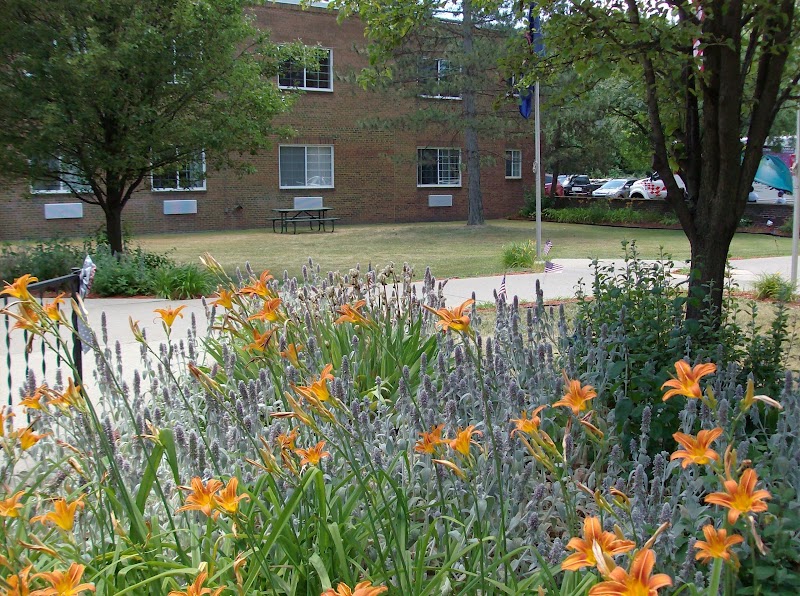
Who Owns and Operates Medilodge Of Southfield?

Medilodge of Southfield is owned by a for-profit company. For-profit facilities operate as businesses with obligations to shareholders or private owners. The facility is operated by MEDILODGE, a chain that manages multiple nursing homes. With 185 certified beds and approximately 146 residents (about 79% occupancy), it is a mid-sized facility located in Southfield, Michigan.

How Does Medilodge Of Southfield Compare to Other Michigan Nursing Homes?

Compared to the 100 nursing homes in Michigan, Medilodge of Southfield's overall rating (1 stars) is below the state average of 3.1, staff turnover (44%) is near the state average of 46%, and health inspection rating (1 stars) is much below the national benchmark.

What Should Families Ask When Visiting Medilodge Of Southfield?

Based on this facility's data, families visiting should ask: "What changes have been made since the serious inspection findings, and how are you preventing similar issues?" "Can I visit during a mealtime to observe dining assistance and food quality?" "How do you handle medical emergencies, and what is your hospital transfer rate?" "Can I speak with family members of current residents about their experience?" These questions are particularly relevant given the facility's Immediate Jeopardy citations.

Is Medilodge Of Southfield Safe?

Based on CMS inspection data, Medilodge of Southfield has documented safety concerns. Inspectors have issued 4 Immediate Jeopardy citations (the most serious violation level indicating risk of serious injury or death). The facility is currently on the Special Focus Facility watch list (a federal program monitoring the lowest-performing 1% of nursing homes nationwide). The facility has a 1-star overall rating and ranks #100 of 100 nursing homes in Michigan. Families considering this facility should ask detailed questions about what corrective actions have been taken since these incidents.

Do Nurses at Medilodge Of Southfield Stick Around?

Medilodge of Southfield has a staff turnover rate of 44%, which is about average for Michigan nursing homes (state average: 46%). Moderate turnover is common in nursing homes, but families should still ask about staff tenure and how the facility maintains care continuity when employees leave.

Was Medilodge Of Southfield Ever Fined?

Medilodge of Southfield has been fined $203,659 across 4 penalty actions. This is 5.8x the Michigan average of $35,115. Fines at this level are uncommon and typically indicate a pattern of serious deficiencies, repeated violations, or failure to correct problems promptly. CMS reserves penalties of this magnitude for facilities that pose significant, documented risk to resident health or safety. Families should request specific documentation of what issues led to these fines and what systemic changes have been implemented.

Is Medilodge Of Southfield on Any Federal Watch List?

Medilodge of Southfield is currently an SFF Candidate, meaning CMS has identified it as potentially qualifying for the Special Focus Facility watch list. SFF Candidates have a history of serious deficiencies but haven't yet reached the threshold for full SFF designation. The facility is being monitored more closely — if problems continue, it may be added to the official watch list. Families should ask what the facility is doing to address the issues that led to this status.