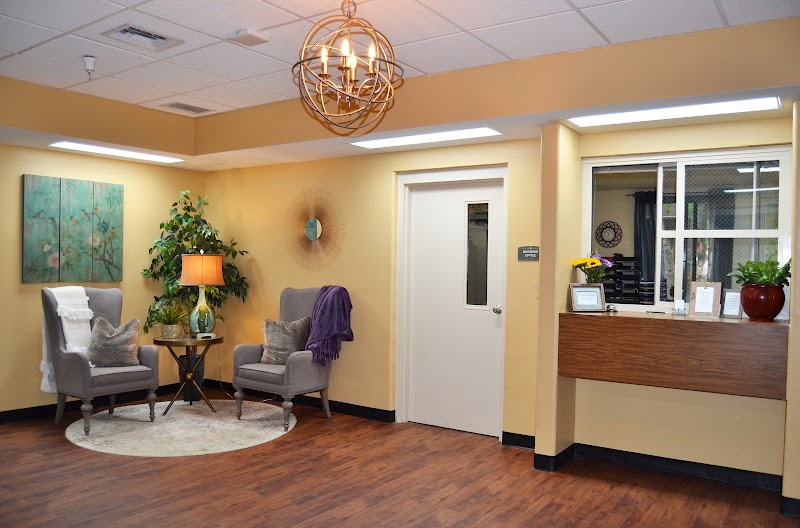
Edgewood Health and Rehabilitation
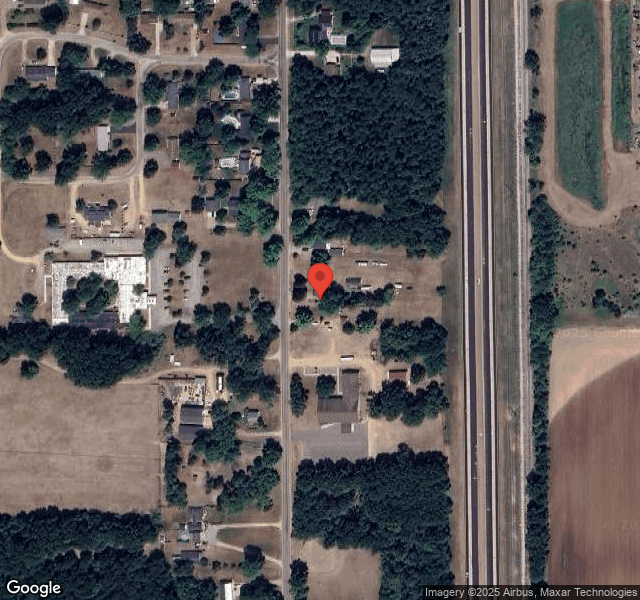

55378 Wilbur Rd, Three Rivers, MI 49093 (269) 279-7441
For profit - Limited Liability company 87 Beds SIMCHA HYMAN & NAFTALI ZANZIPER Data: November 2025
Trust Grade
35/100
#372 of 422 in MI
Last Inspection: November 2024

Within standard 12-15 month inspection cycle. Federal law requires annual inspections.

Overview

Edgewood Health and Rehabilitation in Three Rivers, Michigan, has received a Trust Grade of F, indicating significant concerns about its care quality. It ranks #372 out of 422 facilities in Michigan, placing it in the bottom half, and #4 out of 4 in St. Joseph County, meaning only one local option is better. The trend is worsening, as the number of issues increased from 13 in 2024 to 14 in 2025, highlighting ongoing challenges. While staffing is a strength with a rating of 4 out of 5 stars and a turnover rate of 32%, which is lower than the state average, the facility faced serious concerns, including failing to properly assess a resident's condition leading to hospitalization and inadequate food service that raised potential nutritional risks for residents. Overall, while staffing seems stable, the facility has significant weaknesses that families should consider.
Trust Score
F
35/100
In Michigan
#372/422
Bottom 12%
Safety Record
Moderate
Needs review
Inspections
Getting Worse
13 → 14 violations
Staff Stability
○ Average
32% turnover. Near Michigan's 48% average. Typical for the industry.
Penalties
✓ Good
No fines on record. Clean compliance history, better than most Michigan facilities.
Skilled Nurses
✓ Good
Each resident gets 45 minutes of Registered Nurse (RN) attention daily — more than average for Michigan. RNs are trained to catch health problems early.
Violations
⚠ Watch
36 deficiencies on record. Higher than average. Multiple issues found across inspections.
★☆☆☆☆
1.0
Overall Rating
★★★★☆
4.0
Staff Levels
★★★★☆
4.0
Care Quality
★☆☆☆☆
1.0
Inspection Score
Stable
2024: 13 issues
2025: 14 issues

The Good

  • 4-Star Staffing Rating · Above-average nurse staffing levels
  • 4-Star Quality Measures · Strong clinical quality outcomes
  • Full Sprinkler Coverage · Fire safety systems throughout facility
  • No fines on record
  • Staff turnover below average (32%)

    16 points below Michigan average of 48%

Facility shows strength in staffing levels, quality measures, fire safety.

The Bad

1-Star Overall Rating

Below Michigan average (3.1)

Significant quality concerns identified by CMS

Staff Turnover: 32%

14pts below Michigan avg (46%)

Typical for the industry

Chain: SIMCHA HYMAN & NAFTALI ZANZIPER

Part of a multi-facility chain

Ask about local staffing decisions and management

The Ugly 36 deficiencies on record

1 actual harm
Aug 2025 6 deficiencies
CONCERN (D) 📢 Someone Reported This

A family member, employee, or ombudsman was alarmed enough to file a formal complaint

Potential for Harm - no one hurt, but risky conditions existed

Accident Prevention (Tag F0689)

Could have caused harm · This affected 1 resident

**NOTE- TERMS IN BRACKETS HAVE BEEN EDITED TO PROTECT CONFIDENTIALITY** Based on observation, interview, and record review the facility failed to 1). implement gait belt use for safety during ambulati...

Read full inspector narrative →
**NOTE- TERMS IN BRACKETS HAVE BEEN EDITED TO PROTECT CONFIDENTIALITY** Based on observation, interview, and record review the facility failed to 1). implement gait belt use for safety during ambulation (walking) of one resident (Resident #5) and 2). ensure safe transport of a resident in a wheelchair with footrests in place in 1 (Resident #6) of 3 residents reviewed for safety, resulting in the potential for an accident, and/or an injury to occur during ambulation and transport.Findings include:Resident #5Review of an admission Record revealed Resident #5 was a female who originally admitted to the facility on [DATE] and had pertinent diagnoses which included: muscle weakness, need for assistance with personal care, and displaced intertrochanteric fracture of the left femur (a break in the thigh bone in the area where hip stability and mobility occurs).On 7/29/25 at 10:11 am, Physical Therapy Assistant (PTA) LL was observed assisting Resident #5 to walk in the hallway between the therapy room and Resident #5's room. PTA LL was not using a gait belt.In an interview on 7/29/25 at 1:13 pm, Therapy Director (TD) MM reported that gait belts should be used with every resident unless they are a mechanical lift. TD MM reported that gait belt use was covered in orientation. TD MM reported any staff who is assisting a resident to walk in the hallway should be using a gait belt for safety.In an interview on 7/29/25 at 1:20 pm, PTA LL reported he was walking Resident #5 in the hallway, and he did not use a gait belt. PTA LL reported Resident #5 was independent in her room and did not require the use of a gait belt. PTA LL stated if I thought she (Resident #5) was going to fall, I would have used a gait belt. I have never used a gait belt when working with her (Resident #5).In an interview on 7/29/25 at 1:28 pm, TD MM reported her expectations were that a gait belt was used when a resident was being assisted to walk in the hallway. TD MM reported Resident #5 being independent in her room had nothing to do with her walking in the hallway.In an interview on 7/29/2025 at 2:05pm, Certified Nurse Assistant (CNA) BB reported that any resident who was being assisted to ambulate needed to have a gait belt on. CNA BB stated they tell you that in orientation.In an interview on 7/29/2025 at 2:18 pm, CNA AA reported a gait belt should be used when ambulating a resident in the hallway.Review of Care Plan for Resident #5 revealed .Focus: The resident has an ADL (activities of daily living) self-care performance deficit r/t (related to) h/o (history of) hip fracture, incontinence, weakness. revised on 9/7/023.Goal: Resident will receive assistance with ADLs.revision on 6/26/2025.Interventions: LOCOMOTION: I use a wheelchair for long distance mobility, May use FWW (front wheeled walker) to ambulate to and from bathroom with staff assistance.revision on 9/23/2024.TRANSFER: Usual performance supervision.revision on 6/19/2025.Focus: The resident is at risk for falls.revision on 9/23/2024.Goal: Resident will not sustain serious injury.Revision on 6/26/2025.Interventions: Supervision/touching assist ambulating with walker.revision on 9/23/2024.Review of Quarterly/Annual Nursing UDA Bundle for Resident #5 with a lock date of 6/4/2025 revealed .ADLs- Mobility 8. LOCOMOTION: Self-performance- b. Supervision. 9. WALKING: Self-performance - c. Limited assistance.In an interview on 7/30/2025 at 10:53 am, Director of Nursing (DON) B reported her expectations were that a gait belt was used when ambulating a resident or for any transfer. Resident #6Review of an admission Record revealed Resident #6 was a female who originally admitted to the facility on [DATE] and had pertinent diagnoses which included: Alzheimer's disease, muscle weakness, and need for assistance with personal care. Review of a Minimum Data Set (MDS) assessment for Resident #6, with a reference date of 6/25/25 revealed a Brief Interview for Mental Status (BIMS) score of 5/15 which indicated Resident #6 was severely cognitively impaired. (BIMS score 0-7 indicates severe cognitive impairment). On 7/29/25 at 10:15 am, Physical Therapist (PT) KK was observed pushing Resident #6 in her wheelchair down the hall near her room without any footrest in place on the wheelchair. PT KK stated out loud I'm taking her for therapy. PT KK then stopped in the hallway, noted this surveyor, left Resident #6 sitting in the hallway and walked back to Resident #6's room. Resident #6 was observed setting her feet on to the floor. PT KK returned to Resident #6 carrying the footrests for the wheelchair and applied them before continuing down the hallway to the therapy room.In an interview on 7/29/25 at 1:25 pm, PT ‘KK confirmed she had pushed Resident #6 without footrest and that she had retrieve Resident #6's footrests from her room as well.In an interview on 7/29/2025 at 1:28 pm, TD MM reported her expectations were that no resident was pushed in a wheelchair without footrests in place.In an interview on 7/29/2025 at 2:05pm, CNA BB reported that any resident who was being pushed in a wheelchair needed to have footrests in place. CNA BB stated they might not keep their feet up when moving.IIn an interview on 7/30/2025 at 10:53 am, DON B reported her expectations were that footrests were in place on resident wheelchairs prior to them being pushed around the building.
CONCERN (D) 📢 Someone Reported This

A family member, employee, or ombudsman was alarmed enough to file a formal complaint

Potential for Harm - no one hurt, but risky conditions existed

Deficiency F0761 (Tag F0761)

Could have caused harm · This affected 1 resident

Based on observation, interview, and record review, the facility failed to properly store narcotic medications in a secure manner resulting in the potential for residents, visitors, and/or staff to ac...

Read full inspector narrative →
Based on observation, interview, and record review, the facility failed to properly store narcotic medications in a secure manner resulting in the potential for residents, visitors, and/or staff to access the medication in the facility with a current census of 82 residents. Findings include:On 7/30/2025 at 10:05 am, a plastic medication cup with a name written in black on the side of it, containing a white substance submerged in liquid, was observed sitting on top of the medication cart next to a plastic drinking cup of tan colored liquid in the common area in the secure unit of the facility. At this time there were 7 residents in the room, 1 resident was walking around the room, and 1 CNA was noted to be sitting at a table in the room with her back to the medication cart. No other staff member was present in the room, or near the cart, nor did any staff member have the medication cart or medication within their line of sight.In an interview on 7/30/2025 at 10:10 am, Certified Nursing Assistant (CNA) GG reported that she had nothing to do with medications. When CNA GG was queried regarding the medications that were unattended on the medication cart CNA GG stated I didn't even know there was any medications on the cart.In an interview on 7/30/2025 at 10:20 am, CNA GG reported that Registered Nurse (RN) R was the assigned nurse working the secure unit at this time.On 7/30/2025 at 10:20 am, at 10:30 am, and at 10:41 am, a plastic medication cup with a name written in black on the side of it, containing a white substance submerged in liquid, was observed sitting on top of the medication cart next to a plastic drinking cup of tan colored liquid in the common area in the secure unit of the facility unattended by any staff with residents present in the room and staff and visitors moving in and out of the room.In an interview on 7/30/2025 at 10:30am, CNA HH reported some of the residents that reside in the secure unit wander around the unit and some of them get into things. CNA HH reported that the residents in the secure unit are constantly busy.On 7/30/2025 at 10:42 am, RN R was observed entering the secure unit at the end of the hallway, returning to her medication cart, using a plastic spoon to stir the medication cup with a white substance and liquid in it.In an interview on 7/30/25 at 10:42 am, RN R reported the tan liquid was Med Pass a physician ordered nutritional supplement, and the medication cup with a white substance and liquid in it contained a prescription narcotic medication Lorazepam, an anti-anxiety, schedule IV (4) narcotic medication. RN R indicated that name on the side of the cup did indicate a resident who was present in the common area and that this was this resident's medication that she had not yet administered. RN R stated I never should have left it (the medications) alone and unattended, and I was only off the unit for 15 minutes or so. Direct observation of the unattended medications on top of the medication cart in the common area of the secure unit was from 10:05 am until 10:42 am, a total of 37 minutes.In an interview on 7/30/2025 at 10:52 am Unit Manager/Licensed Practical Nurse (UM/LPN) C reported medications should not be left unattended on the medication cart. When queried about why supplements and dissolved medications should not be left unattended UM/LPN C stated someone could drink it.In an interview on 7/30/2025 at 10:53 am, Director of Nursing (DON) B reported her expectations were that no medication was left unattended on the medication cart ever. The medications should be visualized by the nurse at all times until the medication has been administered and swallowed.Review of facility policy Medication Storage with a reviewed date of 1/3/2025 revealed .a. All drugs and biologicals will be stored in locked compartments.c. During a medication pass, medications must be under the direct observation of the person administering medications or locked in the medication storage area/cart.Narcotics and Controlled Substances.a. Schedule II (2) drugs and back up stock of Schedule III, IV, and V (3, 4, and 5) medications are stored under double-lock and key.
CONCERN (D) 📢 Someone Reported This

A family member, employee, or ombudsman was alarmed enough to file a formal complaint

Potential for Harm - no one hurt, but risky conditions existed

Infection Control (Tag F0880)

Could have caused harm · This affected 1 resident

**NOTE- TERMS IN BRACKETS HAVE BEEN EDITED TO PROTECT CONFIDENTIALITY** Based on observation, interview, and record review the facility failed to ensure proper infection control protocols and practice...

Read full inspector narrative →
**NOTE- TERMS IN BRACKETS HAVE BEEN EDITED TO PROTECT CONFIDENTIALITY** Based on observation, interview, and record review the facility failed to ensure proper infection control protocols and practices as evidenced by: 1). The use of personal protective equipment (PPE) during personal care and transfers for 2 (Resident #2 and Resident #7) of 2 residents requiring enhanced barrier precautions, 2. Sanitize resident shared equipment during uses, resulting in increased potential for the spread of infection, bacterial harborage, cross contamination, and disease transmission for residents residing in the facility. Findings include:Resident #2Review of an admission Record revealed Resident #2 was a female who was originally admitted to the facility on [DATE] and had pertinent diagnoses which included: end stage renal disease (chronic condition where the kidney can no longer function to meet the needs of the body to removed excess water, solutes and toxins) and dependence on renal dialysis.During an observation on 7/29/2025 at 2:00 pm, signage was noted displayed outside of Resident #2's room indicating that Resident #2 was in enhanced barrier precautions (EBP) and that staff should wear PPE (gown and gloves) when performing high contact resident care activities including changing briefs, transfers, and dressing.During an observation on 7/29/2025 at 2:05 pm, Certified Nurse Assistant (CNA) BB was providing peri care and a brief change to Resident #2 in her room and was not wearing a gown.During an observation on 7/29/25 at 2:18 pm, CNA AA joined CNA BB in Resident #2's room and they performed a hoyer (mechanical lift used to move a person from bed to chair or back when they are unable to stand) transfer of Resident #2. Neither CNA AA or CNA BB were wearing PPE, a gown, during the transfer.During an observation on 7/29/2025 at 2:22 pm, CNA AA and CNA BB used the hoyer lift to transfer Resident #2 out of her wheelchair and back to her bed. Resident #2 was suspended in the hoyer lift for several seconds to obtain a mechanical lift weight. Before being laid back down into her bed, while Resident #2 was suspended in the hoyer lift, she began to vomit. Neither CNA AA nor CNA BB were wearing any PPE, gown or gloves, during the transfer. CNA AA and CNA BB were observed applying gloves when Resident #2 reported she was going to get sick and did start vomiting.During an observation on 7/29/25 at 2:28 pm, CNA AA was observed exiting Resident #2 room with the hoyer lift and placing into storage in the beauty salon down the hallway. CNA AA did not clean the hoyer lift prior to leaving it in the beauty salon.In an interview on 7/29/25 at 2:23 pm, CNA BB reported that Resident #2 was in EBP and she should have been wearing PPE during the care she provided to Resident #2, and she was not.Review of Order Summary for Resident #2 revealed .Enhanced barrier precautions: providers and staff must wear gown and gloves for the following high-contact resident care activities: dressing, bathing/showering, transferring, changing linens, providing hygiene, changing briefs or assisting with toileting. Device care, central line, urinary catheter, tracheostomy. Wound care any skin opening requiring dressing. every shift. With a start date of 2/24/2025.Review of Care Plan for Resident #2 revealed .Resident requires enhanced barrier precautions.initiated on 4/2/2025.wear PPE (gown and gloves).In an interview on 7/29/25 at 2:40 pm, CNA AA reported that the mechanical lifts should be cleaned after each use and CNA AA confirmed she didn't clean the lift before she put it away.In an interview on 7/29/2025 at 2:44 pm, CNA S reported that the mechanical lifts should be cleaned after each use.In an observation on 7/29/25 at 2:49 pm, CNA AA was observed retrieving a container of cleaning wipes, entering the beauty salon, and wiping down the two lifts stored in the room at the time. In an interview on 7/29/25 at 2:53 pm, Registered Nurse (RN) DD reported lifts are not being wiped down by staff, they are placed into a room and stored, not cleaned. Resident #7 Review of an admission Record revealed Resident #7 was a female who was originally admitted to the facility on [DATE] and had pertinent diagnoses which included: colostomy, need for assistance with personal care, and muscle weakness.In an observation and interview on 7/29/25 at 2:40 pm, CNA AA was observed removing the linen and remaking a bed in the room of Resident #7 and signage was noted outside the door indicating that Resident #7 was in EBP. When queried about the sign posted outside of the room, CNA AA read the sign and stated, I didn't even know what that sign said, I had no idea I was supposed to wear all of this PPE when providing care. During an observation and interview on 7/29/25 at 2:45 pm, CNA XX was in the spa room across from the Director of Nursing office and was assisting with a shower for Resident #7 and CNA XX was not wearing a gown. CNA XX reported she should be wearing PPE to assist Resident #7 with a shower, but there was no PPE available in the spa room for her to use. A tour of the spa room revealed no available PPE, gown or gloves, noted in the spa room.In an interview on 7/29/25 at 2:53 pm, Registered Nurse (RN) DD reported there was no PPE available in the spa room and the staff did not wear PPE when assisting with showers.Review of Order Summary for Resident #7 revealed .Enhanced barrier precautions: providers and staff must wear gown and gloves for the following high-contact resident care activities: dressing, bathing/showering, transferring, changing linens, providing hygiene, changing briefs or assisting with toileting. Device care, central line, urinary catheter, tracheostomy. Wound care any skin opening requiring dressing. every shift. With a start date of 7/29/2025.Review of Care Plan for Resident #7 revealed .Resident requires enhanced barrier precautions.initiated on 7/29/2025.wear PPE (gown and gloves).On 7/30/25 at 9:02 am, when touring the spa room across from the DON's office, no noted PPE was present in the room.In an interview on 7/30/25 at 9:10 am, DON B reported she instructed staff to put PPE into the spa room yesterday when it was brought to her attention there was no PPE available. DON B reported she was aware that orders were in place for Resident #7 to have EBP. DON B reported her expectations were that PPE was worn when providing care for a resident in EBP. Review of facility policy Enhanced Barrier Precautions with a review date of 5/20/2024 revealed .It is the policy of this facility to implement enhanced barrier precautions for the prevention of transmission of multi-drug resistant organisms.all staff receive training on enhanced barrier precautions upon hire and at least annually and are expected to comply with all designated precautions.all staff receive training on high-risk activities and common organisms that require enhanced barrier precautions.make gowns and gloves available immediately near or outside of the resident's room.high contact resident care activities include: dressing, bathing transferring.changing linens.Enhanced barrier precautions should be followed outside the resident's room when performing transfers and assisting during bathing in a shared/common shower room.
CONCERN (E) 📢 Someone Reported This

A family member, employee, or ombudsman was alarmed enough to file a formal complaint

Potential for Harm - no one hurt, but risky conditions existed

Deficiency F0659 (Tag F0659)

Could have caused harm · This affected multiple residents

**NOTE- TERMS IN BRACKETS HAVE BEEN EDITED TO PROTECT CONFIDENTIALITY** Based on interview and record review the facility failed to ensure that staff was adequately trained and evaluated for competenc...

Read full inspector narrative →
**NOTE- TERMS IN BRACKETS HAVE BEEN EDITED TO PROTECT CONFIDENTIALITY** Based on interview and record review the facility failed to ensure that staff was adequately trained and evaluated for competencies specifically related to administration of Peritoneal Dialysis (PD) (a procedure that removes excess water, solutes, and toxins from the blood in people whose kidneys cannot perform these functions) in 5 (Resident #2, Resident #8, Resident #9, Resident #10, and Resident #11) of 5 residents reviewed for PD, resulting in the potential for unsafe administration of PD, unrecognized complications, increased risk for infection and adverse reactions.Findings include:Resident #2Review of an admission Record revealed Resident #2 was a female who was originally admitted to the facility on [DATE] and had pertinent diagnoses which included: end stage renal disease (chronic condition where the kidney can no longer function to meet the needs of the body to removed excess water, solutes and toxins) and dependence on renal dialysis.Resident #8Review of an admission Record revealed Resident #8 was a female who was originally admitted to the facility on [DATE] and had pertinent diagnoses which included: end stage renal disease and dependence on renal dialysis.Resident #9 Review of an admission Record revealed Resident #9 was a female who was originally admitted to the facility on [DATE] and had pertinent diagnoses which included: end stage renal disease and dependence on renal dialysis.Resident #10Review of an admission Record revealed Resident #10 was a male who was originally admitted to the facility on [DATE] and had pertinent diagnosis which included: end stage renal disease.Resident #11Review of an admission Record revealed Resident #11 was a male who was originally admitted to the facility on [DATE] and had pertinent diagnoses which included: chronic kidney disease stage 4 and dependence on renal dialysis.In an interview on 7/29/25 at 12:00 pm, Registered Nurse (RN) DD reported the nurses have not received adequate training on how to perform manual exchange PD, use the PD cyclers, or how to manage a dialysis patient. RN DD reported there was a resident who was teaching staff how to do PD. RN DD reported that she used resources such as You Tube to teach herself how to do PD. RN DD reported it was very scary when she performed PD and she didn't feel like she knew what she was doing.In an interview on 7/30/2025 at 12:50 pm, RN DD reported she was shown how to perform PD one time last year.In an interview on 7/30/2025 at 1:02 pm, LPN VV reported she was shown what to do for PD by either another floor nurse or the unit manager.In an interview on 7/30/2025 at 1:05 pm, RN N stated I remember a check list, but I have not received formal training in a way that I feel safe providing PD. We have no idea what we are doing. In an interview on 7/30/2025 at 1:10 pm, Director of Nursing (DON) B stated Our training is what it is. I don't have any experience with dialysis, and I need the instructions to be very clear, and they are not clear.In an interview on 7/30/2025 at 2:10 pm RN R stated I have not had any formal training for administering PD. I was taught how to do PD by Resident #9. RN R stated, I was very uncomfortable and very scared providing PD as I know how careful you have to be with the procedure.In a telephone interview on 7/30/25 at 3:28 pm, Dialysis Registered Nurse (DRN) SS reported the facility had to complete a check list related to dialysis treatments and (Name Omitted) dialysis facility needed to sign off a nurse to perform PD dialysis. DRN SS reported that the dialysis group performs the training sessions. DRN SS reported the facility had super users, but they had been gone from the facility for a couple of months. DRN SS reported that DRN RR was the one that provided the PD training when the facility notified them that they needed new staff to be trained. DRN SS reported there was too much turnover of employees in the facility and stated, I can't sustain training all of them. DRN SS reported he could not recall the last time the facility contacted him regarding training.In a telephone interview on 7/30/25 at 4:07 pm, DRN RR reported she was the nurse who trained the facility staff how to perform PD treatments. Initial training included instructions on a cycler machine and start to finish manual exchange and then the facility would do annual training. DRN RR reported that last time she provided training to facility staff was a couple of months ago. DRN RR reported the facility has a lot of turnovers of employees, and she spoke to DON B when she first started in May 2025 to coordinate a training and DON B suggested waiting until the new assistant director of nursing started. DRN RR reported she had not yet been contacted to schedule a training by DON B.In an interview on 7/31/25 at 8:30 am, Licensed Practical Nurse (LPN) U reported she has been here for about a month and has had no formal training for PD, she has never seen a check list, and has never been evaluated for her knowledge or the process for PD.Review of List of Nurses and Dialysis training dates provided by the facility on 7/30/2025 revealed a list of 26 nurses names and the date the nurse completed dialysis training. Of the 26 nurses' names on the list, 8 nurses had not completed dialysis training and two had completed dialysis training within the month of July 2025.Review of spreadsheet data provided by the facility on 7/30/2025, involving the dates of 6/15/2025 to 7/30/2025 and including the resident who received PD dialysis, PD dialysis procedure type connect/disconnect, and the staff that performed the PD procedure, revealed during the dates of 6/15/25 and 7/30/2025, Resident #2 received PD treatment 21 times by an untrained nurse; Resident #8 received PD treatment 4 times by an untrained nurse; Resident #9 received PD treatment 2 times by an untrained nurse and Resident #9's PD treatment was documented as resident performs 58 times with no documented nurse oversite; Resident #10 received PD treatment 1 time by an untrained nurse; and Resident #11 received PD treatment 3 times by an untrained nurse.In an interview on 7/31/25 at 8:45 am, DON B stated I have staff that has never been educated or trained on PD, and I am one of them. DON B reported she was fully aware that she has several nurses who have administered PD and have not been trained.In an interview on 7/31/2025 at 2:00 pm, Nursing Home Administrator (NHA) A and DON B both confirmed the facility has nursing staff who was administering PD to residents without adequate training and without competency evaluations.Review of facility policy Peritoneal Dialysis with a reviewed date of 8/1/2025 revealed .this facility will assure that each resident receives care and services for the provision of peritoneal dialysis.this will include: .2. Safe administration of peritoneal dialysis in the nursing home provided by qualified trained staff/caregivers, in accordance with State and Federal laws and regulations.3. The facility will ensure that staff who perform peritoneal dialysis in the nursing home are trained and qualified, receiving training and competency from a qualified dialysis trainer from a certified dialysis facility.4. The facility will coordinate and collaborate with the dialysis facility to assure that: b. only trained and qualified staff/caregivers administer dialysis treatment.7. The facility will maintain documentation of completion of competency/training for staff.providing the dialysis treatments.13. The facility will maintain documentation of the required ongoing dialysis training in order to assure qualified staff/caregivers are capable of providing peritoneal dialysis treatments. Training based upon current standards of practice must include, but not be limited to the following: a. Specific (step-by-step) instruction on how to use the resident's prescribed dialysis equipment (e.g. peritoneal dialysis cycler) and instruction in home dialysis procedures.c. How to identify/recognize medical emergencies, implement immediate responses/actions and methods for contacting emergency medical systems.d. How to recognize, manage, and report dialysis complications.22. As appropriate the administrator, nursing director, medical director, and pharmacist and the QAA committee should review the facility's dialysis care and services on an ongoing basis including: b. policies and procedures. d. provisions of ongoing staff training.
CONCERN (E) 📢 Someone Reported This

A family member, employee, or ombudsman was alarmed enough to file a formal complaint

Potential for Harm - no one hurt, but risky conditions existed

Deficiency F0698 (Tag F0698)

Could have caused harm · This affected multiple residents

**NOTE- TERMS IN BRACKETS HAVE BEEN EDITED TO PROTECT CONFIDENTIALITY** Based on interview and record review the facility failed to ensure 1). pre and post dialysis treatment assessments were complete...

Read full inspector narrative →
**NOTE- TERMS IN BRACKETS HAVE BEEN EDITED TO PROTECT CONFIDENTIALITY** Based on interview and record review the facility failed to ensure 1). pre and post dialysis treatment assessments were completed; 2). administration of peritoneal dialysis (PD)(a procedure that removes excess water, solutes, and toxins from the blood in people whose kidneys cannot perform these functions) was administered by qualified trained staff; 3). ongoing assessments and/or monitoring were completed during the administration of peritoneal dialysis; 4). ongoing communication between the facility and the dialysis facility (Name Omitted) was documented; and 5). administration of peritoneal dialysis per physician orders occurred for 5 (Resident #2, Resident #8, Resident #9, Resident #10, and Resident #11) of 5 residents reviewed for peritoneal dialysis resulting in the potential for staff being unprepared for a decline in resident condition related to dialysis treatment, unrecognized adverse reactions, and the potential for improper technique/unsafe administration of peritoneal dialysis treatment.Findings include:Resident #2Review of an admission Record revealed Resident #2 was a female who was originally admitted to the facility on [DATE] and had pertinent diagnoses which included: end stage renal disease (chronic condition where the kidney can no longer function to meet the needs of the body to removed excess water, solutes and toxins) and dependence on renal dialysis.Review of Order Summary for Resident #2 on 7/29/25 revealed .Connect resident to dialysis cycler machine (a machine used to perform peritoneal dialysis) (resident and staff member must wear mask) if weight above 170 pounds use green bag if below 170 pounds use yellow bag. At bedtime every Mon (Monday), Tues (Tuesday), Wed (Wednesday), Thu (Thursday), Sun (Sunday) for PD (peritoneal dialysis) treatment . with a start date of 6/15/25. Daily weights: post PD drain one time a day related to dependent on renal dialysis with a start date of 4/18/25. Disconnect resident from dialysis cycler machine (Resident and staff must wear mask) **Record UF off of machine** (UF- Ultrafiltration refers to the process of removing fluid form the body during the treatment. It is a critical function that helps achieve target dry weight by safely eliminated excess fluid, UF is measured by the amount of fluid removed during a dialysis session) every day shift every Mon, Tue, Wed, Thu, Fri for PD treatment with a start date of 6/16/2025.Drain PD cath (catheter- a surgically placed hollow plastic tube into the lower abdomen used only for peritoneal dialysis treatments) after 12 hour dwell (allowing the dialysis solution to remain in the abdominal cavity) one time a day every Sat (Saturday), Sun for PD with a start date of 6/7/2025. Manual PD exchange: instill 2000ml of warm external solution (purple pull tab) allow to dwell for 12 hours minimum. *VERIFIED RESIDENT COMPLETED* every night shift every Fri (Friday) Sat. with a start date of 6/6/2025.Review of Treatment Administration Record (TAR) for Resident #2 from the date of 6/15/25 through 7/29/25 revealed .No documented weight for 6/23/2025, 6/30/2025, 7/6/2025, 7/17/2025, and 7/23/2025.Review of Medication Administration Record (MAR) for Resident #2 from the date of 6/15/2025 through 7/29/2025 revealed .documented administration of dialysis treatment per the physician order that required a weight to determine bag color on 6/23/25, 6/30/2025, 7/6/2025, 7/17/2025, and 7/23/2025. Further review of Resident #2's MAR revealed no noted documentation of which color bag (yellow, green, or purple) was administered per the physician ordered dialysis treatment on any day between 6/15/2025 and 7/29/2025 that dialysis was administered.During an interview on 7/30/25 at 9:55 am, Registered Nurse (RN) DD reported Resident #2 had been about 170 pounds for so long, the nurses just use that weight when getting the bag of dialysate (the solution used to perform dialysis treatment). RN DD reported Resident #2 should have a daily weight completed per the order. RN DD reported she does not connect Resident #2 to the dialysis cycler machine and never had to document which specific (color) bag was used. RN DD reported she was not able to find any documentation indicating which color bag of dialysate solution was used for each dialysis treatment.Review of Vitals-Weight for Resident #2 from the date of 6/15/25 through 7/29/25 revealed . Resident #2's weights varied from the least amount documented on 7/9/25 of 165.4 pounds to the most amount documented of 188.5 pounds on 7/28/2025. at no time during these dates was Resident #2's weight documented as 170 pounds. In an interview on 7/29/25 at 2:11 pm, Resident #2 reported she doesn't know a thing about her dialysis treatment, the facility does all of it for her.During a telephone interview on 7/30/25 at 3:28 pm, Dialysis Registered Nurse (DRN) SS reported there were three different types of dialysates to be used with the dialysis cycler machine; yellow bag 1.5% which had the lowest amount of dextrose (sugar) and removed the lowest amount of toxins, solutes, and excess water. The green bag 2.5 % had a higher amount of dextrose than the yellow bag, and the red bag 4.25% was the highest amount of dextrose and removed the most amount of toxins, solutes, and excess waters. When queried regarding documentation of which bag of dialysate was given to a resident, DRN SS stated Yes, I would believe it should be documented which one [bag of dialysate] was given.Review of Resident #2's medical record revealed no noted documentation regarding ordered 12-hour dwell time, no recorded UF from the cycler machine, no documented verification resident completed manual PD exchange, no documented pre, post, or during dialysis treatment assessments, and no noted documented communication between the facility and the dialysis facility (Name Omitted).Resident #8Review of an admission Record revealed Resident #8 was a female who was originally admitted to the facility on [DATE] and had pertinent diagnoses which included: end stage renal disease and dependence on renal dialysis.Review of Order Summary for Resident #8 on 7/30/2025 revealed .Drain PD cath after 12-hour dwell one time a day with a start date of 7/26/2025.Manual PD exchange: Instill 2000ml of warm extraneal solution 7.5% (purple pull tab) allow to dwell for 12 hours minimum. **VERIFY RESIDENT COMPLETED at bedtime with a start date of 7/25/2025.On 7/30/25 at 10:01 am, Resident #8 declined to speak with this surveyor.Review of Resident #8's medical record revealed no noted documentation regarding ordered 12-hour dwell time, no documented verification resident completed manual PD exchange, no documented pre, post, or during dialysis treatment assessments and no noted documented communication between the facility and the dialysis facility (Name Omitted).Resident #9 Review of an admission Record revealed Resident #9 was a female who was originally admitted to the facility on [DATE] and had pertinent diagnoses which included: end stage renal disease and dependence on renal dialysis.Review of Order Summary for Resident #9 on 7/30/25 revealed .Connect resident to dialysis cycler machine (resident and staff member must wear mask) every night shift; every Mon ,Tues, Wed, Thu, Sun for PD treatment . with a start date of 12/08/24. Daily weights: post PD drain one time a day related to dependent on renal dialysis with a start date of 4/3/25. Disconnect resident from dialysis cycler machine (Resident and staff must wear mask) **Record UF off of machine** every day shift every Mon, Tue, Wed, Thu, Fri for PD treatment with a start date of 12/9/2024.Manual PD Exchange: drain and measure output in mL (milliliters) *VERIFY RESIDENT COMPLETED* every day shift Sat, Sun for PD treatment allow to dwell for 12 hours minimum. *VERIFY RESIDENT COMPLETION* .with a start date of 4/26/2025.Manual PD exchange: instill 2000ml of warm external solution (purple pull tab) allow to dwell for 12 hours minimum. *VERIFIED RESIDENT HAS COMPLETED* every night shift every Fri, Sat. with a start date of 4/25/2025.PRIME: 6L (liter) bag of Dianeal (dialysate) daily and 1.5%, 2.5%, and 4.25% sliding scale via cycler as needed to maintain status and lab values every day shift every Mon, Tue, Wed, Thu, Sun for PD treatment wt (weight) over 185lb (pounds) green tab, below 185 yellow tab with a start date of 2/17/2025.Resident approved to self-administer manual PD exchanges per (Name Omitted) dialysis facility. with a start date of 4/23/2025.Review of Vitals-Weight for Resident #9 from the date of 6/15/25 through 7/29/25 revealed . Resident #9's weights varied from the least amount documented on 7/2/25 of 181 pounds to the most amount documented of 194 pounds on 7/27/2025. Review of MAR for the month of July 2025 for Resident #9 revealed no noted documentation regarding what dialysis solution, 1.5%, 2.5%, or 4.25% and/or what color yellow, green or purple bag was administered on each day. Documentation revealed that Resident #9's dialysis treatment was administered daily during the month of July 2025.In an interview on 8/4/25 at 1:45 pm, Resident #9 reported she had self-managed her dialysis for a long time. Resident #9 reported that the staff was much better at doing PD dialysis now than when she first arrived at the facility. Resident #9 reported she weighs herself daily, and she informs the nursing staff which color bag of solution she needs for the day based on her weight. Resident #9 reported her nurse for the day brings her the dialysate solution and her supplies and she performs the procedure herself. Review of Resident #9's medical record revealed no noted documentation regarding ordered 12-hour dwell time, no recorded UF from the cycler machine, no documented verification resident completed manual PD exchange, no documented pre, post, or during dialysis treatment assessments, and no noted documented communication between the facility and the dialysis facility (Name Omitted).Resident #10Review of an admission Record revealed Resident #10 was a male who was originally admitted to the facility on [DATE] and had pertinent diagnosis which included: end stage renal disease.Review of Order Summary for Resident #10 on 7/30/25 revealed .Daily weights: Post PD drain one time a day with a start date of 7/27/2025.Drain PD cath after 12-hour dwell one time a day with a start date of 7/25/2025.Manual PD Exchange: instill 2000 mL of warm extraneal solution 7.5% (purple pull tab) allow to dwell for 12 hours minimum. *VERIFY RESIDENT COMPLETED* every night shift for dialysis with a start date of 7/25/2025.Review of Resident #10's medical record revealed no noted documentation regarding ordered 12-hour dwell time, no documented verification resident completed manual PD exchange, no documented pre, post, or during dialysis treatment assessments, and no noted documented communication between the facility and the dialysis facility (Name Omitted).Resident #10 was not a current resident of the facility. Attempts to contact Resident #10 were unsuccessful.Resident #11Review of an admission Record revealed Resident #11 was a male who was originally admitted to the facility on [DATE] and had pertinent diagnoses which included: chronic kidney disease stage 4 and dependence on renal dialysis.Review of Order Summary for Resident #11 on 7/31/2025 revealed .Connect resident to dialysis cycler machine at bedtime with a start date of 7/11/2025. Disconnect resident from dialysis cycler machine (Resident and staff must wear mask) **Record UF off of machine** every day shift with a start date of 7/12/2025. Prime dialysis cycler- Yellow tab 6,000 mL x 2 bags in the evening with a start date of 7/11/2025.Resident #11 was not a current resident of the facility. Attempts to contact Resident #11 were unsuccessful.Review of Resident #11's medical record revealed no noted documentation regarding recorded UF from the cycler machine, no documented pre, post, or during dialysis treatment assessments, and no noted documented communication between the facility and the dialysis facility (Name Omitted).In an interview on 7/29/25 at 12:00 pm, RN DD reported the facility has several residents who require PD. RN DD reported the nurses who work in the facility have not received adequate or any training on how to perform manual exchange PD, use the PD cyclers, or how to manage a dialysis patient. RN DD reported there was a resident who was teaching staff how to do PD. RN DD reported the director of nursing was not trained on PD. RN DD reported that she has used resources such as You Tube to teach herself how to do PD. RN DD reported it was very scary when she first started performing PD, she didn't feel like she knew what she was doing, and many of the nurses still don't know what to do.In an interview on 7/30/2025 at 12:50 pm, RN DD reported there was no formal training on how to perform PD. RN DD reported she was shown how to perform PD one time last year and when asked if that was the only training, she received RN DD stated, that's not what I would call it. RN DD reported there are paper instructions by the cycler machines.In an interview on 7/30/25 at 1:00 pm, Licensed Practical Nurse (LPN) JJ reported he was new and had not yet received any PD training.In an interview on 7/30/2025 at 1:02 pm, LPN VV reported she was shown what to do for PD by either another floor nurse, or the unit manager. LPN VV reported that was the only training she received. LPN VV reported she did not receive any formal training from the dialysis nurse. LPN VV reported she only cares for Resident #9 who does her own dialysis so she doesn't have to do anything for Resident #9's dialysis treatment.In an interview on 7/30/2025 at 1:05 pm, RN N stated I remember a check list, but I have not received formal training in a way that I feel safe providing PD. We have no idea what we are doing and the residents who need PD are really sick. In an interview on 7/30/2025 at 1:10 pm, Director of Nursing (DON) B stated Our training is what it is, and we need the instructions to speak English to us so we can understand. I don't have any experience with dialysis, and I need the instructions to be very clear, and they are not clear. DON B reported she requested that all the dialysis orders be uniform across the board for all the dialysis patients in the building. DON B reported that all the PD order are different for each resident.In an interview on 7/30/2025 at 2:10 pm RN R stated I have not had any formal training regarding PD. I was taught how to do PD by Resident #9. She just tells me what to do and what she needs, and she does it herself. RN R reported she has worked with other residents who do not do their own PD and stated, I was very uncomfortable providing PD, I didn't have any training, and I was very scared as I know how careful you have to be with the procedure and how sick the resident is.In a telephone interview on 7/30/25 at 3:28 pm, Dialysis Registered Nurse (DRN) SS reported there was education material available on site and in person teaching by DRN RR. DRN SS reported DRN RR was available via phone. DRN SS reported the facility had to complete a check list related to dialysis treatments and (Name Omitted) dialysis facility needed to sign off a nurse to perform PD. DRN SS reported all nurses received a check list for dialysis training. DRN SS reported that (Name Omitted) dialysis facility provides new nursing staff and anyone that would work on the floor, 4 group training sessions, 4 independent sessions, and any one-to-one that was needed. DRN SS reported that the dialysis group performs the training sessions. DRN SS reported the facility had super users, that were on site available resources and provided training when need. DRN SS reported that the facilities' two super users were no longer with the facility and had both been gone a month or two. DRN SS reported that DRN RR was the one that provided the training when the facility notified them that they needed new staff to be trained. DRN SS reported that DRN RR was burnt out taking calls and answering questions. DRN SS reported there was too much turnover of employees in the facility and stated, I can't sustain training all of them. DRN SS reported he could not recall the last time the facility contacted him regarding training.In a telephone interview on 7/30/25 at 4:07 pm, DRN RR reported she was the nurse who trained the facility staff how to perform PD treatments. DRN RR reported that last time she provided training to facility staff was a couple of months ago. DRN RR reported the facility has a lot of turnovers of employees, and she spoke to DON B when she first started in May 2025 to coordinate a training and DON B suggested waiting until the new assistant director of nursing started. DRN RR reported she had not yet been contacted to schedule a training by DON B. DRN RR reported training is an initial training that included instructions on a cycler machine and start to finish manual exchange and then the facility would do annual training.Review of List of Nurses and Dialysis training dates provided by the facility on 7/30/2025 revealed a list of 26 nurses names and the date the nurse completed dialysis training. Of the 26 nurses' names on the list, 8 nurses had not completed dialysis training and two had completed dialysis training within the month of July 2025.Review of spreadsheet data provided by the facility on 7/30/2025, involving the dates of 6/15/2025 to 7/30/2025 and including the resident who received PD dialysis, PD dialysis procedure type connect/disconnect, and the staff that performed the PD procedure, revealed during the dates of 6/15/25 and 7/30/2025 Resident #2 received PD treatment 21 times by an untrained nurse. During the dates of 7/25/2025 and 7/30/2025 Resident #8 received PD treatment 4 times by an untrained nurse. During the dates of 6/15/2025 and 7/30/2025 Resident #9 received PD treatment 2 times by an untrained nurse and Resident #9's PD treatment was documented as resident performs 58 times with no documented nurse oversite. During the dates of 7/25/2025 and 7/30/2025 Resident #10 received PD treatment 1 time by an untrained nurse. During the dates of 7/11/2025 and 7/18/2025 Resident #11 received PD treatment 3 times by an untrained nurse.In an interview on 7/31/25 at 8:30 am, LPN U reported she has been here for about a month and was shown once how to do PD. LPN U reported she has had no formal training for PD, she has never seen a check list, and has never been evaluated for her knowledge or the process for PD. LPN U reported she did not know all of the steps for PD but Resident #9 would tell her what she needed to do. LPN U reported she had refused to accept an assignment that included a resident that needed PD. LPN U reported she was shown how to do PD the very next day after her assignment refusal. LPN U reported she had administered PD to residents of the building.In an interview on 7/31/25 at 8:45 am, DON B stated I have staff that have never been educated or trained on PD, and I am one of them. DON B reported she would not provide PD treatment since she had not been trained and that she was fully aware that she had several nurses who had provided PD and had not been trained. DON B reported she spoke to one nurse directly who confirmed she had never been trained on PD and was administering the PD treatment.In an interview on 7/31/25 at 10:34 am, DON B reported there were no assessment being completed of residents who received PD treatments. DON B reported she did not have a lot of knowledge of dialysis, but she knew how much solution went in should also come out and that information was not being documented anywhere in the resident records. DON B reported there was no communication between the facility and the (Name Omitted) dialysis facility. DON B reported her expectations were that her staff were not to intervene in a dialysis emergency, because her staff was not qualified to participate in an emergency situation during a PD treatment, and the (Name Omitted) dialysis facility would be the contact person in that situation. DON B reported the (Name Omitted) dialysis facility staff was available 24/7 but not always in the building.In an interview on 7/31/25 at 11:45 am, DON B reported there was no documentation in the resident's records indicating what solution (dialysate) was given to the residents. DON B reported she confirmed with Unit Manager/Licensed Practical Nurse (UM/LPM) C that there was no way to document what solution was given to the resident. DON B reported the orders have been changed, and orders had been added to include a pre, post, and during PD treatment assessment. In an interview on 7/31/2025 at 2:00 pm, Nursing Home Administrator (NHA) A confirmed he started working in the facility in December of 2024 and DON B confirmed she started working in the facility in May 2025, and both NHA A and DON B confirmed that the facility staff were administering PD without training and that neither of them were aware of the Federal regulation details regarding dialysis.Review of facility policy Peritoneal Dialysis with a reviewed date of 8/1/2025 revealed .This facility will provide the necessary care and treatment, consistent with professional standards of practice, physician orders.to meet the special medical, nursing, mental and psychosocial needs of the residents receiving peritoneal dialysis.this facility will assure that each resident receives care and services for the provision of peritoneal dialysis.this will include: 1. the ongoing assessment of the resident's condition and monitoring for complications before and after dialysis treatments received at the facility.2. Safe administration of peritoneal dialysis in the nursing home provided by qualified trained staff/caregivers, in accordance with State and Federal laws and regulations.3. Ongoing assessment and oversite for residents before, during and after dialysis treatments, including monitoring of the resident's condition during treatments monitoring for complications, implantation of appropriate interventions, and using appropriate infection control practices.4. ongoing communication and collaboration with the dialysis facility regarding dialysis care and services.3. The facility will ensure that staff who perform peritoneal dialysis in the nursing home are trained and qualified, receiving training and competency from a qualified dialysis trainer from a certified dialysis facility.4. The facility will coordinate and collaborate with the dialysis facility to assure that: b. only trained and qualified staff/caregivers administer dialysis treatment.d. Documentation requirements are met to assure that treatments are provided as ordered by the nephrologist, attending practitioner and dialysis team; and 5. There is ongoing communication and collaboration for the development and implementation of the dialysis care plan by nursing home and dialysis staff.7. The facility will maintain documentation of completion of competency/training for staff.providing the dialysis treatments.g. Management of dialysis emergencies including procedures for medical complication and for equipment and supplies.9. The facility is responsible for the ongoing coordination of dialysis care in collaboration with the certified dialysis facility.13. The facility will maintain documentation of the required ongoing dialysis training in order to assure qualified staff/caregivers are capable of providing peritoneal dialysis treatments. Training based upon current standards of practice must include, but not be limited to the following: a. Specific (step-by-step) instruction on how to use the resident's prescribed dialysis equipment (e.g. peritoneal dialysis cycler) and instruction in home dialysis procedures.c. How to identify/recognize medical emergencies, implement immediate responses/actions and methods for contacting emergency medical systems.d. How to recognize, manage, and report dialysis complications.15. The physician's order for the individualized prescriptions must include at least the number of exchanges or cycles to be done during each dialysis session, the volume of fluid with each exchange, duration of fluid in the peritoneal cavity, the concentration of glucose or other osmotic agent to be used for fluid removal, and the use of automated, manual or combined techniques.16. Before, during and after receiving peritoneal dialysis the facility staff must, based on the physician's orders and professional standards of practice do the following: a. Obtain vital signs, weights, assess the resident's stability, level of consciousness and comfort or distress.b. Monitor for post dialysis complications. c. Report identified or suspected complications immediately. d. Documentation of ongoing evaluation of the peritoneal catheter including assessment of catheter related infections, and tunnel for condition, monitoring of patency, leaks, infection, and bleeding at the site. e. Monitor for complications such as peritonitis.22. As appropriate the administrator, nursing director, medical director, and pharmacist and the QAA committee should review the facility's dialysis care and services on an ongoing basis including: a communication. b. policies and procedures. d. provisions of ongoing staff training.
CONCERN (E) 📢 Someone Reported This

A family member, employee, or ombudsman was alarmed enough to file a formal complaint

Potential for Harm - no one hurt, but risky conditions existed

Administration (Tag F0835)

Could have caused harm · This affected multiple residents

**NOTE- TERMS IN BRACKETS HAVE BEEN EDITED TO PROTECT CONFIDENTIALITY** Based on interview and record review, the facility failed to administer its policies and procedures in a manner that displayed e...

Read full inspector narrative →
**NOTE- TERMS IN BRACKETS HAVE BEEN EDITED TO PROTECT CONFIDENTIALITY** Based on interview and record review, the facility failed to administer its policies and procedures in a manner that displayed effective and efficient use of resources to attain and maintain the highest practicable physical, mental, and psychosocial well-being for 5 (Resident #2, Resident #8, Resident #9, Resident #10, and Resident #11) of 5 residents reviewed. This deficient practice resulted in 8 staff members administering treatments to Resident #2, Resident #8, Resident #9, Resident #10, and Resident #11, they were neither trained nor qualified to administer.Findings include:Resident #2Review of an admission Record revealed Resident #2 was a female who was originally admitted to the facility on [DATE] and had pertinent diagnoses which included: end stage renal disease (chronic condition where the kidney can no longer function to meet the needs of the body to removed excess water, solutes and toxins) and dependence on renal dialysis.Resident #8Review of an admission Record revealed Resident #8 was a female who was originally admitted to the facility on [DATE] and had pertinent diagnoses which included: end stage renal disease and dependence on renal dialysis.Resident #9 Review of an admission Record revealed Resident #9 was a female who was originally admitted to the facility on [DATE] and had pertinent diagnoses which included: end stage renal disease and dependence on renal dialysis.Resident #10Review of an admission Record revealed Resident #10 was a male who was originally admitted to the facility on [DATE] and had pertinent diagnosis which included: end stage renal disease.Resident #11Review of an admission Record revealed Resident #11 was a male who was originally admitted to the facility on [DATE] and had pertinent diagnoses which included: chronic kidney disease stage 4 and dependence on renal dialysis.Review of List of Nurses and Dialysis training dates provided by the facility on 7/30/2025 revealed a list of 26 nurses names and the date the nurse completed dialysis (a procedure that removes excess water, solutes, and toxins from the blood in people whose kidneys cannot perform these functions) training. Of the 26 nurses' names on the list, 8 nurses had not completed dialysis training.Review of spreadsheet data provided by the facility on 7/30/2025, involving the dates of 6/15/2025 to 7/30/2025 and including Resident #2, Resident #8, Resident #9, Resident #10, and Resident #11 who received Peritoneal Dialysis (PD), PD (dialysis through the abdominal cavity) procedure type connect/disconnect, and the staff that performed the PD procedure, revealed during the dates of 6/15/25 and 7/30/2025 Resident #2, Resident #8, Resident #9, Resident #10, and Resident #10 received PD treatments 31 times by untrained and unqualified nursing staff.In a telephone interview on 7/30/25 at 3:28 pm, Dialysis Registered Nurse (DRN) SS reported that (Name Omitted) dialysis facility provided new nursing staff and anyone that would work on the floor group training sessions, independent sessions, and any one-to-one that was needed. DRN SS reported the facility had super users; facility employees who had been previously trained and were delegated to train other staff, that were on site and available resources who would provide additional training, but the super users had left the facility a couple of months ago. DRN SS reported he could not recall the last time the facility contacted him regarding training.In a telephone interview on 7/30/25 at 4:07 pm, DRN RR reported she was the nurse who trained facility staff how to perform PD treatments and the last time she provided training to facility staff was a couple of months ago. DRN RR reported she spoke to Director of Nursing (DON) B when she first started at the facility in May 2025 to coordinate a training and DON B suggested waiting until the new assistant director of nursing started. DRN RR reported she had not yet been contacted to schedule a training by DON B.In an interview on 7/31/25 at 8:45 am, DON B stated I have staff that have never been educated or trained on PD, and I am one of them. DON B reported she would not provide PD treatment since she had not been trained and that she was fully aware that she had several nurses who had provided PD and had not been trained.In an interview on 8/4/2025 Nursing Home Administrator (NHA) A reported he had no real knowledge of the Federal regulations regarding dialysis. NHA A reported he knew there was a dialysis den (a separate area where dialysis treatment was performed by an outside provider) within the building, and that he was responsible for managing the finances and life safety of the residents in the building. NHA A stated I have no awareness of what the nurses need or the clinical side of resident care. NHA A stated My responsibility is to make sure they have what they need to care for the residents of the building when queried, NHA A was unable to provide a definition of they within the context of his previous statement. Review of facility policy Peritoneal Dialysis with a reviewed date of 8/1/2025 revealed .This facility will provide the necessary care and treatment, consistent with professional standards of practice, physician orders.to meet the special medical, nursing, mental and psychosocial needs of the residents receiving peritoneal dialysis.this facility will assure that each resident receives care and services for the provision of peritoneal dialysis.this will include: 1. the ongoing assessment of the resident's condition and monitoring for complications before and after dialysis treatments received at the facility.2. Safe administration of peritoneal dialysis in the nursing home provided by qualified trained staff/caregivers, in accordance with State and Federal laws and regulations.3. Ongoing assessment and oversite for residents before, during and after dialysis treatments, including monitoring of the resident's condition during treatments monitoring for complications, implantation of appropriate interventions, and using appropriate infection control practices.4. ongoing communication and collaboration with the dialysis facility regarding dialysis care and services.3. The facility will ensure that staff who perform peritoneal dialysis in the nursing home are trained and qualified, receiving training and competency from a qualified dialysis trainer from a certified dialysis facility.4. The facility will coordinate and collaborate with the dialysis facility to assure that: b. only trained and qualified staff/caregivers administer dialysis treatment.d. Documentation requirements are met to assure that treatments are provided as ordered by the nephrologist, attending practitioner and dialysis team; and 5. There is ongoing communication and collaboration for the development and implementation of the dialysis care plan by nursing home and dialysis staff.7. The facility will maintain documentation of completion of competency/training for staff.providing the dialysis treatments.g. Management of dialysis emergencies including procedures for medical complication and for equipment and supplies.9. The facility is responsible for the ongoing coordination of dialysis care in collaboration with the certified dialysis facility.13. The facility will maintain documentation of the required ongoing dialysis training in order to assure qualified staff/caregivers are capable of providing peritoneal dialysis treatments. Training based upon current standards of practice must include, but not be limited to the following: a. Specific (step-by-step) instruction on how to use the resident's prescribed dialysis equipment (e.g. peritoneal dialysis cycler) and instruction in home dialysis procedures.c. How to identify/recognize medical emergencies, implement immediate responses/actions and methods for contacting emergency medical systems.d. How to recognize, manage, and report dialysis complications.15. The physician's order for the individualized prescriptions must include at least the number of exchanges or cycles to be done during each dialysis session, the volume of fluid with each exchange, duration of fluid in the peritoneal cavity, the concentration of glucose or other osmotic agent to be used for fluid removal, and the use of automated, manual or combined techniques.16. Before, during and after receiving peritoneal dialysis the facility staff must, based on the physician's orders and professional standards of practice do the following: a. Obtain vital signs, weights, assess the resident's stability, level of consciousness and comfort or distress.b. Monitor for post dialysis complications. c. Report identified or suspected complications immediately. d. Documentation of ongoing evaluation of the peritoneal catheter including assessment of catheter related infections, and tunnel for condition, monitoring of patency, leaks, infection, and bleeding at the site. e. Monitor for complications such as peritonitis.22. As appropriate the administrator, nursing director, medical director, and pharmacist and the QAA committee should review the facility's dialysis care and services on an ongoing basis including: a communication. b. policies and procedures. d. provisions of ongoing staff training.
Apr 2025 8 deficiencies
CONCERN (D) 📢 Someone Reported This

A family member, employee, or ombudsman was alarmed enough to file a formal complaint

Potential for Harm - no one hurt, but risky conditions existed

Comprehensive Care Plan (Tag F0656)

Could have caused harm · This affected 1 resident

**NOTE- TERMS IN BRACKETS HAVE BEEN EDITED TO PROTECT CONFIDENTIALITY** Based on observation, interview, and record review the facility failed to develop person centered care plans for 1 (Resident #10...

Read full inspector narrative →
**NOTE- TERMS IN BRACKETS HAVE BEEN EDITED TO PROTECT CONFIDENTIALITY** Based on observation, interview, and record review the facility failed to develop person centered care plans for 1 (Resident #104) of 9 residents reviewed for person centered care plans resulting in an inaccurate reflection of the resident's current care needs and the potential for unmet care needs. Findings include: Resident #104 Review of an admission Record revealed Resident #104 was male who was originally admitted to the facility on [DATE] and had pertinent diagnoses which included: psychotic disorder with delusions and dementia with behavioral disturbances. Review of a Minimum Data Set (MDS) assessment for Resident #104, with a reference date of 1/10/2025 revealed a Brief Interview for Mental Status (BIMS) score of 7/15 which indicated Resident #104 was severely cognitively impaired, (BIMS score 0-7 indicates severe cognitive impairment). During an observation on 3/31/25 at 8:35 am, Resident #104 was in his wheelchair in the hallway, wearing shorts, and the tubing to a foley catheter was noted along the inner side of his left leg and attached to a drainage bag hanging from his wheelchair. Review of Order Summary for Resident #104 revealed assess foley (urinary catheter) patency twice daily-change with no longer patent 18 fr,(french/ catheter sizing) 5ml (milliliters) balloon every shift with a start date of 3/24/25. Review of Care Plan for Resident #104 revealed Focus/goal/interventions resident is at risk for falls r/t incontinence .resident will not sustain injury .foley for urinary retention initiated 3/26/25 . no care plan focus/goal/interventions noted for enhanced barrier precautions related to a foley catheter. In an interview on 4/2/25 at 8:52 am, Assistant Director of Nursing/Unit Manager/Infection Preventionist (ADON/UM/IP) D reported that enhanced barrier precautions should be implemented for anyone with a foley catheter. ADON/UM/IP D reported that a care plan should be in place for both the catheter and the enhanced barrier precautions. In an interview on 4/3/25 at 9:00 am, Licensed Practical Nurse/Supervisor (LPN/S) DD reported Resident #104 did have a foley catheter in place. LPN/S DD reported that care plans were a team effort, but she was responsible for creating and updating interventions for the clinical items for residents. In an interview on 4/3/25 at 10:02 am, Director of Nursing (DON) B reported her expectations were that a resident with a foley catheter should be in enhanced barrier precautions and a care plan needed to be in place for both the catheter and the enhanced barrier precautions. In an interview on 4/3/25 at 2:01 pm, ADON/UM/IP D reported Resident #104 did have a foley catheter, should be on enhanced barrier precautions. ADON/UM/IP D confirmed that Resident #104 did not have a care plan in place for enhanced barrier precautions.
CONCERN (D) 📢 Someone Reported This

A family member, employee, or ombudsman was alarmed enough to file a formal complaint

Potential for Harm - no one hurt, but risky conditions existed

Deficiency F0657 (Tag F0657)

Could have caused harm · This affected 1 resident

**NOTE- TERMS IN BRACKETS HAVE BEEN EDITED TO PROTECT CONFIDENTIALITY** Based on observation, interview, and record review the facility failed to revise person centered care plan for 1 (Resident #106)...

Read full inspector narrative →
**NOTE- TERMS IN BRACKETS HAVE BEEN EDITED TO PROTECT CONFIDENTIALITY** Based on observation, interview, and record review the facility failed to revise person centered care plan for 1 (Resident #106) for 9 residents reviewed for person centered care plans resulting in an inaccurate and incomplete description of resident current care needs and the potential for unmet care needs. Findings include: Resident #106 Review of an admission Record revealed Resident #106 was a male who was originally admitted to the facility on [DATE] and had pertinent diagnoses which included: traumatic subdural hemorrhage with loss of consciousness. Review of a Minimum Data Set (MDS) assessment for Resident #106, with a reference date of 1/23/2025 revealed a Brief Interview for Mental Status (BIMS) score of 1/15 which indicated Resident #106 was severely cognitively impaired (BIMS score 0-7 indicates severe cognitive impairment). In an interview on 3/31/25 Nursing Home Administrator (NHA) A reported that Resident #106's diet was recently advanced and Resident #106's feeding tube (G-tube, tube inserted through the skin directly into the stomach to be used to provide hydration and nutrition for someone who cannot eat orally) was no longer being used for supplemental feedings. Review of Order Summary for Resident #106 revealed Diet . Regular diet, mechanical soft texture, Honey thickened Fluids consistency, built up utensils/spoon and Enteral feed order every 4 hours for increased hydrations 100 ml (milliliters) of Water flush for hydration both with a start date 3/25/25. Review of Care Plan for Resident #106 revealed Focus . has nutritional problem or potential for nutritional problem r/t (related to) g-tube .interventions .provide and serve diet as ordered: regular diet, puree texture, nectar thick liquids initiated on 10/28/25 and revised on 2/24/25. Focus .has a swallowing problem r/t coughing or choking during meals or swallowing med .Goal . will not have injury related to aspiration .Intervention .regular diet with pureed texture, nectar thick liquids initiated on 11/5/24 and revised on 3/12/25. During an observation on 4/2/25 at 8:50 am, on the wall outside of Resident #106's room next to his name was a picture of a honey pot and honeycomb. In an interview on 4/2/25 at 8:51 am, Registered Nurse (RN) GG reported the honey pot picture was a visual aide for staff to know that Resident #106 was on honey thick liquids. In an interview on 4/2/25 at 9:18 am, Assistant Director of Nursing/Unit Manager/ Infection Preventionist (ADON/UM/IP) D reported she was now the unit manager on the rehab unit where Resident #106 resided, and she was responsible for updating resident care plans. ADON/UM/IP D reported she had not updated Resident #106's care plan at all. In an interview on 4/3/25 at 9:00 am, Licensed Practical Nurse/Supervisor (LPN/S) DD reported that care plans were a team effort and that the unit managers were responsible for updating clinical items. LPN/S DD reported that the dietary manager should update care plans, but nursing could do it too. In an interview on 4/3/25 at 10:00 Director of Nursing (DON) B reported that diet care plans should be updated by the dietary manager, but there was no active dietary manger in the building. DON B reported the unit managers should update care plans. DON B reported that the unit Resident #106 did not have a unit manager, and that ADON/UM/IP D was covering the role at this time. DON B reviewed Resident #106's diet care plan and confirmed that it was inaccurate. DON B reported that her expectations were that staff followed the care plans and that care plans were accurate. During an observation on 4/3/25 at 10:02 am, DON B was noted to update Resident #106's diet care plan to mechanical soft texture to match his current diet order. When queried, DON B stated I didn't know his liquids were honey thick. DON B then corrected the diet order once again to reflect the correct liquid order.
CONCERN (D) 📢 Someone Reported This

A family member, employee, or ombudsman was alarmed enough to file a formal complaint

Potential for Harm - no one hurt, but risky conditions existed

ADL Care (Tag F0677)

Could have caused harm · This affected 1 resident

**NOTE- TERMS IN BRACKETS HAVE BEEN EDITED TO PROTECT CONFIDENTIALITY** This citation pertains to intake MI00148764 Based on interview and record review the facility failed to provide activities of da...

Read full inspector narrative →
**NOTE- TERMS IN BRACKETS HAVE BEEN EDITED TO PROTECT CONFIDENTIALITY** This citation pertains to intake MI00148764 Based on interview and record review the facility failed to provide activities of daily living (ADL) to dependent residents, specifically showers to 2 (Resident #101 and Resident #102) of 3 residents reviewed for activities of daily living and showers, resulting in showers not being given as scheduled. Findings include: Resident #101 Review of an admission Record revealed Resident #101 was a female who was originally admitted to the facility on [DATE] and had pertinent diagnoses which included: cerebral palsy (a disorder that affects movement and muscle tone) and the need for assistance with personal care. Review of a Minimum Data Set (MDS) assessment for Resident #101, with a reference date of 3/7/2025 revealed a Brief Interview for Mental Status (BIMS) score of 15/15 which indicated Resident #105 was cognitively intact (BIMS score 12-15 indicates no cognitive impairment). In an interview on 3/31/25 at 8:32 am, Resident #101 reported she went a week and a half without a shower. Resident #101 reported she should get a shower twice a week and her shower days were Tuesday and Saturday. Review of River bath schedule dated 10/10/24 provided by Licensed Practical Nurse/ Supervisor (LNP/S) DD revealed Resident #101's scheduled shower days were Monday and Thursday on the 2-10 pm shift and the revised version dated 3/5/25 revealed Resident #101's scheduled shower days were Tuesday and Saturday on the 2-10 pm shift. Review of facility provided shower sheets for the month of January for Resident #101 revealed no documented shower between the dates of 1/10/25 and 1/22/25, for a total of 12 days with no documented shower. Review of facility provided shower sheets for Resident #101 for the Month of March 2025 revealed 3/3/25 unable to give shower today due to 2 CNAs on the floor passing dinner trays, feeding resident and putting residents to bed after dinner, UM (Name Omitted) is aware .Next documented shower was 3/9/25, 7 days later. Resident #101 documented shower on 3/22/25 and then the next documented shower was 3/30/25, again 7 days later. Review of Progress Notes for Resident #101 revealed no documented refusals for showers during the month of March. In an interview on 4/2/25 at 9:27 am, Resident #101 reported that she did not receive her shower the day before due to there not being a shower hoyer sling available. Resident #101 reported she was told she would get a shower on her next scheduled shower day. Review of Shower sheet provided by the facility for Resident #101 revealed 4/1/25 bed bath, no hoyer pads and indicated that the shower was not given. In an interview on 4/1/25 at 2:15 pm, CNA Q reported that showers are the first thing to get missed on a hectic day, or if there was an emergency. CNA Q reported if there was too much going on during the shift the showers were chucked to the side. CNA Q reported that showers are to be documented on the shower sheet, including refusals, and given to the nurse to sign off; there was no other way to documents showers. Resident #102 Review of an admission Record revealed Resident #102 was a female who was originally admitted to the facility on [DATE] and had pertinent diagnoses which included: multiple sclerosis (a condition that attacks the central nervous system of the body) and the need for assistance with personal care. Review of a Minimum Data Set (MDS) assessment for Resident #102, with a reference date of 2/19/2025 revealed a Brief Interview for Mental Status (BIMS) score of 14/15 which indicated Resident #102 was cognitively intact (BIMS score 12-15 indicates no cognitive impairment). In an interview on 3/31/25 at 8:36 am, Resident #102 reported she went about 9 days without a shower. Resident #102 reported she should get a shower twice a week on Wednesday and Sunday. Review of River bath schedule dated 10/10/24 provided by LPN/S DD revealed Resident #102's scheduled shower days were Tuesday and Friday on the 2-10 pm shift and the revised version dated 3/5/25 revealed Resident #102's scheduled shower days were Sunday and Wednesday on the 2-10 pm shift. Review of facility provided shower sheets for Resident #102 for the month of March 2025 revealed no documentation regarding a shower provided between the dates of 3/20/25 and 3/31/25, a total of 12 days of no documented shower. Review of Progress Notes for Resident #102 revealed no documented refusals for showers during the month of March. In an interview on 4/1/25 at 9:50 am, Certified Nurse Assistant (CNA) V reported that the CNAs are responsible for the showers for their assigned group each shift. CNA V reported that sometimes showers do not get done on the shift. CNA V reported that documentation for a shower was done on a shower sheet and provided to the nurse. In an interview on 4/1/25 at 12:40 pm, LPN/S DD reported she had recently changed the shower schedule. LPN/S DD reported that CNAs had to document showers on the shower sheets, there was no other place for them to document. LPN/S DD reported nurses were expected to document refusals in a progress note. In an interview on 4/1/25 at 2:40 pm, Director of Nursing (DON) B reported her expectations were that shower were done on the day and shift scheduled. DON B stated short staffed was not a reason to skip a shower. DON B reports standard of care was two showers a week. DON B reported that the shower sheets completed by the CNAs and signed off by the nurses were the only documentation for completed showers.
CONCERN (D) 📢 Someone Reported This

A family member, employee, or ombudsman was alarmed enough to file a formal complaint

Potential for Harm - no one hurt, but risky conditions existed

Accident Prevention (Tag F0689)

Could have caused harm · This affected 1 resident

**NOTE- TERMS IN BRACKETS HAVE BEEN EDITED TO PROTECT CONFIDENTIALITY** This citation pertains to intakes MI00150708, MI00150714, and MI00151319. Based on observation, interview and record review the...

Read full inspector narrative →
**NOTE- TERMS IN BRACKETS HAVE BEEN EDITED TO PROTECT CONFIDENTIALITY** This citation pertains to intakes MI00150708, MI00150714, and MI00151319. Based on observation, interview and record review the facility failed to ensure adequate supervision for safety for 3 (Resident #104, Resident #105, and Resident #106) of 3 residents reviewed for supervision resulting in Resident #105 hitting Resident #104, Resident #105 spitting on Resident #104 and Resident #106 eloping (exit without supervision) from the building. Findings include: Resident #104 Review of an admission Record revealed Resident #104 was male who was originally admitted to the facility on [DATE] and had pertinent diagnoses which included: psychotic disorder with delusions and dementia with behavioral disturbances. Review of a Minimum Data Set (MDS) assessment for Resident #104, with a reference date of 1/10/2025 revealed a Brief Interview for Mental Status (BIMS) score of 7/15 which indicated Resident #104 was severely cognitively impaired, (BIMS score 0-7 indicates severe cognitive impairment). Resident #105 Review of an admission Record revealed Resident #105 was a female who was originally admitted to the facility on [DATE] and had pertinent diagnoses which included: unspecified dementia, with other behavioral disturbance. Review of a Minimum Data Set (MDS) assessment for Resident #105, with a reference date of 12/25/24 revealed a Brief Interview for Mental Status (BIMS) score of 11/15 which indicated Resident #105 was moderately cognitively impaired. (BIMS score 8-11 indicates moderate cognitive impairment). In an interview on 4/2/25 at 3:20 pm, Resident #105 stated He (Resident #104) called me a F****** B****. I stopped, walked back to him without my walker, and I spat on him. Resident #105 reported she was upset by the way he treated the staff. Resident #105 reported the altercation between the two residents started long before Resident #104 called her names. Review of incident report provided by the facility dated 2/14/25 at 11:30 am, revealed .Resident #105 and Resident #104 speaking loudly to each other .Resident #104 was heard saying well you're bossy and rude and mean . Resident #105 responded back with okay fat-a**, you want to fight me? I'll fight .Resident #105 was observed walking with her walker to Resident #104 .Resident #105 was heard saying okay fat-a** fight me! Go ahead, do it! . Resident #105 was observed brush (sic) Resident #104's arm with her fingers, and (Name Omitted) the witness then separated them . Resident #105 returned to her spot at the table and remained quiet. Both residents were able to finish the activity at the penny auction without incident .Residents are to remain separated and monitoring to reduce further instances of negative interaction . In an interview on 4/3/25 at 9:00 am, Licensed Practical Nurse/Supervisor (LPN/S) DD reported Resident #105 and Resident #104 did have a couple of altercations. The first one, Resident #104 was in the dining room yelling, and Resident #105 tapped him and told him to cut it out. LPN/S DD reported during the second one Resident #105 spit on Resident #104. LPN/S reported that immediate intervention in both situations was to separate the residents. LPN/S reported Resident #104 and Resident #105 sit at different areas in the dining room. LPN/S reported she was not aware of any other interventions for Resident #104 and Resident #105. Review of incident report provided by the facility dated 2/17/25 at 6:55 pm revealed .Resident #105 reported an altercation with another resident. Resident #105 reported that Resident #104 was making fun of her after dinner while they were still in the dining room. She then left her walker, walked over to him and spat in his face. Per her report. The nurse reported Resident #105 was very upset .Resident #104 was also visibly upset and confused, having difficulty expressing the situation due to cognitive deficient but was visibly agitated the residents are now resting in their respective rooms, apart from each other .The kitchen staff also notified the administrator and will be interviewed In an interview on 4/3/25 at 9:42 am, Certified Nurse Assistant (CNA) I reported she was aware that Resident #104 and Resident #105 had gotten into it before but was unaware of any ongoing interventions regarding Resident #104 and Resident #105. In an interview on 4/3/25 at 9:45 am, Registered Nurse (RN) LL reported Resident #104 and Resident #105 have a personality conflict, but there are no specific interventions that she needed to observe or maintain regarding the two residents. Review of Behavior Log for Resident #104 for February 2025 revealed .2/2 1900-2100 (7pm - 9pm) yelling .2/13 6:55 am yelling .2/16 3:00 pm yelling, screaming, threatening, residents and CNAs, 2/18 8:00 pm yelling at another resident .2/28 4:44 pm yelling and cussing . interventions included in the log were redirection, talking to resident, told not to yell at other, and all behaviors were noted to be documented as no improvement . Review of Care Plan for Resident #104 revealed focus .has potential to be verbally aggressive with staff .resident will verbalize understanding of need to control behavior .interventions-administer medications .assess resident's understanding of the situations .observe and document behaviors and attempted interventions . With initiation dates of 7/7/2021. Review revealed no noted interventions related to the two recent interactions with Resident #105. Review of Behavior Log for Resident #105 for February 2025 revealed no noted documentation of behaviors. The log was blank. Review of Care Plan for Resident #105 revealed Focus .resident has a behavior problem . Goal . resident will have fewer incidents . Interventions . administer medications as ordered, caregivers to provide opportunity for positive interactions attention .if reasonable, discuss resident's behavior .Intervene as necessary to protect the rights and safety of others .approach/speak in a calm manner, divert attention. Remove from situation and take to alternative location as needed .observe for behavior episodes and attempt to determine underlying cause .all with an initiation date of 8/29/2024 . Focus . history of verbal aggression added on 4/3/2025. In an interview on 4/3/25 at 12:00 pm, Nursing Home Administrator (NHA) 'A reported the facility staff does not complete an incident report following a resident-to-resident altercation. In an interview on 4/3/25 at 1:47 pm, CNA V reported she was not aware of any interventions she needed to maintain for Resident #104 and Resident #105. In an interview on 4/3/25 at 1:55 pm, CNA M reported that there was no behavior concerns with Resident #104 and Resident #105 interacting and there was nothing she needed to do. Review of Progress Notes for Resident #104 and Resident #105 revealed no noted documentation regarding either incident that occurred between them in February 2025. In an interview on 4/3/25 at 2:22 pm, Assistant Director of Nursing (ADON) D reported she was aware that there was an altercation between Resident #104 and Resident #105, but she did not know the details. ADON D reported that immediate interventions should be documented in the incident report and if not there then in a progress note. ADON D reported that she was not aware of any interventions for the two residents. In an interview on 4/3/25 at 2:48 pm, Director of Nursing (DON) B reported Resident #105 spit on Resident #104. DON B reported the immediate intervention was to separate the residents. DON B reported that SSD MM does three follow up days of interviews with each resident, and Resident #105 was referred for medication evaluations. When further queried, DON B reported that there were no other interventions put into place, beside immediate separation, to prevent further interaction between Resident #105 and Resident #104 after the incident occurred on 2/14/25. DON B confirmed that a second incident occurred between Resident #105 and Resident #104 on 2/17/25. In an interview on 4/3/25 at 3:48 pm, SSD MM reported she was responsible for behavior care plans. SSD MM reported she did not update or implement any new interventions for Resident #104 and Resident #105 following either of the incidents that occurred. SSD MM reported that if staff was notified of new interventions, it was by word of mouth only. Resident #106 Review of an admission Record revealed Resident #106 was a male who was originally admitted to the facility on [DATE] and had pertinent diagnoses which included: traumatic subdural hemorrhage with loss of consciousness. Review of a Minimum Data Set (MDS) assessment for Resident #106, with a reference date of 1/23/2025 revealed a Brief Interview for Mental Status (BIMS) score of 1/15 which indicated Resident #106 was severely cognitively impaired (BIMS score 0-7 indicates severe cognitive impairment). During an observation on 3/31/25 at 8:15 am, at the entry door to the facility a framed paper was noted with a 4-digit code indicating the code needed to be inputted into the keypad to gain entry to the building. In an interview on 3/31/25 at 9:30 am, NHA A reported he put the lock on the front door when the Resident #106 got out of the building. Review of Nursing Note for Resident #106 dated 1/8/25 15:43 (3:43 pm) revealed Resident noted to be pushing on facility door and attempting to exit the facility. Resident continues to say home staff attempt to redirect resident with tactile games, conversation, 1:1 attention, and assist resident with ambulation through the facility in his WC (wheelchair) . Review of Elopement/Wander Risk for Resident #106 dated 1/8/25 revealed .score 14 . score key 11 or above high risk . Review of Nursing Note for Resident #106 dated 1/9/25 6:53 am, revealed resident tolerating room move .increased staff supervision provided through the shift . Review of Care Plan for Resident #106 dated 1/10/25 revealed Focus .resident is an elopement risk/wanderer r/t (related to) TBI (traumatic brain injury) and pressing on facility door to exit .Goal . resident's safety will be maintained .Interventions .Distract resident from wandering by offering pleasant diversions, structured activities, food, conversation, television, book. Resident prefers playing with hanging Velcro ball toss . Review of Nursing Note for Resident #106 dated 3/10/25 at 20:24 pm, (8:24 pm) revealed CNA reported to this nurse that resident was observed walking in the parking lot, encouraged to come back inside and assisted to Broda (high back specialized wheelchair) .Resident taken to Meadow secured unit per DON. In an interview on 3/31/25 at 12:14 pm, RN KK reported Resident #106 was an elopement risk prior to the day he exited the building. RN KK reported Resident #106 was on one-to-one supervision when he eloped from the building, but it was hard to keep the one-to-one staffed. RN KK reported the front door was locked by the office staff when they left for the day. RN KK reported the door was unlocked the day Resident #106 left the building. In an interview on 3/31/25 at 12:35 pm, CNA N reported Resident #106 had been on one-to-one supervision for a while. CNA N reported the front doors to the building were now locked, but that the residents know the code to unlock the door. In an interview on 3/31/25 at 12:14 pm, RN GG reported Resident #106 was not an elopement risk when he first admitted , but as he became more alert, he became a safety risk. RN GG reported at one point he was moved into the secure unit, but it was determined he was not appropriate in there. RN GG reported Resident #106 had been moved all over the building and was now on one-to-one supervision. RN GG reported there isn't always a staff member to cover Resident #106's one to one. RN GG reported she was the nurse on duty the night Resident #106 exited the building, there were three CNAs on the hall with her, and Resident #106 did not have a one-to-one staff member. Review of Post Fall Review for Resident #106 dated 1/31/25 revealed .List the immediate fall interventions(s) put into place: one to one attention. Close ovservation (observation). Review of IDT Fall Review for Resident #106 dated 1/31/25 revealed root cause analysis: poor safety awareness; TBI .Describe new safety intervention (s): 1:1 (one to one) supervision during waking hours. Review of Care Plan for Resident #106 dated 3/13/25 revealed .interventions .Provide 1:1 supervision during waking hours . In a telephone interview on 3/31/25 at 1:09 pm, CNA S reported he was walking past the front entrance on the evening of 3/10/25 and observed Resident #106's Broda wheelchair by the front entrance empty. CNA S reported he knew it was Resident #106's wheelchair, and he went to investigate. CNA S reported when he got closer to the front doors, he could see Resident #106 outside of the building, under the canopy, near the brick pillars in the driveway. CNA S reported he exited the building and assisted Resident #106 back into the building. When queried, CNA S reported he did not put in a code to open the doors, they were unlocked. CNA S reported he was aware that Resident #106 was an elopement risk, and that Resident #106 was on a one-to-one supervision at that time. CNA S reported there was not a one-to-one staff member for Resident #106 that night, and that another CNA was assigned to Resident #106. CNA S reported it was very hard to have an assignment and watch Resident #106 at the same time. CNA S reported Resident #106 would be unobserved when the assigned CNA went into a room to care for another assigned resident. In an interview on 3/31/25 at 2:40 pm, Receptionist (R) FF reported she locked the doors when she left for the day, but now the doors are locked at all times now. In an interview on 3/31/25 at 2:45 pm, Business Office Manager (BOM) E reported she unlocked the door when she arrived to work between 7:15 and 8:00 am, and she would lock the door when she left between 4 and 5:00 pm. BOM E reported the majority of staff can unlock the door with the code. BOM E reported the front door was always locked now after Resident #106's elopement. In an interview on 3/31/25 at 4:25 pm, DON B reported that Resident #106 was placed into the secure unit on 1/8/25 and was moved out of the secure unit on 1/28/25. DON B reported Resident #106 was to be on increased supervision at that time. DON B reported that Resident #106 was identified as an elopement risk on 1/10/25. DON B reported Resident #106 was put on one-to-one supervision after he exited the building on 3/10/25. DON B reported Resident #106 was not on one-to-one supervision prior to his elopement. In an interview on 4/1/25 at 2:25 pm, CNA RR reported she was working and was assigned to Resident #106 the night he eloped from the building. CNA RR reported she was in a room providing care to another resident and CNA S brought Resident #106 back to the unit after he found him outside. CNA RR reported that Resident #106 should have been on one-to-one supervision that night, but there was no staff member to cover the one-to-one. In an interview on 4/1/25 at 3:14 pm, CNA H reported Resident #106 had been a one-to-one supervision for a while. CNA H reported Resident #106 would exit seek and verbalize wanting to go home in the past. CNA H reported there were concerns Resident #106 would get out of the building. Review of timeline provided by DON B related to Resident #106's elopement revealed .10/19/24 Resident #106 not an elopement risk .1/8/25 Resident #106 noted to be pressing on doors and moved to the secure unit; care plan initiated .1/28/25 Resident #106 removed from the secure unit with increased supervision implemented .2/4/25 IDT team met, 1:1 during waking hours with staff .3/10/25 elopement occurred . In an interview on 4/3/25 at 10:02 am, DON B reported that the implemented interventions for prevention of elopement for Resident #106 when he was identified as an elopement risk included increased supervision and the evaluation for a transfer from the facility. DON B reported she did not have Resident #106 on one-to-one supervision until 3/11/25. DON B reviewed the IDT fall review note and confirmed that the intervention of 1:1 supervision during waking hours was not implemented. Review of facility policy Accidents and Supervision with an review date of 05/2024 revealed .Each resident will receive adequate supervision .the process of examining data to identify specific hazards and risks and to develop targeting interventions to deduce the potential for accidents .implementation of interventions using specific interventions to try to reduce the resident's risk from hazards in the environment .communicating the interventions to all relevant staff .assigning responsibility .ensuring the interventions are put into action .supervision is an interventions and a means of mitigating accident risk .based on the individual resident's assessed needs and identified hazards in the resident environment .
CONCERN (D) 📢 Someone Reported This

A family member, employee, or ombudsman was alarmed enough to file a formal complaint

Potential for Harm - no one hurt, but risky conditions existed

Infection Control (Tag F0880)

Could have caused harm · This affected 1 resident

**NOTE- TERMS IN BRACKETS HAVE BEEN EDITED TO PROTECT CONFIDENTIALITY** Based on observation, interview, and record review the facility failed to ensure the use of personal protective equipment (PPE) ...

Read full inspector narrative →
**NOTE- TERMS IN BRACKETS HAVE BEEN EDITED TO PROTECT CONFIDENTIALITY** Based on observation, interview, and record review the facility failed to ensure the use of personal protective equipment (PPE) for residents in enhanced barrier precautions (EBP) for 2 (Resident #104 and Resident #106) of 4 residents reviewed for enhanced barrier precautions personal protective equipment use, resulting in the potential for introduction of infection, disease transmission, and cross contamination. Findings include: Resident #104 Review of an admission Record revealed Resident #104 was male who was originally admitted to the facility on [DATE] and had pertinent diagnoses which included: psychotic disorder with delusions and dementia with behavioral disturbances and need for assistance with personal care. Review of a Minimum Data Set (MDS) assessment for Resident #104, with a reference date of 1/10/2025 revealed a Brief Interview for Mental Status (BIMS) score of 7/15 which indicated Resident #104 was severely cognitively impaired, (BIMS score 0-7 indicates severe cognitive impairment). During an observation on 3/31/25 at 8:35 am, Resident #104 was in his wheelchair in the hallway, wearing shorts, and the tubing to a foley catheter was noted along the inner side of his left leg and attached to a drainage bag hanging from his wheelchair. Review of Order Summary for Resident #104 revealed assess foley (urinary catheter) patency twice daily-change with no longer patent 18 fr,(french/ catheter sizing) 5ml (milliliters) balloon every shift with a start date of 3/24/25. Review of Care Plan for Resident #104 revealed no care plan focus/goal/interventions noted for enhanced barrier precautions. In an interview on 4/2/25 at 8:52 am, Assistant Director of Nursing/Unit Manager/Infection Preventionist (ADON/UM/IP) D reported that enhanced barrier precautions should be implemented for anyone with a foley catheter. ADON/UM/IP D reported EBP included the wearing of gown and gloves during cares by staff members. In an interview on 4/3/25 at 9:00 am, Licensed Practical Nurse/Supervisor (LPN/S) DD reported Resident #104 did have a foley catheter in place and should be in enhanced barrier precautions. In an interview on 4/3/25 at 10:02 am, Director of Nursing (DON) B reported her expectations were that a resident with a foley catheter should be in enhanced barrier precautions, and staff should utilize PPE during cares. During an observation on 4/3/25 at 1:45 pm, LPN/S DD and Certified Nursing Assistant (CNA) SS were observed entering Resident #104's room to assist him out of bed. Neither staff member donned (put on) any PPE prior to assisting Resident #104 to transfer to his wheelchair. Resident #106 Review of an admission Record revealed Resident #106 was a male who was originally admitted to the facility on [DATE] and had pertinent diagnoses which included: traumatic subdural hemorrhage with loss of consciousness and gastrostomy status (G-tube/feeding tube). Review of a Minimum Data Set (MDS) assessment for Resident #106, with a reference date of 1/23/2025 revealed a Brief Interview for Mental Status (BIMS) score of 1/15 which indicated Resident #106 was severely cognitively impaired (BIMS score 0-7 indicates severe cognitive impairment). During an observation on 3/31/25 at 12:35 pm, signage was noted outside of Resident #106's room indicating that he was in enhanced barrier precautions and that personal protective equipment, gown and gloves were needed for high contact care areas. Review of Order Summary for Resident #106 revealed .Enhanced barrier precautions: providers and staff must wear gown and gloves or the following high-contact resident care activities .dressing, bathing, transferring, changing linens, providing hygiene .every shift for PEG (G-tube) . with a start date of 10/31/24. Review of Care Plan for Resident #106 with a start date of 1/2/25 revealed Focus .requires enhanced barrier precautions .Interventions .wear PPE (gown and gloves) during high contact resident care activities . During an observation on 4/1/25 at 2:25 pm, CNA G was observed sitting on Resident #106's bed, leaning over his body and adjusting his pillows, blankets, and other linens. CNA G was not wearing any PPE. In an interview on 4/2/25 at 8:50 am, Registered Nurse (RN) GG reported that Resident #106 was on enhanced barrier precautions related to his G tube ( a tube inserted through the skin directly into the stomach to provide nutrition and hydration). RN GG stated there is no way the CNAs could do that, he is impulsive. RN GG reported the CNAs do not wear any PPE at all when caring for him. In an interview on 4/2/25 at 8:52 am, ADON/UM/IP D reported staff only has to use PPE in enhanced barrier precautions when they are working with the specified area of concern. Resident #106 has G tube and is in enhanced barrier precautions but there is no way anyone was going to follow that with him. ADON/UM/IP D reported she educated staff, we post signs outside of the rooms, and they are noncompliant with wearing PPE in the resident's room who are in EBP. During an observation on 4/2/25 at 12:36 pm, CNA M was in Resident #106's room and assisting him into the bathroom. CNA M was not wearing any PPE. During an interview on 4/2/25 at 3:15 pm, CNA G reported that Resident #106 was not in EBP. During an interview on 4/2/25 at 3:16 pm, CNA RR reported that EBP was used when a resident has a significant wound. CNA RR reported if the wound was small, she didn't need to wear PPE to assist the resident with care. CNA RR reported that Resident #106 was not on EBP, and that the signage posted outside of Resident #106's room was indicated for his former roommate. Review of facility policy Enhanced Barrier Precautions with an implemented date of 5/20/2024 revealed .all staff receive training on high-risk activities .an order for enhanced barrier precautions will be obtained for residents with any of the following: .indwelling medical device .urinary catheter, feeding tubes .PPE for enhanced barrier precautions is only necessary when providing high-contact care activities .the infection preventionist will incorporate periodic monitoring and assessment of adherence to determine the need for additional training and education. In an interview on 4/2/25 at 9:18 am, ADON/UM/IP D reported that the unit managers in addition to herself were to monitor the staff for PPE use related to enhanced barrier precautions. on the units. Review of Centers for Disease Control and Prevention (CDC) dated March 20, 2024, revealed, .Enhanced Barrier Precautions (EBP) refer to an infection control intervention designed to reduce transmission of multidrug-resistant organisms (MDRO) that employs targeted gown and glove use during high contact resident care activities .EBP are used in conjunction with standard precautions and expand the use of PPE to donning of gown and gloves during high-contact resident care activities that provide opportunities for transfer of MDROs to staff hands and clothing .EBP are indicated for residents with any of the following: 1. Infection or colonization with a CDC-targeted MDRO when Contact Precautions do not otherwise apply; or 2. Wounds and/or indwelling medical devices even if the resident is not known to be infected or colonized with a MDRO .Effective Date: April 1, 2024 .
CONCERN (F) 📢 Someone Reported This

A family member, employee, or ombudsman was alarmed enough to file a formal complaint

Potential for Harm - no one hurt, but risky conditions existed

Deficiency F0801 (Tag F0801)

Could have caused harm · This affected most or all residents

This citation pertains to intake MI00151744 Based on observation, interview, and record review the facility failed to ensure the dietary manager had adequate competencies and skill set to carry out th...

Read full inspector narrative →
This citation pertains to intake MI00151744 Based on observation, interview, and record review the facility failed to ensure the dietary manager had adequate competencies and skill set to carry out the functions of the food and nutrition service resulting in potential for unmet nutrition and hydration needs for all residents who rely on food and hydration from the facility kitchen. Findings include: During an initial tour of the kitchen on 4/2/25 at 9:45 am, Dietary Aide (DA) W and X along with Dietary Cook (DC) Y and AA all reported the food delivery that occurred the day before only included milk, eggs, and a few loaves of bread. DA W reported there was food in the pantry, refrigerator, and freezer that could be served to the residents, but it may not be what was on the menu to be served. DC Y was noted to be visibly upset, crying, and reported today's lunch menu was supposed to be ravioli, and that she had to use the ravioli from the emergency food supply. DC Y reported she had used beef stew from the emergency food supply last week and it had not been replaced yet. DC Y reported the menu for breakfast tomorrow included french toast and sausage, but there was not enough bread or sausage to fulfill the menu items for all the residents tomorrow. DC Y also reported she had served ham on Monday because the pot roast that was on the menu was not thawed, and it could not be served. DC Y reported she had to be creative with what she serves for meals, when the items on the menu were not available. DC AA reported the facility was out of juices, specifically the thickened juice (juice that has a thicker consistency for specialized diets related to complications of swallowing when drinking) that was used for therapeutic diets. When queried, DA W and X and DC Y' and AA reported Dietary Manager (DM) BB and Interim Dietary Manager (IDM) Z were responsible for placing orders for food and drinks, and both staff members were PRN (as needed), not full time. All 4 staff members were unsure of when either of them would be in to the building. Neither DM BB nor IDM Z were present during the tour of the kitchen. In an interview on 4/2/25 at 11:40 am, Nursing Home Administrator (NHA) A reported that DM BB had been full time until 3/28/25 and IDM Z had agreed to assist until the position could be filled. NHA A reported DM BB and IDM Z were both considered PRN or as needed employees, neither were full - time. NHA A reported there was a training scheduled for all dietary staff on Thursday, 4/3/25 at 2:30 pm. NHA A reported Registered Dietitian (RD) PP was overseeing the daily functioning of the kitchen. Review of Purchase Order APHN00000769334 provided by the facility and dated 3/31/25 at 4:30 pm and entered by DM BB revealed, .milk 2%- 4 cases, milk whole - 5 cases, milk choc 1% - 2 cases, bread - 1 case, eggs in shell - 1 case, bread white loaf - 1 case, and egg liquid - 1 case . During a subsequent tour of the kitchen on 4/2/25 at 12:20 pm., DC AA toured the kitchen with this surveyor, and reported the food deliveries should be twice a week, with the larger food order being delivered earlier in the week. The large food order did not arrive yesterday, and there were menu items missing. DC AA reviewed the weekly menu with this surveyor, and the menu revealed sausage and gravy . biscuit . should have been served for breakfast. DC AA stated eggs and toast were served for breakfast today, there was no sausage gravy available, and we had eggs delivered yesterday. In an interview on 4/2/25 at 12:38 pm, IDM Z reported the kitchen did not serve sausage and gravy and biscuits this morning, even though the biscuits were available, IDM Z gestured to a box of biscuits on a cart outside of the manger office in the kitchen. IDM Z stated I have no idea how the ordering is done, that is part of my training tomorrow. A box of biscuits was observed on a cart outside of the manger office in the kitchen, the same box that was indicated by IDM Z as the biscuits that should have been served today, and it was noted to have an expiration date on the biscuits packaging of February 24, 2025. In a telephone interview on 4/2/25 at 1:31pm, RD PP reported she was not overseeing the day-to-day operations of the kitchen but had agreed in a conversation with NHA A, starting today, to be the full-time registered dietitian for the building. RD PP reported being the full-time dietitian was not the same as the dietary manager. RD PP reported she would assist the interim dietary manger to complete the tasks for the day-to-day kitchen management, but she would not be present in the building daily. In a telephone interview on 4/3/25 at 11:45 am, DM BB reported she was no longer working in the facility. She had agreed to assist for 3 weeks, stayed for 5 and was no longer responsible for the day-to-day functions of the kitchen. DM BB reported her last day was Friday, March 28, 2025, and that she had not been in the building this week. When queried, DM BB initially denied placing an order for food for the kitchen this week but then reported that IDM Z had placed the order on Monday, 3/31/25 for milk, eggs, and bread, but had used DM BBs login as IDM Z did not have access to the order system yet. DM BB reported she was in the building for about an hour on Monday to show IDM Z how to place an order for food supplies. DM BB reported she would not be returning to the facility.
CONCERN (F) 📢 Someone Reported This

A family member, employee, or ombudsman was alarmed enough to file a formal complaint

Potential for Harm - no one hurt, but risky conditions existed

Menu Adequacy (Tag F0803)

Could have caused harm · This affected most or all residents

This citation pertains to intake MI00151744 Based on observation, interview, and record review the facility failed to follow menus resulting in the potential for inadequate nutritional value, unequal ...

Read full inspector narrative →
This citation pertains to intake MI00151744 Based on observation, interview, and record review the facility failed to follow menus resulting in the potential for inadequate nutritional value, unequal substituted nutritional value, and unmet nutritional needs. This deficient practice has the potential to affect all residents who consume food from the facility kitchen. Findings include: During an initial tour of the kitchen on 4/2/25 at 9:45 am, Dietary Aide (DA) W and X along with Dietary Cook (DC) Y and AA all reported the food delivery that occurred the day before only included milk, eggs, and bread. DA W reported there was food in the pantry, refrigerator, and freezer that could be served to the residents, but it may not be what was on the menu to be served. DC Y was noted to be visibly upset, crying, and reported there was no sausage and gravy nor biscuits to be served this morning for breakfast. DC Y reported the menu for breakfast tomorrow included French toast and bacon, but there was not enough bread or bacon to fulfill the menu items for all the residents. DC Y reported she had served ham on Monday because the pot roast on the menu was not thawed, and it could not be served. DC Y reported she would have to serve pot roast on Thursday in place of the ham on the menu. DC Y reported she had to be creative with what she served for meals, when the items on the menu are not available. DC Y reported she was able to serve food to the residents, but it was not what was on the menu. When queried, DA W and X and DC Y' and AA reported Dietary Manager (DM) BB and Interim Dietary Manager (IDM) Z were responsible for making the substitutions for meals if the menu could not be followed. Both DM BB and IDM Z were PRN (as needed) staff, not full time, and all 4 staff members present were unsure of when either of them would be in to the building today. DC 'Y stated I have to serve something. Neither DM BB nor IDM Z were present during the tour of the kitchen. Review of Week 1 Menu provided by the facility for the dates of 3/30/25 to 4/5/25 revealed .Monday lunch pot roast w/gravy, winter squash, biscuit .Wednesday breakfast sausage & gravy, cereal of choice, biscuit .Wednesday dinner deli sandwich .Thursday breakfast french toast .Thursday lunch ham baked, broccoli steamed . In an interview on 4/2/25 at 12:20 pm, DC AA reported scrambled eggs were served this morning in place of the sausage gravy, and toast was served in place of the biscuits. DC AA reported there was only 6 loaves of bread, and the menu revealed a deli sandwich for tonight's dinner and French toast for breakfast tomorrow. When queried, DC AA reported 6 loaves of bread was not enough bread, and they would have to substitute pancakes for the French toast tomorrow. DC AA reported she had never seen a substitution log, but believed the manager had to approve a menu substitution. In an interview on 4/2/25 at 12:38 am, IDM Z reported the manager was responsible for notifying the registered dietitian about any need for substitutions, and the dietitian would need to approve the substitutions. When queried, IDM Z stated I have nothing to do with the menus. In a telephone interview on 4/2/25 at 1:31 pm, Registered Dietitian (RD) PP reported she had not been to the building at all during the month of March 2025. RD PP reported she does not sign off on menus, the dietary manager was responsible for that. RD PP reported she did need to be notified of any substitutions the dietary manager approved as she would need to sign off on the facility's substitution log. When queried, RD PP stated she had not been notified of any substitutions in the last month, and specifically she had not approved any substitutions for Monday 3/31/25 or Wednesday 4/2/25. In an electronic communication (E-mail) on 4/2/25 at 2:08 pm, Nursing Home Administrator (NHA) A reported the cans of sausage gravy were dented when they arrived, and the kitchen was unable to use them this morning for breakfast. They had to substituted. In a telephone interview on 4/2/25 at 2:10 pm, RD PP reported the dented cans of sausage gravy that could not be used, should have resulted in her being notified by the dietary manager that a substitution was needed, and the substitution should have been logged into the substitution log for her to sign off on approval of the nutritional exchange. RD PP reported she was not aware of the substitution. In an interview on 4/3/25 at 8:45 am, DC Y reported there was no substitution log that was used when they needed to exchange a menu item.
CONCERN (F) 📢 Someone Reported This

A family member, employee, or ombudsman was alarmed enough to file a formal complaint

Potential for Harm - no one hurt, but risky conditions existed

Deficiency F0882 (Tag F0882)

Could have caused harm · This affected most or all residents

Based on interview and record review, the facility failed to ensure that a qualified Infection Preventionist worked at least part-time at the facility, was provided sufficient time to perform the Infe...

Read full inspector narrative →
Based on interview and record review, the facility failed to ensure that a qualified Infection Preventionist worked at least part-time at the facility, was provided sufficient time to perform the Infection Preventionist role, and was present to properly assess, implement, and manage the Infection Prevention and Control Program. Findings include: During an interview on 4/2/25 at 8:52 am, Assistant Director of Nursing/Unit Manager/ Infection Preventionist (ADON/UM/IP) D reported she educates on enhanced barrier precautions, (EBP) but staff was not compliant with wearing personal protective equipment (PPE). ADON/UM/IP D reported she does perform audits on residents who are in EBP, but the audit was for gown and glove supply availability, not use by staff. ADON/UM/IP D reported she was now the unit manager on the rehab unit in addition to being the ADON and IP. ADON/UM/IP D reported she was also pulled to work the floor and cover open shift or parts of shift weekly. ADON/UM/IP D reported she was on call one weekend a month and was usually called into the building to work during her on call time. ADON/UM/IP D reported that last week she was finally able to upload all the resident immunization information from last fall into the state database. Review of Facility Assessment with an approved date of 7/11/2024 revealed Nursing services .Assistant director of nursing, an RN with 2+ years of experience and management skills, Registered nurse with administrative duties, RN with 2+ years of experience and management skills, Licensed practical nurses with administrative duties, LPN with 2+ years of experience and management skills, Infection Preventionist, Duties performed by Assistant Director of Nursing . The infection preventionist role was an additional role to the assistant director of nursing. The assistant director of nursing role and the registered nurse with administrative duties (AKA - Unit Manager) were two separate positions designed for two employees. Review of Assistant Director of Nursing Job description with a date of 2023 revealed .position purpose assists the director of nursing in planning, organizing, developing, and directing the overall operations of the nursing services department in accordance with local, state, and federal standards and regulations, established facility policies, and procedures and as my be directed by the administrator and medical director to provide appropriate care . Review of Infection Preventionist job description with a date of 2023 revealed .position purpose, develops, implements, and maintains a facility-wide infection preventions and control program . Review of Nursing Unit Manager job description with a date of 2023 revealed .assists the Director of Nursing; plans, develops, organizes, and coordinates the day-to-day functions of the unit . Review of facility policy Enhanced Barrier Precautions with an implemented date of 5/20/2024 revealed .all staff receive training on high-risk activities .indwelling medical device .urinary catheter, feeding tubes .PPE for enhanced barrier precautions is only necessary when providing high-contact care activities .the infection preventionist will incorporate periodic monitoring and assessment of adherence to determine the need for additional training and education. In an interview on 4/3/25 at 2:01 pm, ADON/UM/IP D reported she has several responsibilities on the units with her role of ADON and IP. The additional responsibilities for UM now add tasks such as completing admissions and discharges of residents, acquiring medical equipment if needed for a resident at discharge and managing the day-to-day operations of the rehab unit. ADON/UM/IP reported the last time she had completed any infection control education to staff was in December. ADON/UM/IP reported she had not had time to reeducate staff on the use of PPE for residents on EBP, and she was aware that PPE was frequently not being used for resident's in EBP. ADON/UM/IP D reported now that the role of unit manager had been added to her responsibilities, she had spent about 3 hours a week completing infection control tasks and responsibilities. ADON/UM/IP reported she should be spending 20 to 25 hours a week on infection control. In an interview on 4/3/25 at 2:48 pm, Director of Nursing (DON) B reported the ADON/UM/IP D was recently assigned the additional role of UM when the former UM resigned a few weeks ago. DON B stated, she (ADON/UM/IP D) wears 5 hats and doesn't have time to time to do it all.
Nov 2024 9 deficiencies
CONCERN (D)

Potential for Harm - no one hurt, but risky conditions existed

Transfer Notice (Tag F0623)

Could have caused harm · This affected 1 resident

**NOTE- TERMS IN BRACKETS HAVE BEEN EDITED TO PROTECT CONFIDENTIALITY** Based on interview and record review the facility failed to 1.) provide proper documentation of notice of transfers to 2 (Reside...

Read full inspector narrative →
**NOTE- TERMS IN BRACKETS HAVE BEEN EDITED TO PROTECT CONFIDENTIALITY** Based on interview and record review the facility failed to 1.) provide proper documentation of notice of transfers to 2 (Residents #72, and #40) of 3 residents who were transferred from the facility and 2.) provide resident transfer notifications to the local ombudsman. Findings include: Resident #72 Review of an admission Record revealed Resident #72 had pertinent diagnoses which included: Traumatic hemorrhage of the cerebrum (bleeding in the brain) and non-displaced fracture of the seventh cervical vertebra (a break in the cervical spine in the neck). Review of Notice of Involuntary Transfer or Discharge and Facility-Initiated Discharge for Nursing Homes' provided by Director of Nursing (DON) B for Resident #72 on 11/14/2024 was noted to be dated 7/8/24, with a proposed date of transfer as 7/10/24, reason for transfer was resident no longer needed services provided by the facility. Resident #72 signature was noted on form. In an interview on 11/14/24 at 12:49 PM., Social Work Director (SWD) FF reported she did not transfer Resident #72 from the facility. SSD FF reported that Resident #72 was discharged to home per his choice. In an interview on 11/14/24 at 12:52 PM., Minimum Data Set/ Licensed Practical Nurse (MDS/LPN) AA reported that Resident #72 chose to discharge from the facility; he was not discharged by the facility. In an interview on 11/14/24 at 1:00 PM., DON B reported she was the nurse that discharged Resident #72. DON B reported that Resident #72 made the decision to discharge to home. This surveyor asked DON B about the notice of involuntary transfer form that was completed by her when Resident #72 discharged from the facility, and DON B replied I think I completed the wrong form, the facility did not initiate the discharge, he wanted to go home. DON B reported that the involuntary transfer form was completed by the facility for every transfer and discharge that occurred, it was the only form the facility had for notice of transfer. In an interview on 11/14/24 at 1:50 PM., Assistant Director of Nursing (ADON) E reported the notice of involuntary transfer or discharge was the form given to all residents who transferred out or discharged from the facility. In an interview on 11/14/24 at 1:51 PM., DON B and ADON E accompanied this surveyor into Nursing Home Administrator (NHA) A office, with a blank copy of Notice of Involuntary transfer or discharge . and when NHA A observed the form she stated, that was the wrong form for a transfer notice. In an interview on 11/15/24 at 2:46 PM., DON B, ADON E and NHA A were in DON B office and when asked by this surveyor who provided the monthly transfer notice list to the local ombudsman's office, all 3 replied it was not them. NHA A reported it was SWD FF who provided the list to the local ombudsman. In an interview on 11/15/24 at 2:49 PM., SWD FF reported she did not provide a list of monthly resident transfers to the local ombudsman. SWD FF reported the former NHA was the one that completed that task. NHA A was present during this interview in SWD FFs office and reported she was not sending the list to the local ombudsman. On 11/15/24 at 2:50 PM., NHA A confirmed the local ombudsman's office was not receiving a monthly list of notice of transfer from the facility. Resident #40: Review of a Face Sheet for Resident #40 revealed she admitted to the facility on [DATE] with pertinent diagnoses of Alzheimer's disease, macular degeneration (eye disease that causes vision loss), cognitive communication deficit (progressive degenerative brain disorder resulting in difficulty with thinking and how someone uses language), dementia, dysphagia (damage to the brain responsible for production and comprehension of speech), and anxiety. Review of Non-Routine Tele-Visit dated 8/8/24, .Reason for Evaluation: I am asked by the nursing staff to evaluate this patient who had a fall .Subjective: This patient is not able to sit, the patient's pain in the hip is not tolerable, and there is a shortening of the leg .Assessment: Left hip pain with shortening .Plan: Will send the patient to the ER for evaluation . Review of Notice of Involuntary Transfer or Discharge and Facility Intiated Discharge for Nursing Homes for Resident #40 dated 8/8/24, revealed, .this form is to be used when there is a discharge of a resident from the nursing home to any location with the expectation that the resident will not return to the nursing home .Does the residdnt have a guardian or resident representative? yes .This is to identify the destination and date for the proposed transfer or discharge (Note: No destination note) .Reason(s) for transfer or discharge, both a state and federal must be selected (Note: No reason was selected for State requirements or CMS requirements) .
CONCERN (D)

Potential for Harm - no one hurt, but risky conditions existed

Deficiency F0657 (Tag F0657)

Could have caused harm · This affected 1 resident

**NOTE- TERMS IN BRACKETS HAVE BEEN EDITED TO PROTECT CONFIDENTIALITY** Resident #35 Review of an admission Record revealed Resident #35 had pertinent diagnoses which included: Alzheimer's disease, d...

Read full inspector narrative →
**NOTE- TERMS IN BRACKETS HAVE BEEN EDITED TO PROTECT CONFIDENTIALITY** Resident #35 Review of an admission Record revealed Resident #35 had pertinent diagnoses which included: Alzheimer's disease, dementia, and contracture (condition that causes a joint to become very stiff and prevents normal movement) of the right hand. Review of Physician Orders for Resident #35 revealed monitor skin integrity to RUE (right upper extremity) (R Hand) related to splint use, started on 6/12/2023. Review of Care Plan for Resident #35 revealed soft hand splint to right hand apply every morning and remove at HS (bedtime). During an observation on 11/14/24 at 3:43 PM., Resident #35 was lying in bed and did not have a soft splint on her right arm. Review of Physician Order for Resident #35 revealed remove splint Q (every) HS at bedtime for contracture management note to be discontinued on 9/9/2024. During an observation on 11/15/24 at 8:15 AM., Resident #35 was sitting in her wheelchair, no noted soft hand splint on her right hand. In an interview on 11/15/2024 at 11:00 AM., Certified Nursing Assistant (CNA) J reported that Resident #35 no longer wore a splint on her right hand. In an interview on 11/15/24 at 11:24 AM., Licensed Practical Nurse / Supervisor (LPN/S) Y reported Resident #35 wore a soft splint on her right hand during the day. LPN/S Y then reviewed Resident #35's medical record and verbalized the order for Resident #35's soft hand splint was discontinued on 9/9/24. LPN/S Y reviewed Resident #35's care plan and reported it indicated the use of a soft hand splint. LPN/S Y reported that Resident #35 was not to wear a soft splint on her right hand. On 11/15/24 at 11:30 AM., LPN/S Y removed the intervention related to the use of a soft hand splint on Resident #35's right hand in Resident #35's care plan. Based on interview and record review, the facility failed to revise resident care plans related to fall prevention interventions and the use of a soft hand splint for 2 (Resident #225 and Resident #35) of 20 resident reviewed for care planning. Findings include: Resident #225 Review of an admission Record revealed Resident #225 was originally admitted to the facility on [DATE] with pertinent diagnoses which included: paraplegia (chronic condition that causes paralysis of the lower half of the body). Review of a Minimum Data Set (MDS) assessment for Resident #225 with a reference date of 10/14/24 revealed the resident was dependent for rolling left to right in bed, bringing self from a lying to sitting position, and for transferring from the bed to a wheelchair. Review of a Care Plan for Resident #225, with a reference date of 10/08/24, revealed a focus/goal/interventions of: Focus: The resident is a low risk for falls r/t(related to) paraplegia, weakness. Goal: The resident will be free of falls through the review date. Interventions: be sure resident's call light in within reach .the resident needs a safe environment with even floors .glare free light .side rails as ordered . An intervention to use a bolster in Resident #225's bed was not present. Review of a [NAME] for Resident #225, with a reference date of 11/15/24, revealed: Safety: be sure the resident's call light is within reach .floor mat .side rails as ordered . An intervention to use a bolster in Resident #225's bed was not present. In an interview on 11/14/24 at 1:53pm, Registered Nurse (RN) EE reported Resident #225 always kept his body very close to the right edge of his bed and fell from his bed after reaching for something on 11/2/24. During an observation on 11/14/24 at 2:29pm, Resident #225 was observed asleep in his bed with a bolster placed on the right side of his mattress. Resident #225's body was pressed firmly against the bolster. In an interview on 11/14/24, at 2:55pm, Director of Nursing (DON) B reported after Resident #225 experienced a fall from his bed on 11/2/24, the Interdisciplinary Team determined the resident should have a bolster placed on the right of his bed to reduce his risk for future falls. DON B reported this intervention should have been added to Resident #225's care plan but was not. In an interview on 11/14/24 at 3:06pm, Certified Nursing Assistant (CNA) I reported the staff use the care plan and the [NAME] to guide the care of the residents.
CONCERN (D)

Potential for Harm - no one hurt, but risky conditions existed

Respiratory Care (Tag F0695)

Could have caused harm · This affected 1 resident

Based on observation, interview, and record review the facility failed to maintain nebulizer equipment for 1 (Resident #2) of 1 resident reviewed for respiratory care resulting in the potential for in...

Read full inspector narrative →
Based on observation, interview, and record review the facility failed to maintain nebulizer equipment for 1 (Resident #2) of 1 resident reviewed for respiratory care resulting in the potential for inconsistent equipment exchange, irregular cleaning, and respiratory infection. Findings include: Review of an admission Record revealed Resident #2 had pertinent diagnoses which included: chronic obstructive pulmonary disease, COPD (a lung and airway disease that restricts breathing). Review of a Minimum Data Set (MDS) assessment for Resident #2, with a reference date of 10/31/24 revealed a Brief Interview for Mental Status (BIMS) score of 13/15 which indicated Resident #2 was cognitively intact. During observations on 11/13/24 at 11:48 AM, 11/14/24 at 10:11 AM and 3:15 PM, 11/15/24 at 8:13 AM and 9:59 AM, a nebulizer machine (a machine that turns liquid medication into a fine mist that a person can inhale through a face mask) with tubing with one end connected to the machine and the other end connected to nebulizer kit with a mask attached was noted to be laying directly on the top of the bedside dresser. The tubing was noted to be dated 10/19. There was no storage bag noted. In an interview on 11/13/24 at 11:48 AM Resident #2 reported she does need to use her nebulizer, and she was unsure of the last time she used it. Review of Physician Orders for Resident #2 revealed Albuterol sulfate inhalation nebulization solution 2.5 mg (milligrams)/3ml (milliliters) 0.083% (percent) 1 inhalation - inhale orally via nebulizer every 6 hours as needed for wheezing or SOB (shortness of breath), started on 8/2/2024. In an interview on 11/15/24 at 9:59 AM., Licensed Practical Nurse (LPN) X reported that Resident #2 does have an order for nebulizer treatments if she becomes short of breath. LPN X reported that oxygen supplies are changed weekly by night shift and that all tubing should be dated when changed and the nebulizer kit should be stored in a bag when dry and not in use. LPN X observed the nebulizer kit at the bedside of Resident #2 and confirmed the nebulizer mask and tubing was dated for 10/19. LPN X reported it should be discarded and replaced with a new nebulizer kit, and she would obtain a new kit and replace it. In an interview on 11/15/24 at 10:10 AM., Registered Nurse (RN) BB reported that oxygen supplies were replaced weekly on the night shift and were to be dated with the date when changed and stored in a bag when dry and not in use. During an observation on 11/15/24 at 10:41 AM., Resident #2 was noted to have severe respiratory distress, and LPN X, RN BB, Licensed Practical Nurse/Supervisor (LPN/S) Y and Medical Director (MD) GG were noted in Resident #2's room performing assessments and providing a nebulizer treatment. During an interview on 11/15/24 at 11:34 AM., LPN/S Y reported oxygen supplies were to be changed out weekly on Sundays by the night shift nurse and that oxygen equipment should be dated with the date it was changed and stored in a bag when dry and not in use. LPN/S Y reported Resident #2 was transported to an acute care setting for respiratory distress and Resident #2 was given an as needed nebulizer treatment before she was transferred. LPN/S Y reported the nebulizer kit and mask that was present at Resident #2's bedside that was dated 10/19 was the kit and mask used to administer the nebulizer treatment to Resident #2. Review of facility policy Oxygen Administration with a revision date of 08/2024 revealed change nebulizer tubing and delivery devices every 72 hours or per facility policy and as needed if they become soiled or contaminated. Keep delivery devices covered in plastic bag when not in use.
CONCERN (D)

Potential for Harm - no one hurt, but risky conditions existed

Deficiency F0887 (Tag F0887)

Could have caused harm · This affected 1 resident

**NOTE- TERMS IN BRACKETS HAVE BEEN EDITED TO PROTECT CONFIDENTIALITY** Based on interview and record review, the facility failed to ensure COVID-19 consents or declinations were obtained for 2 reside...

Read full inspector narrative →
**NOTE- TERMS IN BRACKETS HAVE BEEN EDITED TO PROTECT CONFIDENTIALITY** Based on interview and record review, the facility failed to ensure COVID-19 consents or declinations were obtained for 2 residents (Resident #44, Resident #37) of 5 reviewed for immunizations resulting in residents/family members being unaware of the vaccination and the risks/benefits of having it completed. Findings include: Resident #44 (R44) Review of the admission Record and Minimum Data Set (MDS) dated [DATE] revealed R44 admitted to the facility on [DATE] with diagnoses including dementia (condition that is characterized by memory loss and judgement) and cognitive communication deficit. Brief Interview for Mental Status (BIMS) reflected a score of 6 which indicated R44 was severely cognitively impaired (00 to 07 is severe cognitive impairment). Review of R44's immunization record revealed her last COVID-19 vaccine was the Pfizer Booster which was given to her on 10/9/2023 per historical data. Review of R44's medical record did not reveal any indication that her dual POAs were contacted regarding consent for the COVID-19 vaccination. Resident #37 (R37) Review of the admission Record and Minimum Data Set (MDS) dated [DATE] revealed R37 admitted to the facility on [DATE]. Brief Interview for Mental Status (BIMS) reflected a score of 15 out of 15 which indicated R37 was cognitively intact (13 to 15 cognitively intact). Review of R37's immunization record revealed Moderna Booster .refused and the date of refusal wasn't indicated. Further review of the chart indicated that R37 refused the Moderna booster on 9/26/2024 and education provided and patient verbalized understanding. During an interview on 11/14/2024 at 2:31 PM, Assistant Director of Nursing (ADON) E who is also the Infection Preventionist stated that R44 refused the COVID-19 vaccine verbally and the facility did not ask R44's POAs for their consent or declination of the vaccine which discussed the risks and benefits of receiving the vaccine. ADON E also stated that R37 refused the vaccine verbally and she wasn't given the consent or declination form for the vaccine which discussed the risks and benefits of receiving the vaccine. ADON E reported she did not have the correct COVID-19 consent forms that included risks and benefits related to the vaccination until the end of October. Review of the COVID-19 Vaccination policy with an implementation date of 9/2021 and a review date of 9/2024 revealed, Policy Explanation and Compliance Guidelines: 16. The facility will educate and offer the COVID-19 vaccine to residents, resident representatives and staff may maintain documentation of such 19. Residents or their representatives and.will sign a consent form prior to administration of the COVID-19 vaccination. This information will be retained in the residence medical record .
CONCERN (D)

Potential for Harm - no one hurt, but risky conditions existed

Deficiency F0949 (Tag F0949)

Could have caused harm · This affected 1 resident

Based on interview and record review, the facility failed to ensure the provision of training for behavioral health care and services for 128 staff reviewed for behavioral health care and dementia tra...

Read full inspector narrative →
Based on interview and record review, the facility failed to ensure the provision of training for behavioral health care and services for 128 staff reviewed for behavioral health care and dementia training. This deficient practice had the potential to result in unmet behavioral health care needs and services for residents. Findings include: In an interview on 11/15/24 at 12:41 PM, Assistant Director of Nursing (ADON) E reported she was not aware she was responsible for training employee education and just found out about a month ago. ADON E reported she does not have access to the (Vendor) electronic training program to track education completion. In an interview on 11/15/24 at 1:09 PM, Director of Nursing (DON) B reported the facility had (Vendor) electronic training program prior but the facility was not able to assign trainings to staff as the training program was owned by the facility's previous owners and the new owners did or could not continue with a contract for the electronic training program. DON B reported the facility began conducting educations via in person education with meetings and scheduled in-services. Review of the facility's Employee training records, revealed the facility was unable to provide evidence 68 out of 128 staff members received annual behavioral management and dementia training prior to the beginning of the survey on 11/13/2024. Review of Facility Assessment reviewed with QAA (Quality Assessment and Assurance) Committee on 7/19/24, revealed, .Services and Care We Offer Based on Our Resident's Needs .Behavioral and Mental Health .Manage the medical conditions and mental health conditions r/t (related to)psychiatric symptoms and behavior, assessment for gradual dose reduction, identify and implement interventions to help support individuals with issues such as dealing with anxiety, care of someone with cognitive impairment, care of individuals with depression, trauma/PTSD, other psychiatric diagnoses, intellectual or developmental disabilities, contract with external psychological services, utilize a code alert system - Trauma informed care planning . Review of Facility Assessment reviewed with QAA (Quality Assessment and Assurance) Committee on 7/19/24, revealed, .Training Program Evaluation: .Abuse, Neglect, and Exploitation .Dementia Management and Abuse .Caring for Residents Who Are cognitively impaired .
CONCERN (E)

Potential for Harm - no one hurt, but risky conditions existed

Accident Prevention (Tag F0689)

Could have caused harm · This affected multiple residents

**NOTE- TERMS IN BRACKETS HAVE BEEN EDITED TO PROTECT CONFIDENTIALITY** Based on observation and interview the facility failed to minimize the risk of scalding and burns by allowing domestic hot water...

Read full inspector narrative →
**NOTE- TERMS IN BRACKETS HAVE BEEN EDITED TO PROTECT CONFIDENTIALITY** Based on observation and interview the facility failed to minimize the risk of scalding and burns by allowing domestic hot water to exceed 120°F. This resulted in an increased risk of injury among residents in the following areas. Findings include: During a tour of the Riverside Spa, with Maintenance Director Z, at 1:45 PM on 11/13/24, it was found that the hot water from the hand sink reached 123F when using a Thermoworks rapid read digital thermometer. When asked what he normally gets for hot water temperatures, MD Z stated 116F-118F. Observation of the boiler room, at 1:54 PM on 11/13/24, found that the boiler was set at 140F and domestic hot water flows through a thermostatic mixing valve which is showing an outgoing temperature of 125F to the floor. When asked if there were any other hot water systems in the building, MD Z stated no, and that the kitchen and laundry get hot water direct from this source as well, but before its mixed down. When asked when he usually takes hot water temperatures, MD Z stated that he usually takes them in the morning. At 2:15 PM on 11/13/24, MD Z started his tour with the Fire Marshall and left the surveyor. During a tour of the Meadowlane Spa, at 2:36 PM on 11/13/24, it was found that the hot water temperature from the hand sink reached 135F. An interview with Certified Nursing Assistant I, at 2:37 PM on 11/13/24, found that the water does get hot down here and that staff generally turn it on as hot as it will go and dial it back for residents in order to make sure it doesn't get too hot. Observation of the shared bathroom between resident rooms [ROOM NUMBERS], at 2:40 PM on 11/13/24, found that the hot water in the sink reached 134F. Observation of the shared bathroom between resident rooms [ROOM NUMBERS], at 2:42 PM on 11/13/24, found that the hot water in the sink reached 129F Observation of the shared bathroom between resident rooms [ROOM NUMBERS], at 2:44 PM on 11/13/24, found that the hot water in the sink reached 128F. Observation of the Valley Court Spa, at 2:46 PM on 11/13/24, found that the hot water in the sink reached 135F. A further temperature of the shower found the hot water reached 126F. At 3:03 PM on 11/13/24, the surveyor informed Assistant Director of Nursing E that the facility has excess hot water temperatures and that they should be aware of an increased concern for resident harm due to scalding and burning. A review of the Valley Court Spa room, at 11:12 AM on 11/14/24, found hot water from the sink reached 118F.
CONCERN (F)

Potential for Harm - no one hurt, but risky conditions existed

Infection Control (Tag F0880)

Could have caused harm · This affected most or all residents

Based on observation, interview, and record review, the facility failed to have an active and ongoing plan for reducing the risk of legionella and other opportunistic pathogens of premise plumbing (OP...

Read full inspector narrative →
Based on observation, interview, and record review, the facility failed to have an active and ongoing plan for reducing the risk of legionella and other opportunistic pathogens of premise plumbing (OPPP). This deficient practice has the potential to affect all 73 residents. Findings include: During an observation of the 100 hall soiled utility room, at 1:38 PM on 11/13/24, an interview with Maintenance Director (MD) Z found that the facility was in the process of taking out the hoppers that staff no longer use and have been removing stagnant and dead end lines in the process. When asked if minimal use or unused fixtures are flushed, MD Z stated that flushing happens with housekeeping and myself. During an interview with MD Z regarding the Water Management Plan (WMP), at 2:05 PM on 11/13/24, it was found that the facility used to send water samples to be tested for legionella, but it hasn't happened in a year or two. When asked if they are currently sampling for anything, MD Z stated no. Observation of the Meadowlane Spa room, at 2:37 PM on 11/13/24, found that a black wooden column was standing against the wall on the side of the room. Upon moving the wooden column it was observed that two water lines protruded from the floor, unsure of whether these lines were still connected or not. During a review of the facilities Water Management Plan Overview for: Edgewood Health and Rehab, expiring on 3/01/25, found that the facility should DETERMINE LOCATIONS WHERE CONTROL MEASURES MUST BE APPLIED AND MAINTAINED IN ORDER TO STAY WITH ESTABLISHED CONTROL LIMITS. The plan goes on to state the facility should, ESTABLISH PROCEDURES FOR MONITORING WHETHER CONTROL MEASURES ARE OPERATING WITHIN ESTABLISHED LIMITS AND. IF NOT, TAKE CORRECTIVE ACTIONS. Once these actions are taken the plan calls for a confirmation step in order to confirm THE PROGRAM IS BEING IMPLEMENTED AS DESIGNED (VERIFICATION). AND THE PROGRAM EFFECTIVELY CONTROLS THE HAZARDOUS CONDITIONS THROUGHOUT THE BUILDING WATER SYSTEMS{VALIDATION). Finally the plan asks for a step in documentation to ESTABLISH DOCUMENTATION AND COMMUNICATION PROCEDURES FOR ALL ACTIVITIES OF THE PROGRAM. During an interview with MD Z regarding the facilities WMP, starting at 2:02 PM on 11/14/24, found that of the listed control measures in the WMP, no control measures are carried out, documented, and tracked as the policy and plan states. When asked about the water lines behind the wooden column in the Meadowlane Spa, MD Z stated it was like that before he started and wasn't sure if they were still connected. When asked what control measures he has in place to reduce the risk of Legionella or OPPP, MD Z was unsure. When asked if there was a kill step control limit used, MD Z was unsure.
CONCERN (F)

Potential for Harm - no one hurt, but risky conditions existed

Safe Environment (Tag F0921)

Could have caused harm · This affected most or all residents

**NOTE- TERMS IN BRACKETS HAVE BEEN EDITED TO PROTECT CONFIDENTIALITY** Based on observation and interview the facility failed to maintain general cleanliness and repair of the premises. This resulted...

Read full inspector narrative →
**NOTE- TERMS IN BRACKETS HAVE BEEN EDITED TO PROTECT CONFIDENTIALITY** Based on observation and interview the facility failed to maintain general cleanliness and repair of the premises. This resulted in an increased potential for contamination and a possible decrease in the satisfaction of living. This deficient practice has the potential to affect all 73 residents. Findings include: During a tour of the kitchen, at 11:00 AM on 11/13/24, it was observed that the three compartment sink and the one compartment sink on the preparation table, were both found to be directly connected to the wastewater drain with no air gap present. When asked what they use the one compartment sink for, Certified Dietary Manager R stated its mainly just used for discarding ice and dumping out water from can goods. When asked where they thaw product, CDM R stated that they just have to use the cooler and plan it out, it would be helpful if we had a preparation sink we could use. According to the 2022 FDA Food Code section 5-402.11 Backflow Prevention. (A) Except as specified in (B), (C), and (D) of this section, a direct connection may not exist between the SEWAGE system and a drain originating from EQUIPMENT in which FOOD, portable EQUIPMENT, or UTENSILS are placed . During a tour of the facility with Maintenance Director (MD) Z, at 1:45 PM on 11/13/24, observation of the Riverside Spa room found it was missing a light shield on one of the light ballasts, increasing the risk for broken glass to contaminate the area. An interview with MD Z, at 1:55 PM on 11/13/24, regarding chipping paint and scratches on walls of resident spaces, found that he addresses them as they come up, but it's a constant battle. Resident rooms observed with these conditions at this time were 101, 106, and 109. During a tour of the facility, with MD Z, at 2:02 PM on 11/13/24, found the TV/Brief room with three large storage racks made with raw wood surfaces were used for storing briefs. Storage shelves made from raw wood are not smooth and easily cleanable. At this time, portions of the shelving were found with some dark staining in areas. During a tour of resident room [ROOM NUMBER], at 2:20 PM on 11/13/24, it was observed that the perimeter of the room was found with excess debris including dirt and crumbs. Further observation found a substance resembling peanut butter smeared on the floor near and under the heating register. During a tour of the multi-sensory room, at 2:22 PM on 11/13/24, it was observed that the floor in this area was found with an accumulation of paper trash, hair, crumbs and other dirt and debris. Observation of the perimeter of the room found excess debris against the vinyl coving where the floor and wall juncture meet. During a tour of the Meadowlane dining room, at 2:25 PM on 11/13/24, observation of the four sofa style lounge chairs were found with excess accumulation of debris under the cushions. Items found were: multiple wadded up trash bags, excess paper and wrapper trash, a butter knife, a meal ticket from 10/7/24, seven socks, a brown stain/food spill, and heavy crumbs debris. During a tour of the central supply room, at 3:04 PM on 11/13/24, it was found that six raw wood shelves were used for the storage of clean and sanitary supplies, these shelves are not smooth and easily cleanable. Items found stored on the raw wood shelves were: Oxygen supplies, gauze pads, plastic silverware, med cups, socks, tube feeding supplies, and Kleenex. Further observation of the room found that multiple items were found on the floor and underneath storage racks and no vinyl coving was found on the perimeter of the room to protect the floor juncture. During a tour of the laundry room, at 11:18 AM on 11/14/24, it was observed that the soiled utility area was missing two light shields over the ballasts. Observation of the clean transfer and folding area, between the washers and dryers, were found to have five ballasts missing their light shields. During a tour of the River housekeeping closet, at 11:25 AM on 11/14/24, it was observed that a light shield was missing. During an observation of the Meadowlane dining room, at 11:30 AM on 11/14/24, it was observed that the lounge chairs were in the same condition as the previous day and were shown to Housekeeping manager S. An interview about the cleanliness in the memory care unit found that currently housekeeping has a staff out due to illness and another staff that had requested time off, so one of the two housekeepers on duty makes it back here to clean in the afternoon. During a tour of the beauty shop at, 11:34 AM on 11/14/24, it was observed that no in-line atmospheric vacuum breaker was found on the hair spray rinse sink. Due to the hair spray rinse having the ability to hang below the overflow rim of the sink, and be fully submerged in water, an atmospheric vacuum breaker should be installed to minimize risk to the potable water supply.
CONCERN (F)

Potential for Harm - no one hurt, but risky conditions existed

Deficiency F0943 (Tag F0943)

Could have caused harm · This affected most or all residents

Based on interview and record review, the facility failed to provide annual required abuse prevention education for all employees. This has the potential to affect all 73 residents residing in the fac...

Read full inspector narrative →
Based on interview and record review, the facility failed to provide annual required abuse prevention education for all employees. This has the potential to affect all 73 residents residing in the facility at the time of the survey. Findings include: Review of Preventing The Abuse of Residents with Dementia or Alzheimer's Disease In The Long-Term Care Setting: A Systematic Review, Published by The National library of Medicine, 2019, revealed . there is an increasing rate of abuse in the long-term care setting, specifically for those individuals with either dementia or Alzheimer's. Common causes and risk factors leading to this abuse include poor training . In an interview on 11/15/24 at 12:41 PM, Assistant Director of Nursing (ADON) E reported she was not aware she was responsible for training employee education and just found out about a month ago. ADON E reported she does not have access to the (Vendor) electronic training program to track education completion. In an interview on 11/15/24 at 1:09 PM, Director of Nursing (DON) B reported the facility had (Vendor) electronic training program prior but the facility was not able to assign trainings to staff as the training program was owned by the facility's previous owners and the new owners did or could not continue with a contract for the electronic training program. DON B reported the facility began conducting educations via in person education with meetings and scheduled in-services. Review of Facility Assessment reviewed with QAA (Quality Assessment and Assurance) Committee on 7/19/24, revealed, .Training Program Evaluation: .Abuse, Neglect, and Exploitation .Dementia Management and Abuse .Caring for Residents Who Are cognitively impaired . Review of the facility's Employee training records, revealed the facility was unable to provide evidence 91 out of 128 staff members received annual abuse prevention training prior to the beginning of the survey on 11/13/2024. Review of policy, Abuse, Neglect, and Exploitation reviewed/revised on 4/2024, revealed, .11. Employee Training: A. New employees will be educated on abuse, neglect, exploitation and misappropriation of resident property during initial orientation .B. Existing staff will receive annual education through planned in-services and as needed .C. Training topics will include: 1. Prohibiting and preventing all forms of abuse, neglect, misappropriation of resident property, and exploitation; 2. Identifying what constitutes abuse, neglect, exploitation, and misappropriation of resident property; 3. Recognizing signs of abuse, neglect, exploitation and misappropriation of resident property, such as physical or psychosocial indicators; 4. Reporting process for abuse, neglect, exploitation, and misappropriation of resident property, including injuries of unknown sources; 5. Understanding behavioral symptoms of residents that may increase the risk of abuse and neglect such as: a. Aggressive and/or catastrophic reactions of residents; b. Wandering or elopement-type behaviors; c. Resistance to care; d. Outbursts or yelling out; and e. Difficulty in adjusting to new routines or staff .
Jun 2024 3 deficiencies
CONCERN (D) 📢 Someone Reported This

A family member, employee, or ombudsman was alarmed enough to file a formal complaint

Potential for Harm - no one hurt, but risky conditions existed

Report Alleged Abuse (Tag F0609)

Could have caused harm · This affected 1 resident

**NOTE- TERMS IN BRACKETS HAVE BEEN EDITED TO PROTECT CONFIDENTIALITY** Based on interview and record review, the facility failed to immediately report an elopement and submit an investigation report ...

Read full inspector narrative →
**NOTE- TERMS IN BRACKETS HAVE BEEN EDITED TO PROTECT CONFIDENTIALITY** Based on interview and record review, the facility failed to immediately report an elopement and submit an investigation report to the State Agency within 5 days, for one resident (Resident #100) of three residents reviewed for abuse, from a total sample of 4 Residents, resulting in an elopement being unidentified or properly investigated, and the potential for continued elopements to go unreported and thoroughly investigated. Findings include: Review of the facility's Elopement and Wandering Residents policy with a reference date of 1/24 revealed: Definition: Elopement occurs when a resident leaves the premises without authorization (i.e., an order for discharge or leave of absence) and/or any necessary supervision to do so. Section 5 titled Procedure for Locating Missing Resident item g. stated: Appropriate reporting requirements to the State Survey agency shall be conducted. Resident #100 Review of an admission Record revealed Resident #100, was originally admitted to the facility on [DATE] with pertinent diagnoses which included: unspecified dementia, cognitive communication deficit, muscle weakness, and other specified disorders of bone density and structure (condition causing a decrease bone mineral density and bone mass). Review of a Minimum Data Set (MDS) assessment for Resident #100, with a reference date of 3/2/9/24 revealed a Brief Interview for Mental Status (BIMS) score of 3/15 which indicated Resident #100 was severely cognitively impaired. Section E of the MDS revealed Resident #100 experienced delusions (misconceptions or beliefs that are firmly held, contrary to reality). Review of an Elopement Risk assessment for Resident #100 with a reference date of 12/27/23, revealed the resident was deemed high risk for elopement. Review of a Complaint Investigation Report dated 5/21/24, revealed an anonymous allegation that Resident #100 exited the facility unsupervised on 5/15/24. In an interview on 6/12/24 at 10:51am Licensed Practical Nurse (LPN) M reported she arrived at the facility sometime after 6pm on 5/15/24 and noticed an elderly man walking alone under the overhang near the front door as she pulled in. LPN M reported when she saw the man outdoors, she did not recognize him initially, but the man crossed the parking lot and walked up to her car, which was near the handicapped parking, as she sat talking on her phone. When he got close, she realized the man walking alone in the parking lot was Resident #100. LPN M reported she did not go on duty until 7pm but was concerned about Resident #100's welfare and called the facility to report he was outside unattended. In an interview on 6/13/24 at 10:25am, Certified Nursing Assistant (CNA) Q reported her work shift on 5/15/24 began at 6pm and sometime after that she answered a phone call from LPN M who told her Resident #100 was in the parking lot. CNA Q reported she immediately told Registered Nurse (RN) E, and RN E ran toward the front lobby. In an interview on 6/12/24 at 10:12am, Registered Nurse (RN) E reported around 6:30pm she ran to the front parking lot and found Resident #100 walking around. Resident #100 stated I'm looking for my car and my wife. All I need is my keys. In an interview on 6/13/24 at 8:03am Licensed Practical Nurse (LPN) F reported Resident #100 was standing in the parking lot with several staff around him when she arrived at the facility on 5/15/24, sometime before 7pm. LPN F reported she approached Resident #100 at which time he indicated he was trying to leave and appeared confused and lost. LPN F reported Resident #100 was disoriented at his baseline level of cognitive functioning and could not make decisions regarding his own safety. LPN F reported Resident #100 frequently wandered around the facility in his wheelchair, voiced a desire to leave and had not walked for a long time because he had a fall. LPN F reported it was not safe for Resident #100 to exit the building alone because of his cognitive deficits, his decreased mobility in the past year, and his history of falls. In an interview on 6/13/24 at 11:02am, Licensed Practical Nurse (LPN) Nursing Supervisor (NS) J reported an investigation should be completed after a cognitively impaired resident leaves the building without authorization because the facility must identify hazards and put interventions in place to reduce the likelihood of future elopements. In an interview on 6/13/24 at 11:21am, Director of Nursing (DON) B reported the facility decided Resident #100's unsupervised exit of the building, into the parking lot, did not constitute an elopement and thus, the incident was not reported to the State Agency and no further investigation was conducted. When further queried, DON B agreed that Resident #100 did not have authorization to leave the building alone and he was not directly accompanied by a staff member despite his need for assistance to safely ambulate. DON B confirmed the facility could not verify Resident #100's whereabouts on 5/15/24 from 5:00pm-6:29pm. In an interview on 6/13/24 at 12:00pm, Medical Director (MD) V reported he wrote physician orders for residents who were safe to exit the building without supervision. MD V reported he was not comfortable with severely cognitively impaired residents leaving the building alone and did not provide medical authorization for Resident #100 to do so. Review of Resident #100's physician orders revealed no orders to allow him to leave the facility alone.
CONCERN (D) 📢 Someone Reported This

A family member, employee, or ombudsman was alarmed enough to file a formal complaint

Potential for Harm - no one hurt, but risky conditions existed

Comprehensive Care Plan (Tag F0656)

Could have caused harm · This affected 1 resident

**NOTE- TERMS IN BRACKETS HAVE BEEN EDITED TO PROTECT CONFIDENTIALITY** Based on interview and record review, the facility failed to develop a person centered care plan for one resident (Resident #100...

Read full inspector narrative →
**NOTE- TERMS IN BRACKETS HAVE BEEN EDITED TO PROTECT CONFIDENTIALITY** Based on interview and record review, the facility failed to develop a person centered care plan for one resident (Resident #100) of three residents reviewed for elopement, resulting in the resident exiting the building unsupervised, and a potential for the resident to experience more than minimal harm. Findings include: Resident #100 Review of the facility's Elopements and Wandering Residents policy, with a reference date of 1/2024, revealed Policy: This facility ensures that residents who exhibit wandering behavior and/or are at risk for elopement receive adequate supervision to prevent accidents, and receive care in accordance with their person-centered plan of care addressing the unique factors contributing to wandering or elopement risk .Definition: Elopement occurs when a resident leaves the premises without authorization .or necessary supervision . Review of the Long-Term Care Facility Resident Assessment Instrument 3.0 User's Manual, v1.16, Chapter 2: Assessments for the Resident Assessment Instrument (RAI), revealed .the resident ' s care plan must be reviewed after each assessment .and revised based on changing goals, preferences and needs of the resident and in response to current interventions .Residents' preferences and goals may change throughout their stay, so facilities should have ongoing discussions with the resident and resident representative, if applicable, so that changes can be reflected in the comprehensive care plan . Review of an admission Record revealed Resident #100, was originally admitted to the facility on [DATE] with pertinent diagnoses which included: unspecified dementia, cognitive communication deficit, muscle weakness, and other specified disorders of bone density and structure (condition causing a decrease bone mineral density and bone mass). Review of a Minimum Data Set (MDS) assessment for Resident #100, with a reference date of 3/2/9/24 revealed a Brief Interview for Mental Status (BIMS) score of 3/15 which indicated Resident #100 was severely cognitively impaired. Section E of the MDS revealed Resident #100 experienced delusions (misconceptions or beliefs that are firmly held, contrary to reality). Section GG of the MDS revealed Resident #100 only used a wheelchair for mobility during the 7-day assessment period, and an attempt to assess his ability to walk 10 feet was not made due to his medical status. Review of a Care Plan for Resident #100, with a reference date of 3/28/23 revealed the following pertinent focus/goal/interventions: Focus: Resident is at risk for falls r/t (related to) confusion, balance problems . h/o (history of) falls, osteopenia (loss of bone density) .Goal: The resident will not sustain serious injury .Interventions: Resident is at high risk for falls .room placement close to nurses station . The care plan did not contain a focus/goal/approach related to Resident #100's risk for elopement. Review of the most recent Elopement Risk assessment for Resident #100 with a reference date of 12/27/23, revealed the resident was deemed high risk for elopement. In an interview on 6/13/24 at 8:03am Licensed Practical Nurse (LPN) F reported Resident #100 was standing in the parking lot with several staff around him when she arrived at the facility on 5/15/24, sometime before 7pm. LPN F reported she approached Resident #100 at which time he indicated he was trying to leave and appeared confused and lost. LPN F reported Resident #100 was disoriented at his baseline level of cognitive functioning and could not make decisions regarding his own safety. LPN F reported Resident #100 frequently wandered around the facility in his wheelchair, voiced a desire to leave and had not walked for a long time because he had a fall. When further queried about Resident #100's elopement risk assessment/score, LPN F reported she did not know because the Nursing Supervisor was responsible for those. LPN F reported it was not safe for Resident #100 to exit the building alone because of his cognitive deficits, his decreased mobility in the past year, and his history of falls. LPN F reported no specific care plan interventions were in place for Resident #100 related to the possibility of him eloping from the building. In an interview on 3/13/24 at 11:02am Licensed Practical Nurse (LPN) Nursing Supervisor (NS) J reported any resident who scored at risk for elopement should have a person-centered care plan to reduce the likelihood of them successfully eloping. NS J reviewed Resident #100's most recent elopement risk assessment and confirmed the resident scored in the high risk range and should have had a care plan to address his needs.
CONCERN (D) 📢 Someone Reported This

A family member, employee, or ombudsman was alarmed enough to file a formal complaint

Potential for Harm - no one hurt, but risky conditions existed

Accident Prevention (Tag F0689)

Could have caused harm · This affected 1 resident

**NOTE- TERMS IN BRACKETS HAVE BEEN EDITED TO PROTECT CONFIDENTIALITY** Based on observation, interview, and record review the facility failed to provide an environment that was free from accident haz...

Read full inspector narrative →
**NOTE- TERMS IN BRACKETS HAVE BEEN EDITED TO PROTECT CONFIDENTIALITY** Based on observation, interview, and record review the facility failed to provide an environment that was free from accident hazards for two residents (Resident #100 and Resident #104) of four residents reviewed for accidents. This deficient practiced resulted in an elopement for Resident #100 and the potential for more than minimal harm, and Resident #104 enduring a head laceration when he fell from mechanical lift that had not been properly maintained. Findings include: Resident #100 Review of an admission Record revealed Resident #100, was originally admitted to the facility on [DATE] with pertinent diagnoses which included: unspecified dementia, cognitive communication deficit, muscle weakness, and other specified disorders of bone density and structure (condition causing a decrease bone mineral density and bone mass). Review of a Minimum Data Set (MDS) assessment for Resident #100, with a reference date of 3/2/9/24 revealed a Brief Interview for Mental Status (BIMS) score of 3/15 which indicated Resident #100 was severely cognitively impaired. Section E of the MDS revealed Resident #100 experienced delusions (misconceptions or beliefs that are firmly held, contrary to reality). Section GG of the MDS revealed Resident #100 only used a wheelchair for mobility during the 7-day assessment period, and an attempt to assess his ability to walk 10 feet was not made due to his medical status. Review of a Care Plan for Resident #100, with a reference date of 3/28/23 revealed the following pertinent focus(s)/goal(s)/interventions: 1. Focus: Resident has .limited mobility .Goal: Resident will have assistance .as needed. Interventions: Resident uses a wheelchair for mobility. 2. Focus: Resident is at risk for falls r/t (related to) confusion, balance problems . h/o (history of) falls, osteopenia (loss of bone density) .Goal: The resident will not sustain serious injury .Interventions: Resident is at high risk for falls .room placement close to nurses station . The care plan did not contain a focus/goal/approach related to Resident #100's risk for elopement. Review of the facility's Elopements and Wandering Residents policy, with a reference date of 1/2024, revealed Policy: This facility ensures that residents who exhibit wandering behavior and/or are at risk for elopement receive adequate supervision to prevent accidents, and receive care in accordance with their person-centered plan of care addressing the unique factors contributing to wandering or elopement risk .Definition: Elopement occurs when a resident leaves the premises without authorization .or necessary supervision . Review of a Durable Power of Attorney document with a reference date of 12/5/22 revealed Resident #100 appointed his spouse to make decisions on his behalf effective this date. Review of an Elopement Risk assessment for Resident #100 with a reference date of 12/27/23, revealed the resident was scored as high risk for elopement. Review of a Complaint Investigation Report dated 5/21/24, revealed an anonymous allegation that Resident #100 exited the facility unsupervised on 5/15/24. During an observation on 5/13/24 at 2:45pm, the pavement under the canopy outside the facility's front doors was noted to have a cracked, uneven surface that was 4 wide and more than 5' long. The pavement sloped downward toward the handicapped parking area. The parking lot near the handicapped parking spaces was uneven with sunken portions, cracked asphalt in several areas, and multiple rocks and debris were present as well. The distance between the canopy area and the handicapped parking slots was greater than 50 feet. In an interview on 6/12/24 at 9:11am, Certified Nursing Assistant (CNA) H reported Resident #100 had the ability to walk if a staff member walked with him and directed him while holding his hand, but he did not routinely walk. In an interview on 6/12/24 at 10:03am Certified Nursing Assistant (CNA) P reported he arrived at the facility at 5:00pm on 5/15/24 and saw Resident #100 sitting in his wheelchair in the lobby of the facility. CNA P reported he had cared for Resident #100, was not aware the resident could ambulate but had seen Resident #100 transfer himself from his wheelchair to the bed. CNA P reported he did not see Resident #100 again until later that evening when the resident was returned to the unit by another staff member. In an interview on 6/12/24 at 12:00pm Director of Maintenance (DOM) N reported the facility's lobby doors were supposed to be locked after business hours, but staff members could unlock them and had done so previously when large events occurred. In an interview on 6/12/24 at 10:51am Licensed Practical Nurse (LPN) M reported she arrived at the facility sometime after 6pm on 5/15/24 and noticed an elderly man walking alone under the overhang near the front door as she pulled in. LPN M reported when she saw the man outdoors, she did not recognize him initially, but the man crossed the parking lot and walked up to her car, which was near the handicapped parking slots, as she sat talking on her phone. When he got close, she realized the man walking alone in the parking lot was Resident #100. LPN M reported she did not go on duty until 7pm but was concerned about Resident #100's welfare and called the facility to report he was outside unattended. In an interview on 6/13/24 at 10:25am, Certified Nursing Assistant (CNA) Q reported her work shift on 5/15/24 began at 6pm and sometime after that she answered a phone call from LPN M who told her Resident #100 was in the parking lot. CNA Q reported she immediately told Registered Nurse (RN) E, and RN E ran toward the front of the building. In an interview on 6/12/24 at 10:12am, Registered Nurse (RN) E reported around 6:30pm she ran to the front parking lot and found Resident #100 walking around. Resident #100 stated I'm looking for my car and my wife. All I need is my keys. RN E reported Resident #100 initially refused to go back inside but when Licensed Practical Nurse (LPN) F arrived she was able to persuade Resident #100 to go indoors. RN E reported the front door was unlocked when she exited the building to look for Resident #100 and when they returned inside. When further queried, RN E reported there was a large birthday gathering happening in the conference room just inside the lobby and she wondered if the door was unlocked for that. In an interview on 6/13/24 at 8:03am Licensed Practical Nurse (LPN) F reported Resident #100 was standing in the parking lot with several staff around him when she arrived at the facility on 5/15/24, sometime before 7pm. LPN F reported she approached Resident #100 at which time he indicated he was trying to leave and appeared confused and lost. LPN F reported Resident #100 was disoriented at his baseline level of cognitive functioning and could not make decisions regarding his own safety. LPN F reported Resident #100 frequently wandered around the facility in his wheelchair, voiced a desire to leave and had not walked for a long time because he had a fall. When further queried about Resident #100's elopement risk assessment/score, LPN F reported she did not know because the Nursing Supervisor was responsible for those. LPN F reported it was not safe for Resident #100 to exit the building alone because of his cognitive deficits, his decreased mobility in the past year, and his history of falls. In an interview on 6/13/24 at 8:51am on Family Member (FM) S reported he hosted a birthday party in the conference room near the front lobby doors of the facility on 5/15/24 at 6pm. FM S reported he recalled letting people in and out of the building by entering a code to unlock the doors that day but was not aware a resident was found unattended in the parking lot. In an interview on 6/13/24 at 8:59am Registered Nurse (RN) X reported she responded to the parking lot on 5/15/24 with RN E. RN X reported the front lobby doors were unlocked when she ran out. RN X reported she was concerned for Resident #100's safety because he usually did not walk and had poor safety awareness. RN E reported she had last seen Resident #100 sitting in the lobby at 3pm that day. RN X reported she called Director of Nursing (DON) B immediately and told her Resident #100 was in the parking lot, as other staff attended to Resident #100. RN X reported DON B did not instruct her to proceed with elopement protocol procedures. In an interview on 6/13/24 at 11:02am Licensed Practical Nurse/Nursing Supervisor (NS) J reported when a resident elopes, staff should immediately conduct a head count of each resident, notify management and the resident's power of attorney. When the resident is found, staff should evaluate the resident, initiate neurological checks, and note the circumstances in which the resident was able to exit the building without supervision. NS J reported if these steps were not taken a resident's injuries might not be identified and addressed and the risk for future elopements might not be eliminated. In an interview on 6/13/24 at 11:21am Registered Nurse (RN) E reported in the event of an elopement, a resident should immediately be assessed for injuries, changes in their cognitive status, reasons for the elopement and interventions to reduce the likelihood of future elopements. In an interview on 6/13/24 at 11:42am, Director of Nursing (DON) B reported Registered Nurse (RN) E called her at 6:29pm on 5/15/24 and told her a resident was found outside. DON B reported she spoke with LPN M who confirmed she saw Resident # 100 walking from the front door area of the building as she arrived at the facility. DON B reported she conferred with other members of management, and it was decided that the facility would not consider the event an elopement. When further queried, DON B Resident#103 had an activated durable power of attorney as he was not able to make decisions for himself, and the resident was not safe to go outdoors alone, but she thought the nurse who called the facility had supervised him. DON B confirmed the nurse that called the facility was not actually working at the time and was not with Resident #100 when he exited the building. Upon further questioning, DON B reported Resident #100 was last seen by the staff who worked that afternoon at 5:00pm, and it could not be determined where he'd been from 5:00pm until approximately 6:25pm. DON B confirmed the facility did not complete a head count of other residents, assess Resident #100 for injuries, notify the Medical Director or Resident #100's power of attorney after he was found in the parking lot area. In an interview on 6/13/24 at 12:00pm, Medical Director (MD) V reported he wrote physician orders for residents who were safe to exit the building without supervision. MD V reported he was not comfortable with severely cognitively impaired residents leaving the building alone and would want to know if they did so because he would be concerned for their welfare and would need to assess their medical needs. MD V reported he did not recall being notified of Resident #100 being found outside the building. Review of Resident #100's physician orders revealed no orders to allow him to leave the facility alone. Incident reports for Resident #100 were requested by none were received related to the resident's elopement on 5/15/24. Review of Resident #100's medical records revealed no physician or nursing assessments following his elopement on 5/15/24. Resident #104 Review of the facility's Preventative Maintenance Program policy, with a reference date of 1/24, revealed Policy: A preventative maintenance program shall be developed and implemented to ensure the provision of a safe .environment for residents . The compliance guidelines within the policy stated: 1. The Maintenance Director is responsible for developing and maintaining a schedule of maintenance services to ensure . equipment (is) maintained in a safe and operable manner. 2.The Maintenance Director shall assess all aspects of the physical plant to determine if Preventative Maintenance (PM) is required. Required PM may be determined from manufacturer's recommendations . Review of a User Manual downloaded from the manufacturer's website, for the (produce name omitted) bariatric electric patient lift, revealed on page 10: Warning .Maintenance MUST be performed periodically and ONLY by qualified personnel. The hooks of the hanger bar and the mounting brackets of the boom should be inspected periodically to determine extent of wear. Regular maintenance of patient lifts .is necessary to assure proper operation. DO NOT overtighten mounting hardware. This will damage mounting brackets. Review of an admission Record revealed Resident #104, was originally admitted to the facility on [DATE] with pertinent diagnoses which included: intraspinal abscess and granuloma (collection of pus and nodules), muscle weakness and depression. Review of a Minimum Data Set (MDS) assessment for Resident #104, with a reference date of 5/6/24 revealed a Brief Interview for Mental Status (BIMS) score of 15/15 which indicated Resident #104 was cognitively intact. Review of a Care Plan for Resident #104, with a reference date of 2/29/24, revealed a focus/goal/interventions: 1. Focus The resident has an ADL (activities of daily living) self-care performance deficit .Goal: Resident will participate in therapy services .Interventions: TRANSFER: The resident requires mechanical lift with 2 staff assistance for transfers . 2. Focus: The resident has limited physical mobility r/t (related to) lower extremity paralysis .Goal: The resident will remain free of complications related to immobility including .falls .Interventions: PT/OT services. In an interview on 6/13/24 at 8:27am, Resident #104 reported he had recently fallen to floor during a mechanical lift transfer because the lift broke. When further queried, the resident reported he was suspended approximately 3 feet off the ground the sling of the device when the hanger bar holding the sling disconnected from the boom of the device and he fell to the floor on his back. Resident reported he was scared by the event and had a laceration on the back of his head but had no other injuries and did not need to go to the hospital. Review of an incident report for Resident #104, dated 5/18/24 at 1:34pm, revealed Resident #104 fell to the floor while suspended in the sling of the mechanical lift because the 2 pieces of the lift disconnected. The resident refused to go to the hospital for evaluation and was treated for a small head laceration. In an interview on 6/13/24 at 2:16pm, Registered Nurse (RN) R reported she was present on 5/18/24 when Resident#104 fell during a transfer with a mechanical lift. RN R confirmed the fall was the result of the hanger bar falling off the boom of the device. RN R reported it appeared the screw in the mounting bracket that held the 2 pieces together had become loose and slid out causing the 2 pieces to disconnect. RN R reported she immediately removed the device from service and alerted the maintenance department. In an interview on 6/13/24 at 1:04pm Director of Maintenance (DOM) N reported he did not do routine preventative maintenance on any nursing equipment. DOM N reported it was the responsibility of nursing staff to inform him of any mechanical issues with the equipment and he would then repair devices as needed. When further queried, DOM N reported he recalled preventative maintenance of nursing equipment had been on his calendar of tasks at some point during the 11 years he'd worked at the facility, but he had not seen it as an assigned task in quite some time, and none had been done in at least a year. DOM N reported he had not seen the mechanical lift that failed until he was asked to repair it on 5/18/24. DOM N reported he was unsure how often preventative maintenance should be completed on mechanical lifts, but he assumed it should be done at least every six months. DOM N added that the facility had no inventory system for nursing equipment or a system for storing the user's manuals for the devices. DOM N reported without knowledge of the devices the facility had, he could not schedule maintenance. DOM N reported he needed to be able to access the user guides for each device as well. DOM N reported he repaired the mechanical lift that failed but was unsure if the device should have been repaired by the manufacturer. DOM N reported he did not discuss the equipment failure or the repair with the manufacturer. During an observation on 6/13/24 the mechanical lift that was repaired by DOM N sat in Resident #104's room. A sticker on the device indicated the device was originally put into service at the facility on 10/2023. In an interview on 6/13/24 at 1:49pm, Central Supply Clerk (CSC) D reported she did not order the mechanical lift that failed and did not have the owner's manual for the device. CSC D reported the facility did not have a designated individual for ordering equipment. CSC D reported she only stored the user's manuals for the devices she ordered. In an interview on 6/13/24 at 2:22pm, Director of Nursing (DON) B reported preventative maintenance of nursing equipment should be scheduled on the system the maintenance department used to track their daily tasks. DON B reported she could not locate the user's manual for the mechanical lift that failed. In an interview on 6/13/24 at 4:00pm, Nursing Home Administrator (NHA) A reported the facility looked for records of preventative maintenance that had been completed on specific nursing equipment but was not able to locate the information.
Mar 2024 1 deficiency 1 Harm
SERIOUS (G) 📢 Someone Reported This

A family member, employee, or ombudsman was alarmed enough to file a formal complaint

Actual Harm - a resident was hurt due to facility failures

Quality of Care (Tag F0684)

A resident was harmed · This affected 1 resident

**NOTE- TERMS IN BRACKETS HAVE BEEN EDITED TO PROTECT CONFIDENTIALITY** This citation pertains to intakes MI00142592 and MI00142727. Based on interview and record review, the facility failed to assess...

Read full inspector narrative →
**NOTE- TERMS IN BRACKETS HAVE BEEN EDITED TO PROTECT CONFIDENTIALITY** This citation pertains to intakes MI00142592 and MI00142727. Based on interview and record review, the facility failed to assess an acute change of condition in 1 of 4 residents (R102) and failed to provide appropriate skin care for open wounds in 1 of 4 residents (R103) reviewed for quality of care, resulting in a delay in assessment, treatment and subsequent hospitalization for for dehydration and hypernatremia (elevated sodium) for R102 and the potential for infection for R103. Findings include: According to the Minimum Data Set (MDS), [DATE], R102 was reported to have a memory problem with her cognitive skills for daily decision making severely cognitively impaired with a BIMS (Brief Interview Mental Status) score of 1/15. Her diagnoses included Alzheimer's disease, dementia, and adult failure to thrive. Review of R102's Order Summary [DATE]-[DATE], reported for 14-days, the resident was placed on droplet isolation and was to remain in room with the door closed for Covid-19 exposure. Review of R102's Advance Directives, [DATE], revealed: -Do Not wish to have Cardiopulmonary Resuscitation (CPR) -I Do wish to be hospitalized -I Do wish to IV hydration fluid (Intravenous placement) along with IV antibiotic treatments if necessary -I Do want medication for comfort During an interview on [DATE] at 2:15 PM, Certified Nursing Assistant (CNA) E stated, (R102) is pleasantly confused and will talk to you but she may not be able to answer your questions. She can have nothing in her mouth to eat or drink. It is kind of sad because she liked to drink water before she went to the hospital. She would drink water, but staff had to urge her to drink. Staff was to offer her water when they did her check and change every 2 hours. I do not know if it was documented every time she drank or how much. In an interview on [DATE] at 11:26 AM, Registered Nurse (RN) F stated, I worked on [DATE] but not River Unit (R102's). My aide (CNA) came back from River and told me (R102) was dying. I as in shock because I had seen no indications the last day, I worked with her. I went right over to that unit and observed (R102) trying to talk and could not talk. Her left hand was shaking. I went to talk to her nurse, (LPN G), who told me the resident was dying. (LPN G) told me she called the son who was coming but had not called the physician to tell him about the change in condition or ask for orders. I called the physician for Roxanol (morphine sulfate for treating severe, chronic pain) because the resident looked scared with possible stroke-like symptoms. I did not know what she had done for (R102). I do not know if vitals or an assessment was done. I went back to my unit and waited for the physician to call back. When the physician did call back, he wanted to talk to (LPN G). She had difficulty understanding the electronic process for paperwork. It was overwhelming for her. I had helped her out numerous times. I was there when the physician called and put him on speaker. (LPN G) said (R102) was DNR and the physician asked if she was able to be hospitalization. (LPN G) told him No. I saw the paperwork and (R102) wished for hospitalization. Family got to the facility around 7:30 PM. The son, (Family Member (FM) H) knew me from me working with (R102). I was paged numerous times by the on-coming nurse (LPN J) about what was happening with (R102). She only got report from (LPN G) that (R102) was dying. When the order came from the physician for Roxanol, I got the code to get it out of the Cubex (controlled substance storage). I pulled it and gave it to (LPN J). she said I had a better repoire with the family and wanted me to go to (R102's) room. (LPN G) was at the desk supposedly doing medication count and end of shift paperwork. I talked to the resident's family and they wanted to know why (R102) had not been seen by a physician and was not sent out to the hospital. I did not know because I was not her nurse, (LPN G) was. The family requested (R102) to be sent to the ER, I told (LPN G). (LPN J) and I started the transfer paperwork. (LPN G) did not help with the transfer. (LPN J) called the physician to tell him and then called the hospital to give report. When the EMTs (Emergency Medical Technician) came to transport (R102), they asked me why she was being sent out. I told them I thought (R102) was having a stroke. The EMTs asked why the resident was not sent out earlier if the signs/symptoms had started around 4:00 PM and it was now around 7:45 PM. (LPN G) sat observing this and did not help. She said (R102) was a DNR and did not need to go to the hospital. After (R102) had been sent out, her CNAs told me they had told (LPN G) (R102) had not been drinking or talking. On Monday, [DATE], I told the Nursing Home Administrator (NHA A) and the DON (Director of Nursing B) what happened. I also told them (LPN G) did not listen to CNAs when they told her residents had a change in condition or needed something. During an interview on [DATE] at 2:18 PM, CNA K stated, I was working on the unit with (LPN G and R102) on February 3rd ([DATE]). I got report from another CNA that R102 was acting off all week. On [DATE] (R102) was not very talkative and did not want to eat or drink. She was out of it like sitting and staring off. Usually, she is pretty alert and waves at you. She is 1 person assist and will help you roll and turn. She was not able to help on [DATE]. (LPN G) was her nurse on 2/3 and did not assess on (R102) when I told her about the change in behavior. (Unit Manager (UM) D) was working as a CNA on the unit and I told her (R102) did not want to eat or drink or help move. When I was in the dining room that weekend and told four different nurses including (LPN G, UM D, and LPN J) them all about (R102) acting differently. When I came in on [DATE] in the morning, the report said (R102) was acting kind of off, that she was worse. She was not making sense when she talked and was lethargic. Staff would do tactical touch, like touch her arm with no response. She was making funky sounds like maybe some fluid was in her upper chest. You could hear it from the bedside. She did not eat, drink or help roll. I went and found (LPN G) at the desk and I told her specifically (R102) was not doing well. First thing that morning she was worse than the day before (2/3) but by afternoon that day (2/4) she was total care. (LPN G) did not get up to look at (R102). She not seemed concerned. (CNA L) came on shift around 3 pm and saw (R102) and called me to come look at her. She was concerned and told (LPN G) (R102) had been like that all weekend. (CNA L) kept telling (LPN G) that (R102) looked like she was dying and finally got (LPN G) to look (R102). After (LPN G) could not get (R102) to respond to her she went to her med cart and asked me what to do. (RN F) came over from another unit and decided to look at the resident then called the physician and was waiting for the physician to call back. (LPN G) did not take vitals or ask one of us CNAs to do them. The family came and were upset that the decision to have (R102) sent out was not made. In (R102's) chart it said she wanted hospitalization and was not sent to the hospital until the family insisted. During an interview and record review on [DATE] at 3:01 PM, LPN/Unit Manager (UM) D stated, I am the UM for (R102's) unit. I worked on the unit as a CNA on Saturday [DATE] and assisted (R102) to eat breakfast. She did decent with eating maybe 50% of meal and drank 2 cups of liquid. There was no change in her normal condition. That was about 8:30 am ish. I do not recall anyone saying anything to me about her having a change in condition. I worked primarily the back section of that hall and not really with (R102) except for meals. (LPN G) was the nurse on that day. When a resident has a change in condition, the nurse should do an assessment and call the physician. (LPN G) did not do that with (R102) on that day ([DATE]), she waited until another nurse came from another unit to see what was going on. During an interview on [DATE] at 8:05 AM, LPN J stated, I work the night (NOC) shift 7 PM to 7 AM on [DATE] and [DATE]. I did not notice any change of condition for (R102) on [DATE]. An aide did tell me (R102) was not wanting to eat, but she took her medications from me, and I did not think anything of it. When I started my shift on [DATE], I walked past (R102's) room and saw her with a washcloth on her forehead and family around her. She was unresponsive. I thought what the heck is going on with her. It was a shock to see the family in the room. I took report from (LPN G). RN F came over from another unit, telling me she was going to call the doctor for (R102) then come back. After report with (LPN G) we were counting medications at the med (medication) cart when (RN F) came back. The family was still in the room. One of the sons was talking on the phone with another son. The son that was on the phone and not in the room wanted (R102) sent to the ER (emergency room). I was confused about everything that was going on. I thought why was this going on now, when I was told (R102) had this change in condition earlier in the day. Why wasn't something done earlier? I asked (RN F) to help with the transfer paperwork even though (LPN G) was still at the nursing station. I pulled (R102's) advanced directives to see if she could go to the hospital because (LPN G) told me the resident was dying. Plus, the doctor would want to know code status and if it was the resident's wishes to be sent to the hospital. The doctor was called and said it was okay to send (R102) to the hospital. (RN F) and I got paperwork around and sent the resident to the hospital. (LPN G) was upset because she said (R102) was to be DNR, but the Advanced Directives stated she could to the hospital and that is what her representative said to do. During an interview on [DATE] at 11:31 AM, Nursing Home Administrator (NHA) A stated, On February 4th (2024), (R102) had a change in condition and (LPN G's) initial observation led her to believe the resident was passing and that is what she reported to the family and medical director. Initially, I as was not aware of any concerns. (FM H) arrived at around 5 PM that evening and shortly after 7 pm they were sending the resident to the hospital. The following morning (FM I) called me with concerns that his mother had not been seen by a physician or sent to the hospital earlier. It was (LPN G's) attention to (R102's) change of condition that was the concern. During an interview on [DATE] at 12:18 PM, FM I stated, On February 4th (2024), I got a call saying the facility was preparing my mother for end-of-life from my brother. I asked questions and found out she was not seen by a doctor, only the nurse. I wanted mother to see a doctor so the facility transferred her to the ER. There, they found she was severely dehydrated and had a UTI. She was transferred to from there to a larger hospital. They found my mother had a swallowing issue. I spoke to the facility Administrator who told me they felt the incident was mishandled because of the lack of all-around medical treatment and mother should have seen a doctor before telling us she was dying. During an interview on [DATE] at 12:36 PM, FM H stated, I got a call on February 4th (2024) from (LPN G) that my mother was dying. I wondered why they did not call earlier since she was a DNR and could go to the hospital. When I got to the facility, (LPN G) told me mother was dying and there was no point in doing anything for her. I asked if the facility had called an ambulance. (LPN G) tried repeatedly to talk me out of sending my mother to the hospital because nothing could be done for her she thought. Another nurse told me she thought my mother had a stroke. (LPN G) was was so frazzled I called all my relatives telling them mom was dying. I got ahold of my older brother, and he said to get her to the hospital immediately. (LPN G) was wondering why I would have her sent to the hospital when mother was DNR. Turns out mom was severely dehydrated. Mom had a problem with her throat and was not eating or drinking much. She perked up right away when the ER gave her fluids then shipped her to another hospital. There, they found she had a kidney infection from built up of salt in her system which took two weeks to stabilize. The facility was not keeping her hydrated. I was told by the facility's Administrator and Director of Nursing that I should not have been told by (LPN G) my mother was dying. My concern was the medical issue that (LPN G) basically ignored because she though my mother was dying and not wanting to send her to the hospital. Seems like the facility should have known mother was not eating and drinking and she had dehydration and a bad kidney infection. Review of R102's Progress Note dated [DATE] at 17:38 (5:38 PM), reported LPN G was notified at 4:11 pm by a CNA that R102 was not looking well. When the LPN entered the resident's room it was noted the resident was cyanotic (bluish discoloration of the skin resulting from poor circulation or inadequate oxygenation of the blood), eyes sunken, warm to the touch, right hand shaking, and not responding to verbal stimulation. Unable to get vital signs. Family Member (FM) H arrived at facility at 5:15 PM. Review of R102's Progress Note dated [DATE] at 20:47 (8:47 PM), reported LPN J entered the resident's room at 7:05 PM to administer PRN (as needed) morphine sulfate. Family stated they wanted the resident to be sent to the hospital. The LPN notified the facility's physician, received an order to send R102 to the hospital. R102 left the facility at 7:58 PM with EMS (emergency medical services) to a local hospital. Review of R102's Medical Record Control Report dated [DATE] at 2016 (8:16 PM), reported the resident was seen at the ER as a priority 1, with a blood pressure (BP) reading of 89/25 (normal readings lower than 120/80), Pulse 140 (normal readings lower than 70 beats per minute), stroke-like symptoms since 4 pm, pinpoint pupils, was not alert and oriented with minimal responses. Review of R102's ED (emergency department) Summary Report dated [DATE], revealed on [DATE] at 20:24 (8:24 PM) after receiving fluids during transfer, the resident's vital signs were BP 176/123, P 80, respirations (R) 24, and oxygen saturation (PO2) 96% on room air (RA). History of present illness .altered mental status (AMS) . was sent in for evaluation for a possible stroke because she was not responding appropriately and had sunken in eyes. Upon arrival she was able to respond to simple yes or no questions, follow minimal commands, and appeared to be following in conversation .Initial concern was for patient nearing the end of her life as patient is a DNR and had been steadily declining since being at her rehab facility. This was also the impression given to hospital by staff at the nursing home. However, upon speaking to family, they stated that this shift in her condition was sudden over the past few days. Due to this, further workup was performed. Workup was notable for a leukocytosis (high white blood cell count), significant hemoconcentration (abnormally high concentration of blood, thickened or concentrated) likely due to dehydration (caused by not drinking enough fluid or by losing more fluid than you take in). AKI (acute kidney injury) (abrupt decrease in kidney function) is present with a creatinine of 3.4 (0.97 near normal in elderly) and GFR (glomerular filtration rate) (chief measure of kidney function) of 13, (near normal 75) with no reported history of kidney disease. Patient was noted to be significantly hypernatremic (lower level than normal sodium in blood caused by limited fluid intake, presents as confused and fatigued, and requires hospitalization ) at 166 (normal 135-142), with an elevated chloride of 124 (normal 98-106) (sign of dehydration), and elevated serum osmolality at 343 (normal 285-295) (sign of dehydration. Patient was straight cathed for a urine sample and was found to have extremely concentrated urine with evidence of an infection (UTI) .Foley catheter was inserted to accurately monitor urine output . Patient was transferred in stable but critical condition to (name of larger acute care hospital) ICU (intensive care unit) .Diagnoses included dehydration, AMS, AKI, acute UTI. This surveyor attempted to interview Licensed Practical Nurse (LPN) G on [DATE] at 10:17 AM but was unable to leave a voicemail due to it being full. R103 According to the Minimum Data Set (MDS), R103 scored 4 /15 (severely cognitively impaired) on his BIMS (Brief Interview Mental Status), with diagnoses that included metabolic encephalopathy and need for assistance with personal cares. Review of R103's Incident Report (IR) dated [DATE] at 5:45 AM, indicated the resident was found in his room lying on the floor next to his bed. No injuries reported at that time. Review of R103's IR dated [DATE] at 06:00 AM, indicated the resident was found in his room sitting on the floor in front of a couch. A skin tear 2 x 2 cm (centimeters) was noted on his right lower leg/shin. First aid was applied to the right shin. Review of R103's Order Summary, dated [DATE], indicated two abrasions to the resident's right lower leg was to be cleaned with normal saline, patted dry, with triple antibiotic ointment applied then covered with a border foam dressing every other day and as needed. Monitoring for infection every 2 hours. Review of R103's Order Summary, dated [DATE], indicated a new right shin skin tear to the resident's right shin that was to be cleaned with normal saline, patted dry, with mepiplex (absorbent dressing) applied every other day on the evening shift. It was noted an addendum to the Order Summary was added also on [DATE] to monitor the new skin tear to right shin daily for signs and symptoms of infection on every shift. Review of R103's Order Summary, dated [DATE], indicated a new skin tear to the resident's right shin that was to be cleaned with normal saline, patted dry, and covered with a comfort foam dressing every other day and as needed. Monitoring for infection was to be done every 24 hours. Further review of R103's Order Summary did not indicate or contain physician's orders for skin tears, abrasions, or wounds to the resident's left leg. Review of R103's Medication Administration Record/Treatment Administration Record (MAR/TAR) dated [DATE]-[DATE] indicated: -[DATE] Cleanse abrasions x2 to the RLE (right lower extremity) with NS (normal saline), pat dry, apply TAO (triple antibiotic ointment) and comfort foam drsg (dressing) every other day and as needed ([DATE]). Monitor for infection every day shift every other day. Start date [DATE] 0700 (AM). It was noted this was placed on the MAR/TAR two days after the physician's order was obtained. Review of R103's MAR/TAR dated [DATE]-[DATE] indicated: -Cleanse NEW R (right) shin ST (skin tear) w/NS (with normal saline), pat dry, apply comfort foam drsg every other day and as needed. Monitor for infection every evening shift every other day for wound care. Start date [DATE] 1900 (7 PM). It was noted, the order was not documented as being completed on [DATE]. Review of R103's MAR/TAR dated [DATE]-[DATE] indicated: -Skin Assessment weekly on Saturday every day shift every Saturday. Start date [DATE] 0700. It was noted this was documented as being completed on [DATE] and [DATE] with only vital signs being entered. Review of R103's Care Plan, dated [DATE], indicated the focus of Potential Skin Breakdown related to fragility of skin and multiple abrasions. The goal was for current abrasion to heal without complications. To meet this goal, interventions included providing treatments to abrasions as ordered. Observed on [DATE] at 11:22 AM, R103 with 2 border-form dressings on both shins, dated 3/18. Observed on [DATE] at 9:08 AM, R103 with 2 border-form dressings on both shins, dated 3/18. Observed on [DATE] at 8:20 AM, R103 with 2 border-form dressing on both shins, dated 3/18. During an observation and interview on [DATE] at 8:30 AM, Registered Nurse (RN) C entered R103's room with surveyor and looked at the resident's shins. On each of his shins, right and left, were two border-foam dressings labeled 3/18. RN C stated, Today's date is 3/21. During observation, interview, and record review on [DATE] at 8:35 AM, Unit Manager (UM) D entered R103's room with surveyor. UM looked at the resident's shins stating, (R103) has two border-foam dressings on each shin that are dated 3/18. The UM stated, 3/18 was three days ago. After leaving the resident's room, UM reviewed R103's medical record, Order Summary and MAR/TAR, stating, (R103) does not have an order for the two dressings on his left shin. Nurses will not know to monitor and change the dressing if the treatment order is not put in the MAR. UM D further reviewed the Order Summary and MAR/TAR stating, (R103) should have his dressing changed on his right shin every other day. It does not state on what shift. If a time is not indicated on an order, the treatment may get missed and the wound could get worse.
Oct 2023 4 deficiencies
CONCERN (D)

Potential for Harm - no one hurt, but risky conditions existed

Resident Rights (Tag F0550)

Could have caused harm · This affected 1 resident

Based on observation, interview, and record review, the facility failed to adequately assist a resident with Activities of Daily Living (ADL) care for 1 (Resident #35) 3 residents reviewed for ADL car...

Read full inspector narrative →
Based on observation, interview, and record review, the facility failed to adequately assist a resident with Activities of Daily Living (ADL) care for 1 (Resident #35) 3 residents reviewed for ADL care, resulting in Resident #35 having unshaven facial hair and the potential for feelings of embarrassment and self-consciousness. Findings include: Resident #35 Review of an admission Record revealed Resident #35 was a female, with pertinent diagnoses which included: Alzheimer's Disease (a type of dementia), muscle weakness, anxiety disorder, and major depressive disorder. Review of a Minimum Data Set (MDS) assessment for Resident #35, with a reference date of 8/29/23 revealed a Brief Interview for Mental Status (BIMS) score of 9, out of a total possible score of 15, which indicated Resident #35 was moderately cognitively impaired. Further review of said MDS revealed Resident #35 required limited, one-person physical assistance for personal hygiene (how resident maintains personal hygiene, including combing hair, brushing teeth, shaving, applying makeup, washing/drying face and hands). During an observation/interview on 10/3/23 at 12:28 PM, noted Resident #35 was seated in her wheelchair in the memory care dining room eating her lunch. Resident #35 had a noticeable amount of facial hair above her upper lip as well as two small patches of hairs (approximately 8-10 hairs) on either side of her chin. Multiple hairs on the sides of her chin area were approximately 1-2 inches in length. Resident #35 was queried as to whether she wanted to have the hairs removed to which she responded, I would love to have the hairs removed. They are long and ugly. Resident #35 then pointed to the hairs on the left side of her face. In an interview on 10/3/23 at 12:38 PM, Registered Nurse (RN) Y reported Resident #35 received showers or a bed bath twice a week depending on her preference and that that facial hair was typically addressed then but was not sure about Resident #35. RN Y looked at Resident #35's facial hair and reported would have to ask the CENA (Certified Nursing Assistant) about it. RN Y called CENA O over to the discussion. CENA O reported shaving was typically done when a resident was showered but reported nobody every said anything about Resident #35's facial hair. CENA O reported if it was on the care plan to remove the facial hair, the CENA would remove the facial hair. CENA O went on to report if a CENA noticed the hair at any time, they should let someone know so that at least the family could come in and take care of it. In an interview on 10/3/23 at 3:24 PM, Director of Nursing (DON) B reported, if a female resident had facial hair, the facility would ask them if they wanted it removed and, if so, would shave it for them. DON B reported the care plan would reflect if they did not want the facial hair addressed. In an interview on 10/4/23 at 9:20 AM, CENA P reported facial hair should be addressed at the time the resident receives their shower, or when it was noticeable and it would be documented if the resident refused. Resident #35's current Care Plan was reviewed on 10/3/23 at 3:28 PM. There was no intervention in place to address Resident #35's facial hair or that she refused to have it removed.
CONCERN (D)

Potential for Harm - no one hurt, but risky conditions existed

Accident Prevention (Tag F0689)

Could have caused harm · This affected 1 resident

Based on observation, interview, and record review, the facility failed to supervise 1 (Resident #42) of 5 residents reviewed for accidents/hazards resulting in Resident #42 consuming a non-food item ...

Read full inspector narrative →
Based on observation, interview, and record review, the facility failed to supervise 1 (Resident #42) of 5 residents reviewed for accidents/hazards resulting in Resident #42 consuming a non-food item during her meal and the potential for choking. Findings include: Resident #42 Review of an admission Record revealed Resident #42 was a female, with pertinent diagnoses which included: Alzheimer's disease (a type of dementia), unspecified dementia unspecified severity with other behavioral disturbance, major depressive disorder, adult failure to thrive, repeated falls, dysphagia (swallowing difficulty), anxiety disorder, and psychotic disorder with delusions due to known physiological condition. Review of a Minimum Data Set (MDS) assessment for Resident #42, with a reference date of 9/8/23 revealed a Staff Assessment for Mental Status for Resident #42 as having short and long-term memory problems and that her Cognitive Skills for Daily Decision Making were Severely impaired. Further review of said MDS revealed Resident #42 required supervision and one-person physical assistance with eating. Review of Resident #42's current Care Plan revealed a focus of (Resident #42) has impaired cognitive function/dementia or impaired thought processes r/t (related to) Alzheimer's, Difficulty making decisions, Impaired decision making with interventions which included Cue, reorient and supervise as needed last revised 8/1/22. Review of a Physician Order for Resident #42 revealed, Dietary - Diet Regular diet Mechanical Soft texture, Thin Liquids consistency .Order Date 9/16/22 During an observation on 10/2/23 beginning at 12:24 PM, noted Resident #42 was seated in her wheelchair at the table in the memory care dining room eating her lunch, consisting of a bowl of vegetables and a small cup of canned peaches. Resident #42 had a spoon and a paper dinner napkin in front of her as well. There were two staff members present at the other end of the room talking to each other. There were no other staff members in the dining room at the time. Resident #42's back was toward the two staff that were present in the dining room. Resident #42 picked up her napkin and dipped the corner into the cup of peaches/juice and then ate the corner of her napkin. Resident #42 then put the napkin down and picked up her spoon and began eating her vegetables. At 12:38 PM, Resident #42 picked up the dinner napkin, blew her nose with it, and placed it back on the table. Resident #42 then picked up her cup of peaches, poured them into the bowl of vegetables, picked up the napkin, crumpled it into a ball, and put it in the cup with the peaches and vegetables. Using her spoon, Resident #42 then tried to scoop the napkin out of the bowl but was unsuccessful. She then placed the spoon back on the table and picked up the wet, dripping napkin out of the bowl and ate a bite of it (approximately half of the crumpled ball). Resident #42 then placed the remainder of the napkin back on the table. She continued to eat her peach/vegetable mixture with her spoon for a few bites and then sat the spoon down, picked up the napkin off the table, ate another small bite of it, and dropped it back into the bowl. The two staff members at the other end of the room continued talking to each other. At 12:44 PM, a Certified Nursing Assistant (CENA) entered the dining room, gave Resident #42 a cup of milk, and removed her bowl (of peaches, vegetables, and partial napkin) and spoon. In an interview on 10/3/23 at 3:28 PM, Director of Nursing (DON) B reported supervision meant that a resident should be watched at all times. DON B reported it was not safe for a resident to eat a paper napkin or any other non-food item. In an interview on 10/4/23 at 9:20 AM, CENA P reported if a resident required supervision at meals, it meant staff should keep an eye on them at all times. CENA P reported especially in the memory care unit, residents get confused and some of them will try to eat the napkins or the lids. In an interview on 10/4/23 at 10:52 AM, this surveyor shared the observation of Resident #42's 10/2/23 meal with Speech Language Pathologist (SLP) FF. SLP FF reported Resident #42 received a mechanical soft diet because she did not have any upper teeth which impaired her ability to chew regular texture food items. SLP FF reported Resident #42 was served her meals one bowl at a time because she got distracted with meals and, if given more than one food at a time, would typically move the one food to another bowl and play with the food instead of eating it. SLP FF reported Resident #42 needed supervision during meals because she frequently dropped her food or her silverware and might drop something on the floor and try to pick it up. SLP FF reported staff assistance included keeping Resident #42 on task while eating. SLP FF reported it was a safety issue for Resident #42 to have eaten her napkin especially if the paper did not disintegrate or if the wad of napkin got balled up in her mouth/throat, she could choke. SLP FF reported it was also a concern that Resident #42 had eaten part of her napkin because she had previously blown her nose on it.
CONCERN (D)

Potential for Harm - no one hurt, but risky conditions existed

Respiratory Care (Tag F0695)

Could have caused harm · This affected 1 resident

Based on observation, interview, and record review the facility failed to ensure that supplemental oxygen was continuously supplied to 1 resident (Resident #31) of 1 reviewed for continuous oxygen use...

Read full inspector narrative →
Based on observation, interview, and record review the facility failed to ensure that supplemental oxygen was continuously supplied to 1 resident (Resident #31) of 1 reviewed for continuous oxygen use resulting in fear and anxiety, shortness of breath, and hypoxia (low oxygen levels in the blood) which can lead to confusion, disorientation, decreased consciousness, and death. Findings include: Review of an admission Record revealed Resident #31 had pertinent diagnoses which included respiratory failure with hypoxia and chronic obstructive pulmonary disease (COPD). Review of a Minimum Data Set (MDS) assessment for Resident #31, with a reference date of 9/9/23 revealed a Brief Interview for Mental Status (BIMS) score of 10/15 which indicated Resident #31 was moderately cognitively impaired. During an observation on 10/2/23 at 9:50 AM, Resident #31 was sitting in her wheelchair in the dining room at a table with other residents, conversing and appeared short of breath with speaking. During an observation on 10/2/23 at 10:10 AM, Resident #31 was sitting in her wheelchair in the dining room at a table with other residents, conversing, involved in bingo activity. Resident #31's portable oxygen tank gauge on the back of her wheelchair registered empty. Resident #31 appeared short of breath while talking with other residents. Review of Physician Order for Resident #31 revealed an order for Oxygen @ (at) 3L (liters) continuously every shift. Review of Care Plan for Resident #31 revealed .if agitated check her o2 (oxygen) levels as this is a common trigger for behaviors . ensure o2 is secure and full. Resident definitely has fear of running out . Resident has emphysema/COPD .Monitor for difficulty breathing (Dyspnea) on exertion . Monitor for s/sx (signs and symptoms) of acute respiratory insufficiency: anxiety, confusion, restlessness, SOB (shortness of breath) at rest, cyanosis (blue skin color) .oxygen setting: O2 via nasal cannula at 3 liters continuous . Review of electronic communication (Email) from Ombudsman (O) CC revealed . at the resident council meeting on 9/6 . empty O2 tanks for 3 of the residents attending the resident council meeting . During an observation on 10/2/23 at 11:24 AM, Resident #31 was sitting in her wheelchair in the dining room at a table with other residents, conversing. Resident #31's portable oxygen tank gauge on the back of her wheelchair registered empty. Resident #31 appeared short of breath while talking with other residents. During an observation on 10/2/23 from 11:24 AM to 12:05 PM, Resident #31 was sitting in her wheelchair in the dining room at a table with other resident, conversing and engaging in an activity with Activities (A) D. Resident #31's portable oxygen tank gauge on the back of her wheelchair registered empty. At no time did staff check Resident #31's portable oxygen tank gauge. During an observation and interview on 10/2/23 at 12:07 PM, Certified Nurse Assistant (CNA) T provided Resident #31 with a new oxygen tank. CNA T reported that it is everyone's responsibility to monitor resident's oxygen tanks. During an observation and interview on 10/3/23 at 8:39 AM, Resident #31 was sitting in her wheelchair, in the dining room, leaned over a table with her hands in a tripod (a position a person is in to lean on their arms on a surface to assist with expanding their lungs to take deeper breaths), while purse lipped breathing (puckering the lips to push the exhaled breath out) breathing rapidly. Resident #31 reported that she had wheeled herself from her table and she needed to catch her breath. During an observation and interview on 10/3/23 at 1:40 PM, Resident #31 appeared short of breath and anxious in the hallway on the River unit. No staff was present in the hallway. Resident #31 had an oxygen nasal cannula (tubing that is pointed into the nose and delivers oxygen) in her nose, with a portable oxygen tank on the back of her wheelchair. The oxygen tank regulator was not on. Resident #31 reported she gets very short of breath with activity. Resident #31 reported that she cannot turn on the oxygen tank on her wheelchair. Resident #31 reports that she was very afraid to run out of oxygen. During an observation on 10/3/23 at 1:50 PM, Speech Language Pathologist (SLP) FF approached Resident #31 in the hallway and turned on her portable oxygen tank. SLP FF reported she turned off the oxygen tank on Resident #31's wheelchair when she returned her to her room after lunch. During an observation and interview on 10/3/23 at 1:55 PM, RN X assessed Resident #31, she was anxious, short of breath, and her heart rate was 117. RN X reported that if Resident #31 become anxious it is directly related to her oxygen level. Licensed Practical Nurse Supervisor LPNS Z assessed Resident #31's oxygen nasal cannula for kinks and replaced it. Resident #31 continued to be anxious and short of breath. Social Services (SS) I had a conversation with Resident #31, who continued to be anxious and short of breath for 5 more minutes. During an interview on 10/3/23 at 2:19 PM, LPNS Z reported that it is all nursing staff responsibility to monitor resident's portable oxygen tank levels. During an interview on 10/4/23 at 8:56 AM, Physical Therapy Assistant (PTA) DD reported that Resident #31 had a fear of running out of oxygen and he had been trained on how to exchange a portable oxygen tank if needed.
CONCERN (D)

Potential for Harm - no one hurt, but risky conditions existed

Infection Control (Tag F0880)

Could have caused harm · This affected 1 resident

**NOTE- TERMS IN BRACKETS HAVE BEEN EDITED TO PROTECT CONFIDENTIALITY** Based on observation, interview, and record review the facility failed to: 1.) perform proper hand hygiene during catheter care ...

Read full inspector narrative →
**NOTE- TERMS IN BRACKETS HAVE BEEN EDITED TO PROTECT CONFIDENTIALITY** Based on observation, interview, and record review the facility failed to: 1.) perform proper hand hygiene during catheter care in 1 resident (Resident #38) of 1 reviewed for catheter care and 2.) ensure sanitary conditions for privacy curtains in resident's rooms, resulting in the potential for the introduction of infection, cross-contamination, and disease transmission. Findings include: Review of an admission Record revealed Resident #38 had pertinent diagnoses which included obstructive and reflux uropathy (disorder of the urinary system) unspecified and a history of a catheter associated urinary tract infection (CAUTI). Review of a Minimum Data Set (MDS) assessment for Resident #38, with a reference date of 7/4/23 revealed a Brief Interview for Mental Status (BIMS) score of 5/15 which indicated Resident #38 was severely cognitively impaired. Review of Physician Orders for Resident #38 revealed, indwelling urinary (Foley) catheter care: cleanse with soap and water every shift . Review of Care Plan for Resident #38 revealed, .the resident has an ADL self-care performance deficient r/t (related to) confusion, dementia, limited mobility, obstructive uropathy .Resident will have assistance with ADLs as needed . I have a foley catheter for urinary elimination .bathing/showering total assistance .the resident has Foley catheter .the resident will be/remain free from catheter-related trauma . enhanced barrier precautions . During an observation on 10/3/23 at 10:15 AM, Certified Nurse Assistant (CNA) U obtained permission from Resident #38 to perform catheter care. CNA U applied personal protective equipment, gown and gloves and assisted Resident #38 to remove pants. CNA U then closed privacy curtain and window curtain with gloved hands. CNA U then removed Resident #38's brief, obtained a cleansing wipe from the bedside table, and began cleaning Resident #38's perineal area (area including the genitals) with the wipe. CNA U assisted Resident #38 onto his side to cleanse his buttock with a wipe and apply a clean brief. CNA U did not change gloves nor perform hand hygiene at any time throughout the catheter care procedure. During an observation on 10/3/23 at 10:25 AM, CNA U applied gloves then reached into her pocket to obtain a leg strap (a soft fabric with Velcro used to secure a catheter tubing to the leg to prevent dislodgement). CNA U applied leg strap securing Resident #38's catheter tubing to the leg strap on his left leg. CNA U then secured Resident #38's brief and pulled up his pants. During an interview on 10/3/23 at 10:35 AM, CNA U reported that hand hygiene is important during catheter care, and she should have changed her gloves and washed her hands after she closed the privacy curtain before continuing with Resident #38's catheter care. During an interview on 10/4/23 at 10:45AM, Minimum Data Set Registered Nurse (MDS/RN) AA reported that the expectations is that hand hygiene is done during catheter care if there is the possibility for cross contamination. MDS/RN reported if moving from dirty to clean and/or away and back to the personal care area, hand hygiene should be performed. Review of Policy-Catheter Care implemented on 3/30/21 revealed .3. Provide privacy by closing the door, closing the blinds/curtains, pulling the room dividing curtain, etc .7. Perform hand hygiene . 8. [NAME] gloves . Review of Policy-Infection Prevention and Control Program revised on 5/15/23 revealed .This facility has established and maintains an infection prevention and control program designed to provide a safe, sanitary, and comfortable environment and to help prevent the development and transmission of communicable diseases and infections as per accepted national standards and guidelines .b. hand hygiene shall be performed in accordance with our facility's established hand hygiene procedures .Room Cleaning/Privacy Curtain During an observation on 10/2/23 at 11:12 AM in room [ROOM NUMBER], noted the privacy curtain between Bed 1 and Bed 2 was soiled in multiple areas with a dried brown substance (spots ranging in size from the size of a dime to the size of a quarter and two separate smears approximately 1 inch in length). During an observation on 10/3/23 at 8:57 AM in room [ROOM NUMBER], noted the privacy curtain between Bed 1 and Bed 2 was soiled in multiple areas with a dried brown substance (spots ranging in size from the size of a dime to the size of a quarter and two separate smears approximately 1 inch in length). During an observation on 10/4/23 at 8:54 AM in room [ROOM NUMBER], noted the privacy curtain between Bed 1 and Bed 2 was soiled in multiple areas with a dried brown substance (spots ranging in size from the size of a dime to the size of a quarter and two separate smears approximately 1 inch in length). In an observation/interview/record review on 10/4/23 beginning at 9:06 AM, Housekeeping/Laundry Supervisor (HLS) J reported housekeeping staff typically deep cleaned one resident room every single day and kept a deep cleaning schedule when each room was done to make sure all rooms got deep cleaned on a regular basis. HLS J reported privacy curtains were checked weekly to make sure they were not soiled but that anybody could check them and alert housekeeping if one was soiled and needed changed. HLS J accompanied this surveyor to room [ROOM NUMBER] and, after obtaining permission to enter from the resident present in the room, observed the privacy curtain between Bed 1 and Bed 2. HLS J stated, yea, I need to get that changed out right away. This surveyor then accompanied HLS J to their office to review the documentation of room deep cleaning. HLS J reported there was no documentation of when privacy curtains were checked weekly. Review of the documentation of room deep cleaning for June 3, 2023 - October 3, 2023 revealed room [ROOM NUMBER] was last deep cleaned on 6/27/23.
Jul 2022 5 deficiencies
CONCERN (D)

Potential for Harm - no one hurt, but risky conditions existed

Abuse Prevention Policies (Tag F0607)

Could have caused harm · This affected 1 resident

**NOTE- TERMS IN BRACKETS HAVE BEEN EDITED TO PROTECT CONFIDENTIALITY** This citation pertains to intake #MI00128191 Based on interview and record review, the facility failed to ensure staff implement...

Read full inspector narrative →
**NOTE- TERMS IN BRACKETS HAVE BEEN EDITED TO PROTECT CONFIDENTIALITY** This citation pertains to intake #MI00128191 Based on interview and record review, the facility failed to ensure staff implemented the abuse policy and immediately report allegations of resident-to-resident sexual abuse of two residents (R2 and R52) of 14 residents reviewed for abuse, resulting in allegation/incident of abuse that was not reported to the facility abuse coordinator and the potential for additional incidents of abuse to go unreported. Findings include: R2 According to the Minimum Data Set (MDS) dated [DATE], R2 scored 2/15 (severely cognitively impaired), on her BIMS (Brief Interview Mental Status), required extensive assistance of one person's physical support to move about the unit while in a high-backed wheelchair, with diagnoses that included Alzheimer's disease and dementia. R52 According to the Minimum Data Set (MDS) dated [DATE], R52 scored 10/15 (moderately cognitively impaired), on his BIMS (Brief Interview Mental Status), had no impairment in either arm/hand, required supervision of one person to move about unit while using a wheelchair, with diagnoses that included dementia. Review of intake MI00128191 revealed, .Entity Reported Incident .(R2) .Alleged Perpetrator: (R52) .Intake Detail .Date of Alleged Event: 04/13/2022 Time: 9:10 AM .MI-FRI ID: 00046105 .Facility incident report received via online submission on: 4/14/22, 11:43 AM Review of facility investigation Incident Summary reported, Date/Time Incident Occurred: 4/13/2022 09:10 AM Date/Time Incident Discovered: 4/14/2022 09:45 AM .Resident (R52) was observed with hand placed on resident (R2) left chest area .(CNA HH) recalled incident and said that she had considered the alleged incident to be a behavior as there was no altercation between the two residents .upon hire (July 19, 2021) (CNA HH) was given the facility's abuse and reporting policy .most recently this module was completed on March 19, 2022 .with a passing score .On 4/13/2022 (CNA HH) observed (R52) and (R2) sitting in their wheelchairs in the hallway of the River unit .she observed (R52's) right hand placed on (R2's) left breast .(CNA HH) reported a behavior that (R52) had touched (R2) and did not indicate that the location was her breast .The morning of 4/14/2022 Social Services Director reviewed resident behavior logs for the previous day (4/13/2022) and noted an entry for (R52) inappropriate touching. When asked who this had been reported to, (CNA HH) replied that she had forgotten to document it in the behavior log the previous day (4/13/2022) and documented it that morning (4/14/2022) as she thought it was a behavior and slipped her mind to tell anyone .(CNA HH) verbalized understanding that this could have been an allegation of abuse/mistreatment and should have been reported to the abuse coordinator immediately at the time of occurrence. During an interview on 7/14/2022 at 1:28 PM Nursing Home Administrator (NHA) A stated, I am the Abuse Coordinator. I expect my staff to report any type of alleged abuse to me immediately. (CNA HH) did not report the alleged sexual abuse/touching of (R2 by R52) to me. It was discovered when the Social Services Director caught the entry while reviewing the Behavior Log which is done every morning during business hours. Review of facility policy Abuse, Neglect, and Exploitation date implemented: 8/1/2020 revealed, Policy: It is the policy of this facility to provide protections for the .welfare, and rights of each resident by developing and implementing written policies and procedures that prohibit and prevent abuse .Definitions: Abuse . includes .sexual abuse .Sexual Abuse is non-consensual sexual contact of any type .The facility will provide ongoing oversight and supervision of staff in order to assure that its policies are implemented as written .Reporting/Response . Reporting of all alleged violations to the Administrator .within specified timeframes: a. Immediately, but not later than 2 hours after the allegation is made, if the events that cause the allegation involve abuse .
CONCERN (D)

Potential for Harm - no one hurt, but risky conditions existed

Comprehensive Care Plan (Tag F0656)

Could have caused harm · This affected 1 resident

**NOTE- TERMS IN BRACKETS HAVE BEEN EDITED TO PROTECT CONFIDENTIALITY** Based on observation, interview, and record review, the facility failed to implement care planned interventions in 1 of 14 resid...

Read full inspector narrative →
**NOTE- TERMS IN BRACKETS HAVE BEEN EDITED TO PROTECT CONFIDENTIALITY** Based on observation, interview, and record review, the facility failed to implement care planned interventions in 1 of 14 residents (Resident #51) reviewed for care planning, resulting in a the potential for falls Findings include: According to the Minimum Data Set (MDS) dated [DATE], R51 scored 5/15 (severely cognitively impaired) on her BIMS (Brief Interview Mental Status), admitted on [DATE], required supervision from one person with physical support to transfer between surfaces, required toileting assistance (9/30/2021 Supervision with one person physical support, 4/2/2022 supervision, 7/3/2022 independent), walk in room (9/30/2021 independent, 4/2/2022 supervision, 7/3/2022 independent), had no impairment in her arms or legs, used a walker for assistance with mobility, received hospice services with diagnoses that include Alzheimer's disease and dementia. During an interview and record review on 7/14/22 at 9:02 AM CNA T stated, I am a regular staff on this unit. CNAs have Care Guides with all residents and their needs printed on it. Review of the facility CNA Care Guide - Meadow with CNA T revealed Updates: 6/10/22 (R51) . Ambulation: w/c (wheelchair) . Review of R51's Incident Report (IR) #313 Fall 7/10/2022 19:59 (7:59 PM) reported per R51's peer who saw the fall from across the hall, R51 fell in her room at 7:30 PM trying to walk to the bathroom while pushing her walker, got weak and went down on her knees. She had abrasions to both forearms from the walker. R51 was described as having gait imbalance and using walker. Review of R51's Fall Scene Investigation dated 7/10/2022 reported the fall occurred at 5:30 PM while the resident was ambulating with her walker, lost strength and fell. She was alone and unattended. Initial intervention to prevent future falls revealed, use of wheelchair, encouraged call light for transfers/toileting/hipsters (wearable pads at hip height). Review of R51's Care Plan revealed, .ADL self-care deficit .will maintain current level of function through the review date .Revision date: 7/5/2022 .Interventions .LOCOMOTION: Fluctuates from independent to supervision. Ambulates with a 4-wheeled walker with seat. Date Initiated: 4/8/2022 .Call light in reach Date Initiated 9/24/2021 . Review of R51's Care Plan revealed, .at high risk for falls r/t (related to) confusion, deconditioning, Alzheimer/Dementia, hypertension, weakness, psychotropics (medications) . Revision on 4/18/2022 .Goal Revision on 7/5/2022 .will not sustain serious injury through the review date .Interventions Hipsters as resident allows Date Initiated: 7/12/2022 .Walker to be utilized for short distances i.e., bathroom with staff assistance, Keep in location out of room .Date Initiated/Revision on 7/12/2022 .Wheelchair at bedside with brakes locked . Date initiated 7/11/2022 Revision on: 7/12/2022 .Be sure the resident's call light is within reach .Date Initiated: 4/18/2022 . During an observation on 7/13/22 at 10:24 AM R51's wheelchair was in the hall outside of her room. R51 was sitting in her glider-rocking chair next to her bed with a 4-wheeled walker in front of her. The brakes were not on. During an observation on 7/13/22 at 12:50 PM R51's wheelchair was in the hall outside of her room. R 51 was sitting in her glider-rocking chair next to her bed with a 4-wheeled walker in front of her. The brakes were not on. During an observation on 7/14/22 at 8:58 AM, R51 was in bed with eyes closed, softly snoring. Her wheelchair was across the room in front of the closet with wheels not locked. A 4-wheeled walker was next to R51's bed with the brakes not on. On the bedside table to the right of R51 was a Styrofoam drinking cup with ice water. The bedside table and ice water were not accessible to the resident. On the off side of the bedside table was R51's glider-rocking chair with the call light on the right arm, out of sight and reach of resident. During an interview on 7/14/22 at 9:14 AM, Registered Nurse (RN) Y stated, (R51) has had falls. Staff should know how to care for residents by using the care guides that are in the CNA binder. The Unit Manager updates the care plans, prints them out, and puts them in the CNA Care Guide binder. During an interview and record review on 7/14/22 at 9:18 AM with Unit Manager Q stated, (R51's) original admit date was 9/23/2022. Review of R51's Admit/Readmit Nursing Bundle Fall Risk Assessment score was 21.0 (Low Risk). UM Q stated, (R51) had a history of falling before coming to this facility. The Morse Fall Risk Score gives you the resident's risk of falling. (R51) was a low risk on 9/23/2021 but she did have a history of falling before coming here. Her interventions at that time would be under care plan section of this assessment which was call light to be within reach and included using a walker. (R51's) safety awareness is poor due to her Alzheimer's. Review of R51's medical chart with UM Q stated, (R51) is now HIGH Risk for falls. The interventions state to be sure resident's call light is within reach .(R51) is currently a HIGH risk for falls according to Morse Fall Risk. Walker - to be utilizes short distances keep in location out of room. Wheelchair at bedside and brakes locked. During an observation, interview, and record review with UM Q on 7/14/2022 at 9:25 AM, UM Q stated while observing R51 in her room, (R51's) wheelchair is across the room and not accessible to her. Her walker is next to her. She is in bed. Brakes are not locked on either the wheelchair or walker. Her call light is on her glider-rocker, and she cannot reach it. (R51's) Care Plan is not being followed. She could potentially fall again by staff not following her Care Plan. Reviewed R51's CNA Care Guide with UM Q who stated, (R51) Care Guide is an old one dated 6/10/2022. I just put those two fall interventions in place (referring to the walker and wheelchair). On the Care Guide, is states (R51's) Ambulation is to be with a walker. I did not get copies of the updated CNA Care Guide into the binder for the staff to use. Further review of R51's Care Plans for Risk of Falls and ADLS Self-Care Deficit revealed the facility was not implementing interventions that were put in place to ensure the resident's safety on: - Call light in reach Date Initiated 9/24/2021 - Wheelchair at bedside with brakes locked . Date initiated 7/11/2022 Revision on 7/12/2022 -Walker to be utilized for short distances i.e., bathroom with staff assistance, Keep in location out of room .Date Initiated/Revision on 7/12/2022 -Be sure the resident's call light is within reach .Date Initiated: 4/18/2022 .
CONCERN (D)

Potential for Harm - no one hurt, but risky conditions existed

Deficiency F0657 (Tag F0657)

Could have caused harm · This affected 1 resident

**NOTE- TERMS IN BRACKETS HAVE BEEN EDITED TO PROTECT CONFIDENTIALITY** Based on observation, interview, and record review, the facility failed to revise a person-centered comprehensive care plan in 1...

Read full inspector narrative →
**NOTE- TERMS IN BRACKETS HAVE BEEN EDITED TO PROTECT CONFIDENTIALITY** Based on observation, interview, and record review, the facility failed to revise a person-centered comprehensive care plan in 1 of 14 residents (Resident #44) reviewed for comprehensive care plans, resulting in the decreased potential for the resident to meet their highest practicable level of well-being. Findings include: Review of an admission Record revealed Resident #44 was a female with pertinent diagnoses which included dementia with behavioral disturbance, Alzheimer's disease, anxiety, cognitive communication deficit, and stroke. Review of Nursing Note dated 8/31/2021 at 11:50 PM, revealed, .nurse called to room and observed resident sitting on floor in doorway of bathroom on bottom with legs out in front of her. resident initially c/o (complaint of) pain in rt hip but not with rom (range of motion) and resident able to bear wt on same. no bruising noted. resident assisted to bed . Review of Incident/Event Committee Intervention Recommendations/Corrective actions Taken dated 9/1/21, revealed, .5-7 day post event follow up. Assess compliance to and effectiveness of interventions Rearranged room for unobstructed path and additional night light placed in room . Review of Fall Care Plan for Resident #44 revealed there were no revisions to fall interventions following fall on 8/31/21. Review of CNA Care Guide provided on 7/14/22, revealed, .B-wandering, exit seeking. Assist with meals . Note: no interventions noted for falls. Review of Synopsis of Event provided on 7/14/22 with incident documents with no noted date, revealed, .MD and POA notified of fall. On 8/31/21, resident was observed sitting on floor in doorway of bathroom on buttocks with both legs out in front of her. Resident is independently ambulatory with a 4ww. Gripper socks in place at time of fall and walker was noted to be beside bed within resident's reach. Resident was toileted approx. 1 hour prior to fall. Floor was clean, dry and free from clutter. Resident noted to have fracture of R femoral neck requiring surgical repair at hospital. RCA (root cause analysis) in direct correlation with poor safety awareness and ambulating independently without walker. It was also determined that direct path to bathroom was obstructed by nightstand thereby also obstructing nightlight. Intervention to include rearranged room to facilitate a direct unobstructed path to bathroom, replacement of nightlight bulb and additional nightlight installed. Resident transferred to hospital on [DATE] with surgical repair completed . In an interview on 7/14/22 at 10:36 AM, Unit Manager (UM) Q reported when there were care plan changes, the nurse would usually notify administration nurses, the UM or the ADON (Assistant Director of Nursing) makes the change, tells what has been updated and what that update was. Then a revised care guide would be placed in the binder for the CNA staff to review. UM Q reviewed Resident #44's care plan and revealed no care plan interventions added to care plan following the fall on 8/31/21.
CONCERN (D)

Potential for Harm - no one hurt, but risky conditions existed

Accident Prevention (Tag F0689)

Could have caused harm · This affected 1 resident

**NOTE- TERMS IN BRACKETS HAVE BEEN EDITED TO PROTECT CONFIDENTIALITY** Based on interview and record review, the facility failed to implement care planned interventions to prevent a fall in 1 of 7 re...

Read full inspector narrative →
**NOTE- TERMS IN BRACKETS HAVE BEEN EDITED TO PROTECT CONFIDENTIALITY** Based on interview and record review, the facility failed to implement care planned interventions to prevent a fall in 1 of 7 residents (Resident #51) reviewed for falls, resulting in the potential for a fall for Resident #51. Findings include: According to the Minimum Data Set (MDS) dated [DATE], R51 scored 5/15 (severely cognitively impaired) on her BIMS (Brief Interview Mental Status), admitted on [DATE], required supervision from one person with physical support to transfer between surfaces, had no impairment in her arms or legs, used a walker for assistance with mobility, received hospice services with diagnoses that include Alzheimer's disease and dementia. Review of R51's Admit/Readmit Nursing UDA Bundle (MORSE fall risk) dated 9/23/2021 reported R51 had a fall risk score of 21.0 (not at risk), MORSE Fall Scoring . MODERATE Risk (25-44) LOW Risk (0-24) had a history of falls, had a weak gait (stooped but able to lift head without losing balance, steps are short, resident may shuffle), overestimated or forgot limits, with her Care Plan to include Goal .will be free of falls through the review date .Intervention .at MODERATE Risk for falls .anticipate and meet the residents needs .be sure the resident's call light is within reach . Review of R51's Care Plan revealed, .ADL self-care deficit .will maintain current level of function through the review date . Call light in reach Date Initiated 9/24/2021 . Review of R51's Incident Report (IR) #243 Fall dated 3/28/2022 at 11:15am reported R51 was in her room, on her back with her head under the walker. Resident stated she was getting her clothes out of the closet and when she turned around, she fell backwards and hit her head. A lump to the crown of her head was noted, and a 1cm x 1cm skin tear to her right elbow. R51 was described as confused, drowsy, weakness/fainted, gait imbalance, and impaired memory. Resident was ambulating without assistance. Wheeled walker was across the room while resident independently gets clothes to get self-ready for her day/performs ADLs per usual. The facility's Fall Scene Investigation indicated R51 had left her walker across the room while in her closet with it not in use. It also reported the resident was being assisted per care plan at time of fall, with the IR reporting there were no witnesses. The investigation continued to report R51's items were out of reach. Initial intervention to prevent future falls would be to place gripper strips in front of closet. Review of R51's Morse Fall Risk Scale dated 3/28/2022 revealed the resident scored 75.0 as a HIGH Risk for Falling. Review of R51's IR #298 Fall dated 6/9/2022 at 13:15 (1:15 PM) reported the resident had fallen in her room. She was found sitting next to her bed between her stool and rocking chair. Resident stated, I was parking my walker and it collapsed and I turned around in a circle and sat on the floor on my butt. No, I didn't hit my head. I hit my leg on something, and cut it, while I was turning around. The skin tear was stated to be 7.5 cm in width, semi-circular to LLE (left lower leg). The predisposing environment factor included furniture. R51 was reported to be confused, weakness/fainted, gait imbalance, and impaired memory. She was using a wheeled walker and ambulating without assistance. No witness were present. Review of R51's Fall Scene Investigation #298 dated 6/9/2022 13:15 reported the resident lost her balance while ambulating with her walker that was found folded up and was assisted per care plan. The root cause of the fall was reported to have been an assistive device, lower leg weakness, and furniture with contributing medical diagnoses. The initial intervention to prevent future falls was to place gripper strips in front of the rocking chair. Review of R51's Morse Fall Risk Scale dated 6/9/2022 revealed a score of 80.0, indicating the resident was a HIGH Risk for falling. During an interview and record review on 7/14/22 at 9:02 AM CNA T stated, CNAs have Care Guides with all residents and their needs printed on it. Review of the facility CNA Care Guide - Meadow with CNA T revealed Updates: 6/10/22 (R51) . Ambulation: w/c (wheelchair) . Review of R51's Incident Report (IR) #313 Fall 7/10/2022 at 19:59 (7:59 PM) reported per R51's peer who saw the fall from across the hall, R51 fell in her room at 7:30 PM trying to walk to the bathroom while pushing her walker, got weak and went down on her knees. She had abrasions to both forearms from the walker. R51 was described as having gait imbalance and using walker. Review of R51's Fall Scene Investigation dated 7/10/2022 reported the fall occurred at 5:30 PM while the resident was ambulating with her walker, lost strength and fell. She was alone and unattended. Initial intervention to prevent future falls revealed, use of wheelchair, encouraged call light for transfers/toileting/hipsters (wearable pads at hip height). Review of R51's Care Plan revealed, . Revision on 7/5/2022 .at high risk for falls r/t (related to) confusion, deconditioning, Alzheimer/Dementia, hypertension, weakness, psychotropics (medications) Goal .will not sustain serious injury through the review date .Interventions .Walker to be utilized for short distances i.e., bathroom with staff assistance, Keep in location out of room .Date Initiated/Revision on 7/12/2022 .Wheelchair at bedside with brakes locked . Date initiated 7/11/2022. During an observation on 7/13/22 at 10:24 AM R51's wheelchair was in the hall outside of her room. R51 was sitting in her glider-rocking chair next to her bed with a 4-wheeled walker in front of her. The brakes were not on. During an observation on 7/13/22 at 12:50 PM R51's wheelchair was in the hall outside of her room. R 51 was sitting in her glider-rocking chair next to her bed with a 4-wheeled walker in front of her. The brakes were not on. During an observation on 7/14/22 at 8:58 AM, R51 was in bed with eyes closed, softly snoring. Her wheelchair was across the room in front of the closet with wheels not locked. A 4-wheeled walker was next to R51's bed with the brakes not on. On the bedside table to the right of R51 was a Styrofoam drinking cup with ice water. The bedside table and ice water were not accessible to the resident. On the off side of the bedside table was R51's glider-rocking chair with the call light on the right arm, out of sight and reach of resident. During an interview on 7/14/22 at 9:14 AM Registered Nurse (RN) Y stated, (R51) has had falls. Staff should know how to care for residents by using the care guides that are in the CNA binder. The Unit Manager updates the care plans, prints them out, and puts them in the CNA Care Guide binder. During an observation, interview, and record review with UM Q on 7/14/2022 at 9:25 AM, UM Q stated while observing R51 in her room, (R51's) wheelchair is across the room and not accessible to her. Her walker is next to her. She is in bed. Brakes are not locked on either the wheelchair or walker. Her call light is on her glider-rocker, and she cannot reach it. (R51's) Care Plan is not being followed. She could potentially fall again by staff not following her Care Plan. I did not get copies of the updated CNA Care Guide into the binder for the staff to use. Her Care Plans did not get updated/revised until a day or two after the fall.
CONCERN (F)

Potential for Harm - no one hurt, but risky conditions existed

Safe Environment (Tag F0921)

Could have caused harm · This affected most or all residents

**NOTE- TERMS IN BRACKETS HAVE BEEN EDITED TO PROTECT CONFIDENTIALITY** In an observation on 7/13/22 at 11:38 AM, observed in the Beauty Salon the ceiling there appeared to be wet tiles in the middle ...

Read full inspector narrative →
**NOTE- TERMS IN BRACKETS HAVE BEEN EDITED TO PROTECT CONFIDENTIALITY** In an observation on 7/13/22 at 11:38 AM, observed in the Beauty Salon the ceiling there appeared to be wet tiles in the middle close to the wall by the track for a privacy curtain which used to be in the room. The ceiling tiles were warped by the other track for the first bed space in the room. Observed ceiling tiles by the back wall with a saying of Gorgeous on it appear wet, there was water damage on the wall where the paint has bubbled away from the wall. There was cob web like material on the stand up hair dryer by the window, behind the entrance door to the room, the closets, and in the back corner on the right there was white material piled up and cob web like material in the corner there as well. Observed by the entry door, between the sprinkler head and the red alarm there was a dried water damage spot with brownishs staining. Running down the middle of the room from the door to the window the ceiling tiles were warped like there had been moisture damage to them. Based on observation, interview and record review the facility failed to maintain a clean, comfortable environment free of insects, dust and debris resulting in the potential for a decrease in satisfaction for residents residing in the facility. Findings include: During an observation on 7/12/22 at 10:30 AM., noted the conference room, front entrance and admissions office all had numerous millipedes (long worm like insects) dead and alive on the floors, walls and window sills. During an interview 7/12/22 at 11:45 AM., Admissions Coordinator (AC) Ksaid the millipedes have been a problem the last few weeks. AC K reported the millipedes are coming from the roof, and some have fallen out of the ceiling tiles onto her desk. During an observation on 7/14/22 at 11:19 AM., noted a dining room on the 200 hall. the floor had a large amount of millipedes around the edges of the room, on the window sills, millipedes were noted crawling near the entrance door to the dining room. the floors had not been swept or cleaned, as some of the insects and millipedes were caught in cob/dust/spider webs in the corners of the floor, window sills and ceiling corners. Noted near the door to the dining room was a missing ceiling tile, also noted 2 ceiling tiles that were buckled in with large dark water marks. the window in the hallway looking into the dining room had numerous millipedes, large insects, and dead insect carcasses noted. During an observation on 07/14/22 at 11:24 AM., noted the Meadow Lane nursing station. The lighting assemblies were noted to have a large amount of dead insect carcasses in them. the floors were noted to have numerous dead millipedes, insect carcasses, and dust/webs noted in the corners of the floors with dead insect carcasses. During an observation on 07/14/22 at 11:27 AM., observed the window sills in the Meadow Lane dining room. the track system which houses the windows to slide open were note to have a heavy accumulation of dust, dirt, dead insect carcasses. Large beetles and millipedes were also noted. During an observation on 07/14/22 at 11:37 AM., noted a ceiling tile near room [ROOM NUMBER] which was buckled down, had a large water stain and dark moldy spots were noted. During an interview on 07/14/22 at 11:39 AM., Registered Nurse (RN) Y reported a few rooms on the memory care unit have had water roof leaks. RN Y reported at times there is a bucket that catches the leak in the hallway. During an observation on 07/14/22 11:45 AM., noted on the 100 hall near the oxygen supply room, the floors we not swept, under the heat radiator dead inch work carcasses were noted along with dust webs, dirt and debris. During an interview on 07/14/22 at 1:38 PM., Housekeeper (Hsk) LL reported housekeeping staff should be sweeping the floors, and cleaning/vacuuming the window sills daily . Hsk LL reported there should not be an accumulation of bugs anywhere in the facility. Hsk LL reported they (the facility) was short staffed on housekeepers for a while, now there are more staff so she will inform them of their areas that need attention. During an interview on 7/14/22 at 2:48 PM., Maintenance Director (MD) W reported the roof does leak in certain areas, and should be repaired/replaced. MD W reported the millipedes have been a problem because of the amount of recent rain. MD W reported all staff should be sweeping them up, and ensuring there is not an accumulation of any insects. Review of a Pest Control Material Summary invoice dated 7/13/22 revealed the exterior of the facility was treated, but not the roof. Results of the pest control summary further revealed Findings exit door doesn't close/seal properly by 1/4 inch .Action needed: Install/replace door and sweep.
Understanding Severity Codes (click to expand)
Life-Threatening (Immediate Jeopardy)
J - Isolated K - Pattern L - Widespread
Actual Harm
G - Isolated H - Pattern I - Widespread
Potential for Harm
D - Isolated E - Pattern F - Widespread
No Harm (Minor)
A - Isolated B - Pattern C - Widespread

Questions to Ask on Your Visit

  • "Can I speak with families of current residents?"
  • "What's your RN coverage like on weekends and overnight?"

Our Honest Assessment

Strengths
  • • No fines on record. Clean compliance history, better than most Michigan facilities.
  • • 32% turnover. Below Michigan's 48% average. Good staff retention means consistent care.
Concerns
  • • 36 deficiencies on record, including 1 serious (caused harm) violation. Ask about corrective actions taken.
  • • Grade F (35/100). Below average facility with significant concerns.
Bottom line: Trust Score of 35/100 indicates significant concerns. Thoroughly evaluate alternatives.

About This Facility

What is Edgewood Health And Rehabilitation's CMS Rating?

CMS assigns Edgewood Health and Rehabilitation an overall rating of 1 out of 5 stars, which is considered much below average nationally. Within Michigan, this rating places the facility higher than 0% of the state's 100 nursing homes. A rating at this level reflects concerns identified through health inspections, staffing assessments, or quality measures that families should carefully consider.
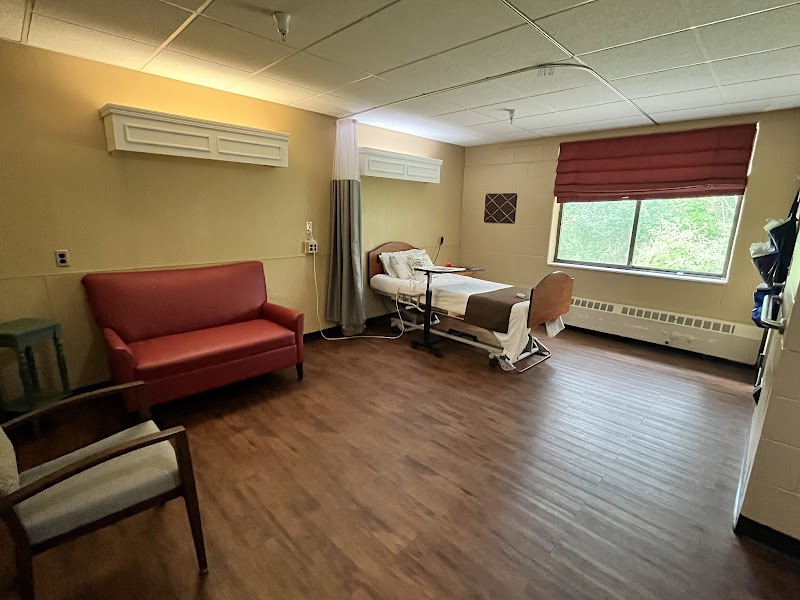
How is Edgewood Health And Rehabilitation Staffed?

CMS rates Edgewood Health and Rehabilitation's staffing level at 4 out of 5 stars, which is above average compared to other nursing homes. Staff turnover is 32%, compared to the Michigan average of 46%. This relatively stable workforce can support continuity of care.

What Have Inspectors Found at Edgewood Health And Rehabilitation?

State health inspectors documented 36 deficiencies at Edgewood Health and Rehabilitation during 2022 to 2025. These included: 1 that caused actual resident harm and 35 with potential for harm. Deficiencies causing actual harm indicate documented cases where residents experienced negative health consequences.
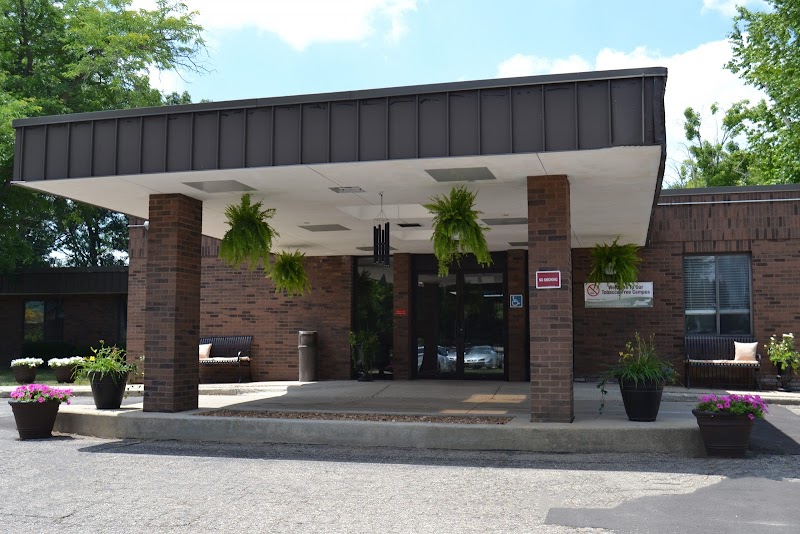
Who Owns and Operates Edgewood Health And Rehabilitation?

Edgewood Health and Rehabilitation is owned by a for-profit company. For-profit facilities operate as businesses with obligations to shareholders or private owners. The facility is operated by SIMCHA HYMAN & NAFTALI ZANZIPER, a chain that manages multiple nursing homes. With 87 certified beds and approximately 77 residents (about 89% occupancy), it is a smaller facility located in Three Rivers, Michigan.

How Does Edgewood Health And Rehabilitation Compare to Other Michigan Nursing Homes?

Compared to the 100 nursing homes in Michigan, Edgewood Health and Rehabilitation's overall rating (1 stars) is below the state average of 3.1, staff turnover (32%) is significantly lower than the state average of 46%, and health inspection rating (1 stars) is much below the national benchmark.

What Should Families Ask When Visiting Edgewood Health And Rehabilitation?

Based on this facility's data, families visiting should ask: "Can I visit during a mealtime to observe dining assistance and food quality?" "How do you handle medical emergencies, and what is your hospital transfer rate?" "Can I speak with family members of current residents about their experience?"

Is Edgewood Health And Rehabilitation Safe?

Based on CMS inspection data, Edgewood Health and Rehabilitation has a clean safety record: no substantiated abuse findings (meaning no confirmed cases of resident harm), no Immediate Jeopardy citations (the most serious violation level indicating risk of serious injury or death), and is not on the Special Focus Facility watch list (a federal program monitoring the lowest-performing 1% of nursing homes). The facility has a 1-star overall rating and ranks #100 of 100 nursing homes in Michigan. While no facility is perfect, families should still ask about staff-to-resident ratios and recent inspection results during their visit.

Do Nurses at Edgewood Health And Rehabilitation Stick Around?

Edgewood Health and Rehabilitation has a staff turnover rate of 32%, which is about average for Michigan nursing homes (state average: 46%). Moderate turnover is common in nursing homes, but families should still ask about staff tenure and how the facility maintains care continuity when employees leave.

Was Edgewood Health And Rehabilitation Ever Fined?

Edgewood Health and Rehabilitation has no federal fines on record. CMS issues fines when nursing homes fail to meet care standards or don't correct problems found during inspections. The absence of fines suggests the facility has either maintained compliance or corrected any issues before penalties were assessed. This is a positive indicator, though families should still review recent inspection reports for the full picture.

Is Edgewood Health And Rehabilitation on Any Federal Watch List?

Edgewood Health and Rehabilitation is not on any federal watch list. The most significant is the Special Focus Facility (SFF) program, which identifies the bottom 1% of nursing homes nationally based on persistent, serious quality problems. Not being on this list means the facility has avoided the pattern of deficiencies that triggers enhanced federal oversight. This is a positive indicator, though families should still review the facility's inspection history directly.