Medilodge of Traverse City
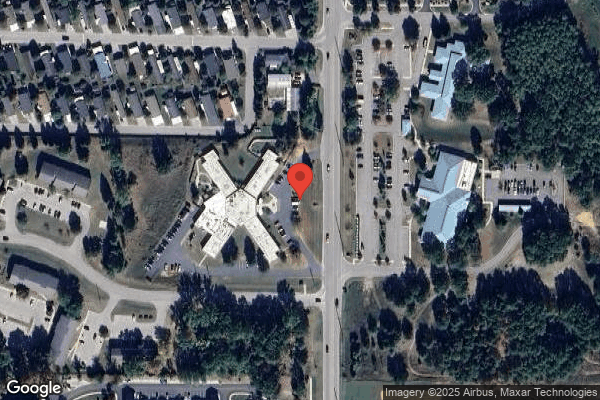
2585 South LaFranier Road, Traverse City, MI 49686 (231) 947-9511
For profit - Corporation 84 Beds MEDILODGE Data: November 2025
Trust Grade
53/100
#153 of 422 in MI
Last Inspection: May 2025

Inspected within the last 6 months. Data reflects current conditions.

Overview

Medilodge of Traverse City has a Trust Grade of C, meaning it is average and falls in the middle of the pack among nursing homes. It ranks #153 out of 422 facilities in Michigan, placing it in the top half, and #3 out of 4 in Grand Traverse County, indicating only one local option is better. The facility is improving, with issues decreasing from 10 in 2024 to 7 in 2025. Staffing is a strength here, with a 4/5 star rating and a turnover rate of 43%, which is below the state average. However, the facility has had concerning incidents, including a fall that resulted in a resident fracturing their leg and another case where a resident was hospitalized for dehydration during a COVID infection, highlighting the need for better monitoring and supervision.

Trust Score
C
53/100
In Michigan
#153/422
Top 36%
Safety Record
High Risk
Review needed
Inspections
Getting Better
10 → 7 violations
Staff Stability
○ Average
43% turnover. Near Michigan's 48% average. Typical for the industry.
Penalties
✓ Good
$13,845 in fines. Lower than most Michigan facilities. Relatively clean record.
Skilled Nurses
✓ Good
Each resident gets 62 minutes of Registered Nurse (RN) attention daily — more than 97% of Michigan nursing homes. RNs are the most trained staff who catch health problems before they become serious.
Violations
⚠ Watch
38 deficiencies on record. Higher than average. Multiple issues found across inspections.
★★★★☆
4.0
Overall Rating
★★★★☆
4.0
Staff Levels
★★★★★
5.0
Care Quality
★★★☆☆
3.0
Inspection Score
Stable
2024: 10 issues
2025: 7 issues

The Good

  • 4-Star Staffing Rating · Above-average nurse staffing levels
  • 5-Star Quality Measures · Strong clinical quality outcomes
  • Full Sprinkler Coverage · Fire safety systems throughout facility
  • No fines on record
  • Staff turnover below average (43%)

    5 points below Michigan average of 48%

Facility shows strength in staffing levels, quality measures, fire safety.

The Bad

Staff Turnover: 43%

Near Michigan avg (46%)

Typical for the industry

Federal Fines: $13,845

Below median ($33,413)

Minor penalties assessed

Chain: MEDILODGE

Part of a multi-facility chain

Ask about local staffing decisions and management

The Ugly 38 deficiencies on record

3 actual harm
May 2025 7 deficiencies
CONCERN (D)

Potential for Harm - no one hurt, but risky conditions existed

Deficiency F0554 (Tag F0554)

Could have caused harm · This affected 1 resident

Based on observation, interview, and record review the facility failed to assess for self administration safety in two residents (#67 & #8) of seven residents reviewed for safety with self medication ...

Read full inspector narrative →
Based on observation, interview, and record review the facility failed to assess for self administration safety in two residents (#67 & #8) of seven residents reviewed for safety with self medication administration. Findings include: Resident #67 (R67) On 4/30/25 at approximately 8:00 AM, during a medication administration, Registered Nurse A (RN A) was observed handing R67 a medication cup containing multiple medications. R67 then walked away without RN A verifying ingestion or providing supervision. R67 was left alone in their room with the medications. Review of R67's chart indicated that they had not been assessed for self-administration of medications. Resident #8 (R8) During an interview of R8 on 4/30/25 at 8:54 AM, the medication Trelegy, a prescription inhaler used for long term management of chronic obstructive pulmonary disease and asthma (respiratory conditions causing difficulty in breathing) was observed on the bedside table. R8 stated that they had administered the medications earlier in the morning. R8 stated that the nurse had left the medication there and had not come back to get it. Review of R8's chart indicated that they had not been assessed for self-administration of medications. During review of medication storage with the Director of Nursing (DON) on 5/2/25 at 10:31 AM, the DON stated that residents that were self-administering medication, did need to have an assessment. On 5/2/25 the medication administration policy was requested from the Nursing Home Administrator; it was not provided.
CONCERN (D)

Potential for Harm - no one hurt, but risky conditions existed

Deficiency F0678 (Tag F0678)

Could have caused harm · This affected 1 resident

**NOTE- TERMS IN BRACKETS HAVE BEEN EDITED TO PROTECT CONFIDENTIALITY** Based on interview and record review, the facility failed to ensure staff reviewed residents medical record for code status, ens...

Read full inspector narrative →
**NOTE- TERMS IN BRACKETS HAVE BEEN EDITED TO PROTECT CONFIDENTIALITY** Based on interview and record review, the facility failed to ensure staff reviewed residents medical record for code status, ensure code status orders were signed by the physician, and ensure code status was uploaded to the resident chart in a timely manner for two Residents (R72 and R500) of three residents reviewed for advance directives. Findings include: R72 R72 was admitted to the facility on [DATE] with diagnosis of right femur head and neck fracture without operation. R72 was her own responsible party. Review of R72's progress notes revealed the following entry dated [DATE], This nurse entered resident's room to obtain blood glucose reading, Resident was observed in bed laying on right side, not responding to verbal stimulus. This nurse attempted to rouse resident by movement, but resident was still not responding. No pulse was observed when checking radial and carotid arteries. This nurse notified (Nurse Practitioner [NP]) of status. Absence of pulse was confirmed by this nurse and (NP). Family notified by provider, funeral home contacted for release of resident. A DNR (Do Not Resuscitate [Type of Code Status]) physician order was placed in R72's Electronic Medical Record (EMR) on [DATE] but there was no signed Do-Not-Resuscitate (DNR) Order Declarent (Resident) Consent or Advance Directive scanned into R72's EMR. An interview was conducted with Registered Nurse (RN) C on [DATE] at 1:20 p.m. RN C confirmed that she was the nurse on [DATE] who discovered R72 unresponsive, I was the nurse who found her. I called for help but she was a newer admit to me and I didn't know her code status. I had to run back to my computer and saw she was a DNR, and at that time the NP came in to assess (R72). I did not look for a signed advance directive (code status). A request was made for R72's Advance Directive/Code Status. An interview was conducted with the Director of Nursing (DON) on [DATE] at 9:35 a.m. who confirmed the facility could not find R72's signed Advance Directive/Code Status form. R500 R500 was admitted to the facility on [DATE] with diagnosis of orthostatic hypotension. R500 was her own responsible party. Review of R500's progress notes revealed the following entry, dated [DATE], at appx. (approximately) 0445 (4:45 a.m.) CNA (Certified Nurse Aide) answered residents call-light and began to assist resident to bathroom, resident stood from bed and became short of breath then fell back on bed and stopped breathing, CNA called down hall for this nurse and I ran down to residents room and observed resident laying on her back on the bed with face gray and not breathing, called loudly in residents ear and did sternal rub and checked for pulse with none found and no response from resident. Nurse yelled down hall for other nurse to grab crash cart and paged overhead for all staff assist to residents room, this nurse and CNA lifted resident to the floor reapplied her NC (nasal cannula) O2 (oxygen) and started CPR (cardiopulmonary resuscitation [Type of Code Status]) and once crash cart arrived hooked up high flow O2 to bag resident then other nurse ran to check code status in the computer. Other nurse returned and informed this nurse that resident was a DNR and cpr was stopped immediately. Resident then took two agonal breaths (irregular gasps) so this nurse propped up resident in my lap and with assist from CNA positioned resident head to straighten airway and used ambu bag (respiratory support equipment) with O2 to deliver breaths to resident. Other nurse then went to call emergent EMS (Emergency Medical System), and this nurse continued to deliver rescue breaths only, with ambu bad [sic] hooked to O2 until EMS arrived. Resident was taking no breaths once EMS arrived and was hooked to ekg (electrocardiogram) and minimal activity observed so rescue breaths continued until resident vital signs ceased completely. EMS requested code status paper work but was unable to obtain from digital chart so [Hospital Name] called to obtain from previous hospital stay. Once hitting 20 minutes since resident fully down and resident having no further vital signs resident was pronounced by [Hospital] physician as TOD (time of death) of 0515 (5:15 a.m.) on [DATE]. A request was made for R500's Advance Directive/Code Status. An interview was conducted with the Director of Nursing (DON) on [DATE] at 9:35 a.m. who confirmed the facility could not find R500's signed Advance Directive/Code Status form. Review of the facility's Cardiopulmonary Resuscitation (CPR) & Basic Life Support (BLS) policy reviewed/revised on [DATE] read, in part, .Facility staff should verify the presence of advance directives or residents' wishes regarding CPR upon admission. Physician orders to support these choices should be obtained as soon after admission as possible or after a change in preference or condition . During an interview on [DATE] at 9:45 AM, this Surveyor was presented a Past Noncompliance (PNC) document. During the onsite survey, PNC was cited after the facility implemented actions to correct the noncompliance which included: 1. Blanket audit for current residents to assure that advance directives were formulated, orders were correct and physician had signed the DNR order. 2. Education for Licensed Nurses on looking in the chart prior to initiating CPR. 3. IDT (interdisciplinary team) will audit new admissions with AM (morning) clinical M-F (Monday - Friday) to assure all interventions and documentation is completed per policy. 4. DON will review findings and report trends to the QAPI (Quality Assurance and Performance Improvement) committee monthly times 3 months with further monitoring per QAPI committee recommendations The facility successfully demonstrated monitoring of the corrective action and maintained compliance by completing weekly audits of residents identified with Code Status/Advance Directives concerns, to ensure established protocol was followed. The PNC was granted with a Plan of Corrections (POC) date of [DATE].
CONCERN (D)

Potential for Harm - no one hurt, but risky conditions existed

Accident Prevention (Tag F0689)

Could have caused harm · This affected 1 resident

**NOTE- TERMS IN BRACKETS HAVE BEEN EDITED TO PROTECT CONFIDENTIALITY** Based on observation, interview and record review, the facility failed to follow interventions to prevent further falls for one ...

Read full inspector narrative →
**NOTE- TERMS IN BRACKETS HAVE BEEN EDITED TO PROTECT CONFIDENTIALITY** Based on observation, interview and record review, the facility failed to follow interventions to prevent further falls for one Resident (R54) of three residents reviewed for falls. Findings include: R54 Review of the Electronic Medical Record (EMR) revealed R54 admitted to the facility on [DATE] with diagnoses including Alzheimer's disease. Review of R54's Incident and Accident reports revealed the following incident dated 11/20/24 and read, in part, Resident sitting on dining room chair. She had slid onto the floor. Assessed for injury. No c/o (complaint of) pain .Care plan updated to have Dycem nonslip mat in her wheelchair and dinning room chair . On 5/2/25 at 9:45 a.m. an observation was made of the dining room in the Memory Care Unit which R54 resides. R54 was observed coming out of her room after receiving care from Certified Nurse Aide (CNA) D and was wheeled into the dining room. R54 did not appear to have Dycem underneath her in the wheelchair. An interview was conducted with CNA D who stated that she did not believe she placed Dycem in R54's wheelchair after cares because the Dycem was soiled. R54 was then wheeled back into her bathroom by CNA D who assisted R54 to stand up out of the wheelchair and confirmed there was no Dycem in R54's wheelchair. Review of R54's care plans read, in part, .at risk for falls/injury .interventions: (R54) is to have a dycem nonslip mat in her wheelchair and dining room chair. Date Initiated: 11/22/24.
CONCERN (E)

Potential for Harm - no one hurt, but risky conditions existed

Free from Abuse/Neglect (Tag F0600)

Could have caused harm · This affected multiple residents

Based on observation, interview and record review, the facility failed to prevent Resident to Resident physical abuse for four Residents (R34, R54, R63, and R68) of four residents reviewed for abuse. ...

Read full inspector narrative →
Based on observation, interview and record review, the facility failed to prevent Resident to Resident physical abuse for four Residents (R34, R54, R63, and R68) of four residents reviewed for abuse. Findings include: R63 On 4/29/25 at approximately 2:00 p.m., R63 was observed pacing the hallway of the memory care unit without staff supervision. R63 was attempting to find someone, using derogatory language in her description and getting near residents and visitors faces. R63 then was observed grabbing the hand of R68 and stated, Come on! Come on! while attempting to redirect R68 down the hallway. R68 told R63, No!, when R63 began pinching R68's hand in between her thumb and index finger. R68 began to yell out when R63 closed her right hand to make a fist and hit R68 in the right upper arm, making R68 scream. Two staff members came from the hallway and from another resident room to separate the two residents with one staff member leading R68 into her room. R63 was then left unsupervised in the hallway and took another resident's hand, leading her towards the front door. A request for R63's Incident and Accident reports for the last six months. The following incidents were noted as not reported to the SA (State Agency); 10/28/24 - Resident to Resident Altercation; Resident was asked repeatedly to stop touching other resident (Resident Initials). She first was tapping his shoulder and then starting [sic] his stomach. Resident was unable to be redirected. (Resident Initials) then pushed (R63) into a dining room chair which she fell into. 10/28/24 - Resident to Resident Altercation; (R63) and other resident (Resident Initials) were at the locked exit doors exchanging words that could not be heard when it was observed that (R63) hit (Resident Initials) in the right side of her face. (Resident Initials) then retaliated and hit (R63) in the left side of her face. 11/12/24 - Resident to Resident Altercation; Resident was pushing a napkin with eaten oranges to (Resident Initials). (Resident Initials) asked her to stop and (R63) did not. (Resident initials) then smacked (R63) left hand open palmed with force with her right hand. 11/12/24 - Resident to Resident Altercation; (R63) was near the back door by the med cart attempting to push (R54) in her wheelchair. (R54) asked her to stop and she didn't. (R54) then reached and hit (R63's) left shoulder with her right arm. 3/23/25 - Resident to Resident Altercation; (Resident name) was sitting in her wheelchair in her doorway. (R63) attempted to push into the room. (Resident name) was yelling. (R63) starting [sic] hitting her in the head and pulling her hair. 4/19/25 - Resident to Resident Altercation; (R63) attempted to take a baby doll away from female res. (resident) other female res continued holding on and (R63) made contact with open hand on other female res arm several times. 4/27/25 - Resident to Resident Altercation; Observed resident in hallway making contact with closed hand with another resident who was seated in wheel chair. Observed closed hand contact to side of head and shoulder. R54 A request for R63's Incident and Accident reports for the last six months. The following incidents were noted as not reported to the SA; 11/12/24 - Resident to Resident Altercation; (R63) was near the back door by the med cart attempting to push (R54) in her wheelchair. (R54) asked her to stop and she didn't. (R54) then reached and hit (R63's) left shoulder with her right arm. 11/26/24 - Resident to Resident Altercation; Heard resident (R34) screaming in her room. (R54) found sitting in her wheelchair in front of other resident. Resident stated that (R54) slapped her. 12/15/24 - Resident to Resident Altercation; Resident was sitting at dinning room table when another resident approached on her left. (R54) then turned her wheelchair towards the other resident yelled at her and then hit her with a closed fist on the left side of her face/neck. 4/19/25 - Resident to Resident Altercation; Female Res attempted to take a baby doll away from (R54). (R54) continued holding on and Female Res slapped her several times causing a right forearm skin tear. 4/27/25 - Resident to Resident Altercation; Observed resident seated in wheelchair in hallway receiving closed hand contact from another resident. Other resident was standing and facing (R54). Other resident made closed hand contact to side of (R54's) head and both shoulders. R34 A request for R63's Incident and Accident reports for the last six months. The following incidents were noted as not reported to the SA; 11/26/24 - Resident to Resident Altercation; Heard resident (R34) screaming in her room. (R54) found sitting in her wheelchair in front of other resident. Resident stated that (R54) slapped her. An interview was conducted with the Nursing Home Administrator (NHA) on 5/2/25 at 8:53 a.m. regarding the numerous resident to resident altercations inside the memory care unit. The NHA confirmed all the resident to resident altercations were investigated by staff but continue to happen and believed there was no willful attempt. Review of the facility's Abuse, Neglect and Exploitation Policy reviewed 10/24/22 read, in part, .It is the policy of this facility to provide protections for the health, welfare, and rights of each resident by developing and implementing written policies and procedures that prohibit and prevent abuse, neglect, exploitation, and misappropriation of resident property .
CONCERN (E)

Potential for Harm - no one hurt, but risky conditions existed

Report Alleged Abuse (Tag F0609)

Could have caused harm · This affected multiple residents

Based on observation, interview and record review, the facility failed to report timely allegations of abuse (resident to resident), within two hours, to the State Agency (SA) for four Residents (R34,...

Read full inspector narrative →
Based on observation, interview and record review, the facility failed to report timely allegations of abuse (resident to resident), within two hours, to the State Agency (SA) for four Residents (R34, R54, R63, and R68) of four residents reviewed for abuse reporting. Findings include: R63 On 4/29/25 at approximately 2:00 p.m., R63 was observed pacing the hallway of the memory care unit without staff supervision. R63 was attempting to find a male, using derogatory language in her description and getting near residents and visitors faces. R63 then was observed grabbing the hand of R68 and stated, Come on! Come on! while attempting to redirect R68 down the hallway. R68 told R63, No! when R63 began pinching R68's hand in between her thumb and index finger. R68 began to yell out when R63 closed her right hand to make a fist and hit R68 in the right upper arm, making R68 scream. Two staff members came from the hallway and from another resident room to separate the two residents with one staff member leading R68 into her room. R63 was then left unsupervised in the hallway and took another resident's hand, leading her towards the front door. A request for R63's Incident and Accident reports for the last six months. The following incidents were noted as not reported to the SA; 10/28/24 - Resident to Resident Altercation 11/12/24 - Resident to Resident Altercation 11/12/24 - Resident to Resident Altercation 3/23/25 - Resident to Resident Altercation 4/19/25 - Resident to Resident Altercation 4/27/25 - Resident to Resident Altercation R54 A request for R63's Incident and Accident reports for the last six months. The following incidents were noted as not reported to the SA; 11/12/24 - Resident to Resident Altercation 11/26/24 - Resident to Resident Altercation 12/15/24 - Resident to Resident Altercation 4/19/25 - Resident to Resident Altercation 4/27/25 - Resident to Resident Altercation R34 A request for R63's Incident and Accident reports for the last six months. The following incidents were noted as not reported to the SA; 11/26/24 - Resident to Resident Altercation An interview was conducted with the Nursing Home Administrator (NHA) on 5/2/25 at 8:53 a.m. regarding the numerous resident to resident altercations inside the memory care unit. The NHA confirmed that the facility did not report any resident-to-resident altercations and was under the assumption that resident to resident altercations were only reportable if there was an injury. Review of the facility's Abuse, Neglect and Exploitation Policy reviewed 10/24/22 read, in part, .Reporting of all alleged violations to the .state agency .immediately, but not later than 2 hours after the allegation is made, if the events that cause the allegation involve abuse .
CONCERN (E)

Potential for Harm - no one hurt, but risky conditions existed

Deficiency F0725 (Tag F0725)

Could have caused harm · This affected multiple residents

Based on observation, interview, and record review, the facility failed to ensure adequate staffing to promote the physical, mental, and psychosocial well-being in a locked memory care unit. This defi...

Read full inspector narrative →
Based on observation, interview, and record review, the facility failed to ensure adequate staffing to promote the physical, mental, and psychosocial well-being in a locked memory care unit. This deficient practice resulted in the continuation of numerous resident to resident altercations and falls. Findings include: On 4/29/25 at approximately 2:00 p.m., R63 was observed pacing the hallway of the memory care unit without staff supervision. R63 was attempting to find someone, using derogatory language in her description and getting near residents and visitors faces. R63 then was observed grabbing the hand of R68 and stated, Come on! Come on! while attempting to redirect R68 down the hallway. R68 told R63, No! when R63 began pinching R68's hand in between her thumb and index finger. R68 began to yell out when R63 closed her right hand to make a fist and hit R68 in the right upper arm, making R68 scream. Two staff members came from the hallway and from another resident room to separate the two residents with one staff member leading R68 into her room. R63 was then left unsupervised in the hallway and took another resident's hand, leading her towards the front door. On 5/2/25 at approximately 9:30 a.m. an observation was made of the locked Memory Care Unit. 12 residents were located in the dining room of that unit without any staff members present. During this observation, R63 was observed attempting to push R54 in her wheelchair, with R54 becoming visibly upset. Other residents were observed standing up without assistance and furniture surfing around the dining room. R68 was observe down the hallway going into other resident rooms without staff supervision. An interview was conducted with Certified Nurse Aide (CNA) D on 5/2/25 at approximately 9:45 a.m. CNA D stated, the Memory Care Unit usually has 2 CNA's, a nurse and an activity aide, but due to call in's of staff, it doesn't always work out. An interview was conducted with Family Member (FM) E who was visiting in the Memory Care Unit on 5/2/25 at approximately 10:00 a.m FM E stated, she does not feel there are enough staff down in the unit to assist with resident needs and there are often times when residents are left unsupervised. An interview was conducted with the Nursing Home Administrator (NHA) on 5/2/25 at approximately 10:45 a.m. The NHA confirmed that there should be 2 CNA's, a nurse and an activity aide down in the Memory Care Unit. Review of the Facility Assessment reviewed February 2025 read, in part, .22 beds secured dementia unit all long term residents .The unit has an enclosed outdoor space with raised garden beds. The unit includes a dining room/activity area .[Facility Name] has deemed that dementia care has more relative importances as it is a specialty area for the facility .the facility has dementia/memory care is used for marketing purposes to differentiate the facility in the community .
CONCERN (E)

Potential for Harm - no one hurt, but risky conditions existed

Deficiency F0923 (Tag F0923)

Could have caused harm · This affected multiple residents

Based on observation and interview, the facility failed to ensure exhaust ventilation was functioning in resident bathrooms, on three halls, serving 22 of a total 74 residents. This deficient practice...

Read full inspector narrative →
Based on observation and interview, the facility failed to ensure exhaust ventilation was functioning in resident bathrooms, on three halls, serving 22 of a total 74 residents. This deficient practice resulted in noxious odors permeating the resident environment, with the potential to cause unpleasant and uncomfortable living conditions. Findings include: On 4/30/25 at 10:45 AM, noxious odors were noted throughout the D hall. On 4/30/25 at 2:15 PM, in response to the presence of continued noxious odors on the D hall, an investigation was initiated into determining the functioning of the exhaust ventilation system for resident bathrooms. The bathrooms serving the following rooms were inspected for functioning exhaust by placing a paper towel over the ceiling mounted duct cover and determining if there was adequate negative pressure to hold the paper in place. The failure to hold the towel in place deemed a failure for that bathroom's exhaust system. This failure was noted in the bathrooms serving the following resident rooms: D Hall; 1, 5, 6 On 4/30/25 at 2:35 PM, an interview was conducted with Maintenance Director (MD) B who conducted a similar test for bathroom exhaust function and confirmed there was not any negative pressure in the duct resulting a failure of exhaust from the bathroom. MD B stated I don't think these have ever worked.
Oct 2024 2 deficiencies
CONCERN (D) 📢 Someone Reported This

A family member, employee, or ombudsman was alarmed enough to file a formal complaint

Potential for Harm - no one hurt, but risky conditions existed

Report Alleged Abuse (Tag F0609)

Could have caused harm · This affected 1 resident

**NOTE- TERMS IN BRACKETS HAVE BEEN EDITED TO PROTECT CONFIDENTIALITY** Based on interview and record review, the facility failed to report an injury of unknown origin (right hip fracture) to the Stat...

Read full inspector narrative →
**NOTE- TERMS IN BRACKETS HAVE BEEN EDITED TO PROTECT CONFIDENTIALITY** Based on interview and record review, the facility failed to report an injury of unknown origin (right hip fracture) to the State Agency (SA) for one Resident (R1) of three residents reviewed for abuse. Findings include: Review of R1's Electronic Medical Record (EMR) revealed admission to the facility on 8/23/24 with a discharge date of 9/8/24 to an acute care hospital. R1's diagnoses included Rhabdomyolysis (break down of skeletal muscles, history of falls, and muscle weakness. R1's 8/29/24 Brief Interview for Mental Status (BIMS) score was 15, indicating she was cognitively intact. Review of R1's History and Physical from [Hospital Name] dated 9/8/24 read, in part, .Assessment/Plan: Patient had CT (compute tomography) scan of lumbar spines and pelvis without contrast .there is equivocal nondisplaced fracture line through right femoral neck . An interview was conducted with the Nursing Home Administrator (NHA), Interim Director of Nursing (DON) and Unit Manager/Registered Nurse A on 10/14/24 at 1130 a.m. who stated that R1 was admitted to the facility on [DATE] from the hospital after a fall from home. The hospital had conducted an x-ray and found no fractures, so R1 was admitted to the facility. When the facility was notified of R1 having a right hip fracture on 9/8/24, the hospital notes stated that it could have been from the fall prior to admission, but the facility did not report the injury of unknown origin to the SA. Review of the facility's Abuse, Neglect and Exploitation policy dated 1/10/24 read, in part, .Identification of Abuse, Neglect and Exploitation .Possible indicators of abuse include, but are not limited to: .Physical injury of a resident, of unknown source .Reporting/Response .Reporting of alleged violations to the Administrator, state agency, adult protective services and to all other required agencies (e.g., law enforcement when applicable) within specified timeframes as required by state and federal regulations: Immediately, but not later than 2 hours after the allegation is made, if the vents that cause the allegation involve abuse or result in serious bodily injury .
CONCERN (D) 📢 Someone Reported This

A family member, employee, or ombudsman was alarmed enough to file a formal complaint

Potential for Harm - no one hurt, but risky conditions existed

Investigate Abuse (Tag F0610)

Could have caused harm · This affected 1 resident

**NOTE- TERMS IN BRACKETS HAVE BEEN EDITED TO PROTECT CONFIDENTIALITY** Based on interview and record review, the facility failed to conduct a thorough investigation for an injury of unknown origin (r...

Read full inspector narrative →
**NOTE- TERMS IN BRACKETS HAVE BEEN EDITED TO PROTECT CONFIDENTIALITY** Based on interview and record review, the facility failed to conduct a thorough investigation for an injury of unknown origin (right hip fracture) for one Resident (R1) of three residents reviewed for abuse. Findings include: Review of R1's History and Physical from [Hospital Name] dated 9/8/24 read, in part, .Assessment/Plan: Patient had CT (compute tomography) scan of lumbar spines and pelvis without contrast .there is equivocal nondisplaced fracture line through right femoral neck . An interview was conducted with the Nursing Home Administrator (NHA), Interim Director of Nursing (DON) and Unit Manager/Registered Nurse A on 10/14/24 at 1130 a.m. who stated that R1 was admitted to the facility on [DATE] from the hospital after a fall from home. The hospital had conducted an x-ray and found no fractures, so R1 was admitted to the facility. When the facility was notified of R1 having a right hip fracture on 9/8/24, the hospital notes stated that it could have been from the fall prior to admission. An internal investigation folder was presented at this time to this Surveyor. The folder contained a handwritten note from the Physical Therapist (PT) G for two sessions on 9/5/24 and 9/26/24, and a Statement of Witness form for R1's roommate dated 9/11/24 with no signature. There was also a Quality Assistance Form dated 9/11/24, written by RN A over concerns the family had on 9/8/24 with R1's care and being transferred to the hospital. On 10/15/24 at 10:00 a.m., The NHA provided additional witness statements from four staff members dated 10/14/24 and 10/15/24 respectively. The NHA acknowledged this was not a complete investigation per the facility abuse policy into an injury of unknown origin. Review of the facility's Abuse, Neglect and Exploitation policy dated 1/10/24 read, in part, .Investigation of alleged abuse, neglect and exploitation: An immediate investigation is warranted when suspicion of abuse, neglect or exploitation, or reports of abuse, neglect or exploitation occur. Written procedures for investigations include Identifying staff responsible for the investigation, exercising caution in handling evidence that could be used in a criminal investigation (e.g., not tampering or destroying evidence), Investigating different types of alleged violations. Identifying and interviewing all involved persons, including the alleged victim, alleged perpetrator, witnesses, and others who might have knowledge of the allegations, Focusing the investigation on determining if abuse, neglect, exploitation and/or mistreatment has occurred, the extent, and cause, and providing complete and thorough documentation of the investigation .
Jun 2024 1 deficiency
CONCERN (D) 📢 Someone Reported This

A family member, employee, or ombudsman was alarmed enough to file a formal complaint

Potential for Harm - no one hurt, but risky conditions existed

Resident Rights (Tag F0550)

Could have caused harm · This affected 1 resident

**NOTE- TERMS IN BRACKETS HAVE BEEN EDITED TO PROTECT CONFIDENTIALITY** This citation relates to Intake #MI00145188. Based on observation, interview, and record review, the facility failed to ensure ...

Read full inspector narrative →
**NOTE- TERMS IN BRACKETS HAVE BEEN EDITED TO PROTECT CONFIDENTIALITY** This citation relates to Intake #MI00145188. Based on observation, interview, and record review, the facility failed to ensure dignified care was provided for one Resident (R1) of seven residents reviewed for dignity. This deficient practice resulted in an undignified care interaction for R1. Findings include: Review of the FRI (Facility Reported Incident) received by the State Agency (S.A.) revealed on 6/11/24 at approximately 8:30 p.m., R1 was observed by Registered Nurse (RN) B in the doorway assisting a resident to return to the secured memory care unit. At that time, R1 was attempting to exit the unit through the same door. Another nurse, RN A, told R1 she needed to stay on the unit and she had her hands over her ears. RN B reportedly observed RN A use a door-knocking gesture on R1's forearm to get her attention so she would not leave the unit. R1 did not sustain an injury per the skin assessment after the incident. The report showed an interview after the incident with RN A revealed they moved their hand towards R1's face and made a non-verbal gesture to reduce the volume of her voice, and in doing so, made light contact with R1's right arm with their left hand, which was reportedly non-intentional. No psychosocial decline was found when R1 was interviewed after the incident. The investigation further revealed when R1's family member was interviewed, they revealed R1 had a prior undisclosed history of trauma, which may have contributed to R1's reaction to RN A while she was trying to exit the secured memory unit door. Review of the Minimum Data Set (MDS) assessment revealed R1 was admitted to the facility on [DATE], with diagnoses including kidney disease, urinary tract infection, and dementia. The assessment revealed R1 required maximal assistance with toileting and toileting transfers. The Brief Interview for Mental Status (BIMS) assessment revealed a score of 3/15, which showed R1 had severe cognitive impairment. An interview on 6/25/24 at 2:45 p.m. revealed R1 could answer a few basic yes/no questions. R1 reported she was happy and receiving good care and had no recall of any resident or staff incident. During an interview on 6/25/24 at 4:15 p.m., RN A and RN C were asked about the incident on 6/11/24. RN C confirmed no abuse was substantiated, and RN A described the incident occurred on 6/11/24 at the doorway to the memory unit. RN A explained when the unit door was opened by RN B, R1 attempted to leave the unit unsupervised at the unit doors, while RN B opened the door for another resident to reenter the unit. RN A revealed they stood in front of the secured memory unit door to block R1 from leaving the unit, as she was unsafe to leave the unit unsupervised. R1 clarified the incident occurred around 8:30 p.m. RN A described R1 began yelling at the top of her lungs and in an attempt to try to quiet her I put my hand up towards her mouth .that was a dumb move on my part .I put my hand up to her mouth about 3 inches away. RN A demonstrated to Surveyor while R1 was flapping her arms back and forth with elbows bent they made a shhhhhh sign, with one finger pointed up and moved towards R1's mouth. In doing so, RN A described how his arm accidentally struck the inside of R1's forearm, but there was no intent to do so. RN C was asked if there was a video of the incident, which RN C denied, and clarified they understood R1 struck RN A's arm as her arms were flapping and moving when RN A made the gesture towards R1. RN A reported it was a gesture meant to quiet and calm the resident. When asked if they could have done anything differently, RN A' reported he was acting more like a parent with a child than a resident. RN A clarified if this occurred again they would have just allowed the yelling, however they were concerned about R1 waking up the residents on the unit who were sleeping. During further interview, both RN A and RN C agreed the behavioral interaction and RN A's response was undignified. During an interview with the Nursing Home Administrator (NHA) on 6/25/24 at approximately 5:00 p.m., the NHA was made aware and understood concerns related to the undignified care interaction. A telephone call was attempted to R1's responsible party on 6/26/24 at 9:56 a.m., with no response by the end of the survey time period. Review of RN B's witness statement, dated 6/11/24, revealed RN B described R1 was trying to exit the secured memory unit when they were at the door and R1 let out a loud scream, which was startling. RN B described RN A's reaction was to let out a frustrated noise, and R1 placed her hands over both sides of her ears due to the noise. RN B reported they next observed RN A knock twice on R1's forearm approximately two inches from her wrist, telling her to be quiet. RN B clarified it was not a punch or a slap, and not a hard strike. RN B explained RN A initially put his hands toward the resident to place his hand towards her mouth to shush R1, but R1 did not stop yelling. RN B reported they completed a skin assessment and there were no new skin concerns noted. RN B deemed RN A was trying to tell R1 to be quiet. During an interview on 6/26/24 at approximately 6:00 p.m., RN B confirmed their description in their witness statement was how the incident occurred. Review of the policy, Promoting/Maintaining Resident Dignity, revised 10/26/23, revealed, It is the practice of the facility to protect and promote resident rights and treat each resident with respect and dignity as well as care for each resident in a manner and in an environment that maintains or enhances resident's quality of life by recognizing each resident's individuality . During the onsite survey, past noncompliance was cited after the facility implemented actions to correct the noncompliance which included: • A police report was filed, • Social Services provided R1 supportive visits, • A PTSD diagnosis was added to R1's care plan, • The facility initiated an action plan and an had an ad hoc QAPI meeting, • Residents on R1's hall including R1 had skin and pain assessments completed (with no concerns found), • An all staff education regarding abuse prevention, dementia care, dignified care, behavioral management, and signs of (employee) burnout was completed. • Residents were interviewed regarding the potential for abuse; none was found. • One to one education was provided by the NHA to RN A, who completed the education on abuse prevention, dementia care, dignified care, behavioral management, and signs of employee burnout as well as additional education on Relias educational training. • R1 was referred to a behavioral care provider to evaluate and treat newly diagnosed history of trauma and identify triggers. • R1's Care Plan was updated and revised to reflect history of behaviors (which was verified). The facility demonstrated corrective monitoring by completing observations of RN A providing resident care, with no concerns found. The investigation revealed no willfulness was determined or intent to make physical contact of R1 by RN A. The facility determined no functional decline or psychosocial outcome for R1, and no new bruising or skin concerns. The facility was able to demonstrate monitoring of the corrective action and maintained compliance by completing weekly audits of abuse including observations of RN A providing care. The QAPI meeting was initiated to ensure concerns were addressed and sustained compliance with their Plan of Correction.
Mar 2024 7 deficiencies 1 Harm
SERIOUS (G)

Actual Harm - a resident was hurt due to facility failures

Accident Prevention (Tag F0689)

A resident was harmed · This affected 1 resident

**NOTE- TERMS IN BRACKETS HAVE BEEN EDITED TO PROTECT CONFIDENTIALITY** Based on observation, interview, and record review, the facility failed to provide adequate supervision to prevent a fall with f...

Read full inspector narrative →
**NOTE- TERMS IN BRACKETS HAVE BEEN EDITED TO PROTECT CONFIDENTIALITY** Based on observation, interview, and record review, the facility failed to provide adequate supervision to prevent a fall with fracture for one Resident (R19) of five residents reviewed for falls. This deficient practice resulted a tibial (lower leg) fracture, with increased pain. Findings include: Review of R19's Minimum Data Set (MDS) assessment, dated 11/15/23, revealed R19 was admitted to the facility on [DATE], with diagnoses including Alzheimer's disease and depression. R19 required assistance with toileting and was independent with transfers and walking. R19 was unable to participate in the Brief Interview for Mental Status (BIMS) assessment, showing severe cognitive impairment. The sensory assessment revealed R19 was sometimes understood, and sometimes able to understand. Review of R19's accident and incident report, dated 11/17/23 at 10:14 a.m., revealed R19 was found by a housekeeping staff yelling for help and was observed sitting on the floor at the end of the bed, with her legs out facing her closet. R 19 was holding her left lower leg and said it was painful. R19 stated, I fell. R19 was sent to the Emergency Department (ED). Review of R19's ED report, dated 11/17/23 at 17:36 p.m., showed R19 was diagnosed with a medial tibial fracture. R19 was non-weight bearing on the left lower extremity and provided a knee immobilizer brace. Review of R19's Electronic Medical Record (EMR) showed a fall evaluation report dated 2/18/23, which revealed a score of 16, indicating fall interventions were required. Review of Registered Nurse (RN) J's witness statement, dated 11/17/24, revealed, I was passing meds (medications). Heard [Staff K] call for help. Walked in room. [R19] was by the foot of the bed holding her foot, sitting on the floor .[R19] said her ankle hurt, [from the] knee to ankle .Floor was wet .I saw [Staff K] wiping up the excess liquid on the floor. Review of RN's Gs witness statement, dated 11/17/23, revealed, .Nurse reported a fall in [R19's] room .[R19] was holding left leg and crying out when she tried to move left leg .When asked where it hurt, [R19] stated, 'My leg,' .When I entered the room the floor under and around [R19] was wet. Upon assisting [R19] into bed, her pants were wet on her bottom area, causing wetness of the bed sheet .wetness was r/t [related to] the floor after mopping. Review of Staff K's witness statement, dated 11/17/23, revealed, I entered the room [D-14], to do my routine cleaning .Curtain drapes were closed. I began to mop the floor when I heard [R19], I .found her upright on the floor at the end of her bed .I placed a wet floor sign down before I entered the room I knocked and no one responded. [R19] always has left the curtain closed, so I assumed no one was inside the room . During an interview on 3/19/24 at 12:12 p.m., Housekeeping Staff E reported they would not have mopped R19's floor with R19 in the room, and clarified they only damp mopped the residents' room floors, per facility process. During an interview on 3/19/24 at 4:44 p.m., RN G reported they walked in R19's room after the incident occurred and observed R19 sitting on the floor in a puddle of water. They and staff intervened with considerable assistance as R19's leg was wedged between the back of the bed and against the closet, and she cried out in pain. RN G confirmed this was an avoidable accident due to the wet floor, and R19 was ambulatory at that time. RN G clarified there was a wet floor sign in the doorway, however R19 would not have been able to see it behind the pulled curtain. Review of R19's PAINAD [pain assessment for persons with advanced dementia], dated 11/17/23, after the incident, revealed a score of 5/10, indicative of moderate pain. Review of R19's November 2023 Medication Administration Record (MAR) revealed R19 was on scheduled Acetaminophen, with the dosing increased to 500 mg (from 325 mg), 2 pills by mouth, three times a day, for pain after the incident, from 11/18/23 to 11/30/23. Additionally, on 11/18/24 [upon return from the ED], Tramadol 5 mg [a narcotic pain medication] was prescribed for breakthrough pain, every 4 hours as needed (prn). The Tramadol prn was used 26 times for R19 from 11/18/24 to 11/30/24. R19 was only on Acetaminophen prior to the fall with fracture on 11/17/23. During an interview on 3/20/24 at 12:02 p.m., Surveyor reviewed R19's increased pain per the Medication Administration Record (MAR) with RN G, who confirmed R19 had increased pain after the injury and during her recovery period. During an interview on 3/20/24 at 10:20 a.m., the Rehabilitation Director, Occupational Therapist (OT) F, reported R19 was near their prior level of function (prior to the 11/17/23 fall), and had been on therapy caseload since the fall. OT F reported R19 went from a wheelchair and non-weight bearing at the time of the fall to ambulating without a device. OT F reported they had been informed R19 fell on a wet floor and acknowledged a wet floor left for a cognitively impaired resident in their room would be concerning and dangerous. During an interview on 3/20/24 at 10:50 a.m., Staff I confirmed housekeeper, Staff K, was the staff involved in the incident, and did not follow their policy and process for cleaning the floors in the facility. Staff I reported Staff K received verbal disciplinary action. Staff I stated the typical process would be for staff to knock on the door and receive a response, and said, We are never going to mop if there is a resident in the room . There should have never been a wet floor; you are supposed to wring out the mop. It should be a damp mop . Staff K did wet mop the room . Review of Staff K's, One to One Inservice Record, dated 11/17/23, revealed, Inservice Topic/Title: 5-step cleaning method w/ [with] concentration on floors .The 5-step method is used to clean a resident's room. 'Damp mopping' is required, not wet mopping . The Inservice included a verbal review and return demonstration and was signed by the Environmental Services Director (EVS), Staff I. Review of the policy, Accidents and Supervision, revised 12/27/23, revealed, Each resident will be assessed for accident risk and will receive care and services in accordance with their individualized care plan. Each resident will receive adequate supervision and assistive devices to prevent accidents. This includes 1. Identifying hazard(s) and risk(s). 2. Evaluating and analyzing hazard(s) and risk(s). 3. Implementing interventions to reduce hazard(s) and risk(s). 4. Monitoring effectiveness and modifying interventions when necessary. Definitions: Accident refers to any unexpected or unintentional incident, which results in injury or illness to a resident .Fall refers to unintentionally coming to rest on the ground, floor, or other lower level .Hazards refers to elements of the resident environment that have the potential to cause injury or harm. Risk refers to any external factor, facility characteristic ( .physical environment) or characteristic of an individual resident that influences the likelihood of an accident .Identification of fall risk .Upon identification of risk for falls, the following interventions may be considered when developing the baseline or comprehensive care plan for the resident: a. Implementing universal environmental interventions that decrease the risk of resident falling, including, but not limited to: .A clear pathway to the bathroom or bedroom doors . During an interview on 3/20/24 at 11:17 a.m., Surveyor reviewed concerns related to R19's fall with fracture, including increased pain and pain medication, and her non-weight bearing status at the time of the incident. The Nursing Home Administrator (NHA) reported they understood the concerns and presented a Past Noncompliance document. During the onsite survey, past noncompliance (PNC) was cited after the facility implemented actions to correct the noncompliance which included: Housekeeping staff have been reeducated on following the 5-staff (sic) cleaning method with a concentration on cleaning floors. The mop head should be damp and not wet. Floors may not be damp mopped while an independently mobile resident is in the room. CENA's (aides) and nurses were educated housekeeping staff cannot damp mop floors while a resident is in the room. QAPI (quality assurance and performance improvement) committee reviewed policies and procedures related to the incident and deemed them appropriate. The facility was able to demonstrate monitoring of the corrective action and maintained compliance by completing random weekly audits of housekeeping staff to ensure that floors were damp mopped only when a resident was not in the room. Center audits were to be reviewed by the Interdisciplinary team and at QAPI {commitee) to identify any trends and to prompt additional actions where needed.
CONCERN (D)

Potential for Harm - no one hurt, but risky conditions existed

Respiratory Care (Tag F0695)

Could have caused harm · This affected 1 resident

Based on observation, interview, and record review the facility failed to provide emergency tracheostomy care for one Resident (Resident #263) of three residents review for respiratory care. This defi...

Read full inspector narrative →
Based on observation, interview, and record review the facility failed to provide emergency tracheostomy care for one Resident (Resident #263) of three residents review for respiratory care. This deficient practice had the potential for respiratory distress and anxiety for Resident #263. Findings include: Resident #263 (R263) On 3/18/24 at 11:18 AM, an interview was conducted with R263 in his room. R263 was observed to have a tracheostomy and a urinary catheter. R263 stated he just got to the facility three days ago. On 3/18/24 at 11:20 AM, an observation was made of R263's room. The room contained a suction unit, inner tracheostomy cannulas (disposable tube inserted into tracheostomy) and an empty tracheostomy box with no other emergency replacement tracheostomy in his room in case of accidental tracheostomy tube dislodgement. R263 was asked if he had a replacement tracheostomy for such emergencies and replied, The nurse just replaced it today because when she was suctioning me earlier, she thought it was plugged. On 3/18/24 at 1:40 PM, an interview was conducted with Registered Nurse (RN) L and was asked if R263 should have a back-up/emergency tracheostomy in his room and replied, Yes. I think he does. He has a box with a trach (tracheostomy) in his room. RN L was told the box was empty. On 3/18/24 at 1:50 PM, an interview was conducted with Medical Records M after the supply room was checked with RN L. The correct size could not be found for R263 in the supply room. When asked if the correct size tracheostomy was ordered for R263 prior to his admission, Medical Records M replied, Yes, they should be in Thursday (3/21/24). On 3/18/24 at 2:00 PM, an interview was conducted with the Director of Nursing (DON) and was asked if there should be an emergency/back-up tracheostomy for R263 in his room. The DON replied, Yes. RN L was present during this interview and made the DON aware, all that was available in the supply room was a size smaller (size 6.0). The DON replied to RN L, Then put one in his room so it is there if we need it for emergencies. On 3/18/24 at 2:40 PM, RN L was followed to the supply room. RN L obtained the back-up/emergency tracheostomy noted to be one size smaller (6.0) for R263 and placed it in his room. Review of R263's physician order, dated 3/15/24, read in part, Trach care every shift and as needed 7.0 cuffless non-fenestrated (no window/opening on outer cannula) [name brand] Trach. Review of R263's progress notes, dated 3/15/24 through 3/19/24, lacked any communication with the facility physician regarding the use of a smaller sized tracheostomy due to the facility not having the correct size for emergency replacement needs. Review of facility policy titled, Tracheostomy Care, dated 10/26/2023, read in part, Policy: The facility will ensure that residents who need respiratory care, including tracheostomy care and tracheal suctioning, is provided such care consistent with professional standards of practice, the comprehensive person-centered care plan and resident goals and preferences. Compliance Guidelines: .3. Tracheostomy care will be provided according to the physician's orders, comprehensive assessment and individualized care plan such as monitoring for resident specific risks for possible complications, a. Perform tracheostomy care at least twice daily. b. Keep a suction machine, a supply of suction catheters, and correctly sized cannulas (replacement tracheostomy) easily accessible for immediate emergency care .
CONCERN (D)

Potential for Harm - no one hurt, but risky conditions existed

Deficiency F0726 (Tag F0726)

Could have caused harm · This affected 1 resident

Based on observation, interview, and record review, the facility failed to ensure competent and knowledgeable staff regarding laboratory services provided to facility residents and free from expired b...

Read full inspector narrative →
Based on observation, interview, and record review, the facility failed to ensure competent and knowledgeable staff regarding laboratory services provided to facility residents and free from expired blood collection tubes reviewed for competent nursing staff. Findings include: On 3/18/24 at 11:00 AM, an observation was made of the education room where a portable lab cart was stored. The portable lab cart was observed to have the following blood collection tubes: a.) Four tall purple top blood collection tubes with lot number B22063W and expiration date of 12/1/23 b.) Seven short purple top blood collection tubes with lot number B2211346 and expiration date of 3/2/24 c.) Four light blue top blood collection tubes with lot number B221136X and expiration date of 11/1/23 d.) Four pink top blood collection tubes with lot number 2227139 and expiration date of 1/31/24 e.) One light green top blood collection tube with lot number 1228169 and expiration date of 8/31/22 f.) Three dark green top blood collection tubes with lot number B2209359 and expiration date of 1/1/24 g.) Four gray top blood collection tubes with lot number A20093A3 and expiration date of 3/7/22 On 3/19/24 at 8:30 AM, the Director of Nursing (DON) was asked about the expired laboratory supplies observed. The DON confirmed the facility does their own laboratory draws and supplies are provided through local hospital who performs the laboratory diagnostics and provides results. The DON confirmed blood samples are drawn by either one of two facility certified phlebotomists. The DON was asked about medication storage, expired medications, and loose pills and replied, The nurses are responsible for keeping medication carts clean, free from loose pills, and expired medications. On 3/19/24 at 9:15 AM, and interview was conducted with Certified Nurse Aide (CNA) O and was asked how often he draws resident labs and replied, At least once a week usually on Tuesday's, but sometimes more often it just depends on requests. CNA O was then asked how often he checks for expired blood collection tubes and supplies and replied, A couple times a month and every time I do a blood draw. I check each tube before I use it for an expiration date. The local hospital supplies the lab supplies. CNA O was asked where the lab supplies were stored and replied, In the education room on the top right corner of my desk and there are extra supplies in the top file cabinet drawer. On 3/19/24 at 11:45 AM, an observation was made of CNA O in the education room accessing the file cabinet located left of the desk and the following additional expired blood collection tubes was observed: a.) Fifty-nine tall purple top blood collection tubes with lot number B22063W and expiration date of 12/1/23 b.) Twenty-five short purple top blood collection tubes with lot number B2211346 and expiration date of 3/2/24 c.) Ninety-seven light blue top blood collection tubes with lot number B221136X and expiration date of 11/1/23 d.) One pink top blood collection tube with lot number 2227139 and expiration date of 1/31/24 e.) One hundred and thirty-eight dark green top blood collection tubes with lot number B2209359 and expiration date of 1/1/24 f.) Fifty-three red top blood collection tubes with lot number B2109363 and expiration date of 3/3/23 On 3/19/24 at approximately 11:40 AM, an observation was made of CNA O preparing to perform a blood draw on a resident down the C-hall. CNA O was adding stickers to the blood collection tubes after adding a sticker and preparing to secure the sticker in place was asked what the expiration date was and if the tubes were ok to use and replied, Well it appears that this one is expired. I better go get a different one. On 3/19/24 at 1:50 PM, an interview was conducted with CNA O and was asked what the outcome would be if he used expired blood collection tubes and replied, I guess they might throw the blood draw out or the sample may be compromised in some way and not be good or have abnormal results. On 3/19/24 at 2:00 PM, an interview was conducted with the DON and confirmed that expiration dates need to be checked prior to any lab draw and regularly. The DON also confirmed that there is a potential for local lab hospital to throw out a specimen and lab values to be altered related to expired blood collection tubes. The DON confirmed staff performing blood draws should not have access to expired supplies for obtaining blood samples.
CONCERN (E)

Potential for Harm - no one hurt, but risky conditions existed

Resident Rights (Tag F0550)

Could have caused harm · This affected multiple residents

**NOTE- TERMS IN BRACKETS HAVE BEEN EDITED TO PROTECT CONFIDENTIALITY** Based on observation, interview and record review, the facility failed ensure the right to privacy for four Residents (R10, R11,...

Read full inspector narrative →
**NOTE- TERMS IN BRACKETS HAVE BEEN EDITED TO PROTECT CONFIDENTIALITY** Based on observation, interview and record review, the facility failed ensure the right to privacy for four Residents (R10, R11, R34, and R37) related to intrusive wandering behaviors of one Resident (R14), of five residents reviewed for privacy. This deficient practice resulted in feelings of frustration from violations of privacy and ongoing, intrusive wandering behaviors for R14. Findings include: Review of R14's MDS assessment, dated 11/8/23, revealed R14 admitted to the facility on [DATE], with diagnoses including dementia and depression. R14 was independent with transfers and walking and required moderate assistance with toileting. The Brief Interview for Mental Status (BIMS) assessment revealed a score of 0/15, indicating R14 had severe cognitive impairment. The behavioral assessment showed R14 had verbal behaviors directed at others and wandering behaviors daily. During an observation on 3/18/24 at 2:03 p.m., R14 was observed exiting a male resident's room on the unit with another female resident, unsupervised by staff. The male resident was not in his room. R14 then entered another unoccupied female resident's room, closed the door, and then exited again. R14 next entered another unoccupied male resident's room on the unit and exited without staff awareness. During an observation on 3/19/24 at 12:29 p.m., R14 was observed in R37's room [a male resident] for a few minutes, looking out the window. There were two staff in the hallway when this occurred who did not intervene. During an interview on 3/19/24 at approximately 12:40 p.m., Licensed Practical Nurse (LPN) P stated, We [staff] can't stop her. [R14] wanders. She used to take things from people's rooms .she sleeps better in other people's beds than when we put her in her own bed . During interview on 3/19/24 at 12:42 p.m., Certified Nurse Aide (CNA) Q was asked about R14 entering other residents' rooms and taking items from other residents' rooms. CNA Q responded, Yes, she does .if they [the items] make it back, it's on accident. We know whose things are whose and they are labeled. Surveyor asked if this bothered any residents. CNA Q clarified it bothered some of the residents when R14 was in their beds, so they retrieved her only from these rooms, but if it did not bother a resident, they would allow R14 to lay in their bed. During an interview on 3/19/24 at 2:28 p.m., R34 was in her room and was asked about privacy in her room. R34 reported R14 frequently wandered into her room, and it bothered her when R14 took items off her nightstand, like her water and other personal items. It initially appeared R34's roommate was sleeping in her bed during the interview; however, it was soon after observed R14 was laying in R34's roommates' bed, sleeping. R34 observed R14, and commented, Different people are in this bed ., motioning to her roommate's bed. Staff did not retrieve R14 from R34's room during the interview. Two aides were in the hallway upon exiting. During an interview on 3/19/24 at 2:41 p.m., R37 was interviewed about privacy in his room; he did not have a roommate. R37 said, I don't like it. I have lost more stuff .clothes. They [unnamed resident] get in the drawer and take things out of it . and described missing toothbrushes. R37 stated, I have said too much .I have told them [staff] .They [resident] watch you, when I go to get some food, when I'm gone . and stated he often watched this occurring in his room from the hallway. R37 showed Surveyor his blue wheeled walker and said, They take it, and I spend half a day or more trying to get it back . R37 stated he did not like it when other residents entered his room. R37 explained [R14] is one of them. [R14] is the worst one; she'll climb right into bed with you. When asked if this happened recently, day or night, R37 responded, Anytime. I don't like it when she's [R14] in here. [R14] has taken my shoes. I didn't get them back but I notified the people here [staff] and they got them back. It bothers me, as I should not have to deal with that. I'm glad to find somebody I can trust to talk to. I can live with it but it shouldn't be happening. R37 expressed he felt frustrated as he had told staff many times and R14 continued to wander into his room. R37 showed Surveyor how his door latch did not fasten completely, and reported the wandering residents pushed his door open as it did not close, which Surveyor observed. During an interview on 3/19/24 at approximately 3:30 p.m., CNA Q confirmed it bothered R34 when R14 took items from her room, and stated, [R14] is a shoe thief . During an observation on 3/19/24 at approximately 3:38 p.m., R14 was observed entering R37's room, and looking around, while R37 was not in his room. Review of R14's progress notes revealed: 3/10/24 at 9:19 a.m.: [R14] wanders facility in and out of [resident] rooms and lays in other residents' beds and grabs things out of there [their] rooms . 3/8/24 at 8:15 p.m.: [R14] wandering into the rooms of others . 3/2/24 at 9:36 a.m : [R14] wandering into residents' rooms and takes stuff . 2/15/24 at 8:32 p.m.: [R14] pacing; in and out of [residents'] rooms . 2/11/24 at 6:13 p.m.: [R14] is getting in other residents' belongings; they respond madly or pull their things away and she will continue to reach. [R14] gets mad and starts punching staff when they intervene between residents. 2/10/24 at 6:11 p.m. [R14] wanders in and out of every single room up and down the hall. 2/9/24 at 6:06 a.m ., [R14] in other resident personal space and taking items from other resident rooms and off their person .[R14] appears sad and tense. 1/25/24 at 3:52 p.m., [R14] continues to wander the halls and in and out of other resident's rooms and attempts to take other resident's belongings . 1/21/24 at 9:17 a.m., [R14] wandering into [residents'] rooms and taking items . 1/12/24 at 3:20 p.m., [R14] wandering in and out of every resident's person [sic] space . 1/5/24 at 11:04 a.m., [R14] wanders the hall in and out of rooms, taking other residents' possessions . 1/1/24 at 1:37 p.m., [R14] .frequently goes into other residents' rooms and takes their belongings . 12/23/24 at 9:52 a.m., [R14] .has been intrusive with other residents and trying to walk off with pillows and blankets and stuffed animals. 12/15/23 at 1:20 p.m., [R14] walking off with other people's belongings . 12/3/23 at 8:54 a.m., [R14] .wandering into other residents' rooms, removing items . 11/17/23 at 10:56 a.m., [R14] was found standing at bedside, swinging at [R11] in bed . 11/12/24 at 7:24 p.m., [R14] .would lay in [residents'] beds, take bedding and others' belongings . 11/8/24 at 19:21 p.m., [R14] in and out of rooms, taking others' belongings. Being very aggressive about this. Threatening gestures. 11/7/24 at 8:09 p.m., [R14] in and out of rooms. Taking others' belongings. Crawling into bed with others. 11/6/24 at 2:47 p.m., [R14] continues to wander in and out of other resident's rooms, take items out of the garbage and take other resident's belonging [sic] out of their rooms. Review of an Accident and Incident report for R14, dated 2/1/24 at 19:42 [7:42 p.m.] revealed, [R14] has been in and out of others [residents] rooms all day and taking their personal items. [R14] continues to go into rooms that she has been asked to stay out of by the resident. Tonight, [R14] went into a residents' room [R10] and sat in the recliner in room. [R10] .grabbed [R14's] arm and pulled her out of the recliner in her w/c [wheelchair] .[R10] description: I don't want [R14] in here and I was trying to protect my roommate .Other information: [R14] has wandering behavior, can be intrusive to other residents, causing agitation. [R14] will grab an object from other residents' rooms, carry it around and set it down in different places .[R10] does not like [R14] because of her behaviors of wandering in her room, taking her and roommates belongings . During an interview on 3/20/24 at 1:09 a.m., with the Nursing Home Administrator (NHA) and the Director of Nursing (DON), Surveyor shared the concerns regarding R14's wandering behaviors and subsequent violations of privacy affecting other residents on the unit. The NHA and the DON reported they understood the concerns. Review of the document, [State] Know your rights - Your Medicaid Care and Coverage in a Long-Term Care facility, edition DCH 0731 (10-13), revealed, Basic rights: As a resident of a Medicaid nursing home, you have the same rights about your life, medical care, and personal treatment as others who live in the community. These rights are protected by rules made by both the State and Federal government .you have the right to the same quality of resident care as other nursing home residents .you have the right to personal privacy .This includes your accommodations .
CONCERN (E)

Potential for Harm - no one hurt, but risky conditions existed

Deficiency F0761 (Tag F0761)

Could have caused harm · This affected multiple residents

Based on observation, interview, and record review, the facility failed to ensure expired medications and loose pills were disposed of properly in two of four medication storage carts reviewed for med...

Read full inspector narrative →
Based on observation, interview, and record review, the facility failed to ensure expired medications and loose pills were disposed of properly in two of four medication storage carts reviewed for medication storage. Findings include: On 3/18/24 at 4:27 PM, an inspection of the medication cart for A-hall was conducted for medication storage and was found to have the following expired medications: a.) nystatin topical power 30 grams with lot number 402336 and expiration date of 06/2023, and lacked an open date was dispensed on 1/17/2022 b.) cyclosporine ophthalmic emulsion single use eye drops solution 0.05% with lot number 393113 and expiration date of December 2023 On 3/18/24 at 4:35 PM, an interview was conducted with Registered Nurse (RN) L and confirmed that expired medications should not be left in the cart. On 3/18/24 at 4:40 PM, an inspection of the medication cart for C-hall was conducted for medication storage and was found to have the following loose medications: The third drawer had 7 loose pills, of which two were identified as baclofen 5 mg and sucralfate 1 gm. The second drawer had 9 loose pills of which 7 were identified as metoprolol tartrate 50 mg and 25 mg, norvasc 5 mg (x2), mirtazapine 15 mg, memantine hydrochloride 5 mg, and metoprolol succinate 25 mg. The first drawer had one unidentifiable loose pill. The bottom drawer had a name brand container of sani-wipes with a purple top laying on its top with clear liquid escaping from the top and spilling onto 6 individually wrapped needles. The liquid was pentrating the paper portion of the needle packaging. There was also an expired 25 guage needle. On 3/18/24 at 5:00 PM, an interview was conducted with RN N regarding the observations during the review of the C-Hall medication cart. RN N confirmed expired and loose medications or biologicals should not be in the cart and carts are cleaned regularly but was unable to provide a schedule or documentation showing this was completed regularly. In addition to the expired and loose pills the second and third drawers had visible debris from medication blister packs and medication powder residues in various colors. There were three inhalers without open dates. RN N confirmed all inhalers should have an opened date written on the box and inhaler. On 3/19/24 at 8:30 AM, the Director of Nursing (DON) was asked about the expired medications, medication storage, and loose pills and replied, The nurses are responsible for keeping medication carts clean, free from loose pills, and expired medications. Review of facility policy titled, Medication Storage, dated 1/30/2024, read in part, Policy: It is the policy of this facility to ensure all medications housed on our premises will be stored according to the manufacture's recommendations and sufficient to ensure proper sanitation, temperature, light, ventilation, moisture control, segregation, and security. Policy Explanation and Compliance Guidelines .7. Unused Medications: The pharmacy and all medication rooms are routinely inspected by the consultant pharmacist for discontinued outdated, defective, or deteriorated medications with worn, illegible, or missing labels. These medications are destroyed in accordance with our Destruction of Unused Drugs Policy.
CONCERN (F)

Potential for Harm - no one hurt, but risky conditions existed

Food Safety (Tag F0812)

Could have caused harm · This affected most or all residents

Based on observation, interview and record review, the facility failed to store, prepare, distribute, and serve food in accordance with professional standards for food service safety. This deficient p...

Read full inspector narrative →
Based on observation, interview and record review, the facility failed to store, prepare, distribute, and serve food in accordance with professional standards for food service safety. This deficient practice has the potential to result in a food borne illness among any and all 58 residents. Findings include: On 3/18/24 at approximately 10:30 AM, a bag of food was observed in the upright refrigerator in the kitchen. The bag was from a local fast food restaurant and labeled with a resident's name. An interview with conducted with Kitchen Manager (KM) A at this time and it was learned the bag was brought into the facility by the resident's family member, accepted by kitchen staff and stored in the refrigerator. The bag contained breakfast sandwiches according to KM A. It was further learned this is a common event in which the food is brought into the kitchen then heated in the kitchen microwave oven. KM A acknowledged the food was not supposed to be stored in the kitchen due to the potential contamination brought in from an unknown source. A review of the policy Use and Storage of food brought in by family or Visitors was performed. The policy failed to address the prohibition of food from outside sources from being stored in the facility kitchen and handled by kitchen staff with kitchen equipment. The policy failed to identify where refrigerated food was to be stored and where food requiring heating would be accomplished. The FDA Food Code 2017 states: 3-307.11 Miscellaneous Sources of Contamination. FOOD shall be protected from contamination that may result from a factor or source not specified under Subparts 3-301 - 3-306 On 3/18/24 at approximately 11:28 AM, cook C was observed placing a ground beef patty on a bun on a plate, then using bare hands, put the top of the bun on the sandwich. An interview was conducted with KMA at this time, who stated that she was not able to see [NAME] C, but affirmed cook C should be wearing gloves or using utensils to handle ready to eat food. The FDA Food Code 2017 states: 2-103.11 Person in Charge. (M) Except when APPROVAL is obtained from the REGULATORY AUTHORITY as specified in ¶ 3-301.11(E), EMPLOYEES are preventing cross-contamination of READY-TO-EAT FOOD with bare hands by properly using suitable UTENSILS such as deli tissue, spatulas, tongs, single-use gloves, or dispensing EQUIPMENT; 3-301.11 Preventing Contamination from Hands. (A) FOOD EMPLOYEES shall wash their hands as specified under § 2-301.12. (B) Except when washing fruits and vegetables as specified under §3-302.15 or as specified in ¶¶ (D) and (E) of this section, FOOD EMPLOYEES may not contact exposed, READY-TO-EAT FOOD with their bare hands and shall use suitable UTENSILS such as deli tissue, spatulas, tongs, single-use gloves, or dispensing EQUIPMENT.
MINOR (C)

Minor Issue - procedural, no safety impact

Infection Control (Tag F0880)

Minor procedural issue · This affected most or all residents

Based on observation, interview and record review, the facility failed to develop and implement a Water Management Plan in a manner that reduced the risk of Legionella transmission through the potable...

Read full inspector narrative →
Based on observation, interview and record review, the facility failed to develop and implement a Water Management Plan in a manner that reduced the risk of Legionella transmission through the potable water system potentially affecting all 58 residents. Findings include: On 3/18/24 a review of the facility's water management plan (WMP) was conducted, along with data sheets provided. The following was missing from the WMP: 1. A procedure to follow in collecting data (disinfectant residual) for the potable water supply. 2. What Corrective action would be implemented related to critical limits failing to be attained. 3. Evidence the data was reviewed to ensure adherence to the WMP. A review of the Monthly Water Assessment form, used by the facility to document water disinfectant residuals reported a critical limit of 0.7 PPM (parts per million) for free available chlorine (FAC). Nine reported tests recorded for January, February and March 2024 were all reported as 0.07 PPM, a factor of ten below the targeted critical limit. On 3/18/24 at approximately 1:30 PM, an interview was conducted with the Nursing Home Administrator (NHA) and Maintenance Director (MD) B. Staff B provided a bottle of test strips he was using to test the chlorine residual in the water. A review of the specifications on the test strip container revealed the lowest level of FAC that could be measured with the strips was 1.0 PPM and ranged up to 10 PPM. Staff B explained that when he tested the water, there was no change in the colorimetric strips, and was writing down what he thought it was supposed to be. The NHA acknowledged the test strips being used by the facility could not be used to demonstrate the parameters of the WMP were being met.
Dec 2023 1 deficiency
CONCERN (F) 📢 Someone Reported This

A family member, employee, or ombudsman was alarmed enough to file a formal complaint

Potential for Harm - no one hurt, but risky conditions existed

Staffing Information (Tag F0732)

Could have caused harm · This affected most or all residents

Based on observation, interview, and record review, the facility failed to post accurate staffing information for Certified Nurse Aides (CNA) directly responsible for resident care per shift. This def...

Read full inspector narrative →
Based on observation, interview, and record review, the facility failed to post accurate staffing information for Certified Nurse Aides (CNA) directly responsible for resident care per shift. This deficient practice had the potential to affect all 57 residents in the facility and resulted in the potential inability of residents and visitors to determine the number of staff available to provide resident care. Findings include: On 12/20/23 at 10:00 a.m., the Nursing Home Administrator (NHA) was questioned regarding the location of the posting for staffing information. The NHA indicated the information was posted near the nurses' station on B Hall. The posting was a form labeled, Daily Staffing for Wednesday December 20, 2023 and was reviewed with the NHA present. The form had a column for shift time, a column for census, a column for Certified Nurse Aids (CNA), a column for Licensed Practical Nurses (LPNs), and a column for Registered Nurses (RNs). Each column was separated by rows indicating shift times. A review of day shift times for CNAs, for which there were 3 rows, indicated days shifts of 6:00 a.m. - 6:00 p.m., 6:00 a.m. - 2:00 p.m., and 6:30 a.m. - 2:30 p.m. The NHA explained they have some CNAs who work 8-hour shifts, and some CNAs who work 12-hour shifts. The information provided under CNAs in the block for 6:00 a.m. - 6:00 p.m. was 2 (18.0 hours). Under 6:00 a.m. - 2:00 p.m. it said 0 (0 hours). Under 6:30 a.m. - 2:30 p.m. was 8 (60.0 hours). The NHA was asked about the numbers of CNAs for day shift since the information on the staff posting form reflected 10 CNAs for day shift. The NHA stated, there aren't 10 aides here, we have 7 on today. When asked to explain why there were 10 CNAs on the daily staffing information on the posting, the NHA said she could not explain it. The NHA said the Director of Nursing (DON) was responsible for the posting of the information and conveyed the DON was on her way to the facility. The NHA was asked to provide 2 weeks of information outlining punch detail reports for certified and non-certified aides to verify times worked at the facility. The information was not provided by the time of survey exit. The Director of Nursing was asked for 2 weeks of daily postings for staffing information. The DON provided the information as requested along with 2 weeks of daily staffing detail forms. The DON was interviewed with the NHA present regarding the discrepancies on the posting. The DON stated staffing is entered and updated in staffing detail software. Based on what is entered into the software, the information for the daily staffing posting is generated. The DON stated the nurse on midnight shift is responsible for generating a daily staffing report and posting it for the next day's staffing. When asked if the form is posted each shift with any changes such as staff call-offs from work, the DON said the form is not amended with changes and the form is not posted each shift - just once per day when generated by the midnight nurse. The DON verified that the posting reflected the actual hours scheduled for CNAs and was not updated every shift to reflect actual hours worked. The daily staffing detail form of 12/20/23 was reviewed with the DON to compare the information on the staffing detail to the information on the daily staff posting. The staffing detail form for 12/20/23 indicated a census of 55 and the daily staff posting reflected a census of 57. The daily staffing detail documented 8 CNAs for day shift and the daily staff posting indicated 10 CNAs were on day shift. When asked about the discrepancy, the DON said 2 of the CNAs listed on the daily staff posting were actually an activity aide and a restorative aide who were not responsible for direct resident care on 12/20/23. The DON stated she does not routinely count anyone on the daily staffing posting that does not provide direct care but the nurse or whoever generated the report set different filters. Daily staffing details from a randomly selected date of 12/9/23 were compared with the daily staff posting of 12/9/23. The daily staffing detail showed a census of 57 with 6 CNAs scheduled for day shift. The daily staff posting showed a census of 52 with 7 CNAs for day shift. When asked about the discrepancy, the DON stated 1 of the CNAs for day shift on the daily staff posting was actually an activity aide. There was no indication on the 12/20/23 daily staff posting that the 2 staff members who were documented as providing 18 hours of care were the activity aide and restorative aide who were not providing direct resident care. There was no indication on the 12/9/23 daily staff posting that 1 staff member who was documented as providing 4.0 hours was an activity aide who was not providing direct resident care.
Apr 2023 8 deficiencies 1 Harm
SERIOUS (G)

Actual Harm - a resident was hurt due to facility failures

Deficiency F0692 (Tag F0692)

A resident was harmed · This affected 1 resident

**NOTE- TERMS IN BRACKETS HAVE BEEN EDITED TO PROTECT CONFIDENTIALITY** Based on interview and record review, the facility failed to ensure adequate monitoring of a high risk resident (Resident #66) f...

Read full inspector narrative →
**NOTE- TERMS IN BRACKETS HAVE BEEN EDITED TO PROTECT CONFIDENTIALITY** Based on interview and record review, the facility failed to ensure adequate monitoring of a high risk resident (Resident #66) for inadequate intake of foods and fluids during a COVID infection. This deficient practice resulted in Resident #66 having an acute change in condition requiring hospitalization where she was found with acute dehydration and septic shock and expired seven days after readmission to the facility. Finding include: Resident #66 (R66): A review of R66's medical record revealed she admitted to the facility on [DATE] with diagnoses including quadriplegic cerebral palsy, dysphagia, hx (history) of sepsis, and dementia. A review of R66's most recent Minimum Data Set (MDS) assessment dated [DATE] revealed she scored 6/15 on the Brief Interview for Mental Status (BIMS) assessment, indicating moderately impaired cognition. This assessment also showed she required limited assistance of one staff for eating. A review of a 1/10/23 Dietary Progress note by former Registered Dietitian (RD) H revealed, Weight Warning. Value: 118.8 (pounds) . -5.0% change . -7.5% change . -10.0% change (13.3%, 18.2 (pounds)) . records show wt (weight) has fluctuated 118-125# (pounds) x 1 month Eating (about) 25-50% of meals, refused 7 meals x 1 week . continue to monitor nutrition intake and wt. There were no nutrition notes after this in R66's record. Further review of R66's progress note revealed the following: 1/23/23 Site of infection: COVID+ . During outbreak testing resident tested COVID+ on POC (point of care) test. R/T (related to) dementia diagnoses resident will quarantine in own room . 1/24/23 . Res (resident) presents as fatigued and possibly a decreased appetite but is otherwise asymptomatic at this time . 2/2/23 . COVID+. FATIGUE. 2/3/23 Resident has had multiple episodes of emesis this shift. Afebrile, no other symptoms . 2/4/23 Sent to (name of emergency room) . Emesis x 3 on 2-3-23 evening. Current s/s (signs and symptoms), BP (blood pressure) 72/47, resp (respirations) 14, lethargic, confused, diaphoretic, cool to touch . A review of R66's hospital records revealed the following: A review of the 2/4/23 emergency room notes revealed, . Reexamination/Reevaluation: The patient was noted to be persistently hypotensive despite having multiple boluses of fluids. She received 30 mL/kg bolus and an additional liter on top of this. Her pressures were not improved . she has a acidosis noted, likely secondary to lactic acidosis. Patient has end organ injury including mental status changes, acute kidney injury. She does appear dehydrated this is possibly compounding her clinical picture . A review of the 2/4/23 Hospital History and Physical revealed, . coming from (name of facility); woke up unusually difficult and diaphoretic this am. Hypotensive for ems . pt (patient) c/o (complaints of) abd (abdominal) pain w (with) palpation . per nursing home report, patient had not been complaint of anything prior to this morning, with no unusual coughing . patient had been positive for COVID-19 on 1/23 . husband also reports that patient had been her usual cheerful self this past week . A 2/5/23 progress note stating, . pt (patient) had some bloody mucosy stool, I sent labs and HGB (hemoglobin) was 10.5 and HCT (hematocrit) was 33.1 . A review of a 2/5/23 hospital progress note revealed, . Assessment/Plan: Acute Dehydration. Acute Kidney Injury. Altered Mental Status. Chronic Anemia. Lactic Acidosis. Septic shock . last stool prior to admission . Alk phos (alkaline phosphate) elevation . suspect in setting of dehydration/shock . A review of the hospital orthopedic notes revealed: 2/4/23 . Brought from (name of facility) this am (morning) due to change in health status and difficulty arousing. Has a UTI (urinary tract infection), but with shoulder history, will have shoulder aspirated to ass (assess) for recurrent infection. Can begin antibiotics after aspiration and will discuss . 2/7/23 . didn't have enough fluid for aspiration earlier in admission . A review of R66's 2/7/23 Dietary Progress note revealed, . Malnutrition screen score 2 or greater . Pt has been losing weight over the past 6 months, only accepting of sweet such as pudding, ice cream, ensure . RN at (name of facility) reports unintended, progressive weight loss over the past 6-12 months that had stabilized recently . EMR weight . May 2022 66.7-72.4 kg . 10-17% weight loss since May 2022 (9 months) . nutrition diagnosis: Unintended weight loss related to decreased ability to consume sufficient energy (dementia) as evidenced by Weight loss of 10-17% since May 2022 (9 months), decreased oral intake per SNF (skilled nursing facility) staff . A review of the Intensivist Hospital notes revealed: 2/7/23 . regarding sepsis/shock, patient also appears to be dehydrated, possible with poor pre-hospitalization oral intake at (name of facility). Urinalysis consistent with UTI but culture negative . cardio/hemodynamics: . likely component of hypovolemia (low blood volume). Resolved after 7 L (liters of fluids) and 5 kg (kilogram) net gain since admit .Infectious disease: . source unclear; urine culture negative . CXR (chest xray) negative, renal US (ultrasound) negative, shoulder joint without significant fluid on US . vanco (antibiotic) stopped today; will continue empiric Zosyn until blood cultures final tomorrow . A review of R66's Intake and Output (I and O's) from 2/4/23 - 2/8/23 revealed she received over 9000 mL of a variety of IV fluids (0.9% sodium chloride, Dextrose 5% in water, and lactated ringers). A review of the blood cultures on 2/24/23 revealed no growth found even after five days (no source of infection). A review of the urine cultures taken on 2/4/23 revealed no growth found. A review of the microbiology results revealed no evidence of viral, bacterial, or parasitic infection. A review of R66's facility progress notes revealed she readmitted to the facility on [DATE] and was admitted to hospice the same day. No progress notes were documented from 2/14/23 through 2/17/23. The last progress note for R66 on 2/17/23 at 1:03 a.m. revealed, (Name of R66) deceased 2/16 time of death 2350 (11:50 p.m.) . A review of R66's Food acceptance records prior to her hospitalization on 2/4/23 revealed the following average intakes: 1/26/23: accepted only 15% at one meal, refused the other two meals 1/27/23: 25% at all three meals 1/28/23 38% average across three meals 1/29/23: 13% average of three meals 1/30/23: Refused all three meals 1/31/23 18% average intake among three meals 2/1/23 0% (no intake at any meals) 2/2/23 Accepted 25% of two meals only. 2/3/23 Refused every meal. In the one week prior to her hospital transfer, R66 refused or ate 0% at meals 11 meals (11 refusals out of 3 meals per day for 7 days = refusal rate of 52%), which was a marked increase from her normal refusal rate of 18% (11 refusals in 60 meals between 1/1/23 and 1/21/23). A review of R66's fluids in the seven days prior to her hospitalization on 2/4/23 revealed an average of 601 mL of fluids per day as follows: 1/28/23: 1280 milliners (ml) fluid intake 1/29/23: 910 mL 1/30/23: 240 mL 1/31/23: 500 mL 2/1/23: 340 mL 2/2/23 700 mL 2/3/23: 240 mL A review of R66's average intake of fluids calculated for 1/1/23 - 1/27/23 was 876 mL per day. A review of R66's weights in the vitals section of her medical record revealed the following: 1/19/23 120.1 pounds 1/28/23 120.5 pounds 1/29/23 118.6 pounds 1/30/23 119.4 pounds 1/31/23 115.7 pounds. A review of R66's Medication Administration Record (MAR) for March 2023 showed two additional weights: 2/1/23 115.7 pounds and 2/3/23 115.7 pounds. A review of R66's bowel log revealed in the 7 days prior to her hospital transfer on 2/4/23, R66 only had two medium sized bowel movements. A review of R66's care plan for hydration revealed, The resident has potential for fluid deficient r/t decreased intake, modified diet/thickened liquids, cognitive impairment developed on 5/28/20. The interventions included, Encourage resident to drink fluids of choice: (Chocolate milk, water) dated 1/25/23 and Monitor/document/report nurse/MD PRN an s/sx dehydration: decreased or no urine output, concentrated urine . new onset confusion . fatigue/weakness . recent/sudden weight loss . initiated 1/25/23. The intervention of Offer/encourage fluid intake with meals, med pass, with cares, during activities was also added to the care plan on 1/25/23. A review of R66's care plan for COVID-19 infection initiated on 1/23/23 revealed, The resident has or is suspected to have COVID-19 . Monitor for anorexia or lack of appetite (1/23/23) . A review of R66's care plan for nutrition initiated 10/12/22 revealed, Resident is at risk for nutritional declines related to nutritionally pertinent diagnosis of dementia, B 12 deficiency . non-detrimental wt loss. Hx (of) poor PO (oral) intake d/t (due to) dementia . Monitor FAR (Food Acceptance Record) and fluid intake and offer alternative choices for refused food and fluids PRN (as needed) (6/4/2020) . A review of R66's provider notes dated 2/13/23 and 2/25/23 revealed no mention that R66 had been diagnosed with the primary diagnosis of acute dehydration. NP I had only discussed the history of R66's shoulder surgeries and that R66's family was choosing palliative care. On 3/30/23 at 3:03 p.m., an interview was conducted with the Director of Nursing (DON). The DON was asked about R66's noted decline in weight and intake of fluids and food prior to her hospitalization on 2/4/23. The DON reported that they had found she was having issues with her shoulder so they got an appointment for orthopedics. The DON reported that R66 had multiple episodes of emesis and was found to have infection in her shoulder prostheses. The DON was asked why the hospital documentation was stating the hospital had noted that they could not find a source of infection. The DON reported that something must have been brewing. When asked why NP I had not even noted the hospitals diagnosis of acute dehydration and concern for inadequate intake prior to admit, the DON provided no answer. A review of a handwritten paper scanned into R66's electronic medical record revealed, 2/10/2023 . Admit to (Name of Hospice) Dx (Diagnosis): Sepsis . This was signed as a verbal order from the hospice physician. No other hospice documentation was found in R66's record. A review of R66's death certificate revealed her cause of death as End Organ Failure and Septic Shock, with the approximate interval between onset and death listed as 2 weeks. A review of the facility policy titled, Nutritional Assessment revised on 1/1/22 revealed, . 1. The Dietitian or Registered Dietetic Technician (as allowed by state regulations), in conjunction with the nursing staff and healthcare practitioners, will complete a nutritional assessment for each resident upon admission, annually, and as indicated by a Significant change in condition . 6. Once risk factors for impaired nutrition are identified, individual care plans will be developed that address or minimize to the extent possible the resident's risks for nutritional complications. Such interventions will be developed within the context of the resident's prognosis and personal preferences . A review of the facility policy titled, Weight Monitoring revised on 1/1/22 revealed, . the facility will ensure that all residents maintain acceptable parameters of nutritional status, such as usual body weight or desirable body weight range and electrolyte balance, unless the residents clinical condition demonstrates that this is not possible . 7. Documentation: a. The physician should be informed of a significant change in weight and may order nutritional interventions . e. The Registered Dietitian or Dietary Manager should be consulted to assist with interventions; actions are recorded in the nutrition progress notes .
CONCERN (D)

Potential for Harm - no one hurt, but risky conditions existed

Resident Rights (Tag F0550)

Could have caused harm · This affected 1 resident

**NOTE- TERMS IN BRACKETS HAVE BEEN EDITED TO PROTECT CONFIDENTIALITY** Based on observation, interview, and record review, the facility failed to provide care to maintain one resident's (Resident #19...

Read full inspector narrative →
**NOTE- TERMS IN BRACKETS HAVE BEEN EDITED TO PROTECT CONFIDENTIALITY** Based on observation, interview, and record review, the facility failed to provide care to maintain one resident's (Resident #19) dignity, out of 16 residents reviewed for dignity. This deficient practice resulted in R19 being told she needed to wait to go to the bathroom resulting in feelings of frustration and incontinence. Findings include: Resident #19: On 3/28/23 at 11:49 a.m., R19 was observed in her chair in her room with her meal tray on an overbed table in front of her. R19 was tilted left in the chair and was observed with water all over the floor around her. Certified Nurse Aide (CNA) F was observed going into R19's room and was heard stating to R19, We've made a mess, didn't we? to which R19 responded, I'm sorry. On 3/28/23 at approximately 12:04 p.m., Licensed Practical Nurse (LPN) A was observed going into R19's room. LPN A was heard stating to R19, There are several people waiting to eat. What can I do for you? R19 stated to LPN A' that she needed to go to the bathroom. LPN A stated to R19, I can't just at this minute. I need (name of CNA F) to come help us. R19 was heard asking LPN A if she could at least be put on the bed pan. LPN A stated to R19, Can you just hold tight for five to ten minutes? We need two people and have to get the machine. We just need to get everyone to eat first. LPN A was observed leaving the room, and R19 put the call light on again. LPN A reentered R19's room and asked if R19 needed something to which R19 responded, Lunch. LPN A asked R19 if she had eaten lunch already or if she was still hungry and R19 responded she was still hungry. On 3/28/23 at 12:08 p.m., LPN A was observed taking a tray back to R19's room. LPN A was asked why R19's tray was being returned to her. LPN A reported that R19 had a lot of behaviors, and this was typical of her. A review of R19's record revealed she admitted to the facility on [DATE] with diagnoses including multiple sclerosis, severe protein-calorie malnutrition, and repeated falls. A review of her 1/4/23 Minimum Data Set (MDS) assessment revealed she scored 6/15 on the Brief Interview for Mental Status (BIMS) assessment indicating severely impaired cognition, required the extensive assistance of two staff for toileting, and was marked as frequently incontinent of bowel. A review of R19's Bowel Elimination Description record was reviewed. Question 1 for Size of BM (bowel movement) revealed she had a medium bowel movement on 3/23/23, but no more bowel movements until a 3/28/23 documented at 13:33 (1:33 p.m.) as medium sized. A review of Question 2 for Bowel Continence revealed she was marked as being incontinent of her bowel movement on 3/28/23. Further review of R19's Bowel Continence Record from 3/17/23 - 3/29/23 revealed she was marked as being continent of bowel movements on two shifts, and incontinent ten times. This would suggest that R19 was not always incontinent. A review of R19's Medication Administration Record (MAR) for March 2023 revealed she received a scheduled dose of Enulose (laxative) every morning for constipation as well as scheduled Senna Plus (laxative) twice per day for constipation every morning and night. On 3/28/23 at 4:35 a.m., R19 was also given a dose of Glycolax powder (laxative) prescribed as needed for constipation. This PRN (as needed) laxative was only documented as given during this one administration. A review of R19's care plan for Activities of Daily Living (ADL) initiated on 3/31/22 revealed, The resident needs activities of daily living assistance related to: MS (multiple sclerosis), Malnutrition, Dementia, Mobility status .Toileting use: the resident requires (Dependent) by (2) staff for toileting . Encourage the resident to use call bell to request assistance .
CONCERN (D)

Potential for Harm - no one hurt, but risky conditions existed

Investigate Abuse (Tag F0610)

Could have caused harm · This affected 1 resident

Based on observation, interview and record review, the facility failed to thoroughly investigate a bruise of unknown origin for one resident (Resident #54) of two residents reviewed for abuse. This de...

Read full inspector narrative →
Based on observation, interview and record review, the facility failed to thoroughly investigate a bruise of unknown origin for one resident (Resident #54) of two residents reviewed for abuse. This deficient practice resulted in the potential for undetected abuse and subsequent sustained abuse to occur. Findings include: Resident #54: On 3/28/23 at 10:16 a.m., during an interview, Resident #54 stated she had a sore spot on her left side. Registered Nurse (RN) M confirmed Resident #54 has a bruise on her left chest wall and axilla area. RN M indicated the area appeared dark purple/black. When asked when this incident occurred, RN M stated charting for the area started on 3/26/23. On 3/28/23 at 10:20 a.m., Resident #58, who was her roommate, stated Resident #54 got in a fist fight with a nurse. On 3/28/23 at 10:22 a.m., during a follow-up interview, Resident #54 stated she did not feel scared of anyone, but could not tell this Surveyor what happened. Resident #54 stated she should probably get it checked out but it feels like it might be broken. Resident #54 was referring to the bruised area on her left rib cage. A review of the progress notes for Resident #54 read in part: Type: Pertinent Charting-Skin . Focus: Effective Date: 3/27/2023 (2:02 a.m.) Department: Nursing Position: Licensed Practical Nurse (LPN) Created By: (LPN N) Created Date : 3/27/2023 (2:33 a.m.) Event Date: 03/26/2023 Location of skin area being documented: Left inner arm pit to surrounding breast and rib cage Description: New bruise found on the resident when she stated she got a scratch on her side when she was changed. Bright purple bruising the size of a softball. Interventions: interventions added to bed mobility. Proper bedding on bed to assist in turning resident. Physician notification: yes Responsible Party notification: Referrals: New orders: Comments: CNA (Certified Nurse Aide) did not notify me of any incident. Unable to communicate with the CNA who changed (Resident #54) last because her shift was over. This is a new bruise that did not occur from the most recent fall. A review of the most recent Minimum Data Set (MDS) assessment with an Assessment Reference Date (ARD) of 3/15/23, revealed a Brief Interview for Mental Status (BIMS) of 5, indicating severe cognitive impairment. On 3/29/23 at approximately 12:15 p.m., the investigation for the bruise on Resident #54 was requested from the Director of Nursing (DON). A review of the Incident Report, dated 3/29/23 at 1:18 p.m., completed by the Director of Nursing (DON) revealed the following: . Person Preparing Report: (The DON) Incident Description Nursing Description: CNA Brought to Nurses attention on Sunday 3/26/23 Large bruise on resident's (#54) left side Resident Description: When asked by this nurse (Resident #54) said she got it while being assisted in bed. Immediate Action Taken Description: Monitor, skin, picture taken per UM (Unit Manager) on 3/27/23, witness statements take (sic?), Resident interviewed several times for accuracy of story. On 3/29/23 at approximately 2:30 p.m., The DON was asked for the witness statements. The DON stated the investigation was still ongoing. No witness statements were provided by the end of the survey. On 3/30/23 at 1:20 p.m., during a follow-up interview, the DON stated the bruise incident was not reported to the State Agency (SA) because (Resident #54) could say what happened. The DON stated her cognition is variable. When this Surveyor conveyed the concern of not reporting the bruise of unknown origin to the SA for a resident with variable cognition, the DON acknowledged the concern for reporting to rule out facility staff neglect. The DON stated this was an ongoing investigation. The incident was first reported by LPN N in a progress note dated 3/27/23. The facility incident investigation report was not started until 3/29/23 at 1:18 p.m., after identification of the concern from this Surveyor on 3/27/23 at approximately 12:15 p.m. The incident investigation report did not come complete with interview statements which were identified in the investigation report. The incident investigation report also stated CNA's brought to nurses attention on Sunday 3/26/23. This statement contradicted the nurses note dated 3/27/23, written by LPN N. The nurses note stated no CNA notified the nurse of the bruise and no witness statement from the CNA who changed her last could be obtained because the CNA had already left the building. A review of the facility policy Abuse, Neglect, and Exploitation, with a revised date of 10/24/22, read in part: .IV. Identification of Abuse, Neglect and Exploitation . B. Possible indicators of abuse include, but are not limited to: 1. Resident, staff, or family report of abuse 2. Physical marks such as bruises . 3. Physical injury of a resident, of unknown source . V. Investigation of Alleged Abuse, Neglect and Exploitation A. An immediate investigation is warranted when suspicion of abuse, neglect or exploitation, or reports of abuse, neglect or exploitation occur. 4. Identifying and interviewing all involved persons . including witnesses, and others who might have knowledge of the allegations . . 6. Providing complete and thorough documentation of the investigation.
CONCERN (D)

Potential for Harm - no one hurt, but risky conditions existed

Deficiency F0679 (Tag F0679)

Could have caused harm · This affected 1 resident

**NOTE- TERMS IN BRACKETS HAVE BEEN EDITED TO PROTECT CONFIDENTIALITY** Based on observation, interview, and record review, the facility failed to provide meaningful activities for one resident (Resid...

Read full inspector narrative →
**NOTE- TERMS IN BRACKETS HAVE BEEN EDITED TO PROTECT CONFIDENTIALITY** Based on observation, interview, and record review, the facility failed to provide meaningful activities for one resident (Resident #19) out of one resident reviewed for activities. This deficient practice resulted in a lack of meaningful activities and the potential for increased behaviors and symptoms of depression. Findings include: Resident #19: Observation of R19 from 3/28/23 through 3/30/23 revealed the following: On 3/28/23 at 9:00 a.m., R19 was in her room with the door closed. On 3/28/23 at 11:49 a.m., R19 was observed alone in her room in a geri chair with her meal in front of her and water spilled around her on the floor. On 3/28/23 at 12:10 p.m., R19 was in her room with the door closed. On 3/29/23 at 12:16 p.m., R19's door was closed. Upon knocking an unidentified staff stated, patient care. On 3/29/23 at 12:34 p.m., R19 was observed sitting in her chair in her room. Certified Nurse Aide (CNA) X was outside the room and reported that R19 had finished eating already and had eaten about 50% of her meal. On 3/30/23 at 8:11 a.m., R19's door was closed. CNA X was observed in the hall and reported that R19 was in her room and had eaten about 40% of her meal. On 3/30/23 at 12:15 p.m., R19 was observed lying in bed in her room with the door opened just a crack. R19 was not observed outside of her room during the three days of observation. A review of R19's record revealed she admitted to the facility on [DATE] with diagnoses including multiple sclerosis, severe protein-calorie malnutrition, and repeated falls. A review of her 1/4/23 Minimum Data Set (MDS) assessment revealed she scored 6/15 on the Brief Interview for Mental Status (BIMS) assessment indicating severely impaired cognition, required the extensive assistance of two staff for toileting, and was marked as frequently incontinent of bowel. A review of R19's activity log in the task section of the medical record for the past 30 days revealed only 5 activities were logged including movies and just visiting. A review of R19's Activities Quarterly Progress Note dated 3/13/23 revealed her cognition and activities were unchanged. The section for comments was left blank. A review of the prior Activities Quarterly Progress note dated 10/19/22 also revealed no comments, narrative, or progress note. A review of R19's progress notes revealed no activities notes. No notes written by Activities Director B were found. A review of R19's care plan for activities was initiated on 1/12/23 (approximately 9 months after her admission). This care plan revealed, The resident has little or no activity involvement r/t (related to) Decreased social interaction . The only intervention on the care plan was initiated on 1/12/23 for, One to one activities reminiscing about movies. A review of the facility policy titled, Activities reviewed on 2/6/22 revealed, It is the policy of this facility to provide an ongoing program to support residents in their choice of activities based on their comprehensive assessment, care plan, and preferences of each resident. Facility-sponsored ground and individual activities and independent activities will be designed to meet the interests of and support the physical, mental, and psychosocial well-being of each resident, as well as, encourage both independence and interaction within the community .
CONCERN (D)

Potential for Harm - no one hurt, but risky conditions existed

Respiratory Care (Tag F0695)

Could have caused harm · This affected 1 resident

**NOTE- TERMS IN BRACKETS HAVE BEEN EDITED TO PROTECT CONFIDENTIALITY** Resident #8: On 3/28/23 at 9:50 a.m., Resident #8 was observed with a Continuous Positive Airway Pressure (CPAP) device located ...

Read full inspector narrative →
**NOTE- TERMS IN BRACKETS HAVE BEEN EDITED TO PROTECT CONFIDENTIALITY** Resident #8: On 3/28/23 at 9:50 a.m., Resident #8 was observed with a Continuous Positive Airway Pressure (CPAP) device located on a night stand in the room, near the left side of her bed. There was also an oxygen concentrator located on the same side of the bed and Resident #8 confirmed oxygen was connected to the CPAP for use at night. Resident #8 was asked if staff assist her in regular cleaning or if she ever cleaned her mask and tubing between uses. Resident #8 stated staff have not cleaned it to her knowledge and she did not have the ability to do the cleaning all by herself. The mask was observed drape over the night stand and not contained in any sanitary storage plastic bag. During an interview on 3/28/23 at 10:02 a.m., Licensed Practical Nurse (LPN) O viewed the Electronic Medical Record (EMR) for Resident #8 and stated she could not see any order or treatment for cleaning of the CPAP. This Surveyor also confirmed there were not directions or orders for regular cleaning and maintenance of the CPAP. A review of the Order Summary, dated 3/30/23, for Resident #8 revealed the following: 3/28/23 at 11:27 a.m. Change CPAP tubing every 3 months and PRN. Enter time in minutes to complete CPAP change task. in the afternoon every 3 month(s) starting on the 28th for 84 day(s) for Obstructive sleep apnea AND as needed for Obstructive sleep apnea 3/28/23 at 10:42 a.m. Change CPAP mask/head gear q [every] 6 months in the morning every 6 month(s) starting on the 28th for 168 day(s) for sleep apnea AND as needed Both of these orders were entered by the facility after this Surveyor raised the concern about lack of direction for the use of the CPAP for Resident #8. A review of the EMR face sheet for Resident #8 revealed admission to the facility on [DATE] with diagnoses including morbid obesity, obstructive sleep apnea, COVID-19 (9/15/22), weakness and difficulty walking. A review of the EMR Progress Notes for Resident #8, revealed the following: 6/15/22 at 10:35 a.m. Referral to sleep specialist/ Pulmonologist (lung doctor to f/u with managing OSA (obstructive sleep apnea) and CPap use During an interview on 3/29/23 at 3:58 p.m., Resident # 8 stated she has been using the CPAP for at least 7 years, long before she came to the facility. Resident #8 stated she had a follow-up test at the sleep clinic which apparently did not turn out very well. During an interview on 3/29/23 at 4:15 p.m., Family Member (FM) P stated Resident #8 had another sleep study to look at her machine and have it updated. FM P stated the facility dropped Resident #8 off and Resident #8 told FM P the technician there would not help her with any dressing or toileting needs. FM P stated she was told by the facility was no one to go with her to the testing center to assist with her needs. FM P stated Resident #8 did end up at least having a catheter for the test though. When asked about CPAP cleaning prior to admission to the facility, FM P stated Resident #8 cleaned the mask herself and would clean it each day. FM P stated she was not aware the mask and tubing was not being cleaned. FM P confirmed Resident #8 had supplemental oxygen connected to the CPAP before she started her stay at the facility. During an interview on 3/30/23 at 11:20 a.m., Registered Nurse (RN) Q came down to the room with this Surveyor. RN Q stated the cleaning of the mask and tubing should be done daily. When asked if she could confirm this with any documentation, RN Q stated they should be documenting in the treatment record. This Surveyor informed RN Q, Resident #8 had never seen staff clean the CPAP tubing or mask. During a follow-up interview on 3/30/23 at 11:26 a.m., the Director of Nursing (DON) and RN Q stated the cleaning of the humidification chamber, mask and tubing are standards of care so the staff knew it needed to be done. The DON and RN Q stated this was why the cleaning was not documented in the medical record anywhere and why it was not care planned. On 3/30/23 11:34 a.m., the mask and tubing was observed. The mask had a yellowish/white build up on the nose bridge area on the soft lining of the mask. The build up was covering approximately 10% of the surface area of the mask. There were also particulate matter observed throughout the length of the CPAP tubing. There was also water scale build up noted in the humidification chamber. During an interview on 3/30/23 at 11:44 a.m., the DON and RN R stated a sleep study was done on 1/9/23. The DON stated the facility had not received any outcome correspondence for this test yet. During the same interview, Medical Records S overheard the conversation and stated the Provider was the Sleep Disorders Clinic and if there was no note, stated she would call and ask for one. A review of the orders in the electronic Treatment Administration Record (eTAR), dated 3/29/23, revealed orders for the CPAP were entered on 3/28/23 at 10:45 a.m. MAR/TAR and orders updated to reflect need of Resident # 8 for CPAP. The orders for cleaning the CPAP mask and reservoir were entered on 3/30/23. The order for the proper pressure setting of the CPAP was also not entered until 3/28/23. During an interview on 3/30/23 at 10:47 a.m., CNA V stated she had not done anything to clean or sanitize the CPAP equipment after Resident #8 took it off this morning. CNA V stated Resident #8 had not removed it and gotten up that day until after CNA V had been here for a while for her shift. CNA V stated she was not aware of any specific procedure for the CPAP routinely. During an interview on 3/30/23 at 10:49 a.m., RN R stated cleaning of the mask is rinsed out daily and it is sometimes done in the evening before she puts it on around midnight. RN R stated the rest of the equipment (tubing and water chamber) is cleaned weekly and as needed with vinegar and water. RN R stated the oxygen service company is the one who replaces the mask, tubing and humidification chamber routinely. A review of the Order Summary, dated 3/30/23 revealed an order entered on 3/30/23 which directed for the mask and reservoir to be cleaned every morning upon rising with soap and water, dry well and cover with a plastic bag. when not in use. During an interview on 3/30/23 at 11:01 a.m., Oxygen Service Provider (OSP) W stated the company does nothing with the CPAP machines, including the humidification chamber. OSP W stated the drivers only do the change of the oxygen tubing and maintenance of the oxygen concentrators. OSP W stated handling of a CPAP machine required an RRT (Registered Respiratory Therapy) license and none of the drivers had that credential. OSP W stated the CPAP machine care and maintenance was up to the nurses at the facility. A review of the facility policy CPAP/BiPAP/NIPPV (Non-Invasive Positive Pressure Ventilation) Support, with a revised date of 1/1/21 revealed no content regarding the maintenance and sanitation care of the equipment. The policy also provided no guidance with regard to intervals in changing out disposable equipment used in conjunction with this type of ventilatory support. The policy stated to Review the physician's order to determine the oxygen concentration or liter flow and the pressure . for the machine. Based on observation, interview, and record review, the facility failed to provide oxygen services per standards of practice, facility policy, and per physician's orders for two residents (Resident #8, Resident #220) of two residents reviewed for oxygen services. This deficient practice resulted in the potential to result in hypoxia [below-normal level of blood oxygen], respiratory/medical decline, and the development of respiratory infections. Findings include: Resident #220: R #220 was admitted to the facility on [DATE] with diagnoses including: acute respiratory failure, chronic obstructive pulmonary disease, and pneumonia. Review of R #220's 3/25/23 Minimum Data Set (MDS) assessment revealed a score of 15/15 on the Brief Interview for Mental Status (BIMS) score indicating he was cognitively intact. In Section O of the 3/25/23 MDS R #220 was marked as receiving oxygen therapy treatments. On 3/29/23 at 12:00 p.m. R #220 was observed in the main dining room waiting for his lunch meal. R #220 was coughing and appeared to be looking pale in color. An observation of R #220's portable oxygen tank on the back of his wheelchair showed a ticket with his last name and oxygen flow of 4 L (liters). The oxygen needle was noted to be in the red block of the flowmeter which read, low. An interview was conducted with R #220 at this time who stated, I'm not feeling that great, can you check my oxygen tank for me? On 3/29/23 at approximately 12:08 p.m., Certified Nurse Aide (CNA) D replaced R #220's oxygen tank and set the oxygen level to 4 liters. An interview was conducted with the Director of Nursing (DON) on 3/29/23 at 1:45 p.m. The DON stated that oxygen tanks should never reach the red empty line. The DON reviewed R #220's physician orders which stated that they should have two liters of oxygen as needed and was unsure where the four liters continuous was located. Review of R #220's Medication Administration Record (MAR) for March 2023 read, in part, .Oxygen: Run @ (at) 2 L/MIN (liters per minute) via N/C (nasal cannula) mask 24 hours per day continuous every shift related to acute respiratory failure with hypoxia start date 3/21/23. Review of R #220's care plans read, in part, .the resident has oxygen therapy r/t (related to) ineffective gas exchange .interventions .oxygen settings: O2 (oxygen) via nasal cannula @ 2 L continuously date initiated 3/22/23 . Review of R #220's Physician Progress Note dated 3/25/23 and written by Nurse Practitioner (NP) I read, in part, .diagnosis, assessment and plan .Acute respiratory failure .Continues oxygen per nasal cannula at 4 L. We will continue to attempt to wean . Review of the facility's Oxygen Administration policy dated 10/20/20 and reviewed/revised on 1/1/22 read, in part, .Oxygen is administered to residents who need it, consistent with professional standards or practice, the comprehensive person-centered care plans, and the resident's goals and preferences .Oxygen is administered under orders of a physician .
CONCERN (D)

Potential for Harm - no one hurt, but risky conditions existed

Deficiency F0697 (Tag F0697)

Could have caused harm · This affected 1 resident

**NOTE- TERMS IN BRACKETS HAVE BEEN EDITED TO PROTECT CONFIDENTIALITY** Based on observation, interview and record review, the facility failed to assure the continuum of care for pain-related concerns...

Read full inspector narrative →
**NOTE- TERMS IN BRACKETS HAVE BEEN EDITED TO PROTECT CONFIDENTIALITY** Based on observation, interview and record review, the facility failed to assure the continuum of care for pain-related concerns for one resident (Resident #2) of two residents reviewed for pain. This deficient practice resulted in the potential delay in treatment and subsequent potential relief of pain. Findings include: Resident #2: During an interview on 3/28/23 at 11:44 a.m., Resident #2 stated he was told by someone a pain pump was going to be looked into because he had a failed right hip surgery. Resident #2 stated he has struggled with pain since the surgical procedure. Resident #2 stated he had a bout of excruciating pain when he was on a Leave of Absence (LOA) to a local restaurant and had to be transported to the hospital about a month ago. A review of progress notes for Resident #2 revealed the following: 3/3/2023 23:00 [11:00 p.m.] Nurses' Notes Note Text: Resident [#2] stated that he went out to pay a bill, found out that he did not have a bill to pay so he went to [Local Restaurant]. Resident [#2] stated that he started having excruciating pain to his right hip, resident asked a staff member from [Local Restaurant] to call the ambulance. ED {emergency Department] did a 2 view x ray of right hip with no change noted. Resident [#2] is doing a lot better now 2/14/2023 09:59 [a.m.] Discharge plan note Comments: Resident [#2] readmitted to facility on 12/31/22 post surgical intervention (girdle stone) on chronic dislocated right hip r/t [related to] his CP [Cerebral Palsy]. Long term plan is to remain in facility LTC [Long Term Care], Will be working with PT [Physical Therapy]/OT [Occupational Therapy] on wheelchair tolerance and strengthening/transfers . Barriers to therapy are increased pain post surgery. Therapy is recommending he spend less time in his wheelchair for pressure relief. Continue to work on endurance and wheelchair mobility. Therapy focusing on transfers with staff and presenting with increased pain, therapy put over the toilet commode in room to assist with transfers using lift. Education with staff initiated for bed positioning. Hoyer lift in and out of bed and sit to stand on and off the toilet. Pain continues to be limiting factor . A review of the orders for addressing Resident #2's pain revealed the following: Norco Tablet 10-325 MG [milligram] (HYDROcodone-Acetaminophen) Give 1 tablet by mouth every 4 hours as needed for moderate pain AND Give 2 tablet by mouth every 2 hours as needed for severe pain Pharmacy Discontinued 1/3/23 oxyCODONE HCl [hydrochloride] Tablet 5 MG Give 1 tablet by mouth every 4 hours as needed for moderate-severe pain AND Give 2 tablet by mouth every 4 hours as needed for moderate-severe pain Pharmacy Discontinued 1/19/23 oxyCODONE HCl Oral Capsule 5 MG (Oxycodone HCl) Give 1 capsule by mouth every 4 hours as needed for Pain for 30 Days Pharmacy Discontinued 2/10/23 oxyCODONE HCl Oral Tablet 5 MG (Oxycodone HCl) Give 1 tablet orally every 12 hours as needed for Moderate to severe pain. Pharmacy Discontinued 3/10/23 oxyCODONE HCl Oral Capsule 5 MG (Oxycodone HCl) Give 1 capsule orally every 12 hours as needed for Moderate to severe pain May have 1 cap [capsule]q [every] 12 hours PRN [as needed] moderate to severe pain that has not been controlled by other means. Pharmacy Active 3/22/23 A review of the Physician Progress Note with date of service 3/15/23 revealed Resident #2 was seen by the clinical provider and a consult was communicated to the facility. This document had a fax timestamp of 3/15/23 at 12:59:36. .Post [NAME] procedure with ongoing discomfort . We will also refer to PMR [Physical Medicine and Rehabilitation] for evaluation to see if they have any suggestions. Brief discussion with [Resident #2] that pain pump so usually baclofen pump, which he may benefit from. During an interview on 3/30/23 at 10:21 a.m., Transporter/Medical Appointment Scheduler/Certified Nurse Aide (CNA) T stated she was the one to make the appointment for Resident #2. CNA T stated she made the call for the appointment on either 3/28/23 or 3/29/23 and stated she was unaware of the order initially. The DON then approached the conversation and stated the providers often require a wet signature (actual signature and not electronically signed), so then they can't make the appointment until they get the wet signature from the provider. CNA T then stated she initially called for an appointment last week. CNA T initially stated she was not aware of the appointment until she made it yesterday or the day before. Then when the DON entered the conversation changed her story. At the end of the interview CNA T again amended her statement to she did not call for an appointment last week because she needed a signed order before making the appointment. On 3/30/23 at approximately 10:30 a.m. a call was placed to the PMR provider office. Provider Scheduler U confirmed an appointment was made for Resident #2 on 3/29/23. When asked if the provider required an order with an actual written signature prior to scheduling an appointment, Provider Scheduler U stated there was no special requirement like that for scheduling an appointment for an ordered consult appointment. Provider Scheduler U stated the facility could have called to schedule the appointment at any time. Provider Scheduler U stated there was no record of the facility attempting to call to make this appointment prior to 3/29/23. On 3/30/23 at 10:31 a.m., the DON acknowledged the concern regarding the delay in scheduling the appointment, but stated she would have to have all the information in front of her to direct the conversation better. On 3/30/23 at 10:36 a.m., Medical Records S stated she could not find any paperwork to confirm a wet signature was received to be able to make the appointment.
CONCERN (F)

Potential for Harm - no one hurt, but risky conditions existed

Deficiency F0680 (Tag F0680)

Could have caused harm · This affected most or all residents

**NOTE- TERMS IN BRACKETS HAVE BEEN EDITED TO PROTECT CONFIDENTIALITY** Based on interview and record review, the facility failed to ensure the Activities Director had minimum qualifications to perfor...

Read full inspector narrative →
**NOTE- TERMS IN BRACKETS HAVE BEEN EDITED TO PROTECT CONFIDENTIALITY** Based on interview and record review, the facility failed to ensure the Activities Director had minimum qualifications to perform the duties of the position effectively for one Resident #19, and had the potential to affect the entire facility resident population. This deficient practice resulted in delayed care planning development, inadequate activities documentation, insufficient individualized activities, lack of monitoring, and the potential to cause feelings of depression, isolation, and boredom. Findings include: On 3/30/23 at 10:10 a.m., the facility was asked to provide evidence that Activities Director B was qualified to be an Activities Director. A review of Activity Director Bs employment application dated 7/21/22 revealed she was employed as an Activities Associate at some type of health center from February 2013 through May 2018. In this section was written I began as a housekeeper and worked my way up to Activities Associate . This did not indicate how many years she was a housekeeper and how many years she was working in activities. Per this application she was unemployed from May 2018 through July 2022. A review of a resume printed for Activities Director B noted that she was a nursing assistant from November 2020 through May 2021, and was a hotel housekeeper from July 2020 through October 2020. This information conflicted with the information she provided on her employment application. Under the section for Education it was written Associate in Medical Assistant with dates of February 2011 through November 2011, with no note of graduation or if the degree was completed. It was also noted that she had a high school diploma. On 3/30/23 at approximately 5:00 p.m., the Administrator and Administrative staff were notified of the concern that Activities Director B did not meet the requirements to be an Activities Director as well as the concerns with inadequate activities documentation and provisions. The Regional Director L reported she was not aware that the two years of experience needed to be in the last five years. On 4/3/23 the facility provided a second resume that did not match the original resume provided on 3/30/23. The revised resume included two new positions including that she was the Life Enrichment Director from June 2020 through November 2020 at a facility that closed. There was also a listing that she was an activity aide from July 2022 through October 2022 but did not state where she was the activities aide. A review of the facility Job Description for Activity Director (undated) revealed, Summary: Through comprehensive assessment and evaluation, develops program of activity therapy from a holistic approach to meet the needs of a diverse resident population. Qualifications: BS (Bachelor of Science degree) in Recreation Therapy preferred or; Bachelors degree in human service field, with relevant experience* or. BS in Occupational Therapy, with relevant experience or. Certification as Occupational Therapy Assistant . Associate Degree in human service field Certified Activity Director (NCCAP or state-specific) .If no state-specific certification program exists may have high school diploma or equivalent with two years of experience in social or recreational programming within the last 5 years, 1 of which was full time in a patient activity program in a health care setting. Must have completed 6 credits of college courses, including 1 English course in composition, technical or report writing, and one course in area of Art/Recreational Programming, Science or Management with a passing grade . Essential Functions: Performs comprehensive assessment for each resident to determine level of abilities combined with past and current interests. Based on findings develops an individualized program of activity pursuits that are meaningful to the resident . Documents residents response to care plans . Supports residents' needs and desires through 1:1 interaction, small group activity and large group meetings Resident #19 (R19): Observation of R19 from 3/28/23 through 3/30/23 revealed the following: On 3/28/23 at 9:00 a.m., R19 was in her room with the door closed. On 3/28/23 at 11:49 a.m., R19 was observed alone in her room in a geri chair with her meal in front of her and water spilled around her on the floor. On 3/28/23 at 12:10 p.m., R19 was in her room with the door closed. On 3/29/23 at 12:16 p.m., R19's door was closed. Upon knocking an unidentified staff stated, patient care. On 3/29/23 at 12:34 p.m., R19 was observed sitting in her chair in her room. Certified Nurse Aide (CNA) X was outside the room and reported that R19 had finished eating already and had eaten about 50% of her meal. On 3/30/23 at 8:11 a.m., R19's door was closed. CNA X was observed in the hall and reported that R19 was in her room and had eaten about 40% of her meal. On 3/30/23 at 12:15 p.m., R19 was observed lying in bed in her room with the door opened just a crack. R19 was asked how she was doing and stated she was ok. R19 denied needing anything. When asked if she was able to reach her call light, she stated that she did not know where it was. Upon investigation, R19's call light was under her bed and out of her reach. R19 was not observed outside of her room during the three days of observation. A review of R19's record revealed she admitted to the facility on [DATE] with diagnoses including multiple sclerosis, severe protein-calorie malnutrition, and repeated falls. A review of her 1/4/23 Minimum Data Set (MDS) assessment revealed she scored 6/15 on the Brief Interview for Mental Status (BIMS) assessment indicating severely impaired cognition. A review of R19's activity log in the task section of the medical record for the past 30 days revealed only 5 activities were logged including movies and just visiting. A review of R19's Activities Quarterly Progress Note dated 3/13/23 revealed her cognition and activities were unchanged. The section for comments was left blank. A review of the prior Activities Quarterly Progress note dated 10/19/22 also revealed no comments, narrative, or progress note. A review of R19's progress notes revealed no activities notes. No notes written by Activities Director B were found. A review of R19's care plan for activities was initiated on 1/12/23 (approximately 9 months after her admission). This care plan revealed, The resident has little or no activity involvement r/t (related to) Decreased social interaction . The only intervention on the care plan was initiated on 1/12/23 for, One to one activities reminiscing about movies. A review of the facility policy titled, Activities reviewed on 2/6/22 revealed, It is the policy of this facility to provide an ongoing program to support residents in their choice of activities based on their comprehensive assessment, care plan, and preferences of each resident. Facility-sponsored ground and individual activities and independent activities will be designed to meet the interests of and support the physical, mental, and psychosocial well-being of each resident, as well as, encourage both independence and interaction within the community .
CONCERN (F)

Potential for Harm - no one hurt, but risky conditions existed

Deficiency F0801 (Tag F0801)

Could have caused harm · This affected most or all residents

**NOTE- TERMS IN BRACKETS HAVE BEEN EDITED TO PROTECT CONFIDENTIALITY** Based on interview and record review, the facility failed to ensure that a qualified nutrition professional was employed to ensu...

Read full inspector narrative →
**NOTE- TERMS IN BRACKETS HAVE BEEN EDITED TO PROTECT CONFIDENTIALITY** Based on interview and record review, the facility failed to ensure that a qualified nutrition professional was employed to ensure quality of nutrition and hydration care with the potential to effect all residents residing in the facility. This deficient practice resulted in a lack of oversight of nutrition and hydration and the potential for significant weight loss and dehydration. Findings include: Resident #66 (R66): A review of R66's medical record revealed she admitted to the facility on [DATE] with diagnoses including quadriplegic cerebral palsy, dysphagia, hx (history) of sepsis, and dementia. A review of R66's most recent Minimum Data Set (MDS) assessment dated [DATE] revealed she scored 6/15 on the Brief Interview for Mental Status (BIMS) assessment, indicating moderately impaired cognition. This assessment also showed she required limited assistance of one staff for eating. A review of a 1/10/23 Dietary Progress note by former Registered Dietitian (RD) H revealed, Weight Warning. Value: 118.8 (pounds) . -5.0% change . -7.5% change . -10.0% change (13.3%, 18.2 (pounds)) . records show wt (weight) has fluctuated 118-125# (pounds) x 1 month Eating (about) 25-50% of meals, refused 7 meals x 1 week . continue to monitor nutrition intake and wt. There were no nutrition notes after this in R66's record. Further review of R66's progress note revealed the following: 1/23/23 Site of infection: COVID+ . During outbreak testing resident tested COVID+ on POC (point of care) test. R/T (related to) dementia diagnoses resident will quarantine in own room . 1/24/23 . Res (resident) presents as fatigued and possibly a decreased appetite but is otherwise asymptomatic at this time . 2/2/23 . COVID+. FATIGUE. 2/3/23 Resident has had multiple episodes of emesis this shift. Afebrile, no other symptoms . 2/4/23 Sent to (name of emergency room) . Emesis x 3 on 2-3-23 evening. Current s/s (signs and symptoms), BP (blood pressure) 72/47, resp (respirations) 14, lethargic, confused, diaphoretic, cool to touch . A review of R66's hospital records revealed the following: A review of the 2/4/23 emergency room notes revealed, . Reexamination/Reevaluation: The patient was noted to be persistently hypotensive despite having multiple boluses of fluids. She received 30 mL/kg bolus and an additional liter on top of this. Her pressures were not improved . she has a acidosis noted, likely secondary to lactic acidosis. Patient has end organ injury including mental status changes, acute kidney injury. She does appear dehydrated this is possibly compounding her clinical picture . A review of the 2/4/23 Hospital History and Physical revealed, . coming from (name of facility); woke up unusually difficult and diaphoretic this am. Hypotensive for ems . pt (patient) c/o (complaints of) abd (abdominal) pain w (with) palpation . per nursing home report, patient had not been complaint of anything prior to this morning, with no unusual coughing . patient had been positive for COVID-19 on 1/23 . husband also reports that patient had been her usual cheerful self this past week . A 2/5/23 progress note stating, . pt (patient) had some bloody mucosy stool, I sent labs and HGB (hemoglobin) was 10.5 and HCT (hematocrit) was 33.1 . A review of a 2/5/23 hospital progress note revealed, . Assessment/Plan: Acute Dehydration. Acute Kidney Injury. Altered Mental Status. Chronic Anemia. Lactic Acidosis. Septic shock . last stool prior to admission . Alk phos (alkaline phosphate) elevation . suspect in setting of dehydration/shock . A review of the hospital orthopedic notes revealed: 2/4/23 . Brought from (name of facility) this am (morning) due to change in health status and difficulty arousing. Has a UTI (urinary tract infection), but with shoulder history, will have shoulder aspirated to ass (assess) for recurrent infection. Can begin antibiotics after aspiration and will discuss . 2/7/23 . didn't have enough fluid for aspiration earlier in admission . A review of R66's 2/7/23 Dietary Progress note revealed, . Malnutrition screen score 2 or greater . Pt has been losing weight over the past 6 months, only accepting of sweet such as pudding, ice cream, ensure . RN at (name of facility) reports unintended, progressive weight loss over the past 6-12 months that had stabilized recently . EMR weight . May 2022 66.7-72.4 kg . 10-17% weight loss since May 2022 (9 months) . nutrition diagnosis: Unintended weight loss related to decreased ability to consume sufficient energy (dementia) as evidenced by Weight loss of 10-17% since May 2022 (9 months), decreased oral intake per SNF (skilled nursing facility) staff . A review of the Intensivist Hospital notes revealed: 2/7/23 . there was initial concern for septic joint, given 11/2022 MRSE left shoulder infection, recent joint pain per husband, and dislocation noted on initial plain film. Not enough effusion to aspirate per IR. Orthopedics currently evaluating case to plan for dislocation plan, however they do no assess joint to be urgent for debridement. Otherwise, regarding sepsis/shock, patient also appears to be dehydrated, possible with poor pre-hospitalization oral intake at (name of facility). Urinalysis consistent with UTI but culture negative . cardio/hemodynamics: . likely component of hypovolemia (low blood volume). Resolved after 7 L (liters of fluids) and 5 kg (kilogram) net gain since admit .Infectious disease: . source unclear; urine culture negative . CXR (chest xray) negative, renal US (ultrasound) negative, shoulder joint without significant fluid on US . vanco (antibiotic) stopped today; will continue empiric Zosyn until blood cultures final tomorrow . A review of R66's Intake and Output (I and O's) from 2/4/23 - 2/8/23 revealed she received over 9000 mL of a variety of IV fluids (0.9% sodium chloride, Dextrose 5% in water, and lactated ringers). A review of the blood cultures on 2/24/23 revealed no growth found even after five days (no source of infection). A review of the urine cultures taken on 2/4/23 revealed no growth found. A review of the microbiology results revealed no evidence of viral, bacterial, or parasitic infection. A review of R66's facility progress notes revealed she readmitted to the facility on [DATE] and was admitted to hospice the same day. No progress notes were documented from 2/14/23 through 2/17/23. The last progress note for R66 on 2/17/23 at 1:03 a.m. revealed, (Name of R66) deceased 2/16 time of death 2350 (11:50 p.m.) . A review of R66's Food acceptance records prior to her hospitalization on 2/4/23 revealed the following average intakes: 1/26/23: accepted only 15% at one meal, refused the other two meals 1/27/23: 25% at all three meals 1/28/23 38% average across three meals 1/29/23: 13% average of three meals 1/30/23: Refused all three meals 1/31/23 18% average intake among three meals 2/1/23 0% (no intake at any meals) 2/2/23 Accepted 25% of two meals only. 2/3/23 Refused every meal. In the one week prior to her hospital transfer, R66 refused or ate 0% at meals 11 meals (11 refusals out of 3 meals per day for 7 days = refusal rate of 52%), which was a marked increase from her normal refusal rate of 18% (11 refusals in 60 meals between 1/1/23 and 1/21/23). A review of R66's fluids in the seven days prior to her hospitalization on 2/4/23 revealed an average of 601 mL of fluids per day as follows: 1/28/23: 1280 milliners (ml) fluid intake 1/29/23: 910 mL 1/30/23: 240 mL 1/31/23: 500 mL 2/1/23: 340 mL 2/2/23 700 mL 2/3/23: 240 mL A review of R66's average intake of fluids calculated for 1/1/23 - 1/27/23 was 876 mL per day. A review of R66's weights in the vitals section of her medical record revealed the following: 1/19/23 120.1 pounds 1/28/23 120.5 pounds 1/29/23 118.6 pounds 1/30/23 119.4 pounds 1/31/23 115.7 pounds. A review of R66's Medication Administration Record (MAR) for March 2023 showed two additional weights: 2/1/23 115.7 pounds and 2/3/23 115.7 pounds. A review of R66's bowel log revealed in the 7 days prior to her hospital transfer on 2/4/23, R66 only had two medium sized bowel movements. A review of R66's care plan for hydration revealed, The resident has potential for fluid deficient r/t decreased intake, modified diet/thickened liquids, cognitive impairment developed on 5/28/20. The interventions included, Encourage resident to drink fluids of choice: (Chocolate milk, water) dated 1/25/23 and Monitor/document/report nurse/MD PRN an s/sx dehydration: decreased or no urine output, concentrated urine . new onset confusion . fatigue/weakness . recent/sudden weight loss . initiated 1/25/23. The intervention of Offer/encourage fluid intake with meals, med pass, with cares, during activities was also added to the care plan on 1/25/23. A review of R66's care plan for COVID-19 infection initiated on 1/23/23 revealed, The resident has or is suspected to have COVID-19 . Monitor for anorexia or lack of appetite (1/23/23) . A review of R66's care plan for nutrition initiated 10/12/22 revealed, Resident is at risk for nutritional declines related to nutritionally pertinent diagnosis of dementia, B 12 deficiency . non-detrimental wt loss. Hx (of) poor PO (oral) intake d/t (due to) dementia . Monitor FAR (Food Acceptance Record) and fluid intake and offer alternative choices for refused food and fluids PRN (as needed) (6/4/2020) . A review of R66's provider notes dated 2/13/23 and 2/25/23 revealed no mention that R66 had been diagnosed with the primary diagnosis of acute dehydration. NP I had only discussed the history of R66's shoulder surgeries and that R66's family was choosing palliative care. On 3/30/23 at 3:03 p.m., an interview was conducted with the Director of Nursing (DON). The DON was asked about R66's noted decline in weight and intake of fluids and food prior to her hospitalization on 2/4/23. The DON reported that they had found she was having issues with her shoulder so they got an appointment for orthopedics. The DON reported that R66 had multiple episodes of emesis and was found to have infection in her shoulder prostheses. The DON was asked why the hospital documentation was stating the hospital had noted that they could not find a source of infection. The DON reported that something must have been brewing. When asked why NP I had not even noted the hospitals diagnosis of acute dehydration and concern for inadequate intake prior to admit, the DON provided no answer. A review of a handwritten paper scanned into R66's electronic medical record revealed, 2/10/2023 . Admit to (Name of Hospice) Dx (Diagnosis): Sepsis . This was signed as a verbal order from the hospice physician. No other hospice documentation was found in R66's record. A review of R66's death certificate revealed her cause of death as End Organ Failure and Septic Shock, with the approximate interval between onset and death listed as 2 weeks. On 3/30/23 at 12:59 p.m., an interview was conducted with RD G. RD G reported that she had only been working at the facility for two weeks and was trying to get the assessments caught up. RD G was not able to provide a date as to when the last RD had stopped working at the facility, but reported it had been a while. RD G confirmed that Dietary Manager C had passed her Certified Food Manager exam recently, but was not a Certified Dietary Manager (CDM) and was not doing any nutrition assessments or documentation. RD G reported that one or two other RD's may have come do a few things, but there had not been full time coverage to complete all the necessary assessments and monitoring. On 3/30/23 at approximately 5:00 p.m., the Administrator and Administrative staff were notified of the concern about the lack of a Registered Dietitian or Nutrition professional during the lapse of time between the two RD's employment. The Regional Director L reported she was not aware there was a lapse as they had another RD who had come to fill in. A review of the additional hours documented for Regional RD K provided on 4/3/23 revealed three 8-hour shifts on 2/17/23, 2/20/23, and 2/23/23. No documentation was provided on when former RD H left the position at the facility.
Mar 2023 3 deficiencies 1 Harm
SERIOUS (G) 📢 Someone Reported This

A family member, employee, or ombudsman was alarmed enough to file a formal complaint

Actual Harm - a resident was hurt due to facility failures

Accident Prevention (Tag F0689)

A resident was harmed · This affected 1 resident

**NOTE- TERMS IN BRACKETS HAVE BEEN EDITED TO PROTECT CONFIDENTIALITY** This citation pertains to intake MI00132096 Based on observation, interview and record review, the facility failed to prevent a ...

Read full inspector narrative →
**NOTE- TERMS IN BRACKETS HAVE BEEN EDITED TO PROTECT CONFIDENTIALITY** This citation pertains to intake MI00132096 Based on observation, interview and record review, the facility failed to prevent a fall with major injury for one Resident (#308) of four residents reviewed for falls. This deficient practice resulted in a laceration to the right forehead above the eyebrow requiring sutures, surgical intervention for a fracture of the left tibia, and a subsequent required hospital stay. Findings include: A review of the Electronic Medical Record for Resident #308 revealed an initial admission date to the facility on 7/7/22 with diagnoses including repeated falls, cognitive social or emotional deficit following cerebral infarction, weakness, cerebral infarction (Stroke 8/24/22), Dysphagia (difficulty swallowing 8/24/22), muscle weakness, abnormalities of gait and mobility, cerebral infarction due to occlusion or stenosis of right anterior cerebral artery, and fracture of shaft of left tibia (10/15/22). On 3/14/23 at approximately 1:35 p.m., Resident #308 was observed working in therapy. Two therapy staff were observed on both sides of Resident #308 during the observed therapy session. Therapy staff had to actively assist Resident #308 to stay upright in the sitting position while performing removal of plastic pegs and placing them into a container. Resident #308 had observable difficulty with trunk control and was leaning/falling to her right during the therapeutic exercise. Resident #308 would have fallen on the floor to her right side if staff were not in attendance. During an interview on 3/14/23 at 2:57 p.m., Family Member (FM) A stated she had received a call from the facility indicating Resident #308 had fallen out of a wheelchair and hit her head and was sent to the hospital to be checked out. FM A stated she had a conversation with Registered Nurse (RN) B regarding the details of what happened. FM A stated RN B told her Resident #308 had fallen out of a wheelchair and not the chair she was supposed to be in which was a cardiac chair. When asked why she was in a wheelchair, FM A stated she was in attendance, at a doctor's appointment, for a follow-up with FM A, and recalled Resident #308 was in a regular wheelchair during the appointment. When asked who had made the notification to the family, FM A stated someone named (RN C) called her and told her she had fallen out of a wheelchair and had hit her head and sustained a laceration to her forehead. FM A stated the laceration had to be sutured at the hospital and the doctor at the hospital informed FMA that Resident #308 had also sustained a Left Tibia Fracture. FM A stated she asked RN B to pass along that she wanted to know what exactly happened, and why Resident #308 was left in a wheelchair unattended. FM A stated RN B told her this would not have happened if she was on duty, and said she would pass her request on to administration, but never heard back from the facility. A review of the EMR progress notes for Resident #308 revealed the following: 9/29/2022 (5:05 p.m.) Nurses' Notes . Resident (#308) was sitting in wheelchair and reached for bag of popcorn that fell on the floor and fell out of the chair face first. Resident (#308) cut above her right eye and complains of left ankle pain. (Author: RN D) A review of unwitnessed incident report dated 9/29/23 at 4:53 p.m., revealed Resident #308 had fallen on the floor face first, sustaining a cut above the right eye, and was complaining of left ankle pain. Resident #308 was sent to the hospital. The mental status section of the incident report was left blank. Predisposing Environmental Factors were marked as having none. Predisposing Physiological Factors was marked as Confused. Predisposing Situational Factors was marked as Other and described as Resident (#308) was in wheelchair and fell forward out of the chair [NAME] leaning forward. No further investigation into the fall was completed by facility leadership. No new intervention was identified following the fall. A review of the hospital records for Resident #308 revealed the following: Face sheet dated 9/29/22: admission to the emergency room (ER) on 9/29/22 with an admitting diagnosis of FALL ON THINNERS EMS (emergency medical services) STS (states) Informed Consent for Procedure dated 9/30/22: Left tibia intramedullary nailing and revision open reduction internal fixation left fibula which was signed by Resident #308's Power of Attorney (POA). Discharge Documents dated 10/3/22: All Diagnoses This Visit: . Facial Laceration Fracture of left tibia and fibula . Hospital Course: 75 y/o (year old) with history of stroke, was residing at (the Facility), wheelchair-bound. (Resident #308) fell out of a wheelchair with resultant left leg fractures. 1. Fracture of left tibia and fibula -Fell out of wheelchair at (the facility) -Has proximal left tibia and fibular nondisplaced fractures; history of left ankle ORIF (open reduction internal fixation) in May s/p (status post) 9/30 Intramedullary nailing left tibia with removal of hardware left fibula and extension of fibular plating L (left) leg is paralyzed 2nd (secondary) to CVA (stroke) . History and Physical dated 9/29/22: Chief Complaint: c/c (chief complaint) pt (Resident #308) arrives via EMS post slip out of wheel chair, pt hit head, lac (laceration) to right eye, denies LOC (loss of consciousness), on Lovenox (anticoagulant), pt includes right knee pain and left ankle pain . . 2. Fracture of left tibia and fibula --Fell out of wheelchair at (the facility) --Has proximal left tibia and fibular nondisplaced fractures; history of left ankle ORIF in May --Orthotech (orthopedic technician) called in for splinting --Ortho (Orthopedic Physician) contacted by ED (emergency department) --Patient made NPO (nothing by mouth) after midnight; 1 L (liter) NS (normal saline) ordered total --Keep bed rest until seen by ortho --Planning to continue home prophylactic Lovenox . . Diagnostic Results TIBIA/FIBULA Xray: Oblique (slanted) fracture of the proximal (near center of the body) left fibula, minimally displaced. There is a transverse fracture of the distal tibial diaphysis (midsection) just above a fixation plate with multiple screws fixating the distal aspect of the fibula. There is minimal posterior apex (highest part) angulation of this fracture. A fixation screw is demonstrated fixating the medial malleolus (inner ankle bone). There is an oblique fracture of the mid to distal left tibial diaphysis with 1/2 shaft with displacement of the distal fracture fragment medially with posterior apex angulation . A review of a orthopedic progress note for Resident #308, dated 12/8/22 read in part: Date of Surgery: 9/30/22 Procedure Performed: Intramedullary nailing LEFT tibia with removal of hardware left fibula and extension of fibular plating . Surgical History: . Open reduction internal fixation left trimalleolar ankle fracture: 5-24-2022 . During an interview on 3/15/23 at 10:07 a.m., RN C stated he recalled the incident and had recalled assisting RN D with the filling out an assessment to send Resident #308 to the hospital for an evaluation. RN C acknowledged Resident #308 was highly impulsive and stated she used a geri-chair when she was out of bed. RN C acknowledged Resident #308 would have been unsafe to be left in a regular wheelchair. During an interview on 3/15/23 at approximately 11:30 a.m., Certified Nurse Aide (CNA) F stated she was assigned to the B-hall by herself on the day of the fall incident with Resident #308. CNA F stated she knew she was out on an appointment because she was told in report by CNA G. CNA G also indicated to CNA F, Resident #308 was not supposed to remain in the wheelchair when she came back, without direct supervision because of Resident #308's impulsiveness and risk of tipping out of the wheelchair. CNA F stated she asked CNA H who had transported Resident #308 to a doctor's appointment, what had happened. CNA F indicated CNA H stated he had told someone Resident #308 was back in her room in a wheelchair, but could not remember who. CNA F stated CNA I, CNA J, and CNA K were all working that afternoon, and they all said they were unaware Resident #308 was back in her room in a wheelchair. During an interview on 3/15/23 at approximately 11:53 a.m., CNA H stated he did take her to an appointment the day of the incident. CNA H stated he came back with Resident #308, took Resident #308 to her room, and stated he gave her a call light. CNA H stated he told a female CNA, whom he could not identify, Resident #308 was back and in her room. CNA H stated he also indicated to the unknown female CNA, Resident #308 was very tired and she should get Resident #308 back to bed in short order. CNA H confirmed no staff were in the room when he left Resident #308 in the wheelchair with a call light. CNA H denied being informed Resident #308 could not be left alone in a wheelchair by anyone from therapy. During an interview on 3/15/23 at approximately 12:23 p.m., CNA G confirmed a regular wheelchair was supposed to be used for appointments and therapy only. CNA G confirmed she could be left alone in her geri-chair with her call light, but if she was in a wheelchair, she had to have eyes on her at all times due to behaviors and leaning forward. During an interview on 3/15/23 at approximately 12:25 p.m., OTR L, stated the biggest problem Resident #308 had hypertonicity, which affected her entire left side with left sided neglect. OTR L indicated Resident #308's cognition was very impaired and she was highly impulsive. OTR L indicated the therapy staff made it very clear to the facility staff, Resident #308 was not to be left in a wheelchair, including a tilt-back chair without supervision. OTR L confirmed this was communicated to CNA H on the day of the transport to a medical appointment by OTR M. OTR L stated she was aware Resident #308 was left alone in a wheelchair and confirmed the fall and subsequent major injury was a direct result of being left unsupervised in the wheelchair. OTR L stated Resident #308 was not safe to be left in an upright position without constant supervision due to her impulsivity and poor safety awareness from her stroke. OTR L reiterated everyone in the facility was aware Resident #308 could not be left alone, unsupervised, in a wheelchair. During an interview on 3/15/23 at 2:38 p.m., OTR M confirmed CNA H had asked for a wheelchair with a reclining back for Resident #308 to be transported to a medical appointment on the day of the incident. OTR M stated he provided such a wheelchair and indicated he had communicated to CNA H, Resident #308 was under no circumstances to be left in the wheelchair alone and unsupervised when returning to the facility. OTR M stated the facility was using a geri-chair prior to the incident for Resident #308 to be up in when out of bed because she was not safe in a wheelchair due to impulsivity and poor safety awareness. A review of the Occupational Therapy notes for Resident #308 revealed the following: 9/29/22 at 11:38 a.m. - Precautions: (Resident #308) is a fall risk and has poor safety awareness and judgement . (Resident #308) required max assist to sit up on the edge of the bed and max assist to maintain sitting balance at the edge of the bed. (Resident #308) required max assist with a stand pivot from the bed to the W/C . W/C (wheelchair) Mngmt (management): analysis of patient's body alignment and functional skills in new or existing W/C and assessment of current seating system for appropriate modifications . (Author: OTR M) 9/22/22 at 4:51 p.m. - Precautions: (Resident #308) is a fall risk and has poor safety awareness and judgement . Facilitation of sitting at the edge of bed to increase strength, balance, safety awareness, and functional activity tolerance for increased function with ADLs. (Resident #308) required minimal to maximal assistance for balance sitting at the edge of bed with RUE (right upper extremity support of bed. Increased assistance required with movement of LE (lower extremity) . (Author: OTR N) 9/8/22 at 3:44 p.m. - Precautions: (Resident #308) is a fall risk and has poor safety awareness and judgement . Transfer training from w/c to standing completed 2 times with (Resident #308) requiring Max A (maximal assistance) with mod (moderate) vc's (verbal cues) for carry over with toilet transfers . (Author: OTR L) 9/7/22 at 3:00 p.m. - Precautions: (Resident #308) is a fall risk and has poor safety awareness and judgement . Mod (moderate) assist provided to improve (Resident #308) positioning while eating a meal. (Resident #308) was able to complete self-feeding with MOD I (modified independence) assist when sitting upright in her gerry (sic) chair . (Author: OTR M) A review of the Physical Therapy notes for Resident #308 revealed the following: 9/27/22 at 4:09 p.m. - . Sitting balance at edge of bed with mod/max assist, verbal and tactile cues for anterior weight shifting in order to prevent posterior LOB (loss of balance). Bed to Broda (reclining type chair, similar to geri chair) transfer with Sara lift, verbal cues for posture, max assist for set up . (Author: Physical Therapy Assistant (PTA) O, co-signed by Registered Physical Therapist (RPT) P) 9/26/22 at 1:27 p.m. - . completed bed mob (mobility) with P mod (partial moderate assist) to roll L (left) S Max (substantial maximal assistance) to roll R (right) and S Max for lying to sitting from R side, stand pivot transfer with 2 person S Max assist bed to cardiac chair (geri chair) . (Author: RPT P) 9/15/22 at 3:30 p.m. - . Static sitting at edge of bed with min (minimal) -max (maximal) assist, verbal cues for posture and anterior lateral weight shifting in order to prevent LOB. Patient sits at edge of bed ~ 10 mintues (sic) with progressively increased physical assist . (Author: PTA O, co-signed by RPT P) 8/30/22 at 4:41 p.m. - . training in supine/side lying to/from sitting edge of bed and training in safe sit to stand mobility using (sit-to-stand) lift to cardiac chair (geri-chair) Dependent transfer . (Author: RPT P) Upon request for all falls sustained by Resident #308, the facility provided an additional incident report dated 7/15/22. Resident #308 slid out of her wheelchair and was found sitting on her foot pedals. The incident report indicated Resident #308 had other instances of . events of placing herself on fall mat next to the bed on the floor . However, there were no additional incident reports provided for those incidents. The immediate action was as follows: Speak with resident (#308). Offer to place in wheelchair. We have ordered a geri chair for resident . The geri chair was not noted anywhere on the care plan review located below. A complete care plan review for Resident #308 from the initial admission date of 7/7/22 revealed the following: The . limited physical mobility . care plan for Resident #308 . related to CVA with significant left sided deficit, left ankle fracture with ORIF ., with a date initiated of 7/11/22 revealed the following: Locomotion interventions indicating Resident #308 required the use of a wheelchair, despite multiple staff acknowledging she should have been in bed or a geri-chair, unless directly supervised by staff in a wheelchair. The . at risk for falls . care plan reflected Resident #308 . related to: CVA with significant left sided deficit, left ankle fracture with ORIF . revealed the following interventions: Goal: To reduce the risk of serious injury in the event of a fall through the review date (date initiated 7/7/22) . The care plan failed to address supervision needs when in a wheelchair as several staff identified in interviews and failed to address the need for a geri-chair. There were no other interventions to address Resident #308's need for direct supervision when sitting in a wheelchair. Three RN's, two OTR's, and two CNA's indicated Resident #308 required direct supervision when sitting in a wheelchair and the use of a geri-chair for any unsupervised periods out of bed. The RN's and CNA's stated they were made aware of this need by therapy. The care plan failed to address Resident #308's use of a geri-chair for safety. There was no indication Resident #308 had poor trunk control and what safety measures should be in place to prevent falls contained in the care plan. There were no new interventions evident/applied to the fall care plan after the first fall on 7/15/22. A review of the facility policy, Fall Prevention Program, with a revised date of 1/1/22, read in part: . 6. When any resident experiences a fall, the facility will: . e. Review the resident's care plan and update as indicated . . g. Obtain witness statements in case of injury .
CONCERN (D) 📢 Someone Reported This

A family member, employee, or ombudsman was alarmed enough to file a formal complaint

Potential for Harm - no one hurt, but risky conditions existed

Report Alleged Abuse (Tag F0609)

Could have caused harm · This affected 1 resident

This citation pertains to intake MI00132096 Based on interview and record review, the facility failed to report an unwitnessed fall resulting in serious injuries, for one Resident (#308), of four resi...

Read full inspector narrative →
This citation pertains to intake MI00132096 Based on interview and record review, the facility failed to report an unwitnessed fall resulting in serious injuries, for one Resident (#308), of four residents reviewed for falls. This deficient practice resulted in the potential for additional falls as a result of staff neglect. Findings include: A review of the Electronic Medical Record for Resident #308 revealed an initial admission date to the facility on 7/7/22 with diagnoses including repeated falls, cognitive social or emotional deficit following cerebral infarction, weakness, cerebral infarction (Stroke 8/24/22), Dysphagia (difficulty swallowing 8/24/22), muscle weakness, abnormalities of gait and mobility, and cerebral infarction due to occlusion or stenosis of right anterior cerebral artery. During an interview on 3/14/23 at 2:57 p.m., Family Member (FM) A stated she had received a call from the facility indicating Resident #308 had fallen out of a wheelchair and hit her head and was sent to the hospital to be checked out. FM A stated she had a conversation with Registered Nurse (RN) B regarding the details of what happened. FM A stated RN B told her Resident #308 had fallen out of a wheelchair and not the chair she was supposed to be in which was a cardiac chair. When asked why she was in a wheelchair, FM A stated she was in attendance, at a doctor's appointment, for a follow-up with FM A, and recalled Resident #308 was in a regular wheelchair during the appointment. When asked who had made the notification to the family, FM A stated someone named (RN C) called her and told her she had fallen out of a wheelchair and had hit her head and sustained a laceration to her forehead. FM A stated the laceration had to be sutured at the hospital and the doctor at the hospital informed FM A that Resident #308 had also sustained a Left Tibia Fracture. FM A stated she asked RN B to pass along that she wanted to know what exactly happened, and why Resident #308 was left in a wheelchair unattended. FM A stated RN B told her this would not have happened if she was on duty and said she would pass her request on to administration, but never heard back from the facility. A review of the EMR progress notes for Resident #308 revealed the following: 9/29/2022 (5:05 p.m.) Nurses' Notes . Resident (#308) was sitting in wheelchair and reached for bag of popcorn that fell on the floor and fell out of the chair face first. Resident (#308) cut above her right eye and complains of left ankle pain. (Author: RN D) During an interview on 3/14/23 at approximately 5:00 p.m., the Director of Nursing (DON) was asked if the facility had reported the incident for Resident #308 which resulted in a laceration to the forehead and left leg tibia fracture. The DON stated the facility had elected not to report the incident stating Resident #308 was able to state to facility staff what had occurred, and that her roommate could also tell us what had happened. When asked if the facility had investigated what happened, the DON conveyed the information in the above progress note. A review of the St. Louis University Mental Status (SLUMS) assessment completed on 7/8/22 at 12:45 by Occupational Therapist Registered (OTR) E revealed a score of 17, indicating dementia. This resident was unable to accurately report what had happened to the facility, therefore the facility's investigation was determined to be incomplete and lacking a true root cause analysis i.e. being left alone in the wrong chair and necessitating a report to State Agency. A review of a Brief interview for Mental Status (BIMS) assessment completed on 7/8/23, unknown time, by an unknown staff member, revealed a score of 13/15, indicating intact cognition. A review of an article titled SLUMS is superior to BIMS in the cognitive assessment of the nursing home population accessed on 3/16/23 at https://www.sciencedirect.com/science/ article/abs/pii/S1064748123000854, read in part: .Our findings suggest significant deficits in the BIMS as a tool for assessing cognitive impairment, particularly in its usefulness in detecting mild cognitive impairment. Our data indicates that SLUMS is superior to BIMS both in accuracy and in ability to detect mild cognitive impairment . During an interview on 3/15/23 at approximately 11:30 a.m., Certified Nurse Aide (CNA) F stated she was assigned to the B-hall by herself on the day of the fall incident with Resident #308. CNA F stated she knew Resident #308 was out on an appointment because she was told in report by CNA G. CNA G also indicated to CNA F, Resident #308 was not supposed to remain in the wheelchair when she came back, without direct supervision because of Resident #308's impulsiveness and risk of tipping out of the wheelchair. CNA F stated she asked CNA H who had transported Resident #308 to a doctor's appointment, what had happened. CNA F indicated CNA H stated he had told someone Resident #308 was back in her room in a wheelchair, but could not remember who. CNA F stated CNA I, CNA J, and CNA K were all working that afternoon, and all of them stated they were not told Resident #308 was back in her room in a wheelchair. During an interview on 3/15/23 at approximately 12:23 p.m., CNA G confirmed a regular wheelchair was supposed to be used for appointments and therapy only. CNA G confirmed Resident #308 could be left alone in her geri-chair with her call light, but if she was in a wheelchair, she had to have eyes on her at all times due to behaviors and leaning forward. During an interview on 3/15/23 at approximately 12:25 p.m., OTR L, stated the biggest problem Resident #308 had was hypertonicity, which affected her entire left side with left sided neglect. OTR L indicated Resident #308's cognition was very impaired and she was highly impulsive. OTR L indicated the therapy staff made it very clear to the facility staff, Resident #308 was not to be left in a wheelchair, including a tilt-back chair without supervision. OTR L confirmed this was communicated to CNA H on the day of the transport to a medical appointment by OTR M. OTR L stated she was aware Resident #308 was left alone in a wheelchair and confirmed the fall and subsequent major injury was a direct result of being left unsupervised in the wheelchair. OTR L stated Resident #308 was not safe to be left in an upright position without constant supervision due to her impulsivity and poor safety awareness from her stroke. OTR L reiterated everyone in the facility was aware Resident #308 could not be left alone, unsupervised, in a wheelchair.
CONCERN (D) 📢 Someone Reported This

A family member, employee, or ombudsman was alarmed enough to file a formal complaint

Potential for Harm - no one hurt, but risky conditions existed

Deficiency F0657 (Tag F0657)

Could have caused harm · This affected 1 resident

This citation pertains to intake MI00132096 Based on observation, interview and record review, the facility failed to revise a care plan to meet the needs of 1 Resident (#308) of 12 residents reviewed...

Read full inspector narrative →
This citation pertains to intake MI00132096 Based on observation, interview and record review, the facility failed to revise a care plan to meet the needs of 1 Resident (#308) of 12 residents reviewed for care planning. This deficient practice resulted in the potential for additional falls and the potential for injury. Findings include: A review of the Electronic Medical Record for Resident #308 revealed an initial admission date to the facility on 7/7/22 with diagnoses including repeated falls, cognitive social or emotional deficit following cerebral infarction, weakness, cerebral infarction (Stroke 8/24/22), Dysphagia (difficulty swallowing 8/24/22), muscle weakness, abnormalities of gait and mobility, and cerebral infarction due to occlusion or stenosis of right anterior cerebral artery. On 3/14/23 at approximately 1:35 p.m., Resident #308 was observed working in therapy. Two therapy staff were observed on both sides of Resident #308 during the observed therapy session. Therapy staff had to actively assist Resident #308 to stay upright in the sitting position while performing removal of plastic pegs and placing them into a container. Resident #308 had observable difficulty with trunk control and was leaning/falling to her right during the therapeutic exercise. Resident #308 would have fallen on the floor to her right side if staff were not in attendance. A review of the EMR progress notes for Resident #308 revealed the following: 9/29/2022 (5:05 p.m.) Nurses' Notes . Resident (#308) was sitting in wheelchair and reached for bag of popcorn that fell on the floor and fell out of the chair face first. Resident (#308) cut above her right eye and complains of left ankle pain. (Author: RN D) A review of unwitnessed incident report dated 9/29/23 at 4:53 p.m., revealed Resident #308 had fallen on the floor face first, sustaining a cut above the right eye, and was complaining of left ankle pain. Resident #308 was sent to the hospital. The mental status section of the incident report was left blank. Predisposing Environmental Factors were marked as having none. Predisposing Physiological Factors was marked as Confused. Predisposing Situational Factors was marked as Other and described as Resident (#308) was in wheelchair and fell forward out of the chair while leaning forward. No further investigation into the fall was completed by facility leadership. No new intervention was identified following the fall. A review of the St. Louis University Mental Status (SLUMS) assessment completed on 7/8/22 at 12:45 by Occupational Therapist Registered (OTR) E revealed a score of 17, indicating dementia. A review of a Brief interview for Mental Status (BIMS) assessment completed on 7/8/23, unknown time, by an unknown staff member, revealed a score of 13/15, indicating intact cognition. A review of an article titled SLUMS is superior to BIMS in the cognitive assessment of the nursing home population accessed on 3/16/23 at https://www.sciencedirect.com/science/ article/abs/pii/S1064748123000854, read in part: .Our findings suggest significant deficits in the BIMS as a tool for assessing cognitive impairment, particularly in its usefulness in detecting mild cognitive impairment. Our data indicates that SLUMS is superior to BIMS both in accuracy and in ability to detect mild cognitive impairment . During an interview on 3/15/23 at 10:07 a.m., RN C stated he recalled the incident and had recalled assisting RN D with the filling out an assessment to send Resident #308 to the hospital for an evaluation. RN C acknowledged Resident #308 was highly impulsive and stated she used a geri-chair when she was out of bed. RN C acknowledged Resident #308 would have been unsafe to be left in a regular wheelchair. There was no indication in the care plan of Resident #308's impulsivity, or how it should have been addressed. During an interview on 3/15/23 at approximately 11:30 a.m., Certified Nurse Aide (CNA) F stated she was assigned to the B-hall by herself on the day of the fall incident with Resident #308. CNA F stated Resident #308 was not supposed to remain in the wheelchair without direct supervision because of Resident #308's impulsiveness and risk of tipping out of the wheelchair. There was nothing in the care plans to indicate this issue. During an interview on 3/15/23 at approximately 12:23 p.m., CNA G confirmed a regular wheelchair was supposed to be used for appointments and therapy only. CNA G confirmed she could be left alone in her geri-chair with her call light, but if she was in a wheelchair, she had to have eyes on her at all times due to behaviors and leaning forward. None of this was contained in the care planning for Resident #308. During an interview on 3/15/23 at approximately 12:25 p.m., OTR L, stated the biggest problem Resident #308 had was hypertonicity, which affected her entire left side with left sided neglect. OTR L indicated Resident #308's cognition was very impaired and she was highly impulsive. OTR L indicated the therapy staff made it very clear to the facility staff, Resident #308 was not to be left in a wheelchair, including a tilt-back chair without supervision. OTR L confirmed this was communicated to CNA H on the day of the transport to a medical appointment by OTR M. OTR L stated she was aware Resident #308 was left alone in a wheelchair and confirmed the fall and subsequent major injury was a direct result of being left unsupervised in the wheelchair. OTR L stated Resident #308 was not safe to be left in an upright position without constant supervision due to her impulsivity and poor safety awareness from her stroke. OTR L reiterated everyone in the facility was aware Resident #308 could not be left alone, unsupervised, in a wheelchair. None of this information was contained in Resident #308's care plans. During an interview on 3/15/23 at 2:38 p.m., OTR M confirmed Resident #308 was under no circumstances to be left in the wheelchair alone and unsupervised. OTR M stated the facility was using a geri-chair prior to the incident for Resident #308 to be up in when out of bed because she was not safe in a wheelchair due to impulsivity and poor safety awareness. These issues were not captured in the care plans for Resident #308. A review of the Occupational Therapy notes for Resident #308 revealed the following: 9/29/22 at 11:38 a.m. - Precautions: (Resident #308) is a fall risk and has poor safety awareness and judgement . (Resident #308) required max assist to sit up on the edge of the bed and max assist to maintain sitting balance at the edge of the bed. (Resident #308) required max assist with a stand pivot from the bed to the W/C . W/C (wheelchair) Mngmt (management): analysis of patient's body alignment and functional skills in new or existing W/C and assessment of current seating system for appropriate modifications . (Author: OTR M) 9/22/22 at 4:51 p.m. - Precautions: (Resident #308) is a fall risk and has poor safety awareness and judgement . Facilitation of sitting at the edge of bed to increase strength, balance, safety awareness, and functional activity tolerance for increased function with ADLs. (Resident #308) required minimal to maximal assistance for balance sitting at the edge of bed with RUE (right upper extremity support of bed. Increased assistance required with movement of LE (lower extremity) . (Author: OTR N) 9/8/22 at 3:44 p.m. - Precautions: (Resident #308) is a fall risk and has poor safety awareness and judgement . Transfer training from w/c to standing completed 2 times with (Resident #308) requiring Max A (maximal assistance) with mod (moderate) vc's (verbal cues) for carry over with toilet transfers . (Author: OTR L) 9/7/22 at 3:00 p.m. - Precautions: (Resident #308) is a fall risk and has poor safety awareness and judgement . Mod (moderate) assist provided to improve (Resident #308) positioning while eating a meal. (Resident #308) was able to complete self feeding with MOD I (modified independence) assist when sitting upright in her gerry (sic) chair . (Author: OTR M) A review of the Physical Therapy notes for Resident #308 revealed the following: 9/27/22 at 4:09 p.m. - . Skilled interventions focused on bed mobility training to increase functional skills, instruction in scooting forward and backward, side to side in supine, maintaining balance while sitting edge of bed/transferring with head turns, training in log rolling technique to increase independence in bed mobility tasks and training in supine/sidelying to/from sitting edge of bed. Sitting balance at edge of bed with mod/max assist, verbal and tactile cues for anterior weight shifting in order to prevent posterior LOB (loss of balance). Bed to Broda (reclining type chair, similar to geri chair) transfer with Sara lift, verbal cues for posture, max assist for set up . (Author: Physical Therapy Assistant (PTA) O, co-signed by Registered Physical Therapist (RPT) P) 9/26/22 at 1:27 p.m. - . Skilled interventions focused on bed mobility training to increase functional skills, training in log rolling technique to increase independence in bed mobility tasks, training in supine/sidelying to/from sitting edge of bed and training in safe sit to stand/stand to sit mobility, completed bed mob (mobility) with P mod (partial moderate) to roll L (left) S Max (substantial maximal) to roll R (right) and S Max for lying to sitting from R side, stand pivot transfer with 2 person S Max assist bed to cardiac chair (geri chair) . (Author: RPT P) 9/15/22 at 3:30 p.m. - . Static sitting at edge of bed with min (minimal) -max (maximal) assist, verbal cues for posture and anteriorlateral weight shifting in order to prevent LOB. Patient sits at edge of bed ~ 10 mintues (sic) with progressively increased physical assist . (Author: PTA O, co-signed by RPT P) 8/30/22 at 4:41 p.m. - Skilled interventions focused on bed mobility training to increase functional skills, training in supine/sidelying to/from sitting edge of bed and training in safe sit to stand mobility using (sit-to-stand) lift to cardiac chair-Dependent transfer . (Author: RPT P) None of the issues identified in the therapy notes above was captured in the care planning for Resident #308. Upon request for all falls sustained by Resident #308, the facility provided an additional incident report dated 7/15/22. Resident #308 had slid herself out of her wheelchair and was found sitting on her foot pedals. The incident report indicated Resident #308 had other instances of . events of placing herself on fall mat next to the bed on the floor . However, there were no additional incident reports provided for those incidents. The immediate action was as follows: Speak with resident (#308). Offer to place in wheelchair. We have ordered a geri chair for resident . This was not noted anywhere on the care plan. A review of the Therapy to Nursing Communication revealed a recommendation for dysom to be placed between cushion and chair. This was not noted anywhere on the care plan. A complete care plan review for Resident #308 from the initial admission date of 7/7/22 revealed the following: The . activities of daily living (ADL) . care planning reflected Resident #308 . needs activities of daily living assistance related to: CVA with significant left sided deficit, left ankle fracture with ORIF (open reduction internal fixation), MDD (Major Depression Disorder), Adjustment disorder with severe anxiety (date initiated 7/7/22 and revised 7/11/22). Resident #308 required 1-2 staff for bed mobility, and dressing. Resident #308 required 2 staff for transfers, and toileting, and required a hoyer lift. The specific intervention related to therapy read as follows: . Physical Therapy/Occupational Therapy/Speech Therapy evaluation and treatment per MD orders . with a date initiated of 7/11/22. There was no evidence of revision of this care plan after 7/11/22. The . limited physical mobility . care plan for Resident #308 . related to CVA with significant left sided deficit, left ankle fracture with ORIF ., with a date initiated of 7/11/22 revealed the following: Locomotion interventions indicating Resident #308 required the use of a wheelchair, despite multiple staff acknowledging she should have been in bed or a geri-chair, unless directly supervised by staff in a wheelchair. The specific intervention related to therapy read: . Physical Therapy/ Occupational Therapy/Speech Therapy referrals as ordered, PRN (as needed) . with a date initiated of 7/11/22. There was no evidence of revision of this care plan. The . at risk for falls . care plan reflected Resident #308 . related to: CVA with significant left sided deficit, left ankle fracture with ORIF . revealed the following interventions: Goal: To reduce the risk of serious injury in the event of a fall through the review date (date initiated 7/7/22) . Interventions: Anticipate and meet the resident's (#308) needs based on nursing assessments . Be sure the resident's call light is within reach and encourage the resident to use it for assistance as needed . Encourage rest periods as needed to avoid overtiring . Evaluate medication regiment with physician and pharmacist as needed . Provide for activities of daily living such as incontinence care, transfers, ambulation, as written in the activities of daily living plan of care . This was the complete list of interventions and all of the initiation dates were 7/7/22 with no revisions evident. The cognitive function care plan for Resident #308 stated (resident (#308) has does not exhibit impaired cognitive function/dementia or impaired thought processes, as evidenced by a BIMS score of 14/15, however is at risk for cognitive impairment r/t (related to) CVA (date initiated 7/11/22/date revised 7/20/22 . The following goals did not match the stated focus: The resident will develop skills to cope with cognitive decline and maintain safety by the review date . The resident will improve current level of cognitive function through the review date . Interventions were as follows: Administer medications as ordered, Monitor/document for side effects and effectiveness . Cue,reorient and supervise as needed . Keep the resident's routine consistent and try to provide consistent care givers as much as possible in order to decrease confusion . Monitor/document/report PRN any changes in cognitive function, specifically changes in: decision making ability, memory, recall and general awareness, difficulty expressing self, difficulty in understanding others, level of consciousness, mental status . All interventions were initiated on 7/11/22 with no revisions evident. There were no other interventions to address Resident #308's need for direct supervision when sitting in a wheelchair. Multiple facility staff indicated Resident #308 required direct supervision when sitting in a wheelchair and stated they were made aware of this need by therapy. There was no indication Resident #308 required the use of a geri-chair in the care planning. There was no indication Resident #308 had poor trunk control and what safety measures should be in place to prevent falls contained in the care plan. There were no new interventions applied to the care plan after the first fall on 7/15/22. A review of the facility policy, Fall Prevention Program, with a revised date of 1/1/22, read in part: . 6. When any resident experiences a fall, the facility will: . e. Review the resident's care plan and update as indicated . . g. Obtain witness statements in case of injury .
Jan 2023 9 deficiencies
CONCERN (D) 📢 Someone Reported This

A family member, employee, or ombudsman was alarmed enough to file a formal complaint

Potential for Harm - no one hurt, but risky conditions existed

Deficiency F0657 (Tag F0657)

Could have caused harm · This affected 1 resident

**NOTE- TERMS IN BRACKETS HAVE BEEN EDITED TO PROTECT CONFIDENTIALITY** Based on interview and record review, the facility failed to ensure that a care plan was developed with interventions for repeat...

Read full inspector narrative →
**NOTE- TERMS IN BRACKETS HAVE BEEN EDITED TO PROTECT CONFIDENTIALITY** Based on interview and record review, the facility failed to ensure that a care plan was developed with interventions for repeated urinary tract infections (UTI's) and for dehydration for one Resident (#5) out of three residents reviewed for UTI's. This deficient practice resulted in the potential for repeated and potentially preventable UTI's and dehydration. Findings include: Resident #5 (R5) A review of R5's medical record revealed she admitted to the facility on [DATE] with diagnoses including history of stroke, Type 2 diabetes, dysphagia, and dementia. A review of her 12/6/22 Minimum Data Set (MDS) assessment revealed she scored a 6/15 on the Brief Interview for Mental Status (BIMS) assessment indicating moderately impaired cognition and required the extensive assistance of two or more staff for toileting and extensive assistance of one staff for personal hygiene. Per this assessment R5 was frequently incontinent of urine and was independent with eating after setup. Observations of R5's room on the following dates and times revealed concerns with lack of fresh water/fluids: 12/27/22 at 11:19 a.m. 12/28/22 at 8:40 a.m., 11:22 a.m., and 3:28 p.m. 1/3/23 at 4:41 p.m. A review of R5's medical records revealed urine analysis reports as follows: On 6/23/22 a urine culture for R5 was positive for E. coli and proteus mirabilis. On 7/22/22 a urine culture for R5 was positive for E. coli. On 10/2/22 a urine culture for R5 was positive for proteus mirabilis and E. coli. A review of the November 2022 Surveillance line listing revealed R5 had a UTI with E. Coli with an onset date of 11/18/22. Within six months, R5 had four UTI's, all of which were related to infection by E. Coli or Proteus Mirabilis. Despite this there was no care plan in place related to her high risk for UTI's. A review of R5's comprehensive care revealed no care plan specific to address her concern related to increased risk and history of urinary tract infections. A review of R5's progress notes revealed no documentation as to a rationale for not care planning for R5's frequent UTI's. A review of R5's care plan for Dehydration with an onset date of 2/27/21 and a revision date of 5/6/22 revealed, The resident has (SPECIFY: dehydration or potential fluid deficit) r/t (related to) decreased intake. The only intervention on this care plan was, Administer medications as ordered. Monitor/document for side effects and effectiveness. There were no other interventions and specifically no interventions for offering her adequate fluids. On 12/28/22 at 4:48 p.m., a phone interview was conducted with Family Member (FM U) of R5. FM U reported he felt the recent increase in her urinary tract infections was related to her fluids and diet as well as the longer wait times for her to receive personal care. FM U reported he felt the longer wait time was due to lack of staff. FM U reported that R5 had not had issues with repeated UTI's in the past. On 1/3/23 at 5:30 p.m., the Administrator and Director of Nursing (DON) were asked about R5's recent multiple UTI's and lack of care plan or interventions to prevent subsequent UTI's. The DON reported she believed R5 was colonized with bacteria but made no other comments. The Administrator and DON were notified of the beverages being 1-3 days old in R5's room but made no comment. When asked what the expectations were for [NAME] pass, the DON reported it was three times daily, and that they remind staff to date the cups. A review of the facility policy titled, Comprehensive Care Plans with a review/revised date of 6/30/22 revealed, Policy: It is the policy of this facility to develop and implement a comprehensive person-centered care plan for each resident Other factors identified by the interdisciplinary team, or in accordance with resident's preferences, will also be addressed in the plan of care. The facility's rationale for deciding whether to proceed with care planning will be evidenced in the medical record .
CONCERN (D) 📢 Someone Reported This

A family member, employee, or ombudsman was alarmed enough to file a formal complaint

Potential for Harm - no one hurt, but risky conditions existed

Deficiency F0658 (Tag F0658)

Could have caused harm · This affected 1 resident

**NOTE- TERMS IN BRACKETS HAVE BEEN EDITED TO PROTECT CONFIDENTIALITY** This citation pertains to intake MI00132360: Based on interview and record review, the facility failed to ensure that profession...

Read full inspector narrative →
**NOTE- TERMS IN BRACKETS HAVE BEEN EDITED TO PROTECT CONFIDENTIALITY** This citation pertains to intake MI00132360: Based on interview and record review, the facility failed to ensure that professional standards of practice were used to determine and call time of death for two Residents (#6 and #7) out of four residents reviewed for death. This deficient practice resulted in the residents' death being pronounced by unqualified staff. Findings include: Resident #6 (R6) A review of R6's medical record revealed she admitted to the facility on [DATE] with diagnoses including history of stroke, dementia, and history of UTI's. R6 tested positive for a facility acquired COVID-19 infection on [DATE] and had an expiration/discharge date of [DATE]. A review of R6's progress notes revealed the following note regarding her expiration on [DATE]: resident has been pronounced deceased by 2 nurses at 0248 (2:48 a.m.). (Name of Hospice) and (Name of family) has been contacted. This note was written by Licensed Practical Nurse (LPN) Y. The other staff that was on duty at that time was LPN Z. On [DATE] at 2:45 p.m., an interview was conducted with the Administrator and the Director of Nursing (DON). When asked if there should be a progress note or documentation somewhere that discloses who is pronouncing the death of a resident, the DON reported there should be. The DON reported that the person writing the note would be the person calling the time of death, but that the second person should also be noted somewhere if there was one. On [DATE] at approximately 5:30 p.m., the DON was asked what the policy was on who could call time of death and for a copy of the written policy. The DON reported she would need to check the policy but that it would follow Michigan law. On [DATE] at 8:50 a.m., the Administrator reported that an audit had been completed of the residents who had expired in the facility and that R6 had been identified as having been pronounced expired by two LPN's. Resident #7 (R7) A review of R7's medical record revealed he admitted to the facility on [DATE] with diagnoses including history of prostate cancer, dementia, depression, and repeated falls. R7 was noted to test positive for COVID-19 (facility acquired) on [DATE]. Per the face sheet R7 discharged on [DATE] at 7:18 p.m. A review of R7's census page revealed the billing for his stay ended on [DATE]. A review of R7's progress notes revealed the last note written was on [DATE] at 1:19 p.m., which revealed, Site of originally identified infection: COVID. He is declining don't know if he is having s/s. There were no progress notes after this to document the manner of death, the time of death, and who pronounced the resident expired. There was also no documentation of the family or physician being notified. A review of a Record of Death and Morticians Receipt was scanned into R7's electronic medical record. This documented revealed the nurse present at death was LPN Z on [DATE] at 7:34 p.m. LPN Z did not sign or date under her name on the mortician's receipt as indicated. A review of the staff schedule revealed only one other LPN (LPN AA) was on duty at 7:18 p.m. A review of a facility policy titled, Death of a Resident, reviewed/revised on [DATE] revealed, Policy: Appropriate documentation shall be made in the clinical record concerning the death of a resident . 1. A resident may be declared dead by a Licensed Physician or Registered Nurse with physician authorization in accordance with state law. 2. All information pertaining to a resident's death (i.e., date, time of death, the name and title of the individual pronouncing the resident dead, etc) must be recorded on the nurses' notes . 9. All records must be completed and forwarded to Medical Records for disposition.
CONCERN (D) 📢 Someone Reported This

A family member, employee, or ombudsman was alarmed enough to file a formal complaint

Potential for Harm - no one hurt, but risky conditions existed

Accident Prevention (Tag F0689)

Could have caused harm · This affected 1 resident

**NOTE- TERMS IN BRACKETS HAVE BEEN EDITED TO PROTECT CONFIDENTIALITY** This citation pertains to intake MI00132360: Based on observation, interview, and record review, the facility failed to ensure t...

Read full inspector narrative →
**NOTE- TERMS IN BRACKETS HAVE BEEN EDITED TO PROTECT CONFIDENTIALITY** This citation pertains to intake MI00132360: Based on observation, interview, and record review, the facility failed to ensure that fall interventions were in place and patient care equipment was maintained to prevent a fall for one Resident (#4) out of five residents reviewed for falls. This deficient practice resulted in a fall with injury requiring hospital assessment. Findings include: A review of Resident #4 (R4's) medical record revealed he admitted to the facility on [DATE] with diagnoses including cerebral palsy, spastic hemiplegia (weakness on one side of the body), paraplegia, and obesity. A review of his 11/1/22 Minimum Data Set (MDS) assessment revealed he scored 15/15 on the Brief Interview for Mental Status (BIMS) assessment indicating intact cognition. This MDS also showed he required the extensive assistance of two or more staff for transfers. A review of an Incident Report for R4 dated 9/10/22 revealed the following: Resident was getting up in the morning and was sitting on the edge of the bed being assisted by a CNA (Certified Nurse's Aide). The CNA said he (R4) began sliding off the edge of the bed, so he assisted the resident to the floor. Resident's left foot twisted during the fall and injured it . Later complained about his ankle hurting and wanted to go to the hospital . Sprain . left ankle (outer) . Predisposing environmental factors: bed height . CNA O was noted to be the identified CNA that was assisting R4. On 12/28/22 at 4:03 p.m., a phone interview was conducted with CNA O. When asked about the fall on 9/10/22, CNA O reported that R4 fell out of his bed when he was trying to get him transferred into the wheelchair. When asked about R4's bed, CNA O reported, Yeah, the bed was higher than I would have liked. When asked if R4's bed was not functioning properly, CNA O reported that R4 had been having issues with his bed for a while and that everyone knew about it. CNA O reported that R4's bed would get stuck and then the remote would stop working. When asked if the issue was reported to maintenance or if it was being addressed, CNA O reported they told the nurses about the issues and then the nurses reported it. CNA O reported that R4's bed was the worst one, but that many other beds did not always function properly. On 1/3/22 at 4:42 p.m., an interview was conducted with Registered Nurse (RN) R who had completed the 9/10/22 Incident report for R4. When asked about the height of the bed being noted, RN R reported that the bed had been too high. When asked if he was aware of any issues with the functioning of R4's bed, RN R reported that there hadn't been issues with it as of late since the fall on 9/10/22. On 1/3/22 at 4:45 p.m., R4 was observed lying in bed. R4 was asked about his bed maintenance and if it was malfunctioning and reported that currently it was just very slow to adjust. R4 reported that before it had not worked every time it was adjusted, but that it was better now. R4 reported that he wished the facility would buy a new bed instead of just fixing it over and over again because it was really slow to move now. A review of the last six months of maintenance requests revealed 12 work orders for bed issues. There were no work orders that were created or completed for R4's bed, despite multiple staff being aware there were issues with it. On 1/3/22 at 5:40 p.m., an interview was conducted with the Administration and Director of Nursing (DON). When asked if they were aware that the fall for R4 was linked to R4's bed function issues, the DON and Administrator reported they were not aware of R4's bed having issues. The DON reported that all staff are able to request maintenance repairs, not just the nurses. A review of the facility policy titled, Fall Prevention Program reviewed/revised on 1/1/22 revealed in part, . 5. Each resident's risk factors, and environmental hazards will be evaluated when developing the resident's comprehensive care plan .
CONCERN (D) 📢 Someone Reported This

A family member, employee, or ombudsman was alarmed enough to file a formal complaint

Potential for Harm - no one hurt, but risky conditions existed

Incontinence Care (Tag F0690)

Could have caused harm · This affected 1 resident

**NOTE- TERMS IN BRACKETS HAVE BEEN EDITED TO PROTECT CONFIDENTIALITY** Based on observation, interview, and record review, the facility failed to ensure that a thorough assessment and interventions w...

Read full inspector narrative →
**NOTE- TERMS IN BRACKETS HAVE BEEN EDITED TO PROTECT CONFIDENTIALITY** Based on observation, interview, and record review, the facility failed to ensure that a thorough assessment and interventions were put in place to prevent repeated urinary tract infections (UTI's) for one Resident (#5) out of three residents reviewed for UTI's. This deficient practice resulted in repeated infections and the likelihood for antibiotic resistance organism growth. Findings include: Resident #5 (R5) A review of R5's medical record revealed she admitted to the facility on [DATE] with diagnoses including history of stroke, Type 2 diabetes, dysphagia, and dementia. A review of her 12/6/22 Minimum Data Set (MDS) assessment revealed she scored a 6/15 on the Brief Interview for Mental Status (BIMS) assessment indicating moderately impaired cognition and required the extensive assistance of two or more staff for toileting and extensive assistance of one staff for personal hygiene. Per this assessment R5 was frequently incontinent of urine and was independent with eating after setup. On 12/27/22 at 11:19 a.m., a ¾ full glass of cranberry juice with a straw was sitting on a bedside table in R5's room with a date of 12/25/22 written on it. On the night stand a Styrofoam cup of water with a straw was observed with the date of 12/26 7am written on it. This revealed R5 had no fresh water or beverages accessible. On 12/28/22 at 8:40 a.m., R5's room was observed and a Styrofoam cup water cup with straw was observed on the dresser with a date of 12/27 written on it. The glass of cranberry juice dated 12/25 with the straw which was previously ¾ full was now half full. On 12/28/22 at 11:22 a.m. and 3:28 p.m., the water dated 12/27 and the cranberry juice dated 12/25 remained in R5's room with no other fluids available. On 1/3/23 at 4:41 p.m., an observation of R5's room revealed no water or fluids at all. A review of R5's medical records revealed urine analysis reports as follows: On 6/23/22 a urine culture for R5 was positive for E. coli and proteus mirabilis. On 7/22/22 a urine culture for R5 was positive for E. coli. On 10/2/22 a urine culture for R5 was positive for proteus mirabilis and E. coli. A review of the November 2022 Surveillance line listing revealed R5 had a UTI with E. Coli with an onset date of 11/18/22. Within six months, R5 had four UTI's, all of which were related to infection by E. Coli or Proteus Mirabilis. Despite this there was no care plan in place related to her high risk for UTI's. On 12/28/22 at 4:48 p.m., a phone interview was conducted with Family Member (FM U) of R5. FM U reported he felt the recent increase in her urinary tract infections was related to her fluids and diet as well as the longer wait times for her to receive personal care. FM U reported he felt the longer wait time was due to lack of staff. FM U reported that R5 had not had issues with repeated UTI's in the past. On 1/3/23 at 5:30 p.m., the Administrator and Director of Nursing (DON) were asked about R5's recent multiple UTI's and lack of care plan or interventions to prevent subsequent UTI's. The DON reported she believed R5 was colonized with bacteria but made no other comments. The Administrator and DON were notified of the beverages being 1-3 days old in R5's room but made no comment. When asked what the expectations were for [NAME] pass, the DON reported it was three times daily, and that they remind staff to date the cups. A review of the facility policy titled, Activities of Daily Living (ADLs) reviewed/revised 1/1/22 revealed in part, . 3. A resident who is unable to carry out activities of daily living will receive the necessary services to maintain good nutrition, grooming, and personal and oral hygiene .
CONCERN (D) 📢 Someone Reported This

A family member, employee, or ombudsman was alarmed enough to file a formal complaint

Potential for Harm - no one hurt, but risky conditions existed

Deficiency F0692 (Tag F0692)

Could have caused harm · This affected 1 resident

**NOTE- TERMS IN BRACKETS HAVE BEEN EDITED TO PROTECT CONFIDENTIALITY** This citation pertains to intake MI#00132360: Based on observation, interview, and record review, the facility failed to provide...

Read full inspector narrative →
**NOTE- TERMS IN BRACKETS HAVE BEEN EDITED TO PROTECT CONFIDENTIALITY** This citation pertains to intake MI#00132360: Based on observation, interview, and record review, the facility failed to provide adequate and safe fluids to one Resident (#5) out of three reviewed for hydration and urinary tract infections. This deficient practice resulted in the potential for increased UTI's, skin impairment, and dehydration. A review of R5's medical record revealed she admitted to the facility on [DATE] with diagnoses including history of stroke, Type 2 diabetes, dysphagia, and dementia. A review of her 12/6/22 Minimum Data Set (MDS) assessment revealed she scored a 6/15 on the Brief Interview for Mental Status (BIMS) assessment indicating moderately impaired cognition and was noted to be independent with eating after setup. On 12/27/22 at 11:19 a.m., a ¾ full glass of cranberry juice with a straw was sitting on a bedside table in R5's room with a date of 12/25/22 written on it. On the night stand a Styrofoam cup of water with a straw was observed with the date of 12/26 7am written on it. This revealed R5 had no fresh water or beverages accessible. On 12/28/22 at 8:40 a.m., R5's room was observed and a Styrofoam cup water cup with straw was observed on the dresser with a date of 12/27 written on it. The glass of cranberry juice dated 12/25 with the straw which was previously ¾ full was now half full. On 12/28/22 at 11:22 a.m. and 3:28 p.m., the water dated 12/27 and the cranberry juice dated 12/25 remained in R5's room with no other fluids available. On 1/3/23 at 4:41 p.m., an observation of R5's room revealed no water or fluids at all. A review of R5's medical records revealed urine analysis reports as follows: 6/23/22 urine culture positive for E. coli and proteus mirabilis. 7/22/22 urine culture positive for E. coli. 10/2/22 urine culture positive for proteus mirabilis and E. coli. A review of the November 2022 Surveillance line listing revealed R5 had a UTI with E. Coli with an onset date of 11/18/22. A review of R5's care plan for Dehydration with an onset date of 2/27/21 and a revision date of 5/6/22 revealed, The resident has (SPECIFY: dehydration or potential fluid deficit) r/t (related to) decreased intake. The only intervention on this care plan was, Administer medications as ordered. Monitor/document for side effects and effectiveness. There were no other interventions and specifically no interventions for offering her adequate fluids. On 12/28/22 at 4:48 p.m., a phone interview was conducted with Family Member (FM U) of R5. FM U reported he felt the recent increase in her urinary tract infections was related to her fluids and diet as well as the longer wait times for her to receive personal care. FM U reported concerns with lack of adequate staffing. On 1/3/23 at 5:30 p.m., the Administrator and Director of Nursing (DON) were notified of the beverages being 1-3 days old in R5's room but made no comment. When asked what the expectations were for [NAME] pass, the DON reported it was three times daily, and that they remind staff to date the cups. A review of the facility policy titled, Hydration with a revision/review date of 1/1/22 revealed in part, Policy: The facility offers each resident sufficient fluids, including water and other liquids, consistent with resident needs and preferences to maintain proper hydration and health .
CONCERN (E) 📢 Someone Reported This

A family member, employee, or ombudsman was alarmed enough to file a formal complaint

Potential for Harm - no one hurt, but risky conditions existed

Deficiency F0725 (Tag F0725)

Could have caused harm · This affected multiple residents

**NOTE- TERMS IN BRACKETS HAVE BEEN EDITED TO PROTECT CONFIDENTIALITY** This citation pertains to intake MI00132360: Based on observation, interview, and record review, the facility failed to ensure a...

Read full inspector narrative →
**NOTE- TERMS IN BRACKETS HAVE BEEN EDITED TO PROTECT CONFIDENTIALITY** This citation pertains to intake MI00132360: Based on observation, interview, and record review, the facility failed to ensure adequate staffing to meet resident care needs with the potential to affect all 68 residents residing in the building. This deficient practice resulted in the potential for unmet care needs, long wait times for care, and the potential for injury. Findings include: A complaint was received by the State Hotline that the facility was short staffed and was using Hospitality Aides (non-clinical resident aides who are not certified to provide personal or medical care) to care for residents. On 12/28/22 at 4:48 p.m., a phone interview was conducted with Family Member (FM U) of R5. FM U reported he felt the recent increase in her urinary tract infections was related to her fluids and diet as well as the longer wait times for her to receive personal care. FM U reported he felt the longer wait time was due to lack of staff. On 1/3/23 at 3:23 p.m., a phone interview was conducted with Family Member (FM T) of R3. FM T reported that the family had concerns with staffing. FM T reported that R3's shaving items were not put away properly, so residents were using each other's items, the rooms were not being swept, and residents being left wet in common areas. FM T also reported that nursing staff were often observed sitting at the nurses' stations and not helping the other staff with resident care. On 1/3/23 at 4:45 p.m., an interview was conducted with R4. When asked about any concerns, R4 reported that there were not enough staff to take care of the residents. A review of Resident #4 (R4's) medical record revealed he admitted to the facility on [DATE] with diagnoses including cerebral palsy, spastic hemiplegia (weakness on one side of the body), paraplegia, and obesity. A review of his 11/1/22 Minimum Data Set (MDS) assessment revealed he scored 15/15 on the Brief Interview for Mental Status (BIMS) assessment indicating intact cognition. This MDS also showed he required the extensive assistance of two or more staff for transfers. A review of the September staffing sheets revealed three or less CNAs on the following days and shifts: On 9/3/22 midnight shift. On 9/5/22 midnight shift from 2:30-6:30 a.m. On 9/7/22 midnight shift from 10:30-2:30 a.m. (Only one CNA and 4 Hospitality Aides). 9/12/22 midnight shift from 2:30 a.m. - 6:30 a.m. 9/14/22 midnight shift there were no staff assigned to the B Hall or the B Hall Covid Unit rooms. 9/15/22 midnight shift from 2:30 a.m. -6:30 a.m. 9/17/22 midnight shift from 10:30 p.m. - 2:30 a.m. (two CNA's and 1 hospitality aide) and 2:30 a.m. - 6:30 a.m. (just three CNA's). 9/22/22 midnight shift. On 12/28/22 at approximately 5:30 p.m., the Administrator and Director of Nursing (DON) were notified of the staffing concerns. The DON reported that on some days they had staff stay over, but that there was not any documentation to where staff worked.
CONCERN (E) 📢 Someone Reported This

A family member, employee, or ombudsman was alarmed enough to file a formal complaint

Potential for Harm - no one hurt, but risky conditions existed

Deficiency F0726 (Tag F0726)

Could have caused harm · This affected multiple residents

This citation pertains to intake MI#00132360: Based on interview and record review, the facility failed to ensure that nurse aides were deemed competent to provide medical care prior to hitting the fl...

Read full inspector narrative →
This citation pertains to intake MI#00132360: Based on interview and record review, the facility failed to ensure that nurse aides were deemed competent to provide medical care prior to hitting the floor for three (Staff CC, NA L, and CNA I) out of ten nurse aides (NA's) and Hospitality Staff reviewed. This deficient practice resulted in the potential for unmet care needs, accidents, and injuries. Findings include: A review of staffing from September 2022 revealed the following concerns: A review of Hospitality Aide/ Staff CC's file revealed he was hired as a Hospitality Aide but had not completed a Certified Nurse Aide (CNA) training program nor passed the certification exam during his employment at the facility. A review of the September schedule revealed on 9/7/22 he was working with three other Hospitality Aides, and there were only two CNA's working during the midnight shift qualified to provide personal resident cares and transfers. No skills competency evaluation was provided for Staff CC. A review of NA L record revealed she completed a CNA training course on 9/22/22. Prior to completing the class, NA L was scheduled on the CNA staff schedule. The September 2022 schedule revealed the following: On 9/7/22 NA L worked the midnight shift where there were only two CNAs on duty. On 9/20/22, NA L worked independently with CNA I who was also just a Hospitality Aide at the time from 10:30 p.m. to 2:30 a.m. On 9/22/22 NA L was the only staff scheduled on the locked dementia unit. A review of a skills competency eval for CNA L revealed she marked herself as competent in all areas on 11/11/22. A review of CNA I record revealed she was hired on 8/9/22 as a Hospitality Aide. CNA I completed the CNA training program on 9/22/22. CNA I was staffed as a NA after 9/22/22 but her competency skills evaluation was not completed until 10/28/22 and she did not pass the CNA certification exam until 11/30/22. A review of the facility policy titled, Performance Appraisals reviewed/revised on 1/1/22 revealed in part, It is the guideline of (name of company) to evaluate the performance of employees at least annually. Nursing Assistants should be evaluated by RNs and LPNs . This policy did not discuss the skills evaluation that would be conducted before Nurse Aides or Hospitality aides were allowed to work independently with residents and/or provide resident care. A review of the facility policy titled, Nursing Services and Sufficient Staff reviewed/revised on 1/1/22 revealed in part, . 5. The facility must ensure that nurse aides are able to demonstrate competency in skills and techniques necessary to care for residents' needs, as identified through resident assessments, and described in the plan of care . On 12/28/22 at approximately 11:20 a.m., the concern of Hospitality Aides who had not completed a CNA class or taken the Certification exam providing care to residents was relayed to the Director of Nursing (DON). The concern of Nurse Aides who had completed the CNA class but who had not been evaluated by the facility for skills competency working independently to provide care to residents was also relayed. The DON reported that the previous staff development person was no longer in that role and that she had taken over, but that they did have the printed skills checks that they had been completing.
CONCERN (E) 📢 Someone Reported This

A family member, employee, or ombudsman was alarmed enough to file a formal complaint

Potential for Harm - no one hurt, but risky conditions existed

Staffing Information (Tag F0732)

Could have caused harm · This affected multiple residents

This citation pertains to intake MI#00132360: Based on observation, interview, and record review, the facility failed to ensure that up to date and accurate staffing information was posted, with the p...

Read full inspector narrative →
This citation pertains to intake MI#00132360: Based on observation, interview, and record review, the facility failed to ensure that up to date and accurate staffing information was posted, with the potential to affect all 68 residents residing in the building. This deficient practice resulted in the potential for resident confusion of staffing levels. Findings include: On 12/27/22 at 10:25 a.m., the staff posting was observed on the wall near the nurse's station. It was dated 12/25/22 (two days prior). On 12/28/22 at 8:40 a.m. the staff posting was observed on the wall near the nurse's station. The posting was dated 12/27/22 (the previous day). On 1/3/23 at approximately 5:30 p.m., the Administrator and Director of Nursing (DON) were notified of the staff postings not being correct on 12/27/22 and 12/28/22 and but provided no comment.
CONCERN (E) 📢 Someone Reported This

A family member, employee, or ombudsman was alarmed enough to file a formal complaint

Potential for Harm - no one hurt, but risky conditions existed

Deficiency F0886 (Tag F0886)

Could have caused harm · This affected multiple residents

This citation pertains to intake MI#00132360: Based on interview and record review, the facility failed to ensure that COVID-19 testing was completed per facility policy and CDC guidance for one staff...

Read full inspector narrative →
This citation pertains to intake MI#00132360: Based on interview and record review, the facility failed to ensure that COVID-19 testing was completed per facility policy and CDC guidance for one staff (Nurse Aide (NA) L) out of fiften staff reviewed during the September 2022 COVID-19 outbreak. This deficient practice resulted in the potential for further undetected spread of infection. Findings include: A review of the facility document titled, Outbreak Investigation Summary for the September 2022 COVID-19 outbreak revealed the following: . All staff to POC (point of care) test twice weekly and (with) new onset of symptoms. Leave work and report immediately to DON/IP (Director of Nursing/Infection Preventionist) . Outbreak started: 9/10/22 . outbreak end date: 9/28 . Total number of cases: Residents: 16. Staff: 18 . A review of the schedules during the month of September 2022 revealed that Nurse Aide (NA) L was noted to call in on 9/19/22 an hour before her shift, and symptoms documented under her name included cough, runny nose, hot/cold, (no) thermometer A review of NA L s testing revealed she only tested on twice in the month of September 2022 on 9/12 and 9/30. NA L did not test before coming back to work on 9/20 and did not test for 11 days after she called in sick. On 1/3/22 at 4:51 p.m., an interview was conducted with the DON/IP. When asked about NA L s lack of testing during the outbreak and when she was sick from work, the DON/IP reported that NA L no longer worked at the facility. DON/IP was asked to provide any additional testing that was not in the testing database. When asked what the expectations were back in September of 2022 during the outbreak for staff testing, the DON reported it was twice weekly regardless of vaccination status, and before return to work if they had been symptomatic. A review of the facility document provided by the don revealed a timetable for testing frequency that was used in September 2022. It revealed that during high or substantial community spread, testing should be done twice weekly.
Understanding Severity Codes (click to expand)
Life-Threatening (Immediate Jeopardy)
J - Isolated K - Pattern L - Widespread
Actual Harm
G - Isolated H - Pattern I - Widespread
Potential for Harm
D - Isolated E - Pattern F - Widespread
No Harm (Minor)
A - Isolated B - Pattern C - Widespread

Questions to Ask on Your Visit

  • "Can I speak with families of current residents?"
  • "What's your RN coverage like on weekends and overnight?"

Our Honest Assessment

Strengths
  • • 43% turnover. Below Michigan's 48% average. Good staff retention means consistent care.
Concerns
  • • Multiple safety concerns identified: 3 harm violation(s), Payment denial on record. Review inspection reports carefully.
  • • 38 deficiencies on record, including 3 serious (caused harm) violations. Ask about corrective actions taken.
  • • $13,845 in fines. Above average for Michigan. Some compliance problems on record.
  • • Grade C (53/100). Below average facility with significant concerns.
Bottom line: Mixed indicators with Trust Score of 53/100. Visit in person and ask pointed questions.

About This Facility

What is Medilodge Of Traverse City's CMS Rating?

CMS assigns Medilodge of Traverse City an overall rating of 4 out of 5 stars, which is considered above average nationally. Within Michigan, this rating places the facility higher than 99% of the state's 100 nursing homes. This rating reflects solid performance across the metrics CMS uses to evaluate nursing home quality.

How is Medilodge Of Traverse City Staffed?

CMS rates Medilodge of Traverse City's staffing level at 4 out of 5 stars, which is above average compared to other nursing homes. Staff turnover is 43%, compared to the Michigan average of 46%. This relatively stable workforce can support continuity of care.

What Have Inspectors Found at Medilodge Of Traverse City?

State health inspectors documented 38 deficiencies at Medilodge of Traverse City during 2023 to 2025. These included: 3 that caused actual resident harm, 34 with potential for harm, and 1 minor or isolated issues. Deficiencies causing actual harm indicate documented cases where residents experienced negative health consequences.

Who Owns and Operates Medilodge Of Traverse City?

Medilodge of Traverse City is owned by a for-profit company. For-profit facilities operate as businesses with obligations to shareholders or private owners. The facility is operated by MEDILODGE, a chain that manages multiple nursing homes. With 84 certified beds and approximately 73 residents (about 87% occupancy), it is a smaller facility located in Traverse City, Michigan.

How Does Medilodge Of Traverse City Compare to Other Michigan Nursing Homes?

Compared to the 100 nursing homes in Michigan, Medilodge of Traverse City's overall rating (4 stars) is above the state average of 3.1, staff turnover (43%) is near the state average of 46%, and health inspection rating (3 stars) is at the national benchmark.

What Should Families Ask When Visiting Medilodge Of Traverse City?

Based on this facility's data, families visiting should ask: "Can I visit during a mealtime to observe dining assistance and food quality?" "How do you handle medical emergencies, and what is your hospital transfer rate?" "Can I speak with family members of current residents about their experience?"

Is Medilodge Of Traverse City Safe?

Based on CMS inspection data, Medilodge of Traverse City has a clean safety record: no substantiated abuse findings (meaning no confirmed cases of resident harm), no Immediate Jeopardy citations (the most serious violation level indicating risk of serious injury or death), and is not on the Special Focus Facility watch list (a federal program monitoring the lowest-performing 1% of nursing homes). The facility has a 4-star overall rating and ranks #1 of 100 nursing homes in Michigan. While no facility is perfect, families should still ask about staff-to-resident ratios and recent inspection results during their visit.

Do Nurses at Medilodge Of Traverse City Stick Around?

Medilodge of Traverse City has a staff turnover rate of 43%, which is about average for Michigan nursing homes (state average: 46%). Moderate turnover is common in nursing homes, but families should still ask about staff tenure and how the facility maintains care continuity when employees leave.

Was Medilodge Of Traverse City Ever Fined?

Medilodge of Traverse City has been fined $13,845 across 1 penalty action. This is below the Michigan average of $33,217. While any fine indicates a compliance issue, fines under $50,000 are relatively common and typically reflect isolated problems that were subsequently corrected. Families should ask what specific issues led to these fines and confirm they've been resolved.

Is Medilodge Of Traverse City on Any Federal Watch List?

Medilodge of Traverse City is not on any federal watch list. The most significant is the Special Focus Facility (SFF) program, which identifies the bottom 1% of nursing homes nationally based on persistent, serious quality problems. Not being on this list means the facility has avoided the pattern of deficiencies that triggers enhanced federal oversight. This is a positive indicator, though families should still review the facility's inspection history directly.