Marvin & Betty Danto Health Care Center
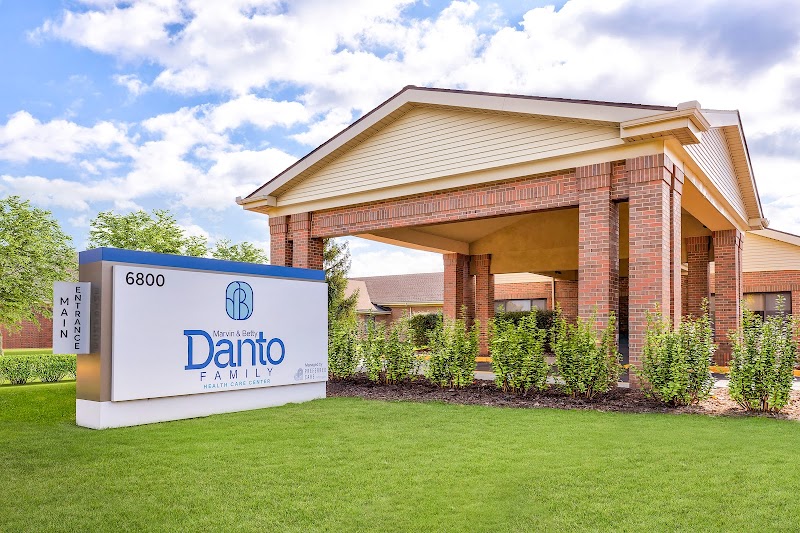
6800 West Maple, West Bloomfield, MI 48322 (248) 788-5300
For profit - Limited Liability company 155 Beds PREFERRED CARE Data: November 2025
Trust Grade
10/100
#295 of 422 in MI
Last Inspection: January 2025

Within standard 12-15 month inspection cycle. Federal law requires annual inspections.

Overview

Marvin & Betty Danto Health Care Center currently has a Trust Grade of F, which indicates significant concerns about the quality of care provided. They rank #295 out of 422 nursing homes in Michigan, placing them in the bottom half of facilities in the state, and #21 out of 43 in Oakland County, meaning only a few local options are worse. The facility is showing a worsening trend, with issues increasing from 5 in 2024 to 15 in 2025, and has accumulated a concerning $145,315 in fines, which is higher than 85% of Michigan facilities. While staffing is rated as average with a 53% turnover, the RN coverage is also average, meaning there is some stability in staff, but many residents may not receive the best care. Specific incidents include a failure to monitor a resident's blood sugar and report abnormal lab results, leading to a delay in necessary care, as well as inadequate preventive measures against pressure ulcers for residents, resulting in serious health risks. Overall, while there are some strengths in staffing, the facility has significant weaknesses that should be carefully considered.
Trust Score
F
10/100
In Michigan
#295/422
Bottom 31%
Safety Record
High Risk
Review needed
Inspections
Getting Worse
5 → 15 violations
Staff Stability
⚠ Watch
53% turnover. Above average. Higher turnover means staff may not know residents' routines.
Penalties
✓ Good
$145,315 in fines. Lower than most Michigan facilities. Relatively clean record.
Skilled Nurses
○ Average
Each resident gets 33 minutes of Registered Nurse (RN) attention daily — about average for Michigan. RNs are the most trained staff who monitor for health changes.
Violations
⚠ Watch
49 deficiencies on record. Higher than average. Multiple issues found across inspections.
★★☆☆☆
2.0
Overall Rating
★★★☆☆
3.0
Staff Levels
★★★☆☆
3.0
Care Quality
★★☆☆☆
2.0
Inspection Score
Stable
2024: 5 issues
2025: 15 issues

The Good

  • Full Sprinkler Coverage · Fire safety systems throughout facility
  • No fines on record

Facility shows strength in fire safety.

The Bad

2-Star Overall Rating

Below Michigan average (3.1)

Below average - review inspection findings carefully

Staff Turnover: 53%

Near Michigan avg (46%)

Higher turnover may affect care consistency

Federal Fines: $145,315

Well above median ($33,413)

Significant penalties indicating serious issues

Chain: PREFERRED CARE

Part of a multi-facility chain

Ask about local staffing decisions and management

The Ugly 49 deficiencies on record

5 actual harm
Apr 2025 5 deficiencies
CONCERN (D) 📢 Someone Reported This

A family member, employee, or ombudsman was alarmed enough to file a formal complaint

Potential for Harm - no one hurt, but risky conditions existed

Deficiency F0557 (Tag F0557)

Could have caused harm · This affected 1 resident

**NOTE- TERMS IN BRACKETS HAVE BEEN EDITED TO PROTECT CONFIDENTIALITY** This citation pertains to Intake MI00149648. Based on observation, interview and record review, the facility failed to obtain co...

Read full inspector narrative →
**NOTE- TERMS IN BRACKETS HAVE BEEN EDITED TO PROTECT CONFIDENTIALITY** This citation pertains to Intake MI00149648. Based on observation, interview and record review, the facility failed to obtain consent to search personal belongings from one resident (R801) of one resident reviewed for Rights to Privacy and Confidentiality. Findings include: A complaint was filed with the State Agency that alleged the facility was going through residents personal possessions without permission. Clinical record review revealed R801 was admitted to the facility on [DATE] and resided as a long-term resident related to chronic pain to the right hip joint as a result from a complicated history involving multiple surgeries. R801's Brief Interview for Mental Status (BIMS) assessed on 3/24/25 scored 15/15 which indicated no cognitive impairment. On 4/3/25 at 11:00 AM, an interview was conducted in R801's room and inquired why they alleged the facility was going through their personal belongings. R801 said just before Christmas 2024, a friend of theirs was observed by staff talking to them through the window in their room. R801 said the staff notified the Nursing Home Administrator (NHA) and suspected they were hoarding their Oxycodone (narcotic, opioid, used to treat pain) and selling it out their window. R801 said a few days after the situation, they returned from Bingo and another resident of the facility (requested to remain anonymous) said they witnessed the NHA going through R801's belongings and told R801, the NHA tore your stuff up! R801 remarked they knew their belongings were tampered with because the bottom third drawer of their nightstand stored their mail, paperwork, and personal letters. R801 had them in a specific order, and when they went into that drawer, all the paperwork was messed up. R801 then pointed to a free standing safe located against the wall under the window, and said once that incident occurred, they had to purchase a safe and they cannot trust the facility. R801 confirmed they were never approached by the NHA to search their room and were not provided consent to do so. On 4/3/25 at 3:32 PM, an interview with the NHA and the Director of Nursing (DON) acknowledged residents' rooms can be searched when there is suspicion of illegal activity or display of suspicious behaviors. When asked if the facility obtains consent, they confirmed they obtain verbal consent only. When inquired if R801's room was searched, the NHA confirmed they searched their room without consent. When asked why they searched their room, the NHA replied they heard a rumor and would not further comment what the rumor was, but they did in fact go through their belongings. The NHA was also asked if there was suspicion of illegal activity, why were the local authorities not contacted. The NHA had no further comments. Review of the facility policy titled; Residents Rights dated 11/24 documented: .Federal and state laws guarantee certain basic rights to all residents of this facility. These rights include the resident's rights to: privacy and confidentiality .
CONCERN (D) 📢 Someone Reported This

A family member, employee, or ombudsman was alarmed enough to file a formal complaint

Potential for Harm - no one hurt, but risky conditions existed

ADL Care (Tag F0677)

Could have caused harm · This affected 1 resident

**NOTE- TERMS IN BRACKETS HAVE BEEN EDITED TO PROTECT CONFIDENTIALITY** This citation pertains to Intake Number(s): MI00150488. Based on observation, interview, and record review, the facility failed ...

Read full inspector narrative →
**NOTE- TERMS IN BRACKETS HAVE BEEN EDITED TO PROTECT CONFIDENTIALITY** This citation pertains to Intake Number(s): MI00150488. Based on observation, interview, and record review, the facility failed to provide assistance with dressing and getting out of bed in a timely manner to one (R806) of three residents reviewed for activities of daily living. Findings include: On 4/3/25 at approximately 9:20 AM, R806 was observed lying in bed wearing a hospital gown. R806 reported she wanted to get dressed and get out of bed. R806 reported she liked to pick out her own outfit from the closet and match her shoes to it. R806 explained she notified the Certified Nursing Assistant (CNA) approximately five minutes prior that she would like to get dressed and get out of bed. On 4/3/25 at 9:55 AM, CNA 'D' was observed exiting R806's room. R806 remained in bed wearing a hospital gown. CNA 'D' reported he changed R806's brief and put pants on her. On 4/3/25 at 10:15 AM, R806 remained in bed wearing a hospital gown. CNA 'D' brought a mechanical lift into R806's room at that time. On 4/3/25 at approximately 10:20 AM, R806 remained in bed wearing a hospital gown. R806 seemed slightly confused and reported she was waiting for staff to clean her wheelchair and then they would assist her out of bed. A wheelchair was observed in R806's room at that time. At 10:25 AM, an interview was conducted with CNA 'F' who reported he planned to get R806 dressed and out of bed, but needed help from another CNA and the one assigned to that unit was busy with another resident. On 4/3/25, at 11:00 AM, approximately one hour and 45 minutes after R806 initially asked to get out of bed, R806 was observed up in her wheelchair, dressed, and in the activity room. A review of R806's clinical record revealed R806 was admitted into the facility on 5/6/24 and readmitted on [DATE] with diagnoses that included: vascular dementia. A review of a Minimum Data Set (MDS) assessment dated [DATE], R806 had moderately impaired cognition, no behaviors, and was dependent on staff for upper body dressing and transfers. A review of R806's active care plans revealed R806 required assistance with dressing and required a mechanical lift with assistance of two people for transfers. On 4/3/25 at 2:30 PM, an interview was conducted with the Director of Nursing (DON). When queried about staffing on R806's unit, the DON reported there were typically two CNAs assigned to that unit giving each CNA approximately 10 residents to care for. When queried about who was permitted to assist with resident care, including mechanical lift transfers, the DON reported the CNAs and nurses, including any nurse managers, could assist. The above observations of R806 waiting approximately one hour and 45 minutes to be dressed and transferred to the wheelchair was discussed with the DON. The DON reported that was a long time to wait if the resident requested to get up and the CNA could have requested assistance from the nurse, unit manager, or DON.
CONCERN (D) 📢 Someone Reported This

A family member, employee, or ombudsman was alarmed enough to file a formal complaint

Potential for Harm - no one hurt, but risky conditions existed

Quality of Care (Tag F0684)

Could have caused harm · This affected 1 resident

**NOTE- TERMS IN BRACKETS HAVE BEEN EDITED TO PROTECT CONFIDENTIALITY** This citation pertains to Intake Number(s): MI00149894. Based on observation, interview, and record review, the facility failed ...

Read full inspector narrative →
**NOTE- TERMS IN BRACKETS HAVE BEEN EDITED TO PROTECT CONFIDENTIALITY** This citation pertains to Intake Number(s): MI00149894. Based on observation, interview, and record review, the facility failed to promptly identify a new skin impairment and implement interventions to prevent reoccurrence for one (R806) of two residents reviewed for pressure ulcers. Findings include: On 4/3/25 at approximately 9:20 AM, R806 was observed lying in bed. An indwelling urinary catheter drainage bag was observed attached to the side of the bed. R806 reported she was waiting to get assistance with getting dressed and getting out of bed. A review of R806's clinical record revealed R806 was admitted into the facility on 5/6/24 and readmitted on [DATE] with diagnoses that included: vascular dementia. A review of a Minimum Data Set (MDS) assessment dated [DATE] revealed R806 had moderately impaired cognition, no behaviors, required substantial/maximal assistance for rolling left and right, had an indwelling catheter, was at risk of developing pressure ulcers, and did not have any pressure ulcers or other skin impairments. A review of R806's Physician's Orders revealed an order dated 3/27/25 for Wound care right lateral thigh .apply betadine, leave open to air q (every) shift . On 4/3/25 at 9:55 AM, CNA 'D' pulled down R806's right pant leg to expose the right lateral (outside) thigh. A flat black area that appeared to be approximately the size of a dime was observed. On the top of R806's thigh an adhesive dressing was observed anchoring the urinary catheter tubing to her leg. When queried about how she got the wound on the outside of her thigh, R806 said, I have a catheter and they stuck that on there with glue. A review of R806's progress notes revealed the a Nursing/Clinical note dated 3/20/25 that read, The afternoon aide informed writer that there was a change in skin on resident. Assessed resident and came across a skin tear on the side of the right thigh . On 4/3/25 at 1:30 PM, all incident reports with associated investigations for R806 since March 2025 were requested from the Administrator and Director of Nursing (DON). A review of an incident report for R806 dated 3/20/25 revealed, While resident was being changed, daughter and aide observed a skin tear on the side of the right thigh .Resident unable to give description . In addition, the facility provided a pain assessment dated [DATE] and a copy of the progress note mentioned above. A review of R806's Treatment Administration Record (TAR) for March 2025 revealed an order for Body audit - daily every day shift for skin observation 0-no skin breakdown, 1-Previously identified wound/breakdown, 2-Newly identified wound/breakdown - describe in progress note. On 3/19/25, 1 was documented which indicated R806 had a previously identified skin impairment. On 3/20/25, 2 was documented which indicated R806 had a newly identified skin impairment. A review of a Wound Evaluation dated 3/21/25 revealed R806 had an in-house acquired blister (a small pocket of body fluid within the upper layers of the skin) to the right lateral thigh that measured 1.16 centimeters (cm) in length and 0.78 cm in width. No further description of the wound was documented. The photo taken at the time of the evaluation showed a irregular shaped small black area. It was not documented that a medical provider was notified. It should be noted that the wound in the photo appeared flat and did not appear raised and fluid filled). A review of a Wound Evaluation dated 3/27/25 revealed R806 had an in-house acquired blister to the right lateral thigh that measured 1.86 cm in length and 1.31 cm in width. The photo taken at the time of the evaluation showed a flat black area that did not resemble a fluid filled pocket (blister). On 4/3/25 at 1:54 PM, an interview was conducted with the wound nurse, Registered Nurse (RN) 'A'. When queried about the facility's process when a new skin impairment was identified, RN 'A' reported he was notified by the nurse. RN 'A' assessed all wounds and the Nurse Practitioner (NP) (either the facility's NP or the wound clinic's NP) would diagnose the wound and ensure the correct treatment was in place. When queried about R806's skin impairment to the lateral right thigh, RN 'A' reported he first assessed the wound on 3/21/25 and at that time it was scabbed over. When queried about whether a scab meant it was in a stage of healing, RN 'A' reported it did. When queried about how R806 obtained the wound on the thigh, RN 'A' reported he did not know and stated, Maybe the wheelchair rubbed on it but said he only assessed the wounds and did not determine the cause. On 4/3/25 at 2:30 PM, an interview was conducted with the DON. When queried about what was done to determine the cause of the skin impairment to R806's right lateral thigh, the DON reported she did not know, but that it was possibly caused from friction and rubbing or maybe the wheelchair or the (mechanical lift). When queried about what was implemented to prevent further occurrences of the same kind, the DON stated, You can't prevent friction from happening. When queried about whether the wound was identified timely when it was first identified as a black scabbed area, the DON reported she felt it was identified timely because she was notified on 3/20/25 and it was assessed on 3/21/25 and it likely scabbed in that time frame. A review of a facility policy titled, Skin Management Guidelines . dated 11/2024, revealed, in part, the following: .Inspect the skin on a daily basis when performing or assisting with personal care or ADLs .Review the interventions and strategies for effectiveness on an ongoing basis .
CONCERN (D) 📢 Someone Reported This

A family member, employee, or ombudsman was alarmed enough to file a formal complaint

Potential for Harm - no one hurt, but risky conditions existed

Pressure Ulcer Prevention (Tag F0686)

Could have caused harm · This affected 1 resident

**NOTE- TERMS IN BRACKETS HAVE BEEN EDITED TO PROTECT CONFIDENTIALITY** This citation pertains to Intake MI00149894 Based on observation, interview and record review, the facility failed to prevent pr...

Read full inspector narrative →
**NOTE- TERMS IN BRACKETS HAVE BEEN EDITED TO PROTECT CONFIDENTIALITY** This citation pertains to Intake MI00149894 Based on observation, interview and record review, the facility failed to prevent pressure ulcer formation and ensure accurate skin assessments for one (R807) of two residents reviewed for pressure ulcers resulting in R807 developing a Deep Tissue Injury (DTI - persistent non-blanchable deep red, maroon or purple discoloration) to the left medial (inside) heel . Findings include: On 4/3/25 at 11:23 AM, R807 was observed sitting in a wheelchair in the therapy room. At that time, R807 walked with a four-wheeled-walker from the therapy room to their room with a Physical Therapist walking behind with their wheelchair. R807 was observed walking at a brisk pace. R807 explained their heel felt better since they had put a dressing on it. R807 was observed wearing gripper socks and their left heel had a dressing under the sock. After sitting in a recliner in their room, R807 was asked about the wound on their heel. R807 explained the facility told them they developed their wound because they were rubbing their heel on the bed, but they did not remember doing that. A pair of foam boots were observed laying in another chair in the room, R807 was asked if the staff put the foam boots on them when they were in bed. R807 explained they did now. When asked if they put them on before there was a wound, R807 said no. R807 was asked if they could turn (or reposition) themselves. R807 explained it was very difficult. R807 was asked if staff came in and turned them routinely when they were in bed. R807 explained only if they asked to be turned would the staff turn them, but at night they could not get anyone to come into their room when they put the light on. Review of the clinical record revealed R807 was admitted into the facility on 3/4/25 with diagnoses that included: aftercare following joint replacement surgery, macular degeneration and rotator cuff tear or rupture of right shoulder. According to the Minimum Data Set (MDS) assessment dated [DATE], R807 was cognitively intact and was dependent on staff for activities of daily living (ADL's). Review of R807's ADL care plan revealed interventions revised 3/5/25 that read, BED MOBILITY: I require assistance by (ext {extensive} x 1) staff to turn and reposition in bed. Review of R807's skin integrity care plan revealed an intervention initiated 3/4/25 that read, . Prqafo [sic] (Pressure Relief Ankle Foot Orthosis) boots WIB (while in bed) as tolerated . Turn and reposition q2h (every two hours). Review of a Nursing Assessment Admission/Readmission for R807 dated 3/4/25 revealed no documentation of any issue with R807's left heel in Section K. Skin. Review of R807's progress notes revealed a nursing note dated 3/4/25 at 2:54 PM read in part, 2nd skin assessment completed . Heels intact . Review of Braden Scale for Predicting Pressure Sore Risk assessments for R807 revealed: 3/4/25 scored 15, indicating AT RISK 15-18 3/12/25 scored 17 3/20/25 scored 20, indicating above the risk scale 3/26/25 scored 19 Review of R807's 30 day Look Back for Reposition every 2 hours when in bed/chair revealed no documentation on the midnight shift on: 3/5/25, 3/8/25, 3/9/25, 3/12/25, 3/20/25, 3/25/25, 3/26/25, 3/28/25, and 3/31/25. On 3/19/25 the documentation was marked No at 12:14 AM. Review of a late entry Wound Practitioner Progress note for R807 dated 3/20/25 at 1:48 PM read in part, .was found today to have a deep tissue injury to the left heel with reports of heel pain. Staff report that (they) often refuses to wear (their) heel boots . 4.4cm (centimeters) x 3.7cm x 0.1cm . Purple - 100% . Boggy . On 4/3/25 at 2:01 PM, Registered Nurse (RN) A, who served as the Wound Care Nurse, was interviewed and asked how R807 acquired a DTI on their left heel. RN A explained R807 might have been rubbing their foot on the bed when they were lying on it. RN A was asked how likely it would be that R807 would be raising and lowering their knee to rub that foot as it was on the same side as their hip replacement they were admitted for . RN A explained that was not likely, but as R807 was always lying on their right side, the medial aspect of the left heel would be against the mattress, and had been told R807 did not like to wear their foam boots. RN A was asked why there was no documentation of R807 refusing to wear foam boots until after the DTI was acquired. RN A had no answer. Review of R807's March 2025 Treatment Administration Record revealed an order with a start date of 3/7/25 for, Body audit - daily every day shift for Skin observation 0-No skin breakdown, 1-Previously identified wound/breakdown 2-Newly identified wound/breakdown- describe in progress note. The body audit was marked as 1 every day except on 3/19/25 when a second body audit on the same day was marked as 2. The associated progress note dated 3/19/25 at 1:49 PM documented on a sacral wound R807 was admitted with. Review of R807's assessments revealed a Skilled Daily: Medically Complex form. There was a section of the form for documentation of skin, .B. Skin . 6. Skin items noted: (Check all that apply) 1. Surgical 2. Pressure 3. Other 4. None; 6a. Describe skin conditions; 6b. Are treatments or daily monitoring needed related to wounds? 1. Yes 2. No . In the 30 days R807 had been in the facility the daily assessment form had only been completed 10 times. Of the 10 assessments completed, eight documented 4. None for skin items noted and five of the 10 assessments marked 2. No for treatments or daily monitoring needed. It should be noted R807 was admitted with a surgical wound and a pressure injury to the sacrum, both had daily wound treatments. On 4/3/25 at 2:44 PM, the Director of Nursing (DON) was interviewed and asked how R807 acquired the DTI to their left heel. The DON explained it was possible the DTI was present on admission. The DON was asked if it had been present on admission why was there no documentation on it for over two weeks after R807's admission. The DON explained it might not have been noticed until it was a blister. When asked if the nurses should have noticed a discoloration or a boggy heel in their daily body audit, the DON had no answer. The DON was asked how often the Skilled Daily: Medically Complex assessment should be completed. The DON explained it should be done daily. When informed of 20 days with no assessment, the DON explained she was more concerned if the skin assessments were accurate. When informed of the mostly inaccurate skin assessments of the completed Skilled Daily assessments, the DON had no answer. The DON was asked why there was no documentation of R807 refusing the foam heel boots until after acquiring the left heel DTI. The DON explained she had talked to R807 who told her they did not like the boots. The DON was asked if it should be documented if a resident did not like to wear the boots, or took them off. The DON agreed it should be documented. Review of a facility policy titled, Skin Management Guidelines Prevention of Pressure Ulcers/Injuries revised 1/2023 read in part, .Skin is assessed on admission to the facility and at least weekly to identify alterations in skin, and any wound assessment should be documented in the medical record . 3. Inspect the skin on a daily basis when performing or assisting with personal care or ADLs. a. Identify any signs of developing pressure injuries (i.e., nonblanchable erythema) . b. Inspect pressure points (sacrum, heels, buttocks, coccyx, elbows, ischium, trochanter, etc.) . e. Reposition resident as indicated on the care plan .
CONCERN (E) 📢 Someone Reported This

A family member, employee, or ombudsman was alarmed enough to file a formal complaint

Potential for Harm - no one hurt, but risky conditions existed

Safe Environment (Tag F0921)

Could have caused harm · This affected multiple residents

**NOTE- TERMS IN BRACKETS HAVE BEEN EDITED TO PROTECT CONFIDENTIALITY** Based on observation and interview, the facility failed to maintain a sanitary healthcare environment amongst residential common...

Read full inspector narrative →
**NOTE- TERMS IN BRACKETS HAVE BEEN EDITED TO PROTECT CONFIDENTIALITY** Based on observation and interview, the facility failed to maintain a sanitary healthcare environment amongst residential common areas including a shared shower room, flooring, training bathroom and rehabilitation equipment, and shared Hoyer lift (lift device used to transfer residents). This deficient practice has potential to affect all residents that utilize these areas and equipment. Findings include: On 4/3/25 at 8:46 AM, entrance into a shared shower room located on the 600 hallway revealed a four sectioned area that contained two shower rooms, one tub room, and one private toileting room. Upon entrance, an odor of sewage was identified. Observation in the tub room revealed an uncovered floor drain, and the sewage smell was greater the closer contact with inspecting the drain. Adhered to the floor were two exposed metal sharp fasteners. The corner baseboard was observed with a broken aqua green colored corner tile lying on the floor surrounded by dry wall debris. The central tub identified as a Carousel Tub was observed storing a bedside commode and a floor mat. The tub drain was dirty with a thick ring of brown colored discoloration. A black and red electric wheelchair was noted in the room with one wheelchair footrest on the chair. The shower bed was on the opposite wall and the blue colored foam padding was cracked exposing the foam interior. Black hairs were observed on the headrest of the pad. The two shower rooms were observed containing used wet towels and washcloths on the floor. The shower room on the right was observed with bulked up wet washcloths lying on a shower chair and black colored hairs were noted on the bench and floor. Puddled water and soap residue was noted in front of the shower chair. Wet towels and washcloths were on lying on the floor within the shower and flooring of the entire room. The shower room to the left was observed having used towels bagged in the corner and wet wash cloths lying on the floor in the shower, outside the shower area, and in the sink. The private toilet room door was observed locked. On 4/3/25 at 8:57 AM, a hoyer lift was observed in front of room [ROOM NUMBER] with a moderate amount of crushed food crumbs on the rolling base of the machine. On 4/3/25 at 9:05 AM, the Director of Nursing (DON) and Nursing Home Administrator (NHA) were brought down the 600 hallway and acknowledged the Hoyer lift was soiled with crumbled food matter and was not sanitary. The shared shower room on the 600 hallway was opened and the NHA commented that there were soiled towels on the floor and this was not acceptable. The tub room was confirmed by the DON and NHA that it was currently used as a storage room. The DON and NHA were not aware of the open floor drain and identified there was an odor. It was confirmed the shower bed was currently used for residents and noted the padding was damaged, and the black hairs were not sanitary. When questioned why the toilet room was locked, the DON said it should not be locked and access to the key to unlock was outside of the locked shower room. Both agreed having the door locked was not safe or sanitary in case a resident needed to use the facility pre or post their shower and there was no easy way to open the door. On 4/3/25 at 9:35 AM, the Rehabilitation (Rehab) Training Bathroom was observed storing three bottles of opened, partially used peri care spray, one container of multiuse sanitation wipes, and a large spray bottle containing an unidentified blue liquid on the top of the toilet tank. The perimeter of the rehabilitation area was observed storing multi use rehab equipment and the floor was observed dusty, and dirty. The window towards the back right corner of the room stored three potted plants with dead leaves and soil on the windowsill, and on floor next to the rehab equipment. On 4/3/25 at 9:45 AM, The Director of Rehab Services (DRS) E was shown the top of the toilet tank storing bottles of opened, partially used peri care spray and agreed that was not sanitary. DRS E was informed the sanitizing wipes previously observed had since been removed, but the spray bottle containing the blue liquid had remained and DRS E remarked they had no idea what it was. DRS E acknowledged the equipment stored against the perimeter of the room on the floor was currently used by the residents and acknowledged the floors were unkempt and needed a deep clean.
Jan 2025 10 deficiencies
CONCERN (D)

Potential for Harm - no one hurt, but risky conditions existed

Deficiency F0554 (Tag F0554)

Could have caused harm · This affected 1 resident

**NOTE- TERMS IN BRACKETS HAVE BEEN EDITED TO PROTECT CONFIDENTIALITY** Based on observation, interview and record review the facility failed to obtain an assessment and physician's order for self-adm...

Read full inspector narrative →
**NOTE- TERMS IN BRACKETS HAVE BEEN EDITED TO PROTECT CONFIDENTIALITY** Based on observation, interview and record review the facility failed to obtain an assessment and physician's order for self-administration of medications for one (R98) of one resident reviewed for self-administration of medication/treatments. Findings include: On 1/7/25 at approximately 10:20 AM, R98 was observed lying in bed. The resident was alert and able to answer questions asked. During the interview, several medical ointments/treatments were observed on the resident's shelf and on their tray table next to their bed. Observations included the following: Hydrocortisone 1%, Antibiotic creams, Icy hot and Bio freeze. When asked about the medications, R98 reported that they can put some of them on themselves or staff can put them on as well. On 1/8/25 at approximately 11:50 AM, R98's room was observed. The medications remained in the room on the resident's shelf. At approximately 12:00 PM, Nurse 'D who was assigned to the hall where R98 resided,entered the room with the Surveyor and noted the medications observed should not be in open areas in the resident's room. Nurse D noted that the resident did not have an order to self-administer medications. Nurse D removed the medications from R98's room and brought them to Unit Manager (UM) E. On 1/8/25 at approximately 12:15 PM, UM E was interviewed regarding the facility protocol on self-administration of medications and/or leaving medications unlocked in a resident's room. UM E reported that residents who want to self-administer medications must have an order. In addition, if they do have an order, the medications should be locked up when not in use. UM E noted that R98 did not have an order to self-administer medications. On 1/8/24 at approximately 2:09 PM, an interview was conducted with the Director of Nursing (DON). The DON was asked as to the facility policy pertaining to self-administration of medication and medication storage, the DON reported that residents must have an order to self-administer medications, and those medications should be locked up when not in use. With respect to R98, the DON noted that they believed the residents significant other was bringing in the medications. A review of R98's clinical record revealed the resident was initially admitted to the facility on [DATE] with diagnoses that included: cerebral infarction, type II diabetes and pain in shoulder and hips.A review of the resident's Minimum Data Set (MDS) noted the resident had a Brief Interview for Mental Status (BIMS) score of 11/15 (moderately cognitively impaired). The facility policy titled, Self-Administration of Medications was reviewed and documented, Policy. In order to maintain the residents' high level of independence, residents who desire to self-administer medications are permitted to do so if the facility's interdisciplinary team has determined that the practice would be safe for the resident and other residents of the facility .Procedures .For those residents who self-administer, the interdisciplinary team verifies the residents ability to self-administer .if the resident demonstrates the ability to safely self-administer medications, a further assessment of the safety of bedside medication storage is conducted .
CONCERN (D)

Potential for Harm - no one hurt, but risky conditions existed

Deficiency F0578 (Tag F0578)

Could have caused harm · This affected 1 resident

**NOTE- TERMS IN BRACKETS HAVE BEEN EDITED TO PROTECT CONFIDENTIALITY** Based on observation, interview and record review the facility failed to ensure timely and accurate advanced directives informat...

Read full inspector narrative →
**NOTE- TERMS IN BRACKETS HAVE BEEN EDITED TO PROTECT CONFIDENTIALITY** Based on observation, interview and record review the facility failed to ensure timely and accurate advanced directives information was in place and ensure resident wishes were timely implemented for two R66 and R2 out of four residents reviewed for Advanced Directives. Findings include: R66 On [DATE] at approximately 10:30 AM, R66 was observed lying in bed. The resident was alert, but not able to answer any questions asked. A review of R66's clinical record noted the resident was initially admitted to the facility on [DATE] with diagnoses that included: dementia, chronic kidney disease and anxiety. A review of the resident's Minimum Data Set (MDS) noted the resident had a Brief Interview for Mental Status (BIMS) score of 99, indicating the resident was severely cognitively impaired. The top of the resident's electronic face sheet indicated the resident was a FULL CODE. Continued review of R66's clinical record noted a form titled, Advance Directives/Medical Treatment Decisions ([DATE]) that documented: This is to acknowledge that I have been informed in writing in a language that I understand of my right and all rules and regulations to make decisions concerning medical care, including the right to issue Advance Directives to be followed should I become incapacitated .I have chosen to formulate and issue the following Advance Directives .Do Not Resuscitate(DNR) (an X was checked in the box). The form was signed by the resident and another signature noted as Legal Representative on [DATE]. On [DATE] at approximately 9:17 AM, an interview was conducted with Social Worker (SW) G. SW G was asked as to the facility protocol regarding Advanced Directives/Code Status. SW G noted that when residents enter the facility, they receive admission paperwork and are asked to determine if they want to be FULL CODE or DNR. They are also asked to provide or complete Advanced Directive Forms. When asked about R66's record that noted the resident was a FULL CODE but had a form completed that noted their wish was DNR, SW G reported that there appeared to be a discrepancy between the two that needed to be corrected. On [DATE] at approximately 10:48 AM, an interview was conducted with Social Worker (SW) F. SW F reported that they were assigned to R66. SW F was asked why R66's wishes to be a DNR was not properly entered in the resident's clinical record. SW F noted that the form Advance Directives/Medical Treatment Decisions completed by the resident and resident's family was not considered effective until a physician discussed the wishes with the resident and/or the resident's responsible party. SW F also reported that they recall talking with the resident who decided they wanted FULL CODE. They further reported that there were notes in the resident's record that indicated they changed their wishes to remain FULL CODE. SW F was asked to provide supporting documents. *It should be noted that no documents indicating the resident's choice to be FULL CODE was provided prior to the end of the survey. Continued review of R66's clinical record was conducted. An attempt to locate SW F's notes regarding the R66's wishes was made. No notes were found. However, a hospital record dated [DATE] documented, in part: I discussed CODE STATUS .patient did not want CPR or intubation .Will continue as DO NOT RESUSCITATE . A Durable Power of Attorney (DPOA)for Health Form (dated [DATE]) was located in the resident's record. A second interview was conducted with SW F. SW F was asked if the resident had been deemed incompetent. SW F reported that they had been but noted the document needed to be placed in the resident's record. SW F was then asked if there had been any discussion with the DPOA (Durable Power Of Attorney) or family member. SW F reported that they had not talked with the family member. R2 On [DATE] at approximately 9:20 AM, R2 was observed lying in bed. The resident was alert and able to answer most questions asked. During the interview the resident reported that they were not happy at the facility and wished they could return to their prior home. A review of R2's clinical record noted the resident was initially admitted to the facility on [DATE] with diagnoses that include: paranoid schizophrenia, post-traumatic stress disorder, and type II diabetes. A review of the resident's Minimum Data Set (MDS) noted the resident had a Brief Interview for Mental Status (BIMS) score of 15/15 (cognitively intact cognition). The resident was noted as a FULL CODE. Continued review of R2's clinical record revealed, in part, the following: [DATE] -Social Services: .Resident's son is activated DPOA as her DPOA paperwork is activated as her DPOA paperwork is not dependent on her ability to make decisions . A document titled; General Durable Power of Attorney was reviewed. The form documented in part: I R2 .appoint my son (name redacted) as my Agent with full power, unless I direct otherwise, to conduct all of my affairs .My Agent is authorized .with respect to any of my property and interests in property as follows .Manage assets .Debts .Deposits .Checks .Borrowing .Collection [NAME] .Securities and investments .Litigation .Insurance .Taxes .Services .Support .Benefits .Vehicles .Powers related .POWERS RELATED TO MY PERSONAL CARE Establish residency .Care contracts .Medical and personal records . *It should be noted the form did not authorize R2's son to make decisions as to code status, medication/treatments etc. Further there were no notes located in the resident's record that indicated discussion were made regarding R2's wishes. Consent forms for the following medications were signed by the R2's son: Xanax ([DATE]), Trazadone ([DATE]), Lexapro ([DATE]). [DATE]: Infection Control Information Consent Forms: No was checked for: Influenza (Flu), Pneumonia, COVID booster, Shingrix (Shingles), Respiratory Syncytial Virus (RSV) the form was signed by R2's son. On [DATE] at approximately 4:55 PM, an interview was conducted with SW F. SW F was asked if R2 had been deemed incompetent. They reported that they had not. When asked why R2's son was making medical decisions for the resident and if end of life wishes had been discussed with R2. SW F noted that R2 had an unusual DPOA that indicated the resident did not have to be deemed incompetent to allow their son to make health care decisions. The DPOA document was reviewed with SW F and a discussion as to the limitations on medical treatment/end of life decisions was discussed. On [DATE] at approximately 9:06 AM, a discussion about R66 and R2 lack of proper DPOA documents was conducted. The Administrator noted the discrepancies. The facility policy titled, Advance Directives/Advance Care Planning was reviewed and documented, in part: Policy Statement: Advance directives will be respected in accordance with state law and facility policy .Upon admission, the resident will be provided with written information concerning the right to refuse or accept medical or surgical treatment and to formulate an advance if he or she chooses to do so .prior to or upon admission of a resident, the Social Service Director or designee will inquire of the resident, his/her family members and/or his or her legal representative, about the existence of any written advanced directives .information about whether or not the resident has executed an advance directive shall be displayed promptly in the medical record .The Attending Physician will provide information to the resident and legal representative regarding the resident's health status, treatment options .Durable Power of Attorney for Health Care .a document delegating authority to a legal representative to make health decisions in case the individual delegating that authority subsequently become incapacitated .
CONCERN (D)

Potential for Harm - no one hurt, but risky conditions existed

Deficiency F0676 (Tag F0676)

Could have caused harm · This affected 1 resident

**NOTE- TERMS IN BRACKETS HAVE BEEN EDITED TO PROTECT CONFIDENTIALITY** Based on observation, interview, and record review, the facility failed to assess a resident for alternative or augmentative com...

Read full inspector narrative →
**NOTE- TERMS IN BRACKETS HAVE BEEN EDITED TO PROTECT CONFIDENTIALITY** Based on observation, interview, and record review, the facility failed to assess a resident for alternative or augmentative communication methods to ensure functional communication for one Resident (R91) of one resident reviewed for activities of daily living. Findings include: Review of the Minimum Data Set (MDS) assessment, dated 9/26/24, revealed R91 was admitted to the facility on [DATE], with diagnoses including stroke, aphasia (difficulty speaking), hemiplegia or hemiparesis (paralyzed or weak limbs), seizure disorder, and depression. The sensory assessment revealed R91 had adequate hearing and vision, was non-verbal, and showed they could rarely communicate their needs. The Brief Interview for Mental Status (BIMS) assessment revealed R91 could not participate. The activities of daily living assessment showed R91 could eat independently without set-up. On 1/07/25 at 12:10 p.m., R91 was observed in their bed eating their lunch. R91 pointed angrily at their meal card ticket with their left hand and held it up for the Surveyor to see. R91 next pointed to their plate of food, and then to their mouth and shook their head 'no'. R91 then picked up his small juice drinks and shook his head 'no'. R91 appeared distressed with their face frowning and furrowing of their eyebrows. R91 then pointed to their mouth and opened it. Surveyor observed a small sore on the top of R91's upper mouth, with no obvious teeth. R91 was asked if they had pain and nodded 'yes'. Surveyor was unable to understand what R91 did not like about their food. Surveyor next asked yes and no questions and by a process of elimination learned R91 did not like their modified diet of soft food and thickened liquids and wanted regular food. Surveyor asked R91 if they could write. R91 shook their head 'no' and showed Surveyor their right hand, which was tightly clenched in a fist. When asked if they were right-handed, R91 shook their head, 'yes'. There was no rolled washcloth, palm protector, or splint in their hand. R91 continued to point at their right hand. When asked if they wanted something to open their hand, R91 nodded 'yes'. R91 then pointed to their right foot, which was directly on their mattress, pointed down, and to their closet. A foot brace was observed and R91 pointed to the brace, an ankle foot orthosis, and then pointed to their right foot. R91 was asked if they wanted the brace on their foot, and R91 nodded 'yes'. Surveyor let R91 know they would follow up with staff. On 1/07/25 at approximately 12:15 p.m., R91 appeared distressed during the interview with difficulty communicating their needs and nodded 'yes' they felt frustrated with their communication. R91 then gestured again to Surveyor and Surveyor was unable to understand what they were trying to say. R91 was asked if they wanted a way to better communicate their needs and nodded 'yes'. When asked how this made them feel, R91 showed surveyor a sad face, by showing tears below their eyes and squinting their eyes. Surveyor looked for an augmentative or alternate communication device or a communication board in R91's room to assist them to express their needs and none was found. R91 was asked if they had any device to assist with communication, they shook their head, No. On 1/07/25 at 12:18 p.m., review of R91's meal ticket showed they were on a mechanical soft, thickened liquid diet. On 1/07/25 at approximately 12:20 p.m., R91's aide, Certified Nursing Assistant (CNA) L, was asked how they communicated with R91 and if there was any assistive devices or alternate means of communication, given R91's extensive efforts, extra time, and expressed frustration communicating their needs. CNA L reported there was no communication board and R91 could not write. When asked how they communicated with R91, CNA L responded R91 pointed at objects in their room to communicate some of their needs, although they could not communicate all their needs this way. When asked about R91's concerns, CNA L reported the staff were working on R91's teeth and dentures, and confirmed R91 did not like their soft modified diet, and they had no hand splint, or treatment for their right hand. On 1/07/25 at approximately 12:25 p.m., the Unit Manager, Registered Nurse F, was asked how R91 communicated with staff. RN F reported they communicated by pointing to show what they needed. Surveyor asked RN F if they had any assistive, alternate, or augmentative communication devices to express all their needs. RN F responded, No. RN F was notified about R91 pointing to their mouth and reporting pain, and how they pointed to their right hand being closed and pointed to their meal ticket and expressed being frustrated with their diet. RN F reported would they follow up. RN F reported R91 could read when asked if they could read their meal ticket, since R91 showed it to Surveyor. Surveyor shared R91 reported feeling sad. Review of R91's nursing progress note, dated 1/07/25 at 1:59 p.m., confirmed R91 communication with nursing staff showed they did not want their mechanical soft diet, and complained of pain in their hand and mouth pain. The note also showed R91 was sad and depressed. This confirmed Surveyor communication with R91 and showed potential for improved communication with augmentative communication, sign language (left hand) or other mediums of functional communication. On 1/08/25 at 9:18 a.m., CNA M was asked about R91's communication, and stated R91 should have a communication board in their room, since they did a lot of pointing for their basic needs but wanted to communicate more than they could do by pointing. CNA M reported R91 could point when they needed to use the urinal and could read their activities and their chronicle (newsletter) daily. CNA M stated, We try to guess (at their gestures) and see if we can be accurate .I think speech therapy should work more on (their) speech, as it's not all coming out (their needs). CNA M reported they had not referred R91 to speech therapy. CNA M saw R91 did not have a communication board in their room, and said they would get them one from the facility social worker, who supplied them. On 1/08/25 at 10:11 a.m., the Director of Rehabilitation, Certified Occupational Therapist Assistant (COTA) N, confirmed the social workers in the facility distributed the communication boards. COTA N was asked if speech therapy was addressing communication and facility communication boards, as they had evaluated R91 on 1/07/25 and had only addressed their swallowing. COTA N planned to clarify this. Surveyor requested R91's speech therapy records. Review of R91's speech therapy records confirmed speech therapy had seen R91 for dysphagia only on 1/07/25, not for communication. Communication was added to a revised 1/08/25 speech therapy assessment, with the diagnosis of aphasia (difficulty speaking), dated 1/08/25. Further record review revealed R91 was seen for speech therapy for another episode beginning 5/29/2024, for dysphagia only. Review of R91's Care Plan revealed, Difficulty communicating as evidenced by (R91 was) nonverbal related to aphasia. Able to communicate by using hand gestures and nods head for 'no' and 'yes' answers. Able to follow commands. Date initiated: 11/15/2022. Revision on 3/30/2024 . There were no alternate types of functional communication systems noted, such as communication boards, tablets, computers, sign language or otherwise, given R91 was observed and staff reported they could point for some but not all of their needs. Review of R91's therapy notes requested from the facility revealed speech therapy records only, and no occupational or physical therapy records, which COTA N confirmed. Review of R91's updated speech therapy evaluation, dated 1/08/25 at 3:15 p.m., revealed R91 was evaluated for dysphagia and swallowing therapy on 1/07/25 and on 1/08/24 for functional communication (at 1:54 p.m.), after discussing R91's functional communication with COTA N. On 1/08/25 at 12:04 p.m., Registered Dietician, RD Q, confirmed R91 was unhappy with their modified texture diet after meeting with them. RD Q shared R91 was holding up their beverages cups in the air and slamming them down. RD Q reported they were able to understand R91's likes and dislikes from yes and no questions, showing R91's potential to communicate their needs. Review of R91's activity note, dated 12/23/24, revealed R91 was alert and oriented times 2-3 spheres, was able to make some (not all) of their needs known by nod/shaking their head or gestures. On 1/09/25 at approximately 9:25 a.m., COTA N accompanied Surveyor to R91's room where a laminated, four-page communication board was observed on R91's bulletin board in their room, out of reach. Each page had anywhere from 14 to 20 pictures to communicate both basic and more specific needs, including pain, medications, washing hair, and thirsty and some items which did not relate to R91's care, including suctioning, crutches, intravenous feeding, and oxygen. R91 held the pages up with their left hand and squinted with one eye, held the board up to one side, and pointed at the pictures. R91 was successfully able to point to the pain and the medication pictures, and then pointed to their head. COTA N asked R91 if they wanted pain medication and they nodded 'yes'. R91 then pointed to the shoe picture and their brace in their room and showed COTA N they wanted their foot brace on. COTA N stated they would ask speech therapy to provide a communication board with less boxes, since they had evaluated R91 for use of a more basic communication board on 1/08/25. When COTA N went to reattach the communication board back onto R91's bulletin board in their room on their right (impaired side), R91 waived their arms no and pointed to their bedside table on their left side. COTA N placed the laminated communication board pages on their bedside table, per R91's wishes. R91 pointed to the picture of dentures (mouth) and then picked up their juice cups and slammed them on the bedside table. When asked, R91 showed they did not want them and appeared agitated. Review of R91's Speech therapy evaluation, updated to include functional communication on 1/08/25, showed speech therapy services evaluated and planned to provide training in augmentative communication with a communication board to R91. This showed some functional potential for R91 to use adaptive and or augmentative communication, given this goal by the evaluating speech therapist. Further review of the speech therapy evaluation showed for reading comprehension, R91 was able to comprehend basic sight words or phrases in everyday context 26-49% of the time, participate in communication exchanges without additional assistance 26-49% of the time, participate in multi-modality communication (different modes of communication) to convey simple meaningful messages related to routine daily activities in low-demand situations 26-49% of the time, and participate in short, structured meaningful conversations in low-demand situations 26 to 49% of the time. The assessment showed R91 demonstrated the rehabilitation potential to communicate functionally, and speech therapy would be exploring various alternate means of communication, including the use of a communication board, and other communication training, strategies, and mediums. On 1/09/25 at 12:43 p.m., the Activity Director, Staff H, was asked about R91's communication and reading ability during activities. Staff H confirmed R91 received the daily new chronicles and they believed they could likely read it, or at least some of the pictures. Regarding yes/no questions, Staff H reported R91 seemed to be accurate in their responses, and they could follow one-step directions. On 1/09/25 at approximately 2:00 p.m., the concerns related to R91's functional communication were shared with the Director of Nursing (DON) and the Nursing Home Administrator (NHA). The DON expressed they believed R91 pointing at objects in their room was functional communication, and the NHA had no additional comment. A policy titled, Assistive Devices and Equipment was received, however did not address functional communication or adaptive or augmentative communication devices. The facility was asked for a resident communication policy; none was provided by the end of the survey.
CONCERN (D)

Potential for Harm - no one hurt, but risky conditions existed

Respiratory Care (Tag F0695)

Could have caused harm · This affected 1 resident

**NOTE- TERMS IN BRACKETS HAVE BEEN EDITED TO PROTECT CONFIDENTIALITY** Based on observation, interview, and record review the facility failed to ensure an order for supplemental oxygen for one reside...

Read full inspector narrative →
**NOTE- TERMS IN BRACKETS HAVE BEEN EDITED TO PROTECT CONFIDENTIALITY** Based on observation, interview, and record review the facility failed to ensure an order for supplemental oxygen for one resident (R17) of one resident reviewed for oxygen. Findings include: On 1/7/25 at 10:40 AM, R17 was observed up in their wheelchair. An oxygen concentrator powered on was observed at the the bedside with the nasal cannula tubing draped over the top of the concentrator. It was observed the concentrator delivery rate was set at two liters. An interview was attempted, however; R17 was did not respond to attempts at verbal communication. During the observation, staff were observed to enter the room and place the nasal cannula delivering oxygen on R17. On 1/7/24 at approximately 12:50 PM and 2:35 PM, R17 was observed up in their wheelchair at the bedside with two liters of oxygen being delivered via nasal cannula from the concentrator. On 1/8/25 at 9:00 AM, 11:04 AM and 1:06 PM, R17 was observed in their bed with two Liters of oxygen being delivered via nasal cannula from the concentrator. On 1/8/25 at 2:18 PM, a review of R17's clinical record revealed they admitted to the facility on [DATE] and most recently re-admitted on [DATE] with diagnoses that included: spastic hemiplegic cerebral palsy, adjustment disorder, dysphagia, high blood pressure, and chronic pain. A review of R17's physician's orders was conducted and did not reveal an order for supplemental oxygen On 1/8/25 at 1:58 PM, an interview was conducted with the facility's Director of Nursing and it was indicated there should have been an order for supplemental oxygen. A review of a facility provided policy titled, Oxygen Administration was conducted and read, The purpose of this procedure is to provide guidelines for safe oxygen administration. Preparation 1. Verify that there is a physician's order for this procedure .
CONCERN (D)

Potential for Harm - no one hurt, but risky conditions existed

Deficiency F0699 (Tag F0699)

Could have caused harm · This affected 1 resident

**NOTE- TERMS IN BRACKETS HAVE BEEN EDITED TO PROTECT CONFIDENTIALITY** Based on interview and record review, the facility failed to provide appropriate interventions to prevent triggers for one Resid...

Read full inspector narrative →
**NOTE- TERMS IN BRACKETS HAVE BEEN EDITED TO PROTECT CONFIDENTIALITY** Based on interview and record review, the facility failed to provide appropriate interventions to prevent triggers for one Resident (R8) of one resident reviewed for trauma-informed care and Post Traumatic Stress Disorder (PTSD). Findings include: Review of R8's Minimum Data Set (MDS) assessment, dated 9/27/24, revealed R8 was admitted to the facility on [DATE], with current diagnoses including heart failure, depression, anxiety, and PTSD (Post Traumatic Stress Disorder). R8 had no physical, verbal, or other behaviors towards others. R8 required supervision or touching assistance with bed mobility and transfers, and minimal assistance for toileting. The depression assessment (PHQ-9) showed a score of 19/27, which revealed moderately severe depression. The Brief Interview for Mental Status (BIMS) assessment revealed a score of 15/15, showing R8 was cognitively intact. On 1/08/25 at 11:24 a.m., R8 was observed in their bariatric hospital bed. R8 reported they were struggling to adjust to being a long-term care resident at the facility, given their younger age, but understood they needed significant care. R8 shared they had a diagnosis of PTSD, however, did not share their triggers or what would help, and was not asked. R8 reported they did not like their current psychological provider and this was why they refused the visits, as the provider reflected what they said back to them and did not offer strategies or solutions for their adjustment concerns. R8 shared they had told social services and nursing staff they wanted another care provider, or for the social worker to assist them, but nothing had changed. R8 stated they still wanted additional social services support in house, and another care outside psych care provider. Review of R8's facility diagnosis list in the Electronic Medical Record (EMR) revealed a diagnosis of PTSD, dated 8/29/24. Review of R8's physician orders revealed they were prescribed a medication for PTSD, Prazosin, on 8/29/24, and remained on this medication as of 1/09/25. Review of R8's physician provider notes revealed they were diagnosed with PTSD, Chronic, and were noted as taking Prazosin for PTSD during January 2025 (noted on 1/03/25), December, 2024, November, 2024, October, 2024, and August, 2024 (initiated 8/28/24). Review of R8's Care Plan, accessed 1/08/25, revealed no Care Plan for trauma-informed care (PTSD), trauma, or for triggers for their PTSD diagnosis. Further review of R8's Insomnia (lack of sleeping well) Care Plan, accessed 1/08/25, dated 10/01/24, revealed a diagnosis of insomnia due to medical condition, PTSD, anxiety, and depression, with interventions, Establish a HS (nighttime) routine with Resident (80), maintain consistent schedule with daily routine, and monitor for factors that may contribute to poor sleeping. There was no mention of any trauma triggers. Review of R8's Behavioral Care Plan, accessed 1/08/25, revealed, At Risk for behavioral symptoms r/t (related to) agitation and hallucinations . This included Complaints regarding room and facility but chooses not to move rooms or have referrals made to other facilities, accusations, calling 911 reporting (they) just wanted someone to come to (their) room, yelling out, making accusatory statements r/t staff not providing care and nobody assisting ADLs (activities of daily living care needs), while multiple staff in (their) room, .falsifying health conditions and exacerbating symptoms, appears fine before staff walks into room; when staff walk into room (R8) states (they) can't breathe, shaking, calls 911 (emergency services number) despite physician recommending (they) go to hospital. Date initiated 2/28/22. Revision on 12/03/24 . PTSD was not noted on the behavioral care plan, or any triggers identified. Review of R8's Treatment Care Plan, accessed 1/08/24, revealed R8 was non-compliant with care and treatments which included declining medications, declining showers, declining nail care, choosing not to move rooms, declining meals, declining supplements, declining use of light, declining to get out of bed, not wanting to be changed when soiled, declining diet downgrade, declining to see dentist, taking off their oxygen, declining therapy evaluations and sessions, declining to get back in bed when asking to be put back, declining to have a wound picture taken, declining to go to scheduled appointments, and declining leg ACE wraps. PTSD was not noted on this Care Plan, or any triggers. Review of R8's psych progress note, dated 8/14/24, revealed, (R8) shared with this social worker that it's hard to accept that (they) will be living in a nursing home for the rest of (their) life . There was no documented follow-up regarding this concern. Review of R8's psychiatry assessment provider note, dated 8/16/24, revealed R8 reported night terrors and only being able to sleep 10 to 20 minutes at time. R8 reported during the assessment they had observed verbal abuse towards a family member and had to take on a role of trying to save their other family member. Review of R8's psych progress note, dated 8/27/24, revealed, (R8) is complaining of Terrible night terrors. (They) said, I try to avoid going to sleep because they are so bad . Review of R8's psychiatry progress note, dated 8/28/24, revealed their night terrors were so bad, they were trying to avoid going to sleep. The note stated, (R8) talks about her 'night terror' and reports being r/t (related to) h/o (history of) trauma, with their (family member) and watching them abuse (family member) in addition to dealing with emotional and verbal abuse (themselves) . Their diagnoses on this report included major depressive disorder, generalized anxiety disorder, and Post Traumatic Stress Disorder (PTSD), chronic. There is a notation in parentheses which said rule out. The report further revealed, Plan: r/t h/o verbal and emotional abuse by (family member) and nightmares. Start Prazosin (a medication for PTSD and nightmares). The report confirmed R8 was a recipient of repetitive traumatic experiences in their family, and the provider deemed medication was needed to address the concerns. Review of R8's psych progress note, dated 9/12/24, revealed R8 reported they were continuing to struggle with their past family trauma, and they were having nightmares. Review of the EMR showed R8 declined five psychological provider visits on: 10/02/24, 10/10/24,10/23/24, 12/04/24, and 12/11/24, with none since 12/11/24. Review of R8's EMR showed they refused their medications on 1/09/25, they refused their soup (which was their preference) on 1/08/25, showing care refusals in the past week. Review of R8's updated Care Plan, accessed 1/09/25 (date of survey exit), revealed, Post Trauma Symptoms as evidenced by resident report R/T (related to) distressing event outside the range of usual human experience. Will demonstrate ability to deal with emotional reactions as evidenced by verbalization of feelings of adjustment to LTC (Long Term Care Facility) setting, comorbidities. Date initiated 1/09/25 . Interventions included identifying coping strategies, talking about at own pace, providing reassurance of safety, and psychology follow-up as needed. No triggers were identified at that time. Review of R8's Social Services notes and assessments in the EMR (reviewed from 8/28/24 through 1/08/25) showed there were no supportive visits provided to address R8's PTSD/trauma, triggers, or interventions. Social Services did not address R8's many behavioral and care rejection concerns, given their refusals to participate with outside psychological services providers and ongoing signs and symptoms of psychosocial distress, behaviors, and adjustment concerns. On 1/08/25 at 1:04 p.m., Social Worker (SW) F was asked about R8's PTSD diagnosis and reviewed the EMR with Surveyor. Surveyor showed SW F their diagnosis list included a diagnosis of PTSD, and the MDS triggered for a PTSD diagnosis. SW F reported they did not know R8 had a PTSD diagnosis. SW F was asked if they had provided any supportive visits to R8 related to their depression and behaviors and responded they had not. SW F acknowledged they were R8's social worker, and this was within their scope of practice to provide supportive visits, and acknowledged after review of R8's Care Plan and documentation they should have provided supportive visits, given R8's provider refusals and their ongoing behaviors and reported distress. SW F acknowledged there was no formal trauma assessment for R8, however trauma was reflected in their assessments, and had been marked No for 12/2024. SW F acknowledged the PTSD diagnosis should have been on R8's Care Plan separately, and stated, We have no way to know triggers and interventions. I am going to see (R8) and see if (they) will accept supportive visits from myself, and if (they) want to try psychology again, and I will update the Care Plan . SW F reported R8 did better working with females (providers and staff) but did not disclose why. On 1/08/25 at 10:20 a.m., the Rehabilitation Director, Certified Occupational Therapist (COTA) N, confirmed R8 was not participating in therapy services in the facility. COTA N reported they would evaluate R8, who would say they would participate, and then there were many refusals. COTA N did not know why they refused so often. Review of R8's Social Services (SS) Assessment, dated 9/27/24, revealed they had a history of trauma, which manifested in nightmares and feelings of guilt, with no triggers identified. On 1/09/25 at 12:11 p.m., Social Worker (SW) G (the other facility social worker) was asked about R8's Care Plan not designating a trauma or PTSD Care Plan, with triggers identified, given the 9/27/24 SS assessment and notation of trauma and identified concerns. Surveyor reviewed there was no progress note regarding a social services follow-up visit, and no SS supportive visits when R8 declined the outside providers. SW G reviewed the EMR and reported they understood the concerns. SW G reported the process when a resident had a PTSD diagnosis was they would ask them about trauma, complete a PTSD Care Plan, and identify triggers and respective interventions. SW G stated they would then provide supportive Social Services visits. SW G reviewed the 9/27/24 SS assessment, which showed a score of 2 concerns identified. SW F reported they would do a separate trauma assessment with a score of 3 concerns of more. Given R8 reported during the assessment they had nightmares and feelings of guilt about past family trauma, SW G was asked if a separate trauma assessment would have been appropriate. SW G declined to respond. On 1/09/25 at 12:48 p.m., Activity Director (AD) H was asked about R8's participation in facility activities. AD H reported R8 would show an interest in their programs and activities, and then would refuse to participate. AD H explained R8 would say, I want to come to the program; let me know when they are going on, and then would refuse to come. Surveyor asked if R8 had a problem sitting up in their wheelchair and confirmed they had never observed or heard of a problem there, and R8 had not reported pain as a reason. AD H was asked if they were aware R8 had a PTSD diagnosis. AD H reported they had not been made aware. When asked if that would change their approach to R8's activities, AD H stated, Yes, if we knew there was a (trauma) trigger it may change how we would provide something (an activity). I will talk with (R8) and we will go over the programs (to encourage their participation) . On 1/09/25 at 3:20 p.m., Surveyor shared the concerns related to R8's PTSD diagnosis, with self-reported adjustment concerns, limited care planning, no identification of triggers, and limited social services follow-up with the Director of Nursing (DON), with the Nursing Home Administrator (NHA) present. The DON reported in August (2024) the psychiatry provider had acknowledged R8 had nightmares which they addressed, and this was not a confirmed diagnosis, and provided documentation of the provider's 8/2024 visit. Surveyor explained on R8's MDS assessment and on their EMR diagnosis page PTSD was a diagnosis, and R8 themselves had confirmed they had a PTSD, however had not been asked triggers so the facility could follow-up. The DON denied a full PTSD diagnosis for R8 and said it had not been fully clarified and handed the surveyor the psych provider's 8/2024 visit. The NHA supported the DON's conclusions. Review of the policy, Trauma Informed and Culturally Competent Care, Level III, reviewed 8/2024, revealed, Purpose: To guide staff in providing care that is culturally competent and trauma-informed in accordance with professional standards of practice. To address the needs of trauma survivors by minimizing triggers and/or re-traumatization .Trauma results from events, series of events, or set of circumstances that is experienced by an individual as physically or emotionally harmful or life threatening and that has lasting adverse effects on the individual's functioning and mental, physical, social, emotional, or spiritual well-being .Trigger is a psychological stimulus that prompts recall of a previous traumatic event, even if the stimulus itself is not traumatic or frightening .Traumatic events which may affect residents during their lifetime include: a. physical, sexual, and emotional abuse .For trauma survivors, the transition to living in an institutional setting (and the associated loss of independence) can trigger profound re-traumatization .Triggers are highly individualized. Some common triggers may include: .j. Experiencing a lack of privacy or confinement in a crowded or small space; k. exposure to loud noises, or bright/flashing lights. l certain sights, such as objects and/or m. sounds, smells, and physical touch .12. Select screening and assessment tools in collaboration with the QAPI (Quality Assurance and Performance Committee) .15. Establish an environment of physical and emotional safety for residents and staff .27. Develop individualized care plans that address past trauma in collaboration with the resident and family, as appropriate .28. Identify and decrease exposure to triggers that may re-traumatize the resident. 29. Recognize the relationship between past trauma and current health concerns, e.g. substance abuse, eating disorders, anxiety, and depression) .Resident Care Strategies. 31 .Safety. Ensure the residents have a sense of psychological, social, cultural, moral, and physical safety. Practice active listening without judgement .Recognize trust is earned over time. Individuals may not disclose information until a relationship has been established .Empowerment: Ensure the residents choices and preferences are honored and that residents are empowered to be active participants in their care . Review of the policy, Social Services, dated 9/2024, revealed, Our facility provides Social Services to assure each resident can attain or maintain his/her highest practicable physical, mental, or psychosocial well-being. Policy Interpretation and Implementation: The Director of Social Services is a qualified social worker and is responsible for: .b. providing for the social and emotional needs of the resident and family .meeting or assisting with the medically-related social service needs of residents .y. Providing or arranging for mental and psychosocial counseling services, as needed . 5. Not all medically-related social services are provided by a qualified social worker. However, the facility is responsible for ensuring that all residents are provided these services whether by a staff member or through referrals to an outside agency .
CONCERN (D)

Potential for Harm - no one hurt, but risky conditions existed

Unnecessary Medications (Tag F0759)

Could have caused harm · This affected 1 resident

**NOTE- TERMS IN BRACKETS HAVE BEEN EDITED TO PROTECT CONFIDENTIALITY** Based on observation, interview, and record review the facility failed to ensure a medication error rate less than five percent ...

Read full inspector narrative →
**NOTE- TERMS IN BRACKETS HAVE BEEN EDITED TO PROTECT CONFIDENTIALITY** Based on observation, interview, and record review the facility failed to ensure a medication error rate less than five percent when three medication errors were identified from a total of 41 opportunities for one resident (R104) of five residents observed during medication administration, resulting in a medication error rate of 7.32%. Findings include: Clinical record review revealed R104 was admitted to the facility on [DATE] with medical diagnoses including hypertension, heart failure, prostate cancer, thyroid disorder, and renal Insufficiency. Brief Interview of Mental Status (BIMS) scored 15/15 indicating R104 was cognitively intact. On 1/8/25, at 10:34 AM, Licensed Practical Nurse (LPN) A was reviewed for medication administration and was observed inaccurately measuring ordered 17 grams MiraLAX (a laxative medication) resulting in R104 receiving a lesser dose than ordered. On 1/8/25 at 4:12 PM, A medication reconciliation was conducted for R104 and revealed LPN A administered Metoprolol (heart failure, hypertension medication) 50 milligrams (mg) and failed to hold the medication based on ordered parameters to not administer if heartrate is less than 60 beats per minute. LPN 'A administered the medication with a documented heartrate of 57 beats per minute. During record review, R104 order for Flonase (allergy relief medication) one spray per each nostril was documented as administered at time of medication observation and the medication was not administered during this observation. On 1/8/25 at 2:16 PM, The Director of Nursing (DON) was informed of the above findings. The DON was shown the measuring cap of bottle of MiraLAX, and acknowledged the medication was not measured correctly resulting in R104 received a lower dose than what was ordered. The DON was informed R104's medication Flonase was not observed as given and documented by LPN A as administered. The DON further acknowledged R104's ordered Metoprolol parameters were not followed and the medication should not have been administered.
CONCERN (E)

Potential for Harm - no one hurt, but risky conditions existed

Safe Environment (Tag F0584)

Could have caused harm · This affected multiple residents

**NOTE- TERMS IN BRACKETS HAVE BEEN EDITED TO PROTECT CONFIDENTIALITY** Based on observation, interview, and record review, the facility failed to ensure a clean, comfortable, homelike environment for...

Read full inspector narrative →
**NOTE- TERMS IN BRACKETS HAVE BEEN EDITED TO PROTECT CONFIDENTIALITY** Based on observation, interview, and record review, the facility failed to ensure a clean, comfortable, homelike environment for for five residents, (R#'s 105, 46, 16, 17, 58, 84, and 30) of five residents reviewed for a homelike environment, and for 11 residents (who wished to remain anonymous) from the group meeting, resulting in verbalized complaints regarding the environment, housekeeping, and laundry services. Findings include: On 1/7/25 at 9:40 AM, the tube feeding pole in room [ROOM NUMBER] was observed to have dried up tube feeding formula staining the length of the pole and on the braces holding the wheels. On 1/7/25 at 9:55 AM the wall behind R16's bed was observed with a large area of missing paint and numerous long and deep gouges in the drywall. On 1/7/25 at 10:05 AM, room [ROOM NUMBER]-W (bed at the window side of room) was observed to have dirty clothing, crumbs, empty food and beverage packaging, food and paper debris, and empty pistachio shells strewn about the floor. It was further observed a large, five pound tub of raw honey with sticky, soiled debris on the jar and lid of the jar. On 1/7/25 at 10:28 AM an interview with R105 was conducted regarding housekeeping and said sometimes they services was okay and sometimes it wasn't. They said often times the floors needed to be swept and mopped and it didn't get done. On 1/7/25 at 10:31 AM, R46's floor very soiled with what appeared to be sticky food substances on the left side of the bed. R46 said the facility frequently provided no housekeeping services on the weekends. They were asked the last time the floor had been swept and mopped and said it had been a few days. On 1/7/25 at 10:36 AM, R58's room was observed to have three open translucent garbage bags on the floor. Two bags were observed to contain linens (unclear if clean or dirty), and one bag appeared to have trash contained in it. On 1/7/25 at 10:40 AM, R17 was observed up in their wheelchair. There were no linens on the bed and multiple towels and a gown were observed to be tossed under the bed. On 1/7/25 at 11:07 AM, R84 said the facility had a difficult time providing clean linens on the nights and weekends. They further reported there were no housekeeping staff on the weekends. On 1/8/25 at 2:29 PM, and 1/9/24 at 8:16 AM, room [ROOM NUMBER]'s bathroom was observed to contain a bedside commode with multiple articles of clothing not stored in a bag piled on top of it. On 1/9/24 at 8:10 AM, room [ROOM NUMBER]'s floor was observed to be littered with paper and food/crumb debris. The bathroom floor had a black sticky substance with crumbs and paper debris sticking to the floor. In the corner of the bathroom an open translucent garbage bag was observed on the floor with clothing spilling from the top of the bag. On 1/9/24 at 8:14 AM, room [ROOM NUMBER]'s bathroom floor was observed with four open translucent trash bags containing a mix of clothing and linens. On 1/9/24 at 8:16 AM, room [ROOM NUMBER]'s bathroom was observed with wadded up clothing not contained in a bag piled in the seat of a wheelchair. Resident Council On 1/8/25 at 11:00 AM, a Resident Council meeting was conducted with 11 residents who requested to remain anonymous. During the meeting, the residents who were cognitively intact, were asked questions regarding care and life at the facility. The residents expressed numerous concerns about the facility's failure to keep a clean, comfortable and homelike environment. One resident noted that they had concerns regarding linen and towels. The resident noted there have been times when their linen is wet, and they ask staff to change it. Staff will tell them that they do not have any and will place several towels over the wet linen. Another resident reported the same concerns. They noted that they believe that some of the staff hoard linen and makes it difficult for other staff to find proper linen. Another resident noted that staff often try to obtain linen but often do not have keys to unlock them from storage. Further concerns centered around ensuring housekeeping was routinely done. One resident reported that housekeeping was very limited over the weekends and often their room was not properly cleaned. Another resident noted that often housekeeping is not timely picking up garbage off the floor, leaving pill cups on their bedside tables and leaving dirty used tissues in residents' rooms. A third concern centered around laundry. The residents reported that in the past the facility left bins in the residents' bathrooms. Dirty laundry would be placed in the bins and staff would pick up laundry from the bins and they believed that system worked best. Another resident stated that in October 2024 the facility changed the way dirty clothes were taken down to the laundry room They noted that staff now pick up dirty laundry, put them in plastic bags and then it is sent to laundry. One resident explained that they did not believe the bags are labeled with their names or room number and they often do not get their clothes back. Another resident had a concern that staff often mixed dirty linen with dirty clothes and they thought that was an infection control concern. A third resident stated that there was only one person who was doing laundry and that made things difficult to get their clean laundry back timely. R30 On 1/7/25 at approximately 10:30 AM, R30 was observed sitting in their room. The resident was alert but had difficulty answering all questions asked. A piece of paper was observed on the closet door that noted their family was responsible for doing the resident's laundry. A review of R30's clinical record revealed the resident was admitted to the facility on [DATE] with diagnoses that included type II diabetes, Encephalopathy and dementia. The resident's daughter was noted to be their active DPOA (durable power of attorney). On 1/7/25 at approximately 12:51 PM a phone interview was conducted with the resident's DPOA. They reported that many times the resident's clothes go missing and they believe staff is sending their clothes to the laundry. On 1/7/25 at approximately 1:45 PM, Laundry Staff (LS) I was observed returning laundry to R30's room. When asked why they were bringing back clothes as there was a note in the resident's room that indicated the resident's family was to do their laundry, LS I stated that things have been very difficult for them and other staff since the facility changed the way laundry was to be removed form residents' rooms. On 1/9/25 at approximately 9:03 AM, an interview was conducted with the Administrator. The concerns brought up at the Resident Council meeting and concerns pertaining to R30 were discussed. The Administrator reported that they were aware of the concerns regarding linen and noted that staff had been educated to not hoard linen. They also noted that change in laundry was done with an effort to try to get clothes back to residents timely. On 01/07/25 at approximately 9:52 a.m., During the environmental rounds, a review of the facility was conducted with Maintenance Director R (MD R) and the following was observed: At approximately 10:03 a.m., room [ROOM NUMBER] had a nebulizer respiratory machine plugged into an standard extension cord. MD R was queried regarding the medical device being plugged into the extension cord and they reported that was not allowed and that the nebulizer should be plugged into an outlet. At approximately 10:15 a.m., room [ROOM NUMBER]-D had large gouges in the wall of their room consisting of approximately three feet up and down. MD R was queried regarding the gouges and reported that they had not been made aware of them. MD R was asked what the process was for notifying maintenance staff for needed repairs and they indicated the facility has a reporting system called TELS (a system used to communicate work order with maintenance) that staff can use to create a work order that notify's maintenance of needed repairs. MD R was asked if any work orders were in TELS for the drywall repair and they indicated that none were made. At approximately 3:03 p.m., an inspection of the facility laundry room was conducted and the following was observed: Collected-layered dust was observed behind the washing machines and the Clean linen racks were observed in the dirty washing section with the flaps up exposing the clean linens to potential contaminants in the room. A facility document titled Quality of life: Homelike Environment was reviewed and revealed the following: Policy Statement: Residents are provided with a safe, clean, comfortable and homelike environment and encouraged to use their personal belongings to the extent possible .
CONCERN (E)

Potential for Harm - no one hurt, but risky conditions existed

Deficiency F0658 (Tag F0658)

Could have caused harm · This affected multiple residents

**NOTE- TERMS IN BRACKETS HAVE BEEN EDITED TO PROTECT CONFIDENTIALITY** Based on observation, interview, and record review, the facility failed to ensure medication were administered and documented pe...

Read full inspector narrative →
**NOTE- TERMS IN BRACKETS HAVE BEEN EDITED TO PROTECT CONFIDENTIALITY** Based on observation, interview, and record review, the facility failed to ensure medication were administered and documented per professional standards for two residents, (R#'s 47 and 104) of five residents reviewed for professional standards with medication administration and documentation resulting in verbalized complaints of not receiving as needed pain medications on time and inaccurate medical record keeping. Findings include: R47 On 1/7/25 at 10:47 AM, an interview was conducted with R47. They said they did not believe the nursing staff were accurately recording the times they received their as needed narcotic pain medication resulting in them experiencing a delay of receiving their next as needed doses. On 1/8/25 at 2:23 PM, a review of R47's clinical record revealed they admitted to the facility on [DATE] and most recently re-admitted on [DATE] with diagnoses that included: heart failure, diabetes, and chronic kidney disease. R47's most recently completed Minimum Data Set assessment revealed R47 had intact cognition. A review of R47's physician's orders was conducted and revealed an order for oxycodone 5 milligrams, give two tablets every six hours as needed. A review of R47's CONTROLLED SUBSTANCE RECORD (a form used to document the proof of use and reconciliation of controlled substances) and Medication Administration Record (MAR) was conducted and revealed the following: oxycodone signed out on the CONTROLLED SUBSTANCE RECORD on 1/3/25 by Nurse 'A' at 9AM, no documentation on the MAR the medication had been given. oxycodone signed out on the CONTROLLED SUBSTANCE RECORD on 1/5/25 by Nurse 'J' at 5:30 AM, no documentation on the MAR the medication had been given. oxycodone signed out on the CONTROLLED SUBSTANCE RECORD on 1/5/25 by Nurse 'A' at 1 PM, no documentation on the MAR the medication had been given. oxycodone signed out on the CONTROLLED SUBSTANCE RECORD on 1/5/25 by Nurse 'A' at 7 PM, no documentation on the MAR the medication had been given. oxycodone signed out on the CONTROLLED SUBSTANCE RECORD on 1/6/25 by Nurse 'K' at 6:10 PM, no documentation on the MAR the medication had been given. On 1/8/25 at 1:20 PM, an interview was conducted with Nurse 'A' regarding administration and documentation of R47's oxycodone. They were asked why they did not document the administrations of the medications on the MAR and offered no response, only saying it was, habit to check the CONTROLLED SUBSTANCE RECORDS for the timing and administration of the medication. On 1/8/24 at 1:58 PM, an interview was conducted with the facility's Director of Nursing regarding the documentation of medications on the MAR and said all medications given should be documented at the time they were given on the MAR. A review of a facility provided policy titled, Medication Administration was conducted and read, Medications are administered in a safe and timely manner, and as prescribed .23. 23. As required or indicated for a medication, the individual administering the medication records in the resident's medical record: a. The date and time the medication was administered; b. The dosage; c. The route of administration; d. The injection site (if applicable); e. Any complaints or symptoms for which the drug was administered; f. Any results achieved and when those results were observed; and g. The signature and title of the person administering the drug . Resident 104 Clinical record review revealed R104 was admitted to the facility on [DATE] with medical diagnoses including hypertension, heart failure, prostate cancer, thyroid disorder, and renal Insufficiency. A Brief Interview of Mental status (BIMS) score 15/15 indicating R104 was cognitively intact. On 1/8/25, at 10:34 AM, Licensed Practical Nurse (LPN) A was observed administering medications to R104. On 1/8/25 at 11:50 AM, A medication reconciliation record review was attempted of the Medication Administration Record (MAR) and revealed no medications that were observed administered to R104 were documented as given. On 1/8/25 at 1:37 PM, A medication reconciliation record review was attempted of the MAR and revealed no medications that were observed administered to R104 were documented as given. On 1/8/25 at 2:09 PM, A medication reconciliation record review was attempted of the MAR and revealed no medications that were observed for medication administration were documented as given to R104. The Director of Nursing (DON) was informed the medication administration survey could not be completed because LPN A had not documented administration of R104's medications from the morning observation. When questioned when Nursing is to document medication administration, the DON confirmed Nursing documents medications given at the time they are administered. Review of the facilities policy titled; Medication Administration dated 4/2019 documented: .The individual administering the medication initials the resident's EMAR <sic> after giving each medication .
CONCERN (E)

Potential for Harm - no one hurt, but risky conditions existed

Quality of Care (Tag F0684)

Could have caused harm · This affected multiple residents

**NOTE- TERMS IN BRACKETS HAVE BEEN EDITED TO PROTECT CONFIDENTIALITY** Based on observation, interview, and record review, the facility failed to ensure Hospice services were provided per plan of car...

Read full inspector narrative →
**NOTE- TERMS IN BRACKETS HAVE BEEN EDITED TO PROTECT CONFIDENTIALITY** Based on observation, interview, and record review, the facility failed to ensure Hospice services were provided per plan of care for one resident, (R4) of one resident reviewed for Hospice, resulting in R4 not receiving Hospice services per the provisions. Findings include: On 1/7/25 at 10:25 AM and 1:05 PM, R4 was observed in their bed asleep. On 1/8/25 at 11:25 AM, a review of of R4's clinical record revealed they admitted to the facility on [DATE], and most recently re-admitted on [DATE] with diagnoses that included: multiple sclerosis, pressure ulcers, osteomyelitis (bone infection, anxiety disorder, dementia, and contractures. R4's most recent Minimum Data Set assessment revealed R4 had moderately impaired cognition and required assistance from staff for activities of daily living. On 1/7/25 at 12:54 PM, continued review of R4's record revealed they signed on for Hospice services on 10/14/24. A review of the Hospice plan of care and orders for the benefit period of 10/14/24 thru 1/11/25 was conducted and indicated R4 was to receive skilled nursing visits twice a week and as needed, and nurse aide visits twice a week and as needed. A review of hospice staff notes revealed their first skilled nursing visit occurred on 10/30/24, two weeks after they signed on for services. Continued review of the notes revealed skilled nursing visits on the following dates: 11/5/24, 11/14/24, 11/20/24, 11/26/24, 12/12/24, 12/13/24, 12/19/24, 12/27/24, and 1/2/25. It was noted the skilled nursing progress notes did not indicate R2 receive the the plan of care skilled nursing visits twice per week. It was further discovered R2 had no documented visits from a Hospice nurse aide. On 1/8/25 at 11:08 AM, an interview was conducted with the facility's Director of Nursing (DON) they were asked who in the facility followed up to ensure the Hospice company was conducting visits per their plan of care and said they did not know if anyone followed up to ensure Hospice staff were completing the visits. They were then asked about the particular Hospice company R4 had signed up with and said they thought R4 was to receive skilled nursing visits one time per week and nurse aide visits twice per week. At that time R4's Hospice plan of care was brought to their attention with the outlined provisions of visits from the nurse and aide being scheduled twice per week. They indicated they would follow-up with the Hospice company for clarification. At 11:21 PM, the DON followed-up and agreed the services had not been provided per plan of care. A review of a facility provided policy titled, Hospice Program was conducted and read, .5. Hospice providers who contract with this facility: a. must have a written agreement with the facility outlining (in detail) the responsibilities of the facility and the hospice agency; and b. are held responsible for meeting the same professional standards and timeliness of service as any contracted individual or agency associated with the facility .12. Coordinated care plans for residents receiving hospice services will include the most recent hospice plan of care as well as the care and services provided by our facility (including the responsible provider and discipline assigned to specific tasks) in order to maintain the resident's highest practicable physical, mental, and psychosocial well-being .
CONCERN (E)

Potential for Harm - no one hurt, but risky conditions existed

Deficiency F0761 (Tag F0761)

Could have caused harm · This affected multiple residents

**NOTE- TERMS IN BRACKETS HAVE BEEN EDITED TO PROTECT CONFIDENTIALITY** On 1/07/25 at approximately 10:44 a.m., a Medication Cart located next to room [ROOM NUMBER] was observed unlocked and unattende...

Read full inspector narrative →
**NOTE- TERMS IN BRACKETS HAVE BEEN EDITED TO PROTECT CONFIDENTIALITY** On 1/07/25 at approximately 10:44 a.m., a Medication Cart located next to room [ROOM NUMBER] was observed unlocked and unattended by any Nursing staff. On 1/7/25 at approximately 10:48 a.m., Nurse S was observed coming down the hall out of a residents room with a vital monitoring machine. Nurse S was queried if the medication cart should be locked and they indicated it should be and was observed locking it. A Review of the facility's policy titled; Storage of Medications dated 4/2019 documented the following: The facility stores all drugs and biological's in a safe, secure, and orderly manner .Drugs are stored in the packaging, containers in which they are received . Based on observation and interview, the facility failed to ensure proper storage of medications for four of four medication carts reviewed for medication storage. Findings include: On 1/8/2024 at 8:52 AM, an observation of the 700-1 Medication Cart was conducted with Licensed Practical Nurse (LPN) B. The following medications were observed throughout the cart unpackaged and without patient identifiers. 1 WHITE ROUND TAB 1 1/4 TAB 1 WHITE OVAL 1 SMALL WHITE ROUND 1/Z 1 ROUND WHITE R/196 1 WHITE ROUND 1 PEACH ROUND EP102 2 OBLONG YELLOW NVR/17 3 PINK OBLONG 894/5 1 PEACH EP102 Insulin Pen (Humalog) observed with no patient identifier, only room [ROOM NUMBER] D written in black marker. On 1/8/2024 at 9:18 AM, an observation of the 600 Medication Cart was conducted with LPN C. The following medications were observed throughout the cart unpackaged and without patient identifiers. 1/2 WHITE TAB 3 PEACH ROUND EP102 1 WHITE ROUND AC41 2 ROUND WHITE EP116 1 OBLONG GREEN 45E1 1 WHITE ROUND 128C 3 YELLOW OBLONG 88H 1 WHITE ROUND G10 1 WHITE ROUND AC41 1 SMALL WHITE ROUND P5 1 ORANGE ROUND B302 1 HEXAGON BLUE 77 2 PINK 30LPIN 1 ORANGE OVAL B85 1 ROUND 196 1 ROUND 61 1 GREEN OBLONG 1 WHITE ROUND P20 On 1/8/25 at 9:18 AM, An observation of the 500 Medication Cart was conducted with LPN A. A total of nine medications were observed throughout the second drawer of the cart unpackaged and without patient identifiers. On 1/8/25 at 1:59 PM, The Director of Nursing (DON) was informed of the medication cart observations and acknowledged medications should not be stored without secured packaging and without patient identifiers.
Nov 2024 1 deficiency
CONCERN (D) 📢 Someone Reported This

A family member, employee, or ombudsman was alarmed enough to file a formal complaint

Potential for Harm - no one hurt, but risky conditions existed

Resident Rights (Tag F0550)

Could have caused harm · This affected 1 resident

This citation pertains to intake #MI00146798. Based on observation and interview, the facility failed to provide an environment that promoted and enhanced residents' dignity for three (R805, R806 and ...

Read full inspector narrative →
This citation pertains to intake #MI00146798. Based on observation and interview, the facility failed to provide an environment that promoted and enhanced residents' dignity for three (R805, R806 and R807) of seven residents reviewed for dignity and respect. Findings include: Review of complaints reported to the State Agency included allegations that residents were not being treated with dignity and respect. On 11/19/24 at 9:37 AM, the call lights were observed activated and sounding at the nursing desk for the rooms occupied by R805, R806 and R807. On 11/19/24 at 9:38 AM, Certified Nursing Assistant (CNA 'A') was observed coming from a resident room while carrying a meal tray and entering into the room occupied by R806 and R807 without announcing themselves, or knocking before entering. CNA 'A' was then observed to go to R807's side of the room and asked in a gruff, rushed tone, What do you want?. Upon CNA 'A' exiting R806 and R807's room, they were asked to answer a few brief questions. During the interview, CNA 'A' began to make statements about why the call lights were on, and reported they were, Lighting up all over the place. CNA 'A' then made a comment about R805's call light being on. The resident's door was closed. CNA 'A' reported they were not assigned to R805, but would help. CNA 'A' then proceeded to enter R805's room by quickly opening the door and walking in, without knocking or announcing themselves before doing so. On 11/19/24 at 12:45 PM, CNA 'A' approached the surveyor in the hallway and asked if they did anything wrong. They were informed of the concern with lack of dignity/respect and reviewed the earlier observations of them entering into multiple resident rooms without knocking and announcing themselves. CNA 'A' then reported they knew they should've have done that but further stated, The lights were ringing all over. On 11/19/24 at 1:40 PM, an interview was conducted with the Director of Nursing (DON). They reported they had been informed of the concerns with dignity by Unit Manager 'B' and confirmed that should not have occurred.
Jun 2024 3 deficiencies
CONCERN (D) 📢 Someone Reported This

A family member, employee, or ombudsman was alarmed enough to file a formal complaint

Potential for Harm - no one hurt, but risky conditions existed

Deficiency F0604 (Tag F0604)

Could have caused harm · This affected 1 resident

**NOTE- TERMS IN BRACKETS HAVE BEEN EDITED TO PROTECT CONFIDENTIALITY** This citation pertains to intake #MI00145236 Based on observation, interview, and record review, the facility failed to ensure ...

Read full inspector narrative →
**NOTE- TERMS IN BRACKETS HAVE BEEN EDITED TO PROTECT CONFIDENTIALITY** This citation pertains to intake #MI00145236 Based on observation, interview, and record review, the facility failed to ensure freedom from physical restraints for one resident (R503), of one resident reviewed for restraints, resulting in staff reported observations of the resident's feet and legs tied in a knot with blankets and multiple staff reports of having received an in-service education on restraints. Findings include: A complaint was received by the State Agency that alleged a resident had been physically restrained on the afternoon shift of 6/17/24. On 6/27/24 at 9:45 AM, R503 was observed in the dining area between the 500 and 600 unit seated in their wheelchair. An interview was attempted, however; R503 did not respond appropriately. A review of R503's clinical record revealed they admitted to the facility on [DATE] and most recently readmitted on [DATE] with diagnoses that included: moderate protein calorie malnutrition, heart disease, adjustment disorder with anxiety, falls, and dementia. Further review of the record revealed R503 received Hospice services. On 6/27/24 at 10:45 AM, an interview was conducted with Certified Nurse Aide (CNA) 'G', a staff member assigned to R503 on the date of the alleged restraint incident. CNA 'G' was asked what they recalled about the incident and said they were assigned to R503 from 6AM to 2 PM and their assignment changed at 2PM. They said they were not aware it changed and thought they were still assigned to R503. They said they were going to check on R503 when they overheard Nurse 'H' say something about R503 being restrained. CNA 'G' said they immediately went to check on R503 at approximately 3 PM and found them in their bed with their feet, bound. They said they first thought the resident became tangled in their blanket, but upon further inspection, CNA 'G' said R503 presented with one of their blankets wrapped around their feet, ankles, and knees, and the blanket had been tied in a knot. CNA 'G' said R503 was agitated trying to free their feet/legs from the knotted blanket. They were asked if they believed R503 could have knotted their own blanket around their legs and said they did not believe so. CNA 'G' was asked what happened after they removed the knotted blanket from R503's legs, and they said Nurse 'H' informed Unit Manager (UM) 'I' and UM 'I' reported to the unit and told the staff residents could not be restrained. CNA 'G' was asked if the facility interviewed them after the incident and said they did an over the phone statement to the Administrator the day after the incident. On 6/27/24 at 11:09 AM, an interview was conducted with Nurse 'H', R503's assigned nurse on the day of the alleged incident. Nurse 'H' said the incident happened on their shift. They walked past R503's room and saw R503 had, two blankets tied in a knot around their legs. They said CNA 'G' untied the blankets while they (Nurse 'H') went to each of the other CNA's assigned to that unit in an attempt to find out who did it. Nurse 'H' said all the CNA's assigned to that unit denied performing the act and they then told Unit Manager (UM) 'I' R503 had been tied up in their blankets. They were then asked what UM 'I' did when they found out the information and said UM 'I' came to the unit and educated all staff that residents could not be restrained. On 6/27/24 at 11:24 AM, an interview was conducted with UM 'I'. UM 'I' said Nurse 'H' came to them and said R503 was tangled in their blankets. They were asked if they were made aware R503's blankets were, tied in a knot, witnessed by both CNA 'G', and Nurse 'H'. They said, No. They further said they went to R503's room, assessed them and observed R503 covered with multiple blankets. They then said they called the unit staff to the desk and educated them about not piling multiple blankets on top of the resident. They were asked if they educated any of the staff about restraints at that time, and said they did not, despite both CNA 'G' and Nurse 'H' reporting an in-service about restraints being held at the desk. On 6/27/24 at 11:50 AM, an interview was conducted with CNA 'J', a CNA assigned to work on the unit the day of the alleged incident. When queried, CNA 'J' exasperatedly stated, Oh no, not this again. They were asked of their knowledge of the incident and said Nurse 'H' asked them about R503, being in a restraint. They further indicated both UM 'I' and the Administrator also asked them about R503 observed in a restraint. CNA 'J' said they were not R503's assigned aide and had not observed anything. On 6/27/24 at 12:22 PM, an interview with the facility's Director of Nursing (DON) was conducted. They said they did not know a whole lot about the incident and UM 'I' reported to them R503 was tangled in their blankets. They said UM 'I' told them they gave staff an in-service about not using multiple blankets. They further said the next day, the Administrator received an allegation from a CNA about R503 having been restrained. They said the Administrator looked into the incident. At that time, they were requested to provide any investigation material regarding the incident. On 6/27/24 at 12:45 PM, a review of an investigation file was completed. A typed summary read, 1:50pm nurse placed resident in bed. 2;30 <sic> aide see's <sic> resident resting comfortably in bed. 2:40 the nurse goes in room and observed blankets tangled. These were the two main caregivers for the resident at this time that observed the resident with the blankets and did not note any other staff going into room. It was noted that resident has a history of tying items around her feet per roommate and becomes restless and fidgets with articles A review of R503's care plans and progress notes was conducted for a 12 month look-back period and did not indicate R503 demonstrated any of the roommate's reported behavior. It was further noted R503's most recent Minimum Data Set Assessment indicated R503 required maximal assistance for bed mobility, transferring, and ambulation. Continued review of the investigation file revealed the following: A signed statement dated 6/18/24 from Nurse 'H' that read, I put (R503) to bed around 150p (1:50 PM). When I got back around 240p (2:40 PM) I walked in her room and her legs were tied together with 2 thin throw blankets. I walked out of the room to find the aide. I came across (CNA 'G') first and asked her if she had (R503) for the 2nd shift, she said no. (CNA 'G') walked into the room untied the sheets .I asked all the other aides and they said they did not take care of (R503) . An unsigned, undated statement from CNA 'G' that read, I saw (R503) around 230p (2:30 PM) resting comfortably in bed. (Nurse 'H) came and got me about 10 minutes later and asked me to come with her to the room. It looked initially looked <sic> they were tangled up but the blankets were wrapped all along her legs in a knot. I have never seen anything like this in 20 years as an aide . An unsigned , undated statement from CNA 'J' that read, (UM 'I') called us for a meeting saying that (R503) got tied up . An unsigned statement dated 6/18/24 from CNA 'K' that read, .We had a meeting with (UM 'I') that it had come to her attention that the resident <sic> feet were tied with blankets . An unsigned, undated statement from UM 'I' that read, It was sometime in the afternoon, the nurse came to my office and stated she was upset and frustrated. She explained (R503) was in her bed with blankets wrapped around her legs tight. I did not hear the words tied .I immediately walked to the room .As I walked into the room, I observed the patient sitting on the edge of the bed .I observed medium thick blankets on the side of the bed. My immediate concern was of the patient possibly being overheated. As I had seen no evidence of binding . On 6/27/24 at 1:54 PM, an interview via telephone was conducted with the facility's Administrator/Abuse Coordinator regarding the allegation R503 had been restrained. They said they looked into the incident but believed R503 bound their own feet/legs in a knot with their blankets and they had not been restrained. A request for a restraint policy was made on 6/27/24 at 1:15 PM, however; a policy was not provided by the end of the survey.
CONCERN (D) 📢 Someone Reported This

A family member, employee, or ombudsman was alarmed enough to file a formal complaint

Potential for Harm - no one hurt, but risky conditions existed

Report Alleged Abuse (Tag F0609)

Could have caused harm · This affected 1 resident

**NOTE- TERMS IN BRACKETS HAVE BEEN EDITED TO PROTECT CONFIDENTIALITY** This citation pertains to intake #MI00145236 Based on observation, interview, and record review, the facility failed to ensure a...

Read full inspector narrative →
**NOTE- TERMS IN BRACKETS HAVE BEEN EDITED TO PROTECT CONFIDENTIALITY** This citation pertains to intake #MI00145236 Based on observation, interview, and record review, the facility failed to ensure abuse was immediately reported to the abuse coordinator and reported to the State Agency for one resident, (R503) of two residents reviewed for abuse. Findings include: A complaint was received by the State Agency that alleged a resident had been physically restrained on the afternoon shift of 6/17/24. On 6/27/24 at 9:45 AM, R503 was observed in the dining area between the 500 and 600 unit seated in their wheelchair. An interview was attempted, however; R503 did not respond appropriately. A review of R503's clinical record revealed they admitted to the facility on [DATE] and most recently readmitted [DATE] with diagnoses that included: moderate protein calorie malnutrition, heart disease, adjustment disorder with anxiety, falls, and dementia. Further review of the record revealed R503 received Hospice services. On 6/27/24 at 10:45 AM, an interview was conducted with Certified Nurse Aide (CNA) 'G', a staff member assigned to R503 on the date of the alleged restraint incident. CNA 'G' was asked what they recalled about the incident and said they were assigned to R503 from 6AM to 2 PM and their assignment changed at 2PM. They said they were not aware it changed and thought they were still assigned to R503. They said they were going to check on R503 when they overheard Nurse 'H' say something about R503 being restrained. CNA 'G' said they immediately went to check on R503 at approximately 3 PM and found them in their bed with their feet, bound. They said they first thought the resident became tangled in their blanket, but upon further inspection, CNA 'G' said R503 presented with one of their blankets wrapped around their feet, ankles, and knees, and the blanket had been tied in a knot. CNA 'G' said R503 was agitated trying to free their feet/legs from the knotted blanket. They were asked if they believed R503 could have knotted their own blanket around their legs and said they did not believe so. CNA 'G' was asked what happened after they removed the knotted blanket from R503's legs and said Nurse 'H' informed Unit Manager 'I' and Unit Manager 'I' reported to the unit and told staff that residents could not be restrained. CNA 'G' was asked if the facility interviewed them about the incident and said they did an over the phone statement to the Administrator the day after the incident. On 6/27/24 at 11:09 AM, an interview was conducted with Nurse 'H', R503's assigned nurse on the day of the alleged incident. Nurse 'H' said the incident happened on their shift. They walked past R503's room and saw R503 had, two blankets tied in a knot around their legs. They said CNA 'G' untied the blankets while they (Nurse 'H') went to each of the other CNA's assigned to that unit in an attempt to find out who did it. Nurse 'H' said all the CNA's assigned to that unit denied performing the act and they then told Unit Manager (UM) 'I' R503 had been tied up in their blankets. They were then asked what UM 'I' did when they found out the information and they said UM 'I' came to the unit and educated all staff that residents could not be restrained. On 6/27/24 at 11:24 AM, an interview was conducted with UM 'I'. UM 'I' said Nurse 'H' came to them and said R503 was tangled in their blankets. They were asked if they were made aware R503's blankets were, tied in a knot, witnessed by both CNA 'G', and Nurse 'H'. They said, No. They further said they went to R503's room, assessed them and observed R503 covered with multiple blankets. They then said they called the unit staff to the desk and educated them about not piling multiple blankets on top of the resident. They were asked if they educated any of the staff about restraints at that time and said they did not, despite both CNA 'G' and Nurse 'H' reporting an in-service about restraints being held at the desk. On 6/27/24 at 11:50 AM, an interview was conducted with CNA 'J', a CNA assigned to work on the unit the day of the alleged incident. When queried, CNA 'J' exasperatedly stated, Oh no, not this again. They were asked of their knowledge of the incident and said Nurse 'H' asked them about R503, being in a restraint. They further indicated both UM 'I' and the Administrator also asked them about R503 observed in a restraint. CNA 'J' said they were not R503's assigned aide and had not observed anything. On 6/27/24 at 12:22 PM, an interview with the facility's Director of Nursing (DON) was conducted. They said they did not know a whole lot about the incident and UM 'I' reported to them R503 was tangled in their blankets. They said UM 'I' told them they gave staff an in-service about not using multiple blankets. They further said the next day, the Administrator received an allegation from an aide about R503 having been restrained. They said the Administrator looked into the incident. At that time, they were requested to provide any investigation material regarding the incident. On 6/27/24 at 12:45 PM, a review of an investigation file was completed. A typed summary read, 1:50pm nurse placed resident in bed. 2;30 <sic> aide see's <sic> resident resting comfortably in bed. 2:40 the nurse goes in room and observed blankets tangled. These were the two main caregivers for the resident at this time that observed the resident with the blankets and did not note any other staff going into room. It was noted that resident has a history of tying items around her feet per roommate and becomes restless and fidgets with articles A review of R503's care plans and progress notes was conducted for a 12 month look-back period and did not indicate R503 demonstrated any of the roommate's reported behavior. It was further noted R503's most recent Minimum Data Set Assessment indicated R503 required maximal assistance for bed mobility, transferring, and ambulation. Continued review of the investigation file revealed the following: A signed statement dated 6/18/24 from Nurse 'H' that read, I put (R503) to bed around 150p (1:50 PM). When I got back around 240p (2:40 PM) I walked in her room and her legs were tied together with 2 thin throw blankets. I walked out of the room to find the aide. I came across (CNA 'G') first and asked her if she had (R503) for the 2nd shift, she said no. (CNA 'G') walked into the room untied the sheets .I asked all the other aides and they said they did not take care of (R503) . An unsigned, undated statement from CNA 'G' that read, I saw (R503) around 230p (2:30 PM) resting comfortably in bed. (Nurse 'H) came and got me about 10 minutes later and asked me to come with her to the room. It looked initially looked <sic> they were tangled up but the blankets were wrapped all along her legs in a knot. I have never seen anything like this in 20 years as an aide . An unsigned , undated statement from CNA 'J' that read, (UM 'I') called us for a meeting saying that (R503) got tied up . An unsigned statement dated 6/18/24 from CNA 'K' that read, .We had a meeting with (UM 'I') that it had come to her attention that the resident <sic> feet were tied with blankets . An unsigned, undated statement from UM 'I' that read, It was sometime in the afternoon, the nurse came to my office and stated she was upset and frustrated. She explained (R503) was in her bed with blankets wrapped around her legs tight. I did not hear the words tied .I immediately waked to the room .As I walked into the room, I observed the patient sitting on the edge of the bed .I observed medium thick blankets on the side of the bed. My immediate concern was of the patient possibly being overheated. As I had seen no evidence of binding . On 6/27/24 at 1:54 PM, an interview via telephone was conducted with the facility's Administrator/Abuse Coordinator. They were asked about the incident. They said a staff member reported to them on 6/18/24, rumors going around about a patient being tied up the previous day. They said they immediately started their investigation and at 2:40 PM (on 6/17/24) a nurse saw R503's sheets were tied. The Administrator was asked if they considered the allegation of R503 being tied up as an allegation of abuse and they said it was a, rumor, not an allegation. They further reported through their own investigation they determined R503 did it on, their own volition, and staff had not restrained the resident. They were asked if a rumor could be considered an allegation of abuse reportable to the State Agency, but declined to answer the question. Lastly, the Administrator was asked if the incident should have been reported to them as the Abuse Coordinator at the time of the incident and agreed it should have. A review of a facility provided policy titled, ABUSE AND NEGLECT PROCEDURAL GUIDELINES was conducted and read, .Investigation: Resident abuse must be immediately reported to the Administrator and/or Director of Nursing. The Administrator and/or Director of Nursing will ensure a thorough investigation of alleged violations and document findings and appropriate action .Reporting: Facility employees who become aware of abuse or neglect, shall ensure safety of the resident and IMMEDIATELY report the matter to the facility Administrator and/or Director of Nursing. Facility must report alleged violations- If the event results in the allegation of abuse or serious bodily injury, the event will be reported immediately but not more than two hours after the individual first suspects that a crime has occurred .If the event does not result in serious bodily injury or allegation of abuse, the suspicion will be reported immediately but not more than twenty-four hours after the individual first suspects that a crime has occurred .
CONCERN (E) 📢 Someone Reported This

A family member, employee, or ombudsman was alarmed enough to file a formal complaint

Potential for Harm - no one hurt, but risky conditions existed

Pressure Ulcer Prevention (Tag F0686)

Could have caused harm · This affected multiple residents

**NOTE- TERMS IN BRACKETS HAVE BEEN EDITED TO PROTECT CONFIDENTIALITY** This citation pertains to intake: MI00145092. Based on observation, interview, and record review the facility failed to timely ...

Read full inspector narrative →
**NOTE- TERMS IN BRACKETS HAVE BEEN EDITED TO PROTECT CONFIDENTIALITY** This citation pertains to intake: MI00145092. Based on observation, interview, and record review the facility failed to timely implement effective wound interventions/treatments and ensure physician follow-up, assessment, and monitoring of a worsening wound for one (R502) of two residents reviewed for skin concerns. Findings include: Review of a complaint submitted to the State Agency documented concerns of the facility's failure to prevent worsening of R502's pressure ulcers. On 6/26/24, R502 was observed in their room sitting in their wheelchair. Blue inflated boots were observed on the resident's bed. R502 requested to be assisted to the community room to conduct the interview. R502 was assisted by staff to the community room and an interview was conducted with R502. R502 was asked if they had any wounds on their body and R502 said they had one on their buttocks and one on each heel. When asked if they ever refused to be turned and repositioned in bed or to wear the inflated blue boots observed on their bed, R502 said they never refused. R502 said staff put their inflated blue boots on them at night time and removed them in the morning. R502 did admit to refusing therapy and their tube feeding at times, and said they were having a hard time adjusting to the decline of their health. Review of the medical record revealed R502 was admitted to the facility on [DATE], with diagnoses that included: cerebral infarction, hemiplegia and hemiparesis affecting dominant right side. The record further reviewed R502 required staff assistance for all Activities of Daily Living and had a Brief Interview for Mental Status score of 15/15 calculated on 5/14/24 that indicated intact cognition. Review of a, Nursing Assessment admission . dated 5/7/24 at 1:56 PM, documented in part . Is there a skin issue present . Yes . Sacrum - open wound . Right lower leg (front) - redness . Left lower leg (front) - redness . Right heel- open blister . The Braden score was documented as a, 15 . At Risk. Review of the May 2024 Medication/Treatment Administration Record (MAR/TAR) documented the following treatment orders: An order dated 5/8/24- wound care coccyx/sacrum; cleanse with wound cleanser and gauze, apply zinc-based barrier cream to wound. One time a day for wound care (9AM). This order was discontinued on 5/17/24. An order dated 5/9/24- Sacro-coccyx/bilateral buttock: Cleanse with normal saline, apply moisture barrier to wound base, cover with comfort foam dressing. Every day shift for wound care Also PRN. This order was discontinued on 5/13/24. Both orders were applied on the dayshift to the same area from 5/9/24 to 5/13/24. Review of the medical record documented no clarification of either order, or explanation of the two treatments for the same area. An order on 5/13/24- cleanse right heel with wound cleanser, apply skin prep, leave open to air. This order was discontinued on 5/16/24. This order was implemented six days after admission to the facility, although the opened blister to the right heel was identified on admission on [DATE]. A review of the admission note dated 5/7/24 at 11:35 AM, revealed no documentation the physician was informed of the, open blister to the right heel. A review of a, Skin & Wound Evaluation dated 5/8/24, documented . Moisture Associated Skin Damage . to the sacrococcygeal area and a, . Blister . to the right heel. A review of a Skin & Wound Evaluation dated 5/16/24, documented the identification of a, Blister on R502's, Left Heel . In-House Acquired . A review of the right heel, Skin & Wound Evaluation dated 5/16/24, documented the right heel as a, . Unstageable: Obscured full-thickness skin and tissue loss . Slough and/or eschar . A review of the May 2024 MAR/TAR documented the following treatment for the left heel: 5/17/24- Cleanse left heel with wound cleanser, swab with skin prep q (every) shift, leave open to air, every shift for wound care. This order was discontinued on 5/24/24. A review of a, Skin & Wound Evaluation dated 6/6/24, documented the following, . Pressure . Unstageable . Slough and/or eschar . to the sacrococcygeal area. Continued review of R502's May 2024 MAR/TAR revealed the following: An entry on the MAR/TAR dated 5/17/24- PRAFO (Pressure Relief Ankle Foot Orthosis) boots on bilateral heels at all times as tolerated every shift for Wound care. This order was implemented 10 days after admission to the facility. An order dated 5/17/24- Cleanse right heel with wound cleanser, apply calcium alginate, cover with abd (abdominal) and kerlix, Q (every) daily and PRN (as needed) every shift. This order was applied twice a day, with no clarification of the, Q daily and PRN, every shift noted in the medical record. An order dated 5/17/24- wound care coccyx/sacrum; cleanse with wound cleanser and gauze, apply zinc based barrier cream to wound, every shift for wound care. Review of the medical record revealed R502 was seen by multiple Medical Doctors and Nurse Practitioners who prescribed multiple treatments to the coccyx/sacrum, right and left heels, however; there was no evidence The Medical Doctors and Nurse Practitioners assessed/examined or documented on any of R502's skin impairment/wounds until 5/29/24. A review of a, Physician Services note dated 5/29/24 at 7:00 AM, documented in part, . Bilateral DTI (deep tissue injury- intact skin with non-blanchable deep red, maroon, purple discoloration due to damage of underlying soft tissue) . Patient seen today for DTI management to bilateral heels. Patient heels assessed, noted boggyness <sic>, intact skin dark area to heels. Patient arterial doppler results shows mild peripheral vascular disease without occlusion, right lower extremity, mild to moderate peripheral vascular disease without occlusion . Surrounding skin to DTI blanchable . Diagnosis/Status/Plan . Deep tissue pressure injury of left heel . Pressure induced deep tissue damage of left heel (chronic) - cleanse right and left heels, cover with betadine Q (every) daily and PRN, elevate BLE (bilateral lower extremities) daily, bilateral heel protector in place, wound nurse monitoring . It was noted this was the first documentation of the Physician team to have assessed R502's heels since the resident admitted more than three weeks prior. It was also noted the Physician team had no documented evidence the sacrococcygeal (sacrum/sacral/coccyx) was assessed. A review of a, Physician Services note dated 6/2/24 at 12:22 PM, documented in part, . CHIEF COMPLAINT: Bilateral heel wounds, sacral wound, and right-sided hemiparesis . He developed bilateral deep tissue injury in both heels as well as sacral and buttocks area . ASSESSMENT AND PLAN . Bilateral heel wounds . Sacral and buttocks wound condition is also most likely related to shearing forces as well as noncompliance with turning position, but the patient does have some disruption of the skin level wound care . Multiple wounds sacral, buttock, bilateral heels. Wound care team is on the case. We will follow up. The patient to be turned every two hours while protective heel wear at all the time . This was the first documentation of the Physician team to document or acknowledge the sacral wound. There was no documented assessment or examination of the sacral wound for this consultation. Review of the medical record revealed no documentation of R502's noncompliance with turning and positioning. Review of a (veteran hospital name) consultation dated 6/13/24, documented in part . B/L (bilateral) heel pressure wounds - unstageable . Wound clinic in the interim he is high-risk for bad outcome . Sacral wound - draining, probes to bone - sending to Wound clinic . Review of a (veteran hospital name) wound care orders dated 6/21/24, documented in part . Rt (right) heel MRI (magnetic resonance imaging) showing osteomyelitis. Sacral ulcers have not yet spread to bone . On 6/26/24 at 3:07 PM, the Director of Nursing (DON) was interviewed and asked about the concerns of the sacral and right heel skin impairment identified on admission for R502. The DON was asked about the duplicate treatment started for the sacral area and delayed implementation of the right heel treatment. The DON was also asked about the many treatments implemented by the physicians/nurse practitioner for R502's wounds, without physician/nurse practitioner monitoring and assessing the effectiveness of the treatment prescribed. The DON said they (nursing staff and interdisciplinary team) were following R502's wounds but would look into the medical record for the physician/nurse practitioner assessment of R502's wounds. Review of a follow up email that contained documents provided by the Administrator and DON, revealed the following: A Nursing note dated 5/17/24 at 12:37 PM, documented in part . Doctor aware of wound status and new blister and agrees with treatment plan. Care plans reviewed and revised as needed . This sentence was underlined by the DON. Copies of the resident wound orders were included in the email. The DON provided the date of 6/11/24 as R502's first wound care appointment.
Feb 2024 1 deficiency
CONCERN (D) 📢 Someone Reported This

A family member, employee, or ombudsman was alarmed enough to file a formal complaint

Potential for Harm - no one hurt, but risky conditions existed

Respiratory Care (Tag F0695)

Could have caused harm · This affected 1 resident

**NOTE- TERMS IN BRACKETS HAVE BEEN EDITED TO PROTECT CONFIDENTIALITY** This citation pertains to intake #MI00142694 Based on observation, interview and record review the facility failed to ensure an ...

Read full inspector narrative →
**NOTE- TERMS IN BRACKETS HAVE BEEN EDITED TO PROTECT CONFIDENTIALITY** This citation pertains to intake #MI00142694 Based on observation, interview and record review the facility failed to ensure an oxygen dependent resident was provided continuous oxygen per Physicians order for one resident (R802) of one residents reviewed for respiratory care. Findings include: On 2/21/24 a complaint submitted to the Stage Agency was reviewed which indicated R802's oxygen tank ran out of oxygen, resulting in R802 having a lower oxygen saturation rate. On 2/21/24 at approximately 1:11 p.m., R802 was observed in their room, up in their wheelchair. R802 was observed to be having oxygen therapy administered via their tank on the back of the wheelchair at 6L (liters) per minute. R802 was queried how they were breathing and they indicated that it was ok but that the staff wanted them on eight LPM (liters per minute) but they were ok at six LPM. R802 then reported that they had an issue about 1.5-2 weeks ago in which the facility had forgot to provide them with a new oxygen tank and they ran out of oxygen, became unconscious and had low oxygen until the Nurse came into the room and put them on the machine (oxygen concentrator). R802 indicated the Nurse told him after they had aroused him that their tank on their wheelchair had been empty. R802 then indicated that later on that night they had issues with getting oxygen in their bed and that they were screaming and the Nurse had came in and could not get their oxygen back up and they had to go to the hospital. R802 indicated that they were questioning if the earlier incident caused the later one that night but was not sure and they repeated they cannot be without oxygen. On 2/21/24 the medical record for R802 was reviewed and revealed the following: R802 was initially admitted the facility on 5/25/23, last readmitted on [DATE] and had diagnoses including Morbid obesity ,Chronic respiratory failure with hypoxia, Dementia, and Mild cognitive impairment. A review of R802's MDS (minimum data set) with an ARD (assessment reference date) of 12/23/23 revealed R802 was on oxygen therapy. A review of R802's comprehensive plan of care revealed the following: Focus-Has respiratory impairment related to respiratory failure with dependence on supplemental oxygen, COPD (Chronic obstructive pulmonary disease), CHF (Congestive heart failure), pulmonary fibrosis and sleep apnea. Date Initiated: 08/02/2023 .Interventions: Obtain pulse oximetry and report abnormal findings Date Initiated: 08/02/2023 .Administer oxygen as per physician order: 6L NC (nasal cannula) May titrate up to 8-10 L PM as needed. Date Initiated: 08/02/2023 . A Physicians order dated 1/11/24 revealed the following: Oxygen eight liters per minute via nasal cannula every shift for maintenance. A review of R802's progress notes revealed the following: 2/9/2024 at 10:33 Physician/Practitioner Progress Note Late Entry: Note Text: [R802] was seen for follow up 7) chronic hypoxic respiratory failure, COPD & ILD: Continue oxygen 2, to keep SpO2 (saturation rate) >90-92% . 2/11/2024 at 02:20 Nursing/Clinical Note Text: called to room by CENA (Certified Nursing Assistant) passing H2 (water), noted resident thrashing about in bed, when approached resident grabbing saying help me, noted nasal cannula turned upside down, sat (oxygen saturation rate) 77, repositioned, O2 (oxygen) cannula replaced, color pale, rebreather mask applied after unable to get sat above 80%. 911 called, transferred via stretcher. Son made aware. Physician made aware . A review of R802's documented oxygen saturation rates on their February 2024 MAR (medication administration record) revealed the following: 2/10-0700 (94). A second review of R802's documented oxygen saturation rates on the vitals tab of the Electronic Medical Record (EMR) revealed a rate of 94 at 0840. No further rates were documented until 2200 at 94. Further review of the progress notes did not document R802's previous incident of having their oxygen tank empty and low saturation rate prior to being sent to the hospital in the early morning of 2/11/24. On 2/21/24 at approximately 2:30 p.m., during a conversation with Nurse B, Nurse B was queried if they were R802's assigned Nurse on the evening and midnight of 2/10/24 into 2/11/24 and they indicated that they were. Nurse B was queried regarding the events of the night of 2/10 and they reported that they started working at 7:00 PM., that night and that they did not get to R802's medication pass until about 8:30 PM. Nurse B indicated that when they went into the room at 8:30 PM they observed R802 in an altered mental state and was slow to respond to stimuli and had their nasal cannula in their nose. Nurse B reported they then observed R802's oxygen tank to be empty and not infusing any oxygen via the nasal cannula. Nurse B indicated they switched R802's cannula from the empty tank and hooked it up to the oxygen concentrator and took an oxygen saturation reading which was recorded at 88% and they had to use physical and verbal stimuli to get R802 aroused again. Nurse B was queried as to the monitoring systems in place to ensure residents who are dependent on oxygen do not run out and they indicated that they had approximately 25 residents to get to for medications administration and nobody had informed them that R802 needed a new tank of oxygen. Nurse B was queried why that incident was not documented in the record including the low saturation rate and they reported that they were busy with medication pass and had forgotten to document it. Nurse B then reported that early in the morning at around 2:00 AM, R802 was found in their bed with their nasal cannula off and was screaming/agitated and had a saturation rate of 77. At that time, they put rebreather mask on them and could not get the oxygen level into the 90's so they called 911 and sent them to the hospital. Nurse B was queried what staff member was responsible for ensuring that residents that are dependent on oxygen are provided an uninterrupted supply and they reported it's the Nurse's responsibility. On 2/21/24 at approximately 3:43 p.m., Unit Manager A (UM A) was queried regarding R802's oxygen tank being empty on 2/10 when Nurse B went into their room and they indicated that all the facility staff are responsible for ensuring R802's tanks are refilled without them going empty and that the staff know R802 requires a high liter flow. On 2/21/24 a facility document titled Oxygen Administration was reviewed and revealed the following: Purpose-The purpose of this procedure is to provide guidelines for safe oxygen administration 3. Monitor portable O2 tanks frequently to ensure tank is not nearing empty .
Dec 2023 20 deficiencies 3 Harm
SERIOUS (G) 📢 Someone Reported This

A family member, employee, or ombudsman was alarmed enough to file a formal complaint

Actual Harm - a resident was hurt due to facility failures

Quality of Care (Tag F0684)

A resident was harmed · This affected 1 resident

**NOTE- TERMS IN BRACKETS HAVE BEEN EDITED TO PROTECT CONFIDENTIALITY** This citation pertains to intake #MI00134966 and MI00141309. This citation has two deficient practices. Deficient Practice #1 B...

Read full inspector narrative →
**NOTE- TERMS IN BRACKETS HAVE BEEN EDITED TO PROTECT CONFIDENTIALITY** This citation pertains to intake #MI00134966 and MI00141309. This citation has two deficient practices. Deficient Practice #1 Based on interviews and record reviews the facility failed to implement an order to obtain daily blood sugar (BS) levels upon admission, failed to identify and report to the physician abnormal lab results, and failed to timely report to the physician a change of condition for one (R104) of one resident reviewed for an expired closed record sample, resulting in a delay of care and services and the prompt intervention to transfer the resident to a higher level of care. Findings include: Review of the medical record revealed R104 was initially admitted to the facility on [DATE] and readmitted to the facility on [DATE] and expired fifteen days later. R104 was admitted with diagnoses that included: dementia, type 2 diabetes mellitus, long term use of insulin, and hypertension. A Minimum Data Set (MDS) assessment dated [DATE], documented a Brief Interview for Mental Status (BIMS) score of 1 (which indicated severely impaired cognition) and required staff assistance for all Activities of Daily Living (ADLs). Review of the hospital documentation provided to the facility upon R104's admission documented the following in part . Problem List . Colitis, Fecal impaction . Medication List . BD SINGLE USE SWABS REGULAR Pads USE ONCE daily . Embrace Lancets Ultra Thin 30G . USE ONCE daily . The swabs are alcohol pads, and the lancets are used to test blood sugar levels daily as documented in the hospital discharge paperwork. Review of the physician orders revealed the resident was receiving Insulin Glargine daily for diabetes mellitus. Further review of the hospital discharge papers documented in part . Additional Insulin Admin (administration) Instructions . Insulin glargine (LANTUS) . Do not mix with other insulins . Notify physician if Blood Glucose less than 70 mg/dl or greater than 349 mg/dl (milligrams per deciliter) . Review of the medical record revealed the facility did not implement the order to utilize the lancets daily to obtain R104's blood sugars until [DATE], two weeks after admitting into the facility. Further review of the medical record revealed no documentation on why the order was not implemented upon admission and implemented two weeks later. Review of the medical record revealed R104 had an unwitnessed fall at the facility on [DATE], that resulted in a transfer to the hospital and documented injury on around his right eye . Area around the right eye cleansed and steri-stripped and revealed a R (right) proximal humerus fracture. Review of the physician orders revealed a Basic Metabolic Profile (BMP) and Complete Blood Count (CBC) ordered on [DATE]. Review of a CMP (Complete Metabolic Profile) and CBC reported to the facility on [DATE] at 1:46 PM, documented multiple abnormal labs as follows: Glucose 352 H (High) - (74-109 normal range) BUN 41 H (7-25 normal range) Creatinine 1.35 H (0.60 -1.30 normal range) B/C Ration 30.37 H (8.0 - 25.0 normal range) AST (SGOT) 11 L (Low) (13-39 normal range) Alkaline Phosphatase 134 H (34 - 104 normal range) GFR Caucasian 51 L (> 60 normal range) RBC 3.75 L (4.10 - 6.20 normal range) Hemoglobin 11.7 L (13.5 - 17.5 normal range) Hematocrit 34.8 L (41.0-53.0 normal range) Neutrophil 78.6 H (40.0 - 74.0 normal range) Lymphocyte 13.1 L (19.0 - 48.0 normal range) Review of the medical record and physician consultations revealed no identification of the review and/or reporting to the physician the abnormal labs. Review of a facility policy titled Lab and Diagnostic Test Results . (Reviewed 10/2023) documented in part . When test results are reported to the facility, a nurse will first review the results . The nurse will identify the urgency of communicating with the Attending Physician based on physician request, the seriousness of any abnormality . Review of two Orders- Administration Note dated [DATE], both at 5:48 AM documented pt (patient) can not swallow for their morning Tylenol medication and pt failed to swallow for their morning Omeprazole medication. This note was documented by Licensed Practical Nurse (LPN) M. Review of the Medication Administration Record (MAR) and medical record revealed the resident had no documented issues with swallowing noted and had taken all previous medications with no swallowing concerns identified. Review of a Nursing note dated [DATE] (more than an hour later at 6:58 AM) documented in part . pt is lethargic, cannot [NAME] (swallow) and nonverbal through out night shift. Blood sugar went up, call np (nurse practitioner) and ordered 2 unit of lispo. This note was documented by LPN M. Review of the medical record revealed multiple nursing and physician notes that documented the resident to have been alert and able to communicate their basic needs to staff (resident primary language was Russian) until the date of [DATE] at 6:58 AM, when the nurse documented the resident was lethargic and nonverbal through out night shift. This indicated a change of condition from the resident's baseline. Review of the medical record revealed no documentation of the physician or np to have been notified of the identified change of condition with R104 at that time. Further review of the record revealed no documented vitals or assessments throughout the night shift, after the change of condition was identified, with the exception of the 7 AM vitals obtained. Review of a Nursing note dated [DATE] at 8:14 AM, documented in part . pt. observed lethargic at 7:00 am during change of shift report, vital signs Bp (blood pressure) 57/61, hr (heart rate) 103, resp (respirations) 22 . md (medical doctor) notified . Md order to transfer pt to (hospital name) via 911 . This note was also documented by LPN M. This indicated a delay with informing the physician of the change of condition with R104. The nurse documented on [DATE] at 6:58 AM, of the resident to have been lethargic, unable to swallow and nonverbal throughout night shift. At 5:48 AM, it was documented that the resident could not swallow their morning medications, However the physician was not notified until 7:00 per the nurses note on [DATE] at 8:14 AM. Review of a Nursing note dated [DATE] at 9:23 AM, documented in part . family states patient passed away at 11 am on 10.23.23 . On [DATE] at 3:18 PM, a telephone interview was conducted with LPN M and LPN M was asked if R104 was observed lethargic throughout their shift on [DATE] nightshift (going into the morning of [DATE]) and LPN M confirmed R104 was lethargic throughout the night and when asked why they did not inform the change of condition to the physician, LPN M stated they were informed by the off going nurse that they took report from that R104 was a hospice resident. LPN M stated they were to monitor R104 until they passed and then inform the hospice group. LPN M stated in part . it was not my normal unit. It was the first day I worked with the resident and she (previous nurse) told me he was hospice and my mistake is I didn't look into his chart to see if he was hospice or not . LPN M was asked if they informed the NP of R104's change of condition when they reported the elevated BS level and LPN M stated they had not, they only reported the elevated BS level because they thought R104 was on hospice. LPN M was asked when they realized that R104 was not a hospice resident and LPN M replied, . when I was giving report (to the incoming morning nurse) she said No, he is not hospice (R104's name) is a full code and he has to be monitored and has to go out like a full code . At that time LPN M stated they went to obtain R104's vitals, called the physician and transferred the resident out via 911 was the physician directed. LPN M stated the problem was that they were busy throughout the night and didn't read R104's chart. LPN M stated they know now to check the chart. LPN M denied any of the Administration staff to have followed up with them regarding this incident. On [DATE] at 9:35 AM, the Director of Nursing (DON) was interviewed and asked about the delay in LPN M to have informed a physician of the change of condition identified with R104, which resulted in a delay in transferring the resident to a higher level of care, and the DON stated they reviewed what happened and did not identify any concerns at the time. The DON stated LPN M identified a change of condition at shift change, notified the physician and sent them to the hospital where they died. The DON was asked about LPN M progress note that documented the resident to have been lethargic and nonverbal through out the night shift and unable to swallow their morning medications at 5:48 AM, however the physician to not have been notified until the change of shift when the incoming nurse informed LPN M that R104 was not a hospice resident and had to be monitored and sent to the hospital as a full code resident and the DON stated they were unaware that LPN M thought R104 was a hospice resident and the assessment and notification to the physician regarding R104's change of condition was conducted after the oncoming nurse informed LPN M that R104 was not on hospice. The DON was then asked why the facility failed to implement blood sugar testing upon admission for the resident and the DON stated they reviewed the discharge list from the hospital, but it did not document for the facility to obtain the BS levels. The Lancet order was reviewed with the DON, which documented to be used daily. The DON was asked what lancets are used for and the DON replied to obtain blood sugar levels. The DON was asked why an order to obtain the BS levels was eventually ordered two weeks into R104's stay at the facility and the DON did not have a response. The DON was asked why there was no documentation of the abnormal labs reported to the facility on [DATE] to have been reported to the physician or reviewed by the physician and the DON stated they would look into it and follow back up. No further explanation or documentation was received by the end of the survey. Review of a facility policy titled Change in a Resident's Condition or Status (no date documented on policy) documented in part . Our facility shall promptly notify the . Attending Physician . of changes in the resident's medical/mental condition and/or status . Deficient Practice #2 Based on observations, interviews, and record reviews the facility failed to consistently administer a pain medication (Morphine) timely to manage the pain for one (R64) of one resident reviewed for pain medication administrations, resulting in verbalized frustration and severe pain for the resident. Findings include: On [DATE] at 9:40 AM, R64 was observed lying on their back in bed. When asked if they had concern or issues with their care at the facility, R64 stated sometimes they get their pain medication almost two hours late and it .kills me . R64 explained that they had been diagnosed with Parkinson's disease and when they do not receive their scheduled pain medication on time, their pain is unbearable. R64 stated they have verbalized their concern to multiple facility nurses. Review of the physician orders revealed the following scheduled pain medications: Pregabalin 50 MG (milligram) oral capsule, every eight hours for pain. Tramadol HCl 50 MG tablet by mouth every eight hours for pain. Morphine Sulfate 0.25 ml (milliters) solution by mouth every 4 hours for pain/SOB (shortness of breath). Review of a medication audit documented consistent late administrations of R64's Morphine medication for [DATE] as follows: [DATE] - 9 AM Morphine given at 12:48 PM. [DATE] - 9 AM Morphine given at 10:21 AM. [DATE] - 9 AM Morphine given at 10:44 AM. [DATE] - 5 PM Morphine given at 6:15 PM. [DATE] - 9 AM Morphine given at 2:40 PM. [DATE] - 1 PM Morphine given at 2:41 PM. [DATE] - 1 PM Morphine given at 2:42 PM. [DATE] - 5 PM Morphine given at 6:16 PM. [DATE] - 1 PM Morphine given at 2:29 PM. Review of the medical record revealed no documentation on why the Morphine was administered late. Review of a facility policy titled Medication Administration reviewed 11/23 documented in part . Medications are administered in a safe and timely manner, and as prescribed . Medications are administered, in accordance with prescriber orders, including any required time frame . Medication administration times are determined by resident need and benefit, not staff convenience . Mediations are administered within one (1) hour of their prescribed time . On [DATE] at 9:22 AM, the Director of Nursing (DON) was interviewed and informed of R64's verbalized complaints of their pain medications consistently being given late and causing the resident to have severe pain. The DON stated they were unaware of the pain medications to have been administered late and could not speak on the behalf of the nurse's that administered the multiple late doses of the pain medication. No further explanation or documentation was provided by the end of the survey.
SERIOUS (G) 📢 Someone Reported This

A family member, employee, or ombudsman was alarmed enough to file a formal complaint

Actual Harm - a resident was hurt due to facility failures

Pressure Ulcer Prevention (Tag F0686)

A resident was harmed · This affected 1 resident

**NOTE- TERMS IN BRACKETS HAVE BEEN EDITED TO PROTECT CONFIDENTIALITY** This citation pertains to intake #'s MI00138332 and MI00135446. Based on observations, interviews and record reviews the facili...

Read full inspector narrative →
**NOTE- TERMS IN BRACKETS HAVE BEEN EDITED TO PROTECT CONFIDENTIALITY** This citation pertains to intake #'s MI00138332 and MI00135446. Based on observations, interviews and record reviews the facility failed to implement adequate preventive interventions to prevent the development of pressure ulcers, failed to complete accurate skin assessments, failed to ensure implemented preventive interventions were consistently completed and treatment orders were consistently completed as ordered by the physician for two residents, (R's 44 & 27) of three residents reviewed for pressure ulcers, resulting in the development of a facility acquired unstageable pressure ulcer with slough identified to the right heel of R44 within five weeks after being admitted to the facility. Findings include: On 12/12/23 at 9:31 AM, R44 was observed lying on their back in bed. Oxygen was observed being administered via nasal cannula. The resident was snoring and would not awaken with verbal stimuli. Review of the medical record revealed R44 was admitted to the facility on [DATE] with diagnoses that included: acute and chronic combined systolic and diastolic congestive heart failure, pulmonary edema, cardiomegaly, and gout. A Minimum Data Set (MDS) assessment dated [DATE] documented a Brief Interview for Mental Status (BIMS) score of 13 which indicated intact cognition and required staff assistance for all Activities of Daily Living (ADLs). Review of multiple Skilled Daily: Medically Complex assessments completed by the nursing staff revealed the resident was an Extensive Assist of 1 staff for Level of assistance needed to perform Bed Mobility activities (move about in bed, sit to lying, lying to sitting on side of bed). Review of a Skilled Daily: Medically Complex assessment dated [DATE] at 3:02 PM, documented in part . Ability to understand others - Usually . Level of assistance need to eat/consume meals . Limited Assist of 1 staff . Level of assistance needed to perform Bed Mobility activities . Extensive Assist of 1 staff . Level of assistance needed to perform Transfer activities (to and from bed to chair/wheelchair; sit to stand) . Extensive Assist of 2+ staff . Level of assistance needed to ambulate . Extensive Assist of 2+ staff . Skin . None . Describe skin conditions- intact . Review of a Skilled Daily: Medically Complex assessment dated [DATE] at 2:24 PM, documented in part . Level of assistance needed to perform Bed Mobility activities . Extensive Assist of 1 staff . Level of assistance needed to perform Transfer activities . Extensive Assist of 2+ staff . Level of assistance needed to ambulate . Extensive Assist of 2+ staff . Skin . None . Describe skin conditions- intact . Review of a Skilled Daily: Medically Complex assessment dated [DATE] at 2:11 AM, documented in part . Level of assistance needed to perform Bed Mobility activities . Extensive Assist of 1 staff . Level of assistance needed to perform Transfer activities . Extensive Assist of 2+ staff . Level of assistance needed to ambulate . Extensive Assist of 2+ staff . Skin . None . Describe skin conditions- intact . Review of a Nursing note dated 12/11/12 at 10:11 AM, documented in part . Nurse on duty reported that a skin alteration noted on resident's right heel. Writer observed open wound that measured 4.3cm (centimeters) x 4.7cm unstageable pressure ulcer as coded by NP (Nurse Practitioner), wound bed is 80 eschar, 10% slough, and 10% epithelial, resident c/o (complaints of) pain during wound care only, new order for treatment initiated, resident is notified, UM (unit manager) is aware. Heel float boots applied, resident tolerated. Care plan updated . Review of the care plans revealed a care plan titled At risk for alteration in skin integrity related to: impaired mobility, incontinence inability to change brief and transfer self . Initiated on 10/31/23, documented the following intervention in part . Heel float boots WIB (while in bed) . this intervention was implemented on 12/11/23, the day the right heel wound was identified. Further review of the care plan revealed the following interventions implemented prior to the identification of the right heel wound: Pressure redistributing device on bed/chair, Obtain Labs as ordered and report results to physician, Observe skin condition with ADL care daily; report abnormalities, Encourage to reposition as needed; use assistive devices as needed, and Encourage fluids. These interventions were not adequate to prevent a wound development to the resident heels, being that the resident spent most of the day in bed and required staff assistance for bed mobility. Review of the December 2023 Medication Administration Record (MAR) and Treatment Administration Record (TAR) documented the following order: Body audit every day shift every Tue (Tuesday), Fri (Friday) for Skin observation 0- No skin breakdown, 1-Previously identified wound/breakdown 2-Newly identified wound/breakdown-describe in progress note. The order start date was 11/7/23. The order was signed off with a check mark on 12/1/23, 12/5/23 and 12/8/23, neither documentation contained the indicator numbers as identified in the order. The order was discontinued on 12/11/23. Review of a physician order and the December 2023 MAR and TAR documented the following order: For right heel care: 1. Cleanse with NS (normal saline) then pat dry 2. Apply Therahoney to wound bed 3. Cover with calcium alginate 4. Lightly wrap with Kerlix 5. Secure with tape every day shift for wound care The order had a start date of 12/12/23 at 7 AM and a discontinue date of 12/12/23 at 10:29 AM. The order was not signed as completed for the date of 12/12/23. Further review of the physician orders and December 2023 MAR and TAR documented the following order: For right heel care: 1. Cleanse with NS then pat dry 2. Apply Betadine 3. Leave open to air 4. Every day shift for wound care This order has a start date of 12/13/23 at 7 AM. On 12/13/23 at 1:56 PM, R44 was observed lying on their back in bed. Light blue colored inflated heel boots were observed on a chair next to their bed. The Administrator was observed in the hall and was asked to have Unit Manager (UM) F (the unit manager that was assigned to R44's unit) come to the room. At 1:59 PM, UM arrived to R44's room and was shown and asked if the light blue inflated boots next to R44's bed was supposed to be on the resident's feet while they are in bed and UM G stated they absolutely should be on the resident's feet while in bed. UM F was asked to show R44's right heel for an observation. UM F informed the resident of the observation and removed the sheets revealing the right heel to have a blue skid sock on and direct contact with the resident's mattress. UM F started to remove the blue skid sock and paused half way through due to some resistance cause by the sock to have been stuck to the right heel wound bed. UM F then pulled the rest of the sock off without moistening the sock for an easier removal. The wound was observed to be about a half dollar in size, dark maroon/purple in color and the wound bed could not be visualized. The surrounding skin was observed to be opened. This observation revealed the wound boots were not while in bed as documented in the resident's care plan and the wound was not left open to air as ordered by the physician. On 12/13/23 at 2:11 PM, an interview was conducted with the Director of Nursing (DON) and the DON was informed of the 12/13/23 observation with UM F and was asked how the facility staff failed to identify the right heel wound despite the assessments documented as completed and the DON stated they were unsure of why the assessments were not effective. The DON was asked why adequate preventive interventions were not implemented to prevent the wound on R44's right heel, considering the resident did not ambulate on their own and is in bed most of the day. The DON stated the resident did walk, and the DON was asked if they ever observed R44 ambulating and the DON replied . Personally, I haven't seen him walking . The DON then stated the resident is usually up due to R44's wife insisting that the resident get out of bed. The DON was informed R44 was in bed sleeping for all of the observations made of R44 throughout the survey. An additional review of the December 2023 MAR and TAR on 12/14/23 revealed the right heel treatment order was not signed as completed for the start date of 12/13/23. No further explanation or documentation was received by the end of the survey. R27 On 12/12/23 at approximately 11:27 a.m., R27 was observed in their room, laying in their bed. R27 was observed to have an air mattress with protective boots on both of their feet. On 12/12/23 at approximately 2:42 p.m., R27 was observed in their room, laying in their bed. R27's left lateral foot dressing was observed with Nurse B. R27's foot dressing for their pressure ulcer was dated 12/10/23 and was observed to have a dried fluid that had seeped through the dressing. Nurse B was queried if they could describe the dressing and they indicated that it was on the left foot and was dated for 12/10/23. On 12/12/23 the medical record for R27 was reviewed and revealed the following: R27 was initially admitted to the facility on [DATE] and had diagnoses including Multiple Sclerosis and Pressure Ulcer of Left Heel-Unstageable. A Physician's order with a start date of 10/25/23 revealed the following: Wound care left lateral foot: 1. Cleanse with dakins solution and pat dry. 2. Apply alginate 3. wrap with kerlix every day shift for wound A review of R27's December 2023 Treatment Administration Record (TAR) revealed R27's dressing was not completed as ordered on 12/11/23. A comparison of R27's wound evaluations on 12/6/23 and 12/13/23 revealed the following: 12/6/23-Length-1.36 cm, Width-0.39 cm, Area-0.46 cm(squared) .12-13-23-Length-0.97 cm, Width-1.7 cm, Area-1.03 cm(squared) .Further review of the two wound evaluations revealed the wound had increased in size. On 12/14/23 at approximately 12:44 p.m., during a conversation with Nurse Manager E (NM E), NM E was queried regarding the dressing change not being done on 12/11/23 and they reported that they were made aware of it on 12/12/23 when Nurse B had informed them of the observation that it was not done and was still dated for 12/10/23. NM E reported that they did the wound dressing with Nurse B on 12/12/23 and made a note that they notified the doctor of the missed wound treatment. Further review of the progress notes and the TAR revealed no documentation that R27 had refused their wound care on 12/11/23.
SERIOUS (G) 📢 Someone Reported This

A family member, employee, or ombudsman was alarmed enough to file a formal complaint

Actual Harm - a resident was hurt due to facility failures

Accident Prevention (Tag F0689)

A resident was harmed · This affected 1 resident

**NOTE- TERMS IN BRACKETS HAVE BEEN EDITED TO PROTECT CONFIDENTIALITY** Deficient Practice #2 Based on observation, interview and record review the facility failed to ensure an environment free from h...

Read full inspector narrative →
**NOTE- TERMS IN BRACKETS HAVE BEEN EDITED TO PROTECT CONFIDENTIALITY** Deficient Practice #2 Based on observation, interview and record review the facility failed to ensure an environment free from hazards for one resident (R69) of seven residents reviewed for accidents/hazards and multiple other residents residing on the Medbridge 3 hallway. Findings include: On 12/12/23 at approximately 10:06 a.m., R69 observed in their sitting in their wheelchair in therapy room. R69 was observed to have oxygen infusing via their nasal cannula. R69 was observed to have their portable oxygen tank (POT) unsecured in a free standing position next to them without any device preventing it from falling over. On 12/12/13 at approximately 10:11 .am., Physical Therapy Assistant Q (PTA Q) was shown the free standing portable oxygen tank infusing oxygen to R69 and was queried if it should be secured. PTA Q indicated that it should be secured and was observed putting it into an oxygen bag located on the back of R69's wheelchair. On 12/13/23 at approximately 8:35 A.m., Certified Nursing Assistant S (CNA S) was observed coming around the corner in the Medbridge 3 hallway. A free standing portable oxygen tank was observed in the hallway and CNA S then opened a door and put it in a secured room. On 12/13/23 at approximately 8:36 a.m., an used syringe was observed placed on top of an unused medication cart. At that time, Nurse O was shown the unused syringe on top of the cart and queried if it should be left unattended and they indicated that it should not, and was observed throwing it in the sharps box. On 12/14/23 at approximately 10:42 a.m. during a conversation with Nurse Manager E (NM E), NM E was queried if portable oxygen tanks should be secured and not left free standing and they reported they should be secured with a caddie or in a bag. NM E was informed of the syringe observation and they indicated that syringes should be discarded in the sharps box after use and should not be left unattended. This citation has two deficient practices. Deficient Practice #1 This citation pertains to intake #MI00141309 Based on observation, interview, and record review the facility failed to ensure proper amount of staff were utilized for bed mobility for one resident (R75), of one resident reviewed for bed mobility, resulting in a fall with multiple fractures requiring a transfer to the emergency room. Findings include: On 12/12/23 at approximately 10:15 AM, R75 was observed in their bed with a sling on their right arm. They were asked about the sling but refused to answer any questions and said, I am tired of being asked about it, I don't want to talk about that!. A review of R75's clinical record revealed they admitted to the facility on [DATE] and re-admitted on [DATE]. R75's diagnoses included: cerebrovascular disease, hemiplegia, hemiparesis, seizures, falls, displaced humerus fracture (added 11/28/23), and multiple rib fractures (added 11/28/23). A review of R75's care plan and [NAME] (care guide) was conducted and revealed that at the time of the fall, R75 required assistance from two staff members for bed mobility and transferring. On 12/13/23 at 10:51 AM, a review of a progress note dated 11/21/23 was conducted and read, .Aide was giving a patient bed bath when fell. ROM (range of motion) was initiated, patient complained of pain in his right ribs, hoyer lift was used to put the patient back in bed . Continued review of R75's progress notes revealed the following: A note dated 11/24/23 that read, .Resident was went out to hospital .for a CT scan of right side to r/o (rule out) possible fracture . A note dated 11/28/23 that read, Resident arrived back to facility from hospital . A note dated 11/29/23 that read, .readmitted <sic> with primary diagnosis, Fx (fracture) ribs and right humerus fracture . A note dated 11/29/23 from the physician that read, .Re-admit .admission records revealed the patient was admitted to (hospital name) on 11/24/23-11/28/23 .Chest CT showed mildly displace acute fracture of 6th-9th ribs .Xray of the right upper extremity shows minimally displaced supracondylar fracture of the right distal humeruswith <sic> elbow joint effusion . On 12/13/23 at 11:15 AM, a review of a facility provided incident/accident report for R75's fall on 11/21/23 was conducted and revealed R75 was a two person assist for bed mobility and on 11/21/23 Certified Nurse Aide (CNA) 'Z' was giving R75 a bed bath by themselves and R75 rolled out of the bed sustaining several fractures. ON 12/13/23 at 1:13 PM, an interview was conducted with CNA 'Z' and they indicated they did not check R75's [NAME] for his bed mobility status and when they performed a bed bath by themselves R75 fell out of the bed. On 12/14/23 at 8:10 AM, an interview was conducted with the facility's Director of Nursing (DON) and they acknowledged the accidental fall when CNA 'Z' was performed R75's bed bath by themselves. A review of a facility provided policy titled, Falls and Fall risk, Managing was conducted and read, .Based on previous evaluations and current data, the staff will identify interventions related to the resident's specific risks and causes to try to prevent the resident from falling and to try to minimize complications from falling .
CONCERN (D)

Potential for Harm - no one hurt, but risky conditions existed

Deficiency F0552 (Tag F0552)

Could have caused harm · This affected 1 resident

**NOTE- TERMS IN BRACKETS HAVE BEEN EDITED TO PROTECT CONFIDENTIALITY** Based on observation, interview and record review the facility failed to consistently provide translator services in a language ...

Read full inspector narrative →
**NOTE- TERMS IN BRACKETS HAVE BEEN EDITED TO PROTECT CONFIDENTIALITY** Based on observation, interview and record review the facility failed to consistently provide translator services in a language that could be understood for two residents (R7 and R99) of two residents reviewed for communication and understanding, resulting in the potential for inaccurate assessments, unmet care needs and the potential for the resident to not participate in their care. Findings include: On 12/12/23 at 11:03AM, R7 was observed in room sitting in bed, an interview was attempted. R7 was asked how everything was going and R7 replied, I don't understand, I don't understand. With further observation, R7's eye was crusted shut. R7 pointed to their eye and gestured. R7 replied, It happened long time ago in English, and then finished the conversation in a different language. Record review revealed that R7 was admitted to the facility on [DATE] with a diagnosis of dementia, insomnia and delirium with a brief interview for mental status(BIMs) score of 00. On 12/12/23 at 11:23 AM, R99 was observed in their room sitting in bed, an interview was attempted, R99 was waving their hands and shaking them, however R99 did not understand due to a language barrier so the interview was ended. Record review revealed that R99 was admitted to the facility on [DATE] with a medical diagnosis of Alzheimer's, dementia, and adult failure to thrive. With a Brief interview for mental status (BIMs) score of 99. On 12/12/23 at 11:28 AM Nurse B was interviewed and asked what language does R7 and R99 speak and how the facility communicates with residents, Nurse B explained that R7 speaks Mandarin Chinese and R99 speaks Arabic, and it is hard to communicate because the residents can't express what's going on as well as the dementia. Nurse B further explained that they usually will call family if they can't redirect (the resident). On 12/13/23 At 8:19 AM, Nurse A was interviewed and asked how the facility communicates with R7 and R99 and nurse stated that it is a challenge, its hard to provide care to residents whom you can not understand at all, Nurse A stated she tries to go off body language. On 12/13/23 at 9:31 AM, an interview with the Director of Nursing (DON) was completed. The DON asked how the facility communicates with R7 and R99. The DON replied the facility uses a translation app via cell phone that would be posted in individuals room on how to use the application. The DON was asked if front line staff were aware of this tool, she stated, they should. On 12/13/23 at 9:44 AM, an observation of R99's room was made to identify the translation app, the instructions were not posted or located in room. On 12/13/23 at 9:45 AM, an observation of R7's room was made to identify a language solutions paper was posted in the room. On 12/14/23 at 10:00 AM, the DON was interviewed about the communication/translation sheet observed in R7's room, the DON replied, That is not the proper sheet to use but they will have the correct one posted. No additional information was given by the exit of survey.
CONCERN (D)

Potential for Harm - no one hurt, but risky conditions existed

Deficiency F0554 (Tag F0554)

Could have caused harm · This affected 1 resident

**NOTE- TERMS IN BRACKETS HAVE BEEN EDITED TO PROTECT CONFIDENTIALITY** Resident #84 On 12/12/23 at 09:39 AM, during an interview, R84 was observed sitting up on the side of their bed. On the right si...

Read full inspector narrative →
**NOTE- TERMS IN BRACKETS HAVE BEEN EDITED TO PROTECT CONFIDENTIALITY** Resident #84 On 12/12/23 at 09:39 AM, during an interview, R84 was observed sitting up on the side of their bed. On the right side of tray table next to the breakfast plate, one white and red colored inhaler was observed on top of a stack of bifold napkins and two straws. On 12/13/23 at 08:50 AM, R84 was observed sitting up on the side of the bed. R84 was asked how they were doing and R84 stated, Night was same as usual. On 12/13/23 at 09:50 AM, Nurse F was observed in front of R84's room in the hallway preparing medications. Nurse F confirmed with this surveyor she was preparing medications for R84. This surveyor inquired about the prescribed inhaler and and Nurse F confirmed she had not administered it yet. This surveyor observed Nurse F removed a red and white colored inhaler from the locked medication cart. Nurse F took the inhaler to R84, which he then inhaled. Nurse F offered a small cup of water to swish and spit. R84 stated I don't need that; I will just drink this. R84 was observed drinking from a cup and then stated, I will take my own water. Nurse F took the inhaler back from R84 and placed it back into the medication cart. While conversing with R84, this surveyor inquired if the inhaler is ever left at the bedside. R84 stated, No the nurses give to me, but I am completely capable of giving it to myself. This surveyor stated to R84 that it (the inhaler) was observed at their bedside on 12/12/23 and R84 stated; Oh yeah, the nurse yesterday gave it to me but then ran off. She came back after we talked and took it back. This surveyor inquired if R84 recalled the name of the nurse from 12/12/2023. R38 stated they did not remember the name of the nurse. On 12/13/23 at 01:13 PM, record review revealed R84 was initially admitted to this facility on 12/30/2020 with the most recent readmission on [DATE]. The medical diagnoses included chronic kidney disease, chronic obstructive pulmonary disease (COPD), congestive heart failure, diabetes, and mild cognitive impairment. The Minimum Data Set (MDS) dated [DATE] revealed R84's Brief Interview for Mental Status (BIMS) score was 14, indicating an intact cognition. According to the care plan, R84 had a history of being resistive and noncompliant with treatment, care, and refused medications. The medication order was reviewed and confirmed R84 is prescribed Symbicort Aerosol 80-4.5 MCG/ACT (Budesonide-Formoterol Fumarate) 2 puff inhale orally two times a day for COPD rinse with water and expectorate. On 12/15/2023 at 10:30 AM, Record review of the Self-Administration of Medication Policy Implemented: 11/17, last reviewed 1/2023 indicated: Self-administered medications are permitted to do so if the facility's interdisciplinary team has determined that the practice would be safe for the resident and other residents of the facility and there is a prescriber's order to self-administer. Assessment is conducted by the interdisciplinary team of the resident's cognitive, physical, and visual ability to carry out this responsibility during the care planning process. The resident is asked to complete a bedside record indicating the administration of the medication (if bedside storage is to be used). proper instructions for self-administration of sustained release. Based on observation, interview and record review the facility failed to ensure two (R31 and R84) of two residents reviewed for medication were assessed for the safe self-administration of medication and to have medication kept at bedside. Findings include: On 12/12/23 at 9:32AM, R31 was observed lying in bed with their eyes closed, on the bedside table was a nasal solution (Oxymetazoline HCL Nasal Solution 0.05%). A record review revealed that R31 was admitted to the facility with an original date of 8/28/23 with a diagnosis of acute respiratory failure with hypoxia, anemia and pulmonary hypertension with a Brief Interview for Mental Status(BIMs) score of 13 (indicating an intact cognition). On 12/12/23 at 2:34 PM, R31 was observed sitting up in bed watching tv. R31 was interviewed about the nasal spray located on bedside table, R31 stated their nose had been bleeding for a couple of days, so the spray was used for the dryness in their nose. Further interview revealed that the nasal spray is kept in the room for residents use at leisure. Upon review of the Physician Orders, the medication was ordered for, as needed every 12 hours 2 sprays in each nostril. On 12/13/23 at 9:26 AM, the DON was interviewed on self-administration of medications and if R31 was a candidate for self-administration. The DON replied, No, there would be a form under the assessment tab, and I know [R31] does not have one. No additional information was provided by the exit of the survey.
CONCERN (D) 📢 Someone Reported This

A family member, employee, or ombudsman was alarmed enough to file a formal complaint

Potential for Harm - no one hurt, but risky conditions existed

Deficiency F0576 (Tag F0576)

Could have caused harm · This affected 1 resident

This citation pertains to intake #MI00138733 Based on observation, interview, and record review, the facility failed to ensure the resident's right to private and confidential mail delivery for one re...

Read full inspector narrative →
This citation pertains to intake #MI00138733 Based on observation, interview, and record review, the facility failed to ensure the resident's right to private and confidential mail delivery for one resident (R62) of one residents reviewed for private communications, resulting in resident mail being opened by the facility prior to delivery to the resident and violation of their privacy. Findings include: On 12/12/23 at approximately 10:46 a.m. R62 was observed in their room, laying in their bed. R62 was queried if they had any concerns regarding their care in the facility and they indicated they had an issue with facility staff opening up their mail that is delivered to the facility and receiving it already opened. R62 reported CNA N had just brought them one of their packages that was already opened. R62 reported they thought their packages should be private and not opened before they get delivered to them. On 12/14/23 at approximately 10:04 a.m., CNA N was queried regarding the allegation of them opening R62's mail before it had been delivered to them and they reported that they have opened R62's packages because it was a box of items and they were trying to bring the items to their room without the big box. CNA N was queried if they were aware that resident mail was to be kept private and delivered to the resident unopened and they indicated they did not know. On 12/14/23 at 11:53 a.m., Nurse Manager E (DM E) was queried regarding R62's mail being delivered already opened to them and they indicated they know R62' packages had been opened before being delivered to them and that they had spoken with the Administrator and R62's packages will be delivered to them unopened from then on.
CONCERN (D) 📢 Someone Reported This

A family member, employee, or ombudsman was alarmed enough to file a formal complaint

Potential for Harm - no one hurt, but risky conditions existed

Free from Abuse/Neglect (Tag F0600)

Could have caused harm · This affected 1 resident

**NOTE- TERMS IN BRACKETS HAVE BEEN EDITED TO PROTECT CONFIDENTIALITY** This Deficient practice is linked to intake MI00140318. Based on interviews and record review, the facility failed to protect th...

Read full inspector narrative →
**NOTE- TERMS IN BRACKETS HAVE BEEN EDITED TO PROTECT CONFIDENTIALITY** This Deficient practice is linked to intake MI00140318. Based on interviews and record review, the facility failed to protect the resident's(R255) right to be free from physical abuse by R99. Findings include: A record review revealed that R255 was admitted to the facility on [DATE] and was discharged on 10/4/23 with a diagnosis of Morbid obesity, sarcopenia and muscle wasting and atrophy. R255 had a Brief Interview for Mental Status(BIMs) score of 13. On 10/2/23 according to the investigation the facility conducted on the allegations that another resident hit R255; R255 stated, [R99] wanted to remove the wheelchair, she was not able to, she hit me with her hands, grabbed my hands and dug her nails into my skin with a lot of force. I started calling for help then she took the stick from my hand and tried to hit me, the person who showed up grabbed the stick before she hit me. On 12/12/23 at 11:23 AM, R99 was observed in their room sitting in bed, an interview was attempted. R99 was waving their hands and shaking them, however R99 did not understand due to a language barrier so interview was ended. Record review revealed that R99 was admitted to the facility on [DATE] with a medical diagnosis of Alzheimer's, dementia, and adult failure to thrive. R99 had a Brief interview for mental status (BIMs) score of 99, indicating severely impaired cognition. On 12/13/23 at 02:08 PM, the administrator was interviewed about the Facility Reported Incident(FRI) and the administrator explained that he just started working at the facility in October so it would be better to ask the Director of Nursing (DON) On 12/13/23 at 2:30 PM, the DON was interviewed on the FRI and their investigation and was asked how did this incident happen. The DON replied at the time R99 was ambulatory, they had went into R255's room and grabbed her reacher and the two residents had a little tussle back and forth. The DON was also asked, what measures were in place to prevent this from happening, The DON explained that R99 was provided a 1:1 sitter and also found out that R99 had a urinary tract infection (UTI) that was since treated. According to the DON, R99 has not exhibited those behaviors again. Lastly the DON, was asked what made the facility report this incident if the facility felt it was not abuse, the DON replied because R255 obtained a skin tear and admitted being afraid and not feeling safe because of R99. No additional information was provided by the exit of survey.
CONCERN (D) 📢 Someone Reported This

A family member, employee, or ombudsman was alarmed enough to file a formal complaint

Potential for Harm - no one hurt, but risky conditions existed

Report Alleged Abuse (Tag F0609)

Could have caused harm · This affected 1 resident

Based on interview and record review, the facility failed to implement policies and procedures for ensuring an allegation of neglect/mistreatment was reported to the State Agency in accordance with se...

Read full inspector narrative →
Based on interview and record review, the facility failed to implement policies and procedures for ensuring an allegation of neglect/mistreatment was reported to the State Agency in accordance with section1150B of the Act for one resident (R62) of one residents reviewed for abuse/neglect/mistreatment. Findings include: On 12/12/23 at approximately 10:46 a.m., R62 was observed in their room, laying in their bed. R62 was queried if the facility staff had been treating them with dignity and respect and they indicated they had an issues with a few aides that had given them care. R62 reported that on multiple occasions they had been left wet/soiled in their bed for hours and that they have had some bad aides and they were unsure if management had done anything about it. On 12/12/23 the medical record for R62 was reviewed and revealed the following: R62 was initially admitted the facility on 5/14/22 and had diagnoses including Severe obesity, Osteoarthritis unspecified hand and Disorder of muscle. A review of R62's MDS (minimum data set) with an ARD (assessment reference date of 10/20/23 revealed 62's BIMS score (brief interview for mental status) was 15 indicating intact cognition. On 12/14/23 a concern form dated 10/7/23 initiated by R62 and documented by Nurse I revealed the following: Receipt/ Documentation of Concern: Call light on 3:44 PM need brief change waiting aide came in tured out <sic> and said she's getting ready to take her break then she'll get someone to help her time was 3:51 PM aide went on break time was 4:44 PM aide still on break. Documentation of Facility Follow-Up: Results of action taken: Verbal education .Resolution of Concern: Staff CENA give a discipline related to patient care and calling out delegation of Nurse Supervisor A second concern form dated 10/7/23 initiated by R62 and documented by Nurse I revealed the following: Receipt/ Documentation of Concern: Pt (patient) stated that she was left wet and soiled on 10/6/23 at 7:30 PM for an expential <sic> amount of time. She attempted to receive assistance from staff but care was not rendered. Documentation of Facility Follow-Up: Results of action taken: Verbal education .Resolution of Concern: CENA received verbal education to provide pelvic <sic> care regardless of the time expected to get off work A third complaint/Grievance report form dated 10/11/23 communicated by R62 and documented by the facility Administrator revealed the following: Complaint/Grievance-Concerned about: [Care] .Describe concern in detail: Patient states she put her call light on around 10:00 AM and didn't get changed until nearly 2:00 PM. Documentation of Investigation-Findings of investigation: Resident states call light is taking too long to be answered .Plan to resolve complaint/Grievance: Work with staff to ensure a quicker response . Further review of the concern forms did not reveal documentation that any of the allegations were reported to the State Agency for review. On 12/14/23 at approximately 10:42 a.m., during a conversation with Nurse Manager E (NM E), NM E was queried regarding the reviewed concern and grievance forms. NM E indicated that they did the follow up and that they ended up disciplining CNA J do to them not providing care to R62 and being disrespectful to their supervising Nurse [Nurse I]. NM E was queried if they had taken the concerns any further since they alleged mistreatment of R62 for extended periods of time and they indicated again that they had to discipline CNA J and that they no longer work at the facility. On 12/14/23 at approximately 11:30 a.m., the concern/grievance forms were reviewed with the Administrator whom had recently started working in the facility. The Administrator was queried if the facility did a report and investigation for the identified allegations of mistreatment of R62 that included being left wet/soiled by facility staff and they indicated they did an investigation, but had no further documentation of reporting the allegations besides what was on the forms. The Administrator indicated they normally would complete a full investigation and report for those concerns but was unable to provide any further information or documentation. On 12/14/23 a review of the MI-FRI (Michigan Facility Reported Incidents) system was conducted and indicated that none of the allegations had been reported to the State Agency for review. On 12/14/23 at approximately 2:10 p.m., Nurse I was queried regarding the multiple allegations of mistreatment by CNA J that were documented by them on 10/7/23. Nurse I reported that what CNA J did was patient abuse. Nurse I was queried if the had notified the facility Administrator of the allegations made by R62 and they indicated they did not because they were unsure if the facility had an Administrator at that time. On 12/14/23 a facility document titled Abuse and Neglect Procedural Guidelines revealed the following: POLICY-Abuse, neglect exploitation and misappropriation of any kind against residents, by any person, is strictly prohibited. This includes, but is not limited to: facility staff, other residents, consultants or volunteers, staff of other agencies serving the resident, family members or legal guardians, friends or other individuals. All allegations of resident abuse (including injuries of unknown origin), neglect, exploitation, or theft/misappropriation of resident property will be reported to the State Agency, law enforcement and other agencies as required by current regulations and investigated by facility management. Findings of all investigations are documented and reported as required. Elder Justice Act - It is the responsibility of the facility to ensure that all staff are aware of reporting requirements and to support an environment in which covered individuals report a reasonable suspicion of a crime, and staff and others report all alleged violations of mistreatment, exploitation, neglect, or abuse, including injuries of unknown source, and misappropriation of resident property .
CONCERN (D) 📢 Someone Reported This

A family member, employee, or ombudsman was alarmed enough to file a formal complaint

Potential for Harm - no one hurt, but risky conditions existed

Investigate Abuse (Tag F0610)

Could have caused harm · This affected 1 resident

Based on interview and record review, the facility failed to complete a thorough investigation of an allegation of neglect/mistreatment for one resident (R62) of one residents reviewed for abuse/negle...

Read full inspector narrative →
Based on interview and record review, the facility failed to complete a thorough investigation of an allegation of neglect/mistreatment for one resident (R62) of one residents reviewed for abuse/neglect/mistreatment resulting in the increased potential for retaliation and continued mistreatment. Findings include: On 12/12/23 at approximately 10:46 a.m., R62 was observed in their room, laying in their bed. R62 was queried if the facility staff had been treating them with dignity and respect and they indicated they had an issues with a few aides that had given them care. R62 reported that on multiple occasions they had been left wet/soiled in their bed for hours and that they have had some bad aides and they were unsure if management had done anything about it. On 12/12/23 the medical record for R62 was reviewed and revealed the following: R62 was initially admitted the facility on 5/14/22 and had diagnoses including Severe obesity, Osteoarthritis unspecified hand and Disorder of muscle. A review of R62's MDS (minimum data set) with an ARD (assessment reference date of 10/20/23 revealed 62's BIMS score (brief interview for mental status) was 15 indicating intact cognition. On 12/14/23 a concern form dated 10/7/23 initiated by R62 and documented by Nurse I revealed the following: Receipt/ Documentation of Concern: Call light on 3:44 PM need brief change waiting aide came in tured out <sic> and said she's getting ready to take her break then she'll get someone to help her time was 3:51 PM aide went on break time was 4:44 PM aide still on break. Documentation of Facility Follow-Up: Results of action taken: Verbal education .Resolution of Concern: Staff CENA give a discipline related to patient care and calling out delegation of Nurse Supervisor A second concern form dated 10/7/23 initiated by R62 and documented by Nurse I revealed the following: Receipt/ Documentation of Concern: Pt (patient) stated that she was left wet and soiled on 10/6/23 at 7:30 PM for an expential <sic> amount of time. She attempted to receive assistance from staff but care was not rendered. Documentation of Facility Follow-Up: Results of action taken: Verbal education .Resolution of Concern: CENA received verbal education to provide pelvic <sic> care regardless of the time expected to get off work A third complaint/Grievance report form dated 10/11/23 communicated by R62 and documented by the facility Administrator revealed the following: Complaint/Grievance-Concerned about: [Care] .Describe concern in detail: Patient states she put her call light on around 10:00 AM and didn't get changed until nearly 2:00 PM. Documentation of Investigation-Findings of investigation: Resident states call light is taking too long to be answered .Plan to resolve complaint/Grievance: Work with staff to ensure a quicker response . On 12/14/23 at approximately 10:42 a.m., during a conversation with Nurse Manager E (NM E), NM E was queried regarding the reviewed concern and grievance forms. NM E indicated that they did the follow up and that they ended up disciplining CNA J do to them not providing care to R62 and being disrespectful to their supervising Nurse [Nurse I]. NM E was queried if they had taken the concerns any further since they alleged mistreatment of R62 for extended periods of time and they indicated again that they had to discipline CNA J and that they no longer work at the facility. NM E was queried if they had any further documentation of staff/witness statements and they indicated they did not. On 12/14/23 at approximately 11:30 a.m., the concern/grievance forms were reviewed with the Administrator (abuse coordinator) whom had recently started working in the facility. The Administrator was queried if the facility did a report and investigation for the identified allegations of mistreatment of R62 that included multiple allegations of being left wet/soiled by facility staff and they indicated they did an investigation, but had no further documentation of reporting the allegations or investigations besides what was already on the concern forms. The Administrator was queried regarding the third allegation dated 10/11/23 which documented Resident states call light is taking too long to be answered in the findings of investigation section and they indicated that the statement that was documented were not appropriate findings of the investigation and had no documentation from the investigation that either substantiated or unsubstantiated if the allegation occurred. The Administrator indicated they normally would complete a full investigation including having a file of witness statements and interviews with other residents and staff for those concerns but were unable to provide any further information or documentation for those concerns. On 12/14/23 a facility document titled Abuse and Neglect Procedural Guidelines revealed the following: POLICY-Abuse, neglect exploitation and misappropriation of any kind against residents, by any person, is strictly prohibited. This includes, but is not limited to: facility staff, other residents, consultants or volunteers, staff of other agencies serving the resident, family members or legal guardians, friends or other individuals. All allegations of resident abuse (including injuries of unknown origin), neglect, exploitation, or theft/misappropriation of resident property will be reported to the State Agency, law enforcement and other agencies as required by current regulations and investigated by facility management. Findings of all investigations are documented and reported as required. Elder Justice Act - It is the responsibility of the facility to ensure that all staff are aware of reporting requirements and to support an environment in which covered individuals report a reasonable suspicion of a crime, and staff and others report all alleged violations of mistreatment, exploitation, neglect, or abuse, including injuries of unknown source, and misappropriation of resident property Investigation: Resident abuse must be immediately reported to the Administrator and/or Director of Nursing. The Administrator and/or Director of Nursing will ensure a thorough investigation of alleged violations and document findings and appropriate action. If a person is identified in the allegation of abuse, that person will be suspended with no access to residents while the investigation is in progress pending the results of the investigation .Protection: The facility will immediately remove any alleged perpetrator from any further contact with any resident. It is the policy of the facility to prohibit retaliation against any employee who reports an allegation, and prohibit retaliation against any resident who reports an allegation of abuse, neglect, exploitation or misappropriation .
CONCERN (D)

Potential for Harm - no one hurt, but risky conditions existed

Respiratory Care (Tag F0695)

Could have caused harm · This affected 1 resident

**NOTE- TERMS IN BRACKETS HAVE BEEN EDITED TO PROTECT CONFIDENTIALITY** Based on observations, interviews, and record reviews the facility failed to administer oxygen as ordered by the physician for o...

Read full inspector narrative →
**NOTE- TERMS IN BRACKETS HAVE BEEN EDITED TO PROTECT CONFIDENTIALITY** Based on observations, interviews, and record reviews the facility failed to administer oxygen as ordered by the physician for one (R44) of one resident reviewed for respiratory care. Findings include: Review of the medical record revealed R44 was admitted to the facility on [DATE] with diagnoses that included: acute and chronic combined systolic and diastolic congestive heart failure, pulmonary edema, acute respiratory failure with hypoxia, pneumonia, and sleep apnea. A Minimum Data Set (MDS) assessment dated [DATE] documented a Brief Interview for Mental Status (BIMS) score of 13 which indicated intact cognition and required staff assistance for all Activities of Daily Living (ADLs). On 12/12/23 at 9:31 AM, R44 was observed lying on their back in bed. Oxygen was observed being administered via nasal cannula at 3.5 L (liters). The resident was snoring and did not wake up to verbal stimuli. Review of the physician orders documented the following order: 02 (oxygen) @ (at) 2 liters per minute via NC (nasal cannula), every shift for CHF (congestive heart failure). The order had a start date of 11/6/23. On 12/13/23 at 8:27 AM, R44 was observed lying on their back in bed. The oxygen concentrator was observed on at 3.5 L and the nasal cannula was observed out of the nostrils of R44. The resident was sleeping and did not wake up with verbal stimuli. At 8:43 AM, the Unit Manager (UM) F entered R44's room and was asked to read the Oxygen level of R44's concentrator, UM F replied it was at 3.5 Liters. UM F was also shown the position of the nasal cannula. UM F repositioned the nasal cannula correctly in R44's nostrils. UM F was asked if R44's oxygen levels decreased at some point for them to require 3.5 L of oxygen considering the order is for 2 L and UM F was unsure. The facility's oxygen administration policy was requested at that time. Review of the medical record revealed no documentation of R44 to have required the need for an increase in the liters of the oxygen administration or documentation of the physician to have increased the oxygen administration amount. No further explanation or documentation was provided by the end of the survey.
CONCERN (D)

Potential for Harm - no one hurt, but risky conditions existed

Deficiency F0745 (Tag F0745)

Could have caused harm · This affected 1 resident

**NOTE- TERMS IN BRACKETS HAVE BEEN EDITED TO PROTECT CONFIDENTIALITY** Based on observation, interview and record review, the facility failed to provide medically related social services to ensure ac...

Read full inspector narrative →
**NOTE- TERMS IN BRACKETS HAVE BEEN EDITED TO PROTECT CONFIDENTIALITY** Based on observation, interview and record review, the facility failed to provide medically related social services to ensure accurate guardianship/legal representation for two (R7 and R99) of two residents reviewed, resulting in a residents with cognitive impairment not having a guardian/legal representative in place to assist in medical decisions. Findings include: On 12/12/23 at 11:03AM, R7 was observed in their room sitting in bed. An interview was attempted, R7 was asked how everything was going and R7 replied, I don't understand, I don't understand. Record review revealed that R7 was admitted to the facility on [DATE] with a diagnosis of dementia, insomnia and delirium and had a brief interview for mental status(BIMs) score of 00, indicating a severely impaired cognition. On 12/12/23 at 11:23 AM, R99 was observed in their room sitting in bed, an interview was attempted, R99 was waving hands and shaking them, however R99 did not understand due to a language barrier so the interview was ended. Record review revealed that R99 was admitted to the facility on [DATE] with a medical diagnosis of Alzheimer's, dementia, and adult failure to thrive and had a Brief interview for mental status (BIMs) score of 99 (indicating the resident was not competent to complete the assessment). On 12/13/23 at 4:10 PM Social Woker C was interviewed on R7 and R99 and asked were these two residents cognitively competent, social worker C replied, No. Social worker C was then asked who has the legal representation of these two residents, and how can the family sign consents (if not the legal guardian), Social worker C replied, No one, they are their own responsible party and the family shouldn't be signing consents. Social worker C was further questioned on who signed R99 up for hospice services, Social worker C replied, I would have to ask the social worker who actually covers her. On 12/13/23 at 4:38 PM, Social Woker D was interviewed on R7 and R99 and asked were these two residents cognitively competent, social worker D replied, No. Social worker D was then asked who has legal representation of these two residents, and how can the family sign consents if they were not the legal guardians. Social worker D replied, No one, they are their own responsible party and the family shouldn't be signing consents, we have reached out to both families several times. Social worker D was further questioned on who signed R99 up for hospice services, Social worker D explained the family started R99's hospice process in the hospital but finished the rest of the set up in facility. Social worker D was asked what the facility does if you can not get in contact with family to get guardianship, when does the facility step in place for a resident who is deemed incompetent? Social worker D replied, We recently got our attorneys working on guardianship. No additional information was provided by the exit of survey.
CONCERN (D)

Potential for Harm - no one hurt, but risky conditions existed

Unnecessary Medications (Tag F0759)

Could have caused harm · This affected 1 resident

Based on observation, interview, and record review the facility failed to ensure a medication error rate less than 5% when two medication errors were observed from a total 25 opportunities, resulting ...

Read full inspector narrative →
Based on observation, interview, and record review the facility failed to ensure a medication error rate less than 5% when two medication errors were observed from a total 25 opportunities, resulting in a medication error rate of 8%. This deficient practice affected two (R19 and R319) of three residents observed during medication administration. Findings include: On 12/12/23 at 9:11AM, Nurse B prepared medications according to the Medication Administration Record(MAR) for R19 and took medications to the room. R19 asked Nurse B what pills were in the cup and Nurse B proceeded to state the medications, Folic Acid, Senna, Vitamin D, and Atenolol. R19 stated that she did not want the blood pressure medication (Atenolol) because her heart rate was only 56 when they took the vital signs that morning and did not want to take it because it (heartrate) needed to be 60 or above. Nurse B told R16 that the heart rate was 65 and that it was okay to take, R19 told Nurse B that she was not taking it because of the heart rate and that she did not want to take any of the medication but the stool softener. Nurse B then removed all medications besides the stool softener. A review of the record revealed that the medication pulled for R19 matched correctly with the Medication Administration Record (MAR) and the heart rate was 56 as R19 had stated and the blood pressure medication should have been held. On 12/12/23 at 10:30AM, Nurse T prepared medications according to the MAR for R319 whose blood pressure was 90/50. As Nurse T prepared all the medications that were on the MAR she stated she was going to hold the Carvedilol (a blood pressure medication) due to R319 having a lower blood pressure and that she would call the doctor after to let them know that the medication was held. However R319 had one more blood pressure pill that Nurse T had pulled and put in the cup to pass called Entresto. Before we entered the room to administer the medication Nurse T was asked if she thought that the Entresto should be given due to low blood pressures. Nurse T replied , Well, probably because she gets it for congestive heart failure, but I don't know. Nurse T removed the medication in question and stated she will message the doctor for clarification. She removed the medication and waited for the doctors response to hold the medication which the doctor replied Yes hold medication. We entered the room and continued to administer medication as prescribed on the MAR. On 12/13/23 at 11:12AM, the Director of Nursing was interviewed to see what the medication administration policy was and how should blood pressure medications be handled. She was also informed on the situations that had taken place during medication administration and stated she would educate. No additional information was provided by the exit of the survey
CONCERN (D) 📢 Someone Reported This

A family member, employee, or ombudsman was alarmed enough to file a formal complaint

Potential for Harm - no one hurt, but risky conditions existed

Deficiency F0825 (Tag F0825)

Could have caused harm · This affected 1 resident

This citation pertains to intake #MI00135446 Based on observation, interview and record review the facility failed to ensure Physician Ordered Occupational Therapy services were provided for one resid...

Read full inspector narrative →
This citation pertains to intake #MI00135446 Based on observation, interview and record review the facility failed to ensure Physician Ordered Occupational Therapy services were provided for one resident (R62) of two residents reviewed for Specialized Rehabilitation Services. Findings include: On 2/12/23 at approximately 10:46 a.m., R62 was observed in room, laying in their bed. R62 was queried if they had any concerns regarding their care and they indicated they should be getting therapy but instead they are sitting in bed and did not know why they were not receiving any therapy. R62 reported they needed to get stronger and get their hands stronger to move their wheelchair and get out of the facility. On 12/12/23 the medical record for R62 was reviewed and revealed the following: R62 was initially admitted the facility on 5/14/22 and had diagnoses including Severe obesity, Osteoarthritis unspecified hand and Disorder of muscle. A review of R62's MDS (minimum data set) with an ARD (assessment reference date of 10/20/23 revealed 62's BIMS score (brief interview for mental status) was 15 indicating intact cognition. A Physician's order dated 11/15/23 revealed the following: Skilled OT (Occupational Therapy) 3 x/week (3 times weekly per week) x 30 days with there act, adl (activity of daily living) training and estim (electronic stimulation) to enhance Bue (bilateral upper extremity) strength and decrease pain. An Occupational Therapy Ot Evaluation & Plan of Treatment with a start of care date of 11/15/23 was reviewed and revealed the following: Diagnoses-Disorder of muscle .Onset 11/14/2023 .Plan of Treatment: Treatment Approaches May Include: Occupational therapy evaluation: moderate complexity .Therapeutic activities .Self care management training .E-stim other than wound, unattended Frequency- 3 time (s)/week .Duration: 30 days .Intensity: Daily .Cert. (Certification) Period: 11/15/2023-12/14/2023 .Patient Goals: I want to work on trying tro <sic> walk Decrease R (right) arm pain and lift it better. Arm tires when pt (patient) tries to crochet. Hard to reach TV .Potential for Achieving Rehab Goals: Patient demonstrates good rehab potential for identified goals with regular participation in skilled therapy as evidence by able to make needs known, active participation with plan of treatment and supportive caregivers/staff. Focus of Plan of Treatment=Restoration, Compensation, Adaptation I certify the need for these medically necessary services furnished under this plan of treatment while under my care from 11/15/20233 through 12/14/2023 .[Electronically signed by Physician] on 11/17/2023 . On 12/14/23 at approximately 8:40 a.m., Therapy Director AA (TD AA) was queried if R62 was provided therapy per the Physician's order starting on 11/15/23. TD AA indicated that R62 had their initial evaluation on 11/15/23 but that was all the therapy that had been provided because they were waiting to see if R62's insurance authorized therapy services and that no further therapy has been provided. TD AA was queried if the reason why R62 had not received any therapy as indicated by the Physician's order and OT evaluation was due to waiting on R62's insurance authorization and they indicated that it was.
CONCERN (E) 📢 Someone Reported This

A family member, employee, or ombudsman was alarmed enough to file a formal complaint

Potential for Harm - no one hurt, but risky conditions existed

Resident Rights (Tag F0550)

Could have caused harm · This affected multiple residents

**NOTE- TERMS IN BRACKETS HAVE BEEN EDITED TO PROTECT CONFIDENTIALITY** R62 On 12/12/23 at approximately 10:46 a.m., R62 was observed in their room, laying in their bed. R62 was queried if the facilit...

Read full inspector narrative →
**NOTE- TERMS IN BRACKETS HAVE BEEN EDITED TO PROTECT CONFIDENTIALITY** R62 On 12/12/23 at approximately 10:46 a.m., R62 was observed in their room, laying in their bed. R62 was queried if the facility staff had been treating them with dignity and respect and they indicated they had issues with a few aides that had given them care. R62 reported that one time an aide was laughing at them while they were receiving perineal care. R62 indicated that the aide uses two briefs when changing them and was laughing at them and had to let the manager know about it because they felt that was inappropriate behavior. On 12/12/23 the medical record for R62 was reviewed and revealed the following: R62 was initially admitted to the facility on [DATE] and had diagnoses including Severe obesity, Osteoarthritis unspecified hand and Disorder of muscle. A review of R62's MDS (minimum data set) with an ARD (assessment reference date of 10/20/23 revealed 62's BIMS score (brief interview for mental status) was 15 indicating intact cognition. On 12/14/23 a concern form dated 10/7/23 initiated by R62 and recorded by Nurse I revealed the following: Receipt/ Documentation of Concern: Stated: CNA (Certified Nursing Assistant) J was laughing while providing care with CNA K. Stated I asked [CNA J] not to double brief me but she continued to do such .Documentation of Facility Follow-Up: Results of action taken: Manager verbal education with CENA (Certified Educated Nurse Assistant) .Resolution of Concern: CENA educated on professionalism at all times when providing patient care . On 12/14/23 at approximately 10:42 a.m., during a conversation with Nurse Manager E (NM E), NM E was queried regarding the concerns for R62 on 10/7/23. NM E indicated that they did an investigation pertaining to R62's concern about CNA K laughing while providing perineal care (peri care) and double briefing them and reported that it did occur, and that CNA K had admitted to laughing while providing peri-care and did not know why they were laughing. NM E reported CNA K did not apply two briefs to R62, but did apply one brief and ripped out part of another brief and put it on them as well. NM E was queried if laughing during peri-care and applying parts of other briefs on top of the main brief was the appropriate way to provide that care and they reported that it was not and had to give verbal education about respecting resident dignity during one of their most vulnerable moments. NM E reported CNA K should not have applied the part of the second brief on top of the first and that the facility had special inserts for collection to be applied with one brief that should have been used instead. R20 On 12/12/23 at 12:23 PM, R20 was observed in their bed being assisted with their lunch meal by CNA 'U'. CNA 'U' was observed standing at the beside over top of R20 feeding them the meal. On 12/14/23 at 11:05 AM, an interview was conducted with the facility's Director of Nursing and they indicated that staff should be seated when feeding residents. This citation pertains to intake #MI00138332 and MI00138733. Based on observation, interview and record review, the facility failed to ensure four residents (R20, R21, R62 and R81) of six residents reviewed for dignity were treated in a dignified manner. Findings include: According to the facility's policy titled, Quality of Life-Dignity dated 3/2021: .Residents shall be treated with dignity and respect at all times .Demeaning practices and standards of care that compromise dignity are prohibited . R21 On 12/12/23 12:31 PM, R21 was observed seated in their geri-chair being assisted with their lunch meal by CNA 'N'. CNA 'N' was observed sanding at the side of the geri-chair over top of R21 feeding them the meal. On 12/12/23 at 2:02 PM, R21 was observed laying in bed while yelling out Oh, oh, help me my butt and repeatedly yelling out and moaning. In the room next door to R21, Housekeeper 'G' was observed laughing and making jerking movements every time R21 would yell out, in which the other resident in the room with Housekeeper 'G' began laughing. Housekeeper 'G' proceeded to do the same repetitive movements in response to R21's yelling out for help multiple times. On 12/12/23 at 2:08 PM, Housekeeper 'G' exited the room and was asked to meet to discuss some concerns. When asked about their actions observed in response to R21's yelling out, Housekeeper 'G' reported (R21) wanted me to move the bed down and further reported they didn't think couldn't put their hands on the resident. When asked if they had notified anyone of R21's concern, they reported no. On 12/12/23 at 2:22 PM, the Administrator was informed of the observation of Housekeeper 'G' and reported that should not have occurred and they would address it with the staff immediately. Review of the clinical record revealed R21 was admitted into the facility on 8/17/23 with diagnoses that included: acute osteomyelitis right ankle and foot, pressure ulcer of right heel stage 4, paranoid schizophrenia, dementia, adult failure to thrive, and personal history of traumatic brain injury. R81 On 12/12/23 at 12:26 PM, R81 was observed seated at table in the lounge area across from the nursing station eating lunch. The resident's scoop chair was pushed up to the table and the height of the table was at the resident's chin. R81 was observed eating lunch with their hands. There was no staff present and there was another resident with a visitor eating next to the resident at another table. On 12/13/23 at 11:50 AM, R81 was observed seated at a different table in the same dining area which was also to the height of the resident's chin. On 12/14/23 at 1:30 PM, Nurse Manager 'E' was asked about the positioning of R81 while eating and they reported the resident usually used an overbed table which was able to be lowered. When informed of the observations of R81 seated at a table too high in relation to their position in the scoop chair, Nurse Manager 'E' reported that should not have occurred. Review of the clinical record revealed R81 was initially admitted into the facility on 3/9/21 and readmitted on [DATE] with diagnoses that included: Alzheimer's disease with early onset, other obsessive-compulsive disorder, blepharitis left lower eyelid, and down syndrome.
CONCERN (E) 📢 Someone Reported This

A family member, employee, or ombudsman was alarmed enough to file a formal complaint

Potential for Harm - no one hurt, but risky conditions existed

Deficiency F0561 (Tag F0561)

Could have caused harm · This affected multiple residents

**NOTE- TERMS IN BRACKETS HAVE BEEN EDITED TO PROTECT CONFIDENTIALITY** Resident #42 On 12/12/23 at 9:03 AM, during an interview with R42, when asked about how the meals were at the facility, R42 expr...

Read full inspector narrative →
**NOTE- TERMS IN BRACKETS HAVE BEEN EDITED TO PROTECT CONFIDENTIALITY** Resident #42 On 12/12/23 at 9:03 AM, during an interview with R42, when asked about how the meals were at the facility, R42 expressed dissatisfaction with the facility isolating the diet to only Kosher choices and abiding by Kosher regulations. R42 stated, The food is not well liked, especially on the [NAME]. Food is served at room temperature or cold. I'm not sure if they are allowed to put the ovens on. I guess I can understand it because it is a Jewish place. When asked about what type of food was served, R42 stated, We get beef, chicken, and vegetables. The food is not too bad, it's just that on the [NAME], Saturdays, the food is cold. There are times I just choose to have my meals delivered from the outside on Saturdays, mostly my dinners. Review of the clinical record revealed R42 was initially admitted into the facility on 1/13/15 and readmitted most recently on 11/18/23. Diagnoses included: metabolic encephalopathy (change in how the brain functions), Ogilvie syndrome (sudden and unexplained paralysis of your colon), and hypomagnesemia (low levels of magnesium in the body). According to the Minimum Data Set (MDS) assessment, R42 had a Brief Interview for Mental Status (BIMS) score total of 15, which indicated an intact cognition. Review of the dietary care plan dated 11/20/23 included interventions to: Honor food preferences; Independent with meals; Provide diet as ordered: General; Provide weekly menu for resident to select meals; and Snacks per patient preference. Resident #55 On 12/12/23 at 9:22 AM, This surveyor conducted an initial interview with R55. When asked about how the meals were at the facility, R55 expressed dissatisfaction with the facility isolating the diet to only Kosher choices and abiding by Kosher regulations. R55 stated, This past Friday, we had an outing to the Bistro, it is nearby and is Kosher food. They have corned beef, turkey bacon, and very good turkey chili. I bought a quart of the turkey chili because I can get three cups out of it for many meals. When I asked to have it warmed up, I was told I could not. Then, when I was at bingo, I was told by the Administrator that the facility could not warm it up due to someone got burned ten years ago. On 12/14/2023 at approximately 11:00 AM, Review of the clinical record revealed R55 was initially admitted into the facility on [DATE] and readmitted most recently on 06/01/23. Diagnoses include: Type 2 diabetes, high cholesterol, generalized muscle weakness, and chronic pain. According to the Minimum Data Set (MDS) assessment, R55 had a Brief Interview for Mental Status (BIMS) score total of 15, which indicated intact cognition. Review of the dietary care plan dated 11/01/23 included interventions to: Honor food preferences; Independent with meals; Provide diabetic diet and snacks; encourage healthy meal options; and Snacks per patient preference. Based on observation, interview and record review, the facility failed to ensure equal choices of dining for seven of nine residents that attended the confidential resident council, and two (R42 and R55) of six residents reviewed for resident rights, resulting in expressions of frustration, feelings of isolation, and decreased fulfillment of personal autonomy and personal choices. Findings include: According to the facility's policy titled, Resident Rights dated 2/2023: .Federal and state laws guarantee certain basic rights to all residents of this facility. These rights include the resident's right to .self-determination .exercise his or her rights as a resident of the facility and as a resident or citizen of the United States .exercise his or her rights without interference, coercion, discrimination or reprisal from the facility .be informed about his or her rights and responsibilities .be informed of safety or clinical restriction or limitations of visitation . On 12/13/23 at 11:15 AM, a confidential resident council meeting was conducted with nine residents that were alert and oriented. When asked how residents were informed of rules in the facility in regard to dining choices, seven of the nine residents expressed extreme dissatisfaction and indicated they had issues with the recent changes in the meals since the new ownership took over (transfer in ownership was effective 6/1/23). When asked if they were informed or asked to acknowledge understanding of the facility's changes to food consumption and dining choices, resident's expressed the following: You have a certain amount of people that are Jewish and overall, there are more residents that are (non-kosher) than (kosher). Facility is going towards darkness, not good. We're stuck in our rooms to eat, can't socialize if don't want to eat their food. The new owner if he wants to do that (maintain strict Kosher practices) and that's his intention and what he wants to do, it wasn't like that when we first got here. All they said was it was a Jewish facility. I don't know what that entailed. The Administrator came to our meeting and said if we do get food from the outside you have to eat it in your room. We have no way to reheat the food since they took the microwaves out and you can't socialize with anyone. This is all under the new administration. Can they at least knock the chill off your food? We were never informed of anything in writing of these rules, they just changed it. I might not want to stay if that's what's going to happen. We have to stay in our rooms and can't socialize at meals. Residents were asked if they were informed of any areas in the facility they could use that were not considered Kosher and they reported they were never informed there was any option for something like that. Review of the facility's admission packet and facility policy for food brought in by visitors revealed no documentation of the facility's practices and enforcement of maintaining a kosher environment, including what that entailed. On 12/14/23 at 8:24 AM, an interview was conducted with the Administrator who had been at the facility since October 2023. When asked if there were any recent changes to how they handled their meals, the Administrator reported there was, and the kitchen was now under supervision from a kosher agency which meant there was a full-time kosher supervisor and all products served and prepared are kosher. The Administrator further reported they wanted the facility to be at a level for anyone following a kosher diet to be comfortable. When asked about how the facility accommodated non-kosher food choices, the Administrator reported they could eat in their rooms, or if they wanted to host a party, they would work with them and try to accommodate with local kosher vendors obtain food. When asked how residents and/or families were notified of these recent changes, the Administrator reported they spoke to the residents at resident council. The Administrator was informed that there was no documentation of when that occurred, or that they were afforded the opportunity to acknowledge these changes and either accept or decline. The Administrator was informed that review of their admission packet and referenced policy for food brought in by visitors does not include any details that the facility follows kosher practices. They were also informed that the facility has previously been cited for similar practices in the past and reported they had not been aware of that. The Administrator acknowledged these concerns and reported they would have to develop additional practices to ensure all residents and/or families were notified of these practices.
CONCERN (E)

Potential for Harm - no one hurt, but risky conditions existed

Deficiency F0583 (Tag F0583)

Could have caused harm · This affected multiple residents

**NOTE- TERMS IN BRACKETS HAVE BEEN EDITED TO PROTECT CONFIDENTIALITY** Based on observation, interview and record review the facility failed to protect Protected Health Information (PHI) for four (R4...

Read full inspector narrative →
**NOTE- TERMS IN BRACKETS HAVE BEEN EDITED TO PROTECT CONFIDENTIALITY** Based on observation, interview and record review the facility failed to protect Protected Health Information (PHI) for four (R4, R17, R79 and R102) residents from being displayed in a manner viewable to anyone that passed by the nursing station. Findings include: According to the facility's policy titled, Resident Rights dated 2/2023: .Federal and state laws guarantee certain basic rights to all residents of this facility. These rights include the resident's right to .privacy and confidentiality . Observations from 12/12/23 to 12/14/23 revealed a white-board that hung from a center wall facing out of the nursing station to anyone passing by contained information in large lettering that identified R4, R17, R79 and R102 were on dialysis, including what time they were to be picked up. R4 Review of the clinical record revealed R4 was admitted into the facility on [DATE] with diagnoses that included: end stage renal disease and dependence on renal dialysis. R17 Review of the clinical record revealed R17 was admitted into the facility on [DATE] with diagnoses that included: end stage renal disease and dependence on renal dialysis. R79 Review of the clinical record revealed R79 was admitted into the facility on [DATE] with diagnoses that included: end stage renal disease and dependence on renal dialysis. R102 Review of the clinical record revealed R102 was admitted into the facility on [DATE] and discharged on 12/6/23 to the hospital with diagnoses that included: chronic kidney disease stage 4, end stage renal disease, and dependence on renal dialysis. On 12/13/23 at 10:01 AM, an interview was conducted with Nurse Manager 'F'. When asked about the white-board which included the resident's room number and identified they were on dialysis, Nurse Manager 'F' reported they didn't think that was an issue because their name wasn't on the board. They were informed the concern was that the information identified R4, R17, R79 and R102 room were on dialysis and available for anyone to view passing by.
CONCERN (E) 📢 Someone Reported This

A family member, employee, or ombudsman was alarmed enough to file a formal complaint

Potential for Harm - no one hurt, but risky conditions existed

Safe Environment (Tag F0584)

Could have caused harm · This affected multiple residents

**NOTE- TERMS IN BRACKETS HAVE BEEN EDITED TO PROTECT CONFIDENTIALITY** R86 On 12/12/23 at 9:47 AM, R86 complained their screen to their window was broken and had been for quite some time. It was obse...

Read full inspector narrative →
**NOTE- TERMS IN BRACKETS HAVE BEEN EDITED TO PROTECT CONFIDENTIALITY** R86 On 12/12/23 at 9:47 AM, R86 complained their screen to their window was broken and had been for quite some time. It was observed the frame of the screen was bent preventing it from properly fitting in the window. R63 On 12/12/23 at 10:39 AM, R63 said their window had been cracked for, a couple years. It was observed multiple long, large cracks covered the glass. R63 said they were afraid a strong wind would further damage the window and they would be, cut up. On 12/13/23 at 2:45 PM, The Maintenance Supervisor said a glass company had come to the facility on [DATE] to address the window. They were asked to provide any evidence the facility had worked on addressing the issue prior to the concern being identified on the survey and they said they were not able. This citation pertains to intake #MI00134994 Based on observation, interview and record review, the facility failed to provide a clean, comfortable, safe and home-like environment to ensure that hallways, ceilings, lights, shower rooms, and equipment used for multiple residents were clean and in good repair affecting multiple residents (including R57, R86 and R63) as well as seven of nine that attended the confident resident council meeting, resulting in an unclean physical environment, resident dissatisfaction and complaints regarding the lack of cleanliness and upkeep. Findings include: According to the facility's policy titled, Quality of Life - Homelike Environment dated 2/2023: Residents are provided with a safe, clean, comfortable and homelike environment and encouraged to use their personal belongings to the extent possible .The facility staff and management shall maximize, to the extent possible, the characteristics of the facility that reflect a personalized, homelike setting .Clean, sanitary and orderly environment .Pleasant, neutral scents .Comfortable and adequate lighting .Sufficient general lighting in resident-use areas . On 12/13/23 at 11:15 AM, a confidential resident council meeting was conducted with nine residents that were alert and oriented When asked if they had any other concerns to discuss, several residents reported dissatisfaction and disgust over their shower rooms. Responses included: They used to do (clean) our rooms everyday, now it's every three days. To my knowledge they only have two people. My biggest concern is the shower room. It smells like a sewer and the tile is cracked. Been like that for along time. The tile in the main shower stall is cracked. The shower head is wrapped up and secured with gloves cause they don't want it spraying all over (broken spicket). Observations throughout the survey from 12/12/23 to 12/14/23 included the following concerns: On 12/12/23 at 2:17 PM, the front main hallway outside of the Great Lakes Dining Room contained a wall of electric candle lights. The entire wall surface, including the areas of the buttons to press and turn on the lights was observed to have a thick layer of dust. Across from this area, the exit door handle was observed to have a buildup of webs encased in dust. On 12/13/23 at 8:10 AM, observation of the main dining room revealed multiple chandelier lights that contained dead insects and the ceiling vent above the piano was heavily soiled with thick dust. The wall of electric candles and exit turn remained covered with dust and webbing. On 12/13/23 at 1:25 PM, R57 was seated in a wheelchair in the hallway outside of their room. The bilateral arm rests for the wheelchair were observed cracked, worn and exposed the internal cushioning, and the extended hand brake on the left side of the wheelchair was observed to have a missing end cap which exposed a sharp, metal end. On 12/13/23 at 1:27 PM, R57's Certified Nursing Assistant (CNA 'P') was asked about the resident's armrests and missing cap and they stated that was probably due to the wheelchairs being washed every night. When asked if they told anyone about the need for repairs, CNA 'P' stated they would now, but had not done so prior. On 12/13/23 at 1:35 PM, observation of the Courtyard 2 shower room revealed there were two shower rooms, another room that had a bathtub, and another room that had just a toilet and sink. The first shower room to the right was observed to have the following concerns: 1) The ceiling lights were loaded with dead insects; 2) The shower chair that had a plastic grid backing had a build-up of debris; 3) There were dead insects on the floor behind the shower room door; 4) The vinyl shower curtain was soiled with dark debris; 5) There were multiple chipped, broken tiles; 6) There was a build-up of black mold-like substance in the grout on the shower wall and floor tiles; 7) There was a disposable glove that was wedged into the top of the shower head line/connector portion that went into the wall; 8) The disposable hand towel dispenser was empty. The area just on the other side of the shower room was observed to have the following concerns: 1) There was a mesh lined shower chair stored in an alcove and underneath, along the wall on the backside of the shower was a thick layer of black mold-like substance and several missing tiles. The tub room area was observed to have the following concerns: 1) There were multiple missing and broken tiles; 2) There were multiple toilet basins stored on top of one another inside the bathtub; 3) There were hangers, debris and other trash scattered throughout the flooring; 4) The shower bed was soiled with pink and white colored debris. The second shower room on the left was observed to have the following concerns: 1) There was a strong, pungent sewage odor; 2) The shower basin liner was cracked to the foundation and had missing/broken tiles and was covered in pink mold-like substance; 3) The ceiling vent above the shower was covered in thick dusty debris; 4) The hand sink contained multiple items including used blue disposable gloves (turned inside out), deodorant, shampoo, creams and a blue disposable razor with no names on any of these items; 5) The disposable hand towel dispenser was empty; 6) There was a broken plastic dispenser with sharp, jagged edges secured to the wall with screws just to the left of the empty hand towel dispenser. The area just near the entry to the shower room was observed to have the following concerns: 1) There was an empty garbage bag on the floor near the entry to the shower room; 2) There was a hanger, multiple trash items and a dark brown colored bowel movement-like (BM) substance on the floor. The room with the toilet and sink was observed to have the following concerns: 1) The disposable hand towel dispenser was empty; 2) The toilet was filled to the top with a large amount of BM and toilet paper in the bowl. On 12/13/23 at 1:40 PM, the hand sanitizer outside room [ROOM NUMBER] was observed empty and the dispenser was broken. On 12/13/23 at 1:42 PM, two Certified Nursing Assistants approached the shower room and intended to turn on the water, then get a resident to shower. They were asked to hold-off until the Administrator arrived to the shower room. On 12/13/23 at 1:46 PM, the Administrator observed the same findings as indicated above and reported they would have to place a sign to indicate do not use. When asked who was responsible for monitoring these areas, the Administrator reported it should be monitored weekly and as needed and further reported staffing challenges and that they currently had three full-time housekeepers who worked seven days a week and were working on hiring a Housekeeping Manager. At that time, the Administrator was requested to accompany on additional observations. On 12/13/23 at 2:00 PM, additional observations with the Administrator identified the following concerns: 1) There were multiple dead insects in all of the six chandelier lights and a heavy build-up of webbing underneath the furniture in the lounge area on Courtyard 2) The hand sanitizers in the 500 hallway were observed heavily soiled with debris, some were not working, and the surround wallpaper was soiled with debris and stains; 3) The ceiling tiles in the hallways were observed to be heavily soiled with thick dust which extended to the surrounding tiles; 4) The electric candles in the main hallway outside the dining room and the exit door handles remained with thick layer of dust and webs; The Courtyard 3 shower room area contained two shower rooms, one toilet room and one storage room that was blocked by a mechanical lift and shower bench. The following concerns were identified with the Administrator: The room with the toilet and sink contained: 1) There was a heavy build-up of soiled stains/rings with toilet paper in the bowl. The room with the shower to the left contained: 2) There were multiple bottles of cleanser and shampoo that were stored on the sink near the faucets which had no labels identifying which resident they belonged or were being used for. When asked who's those were, the Administrator reported they didn't know. 3) The main ceiling light which held two fluorescent light bulbs was barely lit up; 4) The light above the shower was not working. The Administrator attempted to turn the light switches off and on, but no further lighting turned on; 5) There was a black mold-like substance on the grout in the shower area; 6) The vent above the shower was soiled with thick dust. The room with the shower to the right contained: 1) The trash can was observed overflowing with used briefs spilling out and over the sides; 2) There were multiple towels and a black t-shirt waded up and stored on the floor. The Administrator was asked if they were clean or soiled and they reported they weren't sure. The storage room area contained: 1) There were four ceiling lights, but two were not functioning. At the end of the above observations, the Administrator reported they were clearly aware of the multiple concerns and had no further information to provide.
CONCERN (E) 📢 Someone Reported This

A family member, employee, or ombudsman was alarmed enough to file a formal complaint

Potential for Harm - no one hurt, but risky conditions existed

Deficiency F0761 (Tag F0761)

Could have caused harm · This affected multiple residents

**NOTE- TERMS IN BRACKETS HAVE BEEN EDITED TO PROTECT CONFIDENTIALITY** On 12/12/23 at approximately 9:04 a.m., a cart containing creams/wound treatments next to room [ROOM NUMBER] was observed to be ...

Read full inspector narrative →
**NOTE- TERMS IN BRACKETS HAVE BEEN EDITED TO PROTECT CONFIDENTIALITY** On 12/12/23 at approximately 9:04 a.m., a cart containing creams/wound treatments next to room [ROOM NUMBER] was observed to be unlocked and unattended by any Nursing staff. On 12/12/23 at approximately 9:08 a.m., a second cart containing creams/wound treatments next to room [ROOM NUMBER] was observed to be unlocked and unattended by any Nursing staff. On 12/12/23 at approximately 9:09 a.m., a medication cart located next to room [ROOM NUMBER] was observed unlocked and unattended by any Nursing staff. A minute latter, Nurse T was observed coming out of a room and was queried regarding the unlocked medication and treatment carts and they reported that they should both be locked. On 12/14/23 at 8:30 AM, a review of the medication cart on the 600 hall was conducted with Nurse 'W' The following was discovered: a bottle of over the counter (OTC) cetrizine (allergy medication) with an unreadable expiration date, a bottle of OTC benedryl with no manufacturer's expiration date, a bottle of B-complex vitamins with an expiration date of 9/2023, a bottle of Vitamin B12 with an expiration date of 7/2023, and a bottle of OTC ferrous sulfate with an unreadable expiration date were observed in the top left drawer. It was further discovered erythromycin (antibiotic) gel stored with oral medications and a bottle of antimicrobial wipes stored with oral medications and applesauce in the cart in the bottom left drawer of the cart. An observation of the top right drawer revealed three vials of Lantus insulin with no open date and a vial of lispro insulin with an open date of 10/18/23. The bottom right drawer of the cart was observed to contain a bottle of bleach wipes stored with Pro-stat oral supplement and Miralax laxative powder. On 12/14/23 at 8:40 AM a review of the medication cart on the 500 hallway was conducted with Nurse 'X'. The top left drawer was observed to contain a bottle of calcium plus vitamin D supplements with an expiration date of 8/2023, a bottle of benedryl with no manufacturer's expiration date, a bottle of vitamin C supplements with an expiration date of 10/2023, a bottle of ferrous sulfate iron supplements with no manufacturer's expiration date, and a bottle of prescription Linzess (for the treatment of irritable bowel syndrome) with an expiration date of 8/2023. An observation of the left fourth drawer revealed bleach wipes stored with oral and inhaled medications and the right fourth drawer also was observed to contain bleach wipes stored with oral medications. On 12/14/23 at 8:55 AM, an observation of the medication cart on the 400 hallway was conducted with Nurse 'Y'. The observation revealed the following: 11 individual foil wrapped Prilosec (for acid reflux) tabs with no expiration date, a bottle of calcium plus vitamin D supplements with an expiration date of 9/2023, a bottle of aspirin with a expiration date of 9/2-23, and a Protonix tablet in a foil package with an expiration date of 7/2023 all stored in the top left drawer. An observation of the left fourth drawer revealed a tub of antimicrobial wipes and a tub of bleach wipes stored with liquid and inhaled medications. An observation of the right third drawer revealed a bottle of coriciden (OTC cold and flu medication) with no expiration date, a bottle of milk of magnesia (laxative) with an expiration date of 9/2023, and a bottle of mylanta (antacid medication) with an expiration date of 10/2023. On 12/14/23 at 11:05 AM, an interview was conducted with the facility's Director of Nursing and said they had been made aware of the medication cart concerns. They further said the Unit Managers and Infection Control Preventionist were supposed to be reviewing the medication carts weekly. Based on observation, interview and record review, the facility failed to ensure proper storage, labeling, and discarding of drugs and biologicals, resulting in the potential for misuse, contamination, and medication administration errors. Findings include: On 12/13/23 at 1:18 PM, upon walking through the 700 hallway a treatment cart was observed in the hallway outside room [ROOM NUMBER]. The treatment cart was unlocked and there was no nursing staff observed in the hallway and/or in direct supervision. The treatment cart drawers were accessible due to being unlocked and observed to contain multiple residents treatment supplies and biologicals. Next to this treatment cart was a medication cart that contained an insulin pen and an inhaler for a resident. Placed just next to the medication cart was an over-bed tray table that contained two uncovered clear cups of a pink cream substance. On 12/13/23 at 1:20 PM, a nursing assistant was at a computer behind the nursing station and when asked about who the Nurse was, they reported they weren't sure of their name and maybe they were in a room or on break. This nursing assistant attempted to go throughout the hallway and was unable to find the nurse. On 12/13/23 at 1:24 PM, Nurse Manager 'F' who was in their office (off the unit) was asked to accompany for further observation as identified above. At that time, there was still no nurse on the floor. Nurse Manager 'F' confirmed the same observation of medication and biologicals, and unlocked treatment cart and reported those absolutely should not have been left like that and they would address it immediately.
CONCERN (E)

Potential for Harm - no one hurt, but risky conditions existed

Food Safety (Tag F0812)

Could have caused harm · This affected multiple residents

On 12/12/23 at 02:35 PM, During an initial environmental tour of the facility activity room, this surveyor observed an empty, moderate sized commercial popcorn machine. The stand was noted with a red ...

Read full inspector narrative →
On 12/12/23 at 02:35 PM, During an initial environmental tour of the facility activity room, this surveyor observed an empty, moderate sized commercial popcorn machine. The stand was noted with a red colored base and yellow rimmed wheels. The popcorn machine was located towards the back of the room in front of the window closest to Maple Road. The interior of all four clear panels and kettle basin was noted to be heavily covered with an opaque yellow colored greasy appearing substance. The attached shelving unit underneath identified a small stack of unused popcorn bags surrounded by a small collection of scattered popped kernels. Based on observation, interview, and record review, the facility failed to ensure resident food items were labeled, dated, and discarded when expired, and failed to maintain the resident popcorn machine in the activity room in a sanitary manner. This deficient practice had the potential to affect all residents that store food in the resident refrigerator and consume popcorn from the activity room. Findings include: On 12/12/23 at 10:00 AM, the resident refrigerator located in family dining room was observed with the following: An undated foil container of an unknown food item. An undated small plastic container of an unknown food item. An undated container of soup. An undated plate of an unknown food item. An undated deli sub sandwich. An undated Greek salad. An undated container of potato salad. 3 containers of soup dated 11/17. An opened, undated container of deli turkey (with a manufacturer's best by date 11/3/23). An opened, undated jar of miracle whip. There was a sign on the refrigerator that noted, All containers must be labeled and dated. On 12/12/23 at 1:00 PM, when queried about who was responsible for monitoring the resident refrigerator in the family dining room, Dietary Manager CC stated it was done by both housekeeping and dietary staff. Review of the facility's undated policy Foods Brought by Family/Visitors noted: 5. Food brought by family/visitors that is left with the resident to consume later will be labeled and stored in a manner that is clearly distinguishable from facility-prepared food b. Perishable foods must be stored in a refrigerator. Containers will be labeled with the resident's name, the item and the use by date. On 12/12/23 at 2:30 PM Activity Director DD was queried about the cleaning of the popcorn machine, and stated that activities was responsible for cleaning the popcorn maker. Activity Director DD further stated that they have tried to clean the machine with soap and vinegar, but that the grease would not come out. Activity Director DD stated that the next step would be to use a stronger chemical from the kitchen to try and clean the popcorn maker.
MINOR (C) 📢 Someone Reported This

A family member, employee, or ombudsman was alarmed enough to file a formal complaint

Minor Issue - procedural, no safety impact

Staffing Information (Tag F0732)

Minor procedural issue · This affected most or all residents

Based on interview and record review the facility failed to ensure the daily nurse staff postings were updated daily and reflected the staffing at the facility potentially affecting all residents and ...

Read full inspector narrative →
Based on interview and record review the facility failed to ensure the daily nurse staff postings were updated daily and reflected the staffing at the facility potentially affecting all residents and visitors at the facility. Findings include: On 12/12/23 at approximately 8:00 a.m., The Daily Nurse staffing posting was observed at the main entrance to the facility. The posting was dated for 12/10/23. No updated staffing information was available for 12/11/23 or for 12/12/23. On 12/14/23 at approximately 11:57 a.m., during a conversation Scheduling Coordinator BB (SC BB), SC BB was queried who was responsible for ensuring the daily staffing posting was updated daily and each shift and SC BB indicated that they were. SC BB was queried why the last staffing posting available for review was dated for 12/10/23 and they indicated that they had forgotten to post the Monday information on 12/11/23 and had not arrived at the building on 12/12/23 until after the shifts had started to post for 12/12/23. SC BB was queried how often the daily staffing posting was to be made available and they indicated it should be up daily. On 12/14/23 a facility document titled Posting Direct Care Daily Staffing Numbers was reviewed and revealed the following: Policy Statement-Our facility will post, on a daily basis for each shift, the number of nursing personnel responsible for providing direct care to residents. Policy Interpretation and Implementation 1. Within two (2) hours of the beginning of each shift, the number of Licensed Nurses (RNs, LPNs) and the number of unlicensed nursing personnel (CNAs) directly responsible for resident care will be posted in a prominent location (accessible to residents and visitors) and in a clear and readable format. 2. Directly responsible for resident care means that individuals are responsible for residents' total care or some aspect of the residents' care including, but not limited to, assisting with activities of daily living (ADLs), performing gastrointestinal feeds, giving medications, supervising care given by CNAs, and performing nursing assessments to admit residents or notify physicians of changes of condition. 3. Shift staffing information shall be recorded on the Nursing Staff Directly Responsible for Resident Care form for each shift. The information recorded on the form shall include: a. The name of the facility. b. The date for which the information is posted. c. The resident census at the beginning of the shift for which the information is posted. d. Twenty-four (24)-hour shift schedule operated by the facility. e. The shift for which the information is posted. f. Type (RN, LPN, or CNA) and category (licensed or non-licensed) of nursing staff working during that shift. g. The actual time worked during that shift for each category and type of nursing staff. h. Total number of licensed and non-licensed nursing staff working for the posted shift. 4. When computing hours of direct care staff working split shifts, count only the total number of hours the individual is actually scheduled to work for the shift information being posted. (Example: You are posting data for the Day Shift. A CNA reports to work and is scheduled to work four (4) hours on the Day Shift and four (4) hours on the Evening Shift. In computing the number of hours worked for that shift, count only the four (4) hours scheduled for the Day Shift. The remaining four (4) hours would then be counted toward the totals on the Evening Shift.) 5. Within two (2) hours of the beginning of each shift, the shift supervisor/designee shall compute the number of direct care staff and complete the Nursing Staff Directly Responsible for Resident Care form. The shift supervisor/designee shall date the form, record the census and post the staffing information in the location(s) designated by the Administrator. 6. The form may by typed or handwritten. If completed electronically, the recorded information shall be a minimum font size of 12 points. Should the information be handwritten, it must be legibly printed in black ink and must be written so that staffing data can be easily seen and read by residents, staff, visitors or others who are interested in our facility's daily staffing information. 7. The previous shift's forms shall be maintained with the current shift form for a total of 24 hours of staffing information in a single location. Once a form is removed, it shall be forwarded to the Director of Nursing Services' office and filed as a permanent record.
Oct 2023 2 deficiencies
CONCERN (D) 📢 Someone Reported This

A family member, employee, or ombudsman was alarmed enough to file a formal complaint

Potential for Harm - no one hurt, but risky conditions existed

Accident Prevention (Tag F0689)

Could have caused harm · This affected 1 resident

**NOTE- TERMS IN BRACKETS HAVE BEEN EDITED TO PROTECT CONFIDENTIALITY** This citation pertains to intake: MI00139857. Based on observation, interviews, and record reviews the facility failed to ensur...

Read full inspector narrative →
**NOTE- TERMS IN BRACKETS HAVE BEEN EDITED TO PROTECT CONFIDENTIALITY** This citation pertains to intake: MI00139857. Based on observation, interviews, and record reviews the facility failed to ensure adequate and resident specific fall interventions were implemented in an attempt to prevent further falls for two (R's 802 & 804) of two residents reviewed for accidents. Findings include: R802 Review of the medical record revealed R802 was admitted to the facility on [DATE] with diagnoses that included: wedge compression fracture of T9-T10 vertebra, intervertebral disc degeneration lumbar region, scoliosis, delirium, unspecified psychosis, hallucinations, and falls. A Minimum Data Set (MDS) assessment dated [DATE], documented a Brief Interview for Mental Status (BIMS) score of 11 (which indicated moderately impaired cognition) and required staff assistance for all Activities of Daily Living (ADLs). Review of the preadmission hospital documents provided to the facility upon R802's admission contained a Physician report dated 7/23/23 at 10:23 AM, that documented in part . Chief Complaint: Fall at home . presents for evaluation after fall at home. She states she ambulates with a walker and was reaching down to [NAME] <sic> something and started to fall. She states she caught herself and lowered herself to the ground . Review of the After Visit Summary provided to the facility by the transferring hospital documented the primary diagnosis as . Fall, initial encounter . The resident transferred from the hospital and was admitted to the facility on [DATE]. Review of the admission Fall Assessment dated 8/12/23 at 2:18 AM, documented a score of 12 (which indicated a High Risk). Review of a care plan titled At risk for falls due to history of falls, impaired balance/poor coordination, unsteady gait initiated on 8/14/23, documented the following interventions . Administer medication per physician's order, Refer to the Therapy Plan of Treatment in the medical record for more detail, Report development of pain, bruises, change in mental status, ADL function, appetite, or neurological status per facility guidelines post fall, Therapy evaluation and treatment per orders . This indicated the care plan did not have adequate or resident specific interventions to prevent further falls for R802 who had the diagnoses of a wedge compression fracture of T9-T10 vertebra, delirium, unspecified psychosis, hallucinations, and falls. Review of a facility policy titled Fall Risk Assessment revised March 2018 documented in part, . Upon admission, the nursing staff and the physician will review a resident's record for a history of falls, especially falls in the last 90 days . The nursing staff will ask the resident and/or his/her family about any history of the resident falling . The staff, with the support of the attending physician, will evaluate functional and psychological factors that may increase fall risk, including ambulation, mobility, gait, balance, excessive motor activity, Activities of Daily Living (ADL) capabilities, activity tolerance, continence, and cognition . The staff will seek to identify environmental factors that may contribute to falling, such as lighting and room layout . The staff and attending physician will collaborate to identify and address modifiable fall risk factors and interventions to try to minimize the consequences of risk factors that are not modifiable . Review of a Nursing note dated 8/16/23 at 6:25 AM, documented the following in part . Pt (patient) was observed kneeling on the floor. Pt is confused cannot explain what she was trying to do. Mechanical lift was used to get patient back to bed . This indicated the resident had their first fall five days after admitting to the facility. R804 On 10/11/23 at 12:56 PM, R804 was observed sitting in their wheelchair. A hospice staff was assisting the resident with care. When asked, the resident had denied having any falls at the facility. Review of the medical record revealed R804 was admitted to the facility on [DATE] with diagnoses that included: parkinson's disease, muscle wasting and atrophy, Alzheimer's disease, adult failure to thrive, osteoarthritis, malaise, and difficulty walking. Review of an admission Fall Assessment dated 8/17/23 at 2:06 AM, documented the resident to have had 1-2 FALLS in past 3 months. Review of a care plan titled At risk for falls due to impaired balance/poor coordination, unsteady gait initiated 8/17/23, documented the following interventions . Administer medication per physician's order, Provide assist to transfer and ambulate as needed, Report development of pain, bruises, change in mental status, ADL function, appetite, or neurological status per facility guidelines post fall . This indicated the care plan did not have adequate and resident specific interventions implemented to prevent falls for R804. Review of a Nursing note dated 9/2/23 at 12:30 PM, documented in part . Observed resident on the floor lying next to her bed in her room. Resident stated that's <sic> she was sitting on the side of her bed (independently) and accidentally fell forward on to the floor. Resident skin was assessed per nurse (writer) resident observed with a large knot on her forehead, and a small abrasion on the left side of her forehead . On 10/11/23 at 3:10 PM, the Director of Nursing (DON) was interviewed and asked why adequate and resident specific interventions were not implemented for R's 802 and 804 to prevent falls and the DON stated they would look into it and follow back up. Shortly after the DON returned and acknowledged the concern and ensured further education would be provided to the facility staff.
CONCERN (D) 📢 Someone Reported This

A family member, employee, or ombudsman was alarmed enough to file a formal complaint

Potential for Harm - no one hurt, but risky conditions existed

Deficiency F0776 (Tag F0776)

Could have caused harm · This affected 1 resident

**NOTE- TERMS IN BRACKETS HAVE BEEN EDITED TO PROTECT CONFIDENTIALITY** This citation pertains to intake: MI00139857. Based on interviews and record reviews the facility failed to timely complete a S...

Read full inspector narrative →
**NOTE- TERMS IN BRACKETS HAVE BEEN EDITED TO PROTECT CONFIDENTIALITY** This citation pertains to intake: MI00139857. Based on interviews and record reviews the facility failed to timely complete a STAT (immediate) X-ray as ordered by the physician for one (R802) of three residents reviewed for a change of condition. Findings include: Review of the medical record revealed R802 was admitted to the facility on [DATE] with diagnoses that included: wedge compression fracture of T9-T10 vertebra, intervertebral disc degeneration lumbar region, scoliosis, delirium, unspecified psychosis, hallucinations, and falls. A Minimum Data Set (MDS) assessment dated [DATE], documented a Brief Interview for Mental Status (BIMS) score of 11 (which indicated moderately impaired cognition) and required staff assistance for all Activities of Daily Living (ADLs). Review of the physician's orders documented the following order . stat xray of low back and pelvis . one time only for pain for 4 days . dated 9/2/23 at 5:15 PM. Review of the medical record revealed no documentation of the STAT lower back and pelvis X-ray to have been completed. Further review of the progress notes revealed the resident was transferred to the hospital on 9/3/23 at 3:45 PM due to severe abdominal pain, lower back pain and numbness of lower extremities bilaterally. On 10/11/23 at 3:10 PM, the Director of Nursing (DON) was interviewed and asked to provide the results of R802's STAT lower back and pelvis X-ray. The DON stated they would look into it and follow back up. Shortly after, the DON returned and stated the X-ray was not completed as ordered. The DON stated it appeared the order did not get processed until the next day on 9/3/23. The DON was asked their expectations of the facility staff when ordering a STAT X-ray and the DON replied that it should be ordered as soon as possible and completed within 24 hours or sooner.
Jan 2023 7 deficiencies 2 Harm
SERIOUS (G) 📢 Someone Reported This

A family member, employee, or ombudsman was alarmed enough to file a formal complaint

Actual Harm - a resident was hurt due to facility failures

Free from Abuse/Neglect (Tag F0600)

A resident was harmed · This affected 1 resident

**NOTE- TERMS IN BRACKETS HAVE BEEN EDITED TO PROTECT CONFIDENTIALITY** This citation pertains to Intake Number: MI00131453. Based on interviews and record review, the facility failed to protect one (...

Read full inspector narrative →
**NOTE- TERMS IN BRACKETS HAVE BEEN EDITED TO PROTECT CONFIDENTIALITY** This citation pertains to Intake Number: MI00131453. Based on interviews and record review, the facility failed to protect one (R256) of five residents reviewed for abuse, from sexual abuse by another resident (R255), resulting in psychosocial harm of R256 using the reasonable person concept due to R256 being unable to consent to being touched sexually by R255. Findings include: Review of a Facility Reported Incident (FRI) submitted to the State Agency revealed R255 groped (R256) between the legs and on breasts and it was witnessed by staff. An unannounced, onsite investigation was conducted on 1/12/23 to investigate the allegation. Review of a facility policy titled, Patient Protection Abuse, Neglect, Mistreatment and Misappropriation Prevention revealed, in part, the following: .Sexual Abuse is non-consensual sexual contact of any type .The resident has the right to be free from abuse . Review of R255's clinical record revealed R255 was admitted into the facility on 6/3/22 and discharged on 9/5/22 with diagnoses that included: hemiplegia (paralysis of one side of the body), sarcopenia (skeletal muscle disorder), and bipolar disorder. Review of a Minimum Data Set (MDS) assessment dated [DATE] revealed R255 had intact cognition, rejection of care behaviors, and no wandering behaviors. R255 required extensive physical assistance with bed mobility and transfers and was able to independently propel in a wheelchair in the facility. Review of R255's progress notes revealed the following: A Customer Service progress note dated 8/10/22 documented, On 08/09/2022 Administrator with admission coordinator as witness, educated this resident concerning the most recent abuse allegation (R255) was involved in. (R255) has been educated to not enter another patients room without their consent and to not touch another resident in any way without their consent. (R255) has also been educated that they should not discuss their genitalia with other residents as this can be an uncomfortable topic for certain individuals. Resident verbally expressed understanding to all of these points. Resident is aware of the on going investigation and spoke to the police on 08/08/2022 concerning the allegation. That progress note was written by the former Administrator, Administrator 'T'. A Customer Service progress note dated 8/22/22 documented, At approximately 12:30 PM, admin (administrator) spoke with resident to remind them of the previous education they received about not touching another resident without consent, not entering another residents room without consent, and not discussing explicit topics with another resident without their consent. (R255) verbalized understanding again and recalled the first conversation as well. Writer informed them that we will remove the 1:1 (one to one) sitter at this time but if there are any further issues they would be addressed. Social work continues to search for alternative placement. A General Progress Note dated 9/5/22 documented, Resident witnessed touching another resident in an inappropriate manner. Administrator was contacted. On-call manager contacted. Administrator contacted the police authority to investigate. No injuries noted on patient and victim. CNA (certified nursing assistant) statement completed and turned into Administrator. Resident transferred out to (hospital) with police escort for further psychiatric evaluation. Review of incident reports for R255 revealed another resident touched R255 inappropriately while (R255) was sleeping on 7/4/22. On 8/9/22, another resident alleged R255 came into their room, touched their leg and talked about (R255)'s penis. At that time, R255 was placed on one to one supervision. On 9/5/22, a CNA witnessed R255 touching R256 inappropriately in the lounge. It was documented that the CNA reported she saw R255 touching R256's breast and rubbing under their gown and proceeded to rub R256's leg. Review of R256's clinical record revealed R256 was admitted into the facility on 9/2/22 and discharged on 9/23/22 with diagnoses that included: dementia. Review of a Minimum Data Set (MDS) assessment dated [DATE] revealed R256 had a severely impaired cognition. Review of R256's progress notes revealed a progress note dated 9/5/22 that read, CNA staff member witnessed another patient touching resident in an inappropriate manner . Review of an investigation of the incident that occurred between R255 and R256 on 9/5/22 revealed the following: An undated, typed summary of the investigation documented, .On Monday, September 5, 2022 at around 9:45 AM (CNA 'C') witnessed (R255) and (R256) in the Internet Cafe together, (CNA 'C') felt like something was not quite right when she left the room and returned to watch through the door. (R255) reached their hands up between (R256's) legs as well as reach up around their breasts. (CNA 'C') immediately told him to stop and pulled (R256) away from .(Local police department) interviewed (R255) who did not deny the incident .recommended a psychological petition to remove .from the facility .Officers agreed to take the case to the prosecutor for review .Both residents are their own responsible parties (it should be noted that according to the clinical record, R256 had severely impaired cognition) .In conclusion, abuse was substantiated as it was witnessed . Review of a signed Witness Statement given by CNA 'C' on 9/5/22 at 1:30 PM, revealed the following documentation: They (R255 and R256) were both in the Internet Cafe together when I walked in. I asked (R255) what are you doing and I said (R256) isn't going to answer any of your questions as (R256) does not have their mind. So leave (R256) alone. I stepped out to check on a call light. then I went to sit at the nursing station and I looked over and I was like what is (R255) doing. (R255) leaned all the way down and pulled up (R256) gown up from their ankles and took their right hand right up (R256)'s gown along their inner left thigh all the way up to their groin area. (R255) took their hand out and (R256) sat up and (R255) went up from behind their gown and started groping their breasts and was starting to go down to their buttocks. This like happened in less than a minute. I yelled out and said what are you doing. (R255) denied doing anything and told me to (explicit language). I removed (R256) immediately and got another CNA to remove (R255) .(R255) seemed uncomfortable but I tried to soothe them and all they said is I need the bathroom . Review of a signed Witness Statement given by Nurse 'X' on 9/5/22 at 12:30 PM revealed the following documentation: A CNA staff member reported to me that (R255) .had touched another resident (R256) in an inappropriate manner .breast and low back, then (R255) proceeded to touch and rub their leg and .proceeded up their leg to their groin area .When questioned again (R255) admitted guilt and said they did touch (R256) .(R256) did not recall incident. On 1/12/23 at 2:35 PM, an interview was conducted with CNA 'C'. When queried about what she witnessed between R255 and R256 on 9/5/22, CNA 'C' reported she was not assigned to either resident that day, but was using the computer in the facility's Internet Cafe. CNA 'C explained R256 was seated in a wheelchair in the cafe and R255 self propelled in a wheelchair into the cafe and tried talking with R255. CNA 'C' reported she told R255 that R256 could not understand them and suggested that they leave (R256) alone. CNA 'C' then left the Internet cafe to answer a call light and sat at the nurses' station where they could see into the Internet Cafe. CNA 'C' explained they saw R255 going up (R256's) leg under their gown, then back and around to their breast. CNA 'C' explained R255's hands were underneath R256's clothing. CNA 'C' entered the cafe, told R255 to stop, and moved R256 away from R255. When queried about how R256 presented at that time, CNA 'C' stated, (R256) was really quiet and appeared shocked, but (R256) is so confused so (R256) did not express anything to me. When queried about whether R255 had ever exhibited any sexual behaviors in the past, CNA 'C reported (R255) would make sexual comments to her (CNA 'C') during care, particularly showers and brief changes. CNA 'C' reported she was unaware of previous sexual behaviors with other residents. On 1/12/23 at 2:45 PM, an interview was conducted with the Administrator, who was the facility's Abuse Coordinator. When queried about the sexual abuse that was witnessed between R255 and R256, the Administrator confirmed the abuse was substantiated. The Administrator reported, R256 did not have any family or legal representative on file (R256 had only been in the facility for three days at the time of the incident) and the Administrator requested to press charges on R256's behalf. The Administrator further reported R255 had since been arrested for criminal sexual conduct.
SERIOUS (G) 📢 Someone Reported This

A family member, employee, or ombudsman was alarmed enough to file a formal complaint

Actual Harm - a resident was hurt due to facility failures

Accident Prevention (Tag F0689)

A resident was harmed · This affected 1 resident

**NOTE- TERMS IN BRACKETS HAVE BEEN EDITED TO PROTECT CONFIDENTIALITY** R355 Review of a Facility Reported Incident (FRI) dated 11/24/22 read in part, Apparently after therapy Friday afternoon until s...

Read full inspector narrative →
**NOTE- TERMS IN BRACKETS HAVE BEEN EDITED TO PROTECT CONFIDENTIALITY** R355 Review of a Facility Reported Incident (FRI) dated 11/24/22 read in part, Apparently after therapy Friday afternoon until sometime on Saturday morning at 10:00am, the resident had something happen to her arm . On the morning 11/19 around 10:00 a.m. (R355) nurse noticed significant rectal bleeding, While preparing (R355) to send to the hospital . (R355) was having arm pain . On Friday 11/18 from 12:50-2:00 p.,. (R355) participated fully in physical therapy . On Thursday 11/24 . referral from hospital indicating an x-ray which showed a left proximal humerus fracture . Review of the closed record revealed R355 was admitted into the facility on [DATE] with diagnoses that included: congestive heart failure, encephalopathy and depression. According to the MDS assessment dated [DATE], R355 had moderately impaired cognition and required the extensive assistance of staff for ADL's, including bed mobility. Review of R355's ADL care plan initiated 10/26/22 revealed an intervention that read, Transfer with ext (extensive) x2 (two people) assist with mechanical lift, Ext x2 assist with bed mobility. Further review of the FRI revealed hospital records that read in part, .(R355) was brought to the ED (Emergency Department) for eval (evaluation) of 'GI (gastrointestinal) bleed and left shoulder pain'. She apparently woke up yesterday am with left shoulder, humeral pain with significant bruising. Unsure of mechanism of injury to shoulder . Work up in the ED revealed multiple findings that include left proximal humerus fracture . Acute comminuted and displaced fracture of the proximal humerus, predominantly through the surgical neck. No suspicious osseous lesion to suggest pathologic fracture . Review of CNA documentation for R355 revealed on 11/18/22 at 3:25 PM and on 1/19/22 at 2:20 AM bed mobility was marked as 3 - EXTENSIVE ASSISTANCE and 2 - One person physical assist. On 1/11/23 at 11:03 AM, Registered Nurse (RN) H, R355's day shift nurse on 11/18/22 and 11/19/22, was interviewed by phone and asked about R355's arm. RN H explained R355 had not complained of pain before her shift ended on 11/18/22, 7:00 PM, but R355 did had some rectal bleeding . when she came back on 11/19/22, 7:00 AM, R355 was complaining about left arm pain . R355's was still having rectal bleeding so she called the doctor about the bleeding and the left arm pain . she put that R355 needed an x-ray of her left arm on the hospital transfer form and told EMS (emergency medical services) when they came to take R355 to the hospital. RN H was asked if R355 had told her what happened to her arm RN H explained R355 was confused and saying things that did not make sense. On 1/11/23 at 11:26 AM, Licensed Practical Nurse (LPN) L, R355's night shift nurse, was called and a message was left. On 1/11/23 at 1:42 PM, CNA I was interviewed by phone and asked about R355. CNA I explained he had worked the afternoon shift (2:00 PM-10:00 PM) and the midnight shift (10:00 PM-7:00 AM) . he was changing R355 around 7:00 PM when he noticed a little blood so he called for the nurse. CNA I was asked if he was by himself, and how he turned R355 in the bed to position or change her. CNA I explained he was by himself and used a draw sheet to turn her towards him because she was so small and frail. When asked if he knew R355's bed mobility status, CNA I explained she was an extensive two person. On 1/11/22 at 2:13 PM, the DON was interviewed and asked if a resident's [NAME] said they were a 2 person extensive assist, could one CNA use a draw sheet to turn the resident. The DON explained if the [NAME] said two person, then there needed to be two people to turn the resident. When asked if it was possible R355's arm could have been broken while being turned by one CNA using a draw sheet, the DON had no answer. On 1/12/23 at 9:46 AM, LPN L was interviewed by phone and asked about R355's arm. LPN L explained he was just walking down the hall to get report when CNA I called to him that he was in the middle of changing R355 and she was bleeding from the rectum . he and RN H went into R355's room . R355 did not complain of any pain . told CNA I to notify him immediately if R355 was bleeding during the night . in the morning, while passing medications, R355 said she was having pain, so he gave her some Tylenol. Review of a facility policy titled, Bed Positioning, undated, read in part, .1. Verify transfer assist needed per [NAME]. Obtain additional assistance as indicated . R71 On 1/10/23 at approximately 10:22 AM, R71 was observed seated in their wheelchair outside of their room with a bedside table in front of them. The resident was alert, but not able to answer most questions asked. A review of R71's clinical record revealed the resident was admitted to the facility on [DATE] with diagnoses that included the following: dementia, adjustment disorder and psychotic disorder. A review of the residents MDS (10/6/22) noted the resident had a BIMS score of 5/15 (severely cognitively impaired) and required extensive one person assist for toileting. Continued review of the resident's clinical record documented, in part, the following: 11/10/2022 General Progress note (1:40PM): .at approximately 1330 patient presented position head on floor body over head near toilet unresponsive for 2 mins.Vomiting 3x, mental status change observed .right eye not reactive or responsive to light, patient was having medium sized hard bm .Patient sent to (name redacted) hospital . Care Plan: Focus: Urinary incontinence related to functional incontinence, impaired mobility (revision 4/6/2022) . Interventions: Provide assistance with toileting (date initiated 3/31/2022). Focus: At risk for falls due to unsteady gait, impaired mobility, dementia and behavioral disturbance (date initiated 3/30/2022) . Interventions: when transferring resident to restroom do not leave unattended (11/10/22) . An Incident/Accident report (I/A) dated 11/10/22 was reviewed and documented, in part: Patient's Name: R71 .Date of Incident 11/10/22 1:30 PM .Location of Incident: Patient's Room .Description of Incident: approximately 1330 patient presented position head on floor body over head near toilet, unresponsive for 2 mins Vomiting 3x mental status change .right eye not reactive to light. Patient was having medium sized hard bm at time of observed on floor .Was patient taken to hospital? Yes .Describe cause of incident, if known: Patient escorted to bathroom by therapy. Patient insisted to be in bathroom by herself. Therapy stepped out for privacy as patient frequently self-transfers to bathroom with out assistance .a few moments later therapy observed patient in laying position with head on floor body over head near toilet .unresponsive for 2 minutes .Corrective Action: neck stabilized with neck collar. Staff able to transfer patient to bed. Upon assessment right eye not reactive to light, along with multiple emesis episodes. 911 called . On 1/12/23 at approximately 9:35 AM, the Director of Nursing (DON) was asked if there were any further documents, including statements that would specify names of staff (therapy etc.) involved in the incident. The DON reported that all documents were attached to the IA and suggested talking with the Therapy Department. On 1/12/23 at approximately 11:10 AM, an interview was conducted with Physically Therapy Manager (PTM) W. PTM W was asked if she was familiar with the incident and who was therapy person noted in the I/A. PTM W reported she recalled the incident and that that the therapy person was Physical Therapy Assistant (PTA). PTM Wfurther reported that R71 had been evaluated to start PT again on 11/8/22 due to a decline in mobility. PTM Wprovide documentation pertaining to the assessment completed on 11/8/22 that documented, in part: has patient fallen in the past? Yes .Does patient feel unsteady when standing? Yes .Does patient worry about falling? Yes . On 1/12/23 at approximately 9:40 AM, PTA J was interviewed about the incident. When asked what occurred, PTA J noted that it was the first day R71 was to start PT. She went to the resident's room and the resident was confused and initially did not want to attend therapy. R71 then stated she would go but needed to go to the bathroom and wanted her privacy. PTA J further stated that she physically did not assist her to the toilet but witnessed that she was on the toilet and then left the room to get her some water and when she returned R71 was on the floor, and she contacted a nurse for assistance. On 1/12/23 at approximately 11:11 AM a second interview was conducted with the DON. Nurse Y was also present during the interview. When asked if R71, given her decline in functioning, history of falls and dementia should have been left alone in the bathroom, the DON reported that she might have given the resident privacy, but would not have left the room and would have remained outside of the bathroom door. This citation pertains to Intake Number(s): MI00131690, MI00131961, and MI00131453. Based on observation, interview, and record review, the facility failed to ensure three (R42, R355, and R71) of 10 residents reviewed for accidents, were positioned, transferred, and supervised in a manner consistent with their plan of care, resulting in a fracture to R42's foot, a fracture to R355's left humerus (long bone in the arm that runs from the elbow to the shoulder), and loss of consciousness and vomiting of R71. Findings include: Review of a facility policy titled, Interdisciplinary Care Planning, revised 3/2018, revealed, in part, the following: .Once the care plan is developed, the staff must implement the interventions identified in the care plan . R42 Review of a complaint submitted to the State Agency revealed an allegation that R42 was dropped in the shower which resulted in injury. On 1/12/23 at 8:50 AM, R42 was observed seated in bed with a breakfast tray in front of her. At that time, R42 was interviewed and queried about any concerns regarding her care. R42 reported on 12/21/22, while in the shower room with Certified Nursing Assistant (CNA) 'B' and another CNA, CNA 'B' insisted that she stand. R42 reported she explained to CNA 'B that she could not stand or walk and CNA 'B' dragged me from the shower chair to the bathroom and I have had trouble with my left foot ever since. R42 explained she required a mechanical lift that utilized a body sling and suspended her in the air without standing, in order to transfer but the two aides did not utilize a mechanical lift that day. R42 stated, (CNA 'B') was very rude and did not believe that I could not stand. R42 reported she did not fall, but her left foot hurt since that day. R42 further reported an X-ray was completed which revealed an injury. R42 reported she told the assigned nurse once she was back in her room and discussed her concerns with the Director of Nursing (DON). R42 explained that she had an appointment with a foot doctor that day (1/12/23) and believed it was due to the injury she sustained on 12/21/22. When queried about the level of pain she experienced on a scale of one to 10 with 10 being the worse pain possible, R42 reported her pain was a 10. Review of R42's clinical record revealed R42 was admitted into the facility on 5/10/19, readmitted on [DATE], and had a transfer to the emergency room on [DATE] with diagnoses that included: spondylosis (osteoarthritis of the spine) with myelopathy (spinal cord compression) cervical (neck) region, adjustment disorder, low back pain, and type 2 diabetes. Review of a Minimum Data Set (MDS) assessment dated [DATE] revealed R42 had intact cognition, no behaviors, was totally physically dependent on staff members for transfers and bathing. Review of R42's care plans revealed a care plan initiated on 5/16/19 and revised on 3/11/22 that documented, ADL (activities of daily living) Self care deficit as evidenced by immobility/balance, generalized weakness/debility. Documented interventions included the following that was initiated on 3/22/22: Transfer with mechanical lift with x 2 assist. Review of R42's progress notes revealed the following: A COVID-19 (Coronavirus Disease 2019) Surveillance progress notes dated 12/21/22 at 3:14 PM and 10:42 PM documented R42 was not experiencing nausea, vomiting, or diarrhea. There were no progress notes documented on 12/21/22 that referred to any injury or fall as reported by R42 and the complaint intake. A Skilled Nursing progress note dated 12/25/22 at 1:06 AM documented, .Pt (patient) C/O (complains of) left ankle painful to touch, MD (physician) notified place an order X-ray 2-view and venous doppler to Left lower extremity to Rule out DVT (deep vein thrombosis) . A General Progress Note dated 12/27/22 documented, Patient states on 12.21.22 patient was receiving a shower from 2 cenas. while patient was in shower she fell ill and began experiencing vomiting along with diarrhea. patient was taken out of shower station. in process of trying to rush patient back to room related to illness, patients left foot was bumped in shower station. Patient did not complain of pain during this time. swelling noted to area a few days later. orders for xray and doppler of foot to rule out dvt (deep vein thrombosis/blood clot). findings show fracture to left ankle. CT (computerized tomography) suggested. patient sent to hospital. resulting in ankle fracture and splint to area . A General Progress Note dated 12/27/22 documented, Resident transferred to hospital for transverse fracture (complete fractures that traverse the bone perpendicular to the axis of the bone) through the distal (away from the point of attachment - joint) tibia (shin bone)/medial malleolus (inner ankle) shown on xray . A NP (Nurse Practitioner) Progress Note dated 12/27/22 documented, Chief Complaint - swelling, weakness .Patient seen today, nurse reports swelling to the left lower extremity over 48 hours . On exam pt complains of pain to the foot area .D/w (discussed with) nurse, no report of any recent fall or trauma .12/25 xray showing 'Severe osteopenia. Acute nondisplaced transverse fracture through the distal tibia/medial malleolus. Possible nondisplaced distal fibular shaft fracture. Mild diffuse soft tissue swelling. Consider CT for further evaluation' . Diagnosis 1-acute left foot swelling with left foot pain .Diagnosis 1 Plan - d/w pt and unit manager, obtain CT scan pt has been mostly on bed past 3 days, continue to immobilize left foot until CT scan done, consider immobilizer consider opiate medication for when pain escalates . On 1/12/23 at 10:24 AM, an interview was conducted with CNA 'A' who was assigned to R42 on 12/21/22 during the day shift. When queried about how a resident's transfer status was determined, CNA 'A' reported staff were required to check the resident's [NAME]. When queried about what happened with R42 on 12/21/22, CNA 'A' reported R42 originally did not want a shower, but eventually agreed to having one. CNA 'A' explained R42 was transferred from the bed to the shower chair with the assistance of CNA 'B'. When queried about how R42 was transferred, CNA 'A' stated, (CNA 'B') picked (R42) up and set her in the chair. I picked up her legs and he had her arms from behind and we picked her up and set her in the chair. CNA 'A' further reported they took R42 to the shower and proceeded to give a shower when R42 began throwing up and had a bowel movement in the shower. CNA 'A' further explained R42 was washed in the shower chair and then brought back to her room where CNA 'A and CNA 'B' picked R42 up by her arms and legs a second time and placed her in the bed. When queried about whether R42 complained of any pain, CNA 'A' reported R42 reported her leg hurt before, during, and after the shower. On 1/12/23 at 9:47 AM, the Administrator and DON were asked to provide any incident reports and associated investigations for R42. Review of an incident report for R42 revealed the following: Date of Incident: 12/27/22 .Location of incident: Shower Room .Description of incident: Patient received left lower foot xray related to pain and swelling. patient was assisted onto shower chair via 2 people. As aides held upper and lower extremities and placed onto shower chair. Resident began vomiting and diarrhea in shower. upon resident feeling sick, resident was being escorted by cena out of shower when her left foot was bumped while exiting. Cena attempted to rush patient back in room to give care as patient was actively vomiting. It should be noted that the incident occurred on 12/21/22 and there was no incident report completed on that day and no progress note documented in the electronic medical record until six days later on 12/27/22. Review of the facility's investigation revealed the following witness statements: A signed Witness Statement given by R42 on 12/30/22 documented, It was on Dec. (December) 21, (CNA 'A') was assigned to give me a shower. She asked the guy aide to help me. He went to get me up, I said that I don't stand. So they both tried to lift me up by my arms. I told them not to. So the guy aide stood in front of me. He stood me up and put me in the shower chair. I did not feel a crack at that time. My foot hurt a little when he stood me up. When I was in the shower room, I got sick and nauseous. They put me back in my room. They put me back in my room the same way . A signed Witness Statement given by CNA 'A' on 12/27/22 documented, On December 21 I was assigned to (R42) for a shower. Myself and another Cena picked her up from her bed and put her into the shower chair. I had her legs and the other cena held her arms. Her feed did not bump anything at this time. I then took her to the shower. While in the shower the patient starting vomiting and having diarrhea. The only time her foot got bumped was when I turned around in the shower chair and I was washing her up. This was to her left foot. I asked (CNA 'B') to help me in the shower because she started vomiting. Once we got back to the room, we used (brand name mechanical lift) back in bed . A signed Witness Statement given by CNA 'B' on 12/27/22 documented, On December 21 (CNA 'A') was assigned to give (R42) a shower. It was around 9 AM (CNA 'A') asked me to help her get into the shower chair. I held her arms and (CNA 'A') held her feet. I came back to help (CNA 'A') in the shower room because the patient was having diarrhea and vomiting. I remember only cleaning the shower room. I believe I heard her say 'ow!' when she took her out of the shower room. At that time I was at the nurses station looking up her [NAME] on how to transfer since she was not my patient I wasn't sure when I was first asked to help. I saw that she was a (brand name mechanical lift) and helped (CNA 'A') put her back in bed via (brand name mechanical lift) this time. On 1/12/23 at 10:45 AM, an interview was conducted with the DON. When queried about whether CNA 'A' and CNA 'B' provided care to R42 on 12/21/22 according to her required plan of care, the DON reported they did not. The DON reported the CNAs should have checked the [NAME] before attempting to transfer R42. The DON further reported that residents should never be transferred by their arms and legs. The DON explained that both CNA 'A' and CNA 'B' received education on ensuring residents were properly transferred.
CONCERN (D) 📢 Someone Reported This

A family member, employee, or ombudsman was alarmed enough to file a formal complaint

Potential for Harm - no one hurt, but risky conditions existed

Safe Environment (Tag F0584)

Could have caused harm · This affected 1 resident

**NOTE- TERMS IN BRACKETS HAVE BEEN EDITED TO PROTECT CONFIDENTIALITY** This citation pertains to Intake Number: MI00132915. Based on observation, interview, and record review the facility failed to m...

Read full inspector narrative →
**NOTE- TERMS IN BRACKETS HAVE BEEN EDITED TO PROTECT CONFIDENTIALITY** This citation pertains to Intake Number: MI00132915. Based on observation, interview, and record review the facility failed to maintain a safe/clean/comfortable homelike environment for one (R25) of one resident whose environment was reviewed, resulting in complaints of a dirty, broken, and an uncomfortable wheelchair. Findings include: Review of the clinical record revealed that R25 was admitted to the facility on [DATE]. Diagnoses included, in part, acute respiratory failure, sleep apnea, atrial fibrillation, kidney disease, high cholesterol, diabetes, peripheral vascular disease, high blood pressure, above the knee amputation of bilateral lower exterminates. R25 also had a history of a stage two pressure ulcer on their sacrum. Per the most recent quarterly Minimum Data Set (MDS) assessment, dated 10/27/22, R25 was cognitively intact. R25 required extensive assistance for bed mobility, transfers, dressing, and toileting. R25 used a wheelchair. On 1/10/23 at 10:29 AM, an interview was conducted with R25. R25 reported that they did not like their current wheelchair. R25 reported that the current wheelchair hurts (their) butt, referencing a history of a wound. R25 also shared that the chair was dirty and that one of the brakes did not lock. R25 further reported that the wheelchair they used to have was more comfortable and had a pad on it and indicated the wheelchair went missing about six months ago. R25 stated that they complained to staff about the missing wheelchair and the problems with the current wheelchair. Nothing was done to resolve the issues. The wheelchair, which was stored in the bathroom, was observed to have a dirty seat, wheel spokes, and frame. The chair did not have a cushion and the left brake did not fully lock. The following additional observations were made: 1/11/23 at approximately 9:50 AM: The wheelchair was in the same condition--dirty with a left brake that did not fully lock and missing a cushion. 1/12/23 at approximtely 11:00 AM: The cushion was placed in the chair. The chair was clean, but the left brake did not fully lock. As seen below, this observation occurred after staff were alerted to the issues. Review of R25's care plan for skin integrity revealed the following: .Pressure redistributing device on bed/chair (APM, Cushion) . Date Initiated: 06/14/2022 Created on: 03/16/2021 Created by: (NAME) Revision on: 06/14/2022 Revision by: (NAME). Review of R25's [NAME] reveal the following for skin care: .Pressure redistributing device on bed/chair (APM,Cushion) . Additional record review found that there were no grievance forms completed regarding R25's missing wheelchair and the concerns with the current wheelchair, nor were these issues addressed in progress notes. On 1/11/23 at 1:55 PM, an interview was conducted with Certified Nurse Assistant (CNA) U. When asked about how often wheelchairs were cleaned, CNA U indicated that the midnight shift inspects and cleans the wheelchairs. If a wheelchair needs to be repaired, it is communicated to the nurse on duty who then communicates the issue to the day shift. When asked about the missing pressure relief cushion, CNA U indicated that it was likely stored somewhere in R25's room. When asked to locate the cushion, CNA U confirmed that it was not on the wheelchair and was unable to locate it in R25's room. CNA U also confirmed that the wheelchair was dirty and that the left brake did fully lock. At that time, R25 referenced their missing wheelchair, which CNA U recalled R25 having. CNA U was not sure what happened to the cushion or the missing wheelchair. She suggested that the chair might have been switched when R25 was last discharged from therapy. On 1/11/23 at 2:15 PM, Licensed Practical Nurse (LPN) V was interviewed. LPN :V was not aware of the missing pressure cushion nor that that wheelchair was dirty and that the left brake did not fully lock. On 1/12/23 at 12:50 PM, Nurse Supervisor Y was interviewed. When asked about R25's missing wheelchair, Nurse Supervisor Y indicated that R25's roommate kept taking the wheelchair, so she opted to remove it from the room. She stated that the wheelchair was not labeled with R25's name, so it went missing. Nurse Supervisor Y indicated that R25 reported the missing chair two days ago, yet R25 indicated it had been missing for six months. No explanation was offered. When asked about the missing cushion, Nurse Supervisor Y stated that the chair now had a cushion. It was pointed out that the cushion was not put on the chair until after staff were informed of the observations described above. Nurse Supervisor Y did not offer an explanation. When asked about the process for the cleaning and inspection of wheelchairs, Unit Manager Y reported that there is a weekly schedule given to the midnight CNAs that lists the wheelchairs to be cleaned each night. This schedule was requested. When asked about R25's wheelchair being dirty and having a broken brake, Nurse Supervisor Y stated that this was resolved. It was pointed out that the chair was not cleaned until after the staff were informed of the observations described above and that the left brake was still not fully locking. Nurse Supervisor Y did not offer an explanation. Nurse Supervisor Y provided a form entitled Courtyard 2 Wheel Chair (sic) Cleaning. The form was dated [DATE], and it listed, by room number, which wheelchairs needed to be cleaned each day of the week. For each resident, there was a box for staff to initial. The form was completely blank for all listed rooms. R25's wheelchair was scheduled to be cleaned on Wednesday (the day the form was provided). The form for the week prior to the start of the survey was not provided. A policy entitled Interdisciplinary Care Planning (revised 3/2018) read, in part, The patient's care plan is a communication tool that guides members of the interdisciplinary healthcare team in how to meet each individual patient's needs. It also identifies the types and methods of care that the patient should receive .once the care plan is developed, the staff must implement the interventions identified in the care plan . A document provided by the facility entitled Infection Control Manual: Chapter 2 (dated 7/2021) read, in part, The maintenance department . provides infection control environmental support by maintaining or repairing the following: .Equipment used for patient care. A policy entitled Disinfection, noncritical patient care equipment (revised 11/2022) read, in part, Earle H. [NAME] devised an approach to the disinfection and sterilization of reusable patient care equipment that involves categorizing items as critical, semicritical, and noncritical based on the degree of infection risk involved in their use. Noncritical items are patient care items that come in contact with intact skin but not mucous membranes. Examples of noncritical patient care items and equipment are .wheelchairs these items may contribute to secondary transmission by contaminating the hands of health care workers or by coming in contact with other medical equipment that will contact nonintact skin or mucous membranes. Thus, reusable noncritical patient care items should undergo cleaning and disinfection when they're visibly soiled and on a regular schedule (for instance, daily or weekly), as determined by the health care facility.
CONCERN (D) 📢 Someone Reported This

A family member, employee, or ombudsman was alarmed enough to file a formal complaint

Potential for Harm - no one hurt, but risky conditions existed

Report Alleged Abuse (Tag F0609)

Could have caused harm · This affected 1 resident

**NOTE- TERMS IN BRACKETS HAVE BEEN EDITED TO PROTECT CONFIDENTIALITY** This citation pertains to intake #MI00131690, MI00131693, and MI00131853. Based on interview and record review, the facility fai...

Read full inspector narrative →
**NOTE- TERMS IN BRACKETS HAVE BEEN EDITED TO PROTECT CONFIDENTIALITY** This citation pertains to intake #MI00131690, MI00131693, and MI00131853. Based on interview and record review, the facility failed to report an allegation of abuse to the State Agency for one (R23) of seven residents reviewed for abuse resulting in the underreporting of abuse and the potential for continued unreported abuse. Findings include: According to the policy titled, Patient Protection Abuse, Neglect, Mistreatment and Misappropriation Prevention dated 10/2021: .In response to allegations of abuse, neglect, exploitation, or mistreatment, the facility must .Ensure that all alleged violations involving abuse, neglect, exploitation or mistreatment, including injuries of unknown source .are reported immediately, but not later than two (2) hours after the allegation is made, if the events that cause the allegation involve abuse .to the Administrator of the facility and to other officials (including to the State Survey Agency and adult protective services where state law provides for jurisdiction in long-term care facilities) in accordance with State law through established procedures . On 1/11/23 at 8:06 AM, R23 was asked about the care they received at the facility and they reported their shoulder still hurt from an incident in which staff were rough with care. Review of the clinical record revealed R23 was admitted into the facility on 7/21/22 and readmitted on [DATE] with diagnoses that included: fracture of unspecified part of neck of right femur (prior to admission on [DATE]), sarcopenia, muscle wasting and atrophy, other dysphagia, and other specified arthritis. According to the Minimum Data Set (MDS) assessment dated [DATE], R23 was cognitively intact, required extensive assistance of one person for dressing and personal hygiene and had occasional pain. On 1/11/23 at approximately 9:00 AM, the Administrator was requested to provide any documentation of incident/accident reports for R23 since admission. On 1/11/23 at 9:45 AM, the Director of Nursing (DON) provided documentation and reported they had a soft file and that the Ombudsman, Adult Protective Services, and local Police were involved with R23. Review of the documentation provided by the facility included a concern form completed by the Administrator, and a soft file which read, .Date received: 09/26/22 3:30 AM .Concern initiated by: *Employee .Concern received via .Phone .Complainant's name: (name of R23) .Concern reported to: (name of Administrator) .Describe concern using factual terms: (name of R23) complained of arm pain to the nurse from her change five hours earlier. Nurse asked if she wanted anything for pain she said no. Resident told family CeNA (Certified Nursing Assistant) pulled on her arm and she thought it was broken. Family sent an ambulance and the police to the facility. Ambulance inspected (name of R23) and so did the police officer. Police officer reported to NHA (Nursing Home Administrator) there is nothing wrong here. ambulance took her to (name of local hospital) and they found nothing wrong as well. She was offered pain meds there and she refused. Nothing happened. Resident exaggerates and embellishes with her family .Results of action taken: Nothing happened .Was complainant satisfied with the resolution? *No .Why not? Nothing happened to her so there is nothing to be done . Review of R23's progress notes included an entry on 9/26/22 which read, .Pt (patient) stated she was having pain in the left shoulder after being changed from aide. Pt stated aide turned her by the shoulder. Pt was immediately assessed for ROM (Range of Motion) and any injury. Pt stated she was having pain now in the shoulder and it was spreading to her back and side .Pt stated that daughter are sending police and paramedics. Md and on-call manager made aware. Pt's son then called facility, asking for caregiver that pulled on his mother's arm, stating that he wants the name of the aide. Son then said Well tell (name of CNA 'I'), I'll see <sic> his ass. Administrator made aware of situation. On 1/12/13 at approximately 10:30 AM, an interview was conducted with the Administrator who also acted as the facility's Abuse Coordinator. When asked about R23's allegation of rough treatment during care and whether that allegation had been reported to the State Agency, the Administrator reported that it had not. When asked why it had not been reported, the Administrator reported there were many events which occurred including serious threats from R23's son in which the local Police and Ombudsman were informed of but felt it was a false allegation. The Administrator was asked to review the facility's abuse policies and acknowledged this allegation should have been reported to the State Agency. On 1/12/23 11:00 AM, an interview was conducted with the DON. Upon review of R23's allegation of rough treatment from a CNA during care and the facility's investigation, the DON reported they had just had a discussion with the Administrator and confirmed the allegation should have been reported to the State Agency.
CONCERN (D) 📢 Someone Reported This

A family member, employee, or ombudsman was alarmed enough to file a formal complaint

Potential for Harm - no one hurt, but risky conditions existed

Deficiency F0825 (Tag F0825)

Could have caused harm · This affected 1 resident

**NOTE- TERMS IN BRACKETS HAVE BEEN EDITED TO PROTECT CONFIDENTIALITY** Based on observation, interview, and record review the facility failed to provide timely occupational therapy (OT) services as o...

Read full inspector narrative →
**NOTE- TERMS IN BRACKETS HAVE BEEN EDITED TO PROTECT CONFIDENTIALITY** Based on observation, interview, and record review the facility failed to provide timely occupational therapy (OT) services as ordered for one (R25) of one resident reviewed for rehabilitation services, resulting in a delay of services to address pain and decreased hand strength/mobility. Findings include: Review of the clinical record revealed that R25 was admitted to the facility on [DATE]. Diagnoses include, in part, acute respiratory failure, sleep apnea, atrial fibrillation, kidney disease, high cholesterol, diabetes, peripheral vascular disease, high blood pressure, above the knee amputation of bilateral lower extremities. R25 also has a history of a stage two pressure ulcer on their sacrum. Per the most recent quarterly MDS assessment, dated 10/27/22, R25 was cognitively intact. Per this assessment, R25 did not have any limitations in their upper extremities (shoulder, elbow, wrist, hand). On 1/10/22 at 10:29 AM, R25 was interviewed. R25 reported that they were discharged from therapy several months ago, stating that insurance would no longer pay for services as they were not improving. R25 stated that about two months ago, they stopped being able to fully make a fist with their right and left hand. This issue was observed, and the ability to make a fist was especially pronounced in R25's left hand. R25 also reported pain in their hands, though felt it was managed. R25 indicated that they reported these issues to the physician. When asked if staff help with range of motion (ROM) exercises, R25 stated they exercise on their own. R25 reported that they had stress balls they could use, though they needed staff to give them to them since they were stored in the bedside table. R25 reported they had not seen them in a while. It was later revealed that the stress balls were not in the any of the drawers. Review of the clinical record revealed the following progress notes: Effective Date: 11/28/2022 12:05 Type: Medical Practitioner Note .Note Text : . (R25) c/o inability to close .left hand to make a fist. Deneid )(sic) any pain in .hand currently gets pain when used with force to something .Left hand fingers flexion restricted at the MCP (metacarpal) joint and IP (interphalangeal) joint, no erythema, no swelling A&P (assessment and plan) left hand contracture: OT referral placed, encouraged ehr (sic) to use stress ball to relieve stiffness in ehr (sic) fingers. Effective Date: 12/11/2022 09:34 Type: Medical Practitioner Note .Encounter for Palliative Care .2. Chronic pain, unspecified - She has chronic lower back, hand pains .She reports poor hand dexterity and difficulty holding some utensils .OT for hand strengthening exercises, referral to OT . Additional review found the following order: Hand exercises for strengthening referral to OT Prescriber Written Active 11/28/2022 . Review of R25's care plan nor [NAME] revealed no mention of using stress balls to address the issues with their hands, nor does it address exercises to maintain range of motion. Review of an OT evaluation dated 6/10/22, read, in part, that R25 Presents with .poor grip strength . On 1/11/23 at 12:21 PM, an interview was conducted with Therapy Director W. She confirmed that R25 was last seen by OT from 6/10/22 to 6/30/22. When asked if R25 was discharged to program for ROM (range of motion), Therapy Director W reviewed the OT notes and indicated that since R25 was able to complete exercises on their own, (R25) was not discharged to formal ROM program overseen by staff. Therapy Director W indicated that the expectation in such situations would be for residents do exercises on their own. When asked if that was usually added to a resident's care plan, Therapy Director W indicated that it was not. When asked how therapy orders were communicated to the therapy department, Therapy Director W indicated that nursing communicated the order when it was received. When asked about any recent orders for therapy services for R25, Therapy Director W confirmed that OT was ordered on 11/28/22. When asked about any documentation that an evaluation was completed and/or services were received, Therapy Director W was unable to provide documentation. She suggested that documentation for a screen might be in the resident's hard chart, and that she would follow up. On 1/11/23 at approximately 12:55 PM, Therapy Director W reported that she was not able find a screen for OT services and the order was missed. On 1/12/23 at 12:34 PM, a policy for the provision of rehabiliaton services was requested. The facility did not provide the policy before the survey ended.
CONCERN (E)

Potential for Harm - no one hurt, but risky conditions existed

Resident Rights (Tag F0550)

Could have caused harm · This affected multiple residents

Based on interview and record review, the facility failed to ensure that residents were able to exercise their right to vote in the November 2022 midterm election resulting in feelings of frustration....

Read full inspector narrative →
Based on interview and record review, the facility failed to ensure that residents were able to exercise their right to vote in the November 2022 midterm election resulting in feelings of frustration. Findings include: On 1/11/23 at approximately 11:00 AM, a Resident Council meeting was held with nine residents. When asked if the facility helped them exercise their right to vote, two residents reported that they did not have the opportunity to vote despite wanting to do so in the November 2022 midterm election. One resident stated that they requested assistance multiple times, but was repeatedly told by those he asked that it was not part of their role. Three residents in attendance stated that several residents in the facility, who were not in attendance, were not able to exercise their right to vote. The residents explained that Activity Director Z was on leave at the time of the election. They felt that no one helped with voting while Activity Director Z was on leave. On 1/11/23 at 3:36 PM, Activity Director Z was interviewed regarding the Resident Council's concern about exercising their right to vote in the November election. Activity Director Z reported that she was on leave for about six weeks, beginning 9/22/22. Activity Director Z stated that Activity Assistant AA fulfilled her role while she was on leave. Activity Director Z indicated that Activity Assistant AA was shown a binder containing all the information regarding voting. On 1/11/23 at approximately 3:55 PM, an interview was conducted with Activity Assistant AA. When asked about residents having access to voting in the November 2022 election, she stated that a lot of residents' families help them vote, and that she helped those she knew needed it. Activity Assistant AA indicated that she suddenly stepped into Activity Director Z's role while she was on leave. Activity Assistant AA stated that she had not been given much training about helping residents vote. She further stated that she approached other department heads for assistance, but they did not have information. Activity Assistant AA indicated that she has since met with Activity Director Z and received training. On 1/13/22 in the late afternoon, an interview was conducted with the Nursing Home Administrator. When asked about resident's voting in the November election, she was not aware that some residents felt they did not have access to voting. She talked about Activity Director Z being on leave. NHA agreed that the residents should have been able to vote. A facility policy entitled Patient Voting Guidelines (dated 7/2019) reads, in part, Each center strongly respects the voting rights of each of its patients and supports patients in the effort to vote in local and national elections. The center encourages patients to exercise the right to vote and tailors the type and level of assistance provided to the patient. Upon admission and annually, patients are evaluated using the activity and recreation evaluation in [electonic medical record] to see if the patient is a registered voter, and if they have an interest in voting while residing in the center. The center strives to be 'assistance neutral,' that is, render reasonable assistance if asked, but not interfere if assistance is not requested.
CONCERN (F)

Potential for Harm - no one hurt, but risky conditions existed

Deficiency F0886 (Tag F0886)

Could have caused harm · This affected most or all residents

**NOTE- TERMS IN BRACKETS HAVE BEEN EDITED TO PROTECT CONFIDENTIALITY** Based on interview and record review the facility failed to ensure COVID-19 testing for both Staff and Residents was conducted f...

Read full inspector narrative →
**NOTE- TERMS IN BRACKETS HAVE BEEN EDITED TO PROTECT CONFIDENTIALITY** Based on interview and record review the facility failed to ensure COVID-19 testing for both Staff and Residents was conducted following knowledge of a Positive COVID-19 Resident (R16) resulting in the potential for the spread of infection. Findings include: On entry to the facility, a document was posted on the entrance door that noted there was a COVID-19 positive person (dated 12/30/22) in the building. During the entrance conference, a request was made to provide the facility's policy pertaining to COVID-19 testing as well as documentation as to staff and resident testing results. On 1/12/23 at approximately 3:31 PM, an interview was conducted with Infection Preventionist (IP) D. When asked about COVID-19 testing, IP D reported that results of both residents and staff were located in electronic system. IP D was asked how staff and residents were tested pertaining to the outbreak on 12/20/22 that was noted on the facility front door. IP D stated that the last Staff person who tested positive on or about 12/27/23 was a new hire that never entered into the building and therefore no residents/staff were tested. With respect to the last resident (herein after R16), again IP D reported there was no COVID-19 testing for Staff/Residents as she believed the resident came from the Hospital with COVID-19, was placed on droplet precautions and left the facility AMA (against medical leave) within two hours. IP D also noted that it was the facility's policy not to test staff and/or residents unless they showed signs or symptoms of COVID-19 and that all residents were routinely assessed daily. A review of R16's clinical record revealed the resident was initially admitted to the facility on [DATE] and readmitted on [DATE] with diagnoses that included: congestive heart failure, cellulitis, chronic hypertension with ulcer and depression. Continued review of R16's clinical record documented, in part, the following: Skilled Nursing Note dated 12/26/2022 (6:34 PM): Resident observed at nursing station in wheelchair with tremors and unresponsive to name, breathing shallow. On duty nurse proceeded to get vitals but was unable .On duty nurse notified MD and MD ordered resident be sent to (name redacted) Hospital via EMS . An Acute Care Transfer form dated (12/26/2022): Patient: R16 Transfer Status-unplanned .Yes .h-5. Is the patient presenting with symptoms (cough, shortness of breath, sore throat, congestion/runny nose, fatigue, muscle/body aches, headache, new loss of taste/smell, GI symptoms) . * It should be noted that this section had a check mark located in the box . 12/30/2022 (7:31 AM): .resident staff and provider aware of airborne isolation d/t (due to) COVID+ status, resident tested positive on 12/26/22 while receiving care at another facility. 1/1/2023 Skilled Nursing (1:58 PM): .Pt left the facility at approximately 1:50PM and was transported by family in family vehicle. Pt left AMA (against medical advice) . On 1/12/23 at approximately 3:35 PM a second interview and record review were conducted with IP D and the Director of Nursing (DON). Both were asked why there was no COVID-19 testing for both residents and staff following a positive outbreak. IP D reported that per their policy they did not consider it an outbreak as the resident did not test positive at the facility, but rather at the Hospital. Both the DON and IP D reported that they were not in the building at the time R16 was discharged to the hospital and upon their return. When asked if they were able to determine when R16 tested positive at the Hospital, after reviewing documentation they reported that R16 had tested positive in the emergency room on [DATE]. When asked if R16 was tested on [DATE] at the facility or had a COVID-19 assessment completed on that date, both IP D and DON reported that they were not and stated while R16 had some signs (shallow breathing) we thought it was best to get the resident to the emergency room as soon as possible and not test the resident for COVID-19. When asked if they were aware the resident tested positive upon entry to the Hospital would they have implemented testing for Staff/Residents per their policy. Both IP D and the DON reported that they would have. A request for the facility policy pertaining to COVID-19 testing was requested. It was reported that the facility had an updated policy regarding testing that would be provided. The facility policy was not provided by the end of the survey.
Understanding Severity Codes (click to expand)
Life-Threatening (Immediate Jeopardy)
J - Isolated K - Pattern L - Widespread
Actual Harm
G - Isolated H - Pattern I - Widespread
Potential for Harm
D - Isolated E - Pattern F - Widespread
No Harm (Minor)
A - Isolated B - Pattern C - Widespread

Questions to Ask on Your Visit

  • "Can I speak with families of current residents?"
  • "What's your RN coverage like on weekends and overnight?"

Our Honest Assessment

Strengths
  • • Licensed and certified facility. Meets minimum state requirements.
Concerns
  • • Multiple safety concerns identified: 5 harm violation(s), $145,315 in fines, Payment denial on record. Review inspection reports carefully.
  • • 49 deficiencies on record, including 5 serious (caused harm) violations. Ask about corrective actions taken.
  • • $145,315 in fines. Extremely high, among the most fined facilities in Michigan. Major compliance failures.
  • • Grade F (10/100). Below average facility with significant concerns.
Bottom line: Trust Score of 10/100 indicates significant concerns. Thoroughly evaluate alternatives.

About This Facility

What is Marvin & Betty Danto Health Care Center's CMS Rating?

CMS assigns Marvin & Betty Danto Health Care Center an overall rating of 2 out of 5 stars, which is considered below average nationally. Within Michigan, this rating places the facility higher than 0% of the state's 100 nursing homes. A rating at this level reflects concerns identified through health inspections, staffing assessments, or quality measures that families should carefully consider.
How is Marvin & Betty Danto Health Care Center Staffed?
CMS rates Marvin & Betty Danto Health Care Center's staffing level at 3 out of 5 stars, which is average compared to other nursing homes. Staff turnover is 53%, compared to the Michigan average of 46%.

What Have Inspectors Found at Marvin & Betty Danto Health Care Center?

State health inspectors documented 49 deficiencies at Marvin & Betty Danto Health Care Center during 2023 to 2025. These included: 5 that caused actual resident harm, 43 with potential for harm, and 1 minor or isolated issues. Deficiencies causing actual harm indicate documented cases where residents experienced negative health consequences.

Who Owns and Operates Marvin & Betty Danto Health Care Center?

Marvin & Betty Danto Health Care Center is owned by a for-profit company. For-profit facilities operate as businesses with obligations to shareholders or private owners. The facility is operated by PREFERRED CARE, a chain that manages multiple nursing homes. With 155 certified beds and approximately 119 residents (about 77% occupancy), it is a mid-sized facility located in West Bloomfield, Michigan.

How Does Marvin & Betty Danto Health Care Center Compare to Other Michigan Nursing Homes?

Compared to the 100 nursing homes in Michigan, Marvin & Betty Danto Health Care Center's overall rating (2 stars) is below the state average of 3.1, staff turnover (53%) is near the state average of 46%, and health inspection rating (2 stars) is below the national benchmark.

What Should Families Ask When Visiting Marvin & Betty Danto Health Care Center?

Based on this facility's data, families visiting should ask: "Can I visit during a mealtime to observe dining assistance and food quality?" "How do you handle medical emergencies, and what is your hospital transfer rate?" "Can I speak with family members of current residents about their experience?"

Is Marvin & Betty Danto Health Care Center Safe?

Based on CMS inspection data, Marvin & Betty Danto Health Care Center has a clean safety record: no substantiated abuse findings (meaning no confirmed cases of resident harm), no Immediate Jeopardy citations (the most serious violation level indicating risk of serious injury or death), and is not on the Special Focus Facility watch list (a federal program monitoring the lowest-performing 1% of nursing homes). The facility has a 2-star overall rating and ranks #100 of 100 nursing homes in Michigan. While no facility is perfect, families should still ask about staff-to-resident ratios and recent inspection results during their visit.

Do Nurses at Marvin & Betty Danto Health Care Center Stick Around?

Marvin & Betty Danto Health Care Center has a staff turnover rate of 53%, which is 7 percentage points above the Michigan average of 46%. Moderate turnover is common in nursing homes, but families should still ask about staff tenure and how the facility maintains care continuity when employees leave.

Was Marvin & Betty Danto Health Care Center Ever Fined?

Marvin & Betty Danto Health Care Center has been fined $145,315 across 2 penalty actions. This is 4.2x the Michigan average of $34,532. Fines at this level are uncommon and typically indicate a pattern of serious deficiencies, repeated violations, or failure to correct problems promptly. CMS reserves penalties of this magnitude for facilities that pose significant, documented risk to resident health or safety. Families should request specific documentation of what issues led to these fines and what systemic changes have been implemented.

Is Marvin & Betty Danto Health Care Center on Any Federal Watch List?

Marvin & Betty Danto Health Care Center is not on any federal watch list. The most significant is the Special Focus Facility (SFF) program, which identifies the bottom 1% of nursing homes nationally based on persistent, serious quality problems. Not being on this list means the facility has avoided the pattern of deficiencies that triggers enhanced federal oversight. This is a positive indicator, though families should still review the facility's inspection history directly.