Notting Hill of West Bloomfield
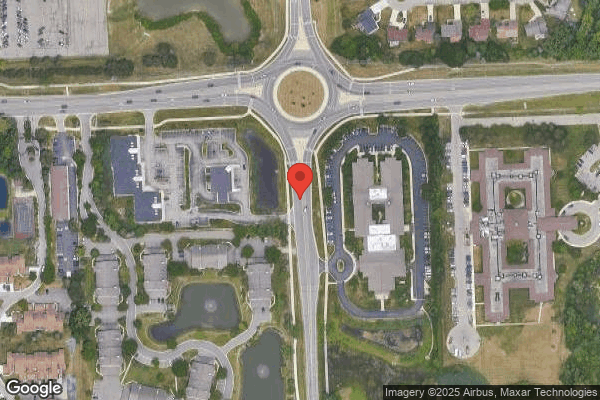

6535 Drake Rd, West Bloomfield, MI 48322 (248) 592-2000
For profit - Corporation 118 Beds CIENA HEALTHCARE/LAUREL HEALTH CARE Data: November 2025
Trust Grade
0/100
#397 of 422 in MI
Last Inspection: January 2025

Within standard 12-15 month inspection cycle. Federal law requires annual inspections.

Overview

Notting Hill of West Bloomfield has received a Trust Grade of F, indicating significant concerns about the quality of care provided, which is among the poorest ratings possible. The facility ranks #397 out of 422 in Michigan, placing it in the bottom half of nursing homes in the state, and #34 out of 43 in Oakland County, meaning there are only a few local options that are better. Unfortunately, the facility is worsening, with issues increasing from 5 in 2024 to 24 in 2025. Staffing is a weakness here, with a rating of 2 out of 5 stars and a turnover rate of 46%, which is about average but still concerning, while RN coverage is notably low, being worse than 98% of facilities statewide. There have been serious incidents reported, including a resident who fell and fractured both legs due to inadequate supervision and another who was physically abused by a staff member. Additionally, there was a failure to properly assess and treat a diabetic ulcer, leading to a hospital transfer and amputation for one resident. While the facility has some average quality measures, the overall picture reveals significant issues that families should consider carefully.
Trust Score
F
0/100
In Michigan
#397/422
Bottom 6%
Safety Record
High Risk
Review needed
Inspections
Getting Worse
5 → 24 violations
Staff Stability
⚠ Watch
46% turnover. Above average. Higher turnover means staff may not know residents' routines.
Penalties
⚠ Watch
$227,042 in fines. Higher than 91% of Michigan facilities. Major compliance failures.
Skilled Nurses
⚠ Watch
Each resident gets only 13 minutes of Registered Nurse (RN) attention daily — below average for Michigan. Fewer RN minutes means fewer trained eyes watching for problems.
Violations
⚠ Watch
67 deficiencies on record. Higher than average. Multiple issues found across inspections.
★☆☆☆☆
1.0
Overall Rating
★★☆☆☆
2.0
Staff Levels
★★★☆☆
3.0
Care Quality
★☆☆☆☆
1.0
Inspection Score
Stable
2024: 5 issues
2025: 24 issues

The Good

  • Full Sprinkler Coverage · Fire safety systems throughout facility
  • No fines on record

Facility shows strength in fire safety.

The Bad

1-Star Overall Rating

Below Michigan average (3.1)

Significant quality concerns identified by CMS

Staff Turnover: 46%

Near Michigan avg (46%)

Higher turnover may affect care consistency

Federal Fines: $227,042

Well above median ($33,413)

Significant penalties indicating serious issues

Chain: CIENA HEALTHCARE/LAUREL HEALTH CARE

Part of a multi-facility chain

Ask about local staffing decisions and management

The Ugly 67 deficiencies on record

5 actual harm
Aug 2025 2 deficiencies
CONCERN (D) 📢 Someone Reported This

A family member, employee, or ombudsman was alarmed enough to file a formal complaint

Potential for Harm - no one hurt, but risky conditions existed

Incontinence Care (Tag F0690)

Could have caused harm · This affected 1 resident

**NOTE- TERMS IN BRACKETS HAVE BEEN EDITED TO PROTECT CONFIDENTIALITY** This citation pertains to intake 1245809Based on interview and record review, the facility failed to prevent excessive tension a...

Read full inspector narrative →
**NOTE- TERMS IN BRACKETS HAVE BEEN EDITED TO PROTECT CONFIDENTIALITY** This citation pertains to intake 1245809Based on interview and record review, the facility failed to prevent excessive tension and tugging of an indwelling urinary catheter for one resident (R702) of two residents reviewed for catheter care, resulting in a penile full thickness urethral tear. Findings include:Clinical record review revealed R704 was admitted [DATE] post hospitalization for lower spinal and sacral area wound infections. Due to wound healing to the sacrum and history of urinary retention, R702 maintained a temporary Foley Catheter (Indwelling catheter inserted into the urethra to drain urine) and required further medical, wound care and rehabilitation treatment. The BIMS (Brief Interview for Mental Status) score assessed on 6/12/25 totaled 15/15 indicating R704 was cognitively intact.Clinical record review of Wound Care Progress note dated 6/9/25 by Wound Care Physician C documented a newly identified wound as .Wound #7 Penis is a full Thickness Medical Device Related Injury.On 8/5/25 at 9:55 AM, R702 was observed in their room, up in a wheelchair watching television and finishing their breakfast. When questioned if he recalled what had happened with the recent wound to their penis, R702 replied he was told it was from the catheter. R702 was observed while articulating the injury using hand motions of tugging and pulling in the lower groin area. R702 further remarked he was told by the Urologist this type of trauma is typically not seen in short term catheter use and might require surgery to fix it.Clinical record review documented from the wound care progress note dated 6/9/25 .Wound #7 Penis is a full thickness Medical Device related Injury. The initial wound encounter measurements documented 4.3 centimeters (cm) length, 1.91 cm width, area 8.347sq (square) cm. There is moderate amount of fresh blood drainage noted. The wound margin was well defined, and the wound bed had 100% granulation (pink, red colored has a granular bumpy texture due to the presence of tiny blood vessels and tissue).On 8/5/25 at 10:23 AM, a telephone interview with former Wound Care Licensed Practical Nurse (LPN) D confirmed they were notified by Nursing staff R702 had developed a wound on his penis and involved the indwelling urinary catheter. LPN D verified the wound was trauma related to a medical device specifically the indwelling catheter and mentioned there were pictures taken for review.On 8/5/25 at 10:55 AM, Wound Care Provider Doctor (Dr.) C was phoned and recalled when they assessed R702 on 6/9/25 their penis had developed a wound related to trauma from the urinary catheter. Dr. C remarked because of the trauma, they ordered R702 to be seen by a Urologist and was concerned that they would need a supra pubic catheter (tube surgically inserted into the bladder through the abdomen to drain urine).Record Review of the Urology Report of Consultation dated 6/11/25, documented R702 had a Ventral (anatomical reference to the front/top) Urethral Erosion (A rare but serious complication of indwelling catheter often caused by prolonged catheter tension and results in partial or full-thickness wounds of the urethra). R702 was to follow-up with reconstructive Urology.Record review of a Physician Progress note dated 6/23/25 documented R702 would need be seen by a surgeon for evaluation of surgical correction of traumatic hypospadias (an abnormal opening of the urethra through the underside or side of the shaft instead of the head of the penis).On 8/5/2025 The Director of Nursing (DON) and Interim Director of Nursing (IDON) A was interviewed and provided the wound care pictures taken by the facilities Wound Care Providers from 6/9/25. The colored photograph confirmed the pictures' identity being R702 and dated 6/9/25. The photograph revealed the ventral side of the penis with a urinary catheter placed in the urethra and exited surrounded by an area of open dermis (first layer of skin) on the penile shaft surrounded by a shiny bright red colored granulated area (measurements documented 4.3 centimeters (cm) length, 1.91 cm width, area 8.347sq (square) cm) with separation from the head of the penis. The DON and IDON A both acknowledged the injury was related to the urinary catheter. The DON and IDON A acknowledged this was a concern.On 8/6/2025 at 12:30 PM, during exit interview with the facility, the Nursing Home Administrator (NHA) was made aware of the concern and asked IDON A if there was preparation of education for this event which IDON A confirmed and further questions about the matter were not warranted.
CONCERN (F) 📢 Someone Reported This

A family member, employee, or ombudsman was alarmed enough to file a formal complaint

Potential for Harm - no one hurt, but risky conditions existed

Food Safety (Tag F0812)

Could have caused harm · This affected most or all residents

This citation pertains to Intake Number: 2563408.Based on observation, interview, and record review, the facility failed to ensure food in the kitchen was labeled and dated when opened or prepared. Th...

Read full inspector narrative →
This citation pertains to Intake Number: 2563408.Based on observation, interview, and record review, the facility failed to ensure food in the kitchen was labeled and dated when opened or prepared. This had the potential to affect all residents who eat food from the kitchen. Findings include: On 8/6/25 at 9:20 AM, an observation of the refrigerators and freezer in the kitchen was conducted with Dietary Aide 'F'. The following observations were made:Two opened containers of sour cream were stored in the walk-in refrigerator and were not dated. DA 'F' reported they should have been dated when opened.In one of the reach-in refrigerators, the following was observed: A tray of prepared fruit cups was not labeled with a prepared on or use by date. One container of ranch salad dressing was opened and undated. One contained of Italian salad dressing was opened and undated. DA 'F' stated, We use the dressing quickly.In a second reach-in refrigerator, the following was observed: A tray of prepared fruit (sliced pears) was not labeled or dated. A tray that contained slices of sweet potato pie were not labeled or dated. A tray of a dessert with whipped topping was not labeled or dated. DA 'F' reported they should all be dated when prepared so that they know when to use the products by.On 8/6/25 at 10:29 AM, an interview was conducted with Dietary Manager (DM) 'G' via the telephone. When queried about the process for dating and labeling foods, DM 'G' reported they followed a sheet provided by the facility corporation. DM 'G' stated, Nothing going into the refrigerator without being labeled. DM 'G' further said all fruits and dessert that were prepared were labeled and discarded within three days.According to the 2022 FDA (Food and Drug Adnministration) Food Code section 3-501.17: Ready-to-eat, potentially hazardous food prepared and held in a food establishment for more than 24 hours shall be clearly marked to indicate the date or day by which the food shall be consumed on the premises, sold, or discarded when held at a temperature of 41 degrees Fahrenheit or less for a maximum of 7 days. Refrigerated, ready-to- eat, potentially hazardous food prepared and packed by a food processing plant shall be clearly marked, at the time the original container is opened in a food establishment and if the food is held for more than 24 hours, to indicate the date or day by which the food shall be consumed on the premises, sold, or discarded, and: (1) The day the original container is opened in the food establishment shall be counted as Day 1; and (2) The day or date marked by the food establishment may not exceed a manufacturer's use-by date if the manufacturer determined the use-by date based on food safety.A review of a facility policy titled, Food Purchasing and Storage, last revised 12/10/24, revealed, in part, the following, .All food items in refrigerators will be properly dated, labeled, and placed in containers with lids, will be wrapped, or stored in sealed food storage bags (See Cold Storage Chart) .Canned fruits .After opening, the food will be .labeled and dated .A review of a facility document titled, Use by Date Storage Chart revealed, .Sour Cream .Opened .14 Days or expiration date (soonest) .Cut or Prepared Fruits .7 days or expiration date (soonest) .Commercially Prepared Dressings .30 Days after opening .All food items must be properly dated and labeled .
May 2025 4 deficiencies 1 Harm
SERIOUS (G) 📢 Someone Reported This

A family member, employee, or ombudsman was alarmed enough to file a formal complaint

Actual Harm - a resident was hurt due to facility failures

Accident Prevention (Tag F0689)

A resident was harmed · This affected 1 resident

**NOTE- TERMS IN BRACKETS HAVE BEEN EDITED TO PROTECT CONFIDENTIALITY** This citation pertains to Intake Number(s): MI00151142, MI00152404 and MI00151259. Based on observation, interview, and record r...

Read full inspector narrative →
**NOTE- TERMS IN BRACKETS HAVE BEEN EDITED TO PROTECT CONFIDENTIALITY** This citation pertains to Intake Number(s): MI00151142, MI00152404 and MI00151259. Based on observation, interview, and record review, the facility failed to provide adequate supervision and implement effective interventions to prevent falls and accidents for three of three residents (R804, R806, and R807) reviewed for accidents, resulting in R806 falling and fracturing both legs, R804 sucking on a bleach sheet, and R807 exiting an alarmed door and going down a flight of stairs. Findings include: A complaint received by the State Agency alleged a resident sustained an avoidable fall. R806 On 5/14/25 at 12:45 PM, a review of a facility provided document titled, FACILITY PAST NON-COMPLIANCE/QAPI (Quality Assurance and Performance Improvement) PLAN was conducted and read, .The plan of care was not implemented while preparing the resident (R806) for transfer to shower chair. The CENA (Certified Nurse Aide 'G') was preparing the resident to be transferred into shower chair and waiting on the second person to assist with the transfer, the CENA sat the resident up on the side of the bed with a 2WW (two wheeled walker) in place. As the CNA (Certified Nurse Aide) was awaiting the second person to assist with the transfer the resident's roommate asked the CENA a question. The CENA turned her back to speak with the resident and during this time resident slid to floor . On 5/14/25 at 12:55 PM, a review of R806's progress notes was conducted and revealed the following: A late entry progress note for 3/7/25 at 1:30 PM, entered into the record by Assistant Director of Nursing 'C' that read, Resident slid out of bed onto the floor, fell on the right side .Resident unable to say what happened .Therapy called to bedside to help with transfer, noticed right leg a little more swollen than usually .EMS (Emergency Medical Services) called, sent out to hospital for further evaluation . A progress note dated 3/8/25 at 12:50 AM, entered into the record by Nurse 'D' that read, .resident returned to facility with dx (diagnoses) of right tibial <sic> (shin bone) fracture . A progress note dated 3/10/25 at 7:05 PM, entered into the record by Dr. 'E' that read, .Note Text: chief complaint: fall .called this weekend for fall- sent to ER (Emergency Room) and returned din <sic> splint for fx (fracture) R LE (Right Lower Extremity). increased <sic> pain in left leg and we ordered an xray <sic> at the facility showing a periprosthetic (around a prosthetic joint or implant) femur fx. son <sic> at bedsid, <sic> made son aware of findings and plan to transfer to hospital immediately . A progress note dated 3/17/25 at 4:52 PM, entered into the record by Nurse 'F' that read, .Resident has Broken LT (left) femur, RT (right) tibia/fibula . On 5/14/25 at 2:07 PM, an interview was conducted with CNA 'G' regarding R806's fall. They explained they assisted R806 to sit at the side of the bed waiting for a second CNA to assist with a transfer to the shower chair. At that time R806's roommate asked them a question from the other side of the privacy curtain. They said they took their eyes off R806, opened the curtain to acknowledge the roommate and R806 fell forward off the side of the bed. They said R806 did not complain of any pain after the fall but they could tell something was wrong with their right leg. On 5/14/25 at approximately 2:30 PM an interview was conducted with the facility's Director of Nursing (DON). They acknowledged the deficient practice that resulted in R806's femur and tibia fractures. A review of a complaint submitted to the State Agency revealed an allegation that the facility was not providing adequate supervision for residents on one-to-one (1:1) supervision and utilized unqualified staff to supervise them. On 5/14/25 at 11:20 AM, R804 was observed lying in bed, half sitting up. His pants were down to his knees and his incontinence brief was exposed. Certified Nursing Assistant (CNA) 'B' was observed getting their own food from a lunch cooler. When queried about R804, CNA 'B' reported they were assigned to be R804's sitter because he required 1:1 supervision. When queried about why R804 required that level of supervision, CNA 'B reported the resident was a fall risk, wandered into other residents' rooms, and was at risk of eating non-food items, such as foam. R804's dresser was observed with the drawers facing the wall. R804's roommate (R807) was not observed in the room at that time. On 5/14/25 at 1:36 PM, R804 was observed eating lunch with CNA 'B's assistance. CNA 'B' reported both R804 and R807 were assigned to her for 1:1 supervision. When queried about how she provided 1:1 supervision for two residents at once, CNA 'B' reported they could usually redirect R807 by verbally telling him to come back into the room. A review of R804's clinical record revealed R804 was admitted into the facility on 1/29/25 with diagnoses that included: dementia, severe; adjustment disorder, insomnia, and anxiety disorder. A review of MDS assessments dated 2/5/25 and 5/5/25 revealed R804 had severely impaired cognition, physical, wandering, and other behaviors, and was dependent on staff for assistance with all activities of daily living, except walking, which he was able to do with supervision. A review of R804's progress notes revealed the following: On 2/7/25, it was documented in a Behavior Note that R804 was ambulating in other resident rooms, ambulating within his room, pulling the dresser drawers of his and his roommate out and placing them on the floor, consuming his roommate personal snacks, utilizing his roommate personal hygiene supply . It was documented R804 was unable to be redirected. On 2/12/25, it was documented in a Nurses Note that R804 wandered into another resident's room and the facility placed a mesh stop sign to discourage R804 from entering. On 2/13/25, it was documented in a Nurses Note that R804 was going in and out of multiple residents' rooms and was observed standing over another resident's bed. That same day, it was alleged R804 hit that same resident. It was noted R804 was placed on one on one (1:1 supervision - one staff person to supervised one resident). On 2/22/25, it was documented in a Nurses Note that R804 was found by his sitter (1:1) sucking on bleach sheet. Poison control was contacted by the nurse and they instructed the facility to administer water to the resident and monitor him. On 5/14/25 at 10:15 AM, all incident reports and investigations conducted by the facility for R804 since February 2025 were requested from the Director of Nursing (DON). A review of an incident report dated 2/22/25 revealed no additional information than what was documented in the progress note mentioned above. No investigation was provided by the facility. A review of R804's care plans revealed an active care plan initiated on 2/13/25 that noted, (R804) currently 1:1, until further evaluation . Further review of R804's care plans revealed R804 was incontinent of bladder and bowel, had severely impaired cognition, a language barrier, difficulty communicating and following simple direction, wandered into other residents' rooms, and was a fall risk. A review of the nursing staff assignment sheets revealed on 2/22/25 CNA 'A' was assigned to provide one on one to R804. A review of the nursing staff assignment sheets for May 2025 revealed from 5/1/25 through 5/13/25, had one staff member assigned each shift for 1:1 assigned to both R804 and R807, who shared a room. During the above observations of R804, R807 was not observed in the room. At 1:36 PM, CNA 'B' reported R807 was either in therapy or in the dining room. At approximately 1:40 PM, R807 was observed in the therapy room and at approximately 2:30 PM, R807 was observed with family in the dining room. A review of R807's clinical record revealed R807 was admitted into the facility on 4/18/25 with diagnoses that included: dementia. A review of R807's MDS assessment dated [DATE] revealed R807 had severely impaired cognition, physical and other behaviors, wandering behaviors, and was independent with bed mobility, required supervision for transfers, and was able to walk up to 50 feet with supervision. A review of a MDS assessment dated [DATE] revealed R807 required partial/moderate assistance from staff to walk up to 50 feet. Both assessment noted R807 used a wheelchair. A review of a Nurses Note documented on 3/27/25, revealed, Writer noticed the alarm was going off on (unit) exit door, at that time writer went downstairs to observe if resident was down the stairs, resident located at bottom of staircase, resident was assisted back to his room and designated sitter was to remain doing 1:1 . Further review of R807's progress notes revealed the following: On 1/28/25, it was documented in a Behavior Note that R807 attempted to elope out of the (unit) door. On 2/15/25, it was documented in a Nurses Note that R807 won't stay in his room .also tried pushing through the fire exit doors and saying that he was looking for his keys and car . On 2/16/25, it was documented in a Nurses Note that R807 tried multiple times to exit room to get his car and leave the facility . On 2/18/25, it was documented in a Nurses Note that R807 got out of his room and began to wander . On 3/13/25, it was documented R807 had a fall in his room. On 3/20/25, it was documented R807 had unsteady gait when walking to the bathroom. A review of R807's care plans revealed R807 had a hearing impairment, cognitive impairment, vision impairment, was at risk for elopement and/or wandering (initiated on 6/6/24), and was at risk for falls. On 5/14/25 at 1:46 PM, the nursing assignment sheets for 3/27/25 were requested from the DON. On 5/14/25 at 1:52 PM, all incident reports with associated investigations for R807 for the past three months were requested from the DON. No incident report regarding the incident where R807 was found to exit through the door on the unit and go down a flight of stairs was provided. On 5/14/25 at 3:15 PM, an interview was conducted with the DON. When queried about the assignment sheets that indicate one staff member assigned 1:1 to both R804 and R807, the DON reported R807 was not actually on 1:1 and we call them resident companions, not 1:1. When queried about whether it was possible to provided supervision to both residents at one time, if they required more consistent supervision and redirection, the DON reported R807 was able to be redirected verbally. When queried about what was done to look into how R807 made it out an alarmed door on the unit and down a flight on stairs on 3/27/25, the DON reported it was not investigated because it was not an elopement. The DON reported R807 did not require 1:1 supervision on that date and it was implemented as needed. When queried about how the root cause was determined to ensure effective interventions were implemented after the incident on 3/27/25, since R807 had a history of exit seeking, the DON did not offer a response. When queried about R804 and how he managed to suck on a bleach sheet on 2/22/25 when he was assigned a staff member for 1:1 supervision, the DON reported she did not now how he got a hold of it. The DON reported it was investigated. When queried about why the investigation was not provided with the incident report, the DON said she must have missed it and said it would be provided. On 5/14/25 at approximately 3:25 PM, an interview was conducted with CNA 'A'. When queried about the protocols when assigned to R804 and R807's room for 1:1, CNA 'A' reported the 1:1 supervision was for both residents. When queried about how that worked if both residents required supervision, CNA 'A' reported it was very difficult. CNA 'A' explained R807 had dementia and wandered out of the room often looking for his car, house, and children. He required assistance to make sure he did not wander out of the room. He also required assistance with eating at times and going to the bathroom. CNA 'A' further explained R804 required total supervision and care assistance. CNA 'A' reported the aides had to do all the care for him, he frequently gets into things, pulls out the drawers. CNA 'A' stated, It is very challenging to watch both of them. One could be walking out of the room and the other one is trying to stand up. We just learn how to do it, but it's hard. When queried about how R804 got a hold of the bleach sheet on 2/22/25, CNA 'A' explained the bleach sheet was a wipe used to disinfect surfaces. CNA 'A' further explained that the nurse stepped out of the room, CNA 'A' was talking with R807 and by the time she got back over to R804, he had a bleach wipe in his mouth. CNA 'A reported there was another CNA in the room at the time but must not have been paying attention. CNA 'A' did not notice the bleach wipes in the room and thought they were in the drawer and was not sure if it was a new one or one that was sitting on the dresser, but smelled the strong bleach smell and removed it from the resident and notified the nurse. When queried about whether anyone interviewed her about what happened with R804 on 2/22/25, CNA 'A' reported nobody talked to her about it, she just notified the nurse. On 5/14/25 at 3:48 PM, the DON confirmed she did not have an investigation for the incident with the bleach wipes on 2/22/25 for R804. No additional information was provided prior to the end of the survey.
CONCERN (D) 📢 Someone Reported This

A family member, employee, or ombudsman was alarmed enough to file a formal complaint

Potential for Harm - no one hurt, but risky conditions existed

ADL Care (Tag F0677)

Could have caused harm · This affected 1 resident

**NOTE- TERMS IN BRACKETS HAVE BEEN EDITED TO PROTECT CONFIDENTIALITY** This citation pertains to intake #MI00151259 Based on observation, interview and record review the facility failed to ensure reg...

Read full inspector narrative →
**NOTE- TERMS IN BRACKETS HAVE BEEN EDITED TO PROTECT CONFIDENTIALITY** This citation pertains to intake #MI00151259 Based on observation, interview and record review the facility failed to ensure regularly scheduled/routine bathing was offered for one resident (R802) of three residents reviewed for activities of daily living. Findings include: On 5/14/25 a complaint submitted to the State Agency was reviewed that alleged R802 was not being provided regular scheduled bathing. On 5/14/25 at approximately 9:10 a.m., R802 was observed in their room, laying in their bed. R802 was queried if the facility had been offering and providing regularly scheduled bathing and they reported that staff were missing their showers and that R802 prefers showers in the afternoon/evenings. R802 reported if they did not want a shower at that time, nobody comes back to offer it again later and the staff say they refuse. R802 was queried how often the staff are offering showers and they reported that they were lucky if they got bathed once a week and that they needed more than that because they sweat a a lot and do not want to smell. R802 reported showers should be provided at a minimum of twice a week. On 5/14/25 the medical record for R802 was reviewed and revealed the following: R802 was initially admitted to the facility on [DATE] and had diagnoses including Adjustment disorder with anxiety, Mood disorder with depressive features, schizoaffective disorder, bipolar disorder, Anxiety disorder and Dysthemic disorder. A review of R802's MDS (minimum data set) with an ARD (assessment reference date) of 3/2/25 revealed R802 was independent with most of their activities of daily living. A review of R802's CNA (Certified Nursing Assistant) documentation revealed R802 was offered bathing four times in the previous 30 days including on 4/16, 4/23, 5/7 (documented refused) and 5/10 (documented refused). The only days in which bathing was provided was on 4/16/25 and 4/23/25. No documentation that R802 was offered bathing twice weekly was provided. On 5/14/25 at approximately 1:58 p.m., during discussion with the Director of Nursing (DON), the DON was queried regarding R802's provision of showers and they reported they should be offered twice weekly at minimum, and all offerings documented in the CNA (Certified Nurse Aid) task documentation. The DON was queried if they could provide any other documentation that R802 was offered showers, and they reported they could not. On 5/14/25 a facility document titled Routine Resident Care was reviewed and revealed the following: Residents receive the necessary assistance to maintain good grooming and personal/oral hygiene. Steps are taken to ensure that a resident's capacity for self-performance of these activities does not diminish unless circumstances of the resident's clinical condition demonstrate the decline is unavoidable. Care is taken to ensure resident safety at all times No documentation that R802 had been offered bathing twice weekly in the previous 30 days was received before the end of the survey.
CONCERN (D) 📢 Someone Reported This

A family member, employee, or ombudsman was alarmed enough to file a formal complaint

Potential for Harm - no one hurt, but risky conditions existed

Deficiency F0697 (Tag F0697)

Could have caused harm · This affected 1 resident

**NOTE- TERMS IN BRACKETS HAVE BEEN EDITED TO PROTECT CONFIDENTIALITY** This citation pertains to intake #MI00150658 Based on interview and record review the facility failed to ensure pain medications...

Read full inspector narrative →
**NOTE- TERMS IN BRACKETS HAVE BEEN EDITED TO PROTECT CONFIDENTIALITY** This citation pertains to intake #MI00150658 Based on interview and record review the facility failed to ensure pain medications were refilled timely, pulled from the back-up medication supply for administration and administer pain medications per physician orders for one resident (R803) of two residents reviewed for pain management, resulting in uncontrolled pain and a transfer to the emergency room for pain management. Findings include: A complaint received by the State Agency alleged the facility failed to administer pain medications per physician's orders. On 5/14/25 at 9:25 AM, a review of R803's closed clinical record revealed they admitted to the facility on [DATE] and had multiple emergency room discharges and re-admissions to the facility. R803's diagnoses included: morbid obesity, urinary tract infection, diabetes, high blood pressure, peripheral vascular disease, and depression. A review of R803's progress notes was conducted and revealed the following: A progress note dated 1/25/25 at 8:25 PM entered into the record by Nurse 'H' read, .Note Text: Resident requested to be sent to (Hospital Name) .due to uncontrolled pain in her lower back and elevated blood pressure. Resident and sister at bedside is upset that resident did not get her scheduled morphine due to pharmacy shipment delay . A progress note dated 1/27/25, entered into the record by Nurse Practitioner 'I' that read, .Patient is seen today or <sic> readmission for hospitalization 1/25. Pharmacy was unable to to send Morphine sulfate ( pain medication) ER (extended release) 30mg (milligram), last dose patient received 1/24 AM (morning) . A progress noted dated 1/28/25, entered into the record by Nurse Practitioner 'J' that read, .Patient seen in room. Sent to (Hospital Name) on 1/25 for pain control. Over the weekend, there was a delay with pharmacy sending controlled substance scripts. Pt (patient) went 24 hours without MS contin (Morphine sulfate ER), 12 hours without oxycodone ( pain medication). At (Hospital Name), she received prescribed pain medication and IV (intravenous) dilaudid ( pain medication) to achieve pain control . A review of R803's physician's orders and medication administration records (MAR) was conducted and revealed the following: An order for MS contin ER 30mg scheduled for 9AM and 9PM documented as 5 (medication held) for the 9 PM dose on 1/24/25 with an accompanying progress note that read, Nurse to contact pharmacy on status of medication. Not available to administer. The MAR further revealed the 9 AM dose on 1/25/24 was documented as 5 with accompanying progress note that read, Not available to Administer. An order for Oxycodone 10mg every four hours as needed administered 1/24/25 at 5:58 PM with the next dose administered on 1/25/24 at 4:05 AM, nearly twelve hours later. A progress note dated 1/25/24 at 3:49 AM was reviewed and read, .resident run <sic> out of her oxycodone, last dose was given in te <sic> afternoon and writer just reordered <sic> the medication now will <sic> follow up with pharmacy . A review of the pharmacy's back-up medications maintained in the facility was reviewed and revealed both MS contin ER 30mg tabs and Oxycodone 10mg tabs were both in-house and stocked in the back-up medication supply. On 5/14/25 at 1:57 PM, an interview was conducted with the facility's Director of Nursing (DON). They were asked if a resident runs out of a medication should the nurse check the back-up medication supply and pull the medication if it's available and said they should. They further indicated for controlled substances they should call for the authorization to pull the medication. On 5/14/25 at 2:15 PM, an e-mail request for a policy for pulling medications from the back-up medication supply was made. A policy titled Medication Administration was provided, however; the policy provided did not address pulling medications from the back-up supply.
CONCERN (D) 📢 Someone Reported This

A family member, employee, or ombudsman was alarmed enough to file a formal complaint

Potential for Harm - no one hurt, but risky conditions existed

Deficiency F0804 (Tag F0804)

Could have caused harm · This affected 1 resident

**NOTE- TERMS IN BRACKETS HAVE BEEN EDITED TO PROTECT CONFIDENTIALITY** This citation pertains to intake #MI00151259 Based on observation, interview and record review the facility failed to ensure res...

Read full inspector narrative →
**NOTE- TERMS IN BRACKETS HAVE BEEN EDITED TO PROTECT CONFIDENTIALITY** This citation pertains to intake #MI00151259 Based on observation, interview and record review the facility failed to ensure resident food preferences were honored for one resident (R802) of three residents reviewed for food preferences/palatability. Findings include: On 5/14/25 a complaint submitted to the State Agency was reviewed that alleged R802 was not being provided good tasting food according to their preferences. On 5/14/25 at approximately 9:10 a.m., R802 was observed in their room, laying in their bed. R802 was queried if the facility had been providing food according to their liking and they indicated they had not. R802's breakfast meal tray was observed to contain scrambled eggs and a sausage patty. R802 reported the facility kept getting their meal ticket wrong and that they were supposed to be served double portions and have cheese on their eggs. R802 indicated the kitchen could not get their meal right and they won't eat it and the food is always cold. At that time, R802's food was not projecting any heat. R802's breakfast meal ticket was reviewed and revealed R802 was supposed to have double the amount of standard serving of scrambled eggs with cheese on top which was not provided on their tray. On 5/14/25 at approximately 12:54 p.m., during a conversation with the kitchen Manager K (KM K), KM Kwas queried regarding the facility procedures for ensuring food preferences and temperatures were met. KM K reported that they have a new person reading the meal ticket on the tray line and they have noticed that they have been missing items on the meal tickets. KM K was queried regarding the standard food temperatures for point of service to the resident and they reported that meats should be 135-145 degrees, sides should be 115-125 and vegetables 120-130 degrees. On 5/14/25 at approximately 1:20 p.m., The meal cart for R802's hall was observed to be brought onto the unit with two trays placed above the cart not being kept warm in the cart. R802's tray was observed to contain BBQ chicken, mixed vegetables and rice. Further review of R802's tray revealed no double portions were provided as indicated on their accompanying meal ticket. KM K was observed taking the temperatures of R802's food items and the temperatures were noted as follows: Chicken was 121 degrees, rice was 112, the soup was 115 and vegetables had a temperature of 110. All temperatures recorded were noted to be lower than the point of service temperatures KM K had reported. A few minutes later R802's replacement tray was observed with KM K and contained mechanical soft chopped meat without double portions. KM K indicated they would have to send a request for a third meal try for R802 because the replacement one was incorrect. A review of R802's lunch meal ticket was conducted which revealed R802 was supposed to have double portions. KM K indicated they would have to talk to their staff about ensuring food preferences and the meal tickets were read correctly when conducting the tray line. On 5/14/25 the medical record for R802 was reviewed and revealed the following: R802 was initially admitted to the facility on [DATE] and had diagnoses including Adjustment disorder with anxiety, Mood disorder with depressive features, schizoaffective disorder, bipolar disorder, Anxiety disorder and Dysthemic disorder. On 5/14/25 a facility document titled Food Preferences was reviewed and revealed the following: Policy-It is the policy of the facility to obtain food preferences for all residents .8. Food preferences will be identified on tray tickets to ensure residents are provided with appropriate food items .
Feb 2025 1 deficiency 1 Harm
SERIOUS (G) 📢 Someone Reported This

A family member, employee, or ombudsman was alarmed enough to file a formal complaint

Actual Harm - a resident was hurt due to facility failures

Free from Abuse/Neglect (Tag F0600)

A resident was harmed · This affected 1 resident

**NOTE- TERMS IN BRACKETS HAVE BEEN EDITED TO PROTECT CONFIDENTIALITY** This citation pertains to intake #' MI00149666, MI00149701, MI00149703 and MI00149863. Based on observation, interviews and reco...

Read full inspector narrative →
**NOTE- TERMS IN BRACKETS HAVE BEEN EDITED TO PROTECT CONFIDENTIALITY** This citation pertains to intake #' MI00149666, MI00149701, MI00149703 and MI00149863. Based on observation, interviews and record review, the facility failed to protect the resident's right to be free from physical abuse and neglect by facility staff for two residents (R901 and R902) of five residents reviewed for abuse/neglect/mistreatment resulting in R901 being forcefully slapped in the face by a staff member and R902's lower extremities being wheeled into a medication cart and a metal doorframe. Findings include: R901 On 2/12/25 a facility reported incident (FRI) that was submitted to the State Agency was reviewed which indicated R901 was slapped in the face by Certified Nursing Assistant A (CNA A) on the morning of 1/18/25. On 2/12/25 at approximately 8:56 a.m., R901 was observed in their room, laying in their bed. R901 was observed to have a low bed with their wheelchair against the wall. R901 was observed to be confused and unable to follow specific conversation pertaining to the allegation. On 2/12/25 the medical record for R901 was reviewed and revealed the following: R901 was initially admitted to the facility on [DATE] and had diagnoses including Adjustment disorder, Anxiety and Dementia. A review of R901's MDS (minimum data set) with an ARD (assessment reference date) of 1/15/25 revealed R901 needed assistance from facility staff with most of their activities of daily living. R901's BIMS score (brief interview of mental status) was four indicating severely impaired cognition. On 2/12/25 at approximately 9:59 a.m., during a conversation with the facility Administrator (Abuse Coordinator), the Administrator was queried regarding the abuse allegation between R901 and CNA A. The Administrator reported that the CNAA was terminated after the incident had been reviewed from a video recording and that the allegation was substantiated. The Administrator indicated that in the video recording of the incident, CNA A was observed slapping R901's face while Nurse B was having their hair pulled. At that time, the facility investigation was requested along with the recorded video for review. On 2/12/25 at approximately 11:19 a.m., The recorded video of the incident between R901 and CNA A was reviewed and it showed CNA A and Nurse B were in an altercation with R901 in which they were trying to wheel R901 in their wheelchair down the hallway but R901 was resistive. Nurse B was observed to try and maneuver R901's legs in the wheelchair in which R901 was then observed to pull their hair. At approximately the 05:30 time mark in the video, CNA A was observed forcefully slapping R901 with open hand using an extended arm and a voice reviewing the video stating D**. On 2/12/25 a review of the facility investigation pertaining to CNA A hitting R901 on 1/18/25 was reviewed and revealed the following: This writer was alerted by Maintenance Director that the Nurse [Nurse B] asked to review footage in regards to the resident pulling her hair off. Upon review of camera footage it as noted that the CNA [CNA A] placed hand on residents face. Maintenance Director alerted writer immediately after review at 9:50 AM., Writer notified Administrator immediately. Writer reviewed assignment sheets dated for Friday 17, 2025 for midnight shift CNA [CNA A] was assigned to [R901]. Writer immediately called [CNA A] to alert her that she was suspended immediately pending investigation .[Local Police Department] notified .At this time the facility is able to validate alleged concern due to CNA (CNA A) stating that she did make contact with resident On 2/12/25 at approximately 11:54 a.m., Maintenance Director E (MD E) was queried regarding the incident between R901 and CNA A on 1/18/25. MD E reported they were made aware of the incident by Nurse B on 1/21/25 and that Nurse B had asked them if they had seen the video and the Maintenance Director E indicated they had not. MDE then reviewed the video, and reported they saw CNA A hit R901. At that time, they reported the allegation the facility management. On 2/12/25 at approximately 1:12 p.m., Detective I (DI) was queried regarding their investigation of the incident and they reported that the police department had issued a warrant for CNA A's arrest and that the department will be pressing charges for assault and battery and the process was currently with the court. DI indicated that in their observation of the incident on the recorded video, CNA A slapped R901 in the face even though they were not the staff member being threatened by R901's behavior. On 2/12/25 a facility document titled Separation of Employment Form with an effective date of separation of 1/21/25 was reviewed and documented that CNA A was terminated from employment at the facility for resident abuse and that it was signed by the facility Administrator on 1/28/25. R902 On 2/12/25 at 9:13 AM, Nurse 'D' was observed pushing a resident (R902) who was seated in a wheelchair towards the medication cart across from room [ROOM NUMBER]. R902's wheelchair was observed to hit into the medication cart. Nurse 'D' was not observed to say anything to the resident and proceeded to access the cart. Nurse 'D' then proceeded to quickly turn the resident's wheelchair to the right, to turn around in the hallway. While being turned around, R902's bilateral bare feet were observed to hit into the metal doorframe of room [ROOM NUMBER]. The resident flinched and Nurse 'D' did not appear to identify what had occurred. Nurse 'D' proceeded to push R902 in their wheelchair in a forward motion, letting go of the wheelchair and returned to the medication cart. R902 continued to propel forward for several feet while Nurse 'D' was at the cart. At 9:15 AM, Nurse 'D' was then observed to push R902 in their wheelchair towards the nursing station and making an overhead page to ask for staffing to call them back. This occurred several times. Nurse 'D' then attempted to make another call and was heard stating they needed someone to sit with [Room number of R902] as he was going in other doors. Nurse 'D' was asked to identify the resident's name and they reported they didn't know, only knew his room number (Nurse 'D' was R902's assigned nurse). Throughout the discussion with Nurse 'D', Nurse Practitioner (NP 'H') was observed a few feet away at a counter next to the nursing station and offered if they could help. Nurse 'D' was asked to speak with them to further discuss what had just been observed in the hallway and they reported, I'm a little busy, can we talk later. They were informed that would not be possible and would like to discuss the concerns immediately and was asked to have another staff come stay with the resident before they proceeded with anything else. Nurse 'D' was then observed to make another phone call to the Human Resource (HR) Manager and stated, She said she's from the State, wants to talk, and doesn't understand that I'm busy. Nurse 'D' was asked to have the Director of Nursing (DON) come to the area and Nurse 'D' reported, She's not here. When asked to have the Administrator come up, Nurse 'D' reported She's not here. At that point, Nurse 'D' was asked to have the HR Manager come up and they proceeded to call and request they come up to the area. At that time, NP 'H' reported they would stay with R902. Nurse 'D' was then observed to walk off the unit and towards the east side of the hallway, towards the elevator and when asked where they were going, Nurse 'D' reported You're really, like . and did not finish speaking. They were asked to accompany to the HR office. At 9:19 AM, the HR Manager was informed of the specific observations of Nurse 'D' with R902 and the HR Manager directed Nurse 'D' to punch out and go home. Review of the clinical record revealed R902 was admitted into the facility on 1/29/25 with diagnoses that included: unspecified dementia, severe, with agitation, adjustment disorder with mixed anxiety and depressed mood, and dementia in other diseases classified elsewhere, unspecified severity, with other behavioral disturbance, and generalized anxiety disorder. According to the Minimum Data Set (MDS) assessment dated [DATE], R902 had severely impaired cognitive skills for daily decision making, had long and short term memory problems, had physical and other behavioral symptoms directed towards others which occurred one to three days, which significantly interfered with the resident's participation in activities or social interactions, and had wandering behaviors which occurred one to three days. Review of the progress notes identified concerns with R902 wandering throughout the facility and other resident rooms. An entry on 2/12/25 at 10:47 AM by NP 'H' documented in part, .demented male seen today for wondering <sic> . Patient was found in neighbors <sic> room. Patient is alert and oriented x 0 .Patient is easily redirectable, but spontaneous. Patient is able to get up out of bed or chair easily and walk around independently. Patient appears in no acute physical or mental distress. Discussed with staff and social work importance of patient being monitored while awake. Patient has wander guard on. Will continue to monitor .ASSESSMENTS AND PLANS .UNSPECIFIED DEMENTIA, SEVERE, WITH AGITATION: Unstable. A&O x 0 at baseline. Easily redirectable but spontaneous, patient needs 1:1 monitoring . There was no identification of any follow-up based on the observations that were reported to the HR Manager earlier. Further review of the clinical record revealed there was no social service assessment completed yet for review. On 2/12/25 at 11:10 AM, the Administrator (also the facility's Abuse Coordinator) requested to meet with this surveyor to review the incident from earlier. They were provided with the same events as documented above and the Administrator further reported Nurse 'D' had been suspended and they were working on reporting to the State Agency. On 2/12/25 a facility document titled Abuse Prohibition Policy was reviewed and revealed the following: Each guest/resident shall be free from abuse, neglect, mistreatment, exploitation, and misappropriation of property. Abuse shall include freedom from verbal, mental, sexual, physical abuse, corporal punishment, involuntary seclusion and any physical or chemical restraint imposed for purposes of discipline or convenience that are not required to treat the guests/resident's medical symptoms Physical Abuse includes hitting, slapping, pinching, and kicking. It also includes controlling behavior through corporal punishment Neglect is the failure of the facility, its employees or service providers to provide goods and services to a guest/resident that are necessary to avoid physical harm, pain, mental anguish or emotional distress. Neglect occurs when the facility is aware, or should have been aware of, goods or services that a guest/ resident(s) requires but the facility fails to provide them to the resulting in physical harm, pain, mental anguish or emotional distress. Alleged violations of neglect include cases where the facility demonstrates indifference or disregard for guest/resident care comfort or safety, resulting in physical harm, pain, mental anguish or emotional distress .
Jan 2025 17 deficiencies
CONCERN (D) 📢 Someone Reported This

A family member, employee, or ombudsman was alarmed enough to file a formal complaint

Potential for Harm - no one hurt, but risky conditions existed

Comprehensive Care Plan (Tag F0656)

Could have caused harm · This affected 1 resident

**NOTE- TERMS IN BRACKETS HAVE BEEN EDITED TO PROTECT CONFIDENTIALITY** Based on interview and record review, the facility failed to develop a comprehensive care plan to address a resident's specific ...

Read full inspector narrative →
**NOTE- TERMS IN BRACKETS HAVE BEEN EDITED TO PROTECT CONFIDENTIALITY** Based on interview and record review, the facility failed to develop a comprehensive care plan to address a resident's specific nutritional needs for one (R297) of four residents reviewed for nutritional care planning. Findings include: Review of the closed clinical record revealed R297 was admitted into the facility on [DATE] with diagnoses that included: other complications of gastric band procedure, sepsis, unspecified severe protein-calorie malnutrition, morbid (severe) obesity due to excess calories, metabolic encephalopathy, acute respiratory failure with hypoxia, altered mental status, and encounter for surgical aftercare following surgery on the digestive system. The resident was transferred to a local hospital on [DATE] at 12:35 PM and has not returned to the facility. According to the Minimum Data Set (MDS) assessment dated [DATE], R297 had no communication concerns, had intact cognition, weight was 359 pounds, with no weight loss or weight gain, had no parenteral/intravenous feeding on admission, and was on a mechanically altered diet. Review of the care plans included a nutritional care plan that was initiated by the Director of Nursing (DON) on 12/9/24 and a revision date of 1/10/25 by Registered Dietician (RD 'I') that read, Resident is at risk for Nutritional decline r/t (related to): (blank - incomplete). There were no interventions identified that were resident specific to R297's nutritional needs, risks and use of altered diet. Review of the physician/extender progress notes revealed conflicting documentation referencing nutritional care planning and monitoring reviewed as this documentation was NOT available for review in the clinical record and confirmed by the RD during this survey. These progress notes included: An entry on 12/13/24 at 3:27 PM by Nurse Practitioner (NP 'HH') read, .ASSESSMENT/PLAN Risk Malnutrition -continue Mechanical Soft Diet thin liquids -RD eval reviewed, included in plan of care -close monitoring for dietary intake continues . A late entry on 12/15/24 at 9:36 PM by Physician 'GG' for 12/13/24 at 4:35 PM read, The patient's care plan addresses the risk of malnutrition and urinary retention with appropriate monitoring and supportive measures .For the risk of malnutrition, the patient remains on a mechanical soft diet with thin liquids, which they are tolerating well at this time. The registered dietitian's evaluation has been reviewed and incorporated into the plan of care. Close monitoring of dietary intake will continue to ensure the patient maintains adequate nutrition and to identify any potential concerns early . A late entry on 12/17/24 at 11:39 AM by Physician 'GG' for 12/16/24 at 4:39 PM read, .Regarding the risk of malnutrition, the patient will continue on a mechanical soft diet with thin liquids. A registered dietitian (RD) evaluation has been reviewed and included in the plan of care, with ongoing monitoring of dietary intake. The patient is currently tolerating oral intake well, and this will continue to be closely monitored to ensure adequate nutrition . It is unknown what care plan and RD evaluation the physician is referencing as there was none available for review in the clinical record. Physician 'GG' was unable to be reached for an interview by the end of the survey. On 1/15/25 at 2:40 PM, an interview was conducted with RD 'I'. They reported they were the only RD on staff, was full-time and started at the facility in October 2023. When asked about the lack of nutritional assessments and care planning for R297, RD 'I' confirmed they did not do the evaluation and had been out sick on 12/11/24. When asked who was to provide nutritional monitoring in their absence, RD 'I' reported they were not sure who, but had notified their Regional RD. When asked who was responsible for ensuring the nutritional care plan was completed, RD 'I' reported they were and confirmed R297's nutrition care plan was incomplete. According to the facility's policy titled, Nutritional Services Documentation dated 9/19/2024: .The nutritional evaluation is then used in the development of the resident's individualized care plan to demonstrate the resident's needs, strengths, and priorities .Nutrition and hydration intervention .Goals and approaches that will be addressed on the interdisciplinary plan of care .A care plan will be developed and implemented .
CONCERN (D) 📢 Someone Reported This

A family member, employee, or ombudsman was alarmed enough to file a formal complaint

Potential for Harm - no one hurt, but risky conditions existed

Deficiency F0658 (Tag F0658)

Could have caused harm · This affected 1 resident

**NOTE- TERMS IN BRACKETS HAVE BEEN EDITED TO PROTECT CONFIDENTIALITY** Based on observation, interview, and record review, the facility failed to ensure nursing services met professional standards fo...

Read full inspector narrative →
**NOTE- TERMS IN BRACKETS HAVE BEEN EDITED TO PROTECT CONFIDENTIALITY** Based on observation, interview, and record review, the facility failed to ensure nursing services met professional standards for medication administration and documentation for one resident (R55) out of one reviewed for self administration. Findings Include: Clinical record review revealed R55 was admitted to the facility on [DATE] with a medical history of hepatitis (inflammation of the liver), hypertension, and diabetes. Psychiatric history included major depressive disorder, bipolar disorder, and anxiety. A Brief Interview of Mental Status (BIMS) score assessed on 11/14/24 scored 14/15 indicating R55 was cognitively intact. On 1/14/25 at 10:48 AM, During initial interview, an observation revealed nine scabbed, red colored blister/lesions on forehead, bilateral cheeks, nose and chin. R55 voiced concerns since they had developed the sores, Nursing leaves some kind of lotion at the bedside and has no idea what the lotion is. R55 was observed grabbing two medicine cups filled with a white colored lotion from their bedside table and with frustration, threw into the garbage. R55 voiced concern they have asked to see the medication, has no idea what it is, and it is uncovered and not sanitary. R55 commented that dust and particles could get into the open medicine cup and would prefer a covered lotion be left. R55 was asked if the Nurses confirm if they apply the cream and R55 replied that the Nurses just leave it there. On 1/15/25 at 3:00 PM, a second observation/interview with R55 revealed another white colored cream in a medication cup on the bedside table. R55 acknowledged they had not applied the lotion. R55 confirmed all nurses just leave it and tell them it is for your face. When asked if their assigned nurse confirmed if it was applied today, R55 replied no, they never ask. Record Review of the Medical Administration Record (MAR) for R55 revealed ordered Benzoyl Peroxide External Gel 5 % Apply to Forehead and nose topically one time a day for topical infection/acne was documented as given on 1/15/25 at 9:00 AM by Licensed Practical Nurse (LPN) M. On 01/15/25 at 3:08 PM, an interview conducted with (LPN) M acknowledged R55 had a medicated lotion for their face. When asked what the medication was, LPN M was observed removing the medication labeled Benzoyl Peroxide External Gel 5% (antibacterial cream medication). When LPN M was asked if they applied the medication to R55, LPN M replied they left it at the bedside and further inquired to this surveyor if R55 had applied it. When asked if R55 had orders to self-administer and leave at bedside, further questioning was terminated as LPN M ignored the question and walked away from the surveyor. On 1/15/25 at 3:18 PM, The Nursing Home Administrator (NHA) was informed of the above interaction with LPN M, confirmed the nurses name and apologized for the interaction. No further explanation was provided.
CONCERN (D) 📢 Someone Reported This

A family member, employee, or ombudsman was alarmed enough to file a formal complaint

Potential for Harm - no one hurt, but risky conditions existed

Deficiency F0676 (Tag F0676)

Could have caused harm · This affected 1 resident

Based on observation, interview and record review the facility failed to ensure communication devices and services were in place for one (R902) of three residents reviewed for communication, resulting...

Read full inspector narrative →
Based on observation, interview and record review the facility failed to ensure communication devices and services were in place for one (R902) of three residents reviewed for communication, resulting in the potential of unmet care needs. Findings include: A revisit survey was conducted onsite to verify if the facility corrected an identified noncompliance regarding communication services for residents whose primary language was not English. A review of the medical record for R902 revealed their admission to the facility on 1/29/25, with diagnoses that included: dementia and anxiety disorder. A review of a care plan titled . impaired communication noted R902's primary language to be Arabic but noted the resident to speak and understand English and had severely impaired cognition. Documented on the care plan was two interventions- Anticipate and meet needs as needed and Observed for non-verbal indicators of attempts to express self such as tears, furrowing of the brow, pursing of the lips, yelling, grabbing, reaching, gestures etc . On 3/18/25 at approximately 12:50 PM, an observation was made of R902 laying in a fetal position on their bed. R902 would not awaken with verbal prompts. At the bedside of R902 was a staff who identified themselves as being a 1 on 1 for the resident. The staff stated they had been assigned all morning to R902 because R902 had a lot of behaviors and would go about the facility breaking items. When asked, the staff member identified themselves as Housekeeping Staff (HS) B. HS B was asked if R902 would understand any questions asked to them and HS B stated no, because R902 spoke a different language. HS B was asked how they communicated with R902 being that they were the assigned sitter to R902 all morning and HS B stated they were not able to understand R902. On 3/18/25 at 4:03 PM, the facility's Assistant Director of Nursing (ADON) C (who served in place of the Director of Nursing in their absence) was interviewed and asked how staff communicate with R902. ADON C stated their was a translation book that the staff could use. When asked why HS B who was currently the one on one sitter to R902 was not aware of this communication book and why the communication book was not listed as an intervention on the resident's plan of care for communication services, ADON C did not provide a response. Review of the facility's Plan of Correction documents, identified R902 for communication and noted that the resident had a communication book added to their plan of care. The communication book was not observed during the observation of R902. The staff that was the assigned sitter to R902 was unable to understand or communicate with the resident and the communication book was not identified on the plan of care for R902. No further explanation or documentation was provided by the end of the survey.
CONCERN (D) 📢 Someone Reported This

A family member, employee, or ombudsman was alarmed enough to file a formal complaint

Potential for Harm - no one hurt, but risky conditions existed

ADL Care (Tag F0677)

Could have caused harm · This affected 1 resident

R55 On 1/16/25 at 9:50 a.m., R55 was interviewed in their room. R55 was in their bed, and reported their aide did not change their sheets all night, and they sat in wet urine. R55 reported they could ...

Read full inspector narrative →
R55 On 1/16/25 at 9:50 a.m., R55 was interviewed in their room. R55 was in their bed, and reported their aide did not change their sheets all night, and they sat in wet urine. R55 reported they could change themselves sometimes to remove their brief but could not put on new sheets. R55 reported they had told their midnight aide, who had not returned to change them when asked, so they laid on dirty sheets all night. R55 reported their aide peeked in their room, said they would return, and did not, and turned off their call light. R55 stated this made them feel upset and uncomfortable. R55 reported they had told staff this occurred occasionally but nothing changed. R55 was alert and oriented x 4 spheres, could tell time and knew their daily schedule. On 1/16/25 at approximately 9:55 a.m., Certified Nurse Aide, (CNA) V, assisted R55 to show Surveyor their wet sheets. Their top and bottom sheets were soaked from their shoulders to ankles, with some feces smears and dried blood. CNA V stated, This happens all the time. When asked to clarify, CNA V reported when they arrived for their morning shift as R55's nurse aide, they found the prior shift had left them wet or with wet sheets. When asked who their prior aide was, R55 reported they did not know, as the nurse aides frequently did not wear name tags or had them turned. R55 reported this bothered them, as staff did not generally give them their name when they asked them. On 1/16/25 at approximately 10:00 a.m., it was observed CNA V was not wearing a name badge, either an official badge or a sticker badge on their scrubs. On 1/16/25 at approximately 3:18 p.m., CNA V was observed wearing scrubs, with no name badge, including an official badge or a sticker badge identifying their name. On 1/16/25 at approximately 3:22 p.m., CNA V was asked about R55 being found this morning with soaked sheets, and if they had confirmed this was urine when they changed R55. CNA V reported they frequently found R55 soaked in urine when they arrived for their shift, at least four times during their pay period and this was a current concern. CNA V reported R55 needed assistance with self-care at times and needed assistance fully changing their sheets. On 1/16/25 at approximately 3:26 p.m., CNA V was asked why they were not wearing a name badge, as none was observed twice on 1/16/24 by Surveyor. CNA V confirmed they were not wearing a badge and had left their name badge in their car and felt bad. CNA V reported they forgot to wear their badge, as staff were generally not wearing name tags on their resident floor (second); and many only wore them when the State was in the building. CNA V reported they understood why they should wear a name badge, so residents could identify them and for personalized care. Review of R55's Care Plan, accessed 1/16/25, revealed R55 was occasionally incontinent of bladder or bowel due to an overactive bladder. The intervention was to check R55 every two hours for incontinence, and to wash, rinse, and dry them, and change them as needed, to prevent skin breakdown and urinary tract infections. The ADL (activities of daily living) Care Plan further revealed R55 required assistance with ADL's due to weakness. Review of R55's Minimum Data Set (MDS) assessment, dated 11/30/24, revealed R55 required moderate assistance with toileting, and was frequently incontinent of bowel and bladder. The Brief Interview for Mental Status (BIMS) assessment revealed a score of 14/15, which showed R55 was cognitively intact. Based on observation, interview, and record review the facility failed to provide timely toileting/brief care for three residents (R78, R31, and R55) of three reviewed for incontinence care, resulting in the resident being left wet for extended periods. Findings include: On 1/15/25 at 2:36 PM, R78 was observed in their room asking an unknown staff member to change them. At that time, R78 was told that they would find someone to help them and exited the room. At 2:45 a nurse entered the room and turned the call light off and exited the room without helping the resident. At 3:10 PM, a certified nurse assistant (CNA) went into the room and assisted R78. On 1/16/25 at 10:30 AM, an observation of the nurse's station revealed a view of the call light board to see how long the call lights had been on. R31's light had been on since 9:51 AM, R78's call light had been on since 10:03 AM. At 10:32 AM, R31 was observed in their room and asked what they needed. R31 asked to be changed and stated that they had been waiting for some time now. At 10:33 AM, R78 was observed in their room and asked if this Surveyor was there to change them. There was a smell of ammonia and a visible ring of urine around the fitted sheet and blue pad in R78's bed. On 1/16/25 at 10:45 AM, Ceritified Nursing Assistants (CNAs) were observed in the hallway together upset because with their assignments because they had to be changed because a CNA had not showed up as of 11:00 AM. At 11:15 AM R31 was changed and cleaned. On 1/16/25 at 2:00 PM the Director of Nursing (DON) was asked what a reasonable wait time for a call light was to be answered and stated, No more than 30 minutes. When notified of the above observations, the DON stated she would look into it. No additional information was provided by the exit of the survey.
CONCERN (D) 📢 Someone Reported This

A family member, employee, or ombudsman was alarmed enough to file a formal complaint

Potential for Harm - no one hurt, but risky conditions existed

Quality of Care (Tag F0684)

Could have caused harm · This affected 1 resident

**NOTE- TERMS IN BRACKETS HAVE BEEN EDITED TO PROTECT CONFIDENTIALITY** Based on observations, interviews, and record reviews, the facility failed to ensure that a physician was notified of a change i...

Read full inspector narrative →
**NOTE- TERMS IN BRACKETS HAVE BEEN EDITED TO PROTECT CONFIDENTIALITY** Based on observations, interviews, and record reviews, the facility failed to ensure that a physician was notified of a change in condition for one resident (R78) of one resident reviewed for change in condition. Findings include: On 1/14/25 at 10:12 AM, an interview was conducted about the care in the facility with R78 and their family member. R78 stated, It's been fine but, they take a long time to change me. R78 further went on to explain that he felt that 40 minutes to an hour or 2 is too long to be sitting with mess on your bottom. R78 also explained they needed some type of antibiotic for their skin and that it had been itching and burning for a while and told the nurses. Family member II explained that R78 had been calling them for the past month asking if they could take them to the doctor so they can get antibiotics because the spot on their back was hurting and they were afraid it may be an abscess forming. Family member II tried to explain to R78 that they couldn't do that because they had doctors in the facility to do that. R78 when on to state that the area had been hurting for a while and that no one had done anything about it. A review of the record revealed that R78 was admitted to the facility on [DATE] with a diagnosis of nontraumatic subdural hemorrhage, major depressive disorder, and muscle weakness with a Brief interview for mental status score(BIMs) of 13. A further review of the record showed that there were skin assessments and none of them indicated the rash area on the back. There was an order for hydrocortisone cream and a wound care consult put in shortly after the interview was conducted for R78. On 1/16/25 an interview with the Director of Nursing (DON)was completed. She was asked when a physician should be notified about a change in condition and replied, Once the change had been Identified. The DON was notified of what R78 had stated about their skin condition, the weekly skin assessments showing no issues, yet orders were put in after the resident was interviewed by this Surveyor. The DON stated she had no knowledge of the skin issue, and sent the wound care nurse to assess the area. No additional information was provided by the exit of the survey.
CONCERN (D)

Potential for Harm - no one hurt, but risky conditions existed

Deficiency F0688 (Tag F0688)

Could have caused harm · This affected 1 resident

**NOTE- TERMS IN BRACKETS HAVE BEEN EDITED TO PROTECT CONFIDENTIALITY** Based on observation, interview, and record review, the facility failed to provide restorative therapy services for one (R25) of...

Read full inspector narrative →
**NOTE- TERMS IN BRACKETS HAVE BEEN EDITED TO PROTECT CONFIDENTIALITY** Based on observation, interview, and record review, the facility failed to provide restorative therapy services for one (R25) of one resident reviewed for restorative services and range of motion. Findings include: On 1/14/25 at 3:29 p.m., R25 was observed in their hospital bed, with their knees bent partially, and their heels pressing on the bed mattress. Their knees appeared to be lacking in full extension, by about 20 to 30 degrees. On 1/14/25 at 3:31 p.m., R25 was asked if they received restorative therapy services due to their bilateral leg range of motion deficits. R25 reported they were receiving restorative therapy prior to their hospitalization and were unsure why restorative therapy was not doing range of motion, since their legs felt tighter. R25 reported they wanted restorative therapy services to resume and clarified they were not receiving therapy services (physical or occupational therapy) recently. On 1/14/25 at 3:45 p.m., the Restorative Aide, Certified Nurse Aide (CNA) X, was asked if R25 was on their caseload. CNA X explained R25 was not receiving restorative therapy since their hospital stay, and they were unsure why restorative services had not resumed. Review of R25's facility census revealed they were last hospitalized on [DATE] and returned to the facility on [DATE]. Review of R25's restorative log, retrieved 1/16/25, range of motion was ordered for R25's upper and lower extremities three times weekly, for eight weeks, to maintain range of motion, skin integrity and function. The log revealed there was no restorative therapy completed during the 30-day look back. On 1/16/25 at 12:57 p.m., the Rehabilitation Director, Occupational Therapist (OT) W, was asked if R25 was receiving restorative or therapy services since their hospital stay. OT W reported R25 had contractures, and they were unsure of why there was a gap in restorative care between their hospital stay and resumption of restorative therapy and reported this had come to their attention yesterday (1/15/25). When asked who oversaw restorative therapy (i.e. referral to the program), OT W reported this was a shared responsibility between nursing and therapy, and ultimately the Director of Nursing was in charge at this time. OT W was asked if R25 was screened after their hospital stay. R25 reported R25 was screened and picked up for speech therapy services on 12/27/24, but no other services (OT or PT - Physical Therapy), and there was no screening for therapy services prior. OT W was asked for R25's therapy records, specifically PT. They were unclear why R25 was not continuing with restorative therapy. Review of R25's therapy records revealed R25 was last seen for PT services and discharged [DATE], per records received. Review of the notes showed R25 had range of motion limitations in both legs actively at the knees (-30 degrees) and had no contractures. OT had seen R25 during 2/2024, however had not addressed leg range of motion. On 1/16/25 at 1:36 p.m., the Director of Nursing (DON) was asked about R25 not being referred to restorative therapy after their hospital stay, per their expressed wishes. The DON stated they did not really have a fully functioning restorative program, stating they had a restorative program but was not all put together, and explained they did not have a restorative nurse. The DON reported they had newly assigned the ADON to take over the restorative therapy program. The DON was asked if R25 should have been on restorative services, given therapy was reporting some contractures beginning. The DON responded R25 should have been screened, and they saw no therapy screening before 12/27/24. The DON reported they understood the concern, and clarified they needed a restorative nurse to watch over restorative so they could keep tract of residents who need restorative care. The DON explained residents' received range of motion during cares but it was not the repetitive movements which they needed. The DON was asked about R25's heels being observed pressing on the mattress. The DON acknowledged their heels should be offloaded on their mattress. On 1/16/25 at approximately 1:50 p.m., R25 was observed in their bed with the DON and wound care nurse. R25's heels were observed pressing on their mattress. R25 reported they preferred a pillow verse offloading devices, although they did not always like the pillow either. R25's knees and legs were observed mostly extended, with some flexion at the knees. The DON attempted range of motion with R25's legs, with their permission. It was observed R25's right leg had about 30 degrees flexion at the knee and their legs were stiff. The DON was unable to range R25's left knee/leg fully, so there appeared to be contracture possibly, per the DON. It was noted some range of motion was present in both legs, and there had not been a recent PT assessment for comparison. The DON confirmed R25 would be seen by therapy and their restorative program would likely be resumed. Review of R25's Minimum Data Assessment (MDS), dated [DATE], revealed R25 was admitted on [DATE], with diagnoses including Parkinson's disease, bradycardia (slow heart rate), anxiety, depression, and hemiparesis (one-sided weakness). The assessment showed range of motion limitations in their arms and legs, however there was no contracture diagnosis. R25 was dependent for toileting, transfers, and bed mobility. The Brief Interview for Mental Status (BIMS) assessment revealed a score of 15/15, which showed they were cognitively intact at that time. Further review revealed R25 had not received therapy services during the look-back period or restorative therapy. There was no documentation of a contracture diagnosis. Review of R25's Care Plan, accessed 1/16/25, revealed no documentation of a contracture or contractures. Review of the Electronic Medical Record (EMR) showed no documentation of a contracture or contractures. Review of the policy, Restorative Nursing, effective 5/01/24, revealed, The facility strives to enable the resident to attain and maintain the highest practicable level of physical, mental, and psychosocial well-being. The Interdisciplinary team (IDT) works with the resident and family to identify measurable restorative goals and practical interventions that can be implemented and achieved with nursing support. A licensed nurse will help manage the restorative nursing process with assistance of nursing assistants trained in restorative care .2. Determine with the IDT, if the resident meets criteria for a restorative program. Criteria include but are not limited to: a. Resident requiring i. Contracture prevention and management (including passive range of motion (PROM), active range of motion (AROM), splint/brace assistance .Restorative quarterly evaluation is completed at least quarterly .Person-centered care plan .
CONCERN (D) 📢 Someone Reported This

A family member, employee, or ombudsman was alarmed enough to file a formal complaint

Potential for Harm - no one hurt, but risky conditions existed

Deficiency F0692 (Tag F0692)

Could have caused harm · This affected 1 resident

**NOTE- TERMS IN BRACKETS HAVE BEEN EDITED TO PROTECT CONFIDENTIALITY** This citation pertains to intake # MI0048767. Based on interview and record review, the facility failed to complete a comprehens...

Read full inspector narrative →
**NOTE- TERMS IN BRACKETS HAVE BEEN EDITED TO PROTECT CONFIDENTIALITY** This citation pertains to intake # MI0048767. Based on interview and record review, the facility failed to complete a comprehensive nutritional assessment and ongoing evaluation per physician order for one (R297) of four residents reviewed for nutrition. Findings include: Review of a complaint filed with the State Agency included allegations that R297 had not received adequate nutritional assessment and monitoring in accordance with hospital recommendations following a gastric sleeve revision surgery with complications. Review of the closed clinical record revealed R297 was admitted into the facility on [DATE] with diagnoses that included: other complications of gastric band procedure, sepsis, unspecified severe protein-calorie malnutrition, morbid (severe) obesity due to excess calories, metabolic encephalopathy, acute respiratory failure with hypoxia, altered mental status, and encounter for surgical aftercare following surgery on the digestive system. The resident was transferred to a local hospital on [DATE] at 12:35 PM and has not returned to the facility. On 1/15/25 at 11:51 AM, a request for medical records was made with the local hospital R297 discharged to on 12/17/24. There were no further records provided by the end of the survey. According to the Minimum Data Set (MDS) assessment dated [DATE], R297 had no communication concerns, had intact cognition, weight was 359 pounds, with no weight loss or weight gain, had no parenteral/intravenous feeding on admission, and was on a mechanically altered diet. Review of the care plans included a nutritional care plan that was initiated by the Director of Nursing (DON) on 12/9/24 and a revision date of 1/10/25 by Registered Dietician (RD 'I') that read, Resident is at risk for Nutritional decline r/t (related to): (blank - incomplete). There were no interventions identified that were resident specific to R297's nutritional needs, risks and use of altered diet. Review of R297's physician orders included: Mechanical Soft Diet thin liquids NO STRAWS with a start date of 12/6/24. Regular diet Level 1 Puree texture, Thin consistency with a start date of 12/8/24. Ensure Plus (nutritional supplement) four times a day for Supplement Ensure plus 8 oz QID (four times a day) or any available nutritional supplement, Dietary to provide. Prefers Chocolate with a start date of 12/10/24. Consult to registered dietician STAT (Immediately) for inadequate dietary intake with a start date of 12/10/24. Review of the resident's clinical record for nutritional evaluation/documentation by the Registered Dietician (RD) revealed there were no comprehensive nutritional assessments completed, or progress notes available for review in the electronic clinical record. The only nutrition assessment available for review was dated 12/13/24 which identified only the resident's diet history and food preference evaluation. There was no mention of the specific nutritional needs, including protein, or TPN (total parenteral nutrition). Review of the discharge summary upon R297's admission for discharge recommendations included: .Diet instructions: 1. Continue IDDSI level 5/Minced & moist (International Dysphagia Diet Standardisation (sic) Initiative - a mechanically soft diet, not purred (sic)), 6 small meals, with no straws oral diet as tolerated. 2. Encourage oral intake and protein-rich foods. Provide assistance with meals as needed. 3. RD ordered strawberry [name of supplement] oral supplement TID (Three times a day) (provides 100 kcal (kilocalorie) and 21 gm (grams) protein per serving) to help meet nutrition needs orally per patient preference . Review of the physician/extender progress notes revealed conflicting documentation referencing nutritional evaluations and monitoring reviewed as this documentation was NOT available for review in the clinical record and confirmed by the RD during this survey. These progress notes included: An entry on 12/13/24 at 3:27 PM by Nurse Practitioner (NP 'HH') read, .ASSESSMENT/PLAN Risk Malnutrition -continue Mechanical Soft Diet thin liquids -RD eval reviewed, included in plan of care -close monitoring for dietary intake continues . A late entry on 12/15/24 at 9:36 PM by Physician 'GG' for 12/13/24 at 4:35 PM read, The patient's care plan addresses the risk of malnutrition and urinary retention with appropriate monitoring and supportive measures .For the risk of malnutrition, the patient remains on a mechanical soft diet with thin liquids, which they are tolerating well at this time. The registered dietitian's evaluation has been reviewed and incorporated into the plan of care. Close monitoring of dietary intake will continue to ensure the patient maintains adequate nutrition and to identify any potential concerns early . A late entry on 12/17/24 at 11:39 AM by Physician 'GG' for 12/16/24 at 4:39 PM read, .Regarding the risk of malnutrition, the patient will continue on a mechanical soft diet with thin liquids. A registered dietitian (RD) evaluation has been reviewed and included in the plan of care, with ongoing monitoring of dietary intake. The patient is currently tolerating oral intake well, and this will continue to be closely monitored to ensure adequate nutrition . It is unknown what care plan and RD evaluation the physician is referencing as there was none available for review in the clinical record. Physician 'GG' was unable to be reached for an interview by the end of the survey. On 1/15/25 at 2:40 PM, an interview was conducted with RD 'I'. They reported they were the only RD on staff, was full-time and started at the facility in October 2023. When asked about the lack of nutritional assessments and care planning for R297, RD 'I' confirmed they did not do the evaluation and had been out sick on 12/11/24. When asked who was to provide nutritional monitoring in their absence, RD 'I' reported they were not sure who, but had notified their Regional RD. RD 'I' further reported they had recently identified the nutritional assessment had been initiated on 12/14/24, but not completed. They confirmed the assessment that was completed on 12/13/24 was only a diet history and food preference evaluation. There was no mention of the specific nutritional needs, including protein, or TPN. When asked if they could identify who initiated that assessment, they reported they were not familiar with that name. When asked when a nutrition assessment would be expected to be completed, they reported they had seven days to do the evaluation. When asked if a resident was admitted with significant nutritional needs, would an assessment be completed earlier, RD 'I' reported they had met with the resident but there was no documentation of that. When asked if they were aware of the STAT order for a RD evaluation, they reported they were not. RD 'I' then reported they still intended to complete the nutritional assessment despite the resident not returning to the facility. They further reported they had discussions with the physicians via text on their phone, but they had not completed an actual nutritional assessment/evalution. According to the facility's policy titled, Nutritional Services Documentation dated 9/19/2024: .Each resident will receive a comprehensive nutritional evaluation upon admission .The nutritional evaluation is then used in the development of the resident's individualized care plan to demonstrate the resident's needs, strengths, and priorities .Once the evaluation is complete, a narrative note is written to include .Nutrition and hydration intervention .
CONCERN (D) 📢 Someone Reported This

A family member, employee, or ombudsman was alarmed enough to file a formal complaint

Potential for Harm - no one hurt, but risky conditions existed

Medication Errors (Tag F0758)

Could have caused harm · This affected 1 resident

**NOTE- TERMS IN BRACKETS HAVE BEEN EDITED TO PROTECT CONFIDENTIALITY** Based on interview and record review, the facility failed to ensure appropriate indication for use, ensure non-pharmacologic int...

Read full inspector narrative →
**NOTE- TERMS IN BRACKETS HAVE BEEN EDITED TO PROTECT CONFIDENTIALITY** Based on interview and record review, the facility failed to ensure appropriate indication for use, ensure non-pharmacologic interventions were attempted and identify behaviors exhibited prior to the administration of as needed (PRN) psychotropic medication (anxiolytic) for one (R85) of six residents reviewed for unnecessary medications. Findings include: Review of the clinical record revealed R85 was admitted into the facility on 8/26/24 with diagnoses that included: hemiplegia and hemiparesis, generalized anxiety disorder (12/4/24), dysthymic disorder (12/4/24), vascular dementia moderate with mood disturbance, adjustment disorder with mixed anxiety and depressed mood. According to the minimum data set (MDS) assessment dated [DATE], R85 had severe cognitive impairment, had no psychosis, no behaviors, and did not receive any antianxiety medication. Further review of the clinical record revealed R85 was started on Alprazolam (Xanax) oral tablet 0.5 MG (Milligrams) by mouth every 12 hours as needed for agitation on 12/21/24. This order was to discontinue on 1/7/25. Review of the Medication Administration Records (MARs) and electronic medical record (EMR) revealed R85 received the PRN (as needed) Alprazolam on: January 2025 (5 doses) on: 1/1 at 9:18 AM, 1/1 at 9:45 PM; 1/4 at 9:44 AM, 1/5 at 10:00 AM, and 1/7 at 8:41 AM. December 2024 (10 doses) on: 12/21 at 10:54 PM, 12/23 at 1:39 PM, 12/24 at 4:51 PM, 12/25 at 11:04 AM, 12/27 at 9:50 AM, 12/28 at 9:37 AM, 12/29 at 2:49 PM, and 12/31 at 5:07 PM. It should be noted that there was an additional physician order and section of the MAR that directed Nurses to Document non-pharmacological interventions prior to PRN psychotropic med (medication) administration . that had a start date of 12/20/24. These were all left blank (incomplete) for December and January, despite the documented administrations. Additionally, review of the interdisciplinary progress notes revealed no corresponding entries at the time of the PRN anxiolytic administrations. The direct care staff's documentation on the TASK section of the EMR (Electronic Medical Record) identified several behavior(s) of yelling, grabbing, and refusal of care. These entries did not correspond to the times of the PRN administrations. On 1/16/25 at 2:25 PM, an interview was conducted with the Director of Nursing (DON). When asked about the resident's use of PRN anxiolytic medication, the DON reported the resident was very restless and had frequent falls. Upon review of the documentation of the PRN administrations and lack of documentation, the DON confirmed the nurses should be documenting that on the MAR. When asked if there was any other location they might document, the DON reported that would be the progress notes. When asked why the medication was ordered for agitation and if that was appropriate, the DON confirmed that was not and would have to follow up with the contracted psych provider as they put in the orders. According to the facility's policy titled, Psychoactive Medication Management dated 8/30/2024: .Non-pharmacologic interventions are the first choice in management of behavioral symptoms .When pharmacological interventions are indicated, the licensed staff will verify that the physician order includes the appropriate clinically supported diagnosis and/or behavior symptom .
CONCERN (D)

Potential for Harm - no one hurt, but risky conditions existed

Deficiency F0776 (Tag F0776)

Could have caused harm · This affected 1 resident

**NOTE- TERMS IN BRACKETS HAVE BEEN EDITED TO PROTECT CONFIDENTIALITY** Based on observation, interview and record review the facility failed to obtain and/or coordinate timely radiology services for ...

Read full inspector narrative →
**NOTE- TERMS IN BRACKETS HAVE BEEN EDITED TO PROTECT CONFIDENTIALITY** Based on observation, interview and record review the facility failed to obtain and/or coordinate timely radiology services for an X-Ray for one (R63) of one resident reviewed for radiology/other diagnostic services, resulting in the potential for delayed identification of any abnormalities which may require additional medical/treatment intervention. Findings include: Review of the resident's incident/accident reports provided by the facility for the past three months included a fall incident from 1/11/25 which documented R63 was .lying on the side of the bed on left side . Review of the physician orders following this fall incident included an order for the facility to obtain an X-Ray of R63's Left Shoulder. As of this review on 1/15/25, there was no radiology report available in the electronic medical record. Additional review of the radiology log at the nursing station revealed the most recent entry was on 1/11/25 for another resident and R63's request had not been completed despite the order from 1/13/25. Review of a physician progress note on 1/13/25 at 6:10 PM documented, .Date of Consultation: 1/13/2025, Reason for consultation: Fall on 1/11/2025 .PM&R (Physical Medicine and Rehabilitation) is requested to see patient today in regards to a recent fall that occurred on 1/11/2025 .patient was found in her room on the floor lying on her left side. No injuries noted .She complains of pain to L (Left) shoulder. Difficult to assess the quality of pain, but states it is terrible. On examination, facial grimacing is noted on palpation to anterior shoulder .Limitations with passive ROM (Range of Motion) .Assessment/Plan: #Fall with L shoulder pain .Obtain L shoulder XR (X-Ray) out of abundance of caution . On 1/14/25 at 2:48 PM, R63 was observed laying in bed and agreed to an interview. When asked about their fall from 1/11/25, they reported they weren't sure how it happened. When asked if they had received an x-ray since the fall, R63 reported No. When asked on a scale of zero to ten, with zero being no pain and ten being the worst, how would they rate their left shoulder pain currently, R63 reported Seven. Further review of the clinical record revealed R63 was initially admitted into the facility on 8/20/18 and readmitted on [DATE] with diagnoses that included: idiopathic normal pressure hydrocephalus, hemiplegia and hemiparesis following cerebral infarction affecting left non-dominant side, neurologic neglect syndrome, and cerebral aneurysm nonruptured. According to the quarterly Minimum Data Set (MDS) assessment dated [DATE], R63 had a Brief Interview for Mental Status (BIMS) score of 12 out of 15 which indicated just on the side of moderate impairment (13-15 was intact cognition), had impairment on upper and lower extremity on one side, received scheduled pain medication regimen, reported occasional pain over the last 5 days, and occasional limited day-to-day activities in the past 5 days because of pain. Numeric Rating Scale for pain was noted as 02 for the worst pain over the last 5 days on a zero to ten scale, with zero being no pain and ten as the worst pain you can imagine; no falls since prior assessment. On 1/15/25 at 9:05 AM, an interview was conducted with the Director of Nursing (DON). When asked about the facility's process for obtaining x-rays and when those would be expected to be completed, the DON reported x-rays would usually take about 24 hours depending on the status of x-ray company. The DON reported they would look to see if they had been completed and further reported if it wasn't ordered STAT, it should be within 24 hours. On 1/16/25 at 9:16 AM, review of the documentation provided by the facility revealed the x-ray for R63's left shoulder and left wrist was not completed until 1/15/25 (after it was identified as a concern during the survey). There was no further follow-up by the DON and at 5:11 PM, the DON reported there was no facility policy addressing x-rays.
CONCERN (D) 📢 Someone Reported This

A family member, employee, or ombudsman was alarmed enough to file a formal complaint

Potential for Harm - no one hurt, but risky conditions existed

Deficiency F0883 (Tag F0883)

Could have caused harm · This affected 1 resident

**NOTE- TERMS IN BRACKETS HAVE BEEN EDITED TO PROTECT CONFIDENTIALITY** Based on interview and record review, the facility failed to ensure pursuing and administration of the pneumococcal and influenz...

Read full inspector narrative →
**NOTE- TERMS IN BRACKETS HAVE BEEN EDITED TO PROTECT CONFIDENTIALITY** Based on interview and record review, the facility failed to ensure pursuing and administration of the pneumococcal and influenza vaccine for one resident (R3) of five reviewed for immunizations. Findings include: Clinical record review revealed R3 was admitted to the facility on [DATE] with a medical history of influenza, pneumonia, heart failure, osteoarthritis, and gastrointestinal hemorrhage. R3's primary language is Arabic/Chaldean and translation was provided by family, specifically their daughter. A Brief Interview of Mental Status (BIMS) assessed on 11/14/24 scored 15/15 indicating R3 was cognitively intact. On 1/16/25, a clinical record revealed R3 consented on 11/16/24 (via their daughter who is their translator) to receive the influenza and pneumonia vaccinations. Review of the Electronic Medical Record (EMR) revealed no documentation that R3 received the elected vaccinations. On 1/16/25 at 9:49 AM, an interview was conducted with the facility Infection Control Preventionist (ICP) A. During record review, ICP A recalled R3 did not receive the vaccines and the orders to administer were discontinued on 11/25/24 by the physician. ICP A was unable to locate documentation of the physician's rationale of discontinuing, and confirmed no follow up with R3 or the daughter was provided. On 1/16/25 at 11:51 AM, A Phone interview with R3's daughter revealed the daughter had recalled consenting for the vaccines and replied, They (R3) got them. When questioned if the facility contacted them that the vaccines were discontinued and not administered, the daughter responded No and was under assumption R3 had received the vaccines. On 1/16/25 at 1:30 PM, ICP A acknowledged the the vaccines were not administered after consenting and the resident and daughter were not informed why the elected vaccines were not administered.
CONCERN (E)

Potential for Harm - no one hurt, but risky conditions existed

Deficiency F0565 (Tag F0565)

Could have caused harm · This affected multiple residents

**NOTE- TERMS IN BRACKETS HAVE BEEN EDITED TO PROTECT CONFIDENTIALITY** Based on observation, interview, and record review, the facility failed to provide adequate privacy for Resident Council group m...

Read full inspector narrative →
**NOTE- TERMS IN BRACKETS HAVE BEEN EDITED TO PROTECT CONFIDENTIALITY** Based on observation, interview, and record review, the facility failed to provide adequate privacy for Resident Council group meetings and addressing grievances for four of 14 Confidential (C) residents (C-4, C-7, C-8, C-10) reviewed for organized monthly Resident Council meetings. Findings include: On 1/15/25 at approximately 10:50 a.m., Activity Director (AD) R reported the Resident Council President, C-4, was unable to be in attendance, despite being invited the day before. On 1/15/25 at 11:04 a.m., the group meeting to review resident council per regulatory guidance was held in the Private Dining room, an enclosed room off the main dining room. It was observed there initially were no signs announcing the meeting; signs were placed on the door just prior to the meeting starting . The State Ombudsman (resident advocate), Ombudsman U, was present for the meeting along with the Surveyor. Residents reported they wanted the Ombudsman present and declined for any other staff to be present. There were 13 residents in attendance, and the President, C-4, was absent from the meeting. The meeting purpose and group meeting process were explained to residents, with all in agreement. The [NAME] President, C-10, reported they would act in the role as President in lieu of C-4 not being there. Residents collectively reported this was not the room where they met monthly for their resident council meetings, and they liked meeting in this room, as the doors were closed and the room was private. The 13 residents, some in wheelchairs, fit in the room, along with Surveyor and Ombudsman U, for 15 person's total. On 1/25/25 at approximately 11:15 a.m., all residents present collectively reported they normally met in the Piano Room, at the end of a hall on the first floor. They shared this room afforded them no privacy, as the room was wide open and had no door, and staff went in and out of the room during their meetings. Residents collectively reported the interruptions were distracting, and they felt as if everyone could hear their concerns. Residents reported AD R posted signs to not enter on two chairs, which was confirmed by C-10, however staff walked right past the signs. Residents reported staff would continually walk into the room during their monthly meetings every month, and there were many interruptions and a lack of privacy, as staff accessed the offices in the area and were coming in frequently to use the beauty shop space. Resident collectively reported this bothered them, as they wanted to meet privately and without interruption. Residents conveyed they reported this to the AD R, and nothing changed. Residents expressed concerns the Resident Council President, C-4, was not at the group meeting on this date and had missed other meetings and wondered if they should be in their role. Residents collectively stated their concerns in the resident council meetings were not being followed up on. C-8 stated, I know they are busy (staff) but we need a social worker to come in and be there and listen to us and support us, and not just hear us .We are being shut down (meaning their concerns were not being followed up on). Resident collectively reported they were concerned staff feared retaliation if they follow-up on their concerns, so their concerns were not getting addressed. When asked about the grievance process, only two of 13 residents knew there were grievance forms, and said they were by the facility elevators. The group collectively reported AD R did not follow-up on their concerns, nor any staff, and they wanted follow-up. The residents could not identify who the grievance officer was in the building, and did not know who to file a grievance with. Residents reported they had brought up concerns related to long call light response times, staff attitudes, and other concerns with no follow-up monthly. The residents reported they did not know who the Grievance Officer was, and 11 residents did not know how to file a grievance and with who. An observation on 1/25/24 at approximately 11:30 a.m. yielded there were no grievance forms by either facility elevator/door (on both floors), confirmed by Ombudsman U. On 1/15/25 at 1:40 p.m. (after the group meeting), the Resident Council President, C-7, was asked about missing the group meeting, with Ombudsman U present. C-7 reported they were aware of the meeting and had asked staff to get them up for the meeting. C-7 stated they had asked all morning and no one had gotten them ready. C-7 stated they were upset they were not assisted up out of bed to attend when they asked earlier in the morning. C-7 reported they wanted to remain the Resident Council President. C-7 was alert and oriented x 4, and could read the clock accurately, and knew their schedule, and the time the meeting was scheduled . C-7 asked for Surveyor to return to hear their concerns, as they were still eating lunch. C-7 was alert and sitting up in their wheelchair during the interview and reported they had missed some meetings as they were not told when they were or taken to them, not by choice. Review of the Resident Council Meeting minutes, dated 1/07/25, obtained from the Nursing Home Administrator (NHA), revealed, Old Business: (list follow-up from last month's minutes). Issues not resolved move to new business. New Business: Comments on Administration, Maintenance, Social Services, Housekeeping, Laundry, Nursing and Activities .however there were no comments found, grievance or customer services forms (concern forms) attached, or follow-up. The December 2024, and November 2024 minutes revealed similar comments per department, with no description, grievance forms, customer service forms, or follow-up. On 1/15/25 at 2:30 p.m., the NHA was shown the past three months minutes, reviewed them with Surveyor, and asked if they had any grievance or concern forms for the past five months for resident council meeting concerns. The NHA confirmed they had no concerns or grievances forms found since August 2024, and they would have been found in the grievance book, which was a large white binder on their desk. The NHA reported they were missing and shared there should have been follow-up of resident concerns being addressed for the past five months on grievance forms, per review of the meeting minutes for the past three months. Their expectation was there would be grievance forms. The NHA confirmed they were the Grievance Officer. On 1/15/25 at 3:33 p.m., AD R was asked to confirm where the residents met for the monthly Resident Council meetings, and if they had expressed any concerns. AD R confirmed the monthly resident council meetings were held in the Piano Dining Room (large dining sitting room adjacent to the beauty parlor). AD R stated, Sometimes they (staff) are walking through (the room). That is correct. They are still coming through .Family ignores this too . It was shared with AD R no grievance or concern forms were provided for the past three months related to residents' concerns per the NHA, and residents' reported concerns, and Surveyor concerns, with none provided by the end of the survey. On 1/15/25 at 3:37 p.m, the Piano Room was observed with the Maintenance Director, Staff Q , and Maintenance Staff R, and confirmed this was where residents met. The room was a large room at the end of a facility hall, with a piano in the room, furniture and tables, and a wide opening, with no doors to close off the room/space. Staff S and Staff T were asked if they could observe and measure the opening. Staff S and Staff T measured the opening, which was 8' wide and 6' tall. Both stated this large opening could not be closed off for privacy. The room was 39' x 36', per their measurements with a tape measure. Both confirmed staff entered and exited the beauty salon at all times of day, and the Piano Room was not a private space for residents to meet. Both reported the private dining room which was the closed-door room off the main dining room would be the best place for meetings in the facility. Review of the resident council meeting minutes showed for the past three months the number of residents who attended the meetings were: 1/07/2025: 12 residents, 1 staff. 12/10/2024: 9 residents, 3 staff. 11/12/2024: 10 residents, 1 staff. Review of the minutes showed the Resident Council President, C-4, had been present at the 1/07/25 meeting, and had missed the prior two months. On 1/16/25 at 9:10 a.m., C-4 was seen for follow-up per their request regarding their concerns since they missed the meeting on 1/15/24. C-4 confirmed the meeting space was not private, which concerned them, as staff walked in and out of the room during their meetings. C-4 stated, I want to go to the resident council meetings, and I am not always told or gotten up out of bed . C-4 reported they wished to remain Resident Council President and attend the meetings regularly, especially since they were President. C-4 stated even if they had been asleep, they would have expected to be awakened to attend, per their expressed wishes to staff to attend the State group meeting on 1/15/25. Review of the policy, Guest/Resident Council, revised 8/20/21, revealed, Policy: The Guest/Resident Council provides a formal, organized means of guest/resident input into facility operations. Information: The facility must allow guests/residents to organize into a council group without interference. The facility must provide the group with space, privacy for meetings, and staff support, if requested. Procedure .2. The Activity Director will assist the Guest/Resident Council in electing officers on an annual basis. The officers may include President, [NAME] President, Secretary, Treasurer. 3. Guest's/Resident's may be appointed to council from year to year .5. The Guest/Resident Council President will lead the meeting with assistance from Activity Recreation Director/designees, if requested. In the absence of the President, the leadership role will go to the [NAME] President .8. A private space with sufficient room for all who wish to attend will be provided, if possible, that affords the group full auditory and visual privacy and is free from interruptions .11. The Guest/Resident Council grievances and recommendations will be documented on the Guest/Resident Assistance Form (State only) or the Guest Satisfaction Concern/Suggestion form. The completed forms are brought to the attention of the Administrator who will forward the forms to the respective department head for attention and response. 12. Responses regarding resolution are to be documented on the Guest/Resident Assistance Form (State only) or the Guest Satisfaction Concern/Suggestion form, reviewed by the Administrator and a copy of completed forms are sent to the [NAME], and kept with the Guest/Resident Council minutes. 13. Action taken and/or considerations given to issues will be reported back to the Guest/Resident Council at the following meeting and documented within the minutes .15. The use of resources to enhance the guest's/resident's understanding of facility functions and/or issues that affect them will be facilitated if unanimously requested by council. This can include utilizing department heads, (the) Ombudsman, etc .
CONCERN (E) 📢 Someone Reported This

A family member, employee, or ombudsman was alarmed enough to file a formal complaint

Potential for Harm - no one hurt, but risky conditions existed

Safe Environment (Tag F0584)

Could have caused harm · This affected multiple residents

**NOTE- TERMS IN BRACKETS HAVE BEEN EDITED TO PROTECT CONFIDENTIALITY** Based on observation and interview, the facility failed to provide a sanitary homelike environment amongst residential common ar...

Read full inspector narrative →
**NOTE- TERMS IN BRACKETS HAVE BEEN EDITED TO PROTECT CONFIDENTIALITY** Based on observation and interview, the facility failed to provide a sanitary homelike environment amongst residential common areas including,the central shower room, first floor dinner, room [ROOM NUMBER] and room [ROOM NUMBER]) resulting in an unkempt environment resulting in potential for resident dissatisfaction with their living conditions and failure to maintain a clean healthcare environment. Findings include: On 1/24/25 at 10:08 AM, An observation of the second-floor resident rooms revealed carpeted floors unkempt, appeared not vacuumed regularly and were observed with paper straw wrappers, and other paper like debris. Passing by residential rooms in the 200 hallway was observed with all rooms having tiled flooring was not mopped and sticky ring marks were noted. room [ROOM NUMBER] floor was observed with a moderate pile of cakelike substance surrounded by a dried sticky ring. The white door facing the residents and entrance to their bathroom area was observed with five moderate sized rings of pink colored dried matter on white colored door and dried food substance on the walls on the left side walls toward the main door. room [ROOM NUMBER] was observed with dried brown colored tube feed (enteral feeding) on dispensing machine, pole, base, and electric cord. Dried brown matter also observed on the corner wall behind the machine. Dried spilled matter also observed on wall above garbage can. Observation of the second floor Central Shower room revealed the following: Floors throughout were visibly soiled with white water marks around the bathtub. [NAME] thick matter identified in between door hinges on the door to toilet room, under the vanity sink was littered with two clear plastic razor caps, white straw wrappers, and disposable gloves. The entrance to the shower was observed having tile base chipped off and the piece of the broken tile revealed a pointed triangle shaped on floor. The lighting into the shower was not functional when the light switch was turned on. The common shower vanity area countertop was dirty with visible strands of hair on top and within the sink basin. The top drawer was opened and contained a clear plastic cup half filled with a white colored milk like liquid, blue comb, black comb, white hairbrush all with moderate amounts of hair and dander in between the bristles. Loose razor blades, nail clippers were on the base of drawer and one can of shaving cream was observed with no dispenser and rust rings around the perimeter of can. A red bottle of body wash was observed with a resident name written in black marker, and one white hand scrub brush was observed at the back of the drawer. The second drawer revealed briefs and washcloths, half used bottle of mouth wash, one gray sock, and clumps of hair lying amongst two bottles of Oxy-Force multipurpose cleaner. The second-floor common sitting area with television and couches identified a computer sitting on top of desk. The first drawer of the computer was opened and revealed three bottles of shampoo/conditioner/body wash and two packs of body shaving razors. On 1/14/25 at 11:10 AM, the common activity area known at the facility as the Piano Room revealed: Residents and family members/visitors were observed sitting at the dining room tables, the bases of all chairs were observed with a layer of dust and table tops were observed unkempt. On 1/15/25 at 8:30 AM, an observation of the first-floor dining area was observed with dead insects and webs lying on windowsills. The large black round table bases were observed with large amounts of dried food, and liquid matter. Staff was observed setting tables for dining and white table clothes were observed with visible tea/coffee-colored stains. The Main Lobby/Entrance to the facility was observed with moderate amounts of dead insects lying on top of the windowsills. On 1/15/25 at 9:55, An interview and facility tour was commenced with Housekeeping Director D (HD D). HD D confirmed housekeeping was responsible for wiping down, sills, chairs, tables, and bases. All flooring maintenance including vacuuming and mopping including all common areas, residential rooms, and common shower area throughout the facility. While touring the second-floor central shower room, two bottles of Clorox Urine remover was noted on top of the vanity area. The brown thick matter on the door was observed at which time HD D commented that it looked like human matter and acknowledged the bottles of cleaning supplies on vanity should not have been stored in residential area. HD D was informed of the other items observed on 1/14/25 and confirmed the drawers were unkempt and should have not contained items other than clean washcloths, and briefs. The second-floor common sitting area with television and couches identified a computer sitting on top of desk. The first drawer of the computer was opened and revealed three bottles of shampoo/conditioner/body wash and two packs of body shaving razors. HD D immediately removed these items, commented that was not appropriate storage and threw into the garbage. The days previous findings were discussed with HD D and was observed taking notes of findings. HD D acknowledged the observations were unkempt and housekeeping was responsible for maintaining the areas of concern and had not. Review of the facility Policy titled; Housekeeping Services dated 2/2023 documented: .Housekeeping Services play a large role in maintaining a clean healthcare environment .thorough scrubbing will be used for all environmental surfaces that are being cleaned in guest/resident care areas .cleaning of non-carpeted floors and other horizontal surfaces will be done daily and more frequently if spillage or visible soiling occurs .carpeting will be vacuumed regularly .
CONCERN (E)

Potential for Harm - no one hurt, but risky conditions existed

Accident Prevention (Tag F0689)

Could have caused harm · This affected multiple residents

**NOTE- TERMS IN BRACKETS HAVE BEEN EDITED TO PROTECT CONFIDENTIALITY** Based on observation, interview and record review, the facility failed to ensure timely/completed assessments and investigations...

Read full inspector narrative →
**NOTE- TERMS IN BRACKETS HAVE BEEN EDITED TO PROTECT CONFIDENTIALITY** Based on observation, interview and record review, the facility failed to ensure timely/completed assessments and investigations into multiple falls, and identify and implement appropriate fall interventions for one (R85) of three residents reviewed for accidents. Findings include: On 1/14/25 at 1:25 PM, R85 was observed laying in bed, positioned halfway down the bed with their right leg positioned in the air and resting on a large pillar in the middle of the room, next to their bed. R85 was observed to have a perimeter mattress in place (edges of mattress raised) and was lightly hitting themselves and saying No, no, no. On 1/14/25 at 1:30 PM, a Nurse was observed asking the Nurse Aide to reposition the resident in bed. On 1/15/25 at 7:51 AM, R85 was observed laying in bed, positioned on their back. The perimeter mattress was observed to have additional pillows to the side centers of the mattress on both sides and the bed was positioned lower, but not all the way to the floor. The wheelchair next to the bed was observed to have a pommel cushion (a wheelchair cushion that has a raised center section to keep the resident's legs separated and prevents sliding forward in wheelchair seat). Review of the clinical record revealed R85 was admitted into the facility on 8/26/24 with diagnoses that included: hemiplegia and hemiparesis and vascular dementia moderate with mood disturbance, adjustment disorder with mixed anxiety and depressed mood, According to the Minimum Data Set (MDS) assessment dated [DATE], R85 had severe cognitive impairment, had no psychosis or behavior concerns, had one fall without injury, and two or more falls with injury (except major) since admission or prior assessment. Review of the care plans included: A fall care plan initiated 8/27/24, revised last on 1/7/25 read, [name of R85] is at risk for fall related injury and falls R/T (related to): poor vision, cognitive loss, gets up with out assistance, has It field deficit, multiple CVAs (Cerebrovascular Accidents). Interventions included: Bed in lowest position. (Initiated 11/22/24) Concave Mattress (Initiated 12/2/24) Pommel cushion will be added to wheelchair. (Initiated 12/17/24) Put the call light within reach and encourage her to use it for assistance as needed. (Initiated 12/13/24, revision on 1/3/25) Review information on past falls and attempt to determine the root cause of the falls. (Initiated 1/7/25) An Activities of Daily Living (ADL) care plan initiated 10/18/24, revised 11/15/24 documented, [name of R85] has a functional ability deficit and requires assistance with self care/mobility R/T: decreased mobility, confusion. Interventions included: Use of pommel cushion in w/c (wheelchair) when oob (out of bed). (Initiated 11/25/24) Review of R85's evaluation for physical device (pommel cushion) was initiated on 11/25/2024 but not locked (completed) until 1/9/25. On 1/15/25 at 11:01 AM, the facility was requested to provide all incident/accident (I/A) reports for R85 since admission, including documentation of the facility's investigations into these incidents. Review of the documentation provided by the facility identified R85 had 10 falls from 9/19/24 - 12/20/24 (most recent). Further review of the documentation revealed documentation on the I/A's were incomplete, had multiple missing documentation of interviews with staff, recall of what/when/where the resident was prior to the fall, interventions to prevent future fall occurrences, and lack of notification to the facility staff, physician, and/or responsible party. R85's I/A documentation for a fall on 12/20/24 at 12:15 PM from Nurse 'Y' documented, in part: .resident was found on the floor by aide - was lying on left side and wrapped in blankets .resident assisted back into bed, assessed for injury. Neuro checks initiated within normal limits .No injuries observed at time of incident . The section of the I/A that identified Injuries Report Post Incident documented, .Left antecubital, Left trochanter (hip), Left shoulder (rear). There was no further documentation into any details of these areas, such as if an x-ray had been completed, or if there was a change in condition. The section for Agencies/People Notified read, No Notifications found. The Post Fall Evaluation completed by Nurse 'Y' noted time of fall was 7:10 PM and further read, .Resident was observed lying on left side wrapped in a sheet. No furniture or tables in vicinity . The section for Re-Creation of Last 3 Hours Before Fall, Root Cause of this Fall which included describe initial intervention to prevent future falls and if care plan/[NAME] was updated was left blank. The section for New Interventions after IDT (Interdisciplinary) review noted medication review. This document was not dated by Nurse Y and the section for IDT signature which indicated this had been discussed/reviewed by the IDT included only 1 person (illegible name). R85's I/A documentation for a fall on 12/16/24 at 6:23 PM from Nurse 'Z' documented, in part: .Resident slide <sic> slowly from wheelchair into a sitting position onto the floor . The section for notifications only identified the Director of Nursing (DON) and Physician/Nurse Practitioner. There was no identification that the responsible party had been notified. The section for root cause of this fall and initial interventions to prevent future falls read, Screen for pummel <sic> cushion. The section for New Interventions after IDT review read, Therapy to give pummel <sic>. However, this intervention was already identified as initiated on the ADL care plan on 11/25/24. R85's I/A documentation for a fall on 12/14/24 at 2:09 PM from Nurse 'AA' documented, in part: .CNA (Certified Nursing Assistant) entered client's room and witnessed client on the floor on her knees .no wounds or bruising to body .Client states I was on my knees. It's like praying.Client was helped into her wheelchair and taken to the dining area . The section for Agencies/people notified read, No Notifications found. There was no documentation the facility, physician, or responsible party had been notified of this fall. The section of the Post Fall Evaluation noted for Re-Creation of Last 3 Hours Before Fall read, Resident in w/c resting. The section of this report to identify the root cause of the fall and prompted the staff to describe initial intervention to prevent future falls read, Assisted back to chair. The section for if care plan/[NAME] had been updated and what new interventions had been identified and implemented after the IDT review were left blank (incomplete). R85's I/A documentation for a fall on 12/13/24 at 12:15 PM from Nurse 'BB' documented, in part: .WRITER WAS NOTIFIED THAT STAFF OBSERVED RESIDENT ON FLOOR ON THE SIDE OF THE BED HEAD FACING THE FOOT OF THE BED. RESIDENT APPEARED TO ATTEMPTING TO CRAWL .Resident Unable to give Description .No Injuries observed at time of incident . The section for Agency/people notified only included the resident's responsible party (son) and the DON. There was no documentation that the physician had been notified. The section for the post fall evaluation noted prior to fall documented the resident was resting in bed in lowest position. The section for the root cause of the fall had a mark next to Mood or mental status. The section to Describe initial intervention to prevent future falls read, Put call light within reach & encourage her to use it. The section for updating the care plan/[NAME] was marked and the section for New intervention after IDT review only read, Follow facility fall protocol. R85's I/A documentation for a fall on 12/12/24 at 6:19 PM from Nurse 'N' documented, in part: .nurse was called into residents room, to find the resident laying on the floor next to the bed .No injuries observed at time of incident .oriented to person . The section for Post fall evaluation documented the fall description details as, Resident couldn't describe what she was doing .Resident was observed laying on her side . The section for Re-Creation of last 3 hours before fall identified only a staff name. The section for root cause of this fall had a mark next to Mood or mental status. The section for Describe initial intervention to prevent future falls read, Assisted back to bed. The section for whether the care plan/[NAME] had been updated was blank (incomplete). The section for New interventions after IDT review read, Maintenance to assess bed and mattress .for prior falls to determine unmet need. R85's I/A documentation for a fall on 12/2/24 at 12:07 AM from Nurse 'Y' documented, in part: .Resident had an unwitnessed fall. she was found laying on her left side .Resident is unable to give Description .No injuries observed at time of incident .Oriented to Person .Injury Type .Left antecubital .Left trochanter (hip) .Left shoulder (rear) . The section for statements read, No statements found. The section for Agencies/people notified read, No Notifications found. The section for post fall evaluation read, .1 hour before fall was laying in bed .root cause of this fall .amount of assistance in effect, mood or mental status - describe initial intervention to prevent future falls: assisted back to bed .New interventions after IDT review: neurochecks . The section for the IDT review contained only two signatures, and the section for the date and nurse signature was left blank (incomplete). The section for Agencies/people notified and Statements were blank (incomplete). There was no documentation that the facility, responsible party, or physician had been notified of this fall incident. R85's I/A documentation for a fall on 11/30/24 at 10:52 AM from Nurse 'CC' documented, in part: .Resident observed on L (left) side of bed on the floor with nightstand drawer open .Resident was assessed and placed back into bed .No injuries observed at time of incident . The section for Agencies/people notified only included the DON and Physician. There was no documentation the responsible party had been notified. The section for the Post fall evaluation read, .Date of Fall: 11/30/24 Time of Fall: 3:10 PM .Resident found on ground next to bed . The section for new interventions identified after the IDT review read, concave mattress. R85's I/A documentation for a fall on 11/23/24 at 6:15 PM from Nurse 'DD' documented, in part: .Writer was informed by resident cna at about 5:35 pm that resident was on the floor. Writer went and observed resident lying on her left side on the floor .Resident said she was trying to move around .No injuries observed at time of incident . The section for post fall evaluation after IDT review identified an evaluation for a gerichair. There was no documentation available for review if this had been completed. R85's I/A documentation for a fall on 11/22/24 at 5:49 PM from Nurse 'EE' documented, in part: .resident was witnessed rolling out of bed, on to the floor, hitting head on to side of wall of bed left side .initiate neuro-checks, monitor for change in condition, update care plan . The section for Post fall evaluation - describe initial intervention to prevent future falls documented, assisted back to bed, ensured gripper socks on. The sections for new interventions after IDT review and if the care plan/[NAME] updated were both left blank (incomplete). The IDT review section contained only two staff signatures (one of which was Nurse 'EE' who completed the report, the other was the DON. R85's I/A documentation for a fall on 9/19/24 at 5:00 PM from Nurse 'FF' documented, in part: .resident was observed laying on her right side on the side on her bed . The section for Agencies/people notified documented the DON and physician were notified. The document further identified they had attempted to contact the resident's responsible party but didn't get an answer. There was no further documentation of any further attempts to notify had been attempted. The section for Post fall evaluation documented for Root cause of this fall .Amount of assistance in effect . The section for staff to describe initial intervention to prevent future falls documented, Assisted back to bed. The sections for whether the care plan/[NAME] had been reviewed or updated and what new intervention after the IDT reviewed were left blank (incomplete). On 1/16/25 at 11:01 AM, an interview was conducted with the Director of Nursing (DON). When asked if the facility had identified any issues with the lack of complete incident/accident reports such as the physician, facility, or responsible party not being notified, or lack of fall investigations and implementing interventions to prevent further falls, the DON reported they had not. At that time, the DON was informed of the concerns with R85's documentation and investigation of multiple falls. The DON was requested to provide any additional documentation as the documents provided for review were incomplete (missing pages and blank pages). The DON reported they may not have been scanned properly and would attempt to rescan for review. When asked if they had identified any concerns in reviewing the incident/accident reports, the DON reported sometimes they felt the nursing documentation needed to be more thorough and upon reviewing the I/As completed by Nurse 'Y' they reported that was a newer nurse and has had a few re-educations about documentation. When asked about the evaluation for the pommel cushion, the DON reported that was done by the therapist and confirmed the assessment had not been completed until 1/9/25. When asked about the conflicting interventions of when that was identified and implemented as the care plans indicated conflicting dates, the DON reported they were not aware of the documentation on the ADL care plan, but indicated they were aware of the intervention added on 12/17/24. When asked about the interventions identified to encourage the resident to call for assistance and whether that was an appropriate intervention for someone that had severe cognitive impairment, the DON reported they felt that was appropriate. On 1/16/25 at 2:25 PM, a follow-up interview was conducted with the DON. Upon reviewing the additional documentation provided of R85's fall occurrences, similar concerns were identified with lack of documentation, incomplete assessments and follow-up, including notification to the facility, physician and responsible party. The DON acknowledged the concerns as well. When asked about who was responsible to initiate and complete the I/A's, the DON reported the Nurse assigned to the resident at the time of the fall was responsible for completing that information, including the sections for post fall interventions. The DON further reported those reports were then reviewed in morning meetings with the IDT. When asked about the lack of multiple IDT members on several of the incident reports and how that was considered IDT review, the DON identified several with only their signature and the nurse that completed the report and was unable to offer any further explanation. According to the facility's policy titled, Fall Management dated 9/22/2023: .If a fall occurs, the interdisciplinary team conducts an evaluation to ensure appropriate measures are in place to minimize the risk of future falls. The Director of Nursing/designee is responsible for coordination of an interdisciplinary approach to managing the process for prediction, risk evaluation, treatment, evaluation, and monitoring or resident falls .The licensed nurse will complete .Incident/Accident Report in (name of electronic medical record system) .Review and/or revise care plan and link to the resident [NAME] .The licensed nurse will notify the attending physician and the responsible party of the fall, and document the notification in the medical record .The IDT will review all resident falls within 24-72 hours at the stand-up/clin-ops meeting to evaluate/investigate the circumstances and probable cause for the fall, review/modify the plan of care to minimize repeat falls and link to the resident's [NAME] as needed .
CONCERN (E) 📢 Someone Reported This

A family member, employee, or ombudsman was alarmed enough to file a formal complaint

Potential for Harm - no one hurt, but risky conditions existed

Deficiency F0725 (Tag F0725)

Could have caused harm · This affected multiple residents

**NOTE- TERMS IN BRACKETS HAVE BEEN EDITED TO PROTECT CONFIDENTIALITY** Based on observation, interviews, and record review, the facility failed to consistently ensure sufficient nursing staff was pro...

Read full inspector narrative →
**NOTE- TERMS IN BRACKETS HAVE BEEN EDITED TO PROTECT CONFIDENTIALITY** Based on observation, interviews, and record review, the facility failed to consistently ensure sufficient nursing staff was provided for residents who resided in the facility, resulting in verbalized complaints of delayed care and services, lack of supervision of residents with wandering behaviors, and the likelihood for further delayed care and unmet care needs. This deficient practice has the ability to affect all 101 residents in the facility, including resident# (R86). Findings include: According to the facility's policy titled, Nursing Staffing dated 11/4/2024: .Nursing service is provided by number and type of personnel to ensure that each resident .Receives rehabilitative nursing care as needed; Receives proper care to maintain their highest level of functioning (prevent decline in function or poor clinical outcomes); Is kept clean, comfortable, and well-groomed; Is protected from accidents, injury, and infection .Nursing assistants are expected to carry out their daily assignments in a professional manner and in accordance with established nursing procedures The facility will staff to meet the needs of the residents at the facility .Refer inquiries concerns nursing services to the Director of Nursing . Review of the staffing plan documentation referenced in the Facility Assessment included: .Core Staffing & Personnel Audit Consider the overall needs of your resident population based on your Facility Assessment, MDS Resident Population Profile and any additional sources when indicating the number, average, range, or ration needed for day-to-day operations and Emergencies . Page 33 of 48 of the Facility Assessment referenced a Staffing Plan - [facility name] - July 2024.xlsx that had been uploaded on 8/6/2024. Review of this staffing plan documented there would be 16 Licensed Nurses (6 on days, 6 on evenings, and 5 on nights); and there would be 24 Nurse Aides (10 on days, 8 on evenings, and 6 on nights). Review of the daily staff postings titled, REPORT OF NURSING STAFF DIRECTLY RESPONSIBLE FOR PATIENT CARE since January 2025 identified the following concerns with not having either the appropriate number of nurses or nurse aides as identified in the facility's direct care staffing plan. The documentation provided identified: On 1/1/25 census = 93. Day shift - 4 nurses; 9 nurse aides Afternoon shift - 4 nurses; 8 nurse aides Midnight (night) shift - 5 nurses; 6 nurse aides On 1/2/25 census = 94. Day shift - 4 nurses; 10 nurse aides Afternoon shift - 4 nurses; 10 nurse aides Midnight shift - 4 nurses; 6 nurse aides On 1/3/25 census = 95. Day shift - 6 nurses; 10 nurse aides Afternoon shift - 6 nurses; 10 nurse aides Midnight shift - 4 nurses; 6 nurse aides There was no documentation provided for 1/4/25 and 1/5/25. On 1/6/25 census = 99. Day shift - 6 nurses; 10 nurse aides Afternoon shift - 6 nurses; 10 nurse aides Midnight shift - 4 nurses; 6 nurse aides On 1/7/25 census = 95. Day shift - 7 nurses; 10 nurse aides Afternoon shift - 6 nurses; 10 nurse aides Midnight shift - 4 nurses; 6 nurse aides On 1/8/25 census = 95. Day shift - 7 nurses; 10 nurse aides Afternoon shift - 6 nurses; 10 nurse aides Midnight shift - 4 nurses; 6 nurse aides On 1/9/25 census = 99. Day shift - 6 nurses; 10 nurse aides Afternoon shift - 6 nurses; 10 nurse aides Midnight shift - 4 nurses; 6 nurse aides On 1/10/25 census = 99: Day shift - 7 nurses; 10 nurse aides Afternoon shift - 6 nurses; 10 nurse aides Midnight shift - 4 nurses; 6 nurse aides There was no documentation provided for 1/11/25 or 1/12/25. On 1/13/25 census = 99. Day shift - 7 nurses; 10 nurse aides Afternoon shift - 6 nurses; 10 nurse aides Midnight shift - 4 nurses; 6 nurse aides On 1/14/25 census = 99. Day shift - 7 nurses; 10 nurse aides Afternoon shift - 6 nurses; 10 nurse aides Midnight shift - 4 nurses; 6 nurse aides On 1/15/25 census = 99. Day shift - 7 nurses; 10 nurse aides Afternoon shift - 6 nurses; 10 nurse aides Midnight shift - 4 nurses; 6 nurse aides R86 On 1/14/25 at 10:03 AM, R86 was observed walking in the hallway and a wanderguard bracelet (electronic device that sets off an alarm) was secured to their right ankle. R86 then walked into another male resident's room who yelled out Get outta here, go!. There was no staff observed providing supervision, or to witness the resident going into this room. On 1/15/25 at 8:05 AM, R86 was observed standing at the nursing station holding onto the ledge. The resident was observed with a sad facial expression and repeatedly talking, but speech was intelligible. There were three other residents in the surrounding lounge area but no staff were present. At 8:16 AM, a visiting hospice nurse came near the desk and after briefly saying hello, told the resident they would find their nurse and left the area. There was no other facility staff nearby until 8:19 AM when an activity staff member came over towards the resident, waved, then walked away. A this time, R86 was sobbing, repeatedly talking, and grabbing at their pubic area. Review of the clinical record revealed R86 was admitted into the facility on 9/4/24 with diagnoses that included: dysthymic disorder, down syndrome, and unspecified intellectual disabilities. According to the Minimum Data Set (MDS) assessment dated [DATE], R86 had clear speech, was sometimes understood and sometimes understands others, had no mood concerns, rejected care and had wandering behaviors which occurred one to three days during this assessment period of seven days. On 1/15/25 at 9:04 AM, an interview was conducted with the Director of Nursing (DON) regarding concern with R86's observations throughout the survey and lack of supervision. When asked if the facility had discussed and/or considered the resident's need for increased supervision due to wandering behaviors and risk of resident-to-resident incidents, especially given the resident's behavior and vulnerability risk, the DON reported they did not and didn't feel the resident needed anything such as a one to one and felt that wouldn't stop the resident from having a outbursts. The DON further reported sometimes families hired one to one or if they had frequent falls or if it was detrimental, but didn't feel that was needed for R86. When informed the concern was not with the resident's outbursts, but with the lack of supervision to potentially redirect the resident away from potential harmful situations such as entering other resident rooms, wandering in/near nursing stations that had unsecured treatment and medication carts and improperly stored biologicals. The DON reported they didn't feel that would help and the facility was working on finding an alternate placement. When asked what was being done in the meantime if they felt the resident's wandering and behaviors were no longer appropriate for this facility, the DON reported staff try to give the resident activities and were normally good at keeping their eyes on her since she normally sits in the dining room or where the tv was. The DON was asked how they staff could adequately supervise on all shifts when they were providing care to other residents, the DON reported activities provided the resident with some items. When asked about what occurred on the other shifts, especially when staffing levels decreased on the night shift, and the DON reported they didn't feel there was a concern with staffing. On 1/16/25 at 7:56 AM and 2:43 PM, the facility was requested to provide documentation of the daily nursing (for Nurse and Nurse Aides) assignments by room for 1/10/25 - 1/13/25 and 1/3/25 - 1/6/25. This was not provided for review by the end of the survey. It should also be noted that the Administrator was not available for the last day of the survey. The DON informed the survey team they were the point of contact for the remainder of the survey.
CONCERN (E) 📢 Someone Reported This

A family member, employee, or ombudsman was alarmed enough to file a formal complaint

Potential for Harm - no one hurt, but risky conditions existed

Deficiency F0761 (Tag F0761)

Could have caused harm · This affected multiple residents

**NOTE- TERMS IN BRACKETS HAVE BEEN EDITED TO PROTECT CONFIDENTIALITY** R70 On 1/14/25 at 10:28 AM, R70 was observed laying in bed. At that time, the resident reported they didn't speak much English a...

Read full inspector narrative →
**NOTE- TERMS IN BRACKETS HAVE BEEN EDITED TO PROTECT CONFIDENTIALITY** R70 On 1/14/25 at 10:28 AM, R70 was observed laying in bed. At that time, the resident reported they didn't speak much English and proceeded to attempt to call family members without any response. During this observation of the resident, there was a blue bottle of eye drops observed on the resident's overbed tray table. When asked about the contents on the table, R70 stated they didn't speak English. On 1/15/25 at 8:07 AM, the eye drop container remained in the same place as observed on 1/14/25. Review of the clinical record revealed R70 was admitted into the facility on 5/8/21 and readmitted on [DATE] with diagnoses that included: biliary acute pancreatitis without necrosis or infection, urinary tract infection legal blindness, dementia and schizoaffective disorder. According to the Minimum Data Set (MDS) assessment dated [DATE], R70 had severe cognitive impairment. Further review of a Self Administration of Medication Assessment - V2 evaluation dated 5/25/23 documented, .Resident has order for eye drops for every hour. Resident would not return demostrate <sic> putting in eye drops, just kapt <sic> saying no see, no see. Resident was able to open bottle and understood what the eye drops were for, how many drops and how often. At this time resident is not able to self administer medication due to refusal. There were no further assessments that indicated R70 could have eye drops at bedside. On 1/15/25 at 9:05 AM, an interview was conducted with the Director of Nursing (DON). When asked about the observation of eye drops at R70's bedside, the DON reported they had previously discussed the eye drops in the past and reported family brought in a lot of stuff. The DON reported they would review the clinical record to see if they were able to self-administer and confirmed the same assessment from 5/25/23 which indicated they were not. When asked if other staff had observed that at bedside, why wasn't that identified, the DON was unable to offer any further explanation. On 1/15/25 at 10:02 AM, the DON was observed retrieving the container of eye drops from R70 and reported those should not be kept at bedside and was able to remove from the resident's bedside. The DON further reported they would have to contact the family to let them know not to bring in anymore. 2nd Floor Nursing Station: On 1/15/25 at 8:49 AM, observation of the 2nd floor nursing station - no staff observed with residents walking around/by - was observed to have 25 boxes of COVID-19 Rapid Tests stored on an open shelf area near the shred bin which was not locked/secured. On 1/16/25 8:16 AM, observation of the 2nd floor nursing station revealed an unlocked medication cart and treatment cart. There was no nurse in the vicinity. The Infection Control Nurse (Nurse 'A') was observed coming out of the med room and when asked about the unlocked medication and treatment carts, they confirmed the carts were unlocked and reported they weren't assigned and wasn't sure who was. Nurse 'A' then pointed out Nurse 'N' who was approaching the nursing desk and stated that was the nurse assigned to the medication cart. Nurse 'N' was asked about the unlocked medication cart and they reported they weren't sure how it was opened because they had counted off with the previous nurse and had locked it. They were then asked about the unlocked treatment cart and they reported they didn't know about that. On 1/16/25 at 8:26 AM, the DON was informed of the observations of the unlocked medication and treatment carts and reported that should not have occurred and had been informed by Nurse 'A'. According to the facility's policy titled, Storage and Expiration Dating of Medications and Biologicals dated 8/1/2024: .Facility should ensure all medications and biologicals, including treatment items, are securely stored in a locked cabinet/cart or locked medication room that is inaccessible by residents and visitors . Based on observation, interview, and record review, the facility failed to ensure appropriate medication storage and labeling for medications and biologicals in one of six medication carts and one of one treatment cart. This deficient practice has the potential to affect multiple residents throughout the facility, including R70. Findings include: On 1/15/25 at 8:54 AM, Observation of the first-floor central shower room revealed one pink colored oblong sized pill lying on the floor bordering the back corner next to the tub. Licensed Practical Nurse (LPN) C was asked to retrieve and while picking up with their bare hand, said oh that's an omeprazole When inquired how medication is found in the central shower area, LPN C replied that it must have fallen off the medication cart and rolled into the common shower area. On 1/15/25 at 10:15 AM, One small round white pill was lying in common hallway in front of room [ROOM NUMBER]. LPN F commented that should not be there and was observed picking up the pill off the floor with their bare hand. On 1/15/25 at 10:18 AM, an observation of two intact blue and gray colored capsules were observed lying in common hallway in front of room [ROOM NUMBER]. LPN E remarked the capsules did not contain medication and must have missed the trash bin. On 1/15/25 at 10:26 AM, A light pink colored semi-formed pill like object with crushed powdered substance was observed in common hallway in front of the first-floor common dining area. The Assistant Director of Nursing (ADON) B approached as the observation was being documented, and said it was not medication, must be candy, and proceeded to pick up the pill with their bare hand. On 1/15/25 at 10:30 AM, The Director of Nursing and Nursing Home Administrator were made aware of the above observations and comments by nursing and acknowledged medications should not be found on the floor.
CONCERN (E) 📢 Someone Reported This

A family member, employee, or ombudsman was alarmed enough to file a formal complaint

Potential for Harm - no one hurt, but risky conditions existed

Infection Control (Tag F0880)

Could have caused harm · This affected multiple residents

**NOTE- TERMS IN BRACKETS HAVE BEEN EDITED TO PROTECT CONFIDENTIALITY** Based on observation, interview, and record review, the facility failed to ensure effective infection control practices (hand hy...

Read full inspector narrative →
**NOTE- TERMS IN BRACKETS HAVE BEEN EDITED TO PROTECT CONFIDENTIALITY** Based on observation, interview, and record review, the facility failed to ensure effective infection control practices (hand hygiene) during medication pass and implementation of Enhanced Barrier Precautions (EBP) for one (R60) of one resident reviewed for a urinary catheter, resulting in the potential for cross-contamination and the development and spread of infection and disease. Findings include: R60 On 1/14/25 at 10:15 AM and 1/15/25 at 7:58 AM, R60 was observed in bed with a urinary catheter drainage bag observed secured to the side of the bed. At each of these observations, there was no signage posted to indicate the resident was on any precautions such as Enhanced Barrier Precautions (EBP) and there was no Personal Protective Equipment (PPE) available for use. On 1/14/25 at 12:57 PM, the Certified Nurse Aide (CNA 'O') who was assigned to R60 was observed holding a bag of linens just inside the resident's room. When asked about whether they were aware of R60 being on any infection control precautions such as EBP, CNA 'O' reported they were not aware of any, but then stated they might be due to the catheter but were not aware of any and confirmed there was no signage or PPE available. CNA 'O' did confirm there were several other residents in the hallway and indicated those rooms had the PPE carts. Review of the clinical record revealed R60 was admitted into the facility on [DATE] and readmitted on [DATE] with diagnoses that included: neuromuscular dysfunction of bladder. According to the Minimum Data Set (MDS) assessment dated [DATE], the resident had severe cognitive impairment, was always incontinent of bowel and bladder, and did not have a urinary catheter at the time of this assessment. Review of the resident's physician orders included orders for an indwelling urinary catheter, including EBP due to resident's use of a urinary catheter. On 1/14/25 at 1:07 PM, Nurse 'P' was observed placing an EBP sign on the resident's door. When asked about why they were just now putting the signage on the door, Nurse 'P' reported the resident had a foley catheter and needed to be on EBP. This was not implemented until after it was identified as a concern during the survey. On 1/14/25 1:24 PM, an unidentified staff was observed placing a PPE cart outside R60's room. According to the facility's policy titled, Enhanced Barrier Precautions (EBP) dated 4/2/2024: .Enhanced Barrier Precautions are indicated for residents with any of the following .a wound or indwelling medical devices .indwelling medical devices include .urinary catheters . On 1/15/25 at 8:30 AM, a medication pass was conducted with Nurse FF. All medications were pulled, and a nurse entered the room, knocked on the door, introduced themselves, and did the five rights to medication administration. Medications were given to the resident. Upon completing the medication pass, Nurse FF was asked if they had completed the administration, and they replied yes. After observing the medication pass, no hand hygiene was performed before or after administering the medications. On 1/15/25 at 8:43 AM Nurse F a medication pass was conducted with Nurse F. All medications were pulled, and a nurse entered the room, knocked on the door, introduced themselves, and did the five rights to medication administration. Medications were given to the resident. Upon completing the medication pass, Nurse F was asked if they had completed the administration, and they replied yes. After observing the medication pass, no hand hygiene was performed before or after administering the medications. On 1/15/25 at 9:00 AM Nurse M a medication pass was conducted with Nurse M. All medications were pulled, and a nurse entered the room, knocked on the door, introduced themselves, and did the five rights to medication administration. Medications were given to the resident. After observing the medication pass, no hand hygiene was performed before or after administering the medications. On 1/15/25 at 9:23 AM Nurse E a medication pass was conducted with Nurse E. All medications were pulled, and a nurse entered the room, knocked on the door, introduced themselves, and did the five rights to medication administration. Medications were given to the resident. Upon completing the medication pass, Nurse E was asked if they had completed the administration, and they replied yes. After observing the medication pass, no hand hygiene was performed before or after administering medications. On 9/15/25 at 1:32 PM, the Director of Nursing (DON) was interviewed and asked if it is expected that hand hygiene is performed when administering medications, the DON stated, Yes, hand hygiene should be performed before and after each resident. There was no additional information provided at the exit of the survey.
CONCERN (F) 📢 Someone Reported This

A family member, employee, or ombudsman was alarmed enough to file a formal complaint

Potential for Harm - no one hurt, but risky conditions existed

Food Safety (Tag F0812)

Could have caused harm · This affected most or all residents

Based on observation, interview, and record review, the facility failed to maintain sanitary conditions in the kitchen. This deficient practice had the potential to affect all residents that consume f...

Read full inspector narrative →
Based on observation, interview, and record review, the facility failed to maintain sanitary conditions in the kitchen. This deficient practice had the potential to affect all residents that consume food from the kitchen. Findings include: On 1/14/25 between 9:00 AM-9:30 AM, during an initial tour of the kitchen with Dietary Manager (DM) Q, the following items were observed: In the walk-in cooler, there was an undated container of salad, an opened undated bag of diced chicken, and an opened, undated bag of polish sausage. DM Q confirmed the items should have been dated. According to the 2017 FDA Food Code section 3-501.17: Ready-to-eat, potentially hazardous food prepared and held in a food establishment for more than 24 hours shall be clearly marked to indicate the date or day by which the food shall be consumed on the premises, sold, or discarded when held at a temperature of 41 degrees Fahrenheit or less for a maximum of 7 days. Refrigerated, ready-to- eat, potentially hazardous food prepared and packed by a food processing plant shall be clearly marked, at the time the original container is opened in a food establishment and if the food is held for more than 24 hours, to indicate the date or day by which the food shall be consumed on the premises, sold, or discarded, and: (1) The day the original container is opened in the food establishment shall be counted as Day 1; and (2) The day or date marked by the food establishment may not exceed a manufacturer's use-by date if the manufacturer determined the use-by date based on food safety. In the dry storage room, there were scoops and Styrofoam bowls stored inside bins, with handles resting in the sugar, thickener and corn starch. DM Q confirmed the scoops and Styrofoam bowls should not be stored inside the bins. According to the Food & Drug administration (FDA) 2017 Model Food Code, Section 3-304.12 In-Use Utensils, Between-Use Storage, During pauses in FOOD preparation or dispensing, FOOD preparation and dispensing UTENSILS shall be stored: (A) Except as specified under (B) of this section, in the FOOD with their handles above the top of the FOOD and the container; (B) In FOOD that is not TIME/TEMPERATURE CONTROL FOR SAFETY FOOD with their handles above the top of the FOOD within containers or EQUIPMENT that can be closed, such as bins of sugar, flour, or cinnamon;. There was a shelving unit next to oven, with storage of clean pots, with a heavy accumulation of grease and food debris on the shelves. DM Q Stated staff usually do a thorough cleaning on Saturday or Sunday. According to the Food & Drug administration (FDA) 2017 Model Food Code, Section 4-602.13 Nonfood-Contact Surface, Nonfood-contact surfaces of equipment shall be cleaned at a frequency necessary to preclude accumulation of soil residues.
Nov 2024 2 deficiencies 1 Harm
SERIOUS (G) 📢 Someone Reported This

A family member, employee, or ombudsman was alarmed enough to file a formal complaint

Actual Harm - a resident was hurt due to facility failures

Quality of Care (Tag F0684)

A resident was harmed · This affected 1 resident

**NOTE- TERMS IN BRACKETS HAVE BEEN EDITED TO PROTECT CONFIDENTIALITY** This citation pertains to Intake Number(s): MI00147948. Based on interview and record review, the facility failed to accurately ...

Read full inspector narrative →
**NOTE- TERMS IN BRACKETS HAVE BEEN EDITED TO PROTECT CONFIDENTIALITY** This citation pertains to Intake Number(s): MI00147948. Based on interview and record review, the facility failed to accurately assess, timely treat, and identify the worsening of a diabetic ulcer for one (R801) of two residents reviewed for wounds, resulting in a hospital transfer facilitated by an outside provider which resulted in an amputation of R801's left great toe. Findings include: A review of a complaint submitted to the State Agency (SA) revealed an allegation R801 was not assessed for a change in condition. On 11/18/24, an unannounced, onsite investigation was conducted. A review of R801's clinical record revealed R801 was admitted into the facility on 9/11/23, had readmissions on 6/21/24 and 9/5/24, and discharged on 11/5/24 with diagnoses that included: acute osteomyelitis (bone infection) right ankle and foot, acquired absence of right toes, peripheral vascular disease, and type 2 diabetes mellitus. A review of a Minimum Data Set (MDS) assessment revealed R801 had moderately impaired cognition, was dependent on staff for activities of daily living and transfers, required substantial/maximum assistance from staff for bed mobility, and had diabetic ulcers. A review of R801's progress notes revealed on 5/22/24, R801 was diagnosed with osteomyelitis in the right foot. They were admitted into the hospital on 5/29/24 and required amputation of the third toe on their right foot and were readmitted to the facility on [DATE]. A review of a Nursing Comprehensive Evaluation dated 6/22/24 revealed R801 was readmitted with, amputation of the 3rd right toe. No other skin impairments were documented on the evaluation. A review of a Total Body Skin Assessment progress note dated 6/22/24 revealed R801 refused to allow the nurse to complete a full body skin assessment at that time. A review of a Total Body Skin Assessment form dated 6/22/24 revealed R801 had one new wound (which was likely the site of the toe amputation on the right foot). A review of R801's Total Body Skin Assessment forms revealed the next assessment was dated 9/5/24, approximately two and a half months after R801 was readmitted into the facility from the hospital. A review of R801's progress notes revealed the following documentation: On 8/23/24, a Dietary Note documented R801 had a Wagner grade 1 diabetic ulcer (superficial ulcer on the outer layer of the skin) to the left great toe. At that time it was recommended to add active liquid protein to support wound healing. It should be noted that there were no progress notes prior to the dietary note that mentioned a wound to R801's left great toe. A review of a Skin & Wound Evaluation for R801 dated 8/5/24 (the assessment was not locked until 9/5/24) revealed R801 was assessed to have a diabetic ulcer to the Left Dorsum - 1st Digit (Hallux) (top of the great toe) that was present on admission. The measurements of the ulcer were 1.5 centimeters (cm) by 0.7 cm. It was documented the wound bed was bleeding and pink or red in color with light sanguineous (bloody) exudate (drainage). It was documented the ulcer was healable and stable. The photo included as part of the assessment did not show an ulcer to the dorsum of the left great toe, but a bloody area to the tip of the left great toe and an open area on the second digit. A review of a consultation report written by the facility's contracted wound Physician Assistant (PA 'B') on 8/5/24 revealed R801 had a Wagner Grade 1 Diabetic Ulcer to the left great toe that measured 0.6 cm by 0.9 cm with no drainage and a wound bed with one hundred percent eschar (dead or devitalized tissue that is hard or soft in texture; usually black, brown, or tan in color, and may appear scab-like). The treatment plan documented, .Cleanse wound with Normal Saline (NS) .Betadine wipe to all scabs on R (right) and L (left) feet (protectively) . A review of R801's physician's orders revealed no treatment orders to address the left great toe until 8/26/24 at which time, the ordered treatment was Cleanse left foot (first, second digit) with NS, pat dry, apply Betadine moistened gauze to wound bed, and cover with ABD (abdominal pad), and kerlix (bulky dressing) QD (every day) and PRN (as needed) .for diabetic ulcer . Further review of R801's physician's orders revealed the active liquid protein recommended per the dietary note written on 8/12/24 was not ordered until 9/9/24. Further review of R801's Skin & Wound Evaluations and consultations completed by PA 'B' revealed the following: On 8/12/24, it was documented on a Skin & Wound Evaluation R801 had a diabetic ulcer to the left dorsum great toe that measured 2.8 cm x 2.0 cm with a wound bed covered with 60% slough (non-viable yellow, tan, gray, green or brown tissue). In the section that assessed if there was evidence of infection, Warmth was documented. It was noted there was a moderate amount of serosanguineous (serum mixed with blood) drainage. It was documented the wound was slow to heal and the progress was stalled. The attached photograph revealed a black area on the tip of R801's great toe and an open area to the top of R801's great toe that was pink with an area of yellow. On 8/12/24, it was documented by PA 'B' R801's left great toe diabetic ulcer increased in size to 4 cm x 3 cm and was 100% eschar with no slough. That was not consistent with the facility assessment and photograph from the same date. The treatment recommendation remained the same as 8/5/24. It should be noted that there was no treatment ordered for that wound as of 8/12/24. On 8/19/24, a Skin & Wound Evaluation of R801's Left dorsum great toe diabetic ulcer did not include any measurements and noted the wound was slow to heal and stable. The attached photograph revealed a blurry, far away photograph that showed a large dark area at the tip of the toe, but was not clear. On 8/19/24, it was documented by PA 'B' that R801's left great toe diabetic ulcer measured the exact same as the week prior at 4 cm x 3 cm with 100 % eschar. The treatment recommendation remained the same as 8/5/24. It was noted as of 8/19/24, there were no treatment orders for the left great toe. On 8/26/24, a Skin & Wound Evaluation of R801's Left dorsum great toe diabetic ulcer noted measurements of 3.8 cm x 2.5 cm with 100% eschar in the wound bed. It was documented the wound was healable and improving. The attached photograph revealed a black area on the tip of the left great toe and multiple black areas on the top of the toe. On 8/26/24, it was documented by PA 'B' that the diabetic ulcer to R801's great toe measured the exact same as on 8/19/24 (4 cm x 3 cm) with 100% eschar. It was unspecified if the area evaluated was the tip of the toe or the top of the toe. The treatment included additional instructions to wrap the toes individually with Betadine gauze to help dry off the toes. It was also recommended for R801 to have a vascular consult for severe PVD (peripheral vascular disease). A review of a Nurses Note dated 8/27/24 revealed R801's family member requested R801 was transferred to the hospital due to the, healing progress of bilateral feet. R801 was sent to the hospital on that date. A review of a Skin/Wound Progress Note dated 8/30/24 documented the wound to R801's left great toe was acquired on 6/21/24 and remained 4 cm x 3 cm with 100 % eschar. However, R801 was at the hospital on that date (8/30/24). A review of the hospital records from R801's 8/27/24 through 9/5/24 hospital stay revealed the following: Results from an X-ray to R801's left foot revealed the following, .Clinical date: Pain, gangrene .Possible erosions of the [NAME] (tips) of the first and second distal phalanges (bones of the toes). Osteomyelitis is not excluded. MRI could be considered to further evaluate . An Infectious Disease Consultation dated 8/28/24 read, .He has 2 open wounds with minimal drainage affecting the dorsal aspect of the left great toe and left 2nd toe .Ulcers involving left great toe and left 2nd toe with probable ischemic component. Ulcers have progressed in the last few months .Cellulitis of the left foot . A Cardiovascular Medicine and Vascular Medicine Consultation dated 8/28/24 revealed, .Sores on left 1st and 2nd toes, necrotic appearing distal (end) 1st toe . A Cardiovascular Medicine and Vascular Medicine Consultation dated 9/3/24 revealed results from an angiogram that showed 99% occluded left anterior tibial artery (blocked blood flow to the left lower extremity). R801 was readmitted to the facility on [DATE]. A review of a Nursing Comprehensive Evaluation dated 9/5/24 revealed R801 did not have any skin conditions (indicated by checking 'no' in the section that asked if the resident had any skin conditions). There was no mention of R801's left great toe diabetic wound in the section for potential for skin breakdown care plan. A review of a Physician Note dated 9/6/24 revealed, H&P (History & Physical): re-admit .was sent back to the hospital for Left foot worsening wound .worsening diabetic ulceration . A review of a wound consultation completed by PA 'B' on 10/28/24 noted R801's diabetic ulcer to the left great toe was resolved. A review of the facility's Skin & Wound Evaluations revealed on 10/21/24, a week prior to the wound being resolved, the wound measured 5.6 cm x 4.6 cm with fragile surrounding skin. The assessment did not include an assessment of the wound bed tissue. The photograph taken as part of the assessment revealed black areas on the top of the left great toe and at the tip. The skin above the ulcer appeared black/brown, thick, dry and cracked. There was no wound consult by PA 'B' on 10/21/24 included in the medical record. Further review of R801's physician's orders revealed the treatment to the left great toe was discontinued on 10/28/24. Continued review of R801's progress notes revealed on 11/5/24 R801 was transferred to (hospital) 11/02/24 from podiatrist appointment . Review of R801's hospital records dated 11/5/24 revealed the following: It was documented in an ED (emergency department) Notes dated 11/5/24 that .concern of worsening ulcer in left great toe .evaluated by his podiatrist who sent him to ED for admission and left great toe amputation tomorrow. Patient said he has been feeling feverish .gangrene of left great toe .concerning for underlying osteomyelitis . A consultation by the podiatrist on 11/6/24 revealed, .presents with a diabetic foot infection and worsening foot wounds bilaterally. He was noted to have a significant infection yesterday during his outpatient podiatry evaluation and reported fevers, chills, pain, and general malaise. He also reports that the facility where he has been staying was not taking care of him or performing dressing changes or wound exams as advised. He is requiring a left great toe amputation for source control .Necrotic and gangrenous tissue appreciated to the left hallux to the level of IPJ (interphalangeal joint) and slightly proximal to this. Malodor and drainage noted .Positive probe to bone with concern for underlying osteomyelitis .OR (operating room) today for left hallux amputation . On 11/18/24 at approximately 1:35 PM, an interview was conducted with the facility's Wound Care Coordinator, Licensed Practical Nurse (LPN) 'A'. LPN 'A' reported her job responsibilities included updating care plans, ensuring physician's orders were transcribed appropriately, ensuring treatments were changed per physician's orders, assuring preventative measured were in place, and conducting assessments along with the facility's contracted wound provider, PA 'B' who came to the facility one time per week. LPN 'A' explained PA 'B' was responsible for diagnosing residents' wounds and determining treatments. LPN 'A' entered assessments of residents' wounds into the Skin & Wound Evaluation in the clinical record by taking a photograph of the wound which calculated the measurements. LPN 'A' reported her assessment was based off of the wound providers and she transcribed it into the record. LPN 'A reported she started working as the Wound Care Coordinator in August 2024. When queried about when R801's diabetic wound to the left great toe was first identified, LPN 'A' reported it was first assessed on 8/5/24. LPN 'A' acknowledged that PA 'B' documented it was acquired on 6/21/24, but did not know when it was first identified prior to her working in that position. LPN 'A' reported the wound was resolved by PA 'B' on 10/28/24 and treatment was discontinued. LPN 'A' did not know why there was no photograph of the wound from 10/28/24. LPN 'A' reported her assessment of R801's left great toe wound was based off of the photograph and PA 'B's evaluation, including the documentation that the wound was healable. LPN 'A' did not offer a response as to why the treatment to R801's left great toe was not ordered until 8/26/24, On 11/18/24 at 1:50 PM, an interview was conducted with PA 'B'. PA 'B' reported R801 had severe PVD and previous history of other amputations and therefore an amputation of R801's left great toe was unavoidable. When queried about the documentation that the wound was resolved on 10/28/24, PA 'B' reported she resolved it because, there was nothing open to the eye and there was some eschar and no drainage. When queried about the delay in treatment to R801's left great toe between 8/5/24 and 8/28/24, PA 'B' reported it would not have made any difference if it was treated sooner. On 11/18/24 at 2:53 PM, an interview was conducted with the Director of Nursing (DON) and LPN 'A'. The DON reported prior to August 2024, the previous Wound Care Coordinator was not doing what she was supposed to be doing and was terminated. When queried about the delay in treatment to R801's left great toe diabetic wound, the DON reported R801 had multiple areas that were all treated at once. A review of a physician's order the DON provided for reference was specific to the left heel. When queried about PA 'B's documentation that did not correspond with the photographs and documented R801's wound to the great left toe was acquired on 6/21/24, the DON reported she would look into it. On 11/18/24 at 3:30 PM, the DON followed up and reported that she did not think the wound consults were accurate and the great toe wound was identified on 8/5/24, not 6/21/24. On 11/28/24 at 4:28 PM, the DON reported she had PA 'B' change her assessments to document R801's left great toe diabetic ulcer was acquired on 8/5/24 instead of 6/21/24 because, There's no way it was there on 6/21/24 and we didn't do anything about it. When queried about the lack of Total Body Skin Assessments between 6/22/24 and 9/5/24 and whether they were documented anywhere else, the DON reported she was unable to locate skin assessments for that time frame. When queried about how it was known the wound was acquired on 8/5/24 when there were no weekly skin assessments prior to that, the DON did not offer a response. A review of a facility policy titled, Skin Management revised 8/14/24 revealed, in part, the following, Resident with wounds .are identified, evaluated and provided appropriate treatment to promote prevention and healing. Ongoing monitoring and evaluation are provided to ensure optimal guest/resident outcomes .
CONCERN (D) 📢 Someone Reported This

A family member, employee, or ombudsman was alarmed enough to file a formal complaint

Potential for Harm - no one hurt, but risky conditions existed

Safe Environment (Tag F0921)

Could have caused harm · This affected 1 resident

This citation pertains to Intake Number(s): MI00147948. Based on observation and interview, the facility failed to maintain a sanitary and comfortable environment in the hallway near the main dining r...

Read full inspector narrative →
This citation pertains to Intake Number(s): MI00147948. Based on observation and interview, the facility failed to maintain a sanitary and comfortable environment in the hallway near the main dining room. Findings include: On 11/18/24 at 8:16 AM, a strong, putrid, sour odor was experienced in the hallway that extended from the main dining room to the hallway that led to the lobby. At that time, Registered Dietician (RD) 'E' was asked what the odor was from and reported she thought it was due to a problem with the dish machine. The door to the dish room was located on the hallway where the odor was observed. On 11/18/24 at 8:40 AM, an interview was conducted with the Infection Control Nurse/Staff Development Nurse, Staff 'D' who acknowledged there was a pungent odor in the hallway that ran along side the dining room. On 11/18/24 at 10:00 AM, an interview was conducted with Housekeeping Supervisor (HK) 'F'. When queried about the odor, HK 'F' reported it was due to an issue with the dish machine that needed repairs. On 11/18/24 at 12:00 PM, an observation was made of the dish room. The ground was wet and according to Dietary Manager 'G' they were waiting for repairs for the dish machine. The odor that was present in the hallway was not present in the dish room. Upon exiting the dish room, the odor remained in the hallway outside. On 11/18/24 at 12:05 PM, an interview was conducted with the Administrator. The Administrator reported she could not smell the odor present in the hallway that ran along side the main dining room. On 11/18/24 at approximately 4:45 PM, an interview was conducted with Maintenance Assistant 'H' who said he was aware of the strong odor present on the hallway near the dining room. When queried about what was causing it, maintenance Assistant 'H' reported they have not yet figured out the source of the odor and it had been present for a couple weeks.
Aug 2024 1 deficiency
CONCERN (E) 📢 Someone Reported This

A family member, employee, or ombudsman was alarmed enough to file a formal complaint

Potential for Harm - no one hurt, but risky conditions existed

Free from Abuse/Neglect (Tag F0600)

Could have caused harm · This affected multiple residents

**NOTE- TERMS IN BRACKETS HAVE BEEN EDITED TO PROTECT CONFIDENTIALITY** This citation pertains to Intake MI00146159 Based on observation, interview and record review the facility failed to protect the...

Read full inspector narrative →
**NOTE- TERMS IN BRACKETS HAVE BEEN EDITED TO PROTECT CONFIDENTIALITY** This citation pertains to Intake MI00146159 Based on observation, interview and record review the facility failed to protect the residents' right to be free from depravation of goods and services by a nurse for three (R701, R704 and R705) of three residents reviewed for neglect. Findings include: Review of a facility document titled, Charge Nurse Job Description undated read in part, .The Charge Nurse plans, coordinated, provides and manages nursing care, nursing services and health education to nursing home residents . 2. Provides safe and accurate Medication Related interventions to residents. a. Administers and documents medications and treatments according to each resident's medication schedule using current standards of medication pass technique . R701 A complaint was filed with the State Agency (SA) on 8/6/24 that alleged in part, on 7/31/24, R701's Family Member visited R701 from 7:32 PM until approximately 12:30 AM 8/1/24 and Registered Nurse (RN) B never came to R701's room to administer their medications, however RN B had documented the medications had been given around 8:30 PM 7/31/24, then when R701's Family Member talked to RN B the next day, RN B told them she had given R701's medication on 7/31/24 at 7:20 PM because she had to leave early that day, but did not document them until 8:30 PM. On 8/26/24 at 10:00 AM, R701 was observed lying in bed. R701 appeared sleepy, and would only nod their head to questions asked. Review of the clinical record revealed R701 was admitted into the facility on 6/17/19 and readmitted [DATE] with diagnoses that included: end stage renal disease, diabetes and dementia. According to the Minimum Data Set (MDS) assessment dated [DATE], R701 had severely impaired cognition and was dependent on staff for all activities of daily living (ADL's). Review of R701's July 2024 Medication Administration Record (MAR) revealed RN B had documented she had given/completed the following physician ordered medications and treatments on 7/31/24 at 9:00 PM: Acetic Acid Irrigation Solution 0.25 % for suprapubic (urinary catheter) irrigation Atorvastatin 40 mg (milligrams) (statin - for cardiovascular disease) CPAP (continuous positive airway pressure) settings at 16 cm (centimeters) with H2O (water) Donepezil 5 mg (dementia) Gabapentin 100 mg (anti-epileptic - for nerve pain) Lantus 5 Units (Insulin) Latanoprost Ophthalmic Solution 0.005 % 1 drop in the left eye (glaucoma) Lorazepam 0.5 mg (anti-anxiety) Assess for pain (documented 0, indicating no pain) Check Clonidine patch placement (hypertension) Eliquis 5 mg (a blood thinner) Metoprolol Tartrate 100 mg (beta blocker) Nifedipine ER (extended release) 60 mg (hypertension) Normal Saline Flush Solution 10 ml for Biliary tube irrigation Timoptic Ophthalmic Solution 0.5 %, 1 drop in left eye (glaucoma) Active Liquid Protein 30 ml Lispro 100 Unit/ml, (Insulin) documented blood sugar 150, and gave 1 Unit Famotidine 20 mg (acid reflux) (the MAR documented the time RN B marked it as given at 8:38 PM) Further review of R701's July 2024 MAR revealed two medications, GlycoLax Powder (constipation) 17 gram and Hydralazine 50 mg (hypertension), due to be given at 10:00 PM had blank boxes indicating they were not given. Review of R701's progress notes revealed no nursing notes or medication administration notes from 7/31/24. Review of RN B's time card punches on 7/31/24 revealed RNB punched in at 2:39 PM and punched out at 7:22 AM 8/1/24. On 8/26/24 at 11:11 AM, RN B was contacted via phone and a voicemail was left. On 8/26/24 at 12:38 PM, the Director of Nursing (DON) was interviewed and asked if RN B had left early on 7/31/24. The DON explained she had thought RN B had worked a double shift since she had punched out on 8/1/24. The DON was asked what time did the electronic medical record (eMR) document all R701's medications as given. The DON explained most medicatons were documented at 8:38 PM, and there were a couple that were documented at 8:54 PM. When asked what was the time frame for medication administration, the DON explained medications can be administered an hour before to an hour after the specified time. The DON agreed that medications due at 9:00 PM were only supposed to be given from 8:00 PM to 10:00 PM. On 8/26/24 at 1:00 PM, the Scheduler was interviewed and asked if RN B had left early on 7/31/24. the Scheduler explained RN B had been scheduled to work from 3:00 PM to 9:00 PM on 7/31/24 and did not know if she had left early as she was not at work at that time. When asked who would be informed if a nurse had to leave early, the Scheduler explained it would be the On-Call Nurse. The Scheduler was asked who had been the On-Call Nurse on 7/31/24. The Scheduler explained it had been Licensed Practical Nurse (LPN) E. On 8/26/24 at 1:05 PM, LPN E was contacted via phone and a voicemail was left. No return call was made by the end of the survey. On 8/26/24 at 1:22 PM, RN B was interviewed by phone and asked if she had left early on 7/31/24. RN B agreed she had left early that day. When informed of what the time card punches were, RN B explained she must have forgotten to punch out when she left on 7/31/24, and that the 7:22 AM on 8/1/24 punch was from when she came into work the next morning. RN B was asked what time she had left the facility. RN B explained she had left around 8:30-9:00 PM. RN B was asked what time she had given R701 their medications. RN B asked what time was documented. When informed the Famotidine documented 8:38 PM, RN B explained she had given all the medications at the same time. RN B was asked if she had seen R701's Family Member when she had given R701 their medications. RN B explained R701's Family Member had not been in R701's room when she administered the medications however, she had talked to R701's Family Member the next day and they said they were in the room at 7:00 PM. RN B was asked how she did not see R701's Family Member when giving medications at 8:38 PM if R701's Family Member had arrived at 7:00 PM. RN B had no explanation. On 8/26/24 at 3:10 PM, review of the facility's surveillance camera on 7/31/24 from 6:30 PM to 10:00 PM on R701's Unit with the Administrator revealed RN B never entered R701's room, nor was she ever seen administering medications and/or treatments to R701. R701's Family Member was seen entering R701's room at 7:32 PM. Throughout the entire time frame of 6:30 PM to 10:00 PM, RN B did not enter rooms 102, 103, 104, 105 or 106. (It should be noted all five of these rooms were occupied with residents.) It was observed on the surveillance feed, in one block of approximately 30 minutes, RN B was seen sitting in a chair in front of the medication cart in the hallway talking to another staff member. Prior to 8:28 PM, the time documented on R701's MAR, RN B had moved the medication cart off the Unit and was not seen again on the surveillance feed on R701's Unit. The Administrator was asked about the surveillance of R701's Unit. The Administrator agreed RN B did not enter five rooms on the Unit, and was not seen administering medications to those same rooms. On 8/26/24 at 3:37 PM, the DON was informed of the surveillance feed on 7/31/24 and that RN B was not seen entering five rooms or administering medications to R701. The DON had no answer. Following the review of the facility's surveillance camera dated 7/31/24 from 6:30 PM to 10:00 PM, interviews were conducted with R704 and R705, who resided in the rooms observed not to be entered into by RN B. Both R704 and R705 were noted to have cognitively intact cognition. R704 On 8/26/24 at approximately 3:44 PM, R704 was observed sitting in their wheelchair in their room. The resident had just returned from a Dialysis treatment, was alert and able to answer questions asked. When queried as to whether they had any difficulty at the facility getting their medication, R704 replied that at times they either did not receive their medications timely and on occasion the resident noted that they did not receive them at all. A review of R704's clinical record revealed the resident was initially admitted to the facility on [DATE] with diagnoses that included: end stage renal disease, type II diabetes and disease of the bone. Review of R704's July 2024 MAR revealed RN B had documented the following physician ordered medications had been completed at 9:00 PM: B Complex-Coral Capsule (supplement) Glycol ax Powder 17 Gram by mouth for constipation Latanoprost Solution .005% install 1 drop in both eyes at bedtime (glaucoma) Lidoderm Patch 5% (apply to left shoulder for pain) Sennosides-Docusate Sodium give two tablets at bedtime for constipation Timolol Maleate Gel forming solution .5% install 1 drop both eyes for eye pressure Allopurinol Tablet 100 MG (give every 12 hours for Gout) Eliquis Oral Tablet 2.5 MG (give 1 tablet by mouth every 12 hours for blood clot) Lidocaine Gel 2.5% (apply to STUMP topically tow times a day for pain) Metoprolol 25 MG (Give 1 tablet by mouth every 12 hours for blood pressure) Isosorbide Dinitrate (Give 1 table by mouth three times a day for heart failure) R705 On 8/26/24 at approximately 3:58 PM, R705 was observed lying in bed. The resident was alert and able to answer questions asked. The resident reported they were admitted to the facility in July 2024 for rehabilitation following a fracture. When asked whether they were receiving their medication they indicated they did most of the time, but noted that in late July they were not given their medication and reported it to a nurse. R705 was not able to recall the exact date they missed their medication or the nurse they reported it to but recalled it was their nighttime medication. A review of R705's clinical record revealed the resident was admitted to the facility on [DATE] with diagnoses that included: displaced fracture of left tibia, generalized anxiety and difficulty walking. Review of R704's July 2024 MAR revealed RN B had documented the following physician ordered medications had been completed at 9:00 PM: Doxepin 100 MG (give one tablet at bedtime for anxiety/depression) Ipratropium Nasal Solution (give .03% -2 sprays in both nostrils every 12 hours for allergy) O2 at 4 L (liters) - Nurse B checked that the resident's O2 was at 100 %. Oxycodone 5 MG give 1 tablet by mouth as needed for pain. *It was noted that the resident received the medication at 8:49 PM. In addition, the medication Buspirone an anti-anxiety medication to be administered at 10:00 PM was not signed off as being administered.
Jun 2024 1 deficiency
CONCERN (E) 📢 Someone Reported This

A family member, employee, or ombudsman was alarmed enough to file a formal complaint

Potential for Harm - no one hurt, but risky conditions existed

Deficiency F0839 (Tag F0839)

Could have caused harm · This affected multiple residents

This citation pertains to Intake # MI00144835. Based on interview and record the facility failed to ensure that one Nurse (Nurse A) had an active license to practice as a Licensed Practical Nurse (LPN...

Read full inspector narrative →
This citation pertains to Intake # MI00144835. Based on interview and record the facility failed to ensure that one Nurse (Nurse A) had an active license to practice as a Licensed Practical Nurse (LPN). Failure to ensure Nursing Staff had a valid, active/current license had the potential to affect multiple residents at the facility. Findings include: A complaint was filed with the State Agency (SA) that alleged Nurse A was working at the facility with a suspended license. The complainant alleged when they viewed the State Licensing Verification website, it was noted Nurse A's license was suspended in February 2024. On 6/5/24 at approximately 8:00 AM, a review of the State Licensing Verification website was conducted. Nurse A 's information was entered into the Profession Licensing search for LPNs. The License Detail section indicated Nurse As license had been suspended on 2/3/24. Additional documentation included Disciplinary Actions that resulted in suspension to practice as an LPN with an effective date of 2/3/24. On 6/5/24 at approximately 9:30 AM, a review of the facility's nursing staff list revealed Nurse A was still employed at the facility as an LPN. Facility documents noted Nurse A started employment at the facility on, or about 9/5/23 and continued to work primarily on the midnight shift. Scheduling records revealed Nurse A worked the night shift on 6/4/24. On 6/5/24 at approximately 10:35 AM, a phone interview was conducted with a Representative (herein after representative C) of the State licensing board. Representative C confirmed Nurse 'A's nursing license had been suspended on 2/3/24. On 6/5/24, at approximately 11:30 AM, an interview was conducted with Human Resource (HR) Staff B. HR B was asked about the facility protocol to ensure all nursing staff had an active/current license. HR B reported that prior to hire, nursing staff are screened through a tracking system to ensure they are licensed to practice. HR B additionally said that following the initial hire, their intent was to check the licensing website to ensure staff licensing is up to date. When asked about Nurse A, they reported that they had only been employed at the facility for approximately three weeks and had yet to review all nursing staff licenses, including the license for Nurse A. On 6/5/24 at approximately 11:45 AM, the Administrator and Director of Nursing (DON) were interviewed and asked if they were aware Nurse As nursing license had been suspended in February 2024. Both the Administrator and the DON said they were not aware. The DON did indicate in February 2024, Nurse A reported to them they were working on some personnel issues. At that time, the facility did view the State Licensing Verification website and did not see any documentation to indicate Nurse As license had been suspended. Following the interview, the Administrator reported that they were able to view the State Licensing verification website and confirmed that Nurse A's license was suspended in February 2024. Based on their findings on the website, the Administrator reported that Nurse A would not be able to work at the facility with a suspended license. A review of the facility policy titled, Employee Credential documented, in part, the following: Policy: It is the policy of this facility that all staff requiring licensure or certification has a current license, certification or other authorization to practice in the state(s) in which they work .Employees in licensed or certification positions may include but are not limited to .Licensed Practical Nurses .
Jan 2024 1 deficiency 1 Harm
SERIOUS (G) 📢 Someone Reported This

A family member, employee, or ombudsman was alarmed enough to file a formal complaint

Actual Harm - a resident was hurt due to facility failures

Pressure Ulcer Prevention (Tag F0686)

A resident was harmed · This affected 1 resident

**NOTE- TERMS IN BRACKETS HAVE BEEN EDITED TO PROTECT CONFIDENTIALITY** This citation pertains to intake(s): MI00141604 & MI00142153. Based on interviews and record reviews the facility failed to acc...

Read full inspector narrative →
**NOTE- TERMS IN BRACKETS HAVE BEEN EDITED TO PROTECT CONFIDENTIALITY** This citation pertains to intake(s): MI00141604 & MI00142153. Based on interviews and record reviews the facility failed to accurately complete Braden assessments, implement preventive/effective interventions for pressure wounds, Implement wound treatments timely or at all, accurately implement Dietician orders to aide in wound healing, and consistently identified worsening of the wounds for two (R's 502 & 504) of two residents reviewed for wounds, resulting in R502 to have developed multiple wounds which included a Stage 4 sacrum pressure ulcer and a Stage 3 right ear pressure ulcer and for R504 to have developed a Stage 4 coccyx pressure ulcer that contributed to their hospitalization, severe sepsis and death. Findings include: R502 Review of a complaint submitted to the State Agency (SA) documented concerns of the facility's failure to prevent the development and worsening of a pressure ulcer for R502. Review of the medical record revealed R502 was admitted to the facility on [DATE] with diagnoses that included: dementia and neurocognitive disorder with lewy bodies. A Minimum Data Set (MDS) assessment dated [DATE], documented a Brief Interview for Mental Status (BIMS) score of 3, which indicated severely impaired cognition and required staff assistance for all Activities of Daily Living (ADLs). Review of an admission Nursing Comprehensive Evaluation dated [DATE], documented in part . Skin . Does the resident have any skin conditions- No . Review of an admission Braden Scale For Predicting Pressure Sore Risk dated [DATE], documented a Low Risk and a score of 15. The Mobility section documented the resident to have Slightly Limited ability to change and control body position. Further review of the Braden assessment documented in the Friction & Shear section, the Potential Problem: Moves feebly or requires minimum assistance . Review of an admission Interdisciplinary Therapy Screen dated [DATE] at 12:08 PM, documented in part . Pt (patient) is a New admit . presented with Bilateral Knees contractures which are fixed . Pt attempted to sit at the EOB (edge of the bed), and she was unsuccessful . Pt also was unable to use her hands to self feed herself, has lack of hand to mouth coordination and position in space. Pt is AXOX1 (alert and oriented times one), confused. Pt will be a Hoyer lift with Transfers. Pt also has right Elbow flexion contractures and limited left elbow ROM (range of motion) has limited B (bilateral) shoulder ROM . Review of an admission Interdisciplinary Therapy Screen (Occupational Therapy- OT) dated [DATE], documented in part, . Patient is dependent with self feeding and is unsafe with hot liquids . Patient is dependent with all self care . reported to speech patient unable to feed herself . Patient has dementia . Review of a care plan titled . at risk for impaired skin integrity/pressure injury R/T (related to): decreased mobility, need for assist with adls, incont (incontinence care) . Initiated [DATE], documented the Goal to Minimize risk in an effort to reduce likelihood of pressure injury development . The care plan documented one intervention Braden scale per protocol. Review of the [DATE] Medication Administration Record (MAR) and Treatment Administration Record (TAR), documented the following order: Start date [DATE], . Sacrum. Cleanse sacrum with NS (normal saline), pat dry apply triad paste. One time a day for redness . Review of the medical record contained no documentation of the characteristics of the skin impairment identified on R502's sacrum. Review of a late entry Nursing note dated [DATE] at 8:37 AM, documented in part . Resident has buttock wound not responding to treatment, new treatment order put into place . Review of the [DATE] MAR and TAR documented the following order: Start dated [DATE], . Cleanse left buttock with wound cleanser, pat dry. Apply Plurogel to wound bed and cover with dry dressing. Apply thin layer of Calmoseptine to surrounding tissues every day and prn (as needed) every day shift for wound . Review of the medical record revealed no documentation of a physician, nurse practitioner or clinician to have assessed the sacrum/buttock area from August when the triad paste was initially implemented until October, to ensure the initial treatment was appropriate and effective. Review of a Nursing note dated [DATE] at 4:26 PM, documented in part . while the aide was doing residents care, he brought to writers attention that resident had a wound to her right ear. Writer went into residents room and saw a small open wound to residents right ear. Writer contacted the physician and told him about it and he told writer to cleanse the ear with normal saline, pat dry, apply triple antibiotic . Review of a Nurse Practitioner (NP) note dated [DATE], documented in part . Noted right ear wound, which is bleeding. Appears infected. Pt reports pain at site . New ear wound noted on 10/21. Discussed with wound care RN (Registered Nurse). Topical abx (antibiotic) ordered. Start course of Keflex (oral antibiotic) . Further review of the progress notes revealed no documentation of the wound to have been initially identified to the right ear on 10/21. Review of a wound consult dated [DATE], documented in part . Wound #1 Sacrococcyx is an Unstageable Pressure Injury Obscured full-thickness skin and tissue loss Pressure Ulcer and has received a status of Not Healed. Subsequent wound encounter measurement are 5.8 cm (centimeters) length x 3 cm width, with an area of 17.4 sq (square) cm. There is a small amount of serous drainage noted which has no odor. The wound margin is well defined wound bed has 30% pink, granulation, 70% slough . Wound #2 Right Ear is a Stage 3 Pressure Injury Pressure Ulcer and has received a status of Not Healed. Initial wound encounter measurements are 1.5 cm length x 1cm width, with an area of 1.5 sq cm. There is a small amount of serous drainage noted which has no odor. The wound margin is well defined Wound bed has 100% slough . Plan . Cleanse wound with Normal Saline . Apply Medihoney Gel QDay (every day)/PRN (as needed) - Sacrococcyx, R (right) Ear . Cover with secondary dressing . Turn/reposition every 2 hours. Avoid direct pressure to wound site, Facility pressure injury prevention/relief protocol, Low Air Loss Mattress or Low Air Loss Bed, Roho Cushion for wheelchair, Elevate BLE (bilateral lower extremities) above the level of the heart, Soft Heel protector boots . Please note change in treatment - Sacrococcyx . Review of the October and [DATE] Medication Administration Record (MAR) and Treatment Administration Record (TAR) revealed the wound orders for the Sacrococcyx and right ear as documented by the wound practitioner was not implemented until [DATE], a week after the wound physician consult. Review of the medical record revealed no documentation of the Dietician to have been notified of the wounds in October or November. Review of a Dietician Late entry note created [DATE] at 12:52 PM, documented in part . Resident w (with)/unstageable PU (pressure ulcer) to Sacral region/Coccyx per wound care notes . Goal is to support wound healing and increase calorie protein intake. Will provide ACTIVE LIQUID PROTEIN 30 ml (milliters) QID (four times a day) to speed wound healing . This was documented by Registered Dietician (RD) A. Review of the physician orders and MARs/TARs revealed the Active Liquid Protein was implemented once a day instead of four times a day by RD A. Review of a wound consultation dated [DATE], documented in part . Cleanse wound with Normal Saline . Apply Dakins moist gauze (1/4 strength) QDay (everyday)/PRN (as needed) x 7 days - Sacrococcyx, Apply Triad Paste QDay/ PRN - R (right) Ear . Apply Foam Dressing QWeek (every week)/PRN to R Forearm . Cover with secondary dressing(s) . Please note change in treatment - Sacrococcyx . Review of the [DATE] MAR and TAR revealed the wound physician orders were not implemented until [DATE], three days later. This treatment was never applied to the resident due to R502 to have been transferred to the hospital on [DATE] for a change in condition. Review of the hospital records documented the following in part . Wound Ostomy Evaluation And Treatment Note . Braden Score: 10 . Sacrum . Staging . 4 . Wound Length (cm- centimeters) 11 cm, Wound Width (cm) 10 cm, Wound Surface Area (cm2- centimeters squared), Wound Depth (cm) 1 cm . left hip and left heel DTI's (Deep Tissue Injuries) . left shoulder, right shoulder, right ear, left ear . wounds . The mid sacral wound is malodorous and fluctuant inside of the wound . This indicated additional wounds were identified by the hospital staff as well as worsening of the sacral wound. On [DATE] at 11:33 AM, the Director of Nursing (DON) was interviewed and asked about the inaccurate Braden score, the lack of preventative interventions implemented to prevent a pressure ulcer, the delayed implementation of the ordered wound treatments and the delay in the collaboration with the Dietician for R502's wounds. The DON explained they were not the DON at the time of R502's inpatient care at the facility, however, would look into it and follow back up. On [DATE] at 12:19 PM, RD A was interviewed and asked when they were first notified of R502's wounds and RD A explained there was a lot of miscommunications with the previous nursing staff, and they could not remember the exact date. When asked about the Active Liquid Protein order and if it was meant for once a day or supposed to be four times a day, RD A stated it was supposed to be four times a day and at the time they were newly employed with the facility, and they couldn't discontinue the order to implement the correct order, so they asked the nursing staff to fix the order. When asked RD A could not remember the name of the nursing staff they asked to fix the order. RD A stated they did not realize that the order was never fixed to reflect the four times a day administration. On [DATE] at 1:26 PM, the DON returned and stated they could not provide any further explanation or documentation to address any of the identified concerns. R504 Review of a complaint submitted to the State Agency (SA) documented concerns of the facility's failure to prevent the development and worsening of a pressure ulcer. Review of the medical record revealed R504 was initially admitted to the facility on [DATE] with diagnoses that included: dementia, muscle wasting and atrophy and intervertebral disc degeneration in the lumbar region and required staff assistance with all ADLs. Review of an admission Nursing Comprehensive Evaluation dated [DATE] at 3:02 PM, documented in part . Does the resident have any skin conditions- Yes . Site . Coccyx . Groin . Left buttock . The Description section for the skin impairments was left blank. Further review of the evaluation contained no documentation of the characteristics of the wounds identified. Review of the medical record revealed no characteristics documented of the wounds identified on admission. Review of the [DATE] MAR and TAR revealed no treatment implemented for either of the skin impairments identified. Review of the admission Braden scale for Predicting Pressure Sore Risk dated [DATE], documented a score of 16 Low Risk. Review of a care plan titled . at risk for impaired skin integrity/pressure injury implemented on [DATE], documented no interventions to prevent the development of pressure ulcers. On [DATE] the facility initiated interventions for this care plan. Review of the [DATE] MAR and TAR documented the following orders: [DATE] (start date) cleanse buttock, coccyx, groin, perineal and apply barrier cream every shift for wound care. [DATE] (start date) cleanse coccyx with normal saline and apply adherent foam dressing every shift. This order stopped on [DATE] and was changed to every day shift instead of every shift. Review of a Nursing note dated [DATE] at 12:49 PM, documented in part . Coccyx redden with a small open area, excoriation groin, buttock and peroneal <sic> area . Further review of the [DATE] MAR and TAR documented the following order: [DATE] (start date) Calmoseptine External Ointment 0.44-20.6% (Menthol-Zinc Oxide) Apply to coccyx, buttocks topically one time a day for Moisture associated excoriation for 21 Days. This order was implemented two days after the identification of the skin impairment to the coccyx and buttocks. Review of a Physician Note dated [DATE] at 3:30 AM, documented in part . Late Entry . PATIENT SEEN AND EXAMINED . C/O (COMPLAINTS OF) LOWER BACK PAIN/TAIL BONE PAIN . PATIENT HAS A ST (STAGE) 2 PRESSURE DECUB ON THE COCCYX. EXPLAINED TO THE STAFF TO TURN THE PATIENT ON HER SIDE EVERY 2 HRS (HOURS) . CLEAN AREA WITH NS (NORMAL SALINE), APPLY TRIAD DAILY AND PRN . Review of the medical record revealed no documentation of the identification of the worsening of the coccyx area prior to the physician consultation on [DATE]. Review of a wound consultation dated [DATE], documented a Stage 3 sacral pressure ulcer. A New order to cleanse wound with NS (normal saline), apply medihoney gel everyday and prn to wound base, apply triad paste every day/prn to periwound and to cover with a secondary dressing was ordered. This order was not implemented until [DATE], four days later. Review of a wound consultation dated [DATE], documented in part . Sacrum, R (right) Parasacral . Wound #1 Sacral is a Stage 3 Pressure injury Pressure Ulcer . 1 cm length x 0.3 cm width x0.2 cm depth Scant amount of sero-sanguineous drainage . 50% slough . Wound #2 Right Parasacral is a Stage 3 Pressure Injury Pressure Ulcer . Initial wound encounter measurements are 4 cm length x 1.5 cm width, with an area of 6 sq (square) cm . small amount of sero-sanguineous drainage . 50% slough . Review of the medical record revealed no documentation of the staff to have identified the Parasacral wound prior to the wound practitioner visit on [DATE] or identify worsening of the sacral wound. Review of a wound consultation dated [DATE], documented in part . Wound #1 Sacral is a chronic Stage 3 Pressure Injury . 3.5 cm length x 3.5 cm width x 0.8 cm depth, with an area of 12.25 sq cm . Tendon is exposed . Undermining has been noted at 6:00 and ends at 3:00 with a maximum distance of 1.5 cm . Moderate amount of sero-sanguineous drainage . Wound bed has 100% slough. The wound is deteriorating . Apply Santyl (a nickel thick layer) + Calcium Alginate QDay/ PRN - to wound base Sacral, Apply Silvadene (thin layer) Qday/ PRN - to periwound Sacral . Cover with secondary dressing(s) . Review of the medical record revealed the above order was never implemented as documented by the wound practitioner. Review of a Nursing note dated [DATE] at 6:51 PM, documented in part . Patient transferred to (hospital initials) for AMS (altered mental status) and unstable VS (vital signs) BP (blood pressure) 72/49 . Patient was given 2L (liters) of oxygen for labored breathing. Patient has had progressive decrease in appetite and fluid intake over the last 24 hrs (hours) . Review Of the hospital records revealed the following: ED (emergency department) Provider Notes dated [DATE] at 11:33 PM, documented in part . Leukocytosis of 33.9 (elevated white blood cell count) . Severe sepsis . Has chronic wounds which also could be a source. CT (Cat Scan) concerning for stercoral colitis . She is on Vanc/Cefepime/Flagyl (antibiotics) . Wound Ostomy Evaluation And Treatment Note dated [DATE] at 3:49 PM, documented in part . Pressure Injury Coccyx . Sloughing;Moist;Necrotic . Drainage Description Foul purulent . PI (pressure injury) Staging . 4 . Exposed Bone(s) . Length (cm) 4 cm . Width (cm) 5 cm . Depth (cm) 1 cm . Undermining (cm) 3.5 cm . Patient is not oriented and is unable to self protect. There is a stage 4 pressure injury on the coccyx. Wound bed is tan and grey slough with purulent drainage. There is undermining around the clock with deepest depth of 3.5 cm. Wound has foul odor. Culture taken at request of ID (Infectious Disease) . Bone is palpable . Review of the wound culture results revealed abnormal findings, which indicated a wound infection. Review of a Physician Assistant note dated [DATE] at 2:55 AM, documented in part . Pt (patient) declared expired on [DATE] at 2:30 am . Review of a Certificate Of Death for R504 documented in part, . CAUSE OF DEATH . a. Ventricular tachycardia, Approximate Interval Between Onset and Death - minutes, b. Sepsis- days, c. stercoral colitis, skin infection- weeks/months . On [DATE] at 2:34 PM, the DON and Administrator was interviewed and asked about the admission skin assessment and the characteristics of the skin impairments identified, the lack of initial interventions implemented to prevent the development of pressure ulcers, the braden score, and the delayed and/or failure to implement the wound treatments as ordered by the wound practitioner, the DON explained they were not the DON at the time of the residents inpatient care but would look into it and follow back up. The DON returned at 3:47 PM and stated they could not provide additional information or documentation for the concerns asked but explained when they first took over the position as the DON the wound care system was not organized, and they have been in the process since the start of their employment to implement a system.
Dec 2023 15 deficiencies 1 Harm
SERIOUS (G) 📢 Someone Reported This

A family member, employee, or ombudsman was alarmed enough to file a formal complaint

Actual Harm - a resident was hurt due to facility failures

Accident Prevention (Tag F0689)

A resident was harmed · This affected 1 resident

**NOTE- TERMS IN BRACKETS HAVE BEEN EDITED TO PROTECT CONFIDENTIALITY** R90 A record review of the Electronic Medical Record (EMR) revealed that R90 was a long-term resident of the facility. R90 was r...

Read full inspector narrative →
**NOTE- TERMS IN BRACKETS HAVE BEEN EDITED TO PROTECT CONFIDENTIALITY** R90 A record review of the Electronic Medical Record (EMR) revealed that R90 was a long-term resident of the facility. R90 was recently re-admitted to the facility on [DATE] after recent hospitalization. R90's diagnoses included right Femur fracture due to a fall at the facility on 5/9/23, dementia, stroke, and hemiplegia. R90 had history of multiple falls since admission to the facility. R90's Brief Interview for Mental Status (BIMS) score of 5/15, indicative of severe cognitive impairment, based on the Minimum Data Set (MDS) assessment dated [DATE]. An initial observation was completed on 12/12/2, at approximately 11:30 AM. R90 was observed in their bed. R90 had a wheelchair parked on the left side of the bed, near the wardrobe. The wheel had an anti-roll back device. Antiroll back device is a mechanism that stopped the wheels of the chair from rolling back and minimized the fall risk when the resident failed to engage the wheelchair brakes while attempting to transfer or stand up. The device would stay in an unlocked position while the resident was sitting in a wheelchair so the resident can move in their wheelchair. During this observation, this surveyor checked the wheelchair. The wheelchair was freely moving when touched. The wheelchair locks were not engaged i.e., the anti-roll back mechanism was not working. R90's bathroom had a urinal sitting on top the toilet tank. Later that day a second observation was completed at approximately 1:15 PM. During this observation R90 was observed in their bed. The wheelchair was parked was next to the bed on the left side. The locks were not engaged i.e., the antiroll back device was not working. During part of this observation R90's family member was present in the room. R90's family member reported that R90 had attempted to get out of bed and attempted to use the bathroom and showed the bathroom. The surveyor observed the urinal on top the toilet tank. R90 was observed in their room throughout the day. On 12/13/23, at approximately 8:20 AM, another observation was completed. R90 was observed in their bed, lying on their left side with eyes closed. R90's wheelchair was parked next to bed, near wardrobe. The surveyor checked the antiroll back device. The device was not working, and the brakes were not engaged. The surveyor checked the bathroom and the observed the urinal on top of the toilet tank, in the same location. A review of R90's Electronic Medical Record (EMR) revealed a care plan that revealed multiple interventions for the fall risk which included: Anti-roll back device to wheelchair initiated on 7/11/23, have urinal at bedside and attempt to have resident utilize the urinal initiated on 7/27/23. A review of the incident and accident reports provided by the facility revealed that the above interventions were initiated after R90 had falls on 7/10/23 and 7/26/23. An interview with the Nurse (staff member K) and Certified Nursing Assistant (CNA - Staff member AA) were interviewed on 12/13/23, at approximately 11:05 AM. Staff members K and AA were queried on the anti-roll back device on the wheelchair. Staff members K and AA explained the purpose of the device. When showed the device did not engage to the lock the wheels, staff member K checked and agreed that they would notify their maintenance team via their electronic notification system. An interview with demonstration was completed with the Therapy Program Manager (Staff member U) on 12/13/23, at approximately 11:20 AM. During the interview it was observed that the maintenance worker was observed pushing R90's wheelchair in the hallway. Staff member U explained the purpose of the device and confirmed that device was not functional and maintenance staff member reported that they were taking the wheelchair to fix the anti-roll back device. An interview with interim Director of Nursing (DON) (DON B) was completed on 12/13/23, at approximately 12:00 PM. Interim DON was queried about the ant-roll back device that was not functioning, and the urinal that was not placed at bedside during multiple observations. DON B reported that they understood the concern and would follow up with their team. This citation pertains to Intake Number(s): MI00139564. This citation has two deficient practice statements (DPS). DPS #1 Based on observation, interview, and record review, the facility failed to determine the root cause of falls and implement effective interventions to prevent falls for two (R26 and R90) of four residents reviewed for accidents, resulting in R26 sustaining a closed right hip fracture femur fracture that required Open Reduction Internal Fixation surgery (a surgery used to stabilize and heal a broken bone) which caused subsequent pain and thoughts of being better off if she was dead. Findings include: On 12/13/23 at 12:13 PM, R26 was observed in their room seated in a wheelchair. R26's call light was activated at that time, as indicated by a light that was lit outside their door. When interviewed, R26 reported they wanted to get into bed. R26 stated, I want to do it myself, but I'm too scared. But I am so tired. R26 was unable to say how long ago they activated their call light. At approximately 12:30 PM, R26 was observed seated in a wheelchair in their room. The call light was no longer lit outside of the room. When queried about why they remained in their wheelchair, R26 stated, They said they would come back to put me in the bed. Review of R26's clinical record revealed the following: A Nurses Note dated 8/21/23 that documented, At approx (approximately) 0540 (5:40 AM), cna (Certified Nursing Assistant) reported to writer pt (patient) was on the floor. Writer observed pt sitting on the floor in an upright position with both legs stretched out in front of her sitting by her toilet in the bathroom, with wheelchair in front of her. Pt states 'I was trying to get ready for my appointment'. Pt complains of pain upon ROM (range of motion) on RLE (right lower extremity) .Md (doctor) notified .x-ray ordered . A Nurses Note dated 8/21/23 at 11:21 AM documented, MD order transfer to (hospital name) due to fall resulting in R (right) femoral (thigh) fracture. Review of a Nursing Summary progress note dated 8/26/23 revealed, Patient .admitted to the facility from (hospital) .femur fx (fracture) .Skin assessment completed: Right Leg bruising and two surgical incisions .Patient is currently having pain . Review of a Social Services Note dated 8/28/23 revealed, SW (social work) was notified by therapy that she has thoughts that it would be better off if she were dead. SW meet w/ (with) resident and she states she feels this way 2nd (secondary to) recent condition and pain relating to this . Review of an incident report dated 8/21/23 at 5:40 AM revealed documentation of R26's fall mentioned in the above progress note. The incident report noted R26 had pain at a level five out of 10 with 10 being the worst level of pain. It was documented R26 was oriented to person only. Predisposing factors were identified as impaired memory, gait imbalance, incontinent, and ambulating without assistance. The following was documented, Encourage non-skid footwear. Requires assistance with ADL (activities of daily living) but chooses to do it herself . Review of a Post Fall Evaluation completed on 8/21/23 revealed R26 was trying to get ready for an appointment according to the resident and fell while attempting to self transfer. It was documented R26 was alert and oriented times two and had bare feet at the time of the fall. It was documented R26 was last toileted and/or changed at 5:00 AM and that was the last time R26 was observed. It was documented a CNA assisted R26 back to bed at 5:00 AM after incontinence care. In the section for re-enactment of fall the following was documented, Resident does not ask for assistance. She is alert oriented x 4. Wants to be independent and chooses (not) to ask staff to assist her. The root cause of the fall was noted to be footwear and the initial intervention to prevent future falls was assisted resident to finish dressing. New interventions after interdisciplinary team (IDT) review was encourage non-skid foot wear. The post fall evaluation did not document whether R26 activated their call light or if they had an appointment to get ready for. There was no documentation that indicated R26 refused assistance for non-skid footwear when the CNA took them to the bathroom at 5:00 AM. Further review of R26's clinical record revealed R26 was initially admitted into the facility on 7/3/21, and most recently readmitted on [DATE] with diagnoses that included: fracture of right femur (8/26/23), Parkinson's Disease, and Alzheimer's Disease. Review of an admission Minimum Data Set (MDS) assessment dated [DATE] revealed R26 had intact cognition, no behaviors including rejection of care, and required the following assistance: R26 required substantial/maximal assistance (Helper does more than half the effort) for lower body dressing, putting on and taking off footwear, sit to stand (The ability to safely come to a standing position from sitting in a chair or on the side of the bed), and chair/bed to chair transfers (The ability to safely come to a standing position from sitting in a chair or on the side of the bed). The MDS indicated R26 required partial/moderate assistance to walk 10 feet and was not assessed to walk more than that due to medical condition or safety concerns. It was noted that R26 did not use a wheelchair. According to the MDS assessment, R26 had one fall with no injury during the assessment period. Review of R26's care plans revealed the following: A care plan initiated on 8/10/22 and revised on 11/28/22 that read, (R26) has an ADL Self Care Performance Deficit and requires assistance with ADL's and mobility r/t (related to): Decreased mobility, multiple co-morbidities, has dx (diagnosis) of Parkinson .and has times when she is weaker. The care plan indicated at that time of R26's fall on 8/21/23 they required two person assist for bed mobility and transfers; and requires assistance with ambulation. An intervention initiated on 7/3/21 documented, Encourage resident to use bell/call light to call for assistance. There were no care plans that indicated R26 refused to request assistance from the staff, was unable or unwilling to use the call light, or had a history of self transferring. Further review of R26's incident reports and Post Fall Evaluations revealed R26 had falls on 8/8/23 and 8/12/23, in addition to the fall on 8/21/23 mentioned above. The following was documented: An incident report completed on 8/8/23 at 9:45 AM documented, (R26) was attempting to self ambulate, to get dressing and changed. Patient was on her buttocks with her back against the nightstand with her wheelchair within reach .does have an abrasion on her back on the right side .Patient stated she was trying to get in her wheelchair, in order to self dress . It was documented R26 was oriented to person and situation (x 2). The predisposing factors identified were Wheelchair/bed brakes unlocked, gait imbalance, incontinent, ambulating without assist. The report documented, Re-educate resident to wait for staff assistance. A Post Fall Evaluation completed on 8/8/23 revealed R26 was trying to self ambulate to get dressed and the wheelchair brakes were unlocked. The fall was unwitnessed and R26 was observed on the floor. It was documented that R26's was alert and oriented times two with some confusion, had bare feet, and was incontinent at the time of the fall. It was documented R26 was last observed at 9:20 AM at which time she was notified that she would be next to be changed. (It should be noted that R26 was found on the ground 25 minutes later). The new intervention documented on the evaluation was Encourage to wait for staff assistance. There was no documentation of what was done to determine when R26 typically liked to be up and dressed or why they had to wait 25 minutes for help. Review of R26's care plans revealed a care plan initiated on 7/3/21 that read, (R26) is at risk for fall r/t: h/o (history of) fell at home has dx: of Parkinson . After R26's fall on 8/8/23, an intervention to Encourage resident to wait for staff for assistance was initiated on 8/9/23 and a previous intervention that was initiated on 7/4/23 was revised but the intervention did not change, only the date (Provide resident with activities that minimize the potential for falls while providing diversion and distraction). It should be noted that at the time of R26's fall on 8/8/23, they were attempting to dress them self and they were incontinent. An incident report completed on 8/12/23 at 4:50 PM revealed R26 was observed sitting on their bottom and reported they were trying to make their bed. The following was documented, Resident is impatient. Wants to be independent but is no longer. Review of a Nurses Note dated 8/14/23, revealed, IDT Post Fall Review: Resident still chooses not to use call light. Continues to think she is independent but she is not. Plan is to encourage resident to ask for staff assistance . Review of R26's falls care plan revealed the following interventions after the 8/12/23 fall: Continue to encourage resident to use call light for assistance (It should be noted that the intervention for the 8/8/23 fall was to encourage resident to wait for staff for assistance). There was no care plan that indicated R26 was impatient or struggled with their lack of independence. On 12/14/23 at 2:29 PM, an interview was conducted with interim Director of Nursing (DON) 'B' (as of 12/7/23) and Regional Nurse 'X'. At that time, R26's incident reports, post fall evaluations, and care planned interventions were reviewed. When queried, DON 'B' and Regional Nurse 'X' reported after each fall, a root cause analysis should be determined in order to implement effective interventions to prevent future falls. At that time, DON 'B' and Regional Nurse 'X' were given the opportunity to provide any additional information regarding R26's falls on 8/8/23, 8/12/23, and 8/21/23. No additional information was provided prior to the end of the survey. Review of a facility policy titled, Fall Management, revised on 9/22/23, revealed, in part, the following: The facility will identify .resident risk factors and implement interventions to minimize falls and risk of injury related to falls .If a fall occurs, the interdisciplinary team conducts an evaluation to ensure appropriate measures are in place to minimize the risk of future falls . DPS #2 Based on observation, interview, and record review, the facility failed to follow the plan of care for bed mobility for one (R55) of four residents reviewed for accidents, resulting in a nondisplaced fracture of the proximal humerus (upper part of the upper arm bone) and abrasions to knees and nose and a bruised eye and pain (using the reasonable person concept). Findings include: On 12/12/23 at 11:53 AM, R55 was observed lying in bed. R55 appeared to have limited mobility of their left hand. When spoken to, R55 was unable to answer questions coherently. R55 repeatedly reported feeling angry and that they had demons inside of them. R55's bed had a perimeter mattress and was not in the lowest position. Review of a Facility Reported Incident (FRI) submitted to the State Agency on 8/23/23 revealed R55 had a fracture of unknown origin. Review of an investigation conducted by the facility revealed the following: An incident summary completed by former Administrator 'D' documented, .On 8/23/23 (R55) complained of left arm pain and was sent to hospital for CT (computed tomography - an imaging technique used to obtain detailed internal images of the body) with results being nondisplaced fracture of the proximal humerus (upper part of the upper arm bone) with involvement of the greater and lesser tuberosities . .On 8/22/23 resident with noted red area to the right side of forehead, resident verbalized that she accidentally hit her head with her remote control. On 8/23/23 she told the day shift nurse .that she fell . .Interview (R55) .stated to the SWD (Social Work Director) that 'I just hit myself in the face'. Earlier (R55) had also told her assigned nurse .I decked myself when asked how resident replied, I don't know . .Interview (Certified Nursing Assistant - CNA 'G') .was assigned to (R55) on midnight shift on 8/21/23 into the morning of 8/22/23. (CNA 'G') says resident did not fall out of bed during her shift. She indicates that on last rounds she changed (R55) briefs and had rolled resident towards her (so resident was facing the window in the room) and after changing her briefs she rolled the resident onto her back in the center of the bed. 'I put my left hand on the top of resident shoulder/left arm and my right arm on her hips and turned the resident onto her back'. (CNA 'G') states after completion of the peri care/brief change (R55) stated to her 'my face hurts' . .On 8/23/23 residents PCP (primary care physician) .documented that the resident had a nondisplaced [NAME] type (a classification system used for proximal humeral fractures) fracture of the proximal humerus with involvement of the greater and lesser tuberosities. 'These fractures are common in elderly caused by trauma during turning and repositioning' . On 12/13/23 at 1:49 PM, a telephone interview was attempted with CNA 'G'. CNA 'G' was not available for interview prior to the end of the survey. Review of R55's clinical record revealed R55 was admitted into the facility on 5/5/23 and most recently readmitted on [DATE]. Review of the Minimum Data Set (MDS) assessment dated [DATE] and 8/13/23 revealed R55 was dependent on staff for toileting hygiene and rolling from left to right. The MDS assessment on 5/13/23 indicated R55 required physical assistance of at least two staff members for bed mobility and toilet use. Review of a In-Service One on One form that was signed by CNA 'G' and former Director of Nursing (DON) 'C' on 8/29/23 revealed, Concern: CNA was assigned to (R55) on (8/21/23) midnight shift. CNA failed to follow resident [NAME] regarding bed mobility with turning and repositioning, which states resident requires assistance of two staff. Because CNA failed to follow the care plan and performed bed mobility without a second staff, that resulted in the resident receiving a major injury . Review of R55's care plans revealed, (R55) has an ADL (activities of daily living) Self Care Performance Deficit and requires assistance with ADL's and mobility r/t (related to): decreased mobility and weakness. On 9/2/21, an intervention was initiated that read, BED MOBILITY: Resident requires assistance of two staff to reposition and turn in bed . On 12/13/23 at 2:00 PM, an interview was conducted with Unit Manager, Licensed Practical Nurse (LPN) 'Y'. When queried about how the CNAs knew what level of assistance was required for each resident, LPN 'Y' reported the protocol was for CNAs to check the residents' [NAME] before providing care. When queried about R55's humerus fracture sustained on 8/21/23 and whether CNA 'G' provided care appropriately, LPN 'Y' reported R55 required two staff to assist with bed mobility and brief changes and CNA 'G' did not follow the plan of care. Review of an incident report for R55 dated 7/11/23 at 2:42 AM revealed, Writer called to residents room at (11:00 PM) resident was observed on the floor to the right side of the bed. Residents CNA stated to writer that while changing resident and turning resident she lost her grip causing resident to roll out of the bed .Resident has bruising to the right side of her face and her nose. Bilateral knee scrape observed. Resident has c/o (complained of) all over pain .Order received to send resident to ER (Emergency Room) for Observation .Resident stated, 'I was turning' . R55's pain level was documented as 5 (out of 10, with 10 being the worst level of pain). Injuries post incident were documented as an abrasion to the right knee, left knee, and nose; and bruise to the right eye. Review of a Post Fall Evaluation signed by LPN 'AA' on 7/10/23 revealed, CNA providing resident care and while rolling her she lost her grip on resident and resident fell out of the bed onto the floor. It was documented the CNA was educated on fall safety and a new intervention for a wide bed with perimeter mattress was initiated. The CNA who provided care at the time of the fall was identified as CNA 'I'. Review of a handwritten statement given by CNA 'I' on 7/10/23 revealed, I (CNA 'I) was changing (R55). She was sleeping when I did my rounds and woke her up and was talking to her and let her know she was wet and I needed to change her. She was talking as I was explaining to her what I was doing as I was changing her and she was responding to me and she rolled over toward to me and she rolled over toward the chair and I caught her and brought her back. Started cleaning her again asked her if she was alright she said yes. Then she started to go over again this time I caught her by her hip not realizing she was sweaty there and she slipped off of my glove and fell to the floor on her stomach . Review of a Separation of Employment Form for CNA 'I' revealed their last day worked was 7/14/23 due to violation of company policy. Review of a Disciplinary Action Record for CNA 'I' revealed they were terminated from employment for the following reason: CNA failed to follow care plan for resident in (R55's room number) while providing care. Resident is a 2 person assist with bed mobility. This CNA performed bed mobility alone, resulting in resident falling from the bed to the floor. The safety of the resident was not maintained . Review of R55's [NAME] as of 7/11/23 revealed, BED MOBILITY: Resident requires assistance of two staff to reposition and turn in bed. On 12/14/23, an interview was conducted with DON 'B'. DON 'B' did not work in the facility at the time of the incident. DON 'B' reported staff should follow the [NAME] when providing care to residents.
CONCERN (D) 📢 Someone Reported This

A family member, employee, or ombudsman was alarmed enough to file a formal complaint

Potential for Harm - no one hurt, but risky conditions existed

Resident Rights (Tag F0550)

Could have caused harm · This affected 1 resident

**NOTE- TERMS IN BRACKETS HAVE BEEN EDITED TO PROTECT CONFIDENTIALITY** Based on observation, interview, and record review the facility failed to provide a dining experience with dignity that promoted...

Read full inspector narrative →
**NOTE- TERMS IN BRACKETS HAVE BEEN EDITED TO PROTECT CONFIDENTIALITY** Based on observation, interview, and record review the facility failed to provide a dining experience with dignity that promoted independence with eating for one of one Resident (R90) reviewed for dignity with potential for frustration, decreased nutrition intake, and weight loss. Findings include: A record review of the facesheet of R90 revealed they were a long-term resident of the facility. R90 was recently re-admitted to the facility on [DATE] after a recent hospitalization. R90's diagnoses included right Femur fracture due to a fall at the facility on 5/9/23, dementia, stroke, and hemiplegia. R90 had history of multiple falls since admission to the facility. R90 had a Brief Interview for Mental Status (BIMS) score of 5/15, indicative of severe cognitive impairment, based on the Minimum Data Set (MDS) assessment dated [DATE]. An initial observation was completed on 12/12/23, at approximately 11:30 AM. R90 was observed in their bed. R90 had a wheelchair parked on the left side of the bed, near the wardrobe. Later that day a second observation was completed at approximately 12:30 PM. During this observation R90 was observed in their bed. R90 had received their lunch in a Styrofoam container with disposable supplies and R90 was trying to eat their lunch from the Styrofoam container. During the later part of this observation, at approximately 1:15 PM, R90's family member was present in the room. R90's family member reported that they had visited R90 regularly, a few times per week. R90 was observed eating the yogurt that the family member had brought from home. R90 reported that they liked yogurt. On 12/13/23, at approximately 8:20 AM, another observation was completed. R90 was observed in their bed, lying on their left side in a facility provided gown with their eyes closed. R90's wheelchair was parked next to bed, near wardrobe. During a subsequent observation at approximately 9:15 AM, R90 was observed in the bed, half lying on left side (slouched) position, head of bed flat and trying to eat his breakfast that was served on Styrofoam container. The bedside table with Styrofoam box was setup on the left side of the bed. The Styrofoam box had scrambled eggs, toast etc. R90 was trying to eat from the Styrofoam box, supporting their body on the left arm halfway on their bed and the Styrofoam box was moving on the bedside table. R90 was trying to hold the box and eat their breakfast. When R90 was asked how they were doing, they reported that they were trying to eat. An interview was completed with Dietician (staff member S) on 12/13/23, at approximately 9:40 AM. Staff member S was queried about why R90 was receiving their meals in Styrofoam containers. Staff member S reviewed R90's care plan and reported that they did not see anything and thought R90 might have asked for it. When queried further on the rationale, staff member S reported that they would check with the Director of Dietary Services and report back. At approximately 9:50 AM, staff member S' went to see R90 in their room and reported back that they were not sure why R90 was getting their meals served inn Styrofoam containers. Staff members were observed picking up breakfast trays. During this time, staff member S queried the Certified Nursing Assistant (CNA) (staff member BB) if they were aware why of the reason, Staff member B confirmed that they received all their meals in Styrofoam containers, but they were not sure why. Staff member BB pulled out the collected breakfast tray from the cart and reviewed the meal ticket. The meal ticket read food in bowls. Staff member S was queried why R90 could not get their food served in regular bowls, staff member S reported that they would check and follow up. An interview was completed with Director of Dietary Services (staff member T) on 12/13/23, at approximately 10:15 AM. Staff member T reported that R90 was served on Styrofoam by mistake today and they were served lunch in Styrofoam, because of the type of lunch that was served and R90 had a care plan to serve in bowls. When queried further about R90 getting their meals regularly on Styrofoam and why they could not get their meals in regular bowls/dishes, staff member T reported that they would follow up with their team. An interview was completed with the administrator on 12/14.23, at approximately 11:30 AM. The administrator reported that they understood the concern and it was a miscommunication between their teams. They had clarified the recommendation to serve in bowls from the speech therapist and would follow up with their team. A facility provided document titled Dining Program with an effective date of 4/26/22, read in part, Facility staff strives to assist the resident to attain or maintain highest practicable level of independence while dining by maintaining or improving the residents' ability to self feed. Restorative dining assists in improving nutrition/hydration status, increase independence, and enhances self esteem and socialization . This document did not specifically address the facility systems on maintaining dignity and self-esteem for residents who were dining in their rooms.
CONCERN (D) 📢 Someone Reported This

A family member, employee, or ombudsman was alarmed enough to file a formal complaint

Potential for Harm - no one hurt, but risky conditions existed

Free from Abuse/Neglect (Tag F0600)

Could have caused harm · This affected 1 resident

**NOTE- TERMS IN BRACKETS HAVE BEEN EDITED TO PROTECT CONFIDENTIALITY** This citation pertains to Intake(s): MI00139772 and MI00141293. Based on interview and record review, the facility failed to ens...

Read full inspector narrative →
**NOTE- TERMS IN BRACKETS HAVE BEEN EDITED TO PROTECT CONFIDENTIALITY** This citation pertains to Intake(s): MI00139772 and MI00141293. Based on interview and record review, the facility failed to ensure that a resident was free from neglect by not providing timely assistance from the commode chair after toileting for one (R107) of one resident reviewed for neglect, resulting in frustration and emotional distress. Findings include: A facility provided document titled Abuse Prohibition Policy with an effective date of 10/14/22 read in part, Each guest/resident shall be free from abuse, neglect, mistreatment, exploitation, and misappropriation of property . A complaint received by the State Agency read in part, Around 9 PM (R107 - name omitted) was placed on the toilet and was left for over an hour. (R107 - name omitted) called for help and although staff would stick their head in, no one would help her off the toilet EMS (Emergency Medical Services) arrived at the facility and got (R107- name omitted) off the toilet. (Name omitted) called the rehab facility informing staff (R107 name omitted) needed help immediately but they would not speak to him, so he called 911. A review of R107's Electronic Medical Record (EMR) revealed that R107 was not a current resident of the facility. R107 was admitted to the facility on [DATE] for short-term skilled nursing and rehabilitation care after a recent hospitalization following surgery of the femur (thigh bone). R107's admitting diagnoses included peri-prosthetic fracture of femur around the prosthetic joint, enterocolitis (an inflammation that occurs in a person's digestive tract, specifically the inner lining of the small intestine and colon) and heart failure. R107 had a Brief Interview for Mental Status (BIMS) score of 15/15, indicative of an intact cognition, based on the BIMS assessment dated [DATE]. Further review of R107's EMR revealed a progress note dated 9/13/23 at 00:57 that read in part, At around 9 PM, .resident requested to be placed on the bedside commode .at around 9:45 PM writer was notified that resident's (relationship omitted) call the EMS . A review of EMS report from the [Local] Fire Department dated 9/12/23, read in part, Arrived on scene to find patient sitting on the commode. Patient stated that (gender omitted) had been waiting for assistance to get off the commode for approximately one hour and patient was very emotionally distressed due to this . The report also revealed that R107 did not want to stay at the facility as they were upset and requested to go to the hospital. R107 was transported to the hospital. An interview with complainant was completed on 12/13/23, at approximately 5:10 PM. During the interview the complainant had confirmed that R107 waited for over an hour for assistance to get off the commode chair and R107 did not want to stay at the facility, and they were transferred to the hospital. A review of the facility provided grievance and investigation form dated 10/23/23 revealed the facility follow up on the R107's dentures and personal belongings. An interview was completed with the facility Administrator A on 12/14/23, at approximately 11:45 AM. The Administrator was queried on R107's long wait time on the commode and their transfer to the hospital. The Administrator reported that they had a meeting with the family member after R107 was transferred to the hospital on [DATE]. Administrator A also reported that staff members went in to answer the call lights and they were not able to narrow down the wait time during their investigation. The Administrator showed a bag with R107's personal belongings and reported that they were waiting for R107's family to it pick up. An interview with the interim Director of Nursing (DON)B was completed on 12/14/23, at approximately 1:45 PM. Regional Nurse (Staff member X) was present during the interview. DON B was queried on the call light wait times and R107 who waited for an hour for staff assistance off from the commode. DON B reported that this was prior to their time, and they were aware of the incident and reported that was not acceptable and they would follow up with their team.
CONCERN (D)

Potential for Harm - no one hurt, but risky conditions existed

ADL Care (Tag F0677)

Could have caused harm · This affected 1 resident

**NOTE- TERMS IN BRACKETS HAVE BEEN EDITED TO PROTECT CONFIDENTIALITY** Based on observation, interview and record review the facility failed to provide timely fingernail care for one (R9) of two resi...

Read full inspector narrative →
**NOTE- TERMS IN BRACKETS HAVE BEEN EDITED TO PROTECT CONFIDENTIALITY** Based on observation, interview and record review the facility failed to provide timely fingernail care for one (R9) of two resident's reviewed for Activities of Daily Living (ADLs). Findings include: On 12/12/23 at approximately 10:09 AM, R9 was observed lying in bed. The resident was contracted and yelling out in pain. Both hands were observed to have excessive long nails, approximately one third inch past the finger bed. The resident was asked if they liked their nails long and replied that they did not. On 12/13/23 at approximately 12:00 PM, R9 was again observed in bed. Their nails on both hands were still long. A review of R9's clinical record documented that the resident was admitted to the facility on [DATE] with diagnoses that included, in part: Alzheimer's Disease, dysphagia and repeated falls. A review of R9's Minimum Data Set (MDS) dated [DATE] revealed the resident has a Brief Interview for Mental Status (BIMS) score of 6/15 (severely impaired cognition). Continued review of R9's clinical record documented, in part, the following: Care Plan: Focus: R has actual impairment to skin integrity r/t (due to) wound on right buttock and bilateral hips (revised 10/13/23) .Interventions: resident to avoid scratching and keep hands and body parts from excessive moisture. Keep fingernails short (date initiated 9/17/23) . [NAME]/TASK review: .Bathing: Shower/Bath Wednesday Saturday evening shift .Check nail length and trim and clean on bath day and as necessary . The TASK section noted that the resident was getting scheduled showers. However, did not provide a special section for nail care. On 12/13/23 at approximately 2:19 PM, an interview was conducted with Unit Manager Nurse V. When asked as to the facility protocol for nailcare, Nurse V reported that nails should be cared for during showers. However, they noted if a resident is diabetic, then the Aides are instructed not to cut a resident's nails and it should be done by either nurses or ancillary services. Nurse V reported that they believed the resident was diabetic and noted that they would attempt to cut their nails. It should be noted that there was no indication on the resident's face sheet diagnoses section that indicated the resident was diabetic.
CONCERN (D)

Potential for Harm - no one hurt, but risky conditions existed

Quality of Care (Tag F0684)

Could have caused harm · This affected 1 resident

**NOTE- TERMS IN BRACKETS HAVE BEEN EDITED TO PROTECT CONFIDENTIALITY** This citation has two Deficient Practice Statements (DPS): DPS #1 Based on observation, interview, and record review the facili...

Read full inspector narrative →
**NOTE- TERMS IN BRACKETS HAVE BEEN EDITED TO PROTECT CONFIDENTIALITY** This citation has two Deficient Practice Statements (DPS): DPS #1 Based on observation, interview, and record review the facility failed to follow up timely with the physician for one of one Resident (R35) reviewed for physician orders, resulting in the potential for delay in treatment and further decline in health. Findings include: R35 R35 was originally admitted to the facility on [DATE]. R35's admitting diagnoses included hypertension (high blood pressure), heart failure, and urinary tract infection. R35 had a Brief Interview for Mental Status (BIMS) score of 14/15, based on the Minimum Data Set assessment dated [DATE], indicative of intact cognition. An initial observation was completed on 12/12/23, at approximately 11:45 AM. R35 was observed in their bed watching TV covered with blankets. During this observation an interview was completed. During the interview R35 reported that they were doing okay and that they were planning to stay long term at the facility, and they were completing paperwork. R35 reported they lived in an independent living facility before. R35 reported that they had one lung and that was from an automobile accident several years ago. A follow up observation was completed on 12/13/23, at approximately 12:40 PM. R35 was observed in their bed covered with blankets. During this observation R35 reported that they did not have trouble breathing, however they were going to speak with their physician about getting one of the newer portable oxygen unit that they had seen on television for their future needs. A review of R35's Electronic Medical Record (EMR) revealed a physician progress note dated 12/1/23 read in part, staff reported that patient may get hypoxic with SAO2<85% (oxygen saturation level) and refuses to use O2 for she states that is normal for her. A follow up physician note dated 12/4/23 read in part, Drop in oxygen saturation - recommended PRN (use as needed) O2 via NC (nasal canula) to maintain SAO2>90%. Patient declining to use O2. A review of R35's weight record revealed the following: 12/14/23 - 230.4 (47.8 lbs. more than the admission weight) 12/8/23 - 201.0 (18.4 lbs. more than admission weight) 12/7/23 - 201.0 11/29/23 - 183.0 11/18/23 - 181.9 11/15/23 - 180.2 11/8/23 - 182.6 R35's EMR did not reveal any progress notes or orders addressing the progressive weight gain since admission. Neither the facility's interdisciplinary team nor the physician or practitioner addressed R35's significant weight gain of 47.8 lbs. in 36 days and 29.4 lbs. weight in 7 days. A review of discharge summary from the hospital dated 11/8/23 revealed that R35 was receiving diuretic medication (medicines that help reduce fluid buildup in the body), Furosemide 40 mg. (milligram) during the hospital stay and they were discontinued prior to discharge from the hospital. An interview was completed with the Dietician (Staff member S) on 12/13/23, at approximately 3:45 PM. Staff member S was queried on the facility process and how they had monitored and followed up on significant weight changes. Staff member S reported the facility protocol on weight monitoring. Staff member S was queried specifically on R35's significant weight change. Staff member S reported that they have not had the opportunity to review the weights and follow up from last week and they would follow up. An interview was complied with the interim Director of Nursing (DON B) on 12/13/23, at approximately 1 PM. DON B was queried on the weight change, and they reported that it should have been addressed and they would follow up with their team. The DON B was also queried on the diuretic medication that R35 was receiving during the hospital stay and that was discontinued prior to discharge from the hospital and R35's current weight. DON B reported that they would obtain a reweigh and follow up with the physician. Later that day, at approximately 1:45 PM, DON B reported that physician will be coming to see R35. A follow up interview was completed with DON B on 12/14/23, at approximately 1:40 PM. DON B was queried on the facility process on following up with significant weight changes. The DON B reported that the Dietician would follow up on any significant weight changes based on the facility's protocol. Also, an alert would show on their EMR dashboard that will be available to the interdisciplinary team to follow up. The DON B agreed on the concern and reported that R35 had a physician visit and had received new orders for diuretic medication and fluid restriction. DPS #2 Based on observation, interview, and record review, the facility failed to ensure appropriate physicians orders were in place to monitor and maintain a percutaneous cholecystostomy tube (PCT - a tube inserted into the gallbladder to drain blocked and infected gallbladder fluid or bile) for one (R63) of one resident reviewed for PCT. Findings include: On 12/14/23 at 7:53 AM, R63 was observed lying in bed. When spoken to, R63 did not respond. At 8:00 AM, an observation of R63's abdominal area was made with Licensed Practical Nurse (LPN) 'H' which revealed a dressing applied to the right upper side. Tubing with a drainage bag was observed. Review of R63's clinical record revealed R63 was admitted into the facility on 6/17/19 and most recently readmitted on [DATE]. R63 was transferred to the hospital on 9/1/23 and was readmitted on [DATE] with diagnoses that included: acute cholecystitis (inflammation of the gall bladder). Review of a Minimum Data Set (MDS) assessment dated [DATE] revealed R63 had severely impaired cognition. Review of a Discharge Summary from the hospital on 9/21/23 revealed R63 received a percutaneous cholecystostomy tube (PCT) on 9/5/23 due to acute cholecystitis and cholelithiasis (gall stones) .Additional Instructions: .Drain instruction: Change dressing daily and PRN (as needed) if wet, dislodged or soiled, using 4x4 split gauze and medipore tape .Document cholecystostomy output Q (every) shift . Review of R63's Physicians Orders revealed no orders to monitor cholecystostomy output as instructed in the discharge instructions from the hospital as of 12/13/23. Further review of Physicians orders revealed an order for biliary drain (PCT) (Right Upper Abdomen Quadrant). Clean with NS (Normal Saline), pat dry and place dry dressing at bedtime with a start date of 10/31/23. There was no order to clean and apply dressing to the PCT site between 9/21/23 when R63 was readmitted into the facility and 10/31/23. On 12/13/23 at 12:30 PM, an interview was conducted with Director of Nursing (DON) 'B'. When queried about what should be in place for monitoring output from the PCT and the PCT site, the DON reported there should be physician orders to monitor the output and change the dressing to the site according to the hospital discharge summary. DON 'B' reviewed R63's clinical record and confirmed there were no orders for monitor output and the order for the dressing change/care of the PCT site was not implemented timely upon readmission from the hospital.
CONCERN (D) 📢 Someone Reported This

A family member, employee, or ombudsman was alarmed enough to file a formal complaint

Potential for Harm - no one hurt, but risky conditions existed

Pressure Ulcer Prevention (Tag F0686)

Could have caused harm · This affected 1 resident

**NOTE- TERMS IN BRACKETS HAVE BEEN EDITED TO PROTECT CONFIDENTIALITY** This citation pertains to Intake Number(s): MI00141293. Based on observation, interview and record review, the facility failed t...

Read full inspector narrative →
**NOTE- TERMS IN BRACKETS HAVE BEEN EDITED TO PROTECT CONFIDENTIALITY** This citation pertains to Intake Number(s): MI00141293. Based on observation, interview and record review, the facility failed to implement interventions, treatments, and assessments for two (R42 & R104) of three residents reviewed for pressure ulcers. Findings include: R42 On 12/12/23 at 9:37 AM, R42 was observed lying in bed with an air mattress. R42 was lying on their back. The air mattress controller hooked on the end of the bed was not on, and R42's bottom appeared to be resting directly on the frame of the bed with the mattress enveloping R42 on either side. Upon inspection of the controller, labeled as an alternating pressure low air loss with patient sensing technology, the power cord was not plugged into the controller and was hanging down towards the floor. R42 was asked about the mattress, but did not reply to questions asked. Review of the clinical record revealed R42 was admitted into the facility on 1/12/22 and readmitted [DATE] with diagnoses that included: Alzheimer's disease, Parkinson's disease and diabetes. According to the Minimum Data Set (MDS) assessment dated [DATE], R42 was severely cognitively impaired and required the assistance of staff for all activities of daily living (ADL's). The MDS also indicated R42 had multiple pressure ulcers. Review of R42's wound care note dated 12/8/23, read in part, .Wound #1 Right Heel is a chronic Stage 3 (full-thickness loss of skin, in which subcutaneous fat may be visible) Pressure Injury Pressure Ulcer . Wound #2 Left Heel is a chronic Stage 3 Pressure Injury Pressure Ulcer . Wound #3 Coccyx is a chronic Stage 4 (full-thickness skin and tissue loss with exposed or directly palpable fascia, muscle, tendon, ligament, cartilage or bone) Pressure Injury Pressure Ulcer . Tendon is exposed . Review of R42's impaired skin integrity care plan revised 8/13/23 included interventions that read in part, .Specialty Bed as ordered . Turn and Reposition as tolerated. Avoid direct pressure to wound site . On 12/12/23 at 11:06 AM, 12:54 PM and 3:05 PM, R42's air mattress continued to be unplugged and not on. R42's bottom continued to be resting directly on the bed frame and the mattress ballooning out to surround them. On 12/12/23 at 3:15 PM, Certified Nursing Assistant (CNA) O, R42's assigned CNA, was interviewed and asked how many times that day had she checked on, changed or repositioned R42. After several back and forth's, CNA explained she had done rounds at 7:00 AM, 11:00 AM, and fed R42 lunch around 1:45 PM. On 12/12/23 at 3:27 PM, Licensed Practical Nurse (LPN) K, R42's assigned nurse, was asked how many times she had been in R42's room. LPN K explained she had given R42 their morning medications and also their lunch medications. LPN K was asked if she had noticed that R42's air mattress was off. LPN K explained it was on when she had been in the room earlier. LPN K was informed it had been off all day. Upon entering R42's room with LPN K, CNA O and CNA P were observed getting R42 ready for a shower. The air mattress was still off and R42 was still enveloped by the mattress with their bottom on the bed frame. When shown the unplugged controller, LPN K plugged the power cord into the controller, but it did not turn on. Then CNA P checked, and the power cord was also unplugged from the wall. After CNA P plugged the power cord into the wall, the controller turned on, and the sound of the air mattress was audible throughout the room. Within a short time, R42's bottom was lifted up off the frame of the bed as the mattress was filled with air. On 12/13/23 at 9:40 AM, Director of Nursing (DON)B was asked if the staff had told her anything about R42's bed the day before. DON B explained no one had told her anything. DON B was informed R42's air mattress had been off all day, and that it had been unplugged from both ends. DON B had no explanation. R104 Review of a complaint submitted to the State Agency revealed an allegation that R104 was admitted with a small skin tear on his buttock that became progressively worse. Review of R104's clinical record revealed R104 was admitted on [DATE] with diagnoses that included: rhabdomyolysis (breakdown of damaged skeletal muscle), dysphagia (difficulty swallowing), muscle wasting, congestive heart failure, and type 2 diabetes. Review of a Minimum Data Set (MDS) assessment dated [DATE] revealed R104 had range of motion impairment to their bilateral upper extremities, was dependent on staff for toilet use, transfers, and rolling from side to side. The MDS indicated R104 was at risk for development of pressure ulcers and had one unhealed unstageable pressure ulcer (obscured full-thickness skin and tissue loss) that was present on admission to the facility. Review of a Nursing Comprehensive Evaluation completed on admission on [DATE] revealed R104 had open wounds to their sacrum and right lower leg. Review of a History and Physical note from the physician on 11/8/23, revealed, .pt (patient) has a new wound on his left buttocks/sacral area developed in the time he was on the kitchen floor (prior to admission) .DTI (deep tissue injury) sacrum, open clean wound. Review of R104's Skin Wound Evaluations revealed the following: On 11/10/23, an evaluation was started but not completed. The evaluation on that date noted R104 had a new coccyx wound that measured 4.9 centimeters (cm) by 7.5 cm. The evaluation did not include any additional information about the wound or treatment. Review of a wound consultation completed by a contracted wound care provider on 11/10/23 revealed, .Wound #4 - Sacrococcyx unstageable .6.5 cm x 11 cm x 0.01 cm .serous drainage, mild odor .100% necrotic base .Dakins 1/4 medihoney daily cover with dressing . Review of R104's Physician's Orders revealed the following order dated 11/11/23 (four days after R104 was admitted into the facility with the coccyx pressure ulcer): Cleanse Sacro Coccyx with Dakins soln (solution) pat dry apply medihoney on 4x4 gauze and cover with ABD (abdominal pad) every day shift for wound care . There were no orders prior to that date for treatment to R104's coccyx. On 12/14/23 at 11:07 AM, and interview was conducted with DON 'B'. When queried about the facility's protocol when a resident was admitted with a pressure ulcer, DON 'B' explained new admissions typically came with orders for treatment for existing pressure ulcers and if they did not, the nurse was to get an order from the facility's provider for the treatment of the wound and refer the resident to be seen by the contracted wound care provider. DON 'B' verified there was no order in place for treatment of R104's coccyx wound until 11/11/23. Review of a facility policy titled, Skin Management, revised on 7/14/21, revealed, in part, the following: .Guests/residents admitted with any skin impairment will have appropriate interventions implemented to promote healing, a physician's order for treatment, and wound location, measurements and characteristics documented .
CONCERN (D)

Potential for Harm - no one hurt, but risky conditions existed

Incontinence Care (Tag F0690)

Could have caused harm · This affected 1 resident

**NOTE- TERMS IN BRACKETS HAVE BEEN EDITED TO PROTECT CONFIDENTIALITY** Based on observation, interview, and record review, the facility failed to provide appropriate catheter care and identify signs ...

Read full inspector narrative →
**NOTE- TERMS IN BRACKETS HAVE BEEN EDITED TO PROTECT CONFIDENTIALITY** Based on observation, interview, and record review, the facility failed to provide appropriate catheter care and identify signs of a urinary tract infection (UTI) for one (R63) of one resident reviewed for UTIs. Findings include: On 12/12/23 at 5:10 PM, R63 was observed lying in bed. A urinary catheter drainage bag was observed hanging from the side of the bed and contained viscous, opaque, green colored urine. R63 did not answer any questions when addressed and made groaning noises. A foul, sweet smelling odor was present in R63's room. On 12/13/23 at 7:48 AM, R63 was observed lying in bed. A foul, sweet smelling odor was present in R63's room. R63's urinary catheter drainage bag was observed to contain a small amount of viscous, opaque, green colored urine. There was a document present in R63's room that noted they were going out of the facility for a procedure that day. On 12/13/23 at 7:53 AM, an interview was conducted with Licensed Practice Nurse (LPN) 'H', R63's assigned nurse. When queried about the appearance of R63's urine, LPN 'H' stated, They said something about it being green and they were going to chart it. I just got here. LPN 'H' further reported R63 was going out to an appointment that morning for something unrelated to their catheter. On 12/13/23 at 8:00 AM, an observation of the urine in R63's urinary catheter drainage bag was conducted with LPN 'H'. When LPN 'H' picked up the drainage bag, the urine appeared thick and viscous instead of a thin liquid. LPN 'H' reported R63 had an appointment to get their suprapubic catheter (a tube inserted into the bladder to drain urine) changed that day because they had green urine and referred to the document present on R63's over bed table. Review of the document revealed R63 had an appointment to get their cholecystostomy tube (a tube inserted into the gallbladder to drain blocked and infected gallbladder fluid or bile) changed, not their suprapubic catheter. Observation of R63's suprapubic catheter insertion cite revealed a dressing dated 12/13/23. On 12/13/23 at 8:17 AM, an interview was conducted with Director of Nursing (DON) 'B'. DON 'B' was not aware R63 had green, viscous urine. At that time, an observation of R63's urinary catheter drainage bag was conducted with DON 'B'. DON 'B' reported R63's urine was abnormal and the physician needed to be contacted before R63 went to their procedure appointment. DON 'B' reported the nurses should have been documenting the abnormal appearance of R63's urine, notified the provide, and documented the provider's response. DON 'B' acknowledged the odor in the room was representative of a potential UTI. At that time, the physician's log book was reviewed with DON 'B'. It was logged on 12/9/23 (four days prior) that the dialysis center reported green tinged urine. On 12/13/23 at 9:43 AM, DON 'B' followed up and reported R63 required antibiotic treatment. On 12/13/23 at 7:45 AM, review of R63's clinical record revealed the following: R63 was admitted into the facility on 6/17/19 and most recently readmitted on [DATE] with diagnoses that included: neuromuscular dysfunction of the bladder, end stage renal (kidney) disease, and history of UTI. R63 was dependent on renal dialysis. Review of a Minimum Data Set (MDS) assessment dated [DATE] revealed R63 had an indwelling urinary catheter. A Nurses Note dated 12/9/2023 that read, Dialysis center called to report 100cc (cubic centimeters) of 'green tinged urine' in (catheter) bag. Writer called MD (physician) and is awaiting a call back; also logged in MD book. There were was no additional documentation regarding R63's green tinged urine identified by the dialysis center in R63's clinical record. Review of R63's care plans revealed a care plan that noted, at risk for urinary tract infection and catheter related trauma .Observe/report to physician symptoms of UTI .Observe and document output every shift and as needed . Further review of R63's clinical record on 12/14/23 revealed a Nurses Note dated 12/13/23 at 9:55 AM (after the observation was made with DON 'B') that read, Resident noted to have light green and purulent appearing urine with a strong foul odor. Spoke with (medical director). Order received to obtain urine for C&S (culture and sensitivity) to start cipro (antibiotic) . Review of a document provided by the facility when a policy was requested titled, Suprapubic Catheter Care, revised on 11/28/22, revealed, in part, the following: .Monitor the patient's intake and output. Observe the urine for appearance, odor, color, and any unusual characteristics .Monitor for signs of infection .Documentation associated with suprapubic catheter care includes: Characteristics and volume of the patient's urine output .
CONCERN (D)

Potential for Harm - no one hurt, but risky conditions existed

Deficiency F0710 (Tag F0710)

Could have caused harm · This affected 1 resident

**NOTE- TERMS IN BRACKETS HAVE BEEN EDITED TO PROTECT CONFIDENTIALITY** Based on interview and record review, the facility failed to ensure an attending physician was supervising medical care, partici...

Read full inspector narrative →
**NOTE- TERMS IN BRACKETS HAVE BEEN EDITED TO PROTECT CONFIDENTIALITY** Based on interview and record review, the facility failed to ensure an attending physician was supervising medical care, participating in resident assessments and available for consultation for two (R55, R46) of three residents reviewed for physician services. Findings include: R55 On 12/12/23 at 1:05 PM, R55 was observed sitting on the bed. Another person was sitting in a chair in R55's room. R55 spoke with broken English, but could make themselves understood. The other person in the room explained they were R55's Durable Power of Attorney (DPOA). R55's DPOA was asked about care in the facility. R55's DPOA explained R55's doctor, Dr. N had never once called them to discuss R55's medications or plan of care. They were concerned that R55 had dementia and a language barrier and could not communicate everything that was going on with the doctor. The only way they knew R55 had been seen by Dr. N was when they received a summary of charges from R55's insurance company and there was a charge for a physician visit. R55's DPOA was asked when was the last time they knew Dr. N had seen R55. R55's DPOA explained it was a couple months previous. Review of the clinical record revealed R55 was admitted into the facility on [DATE] and readmitted [DATE] with diagnoses that included: heart disease, Alzheimer's disease and post-traumatic stress disorder. According to the Minimum Data Set (MDS) assessment dated [DATE], R55 had moderately impaired cognition and required supervision for some activities of daily living. Review of R55's physician progress notes revealed a note dated 10/12/23 at 7:13 PM that read in part, patient tis [sic] seen and examined, she is [sic] been feeling well, she has no complaints, resting well, no new concerns per nursing staff . No documentation of reaching out to R55's DPOA for concerns or to update on plan of care. On 12/13/23 at 3:38 PM, Administrator A and Director of Nursing (DON) B were interviewed concurrently and asked if attending physicians should be talking to residents' guardians or DPOA's especially if the resident has a language barrier. Both Administrator A and DON B agreed. DON B explained the physician should be talking to guardians and/or DPOA's whether or not there is a language barrier. Administrator A and DON B were asked for Dr. N phone number. Upon providing the phone number, both Administrator A and DON B expressed doubts Dr. N would be able to be reached easily. On 12/13/23 at 3:40 PM, a phone call was placed to Dr. N. A message could not be left due to the voicemail box being full. R46 On 12/12/23 at approximately 9:53 AM, R46 was observed in their room. The resident was alert and not able to answer questions pertaining to care provided by the facility. A review of R46's clinical record revealed the resident was initially admitted to the facility on [DATE] and readmitted to on 9/28/23 with diagnoses that included: diabetes type II and dementia. The resident's Minimum Data Set (MDS) revealed the resident had a Brief Interview for Mental Status (BIMS) score of 4/15 (severely cognitively impaired). Continued review of R46's clinical record documented, in part, the following: Nurses Notes (9/25/23): MD (Medical Doctor) notified that resident O2 (oxygen saturation) is 86%. Albuterol ordered and 2 liters of 02. Stat Chest x-ray ordered. Order Details (9/25/23): Order date 9/25/23 (7:35 AM) .Ordered by: Physician N .Order Summary: Chest x-ray r/t (related to) coughing and congestion .Order Type: Standard . Xray Chest 1 View: .Examination Date: 9/26/23 .Reported Date: 9/26/23: .Procedure: XRAY CHEST .Interpretation: Reason for Study: Shortness of Breath .Conclusion: Patchy bilateral airspace and modest pleural effusions. Pneumonia should be considered in the appropriate clinical setting. Recommend follow-up examination to confirm resolution of findings . 9/26/23/23 4:56 PM. *It should be noted that there were no follow-up notes that indicated R46 was seen by physician after X-ray report. Nurse Notes (9/28/23): Contacted MD R/T abnormal x-ray result, send patient to (name redacted) Hospital . On 12/13/23 at approximately 2:02 PM, an interview and record review were conducted with DON B. DON B was asked as to the facility policy/protocol pertaining to x-ray orders. DON B reported that STAT x-rays should be completed within four hours. The DON was asked if R46's Physician was able to review X-ray results, they reported that all physician's have access to the portal to review radiology reports.
CONCERN (D)

Potential for Harm - no one hurt, but risky conditions existed

Laboratory Services (Tag F0770)

Could have caused harm · This affected 1 resident

**NOTE- TERMS IN BRACKETS HAVE BEEN EDITED TO PROTECT CONFIDENTIALITY** Based on observation, interview and record review, the facility failed to provide timely laboratory services as ordered by the p...

Read full inspector narrative →
**NOTE- TERMS IN BRACKETS HAVE BEEN EDITED TO PROTECT CONFIDENTIALITY** Based on observation, interview and record review, the facility failed to provide timely laboratory services as ordered by the physician to one (R100) of one resident reviewed for laboratory services. A record review of the Electronic Medical Record (EMR) revealed R100 was admitted to the facility on [DATE], for short-term skilled nursing and rehabilitation after recent hospitalization. R100's admitting diagnoses included sepsis, heart failure, and diabetes. R100 had a Brief Interview for Mental Status (BIMS) score of 15/15, based on the Minimum Data Set (MDS) assessment dated [DATE], indicative of intact cognition. An initial observation was completed on 12/12/23, at approximately 9:55 AM. R100 was observed in their bed. During this observation an interview was conducted. During the interview R100 reported that they have been feeling tired for about ten days. R100 reported that they were receiving antibiotic medication once a day for the infection and had been waiting for their laboratory results. When queried further, R100 reported that a blood draw was missed last week Monday, and it was done on Friday. They did not hear back from anyone about their results. During the interview a staff member came in to R100's room to respond to his call light. R100 asked the staff member to check on the results of their blood work. The staff member reported that they would follow up with R100's nurse. When the staff member had left the room R100 stated I hear this all the time. When queried R100 if they had spoken with staff prior about their laboratory results they had reported that they had spoken with several staff members in the last few days and they did not hear anything back from staff. A follow-up observation was completed on 12/13/23, at approximately 9:10 AM. R100 was observed in their bed. When queried about their blood work/laboratory results, R100 stated I finally got it. A review of R100's EMR revealed a physician order dated 11/17/23, that read, Weekly CBC (Complete Blood Count) with diff and platelets, BMP (Basic Metabolic Panel). Fax Results to ID (Infectious Disease) (office phone number omitted) to attention (name omitted). Please notify of critical values. R100 was receiving ertapenem sodium injection reconstituted 1-gram ertapenem sodium antibiotic through a peripherally inserted central catheter (PICC line - a type of central line for the administration of intravenous (IV) medications/fluids). Further review of R100's EMR revealed a practitioner progress dated 12/4/23 read in part, Patient resting in bed, he continues to have 'extreme fatigue'. He is awaiting labs (CMP, CBC) to be drawn today per nursing . Another practitioner dated 12/11/23 read in part, his blood work was done Friday (12/8/23), not available in EHR (Electronic Health Record) yet. Further review of R100's EMR revealed two copies of same laboratory result for BMP dated 11/17/23, there were no other laboratory results on file. A nursing progress note dated 12/12/23 10:12, that was entered (after R100 expressed their concern with the surveyor) read, Resident requesting last lab work results, spoke with Dr. (name omitted) who indicated it was ok for resident to receive. It must be noted that R100 had an intact cognition and had been making their own healthcare decisions based on record review. An interview was completed with Unit Manager (staff member Y) on 12/13/23, at approximately 2:40 PM. Staff member Y was queried about the schedule for the facility's laboratory services and their process. Staff member Y reported that the facility's usual lab draw days were Monday, Wednesday, and Friday and the days may change based on the laboratory provider's staffing. The facility was getting notifications if there were any change in the schedule. Staff member Y was queried on the weekly lab orders for R100 and whey there was only one lab result in the EMR. Staff member Y shared one lab result dated 12/8/23 and lab note from 12/13/23 that R100 refused the blood draw. Staff member Y reported that the laboratory provider had a new software system, and they would check for other results. A follow up interview was completed with staff member Y on 12/3/23 at approximately 4:15 PM. During this interview Staff member Y shared that the facility's laboratory provider had stopped phlebotomy services abruptly on 11/17/23 and shared the e-mail communication from the lab provider. The letter dated 11/17/23, read in part, as of November 17th, 2023, (name of the lab provider omitted) will no longer offer mobile phlebotomy services. We will continue to provide you with comprehensive laboratory and courier services. Staff member Y reported that they had received an update that phlebotomy services were resumed by the lab provider effective 11/30/23. Staff member Y checked the lab book on the unit and reported that lab requisition from 12/1/23 was still on the book. They were not sure why the lab draw was not completed. Staff member Yconfirmed that R100 did not have any weekly labs in November after 11/17/23. No further explanation was provided. On 12/14/23, at approximately 1:40 PM, an interview was completed with interim Director of Nursing (DON B) regarding the suspended phlebotomy services by the facility's laboratory service provider between 11/17/23 and 11/30/23, missed labs for R100 and the facility's back up plan. DON B agreed on the concern and reported that facility nursing staff should have completed the blood draw as ordered by the physician and sent it to laboratory as the provider's courier and lab services were operational and available. DON B reported that they would follow up with their staff. A request was made via e-mail to provide the facility's policy on lab services. Facility provided document read Laboratory Services Agreement.
CONCERN (D)

Potential for Harm - no one hurt, but risky conditions existed

Deficiency F0777 (Tag F0777)

Could have caused harm · This affected 1 resident

**NOTE- TERMS IN BRACKETS HAVE BEEN EDITED TO PROTECT CONFIDENTIALITY** Based on observation, interview and record review the facility failed to ensure radiology/x-ray services were obtained and addre...

Read full inspector narrative →
**NOTE- TERMS IN BRACKETS HAVE BEEN EDITED TO PROTECT CONFIDENTIALITY** Based on observation, interview and record review the facility failed to ensure radiology/x-ray services were obtained and addressed timely for two (R46 and R9) out of two residents reviewed for radiology services. Findings include: R46 On 12/12/23 at approximately 9:53 AM, R46 was observed in their room. The resident was alert and not able to answer questions pertaining to care provided by the facility. A review of R46's clinical record revealed the resident was initially admitted to the facility on [DATE] and readmitted to on 9/28/23 with diagnoses that included: diabetes type II and dementia. The resident's Minimum Data Set (MDS) revealed the resident had a Brief Interview for Mental Status (BIMS) score of 4/15 (severely cognitively impaired). Continued review of R46's clinical record documented, in part, the following: Nurses Notes (9/25/23): MD (Medical Doctor) notified that resident O2 (oxygen) is 86%. Albuterol ordered and 2 liters of 02. Stat Chest x-ray ordered. Order Details (9/25/23): Order date 9/25/23 (7:35 AM) .Ordered by: Physician N .Order Summary: Chest x-ray r/t (related to) coughing and congestion .Order Type: Standard . Xray Chest 1 View: .Examination Date: 9/26/23 .Reported Date: 9/26/23: .Procedure: XRAY CHEST .Interpretation: Reason for Study: Shortness of Breath .Conclusion: Patchy bilateral airspace and modest pleural effusions. Pneumonia should be considered in the appropriate clinical setting. Recommend follow-up examination to confirm resolution of findings . 9/26/23/23 4:56 PM. *It should be noted that there were no follow-up notes that indicated R46 was seen by physician after X-ray report. Nurse Notes (9/28/23): Contacted MD R/T abnormal x-ray result, send patient to (name redacted) Hospital . Change in Condition Evaluation (9/28/23): R46 .Respiratory Status Evaluation: Is a respiratory assessment relevant to the change in condition .Yes .Cough .Abnormal results: .X-Ray . On 12/13/23 at approximately 2:02 PM, an interview and record review were conducted with Interim Director of Nursing (DON) B. DON B was asked as to the facility policy/protocol pertaining to x-ray orders. DON B reported that STAT x-rays should be completed within four hours. The results should be made available for facility staff and treating physicians also have access to the results via a portal. With respect to R46, DON B was asked why it took until 9/28/23 for a review of what should have been a STAT order as noted in the progress note dated 9/25/23. DON B reported that nursing staff should have contacted the physician on 9/26/23 with the results and physician N also had the ability to read the results of the x-ray sooner. R 9 On 12/12/23 at approximately 10:09 AM, R9 was observed lying in bed. The resident was contracted and yelling out in pain and noted it that their hips and bottom were hurting. A review of R9's clinical record documented that the resident was admitted to the facility on [DATE] with diagnoses that included, in part: Alzheimer's Disease, dysphagia and repeated falls. A review of R9's MDS dated [DATE] revealed the resident has a BIMS score of 6/15 (severely impaired cognition). Continued review of R9's clinical record documented, in part: Order Details (12/7/23) : .Stat 2V Xray to L hip and pelvis to r/o osteomyelitis . Nurses Notes (12/7/23): .R9 .The X-ray dept arrived to Xray the resident's left hip- the Xray technician stated unable to complete the left hip x-ray because of the right leg contracture- the view is not clear to complete the left hip x-ray .Dr. W is notified .Dr. 'W ordered to cancel the left hip Xray. Nurses Notes (12/8/23): R9 started oral ABT (antibiotic) Flagyl 500 mg Q (every) 8h (hours) x 7 days . Physician Note (12/8/23): .DENIES BILAT HIP OR KNEE PAIN .CHRONIC LEFT HIP PRESSURE WOUND IS INFECTED POSSIBLE OSTEOMYELITIS .ON BACTRIM .and FLAGYL 500 MG Q 8 HRS XRAY WAS ORDERED, XRAY COULD NOT BE DONE SINCE . Nurses Notes (12/9/23): .resident continues on PO (by mouth) abt (antibiotic) for possible (emphasis added) osteomyelitis . Nurses Notes (12/10/23): .resident continue on PO ABT for possible osteomyelitis . Nurses Notes: (12/12/23): .resident continues on PO AB for possible osteomyelitis . On 12/14/23 at approximately 2:04 PM, an interview and record review were conducted with DON B. DON B was asked as to the facility policy/protocol utilized when an Xray is ordered and cannot be completed in the facility. DON B reported that alternative attempts like sending the resident to the hospital should be implemented. When asked about R9 being treated with an antibiotic for possible Osteomyelitis following the failure to obtain an Xray at the facility, DON B noted that the resident should have been sent out for an Xray and the facility was in the process of sending the resident to the Hospital. A request was made for the facility policy pertaining to Radiology. No documentation was provided by the end of the Survey.
CONCERN (E)

Potential for Harm - no one hurt, but risky conditions existed

Deficiency F0658 (Tag F0658)

Could have caused harm · This affected multiple residents

**NOTE- TERMS IN BRACKETS HAVE BEEN EDITED TO PROTECT CONFIDENTIALITY** Based on observation, interview, and record review the facility failed to follow the nursing standards of practice for two Resid...

Read full inspector narrative →
**NOTE- TERMS IN BRACKETS HAVE BEEN EDITED TO PROTECT CONFIDENTIALITY** Based on observation, interview, and record review the facility failed to follow the nursing standards of practice for two Residents (R70 and R19) by not accurately transcribing the physician orders and not priming an insulin pen prior to administration resulting in a Resident receiving incorrect medication dose and the potential for receiving incorrect insulin doses. Findings include: R70 A record review of the facesheet revealed R70 was recently readmitted to the facility on [DATE] for skilled nursing and rehabilitation after a hospitalization. R70's admitting diagnoses included fractured right humerus, hypertension (high blood pressure), urinary retention, dementia, and metabolic encephalopathy (condition that affects how the brain functions). R70 had a Brief Interview for Mental Status (BIMS) score of 00/15 indicative of severe cognitive impairment based on the Minimum Data Set (MDS) assessment dated [DATE]. R70's preferred language was Chaldean. An initial observation was completed on 12/12/23, at approximately 10:30 AM. R70 was observed sitting up in their wheelchair in the room. R70 was making noises with the remote on the bedside table. R70 was speaking loud in Chaldean. A staff member went to assist R70 after a few minutes. A review of R70's Electronic Medical Records (EMR) revealed a discharge summary from the hospital dated 11/21/23 with an order for Metoprolol Succinate 25 mg (milligram). 24 hr. tablet (one time a day) for high blood pressure. A review of current physician orders for Metoprolol Succinate from the facility read, Metoprolol Succinate ER (Extended Release) tablet 24 hr. 25 mg. - Give 25 mg. by mouth two times a day for HTN (Hypertension). Hold for SBP (systolic blood pressure) < (less than) 100 or HR (heart rate) <60 dated on 11/23/23. Further review of R70's Medication Administration Record revealed that R70 received two doses of Metoprolol Succinate 25 mg. ER medication from 11/23/23 to 12/12/23 except for three days (12/4/23, 12/5/23, and 12/11/23). R70 received two doses of the above extended-release medication for high blood pressure that was ordered for one time a day. R70's EMR revealed a recommendation from the pharmacist on 11/25/23. A request was made to the facility to provide the recommendations from the pharmacist on 12/13/23. On 12/14/23, the facility provided a copy of the recommendation from the pharmacist to the attending physician, dated 11/25/23 that read, Metoprolol Succinate 25 mg. BID (two times a day). The Succinate form of Metoprolol is normally dosed once daily. The recommendation from the pharmacist dated 11/25/23 was pending for review by the physician and R70 continued to receive two doses of the medication. A review of R70's EMR on 12/14/24 revealed a new order for Metoprolol Succinate 25 mg. one time a day with a start date of 12/15/23. An interview with the Director of Nursing (DON) was completed on 12/14/23, at approximately 2:45 PM. The DON was queried on why R70 was receiving the wrong dose of the above medication. The DON reported that it had happened due to a transcription error. They had already addressed it and would follow up with their staff. They reported that this medication error was reported to the physician and followed the facility protocol. The DON also reported that R70 was assessed and had no negative outcomes, and the medication order was changed. R19 On 12/13/23 at 8:16, Licensed Practical Nurse (LPN) L was observed preparing R19's Insulin as part of a medication administration. LPN L was observed to go to the medication storage room and removed a Lantus SoloStar pen from the refrigerator, label the pen with R19's name and write the date it was opened. LPN L was observed to remove the cap of the pen, wipe the top with an alcohol pad and attach a needle to the pen. LPN L was then observed to dial the pen to 20 (20 units). LPN L was observed to prepare R19's abdomen and injected the Insulin into R19's abdomen. LPN L was asked why she did no prime the Insulin pen prior to giving the 20 units. LPN L explained when she would prime the pens, the needle would come off the pen, so she did not prime them. Review of the clinical record revealed R19 was admitted into the facility on 2/21/22 and readmitted [DATE] with diagnoses that included: schizoaffective disorder, stroke and diabetes. According to the MDS assessment dated [DATE], R19 had severely impaired cognition. On 12/13/22 at 12:26 PM, DON B was interviewed and asked if Insulin pens should be primed before use. DON B explained an Insulin pen should be primed before every use. Review of the manufacture package insert for Lantus SoloStar read in part, .Always perform the safety test before each injection. Performing the safety test ensure that you get an accurate dose by: ensuring that the pen and needle work properly; removing air bubbles . You may have to perform the safety test several times before insulin is seen. If no insulin come out, check for air bubbles and repeat the safety test two more times to remove them. If still no insulin comes out, the needle may be blocked. Change the needle and try again. If no insulin comes out after changing the needle, your SoloStar may be damaged. Do not use this SoloStar .
CONCERN (E)

Potential for Harm - no one hurt, but risky conditions existed

Drug Regimen Review (Tag F0756)

Could have caused harm · This affected multiple residents

**NOTE- TERMS IN BRACKETS HAVE BEEN EDITED TO PROTECT CONFIDENTIALITY** Based on interview and record review, the facility failed to ensure implementation of a pharmacy recommendation after the physic...

Read full inspector narrative →
**NOTE- TERMS IN BRACKETS HAVE BEEN EDITED TO PROTECT CONFIDENTIALITY** Based on interview and record review, the facility failed to ensure implementation of a pharmacy recommendation after the physician's agreement for one (R55) of five residents reviewed for Medication Regimen Review (MRR). Findings include: Review of the clinical record revealed R55 was admitted into the facility on 5/5/21 and readmitted [DATE] with diagnoses that included: stroke, diabetes and schizoaffective disorder. According to the Minimum Data Set (MDS) assessment dated [DATE], R55 had moderately impaired cognition and was dependent on staff for activities of daily living. Review of a Consultation Report by a Consultant Pharmacist dated 6/22/23 revealed a recommendation that read, Please consider increasing Novolog to 21 units with meals (to be held if patient does not eat). The physician response was marked with I accept the recommendation(s) above, please implement as written and signed by Dr. W on 7/28/23. Former Director of Nursing (DON) C had signed the form on 7/26/23, two days before Dr. W had signed the form. Review of R55's physician's orders revealed the Novolog had not been increased to 21 units, it had remained at 18 units until it was discontinued on 9/19/23. It should be noted, the Novolog continued at the lower dose for 53 days after Dr. W agreed with the recommendation to increase the dose. On 12/14/23 at 8:30 AM, the current Interim DON B was interviewed and informed R55's Novolog had not been increased per the Consultant Pharmacist recommendation and Dr. W agreement of the recommendation. DON B explained the Novolog should have been immediately increased when the doctor agreed to the recommendation. DON B was asked when should the DON sign the MRR. DON B explained usually the DON signed the MRR after the doctor agreed or disagreed with the recommendation to ensure any changes were implemented.
CONCERN (E)

Potential for Harm - no one hurt, but risky conditions existed

Antibiotic Stewardship (Tag F0881)

Could have caused harm · This affected multiple residents

Based on interview and record review, the facility failed to continuously implement an antibiotic stewardship program that included consistent implementation of protocols for appropriate antibiotic us...

Read full inspector narrative →
Based on interview and record review, the facility failed to continuously implement an antibiotic stewardship program that included consistent implementation of protocols for appropriate antibiotic use for multiple resident at the facility, including R9, of 19 sampled residents. Findings include: On 12/12/23 at 1:58 PM, a review of the facility provided infection control program was conducted and revealed the following: January 2023, line listings and a surveillance map. February 2023, line listings and a surveillance map. March 2023, an Interdisciplinary Team surveillance paper. April 2023, nothing. May 2023, line listings and a surveillance map. June 2023, line listings and a surveillance map. July 2023, line listings and a surveillance map. August 2023, nothing. September 2023, a printout of all residents on antibiotics. There were no signs and symptoms, no laboratory or radiology reports, or documentation on if the antibiotic therapy meet McGeer's criteria or not. There was a log of employee illnesses. October 2023, a printout of all residents on antibiotics and a surveillance map. November 2023, no resident documentation. There was documentation of employee Fit Testing for N-95 respirators. December 2023, nothing. Review of the clinical record revealed R9 had physician orders for Flagyl 500 milligrams (mg), every 8 hours for Possible Osteomyelitis for 11 Days and Bactrim 400-80 mg, two times a day for Possible Osteomyelitis for 11 Days. Both antibiotics had a start date of 12/8/23. Review of R9's progress notes revealed: A nursing note dated 12/7/23 at 5:46 PM read in part, .the Xray Dept. arrived to Xray the resident's left hip - The Xray Technician stated unable to complete the left hip Xray because of the right leg contracture - The view is not clear to complete the left hip Xray. Dr. (W) is notified - Dr. (W) ordered to Cancel the left hip Xray. A nursing note dated 12/8/23 at 6:42 AM read in part, Pt started on oral ABT (antibiotic therapy) Flagyl 500mg . Pt remains afebrile (no fever) . On 12/14/23 at 10:18 AM, Registered Nurse (RN) J, who served as the Infection Preventionist (IP), was interviewed and asked about the lack of documentation of antibiotic stewardship. RN J explained she had started at the facility on 9/5/23 and there had been no previous IP at the facility. RN J was asked why R9 was on two antibiotics for possible osteomylitis when the X-ray had not been done. RN J explained she did not know about R9 being on antibiotics, however, when the portable X-ray was not able to be done at the facility, R9 should have been sent to the hospital for the X-ray to determine if there truly was osteomylitis before being started on antibiotics. RN J was asked to provide any additional antibiotic stewardship documentation. Review of a newly provided line listing report for August 2023, revealed of 50 infections identified, 42 did not meet McGeer's criteria. No other documents were provided prior to the end of the survey.
CONCERN (F)

Potential for Harm - no one hurt, but risky conditions existed

Infection Control (Tag F0880)

Could have caused harm · This affected most or all residents

Based on interview and record review the facility failed to establish a comprehensive infection control program that identified resident infections, calculated monthly infection rates, tracked and tre...

Read full inspector narrative →
Based on interview and record review the facility failed to establish a comprehensive infection control program that identified resident infections, calculated monthly infection rates, tracked and trended infections, utilized laboratory and pharmaceutical data, and ensured departmental surveillance and staff education on infection control. This deficient practice had the ability to affect all 91 residents who resided in the facility. Findings include: On 12/12/23 at 1:58 PM, a review of the facility provided infection control program was conducted. Registered Nurse (RN) J, who served as the Infection Preventionist (IP), explained she was hired in September 2023, and the facility had not had an IP when she was hired. The binder provided was reviewed and no resident specific data was documented for March 2023, April 2023, August 2023, November 2023 and December 2023. May 2023, June 2023 and July 2023 only contained line listings and a surveillance map. For September 2023, there was a printout listing all the residents on antibiotics and a document logging employee illnesses. October 2023 contained a printout of residents on antibiotics and a surveillance map. November 2023 only contained employee education and Fit Testing for N-95 respirators. On 12/14/23 at 11:30 AM, Administrator A was interviewed and asked when the facility's last IP had left. Administrator A explained he believed it was in March 2023.
CONCERN (F)

Potential for Harm - no one hurt, but risky conditions existed

Deficiency F0882 (Tag F0882)

Could have caused harm · This affected most or all residents

Based on interview and record review, the facility failed to consistently have an employed Infection Preventionist to properly assess, develop, implement, monitor and manage the Infection Control Prog...

Read full inspector narrative →
Based on interview and record review, the facility failed to consistently have an employed Infection Preventionist to properly assess, develop, implement, monitor and manage the Infection Control Program. This deficiency had the ability to affect all 91 residents that resided at the facility. Findings include: On 12/12/23 at 1:58 PM, Registered Nurse (RN) J, who served as Infection Preventionist (IP), was interviewed and asked how long she had been at the facility. RN J explained she had started in early September 2023 to be the IP. RN J was asked if she had replaced someone already serving as IP. RN J explained there had not been an IP at the facility when she was hired. Review of RN J's certificate for Nursing Home Infection Preventionist Training Course revealed it was dated 12/8/23. On 12/14/23 at 11:30 AM, Administrator A was interviewed and asked when the facility's last IP had left. Administrator A explained he believed it was in March 2023.
Sept 2023 4 deficiencies
CONCERN (D) 📢 Someone Reported This

A family member, employee, or ombudsman was alarmed enough to file a formal complaint

Potential for Harm - no one hurt, but risky conditions existed

Grievances (Tag F0585)

Could have caused harm · This affected 1 resident

**NOTE- TERMS IN BRACKETS HAVE BEEN EDITED TO PROTECT CONFIDENTIALITY** This citation pertains to intake #MI00137881 Based on observation, interview, and record review the facility failed to document ...

Read full inspector narrative →
**NOTE- TERMS IN BRACKETS HAVE BEEN EDITED TO PROTECT CONFIDENTIALITY** This citation pertains to intake #MI00137881 Based on observation, interview, and record review the facility failed to document care concerns and follow the facility's policy for concerns for one (R902) of one resident reviewed for grievances. Findings include: On 9/6/23 a concern submitted to the state agency was reviewed which alleged the facility administration was not following up on resident concerns. On 9/6/23 The medical record for R902 was reviewed and revealed the following: R902 was initially admitted to the facility on [DATE] and had diagnoses including Progressive neuropathy, Low back pain and Pain in left knee. A review of R902's MDS (Minimum Data Set) with an ARD (Assessment Reference Date) of 6/3/23 revealed R902 needed staff assistance with toileting and bathing. R902's BIMS score (brief interview for mental status) was 15 indicating intact cognition. On 9/6/23 at approximately 12:03 p.m., R902 was observed in their room, up in their wheelchair. R902 was queried if they had any concerns about their care and they reported that they felt their concerns were not being followed up on by facility administration. R902 reported various concerns about medication availability, lack of showers and being left wet for extended periods of time. R902 was queried if they had let facility staff know about their concerns and they indicated that they have and brought up a concern that they had reported to CNA (Certified Nursing Assistant) B (CNA B) that they had been left wet for a whole shift and nobody had came in to help them. On 9/6/23 at approximately 12:31 p.m. during a conversation with the facility Administrator, the Administrator was queried if they had any grievances for R902 that they could provide to ensure R902's had been heard and resolved. The Administrator indicated that they did not have documentation of any grievances for R902. The Administrator was queried if they had been made aware of any concerns that R902 had regarding their care and they reported that they did and it was concerning medication running out. The Administrator indicated they did not initiate the grievance process for the concern. On 9/6/23 at approximately 1:48 p.m. CNA B was queried regarding R902's allegation that they had been left wet an entire shift. CNA B indicated that they were informed of that concern by R902 and that they went to check on them during their shift. CNA B was queried if they had let any facility management know about R902's allegation that they had been left wet and nobody had provided care to them for an entire shift and they reported they did not tell anyone about it because when they went to change R902 they were not wet. On 9/7/23 at approximately 3:05 p.m. during a conversation with the Director of Nursing (DON) the DON was queried if they were aware of any concerns that R902 had brought to their attention and they indicated they were and that R902 had brought concerns to them about medication and not getting cared for timely. At that time, the DON was queried for any grievance documentation that R902's concerns had been looked into and resolved and they indicated they did not have any grievance forms for the concerns but indicated they would have to start writing R902's concerns down. On 9/7/23 a facility document titled Care Program was reviewed and revealed the following: . Purpose: To ensure that the facility actively resolves any concerns/grievances submitted orally or in writing to the Administrator, Director of Nursing, or any other member of the facility's staff. Information: Any guest/resident, his or her representative, family member, employee, or appointed advocate may file a concern/grievance without fear of threat or reprisal. All concerns/grievances are investigated, resolved, and documented .CONCERN, ACTION, RESPONSE, EVALUATION (CARE) PROCESS C=CONCERN 1. If a guest/resident, a guest's/resident's representative, or another interested person has a concern (including missing items), a staff member should encourage and assist the guest/resident, or person acting on the guest's/resident's behalf to file a written concern/grievance with the facility. The concern/grievance can be documented using the Guest/Resident, Family, Employee, and Visitor Assistance Form. 2. If the Facility receives a concern/grievance orally, staff should document the concern using the Guest/Resident, Family, Employee and Visitor Assistance Form. Remember: Guest/Resident and/or Family Council may also be additional forum for voicing concerns. Concerns received during Guest/Resident and/or Family Council meetings should be resolved in accordance with this procedure. A=ACTION 1. Staff receiving the concern/grievance should acknowledge receipt of concern and immediately address the concern if possible and document the resolution. If the concern is related to alleged abuse, neglect, and/or mistreatment the concerns should be forwarded immediately to the supervisor, administrator and director of nursing. All other concerns must be forwarded to the Administrator within 24 hours of receipt or on the first business day following receipt. 2. All concerns shall be discussed with the Department Managers during the morning Interdisciplinary Team (IDT) meeting following the day of receipt. During the meeting the team will determine who will investigate the concern if the investigation has not been initiated. That Department Manager/designee assigned will have 5-7 business days following receipt of the concern to complete the investigation and document his/her conclusions. The investigation and report should be completed using a Guest/Resident, Family, Employee and Visitor Assistance Form and forwarded to the Administrator. 3. The Administrator will review the findings of the investigation to determine if it has been resolved. If necessary, the Administrator will contact his/her Regional Director of Operations or Regional Clinical Coordinator for assistance in resolving the concern timely. 4. If a guest/resident, family member or visitor feels that their concern/grievance has not been addressed to their satisfaction with the Administrator or the individual wants to directly convey their concern to the Corporate Compliance Officer to review their concern, that individual has five ways to contact the Corporate Compliance Officer R=RESPONSE-The Administrator and/or Department manager will contact the guest/resident or person filing the concern as soon as possible but not longer than within 72 hours of receipt of the concern to inform them of the status of the concern. The Administrator will send all concerns to ERMA so they may be logged on the facility Concern QA&A log. The report will be used internally for tracking and trending as part of the Facility's Quality Assessment Performance Improvement Program. If requested the administrator will provide the guest/resident or guest/resident representative with a written decision regarding the grievance. E=EVALUATION The original Guest/Resident, Family, Employee and Visitor Assistance Form must be filed in a notebook and maintained in the Administrator's office. The Administrator/designee will follow-up with the individual filing the concern again within 7 days after the initial follow-up to assure that the concern is addressed to their satisfaction. The facility representative will continue to complete quality rounds as scheduled to continue to ensure concerns are resolved .The administrator is the grievance officer at the facility .
CONCERN (D) 📢 Someone Reported This

A family member, employee, or ombudsman was alarmed enough to file a formal complaint

Potential for Harm - no one hurt, but risky conditions existed

Deficiency F0658 (Tag F0658)

Could have caused harm · This affected 1 resident

**NOTE- TERMS IN BRACKETS HAVE BEEN EDITED TO PROTECT CONFIDENTIALITY** This citation pertains to intake #'s MI00138181 and MI00138398 Based on observation, interview and record review, the facility f...

Read full inspector narrative →
**NOTE- TERMS IN BRACKETS HAVE BEEN EDITED TO PROTECT CONFIDENTIALITY** This citation pertains to intake #'s MI00138181 and MI00138398 Based on observation, interview and record review, the facility failed to ensure medications were available for administration for two residents (R902 and R903) of two residents reviewed for Nursing standards of practice. Findings include: Resident #902 On 9/6/23 a concern submitted to the State Agency alleged R902 was not receiving their medications as ordered. On 9/6/23 at approximately 12:03 p.m., R902 was observed in their room, up in their wheelchair. R902 was queried if they had any concerns about their care and they indicated that they have had episodes of where they were unable to get their pain medication because the facility had run out of it and the Nursing staff did not ensure it was in the facility. On 9/6/23 The medical record for R902 was reviewed and revealed the following: R902 was initially admitted to the facility on [DATE] and had diagnoses including Progressive neuropathy, Low back pain and Pain in left knee. A review of R902's MDS (Minimum Data Set) with an ARD (Assessment Reference Date) of 6/3/23 revealed R902 needed staff assistance with toileting and bathing. R902's BIMS score (brief interview for mental status) was 15 indicating intact cognition. A Physician's order dated 3/24/22 revealed the following: Gabapentin Capsule Give 900 mg (milligrams) by mouth three times a day for Nerve Pain A review of R902's careplan revealed the following: Focus-[R902] is at risk for discomfort or adverse side effects from pain medication: resident is on Pain medication Therapy r/t (related to) chronic pain .Interventions-· Administer medication as ordered. A review of R902's Medication Administration Record (MAR) for September 2023 revealed R902 was not administered their Gabapentin on 9/3 (2100 dose), 9/4 (0900 and 2100 doses). A review of R902's progress notes pertaining to R902 Gapatentin administration on 9/3 and 9/4 2023 revealed the following: 9/4 at 22:17 (medication not available), 9/4 at 09:14 (medicine not delivered yet), 9/3 at 21:11 (Resident needs new prescription, physician paged with no return call, NP (Nurse Practitioner) called with phone going to voicemail and tiger text sent. Resident informed) On 9/7/23 at approximately 10:44 a.m., Nurse Manager A (NM A) was queried how the Nursing staff ensure an available supply of medication is procured to ensure uninterrupted administration and they reported that the Nursing staff should reorder the medication when their are 8-9 pills left in the pack. Pharmacy delivers twice a day and residents should never run out of medication. NM A was queried if Gabapentin is available in the backup supply of medications and they reported that it was and if a resident is out of medication the Nurse can get another Nurse to go with them to pull the medication from the backup supply. Resident #903 On 9/6/23 a concern submitted to the State Agency was reviewed which alleged R903 was not administered their Morphine appropriately. On 9/6/23 the medical record for R903 was reviewed and revealed the following: R903 was initially admitted to the facility on [DATE] and had diagnoses including Alzheimer's disease and Dysphagia. A hospice Physician's order form dated 6/24/23 at 3:35 p.m., revealed the following: Morphine concentrate solution 0.25 ml (milliliters) (5mg) by mouth every four hours for pain or shortness of breath. A second hospice Physician's order on the same form revealed the following: Hyoscyamine 0.125 mg tablet. Sublingual every six hours for excess secretions. A facility Nursing progress note dated 6/24/23 at 16:09 revealed the following: Nurses Notes [R903]: The Choice Hospice Nurse [Name of hospice Nurse] has arrived and assessed the resident - Orders given from the Hospice nurse to give Morphine 0.25mg and Benadryl 25 mg (Buccal). Also Hospice Orders per [attending Physician] and confirmed by Hospice Dr. [hospice doctor] are written by the Hospice nurse. Please see the order profile for the orders that were written by the the Hospice nurse From [Physician and Hospice Doctor]. A review of R903's Physician orders in the EMR (electronic medical record) revealed the following: Morphine Sulfate (Concentrate) Solution 20 MG/ML Give 0.25 ml by mouth every 4 hours for ANALGESICS - OPIOID -Start Date 06/25/2023 at 1300. Further review of R903's Physician orders revealed the following: Hyoscyamine Sulfate Oral Tablet 0.125 MG (Hyoscyamine Sulfate) Give 1 tablet by mouth every 6 hours as needed for excess secretions sublingual -Start Date 06/24/2023 at 1700. A review of R903's Medication Administration Record for June 2023 revealed R903 did not receive their Morphine every four hours as ordered on 6/24/23 until after the last administration of the PRN (as needed) Morphine was administered on 6/24/23 at 21:01. The next provided dose of Morphine was not documented as administered until 6/25/23 at 1300. Further review of the June MAR revealed R903 did not receive any doses of Hyoscyamine Sulfate on 6/24 or 6/25 as the order in the EMR (electronic medication record) was noted to be transcribed as a PRN order and not a regularly scheduled medication as indicated on the Physician's order form completed by the Hospice Nurse on 6/24/23. On 9/6/23 at approximately 3:43 p.m., Nurse Manager A (NM A) was queried on the Nursing standards for the timely transcribing of orders into the EMR so that the residents have have their mediation administered as ordered by the Physician. NM A reported that when the nurse receives the orders they are to immediately implement them in the EMR so a schedule could be created. NM A was queried if R903 should have had to wait from 6/24/23 at 21:01 until 6/25/23 at 1300 to receive their next morphine dose and they indicated they should have and the Nurse should have entered the order on 6/24 with a start date of 6/24 when they made their progress note in the record.
CONCERN (D) 📢 Someone Reported This

A family member, employee, or ombudsman was alarmed enough to file a formal complaint

Potential for Harm - no one hurt, but risky conditions existed

ADL Care (Tag F0677)

Could have caused harm · This affected 1 resident

**NOTE- TERMS IN BRACKETS HAVE BEEN EDITED TO PROTECT CONFIDENTIALITY** This citation pertains to intake #'s MI00137881 and MI00134566. Based on observation, interview and record review, the facility...

Read full inspector narrative →
**NOTE- TERMS IN BRACKETS HAVE BEEN EDITED TO PROTECT CONFIDENTIALITY** This citation pertains to intake #'s MI00137881 and MI00134566. Based on observation, interview and record review, the facility failed to ensure regular scheduled bathing was provided for one resident (R902) of two residents reviewed for activities of daily living. Findings include: On 9/6/23 a concern submitted to the State Agency was reviewed which alleged R902 was not receiving regular bathing. On 9/6/23 at approximately 12:03 p.m., R902 was observed in their room, up in their wheelchair. R902 was queried if they had any concerns about their care and they reported that the facility had been missing showers during the summer months. R902 reported that they are often left wet in their brief and needed to be showered regularly to prevent the urine from breaking down their skin. On 9/6/23 The medical record for R902 was reviewed and revealed the following: R902 was initially admitted to the facility on [DATE] and had diagnoses including Progressive neuropathy, Low back pain and Pain in left knee. A review of R902's MDS (Minimum Data Set) with an ARD (Assessment Reference Date) of 6/3/23 revealed R902 needed staff assistance with toileting and bathing. R902's BIMS score (brief interview for mental status) was 15 indicating intact cognition. A review of R902's careplan revealed the following: Focus-[R902[has an ADL (activity of daily living) Self Care Performance Deficit and requires assistance with ADL's and mobility r/t (related to): chronic knee pain. 7/7/23- has had a decline in adls .Interventions-Shower/Bathing on Tuesday Friday and as needed. Use hoyer lift to shower gurney and use central shower only. A review of R902's facility provided bathing documentation for June, July and August of 2023 was reviewed which revealed R902 was scheduled to be provided a shower on Tuesdays and Fridays and was not provided a shower on 6/20, 7/7, 7/14, 7/18, 7/28, 8/11 and 8/25. No documentation in the charting indicated R902 had refused bathing on the dates that were missed. On 9/7/23 at approximately 3:05 p.m. during a conversation with the Director of Nursing (DON), the DON was asked if they were aware of any concerns of R902 not being showered and the DON indicated that R902 has brought many concerns to them. The DON was queried how often residents in the facility are provided regular scheduled bathing and they indicated that it was a minimum of two times a week.
CONCERN (D) 📢 Someone Reported This

A family member, employee, or ombudsman was alarmed enough to file a formal complaint

Potential for Harm - no one hurt, but risky conditions existed

Quality of Care (Tag F0684)

Could have caused harm · This affected 1 resident

**NOTE- TERMS IN BRACKETS HAVE BEEN EDITED TO PROTECT CONFIDENTIALITY** This citation pertains to intake # MI00134566 Based on observation, interview and record review the facility failed to ensure tr...

Read full inspector narrative →
**NOTE- TERMS IN BRACKETS HAVE BEEN EDITED TO PROTECT CONFIDENTIALITY** This citation pertains to intake # MI00134566 Based on observation, interview and record review the facility failed to ensure treatments for a wound were completed timely per Physicians orders and were appropriately assessed for one resident (R901) of one residents reviewed for wound care. Findings include: On 9/6/23 a concern submitted to the State Agency for review alleged R901 did not receive appropriate wound care treatment. On 9/6/23 the medical record for R901 was reviewed and revealed the following: R901 was initially admitted to the facility on [DATE] and had diagnoses including Dementia and Heart Failure. A review of R901's MDS (Minimum Data Set) with an ARD (Assessment Reference Date) of 11/7/22 revealed R901 needed extensive assistance from facility staff with their activities of daily living. R901's BIMS score (brief interview for mental status) was seven indicating severely impaired cognition. A review of R901's careplan revealed the following: [R901] has Actual impairment to skin integrity r/t (related to) redness /contact dermatitis to inner thighs. Res (resident) prefers to wear her brief's tight between her legs. Date Initiated: 06/22/2022 .Interventions-: Observe location, size and treatment of skin injury. Report abnormalities, failure to heal, s/sx (signs and symptoms) of infection, maceration etc. to physician. Date Initiated: 06/22/2022 . A Nursing progress note dated 12/4/2022 at 18:03 revealed the following: Residents aide reported to writer that there was an open area on residents left buttocks. Writer went in, clean the open wound with normal saline, pat dry, applied triad paste and covered it with dry dressing. Also, a note was kept in the wound care binder. A total body skin assessment dated [DATE] revealed the following: Enter the # of New Wounds .6. New Wounds: (1). A review of R901's Physician orders to treat their wound on their left buttocks as indicated in the Nursing progress note on 12/4/23 revealed no orders were entered into the EMR (electronic medical record) until 12/8/22 which revealed the following: cleanse left buttock with wound cleanser, pat dry. Apply triad paste and cover with allevyn every day shift every 2 day(s) for wound care. Start Date 12/08/2022 at 0700. A review of R901's December 2022 treatment administration record (TAR) revealed no treatments were completed for R901's left buttocks wound until 12/10/23. Further review of the TAR revealed treatments on 12/14, 12/16 and 12/26 were not documented as having been completed. On 9/7/23 at approximately 10:44 a.m., during a conversation with Nurse Manager A (NM A) NM A was queried regarding the process for ensuring treatments to wounds are completed when a newly opened wound is identified and they reported that as soon as the Nurse is made aware of a newly opened area they are to get the wound care Nurse to assess it. If the wound care Nurse is not in the building, the Nurse should contact the Doctor to get a treatment order for it until it could be assessed. At that time, R901's record was reviewed with NM A and they confirmed that no orders were in place until 12/8/23 for R901's new wound that was identified on 12/4/23. NM A was queried if any Medical Providers had assessed the wound and they indicated they did not see any evaluations of the wound in R901's record. NM A reported they would have to look for any wound evaluations and would return. No medical provider evaluations of R901's left buttocks wound were provided before the end of the survey. On 9/7/23 a facility document titled Skin Management was reviewed and revealed the following: Policy-It is the policy that the facility should identify and implement interventions to prevent development of clinically unavoidable pressure injuries. Overview-Guests/Residents with wounds and/or pressure injury and those at risk for skin compromise are identified, evaluated and provided appropriate treatment to promote prevention and healing. Ongoing monitoring and evaluation are provided to ensure optimal guest/resident outcomes .
Feb 2023 2 deficiencies
CONCERN (D) 📢 Someone Reported This

A family member, employee, or ombudsman was alarmed enough to file a formal complaint

Potential for Harm - no one hurt, but risky conditions existed

Free from Abuse/Neglect (Tag F0600)

Could have caused harm · This affected 1 resident

**NOTE- TERMS IN BRACKETS HAVE BEEN EDITED TO PROTECT CONFIDENTIALITY** This citation pertains to intake #MI00132967 Based on observation, interview, and record review, the facility to protect the re...

Read full inspector narrative →
**NOTE- TERMS IN BRACKETS HAVE BEEN EDITED TO PROTECT CONFIDENTIALITY** This citation pertains to intake #MI00132967 Based on observation, interview, and record review, the facility to protect the resident's right to be free from neglect, for one resident (R905) of five residents reviewed for neglect. Findings include: On 2/7/23 a concern submitted to the State Agency for review was completed and revealed an allegation that R905 had his call light button (a system used to notify facility staff of the need for care) taken away from them by Certified Nursing Assistant A (CNA A) resulting in R905 being unable to call for assistance. On 2/7/23 at approximately 9:22 a.m., R905 was observed in their room, laying in their bed. R905 was queried regarding the allegation of mistreatment of CNA A reported by the facility and R905 reported that they had a problem with her and that they had put their call light behind them out of reach so they could not use it during the nights and that the CNA had been rough with them. R905 Reported the same incident had happened multiple times by the same CNA and they had fired her and that they had not seen her since. On 2/7/23 the medical record for R905 was reviewed and revealed the following: R905 was initially admitted to the facility on [DATE] and had diagnoses including Muscle weakness and Syncope. A review of R905's MDS (Minimum Data Set) with an ARD (Assessment Reference Date) of 11/24/22 revealed R905 needed extensive assistance from facility staff with their activities of daily living. On 2/7/23 a facility investigation completed by the facility Administrator pertaining to the allegation was reviewed and revealed the following: On 11/23/22 [R905] told CENA (Certified Nursing Assistant) [CNA B] that he was afraid of the CENA (CNA A) from Midnight shift. The [CNA A] was immediately suspended pending investigation .Interview with [CNA B]-[CNA B] states that she and [R905] have a good relationship and he trusts her. She indicates that [R905] told her, l'm afraid of her. When asked if it was the CENA from midnight shift [R905] confirmed to [CNA B] that yes it was her. She took my call light away. Upon interview with [CNA B] she states that in fact [CNA A] had verbally confirmed to her that she took his call light away .Interview with [CNA C]- [CNA C] validated that [CNA A] stated that she took away [R905's] call light .Interview with [R905]-Resident was interviewed by [Social Worker D] and [Administrator]. When asked about what had happened, resident stated Someone smacked me on the bottom. Resident stated he didn't remember when it happened or who did it nor that had it occurred the previous night. [R905] could validate that it was a female, he indicated that it's the same person that takes my call light away and also stated it happens at night. Resident could not identify (describe the female) nor did he know her name. [R905] went on to say the same CENA (CNA A), came in here last night and told me that she takes my call light away because I play with myself, but I don't. It sometimes itches down there and she thinks I'm playing with myself. Resident continued to state I'm worried .[Social Worker D] reassured the resident that he is safe and the CENA would not be coming back into his room .Summary: Resident noted to CNA B] that he was afraid of the night CENA, upon interview with [R905] he indicates that [CNA A] thought he was playing with himself and took the call light away from him, he was not able to state under what circumstances [CNA A] hit his bottom, he could only note that the CENA that took his call light away was the same CENA that hit his bottom. Both [CNA B] and [CNA C] alleged that [CNA A] in fact verbalized to them that she took [R905] call light away from him .Conclusion: [CNA A] no longer works at [Facility]. The Staff Development Nurse has completed facility wide education and training on abuse prohibition policy . On 2/8/23 at approximately 9:57 a.m., CNA C was queried regarding the investigation of R905's allegation that they had their call light taken away and were hit on the bottom. CNA C reported that they had been working with R905 on 11/22/22 and that they had a conversation with CNA A about R905's frequent use of the call light. CNA C indicated that CNA A had informed them that they were going to handle that CNA C indicated that R905 did not look like themselves that day and that they went into R905's room with CNA B to see if anything was wrong. CNA C indicated that during that conversation, R905 reported that they had issues with a female midnight shift CNA taking away their call light at night. CNA C then reported that the following day they again went into R905's room with CNA Band R905 informed them that the CNA that had taken care of them that night had again taken away their call light during the night. CNA C indicated shortly after they left R905's room they started the abuse reporting process. On 2/8/23 at approximately 2:25 p.m. during a conversation with the facility Administrator, the Administrator was queried regarding their investigation pertaining to R905's allegation. The Administrator reported that they substantiated the allegation of CNA A taking away R905's call light based of off R905, CNA B and CNA C's statements and that CNA A had been terminated as a result of the allegation. The Administrator indicated that re-education of the abuse policy was completed with all employees and that an audit of call light placement had been done since 11/23/22. The Administrator indicated that the compliance date for the facility was 1/31/23. On 2/8/23 at approximately 3:08 p.m., CNA B was queried regarding their involvement in R905's allegation. CNA B indicated that CNA A had admitted to them that they had taken away R905's call light and when they went into R905's room the next morning they observed R905's call light to be hung up behind them as well as R905's remote being out of reach that they use to get staff attention. CNA B indicated that together with CNA C in the room as a witness, they asked R905 if it was CNA A that had cared for them that night and early morning that had put the call light behind them and R905 reported that it was. At that point, CNA B started the abuse reporting process of having the management made aware of the allegation. A facility document titled Separation of Employment Form for CNA A dated 11/28/22 that was signed by the Administrator was reviewed and revealed the following: Reason for Separation---X-Other: Unprofessional conduct with resident .Eligible for rehire? [NO] A facility document titled Abuse Prohibition Policy was reviewed and revealed the following: Each guest/resident shall be free from abuse, neglect, mistreatment, exploitation, and misappropriation of property. Abuse shall include freedom from verbal, mental, sexual, physical abuse, corporal punishment, involuntary seclusion and any physical or chemical restraint imposed for purposes of discipline or convenience that are not required to treat the guest's/resident's medical symptoms .Neglect is the failure of the facility, its employees or service providers to provide goods and services to a guest/resident that are necessary to avoid physical harm, pain, mental anguish or emotional distress .Neglect occurs when the facility is aware, or should have been aware of, goods or services that a guest/resident(s) requires but the facility fails to provide them to the guest(s)/resident(s), resulting in physical harm, pain, mental anguish or emotional distress. Alleged violations of neglect include cases where the facility demonstrates indifference or disregard for guest/resident care, comfort or safety, resulting in physical harm, pain, mental anguish or emotional distress .Mistreatment means inappropriate treatment or exploitation of a guest/resident .
CONCERN (D) 📢 Someone Reported This

A family member, employee, or ombudsman was alarmed enough to file a formal complaint

Potential for Harm - no one hurt, but risky conditions existed

Accident Prevention (Tag F0689)

Could have caused harm · This affected 1 resident

**NOTE- TERMS IN BRACKETS HAVE BEEN EDITED TO PROTECT CONFIDENTIALITY** This citation pertains to intake #MI00133982 and MI00133985. Based on observation, interview and record review the facility fai...

Read full inspector narrative →
**NOTE- TERMS IN BRACKETS HAVE BEEN EDITED TO PROTECT CONFIDENTIALITY** This citation pertains to intake #MI00133982 and MI00133985. Based on observation, interview and record review the facility failed to provide adequate supervision of a resident with impaired cognition for two residents (R901 and R902) resulting in a resident to resident physical altercation when R902 walked into R901's room without facility staff knowledge and made unwanted aggressive physical contact with R901. Findings include: On 2/7/23 a concern submitted to the State Agency was reviewed which alleged R902 went into R901's room uninvited and punched R901 in the nose and eye, pulled out his call light from the wall and threw all of their belongings on the floor. Resident #901 On 2/7/23 at approximately 9:09 a.m., R901 was observed in their room, laying in their bed. R901 was queried regarding the physical altercation with R902 on 12/25/22. R901 indicated that they were in their room sitting in their wheelchair when R902 walked into their room and was confused. R901 indicated they told R902 to get out of their room and that was when R902 started to go through his dresser and then walked over to them and punch them in the face and ripped out the call light cord from the wall. R901 indicated that R902 is confused and the staff weren't watching him like they should have as they both had been moved to another hallway because they had COVID-19. R901 reported that since his nose was bleeding, the Nurse had to come down and stop the bleeding. On 2/7/23 the medical record for R901 was reviewed and revealed the following: R901 was initially admitted the facility on 9/4/22 and had diagnoses including Acute respiratory failure with hypoxia and Acute embolism and thrombosis of right popliteal vein. A review of R901's MDS (Minimum Data Set) with an ARD (Assessment Reference Date) of 12/27/22 revealed R901 needed extensive assistance from facility staff with their activities of daily living. R901's BIMS score (brief interview of mental status) was 15 indicating intact cognition. A progress note dated 12/25/22 revealed the following: Resident stated that another resident came in his room and physically assaulted him. Resident assessed resident has an open area on nose. Open area cleansed with normal saline ABT ointment (antibiotic) applied. The resident gave different stories regarding how he was attacked. The administrator was notified of the incident. Writer monitored both residents to prevent an further attacks. Resident #902 On 2/7/23 the medical record for R902 was reviewed and revealed the following: R902 was initially admitted the facility on 6/6/22 and had diagnoses including Dementia with other behavioral disturbance and Delusional Disorder. A review of R902's MDS with an ARD of 12/13/22 revealed R902 had a BIMS score (brief interview of mental status) of nine indicating moderately impaired cognition. A review of R902's careplans revealed the following: Focus-[R902] has decline in cognition and has impaired cognitive function AEB (as evidenced by): ST/LT (short term/long term) memory impaired R/T (related to) dementia and BIMS score indicates memory loss. Deemed incompetent by two physicians on 10/7/22 .Interventions-Anticipate needs from non-verbal indicators and past preferences as known . Further review of R902's careplans revealed the following:Focus-Behavior: [R902] has a behavior problem R/T: wandering out of his room w/o (without) clothes on. Dx (Diagnosis) of dementia with Behavioral Disturbances and delusional d/o (disorder). Hx (history) urinating/defecating in inappropriate places. Noted having episodes of aggression. Date Initiated: 06/06/2022 .Revision on: 12/27/2022 . A progress note dated 12/4/22 revealed the following: Resident ambulated out of his room and went into room [ROOM NUMBER] and was observed in sitting position on the floor .Resident assisted back to his room and asked if he needed to go to the restroom and he stated NO . A progress note dated 12/21/22 revealed the following: Res (resident) observed attempting to walk in pt's (patients) room throughout the shift; required redirecting on several occasions; pt educated on the importance of isolation during Covid; pt behavior persists until 0400 (4:00 AM); pt finally stays in room and rests for the remainder of the night; On 2/7/23 a facility investigation pertaining to the resident to resident altercation between R901 and R902 that was completed by the facility Administrator was reviewed and revealed the following: .Resident room at the time of incident was [R901's room number]. [R901] is alert and oriented x 4 (person, place, time and situation) and scores a 15 on his BIMS (cognitively intact). Resident alleged that [R902] in room [R902 room number] entered his room punched in the nose/stomach, pulled out the call light from the wall before leaving his room. [R902] is a .resident admitted to [Facility] on 6/6/22 with a diagnosis of left cerebral infarction, delusional disorder, dementia with behavioral disturbances, aphasia, depression, dysthymic disorder. He is alert but disoriented and scores a 9 on his BIMS (moderately impaired cognition) Interviews: [R901] States that resident entered his room sometime between 3pm-3:30pm for no reason and when he asked him to leave [R902] came over to him and punched him in the nose, eye, pulled out his call light from the wall, went into his chest of drawers and pulled out and threw his belongings on the floor. Resident then called his father to tell him what happened .[Nurse E]-Upon entering the room saw that [R901] had a scratch across the bridge of his nose, evaluated eyes and did not identify any injury to the eyes. [Nurse E] did not see [R902] in [R901's] room .Review of hallway video surveillance-Surveillance video was see by [Social Work Director B] and Administrator and the following was noted: 3:01pm-R902 exits his room walking with his wheelchair in front of him. 3:02pm R902 enters room [R901's room] call light comes on. 3:05 pm-Call light goes off in [R901's room] 3:07pm R902 exits room [R901's room] .Summary [R902] was observed going into R901's room per the viewed video surveillance, [Nurse E] did treat the scratch on R901's nose Conclusion: Substantiated resident to resident altercation . On 2/8/23 at approximately 10:37 a.m., Nurse E was queried regarding the alteration between R901 and R902 on 12/25/22. Nurse E indicated that R902 was having confusion and had been experiencing multiple episodes of wandering that day that required increased supervision and redirection. Nurse E reported they could not monitor him like he needed that day because they had to pass medications and as a result were not able to see him leave his room every time he left it. Nurse E indicated that R902 had been experiencing increased confusion because he had been transferred to the COVID unit. Nurse E indicated that when they went into R901's room to assess him, he had an open scratch on his nose, his call light cord had been ripped out of the socket on the wall and clothes were on the floor. Nurse E indicated that they treated R901's nose with antibiotic ointment and put R902 on one-to-one supervision. On 2/8/23 at approximately 1:03 p.m. Social Work Director D (SW D) was queried regarding R902's wandering behaviors. SW D indicated that R902 had been previously identified as a resident with wandering behaviors and that it was due to their Dementia. SW D was queried how the facility was monitoring R902's wandering behavior and they indicated that the direct care staff including the Nurses and CNA's (certified nursing assistants) should be watching them to make sure nothing happens and they are redirected from going into resident rooms. SW D indicated hat since R902 was moved to another room that was different from their normal room they may have been more confused. On 2/8/23 a facility document titled Major neurocognitive disorder (dementia), care of resident, long-term care introduction was reviewed and documented in part the following: Special Considerations .A resident with wandering behavior presents particular difficulties in terms of maintaining safety. Review the facility's guidelines to ensure a safe environment for a resident who wanders .
Jan 2023 3 deficiencies
CONCERN (D) 📢 Someone Reported This

A family member, employee, or ombudsman was alarmed enough to file a formal complaint

Potential for Harm - no one hurt, but risky conditions existed

Deficiency F0658 (Tag F0658)

Could have caused harm · This affected 1 resident

**NOTE- TERMS IN BRACKETS HAVE BEEN EDITED TO PROTECT CONFIDENTIALITY** This citation pertains to intake# MI00133477. Based on interview and record review the facility failed to ensure Nursing standa...

Read full inspector narrative →
**NOTE- TERMS IN BRACKETS HAVE BEEN EDITED TO PROTECT CONFIDENTIALITY** This citation pertains to intake# MI00133477. Based on interview and record review the facility failed to ensure Nursing standards of practice were appropriately followed for two residents (R901 and R902) of three residents reviewed for medication availability and administration. Findings include: On 1/25/23 a complaint submitted to the State Agency was reviewed which alleged residents were not receiving their medications as ordered from the Physician. Resident #901 On 1/25/23 the medical record for R901 was reviewed and revealed the following: R901 was initially admitted to the facility on [DATE] and had diagnoses including Idiopathic progressive neuropathy and Osteoarthritis. A Physician's order dated 11/7/22 revealed the following Provera Tablet 10 M (milligram) (medroxyPROGESTERone Acetate) Give 1 tablet by mouth one time a day for endometriosis. A review of R901's December 2022 Medication Administration Record (MAR) revealed the following dates in which R901 was not administered their Provera: 12/7, 12/8, 12/9, 12/10, 12/11, 12/13, 12/15, 12/17, 12/18, 12/19, 12/20, 12/21, and 12/22. A review of R901's EMAR (electronic medication administration record) notes pertaining to R901's Provera not being administered revealed the following: 12/7-medication is out of Stock writer contacted pharmacy for refill .12/8-Contacted pharmacy for refill not in stock in back up .12/9-Medication not available .12/10-Medication on order .12/11-medication on order .12/13-med on order, unavailable .12/15-on order .12/17-awaiting shipment from pharm (pharmacy) .12/18-awaiting shipment .12/19-Medication on order .12/21-Medication not available . Writer contacted pharmacy via phone spoken with [pharmacy representative] whom states medication was sent out to facility on 12/8/2022 30 day supply and medication not due for refill until 12/30/2022. Writer request nurse for 2nd floor to check cart and see if medication was on cart . Per Nurse on 2nd floor (resident previous living location prior to room change) medication was not in cart .12/22-Med not available . A Nurse Practitioner note dated 12/22/22 revealed the following: Chief Complaint: Migraine headaches ,Paresthesias Subjective: .She tells me she hasn't ' received her hormone pill in 9 days. She also thinks some of her pain meds (medications) are missing. Per D/W (discussed with) nursing and reviewing narcotic book, there is no discrepancy with her pain medication. Nursing is also looking into locating her hormone pills . Resident #902 On 1/25/23 R902's medical record was reviewed and revealed the following: R902 was initially admitted to the facility on [DATE] and had diagnoses including Dysphagia and Generalized anxiety disorder. A Physician's order dated 7/11/22 revealed the following: Combivent Aerosol 18-103 MCG/ACT (Ipratropium-Albuterol) two puff inhale orally four times a day for shortness of breath . A review of R902's December 2022 and January 2023 MAR's revealed the following dates and scheduled doses in which R902 was not administered their Combivent: 12/25-(9:00 AM, 1:00 PM, 5:00 PM), 12/27-(9:00 AM, 1:00 PM, 5:00 PM), 12/28-(9:00 AM, 1:00 PM, 5:00 PM doses), 12/30-(9:00 AM, 1:00 PM, 5:00 PM doses), 1/2-(9:00 AM, 1:00 PM, 5:00 PM and 9:00 PM), 1/3- (9:00 AM, 1:00 PM, 5:00 PM, 9:00 PM, 1/4-(9:00 AM, 1:00 PM), 1/6-(9:00 AM, 1:00 PM, 5:00 PM), 1/7- (9:00 AM), 1/9-(9:00 AM, 1:00 PM, 5:00 PM). A review of R902's EMAR (electronic medication administration record) notes pertaining to R902's Combivent Aerosol not being administered revealed the following: 12/25-Awaiting pharmacy .12/27-Medication not available .12/30-Unavailable to administer .1/2-Medication not available .1/3-Medication not available .1/4-awaiting shipment from pharm (pharmacy) .1/5-on order .1/6-on order .1/7-medication on order .1/8-Medication reordered . A Nursing note dated 1/10/23 revealed the following: Writer contacted pharmacy via phone spoken with [Pharmacy representative] regards to medication Combivent inhaler not available . [Pharmacy rep] medication was sent out on 12/23/2022 and not due for refill until 1/23/23. Writer check all medication cart and inhaler unable to be located . Writer contacted pharmacy back via phone spoken with [pharmacy rep] and made aware medication not available . Per [pharmacy rep] medication will need authorization for billing of cost of $579.11 to replace medication. Writer contacted administrator made aware of cost of medication unable to be located in facility and cost of medication. Administrator verbalize she will get back with writer for approval of cost of medication. Writer contacted [Physician] phone in regards to medication Combivent inhaler has been omitted related to not available (mention above). Writer also request clarification for medication Lactulose 30ml q (every) day and lactulose 15 ml q day( duplicated order). [Physician]ordered to discontinue lactulose 15 ml po (by mouth) q day (keep Lactulose 30 ml po q day), discontinue Combivent inhaler, and start Duodeb (Ipratropium-Albuterol 0.5-2.5 ) 3 ml po q BID (twice a day). Orders noted and documented . On 1/26/23 at approximately 3:15 p.m., during a conversation with the Director of Nursing (DON), the DON was queried regarding why R901 and R902's medications were unable to be administered due to the medications not being available per the MAR's and the progress notes. The DON reported that a reconciliation did not not place when R901 was transferred to another room in the building that was off of the unit and that their Provera was not part of the blister pack and was left in the old medication cart and not transferred with the rest of the medications. The DON indicated it was the Nursing standard of practice to ensure that all resident medications are transferred with the resident to the unit that they are transferred to. The DON was queried if they were aware of R902's combivent being unavailable and they indicated that they were not and the standard of practice is for Nursing staff is to immediately notify the pharmacy and the Physician if a medication is missed and unavailable to be administered so it does not continue to be missed. on 1/26/23 a facility document titled Medication Shortages/Unavailable Medications was reviewed and revealed the following: PROCEDURE. 1. Upon discovery that Facility has an inadequate supply of a medication to administer to a resident, Facility staff should immediately initiate action to obtain the medication from Pharmacy. If the medication shortage is discovered at the time of medication administration, Facility staff should immediately take action to notify the Pharmacy. 2. If a medication is unavailable during normal Pharmacy hours: 2.1 A Facility nurse should call Pharmacy to determine the status of the order, which may be found on Omniview under the Pharmacy Connection menu. If the medication has not been ordered, the licensed Facility nurse should place the order or reorder for the next scheduled delivery. 2.2 If the next available delivery causes delay or a missed dose in the resident's medication schedule, Facility nurse should obtain the medication from the Emergency Medication Supply to administer the dose. 2.3 If the medication is not available in the Emergency Medication Supply, Facility staff should notify Pharmacy and arrange for an emergency delivery, if medically necessary. 3. If a medication is unavailable is discovered after normal Pharmacy hours: 3.1 A Facility nurse should obtain the ordered medication from the Emergency Medication Supply. 3.2 If the ordered medication is not available in the Emergency Medication Supply, the licensed Facility nurse should call Pharmacy's emergency answering service and request to speak with the registered pharmacist on duty to manage the plan of action. Action may include: 3.2.1 Emergency delivery; or 3.2.2 Use of an emergency (back-up) Third Party Pharmacy. 4. If an emergency delivery is unavailable, Facility nurse should contact the attending physician to obtain orders or directions. 5. If the medication is unavailable from Pharmacy or a Third Party Pharmacy, and cannot be supplied from the manufacturer, Facility should obtain alternate Physician/Prescriber orders, as necessary. 6. If the medication is unavailable from Pharmacy due to formulary coverage, contraindication, drug interaction, drug-disease interaction, allergy or other clinical reason, Facility should collaborate with Pharmacy and Physician/Prescriber to determine a suitable therapeutic alternative. 7. If Facility nurse is unable to obtain a response from the attending Physician/Prescriber in a timely manner, Facility nurse should notify the nursing supervisor and contact Facility's Medical Director for orders/direction, making sure to explain the circumstances of the medication shortage. 8. When the pharmacy notifies the facility that a medication is unavailable due to a recall or manufacturer issue, facility staff should notify the physician/prescriber for a new order. 9. When a missed dose is unavoidable, Facility nurse should document the missed dose and the explanation for such missed dose on the MAR or TAR and in the nurse's notes per Facility policy. Such documentation should include the following information: 9.1 A description of the circumstances of the medication shortage; 9.2 A description of Pharmacy's response upon notification; and 9.3 Action(s) taken .
CONCERN (D) 📢 Someone Reported This

A family member, employee, or ombudsman was alarmed enough to file a formal complaint

Potential for Harm - no one hurt, but risky conditions existed

Deficiency F0883 (Tag F0883)

Could have caused harm · This affected 1 resident

**NOTE- TERMS IN BRACKETS HAVE BEEN EDITED TO PROTECT CONFIDENTIALITY** Based on interview and record review, the facility failed to document and/or offer the pneumonia/ seasonal influenza vaccine for...

Read full inspector narrative →
**NOTE- TERMS IN BRACKETS HAVE BEEN EDITED TO PROTECT CONFIDENTIALITY** Based on interview and record review, the facility failed to document and/or offer the pneumonia/ seasonal influenza vaccine for three residents (R905, R907 and R908) of five residents reviewed for vaccinations, resulting in the potential for infection. Findings include: Resident #905 On 1/26/23 The medical record for R905 was reviewed and revealed the following: R905 was initially admitted to the facility on [DATE] and had diagnoses including Parkinson's disease and Heart failure. A review of the immunizations for R905, revealed no documentation that an Influenza vaccine was offered to R905 since October 2021. Resident #907 On 1/26/23 The medical record for R907 was reviewed and revealed the following: R907 was originally admitted to the facility on [DATE] and had diagnoses including Malignant neoplasm of pancreas and Type two diabetes mellitus. A review of the immunization records for R907 revealed no documentation that R907 was offered the Pneumonia vaccine. Further review of the record revealed no history of R907 receiving a previous Pneumonia vaccine. Resident #908 On 1/26/23 The medical record for R908 was reviewed and revealed the following: R908 was originally admitted to the facility on [DATE] and had diagnoses including Congestive heart failure and Chronic obstructive pulmonary disease. A review of the immunizations for R908 revealed no documentation that an Influenza vaccine was offered to R908 since September 2021. On 126/23 at approximately 3:24 p.m., the Infection Control Preventionist A (ICP A) was interviewed in regards to the offering of the pneumonia vaccination for R907 and the seasonal influenza vaccines for R905 and R908. ICP A indicated that the facility Administrator had previously mailed out vaccine consent forms to the residents or their responsible parties however no documentation was available regarding the sent consents. ICP A reported that some consents came back and some did not and that there was a lack of follow though for the residents that had not returned their vaccine consents. ICP A was queried regarding when Pneumonia and Influenza vaccines should be offered and they reported that the Pneumonia vaccine should be offered upon admission and administered if eligible and the influenza vaccine is offered annually at the start of flu season. At that time, A request for any additional vaccine documentation for R905, 907 and 908 was made however none was received by the end of the survey. On 1/26/23 a facility document titled Immunizations: Influenza (flu) Vaccination of Guest/Residents was reviewed and revealed the following: POLICY- It is the policy of this facility that, annually, guests/residents will be offered immunization against influenza. The time of immunization will follow the recommendations of the Center of Disease Control and Prevention (CDC) and the State Department of Health. It is recognized that influenza is a serious risk for the elderly; therefore guests/residents will be encouraged to have the vaccine. This is in agreement with current recommendations of the CDC's Advisory Committee for Immunization Practice and the medical staff of this facility. PROCEDURE -General Procedure-1. The vaccine program runs from early October through March 31 st, but is flexible depending upon recommendations from the Health Department and CDC for each vaccine year. 2. Obtain influenza vaccine information before the beginning of each flu season. (See cdc.gov for the most current Vaccine Information Sheet (VIS). 3. Primary care physicians will be asked that all new admissions be screened and given the influenza vaccine unless specifically ordered otherwise by the Primary physician on admission orders. a. Nursing staff does not need to contact the primary physician for orders pertaining to administration of the vaccine for each guest/resident, unless orders were not obtained upon admission. b. Nursing staff will contact the primary physician if they have questions or concerns that cannot be answered by the guest/resident or their medical decision maker about the criteria listed in the Standing Protocol for Influenza Vaccine (e.g. disease or allergy history, history of receipt of the vaccine during the current influenza season). 4. Annually, the Medical Director will review the Standing Protocol and revise if necessary, and a master copy will be kept with Infection Control. 5. Every admission is screened using the criteria contained within the standing protocol and given the vaccine if indicated, after receiving education regarding the vaccine. 6. A record of vaccination will be placed in the guest's/resident's medical record and in their vaccination record. Nursing Procedure-1. Beginning in October, when notified to begin Influenza vaccination by Infection Control, review the Standing Protocol for Influenza Vaccine. 2. Upon admission, follow the standing protocol to determine eligibility to receive the vaccine. 3. If guest/resident is eligible, obtain an order for the vaccine and provide education. Provide billing information if needed. Metabolic diseases such as diabetes or renal dysfunction; 4. Check to see if medical contraindications for live influenza vaccine exist such as: Asthma or reactive airway disease; Metabolic diseases such as diabetes or renal dysfunction; Immunodeficiency disease or receipt of immune-suppressive therapies; or History of hypersensitivity to any of the components of live attenuated influenza vaccine; Has had Guillain-Barré Syndrome within 6 weeks after a previous dose of influenza vaccine; Has taken influenza antiviral medication in the previous 48 hours; Has other underlying medical conditions that can put people at higher risk of serious flu complications (such as lung disease, heart disease, kidney disease, kidney or liver disorders, neurologic or neuromuscular or metabolic disorders); Is pregnant; Consult physician if contraindication present. 5. If guest/resident has moderate to severe acute illness, postpone administration of vaccine until acute illness resolves. 6. If guest/resident is afebrile and has no moderate to severe acute illness, give vaccine via the intramuscular (IM) route. 7. Document in the guest's/resident's medical record and on the immunization record. a. Chart education provided, medication, route of administration, site of injection, temperature prior to administration, and the time the vaccine was given. 8. Observe for side effects. The most common side effects are: low-grade fever and soreness, redness, swelling at the injection site, headache, nausea and muscle aches. 9. Document guest/resident refusal and education of risk vs. benefit. 10. Notify the primary physician if more serious complications occur. Note: The CDC has evaluated inactivated Influenza vaccine co-administration with the pneumococcal polysaccharide vaccine systematically and COVID vaccine among adults. Simultaneous vaccine administration is safe when administered by a separate injection in the opposite arm. If the guest/ resident is an amputee or intramuscular injections are contraindicated in the upper extremities administer the vaccine(s) according to standards of clinical practice. In the event of a vaccine shortage the facility will attempt to find alternate sources for flu vaccine when necessary .
CONCERN (D) 📢 Someone Reported This

A family member, employee, or ombudsman was alarmed enough to file a formal complaint

Potential for Harm - no one hurt, but risky conditions existed

Deficiency F0887 (Tag F0887)

Could have caused harm · This affected 1 resident

**NOTE- TERMS IN BRACKETS HAVE BEEN EDITED TO PROTECT CONFIDENTIALITY** Based on interview and record review, the facility failed to document and/or administer the COVID-19 vaccine for two residents (...

Read full inspector narrative →
**NOTE- TERMS IN BRACKETS HAVE BEEN EDITED TO PROTECT CONFIDENTIALITY** Based on interview and record review, the facility failed to document and/or administer the COVID-19 vaccine for two residents (R905 and R907) of five residents reviewed for vaccinations, resulting in the potential for infection. Findings include: Resident #905 On 1/26/23 The medical record for R905 was reviewed and revealed the following: R905 was initially admitted to the facility on [DATE] and had diagnoses including Parkinson's disease and Heart failure. A review of the immunizations for R905, revealed documentation that the COVID-19 vaccine was offered and consented to for dose one and dose two of the primary series by R905 on 5/19/22 and that (dose one) of the primary vaccine series was administered on 5/19/22. Further review of R905's immunizations in the EMR (electronic medical record) revealed R905 did not receive dose two. No documentation that R905 had refused dose two was present in record. Resident #907 On 1/26/23 The medical record for R907 was reviewed and revealed the following: R907 was originally admitted to the facility on [DATE] and had diagnoses including Malignant neoplasm of pancreas and Type two diabetes mellitus. A review of the immunization record and consents for R907 revealed no documentation that R907 was offered the COVID-19 vaccine. A Nursing progress note dated 12/16/22 revealed the following: Resident tested positive for covid-19. Resident is currently asymptomatic and afebrile. Room changed and resident placed on precautions . On 12/6/23 at approximately 3:24 p.m., during a conversation with the Infection Control Preventionist A (ICP A), ICP A was queried pertaining to the offering of the COVID-19 vaccinations for R905 and R907. ICP A indicated that R905 had initially consented to the COVID-19 vaccine but believed that after speaking with their daughter they had chosen not to consent for the second dose of the primary series. ICP A further reported they believed R907 was offered the COVID-19 vaccine by the admissions department but that R907's family member had declined it. At that time, A request for any additional vaccine documentation for R905 and R907 was made, however no documentation indicating that R905 refused the second dose of the primary series or that R907's family member had declined the vaccine was received by the end of the survey. On 1/26/23 a facility document titled COVID-19 Vaccination was reviewed and revealed the following: To prevent the spread of infectious disease and to decrease the morbidity and mortality associated with the SARS-CoV*2 virus, commonly known as COVID-19. Guests/Residents and/or guest/resident representative(s) will be provided with education by physician or licensed nurse regarding COVID-19 immunization using the Emergency Authorization Use (EAU) Fact Sheet for Health Care Professionals. Any new vaccine information will be dispersed as they become available. PROCEDURE-1. The Facility will designate a Registered Nurse (RN) as the Vaccine Coordinator with support staff as needed. 2. The RN Vaccine Coordinator will be the liaison for Pharmacy partner and the facility or the Pharmacy will be the Vaccine administrator. 3. All new guests/residents and guest/resident representatives will be provided with education COVID-19 vaccination utilizing the approved Food and Drug Administration EAU Fact Sheet. 4. All guests/residents and guest/resident representatives will be provided with the EAU Fact Sheet for Vaccine Recipients. 5 The facility will obtain a signed consent form for the administration of the COVID-19 vaccine from the guest/resident or the guest's/resident's designated health care representative(s). A declination will be signed if consent is not given. Telephone consent is acceptable. 6. A copy of the consent form will be provide to the pharmacy, if required .8. For guests/residents who are incapable of consenting for the COVID-19 vaccine and have no health care representative, two physicians may consent for and order the COVID-19 vaccine after reviewing the guest's/resident's medical chart. 9. The facility will track consents and declinations of all guests/residents. Guests/Residents will be documented in the immunizations section of the medical record. 10. All new and re-admissions will be evaluated by the nurse and/or physician for previous immunization and will be offered the vaccine if appropriate and available .15. The facility Vaccine Coordinator will work with Pharmacy partner or Health department to obtain the COVID*19 vaccine .17. Prior to vaccine administration the Vaccine Coordinator or designee will validate that consent has been obtained, a physician order received for the guest/resident, and education has been provided .1 . The vaccine administrator will: Document the name of the vaccine, manufacturer information, Lot site, and date of administration (not all consents have the expiration date on them). Provide a copy of the vaccination record card to every vaccine recipient or responsible party (if applicable). 2. The charge nurse/unit manager is responsible for updating the immunization record (acceptance/declination) in [electronic medical record program] and the immunization care plan(acceptance/declination) .Procedure for Additional and Booster Doses .1 . The vaccine administrator will identify guests/residents that would qualify to receive the additional dose or booster dose of COVID-19 Vaccine. This can be accomplished by: Review of medical record for copy of vaccine card, state immunization report or documentation of administration of COVID-19 Vaccine. Copy of staff vaccination card or state immunization report. Facility collaboration with guest/resident specialist and facility physician. 2. Educate staff on the qualifications of the additional and/or booster dose of COVID-19 Vaccine. 3. Educate guest/resident or responsible party on additional or booster dose of COVID-19 Vaccine .4. The facility will obtain a signed consent form for the administration of the additional or booster dose of COVID-19 vaccine from the guest/resident or the guest's/resident's designated health care representative(s). A declination will be signed if consent is not given .
Oct 2022 14 deficiencies
CONCERN (D)

Potential for Harm - no one hurt, but risky conditions existed

Grievances (Tag F0585)

Could have caused harm · This affected 1 resident

**NOTE- TERMS IN BRACKETS HAVE BEEN EDITED TO PROTECT CONFIDENTIALITY** This citation pertains to intake: MI00130378. Based on interview and record reviews the facility failed to ensure concerns from...

Read full inspector narrative →
**NOTE- TERMS IN BRACKETS HAVE BEEN EDITED TO PROTECT CONFIDENTIALITY** This citation pertains to intake: MI00130378. Based on interview and record reviews the facility failed to ensure concerns from family members and residents were documented per the facility's policy for R43 and multiple residents identified from the resident council group, this had the ability to affect any resident and/or families with concerns that was verbalized to the facility staff. Findings include: R43 Review of the medical record revealed R43 was admitted to the facility on [DATE] with diagnoses that included: type 2 diabetes mellitus, difficulty walking, dysphagia, hearing loss and hypertension. A Minimum Data Set (MDS) assessment dated [DATE] documented a Brief Interview for Mental Status (BIMS) score of 14 indicating intact cognition and required staff assistance for all Activities of Daily Living (ADLs). On 10/10/22 at 11:15 AM, a telephone interview was conducted with the complainant. The complainant verbalized frustration with the facility Administration staff not returning their phone calls or following up on the concerns verbalized to their staff. The complainant stated the resident lost their dentures in the facility and the facility had not replaced them as of yet and delayed in following up with dental services. The complainant stated the resident meal consistency was changed to mechanical soft due to the loss of R43's dentures and R43 verbalized to them that R43 was upset because of the mechanical soft diet the facility was serving to the resident. The complainant stated the resident is very hard of hearing and the facility has yet to have the resident follow up with audiology services. At 12:00 PM, a second phone call was received from the complainant and stated additionally they had concerns regarding the resident being bathed especially when they were first admitted to the facility and issues with the facility staff attempting to administer the wrong medications to the resident. The complainant stated they have talk to various staff members regarding their concerns and have attempted on numerous occasions to contact the Administrator and the Administrator never returned their calls. The complainant stated they have been in contact with the facility's Ombudsman to help get their concerns resolved. On 10/10/22 at 1:36 PM, a request for all grievances/concerns filed on the behalf of R43 was requested from the Administrator. The Administrator stated they were unaware of any concerns from the family. On 10/10/22 at 1:42 PM, Unit Manager (UM) D (the unit manager for the hallway that R43 resides on) was interviewed and when asked stated the only concern they were aware of was of some medications concerns verbalized by the family of R43. When asked if it was the facility's protocol to document the concerns verbalized to ensure they are followed up on, UM D replied they addressed the concerns and usually discuss it with the Interdisciplinary team and didn't feel it had to be documented on a grievance form. On 10/10/22 at 3:55 PM, a telephone interview was conducted with the facility's Ombudsman (Ombudsman S). When asked Ombudsman S stated they were aware of a few concerns from the family regarding medications, lost dentures, audiology services and a few additional concerns. Ombudsman S stated the Administrator was aware of the concerns and initially helped in addressing the concerns. Ombudsman S stated the concerns were not resolved and they have an upcoming meeting this week scheduled with R43's family and the facility staff at the facility. On 10/11/22 at 2:13 PM, Director Of Social Work (DOSW) E was interviewed and asked if they were aware of any concerns verbalized by R43 or their family and stated they were aware of concerns about the ancillary services. When asked what exactly the concerns were verbalized by the family, DOSW E stated the family had concerns about the resident dentures that was lost at the facility. When asked if they submitted a grievance regarding the lost dentures DOSW E stated they did not. On 10/12/22 at approximately 10:10 AM, an interview was conducted with the Administrator. When asked the Administrator stated that if any concerns are verbalized to the facility staff it should be documented on a grievance form. Review of a facility policy titled Care Program last revised on 4/28/22, documented in part . To ensure that the facility actively resolves any concerns/grievances submitted orally or in writing to the Administrator, Director of Nursing, or any other member of the facility's staff . Any guest/resident, his or her representative, family member . may file a concern/grievance without fear of threat or reprisal. All concerns/grievances are investigated, resolved and documented .On 10/11/22 at 2:30 PM a Resident Council meeting was conducted with eight residents who asked to remain anonymous. When asked about care provided at the facility one resident noted that they have to wait for long periods of time before their call light is answered. Another resident reported that the facility forgets to schedule my outside appointments. Another resident noted that their television is not working properly. When asked if they were aware that they could file a grievance report, the residents noted that they were not familiar with the facility's grievance forms and how to obtain one.
CONCERN (D)

Potential for Harm - no one hurt, but risky conditions existed

Deficiency F0637 (Tag F0637)

Could have caused harm · This affected 1 resident

**NOTE- TERMS IN BRACKETS HAVE BEEN EDITED TO PROTECT CONFIDENTIALITY** Based on interview and record review, the facility failed to complete a comprehensive Minimum Data Set (MDS) assessment upon rea...

Read full inspector narrative →
**NOTE- TERMS IN BRACKETS HAVE BEEN EDITED TO PROTECT CONFIDENTIALITY** Based on interview and record review, the facility failed to complete a comprehensive Minimum Data Set (MDS) assessment upon readmission/hospice admission for one (R17) of three residents reviewed for Resident Assessments. Findings include: According to the Centers for Medicare and Medicaid Services (CMS) RAI (Resident Assessment Instrument) Version 3.0 Manual, .An SCSA (Significant Change in Status Assessment) is required to be performed when a terminally ill resident enrolls in a hospice program .The ARD (Assessment Reference Date) must be within 14 days from the effective date of the hospice election .This is to ensure a coordinated plan of care between the hospice and nursing home is in place .If a resident is admitted on the hospice benefit .the facility should complete the admission assessment, checking the Hospice Care item, O0100K . Review of the clinical record revealed R17 initially admitted into the facility on 4/2/22, discharged on 7/27/22, and readmitted on [DATE]. Upon their readmission on [DATE], R17 was also admitted with hospice services. Review of the MDS assessments since 8/3/22 revealed there was no comprehensive assessment completed. The only assessments completed was an entry MDS with an ARD of 8/3/22 and a quarterly MDS with an ARD of 10/9/22. On 10/22/22 at 4:44 PM, an interview and record review were completed with the MDS Coordinator (Nurse 'A'). When asked if a significant change MDS should be completed when a resident signed onto hospice, Nurse 'A' reported that should be done within two weeks of signing onto hospice. Nurse 'A' was asked to review R17's MDS assessments and confirmed they had been readmitted on [DATE] with hospice. Nurse 'A' further confirmed there had been no comprehensive assessment completed and reported there should've been a full assessment done either as an admission assessment or significant change upon R17's readmission on [DATE]. Nurse 'A' was unable to offer any further explanation as to why this had not been completed.
CONCERN (D)

Potential for Harm - no one hurt, but risky conditions existed

Assessment Accuracy (Tag F0641)

Could have caused harm · This affected 1 resident

**NOTE- TERMS IN BRACKETS HAVE BEEN EDITED TO PROTECT CONFIDENTIALITY** Based on interview and record review, the facility failed to accurately complete a comprehensive (Annual) Minimum Data Set (MDS)...

Read full inspector narrative →
**NOTE- TERMS IN BRACKETS HAVE BEEN EDITED TO PROTECT CONFIDENTIALITY** Based on interview and record review, the facility failed to accurately complete a comprehensive (Annual) Minimum Data Set (MDS) assessment for one (R18) of three residents reviewed for Resident Assessments. Findings include: According to the Centers for Medicare and Medicaid Services (CMS) RAI (Resident Assessment Instrument) Version 3.0 Manual, .A1500: Preadmission Screening and Resident Review (PASRR) .Code 1, yes if PASRR Level II screening determined that the resident has a serious mental illness and/or ID/DD or related condition, and continue to A1510, Level II Preadmission Screening and Resident Review (PASRR) Conditions . Review of the clinical record revealed R18 was admitted into the facility on 7/22/20 and readmitted on [DATE] with diagnoses that included: Bipolar Disorder, Intellectual Disability (intellectual developmental disorder) mild-primary and dementia with behavioral disturbance. Review of an OBRA Level II Evaluation dated 3/26/21 documented, in part .CMHSP (Community Mental Health Services Program) BOARD RECOMMENDATIONS .Requires Re-Evaluation in 364 Days . Review of R18's Annual MDS assessment dated [DATE] revealed section A1500 was marked no. This disabled the ability to complete section A1550 which prompted the facility to identify conditions related to intellectual disability/developmental disability status. On 10/11/22 at 4:44 PM, an interview was conducted with the MDS Coordinator (Nurse 'A'). When asked who was responsible for completion section A 1500, Nurse 'A' reported that was nursing. Nurse 'A' was asked to review the documentation and confirmed that section was marked no for R18 but reported that should've been marked yes on the 1/7/22 MDS assessment since R18 had a Level II evaluation dated 3/26/21.
CONCERN (D)

Potential for Harm - no one hurt, but risky conditions existed

PASARR Coordination (Tag F0644)

Could have caused harm · This affected 1 resident

**NOTE- TERMS IN BRACKETS HAVE BEEN EDITED TO PROTECT CONFIDENTIALITY** R46 Review of the clinical record revealed R46 was admitted into the facility on 5/8/21 with diagnoses that included: dementia, ...

Read full inspector narrative →
**NOTE- TERMS IN BRACKETS HAVE BEEN EDITED TO PROTECT CONFIDENTIALITY** R46 Review of the clinical record revealed R46 was admitted into the facility on 5/8/21 with diagnoses that included: dementia, delusional disorders and panic disorder. Review of an OBRA Level II Evaluation dated 6/24/21 documented in part, .If the above-named individual remains in the nursing facility, a Level II Evaluation is needed by June 23, 2022 . Review of the clinical record revealed there was no documentation that a level II evaluation had been completed since 6/24/21. On 10/11/22 at 9:52 AM, SW E was interviewed and asked about R46's annual resident review (3877 form) and a level II evaluation. SW E explained she had completed the 3877 form that morning after being informed of missing evaluations. SW E was asked how she kept track of when the evaluations were due. SW E explained she had a spreadsheet of when they were due. When asked why R46's annual and level II evaluations were not completed when they had been due in June 2022, SW E explained she had missed them. Based on interview and record review, the facility failed to complete an annual OBRA (Omnibus Budget Reconciliation Act) Level II Evaluation for two (R18 and R46) of two residents reviewed for PASARR's (Preadmission Screen and Resident Review). Findings include: According to the facility's policy titled, Pre-admission Screening and Guest/Resident Review - PASRR Michigan dated 11/12/21, .An intellectual/developmental disability, or related condition, will always supercede a dementia diagnosis and will require an in depth screening (Level 2) .Additionally, a Level 1/3877 is completed annually for all guests/residents and maintained in the electronic medical record. For those who screen positively for a mental illness/intellectual/developmental disability the facility submits the annual Level 1/3877 screen to the local community health program for comprehensive screening (Level 2) . R18: Review of the clinical record revealed R18 was admitted into the facility on 7/22/20 and readmitted on [DATE] with diagnoses that included: Bipolar Disorder, Intellectual Disability (intellectual developmental disorder) mild-primary and dementia with behavioral disturbance. Review of an OBRA Level II Evaluation dated 3/26/21 documented, in part .CMHSP (Community Mental Health Services Program) BOARD RECOMMENDATIONS .Requires Re-Evaluation in 364 Days . Review of the clinical record revealed there was no documentation that a level II evaluation had been completed since 3/26/21. Review of an annual resident review (3877 form) dated 8/22/22 had an X' marked next Mental Illness in Section II for #1, #2, #3 and an X marked next to #6 for There is presenting evidence of deficits in intellectual functioning or adaptive behavior which suggests that the person may have an intellectual disability or a related condition. These deficits appear to have manifested before the age of 22. The form further explained the X responses as Dx (Diagnoses) Bipolar disorder, Intellectual Disabilities & Delusional disorder. Rx (Prescribed) Risperidone (an antipsychotic medication). This form had been completed by the Director of Social Work (SW 'E'). On 10/11/22 at 8:20 AM an interview was conducted with SW 'E'. When asked about the facility's PASARR process, SW 'E' reported they maintained a spreadsheet to determine when to complete and provide to OBRA yearly. SW 'E' was asked to confirm R18's last Level II evaluation and reported that was on 3/26/21 and they had completed and sent to OBRA a current 3877 on 8/22/22 but haven't heard a response back since then. When asked why the 3877 was not submitted within 364 days from 3/26/21 as indicated on the Level II evaluation, SW 'E' reported they weren't able to offer any further explanation.
CONCERN (D)

Potential for Harm - no one hurt, but risky conditions existed

Quality of Care (Tag F0684)

Could have caused harm · This affected 1 resident

**NOTE- TERMS IN BRACKETS HAVE BEEN EDITED TO PROTECT CONFIDENTIALITY** This citation contains two Deficient Practice Statements (DPS). DPS #1 Based on observation, interview and record reviews the f...

Read full inspector narrative →
**NOTE- TERMS IN BRACKETS HAVE BEEN EDITED TO PROTECT CONFIDENTIALITY** This citation contains two Deficient Practice Statements (DPS). DPS #1 Based on observation, interview and record reviews the facility failed to timely follow-up/assess the resident pain, delayed notification to the physician and timely initiate a transfer to the hospital for a higher level of care for uncontrolled pain for one (R21) of four residents reviewed for a change of condition. Findings include: On 10/10/22 at 9:18 AM, R21 was observed lying in bed sleeping. A urinary catheter bag was observed attached on the left lower side of the bed. Review of the medical record revealed R21 was re-admitted to the facility on [DATE] with diagnoses that included: urinary tract infection and retention of urine. A Minimum Data Set (MDS) assessment dated [DATE] documented a Brief Interview for Mental Status (BIMS) score of 13 indicating moderately impaired cognition and required staff assistance for all Activities of Daily Living (ADLs). Review of a Nursing note dated 8/24/22 at 6:31 PM, documented in part . Patient called 911 several times. Writer reassure 911 operator that patient was fine in lieu of his complaints of pain. PRN medication was given. writer explain to patient that medication had to absorb. Patient continued to yell and scream. spouse was called to re direct patient. Spouse suggested that patient be sent to (hospital name) for uncontrollable pain and a possible infection. Writer tried to offer additional options; spouse and patient was denied. Patient was transfer to (hospital name) for evaluation. MD (Medical Doctor)/ON CALL notified . Further review of the medical record revealed no documentation of an assessment completed of the resident regarding the continued verbalized pain. Review of an ED (Emergency Department) Provider Notes dated 8/24/22, documented in part . H/o (history of) urinary tract infections and indwelling foley catheter presents from nursing home with cc (complaints) of pain . Yelling loudly he is in pain . Patient much improved after foley exchanged, urine shows convincing cystitis. Patient has episode of screaming in pain when he passes urine which I suspect is 2/2 (secondary) to bladder spasm and his cystitis. Will require obs (observation) for pain control and IV (Intravenous) antibiotics . The resident was admitted to the hospital and returned to the facility eight days later on 9/1/22. Review of the August 2022 Medication Administration Record (MAR) documented the following: Hydrocodone-Acetaminophen 5-325 mg Tablet, give 1 tablet by mouth every 6 hours as needed for pain. The nurse documented a pain level of 4 and administered the medication at 4:34 PM. Acetaminophen Tablet, 650 mg (milligram) by mouth every 6 hours for pain. The nurse documented a zero-pain level, however administered the medication to R21 for the 6 PM dose. On 10/12/22 at 10:53 AM, Licensed Practical Nurse (LPN) P the nurse assigned to R21 at the time of the above incident was interviewed and asked why the resident had to initiate a hospital transfer via 911 for uncontrolled pain instead of themselves following up with the physician for uncontrolled pain and LPN P stated they administered the residents standing order for Tylenol then administered the PRN Norco and was giving it time to work. LPN P stated they did call the doctor to transfer the resident. It was acknowledged that LPN P did call the physician, however it was after the resident called 911 several times to be transferred to the hospital for uncontrolled pain. LPN P was asked if they indeed administered the scheduled dose of Tylenol first then administered the Norco at 4:34 PM, how long were they going to wait to see if the pain medication was effective before following up with the physician, especially if the resident is verbalizing continued pain and calling 911 due to their pain and LPN P repeated that is why they called the physician. The notification to the physician was documented at 6:31 PM, more than two hours after the pain medication was administered. On 10/12/22 at 10:53 AM, Unit Manager (UM) C (the unit manager on duty on the day of the incident and was also the nurse that documented the note of R21 having been transferred to the hospital) was interviewed. When asked about the incident, UM C recalled the nurse was unable to flush the resident's urinary catheter that day due to resistance and the resident began complaining of pain after the attempted flush. When asked why the nurse didn't document that and contact the physician, especially after the administered pain medication was ineffective, UM C stated the nurse should have documented it and called the physician if the pain medication was ineffective. On 10/12/22 at 12:01 PM, the Director of Nursing (DON) was interviewed and asked about the incident. The DON logged into their computer to review R21's chart and stated the nurse shouldn't have waited that long to call the doctor and follow up on the resident's uncontrolled pain.DPS #2 Based on observation, interview and record review, the facility failed to promptly identify changes in skin and implement timely interventions for one (R74) of one resident reviewed for non-pressure injury wounds. Findings include: According to the facility's policy titled, Skin Management dated 7/14/21, .The licensed nurse will monitor, evaluate and document changes regarding skin condition (to include: dressing, surrounding skin, possible complications and pain) in the medical record .If a new area of skin impairment is identified, notify the guest/resident, responsible party, attending physician, DON/Designee and treatment team .Guest's/resident's with pressure injury and lower extremity ulcers will be evaluated, measured and staged weekly (pressure injury and vascular ulcers only) in accordance with the practice guidelines until resolved .The licensed nurse will notify the attending physician with any changes as needed . On 10/10/22 at 10:20 AM, R74 requested to talk about some concerns regarding their care at the facility. At that time, R74 was observed to be wearing a black Velcro shoe with an open toe to their left foot. Additionally, the resident wore blue grippy socks which were pulled over the ankle towards the calf area, and white paper towel was observed stuffed into the top of the sock. The resident's left lower extremity was observed to have significant darkening of the skin compared to the rest of their body. When asked about their left foot, R74 reported it used to be bloody but now it was just weeping. When asked if they received any treatment from the nurses for that, R74 reported a girl used to change but it had stopped weeping for a week or so but now they put paper towel on it to soak up the fluid. R74 further reported they used to get bandaged about a month or so ago but had concerns that was too tight at times. R74 was asked if they recently let anyone know and they reported they a few days ago. On 10/10/22 at approximately 10:50 AM, Nurse 'Q' who was assigned to R74 was asked about whether they had any wound care or treatments and upon the nurse reviewing the resident's electronic clinical record, reported the only thing they saw was an order for Eucerin lotion to their entire body. Nurse 'Q' was informed of some concerns regarding the observation of the resident's left leg and possible weeping. Review of the clinical record revealed R74 was admitted into the facility on 2/14/22 with diagnoses that included: localized edema, gout, chronic obstructive pulmonary disease, chronic systolic heart failure, morbid obesity due to excess calories, peripheral vascular disease, and acute embolism and thrombosis. According to the Minimum Data Set (MDS) assessment dated [DATE], R74 was cognitively intact, had no mood or behavior concerns, required limited assistance of one person for bed mobility, transfers, personal hygiene, toilet use, and bathing; required extensive assistance of one person for locomotion, dressing; had no impairment in functional limitation in range of motion for both upper and lower extremities; did not have a pressure ulcer/injury, but did have one venous and arterial ulcer. Review of the physician orders revealed there were no current orders for any wound care and the most recent wound care order had been discontinued on 9/9/22. There was an order to remove the ace wrap from the resident's left lower leg every evening shift for edema, but that had been discontinued on 9/21/22. Review of R74's most recent skin assessment on 10/7/22 revealed no concerns or changes to the resident's skin. Review of the most recent wound consultation dated 9/9/22 documented, .Wound #1 Left Lower Leg is a Venous Ulcer and has received an outcome of Resolved . Review of the most recent physician note dated 10/6/22 documented, .has h/o (history of) LE (Lower Extremity) chronic Lymphedema and recurrent cellulitis. Wound care provided. Clinically stable. No acute issues on this visit .LLE has chronic venous ulcer .Continue HCTZ, Aldactone daily. Wound care. Skin care . (Although this note identified to continue wound care, R74's wound care had been discontinued on 9/9/22.) Review of R74's care plans included an at risk for impaired skin integrity/pressure ulcers that had been initiated on 2/15/22, last revised on 8/21/22. Interventions included: Conduct weekly head to toe skin assessments and document and report abnormal findings to the physician. On 10/11/22 at 8:20 AM, the Director of Nursing (DON) was asked if they had a wound care nurse and they reported they did, but since they worked the midnight shift last night, they would not be in today. On 10/11/22 at 8:27 AM, Unit Manager 'C' was asked to observe R74's left leg. R74 was agreeable and upon Unit Manager 'C' removing the blue grippy sock, there were several paper towels wrapped around the resident's left ankle/calf area that were observed soaked with yellowish colored drainage. When asked about the paper towels to their leg, R74 reported, I had to do it myself. When asked when they had done that, R74 reported Put on about five hours ago. When asked if they had reported the weeping fluid to anyone, R74 reported they had but was not sure who. Upon further observation of the left foot/ankle/calf area, there were multiple open areas with pinkish colored skin and visible fluid. Unit Manager 'C' reported they would have to put some medical wrapping on it, like Kerlix and would contact the physician. Unit Manager 'C' further reported that they sometimes gave the resident a shower on Fridays since the resident was non-compliant with some of the staff. Unit Manager 'C' reviewed the last skin assessment and reported those were done on shower days which R74's were Tuesday and Friday afternoons. Upon review of the physician orders, Unit Manager 'C' confirmed there had been no treatments since 9/9/22, other than the Eucerin lotion. When asked if the lotion was being applied, why didn't anyone else identify any changes to the resident's left foot/leg, Unit Manager 'C' reported they weren't able to offer any further explanation. When asked if they had been aware of any changes prior to this interview, they reported they did not. Unit Manager 'C' was informed that the nurse had been informed of the concerns with R74's left leg on 10/10/22 and there had been no follow up. Unit Manager 'C' reported Nurse 'Q' was also assigned to R74 today and they would follow up. Review of the progress note from Unit Manager 'C' on 10/11/22 at 6:45 PM read, Writer called to patients rooms to observe patient skin concerns. Writer observed yellow drainage to LLE (Left Lower Extremity). Writer notified MD. Received 1 time order. Cleanse lower left leg with normal saline, pat dry. Place ABD (Abdominal gauze pad used to absorb discharges from abdominal and other heavily draining wounds) pad and wrap with Kerlix. Cover with ACE wrap in morning and remove at night. Also receive same orders including Silver Silvadene 1 % Cream to LLE until WC (Wound Care) evaluation. Dry Dressing in place. On 10/12/22 at approximately 11:30 AM, Unit Manager 'C' reported R74 had been evaluated by the wound care practitioner today and treatment changes were implemented.
CONCERN (D)

Potential for Harm - no one hurt, but risky conditions existed

Deficiency F0685 (Tag F0685)

Could have caused harm · This affected 1 resident

**NOTE- TERMS IN BRACKETS HAVE BEEN EDITED TO PROTECT CONFIDENTIALITY** This citation pertains to intake: MI00130378. Based on observation, interview and record reviews the facility failed to timely ...

Read full inspector narrative →
**NOTE- TERMS IN BRACKETS HAVE BEEN EDITED TO PROTECT CONFIDENTIALITY** This citation pertains to intake: MI00130378. Based on observation, interview and record reviews the facility failed to timely arrange and ensure an audiology consultation for one resident (R43) of one resident reviewed for vision and hearing. Findings include: On 10/10/22 at 9:09 AM, R43 was observed lying on their back in bed. The resident requested the surveyor to get closer to their right ear because they were hard of hearing and in need of a hearing aide. After moving closer to R43's right ear an interview was conducted with the resident. On 10/10/22 at 10:12 AM, an interview was conducted with the complainant and the complainant verbalized R43 is very hard of hearing and felt the facility was not following up on their concern. Review of the medical record revealed R43 was admitted to the facility on [DATE] with diagnosis that included unspecified hearing loss to unspecified ear. A Minimum Data Set (MDS) assessment dated [DATE] documented a Brief Interview for Mental Status (BIMS) score of 14 indicating intact cognition and required staff assistance for all Activities of Daily Living (ADLs). Review of the medical record revealed a consent signed on 7/20/22 for audiology services such as ear health exams, hearing tests and hearing aid services. Further review of the record revealed no documentation of the resident having been seen by the audiology consultants. On 10/11/22 at 2:13 PM, the Director of Social Work (DOSW) E was interviewed and asked why R43 had not been seen by the audiology consultants. DOSW E stated the resident had an upcoming appointment on 10/27/22. The DOSW E was then asked if the audiology consultants have consulted with any of the residents from July to October of 2022 and DOSW E replied they believe that audiology had been in the building to see a few of the residents. DOSW E was then asked why R43 was not added to the list to be seen by the audiology group, considering the consent was signed for the resident to be seen in July of 2022. The DOSW E was asked who responsibility it was to follow up on the residents that need to be seen by the audiology consultants and DOSW E stated it was their responsibility. When asked what happened regarding R43's audiology appointment, DOSW E stated they were unsure on why there was a delay in scheduling R43 for an audiology consultation. DOSW E was asked to provide the dates and list of residents seen by the audiology consultants from July to October of 2022. Review of the audiology Final appointment Listings revealed the audiology group consulted with multiple residents in the facility on 7/22/22, 8/29/22, 9/13/22 and 9/27/22. Further review of the consultant list revealed R43 was not added to the list on either of the appointment dates. On 10/12/22 at 9:08 AM, a message was left for the Audiology consultant group scheduler (AS R) to return the call. Shortly after the Audiologist scheduler (AS) R returned the call and when asked stated the facility will inform them on which residents was referred for audiology services. AS R stated that two weeks before the audiology group appointment they will send the facility a list of residents who are scheduled to be seen. AS R stated they will send a final list to the facility again two days before the audiology appointment and the facility can contact them to modify the list after reviewing it to add or omit residents if needed.
CONCERN (D)

Potential for Harm - no one hurt, but risky conditions existed

Pressure Ulcer Prevention (Tag F0686)

Could have caused harm · This affected 1 resident

**NOTE- TERMS IN BRACKETS HAVE BEEN EDITED TO PROTECT CONFIDENTIALITY** Based on observation, interview and record review, the facility failed to ensure wound care was performed per physician orders f...

Read full inspector narrative →
**NOTE- TERMS IN BRACKETS HAVE BEEN EDITED TO PROTECT CONFIDENTIALITY** Based on observation, interview and record review, the facility failed to ensure wound care was performed per physician orders for one (R82) of four residents reviewed for pressure ulcers resulting in the wound care treatment applied to the wrong area of R82's body. Findings include: On 10/10/22 at 9:35 AM, R82 was observed lying in bed. A low air loss mattress and foam boots were observed. R82 did not respond to any question asked. Review of the clinical record revealed R82 was admitted to the facility on [DATE] and readmitted [DATE] with diagnoses that included: Alzheimer's disease, major depressive disorder and adult failure to thrive. According to the Minimum Data Set (MDS) assessment dated [DATE], R82 had severely impaired cognition and required the extensive to total assistance of staff for all activities of daily living (ADL's). Review of R82's progress notes revealed: A nursing note dated 10/3/22 at 8:23 PM that read in part, .has a concerning area surrounding her actual anus . A skin/wound note dated 10/4/22 at 1:47 PM read in part, Resident observed with a discolored area of skin protruding from the inside of her rectum area outwards . A total body skin assessment note dated 10/6/22 at 6:54 AM read in part, Resident has an are [sic] of concern surrounding her anus . A skin/wound note dated 10/7/22 at 1:15 PM read, Resident diagnosed with a terminal anal Kennedy ulcer. (Kennedy terminal ulcer - KTU is a specific type of pressure ulcer that is characterized by rapid onset and rapid tissue breakdown.) Review of R82's October 2022 Treatment Administration Record (TAR) revealed a wound treatment order with a start date of 10/8/22 that read, Flagyl Tablet 500 MG (milligrams) (metroNIDAZOLE) Apply to Anal wound topically one time a day for anal ulcer for 14 Days Cleanse anal wound with normal saline, pat dry. Apply crushed Flagyl to wound and cover with dry dressing. On 10/11/22 at 10:15 AM, an observation of R82's wound was conducted with Unit Manager (UM) C. Upon rolling R82 to lay on her side, a pink foam dressing, dated 10/11/22 was observed on the upper sacral area. As UM C removed the dressing, a white powder was observed on the underside of the foam and on R82's skin, indicating the crushed Flagyl was put on R82's sacral area. The skin appeared to be scared from a previous pressure wound that had healed. No redness or open area was observed. UM C then gently separated R82's gluteal fold and exposed R82's anus. The anus appeared enlarged, with yellow slough (non-viable yellow, tan, gray, green or brown tissue; usually moist, can be soft, stringy and mucinous in texture) all around the opening, dark, necrotic tissue was observed around the anus and down into the rectum. The surround skin was purplish red in color. No apparent powder residue or dressing was observed on or near the anus. UM C was asked why the dressing and crushed Flagyl was on R82's sacral area. UM C explained she had no idea why the dressing was on the sacrum, when the wound was around the anus. On 10/11/22 at 10:54 PM, Nurse Practitioner (NP) G, who was the contracted wound provider, was interviewed by phone. NP G explained she had seen R82 on 10/7/22 and diagnosed a KTU on R82's anus and had put in a treatment order for the wound. When informed of the treatment being applied to R82's sacrum and not the anus, NP G explained on 10/7/22 there was no wound on R82's sacrum, it was an old pressure wound that had healed and had not given any orders for treatment for the sacrum . the only order given had been for R82's anal KTU . it should have been apparent where the wound was and where the treatment was supposed to go. On 10/12/22 at 9:00 AM, Licensed Practical Nurse (LPN) H, who served as the Wound Care Nurse, was interviewed and asked about R82's wound. LPN H explained she had seen R82's anal wound that morning and did the treatment. When informed of the observation of the treatment and dressing on R82's sacrum the day before, LPN H verified there was no open area or redness on R82's sacrum and had no explanation of why, when the treatment order said to apply it to the anus, it was applied to R82's sacrum. On 10/12/22 at 9:20 AM, the Director of Nursing (DON) was interviewed and asked about R82's treatment applied to the wrong body part. The DON explained nurses should follow physician orders, if they did not understand the order, they should call the physician for clarification.
CONCERN (D)

Potential for Harm - no one hurt, but risky conditions existed

Accident Prevention (Tag F0689)

Could have caused harm · This affected 1 resident

**NOTE- TERMS IN BRACKETS HAVE BEEN EDITED TO PROTECT CONFIDENTIALITY** Based on observation, interview and record review the facility failed to ensure care planned fall interventions were implemented...

Read full inspector narrative →
**NOTE- TERMS IN BRACKETS HAVE BEEN EDITED TO PROTECT CONFIDENTIALITY** Based on observation, interview and record review the facility failed to ensure care planned fall interventions were implemented and or maintained for one resident (R35) of four residents reviewed for falls. Findings include: On 10/10/22 at approximately 10:20 AM, R35 was observed lying in bed. The resident had a sling on her left arm. When asked why they were wearing the sling, R35 responded that they fell. The resident was not able to state when or where she fell but noted that her arm was hurting. On 10/11/22 at approximately 9:33 AM, R35 was observed lying in bed. The resident's walker was observed near the resident's dresser located several feet from her bed. A review of R35's clinical record revealed the resident was admitted to the facility on [DATE] with diagnoses that included: Epilepsy, Alzheimer's Disease, Type II diabetes and dementia. A review of R35's Minimum Data Set (MDS) dated [DATE] noted the resident had a Brief Interview for Mental Status (BIMS) score of 3/15 (cognitively impaired) and required extensive one person assist for transfers and two person assist for toileting. Continued review of the resident's record, documented, in part the following: Nurses Note (4/27/22): Resident was found on the floor sitting on her bottom with back against the wall. Stated she was walking from the bathroom and tripped . Nurses Note (8/13/22): .resident had been toileted, she was being ambulated to her bed, when he <sic>left knee leg gave out. The CNA (certified nursing assistant) called to the nurse who was in the room for assistance. The resident was unable to hold position. CNA and I lowered her to the floor . Nurses Note (8/17/22): .At about 2:05pm today one of the nurses came to get writer say patient was on the floor. Writer went into patients' room and saw patient was on the floor in the bathroom . Nurses Note (9/11/22): Resident observed laying on the floor in front of the bathroom. Resident stated she was attempting to transfer self to bathroom and fell . Nurses Note (9/12/22): .IDT team met to discuss fall on 9/11. Provide res with a walker and PT will continue to work with the resident on safe transfers . Physician Note (9/12/22): .Patient sustained a fall over the weekend. Patient was found lying on the bathroom floor yesterday .she could not give the details of the fall. Patient is enrolled in therapy .Walker recommended and encouraged . Social Service note (9/19/22) .Resident was deemed incompetent . Nurses Note (9/24/22): Writer went into patient's room and observe patient on the floor . Nurse Note (9/26/22): IDT met to discuss fall on 9/24 .Keep walker at bedside . Nurse Note (10/3/22): Resident was observed on the floor in her bathroom .Complained of left shoulder pain .physician was informed .and says to order an x-ray . Nurses Note: (10/4/22): Writer reviewed x-ray report with MD order to send to hospital . Nurses Note: (10/5/22): Resident returned to facility .Returning from hospital with dx (diagnosis) L (left) clavicle fracture with arm sling . Physician Note: (10/5/22): .Fall in bathroom - workup negative acute fracture at the hospital .Again, recommended using a walker all the time . *It should be noted that no hospital records were noted in the resident's electronic record. A review of R35's care plan documented, in part the following: Focus: R35 has an ADL (activity of daily living) Self-Care Performance Deficient and requires assistance with ADL's and mobility r/t (due to) weakness, Alzheimer's Disease .Interventions: Toileting: one person assist (date initiated 4/26/22) . toileting: independent (initiated 9/21/22) .Ambulation (date initiated 8/16/22) w/c level at this time .Mod 1 with RW (rolling walker) dated initiated 8/16/22 . Focus: R35 is at risk for fall related injury and falls .Interventions: Keep walker at bedside (9/26/22) .PM &R (physical medicine and rehab) to eval and treat for increase termers <sic>and legs buckling .Provide res with a walker and PT will continue to work with resident on safe transfers (date initiated 9/12/22) .Resident to be offered toileting Q2 (every two hours) (date initiated 9/11/22) .Keep walker at bedside (date initiated 9/26/22). *It should be noted that there was no documentation in R35's record that indicated toileting was offered Q2. Review of the I/A's provided, documented, in part: Date (4/27/22): Time: 2:39 PM- Resident was walking back from bathroom and stated she slipped and landed with back against the wall . Gait assist device at time of fall (none) Interventions Implemented: use call light to get assistance while ambulating .encourage resident walker for short distances . Date (9/11/22): Time: 7 PM- Resident was attempting to toilet self when she fell. Interventions .Resident was lying on left side. Wheelchair not in use. She was wearing non-slip socks and was lying in front of bathroom . Gait assist device at time of fall (none): Resident to be assisted to bathroom/offered toileting Q2. Provide resident with walker . Date (9/24/22): Time: 8:01 PM .Writer (Nurse M) went into patients' room and observe on the floor .walking to bed and loose her balance. Gait assist device at time of fall (none) .New Interventions: walker at bed for transfers . Date (10/3/22): Time: 137 PM .Writer (Nurse M) Pt was observed on the floor in her bathroom. Patient said she was trying to get to bed after using the toilet and fell to the floor .Gait Assist devices at time of fall: Has device but was not in use .Describe initial interventions to prevent future falls .Walker put in reach of resident call light within reach .: An attempt to contact Nurse M via telephone was made on 10/11/22 at approximately 5:15 PM and a voice message was left. No return call was made prior to the end of the Survey. On 10/11/22 at approximately 4:44PM an interview was conducted with Physical Therapy Manager (PTM) T. PTM T was queried as to the treatment provided to R35 as well as the resident's transfer and ambulatory status during their stay at the facility. PTM T stated that upon admission R35 received PT therapy and was discharged and picked up again on or about 8/13/22 following a fall and continued to receive therapy until 9/23/22. When asked about the resident's use of a walker, PTM T stated that initially she was a one person assist for transfers following her fall on 8/13/22, however we worked with her, and she was independent with the walker. PTM T further noted that currently R35 was not able to use a walker due to her shoulder injury and that she needed a one person assist and use of a wheelchair. PTM T provided documentation of R35's PT. Review of Physical Therapy Treatment Encounter Note(s) dated 9/23/22 documented, in part: Pt participated in gait training with RW (rolling walker) with Mod-1 for 300 feet, also ambulated without the AD (assisted device/rolling walker) with unsteady gait pattern noted without the AD. PT has increased balance and safety with RW support . *It should be noted that this was the last Physical Therapy treatment the resident received prior to the fall on 9/24/22 and 10/3/22. On 10/12/22 at approximately 9:02 AM, an interview and record review were conducted with the Director of Nursing (DON). When asked about the interventions put into place including, the use of a walker and offering Q2 toileting assistance, the DON reported that Q2 toileting is just standard protocol for all the residents and would not be noted in a resident's record. The DON further indicated that she was not certain as to why it was placed specifically as an intervention on 9/11/22. With respect to the use of the walker, the DON noted that the walker should have been placed near the resident. A review of the facility policy titled, Fall Management (last approved 8/18/22) revealed, in part: Policy: The facility will identify hazards and guest/resident risk factors and implement interventions to minimize falls and risk of injury related falls .Each guest/resident is assisted in attaining/maintaining his or her highest practical level of function by providing the guest/resident adequate supervision, assistive devices and/or functional programs as appropriate to minimize the risk of falls .When a fall occurs, the licensed nurse will complete: Incident/Accident report .Review and revise care plan and guest/resident [NAME] .
CONCERN (D)

Potential for Harm - no one hurt, but risky conditions existed

Incontinence Care (Tag F0690)

Could have caused harm · This affected 1 resident

**NOTE- TERMS IN BRACKETS HAVE BEEN EDITED TO PROTECT CONFIDENTIALITY** Based on observation, interview, and record review, the facility failed to ensure indwelling catheter care for two residents (R#...

Read full inspector narrative →
**NOTE- TERMS IN BRACKETS HAVE BEEN EDITED TO PROTECT CONFIDENTIALITY** Based on observation, interview, and record review, the facility failed to ensure indwelling catheter care for two residents (R#'s 2 and 13) of two residents reviewed for catheter care, resulting in the potential for urinary catheter complications and the development of urinary tract infections. Findings include: A review of a facility provided document titled, Indwelling urinary catheter (Foley) care and management was conducted and read, .Preparation of Equipment .Inspect all equipment and supplies .Inspect the urinary catheter system .Provide routine hygiene for meatal care .Clean the periurethral area carefully to prevent catheter movement and urethral traction, which increase the risk of CAUTI (catheter associated urinary tract infection). Inspect the periurethral area for signs of inflammation .Document the procedure . R2 On 10/10/22 at 9:30 AM, R2 was observed in bed, a urinary catheter drainage bag was observed hanging on the side of the bed. R2 was asked if staff provide urinary catheter care, but did not appropriately respond to the question. On 10/12/22 at 9:18 AM, a review of R2's clinical record revealed they admitted to the facility on [DATE] and most recently re-admitted on [DATE] with diagnoses that included: urinary tract infection, urinary retention, stroke, and vascular dementia. R2's most recent Minimum Data Set (MDS) assessment dated [DATE] revealed R2 had moderately impaired cognition, was non-ambulatory, and required extensive to total assistance from one to two staff members for activities of daily living. A review of R2's care plan was conducted and revealed care planning for a urinary catheter with an intervention dated 6/23/22 that read, .Provide catheter care per policy . Continued review of R2's clinical record including: physician's orders, treatment administration records and Certified nursing aide (CNA) care tasks was conducted and revealed no evidence urinary catheter care was being performed. R13 On 10/10/22 at 9:25 AM, R13 was observed in their room sleeping in their bed. At that time, a urinary catheter drainage bag was observed hanging on the side of the bed. On 10/11/22 at 10:24 AM, a review of R13's clinical record revealed they admitted to the facility on [DATE] with diagnoses that included: end stage renal disease with dependence on renal dialysis, neuromuscular bladder dysfunction, pressure ulcer, anxiety disorder, right and left below the knee amputation, and vascular dementia. A review of R13's most recently completed MDS assessment date 7/3/22 revealed R13 had severely impaired cognition and required total assistance from on staff member for all activities of daily living. A review of R13's care plan was conducted and revealed care planning for a urinary catheter with an intervention dated 6/25/19 that read, .Provide catheter care per policy . Continued review of R13's clinical record including: physician's orders, treatment administration records and CNA care tasks was conducted and revealed no evidence urinary catheter care was being performed. On 10/11/22 at 3:10 PM, an interview was conducted with the facility's Director of Nursing (DON) regarding the location of documented catheter care and the DON said the care would be documented in the CNA tasks. At that time, the DON revealed R2 and R13's CNA tasks and admitted the care task had not been added for the CNAs to perform.
CONCERN (D)

Potential for Harm - no one hurt, but risky conditions existed

Pharmacy Services (Tag F0755)

Could have caused harm · This affected 1 resident

This citation pertains to intake #MI00129281 Based on interview and record review, the facility failed to ensure appropriate nurse shift hand-off and reconciliation of controlled substances for one me...

Read full inspector narrative →
This citation pertains to intake #MI00129281 Based on interview and record review, the facility failed to ensure appropriate nurse shift hand-off and reconciliation of controlled substances for one medication cart of four medication carts reviewed for controlled substances medication reconciliation, resulting in the potential for the diversion of controlled substances. Findings include: A review of a facility provided policy titled, Controlled Substances dated 6/24/22 was reviewed and read, .1. If it is discovered that the reconciliation has not been completed during shift change, the nurse manager will verify that the count in the cart is accurate with the nurse who is assigned to the cart. 2. Once the count is verified by the nurse who is assigned to the cart and the nurse manager, both individuals will sign the controlled substance inventory sheet in designated area. 3. Any discrepancies will be reported to the Director of Nursing. If the Director of Nursing is not available, the Administrator will be informed of the error. 4. The Director of Nursing and/or Administrator will initiate an investigation regarding the discrepancy as soon as the error is identified by the Administrator and/or the Director of Nursing. The facility will follow the guidelines for reporting to the Board of Nursing if appropriate . It was noted the policy provided did not address the responsibility of staff for accuracy and completion of the Controlled Substance Inventory Sheet. On 10/11/22 at 9:10 AM, a review of the Controlled Substance Shift Inventory sheet on the Knollwood #2 medication cart was reviewed. It was first noted the quality of the printing on the paper made the directions and the column headers very difficult to read. The form revealed columns for: date, time, total number of controlled substances at the start of shift, controlled substances added to the cart, controlled substances exhausted/removed from the cart, total at the end of the shift, the leaving nurse's signature and the oncoming nurse's signature. The following was discovered upon review of the sheet: On 9/24/22 at 11 PM the beginning number of substances at the start of the shift was documented as 26, none had been added and none had been exhausted or removed and the total number at the end of the shift was illegible. It was noted the next entry on 9/25/22 at 7 AM documented a beginning number of 28. On 9/27/22 at 11 PM the beginning number of substances at the start of the shift was documented as 31. The columns documented two received from the pharmacy and two exhausted/removed from the cart. It was noted the two in the exhausted column had been darkly written over another illegible entry. The total at the end of shift was documented as 31, however; it was noted 31 at the end of the shift appeared to be written very darkly in ink over a previously documented number that could not be read. It was further noted the leaving nurse signed the sheet, but the oncoming nurse did not. The next entry on the form dated 9/28/22 at 7 AM documented a number that appeared to be 29, with 29 documented as added to the cart, none exhausted or removed and the total number at the end of the shift was documented as 29. On 9/29/22 at 2:30 PM the beginning number of substances was documented as 30, one was added to the cart, none were exhausted/removed and the total at the end of the shift was still documented as 30. This entry on the form had been signed by the leaving nurse, but not by the oncoming nurse. The next entry on the form was dated 9/29/22 at 3 PM with the beginning number scribbled out and a very small 30 entered into the column. This entry documented none added to the cart and 9 had been exhausted/removed with 21 remaining. It was observed this entry also did not have an oncoming nurse signature. The next entry was dated 9/29/22 at 11 PM and documented 21 at the start of the shift, none were added to the cart and the column for exhausted/removed had two -1 entries with the ending number documented as 20. The next entry on the form was dated 9/30/22 at 7 AM and documented a beginning number of 19 despite the last documented number at the end of the last shift being 20. On 9/30/22 at 10 PM, the off going nurse did not sign off on the form. On 10/4/22 the time column documented 7P-7A with a beginning number of 20. None had been added to the cart, and a zero had been overwritten with a -1 in the exhausted/removed column for a total at the end of the shift to be documented as 19. It was noted the next entry on the form was dated 10/5/22 at 3 PM with a beginning number of 19 and did not document a off going nurse or an oncoming nurse signature. It was unclear from those two entries the disposition of the controlled substances on the cart between the last documented entry at 7 AM and the next entry at 3 PM. On 10/11/22 at 3:20 PM, a review of the Controlled Substance Shift Inventory sheets were reviewed with the facility's Director of Nursing (DON). At that time the DON acknowledged concerns with the entries on the log and indicated the nurses should be writing legibly and signing off in leaving nurse and oncoming nurse columns.
CONCERN (D)

Potential for Harm - no one hurt, but risky conditions existed

Unnecessary Medications (Tag F0759)

Could have caused harm · This affected 1 resident

Based on observation, interview and record review, the facility failed to ensure a medication error rate less than five percent when five medication errors out of 26 opportunities for error were obser...

Read full inspector narrative →
Based on observation, interview and record review, the facility failed to ensure a medication error rate less than five percent when five medication errors out of 26 opportunities for error were observed for one resident (R#43) out of three residents reviewed during the medication administration observation, resulting in a 19.23% medication error rate. Findings include: A review of a facility provided policy titled, Medication Administration revised 12/16/21 was conducted and read, Guest/resident medications are administered in an accurate, safe, timely, and sanitary manner .Medications are administered in accordance with the written orders of the attending physician .2. Verify the medication label against the medication administration record for the guest/resident name, time, drug, dose, and route . On 10/10/22 at 9:56 AM, Licensed Practical Nurse (LPN) 'U' was observed for the medication pass task. LPN 'U' prepared multiple medications including two 90 mg (milligram) Vitamin E supplements, and one 500 mcg (microgram) biotin supplement. After preparing the medications at the cart, LPN 'U' entered R43's room and administered the medications. LPN 'U' exited the room after administering the medications and signed out the medications as given. LPN 'U' was asked if all medications that were due at that time were administered and they indicated they were. On 10/12/22 at 8:28 AM, R43's physician's orders were reconciled (compared) against the medications observed as given on 10/10/22. During the reconciliation it was noted R43 had an order for Coreg 6.25 mg (blood pressure medication) scheduled for 9 AM that was not observed as prepared and administered, a Senokot-S 8.6 mg/50 mg (laxative medication) scheduled for 9 AM that had not been observed to be prepared and administered, and a Systane Ultra Solution 0.4-0.3% (eye drop) scheduled for 9 AM that had not been observed to be prepared and administered. Continued review of R43's orders revealed the order for R43's Vitamin E supplement did not include a dosage to be administered but the order read to give one tablet; LPN 'U' was observed to administer two tablets. R43's Biotin order was also noted to not include a dosage but the order read to give tablets, and LPN 'U' had been observed to only administer one. On 10/12/22 10:19 AM, an interview was conducted with the facility's Administrator and they acknowledged the concern with the omitted medications and said both the Vitamin E and Biotin should have the dosages in the physician's order.
CONCERN (E)

Potential for Harm - no one hurt, but risky conditions existed

Drug Regimen Review (Tag F0756)

Could have caused harm · This affected multiple residents

**NOTE- TERMS IN BRACKETS HAVE BEEN EDITED TO PROTECT CONFIDENTIALITY** Based on interview and record review the facility failed to timely review, acknowledged and act upon recommendedations of the ph...

Read full inspector narrative →
**NOTE- TERMS IN BRACKETS HAVE BEEN EDITED TO PROTECT CONFIDENTIALITY** Based on interview and record review the facility failed to timely review, acknowledged and act upon recommendedations of the pharmacist for four (R's 28, 46, 6 and 66) of five residents reviewed for unnecessary medications. Findings include: R28 Review of the medical record revealed R28 was admitted to the facility on [DATE] with diagnoses that included dementia. A Minimum Data Set (MDS) assessment dated [DATE] documented a Brief Interview for Mental Status (BIMS) score of 3 indicating severely impaired cognition and required staff assistance for all Activities of Daily Living (ADLs). Review of the pharmacy medication regimen review revealed recommendations were made for February, March and April of 2022. Review of the medical record revealed no documentation of the pharmacist recommendations. On 10/11/22 at 9:08 AM, the Director of Nursing (DON) was asked to provide R28's medication regimen review completed by the pharmacist for the months of February, March and April 2022. Review of a Consultation Report dated 2/11/22 documented in part, . (R28's name) has tolerated donepezil 5 mg (milligram) per day for at least 4 weeks of continuous treatment . Recommendation: Please increase donepezil to 10 mg once daily in the evening prior to bedtime . Rationale for Recommendation . may provide additional benefit in some individuals . Review of the 3/22/22 and 4/25/22 Consultation Report documented the following in part, . (R28 name) prescriber accepted a pharmacy recommendation to increase Donepezil to 10 mg HS, but the order has not yet been processed . Please increase Donepezil to 10 mg HS (hour of sleep) . Review of the Medication Administration Record (MAR) documented the Donepezil recommendation as having been implemented on 4/28/22, more than two months after the pharmacist recommended it. R46 Review of the medical record revealed R46 was admitted to the facility on [DATE] with diagnoses that included: dementia, difficulty in walking and lack of coordination. A MDS assessment dated [DATE] documented a BIMS score of 12 indicating moderately impaired cognition and required staff assistance for all ADLs. Review of the pharmacy medication regimen review revealed recommendations were made for May, July, August and September of 2022. Review of the medical record revealed no documentation of the pharmacist recommendations. On 10/11/22 at 9:08 AM, the Director of Nursing (DON) was asked to provide R46's medication regimen review completed by the pharmacist for the months of May, July, August and September of 2022. Review of a Consultation Report dated 5/24/22, documented in part . (R46's name) received three or more CNS (Central Nervous System) active medications which can cause an increased risk for falls and fractures: Buspirone, Quetiapine, Hydrocodone Bitartrate/Acetaminophen . Recommendation: Please reevaluate this combination and consider discontinuing PRN (as needed) Hydrocodone/Acet 5/325 mg . Review of a Consultation Report dated 7/15/22, documented in part . (R46's name) prescriber accepted a pharmacy recommendation to discontinue PRN Hydrocodone/Acetaminophen 5-325 mg, but the order has not yet been processed . Please discontinue PRN Hydrocodone/Acetaminophen 5-325 mg . The order was discontinued on 7/18/22, almost two months after it was recommended by the pharmacist. Review of a Consultation Report dated 8/24/22, documented in part .(R46's name) has received megestrol 20 mg qday (every day) for a diagnosis of weakness, poor oral intake. The dose of megestrol for weight loss is usually 400-800 mg qday . Recommendation: Please clarify diagnosis for megestrol . Rationale for Recommendation: Doses of 400 to 800 mg per day have been evaluated for significant weight loss in AIDS (Acquired Immunodeficiency Syndrome) . Review of a Consultation Report dated 9/25/22, documented a REPEATED RECOMMENDATION as documented on the 8/24/22 pharmacist consultant report. Further review of the report documented in part, . (R46's name) has received megestrol 20mg qday for a diagnosis of weakness, poor oral intake. The dose of megestrol for weight loss is usually 400-800 mg day . Review of the Megestrol order on 10/11/22, revealed the order was still not clarified by the physician or nursing staff. On 10/12/22 at 9:40 AM, the DON was interviewed and asked about the delay in implementing the repetitive documented recommendations made by the pharmacist and the DON stated the physicians should be changing the orders as they sign off on the recommendations. The DON stated they will complete an in-service with all of the physicians to educate them on the facility's protocol. Review of a policy titled Timeliness of Medication Regimen Review (MRR) Reports revised 9/30/21, documented in part . The pharmacist will review and report any medication irregularities at least once a month . The consultant will provide monthly MRR reports addressed to the Medical Director, Director of Nursing, and Attending Physician within 3-5 days of completion via secure e-mail or hard copy . The attending physician is expected to review the guest's/resident's individual MRR and document and sign that he/she has reviewed the pharmacist's identified recommendations within 14 days of receipt . If the attending Physician does not respond to the guest's/resident's MRR report within 14 days, the Director of Nursing will notify the physician of pending MRR reports . If by the 21st day, the attending physician has not yet responded . the Director of Nursing will notify the Medical Director to review and respond to the pending MRR reports R6 On10/11/22 at 2:28 PM, a review of R6's clinical record was conducted and revealed they admitted to the facility on [DATE] with diagnoses that included: diabetes, lung cancer, Alzheimer's disease, stroke and generalized anxiety disorder. On 10/11/22 at 12:03 PM, a review of R6's monthly medication regimen reviews (MRR) provided by the facility was conducted and revealed that on 11/19/21, 1/24/22, 3/21/22 and 5/24/22, the Pharmacist's Consultation Reports each read, .Comment: (R6) has orders for labs but at the time of this review they were not available in the medical record. The missing lab values include hgab1c (a lab used to determine long term blood sugar control for diabetics) .Recommendation: Unless otherwise indicated please ensure that ordered labs are obtained It was noted the MRR's provided by the facility had not been acknowledged by the attending physician. A review of R6's active, completed, and discontinued orders was conducted and it was revealed the first order for the HgbA1c lab was dated 7/21/22. On 10/11/22 at 3:10 PM, an interview was conducted with the facility's Director of Nursing (DON) regarding the facility's process for addressing the Pharmacist's MRR's. The DON said the recommendations were received by the pharmacy, placed in the Physician's books, the Physicians reviewed them, addressed them, signed them and were supposed to enter any new orders they accepted from the Pharmacist's MRR's. R66 On 10/12/22 at 9:25 AM, a review of R66's clinical record revealed an admission date of 4/1/22 with diagnoses that included: urinary tract infections, diabetes, falls, dementia, and anxiety disorder. A review of R6's MRR's was conducted and revealed the Pharmacist had made recommendations on 4/21/22, 6/27/22, 7/14/22, 7/28/22, and 7/31/22. Continued review of the record did not reveal any physician's response to the recommendations. The facility was requested to provide the Physician's responses to the recommendations. On 10/12/22 at 11:41 AM, the facility's DON reported they were not able to locate the signed physician's response to the MRR's.
CONCERN (E)

Potential for Harm - no one hurt, but risky conditions existed

Antibiotic Stewardship (Tag F0881)

Could have caused harm · This affected multiple residents

Based on interview and record review the facility failed to operationalize an antibiotic stewardship program which consistently ensured appropriate clinical indication for us of antibiotic medications...

Read full inspector narrative →
Based on interview and record review the facility failed to operationalize an antibiotic stewardship program which consistently ensured appropriate clinical indication for us of antibiotic medications. This deficient practice affected multiple residents at the facility when residents who were deemed as not meeting criteria were prescribed on antibiotic therapy, resulting in the potential for increased antibiotic resistance. Findings include: Review of the Center for Disease Control's (CDC) The Core Elements of Antibiotic Stewardship for Nursing Homes dated 2015, documented in part, .Improving the use of antibiotics in healthcare to protect patients and reduce the threat of antibiotic resistance is a national priority. Antibiotic stewardship refers to a set of commitments and actions designed to optimize the treatment of infections while reducing the adverse events associated with antibiotic use .Antibiotics are among the most frequently prescribed medications in nursing homes, with up to 70% of residents in a nursing home receiving one or more courses of systemic antibiotics when followed over a year .studies have shown that 40-75% of antibiotics prescribed in nursing homes may be unnecessary or inappropriate. Harms from antibiotic overuse are significant for the frail and older adults receiving care in nursing homes. These harms include risk of serious diarrheal infections from Clostridium difficile, increased adverse drug events and drug interactions, and colonization and/or infection with antibiotic- resistant organisms . Infection prevention coordinators have key expertise and data to inform strategies to improve antibiotic use. This includes tracking of antibiotic starts, monitoring adherence to evidence-based published criteria during the evaluation and management of treated infections .Identify clinical situations which may be driving inappropriate courses of antibiotics such as asymptomatic bacterial or urinary tract infection prophylaxis and implement specific interventions to improve use . Review of the facility's September 2022 infection control log book documented of 23 antibiotic line listings, 19 of them did not meet criteria for antibiotic use. Review of the facility's August 2022 infection control log book documented of 23 antibiotic line listings, 18 of them did not meet criteria for antibiotic use. Review of the facility's July 2022 infection control log book documented of 17 antibiotic line listings, 13 of them did not meet criteria for antibiotic use. On 10/12/22 at 12:31 PM, Infection Control Nurse (ICN) D, who served as the Infection Preventionist, was interviewed and confirmed the facility utilized the McGeers criteria for antibiotic use system. ICN D was asked about the administration of inappropriate antibiotics to residents. ICN D explained the resident could become resistant to antibiotics. When asked about the antibiotic usage for the residents that did not meet criteria. ICN D explained the residents were symptomatic, but did not meet McGeer's criteria and the doctors would write for them to get antibiotics. When asked if she ever questioned the doctors, or informed them that they did not meet criteria for antibiotics, ICN D explained she did occasionally. ICN D was asked if she had ever brought up the issue of antibiotic usage to the Medical Director. ICN D explained she had not. When asked if the doctor prescribing an antibiotic that did not meet criteria wrote a progress note detaining the reason they needed the antibiotic, ICN D explained they did not. On 10/12/22 at 1:02 PM, the Director of Nursing (DON) was interviewed and asked if she was aware of the number of residents on antibiotics that did not meet criteria. The DON explained ICN D handled that part of the infection control program. When asked if there had been any in-service or training for the doctors at the facility on antibiotic use or McGeer's criteria, the DON explained they had not had any training for the doctors. Review of a facility policy titled, Infection Control Antibiotic Stewardship & MDROs (multi-drug resistant organisms) revised 10/13/21 read in part, .Protocols will be developed and followed that promote health & wellness through responsible use of antimicrobials in an effort to prevent unnecessary treatment and resultant antibiotic resistance. Current literature stresses that it is important to treat active infections, not asymptomatic colonization in older adults as the emergences of a drug resistant infections are rapidly outpacing the development of new antibiotic therapies . The program will encourage appropriate prescribing .The medical director and director of nursing will use his/her influence as medical and nursing leaders to help ensure antibiotics are prescribed only when appropriate .
CONCERN (F)

Potential for Harm - no one hurt, but risky conditions existed

Food Safety (Tag F0812)

Could have caused harm · This affected most or all residents

Based on observation, interview, and record review, the facility failed to discard expired food items, maintain refrigerator gaskets, eliminate standing water, ensure staff performed handwashing, and ...

Read full inspector narrative →
Based on observation, interview, and record review, the facility failed to discard expired food items, maintain refrigerator gaskets, eliminate standing water, ensure staff performed handwashing, and ensure placement of insect sticky traps to prevent possible contamination. These deficient practices had the potential to affect all residents that consume food from the kitchen. Findings include: On 10/10/22 between 8:50 AM-9:20 AM, during an initial tour of the kitchen with Registered Dietitian (RD) J, the following items were observed: In the walk-in cooler, there was a Cambro container of barbecue sauce with a use by date of 10/7, a 6 quart container of broth that was uncovered, a 4 quart container of carrots with a use by date of 10/5, an 18 quart container labeled tomatoes, spinach that was uncovered, a tub of raw chicken with an inch of bloody liquid dated 9/29, a pan of veggie burgers with a use by date of 10/8, a 6 quart container of cut melon that was undated, and a 4 quart container of shredded carrots with a use by date of 10/5. RD J confirmed the items that were past their use by date should have been discarded. According to the 2013 FDA Food Code section 3-501.17: Ready-to-eat, potentially hazardous food prepared and held in a food establishment for more than 24 hours shall be clearly marked to indicate the date or day by which the food shall be consumed on the premises, sold, or discarded when held at a temperature of 41 degrees Fahrenheit or less for a maximum of 7 days. Refrigerated, ready-to- eat, potentially hazardous food prepared and packed by a food processing plant shall be clearly marked, at the time the original container is opened in a food establishment and if the food is held for more than 24 hours, to indicate the date or day by which the food shall be consumed on the premises, sold, or discarded, and: (1) The day the original container is opened in the food establishment shall be counted as Day 1; and (2) The day or date marked by the food establishment may not exceed a manufacturer's use-by date if the manufacturer determined the use-by date based on food safety. The left side door of the Delfield reach-in cooler was observed with a large gap around the gasket and did not seal when closed. According to the 2013 FDA Food Code section 4-501.11 Good Repair and Proper Adjustment, (A) Equipment shall be maintained in a state of repair and condition that meets the requirements specified under Parts 4-1 and 4-2. (B) Equipment components such as doors, seals, hinges, fasteners, and kick plates shall be kept intact, tight, and adjusted in accordance with manufacturer's specifications. There was standing water on the floor behind the ice machine, directly under the drain piping coming from the ice machine. The gaskets on the Traulsen reach-in cooler were observed to be stained with a black, mildew like substance. According to the 2013 FDA Food Code section 4-602.13 Nonfood-Contact Surfaces, Nonfood-contact surfaces of equipment shall be cleaned at a frequency necessary to preclude accumulation of soil residues. Dietary Staff V was observed loading soiled dishes into the dish machine. Dietary Staff V was observed going back and forth, handling soiled dishware and unloading and putting away clean dishware, without hand washing in between. According to the 2013 FDA Food Code section 2-301.14 When to Wash, Food employees shall clean their hands and exposed portions of their arms as specified under § 2-301.12 immediately before engaging in food preparation including working with exposed food, clean equipment and utensils, and unwrapped single-service and single-use articles and: .(E) After handling soiled equipment or utensils; There were sticky fly trap rolls, loaded with dead bugs, hanging from the ceiling above a clean dishware rack near the dining room exit door, and above a food storage rack in the dry storage room. According to the 2013 FDA Food Code section 6-501.112 Removing Dead or Trapped Birds, Insects, Rodents, and Other Pests, Dead or trapped birds, insects, rodents, and other pests shall be removed from control devices and the PREMISES at a frequency that prevents their accumulation, decomposition, or the attraction of pests.
Understanding Severity Codes (click to expand)
Life-Threatening (Immediate Jeopardy)
J - Isolated K - Pattern L - Widespread
Actual Harm
G - Isolated H - Pattern I - Widespread
Potential for Harm
D - Isolated E - Pattern F - Widespread
No Harm (Minor)
A - Isolated B - Pattern C - Widespread

Questions to Ask on Your Visit

  • "What safeguards are in place to prevent abuse and neglect?"
  • "Can I speak with families of current residents?"
  • "What's your RN coverage like on weekends and overnight?"

Our Honest Assessment

Strengths
  • • Licensed and certified facility. Meets minimum state requirements.
Concerns
  • • Multiple safety concerns identified: Federal abuse finding, 5 harm violation(s), $227,042 in fines, Payment denial on record. Review inspection reports carefully.
  • • 67 deficiencies on record, including 5 serious (caused harm) violations. Ask about corrective actions taken.
  • • $227,042 in fines. Extremely high, among the most fined facilities in Michigan. Major compliance failures.
  • • Grade F (0/100). Below average facility with significant concerns.
Bottom line: This facility has a substantiated abuse finding. Extreme caution advised. Explore alternatives.

About This Facility

What is Notting Hill Of West Bloomfield's CMS Rating?

CMS assigns Notting Hill of West Bloomfield an overall rating of 1 out of 5 stars, which is considered much below average nationally. Within Michigan, this rating places the facility higher than 0% of the state's 100 nursing homes. A rating at this level reflects concerns identified through health inspections, staffing assessments, or quality measures that families should carefully consider.
How is Notting Hill Of West Bloomfield Staffed?

CMS rates Notting Hill of West Bloomfield's staffing level at 2 out of 5 stars, which is below average compared to other nursing homes. Staff turnover is 46%, compared to the Michigan average of 46%. This relatively stable workforce can support continuity of care. RN turnover specifically is 67%, which is notably high. RNs provide skilled clinical oversight, so turnover in this role can affect medical care quality.

What Have Inspectors Found at Notting Hill Of West Bloomfield?

State health inspectors documented 67 deficiencies at Notting Hill of West Bloomfield during 2022 to 2025. These included: 5 that caused actual resident harm and 62 with potential for harm. Deficiencies causing actual harm indicate documented cases where residents experienced negative health consequences.
Who Owns and Operates Notting Hill Of West Bloomfield?

Notting Hill of West Bloomfield is owned by a for-profit company. For-profit facilities operate as businesses with obligations to shareholders or private owners. The facility is operated by CIENA HEALTHCARE/LAUREL HEALTH CARE, a chain that manages multiple nursing homes. With 118 certified beds and approximately 107 residents (about 91% occupancy), it is a mid-sized facility located in West Bloomfield, Michigan.

How Does Notting Hill Of West Bloomfield Compare to Other Michigan Nursing Homes?

Compared to the 100 nursing homes in Michigan, Notting Hill of West Bloomfield's overall rating (1 stars) is below the state average of 3.1, staff turnover (46%) is near the state average of 46%, and health inspection rating (1 stars) is much below the national benchmark.

What Should Families Ask When Visiting Notting Hill Of West Bloomfield?

Based on this facility's data, families visiting should ask: "What safeguards and monitoring systems are in place to protect residents from abuse or neglect?" "Can you walk me through typical staffing levels on day, evening, and night shifts?" "Can I visit during a mealtime to observe dining assistance and food quality?" "How do you handle medical emergencies, and what is your hospital transfer rate?" These questions are particularly relevant given the substantiated abuse finding on record and the below-average staffing rating.

Is Notting Hill Of West Bloomfield Safe?

Based on CMS inspection data, Notting Hill of West Bloomfield has documented safety concerns. The facility has 1 substantiated abuse finding (meaning confirmed case of resident harm by staff or other residents). The facility has a 1-star overall rating and ranks #100 of 100 nursing homes in Michigan. Families considering this facility should ask detailed questions about what corrective actions have been taken since these incidents.

Do Nurses at Notting Hill Of West Bloomfield Stick Around?

Notting Hill of West Bloomfield has a staff turnover rate of 46%, which is about average for Michigan nursing homes (state average: 46%). Moderate turnover is common in nursing homes, but families should still ask about staff tenure and how the facility maintains care continuity when employees leave.

Was Notting Hill Of West Bloomfield Ever Fined?

Notting Hill of West Bloomfield has been fined $227,042 across 4 penalty actions. This is 6.4x the Michigan average of $35,349. Fines at this level are uncommon and typically indicate a pattern of serious deficiencies, repeated violations, or failure to correct problems promptly. CMS reserves penalties of this magnitude for facilities that pose significant, documented risk to resident health or safety. Families should request specific documentation of what issues led to these fines and what systemic changes have been implemented.

Is Notting Hill Of West Bloomfield on Any Federal Watch List?

Notting Hill of West Bloomfield is not on any federal watch list. The most significant is the Special Focus Facility (SFF) program, which identifies the bottom 1% of nursing homes nationally based on persistent, serious quality problems. Not being on this list means the facility has avoided the pattern of deficiencies that triggers enhanced federal oversight. This is a positive indicator, though families should still review the facility's inspection history directly.