SKLD West Bloomfield
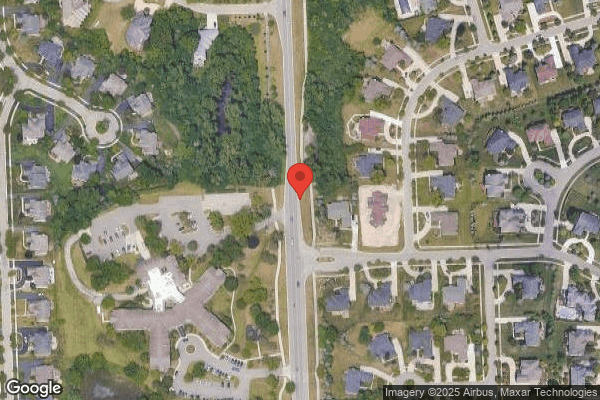
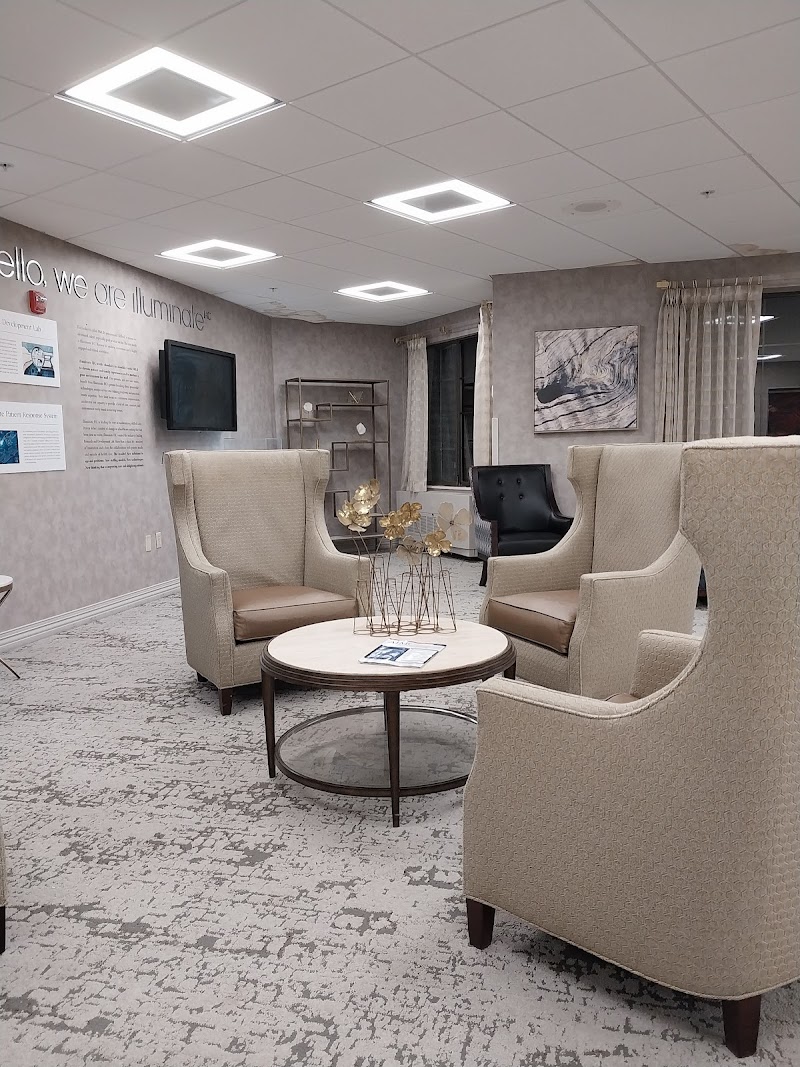
6950 Farmington Rd, West Bloomfield, MI 48322 (248) 661-1700
For profit - Corporation 140 Beds SKLD Data: November 2025 1 Immediate Jeopardy citation
Trust Grade
0/100
#333 of 422 in MI
Last Inspection: November 2024

Within standard 12-15 month inspection cycle. Federal law requires annual inspections.

Overview

SKLD West Bloomfield has received a Trust Grade of F, indicating significant concerns and a poor reputation among nursing homes. It ranks #333 out of 422 facilities in Michigan, placing it in the bottom half, and #25 out of 43 in Oakland County, meaning only a few local options are worse. The facility is worsening, with issues increasing from 5 in 2024 to 11 in 2025, and it has a concerning $120,793 in fines, higher than 83% of Michigan facilities, which suggests ongoing compliance problems. Staffing is a weak point, with a turnover rate of 59%, significantly above the state average, and less RN coverage than 93% of facilities, potentially affecting the quality of care. Specific incidents include a resident not being tested for COVID-19 until symptoms worsened, leading to a positive diagnosis, and another resident experiencing a delayed response to a change in condition, resulting in hospitalization and complications. While the quality measures rated 5 out of 5, the overall trends indicate serious issues that families should consider carefully.
Trust Score
F
0/100
In Michigan
#333/422
Bottom 22%
Safety Record
High Risk
Review needed
Inspections
Getting Worse
5 → 11 violations
Staff Stability
⚠ Watch
59% turnover. Above average. Higher turnover means staff may not know residents' routines.
Penalties
○ Average
$120,793 in fines. Higher than 60% of Michigan facilities. Some compliance issues.
Skilled Nurses
⚠ Watch
Each resident gets only 24 minutes of Registered Nurse (RN) attention daily — below average for Michigan. Fewer RN minutes means fewer trained eyes watching for problems.
Violations
⚠ Watch
64 deficiencies on record. Higher than average. Multiple issues found across inspections.
★★☆☆☆
2.0
Overall Rating
★★☆☆☆
2.0
Staff Levels
★★★★★
5.0
Care Quality
★☆☆☆☆
1.0
Inspection Score
Stable
2024: 5 issues
2025: 11 issues

The Good

  • 5-Star Quality Measures · Strong clinical quality outcomes
  • Full Sprinkler Coverage · Fire safety systems throughout facility
  • No fines on record

Facility shows strength in quality measures, fire safety.

The Bad

2-Star Overall Rating

Below Michigan average (3.1)

Below average - review inspection findings carefully

Staff Turnover: 59%

13pts above Michigan avg (46%)

Frequent staff changes - ask about care continuity

Federal Fines: $120,793

Well above median ($33,413)

Significant penalties indicating serious issues

Chain: SKLD

Part of a multi-facility chain

Ask about local staffing decisions and management

Staff turnover is elevated (59%)

11 points above Michigan average of 48%

The Ugly 64 deficiencies on record

1 life-threatening 4 actual harm
Aug 2025 1 deficiency
CONCERN (D) 📢 Someone Reported This

A family member, employee, or ombudsman was alarmed enough to file a formal complaint

Potential for Harm - no one hurt, but risky conditions existed

Quality of Care (Tag F0684)

Could have caused harm · This affected 1 resident

**NOTE- TERMS IN BRACKETS HAVE BEEN EDITED TO PROTECT CONFIDENTIALITY** This citation pertains to Incident #2588421.Based on observation, interview, and record review, the facility failed to assess re...

Read full inspector narrative →
**NOTE- TERMS IN BRACKETS HAVE BEEN EDITED TO PROTECT CONFIDENTIALITY** This citation pertains to Incident #2588421.Based on observation, interview, and record review, the facility failed to assess resident's skin on a regular basis and thoroughly assess a new skin tear and bruise for one (R702) of two residents reviewed for skin management. Findings include: A review of a Facility Reported Incident (FRI) submitted to the State Agency on 8/2/25 revealed, On 8/2/2025, (Certified Nursing Assistant - CNA 'D') reported to her nurse that (R702) had a skin tear on her right arm. (CNA 'D') stated that (R702) hit her arm on her wheelchair arm rest, when (R702) was asked how it happened she pointed at (CNA 'D'). (R702) is non-verbal and did not provide further explanation .A head-to-toe assessment was conducted on (R702) with nothing remarkable to report .On 8/28/25 at 9:58 AM, R702 was observed in bed sleeping. R702 had a tracheostomy (a surgical hole in the windpipe to assist with breathing) and was receiving nutrition via a Percutaneous Endoscopic Gastrostomy (PEG) tube (a tube surgically placed in the stomach to assist with delivering nutrition). R702 did not wake up when addressed. At that time, CNA 'E', who was assigned as R702's sitter, removed the blanket from R702's right arm. Two small pink areas that appeared scarred and/or healed were observed, one near the elbow and one on the top of the lower arm. A review of R702's clinical record revealed R702 was admitted into the facility on 3/6/25 with diagnoses that included: nontraumatic intracerebral hemorrhage. A review of a Minimum Data Set (MDS) assessment dated [DATE] revealed R702 had severely impaired cognition, no behaviors, and was dependent on staff for bed mobility and transfers. It was documented R702 had a tracheostomy and a PEG tube. A review of R702's progress notes revealed a Nurses' Note dated 8/2/25, written by LPN 'E' at 9:32 PM that read, The writer was called into the residents room by the residents CNA the CNA stated that the resident was being very agitated and trying to get up and trying to leave the room. The CNA stated that the resident had thrown the CNA's phone on the ground. The CNA also stated that the resident had got her arm stuck under the arm rest and that her arm might bruise. The writer noticed that the resident had a skin tear on the right arm and a bruise on the left arm .Further review of R702's progress notes revealed no additional documentation that included an assessment of the skin tear and the bruise noted on R702's arms on 8/2/25. On 8/28/25 at 11:14 AM, the Administrator was asked where weekly skin assessments were documented. The Administrator reported they were documented under the assessments tab in the electronic medical record, and the assessment was titled, Skin Assessment. A review of R702's assessments revealed no skin assessments since June 2025. On 8/28/25 at 12:06 PM, an interview was conducted with LPN 'E' via the telephone. When queried about what occurred with R702 on 8/2/25, LPN 'E' reported the CNA came to the doorway and asked her to assist with R702 who was irate and aggressive. R702 was pointing to her arm and the CNA said R702's arm might bruise up because it got stuck in the arm rest of the wheelchair. LPN 'E' further explained she looked at R702's arm and a a fresh bruise was starting to form, LPN 'E' said R702 had a small skin tear on the other arm that started bleeding toward the end of the shift. LPN 'E' further reported she worked with R702 a day or two after and the bruise really started coming through. LPN 'E' stated, It (the bruise) was a nice size and went through the whole bruising stages. When queried about whether she documented an assessment of R702's bruise and skin tear to include size and description of the areas, LPN 'E' said she did not. On 8/28/25 at 12:19 PM, an interview was conducted with the Wound Care Coordinator, Registered Nurse (RN) 'A'. When queried about how residents' skin was monitored for new impairments and what the process was when a resident sustained a new skin issue, RN 'A' reported the nurses did a weekly head to toe skin assessment that was documented in the electronic medical record. If there was a new skin impairment that was an open area, RN 'A' was notified, and she would assess the wound, and the resident would be evaluated by the wound provider. Any wound that RN 'A' is aware of was assessed weekly. When queried about whether she assessed R702's skin tear and bruise, RN 'A' reported she would have only assessed the skin tear. RN 'A' further reported she remembered the incident with R702 on 8/2/25 and remembered looking at her arm and there was nothing there. RN 'A' reviewed R702's clinical record and said the last time she had a documented assessment of R702's skin was in July 2025. On 8/28/25 at 12:30 PM, an interview was conducted with the Director of Nursing (DON). When queried about why R702 did not have any skin assessments since June 2025, the DON reported she would look into it. On 8/28/25 at 1:13 PM, the DON followed up and reported she was unable to find any skin assessments for R702 since June 2025. The DON reported they should be completed weekly. When queried about the lack of assessment of R702's skin tear and bruise that was documented on 8/2/25, the DON reported an incident report should have been completed by LPN 'E' and that would have triggered a manager to follow up and an investigation to be initiated. On 8/28/25 at 1:20 PM, an interview was conducted with CNA 'D'. When queried about what happened to R702 on 8/2/25, CNA 'D' reported R702 was acting out and tried to get out of the wheelchair. CNA 'D' further explained she had difficulty redirecting the resident and could not find the nurse. In the meantime, R702 got her arm stuck underneath the arm rest of the wheelchair which caused a skin tear that began to bleed. CNA 'D' further said R702 tried to unlock the wheelchair and stuck her hand down between the chair and the wheel and jammed it which left a mark. CNA 'D' notified LPN 'E' when she was available. A review of an investigation into the reported incident on 8/2/25 revealed no documented assessment of the skin tear and bruise to R702's arms.
Jun 2025 1 deficiency
CONCERN (D) 📢 Someone Reported This

A family member, employee, or ombudsman was alarmed enough to file a formal complaint

Potential for Harm - no one hurt, but risky conditions existed

Report Alleged Abuse (Tag F0609)

Could have caused harm · This affected 1 resident

**NOTE- TERMS IN BRACKETS HAVE BEEN EDITED TO PROTECT CONFIDENTIALITY** This citation pertains to intakes MI00153326, MI00153330, MI00153348. Based on interview and record review, the facility failed ...

Read full inspector narrative →
**NOTE- TERMS IN BRACKETS HAVE BEEN EDITED TO PROTECT CONFIDENTIALITY** This citation pertains to intakes MI00153326, MI00153330, MI00153348. Based on interview and record review, the facility failed to ensure an allegation of physical abuse was reported to the State Agency for one resident (R803) of two residents reviewed for abuse. Findings include: A review of multiple complaints received by the State Agency alleged R803 was assaulted by a staff member. Review of the clinical record revealed R803 was initially admitted into the facility on 1/9/25, readmitted on [DATE], and discharged to the hospital on 6/6/25. As of this review, R803 did not return to the facility. Diagnoses included: fracture of unspecified part of right clavicle (5/28/25), generalized anxiety disorder, dysthymic disorder, unspecified dementia, unspecified severity, without behavioral disturbance, psychotic disturbance, mood disturbance, and anxiety. According to the Minimum Data Set (MDS) assessment dated [DATE], R803 had a Brief Interview for Mental Status (BIMS) score of 00 which indicated severe cognitive impairment, and was dependent upon staff for most aspects of care. On 6/17/25 at 9:42 AM, the facility was requested to provide any grievances and incident reports including the facility's documentation of any investigations for R803 since 5/1/25. Review of the facility documentation for R803 included an email thread from the facility's Transitional Care Liaison (Staff 'F') to multiple facility staff including the Administrator, Director of Nursing (DON) and Corporate Staff 'D' which read: .I wanted to bring this to everyone's attention. She [R803] is alleging assault on staff at [Facility] and CM (Case Manager at hospital) has contacted APS (Adult Protective Services). Her son does not want her returning to us per attending's note as he is not satisfied with care. CM note is attached as well, and it does state that son reports his mother's story is inconsistent and keeps changing and our SW (Social Worker) was working him <sic> to find new placement . The included note from the hospital CM dated 5/25/25 at 8:24 AM read: .CM consulted due to abuse concerns. Patient resides at [Facility Name]. Patient presented to the ER (Emergency room) by EMS (Emergency Medical Staff) following a 'fall from her wheelchair'. Patient claims that she was pushed from her wheelchair by staff at the facility. CM contacted patients son, [Name Redacted]. He reports that the patient's story is very inconsistent and keeps changing .He is aware that CM will place a report to APS for further investigation based on the claims patient is making-he is agreeable and appreciative . On 6/17/25 at 10:25 AM, an interview was conducted with the Administrator in the presence of Corporate Staff 'D'. At that time, the above email notification and note from the hospital CM of R803's abuse allegation was reviewed and when asked to explain why that allegation wasn't reported to the State Agency, the Administrator reported We discussed that and felt it didn't happen. When asked what the facility's policy stated to do for any abuse allegations, the Administrator reported if it's abuse allegation, it should be reported, it was not reported. According to the facility's policy titled, Abuse and Neglect dated Updated 03/24/2023: .Reporting/Response .All allegations and/or suspicions of abuse must be reported to the Administrator immediately .All allegations of abuse will be reported to the appropriate State Agencies immediately after the initial allegation is received .
Apr 2025 4 deficiencies
CONCERN (D) 📢 Someone Reported This

A family member, employee, or ombudsman was alarmed enough to file a formal complaint

Potential for Harm - no one hurt, but risky conditions existed

Investigate Abuse (Tag F0610)

Could have caused harm · This affected 1 resident

**NOTE- TERMS IN BRACKETS HAVE BEEN EDITED TO PROTECT CONFIDENTIALITY** This citation pertains to intake #MI00152154. Based on observation, interview, and record review the facility failed to thoroug...

Read full inspector narrative →
**NOTE- TERMS IN BRACKETS HAVE BEEN EDITED TO PROTECT CONFIDENTIALITY** This citation pertains to intake #MI00152154. Based on observation, interview, and record review the facility failed to thoroughly investigate an allegation of sexual abuse for one resident (R304) of three residents reviewed for abuse, resulting in the potential for unidentified instances of abuse. Findings include: A complaint received by the State Agency alleged R304 had been sexually abused. A review of R304's clinical record revealed they admitted to the facility on [DATE], went to the emergency room on 4/12/25, and returned to the the facility on 4/13/25. A review of R304's progress notes revealed a note entered into the record by Nurse 'D' on 4/11/25 at 8:04 AM that read, .Patient woke up this morning at 6:30am <sic> confused and thinks there was a man in her room . A review of a facility provided investigation file for R304 was conducted on 4/30/25 at 9:30 AM. The file included a typed summary that indicated the facility had been made aware by a city police officer that while in the hospital on 4/12/25, R304 alleged they had been raped by a male caregiver. The summary further indicated R304 denied the allegation. The file provided indicated the only other interviews conducted were with R304's responsible party and two male staff members who work on R304's unit. The file did not contain interviews with any other staff such as: their assigned nurse, nurse aide, other staff assigned to the unit at the time of the allegation, Nurse 'D' who documented R304 reporting a man in their room, or any other residents in the facility. A review of the progress note dated 4/11/25 8:04 AM revealed the following: Patient woke up this morning at 6:30am confused and thinks there was a man in her room. Writer notified Nurse Practitioner . On 4/30/25 at 11:00 AM, R304 was observed in their bed. An interview regarding an abuse allegation reported to hospital staff was attempted, however R304 did not have any recollection of the incident. On 4/30/25 at 2:30 PM, an interview was conducted via telephone with the facility's Administrator/Abuse Coordinator. They were asked about their investigation and whether they interviewed any other staff other than the two males and they said they did not. They were then asked if they interviewed any other residents and said they did not. When asked if they were aware on 4/11/25 (prior to the allegation on 4/12/25) that R304 reported there was a man in their room and they said they were not aware. A review of a facility provided policy titled, Nursing Administration .Subject: Abuse and Neglect updated 3/2024 was conducted and read, .If abuse/neglect is suspected the facility will: .3. Conduct a careful and deliberate investigation centering on facts, observations and statements from the alleged victim and witnesses. 4. Conduct the investigation with clear communication process to ensure all relevant information is reported and recorded .
CONCERN (D) 📢 Someone Reported This

A family member, employee, or ombudsman was alarmed enough to file a formal complaint

Potential for Harm - no one hurt, but risky conditions existed

Accident Prevention (Tag F0689)

Could have caused harm · This affected 1 resident

**NOTE- TERMS IN BRACKETS HAVE BEEN EDITED TO PROTECT CONFIDENTIALITY** This citation pertains to Intake Number(s): MI00151843. Based on interview and record review, the facility failed to assess a re...

Read full inspector narrative →
**NOTE- TERMS IN BRACKETS HAVE BEEN EDITED TO PROTECT CONFIDENTIALITY** This citation pertains to Intake Number(s): MI00151843. Based on interview and record review, the facility failed to assess a resident timely after a fall, document the fall in a timely manner, and investigate to determine the root cause of the fall for one (R303) of two residents reviewed for falls. Findings include: A review of a complaint submitted to the State Agency revealed an allegation that R303 fell in the shower while assisted by a Certified Nursing Assistant (CNA) who transferred the resident by herself. R303's knee was swollen as a result of the fall. According to the complainant, as noted in the intake, the facility staff said R303 slipped down but didn't fall. On 4/30/25 at 10:03 AM, it was explained by staff that R303 was on leave of absence from the facility for the day. Therefore, R303 was not available for observation or interview. A second attempt to observe or interview R303 was made at approximately 1:30 PM. R303 had not yet returned to the facility. A review of R303's clinical record revealed R303 was admitted into the facility on 1/29/25 and readmitted on [DATE] with diagnoses that included: hemiplegia and hemiparesis (paralysis and weakness on one side of the body). A review of a Minimum Data Set (MDS) assessment dated [DATE] revealed R303 had severely impaired cognition and required partial/moderate assistance from staff for tub or shower transfers. A review of R303's progress notes revealed a General Progress Note written by Licensed Practical Nurse (LPN) 'A' on 3/19/25 at 2:27 AM (midnight shift) that noted, Resident self reported fall to writer and stated that during her shower this am (morning) on dayshift, CNA attempted to transfer her without any assistance and she fell to floor on her knees and toes. Resident c/o (complained of) pain this evening in BLE (bilateral lower extremities) and was given Tylenol PRN (as needed) .Resident stated she was assisted up with CNA and two other people in shower room on unit .new order for STAT (right away) x-ray to BLE, hips, knees, and ankles and lower back . Further review of R303's progress notes revealed no documentation from day shift on 3/18/25 that noted R303's fall or that she was assessed afterwards. On 4/30/25 at 11:54 AM, Infection Control Nurse (Nurse 'C') who was the designated staff in charge in the absence of the Administrator and Director of Nursing (DON) was asked to provide any incident reports with associated investigations for R303 since 3/1/25. The Administrator and DON were included in the email. On 4/30/25 at 12:17 PM, Nurse 'C' provided one incident report for R303. At that time, Nurse 'C' was asked if there was any documented investigation for the incident. Nurse 'C' reported she would look into it. A review of an incident report for R303 dated 3/19/25 at 12:00 AM, completed by LPN 'A', revealed, Resident self reported to nurse that during her shower this morning, CNA attempted to transfer resident alone even after she told her she would need help to transfer her. Resident says she then fell to the floor on her knees and toes and CNA went and got help of another two people to help her back up. Later this evening she c/o BLE pain . In the notes section of the incident report, the Director of Nursing (DON) documented, .Resident stated was lowered to the floor while in the shower room. Corrective action: Transfer status changed to 2 person with transfers .Need more support with transfers . On 4/30/25 at approximately 1:30 PM, Nurse 'C' reported she spoke with the DON and confirmed there was no additional documented investigation related to R303's fall on 3/18/25. A review of a Post Fall Assessment for R303, opened on 3/20/25, revealed it was not completed. The assessment was blank and not completed or locked. On 4/30/25 at 3:15 PM, an interview was conducted with the DON via the telephone. When queried about the facility's protocol after a resident had a fall, the DON reported the nurse assessed the resident, notified the DON, resident's responsible party, and the physician, an incident report was completed, and then it was investigated. When queried about when she was notified of R303's fall, the DON reported Nurse 'A' notified her on the midnight shift that R303 said she fell. The DON said she talked to the CNAs and R303 was lowered to the floor but that was still considered a fall. When queried about who the CNA was who transferred R303, the DON could not remember. When queried about who the other staff were that assisted getting R303 off the floor, the DON could not remember. The DON confirmed there was no documented investigation to determine the root cause of the fall. When queried about when R303 should have been assessed and when the fall should have been documented and management, physician, and responsible party notified, the DON reported at the time of the fall. When queried about whether the CNA should have continued with the transfer if the resident told her that she would need help to transfer her, the DON reported the CNA should have gotten additional assistance. A review of a facility policy titled, Best Practice Fall Management dated 2/13/20, revealed, in part, the following, .Post Fall Procedure: Licensed Nurse will complete following: Head to toe assessment .Obtain vital signs .Ensure resident safety .Notify physician .resident responsible party .Documentation: Licensed Nurse will complete following in (electronic medical record) Risk Management: Details .Injuries .Factors .Witnesses .Licensed nurse will conduct and document interview with witness(s) that directly observed and/or heard occurrence .Licensed Nurse will document the following in Progress Note with type of Event Note: Vital signs .Neuro Assessment .ROM (range of motion) .Pain .Skin alterations .or any other injury .New intervention(s) .Notification of physician .Notification of responsible party .
CONCERN (D) 📢 Someone Reported This

A family member, employee, or ombudsman was alarmed enough to file a formal complaint

Potential for Harm - no one hurt, but risky conditions existed

Deficiency F0772 (Tag F0772)

Could have caused harm · This affected 1 resident

**NOTE- TERMS IN BRACKETS HAVE BEEN EDITED TO PROTECT CONFIDENTIALITY** This citation pertains to intake: MI00152471. Based on interview and record reviews, the facility failed to obtain STAT (immedia...

Read full inspector narrative →
**NOTE- TERMS IN BRACKETS HAVE BEEN EDITED TO PROTECT CONFIDENTIALITY** This citation pertains to intake: MI00152471. Based on interview and record reviews, the facility failed to obtain STAT (immediate) labs ordered by the physician for a resident identified with a change of condition for one (R305) of one resident reviewed for lab services. Findings include: A review of the medical record revealed R305 was admitted to the facility on [DATE], with diagnoses that included: encounter for orthopedic aftercare following surgical amputation, severe protein-calorie malnutrition, peripheral vascular disease and acute kidney failure. Further review of the medical record revealed the following: On 4/18/25 at 12:55 PM, a Dietary note documented in part . Per nursing communication to RD (Registered Dietitian) and SLP (Speech Language Pathologist) Therapy patient asked for water yesterday however started coughing may need eval (evaluation) for thicken liquids- SLP plan to f/u (follow up). Patient does not each much, wt (weight) loss . On 4/18/25 at 1:08 PM, a Nursing note documented in part . spoke with physician regarding resident not eating and drinking, participating very little in therapy. New orders received for 0.9% NS (normal saline) at 60 cc/hr (centimeters cubed per hour) x 2 liters, repeat labs CMP (comprehensive metabolic panel), CBCD (complete blood count with differential) , Chest X-ray, AP/Lat (anterior posterior/lateral) . Orders transcribed. Charge Nurse made aware . Review of the Physician orders documented, . 4/18/25 . CMP, CBCD STAT . Review of the medical record revealed no results of the STAT CMP & CBC with differential to have been completed. A Nursing note dated 4/20/25 at 12:33 PM, documented . pt (patient) displaying extreme weakness, lethargic, refusing medications and food/fluids. Dr. (doctor) notified and orders given to send pt out . On 4/30/25 at 1:32 PM, the Infection Control Nurse (ICN) C who served as the replacement for the Director of Nursing (DON) for this survey was interviewed and asked to provide the STAT labs ordered for R305 on 4/18/25. ICN C stated they would look into it and follow back up. At 2:18 PM, ICN C returned and stated the facility does not do STAT labs and that their lab company had already came that Friday. ICN C stated the labs were not done and would have gotten done the following week. When asked to clarify about the facility not offering STAT lab services, ICN C stated the facility's contracted lab does not perform STAT lab services. ICN C was asked how the facility handles STAT lab orders ordered by the Physician for residents with an identified change of condition and ICN C stated the labs would have to wait to get done on Monday or they would have to transfer the resident to the hospital. ICN C was asked to provide the facility's lab contract for review. Review of the facility's laboratory services contract documented a mutual agreement effective 1/10/24. The Exhibit A page noted the following, . shall provide clinical laboratory testing more specifically described as .STAT service- $25/stat . On 4/30/25 at 3:21 PM, via a telephone interview with the Director of Nursing (DON) was notified of the STAT lab concerns for R305 and stated their staff had been keeping them updated with the survey findings and acknowledged the concern. No further explanation or documentation was provided by the end of the survey.
CONCERN (E) 📢 Someone Reported This

A family member, employee, or ombudsman was alarmed enough to file a formal complaint

Potential for Harm - no one hurt, but risky conditions existed

Deficiency F0692 (Tag F0692)

Could have caused harm · This affected multiple residents

**NOTE- TERMS IN BRACKETS HAVE BEEN EDITED TO PROTECT CONFIDENTIALITY** This citation pertains to intake: MI00152471. Based on interview and record review the facility failed to consistently assess, ...

Read full inspector narrative →
**NOTE- TERMS IN BRACKETS HAVE BEEN EDITED TO PROTECT CONFIDENTIALITY** This citation pertains to intake: MI00152471. Based on interview and record review the facility failed to consistently assess, monitor, and review the nutritional needs and ensure adequate interventions were consistently implemented and/or modified to prevent further weight loss for one (R305) of three residents reviewed for nutrition, resulting in a severe weight loss of -15.05 lbs (pounds) within four weeks of admission. Findings include: A review of a complaint submitted to the State Agency (SA) documented the following in part, . On 03/19/2025, (R305's name) was discharged from (hospital name) to (facility name) On 04/20/2025 . admitted to (hospital name) . (R305's name) has lost roughly around 20 pounds since he was admitted to (facility name) A review of the hospital documents provided to the facility upon R305's admission documented the following: A Nutrition consult dated 3/17/25 at 3:45 PM, . Weight: 68 kg (kilogram) (149 lb (pounds) 14.6 oz (ounces) . 03/14/25 . Problem: Malnutrition acute disease or injury related (Severe - active) . Etiology: Inadequate energy intake . Report of pt (patient) with no appetite, consuming 50% or less of energy needs for 5 days or more. Weight loss trend noted; minimally moderate fat loss and muscle depletion . Intervention . Regular diet - assist with feeding, encourage intake . Pt prefers chocolate ensure plus HP(high protein) w (with)/ all meals (no magic cups, gelatein <sic>, or Glucerna at this time) . Weekly wt (weight) for insight . Consider adding daily MVI (multivitamin), thiamine and folic acid given hx (history) poor intake . Continue Marinol, per medical . A review of the medical record revealed R305 was admitted to the facility on [DATE] with diagnoses that included: Orthopedic aftercare following surgical amputation, dysphagia (difficulty swallowing), and unspecified severe protein-calorie malnutrition. Further review of the medical record revealed the following: A Nursing admission Screening . dated 3/19/25 at 11:32 PM, documented in part . Weight: 134.2 (lbs) Date: 3/19/2025 23:45 (11:45 PM) . A Dietary Evaluation dated 3/20/25 at 11:15 AM, documented in part . Most Recent Weight . 134.2 (Lbs) . Loss of 5% or more in the last month or loss of 10% or more in last 6 months - No or unknown . Loss of 7.5% in the last 3 months- No or unknown . A Physician order dated 3/21/25 noted Weekly weights to be obtained. The facility staff failed to obtain a weight for the following week in March (3/23-3/29) as ordered by the Physician. On 4/4/25 the facility staff recorded a weight of 122.8 lbs. This indicated a -8.49 weight loss from the admission weight, within a little over two weeks. A Dietary note dated 4/4/25 at 2:22 PM, documented in part . Weight accuracy of admission wt (weight) not verified. Patient had swelling and recent BKA (below knee amputation), left gangrene which may also cause wt variation. However patient is often triggering for PO (by mouth) intake less than 25% per food acceptance record. Patient request staff to feed him although able to feed self per therapy. He is on Red Napkin program and gets chocolate milk at all meals include 2 at BF (breakfast) per his preference. He mostly drinks fluids. He was started w (with) Prostat AWC 30 ml (milliliters) for wound healing and MedPass BID (twice a day). Current food intake is insufficient to meet his nutritional needs for wt (weight) stability and wound healing will recommend increasing Medpass 4oz TID (three times daily) for additional 240 kcal and 10 gm protein . Plan: weekly weight, MedPass 4oz increase to TID . On 4/17/25 the facility staff recorded a weight of 114.0 lbs. This indicated a -15.05 weight loss from admission within four weeks. A Dietary Evaluation dated 4/17/25 at 7:30 PM, was noted to be incomplete and contained no documentation of the identified weight loss or interventions implemented to prevent further weight loss. A review of a facility policy titled Nutrition Monitoring & Management Program dated 7/11/18, documented in part . It is the policy of this facility to ensure that all residents maintain acceptable parameters of nutritional status, such as body weight and protein levels; unless the resident's clinical condition demonstrates that this is not possible . Significant weight loss . should be addressed in the care plan . Ongoing interventions are evaluated and modified as needed . Each resident's nutritional status is assessed by the Registered Dietician . following a change in condition . A review of the Amount of meal consumed documentation from 4/1/25 to 4/18/25, noted mostly 0% to 25% of meals consumed. Review of a care plan titled Resident has nutritional problem or potential nutritional problem related too(rt) mechanically altered diet and per patient inability to feed himself, rt BKA (below knee amputation) and active wound/gangrene . able to feed self per therapy, however don't want to, possible weight loss . this care plan was implemented on 3/20/25 and noted the following interventions Pureed, nectar thick liquids . per OT (occupational therapy) eval (evaluation) as needed . Provide and ensure resident has at each meal and/or snack . Monitor/document/report PRN (as needed) any s/sx (signs/symptoms) of dysphagia: Pocketing, Choking, Coughing, Drooling, Holding food in mouth, Several attempts at swallowing, Refusing to eat, Appears concerned during meals. Report to nurse and/or MD (medical doctor) and adjust plan of care as indicated . Provide and serve supplements as ordered. Refer to current physician orders for specifics. Notify nurse and/or RD (Registered Dietician) of changes in consumption, adherence with intake . RED NAPKIN protocol . NEEDS FEEDING ASSISTANCE . A Nursing note dated 4/18/25 at 4:49 AM, documented in part . Patient is having a difficult time swallowing thin fluids., and chewing food per afternoon shift. Dietitian may need to change diet. A Dietary note dated 4/18/25 at 12:55 PM, documented in part . Per nursing communication to RD (Registered Dietician) and SLP (Speech Language Pathologist) therapy patient asked for water yesterday however started coughing may need eval for thicken liquids-SLP plan to f/u (follow up). Patient do no <sic> eat much, wt loss, on Red Napkin program mostly prefers to drink chocolate milk. A Dietary note dated 4/18/25 at 1:00 PM, documented . Per SLP communication diet downgraded to pureed nectar thick liquids . A Nursing note dated 4/20/25 at 12:33 PM, documented in part . pt displaying extreme weakness, lethargic, refusing medication and food/fluids. Dr (doctor) notified and orders given to send pt out (to the hospital) . A Dietary note dated 4/21/25 at 8:56 AM, documented . WEIGHT WARNING . 114.0 . 15.1% . Patient refusing food and fluids, diet downgraded to pureed, nectar thick liquids r/t (related to) difficulty swallowing coughing w/fluids. Supplements were continued. Pt sent to hospital at this time. Plan: f/u (follow up) after pt returns. As indicated, the Dietician did not identify the weight loss until the day after the resident was sent to the hospital. At the time of this survey, the resident had not returned to the facility. On 5/2/25 at 2:27 PM, the facility's Registered Dietician (RD) B was interviewed and asked what the facility's Red Napkin Protocol was. RD B stated that any resident that needed some type of assistance is put on the Red Napkin program. RD B stated they were told this upon being hired. RD B was asked to provide the facility's protocol on the Red Napkin program. RD B was asked how they are informed of the residents with significant/severe weight loss, RD B replied the weight discrepancies are usually discussed with the Interdisciplinary team at their daily meeting or identified by the weekly/monthly list. RD B was then asked about the hospital weight compared to the initial facility's weight obtained and the discrepancy. RD B was asked about the weekly weight order for R305 and the missed weight in March. RD B was then asked about the weight loss of -15.05% on 4/17/25, that was not identified, reviewed or evaluated until after the resident was transferred to the hospital on 4/20/25. RD B was also asked about the incomplete Dietary assessment dated [DATE]. RD B stated they would look into the concerns and follow back up. At 2:50 PM, RD B returned and stated the Red Napkin program had been terminated and was no longer in effect. RD B stated they remembered talking about this resident at the clinical meetings but was unable to recall what was exactly discussed. RD B stated they did not find additional documentation besides what was noted in the record but will continue to look. No further explanation or documentation was provided by the end of the survey.
Jan 2025 5 deficiencies
CONCERN (D) 📢 Someone Reported This

A family member, employee, or ombudsman was alarmed enough to file a formal complaint

Potential for Harm - no one hurt, but risky conditions existed

ADL Care (Tag F0677)

Could have caused harm · This affected 1 resident

**NOTE- TERMS IN BRACKETS HAVE BEEN EDITED TO PROTECT CONFIDENTIALITY** This citation pertains to intake# MI00149540. Based on observation, interview and record review, the facility failed to ensure a...

Read full inspector narrative →
**NOTE- TERMS IN BRACKETS HAVE BEEN EDITED TO PROTECT CONFIDENTIALITY** This citation pertains to intake# MI00149540. Based on observation, interview and record review, the facility failed to ensure activities of daily living (ADL's) including regular bathing and transfers were provided for one resident (R803) of one resident reviewed for activities of daily living (ADL's). Findings include: On 1/28/25, a concern submitted to the State Agency was reviewed and alleged R803 was not being provided scheduled showers. On 1/28/25 at approximately 10:57 a.m., R803 was observed in their room, sitting up on the edge of their bed. R803 was observed with their pants half way down with both of their feet hanging off the bed and R803 leaning on their left side. R803 reported they had been waiting for someone to help get them out of the bed and into their chair for approximately two hours. R803 indicated that the CNA (Certified Nursing Assistant) had been aware of their need but had forgotten about them due to the CNA having to assist another resident with eating earlier that morning and the Nurse had to give medications. R803 reported the CNA indicated they would help the other resident with eating and come back but never did. R803 was queried if the facility is helping them with showering and they reported they rarely get showers because they need a lot of help and the staff do not want to help them. On 1/28/25 at approximately at 11:07 a.m., CNA A was queried why R803 was still waiting to get into their wheelchair and CNA A indicated they did not get them in the wheelchair because they thought that therapy was going to get them up. CNA A reported they had to help another resident eat earlier and that they thought that therapy had gotten R803 in their chair. CNA A then reported they would go help them at that time. On 1/28/25 at approximately 11:14 a.m., Nurse B was queried regarding R803 still waiting on ADL care to get into their wheelchair. Nurse B indicated that they were aware that R803 wanted to get into their wheelchair and that CNA A was supposed to put them in after they had finished helping another resident eat. Nurse B reported they could not help them earlier in the morning because they had to give medications and assist other residents with heath issues but that CNA A should have came back to them after helping the other resident eat. On 1/28/25 the medical record for R803 was reviewed and revealed the following: R803 was initially admitted to the facility on [DATE] and had diagnoses including Morbid obesity, Heart failure and Chronic obstructive pulmonary disease. A review of R803's MDS (minimum data set) with an ARD (assessment reference date) of 1/5/25 revealed R803 needed maximal assistance from staff with transferring to a chair and showering. A review of R803's comprehensive plan of care revealed the following: Focus-Resident has an ADL self-care performance deficit r/t (related to) BLE (bilateral lower extremities) pain, weakness, . Date Initiated: 01/06/2025 .Interventions-Provide supportive care, assistance with daily care needs (ADLs) as needed. Document assistance as needed. Date Initiated: 01/06/2025 .Showering/Bathing per schedule or as needed. Date Initiated: 01/06/2025 . A review of R803's CNA task bathing documentation since their admission was conducted and revealed R803 only had two showers (1/17 and 1/21) since being admitted on [DATE]. The documentation did not reveal any documented refusals of showers. Two refusals of R803 choosing not to have their hair washed were documented on 1/17/25 and 1/21/25 however, the shower was still provided. On 1/28/25 at approximately 1:29 p.m., The DON (Director of Nursing) was queried regarding how the staff document showers being offered/provided to residents and they reported it was in the CNA task documentation. The DON was queried regarding R803 being left in wheelchair for an extended period of time and they indicated that the Nurse did not inform them that R803 wanted to get into their chair. The DON was queried why R803 only had two documented episodes of being offered a shower and they reported they did not know. The DON was queried what the standard for offered bathing was in the facility and they reported that all residents are offered showers at a minimum of twice per week and that staff should document in the task screen when a shower is provided and if a resident has refused. At that time, that DON was queired for any additional documentation that R803 had been offered bathing twice a week. No further documentation that R803 had been provided scheduled bathing was received by the end of the survey.
CONCERN (D) 📢 Someone Reported This

A family member, employee, or ombudsman was alarmed enough to file a formal complaint

Potential for Harm - no one hurt, but risky conditions existed

Quality of Care (Tag F0684)

Could have caused harm · This affected 1 resident

**NOTE- TERMS IN BRACKETS HAVE BEEN EDITED TO PROTECT CONFIDENTIALITY** This citation pertains to Intake Number(s): MI00148496. Based on interview and record review, the facility failed to identify, m...

Read full inspector narrative →
**NOTE- TERMS IN BRACKETS HAVE BEEN EDITED TO PROTECT CONFIDENTIALITY** This citation pertains to Intake Number(s): MI00148496. Based on interview and record review, the facility failed to identify, monitor, and assess a skin impairment and provide follow up after an outside appointment for one (R802) of one resident reviewed for skin impairments. Findings include: A review of a complaint submitted to the State Agency revealed allegations that on 10/31/24, R802 consulted with the physician at the facility about oiling bumps that formed on his scalp. R802 was told it was common for diabetics, was given a medication, and that helped a little, but then the bumps continued to spread. R802 contacted his dermatologist and went to an appointment. On 11/25/24, the dermatologist called R802 and informed him that he had MRSA (Methicillin-resistant Staphylococcus aureus) and it was contagious. On 1/28/25 at 12:46 PM, an interview was conducted with R802 via the telephone. R802 reported he consulted with Attending Physician 'D' about a pus filled blister located on his scalp. R802 reported Physician 'D' called it oil filled and said all diabetics got them. R802 reported being concerned because as a long time diabetic he had never developed a blister like that. R802 further explained he made an appointment with his dermatologist to get a second opinion and notified the facility of the appointment. At that appointment, the dermatologist took a culture from R802's head and prescribed antibiotics that were called in to R802's personal pharmacy and the medications were brought to the facility by his wife. R802 reported when he returned from the appointment, he provided the paperwork from the dermatologist to Registered Nurse (RN) 'E' so that they were aware of what was going on. On a later date, R802 received a phone call from the dermatologist informing him the culture was positive for MRSA and R802 notified the facility. A review of R802's clinical record revealed R802 was admitted into the facility on [DATE] and discharged on 12/23/24 with diagnoses that included: type 2 diabetes mellitus and lymphedema. A review of a Minimum Data Set (MDS) assessment dated [DATE] revealed R802 had intact cognition and no behaviors. A review of a progress note dated 10/10/24 (date of admission) revealed R802 had a wound to the left heel. There was no documentation of any skin impairments to R802's head/scalp. A review of a progress note dated 10/13/24 revealed a full skin assessment was completed. No skin impairments to R802's head/scalp were noted. A review of a Medical Practitioner H&P (History and Physical) dated 10/14/24 revealed R802 was evaluated by Physician 'D'. There was no documentation that indicated R802 had any skin impairments to his head/scalp. A review of a General Progress Note dated 11/2/24, written by RN 'E', revealed Dr order pt (patient) to be started on keflex (an antibiotic) .x (times) 3 days for cyst on head . A review of a Medical Practitioner Progress Note dated 11/2/24, written by Physician 'D', revealed, .Discussed with nursing staff. No new reported concerns per nursing staff .Skin: non-icterus (not yellow in color) .cystitis (inflammation of the bladder): will start Cephalexin (keflex) . There was no documentation regarding a cyst on head as noted by RN 'E' on the same date. A review of a Medical Practitioner Progress Note dated 11/6/24, written by Physician 'D', revealed, .cystitis: Resolved, continue to monitor . A review of a General Progress Note dated 11/11/24 revealed, (R802) has a dermatology appointment on Tuesday 11.12.2024 . A review of a Medical Practitioner Progress Note dated 11/11/24, written by Physician 'D', revealed, .No new reported concern per nursing staff .Skin .All visible skin intact head, neck BUE (bilateral upper extremities) . There was no documentation of any skin impairments to R802's head or why he made an appointment with the dermatologist. A review of a General Progress Note dated 11/21/24 revealed Resident has a follow-up dermatology appointment on Tuesday 11.26.2024 . A review of a General Progress Note dated 11/25/24, written by RN 'E', revealed Pt had antibiotic pills bottle in room, pt states that he went to dermatologist last week and they gave him the antibiotic to treat MRSA. Dr. was notified and orders for the antibiotic were put in. Dr will be in to see pt . A review of a Medical Practitioner Progress Note dated 12/2/24, written by Physician 'D', revealed no mention of MRSA or any skin impairments to R802's head/scalp. A review of a General Progress Note dated 12/5/24 revealed, Guest returned from F/U (follow up) appt (appointment) with Dermatologist and a new order was given to .Cont (continue) Doxycycline .for another 2 months .for MRSA . A review of all weekly skin assessments, physician evaluations, and nursing progress notes revealed no assessment of R802's head/scalp from admission date of 10/10/24 until discharge on [DATE]. A review of Physician Orders for R802 revealed an order dated 11/24/24 through 12/5/24 for Doxycycline Monohydrate .for MRSA for 3 days and an order dated 11/26/24 for contact precautions for MRSA. On 12/5/24, a new order for Doxycycline was entered for the next 60 days. On 1/28/25 at 12:16 PM, an interview was conducted with RN 'E' via the telephone. When queried about the progress note that said R802 was started on antibiotics for a cyst to the head, RN 'E' stated, He brought that into the facility. When queried about what was brought into the facility, RN 'E' said R802 had some antibiotics that he got at an outside appointment. When queried about the note she documented approximately two weeks prior that said he had a cyst on his head, RN 'E' said she was sick and cannot remember anything from a couple months ago. On 1/28/25 at 12:24 PM, an interview was conducted with Physician 'D' via the telephone. When queried about the progress note dated 11/3/25 that noted R802 was started on keflex for cystitis, Physician 'D' clarified that cystitis was an inflammatory condition of the bladder. When queried about RN 'E's note on the same day that mentioned a cyst on R802's head, Physician 'D' reported he talked to the nurse regarding an infected sebaceous (oily) cyst on his head and started him on antibiotics. Physician 'D' reported he must have documented cystitis by mistake and that the cyst got better with the medication. When queried about where the assessment of the cyst was documented, Physician 'D' reported he was not sure if he documented about it. When queried about what kind of follow up was done after R802 completed the initial treatment of the cyst, Physician 'D' reported he followed up and it was better (It should be noted that there was no documentation in any physician notes that mentioned a cyst to R802's head). When queried about what was done to follow up after R802 went to the dermatologist on 11/12/24, Physician 'D' reported the nurse typically would enter any orders from the outside consultation and the nurse or unit manager would contact him to notify of the recommendations. Physician 'D' did not remember if anyone followed up, but said R802 was found to have antibiotics that he was taking without anyone's knowledge. On 1/28/25 at 1:17 PM, an interview was conducted with the Director of Nursing (DON). When queried about the facility's protocols when a new skin impairment was identified, the DON reported it would be added to the risk report, a progress note was entered, the DON and family were notified, and a treatment was started until the resident was seen by the wound provider. The DON reported all skin impairments were to be documented in the resident's clinical record and assessed weekly. When queried about what kind of follow up should occur when a resident went to an outside appointment, the DON reported if the resident brought back paperwork, the nurse would discuss the outside provider's recommendations with the attending physician and enter the orders in the electronic medical record. When queried about R802's diagnosis of MRSA, the lack of assessment of the cyst, and the lack of follow up by the facility care team, the DON reported she was unaware R802 had MRSA (It should be noted that as of 11/24/24 and 11/26/24, physician's orders indicated R802 was being treated for MRSA and was placed on contact precautions). At that time, R802's dermatology consults were requested. The DON was unable to locate R802's dermatology consults prior to the end of the survey. When queried about how it was determined R802 had MRSA and required treatment, the DON did not offer a response. A review of a facility policy titled, Best Practice Skin & Wound Management updated 5/31/22, revealed, in part, the following, .Licensed Nurse skin observation is completed based on policy, which include upon admission, readmission, weekly, and as needed. Results of skin observation will be documented by following methods: .Weekly via .Skin Observation Took .Any new skin observations will have initial documentation related to location, type and initial measurements documented .Complete weekly comprehensive evaluation of wound(s) .
CONCERN (E) 📢 Someone Reported This

A family member, employee, or ombudsman was alarmed enough to file a formal complaint

Potential for Harm - no one hurt, but risky conditions existed

Deficiency F0711 (Tag F0711)

Could have caused harm · This affected multiple residents

**NOTE- TERMS IN BRACKETS HAVE BEEN EDITED TO PROTECT CONFIDENTIALITY** This citation pertains to Intake Number(s): MI00148496. Based on interview and record review, the facility failed to ensure the ...

Read full inspector narrative →
**NOTE- TERMS IN BRACKETS HAVE BEEN EDITED TO PROTECT CONFIDENTIALITY** This citation pertains to Intake Number(s): MI00148496. Based on interview and record review, the facility failed to ensure the physician evaluated the total program of care to include a newly developed skin impairment for one (R802) of one residents reviewed for physician visits. Findings include: A review of a complaint submitted to the State Agency revealed allegations that on 10/31/24, R802 consulted with the physician at the facility about oiling bumps that formed on his scalp. R802 was told it was common for diabetics, was given a medication, and that helped a little, but then the bumps continued to spread. R802 contacted his dermatologist and went to an appointment. On 11/25/24, the dermatologist called R802 and informed him that he had MRSA (Methicillin-resistant Staphylococcus aureus) and it was contagious. On 1/28/25 at 12:46 PM, an interview was conducted with R802 via the telephone. R802 reported he consulted with Attending Physician 'D' about a pus filled blister located on his scalp. R802 reported Physician 'D' called it oil filled and said all diabetics got them. R802 reported being concerned because as a long time diabetic he had never developed a blister like that. R802 further explained he made an appointment with his dermatologist to get a second opinion and notified the facility of the appointment. At that appointment, the dermatologist took a culture from R802's head and prescribed antibiotics that were called in to R802's personal pharmacy and the medications were brought to the facility by his wife. R802 reported when he returned from the appointment, he provided the paperwork from the dermatologist to Registered Nurse (RN) 'E' so that they were aware of what was going on. On a later date, R802 received a phone call from the dermatologist informing him the culture was positive for MRSA and R802 notified the facility. A review of R802's clinical record revealed R802 was admitted into the facility on [DATE] and discharged on 12/23/24 with diagnoses that included: type 2 diabetes mellitus and lymphedema. A review of a Minimum Data Set (MDS) assessment dated [DATE] revealed R802 had intact cognition and no behaviors. A review of a General Progress Note dated 11/2/24, written by RN 'E', revealed Dr order pt (patient) to be started on keflex (an antibiotic) .x (times) 3 days for cyst on head . A review of a Medical Practitioner Progress Note dated 11/2/24, written by Physician 'D', revealed, .Discussed with nursing staff. No new reported concerns per nursing staff .Skin: non-icterus (not yellow in color) .cystitis (inflammation of the bladder): will start Cephalexin (keflex) . There was no documentation regarding a cyst on head as noted by RN 'E' on the same date. A review of a Medical Practitioner Progress Notes dated 11/6/24, written by Physician 'D', revealed, .cystitis: Resolved, continue to monitor . There was on documentation regarding a cyst on head. A review of a General Progress Note dated 11/11/24 revealed, (R802) has a dermatology appointment on Tuesday 11.12.2024 . A review of Medical Practitioner Progress Notes dated 11/11/24, 11/13/24, 11/15/24, 11/28/24, 11/20/24, and 11/22/24, written by Physician 'D', revealed, .No new reported concern per nursing staff .Skin .All visible skin intact head, neck BUE (bilateral upper extremities) . There was no documentation of any skin impairments to R802's head or why he made an appointment with the dermatologist or any follow up regarding that appointment thereafter. A review of a General Progress Note dated 11/21/24 revealed Resident has a follow-up dermatology appointment on Tuesday 11.26.2024 . A review of a General Progress Note dated 11/25/24, written by RN 'E', revealed Pt had antibiotic pills bottle in room, pt states that he went to dermatologist last week and they gave him the antibiotic to treat MRSA. Dr. was notified and orders for the antibiotic were put in. Dr will be in to see pt . A review of a Medical Practitioner Progress Note dated 11/25/24, written by Physician 'D', revealed no mention of MRSA, any skin impairments to R802's head/scalp, or use of antibiotics to treat MRSA. A review of a Medical Practitioner Progress Note dated 12/2/24, written by Physician 'D', revealed no mention of MRSA, any skin impairments to R802's head/scalp, or use of antibiotics to treat MRSA. A review of a General Progress Note dated 12/5/24 revealed, Guest returned from F/U (follow up) appt (appointment) with Dermatologist and a new order was given to .Cont (continue) Doxycycline .for another 2 months .for MRSA . A review of Medical Practitioner Progress Notes dated 12/11/24, 12/13/24, 12/16/24, 12/18/24, 12/20/24, and 12/23/24 revealed no mention of MRSA, the cyst on R802's head, or use of antibiotics to treat it. A review of Physician Orders for R802 revealed an order dated 11/24/24 through 12/5/24 for Doxycycline Monohydrate .for MRSA for 3 days and an order dated 11/26/24 for contact precautions for MRSA. On 12/5/24, a new order for Doxycycline was entered for the next 60 days. These orders were signed by Physician 'D'. On 1/28/25 at 12:24 PM, an interview was conducted with Physician 'D' via the telephone. When queried about the progress note dated 11/3/25 that noted R802 was started on keflex for cystitis, Physician 'D' clarified that cystitis was an inflammatory condition of the bladder. When queried about RN 'E's note on the same day that mentioned a cyst on R802's head, Physician 'D' reported he talked to the nurse regarding an infected sebaceous (oily) cyst on his head and started him on antibiotics. Physician 'D' reported he must have documented cystitis by mistake and that the cyst got better with the medication. When queried about where the assessment of the cyst was documented, Physician 'D' reported he was not sure if he documented about it. When queried about what kind of follow up was done after R802 completed the initial treatment of the cyst, Physician 'D' reported he followed up and it was better (It should be noted that there was no documentation in any physician notes that mentioned a cyst to R802's head). When queried about why there was no documentation regarding R802's cyst, before and after antibiotic treatment, and after it was discovered he had MRSA, Physician 'D' did not offer a response. On 1/28/25 at 1:17 PM, an interview was conducted with the Director of Nursing (DON). When queried about the facility's expectations for physician evaluations when there is a change in condition, the DON reported the physician is contacted, they complete an evaluation, and their documentation was expected to include accurate, thorough documentation that covers anything they evaluated.
CONCERN (F) 📢 Someone Reported This

A family member, employee, or ombudsman was alarmed enough to file a formal complaint

Potential for Harm - no one hurt, but risky conditions existed

Infection Control (Tag F0880)

Could have caused harm · This affected most or all residents

This citation pertains to Intake Number(s): MI00148496 Based on interviews and record reviews the facility failed to maintain on effective infection control prevention and control program for 82 of 82...

Read full inspector narrative →
This citation pertains to Intake Number(s): MI00148496 Based on interviews and record reviews the facility failed to maintain on effective infection control prevention and control program for 82 of 82 residents who resided in the facility. Findings include: A review of a complaint submitted to the State Agency revealed it was alleged the facility did not follow proper infection control procedures to prevent the spread of MRSA (Methicillin-resistant Staphylococcus aureus). On 1/28/25 at 12:46 PM, an interview was conducted with R802 via the telephone. R802 reported he was notified by his dermatologist on 11/25/25 that the culture taken from a cyst on his head was positive for MRSA and that he was told it was contagious. R802 reported the facility was notified and they did not take the proper steps to clean R802's room and wear the appropriate protective equipment. R802 reported, one nurse explained to him that MRSA was contagious, but never came back after that. R802 reported staff were not wearing gowns when providing care and he was transported to Physical therapy and other doctor appointments and did not think the facility was notifying them of the infection. R802 said they put a sign up on his door, but did not change their practices. A review of R802's Physician's orders revealed R802 was placed on contact precautions on 11/26/24 and was started on a new antibiotic (Doxycycline) on 11/24/24. On 1/28/25, a review of the facility's Infection Control Surveillance program provided by the Director of Nursing (DON) in the absence of the facility's Infection Control Preventionist (ICP) 'F' was conducted and revealed the following: No infection control data including surveillance, line listing, mapping, and analysis report for the months of November 2024, December 2024, and January 2024. On 1/28/25 at 1:17 PM, the DON was interviewed in the absence of ICP 'F'. The DON reported she was unaware that R802 had MRSA and was unsure if there were any trends of MRSA in the facility during that time. The DON reported ICP 'F' was not in that day and they were unable to locate infection control data for November 2024, December 2024, and January 2025, but that the analysis was reported during monthly Quality Assurance (QA) meetings. On 1/28/25 at 1:35 PM, the Administrator was interviewed. The Administrator reported the facility's last QA meeting was on 1/15/25 and at that time ICP 'F' provided an infection control report for December 2025. The report was reviewed and it noted that there were trends in skin/wound infections on the 1st and 2nd floor. The Administrator reported they did not have a QA meeting in December to review November 2024's infection control report and did not have a summary for that month. No additional infection control data was provided prior to the end of the survey. A review of a facility policy titled, Infection Prevention and Control dated 7/11/18, revealed, in part, the following, .There is on-going monitoring for infections among residents, employees, volunteers, and visitors and subsequent documentation of infections that occur .Resident infection cases are monitored by the IP (Infection Preventionist). The IP completes the line listing of infections and the monthly report forms .
CONCERN (F) 📢 Someone Reported This

A family member, employee, or ombudsman was alarmed enough to file a formal complaint

Potential for Harm - no one hurt, but risky conditions existed

Safe Environment (Tag F0921)

Could have caused harm · This affected most or all residents

This citation pertains to intake #'s MI00149476 and MI00149540. Based on interview and record review the facility failed to keep service reports and ensure regular inspections of the domestic hot wat...

Read full inspector narrative →
This citation pertains to intake #'s MI00149476 and MI00149540. Based on interview and record review the facility failed to keep service reports and ensure regular inspections of the domestic hot water boilers to maintain proper functioning of the hot water supply were completed in a timely manner potentially affecting all 82 residents who reside in the facility. Findings include: On 1/28/25 multiple concerns submitted to the Stage Agency alleged the facility did not have any hot water for consecutive days in a row. On 1/28/25 at approximately 10:24 a.m., during a conversation with Maintenance Director C (MD C), MD C was queried if the facility had recently been without hot water and the reported that the facility had no hot water from 1/11/25 until 1/16/25 due to both hot water boilers failing. MD C was queried how often the boilers were inspected for their CSD-1 inspections (CSD-1 refers to the boiler code that addresses periodic testing and maintenance of boiler Controls and Safety Devices)and they indicated that it was on an annual basis to ensure the boilers are functioning properly. At that time, MD C was queried for the documentation service report from their 2024 CSD-1 inspection on their boilers. On 1/28/25 at approximately 11:30 a.m., during a follow up conversation with MD C, MD C reported that they not have a CSD-1 inspection completed on their boiler in 2024. MD C reported they had requested an inspection but that the company indicated that the boilers needed some maintenance/cleaning first. MD C reported they send the quote to their corporate office but never heard back from them and it was not done so the boilers never had their CSD-1 inspection. MD C reported they did not have the inspection documentation for 2023 either and was only able to provide a receipt of the service. MD C reported that moving forward they would follow up with the corporate office to ensure annual inspections were completed to maintain the major systems of the physical plant. On 1/28/25 a facility document pertaining to maintaining and inspecting the physical plant was reviewed and revealed the following: Preventive Maintenance .POLICY: Each facility will have a preventative maintenance program in place that scheduled preventative maintenance on equipment and the physical plant PROCEDURES: l. The Maintenance Director is responsible to maintain an equipment inventory and a schedule of maintenance services 2. The Maintenance Director is responsible to obtain operating and maintenance manuals on equipment, when possible 3. The Maintenance Director is responsible to follow manufacturer's preventive maintenance recommendations 4. The Maintenance Director is responsible to perform preventive maintenance on equipment and physical plant on a schedule which factors in operational activity and complies with applicable code requirements. A CSD-1 code reference was reviewed and revealed the following: R 408.4027 Rule 27: Adoption by reference of ASME code CSD-1 2009 .This rule requires testing of the controls and safety devices of all boilers less than 12,500,000 btu/hr input. Note: The owner/user of a boiler registered with the State of Michigan is to ensure that all of the controls and safety devices on the boiler are tested by a licensed and qualified Michigan mechanical contractor who is to provide a detailed report of these tests to the owner/user. Hot water heating and Hot Water Supply boilers with a heat input of 400,000 btu/hr or less: Controls and safety devices must be tested on ce every three years, (triennial). The test must be performed within the 12 months prior to the certificate due date. A detailed test report must be completed and the owner/user shall maintain the testing documentation in the boiler room and or assure it is available during the certificate inspection. Hot water supply boilers with a manufacturer's design temperature greater than 210°F shall comply with the installation, maintenance, operation and triennial testing of the controls and safety devices in accordance with ASME Code CSD-1. Note: The design temperature rating can be found on the ASME stamping plate affixed to the boiler. All other boilers: Controls and safety devices must be tested on ce every year. A detailed operational test report must be completed and the owner/user shall maintain the testing documentation in the boiler room and or assure it is available during the certificate inspection No documentation was provided that the facility boilers had an annual CSD-1 inspection completed in 2024 prior to the boiler failures on 1/11/25 were provided before the end of the survey.
Nov 2024 3 deficiencies
CONCERN (E)

Potential for Harm - no one hurt, but risky conditions existed

Deficiency F0557 (Tag F0557)

Could have caused harm · This affected multiple residents

Based on observation, interview and record review the facility failed to ensure personal clothing items that were sent to laundry were returned to the residents in a timely matter. This deficient prac...

Read full inspector narrative →
Based on observation, interview and record review the facility failed to ensure personal clothing items that were sent to laundry were returned to the residents in a timely matter. This deficient practice has the potential to affect all residents sending clothing items to laundry, including residents who attended a resident council meeting who asked to remain anonymous. Findings include: On 11/19/24 at 1:30 PM a Resident Council meeting was conducted with cognitively intact residents who asked to remain anonymous. The residents were asked questions as to care provided in the facility and any grievances that had been reported to the facility. Several of the residents reported that they were missing clothing items. One resident stated that they had two green shirts and some pants that they never got back from laundry. They further reported that they had reported their concerns and none of the clothing was either returned, nor did they receive money to purchase replacement clothing. A second resident noted that were missing pants and shirts. A third resident reported that they could not locate my personal clothes, so they gave me someone else's clothing, but the sizing was a 3X and that was not at all their correct size. A review of past Resident Council Minutes documented, in part, the following: 8/27/24: .Housekeeping/Laundry: no bed pads and night gowns .Resident (name redacted) is missing jogging pants and polo shirt (navy) and 2 pairs of blue socks (Grievances are put in) . 10/29/24: .Laundry/Housekeeping: Missing blue jogging pants, clothes missing from last winter about 5-6 items. Linens (sheets and bads) overnight and shortage on bags. Personals are taking too long. Missing dress . On 11/19/24 at approximately 4:51 PM, an interview was completed with Activity Director (AD) 'E. When asked about prior resident council meetings and allegations of missing clothing items, AD E reported that they were aware of resident's complaints regarding missing items. They noted that they will complete grievance forms and pass the concerns on the Administrator. On 11/20/24 at approximately 9:59 AM, interviews were conducted with two staff members who currently are employed by an outside company to maintain laundry at the facility. Laundry Staff person D noted that they had been working at the facility for about four months and were aware that many residents were not getting their clothes back from the laundry. They noted that the protocol should be that facility staff gather residents dirty clothing and place the items in a bag and put the residents name and room number on the bag. Staff D stated that if that happens correctly, generally the residents will get their clothing back after it is washed. However, they also reported that on multiple occasions facility staff do not place the name and room number on the bag and if the resident's clothes are not labeled, they do not know what resident to return them to. An interview was conducted with Housekeeping Director (HD) B. When asked about concerns of missing laundry, HD B noted that they were aware of the problem. They too also discussed the current protocol for resident laundry and noted that many times laundry staff can't figure out who's clothes are sent to laundry and therefore it makes it difficult to return their clothes at all or in a timely manner. HD B escorted the Surveyor into the dirty laundry room and pointed out three extra large bins filled with bags of laundry. HD B reported that all the laundry that was in the bags were not labeled and therefore it was difficult to determine who they belonged to. On 11/20/24 at approximately 1:47 PM, an interview was conducted with the Administrator regarding missing clothing items. The Administrator was aware of the concern and noted that sometimes the issue is that residents and/or resident family members do not want to label resident clothing. However, they were aware that there were other means to address the concerns. The facility policy titled, Personal Property, Resident (7/11/28) was reviewed and documented, in part: Policy: It is the policy of this facility to provide space and safety for resident's personal property .Equipment: Property list, Indelible marking pens .Explain purpose to resident. Check all clothing .for name. [NAME] if necessary .
CONCERN (E)

Potential for Harm - no one hurt, but risky conditions existed

Deficiency F0761 (Tag F0761)

Could have caused harm · This affected multiple residents

Based on observation and interview, the facility failed to ensure safe and secure medications from one of two medication carts and one of three refrigerators observed for medication storage and labeli...

Read full inspector narrative →
Based on observation and interview, the facility failed to ensure safe and secure medications from one of two medication carts and one of three refrigerators observed for medication storage and labeling. Findings include: On 11/19/24 at 9:10 AM, medication administration observation was conducted with Licensed Practical Nurse (LPN) A. Medications were prepared from the cart identified as Cart C Hall and an observation of the medication storage revealed the following loose unidentifiable medications: Drawer two, one round white pill no identifier, two round white pills stamped 337, one half peach colored pill, one round pink pill stamped R50, one quarter white pill. Drawer three, one round pink pill stamped IG/207 and one-half white round pill. LPN A acknowledged the loose medications were not properly stored and should not be stored loose with no patient identifiers. The Medication Room identified as Traverse was reviewed for medication and storage and identified two stacked refrigerators. The top refrigerator storing insulin was observed with no thermometer and no temperature logs. LPN A acknowledged the refrigerator temperature should be maintained and recorded and was not sure why the refrigerator did not have a thermometer. On 11/19/24 at 11:16 AM, The Director of Nursing (DON) was informed of the medication storage observations and acknowledged the refrigerator needed to be monitored for temperature controls, and loose unidentified medications should not be stored within the medication cart. Review of the facilities policy titled Medication Access and Storage dated 7/2018 documented: .Medications requiring refrigeration .are kept in a refrigerator with a thermometer to allow temperature monitoring .
CONCERN (E)

Potential for Harm - no one hurt, but risky conditions existed

Infection Control (Tag F0880)

Could have caused harm · This affected multiple residents

Based on observation and interview, the facility failed to maintain clean storage of linens and resident clothing in the laundry room resulting in contamination and build up of dust and dryer lint. Fi...

Read full inspector narrative →
Based on observation and interview, the facility failed to maintain clean storage of linens and resident clothing in the laundry room resulting in contamination and build up of dust and dryer lint. Findings include: On 11/19/24 at 12:15 PM, a tour of the facility's laundry room was conducted with Housekeeping Manager B and Assistant Housekeeping Manager C. An observation of two linen carts storing clean folded linens, comforters, and clothing was observed with large amounts of thick white fuzzy textured debris. The green protective sheet panel of the right cart was lifted on top containing a cardboard box and wheelchair adaptive equipment covered with thick amounts of the white fuzzy debris. The linen cart to the left was observed with folded cardboard boxes used as a top shelf covered with dusty material, and a half-consumed water bottle. Managers B and C acknowledged both carts contained clean laundry and the thick white debris was from the dryer lint and confirmed the conditions were contaminated of dust and dirt and were unhygienic. Clean laundry storage policy was requested from the facility and was not available by end of this survey.
May 2024 1 deficiency
CONCERN (D) 📢 Someone Reported This

A family member, employee, or ombudsman was alarmed enough to file a formal complaint

Potential for Harm - no one hurt, but risky conditions existed

Free from Abuse/Neglect (Tag F0600)

Could have caused harm · This affected 1 resident

**NOTE- TERMS IN BRACKETS HAVE BEEN EDITED TO PROTECT CONFIDENTIALITY** This citation pertains to intake# MI00142611. Based on interview and record review the facility failed to protect the resident's...

Read full inspector narrative →
**NOTE- TERMS IN BRACKETS HAVE BEEN EDITED TO PROTECT CONFIDENTIALITY** This citation pertains to intake# MI00142611. Based on interview and record review the facility failed to protect the resident's right to be free from verbal abuse by facility staff for one resident (R901) of two residents reviewed for abuse. Findings include: On 5/13/24 a FRI (facility reported incident) was reviewed which alleged Certified Nursing Assistant C (CNA C) verbally abused R901. On 5/13/24 the medical record for R901 was reviewed and revealed the following: R901 was Initially admitted to the facility on [DATE] and had diagnoses of Chronic Obstructive Pulmonary Disease and Adjustment Disorder. A review of R901's MDS (Minimum Data Set) with an ARD (Assessment Reference Date) of 1/3/24 revealed R901 was independent with most of their activities of daily living. R901's BIMS score (brief interview for mental status) was 14 indicating intact cognition. On 5/13/24 a review of the facility investigation pertaining to the allegation was reviewed and revealed the following: On 1/27/2024, [R901] alleged that [CNA C] threatened him with physical harm if he did not leave the Mackinaw unit nurse station. The facility suspended [CNA C] pending the outcome of this investigation The investigation included staff and patient interviews, a review of [R901's] medical record and a review of the personnel file of [CNA C]. The facility Administrator interviewed [R901] on the unit and asked him to walk through and explain what happened the night of the 26th. [R901] walked to the nurse's desk and demonstrated how and where he was standing. He explained that he was at the nurse's desk because he had noticed a box he had wanted for his room. He said that [CNA C] and [Receptionist B] had been going through the box looking for information. That's when [CNA C] told him to go back to his room and that he couldn't stand at the nurse's desk. [R901] said he lost his cool and began swearing at [CNA C]. [R901] states that as he was yelling at [CNA C], she went belligerent saying she didn't care about this job and I will beat your ass. [R901]stated that [Recep B] had intervened and diffused the situation. [R901] denied any physical contact with [CNA C]. [R901] was asked if he may have incorrectly heard beat your ass instead of being an ass and he responded, c'mon man, there is no way she said, being an ass. [R901] states that [CNA A] and [Recep B] are witnesses. [CNA C] was interviewed by the facility administrator with the Human Resources Director present. [CNA C] states that she was at the Mackinaw nurse station looking over a new admission chart trying to find the diet order so the patient could receive a meal from the kitchen. As she was reviewing the new admission information with receptionist [Recep B], she asked [R901] to step away from the nurse desk to respect HIPAA (health insurance portability and accountability act)/patient information. She said at that point, [R901] started yelling and swearing at her. She states that [R901]told her that he can stand wherever the f*** he wants to and she can go f*** herself as well as shut the f*** up. [CNA C] states that she told [R901] that he was being an ass and that she would not tolerate him acting like that. At that point, [CNA C] states that a fellow CENA encouraged [CNA C] to not continue interacting with [R901]. [CNA C] was asked if she threatened [R901], specifically beat his ass and she denied stating that she had a mask and may not have been heard correctly. She again stated that she told him he was being and ass. We asked [CNA C] if she verbally abused [R901]; she stated that she had not but regretting using any type of cuss word when talking to him The facility interviewed [Recep B]. [Recep B] confirms that she was at the nurse's desk during the incident between [R901] and [CNA C]. Receptionist [Recep B] states that she originally thought the two were playing around but then heard [CNA C] say, l will beat your mother f****** ass. Receptionist [Recep B] states that she immediately intervened and diffused the situation .The facility interviewed CENA [CNA A] CENA [CNA A] confirms she was at the nurse's desk during the incident between [R901] and [CNA C]. She said [R901] had been hanging around the nurse's desk butting in and listening to our conversation; [CNA C] told him that he couldn't be at the desk overhearing our conversation about PHI. [CNA A] said that [R901]had gone off yelling and swearing at [CNA C], calling her a little b*** and challenging her to a fight. [CNA A] said at that point she heard [CNA C] tell [R901] something to the effect of I'll slap the s*** out of you or something like that .The facility investigation could verify that [CNA C] did violate no less than four work rules during her exchange with [R901]. [CNA C] has been terminated from the facility effective 1/26/2024. The facility has begun re-education of facility staff on abuse/reporting policy to ensure staff can define and recognize potential allegations of abuse. The facility has also begun educating the staff on how to deal with residents with difficult behavior. On 5/13/24 at approximately 10:00 a.m., The Director of Nursing was queried regarding the incident between R901 and CNA C. The DON reported that CNA C was unprofessional during the incident and was terminated due to multiple violations of work rules and that they did a house sweep of all the staff and reeducated the staff on abuse and neglect. The first inservice that was completed post incident was done on 1/29/24. On 5/13/24 at approximately 10:23 a.m., during an interview with CNA A who witnessed incident, reported that R901 was butting in on the conversation they were having with CNAC at the Nursing station. CNA A indicated they moved down and R901 followed saying they could stand wherever they wanted. R901 then called CNA C a b**** or something like that. when that happened CNA A indicated that CNA C said something Like I'll slap you or something like that. At that point they were separated and CNA C was sent home. On 5/13/24 at approximately 10:41 a.m., during an interview with Receptionist B (Recep B), Recep B reported that they heard R901 and CNA C arguing and they heard CNA C tell R901 that they were going to beat his ass. Recep B Stated they were in shock at hearing an employee tell a resident that. Recept B reported that no residents should be treated like that. Recep B indicated that CNA C had informed the Administrator of the incident so they thought they did not have to call them but CNA C was sent home in regards to the incident. On 5/13/24 a facility document titled Disciplinary Action Record-Work Rules for CNA C with a date of infraction on 1/26/24 was reviewed and revealed the following: Termination 1/26/24 .Describe reasons for disciplinary action 34. Engaging in conduct that is improper or inappropriate that may put the facility and/or company's reputation at risk. 42. Engaging in any other disorderly conduct affecting another employee, resident, or visitor. 53. Using profane, obscene, or abusive language. 10. Not showing acceptable standards of respect and/or cooperation to residents, visitors, employees, or supervisors. on 1/26/24 Employee at the Nursing Station use profanity and not showing respect to a resident and staff . On 5/13/24 a second facility document titled Resident Rights-Abuse and Neglect was reviewed and revealed the following: POLICY: It is the policy of this facility to provide professional care and services in an environment that is free from any type of abuse, corporal punishment, involuntary seclusion, misappropriation of property, exploitation, neglect, or mistreatment. This includes but is not limited to freedom from any physical or chemical restraint not required to treat the resident's medical symptoms. The facility follows the federal guidelines dedicated to prevention of abuse and timely and thorough investigations of allegations. These guidelines include compliance with the seven (7) federal components of prevention and investigation .Verbal: Verbal abuse includes but not limited to the use of oral, written or gestured language. This definition includes communication that expresses disparaging and derogatory terms to residents within their hearing/seeing distance. Examples: name calling, swearing, yelling, threatening harm, trying to frighten the resident, racial slurs, etc
Jan 2024 1 deficiency 1 Harm
SERIOUS (G) 📢 Someone Reported This

A family member, employee, or ombudsman was alarmed enough to file a formal complaint

Actual Harm - a resident was hurt due to facility failures

Quality of Care (Tag F0684)

A resident was harmed · This affected 1 resident

**NOTE- TERMS IN BRACKETS HAVE BEEN EDITED TO PROTECT CONFIDENTIALITY** This citation pertains to intake # MI00140255. Based on interview and record review, the facility failed to ensure a resident's ...

Read full inspector narrative →
**NOTE- TERMS IN BRACKETS HAVE BEEN EDITED TO PROTECT CONFIDENTIALITY** This citation pertains to intake # MI00140255. Based on interview and record review, the facility failed to ensure a resident's change in condition was immediately reported, monitored, and had timely interventions implemented to address these changes for one (R804) of three residents reviewed for change in condition, resulting in delayed follow-up care, and delayed hospitalization for treatment following observations of the resident's right lower extremity being cold to the touch, with two plus pitting edema following a surgical repair two weeks earlier; and a fall with subsequent dislocated metallic prosthesis on the right hip. Findings include: A complaint was filed with the State Agency (SA) that alleged the facility failed to identify and address changes in a resident's clinical condition. According to a facility reported incident (FRI) that was reported to the State Agency on 12/12/23, R804 had been in the room with therapy and complained of right hip pain. Further diagnostic testing revealed a suspected fracture and the resident was sent to the hospital. On 12/13/23, the hospital had notified the Director of Nursing (DON) that the x-ray results showed a transcervical fracture through the right femoral neck with mild superior subluxation of distal fracture fragment. R804 underwent surgery for repair and returned to the facility on [DATE]. It should be noted that prior to the resident's initial admission into the facility on [DATE], they had sustained a fractured left femur from their previous living situation. Review of the clinical record revealed R804 was admitted into the facility on [DATE], discharged to hospital on [DATE], readmitted on [DATE], discharged to hospital on 1/2/24 and had not returned as of 1/31/24. Diagnoses included: encounter for other orthopedic aftercare, fracture of unspecified part of neck of left femur (11/27/23), presence of right artificial hip joint (12/15/23), fracture of unspecified part of neck of right femur (12/12/23), and unspecified dementia. Further review of the clinical record revealed: An entry on 12/30/23 at 12:46 AM by Nurse 'L' read, CNA (Certified Nursing Assistant) on unit alerted writer to the resident's room and stated pointed out to the writer that the resident's hip appeared to be out of place, upon assessment the writer agreed with the CNA, the resident's hip bone appears to be protruding out further than earlier in the shift, the resident shows signs of pain when palpated. The resident denies falling and was in bed when we arrived to her room. The resident's RLE (Right Lower Extremity) feels cold to the touch and she has +2 pitting edema. The doctor has been contacted about the situation and the writer is waiting for a follow up . There was no further documentation as to whether the Physician had returned the call, or that Administration had been notified of the resident's change in condition. The next documented entry was on 12/30/23 at 8:08 PM by Nurse 'F' that read, Acetaminophen Tablet 325 MG (Milligrams) Give 3 tablet by mouth every 8 hours as needed for General Discomfort - pt (patient) c/o (complained of) pain. The next documented entry was on 12/31/23 at 6:43 AM by Nurse 'F' that read, oxyCODONE HCl Oral Tablet 5 MG Give 1 tablet by mouth every 6 hours as needed for Pain related to FRACTURE OF UNSPECIFIED PART OF NECK OF LEFT FEMUR, SUBSEQUENT ENCOUNTER FOR CLOSED FRACTURE WITH ROUTINE HEALING (S72.002D) - pt c/o pain. The next documented entry was not until 12/31/23 at 8:59 AM by Nurse 'F' that read, Upon Cena making her rounds, pt (patient) was observed on the floor, Pt was lying on left side facing the door on the left side of bed and was soiled, bed was in lowest position, call light, hydration, bed control and tv control all within reach of pt while in bed. pts air mattress was inflated properly, pt did not use call light for assistance. Pt assessed for injuries none present at this time. Vitals taken, BP (Blood Pressure)-115/61, P (Pulse)-62, Resp (Respirations)-18, T (Temperature)-97.2, SPo2 (Pulse Oximetry)-96%, pt assisted back to bed by Cena and writer, ROM (Range of Motion) performed on upper and lower extremities with Pain to right hip pain, pain meds given, pt had previous hip surgery, Physician notified, Granddaughter notified, Neurochecks initiated. Frequent monitoring initiated. The next documented entry was a Late Entry Created on 1/2/24 at 1:12 PM for 1/1/24 at 1:11 PM by Physician 'I' which documented .Reason for visit .Status post fracture of the right hip .the patient is status post-ORIF (Open Reduction and Internal Fixation - surgical repair). Continue physical and occupation therapy as planned. Labile and stable . There was no identification, or indication that they had addressed R804's change in condition identified by nursing staff on 12/30/23, or the resident's fall on 12/31/23. The only other physician/extender entry was a late entry on 1/2/24 at 12:52 AM (after resident was discharged to the hospital) for 12/28/23 at 9:51 AM (prior to R804's change in condition) by Nurse Practitioner (NP 'M'). Review of an eINTERACT transfer form dated 1/2/24 by Nurse 'N' included minimal documentation of the resident's status and noted the reason for transfer was an abnormal hip x-ray. There were no radiology results available in the resident's clinical record for review. Further review of the nursing skilled charting assessments revealed no indication of any changes in R804's condition following the change identified on 12/30/23. There was no eINTERACT assessment completed on 12/30/23 with their change in condition. On 1/30/24 at 10:56 AM, a phone interview was conducted with Nurse 'A' who reported they no longer worked at the facility. When asked to recall their documentation and review events in which they assisted in transferring R804 to the hospital on 1/2/24, Nurse 'A' reported they were unable to recall any specific details or provide any additional information. On 1/30/24 at 1:53 PM, a phone interview was conducted with Nurse 'L' who reported they usually worked on the midnight shift. When asked to recall what they could from R804's change in status on 12/30/23 at 12:46 AM, Nurse 'L' reported concerns that they had attempted to contact Physician 'I' and the DON but neither returned their call. Nurse 'L' further reported they had notified the oncoming nurse and didn't know what happened after that. On 1/30/24 at 2:09 PM, Nurse 'F' was attempted to be contacted by phone. There was no return call by the end of the survey. On 1/30/24 at 2:21 PM, an interview was conducted with the DON. When asked about R804's change of condition identified on 12/30/23, and lack of physician response/follow-up, the DON reported the nurse should've completed an eINTERACT' assessment and the physician should've been contacted. The DON confirmed this had not been completed for R804. The DON further reported the facility had identified this as a concern a few weeks ago and had begun implementing education/training, monitoring with audits, and discussed in their Quality Assurance meeting. When asked what the facility's process was when staff identified a resident's change of condition, the DON reported they were to call the Physician, then call the Unit Manager and if they couldn't get a hold of them, they could call the nurse on call who can then get into contact with the Medical Director. On 1/30/24 at 2:35 PM, an interview was conducted with Nurse Manager 'B'. They reported that they were the nurse on call on 12/30/23 and denied being contacted by any nursing staff regarding R804's change in condition. They further reported had they known, they would've called the Medical Director if there were any concerns with the attending Physician not returning the call. Nurse Manager 'B' further reported Nurse 'L' should have initiated an eINTERACT assessment at the time of the incident and stated whoever recognizes that change in condition would be the person responsible for completing that documentation, no matter what time it is, even if close to the next shift starting. When asked if for some reason, the Physician and DON were contacted and staff still had not returned the call, what should happen, Nurse Manager 'B' reported anything clinical should be called in to the on-call phone, or use nursing judgment to send out to the hospital. At that time, Nurse Manager 'B' provided an x-ray dated 1/1/24 at 10:08 PM which read, PROCEDURE: RIGHT HIP 2 views .FINDINGS RIGHT HIP .Dislocated metallic prosthesis .FINDINGS PELVIS .Dislocated metallic prosthesis on the right hip. On 1/30/24 at 3:22 PM, a phone interview was conducted with Physician 'I'. When asked about whether they had any other practitioners on call, they reported it was just themselves. When asked since they did not have any other practitioners, how did they make sure they were available to respond timely when nursing staff contacted them, Physician 'I' reported, As long as I'm up, but sometimes at 2:00 AM or 3:00 AM it goes through pager. When asked if they recalled anyone reaching out regarding R804's change in status on 12/30, or 12/31 following the documented change in RLE feeling cold to touch and +2 pitting edema and fall, Physician 'I' No don't remember, usually in these important things, they (Nurse's) have the ok to send to hospital for a change in condition. When asked if they had been notified of R804's change in condition on 12/30 and fall on 12/31, what would they have recommended, Physician 'I' stated, I would've had her sent out 911. When asked about their late entry on 1/2/24 for 1/1/24 (the same date of R804's fall) and why there was no mention of the change of condition, Physician 'I' reported they were not able to offer any further explanation. According to the facility's policy titled, Nursing Administration dated 7/11/2018: .The nurse will notify the resident's Attending Physician or physician on call when there has been a(an) .accident or incident involving the resident .discovery of injuries of an unknown source .need to transfer the resident to a hospital/treatment center .specific instruction to notify the Physician of changes in the resident's condition .The nurse will record in the resident's medical record information relative to changes in the resident's medical/mental condition or status .
Oct 2023 19 deficiencies 1 Harm
SERIOUS (G) 📢 Someone Reported This

A family member, employee, or ombudsman was alarmed enough to file a formal complaint

Actual Harm - a resident was hurt due to facility failures

Accident Prevention (Tag F0689)

A resident was harmed · This affected 1 resident

**NOTE- TERMS IN BRACKETS HAVE BEEN EDITED TO PROTECT CONFIDENTIALITY** R92 On 10/18/23 a concern submitted to the State Agency was reviewed which alleged R92 had multiple falls with a significant inj...

Read full inspector narrative →
**NOTE- TERMS IN BRACKETS HAVE BEEN EDITED TO PROTECT CONFIDENTIALITY** R92 On 10/18/23 a concern submitted to the State Agency was reviewed which alleged R92 had multiple falls with a significant injury during their stay at the facility. On 10/19/23 The medical record for R92 was reviewed and revealed the following: R92 was initially admitted to the facility on [DATE] and had diagnoses including Repeated falls, Weakness and Adult failure to thrive. A review of R92's MDS with an ARD (Assessment reference date) of 3/8/23 revealed R92 needed extensive assistance with most of their activities of daily living. R92's cognition was documented as severely impaired cognition. A review of R92's progress notes revealed the following: 3/7/2023-Received pt (patient) A&Ox 2 (knows self and place), Pt denies any Pain or discomfort at this time, All admission assessments completed, Medication entered into PCC (electronic medical record), Physician notified, Pt educated on the use of call light and other remotes, hydration within reach, bed in low position, pt has history of falls, frequent monitoring initiated .Pt has small bruise to lower left abdomen and left antecubital . [Physician Services Note] 3/7/2023-HISTORY & PHYSICAL EXAMINATION CC (chief complaint): debility and weakness for the past one week HPI (history of presenting illness): yrs old male with history of admitted for nursing support and rehabilitation. Patient presented to acute care facility after he sustained a fall. Patient is very poor historian although information obtained from the medical records apparently the patient presented to [local hospital emergency room] after he sustained a fall he does have expressive aphasia secondary to history of a glioblastoma status post resection. He does have history of recurrent falls he is getting weaker and weaker . 3/13/2023 at 18:49-Writer call to residents room by spouse, resident was sitting on floor in front of wheelchair. Spouse stated that she broke his fall and sat resident on the floor. Resident was trying to sit in wheelchair and didn't lock the wheels . 3/14/2023 at 12:00-Resident was observed on the floor. Resident was assessed while on the floor then put in wheel chair. Resident had a skin tear that was on the back of head .Doctor was notified, doctor ordered for resident to be sent to the hospital for a CT Scan (computed tomography) . 3/14/2023 at 20:39-Resident returned from the hospital on a stretcher .Doctor was notified of return. Nurse placed a wound care consult for resident . 3/14/2023 at 23:00-Resident was observed on the floor. Resident had no complaints of pain or discomfort. Resident was able to to complete full range of motion on all extremities with no limitation due to immobility or pain during assessment. Doctor was notified, no new orders . 3/15/2023 at 17:49-Medical Practitioner Progress Note (Physician/PA/NP)-Reason for the visit E/M (evaluation/management) for s/p (status/post) fall .EXAMINATION Awake, aware x1 .HEENT (Head, eyes, ears, nose, and throat) traumatic posterior scalp hematoma and abrasion .A/P (Assessment/Plan): 1. s/p fall: patient sent to hospital for evaluation and returned same day .continue fall protocol, vital signs, and neuro checks. utilize fall precautions 3/15/2023 at 20:28-Patient was found laying on matt <sic>, vital signs and physical assessment were done, no new bruising noticed, pain assessment was done, Wife was called and Physician called. Neurological evaluation is being done. 3/18/2023 at 18:20-At 5pm resident wife walked into his room and observed him on the floor laying on his back on the floor mat and bed was in the lowest position. Wife called writer into room and I called the aide to help assist resident back into bed. A review of R92's comprehensive plan of care revealed the following: Focus-Resident at risk for falls r/t (related to) Debility .Further review of R92's care plan did not reveal any frequent monitoring intervention as indicated on the 3/7/23 Nursing progress note. A review of R92's incident and accident forms (I&A) for their falls during their time in the facility revealed the following: 3/13 at 9:06-Incident Description-Writer called to residents room by spouse. Resident was sitting on floor in front of wheelchair. Spouse stated that she broke his fall and sat resident on the floor. Resident was trying to sit in wheelchair and didn't lock the wheels . 3/14 at 1300-Incident Description-Resident was observed on the floor. Resident was assessed before putting him in his wheelchair .Immediate Action Taken-Resident was assessed and doctor was notified immediately. Doctor ordered for resident to be sent out to the hospital . 3/15 at 2015-Incident Description-While doing rounds with another nurse, opened door and noticed patient laying on floor on top of mat . 3/18 at 1700-Incident Description-Wife walked in and then came out ad <sic> states her husband was on the floor. Writer walked in and he was laying on his back on the side of the bed on the floor mat. Bed was in lowest position and both floor mats was on the floor . 3/23 at 0700-Incident Description-Writer was making rounds and observed patient on floor mats . On 10/19/23 at approximately 9:25 a.m., during a conversation with the DON, a review of R92's falls was conducted and the DON was queried regarding the implementation of the interventionfrequent monitoring indicated per the Nursing progress note on 3/7 due to residents previous noted history of falls and they indicated it should have been added to the careplan and a system set up to document what frequent monitoring had meant. The DON was also queried regarding the post fall analysis (Incident and accident form) form for the second fall on 3/14 after R92's return from the hospital and what the immediate interventions were to prevent another fall once R92 had returned from the hospital after their first fall that day at 1300. The DON reported they would look for additional documentation and follow up. On 10/19/23 at 12:38 p.m., during a follow up conversation with the DON, the DON reported frequent monitoring was never added to the plan of care to notify staff of the need to increase supervision for R92. The DON also reported there was no post fall analysis for the second fall on 3/14 nor was an incident/accident form done for it to address the root cause. No documentation that frequent monitoring initiated indicated on 3/7/23 had been completed or that an incident/accident-post fall analysis for R92's second fall on 3/14/23 at 2300 had been done was provided by the end of the survey. This citation pertains to Intake Number(s): MI00136540, MI00138044, MI00135715, and MI00140171. Based on observation, interview, and record review, the facility failed to conduct an accurate fall risk assessment and implement effective interventions to prevent falls for three (R100, R16, and R92) of five residents reviewed for falls, resulting in R100 being transferred to the hospital two times on the same day after falls that resulted in a rib fracture, skin tear, and a laceration to the left side of the head that required sutures; R16 falling out of bed and being transferred to the hospital with a hematoma to the forehead; and R92 sustaining a traumatic posterior scalp hematoma and abrasion which required an emergency transfer to the hospital. Findings include: R100 Review of a Facility Reported Incident (FRI) submitted to the State Agency revealed a report that R100 sustained a fracture after an unwitnessed fall. Review of R100's clinical record revealed R100 was admitted into the facility on 8/15/23 for a five day respite stay (temporary relief of care from the primary caregiver), readmitted on [DATE] for a five day respite stay, and discharged on 9/17/23 with diagnoses: senile degeneration of brain and a fracture of one rib on the right side on 9/13/23. R100 received hospice services (supportive care that promotes comfort and quality of life for those approaching end of life). There was no comprehensive Minimum Data Set (MDS) assessment completed due to the resident's (short) length of stay. Review of a Nursing admission Screening/History dated 9/12/23 at 1:10 PM revealed the reason for admission according to the resident/POA (power of attorney) was utd and the reason for admission from paperwork was respite. It was documented that R100 was admitted from home and was alert and oriented to person and time. The section that documented the assessment of R100's Motor Control was left blank and did not indicate a history of falling or recent fall. It was documented R100's cognition was intact. In the ADL's (activities of daily living)/Functional Devicessection, the nurse documented R100 was Totally Dependent for bed mobility, transfers, dressing, toilet use, personal hygiene, and bathing and was not assessed for walking or locomotion. No assistive devices were checked on the assessment. Review of a hand written document that was explained to be the orders and instructions provided to the facility by the hospice agency revealed R100 was admitted for a five day respite and required fall precautions. Review of the hospice referral revealed hospice documentation from when R100 was signed onto hospice, previous hospice visit notes, and plan of care. Review of a hospice Visit Note Report dated 7/21/23 revealed R100's Terminal diagnosis was Senile degeneration of the brain. The following was documented, .Reason for hospice - including history .Pt was intact verbally and could hold full conversations 3 months ago, but now speaks in small sentences ,mostly asking confused questions or talking to loved ones who've passed .3 months ago pt was up independent and steady with walker, now she is up with walker and SB (stand by) assist but has history of multiple falls, one last week and one two days ago. Pt is WC (wheelchair) appropriate and family will be attempting to transition pt to wc . The Fallssection documented R100 had history of falls, was at risk for falling, and ambulated with assistive device. R100's Mental/Cognitive Assessment findings revealed R100 was Alert .oriented to person .disoriented .forgetful .confused .agitated .hallucination .abnormal cognitive functioning . with abnormal attention, remote memory, recent memory, and new learning ability. R100 had abnormal thought process, thought content, perceptions, insight, and judgement with incoherence, delirium, obsessions, compulsions, hallucinations, and anxiety . Review of a Fall Risk Assessment dated 9/12/23 revealed R100 was low risk for falling and had never fallen before. Review of R100's progress notes revealed the following: A General Progress Note dated 8/19/23 that read, Writer was standing at the med (medication) cart and heard a thump and heard the walker fall to the floor. Writer ran into resident rom <sic> and asked what happen she stated, 'I don't know' .skin assessment revealed: A lump located in the back of the head and a dark purplish lump on the left arm new order to send resident to he hospital . This event occurred during the first respite stay in the facility which was from 8/15/23 to 8/20/23. A General Progress Note dated 9/12/23 revealed R100 was a new admission to the facility with multiple discolorations noted to BLE (bilateral lower extremities) .a hematoma to RLE (right lower extremity) . A General Progress Note with an effective date of 9/13/23 at 5:08 PM noted, While writer was sitting at the nursing station, writer heard a loud bang coming from (R100's room number). Writer immediately ran into resident's room and observed resident sitting at 90 degree with her back parallel to the bathroom doorframe. Writer asked resident what happened and resident stated that she fell and hit her head. Writer inspected resident's head and noticed slight erythema (redness) on occipital region of head (back of head) with no bleeding present .Resident is not complaining of dizziness or trouble breathing .no change in ROM (range in motion) in any of resident's extremities. Resident has small dime sized skin tear on LLE (left lower extremity). Resident states that she has pain in her head. Writer contacted NP (Nurse Practitioner) and ordered resident to be sent to (hospital) for evaluation. EMS (Emergency Medical Services) arrived at 1640 (4:40 PM) to transport resident . A General Progress Note with an effective date of 9/13/23 at 10:36 PM, written by LPN 'E' noted, Pt (patient) returned from .hospital around 10:35 pm via EMS, with no new orders, diagnosis from the hospital was a closed fracture to one rib of the right side . A General Progress Note with an effective date of 9/14/23 at 2:26 AM noted, Pt came back to facility around 10:35pm (on 9/13/23) from hospital, Around 10:55pm (on 9/13/23), while writer was assisting another pt, cena (Certified Nursing Assistant) came to get writer and stated that the pt was sitting on the floor bleeding, pt was sitting on the floor on the side of the bed near the door, pt stated she wanted to get up to use the bathroom, Pt assessed for injuries, pt has laceration on the left side of head, no other skin alterations noted at this time .Pt assisted back to bed, Bed in low position, call light and hydration within reach, NP notified and ordered to send pt to hospital, 911 was called . A General Progress Note with an effective date of 9/14/23 at 8:25 AM noted, Resident returned from (hospital) at 8:25am with no new orders .Resident had a fall and has a laceration over left eyebrow with 2 sutures placed at the hospital . Review of R100's care plans revealed a plan of care created on 8/17/23 and initiated on 9/13/23 that indicated R100 was at risk for falls. The interventions were to ensure R100 wore appropriate footwear when ambulating or mobilizing in wheelchair, to ensure the call light was within reach, and to follow facility fall protocol. Review of a General Progress Note dated 9/14/23, written by the Director of Nursing (DON), revealed, Daughters .at resident's bedside. Spoke with them regarding incident and resident being transferred to the hospital. Daughters stated that this is the resident's behavior at home and that she needs constant supervision, resident constantly gets up to go to the bathroom. One time resident got up 87 times stating she needed to go to the bathroom per daughter .Daughters stated that they were constantly looking for ways to try and keep her safe . On 10/18/23 at 2:43 PM, an interview was conducted with Admissions Director 'C'. When queried about the process for admission for respite care, Admissions Director 'C' reported the admission process was the same as any other admission, but hospice typically came within an hour of admission to see the resident and coordinate care with the facility nurse. On 10/18/23 at 3:15 PM, an interview was conducted with LPN 'G' via the telephone. When queried about R100, LPN 'G' reported they were familiar with the resident. LPN 'G reported R100 had dementia and was a fall risk. LPN 'G' explained R100's daughter said they had to constantly monitor the resident at home because she would get up to go to the bathroom. When queried about the first fall that occurred on 9/13/23, LPN 'G' reported they were near R100's room and heard a loud bang. They ran into R100's room and the resident was leaning against the frame of the bathroom door. R100 reported they were trying to get to the bathroom. When queried about whether it was known that R100 was a fall risk prior to the fall, LPN 'G' reported they were aware which is why they were trying to keep an eye on them. On 10/18/23 at 3:54 PM, an interview was conducted with LPN 'E' via the telephone. LPN 'E' reported they did not remember R100, their readmission to the facility with a fractured rib from a fall on 9/13/23, or the second fall and hospital transfer that occurred on 9/13/23. On 10/19/23 at 9:27 AM, an interview was conducted with the DON. When queried about how the facility ensured interventions were implemented for the immediate needs of residents admitted for respite care, the DON reported they were admitted like any other resident admitted into the facility. The referral from hospice was reviewed that included orders for care, and a hospice nurse typically came to the facility the same day the resident was admitted to coordinate care with the nurse. At that time, the DON was asked to provide any information provided by hospice on 9/12/23. The DON explained that any fall risk would be considered based on information from hospice. When queried about R100 and the fall risk assessment that documented R100 did not have any previous falls and was at low risk for falls even though the resident fell in the facility during the previous respite stay the previous month, the DON reported the assessment was not accurate and should have taken into consideration previous falls. When queried about any interventions put into place upon admission on [DATE] to prevent falls and what was put into place after R100 was readmitted on [DATE] after a fall with a rib fracture, the DON reported she would look into it. When queried about when a resident should be assessed after being readmitted into the facility, the DON reported it should occur right away unless there was something else important happening. On 10/19/23 at 11:20 AM, the DON followed up and reported R100 was ambulatory and the intervention that was in place for her was to ensure she had appropriate footwear. The DON was unable to explain where R100's ambulation status was assessed prior to the first fall on 9/13/23. When queried about what should have been done to prevent a second fall upon readmission to the facility on 9/13/23, the DON reported the resident fell before anything could be implemented. The DON reported the facility was not aware of R100's fall risk and after talking to family on 9/14/23 they learned about it. It should be noted that it was known that R100 fell in the facility on 8/19/23 and it was documented in R100's hospice paperwork that was provided to the facility that they were at risk for falls. R16 On 10/17/23 at 10:42 AM, R16 was observed lying in bed. R16 made slight eye contact but did not speak. R16 received oxygen via a tracheostomy (a tube surgically placed into the windpipe in order to provide assistance with breathing). R16's hand appeared contracted and they were propped up with a foam wedge. It did not appear that R16 was able to reposition in bed without assistance. Review of a complaint submitted to the State Agency alleged R16 fell out of bed on 6/30/23 and was hospitalized with a golf ball sized contusion on her forehead, her face was swollen and she had bruising on the side of her face. It was alleged the facility staff were not able to explain how the resident fell out of bed but the nurse blamed the CNA (Certified Nursing Assistant) and the CNA blamed the nurse. Review of R16's clinical record revealed R16 was admitted into the facility on 3/28/22 and readmitted on [DATE] with diagnoses that included: cerebral infarction, anoxic brain damage, asthma, chronic respiratory failure, seizures, epilepsy, and contractures. Review of a Minimum Data Set (MDS) assessment dated [DATE] revealed R16's cognition was not assessed and they were totally dependent on at least two staff members for bed mobility, toilet use, and bathing; they were not transferred from bed during the assessment period; and and was totally dependent on one staff member for dressing, eating, and hygiene. R16 received all nutrition via a Percutaneous Endoscopic Gastostomy (PEG) tube (a tube surgically placed into the stomach to deliver nutrition). Review of R16's progress notes revealed the following: A Skilled Nursing progress note dated 6/30/23 at 11:59 PM, written by Registered Nurse (RN) 'A', noted, Nurse was in (another resident's room number) .when I heard the CNA calling for help. When I went into patients' room she was hanging out of bed. 2 CNAS present. We assisted pt back to bed. Nurse assessed. Hematoma noted to forehead .Nurse was in patients' room about 5 min (minutes) prior to fall. Pt (patient) was in bed comfortable. Pt can't state what happened. On call NP (Nurse Practitioner) notified. Neuro checks ordered. Mother notified and requested a hospital transfer . Review of an incident report for R16 dated 6/30/23 and completed by RN 'A' revealed there were no predisposing environmental, physiological, or situational factors that contributed to the fall. No witnesses were included on the report. It was documented on 7/6/23 that, IDT (interdisciplinary team) team met to discuss resident/incident. After thorough investigation it was determined that the incident occurred as a result of resident not being positioned properly in bed. Appears resident may have been placed too close to side/edge of bed. Corrective action for this incident is staff was in services on bed mobility and positioning. Perimeter mattress placed on bed . Review of R16's care plans revealed the following: A care plan initiated on 3/29/22 and revised on 3/24/23 that read, Resident has an ADL (activities of daily living) deficit r/t (related to) debility, quadriplegia, hx (history) CVA (cerebral vascular accident - stroke), anoxic brain injury, limited ROM (range of motion), multiple contractures, aphasic (difficulty speaking), seizures, chronic respiratory failure w/ tracheostomy, non-verbal, unable to follow commands. Review of interventions revealed R16 was dependent for bed mobility initiated on 3/1/23. A care plan initiated on 3/29/23 and revised on 7/3/23 that read, Resident at risk for falls . An intervention was initiated on 3/29/22 that noted, Provide assistance as needed for mobility tasks and assure utilization of appropriate devices . On 10/19/23 at 1:17 PM, an interview was conducted with the Director of Nursing (DON). When queried about any investigation that was done regarding R16's fall from bed on 6/30/23, the DON reported she did not have a written investigation but it was determined the CNA (CNA 'AA') did not position the resident properly and therefore R16 fell out of the bed. The DON reported RN 'A' reported they were in R16's room five minutes prior to the CNA finding them on the floor and RN 'A' should have noticed R16 not being positioned properly and ensured they were repositioned. Review of a facility policy titled, Fall, adopted on 7/11/18, did not include the facility's protocols on how to prevent falls.
CONCERN (D)

Potential for Harm - no one hurt, but risky conditions existed

Deficiency F0554 (Tag F0554)

Could have caused harm · This affected 1 resident

**NOTE- TERMS IN BRACKETS HAVE BEEN EDITED TO PROTECT CONFIDENTIALITY** R71 On 10/17/23 at 09:41 AM, R71 was observed in their room lying in bed with the TV on with the lights off and their walker nea...

Read full inspector narrative →
**NOTE- TERMS IN BRACKETS HAVE BEEN EDITED TO PROTECT CONFIDENTIALITY** R71 On 10/17/23 at 09:41 AM, R71 was observed in their room lying in bed with the TV on with the lights off and their walker near the bed. On the nightstand there was a medication cup filled with a pink liquid medication. On 10/17/23 at 09:43 AM, R71 interview revealed that R71 knew there was a medication on the nightstand and stated that the midnight shift nurse gave it to her for an upset stomach, but normally they take it when I get ready. On 10/19/23 at 01:30 PM, the DON was interviewed about self-administration of medications and medications at bedside. The DON stated that is not our policy to leave medications at the bed side. A record review revealed that R71 was admitted to the facility on [DATE] with a re-admission date of 9/30/23 and has a Brief Interview for Mental Status (BIMs) of a 12. A record review revealed that if R71 was a candidate for self-administration of medications, it was not indicated in the chart according to the facility policy. A record review revealed that R71 had diagnosis of Polyp of colon, Acute kidney failure and Major depressive disorder and MDS revealed that R71 needed moderate assistance with actives of daily living (ADLs). No additional information was provided by the exit of survey Based on observation, interview and record review, the facility failed to ensure two (R17 and R71) of two residents reviewed for medications were assessed for the safe self-administration of medication, resulting in the potential for mismanagement of the prescribed medication. Findings include: According to the facility's policy titled, Self-Administration of Medications dated 7/11/2018: .If the resident is a candidate for self-administration of medications, this will be indicated in the chart .Nursing will be responsible for recording self-administered doses in the resident's medication administration record (MAR) .Appropriate notation of these determinations will be placed in the resident's care plan. R17 On 10/17/23 at 9:57 AM, R17 was observed laying in bed, asleep with a nebulizer treatment actively in use. On 10/17/23 at 10:02 AM, R17's Nurse (Nurse 'W') was observed at a medication cart a few rooms away from R17's room. When asked about R17's nebulizer that was observed actively in use and why they were not with the resident during this administration, Nurse 'W' reported they were about to go take that off now. Nurse 'W' further reported they typically set it up, turned it on, and had probably been on for at least 10 minutes. When asked if they were aware if R17 had been assessed or not for self-administration of medications, Nurse 'W' reported Yes for the nebulizer. When asked to show documentation of this assessment, Nurse 'W' reviewed the clinical record and reported they could not find that. Review of the clinical record revealed R17 was admitted into the facility on 6/10/20 with diagnoses that included: obstructive sleep apnea, autoimmune hepatitis, type 2 diabetes mellitus without complications, chronic kidney disease stage 3, unspecified systolic heart failure, primary hyperparathyroidism, generalized anxiety disorder, major depressive disorder recurrent, insomnia, and essential hypertension. According to the Minimum Data Set (MDS) assessment dated [DATE], R17 had intact cognition, but required extensive assistance with most aspects of care. Review of the physician orders included: Ipratropium-Albuterol Solution 0.5-2.5 (3) MG (Milligrams)/3ML (Milliliters) 3 milliliter inhale orally every 4 hours as needed for SOB (Shortness of Breath) or Wheezing via nebulizer. There was no documentation of any assessments, physician order or care plan that R17 had been assessed and approved to safely self-administer medication. On 10/19/23 at 8:05 AM, an interview was conducted with the Director of Nursing (DON). When asked about the facility's process for identifying residents that can self-administer medication, the DON reported the physician writes the order ,the nurse on the floor, Unit Manager or even themselves could complete the assessment. The DON was informed of the observation of R17 on 10/17/23 with the nebulizer actively being in use without any staff present, as well as interview with the Nurse 'W' who indicated they thought R17 was already assessed to be able to self-administer the nebulizer. The DON reported R17 was not assessed to self-administer medication and would follow-up.
CONCERN (D)

Potential for Harm - no one hurt, but risky conditions existed

Deficiency F0561 (Tag F0561)

Could have caused harm · This affected 1 resident

**NOTE- TERMS IN BRACKETS HAVE BEEN EDITED TO PROTECT CONFIDENTIALITY** Based on observation, interview and record review the facility failed to accommodate a preference for the Physical Therapy sched...

Read full inspector narrative →
**NOTE- TERMS IN BRACKETS HAVE BEEN EDITED TO PROTECT CONFIDENTIALITY** Based on observation, interview and record review the facility failed to accommodate a preference for the Physical Therapy scheduled sessions for one resident (R489) of one resident reviewed for choices. Findings include: On 10/17/23 at 09:20 AM, R489 was observed in bed lying on their right side with head underneath the covers. A nurse entered the room to let R489 know that their medications would be prepared and brought to the room. R489 slowly turned over on their back. On 10/17/23 at 09:47, R489 was interviewed and it revealed that on dialysis days, R489 is too weak to receive Physical Therapy (PT). R489 stated that I have told them before that I am too tired and weak to receive PT but they do not listen and make me do it anyway. R489 stated that all I want to do is lay down when I return to the facility, and I do not mind doing PT on the days that I am not dialyzed but they still do it when I get back, I guess it's the process. On 10/18/23 at 07:40 AM Rehab Director was interviewed and asked how often do R489 received PT and how long are the sessions usually. The Rehab Director replied R489 received therapy almost everyday. Additionally, R489 had missed two sessions since being admitted to facility. The Rehab Director was asked was she aware that R489 had been asking not to receive treatment on the days dialysis are administered? The Rehab Director replied No but, she would ask R489 for preferences. A record review revealed that R489 was admitted to the facility on [DATE] with the diagnosis of Spinal Stenosis, Dependence on renal dialysis and difficulty in walking. R489 with a Brief Interview for Mental Status (BIMs) of 12 assessment date completed on 10/10/23. A record review revealed that R489 Minimum Data Set (MDS) revealed that R489 was independent needing supervision or assistance with activities of daily living (ADLs). No additional information was provided by the exit of the survey
CONCERN (D) 📢 Someone Reported This

A family member, employee, or ombudsman was alarmed enough to file a formal complaint

Potential for Harm - no one hurt, but risky conditions existed

Deficiency F0657 (Tag F0657)

Could have caused harm · This affected 1 resident

**NOTE- TERMS IN BRACKETS HAVE BEEN EDITED TO PROTECT CONFIDENTIALITY** This citation pertains to Intake Number: MI00135231. Based on observation, interview and record review the facility failed to en...

Read full inspector narrative →
**NOTE- TERMS IN BRACKETS HAVE BEEN EDITED TO PROTECT CONFIDENTIALITY** This citation pertains to Intake Number: MI00135231. Based on observation, interview and record review the facility failed to ensure a comprehensive plan of care was updated and revised to reflect resident centered and individualized areas of care for two residents (R11 and R392) of two residents reviewed for comprehensive care plans. Findings include: R392 On 10/17/23 at approximately 2:08 p.m., R392 was observed in their room, laying in their bed. R392 was observed to have oxygen infusing via nasal cannula at four liters per minute (LPM). On 10/17/23 at approximately 4:13 p.m., R392 was observed in their room, laying in bed. R392 was observed to still have oxygen infusing via nasal cannula at four LPM. On 10/18/23 at approximately 8:19 a.m., R392 was observed in their room, laying in their bed. R392 was again observed to have oxygen infusing via nasal cannula at 4 LPM. On 10/18/23 at approximately 1:17 p.m., R392 was observed in their room, laying on their bed. R392 was still observed to have oxygen infusing via nasal cannula at four liters per minute. R392 was queried regarding their need for oxygen and they indicated that they could not breath without it. On 10/17/23 the medical record for R392 was reviewed and revealed the following: R392 was initially admitted to the facility on [DATE] and had diagnoses including Chronic obstructive pulmonary disease. A Nursing evaluation dated 10/6/23 indicated R392 needed assistance from staff with their activities of daily living. A review of R392's MDS (minimum data set) with an ARD (assessment reference date) of 10/13/23 revealed R392 had a BIMS score (brief interview for mental status) of 11 indicating moderately impaired cognition. A review of R392's Physician orders did not reveal any orders the administration of oxygen therapy. A review of R392's comprehensive plan of care was completed and did not reveal any focused area addressing the administration of R392's oxygen therapy. On 10/18/23 at approximately 1:32 p.m., Nurse Z was queried regarding the Physician oxygen orders for R392. Nurse Z was observed reviewing the Physician orders and indicated that they did not know how how many liters per minute R392 should be administered because they did not have any Physician orders for oxygen therapy. Nurse Z reported that R392 should have orders for oxygen therapy and they would have to contact the Physician. At that time, Nurse Z was queried how many liters per minute R392 was being administered and they were observed inspecting R392's oxygen concentrator and reported they were being administered four liters per minute. 10/19/23 at approximately 10:56 a.m., Nurse Manger Q (NM Q) was queried regarding the facility procedures for Oxygen Therapy administration and reported that the facility Nurse should get an order from Physician and instructions on how to care for the oxygen should be added to the comprehensive plan of care but they would have to look into the concern. On 10/19/23 at approximately 12:38 p.m., during a conversation with NM Q and the Director of Nursing (DON), the DON indicated they had investigated the concern regarding R392's oxygen therapy and that R392 previously did not have any Physician orders and that nothing was on the comprehensive plan of care addressing their needs for oxygen. The DON indicated that both the Physician orders and revision of the careplan should have been in place when R392 first started on oxygen. R11 Review of the clinical record revealed R11 was admitted on [DATE], readmitted on [DATE] with diagnoses that included: unspecified psychosis not due to a substance or known physiological condition, vascular dementia unspecified severity without behavioral disturbance, psychotic disturbance, mood disturbance and anxiety, bipolar disorder, manic episode in full remission, and major depressive disorder recurrent. According to the MDS assessment dated [DATE], R11 had severe cognitive impairment, had no mood concerns, had no hallucinations, delusions, or behavior concerns, received antipsychotic medication on a routine basis for seven days during this assessment period of seven days, and had no GDR attempted, and had no physician documented GDR as clinically contraindicated. Review of R11's current physician orders included: Quetiapine Fumarate (Seroquel - an antipsychotic medication) 50 Milligrams (MG) tablet, give three tablet by mouth at bedtime for bipolar disorder. Review of R11's psych consultations identified the resident had a history of auditory/visual hallucinations and delusions, however this was not included as potential targeted behaviors to monitor for on the resident's care plans, task or [NAME] (documentation available to direct care staff with details on resident specific care needs). Review of R11's care plans included: A behavior care plan initiated 9/20/23 read, Resident has a behavior concern r/t (related to) Exhibition of behavior tearfulness resident has dx (diagnosis) BIPOLAR DISORDER, UNSPECIFIED AND UNSPECIFIED PSYCHOSIS NOT DUE TO A SUBSTANCE OR KNOWN PHYSIOLOGICAL CONDITION. Interventions included, Monitor/record occurrence of target behavior symptoms and document per facility protocol. There were no resident specific targeted behaviors identified to inform the direct care staff what to monitor for. A psychotropic medication use care plan initiated 8/18/21, revised 8/20/23 read, Resident uses anti-psychotic medications r/t symptom management d/o (disorder). Interventions included: Monitor/record occurrence of for target behavior symptoms and document per facility protocol. Discuss with MD (Medical Doctor), resident &/or family re: ongoing need for use of medication. Review behaviors/interventions and alternate therapies attempted and their effectiveness as per facility policy. On 10/18/23 at 1:30 PM, an interview was conducted with the Social Work Director (SW 'K'). When asked about who was responsible for ensuring the resident's care plans were revised to include resident specific targeted behavior symptoms as indicated on R11's care plans, SW 'K' reported that was both social work and nursing. SW 'K' was asked to review R11's care plans and confirmed there lack of resident specific details and reported they would have to revise further. When asked if this concern had been identified prior to this discussion, SW 'K' denied any previous identified concern with care plans.
CONCERN (D)

Potential for Harm - no one hurt, but risky conditions existed

Deficiency F0658 (Tag F0658)

Could have caused harm · This affected 1 resident

**NOTE- TERMS IN BRACKETS HAVE BEEN EDITED TO PROTECT CONFIDENTIALITY** Based on observation, interview and record review, the facility failed to ensure medication was administered appropriately for o...

Read full inspector narrative →
**NOTE- TERMS IN BRACKETS HAVE BEEN EDITED TO PROTECT CONFIDENTIALITY** Based on observation, interview and record review, the facility failed to ensure medication was administered appropriately for one resident (R388) of one resident reviewed for Nursing standards of practice. Findings include: On 10/17/23 at approximately 10:02 a.m., R388 was observed in their room, up in their wheelchair. No Nursing staff was observed in the room. R388 was observed to have blue pill contained in a small plastic medication cup on top of their computer. R388 was queried how they were administered the pill and if the Nurse gave it to them and R388 reported that the Nurse gave it to them in the cup but they were still sleeping so they left it there. R388 was queried if they knew what the blue pill was and they reported it was their zoloft (anti-depressant). On 10/17/23 the medical record was reviewed. R388 was initially admitted to the facility on [DATE] and had diagnoses including Depression and Anxiety disorder. A Physician's order dated 9/29/23 revealed the following: Sertraline HCl (Zoloft) Oral Tablet 50 MG (milligrams) (Sertraline HCl) Give 1 tablet by mouth one time a day for anxiety Further review of R388's Physician orders did not reveal any orders for the self-administration of 388's zoloft. On 10/18/23 at approximately 1:32 p.m., during a conversation with R388's Nurse (Nurse Z), Nurse Z was queried regarding the Nursing standard of practice for administering medication and they reported the Nurse should have watched R388 take their medications and should never leave the room until all medications are consumed. On 10/19/23 at approximately 10:56 a.m., Nurse Manger Q (NM Q) was informed of the observation of R388's zoloft that was left in the cup on top of their computer. NM Q reported that it was the practice standard to ensure residents are observed taking all their medications before the Nurse leaves the room. On 10/19/23 a facility document titled Administration of Drugs was reviewed and revealed the following: POLICY: It is the policy of this facility that medications shall be administered as prescribed by the attending physician. PROCEDURE: 1. Only licensed medical and nursing personnel or other lawfully authorized staff members may prepare, administer and record medications.
CONCERN (D) 📢 Someone Reported This

A family member, employee, or ombudsman was alarmed enough to file a formal complaint

Potential for Harm - no one hurt, but risky conditions existed

Deficiency F0688 (Tag F0688)

Could have caused harm · This affected 1 resident

**NOTE- TERMS IN BRACKETS HAVE BEEN EDITED TO PROTECT CONFIDENTIALITY** This citation pertains to Intake Number(s): MI00135715. Based on observation, interview, and record review, the facility failed ...

Read full inspector narrative →
**NOTE- TERMS IN BRACKETS HAVE BEEN EDITED TO PROTECT CONFIDENTIALITY** This citation pertains to Intake Number(s): MI00135715. Based on observation, interview, and record review, the facility failed to ensure restorative services to prevent functional decline for one resident (R24) of five residents reviewed for restorative services resulting in activity of daily living functional declines. Findings include: On 10/17/23 at 10:13 AM R24 was observed in their bed with a wrist-hand orthotic on their right hand. It was also observed R24 had soft heel boots on their feet. At that time, they were asked if staff were consistently applying their splints or performing any range of motion (ROM) exercises and they said they were not. On 10/18/23 at approximately 9:40 AM, R24 was observed in bed. They were asked if they had their specialized PRAFO boots on and said they did not and staff never put them on. R24 said they thought they were in their closet. With R24's permission, an observation of their closet revealed a PRAFO boot on top of R24's belongings, the second boot was not observed. A review of R24's clinical record revealed they admitted to the facility on [DATE] with diagnoses that included: muscular sclerosis, dysphagia, diabetes, and major depressive disorder. R24's most recent Minimum Data Set (MDS) assessment dated [DATE] indicated they had moderately impaired cognition and required extensive to total assistance from one to two staff members for activities of daily living. A review of R24's active physician's orders was conducted and revealed an order dated January 2023 for a right resting hand splint to be applied 6-8 hours a day, as tolerated, and an order dated March 2023 for bilateral PRAFO boot (a device worn on the calf and ankle to prevent pressure ulcers and contractures) to be worn 6-8 hours a day, as tolerated. R24's Care plans included an intervention for the application of Bilateral PRAFO boots dated 3/2023, and application of a right hand splint dated 1/2023. A review of R24's eMAR (electronic medication administration record), electronic treatment record (eTAR), progress notes, and CNA (certified nursing aide) tasks was conducted for evidence the hand splint and the PRAFO boots had been applied, however; no documentation could be located. Continued review of R24's clinical record was conducted and R24's MDS (Minimum Data Set) assessments dated 3/17/23 and 6/15/23 revealed the following activity of daily living functional declines: 3/17/23 R24 required one person for bed mobility and on 6/15/23 R24 required two person assist for bed mobility. 3/17/23 R24 required extensive assistance from one person for dressing and on 6/15/23 R24 required total assistance from two people for dressing. 3/17/23 R24 required extensive assist with toilet use and on 6/15/23 R24 required total assist with toilet use. 3/17/23 R24 required extensive assist of one person for personal hygiene and on 6/15/23 R24 required total assistance from two people for personal hygiene. On 10/18/23 at 2:00 PM, an interview was conducted with the facility's Rehab Director. They were asked about R24's history with skilled services and indicated they received skilled services from 1/5/23 until 3/9/23, and most recently started services on 8/26/23 and were still receiving skilled services. They were asked who was responsible for ensuring R24's splints and PRAFO boots were applied when they were not receiving services, or on the days they were not seen by the rehabilitation team and they indicated the Nursing staff was responsible for splint/PRAFO application and documentation. At that time, they were requested to provide R24's therapy documentation for the period of time from January to February 2023 and the current therapy notes for R24. A review of the requested therapy documentation for R24 was conducted and revealed that upon discharge from therapy on 3/15/23 R24 was to wear the PRAFO boots. It was further revealed the therapy documentation dated 8/16/23 indicated their previous level of functioning for oral hygiene and eating was moderate assistance, and R24's baseline was dependent. The documentation dated 8/16/23 further read, .Current Referral .referred to Skilled OT (occupational therapy) due to pts (patient's) decrease ability to feed self, assist caregiver with UE (upper extremity) dressing .Patient referred to OT due to new onset of compromised physical exertion level during activity, decrease in range of motion . On 10/18/23 at 2:15 PM, the facility's Director of Nursing was asked about the facility's restorative nursing program and said they were currently working on establishing a restorative nursing program. They were then asked to provide any documentation R24 had her splints or PRAFO boots applied or whether they had ever received and range of motion exercises since the last annual survey, however; no restorative nursing documentation was provided by the end of the survey. A review of a facility provided policy titled, Restorative Care adopted 7/11/18 was conducted and read, POLICY: is the policy of this facility to ensure that: Restorative care will be provided to each resident according to his/her individual needs and desires as determined by assessment and interdisciplinary care planning. The resident will receive services to attain and maintain the highest possible mental/physical functional status and psychosocial well-being defined by the comprehensive assessment and plan of care. Resident's restorative care requires close intervention and follow-through by physical, occupational and speech therapies and the nursing department. It also requires participation of employees for other departments. All employees will be informed and trained regarding their responsibility and role in resident restorative care .
CONCERN (D) 📢 Someone Reported This

A family member, employee, or ombudsman was alarmed enough to file a formal complaint

Potential for Harm - no one hurt, but risky conditions existed

Incontinence Care (Tag F0690)

Could have caused harm · This affected 1 resident

**NOTE- TERMS IN BRACKETS HAVE BEEN EDITED TO PROTECT CONFIDENTIALITY** This citation pertains to intake #MI00135231. Based on interview and record review, the facility failed to ensure a clinical ind...

Read full inspector narrative →
**NOTE- TERMS IN BRACKETS HAVE BEEN EDITED TO PROTECT CONFIDENTIALITY** This citation pertains to intake #MI00135231. Based on interview and record review, the facility failed to ensure a clinical indication for the use of an indwelling urinary catheter and an assessment and trial discontinuation for a urinary catheter in the absence of a clinical indication for one resident (R94) of one resident reviewed for urinary catheters. Findings include: On 10/19/23 at 8:32 AM, a review of R94's clinical record revealed they admitted to the facility on [DATE] and discharged to the emergency room on 2/2/23. R94's diagnoses included: stroke, hemiplegia, hemiplegia, protein calorie malnutrition, presence of a feeding tube, and inflammatory reaction due to indwelling urethral catheter. It was noted R94's diagnoses did not include a diagnosis or clinical indication (urinary retention, neurogenic bladder, wounds, etc.) for the use of an indwelling urinary catheter. R94's admission Minimum Data Set assessment dated [DATE] revealed R94 had severe cognitive impairment, required extensive to total assistance from one to two staff members for activities of daily living, and admitted to the facility with an indwelling urinary catheter. On 10/19/23 and approximately 8:50 AM, a review of R94's discharge diagnoses from the hospital on [DATE] were reviewed and also did not include any clinical indication for the use of an indwelling catheter. A review of R94's physician's progress notes was conducted and did not reveal a diagnosis or clinical indication for the urinary catheter. The primary physician's notes dated 12/19/22, 1/4/23, 1/6/23, 1/9/23, 1/13/23, 1/18/23, and 1/26/23, each read, .Foley Catheter continued . On 10/19/23 at 9:00 AM a review of R94's hospital records for their admission to the emergency room from the facility on 2/3/23 was conducted and revealed a general surgery consult dated 2/2/23 that read, .HISTORY OF PRESENT ILLNESS: .Patient's abdomen was found to be firm and distended with patient moaning in pain . Further review of the records revealed a neurology consultation dated 2/2/23 that read, .HISTORY AND PRESENT ILLNESS .foley catheter was found to be obstructed in the ER. Foley replaced by RN (Registered Nurse) and abdominal distension decreased . On 10/19/23 at approximately 10:20 AM, the Director of Nursing (DON) was asked to provide any documentation revealed the clinical indication for the catheter. On 10/19/23 at 11:06 AM, an interview with R94's attending physician, Dr. 'BB' was conducted. They were asked about the clinical rationale for the use of a catheter. They gave several instances where they would order a urinary catheter, and instances where they would discontinue the catheter and monitor input and output and bladder scan for urinary retention. They were asked specifically about R94's rationale for continuing the catheter from the hospital on [DATE] and said, I think she had retention. Dr. 'BB' was asked where they would document the clinical rationale to continue a catheter from the hospital and said the documentation would be in their initial assessment. On 10/19/23 at approximately 12:40 PM, the facility's DON followed-up and said they spoke to Dr. 'BB', but could not locate any documentation in the record for the clinical rationale for R94's urinary catheter. A review of a facility provided policy titled, Catheter, Utilization adopted 7/11/18 was conducted and read, POLICY: It is the policy of this facility that a resident who enters the facility without an indwelling catheter is not catheterized unless the resident's clinical condition demonstrates catheterization was necessary. A resident admitted with an indwelling catheter in place shall have documentation demonstrating clinical necessity or shall be evaluated for catheter removal. Rationale for catheter use shall be documented on the resident's care plan .
CONCERN (D)

Potential for Harm - no one hurt, but risky conditions existed

Deficiency F0691 (Tag F0691)

Could have caused harm · This affected 1 resident

**NOTE- TERMS IN BRACKETS HAVE BEEN EDITED TO PROTECT CONFIDENTIALITY** This citation pertains to intake # MI00136540. Based on observation, interview and record review, the facility failed to order r...

Read full inspector narrative →
**NOTE- TERMS IN BRACKETS HAVE BEEN EDITED TO PROTECT CONFIDENTIALITY** This citation pertains to intake # MI00136540. Based on observation, interview and record review, the facility failed to order routine colostomy care for one (R11) of one resident reviewed for colostomy care, resulting in the potential for inadequate assessment and treatment of unrecognized skin and/or stoma problems. Findings include: On 10/17/23 at 11:48 AM, R11's door was closed and there was a strong fecal odor in the hallway near their door. Upon entry into the room, the resident was observed laying in bed, slightly on their right side, facing the window. The resident was asked about general care and reported they had a colostomy and that was the reason for the strong odor. Review of the clinical record revealed R11 was admitted on [DATE], and readmitted on [DATE] with diagnoses that included: unspecified intestinal obstruction and colostomy status. According to the Minimum Data Set (MDS) assessment dated [DATE], R11 had severe cognitive impairment, and had an ostomy. Review of the physician orders revealed there was no order for the care and/or monitoring of R11's colostomy. There was a previous order for colostomy care that was discontinued in May 2023 upon the resident's hospitalization, and had not been implemented once they returned to the facility. On 10/18/23 at 10:51 AM, an interview was conducted with Nurse 'J' who was currently assigned to R11. When asked about R11's colostomy and whether they could provide any details for the care and monitoring of it, Nurse 'J' reported they were not familiar with R11 as they worked with an agency. Nurse 'J' then reviewed the clinical record and confirmed there was no order about R11's colostomy. When asked how would they know to monitor if there was no order, Nurse 'J' reported they would not. On 10/18/23 at 11:15 AM, an interview was conducted with the Director of Nursing (DON). When asked about the facility's process for residents that had a colostomy, the DON reported there should be orders for the care and monitoring of the colostomy. The DON was informed of the concern for R11 and they reported they would follow-up and also reported it was possible the order was not put in upon readmission. On 10/19/23 at 8:05 AM, the DON was asked if they had any additional information about R11's lack of orders for monitoring/care of the colostomy. The DON reported they had confirmed there was no order and placed one in the resident's record yesterday. Review of the facility's policy titled, Colostomy and Ileostomy Care dated 7/11/2018 documented the procedure to change, but did not include information about having a physician order.
CONCERN (D) 📢 Someone Reported This

A family member, employee, or ombudsman was alarmed enough to file a formal complaint

Potential for Harm - no one hurt, but risky conditions existed

Respiratory Care (Tag F0695)

Could have caused harm · This affected 1 resident

**NOTE- TERMS IN BRACKETS HAVE BEEN EDITED TO PROTECT CONFIDENTIALITY** This citation pertains to Intake Number(s): MI00135715. Based on observation, interview and record review the facility failed to...

Read full inspector narrative →
**NOTE- TERMS IN BRACKETS HAVE BEEN EDITED TO PROTECT CONFIDENTIALITY** This citation pertains to Intake Number(s): MI00135715. Based on observation, interview and record review the facility failed to ensure one resident (R392) had Physician orders for oxygen therapy of three residents reviewed for respiratory care. Findings include: On 10/17/23 at approximately 2:08 p.m., R392 was observed in their room, up in their bed. R392 was observed on oxygen therapy via nasal cannula and was being administered oxygen at four liters per minute (LPM). On 10/17/23 at approximately 4:13 p.m., R392 was observed in their room, laying in their bed. R392 was observed to still have oxygen infusing via nasal cannula at four LPM. On 10/18/23 at approximately 8:19 a.m., R392 was observed in their room, laying in their bed. R392 was observed to have have oxygen infusing via nasal cannula at four LPM. On 10/18/23 at approximately 1:17 p.m., R392 was observed in their room, laying on their bed. R392 was still observed to have oxygen infusing via nasal cannula at four LPM. On 10/17/23 the medical record for R392 was reviewed and revealed the following: R392 was initially admitted to the facility on [DATE] and had diagnoses including Chronic obstructive pulmonary disease. A Nursing evaluation dated 10/6/23 indicated R392 needed assistance from staff with their activities of daily living. A review of R392's MDS (minimum data set) with an ARD (assessment reference date) of 10/13/23 revealed R392 had a BIMS score (brief interview for mental status) of 11 indicating moderately impaired cognition. A review of R392's Physician orders for oxygen therapy did not reveal any orders for the administration of oxygen. A review of R392's plan of care was completed and did not reveal any focused area's for R392's oxygen therapy. On 10/18/23 at approximately 1:32 p.m., Nurse Z was queried regarding the Physician oxygen orders for R392. Nurse Z was then observed reviewing the Physician orders in R392's medical record and indicated that they did not know how many liters per minute R392 should be on because they did not have any Physician orders for the oxygen therapy. Nurse Z indicated that R392 should have orders for oxygen therapy and they would have to contact the Physician. At that time, Nurse Z was queried how many liters per minute R392 was being administered and they were observed inspecting R392's oxygen concentrator and reported that they were being administered four liters per minute. On 10/19/23 at approximately 10:56 a.m., Nurse Manager Q (NM Q) was queried regarding procedures for Oxygen Therapy and they reported that the floor Nurse should get an order from the Physician indicating how much oxygen should be administered and and it should be added to the careplan as well as entered into the medical record.
CONCERN (D) 📢 Someone Reported This

A family member, employee, or ombudsman was alarmed enough to file a formal complaint

Potential for Harm - no one hurt, but risky conditions existed

Deficiency F0697 (Tag F0697)

Could have caused harm · This affected 1 resident

This citation pertains to intake #MI00138044 and MI00136540. Based on interview and record review the facility failed to ensure as needed pain medication was administered for one resident (R95) of thr...

Read full inspector narrative →
This citation pertains to intake #MI00138044 and MI00136540. Based on interview and record review the facility failed to ensure as needed pain medication was administered for one resident (R95) of three residents reviewed for pain. Findings include: On 10/19/23 at 1:33 PM, a review of R95's clinical record was conducted and a progress note dated 6/6/22 at 5:19 PM read, .resident arrived back to facility via stretcher .Resident moaning in pain when touched or moved. Reside has bruising and swelling to left side of face, large hematoma to lle (left lower extremity) multiple bruises over body . A review of R95's electronic Medication Administration Record (eMAR) was conducted and revealed R95 had a documented pain score of 4/10 for the evening shift. Further review of the eMAR was conducted and revealed the first documented administration of pain medication was a scheduled dose for 12:00 PM on 6/7/23. It was further noted R95 had an order for dilaudid (narcotic pain medication) 2 milligrams to be given every 3 hours, as needed. At 12:00 PM no pain med medication was administered around the time of the progress note, and the first administration of pain medication after their arrival back to the facility was 6/7/23 at 12:00 PM. On 10/19/23 at approximately 12:40 PM, the DON was asked if as needed pain medications should be administered if a resident is experiencing pain and they said it should. A review of a facility provided policy titled, Pain Management adopted 7/11/18 was conducted and read, .It is the policy of this facility to provide an environment and programs that assist each resident to attain or maintain the resident's highest practicable physical, mental and psychosocial well- being. Residents are provided and receive the care and services needed according to established practice guidelines. Resident pain is assessed and managed by an interdisciplinary team who work together to achieve the highest practicable outcome .
CONCERN (D)

Potential for Harm - no one hurt, but risky conditions existed

Deficiency F0740 (Tag F0740)

Could have caused harm · This affected 1 resident

**NOTE- TERMS IN BRACKETS HAVE BEEN EDITED TO PROTECT CONFIDENTIALITY** Based on interview and record review, the facility failed to ensure timely coordination of behavioral health services for one (R...

Read full inspector narrative →
**NOTE- TERMS IN BRACKETS HAVE BEEN EDITED TO PROTECT CONFIDENTIALITY** Based on interview and record review, the facility failed to ensure timely coordination of behavioral health services for one (R11) of one resident reviewed for mood and behavior. Findings include: Review of the clinical record revealed R11 was admitted on [DATE], readmitted on [DATE] with diagnoses that included: unspecified psychosis not due to a substance or known physiological condition, vascular dementia unspecified severity without behavioral disturbance, psychotic disturbance, mood disturbance and anxiety, bipolar disorder, manic episode in full remission, and major depressive disorder recurrent. According to the Minimum Data Set (MDS) assessment dated [DATE], R11 had severe cognitive impairment, had no mood concerns, had no hallucinations, delusions, or behavior concerns, received antipsychotic medication on a routine basis for seven days during this assessment period of seven days, and had no GDR attempted, and had no physician documented GDR as clinically contraindicated. Review of the physician orders revealed R11 was currently prescribed Quetiapine Fumarate (Seroquel - an antipsychotic medication) 50 Milligrams (MG) tablet, give three tablet by mouth at bedtime for bipolar disorder. Additionally, there were multiple physician orders for R11 to have psych consultations which included: Ordered 8/25/23, Behavioral care services to consult and treat for diagnosis of Bipolar, Depression, Anxiety, Vascular Dementia and medication usage. Ordered 9/15/23, Behavioral care services to consult and treat for GDR for Seroquel 150mg. Ordered 9/15/23, Psych consult: Medication review - GDR Seroquel. Review of R11's available psych consultations revealed the most recent evaluation was on 6/12/23. There was no documentation that R11 had been assessed since 6/12/23. On 10/18/23 at 1:30 PM, an interview was conducted with the Social Work Director (SW 'K'). When asked about to explain how they coordinated referral to psych, SW 'K' reported they made sure everyone was seen quarterly. When asked if they had identified any concerns with coordination of psych services, SW 'K' reported there was a concern that the contracted psych providers were coming sporadically before, but for about a month now, were coming weekly. At that time, SW 'K' was asked to review the physician orders for the request for psych consultations since August and confirmed. When asked why R11 had not been evaluated yet, SW 'K' was unable to offer any explanation but reported they would be seen this week. According to the facility's policy titled, Referral to Outside Agencies dated 7/11/2018: .The Social Service Director of designee makes an appointment for the resident with the appropriate outside agency .Progress notes from the service provider are to be obtained and placed in the resident's medical record .The resident's physician, family, and/or responsible party should be informed of the results of the service and any recommendations should be reviewed with the physician and a physician's order obtained as indicated .Service providers' recommendations are to be integrated into the resident's care plan .Residents receiving services will be reviewed at least quarterly or more frequently as determined by the IDT (Interdisciplinary Team) .Documentation is completed by the social worker upon making any referral and/or follow-up.
CONCERN (D)

Potential for Harm - no one hurt, but risky conditions existed

Medication Errors (Tag F0758)

Could have caused harm · This affected 1 resident

**NOTE- TERMS IN BRACKETS HAVE BEEN EDITED TO PROTECT CONFIDENTIALITY** Based on interview and record review, the facility failed to ensure a resident (R11) who was prescribed antipsychotic medication...

Read full inspector narrative →
**NOTE- TERMS IN BRACKETS HAVE BEEN EDITED TO PROTECT CONFIDENTIALITY** Based on interview and record review, the facility failed to ensure a resident (R11) who was prescribed antipsychotic medication had adequate indication for continued use, had adequate monitoring and identification of resident-specific targeted behaviors, and had timely gradual dose reductions (GDR) attempted in absence of supporting documentation. Findings include: Review of the clinical record revealed R11 was admitted on [DATE], readmitted on [DATE] with diagnoses that included: unspecified psychosis not due to a substance or known physiological condition, vascular dementia unspecified severity without behavioral disturbance, psychotic disturbance, mood disturbance and anxiety, bipolar disorder, manic episode in full remission, and major depressive disorder recurrent. According to the Minimum Data Set (MDS) assessment dated [DATE], R11 had severe cognitive impairment, had no mood concerns, had no hallucinations, delusions, or behavior concerns, received antipsychotic medication on a routine basis for seven days during this assessment period of seven days, and had no GDR attempted, and had no physician documented GDR as clinically contraindicated. Review of R11's care plans revealed a behavior care plan with interventions to Monitor/record occurrence of target behavior symptoms and document per facility protocol. However, there were no resident specific targeted behaviors identified to inform the direct care staff what to monitor for. Review of R11's current physician orders included: Quetiapine Fumarate (Seroquel - an antipsychotic medication) 50 Milligrams (MG) tablet, give three tablet by mouth at bedtime for bipolar disorder. Review of R11's current and past physician orders for antipsychotic medication revealed since R11's admission on [DATE], there was only one GDR attempted on 8/13/21, which was increased back to the current dose on 12/22/21. There was no documentation to indicate the reason for the increase, or the resident specific identified targeted behaviors to monitor. Although there were several orders for this antipsychotic medication since 12/21/21, the dosage prescribed remained unchanged (150 MG a day). Further review of the clinical record revealed some episodes of R11's refusal of care such as not wanting to get out of bed or repositioning, but there were no ongoing concerns with their mood or behaviors such as hallucinations, delusions, or distressing behaviors. Review of the available psych consultations (the most recent was 6/12/23) indicated R11 had no current concerns with auditory or visual hallucinations, delusions, or distressing behaviors. Each of these evaluations contained the same statement for GDR consideration which read, GDR Contraindicated Risk & Benefit statement: Target symptoms have not been sufficiently relived by non-pharmacological interventions. In my professional opinion, the continued use of the present medication regimen is in accordance with relevant current standards of practice. Any type of dose reduction at this time would likely impair resident function and cause psychiatric instability by exacerbation of underlying symptoms, so the resident is NOT a candidate for Gradual Dose Reduction at the present time. There was no clinical rationale or documentation that any additional GDR had been attempted since 2021. Review of a pharmacy recommendation from 9/12/23 documented, .Federal guidelines state psychopharmacological drugs should have an attempt at a gradual dose reduction (GDR) twice per year for the first year in 2 different quarters with 1 month between attempts, then annually thereafter, when used to manage behavior, stabilize mood, or treat psych disorder. The resident has been taking Seroquel 150 mg without a GDR. Could we attempt a dose reduction at this time to verify the resident is on the lowest possible dose? If not, please indicate response below . The Practitioner's response was to obtain a psych evaluation for GDR of Seroquel 150 MG. As of this review, R11 has yet to be re-evaluated by psych, or have a GDR attempted. On 10/18/23 at 11:15 AM, an interview was conducted with the Director of Nursing (DON). When asked about the facility's process for initiating a GDR for residents on psychotropic medication, the DON reported usually pharmacy would make a recommendation and then the physician would write for psych to address the recommendation. The DON was informed of the concern that had not occurred for R11 and there had been no GDR attempted since 2021. The DON reported they were not able to offer any further explanation but would follow up. There was no additional documentation provided for review by the end of the survey. On 10/18/23 at 1:30 PM, an interview was conducted with the Social Work Director (SW 'K'). When asked about to explain how they monitored resident behaviors and coordinated referrals to psych providers, SW 'K' reported they had a risk management meeting on Wednesdays and talked to the interdisciplinary team and went through resident documentation. SW 'K' was asked if R11 had ever been discussed and they reported they hadn't heard her name mentioned in a while. When asked where the behavior documentation would be found, SW 'K' reported in the progress notes. SW 'K' was informed of the concern for lack of GDR for R11's use of Seroquel in absence of supporting clinical rationale and they reported they would attempt to find additional documentation. On 10/18/23 at 2:13 PM, SW 'K' provided a psych consultation from 1/11/23 with included the same GDR statement mentioned above. When asked how that could be determined as contraindicated with the absence of previous failed GDR attempts, or identified resident-specific targeted behaviors and SW 'K' reported they understood and they also recalled the resident not wanting a GDR but was not aware of any specific documentation of that. SW 'K' further reported in regard to the monitoring and documenting of behaviors, the direct care staff would document any behaviors. When asked how would staff know what specific behaviors to look for that were specific to the resident's use of antipsychotic medication, they reported they would have to implement that. According to the facility's policy titled, Psychoactive Drug Use dated 7/11/2018: .Residents who use psychotropic drugs receive gradual dose reductions, and behavioral interventions, unless clinically contraindicated, in an effort to discontinue these drugs .Within the first year in which a resident is admitted on a psychoactive medication or after the facility has initiated a psychoactive medication, the facility must attempt a GDR in (2) separate quarters (with at least one (1) month between the attempts, unless clinically contraindicated .
CONCERN (D)

Potential for Harm - no one hurt, but risky conditions existed

Deficiency F0761 (Tag F0761)

Could have caused harm · This affected 1 resident

**NOTE- TERMS IN BRACKETS HAVE BEEN EDITED TO PROTECT CONFIDENTIALITY** Based on observation, interview, and record review, the facility failed to ensure an insulin pen was labeled with the resident's...

Read full inspector narrative →
**NOTE- TERMS IN BRACKETS HAVE BEEN EDITED TO PROTECT CONFIDENTIALITY** Based on observation, interview, and record review, the facility failed to ensure an insulin pen was labeled with the resident's name and prescribing information and ensure it was removed from the medication cart when expired in one of two medication carts reviewed. Findings include: On [DATE] at 01:13 PM an observation of the medication cart on the Mackinaw Unit revealed that there was a aspar flex insulin pen with an open date [DATE]. On [DATE] the Director of Nursing(DON) was interviewed on the labeling of medication and storage, the DON revealed that all medications should be labeled and discarded appropriately accorded to expiration date. No additional information was provided by the exit of the survey.
CONCERN (D) 📢 Someone Reported This

A family member, employee, or ombudsman was alarmed enough to file a formal complaint

Potential for Harm - no one hurt, but risky conditions existed

Antibiotic Stewardship (Tag F0881)

Could have caused harm · This affected 1 resident

Based on interview and record review the facility failed to implement an effective antibiotic stewardship program that included consistent implementation of protocols for appropriate antibiotic use fo...

Read full inspector narrative →
Based on interview and record review the facility failed to implement an effective antibiotic stewardship program that included consistent implementation of protocols for appropriate antibiotic use for three (R's 438, 33 and 42), this deficient practice had the ability to affect multiple residents who were prescribed antibiotics during their inpatient care at the facility. Findings include: According to the Center for Disease Control's (CDC) The Core Elements of Antibiotic Stewardship for Nursing Homes, dated 2015: .Improving the use of antibiotics in healthcare to protect patients and reduce the threat of antibiotic resistance is a national priority. Antibiotic stewardship refers to a set of commitments and actions designed to optimize the treatment of infections while reducing the adverse events associated with antibiotic use .Antibiotics are among the most frequently prescribed medications in nursing homes, with up to 70% of residents in a nursing home receiving one or more courses of systemic antibiotics when followed over a year .studies have shown that 40-75% of antibiotics prescribed in nursing homes may be unnecessary or inappropriate. Harms from antibiotic overuse are significant for the frail and older adults receiving care in nursing homes. These harms include risk of serious diarrheal infections from Clostridium difficile, increased adverse drug events and drug interactions, and colonization and/or infection with antibiotic- resistant organisms .Infection prevention coordinators have key expertise and data to inform strategies to improve antibiotic use. This includes tracking of antibiotic starts, monitoring adherence to evidence-based published criteria during the evaluation and management of treated infections .Identify clinical situations which may be driving inappropriate courses of antibiotics such as asymptomatic bacteriuria or urinary tract infection prophylaxis and implement specific interventions to improve use . The Core Elements of Antibiotic Stewardship for Nursing Homes (cdc.gov) R42 Review of the January 2023 Monthly Infection Surveillance Log documented R42 had a Urinary Tract Infection (UTI), no signs or symptoms, criteria met (McGeers) and a date of onset of 1/20/23. Review of R42's January 2023 Medication Administration Record (MAR) documented two orders for Levaquin (antibiotic) 500 mg tablet. The first order had a start and discontinued date of 1/17/23 and was documented as . Give 1 tablet by mouth one time a day for infection for 6 Days . The second order had a start date of 1/18/23 and was documented as Give 1 tablet by mouth one time a day for UTI for 5 days. This order was completed on 1/22/23. Review of R42's medical record revealed on 1/12/23 the resident complained of severe stomach pain and informed the staff that they had not had a bowel movement (BM) in the past six days. Review of a Physician note dated 1/16/23 at 4:23 PM, documented in part . seen today who has hx (history) of UTI's. Chronic indwelling foley 2/2 (secondary to) retention. Urine clear yellow with white sediment. Urine sent on 1/13 to lab and culture has returned with >100000 pseudomonas aeruginosa. Pt (patient) is alert and interactive today. He denies suprapubic tenderness. He is unsure if he has had a BM in the last 6 days, poor historian at this time . denies issues with foley, denies suprapubic pressure . no bladder distention or tenderness . Acute UTI - NEW - Levaquin 500 mg daily, start now, encourage fluids, cont (continue) to monitor . Review of the McGeers Criteria revealed the assessment did not meet the criteria of an infection. Review of R42's medical record and the Infection Surveillance program revealed no documentation of the antibiotic to have been reviewed for appropriateness. R438 Review of the March 2023 Monthly Infection Surveillance Log documented R438 to have had a UTI, no signs or symptoms, met criteria and date of onsite 3/13/23. Review of R438's March 2023 MAR documented Linezolid (antibiotic) 600 mg tablet, by mouth twice a day for a UTI for seven days. The start date was 3/14/23 and was completed on 3/21/23. Review of a Physician note dated 3/15/23 at 4:21 PM, documented in part . No new reported concern per nursing staff . no fever chills or weight loss . no nausea vomiting abdominal pain . no dysuria hematuria no urine retention . Chest clear to auscultation . Abdomen soft not tender not distended . MRSA (Methicillin-resistant Staphylococcus aureus) urine: Linezolid started. Tolerating abx (antibiotic) . Review of the medical record revealed no documented signs or symptoms of a symptomatic UTI. Review of the McGeers Criteria revealed the assessment did not meet the criteria of an infection. Further review of R438's medical record and the Infection Surveillance program revealed no documentation of the antibiotic to have been reviewed for appropriateness. R33 Review of the May 2023 Monthly Infection Surveillance Log documented that R33 had a UTI, no signs and symptoms and criteria was not met. Review of R33's May 2023 MAR documented . Cephalexin 500 mg capsule by mouth three times a day for infection, uti for 7 days . Start date of 3/5/23 and a completion date of 3/11/23. A Nursing note dated 3/8/23 at 12:11 PM, documented in part . Resident appeared to be more tired than usual, and had emesis x2 . writer administered covid test and got positive results . Review of the medical record revealed no documented signs or symptoms of a symptomatic UTI. Review of the McGeers Criteria revealed the assessment did not meet the criteria of an infection. Further review of R33 medical record and the Infection Surveillance program revealed no documentation of the antibiotic to have been reviewed for appropriateness. On 10/19/23 at 12:31 PM, the Infection Control Nurse (who also served as the facility's Infection Control Preventionist) ICN V was interviewed and asked how they reviewed the appropriateness of the antibiotics prescribed to the facility residents. ICN V stated they were taught to only review the antibiotics of the residents that was prescribed an antibiotic while in the facility. ICN V was asked if they reviewed the appropriateness of an antibiotic of a resident being admitted from the hospital with an antibiotic prescribed and ICN V stated they did not review the appropriateness of the antibiotic but would log the resident, infection type and antibiotic on their surveillance log. ICN V was asked why they didn't review the appropriateness of a resident admitted from the hospital with an antibiotic and ICN V stated again that was not how they were trained. ICN V asked what criteria the facility utilized to see if an infection met criteria for the use of an antibiotic and ICN V confirmed the facility utilized the McGeers criteria. ICN V was asked if all of the facility's clinicians were on board with the facility's Antibiotic Stewardship Program and ICN V stated there were a few clinicians that were not however ICN V stated they would address that with the Medical Director at the next Infection Control and Quality Assurance meeting. ICN V was then asked to provide documentation of R's 42, 438 & 33 to have met criteria of an Infection and to provide the documentation of the review of the appropriateness of each antibiotic that was prescribed to the residents. ICN V stated they would look into it and follow back up. At 2:34 PM, ICN V returned and provided urine culture and sensitivity reports for each resident that indicated an organism identified in the resident's urine. ICN V was asked how they determined that the organism of each resident was not already colonized, due to neither having UTI signs and symptoms identified, ICN V acknowledged the concern and stated moving forward they will ensure the documentation of appropriateness for each antibiotic prescribed is documented in the clinical record. No further documentation was provided by the end of the survey.
CONCERN (E) 📢 Someone Reported This

A family member, employee, or ombudsman was alarmed enough to file a formal complaint

Potential for Harm - no one hurt, but risky conditions existed

Resident Rights (Tag F0550)

Could have caused harm · This affected multiple residents

**NOTE- TERMS IN BRACKETS HAVE BEEN EDITED TO PROTECT CONFIDENTIALITY** R20 On 10/18/23 at approximately 11:50 a.m., R20's family member indicated they had a previous concern with a facility Nurse kis...

Read full inspector narrative →
**NOTE- TERMS IN BRACKETS HAVE BEEN EDITED TO PROTECT CONFIDENTIALITY** R20 On 10/18/23 at approximately 11:50 a.m., R20's family member indicated they had a previous concern with a facility Nurse kissing R20 (a resident with severely impaired cognition) on the lips and was upset that the staff member had violated staff/resident professional boundaries. The family member indicated that they had reported the concern to the facility administrator. On 10/17/23 the medical record for R20 was reviewed and revealed the following: R20 was admitted to the facility on [DATE] and had diagnoses including Alzheimer's disease and Hypertension. A review of R20's MDS (minimum data set) with an ARD (assessment reference date) of 7/25/23 revealed R20 needed extensive assistance from facility staff with most of their activities of daily living. R20's BIMS score (brief interview for mental status) was zero indicating they had severely impaired cognition. On 10/18/23 at approximately 2:40 p.m., during a conversation with the facility Administrator, the Administrator was queried regarding the allegation of a staff Nurse kissing R20. The Administrator indicated that it did happen, and that they had substantiated the incident had occurred via recorded video from the facility security feed. The Administrator indicated that R20 likes to reach out to touch other persons faces and that Nurse X had reached forward and kissed R20 on the lips. The administrator indicated that after they had seen the video recording they had given Nurse X a teachable moment on the cultural differences between them and R20 and that it was not appropriate to kiss residents even if no ill intention was made, because the resident may have felt uncomfortable. On 10/18/23 a facility document titled Teachable Moment was reviewed and revealed the following: Employee Name: [Nurse X] .Date: 8/1/2023 .Issue/Topic presented: Do not kiss on residents <sic> getting in situations that may result in the type of <sic> .Lesson to be learned/ways to improve: Employee is aware to not get into situations that she may be pulled into residents for future. Employee reports resident likes to touch her face when she sees her. Is aware to not do this again . R40 and resident's attending Resident Council A complaint was filed with the SA that alleged Activity Director (AD) CC, without notice, decided to revoke the acting Resident Council President's position and appointed another resident to serve as the Resident Council President without conducting a fair election process. On 10/17/23 at approximately 11:10 AM, R40 was observed sitting in a wheelchair in their room. The resident was alert and able to answer all questions asked. When queried as to life in the facility, R40 reported that they had been elected to serve as the Resident Council President and believed they would serve for one year. In July 2023, AD CC revoked their presidential status, and another resident was appointed President. R40 reported that election process was not fair as the results of the alleged election were not provided. On 10/18/23 at approximately 10:30 AM, a Resident Council meeting was conducted with eight residents that asked to remain anonymous. The attending residents were asked about resident rights and the change in their president and additional vice president. The residents explained that residents did not receive a ballot, they just were to write down who they wanted to serve as a new president. Based on what was written on the piece of paper another resident was selected as President and a [NAME] President was also selected. When the residents asked AD 'CC for the results of the election, no documentation was provided. The residents noted that they were not asking to see who each resident voted for they just wanted to see the results of the election. On 10/18/23 at approximately 12:39 PM, an interview was conducted with AD CC. AD 'CC was asked about the election and change in Resident Council President. They reported that they had received some concerns about the acting President and decided that the President election should be held every six months. AD CC reported that they handed all the residents in the facility a piece of paper and asked that they indicate what resident they would like to serve as President. Based on the response, they selected another resident to serve as President as well as a [NAME] President. When asked if they kept any of the documents received and/or created the results of the election for residents to view, AD CC reported that they shredded all the documents. AD CC was asked as to the facility protocol for voting. They reported they were not certain and further noted that going forward they would consider provided an actual ballot to residents and keep the results. The facility policy titled Resident Rights (7/11/18) was reviewed and documented, in part: Policy: It is the policy of this facility to support rights to organize and participate in a Resident Council .The council is encouraged to elect a President .to act as a liaison and facilitate communication between the council and designated staff person who has been approved by the Council . R91 A Complaint and Facility Reported Incident (FRI) were submitted to the SA alleging that a CNA was very verbally aggressive to R91. A review of the IA (incident or accident)/FRI (facility reported incident) for R91 documented, in part, the following: .Resident: (R91) .Perpetrator: (CNA EE) .Date/Time Incident Discovered: 6/2/23 at 7:15 PM .Investigation Summary: .At approximately 7:25 PM on 6/2/23, (Nurse FF ) reports, I heard a conversation between (CNA EE) and (R91). (CNA EE) was very unprofessional and aggressive in tone with R91 .I heard a tussle, and I entered the room and asked (CNA EE) to step out of the room .I informed her that we could not do that .I asked (CNA EE) to go home and she became angry and argumentative .Unit Manager (Nurse GG) reports, I received a call a little after 7 PM from (Nurse FF) stating (CNA EE) was being disrespectful .and hollering at that resident .Resident stated that (CNA EE) hit him upside the head and he wanted to call the police .Officer (name redacted) showed up on scene .DON interviewed resident night of allegation .(R91) reported he wanted to go to the bathroom, and she said 'I'm tired of dealing with you, and I said I just need to go to the bathroom baby. She said you don't run this place' .(CNA EE) states during interview on 6/5/23 at approximately 11:10 am via phone interview .I was doing rounds .and R91 said he had to use the restroom .I am unsure how he goes since he has a brief and foley cath(eter) in .We got him up .we wheeled him into the bathroom. I put the wheelchair next to the toilet .I gave him a call light .I went to assist a person wandering in the halls .I was very frustrated .not frustrated at (R91), just the situation. I went back .(R91) was standing up .I went immediately in with a strong voice to let go of the towel rack .after (Nurse FF) heard me with the stern voice, the nurse said she was going to call the nurse manager .Response: (CNA EE) was suspended . A (name redacted) Police Witness Statement read: .Statement by (Nurse FF) .I was ending my shift .I heard a conversation between (R91) and (CNA EE). (CNA EE) was very unprofessional and aggressive in tone with R91 . A review of a document Reason of Termination revealed: . Date: 6/7/23 .Employees Name: [CNA EE] .Provide a detailed statement including all relevant facts up to termination .engaging in conduct that is improper .fighting .threatening or provoking .other instances of improper conduct .verbally aggressive and threatening Nurse supervisor . On 10/19/23 at approximately 8:25 AM, a phone interview was conducted with Nurse FF. Nurse FF was asked as to the incident involving R91 and CNA EE. Nurse FF reported that CNA EE came in at around 3:00 PM and was not happy with her assignment and started out with an attitude. At around 7:00 PM, Nurse FF asked CNA EE to help R91 go to the bathroom. They recalled that CNA EE was upset and did not understand why a resident with a catheter needed to use the toilet. When the CNA went to help R91 off the toilet they could hear her being loud and disrespectful to the resident. Nurse FF told CNA EE they needed to leave the residents room and the CNA continued to get aggressive. Nurse FF did report that R91 confirmed that CNA EE was rude and also stated that the CNA hit him on the head. Nurse FF did an assessment and was unable to see any abrasions. On 10/19/23 at approximately 11:01AM, an interview was conducted with the Administrator/Abuse Coordinator regarding the incident involving R91 and CNA EE'. The Administrator stated that they recalled that Nurse FF reported that they heard CNA EE raising their voice to R91. The Administrator recalled interviewing the resident who indicated the CNA was talking in a disrespectful voice and hit the resident. However, they were not able to substantiate abuse. When asked about the violations noted in CNA EEs termination, the Administrator reported that part of the termination was based on abuse of other staff. This citation pertains to intake #s: MI00135137, MI00136540, MI00137861 and MI00137525. Based on observation, interview and record review, the facility failed to ensure nine residents (R12, R16, R17, R20, R40, R43, R67, R72, and R91) of ten residents reviewed dignity, and multiple residents that attended the confidential resident council interview were treated in a dignified manner, resulting in the expressions of frustration, loss of autonomy, and the potential for decreased feelings of self-worth. Findings include: Review of complaints reported to the State Agency included allegations that staff were not treating the residents in a dignified manner. On 10/17/23 at 10:24 AM, during an interview at bedside with R17, Housekeeper 'H' was observed to enter the room, then go in and out of the bathroom, back to their housekeeping cart in the hallway and then re-enter the room. Housekeeper 'H' was not observed at any point to knock, announce who they were, or wait for R17 to give them the okay to enter the room. R17 was asked whether they felt the staff treated them in a dignified manner and reported they had concerns that staff entered their room frequently without knocking, announcing themselves, or waiting for them to give the okay to enter their room and was frustrated because of this. On 10/17/23 at 11:46 AM, Housekeeper 'H' was observed entering R43's room without knocking or announcing themselves, and proceeded to enter the room, and walk throughout their room. On 10/18/23 at 10:57 AM, Housekeeper 'H' was observed to approach the room occupied by R67 and R72 who's door was closed. Housekeeper 'H' then was observed without knocking or announcing themselves, to open and enter the room. On 10/18/23 at 10:58 AM, Certified Nursing Assistant (CNA 'I') was observed walking directly into the room occupied by R17. CNA 'I' was then observed to walk directly into the room occupied by R12 and R16, without knocking, awaiting permission to enter, and/or announcing who was there. On 10/18/23 at 11:00 AM, CNA 'I' was observed just inside R12 and R16's room and was asked to answer some questions. When asked about their training and length of time at the facility, CNA 'I' reported they were currently in orientation, and this was their second day at the facility. When asked who they were assigned to for orientation, CNA 'I' averted their eyes and did not respond to he question asked. CNA 'I' was asked again and reported they didn't know the name of the staff they were orienting with but that person was across the hallway. At that time, CNA 'I' was asked about their training and if that included dignity and resident rights. CNA 'I' reported that was included but did not expand on any specific details. When informed about the observations of them entering multiple resident rooms without knocking, announcing who they were, or waiting for the resident to give them the okay to enter the room, CNA 'I' responded, They (R12 and R16) can't talk and so I was already in here. CNA 'I' was asked regardless of the residents' abilities to communicate, shouldn't all residents be treated in a dignified, respectful manner? CNA 'I' only responded that they had to take a break and left the unit. On 10/18/23 at 11:09 AM, an interview was conducted with Housekeeper 'H' who reported they had worked at the facility since August 2023. When asked about their training upon hire and whether that included dignity and resident rights, Housekeeper 'H' reported they did have an orientation with facility staff and that they should knock and announce themselves prior to entering resident rooms. When informed of the multiple observations of concerns that had not occurred, Housekeeper 'H' acknowledged they should have done that. On 10/18/23 at 11:15 AM, an interview was conducted with the Director of Nursing (DON). When asked if they had previously identified any concerns with dignity, such as staff not knocking on doors before going into the resident rooms, the DON reported that had never come up with my staff before. The DON was informed about the multiple observations, as well as the interview with CNA 'I'. The DON reported that was not appropriate and would be following up immediately. According to the facility's policy titled, Dignity and Respect dated 7/11/2018: .The staff shall display respect for Resident's <sic> when speaking with, caring or <sic>, or talking about them, as constant affirmation of their individuality and dignity as human beings .Staff members shall knock before entering the Resident's room .
CONCERN (E) 📢 Someone Reported This

A family member, employee, or ombudsman was alarmed enough to file a formal complaint

Potential for Harm - no one hurt, but risky conditions existed

Safe Environment (Tag F0584)

Could have caused harm · This affected multiple residents

This citation pertains to Intake Number: MI00137861 Based on observation, interview and record review the facility failed to ensure the cleanliness of the shared shower room located on the C/D unit fo...

Read full inspector narrative →
This citation pertains to Intake Number: MI00137861 Based on observation, interview and record review the facility failed to ensure the cleanliness of the shared shower room located on the C/D unit for one (R40), anonymous residents attending Resident Council and potentially effect additional residents who used the shared shower located on the unit. Findings include: On 10/17/23 at approximately 11:20 AM, R40 was observed in their room. The resident was alert and able to answer all questions asked. The resident noted several concerns and reported that the shared shower room is always dirty and has what appears like black mold on the walls and floor of the shared shower room utilized by residents on the C/D unit. The resident reported that they made several complaints about the dirty shower. Following the interview with R40, an observation of the shower shared by residents on the C/D hall was conducted. The shower room had dirty black mold like tiles on both the floor and wall. The shower area appeared that it had not been cleaned for several days. On 10/17/23 at approximately 11:30 AM an interview was conducted with Certified Nursing Assistant (CNA) DD. The CNA was asked about the cleanliness of the C/D shared shower room. The CNA reported that the shower room was not always cleaned and did note viewing mold like tiles. On 10/18/23 at 10:30 AM, a group interview was conducted with eight residents that asked to remain anonymous. When queried about concerns in the facility, several residents that attended the meeting noted that often times the shared shower room on the C/D unit was not cleaned. A review of past Resident Council minutes was review and documented, in part, the following: 5/31/23: .Shower is still dirty. Smells .tiles are dirty and need to be cleaned . 6/28/23: .C/D shower still smells . 8/30/23: .weekend housekeepers barely do work . On 10/18/23 at approximately 12:29 PM, an interview was conducted with Activity Director (AD) CC. When asked about concerns from residents regarding the cleanliness of the shared C/D shower room, AD CC noted that they were aware of the concerns and had reported them to the facility team.
CONCERN (E) 📢 Someone Reported This

A family member, employee, or ombudsman was alarmed enough to file a formal complaint

Potential for Harm - no one hurt, but risky conditions existed

Quality of Care (Tag F0684)

Could have caused harm · This affected multiple residents

**NOTE- TERMS IN BRACKETS HAVE BEEN EDITED TO PROTECT CONFIDENTIALITY** This citation pertains to intake(s): MI00134510 & MI00135137. This citation contains two Deficient Practice Statements (DPS). ...

Read full inspector narrative →
**NOTE- TERMS IN BRACKETS HAVE BEEN EDITED TO PROTECT CONFIDENTIALITY** This citation pertains to intake(s): MI00134510 & MI00135137. This citation contains two Deficient Practice Statements (DPS). DPS #1 Based on observations, interviews, and record reviews the facility failed to ensure medications were transcribed and ordered as directed by the physician (R93), failed to administer medications per the physician's order (R's 93 & 46) and ensure a gastroesophageal reflux disease (GERD) medication was administered prior to dinner as requested (R4) for three of three residents reviewed for accurate and timely administration of medications. Findings include: R93 Review of a complaint submitted to the State Agency (SA) documented concerns of the resident to not have their medications received by the facility, which included the concern of their pain medications. Review of the medical record revealed R93 was admitted to the facility on [DATE] and was found unresponsive without a pulse one day later on 3/13/23 and transferred to the hospital. R93 was admitted with diagnoses that included: Covid-19, intervertebral disc degeneration lumbar region, bilateral osteoarthritis of knee, chronic kidney disease (stage 2), diastolic heart failure, hypertension, urinary incontinence, low back pain, weakness, and hyperlipidemia. Review of a hospital ED (Emergency Department) note provided by the facility's Director Of Nursing (DON) dated 3/13/23 at 9:48 PM, documented the resident arrived from the facility in cardiac arrest via EMS (Emergency Medical Services). This was provided to clarify the date of discharge for R93, as the medical record documented conflicting dates. Review of the hospital Discharge Instructions provided to the facility upon R93's admission on [DATE], contained the medication list to be ordered and continued at the facility. Included on the list was the following pain medications: Norco 7.5 mg (milligram)-325 mg tablet by mouth every four hours. Diclofenac topical gel 1% four times a day. Review of the March 2023 Medication Administration Record (MAR) and Treatment Administration Record (TAR) revealed the Diclofenac topical gel was never ordered, implemented, or applied to the resident. Further review of the MAR revealed the Norco was not transcribed as documented on the discharge list, the order was implemented as needed for pain for eight days and never administered to the resident. Review of the medical record revealed no documentation of the physician to have changed any of the orders upon R93's admission into the facility. Review of the Nursing admission note dated 3/12/23 at 7:31 PM, documented in part . Medication verified. Taken medication whole . An additional review of the March 2023 MAR and TAR revealed the following medications ordered for the resident but not administered: Hydrochlorothiazide 12.5 mg for hypertension (3/13/23 9 AM dose) Lisinopril 40 mg for hypertension (3/13/23 9 AM dose) Nifedipine ER (extended release) 90 mg for hypertension (3/13/23 9 AM dose) Senna 8.6 mg on 3/13 for constipation (3/13/23 9 PM dose) Simvastatin 20 mg on 3/13 for cholesterol (3/13/23 9 PM dose) Vitamin D3 25 mcg for supplement (3/13/23 9 AM dose) Docusate Sodium 100 mg for constipation (3/13/23 5 PM dose) Potassium Chloride ER 10 MEQ (millrquivelants) for supplement (3/13/23 9AM and 5 PM doses) Heparin 1 ML (milliliters) injection for anticoagulant (3/13/23 2 PM dose) Oxybutynin Chloride 5 mg for overactive bladder (3/13/23 9AM, 1PM & 5 PM doses) The 7 PM vitals were never obtained from the resident. Review of a late entry Physician Services note dated 3/13/23 at 9:00 AM, documented in part . HTN (hypertension), Hyperlipidemia, Osteoarthritis of the right knee . urinary incontinence, back pain . Patient presented to the hospital due to severe back pain 10 out of 10 and lower extremity weakness and stated that it got progressively worse in the past few days . Assessment: HTN, Hyperlipidemia, Osteoarthritis of the right knee, Bilateral lower extremity weakness, Urinary incontinence, Back pain . PLAN: Monitor for hyper or hypotension . Pain management . DVT (deep vein thrombosis) prophylaxis . All medications reviewed and resumed . Prognosis Fair . On 10/18/23 at 1:40 PM, the DON was interviewed and asked the facility's process on medication reconciliation for a newly admitted resident and the DON stated the nurse assigned to the resident is supposed to go over the medications with the physician. When asked if the physician decided to change a medication or course of treatment from the discharge medication list where should that be documented, and the DON stated that would be documented in the medical record. The DON was then asked why the pain medications were not ordered as documented on the hospital discharge medication list for R93 and why the ordered medications were not administered to the resident and the DON stated they would check into it and follow back up. On 10/19/23 at 8:24 AM, the DON returned and confirmed the Diclofenac topical gel was not ordered and should have been and confirmed, the Norco was ordered as an as needed medication. The DON acknowledged the concern regarding multiple medications to not have been administered to the resident as prescribed by the physician and had no further explanation. R4 On 10/17/23 at 10:12 AM, an observation was made of R4 sitting in their motorized wheelchair in their room. During the interview with R4, R4 stated the facility couldn't get it together with their 4 PM, gastro-esophageal reflux disease (GERD) medication. R4 verbalized their frustration of the facility staff consistently administering their GERD medication after they have received their 4:30 PM dinner tray, which results in the resident experiencing really bad reflux throughout the night. R4 stated when they talk to the nurses about the importance of the timely administration of their GERD medication the nurses always reply they have an hour before and after to give them their medication. Review of the medical record revealed R4 was admitted to the facility on [DATE] with diagnoses that included gastro-esophageal reflux disease (GERD). A Minimum Data Set (MDS) assessment dated [DATE], documented a Brief Interview for Mental Status (BIMS) score of 15 (which indicated intact cognition) and required staff assistance for all activities of daily living (ADLs). Review of a tray card provided by the dietician revealed the facility's kitchen provides R4's dinner tray at 4:30 PM, everyday per the resident's request. Review of the October 2023 MAR and TAR revealed an Omeprazole delayed release 20 mg tablet for GERD and scheduled for 5 PM daily. On 10/18/23 at 1:04 PM, the Unit Manager (UM) Q (the UM assigned to R4's unit) was interviewed and asked if they are aware of R4's concerns of staff not consistently administering their GERD medication prior to their 4:30 PM dinner tray and UM Q stated they were aware of the concern and have gave a run down to the agency staff when they are assigned to R4 to provide their GERD medication prior to their 4:30 PM meal tray. UM Q was asked why the medication time was scheduled for 5 PM and if they had ever considered changing the time to eliminate any confusion and to ensure the medication is provided timely. UM Q stated regardless of the time R4 wants whatever they requested at the time they requested and not a minute later. UM Q also stated sometimes R4 likes to go out and scroll around so it is never guaranteed that they will be present for an earlier administration of the GERD medication. On 10/18/23 at 1:15 PM, the DON was asked to provide the audit of the medication report for R4 to verify the times of administration of the Omeprazole medication for the past two months. Review of the MAR audit reports provided revealed multiple late administrations of R4's Omeprazole medication. R4 received their dinner tray at 4:30 PM daily. The audit report revealed the following Omeprazole administration times: 8/18/23 at 5:00 PM 8/19/23 at 7:12 PM 8/22/23 at 5:24 PM 8/26/23 at 6:27 PM 8/27/23 at 6:45 PM 8/29/23 at 6:58 PM 9/4/23 at 7:04 PM 9/6/23 at 5:15 PM 9/10/23 at 6:26 PM 9/11/23 at 7:00 PM 9/21/23 at 5:33 PM 10/9/23 at 5:06 PM 10/11/23 at 5:01 PM 10/13/23 at 5:19 PM 10/14/23 at 7:47 PM 10/15/23 at 6:17 PM On 10/19/23 at 9:35 AM, the DON was interviewed, and the concern of the late administration times compared to the delivery time of R4's dinner meal was discussed with the DON. The DON replied they would follow up with the resident and discuss changing their medication to an earlier time. No additional explanation or documentation was provided by the end of the survey. No additional explanation or documentation was provided by the end of the survey. R46 On 10/18/23 at 8:54 AM, a review of R46's eMAR (electronic medication administration record) for August, September, and October 2023 was conducted and revealed instructions for the administration of metoprolol (blood pressure medication). The instructions indicated the medication should be held if R46's systolic blood pressure (top blood pressure number) was below 110, or if their heart rate was below 60 beats per minute. The eMAR's revealed the following: 8/1/23 6PM dose, the eMAR was blank for the administration. 8/4/23 6PM dose documented as given with a heart rate of 54. 8/10/23 6AM dose documented as given with a SBP (systolic blood pressure) of 103. 8/11/23 6AM dose documented as given with SBP of 109. 8/14/23 6AM dose documented as given with a heart rate of 59. 8/26/23 and 8/27/23 6 AM doses-documented as given with a heart rate of 59. , metoprolol 9/15/23 6 PM dose documented as given with SBP of 102. 9/17/23 6 PM dose, the eMAR was blank for administration. 10/13/23 6 AM dose documented as given with a heart rate of 57. A review of a facility provided policy titled, Physician Orders updated 4/9/21 was conducted and read, POLICY: It is the policy of this facility to ensure that all resident/patient medications, treatment and plan of care must be in accordance to the licensed physician's orders. The facility shall ensure to follow physician orders as input into the medical chart . DPS #2 Based on observations, interviews, and record reviews the facility failed to ensure consistent accurate assessments, consistent monitoring of a buttock skin impairment and failed to ensure the buttock treatment was applied by a qualified and licensed nurse for one (R4) of three residents reviewed for accurate and timely administration of medications. Findings include: On 10/17/23 at 10:12 AM, R4 was observed in their room sitting in their motorized wheelchair. R4 expressed concerns of skin impairment to their buttocks due to having to wait for staff to change their briefs timely. On 10/18/23 at 10:06 AM, an observation was conducted of R4's buttocks with the assistance of two Certified Nursing Assistants (CNA's), CNA O and CNA I. Observed were multiple red elevated bumps from the top to the bottom of both the left and right buttocks, both buttocks were observed to be covered with red, elevated spots. After the observation, CNA O obtained cream from a medication cup and stated Okay, I'm about to put your cream on your bottom area and proceeded to do so. Review of the medical record revealed R4 was admitted to the facility on [DATE] with diagnoses that included: cerebral palsy, abnormal posture, anxiety disorder, hypertension, atrial fibrillation, asthma, and gastro-esophageal reflux disease (GERD). A Minimum Data Set (MDS) assessment dated [DATE], documented a Brief Interview for Mental Status (BIMS) score of 15 (which indicated intact cognition) and required staff assistance for all activities of daily living (ADLs). Review of the October 2023 Medication Administration Record (MAR) and Treatment Administration Record (TAR) documented the following: Clotrimazole Cream 1%, Apply to per additional directions topically two times a day for rash 7 days . 9 AM and 9 PM. Start date 10/11/23 and the order stopped on 10/17/23. The order did not specify what area to apply the cream to or where the rash was located. There was no effective order implemented for cream to be applied to the buttocks at the time of the observation on 10/18/23, considering the Clotrimazole cream to have been completed the night before on 10/17/23. Review of Nursing progress note dated 10/10/23 at 5:13 PM, documented in part . Skin assessment revealed erythema, pruritus, and desquamation on pt (patient) gluteal region. Physician notified and ordered Clotrimazole 1% BID (twice a day) for 7 days. Review of a weekly skin assessment titled Skin Observation Tool dated 10/17/23 at 2:37 PM, documented Normal appearance of skin and identified no concerns. This assessment differs from the observation made of the resident's buttocks on 10/18/23. On 10/18/23 at 10:14 AM, shortly after the observation of R4's buttocks, the surveyor was stopped in the hallway by the DON and asked the concern of R4's skin. The DON was then informed of the concern of the skin impairment observed to the resident's buttocks and the DON replied the resident has desitin cream for that area. At that time R4's MAR was pulled onto the surveyors' laptop and the DON was shown that the desitin cream was for the groin area and the Clotrimazole cream was ordered for the buttock area per the nursing note. The DON was informed of the concern of the buttock treatment to have been completed the night before (10/17/23) with no further documented assessment observation or identification of the buttock skin impairment to still be present after the completion of the treatment, and no documentation of the physician to have been notified. The DON was also asked if CNAs should be applying treatment to the resident's skin impairment and the DON stated No, it should be the nurses. The DON was informed of the concern of the facility nurses to have not applied the treatment to the skin impairment, the concern of the nurses to not properly monitor if the treatment is or is not effective and accurately assess if the identified impairment is or is not improving to report to the physician is the concern. The DON stated the wound clinician was in the building and on their way to assess R4. On 10/19/23 at 9:16 AM, a request was made for the DON to provide the wound consult assessment for R4 from the 10/18/23 consultation. Shortly after the DON stated the resident was already in their wheelchair by the time the clinician got to them, and the resident refused to get put back into their bed for the assessment and therefore the resident was not assessed by the wound clinician. The DON stated they ensured that a treatment was reordered for R4's buttock area.
CONCERN (E)

Potential for Harm - no one hurt, but risky conditions existed

Deficiency F0698 (Tag F0698)

Could have caused harm · This affected multiple residents

**NOTE- TERMS IN BRACKETS HAVE BEEN EDITED TO PROTECT CONFIDENTIALITY** Based on observation, interview, and record review, the facility failed to ensure consistent communication and coordination of c...

Read full inspector narrative →
**NOTE- TERMS IN BRACKETS HAVE BEEN EDITED TO PROTECT CONFIDENTIALITY** Based on observation, interview, and record review, the facility failed to ensure consistent communication and coordination of care with the dialysis center for one (R85) of two residents reviewed for dialysis. Findings include: On 10/17/23 at 10:28 AM, R85 was observed seated in a wheelchair. R85's left upper arm was observed with a bulge with an area that was bleeding slightly. A bloody tissue was observed on the ground. R85 reported that the blood was from his dialysis access site. R85 reported he received dialysis offsite on Mondays, Wednesdays, and Fridays. On 10/18/23 at 8:24 AM, R85 was not in his room and was at dialysis. Review of R85's clinical record revealed R85 was admitted into the facility on 9/30/23 with diagnoses that included: end stage renal disease and type 2 diabetes mellitus. Review of a Minimum Data Set (MDS) assessment dated [DATE] revealed R85 had moderately impaired cognition. Review of R85's care plans and physician's orders revealed R85 went to dialysis on Monday, Wednesday, and Friday. Review of R85's weight summary on 10/17/23 revealed one weight entry on 10/2/23 that documented a weight of 185.9 pounds. Further review of R85's clinical record revealed no documentation of communication between the facility and the dialysis center. On 10/19/23 at 10:28 AM, a request was made to the facility to provide any dialysis communication sheets for R85 since his admission on [DATE]. The Director of Nursing (DON) reported they were typically scanned into the electronic clinical record and she would attempt to locate them. On 10/19/23 at 1:39 PM, two Dialysis Communication Forms for R85 were provided. The first on was dated 10/13/23 (a Friday) and the second form was dated 10/18/23 (Wednesday). On 10/19/23 at 1:55 PM, an interview was conducted with the DON. When queried about R85's dialysis communication forms from 10/2/23, 10/4/23, 10/6/23, 10/9/23, 10/11/23, and 10/16/23, the DON reported she was unable to find them. When queried about the process for coordination of care between the dialysis center and the facility, the DON reported the nurse completed the top portion of the form before resident went to dialysis, sent the form with the resident, the dialysis center completed the bottom half of the form after dialysis was complete, and the form was sent back to the facility with the resident. The DON reported if the form did not come back with the resident, the facility should follow up with the dialysis center to obtain the information. On 10/19/23 at 2:00 PM, an interview was conducted with Registered Dietician (RD) 'B'. When queried about how she monitored weights of dialysis residents, RD 'B reported she obtained the post dialysis weights from the dialysis communication sheets. When queried about R85 and how she obtained weights if there were no communication sheets, RD 'B' did not offer a response and reported she did not address the absence of post dialysis weights with the nursing staff. Review of a facility policy titled, Dialysis, updated on 2/3/23, revealed, in part, the following: It is the policy of this facility that staff will coordinate with the dialysis center, in individual cares for residents receiving dialysis services and will complete duties and obligations as agreed upon by the facility and the dialysis center .Nursing staff will obtain copy of communication sheet from dialysis center .
CONCERN (E) 📢 Someone Reported This

A family member, employee, or ombudsman was alarmed enough to file a formal complaint

Potential for Harm - no one hurt, but risky conditions existed

Deficiency F0806 (Tag F0806)

Could have caused harm · This affected multiple residents

**NOTE- TERMS IN BRACKETS HAVE BEEN EDITED TO PROTECT CONFIDENTIALITY** On 10/17/23 at 09:20 AM, R489 was observed in bed lying on their right side with their head underneath the covers. A Nurse enter...

Read full inspector narrative →
**NOTE- TERMS IN BRACKETS HAVE BEEN EDITED TO PROTECT CONFIDENTIALITY** On 10/17/23 at 09:20 AM, R489 was observed in bed lying on their right side with their head underneath the covers. A Nurse entered the room to let R489 know that medications would be prepared and brought to room. On 10/17/23 at 09:47, R489 was interviewed on their current stay at facility and the first thing mentioned was that R489 hated eggs and they make R489 sick to their stomach will vomit from the smell of them. R489 stated, I spoke to a lady who asked what was my likes and dislikes and told her that I hate eggs and wondered what was the point of them asking what I like if they serve eggs every morning. R489's interview also revealed that meals are refused because the appearance of the food and taste of food is not pleasing, R489 stated that no one wants boiled meats. R489 was asked if there was an alternative meal offered and stated that if the facility had alternatives, they didn't know anything about them. R489 stated that if a grilled cheese was offered, they would eat it but, I do refuse all my meals and has the protein shakes (because they have milk in them) causing irritation to stomach. On 10/18/23 at 08:01 AM, R489 was observed in room accompanied by the midnight nurse and Certified Nursing Assistant(CNA) getting dressed and ready for dialysis. An observation of R489's breakfast tray revealed that there was a chunk of eggs with cheese and a muffin. The tray was untouched. On 10/18/23 at 08:20 AM, an interview was conducted with CNA S. CNA S revealed that every morning she has R489, there is eggs (on the meal tray) and it makes R489 vomit every time it is served on the tray. CNA S did not know why R489 still receives eggs because it has been made known (that R489 does not like eggs) and R489 says it all the time (the dislike and upset stomach to eggs). On 10/18/23 At 08:23 AM, an interview with midnight Nurse R revealed that R489 hates eggs. Nurse R was asked how would she know that R489 hates eggs (since she works the midnight shift and does not pass trays), Nurse R replied that R489 tells literally everyone their dislike and upset stomach they get with eggs but the kitchen keeps sending them. On 10/18/23 at 08:25 AM, an interview was completed with the Director of Nursing (DON). The DON revealed that she was unaware of R489 receiving eggs and was unsure as to why R489 was getting eggs and stated that she would need to ask the Registered Dietitian (RD). On 10/18/23 at 09:30 AM, the RD entered the room and stated that R489 never expressed to her that there was an allergy to eggs and that she had two prior conversations with R489 and the mentioning of not appealing food or allergy to eggs never happened. This Surveyor explained that R489 never stated they had an allergy to eggs, but a strong dislike to them and that the food was not appealing. The RD stated she spoke to R489 a few moments before and put concerns on a grievance form. On 10/18/23 at 03:45 PM, an interview with R489 revealed that this was residents first time seeing the RD and stated that if the RD interviewed R489 before then, she would have known that I hate eggs because I have told everyone that comes to see me. A record review revealed that R489 was admitted to the facility on [DATE] with the diagnosis of Spinal Stenosis, Dependence on renal dialysis and difficulty in walking. A record review of the Minimum Data Set assessment dated [DATE] revealed R489 had a Brief Interview for Mental Status (BIMs) score of 12, indicating a moderately impaired cognition. No additional information was provided by the exit of the survey. On 10/18/23 at 10:30 AM, a Resident Council meeting was conducted with eight residents who wished to remain anonymous. The local Ombudsman was also present during the meeting. The residents were asked about concerns that they had at the facility, including prior issues that were brought up at past Resident Council meetings that had not been addressed. Several residents expressed concerns about the food that was provided and the lack of an alternative menu. The residents reported that menus are supposed to be posted and provided to the residents. They noted that at times they do not receive copies of the menu. Several residents reported that if they do not like what is offered, they do not provide a second meal choice. They reported that they can ask for food like a hamburger, peanut butter and jelly and grilled cheese, but often it takes so long to get the food and it often comes cold and tasteless. The resident's reported that they have reported their concerns at past Resident Council Meetings but still have concerns. Review of former Resident Council minutes note that resident's attending the meeting had continuous concerns as to food provided. The last meeting minutes (9/27/23) indicated concerns that the facility had a minimum inventory of food. Prior meeting notes concerns regarding residents' choice. On 10/18/23 at approximately 12:29PM, an interview was conducted with Activity Director (AD) CC. When asked about concerns from residents regarding food/meals, AD CC reported that they were aware of past and current concerns including residents' food choices and often food being cold. They further noted that they started a food committee group but did not attend the meetings. This citation pertains to intake #MI00135137 Based on observation, interview, and record review the facility failed to ensure resident's food preferences were honored for two residents (R#'s 62 and 489) as well as multiple attendees at the group meeting, resulting in verbalized complaints about the facility's food. Findings include: On 10/17/23 12:25 PM R62's breakfast tray was observed untouched, still in their room. They said they did not like wheat bread and they were served wheat bread for breakfast. A review of R62's breakfast ticket indicated they had a listed dislike of wheat bread. It was observed on the breakfast tray R62 had been served wheat toast. On 10/18/23 at 9:33 AM, R62 was asleep, but their breakfast tray was observed in their room. Their meal ticket indicated they were supposed to receive egg and cheese breakfast casserole, a muffin, two bowls of cereal, and a banana. R62's meal tray revealed they had been served two hard boiled eggs, toast that appeared nearly untoasted, and two bowls of cereal. It was observed no muffin and no banana were on the meal tray. On 10/18/23 at 10:30 R62 was asked about their breakfast meal and they said they always received boiled eggs and it was repetitive. They were also asked about the missing banana and muffin and said it happened all the time, they were not served items listed on their ticket. They said they had multiple conversations with the dietician and things would always improve for a day or two, but then, it falls apart.
Jan 2023 1 deficiency 1 Harm
SERIOUS (G) 📢 Someone Reported This

A family member, employee, or ombudsman was alarmed enough to file a formal complaint

Actual Harm - a resident was hurt due to facility failures

Free from Abuse/Neglect (Tag F0600)

A resident was harmed · This affected 1 resident

**NOTE- TERMS IN BRACKETS HAVE BEEN EDITED TO PROTECT CONFIDENTIALITY** This citation pertains to intake #MI00133791 Based on observation, interview, and record review the facility failed to ensure on...

Read full inspector narrative →
**NOTE- TERMS IN BRACKETS HAVE BEEN EDITED TO PROTECT CONFIDENTIALITY** This citation pertains to intake #MI00133791 Based on observation, interview, and record review the facility failed to ensure one resident (R501) was free from sexual abuse, out of three residents reviewed for abuse, resulting in R501's being sexually abused by a staff member, physical trauma, feelings of psychological trauma and fear, and criminal charges filed against the staff member. Findings include: Several complaints were received by the State Agency regarding a resident sexually abused by a staff member. At the time of the original investigation (1/12/23) into the complaints, evidence was requested but unable to be obtained until 1/26/23. A follow-up investigation after review of additional evidence was conducted on 1/27/23. A review of a facility provided policy titled, Abuse and Neglect updated 10/31/22 was conducted and read, POLICY: It is the policy of this facility to provide professional care and services in an environment that is free from any type of abuse .Abuse includes: .4. Sexual . On 1/11/23 at 10:10 AM, a review of a facility provided investigation file that alleged R501 was sexually assaulted by a staff member was conducted. The file contained the following: A typed summary dated 12/12/22 indicated R501 reported to Nurse 'C', Certified Nurse Aide (CNA) 'D' was, .inappropriate with her while administering her bed bath . The summary indicated the allegation was also witnessed by Nurse 'E'. The summary continued to read, .(R501) reported to both nurses that the male CNA was wiping her vaginal area for a long time during care .she felt like he was inappropriate with his hands during care .(Nurse 'C') was instructed by the Administrator to notify the police to make a report .The male CNA had left the facility .The police arrived at the facility to speak with the resident and initiated their own investigation. The police instructed the nursing staff not to perform a complete skin assessment on the resident to allow this to be completed by a third party from (name redacted) Nurse 'F' (a forensic nurse) in lieu of ER (Emergency Room) visit .The following morning, the police spoke with the administrator regarding the incident .Administrator and DON (Director of Nursing) visited resident .Upon interview, resident reports incident occurred on 12/12/22 .Resident reports that (CNA 'D') entered her room around 7:30-8pm with bathing supplies .Resident alleges that when he started to clean her private area, that he kept going 'deeper and deeper, while spreading her vaginal area open' and was washing her 'aggressively' .and 'she could feel him penetrate me with his fingers and I no longer could feel the wash cloth on his hand'. She stated that he continued to do this for about 5 minutes. She reports that she did not know what to do but lay there. 'He then flipped me over and washed my buttocks aggressively .after he got me dressed and started to exit he stated that he would be back when the coast is clear'. I told him 'you will absolutely not be coming back into my room ever'. Resident stated that after some time of crying that she reached out to her 'spiritual advisor' on what she should do . A typed, signed statement from CNA 'D' dated 12/19/22 that read, .When I went in there and asked if I could provide a bed bath she said 'yes'. Once I did that she reported she had a bowel movement .I started to set up the bed bath after I cleaned her up. I had a lot of soap and water and put the towels across her chest, and her bottom. She started to make moaning noises after I drapped <sic> the towels. I kept going with cleaning. She started moaning noises when I was cleaning her private area .After continuing she started to thrust her hips towards my hand that was cleaning. She kept doing it .And that's when things got weird .She was making comments that she has a 'young girl (expletive for vagina)' and that 'I haven't had a (expletive for penis) in 30-40 years' to me. When I was exiting the room she was trying to call me back into the room she stated she hasn't (expletive for orgasm) yet .I feel like the lady had her part in this, but I don't feel like I raped her. A written, signed statement from Nurse 'C' dated 12/13/22 that read, .I was informed by CNA the resident (R501) wanted to see me. I went into room and asked her what was wrong and she began to say she felt like her CNA from earlier was inappropriate with her .Resident continued by saying she felt like her CNA was being inappropriate in her private area .She said she felt like the male CNA was being little rough and penetrated her with his fingers . A written, signed statement from Nurse 'E' dated 12/12/22 that read, .It was reported that the male was 'wiping her for a long time', she felt like he 'finger (expletive)' her. Reported that she was crying and visibly shaken up by the incident . On 1/11/23 at 11:00 AM, an interview was conducted with R501 in their room. R501 said on 12/12/22 they were sexually assaulted by CNA 'D'. R501 said CNA 'D' penetrated her vagina with his fingers. R501 continued to say Police Detective 'G' took their statement and had been following up with them on the case. R501 said they received a letter that informed them the County Prosecutor was filing charges against CNA 'D'. R501 said Detective 'G' told her CNA 'D' admitted to penetrating her vagina with his fingers. At that time during the interview, R501 started crying and said they did not like the male psychologist sent to see them after the incident and did not want to speak to the male social worker. R501 said a female social worker, Social Worker 'A' had been following up with them. R501 was visibly upset and continued to cry through the end of the interview. On 1/11/23 at 11:05 AM, R501 granted permission to review the letter they received from the Office of the Prosecuting Attorney. The letter revealed the court process and resources available to R501 as a victim of sexual crime. On 1/11/23 at 12:50 PM, a phone call was placed to CNA 'D', however; the call was unanswered and the voice mailbox had not been set up. On 1/11/23 at 1:30 PM, a review of R501's clinical records revealed they admitted to the facility on [DATE] with diagnoses that included: disc degeneration, low back pain, repeated falls, and morbid obesity. R501's most recent Minimum Data Set assessment dated [DATE] indicated they were cognitively intact, non-ambulatory, and required extensive assistance from one to two staff members for bed mobility, transferring, wheelchair mobility, dressing, toilet use, and personal hygiene. A review of R501's progress notes revealed the following: A physician's note dated 12/13/22 that read, .Pt (patient) is tearful today and states she is upset about an ongoing issues <sic> that has been addressed with staff. She is depressed . A Psychiatric Nurse Practitioner note dated 12/14/22 that read, .Complaint of sexual assault .She recalls the incidents <sic> on Monday, at first in the morning when she had to use the bedpan, when she thought the male aid <sic> was cleaning her down too deep in the genital areas .in the evening, it happened again when he had to do the bed bath .She becomes emotional and she recalls in detail how the male aide was very rough .and inappropriately placing his fingers inside of her vaginal area that lasted about 5 minutes. Her crying becomes intense as she states she just froze while this was happening .Patient has been in contact with the police, and social work .She agrees to increasing her zoloft (anti-depressant medication) from 100 to 150 mg (milligrams) .If crying persists, pt can benefit from temporary xanax (anti-anxiety medication) 0.5 mg . A Psychologist Note dated 12/14/22 that read, .seen following an alleged incident that occurred Monday night. She related a male CENA (CNA) as he was giving her bed bath, sexually molested her. She described how he inappropriately touched her breasts and inside her vaginal area .She related that she felt in shock .She was very upset and cried as she talked about the present incident. She related that she is trying to process what had happened to her. She stated there her 'heart is broken' by what he did to her and later that her 'heart hurts' .Asked if anything like this had ever happened to her she related when she was [AGE] years old, her uncle molested her .she never told anyone what had happened until she was an adult .(R501) is found to be alert and oriented x 3 (alert and oriented to person, place, and time), is insight oriented. She feels a sense of violation because of the incident .She feels angry and betrayed by what happened to her . On 1/11/23 at 3:22 PM, an interview was conducted with Nurse 'F', (a forensic nurse specialized in sexual assault assessment) who performed the forensic exam on R501 after the allegation of sexual abuse. Nurse 'F' was not able to share any information, but did provide the process to request R501's assessment. The process was followed and the documents were requested, however; they were never received. On 1/12/23 at 12:00 PM, an interview was conducted with Police Detective 'G'. Detective 'G' said an arrest warrant for CNA 'D' had been filed, the investigation had been closed and a request for the investigation from the police department could be initiated. A request for the police investigation was made on 1/12/23 at 12:31 PM. On 1/12/23 at 1:00 PM, an interview was conducted with the facility's Administrator regarding the incident. They acknowledged the fact the incident was being investigated criminally by the local police department, but were not able to obtain any of the police investigation information to aide in their facility investigation. They further indicated the facility followed their policy, but could not conclusively substantiate the allegation. They said they were afraid, something wasn't good given their follow-up conversations with Detective 'G'. On 1/26/23 at 9:44 AM, a copy of Detective 'G's police report and various investigation documents were provided via e-mail from the (City Name) Township Police Department. A review of documents revealed the following: A narrative from responding Police Officer 'H' that read, .(R501) advised me of the following: Between 1900-2000 (7P-8PM) hours, (CNA 'D) came into her room to give her a bed bath .When (CNA 'D') began cleaning her vaginal area, she advised me that he .began 'probing' her vagina with his fingers. She then stated that (CNA 'D') discarded the rag and began going deeper into her vagina with is <sic> fingers. For approximately five minutes, when she stated that (CNA 'D') 'finger (expletive) me'. (CNA 'D) then flipped (R501) over and began washing her buttocks .While cleaning her he kept rubbing the rear of her vagina .(R501) was extremely emotionally distraught when relaying the above information to me . A narrative from Detective 'G' that read, .Upon arrival, I met with (R501) in her room. (R501) reiterated her version of events that she told (Police Officer 'H'). I then contacted (company name) .I spoke to a support line employee and was able to facilitate a forensic exam that took place .12/14/22 .I interviewed (CNA 'D') in a recorded interview room where he told us the incident was consensual .(CNA 'D') admitted to inserting his fingers into her vagina .Conclusion (R501) is a resident/patient at (facility name) .(R501) is bed bound due to her weight and is unable to wash herself. (R501) alleges that (CNA 'D') forcibly and digitally penetrated her while he was giving her a bed bath .When confronted with these allegations, (CNA 'D') admitted to digitally penetrating (R501), but that (R501) was the instigator in the matter .The case will now be forwarded to (County Name) Prosecutor's Office for a warrant request . The documents reviewed also revealed a warrant for CNA 'D' was obtained on 12/28/22, and on 1/12/23 CNA 'D' was arraigned in District Court for criminal sexual conduct. Continued review of the documents provided from the (City Name) Township Police Department revealed Nurse 'F's medical forensic exam that read, .Brief history of the assault: .He washed my top part like normal .then started to wash my vagina. He was pushing down more and more. I could feel his fingertip, not the wash cloth pushing in and out of my vagina for about 5 minutes .I was so afraid he was in the building still .E. Symptoms since assault .Patient very tearful throughout exam and history. States that she is fearful of the assailant and worried staff may be talking about what happened .notes soreness to vagina . Continued review of the assessment form completed by Nurse 'F' revealed documentation of abrasions, tearing and generalized soreness to the genital area. On 1/27/23 at 9:00 AM, an interview was conducted with the facility's Administrator. They were informed a copy of the police report had been obtained from the (City Name) Township Police Department. They were asked if they had requested a copy of the report and said they had not. On 1/27/23 at 10:06 AM, an interview with Social Worker 'A' was conducted regarding follow-up visits with R501 after the sexual assault allegation. Social Worker 'A' said they were following up routinely, and at R501's request. They said R501 continued to report to them their feelings of trauma since the event.
Nov 2022 28 deficiencies 1 IJ (1 facility-wide)
CRITICAL (L) 📢 Someone Reported This

A family member, employee, or ombudsman was alarmed enough to file a formal complaint

Immediate Jeopardy (IJ) - the most serious Medicare violation

Infection Control (Tag F0880)

Someone could have died · This affected most or all residents

⚠️ Facility-wide issue

**NOTE- TERMS IN BRACKETS HAVE BEEN EDITED TO PROTECT CONFIDENTIALITY** On 11/2/22 at 12:20 PM, RN F was interviewed and asked how often the facility tested for COVID 19. IP F explained testing was do...

Read full inspector narrative →
**NOTE- TERMS IN BRACKETS HAVE BEEN EDITED TO PROTECT CONFIDENTIALITY** On 11/2/22 at 12:20 PM, RN F was interviewed and asked how often the facility tested for COVID 19. IP F explained testing was done every Tuesday and Fridays for residents and staff. When asked if a resident was tested when symptoms started, or wait until the next testing day, IP F explained since they were testing two times a week, the resident would be tested on the testing day. Review of nursing assessments titled, Respiratory Symptom Evaluation revealed: R33 had an assessment completed on 10/23/22 with no symptoms noted. The assessment was not completed on 10/24/22. According to the facility's COVID 19 line listing, R33 had an onset of symptoms, fatigue, on 10/23/22. R33 was not tested until 10/25/22, and was positive for COVID 19. R45 had no assessment completed on 10/24/22. The assessments on 10/25/22 also listed no symptoms. According to the line listing, R45 had an onset of symptoms, runny nose, on 10/24/22. R45 was tested on [DATE] and was positive. R72 had no assessment completed on 10/24/22. Accordint to the line listing, R72 had onset of symptoms on 10/24/22. R72 was tested on [DATE] and was positive. R44 had no assessment completed on 10/25/22. According to the line listing, R44 had an onset of symptoms, runny nose and fatigue, on 10/25/22. R44 was tested on [DATE] and was positive. On 11/3/22 at 12:37 PM, RN F was interviewed and asked about the description of symptom onset and the delay in testing. RN F explained after the residents tested positive, she went and asked them if they had any symptoms before they tested positive, and that is what she put on her line listings. RN F was asked if nurses should have assessed the residents for the symptoms they had indicated they had before testing, considering the facility was in outbreak status. RN F had no answer. Review of a facility policy titled, COVID19 Core Practices adopted 10/10/22 read in part, .The facility will evaluate residents at least daily for fever and symptoms consistant with SARS-CoV-2 (COVD -19) .The facility will follow local, state and federal guidance for testing residents . Review of Centers for Medicare & Medicaid Services (CMS) guidance titled, QSO-20-38-NH revised 9/23/22 read in part, .Testing Trigger: Symptomatic individual identified .Residents, regardless of vaccination status, with signs or symptoms must be tested .DPS #2 Based on observation, interview, and record review the facility failed to ensure appropriate hand hygiene and glove use for four residents (R#'s 79, 42, 48, and 88) of 23 residents reviewed for infection control, resulting in the potential for the spread of infection. Findings include: A review of a policy titled, Nursing Clinical updated 3/24/22 read, .Subject Hand Hygiene Healthcare personnel should use and alcohol-based hand rub or wash with soap and water for the following clinical indications .Immediately before touching a resident .Immediately after glove removal . On 10/31/22 at 8:39 AM, LPN (Licensed Practical Nurse) LPN 'LL' was observed obtaining R79's blood sugar in preparation for insulin administration. LPN 'LL' gathered the necessary equipment from the medication cart, entered R79's room donned a pair of examination gloves and obtained their blood sugar with the glucometer. LPN 'LL' then exited the room, doffed the gloves in the hallway, disposed of them in trash bin on the medication cart parked in the hallway and began preparing R79's morning medications. LPN 'LL' was not observed to perform hand hygiene upon entering R79's room or after doffing their gloves in the hallway prior to preparing R79's medications. After the medications (oral medications and an insulin pen) were prepared LPN 'LL' re-entered R79's room. They were not observed to perform hand hygiene upon entry. R79 refused two of the pill medications and LPN 'LL' was observed to remove them from the medication cup with their bare hands. After R79 took their morning oral medications LPN 'LL' was observed to attach a disposable needle to the insulin pen and administer the medication in the back of R79's right arm. LPN 'LL' was not observed to don gloves prior to administering the subcutaneous injection. At the completion of the medication administration, LPN 'LL' exited the room and was observed to finally perform hand hygiene. On 11/1/22 at 8:32 AM, RN 'V' was observed in the hallway preparing medications for R42. RN 'V' was observed to be wearing a pair of blue examination gloves while they prepared the medications. RN 'V' then entered R42's room with the gloves on, administered the medications and exited the room with the examination gloves on. RN 'V' was then observed to sign off the medications given, move the cart across the hall, and discard the gloves. RN 'V' was not observed to perform hand hygiene after doffing the gloves. RN 'V' then donned a new pair of blue examination gloves and began to prepare medications for R48. On 11/2/22 at approximately 8:46 AM, Medical Director L (MD L) was observed coming out of R88's room, a room designated to require contact precautions for C-diff (Clostridium difficile, a highly contagious gastrointestinal bacteria). MD L was queried if they washed their hands before exiting the room and indicated they were wearing gloves but did not wash their hands before exiting the room. MD L was queried regarding the sign on the door that directed all persons who enter should wash their hands before leaving the room and MD L indicated that they forgot. R15 A review of R15's clinical record noted the resident was initially admitted to the facility on [DATE] with diagnoses that included: anemia, hepatitis C, thyroid disorder and dementia. Review of the MDS indicated the resident had a BIMS score of 11/15 (moderately intact cognition) and required extensive two person assist for most Activities of Daily Living. Continue review of the resident's clinical record documented, in part, the following: General Progress Note (10/18/22): Resident had blood mixed in sputum .new orders for CBC, BMP and Sputum culture . General Progress Note (10/22/22): Writer reviewed results. Notified MD but he responded he was out of the country. Writer then called NP but not response. Notified NP through text. General Progress Note (10/22/22): Resident has a temperature of 99 at about 3:30 PM . General Progress Note (10/23/22): Writer received new orders for midline insertion for antibiotic therapy . Medical Practitioner Progress Note (10/24/22): .Patient seen and examined .chronic cough plus thick copious sputum .4 MDR Pneumonia: Sputum culture with E. coli, ESBL .MRSA. General Progress Note (10/25/22 at 6:39 AM): Resident had a brief moment where she began to have excessively thick mucus .Upon assessment resident stated that she could not breathe . General Progress Note (10/25/22 at 10:31 AM): Writer met resident this morning alert, but saying Help me, help me O2 was fluctuating between 89 and 90 Writer called 911 and patient was picked up by 10:15 AM for (redacted hospital) . General Progress Note (10/25/22): .was sent to Hospital .Also notified resident tested positive for covid today before being sent out . Order dated 10/25/22 (7 PM) Resident is on droplet precautions positive COVID 19. On 10/2/22 at approximately 3:39 PM, an interview was conducted with Infection Control (IC) Nurse F. Nurse F was asked as to R15's COVID testing as well as date of order for precautions. Nurse F reported that the resident was tested for COVID19 on 10/21/22 and again on 10/25/22. When asked why R15 was not placed on precautions until 10/25/22 after they were transferred to the Hospital, Nurse F stated that they had reviewed the resident's record and noted the resident should have been placed on precautions on 10/24/22 when it was determined they had MRSA pneumonia. On 11/1/22 at 1:48 PM, the Administrator was informed of the IJ that was identified on 11/1/22 and began on 10/23/22 when the facility failed to accurately assess residents with signs and symptoms of COVID19, immediately implement TBP, ensure appropriate signage, and ensure appropriate utilization of PPE. On 11/2/22 the survey team confirmed the facility implemented the following to remove the immediacy: 1. On 11/1/2022 the facility received a visit from the surveyors issuing F880 at an IJ level for Resident #15 and Resident #44, both residents have been discharged from the facility. 2. The nurse identified administering the COVID 19 test was educated on proper PPE when testing residents and those in TBP's by the DON (Director of Nursing). 3. All Staff are being educated on proper PPE specifically for those in TBP's and when administering COVID 19 test. 4. Licensed Nurses will be educated on testing residents upon the onset of symptoms for COVID 19 and initiate TBP's when deemed appropriate. 5. Residents were assessed by the Licensed Nurses for a respiratory evaluation. No new residents identified with signs/symptoms of COVID 19 from this audit. 6. Residents who have not been diagnosed with COVID 19 in the last 30 days were tested with 1 positive resident on 11/1/2022. Positive resident was put into TBP's. 7. ADM (Administrator), DON and IP (Infection Preventionist) were educated by the RNC (Regional Nurse Consultant) on COVID 19 policies to include the Guidance- CORE practices and IC procedures to mitigate the spread of infection. 8. The Nurse Management Team completed observation rounds to ensure staff were wearing the appropriate PPE and adhering to the infection control policies and procedures. 9. Medical Director was notified of these findings on 11/1/2022. 10. QAA Committee has reviewed the plan and will continue to review the audits to ensure adherence to the Infection Control Policies specifically to COVID 19. Although the immediacy was removed on 11/1/22, the facility remained out of compliance at a scope of Widespread and a severity of No actual harm with potential for more than minimal harm that is not Immediate Jeopardy due to sustained compliance has not been verified by the State Agency. This citation pertains to intake #s MI00129532 and MI00132173 and has two deficient practice statements. DPS #1 Based on observation, interview, and record review, the facility failed to accurately assess four residents (R#'s 33, 45, 72 and 44) with signs and symptoms of COVID19, immediately implement transmission based precautions (TBP) for one resident (R15) who tested positive for COVID19, ensure appropriate signs were posted for COVID19 TBP, and appropriately utilize personal protective equipment (PPE) including N95 face masks and isolation gowns for two residents (R#'s 63 and 17), resulting in an Immediate Jeopardy when R15 and R44 being hospitalized following positive COVID19 results, the continued spread of COVID19 during an active outbreak, and the increased likelihood for further spread of the COVID19 virus. These deficient practices resulted in an Immediate Jeopardy (IJ) beginning on 10/23/22 and with the likelihood for serious harm and or death for all residents living at the facility. Findings include: On 10/31/22 at 8:24 AM, RN (Registered Nurse) 'FF' was observed wearing a white N95 respirator face mask. It was observed the bottom strap intended to secure the mask around the back of the neck to ensure a proper seal was dangling under their chin. On 10/31/22 at approximately 9:00 AM, the survey team was informed the facility was currently experiencing an outbreak of the COVID19 virus and the [NAME] A unit had been identified as the COVID19 unit. On 10/31/22 at 9:52 AM, it was observed R63's and R17's room doors had a sign that indicated they were on droplet transmission-based precautions. The signs instructed anyone who entered the room to perform hand hygiene and make sure their eyes, nose and mouth were fully covered prior to entering the room. It was noted the sign did not indicate what type of face mask to be worn or any additional PPE (personal protective equipment) to be worn in the room such as a gown or gloves. On 10/31/22 at 11:09 AM, an interview was conducted with R17 and they were asked if they knew why they were on droplet transmission-based precautions; they said they did not know. On 10/31/22 at 11:25 AM, an interview was conducted with R63 and they were asked if they knew why they were on droplet transmission-based precautions. R63 said they thought it was because their roommate had contracted COVID19. On 10/31/22 at approximately 12:05 PM, a review of a facility provided spreadsheet of residents who were positive for the COVID19 virus was reviewed and revealed 19 residents tested positive for the virus and two residents had been sent to the hospital. On 10/31/22 at 2:20 PM, CNA (Certified Nursing Aide) 'AA' was observed in R17's droplet transmission-based precaution room wearing an isolation gown, gloves, and a surgical mask, not an N95 mask. On 11/1/22 at 9:25 AM, CNA 'BB' was observed wearing an N95 mask over top of another type of face mask. It was further noted the bottom strap of the N95 mask was not secured around the back of their neck, rather; it was dangling under their chin. On 11/1/22 at 9:28 AM, Housekeeper 'CC' was observed in R17's droplet transmission-based precaution room wearing only a surgical mask, eye protection and gloves. Housekeeper 'CC' was observed entering and exiting the room several times as they performed their housekeeping duties which included removing a plastic bag of used isolation gowns and placing it the garbage bin on the housekeeping cart parked in the hallway. On 11/1/22 at 9:30 AM, it was observed the droplet transmission-based precaution sign had been removed from R63's door. On 11/1/22 at 10:40 AM, a rolling cart with a completed COVID19 rapid test stored on top was observed in the hallway. Further observation of the test revealed the test to be positive for COVID19. During the observation, LPN (Licensed Practical Nurse) 'Z' approached the cart. They were asked about the test and said it belonged to R55 and confirmed R55 had tested positive for COVID19. They were then asked about the facility's policy for handling COVID19 positive rapid test results. LPN 'Z' said it was the policy of the facility to perform a second rapid test, and after two positive rapid tests they performed a PCR (polymerase chain reaction) test (another type of COVID19 test). LPN 'Z' was then observed to enter R55's room wearing only a surgical mask and eye protection to obtain the second the COVID19 rapid test. LPN 'Z' was not observed to don an N95 mask or gown. At 10:46 AM, LPN 'Z' reported R55 also tested positive on the second COVID19 rapid test and they were going to inform the facility's Infection Control Preventionist. On 11/1/22 at 11:15 AM, an observation of R55's room was conducted and revealed no signage on the door or PPE outside of the room to indicate they had been placed on droplet transmission-based precautions, despite their two positive rapid COVID19 tests. On 11/1/22 at 11:22 AM a review of R17 and R63's physician's orders as conducted and revealed active orders dated 10/31/22 that indicated they were on droplet precautions for COVID19 until 11/4/22. On 11/1/22 at 12:10 PM, an interview was conducted with RN 'F', the facility's ICP (Infection Control Preventionist) regarding the facility's COVID19 outbreak. RN 'F' said they started their position as the ICP at the beginning of October and had no prior experience with the role of ICP. RN 'F' said they believed the outbreak began with an employee, Activity Aide 'OO' who worked while they were symptomatic but twice tested negative on the facility scheduled testing days until 10/21/22 when they received a positive test result from a test taken in the community. They were asked specifically about the signs on the doors of R17 and R63's room and said they were placed on TBP (transmission-based precautions) because their roommates tested positive and R17 and R63 tested negative; but, because of the exposure to their roommates they had been placed on TBP. They were then asked specifically about the instructions on the signs that only indicated staff were to wear a face mask (no specific type defined) and eye protection, and RN 'F' had no explanation for the signs, but did indicate staff should wear an N95 mask, isolation gown, eye protection, and gloves when entering R17 and R63's room. RN 'F' was then asked if they were aware R63 no longer had a sign on the door that indicated they were on TBP. They said R63 had the sign yesterday, but further explained they could be taken off TBP because they were fully vaccinated and received the COVID19 booster. They were then asked if they were aware R55 had tested positive for COVID19 and said they were. They were asked if R55 had been placed on TBP and said they were, despite the observation no signs had been posted or PPE had been placed near R55's room between the time of 10:46 AM, when the first positive test result had been observed in the hallway and a second observation of the room at 11:15 AM. The observation of LPN 'Z' not initiating TBP for R55 after the first positive test, as well as entering R55's room with only a surgical mask and eye protection to obtain the second rapid test was shared with RN 'F', and they had no explanation for the identified concern. On 11/1/22 at 1:15 PM, R55's room was observed to have signs that indicated an N95 mask, gown, gloves, and eye protection were required for entry into the room. At that time, Housekeeper 'CC' was observed in the room cleaning the floor. Housekeeper 'CC' was observed to be wearing a gown, gloves, and eye protection, but did not have an N95 mask on, rather they were wearing a surgical mask. On 11/2/22 at 9:05 AM, R63's room was observed to again have a sign indicating they were on TBP precautions as well as a sign that indicated an N95 mask, isolation gown, gloves, and eye protection were to be worn when entering the room. On 11/2/22 at 2:58 PM a follow-up interview was conducted with RN 'F' for clarification on R63's transmission-based precaution status. They said someone from corporate told them to put R63 back in TBP. A review of facility provided policies was conducted and revealed the following: A policy titled, Infection Prevention and Control adopted 10/10/22 read, .Subject: COVID19 Core Practices .Staff members entering a resident room with suspected or confirmed SARS-CoV-2 (COVID19) should use all recommended PPE, which includes use of a NIOSH (National Institute for Occupational Safety & Health) approved N95 or equivalent or higher-level respirator eye protection .gloves .and gown .
SERIOUS (G) 📢 Someone Reported This

A family member, employee, or ombudsman was alarmed enough to file a formal complaint

Actual Harm - a resident was hurt due to facility failures

Pressure Ulcer Prevention (Tag F0686)

A resident was harmed · This affected 1 resident

**NOTE- TERMS IN BRACKETS HAVE BEEN EDITED TO PROTECT CONFIDENTIALITY** This citation pertains to intake #s MI00129532, MI00131065, MI00129819, MI00131003, MI00130272 and MI00132173. Based on intervie...

Read full inspector narrative →
**NOTE- TERMS IN BRACKETS HAVE BEEN EDITED TO PROTECT CONFIDENTIALITY** This citation pertains to intake #s MI00129532, MI00131065, MI00129819, MI00131003, MI00130272 and MI00132173. Based on interview and record review, the facility failed to ensure consistent and comprehensive skin assessments, wound care consultant's treatment orders were entered into the record, wound care treatments were performed, and timely care planning for pressure ulcers for one resident (R103) of five residents reviewed for pressure ulcers, resulting in the development and worsening of pressure ulcers. Findings include: A review of a facility provided policy titled, Policy/Procedure-Nursing Clinical adopted 7/11/2018 was conducted and read, .Subject: Skin Monitoring and Management-Pressure ulcer .It is the policy of this facility that: A resident who enters the facility without pressure ulcers does not develop pressure ulcers unless the individual's clinical condition or other factors demonstrate that a developed pressure ulcer was unavoidable; and A resident having pressure ulcers receives necessary treatment and services to promote healing, prevent infection, and prevent new, unavoidable sores from developing .1. RESIDENT ASSESSMENT . A. Complete an admission assessment/evaluation and skin risk assessment to identify risk and to identify any alterations in skin integrity noted at that time . D. Develop comprehensive care plan if indicated following the evaluation/assessment. Care plans must be individualized and designed to meet the needs of the resident for whom they are being developed. E. Assessment of wounds on admission, readmission AND discharge: A licensed nurse (which may be the Wound Nurse) must assess/evaluate a resident's skin on admission. All areas of breakdown, excoriation, or discoloration, or other unusual findings, must be documented in the admission Assessment. A licensed nurse (which may be the Wound Nurse) must assess/evaluate each wound that exists on the resident. This assessment/evaluation should include but not be limited to: Measuring the wound Staging the wound Describing the nature of the wound (e.g., pressure, stasis, surgical wound) Describing the location of the wound Describing the characteristics of the wound .I. Once a wound has been identified, assessed, and documented, nursing shall administer treatment to each affected area as per the Physician's Order . On 10/31/22 at 3:53 PM and 11/2/22 at 1:41 PM, reviews of R103's closed record revealed they admitted to the facility on [DATE], transferred to the hospital on [DATE], re-admitted on [DATE], discharged again to the hospital on [DATE], and re-admitted on [DATE]. R103's diagnoses included: urinary tract infection, sepsis with septic shock, protein calorie malnutrition, heart disease, and Alzheimer's disease. R103's Minimum Data Set (MDS) assessment dated [DATE] indicated they had severe cognitive impairment, was non-ambulatory, and required extensive total assistance from two staff members for bed mobility, transferring, and wheelchair mobility. MDS section M. for skin conditions indicated R103 admitted to the facility with pressure ulcers. R103's admission Braden Score (a score calculated to determine risk for pressure ulcer development) was noted to be a 16, meaning they were at risk for the development of pressure ulcers. A review of R103's admission nursing assessment dated [DATE] was reviewed and revealed they admitted with a stage two pressure ulcer (partial thickness loss of dermis presenting as a shallow open ulcer with a red pink wound bed, without slough) on their left foot, a stage one pressure ulcer (intact skin with non-blanchable redness of a localized area usually over a bony prominence) on their right hip, and a stage one pressure ulcer on their right ankle. It was noted the assessment did not include any measurements or descriptions of the wounds, and a box at the bottom of the skin assessment was checked that read, Treatment ordered or required. A review of R103's orders and treatment administration records was conducted and revealed no treatments were ordered for R103's wounds upon admission. It was further noted the first treatment orders on the TAR (treatment administration record) were entered on 10/7/21, when the wound care consultant physician first saw R103. Continued review of R103's closed clinical record revealed a wound care consult dated 10/7/21 that indicated the following: A right hip deep tissue injury (DTI, persistent non-blanchable deep red, purple or maroon areas of intact skin, non-intact skin or blood-filled blisters caused by damage to the underlying soft tissues. It is common for a thin blister to form over the surface of the dark wound bed, and the wound may further evolve to become covered by thin eschar) that measured 6.5 centimeters (cm) x 7.0 cm with a recommended order for a dry dressing every other day beginning on 10/8/21. It was noted the TAR was blank for the treatment on 10/8/21. A right posterior thorax DTI that measured 6.0 cm x 3.0 cm with 50% eschar (black, dead tissue) with a recommended order for medihoney and foam dressing daily. A review of the TAR did not reveal this daily treatment had been ordered and performed. A left posterior thorax DTI that measured 1.0 cm x 4.0 cm with a recommended order for betadine and a foam dressing daily. A review of the TAR did not reveal this daily treatment had been ordered and performed. A left hip DTI that measured 3.0 cm x 5.5 cm with a recommended order for a border foam dressing every other day beginning 10/8/21. An order to clean the sacrum with soap and water and apply calmoseptine every shift and as needed. A left medial ankle DTI that measured 1.0 cm x 1.5 cm with a a recommended order for betadine and cover with a bulky dressing daily. A review of the TAR did not reveal this daily treatment had been ordered and performed. It was noted, R103 discharged to the hospital on [DATE] and re-admitted on [DATE], however; no re-admission assessment was documented in the record and no orders for any type of wound care treatments were implemented upon their re-admission. R103's next wound care consult dated 10/14/21 revealed the following: A right hip UTD (Unstageable ulcer, full thickness skin or tissue loss where the depth cannot be determined) that measured 8.0 cm x 7.0 cm with 100% eschar with a recommended treatment of medihoney and foam dressing daily. A review of the TAR did not reveal this daily treatment had been ordered and performed. It was further noted this wound worsened and increased in size from the 10/7/21 assessment. A left posterior thorax UTD that measured 3.0 cm x 6.0 cm with 90% eschar with a recommended treatment of medihoney and foam dressing daily. A review of the TAR did not reveal this daily treatment had been ordered and performed. It was further noted this wound worsened and increased in size from the 10/7/21 assessment. A left hip UTD that measured 3.0 cm x 5.0 cm with 80% eschar and 10% slough with a recommended treatment of medihoney and foam dressing daily. A review of the TAR did not reveal this daily treatment had been ordered and performed. It was noted R103 transferred to the hospital on [DATE] and re-admitted on [DATE]. R103's admission assessment dated [DATE] was reviewed and the skin assessment section was noted to be blank. R103's next wound care consults dated 10/28/21 revealed the following: A right hip UTD that measured 6.0 cm x 7.7 cm with 100% eschar and a recommended treatment of medihoney and a foam dressing daily. A review of the TAR did not reveal this daily treatment had been ordered and performed. A new right ankle UTD that measured 0.5 cm x 0.5 cm with a recommended treatment of betadine and a bulky dressing daily. A review of the TAR did not reveal this daily treatment had been ordered and performed. Right posterior thorax UTD that measured 8.0 cm x 7.7 cm with 90% eschar and a recommended treatment of medihoney and foam dressing daily. A review of the TAR did not reveal this daily treatment had been ordered and performed. A left posterior thorax UTD that measured 5.7 cm x 6.0 cm with 100% eschar and a recommended treatment of medihoney and foam dressing daily. A review of the TAR did not reveal this daily treatment had been ordered and performed. It was further noted this wound worsened and increased in size from the 10/14/21 assessment. A left hip UTD that measured 4.5 cm x 10.0 cm with 100% eschar and a recommended treatment of medihoney and foam dressing daily. A review of the TAR did not reveal this daily treatment had been ordered and performed. It was further noted this wound worsened and increased in size from the 10/14/21 assessment. A review of R103's care plans was conducted and revealed the first care plan and interventions for R103's pressure ulcers was dated 11/9/21, over a month after R103 admitted to the facility with existing pressure ulcers. On 11/2/22 at 11:28 AM, an interview was conducted with the facility's Director of Nursing regarding the process of the coordination between the wound care consultant and the facility. They explained when the wound care consultant did assessments and made recommendations they were to be scanned into the resident's record, the orders were entered and the treatments were to be performed.
CONCERN (D) 📢 Someone Reported This

A family member, employee, or ombudsman was alarmed enough to file a formal complaint

Potential for Harm - no one hurt, but risky conditions existed

Deficiency F0554 (Tag F0554)

Could have caused harm · This affected 1 resident

**NOTE- TERMS IN BRACKETS HAVE BEEN EDITED TO PROTECT CONFIDENTIALITY** Based on observation, interview and record review the facility failed to ensure one resident (R83) was safely assessed for the s...

Read full inspector narrative →
**NOTE- TERMS IN BRACKETS HAVE BEEN EDITED TO PROTECT CONFIDENTIALITY** Based on observation, interview and record review the facility failed to ensure one resident (R83) was safely assessed for the self-administration of medication of one resident reviewed for self administration. Findings include: On 10/31/22 at approximately 12:18 p.m., R83 was observed in their room, laying in bed. R83 was observed to have an Albuterol inhaler on their bedside table. R83 was queried how they got the inhaler and they explained that the Nurse had given it to them because they had trouble breathing. On 11/01/22 at approximately 11:01 a.m., R83 was observed in their room, laying in their bed. R83 was still observed to have the Albuterol inhaler on their bedside table. R83 was queried if they have used to the inhaler and they indicated they had to use it the previous night. On 11/2/22 at approximately 12:29 p.m., R83 was observed in their room with the same Albuterol inhaler on the bedside table. On 11/2/22 at approximately 12:30 p.m. Nurse S was shown R83's inhaler on the bedside table and Nurse S was observed confiscating the inhaler and indicated that R83 was not permitted to have it in their room. Nurse S was queried if R83 had been assessed for the safe administration of the inhaler and reported they had not and they did not see an order from the Physician that they were permitted to self-administer the inhaler. On 10/31/22 the medical record for R83 was reviewed and revealed the following: R83 was initially admitted to the facility on [DATE] and had diagnoses including Chronic obstructive pulmonary disease and Anxiety. A Physicians order dated 9/29/22 revealed the following: Albuterol Sulfate HFA Aerosol Solution 108 (90 Base) MCG/ACT 2 puff inhale orally every 4 hours as needed for SOB. Further review of R83's Physician orders did not reveal any orders for self-administration of the inhaler. A review of R83's comprehensive plan of care did not reveal any plan of care for the self-administration of medication. Further review of R83's medical record did not reveal any assessments that R83 had been assessed for the administration of the inhaler. On 11/2/22 at approximately 10:45 a.m., The Director of Nursing was queried regarding the procedures for a resident to self-administer medication and the explained that they should be assessed, have a Physicians order and a plan of care for self-administration added to their careplan. On 11/2/22 a facility document titled Self-Administration of Medication was reviewed and revealed the following: POLICY: It is the policy of this facility to respect the wishes of alert, competent residents to self-administer prescribed medication choosing to and capable of self-administration. PURPOSE: To determine the ability of alert residents to participate in self-administration of medications. To maintain the safety and accuracy of medication administration. PROCEDURE: 1. Upon admission, alert residents will be informed of their right to self-administer medications. 2. If a resident, desires to participate in self-administration, the interdisciplinary team will assess and periodically re-evaluate the resident based on change in the resident's status. 3. The residents cognitive, communication, visual, and physical ability to carry out this responsibility will be evaluated. If the interdisciplinary team determines that this resident is unable to carry out this responsibility (this would be dangerous to resident or others), the interdisciplinary team may withdrawal this right. 4. If the resident is a candidate for self-administration of medications, this will be indicated in the chart. 5. Resident will be instructed regarding proper administration of medication by the nurse. 6. Nursing will be responsible for recording self-administered doses in the resident's medication administration record (MAR). 7. Storage and location of drug administration (e.g., resident's room, nurses' station, or activities room) will comply with state and federal requirements for medication storage. 8. Interdisciplinary team may include Medical Director or Primary Care Physician, the Director of Nursing Services and other Nursing Representative, and Social Services. 9. Appropriate notation of these determinations will be placed in the resident's care plan .
CONCERN (D) 📢 Someone Reported This

A family member, employee, or ombudsman was alarmed enough to file a formal complaint

Potential for Harm - no one hurt, but risky conditions existed

Report Alleged Abuse (Tag F0609)

Could have caused harm · This affected 1 resident

**NOTE- TERMS IN BRACKETS HAVE BEEN EDITED TO PROTECT CONFIDENTIALITY** This citation pertains to Intake Number(s): MI00132073. Based on observation, interview, and record review, the facility failed...

Read full inspector narrative →
**NOTE- TERMS IN BRACKETS HAVE BEEN EDITED TO PROTECT CONFIDENTIALITY** This citation pertains to Intake Number(s): MI00132073. Based on observation, interview, and record review, the facility failed to report an injury of unknown origin to the Administrator and State Agency for one (R13) of nine residents reviewed for abuse and neglect, resulting in delayed investigation and the potential for unidentified abuse. Findings include: Review of a facility policy titled, Abuse and Neglect, updated 10/31/22, revealed, in part, the following: .Identification: .Identify events, such as suspicious bruising of residents, occurrences, patterns, and trends that may constitute abuse; and to determine the direction of the investigation. An injury should be classified as an 'injury of unknown source' when both of the following conditions are met: a. The source of the injury was not observed by any person or the source of injury could not be explained by the resident; and b. The injury is suspicious because of the extent of the injury or the location of the injury .or the number of injuries observed at a particular point in time or the incidence over time .All allegations and/or suspicions of abuse/neglect must be immediately reported to the facility Administrator or designee in the absence of the administrator .The Administrator is the Abuse Coordinator .The abuse coordinator must submit a preliminary investigation report to the appropriate State Agencies immediately once assurance for the resident's or other resident's safety have been established. However, if the event that caused the allegation involved abuse or resulted in serious bodily injury, the allegation of abuse must be reported to appropriate state agencies immediately and not later than 2 hours after receiving the allegation . Review of a complaint submitted to the State Agency revealed R13 reported being pushed to the floor by one of the CNAs (certified nursing assistant) at the facility on 10/8/22, and as a result sustained a fracture to her right humerus (long bone in the arm that goes from the shoulder to the elbow). The complaint further documented that R13 had bruising that has finger prints on both sides of (R13's) arm and that a nurse and other patients reported R13 was pushed by the CNA. On 10/31/22 at 8:59 AM, the complainant was contacted via the telephone. The complainant reported when they were in the facility, they tried to get information from staff members, but they were hesitant in giving their names. The complainant reported they were called to the facility on [DATE] and R13 reported she was either pulled up from the ground or pushed down by a staff member. The complainant reported R13's bruising was consistent with her account of what happened. R13 reported she felt a pop when it happened. The complainant said they were trying to get information from staff members, but they would not give any information and then the Director of Nursing (DON) inserted herself and told the complainant that the arm injury happened when R13 fell on [DATE]. The complainant reported they were called out for a foot injury on 10/10/22, but R13 was guarding her arm and then said she was abused. On 10/31/22 at 9:23 AM, R13 was observed seated in a wheelchair in the doorway of their room, wearing a hospital gown. R13 was interviewed inside of their room. When queried about their stay in the facility, R13 reported she was admitted into the facility after she broke her leg at home. R13 stated, I was here for a couple days and was left to sleep on the floor on the mat next to bed. A nurse, big female, pulled me up from the ground by my arm and it has hurt ever sense. R13 reported the staff member was really really upset about something, pulled her off of the ground by her arm, and she heard her arm pop. R13 did not know the staff member's name and was not sure if it was a CNA or nurse, but knew it happened on 10/8/22. R13 reported she sustained a fracture to her arm due to the incident and she currently experienced pain and difficulty using her right arm. R13 reported it happened a few weeks ago in the afternoon or evening. When asked if she reported what happened to anyone, R13 reported she talked to everyone about it, including a manager. R13 reported she has a lot of pain and bruising. R13 reported she did not know the name of the staff member who pulled her up by her arm. On 10/31/22 at 9:49 AM, an observation of R13's arms was conducted with Nurse 'PP'. R13's right arm was observed with purple discoloration right below the shoulder that extended to the elbow, into the crease of the elbow and around to the inside of R13's upper arm. Light purple discoloration was observed to the right side of R13's chest and to the left of R13's right underarm. R13's left arm was observed to have multiple faded circular purple discolorations around the upper part of the arm. Review of a Patient Care Record (run sheet) from EMS dated 10/10/22 revealed the following documentation: .Primary Impression .Injury of shoulder or upper arm .Chief Complaint .RT (right) arm pain .Duration 3 Days .Injury .Abuse - Abuse Suspected (Adult) .10/08/2022 .Mechanism of Injury Blunt .Trauma .Narrative .Dispatched to (facility) for a .unspecified fx (fracture) .c/c (complains of) RT arm pain since the weekend per pt (patient). Pt shows mild distress when RT arm is moved and states it is a 10/10 (10 out of 10) pain scale (10 is the highest level of pain on the pain scale). Pt recently visited the hospital Friday (10/7/22) for a fall and states she had no injuries and just had her head checked per the pt. When questioning the pt about the events that occurred for her to hurt her arm she stated she was pushed out of the bathroom onto the floor and they grabbed her by the arms and yanked her up. Crew then followed up further with more questioning and she stated she got up from the toilet and a staff member pushed her out of the bathroom causing her to fall and pt stated she felt a pop in her RT arm when the staff member grabbed her by both arms and yanked her up onto her feet. Per the pt she believes this to be Saturday (10/8/22) when this happened as she just got back from the hospital. Crew then approached staff LPN (Licensed Practical Nurse) about the events that occurred and he stated he really didn't know how she got the injury and that when he checked on her early Saturday she did not have any bruises or deformity to the RT arm she has now and found the injury Saturday evening. Crew was approached by the DON (Director of Nursing) and she stated that this happened at (hospital) and the hospital sent her back after she fell there. When doing assessment of pr bruising was noted on bicep/shoulder area and small bruising on both forearms found. RT arm shows deformity and possible RT Humerus Fx . Review of R13's clinical record revealed R13 was admitted into the facility on [DATE] with diagnoses that included a fracture to the left lower leg at the time of admission and a fracture of the right humerus shaft on 10/10/22. Review of a Minimum Data Set (MDS) assessment dated [DATE] revealed R13 had moderately impaired cognition, required extensive assistance from one staff member for bed mobility, extensive assistance from at least two staff members for transfers, and did not walk. Review of R13's progress notes revealed the following: A Physical Medicine Initial Eval (evaluation) progress note, dated 10/9/22, written by Physical Medicine and Rehabilitation (PM&R) Physician Assistant (PA) 'QQ', documented, .The patient was recently hospitalized secondary to fall. In the hospital, pt (patient) was treated for L (left) ankle fx (fracture) .PHYSICAL EXAMINATION: .Pt unable to move her R (right) UE (upper extremity) 2/2 (secondary to) pain (PROM - passive range of motion) limited at right shoulder as well 2/2 pain). Pt has decreased AROM (active range of motion) in the L fingers .Mild bruising and swelling noted to R upper arm .Check R shoulder/humerus .Xray 2/2 pain with decreased ROM and history of falling. Discussed with nurse and PMD (primary medical doctor) . A Medical Practitioner Progress Note (Physician/PA/NP - Nurse Practitioner) progress note dated 10/10/22, written by Physician 'VV', documented, Saw (R13) for follow up. She was in her wheelchair, distress noted .She had another fall over the weekend and is unable to use her right arm, has swelling, ecchymosis (bruising) and pain. She was very distressed .Distress notes d/t (due to) pain, anxiety .Right arm swelling and ecchymosis .Transfer to ED (emergency department) for evaluation of possible fracture. Review of R13's progress notes from 10/7/22 through 10/10/22 revealed no documentation of a fall. A Medical Practitioner Progress Note, dated 10/12/22, written by Physician 'VV' documented, .Xray humerus: Acute comminuted mildly displaced fracture (bone broken in several fragment and not aligned) through the proximal (upper) shaft and surgical neck of the right humerus .Distress noted d/t anxiety .Right arm swelling and ecchymosis . On 10/31/22 at approximately 4:00 PM, an interview was conducted with Nurse 'T', the nurse who was assigned to R13 on 10/10/22 when she was transferred to the hospital. When queried about why R13 was sent to the hospital on [DATE], Nurse 'T' explained that in the morning R13 was eating breakfast and reported her right arm was sore when he tried to take her blood pressure. Nurse 'T' reported he did not super assess R13 at that time, but did not see any bruising on the lower part of her arm, she seemed confused, and wasn't screaming out or anything so I just went about my day. Nurse 'T' further explained that R13 was seated in a chair later in the day and said that her arm hurt. Nurse 'T' reported he assessed R13's arm and it had some bruising, was slightly swollen, and it had some redness. Nurse 'T' reported the bruising did not look old and R13 complained of pain. When queried about whether R13 explained what happened, Nurse 'T' stated, She had several different stories, she was not able to definitively say what happened. She said she fell at the hospital but it was unclear. She kept saying 'Her! Her! Her! She moved my arm and hurt me when she moved me. Nurse 'T' reported R13 had a lot of bruising and he did not see it earlier because he did not assess her whole arm. When queried about who he reported the bruising and pain to R13's arm to, Nurse 'T' explained he contacted the physician who came to see her and said to send her to the hospital right away instead of waiting for an X-ray (an X-ray was ordered on 10/9/22 by PA 'QQ) because it was unknown when it happened. When queried about the facility's protocol when a resident had an injury that could not be definitively explained, Nurse 'T' stated, No idea really. If something happened the previous shift, that person would have left already so nothing could be done anyway. Nurse 'T explained that he told a nurse manager, but did not know her name. When queried about who the facility's Abuse Coordinator was, Nurse 'T' stated, No clue. Nurse 'T' explained that nothing was reported to him at shift change when he started his shift on 10/10/22 about any injury to R13's arm or a fall. On 11/1/22 at 9:01 AM, the Administrator was asked to provide any incident reports and/or investigations for R13 since her admission on [DATE]. Review of incident reports provided by the Administrator for R13 revealed R13 fell on [DATE] and was sent to the hospital. Review of progress notes and hospital records for R13 revealed she did not have an injury to her right arm upon readmission into the facility on [DATE]. An incident report dated 10/8/22 at 11:47 PM, completed by the Director of Nursing (DON) documented, Per Physician and Floor Nurse assigned on 10/9/2022 resident had a fall, on night shift nurse, Per physician note, has myotonic dystrophy and is admitted after a fall at home and sustained a medial malleolar fracture. She had another fall over the weekend and is unable to use her right arm, has swelling, ecchymosis and pain. She was very distressed and saying she can't breathe .When asked stated fall occurred in hospital . It should be noted that there was no evidence in the clinical record that R13 fell over the weekend and the hospital records did not indicate any injury to R13's right arm, as well as the readmission documentation from the facility on 10/7/22. The incident report documented, No injuries observed at time of incident. There was no investigation provided with the incident report. On 11/1/22 at 3:45 PM, an interview was conducted with the DON. When queried about the protocol if a resident had a fall, the DON reported the nurse would assess the resident, ensure pain was relieved, contact the physician, evaluate further via an X-ray if needed, and initiate an immediate intervention to prevent further falls. The DON reported an incident report would be completed by the nurse on duty and an investigation would be completed to determine the root cause of the fall and additional interventions. When queried about the facility's protocol when a resident sustained an injury, the DON reported they investigated what happened, assessed the resident, ruled out whether the injury was due to foul play or a fall. The DON reported if the cause of the injury was unknown, it would be reported to the Administrator who was the Abuse Coordinator and she would report it to the State Agency. At that time, the DON was further interviewed. When queried about what happened to R13's right arm, the DON stated, The day it was noted that she had pain in her arm, we did an incident report. The DON further explained that she talked to Therapy Manager 'B' and a Nurse Practitioner and they said R13 said she fell at the hospital. When asked what was done to look into that, as the hospital records and readmission records did not reflect any injury to the arm, the DON reported Physician 'VV' said she fell (It should be noted that there was no documentation of a fall after R13 was readmitted into the facility on [DATE]). When queried about how the physician knew R13 fell, the DON did not know and stated she just saw it in his progress note. The DON was queried about PA 'QQ's progress note dated 10/9/22 that documented pain, bruising, and decreased ROM to R13's right arm and if an investigation was started at that time. The DON reported she talked to PA 'QQ' the day R13 went to the hospital after she saw her progress note. The DON reported she also talked to the nurse who worked the day shift on 10/9/22 (Nurse 'RR') who said she was told by the night nurse from 10/8/22 (Nurse 'TT') that R13 fell the evening of 10/8/22, but when she spoke with Nurse 'TT' and the CNAs who worked on 10/8/22 they all denied that R13 fell. When queried about whether it was reported to the Abuse Coordinator as an injury of unknown origin since R13 was not able to clearly explain what happened (said it happened in the hospital) and staff's explanations were conflicting, the DON stated, She knew about it. On 11/1/22 at 5:05 PM, the Administrator was interviewed. When queried about the facility's protocol for injuries of unknown origin, the Administrator reported they were investigated by the nursing team and if the cause was not determined, it was reported to the Administrator who then talked to the regional team and would move forward with reporting to the State Agency. When queried about whether R13's fractured arm was reported to the State Agency, the Administrator explained it was not reported. When queried about why it was not reported, the Administrator reported the DON told her she (R13) told two people that she fell in the hospital and was under the impression that she had a fall and the cause was not unknown because Physician 'VV' documented R13 had a fall. When queried about the lack of documented evidence that R13 fell, the Administrator reported she was not aware of that. The Administrator reported there should have been statements from all potential staff members that worked around the time R13 allegedly fell and she did not get the whole story. On 11/1/22 at 10:31 AM, a telephone interview was attempted with CNA 'SS who worked on 10/10/22 when R13 was transferred to the hospital. The phone number provided was a non-working number. CNA 'SS' was not available for an interview prior to the end of the survey. On 11/1/22 at 10:45 AM, an telephone interview was conducted with PA 'QQ'. When queried about her evaluation of R13 on 10/9/22, PA 'QQ' reported it was the fist time seeing the resident, she was referred for a fractured ankle, but kept complaining of pain in her right arm. PA 'QQ' reported there was mild bruising and R13 could not really move her arm. PA 'QQ' further explained that she asked the day shift nurse (Nurse 'RR') and she told her that R13 fell on the night shift on 10/8/22. PA 'QQ' reported she ordered an X-ray because it was not clear what happened and R13 was confused and unable to give any insight into what happened. PA 'QQ' reported she did not report it to the Abuse Coordinator because she was told R13 fell. On 11/1/22 at 12:55 PM, a telephone interview was attempted with Nurse 'RR' who worked the day shift on 10/9/22 and was assigned to R13. Nurse 'RR' was not available for an interview prior to the end of the survey. On 11/1/22 at 1:00 PM, a telephone interview was conducted with Nurse 'TT' who worked the night shift on 10/8/22 when R13 allegedly fell. Nurse 'TT' was not available for an interview prior to the end of the survey. Further review of R13's clinical record revealed a care plan initiated on 10/17/22 that read, I can be accusatory and fabricate stories about staff, others and situations with an intervention that read, I will be honest. On 11/1/22 at 4:15 PM, Social Worker 'A' was interviewed about the care plan initiated on 10/17/22 that documented R13 made accusatory statements and fabricated stories about staff and situations. When queried about why that care plan was initiated, Social Worker 'A' stated, Someone told me about the story. When queried about what story he was referring to, Social Worker 'A' stated, I guess when she came back from the hospital she told people different stories about how she broke her arm. The nurses told me she was telling different stories so I made the care plan. Social Worker 'A' did not elaborate on the stories told by R13.
CONCERN (D) 📢 Someone Reported This

A family member, employee, or ombudsman was alarmed enough to file a formal complaint

Potential for Harm - no one hurt, but risky conditions existed

Investigate Abuse (Tag F0610)

Could have caused harm · This affected 1 resident

**NOTE- TERMS IN BRACKETS HAVE BEEN EDITED TO PROTECT CONFIDENTIALITY** This citation pertains to Intake Number(s): MI00132073. Based on observation, interview, and record review, the facility failed...

Read full inspector narrative →
**NOTE- TERMS IN BRACKETS HAVE BEEN EDITED TO PROTECT CONFIDENTIALITY** This citation pertains to Intake Number(s): MI00132073. Based on observation, interview, and record review, the facility failed to thoroughly investigate an injury of unknown origin (bruising, swelling, and fracture of the right humerus - upper arm) for one (R13) of nine residents reviewed for abuse. Findings include: Review of a facility policy titled, Abuse and Neglect, updated 10/31/22, revealed, in part, the following: .If abuse/neglect is suspected the facility will: .Conduct a careful and deliberate investigation centering on facts, observations and statements from the alleged victim and witnesses .Conduct the investigation with clear communication processes to ensure all relevant information is reported and recorded .Identification: .Identify events, such as suspicious bruising of residents, occurrences, patterns, and trends that may constitute abuse; and to determine the direction of the investigation. An injury should be classified as an 'injury of unknown source' when both of the following conditions are met: a. The source of the injury was not observed by any person or the source of injury could not be explained by the resident; and b. The injury is suspicious because of the extent of the injury or the location of the injury .or the number of injuries observed at a particular point in time or the incidence over time Investigate all allegations of abuse, neglect, misappropriation of property and incidents such as injuries of unknown source. All allegations will be investigated by the Administrator or Designee immediately .The abuse coordinator must submit a final investigation report to the appropriate State Agencies within five (5) working days of the allegation . Review of a complaint submitted to the State Agency revealed R13 reported being pushed to the floor by one of the CNAs (certified nursing assistant) at the facility on 10/8/22, and as a result sustained a fracture to her right humerus (long bone in the arm that goes from the shoulder to the elbow). The complaint further documented that R13 had bruising that has finger prints on both sides of (R13's) arm and that a nurse and other patients reported R13 was pushed by the CNA. On 10/31/22 at 8:59 AM, the complainant was contacted via the telephone. The complainant reported when they were in the facility, they tried to get information from staff members, but they were hesitant in giving their names. The complainant reported they were called to the facility on [DATE] and R13 reported she was either pulled up from the ground or pushed down by a staff member. The complainant reported R13's bruising was consistent with her account of what happened. R13 reported she felt a pop when it happened. The complainant said they were trying to get information from staff members, but they would not give any information and then the Director of Nursing (DON) inserted herself and told the complainant that the arm injury happened when R13 fell on [DATE]. The complainant reported they were called out for a foot injury on 10/10/22, but R13 was guarding her arm and then said she was abused. On 10/31/22 at 9:28 AM, R13 When queried about any concerns regarding care received in the facility, R13 reported her arm hurt. When queried about what happened to her arm, R13 reported a staff member put me on the floor. She was really really upset about something. R13 then reported a staff member pulled her off of the ground by her arm and she heard it pop. R13 did not know the staff member's name and was not sure if it was a CNA or nurse, but knew it happened on 10/8/22. R13 reported she sustained a fracture to her arm due to the incident and she currently experienced pain and difficulty using her right arm. On 10/31/22 at 9:23 AM, R13 was observed seated in a wheelchair in the doorway of their room, wearing a hospital gown. R13 was interviewed inside of their room. When queried about their stay in the facility, R13 reported she was admitted into the facility after she broke her leg at home. R13 stated, I was here for a couple days and was left to sleep on the floor on the mat next to bed. A nurse, big female, pulled me up from the ground by my arm and it has hurt ever sense. R13 reported it happened a few weeks ago in the afternoon or evening. When asked if she reported what happened to anyone, R13 reported she talked to everyone about it, including a manager. R13 reported she has a lot of pain and bruising. R13 reported she did not know the name of the staff member who pulled her up by her arm. On 10/31/22 at 9:49 AM, an observation of R13's arms was conducted with Nurse 'PP'. R13's right arm was observed with purple discoloration right below the shoulder that extended to the elbow, into the crease of the elbow and around to the inside of R13's upper arm. Light purple discoloration was observed to the right side of R13's chest and to the left of R13's right underarm. R13's left arm was observed to have multiple faded circular purple discolorations around the upper part of the arm. Review of a Patient Care Record (run sheet) from EMS dated 10/10/22 revealed the following documentation: .Primary Impression .Injury of shoulder or upper arm .Chief Complaint .RT (right) arm pain .Duration 3 Days .Injury .Abuse - Abuse Suspected (Adult) .10/08/2022 .Mechanism of Injury Blunt .Trauma .Narrative .Dispatched to (facility) for a .unspecified fx (fracture) .c/c (complains of) RT arm pain since the weekend per pt (patient). Pt shows mild distress when RT arm is moved and states it is a 10/10 (10 out of 10) pain scale (10 is the highest level of pain on the pain scale). Pt recently visited the hospital Friday (10/7/22) for a fall and states she had no injuries and just had her head checked per the pt. When questioning the pt about the events that occurred for her to hurt her arm she stated she was pushed out of the bathroom onto the floor and they grabbed her by the arms and yanked her up. Crew then followed up further with more questioning and she stated she got up from the toilet and a staff member pushed her out of the bathroom causing her to fall and pt stated she felt a pop in her RT arm when the staff member grabbed her by both arms and yanked her up onto her feet. Per the pt she believes this to be Saturday (10/8/22) when this happened as she just got back from the hospital. Crew then approached staff LPN (Licensed Practical Nurse) about the events that occurred and he stated he really didn't know how she got the injury and that when he checked on her early Saturday she did not have any bruises or deformity to the RT arm she has now and found the injury Saturday evening. Crew was approached by the DON (Director of Nursing) and she stated that this happened at (hospital) and the hospital sent her back after she fell there. When doing assessment of pr bruising was noted on bicep/shoulder area and small bruising on both forearms found. RT arm shows deformity and possible RT Humerus Fx . Review of R13's clinical record revealed R13 was admitted into the facility on [DATE] with diagnoses that included a fracture to the left lower leg at the time of admission and a fracture of the right humerus shaft on 10/10/22. Review of a Minimum Data Set (MDS) assessment dated [DATE] revealed R13 had moderately impaired cognition, required extensive assistance from one staff member for bed mobility, extensive assistance from at least two staff members for transfers, and did not walk. Review of R13's progress notes revealed the following: A Physical Medicine Initial Eval (evaluation) progress note, dated 10/9/22, written by Physical Medicine and Rehabilitation (PM&R) Physician Assistant (PA) 'QQ', documented, .The patient was recently hospitalized secondary to fall. In the hospital, pt (patient) was treated for L (left) ankle fx (fracture) .PHYSICAL EXAMINATION: .Pt unable to move her R (right) UE (upper extremity) 2/2 (secondary to) pain (PROM - passive range of motion) limited at right shoulder as well 2/2 pain). Pt has decreased AROM (active range of motion) in the L fingers .Mild bruising and swelling noted to R upper arm .Check R shoulder/humerus .Xray 2/2 pain with decreased ROM and history of falling. Discussed with nurse and PMD (primary medical doctor) . A Medical Practitioner Progress Note (Physician/PA/NP - Nurse Practitioner) progress note dated 10/10/22, written by Physician 'VV', documented, Saw (R13) for follow up. She was in her wheelchair, distress noted .She had another fall over the weekend and is unable to use her right arm, has swelling, ecchymosis (bruising) and pain. She was very distressed .Distress notes d/t (due to) pain, anxiety .Right arm swelling and ecchymosis .Transfer to ED (emergency department) for evaluation of possible fracture. Review of R13's progress notes from 10/7/22 through 10/10/22 revealed no documentation of a fall. A Medical Practitioner Progress Note, dated 10/12/22, written by Physician 'VV' documented, .Xray humerus: Acute comminuted mildly displaced fracture (bone broken in several fragment and not aligned) through the proximal (upper) shaft and surgical neck of the right humerus .Distress noted d/t anxiety .Right arm swelling and ecchymosis . On 11/1/22 at 9:01 AM, the Administrator was asked to provide any incident reports and/or investigations for R13 since her admission on [DATE]. Review of incident reports provided by the Administrator for R13 revealed R13 fell on [DATE] and was sent to the hospital. Review of progress notes and hospital records for R13 revealed she did not have an injury to her right arm upon readmission into the facility on [DATE]. An incident report dated 10/8/22 at 11:47 PM, completed by the Director of Nursing (DON) documented, Per Physician and Floor Nurse assigned on 10/9/2022 resident had a fall, on night shift nurse, Per physician note, has myotonic dystrophy and is admitted after a fall at home and sustained a medial malleolar fracture. She had another fall over the weekend and is unable to use her right arm, has swelling, ecchymosis and pain. She was very distressed and saying she can't breathe .When asked stated fall occurred in hospital . It should be noted that there was no evidence in the clinical record that R13 fell over the weekend and the hospital records did not indicate any injury to R13's right arm, as well as the readmission documentation from the facility on 10/7/22. The incident report documented, No injuries observed at time of incident. There was no investigation provided with the incident report. On 11/1/22 at 3:45 PM, an interview was conducted with the DON. When queried about how it was determined R13 fell as documented on the incident report mentioned above, the DON reported the physician documented R13 fell. The DON reported that a fall was not witnessed by the physician. The DON further explained that Therapy Manager 'B' and a Nurse Practitioner both said R13 told them she fell in the hospital. When queried about whether it was investigated that R13 fell in the hospital and why the injuries were not identified upon her readmission on [DATE], the DON did not offer a response other than Physician 'VV' documented R13 fell. The DON reported she had a soft file regarding the incident and would provide it. Review of the soft file revealed two interviews with Therapy Manager 'B' and a Nurse Practitioner, and Physician VV's note that mentioned R13 fell which was dated 10/10/22. There were no statements taken from R13 or any staff members that were assigned to R13. The DON was further interviewed at that time and queried about why there were no other people interviewed. The DON reported she also talked to the nurse who worked the day shift on 10/9/22 (Nurse 'RR') who said she was told by the night nurse from 10/8/22 (Nurse 'TT') that R13 fell the evening of 10/8/22, but when she spoke with Nurse 'TT' and the CNAs who worked on 10/8/22 they all denied that R13 fell. When queried about how it could be definitively determined R13 fell based on that information, the DON stated, I see what you are saying. On 11/1/22 at 5:05 PM, the Administrator was interviewed. When queried about the facility's protocol for injuries of unknown origin, the Administrator reported they were investigated by the nursing team and if the cause was not determined, it was reported to the Administrator who then talked to the regional team and would move forward with reporting to the State Agency. When queried about how abuse was ruled out as the source of R13's fractured arm, the Administrator reported the DON told her she (R13) told two people that she fell in the hospital and was under the impression that she had a fall and the cause was not unknown because Physician 'VV' documented R13 had a fall. When queried about the lack of documented evidence that R13 fell, the Administrator reported she was not aware of that. The Administrator reported there should have been statements from all potential staff members that worked around the time R13 allegedly fell and she did not get the whole story.
CONCERN (D) 📢 Someone Reported This

A family member, employee, or ombudsman was alarmed enough to file a formal complaint

Potential for Harm - no one hurt, but risky conditions existed

Deficiency F0676 (Tag F0676)

Could have caused harm · This affected 1 resident

**NOTE- TERMS IN BRACKETS HAVE BEEN EDITED TO PROTECT CONFIDENTIALITY** This citation pertains to MI00130608. Based on observation, interview and record review the facility failed to ensure appropria...

Read full inspector narrative →
**NOTE- TERMS IN BRACKETS HAVE BEEN EDITED TO PROTECT CONFIDENTIALITY** This citation pertains to MI00130608. Based on observation, interview and record review the facility failed to ensure appropriate communication devices and services were in place for one resident who was identified as not having English as their primary language (R25) of one resident reviewed for communication. Findings include: On 10/31/22 at approximately 10:47 a.m., R25 was observed in their room, laying in their bed. R25 was queried how the care in the facility was and they explained that they did not understand and indicated that they did not speak English. On 10/31/22 at approximately 11:59 a.m., Family member II was queried regarding how staff are communicating with R25 since they did not speak English and they indicated that sometimes they can interpret for staff but that they are not always available. On 11/1/22 at approximately 8:41 a.m., R25 was observed in their room, up in their room up in their bed. R25 was again queried if they had any concerns regarding their care and they indicated they could not understand the questions. R25 held out their hands and shook their head and stated no English No communication or picture boards were observed anywhere to help with communicating with R25. On 11/1/22 the medical record for R25 was reviewed and revealed the following: R25 was admitted to the facility on [DATE] and had diagnoses including Anemia and weakness. A review of R25's MDS (minimum data set) with an ARD (assessment reference date) of 9/25/22 revealed R25 needed extensive assistance with their activities of daily living. R25's cognition was not assessed. A review of R25's comprehensive plan of care revealed the following: Focus-Resident has a communication and/or comprehension concern r/t (related to) Cognitive deficits, Language barrier .Interventions-COMMUNICATION: Resident prefers to communicate in Arabic language) . On 11/2/22 at approximately 10:36 a.m., during conversation with the Director of Nursing (DON). The DON was queried regarding how staff communicate with residents who do not have a primary language of English. The DON explained there should be an interpreter service and communication board in the residents room and that information should be placed on the [NAME] (direct care guide) and the plan of care. At that time, the DON was Informed of the lack of communication devices in R25's room or any information in the plan of care regarding interpreter services arranged and the DON indicated that it is set up by the Social Worker and they would have to talk with them. On 11/2/22 at approximately 10:43 a.m., Nurse U was queried regarding how they were communicating with R25. Nurse Uindicated that R25 did not speak English and that they did not know how to communicate with them. Nurse U was queried if any facility staff had trained them on how to use any interpreter services and they indicated that nobody had. On 11/2/22 at approximately at 10:45 a.m., Certified Nursing Assistant JJ (CNA JJ) was queried how they communicate with R25. CNA JJ explained that R25 does not speak English and if their daughter is in room she will translate for them. CNA JJ was queried how they speak with R25 when their daughter is not in the room and reported that they cannot talk with them because they speak Arabic. CNA JJ was queried if they know how to use an interpreter service and they indicated they did not. On 11/2/22 at approximately 10:57 a.m., Social Worker A (SW A) was queried regarding communication devices and services for R25. SW A Indicated that they had recently arranged an interpreter service for the staff to use to speak with R25. SW A was queried how the staff are aware that they can use the interpreter service. SW A indicated that they had not made the information available yet but that they would check. at that time the Nursing station was observed with SW A and they indicated that no information on the interpreter service was available so the staff could not use it. SW A indicated how staff knew about the interpreter service if no information or instructions were present at the Nursing station or in the plan of care on on how to use it they indicated they would have to put the information in place and also get a communication board in the room with pictures on it. On 11/2/22 a facility document titled Foreign Language Residents was reviewed and revealed the following: POLICY: It is the policy of this facility to provide assistance to residents who do not speak the dominant language in facility. PROCEDURES: Provide communication book/board for those residents identified as unable to speak the dominant language in the facility. Designate and provide staff interpreters in the facility for those residents who do not speak the dominant language in the facility (English). In the event that there are no staff available and the resident is unable to use communication board effectively, the staff may use an Interpreter Service .
CONCERN (D) 📢 Someone Reported This

A family member, employee, or ombudsman was alarmed enough to file a formal complaint

Potential for Harm - no one hurt, but risky conditions existed

Quality of Care (Tag F0684)

Could have caused harm · This affected 1 resident

**NOTE- TERMS IN BRACKETS HAVE BEEN EDITED TO PROTECT CONFIDENTIALITY** This citation has two deficient practice statements. DPS#1 This citation pertains to intake #s MI00129819 and MI00130608. Based...

Read full inspector narrative →
**NOTE- TERMS IN BRACKETS HAVE BEEN EDITED TO PROTECT CONFIDENTIALITY** This citation has two deficient practice statements. DPS#1 This citation pertains to intake #s MI00129819 and MI00130608. Based on observation, interview, and record review, the facility failed to ensure coordination and follow-up for outside medical appointments for two residents (R#'s 64 and 13) of two residents reviewed for appointment coordination resulting in verbalized complaints and delay in care and treatment. Findings include: R64 On 10/31/22 at 10:02 AM, R64 was asked about their stay in the facility and they verbalized a complaint saying they had missed their outside orthopedic appointment scheduled for Tuesday, October 25, 2022. They were asked if the knew why and said they were told by someone (they did not know who) the transportation company never showed up because they could not accommodate the need for them to travel to the appointment by stretcher. R64 said the facility knew they required a stretcher and they were confused why they had to miss their appointment. They were asked if anyone had followed-up with them regarding rescheduling the appointment and said no one had. On 11/1/22 at 8:36 AM, a review of R64's progress notes was conducted and revealed a note dated 10/17/22 by Unit Clerk 'EE' that read, Note Text: Resident has an Orthopedic appointment on Tuesday 10.25.2022, please see calendar. Confirmation number (omitted) .for (Transportation Company Name omitted). (Stretcher) . On 11/1/22 at 8:56 AM, a review of R64's progress notes, miscellaneous documents scanned into the record, and paper chart were reviewed for any evidence R64 had either attended or missed their orthopedic appointment on 10/25/22. On 11/1/22 at 9:51 AM, an interview was conducted with Unit Clerk 'EE' regarding R64's appointment. Clerk 'EE' said they made the appointment for R64 with a specialized transportation company that was able to accommodate the need for a stretcher for the appointment on 10/25/22, but they were out of the facility with illness on the day of the appointment. They said they heard the transportation company never showed up. They were asked if there were any staff that covered for them in their absence and said someone should have followed-up by contacting the transportation company to find out the details of why they did not show up and the appointment should have been rescheduled. R13 On 10/31/22 at 9:28 AM, R13 was observed seated in a wheelchair in the doorway of her room. Her left foot was observed wrapped in an elastic bandage with what appeared to be a cast underneath. R13 reported she broke her foot prior to coming to the facility and that she was supposed to follow up with her orthopedic doctor in two weeks, but now it has been four weeks and she still has not gone to her appointment. Review of R13's clinical record revealed R13 was admitted into the facility on [DATE] with diagnoses that included a fracture to the left lower leg at the time of admission and a fracture of the right humerus shaft on 10/10/22. Review of a Minimum Data Set (MDS) assessment dated [DATE] revealed R13 had moderately impaired cognition, required extensive assistance from one staff member for bed mobility, extensive assistance from at least two staff members for transfers, and did not walk. Review of R13's progress notes revealed a note written Physical Medicine and Rehabilitation (PM&R) Physician Assistant (PA) 'QQ' on 11/1/22 that read, .Pt (patient) has ortho (orthopedic) f/u (follow up) tomorrow . Review of a progress note written by Unit Clerk 'EE' dated, 10/12/22, revealed, Resident has an Orthopedic appointment on Wednesday 11.02.2022. The doctor's will be in contact to try see resident at a sooner date, pls. see calendar. Review of a progress note written by Unit Clerk 'EE' dated 11/1/22, revealed, Orthopedic appointment was moved to Friday 11.18.2022 please see calendar. On 11/3/22 at approximately 10:15 AM, the Director of Nursing (DON) was interviewed about why R13 did not go to the ortho appointment on 11/2/22. The DON followed up and reported Unit Clerk 'EE' told her something got mixed up and it was not actually scheduled or paperwork did not get sent and now R13 had an appointment on 11/18/22. The DON reported it was unclear what happened. It should be noted that R13 had a cast to her left foot and continued at non-weight bearing status until she was seen by the orthopedic provider. A request was made for a policy for scheduling and coordinating outside consultation appointments, however; the Administrator reported the facility did not have a policy. DPS #2 Based on observation, interview, and record review, the facility failed to ensure one (R13) resident received required treatment for a fractured humerus (upper arm bone). Findings include: On 10/31/22 at 9:28 AM, R13 was observed seated in a wheelchair in the doorway of her room. R13 was brought into her room for an interview. R13 reported that she fractured her right arm a few weeks ago. R13 reported she experienced pain in her arm. When asked if she was able to move it, R13 reported she could not move it well. On 10/31/22 at 9:49 AM, an observation of R13's arms was conducted with Nurse 'PP'. R13's right arm was observed with purple discoloration right below the shoulder that extended to the elbow, into the crease of the elbow and around to the inside of R13's upper arm. Light purple discoloration was observed to the right side of R13's chest and to the left of R13's right underarm. R13's reported it was painful to move her arm. Review of Physical Medicine and Rehabilitation (PM&R) progress notes written by Physician Assistant (PA) 'QQ' revealed the following: A Provider Follow Up Note written by PA 'QQ' on 10/11/22 that read, .Pt (patient) was sent to the hospital yesterday to further eval (evaluate) R (Right) UE (upper extremity) pain/bruising. Xray ordered Sunday was never completed. Per d/c (discharge) paperwork pt has a R proximal humerus (top of humerus) fx (fracture). Pt to be .in a sling until ortho f/u (follow up). Pt returned from hospital today without a proper sling. Discussed with DON (Director of Nursing) and DOR (Director of Rehab) and sling was provided to pt .Pt does c/o (complain of) R UE pain . A Provider Follow Up Note written by PA 'QQ' on 10/25/22 that read, .Continue .sling to R UE, Ok to remove sling with therapy for elbow, wrist, and hand ROM (range of motion) . A Provider Follow Up Note written by PA 'QQ' on 10/27/22 that read, .Pt does c/o R UE pain. Unable to locate R UE sling today - notified DOR .Continue .sling to R UE, Ok to remove sling with therapy for elbow, wrist, and hand ROM . A Provider Follow Up Note written by PA 'QQ' on 11/1/22 that read, .Continue .sling to R UE, Ok to remove sling with therapy for elbow, wrist, and hand ROM . Observations were made of R13 on 10/31/22, 11/1/22, 11/2/22, and 11/3/22 and a sling was not observed applied to her right arm. Review of Physician's Orders did not include an order for a sling. On 11/3/22 at approximately 10:48 AM, R13 was interviewed about whether or not she wore a sling on her right arm. R13 reported nobody had applied a sling. At that time Nurse 'UU' was interviewed about where R13's sling was kept and why it was not on. Nurse 'UU' reported she did not know about a sling. On 11/3/22 at approximately 11:00 AM, the DON was interviewed. When queried about what was in place to treat R13's fractured humerus, the DON reported she wore a sling and that they got it from the therapy department when R13 was readmitted into the facility. At that time, the DON looked in R13's room and could not find a sling. The DON reported she should have a physician's order for the use of the sling, as well as a care plan, and it should be included on the [NAME].
CONCERN (D) 📢 Someone Reported This

A family member, employee, or ombudsman was alarmed enough to file a formal complaint

Potential for Harm - no one hurt, but risky conditions existed

Accident Prevention (Tag F0689)

Could have caused harm · This affected 1 resident

**NOTE- TERMS IN BRACKETS HAVE BEEN EDITED TO PROTECT CONFIDENTIALITY** This citation pertains to intake #MI00129532 and has two deficient practice statements. DPS #1 Based on observation, interview, ...

Read full inspector narrative →
**NOTE- TERMS IN BRACKETS HAVE BEEN EDITED TO PROTECT CONFIDENTIALITY** This citation pertains to intake #MI00129532 and has two deficient practice statements. DPS #1 Based on observation, interview, and record review, the facility failed to implement care planned interventions and perform root cause investigation and analysis for falls for one resident (R#19) of four residents reviewed for falls, resulting in the potential for additional falls and injury from falls. Findings include: A review of a facility provided document titled, BEST PRACTICE FALL MANAGEMENT dated 2/13/20 was reviewed and read, .Post Fall Huddle: Licensed Nurse or Clinical Manager will facilitate the huddle with appropriate disciplines. Discuss and analyze resident fall. Establish Root Cause, if possible. Discuss and implement a new preventative fall intervention(s). Documentation: Licensed Nurse will complete following in (electronic medical record) Risk Management: Details, Injuries, Factors, Witnesses .Licensed nurse will conduct and document interview with witness(s) that directly observed and/or heard occurrence . On 10/31/22 at 9:58 AM, R19 was observed sleeping in bed. It was observed R19 was sitting up at approximately ninety-degrees and their body was slumped to the left side of the mattress. It was further noted the bed was in the middle of the room with the head of the bed against the wall. On 11/01/22 at 8:31 AM, R19 was observed sitting up in bed at a ninety-degrees with their breakfast tray on the bedside table over their lap. R19 was observed slumped very far to the left side of the bed, nearly sliding off the side. The bed remained in the middle of the room with the head of the bed against the wall. On 11/1/22 at 11:05 AM a review of R19's clinical record revealed they most recently re-admitted to the facility on [DATE] with diagnoses that included: stroke with left sided hemiplegia, heart failure, diabetes, and dysphagia. R19's most recent Minimum Data set indicated R19 had severe cognitive impairment, was non-ambulatory, and required extensive assistance from one to two staff members for bed mobility and transferring. A review of R19's facility provided incident and accident reports was reviewed and revealed a fall on 7/1/22 at 2:16 AM that read, .Nursing Description: nurse was doing rounds found resident in her bed side ways left side of face on floor and her feet was <sic> in bed. nurse <sic> ask resident what she was trying to go <sic> and resident muffled and didn't respond .Other info: she had food trays that could've <sic> been removed. free from clutter . It was noted no other investigative documents were provided regarding the identification of the root cause of the fall and no immediate care plan intervention was implemented. The first intervention added for this fall was on 7/5/22. Continued review of R19's incident and accident reports revealed a fall on 9/26/22 at 8:20 AM that read, .Nursing Description: Nurse was called by staff who doing <sic> patient care that the resident slid off the bed while she was taking care of the resident, resident was lying on her left side, nurse observed a big skin tear on resident wrist . It was noted the incident report did not identify the staff member present during the care rendered when R19 slid out of the bed, no statement from the staff members, or any other documents that investigated the root cause of R19's fall. A review of R19's progress notes was conducted and revealed the following: A note dated 10/16/22 at 2:30 PM, that read, .Pt. (patient) was observed rolling on her side to the floor by CNA (Certified Nurse Aide) and nurse. Pt. rollled on left side. Left arm and side of elbow has an abrasion and skin tear Pt. picked up by nurse and CNA . A noted dated 10/25/22 at 3:54 PM that read, .Writer was called into resident room and observed resident on the floor lying on left side on top of fall mat . A review of R19's care plan for falls was conducted and revealed an intervention dated 10/27/22 that read, Bed repositioned against wall on right side .; however; the observations on 10/31/22 at 9:58 AM, and 11/1/22 at 11:01 AM, did not reveal the bed positioned against the wall. On 11/2/22 at 10:29 AM, an interview was conducted with the facility's Director of Nursing (DON) regarding the facility's policy and process for falls. They explained that after the resident is cared for and assessed, the nurse is to fill out an incident and accident report to describe what happened and update the care plan immediately. They further said all falls were discussed with the management team and then they would identify any witnesses, perform interviews, and conduct a root cause analysis of the fall. At that time, any additional incident and accident reports and investigation into the root cause of the falls were requested for R19, specifically for the falls documented in the progress notes on 10/16/22 and 10/25/22. On 11/2/22 at 11:28 AM, the DON followed up and provided several incident and accident reports, however; none of the reports provided were for the falls on 10/16/22 and 10/25/22. DPS#2 Based on observation, interview, and record review, the facility failed to ensure the appropriate plan of care was in place and failed to transfer a resident in a safe manner for one (R13) resident. Findings include: On 10/31/22 at 9:23 AM, R13 was observed seated in a wheelchair in the doorway of their room, wearing a hospital gown. R13 was interviewed inside of their room. R13 reported she fractured her right arm when a staff member pulled her off of the ground. R13 further explained she was admitted into the facility after fracturing her foot after a fall at home. R13's left foot/leg was observed to be wrapped with an elastic bandage and a cast was observed underneath. On 10/31/22 at 9:49 AM, an observation of R13's arms was conducted with Nurse 'PP'. R13's right arm was observed with purple discoloration right below the shoulder that extended to the elbow, into the crease of the elbow and around to the inside of R13's upper arm. Light purple discoloration was observed to the right side of R13's chest and to the left of R13's right underarm. R13's left arm was observed to have multiple faded circular purple discolorations around the upper part of the arm. Review of R13's clinical record revealed R13 was admitted into the facility on [DATE] with diagnoses that included a fracture to the left lower leg at the time of admission and a fracture of the right humerus shaft on 10/10/22. Review of a Minimum Data Set (MDS) assessment dated [DATE] revealed R13 had moderately impaired cognition, required extensive assistance from one staff member for bed mobility, extensive assistance from at least two staff members for transfers, and did not walk. Review of R13's progress notes revealed the following: A Provider Follow Up Note dated 11/1/22, written by Physical Medicine and Rehabilitation (PM&R) provider, Physician Assistant (PA) 'QQ', that read, .pt was treated for L (left) ankle fx (fracture). Pt (patient) was seen by ortho (orthopedic) whom <sic> placed splint and recommended NWB (non-weight bearing) .Pt is unable to follow NWB restrictions .Continue NWB and splint on L LE (lower extremity) . On 11/3/22 at approximately 10:00 AM, R13 was observed lying in bed. Certified Nursing Assistant (CNA) 'WW' was observed seated in a chair in R13's room. CNA 'WW' reported she was assigned to supervise R13 but did not know why. CNA 'WW' reported she was not familiar with R13. At that time, R13 requested to go to the bathroom. R13 was observed seated on the side of the bed. CNA 'WW' was observed to transfer R13 to a full weight bearing standing position by holding R13 under and around her left arm. CNA 'WW' did not use a gait belt. Once R13 was standing, CNA 'WW' directed her to turn around to sit in the wheelchair. It should be noted that although it was documented R13 did not comply with NWB status, CNA 'WW' did not attempt to instruct R13 or assist with a transfer without bearing weight on the left foot. CNA 'WW' did not verify R13's transfer status prior to assisting with the transfer. On 11/3/22 at 10:48 AM, Nurse 'UU' was interviewed. When queried about R13's weight bearing status, Nurse 'UU' reported she was not sure because she had not worked in a while. When queried about R13's transfer assistance requirements, Nurse 'UU' reported she was not sure. When queried about where the nursing staff would look to determine a resident's transfer status or if there were any weight bearing restrictions, Nurse 'UU' reported she would ask therapy. When queried about if it would be documented anywhere in the clinical record or anywhere for the CNAs to review, Nurse 'UU' reported it would be documented on the [NAME] and care plans. On 11/3/22 at approximately 10:55 AM, Therapy Staff 'XX' was interviewed about R13's weight bearing status. Therapy Staff 'XX' reported that she would remain non-weight bearing until she was seen by her orthopedic provider. Review of R13's care plans revealed a care plan initiated on 10/7/22 and revised 10/18/22 that read, Resident has limited physical mobility . Interventions initiated on 10/7/22 and revised 10/18/22 included: .Resident is FULL WEIGHT-BEARING .TRANSFER: extensive 1 person assist . On 11/3/22 at 11:21 AM, the Director of Nursing (DON) was interviewed. When queried about R13's weight bearing status on her left foot, the DON reported she believed she was still required non-weight bearing status. When queried about where the CNAs would find a resident's transfer status, the DON reported it would be on the [NAME]. The DON further reported that CNAs should always check the [NAME] or ask the nurse to ensure the proper transfer status. At that time, the DON was asked to clarify what R13's weight bearing and transfer status was. At approximately 11:30 AM, the DON reported R13 was to continue non-weight bearing status until she was seen by her orthopedic provider and the care plan should have reflected that. When queried about the proper way to transfer a resident from the bed to the wheelchair, the DON reported a gait belt should be used. The DON reported CNAs should never transfer a resident by their arm.
CONCERN (D) 📢 Someone Reported This

A family member, employee, or ombudsman was alarmed enough to file a formal complaint

Potential for Harm - no one hurt, but risky conditions existed

Incontinence Care (Tag F0690)

Could have caused harm · This affected 1 resident

**NOTE- TERMS IN BRACKETS HAVE BEEN EDITED TO PROTECT CONFIDENTIALITY** This citation pertains to intake #s MI00129532, MI00129819, MI00130608, MI00127699, MI00130324, MI00131065 and MI00130272 Based ...

Read full inspector narrative →
**NOTE- TERMS IN BRACKETS HAVE BEEN EDITED TO PROTECT CONFIDENTIALITY** This citation pertains to intake #s MI00129532, MI00129819, MI00130608, MI00127699, MI00130324, MI00131065 and MI00130272 Based on observation, interview, and record review the facility failed to ensure incontinence care was consistently and timely provided for one (R#7) of four residents reviewed for bowel/bladder. Findings include: Complaints were received by the State Agency (SA) which alleged residents were being left wet and/or soiled for an extended period of time. On 10/31/22 at approximately 10:40 AM, R7 was observed lying in their bed. The resident was alert and when asked about care provided at the facility, R7 replied that she had recently been transferred to a different room as she was positive for COVID-19 and there was a COVID-19 outbreak at the facility. The resident reported that she was feeling okay but expressed concerns that her call light was not being answered timely and she was not either not receiving her medication on time or note receiving it at all. A review of R7's clinical record revealed the resident was initially admitted to the facility on [DATE] with diagnoses that included: cerebral palsy, arthritis, chronic pain and asthma. A review of the resident's Minimum Data Set (MDS) dated [DATE] noted the resident had a Brief Interview for Mental Status (BIMS) score of 14/15 (cognitively intact), was frequently incontinent of bowl and bladder and required extensive two person assist for toilet use. On 10/31/22 at approximately at 2:45 PM, R7 reported that at approximately 1:30 PM she had pressed her call light as she had had a bowel movement (BM) and needed to be changed. She reported that her concern had not been addressed and a Certified Nursing Assistant (CNA) just entered the room, turned off the call light and told the resident she would return. R7 reported that she had pushed her call light again and was still waiting for assistance. On 10/31/22 at approximately 3:05 PM, R7 was observed lying in bed. Her call light was on. The resident again reported that she had not been changed and was seating in a dirty/wet brief. Nurse ZZ was outside in the hallway and asked why the CNAs had not responded to R7's call light. Nurse ZZ responded that the CNAs that worked the day shift had left the unit for the day and while she was aware that R7 needed their brief changed they were the only staff person working on the hall. When asked where the oncoming CNAs were, Nurse ZZ noted that they were not certain. On 10/31/22 at approximately 3:35 PM, CNA AAA and CNA BBB were observed sitting outside the COVID-19 unit at a nurse's station. Both CNAs reported that they were not employed by the facility. When queried as to the time they arrived at the facility and why they had not entered onto the unit. both CNA AAA and CNA BBB noted that they had entered the building at approximately 3:00 PM but were not yet informed of their assignment. When further asked if they had communicated with the day shift CNA(s) regarding the residents, including R7 that resident on the COVID-19 hall. Both CNA AAA and BBB stated they never talked with the day CNAs before they left and were not aware that R7 had been waiting to have their brief changed. On 11/2/22 at approximately 7:30 AM, an interview was conducted with the Administrator regarding staff responding timely to call lights and the failure of CNAs addressing resident's concerns. The Administrator reported that the facility was having a difficult time ensuring nursing staff, specifically Agency CNAs were responding timely to call lights, providing ADL care (including toileting) and treating residents with dignity and respect. A request for a facility policy pertaining to bowl and bladder care was requested. No policy(s) were provided before the end of the Survey.
CONCERN (D) 📢 Someone Reported This

A family member, employee, or ombudsman was alarmed enough to file a formal complaint

Potential for Harm - no one hurt, but risky conditions existed

Pharmacy Services (Tag F0755)

Could have caused harm · This affected 1 resident

**NOTE- TERMS IN BRACKETS HAVE BEEN EDITED TO PROTECT CONFIDENTIALITY** R7 Complaints were received by the State Agency (SA) which alleged residents were not receiving their medications. On 10/31/22 ...

Read full inspector narrative →
**NOTE- TERMS IN BRACKETS HAVE BEEN EDITED TO PROTECT CONFIDENTIALITY** R7 Complaints were received by the State Agency (SA) which alleged residents were not receiving their medications. On 10/31/22 at approximately 10:40 AM, R7 was observed lying in their bed. The resident was alert and when asked about care provided at the facility, R7 replied that she had recently been transferred to a different room as she was positive for COVID-19 and there was a COVID-19 outbreak at the facility. The resident reported that she was feeling okay but expressed concerns that her call light was not being answered timely and that at times she was not receiving her medication either timely or not at all. R7 specified that last night (10/30/22) they did not receive their Simvastin (cholesterol medication) and Eliquis (an anticoagulant). The resident reported they were not sure why they did not receive it but noted that they had expressed their concerns to the facility. The facility was asked to provide grievances pertaining to R7. A grievance form dated 6/30/2022 documented, in part: Describe Grievance: . Omeprazole (medication used to treat acid reflux) is not being given at scheduled time .Resolution: .Staff in-serviced on passing Omeprazole . A second grievance dated 9/25/2022 documented, in part: Describe Grievance: .delivered medication to lap of patient .Investigation: noted .by agency nurse was given medication on resident lap and gave it late .Resolution: Customer service education as well as medication administration policy . *It should be noted that there was not a grievance for the 10/30/22 concern. A review of R7's clinical record revealed the resident was initially admitted to the facility on [DATE] with diagnoses that included: cerebral palsy, arthritis, chronic pain and asthma. A review of the resident's Minimum Data Set (MDS) dated [DATE] noted the resident had a Brief Interview for Mental Status (BIMS) score of 14/15 (cognitively intact). Review of R7's MAR noted that their physician ordered Eliquis 5 MG tablet and Simvastatin (Tablet 10 MG were not administered on 10/30/22 at 9:00 PM as ordered and noted 9 (see Nurse Notes) . A review of the eMAR notes noted that the medication was not available. On 11/2/22 at approximately 1:12 PM, an interview and record review were conducted with the Director of Nursing (DON). When asked why the medication was noted as unavailable, the DON reported that it was available and could have been obtained from back-up. Review of a facility policy titled, Administration of Drugs, dated 12/19/19, revealed, in part, the following: It is the policy of this facility that medications shall be administered as prescribed by the attending physician . This citation pertains to intake number(s): MI00131003, MI00131065, MI00131405, and MI00130651. Based on observation, interview, and record review, the facility failed to ensure medication was available for administration for two (R100 and R7) residents. Findings include: R100 A complaint was submitted to the State Agency that alleged the facility did not reorder R100's medication in time and he would run out of pain medication. Review of R100's clinical record revealed R100 was admitted into the facility on 6/21/22 and discharged on 9/28/22 with diagnoses that included: sepsis, hypertension, and acute osteomyelitis (bone infection) of the left ankle and foot. Review of a Minimum Data Set (MDS) assessment revealed R100 had intact cognition, no behaviors, received scheduled and as needed (PRN) pain medications, and had moderate pain almost constantly. Review of R100's progress notes revealed the following: A General Progress Note dated 9/2/22 at 8:19 AM that read, Resident was angry about medication resident begin to verbally abuse staff yelling in the hallway and continually slam room door other residents fearful of (R100) behavior when asked to stop resident begin to curse at staff and yell and curse even louder. 911 was called and arrived around 11:55pm. Physician was notified of issue with resident medications writer followed up with pharmacy about medication pharmacy working to get medication sent out to facility. Review of R100's Physician's Orders revealed a an order for Morphine Sulfate ER (extended release) .10 MG (milligrams) .Give 2 capsules by mouth every 12 hours for Pain . Review of R100's Medication Administration Record (MAR) for September 2022 revealed R100 did not receive that medication on 9/1/22 at 9:00 PM or on 9/2/22 at 9:00 AM and 9:00 PM due to it not being available. On 11/2/22 at 10:00 AM, an interview was conducted with the Director of Nursing (DON). When queried about the facility's process for ensuring physician ordered medications were available for administration, the DON reported the nurse should order medications ahead of time if they noticed the supply was low. The DON explained that when there were about five or six pills left, the pharmacy and/or physician should be contacted. The DON reported if a resident ran out of a medication that was available in the facility's back up supply, it should be pulled from there until the medication arrived. At that time, a list of medications that were available in the back up supply was requested and any explanation as to why R100 did not receive the morphine sulfate on 9/1/22 and 9/2/22. On 11/2/22 at 2:24 PM, the DON followed up and reported morphine sulfate 10 MG was a medication that was in the current back up supply, but they used a different pharmacy in September 2022. The DON reported she contacted the pharmacy to attempt to find out when the medication was ordered and if it was in the back up supply. No additional information was provided prior to the end of the survey. Review of R100's care plans revealed a care plan initiated on 6/22/22 that read, Resident has acute/chronic pain r/t (related to) bilat (bilateral) diabetic foot ulcers, OM (osteomyelitis) of L (left) foot and ankle, hx (history) chronic pain, opioid dependence. Interventions included the following: Administer analgesia per physicians orders. Refer to physician orders and medication administration records (MAR) for current .
CONCERN (D)

Potential for Harm - no one hurt, but risky conditions existed

Drug Regimen Review (Tag F0756)

Could have caused harm · This affected 1 resident

Based on observation and interview, the facility failed to provide pharmacy recommendations and physician response follow-up to pharmacy recommendations for one resident (R19) of five residents review...

Read full inspector narrative →
Based on observation and interview, the facility failed to provide pharmacy recommendations and physician response follow-up to pharmacy recommendations for one resident (R19) of five residents reviewed for pharmacy recommendations, resulting in the lack of communication between the pharmacist and the physician related to the resident's recommendations from the pharmacy. Findings include: A review of a facility policy titled, Nursing Administration adopted 7/11/18 was reviewed and read, .Subject: Medication Regimen Review (MRR) .It is the policy of this facility that: 1. The drug regimen of each resident must be reviewed at least once a month by a licensed pharmacist and 2. The pharmacist must report any irregularities to the attending physician, facility medical director and the Director of Nursing Services 3. These reports must be acted upon .Procedure: .3. The MRR should include identification of irregularities, medication-related errors and actual or potential adverse consequences which may result or be associated with medications, location and notification of MRR findings and response to identified irregularities . On 11/2/22 at 2:00 PM, a review of R19's recommendations in the electronic record from the consultant pharmacist was conducted and revealed they identified irregularities on 2/13/22, 4/20/22, and 9/22/22. It was noted the documentation in the record did not identify the specific irregularity identified by the consultant pharmacist. On 11/2/22 at 3:27 PM, the facility's Director of Nursing (DON) was asked to provide the specific irregularities identified by the consultant pharmacist, and he physician's response to the irregularities. On 11/2/22 at 4:51 PM, the DON reported they could not locate the requested irregularities and the physician's responses to them.
CONCERN (D)

Potential for Harm - no one hurt, but risky conditions existed

Medication Errors (Tag F0758)

Could have caused harm · This affected 1 resident

**NOTE- TERMS IN BRACKETS HAVE BEEN EDITED TO PROTECT CONFIDENTIALITY** Based on observation, interview and record review, the facility failed to ensure recommended follow-up after a change of psychot...

Read full inspector narrative →
**NOTE- TERMS IN BRACKETS HAVE BEEN EDITED TO PROTECT CONFIDENTIALITY** Based on observation, interview and record review, the facility failed to ensure recommended follow-up after a change of psychotropic medication for one (R1) of three residents reviewed for anti-anxiety medications. Findings include: On 10/31/22 at 9:49 AM, R1 was observed lying in bed. R1 was asked about medications at the facility. R1 explained she sometimes felt anxious about the facility running out of her Xanax (an antianxiety medication). Review of the clinical record revealed R1 was admitted into the facility on 2/19/22 and readmitted [DATE] with diagnoses that included: heart failure, diabetes and kidney disease. According to the Minimum Data Set (MDS) assessment dated [DATE], R1 had moderately impaired cognition and required the extensive assistance of staff for activities of daily living (ADL's). Review of R1's Medication Administration Records (MAR's) for August 2022 revealed: An admission order for, ALPRAZolam (Xanax) Oral Tablet 0.25 MG (milligrams), Give 1 tablet by mouth every 8 hours as needed for anxiety for 14 Days with a start date of 8/8/22 and was discontinued 8/22/22. The order for Xanax 0.25 mg every 8 hours was changed from as needed to scheduled on 8/23/22. An admission order for Sertraline (Zoloft - an antidepressant) Oral Tablet 25 MG, Give 1 tablet by mouth at bedtime for anxiety, with a start date of 8/5/22 and discontinued 8/11/22. The order for Sertraline was changed to, 50 MG, Give 1 tablet by mouth at bedtime for Adjustment d/o (disorder) mixed with anxiety and depressed mood on 8/12/22. Review of physician progress notes revealed multiple notes dated 8/8/22, 8/18/22, 8/23/22, 9/7/22, 9/14/22, 9/29/22, 10/12/22, and 10/28/22 that listed Psych (psychiatric) evaluation in Assessment and plan. Review of R1's clinical record revealed no documentation of a psych evaluation. On 11/2/22 at 9:20 AM, Social Worker (SW) A was interviewed and asked if R1 had ever had a psych evaluation at the facility. SW A was also not able to find a psych evaluation in R1's record. SW A then checked his email and found a psych evaluation dated 8/12/22 that read in part, .I would like to increase her zoloft and as such she may not need to take as much xanax. Pt (patient) was in agreement with this . Specific matters addressed are indicated in the Note and also include . Need for Follow-Up . When asked if there had ever been a psych follow-up for R1, SW A explained there was not. SW A was asked why there had been no follow-up for three months after R1's Zoloft had been doubled, and she continued on Xanax three times a day with no reduction. SW A had no answer. On 11/2/22 at 12:18 PM, Dr. X, R1's attending physician was asked about R1's Xanax and Zoloft. Dr. X explained R1 had anxiety. When asked about the lack of psych follow-up for three months after the recommendation psych, Dr. X explained she was unaware psych had not been seeing R1 and R1 had been admitted initially as rehab, but had transitioned as long term care and she did not know she had to re-consult psych after changing to long term care. Review of a facility policy titled, Best Practice Behavior & Psychotropic Medication Monitoring updated 7/30/22 read in part, .Documentation of patient review will be completed .All areas of focus will be completed, including: Listing of each individual medication patient is prescribed, including, medication order, drug category/classification, diagnosis, status of consent, status of care plan .Recommendations and/or conclusions .will be completed at a minimum of quarterly .
CONCERN (D) 📢 Someone Reported This

A family member, employee, or ombudsman was alarmed enough to file a formal complaint

Potential for Harm - no one hurt, but risky conditions existed

Deficiency F0760 (Tag F0760)

Could have caused harm · This affected 1 resident

This citation pertains to intake #s MI00129532 and MI00132173. Based on observation, interview, and record review, the facility failed to ensure one (R79) out of three residents reviewed for medicatio...

Read full inspector narrative →
This citation pertains to intake #s MI00129532 and MI00132173. Based on observation, interview, and record review, the facility failed to ensure one (R79) out of three residents reviewed for medication administration was free from a significant medication error, resulting in the potential for the inappropriate dosage of insulin. Findings include: On 10/31/22 at 8:39 AM, LPN 'LL' was observed preparing a NovoLog FlexPen for subcutaneous injection of insulin for R79's treatment of diabetes. LPN 'LL' cleansed the top of the FlexPen, placed a one-time use needle on the pen turned the knob on the pen to dial up 3 units of NovoLog insulin for injection and administered the medication into the back of R79's right arm. Upon completion of the injection, LPN 'LL' exited the room, disposed of the needle, and stored the FlexPen back in the medication cart. At that time, LPN 'LL' was asked to verbalize the steps in the process they followed to administer the insulin. LPN 'LL' said they prepared the insulin pen, attached the needle, entered the room, dialed 3 units of insulin, and administered it to R79. LPN 'LL' was was asked if they performed an air-shot (a process to ensure there is no air in the FlexPen and the correct dose can be dialed into the pen) to prime the insulin pen prior to administering R79's dose of 3 units and said they did not. They were asked if they were aware they needed to perform the air-shot to prime the pen prior to the administration of the ordered dose, and they reported they had not been taught that. On 11/1/22 at 3:56 PM, an interview was conducted with the facility's Director of Nursing (DON) regarding the process for administering a NovoLog insulin flex pen. The DON indicated 2 units of insulin should be drawn up and an air-shot should be performed before every use. A review of a facility provided pharmacy package insert for NovoLog was reviewed and read, NovoLog (insulin aspart) injection FlexPen .Giving the air shot before each injection. Before each injection small amounts of air may collect in the cartridge during normal use. To avoid injecting air and to ensure proper dosing: E. Turn the dose selector to select 2 units. F. Hold your NovoLog FlexPen with the needle pointing up. Tap the cartridge gently with hour finger a few times to make any air bubbles collect at the top of the cartridge. G. Keep the needle pointing upward, press the push-button all the way in. The dose selector returns to 0. A drop of insulin should appear at the needle tip. If not, change the needle and repeat the procedure .
CONCERN (D) 📢 Someone Reported This

A family member, employee, or ombudsman was alarmed enough to file a formal complaint

Potential for Harm - no one hurt, but risky conditions existed

Medical Records (Tag F0842)

Could have caused harm · This affected 1 resident

**NOTE- TERMS IN BRACKETS HAVE BEEN EDITED TO PROTECT CONFIDENTIALITY** This citation pertains to intake #MI00129532. Based on interview and record review, the facility failed to maintain complete and...

Read full inspector narrative →
**NOTE- TERMS IN BRACKETS HAVE BEEN EDITED TO PROTECT CONFIDENTIALITY** This citation pertains to intake #MI00129532. Based on interview and record review, the facility failed to maintain complete and accurate medical records for one resident (R203) of one resident reviewed for complete/accurate clinical record, resulting in lack of documentation of administrations and the potential for providers not having an accurate picture of the resident's condition. Findings include: According to the facility's documentation of their electronic medication administration record (EMAR) titled, EMARsafe Welcome Packet: .You are required by law to have local access to your MARs (Medication Administration Records) and TARs (Treatment Administration Records) on <sic> the event of an internet or network outage .Quick Start Guide (last page) provides information for the Nursing staff at the time of system outages. This document should be stored in all facility Policies & Procedures manual and Nursing staff should be trained on the process .In the event of an Internet outage where PCC (Point Click Care - the electronic clinical record system used by the facility) is not accessible, follow the steps below to access the backup copy of your facility EMARS . On 10/31/22 at 1:55 PM, an interview was conducted with R203. The resident reported they had been admitted into the facility for short term care while they received therapy services. When asked about their care, R203 reported concerns with their medication administration from last Thursday (10/27/22) at approximately 2:00 AM. R203 further reported they were a retired Registered Nurse and knew what practices were supposed to be done regarding medication administration. They reported that they were in pain and wanted their pain medication, which was a narcotic pain medication. R203 reported they were not sure of the nurse's name but that their assigned nurse reported the facility's EMR (Electronic Medical Record) system was down and the nurse reported they weren't able to see which medications to administer. R203 further reported the nurse then gave them their medication cards (medications that were contained in blister type packaging which contains individual pills) which included their controlled pain medication for the resident to obtain their own medication. R203 reported they only received their pain medication. Review of the clinical record revealed R203 was admitted into the facility on [DATE] with diagnoses that included: fibromyalgia, muscle weakness, hyperlipidemia, edema, type 2 diabetes mellitus without complications, systemic lupus, other seizures, anxiety disorder, and major depressive disorder recurrent. According to the Minimum Data Set (MDS) assessment dated [DATE], R203 had intact cognition. Review of R203's physician orders and corresponding MARs included: Atorvastatin Calcium Tablet 40 MG (Milligrams) Give 1 tablet by mouth at bedtime (at 9:00 PM) for cholesterol. The section of the MAR for administration on 10/27/22 was left blank. Insulin-Glargin 100 UNIT/ML (Milliliters) Solution pen-injector Inject 25 unit subcutaneously at bedtime (at 9:00 PM). The section of the MAR for administration on 10/27/22 was left blank. Montelukast Sodium Tablet 10 MG Give 10 mg by mouth at bedtime (at 9:00 PM) for Restless Leg Syndrome. The section of the MAR for administration on 10/27/22 was left blank. Eliquis Oral Tablet 2.5 MG Give 1 tablet by mouth every 12 hours for HX DVT/PE (History of Deep Vein Thrombosis/Pulmonary Embolism) (at 9:00 AM and 9:00 PM). The section of the MAR for administration on 10/27/22 at 9:00 PM was left blank. Hydralazine HCl (Hydrochloride) Oral Tablet 25 MG Give 1 tablet by mouth every 12 hours . (at 9:00 AM and 9:00 PM). The section of the MAR for administration on 10/27/22 at 9:00 PM was left blank. Keppra Tablet 500 MG Give 1 tablet by mouth two times a day for convulsions (at 9:00 AM and 9:00 PM). The section of the MAR for administration on 10/27/22 at 9:00 PM was left blank. Oxycodone HCl ER (Extended Release) Tablet ER 12 Hour Abuse-Deterrent 20 MG Give 2 tablet by mouth every 12 hours for moderate to severe pain Give 40 mg (at 9:00 AM and 9:00 PM). The section of the MAR for administration and pain evaluation on 10/27/22 at 9:00 PM was left blank. Gabapentin Oral Tablet 800 MG Give 1 tablet by mouth three times a day for nerve pain (at 6:00 AM, 2:00 PM, and 10:00 PM). The section of the MAR for administration on 10/27/22 at 10:00 PM and 10/28/22 at 6:00 AM were left blank. Further review of the progress notes revealed there was no additional documentation as to the explanation of the blank MAR entries as identified above. On 11/1/22 at 3:34 PM, an interview was conducted with R203's assigned nurse (Nurse 'M'). When asked what the facility's process was in the event the internet was not accessible, Nurse 'M' reported they thought there should be a book somewhere and proceeded to look in the cabinets at the nursing desk but reported they were not able to find anything. Nurse 'M' further reported they would probably call management staff like the DON (Director of Nursing) if that happened. Nurse 'M' was asked to review the controlled substance log for R203's Oxycodone medication and confirmed there was documentation on 10/27/22 at 9:00 PM that medication was removed for R203, but was unable to identify the signature of the nurse. On 11/1/22 at 3:51 PM, an interview was conducted with the DON. When asked if they had been notified of any issues with not being able to access the facility's EMARs in the past week, they reported they had not. When asked what should happen if nurses were not able to access the EMAR, the DON reported the nurses would contact them, but denied anyone doing that recently. When asked what would they be instructed to do in the event they were not able to access the residents' EMARs, the DON reported there was a backup process and the back up MAR shows all current medication. The DON was informed of R203's concerns and reported they were not aware of those concerns and that should not have occurred. The DON was asked to provide any additional documentation for R203's medication administrations for 10/27 and 10/28. Review of the nursing schedule for 10/27/22 (7:00 PM to 7:00 AM) shift revealed Nurse 'N' and Nurse 'O' had been assigned to the unit R203 resided. On 11/1/22 at 5:06 PM, a phone interview was conducted with Nurse 'N'. When asked about whether they could recall any issues with not being able to access the facility's EMAR system on 10/27/22, Nurse 'N' reported they recalled there was an issue with the internet suddenly going out, and an issue with a login for the other nurse that was assigned to the unit. Nurse 'N' reported they were told they were sent home since only one nurse had to be there, so they left the facility about 10:00 PM. When asked if the DON had been notified of the issue with the lack of access to the EMAR, or if they had been aware of a back-up system, Nurse 'N' reported they did not and they only spoke to the DON about having to leave the facility since only one nurse was needed and they had reported the concern to the nurse that was taking over. Nurse 'N' further reported they had already given the report to the other nurse when the internet went down and wanted to give R203 the medication but said to wait and it might come back on. On 11/2/22 at 9:12 AM, a phone interview was conducted with Nurse 'O' who confirmed they had been assigned through an agency to work at the facility on 10/27/22 for the evening shift. When asked about whether they could recall any concerns with lack of internet or access to the EMARs, Nurse 'O' reported the username they had been provided was not working so they attempted to call the nurse supervisor and they never got a call back. Nurse 'O' then reported the internet stopped working and didn't come back on until 7:30 AM the next morning. When asked if they had utilized a back-up system to administer medications, they reported they asked about that with another nurse in the facility and there was no back-up binder or anything like that. When asked how residents received their medication as ordered if they were not able to verify what medications were available, they reported there was a resident in (the room occupied by R203) that requested oxy for pain and they were able to provide that based off what was documented on the controlled substance log and the resident. On 11/2/22 at 10:38 AM, the DON was asked to clarify whether anyone had contacted them, either the nurse or anyone on-call to inform of any issues with not being able to access the EMARs and the DON reported they were never made aware of any issues with nurses not being able to have log-in credentials or that the EMAR system was down. When informed of the discussion and concerns with Nurse 'O' about the lack of EMAR access and medication administration of a narcotic medication, the DON reported that was not the process and would follow up. On 11/2/22 at 11:25 AM, the DON reported the on-call nurse for 10/27/22 evening shift was Nurse Manager 'F'. On 11/2/22 at approximately 11:40 AM, an interview was conducted with Nurse Manager 'F'. When asked if they could recall any concerns with staff not being able to access the EMAR or the internet being down, Nurse Manager 'F' reported that evening was their first time being on-call and they were contacted about 10:00 PM about Nurse 'O's EMAR access and that they had contacted the DON and the DON reported they were sending it over to the facility. They denied being notified of any other concerns after that regarding not having access to the EMAR. Nurse Manager 'F' further reported they wanted to clarify that after the initial contact with reception around 10:00 PM for the request for the username for an agency nurse, there was no further contact by anyone else about anything else.
CONCERN (E) 📢 Someone Reported This

A family member, employee, or ombudsman was alarmed enough to file a formal complaint

Potential for Harm - no one hurt, but risky conditions existed

Resident Rights (Tag F0550)

Could have caused harm · This affected multiple residents

**NOTE- TERMS IN BRACKETS HAVE BEEN EDITED TO PROTECT CONFIDENTIALITY** R88 On 10/31/22 at approximately 10:46 a.,m., R88 was observed in their room laying in their bed. R88 was observed from the hall...

Read full inspector narrative →
**NOTE- TERMS IN BRACKETS HAVE BEEN EDITED TO PROTECT CONFIDENTIALITY** R88 On 10/31/22 at approximately 10:46 a.,m., R88 was observed in their room laying in their bed. R88 was observed from the hallway with their door open and visual access of their catheter bag half full of yellow urine. No privacy bag was observed to conceal R88's urine from being seen by anyone in the hallway. R88 was queried if they preferred that their urine bag was covered and they indicated that was their preference. On 11/1/22 the medical record for R88 was reviewed and revealed the following: R88 was initially admitted to the facility on [DATE] and had diagnoses including Colostomy, Pressure Ulcer of Sacral region stage 4 and Myocardial infarction. A review of R88's MDS with an ARD of 9/17/22 revealed R88 was dependent on staff for activities of daily living. On 11/01/22 at approximately 1:30 PM, a Resident Council Meeting was conducted with five residents who asked to remain anonymous. The residents were asked if they felt they were treated in a dignified manner and all residents reported that Staff, specifically Certified Nursing Assistants (CNAs) who were not directly employed by the facility were rude, disrespectful and had attitudes. The residents reported that staff often enter their rooms wearing headphone either listening to music or talking on their phones. One resident noted they could hear the music through the headphone. Another resident stated one staff person was utilizing a vape. The residents further reported that it was hard to even determine the name and job title of the staff as they often do not wear name tags. Another resident noted that a staff person left their door open and the window blinds open as they were being changed. The residents also noted that they often do not get water every shift. A review of past Resident Council minutes documented, in part, the following: 6/29/22 (New Business): .Nursing: Residents are not receiving water on all 3 shifts CNA is always on cell phone during working hours .Nursing staff on cell phones or they have earbuds in their ears . 8/31/22 (New Business): .Residents feel there are days when there is a shortage of nurses and aides, claim some are rude on midnights . 9/28/22 (New Business): .Specific problems with nurses on C Hall 9/24/22 extremely rude, do not want them back . 10/12/22 (New Business): .Nursing .late response time to call lights .no water being passed, rude aides having cell phones . On 11/1/22 at approximately 2:44PM an interview was conducted with Activity Director (AD) YY. AD YY reported that she started employment with the facility in the beginning of October 2022. When asked if they were aware of resident concerns pertaining to dignity and respect, AD YY reported that she was aware as they had hosted a few meetings with the residents in an effort to understand concerns. AD YY noted that they have yet to ensure the facility has resolved the staffing concerns. On 11/2/22 at approximately 7:30 AM, an interview was conducted with the Administrator regarding the concerns expressed by the residents who attended group. The Administrator reported that they were aware that certain nursing staff, specifically Agency staff, were rude and disrespectful to residents. The Administrator stated that when they either witnessed the staff or received specific names of staff they did their best to ensure they no longer worked at the facility. However, they were not able to catch everyone. This citation pertains to intake #MI00132173, MI00131405, MI00131065 and MI00131003. Based on observation, interview and record review, the facility failed to ensure residents were treated with dignity and respect for four ( R13, R56, R82 and R88) of six residents reviewed for dignity and five residents who attended the resident group interview. Findings include: According to the facility's policy titled, Dignity and Respect dated 7/11/2018: .The staff shall display respect for Resident's when speaking with, caring .or talking about them, as constant affirmation of their individuality and dignity as human beings .Privacy of a Resident's body shall be maintained during toileting . R13: On 11/1/22 at 8:24 AM, CNA 'DD' was observed from the hallway in passing in R13's room in a chair. CNA 'DD' had their smart phone in their hand and was observed engaged with looking at the screen and scrolling. When realizing they had been observed, they quickly put their phone in their uniform pocket. On 11/1/22 at 11:30 AM, CNA 'DD' was observed sitting at the nursing station between the [NAME] A and [NAME] B unit. CNA 'DD' again was observed engaged with their smart phone looking at the screen and scrolling. When realizing they had been observed, they quickly set the phone down near the computer at the nursing station. R56 and R82: 10/31/22 11:55 AM, CNA 'HH' was observed talking to other staff in the hallway with other residents around while pointing at R56 and R82 and stated, He's a feeder and He's a feeder.
CONCERN (E) 📢 Someone Reported This

A family member, employee, or ombudsman was alarmed enough to file a formal complaint

Potential for Harm - no one hurt, but risky conditions existed

Deficiency F0565 (Tag F0565)

Could have caused harm · This affected multiple residents

This citation pertains to intake#MI00129760, MI00131065 and MI00130272. Based on observation, interview, and record review, the facility failed to address repeated concerns expressed by the resident ...

Read full inspector narrative →
This citation pertains to intake#MI00129760, MI00131065 and MI00130272. Based on observation, interview, and record review, the facility failed to address repeated concerns expressed by the resident council, resulting in the potential for unmet care needs and continued resident complaints. Findings include: On 11/01/22 at approximately 1:30 PM, a Resident Council Meeting was conducted with five residents who asked to remain anonymous. The residents were asked if they reported concerns/grievances in past resident council meetings. The residents expressed that on numerous occassions they reported that they were not treated in a dignified manner specifically by Certified Nursing Assistants (CNAs) who were not directly employed by the facility were rude, disrespectful and had attitudes. The residents reported that staff often enter their rooms wearing headphone either listening to music or talking on their phones. One resident noted they could hear the music through the headphone. Another resident thought that maybe one staff person was utilizing a vape. The residents further reported that it was hard to even determine the name and job title of the staff as they often do not wear name tags. Another resident noted that a staff person left their door open and the window blinds open as they were being changed. The residents also noted that they often do not get water every shift. A review of past Resident Council minutes documented, in part, the following: 6/29/22 (New Business): .Nursing: Residents are not receiving water on all 3 shifts CNA is always on cell phone during working hours .Nursing staff on cell phones or they have earbuds in their ears . 8/31/22 (New Business): .Residents feel there are days when there is a shortage of nurses and aides, claim some are rude on midnights . 9/28/22 (New Business): .Specific problems with nurses on C Hall 9/24/22 extremely rude, do not want them back . 10/12/22 (New Business): .Nursing .late response time to call lights .no water being passed, rude aides having cell phones . On 11/1/22 at approximately 2:44PM an interview was conducted with Activity Director (AD) YY. AD YY reported that she started employment with the facility in the beginning of October 2022. When asked if they were aware of resident concerns pertaining to dignity and respect, AD YY reported that she was aware as they had hosted a few meetings with the residents in an effort to understand concerns. AD YY noted that they have yet to ensure the facility has resolved the staffing concerns. On 11/2/22 at approximately 7:30 AM, an interview was conducted with the Administrator regarding the concerns expressed by the residents who attended group. The Administrator reported that they were aware that certain nursing staff, specifically Agency staff, were rude and disrespectful to residents. The Administrator stated that when they either witnessed the staff or received specific names of staff they did their best to ensure they no longer worked at the facility. However, they were not able to catch everyone.
CONCERN (E) 📢 Someone Reported This

A family member, employee, or ombudsman was alarmed enough to file a formal complaint

Potential for Harm - no one hurt, but risky conditions existed

Deficiency F0658 (Tag F0658)

Could have caused harm · This affected multiple residents

**NOTE- TERMS IN BRACKETS HAVE BEEN EDITED TO PROTECT CONFIDENTIALITY** R1 On 10/31/22 at 9:49 AM, R1 was observed lying in bed. R1 was asked about medications at the facility. R1 explained she someti...

Read full inspector narrative →
**NOTE- TERMS IN BRACKETS HAVE BEEN EDITED TO PROTECT CONFIDENTIALITY** R1 On 10/31/22 at 9:49 AM, R1 was observed lying in bed. R1 was asked about medications at the facility. R1 explained she sometimes felt anxious about the facility running out of her Xanax (an antianxiety medication). When asked if running out of her Xanax happened frequently, R1 explained it happened sometimes. Review of the clinical record revealed R1 was admitted into the facility on 2/19/22 and readmitted [DATE] with diagnoses that included: heart failure, diabetes and kidney disease. According to the Minimum Data Set (MDS) assessment dated [DATE], R1 had moderately impaired cognition and required the extensive assistance of staff for activities of daily living (ADL's). Review of R1's October 2022 MAR revealed an order for ALPRAZolam (Xanax) Oral Tablet 0.25 MG, Give 1 tablet by mouth every 8 hours for anxiety. The MAR documented R1 did not receive her Xanax on 10/11/22 at 6:00 AM, 2:00 PM, 10:00 PM and on 10/12/22 6:00 AM, and 2:00 PM, 5 consecutive doses missed. The reasons documented for not giving the ordered Xanax was the medication was on order from pharmacy. Review of physician progress notes revealed a note written 10/12/22 at 10:00 AM that read in part, .says she is anxious as she did not get her xanax . On 11/2/22 at 10:45 AM, LPN S was interviewed and asked about the facility's backup medications. LPN S explained the facility had an automated medication dispensing system for backup medications that contained most of the common type of medications residents were taking that could be accessed to get medications that were not in the medication cart for residents. Review of a list of backup medications located in the automated medication dispensing system revealed, a total of 20 tablets of Alprazolam (Xanax) 0.25 mg tablets. On 11/2/22 at 3:40 PM, the DON was interviewed and asked about R1 not getting her Xanax when it was available in the backup medications. The DON explained if a medication was in the backup machine, it should be given while awaiting refills from pharmacy. This citation pertains to intake #s MI00128770 and MI00132173. Based on observation, interview and record review, the facility failed to ensure medications were administered and documented according to professional standards of practice for two (R203 and R1) of two residents reviewed for medications. Findings include: According to the facility's policy titled, Administration of Drugs dated 12/19/2019: .Only licensed medical and nursing personnel or other lawfully authorized staff members may prepare, administer and record medications .Medications must be administered in accordance with the written orders of the ordering/prescribing physician .All current drugs and dosage schedules must be recorded on the resident's medication administration record (MAR) .Unless otherwise specified by the resident's ordering/prescribing physician, routine medications should be administered as scheduled .The nurse administering the medication must record such information on the resident's MAR before administering the next resident's medication .The nurse administering the medications must initial the resident's MAR .Should a drug be withheld, refused, or given other than the scheduled time, the nurse must enter an explanatory notes .The Director of Nursing (DON) and attending Physician must be notified when two (2) doses of a medication are refused or withheld .Prior to administering the resident's medication, the nurse should compare the drug and dosage schedule on the resident's MAR with the drug label .If there is any reason to question the dosage or the schedule, the nurse should check the physician's orders . According to the facility's documentation of their electronic medication administration record (EMAR) titled, EMARsafe Welcome Packet: .You are required by law to have local access to your MARs (Medication Administration Records) and TARs (Treatment Administration Records) on <sic> the event of an internet or network outage .Quick Start Guide (last page) provides information for the Nursing staff at the time of system outages. This document should be stored in all facility Policies & Procedures manual and Nursing staff should be trained on the process .In the event of an Internet outage where PCC (Point Click Care - electronic clinical record system used by the facility) is not accessible, follow the steps below to access the backup copy of your facility EMARS . R203: On 10/31/22 at 1:55 PM, an interview was conducted with R203. The resident reported they had been admitted into the facility for short term care while they received therapy services. When asked about their care, R203 reported concerns with their medication administration from last Thursday (10/27/22) at approximately 2:00 AM. R203 further reported they were a retired Registered Nurse and knew what practices were supposed to be done regarding medication administration. The resident reported that they had been in pain and wanted their pain medication (Oxycodone, which was a narcotic). R203 reported they were not sure of the nurse's name but that their assigned nurse reported the facility's EMR (Electronic Medical Record) system was down and the nurse reported they weren't able to see which medications to administer. R203 further reported the nurse then gave them their medication cards (medications that were contained in blister type packaging which contains individual pills) which included their controlled pain medication for the resident to obtain their own medication. R203 reported they only received their pain medication. Review of the clinical record revealed R203 was admitted into the facility on [DATE] with diagnoses that included: fibromyalgia, muscle weakness, hyperlipidemia, edema, type 2 diabetes mellitus without complications, systemic lupus, other seizures, anxiety disorder, and major depressive disorder recurrent. According to the Minimum Data Set (MDS) assessment dated [DATE], R203 had intact cognition. Review of R203's physician orders and corresponding MARs included: Atorvastatin Calcium Tablet 40 MG (Milligrams) Give 1 tablet by mouth at bedtime (at 9:00 PM) for cholesterol. The section of the MAR for administration on 10/27/22 was left blank. Insulin-Glargin 100 UNIT/ML (Milliliters) Solution pen-injector Inject 25 unit subcutaneously at bedtime (at 9:00 PM). The section of the MAR for administration on 10/27/22 was left blank. Montelukast Sodium Tablet 10 MG Give 10 mg by mouth at bedtime (at 9:00 PM) for Restless Leg Syndrome. The section of the MAR for administration on 10/27/22 was left blank. Eliquis Oral Tablet 2.5 MG Give 1 tablet by mouth every 12 hours for HX DVT/PE (History of Deep Vein Thrombosis/Pulmonary Embolism) (at 9:00 AM and 9:00 PM). The section of the MAR for administration on 10/27/22 at 9:00 PM was left blank. Hydralazine HCl Oral Tablet 25 MG Give 1 tablet by mouth every 12 hours . (at 9:00 AM and 9:00 PM). The section of the MAR for administration on 10/27/22 at 9:00 PM was left blank. Keppra Tablet 500 MG Give 1 tablet by mouth two times a day for convulsions (at 9:00 AM and 9:00 PM). The section of the MAR for administration on 10/27/22 at 9:00 PM was left blank. Oxycodone HCl ER (Extended Release) Tablet ER 12 Hour Abuse-Deterrent 20 MG Give 2 tablet by mouth every 12 hours for moderate to severe pain Give 40 mg (at 9:00 AM and 9:00 PM). The section of the MAR for administration and pain evaluation on 10/27/22 at 9:00 PM was left blank. Gabapentin Oral Tablet 800 MG Give 1 tablet by mouth three times a day for nerve pain (at 6:00 AM, 2:00 PM, and 10:00 PM). The section of the MAR for administration on 10/27/22 at 10:00 PM and 10/28/22 at 6:00 AM were left blank. Further review of the progress notes revealed there was no additional documentation as to the explanation of the blank MAR entries as identified above, or that the physician had been notified for further guidance. On 11/1/22 at 3:34 PM, an interview was conducted with R203's assigned nurse (Nurse 'M'). Nurse 'M' was asked to review the controlled substance log for R203's Oxycodone medication and confirmed there was documentation on 10/27/22 at 9:00 PM that according to the log, the medication was removed for R203 but not documented on the MAR. Nurse 'M' was unable to identify the signature of the nurse on 10/27/22. On 11/1/22 at 3:51 PM, an interview was conducted with the DON. When asked if they had been notified of any issues of residents not receiving their medication due to the EMAR system being down, the DON reported they were not. When asked what the process was to verify and document medications in the event of loss of internet, the DON reported the nurses would contact them and they would be instructed to do a backup process. The DON was informed of R203's concerns and reported they were not aware of those concerns and that should not have occurred. The DON was asked to provide any additional documentation for R203's medication administrations for 10/27 and 10/28, however there was no further documentation provided by the end of the survey. On 11/1/22 at 5:06 PM, a phone interview was conducted with Nurse 'N'. When asked about whether they could recall any issues with not being able to administer medication due to inability to access the facility's EMAR system on 10/27/22, Nurse 'N' reported they recalled there was an issue with the internet suddenly going out, and an issue with a login for the other nurse that was assigned to the unit. Nurse 'N' reported they were told they were sent home since only one nurse had to be there, so they left the facility about 10:00 PM. When asked if the DON had been notified of the issue with the inability to access to the EMAR to administer medications, Nurse 'N' reported they did not and they only spoke to the DON about having to leave the facility since only one nurse was needed and they had reported the concern to the nurse that was taking over. Nurse 'N' further reported they had already given the report to the other nurse when the internet went down and wanted to give R203 the medication but said to wait and it might come back on. On 11/2/22 at 9:12 AM, a phone interview was conducted with Nurse 'O' who confirmed they had been assigned through an agency to work at the facility on 10/27/22 for the evening shift. When asked about whether they could recall any concerns with not being able to administer medication due to lack of internet or access to the EMARs, Nurse 'O' reported the username they had been provided was not working so they attempted to call the nurse supervisor and they never got a call back. Nurse 'O' then reported the internet stopped working and didn't come back on until 7:30 AM the next morning. When asked if they had utilized a back-up system to administer medications, they reported they asked about that with another nurse in the facility and there was no back-up binder or anything like that. When asked how residents received their medication as ordered if they were not able to verify what medications were available, they reported there was a resident in (the room occupied by R203) that requested oxy for pain and they were able to provide that based off what was documented on the controlled substance log and the resident. When asked if they should be administering medications without verifying a physician's order, Nurse 'O' offered no further response.
CONCERN (E) 📢 Someone Reported This

A family member, employee, or ombudsman was alarmed enough to file a formal complaint

Potential for Harm - no one hurt, but risky conditions existed

ADL Care (Tag F0677)

Could have caused harm · This affected multiple residents

**NOTE- TERMS IN BRACKETS HAVE BEEN EDITED TO PROTECT CONFIDENTIALITY** R77 A complaint was filed with the State Agency that alleged in part, .R77 is non-verbal, cognitively declined . (in early Septe...

Read full inspector narrative →
**NOTE- TERMS IN BRACKETS HAVE BEEN EDITED TO PROTECT CONFIDENTIALITY** R77 A complaint was filed with the State Agency that alleged in part, .R77 is non-verbal, cognitively declined . (in early September 2022) found in bed with just a t-shirt and diaper on Blood was around her gums .(R77's) nails are long . On 10/31/22 at 10:26 AM, R77 was observed lying in bed. R77 was awake, she would follow with her eye, but did not respond to question asked. R77's lips were observed to have large flakes of dry skin hanging off the upper lip. Review of the clinical record revealed R77 was admitted into the facility on 3/19/21 and readmitted [DATE] with diagnoses that included: degenerative disease of nervous system, dementia and schizophrenia. According to the MDS assessment dated [DATE], R77 had severely impaired cognition and required the extensive to total assistance of staff for all ADL's. Review of a grievance, undated read in part, Staff was notified of my intent to visit (R77) today. I notified (staff) Friday 9/2/22, but when I arrived at 1:54 PM, I find her in bed, soiled .listless and UNKEPT [sic] . Review of R77's August 2022 and September 2022 shower/bed bath CNA tasks and shower sheets revealed no documented shower of bed bath from 8/23/22 until 9/5/22, a total of 14 days. On 11/1/22 at 3:50 PM, the DON was interviewed and asked about the 14 days with no showers or bed baths for R77. The DON explained she had no other documentation of showers or bed baths. Review of a facility policy titled, Oral Hygiene adopted 7/11/18 read in part, It is the policy of this facility to: clean the mouth and gums; Remove particles of food; Remove bacteria and odor . Regular oral hygiene will help prevent mouth infections, dental decay, gum disease and will promote personal hygiene . Review of a facility policy titled, Bath, Shower adopted 7/11/18 read in part, It is the policy this facility to promote cleanliness, stimulate circulation and assist in relaxation . Resident #72 On 10/31/22 at approximately 10:20 AM, R72 was observed lying on their bed. The resident had been transferred to a temporary room/unit as they were positive for COVID-19. The resident was alert and expressed that they had not had a shower/bed bath in several weeks and were not receiving assistance with oral hygiene and help brushing their hair. A review of R72's clinical record revealed the resident was initially admitted to the facility on [DATE] with diagnoses that included: multiple sclerosis, depressive disorder, and psychotic disorder. A review of the residents MDS documented the resident had a BIMS score of 14/15 (cognitively intact) and required extensive one person assist for most ADLs. Continued review of the resident's clinical record (electronic and paper) revealed the resident was to receive showers on Tuesday and Friday evenings. The last shower provided was documented as 10/7/22. Bed baths were noted on 10/11/22 and 10/31/22. There was no documentation noted as to whether the resident received assistance with oral hygiene. On 10/2/22 at approximately 10:35 AM, an interview was conducted with the Director of Nursing (DON). When queried as to when showers/ADL care should be provided, the DON reported that showers should be provided as scheduled and residents who need assistance with ADL care should be provided as needed.This citation pertains to intake #'s MI00129819, MI00131539, MI00132173, MI00130957, MI00127699. Based on observation, interview, and record review, the facility failed to ensure four (R13, R72, R77, and R101) of seven residents reviewed for activities of daily living (ADLs) received baths and/or showers and assistance with oral hygiene. Findings include: R13 On 10/31/22 at 9:25 AM, R13 was observed seated in a wheelchair in the doorway of her room wearing a hospital gown. R13's teeth were visibly covered with a white sticky substance. When R13 talked, a stringy white substance stretched from her upper and lower lips. A foul odor was observed coming from R13's mouth when she talked. R13 reported she required assistance with brushing her teeth and reported she had not been assisted in some time. R13 reported she could smell her own breath and it was gross. R13's hair appeared messy and slightly oily. R13 reported she had not been provided a shower since she was readmitted and she really wanted a shower. Review of R13's clinical record revealed R13 was admitted into the facility on [DATE] with diagnoses that included a fracture to the left lower leg at the time of admission and a fracture of the right humerus shaft on 10/10/22. Review of a Minimum Data Set (MDS) assessment dated [DATE] revealed R13 had moderately impaired cognition, required extensive assistance from one staff member for bed mobility, extensive assistance from at least two staff members for transfers, and did not walk. Review of R13's care plans revealed a care plan initiated on 10/7/22 that read, Resident has an ADL self-care performance deficit r/t (related to) myotonia dystrophic, diastolic heart failure, anxiety. Interventions initiated on 10/7/22 were, .Showering/bathing per schedule or as needed . Review of paper based Skin Observation Shower sheets since R13's admission date of 10/6/22 revealed R13 received a shower on 10/15/22 and 10/20/22, but refused on 10/28/22 because she said showers at night makes it hard to sleep because of wet hair. There was no documentation of rescheduling the shower at a time that accommodated R13's requests. Review of the Certified Nursing Assistant (CNA) documentation in the electronic medical record (EMR) revealed that R13 did not receive a shower or bed bath between 10/20/22 and 10/31/22. It was documented R13 refused on 10/22/22 and on 10/29/22 N/A (not applicable) was documented. On 11/2/22 at 10:32 AM, the Director of Nursing (DON) was interviewed. When queried about when oral hygiene was provided to residents, the DON reported every morning and as needed. R101 A complaint was submitted to the State Agency that alleged the facility failed to provide showers to R101. Review of R101's clinical record revealed R101 was admitted into the facility on 8/26/22 and discharged on 9/12/22 with diagnoses that included: type 2 diabetes mellitus, and hypertension. Review of a Minimum Data Set (MDS) assessment dated [DATE] revealed R101 had intact cognition and bathing did not occur during the assessment period. On 11/2/22 at approximately 1:00 PM, the DON was asked to provide any paper based shower sheets for R101. On 11/2/22 at 2:21 PM, the DON provided shower documentation from the EMR that revealed no showers were given to R101 during her stay in the facility between 8/26/22 and 9/12/22.
CONCERN (E) 📢 Someone Reported This

A family member, employee, or ombudsman was alarmed enough to file a formal complaint

Potential for Harm - no one hurt, but risky conditions existed

Deficiency F0725 (Tag F0725)

Could have caused harm · This affected multiple residents

**NOTE- TERMS IN BRACKETS HAVE BEEN EDITED TO PROTECT CONFIDENTIALITY** This citation pertains to intake #'s MI00131003, MI00130608, MI00129819, MI00131065, MI00129532, MI00129364, MI00129255, MI00128...

Read full inspector narrative →
**NOTE- TERMS IN BRACKETS HAVE BEEN EDITED TO PROTECT CONFIDENTIALITY** This citation pertains to intake #'s MI00131003, MI00130608, MI00129819, MI00131065, MI00129532, MI00129364, MI00129255, MI00128379, MI00127699 and MI00127957. Based on observation, interview and record review the facility failed to ensure sufficient staffing to meet needs of facility residents to include Resident 51 (R51), resulting in a delay of care and late medication administration. Findings include: On 10/31/22 a concern submitted to the State Agency was reviewed that indicated residents were administered their medications late as a result of a Nursing shortage in the facility. On 10/31/22 at approximately 9:45 a.m., R51 was observed in their room, laying in their bed and was upset, yelling out this is ridiculous that I have to wait for an hour to get out of bed. R51 was queried regarding their concern and they indicated that they only had two Certified Nursing Assistants (CNA) this morning and have had their call light on multiple times throughout the last hour to try to get out of bed and get up for the day however, when the aide answers their light they turn it off and indicate they will have to get someone to help. R51 indicated that the shortage of Nurse Aides occurred often and they have to wait to get up for the day. On 10/31/22 at approximately 9:58 a.m., CNA KK was queried regarding why R51 has had to wait so long to get out of bed and they explained that this morning they were short staffed and only had to Nurse aides on the unit. They further reported that some more aides had just arrived but they did not have assignments yet and they had to show them what to do and who their residents were. CNA KK indicated that R51 would have to wait until the CNA's had their assignments and knew what to do. On 11/1/22 at approximately 9:23 a.m., Certified Nursing Assistant HH (CNA HH) was queried regarding the general staffing levels in the facility. CNA HH indicated that the facility is short staffed with Nursing Aides on the 2nd floor a lot. CNA HH was queried how being short of staff affected resident care and they explained that showers get missed and longer wait times for call light response. On 11/1/22 at approximately 11:08 a.m., R51 was observed in their room, up in their wheelchair. R51 was queried again regarding the staffing levels in the facility and if their medications were being administered timely. R51 indicated that in June 2022 they had an issue in which there was no Nurse for their hallway in the morning and as a result they got their morning medications late. The medical record for R51 was reviewed and revealed the following: R51 was originally admitted to the facility on [DATE] and had diagnoses including Anxiety, Depression and Neurogenic Bladder. A review of R51's Minimum Data Set (MDS) with an Assessment Reference Date (ARD) of 7/10/22 revealed R51 needed extensive assistance from facility staff with most of their activities of daily living. R51's BIMS score (brief interview of mental status) was 14 indicating intact cognition. A review of a facility document titled Medication Admin Audit Report for R51 on 6/18/22 revealed the following medications scheduled to be administered at 9:00 AM were administered outside of the accepted administration window of 8:00 AM. until 10:00 AM: Budesonide-Formoterol Fumarate Aerosol (11:48 AM.), Pyridoxine HCR (11:41 AM.), Montelukast Sodium (11:39 AM.), Mexiletine HCI (11:39 AM.) and Furosemide (11:39 AM.). On 11/2/22 at approximately 1:28 p.m., Nurse S was queried regarding the nursing staffing levels for R51 on 6/18/22. Nurse S looked at their calendar and indicated they remembered that day because the other Nurse who was supposed to show up did not show up and nobody could take the medication cart. Nurse S reported that it was a few hours before the facility could get a Nurse to take the cart and give medications. Nurse S indicated that the second Nurse for the unit showed up around midday to give medications. Nurse S indicated that they tired their best to meet the residents needs but that no Nurse was on the cart to administer medications. Nurse S was queried regarding the general staffing levels in the facility. Nurse S reported the Nursing aides are always short staffed on the unit. Nurse S was queried how being short Nursing aides on the units affected the residents care and they explained that there are long call wait times and residents will have to wait a longer time to get changed if they have urine or have a bowel movement. On 11/2/22 the Nursing staff levels for 6/18/22 were reviewed and revealed the following: The staffing sheet for the day shift for 6/18/22 revealed one nurse was NCNS (no call-no show) on units C/D and that Nurse S was the other nurse who showed up for work. The staffing sheet for 6/26/22 revealed two of the four Nurse Aides that were scheduled for units (C/D) did not come to work and were NCNS on the day shift. On 11/2/22 at approximately 2:21 p.m., The Administrator and the Director of Nursing were queried regarding staffing in the facility. The Administrator indicated that the C/D Unit needs to have 4-5 aides and two Nurses to have appropriate staffing levels. On 11/2/22 a facility document titled Staffing was reviewed and revealed the following: POLICY: Our facility provides adequate staffing to meet needed care and services for our resident population. PROCEDURES: 1. Our facility maintains adequate staffing on each shift to ensure that our resident's needs and services are met. Licensed registered nursing and licensed nursing staff are available to provide and monitor the delivery of resident care services. Certified Nursing Assistants are available on each shift to provide the needed care and services of each resident as outlined on the resident's comprehensive care plan. Other support services (e.g., dietary, activities/recreational, social, therapy, environmental, etc.) are adequately staffed to ensure that resident needs are met .
CONCERN (E)

Potential for Harm - no one hurt, but risky conditions existed

Deficiency F0761 (Tag F0761)

Could have caused harm · This affected multiple residents

**NOTE- TERMS IN BRACKETS HAVE BEEN EDITED TO PROTECT CONFIDENTIALITY** Based on observation, interview and record review, the facility failed to ensure medications were appropriately stored, labeled ...

Read full inspector narrative →
**NOTE- TERMS IN BRACKETS HAVE BEEN EDITED TO PROTECT CONFIDENTIALITY** Based on observation, interview and record review, the facility failed to ensure medications were appropriately stored, labeled and discarded in three of three medication carts and one of two medication rooms reviewed. Findings include: On 11/2/22 at 10:30 AM, an observation of the C Hall medication cart was conducted with Licensed Practical Nurse (LPN) R. In the top left drawer: A Basaglar Kwikpen Insulin had no resident name on it, there was no open date on it. It was confirmed with LPN R the pen was open and had been used. A Novolog Insulin pen had no resident name on it, there was no open date on it. It was confirmed with LPN R the pen was open and had been used. A Glargine Insulin pen for R63 was undated. It was confirmed with LPN R the pen was open and had been used. A vial of Lispro Insulin for R63 was undated. It was confirmed with LPN R the vial was open and had been used. Brimonidine Tartrate eye drops for R74 was undated. It was confirmed with LPN R the vial was open and had been used. In the third drawer on the left: Directly next to each other in the same divided space was found topical ointment, enemas, eye drops and topical lotion. In the third drawer on the right: Liquid medications and a container of Sani Wipes. LPN R was asked how did she know who the Insulin pens with no residents names were to be used on. LPN R explained she did not know. When asked when should Insulin and/or eye drops be dated, LPN R explained as soon as they were opened. LPN R was asked if all the different types of medications along with cleaning supplies should be stored together. LPN R explained they should all be stored separately. On 11/2/22 at 10:55 AM, an observation of the Mackinaw Hall medication cart was conducted with LPN T. In the second drawer on the left, in direct contact with each other were inhaled medications and pain patches. On 11/2/22 at 11:10 AM, an observation of the Ambassador medication room was conducted with LPN U. A multi-dose vial of Aplisol (Tuberculin Purified Protein Derivative) solution, used for the routine testing for Tuberculosis (TB), was observed open and undated. It was confirmed with LPN U the vial was open. On 11/2/22 at 11:30 AM, an observation of the [NAME] B medication cart was conducted with RN V. In the top left drawer: A Glargine Insulin pen for R350 was undated. It was confirmed with RN V the pen was open and had been used. A Glargine Insulin pen had no resident name on it, there was no open date on it. It was confirmed with RN V the pen was open and had no Insulin remaining. In the same divided section was topical cream, oral medications and suppositories. In the third drawer on the left: Directly in contact with each other in the same divided section was enemas and inhaled medications. Directly in contact with each other in the same divided section was nicotine patches and inhaled medications. RN V was asked how did she know who the Insulin from the empty Glargine Insulin pen had been used on. RN V explained she did not know. On 11/2/22 at 11:51 AM, the Director of Nursing (DON) was interviewed and asked if an Insulin pen could be used on more than one person. The DON explained Insulin pens could on be used on one person. When asked how could it be verified that an open used Insulin pen with no resident name on it was only used on one person, the DON had no answer. The DON was asked if topical ointments/creams, oral medications, eye drops, inhaled medications, patches could be stored in direct contact with each other. The DON explained medications with different routs of administration should be stored separately. When informed of the observation of the medication carts in the facility, the DON had no explanation. Review of a facility provided Aplisol package insert revealed the manufacturer's recommendation that, .Vials in use more than 30 days should be discarded due to possible oxidation and degradation which may affect potency . Review of a facility policy titled, Medication Access and Storage adopted 7/11/18 read in part, .Orally administered medications are kept separate from externally used medications, e.g., suppositories, liquids, lotions, and tablets . Potentially harmful substances (e.g., urine test reagent tables, household poisons, cleaning supplies, disinfectants) are clearly identified and stored in a locked area separately from medications .
CONCERN (E) 📢 Someone Reported This

A family member, employee, or ombudsman was alarmed enough to file a formal complaint

Potential for Harm - no one hurt, but risky conditions existed

Deficiency F0809 (Tag F0809)

Could have caused harm · This affected multiple residents

This citation pertains to intake# MI00127699. Based on interview and record review, the facility failed to consistently offer bedtime snacks to five of five residents who attended the confidential Re...

Read full inspector narrative →
This citation pertains to intake# MI00127699. Based on interview and record review, the facility failed to consistently offer bedtime snacks to five of five residents who attended the confidential Resident Council meeting. Findings include: A Complaint was filed with the State Agency (SA) that alleged residents were hungry. On 11/1/22 at approximately 1:30 PM, during the confidential Resident Council meeting, when asked if residents were offered snacks at bedtime and if not offered, would they want them, all five residents reported that they were not receiving evening snacks and would like them. The residents noted that in the past the facility staff would go from room to room with a cart of snacks in the evening and residents could choose what they wanted or some snacks were labeled with a residents name. On 11/2/22 at approximately 2:00 PM, an interview was conducted with Food Service Director (FSD) CCC. FSD CCC was asked if evening snacks were provided to the residents. They reported that graham crackers and other snacks should be provided in the evenings. When asked if they kept any documentation as to the snacks provided and if certain residents needed certain snacks based on their diagnosis, FSD CCC noted that they did not.
CONCERN (E) 📢 Someone Reported This

A family member, employee, or ombudsman was alarmed enough to file a formal complaint

Potential for Harm - no one hurt, but risky conditions existed

Antibiotic Stewardship (Tag F0881)

Could have caused harm · This affected multiple residents

Based on interview and record review, the facility failed to operationalize an antibiotic stewardship program which consistently ensured appropriate clinical indication for use of antibiotic medicatio...

Read full inspector narrative →
Based on interview and record review, the facility failed to operationalize an antibiotic stewardship program which consistently ensured appropriate clinical indication for use of antibiotic medications. This deficient practice affected multiple residents at the facility. Findings include: Review of the Center for Disease Control's (CDC) The Core Elements of Antibiotic Stewardship for Nursing Homes dated 2015, documented in part, .Improving the use of antibiotics in healthcare to protect patients and reduce the threat of antibiotic resistance is a national priority. Antibiotic stewardship refers to a set of commitments and actions designed to optimize the treatment of infections while reducing the adverse events associated with antibiotic use .Antibiotics are among the most frequently prescribed medications in nursing homes, with up to 70% of residents in a nursing home receiving one or more courses of systemic antibiotics when followed over a year .studies have shown that 40-75% of antibiotics prescribed in nursing homes may be unnecessary or inappropriate. Harms from antibiotic overuse are significant for the frail and older adults receiving care in nursing homes. These harms include risk of serious diarrheal infections from Clostridium difficile, increased adverse drug events and drug interactions, and colonization and/or infection with antibiotic- resistant organisms . Infection prevention coordinators have key expertise and data to inform strategies to improve antibiotic use. This includes tracking of antibiotic starts, monitoring adherence to evidence-based published criteria during the evaluation and management of treated infections .Identify clinical situations which may be driving inappropriate courses of antibiotics such as asymptomatic bacterial or urinary tract infection prophylaxis and implement specific interventions to improve use . Review of the facility's 2022 infection control log book revealed no line listings, no mapping and no documented surveillance for August 2022, September 2022 and October 2022. On 11/2/22 at 2:55 PM, RN F, who served as the facility's Infection Preventionist (IP), was interviewed and asked about the missing documentation. RN F explained she had started as IP on 10/1/22 and could not speak for the data before she started. When asked if she had line listings for October 2022, RN F explained she had a spreadsheet in her computer. RN F was asked how she was informed of residents receiving antibiotics. RN F explained she had been told to run a report of antibiotic use, then she had to research in the clinical record to determine why the resident was prescribed the antibiotic. When asked if there were any residents who were receiving long term antibiotics, RN F explained she did not know. Review of the October line listing revealed 22 residents listed, 10 residents did not meet criteria for antibiotics. Review of the clinical record revealed R19 was prescribed Augmentin 875-125 mg (milligrams) every 12 hours. Review of R19's October 2022 Medication Administration Record (MAR) revealed the Augmentin was documented as given 10/5/22 until 10/12/22. R19 was not included on the October 2022 line listing. Review of a facility policy titled, Antibiotic Stewardship adopted 7/11/18 read in part, .The purpose of our Antibiotic Stewardship Program is to monitor the use of antibiotics in our residents .Orientation, training and education of staff will emphasize the importance of antibiotic stewardship and will include how inappropriate use of antibiotics affects individual residents and the overall community .
CONCERN (E) 📢 Someone Reported This

A family member, employee, or ombudsman was alarmed enough to file a formal complaint

Potential for Harm - no one hurt, but risky conditions existed

Deficiency F0943 (Tag F0943)

Could have caused harm · This affected multiple residents

This citation pertains to MI00132073. Based on interview and record review, the facility failed to ensure contracted nursing staff were trained on abuse prohibition protocols. Findings include: Revie...

Read full inspector narrative →
This citation pertains to MI00132073. Based on interview and record review, the facility failed to ensure contracted nursing staff were trained on abuse prohibition protocols. Findings include: Review of a facility policy titled, Abuse and Neglect, updated 10/31/22, revealed, in part, the following: .The facility follows federal guidelines dedicated to prevention of abuse and timely and thorough investigations of allegations .Training: Have procedures to: Train employees, through orientation and on-going sessions on issues related to abuse prohibition practices such as: .How staff should report their knowledge related to allegation without fear of reprisal . On 11/2/22 at 8:42 AM, the Administrator was asked to provide Abuse Training for Nurse 'T', Nurse 'TT', Nurse 'RR', and CNA 'SS' who were all contracted nursing staff through a staffing agency. On 11/3/22 at 8:55 AM, the Administrator was queried about abuse training for Nurse 'T', Nurse 'TT', Nurse 'RR', and CNA 'SS' and reported they did receive abuse training by the facility. At that time the Administrator was queried about how the facility ensured contracted staff received training about the facility's abuse prohibition protocols. The Administrator explained the scheduler sat at the front desk and handed contracted staff a packet with all required training, including abuse protocols. The Administrator further reported that the scheduler no longer worked at the facility and it was discovered that she had not provided the packets to everyone. At that time, the Administrator was asked to provide abuse training for all the contracted staff who worked in the facility from 10/31/22 through 11/3/22. On 11/3/22 at 9:45 AM, the Administrator reported that the contracted staff who worked from 10/31/22 through 11/3/22 had not received training regarding the facility's abuse protocol. The Administrator explained the receptionist should have provided the information to the contracted staff, but did not. The following was provided as an example of what should have been provided to every contracted staff person who worked in the facility: A document on facility letterhead that required a signature from the staff member, as well as a witness to indicate the following: By signing my name, I confirm that the abuse and neglect policy has been reviewed with me and that I fully understand what my role is in reporting all allegations and suspicious of abuse to the abuse coordinator appropriately and in a timely manner. The document noted that the Administrator was the abuse coordinator and included her phone number and included the facility's policy on Abuse and Neglect.
CONCERN (F) 📢 Someone Reported This

A family member, employee, or ombudsman was alarmed enough to file a formal complaint

Potential for Harm - no one hurt, but risky conditions existed

Food Safety (Tag F0812)

Could have caused harm · This affected most or all residents

Based on observation, interview, and record review, the facility failed to maintain the ice machine on the lower level in a sanitary manner, and failed to replace the water filters for all 3 ice machi...

Read full inspector narrative →
Based on observation, interview, and record review, the facility failed to maintain the ice machine on the lower level in a sanitary manner, and failed to replace the water filters for all 3 ice machines in the facility according to manufacturer's recommendation. This deficient practice had the potential to affect all residents that consume food orally. Findings include: On 10/31/22 at 1:15 PM, the ice machine interiors were observed with Maintenance Director E. The ice machine located in the lower level nourishment room, was observed with a black spotty mold-like substance on the condenser cover, and on the drain line underneath the machine. The clear, plastic water line inside the machine, was observed with a black, mold-like substance on the inside of the tubing. In addition, the Pentair Everpure water filter for the ice machine, was dated 8/11/21. The water filters for the ice machines located in the kitchen and in the first floor nourishment room were also dated 8/11/21. On 10/31/22 at 2:00 PM, Maintenance Director E stated the ice machine was last cleaned/sanitized by the previous Maintenance Director. When queried about the water filters that were dated 8/11/21, Maintenance Director E stated the filters needed to be changed, and that he would order some. According to the 2013 FDA Food Code section 4-602.11 Equipment Food-Contact Surfaces and Utensils, (E) Except when dry cleaning methods are used as specified under § 4-603.11, surfaces of utensils and equipment contacting food that is not potentially hazardous (time/temperature control for safety food) shall be cleaned: .(4) In equipment such as ice bins and beverage dispensing nozzles and enclosed components of equipment such as ice makers, cooking oil storage tanks and distribution lines, beverage and syrup dispensing lines or tubes, coffee bean grinders, and water vending equipment: (a) At a frequency specified by the manufacturer, or (b) Absent manufacturer specifications, at a frequency necessary to preclude accumulation of soil or mold. According to the Pentair manufacturer's recommendations for the Everpure water filter, It is recommended to replace cartridge at least once per year.
CONCERN (F) 📢 Someone Reported This

A family member, employee, or ombudsman was alarmed enough to file a formal complaint

Potential for Harm - no one hurt, but risky conditions existed

QAPI Program (Tag F0867)

Could have caused harm · This affected most or all residents

Based on observation, interview and record review, the facility failed to implement an effective Quality Assurance & Performance Improvement (QAPI) program that identified quality issues and implement...

Read full inspector narrative →
Based on observation, interview and record review, the facility failed to implement an effective Quality Assurance & Performance Improvement (QAPI) program that identified quality issues and implemented appropriate plans of action to correct quality deficiencies, resulting in an immediate jeopardy (IJ) and substandard quality of care related to infection control. This had the potential to affect all 89 residents who resided in the facility. Findings include: According to the facility's policy titled, Quality Assessment & Assurance Program dated 9/18/2019, .The QAA Committee has the overall responsibility and authority to conduct a confidential and privileged review of resident care and service trends to identify opportunities for performance improvement, identify quality issues and develop plans of action . An annual recertification survey was conducted from 10/31/22 through 11/3/22 and the following widespread deficiencies were identified: The facility did not implement testing and transmission based precautions (TBP) for residents with signs and symptoms of COVID-19 and failed to wear appropriate personal protective equipment (PPE) for residents on TBP, and while performing tests for COVID-19. On 11/3/22 at 11:45 AM, the Administrator was interviewed regarding the facility's QAPI program. The Administrator reported the QAPI committee met monthly to discuss any quality deficiencies and/or action plans. When queried about whether concerns related to infection control were identified as a concern through the QAPI process, the Administrator reported infection control program and practices were reviewed at every meeting and they met on a monthly basis. The Administrator further explained they had previously identified an issue with COVID-19 testing and making sure staff were using proper PPE and had re-educated staff and implemented a new texting system for testing of staff. They were not aware any issues previously identified with residents that were exhibiting signs and symptoms of COVID-19 but not being tested timely.
CONCERN (F) 📢 Someone Reported This

A family member, employee, or ombudsman was alarmed enough to file a formal complaint

Potential for Harm - no one hurt, but risky conditions existed

Deficiency F0886 (Tag F0886)

Could have caused harm · This affected most or all residents

Based on interview and record review, the facility failed to ensure COVID-19 testing of staff and residents during an outbreak was conducted per Centers for Medicaid and Medicare Services (CMS) guidan...

Read full inspector narrative →
Based on interview and record review, the facility failed to ensure COVID-19 testing of staff and residents during an outbreak was conducted per Centers for Medicaid and Medicare Services (CMS) guidance. This deficiency had the ability to affect all residents in the facility. Findings include: Review of a CMS document titled, QSO-20-38-NH revised 9/23/22 read in part, .The LTC (long term care) facility must test residents and facility staff, including individuals providing services under arrangement and volunteers, for COVID-19 . 'Facility staff' includes employees, consultants, contractors, volunteers, and caregivers who provide care and services to residents .the facility may have a provision under its arrangement with a vendor or volunteer that requires them to be tested from another source (e.g., their employer or on their own). However, the facility is still required to obtain documentation that the required testing was completed during the timeframe that corresponds to the facility's testing frequency .Staff with symptoms or signs of COVID-19, regardless of vaccination status, must be tested as soon as possible .Resident who have signs or symptoms of COVID-19, regardless of vaccination status, must be tested as soon as possible .Upon identification of a single new case of COVID-19 infection in any staff or residents, testing should begin immediately (but not earlier than 24 hours after the exposure, if known) . On 10/31/22 at 9:36 AM, the Administrator confirmed the facility had an outbreak of COVID-19. Review of facility provided documentation, there were a total of 14 staff members that had tested positive beginning on 10/16/22 and a total of 19 residents that had tested positive beginning on 10/22/22. On 11/1/22 at 12:10 PM, RN F, who served as the Infection Preventionist (IP), was interviewed and asked how often testing was done on staff and residents. RN F explained testing was done every Tuesday and Friday for all staff and residents. RN F was asked if a resident started to exhibit symptoms of COVID-19 when would they be tested. RN F explained since they were testing two times a week, they would be tested the next testing day. RN F was asked as part of her investigation into the COVID-19 outbreak, who was patient zero (initial carrier of COVID-19 in an outbreak). RN F explained Activity Aid (AA) OO had tested positive outside the facility, but had informed them she had worked the week before with symptoms of COVID-19. Review of AA OO's time punches revealed AA OO worked on 10/18/22, a Tuesday testing day, 10/19/22 and 10/20/22. Review of AA OO's COVID-19 tests revealed tests done on 10/4/22, 10/7/22 and 10/28/22. No COVID-19 test dated 10/18/22 was provided by the facility. Review of COVID-19 line listings for October 2022 revealed five residents, R15, R16, R33, R45 and R72, had symptoms consistent with COVID-19 prior to a testing day, but were not tested until 10/25/22, a Tuesday testing day. On 11/2/22 at 4:27 PM, the Administrator was interviewed and asked when twice a week testing had started. The Administrator explained the first employee, Licence Practical Nurse (LPN) MM, had reported testing positive on 10/16/22 and they tested everyone in the facility on 10/17/22 and tested all staff working on 10/18/22, then they went to two times a week. The Administrator was asked about testing of agency staff. The Administrator explained they tested every Tuesday and Friday and agency staff were tested on those days. When asked about the agency staff that worked on days other than Tuesday and Friday, the Administrator explained agency staff were not routinely tested on the other days. When asked if there was any verification agency staff had tested negative before working at the facility, the Administrator had no answer. Review of a facility policy titled, COVID19 Core Practices adopted 10/10/22 read in part, .The facility will follow local, state and federal guidance for testing residents, staff members, outside consultant, contractor, volunteer, vendors, students and caregivers who provide care and services to residents .Anyone with even mild symptoms of COVID19, regardless of vaccination status, should receive a viral test as soon as possible .
MINOR (B) 📢 Someone Reported This

A family member, employee, or ombudsman was alarmed enough to file a formal complaint

Minor Issue - procedural, no safety impact

Abuse Prevention Policies (Tag F0607)

Minor procedural issue · This affected multiple residents

This citation pertains to intake #MI00132073. Based on interview and record review, the facility failed to ensure one (Nurse 'T') of four contracted staff reviewed for criminal background checks. Find...

Read full inspector narrative →
This citation pertains to intake #MI00132073. Based on interview and record review, the facility failed to ensure one (Nurse 'T') of four contracted staff reviewed for criminal background checks. Findings include: Review of a policy provided by the facility that was updated on 10/31/22 revealed, .Steps of Prevention .This facility follows the federal guidelines dedicated to prevention of abuse and timely and thorough investigations of allegations .The seven elements of prevention and investigation include: .Screening .Screen potential employees for a history of abuse, neglect or mistreating residents .This includes attempting to obtain information from previous employers and/or current employers and checking with the appropriate licensing boards and registries .Initiate fingerprint check for applicants or new hires within 10 days of hiring . On 10/31/22 at approximately 4:00 PM, Nurse 'T' was interviewed. Nurse 'T' explained that he was contracted to work in the facility through a staffing agency and worked at the facility on and off. On 11/2/22 at 8:42 AM, the Administrator was asked to provide a criminal background check and results of fingerprints for Nurse 'T'. On 11/3/22 at approximately 12:00 PM, the Administrator reported she did not have a background check or fingerprints for Nurse 'T' and they should be done prior to contracted staff working in the facility. A policy regarding the facility's background check and fingerprint protocols were requested at that time. Review of a document provided by the Administrator titled, BEST PRACTICE: Agency Staff Management, dated 8/1/22, revealed, in part, the following: .The agency is responsible to provide the basic credentialing for every employee they send to work at the facility. Prior to working a shift, the scheduler should validate that the agency has sent the required documentation using the Agency Employee Checklist as a guide .After validating that the essentials have been sent to the facility, the scheduler should give the documentation to the Human Capital Partner (HCP). The HCP should then create a file for the agency worker .log into (database), enter in the employee's information as a contracted worker at the facility and review the background check results. The results stating the agency worker is eligible to work in the facility should be printed and placed in their file. If there are any discrepancies in what the agency is reporting compared to what the facility finds, the agency staff member should not be allowed to work until the discrepancies are clarified .
MINOR (C) 📢 Someone Reported This

A family member, employee, or ombudsman was alarmed enough to file a formal complaint

Minor Issue - procedural, no safety impact

Staffing Information (Tag F0732)

Minor procedural issue · This affected most or all residents

Based on observation, interview and record review, the facility failed to display current nurse staffing information that was readily accessible for all 89 residents as well as visitors in the facilit...

Read full inspector narrative →
Based on observation, interview and record review, the facility failed to display current nurse staffing information that was readily accessible for all 89 residents as well as visitors in the facility. Findings include: On 11/2/22 at approximately 4:45 p.m., an observation of the facility daily staffing posting was attempted and no staffing posting was available for review. On 11/2/22 at approximately 4:53 p.m., the Director of Nursing (DON) was queried where daily staffing posting was for review. The DON indicated that it is usually at front desk upon entrance to the facility but that it was not there. On 11/2/22 at approximately 5:01 p.m., The facility Administrator was queried regarding the placement of daily staffing posting and why it was not available for review and the Administrator indicated it had not been done that day.
Understanding Severity Codes (click to expand)
Life-Threatening (Immediate Jeopardy)
J - Isolated K - Pattern L - Widespread
Actual Harm
G - Isolated H - Pattern I - Widespread
Potential for Harm
D - Isolated E - Pattern F - Widespread
No Harm (Minor)
A - Isolated B - Pattern C - Widespread

Questions to Ask on Your Visit

  • "What changes have you made since the serious inspection findings?"
  • "Why is there high staff turnover? How do you retain staff?"
  • "Can I speak with families of current residents?"
  • "What's your RN coverage like on weekends and overnight?"

Our Honest Assessment

Strengths
  • • Licensed and certified facility. Meets minimum state requirements.
Concerns
  • • Multiple safety concerns identified: 1 life-threatening violation(s), 4 harm violation(s), $120,793 in fines, Payment denial on record. Review inspection reports carefully.
  • • 64 deficiencies on record, including 1 critical (life-threatening) violation. These warrant careful review before choosing this facility.
  • • $120,793 in fines. Extremely high, among the most fined facilities in Michigan. Major compliance failures.
  • • Grade F (0/100). Below average facility with significant concerns.
Bottom line: Trust Score of 0/100 indicates significant concerns. Thoroughly evaluate alternatives.

About This Facility

What is Skld West Bloomfield's CMS Rating?

CMS assigns SKLD West Bloomfield an overall rating of 2 out of 5 stars, which is considered below average nationally. Within Michigan, this rating places the facility higher than 0% of the state's 100 nursing homes. A rating at this level reflects concerns identified through health inspections, staffing assessments, or quality measures that families should carefully consider.
How is Skld West Bloomfield Staffed?

CMS rates SKLD West Bloomfield's staffing level at 2 out of 5 stars, which is below average compared to other nursing homes. Staff turnover is 59%, which is 13 percentage points above the Michigan average of 46%. High turnover can affect care consistency as new staff learn residents' individual needs.

What Have Inspectors Found at Skld West Bloomfield?

State health inspectors documented 64 deficiencies at SKLD West Bloomfield during 2022 to 2025. These included: 1 Immediate Jeopardy (the most serious level, indicating potential for serious harm or death), 4 that caused actual resident harm, 57 with potential for harm, and 2 minor or isolated issues. Immediate Jeopardy findings are rare and represent the most serious regulatory concerns. They require immediate corrective action.
Who Owns and Operates Skld West Bloomfield?

SKLD West Bloomfield is owned by a for-profit company. For-profit facilities operate as businesses with obligations to shareholders or private owners. The facility is operated by SKLD, a chain that manages multiple nursing homes. With 140 certified beds and approximately 83 residents (about 59% occupancy), it is a mid-sized facility located in West Bloomfield, Michigan.

How Does Skld West Bloomfield Compare to Other Michigan Nursing Homes?

Compared to the 100 nursing homes in Michigan, SKLD West Bloomfield's overall rating (2 stars) is below the state average of 3.1, staff turnover (59%) is significantly higher than the state average of 46%, and health inspection rating (1 stars) is much below the national benchmark.

What Should Families Ask When Visiting Skld West Bloomfield?

Based on this facility's data, families visiting should ask: "What changes have been made since the serious inspection findings, and how are you preventing similar issues?" "How do you ensure continuity of care given staff turnover, and what is your staff retention strategy?" "Can you walk me through typical staffing levels on day, evening, and night shifts?" "Can I visit during a mealtime to observe dining assistance and food quality?" These questions are particularly relevant given the facility's Immediate Jeopardy citations, the facility's high staff turnover rate, and the below-average staffing rating.

Is Skld West Bloomfield Safe?

Based on CMS inspection data, SKLD West Bloomfield has documented safety concerns. Inspectors have issued 1 Immediate Jeopardy citation (the most serious violation level indicating risk of serious injury or death). The facility has a 2-star overall rating and ranks #100 of 100 nursing homes in Michigan. Families considering this facility should ask detailed questions about what corrective actions have been taken since these incidents.

Do Nurses at Skld West Bloomfield Stick Around?

Staff turnover at SKLD West Bloomfield is high. At 59%, the facility is 13 percentage points above the Michigan average of 46%. High turnover means new staff may not know residents' individual needs, medications, or preferences. It can also be disorienting for residents, especially those with dementia who rely on familiar faces. Families should ask: What is causing the turnover? What retention programs are in place? How do you ensure care continuity during staff transitions?

Was Skld West Bloomfield Ever Fined?

SKLD West Bloomfield has been fined $120,793 across 2 penalty actions. This is 3.5x the Michigan average of $34,287. Fines at this level are uncommon and typically indicate a pattern of serious deficiencies, repeated violations, or failure to correct problems promptly. CMS reserves penalties of this magnitude for facilities that pose significant, documented risk to resident health or safety. Families should request specific documentation of what issues led to these fines and what systemic changes have been implemented.

Is Skld West Bloomfield on Any Federal Watch List?

SKLD West Bloomfield is not on any federal watch list. The most significant is the Special Focus Facility (SFF) program, which identifies the bottom 1% of nursing homes nationally based on persistent, serious quality problems. Not being on this list means the facility has avoided the pattern of deficiencies that triggers enhanced federal oversight. This is a positive indicator, though families should still review the facility's inspection history directly.