The Estates at Bloomington LLC
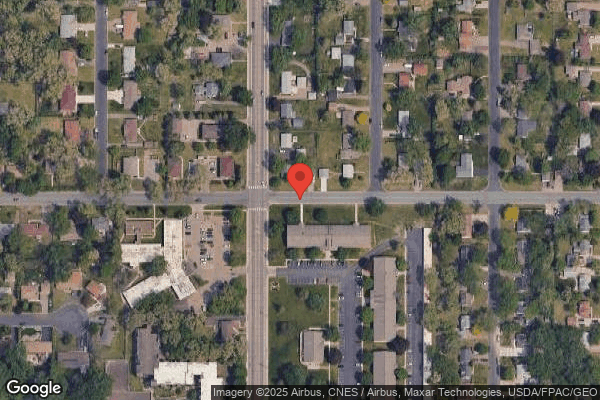
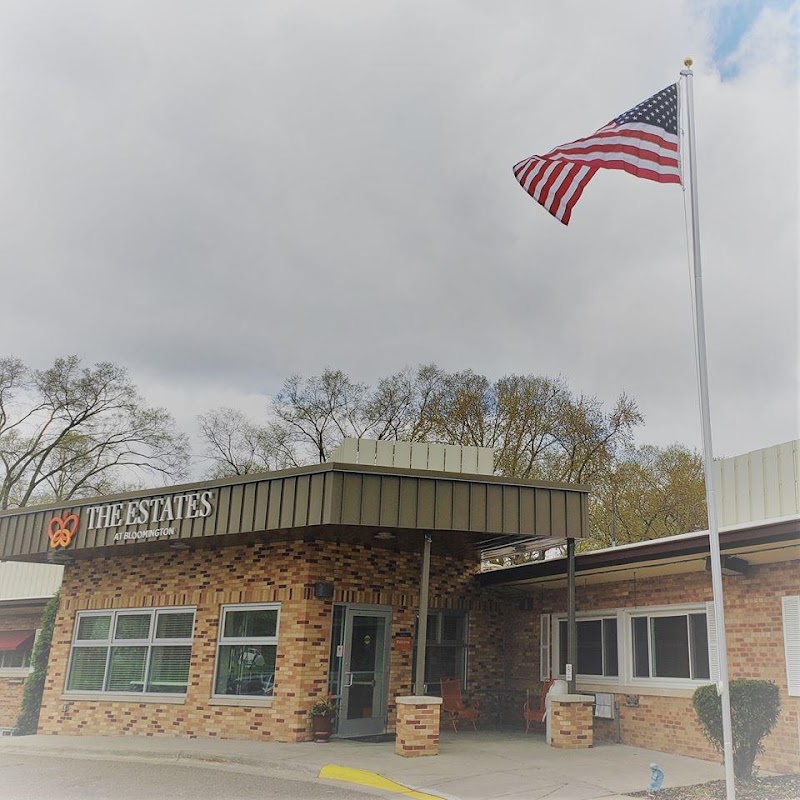
9200 NICOLLET AVENUE SOUTH, BLOOMINGTON, MN 55420 (952) 881-8676
For profit - Corporation 68 Beds MONARCH HEALTHCARE MANAGEMENT Data: November 2025
Trust Grade
55/100
#207 of 337 in MN
Last Inspection: January 2025

Within standard 12-15 month inspection cycle. Federal law requires annual inspections.

Overview

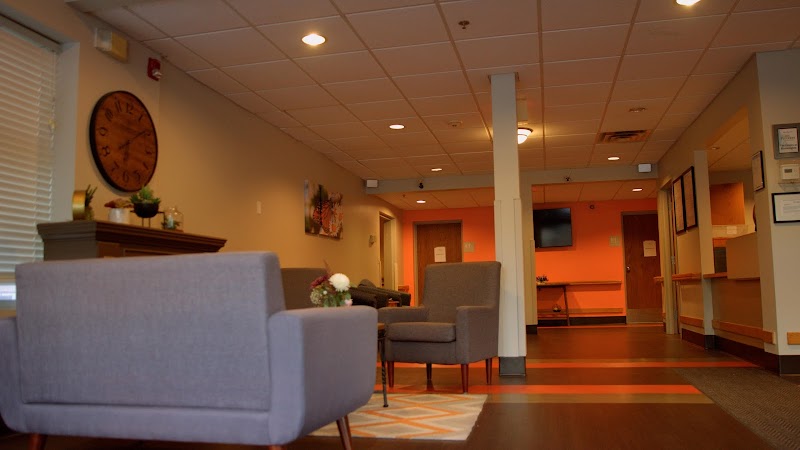
The Estates at Bloomington LLC has a Trust Grade of C, which means it is average and falls in the middle of the pack among nursing homes. It ranks #207 out of 337 facilities in Minnesota, placing it in the bottom half, and #33 out of 53 in Hennepin County, indicating that only a handful of local options are better. The facility's trend is worsening, with reported issues increasing from 3 in 2024 to 11 in 2025. Staffing is a strength, rated 4 out of 5 stars, with a turnover rate of 38%, which is better than the state average. Notably, there have been some serious incidents, such as a resident suffering a head injury due to improper transfer assistance, and concerns about cleanliness practices for blood sugar monitoring devices, which could risk infection for multiple residents. While the home has strengths in staffing and no fines, the increasing number of issues and specific incidents of concern highlight potential areas for families to consider.
Trust Score
C
55/100
In Minnesota
#207/337
Bottom 39%
Safety Record
Moderate
Needs review
Inspections
Getting Worse
3 → 11 violations
Staff Stability
○ Average
38% turnover. Near Minnesota's 48% average. Typical for the industry.
Penalties
✓ Good
No fines on record. Clean compliance history, better than most Minnesota facilities.
Skilled Nurses
✓ Good
Each resident gets 68 minutes of Registered Nurse (RN) attention daily — more than 97% of Minnesota nursing homes. RNs are the most trained staff who catch health problems before they become serious.
Violations
⚠ Watch
37 deficiencies on record. Higher than average. Multiple issues found across inspections.
★★★☆☆
3.0
Overall Rating
★★★★☆
4.0
Staff Levels
★★★★☆
4.0
Care Quality
★★★☆☆
3.0
Inspection Score
Stable
2024: 3 issues
2025: 11 issues

The Good

  • 4-Star Staffing Rating · Above-average nurse staffing levels
  • 4-Star Quality Measures · Strong clinical quality outcomes
  • Full Sprinkler Coverage · Fire safety systems throughout facility
  • No fines on record
  • Staff turnover below average (38%)

    10 points below Minnesota average of 48%

Facility shows strength in staffing levels, quality measures, fire safety.

The Bad

3-Star Overall Rating

Near Minnesota average (3.2)

Meets federal standards, typical of most facilities

Staff Turnover: 38%

Near Minnesota avg (46%)

Typical for the industry

Chain: MONARCH HEALTHCARE MANAGEMENT

Part of a multi-facility chain

Ask about local staffing decisions and management

The Ugly 37 deficiencies on record

1 actual harm
Jan 2025 11 deficiencies
CONCERN (D)

Potential for Harm - no one hurt, but risky conditions existed

Safe Environment (Tag F0584)

Could have caused harm · This affected 1 resident

**NOTE- TERMS IN BRACKETS HAVE BEEN EDITED TO PROTECT CONFIDENTIALITY** Based on observation and interview, the facility failed to ensure a comfortable and homelike environment for 2 of 2 residents (R...

Read full inspector narrative →
**NOTE- TERMS IN BRACKETS HAVE BEEN EDITED TO PROTECT CONFIDENTIALITY** Based on observation and interview, the facility failed to ensure a comfortable and homelike environment for 2 of 2 residents (R19, R23) who shared a room with a large area of the wall patched but left unfinished, unsanded, and unpainted. Findings include: R19's quarterly Minimum Data Set (MDS) dated [DATE], identified R19 had intact cognition. R23's annual MDS dated [DATE], identified had intact cognition. During observation and interview on 1/27/25 at 6:01 p.m., a shared wall of R19 and R23's room had an area of white joint compound that measured one hundred and three inches long by thirty-seven inches tall spanning most of the wall. The area was not sanded, smoothed out, or painted to match the rest of the wall and room. R23 stated, the wall has been like this since [sic] moved to this room in October of 2024. During interview with registered nurse (RN)-B on 1/28/25 at 10:01 a.m., RN-B stated she was familiar with all the residents. RN-B stated there was an expectation of staff to notify the maintenance staff for repair work through an email request form. All staff can do it. RN-B denied noticing the unfinished wall repair in R19 and R23's room or submitting a maintenance request to complete the sanding and painting. During interview with nursing assistant (NA)-A on 1/28/25 at 10:25 a.m., NA-A stated she was familiar with all the residents. NA-A stated staff were expected to notify the maintenance staff for repair work, online. If [maintenance director] is not here, I may talk to the nurse manager. NA-A denied noticing the unfinished wall repair in R19 and R23's room or submitting a maintenance request to complete the sanding and painting. During interview on 1/28/25 at 10:44 a.m., R23's stated, I don't like it because it tells me the place has not been totally taken care of and not necessarily clean. I would never stand for that in my own home. During interview with NA-B on 1/28/25 at 11:00 a.m., NA-B stated she was familiar with the residents. NA-B stated expectation of staff to notify the maintenance staff for repair work in the computer. NA-B denied noticing the unfinished wall repair in R19 and R23's room or submitting a maintenance request to complete the sanding and painting. During interview with NA-C on 1/28/25 at 11:12 a.m., NA-C stated she was familiar with all the residents. NA-A stated expectation of staff to notify the maintenance staff for repair work through an email request form. NA-C denied noticing the unfinished wall repair in R19 and R23's room or submitting a maintenance request to complete the sanding and painting. During observation and interview on 1/28/25 at 11:26 a.m., LPN-B looked at R19 and R23's shared wall and stated, I don't know when they [maintenance staff] did that work on the wall but it is not finished. It does not look good. I have not noticed that before. At 2:02 p.m., LPN-B stated staff was expected to use a communication system with the maintenance department if a repair was needed, like for painting a hallway or resident room. During observation and interview with the maintenance director (MD) on 1/28/25 at 12:14 p.m., MD looked at R19's and R23's bedroom wall and stated, I have patched this. In order for me to paint, I have to pull everyone out of their rooms, and we have been full lately. And we don't have the colors in here anymore. We don't have rooms to put [R19 and R23] in. If I had extra room to put these residents in while I fix the paint, then I would be able to do something about it. MD stated he could not remember when he patched their wall. MD stated he did not have a work order or documentation of ever working on the wall but that he was aware of it needing to be fixed. During interview with R19 and R23 on 1/30/25 at 9:25 a.m., R19 stated, it [wall patch] has been here since I got here. I think at one point [maintenance] was fixing something on the wall over there [pointing to R23's side of the room] and he did this. Looking at it makes me think it is dirty, not cared for. I don't like it. I would like it painted. R23 stated, I am embarrassed by it. During interview with assistant director of nursing (ADON) on 1/30/25 at 10:50 a.m., ADON stated, the wall should be painted. Don't know how long that is has been there. It is not appealing. Facility policy on building maintenance and repair was requested and not received.
CONCERN (D)

Potential for Harm - no one hurt, but risky conditions existed

Deficiency F0676 (Tag F0676)

Could have caused harm · This affected 1 resident

**NOTE- TERMS IN BRACKETS HAVE BEEN EDITED TO PROTECT CONFIDENTIALITY** Based on observation, interview, and document review, the facility failed to ensure dental appliances (i.e., dentures) were offe...

Read full inspector narrative →
**NOTE- TERMS IN BRACKETS HAVE BEEN EDITED TO PROTECT CONFIDENTIALITY** Based on observation, interview, and document review, the facility failed to ensure dental appliances (i.e., dentures) were offered or provided to promote safety and independence with eating for 1 of 4 residents (R60) reviewed for activities of daily living (ADL). Findings include: R60's quarterly Minimum Data Set (MDS), dated [DATE], identified R60 had severe cognitive impairment and demonstrated no rejection of care behaviors. Further, the MDS outlined R60 needed substantial and/or maximum assistance to complete oral hygiene (inc. dentures). R60's most recent MHM (Monarch Healthcare Management) Oral/Dental Evaluation, dated 11/18/24, identified R60's oral cavity had no issues and R60 used an upper and lower denture with their condition being recorded, Good condition. R60 was recorded as edentulous (no natural teeth) and a summary outlined, Resident wears full upper and lower dentures. He denies pain with chewing. He is dependent on staff to perform oral hygiene. No mouth sores noted with oral inspection. The completed evaluation lacked evidence R60 refused to wear his dentures. On 1/27/25 at 1:36 p.m., R60 was observed seated in his wheelchair while in the hallway. R60 stated he was unsure how long he had lived at the care center and often mumbled his speech with responses. R60 had no visible natural teeth or dentures in place at this time. R60 stated his dentures were at the dentist office, however, just mumbled a response when asked if he had issues with chewing his food without them. The following day, on 1/28/25 at 10:36 a.m., R60 was again observed in his wheelchair while in his room. R60 had no visible teeth or dentures in and, when asked, opened his mouth to show edentulous palates. R60 was again asked where his dentures were and responded aloud at the dentist again. R60 stated he would wear them if he had them adding aloud, yea, why not, with a mumbled tone. When interviewed on 1/28/25 at 10:46 a.m., nursing assistant (NA)-A stated they had worked at the center for a few months and had worked with R60 prior. NA-A described R60 as needing help with transfers and could be restless at times. NA-A stated R60 was typically accepting of cares but added, It depends on the day. NA-A stated R60 would sometimes refuse oral care adding, He doesn't like to be touched too much. NA-A stated R60 did not wear dentures to their recall nor had they ever seen him with any placed adding, I don't think so. NA-A stated dentures, if he had them, would be kept in his room. NA-A and the surveyor then inspected R60's room and found a single, lower denture in his bedside dresser in a pink-colored cup. NA-A stated aloud, I didn't even know that [he had one]. NA-A verified they had helped R60 with his morning cares that day and acknowledged they didn't offer the dentures to R60 due to not knowing about them. NA-A stated resident's with dentures should have them offered and placed before meals as it helps to eat them for the food. R60's care plan, printed 1/28/25, identified all of R60's current or potential medical or mobility issues along with their corresponding goals and interventions. The care plan outlined R60 wore dentures and listed a single intervention which read, Provide mouth care as per ADL personal hygiene. The care plan lacked when or how often to provide R60 his dentures nor evidence R60 refused to wear his dentures prior to 1/28/25. When interviewed on 1/28/25 at 11:02 a.m., registered nurse (RN)-D stated they had worked with R60 prior and we unsure off-hand if he used dentures or not adding aloud, I'd have to check his room or record. RN-D stated R60 consumed a soft diet and had not, at least to their recall, ever voiced complaints about his mouth or eating. RN-D stated if a resident used dentures, they should be offered with morning cares and placed if able. R60's medical record was reviewed and lacked evidence R60 had been offered or refused his dentures on 1/27/25 and 1/28/25 when observed without them. On 1/28/25 at 1:16 p.m., the interim director of nursing (DON) was interviewed, and verified R60 had dentures but expressed he would often refuse to wear them when offered. DON stated staff were expected to offer them to him and expressed refusals were not documented. DON stated it was important to offer and, if able, provide dentures as it helps the resident with their food and it was just good quality care. A provided Activities of Daily Living (ADLs)/Maintain Abilities Policy, dated 3/2023, identified the facility would provide necessary care and services to ensure a resident' abilities in ADLs did not diminish unless unavoidable. The policy included, 3. The facility will provide care and services for the following . d. Dining-eating, including meals and snacks, .
CONCERN (D)

Potential for Harm - no one hurt, but risky conditions existed

ADL Care (Tag F0677)

Could have caused harm · This affected 1 resident

**NOTE- TERMS IN BRACKETS HAVE BEEN EDITED TO PROTECT CONFIDENTIALITY** Based on observation, interview, and document review, the facility failed to ensure routine nail care was provided for 1 of 1 re...

Read full inspector narrative →
**NOTE- TERMS IN BRACKETS HAVE BEEN EDITED TO PROTECT CONFIDENTIALITY** Based on observation, interview, and document review, the facility failed to ensure routine nail care was provided for 1 of 1 resident (R58) reviewed for activities of daily living (ADLs) who needed assistance from staff for nail care. Findings include: R58's quarterly Minimum Data Set (MDS) dated [DATE] indicated, R58 was cognitively intact, had no behaviors and did not refuse cares. MDS indicated R58 was independent with ADLs and needed set up or clean up assistance with showers. R58's Clinical Diagnosis Report printed 1/30/25, indicated diagnoses of gout (a form of arthritis that causes severe pain, swelling, redness and tenderness in joints), generalized muscle weakness, other reduced mobility, need for assistance with personal care, protein calorie malnutrition and failure to thrive. R58's ADLs care plan printed 1/30/25 indicated R58 needed assistance with personal cares. An undated Group Report Sheet used by nursing assistants to know how to care for the residents, indicated R58 needed assistance of one staff for bathing and grooming. R58's Weekly Skin Assessments forms printed on 1/30/25, completed on 1/11/25, 1/18/25, 1/25/15 and 1/26/25, indicated under the Bath and Nail Care, R58's fingernails and toenails did not need to be trimmed. During observation and interview on 1/27/25 at 1:00 p.m., R58 was laying on top of the bed and not wearing socks. R58's fingernails were about half an inch long. His nails were yellow and had dark orange matter underneath most of them. R58's toenails were also about half an inch long and the toenail on his right big toe was cracked with a sharp edge. R58 stated, They don't help me cut my fingernails or toenails; they are like an inch long. When my family or friends come to see me, they said I could do better with my personal care. I would like them to help me cut my nails. The last time they help me was 4 weeks ago. You ask them and they never come back. During observation and interview on 1/28/25 at 11:16 a.m., R58 was in bed watching TV and not wearing socks. R58's nails were still long. During observation and interview on 1/28/25 at 1:13 p.m., nursing assistant (NA)-C stated they cut the residents nails on shower days. If a resident is diabetic, the nurses will cut their nails. NA-C verified R58's fingernails and toenails were long. She said they were, yellow/orange and had stuff underneath the fingernails. NA-C asked R58 if somebody offered to help him. R58 said, No, it's been at least a month since they helped me with my nails. During interview on 1/29/25 at 8:29 a.m., R58 stated the staff set up the shower room for him, gave him towels, and he was able to shower by himself. R58 said the nurses had not checked his skin or cut his nails. R58 said, This morning, a short nice blonde lady came to cut my fingernails. It feels so good, so much better. R58 toenails were not clipped. R58 was not sure who this person was. During interview on 1/29/25 at 8:49 a.m., the admission coordinator, who is a trained medical assistant and NA-D, stated sometimes she was pulled to help on the floor, and she visited all the residents and offered nail care. NA-D stated, she cut R58's fingernails and said, they were about half an inch long, they were yellow and there was stuff underneath the pinky nails. NA-D added, the podiatrist would cut his toenails that day. During interview on 1/29/25 on 9:31 a.m., nurse manager, a licensed practical nurse (LPN)-B, stated the residents' nails and toenails were trimmed on bath day by the nursing assistants. The nurses were responsible to take care of diabetic residents' nails, while some of the residents were seen by the podiatrist. LPN-B verified the Weekly Skin Assessments forms dated 1/11/25, 1/18/25, 1/25/25 and 1/26/25, under section C, Bath and Nail care, indicated R58's nails did not require trimming. During interview on 1/29/25 at 9:05 a.m., the assistant director of nursing (ADON) stated the expectation was nail care needed to be completed and documented, and if a resident refused nail care, it also needed to be documented. Residents with long nails were a concern because residents could scratch themselves and develop skin problems. Dirty nails are an infection control problem. ADON stated we will need to provide education to the staff and make sure those cares get done. Facility policy title Activities of Daily Living dated 3/31/23, indicated a resident who is unable to carry out activities of daily living will receive the necessary services to maintain good nutrition, grooming, and personal and oral hygiene.
CONCERN (D)

Potential for Harm - no one hurt, but risky conditions existed

Quality of Care (Tag F0684)

Could have caused harm · This affected 1 resident

**NOTE- TERMS IN BRACKETS HAVE BEEN EDITED TO PROTECT CONFIDENTIALITY** Based on observation, interview, and document review, the facility failed to assess and, if needed, develop interventions or ref...

Read full inspector narrative →
**NOTE- TERMS IN BRACKETS HAVE BEEN EDITED TO PROTECT CONFIDENTIALITY** Based on observation, interview, and document review, the facility failed to assess and, if needed, develop interventions or refer to contracted therapy services to address poor wheelchair posture for 1 of 2 residents (R60), and failed to provide assessed interventions from occupational therapy to reduce the risk of skin injury or further mobility loss (i.e., contracture worsening) for 1 of 1 resident (R15) reviewed for limited range of motion (ROM). Findings include: R60 R60's quarterly Minimum Data Set (MDS), dated [DATE], identified R60 had severe cognitive impairment and demonstrated no rejection of care behaviors during the review period. Further, the MDS outlined R60 had a functional limitation in range of motion (ROM) to both lower extremities and used a wheelchair for mobility. On 1/27/25 at 1:36 p.m., R60 was observed seated in a standard wheelchair in the hallway. R60 stated he was unsure how long he had lived at the center and presented with mostly mumbled responses which, at times, were non-sensical. R60's feet were flat on the floor while seated and he had a upright posture while seated, however, his arms overhung the wheelchair's armrests despite being seated upright with his arms coming to rest on the top of the wheels. The wheelchair had a visible, thick black cushion on the seat. Further, the wheels of the chair were worn down with a large portion of the gray-colored rubber material being worn away exposing the orange-colored resin below with cracks and crevices on the wheel surface. Later, on 1/27/25 at 2:28 p.m., R60 was again observed while seated in the same wheelchair. R60's posture remain upright with his arm's bent approximately 90-degrees at the elbow; however, again, his arms weren't able to rest on the wheelchair' armrests without him having to hunch up his shoulders. R60 was pushing himself backward down the hallway while seated in the wheelchair, and the wheels of the chair remained in disrepair as had been observed earlier. R60's care plan, printed 1/28/25, identified all of R60's current or potential medical or mobility issues along with their corresponding goals and interventions. The care plan outlined R60 had an alteration in mobility due to multiple medical diagnoses and listed a goal, Resident will move safely within their environment. The care plan listed several interventions including physical therapy as ordered, assistance with bed mobility and transfers, and a low bed for safety. However, the care plan lacked any information on R60's wheelchair (i.e., type used, positioning interventions). The following day, on 1/28/25 at 10:04 a.m., R60 was observed seated in the same wheelchair as the day prior. R60 was in the commons area for an activity and his positioning while seated remained poor with his arms being bent 90-degrees and remaining down at the side of the wheelchair and at wheel-level when at rest. The armrests of the chair were up between his torso and arms. Later, on 1/28/25 at 10:36 a.m., R60 was asked about his wheelchair, including if it was comfortable to be seated in, and responded aloud, [It] could be tighter. R60 did not elaborate further when asked. The wheel's of the chair were inspected at this time and, again, remained in disrepair with the gray-colored rubber coating being nearly worn off in the middle of the wheel causing cracks and a large circumference divet in the middle of the wheel. When interviewed on 1/28/25 at 10:46 a.m., nursing assistant (NA)-A stated they had worked with R60, and described R60 as needing help to transfer adding he could be restless at times. NA-A stated R60 had used the same wheelchair for awhile to their recall and expressed they noticed R60 seemed to be sliding down in it causing poor posture. NA-A stated R60 often slept in a near fetal-position and expressed they were not sure what had been causing R60's posture while seated in his wheelchair adding, I don't think about what's causing it. NA-A stated they tried, at times, to boost R60 up to be more upright sitting, however, acknowledged even with doing such his arms would often remain down past the armrests when seated. NA-A stated they were unsure if OT (occupational therapy) had ever worked with R60 for his positioning or not adding aloud, I don't know When interviewed on 1/28/25 at 11:02 a.m., registered nurse (RN)-D stated they had worked with R60 prior. RN-D explained they felt R60's arm's were typically rested on the armrests when seated, however, mentioned they had noticed he does kind of slouch over adding such posture was typically seen for him. RN-D stated they didn't recall OT working with R60 recently and was unsure if OT had ever addressed R60's positioning in the wheelchair adding aloud, That is a good question. R60's medical record was reviewed and lacked evidence R60 had been evaluated recently for his wheelchair positioning despite having potentially poor, uncomfortable posture and direct care staff being aware of the same observation. When interviewed on 1/28/25 at 12:56 p.m., the director of rehabilitation (i.e., PT, OT) (DOR) stated R60 was last on their service in November 2024 and, at that time, had not been using the wheelchair he was currently seated in. DOR stated R60 had multiple hospitalizations and the chair had potentially been switched out at some point. DOR verified they had just observed R60 while seated in the wheelchair and, from that, placed a referral for the OT to review him adding his posture was not terrible but could be improved. DOR stated the chair's armrests were possibly too tall and expressed they had noticed the wheelchair's wheels in disrepair, so they went and obtained a new wheelchair and cushion which was better fitting. DOR verified nobody from nursing had reported any concerns to them about R60's wheelchair or positioning and expressed if staff saw a concern they could report it to be acted upon. DOR expressed poor posture while seated in a wheelchair could cause skin concerns but also low back tightness or discomfort. On 1/28/25 at 1:16 p.m., the interim director of nursing (DON) was interviewed. DON stated they were notified of the wheelchair concern just prior and were working to get one with a suitable fit and position-wise. DON verified they had observed R60's wheelchair and the wheels were in disrepair, adding it appeared like it had seen a good few thousand miles. DON stated nobody had reported any concerns to them about R60's wheelchair condition or positioning and expressed it should have been reported so it could be addressed. A provided Range of Motion (ROM) and Positioning policy, undated, identified a procedure to ensure proper positioning while seated in a chair including ensuring the patient's buttocks are firmly against the back of the chair and spine is straight; however, lacked further information on how to ensure ongoing concerns are addressed (i.e., referred to therapy). R15 R15's quarterly Minimum Data Set (MDS) dated [DATE], indicated R15 had severely impaired cognition with no rejection of care behaviors. The MDS indicated R15 had highly impaired hearing, had no speech, and was rarely/never able to express her ideas or wants with either verbal or non-verbal expression. The MDS indicated R15 had a limited ROM for all extremities and was dependent on staff for all activities of daily living. R15's care plan dated 7/10/24, indicated R15 had alterations in skin integrity related to dementia, malnutrition, immobility, and contractures of all extremities. The care plan indicated R15 had a history of refusing palm protector use while she was in treatment with therapy. The care plan indicated R15 was to wear palm protectors daily and they were to be removed daily to inspect skin and observe for skin breakdown. The care plan indicated nursing staff were to monitor skin integrity daily during cares and weekly skin inspections were to be completed by the nurse. R15's Weekly Skin Inspection reports dated 12/8/24 through 1/19/25 were reviewed and indicated R15 received a bed bath but fingernail trimming was not necessary, leaving refused unchecked. A Weekly Skin Inspection report for the week of 1/20/25-1/26/25 was not found. R15's occupational therapy note dated 12/11/24, indicated the occupational therapist had assessed the resident and recommended R15 wear palm protectors, and her bilateral elbows be positioned in a slight extension with the use of rolled towels/ a small pillow to maximize function and decrease the risk of skin breakdown. The note indicated R15 had previously not tolerated hand splints related to the severity of her contractures. The note indicated the occupational therapist recommended gentle hand/elbow hygiene daily to protect skin integrity. R15's medication/treatment administration record dated 1/1/25 through 1/28/25, indicated R15 had an order dated 3/30/23 for palm protector application. The order also indicated staff were to remove them once a shift for hand cleaning and skin inspection. The order was documented on every shift with 24/81 shifts documented as on, 53/81 shifts documented as off, and 4/81 shifts not documented on, or documented as 0. The record included an order dated 12/20/24 for positioning of R15's elbows in a slight extension with the use of a rolled towel or small pillow to increase the angle and protect skin integrity was documented as completed (approximately) every shift. R15's medical record was reviewed for this period and did not indicate refusal of palm protectors/alternatives for hand protection or refusal of the towel/pillow for R15's elbow extension. The undated 100 Hallway- Group 1 Report Sheet, indicated R15 was to be turned and repositioned every two to three hours with a pillow placed between her legs but did not include towels/ palm protector application to her hands or towels/pillows between her elbows and body. During an observation on 1/27/25 at 12:40 p.m., R15 was lying in bed with her hands balled into fists with no towels, palm protector, or other device noted in her hands. R15's arms were observed tightly against her body with each hand close to the opposite shoulder with no noted towels or small pillows between her arms and her body. During an observation on 1/28/25 at 8:10 a.m., R15 was lying in bed with her hands balled into fists with no towels, palm protector, or other device noted in her hands. R15's arms were observed tightly against her body with each hand close to the opposite shoulder with no noted towels or small pillows between her arms and her body. During an observation and interview on 1/28/25 at 2:02 p.m., R15 was lying in bed with her hands balled into fists with no towels, palm protector, or other device noted in her hands. R15's arms were observed tightly against her body with each hand close to the opposite shoulder with no noted towels or small pillows between her arms and her body. Nursing assistant (NA)-B stated they had just repositioned R15, and pillows were observed between her knees. NA-B stated she was not aware R15 needed a pillow between her body and her elbows, so she had not been placing one when she was working with R15. NA-B stated she did do gentle range of motion with R15's arms and hands every day. NA-B was observed demonstrating this range of motion to R15's arms. NA-B was then observed to do range of motion to R15's hands and a white/ yellow build-up was noted on both of R15's palms as well as four bright pink nail marks on R15's left hand. R15's fingernails were observed over ¼ of an inch beyond the end of the fingertip with a white build-up noted underneath. NA-B confirmed R15's hands had a strong odor when she opened them. NA-B stated R15's hands looked dirty and thought nursing staff was to clean her hands only on bath days so it should have been cleaned last Sunday (1/26/25) but thought that must not have been completed. During an interview on 1/28/25 at 2:21 p.m., registered nurse (RN)-B stated R15's nails were getting long. RN-B stated nursing staff should cut them every week on her bath day but was unsure if this had been completed. RN-B confirmed she had not attempted to clean R15's hands today and had not assessed her palms. RN-B stated R15 had refused to let her place palm protectors or towels in her hands in the past and she had not attempted to apply either yet today. RN-B stated that R15's palm protectors had gone down to the laundry and had been damaged, so she had informed the former director of nursing but was unsure if new ones were ever ordered. RN-B stated she thought the therapy department had been told of R15's refusal to use the palm protector but was not given a different intervention to try instead and was unsure if the therapy department had been told the palm protectors were damaged. RN-B stated she was not aware pillows/towels needed to be applied between R15's body and her elbows so she had not been ensuring this was completed. During an interview on 1/28/25 at 2:27 p.m., the director of rehabilitation (DOR) stated R15 was last seen by occupational therapy on 12/11/24 when they did an evaluation for the appropriateness of a splint which R15 did not qualify for, so they had recommended palm protectors be applied. The DOR stated they were not aware R15 had been refusing to wear the palm protector. During a follow-up interview on 1/28/25 at 3:01 p.m. with the DOR and occupational therapist (OT)-A, the DOR stated she had checked with nursing that day and thought R15's palm protectors had gone down to the laundry department and were damaged. The DOR stated she was unsure when they had been damaged, but they do have extra palm protectors R15 could have used. OT-A stated if they had been made aware of R15 refusing the palm protectors they would have reassessed her for an appropriate alternative as the palm protectors were important in protecting R15's skin and ensuring contractures did not worsen. OT-A stated applying towels in R15's hands would have been an appropriate intervention to attempt if R15 was refusing the palm protectors. During an observation on 1/29/25 at 9:05 a.m., R15 was in bed with bilateral palm protectors applied with eyes closed and no observed signs of pain such as grimacing, furrowed brow, or agitation. During an observation on 1/30/25 at 10:33 a.m., R15 was in bed with bilateral palm protectors applied with eyes closed and no observed signs of pain such as grimacing, furrowed brow, or agitation. During an interview on 1/30/25 at 11:42 a.m., the interim director of nursing (DON) confirmed that she had reviewed R15's medical record and did not find that staff had documented refusals to applying the palm protectors or alternatives and would expect staff to clean R15's hands every shift when they were assessing her hands for skin breakdown. A policy regarding range of motion, mobility, and palm protector application was requested and an undated Range of Motion and Positioning procedure was received. The procedure indicated staff should reposition a resident as needed, per protocol and written RN instructions but did not when occupational therapy should be reconsulted and address palm protector application.
CONCERN (D)

Potential for Harm - no one hurt, but risky conditions existed

Deficiency F0685 (Tag F0685)

Could have caused harm · This affected 1 resident

**NOTE- TERMS IN BRACKETS HAVE BEEN EDITED TO PROTECT CONFIDENTIALITY** Based on interview and document review, the facility failed to ensure an order for an audiology (medical specialty assisting wit...

Read full inspector narrative →
**NOTE- TERMS IN BRACKETS HAVE BEEN EDITED TO PROTECT CONFIDENTIALITY** Based on interview and document review, the facility failed to ensure an order for an audiology (medical specialty assisting with hearing) referral was acted upon promptly to promote better hearing and quality of life for 1 of 1 residents (R13) reviewed who expressed difficulty with hearing. Findings include: R13's quarterly Minimum Data Set (MDS) dated [DATE], indicated R13 had intact cognition with no delusional thinking. The MDS indicated R13 had adequate hearing (i.e., no difficulty in normal conversation) and did not use hearing aids. R13's referral form dated 2/22/24, indicated R13 had an order from her provider for an audiology consult for a diagnosis of hearing loss. R13's provider note dated 7/1/24, indicated R13 had reported worsening hearing loss and as a result, withdraws from social interaction and stays in her room. The note indicated the plan for the resident's hearing loss was to provide an audiology consult. During an interview on 1/27/25 at 1:46 p.m., R13 stated she had needed her ears checked for a while and did not recall anyone offering to help her set up an appointment to see the ear doctor. R13 stated she thought she had told someone that her hearing was getting worse but was unsure who. During an interview on 1/30/25 at 9:03 a.m., the interim director of nursing (DON) stated the health information manager (HIM) oversaw making resident appointments and recommended questions regarding whether resident appointments were scheduled/attended be directed to her. During an interview on 1/30/25 at 10:29 a.m., the HIM stated she oversaw making resident appointments for things such as seeing the audiologist. The HIM confirmed she had reviewed R13's medical and found an order from the provider for R13 to see the audiologist in February of 2024 but did not find that this appointment had ever been made or refused by R13. The HIM stated she would make this appointment now, but it would take about four months for the resident to be seen by an audiologist. A policy regarding audiology services was requested and not received.
CONCERN (D)

Potential for Harm - no one hurt, but risky conditions existed

Accident Prevention (Tag F0689)

Could have caused harm · This affected 1 resident

**NOTE- TERMS IN BRACKETS HAVE BEEN EDITED TO PROTECT CONFIDENTIALITY** Based on observation, interview and document review, the facility failed to ensure an unsecured bed mattress was assessed for co...

Read full inspector narrative →
**NOTE- TERMS IN BRACKETS HAVE BEEN EDITED TO PROTECT CONFIDENTIALITY** Based on observation, interview and document review, the facility failed to ensure an unsecured bed mattress was assessed for correct fit for a resident's bed for 1 of 1 residents (R59) reviewed for safety hazards. Findings include: R59's quarterly Minimum Data Set, dated [DATE] identified R59 had intact cognition and was independent with most mobility related activities (i.e., dressing, toileting and personal hygiene, and ambulation). In addition, R59 had diagnoses of cellulitis (bacterial infection of the skin that can cause redness, pain and swelling at the site) of left lower extremity, anxiety, and depression. During observation and interview with R59 on 1/27/25 at 1:26 p.m., R59 was observed to be lying in bed which was positioned along the wall with the foot of the bed just inside door to hallway. The bed had no footboard, and the unsecured mattress hung over the foot of the bed frame by about 12 inches. There was no retainer bar at the foot of the bed frame to prevent mattress from sliding down. R59 stated, it is hard to get on and off of it and I have to move my feet to allow roommate and others to open and close the door to the hallway. During observation on 1/28/25 at 8:04 a.m., R59 unsecured mattress continued to hang off the foot of the bed frame by about twelve inches. During observation and interview with nursing assistant (NA)-B on 1/28/25 at 11:00 a.m., NA-B stated she was familiar with R59 and pointed to his bed mattress. [R59] is tall and a big guy. That mattress does not fit him. I haven't noticed it or said anything to anyone about it and I haven't heard anyone saying or doing anything about it. During observation and interview with RN-C on 1/28/25 at 1:10 p.m., RN-C stated she was familiar with R59. RN-C pointed out no footboard. I would expect it to be there. All beds should have headboards and foot boards. I don't know why it is like that. RN-C identified the unsecured mattress as a safety risk. During interview with the maintenance director (MD) on 1/28/25 at 1:21 p.m., MD stated, [R59] should have footboard. He kicked it off. [Facility] don't have bed extenders for these beds. We don't have alternatives, and I haven't looked for any. MD stated he was aware of R59's unsecured mattress sliding down past the bedframe and was not responsible for assessing the appropriateness of the mattress and bedframe. MD stated, no I have not asked [R59] for alternatives or options to the overhanging mattress. During interview with R59 pm 1/28/25 at 1:28 p.m., R59 stated he kicked off the footboard. R59 stated, [mattress] is uncomfortable. I was not told about any alternative to the mattress or bed. R59 stated facility staff were aware of the missing footboard because staff put it in my closet. During interview with licensed practical nurse (LPN)-C on 1/28/25 at 2:06 p.m., LPN-B stated he was also the nurse manager for the resident wing R59 resided on. LPN-B stated he was told that R59's missing footboard and slipping mattress was his preference. The staff removed the foot board. Since then, I did not visit back with him about it. LPN-B stated, I think [R59] would benefit from an extension to the mattress or bed[frame]. He is at risk for pressure ulcers to feet. LPN-B stated the electronic medical record (EMR) failed to address the footboard and his unsecured mattress sliding down past the frame of the bed. During observation and interview with assistant director of nursing (ADON) on 1/28/25 at 2:30 p.m., ADON and surveyor walked to R59's room. ADON stated R59 would rest his feet on top of the footboard and it is not appropriate and [R59] said he likes to hang his feet over it. [R59] did not want the footboard. He slides down in the bed. I don't know if maintenance addressed the mattress or bed. As far as I know, we do have extensions for beds. [R59] is very much alert and oriented and knows what his wants and needs are. ADON stated, it is awkward and facility did not have documentation of assessing [R59's] bed frame and unsecured mattress. During interview with MD on 1/28/25 at 3:10 p.m., MD stated, [facility] do[sic] have extensions and longer mattresses and bed[frames]. I do not document or have anything about offering alternatives for extending the bed frame or mattress. MD stated R59 slides down. During interview with ADON on 1/30/25 at 11:17 a.m., ADON stated, [facility] did not assess and reassess for the mattress to stay secured on the bed frame. The mattress does slide down off the foot of the bed without the foot board and his feet do dangle off the mattress at times. Facility policy on Bed Safety was requested and not received.
CONCERN (D)

Potential for Harm - no one hurt, but risky conditions existed

Respiratory Care (Tag F0695)

Could have caused harm · This affected 1 resident

**NOTE- TERMS IN BRACKETS HAVE BEEN EDITED TO PROTECT CONFIDENTIALITY** Based on observation, interview, and document review, the facility failed to ensure ongoing monitoring of resident oxygen use wa...

Read full inspector narrative →
**NOTE- TERMS IN BRACKETS HAVE BEEN EDITED TO PROTECT CONFIDENTIALITY** Based on observation, interview, and document review, the facility failed to ensure ongoing monitoring of resident oxygen use was completed to reduce the risk of respiratory complications for 1 of 1 residents (R13) reviewed for oxygen use. Findings include: R13's quarterly Minimum Data Set (MDS) dated [DATE], indicated R13 had intact cognition and was diagnosed with heart failure, kidney failure, Chronic Obstructive Pulmonary Disease (COPD- incurable lung disease causing breathlessness, frequent coughing, and chest tightness), and respiratory failure. The MDS indicated R13 required setup help with eating and oral hygiene and maximum assistance with dressing. The MDS indicated R13 was on oxygen therapy. R13's care plan dated 9/7/24, indicated R13 had an alteration in respiratory status and would remove her oxygen cannula and adjust her oxygen administration rate herself. R13's care plan indicated oxygen was to be administered as ordered and oxygen saturations were to be monitored. The care plan indicated staff were to monitor and document R13's respiratory status. R13's medication and treatment record dated 1/1/25 through 1/26/25, indicated R13 ' s oxygen saturations were taken (approximately) every shift with values ranging from 92 to 99 percent but did not indicate how many liters per minute (LPM) of oxygen R13 was receiving at the time of the reading. The record included an order dated 3/1/24 to wean oxygen back to baseline of two to three LPM to keep oxygen saturation above 92 percent. This order was documented on (approximately) every shift with oxygen saturation values ranging from 92 to 99 percent but did not indicate how many LPM of oxygen R13 was receiving at the time of the reading. R13's medical record was reviewed and did not include correlating a measurement of the LPM of oxygen used to assist R13 in reaching the oxygen saturations measured. R13's provider note dated 1/10/25, indicated R13 had complained of bouts of shortness of breath so a chest x-ray and labs were ordered on 1/10/25. The note indicated R13's chest x-ray showed lung congestion, so a diuretic was ordered on 1/17/25. The note indicated R13 had a history of acute on chronic respiratory failure with hypercapnia (a condition that can lead to shortness of breath that is caused by a buildup of a waste product that your body gets rid of with exhale) that had led to a prior hospitalization in 8/24. R13's progress note dated 1/28/25 at 2:09 p.m., indicated R13 was sent to the hospital related to shortness of breath. During an interview and observation on 1/27/25 at 4:16 p.m., R13 was observed sitting in a recliner in her room receiving oxygen via a nasal cannula. The oxygen concentrator was observed running at a rate of four LPM. R13 stated she had been feeling very short of breath that day and so her nurse had increased her oxygen. R13 was observed taking breaks between words to take deep breaths before she continued talking. During an observation on 1/28/25 at 8:06 a.m., R13 was observed sitting in a recliner in her room receiving oxygen via a nasal cannula. The oxygen concentrator was observed running at a rate of four LPM. During an interview on 1/28/25 at 12:41 p.m., registered nurse (RN)-C stated the computer system they used did not allow nursing staff to put in how many LPM of oxygen they were administering to the resident so she could only see what oxygen saturation the previously nurse had recorded but not the dosage of oxygen being administered at the time of the measurement. RN-C stated R13 had a history of increasing her oxygen administration level and she thought she had done that this morning, so RN-C had decreased her oxygen to three liters. RN-C stated the previous nurse had not passed along how many LPM of oxygen R13 had needed the previous shift and confirmed she was unable to find this information in the medical record. RN-C stated R13 had been feeling very short of breath that day and if it did not get better, she was going to have to go to the hospital. During an observation on 1/28/25 at 1:53 p.m., R13 was observed telling outside emergency medical personnel she can't breathe and it started about four days ago. During an interview on 1/30/25 at 8:22 a.m., nurse practitioner (NP)-A stated she would expect nursing staff to document how many liters of oxygen were administered when documenting oxygen saturation so the facility could track respiratory status changes. During an interview on 1/30/25 at 11:37 a.m., the interim director of nursing (DON) confirmed she had reviewed R13's medical record and stated the facility usually included an order for recording how many LPM of oxygen was administered to a resident and then it would allow nurses to document how many LPM were being administered, but it had been missed for R13. The DON stated it was important her oxygen flow rate was recorded so changes in respiratory status could be tracked, and interventions could be attempted as needed. A policy regarding oxygen use was requested and not received.
CONCERN (D)

Potential for Harm - no one hurt, but risky conditions existed

Deficiency F0700 (Tag F0700)

Could have caused harm · This affected 1 resident

**NOTE- TERMS IN BRACKETS HAVE BEEN EDITED TO PROTECT CONFIDENTIALITY** Based on observation, interview, and document review, the facility failed to accurately or comprehensively assess the use of sid...

Read full inspector narrative →
**NOTE- TERMS IN BRACKETS HAVE BEEN EDITED TO PROTECT CONFIDENTIALITY** Based on observation, interview, and document review, the facility failed to accurately or comprehensively assess the use of side rails and ensure installed side rails were secured to prevent injury or potential entrapment for 1 of 1 resident (R33) reviewed who used bilateral quarter-sized side rails on their bed. Findings include: R33's admission Minimum Data Set (MDS), dated [DATE], identified R33 had intact cognition and demonstrated no delusional thinking. Further, the MDS outlined R33 required substantial and/or maximum assistance for bed mobility. On 1/27/25 at 1:14 p.m., R33 was observed lying in bed while in her room. R33 used a standard-size hospital bed and each side had a mounted, affixed metallic one-quarter side rail attached to the frame via a center arm. The rail on the open side of the bed (opposite the wall) was loose when touched and allowed movement of approximately eight to 10 inches back-and-forth towards and away from the bed which increased the spacing between the mattress and rail. R33 stated the rail had been loose since she got the bed and expressed she told staff about it but staff responded, They keep telling me that's OK but I don't know. R33 stated the whole side rail on the open side wiggles like that and she was concerned about falling out when they roll her but staff kept telling her it wasn't an issue as they are standing right there. R33 stated nobody from nursing maintenance had been in to review the side rail despite it being loose adding, Not that I'm aware of anyway. R33 repeated, I think somebody should tighten that up. Further, R33 stated she couldn't recall being offered or told what, if any, other options instead of a side rail were available to help her roll side-to-side in bed adding, I don't know if there are any other options. R33's most recent MHM (Monarch Healthcare Management) Bed Mobility Device Evaluation 7/18, dated 1/3/25, identified a section labeled, What type of bed mobility device does resident/legal representative prefer[?], which was answered, Bilateral grab bars. The evaluation identified R33 or their representative was educated on the risks of such device and R33 had no history of injury using such device, either. A section labeled, Evaluation of Alternatives, listed a radio-button response of, Yes, along with dictation reading, . is an assist of 2-3 with a lift . has been educated on the devised [sic] being used and is aware reason why its being used. However, the evaluation lacked further information what which specific devices had been attempted or discussed with R33 (i.e., smaller grab bar, trapeze). The evaluation continued and identified, Assist/Grab bar(s), would be used along with a summary reading, Resident uses grab bars to assist with turn and repositioning. The evaluation was signed by the interim director of nursing (DON) on 1/7/25. R33's care plan, printed 1/28/25, identified all of R33's current or potential medical or mobility issues along with their corresponding goals and interventions. The care plan outlined R33 was at risk of falls and injury, and had an alteration in mobility due to edema and wounds. The care plan directed to assist R33 with movement in-and-out of bed and use a mechanical lift for transfers. However, the care plan lacked information or direction on R33's use of side rails. When interviewed on 1/28/25 at 10:46 a.m., nursing assistant (NA)-A stated they had worked with R33 prior and described her as needing total assistance with most cares. NA-A stated R33 used a mechanical lift and two people to transfer in-and-out of bed, adding R33 would help with repositioning when in bed by hold[ing] on to the thing on the side of the bed. NA-A verified R33 used the side rails to help with turning and brief changes, indicating she had them attached to the bed when she moved in to their recall. NA-A stated they had noticed the one rail, on the open side of the bed, was loose adding aloud, It wiggles. NA-A stated it had been loose awhile and they were unsure if other alternatives (i.e., grab bar, trapeze) had ever been installed on the bed but reiterated the loose rail needed to be fixed adding, I think it needs to be tightened. NA-A stated staff could notify maintenance to have it done on TELS (the maintenance software system) but expressed they themselves had not completed one as they wasn't [weren't] pay attention that much. On 1/28/25 at 1:10 p.m., the director of maintenance (DOR) was interviewed. DOR stated staff had just brought it up about R33's side rail being loose and, as a result, they were going around to everyone with such device to ensure they were tight and secured. DOR verified nobody had alerted him or completed a 'TELS' about it prior to that day (1/28/25,) and expressed side rails and grab bars should be tight and secured for safety reasons. DOR stated grab bars or side rails were not routinely checked for fit and condition by their department because they felt nursing would let them know if a device was loose. DOR stated a monthly check of the devices moving forward would possibly help the issue. When interviewed on 1/28/25 at 1:22 p.m., the interim director of nursing (DON) verified they had reviewed R33's medical record. DON stated the evaluation (dated 1/7/25,) was completed in error and should have reflected side rail use versus grab bars being installed. DON explained R33's bed was rented and no alternatives were able to be done because of that, adding the usual u-bars wouldn't attach to it. However, DON stated they were unsure if maintenance or an outside person set the bed up. DON stated side rails and bars should be checked just with every day care and, if needed, a 'TELS' should be done so it can be fixed. DON added, [We] put it in TELS right away so we can get it fixed. Further, DON stated a loose side rail could cause falls or entrapment adding, It can cause harm to the patient. A facility' policy on side rail evaluation and maintenance was requested, however, none was received.
CONCERN (D)

Potential for Harm - no one hurt, but risky conditions existed

Drug Regimen Review (Tag F0756)

Could have caused harm · This affected 1 resident

**NOTE- TERMS IN BRACKETS HAVE BEEN EDITED TO PROTECT CONFIDENTIALITY** Based on interview and document review, the facility failed to ensure consulting pharmacist recommendations were fully addressed...

Read full inspector narrative →
**NOTE- TERMS IN BRACKETS HAVE BEEN EDITED TO PROTECT CONFIDENTIALITY** Based on interview and document review, the facility failed to ensure consulting pharmacist recommendations were fully addressed or acted upon for 1 of 5 residents (R13) reviewed for unnecessary medications. Findings include: R13's quarterly Minimum Data Set (MDS) dated [DATE], indicated R13 had intact cognition and utilized antipsychotic, antianxiety, and antidepressant medication. R13's diagnostic report dated 7/1/24, indicated R13 was diagnosed with major depressive disorder, bipolar disorder, and an anxiety disorder. R13's Order Summary report dated 1/30/25, included the following orders: -dated 6/2/23 for 200 milligrams (mg) of quetiapine (an antipsychotic medication used to treat bipolar disorder) daily for bipolar disorder. -dated 8/14/23 for 300 mg of bupropion XL (an antidepressant) daily for major depressive disorder. -dated 8/14/23 for 120 mg of duloxetine (an antidepressant) daily for major depressive disorder. -dated 8/14/23 for 400 mg of lamotrigine (an anticonvulsant sometimes used to treat bipolar disorder) daily for a bipolar disorder. -dated 12/29/23 for five mg of aripiprazole (an antipsychotic medication used to treat bipolar disorder) daily for bipolar disorder. -dated 12/29/23 for three mg of melatonin (a dietary supplement used to assist with sleep) daily for insomnia. -dated 1/23/24 for 10 mg of buspirone (an anti-anxiety medication) twice a day for an anxiety disorder. R13's Consultant Pharmacist Recommendation to Physician dated 12/23/24, indicated R13 received psychotic medication including five mg of aripiprazole daily, 10 mg of buspirone twice a day, 400 mg of lamotrigine daily, 300 mg of bupropion XL daily, and 120 mg of duloxetine daily. The pharmacist recommended the prescriber review if R13 was on the lowest effective doses of the medications listed above. The pharmacist indicated if a dose reduction was contraindicated, that the clinical rationale be documented below. The recommendation had a blank for a signature, date, and prescriber response that were left blank. R13's Consultant Pharmacist Recommendation to Physician dated 1/27/25, indicated R13 received psychotropic medications including five mg of aripiprazole daily, 10 mg of buspirone twice a day, 400 mg of lamotrigine daily, 300 mg of bupropion XL daily, 120 mg of duloxetine daily, three mg of melatonin daily, and 200 mg of quetiapine daily. The pharmacist recommended the prescriber review if R13 was on the lowest effective doses of the medications listed above. The pharmacist indicated if a dose reduction was contraindicated, that the clinical rationale be documented below. The recommendation had a blank for a signature, date, and prescriber response that were left blank. R13's medical record was reviewed and did not include a provider response to the above pharmacist recommendations. During an interview on 1/30/25 at 9:26 a.m., the consulting pharmacist (CP) stated when she had reviewed R13's medication record she had not found evidence the provider had attempted or declined to attempt a dose reduction of her psychotropic medications in the current quarter. The CP stated she had given a similar recommendation in January as the previous CP had in December, as she could not find that the provider had responded to the recommendation given in December, and it was important that they attempt to reduce psychotropic medication use when possible. During an interview on 1/30/25 at 11:43 a.m., the interim director of nursing (DON) confirmed she had reviewed R13's medical record and could not find that a response was received from the provider regarding the pharmacist's recommendation for a dose reduction. The interim DON stated she thought the recommendation should have been sent to R13's psychiatrist as they managed her psychotropic medications but as R13 had changed psychiatrists recently, was unsure who this was sent to as the previous DON oversaw this task. The interim DON stated she expected these to be faxed to the provider and the response uploaded to the medical record. The facility's Medication Regimen Review policy dated 8/19, indicated the pharmacist would review each resident's medication regimen at least monthly, and the recommendations would be acted upon and documented by facility staff and/or the prescriber. The prescriber would accept and act upon the suggestions or reject the suggestion and give an explanation for disagreeing.
CONCERN (D)

Potential for Harm - no one hurt, but risky conditions existed

Medication Errors (Tag F0758)

Could have caused harm · This affected 1 resident

**NOTE- TERMS IN BRACKETS HAVE BEEN EDITED TO PROTECT CONFIDENTIALITY** Based on observation, interview, and document review, the facility failed to ensure acute, potentially distressing psychoactive ...

Read full inspector narrative →
**NOTE- TERMS IN BRACKETS HAVE BEEN EDITED TO PROTECT CONFIDENTIALITY** Based on observation, interview, and document review, the facility failed to ensure acute, potentially distressing psychoactive symptoms were recorded and non-pharmacological interventions were attempted or recorded to ensure efficacy of as-needed (i.e., PRN) psychotropic medication for 1 of 5 residents (R2) reviewed for unnecessary medication use. Findings include: R2's quarterly Minimum Data Set (MDS), dated [DATE], identified R2 had severe cognitive impairment and continuous inattention, disorganized thinking, and altered consciousness. The MDS recorded R2 having multiple signs of potential depression, including appear or feeling down and being short-tempered, but demonstrated no behaviors (i.e., physical, verbal, other). Further, the MDS identified R2 consumed multiple psychotropic's including both antipsychotic and antianxiety medications. R2's Doctor's Order, dated 1/6/25, identified an order from hospice was received which read, Restart lorazepam concentrate . 0.5 mg [milligrams] (0.25 ml) PO/SL [by mouth] Q4H PRN [every four hours as needed]. The order listed a diagnosis which read, Terminal agitation [a state of extreme restlessness, anxiety, and confusion that can occur in people who are nearing the end of their life]. On 1/27/25 at 1:28 p.m., R2 was observed seated in a geri-chair in the hallway by the nurses' station. R2's eye were open and she was alert as registered nurse (RN)-E held up her right leg and exposed a large, dark area on her right heel. R2 demonstrated no physical signs of pain or anxiousness at this time but had little, if any, verbal response to RN-E or the surveyor. Two days later, on 1/29/25 at 8:45 a.m., R2 was observed lying in bed while in her room. R2 was alert with her eyes open and speaking aloud with I want to tell you something, however, just mumbled a response afterward. R2 appears comfortable and without obvious physical signs of pain or anxiousness at this time. R2's Medication Administration Record (MAR) and Treatment Administration Record (TAR), dated 1/2025, identified R2's administered medications and treatments for the period. The MAR recorded a total of five (5) administrations of PRN lorazepam including: On 1/9/25 at 7:20 p.m., with the results listed as, E [effective]. A corresponding progress note, dated 1/9/25, identified the medication was given but lacked any recorded symptoms or behaviors which supported use of the medication, nor any non-pharmacological interventions being attempted or done prior to the medication. On 1/13/25 at 9:32 a.m., with the results listed as, E. A corresponding progress note, dated 1/13/25, identified the medication was given but lacked any recorded symptoms or behaviors which supported use of the medication, nor any non-pharmacological interventions being attempted or done prior to the medication. On 1/23/25 at 11:07 a.m., with the results listed as, E. A corresponding progress note, dated 1/23/25, identified the medication was given but lacked any recorded symptoms or behaviors which supported use of the medication, nor any non-pharmacological interventions being attempted or done prior to the medication. None of the recorded doses or corresponding notes for the 1/2025 administration(s) contained any recorded symptoms or behaviors which supported use of the PRN psychotropic medication, nor any non-pharmacological interventions being attempted or done prior to the medication. R2's care plan, printed 1/29/25, identified R2's current identified problems, goals, and interventions to help R2 meet those goals. The care plan identified R2 was on hospice care and had an alteration in her mood and behavior related to her medical complications. The care plan outlined, Resident has hx [history] of refusing all cares, meds and food. Resident speaks another language [and] understands a little English. The care plan directed, Monitor and document mood state/behaviors upon occurrence. Further, the care plan identified R2 was at risk for psychotropic medication adverse reactions due to using them daily, and directed staff to update the provider regarding the efficacy of the medications or, if any, adverse reactions noted. When interviewed on 1/29/25 at 8:49 a.m., trained medication aide (TMA)-B stated they had worked with R2 multiple times prior and described her as having good days and bad days with her care needs. TMA-B explained R2 would, at times, help staff complete basic cares like dressing and expressed she (R2) used to have more behaviors, such as hallucinations, but those had subsided adding, [She's] very calm now. TMA-B stated R2 was very loving and often would tell you she loves you to the staff members. TMA-B stated they recalled one episode of R2 being a little anxious a week ago but otherwise had not seen any indications R2 was anxious or distressed. TMA-B stated when they witnessed the episode the week prior, the nurse stepped in and gave R2 medication which made it much better. TMA-B stated R2 seemed to speak in her native language when anxious or upset and, in response, staff just remind her they're not able to understand her and to use English, if able. However, TMA-B verified they had a translator service available and could use it, if needed. R2's medical record was reviewed and lacked evidence what, if any, physical or verbal symptoms were present to warrant use of the medication on each of the administered doses of the PRN lorazepam; nor evidence what, if any, non-pharmacological interventions had been attempted prior to using the medication to see if the behaviors deescalated without medication intervention. When interviewed on 1/29/25 at 11:02 a.m., registered nurse (RN)-B stated they had worked with R2 multiple times and described R2 as being total cares. RN-B stated R2 could have very different behaviors including yelling, screaming and, at times, throwing items at the staff. However, RN-B stated then, I think in the last month she's been doing better. RN-B stated it was now mostly outbursts here and there. RN-B stated if R2 had behaviors, they themselves had tried to wheel her around the hallways and noticed R2 seeing other people tended to make her more calm. RN-B verified R2 had an active order for PRN lorazepam and stated they typically gave it to R2 only after non-pharmacological interventions failed. RN-B reviewed R2's completed MAR and associated charting and acknowledged it lacked any recorded symptoms or non-pharmacological interventions prior and expressed staff possibly were just giving it and not recording those things. RN-B stated staff should be attempting to figure out why R2 was agitated or anxious, and expressed behavior monitoring and non-pharmacological interventions were tracked on the TAR. RN-B reviewed R2's TAR and stated aloud, Her's is different here. RN-B verified it did not have the typical order set used to track non-pharmacological interventions and reiterated, [Maybe] it's something they don't put in [interventions] and just give it [medication]. Further, RN-B stated they were unsure if anyone from nursing leadership had ever told them to record symptoms or non-pharmacological interventions with PRN psychotropic medication administration adding aloud, I'm not sure. On 1/29/25 at 11:52 a.m., the regional nurse consultant (RNC)-A was interviewed. RNC-A verified they reviewed R2's medical record and it lacked the behavior monitoring order set which was used to document non-pharmacological interventions on each shift to support medication' use. RNC-A stated it should have been in there as it was used to show resident specific target behaviors and interventions. RNC-A stated staff could have also completed a progress note with such information. RNC-A verified symptoms and non-pharmacological interventions were to be attempted and tracked as doing such helped determine if the medication was actually helping with it [symptoms]. When interviewed on 1/30/25 at 9:29 a.m., the consulting pharmacist (CP) explained specific behavior monitoring was more completed on the nursing end, however, verified witnessed behaviors should be recorded with any PRN medication administration. CP explained non-pharmacological interventions were also to be attempted adding aloud, They definitely should attempt non-[NAME] prior. However, CP reiterated doing such things was, again, more up to the nurses and nursing leadership to ensure it was done. A provided Psychotropic Medication Use policy, dated 11/2024, identified such medications could be considered for resident with symptoms which have been identified by the interdisciplinary team (IDT) and whom have deemed such medications would benefit the resident. The policy directed, Pertinent non-pharmacological interventions must be attempted, unless contraindicated, and documented. Further, the policy outlined, Residents will not receive PRN doses of psychotropic medications unless that medication is necessary to treat a specific condition that is documented in the clinical record.
CONCERN (E)

Potential for Harm - no one hurt, but risky conditions existed

Infection Control (Tag F0880)

Could have caused harm · This affected multiple residents

Based on observation, interview and document review, the facility failed to ensure community use glucometers (machines to check blood sugar) were properly cleaned and disinfected between patient use, ...

Read full inspector narrative →
Based on observation, interview and document review, the facility failed to ensure community use glucometers (machines to check blood sugar) were properly cleaned and disinfected between patient use, and failed to ensure staff who performed blood glucose checks were knowledgeable of process for cleaning and disinfecting blood glucose devices prior to and after use per manufacturer instructions. This had the potential to affect 9 of 9 (R10, R13, R15, R26, R29, R41, R49, R54, and R118) residents who were diabetic, had orders for blood glucose monitoring, and used a community glucometer. Findings include: The manufacturer's instructions for use of the Arkray Assure Platinum Blood Glucose Monitoring System in Section B: To reduce the chance of infection, the clinician is to, Wash hands thoroughly with soap and water before putting on a new pair of gloves and performing the next patient test. And, prior to obtaining blood sample, Step 1: Wash patient's hands with soap and warm water. Guidelines for cleaning and disinfecting the unit state, To minimize the risk of transmitting blood-borne pathogens, the cleaning and disinfection procedure should be performed. Per the manufacturer's instructions, the clinician is to utilize the approved and recommended Environmental Protection Agency (EPA)-registered wipe to cleanse and disinfect the unit after each use. One of the approved wipes is, Super Sani-Cloth Germicidal Disposable Wipes[Saniwipe]. General guidelines for use of the wipe is to Allow treated surface to remain wet for two (2) minutes. Let air dry. The procedure for cleaning and disinfecting the Assure Platinum Blood Glucose Monitoring System is to wear appropriate protective gear such as disposable gloves, wipe the surface of the meter to clean it, and wipe around the test strip port with unit facing down to prevent the disinfectant liquid from entering the meter. Treated surface must remain wet for recommended contact time per the wipes manufacturer's instructions. The product description for Super Sani-Cloth Germicidal Disposable Wipe list the Overall Contact Time (time a cleaner needs to kill germs on a surface or device) as two minutes. During continuous observation and interview on 1/27/25 at 5:44 p.m., registered nurse (RN)-A stated she was familiar with the residents. RN-A walked to the nursing medication cart and removed a yellow plastic container from the cart with R10's name written on top of it. From the container RN-A removed an Arkray Assure Platinum Blood Glucose Monitoring System glucometer, one lancet, container of test strips, two cotton balls, and two alcohol wipe towelettes. RN-A walked to R10's room with the supplies. RN-A entered R10 room and asked if she could take your blood sugar before you eat? R10 had started to eat dinner and was holding silverware and his wheelchair armrest when RN-A entered room. RN-A sanitized hands and applied gloves, then placed supplies directly on top of bedside table next to dinner tray. There was no barrier used between the supplies and the bedside table. RN-A did not wash R10's fingers with soap and water. RN-A wiped R10's right pointer finger with an alcohol wipe, then inserted a glucometer strip into the machine turning it on. RN-A then used the lancet to the right pointer finger and obtained a sample of blood. RN-A wiped the finger with a cotton swab and then applied a drop of blood to the glucometer strip. RN-A obtained the result, wiped the finger with second alcohol wipe, and removed the strip from glucometer. RN-A then disposed of the lancet in a Sharps container (puncture-resistant waste container), and disposed of the used strip, cotton ball, alcohol towelettes, and gloves into the resident garbage container. RN-A walked back to medication cart with glucometer after sanitizing hands and placed supplies on top of medication cart to document results on a care sheet. RN-A then obtained a facial tissue from top of medication cart, pumped hand sanitizer onto the tissue, and wiped the entire glucometer. RN-A obtained second facial tissue and immediately wiped the entire glucometer with a dry tissue. RN-A unlocked the medication cart and returned the supplies back into R10's box, closed the lid and placed it back into the medication cart. RN-A did not use an approved and recommended Environmental Protection Agency (EPA)-registered wipe to cleanse and disinfect the unit prior to and/or following use. Immediately afterwards at 5:51 p.m., RN-A removed a blue plastic container from the cart with R54's name written on top of it. RN-A obtained an Arkray Assure Platinum Blood Glucose Monitoring System glucometer and supplies and walked to R54's bedroom and knocked on the door before entering the room. RN-A did not clean glucometer prior to use. RN-A asked permission to obtain blood sugar result and then placed supplies directly on top of bedside table next to his dinner tray. There was no barrier used between the supplies and the bedside table. RN-A did not wash R54's fingers with soap and water. RN-A wiped R54's left pointer finger with an alcohol wipe, then inserted glucometer strip into the machine turning it on. RN-A then used the lancet to the left pointer finger and obtained a sample of blood. RN-A wiped the finger with a cotton swab and applied a drop of blood to the glucometer strip. RN-A obtained result and wiped finger with second alcohol wipe and removed the strip from the glucometer. RN-A then disposed of the lancet in a Sharps container, and disposed of the used strip, cotton ball, alcohol towelettes, and gloves into the resident garbage container. RN-A walked to medication cart, sanitized her hands, applied gloves, and used a facial tissue with hand sanitizer applied to it and then wiped the glucometer and dried it immediately with a dry facial tissue. RN-A then placed R54's glucometer and supplies into the blue container with his name on it and put it in the locked medication cart. RN-A did not use an approved and recommended Environmental Protection Agency (EPA)-registered wipe to cleanse and disinfect the unit it prior to and/or following use. RN-A opened her care sheet and wrote the information on it. RN-A stated, I always clean the glucometer with that sanitizer [pointing to an 8 fl ounce (oz) container of McKessan brand hand sanitizer on the medication cart]. It's what I have always done. During observation and interview with RN-C on 1/28/25 at 7:12 a.m., RN-C obtained communal Arkray Assure Platinum Blood Glucose Monitoring System, used for multiple residents in the facility, and supplies from medication cart and entered R26's room. RN-C did not clean glucometer prior to use. RN-C asked permission to obtain blood sugar result and then placed supplies directly on top of bedside table. There was no barrier used between the supplies and the bedside table. RN-C did not wash R26's fingers with soap and water. RN-C wiped right pointer finger with alcohol wipe, then inserted a glucometer strip into the machine turning it on. RN-C then used the lancet to the left pointer finger and obtained a sample of blood. RN-C wiped the finger with a cotton swab and then applied a drop of blood to the glucometer strip. RN-C obtained result and wiped finger with second alcohol wipe and removed the strip from the glucometer. RN-A then disposed of the lancet in a Sharps container and disposed of the used strip, cotton ball, alcohol towelettes, and gloves into the resident garbage container. RN-C then walked to medication cart and sanitized hands prior to applying gloves. RN-C wiped glucometer with Saniwipe cloth and immediately placed it back into the medication cart. This was not done according to the Saniwipe recommendations. RN-C stated, no hand sanitizer for cleaning glucometer. During interview with licensed practical nurse (LPN)-A on 1/28/25 at 10:54 a.m., LPN-A stated the process for cleaning and disinfecting the glucometer was clean it with the purple Saniwipe for thirty seconds and put on a paper towel and let it dry. LPN-A stated, hand sanitizer would not be ok to clean a glucometer because I think it needs more of the Saniwipe thing, it says two minutes. LPN-A provided surveyor a list of facility residents requiring blood glucose monitoring using the Arkray Assure Platinum Blood Glucose Monitoring System. The list was marked with icons that identified the residents who had personal dedicated glucometers in the locked medication carts and the residents who used the shared glucometers. Personal dedicated glucometers were identified as R10, R13, and R54. Shared glucometers were used for R15, R26, R29, R41, R49, and R118. During interview with LPN-B on 1/28/25 at 11:26 a.m., LPN-B stated glucometer cleaning and disinfecting was done by the nurses. LPN-B stated expectation of glucometer cleaning as, [sic] must use the Saniwipe or the alcohol wipe. LPN-B then opened a locked medication cart and removed an alcohol towelette and showed it to the surveyor. This is what we can use. During interview with registered nurse (RN)-C on 1/29/25 at 7:12 a.m., RN-C removed an Arkay Assure Platinum Blood Glucose Monitoring System glucometer from a medication cart and wiped it with a Saniwipe, then placing it on a facial tissue. RN-C stated, no. [hand] sanitizer does not apply [to cleaning] it. During interview with RN-B on 1/30/25 at 9:31 a.m., RN-B stated the procedure to clean and disinfect the Arkay Assure Platinum Blood Glucose Monitoring System glucometer was to wipe down the machine with one of the [Saniwipe} wipes and to do this procedure before and after use. RN-B stated, I don't not usually wash fingers with soap and water before obtaining result. During interview with trained medication aide (TMA)-A on 1/30/25 at 9:35 a.m., TMA-A stated staff were expected to clean and disinfect the glucometer with a Saniwipe not alcohol wipe or hand sanitizer before resident use. TMA-A also stated, I don't know if the last person cleaned it or not. TMA-A stated, I do not use soap and water to wash [resident] finger before poking finger [obtaining result]. During interview with assistant director of nursing (ADON) who was also the facilitys infection control preventionist on 1/30/25 at 10:43 a.m., ADON stated, we use the purple Saniwipe between glucometer use and allow it sit for three minutes. ADON stated the expectation of nurses was to clean and disinfect the glucometer always before and after use. I expect staff to follow manufacturers guidelines and instructions to wash hands with soap and water before testing and to clean and sanitize the machine with Saniwipe before and after use. ADON stated, alcohol wipes are not the same as a Saniwipe and they are not appropriate to clean a glucometer. Facility policy on cleaning and disinfecting medical equipment was requested and not received.
Sept 2024 1 deficiency
CONCERN (D) 📢 Someone Reported This

A family member, employee, or ombudsman was alarmed enough to file a formal complaint

Potential for Harm - no one hurt, but risky conditions existed

Quality of Care (Tag F0684)

Could have caused harm · This affected 1 resident

**NOTE- TERMS IN BRACKETS HAVE BEEN EDITED TO PROTECT CONFIDENTIALITY** Based on interview and record review, the facility failed to verify orders written by a provider for one of one resident (R1) re...

Read full inspector narrative →
**NOTE- TERMS IN BRACKETS HAVE BEEN EDITED TO PROTECT CONFIDENTIALITY** Based on interview and record review, the facility failed to verify orders written by a provider for one of one resident (R1) reviewed. R1 had orders for wound care treatments and the facility thought the orders were written in error but did not verify the orders with the provider. Findings include: R1's medical records indicated R1 was admitted to the facility on [DATE] with a primary diagnosis of cellulitis of right lower limb. R1's additional diagnoses included venous insufficiency, muscle weakness, chronic kidney disease stage three, and anemia. R1's wound care progress note dated 7/24/24 indicated nurse practitioner (NP) ordered staff to clean vascular ulcer dorsum second interdigital on R1's right side daily and paint daily with Betadine. R1's wound care progress note dated 7/31/24 indicated nurse practitioner (NP) ordered staff to clean vascular ulcer dorsum second interdigital on R1's right side daily and paint daily with Betadine. R1's treatment administration record dated July 2024 indicated R1 did not have an order for staff to clean vascular ulcer dorsum second interdigital on R1's right side daily and paint daily with Betadine. During an interview on 9 /4/24 at 2:11 p.m., registered nurse (RN)-C stated once the wound care nurse sees the resident with the wound care provider, the wound care nurse would update or change the resident's orders and treatment plans. During an interview on 9/4/24 at 2:35 p.m., RN-A stated once the wound care provider see's the residents who have wounds, the clinical manager (CM) would review the plan written by the plan, notes, and instructions and she would make orders based off those plans, notes, and instructions. During an interview on 9/4/24 at 2:40 p.m., CM stated once the facility received the wound provider progress notes, CM would enter new orders and update the treatment plan. CM stated if there were not new orders from the wound care provider, the facility would continue with the current care plan. CM stated the provider note transcriber would not remove treatment plan recommendations on the wound progress notes. CM stated, I think the wound care provider, or her transcriber made a mistake by putting the treatment recommendations in that wound progress note from 7/24/24 and 7/31/24. During an interview on 9/4/24 at 3:32 p.m., the nurse practitioner (NP) stated if she had written orders for a resident and there was questions or confusion from the facility nursing staff, her expectation would be for the nurses to clarify orders with me. NP stated if she had written orders, her expectation is that those orders would be followed. NP stated the nurses did not clarify orders from 7/24/24 or 7/31/234 with her. During an interview on 9/4/24 at 4:04 p.m., the administrator stated her expectation is the facility would follow orders written by the provider. The administrator stated if a nurse did not understand orders written by the provider, the nurse should go to the CM or the provider to clarify them. A treatment order policy was requested, and none was received.
Jan 2024 2 deficiencies 1 Harm
SERIOUS (G) 📢 Someone Reported This

A family member, employee, or ombudsman was alarmed enough to file a formal complaint

Actual Harm - a resident was hurt due to facility failures

Accident Prevention (Tag F0689)

A resident was harmed · This affected 1 resident

**NOTE- TERMS IN BRACKETS HAVE BEEN EDITED TO PROTECT CONFIDENTIALITY** Based on interview and document review, the facility failed to implement transfer interventions for 1 of 3 residents (R1) review...

Read full inspector narrative →
**NOTE- TERMS IN BRACKETS HAVE BEEN EDITED TO PROTECT CONFIDENTIALITY** Based on interview and document review, the facility failed to implement transfer interventions for 1 of 3 residents (R1) reviewed for accidents. This resulted in actual harm for R1 who hit her head and sustained a skin tear on the left forearm. Findings include: R1's quarterly Minimum Data Set (MDS), dated [DATE], indicated R1 required extensive assistance of two staff with the use of a mechanical lifting device for transfers. R1's Brief Interview for Mental Status (BIMS) indicated a score of 15, cognitively intact. R1's care plan last revised on 10/03/23, indicated R1 had a diagnosis of rheumatoid arthritis, adult failure to thrive, hypertension, depression, anxiety, obesity, and peripheral vascular disease. Self-care interventions included transfer assist of two using a mechanical lift. A progress note, dated 07/12/23, indicated that R1 fell during a transfer with the mechanical lift due to a strap falling off. R1 fell onto the wheelchair. R1 hit her head and sustained a skin tear on her left forearm. R1 declined an evaluation at the emergency department. A Written Warning, dated 07/14/23, stated that the nursing assistant (NA)-A, failed to use the mechanical lift properly by not checking if the straps were secure. NA-A also failed to wait for a second staff to assist with the transfer, as directed in R1's care plan. The warning stated the incorrect usage of mechanical lift resulted in resident falling. NA-A was provided re-education by the facility. A note from the physician, dated 07/12/23 at 10:04 p.m., directed staff to complete neuro assessments for several shifts following the fall. During an interview on 01/05/24, at 3:25 p.m. the director of nursing (DON) verified NA-A did not use the lift correctly and did not follow the care plan for transfers.
CONCERN (D) 📢 Someone Reported This

A family member, employee, or ombudsman was alarmed enough to file a formal complaint

Potential for Harm - no one hurt, but risky conditions existed

Report Alleged Abuse (Tag F0609)

Could have caused harm · This affected 1 resident

**NOTE- TERMS IN BRACKETS HAVE BEEN EDITED TO PROTECT CONFIDENTIALITY** Based on interview and document review, the facility failed to report a fall with injury caused by not following the care plan t...

Read full inspector narrative →
**NOTE- TERMS IN BRACKETS HAVE BEEN EDITED TO PROTECT CONFIDENTIALITY** Based on interview and document review, the facility failed to report a fall with injury caused by not following the care plan to the State Agency (SA) for 1 of 1 resident (R1) reviewed for falls. Findings include: R1's quarterly Minimum Data Set (MDS), dated [DATE], indicated R1 required extensive assistance of two staff with the use of a mechanical lifting device for transfers. R1's Brief Interview for Mental Status (BIMS) indicated a score of 15, cognitively intact. R1's care plan last revised on 10/03/23, indicated R1 had a diagnosis of rheumatoid arthritis, adult failure to thrive, hypertension, depression, anxiety, obesity, and peripheral vascular disease. Self-care interventions included transfer assist of two using a mechanical lift. A progress note, dated 07/12/23, indicated R1 fell during a transfer with the mechanical lift due to a strap falling off. R1 fell onto the wheelchair. R1 hit her head and sustained a skin tear on her left forearm. R1 declined an evaluation at the emergency department. A Written Warning, dated 07/14/23, stated that the nursing assistant (NA)-A, failed to use the mechanical lift properly by not checking if the straps were secure. NA-A also failed to wait for a second staff to assist with the transfer, as directed in R1's care plan. The warning stated the incorrect usage of mechanical lift resulted in resident falling. NA-A was provided re-education by the facility. During an interview on 01/05/24 at 3:25 p.m., the director of nursing (DON) stated NA-A did not use the lift correctly and did not follow the care plan for transfers. The DON verified the incident was not reported to the SA. The facility's Abuse Prohibition/Vulnerable Adult Policy, dated 08/2023, directs that mistreatment, neglect and abuse incidents must be reported to the Minnesota Department of Health in accordance with Federal Guidelines for prevention of maltreatment of vulnerable adults in health care centers.
Dec 2023 2 deficiencies
CONCERN (D) 📢 Someone Reported This

A family member, employee, or ombudsman was alarmed enough to file a formal complaint

Potential for Harm - no one hurt, but risky conditions existed

Deficiency F0572 (Tag F0572)

Could have caused harm · This affected 1 resident

**NOTE- TERMS IN BRACKETS HAVE BEEN EDITED TO PROTECT CONFIDENTIALITY** Based on interview and document review, the facility failed to provide a notice of rights and services to 2 of 3 residents (R1 a...

Read full inspector narrative →
**NOTE- TERMS IN BRACKETS HAVE BEEN EDITED TO PROTECT CONFIDENTIALITY** Based on interview and document review, the facility failed to provide a notice of rights and services to 2 of 3 residents (R1 and R4) reviewed for rights prior to or upon admission. Findings include: The facilities MN admission Packet undated, included: admission Agreement, Rate and Special Services Sheet, Personal Belongings Inventory, Explanation of Arbitration Agreement Language to Family and Resident/Patient, Arbitration Agreement, Electronic Monitoring Requirements in Minnesota, Photograph and Video Release Form, Leave of Absence and Discharging Against Medical Advice Progress, Acknowledgement Form and Notice of Privacy Practices. The admission packet policies included the facility Substance Use and Resident Smoking. R1's admission Minimum Data Set (MDS) dated [DATE] was not completed as R1 discharged from the facility the same day as he was admitted . R1's progress notes dated 12/1/23 at 1:12 a.m. indicted R1 was admitted to the facility on [DATE] at approximately 6:00 p.m. R1's family called 911 and R1 left the facility against medical advice at 11:50 p.m. R4's admission Minimum Data Set (MDS) dated [DATE], indicated R4 had a Brief Inventory of Mental Status (BIMs) score of 15 indicating he was cognitively intact. His diagnosis was fusion of the spin, lumbar region (lower back). R4's admission progress note dated 11/27/23 at 11:14 p.m. indicated he was admitted to the facility and was alert and oriented and able to make his needs know. R4's progress note dated 11/29/23 at 3:32 p.m. indicated R4 met with the Social Service department to complete his admission MDS assessment. The note did not indicate any education on R4's resident rights or include any admission forms R4 had signed. Upon review progress notes dated 11/27/23 -12/11/23 there was no progress notes to indicate R4 had signed any forms on his rights or had his rights explained to him. Upon interview on 12/11/23 at 11:12 a.m. Social Worker (SW)-A stated the Social Services Department completes all the admission paperwork and this is usually completed within forty-eight hours following admissions. She stated in some instances the process has taken up to five days to get completed. SW-A verified the residents rights were included in the social services admission package and the Social Worker was responsible for obtaining a signature and explaining the residents' rights. The admission paperwork was not kept in the regular medical electronic chart. The social worker uses a different software system. Upon interview on 12/11/23 at 1:45 p.m. Registered Nurse (RN)-B stated upon admission the nursing staff are responsible for education and obtaining signatures for the resident's immunization status, the psychotropic medication assessment, and the Physician Order for Sustaining Treatment (POLST) form. RN-B stated the social worker completes the resident's rights within a few days of admission. Upon interview on 12/11/23 at 5:59 p.m. RN-D stated she was the admitting nurse for R1 on 11/30/21. She stated she had the daughter sign the immunization form and the POLST form, but the family refused to sign the psychotropic medication form. She stated she has never educated residents/families on their rights and was unaware if the facility provided residents rights prior to admission. This family had a lot of miscommunications, and they could have benefited from knowing patient rights prior to the admission. Upon request of admission forms for R1 and R4 including the residents' rights on 12/11/23 at 3:44 p.m. the Social Service Depart indicated they did not have any signed forms from R1 or R4's admission. Upon interview on 12/12/23 at 10:39 a.m. the director of nursing (DON) stated the nursing staff does not complete any education on residents right that it is the responsibility of the Social Work Department, and they have a goal to complete it within forty-eights when they complete their MDS assessments. Upon interview on 12/12/23 at 11:08 a.m. the Administrator stated the assignments for admissions are broken down into specific days. She stated on day one the nurses obtain vital signs, assess elopement risks, and complete the nursing admission assessment. She stated that the social worker usually has the resident rights form signed within forty-eight hours. She stated the entire admission process is one week. The administrator stated the facility hospital liaison may go over residents' rights prior to the resident admitting to the facility. Upon interview on 12/13/23 at 11:39 a.m. R4 stated he was admitted on [DATE] and recalled signing a DNR (POLST) form, his vaccinations and something about medications. He stated he does not believe he signed any forms with the Social Worker. He stated he believed that to be true because he always asks for a copy of anything he signs and did not have any documentation of his rights. In an email dated 12/12/23 at 12:35 p.m. the Administrator clarified, At the facility we offer a copy of bill of rights, bill of rights is included in admission agreements, and also posted in the main lobby for all residents, families, visitors, and staff to view. Clarifying, it would not be provided through the patient transition liaison centralized admissions process. Upon interview on 12/12/23 at 11:59 a.m. the facility hospital liaison stated she did not have anything to do with patient rights. She stated she does not have many interactions with the patients prior to discharging from the hospital. The facility admission policy dated 11/23 did not indicate any documentation when the resident's rights are to be completed.
CONCERN (D) 📢 Someone Reported This

A family member, employee, or ombudsman was alarmed enough to file a formal complaint

Potential for Harm - no one hurt, but risky conditions existed

Report Alleged Abuse (Tag F0609)

Could have caused harm · This affected 1 resident

Based on interview and record review, the facility failed to report an allegation of abuse immediately but not later than 2 hours after the allegation was made to the State Agency (SA) and administrat...

Read full inspector narrative →
Based on interview and record review, the facility failed to report an allegation of abuse immediately but not later than 2 hours after the allegation was made to the State Agency (SA) and administrator for one of one resident (R3) reviewed abuse. Staff received an abuse allegation from R3 and did not report the allegation to the administrator or SA. Findings include: R3 ' s admission care plan date 7/8/22, indicated a focus for being vulnerable adult and is at risk for abuse with a goal to remain free from abuse that was revised on 10/3/23 with an intervention initiated on 7/19/22 for all staff to be aware of statements or signs/symptoms of abuse, staff will continue to follow the facility ' s policy vulnerable adult & abuse reporting policy. R3 ' s progress notes dated 12/4/23 to 12/7/23 did not indicate an allegation of abuse between R3 and staff. R3 ' s medical record did not indicate progress notes from 12/8/23 to 12/10/23. During an interview with R3 on 12/11/23 at 12:30 p.m., R3 stated that registered nurse (RN)-F verbally threatened her on 12/8/23 during the evening shift when RN-F told R3 that she was going to whoop her ass. R3 stated she reported the incident two times to RN-B. Once on 12/8/23 and again on 12/9/23. During an interview with RN-B on 12/11/23 at 1:45 p.m., RN-B stated R3 told her about the alleged abuse on 12/8/23. RN-B stated on 12/9/23 she told R3 she should wait to talk to the Director of Nursing (DON) the following day. R3 told RN-B she was going to call the police because R3 feared RN-F. R3 called the police department. RN-B states that the DON was aware of the allegation on 12/9/23. During an interview with DON on 12/12/23 at 10:39 a.m., the DON stated he would expect staff to report any abuse allegations to him immediately. The facility ' s Abuse Policy revised on 7/5/19, indicated suspected abuse shall be reported to the Office of Health Facility Complaints online reporting process not later than 2 hours after forming the suspicion of abuse.
Nov 2023 8 deficiencies
CONCERN (D)

Potential for Harm - no one hurt, but risky conditions existed

Deficiency F0553 (Tag F0553)

Could have caused harm · This affected 1 resident

Based on interview and document review, the facility failed to ensure resident and/or resident representative participation in the care planning process and subsequent interventions for 1 of 1 residen...

Read full inspector narrative →
Based on interview and document review, the facility failed to ensure resident and/or resident representative participation in the care planning process and subsequent interventions for 1 of 1 residents (R35) reviewed for participation in care planning. Findings include: R35's admissions Minimum Data Set (MDS) dated , 10/2/23 identified R35 with a facility admission date of 9/26/23. In addition, listed R35 with moderately impaired cognition and an overall goal to discharge to the community. Social work progress note dated 9/28/23 at 10:40 a.m., indicated the initial care conference was completed and, Resident discharge plan is to return home after physical therapy. During interview with R35 on 11/5/23 at 3:43 p.m., R35 stated facility failed to communicate with him regarding discharge planning. R35 stated, I want to discharge. During interview with social worker (SW)-A on 11/6/23 at 3:25 p.m., SW-A stated resident care conferences are expected to be done within at least 24 hours of admission and within 21 days of admission after therapy, dietary, nursing, social worker, and therapeutic departments complete their assessments. SW-A reviewed the electronic medical record (EMR) of R35 and stated the care conference notes should be located in the progress notes of the EMR. SW-A stated there was no documentation of a care conference for R35 following his initial or baseline care plan at admission. SW-A stated the expectation was one should have been done. During interview with R35 on 11/6/23 at 3:19 p.m., R35 stated he did not recall having any care conferences to discuss discharge or his stay at the facility. I would like to know when I am leaving. I want to go home. No one has talked to me about discharge. During interview with licensed practical nurse (LPN)-A on 11/7/23 at 9:37 a.m., LPN-A stated care conferences are expected to be documented in the EMR and R35 lacked a care conference following his baseline care conference. During interview with director of nursing (DON) on 11/7/23 at 11:32 a.m., DON reviewed the EMR for R35 and stated care conference notes should be documented and don't know if it was done. DON stated care conference notes should include what the plan is for R35 stay at facility. During interview with the administrator on 11/7/23 at 11:44 a.m., the administrator reviewed the EMR for R35 to locate care conference information and stated, I don't see it in the EMR. The administrator stated R35, should have had a care conference sometime in October. During interview the administrator on 11/8/23 at 8:09 a.m., the administrator stated the care conference for R35 was not documented and did not get done. Facility policy regarding care conferences was requested but not received.
CONCERN (D)

Potential for Harm - no one hurt, but risky conditions existed

PASARR Coordination (Tag F0644)

Could have caused harm · This affected 1 resident

**NOTE- TERMS IN BRACKETS HAVE BEEN EDITED TO PROTECT CONFIDENTIALITY** Based on interview and document review, the facility failed to refer a resident for a level II pre-admission screening and resid...

Read full inspector narrative →
**NOTE- TERMS IN BRACKETS HAVE BEEN EDITED TO PROTECT CONFIDENTIALITY** Based on interview and document review, the facility failed to refer a resident for a level II pre-admission screening and resident review (PASARR) evaluation and determination for one of one resident (R33) reviewed for PASSAR who had a new diagnosis of paranoid schizophrenia (a serious mental disorder in which people interpret reality abnormally) diagnosis. Findings include: R33's quarterly Minimum Data Set (MDS), dated [DATE], indicated R33 was admitted on [DATE], was independent with activities of daily living (ADLs) and had intact short-term and long-term memory. R33's Diagnoses List, dated 11/8/23, indicated R33 was admitted to the facility with several medical diagnoses including major depressive disorder, personality disorder and suicidal ideations. The listing indicated R33 did not receive a diagnosis of paranoid schizophrenia until 12/30/22. R33's Admit Note from Twin Cities Physicians (TCP), dated 5/14/20, indicated R33 was admitted from Fairview Hospital with no past medical history due to homelessness. The note indicated R33 had no official diagnosis of schizophrenia and would be referred to ACP for further evaluation. R33's Progress Note from TCP, dated 2/27/23, indicated a diagnosis of paranoid schizophrenia (characterized by predominantly positive symptoms of schizophrenia, including delusions and hallucinations. These debilitating symptoms blur the line between what is real and what isn't, making it difficult for the person to lead a typical life) indicating it was unstable and R33 would greatly benefit from a mood stabilizer or antipsychotic medication. R33's pre-admission screening (PAS/OBRA Level I), dated 5/8/20, indicated the consumer [R33] meets the requirements for Medicaid nursing facility level of care and the criteria requiring additional assessment related to mental illness (MI) or developmental disability (DD) were not met on the OBRA Level I screening. An OBRA Level II DD or MI evaluation is not needed for this consumer [R33]. R33's electronic medical record (EMR) lacked evidence that R33 was referred for a level II pre-admission screening and resident review (PASARR) evaluation and determination. During an interview on 11/8/23 at 12:23 a.m., social services director (SS)-A stated that residents who receive a new MD, DD, or related condition would be discussed during daily stand-up meetings. The expectation would be to reach out to the senior linkage line to evaluate if a Level II PASARR is needed and to evaluate what mental health services may be needed. During an interview on 11/8/23 at 11:20 a.m., the director of nursing (DON) stated he was unsure of the process for PASARR and referred to social services on the process. A facility policy titled Pre-admission Screening (PASSAR), revised on 6/2023, indicated social services, will request a redetermination and refer the resident to the Lead agency when there is a change in the individual's situation that significantly changes a person's mental health symptoms or their need for mental health services.
CONCERN (D)

Potential for Harm - no one hurt, but risky conditions existed

ADL Care (Tag F0677)

Could have caused harm · This affected 1 resident

**NOTE- TERMS IN BRACKETS HAVE BEEN EDITED TO PROTECT CONFIDENTIALITY** Based on observation, interview and record review the facility failed to ensure bathing or showers were provided for 1 of 1 resi...

Read full inspector narrative →
**NOTE- TERMS IN BRACKETS HAVE BEEN EDITED TO PROTECT CONFIDENTIALITY** Based on observation, interview and record review the facility failed to ensure bathing or showers were provided for 1 of 1 residents (R5) reviewed for dependent activities of daily living (ADL's). Findings include: R5's significant change Minimum Data Set (MDS) dated [DATE], indicated R5 with intact cognition, diagnoses of anxiety, depression, diabetes, and legal blindness. In addition, listed R5 required extensive assistance of two staff for bed mobility, dressing, toileting, personal hygiene, and bathing support. R5's care plan (CP) dated 8/7/23, indicated R5 received monitoring of skin integrity with daily cares and weekly skin inspection by nurse. During interview with R5 on 11/5/23 at 12:28 p.m., R5 stated she did not receive, enough baths or showers. During interview with R5 on 11/7/23 at 9:10 a.m., R5 stated she did not receive her scheduled bath on 11/4/23. R5 stated, I am used to getting baths and showers every day before I got here. During interview with nursing assistant (NA)-A on 11/7/23 at 9:22 a.m., NA-A pointed to a bath schedule posted at the nursing station and stated, R5 is scheduled for her shower on Saturday evenings. NA-A stated if R5 were to refuse a bath or shower then NA-A would reapproach and try again to offer a bath or shower. NA-A unable to recall if R5 refused any baths or showers. NA-A stated she would go to nurse if any resident refused their bath or shower. During interview with licensed practical nurse (LPN)-A on 11/7/23 at 9:37 a.m., LPN-A stated resident bath schedules were posted on the wall at the nursing station. LPN-A stated weekly skin assessments were expected to be completed and documented in the EMR by the nurse following the resident bath or shower. LPN-A stated responsibility of ensuring baths were performed is the nurse and if the bath is not done it should be documented in the progress note of the EMR. LPN-A unable to recall if R5 refused any baths or showers. R5's progress note dated 10/28/23 stated R5 refused a shower. No other refusals noted in electronic medical record (EMR). During review of R5's EMR, MHM Weekly Skin Inspection V-4 indicated the most current documentation of a skin inspection was 10/9/23. R5's EMR lacked any other documented weekly skin assessments since admission to facility on 8/4/23. During interview with director of nursing (DON) on 11/7/23 at 11:26 a.m., DON stated R5, should be getting showers and was not. DON stated expectation of nursing staff to document refusals in the EMR and R5 should be getting showers. Facility policy titled Activities of Daily Living (ADLs)/Maintain Abilities Policy dated 3/1/23 indicate The facility will provide care and services for the following activities of daily living: a. Hygiene-bathing, dressing, grooming, and oral care.
CONCERN (D)

Potential for Harm - no one hurt, but risky conditions existed

Pressure Ulcer Prevention (Tag F0686)

Could have caused harm · This affected 1 resident

**NOTE- TERMS IN BRACKETS HAVE BEEN EDITED TO PROTECT CONFIDENTIALITY** Based on observation, interview and document review, the facility failed to deliver pressure ulcer care consistent with professi...

Read full inspector narrative →
**NOTE- TERMS IN BRACKETS HAVE BEEN EDITED TO PROTECT CONFIDENTIALITY** Based on observation, interview and document review, the facility failed to deliver pressure ulcer care consistent with professional standards of care to prevent a facility acquired pressure ulcer for one of one resident (R41) reviewed for pressure ulcers. Findings include: R41's quarterly Minimum Data Set (MDS), dated [DATE], indicated R41 was cognitively impaired with short term and long term memory problems and required extensive assistance with all activities of daily living (ADLs) except eating. The MDS further indicated R41 did not have any pressure ulcers. R41's Braden Scale Assessment (a standardized, evidence-based assessment tool commonly used in health care to assess and document a patient's risk for developing pressure injuries), dated 8/29/23, indicated R41 was at moderate risk for skin breakdown. R41's Progress Note, dated 10/3/23, indicated R41 was noted to have an open area to her coccyx. R41's Integrated Wound Care note, dated 10/25/23, indicated R41 had a stage three (III) facility acquired pressure injury (full thickness tissue loss. Subcutaneous fat may be visible, but bone, tendon, or muscle is not exposed) to her sacrum measuring 4 x 0.4 x 0.1 centimeters (cm) with an area of 1.6 cm squared. R41's Integrated Wound Care note, dated 11/1/23, indicated R41's sacral stage III pressure injury measured 2.6 x 1.7 x 0.1 cm with an area of 4.42 cm squared. R41's Physician Orders indicated the following orders; Pressure Ulcer Sacrum Instructions: cleanse with normal saline, pat dry, apply collagen, cover with foam, change three times a week and as needed, dated 10/26/23 and reposition to prevent pressure ulcers, dated 6/25/23. R41's Treatment Administration Record, dated 10/3/23, indicated for staff to apply skin prep and foam dressing to open area on sacrum and to keep pressure off open area as resident allows. The TAR lacked documentation of R41's refusals R41's Care Plan indicated R41 required assist if two for turning and repositioning, dated 1/19/23 and to offer to turn and reposition and reminders to offload every two to three hours, dated 2/5/23. During observation on 11/7/23 at 8:00 a.m., R41 was laying flat on her back in bed, asleep. During observation on 11/7/23 at 8:24 a.m., nursing assistant (NA)-C went in to bring R41 her breakfast, NA-C elevated the head of R41's bed but did not offer to reposition or change R41's brief and provide peri-care. During observation on 11/7/23 at 9:06 a.m., NA-D went into R41's room to remove her breakfast tray but did not offer to reposition or change R41's brief and provide peri-care. During observation on 11/7/23 at 9:20 a.m., NA-C went into R41's room to giver her fresh water but did not offer to reposition or change R41's brief and provide peri-care. During observation on 11/7/23 at 9:27 a.m., registered nurse (RN)-E went into R41's room to give her scheduled Morphine and Tylenol but did not offer to reposition or change R41's brief and provide peri-care. During observation on 11/7/23 at 9:46 a.m., an unnamed staff member went in to R41's room to rearrange R41's side table for her but did not offer to reposition or change R41's brief and provide peri-care. During observation on 11/7/23 at 10:32 a.m., RN-E and an unnamed nursing assistant went into R41's room and slid her over in bed, closer to the left side. R41 was not offloaded or repositioned off of her back and was left laying in the same position on her back. RN-E did not offer to reposition or change R41's brief and provide peri-care. During observation 11/7/23 at 10:52 a.m., nurse manager and licensed practical nurse (LPN)-A went into R41's room but did not offer to reposition or change R41's brief and provide peri-care. During an interview on 11/7/23 at 11:00 a.m., NA-C stated R41 was to be repositioned every 2 hours and her brief should be checked every two hours and changed if wet or soiled. NA-C stated, sometimes we have to leave her alone because she screams at us. During observation and interview on 11/7/23 at 11:07 a.m., R41 was laying on her back and stated she had pain in her butt and had been lying here for too long. During observation and interview on 11/7/23 at 11:24 a.m., nurse manager and licensed practical nurse (LPN)-B went into R41's room to provide wound care to R41's right arm but did not offer to reposition or change R41's brief and provide peri-care. LPN-B stated R41 was very bony and had fragile skin. LPN-B stated staff was supposed to reposition R41 but she often refused stating R41 preferred to be in bed however staff should be offering to reposition her and offering to get her out of bed. During observation on 11/7/23 at 11:59 a.m., R41 was lying in bed on her back. During an interview on 11/7/23 at 12:04 p.m., RN-E stated R41 never got out of bed and confirmed R41 had not been repositioned all morning off her back stating, early that day R41 only allowed staff to slide her towards the middle of her bed to prevent her from falling. During an interview on 11/8/23 at 8:51 a.m., R41's hospice nurse (HN) stated she has often found R41 laying on her back with her brief soiled. The HN stated even with hospice care, staff still should be offering and attempting to reposition R41, stating repositioning is part of comfort as laying in one spot is not comfortable, nor are wounds. The HN stated, we are not reaching our goal of comfort if we are not attempting to reposition her. During an interview on 11/8/23 at 11:20 a.m., the director of nursing (DON) stated he would expect staff to be attempting to reposition R41 every 2 hours and to document refusals.
CONCERN (D)

Potential for Harm - no one hurt, but risky conditions existed

Deficiency F0761 (Tag F0761)

Could have caused harm · This affected 1 resident

**NOTE- TERMS IN BRACKETS HAVE BEEN EDITED TO PROTECT CONFIDENTIALITY** Based on observation and interview and policy review, the facility failed to ensure medications were securely and safely stored ...

Read full inspector narrative →
**NOTE- TERMS IN BRACKETS HAVE BEEN EDITED TO PROTECT CONFIDENTIALITY** Based on observation and interview and policy review, the facility failed to ensure medications were securely and safely stored in 2 of 4 medication carts observed. Findings include: During observation on 11/06/23 at 7:05 a.m., an unattended medication cart located on the 300 wing of facility adjacent to resident room [ROOM NUMBER] was observed to be unlocked. During interview with registered nurse (RN)-A on 11/6/23 at 7:06 a.m., RN-A stated the two medication carts on the 300 wing of facility adjacent to resident room [ROOM NUMBER] were unlocked and unattended. RN-A stated the carts should be locked when no one is around. During observation on 11/6/23 at 11:53 a.m., an unattended and unlocked medication cart located on the long term care unit (600 wing) with two residents in wheelchairs positioned along the wall directly opposite of the cart. RN-B was observed to be sitting at the nursing station about 20 feet away from the unattended and unlocked medication cart. A maintenance staff member was in close proximity of the cart at this time. During interview with RN-B on 11/6/23 at 11:59 a.m., RN-B stated all medication carts, must be locked for safety. RN-B stated she forgot to lock the medication cart before leaving it. During observation on 11/6/23 at 1:34 p.m., there was an unattended and unlocked medication cart located on the long term care unit (600 wing) with two residents in wheelchairs positioned along the wall directly opposite of the cart. Two therapy staff and a housekeeper were in close proximity of the cart during this time. During interview with RN-B on 11/6/23 at 1:34 p.m., RN-B stated the medication cart was not locked and pulled a medication drawer open. RN-B stated all of the medications in the cart was accessible to anyone and the cart, is supposed to be locked at all times due to safety. During interview with director of nursing (DON) on 11/7/23 at 11:38 a.m., the DON stated the expectation of authorized staff was to ensure medication carts are locked when unattended. Facility policy titled Medication Storage in the Facility revise April 2018 state: -The medication supply is accessible only to licensed nursing personnel, pharmacy personnel, or staff members lawfully authorized to administer medications. -Medication rooms, carts, and medication supplies are locked when not attended by persons with authorized access.
CONCERN (D)

Potential for Harm - no one hurt, but risky conditions existed

Deficiency F0808 (Tag F0808)

Could have caused harm · This affected 1 resident

**NOTE- TERMS IN BRACKETS HAVE BEEN EDITED TO PROTECT CONFIDENTIALITY** Based on observation, interview and document review, the facility failed to provide physician-ordered thickened liquids for 1 of...

Read full inspector narrative →
**NOTE- TERMS IN BRACKETS HAVE BEEN EDITED TO PROTECT CONFIDENTIALITY** Based on observation, interview and document review, the facility failed to provide physician-ordered thickened liquids for 1 of 1 residents (R268) reviewed for therapeutic diets. Findings include: R268 did not have MDS data available. R268's Diagnosis Information dated 11/2/23, indicated R268 was diagnosed with severe malnutrition, diabetes, and dysphagia (a condition causing difficulty swallowing). R268's Hospitalist Discharge summary dated [DATE], indicated R268 required mildly thick liquids, continuous supervision while eating, fully upright seating while eating and drinking, and small single sips of liquids. R268's progress note dated 11/2/23 at 2:47 p.m., indicated R268 was admitted to the facility on [DATE] and required the assistance of one person to transfer and with toileting activities. R268's order summary dated 11/3/23, indicated R268 required a mechanical soft textured diet with liquids of a nectar consistency. The order dated 11/7/23, indicated R268 required a chest x-ray due to new coughing and concern for aspiration pneumonia. R268's speech and language pathology (SLP) Evaluation and Plan of Treatment report dated 11/3/2023, indicated R268 had moderate cognitive impairment and mild to moderate dysphagia and required liquids at a nectar consistency. R268's care plan dated 11/6/23, indicated R268 had swallowing difficulty related to the former use of a breathing tube inserted through a tracheostomy (a hole that surgeons make through the front of the neck and into the windpipe [trachea]). The care plan indicated that R268 required the diet ordered by the physician to be followed. R268's Progress Note dated 11/6/23 at 1:32 a.m., indicated R268 had completed a swallow study on 10/24/23 that demonstrated a delayed swallow reflex and silent aspiration of thin liquids. R268's speech and language pathology (SLP) Evaluation and Plan of Treatment report dated 11/7/2023, indicated R268 had reported his liquids were not coming thickened. The report indicated that R268 did not have the cognitive ability to thicken his liquids independently. The report indicated the requirement for nectar-thickened liquids had been communicated to the director of nursing (DON) and dietary staff. R268's progress note dated 11/8/23 at 12:16 p.m., indicated R268's chest x-ray showed bilateral lung atelectasis (collapse or filling of air pocket in the lung) and infiltrates (fluid accumulates in the lung). The undated 300 hallway care sheet, indicated R268 required his liquids thickened to a nectar consistency. During an observation on 11/5/23 at 12:32 p.m., registered nurse (RN)-B was observed picking up the coffee R268 had received on his meal tray and asking family member (FM)-A if his un-thickened coffee needed to be thickened. FM-A did not provide RN-B with an answer and RN-B proceeded to place R268's un-thickened coffee back on the tray that R268 was currently eating from. During observation and interview on 11/6/23 at 1:14 p.m., R268 was observed drinking water from his pitcher that FM-A stated was un-thickened and provided by an unknown staff member. During observation and interview on 11/7/23 at 8:23 a.m., a clear water pitcher, two-thirds full of a clear liquid, was observed on R268's bedside table. The SLP stated the clear liquid in the pitcher was un-thickened water and she would have expected nursing or dietary staff to thicken this water to a nectar-thick consistency for R268 before giving it to him. The SLP stated she had evaluated R268 on 11/3/23 and he was not safe to consume thin liquids and she was worried if he did, he would develop pneumonia or compromised health. During an interview on 11/7/23 at 10:03 a.m., physician assistant (PA)-A stated R268 had a history of silent aspiration (inhalation of food or liquids into the airway that occurred without the person noticing or showing immediate signs) of thin liquids while in the hospital and she would be concerned about him aspirating again if he consumed thin liquids. PA-A stated she was concerned he had aspirated since admission to the facility and therefore ordered a chest x-ray to rule out he did not have pneumonia. PA-A stated due to R268's memory issues, it was important for staff to remind him to only consume thin liquids. During an interview on 11/7/23 at 10:51 a.m., nursing assistant (NA)-B stated he filled all of the water pitchers in the morning for the 300 hallway with water. NA-B stated he also assisted residents with refilling water pitchers as needed throughout the day. NA-A stated he did not give anyone including R268 thickened water this morning, and instead provided everyone with regular un-thickened water. NA-B stated no one had informed him that any resident needed thickened water. During an interview on 11/7/23 at 11:35 a.m., nurse manager (LPN)-A stated R268 should have received thickened liquids and nursing staff should have been aware of this. LPN-A stated if R268 had not received thickened liquids, he would have been concerned that R268 would aspirate. LPN-A stated he was concerned R268 had aspirated, and a chest x-ray had been ordered to rule out pneumonia. During an interview on 11/7/23 at 11:44 a.m., NA-B stated he did not reference a care sheet or care plan when filling water pitchers. During an interview on 11/8/23 at 11:22 a.m., the DON stated R268 was seeing the SLP for his dysphagia and she was providing diet recommendations. He would have expected staff to reference the care sheet and provide R268 with liquids thickened to a nectar consistency as ordered. The DON was concerned if R268 ingested thin liquids, he would have aspirated them and developed pneumonia. The facility's Therapeutic Diets policy, indicated a diet should have been created according to a resident's treatment goals and ordered by a physician or dietician. The policy indicated nursing staff should have regularly assessed and reviewed the residents need for the therapeutic diet that was ordered.
MINOR (B)

Minor Issue - procedural, no safety impact

Deficiency F0645 (Tag F0645)

Minor procedural issue · This affected multiple residents

**NOTE- TERMS IN BRACKETS HAVE BEEN EDITED TO PROTECT CONFIDENTIALITY** Based on interview and document review, the facility failed to ensure required Level I and/or Level II pre-admission screening(s...

Read full inspector narrative →
**NOTE- TERMS IN BRACKETS HAVE BEEN EDITED TO PROTECT CONFIDENTIALITY** Based on interview and document review, the facility failed to ensure required Level I and/or Level II pre-admission screening(s) (PAS) were completed and/or clarified for 1 of 1 residents (R16) reviewed for pre-admission screening and resident review (PASARR). Findings include: R16's admission Minimum Data Set (MDS) dated [DATE], identified R16 had no hallucinations or delusions and required assistance with her activities of daily living (ADLs). R16 diagnoses included bipolar disease (a mental health condition that causes extreme mood swings that include emotional highs), psychotic disorder with delusions, depression, anxiety disorder, chronic obstructive pulmonary disease (a chronic inflammatory lung disease that causes obstructed airflow from the lungs), diabetes, renal insufficiency (kidney disease), and heart failure. R16's Initial Pre-admission Screening (PAS) Results dated 11/10/22, identified R16 didn't have a mental illness (MI) or development disability (DD); however, the PAS identified the Senior Linkage Line did not complete the PAS as they forwarded the assessment to the county and/or managed care for processing. R16's medical record was reviewed and lacked any evidence the facility had acted to clarify with the county or managed care program to determine the results of the PAS or if Level II services for mental health were required. On 11/6/23, at 1:53 p.m. social worker (SW) was interviewed and reviewed R16's electronic medical record (EMR). SW stated she was going to follow up. SW indicated that there was a change in positions with the social worker designee around that time. On 11/6/23, at 1:59 p.m., SW stated no follow-up or clarification had been obtained on R16's PAS to her knowledge. When interviewed on 11/7/23, at 1:51 p.m. the administrator stated the pre-admission screening(s) are typically started in the hospital and the social worker is responsible for follow up in the facility. Administrator indicated it is important for services and payment and stated she would look for additional documentation of the results. The administrator was unable to provide further documentation. During survey, the SW obtained documentation from the county regarding the PAS that had been completed on 11/10/22. The Pre-admission Screening policy dated 11/1/13 and revised 6/23, identified social services will ensure the resident meets the level of care for purposes of medical assistance payment of long-term care prior to the resident being admitted to the facility. The nursing facility is responsible for having a copy of the preadmission form(s) on file in the resident's medical record.
MINOR (C)

Minor Issue - procedural, no safety impact

Staffing Information (Tag F0732)

Minor procedural issue · This affected most or all residents

Based on observation, interview and document review, the facility failed to ensure nurse staffing information was posted on the weekend and in a timely manner at the start of the shift. This had poten...

Read full inspector narrative →
Based on observation, interview and document review, the facility failed to ensure nurse staffing information was posted on the weekend and in a timely manner at the start of the shift. This had potential to affect all 59 residents, staff, and visitors who could wish to review this information. Findings include: During entrance to the nursing home, on 11/5/23 (Sunday), at 12:00 p.m., a one-page document in a hard plastic document holder was observed on a table directly in front of the main entrance of the building. This contained a document titled, Daily Headcount with a date of 11/3/23. The form contained the actual and total hours of registered nurses, licensed practical nurses, trained medication aides, RN nurse managers, health information assistants and certified nursing assistants which was broken down into each respective shift (i.e., day shift, evening shift, night shift). There was no visible nurse staffing information posted or displayed for 11/4/23, or 11/5/23. On 11/5/23 at 5:46 p.m., the posted nurse staff information was dated for 11/3/23 (two days prior). During interview on 11/7/23 at 9:02 a.m., the staffing director (SD) verified that they are responsible for posting the nurse staffing information. They stated that they print it out when they arrive to work to ensure the accuracy. SD verified that they do not have a set schedule as they start work based on the needs of the facility, indicating they start sometimes at 6 a.m. or 7a.m SD indicated they typically print off the nurse staffing information for the weekend and manager on duty (MOD) ensures it is up to date on the correct day. During interview on 11/7/23 at 10:43 a.m., the director of nursing (DON) verified the manager on duty (MOD) updated the nurse staff information on the weekends. DON indicated that not all MOD's could access it from a shared drive if needed. He indicated they do not have a MOD every weekend or every holiday. During interview on 11/7/23 at 1:51 p.m., the administrator stated SD works Monday through Friday from 8 a.m. to 4:30 p.m. as the scheduling director and works as a trained medication aide when needed. She confirmed the only nurse staff posting is in the entryway upon entrance to the facility. She indicated it is a report from their staffing platform (UKG). She verified the executed date on the form is the date and time the report is generated. She confirmed that the SD posts the nurse postings when they arrive to work in the morning with the exeption of the weekends which SD typically prints out in advance. A provided Nursing Staff Daily Posting Requirements policy, dated 10/2/2022, identified the nurse staffing data should be posted daily, . at the beginning of each shift. The posted data should include the location name, current date, total and actual hours worked of each discipline (i.e., RN, LPN), and the resident census. The policy directed Federal law required this information be posted.
Aug 2023 2 deficiencies
CONCERN (D) 📢 Someone Reported This

A family member, employee, or ombudsman was alarmed enough to file a formal complaint

Potential for Harm - no one hurt, but risky conditions existed

Report Alleged Abuse (Tag F0609)

Could have caused harm · This affected 1 resident

**NOTE- TERMS IN BRACKETS HAVE BEEN EDITED TO PROTECT CONFIDENTIALITY** Based on interview and document review, the facility failed to ensure allegations of potential sexual abuse were reported immedi...

Read full inspector narrative →
**NOTE- TERMS IN BRACKETS HAVE BEEN EDITED TO PROTECT CONFIDENTIALITY** Based on interview and document review, the facility failed to ensure allegations of potential sexual abuse were reported immediately, but no later than two hours after the allegation is made, to the state agency (SA) for 1 of 1 resident (R4) who alleged being touched down there referencing her vaginal area. Findings include: R4's current care plan (CP) dated 10/25/22 indicated R4 was a vulnerable adult and staff were to be aware of statements or signs/symptoms of abuse, if present update Medical Doctor (M.D.), Director of Nursing (DON) and Administrator immediately. Staff were to follow the facility vulnerable adult and abuse reporting policy. R4's quarterly Minimum Data Assessment (MDS) dated [DATE] indicated R4 had a Brief Inventory of Mental Status (BIMs) score of zero indicating R4 had severe cognitive impairment R4 had unclear speech including slurred or mumbled words. R4 could usually make herself understand could usually understand others. R4 required extensive assistance of two staff members for bed mobility, transfers, dressing, toileting, and bathing. She required the assistance of one staff member for locomotion around the unit. R4's diagnoses included unspecified dementia without behavior disturbances, diabetes, and malnutrition. Upon interview on 8/1/23 at 9:58 a.m. Family member (FM)-A stated she heard from another family member (FM)-B that R4 reported being touched in a sexual manner. FM-A stated she is not certain of all the details, except that R4 told FM-B that someone touched her and pointed to her vaginal area as she was crying. FM-A stated she called and reported the allegations to the facility social worker (SW)-A on 5/24/2, to ask if R4 was safe, if the facility was aware of the allegations, and what they have done about the allegations. FM-A was told by SW-A she could not release any information about R4. Upon interview on 8/1/23 at 12:47 p.m. SW-A stated she did not recall a call from R4's family member. SW-A stated she had heard through the facility that R4's family was saying something about R4 being touched inappropriately. She stated she was aware that a nurse (RN)-A and another social worker (SW)-B investigated and found that the allegations were not true. Upon interview on 8/1/23 at 1:00 p.m. registered nurse (RN)-A stated on 5/17/23 FM-B alleged that someone had been sexually touching R4. RN-A stated SW-B, and her went to speak with R4. R4 was asked if she had been touched and R4 said no. RN-A stated she performed a skin assessment and changed R4's care plan to cares in pairs (where two staff are to always assist a resident) to protect R4 and staff from any allegations. RN-A stated the staff reported the incident to the DON and the administrator. She stated they did not to report it to the SA because their findings did not prove abuse happened. Upon interview on 8/1/23 at 1:24 p.m. FM-B stated he was visiting R4 on 5/17/23 and R4 began to cry. He asked her if she was o.k. and R4 pointed to her vaginal area and stated they touched her. FM-B stated she was victim of abuse as a child, but she has never said anything like that before. FM-B stated he immediately found staff and told SW-B that R4 was crying, pointing to her vagina, and saying someone touched her. FM-B stated he was told those are really strong allegations, and she does have dementia. FM-B could not recall which staff member made the statement. FM-B stated after hearing the staff mention the strong allegations. He stated he was aware that the allegations were strong, but R4 would not make anything like that up. Upon interview on 8/1/23 at 1:40 p.m. SW-B stated on 5/17/23 FM-B came into the office and stated R4 was being touched down there. She stated her and RN-A went to see R4, who was in the commons area with another family member. SW-B and RN-A asked R4 if she had been touched inappropriately, R4 stated no. SW-B stated staff is aware that R4 is not cognitively intact and is not a reliable reporter. SW-B stated RN-A performed a skin check immediately and added cares in pairs to R4's care plan to be proactive to any other allegations. RN-A and SW-B reported the incident to the DON and the administrator that same afternoon. SW-B stated she thought that the facility would be filing a report but was not certain if the allegations were reported to the SA. Upon interview on 8/1/23 at 2:14 p.m. the DON stated the facility staff intervened right away after they heard of the allegations. The DON was unaware that the allegations included the word vagina. He stated SW-B and RN-A asked R4 if anything happened, and R4 stated no. He stated the facility did perform a skin assessment immediately just to make sure R4 wasn't harmed and implemented cares in pairs. Upon interview on 8/1/23 at 2:26 p.m. the Administrator stated on 5/17/23 RN-A and FM-C came into her office. The Administrator stated she had not heard that the allegations were sexual in nature and if she would have heard the allegations were sexual would have called her regional advisor and asked if the facility should report the allegations to the SA. She stated she was aware that the staff did perform a skin assessment on R4. She was not aware that R4 was put on cares in pairs stating that normally cares in pairs is not implemented until a resident has multiple allegations against staff and R4 had not. A policy, titled Monarch Abuse Prohibition/Vulnerable Adult Plan dated 2/2/23, identified Staff is required to report suspected sexual abuse immediately, but no later than 2 [two] hours after the allegation is made, if the events that cause the allegation involve abuse or result in serious bodily injury, or no later than 24 hours if the event that cause the allegation do not involve abuse and do not result in serious bodily injury, to the Administrator, and Director of Nursing, as well as the appropriate state agencies.
CONCERN (D) 📢 Someone Reported This

A family member, employee, or ombudsman was alarmed enough to file a formal complaint

Potential for Harm - no one hurt, but risky conditions existed

Investigate Abuse (Tag F0610)

Could have caused harm · This affected 1 resident

**NOTE- TERMS IN BRACKETS HAVE BEEN EDITED TO PROTECT CONFIDENTIALITY** Based on interview, and document review, the facility lacked evidence the allegation of sexual abuse had been thoroughly investi...

Read full inspector narrative →
**NOTE- TERMS IN BRACKETS HAVE BEEN EDITED TO PROTECT CONFIDENTIALITY** Based on interview, and document review, the facility lacked evidence the allegation of sexual abuse had been thoroughly investigated for 1 of 1 resident (R4) whose family reported sexual abuse allegations to the facility. The findings include: R4's current care plan (CP) dated 10/25/22 indicated R4 was a vulnerable adult and staff was to be aware of statements or signs/symptoms of abuse, if present update Medical Doctor (M.D.), Director of Nursing (DON) and Administrator immediately. Staff were to follow the facility vulnerable adult and abuse reporting policy. R4's quarterly Minimum Data Assessment (MDS) dated [DATE] indicated R4 had a Brief Inventory of Mental Status (BIMs) score of zero indicating R4 had severe cognitive impairment R4 had unclear speech including slurred or mumbled words. R4 could usually make herself understand could usually understand others. R4 required extensive assistance of two staff members for bed mobility, transfers, dressing, toileting, and bathing. She required the assistance of one staff member for locomotion around the unit. R4's diagnoses included unspecified dementia without behavior disturbances, diabetes, and malnutrition. R4's weekly skin inspection dated 5/17/23 at 2:10 p.m. under the title summary of current skin condition indicated R4 had purple discoloration on her lower right arm. Skin, warm, dry, and intact. R4 progress note dated 5/17/23 at 12:50 p.m. was late entry indicated R4's son approached social worker (SW)-B and registered nurse (RN)-A stating that his mother is crying. SW-B and RN-A went to commons area where R4 was sitting with two family members. R4 denied pain. FM-C asked R4 if anything was troubling her, and R4 stated no. R4's Clinical Resident Profile updated indicated under the column special instruction cares in pairs (resident is to have two staff for all cares). Upon interview on 8/1/23 at 9:58 a.m. Family Member (FM)-A stated she heard from another family member (FM)-B that R4 reported being touched in a sexual manner. FM-A stated she is not certain of all the details, except that R4 told FM-B that someone touched her and pointed to her vaginal area as she was crying. FM-A stated she called and reported the allegations to the social worker (SW)-A on 5/24/23, asked if R4 was safe, if the facility was aware of the allegations, and what they have done about the allegations. FM-A was told by SW-A she could not release any information about R4. Upon interview on 8/1/23 at 12:47 p.m. SW-A stated she did not recall a call from R4's family member. SW-A stated she had heard through the facility that R4's family was saying something about R4 being touched inappropriately. She stated she was aware that (RN)-A and another social worker (SW)-B investigated and found that the allegations were not true. Upon interview on 8/1/23 at 1:00 p.m. registered nurse (RN)-A stated on 5/17/23 FM-B came into her office alleging that someone had been sexually touching R4. RN-A stated SW-B, and her went to speak with R4. R4 was asked if she had been touched and R4 said no. RN-A stated she performed a skin assessment and changed R4's care plan to cares in pairs. RN-A denied interviewing FM-B further following the initial question. RN-A stated she interviewed R4's roommate, however, did not provide any documentation. She stated she did not interview any staff members of sexual abuse allegation. RN-A stated she would have completed interviews if the allegations would have been found true. RN-A stated she would look for an investigation soft file on R4 to see if any other staff had made a file with more information. RN-A returned at 3:10 p.m. with copies of the weekly skin assessment completed on 5/17/23 and the client profile indicating R4 was to have cares in pairs. RN-A stated she could find any other related information on R4. Upon interview on 8/1/23 at 1:24 p.m. FM-B stated he was visiting R4 on 5/17/23 and R4 began to cry. He asked her if she was o.k. and R4 pointed to her vaginal area and stated they touched her. FM-B stated she was victim of abuse as a child, but she has never said anything like that before. FM-B stated he immediately found staff and told SW-B that R4 was crying, pointing to her vagina, and saying someone touched her. FM-B state the facility is only allowing female staff to work with R4 since the allegations. He was not aware of any other facility interventions. Upon interview on 8/1/23 at 1:40 p.m. SW-B stated on 5/17/23 FM-B came into the office and stated R4 was being touched down there. She stated her and RN-A went to see R4, who was in the commons area with another family member. SW-B and RN-A asked R4 if she had been touched inappropriately, R4 stated no. SW-B stated she was not certain if the allegations were something that happened that day or something that happened a while ago and R4 just mentioned it when family was visiting. SW-B denied interviewing any other residents or staff at the time of the allegations. Upon interview on 8/1/23 at 11:19 a.m. nursing assistant (NA)-A stated she works with R4 often and she was not aware that R4 was a cares in pairs resident. She denied any interviews or education regarding any allegations regarding R4. Upon interview on 8/1/23 at 3:05 p.m. nursing assistance (NA)-B stated she is the main care giver for R4 during the day shift. She stated she has not heard any abuse allegations from R4 or R4's family. She stated she was aware that R4 was to have cares in pairs. NA-A stated she heard the reason for the cares in pairs was because either R4 or her family complained about sexual abuse from staff. NA-A could not recall how she heard it, stating it was a while ago. Upon interview on 8/1/23 at 2:14 p.m. the DON stated the facility staff intervened right away after they heard of the allegations. The DON was unaware that the allegations included the word vagina. He stated SW-B and RN-A asked R4 if anything happened, and R4 stated no. He stated the facility completed a skin assessment just to make sure R4 wasn't harmed and cares in pairs was implemented immediately. The DON denied being any part of the investigation on R4. Upon interview on 8/1/23 at 2:26 p.m. the Administrator stated on 5/17/23 RN-A and FM-C came into her office. The administrator stated she was under the impression that FM-B had stated staff was rough with R4. The Administrator stated she had not heard that the allegations were sexual in nature. She stated she was aware that the staff perform a skin assessment on R4. She was not aware that R4 was put on cares in pairs. The Administrator denied being any part of the investigation on R4. A facility policy titled Abuse Prohibition/Vulnerable Adult Plan dated 2/2/23, indicated the investigation team will review all incident reports regarding residents including those that indicate an injury of unknown origin, abuse, neglect, misappropriation of property or involuntary seclusion. Investigation will begin immediately. Staff will take immediate and appropriate actions to prevent further abuse, neglect, exploitation, and mistreatment from occurring while the investigation is in process. The investigation team will determine if further investigation is needed. The designated person will notify the designated agency. The investigate team will continue the investigation. The investigation may include interviewing staff, residents, or other witness. All documentation will be kept in a confidential file in the facility. A summary which identified trends or patterns will be forwarded to QAPI. The social workers and other staff as appropriate will provide ongoing support and counseling to the resident and family as needed. Facility will ensure proper follow-up communication related to the incident across all shifts and to practitioners and resident representatives as applicable.
Feb 2023 11 deficiencies
CONCERN (D)

Potential for Harm - no one hurt, but risky conditions existed

Deficiency F0558 (Tag F0558)

Could have caused harm · This affected 1 resident

**NOTE- TERMS IN BRACKETS HAVE BEEN EDITED TO PROTECT CONFIDENTIALITY** Based on observation, interview and document review, the facility failed to accommodate residents needs by ensuring the call lig...

Read full inspector narrative →
**NOTE- TERMS IN BRACKETS HAVE BEEN EDITED TO PROTECT CONFIDENTIALITY** Based on observation, interview and document review, the facility failed to accommodate residents needs by ensuring the call light was appropriate and accessible for 2 of 2 residents (R31 and R59) who were reviewed for reasonable accommodation of needs. Findings include: R31's quarterly Minimum Data Set (MDS) dated [DATE], noted R31 had severe cognitive impairment and required extensive assistance of two or more persons for dressing, toileting, and personal hygiene. R31's diagnoses included metabolic encephalopathy (damage or disease that affects the way the brain works leading to change of mental state and confusion), and intellectual disability. R31's care plan dated 11/3/21, indicated Keep call-light within reach. During observation and interview on 2/21/23 at 1:18 p.m. R31's soft touch call light was positioned on the side rail with the end of it hanging low to just above the floor. The call light was not visible or within reach of R31. R31 stated, I don't know where it is. I would like to use it if I need something. During observation on 2/22/23 at 9:51 a.m. R31's call light was in same place as the observation on 2/21/23. The call light was not visible or within reach of R31. R59's significant change MDS dated [DATE], noted R59 had severe cognitive impairment and required extensive assistance of one person for bed mobility, transfers, toileting, and personal hygiene. R59's diagnoses include non-traumatic brain dysfunction (brain injury not caused by a force to the head) and dementia. R59's care plan dated 10/24/22, indicated call light to be within reach. During observation on 2/21/23 at 1:02 p.m. R59 was seated in a wheelchair with the call light not in sight or reach of R59. R59's call light was clipped to a fitted bed sheet near the head of bed with the press button positioned under pillow. During observation and interview on 2/22/23 at 9:43 a.m. R59's call light was clipped to the head of the bed on a fitted sheet with the call button positioned under a pillow and out of sight and reach of R59. R59 stated, I don't know where the call bell is. I would just yell if I needed something. During observation on 2/22/23 at 1:39 p.m. R59's call light was clipped to the head of the bed on a fitted sheet with the call button positioned under a pillow out of sight and reach of R59. During interview with registered nurse (RN)-B on 2/22/23 at 12:04 p.m. RN-B stated call lights need to be in reach for everyone for fall risk and safety. During interview on 2/23/23 at 9:37 a.m. nursing assistant (NA)-E stated call lights must be in reach of the resident ,because it is a fall risk. During interview with NA-D on 2/23/23 at 10:11 a.m. NA-D stated residents have to reach it. NA-D stated that if call light is under the pillow then it is not in reach. No one should put a call light under the pillow. During interview with NA-F on 2/23/23 at 11:16 a.m. NA-F stated, it is not safe to have them out of sight and reach of the resident. During interview with director of nursing (DON) on 2/23/23 at 12:22 p.m. DON stated R31 and R59 are able to press their call lights. DON stated all resident call lights has to be within reach. A call light policy and procedure for assessing for call light use was requested and not received.
CONCERN (D)

Potential for Harm - no one hurt, but risky conditions existed

Deficiency F0645 (Tag F0645)

Could have caused harm · This affected 1 resident

**NOTE- TERMS IN BRACKETS HAVE BEEN EDITED TO PROTECT CONFIDENTIALITY** Based on interview and document review, the facility failed to ensure a potentially incomplete Level I Pre-admission Screening a...

Read full inspector narrative →
**NOTE- TERMS IN BRACKETS HAVE BEEN EDITED TO PROTECT CONFIDENTIALITY** Based on interview and document review, the facility failed to ensure a potentially incomplete Level I Pre-admission Screening and Resident Review (PASARR) was acted upon and addressed for resolution for 1 of 2 residents (R5); and failed to ensure a Level II PASARR was conducted, documented, and retained to ensure mental health needs were appropriately addressed or provided for 1 of 2 residents (R30) reviewed for PASARR. Findings include: R5's quarterly Minimum Data Set (MDS), dated [DATE], identified R5 had intact cognition, required extensive assistance with most activities of daily living (ADLs), and had several medical diagnoses including schizophrenia, anxiety, and depression. However, the MDS identified R5 did not have Alzheimer's disease or dementia. R5's Medical Diagnosis listing, printed 2/24/23, identified R5's current medical diagnoses both upon admission to the nursing home and since admitted . This listed, Schizophrenia, Unspecified, with an effective date of R5's admission on [DATE]. The listing outlined this diagnosis was, Primary (Reason for facility Admission). Further, the listing lacked any diagnosis of dementia. On 2/22/23 at 1:09 p.m., registered nurse (RN)-E was interviewed and explained R5 rarely, if ever, got out of her bed. RN-E stated R5 didn't have any behaviors (i.e., physical, verbal), however, would, at times, fixate on issues in her head and be hard to re-direct away from them. R5's Initial Pre-admission Screening (PAS) Results, dated 11/12/18, identified R5 was at the acute care hospital and anticipated admission to the nursing home with an anticipated length of stay listed, Less than 30 Days. R5 was recorded as having schizophrenia, depressive episode and anxiety. The PAS outlined a section labeled, Developmental Disability or Related Condition, which concluded, Based on the information provided for this nursing home stay, it appears this person does not meet the criteria for DD. Please note final determination of the need for further evaluation will be made by Senior Linkage Line. In addition, a section labeled, Mental Illness, identified, Based on the information provided for this nursing home stay, it appears this person does not meet the criteria for MI. Please note final determination of the need for further evaluation will be made by Senior Linkage Line. An attached letter from Senior Linkage Line, dated 11/2018, identified several options which could have a checkmark placed next to the corresponding response or option of the review. This included, If this box is checked the Senior Linkage Line conducted the PAS and a summary of the results are below, and, The criteria requiring additional assessment related to Mental Illness (MI) or Developmental Disability (DD) were not met on the OBRA Level I screening. An OBRA Level II DD or MI evaluation is not needed for this consumer. However, both of these were not checked or marked. The letter continued and had a checkmark placed next to the option which read, If this box is checked, the Senior Linkage Line did not complete the PAS and forwarded the PAS request to a county/managed care organization for PAS processing, Medicaid waiver policy or other necessary activities. If you have questions regarding the PAS or the referral, you can contact the lead agency listed below. The letter then outlined R5 was on a community-based waiver and a managed care program, and listed a lead agency name and contact information. However, R5's entire medical record was reviewed and lacked evidence a final determination had been received and/or evaluated by the county or managed care program as directed by the PAS (dated 11/2018). Further, there was no evidence demonstrating the facility had acted upon or clarified R5's mental health needs with the lead agency or the listed managed care program(s) despite the PAS outlining those listed determinations were not final, and the Senior Linkage Line PAS and corresponding letter not clearly outlining a Level II was not required. On 2/23/23 at 10:31 a.m., licensed social worker (LSW)-A and the regional social services consultant (SSC) were interviewed. SSC verified they had reviewed the medical record and were unable to locate evidence follow-up had been completed, or documentation supporting a final determination had been completed by the identified lead agency on PAS prior to survey. SSC explained the PAS did not seem to indicate a Level II was needed, however, acknowledged the corresponding Senior Linkage Line letter did not indicate such despite having area(s) (i.e., check mark boxes) to record and indicate such information. SSC stated they had contacted the lead agency the day prior (on 2/22/23) who said they would send over additional information, if available, however, as of the interview, no further information had been received. SSC acknowledged the unclear PAS should have been clarified upon admission, and acting on such was important to do as it impacts reimbursement and services they [resident] can access. R30's quarterly MDS, dated [DATE], identified R30 had moderate cognitive impairment along with several medical diagnoses including schizophrenia, seizures, and a personality disorder. Further, the MDS outlined R30 was independent for most activities of daily living (ADLs) and did not have Alzheimer's disease or dementia. R30's care plan, initiated 8/26/22, identified R30 had decreased cognitive and physical abilities related to diagnosis of schizophrenia, personality disorder and seizures. R30's initial Pre-admission Screening (PAS) was performed on 7/12/22. It outlined, . before this person admits to a nursing facility and OBRA Level II assessment for mental illness is required. However, R30's medical record was reviewed and lacked evidence the Level II PASARR had been attempted or completed. On 2/23/23 at 10:31 a.m., licensed social worker (LSW)-A and the regional social services consultant (SSC) were interviewed. SSC verified they had reviewed R30's medical record and were unable to locate evidence the Level I PAS had been acted upon and a Level II PASARR completed, as a result. SSC stated they had reached out to the county and they also didn't have one on file. SSC explained it was important to ensure Level I and Level II PASARR(s) were completed, but expressed the lack of Level II for R30 had not greatly affected their day to day function at the nursing home. A provided Pre-admission Screening (PAS) policy, dated 01/2017, identified, Effective 11/01/2013 the Senior Linkage Line completed the pre-admission screening for nursing home placement for medical assistance certified skilled nursing facility, certified boarding care, and hospital swing bed. The policy directed the social worker would check for pre-admission screening and OBRA Level II requirements; and ensure the resident met the level of care for purposes of medical assistance (MA) payment. If the requirements from the PAS could not be determined, the admission should be delayed until the county can complete a face to face assessment and can confirm the consumer met requirements for nursing facility level of care. However, the policy lacked direction or information on how to ensure PAS' would be clarified or completed when the discrepancy was not level-of-care related but rather diagnosis' related or if other issues were identified.
CONCERN (D)

Potential for Harm - no one hurt, but risky conditions existed

Deficiency F0676 (Tag F0676)

Could have caused harm · This affected 1 resident

**NOTE- TERMS IN BRACKETS HAVE BEEN EDITED TO PROTECT CONFIDENTIALITY** Based on observation, interview, and document review the facility failed to comprehensively assess, create, and implement interv...

Read full inspector narrative →
**NOTE- TERMS IN BRACKETS HAVE BEEN EDITED TO PROTECT CONFIDENTIALITY** Based on observation, interview, and document review the facility failed to comprehensively assess, create, and implement interventions to ensure 1 of 1 residents (R57) whose preferred language was Khmer (Cambodian), could communicate needs effectively. Findings include: R57's admission Minimum Data Set (MDS) dated [DATE], indicated R57 a Brief Interview for Mental Status (BIMS) was not completed as indicated by a ^ in the summary score box. Although no staff assessment regarding R57's memory was completed, the MDS indicated R57 had moderately impaired cognition with no behaviors during the assessment period. R57 required total assistance for eating, and extensive assistance with all other activities of daily living (ADLs). The MDS also indicated R57's preferred language was Cambodian. R57's diagnoses included a stroke, protein-calorie malnutrition, diabetes, stomach ulcer, cancer of the small intestine, and depression. R57's Care Area Assessment (CAA) dated 11/18/22, indicated R57 triggered for cognitive loss/dementia, communication, ADL function, nutrition, dehydration, feeding tube, and pressure ulcers. R57's care plan dated 1/19/23, indicated R57 had an alteration for socialization and established her own goals, was alert and able to communicate her leisure needs. R57 also stated [spoke] Cambodian, liked travel in Cambodia and [NAME], enjoyed gardening, Buddhist private worship, watching YouTube Cambodian music, TV shows and being outdoors. Interventions included offering items for independent leisure activities such as a deck of cards, adult coloring books, puzzles, and magazines, providing an activity calendar and respecting R57's choice of independent activities. The care plan also indicated R57 was at risk for alteration in cognition related to adjustment to placement, stroke, and dysphagia (difficulty swallowing). Interventions included allowing R57 time to communicate her needs/wants, document changes in orientation, and to provide a consistent environment. The care plan indicated R57 had an alteration in communication related to history of a stroke, cognitive loss, primary language Cambodian; however, R57 understood and spoke English but was not always understood by others. Interventions included speech therapy, speaking clearly to R57 or using her preferred method of communication including an interpreter or interpretive application, and assisting R57 with communication devices. R57's hospital discharge orders dated 11/11/22, indicated R57's preferred language was Cambodian. R57 was also referred to a gastroenterologist and would need a Cambodian interpreter present. R57's physician orders dated 2/3/23, indicated R57 received Diclofenac gel 1% (pain reliever) applied to her knee four times a day, acetaminophen (Tylenol) 650 mg every six hours, and menthol Biofreeze gel 4% (pain reliever) applied to her right shoulder as needed three times a day for pain R57's progress note dated 2/17/23, indicated a quarterly MDS assessment was attempted; however, R57 was nonverbal and unable to answer questions. R57's progress note dated 2/19/23, indicated R57 was nonverbal, remained in her bed all day and did not eat her breakfast or lunch but tolerated her tube feeding well. R57's progress note dated 2/20/23, indicated during R57 provider evaluation R57's cognition, sleep, eyes, ears/nose/mouth/throat, genitourinary system, and psychiatric well-being were unable to be assessed (UTA) due to the lack of an interpreter. During an interview on 2/21/23 at 4:52 p.m., R57 was reclined in bed with the TV on. R57 stated she spoke Khmer (Cambodian) and did not speak English. During an interview on 2/22/23, at 11:39 a.m., registered nurse (RN)-E stated R57 could answer yes or no questions and spoke very little English. R57 used to have a communication board in her previous room allowing R57 to point at pictures to express her wants and needs, but RN-E could not locate the communication device in R57's room. During an interview on 2/22/23 at 1:13 p.m., through a Cambodian interpreter on the interpreter line, R57 stated staff didn't communicate with her because she didn't speak English. R57 was concerned she was losing weight and on two or three occasions when she had pain in her knee, staff didn't understand her and therefore, she didn't receive pain medications. Staff had never used an interpreter and/or the interpreter line to communicate with her. Although the interpreter spoke R57's preferred language, multiple times during the interview, the interpreter had to repeat herself and/or clarify R57's responses due to an inability to hear and/or understand R57. During an interview on 2/22/23 at 1:58 p.m., nursing assistant (NA)-H stated R57 did not speak in full sentences, and NA-H used only yes or no questions to communicate with her. NA-H tried to pick out words she could understand when R57 spoke but we don't understand her. NA-H stated when she saw R57 eating food brought in by her family, NA-H asked R57 if her daughter brought her food and R57 smiled and responded yes. (Review of R57's medical record indicated R57 had two nephews and no children.) NA-H was also not aware of an interpreter line and had not seen a communication board in her room. During an observation on 2/24/23 at 9:39 a.m., R57 appeared tired and was reclined and slumped in her bed. A bedside table was across her lap. R57 cell phone was on the other side of a tissue box, out of sight and out of R57's reach. The cell phone had no battery charge and the charging cord was on the floor out of R57's reach. During an interview on 2/24/23 at 9:50 a.m., NA-G stated R57 only answered yes or no to questions and would point to try to communicate her needs. NA-G had not seen a communication board in R57 room and stated it's hard to communicate with her. During an interview on 2/22/23 at 1:38 p.m., speech therapist (ST)-A stated R57 used to have communication boards with pictures on them and words in both Khmer and English describing items, therapy instructions and pain; however, after R57 changed rooms, ST-A had not seen them. ST-A stated she had never used an interpreter or interpreter line to communicate with R57 because R57 was able to answer yes/no questions. During an interview on 2/24/23 at 1:06 p.m., the director of nursing (DON) stated R57 was able to communicate in English by using yes or no answers. A facility policy on communication was requested and not received.
CONCERN (D)

Potential for Harm - no one hurt, but risky conditions existed

Deficiency F0687 (Tag F0687)

Could have caused harm · This affected 1 resident

**NOTE- TERMS IN BRACKETS HAVE BEEN EDITED TO PROTECT CONFIDENTIALITY** R23 R23's 5-day Minimum Data Set (MDS) dated [DATE], indicated severe cognitive impairment, assistance of two staff to assist wi...

Read full inspector narrative →
**NOTE- TERMS IN BRACKETS HAVE BEEN EDITED TO PROTECT CONFIDENTIALITY** R23 R23's 5-day Minimum Data Set (MDS) dated [DATE], indicated severe cognitive impairment, assistance of two staff to assist with personal hygiene, and total dependence with mobility with a diagnosis of contracture of the lower legs. R23's care plan reviewed 2/22/23 at 10:38 a.m., included a focus area of alteration of skin integrity related to dementia and contractures of all extremities. R23's orders lacked orders for foot care or podiatry services. R23's medical record lacked consent for podiatry services. R23's care sheet indicated a bath on Wednesday evenings. During observation on 2/21/23 at 1:17 p.m., R23's toenails appeared very long and dirty. During observation on 2/22/23 at 9:23 a.m., R23's toenails remained long and dirty. During observation on 2/22/23, at 3:03 p.m., R23's toenails remained long and dirty. When interviewed on 2/22/23 at 3:03 p.m., registered nurse (RN)-A stated R23's toenails were too long and were dirty, and should have been cut weekly during bath time. When interviewed on 2/23/23, at 9:43 a.m., family member (FM)-E stated when R23's toenails were too long, they needed to be cut, and offered to provider clippers. FM-E stated R23's hygiene could be improved. R38 R38's significant change MDS dated [DATE], indicated moderately impaired cognition and assistance of one staff for personal hygiene. R38's wound care note dated 2/16/23, indicated the left great toe had a wound from trauma and an ingrown toenail and, His toenails have not been trimmed for a few months, and crusting and drainage were noted by nursing staff. R38's care plan reviewed 2/21/23, indicated pressure wounds on the left great and second toes but lacked foot care interventions and behavioral interventions for R38's hitting and spitting on staff during cares. R38's orders included treatment for an ingrown toenail but lacked orders for foot care. R38's medical record lacked consent for podiatry services. R38's care sheets indicated a bath on Thursday evenings. During observation on 2/21/23 at 1:48 p.m., R38 was lying on R38's left side, with toes exposed. F38 had a bandage on the left great toe. The other toenails appeared long and had dark dirty matter under them. During observation on 2/22/23 at 3:15 p.m., R38's toenails remained long with dark dirty matter under them. During interview on 2/22/23 at 3:15 p.m., RN-F acknowledged R38's toenails were long and dirty. R38 hollered out when RN-F reached out and pointed at R38's toes but did not touch them and RN-F stated that was part of the problem, and it was hard to cut the nails when R38 hollered during cares. RN-F stated R38's nails should have been cut on bath days and the toenail condition was not acceptable, but, To be honest, I don't know what to do about them. When interviewed on 2/23/23 at 9:18 a.m., FM-G stated R38 is paralyzed on his left side but has pain in the legs and toenails. FM-G also stated R38 had an in-grown toenail from lack of toenail care. FM-G stated he cuts R38's nails sometimes during visits because the staff does not and would like staff or podiatry services to take care of the nails. When interviewed on 2/24/23 at 9:24 a.m., NA-G stated the nurse manager or director of nursing provided toenail care for R38, as R38 has hurt two staff recently. NA-G stated R38 has hit staff, and spit in their faces when they provide care. NA-G acknowledged R38's nails are long and should be cut. When interviewed on 2/24/23 at 8:15 a.m., the director of nursing (DON) stated he planned to request podiatry come to the facility in March, and had a list of residents that needed podiatry services. He was not able to provide a list that had either R23 or R38 on it for podiatry services and said, They weren't on a list until the last couple of days. I am making a list because you (surveyors) came. The DON stated he had been on leave for a month and was trying to put ancillary services back in place as the assistant director of nursing resigned during that time off. The DON acknowledged a month was a long time to wait for podiatry services when the toenails were already too long, and stated he would try to find an outside provider for R23 and R38. The Foot Care Policy (not dated) indicated residents will be provided with foot care and treatment in accordance with professional standards of practice. Trained staff may provide routine foot care (eg., toenail clipping) within professional standards of practice for residents without complicating disease processes. Residents with foot disorders or medical conditions associated with foot complications will be referred to qualified professionals. Based on observation, interview, and document review, the facility failed to ensure extensive areas of dry skin on the feet were assessed and consistent interventions developed and implemented to ensure healing and reduce the risk of complication (i.e., breakdown, infection) for 1 of 2 residents (R5); and failed to comprehensively assess developed nail and/or foot conditions and coordinate care with an outside podiatry clinic for 2 of 3 residents (R23, R38) reviewed for foot-related conditions. Findings include: R5's quarterly Minimum Data Set (MDS), dated [DATE], identified R5 had intact cognition, demonstrated no rejection of care behaviors, and required extensive assistance with her activities of daily living (ADLs). Further, the MDS outlined R5 had no current skin issues, including pressure ulcers or other skin impairments, and was receiving no current treatments for any skin impairments. R5's most recent Braden Scale, completed 1/17/23, identified R5 was alert and oriented and often refused to leave her bed. The assessment scored R5 as, 13-14 Moderate Risk, for skin breakdown and listed a section labeled, Summary and Intervention, which outlined, . is dependent on staff with ADLs . is incontinent of bowel and bladder . is currently on hospice . moderate risks for skin impairments. Resident has dry skin. Resident is at potential risks for skin alterations . Continue with plan of care. The assessment lacked any further description (i.e., location, severity), assessment, or intervention(s) for the identified dry skin. R5's care plan, dated 12/6/22, identified R5 was at risk for skin breakdown related to lying in bed for extended periods of time and cardiovascular disease. A goal was listed which read, Resident will remain free from skin breakdown, along with several interventions including monitoring R5's skin daily during cares, weekly audits of the skin condition by a nurse, and encouraging adequate fluid intake. These interventions each had a, Date Initiated, listed as 3/6/19; and the care plan lacked any new interventions for R5's skin since. On 2/21/23 at 2:12 p.m., R5 was observed in her room while laying in bed. R5 was covered with a single white-colored sheet which exposed her feet and toes. R5 had visible hammer toe(s) present (a foot condition in which the toe has an abnormal bend in the middle joint) and the skin surrounding her toes presented with a white, flaking, scaled appearance which extended between and around the toes on both feet. R5 was interviewed and stated she had very dry skin on her feet and around her toes adding, My feet are terrible. R5 stated she had some lotion in her room which some staff applied, however, not consistently. R5 stated she was unaware if the nursing staff had ever assessed or developed a plan for her dry skin adding, I don't know. R5's MHM (Monarch Healthcare Management) Weekly Skin Inspection V-3(s), dated 1/27/23 to 2/17/23, identified the following recorded observations of R5's skin condition since the Braden Scale was completed (dated 1/17/23): On 1/27/23, a bed bath was completed and, . no new skin changes noted. On 2/3/23, a sponge bath was completed by hospice and the staff reported, . no new skin issues. On 2/10/23, R5 had no redness to her skin folds identified. The completed observation lacked any dictation or update on the dry skin identified on the Braden Scale (dated 1/17/23). On 2/17/23, R5 had a bed bath and, . no skin issues noted. On 2/22/23 at 11:03 a.m., hospice nursing assistant (NA)-K left R5's room with a bag of soiled linens after completing care. NA-K was interviewed, and they explained R5 was seen for hospice care three times a week where they do small things for her like wash her face, apply lotion and do hand massages. NA-K described R5 as accepting of cares and rarely, if ever, refusing cares when offered or encouraged. NA-K stated they were aware of R5's dry skin on her feet and around her toes adding R5 had the skin issue for awhile. As a result, NA-K stated they had been trying to apply lotion to the area more frequently and R5 even expressed wanting lotion applied every time I come. NA-K stated they were unsure what, if any, interventions the nursing home was doing for the dry skin, however, added, [the skin] is extremely dry every time I come. Further, NA-K stated she had reported the skin condition to the nursing home' nurses a few times; however, the response was usually just a verbal, Okay. When interviewed on 2/22/23 at 11:48 a.m., NA-D stated they had worked at the nursing home for several years and were well-versed in R5's care and routines. NA-D described R5 as having gradually declined over the past several months and now was 24/7 in the bed. NA-D stated they had observed R5's dry skin on her feet and toes and expressed the skin had been in such condition for a long time. However, NA-D stated the NA(s) were not routinely applying lotion or creams to the developed dry skin as R5 had never asked us to, nor had they been directed or asked by the nurses to do such task adding, I haven't seen anybody put lotion on her toes. NA-D stated she was unsure what, if any, tasks were being done to address R5's extremely dry skin on her feet and toes adding, They need to do something with her feet [though]. R5's Treatment Administration Record (TAR), dated 2/2023, identified R5's current treatments and their corresponding start date(s). The TAR lacked evidence R5's dry skin on her feet and toes had any treatments (i.e., lotion, medicated cream) being consistently offered or completed prior to 2/22/23. Further, R5's entire medical record was reviewed and lacked evidence the observed area of extremely dry skin present on R5's bilateral feet and around her toes had been assessed, including for potential causative factors, or had consistent interventions being attempted and/or completed to improve the area(s) despite the Braden Scale outlining generally dry skin (dated 1/17/23) and multiple direct care staff members having knowledge of the condition of R5's feet and toes for an extended period of time. When interviewed on 2/22/23 at 1:09 p.m., registered nurse (RN)-E stated R5 remained in bed most of the time and her skin looks great except on her legs and feet adding, [R5] has really dry skin on her legs. RN-E stated there was no consistent interventions being done to the dry skin on her legs, feet, and toes; and lotion or creams being applied were hit or miss and varied nurse-to-nurse. RN-E explained the nurses' were responsible to assess and monitor a developed skin impairment, including dry skin, and the assessment should be recorded in the medical record. The physician should then be updated and a treatment implemented. This was important to do so we're all [nurses and staff] on the same page with the care and treatment plan. However, RN-E reiterated there had been no interventions for the dry skin prior to 2/22/23 adding, Nothing like I remember. On 2/22/23 at 1:17 p.m. registered nurse manager (RN)-H was interviewed. RN-H explained a developed skin impairment, including dry skin, should be assessed and acted upon by the nurses adding, That's the reason why we have a weekly skin [inspection]. The physician should then be updated and a treatment plan developed. RN-H stated she was unaware R5 had areas of dry skin on her feet and toes as nobody had reported it to her. In addition, RN-H stated a documented assessment of a developed skin condition did not necessarily need to be recorded in the medical record as the staff have ongoing meetings where education and communication happens. However, RN-H acknowledged a developed skin issue, including dry skin, should be acted upon and addressed as [we] don't want it to progress to something else. During subsequent interview, on 2/22/23 at 2:25 p.m., RN-H stated she had observed R5's feet and toes and verified the areas of dry, cracking skin. RN-H stated she cleaned and applied lotion to the areas, and reiterated she had not been told of those areas being present or it would have been addressed and acted upon sooner. RN-H stated this was a good opportunity for learning and to do better going forward. A provided Process for Skin Care policy, undated, identified skin should be inspected daily with cares and, If dry skin apply lotion, and, Update nurses if skin concerns.
CONCERN (D)

Potential for Harm - no one hurt, but risky conditions existed

Deficiency F0688 (Tag F0688)

Could have caused harm · This affected 1 resident

**NOTE- TERMS IN BRACKETS HAVE BEEN EDITED TO PROTECT CONFIDENTIALITY** Based on observation, interview, and document review, the facility failed to provide hands splints and a nursing rehabilitation...

Read full inspector narrative →
**NOTE- TERMS IN BRACKETS HAVE BEEN EDITED TO PROTECT CONFIDENTIALITY** Based on observation, interview, and document review, the facility failed to provide hands splints and a nursing rehabilitation functional maintenance program for 1 of 1 resident (R23) who had limited range of motion (ROM) which could result in futher decline in ROM. Findings include: R23's 5-day Minimum Data Set (MDS) dated [DATE], indicated severe cognitive impairment, assistance of two staff to assist with personal hygiene, and total dependence with mobility with a diagnosis of contracture of the lower legs. R23 was at risk for developing pressure ulcers and had a diagnosis of Alzheimer's Disease. R23's care plan was reviewed on 2/22/23 at 10:38 a.m., and had a focus on alteration in skin integrity related to immobility with contractures of all extremities. The care plan lacked interventions to prevent further contractures, but had an intervention to follow occupation therapy (OT) instructions. The OT instructions were not included. The care plan also lacked mention of the hand splint observed on R23's right hand. R23's progress note dated 2/21/2023 at 11:11 p.m., indicated R23 was not able to move or reposition unaided and required two staff for transfers and repositioning. R23 progress note dated 2/23/2023 at 10:54 a.m., indicated R23's occupational therapy (OT) recommendation included palm protectors to be donned daily if R23 allowed. R23's OT note dated 1/3/23, indicated OT provided palm protectors for bilateral hands for daily wear. R23's OT note dated 1/5/23, indicated palm protectors daily as tolerated as well as passive range of motion (PROM) as tolerated. R23's nursing assistant (NA) care sheets do not indicate use of palm protectors, hand splints, nor PROM. During observation on 2/21/23 at 1:17 p.m., R23 was lying in her bed with her eyes slightly open, but without eye movement or verbal response. R23 had no hand splints on either hand and her legs were contracted into a nearly fetal position. During observation on 2/22/23 at 9:55 a.m., NA-L and another NA turned and repositioned R23, and changed R23's incontinence brief. When interviewed on 2/22/23 at 9:55 a.m., NA-L didn't know if R23 required a hand splint for the left hand but would check the care plan., and acknowledged there was no hand splint on R23's left hand. During observation on 2/22/23 at 11:22 a.m., R23 had a hand splint on her right hand, and none on her left hand. When interviewed on 2/22/23 at 3:03 p.m., registered nurse (RN)-A stated R23 did not need a hand splint on her left hand as it was not contracted. When interviewed on 2/23/23 at 9:43 a.m., family member (FM)-E stated they had never seen hand splints or protectors on R23's hands. . During observation on 2/24/23 at 7:52 a.m., R23 was wearing a hand splint on her right hand only. When interviewed on 2/24/23 at 7:52 a.m., RN-E stated R23 did not need a hand splint on her left hand as it was not contracted. When interviewed on 2/24/23 at 8:34 a.m., physical therapist (PT)-F stated R23 should have hand splints on both hands to prevent further contracture, nursing staff should be performing daily PROM, and were taught how to perform PROM with R23. When interviewed on 2/24/23 at 9:15 a.m., NA-F stated the therapists provided PROM for R23 daily, not the nursing staff. NA-F further stated R23 required bilateral hand splints, but acknowledged R23 was wearing a hand splint on only the right hand, and had not seen the hand splint for the left hand for two weeks. NA-F stated they had not asked a nurse or OT about the missing hand splint. NA-F further stated R23 does not refuse to wear the hand splints. When interviewed on 2/24/23 at 11:13 a.m., the director of nursing (DON) acknowledged R23 was wearing a hand splint only on the right hand and not the left, acknowledged the care plan lacked interventions to prevent contractures. and stated the expectation was for R23 to wear bilateral hand splints and receive daily PROM. The Resident Mobility and Range of Motion policy dated July 2017, indicated the care plan will include specific interventions, exercises, and therapies to maintain, prevent avoidable decline in, and/or improve mobility and range of motion.
CONCERN (D)

Potential for Harm - no one hurt, but risky conditions existed

Deficiency F0692 (Tag F0692)

Could have caused harm · This affected 1 resident

**NOTE- TERMS IN BRACKETS HAVE BEEN EDITED TO PROTECT CONFIDENTIALITY** Based on observation, interview, and document review the facility failed to comprehensively assess, create and implement interve...

Read full inspector narrative →
**NOTE- TERMS IN BRACKETS HAVE BEEN EDITED TO PROTECT CONFIDENTIALITY** Based on observation, interview, and document review the facility failed to comprehensively assess, create and implement interventions and weigh 1 of 1 residents (R57) according to provider orders, who received supplemental tube feedings, to ensure the resident received adequate nutrition to maintain and/or improve their nutritional status. Findings include: R57's admission Minimum Data Set (MDS) dated [DATE], indicated a Brief Interview for Mental Status (BIMS) was not completed as indicated by a ^ in the summary score box. Although no staff assessment regarding R57's memory was completed, the MDS indicated R57 had moderately impaired cognition with no behaviors during the assessment period. R57 required total assistance for eating, and extensive assistance with all other activities of daily living (ADLs). R57's diagnoses included a stroke, protein-calorie malnutrition, diabetes, stomach ulcer, cancer of the small intestine, dysphagia (difficulty swallowing), and depression. R57's Care Area Assessment (CAA) dated 11/18/22, indicated R57 triggered for cognitive loss/dementia, communication, ADL function, nutrition, dehydration, feeding tube, and pressure ulcers. R57's care plan dated 11/17/22, indicated R57 had a potential for an alteration in nutrition due to a stroke, malnutrition, diabetes, cancer, and depression, and was unable to meet her nutritional needs orally, requiring R57 to have a feeding tube. R57's goals included being free from significant weight loss and maintaining her weight within 5% of her admission weight [106.4 pounds]. Interventions included dietary consults as needed, speech therapy evaluations and treatment as needed, offering substitute foods, administering insulin, obtaining, and recording weights as indicated by orders, changing R57's feeding tube syringe, and graduate every 24 hours and providing enteral feeding (through the feeding tube) and flushes as ordered. The care plan lacked interventions to assist and/or encourage R57 during meals, or concerns about recent episodes of vomiting. R57's care plan revised 1/13/23, indicated R57 had a self-care deficit related to a stroke. Interventions indicated R57 required total assistance for bathing, dressing, and personal hygiene instead of extensive assistance. R57's physician orders dated 11/11/22, indicated R57 received a regular diet, with regular texture and regular (thin) consistency. R57 received one tablet of ferrous sulfate (iron) 325 milligrams (mg), and one tablet of mirtazapine (a tricyclic antidepressant) 30mg for severe protein-calorie malnutrition. R57's physician orders dated 2/7/23, indicated R57 was to have weekly weights every evening shift on Tuesdays. R57's physician orders dated 2/15/23, indicated R57 received enteral feeding via gravity instead of pushing through syringe three times a day with a 50 milliliter (ml) flush of normal saline (NS) before and after and an additional 150 ml NS flush daily. R57 progress note dated 2/19/23, indicated R57 was nonverbal, remained in her bed all day and did not eat her breakfast or lunch. R57's dietary progress note dated 2/22/23, indicated R57's current weight was 107 lbs with no significant weight changes noted. R57's nutrition was being met with oral intake and bolus tube feedings. Nursing staff reported no concerns regarding tube feedings and R57 continued to consistently consume 25-75% on average during meals orally. R57's tube feeding provided 71% of her caloric needs, 80% of her protein, and 85% of her fluid needs, therefore R57 consuming 25% of her meals orally would meet her estimated nutritional needs. R57's weights indicated the following in pounds (lbs): -11/11/22, 106.4 (admission) -11/12/22, 107.2 -11/13/22, 108.2 -11/14/22, 107.0 -11/15/22, 108.0 -11/22/22, 109.0 -11/26/22, 107.2 -11/29/22, 109.0 -12/3/22, 110.0 -12/13/22, 111.4 -12/20/22, 110.6 -1/3/23, 109.1 -1/10/23, 109.1 -1/17/23, 108.6 -1/31/23, 108.0 No weight was recorded on 2/7/23, although there was a physician order for weekly weights -2/15/23, 107.2 No further weights were recorded until R57's weight was requested on 2/24/23, and was recorded as 99.6 lbs., a 6.39% loss since R57's admission weight of 106.4 lbs. and a 10.59% loss since 12/13/22, (six weeks). R57's medication administration record (MAR) dated February 2023, indicated to obtain R57's weight once between 2/9/23 at 2:15 p.m. and 2/10/23; however, no weight was recorded. During an observation on 2/21/23 at 4:58 p.m., R57 was in bed with a food tray on her bedside table across her lap. R57 had taken one bite of a square food item. All other food and liquids appeared untouched. During an observation on 2/24/23 at 9:39 a.m. R57 was in bed. The head of her bed was raised but she was slumped down in her bed, with her bedside table in front of her. A fresh jug of ice water was on the table and R57 attempted to remove a piece of paper covering the top of the straw without success. R57 appeared tired and was using only her left arm to attempt to remove the paper. R57 would fall asleep for a few seconds, then wake up and attempt to remove the paper from the straw. After multiple failed attempts, nursing assistant (NA)-G was summoned. Upon entering the room, NA-G removed the paper from R57's straw and assister her to drink her water. During an interview on 2/22/23 at 11:39 a.m., registered nurse (RN)-E stated R57 was able to eat on her own; however, she did not eat enough to sustain herself and therefore, R57 also received enteral feedings three times a day. During an interview and observation on 2/22/23 at 1:13 p.m. R57 was in bed with a food tray on her bedside table across her lap. R57 had not eaten any of the food including mashed sweet potatoes and ground meat, and the liquids appeared untouched. Through an interpreter using the interpreter line, R57 stated she didn't like meat and preferred rice and fried fish. She also did not remember the last time she was weighed and was worried she was losing weight. She also did not recall a dietician speaking to her about her food preferences or her weigh loss concerns. During an interview on 2/22/23 at 1:58 p.m., NA-H stated R57 did not eat much food except when R57's family brought her food which made R57 smile. During an interview on 2/24/23 at 10:25 a.m., the registered dietician (RD) stated R57 was admitted to the facility on a continuous tube feeding; however, to improve R57's quality of life, the provider had decreased R57's enteral feedings to three times a day by a gravity bolus. R57 should also have been weighed weekly to ensure she was maintaining her weight and getting proper nutrition. During an interview and observation on 2/24/23 at 11:02 a.m. nursing assistants (NA)- G and NA-F, transferred R57 to her wheelchair to be weighed. NA-G and NA-F stated for the last few weeks, they had not been putting R57 in her wheelchair during the day because she was too weak to hold herself up and would slump forward. R57 was weighed in her wheelchair by registered nurse (RN)-H, NA-G and the registered dietician (RD) was also present. R57's weight including the wheelchair was 141.4 lbs. The director of nursing (DON) stated R57's wheelchair weighed 41.8 lbs, therefore, R57's weight was recorded as 99.6 lbs. During an interview and observation on 2/24/23 at 11:38 a.m., R57 was reweighed using a Hoyer lift (a hydraulic lift used to transfer a resident as they are fully suspended by a sling) by RN-H to ensure the accuracy of R57's previous weight. R57's weight in the Hoyer was 99.4 lbs. RN-H stated R57's significant weight loss may have been a result of R57 having recent episodes of vomiting. RN-H also stated she had a consult on her desk for a gastroenterology consult for R57 to have her feeding tube replaced but had not called to make the appointment yet. During an interview on 2/24/23 at 11:40 a.m., the RD stated she had not expected R57 to have a significant weight loss. RD stated she was unaware of a list of food preferences provided by R57's family and had not been notified that R57 had not been eating her meals but that her oral intake was stable and unchanged. It was also important for R57 to be weighed weekly to ensure she is getting enough calories. During an interview on 2/24/23 at 1:06 p.m., the director of nursing (DON) stated R57's family wanted her to eat more, and the facility was trying to balance her oral intake with her tube feeding intake. R57 occasionally coughed, and she had thrown up once or twice and therefore, her ability to feed herself depended on how she was doing. The DON stated he told R57's family member he needed to be at the facility a couple times a week so he can help us to help her because R57's family would bring food she liked, which made R57 happy. But the DON stated they had not been able to get ahold of R57's family member recently. During an interview on 2/24/23 at 12:20 p.m., the physician (MD) stated R57 had recently been vomiting after her tube feedings were administered causing him to request a consult for a gastroenterologist on 2/20/23, and would have wanted the appointment scheduled yesterday. The MD also stated due to a stroke, R57 was not capable of feeding herself and should not have been unsupervised during meals to avoid aspirating food into her lungs. R57 should also have been weighed weekly to ensure she was receiving adequate nutrition. The facility Assessment of Nutritional Status and Integrating Nutrition in the Comprehensive Care Plan policy dated 02/2023, indicated resident would receive the highest quality nutritional care through comprehensive assessments, individualized care plans, and evaluation of outcome oriented measures. The facility Resident Weight Evaluation policy dated 02/2023, indicated resident weight gains and losses would be assessed regularly based on comprehensive assessments and follow-up interventions would be implemented to ensure residents reach their highest potential. Residents were to be on an individualized schedule appropriate for the resident's needs. If a resident has a five pound weight change, the charge nurse and Hospitality Services Director would determine an appropriate intervention and notify the dietician. The provider will be notified at the discretion of the charge nurse and dietitian.
CONCERN (D)

Potential for Harm - no one hurt, but risky conditions existed

Tube Feeding (Tag F0693)

Could have caused harm · This affected 1 resident

**NOTE- TERMS IN BRACKETS HAVE BEEN EDITED TO PROTECT CONFIDENTIALITY** Based on observation, interview, and document review the facility failed to ensure feeding tube supplies were changed daily and ...

Read full inspector narrative →
**NOTE- TERMS IN BRACKETS HAVE BEEN EDITED TO PROTECT CONFIDENTIALITY** Based on observation, interview, and document review the facility failed to ensure feeding tube supplies were changed daily and according to professional standards to avoid the possibility of feeding tube complications and/or infections for 1 of 3 residents (R57) reviewed for tube feedings. Findings include: R57's admission Minimum Data Set (MDS) dated [DATE], indicated R57 had moderately impaired cognition and required total assistance for eating, and extensive assistance with all other activities of daily living (ADLs). R57's diagnoses included a stroke, protein-calorie malnutrition, diabetes, stomach ulcer, cancer of the small intestine, and depression. R57's Care Area Assessment (CAA) dated 11/18/22, indicated R57 triggered for cognitive loss/dementia, communication, ADL function, nutrition, dehydration, and feeding tube. R57's care plan dated 11/17/22, indicated R57 had a potential for an alteration in nutrition due to a stroke, malnutrition, diabetes, cancer, and depression. R57 was also unable to meet her nutritional needs orally and had a feeding tube. Interventions included changing R57's feeding tube syringe and graduate every 24 hours and providing enteral feeding (through the feeding tube) and flushes as ordered. R57's physician orders dated 11/28/22, indicated to place a new syringe daily including date and resident initials. Rinse syringe with water after every use. During an observation on 2/22/23 at 8:35 a.m., a plastic, graduated bottle on R57's counter contained 200 milliliters of a clear liquid and was dated 2/16/23. An undated, plastic syringe was inside the bottle, and two jars of normal saline (NS) were next to the bottle. During an observation and interview on 2/22/23 at 11:39 a.m., upon entering R57's room with registered nurse (RN)-E, the plastic bottle dated 2/16/23, and the undated syringe remained on R57's counter. RN-E stated she had given R57 her enteral feeding approximately 30 minutes prior, using the graduated bottle dated 2/16/23, and undated syringe, to flush R57's feeding tube with NS before and after the enteral feeding. RN-E further stated the bottle and syringe were supposed to be changed and dated every evening shift. During an interview on 2/24/23 at 117 p.m. the director of nursing (DON) stated bottles and syringes used to flush feeding tubes were to be changed daily to avoid causing infections. Upon request, a facility tube feeding policy was unavailable; however, the facility later provided an undated, and untitled document indicating the following procedures related to tube feeding supplies: Syringe/feeding supplies were to be changed daily/every 24 hours. The syringe was to be rinsed with water and air dried after use and the syringe and feeding supplies were to be replaced if their date was not current.
CONCERN (D)

Potential for Harm - no one hurt, but risky conditions existed

Deficiency F0699 (Tag F0699)

Could have caused harm · This affected 1 resident

**NOTE- TERMS IN BRACKETS HAVE BEEN EDITED TO PROTECT CONFIDENTIALITY** Based on observation, interview and document review, the facility failed to ensure a trauma survivor received culturally compete...

Read full inspector narrative →
**NOTE- TERMS IN BRACKETS HAVE BEEN EDITED TO PROTECT CONFIDENTIALITY** Based on observation, interview and document review, the facility failed to ensure a trauma survivor received culturally competent, trauma informed care accounting for the resident's experiences and preferences for 1 of 1 resident (R8) reviewed for trauma informed care. Findings include: R8's admission Minimum Data Set (MDS) dated [DATE], indicated R8 was cognitively intact and needed extensive assistance with bed mobility, transfers, locomotion on and off the unit, dressing toileting and personal hygiene. R8's MDS indicated the following diagnoses; chronic inflammatory demyelinating polyneuritis (a neurological disorder that involves progressive weakness and reduced senses in the arms and legs) and post traumatic stress disorder (PTSD) (an anxiety disorder that develops in reaction to physical injury or severe mental or emotional distress). R8's care plan dated 11/28/22 indicated R8 was at risk for alterations in behavior related to trauma, including paranoia, nightmares and flashbacks with a diagnosis of PTSD. The care plan indicated interventions such as keeping R8's door closed, using trauma informed care, and considering past trauma when working with R8. An intervention to provide cares in pairs was dated 12/28/22. R8's care sheets lacked any specific interventions related to R8's PTSD and past trauma. During observation and interview on 2/22/23 at 9:51 a.m., nursing assistant (NA)-C was observed providing cares alone to R8. NA-C confirmed the care sheets are used by the NAs to know how to care for the residents, not the care plans. During an interview on 2/21/23 at 2:00 p.m., R8 stated that staff never asked her about her PTSD, past trauma or being a rape survivor, and she believed only one staff member knew about her PTSD. R8 further stated about 1 ½ months ago a male staff member, who was providing personal cares alone, cut stool out of her pubic hairs instead of washing the stool out after an incontinent episode. R8 stated it took her 3-4 days to process what happened to be able to report it. R8 stated feeling extremely violated and unsafe after the incident. R8 further stated she had been married multiple times and would never have let any of her husbands do something so personal and intimate to her. R8 informed family member (FM)-C and registered nurse (RN)-C of the incident. During an interview on 2/22/23 at 11:19 a.m., RN-C stated approximately one month ago, R8 reported to her a named male staff member cut her pubic hairs. RN- C stated she did education with staff about asking permission and had a teachable moment with the alleged perpetrator because she believed the incident was a cultural thing and not malicious. RN-C confirmed she was aware R8 was a survivor of some pretty traumatic experiences and had a diagnosis of PTSD and stated she believed this could have heightened R8's negative feelings about the incident. Care in pairs was initiated after this incident but the alleged perpetrator was still entering R8's room alone. RN-C confirmed the alleged perpetrator was still entering R8's room as R8 had never asked for the staff member to not be in her room after the incident. R8's progress note dated 1/24/23 at 2:52 p.m., indicated that R8 had refused to have peri care provided by two male staff members and chose to stay in a stool soiled brief and not have personal cares provided by male staff. During interview on 2/22/23 at 2:02 p.m., R8 and FM-C both stated they were never asked about specific triggers or stressors for R8's past trauma. R8 and FM-C stated they had asked for R8 to have female care givers whenever possible and male care givers in pairs only since R8's admission on [DATE]. R8 and FM-C confirmed that request has not been honored. R8 further stated she would like staff to knock and introduce themselves because it caused increased anxiety when staff walked into her room unannounced. R8 further stated she wanted her joint bathroom door locked from inside her room so residents and staff can't walk into her room unexpectedly because when staff just walk in it freaks me out. During an interview on 2/22/23 at 12:07 p.m., NA-C confirmed it is on R8's care sheets to provide all cares in pairs. NA-C further stated she was unaware of what trauma informed care was. During an interview on 2/22/23 at 2:55 p.m., NA-B stated she had not had any training on trauma informed care and was unaware of what trauma informed care was. During an interview on 2/22/23 at 12:57 p.m., with the administrator and director of nursing (DON), the DON stated that anything important for the resident's care, such as diet, cares needed and past trauma, should be on the care sheets for the NAs to follow. The DON further confirmed he would expect that R8 received all personal cares with two staff members present. The administrator stated she had completed the trauma questionnaire (dated 11/28/22). The questionnaire was used to build R8's care plan. The administrator stated trauma informed care is very individualized for each resident. The administrator confirmed the only individualized interventions on R8's care plan was to keep the door closed and to provide cares in pairs which was not initiated until five weeks after admission and not until after the reported incident of a male staff member cutting R8's pubic hairs. The administrator and DON stated education on trauma informed care is provided to staff but not mandatory for staff to attend. The DON further stated he would not expect a resident to have to ask for a staff member to not be in there room after what was reported. A facility policy tiled Trauma Informed Care revised in March 2019 indicated that all staff should be provided training about trauma, it's impact on health and PTSD to ensure staff are aware of individualized strategies to help eliminate, mitigate or sensitively address a resident's triggers.
CONCERN (D)

Potential for Harm - no one hurt, but risky conditions existed

Safe Environment (Tag F0921)

Could have caused harm · This affected 1 resident

**NOTE- TERMS IN BRACKETS HAVE BEEN EDITED TO PROTECT CONFIDENTIALITY** Based on observation, interview, and document review the facility failed to ensure intravenous (IV) poles used for tube feeding ...

Read full inspector narrative →
**NOTE- TERMS IN BRACKETS HAVE BEEN EDITED TO PROTECT CONFIDENTIALITY** Based on observation, interview, and document review the facility failed to ensure intravenous (IV) poles used for tube feeding were maintained in a clean and sanitary condition for 2 of 2 residents (R23, R38), and failed to ensure the footboard on a resident's bed was intact and in safe working condition for 1 of 1 resident (R23) who were observed with environmental concerns. Findings include: R23's 5-day Minimum Data Set (MDS) dated [DATE] indicated severe cognitive impairment and nutrition received by feeding tube. During observation on 2/21/23 at 1:17 p.m., R23 had a tube feeding of Jevity (a brown colored therapeutic liquid nutrition provided by tube feeding) at the bedside in a pump on an IV pole. The IV pole had a four-wheeled base with numerous brown spots splattered on it, and on the floor around it. Additionally, the footboard on R23's bed was broken with about one third of the foot board missing, exposing visible plywood, with a sharp jagged edge. During observation on 2/21/23 at 1:45 p.m., R38 had a tube feeding of Jevity at the bedside in a pump on an IV pole. The IV pole had a four-wheeled base with numerous brown spots splattered on it, and on the floor around it. When interviewed on 2/21/23 at 2:35 p.m., registered nurse (RN)-F stated the spots on the IV pole base and floor was the tube feeding solution, and should not be there, and stated the pole and floor should be cleaned by the nurses as needed, but at least daily. RN-F stated they were not aware the footboard was broken. During observation on 2/22/23 at 9:23 a.m., R23's IV pole base and floor remained splattered with Jevity and the footboard had not been replaced. When interviewed on 2/22/23 at 9:29 a.m., nursing assistant (NA)-D acknowledged R23's IV pole base and floor were splattered with Jevity, and the footboard was broken, and stated the nurses were supposed to clean the IV poles, and housekeeping was supposed to clean the floor. NA-D stated the room should be more clean, and further stated R23's roommate, staff, or family could be cut by the broken footboard. NA-D stated no knowledge of broken footboard prior to this day. When interviewed on 2/22/23 at 9:43 a.m., RN-E stated the brown spots on the IV pole base were Jevity that dripped previously, and stated the pole and floor should be cleaner. RN-E stated if nurses saw dirty IV poles, they were to clean them. When interviewed on 2/22/23 at 9:44 a.m., RN-C picked up the piece of missing footboard from under R23's bed and stated they were taking it to the morning meeting. RN-C stated they did not know what the brown spots on the IV pole base and floor were, But I could make some guesses. RN-C walked away with the piece of footboard and stated it would be repaired that day. During observation on 2/22/23, at 10:06 a.m., brown spots remained on the floor and IV pole base. When interviewed on 2/22/23 at 10:06 a.m., housekeeper (HK-A) stated the brown substance on the pole base and floor was Jevity and would not expect the pole or floor to be soiled with the Jevity, and would expect the floor was cleaned daily. HK-A stated they did not know the footboard was broken. HK-A stated it was housekeeping's responsibility to clean the IV poles. When interviewed on 2/22/23 at 11:26 a.m., the director of nursing (DON) stated as soon as the footboard was broken, an order should have gone to the maintenance department for repair and stated it could injure others walking by. The DON further indicated he expected the rooms were cleaned daily. At this time, the footboard was repaired and the brown spots were cleaned from the IV pole base and floor. The Daily Cleaning Procedure (undated) indicated the floor would be mopped daily.
CONCERN (E)

Potential for Harm - no one hurt, but risky conditions existed

Resident Rights (Tag F0550)

Could have caused harm · This affected multiple residents

**NOTE- TERMS IN BRACKETS HAVE BEEN EDITED TO PROTECT CONFIDENTIALITY** R8's admission Minimum Data Set (MDS) dated [DATE], indicated R8 was cognitively intact. During an interview on 2/21/23 at 1:30...

Read full inspector narrative →
**NOTE- TERMS IN BRACKETS HAVE BEEN EDITED TO PROTECT CONFIDENTIALITY** R8's admission Minimum Data Set (MDS) dated [DATE], indicated R8 was cognitively intact. During an interview on 2/21/23 at 1:30 p.m., R8 stated some staff do not knock at all before entering her room, while others will knock and walk right in without waiting for an answer. R8 stated she prefers to keep her joint bathroom door locked from inside her room to prevent staff or residents from walking unannounced into her room. R8 stated staff keep leaving the door unlocked and cleaning staff walk through the bathroom door from the room next door unannounced. R8 stated this makes her feel violated and unsafe, especially if personal cares are being provided, due to her past trauma and diagnosis of post traumatic stress disorder (PTSD) (an anxiety disorder that develops in reaction to physical injury or severe mental or emotional distress). During observation on 2-21-23 at 1:39 p.m., trained medication aide (TMA)-A entered the joint bathroom without knocking or announcing himself. During observation on 2-21-23 at 1:49 p.m., an unknown staff member immediately entered R8's room after knocking without waiting for a response from R8. During observation on 2-22-23 at 10:04 a.m., the maintenance manager immediately entered R8's room after knocking without waiting for a response from R8. During observation on 2-22-23 at 10:20 a.m., an unknown housekeeper immediately entered R8's room after knocking without waiting for a response from R8. Personal cares were being provided at the time. During observation on 2/22/23 at 10:23 a.m., nursing assistant (NA)-C entered R8's joint bathroom without knocking. R267, who shares R8's bathroom, was using the bathroom at that time. During an interview on 2/22/23 at 11:11 a.m., NA-C stated she should knock and wait for a response before entering a residents' room or bathroom. R22's admission MDS dated [DATE], indicated R22 had moderate cognitive impairment. During observation on 2/22/23 at 11:59 a.m., registered nurse (RN)-B immediately entered R22's room after knocking without waiting for an answer. During an interview on 2/22/23 at 12:02 p.m., R22 stated he would like to have staff knock and wait before barging into my room but that does not happen. During an interview on 2/22/23 at 12:02 p.m., RN-B stated staff should always wait for a resident to answer a knock before entering for resident privacy. During an interview on 2/23/23 at 9:37 a.m., NA-E stated staff are supposed to knock on the door and go in to ensure the resident is safe. NA-E further stated staff must wait for the resident to respond before entering a room. During an interview on 2/23/23 at 10:11 a.m., NA-D stated if a resident's door is closed, staff must knock before entering. NA-D further stated it is important to knock for privacy because the facility is the resident's home. R25's quarterly MDS dated [DATE] indicated R25 was cognitively intact. During observation on 2/22/23 at 8:59 a.m., RN-E entered R25's room without knocking. RN-E left and came back minutes later and again entered R25's room without knocking. During an interview on 2/22/23 at 9:05 a.m., RN-E confirmed not knocking on R25's door before entering the room which is important for resident privacy and dignity. During an interview on 2/22/23 at 9:09 a.m., R25 stated she preferred the staff to knock before entering the room. R25 stated, I really do not like it when people come in without giving me a chance to say, wait or come in. R25 confirmed staff usually knock and enter without waiting for an answer. R267 was admitted to the facility on [DATE] and did not have a current MDS on file. During interview on 2/22/23 at 11:07 a.m., R267 confirmed she was in the joint bathroom when NA-C walked in. R267 stated she I had my pants down and it was uncomfortable. I wasn't too happy about it. During an interview on 2/23/23 at 9:09 a.m., the director of nursing (DON) stated staff should always knock and wait for an answer before entering a residents' room. The Quality of Life - Dignity policy dated August 2009, indicated: Residents will be treated with dignity and respect. Residents shall be encouraged and assisted to dress in their own clothes rather than hospital gowns. Staff shall promote, maintain and protect resident privacy, including bodily privacy during assistance with personal care and during treatment procedures. Demeaning practices and standards of care that compromise dignity are prohibited. Staff shall promote dignity and assist residents as needed. Based on interview, observation, and document review, the facility failed to ensure incontinence care was provided in a dignified manner for 1 of 1 resident (R13) who expressed their incontinence product was changed in front of their roommate. Additionally, the facility failed to ensure and protect the dignity of personal space for 4 of 4 residents (R8, R22, R25, R267) reviewed for dignity who expressed staff entered their rooms and bathrooms without knocking. Findings include: R13's quarterly Minimum Data Set (MDS) dated [DATE], indicated R13 was cognitively intact, had no toileting program, and was always incontinent of bowel and bladder. R13's care plan dated 10/14/22, indicated incontinence of bowel and bladder. When interviewed on 2/21/23 at 3:56 p.m., R13 stated, They change me standing up on the lift. I don't like it. I want to use the bathroom. I want to use the toilet. I can feel when I have to go. It makes me feel terrible. R13 was teary-eyed when she talked about how this practice made her feel. When interviewed on 2/21/23 at 4:22 p.m., R13's roommate (R29) stated staff does not always pull the privacy curtain when performing personal cares and brief changes in the EZ Stand lift (a sit to stand lift with a harness to facilitate transfers for weight-bearing residents) for R13, so R29 looked away to provide some privacy and to not see R13's brief change. When interviewed on 2/22/23 at 11:09 a.m., nursing assistant (NA)-D stated she and another staff got R13 up that morning, and changed R13's incontinence brief while in the EZ stand. NA-D stated, It doesn't take that long. NA-D indicated R13 requested to use the bathroom instead utilizing a brief for a bowel movement a week prior. When interviewed on 2/22/23 at 11:16 a.m., registered nurse (RN)-G stated residents should not have their briefs changed while in the EZ Stand and it would not make the resident feel good, and could cause embarrassment, and it could be painful and uncomfortable. RN-G further stated some residents could not safely stand long enough to provide an incontinence brief change, and it would be difficult to clean the folds properly in that position. When interviewed on 2/24/23 at 10:12 a.m., the director of nursing (DON) stated staff should offer toileting and should shut the privacy curtain.
CONCERN (E)

Potential for Harm - no one hurt, but risky conditions existed

Deficiency F0761 (Tag F0761)

Could have caused harm · This affected multiple residents

**NOTE- TERMS IN BRACKETS HAVE BEEN EDITED TO PROTECT CONFIDENTIALITY** Based on observation and interview and policy review, the facility failed to ensure medications were securely stored safely in 2...

Read full inspector narrative →
**NOTE- TERMS IN BRACKETS HAVE BEEN EDITED TO PROTECT CONFIDENTIALITY** Based on observation and interview and policy review, the facility failed to ensure medications were securely stored safely in 2 of 4 medication carts observed. Findings include: During observation on 2/21/23 at 12:35 p.m., the director of nursing (DON) locked two unattended medication carts as he escorted survey team to conference room. During observation on 2/21/23 at 1:44 p.m., an unattended medication cart located on the 300 wing of facility adjacent to room [ROOM NUMBER] was observed to be unlocked. During observation on 2/21/23 at 2:25 p.m., two unattended medication carts located on the 300 wing of facility adjacent to room [ROOM NUMBER] were observed to be unlocked. During interview with registered nurse (RN)-A on 2/21/23 at 3:41 p.m., RN-A stated medication carts should never be left unattended and unlocked. During observation on 2/23/23 at 11:47 a.m., trained medication aide (TMA)-B walked away from a medication cart located on the 300 wing of facility adjacent to room [ROOM NUMBER] to administer medications without securing medication cart. TMA-B admitted to forgetting to lock it when he walked away. During interview with RN-B on 2/23/23 at 11:49 a.m. stated TMA-B did not lock the medication cart before walking away and, yes it should be. During observation and interview on medication administration on 2/22/23 at 8:59 a.m. RN-E obtained Insulin pen (device used to inject insulin for diabetics) of Glargine 100u/mL dose for R25 from a locked medication cart located on the 200 wing outside room [ROOM NUMBER]. RN-E placed the primed insulin pen on top of the medication cart and walked away to a resident room down the hall. RN-E then turned around and walked back down the hall to the unattended medication cart and retrieved the insulin pen. RN-E stated, not a good idea to leave the insulin pen on the med cart and walk away because anybody could come by and take it. It could be dangerous to their health . During interview with the director of nursing (DON) on 2/22/23 at 9:09 a.m., DON stated med carts should always be locked when unattended. Also, We have many residents that are mobile and can easily grab something from an unattended cart. Facility policy titled Medication Storage in the Facility revised April 2018 state: -The medication supply is accessible only to licensed nursing personnel, pharmacy personnel, or staff members lawfully authorized to administer medications. -Medication rooms, carts, and medication supplies are locked when not attended by persons with authorized access.
Understanding Severity Codes (click to expand)
Life-Threatening (Immediate Jeopardy)
J - Isolated K - Pattern L - Widespread
Actual Harm
G - Isolated H - Pattern I - Widespread
Potential for Harm
D - Isolated E - Pattern F - Widespread
No Harm (Minor)
A - Isolated B - Pattern C - Widespread

Questions to Ask on Your Visit

  • "Can I speak with families of current residents?"
  • "What's your RN coverage like on weekends and overnight?"

Our Honest Assessment

Strengths
  • • No fines on record. Clean compliance history, better than most Minnesota facilities.
  • • 38% turnover. Below Minnesota's 48% average. Good staff retention means consistent care.
Concerns
  • • 37 deficiencies on record, including 1 serious (caused harm) violation. Ask about corrective actions taken.
  • • Grade C (55/100). Below average facility with significant concerns.
Bottom line: Mixed indicators with Trust Score of 55/100. Visit in person and ask pointed questions.

About This Facility

What is The Estates At Bloomington Llc's CMS Rating?

CMS assigns The Estates at Bloomington LLC an overall rating of 3 out of 5 stars, which is considered average nationally. Within Minnesota, this rating places the facility higher than 0% of the state's 100 nursing homes. This mid-range rating indicates the facility meets federal standards but may have areas for improvement.
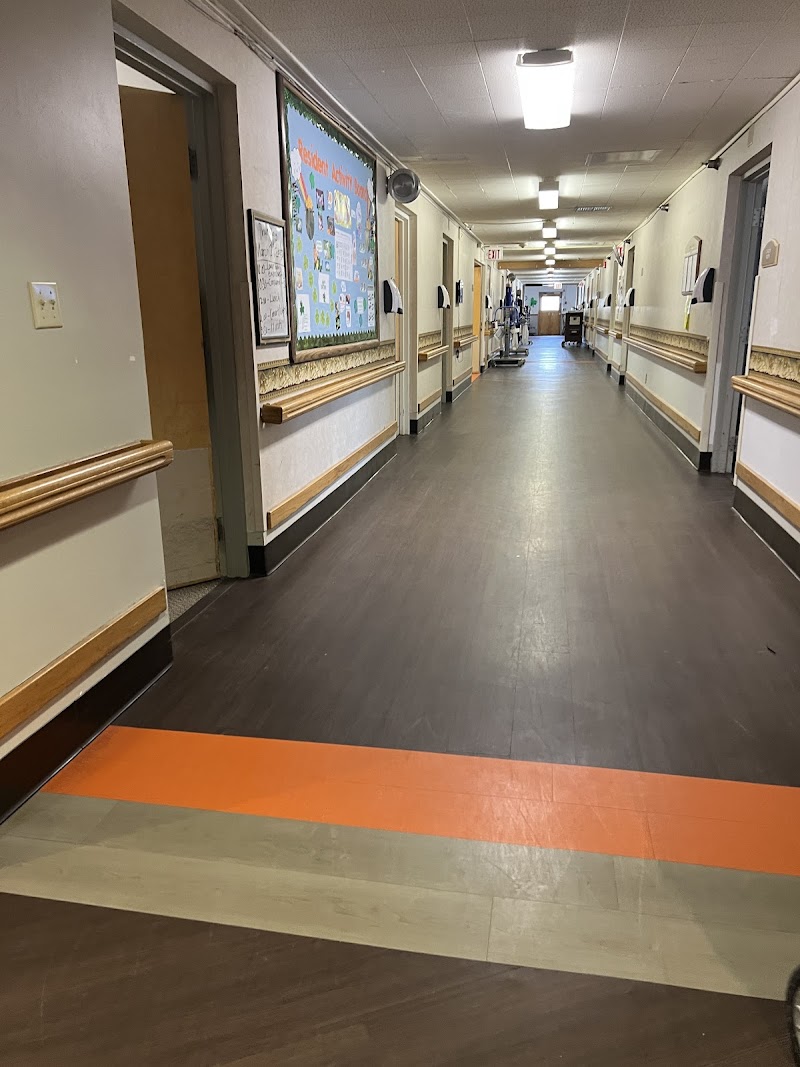
How is The Estates At Bloomington Llc Staffed?

CMS rates The Estates at Bloomington LLC's staffing level at 4 out of 5 stars, which is above average compared to other nursing homes. Staff turnover is 38%, compared to the Minnesota average of 46%. This relatively stable workforce can support continuity of care.

What Have Inspectors Found at The Estates At Bloomington Llc?

State health inspectors documented 37 deficiencies at The Estates at Bloomington LLC during 2023 to 2025. These included: 1 that caused actual resident harm, 34 with potential for harm, and 2 minor or isolated issues. Deficiencies causing actual harm indicate documented cases where residents experienced negative health consequences.
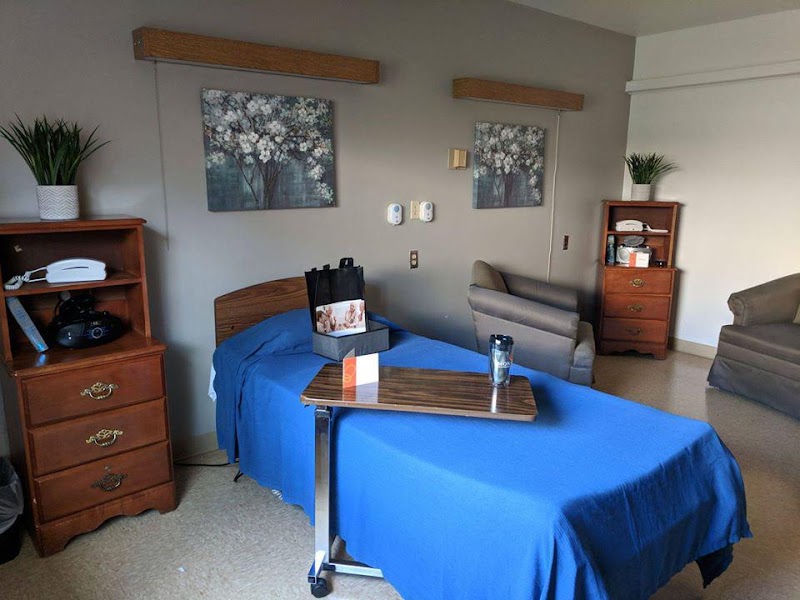
Who Owns and Operates The Estates At Bloomington Llc?

The Estates at Bloomington LLC is owned by a for-profit company. For-profit facilities operate as businesses with obligations to shareholders or private owners. The facility is operated by MONARCH HEALTHCARE MANAGEMENT, a chain that manages multiple nursing homes. With 68 certified beds and approximately 63 residents (about 93% occupancy), it is a smaller facility located in BLOOMINGTON, Minnesota.

How Does The Estates At Bloomington Llc Compare to Other Minnesota Nursing Homes?

Compared to the 100 nursing homes in Minnesota, The Estates at Bloomington LLC's overall rating (3 stars) is below the state average of 3.2, staff turnover (38%) is near the state average of 46%, and health inspection rating (3 stars) is at the national benchmark.

What Should Families Ask When Visiting The Estates At Bloomington Llc?

Based on this facility's data, families visiting should ask: "Can I visit during a mealtime to observe dining assistance and food quality?" "How do you handle medical emergencies, and what is your hospital transfer rate?" "Can I speak with family members of current residents about their experience?"

Is The Estates At Bloomington Llc Safe?

Based on CMS inspection data, The Estates at Bloomington LLC has a clean safety record: no substantiated abuse findings (meaning no confirmed cases of resident harm), no Immediate Jeopardy citations (the most serious violation level indicating risk of serious injury or death), and is not on the Special Focus Facility watch list (a federal program monitoring the lowest-performing 1% of nursing homes). The facility has a 3-star overall rating and ranks #100 of 100 nursing homes in Minnesota. While no facility is perfect, families should still ask about staff-to-resident ratios and recent inspection results during their visit.

Do Nurses at The Estates At Bloomington Llc Stick Around?

The Estates at Bloomington LLC has a staff turnover rate of 38%, which is about average for Minnesota nursing homes (state average: 46%). Moderate turnover is common in nursing homes, but families should still ask about staff tenure and how the facility maintains care continuity when employees leave.

Was The Estates At Bloomington Llc Ever Fined?

The Estates at Bloomington LLC has no federal fines on record. CMS issues fines when nursing homes fail to meet care standards or don't correct problems found during inspections. The absence of fines suggests the facility has either maintained compliance or corrected any issues before penalties were assessed. This is a positive indicator, though families should still review recent inspection reports for the full picture.

Is The Estates At Bloomington Llc on Any Federal Watch List?

The Estates at Bloomington LLC is not on any federal watch list. The most significant is the Special Focus Facility (SFF) program, which identifies the bottom 1% of nursing homes nationally based on persistent, serious quality problems. Not being on this list means the facility has avoided the pattern of deficiencies that triggers enhanced federal oversight. This is a positive indicator, though families should still review the facility's inspection history directly.