Good Samaritan Society - Bethany
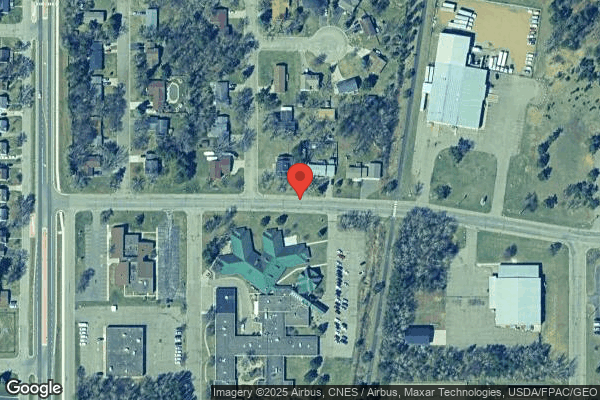

804 WRIGHT STREET, BRAINERD, MN 56401 (218) 825-2593
Non profit - Corporation 79 Beds GOOD SAMARITAN SOCIETY Data: November 2025
Trust Grade
78/100
#114 of 337 in MN
Last Inspection: October 2024

Within standard 12-15 month inspection cycle. Federal law requires annual inspections.

Overview

Good Samaritan Society - Bethany in Brainerd, Minnesota, has received a Trust Grade of B, indicating it is a solid choice for families, though not without its issues. It ranks #114 out of 337 nursing homes in Minnesota, placing it in the top half of facilities statewide, and #1 out of 3 in Crow Wing County, meaning it stands out locally. The facility is improving, having reduced its number of issues from 10 in 2024 to just 1 in 2025. Staffing is a notable strength, with a perfect 5-star rating and a turnover rate of 27%, significantly lower than the state average. While there have been no fines, which is a positive sign, there are concerns regarding infection control, as the facility failed to implement proper precautions for residents with potential infections and did not provide necessary education on vaccinations. Additionally, there were gaps in documenting interventions for residents with psychoactive symptoms, which could impact their care. Overall, the nursing home has good strengths, particularly in staffing and local ranking, but families should be aware of the highlighted concerns.

Trust Score
B
78/100
In Minnesota
#114/337
Top 33%
Safety Record
Low Risk
No red flags
Inspections
Getting Better
10 → 1 violations
Staff Stability
✓ Good
27% annual turnover. Excellent stability, 21 points below Minnesota's 48% average. Staff who stay learn residents' needs.
Penalties
✓ Good
No fines on record. Clean compliance history, better than most Minnesota facilities.
Skilled Nurses
✓ Good
Each resident gets 98 minutes of Registered Nurse (RN) attention daily — more than 97% of Minnesota nursing homes. RNs are the most trained staff who catch health problems before they become serious.
Violations
⚠ Watch
16 deficiencies on record. Higher than average. Multiple issues found across inspections.
★★★★☆
4.0
Overall Rating
★★★★★
5.0
Staff Levels
★★★☆☆
3.0
Care Quality
★★★☆☆
3.0
Inspection Score
Stable
2024: 10 issues
2025: 1 issues

The Good

  • 5-Star Staffing Rating · Excellent nurse staffing levels
  • Low Staff Turnover (27%) · Staff stability means consistent care
  • Full Sprinkler Coverage · Fire safety systems throughout facility
  • No fines on record
  • Staff turnover is low (27%)

    21 points below Minnesota average of 48%

Facility shows strength in staffing levels, staff retention, fire safety.

The Bad

Chain: GOOD SAMARITAN SOCIETY

Part of a multi-facility chain

Ask about local staffing decisions and management

The Ugly 16 deficiencies on record

Feb 2025 1 deficiency
CONCERN (D) 📢 Someone Reported This

A family member, employee, or ombudsman was alarmed enough to file a formal complaint

Potential for Harm - no one hurt, but risky conditions existed

Medication Errors (Tag F0758)

Could have caused harm · This affected 1 resident

**NOTE- TERMS IN BRACKETS HAVE BEEN EDITED TO PROTECT CONFIDENTIALITY** Based on observation, interview and document review, the facility failed to ensure acute, potentially distressing psychoactive s...

Read full inspector narrative →
**NOTE- TERMS IN BRACKETS HAVE BEEN EDITED TO PROTECT CONFIDENTIALITY** Based on observation, interview and document review, the facility failed to ensure acute, potentially distressing psychoactive symptoms were recorded and non-pharmacological interventions were attempted or recorded to ensure efficacy of as-needed (PRN) psychotropic medication for 2 of 3 residents (R1, R3) reviewed for unnecessary medications. Findings include: R1's significant change Minimal Data Set (MDS) dated [DATE], indicated R1 had diagnoses which included depression, anxiety, and R1 was cognitively intact. Identified R1 did not exhibit any behaviors. R1's care plan revised on 2/12/25, indicated R1 had a potential mood problem related to depression and anxiety disorder and directed staff to provide encouragement/assistance/support to maintain as much independent and control as possible, for relaxation: keep on classical music, essential oils (lavender), keeping clean (hand washing), lotion, and foot massage. Further, R1's care plan revised 2/11/25, indicated R1 had a behavioral symptom related to anxiety and depression and would frequently refuse baths, medications, and daily cares and directed staff to attempt non-pharmacological interventions which included 1-1 visits, classical music, massage, repositioning as needed, and ask if R1 needed toileting or to be changed. R1's Medication Administration Record (MAR) for February 2025, indicated R1 had a physician order for Lorazepam (an anti-anxiety medication) 0.125 milliliters (ml) every 4 hours as needed for anxiety related to anxiety disorder. Further, MAR revealed R1 received Lorazepam twice on 2/9/25, and once on 2/10/25. R1's progress notes revealed the following: -On 2/9/25 at 6:48 a.m., Lorazepam was administered at 7:49 a.m. Lorazepam and was documented as effective. -On 2/9/25 at 4:05 p.m., R1 was calling out constantly at beginning of shift for help and pain medications and staff helped her and nurse gave some Ativan (Lorazepam) to help with calling out and anxiety, due to not being able to have pain medication yet. This was successful and resident was able to rest for a while. Resident was calling out in sleep throughout shift. There had been times she was calling out and not remembering she can't stand or use toileting. -On 2/9/25 at 5:50 p.m., Lorazepam was administered per resident request. At 10:42 p.m., Lorazepam was documented as effective. -On 2/10/25 at 12:30 p.m., Lorazepam was administered and at 3:33 a.m. Lorazepam effectiveness was documented as unknown. -On 2/10/25 at 9:36 a.m., R1's daughter called and very mad about R1 being full of bowel last night. Daughter said she was snowed when she was there and unable to converse with her. Does not want Ativan (Lorazepam) given again unless heard from her or consult her. R1's progress notes lacked anxiety symptoms R1 was exhibiting at the time the PRN Lorazepam was administered, as well as lacked evidence of non-pharmacological interventions attempted prior to administration. R3's admission MDS dated [DATE], indicated R3 had diagnoses of anxiety disorder, depression, and R1 had moderately impaired cognition. Further, R1 did not exhibit any behaviors. R3's care plan revised on 2/4/25, indicated R1 had orders for Ativan (Lorazepam), however R3's care plan lacked non-pharmacological interventions for staff to implement when R3 would be exhibiting symptoms of agitation and/or anxiety. Further, R3's care plan identified R1 had depression related to admission to facility with hospice services and R3's care plan directed staff to implement brief visits to her room when she was awake. R3's MAR for February 2025, indicated R3 had a physician order for Lorazepam 0.5 mg (milligrams) every 6 hours as needed for agitation or anxiety related to anxiety disorder. Further, MAR revealed R1 had received Lorazepam one time on 2/2/25, twice on 2/3/25, and once on 2/11/25. R3's Progress Notes revealed the following: -On 2/2/25 at 7:34 a.m., Lorazepam was administered and at 7:41 a.m. Lorazepam was documented as ineffective due to R3 vomiting. -On 2/2/25 at 2:34 p.m., Resident uncomfortable at start of shift. Resident stated I haven't slept for two nights. I am just so worried about death. She remains restless and worried. Writer administered PRN Lorazepam 0.5 mg; patient regurgitates pill. -On 2/3/25 at 9:14 a.m., Lorazepam was administered and at 10:16 a.m., Lorazepam was documented as effective. -On 2/3/25 at 3:17 p.m., Resident was crawling out of bed this morning. PRN Lorazepam was given when resident was agitated. -On 2/3/25 at 3:30 p.m., Lorazepam was administered and at 8:08 p.m., Lorazepam was documented as effective. -On 2/11/25 at 9:57 a.m., Lorazepam was administered and at 12:59 p.m., Lorazepam was documented as effective. R3's progress notes lacked agitation or anxiety symptoms R3 was exhibiting at the time the PRN Lorazepam was administered, as well as lacked evidence of non-pharmacological interventions attempted prior to administration. During an interview on 2/13/25 at 11:09 a.m., family member (FM)-A stated R1 was just prescribed Lorazepam recently by hospice and FM-A stated R1 was given a few doses in less than 24-hour period without the facility attempting to meet R1's needs and/or non-pharmacological interventions prior to the administration. During an observation on 2/13/25 at 1:51 p.m., R1 was observed lying in bed: appeared to be comfortable and content and no anxiety symptoms were noted. During an observation on 2/14/25 at 9:17 a.m., R3 was observed to be lying in bed, appeared to be sleeping with her eyes closed, appeared comfortable and no agitation or anxiety symptoms noted. During an interview on 2/14/15 at 11:42 a.m., nursing assistant (NA)-A stated she had not observed any side effects from medications for R1 and stated R1 had anxiety related to family not visiting often and staff were directed to offer her a cold pack for distraction, oils, and music. Further, NA-A stated R3 had not exhibited any agitation or anxiety symptoms that she had observed. During an interview on 2/14/25 at 12:06 p.m., registered nurse (RN)-A stated R1 exhibited behaviors of calling out when she was needing something rather than using the call light. RN-A stated R1 had an order for PRN Lorazepam and RN-A had administered the PRN medication due to resident calling out and non-pharmacological interventions of pain control, repositioning, and bed bath were unsuccessful. RN-A stated after the administration of PRN Lorazepam, R1 appeared comfortable and was not anxious. Further, RN-A stated if a resident was on hospice, staff would be expected to ensure the resident was comfortable, and attempt non-pharmacological interventions, which would be listed and identified in the resident's care plan, prior to administered a PRN psychotropic medication. In addition, RN-A stated the facility's EMR system lacked a place for staff to document interventions that were attempted. During an interview On 2/14/25 at 1:39 p.m., RN-E stated R3 was on hospice and RN-E had administered R3's PRN Lorazepam 2 or 3 times due to either family's request or R3 yelling out and hallucinating about something that was not real. RN-E stated R3 responded well to the PRN Lorazepam and would calm down and appear comfortable. Further, RN-E stated staff were expected to try least restrictive methods for addressing anxiety or agitation, such as non-pharmacological interventions of snacks, television, music, or calling family, prior to administering a PRN. RN-E stated staff did not chart in the resident's EMR non-pharmacological interventions that were attempted. During an interview on 2/14/25 at 2:36 p.m., RN-B stated R1 had an order for PRN Lorazepam that RN-B had administered one time due to R1 being anxious and RN-B attempted to comfort R1 by sitting with her and visiting and offering to call R1's family prior to administering the PRN. RN-B stated R3 also had a PRN order for Lorazepam but had never administered the medication for R3 before. Further, RN-B stated staff were expected to attempt non-pharmacological interventions prior to administering a PRN psychotropic medication and document in the EMR what was attempted and what was effective or not effective. On 2/14/25 at 3:08 p.m., RN-C stated she would observe the resident and if a resident appeared to be anxious, restless, or uncomfortable she would administer a PRN psychotropic medication. RN-C stated she would attempt deep breathing exercise with the resident prior to administering the PRN psychotropic, as that would be an intervention for nursing, but no other non-pharmacological intervention would be attempted. RN-C stated R3 was disoriented and would often attempt to crawl out of her bed. Further, RN-C stated she had administered R3's PRN Lorazepam due to R3 yelling and attempting to crawl out of bed and appeared to be very anxious but confirmed she had not attempted any non-pharmacological interventions prior to administration of the PRN. On 2/14/25 at 3:33 p.m., RN-D stated staff would be expected to attempt non-pharmacological interventions such as snack, distraction, calling family, activities, or a walk prior to administering a PRN psychotropic medication. RN-D stated person-centered interventions would be listed in each resident's care plan in the EMR for staff to reference. Further, RN-D stated staff would be expected to document in the resident's EMR regarding the symptoms the resident was exhibiting and what interventions were attempted prior to administering the PRN medication. In addition, RN-D confirmed R1 and R3's EMR lacked evidence of the signs the residents were exhibiting and what non-pharmacological interventions were attempted prior to administering their PRN psychotropic medication and R3's care plan lacked interventions related to R3's agitation and anxiety. On 2/14/25 at 4:13 p.m., director of nursing (DON) stated staff would be expected to chart in the resident's EMR non-pharmacological interventions such as redirection, snacks, toileting, etc., prior to giving a PRN psychotropic medication. DON stated staff should also document the reasoning or rationale for the PRN psychotropic medication use and what signs the resident was exhibiting at the time of the administration and then the effectiveness. DON stated each resident would have person-centered non-pharmacological interventions in their care plan for staff to reference. Review of facility policy titled Medication: Administration Including Scheduling and Medication Aides revised 5/21/24, indicated when PRN medications were administered, staff were directed to evaluate and document the efficacy of the medication. However, the policy lacked staff direction on documenting reasoning for administering a PRN psychotropic medication as well as attempting and documenting non-pharmacological interventions prior to the PRN administration.
Oct 2024 6 deficiencies
CONCERN (D)

Potential for Harm - no one hurt, but risky conditions existed

Resident Rights (Tag F0550)

Could have caused harm · This affected 1 resident

**NOTE- TERMS IN BRACKETS HAVE BEEN EDITED TO PROTECT CONFIDENTIALITY** Based on observation, interview, and document review, the facility failed to ensure a urinary catheter bag was placed in a priva...

Read full inspector narrative →
**NOTE- TERMS IN BRACKETS HAVE BEEN EDITED TO PROTECT CONFIDENTIALITY** Based on observation, interview, and document review, the facility failed to ensure a urinary catheter bag was placed in a privacy bag to maintain dignity for 1 of 3 residents (R25) reviewed for dignity. Findings include: R25's quarterly Minimum Data Set (MDS) dated [DATE], identified R25's cognition was severely impaired and diagnoses included Huntington's disease (a rare genetic disorder that affects the brain and causes movement, cognitive and mental health problems). R25 used an indwelling urinary catheter due to having a neurogenic bladder (when the relationship between the nervous system and bladder function was disrupted by injury or disease). R25's care plan revised 2/12/24, identified R25 had an indwelling catheter due to urinary outlet obstruction and neurogenic bladder. The care plan directed catheter care was performed by nursing assistants twice daily with cares and as needed. A non-adhesive secure anchor on leg. However, the care plan failed to direct staff to keep the catheter bag in a privacy bag to maintain dignity. During an observation on 10/14/24 at 5:20 p.m., R25 was lying in bed on his back with a fleece blanket covering R25 to his chest. The room lights were on and R25 was watching a tv program. R25's catheter bed bag was hanging from the bed frame and clearly visible from the hallway. The catheter bag was not in a privacy bag. During an observation on 10/15/24 at 2:18 p.m., R25 was lying in bed in his room. R25's catheter bed bag was hanging from the bed frame and was visible from the hallway. -At 3:16 p.m., activity aide (AA)-A visited with R25 at his bedside but did not cover R25's catheter bed bag before leaving. - At 3:59 p.m., R25's catheter bed bag continued to hang from R25's bed frame without a privacy bag and was clearly visible from the hallway. During an observation on 10/16/24 at 7:14 a.m., R25 was lying in bed with his catheter bed bag hanging from the bed frame without a privacy bag and was clearly visible from the hallway. - At 8:19 a.m., R25 was assisted into his wheelchair and registered nurse (RN)-C was observed placing R25's catheter bed bag in a privacy bag underneath R25's wheelchair. During an observation on 10/16/24 at 1:12 p.m., R25 was lying in bed with his catheter bed bag hanging from the bed frame. The catheter bed bag was clearly visible from the hallway. During an interview on 10/16/24 at 3:06 p.m., nursing assistant (NA)-D stated it was normal to hang the catheter bed bag from the bed frame on the hallway side of the bed because the catheter tubing was anchored to R25's right leg. NA-D stated she did put R25's catheter bed bag in a privacy bag when he was in his wheelchair but did not even consider it when he was in bed. NA-D stated a privacy bag was important to maintain R25's dignity and privacy. [NAME] needs to know about R25 catheter except R25. During an interview on 10/16/24 at 3:20 p.m., RN-C stated yea, staff hung R25's catheter bed bag from the bed frame without a privacy bag. That's just what we do. A privacy bag was available on the wheelchair, but it was not easily removed from the wheelchair because it was tied on. The facility used to use a different supply company that provided covers, but they no longer used that brand. The facility did not have privacy bags available for the resident's bed. RN-C stated it was much better because the catheter bed bag was always covered to maintain privacy and dignity and now anyone walking past R25's door could see R25's catheter. During an interview on 10/17/24 at 9:07 a.m., RN-B stated a catheter bed bag was supposed to have a privacy bag. Staff knew better. Staff had never been directed to place the catheter bed bag on one side of the bed or the other but had been directed to keep the catheter bed bag always covered because it was a privacy and dignity issue but also an infection prevention issue as well. Staff needed to allow as much dignity as possible because it was nobody's business that R25 had a catheter. During an interview on 10/17/24 at 10:53 a.m., the director of nursing stated all residents should have a privacy bag for their catheter bed bag on their bed and wheelchair. It was important to protect every resident's dignity and privacy as a person. The facility policy Resident Dignity revised 11/16/23, identified the facility would promote care for residents in a manner and in an environment that maintained or enhanced each resident's dignity and respect in full recognition of his or her individuality.
CONCERN (D)

Potential for Harm - no one hurt, but risky conditions existed

Quality of Care (Tag F0684)

Could have caused harm · This affected 1 resident

**NOTE- TERMS IN BRACKETS HAVE BEEN EDITED TO PROTECT CONFIDENTIALITY** Based on interview and document review, the facility failed ensure clinical monitoring was completed and documented for 2 of 3 r...

Read full inspector narrative →
**NOTE- TERMS IN BRACKETS HAVE BEEN EDITED TO PROTECT CONFIDENTIALITY** Based on interview and document review, the facility failed ensure clinical monitoring was completed and documented for 2 of 3 residents (R37, R39) reviewed with recent COVID-19 infections. Findings include: R37's significant change Minimum Data Set (MDS) dated [DATE], identified R37 was [AGE] years old, had a severe cognitive impairment and diagnoses included chronic respiratory failure, atrial fibrillation, and chronic kidney disease. R37's care plan revised 9/26/24, identified R37 had a respiratory infection: COVID-19 and directed staff to observe for symptoms and monitor/document/report new or worsening signs/symptoms of COVID-19. R37's Order Summary Report dated 10/1/24 - 10/13/24, directed staff to obtain clinical monitoring - infection/suspected infection two times a day for 12 days. R37's progress from 9/26/24 through 10/4/24, identified R37 was positive for COVID-19 on 9/26/24 and R37's urine was collected for a urinary analysis and culture on 9/30/24. However, the progress notes failed to identify any monitoring of vitals, conditions, or symptoms during R37's COVID-19 infection and/or why the urine sample was collected. R37's Clinical Monitoring - Infection/Suspected Infection V10 dated 10/4/24 at 2:16 p.m., identified R37 was monitored for a respiratory and urinary infection, weight 189.8 pounds, temperature 97.0 degrees Fahrenheit (F), pulse 70, respirations 20, blood pressure 130/70 and oxygen saturations 98% on room air. R37 was alert and oriented t person and place and exhibited agitation and impaired decision making. R37 had a cough, lung sounds were clear and normal quality. Interventions included monitor/observe and fluids/hydration. However, R37's medical record failed to identify any clinical monitoring starting 9/26/24 through 10/3/24. R37's vitals record failed to identify vitals collected 9/26/24 though 10/4/24. R39's significant change MDS dated [DATE], identified R39 was [AGE] years old with diagnoses that included chronic obstructive pulmonary disease (COPD) (a common, preventable, and treatable disease that is characterized by persistent respiratory symptoms like progressive breathlessness and cough), chronic kidney disease atherosclerotic heart disease, and atrial fibrillation. R39's care plan revised 7/23/24, identified R39 had an altered respiratory status/difficulty breathing related to COPD. Staff were directed to monitor for signs of respiratory distress and report to health care provider as needed: increased respirations; decreased pulse oximetry; increased heart rate (tachycardia); restlessness, headaches, lethargy, confusion, hemoptysis, cough, pleuritic pain, accessory muscle usage; skin color changes to blue/grey. Monitor/document changes in orientation, increased restlessness, anxiety, and air hunger. However, the care plan did not direct staff to obtain vitals and/or where/how to document nor how frequently to do so, especially in times of illness. R39's progress notes 9/28/24 through 9/30/24, identified R39 tested positive for COVID-19 on 9/28/24, was hoarse and felt pukey. However, the progress notes failed to identify any monitoring of vitals, conditions, or symptoms during R39's COVID-19 infection. R39's vitals record failed to identify vitals collected 9/28/24 through 9/30/24. R39's medical record failed to identify Clinical Monitoring - Infection/Suspected Infection V10 completed for R39 from 9/28/24 through 9/30/24. During an interview on 10/16/24 at 3:14 p.m., registered nurse (RN)-C stated when a resident had COVID-19, RN-C would get vitals and, at least, lung sounds every shift and that's documented in the Clinical Monitoring - Infection/Suspected Infection V10 in the resident's assessment tab. During an interview on 10/16/24 at 3:59 p.m., RN-F stated, when a resident was ill, but especially COVID-19, RN-F would get vitals every shift and assess the resident for changes. RN-F would document this in the progress notes. RN-F stated she was unaware of the Clinical Monitoring - Infection/Suspected Infection V10 the assessment tab and had never used it. During a telephone interview on 10/16/24 at 7:42 p.m., nursing assistant (NA)-E stated, when a resident showed a possible sign or symptom of COVID-19, she notified the nurse on the unit and then would obtain a set of vitals for the nurse. NA-E would encourage the resident to stay in his/her room until a test was collected. After that, staff needed to be aware of a resident's condition, were they showing signs of COVID-19 and report that to the nurse. During a telephone interview on 10/16/24 at 7:43 p.m., RN-A stated when a resident started to show symptoms of illness, staff collected an COVID-19 antigen test and, if positive, the resident would be placed into transmission-based precautions that sort of thing. Clinical monitoring of the resident depended on symptoms. If the resident was having respiratory issues, nursing staff would listen to lung sounds and clinical monitoring documentation would be triggered in the resident's medical record. Implementation of clinical monitoring depended on the nurse on duty that shift. If it was a seasoned nurse, the unit nurse on duty would implement clinical monitoring. RN-E stated she did work 9/28/24 and 9/29/24. RN-A was aware of positive COVID-19 residents in the facility but did not recall personally assessing residents for illness and/or implementing clinical monitoring documentation in the residents' medical records. During an interview on 10/17/24 at 8:54 a.m., RN-F stated, when a resident was symptomatic for respiratory illness, an antigen COVID-19 test, and vitals were collected to determine if the resident had a fever and/or something else going on. RN-F then would document those findings in the vitals tab of the resident's medical record. After that, vitals would be collected and documented in the vitals tab every shift or more often depending on the resident's condition. RN-F stated she has never implemented the clinical monitoring form in the assessment tab nor put an order into direct staff to assess the resident every shift. During an interview on 10/17/24 at 9:06 a.m., RN-B stated residents symptomatic for respiratory illness, staff were expected to evaluate the resident at least twice a day: lung sounds, vitals, etc. Night shift could also evaluate the resident depending on condition. Staff were directed to do this by implementing the Clinical Monitoring- Infections/Suspected Infections V10 form in the resident's assessments because that provided for the facility's infection control program. During weekend hours, nursing was expected to implement the Clinical Monitoring- Infections/Suspected Infections V10 form and, on Monday, RN-B would ensure this had been implemented. If not, RN-B would implement at that time. During a telephone interview on 10/17/24 at 10:00 a.m., RN-G stated, when a resident was showing symptoms of respiratory illness, the resident was first tested for COVID-19 with an antigen test and vitals were collected. After this, vitals and the resident's condition would be documented in a nursing progress note. This is what was routinely done, but how often really depended on how sick the resident was. RN-G stated R37 was fine on 9/28/24 and 9/29/24. RN-G did not collect vitals and/or assess R37 on 9/28/24 and/or 9/29/24 because R37 wouldn't stay in his room and he kept coming out and screaming at me. During an interview on 10/17/24 at 10:34 a.m., the director of nursing (DON) stated it was very disappointing to not find nursing assessments twice daily for R37 or R39 from 9/26/24 to 10/4/24. The DON expected staff to collect vitals and do a nursing assessment of any ill resident every shift while not feeling well. Any nurse can initiate the Clinical Monitoring- Infections/Suspected Infections V10 form in the resident's medical record. Additionally, the DON expected the unit manager to ensure it was implemented as well; this included the weekend nursing managers. This was the facility infection control process, and it allowed communication between staff. During an interview on 10/17/24 at 11:53 a.m., the administrator stated she expected staff to follow the facility's policies, procedures and/or processes and to also communicate with each other to keep the residents, staff, and visitors safe. The facility policy Emerging Threats - Acute Respiratory Syndromes Coronavirus (COVID) revised 4/19/24, identified residents were monitored for signs and symptoms of COVID-19 per routine practice. However, the policy failed to direct staff on frequency of monitoring and/or how monitoring should be documented. A policy regarding illness monitoring and documentation was requested but not received.
CONCERN (D)

Potential for Harm - no one hurt, but risky conditions existed

Incontinence Care (Tag F0690)

Could have caused harm · This affected 1 resident

**NOTE- TERMS IN BRACKETS HAVE BEEN EDITED TO PROTECT CONFIDENTIALITY** Based on interview and document review, the facility failed to ensure an appropriate provider's order and rational for use were ...

Read full inspector narrative →
**NOTE- TERMS IN BRACKETS HAVE BEEN EDITED TO PROTECT CONFIDENTIALITY** Based on interview and document review, the facility failed to ensure an appropriate provider's order and rational for use were obtained for an indwelling urinary catheter for 1 of 3 residents (R30) who were reviewed for catheter care. Findings include: R30's significant change Minimum Data Set (MDS) dated [DATE] identified no cognitive impairment and identified R30 was always continent of bladder. R30's urinary/catheter assessment dated [DATE], identified resident was admitted to the unit with indwelling urinary catheter in place. The rational provided was the resident was on hospice. R30's provider's orders dated 9/30/24, identified an order for Foley Cath (catheter) Care dated 9/30/24. The provider's orders lacked any order for insertion or use of a Foley Cath, or the rational for the use of it. During observation on 10/16/24 at 12:25 p.m., R30 sat up in her bed and ate lunch. R30's Foley catheter bag was hanging on the side of her bed. During interview on 10/16/24 at 1:24 p.m., R30 stated she did not know why the catheter was placed. She could not think of a reason why she would need it. During an interview on 10/17/24 at 10:33 a.m., licensed practical nurse (LPN)-A stated R30 was admitted to the unit with the catheter already in place and could not find an order or reason it was placed. During an interview on 10/17/24 at 10:48 a.m., registered nurse (RN)-D stated if a resident needed a catheter there should be a provider's order and a rational for why a catheter was needed. This information would be important as it would drive the plan of care for the catheter. R30's medical record lacked any documentation of why the catheter was inserted. The R30's medical record did not contain an order for the catheter or the rational for why it was needed. During an interview on 10/17/24 at 11:02 a.m., the director of nursing (DON) stated it is the expectation that every resident who had a catheter in place would have had a provider's order for the catheter and the rational for why the catheter was needed. It would not be appropriate for a catheter to be placed just because a resident was on hospice. The facility's Catheter: Care, Insertion & Removal, Drainage Bags, Irrigation and Specimen-LTC policy dated 7/30/24, identified a resident is not to be catheterized unless the clinical condition demonstrates that catheterization is medically necessary and is not used solely for nurse/physician convenience. Also identified Catheters will be utilized only with a physician's order.
CONCERN (D)

Potential for Harm - no one hurt, but risky conditions existed

Tube Feeding (Tag F0693)

Could have caused harm · This affected 1 resident

**NOTE- TERMS IN BRACKETS HAVE BEEN EDITED TO PROTECT CONFIDENTIALITY** Based on observation, interview and document review, the facility failed to ensure staff provided care according to standards of...

Read full inspector narrative →
**NOTE- TERMS IN BRACKETS HAVE BEEN EDITED TO PROTECT CONFIDENTIALITY** Based on observation, interview and document review, the facility failed to ensure staff provided care according to standards of practice and per physician orders for gastrostomy tube feeding for 1 of 1 resident (R15) reviewed for tube feedings. Finding include: R15's quarterly Minimum Data Set (MDS) dated [DATE], identified severe cognitive impairment and diagnoses of traumatic brain dysfunction, hemiplegia (one-sided paralysis or weakness), and seizure disorder. R15 was dependent on staff for bed mobility and had a gastrostomy tube (g-tube) for feeding. R15's Order summary report signed by the primary Physician on 8/28/24, identified an order for enteral feeding two times a day with Nutren 1.5 at 75 milliliters per hour (ml/hr., to run for 16 hours per 24-hour period. Elevate head of bed (HOB) greater than 30 degrees with tube feeding running, Start at 1700 (5:00 p.m.), end at 0900, for a total of 1200ml/day. Reset count to zero with new bag. R15's care plan dated 5/15/17, identified R15 required a tube feeding related to the inability to swallow. Staff were directed to elevate the head of the bed at least 30 degrees during and 30-40 minutes after tube feeding was stopped. During an observation on 10/16/24 at 8:56 a.m., nursing assistant (NA)-A and NA-B put on gowns and gloves and went to R15's room. R15 tube feeding was running at 75 (ml/hr.). R15's head of the bed was at a 30-degree angle. Staff lowered the head of the bed to do morning hygiene care. NA-A washed R15's face, hands, underarms, and breast, and performed perineal care. NA-A put on new gloves and applied a cream under R15's bilateral breasts. NA-A put a new gown on R15. The head of the bed was raised after the morning activities of daily living (ADL's) were completed around 9:20 a.m. During an interview on 10/15/24 at 9:36 a.m., NA-A stated R15 had a g-tube and R15 did not have negative effects when the head of the bed was lowered for care. Licensed nurses do not stop feeding when ADLs are being performed. During an interview on 10/16/24 at 9:36 a.m., NA-B stated nursing assistants cannot stop the g-tube feedings, and only a licensed nurse can stop a feeding. Lowering R15's head of the bed when doing care had not bothered R15. During an interview on 10/16/24 at 12:26 p.m., registered nurse (RN)-C stated the nursing assistants put the head of the bed down long enough to do care. The nursing assistant had never asked for the tube feeding to be stopped as it had not been an issue. On nights the tube feeding would be paused as R15 has vomited in the past on the night shift. During an interview on 10/16/24 at 2:00 p.m., RN-B stated staff would try to keep the head of the bed up. The nursing assistants did not ask the licensed nurses to put the feeding on hold. Between 2:00 a.m. and 4:00 a.m., R15 has vomited in the morning, and then the licensed staff will turn off the tube feeding and run it later during the day. During an interview on 10/16/24 at 3:18 p.m., the director of nursing (DON) stated it would be her expectation that the head of the would be elevated if R15 could tolerate it. If staff needed to perform extensive care, then the feeding could be stopped. The facility Tube-Gastrostomy or Jejunostomy-Enteral Feeding, Care, Placement or Removal policy dated 12/4/24, directed staff to raise the head of the bed 30-45 degrees during feeding and keep elevated for 30-60 minutes after feeding to prevent regurgitation or aspiration unless contraindicated per physician's order.
CONCERN (D)

Potential for Harm - no one hurt, but risky conditions existed

Pharmacy Services (Tag F0755)

Could have caused harm · This affected 1 resident

**NOTE- TERMS IN BRACKETS HAVE BEEN EDITED TO PROTECT CONFIDENTIALITY** Based on observation, interview, and document review, the facility failed to ensure a discontinued presciption topical antifunga...

Read full inspector narrative →
**NOTE- TERMS IN BRACKETS HAVE BEEN EDITED TO PROTECT CONFIDENTIALITY** Based on observation, interview, and document review, the facility failed to ensure a discontinued presciption topical antifungal medication was detroyed and not administered; and failed to ensure only authorizied staff administered prescribed adminstered prescribed creams for 1 of 1 resident (R15) observed to have nursing assistants apply prescribtion creams during cares without an order. Finding include: R15's quarterly Minimum Data Set (MDS) dated [DATE], identified R15 had severe cognitive impairment and diagnoses of traumatic brain dysfunction, non-Alzheimer's dementia, hemiplegia (one-sided paralysis or weakness), and seizure disorder. R15 was dependent on staff for all activities of daily living (ADLs) such as personal hygiene, oral hygiene, bed mobility, and dressing. R15's Order summary report signed by the primary Physician on [DATE], identified Nystatin External Cream 1000 unit/gram (nystatin topical) and appply to under breast topically two times a day for rash related to rash and other nonspecific skin eruption until resolved; however the ordered was discontinued on [DATE]. R15's electronic medical administration record (EMAR) for [DATE] identified no administration for nystatin cream. During an observation on [DATE] at 8:56 a.m., nursing assistant (NA)-A and NA-B donned gowns and gloves and went to R15's room. NA-A and NA-B washed R15's face, underarms, under breasts, and performed perineal care. NA-A changed gloves and picked up a white tube of cream from the bedside table. Tube had a label from the pharmacy, NA-A squeezed out the last of the cream onto a gloved finger. NA-A applied the cream under both breasts. NA-A reported the cream being applied was Nystatin which goes under R15 breasts. The Nystatin tube was placed back on the side table. The pharmacy label was old, and the writing was worn off in some areas and unable to read the date it was filled and the date it expired. R15's name with the name of the medication nystatin was visible. During an interview on [DATE] at 12:26 p.m., registered nurse (RN)-C verified that R15 did not have a current order for nystatin cream. During an interview on [DATE] at 2:00 p.m., RN -B verified R15 did not have a current order for nystatin and the nursing assistants do not apply prescription creams. Prescription creams should be locked in the medication cart. During an interview on [DATE] at 3:18 p.m. director of nursing (DON) stated creams with a prescription like nystatin should be kept in the medication cart unless the resident had an order to keep them at the bedside. The DON's expected there would be an order for the medication being applied. The facility Medication: Administration including Scheduling and Medication Aids policy dated [DATE], directed the following: A provider's order for any medication is required and must include: diagnosis, name of medication, dose, route, frequency and STOP order if indicated. If the medication order is not legible or does not include the items listed above, the provider is notified for clarification prior to administration of medications. Medications are administered to the resident according to the Six Rights. All employees passing medications are familiar with action and adverse reactions of medications Perform three checks: read the label on the medication container and compare with the MAR when removing the container from the supply drawer, Do not touch the medication with ungloved hands. Do not leave medications at the bedside or at the table unless there is a specific physician order to do so, and the resident has been evaluated for self-administration.
CONCERN (F)

Potential for Harm - no one hurt, but risky conditions existed

Infection Control (Tag F0880)

Could have caused harm · This affected most or all residents

**NOTE- TERMS IN BRACKETS HAVE BEEN EDITED TO PROTECT CONFIDENTIALITY** Based on observation, interview and document review, the facility failed to initiate appropriate transmission based precautions ...

Read full inspector narrative →
**NOTE- TERMS IN BRACKETS HAVE BEEN EDITED TO PROTECT CONFIDENTIALITY** Based on observation, interview and document review, the facility failed to initiate appropriate transmission based precautions according to The Centers for Disease Control (CDC) for 2 of 3 residents (R11, R224) reviewed for transmission based precautions, failed to track and trend potential/actual infections for 6 of 6 residents (R11, R35, R36, R24, R1, R224) identified to have potential/actual infections; and failed to conduct COVID-19 testing per CDC guidelines for 5 of 5 residents (R11, R35, R36, R24, R15) who were identified to have COVID-19 signs and symptoms. This had the potential to affect all 68 residents residing in the facility. Findings include: Transmission-Based Precautions: R11's quarterly Minimum Data Set (MDS) dated [DATE], identified R11 was [AGE] years old, cognitively intact and diagnoses included acute prostatitis (a disorder of the prostate gland associated with inflammation), urinary tract infection (UTI), COVID-19, and Type 2 diabetes. R11's care plan revised 7/24/24, identified R11 had an activities of daily living (ADL) self-care performance deficit related to weakness exhibited by inability to complete at baseline level. Staff were directed to provide extensive assistance of 1-2 for all care activities. However, the care plan failed to identify R11's COVID-19 diagnosis and/or need for transmission-based precautions. During an observation on 10/14/24 at 12:41 p.m., R11's room door was shut, and 3 signs were taped to the outside of the door: Enhanced Barrier Precautions, Contact Precautions and Droplet Precautions. In the hallway, to the left of R11's closed room door was a 3-drawer bedside stand next to the door that contained disinfectant wipes, N95 masks, gloves, surgical masks, and face shields. There was a facility laundry bin next to the bedside stand containing reusable gowns and was covered with a folded flat sheet. On the right of R11's closed room door was a covered, red biohazard linen container and a trash container. - At 1:13 p.m., nursing assistant (NA)-A approached R11's door and donned gloves, gown and continued to wear the same surgical mask. NA-A did not don eye protection and entered R11's door. - At 1:32 p.m., NA-A exited R11's room and doffed her gown, gloves and mask throwing the items in the uncovered trash. NA-A used hand sanitizer and donned a clean surgical mask. During an interview on 10/14/24 at 1:35 p.m., NA-A stated R11 had COVID. Staff needed to wear a gown, gloves, and a mask when they went into R11's room. The N95 and/or eye protection wasn't needed but was extra. NA-A stated you could wear it if you wanted to be extra careful. NA-A had never been directed to wear eye protection in a COVID positive room during her employment at the facility. During an interview on 10/14/24 at 1:45 p.m., registered nurse (RN)-C was observed exiting R11's room and doffed a gown, gloves, mask, and face shield. RN-C cleaned the face shield with a disinfectant wipe, put the soiled gown in the biohazard linen bin and threw the soiled gloves in the uncovered trash. RN-C stated the biohazard linen bin and trash container should be on the inside of R11's door, but there was no room for it. If it was on the inside of the door it would have to be at least 6 feet inside the room and that defeated the purpose of wearing personal protective equipment (PPE) inside R11's room. Staff were expected to wear a gown, gloves, N95 mask and eye protection whenever entering R11's door. During an interview on 10/15/24 at 12:38 p.m., the director of nursing (DON) stated R11 was placed into Droplet Precautions when he tested positive for COVID-19 on 10/7/24. The signage on the door tells staff what PPE was required. The DON stated no audits had been conducted to determine if staff were following guidance during the facility's COVID-19 outbreak. Because R11 had a suprapubic catheter, R11 was in Enhanced Barrier Precautions prior to getting ill. Having multiple signs on the door would be confusing for staff because which one should staff follow. However, the DON stated staff have been educated what PPE was required for COVID-19 and were expected to use it as directed. Additionally, all biohazard linen bins and trash bins should have been in the R11's room for staff to doff while in the room. There was room in the resident rooms for them. This was important to prevent the potential spread of infection between other residents, staff, and visitors. The Centers for Disease Control and Prevention (CDC) Appendix A - Type and Duration of Precautions Recommended for Selected Infections and Conditions of the CDC Guideline for Isolation Precautions updated 9/20/24, identified severe acute respiratory syndrome (SARS) (COVID-19) required droplet precautions for the duration of illness plus 10 days after resolution of fever, provided respiratory symptoms were absent or improving. R224's 5-day MDS dated [DATE], identified R224 was [AGE] years old and had intact cognition. R224's diagnoses included bacteremia, weakness, acute kidney injury and hypertension. R224 used an indwelling catheter and an antibiotic. The MDS failed to identify R224 had an infection with a multi drug resistant organism (MDRO). R224's Urinary Incontinence and Indwelling Catheter care area assessment (CAA) dated 9/29/24, identified R224 had an indwelling catheter, a urinary tract infection (UTI) and benign prostatic hyperplasia (BPH) (an enlarged prostate). The CAA further identified urinary incontinence and indwelling catheter use would not be addressed on R224's care plan. R224's care plan dated 10/14/24, identified R224 required Enhanced Barrier Precautions (EBP) related to R224's indwelling urinary catheter. Staff were directed to don a gown and gloves when performed high contact care activities including dressing, changing linens, repositioning, check and changing, device care and/or use, and wound care. Staff were directed to doff gown and gloves inside R224's room and perform hand hygiene. R224's physician orders identified R224's indwelling urinary catheter was placed on 9/11/24. R224's progress note dated 10/7/24 at 4:05 p.m., identified R224 had been hospitalized due to hypotension related hypovolemia (a condition in which the volume of blood plasma is too low. This causes a rapid heart beat, weak pulse, confusion, and loss of consciousness ); acute kidney injury superimposed on chronic kidney disease, history of Methicillin-resistant staph aureus (MRSA). R224's hospital Discharge summary dated [DATE], identified R224 discharge diagnoses included MRSA sepsis and early septic shock due to complicated UTI and MRSA complicated UTI. R224 was to continue vancomycin (an antibiotic) for 4 weeks. During an interview on 10/15/24 at 8:29 a.m., R224's indwelling catheter was in a cloth cover lying on the floor of his room. R224 stated nursing was good about cleaning his indwelling catheter, but R224 never saw factility staff wear a gown like the hospital nurses did. During an observation on 10/15/24 at 11:03 a.m., R224's door was open with an Enhanced Barrier Precautions sign taped to the door.Registered nurse (RN)-H exited R224's room and doffed a gown and gloves. RN-H placed the gown in the red, covered biohazard linen container in the hallway and placed the soiled gloves in the uncovered trash. RN-H did not doff her surgical mask. - At 11:05 a.m., RN-H went approximately 50 feet down the hallway, around the corner to the nurses' station and donned gown and gloves on the way back to R224's room and entered. No PPE supplies were near R224's room. - At 11:10 a.m., RN-I approached R224's door, looked around then walked away asking staff why there were no gowns for R224. RN-I went to the nurses' station and donned a gown and gloves while returning to R224's room. RN-I stated over half the resident rooms required Enhanced Barrier Precautions due to surgical wounds. Because of this, there were not enough carts to go around and the nurses' placed gowns at the nurses' station to be centrally located. - At 11:15 a.m., RN-H exited R224's room with the soiled gown bunched up in her hand and placed the gown in the biohazard linen bin. - At 11:17 a.m., RN-I exited R224's room with a gown bunched up in her hand and placed the soiled gown in the biohazard bin. RN-I did not use hand sanitizer and went to her office with a visitor. During an interview on 10/15/24 at 11:19 a.m., RN-H stated R224 was on precautions due to having an indwelling catheter. RN-H stated she did not know what an MDRO was, but confirmed R224 did have MRSA. Well, R224 should have been on Contact Precautions but what's the difference. Staff were already wearing gowns, gloves, and masks. RN-H then stated she guessed it would depend on the infection, where the infection was and what the precautions should be. However, staff probably weren't even aware R224 had an infection. RN-H stated she was unaware R224 had an infection until asked and a Contact Precautions sign on R224's door may have triggered her to review his chart earlier to see what R224 had and what R224 required to keep other residents, staff, and visitors safe. During an interview on 10/15/24 at 11:45 a.m., laundry aide (LA)-A was observed donning a gown and gloves while walking down the hall from the nurses' station. LA-A stated a huge stack of gowns were delivered in a facility laundry bin on 10/14/24. LA-A had put one bin in each hallway and stated there just was not enough carts for each room, so she had tried to keep them centrally located. During an interview on 10/15/24 at 12:04 p.m., RN-J stated nursing staff moved the gowns to the nurses' station that morning because staff didn't want to run all over to get gowns. During an interview on 10/15/24 at 12:12 p.m., the director of nursing (DON) stated she was not aware R224 had MRSA. R224 did have MRSA in his diagnosis list. However, diagnoses are entered by health information management (HIM) who only input the diagnosis code. Nursing is not alerted to high risk/high alert diagnoses by HIM. The admitting nurse reviewed a potential resident's hospital medical record then would send an email with information. The DON stated the initial review did not identify R224 required Enhanced Barrier Precautions on his initial admission. However, R224 was re-hospitalized and returned on 10/7/24 and Enhanced Barrier Precautions were then implemented. However, the DON stated R224's hospital discharge summary identified R224 had an active MRSA UTI and should have been placed into Contact Precautions when he was admitted to the facility on [DATE]. It was important for the staff to know the differences in the different type of transmission-based precautions and Enhanced Barrier Precautions to prevent the chance to spread infection not only between the residents but the staff as well. During an interview with the DON and RN-I on 10/15/24 at 12:57 p.m., RN-I stated she didn't review resident's charts for MDRO unless she had time to do so. If a resident was admitted on an antibiotic, it would prompt the implementation of Clinical Monitoring- Infections/Suspected Infections V10 form in the resident assessments. If there was an identified history of MDRO, Enhanced Barrier Precautions were implemented as well. After admission, if an infection was diagnosed, any nurse could implement the Clinical Monitoring- Infections/Suspected Infections V10 form as well. R224, RN-I stated more than likely RN-I was aware of the MRSA infection but could not verify that. If RN-I wasn't told by admission nurse, RN-I wouldn't go diving for that. RN-I stated she implemented Enhanced Barrier Precautions for R224 on 10/14/24 due to R224's indwelling catheter but R224 should have been in Contact Precautions since his admission on [DATE] because he had an active MRSA infection to prevent the spread of infection. Additionally, the soiled bins should be on the inside of the room. The DON stated they clearly had a process problem and needed to educate their staff. The Centers for Disease Control and Prevention (CDC) Appendix A - Type and Duration of Precautions Recommended for Selected Infections and Conditions of the CDC Guideline for Isolation Precautions updated 9/20/24, identified Multidrug-Resistant organisms (e.g. MRSA) required contact precautions recommended in settings with evidence of ongoing transmission, acute care settings with increased risk for transmission or wounds that cannot be contained by dressings. The facility policy Multidrug-Resistant Organisms, MRSA, VRE, CRE and ESBL, All Service Lines revised 4/12/24, identified residents colonized with a CDC-targeted [NAME] and select epidemiologically important MDROs at the facilities discretion are intended to remain on Enhanced Barrier Precautions for the duration of their stay in a facility. Because [NAME] colonization is prolonged and follow-up testing to determine clearance may yield false negatives, CDC does not recommend routine retesting of residents with a history of colonization or infection with a targeted MDRO. Use contact precautions when the resident is infected or colonized with an MDRO and secretions and excretions are unable to be contained. This includes: - Residents with multidrug-resistant organism infected or colonized wounds that cannot be covered fully by dressings or who have drainage that cannot be contained by dressings. Residents with fecal or urinary carriage of multidrug-resistant organisms whose urine or stool cannot be contained in incontinent products, urine bags or ostomy bags. - Residents with a tracheostomy who have colonized or infected respiratory tracts and large amounts of uncontained respiratory secretions. - Residents who have been linked to transmission of multidrug-resistant organisms. The policy further directed for infections (e.g., C. difficile, norovirus, scabies) and other conditions where Contact Precautions is recommended see Appendix A - Type and Duration of Precautions Recommended for Selected Infections and Conditions of the CDC Guideline for Isolation Precautions. Surveillance: The Infection Control Report - September 2024, identified the infection rates for the facility, an analysis of the data collected, resident name, room, source, site, comments and dates of infection and a color-coded map. R11's quarterly Minimum Data Set (MDS) dated [DATE], identified R11 was [AGE] years old, cognitively intact and had diagnoses that included acute prostatitis (a disorder of the prostate gland associated with inflammation), urinary tract infection (UTI), COVID-19, and Type 2 diabetes. R11's progress note dated 9/26/24 at 8:30 p.m., identified R11 reported that he was feeling feverish. Temperature 98.3 degrees F. However, R11's medical record failed to identify if R11 was placed in transmission-based precautions until a confirmatory test was collected. The facility's Infection Control Report - September 2024 failed to identify R11's symptoms. R35's annual MDS dated [DATE], identified R35 was [AGE] years old and had diagnoses that included chronic kidney disease and Type 2 diabetes. R35's progress note dated 9/26/24 at 1:48 p.m., identified R36 slept in bed throughout shift. R35 reported feeling run down and achy. The facility's Infection Control Report - September 2024 failed to identify R35's potential infection symptoms. R36's quarterly MDS dated [DATE], identified R36 was [AGE] years old and had diagnoses that included hypertension, heart disease, dysphagia, and congestive heart failure. R36's progress note date 10/2/24 at 1:38 p.m., identified R36 was withdrawn and not eating or drinking much. R36's face was flushed, dry and ruddy. R36 was slow to respond when spoken to. R36's temperature was 98 degrees F. The facility's Infection Control Report - September 2024 failed to identify R35's potential infection symptoms. R24's quarterly MDS dated [DATE], identified R24 was [AGE] years old and had diagnoses that included hypertension and Type 2 diabetes. R24's progress note dated 10/16/24 at 4:33 p.m., identified R24 was warm to touch, diaphoretic (excessive sweating). R24's vitals were as follows: blood pressure 118/73, temperature 98.0 degrees F, blood sugar 129, respirations 18, heartrate 74. R24 complained of increased discomfort to bilateral legs after therapy. Tylenol 650 mg administered x 1. The facility's Infection Control Report - September 2024 failed to identify R24's potential infection symptoms. R15's quarterly MDS dated [DATE], identified R15 was [AGE] years old and had diagnoses that included diabetes insipidus and hypertension. R15's progress note dated 10/15/24 at 4:24 p.m., identified R15's skin felt very warm, but her temp was 97.7 degrees F. R15 was frowning and upset when staff approached her. R15 was less irritable when not touched. R15 she pinched and scratched nurse's forearms when nurse attempted to take temperature. The facility's Infection Control Report - September 2024 failed to identify R15's potential infection symptoms. During an interview on 10/17/24 at 10:30 a.m., the DON stated she was responsible for the facility's infection control program. The DON used two processes for the facility's infection surveillance. The first process was the infection dashboard in the facility's electronic medical record system. The nurses entered resident infection data into Clinical Monitoring- Infections/Suspected Infections V10 form in the resident assessments. Every morning that information was pulled into the infection log. The DON stated the facility's infection surveillance log was dependent on nursing to enter the data or it would not be reflected on the surveillance reports. When reviewing the infection control dashboard in the electronic medical record system, each individual resident would need to be reviewed. For an example, when a resident tested positive for COVID-19, Clinical Monitoring- Infections/Suspected Infections V10 form was completed every shift until the resident's illness resolved. If the form was not completed, the data would not be pulled into the log. The second process was a paper log. The DON was taking information from the dashboard and entered the data in the paper log. The DON stated she did not know how to print any reports from the dashboard, and this eased tracking and trending. The DON stated resident illness needed to be tracked to determine trends in the facility and for the prevention of possible spread of infection. A facility policy regarding infection control surveillance was requested but not received. A copy of the facility's dashboard surveillance was requested but not received. A copy of the facility's Infection Control Report - October 2024 was requested but not received. COVID-19 Testing: The Centers for Disease Control and Prevention (CDC) Interim Infection Prevention and Control Recommendations for Healthcare Personnel During the Coronavirus Disease 2019 (COVID-19) Pandemic updated 3/18/24, identified the decision to discontinue empiric Transmission-Based Precautions by excluding the diagnosis of current SARS-CoV-2 infection for a patient with symptoms of COVID-19 can be made based upon having negative results from at least one viral test. - If using NAAT (molecular) (A Nucleic Acid Amplification Test is a type of viral diagnostic test for SARS-CoV-2, the virus that causes COVID-19. NAATs detect genetic material (nucleic acids). NAATs for SARS-CoV-2 specifically identify the RNA (ribonucleic acid) sequences that comprise the genetic material of the virus), a single negative test is sufficient in most circumstances. If a higher level of clinical suspicion for SARS-CoV-2 infection exists, consider maintaining Transmission-Based Precautions and confirming with a second negative NAAT. - If using an antigen test, a negative result should be confirmed by either a negative NAAT (molecular) or second negative antigen test taken 48 hours after the first negative test. - If a patient suspected of having SARS-CoV-2 infection is never tested, the decision to discontinue Transmission-Based Precautions can be made based on time from symptom onset as described in the Isolation section below. Ultimately, clinical judgment and suspicion of SARS-CoV-2 infection determine whether to continue or discontinue empiric Transmission-Based Precautions. R11's quarterly Minimum Data Set (MDS) dated [DATE], identified R11 was [AGE] years old, cognitively intact and had diagnoses that included acute prostatitis (a disorder of the prostate gland associated with inflammation), urinary tract infection (UTI), COVID-19, and Type 2 diabetes. R11's progress note dated 9/26/24 at 8:30 p.m., identified R11 reported that he was feeling feverish. Temperature 98.3 degrees F. COVID test repeated with negative results. R11's medical record failed to identify if R11 had a confirmatory COVID-19 test and/or if/when R11 had been placed in isolation. R35's annual MDS dated [DATE], identified R35 was [AGE] years old and had diagnoses that included chronic kidney disease and Type 2 diabetes. R35's progress note dated 9/26/24 at 1:48 p.m., identified R36 slept in bed throughout shift. R35 reported feeling run down and achy. Covid swab was negative. R35's medical record failed to identify if R35 had a confirmatory COVID-19 test and/or if/when R35 had been placed in isolation. R36's quarterly MDS dated [DATE], identified R36 was [AGE] years old and had diagnoses that included hypertension, heart disease, dysphagia, and congestive heart failure. R36's progress note date 10/2/24 at 1:38 p.m., identified R36 was withdrawn and not eating or drinking much. R36's face was flushed, dry and ruddy. R36 was slow to respond when spoken to. R36's temperature was 98 degrees F. R36's Covid Swab test was negative. R36's medical record failed to identify if R36 had a confirmatory COVID-19 test and/or if/when R36 had been placed in isolation. R24's quarterly MDS dated [DATE], identified R24 was [AGE] years old and had diagnoses that included hypertension and Type 2 diabetes. R24's progress note dated 10/16/24 at 4:33 p.m., identified R24 was warm to touch, diaphoretic (excessive sweating). R24's vitals were as follows: blood pressure 118/73, temperature 98.0 degrees F, blood sugar 129, respirations 18, heartrate 74. Rapid Covid screen negative. R24 complained of increased discomfort to bilateral legs after therapy. Tylenol 650 mg administered x 1. R24's medical record failed to identify if R24 had a confirmatory COVID-19 test and/or if/when R24 had been placed in isolation. R15's quarterly MDS dated [DATE], identified R15 was [AGE] years old and had diagnoses that included diabetes insipidus and hypertension. R15's progress note dated 10/15/24 at 4:24 p.m., identified R15's skin felt very warm, but her temp was 97.7 degrees F. R15 was frowning and upset when staff approached her. R15 was less irritable when not touched. R15 she pinched and scratched nurse's forearms when nurse attempted to take temperature. R15 was tested for COVID-19 and R15's antigen test was negative. R15's medical record failed to identify if R15 had a confirmatory COVID-19 test and/or if/when R15 had been placed in isolation. During an interview on 10/17/24 at 10:30 a.m., the DON stated she tracked positive COVID-19 residents and staff. Also, a list of residents and staff tested due to outbreak testing was available. However, residents who were tested due to symptoms were only tracked by the progress note in each resident's medical record and were not tracked. Additionally, symptomatic residents who had an antigen test negative result were not placed into transmission-based precautions and/or a confirmatory test collected. The facility policy Emerging Threats - Acute Respiratory Syndromes Coronavirus (COVID) revised 4/19/24, identified residents were monitored for signs and symptoms of COVID-19 per routine. practice. Residents with symptoms of COVID-19 will be isolated and tested immediately. Removal from isolation will follow current CDC guidelines.
Jun 2024 3 deficiencies
CONCERN (D) 📢 Someone Reported This

A family member, employee, or ombudsman was alarmed enough to file a formal complaint

Potential for Harm - no one hurt, but risky conditions existed

Deficiency F0660 (Tag F0660)

Could have caused harm · This affected 1 resident

**NOTE- TERMS IN BRACKETS HAVE BEEN EDITED TO PROTECT CONFIDENTIALITY** Based on interview and document review, the facility failed to create an individualized discharge care plan, to develop interven...

Read full inspector narrative →
**NOTE- TERMS IN BRACKETS HAVE BEEN EDITED TO PROTECT CONFIDENTIALITY** Based on interview and document review, the facility failed to create an individualized discharge care plan, to develop interventions to meet the resident's discharge goals and needs to ensure a smooth and safe transition from the facility to the post-discharge setting, for 1 of 3 residents (R3) reviewed. Findings include: R3's quarterly Minimal Data Set (MDS) dated [DATE], indicated R3 had diagnoses of heart failure, respiratory failure, and was cognitively intact. Further, assessment indicated there was an active discharge plan in place for R3 to return to the community and a referral had been made to the Local Contact Agency. R3's care plan dated 3/28/24, lacked evidence of a comprehensive discharge plan to address the goals for care, treatment preferences, identify needs that must be addressed before discharge, interest in and any referrals made to the local contact agency, as well as identifying post-discharge needs such as nursing, therapy services, medical equipment or modifications to the home, or activities of daily living (ADLs) assistance. On 6/12/24 at 1:25 p.m., social services (SS)-A stated discharge planning started the day the resident was admitted to the facility and the planning continues to be in progress during the resident's stay at that facility. Further, SS-A stated she does not add discharge planning into the resident's care plan but keeps the information in my brain. On 6/12/24 at 4:27 p.m., attempt to interview registered nurse (RN)-E was unsuccessful. On 6/12/24 at 4:38 p.m., director of nursing (DON) stated SS would be expected to develop a comprehensive discharge plan in the resident's care plan that would include the resident's wishes, desires, plan, and goals. DON confirmed R3 did not have a discharge plan in her care plan. On 6/12/24 at approximately 4:38 p.m., a policy related to discharge planning was requested, but facility failed to provide a copy.
CONCERN (D) 📢 Someone Reported This

A family member, employee, or ombudsman was alarmed enough to file a formal complaint

Potential for Harm - no one hurt, but risky conditions existed

Pressure Ulcer Prevention (Tag F0686)

Could have caused harm · This affected 1 resident

**NOTE- TERMS IN BRACKETS HAVE BEEN EDITED TO PROTECT CONFIDENTIALITY** Based on observation, interview, and document review the facility failed to ensure physician treatment orders were followed for ...

Read full inspector narrative →
**NOTE- TERMS IN BRACKETS HAVE BEEN EDITED TO PROTECT CONFIDENTIALITY** Based on observation, interview, and document review the facility failed to ensure physician treatment orders were followed for 1 of 3 (R2) residents reviewed for pressure ulcers. Findings include: R2's quarterly Minimal Data Set (MDS) dated [DATE], indicated R2 had diagnoses of pressure ulcer of left buttock, pressure ulcer of the sacral region and was cognitively intact. R2's Wound Data Collection dated 6/6/24, indicated the wound was in the peri-anal area which originally started as a moisture associate skin injury. The wound measure 5 centimeters (cm) long by 5 cm width and depth carried due to tunneling at 3:00 measuring 3 cm and tunneling between 12:00 and 1:00 measured 9.5 cm. Per wound care nurse at the hospital there was necrotic tissue on the distal area of the wound. R2's Order Summary Report dated 6/6/24, indicated wound care instructions for R2's sacral wound included: cleanse wound with saline and pat dry, wet-dry dressing changes utilizing sterile saline, ensure tail for easy removal, and apply ABD and secure with Medipore tape. On 6/12/24 at 10:44 a.m., registered nurse (RN)-A knocks and enters R2's room to completed R2's wound care. RN-A was observed to wash her hands in the bathroom, she then applied an isolation gown and gloves. RN-A stated she removed the old dressing from the wound on R1's bottom placed into the garbage can along with her soiled gloves. RN-A washed hands in the bathroom and applied clean gloves. RN-A then cleaned the wound with saline and gauze pad and RN-A stated the wound looked like it had improved with no signs of infection, no necrotic tissue noted, and no odor. RN-A removed soiled gloves into the garbage can and washed hands in the bathroom and applied clean gloves. RN-A soaks gauze with sterile saline and packs the gauze into the wound using a sterile cotton swab and left a tail of gauze out. RN-A removes gloves into the garbage and washed hands in the bathroom and applied clean gloves. RN-A soaks cotton swab with sterile saline and cleans around the wound on the tissue. RN-A again removed soiled gloves and washes hands in the bathroom. RN-A stated R1's wound care was complete and assisted the nursing assistant with getting R1's incontinent brief back on. Further, when questioned about R2's treatment order RN-A went to R2's wound supply drawer and stated staff do not cover the wound or use tape, leave as is with the gauze. At 11:03 a.m., RN-A entered RN-D's office and questioned about the pad and tape over the gauze. On 6/12/24 at 11:03 a.m., RN-D confirmed R2's wound needed to be covered with an ABD pad (abdominal pad used as a secondary dressing over wounds that discharge fluid). RN-D knocks on R2's door and explained RN-D needed to cover the wound, which R2 was compliant. RN-D applied gown and gloves and places the ABD pad over the wound and applied tape to both sides. RN-D stated the wound was open and we are trying to protect it. RN-D stated the wound had improved. On 6/12/24 at 11:16 a.m. RN-A stated she typically did not work on R2's unit but staff were expected to review the resident's treatment administration record (TAR) for the wound treatment order. RN-A confirmed at the start of R2's wound treatment when she removed the old gauze from R2's wound, the wound was not covered with an ABD pad or taped. Further, RN-A stated R2 could have removed the tape himself and RN-A did not recall any concerns regarding R2's wound or him removing the dressing through report from previous shift. On 6/12/24 at 11:28 a.m., R2 denied removing any dressing from his wound, and did not remove any gauze or tape. R2 confirmed the previous nurse did not cover or put tape on the wound from the previous day. On 6/12/24 at 4:38 p.m., director of nursing (DON) indicated staff were expected to read each resident's wound treatment order each time they do the treatment. DON stated if the order was complex the staff could write the order on a piece of paper to bring with them while they complete the treatment or if there were multiple steps to the treatment order the nurse could print the order as well. On 6/12/24 at approximately 4:38 p.m., a pressure wound policy and treatment order policy was requested, however facility failed to provide a copy.
CONCERN (D) 📢 Someone Reported This

A family member, employee, or ombudsman was alarmed enough to file a formal complaint

Potential for Harm - no one hurt, but risky conditions existed

Accident Prevention (Tag F0689)

Could have caused harm · This affected 1 resident

**NOTE- TERMS IN BRACKETS HAVE BEEN EDITED TO PROTECT CONFIDENTIALITY** Based on interview and document review the facility failed to provide adequate supervision for 1 of 3 residents (R1) reviewed, w...

Read full inspector narrative →
**NOTE- TERMS IN BRACKETS HAVE BEEN EDITED TO PROTECT CONFIDENTIALITY** Based on interview and document review the facility failed to provide adequate supervision for 1 of 3 residents (R1) reviewed, who was cognitively impaired and arrived at an outpatient appointment unaccompanied and was noted to be disorientated and exhibiting aggressive behaviors. Findings include: R1's quarterly Minimal data set dated [DATE], indicated R1 had a diagnosis of Alzheimer's Disease and had severely impaired cognition. Further, R1's MDS revealed R1 exhibited physical and verbal behavioral symptoms. R1's care plan as of 6/11/24, indicated R1 had impaired cognition or impaired though process related to Alzheimer's disease and was exhibited by forgetfulness, confusion and often refusals of care. R1 required assistance by staff for all activities of daily living (ADLs) which included bed mobility, dressing, toileting, and transfers. Further, R1's care plan revealed R1 would exhibit behaviors of resistive to cares and screaming at others and directed staff to provide consistency in care and maintain consistency in timing of ALDs, caregivers, and routine. R1's progress note dated 6/5/24, indicated a nurse from the orthopedics clinic called the facility and stated R1 was not orientated to person and could not verify was he was. After the facility verified R1's identity, R1's vitals were obtained, and his blood pressure was noted to be 80/50 and had a temperature of 99.5. Orthopedic nurse stated R1 was being transferred to the emergency department for further assessment. On 6/12/24 at 8:40 a.m., R1 was observed sitting in his wheelchair in his room. R1 could not recall going to an orthopedic appointment at the clinic independently. On 6/12/24 at 11:16 a.m., registered nurse (RN)-A stated R1 had impaired cognition exhibited by confusion and would get ornery and would swing, grab, and hit at staff. RN-A stated R1 would not be able to make his own medical decisions and his daughters would go with to all appointments. Further, RN-A stated if a resident had impaired cognition, confused, and were not able to be accompanied by either a relative or friend to an appointment the resident would not go to the appointment and facility would find alternative ways such as if the outpatient service could be provided at the facility. On 6/12/24 at 11:33 a.m., nursing assistant (NA)-A stated R1 was confused, couldn't understand staff, and have a fluent conversation with staff as his answers would not be appropriate to questions. NA-A stated due to R1's cognition and behaviors such as hitting and kicking, R1 would not be safe to independently go out into the community by himself. On 6/12/24 at 11:51 a.m. family member (FM)-A stated R1's had a scheduled orthopedic appointment for an injection to R1's knee and the nurse from the clinic called FM-A and reported R1 was confused and could not recall his last name, date of birth , or the reason for his appointment. FM-A stated the facility staff were aware family would not be there as FM-A was not in the state and FM-A was told staff were not able to attend the appointment with R1, but FM-A was unsure why. FM-A confirmed R1 had went to the appointment unaccompanied and without an advocate there for him. On 6/12/24 at 1:06 p.m., RN-B stated R1 was frequently confused, and short-term memory and safety awareness were impaired. RN-B stated R1 had two daughters who were Power of Attorney and would assist in any medical decisions. Further, RN-B stated R1 would not be safe to be unaccompanied out in the community as he could injury himself or someone else if something set him off due to R1 exhibiting some physical aggression. RN-B confirmed on 6/5/24, R1 had an appointment and was being transported by Medi-van (transportation service company) unaccompanied. RN-B stated as a floor nurse they assist with getting the resident ready for the appointment and get any paperwork ready that may be needed, but the floor nurse would not have been the one to schedule the appointment, transportation, or contacting a family or friend to assist the resident with the appointment as that would be role of the health information staff. On 6/12/24 at 1:22 p.m., health information (HI)-A stated she would schedule all appointments for the residents on the unit R1 was currently residing on. HI-A stated she was not responsible for assessing and determining if a resident was safe and appropriate to attend an appointment unaccompanied. HI-A stated she would contact the first emergency contact listed for the resident and if a resident would go unaccompanied HI-A stated she would consult with the nurse manager on the unit especially if the resident exhibits behaviors. Further, HI-A stated R1 had an orthopedic appointment that was scheduled, and HI-A spoke with one of R1's daughters, unsure which one, in person and had asked if the daughter was accompanying R1 to the appointment which daughter stated she was not. HI-A did not consult with R1's nurse manager about the appointment. On 6/12/24 at 2:20 p.m., RN-C stated facility process for resident appointments was the HI staff would notify family and ask if transportation would need to be arranged and give the resident a green slip of paper that would have detailed information regarding the appointment including time, where, and what they will have done. RN-C stated if the resident was cognitively impaired, and family was unable to accompany the resident to the appointment the facility would attempt to arrange the appointment for when family would be available to accompany the resident or if the clinic was familiar with the resident and their doctor was aware of the resident then the resident would be able to go to the appointment unaccompanied. Further, RN-C stated R1 had some confusion, safety awareness was non-existent, and R1 had exhibited physically aggressive behaviors towards staff. RN-C stated FM-A made an orthopedic appointment for R1 and had asked the facility to set up transportation for R1. RN-C stated the facility was not aware family was not accompanying R1 to the appointment and RN-C had not contacted the clinic to inform them about R1's behaviors. In addition, RN-C stated R1 will no longer be able to go to appointment unaccompanied as the facility learned from the mistakes. On 6/12/24, at 4:15 p.m., director of nursing (DON) stated if a resident could advocate and was alert and orientated, they would be able to go to an appointment unaccompanied, however, if the resident was not then they would require to be accompanied by family or friend. If a family or friend was unable to accompany a cognitively impaired resident, then the facility would attempt to arrange services for in house at the facility. DON stated R1 had impaired cognition and had a diagnosis of dementia, and R1's behaviors had been challenging and violent at times. Further, DON stated she was aware R1 had went to an orthopedic appointment unaccompanied by family but was not aware until the nurse from the clinic called the facility to speak with the nurse on his unit. DON stated if HI staff were aware family was not accompanying R1 then the appointment should have been canceled or in urgent situations DON stated she would accompany a resident. In addition, DON stated she had not investigated the incident and has not discussed where the facility's process had failed with HI staff or R1's nurse manager. On 6/12/24, at approximately 4:15 p.m., policy regarding appointments and/or supervision was requested but not provided.
Jan 2024 1 deficiency
CONCERN (D) 📢 Someone Reported This

A family member, employee, or ombudsman was alarmed enough to file a formal complaint

Potential for Harm - no one hurt, but risky conditions existed

Quality of Care (Tag F0684)

Could have caused harm · This affected 1 resident

**NOTE- TERMS IN BRACKETS HAVE BEEN EDITED TO PROTECT CONFIDENTIALITY** Based on observation, interview, and document review, the facility failed to follow physician orders for a non-pressure related ...

Read full inspector narrative →
**NOTE- TERMS IN BRACKETS HAVE BEEN EDITED TO PROTECT CONFIDENTIALITY** Based on observation, interview, and document review, the facility failed to follow physician orders for a non-pressure related wound, to promote healing, for 1 of 3 residents (R1) who were reviewed. Findings include: R1's significant change Minimal Data Set (MDS) dated [DATE], identified R1 had diagnoses which included heart failure, diabetes mellitus and depression. R1 was cognitively intact and did not exhibit behaviors of rejection of care. Further, R1's MDS identified no skin concerns. R1's care plan dated 1/3/24, revealed R1 required staff assistance for activities of daily living such as ambulation, transfers, dressing, hygiene, and toileting. R1 exhibited behavior symptom of scratching to point of bleeding related to possible anxiety. R1 had actual skin impairment due to picking of skin and lichen simplex chronicus (skin condition caused by chronic itching and scratching). R1's Skin Observation dated 12/2/23, revealed a new wound noted to right upper posterior inner thigh. Wound was noted to be an upside-down triangle shape measuring approximately 2 centimeters (cm) by 3 cm and 0.5 cm deep. R1's wound was cleansed and Mepilex was applied. R1's Order Summary Report dated 1/3/24, indicated R1 had an order for posterior buttock wounds and scrotal wounds directing staff to cleanse wounds with wound cleanser and pat dry, wipe away loose debris, sprinkle with stoma powder, brush off excess, then apply Calmoseptine ointment or Triad hydrophilic wound filler to cover the areas with reapplication 2 times per day with AM and at bedtime cares. This order had a start date of 1/2/24. R1's Nursing Home note from wound care doctor dated 12/28/23, indicated R1 was being seen for follow-up regarding skin picking wounds. R1 was hospitalized from [DATE] until 12/28/23 related to orthostatic hypotension. During hospitalization R1 was also noted to have a new wound on his buttocks right and scrotum. On 1/4/24 at 10:24 a.m., licensed practical nurse (LPN)-A was observed to wash hands in R1's bathroom and apply gloves. R1 was standing in the middle of his room and holding onto his walker. LPN-A did not offer R1 to lay on his bed to complete wound treatment. LPN-A kneeling on the floor stated she noted no open sores on R1's buttocks or scrotum. LPN-A stated she was cleansing the general area with water, dried the area, and applied Calmoseptine ointment. Again, LPN-A stated there were no open wounds or redness noted. R1 stated it hurts and stated there were open sores in the area. LPN-A removed gloves and assisted R1 with pulling up his pants. LPN-A exited R1's room. LPN-A failed to use wound cleanser or stoma powder during treatment as ordered. On 1/4/24 at 10:34 a.m., LPN-A stated R1 required assistance with all ADLs and was incontinent of bowel and bladder. LPN-A stated she was aware of R1's wounds on buttocks and scrotum following his recent hospitalization. Further, LPN-A again confirmed she did not see any open wounds while completing R1's wounds treatment but was doing the treatment as preventative in the general area where the wounds were noted in the treatment order. LPN-A stated she would complete R1's wound treatment while he was standing because R1 won't lay in bed. In addition, LPN-A stated she had completed R1's treatment following his return from his hospitalization and prior to observation on 1/4/24 but had not seen a wound on his bottom. LPN-A also stated she did not use wound cleanser, as ordered, due to it not being available. On 1/4/24 at 11:40 a.m., registered nurse (RN)-A stated R1 was noted to have moisture associated friction wounds on the right and left buttocks. RN-A stated R1 was compliant with laying in bed for wound treatments to be completed and incontinence cares to be completed thoroughly, otherwise he prefers to be in his recliner. RN-A stated licensed nurses were expected to complete all wound care while R1 was lying in bed because when R1 was standing his skin would fold down and staff would not be able to see the wounds. In addition, RN-A stated bariatric resident would be at risk for wounds, especially if they were not mobile and had skin folds, staff would be expected to be thoroughly assessing those folds. On 1/4/24 at 12:49 p.m., RN-A assists R1 to his bed and assists with lifting R1's feet up onto the bed and directs R1 to roll onto his right side. When asked to describe the wounds, RN-A stated the wound on R1's left buttock appeared to be friction related, red/pink wound bed, small amount of drainage, and an area that appears to be scabbed over. RN-A stated on R1's right buttock there was a Mepilex bandage, which she removed, and described the wound as weird edged, V-shaped, with healed areas, minimal discharge and wound bed appeared pink. Further, RN-A stated wounds appeared to be clean, and no signs of worsening or infection noted, as well as confirmed there was no ointment or powder noted on wounds which would indicate LPN-A did not appropriately complete R1's treatment as ordered. RN-A confirmed wound cleanser was available and staff would be expected to ensure all supplies are in the resident's room per physician order in treatment, prior to starting the treatment. In addition, RN-A stated staff would be expected to have R1 lay in bed on his right side while performing wound care treatment. On 1/4/24 at 2:19 p.m., director of nursing (DON) stated bariatric residents are at high risk for skin concerns and staff would be expected to be assessing, cleaning, and drying high risk areas such as skin folds. DON staff would be expected to have R1 lay in bed to at least complete his wound care and do a real thorough assessment. Further, DON stated if a licensed nurse was completing a treatment order and did not observe a wound or couldn't find the wound the treatment was for the licensed nurse would be expected to find their supervisor or nurse manager to seek clarification. In addition, if the licensed nurse completing treatment could not locate a wound supply that was part of the order, the nurse would be expected to check the supply closet and notify supervisor if there were any supplies needed. Review of facility policy titled Wound Dressing Change revised 12/4/23, directed staff to check physician's order and position resident for comfort and to accommodate dressing change. Purpose of policy and procedure was to promote wound healing and help wound remain free of infection.
Dec 2023 2 deficiencies
CONCERN (D)

Potential for Harm - no one hurt, but risky conditions existed

Pressure Ulcer Prevention (Tag F0686)

Could have caused harm · This affected 1 resident

**NOTE- TERMS IN BRACKETS HAVE BEEN EDITED TO PROTECT CONFIDENTIALITY** Based on observation, interview and document review, the facility failed to use the ordered wound care to promote wound healing ...

Read full inspector narrative →
**NOTE- TERMS IN BRACKETS HAVE BEEN EDITED TO PROTECT CONFIDENTIALITY** Based on observation, interview and document review, the facility failed to use the ordered wound care to promote wound healing for 1 of 1 resident (R37) reviewed for pressure ulcers. Findings include: R37's significant change Minimum Data Set (MDS) dated [DATE], identified R37 was at risk for pressure ulcers and had a stage II pressure ulcer. R37's care plan revised 12/11/23, identified R37 had a coccyx pressure ulcer. The care plan directed to educate R37/R37's family as to causes of skin breakdown, including: transfer/positioning requirements; importance of taking care during ambulating/mobility; good nutrition and frequent repositioning; avoid positioning R37 on her back, R37 was resistive to repositioning; reposition every 2 hours while in bed and every 1 hour when in chair, encourage R37 to eat protein foods; and notify nurse of any new areas of skin breakdown. R37's Order Summary Report dated 12/2/23, identified right buttock wound: cleanse with wound cleanser and pat dry. Apply silver alginate (an antimicrobial ointment) to cover wound and some of the intact skin. Secure with Mepilex border 3x3. Change every other day. If dressings do not stay in place, may change back to Triad hydrophilic wound filler at least two times day application. R37's Treatment Record dated December 2023, identified nursing applied silver alginate and a Mepilex dressing on 12/2/23, 12/4/23, 12/6/23, 12/8/23, 12/10/23, 12/12/23, 12/14/23, 12/16/23 and 12/18/23. The medical record failed to identify if the dressing failed to stay in place. R37's nursing progress notes dated 12/2/23 at 6:43 a.m., identified R37 was evaluated by the wound care provider and new wound care orders were transcribed. R37 was signed off from wound care unless hospice requested additional follow up. R37's failed to identify documentation R37's dressing would not stay in place, if nursing had requested a change in wound treatment order and/or if the provider had been informed. R37's Wound Data Collection V2 identified the following: - On 12/2/23, R37's wound was assessed. The wound was cleansed and stoma power and Triad were applied. - On 12/4/23, R37's wound was assessed. The wound was cleansed and Triad cream was applied. R37's wound was left open to air. - On 12/5/23, R37's wound was assessed. Triad was applied and R37 was offloaded. - On 12/6/23, R37's wound was assessed. Triad was applied and R37 was offloaded. - On 12/10/23, R37's wound was assessed. Triad was applied and R37 was offloaded. - On 12/12/23, R37's wound was assessed. The document did not identify the treatment provided. - On 12/13/23, R37's wound was assessed. The document did not identify the treatment provided. - On 12/14/23, R37's wound was assessed. Triad was applied and R37 was offloaded. - On 12/15/23, R37's wound was assessed. Triad was applied and R37 was offloaded when she allowed. - On 12/16/23, R37's wound was assessed. Triad was applied. - On 12/17/23, R37's wound was assessed. Triad was applied and R37 was offloaded. - On 12/19/23, R37's wound was assessed. Triad was applied. - On 12/20/23, R37's wound was assessed. Triad was applied and R37 was offloaded. During an observation on 12/19/23 at 11:38 a.m., registered nurse (RN)-A and nursing assistant (NA)-A provided incontinence care to R37. R37 was rolled onto her left side, her incontinence brief was unfastened, and her right buttock wound was exposed. The wound was open to air and a white colored substance covered the surrounding skin. NA-A washed the wound with a warm, wet washcloth and dabbed the area dry with a towel. RN-A then applied ointment to the wound and stated it was Triad. A Mepilex wound dressing nor silver alginate were applied. During an interview on 12/19/23 at 1:45 p.m., RN-A stated there was no normal dressing for R37's wound. The Mepilex wound dressing was tried, but kept coming off. RN-A stated she was unsure if the Mepilex wound dressing not adhering to R37's skin had been communicated to the hospice or wound care provider. When RN-A reviewed R37's wound order, RN-A stated the order was scheduled for every other day and would not show on R37's treatment record for 12/20/23, because it was an off day. RN-A did not review R37's wound care order prior to applying Triad and was going by memory. There was no documentation in R37's EHR regarding the use of Mepilex for R37. Documentation was important to ensure order accuracy and to allow the ordering provider to be able to adjust orders as needed. During an interview on 12/20/23 at 1:47 p.m. RN-B stated staff tried Mepilex wound dressings, zinc oxide and/or Triad ointment for R37's wound. It really depended on how it looked that day what treatment RN-B would use. The facility's medical providers were very liberal with wound care orders and were at the facility every week. Because of this, staff could just ask for what they wanted when it came to wound care. During an interview on 12/20/23 at 2:31 p.m., the director of nursing (DON) stated she would always expected staff to refer to the wound care orders and not go by memory. This was important to ensure staff were doing the correct care according to the physician's orders. Upon review of R37's wound care order, the DON stated because the order read staff could use Triad if the Mepilex wound dressing did not work for R37, nursing should have contacted either the wound care provider or the hospice to have the order updated. Additionally, the DON expected nursing staff to document the wound care treatment and, also, document failed treatments. During an interview on 12/20/23 at 3:43 p.m., RN-C stated she did not know why staff had not documented the silver alginate and Mepilex wound dressing did not work. Hospice should have been informed as well. RN-C expected staff to review R37's treatment order and even print out the treatment record to review to bring with them, if needed. Staff were expected to always follow the wound care order because, in R37's case, the wound care provider was the subject matter expert. Documentation allowed the provider to fully assess R37 for the best possible treatment. If a treatment was not working for a wound, the wound care provider needed to know all available information to adjust their plan. The facility policy Pressure Ulcer/Wound Care Resource Packet revised 5/30/23, identified the Pressure Ulcer/Wound Care Resource Packet was designed to provide staff with the resources and tools needed to provide care and services for residents who were at risk for skin breakdown or had skin integrity issues. Based on the comprehensive assessment of a resident, the facility must ensure that a resident having pressure sores received necessary treatment and services to promote healing, prevent infection, and prevent new sores from developing.
CONCERN (E)

Potential for Harm - no one hurt, but risky conditions existed

Deficiency F0883 (Tag F0883)

Could have caused harm · This affected multiple residents

**NOTE- TERMS IN BRACKETS HAVE BEEN EDITED TO PROTECT CONFIDENTIALITY** Based on interview and document review, the facility failed to provide the most recent Centers for Disease and Prevention (CDC) ...

Read full inspector narrative →
**NOTE- TERMS IN BRACKETS HAVE BEEN EDITED TO PROTECT CONFIDENTIALITY** Based on interview and document review, the facility failed to provide the most recent Centers for Disease and Prevention (CDC) education regarding the potential risks and benefits of the pneumococcal vaccine for 3 of 5 residents (R32, R36, R49) reviewed for pneumococcal immunizations. Findings include: R32's significant change Minimum Data Set (MDS) dated [DATE], identified R32 was [AGE] years old and had diagnoses that included hypertension, Alzheimer's disease, and Parkinson's disease. R32's Minnesota Immunization Report dated 12/20/23, identified R32 had not received a pneumococcal immunization. R32's electronic health record (EHR) failed to identify if R32 had received pneumococcal immunization education and/or a declination. R36's quarterly MDS dated [DATE], identified R36 was [AGE] years old and had diagnoses that included a history of traumatic brain injury, seizer disorder, and transient cerebral ischaemic attack (temporary blockage of blood flow to the brain). R36's Minnesota Immunization Report dated 12/20/23, identified R36 had received a pneumococcal polysaccharide vaccine (PPSV23) on 5/16/17. R32's electronic health record (EHR) failed to identify if R32 had received pneumococcal immunization booster education and/or a declination. R49's significant change MDS dated [DATE], identified R49 was [AGE] years old and had diagnoses that included renal insufficiency and diabetes. R49's Minnesota Immunization Report dated 12/20/23, identified R49 had not received a pneumococcal immunization. R32's electronic health record (EHR) failed to identify if R49 had received pneumococcal immunization education and/or a declination. During an interview with the director of nursing (DON) on 12/19/23 at 3:07 p.m., the DON stated resident immunizations were reviewed upon admission. The Health Information Management (HIM) reviewed the resident's immunization record and entered the information into the resident's EHR. The unit manager would then review the resident's EHR to determine what immunizations were recommended to be administered. The resident would receive education and the administration or declination would be documented in the resident's EHR. The DON was aware new pneumococcal immunization booster recommendations were available and had created a spreadsheet to begin the process, but had not completed a review of resident immunization records nor offered pneumococcal immunizations. The facility policy Immunizations/Vaccinations for Residents, Pneumococcal, Influenza, COVID-19 revised 9/21/23, identified resident would be provided the opportunity to receive immunizations as they fit into the resident's healthcare goals. Upon admission, each resident and/or resident representative would receive the Vaccination Information Statement (VIS) for influenza and pneumococcal vaccines. If the resident and/or resident representative chose not to be vaccinated after discussion of benefits, staff were to document declination.
Mar 2023 2 deficiencies
CONCERN (D) 📢 Someone Reported This

A family member, employee, or ombudsman was alarmed enough to file a formal complaint

Potential for Harm - no one hurt, but risky conditions existed

Pressure Ulcer Prevention (Tag F0686)

Could have caused harm · This affected 1 resident

**NOTE- TERMS IN BRACKETS HAVE BEEN EDITED TO PROTECT CONFIDENTIALITY** Based on observation, interview and document review, the facility failed to ensure appropriate hand hygiene/ and glove use was m...

Read full inspector narrative →
**NOTE- TERMS IN BRACKETS HAVE BEEN EDITED TO PROTECT CONFIDENTIALITY** Based on observation, interview and document review, the facility failed to ensure appropriate hand hygiene/ and glove use was maintained during dressing change of a pressure ulcer to prevent infection for 1 of 3 resident (R52) reviewed with pressure ulcers Findings include: R52's significant change Minimum Data Set, dated [DATE], identified R52 had intact cognition, and was at risk for pressure ulcers. R52 has no current pressure ulcers and was on a turning and repositioning program. R52 was receiving hospice services. Diagnoses identified were medically complex conditions including cancer. The facility Matrix completed by the facility upon entrance to the facility on 3/6/23, identified R52 had a stage 3 pressure ulcers (Full thickness tissue loss. Subcutaneous fat may be visible but bone, tendon or muscle is not exposed. Slough may be present but does not obscure the depth of tissue loss. May include undermining or tunneling.) R52's undated Order Summary report identified a order for wound care coccyx and right buttocks. Apply a small amount of Triad cream to wound bed only, cover with adhesive dressing every two days, with a start date of 2/24/23. R52's care plan dated 3/2/23, identified R52 had a pressure ulcer on the on coccyx. Interventions included the following: Reposition resident every hour from right to left (avoid resident laying on his back, Monitor location, size and treatment of skin injury. Report abnormalities, failure to heal, signs and symptoms of infection, maceration, etc. to health care provider. R52's wound notes identified the following: - 2/22/23 identified, a sacral wound measuring 1.5 centimeters (cm) x 1.5 cm x 0.1 cm. There was a new open area on coccyx that was not present during the day shift. Area was red with a slight split in the skin. Upon re-check with more staff to assist with rolling it was noted that this area is now open. Resident refuses to reposition and slides down in the bed. Resident refuses to have the leg area of the bed up to prevent slipping down. Resident was very difficult to turn as R52 was pushing back so measurements and assessment are limited at this time. - 2/26/2, identified coccyx wound 2 cm x 2 cm x 0.0 cm. Due to resident refusal to reposition and continued pressure on coccyx area. -3/2/23 identified coccyx wound 1.8 cm x 1.8 cm x 0.2 cm. Pressure ulcer wound looks like the bed has slough but unable to wipe any away - 3/4/23 wound noted identified sacral wound 2 cm x 2 cm. no depth was noted. Wound bed was 100% slough. On 3/8/23, at 8:12 a.m. R52's dressing change was observed with registered nurse (RN)-A and RN-B. RN-A and RN-B both performed hand hygiene and put on gloves. R52's dressing was exposed. RN-B removed the old dressing to R52's coccyx and cleansed the pressure ulcer with saline wound spray and 4 inch (in) x 4 in. gauze. The pressure ulcer was measured and was 1 cm x 1.5 cm., the pressure ulcer had minimal drainage and lacked and signs and symptoms of infection. The was no redness of the skin around the wound and it was intact. RN-B did not remove their gloves and perform hand hygiene. With contaminated gloves RN-B proceeded to place Triad ointment on the wound bed of the pressure ulcer and then covered the pressure ulcer with a Mepilex 3 in x 3 in foam bordered dressing. During interview on 3/8/23, at 8:31 a.m. RN-B stated she should have removed her gloves and performed hand hygiene after measuring the pressure ulcer and prior to using the cream and placing the clean dressing, to prevent cross contamination. The pressure ulcer was not currently infected and hospice had started an antibiotic for preventative measure. The pressure ulcer had no signs and symptoms of infection. The facility's Wound Dressing Change policy dated 11/2/22, identified during a dressing change staff were to; 1. Perform hand hygiene and put on gloves. 2. Removed soiled dressing and discard. 3. Remove dirty gloves, perform hand hygiene, and put on clean gloves. 4. Assess and measure the wound, then cleanse the wound as ordered. 5. Remove dirty gloves, perform hand hygiene, and put on clean gloves. 6. Apply new dressing to the wound and adhere in place. 7. Clean up work area, remove dirty gloves and perform hand hygiene.
CONCERN (D)

Potential for Harm - no one hurt, but risky conditions existed

Unnecessary Medications (Tag F0759)

Could have caused harm · This affected 1 resident

**NOTE- TERMS IN BRACKETS HAVE BEEN EDITED TO PROTECT CONFIDENTIALITY** Based on observation, interview and document review, the facility failed to ensure medications were administered in accordance w...

Read full inspector narrative →
**NOTE- TERMS IN BRACKETS HAVE BEEN EDITED TO PROTECT CONFIDENTIALITY** Based on observation, interview and document review, the facility failed to ensure medications were administered in accordance with physician orders without errors for 1 of 10 residents (R17) observed to receive medication during the survey. A total of 2 or 25 opportunities were in error resulting in a facility medication error rate of 8 % (percent). Findings include: R17's quarterly Minimum Data Set, dated [DATE], identified R17 had diagnoses that included renal insufficiency, diabetes mellitus and osteoarthritis. R17 's physician orders dated 2/28/22, included orders for the following: levothyroxine 112 micrograms (mcg) mouth (po) daily, losartin 25 milligram (mg) 1/2 tablet po daily, omeprazole 40 mg po daily, furosemide 40 mg po daily, sennosides-docusate tablet 8.6 mg-50 mg daily, vitamin D3 1000 international units (iu) daily, potassium 20 milliequivalents (meq) 1 tab po twice a day and magnesium oxide 400 mg po twice a day. On 3/8/23, at 7:56 a.m. registered nurse (RN)-C was observed to set up R17's morning medications for administration. RN-C set up the following medications levothyroxine 112 mcg, losartin 25 mg 1/2 tablet , omeprazole 40 mg, furosemide 40 mg, sennosides-docusate tablet 8.6 mg-50 mg daily, vitamin D3 1000 international units (iu) daily. RN-C did not set up the magnesium oxide 400 mg or potassium 20 meq's. RN-C stated the magnesium and potassium were not available to administer and she would need to call the pharmacy. Due to both medication being ordered for twice a day R17 would miss her morning dose and would be a medication error. During an interview on 3/8/23, at 3:55 p.m. the director of nursing (DON) stated when a resident was due for a medication and it was not available the nurse would be expected to call the pharmacy to receive the medication. If the resident was not going to receive their medication in a timely manner, the nurse would be expected to check the emergency medication kit to see if a dose was available. If a dose was not available, a call would be expected to be made to the provider to inform them of the missed dose and to check if any follow up needed to be done. The facility's policy Medications: Acquisition, Receiving, Dispensing, and Storage dated 3/2/23, identified if a medication was not available from the pharmacy, the facility would need to contact the prescriber to determine if a different medication was needed or to determine the time frame acceptable to wait for the medication.
Jan 2023 1 deficiency
CONCERN (D) 📢 Someone Reported This

A family member, employee, or ombudsman was alarmed enough to file a formal complaint

Potential for Harm - no one hurt, but risky conditions existed

Deficiency F0943 (Tag F0943)

Could have caused harm · This affected 1 resident

Based on interview and document review, the facility failed to ensure abuse and/or vulnerable adult (VA) training was completed annually as directed by facility policy for 4 of 5 employees (NA-A, NA-B...

Read full inspector narrative →
Based on interview and document review, the facility failed to ensure abuse and/or vulnerable adult (VA) training was completed annually as directed by facility policy for 4 of 5 employees (NA-A, NA-B, RN-A, RN-B) reviewed. This had potential to affect all 61 residents who were currently residing in the facility at the time of survey. Findings include: Nursing Assistant (NA)-A's Success Center training transcript printed on 1/20/23, revealed NA-B had not completed an abuse training course since 3/22/21. NA-B's Cornerstone training transcript printed on 1/20/23, revealed NA-B had not completed an abuse training course since 11/28/20. Registered nurse (RN)-A's Success Center training transcript printed on 1/20/23, revealed RN-A had not completed an abuse training course since 9/26/21. RN-B's Success Center training transcript printed on 1/20/23, revealed RN-B had not completed an abuse training course since 3/31/21. During an interview on 1/20/23, at 3:04 p.m. registered nurse (RN)-A indicated abuse training was assigned to each employee through an online education system, however RN-A stated, I don't have time for the computer training and RN-A could not recall the last abuse training they completed. During an interview on 1/20/23, at 4:02 p.m. NA-A stated they were expected to complete annual abuse training courses on the online education system but was unsure when they completed the training course. During an interview on 1/20/23, at 4:51 p.m. director of nursing (DON) stated all employees were expected to complete annual abuse training. DON indicated they monitor the employee training reports annually and DON would follow-up with employees to ensure all employees complete the required training, however this had not been done. DON stated the importance of employees completing abuse training annually was to ensure employees would know how to respond to abuse allegations. During an interview on 1/20/23, at 5:30 p.m. review of employee training transcripts for NA-A, NA-B, RN-A, RN-B with administrator and DON, confirmed annual abuse training had not been completed. Review of facility policy titled Abuse and Neglect dated 10/13/22, indicated employees upon hire and annually would be provided education and training on abuse and neglect.
Understanding Severity Codes (click to expand)
Life-Threatening (Immediate Jeopardy)
J - Isolated K - Pattern L - Widespread
Actual Harm
G - Isolated H - Pattern I - Widespread
Potential for Harm
D - Isolated E - Pattern F - Widespread
No Harm (Minor)
A - Isolated B - Pattern C - Widespread

Questions to Ask on Your Visit

  • "Can I speak with families of current residents?"
  • "What's your RN coverage like on weekends and overnight?"

Our Honest Assessment

Strengths
  • • No major safety red flags. No abuse findings, life-threatening violations, or SFF status.
  • • No fines on record. Clean compliance history, better than most Minnesota facilities.
  • • 27% annual turnover. Excellent stability, 21 points below Minnesota's 48% average. Staff who stay learn residents' needs.
Concerns
  • • 16 deficiencies on record. Higher than average. Multiple issues found across inspections.
Bottom line: Generally positive indicators. Standard due diligence and a personal visit recommended.

About This Facility

What is Good Samaritan Society - Bethany's CMS Rating?

CMS assigns Good Samaritan Society - Bethany an overall rating of 4 out of 5 stars, which is considered above average nationally. Within Minnesota, this rating places the facility higher than 99% of the state's 100 nursing homes. This rating reflects solid performance across the metrics CMS uses to evaluate nursing home quality.
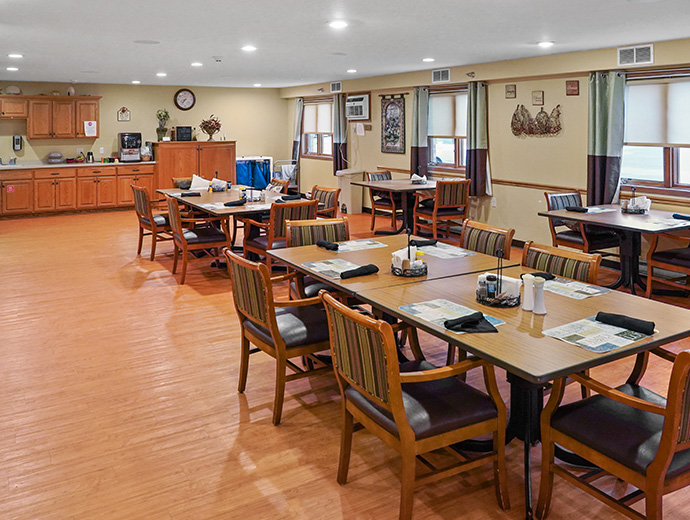
How is Good Samaritan Society - Bethany Staffed?

CMS rates Good Samaritan Society - Bethany's staffing level at 5 out of 5 stars, which is much above average compared to other nursing homes. Staff turnover is 27%, compared to the Minnesota average of 46%. This relatively stable workforce can support continuity of care.

What Have Inspectors Found at Good Samaritan Society - Bethany?

State health inspectors documented 16 deficiencies at Good Samaritan Society - Bethany during 2023 to 2025. These included: 16 with potential for harm.

Who Owns and Operates Good Samaritan Society - Bethany?

Good Samaritan Society - Bethany is owned by a non-profit organization. Non-profit facilities reinvest revenue into operations rather than distributing to shareholders. The facility is operated by GOOD SAMARITAN SOCIETY, a chain that manages multiple nursing homes. With 79 certified beds and approximately 68 residents (about 86% occupancy), it is a smaller facility located in BRAINERD, Minnesota.

How Does Good Samaritan Society - Bethany Compare to Other Minnesota Nursing Homes?

Compared to the 100 nursing homes in Minnesota, Good Samaritan Society - Bethany's overall rating (4 stars) is above the state average of 3.2, staff turnover (27%) is significantly lower than the state average of 46%, and health inspection rating (3 stars) is at the national benchmark.

What Should Families Ask When Visiting Good Samaritan Society - Bethany?

Based on this facility's data, families visiting should ask: "Can I visit during a mealtime to observe dining assistance and food quality?" "How do you handle medical emergencies, and what is your hospital transfer rate?" "Can I speak with family members of current residents about their experience?"

Is Good Samaritan Society - Bethany Safe?

Based on CMS inspection data, Good Samaritan Society - Bethany has a clean safety record: no substantiated abuse findings (meaning no confirmed cases of resident harm), no Immediate Jeopardy citations (the most serious violation level indicating risk of serious injury or death), and is not on the Special Focus Facility watch list (a federal program monitoring the lowest-performing 1% of nursing homes). The facility has a 4-star overall rating and ranks #1 of 100 nursing homes in Minnesota. While no facility is perfect, families should still ask about staff-to-resident ratios and recent inspection results during their visit.

Do Nurses at Good Samaritan Society - Bethany Stick Around?

Staff at Good Samaritan Society - Bethany tend to stick around. With a turnover rate of 27%, the facility is 19 percentage points below the Minnesota average of 46%. Low turnover is a positive sign. It means caregivers have time to learn each resident's needs, medications, and personal preferences. Consistent staff also notice subtle changes in a resident's condition more quickly. Registered Nurse turnover is also low at 25%, meaning experienced RNs are available to handle complex medical needs.

Was Good Samaritan Society - Bethany Ever Fined?

Good Samaritan Society - Bethany has no federal fines on record. CMS issues fines when nursing homes fail to meet care standards or don't correct problems found during inspections. The absence of fines suggests the facility has either maintained compliance or corrected any issues before penalties were assessed. This is a positive indicator, though families should still review recent inspection reports for the full picture.

Is Good Samaritan Society - Bethany on Any Federal Watch List?

Good Samaritan Society - Bethany is not on any federal watch list. The most significant is the Special Focus Facility (SFF) program, which identifies the bottom 1% of nursing homes nationally based on persistent, serious quality problems. Not being on this list means the facility has avoided the pattern of deficiencies that triggers enhanced federal oversight. This is a positive indicator, though families should still review the facility's inspection history directly.