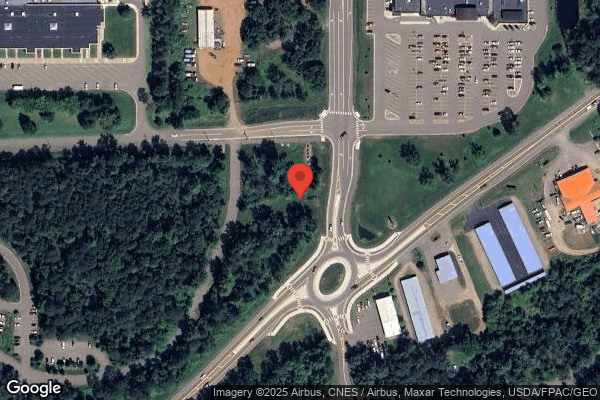
Heartwood

503 HEARTWOOD DRIVE, CROSBY, MN 56441 (218) 546-7000
Non profit - Corporation 54 Beds Independent Data: November 2025
Trust Grade
80/100
#122 of 337 in MN
Last Inspection: July 2025

Inspected within the last 6 months. Data reflects current conditions.

Overview

Heartwood in Crosby, Minnesota, has received a Trust Grade of B+, which means it is above average and recommended for families considering options for their loved ones. It ranks #122 out of 337 facilities in Minnesota, placing it in the top half, and #3 out of 3 in Crow Wing County, indicating that only one other local facility is better. The facility is improving, with reported issues decreasing from 4 in 2024 to 2 in 2025. Staffing is a strength, with a 4-star rating and an impressive 0% turnover rate, which is well below the state average of 42%, suggesting that staff are stable and familiar with residents' needs. There have been no fines issued, which is a positive sign of compliance, and the facility offers more RN coverage than 78% of Minnesota facilities, ensuring that potential medical issues are monitored closely. However, there are some concerns noted in inspector findings. One issue involved the unit refrigerator not being properly monitored for safe food storage, which could impact all residents receiving food from it. Additionally, the facility failed to provide necessary education about pneumonia vaccinations for all reviewed residents, and there was an error in coding medications for one resident, which may lead to unnecessary treatments. While Heartwood has many strengths, families should be aware of these weaknesses as they consider this nursing home for their loved ones.

Trust Score
B+
80/100
In Minnesota
#122/337
Top 36%
Safety Record
Low Risk
No red flags
Inspections
Getting Better
4 → 2 violations
Staff Stability
○ Average
Turnover data not reported for this facility.
Penalties
✓ Good
No fines on record. Clean compliance history, better than most Minnesota facilities.
Skilled Nurses
✓ Good
Each resident gets 89 minutes of Registered Nurse (RN) attention daily — more than 97% of Minnesota nursing homes. RNs are the most trained staff who catch health problems before they become serious.
Violations
○ Average
7 deficiencies on record. Average for a facility this size. Mostly minor or procedural issues.
★★★★☆
4.0
Overall Rating
★★★★☆
4.0
Staff Levels
★★★★☆
4.0
Care Quality
★★★★☆
4.0
Inspection Score
Stable
2024: 4 issues
2025: 2 issues

The Good

  • 4-Star Staffing Rating · Above-average nurse staffing levels
  • 4-Star Quality Measures · Strong clinical quality outcomes
  • Full Sprinkler Coverage · Fire safety systems throughout facility
  • No fines on record

Facility shows strength in staffing levels, quality measures, fire safety.

The Bad

No Significant Concerns Identified

This facility shows no red flags. Among Minnesota's 100 nursing homes, only 0% achieve this.

The Ugly 7 deficiencies on record

Jul 2025 2 deficiencies
CONCERN (D)

Potential for Harm - no one hurt, but risky conditions existed

Assessment Accuracy (Tag F0641)

Could have caused harm · This affected 1 resident

**NOTE- TERMS IN BRACKETS HAVE BEEN EDITED TO PROTECT CONFIDENTIALITY** Based on observation, interview and document review, the facility failed to ensure the medications section of the Minimum Data S...

Read full inspector narrative →
**NOTE- TERMS IN BRACKETS HAVE BEEN EDITED TO PROTECT CONFIDENTIALITY** Based on observation, interview and document review, the facility failed to ensure the medications section of the Minimum Data Set (MDS) was accurately coded for 1 of 5 resident (R6) reviewed for unnecessary medications.Findings include:R6's admission Minimum Data Set (MDS) dated [DATE], identified R6 had intact cognition and included a diagnosis of type 2 diabetes. R12 received an injection of insulin one day per week.R6's Order Summary Report dated 6/30/25, identified semaglutide (a GLP-1 receptor agonist used primarily for managing type 2 diabetes and aiding in weight loss, with significant effects on appetite regulation and blood sugar control.) subcutaneous solution pen-injector 2 milligram (MG)/3 milliliter (ML) inject 0.5 mg subcutaneously one time a day every Monday for type 2 diabetes.An email from the coding department director dated 7/23/25 at 1216: p.m., identified R6's semaglutide was coded as insulin in error.During an interview on 7/23/25 at 12:37 a.m., the director of nursing (DON) stated MDS assessments should be coded correctly to ensure correct payment was received and to ensure the residents received the care they required.The facility policy Resident Assessment Instrument (RAI) Process: MDS 3.0, Care Area Assessments, Care Planning and Submission revised 3/25, identified the facility would complete the RAI in accordance with the utilization guideline set forth in the current MDS 3.0 RAI User's Manual.Long-Term Care Facility Resident Assessment Instrument 3.0 User's Manual dated 10/2024, identified the steps for assessment included:1. Review the resident's medication administration records for the 7-day look-back period (or since admission/entry or reentry if less than 7 days).2. Determine if the resident received insulin injections during the look-back period.3. Determine if the physician (or nurse practitioner, physician assistant, or clinical nurse specialist if allowable under state licensure laws) changed the resident's insulin orders during the look-back period.4. Count the number of days insulin injections were received and/or insulin orders changed.
CONCERN (D)

Potential for Harm - no one hurt, but risky conditions existed

Deficiency F0699 (Tag F0699)

Could have caused harm · This affected 1 resident

**NOTE- TERMS IN BRACKETS HAVE BEEN EDITED TO PROTECT CONFIDENTIALITY** Based on interview and document review, the facility failed to comprehensively assess for trauma informed care and identify pote...

Read full inspector narrative →
**NOTE- TERMS IN BRACKETS HAVE BEEN EDITED TO PROTECT CONFIDENTIALITY** Based on interview and document review, the facility failed to comprehensively assess for trauma informed care and identify potential triggers, to avoid potential re-traumatization for 1 of 1 resident (R6) reviewed for trauma informed care.Findings include:R6's admission Minimum Data Set (MDS) dated [DATE], identified R6 had intact cognition and included a diagnosis of post traumatic stress disorder (PTSD).R6's medical record failed to identify a Trauma-Informed Care Assessment was completed.R6's care plan revised 5/9/25, did not include R6's PTSD triggers and/or interventions specific to his PTSD.During an interview on 7/21/25 at 2:22 p.m., R6 was lying in bed in her room. R6 spoke with a flat affect and stated she liked to keep to herself in her room. R6 stated she was unaware of any traumatic events in her life and could not recall anything that would make her upset specifically. During an interview on 7/23/25 at 9:05 a.m., registered nurse (RN)-B and nursing assistant (NA)-C stated they were both unaware of R6's PTSD diagnosis. RN-B stated she heard R6 had had a rough childhood but didn't know any details. Neither were aware of any triggers for R6, but NA-C stated R6 was very withdrawn. Staff did offer activities and opportunities for R6 to get out of her room but R6 never wanted to. R6 did not like her blinds open until later in the day when R6 up and moving around. When R6's family called R6, R6 was very quiet afterwards but R6 never told why. Neither could say if there was anything that made R6 uncomfortable or anything that should be avoided.During an interview on 7/23/25 at 10:08 a.m., RN-A stated social services was responsible to complete the Trauma Informed Care Assessment and would make care plan revisions if the assessment identified a problem. RN-A stated R6 was very stoic and had never told RN-A anything about any traumatic life events. R6 knew she was on medications but could not explain to you why she was on those medications. It would be important for staff to know those things because staff wanted to keep R6 comfortable and feeling secure and safe.During an interview on 7/23/25 at 12:37 p.m., the director of nursing (DON) stated R6 was admitted at the time the facility was changing ownership and electronic medical records. Because of this, R6 was missed, and a trauma informed care assessment was not completed. The DON stated the assessment should have been completed for staff to identify and care plan triggers and interventions for R6's psychosocial needs. The facility Trauma Informed Care Policy revised 12/22, identified the facility would ensure staff assessed a resident who displayed or was diagnosed with mental disorder or psychological adjustment difficulty, or who had a history of trauma and/or post-traumatic stress disorder and facilitate appropriate treatment and services to manage the assessed problem to attain the highest practicable mental and psychological well-being. The intent of this requirement was to ensure that the facility delivered care and services which, in addition to meeting professional standards, were delivered using approaches which were culturally competent and account for experiences and preferences and addressed the needs of trauma survivors by minimizing triggers and/or re-traumatization.
Aug 2024 4 deficiencies
CONCERN (D)

Potential for Harm - no one hurt, but risky conditions existed

Quality of Care (Tag F0684)

Could have caused harm · This affected 1 resident

**NOTE- TERMS IN BRACKETS HAVE BEEN EDITED TO PROTECT CONFIDENTIALITY** Based on observation, interview and document review, the facility failed to perform ongoing monitoring and wound care, as ordere...

Read full inspector narrative →
**NOTE- TERMS IN BRACKETS HAVE BEEN EDITED TO PROTECT CONFIDENTIALITY** Based on observation, interview and document review, the facility failed to perform ongoing monitoring and wound care, as ordered, for a chronic reoccurring wound for 1 of 2 residents (R34) reviewed for wound care. Findings include: R34's quarterly Minimum Data Set (MDS) dated [DATE], identified R34 had diagnoses that included peripheral vascular disease (PVD) (a slow and progressive disorder of the blood vessels. PVD may affect any blood vessel outside of the heart. This includes the arteries, veins, or lymphatic vessels. Organs supplied by these vessels, such as the brain or legs, may not get enough blood flow for healthy function. The legs and feet are most often affected), high blood pressure, and coronary artery disease. R34 had one unhealed venous or arterial ulcer (a full-thickness defect of skin, most frequently in the ankle region, that fails to heal spontaneously and is sustained by chronic venous disease, based on venous duplex ultrasound testing). R34's care plan revised 7/3/24, identified R34 had a potential alteration in skin integrity related to risk factors associated with limited mobility and recent right below the knee amputation for ischemic limb, peripheral arterial disease to bilateral lower extremities and poor appetite. Interventions included: - Perform a skin assessment weekly - Wound care nurse (WCN) assessed left lateral ankle venous ulcer. Staff were directed to paint left ankle vascular wound with betadine and apply foam border dressing for protection. R34's physician orders dated 6/18/24, identified the following: Wound care: apply to left lateral ankle topically one time a day for left ankle vascular wound. Paint daily with betadine, cover with foam border for protection. Offload at all times while in bed with pillow under calf. R34's Skin/Comfort note dated 7/16/24 at 10:50 a.m., identified R34 was seen on wound rounds to follow up on vascular wound to left lateral malleolus (a bony projection with a shape likened to a hammer head, especially each of those on either side of the ankle). No drainage was noted on the old dressing. Wound measured 1.0 x 0.6 centimeters (cm). Thin, dry scab noted. Surrounding tissue blanchable erythema/redness. Foot had a purple hue while dependent. Will continue to paint scab with betadine and cover with foam border adhesive dressing for protection. R34 would be seen on wound rounds monthly. R34's Skin Observation dated 7/27/24 at 9:20 a.m., identified R34's skin integrity; however, the note failed to identify R34's left lateral ankle wound and its condition. R34's Electronic Treatment Administration Record (ETAR) dated 7/16/24- 8/7/24, identified R34 received wound care daily. Additionally, on 8/6/24, the ETAR identified RN-B signed off R34's left lateral ankle wound care as complete. During an observation on 8/7/24 at 10:36 a.m., licensed practical nurse (LPN)-A applied gloves and removed a foam border dressing from R34's left outer ankle vascular wound. LPN-A stated there was a small amount of serosanguineous (a type of wound drainage, or exudate, secreted by an open wound in response to tissue) drainage on the dressing before throwing the dressing in the trash. LPN-A stated the vascular wound was open and there was slough (dead tissue within a wound) in the wound bed.LPN-A applied betadine to the wound bed and, once dried, applied a foam border dressing. LPN-A used a marker to date and initial the foam border dressing. LPN-A stated the dressing should have been changed on 8/6/24, but the dressing LPN-A removed was dated 8/5/24. R34 should have been assessed on 8/6/24 by the wound care WCN. LPN-A stated she did not know why R34 did not receive wound care on 8/6/24. During an interview on 8/7/24 at 10:46 a.m., RN-A stated she was unaware R34 had an open wound. RN-A understood R34's wound was scabbed over and R34 was no longer followed during wound rounds. During an interview on 8/7/24 at 11:28 a.m., R34's physician stated R34 had a chronic vascular wound. Previous nursing reports identified the wound was scabbed over but had opened which was expected. R34's wound did not show signs/symptoms of infection but the WCN should evaluate R34. Staff wanted to care for the wound as best as possible to protect the leg because it was the only leg R34 had. During an interview on 8/7/24 at 12:55 p.m., the director of nursing (DON) stated RN-B did sign off R34's wound as complete on 8/6/24 and could only assume RN-B believed the WCN would change R34's dressing that day. Nursing staff were expected to follow wound care orders and document accurately. Additionally, nursing staff were expected to document a description of the wound at least weekly and/or if a change occurred. On 8/7/24 at 1:45 p.m., a phone interview with RN-B was attempted. The facilty policy Wound and Skin Care Protocols undated, identified wounds required weekly documentation at minimum and with changes in wound appearance/condition.
CONCERN (D)

Potential for Harm - no one hurt, but risky conditions existed

Infection Control (Tag F0880)

Could have caused harm · This affected 1 resident

**NOTE- TERMS IN BRACKETS HAVE BEEN EDITED TO PROTECT CONFIDENTIALITY** Based on observation, interview and document review, the facility failed to implement enhanced barrier precautions (EBP) for 1 o...

Read full inspector narrative →
**NOTE- TERMS IN BRACKETS HAVE BEEN EDITED TO PROTECT CONFIDENTIALITY** Based on observation, interview and document review, the facility failed to implement enhanced barrier precautions (EBP) for 1 of 2 residents (R34) reviewed for chronic wounds. Findings include: R34's quarterly Minimum Data Set (MDS) dated [DATE], identified R34 had diagnoses that included peripheral vascular disease (PVD) (a slow and progressive disorder of the blood vessels. PVD may affect any blood vessel outside of the heart. This includes the arteries, veins, or lymphatic vessels. Organs supplied by these vessels, such as the brain or legs, may not get enough blood flow for healthy function. The legs and feet are most often affected), hypertension, and coronary artery disease. R34 had one unhealed venous or arterial ulcer (a full-thickness defect of skin, most frequently in the ankle region, that fails to heal spontaneously and is sustained by chronic venous disease, based on venous duplex ultrasound testing). R34's care plan revised 7/3/24, identified R34 had a potential alteration in skin integrity related to risk factors associated with limited mobility and recent right below the knee amputation for ischemic limb, peripheral arterial disease to bilateral lower extremities and poor appetite. Interventions included: Perform a skin assessment weekly and wound care nurse (WCN) assessed left lateral ankle venous ulcer. Staff were directed to paint left ankle vascular wound with betadine and apply foam border dressing for protection. The care plan failed to direct staff to implement or follow EBP during wound care. R34's physician orders dated 6/18/24, identified the following: Wound care: apply to left lateral ankle topically one time a day for left ankle vascular wound. Paint daily with betadine, cover with foam border for protection. Offload at all times while in bed with pillow under calf. The order did not direct staff regarding EBP for R34's chronic vascular wound. R34's Skin/Comfort note dated 7/16/24 at 10:50 a.m., identified R34 was seen on wound rounds that morning to follow up on vascular wound to left lateral malleolus (a bony projection with a shape likened to a hammer head, especially each of those on either side of the ankle). No drainage noted on old dressing. Wound measured 1.0 x 0.6 centimeters (cm). Thin, dry scab noted. Surrounding tissue blanchable erythema/redness. Foot had a purple hue while dependent. Will continue to paint scab with betadine and cover with foam border adhesive dressing for protection. R34 would be seen on wound rounds monthly. The note did not identify EBP for R34's chronic vascular wound. R34's Skin Observation dated 7/27/24 at 9:20 a.m., identified R34's skin integrity, however, the note failed to identify R34's left lateral ankle wound and its condition. R34's Electronic Treatment Administration Record (ETAR) dated 7/16/24 - 8/7/24, identified R34 received wound care daily. During an observation on 8/7/24 at 10:36 a.m., R34's door contained no signage regarding EBP nor was personal protective equipment (PPE) available for use. Licensed practical nurse (LPN)-A applied gloves and removed a foam border dressing from R34's left outer ankle vascular wound. LPN-A stated there was a small amount of serosanguineous (a type of wound drainage, or exudate, secreted by an open wound in response to tissue) drainage on the dressing before throwing the dressing in the trash. LPN-A stated the vascular wound was open and there was slough (dead tissue within a wound) in the wound bed. LPN-A removed her gloves, used hand sanitizer and applied clean gloves. LPN-A did not implement EBP nor applied a gown. LPN-A applied betadine to the wound bed and, once dried, applied a foam border dressing. LPN-A used a marker to date and initial the foam border dressing. LPN-A removed the soiled gloves, removed the trash, used hand sanitizer and left R34's room. LPN-A stated she did not know why R34 was not on EBP because R34 had an open chronic wound. During an interview on 8/7/24 at 10:46 a.m., RN-A stated she did not know why R34 was not on EBP. RN-A stated she would need to look into his wound and determine what it was. - At 11:01 a.m., RN-A stated she was unaware R34 had an open wound. The last she understood was R34's wound was scabbed over and R34 was no longer followed during wound rounds. RN-A had previously set up a group email that included herself, administration, the physicians, and nursing to ensure everyone was updated with changes and staff were expected to report changes in resident conditions timely. There was signage and supplies available and nursing was expected to implement EBP as soon as possible to prevent a potential for infection transmission in chronic wounds and should have done so. During an interview on 8/7/24 at 11:28 a.m., R34's physician stated R34 had a chronic vascular wound. Previous nursing reports identified the wound was scabbed over, but had opened which was expected. Staff wanted to care for the wound as best as possible to protect the leg because it was the only leg R34 had. During an interview on 8/7/24 at 11:31 a.m., the director of nursing (DON) stated staff were expected to implement EBP for chronic wounds until healed. The facility's undated Care Center Enhanced Barrier Precautions Policy and Procedure policy, identified residents were at higher risk of becoming colonized and infection with Multidrug Resistant Organisms (MDROs) as the prevalence of MDROs was higher in this care setting. It was the policy of this facility to implement Enhanced Barrier Precautions, using PPE, as a preventative approach, to help reduce and prevent the transmission of MDROs. Enhanced Barrier Precautions involved gown and glove use during high-contact resident care activities such as wound care (any skin opening requiring a dressing).
CONCERN (D)

Potential for Harm - no one hurt, but risky conditions existed

Deficiency F0883 (Tag F0883)

Could have caused harm · This affected 1 resident

**NOTE- TERMS IN BRACKETS HAVE BEEN EDITED TO PROTECT CONFIDENTIALITY** Based on interview and document review, the facility failed to provide and document the most recent Centers for Disease Control ...

Read full inspector narrative →
**NOTE- TERMS IN BRACKETS HAVE BEEN EDITED TO PROTECT CONFIDENTIALITY** Based on interview and document review, the facility failed to provide and document the most recent Centers for Disease Control (CDC) education regarding the potential risks and benefits of the pneumococcal vaccine for 3 of 5 residents (R20, R39, R42) reviewed for immunizations. Findings include: R20's significant change Minimum Data Set (MDS) dated [DATE], identified R20 was [AGE] years old and had diagnoses that included diabetes mellitus, and hypertension. R20's immunization record dated 8/7/24, identified R20 refused a pneumococcal conjugate (PCV20) vaccination. R20's admission note dated 6/20/24 at 12:48 p.m., identified R20 declined when offered pneumonia vaccine. However, the admission note failed to identify what education, if any, education R20 received regarding pneumococcal vaccination. R20's Care Center Pneumococcal Immunization Consent dated 6/20/24, identified R20's signed refusal of a pneumococcal vaccination. However, the document failed to identify which pneumococcal vaccine R20 was offered and/or what education was provided. During a phone interview on 8/7/24 at 10:52 a.m., family member (FM)-A stated R20 a pneumococcal vaccination when offered by the facility but could not recall what education, if any, R20 received. R39's admission MDS dated [DATE], identified R39 was [AGE] years old and had diagnoses that included coronary artery disease, hypertension, dementia and renal insufficiency. R39's immunization record dated 8/7/24, identified R39 refused a PCV20. R39's Care Center Pneumococcal Immunization Consent dated 5/23/24, identified R39's family representative signed refusal of a pneumococcal vaccination. However, the document failed to identify which pneumococcal vaccine R39 was offered and/or what education was provided. R39's nursing progress note dated 6/6/24, identified R39's family represenative was provided education regarding a respiratory syncytial virus (RSV) vacccine, however, did not identify if R39's family representative was provided education regarding pneumococcal vaccination. During a phone interview on 8/7/24 at 11:08 a.m., FM-B stated she believed vaccinations were discussed during R39's care conference but could not recall what education had been provided. R42's admission MDS dated [DATE], identified R42 was [AGE] years old and had diagnoses that included hypertension, Diabetes Mellitus, and dementia. R42's immunization record dated 8/7/24, identified R42's family representative refused pneumococcal vaccination. R42's Care Center Pneumococcal Immunization Consent dated 6/24/24, identified R42's family representative signed refusal of a pneumococcal vaccination. However, the document failed to identify which pneumococcal vaccine R42 was offered and/or what education was provided. During a phone interview on 8/7/24 at 2:17 p.m., R42's family representative did not recall what education was provided regarding vaccinations. During an interview on 8/6/24 at 4:19 p.m., registered nurse (RN)-A stated she created a form for documentation of offering, education and acceptance/refusal of pneumococcal immunizations. However, RN-A stated nursing did not complete the forms as directed and RN-A could not confirm what education R20, R39 and R42 or their family representative had been provided. RN-A stated nursing staff were expected to fully complete the forms for documentation to ensure residents and their family representatives were fully and accurately informed. During an interview on 8/7/24 at 12:55 p.m., the director of nursing (DON) stated RN-A had been working diligently to update vaccination documenation forms to ensure correct documentation of offer, education and acceptance/refusal of vaccinations. The DON stated nursing staff were expected to complete the documentation accurately and fully. A facility pneumococcal policy was requested but not received.
CONCERN (E)

Potential for Harm - no one hurt, but risky conditions existed

Food Safety (Tag F0812)

Could have caused harm · This affected multiple residents

Based on observation, interview and document review, the facility failed to ensure a unit refrigerator maintained a safe temperature for storage of food. This had the potential to affect all residents...

Read full inspector narrative →
Based on observation, interview and document review, the facility failed to ensure a unit refrigerator maintained a safe temperature for storage of food. This had the potential to affect all residents who received food from unit refrigerator. Findings include: During observation on 8/7/24 at 11:06 a.m., the unit refrigerator contained milk, cheese, and yogurt. A regular thermometer was not in the unit refrigerator and a request was made to the culinary director log of temperatures for the month of August 2024. During an interview on 8/7/24 at 2:12 p.m., the culinary director stated she did not know the range the unit refrigerator should be set at. When the unit refrigerator temperature was out of the set range of the automated monitoring system, an alert would be sent out to the culinary director, bio-med technician, and the executive director. The culinary director could not identify the temperature range or what temp she would be notified at. The History Detail Report for Skyview unit refrigerator dated 8/7/24, identified from 8/1/24 at 12:00 a.m. through 8/7/24 at 2:30 p.m. temperatures in the unit refrigerator were monitored every 15 minutes via an automated monitoring system. The report identified temperatures were at or above 41 degrees Fahrenheit (F) for the following times. -8/1/24 at 12:00 a.m., through 8/4/24 at 3:15 a.m, (75 hours (hr), 15 minutes (m) -8/4/24 at 5:45 a.m. through 8/4/24 at 7:45 a.m. (2 hr, 00 m) -8/4/24 at 12:45 p.m. through 8/5/24 at 1:45 a.m. (13 hr, 00 m) -8/5/247 at 2:15 a.m. through 8/7/24 at 2:30 p.m. (60 hr, 15 m) The total time the unit refrigerator was out of range was 6 days, 6 hours, and 30 minutes of a total of 6 days, 14 hours, and 30 minutes. During an interview on 8/7/24 at 2:19 p.m., the bio-med technician stated he was unaware of the temperature range the unit refrigerator was to be kept at nor did he know the temperature alert range the automated monitoring system had. An email was received from the bio-med technician identifying the automated monitoring system was set to a range of 33.8 degrees F to 48.2 degrees F. During an interview on 8/7/24 at 2:50 p.m., the director of nursing (DON) stated the unit refrigerator would be kept at a temperature below 41 degrees F to ensure safe storage temperature of food, so it does not spoil. If the food was spoiled, it could have caused illness in residents who received milk, cheese, or yogurt. Food should be stored according to the food storage policy. The facility's Food Storage policy dated 2021 identified time/temperature control for safety (TCS)foods must be maintained below 41 degrees F. Temperatures for refrigerators should be between 35-39 degrees F.
Jul 2023 1 deficiency
CONCERN (E)

Potential for Harm - no one hurt, but risky conditions existed

Deficiency F0883 (Tag F0883)

Could have caused harm · This affected multiple residents

**NOTE- TERMS IN BRACKETS HAVE BEEN EDITED TO PROTECT CONFIDENTIALITY** Based on interview and document review, the facility failed to provide pneumococcal conjugate vaccine 20 variant (PVC20) educati...

Read full inspector narrative →
**NOTE- TERMS IN BRACKETS HAVE BEEN EDITED TO PROTECT CONFIDENTIALITY** Based on interview and document review, the facility failed to provide pneumococcal conjugate vaccine 20 variant (PVC20) education as directed by the Centers for Disease Control (CDC) for 5 of 5 residents (R11, R28, R36, R37, R42) reviewed for immunizations. Findings include: R11's quarterly Minimum Data Set (MDS) dated [DATE], identified a diagnosis of congestive heart failure. R11's immunization record dated 7/19/23, identified R11 received the pneumococcal 23 (PPSV23) on 10/23/14 and the pneumococcal conjugate vaccine 13 variant (PCV13) on 1/04/16. R11's medical record failed to provide evidence the PCV20 (pneumonia immunization) was offered and/or education was provided in conjunction with the provider to R11/R11's representative. R28's quarterly Minimum Data Set (MDS) dated [DATE], identified diagnoses of anemia (low blood count) and hypertension (high blood pressure). R28's immunization record from 7/19/23, identified R28 received PPSV23 on 2/4/15, and the PCV13 on 11/11/14. R28's medical record failed to provide evidence the PCV20 was offered and/or education was provided in conjunction with the provider to R28/R28's representative. R36's quarterly Minimum Data Set (MDS) dated [DATE], identified a diagnoses of Parkinson's disease, heart valve replacement, and pulmonary (lung) nodule. R36's immunization record dated 7/19/23, identified R36 received the PPSV23 on 11/12/02, and the PCV13 on 9/29/17. R36's medical record failed to provide evidence the PCV20 was offered and education was provided in conjunction with the provider to R36/R36's representative. R37's quarterly Minimum Data Set (MDS) dated [DATE], identified a diagnosis of anorexia (not eating enough). R37's immunization record dated 7/19/23 identified R37 had not received a PPSV23 or a PCV13 and education was not given by the facility. Further, R37's medical record failed to provide evidence the PCV20 was offered and education was provided in conjunction with the provider to R37/R37's representative. R42's quarterly Minimum Data Set (MDS) dated [DATE], identified a diagnosis of respiratory failure (unable to breath). R42's immunization records dated 7/19/23, identified R42 received the PPSV23 on 10/11/04, and the PCV13 on 12/9/16. R42's medical record failed to provide evidence the PCV20 was offered and education was provided in conjunction with the provider to R42/R42's representative. During an interview on 7/18/23 at 3:30 p.m., registered nurse (RN)-B stated she worked with the residents and tracked the immunizations they received. When residents were admitted to the facility their immunization record was reviewed and education was provided to the residents about the PCV 20. The residents who were in the facility prior to May 2023, were not offered the PCV 20 and no education was provided. During an interview on 7/19/23 at 3:29 p.m., the director of nursing (DON) stated it was expected the recommendations from the CDC were followed. The facility policy Pneumococcal Immunizations for Residents dated 4/28/23, identified the residents would have every opportunity to receive the recommended vaccine. The CDC guidance dated 2/9/23, identified adults 65 and older have the option to get PCV20.
Understanding Severity Codes (click to expand)
Life-Threatening (Immediate Jeopardy)
J - Isolated K - Pattern L - Widespread
Actual Harm
G - Isolated H - Pattern I - Widespread
Potential for Harm
D - Isolated E - Pattern F - Widespread
No Harm (Minor)
A - Isolated B - Pattern C - Widespread

Questions to Ask on Your Visit

  • "Can I speak with families of current residents?"
  • "What's your RN coverage like on weekends and overnight?"

Our Honest Assessment

Strengths
  • • Grade B+ (80/100). Above average facility, better than most options in Minnesota.
  • • No major safety red flags. No abuse findings, life-threatening violations, or SFF status.
  • • No fines on record. Clean compliance history, better than most Minnesota facilities.
Concerns
  • • No significant concerns identified. This facility shows no red flags across CMS ratings, staff turnover, or federal penalties.
Bottom line: Generally positive indicators. Standard due diligence and a personal visit recommended.

About This Facility

What is Heartwood's CMS Rating?

CMS assigns Heartwood an overall rating of 4 out of 5 stars, which is considered above average nationally. Within Minnesota, this rating places the facility higher than 99% of the state's 100 nursing homes. This rating reflects solid performance across the metrics CMS uses to evaluate nursing home quality.

How is Heartwood Staffed?

CMS rates Heartwood's staffing level at 4 out of 5 stars, which is above average compared to other nursing homes.

What Have Inspectors Found at Heartwood?

State health inspectors documented 7 deficiencies at Heartwood during 2023 to 2025. These included: 7 with potential for harm.

Who Owns and Operates Heartwood?

Heartwood is owned by a non-profit organization. Non-profit facilities reinvest revenue into operations rather than distributing to shareholders. The facility operates independently rather than as part of a larger chain. With 54 certified beds and approximately 38 residents (about 70% occupancy), it is a smaller facility located in CROSBY, Minnesota.

How Does Heartwood Compare to Other Minnesota Nursing Homes?

Compared to the 100 nursing homes in Minnesota, Heartwood's overall rating (4 stars) is above the state average of 3.2 and health inspection rating (4 stars) is above the national benchmark.

What Should Families Ask When Visiting Heartwood?

Based on this facility's data, families visiting should ask: "Can I visit during a mealtime to observe dining assistance and food quality?" "How do you handle medical emergencies, and what is your hospital transfer rate?" "Can I speak with family members of current residents about their experience?"

Is Heartwood Safe?

Based on CMS inspection data, Heartwood has a clean safety record: no substantiated abuse findings (meaning no confirmed cases of resident harm), no Immediate Jeopardy citations (the most serious violation level indicating risk of serious injury or death), and is not on the Special Focus Facility watch list (a federal program monitoring the lowest-performing 1% of nursing homes). The facility has a 4-star overall rating and ranks #1 of 100 nursing homes in Minnesota. While no facility is perfect, families should still ask about staff-to-resident ratios and recent inspection results during their visit.

Do Nurses at Heartwood Stick Around?

Heartwood has not reported staff turnover data to CMS. Staff turnover matters because consistent caregivers learn residents' individual needs, medications, and preferences. When staff frequently change, this institutional knowledge is lost. Families should ask the facility directly about their staff retention rates and average employee tenure.

Was Heartwood Ever Fined?

Heartwood has no federal fines on record. CMS issues fines when nursing homes fail to meet care standards or don't correct problems found during inspections. The absence of fines suggests the facility has either maintained compliance or corrected any issues before penalties were assessed. This is a positive indicator, though families should still review recent inspection reports for the full picture.

Is Heartwood on Any Federal Watch List?

Heartwood is not on any federal watch list. The most significant is the Special Focus Facility (SFF) program, which identifies the bottom 1% of nursing homes nationally based on persistent, serious quality problems. Not being on this list means the facility has avoided the pattern of deficiencies that triggers enhanced federal oversight. This is a positive indicator, though families should still review the facility's inspection history directly.