WOODLAKE HEALTHCARE AND REHABILITATION CENTER
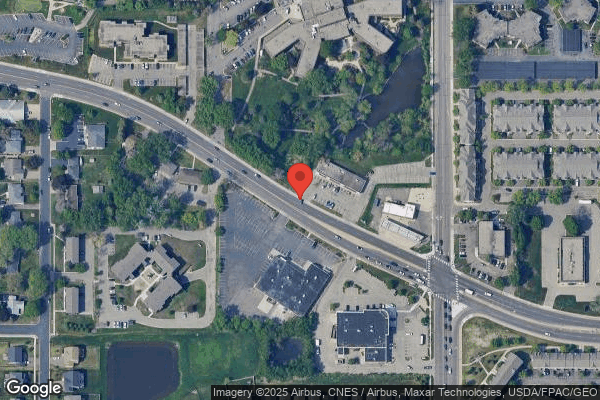
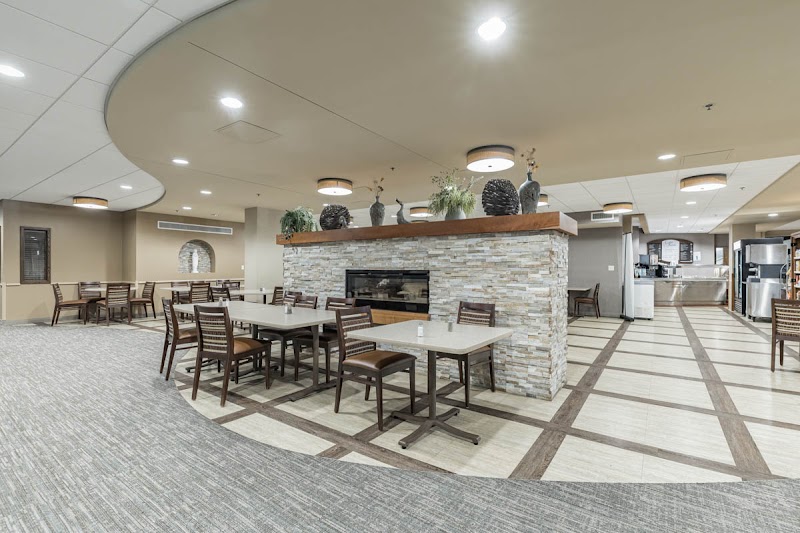
8000 BASS LAKE ROAD, CRYSTAL, MN 55428 (763) 531-5000
For profit - Corporation 188 Beds Independent Data: November 2025
Trust Grade
75/100
#153 of 337 in MN
Last Inspection: October 2024

Within standard 12-15 month inspection cycle. Federal law requires annual inspections.

Overview

Woodlake Healthcare and Rehabilitation Center has a Trust Grade of B, indicating it is a good choice, performing better than many facilities but not at the highest level. It ranks #153 out of 337 in Minnesota, placing it in the top half of state facilities, and #23 out of 53 in Hennepin County, meaning there are only 22 local options that are better. The facility is improving, as issues decreased from 17 in 2024 to just 3 in 2025. Staffing is a notable strength with a perfect 5-star rating and a low turnover rate of 20%, significantly below the state average of 42%, which helps maintain continuity of care. However, there are some concerns including a failure to monitor food temperatures properly, which poses a risk of foodborne illnesses, and issues with cleanliness in residents' areas, leading to unpleasant odors. Additionally, the facility did not provide proper notifications for residents transferred to the hospital, which is a significant oversight. Overall, while Woodlake has strengths in staffing and is showing improvement, families should be aware of these areas needing attention.

Trust Score
B
75/100
In Minnesota
#153/337
Top 45%
Safety Record
Low Risk
No red flags
Inspections
Getting Better
17 → 3 violations
Staff Stability
✓ Good
20% annual turnover. Excellent stability, 28 points below Minnesota's 48% average. Staff who stay learn residents' needs.
Penalties
✓ Good
No fines on record. Clean compliance history, better than most Minnesota facilities.
Skilled Nurses
✓ Good
Each resident gets 63 minutes of Registered Nurse (RN) attention daily — more than 97% of Minnesota nursing homes. RNs are the most trained staff who catch health problems before they become serious.
Violations
⚠ Watch
32 deficiencies on record. Higher than average. Multiple issues found across inspections.
★★★★☆
4.0
Overall Rating
★★★★★
5.0
Staff Levels
★★★★☆
4.0
Care Quality
★★★☆☆
3.0
Inspection Score
Stable
2024: 17 issues
2025: 3 issues

The Good

  • 5-Star Staffing Rating · Excellent nurse staffing levels
  • 4-Star Quality Measures · Strong clinical quality outcomes
  • Low Staff Turnover (20%) · Staff stability means consistent care
  • Full Sprinkler Coverage · Fire safety systems throughout facility
  • No fines on record
  • Staff turnover is low (20%)

    28 points below Minnesota average of 48%

Facility shows strength in staffing levels, quality measures, staff retention, fire safety.

The Bad

No Significant Concerns Identified

This facility shows no red flags. Among Minnesota's 100 nursing homes, only 1% achieve this.

The Ugly 32 deficiencies on record

Sept 2025 2 deficiencies
CONCERN (D) 📢 Someone Reported This

A family member, employee, or ombudsman was alarmed enough to file a formal complaint

Potential for Harm - no one hurt, but risky conditions existed

Deficiency F0558 (Tag F0558)

Could have caused harm · This affected 1 resident

**NOTE- TERMS IN BRACKETS HAVE BEEN EDITED TO PROTECT CONFIDENTIALITY** Based on interview and document review the facility failed to ensure reasonable accommodation of resident needs and preferences ...

Read full inspector narrative →
**NOTE- TERMS IN BRACKETS HAVE BEEN EDITED TO PROTECT CONFIDENTIALITY** Based on interview and document review the facility failed to ensure reasonable accommodation of resident needs and preferences upon admission to the facility for 2 of 3 residents (R1, R3) reviewed who reported concerns related to accommodation of needs upon admission to the facility.Findings include: R3's admission Record indicated admitted to the facility on [DATE] at 12:45 p.m. Diagnosis included fractures of left fibula and tibia (the two bones of the lower leg), pain in left wrist and left leg, fracture of left radius (one of two bones in your forearm), unsteadiness and dependence on other enabling machines and devices.R3's Interagency Transfer Orders dated 9/4/25, included oxyCodone 5 milligrams (mg). Give 5-10 mg every four hours as needed for pain. The orders indicated R3 had restricted weight bearing and indicated non-weight bearing on left leg and left arm, okayed for a platform walker at the left elbow.R3's Medication Administration Record (MAR) dated 9/1/25 through 9/30/25, indicated the following order: oxyCODONE HCl (hydrochloride) Oral Tablet 5 MG. Give two tablets by mouth every four hours as needed for pain rated 6-10 out of 10. The MAR indicated R3 received her first dose of oxyCodone at 7:45 p.m. on 9/7/25, for pain rated 10 out of 10, seven hours after she admitted to the facility.R3's admission assessment dated [DATE], indicated she admitted from the hospital via medical transport. The assessment indicated R3's lower left extremity was in a cast, ACE wrap. Left lower arm in cast, ACE wrap. Foley catheter in use. The assessment indicated R3 was chairfast with ability to walk severely limited or non-existent. Could not bear own weight and/or must be assisted into chair or wheelchair. Able to make frequent though slight changes in body or extremity position independently. The assessment identified frequent severe pain in the last five days that interfered with day-to-day activities. R3's care plan dated 9/7/25, identified the use of an indwelling catheter and indicated pain. The care plan directed staff to monitor for non-verbal pain indicators or change in behavior related to pain such as grimacing, change in ability to perform activities of daily living (ADL)'s and directed staff to offer nonpharmacologic interventions such as heat/cold, massage and distraction. The care plan further identified and ADL and mobility deficit and indicated she transferred using a platform walker. R3's Progress Notes indicated the following:-9/7/25 at 3:38 p.m., R3 arrived on the unit at 12:45 p.m. R3 was alert and oriented and able to make needs known. R3 was oriented to room, call lights and questions were answered as best as writer could. -9/8/25 at 5:55 a.m., R3 reported severe pain in left arm and leg, as needed oxyCodone was given around the clock to manage pain. R3 had approximately three hours of sleep the previous night. -9/9/25, Social services met with R3 and family member (FM)-B and discussed options for transitional care unit transfer as well as going to the hospital. R3 decided to go to the hospital. 9/9/25, R3 left the facility via ambulance. FM-B spoke with writer and nurse manager, verbalized wanting to go to the emergency department and not come back to the facility. During interview on 9/11/25 at 3:12 p.m., family member (FM)-B stated R3 went through 48 hours of hell, when R3 admitted to the facility on Sunday at noon and had not received pain medication prior to discharge from the hospital, got to her new room at the facility where she was transferred into bed by the Medivan driver, himself and a staff person. FM-B said there were no mobility devices in the room and staff said someone from physical therapy would be performing an assessment on Monday but until then, R3 would have to remain in bed. FM-B said a commode was brought into her room but there was no way to get R3 onto to it because there were no devices. FM-B added he stayed for several hours and left for a couple hours and R3 called and asked him to come back. He stated they learned she was not going to get any pain medication because the pharmacy only delivered once a day on the weekends. He said R3 was at max pain, had not received pain medication since the morning and finally received pain medication again at 8:00 p.m. and said all they had offered prior was Tylenol. FM-B said R3 had been beside herself in pain. FM-B said the next morning he talked to social services and reported what had happened. He said a therapy assessment was not completed until 4:00 p.m. on Monday and therapy had at least brought a recliner, walker and a grab bar. FM-B said the second night was no better than the first and said R3 asked for a suppository and was assisted onto the commode and because the suppository was not effective a staff member forcibly put an adult diaper on R3 and put her back to bed. Then, around 10:00 p.m., two staff came into the room and turned on the light talking about how they were looking for something which woke R3 up. FM-B added, We had to get her out of there. FM-A said they told the social worker they were going to leave and were not coming back. During interview on 9/12/55 at 8:13 a.m., licensed practical nurse (LPN)-A stated therapy worked on the weekends sometimes but said most of the time she did not see them. LPN-A stated technically when they had a new admission, until therapy assessed them, she could not give them a walker. LPN-A said sometimes people were a little upset when they come in and said it could be that someone could not get out of bed until therapy came. LPN-A stated if a resident came and needed a pain medication they could get it from the emergency kit.During interview on 9/12/25 at 8:35 a.m., the therapy director stated the weekend coverage was 50/50. The therapy director said if equipment was needed on a weekend nursing was supposed to ensure it was available.During interview on 9/12/25 at 8:42 a.m., nursing assistant (NA)- A stated when someone admitted to the facility the admission orders directed diet, transfer status, etcetera. NA-A said sometimes they could ask the paramedics how someone transferred when they arrived. NA-A said therapy had to do an assessment and said if a resident needed equipment therapy had to tell them that, for instance if they had a special walker, we don't have that. NA-A said they tell residents they had to stay in bed until therapy assessed them, and they would use a bed pan until the needed equipment arrived. NA-A stated, if someone came on a weekend they had to stay in bed until therapy could evaluate. During interview on 9/12/25 at approximately 9:00 a.m., social service designee (SSD)-B stated there was a grievance filed and said R3 had waited a while to get pain medications and also had an incident in which a nursing assistant (NA) had spilled a catheter. SSD-B said the medications was a big one. During interview on 9/12/25 at 11:22 a.m., the director of nursing (DON) stated R3 came in with pain on a Sunday and said the nurse had an order for pain medication and faxed it to the pharmacy. The DON said by evening, staff called the pharmacy and got the okay to get a dose from the emergency kit. The DON said the nurses could call the pharmacy anytime to request a medication from the emergency kit. The DON said R3's main concern was pain medication and said she talked about not having a grab bar for the bed. The DON said they preferred to wait for therapy to do an assessment before providing devices. During interview on 9/12/25 at 10:16 a.m., R3 stated she never wanted to go back to one of those places, referring to the facility. R3 said when she got to the facility, she had no ability to put weight on her left arm or leg and said once she got into the bed she had no way to shift her weight or get any leverage and said she felt very trapped. R3 said when she asked about a walker she was told physical therapy would bring one but not until the next day. R3 said she did not think the facility was equipped to care for her when she admitted , had no wheelchair she could get into and no pain medications until 7:45 p.m., even though she had asked for them. She said the nurse told her they would not have medications until later in the day and the pain just kept getting worse and worse. R3 said there was a lack of preparation and said the staff had no knowledge of how to get her out of bed. She said she could not get staff to help and could not do it herself. R3 said the overnight staff were not helpful R1's admission Record indicated he admitted to the facility on [DATE]. Diagnosis included surgery of digestive system, chronic pain, and weakness. R1's admission assessment dated [DATE], indicated he admitted to the facility on [DATE]. The assessment indicated R1 was alert and oriented, had a colostomy and was continent of bladder. The assessment indicated R1 walked occasionally but for very short distances and spent the majority of each shift in bed or chair.R1's care plan dated 8/21/25, identified intact cognition and indicated R1 had a new colostomy and directed staff to check device each shift, and ass needed for appropriate fit, leakage and need for emptying. The care plan identified a self-care deficit and indicated he required assistance from staff for grooming, toileting, ambulation and wheelchair mobility.During interview on 9/11/25 at 12:25 p.m., FM-A stated R1 had been at the facility in the past and had received great care but since his current admission had not received good care. FM-A said he spent approximately eight hours a day at the facility during R1's stay. FM-A stated the first night R1 was at the facility, he (FM)-A got to the facility after 7:00 p.m. and the door was locked and no one would answer the phone to let him in. When he finally got in, R1's call light was on, and he was lying in a puddle of urine and waited an hour for someone to help him. FM-A said, it was so bad, and said he couldn't find anyone to help R1. FM-A said one of the nights, he waited two hours for someone to come and change R1's colostomy bag so he started to do it himself. FM-A said when a nurse finally came in, she asked how to change the bag.
CONCERN (E) 📢 Someone Reported This

A family member, employee, or ombudsman was alarmed enough to file a formal complaint

Potential for Harm - no one hurt, but risky conditions existed

Safe Environment (Tag F0921)

Could have caused harm · This affected multiple residents

**NOTE- TERMS IN BRACKETS HAVE BEEN EDITED TO PROTECT CONFIDENTIALITY** Based on observation, interview and document review the facility failed to maintain an environment that was clean and free from ...

Read full inspector narrative →
**NOTE- TERMS IN BRACKETS HAVE BEEN EDITED TO PROTECT CONFIDENTIALITY** Based on observation, interview and document review the facility failed to maintain an environment that was clean and free from odors for 3 of 3 residents (R1, R2, R3) reviewed for environmental concerns. Findings include:During observation of the two-east unit on 9/11/25 at 10:50 a.m., a musty odor was observed outside room [ROOM NUMBER]. During observation on the east unit on 9/12/25 at 8:23 a.m., the hallway outside of room [ROOM NUMBER] smelled of urine. No trash or linen carts were in the vicinity.R1's admission Record indicated he admitted to the facility on [DATE]. Diagnosis included Surgery of digestive system, chronic pain, and weakness. During interview on 9/11/25 at 10:39 a.m., family member (FM)-A stated it smelled like death in his dad bathroom when he was at the facility even after they had cleaned it. R2's admission Record indicated she admitted to the facility 9/3/25 and resided on the two- east unit of the facility. Diagnosis included muscle weakness, DMII, hypertension and history of falls. R2's Brief interview for mental status (BIMS) dated 9/4/25, indicated her short and long terms memory was intact.During interview on 9/11/25 at 11:47 a.m., R2 stated she had been at the facility for about two weeks. R2 stated the facility has had the same carpet for 10 years and said, they dumped me in this shit hole. R2 said the carpet is stained and musty and said the housekeepers did not vacuum, just swept the carpet. R2 pulled out a bottle labeled fungicide she had ordered and said the carpet smelled better since she started using it and said she planned to spray the recliner they brought up from the basement because it stunk.R3's admission Record indicated she resided on the two- east unit of the facility. Diagnosis included fractures of left fibula and tibia (the two bones of the lower leg), pain in left wrist and left leg, fracture of left radius (one of two bones in your forearm), unsteadiness and dependence on other enabling machines and devices.During interview on 9/11/25 at 3:12 p.m., family member (FM)-B stated when R3 got to the facility, the first thing he smelled when they got to her unit was urine. FM-B said R3 had a catheter and the first night a staff member came to empty it and did not place the cap on it and the catheter was leaking urine all over the floor. FM-B said the second time the staff member emptied the catheter bag, she spilled urine on the floor then rubbed the urine into the carpet with a brown paper towel.A facility grievance form dated 8/4/25, filed by FM-C, indicated Residents room is a mess, not enough garbage cans, floor dirty.During interview on 9/12/25 at 10:01 a.m., social service designee (SSD)-A said she was aware of the concerns reported by R3. SSD- A said the concerns included the urine on the carpet, no recliner in the room and some other things. SSD-A said because of the scenarios, R3 did not think the facility was welcoming or clean.During interview on 9/12/25 at 10:52 a.m. the environmental services director (ESD) said typically if she was made aware of a concern and spoke with the resident and/or family and said if training was needed, they would do that. The ESD stated the facility currently did not have a floor technician and said she would like to have the hallways cleaned at least once per week but said they were currently stretched thin.
Jul 2025 1 deficiency
CONCERN (D) 📢 Someone Reported This

A family member, employee, or ombudsman was alarmed enough to file a formal complaint

Potential for Harm - no one hurt, but risky conditions existed

Resident Rights (Tag F0550)

Could have caused harm · This affected 1 resident

**NOTE- TERMS IN BRACKETS HAVE BEEN EDITED TO PROTECT CONFIDENTIALITY** Based on interview and document review, the facility failed to ensure assistance, to resident triggered call light needs, was pr...

Read full inspector narrative →
**NOTE- TERMS IN BRACKETS HAVE BEEN EDITED TO PROTECT CONFIDENTIALITY** Based on interview and document review, the facility failed to ensure assistance, to resident triggered call light needs, was provided timely to promote dignity and reduce the risk of potential complications (i.e., incontinence, skin impairments, falls, changes in condition, etc.) for 8 of 8 residents (R1, R2, R3, R4, R5, R6, R7, R8) who expressed concerns related to extended call light response times and associated potential risk factors to their health.R8:R8's quarterly Minimum Data Set (MDS), dated [DATE], identified R8 lacked communication impairments and required some form of physical assist with most of his ADLs and mobility. R8 was frequently incontinent of bowel and bladder, at risk for pressure ulcers, and was diagnosed with diabetes, Parkinson's disease, and muscle weakness. R8's medical record identified his most recent brief interview for mental status (BIMS) was 15 (cognitively intact). R8's admission Record, printed [DATE], identified he desired CPR if his heart were to stop beating. R8's comprehensive care plan, reviewed [DATE], indicated R8 experienced pain related to a prior right femur fracture, was at risk for falls and needed assist to anticipate needs, required a soft touch call light, history of skin impairments, and was additionally diagnosed with obesity and chronic respiratory failure with hypoxia. Alerts List reports, dated [DATE], through [DATE], identified the following R8 call light activation dates, activation/de-activation timeframes:-[DATE]: 3:01:20 p.m. to 3:32:22 p.m. (31 min and 2 secs).-[DATE]: 2:54:25 p.m. to 3:28:50 p.m., (34 min and 25 secs). R10:R10'a quarterly MDS, dated [DATE], identified R10 was cognitively intact and required some form of physical assist with most of his ADLs and mobility. R10 was occasionally incontinence of bladder and always incontinent of bowel, was at risk for pressure ulcers, and was diagnosed with, but not limited to, heart failure, diabetes, depression, diarrhea, and chronic renal disease that required dialysis management. R10's admission Record, printed [DATE], identified he desired CPR if his heart were to stop beating. R10's comprehensive care plan, reviewed [DATE], indicated R10 was at risk for falls and experienced pain/potential for pain. Alerts List reports, dated [DATE], through [DATE], identified the following R10 call light activation dates, activation/de-activation timeframes:-[DATE]: 9:45:25 a.m. to 10:16:15 a.m. (30 min and 50 secs). R4:R4's annual MDS, dated [DATE], identified R4 was cognitively intact and required physical assistance of staff for ADLs and mobility. He was always incontinent of bowel and bladder, and diagnoses included, but not limited to, diabetes, seizure disorder, schizophrenia (bipolar type), morbid (severe) obesity, and obstructive sleep apnea. R4 fell once in the past quarter and was at risk for pressure ulcers. R4's comprehensive care plan, reviewed [DATE], identified R4's cognition was impaired which impacted his memory and decision-making ability. Additionally, R4 had potential for pain related to his diagnoses and decreased mobility, and his behavioral expressions were mania and hallucinations/delusions. Alerts List reports, dated [DATE], through [DATE], identified the following R4 call light activation dates, activation/de-activation timeframes:-[DATE]: 4:02:16 p.m. to 4:41:06 p.m. (38 min and 50 secs), 4:41:54 p.m. to 5:05 p.m. (23 min and 50 secs), 8:49:23 p.m. to 9:13:11 p.m. (23 min and 48 secs), 9:50:18 p.m. to 10:17:25 p.m. (27 min and 7 secs). R5:R5's quarterly MDS, dated [DATE], identified R5 was cognitively intact and required extensive physical assist to dependence on staff for ADLs and mobility. R5 was frequently incontinent of bowel and bladder, was at risk for pressure ulcers, and was diagnosed with anxiety disorder, depression, morbid (severe) obesity, and benign neoplasm of the meninges (layers that covers the brain and spinal cord). R5's comprehensive care plan, reviewed [DATE], identified R5 experienced pain/potential for pain, and was at risk for falls related to decreased mobility with history of falls and associated fractures. Additionally, she was at risk for abuse with an intervention to assist and support her in an emergency. Alerts List reports, dated [DATE], through [DATE], identified the following R5 call light activation dates, activation/de-activation timeframes:-[DATE]: 2:14:45 p.m. to 3:04:23 p.m. (49 min and 38 secs).-[DATE]: 5:27:15 p.m. to 6:23:26 p.m. (56 min and 31 secs). R2:R2's quarterly MDS, dated [DATE], identified R2 was cognitively intact and overall independent with activities of daily living (ADLs). R2 was occasionally incontinent of bladder. Diagnoses included, but not limited to, anxiety disorder, bipolar disorder, post-traumatic stress disorder (PTSD), panic disorder, and a history of falling. At times, R2 experienced shortness of breath (SOB) with activity and a fall in the past quarter. R2 utilized oxygen and was at risk for pressure ulcers. R2's comprehensive care plan, reviewed [DATE], identified R2 had altered respiratory status with difficulty breathing related to acute respiratory failure with hypoxia and asthma and that her cognition/decision making skills may be affected by diagnosis of dementia with periods of delirium in relation to malignant brain cancer. Additionally, she was at risk for falls due to impaired mobility and balance, along with many other diagnoses. Staff were to encourage R2 to call for help to bring, or pick up, her laundry and when she wished her radiator adjusted. Staff were also directed to check on R2 frequently to anticipate her needs and there was to be a sign in her room to call for help when assistance was needed to minimize spontaneous impulsive self-transfers. Staff were also to watch her for orientation changes, increased restlessness, anxiety, and air hunger. The Alerts List identified R2 did not engage her call light between [DATE], and [DATE]. R6:R6's quarterly MDS, dated [DATE], identified R6 was cognitively intact and was overall dependent on staff for ADLs. R6 utilized a Foley catheter for bladder management but was always incontinent of bowel. R6 was at risk for pressure ulcers and diagnoses included, but not limited to, non-Alzheimer's dementia, MS, depression, and chronic pain syndrome. R6's comprehensive care plan, reviewed [DATE], identified R6 had cognitive impairments, but he was a reliable reporter. R6 experienced pain/potential for pain and was at risk for falls. Alerts List reports, dated [DATE], through [DATE], identified the following R6 call light activation dates, activation/de-activation timeframes:-[DATE]: 12:24:07 p.m. to 12:59:36 p.m. (35 min and 29 secs), 5:15:02 p.m. to 5:44:32 p.m. (29 min and 30 secs). R7:R7's quarterly MDS, dated [DATE], identified R7's primary language was not English, and she was severely cognitively impaired. R7 required substantial/maximal physical assist with ADLs and mobility, was always incontinent of bowel and bladder, and was at risk for pressure ulcers. Diagnoses included, but not limited to, heart failure, diabetes, non-Alzheimer's dementia, anxiety disorder, depression, dependence on supplemental oxygen, and morbid obesity with alveolar hypoventilation (failure to breath rapidly or deeply enough resulting in low oxygen levels and high blood carbon dioxide levels). R7's admission Record, printed [DATE], identified she desired CPR if her heart were to stop beating. R7's comprehensive care plan, reviewed [DATE], indicated R7 had an English language deficit, experienced chronic pain, was at risk for falls, needed staff to assist with anticipation of needs, was at risk for complications associated with high or low blood sugars, and had difficulty breathing. Alerts List reports, dated [DATE] and [DATE], through [DATE], identified the following R7 call light activation dates, activation/de-activation timeframes: -[DATE]: 4:02 p.m. to 6:13:26 p.m. (2 hours, 11 min, and 18 secs). -[DATE]: 5:58:48 a.m. to 6:37:10 a.m. (38 min and 22 secs), 8:18:39 p.m. to 8:43:12 p.m., (24 min and 33 secs), 10:29:18 a.m. to 11:15:54 a.m. (46 min and 36 secs), 10:41:21 p.m. to 11:09:28 p.m. (28 min and 7 secs).-[DATE]: 4:32:30 p.m. to 4:57:55 p.m. (25 min and 25 secs), 5:03:34 p.m. to 5:48:35 p.m. (45 min and 1 sec).-[DATE]: 10:27:31 a.m. to 10:56 a.m. (29 min and 27 secs), 6:33:31 p.m. to 6:59:29 p.m., (25 min and 58 secs). R1:R1 quarterly Minimum Dat Set (MDS), dated [DATE], identified R1 was cognitively intact and required substantial/maximal staff assistance for transfers and toileting. Additionally, R1 was frequently incontinence to bowel and bladder, was assessed to have moisture associated skin damage (MASD), and was at risk for developing pressure ulcers. Diagnoses included, but not limited to, diabetes and multiple sclerosis (MS). R1's comprehensive care plan, reviewed [DATE], identified R1 grieved his loss of independence related to MS and was triggered by call light wait times. Interventions indicated R1 wanted to be acknowledged by staff if his needs were unable to be met immediately when he activated his call light. Staff were directed to update him when they expected they would return to assist him and were to return to him at that time. Additionally, staff were to support R1 by providing him with a safe and welcoming environment. The care plan identified additional diagnoses of history of pressure ulcer to both left and right buttocks, morbid (severe) obesity, diarrhea, and borderline personality disorder. Additionally, R1 was able to use the standing lift with one staff when not behavioral, and when the nurse manager was in the building. At other times, he required two staff for standing lift transfers. A Grievance form, dated [DATE], identified R1 was concerned that he pushed his call light at 1:50 p.m. and it remained on until approximately 2:35 p.m. to 2:40 p.m. Staff informed him they would grab someone and be right back. The grievance form lacked evidence which day his concern pertained to; however, an Alerts list (call light activation and response times) report identified a log dated [DATE], and identified the following call light activation and de-activation timeframes:-8:41:58 p.m. to 9:11:24 p.m. (29 min and 26 seconds (secs).-3:40:31 p.m. t0 4:00:09 p.m. (19 min and 38 secs).-An attached staff's (unreadable signature) statement, dated [DATE], indicated they spoke to R1 and R1 indicated staff answered the light within 20 minutes to communicate that another staff needed to be present, and left to find another staff to assist. The note identified this was in accordance with R1's care plan. The facility follow-up lacked a call light log from [DATE], or any other days, or how long it took the staff to return. Alerts List (call light activation and response times) reports, dated [DATE], and [DATE], through [DATE], identified the following R1 call light activation dates, activation/de-activation timeframes: -[DATE]: 6:32:59 a.m. to 7:05:18 a.m. (32 min and 19 secs), 10:28:13 a.m. to 11:02:59 a.m. (34 min and 46 secs).-[DATE]: 10:22:42 a.m. to 11:05:04 a.m. (42 min and 22 secs), 8:20 p.m. to 8:46 p.m. (26 min and 27 secs).-[DATE]: 12:03:25 p.m. to 12:28:44 p.m., (25 min and 19 secs), 4:12:24, p.m. to 4:37:32 p.m. (25 min and 8 secs), 8:22:40 p.m. to 8:51:10 p.m. (28 min and 30 secs).-[DATE]: 5:44 p.m. to 6:12:13 p.m. (28 min and 3 secs), 9:26:24 p.m. to 9:50 p.m. (24 min and 32 secs).-[DATE]: 10:27:55 a.m. to 10:52:45 p.m. (24 min and 50 secs). R3:R3's medical record identified she admitted on [DATE] and a BIMS, dated [DATE], identified she was cognitively intact. Additionally, R3 desired full resuscitation (CPR) if her heart were to stop beating. R3s comprehensive care plan, reviewed [DATE], identified R3 required extensive physical assist of staff for ADLs and mobility, and was at risk for falls and skin breakdown due to incontinence-associated dermatitis. Identified diagnoses included but not limited to aftercare for knee replacement and morbid obesity. Alerts List reports, dated [DATE], through [DATE], identified the following R3 call light activation dates, activation/de-activation timeframes: -[DATE]: 7:36 p.m. to 8:07:18 p.m. (31 min and 6 secs).-[DATE]: 6:12:23 a.m. to 6:33:47 a.m. (21 min and 24 secs), 10:37:27 a.m. to 10:59:30 a.m. (22 min and 3 secs). Facility wide Alerts List reports, dated [DATE], through [DATE], identified the following additional call light information:-1st Floor (35 rooms activated at least once in the 4 days and 11 rooms in total with call light response times 20 min or greater on one or more instances.-[DATE]: 6 (call light activations 20 min or greater).-[DATE]: 6-[DATE]: 3-[DATE]: 3-18 total call light activations 20 min or greater.-20 to 29:59 min: 11 (number of call lights).-30 to 39:59 min: 2-40 to 49:59 min: 4-50 to 59:59 min: 0-60 to 119:59 min: 1 -2nd Floor (45 rooms activated at least once in the 4 days and 15 rooms in total with call light response times 20 min or greater on one or more instances.-[DATE]: 12 (call light activations 20 min or greater). -[DATE]: 5-[DATE]: 5-[DATE]: 4-26 total call light activations 20 min or greater.-20 to 29:59 min: 18 (number of call lights).-30 to 39:59 min: 3-40 to 49:59 min: 3-50 to 59:59 min: 2 -3rd Floor (44 rooms activated at least once in the 4 days and 25 rooms in total with call light response times 20 min or greater on one or more instances.-[DATE]: 25 (call light activations 20 min or greater).-[DATE]: 27-[DATE]: 16-[DATE]: 10-78 total call light activations 20 min or greater.-20 to 29:59 min: 33 (number of call lights).-30 to 39:59 min: 22-40 to 49:59 min: 9-50 to 59:59 min: 3-60 to 119:59 min: 9120 to 180 min: 2 Call light audits were requested, along with any information to support the higher trending of extended call light times was acted upon prior to the survey; however, none was provided. A post-survey email from the administrator, dated [DATE], provided additional details related to grievances, and identified the following respective information: (month, number of grievances related to Wait Times, percentage of wait times based on their census, and average call light response times): -January: 6; 3.64%; 7 min and 54 secs.-February: 3; 2.04%; 7 min and 29 secs.-March: 5; 3.4%; 7 min 48 secs.-April: 5; 3.5%; 7 min 36 secs.-May: 3; 2.0%; 7 min 28 secs.-June: 6; 3.68%; 8 min 9 secs.-July: 1 as of [DATE]; 0.63%; 7 min 29 secs. A post-survey email from the administrator, dated [DATE], provided additional details related to grievances follow-up and identified on [DATE], a staff meeting was held, and staff were educated on reasonable accommodation for needs/preferences, and call lights being a repeated grievance, along with customer service education, resident rights, dignity, and the importance of these items. An image of the education was attached which identified that on [DATE], multiple call lights were ringing on the second floor for greater than six minutes, and on [DATE], during the morning med pass, room [ROOM NUMBER] rang for 5.5 minutes before the nursing assistant stopped her tray delivery and answered the call light. While 5 minutes is GREAT, what was identified is that staff were passing the room while the call light was on and not acknowledging the resident. Another image identified F585 - Grievances, and Call lights are a repeat grievance month after month in the binder. The education provided lacked any additional information. During an interview on [DATE], at 11:22 a.m., R8 stated overall he had no concerns with his stay; however, call light response times bothered him. He expected the call light to be answered within five to 10 mins but, at times, which occurred at least weekly, the time was extended at times up to 30 minutes. He denied any negative outcomes related to this; however, he was concerned that he may have increased pain, incontinence, or that he may go hungry, if staff did not answer it timely. During an interview, and video reviews, on [DATE], at 11:31 a.m., R1 expressed multiple concerns related to his stay; however, he was most concerned with extended call light response times. Most of his requests centered around his bathroom needs, where extended wait times caused increased incontinence that led to increased skin concerns, such as chafing, especially in the setting of past skin breakdown. He explained, when he has to go, he has to go now. He indicated wait times were as long as 58 min and expressed, If I had a heart attack, I would be dead, and blamed a current urinary tract infection (UTI) on these wait times and having to sit in incontinent stool. He did not feel this was the fault of staff, but blamed management as they required him to have two staff for transfers [which was required when R1 became behavioral.] R1 showed the surveyor three videos. One video, dated [DATE], at 6:54 a.m., identified R1 yelled out for help for a few mins, and no one responded before he ended the video. A follow up video, dated [DATE], at 7:10 a.m., showed two staff in R1's room. R1 was agitated with elevated vocal tones with rushed speech, and argumentative with the staff. He stated to staff that he had to wait more than 20 mins and then more than 40 mins before staff assisted him. A third video, dated [DATE], at 10:45 a.m., showed R4 sat in a w/c in his room. He stated he pushed his call light button at 10:23 a.m., and staff had informed him they had to wait for someone as he needed two staff which he thought was bullshit as he could basically stand on his own. Additionally, he commented, I cannot handle this anymore, and that he was, Sitting here in my own piss with a chafed bottom. When interviewed on [DATE], at 12:11 p.m., R4 stated he was overall satisfied with his care; however, call light times could be better. Typically, staff answered his call light within 15 min, which was acceptable to him; however, there were times when it took 20 to 30 min, which was not acceptable. He indicated this elevated response time occurred maybe once a week, and had occurred in the past few days. He explained these instances were often when he felt he needed his incontinence product changed. This concerned R4 as he wished to be free of bed sores or other skin issues. Additionally, if there is something major and they would not respond quickly, that could be a problem. During an interview on [DATE], at 12:19 p.m., R5, when asked if there were any concerns with her call light, immediately stated she was sick and tired of sitting in [her] poop. She explained that 15 min was acceptable, but anything over that was not. Call light response times were often over the 15 min expectation, and she recently was made to wait over an hour for an incontinence brief change after she experienced an episode of diarrhea. This concerned her as she stayed in bed most of the time and already had skin breakdown. Additionally, as she was at the very end of the hallway, if something serious was to happen, she would not get timely help. She indicated she had many issues, with anxiety being among them, and just thinking about them not getting to her timely increased her anxiety. R5 stated increased response times were worse prior to and after meals, but today they seemed better. She expressed this was due to the surveyor's presence in the building, and thanked the surveyor for the visit as it saves [her]a call. During an interview on [DATE], at 10:58 a.m., licensed practical nurse (LPN)-A identified herself as the first-floor clinical coordinator. She stated staffing was based on census and not acuity, which concerned her, as her floor experienced higher acuity residents. Recently, in response to this concern, she redistributed assignments to assist with workflow; however, had yet to see improvements. She was unaware of any adverse outcomes related to their current staffing patterns; however, she had noticed an increase in grievances related to extended call light response times. LPN-A identified the facility had a grievance committee which met once a week; however, no official notes were taken. Despite this meeting, follow up on the grievance concerns basically was non-existent so far, other than the redistribution of assignments and instructions to staff that all staff were to answer call lights, but she stated staff already knew this expectation. LPN-A stated that initially facility expected call light times was between seven and 14 min, but when they received new administration, this increased to 20 mins. She expressed an expectation for her staff of 10 mins. LPN-A reported that around early 2022 or 2023, call light audit reports were run and any response over 13 mins was followed up on; however, this was no longer performed. Currently, call light times were only reviewed with the grievance process. LPN-A explained she felt call light grievances were increased due to admit after admit of complex people and her unit being heavy. She continued with staff just did not have the time to promptly answer call lights and due to this she focused on ensuring residents were updated about expected response time frames: This is how we manage, but it is not the greatest system. When interviewed on [DATE], at 1:00 p.m., R3 indicated that her call light was answered normally within five to 10 minutes, which she expected; however, there were times when this was elevated. She verbalized, at least once, it took over 30 minutes for assistance to go to the bathroom. This significantly concerned her as she was fearful of bladder accidents if her call light was not answered in her expected timeframes. In response, she attempted to plan and put her call light on before she had to void as you never know when they will show up. R3 stated she had filed a grievance related to call light use; however, this was in response to a staff member who brought her back to her room and just pushed her in and left her without ensuring she had her call light. She attempted to get staff's attention, as she was not well versed in operating the wheelchair (w/c) at that time, but staff did not respond until approximately 30 minutes later. This frustrated her and she continued to be concerned it may happen again, but she followed up she was better an w/c management. She had yet to hear back from the facility on any follow up to the grievance. During an interview on [DATE], at 1:07 p.m., R2 stated she was the resident council president. She denied any personal call light response time concerns over the past few days; however, explained that she was overall independent and did not need staff assistance that often. She identified, when she did use her call light, she often waited typically 15 min or so and had waited up to 30 min. This was unacceptable to her, as she felt if she engaged her call light, staff should be more concerned as this was not typical for her. Her expectation was 7 min or less based on a timeframe management told her approximately two years ago. She was unsure of the current management's expectations. R2 explained she observed residents who routinely engaged their call lights all day, especially at times when aides are not going to be available, such as mealtimes. This was going to then increase the time they had to wait. R2 stated she had heard residents who complained of call light issues recently and felt this needed to again be addressed at the next meeting. R2 denied management had approached her for conversations related to potential call light concerns. When interviewed on [DATE], at 1:24 p.m , NA-C stated she was expected to answer the call light as soon as it was noted to be on. Often the call lights were on for five to 10 mins, but at times longer. She was unable to state for sure how long call lights were on, as if she were in a room, she may not know the light was on until she finished working with that resident. NA-C verbalized 20 mins was too long for a call light to go unanswered as maybe someone was on the floor or someone needed help. She stated facility management had recently instructed staff they were required to answer the call light right away, but they have not involved her in any discussions related to extended call light response times. During an interview on [DATE], at 1:28 p.m., registered nurse (RN)-A stated facility expectations for answering the call light were five to eight mins, but she was not one hundred percent sure. Her own personal expectation for five to 10 mins; however, she expected staff to try as soon as possible. RN-A expressed increased call light wait times are mainly during morning cares and around mealtimes. She struggles with the extended wait times as residents need assistance for such things as bathroom processes and/or they may not feel well. In such cases, she wanted residents to be attended to sooner than later for fall prevention. If a resident was made to wait for extended periods of time, they were more apt to do things themselves. RN-A identified call light concerns were brought to management; however, she had yet to see action to decrease her concerns. When interviewed on [DATE], at 1:34 p.m., LPN-B stated facility call light response expectations were not more than 20 mins. If a call light was on, and staff answered it, but the resident needed additional staff assist [two-person transfer], the call light was kept on until both staff returned to the room. LPN-B was unaware of any extended call lights past the expected 20 mins. She explained if a call light was on for longer than this expectation, a resident was at risk for such things as falls and the importance of answering a call light timely was to know resident needs and to ensure resident safety. LPN-B denied any involvement in call light discussions; however, management had come around and informed staff that they expected all staff to answer the call lights. She was unsure as to when this instruction was provided. When interviewed on [DATE], at 1:56 p.m., R6 visited with a best friend (BF-A). BF-A stated she was here five days a week. Both R6 and BF-A expressed call light response concerns which often occurred a few days a week. At times, the wait times extended to an hour and a half and depended on who worked. Such an incident occurred last week when staff just did not show up. Often, the extended wait times occurred when R6 requested to lay down, as he required a mechanical lift for transfers, and/or he soiled his pants. Both R6 and BF-A were concerned for R6's skin status, which currently lacked breakdown, but which he was at great risk for, and for his safety. During an interview on [DATE], at 2:04 p.m., R7 visited with her family member (FM)-A. FM-A translated the conversation. R7 stated most of the time her call light was not answered timely, or staff entered her room, shut off the light, and walked back out of her room without helping her. She expected it to be answered right away. FM-A stated he also expected the call light to be answered right away, or at least timely, to at least inquire as to R7's needs and that a wait time above seven or eight minutes was too long. FM-A stated he was aware of call light response concerns as R7 complained to him when he visited, along with observed extended wait times when he visited. Her complaints and his observations did not occur daily but occurred enough for him to discuss concerns with staff. However, staff just gave him reasons such as they did not know what R7 wanted. R6 explained there were times she was scared, especially when she experienced SOB and wanted staff to check her oxygen levels, but staff did not respond to her call light which thus increased her anxiety. FM-A was also concerned that if staff failed to response to R7's call light, R7 may experience increased pain, hunger, and/or respiratory impairments, and, if staff continued to not answer her call light timely, R7 may give up calling, and then something serious may happen. When interviewed on [DATE], at 2:15 p.m., NA-A stated she was expected to answer the call lights as soon as possible. She expressed concerns related to longer response times which overall occurred during morning cares and around mealtimes. NA-A stated residents were at risk for falls related to this as often they needed help to the bathroom and if were made to wait, the resident may attempt to go by themselves. She had not seen an increase in falls, but she expressed an increased potential for them. NA-A stated management only talked about call light times when a grievance came up, otherwise, they just told her to answer the call light, even it if was not hers. During an interview on [DATE], at 2:24 p.m., social worker (SW)-A stated back in [DATE], there were many complaints related to call light response times, but since then, it had decreased. She was unaware of any recent increases. SW-A explained when a grievance was reported to her, she wrote it up or gave the already completed sheet to the grievance director. They then discussed the grievance and determined any corrective action if warranted. She indicated she participated in the grievance committee and felt that over the last month grievances for call lights had improved; however, she stated two care conferences (R1 and R6) this week brought up call light concerns. SW-A stated the expectation was for call lights to be answered within 20 mins. She was unsure who made that decision and verbalized 20 mins was a long time to wait, especially when the bathroom was required. She was concerned about this expectation and/or extended all call times as residents may attempt to get up independently and risk falling or soil themselves and feel embarrassed or angry. She had not heard of resident accidents related to this concern, but she was aware of upset residents. When interviewed on [DATE], at 2:45 p.m., the social services director (SSD) stated when a grievance came into his office, the team worked together to investigate and come up with an applicable plan if necessary. He denied he kept minutes during the meetings as the meetings were basically just a review of the grievances and what was done. When asked on any recent grievance trends, he stated call light wait times was one of them; however, he explained most of them were found unsubstantiated after review as the wait time the resident stated, was not their true wait time based on the call light logs. He identified seven grievances in [DATE], were more than a typical month but had yet to prepare his information for the [DATE], quality improvement meeting, so was unsure of any follow up on this higher trending. He expected call lights to be answered within 20 mins, which the previous director of nursing (DON) instructed. SSD identified wait times, at times, were over 20 minutes, but when he reviewed the logs after surveyor's request for them, he was impressed the average call light response times were under 10 mins. He verbalized call light times greater than the 20 mins were too long. When extended times were reported to him during the interview, he indicated those had not come to his attention prior to the survey and thus he was not aware of such extensive concerns, but he identified the facility performed call light education in the past with staff, along with previous audits. He was unaware of any recent follow-up. During an interview on [DATE], at 3:18 p.m., the interim director of nursing (DON) stated grievances were brought to the standup meetings and a noted trend was related to call light response times. Based on their grievance investigations, they determined staff often forgot to turn the call light off right when they entered the room. The DON indicated he continued to work with LPN-A on assignment adjustment to ease staff workload as the first floor was a heavier workload floor. No additional staff were yet added, however. He hoped the adjustments would help decrease extended call light response times. The DON stated, there is a general consensus around 20 minutes for staff to answer the call light; however, he indicated he wanted that lower, at an overall average of seven minutes, but he recognized things happen. He was unaware how 20 mins came to be the consensus. Call light concerns were brought up in staff meetings and he expected all staff to answer call lights as resident needs could be as simple as requests for a pen to being uncomfortable and/or needing the bathroom. They need our help, that is why they are here. When interviewed on [DATE], at 3:45 p.m., the administrator stated she was not super involved from a clinical s[T
Nov 2024 1 deficiency
CONCERN (D) 📢 Someone Reported This

A family member, employee, or ombudsman was alarmed enough to file a formal complaint

Potential for Harm - no one hurt, but risky conditions existed

Report Alleged Abuse (Tag F0609)

Could have caused harm · This affected 1 resident

**NOTE- TERMS IN BRACKETS HAVE BEEN EDITED TO PROTECT CONFIDENTIALITY** Based on observation, interview, and record review, the facility failed to immediately, but no later than two hours, report to t...

Read full inspector narrative →
**NOTE- TERMS IN BRACKETS HAVE BEEN EDITED TO PROTECT CONFIDENTIALITY** Based on observation, interview, and record review, the facility failed to immediately, but no later than two hours, report to the state agency an allegation of abuse for one of three residents (R1) reviewed for employee to resident sexual abuse. Findings include: During an observation on 11/26/24 at 10:15 a.m. R1 was in his room calling out to nurse manager (NM)-A who was walking past R1's room. R1 was heard saying they said not to take the abuse allegations lightly, so I called 911 again and they told me to call the sergeant. NM-A asked R1 if the police officer came to talk to him and R1 stated no. R1 stated he wanted that woman arrested for abuse. NM-A stated, it was not abuse. R1 stated it was sexual abuse. NM-A stated to R1 it was not sexual abuse and walked out of R1's room. R1's Facesheet indicated R1 was admitted to the facility on [DATE] with a primary diagnosis of gas gangrene. R1's additional diagnoses included pathological fracture on right radius, malignant neoplasm of prostate, paranoid schizophrenia, wedge compression fracture of third lumbar vertebra, wedge compression fracture of fourth lumbar vertebra, and wedge compression fracture of fifth lumbar vertebra. R1's Bladder and Bowel assessment dated [DATE] indicated R1 was continent of urine and incontinent of bowel. The assessment indicated R1 used a urinal to urinate. R1 wore incontinent briefs. R1's Functional Abilities and Goals assessment dated [DATE] indicated R1 required substantial/maximal assistance with toileting and partial/moderate assistance with personal hygiene and transfers. R1's minimum data set (MDS) dated [DATE] indicated R1 had a brief interview for mental stats (BIMS) score of fifteen, which indicated R1 was cognitively intact. R1 did not have hallucinations or delusions. R1's required substantial/maximal assistance with toileting hygiene, bathing, and dressing. R1 required partial/moderate assistance with personal hygiene. R1 was frequently incontinent of her bladder, and always incontinent of his bowel. R1 had schizophrenia and was not on antipsychotic medications. R1's BIMS assessment dated [DATE] indicated R1 had a score of fourteen which indicated R1 was cognitively intact. R1's progress note dated 11/17/24 indicated R1 stayed in bed during the duration of shift and staff has assisted R1 with activities of daily living. R1's care plan dated 11/22/24 indicated R1 had activities of daily living and mobility deficit related to gas gangrene of left foot, non-weight bearing on left leg, left lower extremity cellulitis, left and right foot wounds, weakness, peripheral vascular disease, anemia, malnutrition, paranoid schizophrenia, anxiety, malignant neoplasm of prostate, prediabetes, Charcot's joint in left food, planter callosity, pain, and lumbar wedge compression fractures. The intervention placed on 11/22/24 was cares in pairs. R1's care plan dated 11/25/24 indicated R1 had a history of behaviors. R1's behaviors are typically using the term abuse/hate crimes in relation to receive care such as being weighed, hair being washed/dried with hair dryer, and fixation on medical malpractice lawsuits from past hospital stays years ago. R1's behaviors are related to paranoid schizophrenia. The interventions indicated were two staff with R1 to provide cares cares in pairs, follow the hospital psychology services, staff would anticipate resident care needs prior to R1 becoming overly stressed and explain the cares in advanced. R1's progress note did not indicate R1's allegations of sexual abuse. During an interview on 11/26/24 at 9:13 a.m., R1 stated on 11/17/24 an nursing assistant (NA) was providing pericare when the NA grabbed on to his anus and pulled on it very hard about two to three times. R1 described the incident as a vicious and violent assault. R1 could not recall the name of the NA who assisted. R1 reported the incident to NM-A and thought NM-A had reprimanded or talked to the NA about it. R1 was unsure whether he obtained any injuries from the incident. R1 called 911 on 11/17/24 and described in detail what had happened. R1 stated the 911 operator told him to leave a message with the sergeant and the sergeant would call him back. R1 had left a message for the sergeant. R1 stated the receptionist brought R1 a note stating to call the sergeant back at the phone number provided. R1 provided the note. During an interview on 11/26/24 at 9:59 a.m., registered nurse (RN)-A stated she was told R1's care plan was updated with cares in pairs over the weekend because R1 stated he was not being cleaned up properly after an incontinent episode. During an interview on 11/26/24 at 10:25 a.m., NM-A stated she was told by R1 on 11/22/24 that an NA provided pericare after a bowel movement when the NA had wiped his anus too hard, and it was sexual assault. NM-A talked with social services director (SSD) and the director of nursing (DON) about the incident and did not report the incident to the state agency because. she does not make reports to the state agency. NM-A updated R1's care plan to assist R1 in cares in pairs to protect him and protect the facility. During an interview on 11/26/24 at 11:14 a.m., the SSD NM-A did not report an allegation of abuse to R1 or any concern of rough cares. SSD was not informed about R1's report of sexual abuse. During an interview on 11/26/24 at 11:28 a.m., the DON stated she did not get a report from NM-A regarding R1's abuse allegation. If she knew if someone reported an allegation of abuse, she would immediately report it to the state agency and complete an investigation. DON expected a NM to report to SSD, the administrator, executive director (ED), or herself about allegations of abuse. DON stated herself would report it to the state survey agency. If DON is not in the facility, she would expect any leadership to report the allegations to the state survey agency. During an interview on 11/26/24 at 12:31 p.m., The administrator stated he was unaware of an abuse allegation from R1 and just learning today that R1 made allegations about sexual abuse. The administrator stated he would have reported allegations of sexual abuse to the state survey agency. The administrator's expectation is that management staff does report abuse allegations to himself and then he would report the allegations to the state survey agency. The administrator stated if he is not in the facility, there is a reporting structure for notifying the state survey agency. During an interview on 11/26/24 at 1:05 p.m., the executive director (ED) stated all allegations of abuse should be reported to the state survey agency. If a leadership staff learned about the sexual abuse on 11/22/24, it should have been reported to the state survey agency on 11/22/24. During an interview on 11/26/24 at 1:57 p.m., NM-B stated if she were told about an allegation of abuse, she would tell the DON, ensure the resident is safe, place the employee of the allegation on suspension pending the investigation, educate the staff if applicable, and then interview other entities such as social services. NM-B would follow the directions of the DON. NM-B would report the allegations either within two hours or twenty-four hours depending on the allegation. During an interview on 11/26/24 at 2:02 a.m., DON stated she had reported the allegation to the state survey agency when she had found out about the allegations on the day of the survey, she reported the allegation to law enforcement and placed the aide on suspension pending the facility's investigation. The DON named NA-C as the aide who was involved in the incident based on R1's description. During an interview on 11/26/24 at 2:11 p.m., the police officer stated R1 told her he did tell NM-A about the sexual abuse allegations but could not recall when he told her. R1 told the police officer there was some sort of penetration feeling by sticking fingers into his anus. During an interview on 11/26/24 at 2:25 p.m., R1 stated he told NM-A about the sexual abuse because he thought she could help him. R1 only told NM-A about the incident because he was too embarrassed to notify anyone else. During an interview on 11/26/24 at 2:32 p.m., NA-C stated she did not recall events on 11/22/24 but recalls R1 never told her to stop providing pericare after an incontinent episode. NA-C told her he wanted to be cleaned better during pericares. NA-C stated she did not want to hurt R1 when providing pericares. The facility's Abuse, Neglect, and Exploitation policy and procedure dated January 2024 indicated all alleged violations would be reported to the administrator, state agency, adult protective services and to all other required agencies within specified timeframes immediately, but not later than two hours after the allegation of made, if the events that cause the allegation involve abuse or result in serious bodily injury.
Oct 2024 4 deficiencies
CONCERN (D) 📢 Someone Reported This

A family member, employee, or ombudsman was alarmed enough to file a formal complaint

Potential for Harm - no one hurt, but risky conditions existed

Resident Rights (Tag F0550)

Could have caused harm · This affected 1 resident

**NOTE- TERMS IN BRACKETS HAVE BEEN EDITED TO PROTECT CONFIDENTIALITY** Based on observation, interview, and record review the facility failed to provide and maintain dignity for 1 of 1 residents (R10...

Read full inspector narrative →
**NOTE- TERMS IN BRACKETS HAVE BEEN EDITED TO PROTECT CONFIDENTIALITY** Based on observation, interview, and record review the facility failed to provide and maintain dignity for 1 of 1 residents (R106) reviewed for dignity. Findings Include: R106's quarterly minimum data set (MDS) dated [DATE], indicated a severely impaired cognition, diagnosis of dementia (a group of symptoms affecting memory, thinking and social abilities) and required extensive assistance for dressing, grooming and toileting. R106's care plan dated 7/21/24, indicated R106 required extensive assist of 1 staff for dressing and grooming. The care plan did not indicate if R106 preferred to wear her own clothes or a hospital type gown. On 10/22/24 at 3:26 p.m., R106 was in her room, sitting in her wheelchair wearing a white with blue flowers hospital type gown. R106 did not have on any type of footwear. R106's hair was uncombed and had areas that appeared to be matted and other areas that stood up approximately 2 inches from her scalp. During observation and interview on 10/22/24 at 3:31 p.m. certified nursing assistant (CNA)-A assisted R106 to bed and stated she was familiar with R106 but didn't typically work with her during the day shift. CNA-A stated R106 was usually dressed in a gown but was unable to confirm if R106 preferred to be dressed in her own clothes. On 10/25/24 at 10:11 a.m. R106 was observed in bed wearing a white with blue flowered hospital type gown. On 10/25/24 at 11:48 a.m. R106 was observed in her wheelchair being pushed in the hallway in the direction of the dining room. R106 was wearing a white with blue flowered hospital gown and a pair of dark colored pant and yellow gripper socks. The hem on R106's pants was approximately 4 inches above her ankles. R106's hair was not combed. During interview on 10/25/24 at 10:41 a.m., CNA-B stated she was familiar with R106 and stated she liked to be dressed every day and frequently wore hospital gowns. CNA-B stated she knew how to take care of R106 as her cares were listed on a care sheet taped to the inside of the closet door. CNA-B was unable to indicate on the care sheet if R106 preferred to wear her own clothes or a hospital gown. During interview on 10/25/24 at 11:01 a.m., CNA-C stated she was familiar with R106 and had assisted her to get ready for the day that morning. CNA-C stated R106 required assistance to get dressed every day as well as help with her oral care and brushing her hair. CNA-C stated she did not know if R106 preferred her own clothes or a hospital gown, nor did she know where to find that information. During interview on 10/25/24 at 1:11 p.m., R106's family member (FM)-A stated R106 preferred to wear her own clothes every day and took great pride in her appearance. FM-A went on to say at a recent appointment R106 had been dressed in pants that were too short, was not wearing a bra under her shirt and her hair was messy. FM-A stated R106 would never have left her house looking like that. She continued to say R106 had many nice matching tops and bottoms but was rarely dressed in anything except a hospital gown. She stated her mom used to always try to look nice and it would make her sad to not be dressed nice with her hair neat. During interview on 10/25/24, at 11:19 a.m., the director of nursing (DON) stated R106 required assistance with getting dressed, oral care, grooming and toileting. She stated staff could look at R106's care plan located inside her closet door to see preferences for R106. DON stated she expected staff to assist residents to wear clean, neat clothing and to comb their hair to help residents to feel good about their appearance. DON stated it was important for residents to feel good about how they looked, and it was a matter of dignity for themselves. DON stated residents emotional well being could be negatively affected if they didn't feel good about their physical appearance. Facility policy titled Promoting/Maintaining resident dignity, dated October 2022 indicated the following: The resident's former lifestyle and personal choices will be considered when providing care and services to meet the resident's needs and preferences. Groom and dress residents according to resident preferences.
CONCERN (D)

Potential for Harm - no one hurt, but risky conditions existed

Deficiency F0554 (Tag F0554)

Could have caused harm · This affected 1 resident

**NOTE- TERMS IN BRACKETS HAVE BEEN EDITED TO PROTECT CONFIDENTIALITY** Based on observation, interview and document review, the facility failed to ensure residents were comprehensively assessed for s...

Read full inspector narrative →
**NOTE- TERMS IN BRACKETS HAVE BEEN EDITED TO PROTECT CONFIDENTIALITY** Based on observation, interview and document review, the facility failed to ensure residents were comprehensively assessed for self-administration of medications for 1 of 1 resident (R423) reviewed. Findings include: R423's annual Minimum Data Set (MDS) dated [DATE], identified R423's cognition as moderately impaired and needed assistance with of one staff with activities of daily living (ADL's). During an observation on 10/24/24 at 7:45 a.m., R423 was laying in her bed with lights on. R423 had a tube of Asper Crème (treats muscle and joint pain), a container of petroleum jelly, and two bottles of Nystatin powder in the yellow bin next to the nightstand and unsecured. R423 stated the nursing assistant (NA) put that on for me. During medical record review on 10/24/24, the medical record lacked evidence of an assessment for self-administering medications (SAM) being completed. The medical record lacked evidence of a physician order for a SAM. During an interview on 10/24/24 at 9:33 a.m., NA-A stated R423 requested the contents of the yellow tube of crème on her shoulders for pain and I [NA-A] did on 10/18/24 around supper time. During a tour of R423 room on 10/24/24 at 1:26 p.m. nurse manager (NM)-A revealed a five-ounce Asper crème tube with 10% trolamine salicylate that expired 2/24. A 13-ounce petroleum jelly container and two bottles of nystatin topical powder 30 grams each which were low in content. One had expired 6/16/24 and the other 2/19/24. During an interview on 10/24/24 at 1:56 p.m., NM-A stated R423 did not have a SAM order and no assessment to SAM. NM-A stated R423 could not apply the creams and powder by themselves. NM-A stated R423 was not to have medications in her room without an order. NM-A stated she did not know the medications were in the room. NM-A stated the NAs were not trained to put on topical creams and powders. During an interview on 10/24/24 at 2:22 p.m., the director of nursing (DON) stated the NAs cannot put on creams and powders, only the nurses. The facility policy Self Administration of Medications dated 8/24, indicated a resident may only self-administer medications after the facility's has evaluated the resident and determined which medications may be self-administered safely. The nursing staff is responsible for proper rotation of bedside stock and removal of expired medications.
CONCERN (D) 📢 Someone Reported This

A family member, employee, or ombudsman was alarmed enough to file a formal complaint

Potential for Harm - no one hurt, but risky conditions existed

ADL Care (Tag F0677)

Could have caused harm · This affected 1 resident

**NOTE- TERMS IN BRACKETS HAVE BEEN EDITED TO PROTECT CONFIDENTIALITY** Based on observation, interview and record review, the facility failed to ensure assistance with dressing and grooming for 1 of ...

Read full inspector narrative →
**NOTE- TERMS IN BRACKETS HAVE BEEN EDITED TO PROTECT CONFIDENTIALITY** Based on observation, interview and record review, the facility failed to ensure assistance with dressing and grooming for 1 of 3 residents (R106) reviewed for activities of daily living (ADL) care provided for dependent residents. Finding include: R106's quarterly Minimum Data Set (MDS) dated [DATE], indicated severely impaired cognition, diagnosis of dementia (a group of symptoms affecting memory, thinking and social abilities) and required extensive assistance for dressing, grooming, bathing, oral cares and toileting. The MDS indicated R106 did not reject or refuse cares. R106's care plan dated 7/21/24, indicated R106 had an ADL deficit related to dementia and required extensive assist of 1 staff for dressing, grooming, bathing, and elimination. The care plan indicated R106 would receive the necessary assistance with all ADL's. The care plan also indicated R106 did not have any natural teeth and instructed staff to assist with denture placement every AM and removal every PM. The care plan instructed staff to encourage and assist R106 to perform proper hand hygiene on hands and nails before snacks and meals. The care plan did not indicate R106 preference to wear her own clothes or hospital type gowns. On 10/22/24 at 3:26 p.m., R106 was sitting in her room, in a wheelchair wearing a white with blue flowered hospital type gown. R106 did not have on any footwear. R106's hair was messy, uncombed with areas that were matted and others that stood up approximately 2 inches from her scalp. Certified nursing assistants (CNA)-A and D entered R106's room and transferred R106 from her wheelchair to bed using a ceiling lift. Upon completion of transfer CNA-A gave an opened package of chocolate frosted cookies to R106. R106 immediately began taking cookies out of the package and put them into her mouth. CNA-A did not assist R106 with hand hygiene. During interview on 10/22/24 at 3:31 p.m., CNA-A stated she was familiar with R106, her cares, and required assistance with dressing and toileting. CNA-A stated she knew how to care for R106 by looking at the care plan taped to the inside of the door of the closet. CNA-A pointed to the care plan and identified R106's cares were dressing, personal grooming, denture care and toileting. CNA-A stated R106 didn't have her dentures in at that time and confirmed she did not provide hand hygiene prior to giving R106 the opened package of cookies. On 10/25/24 at 10:11 a.m., R106 was lying in her bed wearing a white with blue flowers hospital type gown. R106's hair was messy, uncombed, and an opened package of chocolate frosted cookies was on the bed next to residents left hand. During interview on 10/25/24 at 11:01 a.m., CNA-C stated she was familiar with R106's care and frequently assisted her. CNA-C stated she had assisted R106 to get ready earlier that day. CNA-C stated R106 needed assistance getting dressed every day as well as help with her oral care and brushing her hair. CNA-C stated she did not know if R106 preferred her own clothes or a hospital gown, nor did she know where to find that information. CNA-C stated she had not assist R106 with hair care or denture/oral cares during morning cares. On 10/25/24 at 11:48 a.m., R106 was in her wheelchair being pushed towards the dining room by an unidentified staff member. R106 was wearing a white with blue flowered hospital gown and a pair of dark colored pants with yellow gripper socks. The hem on R106's pants was approximately 4 inches above her ankles. R106's hair was messy and uncombed. During interview on 10/25/24 at 1:11 p.m., family member (FM)-A stated R106 preferred to wear her own clothes every day and took great pride in her appearance. FM-A stated R106 always tried to look nice, and it would make her sad to not be dressed nice with her hair neat. During interview on 10/25/24 at 11:19 a.m., the director of nursing (DON) stated R106 required assistance with getting dressed, oral care, grooming and toileting. Staff should look at the care plan located inside the closet door to see preferences for R106. DON confirmed R106 did not prefer to wear hospital gowns. DON stated she expected staff to assist residents to wear clean, neat clothing and to comb their hair to help residents to feel good about their appearance. DON stated she expected staff to assist every resident with all necessary ADL's. DON stated assisting residents with ADL cares was beneficial to a residents physical and emotional health. Facility policy titled Activities of daily living (ADL's) dated January 2023 indicated the facility will provide care and services for activities of daily living to include, bathing, dressing, grooming and oral care. The policy further indicated any resident who was unable to carry out activities of daily living will receive the necessary services to maintain good nutrition, grooming, and personal and oral hygiene.
CONCERN (D) 📢 Someone Reported This

A family member, employee, or ombudsman was alarmed enough to file a formal complaint

Potential for Harm - no one hurt, but risky conditions existed

Accident Prevention (Tag F0689)

Could have caused harm · This affected 1 resident

**NOTE- TERMS IN BRACKETS HAVE BEEN EDITED TO PROTECT CONFIDENTIALITY** Based on observation, interview and document review, the facility failed to ensure care plan interventions were being utilized f...

Read full inspector narrative →
**NOTE- TERMS IN BRACKETS HAVE BEEN EDITED TO PROTECT CONFIDENTIALITY** Based on observation, interview and document review, the facility failed to ensure care plan interventions were being utilized for 1 of 2 residents (R106) reviewed for safety. Findings include: R106's quarterly Minimum Data Set (MDS) dated [DATE], indicated severely impaired cognition, diagnosis of dementia (a group of symptoms affecting memory, thinking and social abilities) and required extensive assistance for dressing, grooming and toileting. R106's care plan revised on 9/15/24, indicated R106 was at risk for falls and had a history of falls. Interventions included staff assistance by placing the call light where the resident can reach it before exiting the room each time, and ensure all personal belongings are within reach for the resident. During continuous observation on 10/25/24 beginning at 10:11 a.m. through 11:06 a.m., R106 was lying in her bed. A white call light with a red button to push for assistance was noted to be lying on the floor under the bedside table approximately 2 feet away, outside of R106's reach. There was no clip to attach the call light noted on the call light cord. No other call light was noted in the room. During interview on 10/25/24 at 10:41 a.m., certified nursing assistant (CNA)-B stated R106 was functionally able to use the call light if she needed staff assistance. CNA-B stated R106 had both a soft touch call light and one with a button to push for assistance. CNA-B stated R106 would primarily use the white call light with the red button because she was most familiar with that type. CNA-B stated she would clip the call light to the blankets or the wheelchair to keep it within reach of R106. During interview on 10/25/24 at 11:01 a.m. CNA-C entered R106's room and confirmed R106's white call light was lying on the floor outside of R106's reach, and there was no other call light available within reach of R106. CNA-C stated R106 was functionally able to use her call light appropriately to summon for help if needed. CNA-C stated she had clipped the call light the blankets on the bed before her break and didn't know how it got on the floor. CNA-C stated without the call light R106 would have to yell out to get help. CNA-C stated she was unsure if staff in another room would be able to hear R106 if she was calling out. During interview on 10/25/24 at 11:19 a.m., the director of nursing (DON) stated all resident should have a call light or device within their reach to summon staff for assistance whenever staff left the room. DON stated she expected staff to either hand the call light directly to the resident or clip it the residents clothing or blankets. DON stated this was extremely important for residents' safety and for residents to be able to communicate their need of assistance to staff. Facility policy title Call lights: accessibility and timely response dated January 2023 indicated each resident will be evaluated for unique needs and preferences to determine any special accommodations that may be needed in order for the resident to utilize the call light system. Staff will ensure the call light is within reach of resident and secured, as needed. The call system will be accessible to residents while in their bed or other sleeping accommodations within the resident's room.
Feb 2024 3 deficiencies
CONCERN (D) 📢 Someone Reported This

A family member, employee, or ombudsman was alarmed enough to file a formal complaint

Potential for Harm - no one hurt, but risky conditions existed

Notification of Changes (Tag F0580)

Could have caused harm · This affected 1 resident

**NOTE- TERMS IN BRACKETS HAVE BEEN EDITED TO PROTECT CONFIDENTIALITY** Based on interview and document review the facility failed to notify the physician of change in condition for 1 of 3 (R1) review...

Read full inspector narrative →
**NOTE- TERMS IN BRACKETS HAVE BEEN EDITED TO PROTECT CONFIDENTIALITY** Based on interview and document review the facility failed to notify the physician of change in condition for 1 of 3 (R1) reviewed for change of condition. Findings include R1's face sheet identified R1 had diagnoses which included COVID-19 and chronic diastolic (congestive) heart failure. R1's quarterly Minimum Data Set (MDS) dated [DATE], identified R1 had severe cognitive impairment. R1 required set up assist for eating and oral care. R1 required substantial/maximal assist of one person to transfer chair to bed. R1's care plan dated [DATE], identified R1 was at a safety risk and may fall due to history of stroke with right sided weakness. R1 had a diagnosis of thrombocytopenia, hypertension, chronic heart failure, and dementia. Staff were to check on R1 regularly to try to anticipate R1's needs. Keep call light and commonly used items within reach. R1's nurse practitioner (NP) note dated [DATE], identified R1 was seen by NP due to testing positive for COVID-19 during routine testing on this day. R1 reported to generally not feel well, with symptom onset when awaking in the morning. Symptoms included cough, nasal congestion, body aches, and fatigue. Review of symptoms indicates R1's report was limited due to history of dementia. Assessment and plan directed nursing staff to notify provider with any change in patients condition. R1's vital signs between [DATE] and [DATE], were reviewed. It was not evident R1's vital signs were obtained on [DATE] nor evident of any assessments completed related acute illness. During interview on [DATE] at 9:21 a.m., nursing assistant (NA)-A reported to be the primary nursing assistant for R1 on [DATE], her shift started at 7:00 a.m. and R1 wanted to get up around 8:00 a.m. NA-A recalled R1 to be weaker with tasks more than normal, required more assistance to transfer, and was leaning to one side more then the other. R1 required assist to wash her face, brush her teeth, and comb her hair and which was abnormal. NA-A reported R1 was typically more combative with cares, however was not that morning. After she finished R1 cares, NA-A reported to registered nurse (RN)-A R1 was weaker than normal. NA-A indicated RN-A explained to her R1 was just getting over Covid and did not take R1's vital signs. After cares R1 was taken to the dining room for breakfast. NA-A recalled R1 required assist to eat breakfast around 8:00 a.m.- 9:00 a.m. by RN-A which was also abnormal. R1 usually fed herself. During interview on [DATE] at 9:48 a.m., RN-A indicated her shift on [DATE], started at 6:00 a.m. and did not receive anything in report regarding R1. RN-A stated NA-A could have reported R1 was weaker than normal, however did not recall. RN-A recalled she assisted R1 with eating breakfast because she was tired and weak, but felt this was due to Covid symptoms. She did not feel there was any need to complete any further assessments, take vital signs, or notify the physician. RN-A returned from break at 12:10 p.m. and was immediately notified of concerns with R1. When RN-A saw R1 sitting at the table in the dining room, R1's lips were blue and appeared as though she had died. The first-time reporting concerns to nurse practitioner (NP)-A was a page at 12:20 p.m. NP-A called back right away, RN-A stated she told NP-A she was needed right away because R1 had died. During interview on [DATE] at 11:54 a.m., NP-A indicated not receiving any communications on [DATE] on R1's status until receiving a page at 12:20 p.m. and a return call to RN-A at 12:21 p.m. NP-A indicated the expectation would be for facility staff to report changes to the provider if there were any concerns. If nursing assistants were to report increased weakness or inability to do things they could typically be able to do NP-A would expect to be notified. During subsequent interview on [DATE] at 2:58 p.m. NP-A was not notified of any fatigue, change or abnormal vitals since R1 was diagnosed with Covid and placed on quarantine on [DATE]. Outside of R1's other co-morbidities R1 was rather stable from NP-A's knowledge. NP-A was not aware there were days R1's vitals and respiratory status was not assessed. NP-A would expect a report on any change of condition. Policy and procedure titled notification of changes dated [DATE]st, 2022, identifies the purpose of the policy is to endure the facility promptly informs the resident, consults the resident's physician; and notifies, consistent with his or her authority, the resident's representative when there is a change requiring notification. Compliance guidelines: The facility must inform the resident, consult with the resident's physician and/or notify the resident's family member or legal representative when there is a change requiring such notification. Significant change in the resident's physical, mental or psychosocial condition such a deterioration in health, mental or psychosocial status. Death of a resident: The resident's physician is to be notified immediately in accordance with state law.
CONCERN (D) 📢 Someone Reported This

A family member, employee, or ombudsman was alarmed enough to file a formal complaint

Potential for Harm - no one hurt, but risky conditions existed

Comprehensive Care Plan (Tag F0656)

Could have caused harm · This affected 1 resident

**NOTE- TERMS IN BRACKETS HAVE BEEN EDITED TO PROTECT CONFIDENTIALITY** Based on observation, interview, and document review the facility failed to follow the person-centered care plan for 1 of 1 resi...

Read full inspector narrative →
**NOTE- TERMS IN BRACKETS HAVE BEEN EDITED TO PROTECT CONFIDENTIALITY** Based on observation, interview, and document review the facility failed to follow the person-centered care plan for 1 of 1 residents (R1) reviewed for activities of daily living (ADL). Findings included: R1's face sheet identified R1 had diagnoses which included COVID-19 and chronic diastolic (congestive) heart failure. R1's quarterly Minimum Data Set (MDS) dated [DATE], identified R1 had severe cognitive impairment. R1 required set up assist for eating and oral care. Personal hygiene is not completed. R1 required substantial/maximal assist of one person to transfer chair to bed. R1's care plan dated 6/24/22, identified R1 is at a safety risk and may fall due to history of stroke with right sided weakness. The care plan directed staff to check on R1 regularly to try to anticipate R1's needs. Keep call light and commonly used items within reach. R1's bowel and bladder care plan dated 6/26/22 directed staff to offer the bathroom when waking up, after breakfast, before and after lunch, before and after supper, night cares, night, and staff are to remind R1 before activities and as needed per R1's request. R1's care plan dated 12/26/23, identified R1 had ADL deficits and required assistance. The care plan directed staff to assist R1 with repositioning every two to three hours and as needed. During interview on 2/9/24 at 9:21 a.m., nursing assistant (NA)-A reported to be the primary nursing assistant for R1 on 2/5/24. Her shift started at 7:00 a.m. and R1 wanted to get up around 8:00 a.m. NA-A assisted R1 with morning cares. NA-A reported R1 went to the dining area following cares and was visualized in dining room around 8:00 a.m.- 9:00 a.m. From 9:00 a.m. to 11:15 a.m. NA-A was assisting other residents for the day and did not provide cares for R1. From 11:15 a.m. to 12:00 p.m. NA-A went on break. At 12:00 p.m. R1 was in the same location as she was last visualized at around 8:00 a.m. to 9:00 a.m. NA-A had not offered or assisted R1 to the bathroom or provide any further assistants. During interview on 2/12/24 at 10:23 a.m., NA-B indicated she worked the morning of 2/5/24. NA-B did not provide cares for R1 between breakfast and lunch. During interview on 2/9/24 at 10:31 a.m., NA-C indicated she worked the morning of 2/5/24. NA-C did not provide cares to R1 between breakfast and lunch. During interview on 2/12/24 at 9:48 a.m., registered nurse (RN)-A indicated her shift started at 6:00 a.m. and did not receive anything in report regarding R1. RN-A assisted R1 with breakfast and visualized R1 between 9:00 a.m. and 10:00 a.m. as another resident was talking with R1. RN-A assisted on another hallway between 10:15 a.m. to 10:30 a.m. Between 10:45 a.m. to 11:35 a.m. RN-A was passing medication to other residents. From 11:35 a.m. to 12:10 p.m. RN-A was on break . RN-A did not provide cares or interact with R1 during this time. During interview on 2/12/24 at 4:31 p.m., director of nursing (DON) and Administrator indicated R1's care plan was not followed and R1 went a prolonged period without being checked on. It was inappropriate for R1 to go two to three hours without being checked on and R1 should have been provided incontinence cares and offered to be turned/repositioned per R1's care plan. Policy and procedure titled comprehensive care plans dated august 2022 indicates it is the policy of this facility to develop and implement a comprehensive person-centered care plan for each resident, consistent with resident rights, that includes measurable objectives and timeframes to meet a resident's medical, nursing, and mental and psychosocial needs that are identified in the resident's comprehensive assessment. 6. The comprehensive care plan will include measurable objectives and timeframes to meet the resident's needs as identified in the resident's comprehensive assessment. The objectives will be utilized to monitor the resident's progress. Alternative interventions will be documented, as needed. 8. Qualified staff responsible for carrying out interventions specified in the care plan will be notified of their roles and responsibilities for carrying out the interventions, initially and when changes are made.
CONCERN (D) 📢 Someone Reported This

A family member, employee, or ombudsman was alarmed enough to file a formal complaint

Potential for Harm - no one hurt, but risky conditions existed

Quality of Care (Tag F0684)

Could have caused harm · This affected 1 resident

**NOTE- TERMS IN BRACKETS HAVE BEEN EDITED TO PROTECT CONFIDENTIALITY** Based on interview and document review, the facility failed to comprehensively assess and monitor after an acute change of condi...

Read full inspector narrative →
**NOTE- TERMS IN BRACKETS HAVE BEEN EDITED TO PROTECT CONFIDENTIALITY** Based on interview and document review, the facility failed to comprehensively assess and monitor after an acute change of condition related to increased weakness/fatigue was identified was identified for 1 of 3 residents (R1) reviewed for change of condition Findings include R1's face sheet identified R1 had diagnoses which included COVID-19 and chronic diastolic (congestive) heart failure. R1's provider orders for life-sustaining treatment (POLST) dated 6/16/22, identified cardiopulmonary resuscitation (CPR) should be attempted. Medical treatments indicated full treatment. Transfer to hospital and/or intensive care unit if indicated. R1's annual Minimum Data Set (MDS) dated [DATE], identified R1 was independent with eating and oral care. R1 required partial to moderate assistance with personal hygiene. R1's cognition was not identified. R1's care plan dated 1/26/24 identified R1 was at risk for exposure of Covid infection due to residing in congregate living facility, co-morbid conditions, advanced age and dependency on caregiver assistance, R1 tested positive for Covid 1/26/24.Staff are to monitor for presence or absence of symptoms: fever, cough, shortness of breath, sore throat, fatigue, muscle/body aches, headache, new loss of taste or smell, congestion or runny noise, nausea or vomiting, diarrhea. R1's nurse practitioner (NP) note dated 1/26/24 identified R1 was seen by NP due to testing positive for Covid during routine testing on this day. R1 reported to generally not feel well, with symptom onset when awaking in the morning. Symptoms included cough, nasal congestion, body aches, and fatigue. Review of symptoms indicates R1's report was limited due to history of dementia. Assessment and plan directs for nursing staff to notify provider with any change in patients condition. Progress note dated 1/26/24, indicated R1's temperature was 98.4 with oxygen saturation (02) of 95% on room air. R1 had body aches, runny nose and congestion, and fatigue. Progress note dated 2/4/24, indicated R1 had poor meal intake per usual and encourage fluids. Temp was 97.5 and 02 saturations were 96% on room air. R1 did not have symptoms of cough/runny nose/congestion and denied fatigue. Lung sounds were clear. R1's vital signs reviewed between 1/26/24 through 2/4/24 and identified vital signs were not consistently monitored and/or assessed during her Covid illness. The record identified the following: -Respiratory rate on 1/25/24 was 18 breaths per minute, on 2/1/24 respiratory rate was 16. No other entries were recorded. -Pulse on 1/25/24 was 67 beats per minute (bpm), on 2/1/24 pulse was 64 bmp. No other entries were recorded. -Blood pressures were recorded once daily between 1/25/24 through 2/4/24 and ranged between 133/60 (on 1/30/24) to 176/57 (1/26/24). Readings were seemingly not outside of R1's baseline. R1's record did not have any recorded vital signs on 2/5/24, nor evident R1 had been provided toileting and/or repositioning after morning cares were completed. February medication administration record dated 2/5/24 indicated scheduled medication administration was documented as administered at 9:14 a.m. R1's late entry progress note dated 2/5/24 for 12:20 p.m., included [R1] who had elected full code status was noted by NARS [nursing assistants] sitting in her w/c [wheelchair] head slumped slightly down at the table. Per staff interview this is how resident often is waiting for her meals as she will nap while waiting for tray. Around 12:20 NAR went to give her the lunch tray and noted her to be unresponsive, blue, and cold to touch. Nurse was notified immediately by NAR. Nurse called NP, who was in building and immediately started chest compressions, the nurse on the floor to assigned to resident called 911. NP states that resident was blue, and [NAME] [sic] Mortis had started to set. She reported even though it was obvious she was deceased , she decided to complete 1 round of chest compressions. The note indicated R1 had died. Ambulance record dated 2/5/24, identified paramedics were dispatched at 12:25 p.m. due to a cardiac arrest/death. Assessment included R1 presenting to EMS lying supine (face up) in bed. R1 was pulseless, apneic (involuntarily not breathing), and unresponsive. R1 was moved to floor. When moving patient, neck and shoulder were stiff and did not move normally when patient was moved. When R1 was placed on the floor R1's neck and head to not rest on the ground due to rigor. Due to R1's presentation with obvious signs of death, EMS estimates patient had a prolonged downtime. Due to obvious signs of death no further resuscitation efforts were performed. During interview on 2/9/24 at 9:21 a.m., nursing assistant (NA)-A reported to be the primary nursing assistant for R1 on 2/5/24, her shift started at 7:00 a.m. R1 wanted to get up around 8:00 a.m. NA-A recalled R1 was weaker with tasks more then normal, was more difficult to transfer, and was leaning to one side more then the other. R1 required assist to wash her face, brush her teeth, and comb her hair, which was abnormal for R1. NA-A reported R1 was typically more combative with cares, however was not that morning. After she finished R1 cares, NA-A reported to registered nurse (RN)-A R1 was weaker than normal. NA-A indicated RN-A explained to her R1 was just getting over Covid and did not take R1's vital signs. After cares R1 was taken to the dining room for breakfast. NA-A recalled R1 required assist to eat breakfast around 8:00 a.m.- 9:00 a.m. by RN-A which was also abnormal. R1 usually fed herself. From 9:00 a.m. to 11:15 a.m. NA-A was assisting other residents for the day and did not provide cares for R1. From 11:15 a.m. to 12:00 p.m. NA-A went on break. At 12:00 p.m. NA-A returned to the floor and started to pass lunch trays. NA-A recalled R1 being in the same place from breakfast and R1's head was down. NA-A took R1's tray and brought it to R1 and noticed R1 was not responding. NA-A reported R1's hand was cold to touch and attempted to pick R1's hand up, but it dropped down. NA-A called for RN-A to look at R1. RN-A came over to assess R1 and told NA-A, R1 had passed away. NA-A then removed R1 from the dining room and took her back to her room. The nurse practitioner and emergency medical services were notified. During interview on 2/9/24 at 10:56 a.m., R2 recalled R1 being at the dining table on 2/5/24 between 8:30 a.m. and 9:00 a.m., R1 appeared to be sleeping. R1's head was down and eyes were closed. R1 had dark coloring under her eyes. R2 reported if residents seated at the table were sleeping, staff did not typically bother residents and let them sleep where they were. During interview on 2/14/24 at 12:44 p.m. family member (FM)-A indicated on 2/5/24, they were in the dining room at 11:15 a.m. FM-A remembered R1 sitting at the dining room table and appeared to be sleeping with her head down to her chest. FM-A left dining area and came back in dining area around noon when lunch was being served. R1 had not moved and R1's head was still down. FM-A recalled commotion when R1 received the meal tray and two staff members took R1 to her room. FM-A thought R1 had not moved from the position from the time of arrival to the facility to the time staff had removed R1 from the dining area. During interview on 2/9/24 at 11:05 a.m. R3 recalled being at R1's table on 2/5/24 for both breakfast and lunch meals. R3 reported R1 was not eating breakfast and RN-A was assisting R1, however she was not chewing food at breakfast and did not eat. R1 did not typically require assist to eat. R1 did not look very good and appeared to be out of it. R3 reported R1's head was down at the end of breakfast and appeared to be sleeping. When R3 arrived back at the dining table for lunch R1 was in the same position with head down. At around 12:30 p.m. a nursing assistant said R1 was dead. There was not initially a nurse present, but one joined and R1 was removed from the dining room. During interview on 2/9/24 at 10:08 a.m., recreational therapist (RT)-A recalled working in the area on 2/5/24. RT-A was in posting activity signs around 9:30 a.m. to around 9:45 a.m. RT-A witnessed R1 sitting alone at the dining table where R1 typically ate meals. R1 was sitting with her head down and not moving. RT-A did not recall staff members around R1 at that time. During interview on 2/12/24 at 10:23 a.m., NA-B indicated she worked the morning of 2/5/24. NA-B did not provide cares for R1 between breakfast and lunch. During interview on 2/9/24 at 10:31 a.m., NA-C indicated she worked the morning of 2/5/24. NA-C did not provide cares to R1 between breakfast and lunch. During interview on 2/12/24 at 9:48 a.m., registered nurse (RN)-A indicated on 2/5/24 her shift started at 6:00 a.m. RN-A did not receive anything in report regarding R1. RN-A recalled feeding R1 at breakfast and R1 did not typically require help to eat. R1 was more sleepy and fatigued due to Covid. RN-A did not feel a need to assess R1's vitals due to this. R1's last known well time was between 9:00 a.m. and 10:00 a.m. Another resident was talking with R1, however did not hear the conversation. RN-A assisted on another hallway between 10:15 a.m. to 10:30 a.m. Between 10:45 a.m. to 11:35 a.m. RN-A was passing medication to other residents. From 11:35 a.m. to 12:10 p.m. RN-A was on break and recalled at 12:10 p.m. putting her lunch bag behind the nurses desk when staff started to call RN-A's name. RN-A was called to R1's lunch table; R1's lips were blue and she was getting stiff. RN-A directed NA-A and NA-B to bring R1 back to R1's room, paged NP-A who was in the building, and called emergency medical services (EMS). The NA's brought R1 back to her room. NP-A and EMS arrived, R1 was pronounced dead. During interview on 2/12/24 at 3:29 p.m., nurse manager (NM)-A indicated the expectation is for all residents who have Covid were assessed and monitored twice a day for ten days. The assessments were documented in an infection monitoring note which included temperature, respiratory status/oxygen, lung sounds, isolation precautions, chest X-ray/New Labs, headache/body aches/chills, sore throat/cough/congestion/runny nose/ other symptoms present and current or change of condition. NM-A expected nurses to document resident's symptoms and any change in condition. On the 11th day post Covid positive test, the nurses were expected to complete a post isolation review assessment and note. This certified the symptoms were improving and residents were safe to come out of their rooms. NM-A reported R1's 11th day of Covid was 2/5/24, and the note had not been completed. NM-A additionally identified R1's chart was missing Covid monitoring notes on both 1/27/24 and 1/31/24 . During interview on 2/12/24 at 11:54 a.m., nurse practitioner (NP)-A indicated not receiving any communications on 2/5/23 on R1's status until receiving a page at 12:20 p.m. and a return call to RN-A at 12:21 p.m. NP-A did not know how long R1 was down or unresponsive. NP-A entered R1's room and initiated and completed 30 rounds of compressions in bed. NP-A stopped CPR due to clinical signs of death. NP-A indicated it was pretty clear R1 had been expired for a while. R1 had modeling of skin, was cold to touch, head and neck were stiff and head was sticking straight out without any support. NP-A believed R1 was in full rigor. NP-A had anticipated R1 had expired for at least an hour before NP-A had arrived and potentially longer. NP-A reported there was a significant amount of time which was not accounted for. NP-A pronounced time of death at 12:25 p.m NP-A reported the expectation for any resident with a change of condition to be reported to the provider if there are any concerns including increased weakness or a resident's inability to do tasks they typically would be able to or anything outside of their normal. NP-A was unaware R1's vitals were not assessed on 2/5/24 and indicated it was concerning there was a lack of monitoring for a resident coming off Covid precautions. During secondary interview on 2/12/24 at 2:14 p.m. NP-A indicated vital signs are clinical data and without appropriate data it's difficult to make sound judgement on a change of condition. If vitals were appropriately assessed facility staff could have addressed and intervened on a change of condition appropriately. Ultimately it was unknown what led to R1's death. During interview on 2/12/24 at 12:54 a.m., director of nursing (DON) and administrator, DON reported the internal investigation started on 2/5/24 immediately. R1's last known well time was around 9:00 a.m. to 10:00 a.m. as RN-A reported seeing R1 with another resident. However the reported resident was noted to be near was a bad historian due to dementia and had unreliable/inconstant reporting and unable to interview. DON indicated RN-A should have completed an assessment including vital signs and monitored R1 after NA-A had reported concerns with weakness. DON indicated R1's care plan was not followed. R1 should have been provided care more frequently and it was not appropriate to go from breakfast to lunch without being checked on. Notification of changes policy dated January 2023, identifies the purpose of the policy is to ensure the facility promptly informs the resident, consults the resident's physician; and notifies, consistent with his or her authority, the resident's representative when there is a change requiring notification. The facility must inform the resident, consult with the resident's physician and /or notify the resident's family member or legal representative when there is a change requiring such notification. Circumstances requiring notification include: 1. Significant change in the resident's physical, mental or psychosocial condition such as deterioration in health, mental or psychosocial status. This may include: a. Life-threatening conditions, or b. Clinical complications. 2. Circumstances that require a need to alter treatment. This may include: a. New treatment. b. Discontinuation of current treatment due to: i. Adverse consequences. ii. Acute condition. iii. Exacerbation of a chronic condition. 1. Residents incapable of making decisions: a. The representative would make any decisions that have to be made. b. The resident should still be told what is happening to him or her. 2. Death of a resident: The resident's physician is to be notified immediately in accordance with State law.
Jan 2024 8 deficiencies
CONCERN (D)

Potential for Harm - no one hurt, but risky conditions existed

Deficiency F0554 (Tag F0554)

Could have caused harm · This affected 1 resident

**NOTE- TERMS IN BRACKETS HAVE BEEN EDITED TO PROTECT CONFIDENTIALITY** Based on observation, interview, and document review, the facility failed to assess the resident and determine safety for 1 of 1...

Read full inspector narrative →
**NOTE- TERMS IN BRACKETS HAVE BEEN EDITED TO PROTECT CONFIDENTIALITY** Based on observation, interview, and document review, the facility failed to assess the resident and determine safety for 1 of 1 resident (R103) reviewed for self-administration of medications (SAM) . Findings include: R103's quarterly Minimum Data Set (MDS) dated [DATE], indicated R103 had moderate cognitive impairment. R103's Self Administration of Medication assessment dated [DATE], indicated assessment for the self-administration of nebulizer treatment, no other medications were included in the assessment. R103's order summary report dated 1/4/2024, indicated SAM orders for Ipratropium-Albuterol nebulizer, Ketotifen Fumarate eye drop, Loratadine, Synthroid, and Trolamine cream. However, no SAM orders for Colace, iron, metoprolol, and Prilosec. R103's care plan dated 1/25/24, identified SAM orders for some medications. However, Colace, iron, metoprolol, and Prilosec were not included. During observation on 1/24/24 at 4:00 p.m., the licensed practical nurse (LPN)-B prepared medications for R103 including; Colace 100 mg (2 capsules), iron 325mg, metoprolol 325mg and Prilosec 20 mg. LPN-B stated all R103's medications were self-administered with nurse set-up. LPN-B brought the medications to R103's room, set them on the table and left the room. On 1/25/2024 at 2:40 p.m., registered nurse manager (RN)-B stated residents could be assessed for SAM, if appropriate, on admission. If assessment indicated SAM was appropriate, an order from the physician would be requested. RN-B confirmed R103's orders and assessment did not include Colace, iron, metoprolol, and Prilosec. On 1/26/24 at 10:30 a.m., director of nursing (DON) confirmed R103's SAM assessment only listed nebulizer treatment. DON stated she expected SAM assessments and provider orders for all self-administered medications to ensure resident safety. The facility's Resident Self- Administration of Medications policy dated 4/1/2022, indicated each resident has the right to self-administer medication after being assessed and deemed appropriate. The assessment will be recorded in the medical record.
CONCERN (D)

Potential for Harm - no one hurt, but risky conditions existed

Deficiency F0625 (Tag F0625)

Could have caused harm · This affected 1 resident

**NOTE- TERMS IN BRACKETS HAVE BEEN EDITED TO PROTECT CONFIDENTIALITY** Based on interview and document review, the facility failed to provide a written notice of a bed hold upon transfer for hospital...

Read full inspector narrative →
**NOTE- TERMS IN BRACKETS HAVE BEEN EDITED TO PROTECT CONFIDENTIALITY** Based on interview and document review, the facility failed to provide a written notice of a bed hold upon transfer for hospitalization for 1 of 5 residents (R119) reviewed for hospitalization. Findings include: R119's quarterly Minimum Data Set (MDS) dated [DATE], indicated R119's diagnoses included dementia and severe cognitive impairment. A progress note dated 10/20/23 at 10:23 p.m., indicated R119 was sent to the hospital at 6:00 p.m., and was admitted to the Veteran's Administration (VA) hospital for sepsis via urinary source. R119's progress notes had no evidence a bed hold notice was provided to the resident and/or responsible party. A subsequent progress note dated 10/24/23 at 11:14 a.m., indicated R119 returned from the VA hospital on [DATE] at 10:57 a.m. On 1/25/24 at 9:00 a.m., director of social services (DSS) stated a notice of voluntary transfer form and written notice of bed hold should have been filled out with the resident, and the social worker should have acted as a backup to follow up on a bed hold. On 1/26/24 at 12:43 p.m., director of nursing (DON) stated a written notice of bed hold was not provided to R119 for the 10/20/23 to 10/24/23 hospitalization. The facility's Bed Hold Notice Upon Transfer dated August 2022, indicated at the time of transfer for hospitalization, the facility would provide to the resident and/or resident representative written notice which specifies the duration of the bed-hold policy and addresses information explaining the return of the resident to the next available bed.
CONCERN (D)

Potential for Harm - no one hurt, but risky conditions existed

Incontinence Care (Tag F0690)

Could have caused harm · This affected 1 resident

**NOTE- TERMS IN BRACKETS HAVE BEEN EDITED TO PROTECT CONFIDENTIALITY** Based on observation, interview, and document review the facility failed to ensure a urinary catheter drainage bag was kept belo...

Read full inspector narrative →
**NOTE- TERMS IN BRACKETS HAVE BEEN EDITED TO PROTECT CONFIDENTIALITY** Based on observation, interview, and document review the facility failed to ensure a urinary catheter drainage bag was kept below the level of the bladder to prevent infection for 1 of 1 residents (R121) reviewed for catheter care. Findings include: R121's face sheet indicated diagnoses included malignant neoplasm (cancer) of prostate, secondary malignant neoplasm of bone, and metabolic encephalopathy (brain dysfunction due to chemical imbalance). R121's quarterly Minimum Data Set (MDS) dated [DATE], indicated was severely impaired cognition. R121's care plan initiated 7/12/23, indicated at risk for developing a urinary tract infection (UTI) due to catheter use, and staff would provide catheter cares to keep free from catheter related complications. On 1/22/24 at 1:40 p.m., R121 was observed seated in his wheelchair in his room, facing the hallway, approximately three feet from the entryway. R121's catheter tubing extended upwards from the bottom of R121's right pant leg, arched approximately three inches above the drainage area at the top of the drainage bag, and the uncovered catheter drainage bag was secured to R121's right armrest. The position of the drainage opening of the drainage bag was approximately six inches above the level of R121's bladder. On 1/26/24 at 11:01 a.m., infection preventionist (IP) stated a catheter drainage bag should have been positioned below the level of the bladder and when a resident was seated in a wheelchair, the drainage bag was expected to be secured below the wheelchair seat so urine would drain properly. Proper placement of a drainage bag was important because if a catheter drainage bag was not positioned below the level of the bladder, the urine could reflux back into the resident's bladder increasing the risk of infection. The facility's Indwelling Catheter Use and Removal Policy dated January 2023, indicated indwelling catheter care practices included securement of the catheter to facilitate flow of urine, prevention of kinks in the tubing, and position below the level of the bladder in accordance with current professional standards of practice and infection prevention and control procedures.
CONCERN (D)

Potential for Harm - no one hurt, but risky conditions existed

Deficiency F0883 (Tag F0883)

Could have caused harm · This affected 1 resident

**NOTE- TERMS IN BRACKETS HAVE BEEN EDITED TO PROTECT CONFIDENTIALITY** Based on interview and document review, the facility failed to ensure 2 of 5 residents (R121, R147) reviewed for immunizations w...

Read full inspector narrative →
**NOTE- TERMS IN BRACKETS HAVE BEEN EDITED TO PROTECT CONFIDENTIALITY** Based on interview and document review, the facility failed to ensure 2 of 5 residents (R121, R147) reviewed for immunizations were offered and/or provided the pneumococcal vaccine series as recommended by the Centers for Disease Control (CDC) to help reduce the risk of associated infection(s). Findings include: A CDC Pneumococcal Vaccine Timing for Adults feature, dated 3/15/2023, identified various tables when each (or all) of the pneumococcal vaccinations should be obtained. This identified when an adult over [AGE] years old had received the complete series (i.e., PPSV23 and PCV13; see below) then the patient and provider may choose to administer Pneumococcal 20-valent Conjugate Vaccine (PCV20) for patients who had received Pneumococcal 13-valent Conjugate Vaccine (PCV13) at any age and Pneumococcal Polysaccharide Vaccine 23 (PPSV23) at or after [AGE] years old. R121's immunization report, dated 1/26/2024, indicated R121 was [AGE] years old, received PPSV23 on 5/24/2004 and PCV13 on 9/24/2014. The record lacked evidence of shared clinical decision-making with the physician for PCV20 at least 5 years after the last pneumococcal dose. The record lacked evidence that R121 was offered or received PCV20. R147's immunization report, dated 1/26/24, indicated R147 was [AGE] years old, received PPSV23 on 1/30/2018 and PCV13 on 9/14/2015. The record lacked evidence of shared clinical decision-making with the physician for PCV20 at least 5 years after the last pneumococcal dose. The record lacked evidence that R147 was offered or received PCV20. On 1/26/24 at 11:01 a.m. infection preventionist (IP) stated R121 and R147 pneumococcal vaccination status was considered up-to-date because both residents had already received PPSV23 and PCV13, and was not aware shared clinical decision-making with the physician for PCV20 was required. IP verified R121 and R147 had not been offered or provided education on PCV20, and there had been no shared clinical decision-making with the resident providers regarding pneumococcal immunizations for R121 and R147. The facility's Pneumococcal Vaccine Policy dated 4/1/22, indicated the type of pneumococcal vaccine offered would depend upon the resident's age and susceptibility to pneumonia, in accordance with current CDC guidelines and recommendations.
CONCERN (E)

Potential for Harm - no one hurt, but risky conditions existed

Transfer Notice (Tag F0623)

Could have caused harm · This affected multiple residents

**NOTE- TERMS IN BRACKETS HAVE BEEN EDITED TO PROTECT CONFIDENTIALITY** Resident #45 [NAME], [NAME] D. (46941) Based on interview and document review, the facility failed to ensure a written notificat...

Read full inspector narrative →
**NOTE- TERMS IN BRACKETS HAVE BEEN EDITED TO PROTECT CONFIDENTIALITY** Resident #45 [NAME], [NAME] D. (46941) Based on interview and document review, the facility failed to ensure a written notification of transfer was provided for 3 of 6 residents (R119, R126, R128) upon transfer to the hospital. In addition, the facility failed to notify the Ombudsman for Long Term Care (LTC) of resident transfers to the hospital for 5 of 6 residents (R119, R128, R45, R50, R59), reviewed for hospitalization. This had the potential to affect all residents transferred to hospital. Findings include: R119's quarterly MDS dated [DATE], indicated R119's diagnoses included dementia with severe cognitive impairment. Progress notes indicated R119 was hospitalized from [DATE] through 10/24/23. R119's record lacked evidence a written notification of transfer was provided to the resident and/or resident representative. Additionally, R119's record lacked evidence the Ombudsman for LTC was notified of transfer to the hospital. R126's admission MDS dated [DATE], indicated R126's diagnoses included acute respiratory failure, and R126 was cognitively intact. Progress notes indicated R126 was hospitalized from [DATE] through 1/25/24. R126's record lacked evidence a written notification of transfer was provided to the resident and/or resident representative. R128's quarterly MDS dated [DATE], indicated R128 was cognitively intact and diagnoses included adult failure to thrive and neuropathy. Progress notes indicated R128 was hospitalized from [DATE] through 6/20/23. R128's record lacked evidence a written notification of transfer was provided to the resident and/or resident representative. Additionally, R128's record lacked evidence the Ombudsman for LTC was notified of transfer to the hospital. R45's admission record printed 1/26/2024, indicated R45's diagnoses included pneumonitis due to inhalation of food and vomit, vascular dementia, dysphagia (unable to speak or get words out), and wheezing. Progress notes dated 12/1/23, indicated on-call provider was updated after R45 reported labored breathing, cough, temperature of 99.6 degrees, respiratory rate of 32 and short shallow breaths. Progress notes further indicated the on-call physician wanted the resident sent into the hospital to be evaluated and was sent to North Memorial via ambulance, and that the facility had updated R45's family of his condition. R45's medical record lacked evidence of notification of the Ombudsman of R45's transfer to the hospital. R50's quarterly Minimum Data Set (MDS) dated [DATE], indicated R50's diagnoses included cerebral palsy, and R50 was cognitively intact. Progress notes indicated R50 was hospitalized from [DATE] through 11/30/23. R50's record lacked evidence the Ombudsman for LTC was notified of transfer to the hospital. R59's admission record printed 1/26/24, indicated R59 diagnoses included diarrhea, cholelithiasis without obstruction (gallstones), and postsurgical malabsorption. Progress notes dated 12/11/23, indicated on call provider was updated by facility when R59 reported right side abdominal pain which was not relieved with interventions. Progress notes indicated resident was transferred to emergency department via ambulance. Facility was updated that resident would be admitted for further evaluation. R59's medical record lacked evidence of notification of the Ombudsman of R59's transfer to the hospital. Voluntary discharge notice faxes sent to the Office of the Ombudsman for LTC, undated, included spreadsheets for 1/3/23 through 12/30/23. The spreadsheets included the names, dates, and location for all residents discharged to home or other LTC facilities. However, the spreadsheets did not include the names and dates of residents transferred to the hospital from [DATE] through 12/30/23. On 1/26/24 at 9:00 a.m. social services director (SSD) stated a Notice of Voluntary Transfer form was provided in the facility's hospital discharge packet, the notice should be filled out with the resident at the time of transfer, and a notice faxed to the ombudsman. SSD acknowledged the process needed improvement and was a work in progress. SSD stated the Ombudsman for LTC was notified of discharges to home or other facilities, but was not notified of transfers to hospital. SSD acknowledged the ombudsman should have been notified of all discharges, including residents transferred to the hospital. A facility policy regarding required notification for transfers/discharges was requested but not provided.
CONCERN (E) 📢 Someone Reported This

A family member, employee, or ombudsman was alarmed enough to file a formal complaint

Potential for Harm - no one hurt, but risky conditions existed

Deficiency F0761 (Tag F0761)

Could have caused harm · This affected multiple residents

Based on observation, interview and document review the facility failed to ensure 3 of 6 medication carts were kept locked or under direct observation of authorized staff in areas where residents, sta...

Read full inspector narrative →
Based on observation, interview and document review the facility failed to ensure 3 of 6 medication carts were kept locked or under direct observation of authorized staff in areas where residents, staff and guests could access medications. The deficient practice had the potential to affect all residents that resided on the first and second floors in the facility. Findings include: On 1/24/24 from 11:02 a.m. to 11:31 a.m., 1st floor medication cart (A) was unlocked and unattended. There were also approximately five to six residents within 10 feet of the open medication cart. On 1/24/24 from 11:42 a.m. to 11:51 a.m., 2nd floor medication cart (B) was observed unlocked and unattended. No residents were in the vicinity of the open medication cart. On 1/25/24 from 2:14 p.m. to 2:16 p.m., 2nd floor medication cart (C) was observed unlocked and unattended. No residents were in the vicinity of the open medication cart. On 1/24/24 at 9:31 a.m., registered nurse manager (RN)-B stated she expected all medication and treatment carts to be locked when unattended. On 1/24/24 at 4:00 p.m., licensed practical nurse (LPN)-B stated staff were trained to ensure medication carts were locked when not in use or out of eyesight. On 1/25/24 at 9:37 a.m., LPN-A confirmed that medication cart A had been left unlocked and unattended on 1/24/24 from 11:02 a.m. to 11:31 a.m., and should have been locked when unattended. On 1/25/24/ at 2:56p.m., director of nursing (DON) stated staff were expected to ensure all medication and treatment carts were locked when unattended for resident safety and security. Facility policy Medication Storage dated 4/1/2022, indicated all drugs and biologicals will be stored in locked compartments (i.e., medication carts, cabinets, drawers, refrigerators, medication rooms) and only authorized staff will have access to the keys to the locked compartments.
CONCERN (E)

Potential for Harm - no one hurt, but risky conditions existed

Infection Control (Tag F0880)

Could have caused harm · This affected multiple residents

**NOTE- TERMS IN BRACKETS HAVE BEEN EDITED TO PROTECT CONFIDENTIALITY** Based on observation, interview and document review, the facility failed to implement ongoing infection prevention and control p...

Read full inspector narrative →
**NOTE- TERMS IN BRACKETS HAVE BEEN EDITED TO PROTECT CONFIDENTIALITY** Based on observation, interview and document review, the facility failed to implement ongoing infection prevention and control program to prevent the spread of infection due to lack of appropriate use of personal protective equipment (PPE) for 1 of 1 resident (R6) on transmission-based precautions (TBP) for COVID-19. In addition, the facility failed to disinfect a multi-use mechanical lift used by COVID positive resident. This affected 2 of 2 residents (R2, R95), and had the potential to affect all 166 residents in the facility. Findings include: R6's quarterly MDS dated [DATE], indicated R6 had moderate cognitive impairment, traumatic brain injury, and bipolar disorder. R6's progress noted dated 1/22/24 at 1:57 p.m., indicated positive for COVID-19. R6 was placed on transmission-based droplet precautions, and would remain on isolation precautions until 1/27/24. R95's annual Minimum Data Set (MDS) dated [DATE], indicated short-term and long-term memory problems, and diagnoses included dementia, adult failure to thrive, and chronic congestive heart failure. R2's quarterly MDS dated [DATE], indicated cognitively intact, and diagnoses included paranoid schizophrenia, abnormal weight loss, breast cancer, and bone cancer. During observation on 1/25/24 at 9:44 a.m., nursing assistant (NA)-A and NA-B donned personal protective equipment (PPE) prior to entering R6's room. NA-A donned a surgical mask, gown, and gloves; however, NA-A failed to apply a N95 mask and failed to apply eye protection prior to entering R6's room. NA-B applied a N95 mask, gown, and gloves; however, NA-B failed to apply eye protection prior to entering R6's room. During observation on 1/25/24 at 9:57 a.m., NA-A exited R6's room still wearing a surgical mask. NA-A then walked from R6's room directly into R95's room. On 1/25/24 at 10:01 a.m. NA-A stated R6 was on precautions for COVID-19, a N95 mask should have been worn into R6's room and removed prior to exiting R6's room to prevent the spread of infection. On 1/25/24 at 10:07 a.m. NA-B exited R6's room, placed two bags of linens on the hallway floor directly outside of R6's room, rolled a hoyer lift out of R6's room in into the hallway, donned gloves, and entered a soiled utility room with the two bags of linens. However, NA-B failed to disinfect the hoyer lift after it was removed from R6's room. On 1/25/24 at 10:12 a.m., following continuous observation of the hoyer lift, NA-B took the unsanitized hoyer lift, with ungloved hands, from the hallway outside of R6's room, removed the battery and placed it into a standing lift, pushed the unsanitized hoyer lift to the end of the hallway, and took the standing lift, with the battery from the unsanitized lift, into R2's room and closed the door. On 1/25/24 at 10:23 a.m., infection preventionist (IP) stated measures were in place to prevent the further spread of infection, and staff were expected to look at the precautions signs posted on resident doors and don the required PPE indicated on the sign. For residents with COVID-19, IP expected staff to don a gown, gloves, N95 mask, and eye protection prior to entering the room. Staff were expected to remove their PPE and complete hand hygiene prior to exiting the room and after exiting the room, and staff were expected to keep bags with trash or soiled linens off the floor. Additionally, staff were expected to disinfect lifts used for a resident with COVID-19 with the purple top wipes right away and outside of the room. COVID(+) Residents in Last 4 Weeks document, undated, indicated 6 residents that resided on the 1st floor of the facility tested positive for COVID-19 from 1/17/24 to 1/24/24. COVID(+) Staff in Last 4 Weeks document, undated, indicated 5 staff tested positive for COVID-19 from 1/14/24 to 1/24/24. The facility's Coronavirus Prevention and Response policy dated October 2022, indicated the facility will respond promptly to identify, treat, and prevent the spread of the COVID-19 virus. Facility staff who enter the room of a resident with COVID-19 infection should adhere to standard precautions and use a N95, gown, gloves and eye protection. The facility's Cleaning and Disinfection of Resident-Care Equipment policy dated September 2023, indicated resident-care equipment can be a source of indirect transmission of pathogens. Reusable resident-care equipment will be cleaned and disinfected in accordance with current CDC recommendation in order to break the chain of infection, and multiple-resident use equipment shall be cleaned and disinfected after each use.
CONCERN (F)

Potential for Harm - no one hurt, but risky conditions existed

Food Safety (Tag F0812)

Could have caused harm · This affected most or all residents

Based on observation, interview, and record review, the facility failed to ensure food temperatures were taken in the kitchenettes to prevent foodborne illness. This had the potential to affect all 16...

Read full inspector narrative →
Based on observation, interview, and record review, the facility failed to ensure food temperatures were taken in the kitchenettes to prevent foodborne illness. This had the potential to affect all 161 residents currently residing in the facility. Finding include: During an observation of temperature taking of the lunch meal on 1/26/24 at 10:30 a.m., with dining manager (DM) and the campus dining service and purchasing director (CDSPD) the cook documented the temperature of the meat on a Quality Checklist Sheet (QCS) dated 1/26/24. When asked to see the last month of temperature logs the DM produced completed lunch and dinner temperature logs. At 10:50 a.m. the DM stated she did not have any breakfast QCS logs. On 1/26/24 at 11:05 a.m. CDSPD produced three QCS logs dated 1/19/24, 1/23/24, and 1/25/24 that had temperatures for the breakfast meal. During an interview on 1/26/24 at 11:35 a.m., dining service aid (DSA)-A stated she had served the breakfast that morning and did not have time to take the temperatures. DSA-A stated the temperatures of all food should be taken before serving to the residents on the unit. During an interview on 1/26/24 at 11:05 a.m. CDSPD stated every meal needed to have the temperature taken prior to serving the food to the residents every day. CDSPD stated that temperature taking was discussed at the last staff meeting. The facility policy Food Safety Requirements dated 10/22, indicated when preparing food, staff shall take precautions in critical control point in the food preparation process to prevent, reduce, or eliminate potential hazards. d. Holding-staff shall monitor food temperatures while holding for delivery to ensure proper hot and cold holding temperatures are maintained.
Jan 2024 1 deficiency
CONCERN (D) 📢 Someone Reported This

A family member, employee, or ombudsman was alarmed enough to file a formal complaint

Potential for Harm - no one hurt, but risky conditions existed

Report Alleged Abuse (Tag F0609)

Could have caused harm · This affected 1 resident

**NOTE- TERMS IN BRACKETS HAVE BEEN EDITED TO PROTECT CONFIDENTIALITY** Based on interview and document review, the facility failed to report to the State Agency (SA) immediately for an injury of unkn...

Read full inspector narrative →
**NOTE- TERMS IN BRACKETS HAVE BEEN EDITED TO PROTECT CONFIDENTIALITY** Based on interview and document review, the facility failed to report to the State Agency (SA) immediately for an injury of unknown origin for 1 of 1 residents (R1) who was discovered to have a suspicious bruise (labia area). Findings include: R1's annual Minimum Data Set (MDS) dated [DATE] indicated R1 had moderate cognitive impairment. R1's diagnoses included anemia, peripheral vascular disease, depression, and diabetes. During interview on 1/19/24 at 11:01 a.m., director of nursing (DON) stated R1 was taken to the emergency room due to overall decline and increased confusion and upon review of hospital records it was noted a bruise was found on R1 labia. DON stated no report to the SA was completed due to the hospital contacting the SA. DON confirmed an investigation was completed. Review of facility's internal investigation lacked evidence a report was submitted to SA. The facility's policy titled Abuse, Neglect and Exploitation dated 10/2022 indicated reporting of all alleged violations to the administrator, state agency, adult protective services and to all other required agencies within specified timeframes: immediately, but not later than 2 hours after the allegation is made, if the events that cause allegation involved abuse or result in serious bodily injury.
Dec 2023 2 deficiencies
CONCERN (D) 📢 Someone Reported This

A family member, employee, or ombudsman was alarmed enough to file a formal complaint

Potential for Harm - no one hurt, but risky conditions existed

Notification of Changes (Tag F0580)

Could have caused harm · This affected 1 resident

**NOTE- TERMS IN BRACKETS HAVE BEEN EDITED TO PROTECT CONFIDENTIALITY** Based on observations, interview and document review, the facility failed to notify a resident consulting urologist and medical ...

Read full inspector narrative →
**NOTE- TERMS IN BRACKETS HAVE BEEN EDITED TO PROTECT CONFIDENTIALITY** Based on observations, interview and document review, the facility failed to notify a resident consulting urologist and medical provider group for 1 of 3 residents (R1) when he missed eight antibiotic doses while being treated for a urinary tract infection (UTI). R1's Minimum Data Set (MDS) dated [DATE], indicated he had moderate cognitive impairment, heart, and end stage kidney disease. He did not exhibit any behaviors, nor refuse care from staff, and needed extensive assistance from one nursing staff to get on and off the toilet. R1's care plan dated 11/3/23, indicated he needed extensive assistance from one nursing staff every two to three hours to get on and off the toilet. The care plan did not identify a risk for developing a UTI, bladder scan requirements, and when to drain his bladder with at catheter. R1's urology visit note dated 11/30/23, indicated R1 had only one kidney, and experienced an inability to completely empty his bladder when he urinated. During the visit R1 had over 800 cc (cubic centimeter) of urine in his bladder. The urinalysis indicated he had a UTI, and the antibiotic Keflex was prescribed for 10 days. R1's November and December medical administration record (MAR) dated 11/30/23 through 12/10/23, indicated R1 received Keflex to treat a UTI. R1's cystoscopy (a scope inserted into the bladder to examine urine and look for abnormalities) dated 12/7/23, indicated the pre-procedure urinalysis did not identify a UTI, but he found cloudy urine inside the bladder signaling an ongoing infection. R1's clinic referral document dated 12/7/23, came back with a new order to bladder scan once in the morning, second time between noon and 2:00 p.m., and last before he went to bed and to keep a record of their findings. If the volume of urine was greater than 250 cc staff would insert a catheter to drain his bladder. R1's urology note dated 12/7/23, indicated he had a UTI and a new prescription of antibiotic Omnicef was sent to the pharmacy to be filled. R1's licensed practical nurse (LPN)-A, from the urology provider, telephone encounter note dated 12/8/23 at 4:00 p.m., indicated she attempted to reach the nursing staff at St. [NAME] Home four times before she reached LPN-B. LPN-A gave a verbal order for a new antibiotic Omnicef to be taken once a day for 7 days and R1's FM-A already picked up the medication. In addition, LPN-A reeducated LPN-B regarding medical doctor (MD)-A's expectation to check for any urine residual left in his bladder after he urinated. If the amount of urine exceeded 250 cc the nurse needed to insert a catheter to drain the remaining urine. LPN-A instructed to document the amount of urine left in the bladder after he voided, and how much urine was drained out. LPN-A gave her the urology departments fax number so she could fax the results to MD-A. R1's telephone order dated 12/8/23 indicated a new order for antibiotic Omnicef one pill every day for seven days. R1's progress nursing note dated 12/8/23 at 9:41 p.m. indicated LPN-B received an order from the urologist to give him Omnicef for seven days and FM-A already picked up the medication from her pharmacy. The pill bottle only had five doses because FM-A gave two doses on 12/7/23 and 12/8/23. LPN-B attempted to reach LPN-A but the clinic was closed, she then updated the facility supervisor and left a message for the facility provider group to call back. R1's progress nursing documentation dated 12/10/23 at 10:00 p.m. written by LPN-C indicated she scanned his bladder twice during her shift and both times inserted a catheter to drain the urine from his bladder. R1's December MAR dated 12/11/23 through 12/15/23, indicated R1 received an antibiotic Omnicef once a day for seven days for an unresolved UTI diagnosed on [DATE]. R1's FM-A filled the prescription and gave him a dose on 12/7/23 and 12/8/23. He missed two doses from 12/9/23 through 12/10/23. The medication resumed on 12/11/23 through 12/15/23. R1's progress nursing note dated 12/11/23 at 5:17 p.m., indicated the facility nurse practitioner (NP)-A gave an order to give him the Omnicef for five days. R1's medical order dated 12/11/23 indicated NP-A said it was OK to give the Omnicef from FM-A's supply. R1's progress nursing note dated 12/12/23, at 11:36 p.m. indicated he refused to have his bladder scanned, and catheterization to drain the remaining urine from the bladder. R1's progress nursing noted dated 12/13/23 at 6:34 a.m. indicated he urinated 125 cc, and the bladder scan identified 330 cc of urine remained in his bladder. He was catheterized and drained 250 cc cloudy yellow urine. He denied having an urge to empty his bladder even when it was full. R1's NP visit note dated 12/15/23, indicated he had a cystoscopy on 12/8/23, showing the urine in his bladder was cloudy, and full of sediment indicating a UTI. R1's order date 12/15/23, indicated NP-A ordered it is mandatory for bladder scans three times a day, and if the volume was greater than 250 cc insert a catheter to drain his bladder. In addition, staff was ordered to collect a urine specimen on 12/18/23. R1's new prescription summary dated 12/20/23, sent from the pharmacy to the facility after the facility requested the antibiotic Omnicef prescription written on 12/15/23. R1's December MAR dated 12/21/23 through 12/25/23, indicated R1 received an additional five days of the antibiotic Omnicef. The medication was ordered to start on 12/15/23 through 12/19/23 but was not recognized by the facility until 12/21/23 resulting in a delay of treatment for six days. R1's NP-A's visit note dated 12/21/23, indicated R1 stated the staff were scanning his bladder for residual urine after he urinated. He was unable to remember how many times a day the staff inserted a catheter to drain his bladder. R1 had a new order for seven days of Omnicef, but the staff did not know if it was a new order, or a duplicate order. Urology confirmed the antibiotic Omnicef was a new order and urology would continue to manage his UTI. R1's medical order dated on 12/21/23 indicated NP-A order an antibiotic Omnicef once a day for five days extended. R1's facility medical provider's progress note dated 12/24/23 at 6:27 p.m., indicated he was having thick white urine and they found 400 cc of urine in the bladder at 10:00 p.m. and catheterized him for 250 cc of thick whitish urine. R1's progress nursing note on 12/24/23 at 9:21 p.m. indicated he still had a cloudy/milky urine. R1 did not complain of pain. R1's progress nursing note dated 12/25/23 at 9:17 p.m. indicated he had increased confusion, and forgetful. The facility medical group was notified and the afterhours triage nurse instructed to keep monitoring him, and encourage him to drink more fluids. She updated NP-A, FM-A, and the house supervisor. R1's urine culture results dated 12/26/23, at 11:25 a.m. indicated he had a urinary tract infection. During interview on 12/26/23 at 12:41 p. family member (FM)-A stated on 12/7/23, she took her father to a urology appointment to have a cystoscopy procedure. During the procedure MD-A told her one still had a UTI and he recommended a new antibiotic to treat the infection. She worried if he would get the antibiotic that night so she had the prescription filled at her pharmacy. When she arrived back at the facility, she said she could not find any staff, so she gave him the first dose and kept the medication and left the facility. On 12/8/23, she returned to the facility and while she gave R1 the second dose a nurse saw her and wanted to know what was going on and ask her what she gave her father. FM-A explained it was his antibiotic. On 12/15/23, she called MD-A because her father was continuing to have burning sensation and pain when he urinated. The urology clinic told her they would continue with the Omnicef for five more days. When she arrived at the facility on 12/19/23, she asked the nurse working if he received his antibiotic. The nurse said he did not have an order for any antibiotics. The nurse found a card containing the Omnicef amongst his medication that was unused. During interview on 12/26/23 at 1:53 p.m. LPN-A stated that she had been with MD-A during all of his visits in November and December. she said on 11/30/23, R1 examined related to unable to empty his bladder completely, and a burning sensation when he urinated. The urine analysis indicated a UTI And he was sent back to the nursing facility with an antibiotic order for Keflex. R1 came back to the office on 12/7/23, for a scheduled cystoscope. Despite his urine test indicated no infection, during the procedure MD-A observed the urine in his bladder was cloudy indicating the UTI did not resolve. MD-A ordered Omnicef for seven days. LPN-A stated on 12/8/23, FM-A called her office regarding the facility not giving R1 his antibiotic. She called LPN-B and told her to give the Omnicef. During interview 12/26/23 at 2:32 p.m. LPN-B stated R1's FM-A she phoned out he was on an antibiotic when she walked into the room and saw his FM-A give him a pill. She told FM-A she was unable to give the antibiotic until she had a doctor's order. She said she attempted to reach the urology clinic on 12/8/23, but it was closed she then called the facilities Medical Group and left a message for the on call provider to call her back. LPN-B stated had FM-A let the facility fill the antibiotic prescription he would have received a dose that evening when it was ordered either through the pharmacy or through their emergency medication supply. On 12/8/23 at the end of her evening shift she told the oncoming staff the antibiotic order needed to be clarified by a medical provider. She was off for two days and when she came back to work her manager asked her about the antibiotic ordered on 12/7/23. LPN-B stated her manager instructed her to call the facility Medical Group to get further instructions NP-A ordered. NP-A ordered the staff to finish using the Omnicef from the 12/7/23 bottle. During interview on 12/26/23 at 3:45 p.m., the director of nursing (DON) stated on 12/22/23, the ombudsman called her to discuss the missing antibiotic doses. She stated on 12/8/23, the facility received an order from MD-A regarding the Omnicef but after the phone call the nurse realized he was still on Keflex and wanted to verify if it was ok to give him both antibiotics. When she called back the urology clinic was closed. In addition, the facilities medical provider group was called but no one from the group called back. During interview on 12/27/23 at 9:05 a.m. pharmacist (PH)-A stated on 12/7/23, they received prescription for Omnicef from MD-A. During the process of filling the prescription the computer system indicated the prescription was already filled at another pharmacy, so the order was canceled. He was not aware of the two missing dose on 12/9/23 through 12/10/23. He stated on 12/15/23, they received a new order for Omnicef from the urologist. The pharmacy filled the medication request and sent it to the facility. He stated sometimes when they get an order from a consulting physician the facility does not receive the prescription. According to their fax log the new Omnicef order was faxed to the facility on [DATE]. In addition, the records indicated on 12/20/23 at 12:20 p.m. The facility reached out to his technician requesting the 12/15/23 antibiotic order. They attempted to fax it several times but the line was busy and they did not get through until the next day on 12/21/23. He was concerned to hear the facility did not react for five days after they received antibiotics from the pharmacy. According to his documents, R1 received Keflex from 11/30/23 through 12/9/23. Omnicef was ordered from 12/7/23 through 12/11/23, and when the UTI remained, the urologist ordered another 5 days of Omnicef to be given from 12/15/23 through 12/19/23. He stated the reason for the continued UTI was related to the eight missed doses. During interview on 12/27/23 nurse practitioner (NP)-A stated she was contacted by LPN-B regarding the antibiotic ordered on 12/7/23 and R1 missed two doses. She stated she told the staff if they had an order for an antibiotic, they should have given it. In addition, being needed to tell the urologist he missed two doses of the antibiotic what to do next. She told the nursing staff urology will continue to follow and mange his urine output, and his antibiotic orders. NP-A Stated she had reviewed the urologist visit notes and also wrote an order for the staff to check the amount of urine left in his bladder after urinating and follow the urologists' orders and recommendations. During interview on 12/27/23 at 4:14 p.m. R1 stated he has trouble urinating completely and not feeling the urge to urinate. He was happy with the care he received at the facility and regarding the missed antibiotic doses he was upset because FM-A was upset. He said things happen and they usually straighten out at the end. He said he feels burning when urinating and it has been going on the whole month of December. He said he would have only told the staff about the burning sensation if they asked if he was having symptoms. He said he always tells FM-A how he is feeling because she will let the staff know. He told FM-A about four or five days earlier his urine looked like milk for about four to five days but since then the issue resolved. He said he had never refused to have his bladder scanned or a catheterization. During interview on 12/28/23 at 9:30 a.m., LPN-A was not aware of eight missed doses of Omnicef and thought R1 received his antibiotics on time as ordered by MD-A. She stated the missed doses probably cause the UTI to continue even after three courses of antibiotics. LPN-A stated the facility never called them regarding any antibiotic missing doses, or if he could receive Keflex and Omnicef at the same time. She received a phone call from the facility on 12/8/23 regarding the Omnicef ordered on 12/7/23. She instructed them to continue giving the antibiotic as it was ordered. She added if the facility called after hours, they would have the option to call the on-call triage nurse to address any concerns. She stated on 12/7/23, R1's urine analysis was negative but MD-A ordered another course of antibiotics because of the urine he saw in the bladder looked infected. The next call they received on 12/15/23, from FM-A telling them he still had pain and burning with urination. The urology clinic triage nurse sent a My Chart message to FM-A. The triage nurse left a message for the nursing staff to return a phone call, but they never did. She added antibiotics do not work if the doses are skipped or delayed. During interview on 12/28/23, at 11:21 a.m. the DON was not aware R1's urology clinic had 24 hour service to answer any question or concern. She was unable to identify why the facility's on-call provider did not call them back on 12/8/23 to clarify if R1 could take two different antibiotics. She was not concerned because R1 was already on Keflex and since the 12/7/23 oncology report did not identify a UTI. She did confirm the document in question was not in R1's chart until they requested it on 12/27/23. In addition, she did not expect the staff to contact the urology staff with questions or concerns because FM-A told the staff she already spoke with them. Regarding the additional Omnicef doses sent to the pharmacy on 12/15/23, she said she did not know if the nurse or house supervisor accepted the medication and placed it in the medication cart. As the nurse reviewed the MAR since there was no order, they most likely did not know it was there because they only looked for the medication ordered. The DON would have expected R1's risk for UTI, along with the bladder scanning and catheterizing would have been on the care plan. Facility policy Notification of Change dated 4/1/22, indicated the facility staff wood update the medical provider, the residence representative anytime there was a change in status. a clinical complication would include reoccurring UTIs. In addition, any circumstance involving a new treatment or the discontinuation of a treatment would require notification to the provider. Facility policy Consulting Physician/Practitioner orders dated 4/1/22, indicated any time the facility received an order from a consulting provide, they would verify the order with the facility medical provider.
CONCERN (D) 📢 Someone Reported This

A family member, employee, or ombudsman was alarmed enough to file a formal complaint

Potential for Harm - no one hurt, but risky conditions existed

Comprehensive Care Plan (Tag F0656)

Could have caused harm · This affected 1 resident

**NOTE- TERMS IN BRACKETS HAVE BEEN EDITED TO PROTECT CONFIDENTIALITY** Based on observations, interview and document review the facility failed to develop a comprehensive care plan for 1 of 3 residen...

Read full inspector narrative →
**NOTE- TERMS IN BRACKETS HAVE BEEN EDITED TO PROTECT CONFIDENTIALITY** Based on observations, interview and document review the facility failed to develop a comprehensive care plan for 1 of 3 residents R1 when his care plan did not identify risks, goals, and interventions to address his chronic kidney failure, chronic kidney infection, urinary retention, post void residual bladder scan (a scanning device to show how much urine was left in the bladder after he urinated), and intermittent catheterization (a catheter inserted into the bladder to drain a buildup of urine.) R1's Minimum Data Set (MDS) dated [DATE], indicated he had moderate cognitive impairment, heart, and end stage kidney disease. He did not exhibit any behaviors, nor refuse care from staff, and needed extensive assistance from one nursing staff to get on and off the toilet. R1's November and December medical administration record (MAR) dated 11/30/23 through 12/10/23, indicated R1 received Keflex to treat a UTI. R1's urology visit note dated 11/30/23, indicated R1 had only one kidney, and experienced an inability to completely empty his bladder when he urinated. During the visit R1 had over 800 cc (cubic centimeter) of urine in his bladder. The urinalysis indicated he had a UTI, and the antibiotic Keflex was prescribed for 10 days. R1's clinic referral document dated 12/7/23, came back with a new order to bladder scan once in the morning, second time between noon and 2:00 p.m., and last before he went to bed and to keep a record of their findings. If the volume of urine was greater than 250 cc staff would insert a catheter to drain his bladder. R1's nursing documentation dated 12/10/23 at 10:00 p.m. written by LPN-C indicated she scanned his bladder twice during her shift and both times inserted a catheter to drain the urine from his bladder. R1's December MAR dated 12/11/23 through 12/15/23, indicated R1 received Omnicef for an unresolved UTI diagnosed on [DATE]. R1's order date 12/15/23, indicated NP-A ordered it is mandatory for bladder scans three times a day, and if the volume was greater than 250 cc insert a catheter to drain his bladder. In addition, staff was ordered to collect a urine specimen on 12/18/23. R1's December MAR dated 12/21/23 through 12/25/23, indicated R1 received an additional 5 days of Omnicef. R1's care plan dated 11/3/23, indicated he needed extensive assistance from one nursing staff every two to three hours to get on and off the toilet. The care plan reviewd on 12/26/23, did not identify any risk for developing a UTI, bladder scan requirements, and when to drain his bladder with at catheter. During interview on 12/28/23, at 11:21 a.m. the director of nursing (DON) stated she would have expected R1's risk for UTI, along with the bladder scanning and catheterizing would have been on the care plan. Requested a facility policy regarding post void volumes, intermittent catheterization, and care plan development. None were provided.
Jul 2023 1 deficiency
CONCERN (D) 📢 Someone Reported This

A family member, employee, or ombudsman was alarmed enough to file a formal complaint

Potential for Harm - no one hurt, but risky conditions existed

Deficiency F0761 (Tag F0761)

Could have caused harm · This affected 1 resident

Based on observation and interview, the facility failed to ensure medications were stored and secured safely in 2 of 8 medication carts observed. Findings include: During a continuous observation on ...

Read full inspector narrative →
Based on observation and interview, the facility failed to ensure medications were stored and secured safely in 2 of 8 medication carts observed. Findings include: During a continuous observation on 7/12/23, from 9:38 a.m. until 10:18 a.m. an unlocked medication cart was against a wall. The cart was unattended from 9:40 a.m. until 9:50 a.m. when licensed practical nurse (LPN)-C approached the cart with the director of nursing (DON). At 9:52 a.m. LPN-C and the DON walked away from the medication cart, leaving it unlocked again, and went into a resident room. Various staff walk past the medication cart as well as residents and visitors. At 10:00 a.m. LPN-C and the DON again approach the medication cart and begin to take several packages of medications out of the cart and place on top, at 10:10 a.m. both staff left the cart unlocked and unattended with several medications on top, LPN-C returned at 10:11 a.m. and placed the medications into a clear bag, the DON approached and both staff left the medication cart unlocked, unattended and a drawer open as they went into a resident room. At 10:18 a.m. registered nurse (RN)-A approached the cart, she closed the drawer and pushed in the lock button. During an interview with RN- she stated the cart was unlocked, unattended, and a drawer was open when she approached it, she stated locked it for LPN-C. RN-A stated all medication carts are to be locked when the nurse is not using it and not in sight of it. During an observation on 7/12/23, at 2:40 p.m. an unlocked and attended medication cart is in the hall, several staff and residents walk past the cart. At 2:43 p.m. a staff member accesses a drawer on the medication cart, closes it and walked away. at 2:43 p.m. another staff walked up to the medication cart and locked it. During an interview on 7/12/23, LPN-A stated she noticed the medication cart was unlocked so she locked it. LPN-A stated medication carts should never be left unlocked. During an interview on 7/12/23, at 3:01 p.m. LPN-B stated medication carts should never be unlocked and unattended, people may access the cart and take the medications inside. During an interview on 7/12/23, at 3:15 p.m. LPN-D stated medication carts must never be unlocked and unattended, staff must lock the cart if they are not in sight of it. During an interview on 7/12/23, at 3:36 p.m. the nurse manager (NM) stated staff should never leave a med cart unlocked and unattended, and even turn your back because we residents may go into med cart and take meds. During an observation on 7/13/23, from 9:08 a.m. until 9:18 a.m. there is an unlocked and unattended medication cart, the 2nd drawer of the cart is slightly open. Several staff, residents and visitors walk past the medication cart. During an interview on 7/13/23, at 9:19 a.m. LPN-C stated the medication cart was unlocked while she was checking vital signs on the residents but stated a trained medication aide (TMA) was passing all medications that day while she performed all necessary treatments. LPN-C stated staff should never leave a medication cart unlocked an unattended. During an interview on 7/13/23, at 9:27 a.m. the DON stated that the facility had been working on educating staff about the need to assure medication carts were not left unlocked and unattended as there was a danger that someone could go into the cart and take the medications inside. The DON stated if a cart is unlocked, the nurse should be right there in front of it and that medication carts should never be unlocked and unattended. A facility policy titled Medication Storage dated 4/1/22, noted all drugs will be in locked compartments, only authorized personnel will have access to the keys to the locked compartments and tat during a medication pass, medications must be under the direct observation of the person administering the medications or locked in the medication cart.
Jun 2023 2 deficiencies
CONCERN (D) 📢 Someone Reported This

A family member, employee, or ombudsman was alarmed enough to file a formal complaint

Potential for Harm - no one hurt, but risky conditions existed

Respiratory Care (Tag F0695)

Could have caused harm · This affected 1 resident

**NOTE- TERMS IN BRACKETS HAVE BEEN EDITED TO PROTECT CONFIDENTIALITY** Based on observation, interview, and document review the facility failed to provide necessary respiratory equipment and failed ...

Read full inspector narrative →
**NOTE- TERMS IN BRACKETS HAVE BEEN EDITED TO PROTECT CONFIDENTIALITY** Based on observation, interview, and document review the facility failed to provide necessary respiratory equipment and failed to follow physician orders for oxygen administration for 1 of 1 resident (R2) who had a diagnosis of severe COPD with chronic hypercapnic respiratory failure. Findings Include: Bi-level positive airway pressure (BiPAP). BiPAP is a non-invasive ventilation machine that is capable of generating two adjustable pressure levels - Inspiratory Positive Airway Pressure (IPAP) - high amount of pressure, applied when the patient inhales and a low Expiratory Positive Airway Pressure (EPAP) during exhalation. Continuous positive airway pressure (CPAP). CPAP is a non-invasive ventilation machine that involves the administration of air usually through the nose by an external device at a predetermined level of pressure. Noninvasive ventilation (NIV) refers to the administration of ventilatory support without using an invasive artificial airway R2's face sheet included diagnosis of chronic respiratory failure with hypoxia, chronic obstructive pulmonary disease, chronic heart failure, hypertensive heart disease with heart failure and dependence on supplemental oxygen. R2's undated Pre-admission assessment also referred to as a character sheet paper form, had the word CPAP handwritten on the upper right corner. The form did not include any other information about CPAP. R2's admission minimum data set (MDS) dated [DATE], identified R2 to be cognitively intact, had no behaviors, and no rejection of cares. R2 required assist of two people for transferring, assist of one person for dressing and toileting use. R2's admission assessment dated [DATE] identified R2 had respiratory failure with hypoxia and required oxygen at 2 liters per minute (LPM) continuously, also indicated R2 was short of breath. Further R2 had a CPAP or BIPAP. R2's care plan dated 6/19/23, identified R2 had a potential for difficulty breathing and wore oxygen related to COPD, chronic respiratory failure with hypoxia. R2's goal was to maintain oxygen saturations above 90%. Interventions directed staff to inspect oxygen tank concentrator each shift to ensure tank was full and tubing was connected. Additionally the care plan identified staff will assist as needed with set up and application of CPAP/(BIPAP) per provider specific orders. R2's physician orders included: -Oxygen 2 LPM per nasal cannula while awake and 4 LPN while asleep. Keep oxygen saturations above 88% every shift related to chronic respiratory failure unspecified whether with hypoxia or hypercapnia (dated 6/19/23.) R2's undated care card (abbreviated care plan) directed oxygen 2 to 4 LPM (inconsistent with physician orders of 2 LPM) and 4 LPM at night. Further indicated R2 required CPAP at night. R2's respiratory assessment dated [DATE] indicated no shortness of breath observed or reported by the resident throughout the assessment, R2 used albuterol sulfate (inhaler) as a respiratory treatment as well as nebulizer therapy. R2 had no history of using any respiratory treatments or medication in the past. The assessment did not identify BIPAP,CPAP, or oxygen therapy. R2 provider visit note dated 6/21/23, included R2 is on 4 LPM of oxygen continuously, this is R2's chronic home dose, and COPD was classified as severe. R2's medications included torsemide (diuretic), KCL (potassium), singulair (respiratory medication), duo nebs albuterol inhaler, budesonide-glycopyrrolate-formoterol (respiratory medication). Further indicated nurse practitioner (NP) spoke to R2 regarding respiratory depression caused by pain medications; R2 indicated she was unaware. R2 was very sedated on arrival and kept dosing off. R2 is a high complexity patient with high risk of morbidity, mortality, and decompensation. Recommendations for labs to be drawn in one week (7/28/23) for a complete blood count (CBC) and comprehensive metabolic panel (CMP). The note did not address NIV/CPAP/BIPAP therapy. During interview and observation on 6/28/23 at 3:56 p.m., register nurse (RN)-A, R2 and respiratory therapist (RT)-A who was on speakerphone discussed R2's respiratory care needs. RT-A explained to RN-A that R2 had been without her noninvasive ventilator (NIV) for about a week. RT-A stated R2 needed the machine for her health and safety due to COPD and that she was short of breath due to not having it. RN-A responded by saying there is no order for it rolled eyes, did not complete a respiratory assessment, and did not address R2 or RT-A's concerns. During interview on 6/30/23 at 2:23 p.m.hospital care coordinator (CC)-A stated R2 was on CPAP in the hospital and respiratory therapy did complete an assessment. R2 was seen by respiratory therapy on 6/14/23 and 6/15/23. CC-A read a hospital note from 6/17/23 indicating R2 was on oxygen during the day and oxygen 2 LPM with CPAP at night. During interview on 6/28/23 at 4:09 p.m., RN-A indicated an NIV is kind of like a CPAP and provides oxygen to the body. Equipment that supports breathing is highly important and it is not the first time she heard about R2 needing one. R2 should have a machine because she had a diagnosis of COPD CPAP at night and o2 [oxygen] to be turned to 4 LPM . RN-A stated R2 did not have any respiratory support machine in her room, but was going to look in the storage room. During observation on 6/29/23 at 8:00 a.m., R2 was administered medications from licensed practical nurse (LPN)-A. R2 stated, I need my machine for breathing at night, why don't I have it? LPN-A responded I can't do two things at the same time, I am doing your pain meds now, please take them LPN-A did not address R2's concerns. During interview with family member (FM)-A and R2 on 6/29/23 at 9:38 a.m., FM-A expressed frustration and concerns about R2's care while in the facility. FM-A reported R2 did not have her NIV machine from home and the facility did not provide her with her necessary equipment. FM-A explained R2 used a machine while in the hospital, but since coming to the facility there had not been one available. R2 confirmed using a machine at night in the hospital and hospital staff were assessing her breathing. R2 indicated she told staff the first night in the facility she requires a machine. R2 stated the admitting nurse told her they were going to use oxygen instead. R2 also told the next nurse on day-shift, that the nurse told her she didn't know what R2 was referring to and was going to look into it. R2 indicated there has been no changes and has been repetitively telling people with no results. FM-A explained he was on the phone with R2 on 6/27/23 he could hear the nurse in the background say tell him to bring your machine here. FM-A was concerned R2 was not getting enough air at night and it was causing R2 to be more confused. During interview on 6/30/23 at 9:29 a.m., FM-A indicated he did not bring R2's machine in because he did not feel comfortable with the idea because there were not respiratory services at the facility. FM-A was concerned and questioned if the staff were aware of the importance and complexity of respiratory equipment because even though R2 had made the staff aware, they had not provided R2 with the equipment. During interview and observation on 6/29/23 at 10:00 a.m., R2 was seated at the edge of the bed, palm on stomach with diaphragmatic breaths with deep inhalations. R2 stated she was short of breath, tired, and unable to sleep without her machine causing R2 to doze off while doing daily tasks because she is not sleeping at night. R2 reported she feared sleeping, she was concerned something bad would happen if she was sleeping without her machine. During the interview R2's eyes were closing, intermittent arousal during conversation and she had difficulty holding her head and upper body in a straight sitting position. During interview on 6/29/23 at 10:06 a.m., surveyor informed licensed practical nurse (LPN)-A of R2's complaints of shortness of breath and labored breathing. LPN-A entered R2's room and notified R2 that she had already had her nebulizer for the day. R2 responded she filled it but never gave it to me. R2's breathing medication was observed in the reservoir of the nebulizer machine that was on top of the night stand next to R2's bed. LPN-A then checked blood pressure, oxygen levels, and respirations. Oxygen levels ranged from 88% to 94%. LPN-A checked the oxygen concentrator and verified R2's current liter flow for oxygen was set at 4 LPM. LPN-A indicated R2's physician order has been 4 LPM continuous since admission. LPN-A provided R2 with the nebulizer and left room without staying for the full duration of nebulizer administration. In review of R2's medical record it was not evident an assessment was completed to determine R2's ability to safely self-administer medications. During interview on 6/29/23 at 10:19 a.m., RT-A indicated she has been following R2's respiratory care needs since August of 2022 through AdaptHealth, a durable medical supplier while she was at home. RT-A confirmed it is her recommendation that R2 should be at 2 LPM at rest and that sitting at the edge of the bed would be considered rest. RT-A indicated 4 LPM would be too much and there would be safety concerns with her getting too much oxygen as the goal is to get carbon dioxide (Co2) out of the system. R2 was at high risk for a COPD acerbation, rehospitalization, respiratory failure and death. The signs and symptoms of hypercapnia or carbon dioxide retention include lethargy, agitation, confusion, and fatigue. RT-A indicated that a CPAP (continuous positive airway pressure) and NIV (non-invasive ventilator) have very different purposes as a CPAP would not be appropriate because it would not address removal of Co2. RT-A explained R2 did not have appropriate diagnosis for CPAP, and the CPAP would not provide any therapeutic benefit as it would blow air into her which posed health risks to her lungs and air way. NIVs are different, because NIVs provide ventilation to support involuntary lung function at night, it has alerts for emergency services and different types of settings and rates that a CPAP does not provide. RT-A indicated R2 has not had her machine for ten days, and that posed a high risk for R2 to be re-hospitalized , as well as absence of monitoring from machine recordings for respiratory and pulmonary team to review and assess as NIV's electronically monitor and send data for review to respiratory team at AdaptHealth remotely. During interview on 6/29/23 at 11:36 a.m., LPN-A indicated that she didn't know anything about R2 having any type of machine, R2 hasn't said anything about needing a machine (despite observation on 6/29/23 at 8:00 a.m.). LPN-A reviewed R2's care card that indicated CPAP at Night (HS). LPN-A explained CPAP's and other machines used at night were the night nurse's responsibility. R2 did not have a machine, information on the care card was an error, and it should have been caught earlier. LPN-A confirmed there was no physician order in R2's record for a NIV or other respiratory machine. LPN-A reviewed R2's care plan, and verified the care plan directed the use of CPAP and oxygen 2-4 LPM and 4 LPM at night. LPN-A then reviewed the physician order that directed to administer 2 LPM while awake and 4 LPM while asleep. LPN-A stated she has worked with R2 since admission and has always kept her oxygen her on the 4 LPM flow rate because that is what is best for her. During interview on 06/29/23 at 11:55 a.m., director of nursing (DON) indicated if a resident informs staff they required specialized equipment, it was the facility responsibility to arrange to obtain it. DON confirmed they do work with a durable medical supplier for CPAP or oxygen needs, but they do not work with NIV's. Reviewed R2's orders and confirmed it would not be appropriate for R2 to be administered oxygen 4 LPM when sitting, she was only supposed to have 4 LPM on while sleeping. During observation and interview on 6/29/23 at 12:10 p.m., Unit manager (RN)-B explained it is the floor nurse's responsibility to report any concerns to him and he had not received any notification of residents not having respiratory equipment or conflicts of care plans in conjunction with physician orders. RN-B indicated that neither LPN-A or RN-A reported concerns of R2 not having her NIV, and R2's physician orders for oxygen had not been followed, and care plans and care cards did not match. RN-B reviewed R2's care plan/orders and stated these concerns should have been caught sooner. RN-B then went to R2's room where R2 was resting; R2's oxygen flow rate was set to 4 LPM. RN-B set the oxygen flow rate to 2 LPM in accordance with physician orders. During this observation R2 reported to RN-B that's what I need, I need my machine from home. During interview on 6/29/23 at 1:16 p.m., admission coordinator (AC)-A reported they complete a confidence sheet during part of admissions process to verify the facility could accept residents based on the level of care and services needed. AC-A reviewed R2's confidence sheet and identified the word CPAP on the upper corner of the form. AC-A indicated the form was not completed by her, but it would indicate more prompting to clarify with the hospital whether R2 required a CPAP or not. Clarification would have been by phone, there was no documentation of anything further for this. During interview on 6/29/23 at 3:20 p.m., admission coordinator (AC)-B indicated that she wrote CPAP on the confidence sheet and confirmed that R2 required a CPAP, but did not have any further details of who she talked to or how they identified that it was in fact a CPAP and not a different type of machine. AC-B provided a document from Mercy hospital dated 6/15/23 signed by hospital RN at 5:32 a.m. indicating vitals stable on 2 LPM via CPAP overnight. facility policy
CONCERN (D) 📢 Someone Reported This

A family member, employee, or ombudsman was alarmed enough to file a formal complaint

Potential for Harm - no one hurt, but risky conditions existed

Deficiency F0773 (Tag F0773)

Could have caused harm · This affected 1 resident

Based on document review and interview the facility failed to ensure laboratory tests were completed according to the physician orders for 1 of 1 residents reviewed (R2) . Findings included: R2 provi...

Read full inspector narrative →
Based on document review and interview the facility failed to ensure laboratory tests were completed according to the physician orders for 1 of 1 residents reviewed (R2) . Findings included: R2 provider visit note dated 6/21/23, indicated nurse practitioner (NP) spoke to R2 regarding respiratory depression cause by pain medications. R2 was very sedated on arrival and kept dosing off and that R2 is a high complexity patient with high risk of morbidity, mortality, and decompensation. Recommendations from this visit included for labs to be drawn in one week for a complete blood count (CBC) and comprehensive metabolic panel (CMP). Order signed and dated 6/21/23 by nurse practitioner (NP)-A indicated labs to be completed in a week on routine lab day. R1's record lacked evidence the labs were completed per physician order. During an interview on 6/30/23 at 9:50 a.m. nurse practitioner (NP)-A indicated that an order for labs to be drawn in one week had been placed on 6/21/23 so the latest it should have been done on 6/28/23, however it was not completed in accordance to her order. (NP)-A stated an unawareness as to why they were not completed, and indicated they should have been done. During an interview on 6/30/23 at 3:20 p.m.,director of nursing (DON) indicated that the labs were not completed in accordance to the order and got missed.
Apr 2023 1 deficiency
CONCERN (D) 📢 Someone Reported This

A family member, employee, or ombudsman was alarmed enough to file a formal complaint

Potential for Harm - no one hurt, but risky conditions existed

Report Alleged Abuse (Tag F0609)

Could have caused harm · This affected 1 resident

**NOTE- TERMS IN BRACKETS HAVE BEEN EDITED TO PROTECT CONFIDENTIALITY** Based on interview and document review the facility failed to ensure allegations of abuse for 2 of 2 residents (R1, R2) were rep...

Read full inspector narrative →
**NOTE- TERMS IN BRACKETS HAVE BEEN EDITED TO PROTECT CONFIDENTIALITY** Based on interview and document review the facility failed to ensure allegations of abuse for 2 of 2 residents (R1, R2) were reported to the State Agency (SA) no later than two hours after the facility became aware of the allegations. Findings include: A Nursing Home Incident Report (NHIR) dated 4/14/23 at 7:40 a.m., indicated during the previous overnight shift, two residents had reported allegations of abuse by staff members. R1 was observed crying and reported being yelled at resulting to fear for asking for help and wanting to leave the facility. R2 reported being roughly handled resulting to pain and was afraid to report her for fear of retaliation. R1's admission Minimum Data Set (MDS) dated [DATE], indicated R1 admitted to the facility on [DATE], had intact cognition, required supervision for eating and extensive assistance for all other activities of daily living (ADLs). R1's diagnoses included a fracture of the right pubis, sleep disorder, anxiety, and major depression. R1's progress note dated 4/14/23 at 2:46 a.m., indicated R1 was crying and reported during a previous shift, staff had yelled at her for asking for assistance resulting in R1 being afraid to ask for assistance and wanting to leave the facility. During an interview on 4/20/23 at 10:40 a.m., R1 stated on an unknown date, around 1:00 a.m., she activated her call light for assistance to the commode. R1 stated when no one responded, she transferred herself to the commode; however, the toilet paper was out of reach, therefore, R1 used a piece of paper off the floor to wipe herself. R1 stated when an unknown staff assisted her to transfer back to her bed and saw the paper in the commode, the staff threw a fit and raised her voice at me because she was mad. R1 stated she was a nervous wreck when registered nurse (RN)-A came in to speak to R1 regarding her concerns, R1 began crying like a baby and was so fearful the other staff would come back. R2's admission MDS dated [DATE], indicated R2 admitted to the facility on [DATE], had moderate cognitive deficits, was independent with eating and required extensive assistance for all other ADLs. R2's diagnoses included a fracture of the left pubis, and a sleep disorder. R2's progress note dated 4/14/23 at 2:49 a.m., indicated R2 reported a staff member on a previous shift handled her roughly causing R2 to cry out in pain. R2 stated she was afraid to report the incident for fear of retaliation. During an interview on 4/20/23 at 11:14 a.m., R2 stated things weren't going as well as she would have liked, and she was just so confused. R2 became teary but was unable to explain why. During an interview on 4/20/23 at 12:36 p.m., RN-B stated on 4/14/23 around 1:00 a.m., while taking R2's vitals, R2 reported staff on a previous shift had been rough with her. RN-B stated shortly after, R1 reported two staff members were yelling at her and mean to her. RN-B stated she immediately reported R1 and R2's concerns to RN-A and documented the incidents in the residents' progress notes. During an interview on 4/20/23 at 1:13 p.m., RN-A stated on 4/14/23 at an unknown time, RN-B, a nurse in orientation, told her R1 and R2 had reported being afraid to call for help. RN-A stated she immediately went to R1's room and found her crying. R1 reported she was afraid she would get yelled at if she called for help. R1 reported it happened on the evening shift however, RN-A did not recall any further details and did not believe the incident was reportable. RN-A also stated R2 was asleep and therefore did not interview her regarding her concerns. RN-A further stated she sent an email to RN-C to advise her of R1 and R2's concerns but was unable to recall what time the email was sent. Review of an email correspondence dated 4/14/23 at 2:35 a.m., RN-A indicated two residents in tears reported feeling like they couldn't ask for help as would get yelled at on the pm shift. RN-A indicated both residents were asleep but would try to discuss the concerns further if they woke up. RN-A also indicated she did not feel the concerns were reportable since the allegations occurred on a different shift and she had not seen anything out of the ordinary. During an interview on 4/20/23 at 1:47 p.m. the director of nursing (DON) stated she expected staff to report any allegations of abuse to her immediately. The DON stated staff were to call her and wake her up if necessary to ensure allegations of abuse were reported to the SA within two hours of the staff becoming aware of the concerns. During an interview on 4/20/23 at 2:36 p.m., RN-C stated she had received an email from RN-B regarding R1 and R2's reports of being fearful to call for assistance. RN-B stated she expected staff to call the DON or other authorized reporters immediately after the residents reported the allegations. During an interview on 4/20/23 at 2:55 a.m., the administrator stated staff were expected to report allegations of abuse immediately and not to exceed two hours after they were told about their concerns. The facility Freedom from Abuse, Neglect & Exploitation policy dated 4/1/19, indicated abuse could be verbal, mental, sexual, or physical. The policy indicated staff who became aware of or suspected abuse were required to report the incident to the administrator or their designee, immediately. Immediately upon receiving a report of alleged abuse, the administrator or designee will coordinate appropriate medical and/or psychological care to the resident involved and the alleged perpetrator(s) will immediately be removed to ensure the resident's safety and security. If the allegation involved abuse, the report must be made immediately, and no later than two hours after the allegation was formed.
Mar 2023 2 deficiencies
CONCERN (D) 📢 Someone Reported This

A family member, employee, or ombudsman was alarmed enough to file a formal complaint

Potential for Harm - no one hurt, but risky conditions existed

Accident Prevention (Tag F0689)

Could have caused harm · This affected 1 resident

**NOTE- TERMS IN BRACKETS HAVE BEEN EDITED TO PROTECT CONFIDENTIALITY** Based on observation, interview, and document review the facility failed to comprehensively assess each fall, identify, and comp...

Read full inspector narrative →
**NOTE- TERMS IN BRACKETS HAVE BEEN EDITED TO PROTECT CONFIDENTIALITY** Based on observation, interview, and document review the facility failed to comprehensively assess each fall, identify, and comprehensively analyze causal factors for potential root cause for individualized interventions to mitigate risk for falls for 2 of 3 residents (R2 and R4). Further failed to implement fall interventions for 1 of 3 residents (R2). Findings include: R2's admission Minimum Data Set (MDS) dated [DATE], identified R2 had diagnoses that included fracture of left pubis, dementia, anxiety, and history of falls with injury. MDS further indicated that R2 has severe cognitive impairment and had history of falls prior to admission. R2 required extensive assist of two for transfers and extensive assist of 1 for locomotion on/off the unit. R2 had impaired range of motion (ROM) to both his lower extremities and used a wheelchair for mobility. Review of R2's care assessment area (CAA) for falls dated 2/15/23, indicated R2 was at risk for falls due to diagnoses of fall with fractured pubis, hearing loss, impaired cognition, and psychotropic medication use. R2 worked with physical therapy (PT) and occupational therapy (OT). Staff were to observe for changes in balance and mobility. R2's fall care plan revised on 2/15/23 indicated R1 was at risk for a fall and/or a fall related injury due to left pubis fracture, history of falls, and other medical diagnoses. The care plan included the fall care plan included the following interventions that were dated 2/3/23: -staff to anticipate needs as resident is unable to express need. Consider the 4 P's: pain, potty, positioning, and personal items. -staff will assist by: -helping resident keep room free of clutter -placing the call light within reach before exiting room -keeping the bed in correct low position for the resident. R2's transfer care plan revised on 2/15/23 indicated R2 required assistance with transfers. The transfer care included the following interventions: -staff will use mechanical lift (Hoyer) for all transfers and two staff with assistance in transfers. Start date 2/2/23. -staff will remind resident of and adhere to a weight bearing restriction per provider. The restriction is non weight bearing to left leg. Start date 2/3/23 -staff will use a large sling with the ceiling lift/total lift. start date 2/8/23 R2's fall incident report dated 2/21/23, at 11:00 a.m. indicated R2 had an unwitnessed fall in the activity room with no injuries. Corresponding progress note dated 2/22/23, identified the root cause of the fall as R2 tried to stand up from his wheelchair, had dementia, impaired cognition, pelvic fracture, and had poor safety insight and weakness. R2's care plan was updated on 2/22/23 with the intervention of add anti-roll back breaks to his wheelchair. R2's fall incident report dated 3/5/23 at 8:30 a.m. identified R2 had witnessed fall when he attempted to stand on his own, lost balance, and fell onto his buttocks in the dining room. Corresponding progress note dated 3/6/23, indicated root cause of the fall was, R2 self-transferred, lost balance, poor safety insight, impaired cognition with low cognitive processing therapy (CPT), impulsive and stands up and down frequently from wheelchair. The intervention was to have therapeutic recreation (TR) department to do a portrait of me (listing of what resident likes to do to keep busy). R2's care plan was updated on 3/6/23 to include the directive for staff to complete the portrait of me. Review of facilities care guide (abbreviated care plan for direct care staff) dated 3/8/23, was inconsistent with the care plan for transfer. The care guide directed staff R2 transferred with assist of one with slide board, and was non-ambulatory. During an Observation on 3/7/23 at 3:40 p.m. R2 sat on a couch in common area with other residents. R2 did not know what his name was when asked. A wheelchair near the couch had a name band that identified the chair belonged to R2. The wheelchair was not equipped with the anti-roll back breaks according to the care plan. During an observation on 3/8/23 at 8:50 a.m. R2 laid in bed awake, his call light was within reach. The wheelchair in the room did not have R2's name band and was equipped with anti-roll back breaks. During an interview on 3/8/23 at 8:52 a.m. NA-A, NA-B and registered nurse (RN)-A confirmed the presence of the anti-rollback breaks on R2's wheelchair. NA-A, NA-B, and RN-A all indicated they were not aware when the anti-roll back breaks were added to the wheelchair or was given a different chair since 3/7/23. During an interview on 3/8/23, at 9:44 a.m. NA-B indicated R2 was assist of two for transfers with a slide board and transfer belt. R2 could not use the call light appropriately and was not able to make his needs known. Staff had to anticipate R2's needs. During an interview on 3/8/23, at 10:05 a.m. NA-A indicated R2 was extensive assist of two with slide board for transfers. NA-A stated an awareness of R2 falls, however did not know what caused R2 to fall. NA-A was not aware of R2's interventions to prevent falls. During an observation on 3/8/23, at 12:28 p.m. R2 sat in his wheelchair at a dining room table. R2 pushed himself self-away from table and attempted to stand-up. An unknown staff member wheeled R2 to the center of his room. The staff member left the room, leaving R2 alone. R2's call light was located near the head of the bed, which was out of R2's reach. Between 12:29 p.m. and 12:38 p.m. R2 attempted to stand up without staff assistance three times. At 12:39 p.m. surveyor alerted NA-B who was walking in the hallway that R2 was attempting to stand. NA-B and RN-A entered R2's room, assisted R2 to sit back down in his wheelchair. R2 was then pushed out of his room to the nursing station common area. During an interview on 3/8/23, at 12:40 p.m. NA-B stated R2 should not be left alone in his room unless he was in bed or his recliner. R2 should be in a common area for closer supervision because of his risk for falls (this intervention was not identified on R2's care plan or care guide). During an interview on 3/8/23 at 12:48 p.m. registered nurse (RN)-A reviewed R2's fall incident reports and indicated they were not comprehensive. RN-A explained had the anti-roll back breaks been on R2's wheelchair on 3/5/23 it could have prevented R2 from falling. During an interview on 3/8/23 at 1:22 p.m. nurse manager (NM)-A stated she became aware this morning R2's anti-roll back breaks were not put per the care plan on 2/22/23 after R2 fell. NM-A explained the breaks were added this morning by maintenance. NM-A reviewed R2's fall incident reports. NM-A indicated the fall assessment and causal analysis for the 3/5/23 fall were not comprehensive because it was not identified R2's care plan for the anti-roll back breaks on his chair was not followed when the 3/5/23 fall occurred. NM-A stated having the breaks in place could have prevented R2's fall on 3/5/23. NM-A explained R2 should not be left alone in his room unless in bed or recliner and should be in common areas for increased supervision because of his impulsivity. NM-A reviewed R2's care plan; NM-A reported the intervention was not on the care plan and should be. During an interview on 3/8/23 at 3:00 p.m. director of nursing (DON) indicated after a fall occurred the interdisciplinary team (IDT) reviewed the fall, interventions were updated in the care plan during the meeting. reviewed R2's fall record. DON stated the expectation interventions were implemented at the time of fall and the care plan was kept up to date. R4 R4's diagnoses list printed on 3/8/23, included type 2 diabetes and history of falls. R4's admission assessment dated [DATE], indicated R4's mobility was slightly limited but was able to make frequent though slight changes in body or extremity and position independently R4 required assist of one to two staff for ambulation and transfers. R4 had not had a fall within the past month but did have a fall in the past two to six months. R4 fall risk factors included incontinence. R4's fall care plan revised on 3/6/23, indicated R4 was at risk for a fall and/or fall related injury related to neuropathy, history of urinary tract infections, gout, and congestive hear failure. Fall interventions dated 3/4/23 included the following: -Staff will assist by: helping the resident keep the room free of clutter, having safe footwear in place for ambulation/transferring, placing the call light within reach before exiting the room, keeping the bed in the correct low position for the resident, and wearing gripper socks when up without shoes. -Staff will place the call light where the resident can reach it before exiting the room each time and ensure all personal belonging are within reach for the resident. R4's activities of daily living care plan revised on 3/6/23, directed staff of the following: -Ambulation: I require a limited assistance of one with ambulation. -Toileting: I require a limited staff assistance of one for toileting transfers with a two wheeled walker and transfer belt. R4 eliminatation care plan indicated R4 was incontinent of bowel and bladder and directed staff to encourage toileting upon rising, before and after meals, at bedtime, and upon request (dated 3/3/23). -Transfers: I require a limited staff assistance if one for transfers using a two wheeled walker. Review of facilities care guide dated 3/8/23, was inconsistent with the care plan. The care guide indicated R4 was a transfer with two with large sling, ambulated with assist of two and staff to lay down in bed or recliner after dinner. R4's fall incident report dated 3/5/23 at 7:33 p.m. identified R4 had an unwitnessed fall without injury. R4 was found on the floor in her room with wheelchair behind her in the middle of the room. R4 stated that she was dosing and slid out of the chair and was incontinent. Corresponding progress notes dated 3/6/23 at 10:51 a.m. identified the root cause for fall was resident dozing off in wheelchair and slipped out. The intervention was directed staff to offer R4 to lay down after supper or to sit in her recliner. R4's care plan was updated with the aforementioned intervention on 3/6/23. R4' fall incident report dated 3/6/23 at 9:00 p.m. identified R4 had an unwitnessed fall in her bathroom. The report indicated R4 had reported she was trying to self-transfer back to her wheelchair from the toilet when she lost her balance and fell. Corresponding progress note dated 3/7/23 at 10:06 a.m. indicated the root cause for fall was resident impulsiveness, poor safety awareness, weakness, and recent urinary tract infection. The intervention was for staff to place a Call don't fall sign in R4's room. R4's care plan was updated with the aforementioned intervention on 3/7/23. R4's record did not include a comprehensive fall assessment/analysis as it was not evident R4's toileting program was reviewed for appropriateness even though the assessment dated [DATE] identified R4 was at risk for falls related to incontinence. During an observation and interview on 3/8/23 at 9:10 a.m. R4 sat in her wheelchair in her room. R4 reported she had fallen twice since she had been admitted to the facility. The first fall she had slid out of her wheelchair and was not sure how. R4 explained the fall on 3/6/23, happened because she had to go to the bathroom and could not wait for staff to answer her call light and still had a little elbow pain. R4 indicated when she has to go she has to go, and 5-6 minutes to wait for someone was too long. R4 reported staff had not offered a toileting schedule upon admission or after the fall occurred. R4 stated staff did not have a routine for prompted voiding, if she had been on a planned schedule for toileting it would be helpful, and probably prevented her from falling. During an interview on 3/8/23 at 9:44 a.m. NA-B indicated R4 was extensive assist of two for transfers, has had a fall and the intervention in place was for R4 to use call light for staff to help her. R4 was working with therapies. During an interview on 3/8/23 at 10:05 NA-A indicated R4 was extensive assist of one for transfers with walker and transfer belt. She was able to bear weight and assist with transfers. During an interview on 3/8/23 at 3:00 p.m. director of nursing (DON) reviewed R4's fall record and indicated the fall was not comprehensively assessed/analyzed . DON indicated toileting should have been re-evaluated. It was her expectation documentation was accurate and staff needed to look at the whole picture not just the fall. Facility Fall Risk Assessment policy dated 4/1/22, included -A risk assessment will be completed by the nurse or designee upon admission, quarterly, or when a significant change is identified. -The risk assessment will contain the following components: identify environmental and individual risks, including the need for supervision and evaluate and analyze hazards and risks. Facility Fall Prevention Program dated 4/1/22, included -Each resident will be assessed for fall risk and will receive care and services in accordance with their individualized level of risk to minimize the likelihood of falls. -The facility utilizes a standardized risk assessment for determining a resident's fall risk. -Provide interventions that address unique risk factors measured by the risk assessment tool: medications, psychosocial, cognitive status, or recent change in functional status.
CONCERN (D) 📢 Someone Reported This

A family member, employee, or ombudsman was alarmed enough to file a formal complaint

Potential for Harm - no one hurt, but risky conditions existed

Incontinence Care (Tag F0690)

Could have caused harm · This affected 1 resident

**NOTE- TERMS IN BRACKETS HAVE BEEN EDITED TO PROTECT CONFIDENTIALITY** Based on observation, interview and document review the facility failed to complete a comprehensive bowel/bladder assessment and...

Read full inspector narrative →
**NOTE- TERMS IN BRACKETS HAVE BEEN EDITED TO PROTECT CONFIDENTIALITY** Based on observation, interview and document review the facility failed to complete a comprehensive bowel/bladder assessment and failed to develop individualized toileting schedule/program in order to improve, maintain, or reduce the risk for worsening bowel/bladder function for 1 of 1 resident (R2) reviewed for incontinence. Findings include: R2's admission Minimum Data Set (MDS) dated [DATE], indicated R2 had diagnoses of benign prostatic hypertrophy prostrate (BPH), and prostate cancer. The MDS further identified R2 had severe cognitive impairment. The MDS identified R2 required extensive assist of one for toileting and personal hygiene. The MDS further identified that R2 had a catheter. R2's admission assessment dated [DATE], indicated R2 was incontinent of bowel and bladder related to his cognitive impairment and decreased mobility, and had a urinary catheter. Also included the date of R2's last bowel movement. R2's Care Area Assessment (CAA) for urinary incontinence and indwelling catheter dated 2/15/23, indicated R2 had the urinary catheter for acute urinary retention placed on 2/1/23 while in hospital. R2's care plan last revised on 2/15/23, indicated urinary catheter in place for prostate cancer and urinary retention, with the following interventions: -staff to change drainage bag to leg bag in the morning and overnight bag at bedtime. Start Date 2/3/23. -staff to monitor for signs and symptoms of urinary tract infection (UTI), provide catheter cares, and report urinary output to nurses each shift. Start date 2/3/23. R2's Care Guide (abbreviated care plan for direct care staff) dated 3/8/23, indicted R2 had a urinary catheter, with outputs to be reported and catheter cares competed on each shift. R2's progress note dated 2/27/23, indicated R2 pulled out his catheter. R2's progress note dated 2/28/23, indicated R2's catheter was discontinued after R2 pulling it out. R2 was voiding with no concerns. R2's progress note dated 3/2/23, included, resident has no catheter, can urinate on own. R2's record reviewed between 2/27/23 through 3/8/23, did not identify or include a comprehensive bladder assessment to ascertain type of incontinence if present, presence of urinary retention after discontinuation of catheter, and voiding routines for determination of an individualized toileting plan. Further, it was not evident the care plan was updated to reflect R2's voiding status. During an interview on 3/7/23 at 4:03 p.m., NA-D stated R2 was toileted every 1-2 hours. R2 required assistance of one with gait belt. During an interview on 3/8/23 at 9:44 a.m. NA-B stated R2 was extensive assist of two for toileting, was toileted daily at 9:00 a.m. for bowel movements and then every 2 hours, or if R2 seemed anxious. NA-B explained she knew what R2's toileting program was from the care guide. During an interview on 3/8/23 at 10:05 a.m. NA-A explained R2 was incontinent and used incontinent briefs. Further R2 was not able to make his needs known and did not use the call light appropraitely, so staff took R2 to the bathroom every two hours. NA-A would refer to the care guide if had questions about caring for a resident. During an interview on 3/8/23 at 12:48 p.m. RN-A stated upon admission R2 had a urinary catheter, however pulled it out. R2 had just completed a three day toileting assessment, but indicated an awareness of the results. RN-A explained the admission assessment was completed by the admissions nurse; the assessment included included the bowel and bladder assessment. Stated the facility relied on the report from the hospital to determine toileting program based on whether the resident was continent or incontinent. If the resident was incontinent the resident would be placed on an every two hour check and change program. RN-A explained the facility did not do their own bowel and bladder assessment to individualize a toileting plan upon admission. During an interview on 3/8/23 at 1:22 p.m. NM-A reviewed R2's record, indicated the record did not identify routine bladder assessments to determine if R2 had urinary retention. Further indicated R2 did not have a comprehensive bladder assessment after the catheter was discontinued and there was not an individualized toileting plan. NM-A also explained the care plan and care plan was not updated after the catheter was discontinued and should have been. During an interview on 3/8/23 at 3:00 p.m. with DON stated the bowel and bladder assessment done at the time of admission was comprehensive however agreed the assessment did not identify type of incontinence, risk factors for urinary/bowel incontinence, or the resident's usual toileting routines. Facility's Incontinence policy dated 4/1/22, indicated that the facility must ensure that residents that are incontinent of bladder and bowel will receive appropriate treatment to prevent infections and to restore continence to the extent possible.
Oct 2022 4 deficiencies
CONCERN (D)

Potential for Harm - no one hurt, but risky conditions existed

Resident Rights (Tag F0550)

Could have caused harm · This affected 1 resident

**NOTE- TERMS IN BRACKETS HAVE BEEN EDITED TO PROTECT CONFIDENTIALITY** Based on observation, interviews, and record review, the facility failed to ensure call lights were responded to in a timely man...

Read full inspector narrative →
**NOTE- TERMS IN BRACKETS HAVE BEEN EDITED TO PROTECT CONFIDENTIALITY** Based on observation, interviews, and record review, the facility failed to ensure call lights were responded to in a timely manner for 1 of 1 residents (R128) reviewed for dignity. Findings include: R128's quarterly minimum data set (MDS) dated [DATE], identified R128, was always continent of bowel and bladder. Cognition was not assessed. R128 had diagnoses of rheumatoid arthritis, and osteoarthritis. Hearing and vision were adequate, communicates and understands. Extensive assistance of one for toileting. Care plan dated 4/18/22, identified R128 had an activities of daily living (ADL) self-care deficit. She required assistance of two, EZ stand lift to transfer into bed, and extensive assist of one on and off the bedpan. Continuous observation began 10/27/22 at 10:00 a.m. to 11:32 a.m. At 10:00 a.m. R128's call light was noted to be on for 46 minutes per facility call light monitor at nurse's station desk. No staff enterered her room. At 11:15 a.m. R128 stated she had to use the bathroom. RN-G was informed R128 needed the bathroom and her call light had been on for over 40 minutes. RN-G stated staff were all on break. RN-G remained at the medication cart and did not assist R128 to the restroom. RN-C was notified of R128 call light. She and NA-C entered R128's room at 11:30 a.m. with a hoyer lift. During an interview on 10/27/22, at 11:56 a.m. R128. stated it happened almost every day and toook 50 minutes for staff to answer her call light. After meals and breakfast were the worst, around 9:30 a.m. to 10:30 a.m. R128 stated she had colitis and overactive bladder. To hold it was uncomfortable and not easy. It made her angry and she missed church and so many activities waiting to go to the bathroom. Review of call light indicated: 10/20/22. 03:54:53, response time 30 minutes, 8 seconds. 10/21/22. 07:38:07, response time 28 minutes, 21 seconds. 10/21/22, 07:31:01, response time 24 minutes 16 seconds. 10/27/22, 11:13:02, response time 30 minutes, 35 seconds. 10/26/22.10:30:02, response time 30 minutes, 16 seconds. 10/26/22.10:30:02, response time 30 minutes, 16 seconds. During an interview on 10/27/22, at 1:30 p.m. TMA-A. stated call lights were answered withing 2-5 minutes. However, if it was a two person assist, residents were notified she'd return. Usually within three to five minutes. TMA-A stated breaks were taken one from each hall, leaving 2 aides on the floor with 2 nurses. During an interview on 10/27/22, at 1:40 p.m. NA-B stated staff responded to call lights in a couple minutes. Further, when she wasn't able to respond timely, she would at least ask residents what they needed and would return as quick as possible. NA-B stated some managers help and some don't. During an interview on 10/27/22, at 2:55 p.m. DON stated staff were to answer call lights promptly. DON stated it would be a little bit uncomfortable to have to wait 30 minutes but it would not cause any medical issues. The Administrator stated he expected staff to keep residents informed. A facility Dignity policy dated October 2022, stated it is the facility practice to treat each resident with respect and dignity. It identified the facility would respond to requests in a timely manner.
CONCERN (D)

Potential for Harm - no one hurt, but risky conditions existed

Accident Prevention (Tag F0689)

Could have caused harm · This affected 1 resident

**NOTE- TERMS IN BRACKETS HAVE BEEN EDITED TO PROTECT CONFIDENTIALITY** Based on observation, interview and document review, the facility failed to properly assess for potential accident related to sm...

Read full inspector narrative →
**NOTE- TERMS IN BRACKETS HAVE BEEN EDITED TO PROTECT CONFIDENTIALITY** Based on observation, interview and document review, the facility failed to properly assess for potential accident related to smoking on facility grounds for 1 of 1 resident (R9) who was reviewed for accidents. Findings include: R9's Significant Change Minimal Data Set (MDS) dated [DATE], identified active diagnoses of anemia (low red blood cells), hypertension (high blood pressure), cirrhosis (hardening of the liver), renal Insufficiency (poor kidney function), hyperlipidemia (too many fats), osteoporosis (weakened bones), and non-Alzheimer's dementia (decreased memory and decision-making ability). R9's Care-plan initiated 7/5/22, failed to identify focus, goal, and interventions for R9 smoking history, or offer cessation program. On 10/25/22, at 10:18 a.m. R9 was lying in bed. R9 stated she chose not to participate in most activities, but rather enjoyed visits from family. R9 stated family often took her outside to smoke on the facility grounds. A progress note dated 10/7/22, at 3:10 p.m. indicated R9 refused to get out of bed. However, R9 got out of bed to go outside with family to smoke. On 10/26/22, at 12:12 p.m. R9 confirmed she went outside with her daughter and smoked. On 10/27/22, at 12:57 p.m. certified nursing assistant (CNA)-A stated no one smoked, it was a smoke free facility. On 10/27/22, at 12:58 p.m. Licensed Practical Nurse (LPN)-A state R9 smoked. He pointed out through dining area window to where R9 has gone to smoke with daughter and verified the bench site was on facility grounds near entrance. On 10/27/22, at 1:12 p.m. Nurse Manager (NM)-D stated facility policy did not allow residents to smoke in the facility or on the grounds. When suspected, a smoking assessment was required. NM-D confirmed R9 lacked a smoking assessment. Further, she acknowledged progress note dated 10/7/22 and H&P notes was enough to require a smoking assessment for R9. On 10/27/22, at 2:00 p.m. Director of Nursing (DON) stated there were no smokers in the facility. When residents wanted to smoke, they needed to go off campus. Residents were offered alternatives, it was a smoke-free facility. DON stated residents with a known smoking history required an assessment to assure quality care. Facility provided policy, Resident Smoking-Smoke Free Facility dated 10/22, It is the policy of this facility to provide a safe and healthy environment for residents, visitors, and employees. A facility-wide A Smoke Free Facility Policy was initiated on May 1st, 2008. Section 7 of policy explanation and compliance guidelines states, Any resident who is exempt from the Smoke Free Facility policy, in accordance with his/her rights to self-determination and participation, will be allowed to smoke in designated smoking areas (weather-permitting) at designated times, and in accordance with his/her care plan. Section 8 under policy explanation and compliance guidelines states, Residents with a history of smoking will be further assessed to determine whether or not interventions are needed to help cope with the Smoke Free policy. Section 9 under policy explanation and compliance guidelines states, Residents who smoke will be further assessed, using the resident safe smoking assessment, to determine whether or not supervision is required for smoking, or if the resident is safe to smoke at all.
CONCERN (D)

Potential for Harm - no one hurt, but risky conditions existed

Deficiency F0761 (Tag F0761)

Could have caused harm · This affected 1 resident

Based on observation, interview, and document review, the facility failed to ensure prescribed medication was appropriately and accurately labeled with current physician ordered administration instruc...

Read full inspector narrative →
Based on observation, interview, and document review, the facility failed to ensure prescribed medication was appropriately and accurately labeled with current physician ordered administration instruction for 1 of 5 residents (R 60) observed during medication administration. Also, the facility failed to ensure that 1 of 2 medication carts observed in the facility were locked when not in direct view of a staff member. This had the potential to put at risk all residents on third floor on hallway one. In addition, the facility failed to ensure opened liquid medication was properly labeled with an open date. This had the potential to affect newly admitted residents. Finding include: On 10/26/22, at 7:26 a.m. registered nurse (RN)-C prepared medication for R60 in the hallway by the nurse's desk. RN-C stated R60 took medications orally now. R60's medication blister pack (card that packages doses of medication within small, clear, or light-resistant, amber-colored plastic bubbles) indicated famotidine tablet 20mg (milligram) take one tablet per g-tube (gastrostomy tube, is a surgically placed device used to give direct access to the stomach for supplemental feeding) daily, sertraline 50mg tablet take one tablet per g-tube daily, quetiapine 25mg tablet take one tablet per g-tube twice daily. On 10/26/22, at 7:30 a.m. RN-C stated R60's physician medication orders were changed to orally on 9/28/22. RN-C stated the blister packs did not have a change of direction sticker on them. RN-C stated there should be a change of direction sticker on each blister pack of R60's medication. RN-C stated the sticker should be on there so there was not any confusion for staff. On 10/27/22, at 8:44 a.m. RN-A stated staff should put a change of direction sticker on the medications if the order had changed. The facility policy, Medication Labels dated 12/19, indicated if the physician's directions for use change or the label was inaccurate, the nurse may place a change of order-check the chart label on the container indicating there was a change in directions for use, taking care not to cover important label information. During an observation on 10/27/22, at 8:28 a.m. on the third floor near the nurse's desk, hallway one's medication cart was observed to be unlocked. The computer screen was on and had resident (R62) information in view of anyone who walked past. The hallway one medication cart remained unlocked until 8:31 a.m. RN-C returned to hallway two's medication cart and stated RN-B had not locked the hallway one medication cart and there should not be any resident information left on the computer screen. RN-C locked the hallway one medication cart and put the computer screen to sleep. RN-C stated both should be locked. On 10/27/22, at 8:37 a.m. RN-B stated she should not have left the medication cart unlocked and the computer screen should have been closed. The facility policy Medication Storage dated 4/1/22, indicated all drugs and biologicals will be stored in locked compartments, only authorized personnel will have access to the keys to locked compartments, during medication pass, medication must be under direct observation of the person administering medications or locked in the medication storage area/cart. The facility policy Safeguarding of Resident Identifiable Information dated 10/22, indicated medical records shall not be left in open area where unauthorized persons could access identifiable resident information. Computer screens showing clinical record information may not be left unattended and readily observable or accessible by other residents or visitors. During an observation on 10/27/22, at 11:31 a.m. with RN-D, the medication refrigerator on the west transitional care unit (TCU) contained an open vial of Tubersol (a skin test to aid diagnosis of tuberculosis infection) one ml (milliliter) with a sticker indicating 30 days, there was no date when the vial was opened. The box for the Tubersol had a sticker indicating 30 days but not date the vial had been opened. RN-D stated Tubersol once opened was good for 30 days. RN-D stated there was no date the vial was opened and would need to be thrown away. RN-D stated she was not sure if any residents had received a dose of the Tubersol out of that vial. The vial was one ml and over half full. The facility policy Multi-Dose Vials dated 4/1/22, indicated multi-dose vials will be re-labeled with a beyond use date, 28 days after the vial is opened or punctured. The beyond use date rule will begin on the first day the multi-dose is opened or punctured.
MINOR (C)

Minor Issue - procedural, no safety impact

Staffing Information (Tag F0732)

Minor procedural issue · This affected most or all residents

Based on observation, interview and document review, the facility failed to consistently post the census on the nurse staff posting. This had the potential to affect all 156 residents residing in the ...

Read full inspector narrative →
Based on observation, interview and document review, the facility failed to consistently post the census on the nurse staff posting. This had the potential to affect all 156 residents residing in the facility and/or visitors who may wish to view the information. Findings include: On 10/24/22, at 4:30 p.m. the facility report of nursing staff direct care was observed on the wall. The posting indicated a census of 156 and included information on scheduled shifts for nursing staff along with the number of staff assigned separated by registered nurse (RN), licensed practical nurse (LPN) and nursing assistant (NA). Each nurse type was further split as number of the staff per shift assigned and actual along with hours scheduled. with actual hours. The posting had the week starting Monday 10/24/22 through Sunday 10/30/22. Each day had the scheduled staff/hours completed. When observed the actual number of staff and hours and census was completed for Monday 6-2:30 p.m. and 2-10:30 p.m. On 10/26/22, at 10:24 a.m. report of nursing staff direct care posting was updated with actual staff/hours or census for 10/25/22 for 2-10:30 p.m. 10-6:30 a.m. or for 10/26/2, 6-2:30 p.m. When interviewed on 10/27/22, at 12:28 p.m. administrator stated staffing completed the posting by 10:00 a.m. with the expectation with census was recorded and posted each shift. When interviewed on 10/27/22, at 12:31 p.m. staff coordinator (SC)-C stated completion of the staff positing depended on which coordinator was there first. Once the schedule was finalized for the next shift the information was updated with actual staff/hours. SC-A, SC-B and SC-C were not aware of why the staff posting had not been completed for the missing shifts. Facility policy Nurse Staff Posting dated 10/2022 indicated the facility posted the nurse staffing sheet at the beginning of each shift.
Understanding Severity Codes (click to expand)
Life-Threatening (Immediate Jeopardy)
J - Isolated K - Pattern L - Widespread
Actual Harm
G - Isolated H - Pattern I - Widespread
Potential for Harm
D - Isolated E - Pattern F - Widespread
No Harm (Minor)
A - Isolated B - Pattern C - Widespread

Questions to Ask on Your Visit

  • "Can I speak with families of current residents?"
  • "What's your RN coverage like on weekends and overnight?"

Our Honest Assessment

Strengths
  • • No major safety red flags. No abuse findings, life-threatening violations, or SFF status.
  • • No fines on record. Clean compliance history, better than most Minnesota facilities.
  • • 20% annual turnover. Excellent stability, 28 points below Minnesota's 48% average. Staff who stay learn residents' needs.
Concerns
  • • 32 deficiencies on record. Higher than average. Multiple issues found across inspections.
Bottom line: Generally positive indicators. Standard due diligence and a personal visit recommended.

About This Facility

What is Woodlake Healthcare And Rehabilitation Center's CMS Rating?

CMS assigns WOODLAKE HEALTHCARE AND REHABILITATION CENTER an overall rating of 4 out of 5 stars, which is considered above average nationally. Within Minnesota, this rating places the facility higher than 99% of the state's 100 nursing homes. This rating reflects solid performance across the metrics CMS uses to evaluate nursing home quality.
How is Woodlake Healthcare And Rehabilitation Center Staffed?

CMS rates WOODLAKE HEALTHCARE AND REHABILITATION CENTER's staffing level at 5 out of 5 stars, which is much above average compared to other nursing homes. Staff turnover is 20%, compared to the Minnesota average of 46%. This relatively stable workforce can support continuity of care.

What Have Inspectors Found at Woodlake Healthcare And Rehabilitation Center?

State health inspectors documented 32 deficiencies at WOODLAKE HEALTHCARE AND REHABILITATION CENTER during 2022 to 2025. These included: 31 with potential for harm and 1 minor or isolated issues.
Who Owns and Operates Woodlake Healthcare And Rehabilitation Center?

WOODLAKE HEALTHCARE AND REHABILITATION CENTER is owned by a for-profit company. For-profit facilities operate as businesses with obligations to shareholders or private owners. The facility operates independently rather than as part of a larger chain. With 188 certified beds and approximately 148 residents (about 79% occupancy), it is a mid-sized facility located in CRYSTAL, Minnesota.
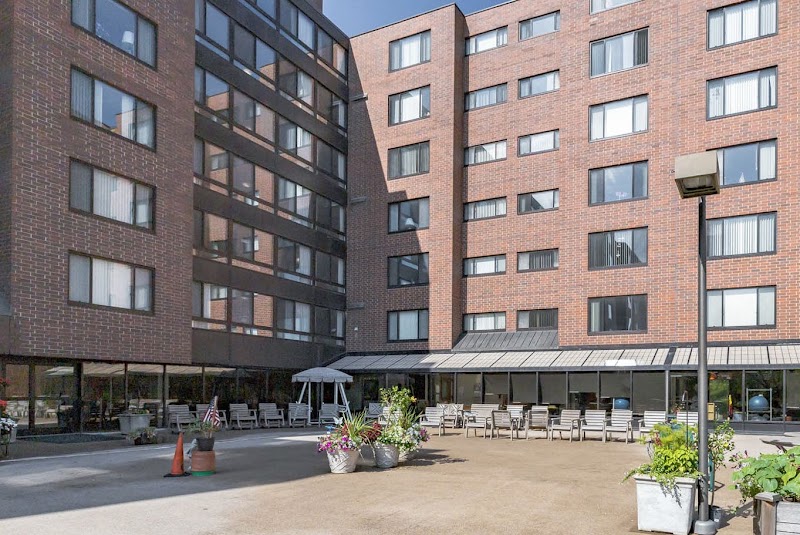
How Does Woodlake Healthcare And Rehabilitation Center Compare to Other Minnesota Nursing Homes?

Compared to the 100 nursing homes in Minnesota, WOODLAKE HEALTHCARE AND REHABILITATION CENTER's overall rating (4 stars) is above the state average of 3.2, staff turnover (20%) is significantly lower than the state average of 46%, and health inspection rating (3 stars) is at the national benchmark.

What Should Families Ask When Visiting Woodlake Healthcare And Rehabilitation Center?

Based on this facility's data, families visiting should ask: "Can I visit during a mealtime to observe dining assistance and food quality?" "How do you handle medical emergencies, and what is your hospital transfer rate?" "Can I speak with family members of current residents about their experience?"

Is Woodlake Healthcare And Rehabilitation Center Safe?

Based on CMS inspection data, WOODLAKE HEALTHCARE AND REHABILITATION CENTER has a clean safety record: no substantiated abuse findings (meaning no confirmed cases of resident harm), no Immediate Jeopardy citations (the most serious violation level indicating risk of serious injury or death), and is not on the Special Focus Facility watch list (a federal program monitoring the lowest-performing 1% of nursing homes). The facility has a 4-star overall rating and ranks #1 of 100 nursing homes in Minnesota. While no facility is perfect, families should still ask about staff-to-resident ratios and recent inspection results during their visit.

Do Nurses at Woodlake Healthcare And Rehabilitation Center Stick Around?

Staff at WOODLAKE HEALTHCARE AND REHABILITATION CENTER tend to stick around. With a turnover rate of 20%, the facility is 26 percentage points below the Minnesota average of 46%. Low turnover is a positive sign. It means caregivers have time to learn each resident's needs, medications, and personal preferences. Consistent staff also notice subtle changes in a resident's condition more quickly. Registered Nurse turnover is also low at 27%, meaning experienced RNs are available to handle complex medical needs.

Was Woodlake Healthcare And Rehabilitation Center Ever Fined?

WOODLAKE HEALTHCARE AND REHABILITATION CENTER has no federal fines on record. CMS issues fines when nursing homes fail to meet care standards or don't correct problems found during inspections. The absence of fines suggests the facility has either maintained compliance or corrected any issues before penalties were assessed. This is a positive indicator, though families should still review recent inspection reports for the full picture.

Is Woodlake Healthcare And Rehabilitation Center on Any Federal Watch List?

WOODLAKE HEALTHCARE AND REHABILITATION CENTER is not on any federal watch list. The most significant is the Special Focus Facility (SFF) program, which identifies the bottom 1% of nursing homes nationally based on persistent, serious quality problems. Not being on this list means the facility has avoided the pattern of deficiencies that triggers enhanced federal oversight. This is a positive indicator, though families should still review the facility's inspection history directly.