
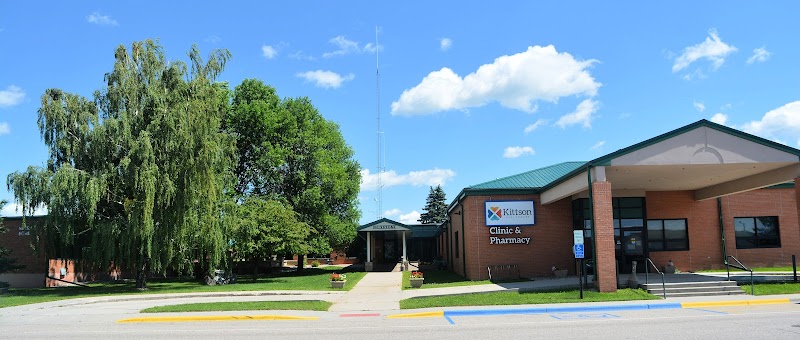
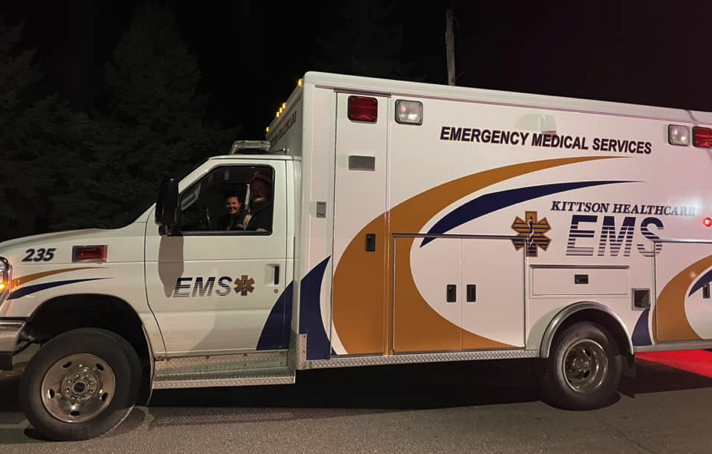
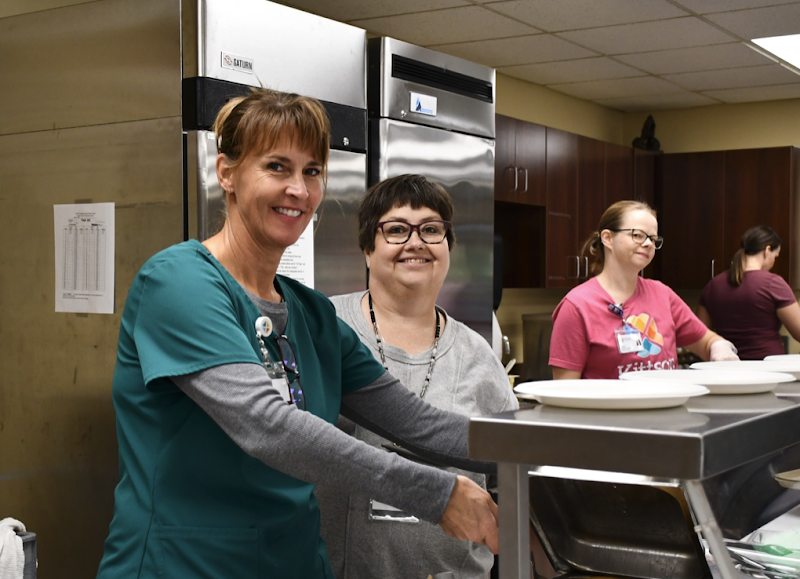
Kittson Healthcare

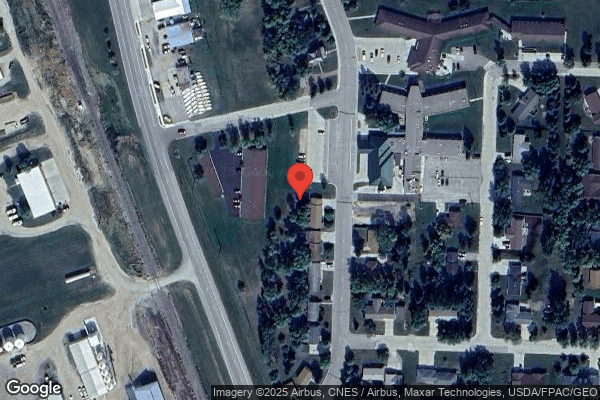
1010 SOUTH BIRCH, HALLOCK, MN 56728 (218) 843-3612
Non profit - Other 50 Beds Independent Data: November 2025 1 Immediate Jeopardy citation
Trust Grade
16/100
#245 of 337 in MN
Last Inspection: June 2025

Inspected within the last 6 months. Data reflects current conditions.

Overview

Kittson Healthcare in Hallock, Minnesota has a Trust Grade of F, indicating significant concerns about the overall quality of care. It ranks #245 out of 337 facilities in the state, placing it in the bottom half of Minnesota nursing homes, and is the second-best option in Kittson County, suggesting limited local alternatives. Although the facility is improving, with a reduction in issues from 13 to 6 over the past year, serious incidents have raised red flags, including a failure to initiate CPR for an unresponsive resident and a transfer that resulted in a fracture due to improper assistance. Staffing is a relative strength, rated 4 out of 5, but with a high turnover rate of 77%, which is concerning compared to the state average. Additionally, the facility has incurred $21,587 in fines, signaling compliance problems, and while RN coverage is average, it may not fully address the serious lapses in care witnessed.

Trust Score
F
16/100
In Minnesota
#245/337
Bottom 28%
Safety Record
High Risk
Review needed
Inspections
Getting Better
13 → 6 violations
Staff Stability
⚠ Watch
77% turnover. Very high, 29 points above average. Constant new faces learning your loved one's needs.
Penalties
✓ Good
$21,587 in fines. Lower than most Minnesota facilities. Relatively clean record.
Skilled Nurses
✓ Good
Each resident gets 64 minutes of Registered Nurse (RN) attention daily — more than 97% of Minnesota nursing homes. RNs are the most trained staff who catch health problems before they become serious.
Violations
⚠ Watch
26 deficiencies on record. Higher than average. Multiple issues found across inspections.
★★☆☆☆
2.0
Overall Rating
★★★★☆
4.0
Staff Levels
★★★★☆
4.0
Care Quality
★★☆☆☆
2.0
Inspection Score
Stable
2024: 13 issues
2025: 6 issues

The Good

  • 4-Star Staffing Rating · Above-average nurse staffing levels
  • 4-Star Quality Measures · Strong clinical quality outcomes
  • Full Sprinkler Coverage · Fire safety systems throughout facility
  • No fines on record

Facility shows strength in staffing levels, quality measures, fire safety.

The Bad

2-Star Overall Rating

Below Minnesota average (3.2)

Below average - review inspection findings carefully

Staff Turnover: 77%

31pts above Minnesota avg (46%)

Frequent staff changes - ask about care continuity

Federal Fines: $21,587

Below median ($33,413)

Minor penalties assessed

Staff turnover is very high (77%)

29 points above Minnesota average of 48%

The Ugly 26 deficiencies on record

1 life-threatening 2 actual harm
Jun 2025 6 deficiencies 1 Harm
SERIOUS (G)

Actual Harm - a resident was hurt due to facility failures

Accident Prevention (Tag F0689)

A resident was harmed · This affected 1 resident

**NOTE- TERMS IN BRACKETS HAVE BEEN EDITED TO PROTECT CONFIDENTIALITY** Based on observation, interview and document review the facility failed to ensure a transfer belt was used during a transfer for...

Read full inspector narrative →
**NOTE- TERMS IN BRACKETS HAVE BEEN EDITED TO PROTECT CONFIDENTIALITY** Based on observation, interview and document review the facility failed to ensure a transfer belt was used during a transfer for 1 of 2 residents (R30) reviewed for falls. This resulted in actual harm to R30 who sustained a left arm fracture. The facility implemented corrective action prior to the survey; therefore, the deficient practice was issued at past non-compliance. Findings include: R30's Fall Risk (Acuity) observation dated 7/16/24, identified R30 was at risk for falls. R30's quarterly Minimum Data Set (MDS) dated [DATE], identified R30 was cognitively aware and had diagnoses that included blindness, type 2 diabetes, and hypertension (high blood pressure). R30 required partial/moderate assistance (helper did less than half the effort. Helper lifted, held or supported trunk or limbs, but provided less than half the effort) to walk 50 feet with two turns. R30's Physical Therapy (PT) Caregiver Education dated 3/11/25, identified R30 was able to complete sit to stand transfers from recliner in room to participate in lower extremity strengthening program but R30 would continue to require stand by assist (SBA) (refers to a caregiving approach where a caregiver remains close to a patient to ensure safety without providing physical assistance. This means the caregiver is ready to intervene if the patient loses balance or needs help during a task.) of one staff to contact guard assist (CGA) (a technique used in occupational and physical therapy where the therapist maintains light physical contact with the patient, typically at the hips or trunk, to provide safety without offering direct support. This method helps with body stabilization and balance, acting as a safety net to prevent falls while allowing the patient to perform movements independently.) of one staff for all mobility in the facility. R30's care plan revised 4/25/25, identified R30 is at risk for deterioration in transfer, walking in room, and walking in corridor, related to being a new resident and being blind. R30 was supervision/part assist with walking. R30 did not do steps due to her blindness. Sit to stand, transfers CGA/partial/moderate with one for safety depending on weakness and risk for unsteady gait. R30's untitled nurse aide care sheet undated, identified R30 used a cane with a gait belt for walk to dine. R30's resident progress note dated 6/4/25 at 2:48 p.m., identified R30 had a witnessed fall at 1:50 p.m. in day area hall. R30 was ambulating with cane and SBA. R30 lost balance and landed on her left side on floor. Stated hope I didn't break my left arm again. Large protrusion (bump) with a skin tear noted on left elbow. Stated moderate pain in area. At first R30 was very anxious about fall and with staff offered calm approach and encouraged deep breathing. R30 calmed down. R30 was sent to the emergency room with staff assist for evaluation. R30's resident progress note dated 6/9/25 at 2:27 p.m., R30 had a new diagnosis of left open ulnar (the ulna is a long bone found in the forearm that stretches from the elbow to the smallest finger, and when in anatomical position, is found on the medial side of the forearm. It runs parallel to the radius, the other long bone in the forearm, and is the larger and longer of the two) shaft fracture below elbow fusion hardware - due to fall last week - surgery completed on R30's left arm, R30 was not to remove dressing before follow up visit on 6/23/25. R30 was to be non-weight bearing with left upper extremity. Resident did not have any complications with surgery. During an interview on 6/9/25 at 2:02 p.m., R30 was sitting in her room recliner with her feet elevated. R30's left arm was wrapped in ace bandages, was in a sling and rested on a pillow. R30 stated she was walking in the hallway with a nursing assistant (NA) behind her and R30 really didn't know what happened but R30 and the NA could not catch her. R30 stated she broke her left arm and pointed to her forearm with her right hand. During an observation on 6/11/25 at 8:00 a.m., NA-B assisted R30 to walk to the dining room while NA-C followed behind with a wheelchair. R30 wore a gait belt around her waist and NA-B held onto the gait belt and remained close to R30. During an interview on 6/11/25 at 8:03 a.m., NA-B stated she was not at the facility when R30 fell but heard about it. R30 was walking with a nursing assistant, R30 stumbled and fell. NA-B stated she didn't know if R30 was wearing a gait belt or if the nursing assistant was holding the gait belt, but stated staff were expected to always use a gait belt when moving a resident to make it safe. During an interview on 6/11/25 at 8:04 a.m., NA-C stated she wasn't working when R30 fell and didn't know what happened. You always use a gait belt when you're walking someone. It just helps keep them steady in case the resident tripped. It was better to be safe than sorry. During an interview on 6/11/25 at 8:06 a.m., NA-D stated she was working the day R30 fell. NA-D was coming out of a room and heard a scream. R30 was walking with a nursing assistant and stumbled. You know how sometimes your feet stick to the floor? It was like that. NA-D stated she did not know if R30 was wearing a gait belt, but staff were always expected to use a gait belt when walking with a resident. During a phone interview on 6/11/25 at 8:18 a.m., registered nurse (RN)-B stated she was the nurse on duty the day R30 fell. RN-B was in the charting room when it happened. A nursing assistant was walking with R30 when it happened. RN-B stated she couldn't say if R30 was wearing a gait belt and/or if the nursing assistant was in close contact with R30 because she didn't see it happen. During an interview on 6/11/25 at 8:45 a.m., the director of nursing (DON) stated R30 was blind and was care planned to have CGA with walking. There was confusion to what CGA meant and the nursing assistant did not use a gait belt nor were they in close contact with R30. Since R30's fall, the DON had instructed staff to always use a gait belt for safety and had given education what SBA and CGA meant. On 6/11/25 at 10:00 a.m., a review of a surveillance video dated 6/4/25 at 1:54 p.m. to 1:55 p.m. was conducted with the DON. R30 was observed walking with a cane in her right hand with NA-A walking slightly behind her right side. R30 was not wearing a gait belt nor was NA-A in close proximity to R30. R30's stumbled and R30 fell forward, twisting on to her left side, landing on her left elbow/arm. The DON stated staff were expected to use gait belts and to follow care planned interventions to prevent/lessen the risk of falls. During an interview on 6/11/25 at 1:42 p.m., NA-A stated she was walking with R30 to the dining room for bingo and R30 lost her balance and fell. NA-A stated she tried to catch R30, but she just couldn't and R30 fell onto her left side. NA-A stated she didn't use a gait belt because R30 was steady and had never needed one. After R30's fall, the DON told staff they always had to use a gait belt when walking or moving residents for safety. The facility' corrective actions were confirmed through observation of staff using transfer belts along with staff interviews that identified staff knew to utilize a transfer belt for all transfers. The facility policy Fall Prevention Program revised 11/21, identified all staff members were responsible for implementing the intent and directives contained within this policy and creating a safe environment of care. Falls Prevention Plan: l. Universal fall precautions are to be implemented for all patients/residents admitted to Kittson Healthcare as they are aimed at keeping the care environment safe. Universal fall precautions include: a. Familiarize the patient with the environment. b. Have the patient demonstrate call light use. c. Maintain call light within reach. d. Keep the patient's personal possessions within patient safe reach. e. Have sturdy handrails in patient bathrooms, room, and hallway. f. Place the bed in a safe position when a patient is resting in bed; raise bed to a comfortable height when the patient is transferring out of bed. g. Keep bed brakes locked. h. Keep wheelchair wheel locks in locked position when stationary. i. Keep nonslip, comfortable, well-fitting footwear on the patient. j. Use night lights or supplemental lighting. k. Keep floor surfaces clean and dry. Clean up all spills promptly. l. Keep patient care areas uncluttered. m. Follow safe patient handling practices. II. An individualized care plan utilizing a multidisciplinary approach is to be created and implemented for each patient/resident identified as a fall risk. a. Members of the multidisciplinary team may include the attending physician, nursing, therapy, pharmacy, family, patient/resident or other members of the care team. b. The multidisciplinary team members will collaborate to address modifiable fall risk factors and implement interventions to try to minimize the consequences of risk that are not modifiable c. Interventions are to be patient/resident centered However, the policy failed to direct staff to use a gait belt with all resident transfers and/or ambulation.
CONCERN (D)

Potential for Harm - no one hurt, but risky conditions existed

Deficiency F0578 (Tag F0578)

Could have caused harm · This affected 1 resident

**NOTE- TERMS IN BRACKETS HAVE BEEN EDITED TO PROTECT CONFIDENTIALITY** Based on interview and document review, the facility failed to ensure there was a signed copy an advanced directive (identifying...

Read full inspector narrative →
**NOTE- TERMS IN BRACKETS HAVE BEEN EDITED TO PROTECT CONFIDENTIALITY** Based on interview and document review, the facility failed to ensure there was a signed copy an advanced directive (identifying whether to do cardiopulmonary resuscitation (CPR) or do not resuscitate (DNR)) for 1 of 16 resident (R31) reviewed for advanced directives. Findings include: R31's quarterly Minimum Data Set (MDS) dated [DATE], identified R31 had no cognitive impairment. R31's undated face sheet, care plan dated [DATE], and the undated admission care plan checklist identified R31 was a DNR. R31's medical record did not have an advanced directive identifying a DNR status signed by R31or representative and the provider. During an interview on [DATE] at 2:36 p.m., R31 stated they wanted a DNR status. During an interview on [DATE] at 10:30 a.m., the director of nursing (DON) stated the process for when residents were admitted was a copy of signed provider orders and advanced directive were to be received upon admit. Residents who wanted CPR were identified on a list at the nurse's station and R31 was not on the list and would be treated as a DNR. The DON could not locate the advanced directive for R31 and stated it should have been completed and placed in the advanced directive book to be easily accessible. A policy related to advanced directives was requested but not received.
CONCERN (D)

Potential for Harm - no one hurt, but risky conditions existed

Deficiency F0700 (Tag F0700)

Could have caused harm · This affected 1 resident

**NOTE- TERMS IN BRACKETS HAVE BEEN EDITED TO PROTECT CONFIDENTIALITY** Based on observation, interview and document review, the facility failed to ensure residents with attached bed rails were compre...

Read full inspector narrative →
**NOTE- TERMS IN BRACKETS HAVE BEEN EDITED TO PROTECT CONFIDENTIALITY** Based on observation, interview and document review, the facility failed to ensure residents with attached bed rails were comprehensively assessed for use on the bed for 1 of 1 resident (R4) who had bed rails. Findings include: R4's quarterly Minimum Data Set (MDS) dated [DATE], identified R4 had no cognitive impairment and was independent with bed mobility and transfers. The MDS identified resident did not use bed rails. R4's Restraint/Adaptive Equipment assessment dated [DATE], did not identfiy bed rails or adaptive equipment was used. R4's medical record lacked an assessment to to include entrapment risk, risk versus benefits, consent, bed dimentions in relation to the residents height and weight and what alternatives were attempted or containdicated before installation. During observation on 6/9/25 at 2:53 p.m., R4 had half bed rails up and locked into position on both side of the upper half of the bed. On 6/11/25 at 1:22 p.m., R4's half side rails were observed were locked in the upright position on R4's bed. R4 stated they used the rails to reposition and assist with getting out of bed. The bed rails did not restrain R4's movement. During an interview on 6/11/25 at 3:06 p.m., registered nurse (RN)-A, who was MDS coordinator, stated restraint/adaptive equipment assessments were done when using bed rails. Since they were half bed rails or less, they did not do an assessment because resident was using them to reposition in bed and transfer out of bed. They did not do an assessment identifying if it was used as a bed rail or adaptive equipment. During an interview on 6/11/25 at 3:32 p.m., the director of nursing (DON) stated it was restraint free facility. When bed rails were used as restraints, a provider's order is required, and an assessment would be done and restraint policy followed but was not sure of what was done when bed rails for use for bed mobility and transfers. The facility's Physical Restraint Policy dated 6/18/24, identified bed rails should only be used when necessary for safety and with the consideration of the resident's ability to use them independently. Document how the restraint will address the medical need, enhance safety, and maintain the resident's physical and psychological well-being.
CONCERN (D)

Potential for Harm - no one hurt, but risky conditions existed

Pharmacy Services (Tag F0755)

Could have caused harm · This affected 1 resident

**NOTE- TERMS IN BRACKETS HAVE BEEN EDITED TO PROTECT CONFIDENTIALITY** Based on observation, interview and document review the facility failed to ensure medications were administered according to man...

Read full inspector narrative →
**NOTE- TERMS IN BRACKETS HAVE BEEN EDITED TO PROTECT CONFIDENTIALITY** Based on observation, interview and document review the facility failed to ensure medications were administered according to manufacturers instructions for 1 of 1 residents (R31) observed during medication administration. Findings include: R31's quarterly Minimum Data Set, dated [DATE], identified R31 was cognitively intact and had a diagnosis of diabetes. R31's physician orders report dated 5/11/25 through 6/11/25, identified R31 received Lantus insulin 34 units every morning, Novolog insulin 7 units every morning, 14 units every lunch time and 7 units every evening. R31's care plan dated 3/5/25, identified R31 received insulin related to diabetes. The goal identified R31 would safely receive insulin injections per doctors orders. The nursing approaches included monitoring R31 for signs and symptoms of hypo/hyperglycemia. On 6/10/25 at 6:46 p.m., licensed practical nurse (LPN)-B was observed to prepare insulin for R31. LPN-B scrub the hub of the Novolog FlexPen with alcohol pad and then attach a sterile needle to the hub. LPN-B dialed 7 units of insulin and started to enter R31's room. Upon surveyor intervention and questioning, LPN-B stated she was instructed that she did not need to prime the insulin pen after the initial use. LPN-B stated she always placed a new needle on the insulin pens prior to use and had never primed the new needle prior to administering the insulin. LPN-B reviewed the manufacturer's instructions for Patient Information Insulin Aspart which included a section titled Preparing your Insulin Aspart FlexPen with picture diagrams and written explanations. The instructions identified giving an airshot of 2 units insulin before each injection. LPN-B stated she had not primed the pen with 2 units prior to administering the insulin to R31. On 6/10/25 at 7:04 p.m., RN-C stated when preparing to give insulin to a resident, she wasted 2 units prior to drawing up the residents ordered dose of insulin. RN-C stated she wasted 2 units to ensure the needle was full with medication to ensure the resident received the correct dose of insulin. On 6/11/25 at 8:38 a.m., director of nursing (DON) stated per facility policy staff are instructed to always prime an insulin pen prior to administering insulin to a resident. The facility Insulin Pen Administration Policy reviewed 4/28/24, identified the policy purpose was to ensure the safe, accurate, and hygienic administration of insulin using insulin pens for patients requiring insulin therapy. The policy applied to all licensed nursing staff and other healthcare professionals authorized to administer medications at the facility. The Insulin Aspart manufacturers instructions included the following instructions to prepare the insulin pen: - Turn the dose selector 2 units - Hold the insulin pen with the needle pointing up. Tap the cartridge gently with your finger a few time to make any air bubls collect at the top of the cartridge - Keep the needle pointing upwards, prss the push-button all the way in. The dose selector returns to 0. A drop of insulin should appear at the needle tip. If not, change the needle and repeat the procedure no more than 6 times. Inyou do not see a drop of insuling after 6 times, do not use the Insulin pen and contact Novo Nordisk. A small air bubble may remain at the needle tip, but it will not be injected - select the dose of insulin
CONCERN (D)

Potential for Harm - no one hurt, but risky conditions existed

Deficiency F0883 (Tag F0883)

Could have caused harm · This affected 1 resident

**NOTE- TERMS IN BRACKETS HAVE BEEN EDITED TO PROTECT CONFIDENTIALITY** Based on interview and document review, the facility failed to provide the most recent Centers for Disease Control (CDC) educati...

Read full inspector narrative →
**NOTE- TERMS IN BRACKETS HAVE BEEN EDITED TO PROTECT CONFIDENTIALITY** Based on interview and document review, the facility failed to provide the most recent Centers for Disease Control (CDC) education regarding the potential risks and benefits for vaccinations being offered along with offering the most recent pneumococcal vaccine for 3 of 5 residents (R24, R28, R31) reviewed for immunizations. Findings include: R24: R24's quarterly Minimum Data Set, dated [DATE], identified R24 was [AGE] years old and admitted on [DATE]. R24 was cognitively intact, and diagnoses included dementia and atrial fibrillation. R24's immunization record dated 6/11/25, identified R24 received Pneumo-poly (PPSV-23) on 2/3/2015, and Pneumo-conjugate (PVC-13) on 6/24/20. R24's vaccination consent form dated 9/7/24, included consent for influenza and COVID-19, however, the form failed to identify if R24 received Vaccine Information Statements (VIS), risk/benefits of the pneumococcal vaccine. R24's medical record failed to identify if R24 was offered, or given/declined the PCV20 or PCV21 vaccine. R28: R28's admission MDS dated [DATE], identified R28 was [AGE] years old and admitted on [DATE]. The assessment identified R28 was cognitively intact, and diagnoses included seizure disorder and traumatic brain injury. R28's immunization record dated 6/11/25, identified R28 received PPSV23 vaccine on 2/12/13, and PCV-13 vaccine on 1/12/15. R28's vaccination consent form dated 2/10/25, identified R28 previously received pneumococcal vaccine, however, the form failed to identify which pneumococcal vaccine was administered and what education was provided and discussed. R28's medical record failed to identify if R28 was offered, or given/declined the PCV20 or PCV21 vaccine. R31: R31's quarterly MDS dated [DATE], identified R31 was [AGE] years old and admitted on [DATE]. The assessment identified R31 was cognitively intact, and diagnoses included heart disease, kidney failure, and diabetes. R31's immunization record dated 6/11/25, identified R31 received the PPSV23 vaccine on 1/16/13. R31 preventative health care report dated 2/27/25 through 6/11/25, identified R31 received PCV13 vaccine on 10/26/15. R31's vaccination consent form dated 2/7/25, identified R31 declined the COVID-19 vaccine, although the form failed to identify if R31 received the VIS or risk/benefits of the pneumococcal vaccine. R31's medical record failed to identify if R31 was offered, or given/declined the PCV20 or PCV21 vaccine. The facility standing orders dated 8/8/24, included orders to administer pneumococcal vaccine (Prevnar 13) if not previously given and upon consent from resident or surrogate. On 6/11/25 at 10:48 a.m., registered nurse (RN)-A stated upon admission the residents Minnesota Immunization Information Connection (MIIC) report was reviewed and the admitting nurses were notified which vaccines the resident would need. RN-A stated vaccines, including pneumococcal, influenza and COVID-19, were offered on admission and annually. On 6/11/25 at 3:52 p.m., RN-D stated prior to admission, the provider reviews and recommends vaccines for the resident. The admitting nurse is notified which vaccines should be discussed with the resident and/or family and administered to the resident upon admission. RN-D stated there was a policy in place for vaccinations upon admission, although, the facility is lacking a process to re-evaluate current residents' pneumococcal vaccination status. On 6/11/25 at 4:17 p.m., the director of nursing (DON) stated staff review and offer vaccinations to the resident and/or families upon admission. The facility standing orders include orders to administer pneumococcal vaccine Prevnar 13 if not previously given and upon consent from the resident and/or family. The DON stated current residents' vaccination status was reviewed and vaccines are offered annually during their care conferences, although, there was not a procedure in place to catch the current residents for the new pneumococcal vaccines prior to their annual care conference. The facility Pneumococcal Vaccine Program reviewed 5/25, identified it was the policy of the facility that residents would be offered immunization/s against pneumococcal disease in accordance with Advisory Committee on Immunizations Practices (ACIP) recommendation. Pneumococcal disease is a serious illness that can cause sickness and even death. The purpose of the policy was to reduce the incidence of pneumococcal disease, and the morbidity and mortality attributed to the infection. The policy identified residents would be offered vaccinations based on the CDC and ACIP recommendations and physician orders. The policy further identified the facility would utilize the Adult Immunization Schedule, prepared by the CDC, to ensure residents were offered and encouraged to adept the appropriate vaccinations, and the determination to vaccinate or not would be documented in the residents electronic medical record.
MINOR (C)

Minor Issue - procedural, no safety impact

Staffing Information (Tag F0732)

Minor procedural issue · This affected most or all residents

Based on observation, interview and document review, the facility failed to ensure the daily census was on the nurse staff posting. This had the potential to affect all 31 residents residing in the fa...

Read full inspector narrative →
Based on observation, interview and document review, the facility failed to ensure the daily census was on the nurse staff posting. This had the potential to affect all 31 residents residing in the facility and/or visitors who may wish to view the information. Findings include: On 6/9/25 at 4:25 p.m., 6/10/25 at 1:03 p.m. and 6/11/25 at 7:17 a.m., the facility staff posting was observed hanging on the wall across from the nurse's station. The nurse staff posting included the date; the hours of shifts for day, evening and night shifts, the number of registered nurse (RN), licensed practical nurse (LPN) and nursing assistants (NA) with total and actual hours worked; however, the postings were missing the daily census. The nurse staff postings were reviewed from 5/1/25 through 6/8/25. The facility census was not recorded on 37 of 38 days reviewed. On 6/11/25 at 1:53 p.m., health unit coordinator (HUC)-A stated she reviewed the nurse schedule and documented the information on the daily nurse staff posting and the director of nursing (DON) signed off on the form. HUC-A stated she was trained from the previous person but was not trained to document the census on the form. HUC-A stated the census is documented on a white board in the nurse's area, although it was not in a place visible by the residents and/or families. On 6/11/25 at 2:12 p.m., the DON stated she approved the nurse staff posting after the HUC completed the form. The form identified what staff were working, how many RN, LPN, and NA hours per shift, and hours per shift/day. The DON stated although the form should include the resident census, the previous staff had not filled in the census number and therefore, she or HUC-A had not documented the census number on the form. The DON stated the census was not written anywhere within the facility that was visible to the residents and/or visitors. A nurse staff posting policy was requested but not received.
May 2024 12 deficiencies
CONCERN (D) 📢 Someone Reported This

A family member, employee, or ombudsman was alarmed enough to file a formal complaint

Potential for Harm - no one hurt, but risky conditions existed

Deficiency F0583 (Tag F0583)

Could have caused harm · This affected 1 resident

**NOTE- TERMS IN BRACKETS HAVE BEEN EDITED TO PROTECT CONFIDENTIALITY** Based on observation, interview and document review, the facility failed to ensure residents were protected from exposure for 1 ...

Read full inspector narrative →
**NOTE- TERMS IN BRACKETS HAVE BEEN EDITED TO PROTECT CONFIDENTIALITY** Based on observation, interview and document review, the facility failed to ensure residents were protected from exposure for 1 of 3 residents (R19) observed exposed from the hallway. Findings include: R19's quarterly Minimum Data Set (MDS) dated [DATE], identified R19 had a severe cognitive impairment and diagnoses included Alzheimer's disease and anxiety. R19's care plan revised 3/26/24, identified R19 was dependent for all abilities. The care plan did not identify a plan for staff to maintain R19's privacy, not did the undated Resident Care sheet #4. During an observation on 5/22/24 at 8:21 a.m., R19 was lying in bed on his right side. R19's room door was wide open and R19 was easily seen from the hallway. R19's head of bed was slightly elevated causing R19 to slump down in bed on his right side in a fetal position. R19's blankets and gown were bunched up in front of him causing his back, legs, and incontinent brief to be clearly visible. R19's blinds were halfway open. - At 8:23 a.m., nursing assistant (NA)-B looked into R19's room. NA-B did not cover R19 and left the room. NA-B called on her walkie to have someone check on R19. R19's room door continued to be wide open. - At 8:26 a.m., NA-E walked past R19's room with a female resident. NA-E did not check on R19. - At 8:27 a.m., NA-B went into the room next door but did not enter R19's room. - At 8:28 a.m., NA-E entered R19's room, picked up R19's blankets and covered R19. NA-E stated R19 was still asleep, and she did not wake him for cares. NA-B entered the room and stated R19 frequently kicked off his blankets because he got hot. NA-E stated staff were expected to look into R19's room every time they walked past and cover him when they knew he was exposed. NA-B stated she did look into R19 room earlier but was looking for NA-E and didn't even look at R19. NA-E stated it was important to cover R19 because you never knew when he would expose himself. Then NA-E stated, well yea, he exposed himself so you could pull the privacy curtain too. NA-E stated it was to allow R19 privacy to prevent others seeing him exposed. During an interview on 5/22/24 at 9:28 a.m., NA-G stated when staff were walking in the hallways you just check on everyone. Staff looked into rooms to make sure everyone was ok. Staff kept room doors open at night to make sure staff could see the residents easily. In the daytime, R19 should get dressed and leave him in bed so he didn't expose himself to others. R19 just threw his stuff off and took off his brief. NA-G stated it wasn't ok for others to see R19 without his blankets covering him. R19 needed to be covered for privacy and dignity. During an interview on 5/22/24 at 9:47 a.m., licensed practical nurse (LPN)-B stated she always tried to walk down the halls and see what's going on. That morning there had been a fall and LPN-B was preoccupied with that. The aides should always look to see how R19 was and to cover him up. LPN-B stated it was an issue and R19 was probably cold and just uncomfortable. During an interview on 5/22/24 at 4:14 p.m., the director of nursing (DON) stated it was important to care plan interventions because R19 exposed himself while in bed. Staff needed to give R19 privacy. The DON stated she had educated staff on the importance of this and to always have eyes and ears open to pay attention. The undated Quality of Life policy, identified the facility must promote care for residents in a manner and in an environment that maintained or enhanced each resident's dignity and respect in full recognition of his or her individuality. Maintaining resident privacy of body including keeping residents sufficiently covered while being taken to areas outside of their room, such as a bathing area.
CONCERN (D) 📢 Someone Reported This

A family member, employee, or ombudsman was alarmed enough to file a formal complaint

Potential for Harm - no one hurt, but risky conditions existed

Deficiency F0604 (Tag F0604)

Could have caused harm · This affected 1 resident

**NOTE- TERMS IN BRACKETS HAVE BEEN EDITED TO PROTECT CONFIDENTIALITY** Based on observation, interview and document review, the facility failed to ensure residents were free from physical restraints ...

Read full inspector narrative →
**NOTE- TERMS IN BRACKETS HAVE BEEN EDITED TO PROTECT CONFIDENTIALITY** Based on observation, interview and document review, the facility failed to ensure residents were free from physical restraints for 1 of 2 residents (R13) reviewed for restraints. Findings include: R13's quarterly Minimum Data Set (MDS) dated [DATE], identified R13 had severe cognitive impairment, exhibited wandering behaviors, and required partial to moderate assistance with transfers. R13 did not use restraints. R13's care plan revised 5/20/24, identified R13 had dementia and would wander in the past. Interventions included: staff were directed to monitor that R13's wanderguard was in place twice a day; If noted to be restless, offer 1:1 time, snacks, monitor for pain signs/symptoms, distraction such as activities (such as discuss her love of gardening), look at picture books etc. offer to go for a walk with her or go outside on nice days. Further, R13 was independent with wheeling wheelchair, partial assist with transfers, sit to stand. R13's medical record lacked evidence R13 was assessed for restraints. A complaint received by the State Agency (SA) on 5/20/24 at 5:14 a.m., identified a witnessed incident between R13 and nursing assistant (NA)-C occurred on 5/17/24 around 6:15 p.m. R13 spent her day scooting around her wheelchair and wandering the facility. NA-C grabbed R13 by the under the arms and tugged R13 into a recliner. NA-C then set R13's wheelchair to the side of R13 where R13 could not get back into her wheelchair. R13 left the area and the reporter saw R13 reaching down to the right of the recliner to reach towards the wheelchair. NA-C saw this and removed the wheelchair from where R13 could reach it. NA-C then pulled R13 by her pants into the recliner. R13 did not want to be in a recliner. NA-C said she put R13 into the recliner to prevent R13 from wandering and scooting around in the wheelchair. NA-C wanted to use the recliner as a restraint. During an interview on 5/20/24 at 4:37 p.m., registered nurse (RN)-A stated she worked 5/17/24. RN-A was getting off work and was in report in the nurses' station. RN-A looked up and saw NA-C walk past the nurses' station and then walked back. NA-C was visibly upset, red faced, scowling. NA-C came back to the common area pushing R13 in her wheelchair while walking another female resident. NA-C grabbed R13 under her arms and put her in the recliner with the wheelchair on R13's right side. R13 wandered in her wheelchair, but, if she's not hurting herself or others, staff just let her go. NA-C walked away, and RN-A saw R13 scooted forward and reached down the side of the recliner and pulled the wheelchair closer to R13. RN-A stated R13 could transfer herself with assist, staff just needed to ask her what she wanted to do. NA-C came back and took the wheelchair away from R13 then pulled R13 back into the recliner from behind so R13's bottom was in the crease of the recliner. RN-A left the nurses' station and asked NA-D to take R13 out of the recliner and into R13's wheelchair. RN-A did not want NA-C to handle R13 anymore. NA-C was in bathroom, but overheard RN-A. NA-C came out of the bathroom and went to move R13. RN-A explained to NA-C that she asked NA-D to move R13. NA-C began yelling at RN-A that RN-A was the problem and RN-A needed to go home. NA-C stated she put R13 into the recliner to prevent R13 from wandering. RN-A stated she called the director of nursing (DON) and talked to her about it. However, RN-A stated the DON encouraged staff to have residents sit in the recliners. RN-A stated there was a difference between asking if a resident wanted to sit in the recliner or making them sit in a recliner. RN-A thought the DON would come to the facility and investigate the situation. However, on 5/19/24, RN-A came to the facility and saw NA-C was working. During an interview on 5/20/24 at 5:10 p.m., NA-C stated staff always put wandering residents into the recliners to prevent them from wandering into other resident rooms. During an interview on 5/21/24 at 10:02 a.m., the DON stated she received a couple phone calls over the weekend. The DON had never had an issue with NA-C and NA-C went above and beyond and felt it was an issue between NA-C and RN-A. The facility did have video surveillance but did not review the video because it honestly never crossed my mind that the recliner could have possibly been used as a restraint or there was rough treatment. On 5/21/24 at 12:22 p.m., a review of surveillance video dated 5/17/24 at 6:08 p.m. to 6:19 p.m. was conducted with the DON. RN-A was observed through the nurses' station window. NA-C was wheeling R13 to a common area recliner in her wheelchair. NA-C placed R13's wheelchair on the right side of the recliner with the seat facing the wall. NA-C then walked down the hall. R13 reached with her right hand until she was able to grasp the wheelchair and turned it towards her. R13 then scooted forward in the recliner. NA-C came back to the common area and grabbed R13's wheelchair and placed it approximately 6 feet away from R13 with the wheelchair facing away from R13. NA-C then lifted R13 back into the recliner by lifting her by the underarms. During an interview on 5/21/24 at 12:37 p.m., the DON stated in the video NA-C did not go above and beyond. Staff were instructed to ask permission before transferring a resident into the recliners. The DON did encourage staff to use the recliners to allow residents a place to rest, but moving the wheelchair out of reach to prevent transfers was a restraint. During a phone interview on 5/22/24 at 11:14 a.m., LPN-C stated it was common for staff to put wandering residents in the recliners, so they don't go and wander into other resident rooms. LPN-C then stated putting a resident in a recliner and removing the wheelchair so the resident was unable to self-transfer was a restraint. The undated, facility policy Physical Restraints/Bedrails, identified it was the policy of the facility to keep residents restraint free, both physical and chemical. If a resident was unable to be restraint-free, the facility would provide the least restrictive restraint for each individual resident. The policy defined physical restraints as any item which confined a person in a wheelchair such as a gray wheelchair belt, recliner, lap tray, or velcro belt which the resident was unable to remove independently.
CONCERN (D) 📢 Someone Reported This

A family member, employee, or ombudsman was alarmed enough to file a formal complaint

Potential for Harm - no one hurt, but risky conditions existed

Report Alleged Abuse (Tag F0609)

Could have caused harm · This affected 1 resident

**NOTE- TERMS IN BRACKETS HAVE BEEN EDITED TO PROTECT CONFIDENTIALITY** Based on observation, interview and document review, the facility failed to report an allegation of rough treatment and restrain...

Read full inspector narrative →
**NOTE- TERMS IN BRACKETS HAVE BEEN EDITED TO PROTECT CONFIDENTIALITY** Based on observation, interview and document review, the facility failed to report an allegation of rough treatment and restraining a resident for 1 of 2 residents (R13); and the facility failed to report an injury of unknown origin for 1 of 2 residents (R4) reviewed for potential abuse. Findings include: R13's quarterly Minimum Data Set (MDS) dated [DATE], identified R13 had severe cognitive impairment, exhibited wandering behaviors and required partial to moderate assistance with transfers. R13 did not utilize restraints. A complaint received by the State Agency (SA) on 5/20/24 at 5:14 a.m., identified a witnessed incident between R13 and nursing assistant (NA)-C occurred on 5/17/24 around 6:15 p.m. R13 spent her day scooting around her wheelchair and wandering the facility. NA-C grabbed R13 by the under the arms and tugged R13 into a recliner. NA-C then set R13's wheelchair to the side of R13 where R13 could not get back into her wheelchair. R13 left the area and the reporter saw R13 reaching down to the right of the recliner to reach towards the wheelchair. NA-C saw this and removed the wheelchair from where R13 could reach it. NA-C then pulled R13 by her pants into the recliner. R13 did not want to be in a recliner. NA-C said she put R13 into the recliner to prevent R13 from wandering and scooting around in the wheelchair. NA-C wanted to use the recliner as a restraint During an interview on 5/20/24 at 4:37 p.m., registered nurse (RN)-A stated she worked 5/17/24. RN-A was getting off work and was in report in the nurses' station. RN-A looked up and saw NA-C walk past the nurses' station and then walked back. NA-C was visibly upset, red faced, scowling. NA-C came back to the common area pushing R13 in her wheelchair while walking another female resident. NA-C grabbed R13 under her arms and put her in the recliner with the wheelchair on R13's right side. R13 wandered in her wheelchair, but, if she's not hurting herself or others, staff just let her go. NA-C walked away, and RN-A saw R13 scooted forward and reached down the side of the recliner and pulled the wheelchair closer to R13. RN-A stated R13 could transfer herself with assist, staff just needed to ask her what she wanted to do. NA-C came back and took the wheelchair away from R13 then pulled R13 back into the recliner from behind so R13's bottom was in the crease of the recliner. RN-A left the nurses' station and asked NA-D to take R13 out of the recliner and into R13's wheelchair. RN-A did not want NA-C to handle R13 anymore. NA-C was in bathroom, but overheard RN-A. NA-C came out of the bathroom and went to move R13. RN-A explained to NA-C that she asked NA-D to move R13. NA-C began yelling at RN-A that RN-A was the problem and RN-A needed to go home. NA-C stated she put R13 into the recliner to prevent R13 from wandering. RN-A stated she called the director of nursing (DON) and talked to her about it. However, RN-A stated the DON encouraged staff to have residents sit in the recliners. RN-A stated there was a difference between asking if a resident wanted to sit in the recliner or making them sit in a recliner. RN-A thought the DON would come to the facility and investigate the situation. However, on 5/19/24, RN-A came to the facility and saw NA-C was working. During an interview on 5/21/24 at 10:02 a.m., the DON stated she received a couple phone calls over the weekend. The DON had never had an issue with NA-C and NA-C went above and beyond and felt it was an issue between NA-C and RN-A. The facility did have video surveillance but did not review the video because it honestly never crossed my mind that the recliner could have possibly been used as a restraint or there was rough treatment. The DON believed it was a personal issue between RN-A and NA-C and it was not reported. On 5/21/24 at 12:22 p.m., a review of surveillance video dated 5/17/24 at 6:08 p.m. to 6:19 p.m. was conducted with the DON. RN-A was observed through the nurses' station window. NA-C was wheeling R13 to a common area recliner in her wheelchair. NA-C placed R13's wheelchair on the right side of the recliner with the seat facing the wall. NA-C then walked down the hall. R13 reached with her right hand until she was able to grasp the wheelchair and turned it towards her. R13 then scooted forward in the recliner. NA-C came back to the common area and grabbed R13's wheelchair and placed it approximately 6 feet away from R13 with the wheelchair facing away from R13. NA-C then lifted R13 back into the recliner by lifting her by the underarms. R4's annual Minimum Data Set (MDS) dated [DATE], identified R4 had severe cognitive impairment and exhibited verbal behavioral symptoms directed towards others, significantly intruded on the privacy or activity of others and significantly disrupted care or the living environment. R4 was at risk for pressure ulcer/injury but had no open areas. R4 was frequently incontinent of bladder and bowel and required staff assistance with activities of daily living (ADLs). R4's Resident Progress Note dated 5/15/24 at 9:19 p.m., identified registered nurse assessed R4's skin upon request. R4 was identified to have a small unmeasurable skin tear to the back area of his left testicle and near his left buttock. R4's medical record failed to identify any other information regarding the skin tear. During an observation on 5/22/24 at 2:02 p.m., R13 had a 1.7 centimeter (cm) by 1 cm skin tear to the left posterior scrotum. During an interview on 5/22/24 at 4:24 p.m., the DON stated she printed out Resident Progress Notes every morning and reviewed them in the interdisciplinary (IDT) team meeting. The DON stated she did recall reading the 5/15/24, note regarding R4's skin and did reach out to the other team members who recalled speaking about it as well. Typically, staff would have followed through with wound care but it slipped through the cracks. The DON stated an injury of unknown origin, especially in a serious area of the body, should have been reported. During a phone interview on 5/22/24 at 7:32 p.m., RN-A stated she documented R4 had a skin tear to his left posterier scrotum. RN-A stated the facility had given her no direction regarding reporting injuries of unknown origin . You learn as you go and you learn from another traveler who is probably learning as they go as well. RN-A stated hindsight was always 20/20 and the injury of unknown origin should have been reported to the SA because it was in a suspicious location and the resident could not explain what happened. The facility Abuse, Neglect, Mistreatment and Misappropriation of Resident Property policy revised 2/2017, identified it was the policy of this facility that abuse allegations (abuse, neglect, exploitation or mistreatment, including injuries of unknown source and misappropriation of resident property) were reported per Federal and State Law. The facility would ensure that all alleged violations involving abuse, neglect, exploitation or mistreatment, Including injuries of unknown source and misappropriation of resident property, are reported immediately, but not later than 2 hours after the allegation is made if the events that cause the allegation involve abuse or result in serious bodily injury, or not later than 24 hours if the events that cause the allegation do not involve abuse and do not result in serious bodily injury, to the administrator of the facility and the Minnesota Department of Health in accordance with state law through established procedures. In addition, local law enforcement will be notified of any reasonable suspicion of a crime against a resident in the facility. - The policy defined abuse as the willful infliction of injury, unreasonable confinement, intimidation, or punishment with resulting physical harm, pain or mental anguish. Abuse also includes the deprivation by an individual, including a caretaker, of goods or services that are necessary to attain or maintain physical, mental, and psychosocial well-being. Instances of abuse of all residents, irrespective of any mental or physical condition, cause physical harm, pain or mental anguish. Abuse includes verbal abuse, sexual abuse, physical abuse and mental abuse, including abuse facilitated or enabled through the use of technology. Willful, as used in this definition of abuse, means the individual must have acted deliberately, not that the individual must have intended to inflict injury or harm. The policy identified an injury should be classified as an injury of unknown source when both of the following conditions are met: i. The source of the injury was not observed by any person or the source of the the injury could not be explained by the resident; ii. The injury is suspicious because of the extent of the injury or the location of the injury (e.g., the injury is located in an area not vulnerable to trauma) or the number of injuries observed at one particular point in time or the incidence of injuries over time. An example of injury of unknown source is a bruise or skin tear without known contact. Immediately upon receiving a report of alleged abuse, the Administrator, and or designee will coordinate delivery of appropriate medical and/or psychological care and attention. Ensuring safety and well-being for the vulnerable individual are of utmost priority. Safety, security and support of the resident, their roommate, if applicable and other residents with the potential to be affected will be provided.
CONCERN (D) 📢 Someone Reported This

A family member, employee, or ombudsman was alarmed enough to file a formal complaint

Potential for Harm - no one hurt, but risky conditions existed

Investigate Abuse (Tag F0610)

Could have caused harm · This affected 1 resident

**NOTE- TERMS IN BRACKETS HAVE BEEN EDITED TO PROTECT CONFIDENTIALITY** Based on observation, interview and document review, the facility failed to complete a thorough investigation related to an alle...

Read full inspector narrative →
**NOTE- TERMS IN BRACKETS HAVE BEEN EDITED TO PROTECT CONFIDENTIALITY** Based on observation, interview and document review, the facility failed to complete a thorough investigation related to an allegation of rough treatment and restraining a resident for 1 of 2 residents (R13); and the facility failed to report an injury of unknown origin for 1 of 2 residents (R4) reviewed for potential abuse. Findings include: R13's quarterly Minimum Data Set (MDS) dated [DATE], identified R13 had a severe cognitive impairment, exhibited wandering behaviors, and required partial to moderate assistance with transfers. R13 did not utilize restraints. A complaint received by the State Agency (SA) on 5/20/24 at 5:14 a.m., identified a witnessed incident between R13 and nursing assistant (NA)-C occurred on 5/17/24 around 6:15 p.m. R13 spent her day scooting around her wheelchair and wandering the facility. NA-C grabbed R13 by the under the arms and tugged R13 into a recliner. NA-C then set R13's wheelchair to the side of R13 where R13 could not get back into her wheelchair. R13 left the area and the reporter saw R13 reaching down to the right of the recliner to reach towards the wheelchair. NA-C saw this and removed the wheelchair from where R13 could reach it. NA-C then pulled R13 by her pants into the recliner. R13 did not want to be in a recliner. NA-C said she put R13 into the recliner to prevent R13 from wandering and scooting around in the wheelchair. NA-C wanted to use the recliner as a restraint. During an interview on 5/20/24 at 4:37 p.m., registered nurse (RN)-A stated she worked 5/17/24. RN-A was getting off work and was in report in the nurses' station. RN-A looked up and saw NA-C walk past the nurses' station and then walked back. NA-C was visibly upset, red faced, scowling. NA-C came back to the common area pushing R13 in her wheelchair while walking another female resident. NA-C grabbed R13 under her arms and put her in the recliner with the wheelchair on R13's right side. R13 wandered in her wheelchair, but, if she's not hurting herself or others, staff just let her go. NA-C walked away, and RN-A saw R13 scooted forward and reached down the side of the recliner and pulled the wheelchair closer to R13. RN-A stated R13 could transfer herself with assist, staff just needed to ask her what she wanted to do. NA-C came back and took the wheelchair away from R13 then pulled R13 back into the recliner from behind so R13's bottom was in the crease of the recliner. RN-A left the nurses' station and asked NA-D to take R13 out of the recliner and into R13's wheelchair. RN-A did not want NA-C to handle R13 anymore. NA-C was in bathroom, but overheard RN-A. NA-C came out of the bathroom and went to move R13. RN-A explained to NA-C that she asked NA-D to move R13. NA-C began yelling at RN-A that RN-A was the problem and RN-A needed to go home. NA-C stated she put R13 into the recliner to prevent R13 from wandering. RN-A stated she called the director of nursing (DON) and talked to her about it. However, RN-A stated the DON encouraged staff to have residents sit in the recliners. RN-A stated there was a difference between asking if a resident wanted to sit in the recliner or making them sit in a recliner. RN-A thought the DON would come to the facility and investigate the situation. However, on 5/19/24, RN-A came to the facility and saw NA-C was working. During an interview on 5/20/24 at 5:10 p.m., NA-C stated she was a contracted nursing assistant and had worked at the facility since the beginning of February 2024. NA-C was always scheduled for five days in a row, but often picked up additional shifts so usually worked more than seven days in a row. On 5/17/24, NA-C transferred R13 into the recliner after she asked R13 if she wanted to. R13 was sleepy. NA-C stated she had R13 stand up and pivot towards the recliner and stated I just held her. Afterwards, RN-A got upset with NA-C and spoke rudely about NA-C outside the bathroom. I heard her. RN-A said she told another staff member to get R13 out of the recliner because NA-C put R13 in the recliner without permission. NA-C walked out of the bathroom and told RN-A to not worry about it and NA-C would put R13 into her wheelchair. Staff always put R13 in the recliner if she was tired and did not want to go to her bedroom. NA-C stated she did not remember exactly what she said to RN-A but told RN-A to go and to leave me alone because that nurse harasses me. During an interview on 5/21/24 at 4:21 a.m., NA-D stated he worked 5/17/24 but he doesn't know any specifics. NA-C was close to room [ROOM NUMBER], and RN-A came to him and asked him to transfer R13 out of the recliner back into her wheelchair. NA-D stated he did not know if R13 was trying to get out of the recliner or why RN-A asked. NA-D said he would but didn't get a chance to because when the nurse started walking back to the nurses station, NA-C came and transferred R13 back into her wheelchair. NA-C was mad. NA-D could not remember if NA-C said anything but her physical appearance, her face, how she moved told NA-D NA-C was mad. During an interview on 5/21/24 at 10:02 a.m., the DON stated, I honestly think this was between NA-C and RN-A. The DON received a couple phone calls over the weekend. RN-A seemed to target NA-C. RN-A followed NA-C around and didn't give NA-C space. The DON had never had an issue with NA-C and NA-C went above and beyond. The DON had followed NA-C but did not have documentation to reflect that. Over the past 2 months, the DON had to have a lot of communication with RN-A about the way RN-A treated NA-C. The DON stated the facility did have video surveillance but did not review the video because it honestly never crossed my mind that the recliner could have possibly been used as a restraint or there was rough treatment. The DON believed it was a personal issue between RN-A and NA-C. During an interview on 5/21/24 at 10:02 a.m., the DON stated she received a couple phone calls over the weekend. The DON had never had an issue with NA-C and NA-C went above and beyond and felt it was an issue between NA-C and RN-A. The DON believed it was a personal issue between RN-A and NA-C and it was not reported. The DON did say she had followed NA-C but there was no documention to reflect the actions. The facility did have video surveillance but did not review the video because it honestly never crossed my mind that the recliner could have possibly been used as a restraint or there was rough treatment. On 5/21/24 at 12:22 p.m., a review of surveillance video dated 5/17/24 at 6:08 p.m. to 6:19 p.m. was conducted with the DON. RN-A was observed through the nurses' station window. NA-C was wheeling R13 to a common area recliner in her wheelchair. NA-C placed R13's wheelchair on the right side of the recliner with the seat facing the wall. NA-C then walked down the hall. R13 reached with her right hand until she was able to grasp the wheelchair and turned it towards her. R13 then scooted forward in the recliner. NA-C came back to the common area and grabbed R13's wheelchair and placed it approximately 6 feet away from R13 with the wheelchair facing away from R13. NA-C then lifted R13 back into the recliner by lifting her by the underarms. NA-C spoke with LPN-C who looked around the corner at R13 but did not approach R13. NA-C and LPN-C left the common area. RN-A came out of the nurse' station and approached NA-D. RN-A went into the medication room and spoke with RN-E. At that time, NA-C came from the employee bathroom, turned, and stated, I'll do it. It's not a big issue, pointed and walked to R13. RN-A stated, she doesn't want to be in it. Halfway to R13, NA-C turned and stated, you're the issue, you're the instigator. to RN-A. NA-C grabbed R13's wheelchair and placed it next to R13 on R13's right side, locked the wheelchair brakes, and stated to R13 I have to put you back in your wheelchair because she doesn't want you in the recliner. NA-C did not apply a gait belt and picked up R13 by the underarms, lifting her so R13 did not bear weight and transferred R13 into the wheelchair while R13's feet drug on the floor. NA-C left the area without unlocking R13's wheelchair brakes. RN-A and RN-B performed narcotic count without checking on R13. NA-D walked through the common area with another resident without checking on R13. LPN-C left the nurses' station and walked down the hall without checking on R13. NA-C and LPN-C were observed coming back to the nurses' station while an activity aide squatted down the speak with R13 while the video ended. During an interview on 5/21/24 at 12:37 p.m., the DON stated in the video NA-C did not go above and beyond. There were many problems identified in the video: NA-C did not use a gait belt, did not lock R13's wheelchair brakes to prevent falls, and the way NA-C transferred R13. If R1 wanted to sit in the recliner, R13 should have been asked to transfer herself. The transfer was a little rough. I mean it's very frustrating to see that. The other staff did not intervene for R13 and/or the other residents, visitor and staff observing the incident. Staff were instructed to always use a gait belt, ask for assistance, talk with the residents. Staff were instructed to ask permission before transferring a resident into the recliners, and the DON always told the staff they needed to communicate with each other. The staff needed to remember they were there for the residents and to work together for what's best for the residents. The DON believed RN-A's phone call was to complain about NA-C. I don't know why. I can't even recall what she said. The DON stated she always took everything seriously and had been communicating to the staff about getting along. She encouraged staff to come to her with issues, but the DON had to hear both sides. The DON planned to talk to both staff the following Monday, 5/20/24. NA-C should have been removed from the floor and an investigation completed. I would have reported and investigated this if I was aware. During a phone interview on 5/22/24 at 11:18 a.m., RN-E stated any incident requiring an investigation she would need to call the DON for directions. RN-E stated she was unaware of any incident with R13 on 5/17/24. The facility's investigation file was requested but not received. There was no evidence staff were interviewed regarding the incident along with other residents. Nor evidence the facility implemented steps to protect R13 and other residents pending investigation. R4's annual Minimum Data Set (MDS) dated [DATE], identified R4 had a severe cognitive impairment and exhibited verbal behavioral symptoms directed towards others, significantly intruded on the privacy or activity of others and significantly disrupted care or the living environment. R4 was at risk for pressure ulcer/injury but had no open areas. R4 was frequently incontinent of bladder and bowel and required staff assistance with activities of daily living (ADLs). R4's Resident Progress Note dated 5/15/24 at 9:19 p.m., identified registered nurse assessed R4's skin upon request. R4 was noted to have a small unmeasurable skin tear to the posterior aspect of his left testicle and near his left buttock. However, R4's medical record failed to identify any other information regarding the skin tear. During an observation on 5/22/24 at 2:02 p.m., licensed practical nurse (LPN)-B and nursing assistant (NA)-E assisted R4 to lie down. When LPN-B began to remove R4's soaked incontinent brief, LPN-B identified a large amount of bloody urine that contained several large blood clots. R4 began yelling you pull on it and it hurts! LPN-B pulled the brief away from R4's scrotum and exposed a large skin tear to the left posterior scrotum. R4 yelled don't start yanking and pulling now! LPN-B stated, that's been there a while [referring to the skin tear on R4's scrotum]. The loose skin had scrunched up and exposed a large quarter-sized area of beefy red flesh. NA-E stated she was unaware of the area, but that she would notify the nurse first thing. R4 stated, I don't know if anyone hurt me. I can't remember. - At 2:11 p.m., LPN-B stepped out of the room to get the director of nursing (DON). - At 2:18 p.m., the DON entered the room and stated an incident report would be completed, the physician and family would be notified, and a wound team would evaluate R4. The DON then stepped out of the room to have the nurse practitioner (NP)-A evaluate R4. - At 2:22 p.m., the DON and NP-A assessed R4's wound. NP-A stated she was unsure if it was a skin tear, it's a wound but I can't say how it started. NP-A touched R4's scrotum and R4 yelled out yea it hurts! NP-A stated R4 had testicular tenderness as well. The area measured 1.7 centimeters (cm) by 1 cm. NP-A cleansed the area and applied barrier cream to prevent the area sticking to R4's brief and reinjuring the area. - At 2:37 p.m., NA-E stated it depended on R4's mood. Sometimes staff performed cares while R4 was lying in bed but sometimes staff had to do his cares while R4 was standing in the standing lift. When R4 was in the standing lift, staff removed R4's incontinent brief and wiped R4's groin front to back. NA-E stated this could cause a skin tear or injury to R4's scrotum because that movement could cause shearing. NP-A stated the skin was very fragile, however, NP-A, the DON, LPN-B nor NA-E could say how or when R4 obtained the skin tear The facility's investigation file related to the potential causative factors of the injury of unknown source was requested but not received. During an interview on 5/22/24 at 4:24 p.m., the DON stated an injury of unknown origin, especially in a serious area of the body, should have been reported and investigated for causitive factors. The facility Abuse, Neglect, Mistreatment and Misappropriation of Resident Property policy revised 2/2017, identified it was the policy of this facility that abuse allegations (abuse, neglect, exploitation, or mistreatment, including injuries of unknown source and misappropriation of resident property) aware promptly and thoroughly investigated. Investigation of abuse: When an incident or suspected incident of abuse was reported, the Administrator or designee will investigate the incident with the assistance of appropriate personnel. The investigation will Include: i. Who was involved ii. Residents' statements a. For non-verbal residents, cognitively impaired residents or residents who refuse to be interviewed, attempt to interview resident first. If unable, observe resident; complete an evaluation of resident behavior, affect and response to interaction, and document findings. iii. Resident's roommate statements (if applicable) iv. Involved staff and witness statements of events v. A description of the resident's behavior and environment at the time of the incident vi. Injuries present including a resident assessment. vii. Observation of resident and staff behaviors during the investigation viii. Environmental considerations * All staff must cooperate during the investigation to assure the resident is fully protected. The policy defined abuse as the willful infliction of injury, unreasonable confinement, intimidation, or punishment with resulting physical harm, pain, or mental anguish. Abuse also includes the deprivation by an individual, including a caretaker, of goods or services that are necessary to attain or maintain physical, mental, and psychosocial well-being. Instances of abuse of all residents, irrespective of any mental or physical condition, cause physical harm, pain, or mental anguish. Abuse includes verbal abuse, sexual abuse, physical abuse, and mental abuse, including abuse facilitated or enabled through the use of technology. Willful, as used in this definition of abuse, means the individual must have acted deliberately, not that the individual must have intended to inflict injury or harm. The policy identified an injury should be classified as an injury of unknown source when both of the following conditions are met: i. The source of the injury was not observed by any person, or the source of the injury could not be explained by the resident, ii. The injury is suspicious because of the extent of the injury or the location of the injury (e.g., the injury is located in an area not vulnerable to trauma) or the number of injuries observed at one particular point in time or the incidence of injuries over time. An example of injury of unknown source is a bruise or skin tear without known contact. Immediately upon receiving a report of alleged abuse, the Administrator, and or designee will coordinate delivery of appropriate medical and/or psychological care and attention. Ensuring safety and well-being for the vulnerable individual are of utmost priority. Safety, security and support of the resident, their roommate, if applicable and other residents with the potential to be affected will be provided.
CONCERN (D) 📢 Someone Reported This

A family member, employee, or ombudsman was alarmed enough to file a formal complaint

Potential for Harm - no one hurt, but risky conditions existed

Quality of Care (Tag F0684)

Could have caused harm · This affected 1 resident

**NOTE- TERMS IN BRACKETS HAVE BEEN EDITED TO PROTECT CONFIDENTIALITY** Based on observation, interview and document review, the facility failed to identify, comprehensively assess, develop and/or imp...

Read full inspector narrative →
**NOTE- TERMS IN BRACKETS HAVE BEEN EDITED TO PROTECT CONFIDENTIALITY** Based on observation, interview and document review, the facility failed to identify, comprehensively assess, develop and/or implement appropriate interventions in order to promote skin integrity and healing of skin tear on the scrotum for 1 of 1 resident (R4). Findings include: R4's annual Minimum Data Set (MDS) dated [DATE], identified R4 had severe cognitive impairment with a diagnosis of bladder cancer. R4 was at risk for pressure ulcer/injury but had no open areas. R4 was frequently incontinent of bladder and bowel and required staff assistance with activities of daily living (ADLs). R4's care plan revised 5/7/24, identified R4 was incontinent of bladder and bowel. R4 was able to make needs known and required extensive assist of two for toileting and transfers. R4 was at risk for alteration in skin integrity due to idiopathic peripheral neuropathy, history of lower extremity cellulitis, osteoarthritis resulting in potential limitation in mobility. Interventions included: staff to assist with cleansing and applying barrier cream to groin area when assisting with toileting every shift; protect R4 from injury/trauma.; R4 did bump arms/legs frequently, bruises easily; and continue to monitor bruising(ask if he knows how he got the bruise) but do not need an incident report each time a bruise appeared unless it is suspicious. R4's Skin Risk Assessment with Braded Scale dated 4/18/24, identified R4 was at risk for pressure ulcer/injury. Staff assisted with cleansing and applying barrier cream to groin area when R19 was assisted with toileting every shift. Staff were directed to continue to monitor skin daily with cares and weekly with bathing. Staff were to notify nursing of any areas of concern. R4 used a standard pressure reduction mattress and has a ROHO (specialized air cushion) cushion in wheelchair for pressure reduction. R4 bumped his hands and arms frequently on door jams and furniture. R4 wore gloves on his hands on most days due to stating, I'm cold. R4's Resident Progress Note dated 5/15/24 at 9:19 p.m., identified registered nurse assessed R4's skin upon request. R4 had a small unmeasurable skin tear to the back of his left testicle and near his left buttock. R4's medical record failed to identify any other information regarding the skin tear. During an observation on 5/20/24 at 6:32 p.m., nursing assistant (NA)-B and NA-E transferred R4 from his wheelchair to the bathroom via the standing lift. NA-B removed R4's incontinent brief by pulling from the front to back. R4 was hollering and clamping his legs tightly together. The incontinent brief was soaked with dark, bloody urine and several large blood clots making the brief stick to his skin. R4 was lowered onto the toilet and cares continued. During an observation on 5/22/24 at 2:02 p.m., licensed practical nurse (LPN)-B and nursing assistant (NA)-E assisted R4 to lie down. When LPN-B began to remove R4's soaked incontinent brief, LPN-B identified a large amount of bloody urine that contained several large blood clots. R4 began yelling you pull on it and it hurts! LPN-B pulled the brief away from R4's scrotum and exposed a large skin tear to the left posterior scrotum. R4 yelled don't start yanking and pulling now! LPN-B stated, that's been there a while [referring to the skin tear on R4's scrotum]. The loose skin had scrunched up and exposed a large quarter-sized area of beefy red flesh. NA-E stated she was unaware of the area, but that she would notify the nurse first thing. R4 stated, I don't know if anyone hurt me. I can't remember. - At 2:11 p.m., LPN-B stepped out of the room to get the director of nursing (DON). - At 2:18 p.m., the DON entered the room and stated an incident report would be completed, the physician and family would be notified, and a wound team would evaluate R4. The DON then stepped out of the room to have the nurse practitioner (NP)-A evaluate R4. - At 2:22 p.m., the DON and NP-A assessed R4's wound. NP-A stated she was unsure if it was a skin tear, it's a wound but I can't say how it started. NP-A touched R4's scrotum and R4 yelled out yea it hurts! NP-A stated R4 had testicular tenderness as well. The area measured 1.7 centimeters (cm) by 1 cm. NP-A cleansed the area and applied barrier cream to prevent the area sticking to R4's brief and reinjuring the area. - At 2:37 p.m., NA-E stated it depended on R4's mood. Sometimes staff performed cares while R4 was lying in bed but sometimes staff had to do his cares while R4 was standing in the standing lift. When R4 was in the standing lift, staff removed R4's incontinent brief and wiped R4's groin front to back. NA-E stated this could cause a skin tear or injury to R4's scrotum because that movement could cause shearing. NP-A stated the skin was very fragile, however, NP-A, the DON, LPN-B nor NA-E could say how or when R4 obtained the skin tear. During an interview on 5/22/24 at 2:56 p.m., NA-B stated R4 was usually covered in blood from his urine so she assumed the blood was from that and did not check any further. During an interview on 5/22/24 at 3:24 p.m., NA-E stated she completed R4's cares in the bathroom while he was in the standing lift. NA-E stated the night shift nursing assistant put R4 in the bathroom and removed his brief. R4 didn't holler out during cares. NA-E did see the blood on the washcloth but R4's brief was full of blood from his urine and so I honestly thought it was from that. On 5/22/24 at 3:33 p.m., attempted to call NA-D who was the night shift nursing assistant the morning of 5/22/24 but no response was received. During a phone interview on 5/22/24 at 3:48 p.m., NA-G stated she had toileted R4 since 5/15/24, and R4 hollered out but that was nothing unusual for him. There was lots of blood but that wasn't unusual either. NA-G did not see any open areas but R4 was on the standing lift. NA-G then stated R4 received his weekly bath on Thursday evenings and the staff should have seen it then. On 5/22/24 at 4:03 p.m., attempted to call registered nurse (RN)-B regarding R4's bath skin assessment but no response was received. During an interview on 5/22/24 at 4:24 p.m., the DON stated she printed out Resident Progress Notes every morning and reviewed them in the interdisciplinary (IDT) team meeting. The DON stated she did recall reading the progress note on 5/15/24, regarding R4's skin and did reach out to the other team members who recalled speaking about it as well. Typically, staff would have followed through with wound care but it slipped through the cracks. There were standing orders in place for wound care and R4 should have been added to the wound rounds and It got past me. An incident form should have been completed and if it had been, the DON would have caught it because she reviewed everything. The DON stated R4 had no interventions in place to promote healing, prevent re-injury, promote good hygiene and, additionally, staff should have brought this to nursing attention. During a phone interview on 5/22/24 at 7:32 p.m., registered nurse (RN)-A stated she documented R4 had a skin tear to his left posterior (back) scrotum. NA-C asked RN-A to look at the area because NA-C wanted to put barrier cream on it. There were two wounds. One on the posterior scrotum and one more near the left buttock. RN-A did not complete an incident report because she was unaware she needed to. RN-A documented in the Resident Progress Notes and told RN-C the next day. RN-C told RN-A it was from R4's brief, to put barrier cream on it and RN-C would take care of it. R4 was in pain, and RN-A quit trying to measure the area because RN-A did not want to cause R4 more discomfort. That's why I put unmeasurable in the nursing note. R4 was not a good historian and was unable to give an answer on how it happened. RN-A could not identify how long the wound had been there. The undated facility Skin Breakdown Prevention Protocol, identified nurses would do weekly skin checks of residents on their bath day and document any problems noted. Nursing would document at least weekly for residents with skin breakdown and newly healed areas of breakdown. Notes should include: a clear description of the ulcer and surrounding skin, description of drainage, what the treatment is, if the treatment was working or not working and notification verification of the practitioner. The RN Care Coordinator would develop, update, and revise the care plan as needed. Document changes on the medication administration record (MAR), treatment record and/or care plan with date of initiation and initial. Staff were to visualize area of pressure every shift to ensure dressing were dry and intact and observe skin changes in skin condition.
CONCERN (D) 📢 Someone Reported This

A family member, employee, or ombudsman was alarmed enough to file a formal complaint

Potential for Harm - no one hurt, but risky conditions existed

Pressure Ulcer Prevention (Tag F0686)

Could have caused harm · This affected 1 resident

**NOTE- TERMS IN BRACKETS HAVE BEEN EDITED TO PROTECT CONFIDENTIALITY** Based on observation, interview and document review, the facility failed to ensure interventions for preventing pressure ulcers ...

Read full inspector narrative →
**NOTE- TERMS IN BRACKETS HAVE BEEN EDITED TO PROTECT CONFIDENTIALITY** Based on observation, interview and document review, the facility failed to ensure interventions for preventing pressure ulcers were implemented for 1 of 2 residents (R10) reviewed who was at risk for the development of pressure ulcers. Findings include: R10's quarterly Minimum Data Assessment (MDS) dated [DATE], identified R10 had severe cognitive impairment and diagnoses included hemiplegia, Alzheimer's disease, and pressure-induced tissue damage to the left heel. R10 was at risk for pressure ulcer/injuries and had one unstageable deep tissue injury. R10's Pressure Ulcer/Injury Care Area Assessment (CAA) dated 1/11/24, identified R10 was at risk for pressure injuries. R10 had no pressure areas at that time. Staff were to monitor skin daily with cares and weekly with bathing. R10 had a standard pressure reduction mattress and pummel cushion in her wheelchair. Notify nursing of areas of concern. R10 had tensoshapes (an elastic tubular bandage suitable for light to medium support) for control of edema. R10's Skin Risk Assessment with Braden Scale dated 4/11/24, identified R10 was at moderate risk for pressure ulcer/injury. R10 had a healing unstageable pressure injury to her left heel. Staff were directed to cleanse, apply PolyMem (wound dressing) and wrap with gauze weekly and as needed if not in place. Staff were to monitor skin daily with cares and weekly with bathing. R10 had a standard pressure reduction mattress and pummel cushion in her wheelchair. Left leg rest to hold up hemiparesis leg. Notify nursing of areas of concern. R10's care plan revised 4/24/24, identified R10 was at risk for pressure ulcer/injury and had a pressure injury to her left heel. Staff were directed to cleanse, apply PolyMem (debridement dressing) and wrap with gauze weekly and as needed if not in place. R10 had a pressure reduction mattress and pummel cushion in her wheelchair. R10's left leg rest to hold up leg. Turn and reposition every 3-4 hours. R10's nursing order dated 4/28/24, identified R10 was to have heel protectors while in bed. activity assessment R10's Resident Care Sheet #3 [NAME] dated 5/6/24, identified R10 was to keep her left foot up on a pillow and have heel protector on. R10's Resident Progress Note dated 4/17/24, identified the pressure injury to R10's left heel had healed. During an observation on 5/21/24 at 4:57 a.m., nursing assistant (NA)-D entered R10's and woke R10 for an incontinence check. R10 was wearing fuzzy slippers with compression bandages, but no heel protectors. NA-D placed R10's calves on a pillow, but R10's heels rested on the mattress. NA-D stated the fuzzy slippers were R10's heel protectors. During an observation on 5/21/24 at 9:53 a.m., NA-E and NA-F assisted R10 to lie down in bed. NA-E placed R10's feet in heel protectors and offloaded her lower extremities with a pillow so R10's feet rested above the mattress. NA-E stated yea, they're not supposed to use the fuzzy slippers when she's in bed. Staff were directed to use heel protectors to protect R10's skin. On 5/22/24 at 10:03 a.m., licensed practical nurse (LPN)-B stated R10 no longer had a pressure injury to her heel. LPN-B removed R10's heel protectors and compression bandages to expose R10's heels. The skin was dry, intact, and blanchable. LPN-B stated R10 was to always wear the heel protectors while in bed to promote skin integrity because R10 was unable to move her left side at all and was unable to move her right side much. During an interview on 5/22/24 at 4:12 p.m., the director of nursing (DON) stated it was important to follow the care plan to prevent recurring of the wound, especially on R10's hemiplegic side. A policy on pressure ulcer care and interventions was requested and not received.
CONCERN (D) 📢 Someone Reported This

A family member, employee, or ombudsman was alarmed enough to file a formal complaint

Potential for Harm - no one hurt, but risky conditions existed

Accident Prevention (Tag F0689)

Could have caused harm · This affected 1 resident

**NOTE- TERMS IN BRACKETS HAVE BEEN EDITED TO PROTECT CONFIDENTIALITY** Based on observations, interview and document review the facility failed to ensure safe resident transfer practices were consist...

Read full inspector narrative →
**NOTE- TERMS IN BRACKETS HAVE BEEN EDITED TO PROTECT CONFIDENTIALITY** Based on observations, interview and document review the facility failed to ensure safe resident transfer practices were consistently followed for 1 of 1 residents (R13) reviewed for accidents; and the facility failed to provide a safe environment and supervision for 1 of 3 (R19) residents reviewed for wandering. Findings include: R13's quarterly Minimum Data Set (MDS) dated [DATE], identified R13 had a severe cognitive impairment and required partial to moderate assistance with transfers. R13's care plan revised 5/20/24, identified R13 was independent with wheeling wheelchair, partial assist with transfers, sit to stand. A complaint received by the State Agency (SA) on 5/20/24 at 5:14 a.m., identified a witnessed incident between R13 and nursing assistant (NA)-C occurred on 5/17/24 around 6:15 p.m. R13 tended to spend her day scooting around her wheelchair and wandering the facility. NA-C grabbed R13 by the under the arms and tugged R13 into a recliner. NA-C then set R13's wheelchair to the side of R13 where R13 could not get back into her wheelchair. R13 left the area and the reporter saw R13 reaching down to the right of the recliner to reach towards the wheelchair. NA-C saw this and removed the wheelchair from where R13 could reach it. NA-C then pulled R13 by her pants into the recliner. R13 did not want to be in a recliner. NA-C said she put R13 into the recliner to prevent R13 from wandering and scooting around in the wheelchair. NA-C wanted to use the recliner as a restraint. NA-C then grabbed R13 by the arm and put R13 into the wheelchair. During an interview on 5/20/24 at 4:37 p.m., registered nurse (RN)-A stated she worked 5/17/24. RN-A was getting off work and was in report in the nurses' station. RN-A looked up and saw NA-C walk past the nurses' station and then walked back. NA-C was visibly upset, red faced, scowling. NA-C came back to the common area pushing R13 in her wheelchair while walking another female resident. NA-C grabbed R13 under her arms and put her in the recliner with the wheelchair on R13's right side.Rn-A stated R13 wandered in her wheelchair, but if she's not hurting herself or others, staff just let her go. NA-C walked away, and RN-A saw R13 scooted forward and reached down the side of the recliner and pulled the wheelchair closer to R13. RN-A stated R13 could transfer herself with assist, staff just needed to ask her what she wanted to do. NA-C came back and took the wheelchair away from R13 then pulled R13 back into the recliner from behind so R13's bottom was in the crease of the recliner. RN-A left the nurses' station and asked NA-D to take R13 out of the recliner and into R13's wheelchair. RN-A did not want NA-C to handle R13 anymore. NA-C was in bathroom, but overheard RN-A. NA-C came out of the bathroom and went to move R13. RN-A explained to NA-C that she asked NA-D to transfer R13. NA-C began yelling at RN-A that RN-A was the problem and RN-A needed to go home. NA-C stated she put R13 into the recliner to prevent R13 from wandering. During an interview on 5/20/24 at 5:10 p.m., NA-C on 5/17/24, she transferred R13 into the recliner after she asked R13 if she wanted to. R13 was sleepy. NA-C stated she had R13 stand up and pivot towards the recliner and I just held her. Afterwards, RN-A got upset with NA-C and spoke rudely about NA-C outside the bathroom. I heard her. RN-A said she told another staff member to get R13 out of the recliner because NA-C put R13 in the recliner without permission. NA-C walked out of the bathroom and told RN-A to not worry about it and NA-C would put R13 into her wheelchair. Staff always put R13 in the recliner if she was tired and did not want to go to her bedroom. NA-C stated she did not remember exactly what she said to RN-A but told RN-A to go and to leave me alone because that nurse harasses me. During an interview on 5/21/24 at 4:21 a.m., NA-D stated he worked 5/17/24, but he didn't know any specifics. NA-C was close to room [ROOM NUMBER], and RN-A came to him and asked him to transfer R13 out of the recliner back into her wheelchair. NA-D stated he did not know if R13 was trying to get out of the recliner or why RN-A asked. NA-D said he would but didn't get a chance to because when the nurse started walking back to the nurses' station, NA-C came and transferred R13 back into her wheelchair. NA-C was mad. NA-D could not remember if NA-C said anything but her physical appearance, her face, how she moved told NA-D NA-C was mad. On 5/21/24 at 12:22 p.m., a review of surveillance video dated 5/17/24 at 6:08 p.m. to 6:19 p.m. was conducted with the DON. RN-A was observed through the nurses' station window. NA-C was wheeling R13 to a common area recliner in her wheelchair. NA-C placed R13's wheelchair on the right side of the recliner with the seat facing the wall. NA-C then walked down the hall. R13 reached with her right hand until she was able to grasp the wheelchair and turned it towards her. R13 then scooted forward in the recliner. NA-C came back to the common area and grabbed R13's wheelchair and placed it approximately 6 feet away from R13 with the wheelchair facing away from R13. NA-C then lifted R13 back into the recliner by lifting her by the underarms. NA-C spoke with LPN-C who looked around the corner at R13 but did not approach R13. NA-C and LPN-C left the common area. RN-A came out of the nurse' station and approached NA-D. RN-A went into the medication room and spoke with RN-E. At that time, NA-C came from the employee bathroom, turned, and stated, I'll do it. It's not a big issue, pointed and walked to R13. RN-A stated, she doesn't want to be in it. Halfway to R13, NA-C turned and stated, you're the issue, you're the instigator. to RN-A. NA-C grabbed R13's wheelchair and placed it next to R13 on R13's right side, locked the wheelchair brakes, and stated to R13 I have to put you back in your wheelchair because she doesn't want you in the recliner. NA-C did not apply a gait belt and picked up R13 by the underarms, lifting her so R13 did not bear weight and transferred R13 into the wheelchair while R13's feet drug on the floor. NA-C left the area without unlocking R13's wheelchair brakes. RN-A and RN-B performed narcotic count without checking on R13. NA-D walked through the common area with another resident without checking on R13. LPN-C left the nurses' station and walked down the hall without checking on R13. NA-C and LPN-C were observed coming back to the nurses' station while an activity aide squatted down the speak with R13 while the video ended. During an interview on 5/21/24 at 12:37 p.m., the DON stated in the video NA-C did not go above and beyond. There were many problems identified in the video: NA-C did not use a gait belt, did not lock R13's wheelchair brakes to prevent falls, and the way NA-C transferred R13. If R1 wanted to sit in the recliner, R13 should have been asked to transfer herself because R13 can bear weight. The transfer was a little rough. I mean it's very frustrating to see that. The other staff did not intervene for R13 and/or the other residents, visitor and staff observing the incident. Staff were instructed to always use a gait belt, ask for assistance, talk with the residents. Staff were instructed to ask permission before transferring a resident into the recliners, and the DON always told the staff they needed to communicate with each other. The staff needed to remember they were there for the residents and to work together for what's best for the residents. The facility policy Safe Lifting and Movement of Residents revised July 2017, identified in order to protect the safety and well-being of staff and residents, and to promote quality care, the facility used appropriate techniques and devices to lift and move residents. Staff were directed manual lifting of residents shall be eliminated when feasible. Staff responsible for direct resident care will be trained in the use of manual (gait/transfer belts, lateral boards) and mechanical lifting devices. However, the policy did not direct when staff should use gait belts during resident transfers. R19's quarterly Minimum Data Set (MDS) dated [DATE], identified R19 had a severe cognitive impairment and diagnoses included Alzheimer's disease and anxiety. R19's care plan revised 3/26/24, identified R19 had severe dementia with anxiety and agitation and required extensive assist with locomotion. R19's Resident Care Sheet #4 [NAME] revised 5/6/24, identified R19 needed redirecting and a wanderguard. The care sheet failed to identify staff should keep R19 away from others for safety. During an observation on 5/21/24 at 9:29 a.m., R19 was sitting in his wheelchair in the common area. R19 was wearing gripper socks and his feet brushed against the floor causing his wheelchair to move aimlessly. R19 moved around an approximate 5-foot area. R19 didn't respond when spoken to nor approached other residents. - At 9:31 a.m., R19 was getting close to family member (FM)-A. FM-A grasped the right wheel of R19's wheelchair and pushed R19 away. You're getting too close! No staff intervened. - At 9:32 a.m., R19's wheelchair moves close to FM-A. FM-A loudly stated, Are you ok? R19 doesn't respond and comes closer to FM-A. Nursing assistant (NA)-E walked out of the nurses station but didn't approach R19 or move him away from others. - At 9:37 a.m., R19's wheelchair continued to move in a small circle but doesn't come within touching distance of FM-A. Staff did not intervene. - At 9:49 a.m., R19 backed into FM-A while FM-A. FM-A pushed R19's wheelchair away from him. No staff intervened. During an observation on 5/22/24 at 9:36 a.m., R19 was sitting in the common area in his wheelchair, his feet dangled and brushed against the floor, back and forth. R19's wheelchair bumped into the loveseat. Licensed practical nurse (LPN)-B brought R19 his medications. R19's wheelchair rocked back and forth. LPN-B stated, come here and pulled R19's wheelchair closer to her. R19's wheelchair bumped into the end table. LPN-B giggled and stated again, come here and pulled R19's wheelchair closer to her. LPN-B then stated she was going to turn R19's wheelchair so that if he did run into anything it would be the loveseat. During an interview on 5/22/24 at 9:47 a.m., LPN-B stated staff tried to keep R19 away from other residents. Staff would turn him, so he went in a different direction. There usually was a staff member in the area because the nurses' station was right there. If R19 got really busy usually activities would take him for a walk to burn off energy. LPN-B stated R19's bumping into other residents, visitors or staff could lead to a fall or it was possible for another resident become angry and strike out at R19. During an observation on 5/22/24 at 9:56 a.m., R19 bumped into R11's wheelchair. R11 did not respond. NA-B and NA-F were sitting at the nurses' station and did not intervene. When prompted, NA-F stated R19 could hurt R11's feet or R19 himself could be hurt. Also, it could lead to aggressive behaviors, and someone could get hurt. NA-B stated staff were to separate R19 immediately from others to make sure everyone was safe. During an interview on 5/22/24 at 11:48 a.m., FM-A stated, yea, R19 did that all the time. R19 was getting too close, and FM-A just told him he was getting too close and pushed R19 away. FM-A stated there were residents who got after R19, but FM-A was unable to recall their names. It's just the way it is. You got to let him do his thing. FM-A shrugged and stated staff weren't always around to intervene. You know how it is. During an interview on 5/22/24 at 4:14 p.m., the director of nursing (DON) stated it was important to care plan interventions regarding R19's wheelchair because it was a safety risk. Staff should have intervened during the interaction between R19 and FM-A. Nursing had discussed activities doing more with R19 and the other residents who wandered. It was an ongoing discussion. Even the residents who could not participate could enjoy attending. Staff were directed to separate residents as much as possible when in the common area. The undated facility policy Elopement, Wandering and Missing Resident Procedure, identified the staff were directed to safeguard all residents in the facility. The facility would provide a safe and secure environment and had a duty to exercise reasonable care to prevent injuries. The policy defined an aimless wanderer as a resident confused about where he or she is, but staff knew their whereabouts. The policy provided direction for wandering assessment and if an elopement occurred but did not address how to maintain wandering resident safety while in the facility.
CONCERN (D) 📢 Someone Reported This

A family member, employee, or ombudsman was alarmed enough to file a formal complaint

Potential for Harm - no one hurt, but risky conditions existed

Deficiency F0744 (Tag F0744)

Could have caused harm · This affected 1 resident

**NOTE- TERMS IN BRACKETS HAVE BEEN EDITED TO PROTECT CONFIDENTIALITY** Based on observation, interview and document review the facility failed to ensure care planned dementia care interventions were ...

Read full inspector narrative →
**NOTE- TERMS IN BRACKETS HAVE BEEN EDITED TO PROTECT CONFIDENTIALITY** Based on observation, interview and document review the facility failed to ensure care planned dementia care interventions were provided for 1 of 1 resident (R16) reviewed for dementia care. Findings include: R16's quarterly Minimum Data Set (MDS) dated [DATE], identified R16 had moderate cognitive impairment and required moderate assistance with dressing, grooming, and toileting hygiene. R16 was independent with wheeling his wheelchair and transferring. Diagnoses included Alzheimer's disease, dementia with other behavioral disturbances with agitation, anxiety disorder and other symptoms and signs involving appearance and behavior-aggression. R16 did not exhibited hallucinations or delusions, physical or verbal behaviors, rejection of care or wandering during the assessment period. R16's care plan dated 4/17/24, identified R16 received psychotropic medication for physical and verbal aggression and had incidents of physically aggressive behaviors with other residents. R16 had a history of becoming very agitated and angry and grabbing other people. R16 was identified to have obsessive compulsive and hoarding tendencies with a history of verbal and physical aggression toward others if his 'items' were removed within his eyesight. Interventions included: keep R16 in line of sight when he was out of his room; check R16's room daily and remove items when he was not in sight because if he saw items removed he would become agitated with verbal and physical aggressiveness (as R16 was protective of personal items); and directed staff to use a calm approach, try reapproach later, have another caregiver try, offer reassurances, explain before doing, offer distractions such as one to one or diversional activity. Review of facility video surveillance recorded on 5/18/24, at 4:55 p.m. identified nursing assistant (NA)-C approached R16 in the general lobby area near the nurses station. NA-C told R16 she was going to help R16 to his wheelchair to go to the dining room for supper. NA-C stated she would take R16's banana out of his wheelchair so he would not squash it. R16 loudly and clearly stated no, no, I am not going to let you, and grabbed NA-C's arm and again stated No you are not going to get my banana. I don't care, you are not going to get it. R16 was becoming more agitated and angry and squeezing NA-C's arm firmly. NA-C asked R16 to release her arm in a very loud voice several times. R16 then grabbed NA-C's forearm with both hands and squeezed tightly, hollering angrily. NA-C pulled out of the resident's grasp and backed away, hollering loudly god damn it and left the area. When interviewed on 5/20/24, at 3:30 p.m. registered nurse (RN)-A stated she was working during the incident and heard some of the altercation between NA-C and R16. R16 was hollering something about a banana and not to squish it and to give it back to him. RN-A then heard NA-C scream god damn it and run into the utility room. NA-C told RN-A R16 hurt NA-C's arm. NA-C escalated the incident by trying to take the banana away from R16. RN-A did not report NA-C behavior because she did not witness the entire incident. During interview on 5/21/24, at 6:40 a.m. NA-C stated R16 could be resistive with cares, especially if R16 was over tired. NA-C would just keep re-approaching him until he eventually would allow her to provide his cares. NA-C had an altercation with R16 during the weekend. NA-C stated R16 was sitting in the lobby and had a banana underneath his wheelchair cushion. NA-C did not want R16 to sit on the banana so NA-C told R16 she was going to take the banana out from his chair. NA-C thought all R16 heard was that she was taking his banana. R16 grabbed her wrist with both hands and would not let go, which caused some bruised nerves. NA-C hollered out a couple of times thinking someone would come and help her with him but no-one came. NA-C eventually pushed on R16's hands and was able to get her arm out of his grip. NA-C filled out an incident report and they said they would look into it and if I did not feel safe caring for R16 she did not have to. NA-C was fine with continuing to care for R16, he did not know what he was doing and he did not frighten her. During interview on 5/22/24, at 11:30 a.m. the director of nursing (DON) stated the interaction between NA-C and R16 reviewed on video was not appropriate. R16's care plan did direct staff to not take things away from R16 when he was rummaging but NA-C was trying to move the banana, not take it away. The DON acknowledged R16 was not aware of the intent to just move the banana and did state on the video to not take his banana several times. The DON stated it was not an appropriate approach to argue with a resident who had dementia and a more effective approach would have been to allow him to calm down and re-approach later. A facility policy on caring for residents with dementia was requested, however, one was not provided.
CONCERN (E)

Potential for Harm - no one hurt, but risky conditions existed

Pharmacy Services (Tag F0755)

Could have caused harm · This affected multiple residents

**NOTE- TERMS IN BRACKETS HAVE BEEN EDITED TO PROTECT CONFIDENTIALITY** Based on interview and document review the facility failed to ensure unlicensed personnel did not administer injectable medicati...

Read full inspector narrative →
**NOTE- TERMS IN BRACKETS HAVE BEEN EDITED TO PROTECT CONFIDENTIALITY** Based on interview and document review the facility failed to ensure unlicensed personnel did not administer injectable medications consistent with state requirements for 4 of 4 residents (R25, R28, R31, R35 ) who received insulin injections; and the facility failed to ensure medications were administered as ordered for 3 of 3 (R3, R16, R21) residents whose medications were omitted during medication pass and medication remained in the pharmacy return medication. Findings include: R25's significant Minimum Data Set (MDS) dated [DATE], identified R25 had severely impaired cognition. Diagnosis included diabetes mellitus and R25 received injectable medication seven days of the week. R25's Medication Administration Record (MAR) dated 5/1/24 through 5/21/24, included insulin glargine solution 100 units per milliliter (ml) administer 32 units subcutaneously (SQ) at bedtime. Novolog Flexpen 100 units per ml, administer 18 units SQ two times per day. The MAR identified certified clinical medical assistant (CCMA)-C administered the glargine insulin on 5/10/24 and the Novolog insulin on 5/6/24, 5/7/24, 5/8/24, 5/20/24 and 5/21/24. R28's quarertly MDS dated [DATE], identified R25 had intact cognition. Diagnosis included diabetes mellitus and R28 received injectable medication seven days of the week. R28's MAR dated 5/1/24 through 5/21/24, included insulin glargine solution 100 units per milliliter (ml), administer 15 units SQ at bedtime. The MAR identified CCMA-C administered the glargine insulin on 5/10/24. R31's annual MDS dated [DATE], identified R31 had intact cognition. Diagnosis included diabetes mellitus and R31 received injectable medication seven days of the week. R31's MAR dated 5/1/24 through 5/21/24, included insulin glargine solution 100 units per milliliter (ml), administer 10 units SQ at bedtime. The MAR identified CCMA-C administered the glargine insulin on 5/10/24. R35's quarterly MDS dated [DATE], identified R35 had moderately impaired cognition. Diagnosis included diabetes mellitus and R35 received injectable medication seven days of the week. R35's MAR dated 5/1/24 through 5/21/24, included insulin glargine solution 100 units per milliliter (ml), administer 33 units SQ at bedtime. Lispro insulin 100 unit per ml, administer 12 units in the evening. The MAR identified CCMA-C administered both the glargine and lispro insulins on 5/11/24 and 5/12/24. During interview on 5/21/24, at 11:00 a.m. CCMA-C stated she passed her exams as a certified clinical medical assistant in February 2024 and started working for the nursing facility in April 2024. Each state was different in what a CCMA could or could not do. CCMA's work was performed according to established rules and procedures with day to day supervision by a registered nurse (RN). Things like new assessments and neurological checks had to be performed with a nurse, as CCMA could not do assessments independently. CCMA did not have to have supervision of a nurse in the room in order to administer injections, blood sugar checks, blood draws or immunizations. An RN just needed to be in the building and available if CCMA needed them. Insulin and injections were within her scope of practice and she saw no reason not to continue to administer the medications as ordered. The administrator had told her to continue to administer medications as ordered as well. On 5/21/24, at 1:15 p.m. a joint interview with the director of nursing (DON) and administrator was conducted. The administrator stated she reviewed the literature regarding the allowed duties of the CCMA, which included medication administration and the administration of injectable medications. CCMA-C had received extensive training on both oral and injectable medication administration and CCMA always worked under RN supervision. National guidelines for nursing delegation indicated certified medical assistants could be taught to give injections. If the state statute does not allow her to administer injectable medications she would have to correct the CCMA job description The undated facility policy Injection (subcutaneous) identified basic responsibility as the licensed nurse for the purpose to inject a small quantity of medication under the skin. Minnesota State Statute 1570 4658.1325 subp. 5 Medications administered by injection may be given only by a physician, physician's assistant, registered nurse, nurse practitioner or licensed practical nurse or may be self administered by a resident. R3's quarterly Minimum Data Set (MDS) dated [DATE], identified R3 had moderate cognitive impairment and diagnoses included depression, anxiety, chronic atrial fibrillation, hypertension, chronic obstructive pulmonary disease (COPD) and hypothyroidism. R3's Medication Administration Record (MAR) dated 5/1/24 through 5/21/24, identified medications and treatments prescribed by his primary MD. Medications included levothyroxine 175 micrograms (mcg) by mouth once in the morning. On 5/20/24, at 6:30 p.m. observation of medication cart revealed R3's Levothyroxine tablets remained in the morning medication card for the 5/12/24 and 5/15/24 morning medication pass. The medications were signed off as administered by licensed practical nurse (LPN)-A however, remained in the medication card, and not administered. During interview on 5/20/24, at 6:00 p.m. registered nurse (RN)-A stated all morning medications were setup by pharmacy in individual medication cards for each medication to be administered for each shifts. All medications in the am medication cards had been dispensed and were awaiting refill cards from the pharmacy, as it was the end of the two week fill cycle. New medication cards were to arrive that evening for the next two week cycle to begin the next day. R16's quarterly MDS dated [DATE], identified R16 had moderate cognitive impairment and diagnoses included Alzheimer's disease, dementia, anxiety, hypothyroidism, and history of transient ischemic attack and cerebral infarction. R16's MAR dated 5/1/24 through 5/21/24, identified medications and treatments prescribed by his primary MD. Medications included levothyroxine 50 mcg by mouth once in the morning. On 5/20/24, at 6:30 p.m. observation of medication cart revealed R16's levothyroxine tablets was missing a tablet and the card was completely empty and should not have been. During interview on 5/20/24, at 6:00 p.m. registered nurse (RN)-A stated if a tablet was missing out of the card, the nurse was suppose to indicate on the bubble pack that the pill had been wasted. There was no initial or explanation noted on the medication card to account for the missing tablet and there should have been. RN-A stated the pharmacy would have to be contacted to send out an extra tablet so R16 does not miss a dose. R21's quarterly MDS dated [DATE], identified R21 had intact cognition and diagnoses included heart failure, atrial fibrillation, hypertension, diabetes and hypothyroidism. R21's MAR dated 5/1/24 through 5/21/24, identified medications and treatments prescribed by her primary MD. Medications included levothyroxine 112 mcg by mouth once in the morning. On 5/20/24, at 6:30 p.m. observation of the medication cart revealed R21's levothyroxine tablets remained in the morning medication card for the 5/16/24 morning medication pass. The medication was signed off as administered by clinical certified medication assistant (CCMA)-C, however, remained in the medication card and not administered. When interviewed on 5/21/24, at 1:50 p.m. pharmacist (PharmD)-E stated they filled the pills at the nursing home on a two week cycle. When they deliver the new medication cards, they pull the old cards and return them to the pharmacy. When there are pills remaining in the cards they keep them for about six months incase they can recycle them to that resident and if unable to recycle them they get destroyed after the six months. She has been logging the pills remaining in the cards and sending the director of nursing (DON) the list but has not updated the log lately. If there are pills remaining in a residents medication card and there had been no medication changes, then that would be a missed medication administration. The pharmacy had only recently started taking the old cards back because they had a lot of medication cards with medications remaining in them and it was a big concern, so the pharmacy started taking the cards back. She had raised her concerns with the DON with not only the remaining medications in the medication cards but also having to replace missing medications for residents because the nursing home would run out of a residents medication before they should have and not able to find the missing medications. They were working on the problems, had just recently changed to a two week fill cycle and that had helped some. During interview on 5/22/24, at 11:30 p.m. the DON stated the extra medications or missing medications from resident medication cards would be medication errors. The facility was aware of the issues with the medications and were trying to do better at tracking resident medications. She had implemented the policy for the nurses to initial and date each bubble on the bubble pack when administering each medication and was trying to get consistency on what order they were popping the pills out of the cards. She had identified the staff that were not consistently doing this and educated them. She has hired an RN resident care coordinator who would be helping her track medications as she knows the facility needs much improvement with medication administration. Missing medications or extra medications in resident medication cards were medication errors. We have a lot of new staff and that is part of the issue. She or RN-D has been going through the medication carts to try to figure out why there would be an extra or a missing pill for a resident and try to narrow down each incident to which nurse was responsible. She has the pharmacy letting he know when a resident is short medications and needs an extra fill. She felt some of the problems is it was to easy for the nurses to just call the pharmacy and get an extra fill when a resident had missing pills, so now they are instructed they can only order extra medications for a resident if it is a vital medication and it would need two nurses to sign off when a medication was short or could not be found and needed to order a short fill. The facility policy Medication Pass Delivery Policy identified the staff must follow the six rights of medication administration. Right medication, right dose, right route, right time, right resident and right documentation. The facility policy Medication Errors dated 4/19, identified medication errors included wrong drug, dose, route or time, omission,and unordered dose. The facility had a process to respond to actual or potential medication errors. All medication errors would be reviewed by the medical staff. The nurse who identified an error would document on an incident report form. all medication error reports would be reviewed by the DON and pharmacist and categorized according to severity.
CONCERN (E)

Potential for Harm - no one hurt, but risky conditions existed

Deficiency F0761 (Tag F0761)

Could have caused harm · This affected multiple residents

**NOTE- TERMS IN BRACKETS HAVE BEEN EDITED TO PROTECT CONFIDENTIALITY** Based on observation, interview and document review, the facility failed to ensure prescription eye drops were dated when opened...

Read full inspector narrative →
**NOTE- TERMS IN BRACKETS HAVE BEEN EDITED TO PROTECT CONFIDENTIALITY** Based on observation, interview and document review, the facility failed to ensure prescription eye drops were dated when opened to ensure expired product was not administered for 3 of 3 residents (R13, R23, R38) on 1 of 2 medication carts reviewed for medication storage. Findings include: On [DATE], at 6:00 p.m. a review was completed with registered nurse (RN)-A of two medication carts the facility used for their medication pass. The west medication cart identified the following eye drop vials: -R13's open vial of latanoprost had a dispensed date of [DATE]. The open date of the vial was not identified. -R23's open vial of latanoprost was dispensed from the pharmacy on [DATE]. The open date of the vial was not identified. -R38's open vial of latanoprost indicated it was dispensed on [DATE]. The open date of the vial was not identified. During interview on [DATE], at 6:30 p.m. RN-A stated when a new eye drop bottle or insulin was opened, an open date was written on the medication and a lot of the staff do not remember to do date when opened. RN-A was not sure when the eye drops in the medication cart had been opened and felt new vials should be ordered. During interview on [DATE], at 11:00 a.m. the director of nursing (DON) stated the expectation was for staff to record open dates on the medication bottles but not all the staff are doing it. The facility has a lot of new staff, and they were trying to make sure the new staff were trained in all areas by an RN. The facility's undated policy Medications with Shortened Expiration Dating Once Opened identified latanoprost eye drops would need to be discarded in 42 days once opened. According to Xalatan (latanoprost) website 2022, unopened latanoprost should be stored in the refrigerator and once opened, may be stored at room temperature for six weeks. The facility's undated policy Medication Storage in the Facility identified certain medications such as ophthalmic's, once opened, may require an expiration date shorter than the manufacturer's expiration date to ensure medication purity and potency. When the original seal of a manufacturer's container or vial was opened, the container or vial will be dated with a date opened sticker.
CONCERN (E)

Potential for Harm - no one hurt, but risky conditions existed

Antibiotic Stewardship (Tag F0881)

Could have caused harm · This affected multiple residents

**NOTE- TERMS IN BRACKETS HAVE BEEN EDITED TO PROTECT CONFIDENTIALITY** Based on interview and document review, the facility failed to implement antibiotic stewardship protocols for 1 of 3 residents (...

Read full inspector narrative →
**NOTE- TERMS IN BRACKETS HAVE BEEN EDITED TO PROTECT CONFIDENTIALITY** Based on interview and document review, the facility failed to implement antibiotic stewardship protocols for 1 of 3 residents (R4) identified to have been taking an antibiotic. This had the potential to affect all 36 residents who were or may receive antibiotic therapy in the future. Findings include: The Nursing Home Infection Control Log updated 4/5/22, identified for May 2024, three residents R4, R6, R35 were diagnosed with urinary tract infection (UTI). Each resident was treated with an antibiotic. The log identified each resident had a urine culture completed, however, the log failed to identify the organism identified. R4's annual Minimum Data Set (MDS) dated [DATE], identified R4 had bladder cancer, chronic kidney disease, and UTI. R4's care plan revised 5/7/24, identified R4 had a diagnosis of bladder spasms and chronic kidney disease. R4 had recurring blood and blood clots in his urine, noted in his incontinent brief. Staff were directed to notify R4's medical provider and await orders. R4 had recurrent UTI's. Staff were also directed to monitor lab work as ordered by the medical provider. R4's Nursing Progress Notes identified the following: - On 5/3/24 at 10:38 a.m., R4 was screaming at the breakfast table. RN asked what was wrong and R4 said, l'm hurting in my penis, RN removed R4 from the dining room and completed an assessment. R4 noted to have blood dots in brief from NOC shift and blood dots in brief he was currently wearing. Vitals signs were stable. RN called provider and received verbal order for urinalysis (UA) and sent suspected infection form to clinic for provider signature. - On 5/3/24 at 3:36 p.m., R4 was hollering about pain in his penis. RN on shift got a verbal order for UA. Writer straight cathed R4 after lunch to obtain UA sample. - On 5/4/24 at 7:45 a.m., R4 complained of dysuria and fullness feeling. Tylenol and gabapentin (a medicine used to treat partial seizures, nerve pain from shingles and restless leg syndrome) were given because of pain. - On 5/4/24 at 1:10 p.m., buddy nurse spoke with provider regarding UA sent to lab. R4 positive for UTI. Provider E-scribed medication to pharmacy and nursing picked up medication and started first dose of Augmentin (antibiotic) 875-125 milligrams (mg) by mouth to be given every 12 hours for 5 days at noon today. - On 5/6/24 at 10:35 a.m., culture and sensitivity results back and sensitive to Augmentln. Physician noted continue as prescribed. R4's medical record lacked evidence of the UA culture results to compare for sensitivity to ensure the correct antibiotic was prescribed, the facility was unable to provide a copy. During an interview on 5/20/24 at 4:29 p.m., registered nurse (RN)-A stated R4 was not a good historian. R4 had copious amounts of blood and bloodclots in his incontinent brief. R4 would become confused and would holler out in pain. RN-A stated she had previously contacted the provider to see if R4 had a UTI. When RN-A started working at the facility RN-A did not receive an orientation. RN-A was supposed to and had a packet, but there was no one available. RN-A had learned the facility's processes from travel nurses, who also learn as they go. The director of nursing recently spoke to RN-A regarding calling the provider regarding R4's bleeding and UTI because he had a history of bladder cancer. There was supposed to be three symptoms before calling, but RN-A stated she felt that was undermining her nursing assessment skills. During an interview on 5/21/24 at 10:29 a.m., the director of nursing (DON) stated as the month goes on, she adds residents to the log. At the end of the month, she sends the log to the pharmacist and the campus IP nurse for review. Identified the log did not include organisms and stated she no longer had access to the clinic electronic medical record system and did not have access to the UA/UC results to fill in the organism. The DON stated nursing usually received a phone call or a fax from the clinic with the result and that's how they were sure the organism was sensitive to the antibiotic. The campus-wide Infection Preventionist (IP) followed the UA/UC results but kept those records and they were not available to the DON. The IP was not available for the entirety of survey due to a conference. Further, the DON stated the pharmacist did come to the interdisciplinary (IDT) meetings Monday through Friday and may report the organism to the DON, but the DON did not document that. The DON identified it would be important to document the organism to track fro trends. The facility Antibiotic Stewardship Policy reviewed 2/2023, identified it was the policy of the facility to maintain an Antibiotic Stewardship Program (ASP) with the mission of promoting the appropriate use of antibiotics to treat infections and reduce possible adverse events associated with antibiotic use. Components of this policy were developed by using evidence-based practice guidelines and are aligned with the Core Elements of Antibiotic Stewardship for Nursing Homes, publishes by the CDC and the State Operations Manual. The Kittson Healthcare ASP will incorporate all seven core elements outlined by CDC. Details of each element are described in the Procedure section of this policy document. This Policy, including the Procedure section, will be reviewed yearly to ensure that all objectives and conditions are being met, to streamline procedures and algorithms, and to identify opportunities for enhancement of the ASP. The seven core elements of the Kittson Healthcare ASP are: I. Leadership Commitment: We will dedicate time, financial, and technological ASP resources. 2. Accountability: We will have physician, nursing, and pharmacy leads responsible for promoting and overseeing antibiotic stewardship activities. 3. Drug Expertise: We will establish and maintain access to a consultant pharmacist(s) or other individual with antibiotic stewardship-specific drug expertise. 4. Action: We will implement policies and practices to improve antibiotic use. 5. Tracking: We will monitor antibiotic use and outcome(s) from antibiotic use. 6. Reporting: We will provide regular feedback on antibiotic us and resistance to prescribing clinicians, nursing staff, and other relevant staff. The Minimum Criteria for Initiation of Antibiotics in Long-Term Care Residents reviewed 2/2023, identified when a provider should be contacted regarding a suspected UTI. For a resident with no indwelling catheter: acute dysuria (painful urination) or: fever (greater than 37.9 degrees Celcius (C) (100 degrees Fahrenheit (F)) or a 1.5 degree increase above baseline temperature) and at least one of the following: new or worsening: urgency, frequency, suprapubic pain, gross hematuria, costovertebral angle tenderness, and/or urinary incontinence. For a resident with an indwelling catheter (foley or suprapubic): at least one of the following: fever (greater than 37.9 degrees Celcius (C) (100 degrees Fahrenheit (F)) or a 1.5 degree increase above baseline temperature), new cosotvertebral tenderness, rigors and/or new onset of delirium. Note: foul smelling or cloudy urine is not a valid indication for initiating antibiotics. Asymptomatic bacteriuria should not be treated with antibiotics.
CONCERN (F)

Potential for Harm - no one hurt, but risky conditions existed

Infection Control (Tag F0880)

Could have caused harm · This affected most or all residents

**NOTE- TERMS IN BRACKETS HAVE BEEN EDITED TO PROTECT CONFIDENTIALITY** R38's admission Minimum Data Set (MDS) dated [DATE], identified R38 had intact cognition. Diagnoses included malignant neoplasm ...

Read full inspector narrative →
**NOTE- TERMS IN BRACKETS HAVE BEEN EDITED TO PROTECT CONFIDENTIALITY** R38's admission Minimum Data Set (MDS) dated [DATE], identified R38 had intact cognition. Diagnoses included malignant neoplasm of male genital organs, benign prostate hyperplasia with lower urinary tract symptoms and obstructive and reflux uropathy. R38 had an indwelling urinary catheter and required moderate assistance to transfer to and from the toilet and maximal assistance with toileting hygiene. R38's care plan dated 4/17/24, identified R38 had an indwelling catheter due to history of cancer. The goal was for R38 to have his catheter care managed appropriately evidenced by not exhibiting signs of infection or trauma. The care plan did not identify enhanced barrier precautions or when to use personal protective equipment (PPE) when performing catheter care. On 5/21/24, at 11:58 a.m. nursing assistant (NA)-B entered R38's room to assist R38 to the dining room for lunch. NA-B gathered a urinal and alcohol pads and put on gloves in preparation to empty R38's leg bag. NA-B did not put on a gown. After wiping the leg bags port with alcohol swab, NA-B emptied the urine from the leg bag into the urinal and re-secured the tubing. NA-B emptied the urine into R38's toilet carried the urinal from the room to the soiled utility room. NA-B rinsed the urinal in the dirty utility room hopper, sprayed with a cleaning agent and then rinsed the urinal again. NA-B then dried the urinal with paper towels removed gloves performed hand hygeine, and returned it to R38's bathroom . When interviewed on 5/21/24 at 12:05 p.m. NA-B stated she had never put on a gown to perform catheter care. NA-B had been instructed to put on gloves and to wash their hands after removing gloves. NA-B was not instructed on using enhanced barrier precautions with R38. During interview on 5/21/24, at 12:45 p.m. the director of nursing (DON) stated staff had not been instructed on any enhanced barrier precautions related to catheter care. The DON had not heard of the new guidelines as they had been focusing on other areas and so enhanced barrier precautions was not on the facility radar. The Centers of Disease and Control Implementation of Personal Protective Equipment (PPE). Use in Nursing Homes to Prevent Spread of Multi-drug-resistant Organisms (MDROs) dated 4/2/24, identified residents in nursing homes were at increased risk of becoming colonized and developing infection with multiple drug resistant organisms. Focusing only on residents with active infection fails to address the continued risk of transmission from residents with MDRO colonization, who by definition have no symptoms of illness. MDRO colonization may persist for long periods of time (e.g., months) which contributes to the silent spread of MDROs. The use of gown and gloves for high-contact resident care activities is indicated, when Contact Precautions do not otherwise apply, for nursing home residents with wounds and/or indwelling medical devices regardless of MDRO colonization as well as for residents with MDRO infection or colonization. The facility's undated policy Catheter Care identified staff were to follow general infection control guidelines which directed staff to observe standard universal precautions or other infection control standards as approved by appropriate facility committee. Wash hands before and after all procedures and wear gloves when appropriate. Based on observation, interview and document review, the facility failed to implement timely transmission-based precautions (TBP) and testing for COVID-19 according to the Centers for Disease Control (CDC) for 4 of 4 residents (R31, R1, R12, R30) who were displaying COVID-19 symptoms; and failed to ensure enhanced barrier precautions (EBP) were implemented for an indwelling catheter for 1 of 1 resident (R38) reviewed for catheter care. Findings include: The Nursing Home Infection Control Log (Respiratory Only) updated 4/5/22, identified 8 (R1, R6, R12, R18, R28, R30, R31) residents who exhibited congested cough, chest congestion, shortness of breath, fever, aches, malaise and/or tiredness in the month of May 2024. The log identified all had tested negative for COVID-19. However, the log failed to identify the COVID-19 test type, if a confirmatory test was obtained and/or if isolation had been implemented. R31's undated Resident Face sheet, identified R31 was [AGE] years old, had hypertension, Type 2 diabetes and chronic kidney disease. R31's Resident Progress Notes identified the following: - On 5/19/24 at 2:17 p.m., R31's cough had worsened since yesterday and R31 had clear sputum production. Afebrile (without a fever). Covid test was negative. R31 was requesting to be seen in the clinic on 5/20/24. - On 5/19/24 at 4:29 p.m., despite not feeling well, R31 was still in a pleasant mood. R31 requested as needed cough medicine twice. R31 stated this did help with his cough. R31 rested in bed between meals. R31 was afebrile. - On 5/20/24 at 12:32 p.m., as needed cough syrup given per R31's request for cough. - On 5/21/24 at 9:56 a.m., as needed cough syrup given per R31's request for cough. R31 was to be seen by the provider during rounds. - On 5/21/24 at 1:29 p.m., as needed cough syrup given per R31's request for cough. R31 was to be seen by the provider during rounds. - On 5/22/24 at 4:14 a.m., R31 had a good night. Now on azithromycin (antibiotic) and gabapentin (a medicine used to treat partial seizures, nerve pain from shingles and restless leg syndrome). As needed cough syrup was administered once and was effective. R31's medical record failed to identify if R31 had a confirmatory COVID-19 test and/or if/when R31 had been placed in isolation. On 5/21/24 at 9:45 a.m., R31 was sitting in the common area with 11 other residents in the room which was approximately 12 feet x 20 feet. R31 was unmasked and was observed coughing. R31 stated he reported his cough to nursing and had a COVID-19 test, which was negative. R31 stated he was going to be seen by the doctor to see what was going on. R1's Resident Face Sheet undated, identified R1 was [AGE] years old and diagnoses that included chronic kidney disease, chronic heart failure and Type 2 diabetes. R1's Resident Progress Notes identified the following: - On 5/4//24 at 3:216 p.m., R1 complained of shortness of breath (SOB) earlier today. Oxygen levels, respirations, and temperature were within normal limits. Slight wheezing heard to upper lobes when auscultated. Offered nebulizer treatment and R1 declined at that time. R1 ambulated throughout the facility and did well with her seated walker. No SOB was stated at those times. Will continue to monitor. Did not eat lunch today. R31 stated she felt well, just was not hungry for lunch. - At 3:31 p.m., COVID test completed and was negative. - On 5/14/24 at 11:06 a.m., R1 requested as needed cough syrup this morning, which was effective. No SOB. No signs or symptoms of infection. R1's medical record failed to identify if R1 had a confirmatory COVID-19 test and/or if/ when R1 had been placed in isolation. R12's Resident Face Sheet undated, identified R12 was [AGE] years old and had diagnoses that included atrial fibrillation (irregular heartbeat), and seizure disorder. R12's Resident Progress Notes identified the following: - On 5/2/24 at 11:37 a.m., R12 requested an as needed albuterol nebulizer treatment (relieves muscle tightening in the airways to help a person breathe) after R12 got dressed this morning. Nebulizer was given and effective. - On 5/3/24 at 3:22 p.m., R12 displayed signs/symptoms of COVID-19, was given a test and was negative. - On 5/4/24 at 1:49 p.m., R12's medical provider was contacted and an order for albuterol nebulizer was sent to the pharmacy. However, R12's medical record failed to identify if R12 had a confirmatory COVID-19 test and/or if he had been placed in isolation. R30's Resident Face sheet undated, identified R30 was [AGE] years old and had diagnoses that included dementia and hypertension. R30's Resident Progress Notes identified the following: - On 5/16/24 at 1:22 p.m., R30's husband requested R30 to be seen in the clinic for her cough that she has had for five to six days. Communication form faxed to clinic. R30 had been in a good mood today. Ate 75% at breakfast. As needed cough syrup given twice. - On 5/17/24 at 3:48 p.m., R30 had an appointment this morning with her physician to address the cough she has been having. R30's husband accompanied R30 to the appointment. R30 was prescribed azithromycin (an antibiotic), (500 milligrams (mg) first day, 250 mg daily for 4 more days) and titrated doses of methylprednisolone (a steroid) for 6 days. R30s medical record failed to identify if R12 had a confirmatory COVID-19 test and/or if/when R30 had been placed in isolation. During an interview on 5/21/24 at 11:19 a.m., the director of nursing stated as the month progresses, she would add residents to the log, but the campus-wide infection preventionist (IP) was ultimately responsible for tracking and trending of infections in the facility. The DON was responsible to ensure staff implemented transmission-based precautions when warranted. The DON stated there was no current COVID-19 positive residents or staff in the facility. The DON confirmed the residents listed on respiratory infection log were tested for COVID-19. Three residents (R6, R18 and R28) had a SARS-COV-2, Influenza A+B and/or RSV Nucleic Acid Testing Panel (multitarget molecular test that aids in simultaneous qualitative detection and differentiation of SARS-CoV-2 (COVID-19), influenza A, influenza B, and respiratory syncytial virus (RSV) viral RNA) completed in the emergency department but R31, R1, R12, R27, R30 were tested using the facility's antigen tests. The DON stated some residents may have stayed in their rooms by choice if not feeling well but this was not implemented by nursing because they did not want to isolate the residents. The DON stated was unaware of guidance to place a symptomatic resident into isolation until a confirmatory test could be obtained. The DON confirmed no symptomatic resident was placed into isolation. During an interview on 5/21/24 at 11:29 a.m., licensed practical nurse (LPN)-A stated if a resident was coughing, congested and/or had a fever or was sick, the first thing they did at the facility was to get a COVID test, then get a set of vitals. If the symptoms had just started, LPN-A would probably fill out a form and send it to the medical provider to see if the resident should be evaluated. If the COVID-19 was positive, the resident would be placed into isolation but, if negative, the resident would not be placed into isolation. No further testing would be done. The facility policy Management of Respiratory Illness updated 10/19/23, identified the use of well-fitting masks in healthcare settings are an important strategy to prevent the spread of respiratory viruses. Well-fitting masks can help block virus particles from reaching the nose and mouth of the wearer (wearer protection) and, if someone is ill, help block virus particles coming out of their nose and mouth from reaching others (source control). However, even when masking is not required by the facility, individuals should continue using a mask or respirator based on personal preference, informed by their perceived level of risk for infection based on their recent activities (e.g., attending crowded indoor gatherings with poor ventilation) and their potential for developing severe disease if they are exposed. Evaluating Healthcare Personnel with Symptoms of SARS-CoV-2 Infection HCP with even mild symptoms of COVID-19 should be prioritized for viral testing with nucleic acid or antigen detection assays. When testing a person with symptoms of COVID-19, negative results from at least one viral test indicate that the person most likely does not have an active SARS-CoV-2 infection at the time the sample was collected. - If using NAAT (molecular), a single negative test is sufficient in most circumstances. If a higher level of clinical suspicion for SARS-CoV-2 infection exists, consider maintaining work restrictions and confirming with a second negative NAAT. - If using an antigen test, a negative result should be confirmed by either a negative NAAT (molecular) or second negative antigen test taken 48 hours after the first negative test. - Due to challenges in interpreting the result, testing is generally not recommended for asymptomatic people who have recovered from SARS-CoV-2 infection in the prior 30 days. Testing should be considered for those who have recovered in the prior 31-90 days; however, an antigen test instead of a nucleic acid amplification test (NAAT) is recommended. This is because some people may remain NAAT positive but not be infectious during this period. For HCP who were initially suspected of having COVID-19 but, following evaluation, another diagnosis is suspected or confirmed, return-to-work decisions should be based on their other suspected or confirmed diagnoses. However, the policy failed to provide direction for symptomatic residents who have a negative antigen test. The Centers for Disease Control and Prevention (CDC) Interim Infection Prevention and Control Recommendations for Healthcare Personnel During the Coronavirus Disease 2019 (COVID-19) Pandemic updated 3/18/24, identified the decision to discontinue empiric Transmission-Based Precautions by excluding the diagnosis of current SARS-CoV-2 infection for a patient with symptoms of COVID-19 can be made based upon having negative results from at least one viral test. - If using NAAT (molecular) (A Nucleic Acid Amplification Test is a type of viral diagnostic test for SARS-CoV-2, the virus that causes COVID-19. NAATs detect genetic material (nucleic acids). NAATs for SARS-CoV-2 specifically identify the RNA (ribonucleic acid) sequences that comprise the genetic material of the virus), a single negative test is sufficient in most circumstances. If a higher level of clinical suspicion for SARS-CoV-2 infection exists, consider maintaining Transmission-Based Precautions and confirming with a second negative NAAT. - If using an antigen test, a negative result should be confirmed by either a negative NAAT (molecular) or second negative antigen test taken 48 hours after the first negative test. - If a patient suspected of having SARS-CoV-2 infection is never tested, the decision to discontinue Transmission-Based Precautions can be made based on time from symptom onset as described in the Isolation section below. Ultimately, clinical judgment and suspicion of SARS-CoV-2 infection determine whether to continue or discontinue empiric Transmission-Based Precautions.
Mar 2024 1 deficiency
CONCERN (D) 📢 Someone Reported This

A family member, employee, or ombudsman was alarmed enough to file a formal complaint

Potential for Harm - no one hurt, but risky conditions existed

Deficiency F0658 (Tag F0658)

Could have caused harm · This affected 1 resident

**NOTE- TERMS IN BRACKETS HAVE BEEN EDITED TO PROTECT CONFIDENTIALITY** Based on interview and document review, the facility failed to ensure residents received treatment and services, in accordance w...

Read full inspector narrative →
**NOTE- TERMS IN BRACKETS HAVE BEEN EDITED TO PROTECT CONFIDENTIALITY** Based on interview and document review, the facility failed to ensure residents received treatment and services, in accordance with professional standards of quality, when 1 of 1 resident's (R1) physician-prescribed medication taper order was not implemented. Findings include: R1's quarterly Minimum Data Set (MDS) dated [DATE], identified he was moderately cognitively impaired. Diagnoses included cancer, Parkinson's disease, and diabetes mellitus (DM). R1 received scheduled and as needed (PRN) analgesics (pain medication) that consisted of opioid(s) (used to treat acute pain). R1's pain was identified as mild, occurred rarely or not at all, and rarely or not at all impacted his sleep or day to day activities. R1's face sheet identified the following diagnoses: malignant neoplasm of prostate (prostate cancer), stage III chronic kidney disease, benign prostatic hyperplasia (BPH) (enlarged prostate) with lower urinary tract symptoms, low back pain, dementia, urinary tract infection, and poor urinary stream. R1's physician orders dated 3/6/24, identified the following order: Tramadol (opioid) 25 mg (milligrams) three times a day (TID) in the AM (morning), MID (midday), and PM (evening) for low back pain. Started on 11/3/23 and ended 3/2/24. R1's care plan, last revised 3/4/24, identified R1 had an Alteration in Health Care status related to Parkinson's, adult failure to thrive, weakness, lower back pain, polyosteoarthritis (a condition that causes pain, swelling, and stiffness in four or more joints), BPH, prostate cancer, and poor urinary stream. One of the four goals was for R1's pain to be controlled to mild range with an intervention for Tramadol related to chronic pain, especially back pain. R1's February 2024 electronic medication administration record (EMAR), directed staff to administer Tramadol 25mg TID in the AM, MID, and PM for low back pain. This was administered from 2/1/24, through 2/17/24's MID dose, and then 2/21/24 MID dose through 2/28/24. From 2/17/24's evening shift dose through 2/21/24's morning dose R1 was hospitalized for sepsis related to a urinary track infection (UTI). A progress note, dated 2/10/24 at 2:15 p.m., identified R1 complained of pain from urinary retention. His urinary retention symptoms appeared to have progressed and thus he expressed increased complaints of pain/discomfort. R1's Pharmacist Drug Regimen Review Observation, dated 2/1/24, completed by pharmacy consultant (PC), identified the director of nursing (DON) requested a medication review as R1 experienced urinary retention. R1 already received Tamsulosin (relaxes muscles of the prostate and bladder opening to improve urination) and Finasteride (used to decrease the prostate size) for BPH with LUTS (lower urinary tract symptoms). Tramadol was started in November for chronic back pain. As Tramadol was a medication that potentially contributed to urinary retention (<5%), the PC recommended a tramadol frequency taper (example: TID to BID [twice daily], then QD [every day]) to see if it improves his urinary retention, while monitoring for signs and symptoms of increased pain. The form identified a Run Date from the electronic medical record system on 2/7/24 at 11:48 a.m., by the DON. The forms Physician response identified on 2/11/24 at 10:48 a.m., medical doctor (MD)-B ordered a tramadol decrease from TID to BID and to monitor for pain and urinary retention. Additionally hand-written on the form was a notation that read, 2/12/24 Myrbetriq (relaxes muscles of the urinary bladder reducing bladder spasms) 25mg PO started by Dr. Surdy and [received] this form 2/15/24 in mailbox. [MD-B] order not addressed - still has occasional pain on tramadol 25mg TID. Will address next rounds. During an interview on 3/18/24 at 1:03 p.m., pharmacy consult (PC) confirmed R1's prostate cancer potentially contributed to his urinary retention, along with being administered tramadol. PC indicated she recommended a trial reduction of R1's scheduled tramadol from TID to BID; however, this recommendation was not followed through for an unknown reason. During a telephone interview on 3/18/24 at 3:09 p.m., MD-A stated MD-B worked the week of 2/1/24 when the pharmacy consultation was made to wean R1 off tramadol. MD-A stated he wrote an order for Myrbetriq after MD-B addressed the pharmacy recommendation to trial a dosage reduction for the tramadol. MD-A stated he expected MD-B's tramadol taper order, and his Myrbetriq order, to both be acted upon. During a telephone interview on 3/18/24 at 3:35 p.m., MD-B stated she received the pharmacy recommendations, dated 2/1/24, that requested a reduction in tramadol to help avoid urinary retention. She explained it was her understanding she had up to two weeks to respond and return the signed order back to the facility. She verified she signed the order on 2/11/24, to decrease the tramadol dose and placed the document into a mail pouch. After that, she was off for two weeks and was unsure how or when the form was returned to the facility. MD-B was unaware the order was not processed; however, expected the order to have been completed as ordered. She confirmed R1 remained on the tramadol TID. During an interview on 3/1/24 at 3:45 p.m., the DON verified MD-B signed the pharmacy recommendation order to decrease the tramadol to help prevent urinary retention. She stated she and staff knew he experienced chronic pain. She explained that sometimes the recommendations were placed on hold to be addressed later. She stated MD-B held onto the document until 2/15/24, which was a glitch in the system. She expected pharmacy review forms to be returned to her much sooner. She identified there was communication sent to MD-A which brought about a battle between pain and symptoms. The DON stated MD-A prescribed Myrbetriq for R1's urinary retention and now R1's pain was occasionally present but controlled. A facility policy Medication and Treatments Review by Physician, dated 2/2009, directed medications and treatments were expected to be reviewed every 30, 60, and 90 days after admission. The DON or care coordinators, and the attending physician were expected to review these at the time of the medical doctor visit to determine the continuance or discontinuance of medications and treatments.
Sept 2023 3 deficiencies 1 Harm
SERIOUS (G) 📢 Someone Reported This

A family member, employee, or ombudsman was alarmed enough to file a formal complaint

Actual Harm - a resident was hurt due to facility failures

Medication Errors (Tag F0758)

A resident was harmed · This affected 1 resident

**NOTE- TERMS IN BRACKETS HAVE BEEN EDITED TO PROTECT CONFIDENTIALITY** Based on observation, interview, and record review, the facility failed to ensure residents were monitored for target behaviors,...

Read full inspector narrative →
**NOTE- TERMS IN BRACKETS HAVE BEEN EDITED TO PROTECT CONFIDENTIALITY** Based on observation, interview, and record review, the facility failed to ensure residents were monitored for target behaviors, monitored for side effects, and educated on the risks/benefits of psychotropic use prior to initiation for 1 of 3 residents (R1) reviewed for unnecessary medications. This deficient practice caused actual harm when R1 experienced a decline in condition following the initiation and continued increase of a psychotropic medication. Findings include: R1's admission Minimum data set (MDS) dated [DATE], identified R1 was admitted on [DATE]. R1 had minimal difficulty in some environments with hearing, clear speech, and impaired vision, could see large print only. R1 sometimes understood others and responded adequately to simple, direct communication. R1's cognition was severely impaired with no behaviors. R1 required extensive assistance of two for toileting and extensive assistance of one for transfers, mobility, dressing, personal hygiene and supervision (oversight, encouragement, or cueing) for eating. R1's mobility devices included cane, walker, and wheelchair. R1 was frequently incontinent of bowel and bladder and was not on a toileting program. R1's diagnoses included non-brain traumatic syndrome, arthritis, and dementia. During the seven-day look-back period R1 received antidepressants five out of seven days and opioids (narcotics managed moderate to serve pain) six out of the seven days, and no antipsychotic medications were received. R1's psychiatric evaluation with nurse practitioner (NP) dated 7/3/23, identified concerns included anxiety and agitation secondary to Alzheimer's disease. R1 was identified as disoriented times four, sleepy throughout the appointment, fair eye contact, and does not answer questions coherently. R1 was disoriented to time, place, and situation and can be paranoid with delusional thinking at times. R1's insight and judgement were poor and deficits in both short- and long-term memory. NP recommended a trial of Rexulti 0.5 milligrams (mg) tablets orally daily times seven days then increase to 1 mg daily to target Alzheimer's dementia with agitation. Discussed risks and benefits with R1. R1's psychiatric medication management follow up with NP dated 7/17/23, identified R1 was last seen on 7/3/23, at that appointment was started on Rexulti for agitation secondary to Alzheimer's dementia. R1 remained disoriented times four, poor judgment, and deficits in both short- and long-term memory. Discussed typical course of treatment, treatment options, risks, and benefits discussed. Also discussed current/potential medications, their indications, and worst/most common side effects reviewed. Healthy lifestyle choices and coping skills reviewed and recommended. No indication a family representative attended the psychiatric appointments on 7/3/23, and 7/17/23, or the MD visit on 8/31/23. R1's quarterly MDS dated [DATE], identified R1's cognition remained severely impaired, and no behaviors identified in the seven-day look back period. R1's functional status had changed and R1 required extensive physical assistance of two staff for bed mobility, dressing, transfers, toilet assistance, and one-person physical assistance with eating. R1 was always incontinent of urine and no toileting plan used. R1's new diagnoses included Alzheimer's disease and anxiety disorder. R1 received antipsychotic, antidepressant, diuretic (reduced fluid buildup in the body), and opioid seven out of the seven days of the look back period. R1 had two falls with minor injuries. R1's care plan, last reviewed/revised 9/26/23, identified on 9/24/23, the use of Rexulti, psychotropic medication, was added along with possible side effects staff were directed to monitor for: drowsiness, dizziness, lightheadedness, shaking, increased appetite, weight gain, restlessness, and inability to keep still may occur. R1 was followed by medical doctor/director (MD) and pharmacy consultants, and the staff will dose change as ordered. Staff were directed to redirect daily, introduce self as necessary, offer cues as needed to maintain orientation level, allow R1 to make decisions as able, POA (power of attorney) to be contacted for financial decisions and family included on medical decisions. Additionally, staff were directed to have R1 included preferences in rendering care and services, encouraged and escorted to all group activities, praise involvement, informed R1 of upcoming activities and provided setting in which activities were preferred such as commons area and dining room, and varied the physical environment, when possible, outdoors on the Whitetail Square patio. Care plan lacked direction for frequency of side effect monitoring. R1's care sheet dated 9/25/23, identified R1 transferred independently, extensive assist of one partial bath and toileting. R1 very forgetful, fall risk, and may wander. Ambulation used a cane and assist of one and wheelchair for long distances. R1 may wander and needed redirection. Wander guard and hard of hearing (HOH) had hearing aids, did not wear them. Poor peripheral vision, look directly facing R1 when talking (had glasses did not wear them). R1 had arthritis in hand and ate a pureed diet. R1's Abnormal Involuntary Movement Scale (AIMS) dated 8/29/23, identified no involuntary movements noted after completion of the AIMS. Due to increase dose of Rexulti this a.m. R1 had some stiffness and reached out to things not there. Staff will monitor and notify provider if noted to worsen. R1's primary provider medical doctor (MD) visit dated 8/31/23, identified Plan: staff will notify psychiatry of R1's possible side effects from Rexulti were managing his psychotropic medications. R1 had dementia with behavioral issues can be combative and anxious. Rexulti was recently started, and staff notice he had some odd movements and posterior. They will notify NP who managed this. R1's physician's order dated 6/28/23, through 9/29/23, identified: -Start date 7/3/23, end date 7/9/23, Rexulti tablet 0.5 mg. Start 0.5 mg daily times seven days then increase to 1 mg daily one a day. Order written by psychiatric nurse practitioner (NP). -Start date 7/3/23, end date 7/19/23, Nurses please chart follow up on Rexulti effectiveness. Chart on effect on behaviors, and on side effects (e.g., drowsiness, dizziness, light headedness, hypotension, shaking, increased appetite, weight gain, restlessness, and inability to keep still. Provider will need notes from charting for follow up appointment on how to proceed with doses. Every shift; shift one, shift two, and shift three. -Start date 7/10/23, end date 7/17/23, increase Rexulti tablet 1 mg orally daily. Follow up appointment 7/17/23, at noon. Order written by medical doctor (MD). -Start date 7/17/23, through 8/25/23, Rexulti 1 mg daily with follow up appointment on 7/17/23, noon. Order written by NP-A. -Start date 8/25/23, through 9/28/23, Rexulti 2 mg orally once a day. Order written by NP. - 9/28/23, Rexulti take 1 mg tablet along with 0.5 mg tablet to equal 1.5 mg daily. (decrease) Ordered by MD. R1's monthly pharmacy review dated 9/6/23, included the following recommendations: NP please reassess the effectiveness of Rexulti on R1's behaviors versus risks and recent development of odd movements and posture. Could consider trying Divalproex (Depakote) (used to treat manic episodes associated with bipolar disorder and seizures). Although pharmacist consultant (PC) recommended a trial of Divalproex on 9/6/23, R1's medical record lacked documentation of a response to the request and side effect monitoring. R1's progress notes from 6/6/23, through 7/2/23, identified: -6/6/23, resident admitted to facility. -6/8/23-6/18/23 progress notes identified R1 had two falls, attempted to self transfer, was observed urinating behind door and attempted to inappropriately touch staff. -6/20/23, resident needs frequent one to one, up and down from wheelchair and interventions were mostly ineffective. -6/24/23, ambulated with walker and staff assist, played harmonica, and sang. Resident needed multiple reminders today to not self-transfer. -6/26/23 at 5:21 p.m., self-transferring, striking and hollering out. -6/28/23, Care Conference for resident - no real concerns noted, resident enjoys walking. -7/1/23, resident combative, hollering out in hallway, yelled someone help me', very angry and irritable. Resident was swinging at staff, spit in their faces, and tried to bite them. Resident got a hold of a gait belt and was flinging it into the air trying to hit staff with it. Tried to remove it from his hands but unable. Called MD on call and ordered 1 mg of Ativan. -7/2/23 at 1:30 a.m. Resident appeared calm. -7/2/23, hollering back and forth with other resident, calling him names, making threats, kicked and spit on staff. R1's records lacked assessments or behavioral notes addressing concerns related to R1's incidents on 6/26/23, 7/1/23 or 7/2/23, additionally, no new interventions were identified to assist in managing the behaviors. R1's progress notes from 7/3/23, through 9/29/23, identified: -7/3/23 at 3:33 p.m. provider phone orders follow up diagnosis agitation in Alzheimer's disease: start Rexulti 0.5 mg daily times seven days, then increase to 1 mg orally daily. Take at noon. Follow up appointment 7/17/23, at noon. Nurses, please chart follow up on medication effectiveness. Chart on effect on behaviors, and also side effects (e.g. drowsiness, dizziness, lightheadedness, hypotension, shaking, increased appetite, weight gain, restlessness, and inability to keep still. Provider will need notes from charting for follow up appointment on how to proceed with doses. R1's progress notes from 7/3/23-7/9/23 included a total of 8 total entries 3 of which indicated no adverse effects, 3 identifying no aggressive behaviors, and 3 identifying sexual or aggressive behavior or both. Progress notes from 7/10/23-8/21/23 indicated: -R1's medical record lacked evidence of progress notes on 7/14/23, 7/16/23, 7/19/23, 7/20/23, 7/22/23, 7/23/23, 7/25/23, 7/26/23, 7/28/23, 7/30/23, 8/10/23, 8/11/23, 8/13/23, 8/14/23, 8/16/23, 8/18/23, and 8/19/23. -7/10/23 at 4:14 p.m. started on first dose of 1 mg today. R1 does not exhibit increased drowsiness or lethargy. No complaints from staff regarding inappropriate behaviors this shift, although he attempted self-transfer from his wheelchair about two times. No concerns regarding hypotension as his gait appeared to be steady during attempt. Cooperative during cares, takes him medications without protest without spitting out medications. No observations of delusional conversations. No other observations to note. -7/11/23 at 7:28 a.m. R1 had been lethargic for most of the shift. Hard to arouse, but irritable when woken up and cried out as if in pain. Very confused and hard to re-direct -7/12/23 at 10:51 p.m. agitated and defensive this evening -7/13/23 at 10:16 p.m. confused -7/15/23 at 4:27 a.m. slept in bed all night without behaviors. -7/17/23 at 3:18 p.m. NP-A here for follow up visit of Rexulti. This was started at 0.5 mg for seven days and then increased to 1 mg orally daily for seven days. Today it was decided by NP-A after reading the progress notes since start date through the 14 days to stay with the 1 mg orally daily. Follow up with NP in six weeks. -7/21/23 at 4:55 p.m. Alert and oriented, assist of one for ADLS, and transferred with wheelchair and assist of one. Incontinent of bladder and continent of bowel. Behaviors had improved since taking new medication but still could be sexually inappropriate with staff at times. R1 was walked in hallways when restless and seemed to help. R1 played harmonica for staff. -7/24/23 at 6:30 p.m. Inappropriate comment made to female staff. -7/24/23 at 9:02 p.m. R1 very restless, kept getting up form wheelchair to walk, redirected and close supervision at nurse's station to prevent falls. -7/27/23 at 3:17 p.m. R1 had been sleepy often in past couple days. Today R1 was wide awake at 7:00 a.m. Staff provided 1:1, walked R1, and played his harmonica. These approaches were somewhat effective and R1 needed frequent redirection throughout the shift. -8/3/23 at 8:10 p.m. R1 required extensive assistance of one to two for ADLS, propels self in wheelchair, and stand by assist for transfers and walks. R1 was set up only for meals and consumed 100%. R1 needed supervision at times, liked to joke with staff and enjoyed playing harmonica. R1 usually in a fair mood and able to make needs known. -8/5/23 at 6:44 p.m. R1 had inappropriate behavior and restlessness, redirected but short lived due to his dementia level. R1 needed frequent redirection. Offered snacks and fluids, liked to play harmonica and go for walks. All of these combined helped with his inappropriate behavior and restlessness. -8/17/23 at 1:44 p.m. Extensive assistance of one with transfers and stand by assist with locomotion on the unit. Gait appeared to be more unsteady. Some inappropriate behavior, confused behavior, speech observed but easily redirected. -8/20/23 at 6:25 p.m. Witnessed self-transferring fall. Gait more unsteady. -8/21/23 at 4:46 p.m. urinalysis to rule out UTI (urinary tract infection) for increase confusion prior to recent fall. UA results are negative, Rexulti ordered to be increased to 2 mg orally daily. -8/25/23, 11:05 a.m. Rexulti increased to 2 mg daily per NP-A for Alzheimer's dementia with agitation. Follow upon 9/25/23, at 10 a.m. -R1 records lacked evidence of progress notes from 8/26/23--8/29/23. -8/30/23 at 2:25 p.m. R1 slept until 11:30 a.m. Staff went to assist from bed, buckled knees and refused to stand. Staff stated it was like he did not understand direction. Two assist to transfer to chair. Required extensive with all cares. Extensive assist with meal intake. Staff reported he was experiencing twitches and reaching out into midair. -8/31/23 at 10:48 a.m. R1 seen by MD today on rounds. R1 answered questions about sleeping and eating, not always answering appropriately. MD indicated he would notify NP about increase of reaching for things in the air, and jerky movements when sitting up in wheelchair. No new orders currently. -9/1/23 at 2:13 p.m. FM-A requested to discontinue Rexulti, provider was contacted to reach out to family to discuss concerns. -9/4/23 at 4:40 p.m. R1 slept all weekend. R1 placed hand over forehead, possible headache, given Tylenol which seemed to be effective. R1 was unable to say or rate pain to tell where his discomfort was due to his dementia. R1 was awake today but not happy mood like normal when awake. R1 would not sing, placed hand over mouth when writer tried to administer medications, not drinking fluid like his normal self, just maintained a frown and closed his eyes. Noted staff had to feed him at meals and does not pick- up silverware. When silverware placed in R1's hand unable to hold onto it to get his food onto it. -9/5/23 at 1:30 p.m. R1's daughter, son, and wife visiting. Family had asked for a copy of medications R1 had taken. Requested and talked to assistant director of nursing (ADON) and ask how R1 was doing and questions about Rexulti. Explained to family started on Rexulti due to negative behaviors displayed, hitting, spitting, attempted to bite. They talked about negative things said about Rexulti on television and it was explained that R1 was followed by NP and was the one that prescribed the medication, was willing to talk to family and planned on contacting them to discuss the medication. -9/6/23 at 1:19 p.m. Therapy comments: staff report transfers primarily assist of one. If fatigued, they may use assist of two. No therapy needs currently. -9/6/23 at 10:04 a.m. R1 was extensive assist of one for activities of daily living (ADLS) and transfers. Incontinent of bowel and bladder at times. Was out for all meals, took all medications without difficulty, drank all supplements this evening, and no behaviors noted. -9/7/23 at 1:18 p.m. Extensive assistance with ADLS. Staff now feeds resident all meals. Transfers are assist of one and mobility was extensive assistance of one. R1 incontinent of bladder and continent of bowel. No mood changes or behaviors noted at this time. -9/8/23 at 3:13 p.m. Incontinent of bowel and bladder most of the time. No behaviors noted today. R1 now required feeding resident at all meals. -9/9/23 at 5:14 a.m. R1 required extensive assistance of one to two for ADLS and transfers. Incontinent of bowel and bladder. -9/9/23 at 3:21 p.m. R1 very tired today. No behaviors noted and wanted to rest at breakfast time, ate lunch and supper. Incontinent of bowel and bladder wore incontinent products. Unable to ambulate today due to issues with balance despite staff assisting him. -9/9/23 at 6:55 p.m. R1 pocketed food (ground meat) in cheeks at lunch today. Spit it all out on his napkin. Smooth food textures ate really well. Needs assistance with feeding at meals. -9/10/23 at 6:03 a.m. Incontinent of bowel and bladder. -9/10/23 at 3:28 p.m. More alert today. Incontinent of bowel and bladder. Unable to ambulate today could not follow direction to take steps and grab walker in front of him. -9/11/23 at 1:27 p.m. and 9:10 p.m. No behaviors. R1 required to be fed at all meals. Appetite fair. -9/12/23 at 4:07 a.m. No behaviors extensive assistance of two for ADLS and transfers. Incontinent of urine. -9/12/23 at 11:16 a.m. Quarterly assessment completed. R1 severely impaired cognition. No signs or symptoms of depression. R1 pleasant and spends a majority of his time sitting in the commons room. R1 liked to visit but most of the time will not visit with appropriate responses and was very confused but pleasant. Family was good support and visits often. -9/14/23 at 3:43 p.m. R1 required extensive assistance of two for ADLS and transfers. Incontinent of bowel and bladder most of the time. No behaviors noted today. R1 now required to be fed all meals and more verbal queuing. Appetite was fair most of the time, pleasant and smiled. -9/14/23 at 5:29 p.m. Offered to walk R1 three times so far since 7:00 a.m. and had not been active or strong enough to ambulate. -9/14/23 at 9:14 p.m. Mobility was in wheelchair and if awake enough can move around. Most of time staff needed to push R1 to destination. Appetite was poor and liquid intake fair. R1 has slept the evening shift in his wheelchair, refused to eat supper, drank three to four ounces of ensure. R1 did not ambulate this evening was too sleepy. R1 was incontinent of bladder, not able to feed self, does not talk, reaches out in the air looking for something, does not attempt to self-transfer from his wheelchair. May need a reduction in his medications. -R1 records lacked evidence of progress notes from 9/15/22, 9/16/23, and 9/17/23, 9/18/23 9/19/23, 9/20/23, and 9/21/23. -9/22/23 at 10:46 a.m., Screen form sent to therapy to assess safe transfers. Staff reported R1 needed one to three staff at times. Also assessing transfers into bath chair. Reported had been lowered to floor when getting up into the bath chair. R1 records lacked evidence of progress notes on 9/23/23. -9/24/23 at 4:37 p.m., R1 very sleepy. Attempted to get R1 up for meal, used sternum tub with no effect, will same meal and attempt later. -9/24/23 at 7:58 p.m., Able to get medication in and had four ounces of ensure. R1 records lacked evidence of progress notes for 9/25/23, and 9/26/23. -9/27/23 at 12:53 p.m. MD signed orders to decrease Rexulti to 1.5 mg daily. New order will be sent to drug store. -9/27/23 at 2:28 p.m. Activity staff played music for R1 and he clapped hands and legs started moving with activity staff. Activity staff will continue to visit and take R1 on walks in the halls or go on the patio as weather permits. No concerns. -9/28/23 at 12:31 p.m. in response to the decrease in Rexulti form 2 mg to 1.5 mg was signed by MD. Hoped medication would be delivered by courier today in early afternoon. The 2 mg has been discontinued. The facility failed to document side effects or target behaviors as ordered by the NP each day, evening, and night shifts on: 7/5/23, 7/6/23, 7/17/23, 7/18/23, 7/19/23, 7/20/23, 7/27/23, 7/28/23, 7/30/23, 7/31/23, 8/1/23, 8/2/23, 8/3/23, 8/4/23, 8/7/23, 8/8/23, 8/9/23, 8/10/23, 8/11/23, 8/13/23, 8/14/23, 8/15/23, 8/16/23, 8/18/23, 8/19/23, 8/20/23, 8/22/23, 8/23/23, 8/25/23, 8/26/23, 8/27/23, 8/28/23, 8/29/23, 9/6/23, 9/13/23, 9/15/23. 9/16/23. 9/17/23, 9/18/23, 9/19/23, 9/20/23, 9/21/23, 9/22/23, 9/23/23, 9/25/23, 9/26/23, and 9/27/23. The facility failed to document side effects or target behaviors as ordered by the NP each day and night shifts on: 7/8/23, 7/9/23, 7/10/23, 7/12/23, 7/13/23, 7/16/23, 7/25/23, 7/26/23, 8/5/23, 8/21/23, 8/30/23, 9/4/23, 9/7/23, 9/24/23, 9/28/23, and 9/29/23. No side effects assessment documented days, evening shift, and night shifts: 7/21/23, 7/25/23, 7/26/23, 7/27/23, 7/28/23, 7/29/23, 7/30/23, 7/31/23, 8/6/23, 9/1/23, 9/5/23, 9/9/23, 9/10/23. 9/11/23, and 9/14/23. The facility failed to document side effects or target behaviors as ordered by the NP each day and evening shifts on: 7/15/23, and 8/21/23. The facility failed to documented side effects as ordered by the NP on day and night shifts on 7/11/23. Progress notes lacked evidence from 7/3/23, though 9/28/34, a responsible party was contacted and informed in advance of the risks/benefits and receive informed consent prior to the start, increased doses, and decreased doses of the Rexulti. Additionally, R1's medical record lacked side effect and behavioral monitoring for the antipsychotic medication administered. During an observation on 9/27/23 at 1:07 p.m., R1 sat in wheelchair with gripper socks on both feet without footrests on in commons area. R1 was hunched over, eyes were open and was observed to reach out into mid-air and attempt to grab something (that was not there) then flung his left hang/arm out wards numerous times. At 1:10 p.m. R1 reached out, leaned forward down to floor hunched over, and tried to touch and pick up something (that was not there) on the floor. At 1:15 p.m. a staff member came over to R1 and asked him to be her helper with colored pens, placed a pack of pencils in R1's hands and pushed him down the hallway. R1 did not respond to the staff member with words. During an observation on 9/27/23 at 3:30 p.m. R1 sat in wheelchair with eyes open looking around in commons area. R1 reached out into midair with his right hand and tried to grab something not there twice during this observation. During an observation on 9/28/23 at 9:00 a.m., R1 was pushed into the dining room in wheelchair by nursing assistant (NA-E) and placed at a table. NA-E placed a cloth protector on R1's chest and offered bites of hot cereal with a spoon. R1 was unable to open his mouth for the spoon to be placed. NA-E poured the hot cereal into a plastic cup and R1 was able to drink/swallow 50 % of the hot cereal and water offered. R1 appeared sleepy during this observation and given many cues by NA-E. At 9:30 a.m. NA-E removed R1's cloth protector from chest and pushed R1 down the hallway to the commons area. NA-E placed R1 in front of the television and put brakes on wheelchair. R1's head hung down and eyes were closed, and NA-E walked away. No verbal conversation was heard by R1 or behaviors noted. During an observation on 9/29/23 at 10:41 a.m., NA-C and NA-B located in tub room with R1 with door closed. R1 sat on tub chair awake without clothes on. NA-C placed lotion on R1's legs and R1 stated you got lotion and smiled. RN-B entered the tub room and stated R1 seemed more awake today which may be because he had not received Rexulti medication yesterday and had been placed on a new decreased dose that the pharmacy had not yet delivered. R1 conversed with NA-E and NA-B, appeared confused, and pointed at things that were not there. NA-C placed a gait belt around R1's waist. Together NA-C and NA-B stood on each side of R1, placed their hand underneath the gait belt and instructed R1 to stand up. R1 leaned forward but was unable to follow directions and could not stand up. NA-C reminded R1 he needed to stand up so that he could be transferred from tub chair to his wheelchair and placed R1's right hand on wheelchair arm rest and R1 was unable to follow directions and hands slide off arm rest. NA-C positioned himself in front of R1 with his legs touching his knees, took hold of the transfer belt from both sides, and instructed R1 to stand up. NA-C lifted R1 off the wheelchair with the gait belt and supported R1's knees so he stood up and then pivoted R1 into his wheelchair. No behaviors were noted during observation. During interview on 9/28/23, at 11:40 a.m., family member (FM)-A stated R1 walked with assist of one and was unstable on his feet when admitted on [DATE]. FM-A stated about a month after R1 was admitted to the facility he was unable to recognize family and we noticed a change in his cognitive abilities. FM-A stated he reminded R1 who they were, during visits and noted he had short fleeting ability to recognize family and was gone in an instant. FM-A stated R1 was agitated when he could not see a familiar face, but the facility placed him on Rexulti so quickly and without their knowledge or consent. FM-A also stated when they visited R1 started to ramble, and they were unable to understand what he was talking about. FM-A stated the Rexulti may have had some calming affects but in their opinion, it had deterred good parts of R1 while on it. FM-A indicated the facility had jumped the gun prior to him being placed on the Rexulti and really needed to get to know him better. FM-A stated they found out R1 was on a new medication over one week after he had started the medication and were informed by a nurse during a visit. They had never been given information about drug, risk and benefits and never provided the facility consent to start administrating the medication. Additionally, FM-A was not given the possible side effects and R1's daughter-in-law, a retired nurse looked upside effects. FM-A indicated family had informed staff nurse on 9/1/23, they wanted R1's Rexulti discontinued, and a staff nurse indicated they were unable to take R1 off until a doctor was contacted. FM-A stated on 9/5/23, a copy of R1's medication list was requested and received. FM-A stated family was contacted two weeks ago on 9/18/23 (18 days later), informed NP would meet with them on 9/25/23, at 10:00 a.m. FM-A stated he had received a phone call from the facility the morning of 9/25/23, indicated the meeting with NP had been canceled, and rescheduled for 10/6/23, at 10:00 a.m. FM-A stated as of today 9/28/23, a doctor had not visited with the family and had been almost three months R1 had been on Rexulti (28 days since the family asked for the medication to be discontinued). FM-A stated the family was very concerned about R1's change in behavior since starting the medication such as his unsteady gait, required more assistance with cares and eating, increased weakness, and cognitive decline. During an interview on 9/27/23 at 1:23 p.m., nursing assistant (NA)-A stated R1 was admitted [DATE], walked with a cane with stand by assist (SBA) of one, alert and oriented, played harmonica and sang. NA-A stated R1 was able to carry on a conversation, used a wheelchair to get around, and sometimes became restless, and unsteady when he tried to get up by himself. NA-A indicted R1 was started on a medication called Rexulti approximately three months ago. NA-A stated noted changes in R1 quickly after the medication was started and the nurse told me it was his body adjusting to it, then the dose was increased. NA-A stated R1 displayed jerking movements, suddenly, his entire body jerked, jumped in his chair, and arms and legs would go. NA-A the jerking movements started approximately 1 ½ months ago. NA-A indicated families walked by him and asked if he was ok when they saw the jerking movements that occurred randomly and quite often and lasted only a short time. NA-A stated nursing was aware of these jerking movements many staff talked about it especially during report. NA-A stated R1's personality has diminished, does not laugh, poor eye contact, and seemed like R1 looked right through her. NA-A also stated had been difficult to get R1 to eat and drink fluids, had to be fed by staff, and once the food was placed in his mouth, he was unsure what to do with it. NA-A stated R1 was toileted with assist of staff but had changed to a check and change and off load every three hours. NA-A stated R1 was unable to reposition himself in the wheelchair. During an interview on 9/28/23 at 10:00 a.m. medical doctor (MD) stated R1 was seen last 8/21/23, and staff reported R1 was having side effects (reaching for things in midair and jerky movements). MD confirmed those are possible side effects of Rexulti and was concerning. MD stated the staff planned on contacting NP the following day as she was the primary prescriber. MD indicated when staff were concerned about side effects from Rexulti medication they would be expected to have notified NP. During a telephone interview on 9/29/23 at 10:46 a.m. PC stated R1's chart was reviewed last on 9/6/23, a progress note identified increased jerky movements and reached for things in the air. PC stated she recommended NP reassess the effectiveness of Rexulti on R1's behaviors versus risks and decent development of odd movements and posture. PC stated she suggested considering trying Depakote instead of Rexulti. PC stated she just visited with RN-B during a meeting on 9/27/23 and noted R1 also had drowsiness and so the MD decreased R1's Rexulti as the NP was gone. PC confirmed she was unaware if NP had assessed the recommendations from 9/6/23 yet or not. PC stated once the facility received the recommendations, she expected them to give them to the provider and then it would be up to the provider to follow through. During an interview on 9/28/23 at 2:20 p.m., NA-D stated R1 can no longer stand up, walk or have a conversation like he did when first admitted to the facility. NA-D indicated R1 was slumped over in the wheelchair most of the time, had a lot less energy, no longer tried to get up on his own, and was more resistant to cares. NA-D stated when R1 was admitted to the facility he used a cane and SBA (stand by assist) of one to ambulate, fed himself, played harmonica, sang songs, cracked jokes, then a few months ago his condition started to change and decline. NA-D stated R1 was unable to converse, speech did not make sense, mumbled, hard to understand, and poor eye contact started. NA-D stated the NAs were expected to document on behaviors, not sure it had been done though. NA-D also stated there was a spot in R1's medical record behaviors should have been documented every shift but had to know when to chart those behaviors and were they normal or not, was not clear. NA-D indicated was not informed as to what side effects NAs were expected to watch for. NA-D confirmed R1 tried to touch staff and intervention such as redirection and staff placed body in a position R1 was unable to be reached helped and R1 no longer did that anymore, but no other strategies or interventions were implemented. NA-D stated R1 currently became combative with cares and did not seem to understand fully what staff wanted to do with him. NA-D indicated they used redirection and when staff felt unsafe, had two staff when cares were completed. During an interview on 9/28/23 at 2:35 p.m. NA-B indicated they had seen changes in R1 especially the last two months. NA-B stated R1 use to feed himself with set up but now staff had to feed him and place his hot cereal in a cup so that he drank it. R1 was now unable to figure out how to eat with spoon, which is a significant decline. NA-B noted R1 to be drowsy and experienced unexpected body jerking movements while he sat in a wheelchair along with grabbing in the air with his hands and t[TRUNCATED]
CONCERN (D) 📢 Someone Reported This

A family member, employee, or ombudsman was alarmed enough to file a formal complaint

Potential for Harm - no one hurt, but risky conditions existed

Deficiency F0552 (Tag F0552)

Could have caused harm · This affected 1 resident

**NOTE- TERMS IN BRACKETS HAVE BEEN EDITED TO PROTECT CONFIDENTIALITY** Based on interview and document review the facility failed to inform a responsible party in advance of the risks/benefits and re...

Read full inspector narrative →
**NOTE- TERMS IN BRACKETS HAVE BEEN EDITED TO PROTECT CONFIDENTIALITY** Based on interview and document review the facility failed to inform a responsible party in advance of the risks/benefits and receive informed consent of proposed care for 1 of 3 residents (R1) reviewed for unnecessary medications. Findings include: R1's quarterly Minimum Data Set (MDS) dated [DATE], identified R1's cognition severely impaired. R1's care plan, last reviewed/revised 9/26/23, identified on 9/24/23, Staff were directed to POA (power of attorney) to be contacted for financial decisions and family included on medical decisions. R1's psychiatric evaluation with nurse practitioner (NP) dated 7/3/23, identified concerns included anxiety and agitation secondary to Alzheimer's disease. R1 was identified as disoriented times four, sleepy throughout the appointment, fair eye contact, and does not answer questions coherently. R1 was disoriented to time, place, and situation and can be paranoid with delusional thinking at times. R1's insight and judgement was poor and deficits in both short and long term memory. NP recommended a trial of Rexulti 0.5 milligrams (mg) tablets orally daily times seven days then increase to 1 mg daily to target Alzheimer's dementia with agitation. Discussed risks and benefits. R1's psychiatric medication management follow up with NP dated 7/17/23, identified R1 was last seen on 7/3/23, at that appointment was started on Rexulti (antipsychotic used in treatment of major depression disorder, schizophrenia, and agitation associated with dementia due to Alzheimer's disease) for agitation secondary to Alzheimer's dementia. R1 remained disoriented times four, poor judgment, and deficits in both short and long term memory. Discussed typical course of treatment, treatment options, risks, and benefits discussed. Also discussed current/potential medications, their indications, and worst/most common side effects reviewed. Healthy life style choices and coping skills reviewed and recommended. No indication a family representative attended the psychiatric appointments on 7/3/23, and 7/17/23. R1's referral form dated 7/3/23, indicated orders: start Rexulti 0.5 milligrams (mg) daily times seven days then increase to 1 mg by mouth daily. Take at noon. Follow up appointment 7/17/23, at noon. New diagnosis included Alzheimer's disease. R1's physician order report dated 6/28/23, through 7/8/23, identified: -Start date 7/3/23, end date 7/9/23, Rexulti tablet 0.5 mg. Start 0.5 mg daily times seven days then increase to 1 mg daily one a day. Order written by psychiatric NP. -Start date 7/3/23, end date 7/19/23, Nurses please chart follow up on Rexulti effectiveness. Chart on effect on behaviors, and also on side effects (e.g. drowsiness, dizziness, light headedness, hypotension, shaking, increased appetite, weight gain, restlessness, and inability to keep still. Provider will need notes from charting for follow up appointment on how to proceed with doses. Every shift; shift one, shift two, and shift three. -Start date 7/10/23, end date 7/17/23, increase Rexulti tablet 1 mg orally daily. Follow up appointment 7/17/23, at noon. Order written by medical doctor (MD). -Start date 7/17/23, through 8/25/23, Rexulti 1 mg daily with follow up appointment on 7/17/23, noon. Order written by NP. R1's physician order report dated 7/29/23, through 8/28/23, identified: -Start date 7/17/23, through 8/25/23, Rexulti increase to 1 mg once a day. Order written by NP. -Start date 8/25/23, through 9/28/23, Rexulti 2 mg orally once a day. Order written by NP. - Start date 8/22/23, follow up with NP-A with results from urinalysis (UA). If UA was negative, provider increased Rexulti to 2 mg one time daily. Provider determine dosage increase after UA results. Order written by NP. R1's physician order report dated 8/26/23, through 9/29/23, identified: -8/25/23, Rexulti 2 mg once a day. Ordered by NP. -9/28/23, Rexulti take 1 mg tablet along with 0.5 mg tablet to equal 1.5 mg daily. Ordered by MD. R1's electronic medication administration record (EMAR) verified: -6/6/23, through 6/28/23, Rexulti 0.5 mg was administered orally daily 7/3/23, through 7/9/23, and Rexulti 1 mg was administered orally daily 7/10/23, through 7/29/23. -7/30/23 through 8/29/23, Rexulti 1 mg was administered orally daily 8/25/23, through 8/29/23. -8/30/23 through 9/29/23, Rexulti 2 mg was administered orally daily 8/30/23, through 9/27/23 Rexulti take 0.5 mg tab along with a 1 mg tab to equal 1.5. mg daily. Rexulti was not given on 9/28/23, was administered the following day on 9/29/23. R1's progress notes identified: -9/1/23, FM-A requested to discontinue Rexulti. Provider was contacted to reach out to family. -9/5/23, R1's daughter, son, and wife visiting. Family had asked for a copy of medications R1 had taken. Requested and talked to assistant director of nursing (ADON) and ask how R1 was doing and questions about Rexulti. Explained to family started on Rexulti due to negative behaviors displayed, hitting, spitting, attempted to bite. They talked about negative things said about Rexulti on television and it was explained that R1 was followed by NP and was the one that prescribed the medication, was willing to talk to family and planned on contacting them to discuss the medication. -9/27/23, MD (medical doctor) signed orders to decrease R1's Rexulti to 1.5 mg daily. New prescription will be sent to pharmacy. R1's progress notes lacked evidence responsible party/POA was notified prior to the start or dose increases of Rexulti, risk/benefits were discussed and written consent was obtained. During an interview on 9/28/23 at 10:00 a.m., MD stated R1 was unable to consent for the start of his Rexulti and responsible family should have been contacted. MD also stated whenever problematic behaviors are identified they are always managed by the NP that specialized in mental health and she would have been the one that contacted family for the consent. MD stated he was not made aware R1's family concerns of him taking Rexulti and requested it to be discontinued. During an interview on 9/28/23, at 11:40 a.m., family member (FM)-A stated they had not been contacted, given information regarding Rexulti such as side effects or any other options prior the administration of the medication. FM-A was not given the possible side effects and R1's daughter-in-law, a retired nurse looked up side effects later after being notified of R1 being on the medication on weeks after it started. FM-A indicated family had informed staff nurse on 9/1/23 they wanted R1's Rexulti discontinued, and staff nurse indicated they were unable to take him off until a doctor was contacted. FM-A stated on 9/5/23, a copy of R1's medication list was requested and received. FM-A stated family was contacted two weeks ago on 9/18/23, informed NP would meet with them on 9/25/23, at 10:00 a.m. FM-A stated he had received a phone call from the facility the morning of 9/25/23, indicated the meeting with NP had been canceled, and rescheduled for 10/6/23, at 10:00 a.m. FM-A stated as of today 9/28/23, a doctor has not visited with the family and had been almost three months since R1 had been on Rexulti. FM-A stated would have liked to talk to a doctor prior to the start of the medication, more information was needed, and could have affected our decision to start him on it or not. FM-A stated the family was concerned about R1's change and decline in condition since starting the medication and noticed such as unsteady gait, required more assistance with cares and eating, increased weakness, and cognitive decline due to brain function possibly affected by Rexulti. During an interview on 9/28/23 at 1:00 p.m., registered nurse (RN-A) stated they would have been expected to contact R1's responsible party prior to start of the Rexulti and obtain an informed consent, explained risk and benefits, and should have but did not. RN-A confirmed the family had been attempting to get the medication removed since 9/1/23 and had not yet been able to meet with the provider. During an interview on 9/29/23 at 1:00 p.m., director of nursing (DON) stated R1's family should have been contacted any time prior to a change in orders or medications. Facility policy requested and not received.
CONCERN (D) 📢 Someone Reported This

A family member, employee, or ombudsman was alarmed enough to file a formal complaint

Potential for Harm - no one hurt, but risky conditions existed

Drug Regimen Review (Tag F0756)

Could have caused harm · This affected 1 resident

**NOTE- TERMS IN BRACKETS HAVE BEEN EDITED TO PROTECT CONFIDENTIALITY** Based on interview and document review, the facility failed to ensure the consultant pharmacists recommendations were addressed ...

Read full inspector narrative →
**NOTE- TERMS IN BRACKETS HAVE BEEN EDITED TO PROTECT CONFIDENTIALITY** Based on interview and document review, the facility failed to ensure the consultant pharmacists recommendations were addressed for 1 of 3 residents (R1) reviewed for unnecessary medication. Findings include: R1's quarterly Minimum Data Set (MDS) dated [DATE], identified R1's cognition as severely impaired, and no behaviors identified in the seven-day look back period. R1 had minimal difficulty in some environments with hearing, clear speech, and impaired vision, could see large print only. R1 sometimes understood others and responded adequately to simple, direct communication. R1's diagnoses included non-brain traumatic syndrome, arthritis, dementia, Alzheimer's disease, and anxiety disorder. R1 received antipsychotic, antidepressant, diuretic (reduced fluid buildup in the body), and opioid seven out of the seven days of the look back period. R1's care plan, last reviewed/revised 9/26/23, identified on 9/24/23, the use of Rexulti, psychotropic medication was added along with possible side effects staff were directed to monitor for: drowsiness, dizziness, lightheadedness, shaking, increased appetite, weight gain, restlessness, and inability to keep still may occur. R1's care plan indicated R1 took Zoloft (antidepressant) and Rexulti (antipsychotic) for Alzheimer's and dementia with anxiety. R1 was followed by medical doctor/director (MD) and pharmacy consultants, and the staff will dose change as ordered. Staff were directed to redirect daily, introduce self as necessary, offer cues as needed to maintain orientation level, allow R1 to make decision as able, POA (power of attorney) to be contacted for financial decisions and family included on medical decisions. Additionally staff were directed to also have R1 included preferences in rendering care and services, encouraged and escorted to all group activities, praised involvement, informed R1 of upcoming actives and provided setting in which activities were preferred such as commons area and dining room, and varied the physical environment when possible outdoors on the Whitetail Square patio. Care plan lacked direction for frequency of side effect monitoring and also approaches/side effects to monitor for from 7/3/23, through 9/25/23. R1's Abnormal Involuntary Movement Scale (AIMS) dated 8/29/23, identified no involuntary movements noted after completion of the AIMS. Due to increase dose of Rexulti this a.m. R1 had some stiffness and reached out to things not there. Staff will monitor and notify provider if noted to worsen. R1's physician order report dated 6/28/23, through 7/8/23, identified: -Start date 7/3/23, end date 7/9/23, Rexulti tablet 0.5 milligrams (mg). Start 0.5 mg daily times seven days then increase to 1 mg daily one a day. Order written by psychiatric nurse practitioner (NP). -Start date 7/3/23, end date 7/19/23, Nurses please chart follow up on Rexulti effectiveness. Chart on effect on behaviors, and also on side effects (e.g., drowsiness, dizziness, light headedness, hypotension, shaking, increased appetite, weight gain, restlessness, and inability to keep still. Provider will need notes from charting for follow up appointment on how to proceed with doses. Every shift; shift one, shift two, and shift three. -Start date 7/10/23, end date 7/17/23, increase Rexulti tablet 1 mg orally daily. Follow up appointment 7/17/23, at noon. Order written by MD. -Start date 7/17/23, through 8/25/23, Rexulti 1 mg daily with follow up appointment on 7/17/23, noon. Order written by NP. R1's physician order report dated 7/29/23, through 8/28/23, identified: -Start date 7/17/23, through 8/25/23, Rexulti increase to 1 mg once a day. Order written by NP. -Start date 8/25/23, through 9/28/23, Rexulti 2 mg orally once a day. Order written by NP. - Start date 8/22/23, follow up with NP with results from urinalysis (UA). If UA was negative, provider increased Rexulti to 2 mg one time daily. Provider determine dosage increase after UA results. Order written by NP. R1's physician order report dated 8/26/23, through 9/29/23, identified: -8/25/23, Rexulti 2 mg once a day. Ordered by NP. - 9/28/23, Rexulti take 1 mg tablet along with 0.5 mg tablet to equal 1.5 mg daily. Ordered by MD. R1's monthly pharmacy review dated 9/6/23, included the following recommendations: NP please reassess the effectiveness of Rexulti on R1's behaviors versus risks and recent development of odd movements and posture. Could consider trying Divalproex (Depakote) (used to treat manic episodes associated with bipolar disorder and seizures). Although pharmacist consultant (PC) recommended a trial of Divalproex on 9/6/23, R1's medical record lacked documentation of a response to the request and side effect monitoring. During an interview on 9/28/23 at 10:00 a.m. medical doctor (MD) stated R1 was seen last 8/21/23, and staff reported R1 was having side effects (reaching for things in midair and jerky movements). MD confirmed those are possible side effects of Rexulti and was concerning. MD stated the staff planned on contacting NP the following day as she was the primary prescriber. MD indicated when staff were concerned about side effects from Rexulti medication they would be expected to have notified NP. During an interview on 9/28/23 at 1:00 p.m. RN-A verified R1 had a slight change in cognition and mobility had a definite change that became a safety issue and not safe cognitively when he got up by himself, fell (7/20/23) and hit his head. RN-A indicated R1's inability to transfer safely due to a decline in cognition and now used a Hoyer lift because R1 was unable to follow directions, became agitated easily, and wanted to ensure a safe transfer each time. RN-A stated R1 pointed to the ground and reached for things and picked in the air at things that were not there and that was a side effect of the Rexulti. RN-A indicated R1 had been unable to play the harmonica for at least the past month, showed no interest, and not sure if he could. During a telephone interview on 9/29/23 at 10:46 a.m. PC stated R1's chart was reviewed last on 9/6/23, a progress note identified increased jerky movements and reached for things in the air. PC stated she recommended NP reassess the effectiveness of Rexulti on R1's behaviors versus risks and decent development of odd movements and posture. PC stated she suggested considering trying Depakote instead of Rexulti. PC stated she just visited with RN-B during a meeting on 9/27/23 and noted R1 also had drowsiness and so the MD decreased R1's Rexulti as the NP was gone. PC confirmed she was unaware if NP had assessed the recommendations from 9/6/23 yet or not. PC stated once the facility received the recommendations, she expected them to give them to the provider and then it would be up to the provider to follow through. During an interview on 9/29/23 at 1:00 p.m. director of nursing (DON) stated the assistant director of nursing (ADON) followed the drug regimen reviews completed by the PC and was unsure if the recommendations were followed through on as expected. DON added, the ADON was out of the office form 9/7/23, through 9/18/23, which may have delayed her response and did not did not identify who would have been responsible to review the PC recommendations in the ADON's absence despite acknowledging she was aware of the PC recommendations to discontinue the Rexulti and start on Depakote. DON indicated R1 continued to have jerky movements and picked at things in the air and an Abnormal Involuntary Movement Scale (AIMS) was completed on 9/28/23, and did not show signs of tardive dyskinesia. DON stated the medical doctor overseas the NP. DON indicated the MD and her would need to meet next week to visit about this. DON stated MD decreased R1's Rexulti today because the NP was not in. Facility policy titled Medication Regimen Review Policy dated 2016, identified each month the CP will review the medical record and medication regimens of each resident for appropriateness using the Centers for Medicare and Medicaid Services (CMS) guidelines on unnecessary medications. Each resident's medication regime must be free from unnecessary drugs. An unnecessary drug was a drug when used in the presence of adverse consequences which indicated the dose should be reduced or discontinued. The CP documentation should be placed in resident's medical record along with any irregularities noted, documented on a report, and given to the facility's medical director. Any irregularities required physician attention are intended to be addressed prior to or at the time of next scheduled visit. The attending physician must document in the resident's medical record that the identified irregularity had been reviewed and what, if any action had been taken to address it.
Jul 2023 3 deficiencies
CONCERN (D)

Potential for Harm - no one hurt, but risky conditions existed

Report Alleged Abuse (Tag F0609)

Could have caused harm · This affected 1 resident

**NOTE- TERMS IN BRACKETS HAVE BEEN EDITED TO PROTECT CONFIDENTIALITY** Based on interview and document review the facility failed to immediately report, no later than two hours, an allegation of abus...

Read full inspector narrative →
**NOTE- TERMS IN BRACKETS HAVE BEEN EDITED TO PROTECT CONFIDENTIALITY** Based on interview and document review the facility failed to immediately report, no later than two hours, an allegation of abuse to the State Agency (SA) within two hours of discovery of the allegation, for 2 of 2 allegations of abuse reviewed which involved R15, R17 and R19. Findings include: R15's quarterly Minimum Data Set (MDS) dated [DATE], identified R15 had severe cognitive impairment and required assistance for activities of daily living (ADL's). R15's progress note dated 3/1/23 at 9:18 p.m., identified staff reportedly heard a commotion in the dining room and witnessed another resident yell at and slap R15 in the face. The facility report submitted to the SA on 3/2/23 at 12:50 p.m., identified on 3/1/23 at 6:15 p.m., R15 was in the dining room, wheeling herself from table to table and taking condiments off the tables. Staff observed R17 watching R15. When R15 parked her wheelchair in front of R17's table, R15 slapped R17 in the face three times and then staff heard R15 yelling. During interview on 7/13/23 at 1:59 p.m., the director of nursing (DON) stated one resident slapping another resident is considered abuse and should be reported within two hours. The incident should have been reported within two hours. R19's admission MDS dated [DATE], identified R19 had severe cognitive impairment and required staff assistance with ADL's. R19's progress note dated 7/6/23, identified R19's family member (FM)-B reported a resident slapped her two times and she slapped him back. The facility report submitted to the SA on 7/7/23 at 12:56 p.m. identified on 7/6/23 at 4:30 p.m., R19 was lying in bed when FM-B woke him up. R19 hadn't wanted to get out of bed and slapped FM-B in the face two times. FM-B reported she slapped R19 back. During interview on 7/13/23 at 9:33 a.m., the DON stated FM-B reported she was trying wake R19, the resident didn't want to get out of bed and R19 slapped her across the face two times. FM-B reported she slapped R19 back. The DON stated the incident was considered abuse and should have been reported immediately within two hours of the incident. The facility policy Abuse, Neglect, Mistreatment and Misappropriation of Resident Property, reviewed/revised 7/17, identified an owner, licensee, administrator, licensed nurse, employee, or volunteer of a nursing home shall not physically, mentally or emotionally abuse, mistreat or neglect a resident. Any nursing home employee or volunteer who becomes aware of abuse, mistreatment, neglect, exploitation, or misappropriation shall immediately report to the Nursing Home Administrator. The Nursing Home Administrator or designee will report abuse to the state agency per State and Federal requirements. - Reporting and Response: Abuse Policy Requirements: The facility will ensure that all alleged violations involving abuse, neglect, exploitation or mistreatment, including injuries of unknown source and misappropriation of resident property, are reported immediately, but not later than two hours after the allegation was made.
CONCERN (E)

Potential for Harm - no one hurt, but risky conditions existed

Deficiency F0582 (Tag F0582)

Could have caused harm · This affected multiple residents

Based on interview and document the facility failed to provide a Notice of Medicare Non-Coverage (NOMNC) for 5 of 5 residents (R12, R26, R92, R93, R94) who were discharged from Medicare part A coverag...

Read full inspector narrative →
Based on interview and document the facility failed to provide a Notice of Medicare Non-Coverage (NOMNC) for 5 of 5 residents (R12, R26, R92, R93, R94) who were discharged from Medicare part A coverage with coverage days remaining. Findings include: R12 Medicare part A skilled services started on 3/23/23, and the last day of covered service was 4/6/23. A NOMNC was not issued. R26 Medicare part A skilled services started on 2/14/23, and the last day of covered service was 3/21/23. A NOMNC was not issued. R92 Medicare part A skilled services started on 12/29/22, and the last day of covered service was 1/9/23. A NOMNC was not issued. R93 Medicare part A skilled services started on 1/24/23, and the last day of covered service was 2/12/23. A NOMNC was not issued. R94 Medicare part A skilled services started on 2/16/23, and the last day of covered service was 3/6/23. A NOMNC was not issued. During an interview on 4/11/23 at 4:48 p.m., the director of nursing (DON) stated she was talking with the licensed social worker and stated the facility was not providing the NOMNC to residents who were discharged from Medicare part A with benefits remaining. It was not a current part of the process when residents were discharged from Medicare part A. A policy was requested for NOMNC was requested and not received.
CONCERN (F)

Potential for Harm - no one hurt, but risky conditions existed

Deficiency F0727 (Tag F0727)

Could have caused harm · This affected most or all residents

Based on interview and document review the facility failed to have 8 hours of continuous registered nursing coverage on a daily basis. This had the potential to cause serious harm or death to all resi...

Read full inspector narrative →
Based on interview and document review the facility failed to have 8 hours of continuous registered nursing coverage on a daily basis. This had the potential to cause serious harm or death to all residents residing in the facility. Findings include: The Centers for Medicare and Medicaid Services' (CMS) Payroll Based Journal (PBJ) Staffing Data Report identified during the fourth quarter of 2022 (7/1/22 - 9/30/22) the facility failed to have 8 hours of registered nurse (RN) coverage on the following dates: 7/23, 8/6, 8/7, 8/20, 9/3, 9/4, 9/17 and 9/18. During an interview on 7/13/23, the director of nursing (DON) and licensed practical nurse (LPN)-A stated the facility did not have 8 hours of continous RN coverage on the dates identified on the PB&J report. The DON stated it is important to have an onsite RN for 8 continuous hours every day for safety of the residents. The facility's Payroll-based Journaling policy dated 12/2018, identified the DON or her designee scheduled the RN coverage according to the regulations provided by CMS.
Apr 2023 1 deficiency 1 IJ
CRITICAL (J) 📢 Someone Reported This

A family member, employee, or ombudsman was alarmed enough to file a formal complaint

Immediate Jeopardy (IJ) - the most serious Medicare violation

Deficiency F0678 (Tag F0678)

Someone could have died · This affected 1 resident

**NOTE- TERMS IN BRACKETS HAVE BEEN EDITED TO PROTECT CONFIDENTIALITY** Based on interview and document review, the facility failed to initiate cardio-pulmonary resuscitation (CPR) for 1 of 3 resident...

Read full inspector narrative →
**NOTE- TERMS IN BRACKETS HAVE BEEN EDITED TO PROTECT CONFIDENTIALITY** Based on interview and document review, the facility failed to initiate cardio-pulmonary resuscitation (CPR) for 1 of 3 residents (R1) who was found unresponsive, no respirations or heartbeat with a full code status who wished to receive CPR. The IJ began on [DATE], at approximately 2:15 a.m. when R1 had no respirations or pulse, and CPR was not initiated. The IJ was identified on [DATE], and the interim administrator and assistant director of nursing (ADON) were notified of the IJ on [DATE], at 4:30 p.m. The immediate jeopardy was removed on [DATE], and the deficient practice was corrected prior to the start of the survey and was therefore issued at past noncompliance. Findings include: R1's Orders For admission dated [DATE] and Temporary Plan of Care dated [DATE], both indicated code status as Full Code. R1's Resident Progress Notes indicated the following: -[DATE] (admission) R1 arrived from the hospital and commented she was very tired and did not feel real good. The note indicated R1 received therapy and following therapy staff entered the room to find R1 asleep. A second note dated [DATE], indicated R1 planned to work with therapy to improve strength and mobility and return home. -[DATE], at 3:54 a.m. R1 was found expired at 2:15 a.m. R1 had mottling (occurs when blood flow to tiny vessels under your skin is disrupted, this results in a fine, bluish-red, lace-like pattern) to her legs and hands, no heartbeat and no pulse. Family was notified and physician was notified via facsimile. -[DATE], a second note written at 4:05 a.m. indicated upon entering R1's room, she was found lying in bed on her back with her eyes closed. Oxygen running at 3 liters. Upon assessment no radial pulse was found. Auscultation (the action of listening to sounds from the heart, lungs, or other organs, typically with a stethoscope) was done and no heartbeat was heard. R1's ears, nose, face, hands, legs and feet were completely blue due to mottling, R1's abdomen was distended and rigid, Rigor Mortis (stiffening of the joints and muscles of a body a few hours after death) had already set in as writer was not able to move extremities easily. During interview on [DATE], at 2:39 p.m. licensed practical nurse (LPN)-A stated a nursing assistant (NA) came and alerted her of R1's condition so she went to R1's room, LPN-A stated R1's arms and legs were blue and R1 displayed no signs of life. LPN-A said she went back out into the hallway and called for the other NA to come to the room. LPN-A stated they all went back into R1's room. LPN-A stated she was in shock as she had never seen anyone like that before. LPN-A stated she remembered seeing R1's code status at the start of her shift but did not process it, and said I guess I didn't realize. LPN-A stated if she had realized it she would have called for a crash cart and initiated CPR even though R1 looked like she did not have any chance of survival. LPN-A further stated no call was made to emergency services and said she should have paged the hospital (connected to the facility) to bring the cart, initiated CPR and continued CPR until the physician arrived. During interview on 2:51 p.m. with facility leadership that included registered nurse (RN)-A, assistant director of nursing (ADON) and interim administrator, RN-A stated following the incident, the policy was reviewed and it was determined it had not been followed. RN-A added during the investigation they determined not all of the nurses knew where to find the resident code status and updated the policy to include posting the code status on the inside of the resident's closet doors and immediately educated staff about the existing policy and the change. The ADON stated a full review of all resident charts was conducted to verify the code status was accurate. The ADON stated the immediate education provided included initiating CPR immediately for all residents with a full code status. The interim administrator stated they had consulted with the medical director who agreed CPR should have been started. During interview on [DATE], at 1:51 p.m. RN-B stated if a resident was found unresponsive she would check the code status either on the care sheet or the back of the closet door and if full code she would page over the intercom and initiate CPR. RN-B stated she had recently received education that included adding the code status to the door and review of the policy that indicated initiating CPR for a full code status both verbally and during a staff meeting. On [DATE], at 1:58 p.m. LPN-B stated if she found a resident unresponsive she would check the closet door or the medication administration record for the code status. If the resident was full code LPN-A said she would immediately initiate CPR. On [DATE], at 2:12 p.m. the ADON stated if a resident was full code and unresponsive she would call for help and initiate CPR. The ADON said a nurse from the hospital would arrive with a crash cart and CPR would continue until the physician assessed the resident and directed otherwise. On [DATE], at 2:20 p.m. RN-C stated if he found a resident unresponsive with a full code status he would call a code over the intercom and initiate CPR. RN-C stated CPR would continue until he received further instruction from the provider. On [DATE], at 2:27 p.m. LPN-C stated the residents code status could be found on the back of the closet door, in the computer and on the report sheet. LPN-C stated if a resident was found unresponsive and was full code she would initiate CPR, have another staff call a code over the intercom and continue CPR until further instructed by the physician. LPN-C stated she had received education immediately following the incident with R1. Facility policy titled Cardiopulmonary Resuscitation (CPR) undated, directed staff to determine unresponsiveness, call out for help, delegate an individual to check care plan for code status. The policy directed staff to initiate CPR and continue CPR until qualified help arrived or a physician pronounced the resident dead and gave orders to discontinue CPR. The past noncompliance immediate jeopardy began on [DATE]. The immediate jeopardy was removed, and the deficient practice corrected by [DATE], after the facility implemented a systemic plan that included the following actions: -Reviewed their policy and system to ensure no system issue. -Reviewed all residents' POLST to ensure they were consistent with residents' wishes. -Immediate education was provided to facility staff on CPR policy and adhering to advanced directives/POLST with a plan to continue to educate staff prior to staff working their shifts. -Interviews with staff on [DATE] confirmed the facility's policies will be followed.
Understanding Severity Codes (click to expand)
Life-Threatening (Immediate Jeopardy)
J - Isolated K - Pattern L - Widespread
Actual Harm
G - Isolated H - Pattern I - Widespread
Potential for Harm
D - Isolated E - Pattern F - Widespread
No Harm (Minor)
A - Isolated B - Pattern C - Widespread

Questions to Ask on Your Visit

  • "What changes have you made since the serious inspection findings?"
  • "Why is there high staff turnover? How do you retain staff?"
  • "Can I speak with families of current residents?"
  • "What's your RN coverage like on weekends and overnight?"

Our Honest Assessment

Strengths
  • • Licensed and certified facility. Meets minimum state requirements.
Concerns
  • • Multiple safety concerns identified: 1 life-threatening violation(s), 2 harm violation(s). Review inspection reports carefully.
  • • 26 deficiencies on record, including 1 critical (life-threatening) violation. These warrant careful review before choosing this facility.
  • • $21,587 in fines. Higher than 94% of Minnesota facilities, suggesting repeated compliance issues.
  • • Grade F (16/100). Below average facility with significant concerns.
Bottom line: Trust Score of 16/100 indicates significant concerns. Thoroughly evaluate alternatives.

About This Facility

What is Kittson Healthcare's CMS Rating?

CMS assigns Kittson Healthcare an overall rating of 2 out of 5 stars, which is considered below average nationally. Within Minnesota, this rating places the facility higher than 0% of the state's 100 nursing homes. A rating at this level reflects concerns identified through health inspections, staffing assessments, or quality measures that families should carefully consider.

How is Kittson Healthcare Staffed?

CMS rates Kittson Healthcare's staffing level at 4 out of 5 stars, which is above average compared to other nursing homes. Staff turnover is 77%, which is 31 percentage points above the Minnesota average of 46%. High turnover can affect care consistency as new staff learn residents' individual needs. RN turnover specifically is 69%, which is notably high. RNs provide skilled clinical oversight, so turnover in this role can affect medical care quality.

What Have Inspectors Found at Kittson Healthcare?

State health inspectors documented 26 deficiencies at Kittson Healthcare during 2023 to 2025. These included: 1 Immediate Jeopardy (the most serious level, indicating potential for serious harm or death), 2 that caused actual resident harm, 22 with potential for harm, and 1 minor or isolated issues. Immediate Jeopardy findings are rare and represent the most serious regulatory concerns. They require immediate corrective action.

Who Owns and Operates Kittson Healthcare?

Kittson Healthcare is owned by a non-profit organization. Non-profit facilities reinvest revenue into operations rather than distributing to shareholders. The facility operates independently rather than as part of a larger chain. With 50 certified beds and approximately 31 residents (about 62% occupancy), it is a smaller facility located in HALLOCK, Minnesota.

How Does Kittson Healthcare Compare to Other Minnesota Nursing Homes?

Compared to the 100 nursing homes in Minnesota, Kittson Healthcare's overall rating (2 stars) is below the state average of 3.2, staff turnover (77%) is significantly higher than the state average of 46%, and health inspection rating (2 stars) is below the national benchmark.

What Should Families Ask When Visiting Kittson Healthcare?

Based on this facility's data, families visiting should ask: "What changes have been made since the serious inspection findings, and how are you preventing similar issues?" "How do you ensure continuity of care given staff turnover, and what is your staff retention strategy?" "Can I visit during a mealtime to observe dining assistance and food quality?" "How do you handle medical emergencies, and what is your hospital transfer rate?" These questions are particularly relevant given the facility's Immediate Jeopardy citations and the facility's high staff turnover rate.

Is Kittson Healthcare Safe?

Based on CMS inspection data, Kittson Healthcare has documented safety concerns. Inspectors have issued 1 Immediate Jeopardy citation (the most serious violation level indicating risk of serious injury or death). The facility has a 2-star overall rating and ranks #100 of 100 nursing homes in Minnesota. Families considering this facility should ask detailed questions about what corrective actions have been taken since these incidents.

Do Nurses at Kittson Healthcare Stick Around?

Staff turnover at Kittson Healthcare is high. At 77%, the facility is 31 percentage points above the Minnesota average of 46%. Registered Nurse turnover is particularly concerning at 69%. RNs handle complex medical decisions and coordinate care — frequent RN changes can directly impact care quality. High turnover means new staff may not know residents' individual needs, medications, or preferences. It can also be disorienting for residents, especially those with dementia who rely on familiar faces. Families should ask: What is causing the turnover? What retention programs are in place? How do you ensure care continuity during staff transitions?

Was Kittson Healthcare Ever Fined?

Kittson Healthcare has been fined $21,587 across 2 penalty actions. This is below the Minnesota average of $33,295. While any fine indicates a compliance issue, fines under $50,000 are relatively common and typically reflect isolated problems that were subsequently corrected. Families should ask what specific issues led to these fines and confirm they've been resolved.

Is Kittson Healthcare on Any Federal Watch List?

Kittson Healthcare is not on any federal watch list. The most significant is the Special Focus Facility (SFF) program, which identifies the bottom 1% of nursing homes nationally based on persistent, serious quality problems. Not being on this list means the facility has avoided the pattern of deficiencies that triggers enhanced federal oversight. This is a positive indicator, though families should still review the facility's inspection history directly.