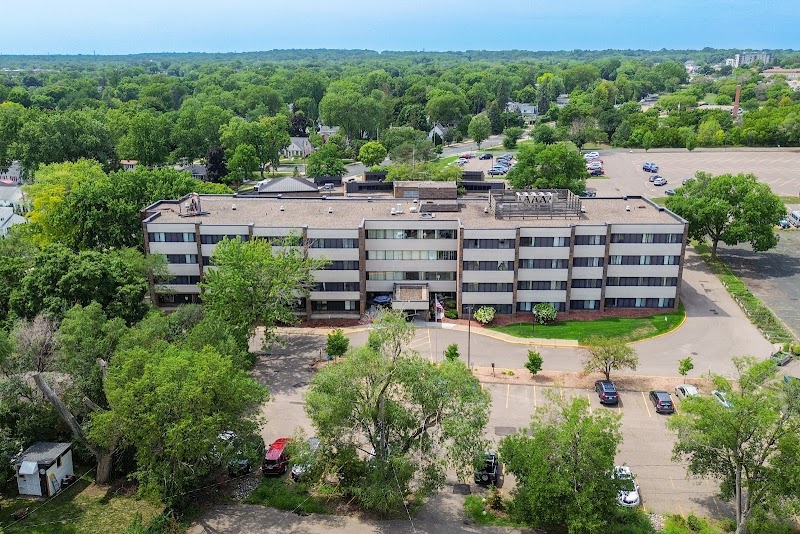
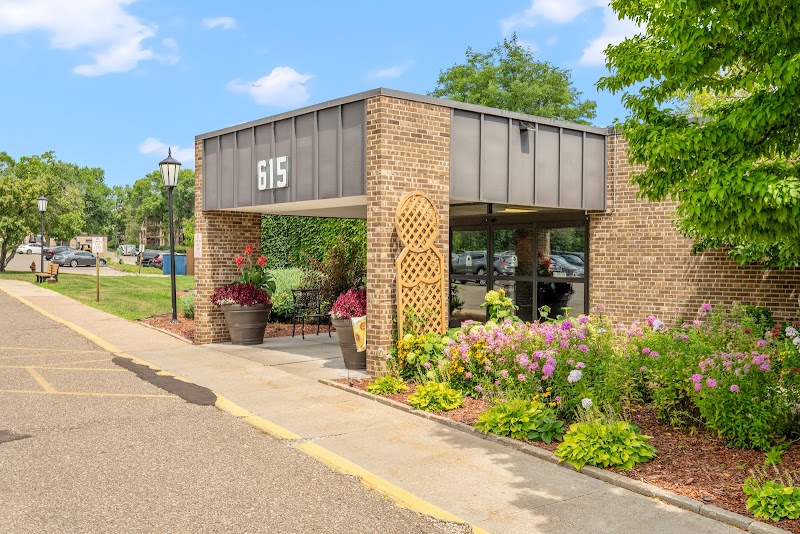
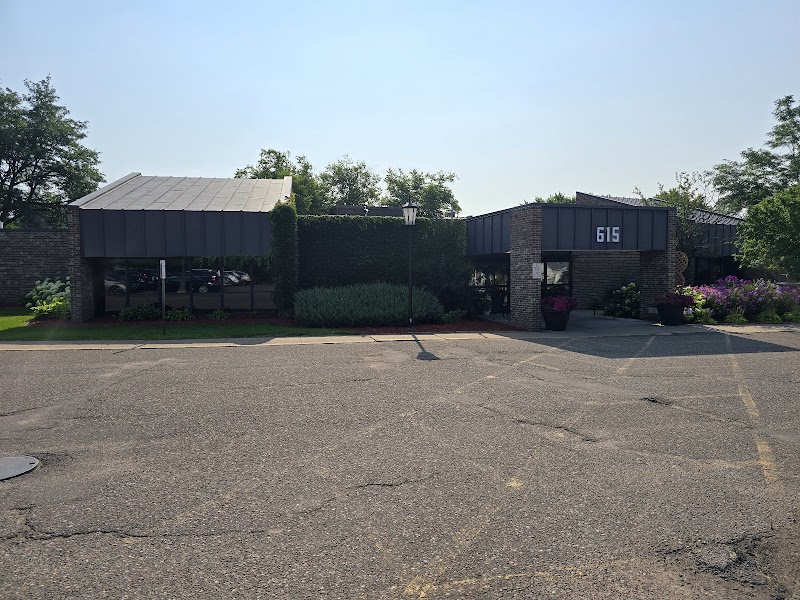
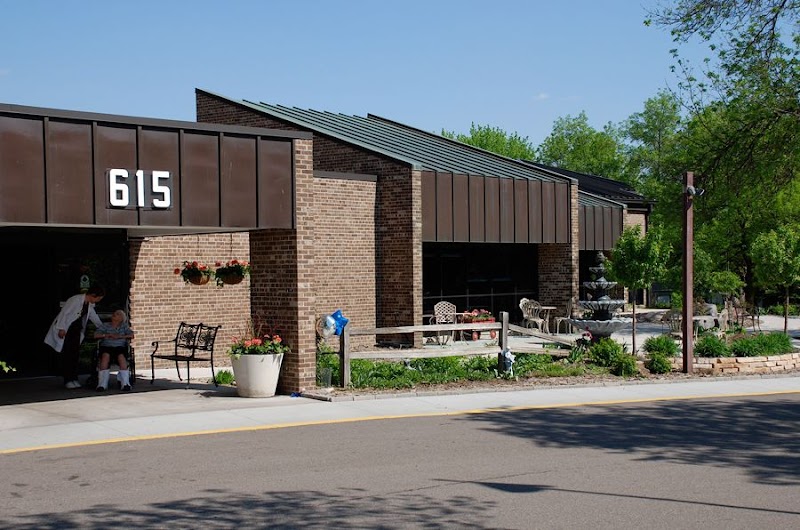
Augustana Chapel View Care Center

615 MINNETONKA MILLS ROAD, HOPKINS, MN 55343 (952) 938-2761
Non profit - Corporation 100 Beds CASSIA Data: November 2025 1 Immediate Jeopardy citation
Trust Grade
48/100
#158 of 337 in MN
Last Inspection: November 2024

Within standard 12-15 month inspection cycle. Federal law requires annual inspections.

Overview

Augustana Chapel View Care Center has received a Trust Grade of D, indicating below average performance with some significant concerns. It ranks #158 out of 337 facilities in Minnesota, placing it in the top half, and #24 out of 53 in Hennepin County, meaning only 23 local options are rated better. Unfortunately, the facility's trend is worsening, with issues increasing from 7 in 2024 to 8 in 2025. Staffing is a strong point, with a 5/5 star rating and a turnover rate of 34%, which is better than the state average, suggesting staff are well-established and familiar with the residents. However, there have been critical incidents, such as an outbreak of Influenza A affecting 13 residents due to inadequate infection control measures, and a nursing assistant failing to properly change a resident's catheter, potentially risking infection. While the facility has no fines on record, and RN coverage is average, families should weigh these strengths against the concerning trends and specific incidents.

Trust Score
D
48/100
In Minnesota
#158/337
Top 46%
Safety Record
High Risk
Review needed
Inspections
Getting Worse
7 → 8 violations
Staff Stability
○ Average
34% turnover. Near Minnesota's 48% average. Typical for the industry.
Penalties
✓ Good
No fines on record. Clean compliance history, better than most Minnesota facilities.
Skilled Nurses
✓ Good
Each resident gets 72 minutes of Registered Nurse (RN) attention daily — more than 97% of Minnesota nursing homes. RNs are the most trained staff who catch health problems before they become serious.
Violations
⚠ Watch
28 deficiencies on record. Higher than average. Multiple issues found across inspections.
★★★☆☆
3.0
Overall Rating
★★★★★
5.0
Staff Levels
★★★☆☆
3.0
Care Quality
★★☆☆☆
2.0
Inspection Score
Stable
2024: 7 issues
2025: 8 issues

The Good

  • 5-Star Staffing Rating · Excellent nurse staffing levels
  • Full Sprinkler Coverage · Fire safety systems throughout facility
  • No fines on record
  • Staff turnover below average (34%)

    14 points below Minnesota average of 48%

Facility shows strength in staffing levels, fire safety.

The Bad

3-Star Overall Rating

Near Minnesota average (3.2)

Meets federal standards, typical of most facilities

Staff Turnover: 34%

12pts below Minnesota avg (46%)

Typical for the industry

Chain: CASSIA

Part of a multi-facility chain

Ask about local staffing decisions and management

The Ugly 28 deficiencies on record

1 life-threatening
Apr 2025 7 deficiencies 1 IJ (1 facility-wide)
CRITICAL (L) 📢 Someone Reported This

A family member, employee, or ombudsman was alarmed enough to file a formal complaint

Immediate Jeopardy (IJ) - the most serious Medicare violation

Infection Control (Tag F0880)

Someone could have died · This affected most or all residents

⚠️ Facility-wide issue

**NOTE- TERMS IN BRACKETS HAVE BEEN EDITED TO PROTECT CONFIDENTIALITY** Based on observation, interview, and document review the facility failed to implement infection control strategies for respirato...

Read full inspector narrative →
**NOTE- TERMS IN BRACKETS HAVE BEEN EDITED TO PROTECT CONFIDENTIALITY** Based on observation, interview, and document review the facility failed to implement infection control strategies for respiratory protection to mitigate the risk and spread of Influenza A. As a result, the facility developed an outbreak where 13 residents (R1, R2, R3, R4, R5, R6, R7, R9, R13, R8, R10, R11 and R12) tested positive for Influenza A. Five residents (R1, R2, R5, R10 and R15) were sent to ED and admitted to hospital, These practices resulted in an immediate jeopardy (IJ) due to the likelihood of spread to the remaining 80 residents in the facility. The IJ began on 3/31/25, when the facility failed to implement ongoing monitoring, screening of residents with respiratory symptoms and implement transmission-based precautions and was identified on 4/18/25. The Administrator, director of Nursing (DON), and regional nurse consultant (RNC), were notified of the immediate jeopardy at 11:50 a.m. on 4/23/25. The immediate jeopardy was removed on 4/19/25 and the deficient practice corrected on 4/19/25, prior to the completion of the survey and was therefore issued at Past Noncompliance. Findings include: Definitions: Influenza: a contagious respiratory illness caused by a virus. Isolation: Isolation separates sick people with a contagious disease from people who are not sick. Quarantine separates and restricts the movement of people who were exposed to a contagious disease to see if they become sick. Personal protective equipment (PPE): refers to protective items or garments worn to protect the body or clothing from hazards that can cause injury and to protect residents from cross-transmission. These items may include a gown, gloves, eye protection and face mask. Enhanced barrier precautions (EBP): refers to an infection control intervention designed to reduce transmission of multidrug-resistant organisms that employs targeted gown and glove use during high contact resident care activities. Gowns and gloves are used as PPE. Transmission based precautions (TBP): refers to actions (precautions) implemented in addition to standard precautions that are based upon the means of transmission (airborne, contact, and droplet) to prevent or control infections. Airborne, contact, and droplet are the three subcategories under TBP. Contact precautions: refers to measures that are intended to prevent transmission of infectious agents which are spread by direct or indirect contact with the resident or the resident's environment. Use with gloves, and gowns as PPE. Droplet precautions: refers to actions designed to reduce/prevent the transmission of pathogens spread through close respiratory or mucous membrane contact with respiratory secretions, masks, gowns, gloves, and eyewear are used as PPE. Upon entrance to the facility on 4/18/25 at 08:15 a.m. there was signage posted on the front door informing visitors the facility was experiencing an outbreak of influenza, and all visitors and staff were to wear masks. During entrance conference on 4/18/25 at 8:33 a.m., director of nursing (DON), stated there were currently only two residents on TBP for influenza and those that could come off today (4/18/25) were already off. The outbreak started a few weeks ago, positive cases were only in the transitional care unit (TCU) however, DON was unaware of total number of residents who had tested positive for influenza since the initial case but was unsure of the date when the outbreak started. During an interview on 4/18/25 at 1:08 p.m., administrator and DON stated the facility had identified system break downs within the infection control program earlier this week and were working on a correction plan. R1 symptom onset 3/31/2025 and hospitalized from [DATE] until 4/3/25. R1's face sheet dated 4/24/25, indicated diagnoses of hemiplegia (paralysis on one side of body) and hemiparesis (weakness on one side of body) following stroke, acute respiratory failure with hypoxia (lack of oxygen), and diabetes. R1's progress notes dated 3/31/25 at 12:08 p.m. indicated R1 complained of not feeling good, and did not eat breakfast. R1 had a sore throat and had congestion in his upper lobes on inspiration. Vital signs were 98.2 (normal is 96.3-98.6) pulse was 63 (normal is 60-100), respirations were 18 (normal is 12-20), blood pressure was 129/70 (normal is below 120/80) and oxygen sats were 89-90% on room air (normal is 95 -100). Tested negative for COVID. Provider updated awaiting orders. Progress note at 1:52 p.m. indicated R1 was gasping for air, oxygen sats 82% on room air, oxygen applied and elevated head of bed. R1 started to shake, provider updated again, and order received to send to emergency department (ED). R1's physician visit dated 4/4/25, indicated R1 was hospitalized from [DATE] thru 4/3/25 with diagnoses of influenza A and B with respiratory manifestations, chronic congestive heart failure (CHF), chronic obstructive pulmonary disease (COPD), and sepsis (a life threatening condition) due to pseudomonas ( a common cause of sepsis) species with encephalopathy (viral infection of the brain) and sepsis due to undetermined organism with metabolic encephalopathy. R1 was discharged back to the facility on 4/3/25 at 4:48 p.m., with orders for oxygen, antibiotic, and antiviral medication. R1's progress note dated 4/4/25 at 3:21 p.m., indicated R1 was on droplet precautions R1's record did not identify when TBP's were removed. During an interview on 4/22/25 at 1:41 p.m., infection preventionist (IP)-A stated R1 came back from the hospital on 4/3/25 and was put on TBP, TBP was removed on 4/7/25. IP-A verified the TBP were removed after seven days and not based on an assessment and monitoring for symptom resolution. IP-A stated residents who tested positive for influenza were kept on TBP according to the facility policy that directed TBP for 7 days following the onset of symptoms or 24 hours after resolution of fever without analgesics whichever is longer. However, there was no monitoring of symptoms prior to the removal. R2 symptom onset 4/1/25, tested positive 4/6/25. R2's face sheet dated 4/24/25, indicated diagnoses of dementia, COPD, hemiplegia, and hemiparesis following a stroke, aphasia. R2's progress notes on 4/1/25, 11:48 a.m., noted vital signs were taken and R2 had an elevated temperature at 100.9, pulse elevated at 128, respirations 22 and blood pressure at 132/74, oxygen saturations at 96% on room air. Rapid Covid test negative. Physician and family updated. R2's record did not identify if TBPs were initiated with symptom onset. R2's progress notes dated 4/1/25 at 12:49 p.m., orders received for stat chest x-ray and nebulizer. Progress notes at 10:55 p.m. included chest x-ray was completed but there was no report at this time. R2's progress note dated 4/4/25 at 11:06 p.m., (3 days after symptoms onset) indicated a swab for COVID and Influenza was completed and in fridge waiting lab to pick up. R2's progress notes dated 4/6/25 at 2:52 p.m., (5 days after symptom onset) R2 tested positive for Influenza A. R2's progress note dated 4/7/25 at 7:12 a.m., indicated precautions were initiated (6 days after symptom onset). R2's progress note dated 4/9/25, identified TBP were removed, but there was no comprehensive respiratory assessment to ensure R2's symptoms were resolved prior to removal of TBP's. R3 symptom onset 4/2/25 and tested positive on 4/3/25. R3's face sheet dated 3/31/25, indicated diagnoses of dementia, and diabetes. R3's record did not identify respiratory symptom screening after R3's roommate (R1) tested positive for influenza A on 3/31/25. Additionally, review of IC records did not identify additional prevention strategies were implemented to mitigate the risk of viral illness spread. R3's progress notes dated 4/2/25 at 3:45 p.m., indicated R3 was not feeling well, cough with runny nose. R3 was swabbed for Covid and Influenza. R3's record did not identify TBP's were implemented upon onset of symptoms. R3's progress notes date 4/3/25 at 11:43 p.m., indicated R3 was very weak, continued to have cough and runny nose. Labs returned positive for influenza A and physician notified, and orders received. R3 was put on droplet precautions (one day after symptom onset). R3's record did not identify when R3's TBP were removed. Review of R3's record did not identify comprehensive assessments and monitoring to ensure R3's symptoms were resolved prior to the removal of TBP. During an interview on 4/22/25 at 1:41 p.m., IP-A stated R2 should have had TBP in place with the diagnosis of roommate on 3/31/25. IP-A verified the TBP were removed after seven days and not based on a comprehensive respiratory assessment. R4 symptom onset 4/7/25, tested positive on 4/8/25. R4's face sheet dated 4/24/25, indicated the following diagnoses of morbid obesity (severe overweight), and kidney disease. R4's record did not identify respiratory symptom screening from 3/31/25 through 4/6/25, even though the facility had positive Influenza cases. R4's progress notes dated 4/7/25 at 3:56 p.m., R4 reported to nurse practitioner (NP) shivering for about 30 minutes. Vitals signs were taken and R4 was swabbed for Covid and influenza. In review of R4's record there was no indication TBP's were implemented with onset of symptoms. R4's progress note dated 4/8/25 at 10:34 a.m., R4 tested positive for Influenza A. R4 on room isolation, however R4's record did not specify type of TBP was required. R4's late entry progress note dated 4/21/25 for 4/16/25, indicated R4 was removed from droplet precautions per infection control nurse, however, review of R4's record did not identify comprehensive assessments and monitoring to ensure R1's symptoms were resolved prior to the removal of TBP's. R5 symptom onset 4/8/25, tested positive 4/9/25. R5's face sheet dated 4/24/25, indicated diagnoses of obesity, acute/chronic respiratory failure with hypoxia, diabetes, CHF, and COPD. R5's record did not identify respiratory symptom screening from 3/31/25 through 4/7/25, even though the facility had a positive Influenza case. R5's progress note on 4/8/25 at 12:21 p.m., indicated R5 had confusion to place and time, words did not come out clearly, and unable to express needs clearly but able to verbalize her name. R5 also had a cough and poor appetite. Physician notified and labs ordered that included RSV/FLU/COVID. In review of R5's record there was no indication TBP's were implemented with onset of symptoms. R5's progress note on 4/9/25 at 9:56 a.m., indicated resident confused, slow to respond, and showed signs of distress. BP 123/76, 02 88% on 4L, Pulse 116, T. 97.3. BG 417. R5 sent to the hospital for further eval. R5's hospital summary identified R5 admitted to the hospital on [DATE] and discharged back to the facility on 4/18/25 with diagnoses that included influenza. Per hospital summary, upon admission to ED, R5 could not provide history due to acute hypoxic respiratory failure on BIPAP and acute encephalopathy. Further identified per nursing facility, multiple cases/exposures to influenza A of other residents this week. R5's record did not identify if R5 returned from the hospital on TBP and/or an assessment that determined precautions were no longer necessary. During an interview on 4/22/25 at 1:41 p.m., IP stated with the onset of symptoms R5 should have been put on TBPs, tested, and had respiratory assessments completed per facility protocol upon return to facility. R6 symptom onset 4/8/2025; tested positive on 4/10/25. R6's face sheet dated 4/24/25, indicated the following diagnoses of diabetes, status post kidney transplant, immunodeficiency, and morbid obesity. R6's record did not identify any respiratory symptom screening from 3/31/25 through 4/7/25, even though the facility had a positive Influenza case. R6's progress notes dated 4/8/25 at 5:44 p.m., indicated R6 had requested cough syrup during AM shift due to coughing. R6 was assessed and a low-grade temperature of 99.5, blood pressure was 128/67, pulse 59. Rapid Covid test performed and was negative. Written message to physician on call board. In review of R6's record there was no indication TBP's were implemented with onset of symptoms. R6's progress notes dated 4/9/25 at 12:56 p.m., indicated R6 continued to have a cough with audible wheezing and lethargy. Temp 99.4, oxygen saturations 87-89%, so administered oxygen at 2 liters per minute (LPM). Physician on site and order received for swab for Influenza, RSV, and Covid, urinalysis with urine culture and chest x-ray. Chest x-ray not completed on the day shift and there were no Influenza swabs available. Order moved to tomorrow, 4/10/25. R6's progress notes dated 4/10/25 at 2:15 p.m. indicated physician was notified of positive Influenza A test. Review of R6's record did not identify when TBP was removed nor comprehensive assessments and monitoring to ensure R6's symptoms were resolved prior to the removal of TBP. R7 symptom onset 4/8/25 tested positive 4/14/25. R7's face sheet dated 4/24/25, indicated the following diagnoses of status post coronary artery by-pass graft, acute respiratory distress, pleural effusion (build up fluid in the lungs). R7's record did not identify respiratory symptom screening from 3/31/25 through 4/7/25, even though the facility had positive Influenza cases. R7's progress notes dated 4/8/25 at 9:30 p.m., indicated R7 had an occasional cough and diminished lung sounds without shortness of breath. Vital signs obtained and documented with no signs of fever. In review of R7's record there was no indication TBP's were implemented with onset of symptoms. Review of R7's progress notes between 4/9/25 and 4/13/25, identified R7 continued to have symptoms that included cough, difficulty breathing, and poor appetite. R7's progress notes dated 4/14/25 at 9:54 a.m., indicated R7 had influenza infection, strict in room isolation. R7 complained of feeling weak and had been coughing over the weekend and not feeling well. Physician notified and rapid Covid and influenza tests ordered. R7's progress notes dated 4/17/25 at 11:45 a.m., R7 was discharged to home with family. R9 symptom onset 4/8/2025, tested positive on 4/10/25. (R9 is roommates with R13 R9's face sheet dated 4/24/25, indicated the following diagnoses; dementia, and malnutrition. R9's record did not identify any respiratory symptom screening from 3/31/25 through 4/7/25, even though the facility had positive Influenza cases. R9's progress notes dated 4/8/25 at 5:04 p.m., R9 had been coughing throughout AM shift. Rapid Covid test was negative. Physician notified via communication board. In review of R7's record there was no indication TBP's were implemented with onset of symptoms. R9's late entry dated 4/14/25 at 11:17 a.m. for 4/10/25, indicated R9 was having nasal congestion and occasional nonproductive cough. R9 was swabbed for Influenza A and RSV. R9 was put on droplet precautions and isolated to his room. Lab results were obtained evening of 4/11/25 which identified R9 was positive for Influenza A. R9's record did not identify when and/or if TBP's were removed. R13 symptom onset 4/8/25; influenza positive 4/11/25, (roommate to R9) R13's face sheet dated 4/24/25, indicated the diagnoses Parkinson's disease and CHF. R13's record did not identify any respiratory symptom screening from 3/31/25 through 4/7/25, even though the facility had positive Influenza cases. Furthermore, R13's record did not identify if TBPs were implemented. R13's progress notes dated 4/8/25, indicated R13 had foul smelling urine and son reported mild confusion. Physician notified via call board. R13's progress notes dated 4/9/25, indicated physician on site, orders received and swab for influenza not done, as out of supplies. Order changed to tomorrow 4/10/25. R13's progress notes dated 4/15/25, indicated late entry for 4/10/25 at 10:39 a.m., R13 was swabbed for Influenza, RSV and Covid and results were negative. R13's laboratory results fax transmission dated 4/12/25, included the results for influenza A test, collected 4/10/25 at 11:00 a.m. and the test resulted on 4/11/25 at 9:58 p.m., as positive for influenza A. During an interview on 4/23/25 at 10:46 a.m., registered nurse (RN)-A confirmed he wrote the late entry progress note and verified also that he was not aware R13 tested positive for Influenza A until 4/23/25, at 10:46 a.m. R13's progress note date 4/15/25 at 8:10 p.m., indicated R13 had a change of condition. R13 complained of being tired, wanted to go to bed, was shaking, passed out during transfer, and was assisted to bed by staff. Vital signs were stable with blood pressure 95/50, temperature 97.2 F, heart rate 85 beats per minute, SpO2 92% and upon re-check 10-15 minutes later blood pressure was 108/67, heart rate 127 beats per minute, and SpO2 95%. On call provider was notified and gave order to send R13 to the hospital for evaluation. R13's hospital physician History and Physical hospital note dated 4/15/25, indicated R13 had lost consciousness for a brief time at the facility, had a temperature of 101.7 F, and emergency medical services were called and transported him to the hospital. R13's active problem list included influenza A with note medication list includes Tamiflu, which leads me to believe the care facility knew about this already, or maybe he was taking it for prophylaxis, sepsis likely from the influenza but chest x-ray suggestive of possible pneumonia, and chronic atrial fibrillation (heart rhythm disorder where the upper chambers beat irregularly). R13 was admitted to the hospital as an inpatient because of a higher risk of adverse outcome due to influenza A, sepsis. R13 remained in hospital with no return date anticipated. R8 symptom onset 4/10/25, tested positive on 4/11/25. R8's face sheet dated 4/24/25, identified the following diagnoses, fibromyalgia, and asthma. R8's record did not identify any respiratory symptom screening from 3/31/25 through 4/9/25, even though the facility had positive Influenza cases. R8's late entry note documented on 4/14/25 for 4/10/25 indicated R8 was having nasal congestion and occasional nonproductive cough. Rapid Covid 19 was negative. Orders received to swab R8 for Influenza A and RSV. R8 was put on droplet precautions and isolated to room on 4/10/25. Lab results returned 4/11/25 in the evening and positive for Influenza A. R8's late entry note dated 4/21/25 for 4/18/25 at 1:28 p.m., indicated R8 was removed from droplet precautions. However, R8's record did not include ongoing respiratory assessments and monitoring to determine the appropriate duration of precautions to mitigate the risk of viral spread. R10 symptom onset 4/13/2025, tested negative on 4/13/25 and then positive on 4/15/25. R10's face sheet dated 4/24/25, identified the following diagnoses, rheumatoid arthritis, urinary tract infection and asthma. R10's record did not identify any respiratory symptom screening from 3/31/25 through 4/10/25, even though the facility had positive Influenza cases. R10's progress notes dated 4/11/25 at 9:59 p.m., indicated R10 was more tired and weak this evening. R10's daughter had called facility and requested intravenous (IV) fluids as she was concerned R10 was dehydrated. Vital signs blood pressure 111/52, temperature 97.9, heart rate 85, respirations 18, and oxygen saturation 92% on room air. Lung sounds slightly diminished. R10 reported being nauseated, was unsteady and could not ambulate far. COVID swab negative. R10's record did not identify if TBPs were implemented. R10's progress notes dated 4/12/25 at 3:17 p.m., indicated R10 stayed in her room and only ate bites for breakfast and refused lunch. In review of R10's progress notes dated 4/13/25 through 4/15/25, identified R10 had respiratory symptoms that included cough, shortness of breath, weakness, lethargy, and low oxygen saturations. On 4/13/25, the provider was notified and ordered oxygen, chest x-ray and labs. On 4/14/25, rapid tests for influenza and Covid were negative. R10's progress notes dated 4/15/254 at 10:46 p.m., indicated Influenza A detected. Currently on droplet precautions, on strict isolation (the record did not identify when TBP were implemented). Physician notified and orders for Tamiflu given. R10's progress notes dated 4/23/25 at 1:52 p.m., indicated continued illness, R10 transferred to ED for further evaluation. R10's record did not include hospitalization information. R11 symptom onset 4/14/2025, tested positive on 4/15/25. R11's face sheet dated 4/24/25, indicated the following diagnoses, diabetes, s/p open reduction internal fixation of left lower leg, morbid obesity, and obstructive sleep apnea. R11's record did not identify any respiratory symptom screening from 3/31/25 through 4/13/25, even though the facility had positive Influenza cases. R11's progress notes dated 4/14/25 at 10:02 p.m., indicated R11 was complaining of a severe headache and non-productive cough was medicated with scheduled Tylenol 1,000 mg and cough syrup which was effective. R11's record did not identify TBPs were implemented with onset of symptoms. R11's progress notes dated 4/15/25 at 10:22 a.m., indicated influenza A positive and on strict room isolation with droplet precautions was initiated today (one day after symptom onset) and to go through 4/21/25. R11's progress note dated 4/21/25, identified R11 was removed from TBP, however there was no indication comprehensive assessments and monitoring were completed to ensure symptom resolution prior to removal. R12 symptom onset 4/15/2025, tested positive on 4/17/25. R12's face sheet 4/24/25, indicated the following diagnoses infectious encephalopathy, acute left kidney infection, sepsis, and bacteremia with acute pulmonary edema. R12's record did not identify any respiratory symptom screening from 3/31/25 through 4/14/25, even though the facility had positive Influenza cases. R12's progress notes dated 4/15/25 at 10:27 p.m., indicated R12 complained of headache and was medicated with as needed Tylenol. Nasal swab was performed for COVID and Influenza, lab notified via fax. Currently on strict isolation precautions. R12's progress notes dated 4/16/25 at 9:04 p.m., indicated no complaints of headache, pain, shortness of breath or cough. Lung sounds diminished. R12's progress notes dated 4/17/25 at 9:24 a.m., indicated isolation/Influenza positive. R12 placed in strict room isolation for seven days. During a continuous observation on 4/18/25 between 12:15 p.m. and 12:25 p.m., nursing assistant (NA)-M was observed delivering meal trays to R12 and R10, who had contact and droplet precautions signage posted on the doors. NA-M, without putting on any PPE, entered R12's room and delivered the meal tray and used hand sanitizer after leaving the room. NA-M then walked into R10's room without PPE, delivered meal tray, then performed hand hygiene. Unidentified housekeeper was cleaning resident rooms of the 200 hallway, entered R12's room with a mask on, but did not put gloves, gown, or eye protection as the sign directed. Housekeeper took a bag out of room with clothing in and put it on the floor outside the door in the hallway. Housekeeper used a cloth to wipe down the surfaces in the room. Housekeeper took the same the cloth and put in a bag tied to her cart in the hallway. Housekeeper mopped the floor in R12's room. Housekeeper exited the room and placed the dirty mop head into a bag tied to her cart. She then walked down the hallway and entered R18's room with the same mask on and did not perform any hand hygiene throughout the observation. During an interview on 4/18/25 at 12:22 p.m., NA-M stated residents who were on precautions were due to either a dressing change or they had a catheter. NA-M stated R10 tested positive for influenza A on 4/15/25. NA-M verified R10 had a sign on the door that directed droplet and contact precautions, however stated he only needed to wear a mask to enter R10's room despite the signage that directed R10 required gown, gloves, and eye protection in addition to the mask. During interviews on 4/18/25 three licensed staff, (LPN-E at 11:03 a.m., RN-G at 11:53 a.m. and LPN-A at 12:34 p.m.) were able to articulate sign/symptoms of respiratory viruses and when to implement TBP and test symptomatic residents. LPN-A, LPN-E, and RN-G all indicated even though they were performing assessments and illness monitoring they were not documenting their assessment findings in the resident's medical record. During a clarification interview on 4/24/25 at 10:33 a.m., DON stated she would expect a respiratory assessment to contain vital signs, lung sounds, oxygen use, and cough. Since 4/19/25, the facility has assigned a nurse to complete all of the necessary screening, assessments, and monitoring. DON's expectation is that TBP's were put into place and resident is tested per orders. Residents should remain in TBP until symptoms resolve. During an interview on 4/22/25 at 1:41 p.m., IP-A stated she determined if precautions could be removed by talking to staff and reviewing the records, however, confirmed there was no documentation of this determination. IP-A also stated there were residents who were symptomatic but tested negative and were not monitored for improvement or worsening conditions. IP-A explained the Infection Tracking Line List document was not started until 4/3/25 and this was also when the facility posted outbreak signage for staff and visitors. Infection Tracking Line List dated 4/18/25, was missing the start and end date of TBPs, was not completed in real time, and did not include all residents who had and were having respiratory symptoms. During an interview on 4/24/25 at 1:44 p.m., MD-C stated it was his expectation that the facility followed their policy/protocol for outbreak status. Facility policy titled Influenza (Prevention and Outbreak Management) dated 2/13/25, included an Influenza Outbreak section that indicated: -Monitor residents for influenza-like illness: Instruct staff to be alert to signs/symptoms of influenza-like illness (fever, cough, sore throat, headache, shortness of breath) among residents and report resident illness to supervisors immediately; -Conduct active surveillance for respiratory illness among all residents and staff until at least one week after the last confirmed case occurred. Facility policy titled Infection prevention and control program dated 7/3/24, that indicated: 2. The infection prevention and control program are a system of prevention, identification, reporting, investigating infections in the facility through ongoing surveillance to help identify possible communicable diseases and infections and prevent the spread of those diseases and infections to others. 6. Standard precautions will be used by all staff to prevent resident to resident, resident to healthcare worker, and healthcare worker to resident transmission of infectious organisms. 7. Transmission based precautions and enhanced barrier precautions will be provided for residents requiring additional precautions if the facility is able to meet the needs of the resident and infection control recommendations. When TBPs are used, the facility will use the least restrictive possible given the circumstances and the resident's ability to follow the precautions. 11. Employees will be in-services on the infection control program during orientation and will receive periodic updates. 19. The medical director and department of health, if necessary, will be contacted during an outbreak of infectious disease for suggestions on investigation and control of the outbreak. The past noncompliance immediate jeopardy began on 3/31/25. The immediate jeopardy was removed, and the deficient practice corrected by 4/19/25, after the facility implemented a systemic plan that included the following actions: -The facility identified an infection control action plan and developed an ongoing quality assurance performance improvement (QAPI) plan. - Updated/corrected infection control surveillance logs/line listing. -Provided education on infection control practices to included active screening, comprehensive assessments, documentation, implementing/removal of TBP. -Completed active screening for symptoms for residents and staff on 4/19/25. -Developed an auditing system -Provided notification of influenza outbreak to residents and family -Implemented high touch areas cleaning and cleaning log. -Reviewed vaccine status -Implemented protocols for Tamiflu administration -updated the medical director on status.
CONCERN (D) 📢 Someone Reported This

A family member, employee, or ombudsman was alarmed enough to file a formal complaint

Potential for Harm - no one hurt, but risky conditions existed

Quality of Care (Tag F0684)

Could have caused harm · This affected 1 resident

**NOTE- TERMS IN BRACKETS HAVE BEEN EDITED TO PROTECT CONFIDENTIALITY** Based on observation, interview, and document review, the facility failed to comprehensively assess and appropriately monitor 2 ...

Read full inspector narrative →
**NOTE- TERMS IN BRACKETS HAVE BEEN EDITED TO PROTECT CONFIDENTIALITY** Based on observation, interview, and document review, the facility failed to comprehensively assess and appropriately monitor 2 of 3 residents (R5, R13) with acute illnesses including but not limited to influenza that resulted in hospitalization reviewed for change of condition. Findings include: See F880 for additional information about facility's infection control and prevention practices regarding influenza. R5 R5's quarterly Minimum Data Set, dated [DATE], indicated R5 admitted to the facility on [DATE] with diagnoses including chronic obstructive pulmonary disease (COPD), congestive heart failure (CHF), hypertension, type 2 diabetes, hyperkalemia (elevated blood level of potassium), and acute and chronic respiratory failure. R5 used supplemental oxygen therapy and was cognitively intact. R5's care plan problems dated 7/7/23, identified R5 was at risk for decline in medical condition with intervention to monitor for changes in condition and notify provider and resident representative as indicated. R5's care plan identified R5 had shortness of breath (SOB) with exertion and when the head of the bed was flat and required oxygen (O2) therapy. Interventions included administer oxygen per physician orders, monitor oxygen saturation (SpO2) via pulse oximetry (device to measure blood oxygen saturation levels) per protocol and as needed, and monitor/document respiratory status per protocol and as needed. R5's care plan identified R5 was alert and oriented and included intervention to monitor for changes in cognition and notify provider as needed. R5's physician orders included the following: - Order dated 7/6/23, to check O2 saturations as needed for increased breathing difficulty. - Order dated 7/7/23, to auscultate (listen to with a stethoscope) lung sounds, make a progress note if abnormal lung sounds are present, and notify provider if indicated once a day for CHF. - Order dated 7/7/23, to note level of edema and respiratory effort daily, make a progress note if any abnormal findings, and notify provider of concerns once a day as indicated for CHF. - Order dated 4/15/24 for 3 liters (L) of continuous oxygen via nasal cannula. - Order dated 5/2/24, for vital signs weekly with bath on Thursdays. - Order dated 7/3/24, to check blood glucose (blood sugar) levels once a week on Wednesday mornings. R5's progress note dated 4/6/25 at 10:29 p.m., indicated she was alert and oriented, denied pain or SOB, and had stable O2 at her baseline of 3L. R5's progress note dated 4/8/25 at 12:21 p.m., identified R5 had a change in condition. R5 was confused to place and time, unable to express her needs, words did not come out clearly, and she only verbalized her name. The presence of a cough was noted as well as poor appetite with refusal of meals. The note indicated R5's vital signs were stable and she denied pain, SOB, fever, abdominal discomfort, nausea/vomiting, dizziness, or headache. She had no signs of respiratory distress with cares or activities. The provider was notified and ordered STAT (immediate) laboratory studies (labs) for a complete blood count (CBC), basic metabolic panel (BMP), COVID-19, respiratory syncytial virus (RSV), influenza, and a urinalysis and urine culture (UA/UC). Samples for RSV, influenza, and COVID-19, and UA/UC were collected and in the fridge for lab to pick up with CBC and BMP still pending. The note identified at this time the staff will continue to monitor, and offer more fluids. See F770 for additional information regarding lack of timely completion of ordered labs. R5's provider note by nurse practitioner (NP)-A dated 4/9/25, indicated R5 was seen for an acute visit. The note included staff noted R5 had increased confusion a day ago and she was usually alert at baseline. Labs for COVID-19, influenza A and B, RSV, a urinalysis, CBC, and BMP were ordered but results were still pending. The facility had influenza cases. On 4/9/25, R5 has declined in condition, is more confused, lethargic, face flashed [sic, flushed] with shallow breathes [sic, breaths] on 4L of oxygen. Sats [SpO2] 86-88% . has not been able to keep food down . today's BG [blood glucose] 412. Physical examination noted R5 was confused and lethargic with rales (crackle sounds heard when listening to the lungs) and shallow breaths. The plan was to send R5 to the hospital for further evaluation. R5's progress note dated 4/9/25 at 9:56 a.m., indicated R5 was confused, slow to respond, very weak, and showed signs of distress. Vital signs were blood pressure 123/76, SpO2 88% on 4L of O2, blood sugar 417, heart rate 116, and temperature 97.3 degrees Fahrenheit (F). Interventions were elevating the head of the bed and a nebulizer treatment (respiratory medication administered via inhalation). R5 was sent to the emergency room and daughter notified. R5's vital signs record from 4/8/25 through 4/9/25, included the following: - 4/8/25 at 12:16 a.m.: SpO2 95% on 3L of O2 - 4/8/25 at 7:54 a.m.: Blood pressure 108/72 - 4/8/25 at 1:14 p.m.: SpO2 92% on 3L of O2 - 4/8/25 at 10:17 p.m.: SpO2 92% on 3L of O2 - 4/9/25 at 6:26 a.m.: SpO2 93% on 3L of O2 - 4/9/25 at 8:00 a.m.: Pain score of zero, blood sugar 417 milligrams per deciliter (mg/dL), SpO2 88% on 3L of O2, blood pressure 123/76, respirations 18 breaths per minute, heart rate 116 beats per minute, and temperature 97.3 F. R5's vital signs record included a full set of vital signs taken on 4/9/25 at 8:00 a.m. but lacked any other full sets of vital signs from 4/8/25 through 4/9/25. R5's Medication and Treatment Administration Records (MAR/TAR) for April 2025 included SpO2 measurements completed once per shift (days, evening, nights) corresponding with the vital signs record. Also included blood pressure measurement taken once daily in the morning for administration of a blood pressure medication corresponding with the vital signs record. In addition, the MAR/TAR included the physician orders to auscultate lung sounds and note level of respiratory effort (and make progress note for abnormal findings) once daily between 7:00 a.m. and 3:00 p.m. These orders were marked as completed on 4/1/25 through 4/8/25 but blank on 4/9/25. There were no corresponding progress notes in R5's record documenting associated abnormal findings. R5's MAR/TAR lacked documentation of additional monitoring and assessment of R5 after staff identified her change in condition noted in progress note dated 4/8/25 at 12:21 p.m. The records lacked evidence of ongoing assessment and monitoring of vital signs, possible infection, or respiratory status. R5's assessments section of her electronic health record (EHR) lacked documentation of any assessments completed between 4/8/25 at 12:21 p.m. when R5's change in condition was identified and 4/9/25 at 9:56 a.m. when progress note indicated she was sent to the hospital. R5's Emergency Center physician hospital note dated 4/9/25, indicated R5 presented with altered mental status, hypoxia (low oxygen levels in body tissues), concern for an underlying infectious process, fever of 100.8 F, and a viral swab positive for influenza A. R5 was admitted to the hospital with diagnoses of altered mental status, influenza, hypoxia, hypercapnia (high levels of carbon dioxide in the blood), severe sepsis (extreme reaction of the body to infection causing further damage), and acute respiratory failure. R5's hospital Discharge summary dated [DATE], identified R5 was hospitalized from [DATE] through 4/18/25 with diagnoses of: influenza A with respiratory manifestation, bilateral ground-glass opacities (densities in the lungs seen on chest imaging), COPD exacerbation, pulmonary edema (accumulation of fluid in the lungs), pseudomonas (a type of bacteria) urinary tract infection, word-finding difficulty, acute on chronic respiratory failure, acute kidney injury, sepsis, acute hyperkalemia, and acute encephalopathy (disturbance of the brain's function). During an interview on 4/22/25 at 10:03 a.m., R5 stated she had been in the hospital for about a week due to a combination of her oxygen levels and a urinary tract infection. R5 stated it was a blur and she did not clearly remember what happened prior to her transfer to the hospital, but staff knew something was wrong with her and contacted emergency medical services. R5 was lying in bed with head of bed elevated and 3L of supplemental O2 delivered via nasal cannula. During an interview on 4/22/25 at 12:50 p.m., licensed practical nurse (LPN)-D stated for a resident with a change in condition she would monitor them every two hours. She would assess responsiveness, lung sounds, take vital signs, and document all in a progress note at the end of her shift. LPN-D stated staff could also enter a nursing order on the TAR which would prompt staff to monitor every two hours. LPN-D noted she was R5's nurse on 4/9/25 when R5 went to the hospital. LPN-D noted R5 normally had a once weekly vital sign and blood sugar check which was scheduled for that morning, so she had obtained a full set of vital signs. LPN-D stated she was concerned about R5's oxygen level, so she checked it every 30 minutes. LPN-D noted the nurse practitioner was on-site, saw R5, and decided to send her to the hospital. R5's record lacked documentation of monitoring every two hours and of SpO2 checks every 30 minutes. During an interview on 4/22/25 at 1:45 p.m., LPN-A stated for a resident with a change in condition, the provider would be notified and give staff monitoring orders. Providers would identify how they wanted a resident monitored and the frequency. If specific orders were not provided, LPN-A would check on a resident every two hours and for a potential respiratory illness he would monitor vital signs, fever, hypoxia, SOB, and appetite. LPN-A stated he was R5's nurse on 4/8/25, notified the provider of her change in condition, and received orders for labs. LPN-A stated no specific monitoring orders were provided, but per nursing judgement, he monitored her every two hours keeping an eye on her and would have checked vital signs every four hours, checked lung sounds and put this in a progress note at the end of his shift. R5's record lacked documentation of monitoring every two hours and of vital signs every four hours. During an interview on 4/22/25 at 3:28 p.m., registered nurse (RN)-D stated she was not sure what the protocol was for monitoring respiratory status, but guessed she would monitor vital signs, respiratory status, check oxygen levels, and check lung sounds maybe every 15 to 30 minutes. RN-D noted she would follow whatever was on the care plan. If the care plan directed to monitor per protocol, RN-D was not sure what per protocol meant. If she heard a resident had a respiratory issue in report, she should check and chart SpO2 every two hours if above 90% and check more frequently if it was lower. During an interview on 4/22/25 at 3:51 p.m., RN-E stated for respiratory status monitoring she would do a full set of vital signs. RN-E thought protocol would be every 15 minutes depending on the status of the resident and she would document in a progress note and notify the provider of anything abnormal. During an interview on 4/22/25 at 3:57 p.m., nurse manager RN-A stated respiratory status assessment should include lung sounds, SpO2 for residents on oxygen, coughing, wheezing, and SOB. For a resident with a change in condition, this should be done at least once every shift, would be noted in a provider or nursing order on the TAR, and abnormal findings relayed to the provider and documented in a progress note. For a resident who was not stable he would expect a nursing order or physician's order for monitoring at least every shift. During an interview on 4/24/25 at 10:33 a.m., the director of nursing (DON) stated she would expect a respiratory assessment to contain vital signs, lung sounds, oxygen use, cough, SOB, and relevant conditions like CHF or COPD. This would be charted in the MAR/TAR, observation (assessment) forms, an event form, or a progress note. After R5's change in condition was identified on 4/8/25, she would expect to see monitoring at least once a shift for respiratory monitoring, urinary monitoring, intake and output, infection, lung sounds, pain, and a full set of vital signs. The DON confirmed there was a full set of vital signs in R5's record from the morning of 4/9/25, but she did not see another full set of vital signs since R5's change in condition was noted on 4/8/25. She would expect to see a full set of vital signs from that time as well as on the overnight shift. Further, the DON stated, I don't see ongoing monitoring of her respiratory status. The DON confirmed R5 was not monitored appropriately for her change in condition and the assessment and monitoring after her change in condition was identified was not in line with policy and procedure, standards of practice, or her expectations. The DON identified potential outcomes of a lack of appropriate monitoring and assessment as a delay in care, decline, or possible death. During a return phone call interview on 4/28/25 at 10:29 a.m., NP-A stated she would expect a respiratory assessment to include vital signs, lung sounds, and symptom monitoring. If specific time parameters for monitoring were not ordered, she would expect staff to monitor at least once a shift and more frequently as needed depending on the resident's condition. This was important so treatment could be expedited as needed and a resident sent to the hospital. For R5's change in condition, NP-A would expect staff to have checked her SpO2, fever, SOB and with the facility's flu outbreak also have monitored all upper respiratory symptoms. For R5, NP-A would have expected staff check her vitals and monitor every four hours and PRN [as needed] as well. Not once a shift, because she had a change in condition. During a return phone call interview on 4/29/25 at 3:50 p.m., physician (MD)-B stated she would expect the facility to follow their protocols for assessment and monitoring. With an outbreak of influenza A at the facility, she would expect residents to be monitored for signs and symptoms including fever, cough, fatiguability, malaise, sore throat, nausea, decreased appetite, nasal congestion, headache, and altered mental status. For a respiratory assessment she would expect staff to look for respiratory distress, oxygen saturation levels, oxygen requirements if on supplemental oxygen, any respiratory symptoms, and lung auscultation. After R5's change of condition was noted on 4/8/25, MD-B would expect assessment and monitoring per the facility's protocol, especially with influenza A present in the facility, including vitals signs at least every four hours and respiratory and urinary assessments. She would expect staff to monitor and report any significant changes to her office immediately. R13 R13's annual MDS dated [DATE], indicated R13 admitted to the facility on [DATE] with diagnoses including congestive heart failure, obstructive and reflex uropathy (problems affecting the flow of urine), hypertension, dementia, and Parkinson's disease. R5 had an indwelling catheter and was cognitively impaired. R13's care plan dated 2/7/25, identified he was at risk for decline in medical condition. Interventions included administering medications and treatments per physician orders and monitoring for changes in condition and notifying provider as indicated. R13's physician orders included the following: - Order dated 3/27/24, to update NP if resident had a decline in condition or was not eating/drinking every shift. - Order dated 3/27/24, to auscultate lung sounds, make a progress note if abnormal lung sounds are present, and notify provider if indicated once a day for CHF. - Order dated 3/27/24, to note level of edema and respiratory effort daily, make a progress note if any abnormal findings, and notify provider of concerns as indicated once a day for CHF. - Order dated 5/9/24, for vital signs weekly on bath day on Wednesdays. R13's progress note dated 4/8/25 at 6:21 p.m., indicated he had foul smelling discolored urine and R13's son reported he seemed mentally altered with mild confusion. R13's catheter bag was changed, he was offered fluids throughout the shift, and the PM [evening] shift notified and will continue to monitor. NP was notified via a written message on the call board. R13's provider note by NP-A dated 4/9/25, indicated R13 was seen for an acute visit. The note indicated R13 had foul smelling urine and a history of urinary retention and chronic indwelling catheter. Also noted some confusion and a history of dementia. Further indicated there were two patients with confirmed influenza at the facility. The assessment and plan for confusion, foul smelling urine, hematuria, urinary retention, and indwelling foley catheter included will order UA/UC [urinalysis and urine culture] and will check for influenza/COVID-19 due to confirmed cases at the facility. R13's progress note dated 4/9/25 at 12:47 p.m., indicated he had bloody urine (hematuria) in his catheter bag and the NP was on-site and updated. Catheter was changed but there was not enough urine to sample for labs, PM nurse was updated to collect and process. Influenza swabs were not done because there were no supplies, order was changed to tomorrow. See F770 for additional information regarding lack of timely completion of ordered labs. R13's late entry progress note dated 4/10/25, was entered on 4/15/25. The note indicated a swab was collected from R13 on 4/10/25 to test for influenza, RSV, and COVID-19 and lab results came out negative. The facility's Infection Tracking Line List document indicated R13's roommate had a positive lab test for influenza A on 4/10/25. R13's roommate had developed respiratory symptoms and was tested on [DATE]. R13's physician order dated 4/10/25, had end date of 4/23/25 for Tamiflu (antiviral medication taken to prevent influenza or, at a higher dosage, to treat influenza) capsule 75 mg orally once a day at bedtime for diagnosis of encounter for other specified prophylactic measures - influenza. R13's laboratory result fax transmission form dated 4/12/25, included the result for an influenza A test ordered by NP-A. The swab for the test was collected on 4/10/25 at 11:00 a.m. and the test resulted on 4/11/25 at 9:58 p.m. The influenza A value was listed as detected (A) with a legend identifying A to mean abnormal. Per late entry progress note dated 4/10/25, this result had been negative. See F773 for additional information regarding lack of provider notification of abnormal lab result. R13's late entry progress note dated 4/13/25, was entered on 4/16/25. The note indicated lab results came in, the on-call NP was called and directed staff to notify R13's NP, and R13's NP was notified via the notice board. The progress note did not specify which lab results it referenced or if the results were abnormal. R13's progress note dated 4/13/25, indicated he had hematuria, vital signs were stable, and fluids provided throughout shift. R13's progress note date 4/15/25 at 8:10 p.m., indicated R13 had a change of condition. R13 complained of being tired, wanted to go to bed, was shaking, passed out during transfer, and was assisted to bed by staff. Vital signs were stable with blood pressure 95/50, temperature 97.2 F, heart rate 85 beats per minute, SpO2 92% and upon re-check 10-15 minutes later blood pressure was 108/67, heart rate 127 beats per minute, and SpO2 95%. On call provider was notified and gave order to send R13 to the hospital for evaluation. R13's vital signs record for month of April 2025, included the following: - 4/2/25 at 2:38 p.m.: SpO2 96%, blood pressure 119/74, respirations 18 breaths per minute, heart rate 71 beats per minute, and temperature 97.5 F. - 4/9/25 at 4:34 p.m.: SpO2 97%, blood pressure 124/84, respirations 19 breaths per minute, heart rate 100 beats per minute, and temperature 97.4 F. R13's vital sign included a full set of vital signs taken on 4/9/25 per physician order for weekly vital signs once daily on Wednesdays. It lacked any other recorded vital signs from 4/8/25 at 6:21 p.m. when a progress note identified a change in condition with foul smelling urine and altered mental status through 4/15/25 when R13 was sent to the hospital. Review of R13's assessments section of the EHR between 4/8/25 and 4/15/25 identified a bath visual body inspection completed on 4/9/25. It lacked documentation of any other assessments completed between 4/8/25 and 4/15/25. R13's MAR/TAR for April 2025, included administration of Tamiflu at bedtime documented as complete from 4/10/25 through 4/15/25. In addition, the MAR/TAR included the physician orders to auscultate lung sounds and note level of respiratory effort (and make progress note for abnormal findings) once daily, and to update NP for decline in condition every shift. These orders were marked as completed from 4/8/25 through 4/15/25. There were no corresponding progress notes in R13's record documenting associated abnormal findings. R13's MAR/TAR lacked documentation of additional monitoring and assessment of R13 after staff identified his change in condition noted in progress note dated 4/8/25 at 6:21 p.m. The records lacked evidence of ongoing assessment and monitoring of vital signs, possible infection, or respiratory status. R13's physician History and Physical hospital note dated 4/15/25, indicated R13 had lost consciousness for a brief time at the facility, had a temperature of 101.7 F, and emergency medical services were called and transported him to the hospital. R13's active problem list included influenza A with note medication list includes Tamiflu, which leads me to believe that the care facility knew about this already, or maybe he was taking it for prophylaxis, sepsis likely from the influenza but chest x-ray suggestive of possible pneumonia, and chronic atrial fibrillation (heart rhythm disorder where the upper chambers beat irregularly) with rapid ventricular response (RVR, where the irregular beats of the upper chambers cause the lower chambers of the heart too beat too quickly) tonight. R13 was admitted to the hospital as an inpatient because of a higher risk of adverse outcome due to influenza A, sepsis. On 4/24/25, R13 remained in the hospital and had not yet been discharged . During an interview on 4/23/25 at 9:09 a.m., LPN-D stated nurses place a phone call to the on-call provider when ceded, like in an emergency. LPN-D noted the call board (a clipboard with space for staff to make notes about residents) was used for something not urgent and staff would leave a note for the NP to review when she was on-site at the facility. During an interview on 4/23/25 at 10:46 a.m., nurse manager RN-A confirmed he wrote the late entry progress note dated 4/10/25 indicating R13's RSV, influenza A and B, and COVID-19 tests were negative. RN-A reviewed the faxed lab result noting R13's influenza A test was positive and stated he was not aware R13 tested positive for influenza A until right now. During an interview on 4/23/25 at 11:33 a.m., RN-F stated she was working with R13 when he was sent to the hospital. RN-F noted he had complained of a headache and fatigue, passed out while attempting to transfer with staff, and notified her supervisor, R13's family, and R13's provider who ordered a transfer to the hospital. RN-F noted R13's appetite had been decreased and he was not eating or drinking the way he normally did throughout the day. RN-F noted she did not report this to the provider, would normally do so, and should have reported it. RN-F stated she was aware his roommate was influenza positive but did not know R13 was. RN-F did not identify assessment or monitoring for R13 implemented after his change in condition on 4/8/25. During an interview on 4/24/25 at 10:33 a.m., the DON stated she was not previously aware R13 tested positive for influenza A while at the facility and did not see evidence of provider notification. The DON stated there was a delay in the treatment of his influenza which could have resulted in death. His Tamiflu would have been changed from a prophylactic to treatment dose and could have slowed his further decline and hospitalization. The DON would expect to have seen respiratory assessments completed including vital signs, lung sounds, and SOB as well as urinary assessments including amount, color, odor, consistency, and presence of symptoms like pain/burning/frequency. She would expect to see assessments and monitoring completed every shift. The DON confirmed R13's record did not include evidence of respiratory or urinary assessments after his change in condition was identified on 4/8/25. She noted vital signs, for him, they should be done every shift, especially if you think he has an infection. She confirmed R13's EHR vital signs section contained a set of vital signs from 4/9/25, but none from his change of condition on 4/8/25 and none after 4/9/25. The DON confirmed vital sign monitoring for R13 was not completed per her expectations. During a return phone call interview on 4/28/25 at 10:29 a.m., NP-A stated staff should have contacted the on-call provider on 4/8/25 when R13's change of condition was noted and not left a message on the call board. NP-A noted a patient can decline very fast and the on-call provider needs to be notified to direct staff what to do next including monitoring symptoms, looking for signs/symptoms of respiratory infection, and possible lab orders. For a change in condition staff should call right away, the call board clipboard was for simple things she could address the following day. NP-A noted she would expect to see assessment and monitoring of R13 after his change in condition including respiratory monitoring, lung sounds, presence of fever, and vital signs every four hours and as needed. She stated R13's vital sign monitoring does not meet my expectations, not at all, it needed to be more frequent for sure. NP-A noted monitoring was important because staff need to ensure a resident is stable enough to remain at the facility. NP-A identified potential outcomes of the lack of assessment, monitoring, and timely notification as death. During a return phone call interview on 4/29/25 at 3:50 p.m., MD-B stated she would expect additional monitoring and assessment to have been put in place after R13's change in condition on 4/8/25. She would expect monitoring and assessment for R13 per the facility's protocol including symptoms of influenza and vital signs once daily at a minimum. MD-B confirmed R13's vital sign monitoring was not in line with her expectations. MD-B stated she was not aware R13 had tested positive for influenza while at the facility and noted this would have changed his course of treatment. MD-B stated monitoring and assessment were important for identifying a further decline in condition and lack of assessment and monitoring could lead to decline and a delay in implementing proper actions and interventions. Facility policy titled Change in Condition dated 3/10/25, included 1.) The nurse will notify the resident's Attending Physician or physician on call when there has been a(an): . d. significant change in the resident's physical/emotional/mental condition; e. Critical lab values/results f. need to alter the resident's medical treatment significantly; . h. need to transfer the resident to a hospital/treatment center; . and/or j. specific instruction to notify the Physician of changes in the resident's condition. 2.) A significant change of condition is a major decline or improvement in the resident's status that: a. Will not normally resolve itself without intervention by staff or by implementing standard disease related clinical interventions (is not self-limiting); b. Impacts more than one area of the resident's health status; c. Requires interdisciplinary review and/or revision to the care plan; and d. Ultimately is based on the judgment of the clinical staff and the guidelines outlined in the Resident Assessment Instrument . 5. Except in medical emergencies, notifications will be made within twenty-four (24) hours of a change occurring in the resident's medical/mental condition or status. Facility policy titled Influenza (Prevention and Outbreak Management) dated 2/13/25, included an Influenza Outbreak section. The section included: Monitor residents for influenza-like illness: Instruct staff to be alert to signs/symptoms of influenza-like illness (fever, cough, sore throat, etc.) among residents and report resident illness to supervisors immediately; Conduct active surveillance for respiratory illness among all residents and staff until at least one week after the last confirmed case occurred.
CONCERN (D) 📢 Someone Reported This

A family member, employee, or ombudsman was alarmed enough to file a formal complaint

Potential for Harm - no one hurt, but risky conditions existed

Pharmacy Services (Tag F0755)

Could have caused harm · This affected 1 resident

Based on interview and document review the facility failed to ensure a system to ensure physician orders were accurately transcribed to prevent and/or mitigate risk of medication errors for 1 of 2 res...

Read full inspector narrative →
Based on interview and document review the facility failed to ensure a system to ensure physician orders were accurately transcribed to prevent and/or mitigate risk of medication errors for 1 of 2 residents (R17) reviewed for medication errors. The facility's failures resulted in R17 received ibuprofen 66 times not in accordance with physician orders. Findings include: R17's face sheet dated 4/24/25, indicate the following diagnoses of status post stroke, and aneurysm of left internal carotid artery. R17's interagency transfer form dated 4/2/25, included an order for ibuprofen (IBU- (a nonsteroidal anti-inflammatory drug used to treat mild to moderate pain. Side effects include headache, dizziness, nausea, bleeding, and bruising)) 400 mg every 6 hours as needed (PRN) for pain. R17's provider visit summaries dated 4/4/25 and 4/14/25, included and identified an order for (IBU) 400 mg every 6 hours PRN for fever. R17's electronic health record (EHR) identified the aforementioned physician order for as needed IBU however was not accurately transcribed into the EHR system. The order that was transcribed directed staff to administer the IBU every 6 hours versus PRN. R17's EHR physician orders thru included the following orders: -Ibuprofen 400 mg every 6 hours, scheduled, dated 4/2/25 thru 4/19/25; -Ibuprofen 400 mg every 6 hours as needed, dated 4/19/25; -Eliquis (a blood thinner the prevents clot formation, not to be used with NSAID medication) 5 mg twice daily, dated 4/2/25. R17's medication administration record (MAR) reviewed from 4/1/25 thru 4/24/25, included the physician orders to administer IBU every six hours. The MAR identified R17 was administered IBU 66 times between 4/2/25 and 4/19/25. R17's facility medication error report dated 4/19/25 at 12:39 p.m., indicated from 4/2/25 thru 4/19/25, R16 received the wrong order for ibuprofen 400 mg every 6 hours and the correct order was for ibuprofen 400 mg every 6 hours as needed. This medication error was noted to be of human error due to incorrect transcription. R17 had no negative effects from the medication. Physician and family notified. R17's record did not identify that family, or provider was notified timely of medication error. R17's record further lacked if R16 had any untoward effects from the medication. During an interview on 4/24/25 at 8:32 a.m., registered nurse (RN) -B stated when you go to administer a medication you first check the orders and compare that against the medication card. When doing this you are checking the 6 rights; resident, dose, drug, timing of medication, dose, and route of the medication. If there is a discrepancy between the MAR and the card medication label, you go with the MAR. During an interview on 4/23/25 at 10:03 a.m., director of nursing (DON) stated it was her expectation that nursing staff administered medications per physician's orders. DON verified the above medication error was due to a transcription error. DON further stated all orders were put in by the health unit coordinator and checked by the charge nurse and the double checked upon administration of the medication. During an interview on 4/29/25 at 3:50 p.m., with MD-B, stated they were not made aware of this medication incident. The maximum dose for ibuprofen daily is 2400 mg and R17 would not have received that on 400 mg every 6 hours. MD-B attempts to avoid this dosage in R17's age group, as it can lead to high risk of kidney dysfunction and has multiple stomach side effects. Facility policy entitled, Medication Incident, dated 10/8/24, indicated the following: 1. All medication incidents will be reported to the DON (or designee) and responded to promptly. 2. Observe resident for untoward effects as a result of error. Document assessment and interventions in progress notes. 3. Notify physician of medication incident and resident change in condition 4. Update the resident and family of significant incidents.
CONCERN (D) 📢 Someone Reported This

A family member, employee, or ombudsman was alarmed enough to file a formal complaint

Potential for Harm - no one hurt, but risky conditions existed

Deficiency F0760 (Tag F0760)

Could have caused harm · This affected 1 resident

**NOTE- TERMS IN BRACKETS HAVE BEEN EDITED TO PROTECT CONFIDENTIALITY** Based on interview and record review, the facility failed to ensure that a resident was free from a significant medication error...

Read full inspector narrative →
**NOTE- TERMS IN BRACKETS HAVE BEEN EDITED TO PROTECT CONFIDENTIALITY** Based on interview and record review, the facility failed to ensure that a resident was free from a significant medication error for 1 of 3 residents (R15) reviewed for medication errors. Findings include: R15's face sheet dated 4/24/25, indicated diagnoses of fractured left femur, status post hemiarthroplasty (hip replacement) left hip, acute respiratory failure with hypoxia, and acute bronchitis due to respiratory syncytial virus (RSV). R15's hospital discharge summary indicated R15 was admitted to the hospital on [DATE] and discharged to the facility on 4/17/25. The discharge orders that had been faxed to the facility on 4/17/25, identified two separate Dilaudid (opioid narcotic pain killer) orders: -Order signed by physician on 4/14/25, identified an order for Dilaudid 2mg tablets to take 1 to 2 tablets every 4 hours as needed for pain; take 1 tablet for pain rate 4-7 out of 10. Take 2 tablets for pain rate 8-10 out of 10 -Order signed by physician on 4/17/25, identified an order for Dilaudid 2 mg tablets to take 0.5 to 1 tablet every 4 hours as needed for pain; Take 1 tablet for pain rated 4-7 out of 10, and take 2 tablets for pain rated 8-10 out of 10. During an interview on 4/24/25 at 12:05 p.m., pharmacist (PhD-)-A stated the pharmacy received 2 different prescriptions for hydromorphone for R15 that was sent to the pharmacy several times which caused a lot of confusion. Per pharmacy policy, the prescription dated 4/14/25 for 2-4 mg of hydromorphone (12 tabs of whole 2 mg) was filled for delivery to the facility at 5:00 p.m. which was prior to R15's arrival. Then on 4/18/25, the order was clarified to administered 1-2 mg of hydromorphone so the pharmacy delivered 2 mg tabs cut in half (16 doses). Review of R15's medication administration record (MAR)on 4/23/25, identified R15 received Dilaudid 4 mg at 6:01 a.m. R15's progress note dated 4/23/25 at 7:38 a.m., identified R15 had abnormal, irregular, labored breathing pattern, and difficult to arouse. During an observation on 4/23/25 at 7:50 a.m., emergency medical services (EMS) arrived at the facility and walked to R15's room. R15 was lying in bed and did not respond to EMS's verbal or physical stimulus. R15's facial skin had a grayish tint, and an oxygen nasal cannula was in her nose. Licensed practical nurse (LPN)-B stated the physician gave orders to send R15 to the hospital for further evaluation. R15 left the facility per EMS at 8:10 a.m. R15's progress note dated 4/23/25 at 8:17 a.m., identified R15's respirations at 10, uneven and using assessory muscles. Unable to awaken and physician in facility ordered R15 to be sent to emergency room and 911 called and R15 left facility at 8:10 a.m. R15's hospital emergency department (ED) note dated 4/23/25, identified that R15 arrived in ED due to not opening eyes or responding to questions at the facility. ED physician documented a call from the facility that stated R15 received a dose of Dilaudid (narcotic pain killer) of 4 milligrams (mg) at 6:00 a.m., R15 was given Narcan (a drug to treat narcotic overdose) and mentation and level of consciousness (a state of awareness) improved, though for only 30 minutes and a subsequent dose of Narcan had to be administered with improvement in consciousness. With suspected opioid (narcotic) overdose and subsequently hospitalized . During an observation and interview on 4/23/25 at 10:25 a.m. licensed practical nurse (LPN)-B had R15's Hydromorpone medication card that had the prescription for 2-4 mg, she also had an orange sticker in her hands. LPN-B explained the order on the card was wrong according to the physician. LPN-B placed the orange sticker on the card that alerted staff the Rx on the card was incorrect and nurses were to check the physician order for the correct dose. During an interview on 4/23/25 at 10:30 a.m., LPN-E stated the morning of 4/23/25 she had recieved the report that R15 was adminsitered Hydromorphone at 6:01 a.m. for pain 10/10. LPN-E was following up on a as needed pain medication that was given to R15 by LPN-C at 6:01 a.m., between 7:30 and 7:45 a.m. and found R15 with labored mouth breathing and use of accessory muscles. LPN-E then notified LPN-B of R15's condition change. LPN-E stated if there was a question between the card medication label and the medication administration record (MAR), staff were to follow the MAR as it is the most update information. During an interview on 4/24/25 at 8:35 a.m., RN-C stated he was the supervisor the evening R15 was admitted and noticed the discrepancy between the orders received and the paper prescription R15 brought with her from the hospital dated 4/17/25. RN-C stated per policy, he went with the most recent orders, called the hospital to verify the order and he received an order verification for hydromorphone order to what the prescription stated; 1-2 mg every 4 hours as needed for pain. RN-C called the pharmacy and asked them to send the correct order, but the delivery was already en route. When the cared arrived from the pharmacy RN-C did not place an orange sticker alerting the order had changed. RN-C further stated that with the administration of medications, the nurse should verify the medication card label with the MAR orders. If there was a discrepancy, the nurse should verify the order in the chart, and if still a problem, then to verify the order with the physician. During an interview on 4/24/25, registered nurse (RN)-B stated when administering as-needed medications, the nurse was to look at the order on the MAR and compare it to the medication label on the medicine card. They should check for the 6 rights: resident, dose, drug, timing of medication, dose, and route of medication. If there was a discrepancy between the MAR and the card medication label, the staff were to follow the MAR. RN-B would follow up on pain medication within the first hour after administration to make sure the medication was effective. RN-B verified R15's 2mg hydromorphone tablet card had orange stickers over the label, and the orange sticker were a sign to staff to double check the order in eMAR. During the interview on 4/24/25 at 10:02 a.m., LPN-C stated she verified through the interpreter line, R15 had pain 10/10 and was showing visible signs of pain, such as moaning and grimacing. LPN-C also assessed vital signs, and R15's blood pressure was elevated at 131/61 (normal is below 120/80). LPN-C stated she gave R15 as needed hydromorphone 4 mg after verifying the medication card label with the MAR. Five rights need to be done for every medication administration, resident, dosage/drug, route, and timing. If there was a discrepancy between the MAR and the card, staff were to go back to the physician's orders to clarify the order, and if still a problem to call the physician for clarification. If the card was wrong, the staff were to take a red ink pen and cross off the label, date, and write on the card not to administer until the order was verified. LPN-C did not know she gave the wrong dose until DON called her to verify what had happened to R15 During an interview on 4/23/25 at 10:03 a.m., DON stated it was her expectation when staff receive medications from the pharmacy, the staff were to verify the packing slip with what has arrived. Staff were to verify the resident, drug, and if a narcotic, the amount received. DON further stated it was her expectation for narcotics and other pain medication to be followed up on within the hour of giving and for medications to be administered according to the most current orders for medications. DON stated that giving an excessive dose of narcotic would be counted as a significant medication error. During an interview on 4/24/25 at 1:44 p.m., MD-C stated it was his expectation that medication be administered according to the physician's orders. MD-B further stated the normal dosing for hydromorphone is 2-4 mg and could not say the 4mg dose R15 received alone would have caused the respiratory depression A facility policy titled Medication Administration, with a reviewed date of 10/8/24, indicated: 2. Medications will be administered to residents as prescribed by the primary MD/NP/PA. 4. Staff will follow the six rights of medication administration: -Right resident -Right medication -Right dose -Right dosage form -Right frequency -Right route 11. Medication incidents will be reported following the medication incident policy. A facility policy titled PRN medication, with a reviewed date of 10/8/24, indicated: 2. Check EMR for specific physician order. 5. Licensed staff to observe response to each dose of the medication and document the response in the MAR. The policy did not state a time frame for this. A facility policy titled Medication Incident, with a reviewed date of 10/8/24, indicated: 2. Observe the resident for untoward effects because of the error. Document assessment and interventions in the progress notes.
CONCERN (D) 📢 Someone Reported This

A family member, employee, or ombudsman was alarmed enough to file a formal complaint

Potential for Harm - no one hurt, but risky conditions existed

Laboratory Services (Tag F0770)

Could have caused harm · This affected 1 resident

**NOTE- TERMS IN BRACKETS HAVE BEEN EDITED TO PROTECT CONFIDENTIALITY** Based on interview and document review, the facility failed to ensure physician orders for laboratory studies had been obtained ...

Read full inspector narrative →
**NOTE- TERMS IN BRACKETS HAVE BEEN EDITED TO PROTECT CONFIDENTIALITY** Based on interview and document review, the facility failed to ensure physician orders for laboratory studies had been obtained in a timely manner for 3 of 3 residents (R5, R13, R15) who had physician ordered labs. Findings include: R5 R5's quarterly Minimum Data Set (MDS) dated [DATE], indicated R5 had diagnoses including type 2 diabetes, hyperkalemia, congestive heart failure, and acute and chronic respiratory failure. R5's care plan dated 7/7/23, identified she was at risk for decline in medical condition. Interventions included administering medications and treatments per physician orders and monitoring for changes in condition and notifying provider as indicated. R5's progress note by licensed practical nurse (LPN)-A dated 4/8/25 at 12:21 p.m., indicated R5 had a change in condition and the provider was notified. The provider ordered STAT (immediately, without delay) laboratory (lab) studies of CBC (complete blood count, a blood draw study), BMP (basic metabolic panel, a blood draw study), COVID-19, RSV (respiratory syncytial virus, a respiratory infection), influenza, and UA/UC (urinalysis and urinary culture). The note indicated the samples for the COVID-19, RSV, influenza, and UA/UC were obtained and ready in the fridge for pick up with the CBC and CMP still pending. R5's physician orders included: - STAT CBC and BMP lab order created 4/8/25 at 11:45 a.m. with start date 4/8/25 and discontinued on 4/8/25 at 10:45 p.m. with discontinue reason left blank. - STAT CBC and BMP lab order created 4/8/25 at 10:46 p.m. with start date of 4/9/25. R5's Medication and Treatment Administration Records (MAR/TAR) for dates 4/1/25 through 4/22/25, included an order for CBC and BMP labs with start date and end dates of 4/8/25 with frequency of STAT - immediately. The administration record for 4/8/25 included a note Not Administered: Other Comment: to be done tomorrow. R5's provider note by nurse practitioner (NP)-A dated 4/9/25 at 10:28 a.m., indicated R5 was seen for acute visit. The note included Staff noted that patient has increased confusing [sic] a day ago. Patient is usually alert at baseline. Ordered PCR [type of lab test] for COVID-19, Influenza A/B and RSV, CBC/BMP and urinalysis, labs still pending. Today, patient has declined in condition. The assessment and plan for altered mental status, confusion, hyperglycemia (high blood sugar), and shortness of breath was labs still pending. Will send patient to the hospital for further evaluation. R5's lab result fax dated 4/9/25, indicated the BMP ordered on 4/8/25 was collected on 4/9/25 at 6:37 a.m. and resulted at 2:41 p.m. R5's lab result fax dated 4/9/25, indicated the CBC ordered on 4/8/25 was collected on 4/9/25 at 6:37 a.m. and resulted at 2:11 p.m. During an interview on 4/22/25 at 1:45 p.m., LPN-A stated he worked with R5 on 4/8/25, notified the provider of her change in condition, and received STAT lab orders for COVID-19, influenza, RSV, UA/UC, CBC, and BMP. LPN-A stated he collected the samples for the COVID-19, influenza, RSV, and UC/UA labs. LPN-A stated staff normally called the facility's outside lab provider to notify them of STAT orders. The lab staff typically came early in the morning to do blood draws, and when he received orders for a STAT CBC and BMP between 11:30 a.m. and 12:00 p.m. for R5 they had already left, so the health unit coordinator (HUC) called the lab to come back and do the blood draw. By 3:00 p.m., the end of his shift, the lab had not shown up to collect the STAT CBC and BMP. LPN-A told the oncoming nurse in report R5 had STAT lab orders, lab had been called around noon, and they were still waiting for someone to come. LPN-A did not indicate additional follow-up with the lab was completed at this time or provider was notified of the delay. During an interview on 4/23/25 at 10:06 a.m., clinical manager registered nurse (RN)-A stated nurses were expected to call the lab if they had a STAT order. For a blood draw, we call them to come and draw the blood . call and request they send someone to collect it STAT. RN-A stated the expectation was a STAT lab would be collected within two hours and, if there was a delay, staff would notify the provider and call the lab to follow up. During an interview on 4/24/25 at 10:33 a.m., the director of nursing (DON) stated she would expect STAT labs to be completed right away, and it was not acceptable to collect a STAT lab the day after it was ordered. During a return phone call interview on 4/28/25 at 10:29 a.m. NP-A stated STAT labs should be collected by facility or lab staff immediately, staff are supposed to do them right away. NP-A noted staff call the lab to tell them they need to come right away. NP-A stated if there was a delay in completing ordered STAT labs, staff are supposed to notify me and monitor a resident's condition so if they are declining, they can be sent to the hospital. NP-A stated she was not notified of delays in completing R5's ordered STAT labs, she became aware when I came in the following morning and I was told her condition was declining and I sent her to the hospital. During a return phone call interview on 4/29/25 at 3:50 p.m., physician (MD)-B stated she would expect STAT labs to be collected on the same day they were ordered. MD-B would expect her office to be informed if there was a delay so we can reassess and plan accordingly. R13 R13's facesheet dated 4/24/25, indicated he had diagnoses including congestive heart failure, cough, hematuria (blood in urine), elevated white blood cell count, and urinary tract infection. R13's care plan dated 2/7/25, identified he was at risk for decline in medical condition. Interventions included administering medications and treatments per physician orders and monitoring for changes in condition and notifying provider as indicated. R13's provider note by NP-A dated 4/9/25, indicated R13 was seen for an acute visit. The note indicated R13 had foul smelling urine and some confusion and there were two patients with confirmed influenza at the facility. The assessment and plan for confusion, foul smelling urine, hematuria, urinary retention, and indwelling foley catheter included will order UA/UC and will check for influenza/COVID-19 due to confirmed cases at the facility. R13's physician orders included a lab order dated 4/9/25 created at 11:33 a.m., for COVID-19, influenza, and RSV tests scheduled for completion on 4/9/25 between 3:00 p.m. and 11:00 p.m. R13's physician orders included a lab order dated 4/10/25 created at 11:02 a.m., for influenza and RSV tests scheduled for completion on 4/10/25 between 7:00 a.m. and 3:00 p.m. R13's progress note dated 4/9/25 at 12:47 p.m., indicated the nurse practitioner had been on-site and was updated regarding R13 having hematuria. The note included influenza swabs not done, order changed to tomorrow because there is [sic] no supplies. R13's MAR for dated 4/1/25 through 4/23/25, included an order directing swab for influenza, RSV, and covid scheduled for day shift on 4/9/25. The administration record for 4/9/25 day shift included a note Not Administered: Other Comment: Will be done tomorrow, no supplies. R13's late entry progress note 4/10/25, identified it was entered 4/15/25. The note indicated R13 was swabbed for influenza, RSV, and COVID-19 lab tests on 4/10/25. R13's lab result fax dated 4/12/24, indicated the influenza A, influenza B, and RSV tests ordered on 4/9/25, were collected on 4/10/25 at 11:00 a.m. and resulted on 4/11/25 at 9:58 p.m. R13's lab result fax dated 4/11/24, indicated the COVID-19 test ordered on 4/9/25 was collected on 4/10/25 at 11:00 a.m. and resulted on 4/11/25 at 10:36 p.m. During an interview on 4/23/25 at 10:36 a.m., the health unit coordinator (HUC)-A stated anyone could order lab supplies, but the HUC's usually did it if they were there. Nurses would notify the HUC's if they needed more of something and the HUC's would fill out and fax a lab order sheet. HUC-A stated the HUC's did not have time to routinely monitor supply levels and relied on nurses to notify them when something was running low. During an interview on 4/23/25 at 10:06 am, clinical manager RN-A stated the HUC's and infection control nurse were responsible for tracking lab supplies and if nurses see they are running low or out of supplies they should notify the HUC. During an interview on 4/24/25 at 10:33 a.m., the DON stated labs ordered for a change in condition should be completed as soon as possible, I would say the same shift as they were ordered. The DON would expect the physician to be notified if there was a delay in obtaining labs. During an interview on 4/28/25 at 10:29 a.m., NP-A stated she would expect to be notified if there was a delay in completing ordered lab studies. NP-A stated she was not aware the respiratory labs she ordered on 4/9/25 for R13 were delayed and not collected until 4/10/25. NP-A stated she should have been notified so if there was a further change in condition the resident could be sent to the hospital. Further, NP-A stated she was not aware the lab results were positive for influenza A. See F773 for additional information regarding lack of provider notification of abnormal lab result. During a return phone call interview on 4/29/25 at 3:50 p.m., MD-B stated she was not notified of the delay in collection of R13's respiratory labs, which was not in line with her expectations. R15 R15's face sheet dated 4/24/25, indicated diagnoses of fractured left femur, s/p hemiarthroplasty left hip, acute respiratory failure with hypoxia, acute bronchitis due to respiratory syncytial virus (RSV), diabetes, dementia. R15 was admitted to facility on 4/17/25 for a rehabilitation stay following surgery. R15's physician orders indicated the following: -lab other test, RSV, Covid and influenza swab, one time, dated 4/22/25 to be completed between 3:30 p.m. and 10:00 p.m. (order in twice for the same times). R15's progress notes dated 4/22/25 at 9:57 p.m., indicated R15 had elevated fever and cough noted. Influenza a and B, Covid and RSV test performed. PCR sample in the fridge lower level waiting to be picked up. R15's Mar dated 4/1/25 through 4/23/25, included an order directing swab for influenza, RSV and covid scheduled evening shift on 4/22/25. R15's faxed lab results dated 4/23/25, indicated the COVID-19 tests were ordered on 4/22/25, were collected on 4/22/25 at 9:13 a.m. and resulted on 4/23/25 at 8:87 p.m. R15's record lacked a faxed lab result for influenza A, influenza B and RSV. During an interview on 4/22/25 at 12:23 p.m., director of nursing (DON) stated all COVID, Influenza and RSV swabs were to be considered STAT labs as the affect these viruses could have the facility population. During a clarification interview on 4/23/25 at 3:50 p.m., DON was not aware of where the lab specimen fridge was located on first floor. During an interview on 4/22/25 at 3:55 p.m., LPN-B was able to show me the lab specimen on first floor and noted there were no specimens in the fridge. Unknown when lab comes to pick up specimens. During an interview on 4/23/25 at 2:50 p.m., LAB-A stated the lab facility does not track STAT lab orders, the facility is to call them if they have STAT lab orders, so lab can come out and collect or draw the STAT lab orders and not place the swabs in fridge to wait for lab to come and pick up on next run. During an interview on 4/23/25 at 10:03 a.m., MD-A stated STAT lab are considered STAT by medical staff are not always considered STAT by lab personnel. If medical staff order STAT labs, his expectation would be for nursing staff to call the lab facility to either come draw the labs or come and pick up specimen. During an interview on 4/24/25 at 1:44 p.m., MD-C stated was his expectation that STAT labs be treated as such and completed within 2 hours. Facility policy titled Maintenance of Clinical laboratory results dated [DATE], included 1.) Physician orders for lab/radiology studies are entered in the Orders module of the EHR [electronic health record] and are transcribed per transcription of orders policy. 2.) If an order requires immediate action, the person processing the order must contact the vendor by telephone to obtain urgent service. 3.) Follow facility procedures for timely notification of the prescriber about the results of lab and radiology studies. Facility policy titled Influenza (Prevention and Outbreak Management) dated 2/13/25, included a Facility Supplies and Prevention section. The section noted, Develop a plan for collecting respiratory specimens and performing rapid influenza testing (e.g., rapid diagnostic test, immunofluorescence) and viral cultures for influenza. Obtain influenza testing supplies (e.g. synthetic or non-cotton Dacron swabs and viral transport media). Identify a system to transport specimens to laboratory for laboratory testing. Ensure that your facility has adequate infection prevention supplies. Facility policy titled Maintenance of Clinical laboratory results dated [DATE], included 1.) Physician orders for lab/radiology studies are entered in the Orders module of the EHR [electronic health record] and are transcribed per transcription of orders policy. 2.) If an order requires immediate action, the person processing the order must contact the vendor by telephone to obtain urgent service. 3.) Follow facility procedures for timely notification of the prescriber about the results of lab and radiology studies. Facility policy titled Influenza (Prevention and Outbreak Management) dated 2/13/25, included a Facility Supplies and Prevention section. The section noted, Develop a plan for collecting respiratory specimens and performing rapid influenza testing (e.g., rapid diagnostic test, immunofluorescence) and viral cultures for influenza. Obtain influenza testing supplies (e.g. synthetic or non-cotton Dacron swabs and viral transport media). Identify a system to transport specimens to laboratory for laboratory testing. Ensure that your facility has adequate infection prevention supplies.
CONCERN (D) 📢 Someone Reported This

A family member, employee, or ombudsman was alarmed enough to file a formal complaint

Potential for Harm - no one hurt, but risky conditions existed

Deficiency F0773 (Tag F0773)

Could have caused harm · This affected 1 resident

**NOTE- TERMS IN BRACKETS HAVE BEEN EDITED TO PROTECT CONFIDENTIALITY** Based on interview and document review, the facility failed to promptly notify the ordering physician of an abnormal laboratory ...

Read full inspector narrative →
**NOTE- TERMS IN BRACKETS HAVE BEEN EDITED TO PROTECT CONFIDENTIALITY** Based on interview and document review, the facility failed to promptly notify the ordering physician of an abnormal laboratory result for 1 of 3 residents (R13) who had laboratory orders. Findings include: R13's nurse practitioner (NP) note dated 4/9/25, indicated R13 was seen for an acute visit by NP-A regarding a new problem. Assessment and plan included will check for influenza/COVID-19 due to confirmed cases at the facility. R13's laboratory (lab) result fax transmission form dated 4/12/25, included the result for an influenza A test ordered by NP-A. The swab for the test was collected on 4/10/25 at 11:00 a.m. and the test resulted on 4/11/25 at 9:58 p.m. The influenza A value was listed as detected (A) with a legend identifying A to mean abnormal. R13's late entry progress note dated 4/10/25, identified it was entered on 4/15/25 by nurse manager registered nurse (RN)-A. The note indicated a swab was collected from R13 on 4/10/25 to test for influenza, RSV, and COVID-19 and lab results came out negative. During an interview on 4/23/25 at 10:46 a.m., RN-A confirmed the laboratory resulted on 4/11/25 included result of influenza A detected, that means it was present, positive. RN-A reviewed his progress note dated 4/10/25, and stated he believed he made an error in what he documented and was not aware R13's test result had been positive for influenza A. RN-A noted there was no evidence of R13's positive influenza A test on 4/11/25 except the scanned copy of the faxed lab result and could not confirm he had notified NP-A of this abnormal result. During an interview on 4/24/25 at 10:33 a.m., the director of nursing (DON) confirmed R13's influenza A test from 4/10/25 was positive and noted she was not aware of this result until notified by surveyors. The DON confirmed she expected the provider to have been notified of the positive result and confirmed she did not see any indication of this. The DON further noted this could have resulted in a delay in treatment. During a return phone call interview on 4/28/25 at 10:29 a.m., NP-A stated she was not aware R13 had tested positive for influenza A while at the facility and had not been notified of the positive lab result from the swab collected on 4/10/25. NP-A stated expected she would have been notified and she would have treated him for influenza A at that point. NP-A stated the lack of timely notification could have resulted in death or a delay in sending R13 to the hospital when he was declining in condition. During a return phone call interview on 4/29/25 at 3:50 p.m., physician (MD)-B stated she was not aware R13 had tested positive for influenza A while at the facility, though this may have been communicated to NP-A and not reported to her directly. MD-B stated if R13's providers were aware, this would have changed his treatment. He would have been changed from the prophylactic (preventative) dose of Tamiflu (anti-viral medication used to prevent or treat influenza) to a treatment dose. Facility policy titled Maintenance of Clinical laboratory results dated [DATE], indicated results of clinical laboratory studies were monitored by facility staff, reported to the attending physician or designee, and maintained in the medical record. Staff were to follow facility procedures for timely notification of the prescriber about the results of lab studies. Facility policy titled Change in Condition dated 3/10/25, indicated nurses would notify the resident's attending physician or physician on-call in circumstances including: when there had been a significant change in the resident's physician/emotional/mental condition, critical lab values/results, or need to alter the resident's medical treatment significantly.
CONCERN (D) 📢 Someone Reported This

A family member, employee, or ombudsman was alarmed enough to file a formal complaint

Potential for Harm - no one hurt, but risky conditions existed

Medical Records (Tag F0842)

Could have caused harm · This affected 1 resident

Based on interview and document review, the facility failed to maintain a complete, accurately documented, and readily accessible medical record in accordance with accepted professional standards and ...

Read full inspector narrative →
Based on interview and document review, the facility failed to maintain a complete, accurately documented, and readily accessible medical record in accordance with accepted professional standards and practices for 1 of 1 resident (R5) reviewed for documentation. Findings include: R5's facesheet indicated her current admission to the facility began on 7/6/23 with most recent return to the facility date of 4/18/25. R5's progress note dated 4/9/25, indicated R5 was confused, slow to respond, very weak, showed signs of distress, and was sent to the hospital. R5's progress note dated 4/18/25, indicated R5 was re-admitted to the facility from the hospital at 1:26 p.m. via emergency medical services. R5's electronic health record (EHR) reviewed on 4/22/25, did not include NP-A's visit note dated 4/9/25 nor a hospital discharge summary or physician history and physical (H&P) from R5's hospitalization 4/9/25 to 4/18/25. During an interview on 4/22/25 at 12:32 p.m., health unit coordinator (HUC)-A stated provider visit notes typically came in the same day as the visit or the next day. Provider notes were faxed to the facility electronically from the business office of the provider's practice and uploaded into the EHR. HUC-A utilized R5's primary care provider's outside medical records system to verify the presence of a visit note from NP-A dated 4/9/25. HUC-A confirmed the visit note from NP-A on 4/9/25 was not present in R5's EHR and stated this was a good example of one [note] that didn't get faxed from the business office. HUC-A stated she tracked regulatory provider visits to ensure notes were uploaded after completion but did note track notes for off notes like this, an acute visit. HUC-A was not sure how or who tracked non-regulatory provider visits to ensure completed notes were uploaded into residents' EHR's, this was a good question. HUC-A stated she would expect the note to be uploaded into R5's chart the same or next day as the provider visit on 4/9/25. During an interview on 4/22/25 at 4:15 p.m., HUC-A stated after a resident returns from the hospital, documents with clinical information such return orders, discharge summaries, and H&P notes, are uploaded into resident EHR's. HUC-A confirmed the discharge summary and H&P documents from R5's hospitalization from 4/9/25 through 4/18/25 were not present in her EHR and should be there. HUC-A noted the discharge orders document from this hospitalization was uploaded, but the additional documentation was absent from R5's record. During an interview on 4/24/25 at 8:44 a.m., the director of nursing (DON) stated provider notes should be in residents' medical records. The DON noted medical records staff were responsible for making sure provider visit notes were uploaded into the EHR. The DON confirmed she would expect R5's discharge summary from hospitalization with discharge date of 4/18/25 and provider visit note dated 4/9/25 to be present in her record by surveyor EHR review on 4/22/25. The DON noted R5's EHR was not accurate and complete, it was missing two things. The DON stated it was important for medical records to be accurate and complete because you need to know all the information to provide care for the resident, you need the whole picture. Facility policy titled Legal Health Record Contents dated 1/15/25, included The resident's Legal Health Record (medical record) serves the following purposes: 1.) It contains documentation of the resident's health history relating to the past, present or future physical or mental health or condition of a resident. It provides a record of the resident's health status and may include observations, measurements, history, and prognosis and serves as the legal document describing the health care services provided to the resident. The medical record provides evidence of the quality of resident care . 3.) It provides a method for clinical communication and care planning among the individual healthcare practitioners serving the resident. The procedure section noted the resident's Legal Health Record may consist of the following components and included consultation reports to the extent they were relied on to provide health care to the resident including clinic and outside medical providers and hospital/emergency departments. Additional components included history and physical examination - uploaded as documents or inputted directly into the system, and multidisciplinary progress notes.
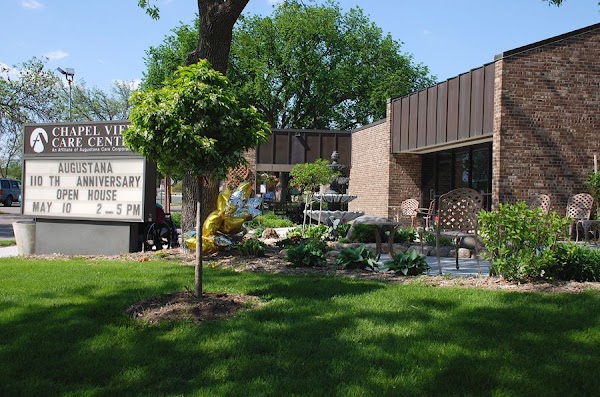
Apr 2025 1 deficiency
CONCERN (E) 📢 Someone Reported This

A family member, employee, or ombudsman was alarmed enough to file a formal complaint

Potential for Harm - no one hurt, but risky conditions existed

Deficiency F0554 (Tag F0554)

Could have caused harm · This affected multiple residents

**NOTE- TERMS IN BRACKETS HAVE BEEN EDITED TO PROTECT CONFIDENTIALITY** Based on observation, interview, and document review, the facility failed to appropriately complete a thorough self administrati...

Read full inspector narrative →
**NOTE- TERMS IN BRACKETS HAVE BEEN EDITED TO PROTECT CONFIDENTIALITY** Based on observation, interview, and document review, the facility failed to appropriately complete a thorough self administration assessment on 3 of 4 (R2, R3 and R4) sampled residents (who preferred not to administer their own medication) by ensuring residents who were left while the administration was occurring unattended, were found competent to leave their masks and/on or turn off the nebulizer appropriately when finished. Findings include: R2's quarterly minimum date set (MDS) dated [DATE] indicated intact cognition with diagnoses including multiple sclerosis and asthma. R2's SAM dated 3/21/25 indicated R2 did not want to self-administer medications. No further assessment occurred to ensure R2 could successfully complete treatment if left unattended. On 4/1/2025 at 1:15 p.m., R2 was observed sitting in her wheelchair with a nebulizer mask applied on her face with the nebulizer machine turned on. No staff members are observed in the room or in the hallway outside the room. On 4/2/2025 11:13 a.m., R2 was interviewed and stated staff put the medication into the nebulizer cup, attach the cup to the mask, apply the mask to her face and turn on the machine. Staff leave the room while the machine is running then return to turn the machine off and remove the mask from her face. R3's 5-day MDS dated [DATE] indicated moderately impaired cognition with diagnoses including surgical aftercare following knee replacement and acute respiratory failure. R3's nursing admission observation dated 3/11/25 indicated R3 did not want to self-administer medications. No further assessment occurred to ensure R3 could successfully complete treatment if left unattended. On 4/1/2025 at 3:19 p.m., R3 was interviewed and stated staff put the medication into the nebulizer cup but did not recall who turned the machine on or off. On 4/2/2025 at 9:59 a.m., R3 was observed sitting on her bed with a nebulizer mask applied on her face with the nebulizer machine turned on. No staff members are observed in the room or in the hallway outside the room. R4's quarterly MDS dated [DATE] indicated moderately impaired cognition with a diagnosis of chronic obstructive pulmonary disease. R4's SAM dated 2/21/25 indicated R4 did not want to self-administer medications. No further assessment occurred to ensure R4 could successfully complete treatment if left unattended. On 4/2/2025 at 10:51 a.m., R4 was observed sitting on his recliner with a nebulizer mask applied on his face with the nebulizer machine turned on. No staff members are observed in the room or in the hallway outside the room. On 4/2/2025 at 11:05 a.m., R4 was interviewed and stated staff put the medication in the nebulizer cup, assist with putting the mask on his face and start the machine. R4 stated he turns the machine off. On 4/2/2025 at 10:19 a.m., registered nurse (RN)-A was interviewed and stated a self-administration of medication observation needed to be completed before a resident can administer their own medications. RN-A also stated staff put medication into the nebulizer cup, put the mask on the resident, turn the machine on, then should return to the room to turn the machine off. On 4/2/2025 at 10:57 a.m., RN-B was interviewed and stated she felt residents wearing a nebulizer mask while the machine is running is not self-administration of medication because a staff member is setting it up for the resident. On 4/2/2025 at 11:55 a.m., nurse practitioner (NP) was interviewed and stated the nurses complete an assessment to determine if a resident is deemed safe to self-administer medications, including nebulized medications. A nurse should observe a resident to be sure the resident does not remove the mask while the medication is administered via the nebulizer machine. If a resident removes the mask too soon, there is a risk their symptoms might not improve due to not receiving the entire medication dose. On 4/2/2025 at 1:47 p.m., RN-C was interviewed and stated staff set a resident up for a nebulizer treatment, turn the machine on, leave the room, then return to turn off the machine. If cognition were an issue, staff would stay in the room with the resident. A resident's cognition would be determined through communication with other staff during report. The Self-administration of Medications policy dated 5/21/24 instructed an observation to be completed if a resident wished to self-administer medications. The policy also instructed when a nebulizer treatment is set up for the resident and the resident is left alone with the treatment running, that is considered self-administration of medications unless otherwise noted by the state health department and the above steps will be followed.
Nov 2024 2 deficiencies
CONCERN (D)

Potential for Harm - no one hurt, but risky conditions existed

Deficiency F0700 (Tag F0700)

Could have caused harm · This affected 1 resident

**NOTE- TERMS IN BRACKETS HAVE BEEN EDITED TO PROTECT CONFIDENTIALITY** Based on observation, interview, and document review, the facility failed to comprehensively assess and discuss risks and benefi...

Read full inspector narrative →
**NOTE- TERMS IN BRACKETS HAVE BEEN EDITED TO PROTECT CONFIDENTIALITY** Based on observation, interview, and document review, the facility failed to comprehensively assess and discuss risks and benefits prior to installation of grab bars for 1 of 1 residents (R194) observed to have grab bars affixed to their bed. Findings include: R194's admission Minimum Data Set (MDS) indicated he had moderate cognitive impairment and required partial to moderate staff assistance with bed mobility. R194's Care Area Assessment (CAA) for cognitive loss and dementia dated 11/19/24, indicated he had observable confusion, disorientation, and forgetfulness. The CAA indicated R194 was alert and able to make his needs known. R194's CAA for falls dated 11/19/24, indicated he was a fall risk and identified risk factors including hearing impairment, cognitive impairment, pain, impaired mobility and balance, history of two falls prior to admission, and weakness post-hospitalization. A device-equipment assessment dated [DATE], indicated a left and right upper assist rail/grab bar were used. The assessment lacked indication of condition or medical symptoms(s) being addressed by the use of the devices and none of the above was checked-marked. The assessment indicated the alternative attempted but failed prior to using assist rail/grab bars was resident came on the stretcher, no other and when asked to identify the reasons for consideration of device use, the assessment indicated new admission, PT/OT to evaluate. Furthermore, the assessment indicated the device would not be considered a restraint because it was not applicable. No device to be used. The assessment lacked documentation of education provided to the resident and/or his representative and review of risks and benefits, including risk of his safety assessment and risk for entrapment. R194's care plan dated 11/15/24, indicated he required assistance with bed mobility and transferring due to impaired functional mobility and fall with low back pain. An intervention was initiated on 11/18/24, for bilateral (left and right sides) grab bars. The care plan identified other interventions of physical staff assistance of 1 with bed mobility. A progress note dated 11/14/24, indicated R194's family member requested bedside rails/bars to grab when turning. The progress note lacked documentation of education or risk versus benefits provided to him or his representative. An occupational therapy evaluation and plan of treatment dated 11/15/24, with a certification period of 11/15/24 - 11/18/24, indicated he used grab bars at home prior to his admission to the facility. An occupational therapy treatment encounter note dated 11/15/24, indicated R194 was instructed to use a logroll for bed mobility to go from a flat-laying position to an upright sitting position to decrease his complaints of pain. The occupational therapy treatment encounter note lacked documentation of education provided or risks and benefits of having grab bars installed on the bed discussed. An occupational therapy treatment encounter note with a date of service of 11/18/24, and a completion date of 11/19/24, indicated R194 and his family were educated on occupational and physical therapy evaluations, plans of care and goals, however, the treatment note lacked documentation of risks and benefits of grab bars discussed. R194's physical therapy evaluation and treatment encounter notes dated 11/15/24, through 11/21/24, were reviewed on 11/21/24, and lacked documentation of education provided or risks and benefits discussed with him and/or his representatives. A care conference summary note dated 11/18/24, indicated R194 used grab bars for assistance with mobility. When asked, for any items above that resident uses, do resident and family understand the risks/benefits of the device?, the note indicated not applicable, not using any devices. R194's electronic health record (EHR) was reviewed on 11/19/24 at 2:19 p.m., and lacked documentation of education provided, risks and benefits discussed, and consent for grab bars. During observation on 11/18/24 at 1:52 p.m., the interim maintenance director (M)-A was at R194's bedside and stated he had new rails to install on his bed. During observation on 11/18/24 at 3:09 p.m., there was a left and right grab bar located on R194's bed. During interview on 11/19/24 at 2:14 p.m., registered nurse (RN)-B stated if a resident or their representative requested bed rails or grab bars for mobility, the nurse manager should be notified first. RN-B stated next, therapy would get involved for an assessment, and if the decision was made to move forward with the grab bars, a maintenance request would be made to install them. RN-B stated once maintenance had installed them, nursing staff inspect them to ensure they are safely installed. RN-B stated nursing management followed for ongoing monitoring. During interview on 11/19/24 at 2:30 p.m., certified occupational therapy assistant (COTA) stated for residents requiring or requesting a bed mobility device, therapy would first evaluate and assess a resident to determine if a resident met the criteria and if there was a need for a grab bar or bedrail. Then, COTA stated if the determination was made there was a need, nursing and maintenance could get involved to have them installed. During interview on 11/19/24 at 2:37 p.m., occupational therapist (OT)-F stated indications for the use of bed mobility devices, like grab bars, could be difficulty rolling over or sitting up, or if a resident is grabbing at staff to help themselves sit up at the edge of the bed. OT-F stated therapy staff reviewed a resident's cognition and safety to ensure a resident could utilize a bed mobility device and that it would be beneficial for them to have one installed. OT-F stated therapy would send a message to nursing staff to further evaluate because they have the final say. OT-F stated staff considered a resident's history and family's preferences during their evaluations. OT-F stated during admission, there are no rails on beds so a resident could be assessed without bed mobility devices first to check into different options. OT-F stated trialed and failed alternatives are communicated with nursing staff. OT-F verified familiarity with R194 and verified an e-mail message sent to the clinical manager from therapy recommending grab bars dated 11/15/24. During interview on 11/19/24 at 2:54 p.m., licensed practical nurse (LPN)-B and transitional care unit (TCU) clinical manager stated the normal process for bed mobility devices was to have therapy evaluate a resident for mobility first. After therapy evaluated a resident, they would e-mail LPN-B their recommendations and, if in agreement, LPN-B would request a maintenance work order to have the device installed. LPN-B stated nursing staff provided education about bed mobility devices to the resident and representatives, and consent was obtained depending on what was being installed. LPN-B stated if a family member was requesting a bedrail to stop a resident from getting in or out of bed, staff would have to educate family on why they couldn't utilize a bedrail for that reason. LPN-B stated, we definitely discuss those things. LPN-B stated there was no formal process for ongoing monitoring for bed mobility devices, rather I round daily for those things. During subsequent interview on 11/20/24 at 7:26 a.m., LPN-B was not able to find documentation to support that R194 or his representatives had received education or that risks and benefits were reviewed. Furthermore, LPN-B was unable to find documentation that R194 was comprehensively assessment for safety prior to installing the grab bars. LPN-B stated there was not a formal risk versus benefits or consent in the chart. LPN-B stated it was something discussed in conversation. LPN-B stated a belief the bed mobility device assessment dated [DATE], and care conference summary dated 11/18/24, were marked in error. During interview on 11/20/24 at 12:40 p.m., physical therapist (PT)-G verified being involved in R194's care and initial assessment. PT-G stated he first attempted to logroll out of bed for mobility to mitigate the back pain, but he needed more help. PT-G stated it seemed like if he had something to pull on, like the grab bar, it might be more beneficial to him and for pain management. The logroll was the alternative intervention prior to the grab bars, and the grab bars were therapy's recommendation. PT-G stated education about the grab bars would have fallen more on the nursing staff to provide. PT-G stated therapy made recommendations and the nursing department had the final say; if nursing agreed with therapy's recommendations, they could make the request for installation. During interview on 11/20/24 at 2:03 p.m., R194 stated he did not recall receiving any education on the grab bars installed on his bed. R194 stated he does not recall being told about the risks of entrapment or having discussions about his safety with grab bars on his bed. He stated the grab bars were helpful for his bed mobility and when transferring out of bed. During interview on 11/21/24 at 4:28 p.m., the interim director of nursing (DON) stated staff were expected to first assess a resident's cognitive ability to use a bed mobility device. Next, the DON expected staff to consult with therapy for an evaluation, which should be reviewed by a manager before completing a physical device assessment. The interim DON did not believe a consent was required for grab bars per the facility's policy. When asked about ongoing monitoring for bed mobility devices or equipment, the regional nurse consultant (also present during the interview), stated staff were expected to monitor with a change of condition, quarterly, and any therapy changes. Additionally, the regional nurse consultant stated staff were expected to report any change in the resident's use of grab bars to their managers so the resident could be assessed, and therapy could get involved. A facility policy titled Bed, mattress and assist rails inspection last reviewed 2/23/24, indicated prior to the installation of any side or bed rails/grab bars/assist device a physical device assessment will be conducted by the nurse with input from the interdisciplinary team (see physical device assessment policy). The physical device assessment policy was requested but not received.
CONCERN (D)

Potential for Harm - no one hurt, but risky conditions existed

Infection Control (Tag F0880)

Could have caused harm · This affected 1 resident

**NOTE- TERMS IN BRACKETS HAVE BEEN EDITED TO PROTECT CONFIDENTIALITY** R9's quarterly Minimum Data Set (MDS) dated [DATE], identified a significant level of impaired cognition and a diagnosis of unid...

Read full inspector narrative →
**NOTE- TERMS IN BRACKETS HAVE BEEN EDITED TO PROTECT CONFIDENTIALITY** R9's quarterly Minimum Data Set (MDS) dated [DATE], identified a significant level of impaired cognition and a diagnosis of unidentified dementia with other behavioral disturbance, chronic respiratory failure, delirium, anxiety disorder, major depressive disorder, xerosis curtitis (severe dry skin), and unspecified fracture of the right femur in 11/22. R9 was dependent on staff for turning, repositioning, wound care, toileting, and hygiene. R9 was at a high risk for pressure ulcers and skin conditions. R9's provider orders dated 10/4/2024, identified EBP when providing wound care and other high contact care activities. Provider orders included wound care to the left anterior lower torso hip, left lateral foot, left lateral ankle, left medial bunion & lateral foot, right back and flank area. In addition, orders included wound care to bilateral buttock and coccyx, cover with wound cleanser, and pat dry. On 11/19/24 at 1:37 p.m., R9 was yelling to staff for help. An unidentified staff person entered R9's private room without downing a gown and applying gloves. Staff exited and donned gloves, returned to the room, and repositioned R9. The staff member was not wearing a gown. On 11/20/2024 at 7:33 a.m., NA-E entered R9's room and explained she was going to assist with morning cares. NA-E used alcohol-based hand sanitizer and applied gloves. NA-E assisted R9 to wash her face and then applied lotion to R9's arms, chest, and legs. NA-E removed gloves, washed hands with soap and water, and put on a new set of gloves. NA-E proceeded to change R9's clothing, remove R9's soiled brief, and provide perineal care. After perineal cares, NA-E removed gloves, washed hands with soap and water, put a on a new pair of gloves, and repositioned R9 in bed. NA-E did not wear a gown throughout the provision of cares, and her clothing was in contact with R9's body, clothing, and bedding multiple times. R9's hip, buttock, and coccyx wounds were observed during cares. During interview on 11/21/24 at 7:53 a.m., NA-E stated she has been trained on how and when to use PPE while caring for residents on EBP. NA-E stated she knew which residents were on EBP because they had a sign on their door and a PPE cart outside of their room. NA-E pointed to the EBP sign and PPE cart outside of R9's room. NA-E stated a gown must be worn when performing high contact cares for residents on EBP. NA-E stated R9's morning cares were considered high contact, and confirmed she should have worn a gown when providing cares. On 11/20/2024 at 9:46 a.m., infection preventionist (IP-D) stated that she trained all the staff and was responsible for initiating EBP when someone needed precautions. She explained she placed carts outside the rooms and a sign on each door of any resident that needed EBP precautions. She followed up on any additional training that was needed, conducted floor audits, and sent reminders to staff containing a list of residents on EBP. IP-D explained that she was aware that they had a high number of incidents where staff were not wearing gowns during cares with residents on EBP. IP-D stated that all staff should be wearing gloves and gown when working with residents in with EBP. If the IP-D nurse wasn't available at the time EBP precautions were needed, there was a process in place for the nurses to start EBP precautions. IP understood the importance of EBP for those residents who are in high risk of infection. A facility policy titled Transmission-based precautions and enhanced barrier precautions last revised 5/3/24 and last reviewed 7/3/24, provided examples of high-contact resident care activities requiring gown and glove use for EBP include the following: - dressing. - bathing/showering. - transferring. - providing hygiene. - changing linens. - changing briefs or assisting with toileting. - device care or use: central line, urinary catheter, feeding tube, tracheostomy/ventilator. - wound care: any skin opening requiring a dressing. Based on observation, interview and document review, the facility failed to ensure enhanced barrier precautions (EBP) were followed and appropriate personal protective equipment (PPE) was worn as required during high contact care for 2 of 3 residents (R193, R9) who required EBP and were reviewed for infection control. Findings include: R193's Minimum Data Set (MDS) dated [DATE], identified he had mild cognitive impairment and required partial-to-moderate staff assistance with toileting and personal hygiene. The MDS further indicated R193 had a bladder catheter. R193's Diagnoses Report printed 11/22/24, listed his diagnoses of bladder cancer that spread to his bone tissue, muscle weakness, malnutrition, diabetes, urinary tract infection (UTI), and artificial openings of urinary tract status-bilateral nephrostomy (nephrostomy tubes, or surgically placed catheter tubes that drain urine directly from the kidneys outside of the body into collection bags). R193's current physician orders printed 11/22/24 were reviewed and lacked documentation of the clinical indication for enhanced barrier precautions (EBP). R193's treatment administration record (TAR) printed 11/22/24, reflected the following orders: - bilateral (both sides) nephrostomy: remove dressing, cleanse site, and replace dressing, dated 11/8/24. - monitor placement for bilateral nephrostomy, dated 11/8/24. R193's care plan dated 11/8/24, indicated he required bilateral nephrostomy tubes and needed staff assistance with toileting due to his impaired functional mobility. The care plan guided staff to provide ostomy care per policy and provider orders. The care plan lacked documentation of the clinical indication for EBP. R193's electronic health record (EHR) was reviewed on 11/21/24 and it lacked clinical indication for the use of EBP. During observation on 11/18/24, there was signage on R193's door indicating he was on EBP. He was laying on his bed and a drainage bag was observed next to him at hip level. There was a scant amount of clear yellow liquid in the tubing connected to the drainage bag. During observation and interview on 11/20/24 at 8:08 a.m., licensed practical nurse (LPN)-A entered R193's room with a blood pressure machine and performed hand hygiene at the sink inside the room. LPN-A donned a pair of gloves but did not don a gown. R193 reported he was not feeling well and had stomach pain. During LPN-A's assessment, nursing assistant (NA)-A knocked and entered the room. NA-A was not wearing a gown or gloves and asked R193 about his breakfast preferences. LPN-A asked NA-A for help boosting R193 up in the bed. NA-A did not don gown or gloves and helped LPN-A boost him up in bed. NA-A used bare hands to straighten the blankets and incontinence pad on R193's bed, helped straighten his shoulders and legs before exiting the room. LPN-A continued the assessment and applied the blood pressure cuff to R193's arm, took his temporal (forehead) temperature, and placed a pulse oximeter (a device that reads the oxygen level in the blood as well as a heart rate) on his finger. LPN-A asked R193 to point to where the pain was. LPN-A palpated (an examination by touch) the area of the exposed stomach skin with the same gloved hands. LPN-A stated R193 was on EBP for his nephrostomy tube cares and staff can determine the appropriate PPE by reviewing the sign on the door. LPN-A showed the sign on R193's door, which indicated staff should wear gloves and gown for high-contact activity. When asked if the observed activities warranted PPE, LPN-A stated no because gown and gloves would only need to be worn for close contact with him, like for his catheter cares and dressing changes. LPN-A stated if other staff were unsure of the appropriate PPE for residents on EBP, they could ask other floor staff for guidance. During interview on 11/20/24 at 9:56 a.m., NA-A stated staff could tell what type of precautions and PPE were appropriate for a resident because of the signs on their doors as well. NA-A stated for EBP, staff should wear PPE when they are providing treatments or cares for the resident, physical care, incontinence cares, or if encountering bodily fluids. NA-A stated PPE would not to be worn to help transfer a resident or to help boost a resident up in bed. NA-A confirmed he did not wear PPE in R193's room and would not have been required to wear PPE for the boost because it was just a quick help. During interview on 11/21/24 at 9:48 a.m., LPN-B, also the transitional care unit (TCU) nurse manager, expected staff to wear PPE when working with a resident's wound, catheter or affected area if a resident was on EBP. LPN-B stated staff assisting a resident on EBP with a transfer or to change bed linens should be wearing PPE, but the resident was fully clothed, and nothing was exposed, then I think they would be okay without. LPN-B stated it was important to follow EBP and wear appropriate PPE because it protected the resident from infection since the resident was at a high-risk. During interview on 11/21/24 at 2:51 p.m., the director of nursing (DON) and regional nurse consultant stated staff were expected to wear gown and gloves for high contact cares when working with a resident on EBP.
Jun 2024 2 deficiencies
CONCERN (E) 📢 Someone Reported This

A family member, employee, or ombudsman was alarmed enough to file a formal complaint

Potential for Harm - no one hurt, but risky conditions existed

Deficiency F0578 (Tag F0578)

Could have caused harm · This affected multiple residents

**NOTE- TERMS IN BRACKETS HAVE BEEN EDITED TO PROTECT CONFIDENTIALITY** Based on interview and record review, the facility failed identify the preference for health care directives for seven of ten re...

Read full inspector narrative →
**NOTE- TERMS IN BRACKETS HAVE BEEN EDITED TO PROTECT CONFIDENTIALITY** Based on interview and record review, the facility failed identify the preference for health care directives for seven of ten residents (R1, R2, R3, R4, R6, R7, and R10) reviewed for advanced directives. Findings include: R1's face sheet printed on 6/25/24 indicated R1 was admitted to the facility on [DATE] with a primary diagnosis of multiple sclerosis. Additional diagnoses included acute diastolic heart failure, acute embolism, thrombosis of unspecified deep veins of proximal lower extremities, acute respiratory failure with hypoxia, encephalopathy, neoplasm of uncertain behavior of meninges, and chronic systolic heart failure. R1's face sheet indicated R1 was the responsible party. R1's care plan printed 6/25/24 indicated R1 had cognitive loss/dementia. R1's brief interview for mental status (BIMS) assessment completed 6/4/24 indicated R1 had a score of 13, which indicated R1 had severe cognitive impairment. R1's care conference completed on 6/13/24 indicated R1 did not have any type of advance directive. The care conference asked if R1's provider orders for life sustaining treatment (POLST) was reviewed and facility staff marked that staff reviewed R1's POLST. R1's record was reviewed for POLST and advance directive. R1 had a banner in her electronic health record that indicated R1 was a full code, but no documentation to corroborate the full code status. R1's record review indicated no progress note was made that facility staff offered advance directive or POLST planning to R1. R2's face sheet printed on 6/26/24 indicated R1 was admitted to the facility on [DATE] with a primary diagnosis of catatonic schizophrenia-malignant catatonia. R2's additional diagnoses included bipolar disorder, chronic obstructive pulmonary disease, unspecified injury of the head/multiple closed head injuries, and conversion disorder with seizures or convulsions. R2's face sheet indicated R2 has a power of attorney. R2's progress note dated 11/2/24 indicated R2 was admitted to the facility while on hospice. R2's BIMS assessment completed on 5/1/24 indicated R2 had a score of 6, which indicated R2 had severe cognitive impairment. R2's care conference completed on 5/16/24 indicated R2's POLST was reviewed and R2 did not have any type of advance directive. R2's medication administration record (MAR) printed on 6/26/24 indicated R2 was admitted to Allina Hospice for a diagnosis of moderate protein-calorie and a prognosis of 6 months or less. R2's record was reviewed for a POLST and advance directive. Documentation showed the facility inserted a POLST into R2's electronic medical record during the time the surveyor was at the facility, however the POLST was not signed by a provider. R2's documents showed he did not have an advance directive. R2's record review indicated no progress note was made that facility staff offered advance directive planning to R2. R3's face sheet printed on 6/26/24 indicated R3 was admitted to the facility on [DATE] with a primary diagnosis of agoraphobia with panic disorder. R3's additional diagnoses included mild cognitive impairment of uncertain or unknown etiology, unspecified psychosis not due to a substance or known physiological condition, and adult failure to thrive. R3's face sheet indicated R3 has a power of attorney. R3's BIMS assessment completed on 4/2/24 indicated R3 had a score of 2, which indicated R2 had severe cognitive impaired. R3's care conference completed on 4/11/24 indicated R3's POLST was review and that she did not have an advance directive. R3's record was reviewed for POLST and advance directive. R3's record review indicated R3 had a POLST but did not have an advance directive. R3's record review indicated R3 did not have power of attorney paperwork, or a progress note was made that facility staff offered advance directive planning to R3. R4's face sheet indicated R4 was admitted to the facility on [DATE] with a primary diagnosis of adult failure to thrive. R4's additional diagnoses included acute kidney failure, hallucinations, dementia, and nonrheumatic mitral valve insufficiency. R4's face sheet indicated R4 did not have a power of attorney. R4's BIMS assessment completed on 6/4/24 indicated R4 had a score of 0, which indicated R4 had severe cognitive impaired. R4's care conference completed 6/13/24 indicated R4 had a POLST but did not have an advance directive. R4's progress note dated 12/1/23 indicated R4 was not her own responsible part and that her son manages her affairs. R4's record was reviewed for POLST and advance directive. R4's record review indicated R4 had a POLST but did not have an advance directive. R4's record review indicated no progress note was made that facility staff offered advance directive planning to R4. R6's face sheet printed on 6/26/24 indicated R6 was admitted to the facility on [DATE] with a primary diagnosis of Alzheimer's disease with late onset. R6's additional diagnoses included personal history of transient ischemic attach and dysphagia. R6's face sheet indicated had an emergency contact but did not indicate if the contact was R6's power of attorney. R6's care conference completed 3/28/24 indicated R6 had a POLST but did not indicate R6 had an advance directive. R6's BIMS assessment completed 6/18/24 indicated R6 had a score of 0, which indicated R6 had severe cognitive impaired. R6's record was reviewed for POLST and advance directive. R6's record review indicated R6 had a POLST but did not have an advance directive. R6's record review indicated no progress note was made that the facility staff offered advance directive planning to R6. R7's face sheet printed on 6/26/24 indicated R7 was admitted to the facility on [DATE] with a primary diagnosis of an infection following a procedure. R7's additional diagnoses included fluid and electrolyte imbalanced, anemia, and chronic peripheral venous insufficiency. R7's face sheet indicated R7 had an emergency contact but did not indicate a power of attorney. R7's BIMS assessment completed on 6/11/24 indicated R7 had a score of 15, which indicated R7 had been cognitively intact. R7's care conference completed on 6/20/24 indicated R7 had a POST but did not have an advance directive. R7's record was reviewed for POLST and advance directive. R7's record review indicated R7 had a POLST but did not have an advance directive. R7's record review indicated no progress note was made that the facility staff offered advance directive planning to R7. R10's face sheet printed on 6/26/24 indicated R10 was admitted to the facility on [DATE] with a primary diagnosis of cerebral infarction with left sided neglect. R10's additional diagnoses included dysphagia, facial weakness, atherosclerotic heart disease of native coronary artery without angina pectoris, and personal history of transient ischemic attack. R10's care conference completed on 3/28/24 indicated R10 had a POLST but did not have an advance directive. R10's progress note dated 6/21/24 indicated the social worker spoke with Volunteers of America R10's BIMS assessment completed on 6/25/24 indicated R10 had a score of 14, which indicated R10 was cognitively intact. R10's record was reviewed for POLST and advance directive. R10's record review indicated R7 had a POLST but did not have an advance directive. R7's record review indicated no progress note was made that the facility staff offered advance directive planning to R10. During an interview with social services (SS)-A on 6/25/24 at 1:48 p.m., SS-A stated she worked with the transitional care unit (TCU) residents. SS-A stated she will review the resident's POLST and advance directive during the resident's care conference. During an interview with SS-B on 6/25/24 at 1:53 p.m., SS-B stated she worked with the long-term care residents. SS-B stated she reviewed the POLST and advance directive at the resident's care conference. During an interview with family member (FM)-A on 6/25/24 at 2:33 p.m., FM-A stated the facility's admission staff attempted to meet with himself and R1 to talk about an advance directive, but the meeting never occurred. FM-A stated he attempted to meet with the admissions team several times to make an advance directive for R1. FM-A stated R1 would not have been able to tell the facility her wishes for advance planning. During an interview with the director of nursing (DON) on 6/25/24 at 3:15 p.m., the DON stated the facility determines the resident's wishes at the end of life by looking at their code status from the admitting paperwork, which was most likely to be discharge papers from a hospital. The DON stated the facility would verify the code status with the residents during their care conference. The DON stated neither a POLST or advance directive is required for their residents. The DON stated the facility did not have any documentation of facility staff offering advance planning. The DON stated the facility management team attempted to get an advance directive from R1 or family, but the facility management team was never able to connect with R1. The DON stated she would expect herself and staff to ask residents in an emergency situation if they want certain treatments but was unsure what facility staff would when a resident became unresponsive. An advance directive policy was requested, and none was received.
CONCERN (E) 📢 Someone Reported This

A family member, employee, or ombudsman was alarmed enough to file a formal complaint

Potential for Harm - no one hurt, but risky conditions existed

Deficiency F0678 (Tag F0678)

Could have caused harm · This affected multiple residents

**NOTE- TERMS IN BRACKETS HAVE BEEN EDITED TO PROTECT CONFIDENTIALITY** Based on interview and record review, the facility could not ensure staff were properly trained in basic life support (BLS) incl...

Read full inspector narrative →
**NOTE- TERMS IN BRACKETS HAVE BEEN EDITED TO PROTECT CONFIDENTIALITY** Based on interview and record review, the facility could not ensure staff were properly trained in basic life support (BLS) including cardiopulmonary resuscitation (CPR) to provide BLS/CPR to residents requiring such care for 18 of 62 licensed staff records registered nurse(RN)-A, RN-B, RN-C, RN-D, RN-E, RN-F, RN-G, RN-H, RN-L, licensed practical nurse (LPN)-A, LPN-B, LPN-C, LPN-D, LPN-E, LPN-F, LPN-G, LPN-H, and LPN-I) when reviewed for BLS/CPR training. The facility contacted licensed staff for proof of BLS/CPR Certification and obtained five more staff BLS/CPR certifications. Findings include: The facility provided a BLS/CPR book for staff who have a BLS/CPR certification. The book was reviewed and did not contain BLS/CPR certificates for RN-A, RN-B, RN-C, RN-D, RN-E, RN-F, RN-G, RN-H, RN-L, LPN-B, LPN-C, LPN-D, LPN-E, LPN-F, LPN-G, LPN-H, and LPN-I. LPN-A's certification was expired. LPN-A's personnel record was reviewed. LPN-A's BLS certificate indicated LPN-A took an online course on [DATE] without hands-on practice or in-person skill assessment. During an interview with licensed practical nurse (LPN)-A on [DATE] at 2:44 p.m., LPN-A stated he was CPR certified and took his CPR course online. During an interview with the director of nursing (DON) on [DATE] at 3:15 p.m., the DON stated all RN's and LPN's working in the facility are CPR certified. During an interview with the staff development coordinator (SDC) on [DATE] at 9:04 a.m., the SDC stated she knew that some of the licensed staff working in the facility have taken the CPR class but had not given her their BLS certificates. The SDC stated BLS classes offered in the facility twice a year. The SDC stated if a licensed staff BLS certificate was expiring and they did not have a BLS class yet, she would let the licensed staff wait until the next class was offered even though their BLS certificate would expire before the next class was offered. The SDC stated she sent a text message to RN-A, RN-B, RN-C, RN-D, RN-E, RN-F, RN-G, RN-H, LPN-B, LPN-C, LPN-D, LPN-E, LPN-F, LPN-G, LPN-H to obtain their BLS certificates. On [DATE] at 9:12 a.m. email correspondence to SDC requesting RN-A, RN-B, RN-C, RN-D, RN-E, RN-F, RN-G, RN-H, LPN-B, LPN-C, LPN-D, LPN-E, LPN-F, LPN-G, LPN-H BLS certificates. SDS responded by email on [DATE] at 11:28 a.m., the SDC indicated she received BLS certificates from RN-E, RN-F, RN-G, LPN-H, and LPN-I. The SDC stated LPN-G was hired on [DATE], LPN-G BLS certificate was expired, and was told she could wait until the next BLS that was being offered in [DATE]. During an interview with the SDC on [DATE] at 12:11 p.m., the SDC stated she was not going to be able to provide the remaining BLS certificates today. The SDC stated she kept bugging the licensed staff to get the BLS certificates to her. The SDC stated RN-A, RN-B, RN-C, and LPN-D work on-call for the facility. The SDC stated RN-D, LPN-B, and LPN-F work at the facility every other weekend. The SDC stated some of the licensed staff take their BLS class through their other jobs and the SDC reminded the employees to bring in their BLS certificates. The SDC stated all she could do was remind the licensed staff to bring in their BLS certificates. The SDC stated there was not disciplinary action against the employees for not getting the SDC their BLS certificates. The SDC stated it is not like I am going to fire them for not getting their certificates to me. During an interview with the DON on [DATE] at 12:20 p.m., the DON stated the BLS instructor that held the BLS at the facility emails the employees their BLS certificate and it is the responsibility of the employee to get the facility those certificates. The DON stated there was not any disciplinary action for the employees who did not bring in their BLS certificates. The DON stated she knew which licensed staff was BLS certified and who was not BLS certified by communicating with the licensed staff. During an interview with the administrator on [DATE] at 12:46 p.m., the administrator stated he was not sure why the BLS certificates were not in the employee's files. The administrator stated he would know which licensed staff were BLS certified, and which licensed staff were not BLS certified by completing a facility audit. The administrator stated he had not done a facility audit as he had been the administrator at the facility for two weeks. A BLS/CPR policy was requested from the facility, and none was received.
Apr 2024 3 deficiencies
CONCERN (D) 📢 Someone Reported This

A family member, employee, or ombudsman was alarmed enough to file a formal complaint

Potential for Harm - no one hurt, but risky conditions existed

Deficiency F0561 (Tag F0561)

Could have caused harm · This affected 1 resident

**NOTE- TERMS IN BRACKETS HAVE BEEN EDITED TO PROTECT CONFIDENTIALITY** Based on observation, interview, and document review, the facility failed to ensure resident bathing preferences were honored fo...

Read full inspector narrative →
**NOTE- TERMS IN BRACKETS HAVE BEEN EDITED TO PROTECT CONFIDENTIALITY** Based on observation, interview, and document review, the facility failed to ensure resident bathing preferences were honored for 1 of 2 residents (R3) who voiced concerns about bathing routines. Findings include: R3's undated facesheet indicated R3 was admitted to the facility in March 2024 with diagnoses including fractures with subsequent surgery of the left ankle and right ankle and foot, dislocated joint in right foot, osteoarthritis, and pain. R3's Minimum Data Set (MDS) dated [DATE], indicated R3 had intact cognition, was able to make himself understood and understand others, did not exhibit rejection of cares, had functional limitation in range of motion in both lower extremities, was dependent on staff for showering/bathing, required substantial assistance with personal hygiene, and R3's transfer status for getting in/out of a tub/shower was not assessed due to medical condition or safety concerns. R3's bathing, dressing, and grooming care plan dated 3/7/24, noted R3 required assistance and included R3 bathed with physical assist of one person and noted pt [patient] prefers bed bath. Resident Roster obtained 4/16/24 noted R3's designated shower day was Thursday mornings. R3's progress note dated Thursday 3/21/24 at 1:44 p.m., noted offered shower but refused. R3's progress note dated Thursday 4/4/24 at 2:40 p.m., noted R3 refused shower. R3's progress notes from admission through 4/16/24 did not include further documentation of R3 refusing baths or showers. R3's point of care charting from admission through 4/16/24 included documentation of a completed bed bath on 3/28/24. Bathing was charted as activity did not occur on 3/19/24, 3/23/27, 3/24/24, 3/26/24, 3/28/24, 3/29/24, 3/31/24, 4/324, 4/4/24, 4/8/24, 4/9/24, 4/11/24, and 4/16/24. Visual Body Inspection assessment with schedule detail visual body observation - AM BATH dated 3/14/24, noted R3 did not have a shower that shift due to unspecified condition. Visual Body Inspection assessment with schedule detail unscheduled dated 3/21/24, noted R3 did not have a shower that shift due to unspecified condition. A second Visual Body Inspection observation form with schedule detail visual body observation - AM BATH from the same date did not indicate if a shower or bath was completed. Visual Body Inspection assessment with schedule detail visual body observation - AM BATH dated 3/28/24, noted R3 stated he cannot have a shower due to bilateral feet casts. It did not indicate that an alternative bathing modality was offered or completed. Visual Body Inspection assessment with schedule detail visual body observation - AM BATH dated 4/4/24, did not indicate if a shower or bath was completed. Visual Body Inspection assessment with schedule detail visual body observation - AM BATH dated 4/11/24, noted R3 did not have a shower that shift due to unspecified condition, but did have a bed bath. This bath was not documented in the point of care charting. During an observation on 4/17/24 at 10:52 a.m., R3 stated to clinical manager (CM)-A he wanted a bed bath and shampoo cap the next day and his hair hadn't been cleaned in ten weeks and he was flaking like crazy. R3 stated he was fine with a bed bath along with a shampoo cap. R3's face and scalp had visible skin flakes and his hair was oily. During an interview on 4/17/24 at 11:23 a.m., CM-A stated staff do bed baths with R3 and R3 wanted bed baths and did not like to get in the shower chair. During an interview on 4/17/24 at 2:53 p.m., R3 stated he had not been getting bed baths, had only received one bath since admission, and had not had his hair washed at all. R3 stated he had not been refusing baths, he asked staff for baths but did not receive them. R3 noted he wanted bed baths, he did not want to get in the shower because he wanted to keep his feet/lower legs dry because of the surgical site. During an interview on 4/17/24 at 3:11 p.m., licensed practical nurse (LPN)-A stated if a resident refused a bath he would ask a second time. LPN-A noted some residents had specific preferences and he would ask if there was anything they needed to bathe. If the resident still refused, LPN-A stated he would pass the information along for someone else to try again later. During an interview on 4/18/24 at 8:13 a.m., nursing assistant (NA)-A stated R3 had fractured legs so he did not like to get up and with the wraps (dressings) on his legs, he did not want to get in the shower. NA-A stated R3 did not refuse bed baths, he was supposed to get a shower but refused taking showers and instead got bed baths. NA-A stated if a resident refused a bath, the aide should reapproach the resident later and notify the nurse. During an interview on 4/18/24 at 9:03 a.m., LPN-B stated R3 had one bed bath that she remembered. LPN-B stated she previously discussed bathing with R3 and he stated he had not done a shower since admission and been refusing showers but had not been refusing bed baths. LPN-B stated R3 has been refusing both showers and bed baths. LPN-B noted if a resident refuses a bath the aide should offer again and after two attempts she would go speak with the resident. During an interview on 4/18/24 at 10:47 a.m., the director of nursing (DON) stated residents should receive baths at least once a week and baths were routinely scheduled to be once a week with options of a shower, bath, or bed bath per resident preference. The DON stated if a resident refused a bath the aide should try to reapproach them and should notify the nurse who should then try their own approach and document the refusal as such. The DON noted baths should be documented by aides in the point of care charting and by nurses in the weekly body audit (Visual Body Inspection assessment). DON reviewed R3's record and stated there was documentation of a completed bed bath on 3/28/24 but was unable to confirm through documentation that any baths had been done since then. Further DON was unable to be confirm from the documentation in R3's electronic health record if bed baths were offered or performed after he refused a shower. The expectation was for a bed bath to be offered if a resident refused a shower. Facility policy titled Bathing: Shower or Tub Bath included: Each resident will be interviewed at the time of admission to identify their bathing preferences regarding: tub bath or shower, time of day and/or day of week, frequency NOTE: the facility can accommodate 2 bathing experiences per week. If more are desired the facility will work with the resident/resident representative to meet the resident's needs and accommodate preferences. Facility policy titled Resident Dignity, Choices, and Preferences included: It is the expectation that all [facility] employees will treat residents with dignity and respect at all times. The facility will put protocols in place to honor resident's choices and preferences as able .Procedure: 4.) Resident choices or preferences that could affect their care negatively or lead to unsafe/poor outcomes will be discussed with the resident and/or representative and a risk to benefits review will be completed and documented if needed.
CONCERN (D) 📢 Someone Reported This

A family member, employee, or ombudsman was alarmed enough to file a formal complaint

Potential for Harm - no one hurt, but risky conditions existed

Deficiency F0657 (Tag F0657)

Could have caused harm · This affected 1 resident

**NOTE- TERMS IN BRACKETS HAVE BEEN EDITED TO PROTECT CONFIDENTIALITY** Based on interview, observation, and document review, the facility failed to revise a comprehensive care plan for 1 of 3 residen...

Read full inspector narrative →
**NOTE- TERMS IN BRACKETS HAVE BEEN EDITED TO PROTECT CONFIDENTIALITY** Based on interview, observation, and document review, the facility failed to revise a comprehensive care plan for 1 of 3 residents reviewed (R3) for services provided per plan of care. Findings include: R3's undated facesheet indicated R3 was admitted to the facility on [DATE] with diagnoses including nondisplaced trimalleolar fracture of left lower leg (left ankle fractured in three places) with open reduction and internal fixation (ORIF, a surgery to stabilize and heal broken bones), nondisplaced fracture of medial malleolus of right tibia (right ankle fracture) with ORIF, dislocation of tarsometatarsal joint of right foot Lisfranc injury (dislocation of joint in right foot), fracture of unspecified metatarsal bones on right foot with ORIF, acute and chronic respiratory failure, type 2 diabetes, osteoarthritis, vitamin deficiency, and pain. R3's provider note dated 3/7/24, indicated R3 was admitted from a hospital after bilateral extensive ankle surgery on 2/23/24 and would have follow-up with podiatry. R3's Minimum Data Set (MDS) dated [DATE], indicated R3 had a functional limitation in range of motion in both lower extremities, utilized a wheelchair, and required substantial assistance with lower body dressing. R3's care plan included a problem dated 3/7/24, at risk for decline in medical condition due to left trimalleolar fracture ORIF, multiple right metatarsal and medial malleolus fractures, ORIF, right Lisfranc dislocation, acute respiratory failure, osteoarthritis, diabetes with neuropathy, anemia, cholelithiasis (gallstones), tinnitus, hyperlipidemia (high cholesterol), syncope (fainting), insomnia, exposure to agent orange, mitral valve insufficiency (valve in heart not closing fully), pulmonary hypertension (increased blood pressure in the lungs), and alcohol use disorder. Interventions included administration of medications and treatments per physician order dated 3/7/24. A problem dated 3/7/24, ambulation and wheelchair mobility, noted R3 required assistance with ambulation and wheelchair mobility. Interventions dated 3/7/24, included R3 was non-ambulatory and needed physical assist of one for wheelchair mobility. A problem dated 3/7/24, bed mobility and transfers, noted R3 needed assistance with bed mobility and transferring. Interventions dated 3/7/24, included bilateral grab bars for bed mobility, to assist and encourage R3 to turn and reposition every two to three hours and as needed, physical assist of one with bed mobility, and physical assist of two using slide board for transfers. R3's physician orders included an active order with start date 3/6/24, right leg/foot toe touch weight bearing for transfers only. Left leg/foot NWB [non-weightbearing]. Elevate both legs while resting in bed. During an observation on 4/17/24 at 11:23 a.m., R3's podiatry clinic physician after visit summary note dated 4/1/24 was seen in R3's paper chart at the nurse station. The note included instructions you were fitted for a cam boot [immobilizing orthopedic boot prescribed for the treatment of fractures and sprains] on the left foot and a night splint [immobilizing orthopedic boot for nighttime use] on the right. You are to wear these at all times and should not be weightbearing. You should wear both of these to bed. In review of R3's electronic health record (EHR), a copy of the 4/1/24 podiatry clinic note was not located and the physician instructions for the cam boot and night splint and bilateral lower extremity non-weightbearing status were not noted in R3's care plan or provider orders. In an interview on 4/18/24 at 10:47 a.m., the director of nursing (DON) stated the podiatry clinic note from 4/1/24 had not been transcribed into R3's chart and her expectation was that it would have been transcribed by now. The DON stated facility staff determined there was clearly a breech in their practice and protocol, there was nothing in R3's chart about those instructions and there was nothing in his chart pertaining to the boots. The DON noted there was certainly potential harm from not following the provider's instructions and services were not provided in accordance with the provider's instructions. In an interview on 4/18/24 at 2:48 p.m., the DON confirmed R3's care plan did not include the directions from the provider about wearing the boots and identified they were missing. The DON noted she would have expected them to be on the care plan and expected the care plan to have been revised. Facility policy titled Care Plan and Baseline Care Plan dated 3/28/24, included: Policy: 4.) The resident care plan is constantly changing. It is to be updated routinely in the electronic record to reflect resident's current condition. The resident care plan is reviewed for accuracy, updated with quarterly MDS review, and all other scheduled MDS assessments; Procedure: 2.) By day 21, or within 7 days of completion of the initial MDS a comprehensive care plan is developed by the IDT. This comprehensive care plan includes the care plan and physicians orders. 3.) Care plans are updated with MDS/Care conference schedule and as needed to assure that they are an accurate reflection of the resident and their care needs.
CONCERN (D) 📢 Someone Reported This

A family member, employee, or ombudsman was alarmed enough to file a formal complaint

Potential for Harm - no one hurt, but risky conditions existed

Pharmacy Services (Tag F0755)

Could have caused harm · This affected 1 resident

**NOTE- TERMS IN BRACKETS HAVE BEEN EDITED TO PROTECT CONFIDENTIALITY** Based on interview and document review, the facility failed to ensure adequate supply and administration of ordered medications ...

Read full inspector narrative →
**NOTE- TERMS IN BRACKETS HAVE BEEN EDITED TO PROTECT CONFIDENTIALITY** Based on interview and document review, the facility failed to ensure adequate supply and administration of ordered medications for 1 of 1 resident (R1) reviewed for pharmacy services. Findings include: R1's facesheet dated 4/16/24, indicated R1 admitted to the facility on [DATE] with diagnoses including malignant neoplasm of hepatic flexure (colon cancer), enterocutaneous fistula of intestine (abnormal opening connecting intestines through to the skin), colostomy, bilious (bile) vomiting, nausea, gastro-esophageal reflux disease, presbyesophagus (abnormally shaped esophagus), pharyngoesophageal phase dysphagia (difficulty swallowing), anemia, and vitamin deficiency. R1's Minimum Data Set (MDS) dated [DATE], indicated R1 received parenteral/IV (intravenous) feeding (nutrition provided through a vein instead of orally) of 51% or more of R1's total calories and 501 cubic centimeters (cc) or more daily fluid intake while a resident. R1's physician orders included an order with start date 2/7/24 and end date 2/23/24, for total parenteral nutrition (TPN) 250 milliliters (mL) combined in TPN bag for total volume of 2250 mL over 12 hours infused at 187.5 mL per hour of TPN with 10 mL of adult multivitamin added to the TPN, start at 9:00 p.m. and stop at 9:00 a.m. every shift on Sundays, Tuesdays, Thursdays, and Saturdays. R1's physician orders included an order with start date 2/7/24 and 2/23/24, for TPN 250 mL combined in TPN bag for total volume of 2250 mL over 12 hours infused at 187.5 mL per hour of lipids with 10 mL of adult multivitamin added to the lipids, start at 9:00 p.m. and end at 9:00 a.m. every shift on Mondays, Wednesdays, and Fridays. R1's care plan for IV TPN dated 2/7/24, noted R1 required IV TPN due to cancer of hepatic fissure, colon cancer, bilious vomiting with nausea, enterocutaneous fistula, feculent peritonitis requiring colostomy, presbyesophagus, and esophageal dysphagia. Interventions dated 2/7/24, included administration of TPN per physician orders and to assess per protocol for complications. R1's care plan for nutrition/hydration dated 2/12/24, noted R1 required a therapeutic diet and TPN related to history of colectomy and cancer with history of nausea and vomiting. Interventions dated 2/12/24, included weights and medications per physician order, diet per physician order, nutritional supplement per physician order, and to coordinate TPN regiment with pharmacist. R1's medication administration record (MAR) for infusion of 2250 mL TPN was marked not administered: drug/item unavailable on the 2/13/24 evening shift and 2/13/24 night shift. R1's MAR for infusion of 2250 mL of lipids was marked not administered: drug/item unavailable on the 2/14/24 day shift. R1's medication was not administered in accordance with physician orders and the care plan. A progress note dated 2/13/24 at 10:41 p.m., noted [specialty pharmacy] unable to deliver TPN this shift, and no TPN running [at] this time. As per Pharmacy, no one present there to mix the contents, but will be delivered tomorrow. Patient informed, and NP [nurse practitioner] update via call board. Will continue to monitor. A progress note dated 2/14/24 at 11:16 p.m., noted TPN was started at 9 pm and is running well. During an interview on 4/17/24 at 2:15 p.m., pharmacy technician (PT)-A stated she worked for the specialty pharmacy that provided R1's TPN. PT-A stated R1's TPN was delivered to the facility as a seven-day supply per delivery and the first delivery was on 2/6/24 with a supply of TPN for 2/6/24 through 2/12/24. PT-A noted the next delivery of R1's TPN would have been needed on 2/13/24 and records indicated the second delivery was made on 2/14/24. PT-A stated there was a dose of TPN missed because R1 should have needed the refill on 2/13/24 and the facility reported on 2/14/24 that the TPN had not been infused overnight. PT-A stated she typically called the facility weekly to ask about the supply on-hand and then sent refills. PT-A noted if a nurse identified the facility did not have enough TPN the nurse should call the pharmacy and if it was during business hours the pharmacy would make a delivery. PT-A stated that outside of business hours there was a pharmacist on-call and she had seen instances where the on-call pharmacist came in and mixed TPN after hours and times when the pharmacist had pharmacy staff follow-up the next morning. PT-A stated there should not ever be any concern that the facility was out of TPN. During an interview on 4/18/24 at 10:47 a.m., the director of nursing (DON) confirmed R1's TPN and lipids were marked as not administered due to unavailability on the 2/13/24 evening shift, 2/13/24 night shift, and 2/14/24 day shift. The DON stated there should always be at least enough TPN on-hand to get through the next day. The DON noted she did not know what happened with the supply and did not know where the breakdown was. The DON stated nurses should know they need to have TPN on-hand. The DON stated each nurse was responsible for tracking the need for medication refills for their residents and would be responsible for TPN running out. The DON noted that even if the pharmacy called and checked on the supply of R1's TPN to coordinate refills, nurses were also still responsible and should not take the last bag of TPN without knowing when the next supply would come. Facility policy titled Ordering Medication dated 3/4/24, included: Reorders for non-primary pharmacy: a.) Call and reorder medications one week in advance. b.) If medication does not arrive before the supply is out, contact the resident's family and request to order a three-day supply from facility's primary pharmacy. c.) If unable to obtain medications, contact the resident's physician.
Oct 2023 7 deficiencies
CONCERN (D)

Potential for Harm - no one hurt, but risky conditions existed

Deficiency F0582 (Tag F0582)

Could have caused harm · This affected 1 resident

Based on interview and document review, the facility failed to ensure the required Skilled Nursing Facility Advance Beneficiary Notice (SNFABN), was not provided to 1 of 3 residents (R111) who continu...

Read full inspector narrative →
Based on interview and document review, the facility failed to ensure the required Skilled Nursing Facility Advance Beneficiary Notice (SNFABN), was not provided to 1 of 3 residents (R111) who continued to reside in the facility upon termination of Medicare A benefits. Findings include: R111's SNFABN was requested but not received. Documentation review found R111's Notice of Medicare Non-Coverage (NOMNC) benefits were set to end 09/22/2023. R111 was made aware of this on 09/22/2023. R111's guardian was made aware of this via telephone on 09/20/2023. In neither instance, the SNFABN was not presented. Review of R111's electronic medical chart (EMR) confirmed that there was no documentation to contact R111's representative/guardian regarding the SNFABN. On 10/03/2023 at 02:21 p.m., Social worker (SS)-C stated R111 did not have a SNFABN due to being in foster care. SS-C stated communication with family representative was via email, as R111 doesn't really talk. SS-C confirmed that SNFABN was not presented. Continued conversation with (SS)-C identified that there had been a facility staff miscommunication and that is why the SNFABN was not completed. SS-C stated that her role was to backup the normal staff who performs the SNFABN and NOMNC process. SS-C stated the normal process was whenever a last covered day is issued, notice is given to resident or representative, that they can choose to use a different pay source depending on the different insurance provider, and that this process normally isn't completed in a phone conversation. That form has information on how to appeal. SS-C further stated that the data for these forms are on the facility shared drive. The reason they process the SFNABN, is to ensure the information has been delivered, and that the resident or family representative understand the benefits. This is completed by social services in cooperation with the insurance nurse. In an interview on 10/4/23, the administrator stated staff contact the resident or family representative via telephone, voicemail, or in person. And that these attempts should be documented in the progress notes. This information is delivered so they understand the benefits. The documentation is completed by social services in cooperation with the insurance nurse. A facility policy titled Medicare Denial Notices revised 8/1/22 directed staff to inform the beneficiary about potential non-coverage and the option to continue services with the beneficiary accepting financial liability for those services.
CONCERN (D)

Potential for Harm - no one hurt, but risky conditions existed

Deficiency F0645 (Tag F0645)

Could have caused harm · This affected 1 resident

**NOTE- TERMS IN BRACKETS HAVE BEEN EDITED TO PROTECT CONFIDENTIALITY** Based on interview and document review the facility failed to ensure a level I Pre-admission Screening and Resident Review (PASR...

Read full inspector narrative →
**NOTE- TERMS IN BRACKETS HAVE BEEN EDITED TO PROTECT CONFIDENTIALITY** Based on interview and document review the facility failed to ensure a level I Pre-admission Screening and Resident Review (PASRR) level I was completed and accurate prior to admission to the facility for 2 of 3 residents (R2, R22) reviewed for pre-admission screening (PAS). Findings include: R2's quarterly Minimum Data Set (MDS) dated [DATE], indicated R2 was moderately cognitively impaired and had diagnoses of dementia, anxiety disorder, depression, and psychotic disorder. R2's Initial Pre-admission Screening assessment and corresponding letter from Senior LinkAge Line dated 7/13/18, indicated Senior LinkAge Line did not complete the PAS and forwarded the request to the county for completion. R2's medical record lacked evidence a level I PAS was completed prior to admission to the facility. R22's quarterly MDS dated [DATE], indicated he was moderately cognitively impaired, and had diagnoses of seizure disorder and depression. R22's medical record lacked evidence a level I PAS was completed prior to admission to the facility. During interview on 10/5/23 at 9:58 a.m. director of admissions (DA) stated usually the hospital completed the pre-admission screenings and coordinated any required county assessments prior to admission, and he had never had to reach out to the county for this information. During interview on 10/5/23 at 10:18 a.m. director of nursing stated it was important to complete all aspects of the pre-admission screening process to ensure the resident is appropriate for the setting. The facility Preadmission Screening for Nursing Facility admission Policies and Procedures dated 1/6/22, indicated the PAS was required for all people prior to entering the facility and was completed to identify and refer people to other professionals to evaluate the need for specialized mental health or developmental disability services
CONCERN (D)

Potential for Harm - no one hurt, but risky conditions existed

ADL Care (Tag F0677)

Could have caused harm · This affected 1 resident

**NOTE- TERMS IN BRACKETS HAVE BEEN EDITED TO PROTECT CONFIDENTIALITY** Based on observation, interview, and document review, the facility failed to provide oral care for 1 of 1 residents (R14) review...

Read full inspector narrative →
**NOTE- TERMS IN BRACKETS HAVE BEEN EDITED TO PROTECT CONFIDENTIALITY** Based on observation, interview, and document review, the facility failed to provide oral care for 1 of 1 residents (R14) reviewed for activities of daily living for dependant residents. Findings include: R14's quarterly Minimum Data Set (MDS) dated [DATE], indicated R14 was moderately cognitively impaired, required assistance of one staff for oral care, had diagnoses of cerebral palsy, Parkinson's disease, lung disease, and received hospice services. The MDS indicated he did not refuse cares. R14's care plan dated 12/20/19, indicated R14 had his own teeth and required set-up assistance and assist of one staff as needed for oral care. R14's dental Chart Progress Note dated 9/15/23, indicated he was at high risk for caries (cavities) and had an application of a decay-arresting product. He had moderate generalized gingivitis, tooth decay, moderate plaque, and should brush his teeth for two minutes twice daily focusing on the gumline. R14's Point of Care History identified R14 was dependent on staff for oral hygiene and was document once from 10/2/23 through 10/4/23. During observation and interview on 10/2/23 at 3:05 p.m., family member (FM)-A stated staff did not brush R14's teeth. R14's teeth were dark in color with black stains around the teeth and gumline. A dry basin containing a dry plastic cup and a partially used tube of toothpaste was in a wire basket attached to the wall next to the sink and covered with clear empty garbage bags, and no toothbrush or oral swabs were visible. During observation and interview on 10/3/23 at 2:47 p.m., R14 indicated staff did not help him brush his teeth that morning. R14's basin sat as it was the previous day, dry and undisturbed under the garbage bags. An electric toothbrush was on a stand on a table near the window. During interview on 10/3/23 at 6:39 p.m., R14 was lying in bed for the night and identified staff did not brush his teeth before going to bed. R14's basin sat as it was the previous day, dry and undisturbed under the garbage bags. During observation and interview on 10/4/23 at 8:15 a.m. R14 was seated at the dining table for breakfast. Upon review of R14's room, the contents of the wire shelf by the sink remained unchanged and in their same position as previous observations. R14's roommate was present and stated all those items belonged to R14, and he did not use that area to get ready as he could not reach it in his wheelchair. During interview on 10/4/23 at 1:21 p.m., R14 identified staff did not brush his teeth that morning. During interview on 10/4/23 at 1:32 p.m., NA-E stated R14 had an electric toothbrush stored on the table next to the window, and R14 usually wanted his teeth brushed after breakfast. They stated they thought they may have brushed R14's teeth the previous morning but did not that day because R14 declined. R14's basin sat as it was the previous day, dry and undisturbed under the garbage bags. During interview on 10/5/23 at 8:55 a.m. dental office representative staff stated R14 had a history of caries (dental cavities) and had a product applied to his teeth and gums to stop decay on 9/15/23. She stated the product temporarily stained the gumline and should fade in a couple of weeks. She stated brushing would not remove the stains, but oral care was still important to provide to prevent further decay. During interview on 10/5/23 at 9:07 a.m., nursing assistant (NA)-D stated they brushed R14's teeth that morning with morning cares. When asked where R14's toothbrush was, they went to R14's room and looked around the sink area, lifted the garbage bags, and reviewed the items in the wire basket and could not locate his toothbrush. They were unaware it was stored on a table near the window. They then stated R14 usually used an oral swab, but NA-D could not find any oral swabs in the room. During interview on 10/5/23 at 9:36 a.m., director of nursing stated oral care should be completed during morning and evening cares to maintain healthy teeth, gums, and mucus membranes, but there was no required documentation unless a resident was in an MDS assessment period. Staff should notify the nurse if a resident refused cares, but R14 usually did not. The Oral Care policy reviewed 4/4/23, indicated residents will be provided oral care at least twice per day top prevent mucus membranes from becoming dry and cracked, prevent formation of oral sores, keep teeth and gums clean and health, and prevent halitosis (bad breath).
CONCERN (D)

Potential for Harm - no one hurt, but risky conditions existed

Incontinence Care (Tag F0690)

Could have caused harm · This affected 1 resident

**NOTE- TERMS IN BRACKETS HAVE BEEN EDITED TO PROTECT CONFIDENTIALITY** Based on observation, interview, and document review, the facility failed to ensure appropriate management of an indwelling cath...

Read full inspector narrative →
**NOTE- TERMS IN BRACKETS HAVE BEEN EDITED TO PROTECT CONFIDENTIALITY** Based on observation, interview, and document review, the facility failed to ensure appropriate management of an indwelling catheter was provided to minimize risk of infection for 1 of 1 resident (R27) reviewed for indwelling catheters. Finding include: R27's quarterly Minimum Data Set (MDS) dated [DATE], identified R27 has an indwelling catheter, had an unsuccessful trial voiding attempt and always incontinent of bowel. The MDS also identified that R27 has severe cognitive impairment and has a neuromuscular dysfunction of bladder, unspecified. R27's Care Area Assessment (CAA) dated 5/02/23. indicated R27's has an indwelling catheter in place with related to neurogenic bladder. R27 was dependent on staff for all indwelling catheter management. R27 did not have a toileting program. R27's care plan revised 9/19/23, identified R27 as always incontinent of bowel and has an indwelling catheter. R27 was at risk for urinary tract infection (UTI) related to dementia, history of UTI, and indwelling catheter. R27's care plan indicated R27's catheter to be changed monthly, the catheter drainage bag to be changed twice monthly unless otherwise indicated by the attending physician or designee. R27's provider order dated 5/24/23, indicated R27 required catheter changes monthly and as needed. Furthermore, R27's order lacked indication of R27's catheter or balloon size. During a continuous observation on 10/04/23 at 7:03 a.m., nursing assistant (NA)-C was performing morning cares for R27. R27 was lying in bed with her catheter bag placed on the bed next to her with approximately 100 cubic centimeters (cc) of clear, yellow urine in the collection bag and a small amount of urine in the drainage tubing. After incontinent cares were completed, NA-C left the room. R27's catheter bag was still lying on the bed. At 7:13 a.m., NA-C returned with towels and continued to assist R27 with morning cares. NA-C left R37's room to obtain supplies for R27's catheter and left the catheter bag lying on the bed. At 7:22 a.m., NA-C returned. Without donning gloves, NA-C moved and adjusted R27's catheter tubing around and applied a catheter securing device. NA-C then assisted R27 with dressing. Without donning gloves, NA-C threaded R27's catheter bag & tubing through pant leg and placed back on R27's bed. Without donning gloves, NA-C then removed bag hanger from catheter and used elastic straps to attach catheter drainage bag to R27's left lower leg. NA-C assisted R27 to place the lift sling underneath and left to get help. At 7:43 a.m., NA-C returned with NA-F and assisted R27 into the wheelchair. At this time R27's catheter bag was now positioned to facilitate draining. An interview on 10/02/23 at 11:39 a.m., family member (FM)-B stated R27 was recently sent to the ER due to the catheter not being switched out frequently. FM-B also stated that no one oversees changing the catheter, that it's up to the nurse. FM-B stated R27 was more off than usual and that the facility did some tests that were positive, and a second urine culture was negative. FM-B stated that R27 has a history of Alzheimer's and that current symptoms of previous UTI's left her unable to make decisions and that the last UTI was really bad. When interviewed on 10/4/23 at 7:25 a.m., NA-C stated gloves were not needed when handling or adjusting a residents' catheters. NA-C further explained the catheter and tubing was clean as R27 just came from the shower. Furthermore, NA-C acknowledged R27's catheter was placed on the bed during cares and further stated catheter drainage bags should be hung below the kidneys to help drain the urine. When interviewed on 10/04/23 at 8:00 a.m., licensed practical nurse (LPN)-C stated the provider ordered how often catheter changes were needed and the order gave the catheter size. LPN-C checked R27's order and verified the size of the catheter was not listed in the current orders. LPN-C stated staff needed to verify the catheter size from the provider before changing. LPN-C stated R27's catheter bag should be hung on the side of bed when R27 was in bed so the urine can drain to gravity. If the bag is on the bed, it might not drain and might slow it down or not drain. LPC-C further stated if the catheter was not draining well, it can lead to urinary infection. When interviewed on 10/4/23 at 9:12 a.m., registered nurse manager (RN)-G stated the leg bags had to hang off the bed so the urine drained and did not back up. Furthermore, gloves should be worn when touching or moving the catheter to prevent risk of infection. (RN)-G also stated that unless a provider writes an order to change the catheter, it is changed monthly. There should be an order for catheter size. Sometimes when changing the order they might click (the computer) and it might disappear. If you can't find the order, you go with the size the resident currently has. The catheter needs to be changed when the urine is cloudy, it's not draining, or not patent change per standing order (SO). When interviewed 10/4/23 at 10:46 a.m., the Director of Nursing (DON) stated an order was needed for individualized catheter changes that should state the catheter size, change frequency, and catheter cares. The DON also stated that the urine collection bag should below the bladder. That the facility urine collection bags have the anti-flowback valve, but that the bag should still be below the bladder as it could cause an infection. Staff are expected to wear gloves when there was potential contact with bodily fluids. A facility policy titled Urinary Indwelling Catheter Insertion and Management revised 4/29/22, directed staff to provide care to prevent catheter associated UTIs. The policy also directed staff to ensure the urinary drainage bag was always positioned lower than the bladder to prevent the urine in the tubing and drainage bag from flowing back into the urinary bladder, unless the system is equipped with an anti-reflux valve. The policy further states that the tubing placement allows for an unobstructed downward flow. Based on observation, interview, and document review, the facility failed to ensure proper catheter care and maintenance to reduce the risk of urinary tract infections (UTIs) for 2 of 2 (R27, R75) residents reviewed for catheters. Findings include: R75's admission Minimum Data Set (MDS) dated [DATE], indicated R75 was cognitively intact, required extensive physical assistance with most activities of daily living (ADL), and had an indwelling urinary catheter. R75's diagnoses included hemiplegia/hemiparesis (one sided weakness/paralysis) following cerebral infarction (stroke) affecting left non-dominant side, retention of urine, and acute kidney failure. R75's indwelling catheter care plan (CP) last reviewed 9/20/23, indicated R75 required and indwelling catheter related to urinary retention with a goal resident will not exhibiting [sic] signs of urinary tract infection. The CP instructed staff to monitor urinary output every shift and provide catheter care twice a day and as needed. R75's resident profile document dated 9/28/23, indicated a new diagnosis of urinary tract infection. R75's hospital Discharge summary dated [DATE], indicated R75 had a Urinary tract infection associated with indwelling urethral catheter. The note indicated a clean catheter was placed and the urinalysis clearly abnormal. During interview on 10/2/23 at 1:36 p.m., R75 stated she had to be hospitalized on ce due to urinary tract infection since admission to the facility. During observation and interview on 10/3/23 at 3:21 p.m., nursing assistant (NA)- A, and registered nurses (RN-A and RN-B) in to assist R75 back to bed using the Hoyer lift. Once tucked into bed, staff offered to remove her pants, but R75 declined. Staff left the room. R75's urine bag was not visible. R75 stated it was still attached to her leg under her pants and would only be placed on the side of her bed when her pants were removed. R75 was lying flat in bed with head of bed only slightly elevated. During observation and interview on 10/3/23 at 3:56 p.m., RN-A stated R75's leg bag should be hanging on the side of the bed to allow it to drain properly. RN-A removed it from R75's leg and placed it on the side of the bed. RN-A stated the collection bag should be kept below the level of the bladder and if not, it can back up into the bladder and cause an infection. RN-A stated R75 had a history of UTIs. During interview with 10/3/23 at 4:33 p.m., RN-C stated a urine bag should always be below the level of the bladder and if it was at the level or above it could cause a UTI since the urine would not drain properly and could back up into the bladder. During observation and interview on 10/4/23 at 7:58 a.m., NA-B entered R75's room to offer a reposition and to sit up for breakfast. R75 declined stated they would wait for spouse to arrive. R75's urine bag was attached to the side of the bed and the bed was low. The urine bag was resting on towel on the floor. NA-B removed the towel and stated not sure why that was there as R75's bag was not known to leak. NA-B moved the urine bag to under the bed, raised the bed slightly leaving the bag and outlet (tap) resting on the floor without a barrier. During interview on 10/4/23 at 8:11 a.m., RN-D confirmed R75's urine leg bag was on the floor, and it should not be. RN-D stated that was an infection control issue and could potentially lead to a UTI. During interview on 10/4/23 at 8:13 a.m., nurse practitioner (NP)-A stated a urine collection leg bag should be below the level of the bladder and if not, it can impede urine drainage, can cause urine to back up and can be a contributing factor for a UTI. NP-A further stated the bag nor outlet should ever be placed on the ground for infection control purposes. During interview on 10/4/23 at 10:46 a.m., director of nursing (DON) stated a urine bag should be kept below the level of the bladder, however the leg bags that the facility used did contain an anti-flow back valve which would help prevent urine from backing up into the bladder. DON stated the bag should still be kept below the level of the bladder to promote urine drainage, and prevent stasis, or retention. DON stated a urine bag should not be on the floor without a barrier for proper infection control practice. Facility policy Urinary Indwelling Catheter Insertion and Management last reviewed 4/14/23, indicated, When a catheter is needed the aim of nursing care is to prevent catheter-associated urinary tract infections. The policy further indicated, Be sure the catheter tubing and drainage bag are kept off the floor. The policy indicated a catheter bag should be always positioned lower than the bladder to prevent urine in the tubing and bag from flowing back into the bladder, unless equipped with an anti-reflux valve.
CONCERN (D) 📢 Someone Reported This

A family member, employee, or ombudsman was alarmed enough to file a formal complaint

Potential for Harm - no one hurt, but risky conditions existed

Respiratory Care (Tag F0695)

Could have caused harm · This affected 1 resident

**NOTE- TERMS IN BRACKETS HAVE BEEN EDITED TO PROTECT CONFIDENTIALITY** Based on observation, interview, and document review, the facility failed to administer oxygen in accordance with the provider o...

Read full inspector narrative →
**NOTE- TERMS IN BRACKETS HAVE BEEN EDITED TO PROTECT CONFIDENTIALITY** Based on observation, interview, and document review, the facility failed to administer oxygen in accordance with the provider orders for 1 of 1 residents (R14) reviewed for respiratory care. Findings include: R14's quarterly Minimum Data Set (MDS) dated [DATE], indicated R14 was moderately cognitively impaired, had diagnoses of lung disease, cerebral palsy, and Parkinson's disease, and was on hospice. The MDS did not indicate R14 used oxygen (O2) therapy. R14's care plan dated 12/20/19 included administer oxygen at 1 to 4 LPM via nasal cannula to keep sats (saturation - blood oxygenation level) greater than 89 percent. R14's Physician Order Report dated 10/4/23, included the following: - Continuous oxygen at 2 liters per minute (LPM) per nasal cannula unless resident requests not to wear starting 4/23/13, discontinued 9/25/23. - Continuous oxygen at 3 LPM per nasal cannula unless resident requests not to wear starting 9/25/23. - Nurse ensure oxygen is 2 liters after giving 1:00 p.m. Ativan (antianxiety medication which can cause drowsiness). The order included Oxygen usually forgotten and not turned on. Starting 8/15/23 and discontinued 10/3/23. - Nurse to ensure oxygen is 2 LPM after giving 1:00 p.m. Ativan starting 10/3/23. During observation and interview on 10/2/23 at 3:05 p.m., family member (FM)-A stated the aides did not remember to turn on R14's oxygen when transferring from the portable unit to the large oxygen canister and back again, and the oxygen vendor came in the previous month and both tanks were empty. A hand-written sign was on the wall above R14's bed reminding staff to ensure R14's oxygen was always on. During observation on 10/3/23 at 5:35 p.m., R14 was seated at the dining table wearing his oxygen cannula with a portable oxygen unit on the back of his chair set at 2 LPM. During observation and interview on 10/3/23 at 6:39 p.m., R14 was laying in his bed toward his right side with his head off his pillow coughing and wearing his oxygen tubing connected to a large oxygen tank which was turned off. Registered nurse (RN)-C entered the room, noted the coughing, repositioned R14 on his pillow, and elevated the head of the bed. RN-C stated R14 had his oxygen tubing on, and RN-C was going to ask RN-G if R14 was scheduled to receive a breathing treatment. At 6:43 p.m. RN-C and RN-G returned. R14 stated he was not feeling well, and RN-G stated R14 already had his breathing treatment. RN-G identified R14's oxygen tank was not turned on and set it to 2 LPM. RN-G stated aides could change a residents oxygen source from one to another and called a nurse to check it. They stated R14 was on oxygen for comfort as he was on hospice. R14 stated he was having a little trouble breathing and RN-G left the room and returned to check R14's O2 sats. R14's first reading was 85%, and a subsequent reading one minute later was 94%. During interview on 10/3/23 at 6:51 p.m., RN-C stated when aides transferred residents to and from bed they left the resident on the original oxygen source and called the nurse to change it. During interview on 10/3/23 at 6:52 p.m., RN-E stated usually the nurse changed the oxygen source but sometimes the aides did it and called the nurse to check to make sure it was at the right level. RN-E stated they were on break and did not check R14's oxygen tank and thought another staff person checked it. During interview on 10/3/23 at 7:08 p.m., nursing assistant (NA)-G stated NA-H assisted them with transferring R14 to bed after dinner. NA-G identified the nurse usually changed the oxygen source when a resident was transferred, but NA-H changed it at that time. During interview on 10/3/23 at 7:13 p.m., NA-H stated they helped transfer R14 to bed but did not touch his oxygen. During observation on 10/4/23 at 8:19 a.m., R14 was eating breakfast in the dining room wearing his oxygen cannula. The portable oxygen tank was set at 2 LPM. During interview on 10/4/23 at 9:21 a.m., RN-H stated R14's orders included O2 at 3 LPM continuous, and nurses checked the tanks during the day. During interview on 10/4/23 at 1:32 p.m., NA-E stated they change R14's oxygen from the large tank to the portable unit when R14 got out of bed in the morning and set it a 3 LPM, but it used to be 2 LPM. During interview on 10/5/23 at 9:36 a.m., director of nursing (DON) stated oxygen orders, including the flow rate, should be followed, and staff should check to ensure the oxygen sources are turned on and flowing and respiratory status should be monitored to ensure resident O2 sats did not drop. The 'Oxygen, portable liquid tanks' policy reviewed 10/17/22, indicated oxygen should be turned to the prescribed flow rate. Licensed nurses and trained medication aides can adjust or initiate oxygen per orders. NAs are not allowed to adjust the flow rate for oxygen. NAs may switch a resident from one oxygen source to another if they do not adjust the liter flow.
CONCERN (D)

Potential for Harm - no one hurt, but risky conditions existed

Deficiency F0700 (Tag F0700)

Could have caused harm · This affected 1 resident

**NOTE- TERMS IN BRACKETS HAVE BEEN EDITED TO PROTECT CONFIDENTIALITY** Based on observation, interview, and document review, the facility failed to assess the resident for risk of entrapment, review ...

Read full inspector narrative →
**NOTE- TERMS IN BRACKETS HAVE BEEN EDITED TO PROTECT CONFIDENTIALITY** Based on observation, interview, and document review, the facility failed to assess the resident for risk of entrapment, review risks and benefits of bed rails with the resident or their representative, and obtain informed consent for 1 of 1 residents (R21) reviewed for bilaterial grab bars on their bed. Findings include: R21's quarterly Minimum Data Set (MDS) dated [DATE], identified R21 had severe cognitive impairment and no rejection of cares. R21 required extensive assistance with 1 to 2 persons with bed mobility, transfers, dressing, and toilet use. R21's diagnoses included hemiplegia or hemiparesis (complete or partial loss of muscle function on one side of the body) and seizure disorder or epilepsy (sudden, uncontrolled burst of electrical activity in the brain that causes temporary abnormalities in muscle tone or movements, behaviors, sensations or states of awareness). R21's care plan problem dated 2/29/16, identified 21's potential decline in ability to participate in bed mobility. R21's bed mobility/range of motion approach dated 10/6/20, identified use of two grab bars. The Comprehensive Nursing Observation- Includes Braden Scale Observation Information dated 6/5/22, 9/7/22, 12/7/22 and 3/8/23, did not identify nor assess R21's use of grab bars. The Device-Equipment Observation Information dated 6/9/23 and 9/7/23, did not identify nor assess R21's use of grab bars. During observation on 10/2/23 at 2:10 p.m., R21 had bilateral grab bars on their bed. During interview on 10/4/23 at 9:55 a.m., nursing assistant (NA)-J stated R21 used the grab bars during cares and repositioning. During interview on 10/4/23 at 11:08 a.m., registered nurse (RN)-I stated the facility had an assessment for grab bars which had to be completed to make sure residents needed the grab bars or to determine if grab bars were not needed. During interview on 10/5/23 at 9:29 a.m., RN-G stated therapy evaluated and recommended residents to have grab bars. Nursing then evaluated the residents to see if they were able to use the grab bars appropriately and obtained resident and/or responsible party consent. RN-G stated grab bars were evaluated during quarterly and annual assessments. RN-G reviewed the Device-Equipment Observation Information dated 9/7/23 and stated the assessment did not show grab bars were assessed for R21. During interview on 10/5/23 at 12:39 p.m., the director of nursing (DON) stated therapy noted residents who may benefit from grab bars, then nursing completed a device assessment. If appropriate after the nursing assessment, nursing obtained consent from the resident and/or responsible party. Device assessments were expected to be completed during admission, quarterly, annually, and with new devices. The DON reviewed the Device-Equipment Observation Information dated 6/9/23 and stated R21's wheelchair and lift use were marked as assessed but not R21's bilateral grab bars. The Quarterly Nursing Observation- Includes Braden Scale Observation Information dated 3/8/23 was reviewed and bilateral grab bars were not marked as assessed. The facility's policy SNF-Side Rail/Grab Bar Inspection Overall Process reviewed 4/13/23, identified clinical staff will do routine audits of those with side rails/grab or assist rails and will document the results of these audits on the designated audit tool form.
CONCERN (F)

Potential for Harm - no one hurt, but risky conditions existed

Infection Control (Tag F0880)

Could have caused harm · This affected most or all residents

**NOTE- TERMS IN BRACKETS HAVE BEEN EDITED TO PROTECT CONFIDENTIALITY** HANDWASHING Findings include: R27's quarterly Minimum Data Set (MDS) dated [DATE], identified R27 has an indwelling catheter an...

Read full inspector narrative →
**NOTE- TERMS IN BRACKETS HAVE BEEN EDITED TO PROTECT CONFIDENTIALITY** HANDWASHING Findings include: R27's quarterly Minimum Data Set (MDS) dated [DATE], identified R27 has an indwelling catheter and history of urinary tract infections (UTI). The MDS also identified that R27 has severe cognitive impairment. R27's care plan revised 9/19/23, identified R27 as always incontinent of bowel and has an indwelling catheter. R27 was at risk for urinary tract infection (UTI) related to dementia, history of UTI, and indwelling catheter. R27's care plan indicated R27's catheter to be changed monthly, the catheter drainage bag to be changed twice monthly unless otherwise indicated by the attending physician or designee. During a continuous observation on 10/04/23 at 7:03 a.m., nursing assistant (NA)-C was wearing gloves and repositioned R27's catheter bag and tube which was lying on the bed. NA-C performed peri care for soiled brief. R27 was assisted to her side and NA-C obtained a wet washcloths to clean R27 who had been incontinent of bowel. Without glove removal or hand hygiene, NA-C left R27's bedside, moving the hoyer lift and R27's bedside table to get to the sink. NA-C turned on the water to wet the washcloth and proceeded back to cleaning R27. NA-C then removed R27's soiled brief and placed it in a garbage bag. Without removing gloves and performing hand hygiene, NA-C placed and fastened R27's clean brief and gave R27 the call light. NA-C removed their right glove and washed the right hand while holding the soiled linen bag in left hand and left R27's room. At 7:13 a.m., NA-C returned to R27's room with fresh towels. NA-C washed hands and moved call light away from R-27. NA-C applied lotion to feet without donning gloves. Without donning gloves or performing hand hygiene, NA-C then adjusted R27's catheter tubing. At 7:22 a.m., NA-C return to room, washed hands and without donning gloves moved and adjusted R27's catheter tubing and applied a catheter securing device to R27's leg. NA-C obtained R27's pants and without donning gloves or performing hand hygiene, NA-C threaded R27's catheter bag & tubing through pant leg and placed back on R27's bed. Without donning gloves or doing hand hygiene, NA-C then removed bag hanger from catheter and used elastic straps to attach catheter drainage bag to R27's left lower leg. NA-C positioned the resident lift under R27 and gave R27 the call light. NA-C put on gloves picked up laundry bag and put bath & bed linens in bag, removed one glove, picked up hairbrush from floor with ungloved hand and threw in trash. Without hand hygiene, NA-C left room with dirty linens, carrying in gloved hand. At 7:43 a.m., NA-C returned with NA-F and assisted R27 into the wheelchair. NA-C did not perform hand hygiene or don gloves; NA-F washed hands and put on gloves. NA-C proceeded to remove remaining of bed linens and bag them for laundry without washing hands or donning gloves. NA-C removed sling from under R-27 and finished stripping bed. NA-C moved tray table, gave R-27 a stuffed animal without performing hand hygiene. NA-C unwrapped toothbrush, placed on tray table and removed lift from R27's room. At 7:58 a.m., NA-C returned to room and did not perform hand hygiene. NA-C brought basin and placed onto tray table, washed hands, and wiped faucet handles. NA-C put toothpaste on toothbrush and gave to R27; then filled water cup. NA-C rinsed basin, toothbrush, and cup. NA-C rearranged R27 hair with bare hand and left room. An interview with NA-C at 10/04/23 8:04 a.m., NA-C stated gloves were not needed when handling or adjusting a residents' catheters. NA-C further explained the catheter and tubing was clean as R27 just came from the shower. We don't need gloves when handling catheter tubing. Normal hand hygiene during peri care are to leave gloves on till done unless visibly soiled. When interviewed on 10/4/23 at 9:12 a.m., registered nurse (RN)-G stated gloves should be worn when touching or moving the catheter to prevent risk of infection. That staff are to wash hands between cares and before/after cares. They are to wear gloves during procedures. Gloves are needed when handling catheter due to prevent infections. During incontinence cares going from dirty to clean should change gloves. When interviewed 10/4/23 at 10:46 a.m., the Director of Nursing (DON) stated an order was needed for individualized catheter changes that should state the catheter size, change frequency, and catheter cares. Staff are expected to wear gloves when there was potential contact with bodily fluids. HANDWASHING Findings include: R46's quarterly Minimum Data Set (MDS) dated [DATE], identified R46 never/rarely made decisions and had inattention and disorganized thinking. R46 did not reject cares. R46 required total assistance with all activities of daily living, which included bed mobility and toilet use. R46 was incontinent of bowel and bladder. Diagnoses included Parkinson's disease. During observation on 10/4/23 at 8:11 a.m., nursing assistant (NA)-I assisted R46 with peri-cares. NA-I had gloved hands, unfastened R46's incontinent product, washed R46's peri-area and bottom, and removed R46's incontinent product. With the same gloves, NA-I applied R46's clean incontinent product. NA-I removed gloves, repositioned R46, and then washed their hands. During interview on 10/4/23 at 8:30 a.m., NA-I stated they should wash their hands and change their gloves right away after assisting residents with peri-cares. NA-I stated R46 may have had an incontinent episode on the bed if they had washed their hands and changed their gloves before applying R46's incontinent product. The facility's policy Hand Hygiene reviewed 7/24/23, directed staff to perform hand hygiene before and after providing care to resident, after removing gloves, after resident contact, and after handling dressings, catheters, bed pans, specimens or urine. INFECTIOUS DISEASE SURVEILLANCE Based on observation, interview, and document review, the facility failed to implement an ongoing surveillance program for infectious disease tracking of new admissions that could affect all 90 residents and all staff at the facility, ensured hand hygiene and infection control was completed for 2 of 3 resident (R27 & R46) observed for incontinent cares and hand hygiene was completed during catheter cares to minimal risk of infection for 1of 1 residents (R27) reviewed for infection control practices. During an interview on 10/4/23 at 12:33 p.m., the facility infection preventionist (IP) stated the facility conducts infection surveillance for tracking and trending infections via spreadsheets. The IP further stated that the facility does not keep track of the active infections of new admissions, only the residents that develop an infection while residing at the facility. Review of monthly facility infection surveillance spreadsheets from January 2023 through September 2023 lacked documentation of any infections of new admissions, including all community-acquired infections. During an interview on 10/5/23 at 9:22 a.m., the director of nursing (DON) stated it was the practice of the facility to only log infections that were acquired in-house. DON further stated there was no method the facility used to log infections of their new admissions. A facility policy titled Surveillance, infection dated 11/13/18 indicated the facility would have an ongoing system of surveillance to assist in identification of possible communicable diseases or infections before they can spread to other people in the facility. The policy further indicated the infection report would be completed by the IP (or designee) each month and surveillance would include infection data on all body sites.
Sept 2023 1 deficiency
CONCERN (D) 📢 Someone Reported This

A family member, employee, or ombudsman was alarmed enough to file a formal complaint

Potential for Harm - no one hurt, but risky conditions existed

Quality of Care (Tag F0684)

Could have caused harm · This affected 1 resident

**NOTE- TERMS IN BRACKETS HAVE BEEN EDITED TO PROTECT CONFIDENTIALITY** Based on interview and document review, the facility delayed the necessary care and treatment to manage symptoms of pain, anxiet...

Read full inspector narrative →
**NOTE- TERMS IN BRACKETS HAVE BEEN EDITED TO PROTECT CONFIDENTIALITY** Based on interview and document review, the facility delayed the necessary care and treatment to manage symptoms of pain, anxiety, and agitation for 1 of 3 residents (R2) reviewed for quality of care. R2 was restless, yelling out for help, and not provided the prescribed medications to alleviate discomfort. R2's care plan dated 7/14/23, indicated R2 required staff to monitor her degenerative joint disease (inflammation and joint damage) and if the condition worsened to update her medical providers for additional medication. R2's care plan dated 7/17/23, indicated she was alert, oriented, and able to make her needs known. The planned intervention was to update her medical provider if she developed worsening symptoms not resolved by the current treatment plan. R2's Minimum Data Set (MDS) dated [DATE], indicated she had mild impaired cognition, a minimum depression score, and no behavioral symptoms. She had a stroke and was unable to move her left side, heart disease, arthritis, difficulty sleeping, restlessness and agitation. She required extensive assistance to move in bed, transfer from bed to wheelchair, dress, use the toilet, and hygiene activities. She did not receive medication for anxiety, depression, or narcotics for pain. The care area assessment (CAA) triggered areas of concern related to cognition, vision, communication, activities of daily living (ADL), and urinary incontinence. R2's care plan dated 8/25/23, indicated R2's baseline behavior was an inability to express her feelings, and restlessness. The intervention included identification of events associated with her symptoms such as pain or the need to toilet. In addition, staff would help her develop coping skills and provide additional resources as needed. R2's medical provider order dated 8/25/23, indicated she received Tylenol for pain three times a day. R2's significant change in condition MDS dated [DATE], indicated she developed concerns related to psychosocial (condition affecting social factors and individual thoughts and behaviors), well-being and mood symptoms. Her cognition decreased from mildly impaired to severe and developed behaviors such as yelling out loud. R2's medication administration record (MAR) dated 8/30/23, indicated R2 received a new order for Zoloft (antidepression medication) until 9/4/23 when it was stopped by the hospice nurse per hospice protocols. R2's medical provider order dated 9/3/23, titled general decline from nurse practitioner (NP)-A indicated orders to refer R2 to hospice care, prescribed Haldol and Dilaudid as needed for pain, shortness of breath and agitation. R2's nursing progress note written by licensed practical nurse (LPN)-B dated 9/3/23 at 9:02 p.m., indicated R2 refused to eat and remained in bed for her shift. LPN-B indicated R2 was restless, ate only a few bites, yelled out she was cold but kicked off her blankets, and yelled out she was thirsty but refused to drink fluids when offered. Her oxygen level was 88 percent (% [a normal level would be between 95 to 100%]). R2's family requested hospice care and NP-A was contacted. NP-A ordered a hospice referral, Dilaudid and Haldol. R2's insurance company denied the request for Haldol and Dilaudid. LPN-B contacted NP-B who switched the order to Ativan and Dilaudid. LPN-B was awaiting meds to be delivered at this time and would administer the medication when it arrived. R2's nursing progress note written by LPN-B dated 9/4/23 at 9:32 p.m. indicated R2 was admitted to hospice care. She was restless and yelling out help me when she started her shift. She gave R2 Ativan and Dilaudid at 3:00 p.m. and Haldol (antipsychotic medication to decrease anxiety and agitation) at 4:15 p.m. After R2 was repositioned on her left side she stopped yelling out. Hospice discontinued all her previous medication except for Tylenol. R2's hospice orders dated 9/4/23 indicated she met the requirements for hospice admission, in addition, staff would only call hospice for medical questions or status updates. Only hospice would decide if hospitalization was necessary. Discontinued all previous medication orders. Hospice would supply all equipment and supplies necessary to provide end of life care. R2's facility pharmacy hospice communication form to the facility's pharmacy dated 9/4/23, indicated R2 was a hospice patient therefore her medication for Dilaudid, Haldol and Ativan would be dispensed from the Hospital Pharmacy. During interview on 9/19/23 at 11:00 a.m., pharmacy (PH)-A staff member stated they deliver medication to the facility three times a day starting around 1:00 p.m., The first two delivery times are set but the third delivery option is only for emergency medications not available in the facility's medication emergency kit. They received R2's new order on 9/3/23 at 5:20 p.m. Since Dilaudid and Ativan was in the medication emergency kit at the facility they scheduled R2's delivery for the next day on 9/4/23, for the afternoon. PH-A stated the only time Dilaudid and Ativan was dispensed from the medication emergency kit for R2 was on 9/4/23 at 10:15 a.m. During interview on 9/19/23 at 11:07 a.m., family member (FM)-A stated on 9/3/23, R2 had increased pain, feared she was falling, and yelled out help. FM-B was at the facility in the afternoon on 9/3/23 and was told the nurse practitioner (NP)-B was notified about R2's increased anxiety, agitation and pain and she ordered Dilaudid and Ativan. LPN-B said she would give R2 the medication as soon as the pharmacy delivered it. The medication was not delivered before FM-B left the facility around 6:00 p.m. FM-A stated on 9/4/23, she learned from FM-B the nursing staff did not give R2 the Dilaudid or Ativan and R2 was found yelling out for help. During interview on 9/19/23 at 11:43 a.m., FM-B stated during her visit with R2 during the afternoon on 9/3/23, a nurse told her they updated the NP-A regarding R2's increased pain, anxiety, and agitation. NP-A ordered new medication and they would give it to her as soon as it arrived from the pharmacy. The medication had not arrived before FM-B left around 6:00 p.m., The next morning, she arrived at the facility and what she found was disturbing. Her mother was franticly yelling out help, help. She found a nurse who told her R2 did not have any orders for pain, anxiety, or agitation. She then found the clinical manager (CM)-A who looked in R2's medical record and located the order placed on 9/3/23, for Dilaudid and Ativan. CM-A used the medication emergency kit supply to administer R2's Diluadid and Ativan. During interview on 9/19/23 at 12:11 p.m., LPN-A stated when a medical provider orders new medication they fax it to the pharmacy to be filled. If the new medication is a narcotic the ordering medical provider must fax a written prescription to the pharmacy before they can fill the order. LPN-A stated the pharmacy delivers medication a couple of times a day. If they need the medication right away the nurse would go to the medication emergency kit instead of waiting for the next delivery. She added if a nurse calls a medical provider for medication to treat pain or anxiety, she expects them to use the medication emergency kit instead of making the patient suffer waiting for a delivery. She added the facility provides 24-hour nursing care and they have access to the pharmacy and medical providers around the clock. During interview on 9/19/23 at 12:21 p.m., registered nurse (RN)-B stated if a resident had new or worsening discomfort, she would call the medical provider. If a narcotic was ordered she would pull the medication from the medication emergency kit and give it to the resident right away instead of waiting for a delivery from the pharmacy. She added if she received the new order during shift change, she would still get the medication for the resident instead of asking the oncoming staff to do so to prevent any delay of care. During interview on 9/19/23 at 12:50 p.m., the director of nursing (DON) stated R2 at baseline typically called out for help therefore the nurse did not use the medication emergency kit to provide the Dilaudid and Ativan because there was no need. Instead R2 could wait for the pharmacy to deliver the medication on 9/4/23. She added had R2 needed the medication right away she would have expected the staff to get the medication out of the emergency kit. DON said LPN-B was very dedicated to her residents and if R2 was in any discomfort she would have given her the medication right away. She said LPN-B contacted NP-A on 9/3/23 because the family requested hospice care for R2. LPN-B requested medication for pain, anxiety, or agitation just to have on hand if her condition worsened. During interview on 9/19/23 at 12: 55 p.m., clinical manager (CM)-A stated on 9/4/23, there was a lot of confusion between the family and the nursing staff. R2's FM-B was upset because no one gave R2 the Dilaudid and Ativan the day before. CM-A stated she found the order and used the medication emergency kit supply to give her the medications. CM-A stated LPN-B asked NP-A for medication to treat pain, anxiety, or agitation to have on hand if or when R2's condition worsened, not because she had developed those symptoms and needed treatment right away. She added LPN-B's nursing progress note on 9/3/23 at 9:02 p.m., did not indicate a need for Dilaudid or Ativan and it was acceptable to wait for the pharmacy to deliver the medication. During interview on 9/19/23 at 1:00 p.m., LPN-B stated she cared for R2 on 9/3/23 but was off on 9/4/23. She said R2's family told her they wanted their mother to get hospice care. She called the provider on 9/3/23, to discuss the families wishes. In addition, she asked NP-A to prescribe comfort medication (medication to manage end of life symptoms and pain) to have on hand just in case R2's condition worsened. She stated if R2 was having pain, anxiety, or agitation she would have retrieved the medication from the medication emergency kit. She denied telling FM-B she would give R2 the medication when it arrived from the pharmacy. During interview on 9/19/23 at 1:13 p.m., RN-A stated she started work on 9/3/23, and worked the night shift. She said R2 slept the whole night and if she was in any discomfort, she would have given her the Dilaudid and Ativan from the medication emergency kit. During interview on 9/19/23 at 1:20 p.m., the hospice intake (HI)-A staff member stated when they receive an order to start hospice for a new client, they first set up an appointment with a nurse to determine if the resident met the criteria for hospice care. Prior to the appointment they would not order medication, or services. R2 was visited on 9/4/23 at 1:00 p.m., and she met the criteria for admission. Per hospice protocols once a resident is accepted into their care, the nurse would contact the hospice medical provider to receive new orders for comfort care medications and equipment. DON email correspondence dated 9/20/23, indicated on 9/3/23 R2 was calling out for help, water and had general restlessness. The nurse updated R2's NP to get an order to refer R2 for hospice care. At the same time, the LPN-B proactively asked for comfort medication. LPN-B did not administer the medication because R2 always yelled out and was agitated. In addition, the comfort medication (Ativan and Diluadid) were not given until the family requested them to do so. Facility policy Medication Management Responsibility: Licensed nurse dated 9/27/23, indicated the facility's medication emergency kit is used when a resident is not able to wait for the pharmacy to deliver the medication. Prior to using the emergency kit staff must call the pharmacy and explain why the resident needed the medication right away. If the medication needed was a narcotic the pharmacy staff would be alerted to insure, they have an active prescription from the ordering medical provider before giving the medication. Facility policy Pain Management dated 10/14/22, indicated pain management included: assessing for pain, finding the source of the pain, intervene with medication and non-medication interventions, and determine if the interventions used were effective. Pain assessments included: identify conditions associated with pain, along with what type of pain, what caused the pain, and what helped to relieve the pain. In addition, staff needed to implement pain interventions, monitor for the effectiveness, and modify the course of treatment if not working. Acute and chronic pain require continuous pain assessments. If the pain assessment identified worsening symptoms, notify the medical provider to develop a new plan of action.
Jun 2023 1 deficiency
CONCERN (D) 📢 Someone Reported This

A family member, employee, or ombudsman was alarmed enough to file a formal complaint

Potential for Harm - no one hurt, but risky conditions existed

Deficiency F0558 (Tag F0558)

Could have caused harm · This affected 1 resident

**NOTE- TERMS IN BRACKETS HAVE BEEN EDITED TO PROTECT CONFIDENTIALITY** Based on observation, interview, and record review the facility failed to accommodate 1 of 3 (R2) residents needs by not assurin...

Read full inspector narrative →
**NOTE- TERMS IN BRACKETS HAVE BEEN EDITED TO PROTECT CONFIDENTIALITY** Based on observation, interview, and record review the facility failed to accommodate 1 of 3 (R2) residents needs by not assuring proper maintenance of her custom wheelchair to allow R2 to maintain independence with positioning. Findings include: R2's care plan initiated on 9/10/21, noted R2 was non-ambulatory and required assistance with wheelchair mobility, has a tilt in space wheelchair (a wheelchair that allows for tilting back while maintaining the hips and knees at 90 degrees). R2's occupational therapy (OT) treatment encounter dated 6/14/22, noted plan to assist with wheelchair positioning when it arrived. R2's OT therapy encounter dated 7/28/22, noted the therapist was present with the w/c [sik] specialist for delivery or new custom tilt in space wheelchair and R2 was able to demo [sik] optimal correct seated position and education was provided on function of chair. R2's OT treatment encounter note dated 8/10/22, noted R2 reported overall comfort and good seated balance in the wheelchair and was able to operate all functions, R2 was discharged from occupational therapy that date. A progress note dated 10/13/22, noted the charger for R2's wheelchair was delivered that day. R2'S quarterly Minimum Data Set (MDS) dated [DATE], noted R2 had intact cognition, was non ambulatory, and required the extensive assist of 2 for most activities of daily living (ADL's). On 6/21/23, at 9:45 a.m. R2's care plan was revised to add W/C [sik] joystick missing/broken. On 6/21/23, at 9:46 a.m. the (DON) sent an email correspondence including a maintenance order dated 6/5/23, that R2's wheelchair needed washing. On 6/21/23, at 9:56 a.m. the DON sent an email correspondence to confirm there were no other maintenance records for R2's wheelchair and that any repair requests would be done through the therapy department since they were the ones that contacted the vendor and got the wheelchair ordered. During an interview on 6/20/23, at 3:51 p.m. R2 stated her tilt in space wheelchair allows her to recline her chair independently which had caused her more pain as the chair was always stuck in the same position. R2 stated she had not had the remote for her wheelchair for quite awhile and was not sure why it was taking so long to get a new one. During an interview on 6/20/23, at 4:30 p.m. the director of nursing DON stated the maintenance director would have record of requests for repair on resident equipment, the maintenance director had left for the day but the DON could get in the morning on 6/21/23. During an interview on 6/21/23, at 10:52 a.m. a customer service representative (CSR) at the wheelchair seating company stated there was an outstanding order in the system for R2's wheelchair for a new battery from 5/17/23. The CSR stated she left two voicemail messages, the last message left was on 6/19/23, for the facility social worker (SW) requesting the name of R2's primary care physician and that without that information the seating company would not be able to deliver the battery. The CSR stated she did not have any orders related to a missing or broken joystick. During an interview on 6/21/23, at 10:44 a.m. the nurse manager (NM) stated R2's wheelchair was working ok and that R2 had some issues with the wheelchair working correctly but was unsure of how long. The NM stated a charger was recently ordered and received and that now the issue was a missing or broken joystick. The NM stated they were waiting for the vendor to come and repair it, therapy was in contact with the vendor about it a month ago and had possibly called the vendor again that day to follow up. The NM stated he could see that a repair person was supposed to come on May 24th and he was not sure why that visit didn't occur. During an interview on 6/21/23, at 11:24 a.m. the social worker (SW) stated she was aware that R2's wheelchair needed to be repaired for awhile, that there were issues with it dating back to February and that she had followed up on an issue with the chair on 4/11/23. The SW stated she also followed up with R2 in May and asked if they got the part that was ordered. The SW stated she did not have any contact with the seating company and did not have any voicemail messages from them requesting additional information. During an interview on 6/21/23, at 11:35 a.m. the therapy director (TD) stated that she was aware that R2 received a new charger for her wheelchair that was received a month ago, that she heard about an issue with the joystick and that there was a repair appointment scheduled for next week on 6/27/23. The TD stated she was not aware if the vendor needed additional information regarding the delivery of ordered items and had not heard that R2's chair needed a new battery. During an interview on 6/21/23, at 11:55 a.m. the rehab coordinator (RC) stated she sent an email to the vendor to follow up that day, that she heard there was an issue with the power cord and that someone would be coming on 6/27/23 to look at the joystick issue. The RC stated she did not know how long the joystick was an issue with the chair. The RC stated the power cord for he wheelchair came on 5/15/23, and she only knew that because there was a delivery slip on R2's bed and that maintenance was working on charging it. The RC stated she was not aware of a battery issue, on 5/17/23 there was a request for a repair technician to come out and that it was scheduled on 5/24/23 but there was no further information on whether the visit was made or not. During an interview on 6/21/23, at 12:38 p.m. the occupational therapist (OT) stated there was a current battery issue with the wheelchair and that that is what the facility was waiting for. The OT stated the repair technician came out at one time and attempted to fix the joystick but realized it was the battery that was the problem. The OT stated she thought the joystick was the issue but the repair technician told her it was the battery, the joystick would be working when the battery was replaced. The OT stated she had not heard that the vendor required any additional information in order to deliver the battery. During an interview on 6/21/23, at 2:39 p.m. the DON stated she knew tat the wheelchair needed some attention and that therapy had helped R2 attain the chair by contacting the vendor directly. The DON stated at first there was a problem with the charger, now heard that there was trouble with the joystick and that a repair technician would be out on 6/27/23 to address it. The DON did not know how long the joystick had been an issue but knew prior to this there was couple of months that the charger was a problem. The DON stated she would expect some documentation on the status of the wheelchairs needed parts both in emails from the therapy department as well as in documentation in a resident chart. Requested a policy related to maintaining resident equipment for reasonable accommodations was requested but not received.
Apr 2022 4 deficiencies
CONCERN (D)

Potential for Harm - no one hurt, but risky conditions existed

Deficiency F0578 (Tag F0578)

Could have caused harm · This affected 1 resident

**NOTE- TERMS IN BRACKETS HAVE BEEN EDITED TO PROTECT CONFIDENTIALITY** Based on interview and document review, the facility failed to ensure conflicting orders for emergency care (i.e., cardiopulmona...

Read full inspector narrative →
**NOTE- TERMS IN BRACKETS HAVE BEEN EDITED TO PROTECT CONFIDENTIALITY** Based on interview and document review, the facility failed to ensure conflicting orders for emergency care (i.e., cardiopulmonary resuscitation (CPR)) were clarified to for 1 of 1 resident (R10) whose medical record was found to have incorrect and conflicting information. Findings include: R10's quarterly Minimum Data Set (MDS) dated [DATE], indicated R10 was cognitively intact, and had diagnoses of dementia and bipolar disorder. On [DATE], R10's electronic medical record (EMR) was reviewed. On the header of R10's record (an area outlining basic resident information) read Full Code (Initiate CPR) in green and DNI (Do Not Intubate) in red. R10's provider order dated [DATE], indicated R10's previous order full code was discontinued and a new order for full code, DNI was placed. R10's provider order for life sustaining treatment (POLST) dated [DATE], indicated both attempt resuscitation/CPR was and comfort focused treatment (allow natural death) were checked. During an interview on [DATE], at 6:34p.m. R10 stated she wanted to be full code with both CPR and intubation. R10 further stated family member (FM)-A helped her make decisions. During an interview on [DATE], at 9:26 a.m. the nurse practitioner (NP)-A stated their expectation would be to default to full code as it appeared the POLST was not filled out correctly. Further, NP-A stated R10's POLST had to be addressed as it did not make sense. NP-A stated she reviewed POLSTS upon admission and with any change in condition. NP-A was not aware of any changed orders for code status of R10. During an interview on [DATE], at 9:57 a.m. FM-A stated while he was R10's power of attorney and he only assisted her with decision making. R10 was alert and aware enough to decide. R10 had not made any decisions about R10's code status and believed R10 was full code. FM-A stated the facility had not discussed this with him prior and would need to talk further with R10. During an interview on [DATE], at 10:07 a.m. registered nurse (RN)-A stated if R10 became pulseless or stopped breathing CPR would be initiated, but the order was confusing. In reviewing R10's POLST for clarification, RN-A stated it was misleading, but would start CPR. During an interview on [DATE], at 10:09 a.m. RN-B stated the order did not make sense and the POLST had not either. RN-B stated they would immediately call the provider for instruction. During an interview on [DATE], at 12:35 p.m. social worker (SW)-A stated the POLST was part of the admission packet and was reviewed with residents upon admission. R10's code status was reviewed every three months, and R10 had always wanted full code and that was R10's order. SW- stated the POLST was not reviewed at care conferences, only the order in the EMR. Furthermore, SW-A stated R10's POLST had conflicting information as both attempt resuscitation and allow natural death were both checked and SW- was going to review the POLST with R10 today. SW-A was not aware R10's order was changed yesterday. During an interview on [DATE], at 1:50 p.m. the medical records director (MRD) stated an audit of resident POLSTs was completed to ensure resident banners matched up with their POLST. MRD verified she had discontinued R10's full code order and replaced with full code, DNI. Furthermore, MRD believed since R10 had no check next to selective treatment, do not intubate R10 had not wanted intubation and had changed the order. MRD had not discussed the order change with R10 or NP-A. During an interview on [DATE], at 2:12 p.m. the Administrator stated their expectation would be to clarify with the resident or representative if any discrepancy was found and before orders were changed. A facility policy titled Legal Health Records revised [DATE], directed a resident medical record was used in support of making decision s in a resident's care. A facility policy titled POLST, Advanced Directive form implementation, revised [DATE], directed the physicians electronic order and POLST order must match. Furthermore, the POLST needed to be reviewed during care conferences or with a change in condition.
CONCERN (D)

Potential for Harm - no one hurt, but risky conditions existed

Free from Abuse/Neglect (Tag F0600)

Could have caused harm · This affected 1 resident

**NOTE- TERMS IN BRACKETS HAVE BEEN EDITED TO PROTECT CONFIDENTIALITY** Based on interview and document review, the facility failed to ensure residents were free from verbal abuse for 1 of 3 residents...

Read full inspector narrative →
**NOTE- TERMS IN BRACKETS HAVE BEEN EDITED TO PROTECT CONFIDENTIALITY** Based on interview and document review, the facility failed to ensure residents were free from verbal abuse for 1 of 3 residents (R40). Findings include: R40's quarterly Minimum Data Set (MDS) dated [DATE], indicated R40 was cognitively intact and had diagnoses of schizoaffective disorder and anxiety. R40's care plan dated 12/20/19, indicated R40 was vulnerable and at risk for abuse related to schizoaffective disorder. A Nursing Home Incident Report (NHIR) dated 4/3/22, alleged a staff member said inappropriate words [expletive] pedophile to [R40] which upset him. R40 had reported incident to staff who had then reported to the supervisor. The report further indicated the staff member was dietary aid (DA)-A. The DA-A left the facility and was instructed not to return until the facility investigation was completed. During an interview on 4/4/22 at 3:57 p.m., R40 stated last weekend ( he walked past the stairs by the stairs near the kitchen and when DA-A said, [expletive] pedophile when DA-A walked by. R40 had not said anything to DA-A before hearing this and does not know why DA-A said that. R40 verified there other staff or residents were not present when DA's comment was stated. R40 stated the comment made him upset and angry. During a follow-up interview on 4/7/22, at 9:16 a.m. R40 stated he wished DA-A was fired, but it was not up to him. He was told by DON and social worker (SW)-A it just slipped out and wasn't directed at him. R40 stated he does not think seeing DA-A will impact him too much. During an interview on 4/7/22, at 9:49 a.m. DA-A verified the statement was said to R40. DA-A verified he was suspended and was returning to work on 4/8/22. The dietary director (DD) had called and talked about therapy and online education. During an interview on 4/7/22, at 10:46 a.m. the director of nursing (DON) stated DA-A's duties included dishes, tray set up, tray delivery to the units, and bussing tables. DA-A had little interaction with residents alone and was usually around other staff and residents in the dining rooms. DON verified R40 was very fluid throughout the building and often went to the kitchen for snacks or meal requests. DON stated other residents did this as well, but other residents made their requests in passing, while R40 lingered and talked to staff. DON stated this was an isolated incident between DA-A and R40 and there was not any housewide education was not needed. Huddles were started to remind staff about reporting and the abuse policy but this incident was truly just between DA-A and R40. DON asked if writer had talked to DD-A and had an awareness of DD-A's past, further stating again, it doesn't excuse it, but yeah. During an interview on 4/7/22, at 12:41 p.m., the dietary director (DD) stated she was surprised DA-A had made the comment to R40. The DD further stated she was aware of previous comments and frustrations from DA-A prior and had told DA-A R40 had disucssions with DA-A about R40's mental health issues and vulnerable status. The DD stated DA-A had reached out to her at times when something was triggering DD-A's anxiety and he needed a break. DD stated sometimes these situations were related to R40. The DD stated DD-A had tried to stay away from R40, even before this current event. During an interview on 4/7/22, at 1:51 p.m. the Administrator stated DA-A's comments had not been directed towards R40 or anyone. DA-A was 10 feet away and R40 assumed the comment was directed at him. Administrator further stated a person wouldn't think the comment would be heard from that far away with a mask on, but R40 heard it and thought it was directed at him. A facility policy titled Vulnerable Adult MN reviewed 7/20/21, indicated verbal abuse as any use of oral, written, or gestured language that willfully incudes disparaging and derogatory terms to residents or their families, or within their hearing distance regardless of age, disability, or ability to comprehend.
CONCERN (D)

Potential for Harm - no one hurt, but risky conditions existed

Investigate Abuse (Tag F0610)

Could have caused harm · This affected 1 resident

**NOTE- TERMS IN BRACKETS HAVE BEEN EDITED TO PROTECT CONFIDENTIALITY** Based on interview and document review, the facility failed to thoroughly investigate an allegation of verbal abuse and implemen...

Read full inspector narrative →
**NOTE- TERMS IN BRACKETS HAVE BEEN EDITED TO PROTECT CONFIDENTIALITY** Based on interview and document review, the facility failed to thoroughly investigate an allegation of verbal abuse and implement appropriate interventions for 1 of 3 residents (R40). Findings include: A Nursing Home Incident Report (NHIR) dated 4/3/22, alleged a staff member said inappropriate words [expletive] pedophile to [R40] which upset him. R40 had reported incident to staff who had then reported to the supervisor. The report further indicated the staff member was dietary aid (DA)-A. The DA-A left the facility and was instructed not to return until the facility investigation was completed. The facility investigation consisted of interviews with R40, DA-A, the administrator, director of nursing (DON) dietary director (DD), and the dietary supervisor and R75. The investigation failed to include interviews from other residents that could interact with DA-A to determine if there was a pattern of abuse and to ensure other residents felt safe. The facility also failed to complete staff interviews to determine if there were other incidents of potential abuse between DA-A and any other residents. The facility determined action taken to prevent reoccurrence to other residents was not applicable as this was an isolated incident. There was also no measures identified on how to protect R40 from further verbal abuse. R40's quarterly Minimum Data Set (MDS) dated [DATE], indicated R40 was cognitively intact and had diagnoses of schizoaffective disorder and anxiety. R40's care plan dated 12/20/19, indicated R40 was vulnerable and at risk for abuse related to schizoaffective disorder. There was no mention of how R40 would be kept safe from other incidents of verbal abuse. During an interview on 4/4/22 at 3:57 p.m., R40 stated last weekend ( he walked past the stairs by the stairs near the kitchen and when DA-A said, [expletive] pedophile when DA-A walked by. R40 had not said anything to DA-A before hearing this and does not know why DA-A said that. R40 verified there other staff or residents were not present when DA's comment was stated. R40 stated the comment made him upset and angry. During a follow-up interview on 4/7/22, at 9:16 a.m. R40 stated he wished DA-A was fired, but it was not up to him. He was told by DON and social worker (SW)-A it just slipped out and wasn't directed at him. R40 stated he does not think seeing DA-A will impact him too much. During an interview on 4/7/22, at 9:49 a.m. DA-A verified the statement was said to R40. DA-A verified he was suspended and was returning to work on 4/8/22. The dietary director (DD) had called and talked about therapy and online education. During an interview on 4/7/22, at 10:46 a.m. the director of nursing (DON) stated DA-A's duties included dishes, tray set up, tray delivery to the units, and bussing tables. DA-A had little interaction with residents alone and was usually around other staff and residents in the dining rooms. DON verified R40 was very fluid throughout the building and often went to the kitchen for snacks or meal requests. DON stated other residents did this as well, but other residents made their requests in passing, while R40 lingered and talked to staff. DON stated this was an isolated incident between DA-A and R40 and there was not any house-wide education was not needed. Huddles were started to remind staff about reporting and the abuse policy but this incident was truly just between DA-A and R40. DON asked if writer had talked to DD-A and had an awareness of DD-A's past, further stating again, it doesn't excuse it, but yeah. During an interview on 4/7/22, at 12:41 p.m., the dietary director (DD) stated she was surprised DA-A had made the comment to R40. The DD further stated she was aware of previous comments and frustrations from DA-A prior and had told DA-A R40 had discussions with DA-A about R40's mental health issues and vulnerable status. The DD stated DA-A had reached out to her at times when something was triggering DD-A's anxiety and he needed a break. DD stated sometimes these situations were related to R40. The DD stated DD-A had tried to stay away from R40, even before this current event. During an interview on 4/7/22, at 1:51 p.m. the Administrator stated DA-A's comments had not been directed towards R40 or anyone. DA-A was 10 feet away and R40 assumed the comment was directed at him. Administrator further stated a person wouldn't think the comment would be heard from that far away with a mask on, but R40 heard it and thought it was directed at him. A facility policy titled Vulnerable Adult MN reviewed 7/20/21, directed all reports of abuse were to be promptly and thoroughly investigated and was to include interviews of any potential witnesses and other residents whom the alleged perpetrator provides cares or services for. The interdisciplinary team was to evaluate the vulnerability of each resident and develop interventions as part of the resident's plan of care. The facility was to take all necessary corrective action. The results of all investigations were to be reported to the administrator or designee. If the alleged violation is verified, appropriate corrective action must be taken. If employee is found to have perpetrated the incident, the facility was to follow the employee handbook. The facility was to analyze the occurrence to determine what changes were needed, if any, to policies and procedures to prevent further occurrences. The facility was also to report to Quality Assurance Committee (QAPI) for determination of additional actions to be taken.
CONCERN (F)

Potential for Harm - no one hurt, but risky conditions existed

Food Safety (Tag F0812)

Could have caused harm · This affected most or all residents

Based on observation, interview and document review, the facility failed to have a method to consistently monitor dish machine temperatures to ensure proper sanitation of dishware. This had the potent...

Read full inspector narrative →
Based on observation, interview and document review, the facility failed to have a method to consistently monitor dish machine temperatures to ensure proper sanitation of dishware. This had the potential for food-borne illness and could affect 92 of 93 residents who recieved meals prepared and served by the facility. Findings include: Review of the Food Code 2017 included, Adequate cleaning and sanitization of dishes and utensils using a ware-washing machine is directly dependent on the exposure time during the wash, rinse, and sanitizing cycles. Failure to meet manufacturer and Code requirements for cycle times could result in failure to clean and sanitize. For example, high temperature machines depend on the buildup of heat on the surface of dishes to accomplish sanitization. If the exposure time during any of the cycles is not met, the surface of the items may not reach the time-temperature parameter required for sanitization. Contact time is also important in ware-washing machines that use a chemical sanitizer since the sanitizer must contact the items long enough for sanitization to occur. In addition, a chemical sanitizer will not sanitize a dirty dish; therefore, the cycle times during the wash and rinse phases are critical to sanitization. During interview on 4/7/22, at 10:44 a.m. dietary director (DD) stated the dishwasher wash temperature gauge should indicate 170 degrees Fahrenheit (°F) and the rinse gauge should indicate over 180°F during the rinse cycle. The gauges were observed at that time to be within acceptable range at 172°F and 182°F respectively. Upon review of the High Temperature Dish Machine logs for March and April, she acknowledged there were holes. She stated the temperatures should have been recorded three times per day, every day. She stated without documentation they would not know if the temperatures were appropriate, and dishes would not come out clean. She stated should notice and not use them. The cook would look to see why they were so dirty and check the machine. She expected staff to document the temperatures to ensure appropriate monitoring of dishware sanitation occured. The High Temperature Dish Machine form identified wash temperatures should be between 150-165°F or per manufacturer, and rinse temperature should be at least 180°F or per manufacturer. The High Temperature Dish Machine log dated 3/22, indicated dishwasher wash and rinse temperatures were recorded for 32 of 93 meals (34.4%) during the period from 3/1/22, through 3/31/22. The High Temp Dish Machine log dated 4/22, indicated dishwasher wash and rinse temperatures were recorded for 6 of 20 meals (30.0%) during the period from 4/1/22, through the lunch meal on 4/7/22. During interview on 4/7/22, at 3:03 p.m. DD stated dietary shift supervisors ran temperature test strips (an indicator which turns color change once temperature has been reached.) through the dish machine once per week alternating between day shift and night shift, but there was no planned schedule. She stated the dietary shift supervisors communicated with each other and informed her if something wasn't right. DD stated staff were very good about telling her when the dishes didn't feel hot, and they knew by touch if something was wrong with the temperatures. She ran the test strips herself sometimes, but did not usually keep any of them, and there was no tracking log identifying when the strips were run or any documentation of results. During interview on 4/7/22, at 1:38 p.m. Administrator stated she was concerned to hear about the lack of documentation of dishwasher temperature monitoring. Her expectation was dietary staff should have been completing checks as scheduled and/or required. She stated it was unfortunate, and not per facility policy or sanitation standards. Regarding resident risk, she stated it was not a good thing and agreed residents were at risk for food-borne illness related to lack of appropriate sanitization. The C-Line A & W Dishwashers instruction manual dated Ferbruary 2006, indicated the minimum wash temperature was 160°F and the minimum final rinse temperature was 180°F. The facility Food and Nutrition Services Sanitation policy dated 1/6/21, indicated Dishwashing machines must be operated using the following specifications or per manufacturer's recommendations (whichever is higher). If the below specifications are not reached, culinary staff should stop using the machine immediately, contact their supervisor and/or maintenance and begin manual washing dishes or using disposables. The policy indicated high-temperature dishwasher wash temperature must range between 150-160°F and rinse temperature of 180°F, however, it lacked procedures pertaining to monitoring of temperature gauges and use of test strips to ensure the machine was working appropriately.
Understanding Severity Codes (click to expand)
Life-Threatening (Immediate Jeopardy)
J - Isolated K - Pattern L - Widespread
Actual Harm
G - Isolated H - Pattern I - Widespread
Potential for Harm
D - Isolated E - Pattern F - Widespread
No Harm (Minor)
A - Isolated B - Pattern C - Widespread

Questions to Ask on Your Visit

  • "What changes have you made since the serious inspection findings?"
  • "Can I speak with families of current residents?"
  • "What's your RN coverage like on weekends and overnight?"

Our Honest Assessment

Strengths
  • • No fines on record. Clean compliance history, better than most Minnesota facilities.
  • • 34% turnover. Below Minnesota's 48% average. Good staff retention means consistent care.
Concerns
  • • Multiple safety concerns identified: 1 life-threatening violation(s). Review inspection reports carefully.
  • • 28 deficiencies on record, including 1 critical (life-threatening) violation. These warrant careful review before choosing this facility.
  • • Grade D (48/100). Below average facility with significant concerns.
Bottom line: Trust Score of 48/100 indicates significant concerns. Thoroughly evaluate alternatives.

About This Facility

What is Augustana Chapel View Care Center's CMS Rating?

CMS assigns Augustana Chapel View Care Center an overall rating of 3 out of 5 stars, which is considered average nationally. Within Minnesota, this rating places the facility higher than 0% of the state's 100 nursing homes. This mid-range rating indicates the facility meets federal standards but may have areas for improvement.

How is Augustana Chapel View Care Center Staffed?

CMS rates Augustana Chapel View Care Center's staffing level at 5 out of 5 stars, which is much above average compared to other nursing homes. Staff turnover is 34%, compared to the Minnesota average of 46%. This relatively stable workforce can support continuity of care.

What Have Inspectors Found at Augustana Chapel View Care Center?

State health inspectors documented 28 deficiencies at Augustana Chapel View Care Center during 2022 to 2025. These included: 1 Immediate Jeopardy (the most serious level, indicating potential for serious harm or death) and 27 with potential for harm. Immediate Jeopardy findings are rare and represent the most serious regulatory concerns. They require immediate corrective action.

Who Owns and Operates Augustana Chapel View Care Center?

Augustana Chapel View Care Center is owned by a non-profit organization. Non-profit facilities reinvest revenue into operations rather than distributing to shareholders. The facility is operated by CASSIA, a chain that manages multiple nursing homes. With 100 certified beds and approximately 87 residents (about 87% occupancy), it is a mid-sized facility located in HOPKINS, Minnesota.

How Does Augustana Chapel View Care Center Compare to Other Minnesota Nursing Homes?

Compared to the 100 nursing homes in Minnesota, Augustana Chapel View Care Center's overall rating (3 stars) is below the state average of 3.2, staff turnover (34%) is significantly lower than the state average of 46%, and health inspection rating (2 stars) is below the national benchmark.

What Should Families Ask When Visiting Augustana Chapel View Care Center?

Based on this facility's data, families visiting should ask: "What changes have been made since the serious inspection findings, and how are you preventing similar issues?" "Can I visit during a mealtime to observe dining assistance and food quality?" "How do you handle medical emergencies, and what is your hospital transfer rate?" "Can I speak with family members of current residents about their experience?" These questions are particularly relevant given the facility's Immediate Jeopardy citations.

Is Augustana Chapel View Care Center Safe?

Based on CMS inspection data, Augustana Chapel View Care Center has documented safety concerns. Inspectors have issued 1 Immediate Jeopardy citation (the most serious violation level indicating risk of serious injury or death). The facility has a 3-star overall rating and ranks #100 of 100 nursing homes in Minnesota. Families considering this facility should ask detailed questions about what corrective actions have been taken since these incidents.

Do Nurses at Augustana Chapel View Care Center Stick Around?

Augustana Chapel View Care Center has a staff turnover rate of 34%, which is about average for Minnesota nursing homes (state average: 46%). Moderate turnover is common in nursing homes, but families should still ask about staff tenure and how the facility maintains care continuity when employees leave.

Was Augustana Chapel View Care Center Ever Fined?

Augustana Chapel View Care Center has no federal fines on record. CMS issues fines when nursing homes fail to meet care standards or don't correct problems found during inspections. The absence of fines suggests the facility has either maintained compliance or corrected any issues before penalties were assessed. This is a positive indicator, though families should still review recent inspection reports for the full picture.

Is Augustana Chapel View Care Center on Any Federal Watch List?

Augustana Chapel View Care Center is not on any federal watch list. The most significant is the Special Focus Facility (SFF) program, which identifies the bottom 1% of nursing homes nationally based on persistent, serious quality problems. Not being on this list means the facility has avoided the pattern of deficiencies that triggers enhanced federal oversight. This is a positive indicator, though families should still review the facility's inspection history directly.