
WHISPERING CREEK

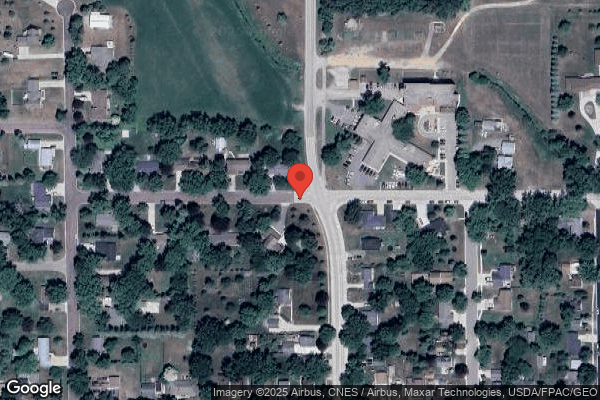
102 EAST NORTH STREET, JANESVILLE, MN 56048 (507) 231-5113
Government - City 35 Beds Independent Data: November 2025
Trust Grade
90/100
#88 of 337 in MN
Last Inspection: August 2025

Inspected within the last 6 months. Data reflects current conditions.

Overview

Whispering Creek in Janesville, Minnesota has received a Trust Grade of A, which indicates it is an excellent facility that is highly recommended. It ranks #88 out of 337 nursing homes in Minnesota, placing it in the top half of facilities statewide, and it is the best option among 3 facilities in Waseca County. However, the facility is experiencing a worsening trend, with the number of identified issues increasing from 1 in 2024 to 3 in 2025. Staffing is a strength, with a rating of 4 out of 5 stars and a turnover rate of 31%, which is below the Minnesota average of 42%. Notably, there were no fines on record, and the facility boasts more RN coverage than 86% of similar facilities, ensuring better oversight of resident care. However, recent inspections revealed concerns, such as inaccurate staffing data submissions and failure to accurately identify resident medication status, which could potentially impact care quality. Overall, while Whispering Creek has many strengths, families should be aware of these recent concerns as they consider this facility.

Trust Score
A
90/100
In Minnesota
#88/337
Top 26%
Safety Record
Low Risk
No red flags
Inspections
Getting Worse
1 → 3 violations
Staff Stability
○ Average
31% turnover. Near Minnesota's 48% average. Typical for the industry.
Penalties
✓ Good
No fines on record. Clean compliance history, better than most Minnesota facilities.
Skilled Nurses
✓ Good
Each resident gets 72 minutes of Registered Nurse (RN) attention daily — more than 97% of Minnesota nursing homes. RNs are the most trained staff who catch health problems before they become serious.
Violations
✓ Good
Only 5 deficiencies on record. Cleaner than most facilities. Minor issues only.
★★★★★
5.0
Overall Rating
★★★★☆
4.0
Staff Levels
★★★★★
5.0
Care Quality
★★★★☆
4.0
Inspection Score
Stable
2024: 1 issues
2025: 3 issues

The Good

  • 4-Star Staffing Rating · Above-average nurse staffing levels
  • 5-Star Quality Measures · Strong clinical quality outcomes
  • Full Sprinkler Coverage · Fire safety systems throughout facility
  • No fines on record
  • Staff turnover below average (31%)

    17 points below Minnesota average of 48%

Facility shows strength in staffing levels, quality measures, fire safety.

The Bad

Staff Turnover: 31%

15pts below Minnesota avg (46%)

Typical for the industry

The Ugly 5 deficiencies on record

Aug 2025 3 deficiencies
CONCERN (D)

Potential for Harm - no one hurt, but risky conditions existed

Assessment Accuracy (Tag F0641)

Could have caused harm · This affected 1 resident

**NOTE- TERMS IN BRACKETS HAVE BEEN EDITED TO PROTECT CONFIDENTIALITY** Based on interview and document review, the facility failed to ensure resident status was accurately identified on the Minimum D...

Read full inspector narrative →
**NOTE- TERMS IN BRACKETS HAVE BEEN EDITED TO PROTECT CONFIDENTIALITY** Based on interview and document review, the facility failed to ensure resident status was accurately identified on the Minimum Data Set (MDS) assessment for 1 of 2 resident (R25) reviewed for anticoagulant use. Findings include: R25's Face Sheet printed 8/6/25, included diagnoses of peripheral vascular disease (narrowing or blockage of blood vessels) , chronic atrial fibrillation (irregular heart rhythm), edema and chronic venous hypertension (high blood pressure in veins leading to insufficiency causing swelling) with ulcer and inflammation of bilateral lower extremities. R25's quarterly Minimum Data Set (MDS) dated [DATE], section N, included R25 was receiving a diuretic, antiplatelet, hypoglycemic and antidepressant medication. Anticoagulant medication was not checked as receiving. R25's physician orders dated 7/20/25, included warfarin sodium (anticoagulant/blood thinner) 1 mg tablet by mouth six times per week on Monday, Tuesday, Wednesday, Thursday, Friday and Saturday and 1.5 mg tablet of warfarin sodium one time a week on Sunday. During interview on 8/6/25 at 3:35 a.m., the director of nursing confirmed the MDS was coded incorrectly and confirmed R25 had received warfarin when the MDS was completed in June 2025. During interview 8/6/25 at 3:05 p.m., registered nurse (RN)-C, also identified as MDS coordinator, stated R25 has always been on warfarin so she must have just forgotten to check the anticoagulant box when she completed R25's MDS in June 2025. A policy on MDS coding was requested and not received.
CONCERN (D)

Potential for Harm - no one hurt, but risky conditions existed

Accident Prevention (Tag F0689)

Could have caused harm · This affected 1 resident

**NOTE- TERMS IN BRACKETS HAVE BEEN EDITED TO PROTECT CONFIDENTIALITY** Based on observation, interview and document review, the facility failed to ensure fall risk interventions were completed after ...

Read full inspector narrative →
**NOTE- TERMS IN BRACKETS HAVE BEEN EDITED TO PROTECT CONFIDENTIALITY** Based on observation, interview and document review, the facility failed to ensure fall risk interventions were completed after a fall for 1 of 2 residents (R6) identified at risk for falls to prevent further falls.Findings include: R6's Face Sheet printed 8/6/25, indicated R6 had diagnoses including heart failure, dementia, chronic kidney disease stage IV (severe irreversible damage to the kidneys) and chronic respiratory failure. R6's significant change Minimum Data Set (MDS) assessment dated [DATE], indicated R6 had a severe cognitive impairment with no delirium or behaviors. Activities of daily living (ADL's) included R6 uses a wheelchair and requires partial/moderate assistance for oral care and eating, and substantial to maximal assistance for toileting, showering, personal hygiene, bed mobility and transfers. Walking was not attempted. R6 has had one fall without injury since prior assessment. R6's Care Area assessment dated [DATE], indicated R6 was at risk for falls. See plan of care for fall interventions. Fall assessment last completed 8/4/25, identified R6 was at risk for falls and has had 1-2 falls in the past 3 months, has decreased safety awareness with impaired mobility. R6's plan of care last updated 5/27/25, indicated R6 was at risk for falls related to heart problems, terminal diagnosis of heart failure, takes medications that cause resident to be dizzy, tired, confused or weak and have trouble sleeping. Interventions included: bed low to the ground with wheels locked, remind to ask for help, therapy department performed Lift Chair Safety Assessment and is safe to use recliner chair in her room, keep important items within reach, frequent checks and night light on at night. Facility Incident Report dated 4/19/25 at 3:48 a.m., by licensed practical nurse (LPN)-A indicated R6 was trying to get up and go the bathroom and was found on the floor. Was observed in bed at 1:30 a.m. Current interventions and other factors included reclining chair, tray table, room close to nurses station, call light was in reach, but call light was not on. New intervention included floor alarm and teaching use of call light. No injuries noted. Interdisciplinary team review (IDT) completed 4/21/25, included R6 has had 1 fall within the last year. Intervention included floor alarm placed on floor while in bed and teaching of use of call light. Facility Incident Report dated 6/3/25 at 7:30 p.m., by LPN-B indicated resident was observed on floor and stated I thought I could get into my bed myself so I tried. R6 stated she landed on buttocks then onto her back and hit her head on the floor. Current interventions and factors included low bed, attempting to transfer without staff assist, call light in reach but was not on. No injuries. New interventions included a personal alarm and teaching on safe transfer techniques, and use of call light for assistance. IDT review, undated, included personal alarm was placed on person. 2 falls within the last 2 months. Facility Incident Report 7/30/25 at 4:00 p.m., by registered nurse (RN)-A included resident was observed on floor in front of her recliner. Recliner was elevated for her legs to be up. Call light was in reach but call light was not on. No injuries noted. IDT team review, undated, included 3 falls with the past 3 months. New intervention included recliner was unplugged and foot elevation pedal will not be used. On observation and interview 8/4/25 at 3:34 p.m., R6 was sitting in her wheelchair with a personal alarm on her chair and clipped to resident. Family member (FM)-A was sitting in R6's recliner in her room and stated R6 used her lift chair and fell out last week. FM-A stated they notified her of the fall and said they were going to unplug the recliner. FM-A used buttons on side of recliner and recliner began to put feet up and stated I guess they didn't unplug it as it still works. On observation and interview 8/5/25 at 9:23 a.m., R6 was sitting in her wheelchair with personal alarm on. R6 stated she does sit in her recliner sometimes but doesn't want to right now. R6 sorting through her drawers. Power recliner remains plugged in and working. On observation and interview 8/6/25 at 7:54 a.m., R8 was assisted to tub room by nursing assistant for hospice (NA)-A. Electric recliner continues to be plugged in and functioning. NA-A stated she has seen R6 in her recliner periodically when she comes. NA-A was unaware of any recent falls and is unsure if it should be plugged in or not. On interview 8/6/25 at 9:04 a.m., NA-B stated R6 has been evaluated for use of her electric chair and has been okayed to use it. NA-B stated she hasn't been told anything different and wasn't aware it needed to be unplugged. On interview 8/6/25 at 9:19 a.m., NA-C stated R6 does use her recliner and after lunch staff will generally put her in the recliner for awhile. NA-C stated we do have to watch her close or she will try to climb out of it when she gets tired of sitting there. NA-C stated he didn't believe R6 could use the electric chair control buttons but was not aware the recliner was not supposed to be plugged in. On interview 8/6/25 at 9:20 a.m., RN-B stated two weeks ago R6 was in her recliner with the legs up and she tried to climb out of it without putting the feet down. The recliner tipped down and she slid out. RN-B stated she was not aware the recliner was to be unplugged. RN-B confirmed the electric chair was plugged in and operational. On interview 8/6/25 at 10:42 a.m., the director of nursing (DON) stated she had heard the recliner was unplugged but never actually checked it herself. The DON stated it should not be plugged in and will see if therapy can evaluate R6 again for safe use and possibly remove the chair since it is easy for staff to just plug it back in if they want to use it. The DON stated after a new intervention is put into place, it should be documented in the communication book which staff review prior to working their next shift. The DON reviewed the communication book and stated no communication note was present regarding the unplugging of the electric chair. Facility Falls and Managing Fall risk policy dated 3/2018, included: - - Staff will implement a resident centered fall prevention plan to reduce the risk factor(s) of falls for each resident at risk or with a history of falls. - -If falling reoccurs despite initial interventions, staff will implement additional or different interventions, or indicate why the current approach remains relevant. - -If underlying causes cannot be readily identified or corrected, staff will try various interventions, based on assessment of the nature or category of falling, until falling is reduced or stopped, or until the reason for the continuation of the falling is identified as unavoidable. - - Position-change alarms will be monitored for efficacy and staff will respond to alarms in a timely manner.
CONCERN (F)

Potential for Harm - no one hurt, but risky conditions existed

Staffing Data (Tag F0851)

Could have caused harm · This affected most or all residents

Based on interview and document review, the facility failed to submit accurate data for staffing information based on payroll and other verifiable and auditable data during 1 of 1 quarter reviewed- Qu...

Read full inspector narrative →
Based on interview and document review, the facility failed to submit accurate data for staffing information based on payroll and other verifiable and auditable data during 1 of 1 quarter reviewed- Quarter 2, 2025, (January to March), to the Centers for Medicare and Medicaid Services (CMS), according to specifications established by CMS. Findings include: The CMS payroll-based journal (PBJ) staffing data report indicated the following infraction: Excessively Low Weekend Staffing- Submitted Weekend Staffing data is excessively low.During interview on 8/4/25 at 12:45 p.m., director of nursing (DON) stated she was unsure why they would have triggered for low staffing and that they always had staff on the weekends. DON further stated they used agency staff on weekends to fill shifts their staff could not cover.During interview on 8/4/25 at 1:10 p.m., administrator, who oversees submission of the PBJ data, stated he recalled there may have been a delay in getting staffing hours from the agencies they work with to fill shifts, and that may be why it appeared they had low weekend staffing. Administrator further stated he was not aware of actual low weekend staffing and that weekends were always staffed by hired staff or agency staff. Administrator stated he would work with agencies to get accurate staffing hours submitted.Review of facility provided documents titled 2025 Master Nursing Staff Schedule and Time Card Report dated 1/1/25 -3/31/25, indicated the facility did not have low weekend staffing on any weekend during that time period.A facility policy on Payroll Based Journal Submission was not received.
Jul 2024 1 deficiency
CONCERN (F)

Potential for Harm - no one hurt, but risky conditions existed

Staffing Data (Tag F0851)

Could have caused harm · This affected most or all residents

Based on interview and document review, the facility failed to submit accurate and/or complete data for staffing information based on payroll and other verifiable and auditable data during 1 of 1 quar...

Read full inspector narrative →
Based on interview and document review, the facility failed to submit accurate and/or complete data for staffing information based on payroll and other verifiable and auditable data during 1 of 1 quarter reviewed (Quarter 2, 2024), to the Centers for Medicare and Medicaid Services (CMS), according to specifications established by CMS. Findings include: CMS PBJ (payroll-based journal) Staffing Data Report dated Quarter 2, 2024 (January 1 - March 31) triggered for failure to have licensed nursing coverage 24 hours/day. The infraction dates included: 1/28/24, 2/4/24, 2/25/24, 3/10/24, 3/24/24, and 3/31/24. During an interview on 7/16/24 at 10:39 a.m., with nursing staff scheduler (NSS)-C reviewed nursing staff schedules for the infraction dates. On each of the six dates, there had been licensed nurses scheduled 24 hours/day. During record review, timecard sheets for each of the 10 nurses covering the 18 shifts were reviewed and indicated the nurses who had been scheduled had been paid for working each of the 18 shifts. During an interview on 7/16/24 at 1:34 p.m., the director of nursing (DON) verified the facility always had a licensed nurse working 24 hours/day. During an interview on 7/16/24 at 1:55 p.m., the administrator was informed of the results of the PBJ Staffing Data Report and given a copy. The administrator stated the staffing file was automatically uploaded to CMS, and due to the formatting, was not able to see where a potential problem could have occurred. The administrator stated the facility did not use agency nurses for staffing, and if nursing leadership worked a shift, their hours were reflected in the data. The administrator was not sure why there had been inaccurate reporting and would investigate it. The facility Reporting Direct Care Staffing Information (Payroll-Based Journal) policy with revised date of August 2022, indicated direct care staffing information was reported electronically to CMS through the Payroll-Based Journal system. Complete and accurate direct care staffing information was reported electronically to CMS through the Payroll-Based Journal (PBJ) system in a uniform format specified by CMS. For auditing purposes, reported staffing information was based on payroll records, invoices, tied back to a contract, or other verifiable information.
Aug 2023 1 deficiency
MINOR (B)

Minor Issue - procedural, no safety impact

Deficiency F0582 (Tag F0582)

Minor procedural issue · This affected multiple residents

**NOTE- TERMS IN BRACKETS HAVE BEEN EDITED TO PROTECT CONFIDENTIALITY** Based on interview and document review the facility failed to provide the required CMS (Centers for Medicare and Medicaid Servic...

Read full inspector narrative →
**NOTE- TERMS IN BRACKETS HAVE BEEN EDITED TO PROTECT CONFIDENTIALITY** Based on interview and document review the facility failed to provide the required CMS (Centers for Medicare and Medicaid Services) Skilled Nursing Facility Advanced Beneficiary Notice (SNF ABN) to 2 of 3 residents (R28, R12) whose Medicare Part A coverage ended, and the residents remained in the facility. Findings include: R28's facesheet printed on 8/23/23 indicated R28 was admitted on [DATE]. On 5/29/23, R28 signed form CMS 10123 titled Notice of Medicare Non-Coverage (NOMNC) indicated coverage of skilled nursing services would end on 5/31/23. Review of R28's documentation indicated a SNF ABN form had not been provided to R28 to inform her of the estimated cost per day, or an explanation of the extended care services or items to be furnished, reduced, or terminated if she stayed in the facility. R12's facesheet printed on 8/23/23 indicated R12 was admitted on [DATE]. On 5/2/23, R12 signed a NOMNC form which indicated coverage of skilled nursing services would end on 5/4/23. Review of R12's documentation indicated a SNF ABN form had not been provided to R12 to inform her of the estimated cost per day, or an explanation of the extended care services or items to be furnished, reduced, or terminated if she stayed in the facility. . During an interview on 8/22/23 at 4:12 p.m., office manager (OM)-B stated the facility had overlooked providing SNF ABN's to R28 and R12. The employee responsible for administering the notices, and who was not available for interview, had informed OM-B it had been an oversight on her part. During an interview on 8/23/23 at 10:14 a.m., registered nurse (RN)-A who was also the facility nurse consultant stated the facility had previously identified a gap in the facility giving residents an SNF ABN. At that time, education and training had been provided to the individual responsible for administering SNF ABN's. RN-A stated the facility would work to again re-train the individual. A booklet located in the admission packet and titled Care Providers of Minnesota dated 6/8/19 indicated: --The facility must inform each resident before, or at the time of admission, and periodically during the resident's stay, of services available in the facility and of charges for those services, including any charges for services not covered under Medicare/ Medicaid or by the facility's per diem rate. --Where changes in coverage are made to items and services covered by Medicare and/or by the Medicaid State plan, the facility must provide notice to residents of the change as soon as is reasonably possible. A policy on administering SNF ABN forms was requested. On 8/23/23 at 8:17 a.m., the director of nursing (DON) stated the facility did not have a policy; that regulatory requirements were to be followed.
Understanding Severity Codes (click to expand)
Life-Threatening (Immediate Jeopardy)
J - Isolated K - Pattern L - Widespread
Actual Harm
G - Isolated H - Pattern I - Widespread
Potential for Harm
D - Isolated E - Pattern F - Widespread
No Harm (Minor)
A - Isolated B - Pattern C - Widespread

Questions to Ask on Your Visit

  • "Can I speak with families of current residents?"
  • "What's your RN coverage like on weekends and overnight?"

Our Honest Assessment

Strengths
  • • Grade A (90/100). Above average facility, better than most options in Minnesota.
  • • No major safety red flags. No abuse findings, life-threatening violations, or SFF status.
  • • No fines on record. Clean compliance history, better than most Minnesota facilities.
  • • Only 5 deficiencies on record. Cleaner than most facilities. Minor issues only.
Concerns
  • • No significant concerns identified. This facility shows no red flags across CMS ratings, staff turnover, or federal penalties.
Bottom line: Generally positive indicators. Standard due diligence and a personal visit recommended.

About This Facility

What is Whispering Creek's CMS Rating?

CMS assigns WHISPERING CREEK an overall rating of 5 out of 5 stars, which is considered much above average nationally. Within Minnesota, this rating places the facility higher than 99% of the state's 100 nursing homes. This rating reflects solid performance across the metrics CMS uses to evaluate nursing home quality.

How is Whispering Creek Staffed?

CMS rates WHISPERING CREEK's staffing level at 4 out of 5 stars, which is above average compared to other nursing homes. Staff turnover is 31%, compared to the Minnesota average of 46%. This relatively stable workforce can support continuity of care.

What Have Inspectors Found at Whispering Creek?

State health inspectors documented 5 deficiencies at WHISPERING CREEK during 2023 to 2025. These included: 4 with potential for harm and 1 minor or isolated issues.

Who Owns and Operates Whispering Creek?

WHISPERING CREEK is owned by a government entity. Government-operated facilities are typically run by state, county, or municipal agencies. The facility operates independently rather than as part of a larger chain. With 35 certified beds and approximately 28 residents (about 80% occupancy), it is a smaller facility located in JANESVILLE, Minnesota.

How Does Whispering Creek Compare to Other Minnesota Nursing Homes?

Compared to the 100 nursing homes in Minnesota, WHISPERING CREEK's overall rating (5 stars) is above the state average of 3.2, staff turnover (31%) is significantly lower than the state average of 46%, and health inspection rating (4 stars) is above the national benchmark.

What Should Families Ask When Visiting Whispering Creek?

Based on this facility's data, families visiting should ask: "Can I visit during a mealtime to observe dining assistance and food quality?" "How do you handle medical emergencies, and what is your hospital transfer rate?" "Can I speak with family members of current residents about their experience?"

Is Whispering Creek Safe?

Based on CMS inspection data, WHISPERING CREEK has a clean safety record: no substantiated abuse findings (meaning no confirmed cases of resident harm), no Immediate Jeopardy citations (the most serious violation level indicating risk of serious injury or death), and is not on the Special Focus Facility watch list (a federal program monitoring the lowest-performing 1% of nursing homes). The facility has a 5-star overall rating and ranks #1 of 100 nursing homes in Minnesota. While no facility is perfect, families should still ask about staff-to-resident ratios and recent inspection results during their visit.

Do Nurses at Whispering Creek Stick Around?

WHISPERING CREEK has a staff turnover rate of 31%, which is about average for Minnesota nursing homes (state average: 46%). Moderate turnover is common in nursing homes, but families should still ask about staff tenure and how the facility maintains care continuity when employees leave.

Was Whispering Creek Ever Fined?

WHISPERING CREEK has no federal fines on record. CMS issues fines when nursing homes fail to meet care standards or don't correct problems found during inspections. The absence of fines suggests the facility has either maintained compliance or corrected any issues before penalties were assessed. This is a positive indicator, though families should still review recent inspection reports for the full picture.

Is Whispering Creek on Any Federal Watch List?

WHISPERING CREEK is not on any federal watch list. The most significant is the Special Focus Facility (SFF) program, which identifies the bottom 1% of nursing homes nationally based on persistent, serious quality problems. Not being on this list means the facility has avoided the pattern of deficiencies that triggers enhanced federal oversight. This is a positive indicator, though families should still review the facility's inspection history directly.