Jones Harrison Residence
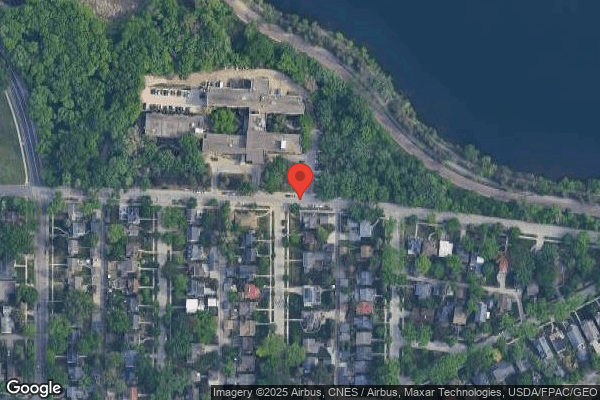
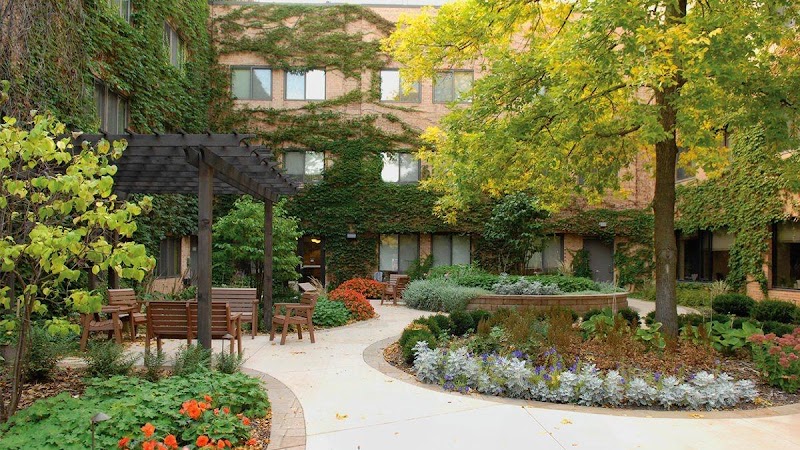
3700 CEDAR LAKE AVENUE, MINNEAPOLIS, MN 55416 (612) 920-2030
Non profit - Corporation 120 Beds EBENEZER SENIOR LIVING Data: November 2025
Trust Grade
75/100
#123 of 337 in MN
Last Inspection: November 2024

Within standard 12-15 month inspection cycle. Federal law requires annual inspections.

Overview

Jones Harrison Residence in Minneapolis has a Trust Grade of B, which indicates it is a good choice for families seeking a nursing home. It ranks #123 out of 337 facilities in Minnesota, placing it in the top half, and #17 out of 53 in Hennepin County, suggesting it has a few better local options. The facility is improving, having reduced its issues from 9 in 2024 to just 2 in 2025. Staffing is a strong point, earning a perfect 5/5 stars with a turnover rate of only 21%, well below the state average, and it has more RN coverage than 95% of facilities in Minnesota, which is beneficial for resident care. However, there have been some concerning incidents; for example, the facility failed to monitor food temperatures and ensure proper food storage, risking contamination for all residents. Additionally, some residents reported that their food was cold and unappetizing, indicating issues with meal service. While there have been no fines reported, which is a positive sign, the facility must address these food safety and quality concerns to maintain its good standing.
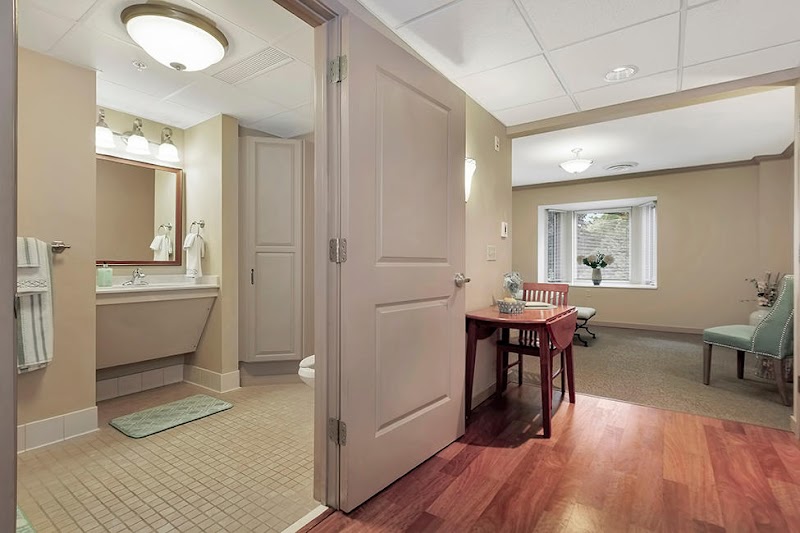
Trust Score
B
75/100
In Minnesota
#123/337
Top 36%
Safety Record
Low Risk
No red flags
Inspections
Getting Better
9 → 2 violations
Staff Stability
✓ Good
21% annual turnover. Excellent stability, 27 points below Minnesota's 48% average. Staff who stay learn residents' needs.
Penalties
✓ Good
No fines on record. Clean compliance history, better than most Minnesota facilities.
Skilled Nurses
✓ Good
Each resident gets 106 minutes of Registered Nurse (RN) attention daily — more than 97% of Minnesota nursing homes. RNs are the most trained staff who catch health problems before they become serious.
Violations
⚠ Watch
35 deficiencies on record. Higher than average. Multiple issues found across inspections.
★★★★☆
4.0
Overall Rating
★★★★★
5.0
Staff Levels
★★★☆☆
3.0
Care Quality
★★★☆☆
3.0
Inspection Score
Stable
2024: 9 issues
2025: 2 issues

The Good

  • 5-Star Staffing Rating · Excellent nurse staffing levels
  • Low Staff Turnover (21%) · Staff stability means consistent care
  • Full Sprinkler Coverage · Fire safety systems throughout facility
  • No fines on record
  • Staff turnover is low (21%)

    27 points below Minnesota average of 48%

Facility shows strength in staffing levels, staff retention, fire safety.

The Bad

Chain: EBENEZER SENIOR LIVING

Part of a multi-facility chain

Ask about local staffing decisions and management

The Ugly 35 deficiencies on record

Jul 2025 1 deficiency
CONCERN (D) 📢 Someone Reported This

A family member, employee, or ombudsman was alarmed enough to file a formal complaint

Potential for Harm - no one hurt, but risky conditions existed

Quality of Care (Tag F0684)

Could have caused harm · This affected 1 resident

**NOTE- TERMS IN BRACKETS HAVE BEEN EDITED TO PROTECT CONFIDENTIALITY** Based on interview and document review, the facility failed to assess a resident timely after a change of condition for 1 of 3 (...

Read full inspector narrative →
**NOTE- TERMS IN BRACKETS HAVE BEEN EDITED TO PROTECT CONFIDENTIALITY** Based on interview and document review, the facility failed to assess a resident timely after a change of condition for 1 of 3 (R1) residents reviewed for change in condition.Findings include: R1's quarterly Minimum Data Set (MDS) dated [DATE], indicated intact cognition with diagnoses including paraplegia, urinary tract infection, and protein-calorie malnutrition. R1's care plan dated 7/4/25, indicated R1 was usually able to identify the need to have incontinent product changed and was able to utilize the call light to request assistance. R1's preference was to have incontinent product checked at 4 am only. A nurse's note written by registered nurse (RN)-A on 7/14/25 at 6:46 a.m., indicated R1 was alert and oriented to baseline with no shortness of breath or respiratory distress noted or reported. R1 slept through the night. A nurse's note written by licensed practical nurse (LPN)-A on 7/14/25 at 6:59 a.m., indicated during report the outgoing nurse (RN-A) denied R1 had a change of condition and insisted R1 was doing okay however, was sleepy. A nursing assistant (NA) (does not identify which one) had reported R1 was not doing well and was very unresponsive. Both nurses went to R1's room to check on her. R1's vital signs were: blood pressure 83/50, pulse 87, oxygen saturations 48, temperature 97.7 and respirations 14. Supplemental oxygen was started at 2 liters per minute. LPN-A was in the process of updating the provider. The Emergency Medical Services (EMS) ambulance run sheet dated 7/14/2,5 indicated a 911 call was received on 7/14/25 at 8:19 a.m. The local fire department arrived first and started R1 on supplemental oxygen at 10 liters per minute (L). EMS arrived at 8:28 a.m. At 8:32 a.m., R1's oxygen saturation was 84% on 10 L supplemental oxygen, skin was cold, breathing was rapid and labored, and lungs had crackles in all fields. Supplemental oxygen was increased to 15L and R1 was transported to the closest hospital. On 7/23/2025 at 9:45 a.m., family member (FM)-A was interviewed and stated R1 was usually easy to wake up. R1 would not have been able to sleep through a brief change and laying in bed while the nursing assistants changed the sheets on her bed. R1 was a talkative person and wanted her cares completed in a certain way. There is no way they [the nursing assistants] couldn't notice she was unconscious. On 7/23/2025 at 10:26 a.m., FM-B was interviewed and stated R1 had been complaining about how her cares were being completed so the family decided to place two motion activated cameras in her room. FM-B reviewed the videos from 7/14/25. Two male staff members entered R1's room just after 4 a.m. They called out her name however, she did not respond. R1's arm was observed falling like it was dead weight. The staff members were making noise and there was no reaction from R1. After that, no one entered R1's room until 6:30 a.m. or so when a male and female staff entered the room. The female (RN-A) was heard saying she is just sleeping, and the male (LPN-A) replied that is not sleeping. On 7/23/2025 at 12:25 p.m., NA-A was interviewed and stated around 4 a.m., NA-A and NA-B entered R1's room to check her incontinent product. NA-A noticed R1 did not look the way she usually did. R1 would usually wake up when someone knocked on her door. NA-A called R1's name a few times and she did not wake up. NA-A and NA-B changed R1's incontinent product and bed sheets then left the room. NA-A could not find RN-A right away but eventually told the RN-A R1 was not doing well. NA-A could not recall what time he notified RN-A and did not know if RN-A went to R1's room. On 7/23/2025 at 1:08 p.m., NA-B was interviewed and stated he assisted NA-A with changing and repositioning R1. NA-B called R1's name and she did not respond. NA-B told NA-A to go get R1's nurse. NA-A replied the nurse already knew about R1's condition. When they were done, NA-B told LPN-A R1 was not talking the way she usually did when she was being changed. NA-B thought there was something wrong with R1. On 7/23/2025 at 1:19 p.m., RN-A was interviewed and stated she was the nurse responsible for R1 on 7/14/25. RN-A checked on R1 about 4 a.m., by standing in the doorway or her room to check if she was breathing and if the tube feeding was still running. At that time R1 appeared to be sleeping. R1 would put the call light on if she needed anything. RN-A asked NA-A if R1 had been changed. NA-A confirmed R1 had been changed but gave no other information about R1. RN-A stated the first time she heard R1 was not feeling well was from LPN-A during nurse to nurse report at about 6:30 a.m. On 7/23/2025 at 2:41 p.m., LPN-A was interviewed and stated about 6:00 a.m., NA-B told him R1 had not been feeling well, but NA-A had stated RN-A already knew. At about 6:40 a.m., during nurse-to-nurse report, RN-A reported R1 was doing ok. LPN-A was confused because that was not what NA-B had told him, so LPN-A and RN-A went to R1's room to check on her. LPN-A could tell something was off about R1 as soon as they walked into the room and R1 did not talk to them. When R1 would not wake up, LPN-A checked her vital signs, which were abnormal, and called the on-call provider for orders. On 7/23/2025 at 4:14 p.m., nurse practitioner (NP)-A was interviewed and stated an unresponsive resident should be assessed by a nurse immediately after the resident is found unresponsive. A delay in assessment and subsequent contact with the provider could result in the resident's clinical condition getting worse and harder to reverse or the resident could pass away. On 7/24/2025 at 1:10 p.m., the director of nursing (DON) was interviewed and stated a nursing assistant should notify the nurse right away if a resident who was normally arousable was not waking up. The nursing assistant should notify the nurse anytime a resident was observed to be different than the nursing assistant expects, even if the nurse had been notified of the condition previously. The nurse should assess the resident as soon as possible. The Change of Condition Assessments policy dated 4/16/25, established standardized procedures for registered nurses to assess and manage changes in condition among patients. The purpose of a nursing-focused assessment was to collect and compare data to normal findings and the individual patient's current health status, and reporting changes and responses to interventions in an ongoing manner to a registered nurse or the appropriate licensed health care provider. The Perineal Care policy dated 11/2017, instructed staff to inform the nurse of any changes, concerns or any skin integrity issues.
Jul 2025 1 deficiency
CONCERN (D) 📢 Someone Reported This

A family member, employee, or ombudsman was alarmed enough to file a formal complaint

Potential for Harm - no one hurt, but risky conditions existed

Comprehensive Care Plan (Tag F0656)

Could have caused harm · This affected 1 resident

**NOTE- TERMS IN BRACKETS HAVE BEEN EDITED TO PROTECT CONFIDENTIALITY** Based on interview and document review the facility failed to identify a resident's highest level of wellbeing, develop individu...

Read full inspector narrative →
**NOTE- TERMS IN BRACKETS HAVE BEEN EDITED TO PROTECT CONFIDENTIALITY** Based on interview and document review the facility failed to identify a resident's highest level of wellbeing, develop individualized care plan interventions, involve the medical provider to review rejection of care, and develop new goals and treatment choices, for 2 out of 3 residents (R1 and R2) when both residents refused hygiene (washing face and hands, brushing hair and teeth), peri care (washing rectum and vaginal areas after incontinence), weekly bed baths, and reducing risk for developing pressure ulcers. In addition, R1 refused to let staff check her blood pressure (BP) required prior to giving medication, and monitoring R2's weight weekly as ordered. Findings include: R1's care plan dated 11/20/24, indicated she needed two staff to change her incontinent pad when soiled and transfer out of bed with a mechanical lift. Staff would do a sponge bath when unable to do a full bath or shower. She needed one staff member to turn from side to side in bed, dress, hygiene, and oral care. No indication she refused care. R1's care plan dated 11/22/25, indicated she would decline being weighed due to pain. The intervention was not updated since. R1's care plan dated 1/23/25, indicated only one reference to refusal of care associated with taking antidepressant medication and risk for refusal to eat. R1's nursing progress notes dated 3/7/25 through 7/9/25, indicated she refused: being weighed 28 times, incontinent care five times, blood pressure (BP) checked leading to missing Midodrine (medication to elevate BP) dose nine times, and weekly bed bath three times. R1's care plan dated 3/31/25, indicated she was bed bound and required the assistance of two staff members to bathe, incontinent care, turn in bed, dress, and transfer using a mechanical lift. She required the assistance from one staff member to perform daily hygiene and eating assistance. She had impaired hearing, and difficulty communicating her needs to staff. The care plan did not address any rejection of cares and there were no individualized interventions to minimize the refusals of care. R1's Minimum Data Set (MDS) dated [DATE], indicated she had intact cognition, neuromuscular neuropathies (a disease effecting her nerves and muscles), inability to stand or walk, malnutrition, hearing loss, inability to urinate, difficulty swallowing and the history of alcohol abuse. Care Area Assessments (CAA) triggered inability to care for herself, move in bed, had a Foley catheter, impaired vision, inability to communicate, risk for falling, poor nutrition, risk for developing a pressure ulcer, use of anti-psychotropic medication to treat depression, anxiety, and Oxycodone (opioid) for chronic pain. R1's nursing assistants (NA) Kardex dated 7/8/25, indicated staff would identify risks related to refusing care, and re approach later. After 2 refusals they would notify the nurse. On 7/8/25 at 12:12 p.m., nurse manager registered nurse (RN)-A stated R1 had a history of refusing care. Staff would re-approach at a different time. If staff were unable to check her blood pressure before giving Midodrine, the dose would be held. She would expect the staff after a couple of refusals to update the medical provider for further guidance. On 7/8/25 at 1:00 p.m., director of nursing (DON) stated she expected her staff to notify the medical provider for any missed doses of medication, refusing weights, incontinent care, hygiene, medication, lab draws, and food, along with increased or decreased weights. Staff did not identify the root cause for rejection of care, including a risk benefit analysis. She also agreed R2's care plan did not identify refusal of care and lacked individualized care plan interventions. On 7/9/25 at 10:27 a.m., nurse practitioner (NP) stated staff updated her about R1 refusing BP checked prior to receiving Midodrine nine times on 7/8/25. She had been trying to adjust the Midodrine dose several times, because her blood pressure remained low. Had she known she could have educated R1 to gain compliance. She expected the staff would have contacted her in March when the behavior started not four months later. In addition, regarding activities of daily living (ADLS) refusals, she would have encouraged compliance by discussing the risk for developing pressure ulcers and infection. R2's medical record from 11/20/24 through 6/26/25, indicated in 38 weeks the facility weighed her eight times. R2's risk for altered nutrition care plan dated 11/22/25, indicated she would decline weights related to pain. No further interventions identified in the care plan to minimize the number of times she refused. R2's medical record dated 12-1-24 through 12-31-24, indicated staff would document her weight in two places. Weighing her was documented on the treatment administration record (TAR) and the actual weight under the results tab in point click care (PCC) electronic medical record. PCC documentation indicated staff weighed her, but there were no weights recorded under the result tab. R2's MD-A visit note dated 12/31/25, indicated her last weight was 203 lbs. R2's TAR dated 1-1-24 through 1-31-24, indicated staff weighed her every week, but only one weight was documented on 1/1/25. No indication the NP was notified. R2's TAR dated 2-1-24 through 2-28-24, indicated staff weighed her every week, but only one weight was entered on 2/21/25 with a gain of 37.8 lbs. from her previous weight. No indication the NP was notified. R2's Nurse Practitioner (NP)-A note dated 2/15/25, first indicated a weight gain from 202 lbs. to 240 lbs. in six weeks. During her assessment she observed edema (swelling of the feet related to fluid buildup in the tissue.) R2 told her that was not normal for her. R2's TAR dated 3-1-24 through 3-31-24, indicated staff weighed her weekly, staff documented three weights on 3/5/25, 3/12/25, and 3/26/25, resulted in weight gain of 10 lbs. since 2/19/25. No indication the NP was notified. R2's nursing note dated 3/5/25 at 11:00 a.m., indicated her weight was 250 lbs. and she developed worsening edema. NP-B was updated and would visit R2. R2's NP-B note dated 3/10/25, stated she developed edema in her lower extremities since February 2025. Review of weights showed she gained 50 lbs. since admission four months ago. Staff told her she drank a lot of fluid throughout the day. She started a diuretic (medication to pull fluid out of the tissue) on 3/6/25 had not improved the edema. Her left thigh graft (healthy skin transplanted on a wound to promote healing) currently reopened draining fluid. Likely cause was the edema in her leg. R2's TAR dated 4-1-25 through 4-30-25, indicated staff weighed her weekly, but no weight was documented for the month. No indication the NP was notified. R2's medical doctor (MD) note dated 4/14/25, indicated the edema was related to low albumin (protein cells) and taking Gabapentin (medication for nerve pain). The left leg wound infection resolved. R2's medication and treatment documented dated 4/19/25, indicated an order for daily weights and update the provider for a weight gain more than 2 lbs. in one day or five lbs. in one week. R2's administration note dated 5/21/25, indicated she needed an MDS weight on 5/22/25, since her last weight was on 3/26/25. She refused to be weighed. R2's MDS dated [DATE], indicated she had normal cognition, risk for skin breakdown, heart disease, diabetes, high blood pressure, obesity, depression, left thigh skin graft after motor vehicle incident, chronic pain, and depression. She currently took anti-depression medication along with opioid narcotics. She was incontinent of bowel and bladder. R2's result note dated 6/26/25, indicated she was weighed one time for 264.4 lbs. She gained an additional 14.4 lbs. No indication the NP was notified. On 7/8/25 at 9:20 a.m., registered dietician (D)-A stated if a residence weight increased by two lbs. in one day or five lbs. in one week, she would notify the nurse manager who would update the provider. R2 often refused to be weight related to increased pain when using the mechanical lift. On 7/8/25 at 11:00 am., NP-B stated she was not aware R2 refused to be weighed as ordered when the facility contacted her on 7/7/25. She now realized the lack of weights failed to identify her significant weight gain and diagnosing fluid buildup, edema and why her leg failed to heal. Had she known about the refusals, and weight gain she would have addressed the situation with the resident and developed different methods to monitor fluid buildup without having a current weight such as measuring the diameter of her legs and checking for shortness of breath when lying flat. On 7/8/25 at 1:00 p.m., director of nursing (DON) stated she expected her staff to notify the medical provider for any missed doses of medication, refusing weights, incontinent care, hygiene, medication, lab draws, and food, along with increased or decreased weights. Staff did not identify the root cause for rejection of care, including a risk benefit analysis. She also agreed R2s care plan did not identify refusal of care and lacked individualized care plan interventions. The facility policy Individualized Care Plan dated 1/22/25, indicated, staff would develop a comprehensive care plan after using a comprehensive assessment. Resident's needs and functional capacity would be identified on the individualized plan of care. All physician orders are included in the care plan. Interventions would be updated in the residence Kardex. Any care plan alterations would be initiated by the staff member who identified the problem.
Nov 2024 7 deficiencies
CONCERN (D)

Potential for Harm - no one hurt, but risky conditions existed

Safe Environment (Tag F0584)

Could have caused harm · This affected 1 resident

**NOTE- TERMS IN BRACKETS HAVE BEEN EDITED TO PROTECT CONFIDENTIALITY** Based on observation, interview, and document review the facility failed to ensure a sanitary and homelike environment for 1 of ...

Read full inspector narrative →
**NOTE- TERMS IN BRACKETS HAVE BEEN EDITED TO PROTECT CONFIDENTIALITY** Based on observation, interview, and document review the facility failed to ensure a sanitary and homelike environment for 1 of 1 residents (R55) who had dried feeding tube-like substance on their feeding tube pole, dresser, bed, and floor. Findings include: R55's quarterly Minimum Data Set (MDS) dated [DATE], indicated R55 had intact cognition and depended on staff for assistance with dressing, transferring, and bed mobility. The MDS indicated R55 received over 50 percent of her total calories through a feeding tube. R55's medication administration record (MAR) dated 11/1/24 indicated received daily feedings from 9 p.m. to 11 a.m. During an observation on 11/12/24 at 11:20 a.m., R55 was observed lying in bed on the left side of the room with a feeding pump attached to a pole to her right. To the right of the pole was a dresser and in front of the pole was a bedside table. The dresser had splatters of a light brown/yellow substance scattered over the side and front of the dresser. The light brown/yellow substance was also observed scattered over the bottom one-fourth of the feeding pump pole, the carpet on the right side of the bed, and the right bed rail/frame of R55's bed. During an observation and interview on 11/13/24 at 11:02 a.m., the light brown/yellow substance was again observed in R55's room as described above. R55 stated she did not like that the brown substance was on her furniture and floor and at home she would have cleaned it up immediately. R55 stated she had family visit her at least a few days ago, and they noticed the brown substance on the furniture and floor, and it bothered her that her room was not clean especially when she had visitors. R55 stated she assumed the brown substance was tube feeding solution. R55 stated staff cleaned it up whenever they feel like it and most of her furniture hadn't been cleaned for several months. During an interview on 11/13/24 at 11:19 a.m., registered nurse (RN)-A stated she was the nurse in charge of R55's care and had stopped her tube feeding this morning. RN-A stated she was unsure how long the tube feeding had been on R55's furniture and floor. RN-A stated it should have been cleaned by either housekeeping or nursing staff but looked like it had not been. During an interview on 11/14/24 at 11:51 a.m., the unit nurse manager (RN)-B stated she expected nursing staff to clean the resident furniture and tube feeding pole as the spills occurred and housekeeping should have been called if nursing staff was unable to clean the spill. RN-B stated staff should have cleaned the dried tube feeding to ensure R55's had a home-like environment and infection control measures were practiced. A policy regarding resident room cleaning was requested and not received.
CONCERN (D)

Potential for Harm - no one hurt, but risky conditions existed

Deficiency F0697 (Tag F0697)

Could have caused harm · This affected 1 resident

**NOTE- TERMS IN BRACKETS HAVE BEEN EDITED TO PROTECT CONFIDENTIALITY** Based on observation, interview and document review, the facility failed to ensure care plan interventions were followed and new...

Read full inspector narrative →
**NOTE- TERMS IN BRACKETS HAVE BEEN EDITED TO PROTECT CONFIDENTIALITY** Based on observation, interview and document review, the facility failed to ensure care plan interventions were followed and new interventions were implemented in a timely manner when resident pain goals were not met for 1 of 1 residents (R44) to ensure comfort and reduce the risk of complications. Findings include: R44's quarterly Minimum Data Set (MDS) dated [DATE], indicated R44 had intact cognition. The MDS indicated R44 was on a scheduled and as-needed (PRN) pain medication regimen and received non-pharmocological interventions for pain. The MDS indicated R44 had pain almost constantly over the past five days and it made it hard for R44 to sleep constantly and occasionally limited day-to-day activities. R44's care plan dated 6/5/24, indicated R44 had pain related to multiple factors including lumbar spinal stenosis (narrowing of the spinal canal causing pressure on the nerves) with radiculopathy (a pinched nerve), osteoarthritis (a joint disease that can cause pain stiffness or swelling), osteoporosis (weak and brittle bones), and failed back surgery syndrome (pain following back surgery). The care plan indicated staff should give pain medications per schedule to maintain therapeutic levels, offer non-pharmacological interventions, and notify the provider of inadequate pain relief. R44's pain interview and evaluation dated 9/23/24, indicated R44 rated her pain at a seven out of ten and had non-verbal signs of pain such as moaning and grimacing. The assessment indicated R44's pain goal was zero out of ten. The assessment indicated R44's pain management plan included diclofenac gel (pain gel) and 1000 milligrams (mg) of Tylenol three times a day. R44's provider progress note dated 10/8/24, indicated R44 had a left arm fracture requiring surgery with ongoing discomfort to the left elbow area. The note indicated R44 currently had 50 mg of Tramadol (a narcotic pain medication) available every eight hours PRN but R44 stated her pain was not well-controlled with this schedule. The provider agreed to increase the medication to every six hours PRN. The note also indicated R44 had lumbar spinal stenosis (narrowing of the spinal canal causing pressure on the nerves) with radiculopathy (a pinched nerve). R44's medication administration record (MAR) dated 10/1/24 through 11/11/24, indicated R44 had orders for the following medications: - 1000 mg of Tylenol three times a day dated 1/15/24 - 400 mg of gabapentin daily at bedtime dated 5/3/24 - two lidocaine patches (pain patch) daily dated 7/23/24 - 100 mg of gabapentin (medication used for nerve pain) two times a day dated 8/15/24 - one percent diclofenac gel available every eight hours PRN dated 8/26/24 - 0.2596 mg total daily dose of hydromorphone (narcotic pain medication) through an implanted pain pump dated 9/3/24 - 50 mg of PRN tramadol available every eight hours dated 9/17/24 through 10/8/24 - 50 mg of PRN tramadol available every six hours dated 10/8/24. - 30 mg daily (10/19/24-10/24/24), 20 mg daily (10/25/24-10/27/24), and 10 mg (10/28/24-10/30/24) of prednisone (a steroid) ordered for gout (a form of arthritis that can cause severe pain, swelling, and joint tenderness) R44's progress notes, order administration notes, pain scores, and MAR dated 10/27/24 through 11/11/24 were reviewed and indicated: - On 10/27/24 at 2:24 a.m., tramadol was given for six out of ten pain. A follow-up pain score was assessed at 7:01 a.m., an eight out of ten and the medication was documented as being ineffective. The note did not include what new pain interventions were implemented and if needed, the provider was notified. - On 10/27/24 at 10:13 a.m., tramadol was given for eight out of ten pain. At 12:43 p.m., left elbow elevation, and a cold compress were applied to the left elbow for swelling, pain, and slight warmth. The note indicated this information would be reported to the oncoming nurse. A follow-up pain score was assessed at 1:17 p.m., at eight out of ten and the medication was documented as being ineffective. The note did not include what further pain interventions were completed at that time or if the provider had been notified. - On 10/27/24 at 4:36 p.m., tramadol was given for eight out of ten pain. A follow-up pain score was assessed at 5:19 p.m., at seven out of ten and the medication was documented as being effective. - On 10/28/24 at 1:24 p.m., tramadol was given for seven out of ten left elbow pain. A follow-up pain score was assessed at 2:07 p.m., at five out of ten and the medication was documented as being effective. - On 10/29/24 at 9:56 a.m., R44 requested a physical therapy evaluation as she thought that might help with her pain, so the nurse left a message for the nurse practitioner. At 10:58 a.m., the nurse left a message for nurse practitioner who was in the building, but the note did not indicate what the message was regarding. - On 10/30/24 at 8:03 a.m., tramadol was given for six out of ten left leg pain. A follow-up pain score was assessed at 1:01 p.m., at eight out of ten and the medication was documented as being ineffective. The note did not include what further pain interventions were completed at that time or if the provider had been notified. - On 10/30/24 at 8:06 p.m.,tramadol was given for eight out of ten left leg pain. A follow-up pain score was not documented. - On 11/1/24 at 9:19 a.m., tramadol was given for eight out of ten left elbow pain. A follow-up pain score was assessed at 10:12 a.m., at four out of ten and the medication was documented as being effective. - On 11/2/24 at 8:58 a.m., tramadol was given for eight out of ten left elbow pain. A follow-up pain score was assessed at 9:40 a.m., at four out of ten and the medication was documented as being effective. - On 11/4/24 at 9:30 p.m., tramadol was given for seven out of ten pain. A follow-up pain score was not documented. - On 11/6/24 at 2:04 p.m., the nurse stated she had talked to the nurse practitioner, and she was working on the order. - On 11/8/24 at 7:43 a.m., tramadol was given for seven out of ten pain. A follow-up pain score was not assessed until 12:55 p.m., and was seven out of ten and the medication was documented as being ineffective. - On 11/8/24 at 1:12 p.m., tramadol was given for seven out of ten pain. A follow-up pain score was assessed at 3:22 p.m., at six out of ten and the medication was documented as being effective. - On 11/9/24 at 6:09 a.m., tramadol was given for eight out of ten pain. A follow-up pain score was not assessed until 1:16 p.m., and was eight out of ten and the medication was documented as being ineffective. - On 11/9/24 at 1:16 p.m., tramadol was given for eight out of ten pain. A follow-up pain score was assessed at 7:28 p.m., at six out of ten and the medication was documented as being effective. - On 11/9/24 at 7:28 p.m., tramadol was given for eight out of ten pain. A follow-up pain score was assessed at 8:39 p.m., at six out of ten and the medication was documented as being effective. - On 11/10/24 at 8:00 a.m., tramadol was given for eight out of ten pain. A follow-up pain score was not assessed until 12:55 p.m., and was seven out of ten and the medication was documented as being ineffective. The note indicated the resident stated this medication only helps a bit. - On 11/10/24 at 4:43 p.m., tramadol was given for eight out of ten pain. A follow-up pain score was assessed at 7:09 p.m., at six out of ten and the medication was documented as being effective. - On 11/11/24 at 8:23 a.m., tramadol was given for eight out of ten in the left elbow pain. A follow-up pain score was assessed at 10:09 a.m., and was five out of ten. The medication was documented as being ineffective and an ice pack was offered. The note did not indicate if a pain follow-up assessment was completed to ensure the non-pharmacological intervention was effective. During an interview on 11/14/24 at 8:51 a.m., nurse practitioner (NP)-A stated she was R44's primary care provider and managed her pain plan. NP-A stated R44 had pain related to a broken elbow that did not heal correctly and chronic back pain. NP-A stated she had not gotten any reports in the last few weeks from nursing staff indicating the current pain plan was not effectively managing her pain. NP-A stated she had gotten a report and had worked on orders regarding getting R44 physical therapy per her request but R44 had not qualified for this. NP-A stated if she had gotten a report from nursing staff indicating R44's pain was inadequately managed, she would have followed up with R44 to evaluate possible interventions but stated she doubted her pain would ever be under a seven out of ten. During an interview on 11/14/24 at 10:21 a.m., R44 stated she did not feel like her pain was well controlled and would like her pain at a maximum of 3 out of 10. R44 stated her pain was usually in her back or her left elbow and lately had been sitting at a seven or eight out of ten. R44 stated she did not feel like the staff believed her pain was as bad as it felt to her and were not providing adequate pain interventions even when she was telling them her pain was still higher than what was tolerable for her. R44 stated she feels like the facility does not listen to her when she tells them she still has pain and the pain interventions that have been attempted didn't help. During an interview on 11/14/24 at 10:28 a.m., registered nurse (RN)-C stated the trained medication aides (TMA) were responsible for asking residents what their pain levels were and then following up later to ensure the medication was effective. RN-C stated he thought R44's pain goal was zero out of ten. RN-C stated if a resident did not meet their pain goal after a PRN medication was given, then the TMA would offer a non-pharmacological intervention. RN-C stated he expected the TMA to complete this follow up assessment to determine if the residents pain goal was met after administering PRN pain medications or non-pharmacological interventions. RN-C stated if the pain goal was not met, he expected to be notified and then he would call the NP to determine what further interventions could be attempted and then that would be documented in the progress notes. During an interview on 11/14/24 at 10:58 a.m., RN-D, the unit nurse manager, stated she would expect the TMA to alert the nurse if the resident is reporting pain so the nurse could assess the resident and determine appropriate interventions. RN-D stated she would expect the nurse to follow up with the resident to determine if the resident's pain goal had been met after the pain intervention had been implemented. RN-D stated if they had already attempted the PRN medications available as well as non-pharmacological interventions she would expect nursing staff to notify the NP that the resident's pain goal was not being met so they can see if pain medication regimen needs to be updated, such as scheduling pain medications, ensuring they are using the right medication and it is being dosed effectively. RN-D stated she was unsure what the expectation was for how long after a pain medication was given, nursing staff should re-evaluate pain levels, but thought it would be around an hour. A policy regarding resident pain management was requested and not received.
CONCERN (D) 📢 Someone Reported This

A family member, employee, or ombudsman was alarmed enough to file a formal complaint

Potential for Harm - no one hurt, but risky conditions existed

Deficiency F0699 (Tag F0699)

Could have caused harm · This affected 1 resident

**NOTE- TERMS IN BRACKETS HAVE BEEN EDITED TO PROTECT CONFIDENTIALITY** Based on observation, interview and document review the facility failed to comprehensively assess past trauma and develop a comp...

Read full inspector narrative →
**NOTE- TERMS IN BRACKETS HAVE BEEN EDITED TO PROTECT CONFIDENTIALITY** Based on observation, interview and document review the facility failed to comprehensively assess past trauma and develop a comprehensive person-centered care plan with goals and interventions utilizing a trauma-informed approach including monitoring of post traumatic stress disorder (PTSD) for 1 of 1 residents (R79) reviewed for trauma-informed care. Findings include: R79's quarterly Minimum Data Set (MDS) dated [DATE], indicated R79 was [AGE] years old, was cognitively intact and the MDS further indicated R79 was widowed, suffered from feelings of depression or hopelessness several days a week, and always socially isolated. R79's diagnoses sheet, dated [DATE], indicated the following diagnoses: post-polio syndrome (a condition that causes gradual muscle weakness and atrophy), hypertension (high blood pressure), hemiplegia (paralysis or weakness on one side of the body), and schizophrenia (a disorder that affects a person's ability to think, feel and behave clearly) and altered mental status. An Associated Clinic of Psychology (ACP) progress note dated [DATE], indicated R79's social history included an alcoholic father, had lost two siblings, had suffered the loss two sons who died as infants, and was the victim of an abusive partner. It further indicated R79 suffered from flashbacks of her traumatic experiences. ACP progress note dated [DATE], indicated R79 exhibited behavioral and emotional symptoms that affect functioning, was paranoid and lacked trust in others. R79's facility Psychosocial/History assessment dated [DATE], indicated resident had experienced life threatening or traumatic events that included: polio as a child, her first husband died at age [AGE], her second husband committed suicide, loss of two children in infancy, and had history of a stroke. The assessment further indicated R79 had been intimidated, hurt, manipulated, or controlled by her second husband who was verbally and physically abusive towards her. R79's care plan printed [DATE], at 12:05 p.m. lacked any information on trauma informed care or trauma triggers. A care plan printed on [DATE], at 2:15 p.m. indicated R79's care plan had been updated to include trauma informed care with an initiation date of [DATE], three days after survey entrance. During interview on [DATE], at 1:09 p.m. certified nursing assistant (CNA)-A stated he was familar with R79 and worked with her frequently. CNA-A stated he did not now if R79 was a trauma survivor but did have behavioral issues. CNA-A stated he did some online education for trauma-based care but nothing specific to R79. During interview on [DATE], at 1:21 p.m. registered nurse (RN)-F stated she was familiar with R79 and worked with her frequently. RN-F stated she would occasionally take R79 outside if she was exhibiting behavioral issues but could not identify any specific trauma informed care-based interventions for R79. During interview on [DATE] at 1:35 p.m. transitional care unit charge nurse (TCU-CN) stated when a resident is assessed by social workers the information is shared with staff, used to create the plan of care, and discussed in interdisciplinary meetings. TCU-CN went on to say the facility meets with ACP providers weekly to discuss resident care and will reach out to them for instruction, assistance, or guidance on how to treat residents with history of trauma. During interview on [DATE] at 2:40 p.m. director of nursing (DON), stated she was familiar with R79, and she required total care and assistance. DON stated R79 had trauma history including emotional and physical abuse, death of children and dealing with law enforcement. She went on to say R79 would frequently isolate herself, exhibited fear of the government and it was difficult to identify what was trauma and what was delusion. DON stated she would expect any resident who had experienced trauma would have trauma informed care addressed on their care plan and it should identify what the trauma was and how to minimize risk of retraumatizing. DON confirmed R79's care plan did not previously include trauma informed care, did not include trauma triggers or interventions but had been updated on [DATE], three days after survey entrance, to include trauma informed care, triggers and interventions. DON stated it was important to know and understand a residents trauma history to avoid re-traumatization.
CONCERN (D)

Potential for Harm - no one hurt, but risky conditions existed

Medication Errors (Tag F0758)

Could have caused harm · This affected 1 resident

**NOTE- TERMS IN BRACKETS HAVE BEEN EDITED TO PROTECT CONFIDENTIALITY** R40's quarterly MDS, dated [DATE], indicated R40 was admitted to the care facility on 2/6/23 and was cognitively intact. R40's d...

Read full inspector narrative →
**NOTE- TERMS IN BRACKETS HAVE BEEN EDITED TO PROTECT CONFIDENTIALITY** R40's quarterly MDS, dated [DATE], indicated R40 was admitted to the care facility on 2/6/23 and was cognitively intact. R40's diagnoses list, printed 11/14/24, indicated R40 had several medical diagnoses including bipolar disorder, anxiety disorder, depression, and insomnia. R40's Physician Orders contained an order, dated 10/23/24, for Compazine (an antipsychotic medication) 5 milligrams (mg) by mouth every 8 hours as needed for nausea. The order however lacked an end date or a rationale of why the medication should be continued beyond 14 days. R40's Physician Orders also contained an order, dated 6/19/24, for Trazadone (an antidepressant and sedative medication) 25 mg by mouth at bedtime. The order however lacked an indication for use (i.e. depression or insomnia). During an interview on 11/14/24 at 8:22 a.m., licensed practical nurse (LPN)-B was unable to confirm if R40 received Trazodone for depression or insomnia, stating it was for bedtime. During an interview on 11/14/24 at 9:13 a.m., assistant nurse manager and registered nurse (RN)-E stated it would be expected that an indication for use would be noted on R40's Trazodone order to ensure staff knew why they were giving the medication, stating she was usually notified when a medication was missing an indication for use. During an interview on 11/14/24 at 1:42 p.m., the director of nursing (DON) confirmed all antipsychotics should always have a 14-day end date. The DON further stated it would be expected the Trazodone order had an indication of use, stating if staff did not know what they were giving the medication for they would not be able to assess the medication's effectiveness. Based on interview and document review the facility failed to ensure orders for PRN (as needed) psychotropic medication (mood altering medications) were time limited to 14 days. In addition, the facility failed to ensure provider assessment and documentation of rationale and duration of continuation of a psychotropic PRN medication beyond 14 days occurred for two of six residents (R70 and R40) reviewed for PRN psychotropic medication use. The facility further failed to ensure an indication for use was present for one of six residents (R40) reviewed for psychotropic medication. Findings include: R70 R70's significant change Minimum Data Set (MDS) dated [DATE], indicated R70 was moderately cognitively impaired with the diagnoses of cancer. Section O. indicated R70 was receiving hospice services at the facility. The Current Order Summary dated November 2024, included the order: lorazepam (medication which act on the brain and nerves to produce a calming effect) oral concentrate 2 milligrams per milliliter (mg/ml) Give 0.5 mg by mouth every 2 hours as needed for anxiety, sleep, severe nausea. The stop date was listed as indefinite. R70's provider order for lorazepam documented, lorazepam oral concentrate mg/ml, give 0.5 mg by mouth every 2 hours as needed for anxiety, sleep, severe nausea. provider order did not document it was time limited to 14 days or less. R70's medication administration record showed that R70 had not received a dose of the ordered lorazepam between the dates of 9/6/24 to 11/13/24. Provider notes between 9/1/24 and 11/14/24 lacked evidence to show a provider had reviewed R70's lorazepam order for discontinuation or order renewal every 14 days. The Consultant Pharmacist's Medication Review dated 9/17/24, identified R70 had been prescribed lorazepam since 9/3/20 [error lorazapam was started ordered on 9/6/24] and indicated: there was not a stop date or duration listed in the order. Written review included: Per updated CMS regulations, all new prn psychotropic medications orders must be re-evaluated within 14 days of initiation and then at routine intervals thereafter. Provider note must specify rationale for renewal of medication. During an interview on 11/14/24 at 12:17 p.m., the director of nursing (DON) stated all the prn antipsychotic/psychotropic medications such as lorazepam ordered as a PRN medication should be reviewed and evaluated every 14 days for renewal or discontinuation and they should not be ordered with a stop date of indefinitely. The Policy Psychopharmacologic Drug use dated 7/8/2024, number 11. As needed (PRN) orders subpart b. included: PRN orders for psychotropic drugs are limited to 14 days except if the provider or prescribing practitioner believes the order period should be extended. They must document in the medical record the duration of and the rationale for extension of the order. The provider must directly examine the resident to determine if the PRN is still needed.
CONCERN (D)

Potential for Harm - no one hurt, but risky conditions existed

Deficiency F0883 (Tag F0883)

Could have caused harm · This affected 1 resident

**NOTE- TERMS IN BRACKETS HAVE BEEN EDITED TO PROTECT CONFIDENTIALITY** Based on interview and document review the facility failed to ensure 2 of 5 residents (R25, R85) were offered, educated and/or p...

Read full inspector narrative →
**NOTE- TERMS IN BRACKETS HAVE BEEN EDITED TO PROTECT CONFIDENTIALITY** Based on interview and document review the facility failed to ensure 2 of 5 residents (R25, R85) were offered, educated and/or provided the pneumococcal vaccine series as recommended by the Centers for Disease Control (CDC), who were reviewed for immunizations. Findings include: A CDC Pneumococcal Vaccine Timing for Adults feature, dated 3/15/2023, identified various tables when each (or all) of the pneumococcal vaccinations should be obtained. This identified when an adult over [AGE] years old had received the complete series (i.e., PPSV23 and PCV13; see below) then the patient and provider may choose to administer Pneumococcal 20-valent Conjugate Vaccine (PCV20) for patients who had received Pneumococcal 13-valent Conjugate Vaccine (PCV13) at any age and Pneumococcal Polysaccharide Vaccine 23 (PPSV23) at or after [AGE] years old. R25's annual Minimum Data Set (MDS) dated [DATE] indicated R25 was [AGE] years old, was admitted to the facility on [DATE], was severely cognitively impaired, and had the following diagnoses: peripheral vascular disease (a condition in which narrowed blood vessels reduce blood flow to the limbs), hypertension (high blood pressure), Alzheimer's disease, and dementia. R25's Point Click Care Immunization, updated 11/14/24, indicated R25 had received pneumococcal vaccine (PCV23) on 4/26/17. The record did not indicate a refusal or if R25 had been offered/educated on the benefit of receiving an additional pneumococcal vaccinations. R85's quarterly MDS dated [DATE] indicated R85 was [AGE] years old, admitted on [DATE], was severely cognitively impaired, and had the following diagnoses: heart failure, diabetes mellitus (a chronic disease where the body is unable to properly regulate blood sugar levels), hyperlipidemia (high blood lipid levels), Alzheimer's disease, and dementia. R85's Point Click Care Immunization tab, updated 11/24/24, indicated R85 received PCV13 on 7/13/15 and PCV23 on 01/11/07. The record did not indicate a refusal of PCV20, or if if R85 had been offered/educated on the benefit of receiving an additional pneumococcal vaccinations. During interview on 11/14/24, at 1:40 p.m. infection preventionist (IP) stated she used the Minnesota Immunization Information Connection (MIIC) and admission paperwork to determine residents' vaccination status. IP stated R25, and R85's medical records lacked documentation of receiving the PCV20 vaccination. During interview on 11/14/24, at 1:44 p.m. director of nursing (DON) stated R25 and R85 were eligible to receive the PCV20 vaccination. DON confirmed R25 and R85 had not been offered nor had they received the PCV20 vaccination. DON stated her expectation was all residents would be educated on the risks and benefits of receiving vaccinations, as well as offered any eligible vaccinations. DON stated it is important to receive vaccinations to promote good health. A vaccination policy was requested but not provided.
CONCERN (D)

Potential for Harm - no one hurt, but risky conditions existed

Deficiency F0887 (Tag F0887)

Could have caused harm · This affected 1 resident

**NOTE- TERMS IN BRACKETS HAVE BEEN EDITED TO PROTECT CONFIDENTIALITY** Based on interview and document review, the facility failed to ensure the Coronavirus Disease (COVID-19) vaccination was offered...

Read full inspector narrative →
**NOTE- TERMS IN BRACKETS HAVE BEEN EDITED TO PROTECT CONFIDENTIALITY** Based on interview and document review, the facility failed to ensure the Coronavirus Disease (COVID-19) vaccination was offered and/or provided to reduce the risk of severe illness to 1 of 5 residents (R58) reviewed for immunizations. Findings include: Center of Disease Control and Prevention (CDC) Interim Clinical Considerations for Use of COVID-19 Vaccines in the United States reviewed 4/4/24, directed the following guidance: For people 12 years or older who are not moderately or severely immunocompromised: -unvaccinated= 1 dose of an updated (2023-2024 Formula) mRNA COVID-19 vaccine OR 2 doses of updated Novavax vaccine. -Previously received 1 or more Original monovalent or bivalent mRNA vaccine doses= 1 dose of any updated COVID-19 vaccine. -Previously received 1 or more doses of Original monovalent Novavax vaccine, alone or in combination with any Original monovalent or bivalent mRNA vaccine doses= 1 dose of any updated COVID-19 vaccine. -Previously received 1 or more doses of [NAME] vaccine, alone or in combination with any Original monovalent or bivalent mRNA vaccine or Original monovalent Novavax doses= 1 dose of any updated COVID-19 vaccine. -Special situation for people ages 65 years and order= People ages 65 year and older should receive 1 additional dose of an updated COVID-19 vaccine at least 4 months following the previous dose of updated COVID-19 vaccine. For initial vaccination with updated Novavax COVID-19 vaccine, the 2-dose series should be completed before administration of the additional dose. For people 12 years or older who are moderately or severely immunocompromised: -Unvaccinated= 3 homologous (i.e., from the same manufacturer) updated (2023-2024 Formula) mRNA vaccine doses OR 2 updated Novavax vaccine doses. -Previously received 1 or 2 Original monovalent or bivalent mRNA vaccine doses= Complete the 3-dose series with 2 or 1 homologous updated mRNA vaccine doses, respectively. -Previously received a combined total of 3 or more Original monovalent or bivalent mRNA vaccine doses= 1 dose of any updated COVID-19 vaccine. -Previously received 1 or more Original monovalent Novavax vaccine doses, alone or in combination with any Original monovalent or bivalent mRNA vaccine doses= 1 dose of any updated COVID-19 vaccine. -Previously received 1 or more doses of [NAME] vaccine, alone or in combination with any Original monovalent or bivalent mRNA vaccine or Original monovalent Novavax doses= 1 dose of any updated COVID-19 vaccine. -People ages 12-64 year may receive 1 or more additional doses of any updated COVID-19 vaccine. -People ages 65 years and older should receive 1 additional dose and may receive further additional doses of any updated COVID-19 vaccine. R58's quarterly Minimum Data Set (MDS) dated [DATE], indicated R58 was admitted on [DATE], was cognitively intact, and had the following diagnoses: anemia (low red blood cells and hemoglobin in blood), hypertension (high blood pressure), hyperlipidemia (high levels of fat in the blood) and anxiety disorder(a group of mental health conditions that cause fear, dread and other symptoms that are out of proportion to the situation). R58's Point Click Care Immunizations tab lacked any documentation for COVID 19 vaccination. During an interview on 11/14/24, at 1:40 p.m. infection preventionist (IP) stated she had reviewed R58's admission medical record and the Minnesota Immunization Information Connection (MIIC) website to obtain R58's vaccination status. IP stated R58 was eligible to receive the COVID-19 vaccination but had not been offered, nor had she refused the vaccination. During an interview on 11/14/24, at 1:44 p.m. director of nursing (DON) confirmed R58 had not been offered nor received the COVID 19 vaccination. DON stated her expectation was all residents would be educated on the risks and benefits of receiving vaccinations, as well as offered any eligible vaccinations. DON stated it is important to receive vaccinations to promote good health. A vaccination policy was requested but not provided.
CONCERN (F)

Potential for Harm - no one hurt, but risky conditions existed

Food Safety (Tag F0812)

Could have caused harm · This affected most or all residents

Based on observation, interview and record review, the facility failed to test the levels of chemicals used on the three compartments sink to sanitize the pots used for meal preparation; failed to ens...

Read full inspector narrative →
Based on observation, interview and record review, the facility failed to test the levels of chemicals used on the three compartments sink to sanitize the pots used for meal preparation; failed to ensure dry goods removed from original packaging were stored in a manner to reduce the risk for cross contamination; and failed to properly monitor food temperatures before serving food to residents. These findings had the potential to affect all 102 residents, staff, and visitors, who consumed food prepared from the main production kitchen. Findings include: During observation and interview on 11/12/24 at 8:20 a.m., an initial kitchen tour was completed with culinary coordinator (CC) and the following items were identified: 1. A series of two white colored plastic bins were on the floor (wheeled) adjacent to the baking area. These were labeled for flour and sugar. However, the bin labeled for flour was approximately half full and a plastic, blue-colored scoop was present inside the bin and touching the flour. The handle was pointed upward from the product. CC opened the flour container and stated, that shouldn't be there. 2. The three compartments sink was filled with water. The water in two of the compartments was clear, and the third one was tinted blue. A testing log of the chemical used on this sink was not available upon request. During interview on 11/13/24 at 10:25 a.m., CC and company regional kitchen manager (RKM) confirmed the facility used a chemical sanitization process for cleaning pot and pans and stated the staff had not been testing the chemical levels used in the three-compartment sink. CC stated the pots used to prepared food were washed in the three compartments sink and the pots were never washed in the dishwasher. RKM stated a testing log was implemented that morning. During observation on 11/13/24 at 11:36 a.m., dietary staff were dishing food from a steam located next to the main cooking area. A black binder was on top of the steam table and contained daily temperature logs for the month of November. Daily logs included breakfast, lunch, and dinner. Temperature documentation of meals were as follows: 11/01/24 - Breakfast and dinner temperatures were documented. 11/02/24 - No temperatures were documented 11/03/24 - Breakfast and dinner temperatures were documented. 11/04/24 - Breakfast, lunch, and dinner temperatures were documented 11/05/24 - Breakfast and dinner temperatures were documented. 11/06/24 - Breakfast and lunch temperatures were documented. 11/07/24 - Breakfast and dinner temperatures were documented. 11/08/24 - Breakfast and lunch temperatures were documented. 11/09/24 - Breakfast and lunch temperatures were documented. 11/10/24 - Breakfast and lunch temperatures were documented. 11/11/24 - Breakfast, lunch, and dinner temperatures were documented 11/12/24 - Breakfast and lunch temperatures were documented. 11/13/24 - Breakfast and lunch temperatures were documented. During interview on 11/13/24 at 12:20 p.m., CC and RKM verified the daily temperature logs for the steam table were incomplete. CC stated the cooks used a blue colored binder to document the food temperatures when they were preparing the food, and before the food was transferred to the kitchen's steam table. CC was unable to locate the cook's binder used to log temperatures at the point of food preparation and stated she was going to contact the weekend cook and ask where the binder was. During interview on 11/14/24 at 7:20 a.m., CC stated the binder used by the cooks to document the food temperature was not found. During interview on 11/14/24 at 7:25 a.m., cook (CA) stated he did not temp or document the breakfast or lunch temperatures on 11/12 or 11/13 before he transferred the food from the kitchen to the steam table because the dietary aide checks the food temperature at the steam table. During interview on 11/14/24 at 8:32 a.m., RKM stated having two binders to document temperatures was not functional, and probably the cook and the kitchen aid were relying on each other to check the temperature. RKM stated starting immediately a single temperature log will be used by the kitchen staff. RKM stated the food temperatures needed to be monitored to assure the quality of the food, meet regulations, and prevent foodborne illnesses. Further, RKM stated leaving a scoop inside a container was a concern for cross contamination, and the chemical levels of the three-compartments sink should be tested to assure pots are properly sanitized. During interview on 11/14/24 at 1:58 p.m., the administrator stated the expectation was to check the temperature of food before it's served, scoops are not left inside food containers to prevent cross contamination, and testing of the chemicals used to sanitize kitchen equipment was done to assure proper sanitation. Facility Policy titled Meal Program, dated 03/2023, indicated the purpose of this policy was to offer a comprehensive and attractive meal program that meets the United States Department of Agriculture guidelines for the nutritional needs of the elderly and ensures compliance with 144G.41 and 144G.91. Policy also indicated the food must be prepared and served according to the Minnesota Food Code, Minnesota Rules, chapter 4626. Further, policy indicated temperatures will be taken by cook after transfer any item to the steam table prior to beginning of service and logged. Facility Policy titled Food Labeling and Storage dated 11/2023 indicated the director of food and nutrition services will be responsible for providing safe foods for all individuals and knows to store food to prevent cross contamination. Facility Policy titled Food Safety and Sanitation dated 05/2024 indicated the staff will complete all necessary tasks regarding regulations for service and preparation in healthcare environment. Policy included the proper procedure to set up three-compartment sink and test water for PPM ((200-4500) for quart and (500-700) for sink and surface, record and initial in log.
Jul 2024 1 deficiency
CONCERN (D) 📢 Someone Reported This

A family member, employee, or ombudsman was alarmed enough to file a formal complaint

Potential for Harm - no one hurt, but risky conditions existed

Deficiency F0655 (Tag F0655)

Could have caused harm · This affected 1 resident

**NOTE- TERMS IN BRACKETS HAVE BEEN EDITED TO PROTECT CONFIDENTIALITY** Based on observation, interview and document review, the facility failed to develop a comprehensive baseline care plan within 48...

Read full inspector narrative →
**NOTE- TERMS IN BRACKETS HAVE BEEN EDITED TO PROTECT CONFIDENTIALITY** Based on observation, interview and document review, the facility failed to develop a comprehensive baseline care plan within 48 hours after admission to the facility for 1 of 5 residents (R1) whose person-centered care plan instructions were not identified until nine days after admission when she fell and sustained a hip fracture. Findings include: R1's nursing progress note dated 6/27/24 at 9:41 p.m., indicated she arrived at the facility on a stretcher from the hospital. Upon arrival she had behaviors such as hitting staff and trying to stand up. The nurse put her in a wheelchair by the nursing station for close observation to prevent her from falling. She was up most of the night and required the assistance of two staff to toilet her. R1's nursing progress note dated 6/28/24 at 5:48 a.m., indicated she was very confused and resisted care from the staff. R1's admission Minimum Data Set (MDS) dated [DATE], indicated she was admitted to the facility on [DATE]. She had disorganized thoughts during the assessment, and they were unable to determine her cognitive level. Her behaviors included kicking and hitting others. She was incontinent of urine and bowel and required assistance from one staff member to toilet. She was able to walk independently. Medical history included a brain disorder, breast cancer, weakness, heart disease, impaired communication, diabetes, and abnormal mobility. R1's Admission/readmission note dated 7/11/24, indicated her preferences, mobility level, medication used, activities of daily living (walking, dressing, toileting, eating, hygiene, etc.) risk for falling, cognition, communication, and a head-to-toe assessment. Based on the assessment additional fields popped up to require a care plan entry along with a list of applicable care plan interventions. R1's care plan created on 7/6/24, indicated the creation date was nine days after her admission to the facility. In addition, it was the same day she fell in her bathroom resulted in a hospitalization to treat a fractured hip. The only assessments completed prior to the 48-hour deadline was a risk for skin injury and a fall assessment. The fall assessment completed had a risk score of six and would not automatically update the findings on her care plan. Only the admission/readmission document would update a care plan. During interview on 7/30/24 at 11:02 a.m., registered nurse (RN)-A stated the admission/readmission assessment should be completed on the shift they arrived on. If unable to complete the assessment he would report it to the next shifts nursing staff who would finish it. He stated the evening shift did most of the admission assessments because most residents arrive from the hospital later in the day. When a deficit was identified the document would open care plan interventions to choose from. Once the document was done the care plan would be automatically updated with the findings. During interview on 7/30/24 at 11:11 a.m., RN-B stated the evening nursing shift did most of the resident admissions to the facility. The facility required the admission/readmission assessment completed within the first 24 hours. During interview on 7/30/24 at 11:14 a.m., the director of nursing (DON) stated a new resident's baseline assessment should be completed within the first 24 hours. The facility does the baseline and comprehensive assessment at the same time. She stated R1 arrived at the facility four hours after the time given by the hospital. She added, when R1 arrived her confusion, and striking out at staff hampered the assessment process. Facility policy MDS/CARE PLAN PROCESS dated 2/1/24, indicated a nurse would complete the baseline assessment for all admissions and readmissions to the facility. The baseline care plan provided resident problems and interventions to meet their initial needs. The baseline care plan was a temporary care plan until the staff had time to do a full comprehensive assessment.
Mar 2024 1 deficiency
CONCERN (D) 📢 Someone Reported This

A family member, employee, or ombudsman was alarmed enough to file a formal complaint

Potential for Harm - no one hurt, but risky conditions existed

Pharmacy Services (Tag F0755)

Could have caused harm · This affected 1 resident

**NOTE- TERMS IN BRACKETS HAVE BEEN EDITED TO PROTECT CONFIDENTIALITY** Based on observation, interview and document review the facility failed to administer blood pressure medication according to phy...

Read full inspector narrative →
**NOTE- TERMS IN BRACKETS HAVE BEEN EDITED TO PROTECT CONFIDENTIALITY** Based on observation, interview and document review the facility failed to administer blood pressure medication according to physician orders and failed to identify and report the medication errors to the physician for 1 of 1 resident (R1), reviewed for medication management. Findings include: Hypertension (high blood pressure): when the pressure in your blood vessels is too high (140/90 (millimeters of mercury) mmHg or higher). Hypotension (low blood pressure): when blood flows through your blood vessels at lower-than-normal pressures (less than 90/60 mmHg). R1's Prospective Payment System PPS 5-day assessment dated [DATE], identified R1to have intact cognition and had diagnoses of hypertension, cerebral vascular accident (stroke), and congestive heart failure (when your heart can't pump blood hard enough to give your body a normal supply). R1's physician orders dated 1/19/24, identified an order for hydralazine hcl (vasodilator used to treat high blood pressure) to give 50 milligrams (mg) by mouth three times a day. Hold for systolic (the first number that measures the pressure in your arteries when your heart beats) blood pressure of less than 150. R1's January 2024 medication administration record (MAR) identified R1 was given hydralazine hcl 50 mg, 27 times when the systolic blood pressure (SBP) was less than 150 on the following days and times resulting in medication errors: 1/20/24: 8:00 a.m. when BP was 129/51, 12:00 p.m. when BP was 111/44 and 8:00 p.m. when BP was 109/62. 1/21/24: 8:00 a.m. when BP was 127/59, 12:00 p.m. when BP was 127/59 and 8:00 p.m. when BP was 127/59. 1/22/24: 8:00 a.m. when BP was 138/54, 12:00 p.m. when BP was 127/50 and 8:00 p.m. when BP was 127/50. 1/23/24: 8:00 p.m. when BP was 78/76. 1/24/24: 8:00 a.m. when BP was 135/53 and 12:00 p.m. when BP was 135/53, 8:00 p.m. the number 13 indicated, Vitals outside parameters was documented with no blood pressure reading noted. 1/25/24: 8:00 a.m. when BP was 136/61, and 12:00 p.m. when BP was 124/60. 1/26/24: 12:00 p.m. when BP was 129/51. 1/27/24: 12:00 p.m. when BP was 127/69 and 8:00 p.m. when BP was 149/74. 1/28/24: 8:00 a.m. when BP was 138/69, 12:00 p.m. when BP was 124/82 and 8:00 p.m. when BP was 113/69. 1/29/24: 8:00 a.m. when BP was 124/69, 12:00 p.m. when BP was 107/65 and 8:00 p.m. when BP was 94/59. 1/30/24: 8:00 a.m. 123/66, 12:00 p.m., 133/71 and 8:00 p.m. 134/70. 1/31/24:12:00 p.m. 112/66. 8:00 p.m. the number 13 indicated, Vitals outside parameters was documented with no blood pressure reading noted. R1's February 2024 MAR identified R1 was given hydralazine hcl 50 mg 45 times when the SBP was less than 150 on the following days and times resulting in medication errors: 2/1/24: 12:00 p.m. when BP was 146/69. 2/2/24: 8:00 a.m. when BP was 121/50. 2/3/24: 12:00 p.m. when BP was 116/65 and 8:00 p.m. when BP was 128/77. 2/4/24: 8:00 a.m. when BP was 138/68, 12:00 p.m. when BP was 111/65 and 8:00 p.m. when BP was 127/74. 2/5/24: 8:00 a.m. when BP was 138/53, 12:00 p.m. when BP was 119/65 and 8:00 p.m. when BP was 141/74. 2/6/24: 12:00 p.m. when BP was 133/55 and 8:00 p.m. when BP was 133/55. 2/7/24: 8:00 p.m. no blood pressure and medication not documented as given. Review of R1's progress notes did not identify if R1's medication was given or held or if blood pressure was checked. 2/8/24: 12:00 p.m. when BP was 117/68 and 8:00 p.m. when BP was 117/68. 2/9/24: 8:00 a.m. when BP was 144/74, 12:00 p.m. when BP was 117/67 and 8:00 p.m. when BP was 93/53. 2/10/24: 8:00 a.m. when BP was 116/66, 12:00 p.m. when BP was 146/70 and 8:00 p.m. when BP was 119/65. 2/11/24: 8:00 a.m. when BP was 123/21, 12:00 p.m. when BP was 114/66 and 8:00 p.m. when BP was 131/64. 2/12/24: 8:00 p.m. when BP was 137/64. 2/14/24: 8:00 a.m. when BP was 119/64 and 12:00 p.m. when BP was 119/64. 2/15/24: 8:00 a.m. when BP was 139/53, 12:00 p.m. when BP was 103/52 and 8:00 p.m. when BP was 127/64. 2/16/24: 8:00 a.m. when BP was 138/65 and 12:00 p.m. when BP was 138/65. 2/17/24: 8:00 a.m. when BP was 147/78, 12:00 p.m., 147/78 and 8:00 p.m. when BP was 101/58. 2/18/24: 8:00 a.m. when BP was 125/63, 12:00 p.m., 138/68 and 8:00 p.m. when BP was 138/68. 2/19/24: 8:00 a.m. when BP was 93/36, 12:00 p.m., 100/45 and 8:00 p.m. when BP was 138/64. 2/20/24: 8:00 a.m. when BP was 77/52, and 12:00 p.m. when BP was 126/77. At 8:00 p.m. 90/61 a number 5 was documented indicating the medication was held see progress notes. Review of R1's progress notes did not identify if R1's medication was given or held, at 10:25 a.m. identified R1's blood pressure was written as 77/52 which was incorrect, correct B/P was 105/55. 2/21/24: 8:00 a.m. when BP was 115/69 and 12:00 p.m. when BP was 115/69. 2/22/24 identified a number 5 was documented indicating the medication was held at 8:00 a.m., 12:00 p.m. and 8:00 p.m. with no blood pressures documented. Review of R1's progress notes did not identify if R1's medication was given or held or if blood pressures were checked. R1's progress note dated 2/23/24, at 8:58 a.m. identified R1 appeared to be lethargic, responded to verbal commands slowly, B/P 89/35 at 9:30 a.m. R1 was sent to the hospital. R1's March 2024 MAR identified R1 was given hydralazine hcl 50 mg 5 times when the systolic blood pressure was less than 150 on the following days and times resulting in medication errors: 3/2/24: 8:00 a.m. when BP was 118/64 and 8:00 p.m. when BP was 93/54. 3/3/24: 8:00 a.m., 111/58 had a number 9 documented indicating to see progress notes, review of R1's progress notes on 3/3/24 does not identify that medication was held. 8:00 p.m. when BP was 107/61. 3/4/24: 12:00 p.m. when BP was 132/73. Review of R1's medical record identified R1 received hydralazine hcl 50 mg against physician ordered blood pressure parameters resulting in 77 medication errors. No documentation was found that the facility notified a physician of R1's ongoing medication errors from 1/19/24 to 3/4/24. R1's Nurse Practioner (NP) follow-up hospital visit, dated 3/4/24, identified R1 was sent to the emergency department (ED) on 2/23/24 for hypotension and altered mental status, while impatient R1 was treated for hypernatremia (high concentration of sodium in the blood) and furosemide (medication used to treat fluid retention), hydralazine, and lisinopril (medication that relaxes and widens the blood vessels lowering blood pressure) were held and resumed when R1 returned to the facility on 3/1/24. In review of R1's MAR, both prior to and since returning from hospital, there are still episodes of the hydralazine being given despite blood pressures being below the hold parameters. Parameters to hold if SBP <150 are not always followed. R1 had received the hydralazine when systolic blood pressure (SBP) was in the 110's. In previous discussions with nurse managers, challenging to have hold parameters in their LTC setting as trained medication aides (TMA)'s are usually giving meds and do not have within their scope to follow parameters. Risk for hypotension with ongoing use of hydralazine, so will discontinue. Will continue with BID (twice a day) blood pressure checks to see if additional anti-hypertensives are required. During an interview on 3/4/24 at 3:13 p.m., TMA-A indicated R1's hydralazine hcl cannot be given unless the top number of the blood pressure was greater than 150. TMA-A reviewed R1's MAR and stated, I gave R1 the blood pressure medication a few times when the top number was below 150. TMA-A indicated R1's noon dose today was given even though R1's systolic blood pressure was less than 150. TMA-A stated, I must not have been paying attention to that. TMA-A indicated this would be a medication error and would have to be reported to the nurse. During an observation and interview on 3/4/24, at 3:46 p.m., R1 was lying in bed and stated, the staff check my blood pressure at least three times a day and was unsure of what medications she received. During an interview on 3/4/24 at 3:55 p.m., licensed practical nurse (LPN)-A reviewed R1's MAR and stated, it looks like R1 had been given hydralazine hcl multiple time when the parameter was to hold the medication if R1's systolic was under 150. LPN-A indicated these would be medication errors and the physician should have been notified. LPN-A stated, it looks like staff are not paying attention to the order. During an interview on 3/4/24 at 4:15 p.m., registered nurse (RN)-A indicated she was the nurse manager of R1's floor. RN-A reviewed R1's MAR's and was unaware that R1 received hydralazine HCL numerous times for the months of February and March in error. RN-A stated, staff were not following doctors' orders, these would be medication errors, nursing would need to monitor R1's blood pressure, notify the provider, and do a med error report. During an interview on 3/4/24 at 4:48 p.m., director of nursing (DON) indicated RN-A had just informed her about R1's medication errors with hydralazine hcl being given numerous times over the last couple months due to not following R1's blood pressure parameters. DON indicated physician orders for medications should be followed, when they are not followed it would be a medication error. When a medication error occurred, staff would monitor the resident for adverse effects, complete a med error report, and the physician would need to be updated. Facility policy, Medication Management Policy revised 3/31/23, identified the purpose for the facility to be free of medication errors . 1. All medication errors must be reported immediately upon identification of the error occurring. Complete the Medication error in Point Click Care under assessment tab. Inform the Nursing Supervisor and Director of Nursing (DON) of the error. DON/Designee will complete a root cause analysis of the error. 2. Resident's MD/NP needs to be notified: the immediacy of notification is dependent on the category or error, harm/lack of harm to the Resident and time of day; notification timing will be determined by the Nursing Supervisor or DON/Designee. 3. Initiate any orders received from MD/NP. 4. Family notification of medication error is dependent on the administration of the wrong drug, wrong dose or omission of a drug with respect for the time of day; be sure communication is followed through if the call is to be made on a following shift. 5. A medication error could originate from other entities, not exclusively pharmacy and facility (e.g., providers, family, lab, software provider, etc.); and communicated to that entity for their own root cause analysis and process improvement. 6. Root cause analysis is to be completed for all medication errors. This process is necessary to prevent a repeat of the error and/or determine system issues. 7. DON/Designee will review the medication error UDA in Point Click Care, determine category of error and close and lock it. DON/Designee will then complete a root cause analysis for medication error and place type of error onto the tracking log. 8. DON reviews all medication error reports, is responsible for determining notification of error to the Medical Director and intervention, if any, regarding the individual employee or medication systems/procedures. 9. Re-education and/or disciplinary measures are to be implemented as outlined below based on the type or error and prescribed educational and/or counseling intervention. Disciplinary measures are at the discretion of the DON based on the individual circumstances. 10. Internal tracking of the steps taken for education, counseling, or discipline of individual employees is to be maintained and progressive intervention as necessary. 11. Any disciplinary action that included limiting of practice or termination of the employee must be reported to the MN Board of Nursing for license nursing staff or the Nursing Assistant Registry for Trained Medication Aides (TMA). 12. Medication errors are tracked by the DON or Designee. Tracking and individual medication error reports as appropriate, are reviewed at the facility QAPI meeting and by the Consulting Pharmacist to provide additional review for system issues. INTERNAL MEDICATION ERROR CHART identified a Category and Description Example .D Error that reached the patient and could have necessitated monitoring and or intervention to preclude harm, example: Regular release metoprolol (blood pressure medication) was ordered for patient instead of extended release. E Error that could have caused temporary harm. Example: Blood pressure medication was inadvertently omitted from the orders. A medication error is any preventable event that may cause or lead to inappropriate medication use or patient/resident harm while the medication is in the control of a healthcare professional or patient/resident. (U.S. Food & Drug Administration, 2022). SNF Med Error definitions identified an event: Medication administered outside the parameters that the MD/NP ordered . .
Dec 2023 8 deficiencies
CONCERN (D)

Potential for Harm - no one hurt, but risky conditions existed

Deficiency F0554 (Tag F0554)

Could have caused harm · This affected 1 resident

**NOTE- TERMS IN BRACKETS HAVE BEEN EDITED TO PROTECT CONFIDENTIALITY** Based on observation, interview and document review, the facility failed to ensure the use of over-the-counter supplements and b...

Read full inspector narrative →
**NOTE- TERMS IN BRACKETS HAVE BEEN EDITED TO PROTECT CONFIDENTIALITY** Based on observation, interview and document review, the facility failed to ensure the use of over-the-counter supplements and biologicals was comprehensively assessed for safety and care planned for 1 of 1 resident (R88) reviewed who stored such medications on their bedside table and was consuming them on a daily basis. Findings include: A US Department of Health and Human Services National Institutes of Health (NIH) Probiotics: What You Need To Know article, dated 8/2019, identified probiotics are a live microorganism which could be consumed with potential health benefits. The article outlined probiotics have an extensive history of apparently safe use, however, added, . few studies have looked at the safety of probiotics in detail, so there's a lack of solid information on the frequency and severity of side effects. The article continued and outlined a risk of harmful effects was greater in persons with severe illnesses or compromised immune systems and added, Some probiotic products have been reported to contain microorganisms other than those listed on the label. In some instances, these contaminants may pose serious health risks. R88's admission Minimum Data Set (MDS), dated [DATE], identified R88 had intact cognition and several medical conditions including renal insufficiency and septicemia (systemic inflammation; a complication of infection). Further, the MDS outlined R88 consumed several medications including hypnotics, antibiotics, and antianxiety medications while at the care center. On 12/18/23 at 7:26 p.m., R88 was observed lying in bed while in their room. R88 had a bedside table pulled over himself which had multiple items on it including a cell phone, various papers, and an opened dark green-colored bottle labeled, Complete Probiotics, with a listed dose of 70 billion CFU (live cells in each serving). The bottle was picked up and had visible oral pills inside. R88 stated his family had brought the bottle in the week prior and he was taking one or two a day to help him with some bowel issues. R88 stated the staff, to his knowledge, were aware of him having the supplements on his bedside table but had not directed him on any specific administration instructions, thus far, so he had been taking such dose as he believed it was the recommended average to consume. Later on 12/20/23 at 9:53 a.m., registered nurse (RN)-F entered R88's room to complete wound care. R88 was lying in bed and, again, had the bedside table immediately next to him and partially extended across his right side. The dark-green bottle of probiotics which was present on 12/18/23 was gone, however, a white-colored bottle was now present on the table which was labeled, Saccharomyces Boulardii + MOS, with a listed strength of, 5 Billion CFU, along with writing which identified the contents as, Probiotic + Prebiotic. R88 was questioned on this new bottle of supplement now at his bedside, and he explained the previous one he had (the dark-green bottle) was actually two to three years old so his family brought him in a new supply. RN-F, who was present for this conversation, then stated aloud, Do we have an order for it? R88 stated he was not sure, however, rebutted aloud the medication just sits there adding, I don't know if anyone's taken notice of it. RN-F then explained to R88 an order was needed and they would check into it after the wound care was completed. R88's care plan, dated 12/12/23, identified R88 admitted to the care center from the hospital on [DATE], when he had been hospitalized for sepsis and an ulcer on his foot. However, the care plan lacked any evidence R88 had been reviewed or approved to have medications or biologicals stored or consumed, per self, while at the care center. In addition, R88's entire medical record was reviewed and lacked evidence R88 had been comprehensively assessed for safety with the self administration or, if needed, storage of these biological items kept at his bedside. There was no evidence R88's physician had approved these items for use, nor evidence the pharmacist had been consulted or reviewed the supply to ensure it's integrity and that the consumed probiotics wouldn't interact with R88's other medications. On 12/20/23 at 10:42 a.m., RN-F was interviewed. RN-F verified the presence of the probiotics at the bedside and stated the nursing staff were responsible to see and act on those biologicals in his room adding R88 had been here awhile and staff were in the room everyday doing cares for him. RN-F stated they would get orders from the physician for them now and ensure R88 was approved to keep the medications at his bedside like he had been doing. RN-F explained the process for self-administration of medications was typically completed upon admission, however, if after-the-fact the family brought a supply in for him, then nursing needs to reassess that and complete such evaluation in the medical record under the assessment tab. RN-F stated it was important to ensure an evaluation was completed as the probiotics could interact with R88's other medications and, if that happened, then it could be life threatening adding, [We] don't know how many he's taking. On 12/20/23 at 3:04 p.m., registered nurse unit manager (RN)-A was interviewed and verified they had reviewed R88's medical record. RN-A verified R88 did not have a self-administration evaluation completed, nor did he have any physician orders to self-administer the probiotics at his bedside. RN-A stated they had just followed up with R88 and removed the supply from his room adding R88 was acceptable to allow the nurses' to administer them going forward. RN-A stated if staff notice items like probiotics kept at the bedside, then they should remove them until any needed evaluations, such as a self-administration assessment, could be completed. RN-F stated they were unaware R88 was keeping the biologicals at his bedside, and explained they needed to follow-up with R88's medical provider to obtain an order for them and ensure there would be no interactions with his other medications. RN-F stated it was important to ensure residents, including R88, were assessed for safety with self-administration of medications to make sure it's safe. A provided Self Administration of Medications (SAM) policy, dated 4/2023, identified an evaluation would be completed for any resident requesting to administer any medication without direct supervision of a nurse. This process would be completed by the interdisciplinary team (IDT) and outlined frequencies as . on admission/annually and/or with a significant change in condition and prn [as needed]. The policy outlined a physician's order for the medications kept at bedside must be signed and dated, and the resident would comply with appropriate storage of the medications while in their room. Further, the policy outlined the resident' care plan would reflect the SAM, however, lacked direction or dictation on who, if any, was responsible to observe the immediate resident environment to ensure no outside medications or biologicals were present or being consumed.
CONCERN (D)

Potential for Harm - no one hurt, but risky conditions existed

Report Alleged Abuse (Tag F0609)

Could have caused harm · This affected 1 resident

**NOTE- TERMS IN BRACKETS HAVE BEEN EDITED TO PROTECT CONFIDENTIALITY** Based on interview and document review, the facility failed to ensure an allegation of potential abuse or mistreatment was repor...

Read full inspector narrative →
**NOTE- TERMS IN BRACKETS HAVE BEEN EDITED TO PROTECT CONFIDENTIALITY** Based on interview and document review, the facility failed to ensure an allegation of potential abuse or mistreatment was reported to the administrator and State agency (SA) in a timely manner for 1 of 2 residents (R64) whose allegations were reviewed. Findings include: R64's significant change Minimum Data Set (MDS), dated [DATE], identified R64 had moderate cognitive impairment; however, she demonstrated no hallucinations or delusions during the review period. R64's care plan, dated 7/2023, identified R64 had a communication problem due to not speaking English. The care plan outlined, Resident speaks [nationality] and requires interpreter services . knows some basic English words. Further, the care plan outlined R64 was considered vulnerable due to a dependence on institutional services and listed several interventions including, Staff are aware of maltreatment/abuse prevention plan. When suspected maltreatment/abuse occurs, staff are aware to protect and report to supervisor. R64's progress note, dated 12/06/23 at 4:18 a.m., identified R64 refused to go to bed for the evening shift and night shift with R64 recorded as having . adamantly refused. R64 was taken to their room and was recorded as being agitated. R64 was evaluated for pain and showed no signs or symptoms of it. The note outlined, Writer called the language interpreter line . According to the interpreter, resident said there was a man who treated her bad and that staff is not doing anything about it . told the interpreter that [they] does notwant [sic] to sleep in this house, (her room) . said [they] want to sit back in [their] chair and be brought outside to sit by the nurse's station . [R64] placed back into [their] chair and brought to sit at the nurse's station the entire night shift. The note was authored by registered nurse (RN)-E and lacked any information on what, if any, actions were taken (i.e., reporting to administrator) about the reported maltreatment or potential abuse. R64's medical record was reviewed and lacked evidence the allegation had been reported or acted upon by the administration as an allegation of potential abuse. As a result, on 12/19/23 at 3:44 p.m., the surveyor reported the progress note to the director of nursing (DON) and regional nurse consultant. On 12/19/23 at 3:39 p.m., a telephone call was placed to RN-E with a request to call back. A return call was received on 12/19/23 at 8:05 p.m., and RN-E was interviewed and stated R64's cognition was sometimes up, sometimes down but they recalled the incident with R64 on 12/6/23. RN-E explained the evening shift had reported R64 did not want to go to bed and remained at the nurse' station until midnight or so, when the night shift then tried to help R64 to bed but they still refused. RN-E stated they used the language line service to communicate with R64 and tried to explain a concern for R64's legs to swell if they remained up, however, during the call was when R64 voiced someone had maltreated her. RN-E verified the word used was 'maltreated' by the service, and explained R64 didn't want to be in their room as a result of it so R64 remained upright in their wheelchair at the nurse' station until nearly 5:00 a.m. that morning. RN-E stated the interpreter said, to RN-E, they were unsure what happened but added, [maltreated] is what [R64] said, with no additional details given. As a result, RN-E stated they authored the note in the medical record. RN-E stated they did not report the allegation to the administrator or State agency as the night supervisor was present and also aware of the situation, so they (RN-E) thought the supervisor was going to address it. However, in hindsight, RN-E stated they were unsure if it had actually been reported or addressed by the supervisor. RN-E verified they took no further action(s) on the allegation (i.e., reporting to administrator, authorities) after authoring the progress note. During the recertification survey, from 12/18/23 to 12/21/23, the Aspen Complaints/Incidents Tracking System (ACTS; the system used by MDH to track facility-reported incidents) database was reviewed and lacked evidence the incident from 12/6/23 had been reported as an allegation of potential mistreatment or abuse. On 12/20/23 at 8:58 a.m., the licensed social worker (LSW)-A, the DON, and administrator were interviewed about the allegation. The DON stated they reviewed the progress note after being alerted to it yesterday by the surveyor, and then had to regroup on this as they recalled the incident had been identified by the interdisciplinary team (IDT) the following day, on 12/7/23, when they were doing a morning meeting at 11:00 a.m. LSW-A stated they had identified the note and, upon first review, felt the incident could be reportable, so they talked with the morning nurse who worked following RN-E who often helped to translate between staff and R64. The nurse visited with R64 who, at that time, reported there were certain people who were better at responding to R64's cues and needs than others which made them (R64) upset. The nurse stated they, through their interpretation, felt R64 was not maltreated or abused but rather just upset and that was what [they] was experiencing, however, LSW-A added they knew [R64] was really upset. The DON and LSW-A both verified the morning meeting, which had been held on 12/7/23, was at 11:00 a.m. and when they identified the note, on their own, was after the two hour threshold for reporting an allegation of potential abuse. LSW-A then reviewed the staff schedule from 12/5/23 and verified male employees had been working on R64's unit. The administrator stated neither RN-E or the night supervisor had contacted them about the incident prior to the morning meeting on 12/7/23 (at least seven hours after the allegation had been made), and he acknowledged if staff had any thoughts someone was abused then he should be updated adding, something like that [word of maltreated], I would want a call. The administrator then explained to his recall, they had educated RN-E that when writing comments (i.e., bad) in the progress notes they needed to be clear what it means at the time but expressed he was unaware of RN-E's use of the word maltreated as, to that point, the IDT had not been told such word was used so, as a result, they would try to obtain the transcript of the telephone call. The administrator reiterated he felt comfortable with the situation not being reported as an allegation of potential abuse as the IDT believed it was a possible language misinterpretation, however, stated he wanted to visit with RN-E before commenting further on it. On 12/20/23 at approximately 11:15 a.m., a subsequent interview was held with the administrator and DON present. The administrator stated he had spoken with RN-E and verified the word maltreated was reported to the surveyor as being said. The administrator stated the care center took all allegations of abuse seriously and acknowledged any allegation of abuse needed to be reported to himself and, if needed, to the State agency within two hours from when the allegation is made. The administrator explained the language present in the progress note (i.e., bad) he felt was not accurate to how R64 actually felt at the time, and the use of such a word could mean many things other than abuse but he reiterated if staff had any concerns of potential abuse or maltreatment then it should be elevated to management. The administrator stated the night supervisor, who had been working when the incident happened, was out of the country and unavailable for interview; however, the administrator verified they had re-educated RN-E on the documentation principles and ensuring language (i.e., bad) used needed to be clarified, however, they had not done a whole-house education with the other nurses yet adding, We have not. Further, the administrator stated the care center had a soft file on the investigation and the file was requested by the surveyor to review if they were willing to provide it. However, neither the 'soft file' nor the transcript from the interpreter service was ever provided or received. A provided Vulnerable Adult - Abuse Prohibition Plan policy, dated 10/2022, identified each resident of the care center was considered a vulnerable adult and each employee was considered a mandated reporter. The policy included a definition for, Alleged Violation, which outlined, Is a situation or occurrence that is observed or reported by staff, resident, relative, visitor or others but has not yet been investigated and, if verified, could be noncompliance with the federal requirements related to mistreatment, exploitation, neglect, or abuse . The policy directed a mandated reported should immediately make a report of potential abuse to their supervisor who would then complete needed forms and, . Following the review of the situation, the Supervisor will immediately report to the Administrator and/or designee Director of Nursing. Further, a section labeled, External Reporting Procedure, directed the administrator or DON would complete the MDH online report.
CONCERN (D)

Potential for Harm - no one hurt, but risky conditions existed

ADL Care (Tag F0677)

Could have caused harm · This affected 1 resident

**NOTE- TERMS IN BRACKETS HAVE BEEN EDITED TO PROTECT CONFIDENTIALITY** Based on observation, interview, and document review, the facility failed to ensure routine personal hygiene care (i.e., nail ca...

Read full inspector narrative →
**NOTE- TERMS IN BRACKETS HAVE BEEN EDITED TO PROTECT CONFIDENTIALITY** Based on observation, interview, and document review, the facility failed to ensure routine personal hygiene care (i.e., nail care) was completed to promote dignity and reduce the risk of complication (i.e., skin scratch, infection) for 1 of 2 residents (R33) reviewed for activities of daily living (ADLs) and whom was dependent on staff for care. Findings include: R33's admission Minimum Data Set (MDS), dated [DATE], identified R33 had short and long-term memory impairment, had diabetes mellitus, and demonstrated no rejection of care behavior. Further, the MDS outlined R33 required partial/moderate assistance to complete personal hygiene cares. R33's care plan, dated 11/8/23, identified R33 was dependent on staff or family to meet emotional, intellectual and physical needs due to a stroke. The care plan outlined R33 had bowel incontinence along with an ADL self-care deficit, and it listed several interventions to help R33 meet his corresponding needs including, . requires extensive assist from 1 staff for showering weekly and as needed. However, the care plan lacked information on personal hygiene cares (i.e., nail care) on this section. On 12/18/23 at 7:55 p.m., R33 was observed lying in bed while in his room. R33 was dressed in a hospital-type gown and his fingernails were visible with multiple nails being several millimeters (mm) in length and having a black-colored debris present under the nail. R33 was unable to meaningfully converse with the surveyor when attempted (i.e., mumbled responses). During subsequent observation, on 12/20/23 at 8:14 a.m. (two days later), R33 continued to have the same long, soiled nails present on both hands. When interviewed on 12/20/23 at 9:31 a.m., nursing assistant (NA)-B stated they had worked with R33 multiple times prior and described him as needing total, everything help with cares but rarely, if ever, refused personal cares from staff. NA-B stated they had helped R33 with morning cares (on 12/20/23) and had noticed that his fingernails were long and soiled. NA-B described them as dirty and they needed to be clipped and cleaned. NA-B stated R33 had bowel incontinence and, at times, digs in his brief which likely caused the black-colored debris under the nails. NA-B stated nail care, in general, should be offered and completed during a resident' weekly bath day and documented in the medical record whether provided or refused unless they're diabetic, then the nurse would clip them and document accordingly. NA-B verified there were no paper forms used to track completed baths and/or personal hygiene cares and expressed they would get R33's nails clipped before the end of their shift. R33's medical record was reviewed and identified a Weekly Bath and Pain Sheet Version 3.1-V4 had been completed on 11/23/23, 12/7/23 and 12/14/23, respectively. These forms all contained a section labeled, Nail Care, with various options to be selected by the nurse to demonstrate what, if any, care had been completed including a refusal. However, none of the completed evaluations, dating back to 11/23/23, identified a response to this section and each was left blank. Further, R33's entire medical record was reviewed and lacked evidence R33 had nail care offered or provided within the past weeks despite needing extensive to total assistance with care. On 12/20/23 at 10:50 a.m., registered nurse (RN)-F was interviewed and explained R33 needed a lot of care and was pretty much a total assist. RN-F stated nail care should be completed on the scheduled bath days and nurses' were responsible to do a corresponding skin check and body audit, including nail care review, on the same day with the results being recorded on the electronic weekly bath sheet (i.e., Weekly Bath and Pain Sheet Version 3.1-V4). RN-F reviewed R33's completed form(s) and acknowledged the nail care area(s) were left blank adding, There should be an answer there [marked]. However, RN-F stated the care center had recently switched management companies and new forms, including the weekly skin check, seemed to just kind of pop up with no explanation given to the nurses on what or how to record various areas. RN-F added, We're left out to dry with new forms. However, RN-F reiterated the form should be completed in my [their] opinion. When interviewed on 12/20/23 at 1:14 p.m., R33's family member (FM)-A stated staff had just been in R33's room and they [staff] just cut them [nails]. FM-A stated they had not noticed them being long or soiled as, before the stroke, R33 handled his own personal cares and they were used to him taking care of that himself. However, FM-A stated R33 typically always had a shorter nail trim and having long, soiled nails probably would have bothered him. On 12/20/23 at 3:04 p.m., registered nurse unit manager (RN)-A was interviewed. RN-A verified they had reviewed R33's medical record and stated nail care should be completed with each scheduled bath day and recorded in the medical record. RN-A acknowledged the sections of the weekly evaluations being left blank adding, I see what you're saying. RN-A expressed staff education was needed and they, in general, were still learning the process to document those completed cares. RN-A reviewed R33's Treatment Administration Record (TAR) and verified there was no direction or orders to complete nail care despite R33 being diabetic and needing a nurse to clip them as a result adding, I will put in a nursing order right now. Further, RN-A stated nails should be kept clipped and clean due to a risk for wounds [scratches] and the infection risk. A provided Nails, Care Of policy, dated 9/22, identified multiple purposes including to provide cleanliness and, To prevent skin problems. The policy listed several guidelines which directed steps to complete nail care and for a nurse to clip the nails of a diabetic resident, however, it lacked information on how to record such care as completed in the medical record.
CONCERN (D)

Potential for Harm - no one hurt, but risky conditions existed

Quality of Care (Tag F0684)

Could have caused harm · This affected 1 resident

**NOTE- TERMS IN BRACKETS HAVE BEEN EDITED TO PROTECT CONFIDENTIALITY** Based on observation, interview, and document review, the facility failed to ensure wound care was provided according to provide...

Read full inspector narrative →
**NOTE- TERMS IN BRACKETS HAVE BEEN EDITED TO PROTECT CONFIDENTIALITY** Based on observation, interview, and document review, the facility failed to ensure wound care was provided according to provider orders to promote healing and reduce the risk of complication (i.e., worsening) for 1 of 1 resident (R61) reviewed for a non-pressure skin condition management. Findings include: R61's quarterly Minimum Data Set (MDS) dated [DATE], indicated R61 was cognitively intact, dependent for transfers, toileting, bathing, and needed minimal assistance to eat and for oral hygiene. R61's admission Record dated 12/20/23, indicated the following diagnoses of iron deficiency anemia, major depressive disorder, generalized muscle weakness, polyneuropathy (simultaneous malfunction of many peripheral nerves throughout the body), dementia, gastro-esophageal reflux (chronic disease that occurs when stomach acids or bile flows back into the tube connecting your mouth and stomach), contracture of multiple sites (a tightening of the muscles, tendons, skin, and surrounding tissues that causes the joints to shorten and stiffen), contracture of left ankle and chronic kidney disease(means a gradual loss of kidney function). R61's care plan printed 12/20/23, lacked documentation of a left foot wound. R61's physician orders dated 12/2/23, indicated Clean open area to left foot with wound cleanser. Cover with Xeroform [an occlusive petrolatum non-adhesive gauze] abd pad [abdominal, gauze pad use to absorb discharges from draining wounds] and roll gauze, every other day. R61's treatment administration record (TAR) scheduled for 12/2023, indicated wound care should be done on the evening every other day. The TAR indicated the wound treatment was done the 2nd, 4th, 6th, 8th, 10th, 12th, 14th, and 16th of December. During observation and interview on 12/18/23 at 8:00 p.m., R61 was in bed in no apparent distress. It was observed her left foot was wrapped with gauze and the tape on the dressing was dated 12/12/23. R61 explained she hit here foot against a wall which caused an abrasion. During interview on 12/18/23 at 8:18 p.m., licensed practical nurse (LPN)-A confirmed the dressing on R61's left foot was dated 12/12/23. LPN-A removed the gauze and a Xeroform dressing was on top of her left foot. R61's dressing had a dark orange tint, and the dressing was stuck to the wound. LPN-A sprayed the dressing with wound cleanser and slowly removed it. R61 had an abrasion with skin missing in several areas, the entire area was red with some spots darker than others. LPN-A provided wound care per physician's order, labeled, and dated the dressing. LPN-A stated the TAR indicated the dressing needed to be changed every other day and although the TAR was signed on 12/14/23 and 12/16/23, the dressing was not changed since 12/12/23. LPN-A stated wounds needed to be monitored due to the risk for infection. During interview on 12/20/23 at 12:35 p.m. nurse manager, register nurse (RN)-D confirmed the wound care was documented but not provided on 12/14/23 and 12/16/23. RN-D stated there is a risk for infection and worsening of skin integrity if wound care is not provided as ordered by physician. During interview on 12/21/23 at 10:47 a.m., the director of nursing (DON) stated the nursing staff needed to complete provider orders and it was an error to sign the TAR for treatment orders that were not done. DON stated wound care needed to be done as ordered by physician for optimal healing. Policy titled Management of Skin Alterations, dated 10/6/22 indicated, Identify and review residents whose clinical conditions increase the risk for skin breakdown. To ensure necessary treatment and services, consistent with professional standards of practice, to promote healing, prevent infection, alterations from worsening and new injuries from developing.
CONCERN (D)

Potential for Harm - no one hurt, but risky conditions existed

Incontinence Care (Tag F0690)

Could have caused harm · This affected 1 resident

**NOTE- TERMS IN BRACKETS HAVE BEEN EDITED TO PROTECT CONFIDENTIALITY** Based on interview, observation, and document review, the facility failed to ensure that a resident's catheter bag was positione...

Read full inspector narrative →
**NOTE- TERMS IN BRACKETS HAVE BEEN EDITED TO PROTECT CONFIDENTIALITY** Based on interview, observation, and document review, the facility failed to ensure that a resident's catheter bag was positioned below bladder level for proper drainage and to prevent the risk of urinary tract infection for 1 of 1 resident (R29) reviewed for urinary catheter care. Findings include: R29's quarterly Minimum Data Set (MDS), dated [DATE] ,indicated R29 had moderate cognitive impairment. R29's care plan, dated 10/11/23, indicated that R29 had an altered pattern of urinary elimination due to a history of bladder cancer and placement of indwelling suprapubic catheter. R29's admission record, dated 6/21/22, indicated diagonoses of chronic kidney disease, cystostomy (surgical creation of an opening in the bladder), benign prostatic hyperplasia (noncancerous enlargement of the prostate gland). R29's provider order, dated 6/22/22, indicated keep leg bag on at all times. During observation on 12/19/23 at 3:01 p.m., R29 was observed lying in bed with the catheter bag also lying in the bed at the level of bladder. During observation on 12/20/23 at 9:55 a.m. R29 was observed lying in bed with the catheter bag hooked to R29's wheelchair, adjacent to the resident's bed with the catheter bag at the approximate level of the bladder. During interview on 12/19/23 at 3:12 p.m., nursing assistant (NA-A) stated that on the overnight shift, the staff would hook and secure the catheter bag to the side of the resident's bed, below bladder level. However, during the day the staff would put the catheder bag in the bed with the resident because the resident gets up and goes for a walk and the bag and drain line can be pulled loose if hooked to the bed. During interview on 12/21/23 at 11:39 a.m., director of nursing (DON) stated that catheter bags should be placed lower than the resident's bladder, so that not only drains properly, but for other health and hygiene purposes. This placement is also important for preventing possible leakage and preventing possible urinary tract infections.
CONCERN (D)

Potential for Harm - no one hurt, but risky conditions existed

Deficiency F0790 (Tag F0790)

Could have caused harm · This affected 1 resident

**NOTE- TERMS IN BRACKETS HAVE BEEN EDITED TO PROTECT CONFIDENTIALITY** Based on observation, interview and document review, the facility failed to ensure oral hygiene needs, including potential abnor...

Read full inspector narrative →
**NOTE- TERMS IN BRACKETS HAVE BEEN EDITED TO PROTECT CONFIDENTIALITY** Based on observation, interview and document review, the facility failed to ensure oral hygiene needs, including potential abnormalities and the subsequent need of dental services, were comprehensively assessed or acted upon to reduce the risk of complication (i.e., oral infection, trouble chewing) for 1 of 1 resident (R33) reviewed who had missing teeth. Findings include: R33's admission Minimum Data Set (MDS), dated [DATE], identified R33 had short and long-term memory impairment, had diabetes mellitus, and required partial/moderate assistance to complete personal hygiene cares. Further, the MDS outlined R33 had no identified dental concerns (i.e., loose dentures, abnormal mouth tissue, broken teeth). In addition, R33's Census List, printed 12/21/23, identified R33 was private pay at the care center. R33's Admission/readmission - V5A - V3, dated 10/26/23, identified a section labeled, Oral and Dental, which identified R33 wore no dentures but had abnormal oral mucosa with added text, Very dry mouth. Further, the evaluation outlined a question reading, Date of last [dental] exam, which was answered, c) Over 2 Years Ago. The evaluation lacked any further information on what, if any, options for dental consult were offered or discussed despite the last examination being recorded as over two years prior. R33's care plan, dated 11/8/23, identified R33 was dependent on staff or family to meet emotional, intellectual and physical needs due to a stroke. The care plan outlined a section labeled, DENTAL CARE . has self care deficit related to dementia and weakness, along with a goal which read, He will maintain oral health and hygiene with staff assistance. The plan included several interventions to help R33 meet this goal including an annual oral examination by a licensed nurse and, Refer to DDS [dentist] prn [as needed]. The care plan lacked any information on what, if any, oral mucosa abnormalities existed when assessed on 10/26/23, or any subsequent information on if the need or option for a dental consult had been offered or discussed with R33 despite the last examination being recorded as over two years prior. On 12/18/23 at 7:55 p.m., R33 was observed lying in bed while in his room. R33 was dressed in a hospital-type gown and had tube feeding equipment present at the bedside along with signage posted indicating R33 consumed pureed food and honey thick liquids by mouth. R33 was unable to meaningfully converse with the surveyor when attempted (i.e., mumbled responses), however, had visible missing teeth on his bottom palate along with white-colored, visible build-up present in between several teeth at the gum line. When interviewed on 12/20/23 at 9:31 a.m., nursing assistant (NA)-B stated they had worked with R33 prior and described him as needing total, everything help with care. NA-B explained R33 had just resumed eating an oral diet and staff helped him complete oral cares multiple times each day as a result. However, NA-B stated they were unaware if R33 had seen or been offered a dental visit adding, I don't know. R33's Care Conference Summary - V3, dated 11/23/23, identified a care conference was held for R33. However, it lacked evidence a dental appointment had been offered, refused or scheduled. In addition, R33's entire medical record was reviewed and lacked evidence R33's need for a dental appointment had been evaluated or reviewed with R33, or their family, despite being assessed as having abnormal oral mucosa (i.e., very dry) on admission to the care center. When interviewed on 12/20/23 at 10:50 a.m., registered nurse (RN)-F stated R33 needed a lot of care and, as a result, the staff helped complete oral cares. RN-F explained R33 resided on the short-term stay unit (i.e., TCU) and verified R33 had resumed eating foods orally within the past weeks but expressed they were not 100% sure who asked or offered dental appointments to the residents on the TCU. RN-F stated the long-term care residents were on a more set schedule with those kind of appointments but, again, reiterated they were not 100% sure when it comes to that on the TCU. RN-F stated they were unaware where such information, including if a dental appointment was offered or scheduled, would be kept since the care center had changed management companies several months prior. On 12/20/23 at 1:14 p.m., R33's family member (FM)-A was interviewed and explained R33 had a recent stroke and was moving to the long-term care venue of the care center soon. FM-A stated R33 had been to the dentist before his stroke due to a bottom partial denture which was kind of ill-fitting, and they were deciding how to address that when R33 suffered the stroke which caused it to be placed on the back burner. However, FM-A stated they had not, to their recall, been asked about a dental visit for R33 since he admitted to the care center, and they were unsure on what, if any, dental care R33 would need or want to pursue now. When interviewed on 12/20/23 at 3:04 p.m., registered nurse unit manager (RN)-A verified they had reviewed R33's medical record and were unable to locate evidence R33 had been offered or provided with a dental visit. RN-A explained offering in-house services (i.e., onsite dental, vision) was not a routine thing that we do for patients' on the TCU, rather, those items were addressed only if a complaint was voiced or such service was requested. RN-A stated the long-term care venue of the care center did have and offer those services, but reiterated a TCU resident would be handled on a request-based case-by-case basis. Further, RN-A stated they would defer questions on such process to the social worker. On 12/20/23 at 3:21 p.m., licensed social worker (LSW)-A and the director of nursing (DON) were interviewed. LSW-A stated dental appointments for TCU residents were made only if they were made aware by staff of a need for one as in-house services, including dental, were not typically offered to TCU residents as the goal was to help those persons back into the community. LSW-A stated the social services department did not offer or screen dental appointment needs with TCU residents adding, It hasn't been [part of the process]. A provided Dental and Dentures policy, dated 10/2017, identified the care center would assist the resident in maintaining and/or achieve dental health. The policy outlined, During admission, annually and with significant change of condition and as needed, Ebenezer Oral Exam will be completed by licensed staff on each resident. Any changes or issues will be addressed with the Resident and/or Resident Representative. The policy included referral recommendations which identified a non-urgent issue would be handled by contacting the resident representative and identifying a dentist of their choice adding, Resident will be assisted as needed in arranging a dental appointment to the dental services location. However, the policy lacked information on what, if any, alterations would be made to the policy or procedures for a long-term care versus TCU resident.
CONCERN (D)

Potential for Harm - no one hurt, but risky conditions existed

Deficiency F0804 (Tag F0804)

Could have caused harm · This affected 1 resident

**NOTE- TERMS IN BRACKETS HAVE BEEN EDITED TO PROTECT CONFIDENTIALITY** Based on observation, interview, and record review, the facility failed to ensure food served to the residents was palatable and...

Read full inspector narrative →
**NOTE- TERMS IN BRACKETS HAVE BEEN EDITED TO PROTECT CONFIDENTIALITY** Based on observation, interview, and record review, the facility failed to ensure food served to the residents was palatable and at the proper temperature for 2 of 2 residents (R19, R394) who were reviewed for food concerns. Findings include: R19's quarterly Minimum Data Set (MDS) dated [DATE], indicated R19 was cognitively intact, dependent to roll in bed and for toileting, needed substantial assistance with dressing, and set up assistance with oral hygiene and eating. During interview on 12/19/23 at 2:54 p.m., R19 stated the food is always cold and today the hamburger was cold and overcooked. R394's admission Minimum Data Set (MDS), dated [DATE], identified R394 had severe cognitive impairment but demonstrated no delusional thinking or hallucinations. When interviewed on 12/19/23 at 9:35 a.m., R394 stated the food at the care center was terrible and made using poor recipes adding, They [staff] can do much better. R394 was asked on palatability, including serving temperature of the food items, and responded it was not too bad, not too good. When interviewed on 12/20/23 at 11:42 a.m., nursing assistant (NA)-B stated they had worked with R394 on several occasions and expressed they would, at times, hear R394 complain about the food with terms like it was cold and [R394] didn't order that. NA-B stated multiple residents, including R394, had made various comments about the food being served cold adding, We [staff] get that often. NA-B explained the kichen prepared the meals and brought them up to the units in a mobile cart, however, the NA staff were often busy so the trays sat in the cart until they could be passed. This caused a delay and, as a result, NA-B stated they had just started trying to warm up the plates via microwave before they served them to residents adding they told other staff to do the same and save yourself the trouble. NA-B stated they were unsure if management was aware the meal trays weren't always getting passed timely. During observation and interview on 12/20/23 at 8:25 am, the Ebenezer dietary regional consultant (DRC) was asked to obtain temperatures of the food on the steam table to be provided to residents in the third-floor dining room and residents rooms. The following results obtained: Bacon 110 - degrees Fahrenheit (F) , DRC reheated the bacon to a temperature of 212 F Omelets - 110 F , DRC reheated the omelets to a temperature of 153 F Fried eggs - 99 F, DRC reheated the fried eggs to a temperature of 178 F During interview on 12/20/23 at 9:02 a.m. the DRC was asked to obtain food temperature of the last breakfast tray ready to be delivered to a resident's room. The following result revealed the pancakes temperature was 112 F. DRC then reheated the pancakes to a new temperature of 170 F. DRC stated the hot food needed to be reheated to at least 135 F when served to residents. During interview on 12/20/23 at 12:57 p.m., the dietary coordinator (DC) stated this morning the breakfast was not temped because we were running late. We (dietary) needed to make sure the food temperature was right before left the kitchen and went up [to the 2nd and 3rd floor]. During record review of the third-floor dining room's Meal Temp Logs for the month of December 2023, the following results revealed: Breakfast logs: food temperatures were documented on 12/5/23 and 12/19/23. Lunch logs: food temperatures were documented on 12/12/23 and 12/19/23. Dinner logs: food temperatures were documented on 12/2/23. During interview on 12/21/23 at 11:01 a.m., the dietician (D)-A stated serving cold food can be harmful to immune-compromised residents and for the general population can cause foodborne illness. DA stated cold food was not appealing and for residents with already poor intake it will further hinder their well being. D-A stated the hot foods served should be served at a temperature of at least 145 degrees. D-A also stated I heard about the cold food from lots of residents. They [residents] all complain about how cold the food is. Some of them [residents)]ask the staff to microwave their food but most of them don't want to bother. D-A stated she went to facility once or twice a week to complete assessments and communicated this finding with the kitchen manager. During interview on 12/21/2023 at 1:45 p.m., the administrator stated I expect the dietary staff will check the food temperature before is brought up to the floors and served immediately. We [facility] have heated plates which should be used. A policy on food serving temperatures was requested and not received.
CONCERN (D)

Potential for Harm - no one hurt, but risky conditions existed

Deficiency F0883 (Tag F0883)

Could have caused harm · This affected 1 resident

**NOTE- TERMS IN BRACKETS HAVE BEEN EDITED TO PROTECT CONFIDENTIALITY** Based on interview and document review, the facility failed to ensure 3 of the 5 residents (R6, R33, and R71) reviewed for immun...

Read full inspector narrative →
**NOTE- TERMS IN BRACKETS HAVE BEEN EDITED TO PROTECT CONFIDENTIALITY** Based on interview and document review, the facility failed to ensure 3 of the 5 residents (R6, R33, and R71) reviewed for immunizations were offered and/or provided the pneumococcal vaccination series as recommended by the Centers for Disease Control (CDC) to help reduce the risk of associated infection(s). In addition, the facility failed to ensure 1 of the 5 residents (R71) was offered and/or provided the influenza vaccination as recommended by the CDC. Findings include: A CDC Pneumococcal Vaccine Timing for Adults feature, dated 3/15/2023, identified various tables when each (or all) of the pneumococcal vaccinations should be obtained. This identified when an adult over [AGE] years old had received the complete series (i.e., PPSV23 and PCV13; see below) then the patient and provider may choose to administer Pneumococcal 20-valent Conjugate Vaccine (PCV20) for patients who had received Pneumococcal 13-valent Conjugate Vaccine (PCV13) at any age and Pneumococcal Polysaccharide Vaccine 23 (PPSV23) at or after [AGE] years old. According to 2023-2024 CDC Flu Vaccination Recommendations Adopted article, dated 6/29/2023, the Advisory Committee on Immunization Practices (ACIP) recommended an annual influenza (flu) vaccine for everyone 6 months or older in the United States. R6's face sheet, dated 12/21/23, indicated she was [AGE] years old. The immunization record, dated 12/21/23, indicated she received a PPSV23 on 8/12/2008 followed by the PCV13 on 10/16/2015. The record lacked evidence of shared clinical decision making with the physician for PCV20 at least 5 years after the last pneumococcal dose. The record lacked evidence that R6 was offered or received PCV20. R33's face sheet, dated 12/21/23, indicated he was [AGE] years old. The immunization record, dated 12/21/23, indicated he received a PPSV23 on 4/10/2006, a PPSV23 on 11/8/2012 followed by the PCV13 on 4/9/2015. The record lacked evidence of shared clinical decision making with the physician for PCV20 at least 5 years after the last pneumococcal dose. The record lacked evidence that R33 was offered or received PCV20. R71's face sheet, dated 12/21/23, indicated she was [AGE] years old. The immunization record, dated 12/21/23, indicated she did not receive any pneumococcal immunizations and the last influenza immunization was 10/14/2022. There was no evidence in the EMR that R71 was provided education, offered, or received the pneumococcal or influenza immunizations. During an interview with infection preventionist (IP), on 12/20/2023 at 12:52 p.m., the IP indicated immunizations are verified upon admission through MIIC (Minnesota Immunization Information Connection). IP stated IP would ask residents and/or their families and consents are obtained if immunizations are needed. IP stated influenza vaccines are on the house standing orders (orders that are signed by a physician for new admissions) and pneumococcal immunizations need a specific physician order. IP stated it is a collaboration for administration of the vaccines. IP verified collaboration with the physician for shared clinical decision making for pneumococcal immunizations. IP stated IP is using the current CDC recommendations for pneumococcal immunizations from March 2023. IP verified R6, R33, and R71's pneumococcal immunizations as listed above. IP verified they had not been offered or provided education on PCV20. IP verified R71's influenza immunization as listed above, and it had not been offered to R71. IP verified there had been no shared clinical decision making with the provider regarding pneumococcal immunizations for R6, R33 and R71. During interview with director of nursing (DON), on 12/21/23 at 11:08 a.m., DON stated they follow their policies for immunization guidelines, and they are based off the CDC recommendations. A facility policy titled Resident Pneumococcal Vaccine with a review date of 11/1/23 was provided. Policy indicated: all patients are encouraged to receive a pneumococcal vaccine as defined by the Minnesota Department of Health or CDC unless medical contraindicated, refused or already immunized or due to circumstances outside of facility's control such as vaccine production delays. References CDC guidance for pneumococcal vaccine timing updated 3/15/23. A facility policy titled resident vaccine - influenza with a review date of 10/3/23 was provided. Policy indicated: all patients, including those admitted during the influenza (flu) season, will be offered an influenza immunization, September 1 through March 31 annually, unless the immunization is medically contraindicated, or the resident has already been immunized during this period.
Mar 2023 2 deficiencies
CONCERN (D) 📢 Someone Reported This

A family member, employee, or ombudsman was alarmed enough to file a formal complaint

Potential for Harm - no one hurt, but risky conditions existed

Grievances (Tag F0585)

Could have caused harm · This affected 1 resident

**NOTE- TERMS IN BRACKETS HAVE BEEN EDITED TO PROTECT CONFIDENTIALITY** Based on interview and document review, the facility failed to ensure residents could file grievances without concern for repris...

Read full inspector narrative →
**NOTE- TERMS IN BRACKETS HAVE BEEN EDITED TO PROTECT CONFIDENTIALITY** Based on interview and document review, the facility failed to ensure residents could file grievances without concern for reprisal for 1 of 3 residents (R4) reviewed for patient rights. R4 feared she would not receive care if she filed a grievance. Findings include: R4's annual Minimum Data Set (MDS) dated [DATE], noted R4 had intact cognition and required extensive assistance of one person for transfers, bed mobility and dressing. Her diagnoses included hemiparesis (weakness or paralysis of one side of the body) following a stroke affecting the left side, atrial fibrillation (irregular heartbeat), and sarcoidosis (inflammatory cells) of the lung. Facility grievance log for the last 90 days noted R4 did not file any grievances. During an interview on 3/27/23, at 9:46 a.m. R4 stated she had concerns with care and had been told to fill out grievance form but did not feel comfortable because she was afraid that she would not have staff that would care for her. R4 stated that she was afraid if she complained she would have a reputation and that staff would not want to care for her. A facility policy titled Resident Grievances last revised in September of 2022, noted the policy was to comply with the resident right to voice grievances to the facility or other agency/entity without discrimination or reprisal.
CONCERN (D) 📢 Someone Reported This

A family member, employee, or ombudsman was alarmed enough to file a formal complaint

Potential for Harm - no one hurt, but risky conditions existed

Investigate Abuse (Tag F0610)

Could have caused harm · This affected 1 resident

**NOTE- TERMS IN BRACKETS HAVE BEEN EDITED TO PROTECT CONFIDENTIALITY** Based on interview and document review, the facility failed to ensure allegations of abuse were thoroughly investigated for 1 of...

Read full inspector narrative →
**NOTE- TERMS IN BRACKETS HAVE BEEN EDITED TO PROTECT CONFIDENTIALITY** Based on interview and document review, the facility failed to ensure allegations of abuse were thoroughly investigated for 1 of 3 (R1) residents and failed to prevent the potential for further abuse while the investigation is in process. Findings include: R1's admission Minimum Data Set (MDS) dated [DATE], noted R1 had intact cognition and required the assistance of two staff for bed mobility, extensive assist of one staff for dressing and was totally dependent with transfers. R1's diagnoses included cystitis with hematuria (bladder infection, blood in the urine), chronic heart failure, and aortic (heart) valve stenosis. A Nursing Home Incident Report (NHIR) report dated 3/15/23, noted R1 alleged an overnight nursing assistant (NA) scared her acting as if he was going to hit her for using her call light. A facility grievance report dated 3/15/23, completed by a physical therapy assistant (PTA) noted R1 described a heavy set male overnight staff that made mean comments to her and scared her when he acted as if he was going to slap/hit her for needing help. R1 additionally reported several overnight staff that turn her call light off, ignore her, and walk away as well as a staff member asking her why she was calling them because they have other people to help. A facility Victim/Witness/Involved Party Interview Form dated 3/15/23, was a handwritten interview with R1 regarding the incident. R1 noted she had a problem with one NA that worked the night shift, his actions a few days ago made her feel as if she was bothering him, and she felt scared. The interview lacked a description of the NA, why the R1 was afraid, or mention of R1's initial allegation of NA acting as though he was going to slap/hit her. A facility Vulnerable Adult/Maltreatment Report & Investigation Summary dated 3/15/23, noted a statement of the alleged victim (R1) summarizing the DON interview with a quote I have a problem with only one nursing assistant, he works night and I have not seen any instances where he is mistreating or threatening or mishandling a patient. The form identified six additional residents interviewed, all resident interviews contained the same statement, I feel safe in the facility. No staff member has yelled or threatened me. No staff had ever behaved in a way that made me feel unsafe. I have not witnessed a staff member manhandle or abuse a patient. The facility investigative file did not contain post incident staff education or conversations with the resident family, observation or interviews of the R1's relationship with other staff, interviews with other staff pertaining to R1 or concerns with other staff abusing residents, record review of other pertinent information related to the alleged abuse, and documentation to prevent further potential abuse. An facility Victim/Witness/Involved Party Statement Form undated, noted NA-A could not recall R1 having concerns or grievances, R1 liked to have her call light at all times and thought he and R1 had a good relationship. NA-A stated he had never threatened, abused, or thought about mistreating a resident. The form did not contain specific questions regarding the incident. A facility Victim/Witness/Involved Party Interview Form dated 3/19/23, for six residents contained the following questions, do you feel safe in the facility? Has any staff member yelled or threatened you? Has any staff member behaved in a way to make you feel unsafe? Handwritten yes and no answers were on the forms. A Corrective Action Notification Form dated 3/19/23, involving NA-A noted a suspension along with a plan for improvement including verbally re-educated on customer service, non-verbal communication methods, abuse and reporting abuse (policies read to NA-A over the phone) and reassignment to another patient group. The form was not signed or dated by NA-A. During an interview on 3/27/23, at 10:30 a.m. R1 stated a heavy set male, that worked on the night shift raised a closed handed fist gesture to her, took her call light and threw it against the wall and it landed on the floor, R1 stated she felt safe at the Facility until NA-A started bullying her and she was still afraid that he would come back and that he would bully someone else because the facility told her they moved him to another unit. R1 could not recall the date of the incident and did not know the name of the NA. Additionally, R1 was able to demonstrate with her right hand the closed fist action that the male aide made. During an interview on 3/28/23, at 9:23 a.m. the DON stated he was notified of the incident on 3/15/23, by a grievance filled out by the physicial therapist assistant (PTA). The DON stated he went to interview R1 the same day, R1 reported the incident was 2-3 days or weeks ago, R1 described a male aide that came to her room to provide care and did not give her the call light, he acted as if he would hit her with the call light. The DON stated he asked R1 to demonstrate the hitting action but she was unable, the DON also stated he thought R1 was evading that request. The DON stated R1 reported the male aide did give her the call light, R1 would receive psychology services, a social worker (SW) to meet with her, and nurses were to check in on R1 each shift and monitor for distress. The DON stated he was able to identify NA-A based on R1's description and by looking at the schedule, NA-A was educated on customer service and abuse policies verbally over the phone and was reassigned to another unit. The DON stated he interviewed NA-A regarding his interactions with R1, NA-A reported he had never yelled, tried to abuse or demean any residents. The DON stated he spoke with NA-A on 3/15/23, and again on 3/19/23, the DON stated NA-A was suspended from work on 3/19/23 as it was the end of the investigation. The DON stated he also spoke with R1 on 3/19/23, and she stated she felt safe. The DON stated he did not review camera footage from the nights that NA-A worked but did review call light logs. During a follow up interview on 3/29/23, at 1:24 p.m. the DON stated the suspension of NA-A on 3/19/23, was an oversight after he reviewed the schedules. The DON stated when he realized that NA-A was on the schedule he called him and suspended him. The DON stated he was not sure when the investigation was complete, NA-A was back to work and his first shift back after the incident was on 3/27/23. A facility policy titled Abuse, Neglect, Mistreatment, Misappropriation of Resident Property last revised on 9/16/22, noted immediate steps the facility would take include if a staff person is the alleged perpetrator, they will be asked to leave the building immediately and not to return to work until further notice. The policy continued to note steps for the facility internal investigation; alleged perpetrator statements, asking specific questions about the incident. Further, the policy noted the facility will gather supporting documents such as post incident staff education and conversations with the resident family.
Sept 2022 14 deficiencies
CONCERN (D)

Potential for Harm - no one hurt, but risky conditions existed

Report Alleged Abuse (Tag F0609)

Could have caused harm · This affected 1 resident

**NOTE- TERMS IN BRACKETS HAVE BEEN EDITED TO PROTECT CONFIDENTIALITY** R18's quarterly MDS dated [DATE], indicated R18 had mild cognitive deficits and diagnoses that included frontotemporal dementia,...

Read full inspector narrative →
**NOTE- TERMS IN BRACKETS HAVE BEEN EDITED TO PROTECT CONFIDENTIALITY** R18's quarterly MDS dated [DATE], indicated R18 had mild cognitive deficits and diagnoses that included frontotemporal dementia, major depressive disorder, and adjustment disorder with depressed mood. R35's quarterly MDS dated [DATE], indicated R35 had severe cognitive deficits and diagnoses that included dementia without behavioral disturbance, major depressive disorder, anxiety, and osteoporosis (weakening of the bones). R35's progress notes indicated the following: -3/21/22, R35 stated she was afraid of R18. -3/25/22, R18 made a [rude] comment to R35 so R35 picked up a bucket filled with cleaning towels and attempted to throw it at R18. The bucket did not hit R18, so R35 again tried to throw a bucket at R18 which also did not make contact with R18. -4/23/22, R35 threw cold coffee on R18. -5/3/22, R35 stated she hoped she didn't see R18 because he is trouble. -8/1/22, social worker (SW)-A overheard R18 call R35 a bitch and fat ass outside SW-A's office. SW-A then heard and witnessed R35 hit R18 with a newspaper on his back. During an interview on 9/1/22, at 11:30 a.m. SW-A stated on 8/1/22, around 4:00 p.m. she was in her office when she heard a newspaper slapping. SW-A walked into the hallway and saw R35 hit R18 on his back with a newspaper. SW-A separated the residents and immediately reported the incident to the DON. SW-A was unsure if the incident had been reported to the SA. During an interview on 9/1/22, at 2:01 p.m. the DON stated the facility did not think the incidents between R18 and R35 on 3/25/22, 4/23/22, and 8/1/22, met the criteria to be reported to the SA and therefore, did not report them. During an interview on 9/1/22, at 2:31 p.m. the administrator stated although the staff discussed it, they did not report the incidents between R18 and R35 that occurred on 3/25/22, 4/23/22, or 8/1/22, because R18 did not sustain an injury. A facility policy (no title) revised 1/27/22, directed staff to report immediately, but no later than 2 hours after the allegation is made, if the events that caused the allegation involved abuse. Based on interview and document review, the facility failed to ensure an allegation of abuse were reported to the State Agency (SA) immediately (within two hours) for 3 of 3 residents (R64, R18, R35) reviewed for abuse. Findings include: R64's significant change Minimum Data Set (MDS) 7/10/22, indicated R64 was cognitively intact and had diagnoses of leukemia (cancer of the body's blood-forming tissues) and schizophrenia (mental disorder in which people interpret reality abnormally). R64's nursing progress note dated 7/31/22, at 1:04 p.m. indicated R63 had complaints about staff and interviews with staff were being completed. R64's risk management report titled Alleged Abuse dated 7/31/22, indicated R64 complained to a floor nurse the night aid had punched her in the back. Immediate action was taken to assess the resident for injury and interviews with night staff who worked during that time. The report further indicated R64 was oriented to person, place, time, and situation, had confusion, and had previous delusions. R64's care plan dated 8/2/22, indicated R64 may verbalize staff punch her in the back when repositioning. R64's care plan further indicated R64 was vulnerable due to dependence on institutionalizes services and delusions. Interventions directed staff to follow the facility's abuse/vulnerable adult policy. During an interview on 8/29/22, at 2:05 p.m. R64 stated a nursing assistant (NA) abused her while helping to reposition one night. R64 alleged the NA used her fist and hit her three times on the back when repositioning her. R64 further stated the NA helped her a few nights ago but had not hit her. R64 stated the facility was aware of the incident but was not sure what was done about it. During an interview on 8/31/22, at 3:32 p.m. registered nurse (RN)-D verified she was notified on 7/31/22, at approximately 8:30 a.m. of R64's allegation of being hit by a NA on the night shift. RN-D stated she went to interview R64 and assess for injury. RN-D stated R64 told her a night NA had punched her in the back when turning her. RN-D verified R64's allegation of staff hitting her was an allegation of abuse. RN-D stated she investigated the allegation and then had collaborated with RN-E and the Director of Nursing (DON). From there, it was determined R64's allegation was not reportable as R64 had a history of delusions, the brother had not believed it was truthful, and inconsistencies with what R64 had reported during follow up conversations. During an interview on 9/1/22, at 11:49 a.m. RN-E stated if a resident had a serious injury a report to the SA was required within 2 hours and if no injury, there was 24 hours to report. RN-E verified R64's allegation of staff hitting her was an allegation of abuse. RN-E further stated an investigation took place first to determine if reporting was needed. RN-E further stated R64 had a history of delusions. During an interview on 9/1/22, at 1:19 p.m. the DON stated R64's allegation of staff hitting her was an allegation of abuse. DON further stated RN-D had started the investigation, but DON was not aware of it until Monday and it was determined the allegation was not reportable. During an interview on 9/1/22, at 1:45 p.m. the administrator stated if abuse was suspected, a report to the SA was required within 2 hours. The administrator verified R64's allegation was an allegation of abuse and stated it was not reported due to the results of RN-D's investigation and R64's history of delusions.
CONCERN (D)

Potential for Harm - no one hurt, but risky conditions existed

Investigate Abuse (Tag F0610)

Could have caused harm · This affected 1 resident

**NOTE- TERMS IN BRACKETS HAVE BEEN EDITED TO PROTECT CONFIDENTIALITY** A National Health Incident Report (NHIR) dated 7/22/22, indicated R18 called R35 stupid so R35 threw a cold cup of coffee on R18...

Read full inspector narrative →
**NOTE- TERMS IN BRACKETS HAVE BEEN EDITED TO PROTECT CONFIDENTIALITY** A National Health Incident Report (NHIR) dated 7/22/22, indicated R18 called R35 stupid so R35 threw a cold cup of coffee on R18. An NHIR 5-Day report dated 7/26/22, indicated R18 had a history of saying not very nice things to R35. R35 had also previously poured coffee on R18 and lobbed a bucket at R18. The report also indicated although R35 was generally compliant with her medications, she had refused all of her medication that day, which may have contributed to her reaction to R18. R18's quarterly MDS dated [DATE], indicated R18 had mild cognitive deficits and diagnoses that included frontotemporal dementia, major depressive disorder, and adjustment disorder with depressed mood. R35's quarterly MDS dated [DATE], indicated R35 had severe cognitive deficits and diagnoses that included dementia without behavioral disturbance, major depressive disorder, anxiety, and osteoporosis (weakening of the bones). During an interview on 9/1/22, at 2:01 p.m. the DON stated during an investigation of alleged abuse, only the staff and/or residents that were directly involved in the incident were interviewed. No other residents were asked if they had witnessed or been involved in a verbal or physical altercation with either R18 or R35, or if they felt unsafe in the facility. The DON also verified no staff from other shifts were asked if they had ever witnessed abusive behaviors involving R18 and/or R35. During an interview on 9/1/22, at 2:31 p.m. the administrator stated only residents and staff who were in the area or directly involved in the incident between R18 and R35 on 7/22/22, were interviewed and no other residents or staff were questioned regarding R18 and/or R35's behaviors. A facility OHFC Investigation for Res to Res what to include form, undated, indicated investigations should have included staff statements from all staff on the schedule and resident statements from other residents who were alike if they experienced similar situations. A facility policy (no title) revised 1/27/22, directed the DON, administrator, or designee will complete an internal investigation pertaining to the report of the potential or suspected maltreatment Based on interview and document review, the facility failed to thoroughly investigate allegations of abuse for 3 of 3 residents (R64, R18, R35) reviewed for abuse. Findings include: R64's significant change Minimum Data Set (MDS) 7/10/22, indicated R64 was cognitively intact and had diagnoses of leukemia (cancer of the body's blood-forming tissues) and schizophrenia (mental disorder in which people interpret reality abnormally). R64's nursing progress note dated 7/31/22, at 1:04 p.m. indicated R63 had complaints about staff and interviews with staff were being completed. R64's risk management report titled Alleged Abuse dated 7/31/22, indicated R64 complained to a floor nurse the night aid had punched her in the back. Immediate action taken was to assess the resident for injury and interviews with night staff who worked during that time. The report further indicated R64 was oriented to person, place, time, and situation, had confusion, and had previous delusions. R64's care plan dated 8/2/22, indicated R64 may verbalize staff punch her in the back when repositioning. R64's care plan further indicated R64 was vulnerable due to dependence on institutionalizes services and delusions. Interventions directed staff to follow the facility's abuse/vulnerable adult policy. R64's facility investigative file was requested however was not received. During an interview on 8/29/22, at 2:05 p.m. R64 stated one aid abused her while helping to reposition at night. R64 alleged the aid used her fist and hit her three times on the back when repositioning her. R64 further stated the aid helped her a few nights ago but had not hit her. R64 stated the facility was aware of the incident but was not sure what was done about it. During an interview on 8/31/22, at 3:32 p.m. registered nurse (RN)-D verified she was notified on 7/31/22, at approximately 8:30 a.m. of R64's allegation of being hit by a nursing assistant (NA) on the night shift. RN-D immediately started the investigation and assessed R64 for injury. RN-D stated R64 told her a night NA had punched her in the back when turning her. RN-E verified R64, R64's brother, and the night staff were interviewed throughout the day the allegation was made. RN-D then stated all the interviews and evidence were communicated with the director of nursing (DON) and administrator in the late afternoon. RN-D verified the interviews were not documented and no interviews with other staff or residents were conducted. During an interview on 9/1/22, at 1:19 p.m. the DON stated R64's allegation of staff hitting her was investigated and showed it was not accurate. DON verified there was no investigative file as the allegation was not reported. DON stated she does not recall the components of the investigation, but the information would be included in the risk management report. During an interview on 9/1/22, at 1:45 p.m. the administrator stated R64's allegation of abuse was investigated, and it included interviews with R64, R64's family and a skin assessment. The administrator further stated the DON had a checklist of what to complete when investigating allegations of abuse. The administrator stated this checklist was started after an allegation was reported to the State Agency (SA) and acknowledged this allegation was not reported. The administrator acknowledged the investigation may not include the same information, but the DON was expected to have details of the investigation available.
CONCERN (D)

Potential for Harm - no one hurt, but risky conditions existed

Deficiency F0676 (Tag F0676)

Could have caused harm · This affected 1 resident

**NOTE- TERMS IN BRACKETS HAVE BEEN EDITED TO PROTECT CONFIDENTIALITY** Based on observation, interview, and document review the facility failed to ensure communication needs were addressed to maintai...

Read full inspector narrative →
**NOTE- TERMS IN BRACKETS HAVE BEEN EDITED TO PROTECT CONFIDENTIALITY** Based on observation, interview, and document review the facility failed to ensure communication needs were addressed to maintain abilities of 1 of 1 resident (R30) reviewed who was hearing and vision impaired. Findings include: R30's quarterly Minimum Data Set (MDS) dated [DATE], indicated severe cognitive impairment. Vision was listed as highly impaired and required corrective lenses. Hearing was listed as adequate and indicated R30 wore hearing aids. R30's Diagnosis Report dated 9/1/22, indicated a primary diagnosis of dementia, and diagnosis of unspecified glaucoma (a condition that damages the eye's optic nerve.) There was no mention of hearing loss. R30's Order Summary Report included an order dated 5/3/21, to place hearing aids in the morning and remove them at bedtime. The order summary lacked indication for placement of eyeglasses. R30's care plan dated 7/29/22, indicated, ensure R30 wore hearing aids while awake. The care plan dated 6/30/21, also indicated R30 wore glasses and to ensure glasses were in place. When interviewed on 8/29/22, at 6:22 p.m. family member (FM)-E stated staff did ensure R30 was wearing hearing aids and glasses daily. During observation on 8/30/22, at 9:29 a.m. R30 was not wearing either hearing aids nor glasses. R30 was sitting in the dining room dressed for the day. When interviewed on 8/30/22, at 2:21 p.m. nursing assistant (NA)-B stated residents who needed hearing aids and glasses must wear them each day. When interviewed on 8/30/22, at 2:22 p.m. licensed practical nurse (LPN)-A indicated the process was NAs requested hearing aids and glasses from the nurses as they were stored in the medication cart, and the NAs would ensure the residents were wearing them daily as ordered. LPN-A stated the residents who required hearing aids and glasses should wear them daily. During observation on 8/31/22, at 8:32 a.m. R30 was sitting in the dining room, not wearing hearing aids or glasses. During observation on 8/31/22, at 3:30 p.m. R30 was sitting in the dining room, not wearing hearing aids or glasses. When interviewed on 8/31/22, at 3:31 p.m. LPN-D stated R30 required hearing aids and eyeglasses. LPN-D got R30's hearing aids and glasses from the medication cart and applied them. LPN-D stated it was important for R30 to hear when staff talks, R30 needed glasses to see, and was unsure why R30 was not wearing hearing aids or glasses. When interviewed on 9/01/22, at 1:04 p.m. the administrator stated when a resident had hearing aids and glasses they should be used. There was no policy about ensuring residents were wearing hearing aids and glasses.
CONCERN (D)

Potential for Harm - no one hurt, but risky conditions existed

ADL Care (Tag F0677)

Could have caused harm · This affected 1 resident

**NOTE- TERMS IN BRACKETS HAVE BEEN EDITED TO PROTECT CONFIDENTIALITY** Based on observation, interview, and document review, the facility failed to ensure routine personal hygiene and grooming (i.e.,...

Read full inspector narrative →
**NOTE- TERMS IN BRACKETS HAVE BEEN EDITED TO PROTECT CONFIDENTIALITY** Based on observation, interview, and document review, the facility failed to ensure routine personal hygiene and grooming (i.e., nail care) was provided for 1 of 2 residents (R55) reviewed for activities of daily living (ADLs) and who was dependent on staff for these cares. Findings include: R55's quarterly Minimum Data Set (MDS), dated [DATE], identified R55 had intact cognition, demonstrated no rejection of care behavior(s), and required extensive assistance with personal hygiene. R55's care plan, dated 8/9/22, identified R55 had an ADL self-care performance deficit due to a prior stroke with resulted deficit. The care plan listed a goal which read, [R55] will maintain ADL's function with staff assistance, and listed interventions to help R55 meet this goal including, BATHING/SHOWERING: The resident requires extensive assistance . Staff to provide nail care. On 8/29/22 at 6:23 p.m., R55 was observed in his room. R55 had visible, long fingernails present on both hands with several of the nails having visible black-colored debris underneath of them. R55 stated he wanted his nails clipped and kept shorter but it had been several weeks since staff last helped him trim them. R55 explained the staff don't clip them unless I ask them, because there was nothing automatic around the nursing home for provided care. R55's POC (Point of Care) Response History, printed 9/1/22, identified R55 had received a bed bath on 8/31/22. However, during subsequent observation, on 9/1/22 at 7:33 a.m. (three days later and after this bed bath was recorded), R55 was seated in the dining room at the table eating breakfast. R55's fingernails remained unclipped, visibly long and with several nails still having black-colored debris present underneath of them. On 9/1/22 at 8:30 a.m., nursing assistant (NA)-D was interviewed and explained R55 needed extensive help with his cares including personal hygiene and grooming. NA-D explained R55 typically did not refuse such cares from staff, and stated she had noticed his fingernails were long but did not clip them as staff can't clip nails which are long or thick. NA-D stated those people come to the nursing home to do those nails and referenced R55's hospice caregivers as being able to help him with nail care, too. NA-D then observed R55's nails at the surveyor's request and stated she was not able to cut them as they were too long but verified their length and the presence of visible debris present underneath several of the nails. NA-D stated staff would have to figure out what to do with those and added maybe they needed to be soaked in water before attempting to clip them. R55's medical record was reviewed and lacked evidence R55 had fingernail care provided, offered and/or refused in the past several weeks despite having visibly long, soiled nails on both hands which had been noticed by staff prior. When interviewed on 9/1/22 at 8:47 a.m., licensed practical nurse (LPN)-C stated the NA staff were responsible to clip fingernails on residents, who were not diabetic, on their scheduled bath days. LPN-C observed R55's nails and stated some of them are pretty bad, and she would attempt to clip them or at least clean them before she left for the day. Further, LPN-C stated if nail care had been offered and declined, it would have been recorded in the charting, and she added R55's nails should have been clipped and kept clean as it was just good hygiene. On 9/1/22 at 9:03 a.m., registered nurse unit manager (RN)-E was interviewed. RN-E explained the nurses and aides should be completing nail care for R55, and expressed if the staff had concerns about the nails being too long or hard, then they could have soaked them to help soften them prior to clipping them. RN-E stated it was important to ensure nail care was provided as debris under the nails could harbor bacteria or he could potentially cut himself on them. RN-E added, We'll get his nails done today. A provided Clipping Fingernails and Toenails policy, dated 8/2020, identified it was facility' policy to complete nail care on scheduled bath days and as needed. The policy included, Report inability to cut thick or curved under (ingrown) nails to the nurse for referral to the podiatrist.
CONCERN (D)

Potential for Harm - no one hurt, but risky conditions existed

Deficiency F0678 (Tag F0678)

Could have caused harm · This affected 1 resident

**NOTE- TERMS IN BRACKETS HAVE BEEN EDITED TO PROTECT CONFIDENTIALITY** Based on interview and document review, the facility failed to ensure conflicting directives and medical record entries for emer...

Read full inspector narrative →
**NOTE- TERMS IN BRACKETS HAVE BEEN EDITED TO PROTECT CONFIDENTIALITY** Based on interview and document review, the facility failed to ensure conflicting directives and medical record entries for emergency care and treatment were clarified to ensure resident wishes would be implemented in an emergent situation for 1 of 1 residents (R1) reviewed for advanced directives. Findings include: R1's admission Minimum Data Set (MDS) dated [DATE], indicated R1 was cognitively intact and had diagnoses of diabetes and lumbar fractures. R1's provider order dated [DATE], indicated R1 was full code (provide cardio-pulmonary resuscitation or CPR) if emergency care was needed. R1's provider order for life sustaining treatment (POLST) dated [DATE], indicated R1 selected Do Not Attempt Resuscitation (DNR) and allow natural death. An observation on [DATE], at 6:55 p.m. R1's electronic medical record (EMR) banner showed R1 was full code. During an interview on [DATE], at 7:02 p.m. R1 stated she did not want CPR. R1 further stated she had discussed her wishes with the facility and had completed a POLST. During an interview on [DATE], at 7:05 p.m. registered nurse (RN)-B stated they would look at the banner in PCC to determine if a resident wanted CPR or not. RN-B further stated the banner populates from the provider orders. RN-B stated upon admission, a POLST was reviewed with residents. Once a resident signs a POLST, it goes into effect. RN-B verified the banner on R1's EMR showed full code- review POLST before calling 911. RN-B stated if emergent care was needed for R1, it was important to start CPR right away and then call 911. RN-B verified R1's POLST stated DNR while R1's orders directed full code. During an interview on [DATE], at 7:23 p.m. RN-C stated if a resident needed emergent care, she would go to either the EMR or the hard charts, whichever was closer, to determine if CPR was needed. RN-C stated R1's POLST was signed on [DATE] and indicated R1 was DNR. RN-C verified R1's orders in the EMR indicated R1 was full code and stated R1's orders were not updated. During an interview on [DATE], at 7:29 p.m. RN-D was not sure how the POLST was missed and stated R1's orders should have been updated to reflect R1's wishes. During an interview on [DATE], at 12:44 p.m. the Director of Nursing (DON) stated she expected resident's resuscitation orders, banner and POLST to match. This ensures residents wishes are honored if there was an emergent situation. A facility policy titled Advance Care Directive revised 2/2021, directed a resident's code status wish was to be added in the code status banner in the EMR. The policy further directed staff to obtain a physician order reflecting the resident's code status choice.
CONCERN (D)

Potential for Harm - no one hurt, but risky conditions existed

Pressure Ulcer Prevention (Tag F0686)

Could have caused harm · This affected 1 resident

**NOTE- TERMS IN BRACKETS HAVE BEEN EDITED TO PROTECT CONFIDENTIALITY** Based on observation, interview, and document review, the facility failed to comprehensively reassess to ensure adequate interve...

Read full inspector narrative →
**NOTE- TERMS IN BRACKETS HAVE BEEN EDITED TO PROTECT CONFIDENTIALITY** Based on observation, interview, and document review, the facility failed to comprehensively reassess to ensure adequate interventions were in place to promote healing; and ensure adequate, routine monitoring of a developed pressure injury was completed and recorded for 1 of 2 residents (R55) reviewed for pressure ulcer care and services. Findings include: An undated NPUAP (National Pressure Ulcer Advisory Panel) Pressure Injury Stages feature identified a pressure injury as localized damage to the skin and soft tissues usually over a bony prominence. The injury could present as intact skin or an open ulcer and occurs as a result of intense and/or prolonged pressure or pressure in combination with shear. The feature identified a total of six stages which a pressure injury could present as which included: Stage 1 Pressure Injury: Non-blanchable erythema of intact skin, Stage 2 Pressure Injury: Partial-thickness skin loss with exposed dermis . the wound bed is viable, pink or red, moist, and may also present as an intact or ruptured serum-filled blister . Granulation tissue, slough and eschar are not present . commonly result from adverse microclimate and shear in the skin over the pelvis and shear in the heel. Stage 3 Pressure Injury: Full-thickness skin loss . granulation tissue and epibole [rolled wound edges] are often present. Slough and/or eschar may be visible. R55's quarterly Minimum Data Set (MDS), dated [DATE], identified R55 had intact cognition and required extensive assistance with most activities of daily living (ADLs). Further, the MDS outlined R55 was at risk of developing pressure ulcers, however, had no current stage I or greater ulcers present at the time of the review. R55's care plan, dated 8/29/22, identified R55 had potential for impaired skin integrity due to a prior stroke with resulted weakness on one side of his body. The care plan listed a goal which read, Skin will be free of injury/breakdown/irritation, along with several interventions to help R55 meet this goal. These included R55 being able to reposition himself without assistance, use of an air mattress on his bed and observing his skin daily with cares for potential breakdown. R55's care plan lacked any evidence or dictation reflecting R55 had a current pressure injury, nor any interventions to address a developed pressure injury. On 8/31/22 at 9:26 a.m., R55 was observed seated in a high-back wheelchair in the dining room. The seat of the wheelchair had a visible black-colored cushion. R55 was interviewed and stated he had something on my [his] skin and pointed to his left thigh describing the area as having marks, but R55 denied having any pressure injury or sores on his coccyx or person adding, I don't know what you're talking about. R55's Body Audit V2, dated 8/17/22, identified R55's skin was clear and had no pressure injuries, abrasions, or bruises present. However, R55's progress note, dated 8/19/22 (two days later), identified R55 was found to have two open areas on his coccyx. These newly identified open areas had recorded measurements of 2 centimeters (cm) X 1 cm X 0.2 cm, and, 0.75 cm X 0.75 cm X 0.2 cm, respectively, and no drainage was present. The note included, . the larger site is exactly where superficial excoriation was noted at time of RE-admit from [hospital] . A corresponding Wound Progress Evaluation, dated 8/19/22, identified a section labeled, Describe, which outlined R55's wound as pressure-related on his coccyx and staged it as, Stage 2: Partial-thickness skin loss with exposed dermis. The evaluation recorded the wound was in-house acquired and listed a question which read, When was the wound first assessed[?], which was answered, 8/19/2022. Measurements of the wound were listed as 2 cm X 1 cm X 0.2 cm, and the wound was without drainage and recorded at 100% granulation tissue filling the wound bed. The wound was listed as, Healable, and would be cleaned with a generic cleanser and covered with a foam-type dressing. R55's subsequent Body Audit V2, dated 8/25/22, identified areas to recorded any observed skin impairments, including pressure ulcers or abrasions, however, this was answered using a checkmark placed next to, None of the above. However, a body map was provided with spaces to record wound site(s) and descriptions. This identified, 31 - shearing, hospice orders for zinc applied with changes. There was no recorded site for this wound and/or impairment. When interviewed on 8/31/22 at 1:24 p.m., nursing assistant (NA)-D stated she routinely worked with R55 and expressed he doesn't like laying down, so he spends a lot of time in his wheelchair. NA-D stated she had observed R55 to have some redness on the butt when he returned from the hospital a few weeks prior but the area was healing and almost gone now. NA-D verified R55 still had the wound earlier in the day when she observed his skin, and she voiced it was doing good. However, R55's medical record was reviewed and lacked evidence R55 had been comprehensively reassessed for skin risk and corresponding interventions despite developing a pressure-related injury on 8/19/22. Further, the medical record lacked evidence the developed pressure injury was being comprehensively and routinely monitored (i.e., with weekly measurements and associated characteristics) to ensure healing and reduce the risk of complication. On 8/31/22 at 1:55 p.m., licensed practical nurse (LPN)-F was interviewed. LPN-F stated she was aware R55 had a developed wound on his coccyx and stated they had originally been calling it pressure-related, however, it was more in little tear drop shapes and appeared more shearing related. There was no current dressing orders for the area as, when it was discussed with hospice, they decided a barrier cream treatment would be sufficient. LPN-F verified R55 continued to have the wound but voiced it was definitely getting better. LPN-F explained a newly identified pressure injury should be reported to the nurse and nurse manager who then complete an initial assessment, including measurements of the wound, and document a progress note. The medical provider is then responsible to stage the wound and write any corresponding orders for treatment, and the wound-team would then round on the wound until healed. However, LPN-F stated R55 was not currently being followed by the wound team as they considered his developed wound to be not pressure-related and more of an area of denuded, sheared skin. As a result, it was tracked and monitored in a more in-house type deal with just observation of the area every few days. LPN-F verified the wound was not being documented and recorded on a weekly basis (i.e., measurements, characteristics) as it was just excoriation, and, not considered an actual [pressure] wound. When interviewed on 9/1/22 at 9:10 a.m., registered nurse unit manager (RN)-E stated R55 had a history of pressure-related injuries in the past, and she explained R55 developed this current wound on 8/19/22, when it was first noticed. At the time, it was determined to be a pressure-related injury; however, the hospice team then felt it was more of an excoriation versus pressure injury so it had not had weekly monitoring and documentation completed as such monitoring was only completed for pressure-related injuries. RN-E stated the nursing home was working on a new skin integrity program and voiced maybe all wounds should be rounded on weekly going-forward. Further, RN-E reviewed the medical record and verified a comprehensive skin assessment was not completed after R55 developed the wound on his coccyx; however, expressed one should have been completed to help avoid recurrence of the wound adding, We need to be looking at all the pieces. A provided Pressure Injury Prevention policy, dated 9/2020, identified all residents were at risk for skin breakdown and would be evaluated upon admission, annually, quarterly, and with any significant change in condition. The policy directed nurses' to complete a Braden Scale and Comprehensive Risk Evaluation/Skin Evaluation and, from those assessments, a care plan would be developed. The policy included, All residents' skin will be checked daily by [NA] and ADL cares in the morning and at HS [bedtime]. Any reddened or open areas are to be reported to the nurse. However, the policy lacked any direction or guidance on how often a developed pressure injury would be monitored or documented.
CONCERN (D)

Potential for Harm - no one hurt, but risky conditions existed

Accident Prevention (Tag F0689)

Could have caused harm · This affected 1 resident

**NOTE- TERMS IN BRACKETS HAVE BEEN EDITED TO PROTECT CONFIDENTIALITY** Based on observation, interview, and document review, the facility failed to accurately and comprehensively reassess the use of ...

Read full inspector narrative →
**NOTE- TERMS IN BRACKETS HAVE BEEN EDITED TO PROTECT CONFIDENTIALITY** Based on observation, interview, and document review, the facility failed to accurately and comprehensively reassess the use of bilateral grab bars and/or side rails to ensure safety while in bed for 1 of 1 resident (R10) reviewed who used such devices and sustained a head injury with resulted seizure activity. Findings include: R10's quarterly Minimum Data Set (MDS), dated [DATE], identified R10 had a history of stroke, aphasia (a language disorder that affects a person's ability to communicate), and dementia with resulted severe cognitive impairment. Further, the MDS identified R10 required extensive assistance with bed mobility and transfers; and had a functional limitation in range of motion (ROM) on one side in her upper extremities. On 8/30/22 at 8:53 a.m., R10's room was observed. A hospital-bed was present with attached one-quarter style grab bars on both side which were in the raised position. However, R10 was not in bed at this time. R10's progress note, dated 6/30/22, identified R10 was found on the floor in her room with her head towards the foot of the bed. The note recorded, Her head was in contact with the [sic] base of the bedside table. R10 had a hematoma on her right scalp and had very reddened eyes, and complaints of dizziness and nausea. R10 was sent to the emergency room for evaluation. A subsequent note, dated 7/4/22, identified R10 returned to the nursing home. The note outlined, . had fracture on the right arm and a small bleeding [sic] on her head. Further, on 7/4/22, an additional note recorded R10's clinical admission evaluation including a section of the note labeled, Safety, which recorded, Resident is on seizure precautions. Use of assistive device: No . However, R10's progress note, dated 7/26/22, identified R10 had a seizure with, . stiffing of body, [right] side of face twitched eyes rolled up and fixed and loud moaning. R10 was assisted back into bed which was placed in low position and the head-of-bed elevated. The nurse practitioner was notified and no new orders were received. The note lacked indication if R10's bed had grab bars and/or side rails raised or lowered when she was placed back into bed after sustaining this seizure. R55's subsequent Safety Risk Evaluation - V2, dated 8/17/22, identified a section labeled, Physical Devices Used, which recorded R10 using a floor mat and, Assist rail. The associated medical symptoms for these devices included muscle weakness and frequent falls; and these devices were considered to be a therapeutic intervention to help R10 achieve proper body position and balance. However, a question was listed which read, is the resident able to demonstrate the proper use of the device(s)?[,] which was answered, b. No. Further, a section to recorded how the device helped R10 reach their highest practicable functioning with using the device(s) was left blank and not completed. The completed evaluation lacked evidence R10 had been comprehensively assessed for safety with use of these 'assist rails' despite having been recorded as not being able to demonstrate proper use of them, and having recently sustained a head trauma with resulted seizure activity. R10's care plan, dated 8/10/22, identified R10 had an ADL self-care deficit related to a history of stroke and one-sided weakness. The care plan listed, BED MOBILITY: The resident requires extensive assistance by (1) staff to turn and reposition in bed. 2 assist to boost up in bed. The care plan continued and listed R10 as being at high risk for falls with impaired safety judgement. However, the entire care plan lacked dictation or evidence R10 used 'assist bars' or side rails despite being recorded in the completed Safety Risk Evaluation (dated 8/17/22) as using these devices despite being identified as not demonstrating proper use of them and having witnessed seizure-like activity weeks prior. When interviewed on 8/31/22 at 1:34 p.m., nursing assistant (NA)-J stated R10 required pretty much total assistance with cares including bed mobility and toileting. NA-J verified the observed grab bars were often in the raised position while R10 was in bed and R10 had used them for several years. NA-J explained R10 would grab onto the rails when staff turn her onto her side for care adding, She will hold onto it. NA-J stated she was aware R10 had sustained a seizure a few weeks prior and expressed R10 often tries to self transfer out of her bed on her own, including with the affixed rails raised, adding, Oh yea, all the time. R10's medical record was reviewed and lacked evidence R10 had been accurately and comprehensively reassessed for safety with use of bilateral side rails and/or grab bars after demonstrating seizure-like activity several weeks prior on 7/26/22. There was no indication R10 was determined to be safe to use these rails recorded after this seizure, nor evidence the Safety Risk Evaluation (dated 8/17/22) was clarified to ensure accuracy and safety for R10 despite recording R10 was not able to demonstrate proper use of the attached rails. When interviewed on 8/31/22 at 2:03 p.m., licensed practical nurse (LPN)-F stated R10 had sustained several strokes in the past, with the most recent stroke leaving her aphasic and much weaker than she previously was. LPN-F verified R10 used the attached bed rails observed on 8/30/22, as they help her sit up in bed and turn side to side adding when R10 is in bed she will just get up on her own. LPN-F stated R10 had sustained a seizure after she hit her head with the fall on 6/30/22, as the fall and trauma caused a brain bleed. LPN-F reviewed R10's completed Safety Risk Evaluation (dated 8/17/22) and stated she noticed those assessments were not always done correctly, as sometimes staff working on the unit don't know the resident. LPN-F added the inaccurate grab bar assessment, and subsequent lack or reassessment after the seizure, was not good, this isn't right. LPN-F stated it was important to ensure side rail and/or grab bar use was accurately and timely assessed as it could be potentially unsafe; and if R10 had another seizure while in bed, then the rails could be dangerous for her. Further, LPN-F verified use of the side rails and/or grab bars should be outlined in the care plan adding, It should be, yea. On 9/1/22 at 8:57 a.m., registered nurse unit manager (RN)-E was interviewed, and verified she had reviewed R10's medical record. RN-E stated the completed Safety Risk Evaluation (dated 8/17/22) was inaccurate and the nurse was not a regular nurse on my unit. RN-E stated she visited with direct care staff and felt R10 was safe to use the grab bars but needed to provide some coaching to the nurse who completed the evaluation to ensure they're accurate when completed. RN-E verified R10 had not been comprehensively or accurately reassessed for safety with the side rails and/or grab bars since she sustained the seizure on 7/26/22, and stated some coaching was needed for the staff as you need to make you're accurate, and they need to ensure R10 was safe with using the devices. A facility policy on bed rail evaluation and/or safety was requested and was not provided.
CONCERN (D)

Potential for Harm - no one hurt, but risky conditions existed

Deficiency F0745 (Tag F0745)

Could have caused harm · This affected 1 resident

**NOTE- TERMS IN BRACKETS HAVE BEEN EDITED TO PROTECT CONFIDENTIALITY** Based on observation, interview, and document review the facility failed to ensure medically related social services to facilita...

Read full inspector narrative →
**NOTE- TERMS IN BRACKETS HAVE BEEN EDITED TO PROTECT CONFIDENTIALITY** Based on observation, interview, and document review the facility failed to ensure medically related social services to facilitate a room change and activities which were recommended by a provider, was provided for 1 of 1 resident (R16) reviewed for social services. Findings include: R16's admission Minimum Data Set (MDS) dated [DATE], indicated moderately impaired cognition and use of antidepressants. R16's Diagnosis Report dated 9/1/22, indicated a primary diagnosis of Parkinson's Disease ,and diagnoses of major depressive disorder with suicidal ideation and generalized anxiety. R16's Order Summary Report included an order dated 5/26/22, to see a psychologist as needed. R16's activities care plan dated 6/6/22, lacked any indication of R16's interest in painting. R16's depression and anxiety care plan dated 6/8/22, indicated use painting to reduce anxiety. R16's progress note dated 6/9/22, indicated social worker (SW)-A contacted R16's family to follow up about a room change, and the facility did not have an appropriate room for a room change at that time. R16 was put on the list for the next available semi-private room for a male. R16's Associated Clinic of Psychology (ACP) progress note dated 6/14/22, indicated R16 felt distressed by noise made by his roommate. The ACP note stated when speaking about his roommate, particularly at night, is disruptive and R16 was not handling it well. Treatment recommendations included, Changing rooms to have a quieter roommate may help with sleep and increase comfort and R16, Is a painter and enjoys opportunities to talk about his paintings and show them off. He may benefit from opportunities to hang up his work or have it highlighted in the facility in some way. The progress notes lacked any follow up from the 6/14/22, ACP visit. R16's ACP progress note dated 6/28/22, indicated staff had provided ear plugs to R16, but they did not work to prevent noise, and indicated R16, Continues to be on the list to change rooms. The note indicated during the session R16 was distracted by comments from his roommate which continued through the session, and R16 expressed feeling frustrated and angry. The ACP note further indicated R16 had not been able to paint. Treatment recommendations included, Therapeutic Recreation is working with social services to explore options of where he may be able to paint. The ACP had a hand-written note that indicated it was reviewed on 6/29/22. R16's progress note dated 7/1/22, indicated SW-A reviewed the ACP note and summarized it to say R16 was seen for mood with the recommendation to find space for R16 to paint and indicated, No further recommendations. The progress notes lacked any additional mention of a room change or finding space for R16 to paint. When interviewed on 8/29/22, at 5:36 p.m. R16 stated his roommate talks out loud and R16 wanted to move to another room. R16 stated, It's been 24 hours a day sometimes. It keeps me awake and gets me angry. R16 showed the surveyor his artwork hanging on the walls and stated he would like a space to paint. R16 stated his former work was as an artist, and he found painting calming and enjoyable. When interviewed on 8/29/22, at 5:52 p.m. nursing assistant (NA)-A stated about the roommate talking. It is constant. and during the night. It would bother a roommate. He has complained about it. When interviewed on 8/31/22, at 10:15 a.m. SW-A stated she was not sure painting space was offered to R16, but would have expected both to have been resolved more quickly from the ACP 6/14/22, and 6/28/22, recommendations. SW-A confirmed there were no notes about painting in the medical record but indicated there was a discussion about a room change on 6/9/22. SW-A indicated she would expect to see notes from the care conferences or treatment team meetings, and did not find notes about either topic. SW-A indicated a a room change was not a difficult process, and discussions about room changes occurred in weekly bed management meetings. SW-A state activities happen in either resident rooms or in the basement, and was not sure why neither the room change nor the accommodations for painting had occurred. SW-A stated it had been a long time to wait for a room change. When interviewed on 8/31/22, at 11:00 a.m. SW-B stated there was art space available in the basement, but activity staff would have to arrange it. SW-B stated she was aware R16 wanted a room change, but had given R16 ear plugs and noise canceling head phones in the mean time to manage the noise. When interviewed on 8/31/22, at 1:50 p.m. NA-A stated she was not aware R16 wanted to paint. When interviewed on 8/31/22, at 2:49 p.m. family member (FM)-D stated she emailed facility staff that morning about the room change. FM-D stated R16 was, Really upset, and it's getting to him mentally and emotionally. FM-D stated R16's roommate says the same thing over and over and sometimes does it all night long. FM-D stated she had mentioned the noisy roommate in the first two weeks after admission (admission 5/26/22). FM-D stated R16 complained he was not sleeping well with the roommate talking out loud all night. FM-D stated she talked to R16 about three times a day, and the roommate was always heard talking nonsensically in the background. FM-D stated she had talked about R16 having space to do artwork upon admission, and R16 still had no space to do artwork. FM-D stated she would like the facility to follow through with the room change and to find R16 a place to paint. When interviewed on 8/31/22, at 3:44 p.m. activities aide (AA)-A stated the activity staff had not discussed R16's painting activity and did not know R16 was looking for a specific area to paint. When interviewed on 9/01/22, at 12:56 p.m. the administrator stated a room change should not take three months, and would hope communication would come to activities from social services to try to initiate the activity if it was recommended by ACP. The administrator stated she would follow up. The Social Services Policy dated 12/6/16, indicated the facility acts to protect the rights of the residents.
CONCERN (D)

Potential for Harm - no one hurt, but risky conditions existed

Deficiency F0757 (Tag F0757)

Could have caused harm · This affected 1 resident

**NOTE- TERMS IN BRACKETS HAVE BEEN EDITED TO PROTECT CONFIDENTIALITY** Based on interview and document review, the facility failed to ensure non-pharmacological interventions were attempted and recor...

Read full inspector narrative →
**NOTE- TERMS IN BRACKETS HAVE BEEN EDITED TO PROTECT CONFIDENTIALITY** Based on interview and document review, the facility failed to ensure non-pharmacological interventions were attempted and recorded prior to administration of as-needed (PRN) narcotic medication to reduce the risk of potential complications for 1 of 5 residents (R80) reviewed for unnecessary medication use. Findings include: R80's annual Minimum Data Set (MDS), dated [DATE], identified R80 had moderate cognitive impairment and several medical diagnoses which included arthritis and a wound infection. The MDS outlined R80 consumed both scheduled and as-needed (PRN) medication for pain, however, did not receive any non-medication interventions for pain during the review, and R80's pain intensity was recorded as, Moderate. Further, the MDS identified R80 consumed opioid (narcotic) medication on a daily basis during the review period. R80's care plan, dated 8/29/22, identified R80 had chronic pain related to rheumatoid arthritis, spinal stenosis, and a recent excision of cancerous areas. A goal was listed which read, [R80] will verbalize adequate relief after intervention ., along with several interventions to meet this goal including medications provided per physician orders, and, Provide non-pharmacological comfort measures. R80's Follow-up Visit note, dated 7/14/22, identified a section labeled, Medication List at End of Visit. This included R80's physician orders which included: 1) Ultram (tramadol) (pain relief medication) 50 mg (milligrams) orally twice daily, and up to twice daily PRN; and, 2) Tylenol (acetaminophen) 650 mg orally three times daily, and 650 mg orally every four hours PRN for pain. R80's Medication Administration Record (MAR), dated August 2022, identified R80's provided and recorded medications for the month-period. R80's scheduled acetaminophen was administered three times a day (8:00 a.m., 4:00 p.m., and 8:00 p.m.) for the month with no missed or refused doses recorded. Further, a single PRN dose was recorded as being administered on 8/24/22 for a pain-level of six (6) out of 10 with the dose being marked effective. R80's scheduled tramadol was administered twice a day using generic, AM, and, HS, times with no location of pain, pain levels, or refused doses being recorded. Further, a total of five doses of PRN tramadol were recorded as given as follows: On 8/12/22, for pain rated a seven (7) out of 10 with the dose being effective. A corresponding progress note, dated 8/12/22, identified the medication was given with no recorded pain location, characteristics, or attempted non-pharmacological interventions prior to the administration. On 8/18/22, for pain rated a six (6) out of 10 with the dose being effective. A corresponding progress note, dated 8/18/22, identified the medication was given with dictation reading, . c/o [complaints] pain and has derm. appt [dermatology appointment] this afternoon. The note lacked any recorded pain location, or attempted non-pharmacological interventions prior to the administration. On 8/20/22, for pain rated a five (5) out of 10 with the dose being effective. A corresponding progress note, dated 8/20/22, identified the medication was given with dictation reading, . given for legs pain rated 6/10 on the pain scale at 1255. The note lacked any recorded or attempted non-pharmacological interventions prior to the administration. On 8/21/22, for pain rated a eight (8) out of 10 with the dose being effective. A corresponding progress note, dated 8/21/22, identified the medication was given with no recorded pain location, characteristics, or attempted non-pharmacological interventions prior to the administration. On 8/25/22, for pain rated a six (6) out of 10 with the dose being effective. A corresponding progress note, dated 8/25/22, identified the medication was given with no recorded pain location, characteristics, or attempted non-pharmacological interventions prior to the administration. R80's medical record was reviewed and lacked evidence non-pharmacological interventions had been attempted prior to the administration of the PRN narcotic medication, despite care planned interventions for these measures to be done, and evidence in the MAR of non-narcotic medication (i.e., Tylenol) being effective to reduce similarly recorded pain-levels. When interviewed on 8/31/22 at 3:17 p.m., licensed practical nurse (LPN)-C stated R80 had recently had some skin cancer removed on one of her legs which did cause her pain, especially with the associated dressing changes and expressed she had never heard R80 complain of other pain (i.e., joint pain) before. LPN-C stated the attempt of non-pharmacological interventions prior to giving pain medication depended on what it is the resident was complaining about and their cognition. LPN-C explained, for example, if the resident was more alert and orientated that she would likely just give them what was being asked for (i.e., pain medication) adding the use the non-pharmacological interventions were more of a nursing judgment [rather] than actual policy. However, LPN-C stated she believed R80 would be receptive to trying non-pharmacological interventions if offered or encouraged prior to medication being given. LPN-C reiterated the use of non-pharmacological interventions as nursing type judgment, and their use depended on the medical diagnosis and patient which meant, You do different for each person. However, LPN-C stated all pain medication should have a location and, if attempted, the non-pharmacological interventions recorded with PRN administrations so you know what's going on. On 9/1/22 at 8:52 a.m., registered nurse unit manager (RN)-E was interviewed. RN-E reviewed R80's care plan and stated the nursing staff should be providing non-pharmacological interventions, and she would revise R80's pain orders to ensure a level (i.e., rating) and location were being recorded. RN-E stated a better order set may help ensure these items were recorded in the medical record, and explained R80 had rheumatoid arthritis and a knee replacement which bothers her, so recording the non-pharmacological interventions and pain location was important to know what area is being treated. RN-E verified the medical record lacked evidence of non-pharmacological intervention prior to the administration of PRN narcotic medication and added, That's a bad thing. RN-E stated it was important to ensure non-pharmacological interventions were attempted and recorded prior to PRN medication administration because the medication was the quick thing and may not always be needed. A National Institutes of Health Medline Plus article, printed 9/1/22, identified tramadol was in a class of medication called opiate (narcotic) analgesics and was used to relieve moderate to moderately severe pain. The medication had listed side effects which included sleepiness, muscle tightness, hives, and changes in mood. Further, the article included a red-colored box which read, IMPORTANT WARNING: Tramadol may be habit forming, especially with prolonged use . Tramadol may cause serious of life-threatening breathing problems . A provided PRN Medication Documentation policy, dated 3/2008, identified the policy was to ensure accuracy in evaluating the resident's medication regimen, and, when a PRN medication is required on a regular basis then their physician would be updated. The policy outlined, Initial documentation will include the resident's signs and symptoms, which indicate the reason for the administration of the PRN. However, the policy lacked any direction or guidance on how or when to attempt and recorded non-pharmacological interventions prior to administration.
CONCERN (D)

Potential for Harm - no one hurt, but risky conditions existed

Medication Errors (Tag F0758)

Could have caused harm · This affected 1 resident

Based on interview and document review, the facility failed to ensure as-needed (PRN) antipsychotic medications were limited to 14 days of use or re-evaluated by the medical provider to ensure necessi...

Read full inspector narrative →
Based on interview and document review, the facility failed to ensure as-needed (PRN) antipsychotic medications were limited to 14 days of use or re-evaluated by the medical provider to ensure necessity and reduce the risk of complication for 1 of 5 residents (R26) reviewed for unnecessary medication use. Findings include: R26's significant change Minimum Data Set (MDS) indicated R26 had mild cognitive impairment, had verbal behaviors 4 out of the 6 days in the look back period, and was on hospice services. R26's provider orders printed 8/30/22, indicated R26 had quetiapine (antipsychotic medication) 25 milligrams (mg) daily as needed (PRN) for increased agitation. The order was started on 8/5/22 and lacked an end date. R26's care plan dated 7/29/22, indicated R26 had behaviors of yelling out frequently and crying. Interventions directed staff to provide medications as ordered, anticipate care needs, and encourage R26 to express feelings. R26's August medication administration record (MAR) dated 8/2022, indicated R26 received quetiapine 25 mg PRN on 8/25/22 and 8/28/22. During an interview on 8/31/22, at 1:15 p.m. registered nurse (RN)-A stated R26 has increased anxiety at times from feeling short of breath, but overall was just very anxious. R26 received nebulizer medications and quetiapine. RN-A further stated R26's quetiapine was both scheduled and PRN. RN-A verified R26's PRN quetiapine did not have a stop date and a phone call was required to the hospice team to renew. During an interview on 9/1/22, at 10:32 a.m. hospice licensed practical nurse (LPN)- B stated sometimes PRN antipsychotics have end dates and sometimes they do not. It really depends on the resident and the provider. During an interview on 9/1/22, at 2:20 p.m. the clinical pharmacist (CP) stated orders allow the facility to place a 14 day stop date for antipsychotic medications. If the medication was still needed, a face-to-face assessment was required. CP stated the facility should be aware of these regulations as the CP has communicated this to the facility. During an interview on 9/1/22, at 12:44 p.m. the director of nursing (DON) stated there has been ongoing education with nursing staff and managers to review PRN antipsychotic medications to ensure stop dates are entered. DON further stated they are working with hospice as some providers do not like to follow this. The DON further stated PRN antipsychotics are expected to have a stop date after 14 days to avoid unnecessary dosing and to evaluate if a scheduled medication was needed. A facility policy titled Psychotropic Medications revised 11/2017, directed PRN anti-psychotics can run more than 14 days if an attending physician documents the rationale in the medical record.
CONCERN (D)

Potential for Harm - no one hurt, but risky conditions existed

Dental Services (Tag F0791)

Could have caused harm · This affected 1 resident

**NOTE- TERMS IN BRACKETS HAVE BEEN EDITED TO PROTECT CONFIDENTIALITY** Based on interview and document review the facility failed to schedule a routine dental appointment to meet the resident's needs...

Read full inspector narrative →
**NOTE- TERMS IN BRACKETS HAVE BEEN EDITED TO PROTECT CONFIDENTIALITY** Based on interview and document review the facility failed to schedule a routine dental appointment to meet the resident's needs for 1 of 1 resident (R30) reviewed for dental services. Findings include: R30's quarterly Minimum Data Set (MDS) dated [DATE], indicated severe cognitive impairment. R30's Order Summary Report included an order dated 9/18/20, to see a dentist as needed. R30's care plan dated 12/10/20, indicated R30 had a self-care deficit for dental care and had her own teeth. An e-mail from registered nurse (RN)-G to the health information specialist (HIS) who scheduled dental appointments dated 10/29/21, indicated R30 should be scheduled to see a dentist as soon as possible per R30's daughter's request. When interviewed on 8/29/22, at 6:22 p.m. family member (FM)-E stated R30 had been on a waiting list for dental since last year, and had not been seen by a dentist as requested by the family. When interviewed on 8/30/22, at 2:21 p.m. licensed practical nurse (LPN)-A stated the process for a resident to see a dentist was for the nurse the tell the unit manager, and the unit manager would add the resident to the dental patient list. LPN-A further indicated, if the resident required more immediate dental services, the resident could be sent to a dentist off-site. When interviewed on 8/31/22, at 10:15 a.m. social worker (SW)-A stated she did not see R30's name on the list to be seen by the dental services. SW-A indicated she was interim staff and would need to ask the social services director more information. When interviewed on 8/31/22, at 10:48 a.m. SW-B, who was the social services director, stated the health information specialist was responsible to schedule dental appointments and to get consent from the resident or family for the appointment. SW-B stated she did not see a consent on record for R30 nor mention in a progress note or team meeting about R30 requiring dental services. When interviewed on 9/01/22, at 9:54 a.m. the HIS stated there was no consent on file. The HIS stated the family requested an appointment in October of 2021, but the consent was not obtained, and the appointment was not scheduled. When interviewed on 9/01/22, at 1:02 p.m. the administrator stated if a resident or family member requested a dental appointment, consent should be obtained as soon as possible, and the resident should be added to the dental patient list for the in-house service. The administrator stated R30 should have had follow-up for scheduling the appointment within two weeks of the request and should not have waited 10 months for an appointment. The Dental Services Policy dated 11/2020, indicated HIS would collaborate with dental service providers to monitor each resident's last visit and take necessary steps to set up the next dental visit.
CONCERN (E)

Potential for Harm - no one hurt, but risky conditions existed

Deficiency F0804 (Tag F0804)

Could have caused harm · This affected multiple residents

**NOTE- TERMS IN BRACKETS HAVE BEEN EDITED TO PROTECT CONFIDENTIALITY** R27's annual MDS dated [DATE], identified R27 was cognitively intact. R69's annual MDS dated [DATE], identified R69 had severe ...

Read full inspector narrative →
**NOTE- TERMS IN BRACKETS HAVE BEEN EDITED TO PROTECT CONFIDENTIALITY** R27's annual MDS dated [DATE], identified R27 was cognitively intact. R69's annual MDS dated [DATE], identified R69 had severe coginitive impairment. During an interview on 8/29/22, at 3:48 p.m. R27 stated the food was cold and tasteless, and the worst it had ever been. During a continuous observation and interviews on 8/31/22, from 8:30 a.m to 9:35 a.m. in the 2nd floor dining room. Five residents' (R35, R69, R97, R198, R199) food trays sat on two separate tables, each had an entrée plate with a plastic cover and hot rice cereal in a covered bowl. All five trays also had an uncovered cup of various cubed fruit and melon, and one had a cup of uncovered orange juice. At 8:42 a.m. NA-H. stated the trays were delivered at 8:00 a.m. and were for residents who woke up late. At 8:49 a.m. NA-I verified the trays were brought up at 8:00 a.m. and were for residents who had not gotten up yet. At 9:03 a.m. R199 was brought into the dining room and positioned at a table. NA-H got R199's tray from among the five that had been sitting on the tables since 8:00 a.m. and reheated the entrée and rice cereal in the microwave, for 20 second. NA-H stated the staff reheated the residents' meals for 20 seconds because they did not want it to be too hot for the residents to eat. At 9:10 a.m. the certified dietary manager (CDM) entered the dining room and stated the five trays that were sitting on the tables for over an hour needed to be remade and not served to the residents. The CDM also stated the fruit cups and orange juice should have been covered to avoid contamination. At 9:30 a.m. new breakfast trays were brought up to the dining room to replace the trays that had been unserved since 8:00 a.m. The CDM placed one of the old trays into the microwave for 20 seconds, per NA-H's instructions, then temped the food as follows: Waffle: 121 degrees Fahrenheit Scrambled eggs: 119 degrees Fahrenheit Ground meat: 120 degrees Fahrenheit The CDM further stated the food temperatures would not be considered palatable. Based on observation, interview, and document review, the facility failed to ensure food was served at a palatable and appetizing temperature for 7 of 7 residents (R35, R97, R198, R199, R27, R69,R51) reviewed for food. Findings include: R35's quarterly Minimum Data Set (MDS) dated [DATE], identified R35 was severely cognitively impaired. R97's annual MDS dated [DATE], identified R97 was severely cognitively impaired. R198's quarterly MDS dated [DATE], identified 198 was severely cognitively impaired. R199's entry MDS dated [DATE], was not complete and did not identify cognitive status. R199's Face Sheet dated 9/1/22, indicated a diagnosis of dementia. During observation n 9/01/22, at 7:26 a.m. food service for breakfast was plated in the kitchen. The certified dietary manager (CDM) checked the temperatures of the following foods: ham 154 degrees Fahrenheit bacon 132 degrees Fahrenheit. It was reheated and the temperature recheck and measured 162 degrees Fahrenheit scrambled eggs 158 degrees Fahrenheit minced ham 161 degrees Fahrenheit pureed eggs 150 degrees Fahrenheit cream of rice 177 degrees Fahrenheit pureed Canadian bacon 180 degrees Fahrenheit baked omelette 182 degrees Fahrenheit Canadian bacon 164 degrees Fahrenheit During the observation plate warmers were warmed and a test tray was requested for unit Rue de [NAME]. At 8:08 a.m. breakfast trays were delivered to the Rue de [NAME] unit. At 8:20 a.m. the last breakfast tray was passed. The unit staff were requested to check the temperature of the test tray and the CDM tesed the items on the test tray. Trays were set aside for four residents who were not present in the dining room, R35, R97, R198, and R199. At 9/01/22, 8:25 a.m. the CDM tested the temperatures of the food on the test tray as follows: baked omelette 115 degrees Fahrenheit Canadian bacon 97 degrees Fahrenheit cream of rice 128 degrees Fahrenheit When interviewed during the process of measuring the temperatures of the food, the CDM stated the trays sitting out for the four residents who had not yet been served would have to be re-made and then the CDM put the trays back on the cart, including the test tray. The CDM stated the food would not be, Fit to eat, and walked away. R51's quarterly Minimum Data Set (MDS), dated [DATE], identified R51 had intact cognition. When interviewed on 8/29/22 at 2:33 p.m., R51 stated she routinely ate the dinner meals served by the nursing home and the provided meals were not served warm. R51 added, Once in a blue moon, it might be warm [when served]. R51 stated she wished the meals would be served hot and expressed she had reported this to several staff members but just gets told, We'll work on it. When interviewed on 8/31/22, at 1:14 p.m. the registered dietician (RD) stated the food was bland and there were known complaints about bland food. The RD stated she was aware some of the food served was not as hot and palatable as she would expect. The RD stated the food came from the kitchen on carts, and all but one area waits for the food from the kitchen, and by the time the last trays were served, they would no longer be warm. The RD acknolwedged it was not an ideal system, but the faciltiy was looking for other options to ensure food was served at a palatable temperature. Further, the RD stated she did not want staff to microwave meals to reheat them, but preferred instead staff requested a new tray for residents whose food was cold as microwaved food could heat unevenly and residents could be burned if the food did not heat evenly. When interviewed on 9/01/22, at 12:47 p.m. the administrator stated hot food should be served warm, and be reheated properly if food temperatures were below standard. The administrator further stated it was dangerous for food trays to sit for an hour prior to service as residents could get sick from food left out, or the food would just not taste good. The Food Temperatures policy indicated hot food should be held at a temperature of 135 degrees or higher.
CONCERN (E)

Potential for Harm - no one hurt, but risky conditions existed

Infection Control (Tag F0880)

Could have caused harm · This affected multiple residents

**NOTE- TERMS IN BRACKETS HAVE BEEN EDITED TO PROTECT CONFIDENTIALITY** Based on observation, interview, and document review, the facility failed implement transmission-based precautions (TBP) for 1 o...

Read full inspector narrative →
**NOTE- TERMS IN BRACKETS HAVE BEEN EDITED TO PROTECT CONFIDENTIALITY** Based on observation, interview, and document review, the facility failed implement transmission-based precautions (TBP) for 1 of 1 residents (R96) tested for Clostridium difficile (C. diff), a highly contagious infectious disease. Findings include: R96's admission Minimum Data Set (MDS) dated [DATE], indicated R96 was cognitively intact and had a history of diabetes and partial foot amputation. R96's provider progress note dated 8/26/22, at indicated R96 was not feeling well and was had worsening loose stools, felt overall fatigued and nauseated. The note indicated R96 required C. diff testing before starting Imodium (a medication to prevent diarrhea). R96's nursing progress note dated 8/26/22, at 8:40 p.m. indicated an order to check for C. diff .send stool for C. diff and discontinue order when complete. R96's nursing progress note dated 8/28/22, at 16:51 indicated a C. diff sample was collected and results were pending. R96's electronic medical record lacked evidence TBP was implemented when R96 required testing for C. diff. An observation on 8/29/22, at 1:35 p.m. R96's door had no TBP isolation sign on the door. Just inside R96's door was small cart with gowns, but no TBP isolation signs placed. R96 was not in the room. During an interview on 8/29/22, at 4:36 p.m. R96 stated she had been having stomach problems and bad diarrhea to the point of having accidents. R96 stated the facility was aware since last week and had sent a stool test for C. diff a day or two ago. R96 further stated she was not sure why the bin of gowns was in her room and further stated maybe staff needed more storage. R96 verified staff did not wear gowns or gloves when entering her room. During an interview on 8/30/22, at 2:15 p.m. nursing assistant (NA)-G stated R96 was independent with most cares and had not requested much help the past few days. NA-G further stated they were not aware of any loose stools or TBP required for R96. During an interview on 8/30/22, at 2:21 p.m. registered nurse (RN)-B stated R96 was assist of one with most activities of daily living (ADL) and was able to get around throughout the building independently with a wheelchair. RN-B further stated R96 had been having loose stools recently and had just received results of a test for Closterium-difficile (C.-diff), a highly contagious infection. RN-B stated R96's test had returned this date and was negative. RN-B verified R96 had not been placed in any TBP while the test was pending and verified TBP should have been placed. RN-B stated TBP were important to start right away as if R96's test had returned positive, there was risk the infection was spread to other residents or staff. During an interview on 8/31/22, at 2:13 p.m. the infection preventionist (IP) stated if a resident was suspected to have C. diff or was testing for C. diff, staff were expected to place the resident on enteric contact precautions right away and precautions may continue until symptoms clear or there was a second negative test. The IP further stated placing TBP right away was important to contain and prevent C. diff transmission to other residents or staff. IP acknowledged they were not aware that R96 was being tested for C. diff and just found out now. IP was not sure if staff had implemented TBP A facility policy was requested however was not received.
CONCERN (F)

Potential for Harm - no one hurt, but risky conditions existed

Food Safety (Tag F0812)

Could have caused harm · This affected most or all residents

**NOTE- TERMS IN BRACKETS HAVE BEEN EDITED TO PROTECT CONFIDENTIALITY** During observation, interview, and document review the facility failed to ensure monitoring and timely removal of food stored in...

Read full inspector narrative →
**NOTE- TERMS IN BRACKETS HAVE BEEN EDITED TO PROTECT CONFIDENTIALITY** During observation, interview, and document review the facility failed to ensure monitoring and timely removal of food stored in the facility's refrigerators. This had the potential to affect all 104 residents who received food prepared in the kitchen. In addition, the facility failed to ensure the resident refrigerator and freezer available on third floor for resident and family use was maintained in a clean and sanitary manner. This had the potential to affect any residents who used the unit refrigerator to store their food. Further, the facility failed to have a system in place to monitor refrigerator and freezer temperatures in the kitchenettes. This had the potential to affect all residents who were served food from the kitchenettes. Findings include: During an initial walk-through of the kitchen with the certified dietary manager (CDM) on 8/29/22, at 12:29 p.m. the following was observed: There were two large packages of lettuce, a bag of carrots, flat of strawberries, and small bin of onions stored in the walk-in refrigerator, each without notation of the date opened. The CDM stated he was unsure when they were used or opened and stated the containers should be marked with the date opened. In the walk-in freezer there were two packages of unknown kinds of meat wrapped in plastic wrap, each without notation of kind of meat and the date opened. The CDM was unsure when the meat was place in the freezer. The CDM estimated the bags of lettuce would serve 25 residents each. On 8/31/22, at 11:29 a.m. the walk-in refrigerator contained a bag of green onions open, a open bag of pre-mixed salad, six cored tomatoes uncovered in a metal bin, and three hamburger patties wrapped in plastic wrap. The CDM estimated the salad would serve 20 people and stated the food should all be labeled and dated, and the tomatoes should have been covered, labeled, and dated. During observation on 8/30/22, at 10:05 a.m. the CDM inspected the refrigerator for resident's food storage with the surveyor. The CDM confirmed the cooling unit was completely iced over, food was not dated and labeled, and stated the refrigerator needed to be cleaned. The CDM confirmed there was not a temperature log on the refrigerator unit and stated the temperature was not monitored. During observation of the 2nd floor Cedar Bay unit kitchen on 8/29/22, at 4:35 p.m. with licensed practical nurse (LPN)-A there was no temperature log on the refrigerator. LPN-A confirmed there was no refrigerator/freezer temperature log. LPN-A found a plate with cake on it that was not covered or labeled with a name or date. LPN-A stated the refrigerator temperatures were supposed to be monitored each shift but could not locate the temperature log. LPN-A further stated food was supposed to be covered, labeled, and dated. During observation on 8/29/22, at 4:39 p.m. there was no temperature log on the refrigerator on Liberty Way unit. During observation on 8/30/22, at 9:41 a.m. there was a refrigerator/freezer temperature log posted on side of refrigerator on Cedar Bay unit. The only temperatures logged were evening shift on 8/29/22, and morning shift on 8/30/22. When interviewed on 8/30/22, at 9:44 a.m. LPN-G stated if the temperatures were not monitored on the refrigerators, the food may spoil if the temperatures were not correct, and residents could get sick. LPN-G stated he would call the kitchen to let the kitchen staff know they were not being monitored. LPN-G stated it was the kitchen staff's job to ensure the refrigerator temperatures were monitored. LPN-G acknowledged on 8/29/22, and 8/30/22, temperatures were monitored for the month of August. During observation on 8/30/22, at 9:51 a.m. the temperature log on Rue de [NAME] unit was completed for 8/29/22 evening shift and 8/30/22 morning shifts only. During observation on 8/30/22, at 9:59 a.m. the temperature log on the refrigerator on the Lakeside unit was completed only for the evening shift on 8/29/22 . When interviewed on 8/30/22, at 10:05 a.m. the CDM stated the dietary aides were supposed to be monitoring the refrigerator temperatures and acknowledged none of the unit refrigerator temperatures had been monitored. The CDM stated the way the facility ensures the temperatures of the unit refrigerators and freezers were acceptable for food storage was to check the temperatures twice daily. When interviewed on 8/31/22, at 1:14 p.m. the registered dietician (RD) stated food that was open and stored in the refrigerators was required to be covered, labeled, and dated. The RD stated it was the facility policy to monitor temperatures on the refrigerators and freezers, and it was unacceptable for the resident food storage refrigerator to be iced over and dirty. The RD stated the ice could cause foodborne illness. When interviewed on 9/01/22, at 12:47 p.m. the administrator stated her expectation was for all open food in the kitchen refrigerators to be labeled and dated, and removed as soon as possible if it were not. The administrator stated she expected unit refrigerator temperatures would be monitored and recorded at least daily and the refrigerators should not be frosted over. The Food Receiving and Storage policy dated 10/20/21, indicated food would be labeled according to date marking guidelines. The Safe Handling and Personal Food Policy dated 10/20/21, indicated food would be covered and clearly labeled and dated.
Understanding Severity Codes (click to expand)
Life-Threatening (Immediate Jeopardy)
J - Isolated K - Pattern L - Widespread
Actual Harm
G - Isolated H - Pattern I - Widespread
Potential for Harm
D - Isolated E - Pattern F - Widespread
No Harm (Minor)
A - Isolated B - Pattern C - Widespread

Questions to Ask on Your Visit

  • "Can I speak with families of current residents?"
  • "What's your RN coverage like on weekends and overnight?"

Our Honest Assessment

Strengths
  • • No major safety red flags. No abuse findings, life-threatening violations, or SFF status.
  • • No fines on record. Clean compliance history, better than most Minnesota facilities.
  • • 21% annual turnover. Excellent stability, 27 points below Minnesota's 48% average. Staff who stay learn residents' needs.
Concerns
  • • 35 deficiencies on record. Higher than average. Multiple issues found across inspections.
Bottom line: Generally positive indicators. Standard due diligence and a personal visit recommended.

About This Facility

What is Jones Harrison Residence's CMS Rating?

CMS assigns Jones Harrison Residence an overall rating of 4 out of 5 stars, which is considered above average nationally. Within Minnesota, this rating places the facility higher than 99% of the state's 100 nursing homes. This rating reflects solid performance across the metrics CMS uses to evaluate nursing home quality.
How is Jones Harrison Residence Staffed?
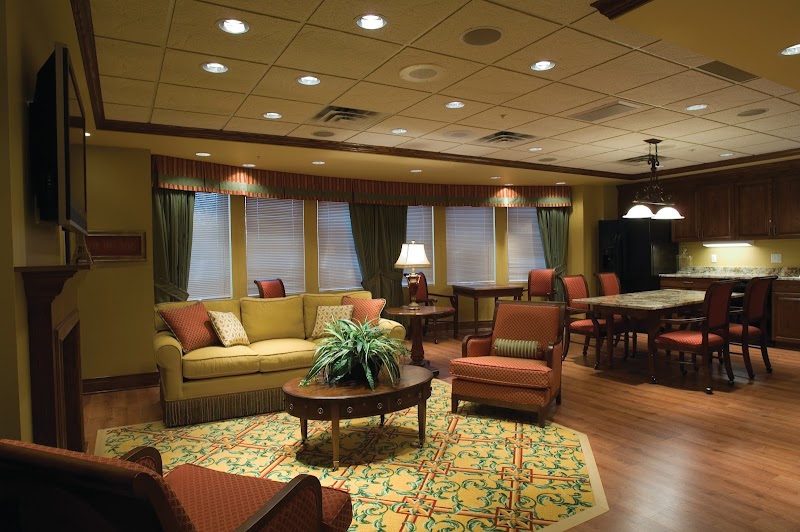
CMS rates Jones Harrison Residence's staffing level at 5 out of 5 stars, which is much above average compared to other nursing homes. Staff turnover is 21%, compared to the Minnesota average of 46%. This relatively stable workforce can support continuity of care.

What Have Inspectors Found at Jones Harrison Residence?

State health inspectors documented 35 deficiencies at Jones Harrison Residence during 2022 to 2025. These included: 35 with potential for harm.

Who Owns and Operates Jones Harrison Residence?

Jones Harrison Residence is owned by a non-profit organization. Non-profit facilities reinvest revenue into operations rather than distributing to shareholders. The facility is operated by EBENEZER SENIOR LIVING, a chain that manages multiple nursing homes. With 120 certified beds and approximately 110 residents (about 92% occupancy), it is a mid-sized facility located in MINNEAPOLIS, Minnesota.

How Does Jones Harrison Residence Compare to Other Minnesota Nursing Homes?

Compared to the 100 nursing homes in Minnesota, Jones Harrison Residence's overall rating (4 stars) is above the state average of 3.2, staff turnover (21%) is significantly lower than the state average of 46%, and health inspection rating (3 stars) is at the national benchmark.

What Should Families Ask When Visiting Jones Harrison Residence?

Based on this facility's data, families visiting should ask: "Can I visit during a mealtime to observe dining assistance and food quality?" "How do you handle medical emergencies, and what is your hospital transfer rate?" "Can I speak with family members of current residents about their experience?"

Is Jones Harrison Residence Safe?

Based on CMS inspection data, Jones Harrison Residence has a clean safety record: no substantiated abuse findings (meaning no confirmed cases of resident harm), no Immediate Jeopardy citations (the most serious violation level indicating risk of serious injury or death), and is not on the Special Focus Facility watch list (a federal program monitoring the lowest-performing 1% of nursing homes). The facility has a 4-star overall rating and ranks #1 of 100 nursing homes in Minnesota. While no facility is perfect, families should still ask about staff-to-resident ratios and recent inspection results during their visit.

Do Nurses at Jones Harrison Residence Stick Around?

Staff at Jones Harrison Residence tend to stick around. With a turnover rate of 21%, the facility is 24 percentage points below the Minnesota average of 46%. Low turnover is a positive sign. It means caregivers have time to learn each resident's needs, medications, and personal preferences. Consistent staff also notice subtle changes in a resident's condition more quickly. Registered Nurse turnover is also low at 14%, meaning experienced RNs are available to handle complex medical needs.

Was Jones Harrison Residence Ever Fined?

Jones Harrison Residence has no federal fines on record. CMS issues fines when nursing homes fail to meet care standards or don't correct problems found during inspections. The absence of fines suggests the facility has either maintained compliance or corrected any issues before penalties were assessed. This is a positive indicator, though families should still review recent inspection reports for the full picture.

Is Jones Harrison Residence on Any Federal Watch List?

Jones Harrison Residence is not on any federal watch list. The most significant is the Special Focus Facility (SFF) program, which identifies the bottom 1% of nursing homes nationally based on persistent, serious quality problems. Not being on this list means the facility has avoided the pattern of deficiencies that triggers enhanced federal oversight. This is a positive indicator, though families should still review the facility's inspection history directly.