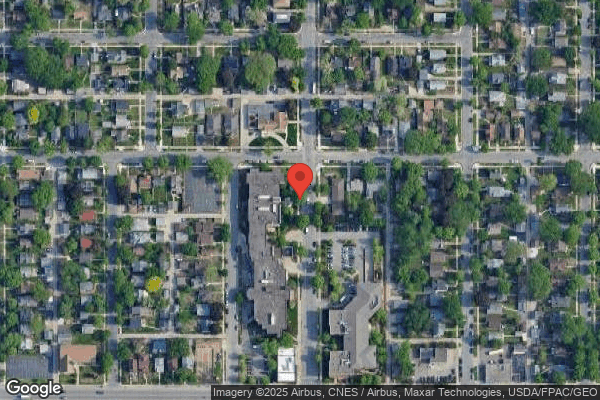
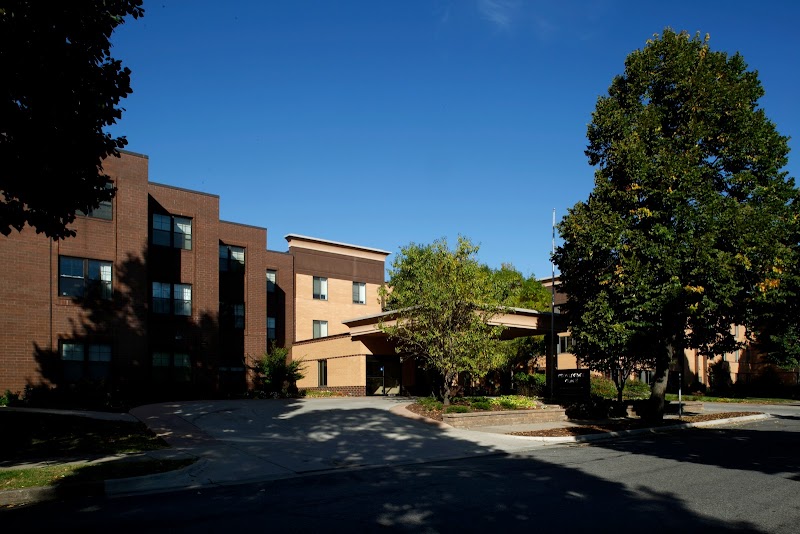
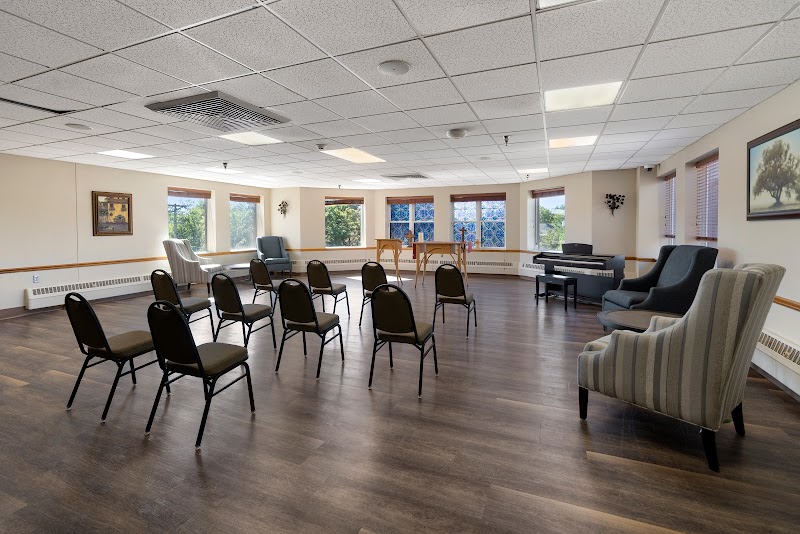
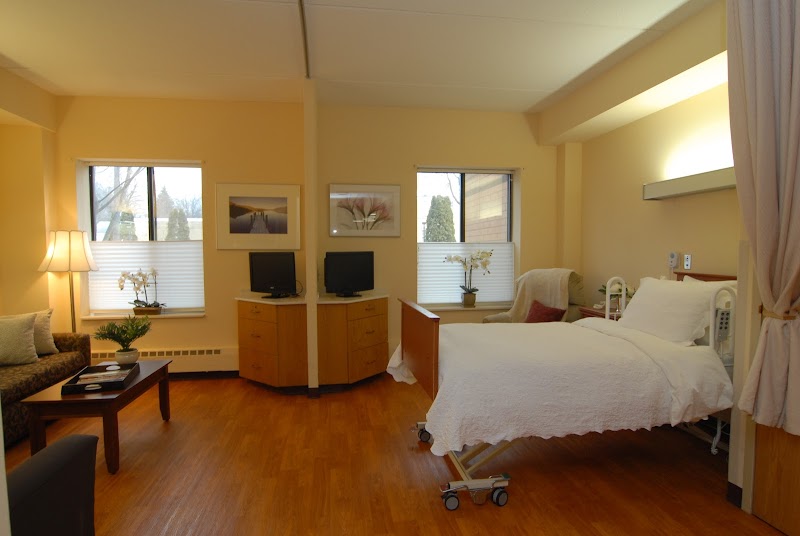
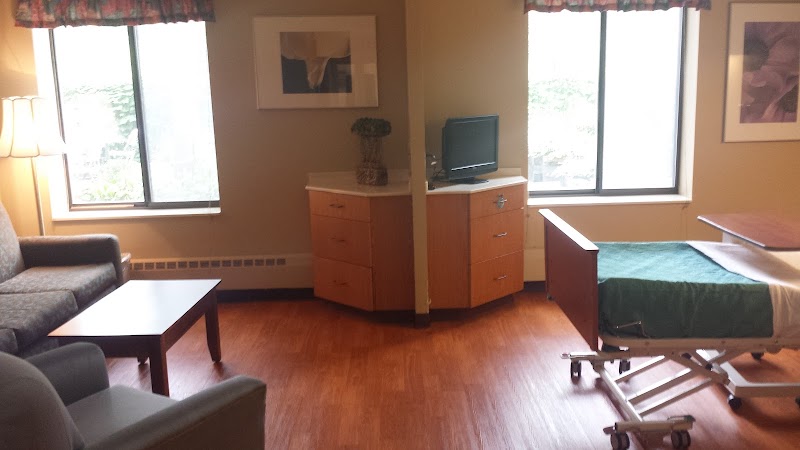
Providence Place

3720 23RD AVENUE SOUTH, MINNEAPOLIS, MN 55407 (612) 238-2545
Non profit - Corporation 190 Beds LIFESPARK Data: November 2025 2 Immediate Jeopardy citations
Trust Grade
1/100
#256 of 337 in MN
Last Inspection: February 2025

Within standard 12-15 month inspection cycle. Federal law requires annual inspections.

Overview

Providence Place in Minneapolis has received an F trust grade, indicating significant concerns about the quality of care provided. Ranking #256 out of 337 facilities in Minnesota places it in the bottom half, and #39 out of 53 in Hennepin County suggests limited options for families seeking better alternatives nearby. Although the facility's trend is improving, with a reduction in issues from 15 to 12 over the past year, it still has a long way to go. Staffing has a low turnover rate of 0%, which is a positive sign, but it also has concerning RN coverage, being lower than 83% of Minnesota facilities. The facility faces serious issues, including critical failures to ensure proper safety assessments for residents and a lack of adherence to advance directives, putting residents at risk. Additionally, the facility has incurred $192,155 in fines, indicating repeated compliance problems.

Trust Score
F
1/100
In Minnesota
#256/337
Bottom 25%
Safety Record
High Risk
Review needed
Inspections
Getting Better
15 → 12 violations
Staff Stability
○ Average
Turnover data not reported for this facility.
Penalties
✓ Good
$192,155 in fines. Lower than most Minnesota facilities. Relatively clean record.
Skilled Nurses
○ Average
Each resident gets 34 minutes of Registered Nurse (RN) attention daily — about average for Minnesota. RNs are the most trained staff who monitor for health changes.
Violations
⚠ Watch
46 deficiencies on record. Higher than average. Multiple issues found across inspections.
★★☆☆☆
2.0
Overall Rating
★★☆☆☆
2.0
Staff Levels
★★★★★
5.0
Care Quality
★☆☆☆☆
1.0
Inspection Score
Stable
2024: 15 issues
2025: 12 issues

The Good

  • 5-Star Quality Measures · Strong clinical quality outcomes
  • Full Sprinkler Coverage · Fire safety systems throughout facility
  • No fines on record

Facility shows strength in quality measures, fire safety.

The Bad

2-Star Overall Rating

Below Minnesota average (3.2)

Below average - review inspection findings carefully

Federal Fines: $192,155

Well above median ($33,413)

Significant penalties indicating serious issues

Chain: LIFESPARK

Part of a multi-facility chain

Ask about local staffing decisions and management

The Ugly 46 deficiencies on record

2 life-threatening 2 actual harm
May 2025 1 deficiency
CONCERN (D) 📢 Someone Reported This

A family member, employee, or ombudsman was alarmed enough to file a formal complaint

Potential for Harm - no one hurt, but risky conditions existed

Comprehensive Care Plan (Tag F0656)

Could have caused harm · This affected 1 resident

**NOTE- TERMS IN BRACKETS HAVE BEEN EDITED TO PROTECT CONFIDENTIALITY** Based on interview and record review the facility failed to include in the care plan interventions for safe eating and swallowin...

Read full inspector narrative →
**NOTE- TERMS IN BRACKETS HAVE BEEN EDITED TO PROTECT CONFIDENTIALITY** Based on interview and record review the facility failed to include in the care plan interventions for safe eating and swallowing for 1 of 2 residents (R1) reviewed for quality of care and treatment. Findings include: R1's quarterly Minimum Data Set (MDS) dated [DATE], identified diagnoses of unspecified tremor (involuntary movement), absence of other parts of the digestive tract (removal or absence of part of the digestive tract which could be stomach, intestines or other components), and dysphagia oropharyngeal phase (swallowing disorder occurs in the mouth and throat affecting the ability to swallow both liquids and solids). R1 had cognition impairment. R1 required set up assistance with meals. R1 did not have difficulty with coughing or choking during meals or when swallowing medications. R1's care plan dated 1/16/25, identified a self-care performance deficit with an intervention labeled eating: set up. R1's physician order dated 1/16/25, identified regular textured diet with thin liquids. R1's progress note dated 2/14/25, included R1 had difficulty swallowing medications whole this morning. Choking and coughing when taking medications but able to clear independently. R1 stated this had happened before but more often lately. Nurse practitioner notified and orders for speech therapy (ST) recommended. R1's physician order dated 2/14/25, identified orders for ST to evaluate and treat for diagnosis of choking/coughing with medication administration. R1's progress note dated 2/14/25 at 12:50 p.m., directed R1 was seen by ST with recommendations to crush medications and put in applesauce or pudding. Nurse practitioner notified and order received to crush medications. Family notified of medications being crushed now. R1's physician order dated 2/14/25, directed to crush medications. R1's ST evaluation and plan of treatment dated 2/14/25, identified R1 should be in an upright position for all meals, remain upright for at least 30 minutes after all meals, eat and drink slowly, small bites, small sips, chew foods thoroughly, alternating bites and sips. To facilitate safety and efficiency, it is recommended R1 use the following strategies during oral intake: chin tuck and effortful swallow. R1's progress note dated 3/1/25, included R1 was on a regular diet, regular textured food, regular liquids. R1 can feed self with no chewing/swallowing problems noted. R1's progress note dated 4/20/25, included R1 and son were educated on proper positioning and eating in the dining room with peers for safety and to monitor in case of choking episode. R1 did not say much to the education but son verbalized understanding. R1's record review of the care plan did not include the addition of ST recommendations, that medications should be crushed and placed in applesauce or pudding, nor that R1 was a choking risk. During a phone interview on 5/20/25 at 1:27 p.m., family member (FM)-A stated the facility knew that R1 was a choke risk and had difficulty swallowing. One of the nurses gave FM-A and R1 education that she was to be upright while eating. R1 was on a regular diet and regular liquids. During an interview on 5/23/25 at 8:37 a.m., licensed practical nurse (LPN)-A stated she was working with R1 on 2/14/25, and R1 just could not swallow her pills. LPN-A crushed the pills and put them in pudding and R1 did not have difficulty swallowing that. LPN-A received an order from the nurse practitioner for ST to evaluate and treat. On 4/20/25, FM-A was with R1 in her room and it was right before a meal. R1 had requested to lay down. LPN-A educated FM-A and R1 that it was best to eat in a completely upright position and with other residents. During an interview on 5/23/25 at 10:07 a.m., speech language pathologist (SLP)-A stated R1 did good with eating food but complained that she felt like the food was stuck in her throat. SLP-A encouraged consistent cueing which included chew food well, do a liquid wash. SLP-A gave recommendations to be upright for all meals and 30 minutes afterwards, eat and drink slowly, small sips and bites, alternate between sips and bites. During an interview on 5/23/25 at 2:30 p.m., assistant director of nursing (ADON) reviewed R1's care plan and verified that ST recommendations of remaining upright position for all meals, remain upright for at least 30 minutes after all meals, eat and drink slowly, small bites, small sips, chew foods thoroughly, alternating bites and sips. To facilitate safety and efficiency, it is recommended R1 use the following strategies during oral intake: chin tuck and effortful swallow were not in the care plan. The expectation is that all recommendations from therapies would be included immediately in the care plan and the nursing assistant care guide.
Apr 2025 1 deficiency
CONCERN (D) 📢 Someone Reported This

A family member, employee, or ombudsman was alarmed enough to file a formal complaint

Potential for Harm - no one hurt, but risky conditions existed

Deficiency F0740 (Tag F0740)

Could have caused harm · This affected 1 resident

**NOTE- TERMS IN BRACKETS HAVE BEEN EDITED TO PROTECT CONFIDENTIALITY** Based on observation, interview, and document review, the facility failed to develop and implement an individualized behavioral ...

Read full inspector narrative →
**NOTE- TERMS IN BRACKETS HAVE BEEN EDITED TO PROTECT CONFIDENTIALITY** Based on observation, interview, and document review, the facility failed to develop and implement an individualized behavioral health care plan utilizing recommendations from professional psychological services to support sobriety efforts for 2 of 2 residents (R2 and R3) reviewed for behavioral health needs. Findings include: R2's quarterly Minimum Data Set (MDS) dated [DATE], indicated moderate cognitive impairment, cardiac-respiratory issues, COPD, depression, and dementia. The MDS indicated no mood or behavior issues, R2 was independent with mobility, activities of daily living (ADL)'s, and had troubles with breathing with exertions. R2's Care Plan revised on 4/16/25, indicated R2 had cognitive loss/dementia or alteration in thought process's ability, judgement and decision making. The Care Plan further indicated R2 had major depression and received services in-house from the psycho-geriatric team, and staff were to observe behavior and attempt to determine pattern, frequency, intensity and triggers, recommendations per psych, use support, validate his distress, listen to him, help him problem solve. The care plan further indicated he does not endorse drinking or smoking much of the time and would be a good time to support sobriety and even smoking cessation. Therapy completed a community assessment which indicated R2 could be independent when leaving the facility. A Facility Reported Incident indicated on 4/21/25, R2 signed himself out at the facility and did not return at the intended return time. Police notified and Minnesota Department of Health report was submitted. R2 was assessed to be independent while out in the community and was transported to the hospital from the community. The hospital reported R2 was short of breath and returned the following day. R2's Associated Clinic of Psychology (ACP) visit note dated 4/15/25, indicated R2 was seen for continued services to maintain and improve the client's current level of functioning. The note indicated R2 had low mood related to his current living situation and expressed a desire for a more independent living setting. He indicated having a roommate and lack of privacy as negatively impacting his mood. R2 denied any urges to relapse and emphasized the importance of maintaining sobriety and anxiety linked to both his wish to move and his COPD. The note also indicated he reflects on chronic depressive thinking and defines as a loner with low motivation for activity or social engagement. In addition, the note indicated motivation towards sobriety seemed strong. The provider treatment and recommendations/Plan indicated: Continue current psychological treatment intervention plan and interventions in place. Continue supportive and solution-focused therapy. Explore coping strategies for current living situations and reinforce strengths. Monitor mood and anxiety symptoms, encourage engagement in meaningful activities. R2 is hopeful to explore alternative living environments, is open to the idea of Assisted Living facilities. R2 does not recall any discharge planning happening but also presents with cognitive deficits. R2's Activity Progress Note dated 1/29/25, indicated a recreation/wellness interview was completed on R2, work history indicated R2 worked at 3 M, socialization described as enjoyed visiting with others during leisure activities with meals, activity involvement preference is individual. During observation and interview on 4/28/25 at 1:41 p.m., R2 was observed to be lying in his bed watching TV. He stated he takes the city bus and goes out and had been hospitalized a few times while being out due being short of breath. R2 stated he had a cell phone and calls 911 when that happens. R2 stated he did not want to talk today and asked surveyor to leave his room. During interview on 4/30/25 at 12:45 p.m., community life coordinator (CLC)-A stated she leaves it up to R2 to attend activities and for him to request materials for reading. R2 had participated in history group and a party they had in the past. CALC-A stated she could reach out to him since there is a history group on Sundays and invite him, and on Tuesday mornings they have newspaper readings he might be interested in. CLC-A stated R2 might enjoy outdoor visits since he smokes, and leisure materials such as a CD player, library card, and puzzles since he worked at 3 M. CLC-A was not aware of recommendation made by ACP. During interview on 4/29/25 at 2:30 p.m., director of social services (DSS) stated R2 goes out once or twice a week and will drink. DSS stated R2 will sign himself out but will not tell us where he is going, adding he usually will go to a friend's house or to the store. The DSS stated he also has been admitted to the hospital while out due to his COPD. In addition, the DSS indicated awareness R2 was seen by ACP services but unaware he was interested in remaining sober, motivated by and discussed alternative placement options, or the recommendation for engagement in meaningful activities. The DSS stated social services is responsible for reading the ACP recommendations and had no comment why they were not read or implemented to assist with R2 sobriety and treatment goals. R3's quarterly MDS dated [DATE], indicated R3 was cognitively intact, had anemia, diabetes mellitus, anxiety, and depression disorder. The MDS further indicated R3 had no behaviors, used a wheelchair to ambulated, was independent with ADL's and had one fall since admission. R3's Care Plan revised on 4/13/25, indicated R3 had substance use disorder related to alcohol, staff were to encourage frequent contact with family/friends that do not encourage substance use, encourage to stay in room, hold mood altering sedative medications, observe and report to medical reactionary any signs/symptoms of withdrawal. The Care Plan further indicated R3 needed supervision when leaving the facility related to severe cognitive impairment. In addition the Care Plan indicated R3 refused to see in house psychiatrist, recites psych services as needed, staff should encourage resident to work on breathing when coping, along with drinking water/coffee, and taking her medications, and keep herself busy. To help stop herself from drinking, R3 enjoys music, this could be an encouragement for staff to direct her when upset to self soothe, could benefit from visits from the Chaplin, and observe for behavior and attempt to determine pattern, frequency, intensity and triggers. A Facility Reported Incident dated 4/15/25, indicated R3 left facility without signing out and with no supervision. Facility followed missing persons procedure, contacted police, R3 was found intoxicated and was sent to the hospital and returned to the facility on 4/18/25. An After Visit Summary dated 4/17/25, indicated R3 was seen in the Emergency Department (ED) for altered mental status, and intoxication secondary to ethyl alcohol poisoning. A legal hold was placed on the patient due to their inability to care for self which represented a danger to self in addition to their chemical dependency status that is in question due to intoxication. and was discharged on 4/18/25. R3's ACP visit summary dated 4/16/25, indicated R3 was seen for continued services to maintain and improve the client's current level of functioning, continued treatment needed to reduce or control of symptoms and prevent relapse. The summary indicated R3 had short term memory impairment, impaired judgement, and impaired thought. The session documentation indicated R3 was found in her room, nicely groomed, and dressed in her bed with her room cluttered and disorganized. In addition, the note indicated she spoke spontaneously about her brother calling her and wanting her to go to detox and how she did not agree with him, but did indicate she liked that he called her and was trying to call him again, but he had not returned her calls. In addition, the note indicated how R3 indicated she had depression and loneliness that caused her to drink, and admitted to drinking three days a week and would like to maintain her sobriety. R3 stated her parents were alcoholics and she drank all her life. In addition, R3 stated she would like a private room to keep her busy, in addition she admits to being lonely since her son moved out. The Summary Treatment Recommendations/Plan indicated to: Continue current psychological treatment plan and intervention in place. In addition, a private room may be worth considering for her to keep her room well organized and wanting to keep herself well groomed. She did see the psychiatrist which is a sign she might be more open to local help. Staff could help R3 find strategies to help keep her busy, such as self-care and keeping her room organized and going out. R3 does not like being disconnected with her son, helping him identify ways to support his mother and referring him to the community-based resources can be of a value as appropriate. When she is drinking, staff striving to have a harm reduction plan and staff helping her feel care for and supported may help. R3 may benefit from a safety plan which this psychologist agreed to meet with her more regularly if she wants to work on sobriety and improved health. During interview on 4/29/25 at 11:00 a.m., DDS stated R3 will talk to the licensed drug and alcohol counselor (LADC) they had come to the facility but R3 would not sign onto the program he had to offer to assist with quitting drinking. The DDS stated R3 does not have a behavioral contract in place at the facility and was unaware ACP was willing to assist with a safety plan for R3, and had no comment as to the reason the recommendations were not followed through with. The DSS stated she was aware R3 had alcohol in her room and had been drinking in her room and residents have rights and we can't just search their rooms due to their rights in the facility, and the only way we could remove the bottle of alcohol is if it is visible and they allow us to remove it. During interview on 4/30/25 at 11:20 a.m., psychologist with doctorial (PsyD) from ACP stated she was willing to assist a harm reduction program for R3, which would be a contract that would indicate she would be a very important person in the community and would indicate how we would want to support R3's sobriety, and she would sign and agree for the facility to search her room for alcohol, explaining to her it is a facility policy which sometimes would be another reason or way to reduce her drinking, since she had been known to drink in her room. In addition, the PsyD stated when she saw R3, things R3 stated to cause her to drink were loneliness and depression and made recommendations for the facility to help with those feelings. Safety for Residents with Substance Use Disorder policy implemented April 2025, indicated Care Planning interventions will address risks by providing appropriate diversions for residents and encouraging residents to seek out facility staff to discuss their plan of care, including discharge planning, rather than leaving to seek out substances which could endanger the resident's health and/or safety. The policy further indicated the facility will make an effort to prevent substance use which may include providing substance use treatment services, medication-assisted treatment, alcoholic/narcotic anonymous meetings, working with the resident and family, if appropriate, to address goals related to their stay in the nursing home, and increased monitoring and supervision.
Apr 2025 1 deficiency 1 IJ
CRITICAL (J) 📢 Someone Reported This

A family member, employee, or ombudsman was alarmed enough to file a formal complaint

Immediate Jeopardy (IJ) - the most serious Medicare violation

Accident Prevention (Tag F0689)

Someone could have died · This affected 1 resident

**NOTE- TERMS IN BRACKETS HAVE BEEN EDITED TO PROTECT CONFIDENTIALITY** Based on observation, interview, and document review, the facility failed to comprehensively assess supervision needs and develo...

Read full inspector narrative →
**NOTE- TERMS IN BRACKETS HAVE BEEN EDITED TO PROTECT CONFIDENTIALITY** Based on observation, interview, and document review, the facility failed to comprehensively assess supervision needs and develop individualized person-centered interventions to identify and mitigate risks and hazards for residents when out in the community and upon subsequent return to the facility. This failure resulted in the risk of serious harm, injury, or impairment for 3 of 3 residents (R2, R3, R1) reviewed for safety. The immediate jeopardy began on 2/27/25 when the facility failed to ensure a systematic process of an individualized community safety assessment to identify potential risks or establish prevention strategies to ensure resident safety for R2 who had vascular dementia and required supervision, R3 who had significant current alcoholism with impaired insight, judment, and memory, and R1 who had substance abuse disorder (SUD) with cognitive impairment and mobility limitation. The IJ was identified on 4/10/25. The executive director (ED), director of nursing (DON), assistant executive director, and administrative intern were notified of the immediate jeopardy on 4/10/25 at 5:53 p.m. The immediate jeopardy was removed on 4/11/25, but noncompliance remained at the lower scope and severity level of D, which indicated no actual harm with potential for more than minimal harm that is not immediate jeopardy. Findings include: R2's hospital Discharge summary dated [DATE] to 11/8/24, indicated R2's past medical history included, abnormal urination (history of incarceration for public urination), aggressive behavior of child (history of physical fights), anxiety disorder, counseling on substance use and abuse (chemical dependency treatment 8 times), family history of suicide, history of psychiatric hospitalizations, intravenous (IV) drug user, self-mutilation, substance use disorder (SUD) - (history of IV heroin, cocaine and alcohol use), and suicidal behavior (R2 reported history of chronic suicidal ideations since 2005). Hospital course identified R2 had failure to thrive, indicating R2 was reportedly altered, covered in feces, urine and had wandered into a shelter confused, according to the shelter. R2 was discharged to skilled nursing facility. R2's Nurse Practitioner (NP) visit dated 1/6/25, identified R2 had a Saint [NAME] University Mental Status (SLUMS) score of 23/30 showing moderate dementia. R2 could live in supportive housing, waiting on assisted living facility (ALF) setting which continues to be appropriate based on scoring. Assessment/Plan identified diagnosis of primary moderate vascular dementia with mood disturbance (moderate degree of cognitive impairment due to vascular disease, accompanied by mood changes with symptoms that may include difficulties with problem-solving, slowed thinking, and loss of focus): mood disturbances longstanding depressive disorder, history of homelessness, recommendation for assisted living setting for future housing. R2's ACP visit dated 1/8/25, identified R2's mental status exam indicated short term memory and insight/judgement was impaired and thought content was blocked. R2's treatment recommendations/plan identified R2 would present as someone who would benefit from remaining in a secure structured setting to support best functioning and quality of life. Strategies to support him to maintain his sobriety area warranted including placement considerations given his history and level of cognition. R2's quarterly Minimum Data Set (MDS) dated [DATE], indicated R2 admitted to the facility on [DATE] and identified R2 had moderate cognitive impairment. R2's care plan focus dated 2/21/25, identified R2 had cognitive loss/dementia or alteration in thought processes. Interventions included to cue and supervise as needed and observe/document/report to medical practitioner any changes in cognitive function, specifically changes in: decision making ability, memory, recall and general awareness, difficulty expressing self, difficulty understanding others, level of consciousness, and mental status. The care plan lacked evidence of interventions related to safety in the community and did not identify if R2 was safe to be independent in the community or not. R2's progress notes were reviewed in conjunction with facility sign out/sign in forms between 2/27/25 through 4/8/25. Progress notes identified multiple occurrences of R2 leaving the facility without indication that he was supervised. Further identified R2 did not complete the sign-out sheet, notify staff he was leaving, or inform staff of his whereabouts, who he was with/if he had supervision, his expected time of return, and his actual return. R2's progress note dated 2/27/25 at 3:55 a.m., identified R2 was unable to be located, a thorough search of the entire facility including all common areas, rooms, bathrooms, outdoor areas was conducted. A missing person's report made to the police department and the facility DON/supervisor notified. At 4:38 a.m., police came to the facility and gathered more information for R2. At 8:00 a.m., R2 was at the ED with complaints of SOB. ER was assessing and send R2 back to the facility later this morning At 11:10 a.m., R2 returned to the facility via ambulance. The progress notes indicated staff did not know when he was last seen until 3:55 a.m.; R2 was out of the facility and missing for at least 4 hours before the facility identified R2 was at the hospital. R2's record did not include a comprehensive community safety assessment that would identify individualized interventions for R2's safety in the community and/or ability to be unsupervised while out of the facility. R2's progress note dated 3/3/25 at 2:55 p.m., per report R2 last seen at 12:25 p.m. R2 had left the facility. At 3:44 p.m., writer began petition for guardianship for R2. At 4:21 p.m., R2 had not returned to the facility, did not sign out when he departed at 12:25 p.m. At 8:53 p.m., R2 had not returned to the facility yet, last seen at 12:25 p.m., call placed to family with concerns of whereabouts. According to family they have no idea of R2's location. Calls placed to hospitals with no admission record for R2. At 10:50 p.m., R2 had not yet returned to the facility, oncoming night shift nurse updated to call police if not returned to facility by midnight. On 3/4/25 at 12:15 p.m., R2 had not returned yet to the facility .a call placed to 911 about 12:15 a.m., to report R2 as missing. Police arrived at the facility around 12:55 a.m., gathered all necessary information about R2 missing. On 3/4/25 at 5:45 a.m., R2 was found lying in bed (at the facility) at this time. R2's progress notes identified R2 was gone for 17 hours and 15 minutes and R2's whereabouts were unknown. R2's occupational therapy (OT) encounter note dated 3/14/25, identified R2 had a SLUMS assessment completed that he scored a 19/30 (score under 20 identified cognitive impairment or potential dementia). Most of R2's points were lost on recall of objects. R2 engaged in community outing involving indoor and outdoor ambulation, wheelchair management (pushes w/c in front of him like a walker), uneven surfaces, dressing, toileting (both independent), money management, social interaction, managing both his device and hot coffee (he did without spilling or burning himself) and general community safety. R2 was educated about therapy trying to get him out of memory care and into a more appropriate setting. Plan: continue functional cognitive assessments and functional mobility. R2's progress note dated 3/14/25 at 11:16 a.m., met with R2 discussed sign out policy when leaving facility and calling if not making it back timely, R2 agreed, writer will assist with ordering a free cellphone. At 9:22 p.m., day shift nurse reported that R2 went outside to smoke. He signed out at approximately 5:30 p.m. However, R2 had not returned, writer called R2's family left message informed shift supervisor. Supervisor stated to wait until midnight if R2 does not return by then will report as a missing person. At 1:12 a.m., R2 did not return to facility, missing person report filed .At 6:26 a.m., two police officers came to the facility, all necessary information given. On 3/15/25 at 9:33 a.m., hospital emergency room called and stated R2 was being admitted for respiratory difficulty .At 8:35 p.m., R2 returned to the facility via ambulance. R2's progress notes indicated he was missing and whereabouts unknown for approximately 15 hours. R2's progress note dated 3/17/25 at 12:45 p.m. staff seen R2 at bus stop, R2 stated he was going to the store via a bus and intended to be back by dinner time. At 5:57 p.m., received phone call from metro transit police said R2 was lost and unable to go back. R2 will be sent back. At 6:31 p.m., R2 was sent back by metro transit police, was found on [NAME] Avenue/[NAME] Avenue southbound bus stop shelter waiting for a bus. R2 was alert and oriented x 2, denied alcoholic drink, R2 stated he checked out before he left, writer unable to find where R2 signed. Progress note dated 3/18/25 at 12:45 p.m., writer applied for an assurance wireless phone for R2 should arrive within 7-10 business days. R2's progrss notes identified R2 was gone for approximately 5.5 hours whereabouts unknown, and identified R2 was lost and unable to make his way back to the facility and the police brought him back. R2's progress notes dated 3/28/25 at 1:39 a.m., R2 was not in room for scheduled inhaler for COPD. At 2:02 a.m., writer got report from previous shift that R2 had not been seen in the facility since this morning. Writer checked around facility and not available. Writer called 911 and filed a missing person report with police. They will send police out as soon as possible. Writer called family and left message. At 2:50 a.m., police stopped at the facility requesting information regarding R2. Police stated to call and let them know when R2 returns so they can take him off the missing person report. At 10:33 a.m., identified R2 was on LOA. At 2:15 p.m., identified R2 returned to the unit between 1:00 p.m., and 1:30 p.m., R2 went to bed and was sleeping, message left with family that R2 was back. At 2:27 p.m., writer educated R2 on the importance of signing out, R2 stated, okay . R2's progress note identified on 3/28/25, R2 was missing for approximately 12 hours and his whereabouts unknown. -On 4/4/25 at 7:09 p.m., identified R2 was not in the facility until dinner time and med pass time. Tried to contact him through cell phone but did not answer, will continue to follow up. At 11:47 p.m., R2 was not in the facility, called and left voice message incoming nurse updated. On 4/5/25 at 1:12 a.m., writer called R2's phone again and phone went to voicemail left message for call back. Called and filed a missing person report with police. Stated they would send officers to come to the facility, called family, left voicemail. At 1:30 a.m., police called to inform they will be sending an officer to the facility. At 6:00 a.m., police stopped by to see if R2 was back. At 3:02 p.m., R2 has not returned to the facility, family notified. On 4/6/25 at 12:08 a.m., R2 has not returned to the facility. At 6:42 a.m., R2 did not return to the facility will update incoming nurse. At 12:42 p.m., nurse received a call form the hospital regarding R2's admission due to COPD exacerbation and pneumonia will be arriving back to the facility with medications after 1:00 p.m. At 1:45 p.m., R2 returned from the hospital to the facility at 1:40 p.m., Temperature was 99.1, pulse 105, oxygen saturations 94% on room air and blood pressure was 112/67, no complaints of pain or discomfort. R2's After Visit Summary (AVS) dated 4/5/25 to 4/6/25 identified R2 was in the hospital for treatment of COPD exacerbation. Summary included The patient presented to the ED due to new onset shortness of breath and mild cough over the past two days. R2 reported he was out of his as needed inhaler and R2 is most likely experiencing exacerbation of COPD due to lack of medication with a possible component of community acquired pneumonia. R2 was discharged with medications to treat this and will have an upcoming appointment with pulmonology on 6/3/25. R2's medical record identified R2 was gone from facility from 4/4/25 at approximately 7:00 p.m., and returned to facility on 4/6/25 at 1:45 p.m., gone for approximately 42 hours and 45 minutes. R2 was hospitalized from [DATE] at 3:11 p.m., and discharged from the hospital on 4/6/25 at 12:58 p.m., accounting for approximately 22 hours of hospitalization, with 22 hours of R2 missing and whereabouts unaccounted for. R2's progress notes dated 4/8/25 at 12:25 a.m., per PM nurse R2 was last seen around noon (on 4/7/25) on the floor .R2 not on the floor/room. R2's personal cell phone was left in his room. At midnight a call was placed to police and hospital, was not found, filed missing person report. Night supervisor was updated. At 4:27 a.m., two police officers followed up on missing person report .At 9:03 a.m., R2 returned to the facility, writer had conversation with R2 regarding the importance of signing out and ensuring he has his cell phone with them to keep the facility updated. R2 was in agreement. R2s progress notes identified R2 was gone from facility from 4/7/25 at approximately 12:00 p.m., and returned to facility on 4/8/25 at 9:03 a.m., gone for approximately 21 hours with whereabouts unknown. During an interview on 4/9/25 at 12:38 p.m., registered nurse (RN)-A stated all residents can leave the building anytime they want unless they reside on the secured unit. RN-A further stated all they must do is sign in/out on the sign out book. RN-A indicated they would not notice a resident was gone unless they went to go give their medications and could not find them. RN-A stated if a resident was not back by midnight, and we could not get a hold of them we would file a missing person's report with the police and document in the nurse's progress notes. During an interview on 4/9/25 at 4:28 p.m., OT-A stated a resident's cognition will be assessed on admission, the social worker would first screen a resident to get a snapshot of their cognition by performing a Brief Interview for Mental Status (BIMS) assessment. OT-A stated this was used to assess for delirium and was not a true show of cognition. OT-A stated the SLUMS exam is a brief screening test for detecting mild cognitive impairment and dementia and assess for orientation, short term memory, calculation and language-verbal fluency. OT-A indicated if the SLUMS score is less than 20 it can indicate dementia and require further cognitive testing. OT-A stated she assessed R2's SLUMS on 3/13/25 and he scored a 19 out of 30 indicating dementia. OT-A stated the Cognitive Performance Test (CPT) assesses a person's cognitive abilities, like memory, attention, and reasoning, through various tasks and questions without being able to the cue the individual. OT-A stated the CPT assessment can be used to diagnose cognitive impairments like dementia and guides interventions and support for persons with cognitive challenges. OT-A indicated the CPT assessment takes about an hour to complete so rarely was utilized in the long-term care setting as it was unrealistic. OT-A was unable to articulate what staff at the facility would be responsible to assess a resident's safety in the community. OT-A identified R2 did not have a CPT assessment, stated she did assess R2 while he was in the community on 3/14/25, and completed a SLUMS assessment with a score of 19/30 that indicated cognitive impairment but was unable to articulate if R2 was able to be safe in the community independently while residing at the facility. OT-A stated R2's short-term memory was not intact and if she was doing a discharge to home assessment on R2, he would require supervision. During a phone interview on 4/10/25 at 8:29 a.m., when asking nurse practitioner (NP)-A if the facility was responsible for identifying and assessing a resident's risk for leaving the facility without notification to staff and developing interventions to address the risk. NP-A stated he was not involved in the process in the identifying and assessing the resident's risk for leaving the facility and the development of associated safety interventions. NP-A stated that all residents that do not reside on the locked unit are able to come and go into the community from the facility and would require the resident to put the date and time they are signing out, where they are going and what time the expected return is. NP-A further stated they cannot stop residents from coming and going as it is their right, stated, this is not a prison. During an interview on 4/10/25 at 9:20 a.m., the medical director stated the process for a resident to leave the facility was all the residents that did not reside on the locked unit use a sign in and sign out process. Medical director stated, we are not a prison, we cannot stop someone from coming and going unless they are in a locked unit. Medical director further stated if a resident was their own decision maker we are assuming they have capacity to go safely in the community unsupervised. Medical director further stated the BIMS assessment was not comprehensive in determining a resident's cognition and to determine true cognition it would be a combination of cognitive tests that include a CPT, SLUMS and the [NAME] Cognitive Level Screen (ACLS) assessment. Staff did not routinely assess cognition upon admission unless warranted. Medical Director was unable to articulate a facility process of how a resident was comprehensively assessed to be safe independently in the community. During a phone interview on 4/10/25 at 10:51 a.m., licensed psychologist (LP)-A stated she performed a SLUMS assessment indicating R2 had cognitive impairment with short term memory impairment. LP-A stated residents with cognition concerns should be comprehensively assessed to be independent in the community several factors would need to be assessed to include cognition, diagnoses, capacity to create a contract and follow through, etc .then IDT should discuss this to put a safety plan in place for each resident. During an interview on 4/10/25 at 11:16 a.m., when asking director of nursing (DON), if the facility was responsible for identifying and assessing a resident's risk for leaving the facility without notification to staff and developing interventions to address the risk. DON explained the OT would be the professional to assess a resident to see if they would be safe to be in the community independently unsupervised. DON verified the OT that assessed R2 on 3/14/25, did not clearly state if R2 was safe to be independent in the community unsupervised. DON indicated their current process for a resident to leave the facility was if the resident did not reside on the locked unit the resident would utilize the sign in and sign out sheet located at each wing. The resident should write the time they leave and an expected return time along with where they are going. DON verified that residents do not always use the sign and sign out sheets and was unable to articulate what interventions the facility has in place to keep residents requiring supervision in the community safe. If a resident was missing, the staff call family and the resident to try and identify the resident's whereabouts and are to wait until midnight and call the police to file a missing person's report and notify myself, the family and the supervisor. DON stated she received a report this morning that R2 went missing yesterday sometime and had not yet returned to the facility, a missing person's report was filed with the police at midnight, and she did not have any more information on R2. During an observation and interview on 4/14/25, at 9:48 a.m., R2 was observed dressed and lying in bed in his room. R2 stated he currently didn't feel good and has the sniffles, further stated he was put on the locked unit because he was smoking in his room, rules are rules, don't bother me none. R2 stated he didn't come here to make friends and tried to stay to himself. R2 stated he was waiting to get out of here and get his own place. R2 stated he had been to the ED and hospital a few times recently due to his mental health. R2 did not wish to speak with surveyor any further and asked surveyor to leave. R3 R3's quarterly MDS dated [DATE], indicated R3 admitted to the facility on 11/2023. R3 was cognitively intact with a BIMS score of 15, was independent with activities of daily living and mobility, and utilized a wheelchair. R3's diagnosis report indicated R3 had diagnoses including alcohol [ETOH] abuse with withdrawal, alcohol dependence, alcoholic hepatitis (liver inflammation due to excessive ETOH consumption), alcoholic polyneuropathy (nerve damage from excess ETOH consumption), liver cirrhosis (scarring of the liver), opioid abuse, unspecified psychosis, major depressive disorder, anxiety disorder, adjustment disorder with mixed anxiety and depressed mood, adjustment disorder with disturbance of conduct, muscle weakness, unsteadiness on feet, history of falling, repeated falls. R3's psychiatry note dated 12/20/24, indicated she had diagnoses including generalized anxiety disorder, alcohol use disorder, major depressive disorder, and opioid use disorder. Her mental status examination included her insight, judgment, memory, and concentration are quite impaired. R3's physician orders included naltrexone hydrochloride (HCl) 50 mg daily for substance use disorder (dated 2/14/25). R3's care plan focus revised 3/25/25, identified she had limited physical mobility with fall risk related to ETOH abuse and noted she was independent with ambulation and utilized a wheelchair as needed. Interventions included: independent with bed mobility (dated 11/29/23), utilizes wheelchair as needed independently (dated 3/25/25), independent with toileting (dated 4/5/24), and independent with transfers (dated 4/5/24). R3's care plan focus revised 3/25/25, identified she had suspected/actual illicit drug/ETOH use and previously declined treatment services but had started to talk with the LADC. Interventions dated 4/5/24 included: Doctor updated regarding actual/suspected abuse, hold all mood altering or all sedative medication when ETOH or marijuana use suspected; Ensure safety and observe for withdrawal symptoms; and a list of symptoms of a drug overdose including alcohol poisoning. R3's care plan did not identify the symptoms of alcohol withdrawal or identify her supervision needs in the community or related interventions for her safety in the community and upon subsequent return to the facility. R3's physician note dated 1/8/25, indicated she had alcohol use disorder with recurrent episodes of alcohol use. She was most recently hospitalized [DATE] after being found intoxicated and her blood alcohol level was 0.33. R3's progress notes dated 1/9/25, 1/12/25, 1/13/25, 1/14/25, 2/8/25, and 2/9/25 indicated R3 was intoxicated and medications were refused and/or held. The notes did not indicate the provider was notified or identify what ongoing monitoring and interventions were implemented. R3's progress notes dated 2/10/25, indicated R3 was intoxicated, medications were held, vital signs taken, and provider was notified. R3 later request transport to the hospital because she wasn't feeling well and reported vomiting all day. R3's hospital notes between 2/11/25 through 2/13/25 identified R3 had a history of alcohol abuse and admitted to the hospital on [DATE] with nausea and vomiting. R3's principal diagnosis was alcoholic ketosis (buildup of acid in the blood caused by heavy alcohol use often in conjunction with poor nutrition) and she initially presented with tachycardia (elevated heart rate) to the 120's, hypertensive (elevated blood pressure) to 180's/100's, with numerous abnormal lab values. A hospital Social Work Initial Assessment indicated R3 reports she uses the w/c when at the facility, does not use an assistive device when she leaves the facility. She leaves the facility independently, usually via a cab ride she independently arranges. Patient reports her typical outing includes stops at Target and a liquor store. A progress note by hospitalist included R3 reported the nursing home don't really monitor where she goes so she regularly walks down to the bar on the corner of the street and drinks. R3's progress note dated 2/13/25, indicated R3 returned from the hospital. R3's record did not identify the concerns in hospital documentation, including lack of assistive device when leaving the facility and purchase/consumption of alcohol while in the community, were addressed. Further, did not indicate that her need for supervision in the community was assessed. R3's progress notes dated 2/25/25, indicated R3 was extremely intoxicated and found sleeping on the floor next to her bed with partially consumed bottles of alcohol at 3:00 a.m. Assessment and vital signs completed, assisted back to bed, and staff kept monitoring her situation with intervention of lowering her bed to the floor to prevent injuries in case she decided to get out of bed. The provider notification section of the note was blank and did not indicate the provider was notified. Further, progress notes indicated R3 remained intoxicated throughout the day, did not eat breakfast or lunch, refused all morning and afternoon medications, and refused assessment and vital signs. R3's progress note dated 2/25/25 at 8:55 p.m., indicated nurse went to get R3 from front desk, R3 was intoxicated, R3 stated she fell while downtown and hit her head while trying to get on a bus. R3 refused vitals, neurological checks performed, provider notified. Additional progress note at 10:58 p.m., indicated R3 sustained a bruise and head hematoma from the fall, identified contributing factor of R3 was not using her wheelchair, and noted care plan and care sheets were reviewed with no changes indicated. It was not evident in R3's record that her supervision needs were assessed or interventions were developed to ensure her safety in the community after she fell and sustained a head injury while intoxicated in the community. R3's record reviewed between 2/26/25 through 4/10/25 identified although R3 continued to be intoxicated almost daily, R3's record did not include a comprehensive assessments and/or monitoring of withdrawal symptoms nor assessments and/or monitoring of R3's medical condition while she intoxicated, nor safety interventions including the level of supervision while R3 was intoxicated inside the facility. Further there was no indication a monitoring system was developed to prevent and/or identify if/when R3 brought or had alcohol in room and not evident interventions were developed to keep R3 safe and other residents safe that may inadvertently have access to R3's alcohol. Additionally, R3's records did not include a comprehensive community safety assessment, despite R3's patterned history of leaving the facility, consuming alcohol while away, then returning intoxicated. R3's record did not include interventions that would prevent and/or mitigate R3's risks of serious injury or even death while in the community. Examples from the record include but are not limited to: R3's progress notes dated 2/26/25, 2/27/25, 3/1/25, 3/4/25, 3/5/25, and 3/11/25, indicated R3 was intoxicated and medications were refused and/or held. On 3/4/25, alcohol was also found in R3's room and she was verbally abusive towards staff and refused cares. R3's progress notes dated 3/12/25, indicated R3 was intoxicated, verbally aggressive to staff, and medications were refused and/or held. Note at 1:27 p.m., indicated she was sent to the hospital per provider order. Note at 8:06 p.m., indicated she was sent to the hospital for evaluation of a suspected gastrointestinal bleed after being found in her room intoxicated with black stool smeared in the bathroom. She returned to the facility at 6:30 p.m. and was still intoxicated, medications were held. R3's emergency department (ED) After Visit Summary dated 3/12/25, indicated R3 was seen for an alcohol problem and blood in stool with diagnosis of alcoholic intoxication with complication. R3's nurse practitioner note dated 3/14/25, indicated she was seen for evaluation following intoxication and concern for a gastrointestinal bleed two days ago. R3 continues to drink, had a blood alcohol level of 0.36, and she states that her last drink was several weeks ago but this is not accurate. R3's progress note dated 3/18/25, indicated R3's functional status abilities varied related to alcohol use. When intoxicated, she required supervision/touching assistance of one staff member for bed mobility, transfers, and ambulation for safety. When intoxicated, she required limited assistance of one staff member with toileting tasks and colostomy management. She was able to make her needs known but staff were to anticipate her needs as appropriate when intoxicated. R3's care plan did not identify individualized interventions that reflected the increased need for assistance when intoxicated. R3's Comprehensive Nursing Data Collection assessment dated [DATE], identified R3 was vulnerable to self-abuse described as alcohol abuse, susceptible to abuse from others described as vulnerable adult, susceptible to abuse others, and had verbal behavioral symptoms directed at others described as a history of verbal aggression when intoxicated. The assessment identified R3 had alcohol use daily and history of substance/cannabis abuse was marked as never. The assessment failed to identify R3's diagnosed history of opioid abuse. The Data Collection included an elopement assessment with each 'yes' answer assigned one point and a score of 4 or greater indicating potential for elopement. R3 had an elopement risk score of 3 indicating no elopement risk. The questions exhibits pacing or agitated behavior and has a diagnosis or OBS, dementia, psychosis, Alzheimer's, or other psychiatric diagnosis, were marked no. The assessment failed to identify R3's agitated behaviors where documented in provider and progress noted between 1/8/25 through 3/18/25, and further failed to identify R3's psychiatric diagnoses of unspecified psychosis, major depressive disorder, anxiety disorder, adjustment disorder with mixed anxiety and depressed mood, and adjustment disorder with disturbance of conduct. If the assessment identified these areas accurately, R3's score would have been 4 or greater, identifying her as an elopement risk. R3's progress notes dated 3/22/25 and 3/23/25, indicated R3 was intoxicated and medications were refused and/or held. Progress note dated 3/28/25, indicated R3 left the facility to go to the mall, walked out, and refused to sign out. Later returned in good condition. R3's progress notes did not identify how long R3 was out of the facility and/or when R3 returned. R3's progress notes dated 3/29/25, indicated she was missing from the unit at 8:00 a.m. and remained missing at 2:00 p.m. with supervisor to follow up. Note at 6:14 p.m., identified person in the community called the facility and stated resident was drunk and needed to be picked up, provided address, staff notified police. At 9:15 p.m. police dropped R3 off at the facility. She was intoxicated, non-compliant with cares, refused vital signs and assessment, and provider was notified. R3's record did not identify assessment of R3's supervision needs after she was found intoxicated in the community and returned to the facility by police. Further, did not identify what interventions were put in place to mitigate related risk while in the community and upon her return. Progress note dated 3/30/25, indicated R3 was intoxicated the whole overnight shift and called emergency services at 6:00 a.m. and was taken to the hospital while still intoxicated. There was no assessment or indication why R2 was sent to the hospital. R3's ED After Visit Summary dated 3/30/25, indicated R3 was seen for an alcohol problem with diagnosis of alcohol intoxication delirium with moderate or severe use disorder. Progress notes dated 3/30/25,[TRUNCATED]
Feb 2025 9 deficiencies 1 IJ
CRITICAL (J)

Immediate Jeopardy (IJ) - the most serious Medicare violation

Deficiency F0578 (Tag F0578)

Someone could have died · This affected 1 resident

**NOTE- TERMS IN BRACKETS HAVE BEEN EDITED TO PROTECT CONFIDENTIALITY** Based on interview and document review, the facility failed to ensure a resident's advance directives was accurately and consist...

Read full inspector narrative →
**NOTE- TERMS IN BRACKETS HAVE BEEN EDITED TO PROTECT CONFIDENTIALITY** Based on interview and document review, the facility failed to ensure a resident's advance directives was accurately and consistently documented in the resident's electronic health record (EHR) banner, Provider Order for Life-Sustaining Treatment (POLST), and physician orders to ensure the residents wishes would be followed in the event of a cardiac arrest. This resulted in immediate jeopardy for 1 of 33 residents (R84) whose code status was not accurately documented and was reviewed for advanced directives. The immediate jeopardy began on [DATE], when the POLST was signed indicating do not resuscitate (DNR) and a physician's order for R84 to have a full code status remained. The immediate jeopardy was identified on [DATE]. The assistant director of nursing (ADON) and director of nursing (DON) were notified of the immediate jeopardy on [DATE], at 7:40 p.m. The immediate jeopardy was removed on [DATE], however, non-compliance remained at an isolated scope with potential for more than minimal harm that is not immediate jeopardy (level D). Findings include: R84's admission Minimum Data Set (MDS) dated [DATE], indicated R84 had intact cognition and had been admitted to the facility on [DATE]. R84's Transfer/admission orders dated [DATE], indicated R84's code status was a full code with the page signed by the provider on [DATE]. The report then indicated a copy of a signed POLST was still needed and this would need to be done by a provider, with the page signed on [DATE]. R84's POLST dated [DATE], indicated DNR/allow natural death and was signed by R84 and nurse practitioner (NP)-A on [DATE]. This POLST was found in both the EHR and paper chart with no further POLSTs found. R84's progress note dated: -[DATE] at 3:20 p.m., indicated data was collected for R84's admission by nursing staff and R84's code status was DNR. -[DATE] at 3:17 p.m., indicated R84's advanced directive could be found on her POLST and had the code status was DNR. -[DATE] through [DATE] were reviewed and lacked documentation to support the resident wished to receive CPR if she was found with no pulse and was not breathing. R84's provider note dated [DATE], indicated R84 had recently moved to the facility from her home in the community due to an increased level of care need. The note indicated R84 was a Jehovah's Witness and was excited to talk with another Witness who lived in the building. The note listed R84's code status as DNR. The note indicated R84 was diagnosed with diabetes, a heart arrhythmia (the heart beats with an abnormal rhythm), and obstructive sleep apnea (OSA, repeatedly stopping and starting breathing while sleeping). R84's care plan dated [DATE], indicated R84's code status could be found on her POLST and the goal of the care plan was to have her code status wishes honored. The care plan indicated that code status would be reviewed quarterly and as needed with the resident/resident representative. The care plan indicated R84 followed Jehovah's Witness practices, and the facility would help to coordinate visits with spiritual leaders from the same faith. R84's Care Conference Summary dated [DATE], indicated a care conference was held with R84 attending. The note indicated R84's advance directives were reviewed with her, and no changes were needed to the DNR status. R84's order summary dated [DATE], included an order, code status: full code, that was dated [DATE]. R84's EHR banner, printed on [DATE], indicated R84's code status was full code. R84's clinical profile in the EHR, printed on [DATE], indicated R84 was her own representative. During an interview on [DATE] at 4:01 p.m., R84 confirmed she would not want to be resuscitated if she was found with no pulse and was not breathing. R84 stated she was one of Jehovah's Witnesses as part of her religious belief she would want to enter the future world if it was her time and would not want to suffer by being resuscitated. During an interview on [DATE] at 4:09 p.m., licensed practical nurse (LPN)-B stated he was not R84's nurse but if a resident was found pulseless and not breathing, he would look at the POLST in the hard chart to determine if CPR should be initiated. During an interview on [DATE] at 4:37 p.m., LPN-A stated she was R84's nurse this shift and although both the POLST or the EHR banner could be referenced to determine code status, she would reference the EHR banner to see if R84 needed to be resuscitated because it was easier to access. LPN-A stated that R84 was a full code per the EHR banner and the provider order so she would initiate CPR if R84 was found pulseless and not breathing. When asked to review R84's POLST, LPN-A exclaimed ooooh and stated the POLST indicated R84's code status was DNR and believed this was the accurate code status. LPN-A stated she would be worried staff would perform CPR on R84 against her wishes because of the mismatch. During an interview on [DATE] at 5:09 p.m., health unit coordinator (HUC)-A stated when a resident was admitted , she would reference the hospital paperwork or admit orders to determine the code status to enter into the EHR until a POLST was reviewed with the resident and signed by the provider. HUC-A stated she was in charge of uploading POLSTs to the EHR and updating the physician order/EHR banner after reviewing the POLST. HUC-A confirmed R84's EHR banner/provider order did not match R84's most recent POLST. HUC-A stated she thought R84's accurate code status was DNR. HUC-A stated she was unsure how updating the EHR banner/provider order was missed after R84's POLST was completed. HUC-A stated she was supposed to be completing audits every two weeks to ensure resident code status in the EHR matched the POLST. HUC-A stated these audits had not been completed since R84 had been admitted in January as she felt they were pretty short-staffed and did not feel she had time. During an interview on [DATE] at 5:09 p.m., LPN-C stated if a resident was found pulseless and not breathing, she would check their code status on the EHR banner, and if the banner said Full code, she would start CPR. During an interview on [DATE] at 6:19 p.m. with the director of nursing (DON) and the administrator, the DON stated if a resident was found pulseless and not breathing, staff could look at either the POLST or the EHR banner/provider order as they should all match, to determine if CPR should be initiated. The administrator stated that R84's profile or face sheet could be referenced to determine if the resident was her own representative and confirmed that she was. The DON stated that the HUCs were in charge of completing audits to ensure the POLST and the EHR banner/provider order indicating code status, matched. The DON stated as this was an informal process, the frequency of these audits did change based on results and the DON thought audits were being completed monthly. The DON stated the health information system supervisor (HISS) oversaw ensuring these audits were being completed. On [DATE] at 7:27 p.m., the DON stated she had reviewed her emails and confirmed that code status audits were to be completed every two weeks, not monthly, and these were not completed for the floor R84 resided so far this month. During an interview on [DATE] at 6:42 p.m., the HISS stated the HUCs were supposed to complete audits or resident code status every two weeks. HISS stated he and the DON had decided on the audit frequency when the HUC checklist was updated in January and confirmed that audits were to be completed every two weeks to ensure EHR code status accuracy. During an interview on [DATE] at 7:29 p.m., the social services director (SSD) stated social workers reviewed code status wishes with residents at their care conferences and would review the POLST to see if it needed to be updated to honor the resident wishes. The SSD confirmed that R84 had wished to be DNR on her care conference on [DATE] and was her own decision-maker. During an interview on [DATE] at 1:30 p.m., registered nurse (RN)-C, the staff development coordinator stated she had assisted in educating staff members on the advance directive process. RN-C stated either the HUC, if working, or the nurse on duty would be in charge of ensuring when a new POLST was obtained, that the EHR banner/provider order matched the updated POLST. During an interview on [DATE] at 9:42 p.m., NP-A stated that on [DATE], she had a conversation with R84, as she was her own decision-maker, about her wishes in the circumstance that her heart stopped beating and she stopped breathing. NP-A stated R84 indicated she would not want to be resuscitated related to her religious beliefs. NP-A stated that it was important that R84's wishes to allow a natural death were honored as CPR would be a violent death for R84 and R84 had made it clear she did not want a violent death. NP-A stated once she completed a POLST with a resident she would attach it to the resident's hard chart for the HUC to upload but did not go in herself and verify that the provider order matched the updated POLST as she expected the HUC to do this. NP-A stated after the communication error involving R84's code status order being a full code instead of being updated to a DNR, she would now ensure the EHR provider order matched the POLST after she completed a POLST with a resident. The undated HUC Job Description, indicated the HUC would complete daily, weekly, and monthly audits as directed. The HUC Duties Checklist revised on [DATE], indicated POLSTs were to be audited every two weeks, on the first and third Friday of every month. The facility's Advanced Care Planning and POLST policy dated 12/18, indicated when the need for resuscitation occurred, the physician order, CPR/DNR section of the health care directive, and/or the POLST would be followed. The policy indicated if a resident was admitted with a signed POLST, it would be honored during the initial assessment period and a designated staff member must review the POLST with the resident as soon as possible to ensure its accuracy. The policy indicated the physician would review the POLST with the resident within the 14-day assessment period as part of the comprehensive assessment. The facility's Cardiopulmonary Resuscitation policy dated 12/18, indicated that if a resident experienced cardiac arrest, facility staff would provide basic life support, including CPR in accordance with the resident's advanced directives. The immediate jeopardy that began on [DATE], was removed on [DATE] when the facility developed and implemented a systematic removal plan. The removal plan was verified through interview and documented review as the facility had corrected R84's code status on the EHR banner/provider order to DNR, completed a facility-wide audit to ensure there were no other code status discrepancies, reviewed related policies and procedures, and provided education for all staff involved in ensuring advance directives were honored on the CPR and POLST policies/procedures and their respective roles in the process.
CONCERN (D)

Potential for Harm - no one hurt, but risky conditions existed

Quality of Care (Tag F0684)

Could have caused harm · This affected 1 resident

**NOTE- TERMS IN BRACKETS HAVE BEEN EDITED TO PROTECT CONFIDENTIALITY** Based on observation, interview, and document review, the facility failed to ensure developed skin conditions were identified, a...

Read full inspector narrative →
**NOTE- TERMS IN BRACKETS HAVE BEEN EDITED TO PROTECT CONFIDENTIALITY** Based on observation, interview, and document review, the facility failed to ensure developed skin conditions were identified, assessed and acted upon in a timely manner to promote healing and reduce the risk of complication (i.e., infection, worsening) for 2 of 2 residents (R103, R158) reviewed who had skin impairments. Findings include: R103 R103's admission Minimum Data Set (MDS), dated [DATE], identified R103 had intact cognition, demonstrated no delusional thinking, and was dependent on staff for dressing and bed mobility. Further, the MDS identified R103 had several medical complications including cancer and diabetes mellitus, but had no current skin impairments (i.e., ulcers, surgical wounds, lesions on the foot). R103's care plan, printed 2/25/25, outlined all of R103's identified potential or actual problems along with corresponding interventions. The care plan outlined R103 had a self-care deficit and needed assistance with lower body dressing, bathing, and bed mobility; R103 had a history of false accusations against the staff along with exaggerated statements (i.e., they left me in bed for 10 days); and R103 was at risk for actual skin impairments due to her impaired mobility, incontinence and diabetes mellitus. The care plan directed to keep her linens dry and wrinkle free along with, Skin Observation, and, Observe skin during cares. Report any changes to nurse. On 2/24/25 at 1:22 p.m., R103 was observed lying in bed while in her room. R103 was interviewed and expressed multiple concerns about her care while at the nursing home. R103 stated she had dry skin on her feet which wasn't being addressed adding aloud, I think they need to be looked at. R103's feet were observed and both feet had visibly dry, flaking and, at times, cracked skin on the soles of the feet extending up towards the ankle. R103 stated her feet were sore and that she had asked staff about them several weeks ago but there was little response from them adding, They feign interest and move on to something else. R103 stated there was no active treatment being done to them to her knowledge (i.e., lotion, medicated ointment) and reiterated she felt they needed to be addressed. R103's most recent Body Audit 11-15-V8, dated 2/19/25, identified R103 received a shower and had no skin impairments identified. R103's heels were recorded as, a. Firm. When interviewed on 2/25/25 at 2:12 p.m., nursing assistant (NA)-C stated they had worked with R103 multiple times and explained R103 often, if not always, refused to get up from the bed. NA-C stated R103 only wanted female caregivers and the cares completed for her were mostly briefs [change] and the meals. NA-C explained staff did reposition her, at times, but it required always two people due to R103 having pain and needing so much assistance with turning. NA-C verified they had helped R103 with morning cares that day (2/25/25), however, when asked about the dry skin on her feet, NA-C responded they had not looked at them. NA-C stated nobody had told them about R103's feet being dry or needing lotion, and verified they only applied lotion when she [R103] ask. NA-C stated R103 had never asked them personally to apply lotion and reiterated they did not check the skin on her feet with morning cares adding aloud, No. NA-C stated the nurses were responsible to check the skin on the feet. R103's Treatment Administration Record (TAR), dated 2/2025, identified all of R103's current treatments ordered along with spaces for staff to record their administration or refusals. The TAR lacked any treatments or monitoring of R103's developed skin condition. On 2/25/25 at 2:19 p.m., licensed practical nurse (LPN)-D was interviewed. LPN-D stated they worked full-time during the week but had only once or twice I think seen R103's feet. LPN-D observed R103's feet and verified their condition but added aloud they were not dry like that last time they had seen them. LPN-D stated skin, including on the feet, should be checked weekly on bath day. LPN-D stated R103's care plan intervention to monitor skin during cares should include checking her feet adding aloud, It should, yes. LPN-D stated the medical record would have any assessed skin condition or subsequent interventions for them would be most likely in the Body Audit forms. LPN-D reiterated they had not seen her feet dry like that prior and expressed they were unsure how long they had been in such condition. LPN-D stated nobody had reported R103's feet skin condition to them, however, if they had then it would have been looked at and orders for treatment obtained. LPN-D reviewed R103's medical record, including TAR, and verified no active treatments or monitoring on R103's feet were being done. LPN-D stated they would update the medical provider and get an order for it. LPN-D stated they were unsure why a shower had been recorded (Body Audit 02/25/25) as R103 remained mostly in bed; however, expressed it was important to ensure a skin condition was acted upon timely as R103 was bariatric and had more possibilities for breakdown. R103's medical record was reviewed and lacked evidence R103's dry skin on her feet had been identified or acted upon until 2/25/25 despite R103 saying the condition had been present for several weeks, nor despite the care plan directing staff to check R103's skin with cares and direct care staff saying this had not been completed. On 2/26/25 at 1:03 p.m., the assistant director of nursing (ADON) was interviewed. ADON stated skin should be inspected daily while the NA is doing cares. If something abnormal was spotted, then it should be reported to the nurse. ADON stated R103 would, at times, refuse cares but acknowledged staff should look at everybody's skin with cares. ADON stated this was important to do as a skin condition could deteriorate and cause infection adding, So much worse things that can happen. R158 R158's admission Minimum Dat Set (MDS) dated [DATE], identified R158 was cognitively intact and was diagnosed with diabetes mellitus. R158 was observed for one deep tissue injury in evolution and identified as at risk for pressure ulcers. R158's orders from 1/17/25, indicated nursing to complete a body audit every bath day and feet should be assessed weekly for skin integrity. R158's care plan revised on 1/28/25, included a diabetes focus area and instructed staff to observe feet daily for open areas, sores, pressure areas, blisters, edema or redness. The care plan also included R158 had a potential and actual impairment to skin integrity related to recent surgery and left heel deep tissue wound. The care plan indicated nursing assistants will keep linens dry, and wrinkle free, observe skin every shift and report changes to the nurse. Nurses were directed to perform weekly skin inspections and as needed. R158's Body Audit 11-15-V8 form included the following: 2/7/25- R158 received a bed bath, documented alterations in skin integrity of a left heel pressure and right thigh (front) o/a healing. 2/14/25- No Body Audit available. 2/21/25- R158 received a shower, documented alterations in skin integrity of a left heel pressure injury. The audit lacked documentation regarding right thigh or right foot. 2/28/25 R158 received a shower, documented alterations in skin integrity of a right thigh with an open lesion. The audit lacked documentation regarding an area on the right foot. R158's nursing assistant skin observation task documentation indicated R158 had no skin concerns from 2/15/25 through 2/25/25. During observation and interview on 2/24/25 at 7:20 p.m., R158 stated she had a painful area on the bottom of her right foot and an open area on her right thigh, and she rubbed a prescribed skin barrier cream on her right thigh routinely. The tube was cut in half, open to air, and stored in an exam glove. R158 stated she self-administered the cream without hand hygiene and kept the cream on her side table. R158 stated staff was aware of the open area on the right thigh, but hadn't looked at the right foot. During interview on 2/25/25 1:41 p.m., R158 stated registered nurse (RN)-D was in her room and assessed her left toes that caused discomfort but overlooked the bottom of the right foot. RN-D was asked to return to the room by R158. When asked if there were any skin concerns RN-D touched the left toes. RN-D was not aware R158 felt discomfort on the bottom of the right foot or aware of the open area on her right thigh. RN-D assessed and measured both areas and announced the next step was to notify the nurse practitioner (NP)-B for treatment orders. RN-D informed R158 not to use the cream on her side table and tossed the cream in the trash can. RN-D verified there were no foot cushions or wedges to float heals for positioning and no orders stating to do so. R158's progress notes from 2/25/25 at 2:00 p.m., indicated skin on the bottom of the right foot was slightly raised with a firm area that measured 1.5 centimeter (cm) long by 0.5 cm wide. R158 reported sensation on the bottom of the right foot. The note indicated a second area on top of the right thigh measured 0.5 cm and was described as a round, dry scab. R158 reported applying her own personal white cream that was discarded by the nurse. A message was left for the nurse practitioner with information regarding the skin concerns. During observation and interview on 2/26/25 at 7:46 a.m., RN-D entered R158's room and assessed her right foot, applied cream to the right thigh, and explained the cream to be a skin barrier. A cushion was observed in the corner of the room. RN-D verified it was for positioning, unopened and brand new. At 8:03 a.m., R158 asked RN-D to put a pillow under her right leg to elevate her foot off the bed. RN-D was not aware of any floating heels or wedges that were care planned for this resident, and confirmed NP-B had not entered orders regarding the two areas identified on 2/25/25. During interview on 2/26/25 at 8:17 a.m., nursing assistant (NA)-O stated they checked on R158 at 8:00 a.m. and offered to reposition and change resident. R158 refused because the night shift repositioned her before they went home. NA-O stated they understood what pressure relieving support devices were and why they were important but had not performed any cares for the resident, and was not aware of any skin concerns or positioning devices care planned for R158. During observation and interview on 2/26/25 at 11:37 a.m., R158's sheets were straightened, she was visibly repositioned with head of bed approximately at 75 degrees, and pillows were positioned under both feet. During interview on 2/27/25 at 10:08 a.m., RN-D stated only nurses did skin checks, not the nursing assistants. During interview at 2/27/25 at 10:12 a.m., nursing assistant NA-P stated they were in R158's room a few times to offer morning cares and a bedding change, but R158 refused. NA-P confirmed they repositioined R158 today, moved her shoulder, and gave her a boost up in bed. NA-P stated, she rubbed lotion on both her feet because they were dry and sore. NA-P stated, she was not aware of any skin concerns or positioning care planned for R158 and would not provide cares differently for any of the assigned residents. NA-P further explained the care sheet indicated treatment plans and verified she was not aware of any skin concerns with R158. NA-P stated, R158 didn't have any skin concerns, only a callus on the bottom of her foot. R158 complained of dry skin, and no painful areas. During interview on 2/27/25 at 10:30 a.m., RN-D pointed to R158's right foot and stated, this would be concerning. RN-D verified no assessments or notes pertaining to the right foot were documented prior to 2/25/25. RN-D verified with R158 her right foot has been hurting for over a week. R158 stated she couldn't see the bottom, and no one has looked at her foot. The open area on her right thigh has been present since she arrived at the facility. RN-D verified a verbal order was taken for both the right foot and right thigh. During interview on 2/27/25 at10:45 a.m., staff development, registered nurse (RN)-C stated, nursing assistants were trained to notice changes with residents and report those changes back to the nurse. The cares provided were not based on the resident's diagnosis. RN-C confirmed if a nursing assistant rubbed lotion on a resident's foot with a sore area, it should be reported to the nurse and documented on their skin observation task sheet. R158's Progress Notes from 2/27/25 at 2:13 p.m., indicated a skin concern on the bottom of the right foot was pink, intact, and firm and had a pink area noted underneath. A small round area on top of the right thigh was cleansed with wound cleanser and no drainage was noted. Bacitracin and dressing applied to a shallow area. R158's orders transcribed from verbal order at 2/27/25 at 4:00 p.m., indicated right foot, monitor area twice a day and call nurse practitioner if area opens or changes. R158's orders transcribed 2/28/25 at 8:00 a.m., indicated right thigh wound care. Area should be cleansed with wound cleanser and apply bacitracin ointment, cover with a border dressing. R158's progress notes from 2/28/25 at 9:33 p.m., indicated resident received a shower and had no skin issues documented on the feet or thigh. Skin Management Program Policy, revised 9/22 indicated that body audits completed upon admission and weekly by licensed staff, preferable on bath day and as needed (PRN) for changes in skin integrity. Comprehensive skin and positioning evaluation completed upon admission quarterly, annually and with changes in condition. Interventions included daily skin observations with cares.
CONCERN (D)

Potential for Harm - no one hurt, but risky conditions existed

Accident Prevention (Tag F0689)

Could have caused harm · This affected 1 resident

**NOTE- TERMS IN BRACKETS HAVE BEEN EDITED TO PROTECT CONFIDENTIALITY** Based on observation, interview, and document review, the facility failed to implement planned fall interventions for 1 of 2 res...

Read full inspector narrative →
**NOTE- TERMS IN BRACKETS HAVE BEEN EDITED TO PROTECT CONFIDENTIALITY** Based on observation, interview, and document review, the facility failed to implement planned fall interventions for 1 of 2 residents (R125) reviewed for falls. Findings include: R125's quarterly Minimum Data Set (MDS) dated [DATE], identified R125 had moderately impaired cognition and had diagnoses which included cancer, hip fracture, other fracture, personal history of traumatic brain injury, and history of falling. The MDS indicated R125 required substantial and/or maximal assistance with toileting hygiene and transfers. The MDS indicated R125 had two or more falls with no injury since prior assessment. R125's care plan printed 2/24/25, indicated R125 had limited physical mobility with fall risk related to history of falls, and falls were anticipated related to impulsivity, cognition, multiple attempts to self-transfer, and incontinence. Interventions included auto-locking brakes to wheelchair, gripper socks or shoes on at all times, keep wheelchair at bedside when in bed, and identified R125's mobility and transfer needs. R125's nursing assistant care plan sheet updated 2/25/25, indicated R125 was a fall risk and required bilateral grab bars, auto lock brakes, gripper socks, and lock and keep wheelchair at bedside. Review of R125's most recent fall progress notes from 12/1/24 to 2/25/25, identified the following: -12/16/24 at 12:09 p.m., indicated R125 was found sitting on floor in room next to wheelchair with no sign of injuries. -12/17/24 at 8:22 a.m., indicated a Post Fall Data Collection for fall on 12/16/24 at 12:00 a.m. R125 was found on the floor in their room next to transfer surface with no apparent injury. R125 attempted to self-transfer prior to the fall. Intervention: keep mobility device at bedside. -12/19/24 at 7:49 p.m., indicated R125 was found on floor in their room, and R125 stated they attempted to self-transfer and the floor was slippery. The bed was lowered to the lowest position, R125 was reminded to use call light for assistance, and the call light was placed within reach. -12/19/24 at 7:51 p.m., indicated a Post Fall Data Collection for fall on 12/19/24 at 6:45 p.m R125 was found on floor in their room next to transfer surface with wheelchair and/or bed brakes unlocked and no apparent injury. R125 did not activate call light and attempted to self-transfer prior to fall. Intervention: keep mobility device at bedside. -12/21/24 at 11:59 a.m., indicated a Post Fall Data Collection for fall on 12/21/24 at 8:45 a.m R125 was found on floor in their room next to transfer surface with no apparent injury. R125 rolled and/or slid out of bed prior to the fall. Intervention: bed adjusted to appropriate height. -12/21/24 at 12:22 p.m., indicated R125 was found on floor lying on their right side in the room by bedside. R125 stated they attempted to self-transfer and lost balance. Bed was in lowest position, call light was within reach, and resident re-educated to use call light for help. -12/26/24 at 8:53 p.m., indicated R125 was found sitting on the floor hanging onto their wheelchair with no apparent injury. Intervention: continue customer rounds. -12/26/24 at 8:56 p.m., indicated a Post Fall Data Collection for fall on 12/26/24 at 5:30 p.m R125 was observed on floor in their room with no apparent injury and attempted to self-transfer prior to fall. Intervention: Other fall intervention: [nursing assistant] care plan sheets were reviewed and no changes indicated. -1/13/25 at 5:31 p.m., indicated R125 was found sitting on the floor next to their wheelchair around 4:59 pm with no injury. R125 attempted to self-transfer to wheelchair. -1/13/25 at 5:38 p.m., indicated a Post Fall Data Collection for fall on 1/13/25 at 4:59 AM. R125 was observed on floor in their room next to transfer surface. R125 did not activate call light, had socks on, and was not wearing proper footwear. R125 attempted to self-transfer prior to fall. Intervention: Other fall intervention: [nursing assistant] care plan sheets were reviewed and no changes indicated. -2/23/25 at 12:15 a.m., indicated a Post Fall Data Collection for fall on 2/23/25 at 12:15 a.m R125 was found on floor at bedside, had bare feet, and had an abrasion (scrapes and scratches) and a laceration (deep cut). R125 was incontinent of urine when assessed following the fall, and attempted to self-transfer and rolled and/or slid out of bed. Intervention: bed adjusted to appropriate height and gripper socks or shoes at all times. -2/23/25 at 2:22 a.m., indicated R125 was found sitting on the floor by bedside and wheelchair and was holding onto the grab bar. R125 had a laceration by their eyebrow and right elbow. Intervention: 72 hour post fall vital signs and neurological exam (tests to monitor mental status, motor function, sensory function, reflexes, and coordination), gripper socks on, monitor eyebrow and elbow daily for signs and/or symptoms of any complication. During observation on 2/25/25 at 12:51 p.m., R125 was in their wheelchair near the dining area. R125 had on gripper socks, and the wheelchair did not appear to have anti-rollback brakes. During observation on 2/25/25 at 2:08 p.m., R125's wheelchair was not next to their bed and across the room out of reach, facing towards their dresser. R125's wheelchair did not appear to have anti-rollback brakes. During observation on 2/25/25 at 2:26 p.m., R125's wheelchair was in the same position. During observation on 2/25/25 at 2:55 p.m. to 2:56 p.m., R125's wheelchair was in the same position, and a nursing assistant walked by R125's room. During observation on 2/25/25 at 3:06 p.m., R125's wheelchair was in the same position. During observation and interview on 2/25/25 at 3:15 p.m., trained medication assistant (TMA)-A stated they notified the nurse when a resident fell, and the nurse completed documentation about the fall. TMA-A stated they monitored everyone for falls in the memory care area. TMA-A stated R125 was a fall risk and tried to self-transfer to use the bathroom by themselves, and fall interventions for R125 included to assist R125 to bed after lunch, check on R125, and ask if R125 needed to use the bathroom. TMA-A stated fall interventions were listed on care plan sheets. TMA-A entered R125's room, and R125 was standing up next to their bed with their back towards the bedside table and hands holding onto the bedside table. R125 had gripper socks on and shoes of a soft material. One of the shoes was not connected at a seam. TMA-A moved the wheelchair, which was next to the dresser, assisted R125 to sit in their wheelchair, and offered R125 to use the restroom. TMA-A assisted R125 to the hallway where other residents were, and R125's shoes remained on. TMA-A verified the wheelchair placement away from the bed and by the dresser and stated they kept the wheelchair away from the bed so R125 was not tempted to self-transfer. During observation and interview on 2/25/25 at 3:42 p.m., nursing assistant (NA)-J stated they pulled the emergency light, put a pillow under the resident's head, and called for help when they found a resident on the floor. NA-J stated they know residents' fall interventions by the paper care plan and report from nursing staff. NA-J stated they had checked on R125 around 2:50 p.m., and R125 was in bed. NA-J stated R125 was a fall risk, attempted to self-transfer, and staff were supposed to keep the wheelchair at bedside. NA-J was not sure if R125 had auto-lock brakes on their wheelchair or not. NA-J brought R125 to their room to check for auto-lock brakes with R125's permission. NA-J and TMA-A applied a gait belt to R125, assisted R125 to stand, unlocked the wheelchair, and pushed the wheelchair backwards. NA-J confirmed R125's wheelchair did not have auto-lock brakes and assisted R125 back into their wheelchair. During interview and document review on 2/25/25 at 4:03 p.m., licensed practical nurse (LPN)-E stated they documented about falls and fall interventions in the electronic medical records' Risk Management. LPN-E stated they checked residents for injuries, movement abilities, and vitals when a resident was found on the floor. LPN-E stated they called the doctor, family, supervisor, and DON. Staff collected information about what happened prior to the fall and created interventions. Nurses then continued taking vitals and neurological checks if needed. LPN-E stated they knew about fall interventions from their morning and evening meetings and reviewing documentation about falls. LPN-E stated managers and sometimes they health unit coordinator updated the care plans with fall interventions. LPN-E reviewed a care plan sheet updated 2/21/25, and indicated R125 as a fall risk with interventions which included bilateral grab bars, auto lock brakes, gripper socks, and lock and keep wheelchair at bedside. LPN-E confirmed R125's wheelchair did not have auto-lock brakes. During observation on 2/26/25 at 7:35 a.m., R125's wheelchair was out of reach from the bed. During observation and interview on 2/26/25 at 7:41 a.m., LPN-E exited R125's room, and the wheelchair was now by R125's bed. LPN-E confirmed they moved the wheelchair to R125's bedside and stated staff forgot to keep the wheelchair at bedside. During interview on 2/27/25 at 2:26 p.m., the director of nursing (DON) reviewed fall interventions from the Risk Management documents. The DON expected staff to follow R125's care planned fall interventions, which included keeping R125's wheelchair at bedside when in bed and auto-locking brakes to wheelchair. A provided Adverse Event policy dated 2/2021, indicated falls were reviewed to ensure correct interventions occurred.
CONCERN (D)

Potential for Harm - no one hurt, but risky conditions existed

Deficiency F0692 (Tag F0692)

Could have caused harm · This affected 1 resident

**NOTE- TERMS IN BRACKETS HAVE BEEN EDITED TO PROTECT CONFIDENTIALITY** Based on observation, interview, and document review, the facility failed to ensure assessed and ordered nutritional supplement ...

Read full inspector narrative →
**NOTE- TERMS IN BRACKETS HAVE BEEN EDITED TO PROTECT CONFIDENTIALITY** Based on observation, interview, and document review, the facility failed to ensure assessed and ordered nutritional supplement interventions were followed for 1 of 1 resident (R18) reviewed for weight loss. Findings include: R18's annual Minimum Data Set (MDS) dated [DATE], identified R18 had severe cognitive impairment and required supervision or touching assistance with eating. R18 had diagnoses which included dementia, peripheral vascular disease, chronic viral hepatitis C, chronic obstructive pulmonary disease, dysphagia, constipation, hemiplegia (partial or total loss of voluntary movement on one side of the body) or hemiparesis (weakness on one side of the body), multiple sclerosis (chronic, autoimmune disease which affects the brain and spinal cord), and schizophrenia. The MDS identified R18 weighed 146 pounds, had sustained no substantial weight loss or weight gain in the previous six months, and had a mechanically altered diet. R18's comprehensive Nutritional assessment dated [DATE], indicated R18's weight was 145.8 pounds, had a check next to <5% [less than five percent] weight change in 30 days, <7.5% in 90 days or < 10% within 180 days, and indicated sign [significant] weight loss noted at 90 days (-12.8# [pounds], -8%) in the description for Interventions for unexpected/unintentional weight change. R18's Nutrition Progress Note dated 2/5/25 at 1:24 p.m., indicated the following: Weight (2/3): 137.6#; 30 days (1/6): 146.2# (-8.6#, -5.8%); 180 days (8/1):158.3# (-20.7#, -13%); height: 64 inches; BMI:23.6. Sign weight loss noted at 30 and 180 days. Intake: 50-100%. Res [Resident] receives weekly weights and a fortified diet. Fortified food at meals to help maintain/ gain weight. Res food will have increased calorie and protein during meals by providing liquid butter/oils, cream, milks, and gravy. RD [registered dietician] recommends magic cup BID r/t [twice a day related to] sign weight loss RD updated [nurse practitioner] r/t weight loss. RD will continue to monitor weights, intakes, labs, and skin. R18's care plan printed 2/26/25, indicated R18 had a potential nutritional problem. The care plan indicated several interventions which included evaluate weight changes, determine percentage lost/gained and follow facility protocol for weight loss, observe fluid intake, observe/document/report to medical practitioner as needed for signs/symptoms of malnutrition: emaciation (cachexia), muscle wasting, significant weight loss defined as 3 pounds in one week, greater than 5% in one month, greater than 7.5% in three months, or greater than 10% in six months, use of nosey cup and scoop plate, fortified diet, observe weight per protocol or as ordered and record, registered dietician to evaluate and make diet change recommendations PRN (as needed), supervision during meals, etc. R18's orders printed 2/26/25, indicated the following: -8/27/24, regular diet, pureed texture, nectar consistency. -10/1/24, weight weekly for nutritional risk per registered dietician in the morning every Monday. -10/9/24, registered dietician recommends fortified diet for recent weight loss. -2/5/25, magic cup supplement two times a day for routine signs of weight loss per dietician. During breakfast observation on 2/26/25 at 8:22 a.m., R18 was up and dressed at the breakfast table. R18 had oatmeal, pureed breakfast items, and nosey cups with thickened liquids. Throughout breakfast observation, no supplement was given to R18. During observation on 2/26/25 at 9:47 a.m., R18 was in the television room and was not drinking anything. During observation on 2/26/25 at 11:50 a.m., R18 had a chocolate pudding cup before a pureed meal was provided to them. During interview and document review on 2/26/25 at 12:02 p.m., registered nurse (RN)-F stated R18 did not have any scheduled supplements. RN-F checked R18's medication and treatment administration record and a documentation field which directed staff to give R18 a magic cup was marked as given. RN-F stated R18 usually received a magic cup in the morning with breakfast, and nursing staff usually delivered the magic cup to R18. When asked about whether R18 received their magic cup this morning, RN-F stated R18 must have gotten the supplement but was not sure. RN-F stated the nursing assistants knew about R18's supplement and usually provided the supplement to R18 at breakfast. During interview on 2/26/25 at 12:26 p.m., dietary aide (DA)-A stated they brought supplements from the main kitchen to the second-floor refrigerator in the dining area. DA-A stated the supplements brought up this morning were still in the refrigerator. During interview on 2/26/25 at 12:30 p.m., nursing assistant (NA)-H stated nursing assistants sometimes gave residents their supplements in the morning or as desserts. NA-H did not give any magic cups to residents during their shift thus far. During a joint interview on 2/26/25 at 12:33 p.m., NA-Q and NA-R stated supplements came from the kitchen, and nursing assistants gave supplements to residents if the supplement was labeled with the residents' name. NA-Q and NA-R stated they did not give any residents magic cups during their shift thus far. During interview on 2/26/25 at 12:34 p.m., DA-A stated they did not see any magic cups in the main kitchen so only brought up ensure, boost, and pudding this morning. DA-A stated no one had asked them about a magic cup so far during their shift. During interview on 2/27/25 at 11:05 a.m., licensed practical nurse (LPN)-E stated nurses gave residents supplements according to the orders written by the dietician. LPN-E stated the kitchen refrigerator had supplements labeled with residents' names and which shift the supplement should be given. LPN-E stated they had to go downstairs to the main kitchen when a resident's supplement was not in the second-floor refrigerator. During interview on 2/27/25 at 2:55 p.m., the director of nursing (DON) expected staff to give residents their ordered supplements or document if resident refused. DON expected nurses to ensure residents got their supplement, since they were the ones to sign the supplement as given. DON stated weight loss and not meeting nutritional needs were a risk when residents did not get their supplements as ordered. A provided Weight Monitoring and Nutrition-at-Risk policy dated 6/2023, indicated residents with undesired downward trends in their weight were monitored until the resident's condition resolved or stabilized and immediate interventions were implemented by the facility, as appropriate, to prevent further decline. The policy gave examples of interventions, which included supplements.
CONCERN (D) 📢 Someone Reported This

A family member, employee, or ombudsman was alarmed enough to file a formal complaint

Potential for Harm - no one hurt, but risky conditions existed

Infection Control (Tag F0880)

Could have caused harm · This affected 1 resident

Based on observation, interview, and document review, the facility failed to ensure enhanced barrier precautions (EBP) were consistently implemented in accordance with Centers for Disease Control (CDC...

Read full inspector narrative →
Based on observation, interview, and document review, the facility failed to ensure enhanced barrier precautions (EBP) were consistently implemented in accordance with Centers for Disease Control (CDC) recommendations to reduce the risk of infection for 2 of 3 residents (R38, R25); and failed to ensure appropriate hand hygiene was completed during provision of personal care for 1 of 4 residents (R25) whose cares were observed. Findings include: EBP: A CDC Implementation of Personal Protective Equipment (PPE) Use in Nursing Homes to Prevent Spread of Multidrug-resistant Organisms (MDROs) manual, dated 7/2022, identified MDRO transmission within a nursing home was common and contributed to substantial resident morbidity and mortality. The feature outlined EBP were defined as, . expand the use of PPE and refer to the use of gown and gloves during high-contact resident care activities that provide opportunities for transfer of MDROs to staff hands and clothing . MDROs may be indirectly transferred from resident-to-resident during these high-contact care activities . residents with wounds and indwelling medical devices are at especially high risk of both acquisition of and colonization with MDROs. The feature identified several examples of high-contact resident care activities including dressing, bathing, providing hygiene, transferring, changing linens or briefs, and wound care. R38's care plan, printed 2/26/25, identified all of R38's actual or potential problems along with interventions to help R38 meet established goals of care. The care plan outlined, [R38] has indwelling medical device requiring precautions - tube feeding - requiring enhanced barrier precautions. This had a date listed, 04/12/2024. The care plan directed further, Requires enhanced [sic] barrier precautions. On 2/26/25 at approximately 7:15 a.m., R38's double room was observed from the hallway which had an orange-colored sign posted under the name plate which read, [STOP SIGN] Enhanced Barrier Precautions [STOP SIGN] . Providers and Staff Must Also: Wear gloves and a gown for the following High-Contact Resident Care Activities . Dressing, Bathing/Showering, Transferring, Changing Linens, Providing Hygiene, Changing briefs or assistance with toileting . The signage was provided from the CDC, and underneath was a hard plastic cart with gowns and other PPE supplies inside. R38 was observed laying in bed but had visible tube feeding equipment at the bedside. Following, on 2/26/25 at 7:32 a.m., R38's room door was opened and nursing assistant (NA)-D and NA-E were inside the room; however, neither of them had a gown on as directed by the signage. NA-D was at R38's bedside and had R38 turned onto her right side as a mechanical lift sling was positioned underneath of her. NA-D stated they had just changed her and pointed to a soiled incontinence brief inside the small trash can next to her dresser. NA-D stated aloud, We change her. NA-D was then assisted to transfer using the mechanical lift to her wheelchair. At 7:41 a.m., NA-D was questioned by the surveyor on the posted signage outside R38's double room which directed precautions should be used. NA-D observed the signage and expressed aloud, It's for neither of them [R38 or her roommate]. NA-D stated if either of the residents needed the precautions, then they would have been wearing them. However, a few minutes later NA-D excused themselves from R38's room and was heard in the hallway asking other staff members about the posted signage for R38's room. Following, clinical support specialist (CSS)-A entered the room and verified R38 as being on EBP adding staff should be using a gown and PPE anytime they are giving direct care. CSS-A explained R38 had a feeding tube which inserted into her skin and EBP were used with any tubes like such. NA-D and NA-E then both left the room and donned a disposable gown to finish the cares for R38. On 2/26/25 at 10:27 a.m., registered nurse (RN)-C was interviewed and verified they were the campus' infection preventionist. RN-C stated education with direct care staff had started the year prior for EBP and continued on an ongoing basis. RN-C verified any residents with catheter, chronic wounds, or feeding tubes should have EBP used with direct, personal cares. RN-C verified R38 required EBP during cares due to her feeding tube adding R38 was pretty vulnerable. RN-C stated use of EBP was important to help protect her [R38] from getting an multi-drug resistant organism. R25's care plan printed 2/24/25, indicated R25 had a wound which required EBP. During observation on 2/24/25 at 3:35 p.m., nursing assistant (NA)-A had gloves on and registered nurse (RN)-F had no personal protective equipment on to use a full lift to transfer R25 from their wheelchair to bed. RN-F exited the room after the transfer. NA-A continued to wear the same gloves, opened R25's incontinent product, and performed peri-cares to clean bowel movement from R25. NA-A tucked the soiled brief and bed protector under R25, moved the wipes on R25's bed, and wiped R25 again. NA-A adjusted R25's clean brief, placed the incontinent spray product and incontinent wipes on R25's bedside table, removed gloves, did not perform hand hygiene, and applied new gloves. NA-A tucked i R25's clean incontinent product under them, assisted R25 to turn right, grabbed the soiled incontinent product and bed protector, threw away, and secured the clean incontinent product on R25. NA-A removed gloves, did not perform hand hygiene, and applied a clean bed protector under R25. NA-A pulled up R25's blankets and left R25's room. NA-A threw the soiled trash from R25's room into the soiled utility room and went to the clean utility room to wash their hands. During observation and interview on 2/24/25 at 3:49 p.m., NA-A stated they washed their hands in the clean utility room because bins were in the way of the sink in the dirty utility room. NA-A confirmed they changed their gloves during peri-cares but did not perform hand hygiene between glove changes. NA-A stated there was hand sanitizer to use, but got a reaction from the alcohol in the hand sanitizer so they washed their hands instead. NA-A observed the sign and PPE cart outside of R25's room. NA-A stated neither R25 or their roommate were on enhanced barrier precautions and the sign and cart should be removed. NA-A stated the enhanced barrier precautions were for previously for R25's roommate but had since been cleared. The sign on R25's door indicated enhanced barrier precautions and directed staff to clean their hands before entering and when leaving the room. Further, the sign directed staff to wear gloves and gown for high-contact cares, which included transferring, changing linens, and changing briefs. During interview on 2/27/25 at 9:00 a.m., the RN-C confirmed R25 was on enhanced barrier precautions for a wound and expected staff to wear gloves and gowns for any direct care as listed on the sign outside resident's room. RN-C expected staff to change their gloves and perform hand hygiene after dirty tasks and before clean tasks to reduce the risk of infection and cross-contamination when hand hygiene was missed. A provided Hand Hygiene Practice Guideline and Procedure dated 10/13/17, directed staff to complete handwashing after changing diapers. The policy directed staff to complete hand washing before applying gloves and after removing gloves and to change gloves between cares to prevent cross-contamination. A facility' provided PPE Selection and Use policy, dated 9/2023, identified general guidelines to follow for PPE use along with various procedures to apply and remove the equipment. The policy included, Enhanced Barrier Precautions: Gloves and gown prior to high contact care, change PPE before caring for another resident .[EBP] fall between standard and contact precautions . These may apply to wounds or indwelling medical devices (central line, urinary catheter, feeding tube, tracheostomy) regardless of MDRO colonization. These precautions are used during high contact resident care activities such as dressing, bathing, transfers, hygiene, incontinence care, device or wound care.
CONCERN (E) 📢 Someone Reported This

A family member, employee, or ombudsman was alarmed enough to file a formal complaint

Potential for Harm - no one hurt, but risky conditions existed

ADL Care (Tag F0677)

Could have caused harm · This affected multiple residents

**NOTE- TERMS IN BRACKETS HAVE BEEN EDITED TO PROTECT CONFIDENTIALITY** Based on observation, interview, and document review, the facility failed to ensure routine personal hygiene cares (i.e., nail c...

Read full inspector narrative →
**NOTE- TERMS IN BRACKETS HAVE BEEN EDITED TO PROTECT CONFIDENTIALITY** Based on observation, interview, and document review, the facility failed to ensure routine personal hygiene cares (i.e., nail care, showering, facial hair removal, personal cares, dressing assistance) were offered and/or completed for 4 of 6 residents (R62, R37, R112, R64) reviewed for activities of daily living (ADLs) and whom were dependent on staff for such cares. Findings include: R62 R62's annual MDS, dated [DATE], identified R62 had intact cognition and had multiple medical conditions including progressive neurological disease, multiple sclerosis (MS), and malnutrition. Further, the MDS identified R62 demonstrated no rejection of care behaviors and required substantial/maximal assistance with personal hygiene cares. R62's most recent Body Audit 11-15-V8, dated 2/21/25, identified R62 had a bed bath completed and listed a section which read, Nails. The section had questions to be answered by staff about what, if any, cares were completed. This identified R62's fingernails were clean and trimmed, and R62 had allowed the care to be completed. However, on 2/24/25 at 12:51 p.m., R62 was observed lying in bed while in his room. R62 was dressed in a hospital-style gown and had a bedside table pulled over himself at waist level with an opened can of Dr. Pepper on top. R62 had visibly long, soiled fingernails present on both hands with his left hand having black-colored debris around each nail fold (where skin meets nail), and several nails being multiple millimeters (mm) in length. R62 was asked about his nails and looked at them, then expressed aloud, I want them cleaned. R62 stated he was unsure when his nails were last clipped but expressed he got a weekly bed bath. R62 reiterated he wanted his nails clipped and cleaned when asked. R62's care plan, printed 2/26/25, identified all of R62's actual or potential problem statements along with corresponding interventions for them. The care plan identified R62 had an ADL self-care deficit and was on hospice care. The care plan outlined R62 preferred to have a bed bath twice weekly and directed, PERSONAL HYGIENE: Requires substantial/maximal assistance of 1 staff to complete. The care plan lacked any information on R62's nails, including any identified length preference, or evidence R62 refused nail care to be completed. On 2/26/25 at 9:33 a.m., R62 was again observed in bed. R62's nails remained long on both hands, however, the debris which had been present on 2/24/25 (two days prior) appeared lessened. R62 was again asked about his nail length and responded aloud, They could take care of it [clip them]. Following, on 2/26/25 at 9:34 a.m., nursing assistant (NA)-B was interviewed and stated R62 needed total help with cares. NA-B explained the unit had a bathing schedule but NA-B stated they had not helped him with bathing recently. NA-B stated they were unsure where nail care, if offered and refused, would be documented adding aloud, I don't know. NA-B then observed R62's fingernails and described them as long and kinda dirty, adding further, It needs work. NA-B stated R62's wife visited a few times each week and also, at times, would clip them and clean them. R62's medical record was reviewed and lacked evidence R62 had been offered or had his nails clipped and/or cleaned since 2/21/25, despite having visibly long and soiled nails on both hands which was verified by staff observation. On 2/26/25 at 9:38 a.m., licensed practical nurse (LPN)-D was interviewed, and stated R62 was total care and on hospice services. LPN-D stated they had noticed R62 seemed to be refusing more cares more recently and observed R62's fingernails at the request of the surveyor. LPN-D stated R62 had been eating chocolate and that was the reason for them to appear soiled, and expressed they believed hospice had just clipped them the week prior. However, LPN-D acknowledged their appearance and expressed aloud, They look like they need to be trimmed. LPN-D stated nail care should be completed with baths adding and PRN [as needed]. LPN-D verified if nails were long, they could be clipped whenever needed. LPN-D continued and explained another NA had noticed them long the day prior, however, was unable to locate a clippers to address them. LPN-D then stated they felt R62's nails were not extremely long for him and thought they were looking fine on Monday [2/24/25; also when observed by the surveyor]. LPN-D stated nail care wasn't charted by the NA staff but staff should look at everybody, everyday. LPN-D stated nails should be kept clean and trimmed so they [resident] don't scratch themselves. Later, on 2/26/25 at 10:17 a.m., LPN-D approached the surveyor and expressed nail care was charted in the completed Body Audit forms and, again, reiterated someone had clipped them the week prior to their recall. However, LPN-D stated they had just clipped R62's nails prior, and he allowed some of the nails to be addressed. R62's corresponding progress note, dated 2/26/25 at 10:07 a.m., identified text which read, [R]esident allowed staff to cut nails on left hand and refused nails to be cut on the left [sic] hand. On 2/26/25 at 1:14 p.m., the assistant director of nursing (ADON) was interviewed. ADON explained nail care should be completed on bath days or when needed. ADON stated the NA should be checking nails with provision of cares and addressing it then, if needed, adding aloud such was part of the daily cares. ADON stated if R62 consumed chocolate regularly causing his nails to be soiled, then they could also outlined such within his care plan. ADON stated nails should be kept trimmed and clean as someone could scratch themselves or cause infection. ADON added, Dignity is number one [reason]. A facility' provided Standards Of Care Guidelines policy, dated 7/2019, identified a section labeled, Care of Body, which directed bathing should be completed as scheduled along with, G. Assure fingernails are kept clean. R37 R37's annual Minimum Data Set (MDS) dated [DATE], indicated R37 had moderately impaired cognition, delusions, verbal behavioral symptoms directed towards others and not directed towards others, and did not reject cares. The MDS indicated diagnoses which included dementia, anxiety, depression, bipolar disease, and psychotic disorder. The MDS indicated R37 required partial and/or moderate assistance with shower and/or bathing self and setup or clean-up assistance with personal hygiene, which included shaving. R37's care plan printed 2/25/25, indicated R37 required assistance with bathing and was setup/clean-up assistance for personal hygiene. R37's care plan lacked information regarding R37's preference on chin hair and did not indicate R37 refused cares, besides wearing hearing aids appropriately. During observation and interview on 2/25/25 at 2:14 p.m., R37 had approximately 10 gray and brown colored hairs on their chin and stated I do not like it about the hair on their chin. During observation on 2/26/25 at 11:00 a.m., R37's chin hair remained the same. During observation on 2/27/25 at 10:27 a.m., R37's chin hair remained the same. R112 R112's quarterly MDS dated [DATE], indicated R112 had short and long-term memory problems, severely impaired cognitive skills for daily decision making, inattention, and disorganized thinking. The MDS indicated R112 had verbal behavioral symptoms directed toward others and not directed toward others and rejected cares daily. The MDS indicated R112 had Alzheimer's disease, dementia, depression, and post-polio syndrome (condition which can affect people who have had polio and causes gradual muscle weakness and muscle loss). The MDS indicated R37 had impairment to both lower extremities, used a wheelchair, and was dependent on staff for shower/bathing self and required substantial/maximal assistance with personal hygiene. R112's care plan printed 2/27/25, indicated R112 required assistance with personal hygiene and showers/bathing. The care plan indicated R112 refused cares, showers, and yelled and swore at staff when they attempted to change R112's clothing or visibly soiled brief. The care plan directed staff to provide redirection when R112 had behaviors. The care plan lacked direction or preferences about R112's facial hair. R112's electronic medical record recorded R112 had a shower on 2/13/25, and lacked documentation of R112's chin hair. R112's record further lacked information on whether R112 had a shower or any refusals of shower or chin hair removal after 2/13/25. During observation on 2/24/25 at 5:08 p.m., R112 was in their wheelchair and had a thick amount of multiple chin hairs. R112 was not interviewable. During observation on 2/25/25 at 8:26 a.m., R112's chin hairs were unchanged. A second interview was attempted, and R112 was not interviewable. During observation on 2/27/25 at 10:26 a.m., R112's chin hairs were unchanged. During interview on 2/27/25 at 10:42 a.m., nursing assistant (NA)-I stated if staff saw chin hair on female residents, they took care of it since most residents were not able to shave themselves in the memory care area. NA-I stated they reapproached, reassured, and asked another staff person to help if a resident refused care. NA-I stated they reported to the nurse if reapproaching and reassuring did not work. NA-I stated they did not work with R37 often and had never shaved R37. NA-I confirmed R37's chin hair and stated staff should document if R37 refused shaving when showered, and R37 did not refuse cares. NA-I stated R112 did not refuse cares but had behaviors of yelling and screaming while staff assisted with cares. NA-I stated staff can shave R112 and did not work with R112 this morning. NA-I confirmed R112's chin hair, and stated staff could shave R112. During interview on 2/27/25 at 11:12 a.m., licensed practical nurse (LPN)-E stated staff documented in resident's medical record if a shower was refused, and staff were to shave female residents' chin hair when noticed. LPN-E confirmed R112's chin hair and stated R112 tried to kick and hit staff away when they helped with cares. LPN-E confirmed R37's chin hair and stated LPN-E did not notice the chin hair from a distance away and did not think R37 would refuse to shave. During interview on 2/27/25 at 12:55 p.m., NA-H stated they reapproached residents who refused care one or two times, asked another coworker to try, and then told the nurse. NA-H stated the facility had an electric shaver and blade they used for shaving. NA-H stated R112 refused cares, screamed and yelled at staff. NA-H stated they tried to shave R112 yesterday, and R112 refused. NA-H was not sure why R112 refused and stated cares depended on R112's mood. NA-H confirmed R37 had a shower yesterday and stated staff were supposed to shave residents on their shower day. NA-H stated R37 refused cares some days. During interview on 2/27/25 at 1:28 p.m., registered nurse (RN)-E stated they documented in resident's body audits if they refused shower or shaving. RN-E confirmed R112 did not have a documented body audit or documentation R112 refused shaving after 2/13/25. RN-E stated R37 had a body audit documented on 2/26/25, and did not indicate if R37 refused shaving. During observation and interview on 2/27/25 at 1:49 p.m., R112 did not have chin hairs. NA-G stated R112 yelled during cares but was cooperative. NA-G stated R112 tried to push their hand away, and then R112 allowed NA-G to shave them. NA-G stated R112 allowed cares if staff started the cares and did not approach R112 from the front or explain the cares to R112. During joint interview on 2/27/25 at 2:14 p.m. with the director of nursing (DON) and assistant director of nursing (ADON), the DON expected staff to give residents showers weekly and shave female chin hair. The DON expected staff to document refusals, and care planned those who refused cares or shaving of chin hairs. The ADON stated staff followed R112 while R112 wheeled self in wheelchair and R112 refused cares. The ADON expected staff to reapproach R112 when cares refused. The DON expected staff to document if R37 refused to shave chin hair when showered, and residents needed to look clean and presentable. A facility provided Standards of Care Guidelines policy dated 7/2019, identified a section labeled, Care of Body, which directed bathing should be completed as scheduled along with, E. Female residents should be assisted as needed with shaving. R64 R64's Minimum Data Set (MDS) dated [DATE], indicated moderate impaired cognition, diagnoses of dementia, schizoaffective disorder, bipolar and received antipsychotics on a routine basis. R64 needed substantial/maximal assistance with toileting hygiene and self-cares, and had no documented rejection of cares. R64's care plan printed 2/27/25, indicated a self-care deficit and he was to be dressed and groomed according to personal preference daily as conditions allows. R64 required partial/moderate assist of one with upper and lower body dressing and supervision/touching assistance of one for personal hygiene. R64 preferred showers at 3:00 p.m., and required assist of one to wash/dry. Nursing assistants were to provide sponge bath on days shower cannot be tolerated, and observe and report changes in skin conditions. Nurse was to provide nail care. Furthermore, the care plan indicated R64 was continent of bowel and bladder, and independent with toileting and hygiene. R64's progress notes dated 2/6/25, indicated resident received a shower, but did not require nail care. R64's progress notes dated 2/7/25, indicated resident walked out of the dining room to the carpeted area, pulled down his pants, and defecated on the floor. When staff intervened, R64 asked where the bathroom was. R64's progress notes skin audit dated 2/13/25, indicated R64 was showered, and that nails were clean and trimmed. Nail care was not needed. R64's nursing assistant task documentation lacked evidence of shower, sponge bath, or nail care from 2/14/25, through 2/26/25. R64's progress notes with nurse practitioner (NP)-A dated 2/19/25 indicated, writer also noticed pretty long nails and offered to trim, but patient declined. R64's progress notes skin audit dated 2/20/25, indicated resident was not given a shower and that nails were clean and trimmed, and nail care was not needed. R64's progress notes dated 2/26/25, indicated that registered nurse (RN)-D offered to trim nails, but resident refused nail care and resident would be added to the podiatry list. R64's Toileting task documentation dated 2/26/25, indicated he needed extensive assistance for bladder incontinence twice, at 3:02 a.m. and 12:46 p.m. No other toileting was documented this day. On 2/25/25 at 9:48 a.m., R64 was observed on the couch in the commons area with television turned on. His sweatshirt hood was pulled up, and he appeared to have full facial hair, and ungroomed nails one inch long with debris under the thumb and several fingernails on both hands. His long- sleeved blue hooded sweatshirt had wet or stained areas, his grey sweatpants had tears on the bottom, and his shoes were off and placed under table. R64 wore blue gripper socks and paced from the couch to the hallway. On 2/25/25 at 11:54 a.m., R64 was observed seated at the lunch table. His left leg was wet from groin to knee. On 2/25/25 at 1:07 p.m., R64 continued to pace unit, sweatpants continued to have darkened areas down his left leg. R64 smelled of urine. Staff were present around R64, but did not offer to toilet or assist R64. On 2/25/25 at 1:20 p.m., R64 was observed to lay/sit on couch. His right blue gripper sock had a hole in heel the size of a [NAME]. On 2/25/25 at 2:13 p.m., R64 continued to pace the unit. During interview on 2/25/25 at 2:18 p.m., RN-D verified R64's bath day was Thursday afternoon., and had not noticed R64's torn sock. On 2/26/25 at 7:12 a.m., R64 was dressed in the same gray sweatpants tears on bottom of pant legs and a long sleeve, navy hooded sweatshirt as the previous day. His fingernails remained as previously described. On 2/26/25 at 11:22 a.m., R64 observed to be dressed in same outfit. No personal cares were documented. During interview on 2/26/25 at 11:35 a.m., with RN-D stated nursing assistants should be charting refused for nail care or not needed. She stated she would talk with the primary nurse this afternoon regarding nail care, and will also attempt to offer nail care after lunch. On 02/26/25 at 11:54 a.m., R64 was observed at lunch table wearing the same clothing and his left leg appeared wet. On 2/26/25 at 1:11 p.m., R64 was observed back on the couch after lunch wearing the same clothes and smelling of urine. The pant leg appeared almost dry, and his fingernails were approximate one inch long. During interview on 2/26/25 at 1:28 p.m., (NA)-F stated R64 was given a bath yesterday 2/25/25, however, nail care was not offered because it was not his regular bath day. NA-F stated, not gonna [sic] offer all the things as this shower was extra. NA-F verified that he changed R64's briefs this morning right before breakfast. NA-F stated the resident had a large bowel movement and was incontinent, put his hands up wide, and stated boom. NA-F verified that R64 didn't get his clothes changed every day because he refused, and he didn't have many clothes or allow for dressing. NA-F verified the shower was not documented. When asked what should be done if a resident refused to change clothes, NA-F stated there was nothing they could do about that. NA-F verified that he did not report R64 had been in the same clothes from 2/25-2/26 to the nurse, and stated nail care would be done on Thursday evenings by the nurse. During interview on 2/26/25 at 1:31 p.m., RN-D stated she was not aware a shower was given on 2/25, and confirmed R64 was dressed in the same clothing and had a urine odor. During interview on 2/26/25 at 1:47 p.m., assistant director of nursing (ADON) stated the expectation was that staff change residents' clothes if they were soiled or had an odor. If the resident would not allow clothes to be changed the staff member should re-approach. If it was a laundry issue the staff should talk with social work, and if the resident lacked clothing they would get the family involved. If a resident refused to change clothes, the staff member should get someone else to try and maybe there was a reason the resident didn't want that person offering to help. If the resident could not make the decision, it was the staff's responsibility to change them out of odorous and dirty clothes, and to explain to the resident the risk/benefits of being in soiled clothes if they refused. If the nursing assistant could not get the resident in clean clothes, next step is to talk to the nurse who could also get the family involved. It is the expectation that nursing assistant will ask the resident if they want a shower on designated bath day, and if the resident refused or was not available to receive a shower on designated day, the staff member would offer the shower at the next opportunity. Nail care should be offered with every shower and if resident refused nail care it should be documented as refused. If shower or nail care was completed it was also expected to be documented. On 2/27/25 at 8:18 a.m., R64 was observed to be seated at dining room table in flannel pajama pants, a blue shirt, and blue grip socks. At 10:10 a.m., R64 was seated at the couch. Fingernails continues to appear approximately one inch long with brown colored substance under more than half of the fingernails. No odor was present. Policy-Standard of Care Guidelines dated July 2019 directed, on page two under Care of Body- Part A. Cleanliness-bath/showers as scheduled. This includes body, nails ears, hair. Nails are to be trimmed weekly or more often as needed. Part G. Assure fingernails are kept clean.
MINOR (B) 📢 Someone Reported This

A family member, employee, or ombudsman was alarmed enough to file a formal complaint

Minor Issue - procedural, no safety impact

Resident Rights (Tag F0550)

Minor procedural issue · This affected multiple residents

Based on observation, interview, and document review, the facility failed to ensure residents who required assistance during mealtime on a locked dementia unit had a dignified dining experience. Findi...

Read full inspector narrative →
Based on observation, interview, and document review, the facility failed to ensure residents who required assistance during mealtime on a locked dementia unit had a dignified dining experience. Findings include: During observation on 2/24/25 at 5:18 p.m., nursing assistant (NA)-A and NA-N prepared the dining area and residents for a meal. NA-A was passing out desserts and drinks to a table with two residents, and NA-N was approximately ten feet away near the steam table. NA-A stated to NA-N, with two tables of residents in between them, to set-up all the feeders first. During interview on 2/24/25 at 5:38 p.m., NA-N stated they usually served residents who needed assistance last so they could assist them right away, but they had extra help so could assist those who needed help first. NA-N acknowledged NA-A used the term feeders and stated the term was wrong to use and they could have used a better term instead. NA-N stated private information was usually discussed one to one and not across the room but sometimes comments were made from across the room in the memory care area. NA-N stated there were approximately five residents who needed assistance with eating. During interview on 2/27/25 at 10:36 a.m., NA-I stated feeders was a term for babies and did not use the term. NA-I stated residents on the memory care area may not respond to someone who used the term feeders but it may make the residents feel like they were babies. During interview on 2/27/25 at 11:00 a.m., licensed practical nurse (LPN)-E stated the term feeders was not a good one, and the term would make residents feel bad. LPN-E compared the term to how staff used clothing protector instead of bib. During interview on 2/27/25 at 2:43 p.m., the director of nursing (DON) agreed use of the term feeders was not dignified. A provided care sheet dated 2/25/25, identified a total of six residents needed assistance of one with eating. A provided Standards of Care Guidelines dated 7/2019, directed staff to care for residents in a manner which promoted maintenance, dignity, or enhancement of each person's quality of life.
MINOR (B)

Minor Issue - procedural, no safety impact

Deficiency F0583 (Tag F0583)

Minor procedural issue · This affected multiple residents

During observation and interview, the facility failed to ensure resident records that contained private, medical, and personal information were not accessible to unauthorized personnel. This had the p...

Read full inspector narrative →
During observation and interview, the facility failed to ensure resident records that contained private, medical, and personal information were not accessible to unauthorized personnel. This had the potential to affect all 72 residents of the second and third floor whose personal information was listed on exposed care sheets. Findings include: During continuous observation on 2/24/25 starting at 3:24 p.m., licensed practical nurse (LPN)-A locked the medication cart, closed the laptop screen, and left the medication cart with 2 North nurses' worksheet unattended face up. Information included name, room number, sleep/wake preferences, assistance needed with dressing, grooming bathing, toileting, including continence of bowel and bladder, turning assistance needed, mobility devices, diet, assistance needed with meals, skin integrity issues such as wounds, and personal interests such as puzzles, music, religious services, and reading books. -at 3:31 p.m., two staff members walked past the unattended care sheet. During observation and interview at 3:43 p.m., LPN-A walked back to the medication cart with unattended care sheet and stated, the care sheet should not be left like that because people could look at the private information and care sheet has their [resident] name and it has patient identifying information. HIPAA problem. During continuous observation on 2/25/25 at 8:12 a.m., a medication cart was observed with 2 South nurses' worksheet unattended face up. Information included name, room number, sleep/wake preferences, assistance needed with dressing, grooming bathing, toileting, including continence of bowel and bladder, turning assistance needed, mobility devices, diet, assistance needed with meals, skin integrity issues such as wounds, and personal interests such as puzzles, music, religious services, and reading books. -at 8:14 a.m., a housekeeper pushing a cart walked past the unattended worksheet. -at 8:15 a.m., a resident with wheeled walker walked past the unattended worksheet. -at 8:18 a.m., a staff member walked past the unattended worksheet. -at 8:26 a.m., another staff member walked past the unattended worksheet. During observation and interview at 8:32 a.m., registered nurse (RN)-B walked up to the medication cart with unattended worksheet and stated, [care sheet] should not be left like that because it has private information that should not be seen by anyone except me. During interview with director of nursing on 2/27/25 at 10:35 a.m., DON stated the nursing care sheets, should be flipped [sic] over and not visible to unauthorized staff. DON stated, it's a constant battle and facility was leaving reminders around to staff to cover unattended patient identifying information. Facility policy on privacy practices was requested and not received.
MINOR (C)

Minor Issue - procedural, no safety impact

Deficiency F0577 (Tag F0577)

Minor procedural issue · This affected most or all residents

Based on observation, interview and document review, the facility failed to ensure complaint investigations for 2024 and 2025 and any plans of correction in effect with respect to the facility, and po...

Read full inspector narrative →
Based on observation, interview and document review, the facility failed to ensure complaint investigations for 2024 and 2025 and any plans of correction in effect with respect to the facility, and posting of notice of availability of such reports were posted in areas of the facility that were prominent and accessible to the public. This had the potential to affect all 155 residents, families and visitors who may have wished to review the information. Findings include: According to the Federal database Automated Survey Processing Environment (ASPEN) in 2024, the facility had in person complaint investigations on 5/1/24, 5/31/24, 6/13/24, 7/12/24, 8/19/24, 10/1/24, 10/30/24, 12/11/24, and 1/15/25. Per ACO deficiencies were issued for 10/1/24. During observation and review on 2/25/25 at 10:31 a.m., a three-ring binder titled Survey Results was posted inside facility entrance in a wire basket 60 inches off the ground. During observation and interview with R42 on 2/25/25 at 10:48 a.m., R42 was wheeling self into facility through entrance door and stated, [survey results binder] is out of reach to anyone who does not have the ability to stand up. During observation and interview with R10 on 2/25/25 at 1:25 p.m., R10 wheeled self into facility through entrance door and stated, No, I can't reach that. I would have to ask someone to get that for me if I wanted to look at it. During observation and interview with R265 on 2/25/25 at 1:39 p.m., R265 wheeled self into facility through entrance door and stated, No I would not be able to reach that binder there. It is too high off the floor. During observation and interview with social serviced director (SSD) on 2/25/25 at 2:29 p.m., SSC stated the survey results binder is, probably not within reach of anyone in a wheelchair unless they ask someone for it. During observation and interview with facility administrator on 2/25/25 at 2:49 p.m., the administrator stated he was responsible for delegating the task of posting the survey results. The administrator stated, probably not when asked if a resident, visitor, or staff in wheelchairs were able to reach and review the survey results. The administrator stated, I don't know why I moved that [wire rack containing the survey results] up. Should be lowered to within reach. During review of the facility's survey results, the administrator stated, I don't see the results of any complaint surveys for 2024 and last month [January 2025]. Should be in there. Facility policy on posting of survey results was requested and not received.
Oct 2024 2 deficiencies
CONCERN (D) 📢 Someone Reported This

A family member, employee, or ombudsman was alarmed enough to file a formal complaint

Potential for Harm - no one hurt, but risky conditions existed

Free from Abuse/Neglect (Tag F0600)

Could have caused harm · This affected 1 resident

**NOTE- TERMS IN BRACKETS HAVE BEEN EDITED TO PROTECT CONFIDENTIALITY** Based on interviews and record review, the facility failed to ensure staff had not taken unauthorized pictures without consent f...

Read full inspector narrative →
**NOTE- TERMS IN BRACKETS HAVE BEEN EDITED TO PROTECT CONFIDENTIALITY** Based on interviews and record review, the facility failed to ensure staff had not taken unauthorized pictures without consent for 1 of 4 residents (R4) reviewed for abuse. This had the potential for mental abuse using a reasonable person concept. Findings include: R4's quarterly Minimal Data Set (MDS) dated [DATE], indicated R4's diagnoses included paranoid schizophrenia, schizoaffective disorder bipolar type, and R4 had moderately impaired cognition. R4's Vulnerable Adult Evaluation dated 6/26/24, identified R4 had physical limitations which made him susceptible to abuse due to R4 required assistance with cares and activities of daily living (ADLs). Further, R4 was identified to have cognitive deficits which made R4 susceptible to abuse due to changes in cognition related to diagnoses of paranoid schizophrenia and unspecified symptoms and signs involving cognitive functions and awareness. R4's care plan dated 6/21/24, indicated R4 had a diagnosis of schizoaffective disorder bipolar type with paranoia and R4 had a history of refusing cares, showers, changing clothes, and meals. R4 had a history of making statements like Maybe I should just kill myself and Maybe I should just go to heaven when he was feeling frustrated but denied having a plan to hurt himself. Further, R4's care plan identified R4 had an ADL self-care performance deficit exhibited by R4 refusing to change clothes and be assisted with routine hygiene and would refuse to allow staff to wash his jacket, or clothing until he decided that they were dirty enough to clean, refused to allow wheelchair to be washed, wears long and unshaven facial hair, and did not change socks. R4 had a history of the following behaviors: refused to change clothing despite being dirty/soiled, refuse to be toileted, transferred, changed. Often found sleeping in wheelchair and would become angry if staff encouraged to go to room to lay down, R4 was often observed leaning over side of wheelchair sleeping and refuse to lay down and would become verbally and physically abusive with attempt to move him or assist him to lay down. Review of email sent by the ED on 9/30/24 at 5:32 p.m., revealed there was a text message conversation sent from COTA-A which contained a behind view of R4, who was wearing a blue top, sitting in his wheelchair, and leaning over to the right side. This text message had a date of 9/9/24, and the picture did not reveal R4's face. The text message sent by COTA-A to R1. There was no context to the picture. During an interview on 10/1/24 at 11:20 a.m., ED stated COTA-A was a contracted therapy staff and they were aware of the two pictures, who he identified as R4, on 9/24/24. ED stated R4 was mentally ill, resistive to cares, and would stay up late and sleep odd hours in his wheelchair in the hallway. ED indicated COTA-a was a contracted therapy staff and R4 was not receiving therapy services, so ED was not sure why COTA-A would have taken a picture of R4 other than passing by him in the hallway. Further, ED stated R4 appeared to be sleeping in the two pictures COTA-A took. ED stated after seeing the pictures of R4 he was frustrated and confirmed he did not ask COTA-A why she took the picture. On 10/1/24 at 12:09 p.m., assistant executive director (AED) stated he was aware of the pictures of R4 sent by COTA-A, and stated it was inappropriate as it violated the facility policy. Further, the AED stated R4 would not be happy unauthorized pictures were sent of him. On 10/1/24 at 12:15 p.m., guardian (G)-A stated R4 had impaired cognition and if he was upset, he would let staff know. G-A stated she was not aware unauthorized pictures were sent of R4, and stated R4 would be pissed off and angry if he knew. G-A asked surveyor not to speak with R4 about the incident as R4 would then become paranoid and fixated on it as that was part of his diagnoses. Interview with COTA-A was unsuccessful. Review of facility policy titled Personal Phones, Communication Devices, and Cameras in the Workplace revised 7/1/24, indicated any use of a cell phone or other communication device must not be in the presence of a resident or client and personal cameras or devices with photo capability must never be used on facility premises to take pictures without prior approval and are limited to that specific use approved. Review of facility policy titled Vulnerable Adult/Maltreatment-Communication, Prevention, and Reporting revised 10/22, indicated all adult residents living or receiving services in the facility are vulnerable and come under the protection of the Vulnerable Adult Act (VAA) and it's the policy to ensure the resident was free from abuse, neglect, mistreatment. Further, the policy an occupational therapist as a licensed health professional. The facility policy also defined abuse as the willful infliction of injury, unreasonable confinement, intimidation, or punishment with resulting physical harm, pain, or mental anguish. It would include verbal abuse, sexual abuse, physical abuse, and mental abuse including abuse facilitated or enabled through the use of technology. Willful, as used in this definition of abuse, means the individual must have acted deliberately, not that the individual must have intended to inflict injury or harm. Mental abuse included but was not limited to humiliation, harassment, and threats of punishment or deprivation. Technology abuse was defined as unauthorized photographs or videos of a resident.
CONCERN (D) 📢 Someone Reported This

A family member, employee, or ombudsman was alarmed enough to file a formal complaint

Potential for Harm - no one hurt, but risky conditions existed

Investigate Abuse (Tag F0610)

Could have caused harm · This affected 1 resident

**NOTE- TERMS IN BRACKETS HAVE BEEN EDITED TO PROTECT CONFIDENTIALITY** Based on interview and record review, the facility failed to thoroughly investigate an allegation of staff to resident abuse for...

Read full inspector narrative →
**NOTE- TERMS IN BRACKETS HAVE BEEN EDITED TO PROTECT CONFIDENTIALITY** Based on interview and record review, the facility failed to thoroughly investigate an allegation of staff to resident abuse for 2 of 4 residents (R1 and R4) reviewed involving 1 of 1 contracted staff (certified occupational therapy assistant (COTA)-A)). Findings include: R1's quarterly Minimal Data Set (MDS) dated [DATE], indicated R1's diagnoses included anxiety disorder, major depressive disorder, paranoid personality disorder and R1 was cognitively intact. R4's quarterly MDS dated [DATE], indicated R4's diagnoses included paranoid schizophrenia, schizoaffective disorder bipolar type, and R4 had moderately impaired cognition. Review of facility report to the State Agency dated 9/24/24, indicated R1 who was no longer a resident at the facility, reported consensual sexual relations and a consensual relationship with COTA-A. On 10/1/24 at 11:20 a.m., executive director (ED) stated as part of the investigation for R1's allegation, two therapy staff were interviewed; however no facility floor staff were interviewed regarding R1 and COTA-A. ED stated while investigating R1's allegation, ED discovered text messages from COTA-A to R1 which contained two pictures of R4. Further, ED stated the pictures of R4 sent by COTA were not addressed, and ED stated the therapy department was trained related to abuse which wouldn't cover the electronic piece, we haven't done anything directly with that. On 10/1/24 at 12:09 p.m., assistant executive director (AED) stated facility staff were not interviewed regarding R1 and COTA as it did not seem essential to the interview since R1 was fixated on the laundry room and there were no staff down in the laundry room at the time of the allegation and it would not be abnormal for therapy staff to assist a resident off the unit. Further, AED also confirmed the pictures of R4 on COTA-A's phone were not investigated or addressed. Review of facility policy titled Vulnerable Adult/Maltreatment-Communication, Prevention, and Reporting revised on 10/22, indicated employees would report findings, verbally and immediately to their supervisor, the supervisor would then immediately report to the administrator and director of nursing. The administrator or designee would initiate an investigation and any findings would be acted upon immediately by the administrator. The policy lacked staff direction on what was expected to be included as part of the investigation.
Apr 2024 13 deficiencies
CONCERN (D)

Potential for Harm - no one hurt, but risky conditions existed

Deficiency F0553 (Tag F0553)

Could have caused harm · This affected 1 resident

**NOTE- TERMS IN BRACKETS HAVE BEEN EDITED TO PROTECT CONFIDENTIALITY** Based on interview and document review, the facility failed to ensure the resident and/or resident representative participated i...

Read full inspector narrative →
**NOTE- TERMS IN BRACKETS HAVE BEEN EDITED TO PROTECT CONFIDENTIALITY** Based on interview and document review, the facility failed to ensure the resident and/or resident representative participated in care conferences for the care planning process and development of care plan interventions for 1 of 1 residents (R82) reviewed for participation of care planning. Findings include: R82's significant change Minimum Data Set (MDS) dated [DATE], identified R82 admitted to facility on 7/18/22, had intact cognition, with diagnoses of anxiety, depression, chronic obstructive pulmonary disease (a chronic inflammatory lung disease that causes obstructed airflow from the lungs abbreviated COPD), amputation of left leg above the knee, and right hip replacement. In addition, the MDS indicated R82 participated in the assessment with goal setting. During interview with R82 on 4/1/24 at 3:33 p.m., R82 stated, I haven't been a part of them (care conferences) and denied being invited or made aware of care conferences. I should know what is going on with my stay here. R82's Hospital discharge (DC) summary dated 3/13/24, indicated R82 was hospitalized for right hip replacement with a stay from 3/7/24 to 3/13/24. R82's electronic medical record (EMR), printed 44/24, indicated Care Conference Summary Resident Profile V2-V 10 (CCS) were completed on the following dates: 7/6/23, 9/21/23, 10/10/23, 2/28/24, and 3/19/24. R82's CCS indicated facility failed to document whether R82 was invited or included in any of her care conferences. R82's CCS document dated 3/19/24 and Signed and Locked on 3/28/24, indicated the type of conference (Quarterly, not Significant Change) with date and time of R82's care conference as 3/28/24 at 00:00 (Midnight). Sections of the document included: Type of Conference, Advance Directives, Cognitive Patterns, Mood, Behavior, Community Life, ADL/Mobility, Bladder and Bowel, Skin Conditions, Nutrition, Therapy/Programs, Special Treatments/Health Conditions/Pain, Illness/Hospital Transfers/ER Visits (failed to indicate the hospital stay from 3/7/24 to 3/13/24), Medication Reconciliation, Discharge Planning, Discharge From Facility, Referrals, Participants/CP Summary (list of individuals that participated in conference, if resident/resident representative not available for conference has contact been initiated to provide update, copy of care plan summary/medication list offered), and Summary. The only Section of R82's 3/19/24 CCS document that was filled in was the Type of Conference which was listed as Quarterly, and the Nutrition area. The remainder of the document was not filled in. During interview with director of social services (DDS) on 4/4/24 at 8:09 a.m., DDS stated it was her responsibility to set the monthly schedule for upcoming quarterly and annual care conferences. DDS stated anything that pops up like hospitalization and significant change care conferences is the social worker on the floors' responsibility. DDS stated, social worker [SW-A]-A was responsible for notifying the resident, inviting family and to have all the services like therapy, dietary, nursing and social worker present to discuss the current plan. [SW-A] is responsible for filling out the care conference summary form completely. It appears this not being done. We will need to provide education to the social workers on their responsibilities. DDS stated, The care conference summary should be filled out each time with who attended and these look like they are not completed or filled out at all. We do not know what was discussed. During interview with SW-A on 4/4/24 at 10:15 a.m., SW-A stated she worked at facility for 8 years and was the facility social worker on the 2nd and 3rd floors for 2.5 years. SW-A stated the DDS provides monthly MDS/care conference schedules for quarterly and annual resident assessments. SW-A stated, the hospitalization, significant change and as needed MDS care conferences are the responsibility of SW-A. SW-A stated she delivers the reminders of upcoming care conferences to the residents. I deliver those to the residents in their rooms and give them verbal reminders. SW-A stated, we do the care conference summary directly in the computer. It should say who is present [sic]staff present, basically all who attend. SW-A reviewed the CCS for R82 and stated, I expect the document to be filled out but it is not, including any admissions to hospital and reconciliation. I should have filled it out and they are incomplete. There should be documentation of completing the sections of the document (CCS). Facility policy titled Care Conferences with revision of 7/2023 identified, Care conference Letter-will be sent to resident and/or family withing two (2) weeks in advance of conference. Also, Documentation: -Documentation will include attendee names, areas discussed, any concerns presented, and any action items for follow up. -Care Conference Summary completed in electronic record. -Offer resident a copy of Care Plan/Service Plan -If resident or family is not present at care conference, Social Services/facility representative will follow up with resident or family and provide an overall written summary.
CONCERN (D) 📢 Someone Reported This

A family member, employee, or ombudsman was alarmed enough to file a formal complaint

Potential for Harm - no one hurt, but risky conditions existed

Deficiency F0558 (Tag F0558)

Could have caused harm · This affected 1 resident

**NOTE- TERMS IN BRACKETS HAVE BEEN EDITED TO PROTECT CONFIDENTIALITY** R10's quarterly MDS dated [DATE], indicated R10 had moderately impaired cognition and was diagnosed with dementia. The MDS indic...

Read full inspector narrative →
**NOTE- TERMS IN BRACKETS HAVE BEEN EDITED TO PROTECT CONFIDENTIALITY** R10's quarterly MDS dated [DATE], indicated R10 had moderately impaired cognition and was diagnosed with dementia. The MDS indicated R10 required maximal assistance with toileting hygiene, transferring, and lower body dressing. During an observation on 4/1/24 at 2:23 p.m., R10 was observed in her room, sitting in her wheelchair watching television. R10's soft touch call light was observed sitting in R10's wheelchair but the cord was noted to be unplugged from the wall. During an observation and interview on 4/2/24, R10 was observed in her room sitting in her wheelchair, with her soft touch call light placed in her lap. The call light cord was again noted to be unplugged from the wall. R10 was observed repeatedly yelling, help me, help me! During an interview on 4/2/24 at 9:29 a.m., NA-E stated R10 could use the call light as she had observed in the past and R10 was able to effectively communicate to staff what her needs were. NA-E stated she was unsure why R10 had not used her call light on this occasion. Based on observation, interview, and document review, the facility failed to accommodate resident needs by ensuring the call light was accessible for 3 of 3 residents (R96, R114 and R10) reviewed for call lights. Findings include: R96 R96's quarterly Minimum Data Set (MDS) dated [DATE], identified R96 had intact cognition and diagnoses of schizophrenia (mental disorder in which people interpret reality abnormally), polyneuropathy (malfunction of many peripheral nerves throughout the body), lymphedema (swelling of caused by a blockage in the lymphatic system with a feeling of heaviness or tightness and loss of range of motion), morbid obesity, chronic pain and arthritis. R96 required substantial to maximal assistance with toileting hygiene, shower/bathe, lower body dressing, putting on/taking off footwear, sit to lying transfer and, lying to sitting transfer on the side of bed. R96's care plan (CP) dated 6/17/23, instructed nursing staff to, Orientated to call light/room During observation on 4/1/24 at 2:03 p.m., R96 was observed laying in a bariatric bed with the head of bed elevated. R96's call light was draped over the back of the headboard and was out of sight and reach of R96. During observation on 4/3/24 at 12:15 p.m., R96 was observed laying in a bariatric bed with the head of bed elevated. R96's call light was attached to the fabric room divider and not in reach of R96. R96 stated, I wish it were nearby. I will have to yell to get attention around here. During interview with trained medication aide (TMA)-A on 4/3/24 at 8:07 a.m., TMA-A stated resident call lights, must be in reach of them. She [R96] can't reach the call light if it is draped over the back of the headboard and she is laying in bed. During interview with licensed practical nurse (LPN)-A on 4/3/24 at 8:27 a.m., LPN-A stated, Everyone should have their call light in reach. Additionally LPN-A stated, [a] call light draped over bed board is not in reach of [R96]. R114 R114's annual MDS dated [DATE], documented R114 had severe cognitive impairment and diagnoses of dementia, anxiety, depression, and bipolar disorder (mental illness characterized by extreme mood swings). R114 required substantial/maximal assistance with eating, oral hygiene, upper body dressing, and personal hygiene. In addition R114 was dependent for toileting hygiene, shower/bathes, lower body dressing and putting on/taking off footwear. Also, R114 was documented as receiving hospice services. R114's care plan dated 2/2/23, directed the nursing staff to, Orientated to call light/room. During observation and interview on 4/1/24 at 3:05 p.m., R114 was observed seated in a wheelchair in front of the television in her room. R114's call light was coiled up and attached to wall that had her bed parallel to it and pushed up against it. The call light was out of sight and out of reach of R114. R114 stated, If I needed help I would yell for help. I don't know where it [call light] is now. During observation on 4/3/24 at 1:27 p.m., R114 was observed seated in a wheelchair in front of the television in her room. R114's call light was coiled up and attached to wall that had her bed parallel to it and pushed up against it. The call light was out of sight and reach of R114. During interview with family member (FM)-A on 4/3/24 at 1:51 p.m., FM-A stated, I believe she [R114] can use the call light if it is in her hand and close by. I would hope the staff keep it in reach of her when no one is around. During interview with TMA-A on 4/3/24 at 8:07 a.m., TMA-A stated he had worked for facility for two years and was familiar with all of the residents on the third floor including R114. TMA-A stated, All of the residents must be in reach of them [call lights]. [R114] should be in reach whether they [sic] use it or not. During interview with LPN-A on 4/3/24 at 8:27a.m., LPN-A stated she had worked for facility for 29 years and was very familiar with residents including R114. LPN-A stated, [call light for R114] should still be in reach of her. During interview with director of nursing (DON) on 4/3/24 at 8:53 a.m., the DON stated, [it is] important to have call lights in reach of all residents. DON stated facility did not have a call light or dignity policy stating they were standards of care. DON stated facility also did not have a written policy or procedure for standards of care.
CONCERN (D)

Potential for Harm - no one hurt, but risky conditions existed

Assessment Accuracy (Tag F0641)

Could have caused harm · This affected 1 resident

**NOTE- TERMS IN BRACKETS HAVE BEEN EDITED TO PROTECT CONFIDENTIALITY** Based on interview and document review, the facility failed to ensure the Minimum Data Set (MDS) was accurately coded with the p...

Read full inspector narrative →
**NOTE- TERMS IN BRACKETS HAVE BEEN EDITED TO PROTECT CONFIDENTIALITY** Based on interview and document review, the facility failed to ensure the Minimum Data Set (MDS) was accurately coded with the potential for inaccurate federal reimbursement and resident care planning, assessment and potential interventions needed for 2 of 2 residents (R26, R68) reviewed for MDS accuracy. Findings include: BEHAVIORAL SYMPTOMS: R26's quarterly Minimum Data Set (MDS) dated [DATE], indicated R26 had a severe cognitive impairment, could wheel at least 150 feet independently once assisted into the wheelchair, and displayed no wandering behaviors. R26's MDS Reference Period Documentation note dated 3/2/24 at 5:38 p.m., indicated R26 had a behavior of wandering. R26's MDS Reference Period Documentation note dated 3/3/24 at 12:41 p.m., indicated R26 had a behavior of wandering. R26's MDS Reference Period Documentation note dated 3/3/24 at 5:50 p.m., indicated R26 had a behavior of wandering. R26's MDS Reference Period Documentation note dated 3/7/24 at 6:25 p.m., indicated R26 had a behavior of wandering. R26's MDS Reference Period Documentation note dated 3/8/24 at 12:20 a.m., indicated R26 had a behavior of wandering. R26's quarterly Social Services evaluation dated 3/8/24 at 4:36 p.m., indicated R26 was diagnosed with dementia, was exiting seeking seven out of the last seven days, attempted to get in the elevator and lure others with her, and was observed wandering in and out of other resident's rooms seven out of seven of the last days. R26's MDS summary note dated 3/8/24 at 8:06 a.m., indicated R26 required a secure unit placement related to Alzheimer's disease, wandering, and an elopement risk. R26's care plan dated 3/15/24, indicated R26 was an elopement and wandering risk related to dementia with interventions including observing for possible wandering triggers, encouraging activities for distraction, and attempting to determine the cause of wandering. R26's Order Summary Report dated 4/4/24, indicated R26 resided on a secure unit due to Alzheimer's disease. During an interview on 4/4/24 at 8:38 a.m., nursing assistant (NA)-D stated R26 would often wander in her wheelchair and consistently attempted to get into the elevator to leave the facility. DENTAL CARE: R68's significant change MDS dated [DATE], indicated R68 had intact cognition with no behavioral symptoms or rejection of care during the look-back period (LBP). The MDS indicated R68 was diagnosed with multiple sclerosis (a disease affecting the nervous system with varying symptoms such as muscle weakness, lack of coordination, and cognitive problems), malnutrition, and depression. The MDS indicated R68 did not have broken or loose fitting full or partial dentures, obvious or likely cavity or broken natural teeth, or abnormal mouth tissue. The MDS indicated R68 required setup assistance for oral hygiene and eating. In Section V of the MDS, the Care Area Assessment (CAA) Summary, dental was not a care area triggered or noted to have been addressed in the care plan. R68's MDS Reference Period Documentation note dated 2/3/24 at 5:08 a.m., indicated R68 had broken or loosely fitting full or partial dentures. R68's MDS Reference Period Documentation note dated 2/5/24 at 6:35 a.m., indicated R68 had broken or loosely fitting full or partial dentures. R68's MDS Reference Period Documentation note dated 2/6/24 at 6:13 a.m., indicated R68 had broken or loosely fitting full or partial dentures. R68's care plan dated 3/7/24, indicated R68 had missing teeth but did not indicate denture use. During an interview and observation on 4/1/24 at 6:56 p.m., R68 was observed in his room sitting in his wheelchair with missing bottom front teeth, and top dentures that appeared to have been partials that moved when R68 spoke with a noticeable resulting lisp as R68 attempted to keep the denture in place. R68 stated he previously used an outside dental agency, but it had been a couple of years since he had seen them related to his dentures. R68 stated he did not recall anyone from the facility discussing his dental needs with him in the last few months but would have liked help setting up a dental appointment to get his dentures fixed. R68 stated he sometimes didn't wear his top denture related to how loosely it fit and had for at least a few months but unsure exactly how long the top denture had been like that. R68 stated he also needed new bottom dentures as they had broken a couple of years ago and it bothered him that he didn't have well-fitted dentures to wear. During an interview on 4/3/24 at 12:08 p.m., licensed practical nurse (LPN)-C stated she had noticed R68 had various missing teething and thought one of his partial dentures was missing. LPN-C stated she was unsure how long the denture had been missing and stated she often saw R68 not wearing his dentures and was unsure why but had not asked R68 about it. During an interview on 4/4/24 at 9:08 a.m., registered nurse (RN)-D, the MDS coordinator, stated she would review the related department notes from the LBP as well as look at nursing assistant (NA) charting and then review the MDS to ensure accuracy before signing it. RN-D stated after reviewing R26's medical record, she now saw R26 did have a history of wandering and it had occurred during the LBP and it should have been reflected in Section E of the MDS, but it must have been missed. RN-D stated after reviewing R68's medical record, the MDS dated [DATE] should have been coded to indicate R68 had broken or loosely fitting full or partial dentures but it also must have been missed. RN-D stated it was important the MDS accurately reflects the resident's status, so the care plan was up to date and to ensure residents received needed interventions. During an interview on 4/4/24 at 11:53 a.m., the director of nursing (DON) stated that the MDS coordinator oversaw taking the assessments that were completed by the nursing team and other departments and ensuring that these assessments were accurately reflected in the MDS. They then used the MDS data to create the resident plan of care, so it was important that it was coded accurately. A policy/procedure regarding the MDS competition was requested and not received.
CONCERN (D)

Potential for Harm - no one hurt, but risky conditions existed

Comprehensive Care Plan (Tag F0656)

Could have caused harm · This affected 1 resident

**NOTE- TERMS IN BRACKETS HAVE BEEN EDITED TO PROTECT CONFIDENTIALITY** Based on interview and document review, the facility failed to ensure a comprehensive care plan was developed, and maintained to...

Read full inspector narrative →
**NOTE- TERMS IN BRACKETS HAVE BEEN EDITED TO PROTECT CONFIDENTIALITY** Based on interview and document review, the facility failed to ensure a comprehensive care plan was developed, and maintained to ensure appropriate care was provided for 1 of 1 residents (R7) reviewed for lymphedema (localized swelling caused by compromised lymphatic system) care. Findings include: R7's quarterly Minimum Data Set (MDS), dated [DATE], indicated R7 had impaired cognition and required maximum assistance for dressing lower part of body, footwear, toileting, bathing, transfers, and maximum assistance for dressing upper part of body. MDS indicated no behaviors present, and no rejection of care exhibited. R7's diagnoses included lymphedema, fracture of left tibia (left lower leg bone), heart failure, hypertension (high blood pressure), diabetes mellitus, hyperlipidemia (high cholesterol), dementia, presence of cardiac pacemaker, and atrioventricular block (heart rhythm disorder that caused the heart to beat more slowly than it should). Section 0 Special Treatment and Programs indicated R7 was receiving occupational therapy (OT) while a resident in the facility, with a therapy start day of 7/11/2023. R7's care plan, printed 4/3/24, lacked evidence of R7 working with OT for treatment of lymphedema. Care plan lacked evidence of need for compression socks or wraps on lower extremities. Care plan lacked evidence of coordination between providers (facility and therapy). R7's task list, printed 4/4/24, lacked evidence of nursing assistants helping with any leg compression stocking/wraps which would have been triggered from R7's care plan. R7's care guide, copy provided 4/3/24, lacked evidence of R7 having lymphedema wraps. Care guide indicated shower/bath days, sleep/wake preference times, assistance needed for care, toileting schedule, transfer needs, mobility needs and diet. The section under person centered information indicated midday nap, requires assist with all ADLs. The section titled Teds (compression socks) was left blank. On 4/01/24, at 2:09 p.m., R7 was seated in her wheelchair in her room looking out the window. R7 was nonsensical in majority of responses and repetitively stated, I'm bored. R7's legs were observed to be swollen, the left leg was larger than the right leg and both were notably dry. R7 did not have any compression wraps on both lower extremities. On 4/02/24, at 9:13 a.m., R7 was seated in her wheelchair in her room with her breakfast tray. R7 had tubigrips (a multi-purpose support bandage) on both right and left lower extremities. On 4/03/24, at 11:03 a.m., R7 was observed lying in bed without any compression socks or tubigrips on her lower extremities. R7's lower extremities were notably swollen. On R7's night stand, located to the right of her bed, were ace wraps laying on the top of the nightstand. At 4/03/24, at 11:05 a.m., nursing assistant delivered lunch to R7. When interviewed on 4/03/24, at 11:07 a.m., nursing assistant (NA)-A verified that they are working with R7 today and have worked with R7 previously. NA-A stated that R7 has swelling in both her lower extremities and her left leg is more swollen than the right. NA-A stated they are unsure if R7 gets compression socks as it does not show up on their task list. NA-A reviewed their care sheet and verified that there is no mention of compression socks or wraps for R7. NA-A verified that there is no task in the electronic medical record (EMR) to complete for compression socks or wraps. NA-A stated they are unsure if R7 is receiving therapy. NA-A verified there are wraps laying on the R7's nightstand next to her bed. NA-A stated that care sheets contain the information that is needed for them to complete their job. During interview on 4/03/24, at 10:18 a.m., NA-B stated that they always follow what is on the is on the care sheets which is developed from the care plan. NA-B stated they are very familiar with R7 and work with her frequently. NA-B stated that R7 has swelling her both lower extremities and gets wraps on her legs. NA-B stated that they put the wraps on every day they work with them as that is what is on the care sheet nursing assistants are to follow. On 4/03/24, at 12:09 p.m., R7 was observed laying in bed. OT was in the room with her and providing a lymphedema massage. R7 was smiling and talkative. During interview on 4/03/24, at 11:12 a.m., licensed practical nurse (LPN)-B verified that they are working with R7 today and in charge of her care. LPN-B verified that R7 has lymphedema and has wraps laying on the nightstand in her room. LPN-B reviewed EMR and verified there are no current orders for any lower extremity wraps or compression socks. LPN-B reviewed R7's care plan and verified there is nothing on the care plan regarding treatment for lymphedema regarding wraps or OT being involved in the treatment of R7's lymphedema. During interview on 4/03/24, at 12:25 p.m., occupational therapist (OT)-A verified that they have worked with R7 for over 6 months. OT-A stated treating R7's lymphedema is a collaborative effort. OT-A stated that occupational therapy sees R7 once a week for application of wraps, a lymphedema massage and nursing is to remove the wraps on Saturday's. OT-A stated that a therapy recommendation form is filled out and provided to the director of nursing and the floor's head nurse for collaboration. OT-A stated that OT has been seeing R7 once a week for quite a few months now without changes to the schedule. During interview on 4/03/24, at 12:43 p.m., director of rehab (DOR) verified that occupational therapy currently works with R7 and have worked with her since, at least, March 2023 for lymphedema support. DOR verified that OT has been seeing her once a week since the week of December 10th, 2023, and previous to that was more frequent. DOR stated the collaboration between nursing and therapy is important for the success of treatment. DOR provided a recommendation sheet, dated 4/23, that had been provided to nursing. DOR verified that this was outdated as it indicated Pt [patient] to don (with nursing assistance) lymph pumps to LLE [left lower extremity] 3 times a week. It is preprogrammed to run 60 min. Removed when completed and don TG [sic?] shape. DOR verified this was the most recent recommendation sheet from therapy and it was not up to date with the most current recommendations. During interview on 4/03/24 at 2:08 p.m., registered nurse (RN)-B indicated that they believe that R7 gets OT services for lymphedema. RN-B reviewed EMR and verified the care plan lacked mention of R7 receiving OT services, wraps for lymphedema, or coordination between providers. RN-B reviewed care guide and verified the guide lacked evidence of information relating to OT services, lymphedema treatments or services provided. RN-B stated nursing gets the direction from the therapy department for the treatment of R7's lymphedema. During interview on 4/04/24 at 11:23 a.m., director of nursing (DON) verified that collaboration between therapy and nursing is important. DON verified that if a resident is receiving OT services that it should be on the care plan. DON stated she was unaware of this concern with R7 and the information not present on the care plan. A facility policy titled Person Centered Care plan, revision date 1/2012, was provided. The policy indicated care plan should be clean and concise and consistent with the nursing assistant care plan.
CONCERN (D)

Potential for Harm - no one hurt, but risky conditions existed

Quality of Care (Tag F0684)

Could have caused harm · This affected 1 resident

**NOTE- TERMS IN BRACKETS HAVE BEEN EDITED TO PROTECT CONFIDENTIALITY** DIABETES MANAGEMENT: R26's quarterly Minimum Data Set (MDS) dated [DATE], indicated R26 had a severe cognitive impairment and w...

Read full inspector narrative →
**NOTE- TERMS IN BRACKETS HAVE BEEN EDITED TO PROTECT CONFIDENTIALITY** DIABETES MANAGEMENT: R26's quarterly Minimum Data Set (MDS) dated [DATE], indicated R26 had a severe cognitive impairment and was diagnosed with heart failure, kidney disease, diabetes, and dementia. The MDS indicated R26 received insulin (medication used to lower blood glucose levels) injections seven out of seven days in the look-back period. R26's Order Summary Report included the following orders: - Dated 3/25/23, indicated R26 was on a regular diet. - Dated 3/25/23, indicated the provider should be notified of any blood glucose levels less than 70 and greater than 400. - Dated 6/12/23, indicated R26 received insulin lispro (fast-acting medication used to lower blood glucose levels) injections with meals per a sliding scale (if the blood glucose level was 150 199 give two units; 200 - 249 give four units; 250 - 299 give six units; 300 -349 give eight units; 350 - 399 give ten units; 400 or greater, give 12 units call and update provider) - Dated 8/23/23, indicated R26 received 1000 milligrams (mg) of metformin (oral medication used for blood glucose control) two times a day. - Dated 12/12/23, indicated R26 received 20 units of insulin glargine ( a medication used to lower blood glucose levels and provide a base level of control) at bedtime and in the morning if blood glucose was greater or equal to 150, 10 units for glucose levels of less than 150, or zero units for blood glucose levels of less than 100. R26's Weights and Vitals Summary dated 3/4/24-4/4/24, indicated R26 had blood sugar levels between 302 and 535 mg/deciliter(dL) 52 times. The summary indicated R26's blood sugar was above 400 twice, once occuring on 3/14/24 at 10:27 p.m. with a result of 535, and once on 3/16/24 at 8:15 p.m. with a result of 435. R26's care plan dated 3/15/24, indicated R26's diabetes was managed with insulin and related oral medication. The care plan indicated diabetes medications were to be given as ordered by the medical practitioner and observed for related side effects and effectiveness. R26's provider progress note dated 12/12/23, indicated R26 had a diagnosis of diabetes and was not at goal regarding this. The note indicated R26's goal hemoglobin A1C (a test that evaluates the average amount of glucose in the blood over the past two to three months) was less than nine percent. The note indicated the insulin glargine order was updated at this time as well as an updated A1C test. R26's provider progress note dated 2/1/24, indicated R26 had a hemoglobin A1C of 9.2 in 8/23 and 9.5 in 12/23. The note indicated the blood sugar levels were not noted in the electronic medical record (EMR) but were to be followed. R26's registered dietician Nutrition assessment dated [DATE] at 9:45 a.m., indicated R26 had diabetes with related hyperglycemia. The note indicated that R26 was at risk for an altered hydration status related to elevated blood glucose levels. The note indicated R26's blood sugar levels were managed by medication as R26 was on a regular diet. R26's progress note dated 3/14/24 at 10:50 p.m., indicated that R26's blood sugar was 535 so the nurse notified the provider. The provider ordered an additional dose of insulin and to recheck the blood sugar after one hour. R26's progress notes were reviewed and did not indicated that the provider had been notified of the blood sugar above 400 on 3/16/24. R26's nutrition progress note dated 4/3/24 at 12:01 p.m., indicated R26's blood sugars have been trending between 249-435 and the provider was made aware. During an interview on 4/3/24 at 11:37 a.m. with registered dietician (RD)-A and (RD)-B, RD-A stated R26 was not on their list for additional nutrition assessments as that was generally reserved for residents with risk factors such as hospice, pressure ulcers, weight loss, and dialysis or if a provider requested additional assessments. RD-A stated they had recently completed a quarterly nutritional assessment for R26 in 3/24. RD-A stated dietary staff had previously had a conversation with R26's family who had decided that due to R26's cognitive level, a low carbohydrate diet would not have been an appropriate option for her. RD-B stated since dietary changes were not an option for R26 due to family preference, they would have expected nursing staff to evaluate the effectiveness of the medication regimen and reach out to the provider if the regimen proved ineffective in order to avoid adverse outcomes. RD-B stated she would review R26's blood glucose levels for elevation and notify the provider if she didn't see this had been communicated previously. During an interview on 4/4/24 at 9:39 a.m., nurse practitioner (NP)-A stated the goal for R26's A1C was less than 9 as that would help decrease the risk of diabetes-related complications but that goal had not yet been reached. NP-A stated she had reviewed the medical record and did not see any changes that had been made to R26's diabetic management plan since her last visit in 12/23. NP-A stated after reviewing/trending R26's blood glucose levels, she would have considered these levels elevated and would have wanted nursing staff to notify her of this trend. NP-A stated the provider team only reviewed the blood glucose levels every two months unless nursing staff notified them of a change. NP-A stated she was unsure if R26's blood glucose levels had been reviewed by her colleague at the last visit in 2/24, as she did not see evidence of this review. NP-A stated if she had been aware of R26's blood glucose levels, she would have rechecked R26's A1C level and altered her medication regimen to better control R26's blood glucose levels. NP-A stated these changes were important so any possible adverse effects such as further kidney damage or possible infection could have been avoided as much as possible. During an interview on 4/4/24 at 11:32 a.m., LPN-E stated he was the floor nurse in charge of R26's care. LPN-C stated R26 was receiving insulin and corresponding blood glucose checks to manage her diabetes. LPN-E stated he would notify the provider if R26's blood sugar was outside of the ordered 70-400 range. LPN-E stated nursing staff relied on the provider to trend blood glucose levels to see if they were consistently elevated, as he thought that was not something the floor nurses completed. During an interview on 4/4/24 at 11:40 a.m., family member (FM)-B stated the facility had told her that R26's blood sugars have been really good but if they were not, the family would have been open to altering other portions of R26's diabetic management plan for better control. FM-B stated although the family did not want to highly limit R26's diet, they would have been open to altering or using other diabetic management options to better manage R26's blood sugar if that was needed. During an interview on 4/4/24 at 12:05 p.m., the director of nursing (DON) stated she expected the provider team to trend blood glucose levels. The DON stated she expected the provider team to be notified by nursing staff if the blood glucose level was outside of the ordered parameter but, she did not expect nursing staff to trend blood glucose levels or notify the provider unless the levels were significantly elevated as that was something the provider reviewed. A policy regarding Medication Management dated 9/23, was received but did not discuss diabetic management. Based on observation, interview, and document review, the facility failed to comprehensively reassess and, if needed, develop interventions to ensure a developed skin condition was resolved after initial treatment was completed for 1 of 1 resident (R71) observed to have a non-pressure skin impairment on their feet. In addition, the facility failed to identify and, if needed, ensure consistently elevated blood glucose levels were assessed or acted upon to reduce the risk of complication for 1 of 2 residents (R26) reviewed for diabetes management. Findings include: SKIN NOT ASSESSED: R71's quarterly Minimum Data Set (MDS), dated [DATE], identified R71 had intact cognition, had diabetes mellitus, and had no current foot problems (i.e., infection, ulcers) or other skin-related problems (i.e., lesions, burns, tears) present during the review period. On 4/1/24 at 2:10 p.m., R71 was observed lying in bed while in her room. R71 was questioned on what, if any, skin issues she had present and responded, Just my feet. R71 explained her feet had been bothering her for about a month and had severe dry skin which was flaking off and itching at times. R71 allowed her socks to be removed which exposed her feet. R71's right foot had a visible area of extremely dry, flaking skin present on the inner medial aspect; and the left foot had the same dry, flaking appearance which covered nearly the entire foot and extended up the ankle. R71 stated she had been asking the nursing assistants (NA) to put lotion on her feet to help resolve it but the condition remained. R71 explained the nurses had, for a short period, been applying a cream to it but had stopped adding she felt the nurses hadn't noticed it's [the issue] not getting better. R71 stated she felt more treatment needed to be done on her feet to resolve the skin condition and reiterated aloud, It's really bothersome. R71 added, Maybe soaking them would help? R71's In-House Clinical Note, dated 2/27/24, identified R71 as diabetic was evaluated by podiatry. The note outlined, . a history a peripheral vascular disease. Also has scaly and itching skin to the feet, mild itch, and it is currently not being treated (has RX [prescription] for clotrimazole cream but no one puts it on her). A section labeled, Review of Systems, was listed which outlined each respective body system and the provider' findings including, Integumentary [skin]: . Scaling and itchy skin to feet. An additional section labeled, Derm Exam, outlined again, Dry, flaky skin noted to plantar aspect of bilateral feet consistent with tinea pedis [fungal infection; usually begins between the toes]. Further, the note included an order which read, Order - Ketoconazole 2% cream twice daily for 1 month duration. Physical order left with [staff name]. R71's Medication Administration Record (MAR) and Treatment Administration Record (TAR), dated 3/2024, were reviewed and identified the Ketoconazole order with a listed stop date, 3/27/24. The order was signed off as being completed for each administration. In addition, R71's MAR and TAR, dated 4/2024, identified an order which read, Triamcinolone Acetonide Cream 0.1% . to bottom of feet topically as needed for for [sic] scaling, with an order date, 10/19/2023. However, there were no recorded administrations of the as-needed cream recorded. R71's most recent Body Audit 11-15-V8, dated 3/22/24, identified R71 had a shower with no alterations in skin integrity (i.e., bruising, burns, rashes) being identified. The audit included a section labeled, Feet Ankle and Toes, which recorded, a. Clear. The completed audit lacked any evidence R71 had a current skin issue despite ongoing treatment for diagnosed tinea pedis by podiatry on 2/27/24, and R71 stating the condition had never actually resolved. In addition, R71's medical record was reviewed and lacked evidence R71's developed skin condition had been comprehensively reassessed after the implemented treatment was completed on 3/27/24, to ensure the condition had resolved or what, if any, additional interventions were still needed. When interviewed on 4/2/24 at 1:54 p.m., nursing assistant (NA)-B stated they had worked with R71 prior and described her as most often needing help with her socks and shoes being applied or removed. NA-B stated they had not helped R71 that day with them, however, added usually they always do. NA-B stated they had not taken a clear notice of R71's feet or any skin issues on them. On 4/2/24 at 3:11 p.m., licensed practical nurse (LPN)-D was interviewed. LPN-D explained they worked for an outside agency (i.e., POOL) and were new to the care center. LPN-D reviewed R71's medical record, including TAR, and verified R71 had no current treatments or monitoring ordered for their feet. LPN-D stated they were unaware of any skin issues on R71's feet and added, I didn't get that in report. LPN-D stated any applied creams or treatment should have follow-up to determine if it worked or not and reiterated nobody had expressed R71 having a skin condition adding, No one has told me anything. At 3:17 p.m., LPN-D observed R71's feet with the surveyor present. LPN-D verified R71's feet having a dry, scaled appearance and described it as really dry skin, adding further, The left side is worse. R71 stated aloud there had been a cream inconsistently applied to it prior but added it had not [made] a big difference. LPN-D stated R71's feet, after looking closer at them, maybe appeared like psoriasis [condition with skin cells build up, form scales and itchy, dry patches]. LPN-D stated the skin condition needed a treatment and, most likely, should be re-evaluated by podiatry or the medical provider adding, I think she needs another re-visit. On 4/3/24 at 10:30 a.m., registered nurse clinical director (RN)-B was interviewed and verified they helped to complete the campus' wound rounds. RN-B verified they had observed R71's feet and described the appearance as dry, peeling skin, adding R71 had voiced itching had nearly subsided. RN-B stated they had just placed a nursing order into the record for the nurses' to apply lotion to R71's feet and did update the NP [nurse practitioner] in order to get a dermatology referral, if needed. RN-B explained the floor nurse was typically responsibly to ensure any post-treatment evaluation was completed and verified such should be documented in the medical record. RN-B reviewed R71's medical record and verified there was no post-treatment evaluation or assessment of the developed skin condition recorded, and they expressed it was important to ensure skin conditions were re-evaluated and, if needed, acted upon timely just to make sure we're not delaying treatment. A facility' policy on non-pressure skin management was requested, however, none was received.
CONCERN (D)

Potential for Harm - no one hurt, but risky conditions existed

Deficiency F0688 (Tag F0688)

Could have caused harm · This affected 1 resident

**NOTE- TERMS IN BRACKETS HAVE BEEN EDITED TO PROTECT CONFIDENTIALITY** R19's quarterly Minimum Data Set (MDS) dated [DATE], indicated R19 had severely impaired cognition with no rejection of care beh...

Read full inspector narrative →
**NOTE- TERMS IN BRACKETS HAVE BEEN EDITED TO PROTECT CONFIDENTIALITY** R19's quarterly Minimum Data Set (MDS) dated [DATE], indicated R19 had severely impaired cognition with no rejection of care behaviors during the look-back period (LBP). The MDS indicated R19 was diagnosed with multiple sclerosis (a disease affecting the nervous system with varying symptoms such as muscle weakness, lack of coordination, and cognitive problems), dementia, and hemiplegia (one-sided weakness or complete paralysis). The MDS indicated R19 was dependent on staff for toileting hygiene, bathing, and lower body dressing. The MDS indicated R19 received no occupational therapy or physical therapy and was not on a restorative nursing program during the LBP. R19's care plan dated 5/15/23, indicated R19 was enrolled in a restorative nursing program for risk reduction of further contractures. R19 was directed to receive assistance applying a palm protector to the left upper extremity. R19 was also directed to receive active and passive range of motion (ROM). R19's restorative therapy progress note dated 3/1/24, indicated R19 was tolerating her ROM exercises but had been refusing splint application so a towel was indicated to be used instead to help prevent contractures. R19's therapy progress note dated 3/22/24, indicated ROM exercises were directed to be completed and a palm protector orthotic was supposed to be applied to the left upper extremity. The note indicated R19 had been refusing to use her palm protector. R19's aide sheet dated 3/29/24, indicated R19 was supposed to have a hand splint applied in the morning and removed in the evening. R19's therapy aide record dated 3/3/24-4/3/24, indicated R19 had: - Strength exercises completed with no noted splint application on 3/4/24, 3/6/24-3/8/24, 3/11/24, 3/14/24, 3/15/24, 3/18/24- 3/21/24, 3/25/24-3/28/24, 4/1/24, and 4/3/24. - Been unavailable for therapy on 3/13/24 and had no note indicating if therapy was refused or missed on 3/22/24 (the fifth restorative therapy day). - noted to wear the splint on 3/19/24, 4/1/24, and 4/3/24. - Refused therapy on 3/5/24, 3/12/24, 3/30/24, and 4/2/24. R19's Order Summary Report dated 4/4/24, did not include an active order for splint use or restorative therapy. During an observation on 4/1/24 at 12:44 p.m., R19 sat in her wheelchair in the common area. R19's left hand was in a tight fist with her arm hugged against her chest with no noted brace or towel present. During an observation on 4/2/24 at 9:10 a.m., R19 was observed lying in bed with her left hand in a tight fist with her arm hugged against her chest with no noted brace or towel. During an interview on 4/2/24 at 9:33 a.m., nursing assistant (NA)-D stated that she worked with R19 frequently and R19 was unable to move her left arm and staff had to complete most of her care for her. NA-D stated that she had never seen R19 with a brace or towel on/in her left hand. NA-D stated she had not been told she was supposed to put anything in R19's hand. During an interview on 4/2/24 at 2:31 p.m., the DOR stated the restorative aides worked with R19 five days a week and usually saw her around 8 a.m., but it depended on their workload. The DOR stated that the aides were to complete ROM and ensure a palm protector brace was applied to her left hand. The DOR stated that if R19 was not tolerating the palm protector other braces could have been attempted but he had not been notified that the brace was not tolerated. The DOR stated that he would talk with the aide and review R19's medical record to assess for brace refusal and application. During an interview on 4/3/24 at 9:58 a.m., the DOR stated that he had talked with the restorative aide who had told him that R19 was not tolerating the brace. The DOR stated the last time he could find in the record that R19 had worn the brace was on 3/19/24 but refusals were also noted previously. The DOR stated that he now saw that it had been noted on 3/22/24 that R19 had been refusing to wear her palm protector but he did not see a therapist had reassessed her to see if a different brace would have been better tolerated. During an interview on 4/4/24 at 1:29 p.m., the director of rehabilitation (DOR) stated he had clarified with the therapy aide and the RB section in the therapy aide record was where they charted if a splint or brace had been applied and when the section was left blank, the therapy aide said he had been putting a towel in R19's hand. R68's significant change MDS dated [DATE], indicated R68 had intact cognition with no behavioral symptoms or rejection of care during the LBP. The MDS indicated R68 was diagnosed with multiple sclerosis, malnutrition, and depression. The MDS indicated R68 required setup assistance for oral hygiene and eating, was dependent on staff for toileting hygiene and lower body dressing, and required substantial assistance for upper body dressing and showering. The MDS indicated R68 received no occupational therapy or physical therapy and was not on a restorative nursing program during the LBP. R68's care plan dated 7/15/21, indicated that R68 was supposed to have a left-hand splint applied every evening and removed every morning related to a left-hand contracture that R68 had refused to wear per recommendations. R68's Order Summary Report dated 9/7/23, indicated R68 had a completed order for an occupational therapy evaluation for a left-hand splint related to a contracture. The order summary did not have an active order for splint use or restorative therapy. R68's aide sheet dated 3/29/24, indicated that R68 had a left-hand splint that he refused to wear and was to receive ROM and strengthening exercises five times a week. R68's Occupation Therapy Discharge summary dated [DATE], indicated that R68 was independent with taking off his left-hand splint but required maximal assistance with applying it. The note indicated therapy staff had created a schedule for staff to follow and initial after applying R68's splint every night. The note indicated there had been poor staff follow-through with the wear schedule, so therapy followed up with them to encourage applying this brace to improve R68's skin integrity. Progress notes dated 1/3/24 through 4/4/24, were reviewed and lacked documentation indicating splint application refusal and if refusal had occurred, that notification of provider or therapy department was completed. During an interview and observation on 4/1/24 at 7:02 p.m., R68 stated that staff had previously exercised his hand, but it had not been occurring recently. R68 stated he was supposed to be wearing a hand splint and pointed to a splint lying on a side table in his room. R68 stated no one had offered to help him put it on in a long time and he was not able to put it on himself and he wanted to wear it. R68's left hand was observed in a fist position and R68 stated he was unable to move his fingers out of that position. During an interview on 4/2/24 at 1:58 p.m., nursing assistant (NA)-G stated R68 was independent with most of his care activities. NA-G stated she was not aware of R68 requiring help applying left-hand splint and if he did, she thought this would have been something the therapy aides would have assisted with. During an interview on 4/2/24 at 2:05 p.m., licensed practical nurse (LPN)-A, the floor nurse in charge of R68's care, stated she was unaware of R68 wearing a left-hand brace or an order indicating he was supposed to wear one. During an interview on 4/2/24 at 2:25 p.m., the DOR stated that he was in charge of the restorative program for the facility related to a grant they had received. The DOR stated his department had been seeing R68 at the end of 2023 for orthotic management but R68 was not on a restorative program. The DOR stated although R68 was discharged from therapy services, he was still supposed to wear the left-hand splint. The DOR stated that R68 had been compliant with wearing the left-hand splint while therapy was seeing him. THE DOR stated that R68 had declined to participate in a ROM program but had been agreeable to wearing the left-hand splint when they had last seen him. The DOR stated the left-hand splint application was an important part of treating and preventing the worsening of contractures and if any resident was for any reason refusing, he would have expected nursing staff to notify him so they could try other options before discontinuing splint wear altogether. DOR stated that he had a weekly meeting with nursing and would have expected that if R68 was refusing the brace application, he would have been notified of this occurrence, but this was not something he was aware of. During an observation on 4/3/24 at 7:35 a.m., R68 was observed in bed with his eyes closed with no noted left-hand splint in place. During an interview on 4/3/24 at 2:13 p.m., NA-F stated that he had been working at the facility for over a decade and knew R68 very well. NA-F stated that R68 never wears the brace and it had been months since he had offered it to R68. NA-F stated that it had previously been very painful for R68 when they had attempted to apply the left-hand splint, so they had stopped offering it to him. NA-F stated he had not told a nurse or anyone else about R68 not wearing the brace because they could see that he was not wearing it every day so they should know. During an interview on 4/4/24 at 12:01 p.m., the director of nursing (DON) stated she expected nursing staff to notify the provider, therapy, and/or the resident representative if a resident was refusing to wear a needed orthotic device. The DON stated she would have expected staff to complete a risk versus benefits with the resident if refusals of care were occurring and a progress note entered documenting that this education/conversation had occurred. The DON stated she expected care plans and aide's sheets to have been updated with refusals or changes related to splint use. The DON stated she would review the residents chart and see if this had occurred and she was not immediately aware that it had. A policy regarding ROM and splint application was requested and not received. Based on observation, interview and document review, the facility failed to ensure a range of motion (ROM) restorative program was completed for 1 of 1 resident (R46) who was on a ROM program to prevent contractures (a permanent tightening of the muscles, tendons, skin, and nearby tissues that causes the joints to shorten and become very stiff that prevents normal movement of a joint or other body part.) Additionally, the facility failed to ensure a recommended splint application was completed and reassessed as needed to treat current contractures and prevent worsening contractures for 2 of 2 residents (R19 and R68) reviewed who had contractures of the hands. Findings include: R46's quarterly Minimum Data Set, dated [DATE], indicated R46 had severe cognitive impairment and was dependent on staff for all activities of daily living (ADLs). The MDS further indicated R46 had limited range of motion (ROM) to her upper extremities. R46's Medical Diagnosis list, printed 4/4/24, indicated R46 had several medical diagnoses including a primary diagnosis of cerebral palsy (a group of conditions that affect movement and posture. Symptoms include exaggerated reflexes, floppy or rigid limbs, and involuntary motions.) R46's nursing assistant Tasks indicated a task, dated 3/20/24, labeled RESTORATIVE: Assisted arm ROM exercises to maintain ROM and strength for eating and ADLs. The task was documented as completed once on 3/26/24. R46's care plan, printed 4/3/24, lacked an intervention to provide R46 with ROM to her arms. During an interview on 4/3/24 at 8:00 a.m., nursing assistant (NA)-D stated she had not done ROM with R46 and was unaware of a ROM program for R46, but she would check the care plan to confirm. During an interview on 4/3/24 at 8:30 a.m., registered nurse (RN)-F stated that nursing restorative programs were completed by physical therapy and nursing staff was currently not doing any ROM with R46. During an interview on 4/3/24 the director of rehab (DOR) stated R46 was currently not on a physical therapy restorative program, stating that the nursing staff must be doing it. The DOR stated they use a master binder for all residents on a restorative program and R46 was not there. During an interview on 4/4/24 at 8:50 a.m., the director of nursing (DON) stated they had initiated three programs with a grant the facility had received; a walk well program, restorative nursing program and a functional maintenance program. The nursing staff were responsible for the functional programs and the therapy team was responsible for the restorative programs. The DON stated the functional and restorative programs were recently combined to all be restorative programs done by the therapy team to limit confusion and R46 was changed from a functional maintenance program to a restorative program on 3/20/24. The DON confirmed the therapy team should be completing the ROM for R46. The DON further stated if the DOR was not aware of R46's Restorative program it would be an issue, confirming she did not see R46 on the list for therapy The DON stated R46 should be on a restorative program as she would benefit from the ROM. The DON stated she would work with the DOR to ensure R46 was on the list for a restorative program with the therapy team.
CONCERN (D)

Potential for Harm - no one hurt, but risky conditions existed

Deficiency F0698 (Tag F0698)

Could have caused harm · This affected 1 resident

**NOTE- TERMS IN BRACKETS HAVE BEEN EDITED TO PROTECT CONFIDENTIALITY** Based on interview and document review, the facility failed to implement or maintain an appropriate communication and collaborat...

Read full inspector narrative →
**NOTE- TERMS IN BRACKETS HAVE BEEN EDITED TO PROTECT CONFIDENTIALITY** Based on interview and document review, the facility failed to implement or maintain an appropriate communication and collaboration system with an outside dialysis clinic to promote continuity of care and reduce the risk of complication (i.e., missed orders, insufficient preparation for treatment) for 1 of 1 resident (R80) reviewed for dialysis care. Findings include: R80's quarterly Minimum Data Set (MDS), dated [DATE], identified R80 had moderate cognitive impairment along with several medical conditions including anemia, high blood pressure, and renal insufficiency and/or renal failure. In addition, the MDS outlined R80 received dialysis care while a resident at the care center. On 4/1/24 at 5:58 p.m., R80 was interviewed and verified she was on dialysis. R80 explained she went to an offsite clinic for the treatment multiple times per week but was unsure where her dialysis access was located when asked (i.e., graft, port). R80 denied issues with bleeding or her dialysis care, in general, but was unsure what, if any, processes the facility used to communicate with the clinic when asked. R80's care plan, last reviewed 3/7/24, identified R80 had end-stage renal failure, required hemodialysis and had potential for a fistula/graft malfunction. A goal was listed which read, Will have no s/sx [symptoms] of complications from dialysis through the review date, along with several interventions including not taking a blood pressure using R80's right arm, observing her intake and output, and communicating to the medical provider any complications or signs of bleeding. However, the care plan lacked evidence or direction on how, or how often, the care center would coordinate or collaborate with the offsite dialysis clinic for R80's care. When interviewed on 4/3/24 at 9:23 a.m., nursing assistant (NA)-B stated R80 needed a lot of help to do cares and, at times, would even refuse help. NA-B stated R80 was on hemodialysis and went to an offsite clinic three times a week on Tuesday, Thursday, and Saturday. NA-B stated R80 was supposed to limit her fluid intake but often didn't comply adding when staff attempted to re-direct her it would often become a fight. Further, NA-B stated any treatments or communication with dialysis would be done by the nurse adding, The nurses do that. R80's progress notes, dated 3/1/24 to 4/3/24, were reviewed and identified: On 3/16/24, R80's blood pressure medication was held. R80's blood pressure was listed as, 91/64. On 3/19/24, R80's blood pressure medication was again held with dictation, HOLD low b/p. On 3/21/24, R80 was listed as, OUT to Dialysis. On 3/24/24, R80's blood pressure medication was not given. The note outlined, Not given. BP <110. On 3/25/24, R80 was recorded as being found on the floor next to her bed with a suspected fall. The note lacked evidence R80's dialysis clinic was updated on this incident. On 3/30/24, R80 was listed as, Out to Dialysis. However, R80's electronic medical record (EMR) and hard chart were reviewed, and the following was identified: A Dialysis Communication Record, dated 3/14/24, identified R80's name along with spaces for the care center nurse to record medications given prior to dialysis, access site characteristics (i.e., bruit, thrill, bleeding), special instructions, medications sent with, and if a meal or supplement was provided. This space only recorded the access site characteristics with black-colored X marks placed on the corresponding answers (i.e., yes, no) and the word, Lunch, was circled to indicate the meal was provided prior. The remainder of the fields for the care center nurse to address were left blank and not completed. The form continued and provided a space labeled, Dialysis Nurse Report, with spaces for the clinic nurse to record medications given during or after treatment, pre/post treatment weights, vital signs, lab work results and special instructions, if any. However, none of these were completed and the entire section was left blank. A subsequent Dialysis Communication Record, dated 3/16/24, again identified R80's name along with spaces for the care center nurse and dialysis nurse to record their various communications or information. However, both of these sections were left blank and not completed. There were no other scanned records in R80's electronic EMR. R80's physical hard chart was reviewed. An additional Dialysis Communication Record, dated 3/21/24, again identified R80's name along with spaces for the care center nurse and dialysis nurse to record their various communications or information. However, both of these sections were left blank and not completed. There were no other records located in R80's hard chart after 3/21/24, despite R80 continuing to go to the clinic and receive dialysis treatment. In addition, the medical record was reviewed and lacked evidence R80's offsite dialysis clinic had been updated on the continued, repeated medication hold(s) for R80's low blood pressure readings or the recent fall (on 3/25/24). There were no completed Dialysis Communication Record(s) located for 3/23/24, 3/26/24, 3/28/24, 3/30/24, or 4/2/24 despite R80 having treatments on those days. When interviewed on 4/3/24 at 9:48 a.m., registered nurse (RN)-A explained they were assigned care of R80, however, expressed it was not my regular floor. RN-A explained R80 was on dialysis and verified she went every Tuesday, Thursday and Saturday to the offsite clinic for the treatment. RN-A explained the staff send a Medication Administration Record (MAR) along with a paper sheet to document the site, instructions, and stuff like that which the health unit coordinator (HUC) prepared. RN-A verified this paper as the Dialysis Communication Record and stated one should be completed and sent with R80 for each dialysis treatment adding the clinic would then use the same form to write back if [there was] something they want us to know. RN-A reviewed R80's blank forms and expressed the forms were not always completed and, at times, sent back blank adding, Sometimes they do [send back blank]. Further, RN-A verified R80 had been attending all the scheduled dialysis treatments over the past few weeks to their knowledge. On 4/3/24 at 12:57 p.m., HUC-D was interviewed and verified they covered R80's unit. HUC-D explained they started working on the unit about a month prior and helped set-up appointments and, if needed, dialysis correspondence to send with the resident to their treatments. HUC-D provided a prepared vanilla-colored envelope which had R80's name and, 4/4/24, written on it which HUC-D stated was ready to go for her appointment the next day. The envelope was reviewed and included a printed Order Summary Report with R80's medication list, a face sheet and a sheet labeled, Appointment Referral, which had spacing to record subsequent physician orders; however, lacked any spacing to record the other information as outlined on the Dialysis Communication Record (i.e., site characteristics, etc.). HUC-D stated they were not for sure if a Dialysis Communication Record was sent with or not as they had never been told to send one with R80 prior. HUC-D reviewed R80's medical record and verified there was nothing scanned into the medical record since 3/16/24, and again pointed to the Dialysis Communication Record and stated, I haven't been told of this specific form. Further, HUC-D stated they had just today been told to scan all of the information which comes back from dialysis into the medical record and, prior to then, had likely been just tossing them. When interviewed on 4/3/24 at 1:10 p.m., the health information system manager (HIM) explained the Dialysis Communication Record should be sent with for a resident' going to dialysis treatments and all other appointments (i.e., dental visit, physician appointment) should have the Appointment Referral sheet sent with them adding it was maybe inconsistent. HIM verified the Dialysis Communication Record should be sent with, returned completed, and then scanned into the medical record adding, That's the process. HIM verified there was no scanning 'backlog' to their knowledge and if the records weren't in the EMR or hard chart, then they wondered, Are they not coming back? HIM reviewed R80's medical record and verified it lacked evidence any additional communication records had been sent or received. On 4/4/24 at 8:35 a.m., registered nurse clinical director (RN)-B was interviewed and verified they had reviewed R80's medical record. RN-B explained the offsite dialysis clinic was pretty infamous at not completing or returning the Dialysis Communication Records and, as a result, they had just that morning talked with HIM and obtained R80's run reports to keep in the medical record. RN-B stated they felt a discussion with the clinic about getting those reports back was needed, however, had not reached out to them about it prior to survey. A provided Dialysis Care Plan and Treatment Sheet policy, dated 12/2022, identified multiple guidelines for a resident' care plan and treatment sheet while on dialysis treatments. However, the policy lacked information on how, or how often, the care center would collaborate or coordinate care with the offsite clinic.
CONCERN (D)

Potential for Harm - no one hurt, but risky conditions existed

Drug Regimen Review (Tag F0756)

Could have caused harm · This affected 1 resident

**NOTE- TERMS IN BRACKETS HAVE BEEN EDITED TO PROTECT CONFIDENTIALITY** Based on interview and document review, the facility failed to act upon the consultant pharmacist's recommendation for 1 of 5 re...

Read full inspector narrative →
**NOTE- TERMS IN BRACKETS HAVE BEEN EDITED TO PROTECT CONFIDENTIALITY** Based on interview and document review, the facility failed to act upon the consultant pharmacist's recommendation for 1 of 5 residents (R73) reviewed for unnecessary medications. Findings include: R73's quarterly Minimum Data Set (MDS) dated [DATE], identified R73 had intact cognition with diagnoses of renal insufficiency(inadequate kidney function), coronary artery disease, anemia, hyponatremia (low blood sodium levels), hyperkalemia (high blood potassium levels), depression, psychosis (severe mental condition of the mind resulting in difficulties determining what is real and what is not real), rectal abscess and a multi-drug resistant infection. In addition, it documented R73 had a colostomy (opening in the large intestine to channel stool from the body) and R73 received antipsychotic medication on a routine basis. R73's physician orders (PO) dated 3/15/24, documented R73 had a provider order for Prochlorperazine Maleate Oral Tablet (used to treat nausea, migraines, schizophrenia, psychosis and anxiety) 5 milligrams [mg], Give 5 mg by mouth three times a day for . The PO for R73 failed to have a diagnosis. Per R73 PO the Drug Class for this medication is ANTIPSYCHOTIC/ANTEMITIC [sic]. R73's February 2024 Consultant Pharmacist's Medication Review documented, Diagnosis does not appear on the antipsychotic medication orders for olanzapine and prochlorperazine. Additionally it documented, Suggested Course(s) of action: Recommend updating diagnosis for these orders, and Implementation Time Frame: Nursing staff to address ASAP but no later than 30 days. The form was signed by consultant pharmacist (CP) on 2/13/24 and physician/practitioner on 2/21/24. A comment was handwritten next to the words, prochlorperazine DX: (in black ink) of nausea, vomiting in the same blue ink as the physician/practitioner signature and date. The remainder of the document was handwritten in black ink. Facility document titled, Nursing Report-February 2024 page 3 of 7 dated 2/14/24, identified R73 with prochlorperazine order and indicated, Irregularity: Diagnosis does not appear on the antipsychotic medication orders. Also, Course of Action: Recommend updating diagnosis of these orders. The form indicated in purple inked handwriting on top of R73's name of prochlorperazine order with d on it. During interview with R73 on 4/3/24 at 7:37 a.m., R73 stated, I don't know why I take Compazine [prochlorperazine]. R73 stated facility doesn't talk to me about my meds. R73 stated, I am very frustrated with this place because they don't communicate with me. I feel like I am being medicated [prochlorperazine] for no good reason. Again, I don't understand. During interview with trained medication aide (TMA)-A on 4/3/24 at 7:59 a.m., TMA-A stated, he was unaware of why prochlorperazine was prescribed for R73. TMA-A looked in R73's electronic medical record (EMR) and the PO. TMA-A stated, The order should really tell me the diagnosis for why I am giving this medication. During interview with licensed practical nurse (LPN)-A on 4/3/24 at 8:12 a.m., LPN-A stated she had given R73 his meds many times. LPN-A reviewed R73 PO and stated, I don't know why it [diagnosis] is not in the EMR. It is important to know why or rationale why [we give a med]. Also, They [facility] should have the diagnosis written in there [EMR]. During interview with director of nursing on 4/3/24 at 8:42 a.m., the DON stated the monthly medication regimen review (MRR) by the CP are collected and reviewed by her. DON stated when the facility receives the MRRs from the CP, the facility will provide the physician with them and the physician will either sign the form with Accepted or Rejected and then provide a reason, if needed. DON stated she then uses a Nursing Report form to ensure the facility is following up on each recommendation. DON stated she then goes through each MRR and compares it to the resident PO in the EMR. DON stated, once she confirms the orders are updated in each residents EMR then she will make a notation on the left hand margin on top of each resident name next to the recommendation to show that it was completed and checked by the DON or facility per pharmacist and physician orders. DON stated the purple inked handwritten d on top of R73's Nursing Report-February 2024 document was hers and that the d meant that the diagnoses was put in the prochlorperazine order for R73. DON reviewed R73's PO for prochlorperazine and stated, there should be a diagnosis in the EMR for Compazine (prochlorperazine) order and Yes the pharmacist recommended the diagnoses be put in with the medication but it was not done. During interview with facility's CP on 4/3/24 at 11:07 a.m., CP stated he performs the monthly MRR's for facility and as part of the facility's interdisciplinary team he reviews all of the resident medications. CP stated R73 was prescribed Compazine for nausea in February 2024. CP stated, CMS (centers for medicare and medicaid) considers Compazine as an antipsychotic. CP stated, I write my expectation and recommendations down [on Consultant Pharmacist's Medication Review report]. I expect my recommendations to be addressed [by the facility]. Facility policy on medication regimen review was requested but not provided.
CONCERN (D)

Potential for Harm - no one hurt, but risky conditions existed

Medication Errors (Tag F0758)

Could have caused harm · This affected 1 resident

**NOTE- TERMS IN BRACKETS HAVE BEEN EDITED TO PROTECT CONFIDENTIALITY** Based on interview and document review, the facility failed to ensure appropriate side effect monitoring (orthostatic blood pres...

Read full inspector narrative →
**NOTE- TERMS IN BRACKETS HAVE BEEN EDITED TO PROTECT CONFIDENTIALITY** Based on interview and document review, the facility failed to ensure appropriate side effect monitoring (orthostatic blood pressure monitoring) was completed, in accordance with standards of care, related to antipsychotic medication use for 1 of 5 residents (R76) who had frequent falls and was reviewed for unnecessary medications. Findings include: A National Library of Medicine (NIH) Management of Commons Adverse Effects of Antipsychotic Medication article, dated 9/2018, identified the elderly were at risk of adverse effects (i.e., falls) from antipsychotic medication. The article outlined, All antipsychotics carry some risk of orthostatic hypotension [which can] lead to dizziness, syncope, and falls. It should be evaluated by both history and routine measurement. R76's quarterly Minimum Data Set (MDS), dated [DATE], indicated R76 had severe cognitive impairment and required a wheelchair for locomotion around the facility. The MDS further indicated R76 had the following medical diagnoses; legal blindness and vascular dementia (A condition caused by the lack of blood to a part of the brain) with psychotic disturbance. R76's Orders in the electronic medical record (EMR), printed 4/4/24, indicated R76 had the following orders; quetiapine furmate (belongs to a class of drugs known as atypical antipsychotics) 25 mg three times a day, dated 1/16/24 and orthostatic blood pressure and pulse monthly: resident to rest supine for at least 5 minutes, take blood pressure and pulse, ask resident to stand and repeat blood pressure and pulse. If resident is unable to stand, perform in the sitting position, dated 12/23/23. R76's care plan, dated 3/15/22, indicated R76 had limited physical mobility and was a fall risk related to an unsteady gait. The care plan, dated 5/16/22, further indicated R76 used antipsychotic medication related to hallucinations, psychosis, and a diagnosis of vascular dementia with behavioral disturbances. The care plan lacked an intervention to monitor orthostatic hypotension. R76's January 2024 treatment administration record (TAR) indicated a treatment to obtain R76's orthostatic blood pressure and pulse on the 23rd of the month at bedtime. The documentation section on the 23rd was left blank with a 9 denoted. The TAR indicated 9 was other/see progress note. The EMR lacked a progress note to indicate why the orthostatic blood pressure and pulse were not obtained. R76's February 2024 TAR indicated a treatment to obtain R76's orthostatic blood pressure and pulse on the 23rd of the month at bedtime. The documentation section on the 23rd was left blank with a 9 denoted. The EMR lacked a progress note to indicate why the orthostatic blood pressure and pulse were not obtained. R76's March 2024 TAR indicated a treatment to obtain R76's orthostatic blood pressure and pulse on the 23rd of the month at bedtime. The documentation section on the 23rd was left blank with a 7 denoted. The TAR indicated 7 was sleeping. The electronic medical record (EMR) lacked evidence R76 was reapproached when awake. During an interview on 4/3/24 at 10:31 a.m., registered nurse (RN)-B stated resident's who are on antipsychotic medications should have an order for orthostatic blood pressure monitoring that would link to the TAR for documentation. RN-B stated the expectation was for orthostatic blood pressure monitoring to get done monthly and to follow up with the provider if the resident was having falls or dizzy spells. During an interview on 4/3/24 at 11:07 a.m., the pharmacist stated side effect monitoring for antipsychotic medications should include monthly orthostatic blood pressure monitoring. During an interview on 4/4/24 at 8:50 a.m., the director of nursing (DON) stated the expectation for residents taking antipsychotic medication was for there to be an order for monthly orthostatic blood pressures and for them to be completed. The DON confirmed R76's EMR lacked orthostatic blood pressure monitoring for the months of January, February, and March 2024. A facility policy on antipsychotic medication use and side effect monitoring was requested but not received.
CONCERN (D)

Potential for Harm - no one hurt, but risky conditions existed

Safe Environment (Tag F0921)

Could have caused harm · This affected 1 resident

Based on observation, interview and document review, the facility failed to ensure resident room walls were maintained in a clean, sanitary manner for 1 of 1 residents (R52) whose walls were soiled an...

Read full inspector narrative →
Based on observation, interview and document review, the facility failed to ensure resident room walls were maintained in a clean, sanitary manner for 1 of 1 residents (R52) whose walls were soiled and in a state of disrepair. In addition, the facility failed to ensure 1 of 2 commerical ovens used in the main production kitchen was kept in the clean, sanitary manner to reduce the risk of particle cross-contamination. This had potential to affect all 138 residents, visitors, or staff who could consume food made using the device. Findings include: RESIDENT ROOM: On 4/01/24, at 1:30 p.m., R52 was lying in bed in room and covered with a blanket in bed. R52's bed was positioned parallel with the wall. The wall was noted to have bubbling paint, torn in areas, multiple dark-brown colored smears along with other various colors of streaks on the wall. There were places on the wall, by the grab bars, where the sheet rock was exposed, and the area was larger than a fist. R52 was questioned about his walls at this time; however, R52 was unable to answer how the walls became scraped or how long they had been in such condition. A subsequent observation was made on 4/2/24 at 2:07 p.m., R52's wall along his bed continued to look the same as the previous observation: bubbling pain, torn in areas, multiple dark-brown colored smears with other various colors of streak on the wall, with areas by the grab bars where the sheet rock was exposed. During interview on 4/02/24, at 2:20 p.m., registered nurse (RN)-C verified that she works on the floor. After observing R52's wall, RN-C stated, the wall is very soiled with dried human feces and other organic material maybe food on it. RN-C verified that was not acceptable and was going to notify maintenance as they were unsure if maintenance or housekeeping were aware. RN-C stated it appears as though it has been like that for a while and further indicated they had not been in that room as they typically work on the other side. RN-C stated that it is all staff's responsibly to notify maintenance or housekeeping when they see something and through the Tels (maintenance work order) system. During interview on 4/02/24, at 3:04 p.m., maintenance (M)-A verified that they do repairs for the building. M-A indicated they are notified of repairs needed through Tels systems. M-A verified that R52's room needed work and housekeeping needed to clean it before maintenance can do any drywall work. M-A verified that there is stuff on the wall and stated they just got notified today of any issue. M-A stated that all staff are responsible for notifying maintenance and housekeeping of concerns. During interview on 4/02/24, at 3:06 p.m., housekeeping director (HD) verified that housekeeping cleans the rooms daily. HD verified that they have a cleaning schedule for every day cleaning and deep cleans. HD stated that the last time R52 room was deep cleaned (which would include walls being washed) was on March 3rd, 2023. HD verified R52's room had been cleaned on 4/2/23, prior to the interview, and the walls had not been cleaned. During interview on 4/04/24, at 11:23 a.m., director of nursing (DON) stated the Tels system is used to alert maintenance and housekeeping of any environmental concerns. DON indicated these should be addressed. On 4/04/24, at 11:41 a.m., administrator verified the Tels system is used for housekeeping and maintenance needs. Administrator stated all staff should report issues and would expect this to be done. KITCHEN OVEN: On 4/1/24 at 11:47 a.m., an initial kitchen tour was completed. A Vulcan double-stack convection oven was placed under the ventilation hood, and a silver-colored card was affixed to the side of the machine which identified the model as VC4GD. The oven was in-use with metallic serving pans placed inside. However, the top of the machine had a thick, copious amount of black and gray-colored dust and debris present with an overall greasy-looking (i.e., shiny, sticky) appearance. There were also multiple pieces of burnt food product on top and, in addition, placed directly on top of this surface were multiple metallic oven racks (used inside the oven to place food/pans onto). The following day, on 4/2/24 at 8:37 a.m., a return visit to the kitchen was made. The Vulcan oven was not in use at this time, however, the top of the machine remained soiled with visible debris and burnt food product visible. In addition, there was now only a single metallic oven rack present on top of the machine, however, was again, directly in contact with the surface of the machine. [NAME] (CK)-A was present and making pancakes at the adjacent griddle-top oven. When interviewed on 4/2/24 at 8:51 a.m., CK-A explained kitchen cleaning tasks, including oven cleaning, was done like a committee and everyone was responsible to help adding, Everybody works together. CK-A stated cleaning tasks were tracked using a flow sheet which was provided. A Front of the House (FOH) Cleaning Log, dated April 2024, listed a location which read, Kitchen, along with various tasks to be completed on daily, weekly, and monthly cleaning schedules, respectively. However, the provided log lacked any direction or prompts to clean the oven' surfaces or racks. CK-A reviewed the provided flow sheet and verified it lacked any oven cleaning schedules but expressed they had been listed before to their recall. CK-A observed the oven and verified it's condition adding it appeared like gunk on top. CK-A stated the racks for inside the oven, used to hold food and/or pans, were usually stored on top of the machine as observed. CK-A stated the oven surfaces should be cleaned on a weekly basis to their knowledge, but added it had been a few weeks since they had cleaned them personally. On 4/2/24 at 8:56 a.m., the nutrition service director (NSD) was interviewed. NSD observed the Vulcan oven and verified it's condition adding it had black crumbs and burnt product on top. NSD explained the cooks should be cleaning the machine and, any completed cleaning, was tracked using a flow sheet. NSD provided the same flow sheet CK-A had prior, but expressed someone had hung up the wrong one which didn't list the ovens on it. NSD provided another flow sheet, from March 2023, which listed a section labeled, Weekly, and outlined, Clean Ovens. However, this was last checked off as completed on 3/16/24 (nearly three weeks prior) with no dictation or rationale why the ovens had not been cleaned, as directed. NSD stated they were unaware why the cleaning had not been completed on a weekly basis and reiterated the cook' responsibility to do such adding, It will be a coaching for them. NSD stated it was important to ensure food service equipment, including the ovens, were kept clean as the surfaces could come in contact with food and present cross contamination risks. A facility policy titled, reporting it items requiring maintenance &/or housekeeping, undated, was provided. It indicated the purpose is to support the quality of like and safety for our residents and staff at Providence Place, all employees must report items requiring maintenance and/or housekeeping. The system used is Tels and it provides examples of items to reports including outlets or fixtures that may be damaged and floor mopping and identifies who (housekeeping or maintenance) to report area of concern to. A Vulcan Installation & Operation Manual, dated 3/2021, identified the manual applied to several models including the VC4GD and outlined a section labeled, Cleaning, which outlined exterior stainless steel oven panels should be cleaned with a damp cloth and, if needed, using detergent. This was to be completed on a daily basis after use. A facility' policy on kitchen equipment cleanliness was requested, however, none was received.
CONCERN (E)

Potential for Harm - no one hurt, but risky conditions existed

ADL Care (Tag F0677)

Could have caused harm · This affected multiple residents

**NOTE- TERMS IN BRACKETS HAVE BEEN EDITED TO PROTECT CONFIDENTIALITY** R102 R102's admission Minimum Data Set (MDS) dated [DATE], indicated substantial/maximal assistance needed for shower/bath, and ...

Read full inspector narrative →
**NOTE- TERMS IN BRACKETS HAVE BEEN EDITED TO PROTECT CONFIDENTIALITY** R102 R102's admission Minimum Data Set (MDS) dated [DATE], indicated substantial/maximal assistance needed for shower/bath, and partial moderate assistance needed for personal hygiene including combing hair, shaving, washing/drying hands and face. R102's care plan with a revision date of 03/01/24, identified an activities of daily (ADL's) self-care performance deficit requiring assistance of one staff for personal hygiene and grooming. During observation and interview on 4/1/24 at 3:32 p.m., R102 was observed in his room lying in bed with gray and white facial hair approximately ¾'s of an inch long on his cheeks, chin, neck, and above upper lip. R102 stated he was usually clean shaved and now I look like a Neanderthal. R102 stated he had been advised staff would assist him with a clippers to remove the facial hair but it had not happened since admission. During observation on 4/2/24 at 10:07 a.m., R102 was observed in his room sitting at edge of bed with gray and white facial hair approximately ¾'s of an inch long on his cheeks, chin, neck, and above upper lip. During observation and interview on 4/3/24 at 10:36 a.m., R102 was observed in chair in front of window with gray and white facial hair approximately ¾'s of an inch long on his cheeks, chin, neck, and above upper lip. R102 stated he asked to have facial hair trimmed and shaved on during his shower the previous day but it had not been completed. During observation on 4/4/24 at 2:12 p.m., R102 was observed in his room lying in bed with gray and white facial hair approximately ¾'s of an inch long on his cheeks, chin, neck, and above upper lip. During interview on 4/3/24 at 10:13 a.m., with certified nursing assistant (CNA-H) who was working with R102 stated the care plan indicated R102 was an assist of one for grooming and that included shaving. During interview with director of nursing (DON) on 4/3/24 at 12:12 p.m., stated the process to assess a resident for ADL's starts prior to admission when staff reviews the referral for each potential resident. Upon admission resident care needs are assessed by registered nurse care managers, the MDS nurse, floor staff nurses and therapy services. If the MDS indicated partial/moderate assistance with grooming then R102 can't complete the task independently and the expectation would be staff is offering him assistance and assisting with those needs. DON stated it is important staff is honoring the residents grooming needs to promote overall wellbeing. A facility policy on ADLs was requested but not recieved. R20 R20's quarterly Minimum Data Set (MDS), dated [DATE], indicated R20 had moderately impaired vision and intact cognition with no behaviors or rejection of care. MDS indicated R20 needed maximal assistance with dressing, bathing, and toileting. R20's care plan, printed 4/4/24, identifies that R20 requires maximal assistance of one staff to complete showering/bathing and indicates in capital letters nurse nails. Document further indicated R20 has potential for impairment to skin integrity and to keep fingernails short. Progress notes for R20 for body audits March 2024: -3/27/24: resident received a shower. Finger nails are clean and trim. Nails did not need to be trimmed. -3/20/24: resident received a shower. Finger nails are clean and trim. Allowed nails to be trimmed. -3/13/24: Resident received a shower. Finger nails are clean and trim. Nails did not need to be trimmed. -3/6/24: Resident received a shower. Nails did not need to be trimmed. Progress notes for the months of March and April 2024 which lacked evidence of refusals of nails care. During observation and interview on 4/01/24 at 1:42 p.m., R20 was lying his room in bed. R20's had long nails with dark colored debris underneath. R20 stated staff cuts them for me once in a while and further indicated, I don't like them like this, and I wish staff would cut them for me. A subsequent observation was made on 4/2/24, at 2:05 p.m., and R20 continued to have long fingernails on both hands with dark colored debris underneath. When interviewed on 4/02/24, at 1:31 p.m., registered nurse (RN)-C verified that residents nails are trimmed during showers and as needed. RN-C stated this is done by the nursing assistants unless a resident is a diabetic then it is completed by a nurse. RN-C stated that this is all reported to the nurse and if a resident refused a nail trim, then it is documented. Shower and nail care would be documented in a progress note and body audit form [skin observation] along with refusals. On 4/02/24, at 2:20 p.m., RN-C verified that R20 needs assistance with nail trims. RN-C went to R20's room with surveyor. R20 told RN-C he would like his nails to be cut if it wouldn't be too much of a bother. Outside R20's room, RN-C verified that R20's nails are long, dirty and unkept. RN-C verified they had not been trimmed for a long while. During interview on 4/02/24 at 3:16 p.m., nursing assistant (NA)-C verified that R20's fingernails are very long, dirty, and need to be cut after going into R20's room to look at them. NA-C stated nail care is very important as it plays an important role in infection control and it helps make a person feel better when their nails are clean and trimmed. NA-C stated they were going to trim R20's nails immediately. NA-C stated nails should be trimmed at least weekly with showers and as needed. R52 R52's quarterly Minimum Data Set (MDS), dated [DATE]), documented R52 had moderately impaired cognition with no behaviors or rejection of cares and required maximal assistance to dependent assistance for cares and personal hygiene. R52's care plan, printed 4/4/24, identified that R52 has an ADL deficit. The interventions included check nails length and trim and clean on bath day and necessary, report any changes to nurse. The document identified, R20 requires maximal assistance for personal hygiene tasks and shower/bathing. Progress notes for R52 for body audits: -3/31/24: Resident received a bed bath. Finger nails are clean and trim. Allowed nails to be trimmed. -3/24/24: Resident received a bed bath. Finger nails are clean and trim. Nails did not need to be trimmed. -3/17/24: Resident received a bed bath. Finger nails are clean and trim. Nails did not need to be trimmed. -3/10/24: Resident received a bed bath. Finger nails are clean and trim. Allowed nails to be trimmed. Progress notes for the months of March and April 2024 which lacked evidence of refusals of nail care. On 4/01/24, at 1:30 p.m., R52 was lying in bed in their room and covered with a blanket in bed. Fingernails on right hand were long with dark colored debris underneath. R52 nodded yes when asked if he would like them clipped. During a subsequent observation made on 4/2/24, at 2:07 p.m., R52's fingernails continued to be long, discolored with dark colored debris underneath. On 4/02/24, at 2:25 p.m., RN-C verified that R52's nails are dirty, some needed to trimmed and were unkempt. RN-C stated, they could not have been trimmed a couple of days ago as it has been a while. R52 told RN-C that he would like his nails clipped. On 4/02/24, at 3:20 p.m., NA-C stated that they were told to trim R52's fingernails as they were long and dirty. NA-C stated they went in to trim them right after report but R52 was on the phone so was going to trim them shortly. During interview on 4/03/24, at 2:08 p.m., registered nurse (RN)-B stated that nail trims are done weekly, usually on bath day and by nursing assistants unless a resident is diabetic then a nurse would do the nail trims. RN-B stated nail care is important for hygiene, helps to not cause any open areas from scratching and for dignity. During interview on 4/04/24, at 11:23 a.m., director of nursing (DON) stated that nails should be kept clean. DON stated it helps keep skin intact and the expectation is that staff is looking at nails at least weekly and if residents are refusing nail care that it documented. DON stated that if they are refusing, we would also put this in their care plan and come up with a plan to trim their nails as it is an important part of infection control. Based on observation, interview and document review, the facility failed to ensure routine bathing, nail care and/or shaving assistance was offered or provided for 4 of 5 residents (R20, R35, R52, and R102) reviewed for activities of daily living, who were dependent of staff for assistance with bathing and/or grooming. Findings include: R35 R35's annual Minimum Data Set, dated [DATE], indicated R35 had moderate cognitive impairment and required partial to moderate assistance with bathing. R35's care plan, dated 5/1/20, indicated R35 required assistance of 1 staff with a tub bath or shower per resident's preference twice a week. R35's body audits, completed on bath days, were reviewed for the months of February and March 2024 and indicated R35 received four showers in the past two months despite being care planned for two showers a week. Showers were documented on 2/14/24, 2/28/24, 3/6/24 and 3/27/24 with a refusal documented on 3/13/24. R35's Bathing task indicated no documented bathing in the past 30 days. During an interview and observation on 4/1/24 at 12:29 p.m., R35 stated she had a hard time getting her bath, stating she had to ask every week, but it often doesn't happen. R35 stated she should be receiving a bath twice a week but often goes 2-3 weeks without a bath which makes her feel depressed, stating she shouldn't have to ask to get her basic needs met. R35 was sitting in her bed with greasy matted hair stuck to the side of her head with several ½ inch long chin hairs. R35 stated she had not asked to have her chin shaved but would like someone to help with it. During an interview on 4/3/24 at 8:00 a.m., nursing assistant (NA)-D stated the bathing schedule was hung near the nurse's station for staff to check at the start of their shift. The expectation was to complete all baths and if a resident refused to reapproach them 2 or 3 times and let the nurse know. NA-D stated she had never heard R35 refuse her cares and R35required assistance with bathing. NA-D stated staff should be offering to shave both male and female residents during their bath or shower. During an interview on 4/3/24 at 8:30 a.m., register nurse (RN)-F stated after a NA gives a resident a bath, they would call the nurse for a body audit and the bath would be documented on the body auidt form. RN-F stated some residents request 2 baths a week but all residnets should get at least 1 bath per week. During an interview on 4/3/24 at 10:31 a.m. registered nurse clinical manager (RN)-B stated the nurses would document the resident bathing when they complete their weekly skin audits. RN-B stated the expectation was for bathing to be complete and refusals to be reapproached. RN-B stated staff should be offering to shave residents or assisting residents between bath days if they asked to be shaved.
CONCERN (E)

Potential for Harm - no one hurt, but risky conditions existed

Dental Services (Tag F0791)

Could have caused harm · This affected multiple residents

**NOTE- TERMS IN BRACKETS HAVE BEEN EDITED TO PROTECT CONFIDENTIALITY** R102's admission Minimum Data Set (MDS) dated [DATE], did not identify any missing or broken natural teeth. R102 had diagnoses o...

Read full inspector narrative →
**NOTE- TERMS IN BRACKETS HAVE BEEN EDITED TO PROTECT CONFIDENTIALITY** R102's admission Minimum Data Set (MDS) dated [DATE], did not identify any missing or broken natural teeth. R102 had diagnoses of moderate protein-calorie malnutrition, mild cognitive impairment, anxiety, and dysphagia (difficulty swallowing). R102's Order summary report signed and dated 1/16/24, indicated resident may be seen by audiology, podiatry, optometry and dental per facility policy. R102's care plan with last review date of 3/7/24, indicated R102 had an activities of daily living (ADL's) self-care performance deficit and required partial/moderate assistance of 1 staff to complete; R102 had potential nutritional problem, chewing difficulty and a need for mechanically soft textured foods. R102's speech therapy evaluation and plan of treatment dated 1/19/24, indicated R102 was missing all top teeth, bottom right molars, and back 2-3 bottom left molars. R102 was given regular texture toast, mechanical soft hashbrowns and eggs, and puree cereal. Evaluation indicated R102 difficulty and was uncomfortable chewing with regular textured items and reportedly stated it feeling like a mouthful of razors. During interview on 4/1/24 at 3:36 p.m., R102 stated facility staff was aware he had no upper teeth and was missing multiple bottom teeth. R102 stated he would like to receive top dentures, but facility staff had not assisted to set up a dental appointment. During interview on 4/2/24 at 9:50 a.m., health unit coordinator (HUC-E) stated when a resident is admitted they are given a dentist consent form from Apple Tree Dental to be filled out and appointments are then scheduled. The consent form is then placed in the resident's hard chart at the nursing station. In the case of a dental emergency the resident would go to the ER or arrange with Apple Tree Dental to be seen in clinic. For regular dental visits the resident would be placed on list for the next scheduled date when Apple Tree dental came to the facility. HUC- confirmed resident was admitted on [DATE], stated the next scheduled date for the dentist was 4/3/24 and provided a list of residents who would be seen that date. R102 was not scheduled. A review of R102's hard chart did not reveal a consent form for dental had been completed. During interview on 4/3/24 at 7:58 a.m., HUC-E stated R102 had not completed the intake form and that it should have been completed while he was in the transitional care unit (TCU). HUC- stated R102 should not have had to wait so long. During interview on 4/3/24 at 12:12 p.m., director of rehab (DOR) stated assessments are completed by therapists upon admission and those findings are shared on a communication form that goes to the director of nursing (DON), assistant director of nursing (ADON), and the floor nurses to update their records. Furthermore, the findings of the assessments, and/or therapy progress are discussed daily during interdisciplinary team meetings. DTS stated R102 received speech therapy services from 1/19/24 thru 3/5/24 and had reportedly had difficulty chewing regular textured foods. During interview on 4/3/24 at 1:09 p.m., DON stated the facility was working on a performance improvement project (PIP) because there was no formal process in place to track dental services. DON stated her expectation was the HUC would fill out the referral slip for Apple Tree dental upon admission and if the resident changed units the HUC for the receiving unit would review the resident's chart to ensure the referral had been made. DON stated this is important to have those processes in place to support resident oral hygiene and oral health. A policy for dental services was requested but not received. R26's quarterly MDS dated [DATE], indicated R26 had a severe cognitive impairment and was diagnosed with heart failure, kidney disease, diabetes, and dementia. R26's Nutritional Assessment note dated 6/12/23 at 12:58 p.m., indicated R26 had poor dentition and previously had partial dentures but they were not present at the facility. R26's care plan dated 3/13/24, indicated R26 required set-up help with oral care. R26's medical record was reviewed and did not indicate that R26 had been offered, refused, or had received dental services. During an interview on 4/1/24 at 1:44 p.m., family member (FM)-B stated R26 had lost her dentures at the hospital before admittance. FM-B stated no one at the facility had ever offered to help set up a dental appointment for R26 to get new dentures. FM-B stated wearing dentures was always important to R26 in the past. During an interview and observation on 4/4/24 at 8:44 a.m., R26 was observed and confirmed by licensed practical nurse (LPN)-E to have missing front middle bottom teeth with the surrounding bottom teeth being broken and discolored. LPN-E stated that he couldn't view R26's back teeth but it appeared as if R26's upper teeth were missing. R26 confirmed she did not have upper teeth as her dentures were missing, and she wanted them back. LPN-E stated he was unsure if R26 wore dentures. R68's significant change MDS dated [DATE], indicated R68 had intact cognition with no behavioral symptoms or rejection of care during the look-back period (LBP). The MDS indicated R68 was diagnosed with multiple sclerosis (a disease affecting the nervous system with varying symptoms such as muscle weakness, lack of coordination, and cognitive problems), malnutrition, and depression. The MDS indicated R68 did not have broken or loose fitting full or partial dentures, obvious or likely cavity or broken natural teeth, or abnormal mouth tissue. The MDS indicated R68 required setup assistance for oral hygiene and eating. In Section V of the MDS, the Care Area Assessment (CAA) Summary, dental was not a care area triggered or noted to have been addressed in the care plan. R68's Apple Tree Dental Assessment Form dated 1/5/22, indicated R68 had broken natural teeth, and used both upper and lower dentures. The form indicated R68 required staff supervision with dental care and utilized both upper and lower dentures. The form indicated R68 required routine dental visits. R68's Veterans Affairs (VA) dental progress note dated 3/7/22, indicated R68 had seen the dentist and wanted to progress to a full set of dentures instead of partials. The note indicated that R68 was supposed to return to the clinic for a future appointment regarding full dentures. The note was faxed by RN-E at the VA on 4/3/24 and indicated that RN-E could not find that a consultation order had been placed and an appointment had not been scheduled. R68's dental Appointment Referral record dated 2/24/23, indicated R68 had seen [NAME] Family Dentistry for swelling noted to the right lower jaw. R68's progress note dated 3/26/23 at 8:21 p.m., indicated that R68 had a reemergence of a lump on his jaw and R68 was going to set up a dental appointment with the VA for this. R68's MDS Reference Period Documentation note dated 2/3/24 at 5:08 a.m., indicated R68 had broken or loosely fitting full or partial dentures. R68's MDS Reference Period Documentation note dated 2/5/24 at 6:35 a.m., indicated R68 had broken or loosely fitting full or partial dentures. R68's MDS Reference Period Documentation note dated 2/6/24 at 6:13 a.m., indicated R68 had broken or loosely fitting full or partial dentures. R68's care plan dated 3/7/24, indicated R68 had missing teeth but did not indicate denture use. During an interview and observation on 4/1/24 at 6:56 p.m., R68 was observed in his room sitting in his wheelchair with missing bottom front teeth, and top dentures that appeared to have been partials that moved when R68 spoke with a noticeable resulting lisp as R68 attempted to keep the denture in place. R68 stated he previously used an outside dental agency, but it had been a couple of years since he had seen them related to his dentures. R68 stated he did not recall anyone from the facility discussing his dental needs with him in the last few months but would have liked help setting up a dental appointment to get his dentures fixed. R68 stated he sometimes didn't wear his top denture related to how loosely it fit and had for at least a few months but unsure exactly how long the top denture had been like that. R68 stated he also needed new bottom dentures as they had broken a couple of years ago and it bothered him that he didn't have well-fitted dentures to wear. During an interview on 4/3/24 at 8:27 a.m., the HIM stated that the facility relied on Apple Tree Dental to review the updated census and inform the facility of which residents needed dental appointments. The HIM stated that when a resident used an outside dental service, staff were to review the recommendations made by the dental service and then make sure a follow-up appointment was made when needed. The HIM stated that when the HUCs would receive documentation after a dental appointment occurred, they were supposed to make sure follow-up appointments were made and orders were added to the resident chart. The HIM stated that the HUCs were expected to call the dental agency and request follow-up information if it was not received after an appointment was completed. The HIM stated he had reviewed the scheduling book and stated that he did not note any previous or future dental appointments that were made for R26 and could not verify that she was offered and declined an appointment but he would look into it. During an interview on 4/3/24 at 9:48 a.m., dental coordinator (DC)-A for [NAME] Family Dentistry, stated that after reviewing R68's visit note from 2/24/24, it indicated that R68 was solely seen for jaw swelling, and the dental clinic had not completed a comprehensive dental assessment or assessed his denture use. During an interview on 4/3/24 at 10:17 a.m. with the HIM and the assistant director of nursing (ADON), the ADON stated that they had reviewed R68's medical record and did not see that a summary/recommendation had been received from R68's last dental appointment in March of 2022. The ADON stated that after reviewing the medical record, there was no evidence that R68 had been seen by a dentist for a comprehensive assessment since 2022 as they had been relying on R68 to set up his dental appointments. The HIM stated that the facility had noticed in March of 2024 that they had a facility-wide issue of residents not receiving needed dental care and the issue was ongoing. The HIM stated they did not yet have a process to ensure residents using an outside dental agency received regular dental appointments. The HIM and the ADON confirmed that R26's medical record was reviewed and did not indicate that R26 had been offered or received needed dental services. During an interview on 4/3/24 at 12:08 p.m., licensed practical nurse (LPN)-C stated she had noticed R68 had various missing teething and thought one of his partial dentures was missing. LPN-C stated she was unsure how long the denture had been missing and stated she often saw R68 not wearing his dentures and was unsure why but LPN-C had not asked R68 about it. During an interview on 4/3/24 at 2:04 p.m., RN-E stated R68 was last seen by the VA in 3/22 when R68 had asked to have full dentures made. RN-E stated that the VA had missed making a dental consultation for R68. RN-E stated that once a dental consultation was made, it would have been up to the facility or the resident to follow up and schedule a dental appointment. RN-E stated that she did not see that the facility or the resident had followed up with the agency until today to ensure R68 received needed dental services. During an interview on 4/3/24 at 11:16 a.m., social worker (SW)-A stated she thought today was the first time anyone had offered to set up a comprehensive dental appointment for R68. During an interview on 4/3/24 at 1:28 p.m., the assistant director of nursing (ADON) stated that she had reviewed R68's medical record and did not find evidence that R68 had refused or been offered a dental appointment since his last appointment in 2022. During an interview on 4/4/24 at 11:55 a.m., the DON stated that she had reviewed R68's medical record and confirmed that the last time R68 had been seen by a dentist for a comprehensive visit was in March of 2022. The DON stated that she was unaware that R68 had any dental issues until it had been brought up this week. Based on observation, interview and document review, the facility failed to ensure routine dental needs were evaluated and, if needed, acted upon or addressed timely to promote oral hygiene for 4 of 5 residents (R26, R68, R92 and R102) reviewed for dental care. Findings include: R92's quarterly Minimum Data Set (MDS), dated [DATE], identified R92 had severe cognitive impairment but demonstrated no delusional thinking behaviors. R92's previous significant change in status (SCSA) MDS, dated [DATE], identified R92 had no broken, ill-fitting dentures or obvious/likely cavities for the review period marked with, Z. None of the above were present. Further, R92's Clinical Census, printed 4/3/24, identified R92's current payer source, Medical Assistance - MN, with an effective date, 4/11/2023. On 4/1/24 at 3:37 p.m., R92 was observed seated in a standard wheelchair on the unit with her family member (FM)-C present and seated adjacent. R92 was interviewed, and expressed she used an upper partial denture but it had a few teeth missing due to being struck in the mouth prior to admission to the care center. R92 smiled and showed the broken teeth which were in the front of the denture. R92 stated she had not been seen by a dentist to have them fixed but added she should, expressing, If we can arrange it. FM-C and R92 both expressed they could not recall any discussion from the care center on having the denture fixed or evaluated. When interviewed on 4/3/24 at 9:29 a.m., nursing assistant (NA)-B explained R92 need[s] help with everything including oral cares. NA-B stated R92 used a top denture and verified it had chipped teeth present adding, I think that's how it is. NA-B stated R92 had never complained about her teeth prior and expressed, to their recall, R92 had been seen by the dentist two or three months ago as they were onsite and seeing multiple residents' the same day. NA-B stated they were unsure about any subsequent dental appointments for R92 since the last visit a few months prior. R92's Comprehensive Nursing Data Collection - V6, dated 2/20/24, identified a section labeled, Oral/Dental, which outlined areas to mark to demonstrate a corresponding condition or issue. The evaluation outlined R92 as having, Broken or loosely fitting dentures, and, Obvious or likely cavity ., with a corresponding checkmark placed. The evaluation outlined R92 had both her own teeth and upper dentures with a field labeled, Date of last Dental Exam, which was answered, 11/6/2023 - denies dental concerns today. R92's corresponding MDS 3.0 Oral/Dental Assessment Form, dated 11/6/23, identified R92 was seen by Apple Tree Dental for an annual evaluation. The completed evaluation outlined a section labeled, Assessment Notes, which had writing present, . #8/9 broken teeth on [upper] denture - loose - hard to eat + collects lots of debris. A subsequent section labeled, Dental Care Referral Recommendations, outlined a checkmark placed next to an option which read, Routine Dental Referral. Resident has non-urgent dental care needs, with adjacent handwriting which read, Repair [upper] denture. However, R92's medical record was reviewed and lacked evidence the identified concern of a broken upper denture had been acted upon or referred to a dental provider to be addressed despite the recommendation in R92's chart from over three months prior and direct care staff having knowledge of the broken dental device. When interviewed on 4/3/24 at 9:57 a.m., registered nurse (RN)-A stated R92 was quite alert but also sometimes forgetful with her recall. RN-A explained the care center had an in-house dental service which came onsite periodically and, if concerns with resident' dental needs existed, would be communicated to the medical provider who could refer them to that service. RN-A stated the health unit coordinators (HUC) were the people who set up those appointments, if needed. On 4/3/24 at 12:57 p.m., HUC-D was interviewed and verified they covered R92's unit. HUC-D explained they helped to schedule various resident' appointments, including dental appointments, and tracked them using a schedule book which was provided to review. The provided book lacked evidence R92 had been seen by a dentist since 1/1/24 (when it started). HUC-D stated they typically did not see or review the completed Apple Tree Dental consultation forms (i.e., MDS 3.0 Oral/Dental Assessment Form) and expressed Apple Tree Dental typically kept their own schedule and would track or follow up with resident' needs on their own. HUC-D stated to check with the health information manager (HIM) for more information. When interviewed on 4/3/24 at 1:10 p.m., health information manager (HIM) reviewed R92's medical record and verified it lacked evidence of subsequent dental follow-up since 11/2023. HIM explained the care center had Apple Tree Dental onsite usually once a month and expressed they were actually onsite right then, however, R92 was not on the listing to be seen despite having the identified denture issue. HIM stated they felt if a resident had dental issues, then Apple Tree Dental should track it themselves and follow up, if needed, but added there was not, to their knowledge, a follow-up process in place by the care center to ensure any identified dental needs were addressed. HIM added, Not to my knowledge. However, HIM stated the care center had identified dental visits as a project which needed to be addressed and, as a result, they were working on a PIP (Performance Improvement Project) to address it. On 4/4/24 at 8:32 a.m., registered nurse clinical director (RN)-B was interviewed and verified they had reviewed R92's medical record. RN-B explained there was no evidence located to demonstrate a dental re-visit or appointment had been made or completed adding, I didn't see anything. RN-B stated they did not reach out to Apple Tree Dental, either, to inquire about a re-visit but added R92 had likely not been seen as there was no signed consent on file. RN-B verified a dental re-visit should have been attempted or scheduled and expressed a PIP was in motion to help address the issue. RN-B stated it was important to ensure dental services, when needed, were provided to reduce the risk of infection, pain or trouble eating adding, To address any of those concerns.
CONCERN (E)

Potential for Harm - no one hurt, but risky conditions existed

Deficiency F0883 (Tag F0883)

Could have caused harm · This affected multiple residents

**NOTE- TERMS IN BRACKETS HAVE BEEN EDITED TO PROTECT CONFIDENTIALITY** Based on interview and document review, the facility failed to offer or provide the pneumococcal vaccine to 2 of 5 residents (R2...

Read full inspector narrative →
**NOTE- TERMS IN BRACKETS HAVE BEEN EDITED TO PROTECT CONFIDENTIALITY** Based on interview and document review, the facility failed to offer or provide the pneumococcal vaccine to 2 of 5 residents (R20 and R76) reviewed for immunizations. The facility further failed to offer or provide shared clinical decision making on the pneumococcal vaccine for 2 of 5 residents (R35 and R46) reviewed for immunizations. Findings include: A CDC Pneumococcal Vaccine Timing for Adults feature, dated 3/15/2023, identified various tables when each (or all) of the pneumococcal vaccinations should be obtained. This identified when an adult over [AGE] years old had received the complete series (i.e., PPSV23 and PCV13; see below) then the patient and provider may choose to administer Pneumococcal 20-valent Conjugate Vaccine (PCV20) for patients who had received Pneumococcal 13-valent Conjugate Vaccine (PCV13) at any age and Pneumococcal Polysaccharide Vaccine 23 (PPSV23) at or after [AGE] years old. R20's quarterly Minimum Data Set (MDS), dated [DATE],n indicated R20 was [AGE] years old, cognitively intact and admitted to the facility on [DATE]. R20's immunizations in the electronic medical record (EMR) indicated R20 had received the following pneumococcal vaccines; PCV13 on PPSV23 on 9/28/1999 and 7/27/2011, respectively. Due to R20 receiving the PPSV23 before the age of 65, the Centers for Disease Control and Prevention (CDC) indicated for R20 to receive a dose of the PCV20 or PPSV23 again (at least 5 years after the last dose). R76's quarterly MDS, dated [DATE], indicated R76 was [AGE] years old, had severe cognitive impairment and was admitted to the facility on [DATE]. R76's immunizations in the EMR lacked evidence R76 had received the pneumococcal vaccine(s). R76's EMR lacked evidence R76 had been offered the vaccine or educated on the risks and benefits or receiving or refusing the vaccine(s). R35's annual MDS, dated [DATE], indicated R35 was [AGE] years old, had moderate cognitive impairment and was admitted to the facility on [DATE]. R35's immunizations in the EMR indicated R35 received the following pneumococcal vaccines; PCV13 on 12/26/2014 and the PPSV23 on 10/9/2003 and again on 10/26/2010. The CDC indicated based on shared clinical decision making, decide whether to administer one dose of PCV20 at least five years after the last pneumococcal vaccine dose. R35's EMR lacked evidence of shared clinical decision making on whether R35 could benefit from a dose of PCV20. R46's quarterly MDS, dated [DATE], indicated R46 was [AGE] years old, had severe cognitive impairment and was admitted to the facility on [DATE]. R46's immunizations in the EMR indicated R46 received the following pneumococcal vaccines; PCV13 on 6/3/2015 and PPSV23 on 10/17/2000 and again on 3/20/2018. The CDC indicated based on shared clinical decision making, decide whether to administer one dose of PCV20 at least five years after the last pneumococcal vaccine dose. R46's EMR lacked evidence of shared clinical decision making on whether R46 could benefit from a dose of PCV20. During an interview on 4/4/24 at 11:05 a.m., the infection preventionist (IP) stated the expectation was when a resident was admitted to the facility a consent for the influenza, COVID, and pneumococcal vaccines was completed that covered historical data of vaccines received. The resident could decline or consent for the vaccines at that time. The IP stated she was alerted in November 2023 about the new CDC guidance to ensure the pneumococcal vaccines included shared clinical decision making however she had not implemented it with any residents at this time, and stated finding the time to implement it was a barrier. The IP had completed an audit of which residents needed the pneumococcal vaccine. The IP stated she was aware R20's pneumococcal vaccines were not completed and she was not sure why R76 was not offered the pneumococcal vaccines at admission as she was not in the IP role at the time he admitted to the facility. A facility policy, titled Pneumococcal Vaccine, revised 5/20/22, indicated the facility would refer to the CDC pneumococcal vaccine timing for adults and the vaccine would be offered to all residents admitted to the facility who were [AGE] years of age or older.
Nov 2023 1 deficiency
CONCERN (F) 📢 Someone Reported This

A family member, employee, or ombudsman was alarmed enough to file a formal complaint

Potential for Harm - no one hurt, but risky conditions existed

Infection Control (Tag F0880)

Could have caused harm · This affected most or all residents

**NOTE- TERMS IN BRACKETS HAVE BEEN EDITED TO PROTECT CONFIDENTIALITY** Based on observation, interview, and document review, the facility failed to ensure appropriate personal protective equipment (P...

Read full inspector narrative →
**NOTE- TERMS IN BRACKETS HAVE BEEN EDITED TO PROTECT CONFIDENTIALITY** Based on observation, interview, and document review, the facility failed to ensure appropriate personal protective equipment (PPE) was available and worn by staff according to the Center for Disease Control and Prevention (CDC) and Minnesota Department of Health (MDH) guidelines for a facility in outbreak status for 7 residents (R2, R5, R6, R7, R8, R9 and R10). This had the potential to affect all 141 residents in the building. In addition, the facility failed to correctly identify 1 of 3 residents (R4) who required isolation precautions, failed to remove precautions for 1 of 3 residents (R2) reviewed for isolation precautions. Findings include: Centers for Medicare and Medicaid (CMS) QSO-20-38-NH memo revised 9/23/22, directed, An outbreak investigation is initiated when a single new case of COVID-19 occurs among residents or staff. Minnesota Department of Health (MDH) COVID-19 Source Control (Masking), PPE, and Testing Grid dated 11/2/22, directed when a facility was in outbreak status, Everyone should use source control in communal areas of the facility. Review of a sign posted at the facility's front entrance and throughout the facility directed, MASKS REQUIRED. On 11/14/23 at 12:35 p.m., the following was observed outside of rooms with COVID-19 positive residents: Isolation carts outside R5's and R2's lacked hand sanitizer. Isolation cart outside R6's room lacked hand sanitizer with none nearby outside the room. There was an enhanced precaution sign on the door. Isolation cart outside R7's room lacked gloves and hand sanitizer. There was an enhanced precaution sign on the door. Isolation cart outside R8's room lacked gloves and hand sanitizer. There was an enhanced precaution sign on the door. Isolation cart outside R9's room lacked gloves and hand sanitizer. There was an enhanced precaution sign on the door. Isolation cart outside R10's room lacked gloves and hand sanitizer. There was an enhanced precaution sign on the door. On 11/14/23 at 1:01 p.m., nurse practitioner (NP)-A was observing leaving a room wearing a surgical mask and goggles with respiratory precautions signs on the door that indicated a mask, gloves, gown, and eye protection should be worn prior to entering the room. NP-A acknowledged she should have also donned a gown and gloves as she had recently prescribed Paxlovid (medication used to treat COVID-19) to a resident in the room. NP-A further stated not wearing the proper PPE can contribute to the spread of COVID-19. On 11/14/23 at 4:44 p.m., staff on unit 200 were observed moving residents to the dining room. Nursing assistant (NA)-A was observed with her mask under her chin. NA-A acknowledged her mask was down when setting up the dining room. NA-A stated she forgot to pull it up when the residents entered. On 11/15/23 at 9:18 a.m., housekeeper (HK)-A was observed wearing a surgical mask and gloves, but lacked a gown and eye protection. HK-A was in a resident room with a sign next to the door indicating enhanced respiratory precautions were required to enter the room. HK-A stated the sign next to the door indicated which PPE was required when entering the room. HK-A acknowledged she should have worn a gown and eye protection when she entered the room. On 11/15/23 at 10:04 a.m., a room on unit 200 South unit lacked a room number and resident name, but had isolation precaution signs on the door. NA-C walked out of the room wearing a surgical mask and gloves, but lacked a gown and protective eyewear. NA-C acknowledged he did not know who lived in the room, and he should have worn full PPE. On 11/15/23 at 10:11 a.m., restorative aide (RA)-A wore a transfer belt draped around his neck and completed range of motion exercises with a resident during which he touched the resident's legs. RA-A did not complete hand hygiene after working with the resident. RA-A stated hand hygiene should have been performed before and after touching a resident, and acknowledged he did not complete hand hygiene after working with the last resident. R2's quarterly Minimum Data Set (MDS) dated [DATE], indicated R2 was cognitively intact. On 11/7/23 at 9:21 p.m., a progress note indicated R2 tested positive for COVID-19. Subsequent progress notes indicated R2 remained in isolation through 11/14/23 at 7:20 a.m. The facility Precautions Worksheet dated 11/14/23, indicated R2 was isolated from 11/7/23 to 11/13/23. On 11/14/23 at 12:33 p.m., R2 stated, I've been locked up in the room since last Tuesday. On 11/15/23 at 9:12 a.m., R2's room had isolation precaution signs posted on the door even though isolation was supposed to have ended 11/13/23. Housekeeper (HK)-A stated she thought R2's quarantine was done. The sign was observed on R3's door on 11/15/23, two days after the isolation period had ended. R3's quarterly MDS dated [DATE], indicated R3 was cognitively intact. On 11/6/23 at 1:20 a.m., a progress note indicated R3 tested positive for COVID-19. Subsequent progress notes indicated R3 remained in isolation through 11/13/23 at 11:23 p.m. The facility Precautions Worksheet dated 11/14/23, indicated R3 was isolated from 11/6/23 to 11/11/23. On 11/14/23 at 1:01 p.m., nurse practitioner (NP)-A acknowledged there were no isolation precaution signs on R3's door. The isolation precaution signs were laying on top of the isolation cart nearby on 11/14/23 at 1:01 p.m. NP-A further stated the signs should have been posted on the door and not the cart to identify which resident was on isolation precautions, and staff should have hand sanitizer available to use prior to donning gloves. R4's annual MDS dated [DATE], indicated R4 was cognitively intact. R4's progress note dated 11/9/23 at 12:18 p.m., indicated R4 tested positive for COVID-19. Subsequent progress notes indicated R4 remained in isolation through 11/15/23 at 6:56 a.m. The facility Precautions Worksheet dated 11/14/23, indicated R4 was isolated from 11/9/23 to 11/14/23. On 11/15/23 at 12:55 p.m., the infection preventionist (IP) stated residents were tested for COVID-19 once symptoms were identified by staff. When the recent outbreak started on 11/03/23, the IP acknowledged there was no formal education about PPE provided. The IP further stated she had additional infection prevention signs to post, and verbally communicated about masks during rounds with morning and evening shifts, but it was the responsibility of evening staff to discuss masking with night shift. The IP acknowledged the lack of ability to send an email to all staff concurrently. Further, the IP acknowledged no formal audits of PPE use. Additionally, the IP stated housekeeping staff should have worn PPE while in resident rooms with isolation precautions and that signs on the doors were how staff would identify residents who had tested positive for COVID-19. The IP stated it is her responsibility to maintain the isolation carts, but the task could be delegated to administration, interns, and nurses. On 11/16/23 at 11:56 a.m., the director of nursing (DON) was interviewed and stated the facility monitored infection prevention compliance through random audits. Records of the audits were requested but were not recorded. The DON stated the facility tried to mitigate COVID-19 spread in the memory care unit by keeping COVID-19 residents in their rooms, and residents who tested negative were allowed in common areas with a mask on. Staff were expected to wear full PPE including an N95 mask while providing direct care in resident rooms, and all facility staff were responsible for assuring isolation carts were stocked. The DON stated the IP was responsible for posting and removing the isolation precautions signs according to isolation timelines. The facility policy Isolation Cart Set Up revised 11/23 directed COVID-19 required contact and droplet precautions in addition to standard precautions. The policy also directed the isolation cart contained appropriate items needed for the required transmission-based precautions indicated, and appropriate signage should be posted on the door to alert staff and visitors for quarantine or isolation area. The facility policy Interim Infection Prevention and Control Plan for COVID-19 revised 10/23 directed, Health Care workers who enter a room of a person with suspected or confirmed SARS-COV-2 infection should use standard precautions and use a N95 respirator, gown, gloves and eye protection.
Oct 2023 3 deficiencies
CONCERN (D) 📢 Someone Reported This

A family member, employee, or ombudsman was alarmed enough to file a formal complaint

Potential for Harm - no one hurt, but risky conditions existed

Free from Abuse/Neglect (Tag F0600)

Could have caused harm · This affected 1 resident

**NOTE- TERMS IN BRACKETS HAVE BEEN EDITED TO PROTECT CONFIDENTIALITY** Based on observation, interview, and document review, the facility failed to ensure two of two residents (R1 and R2) reviewed re...

Read full inspector narrative →
**NOTE- TERMS IN BRACKETS HAVE BEEN EDITED TO PROTECT CONFIDENTIALITY** Based on observation, interview, and document review, the facility failed to ensure two of two residents (R1 and R2) reviewed remained free of physical and verbal abuse when the facility did not assess and care plan interventions between R1 and R2 with a history of threating behavior towards each other resulting in verbal and a physical altercation. Findings Include: On 10/30/23 at 9:07 a.m., the video footage from 10/16/23 at 4:02 p.m. was reviewed with the director of nursing (DON) and the assistant executive director. In the video, trained medication aide (TMA)-A was seen propelling R2 down the hallway and looking over her shoulder. R1 appeared around the corner propelling in his wheelchair. R1 and R2 appear to yell at each other, R2 activated the wheel locks on his wheelchair and TMA-A can no longer keep R1 and R2 separated. TMA-A remains between R1 and R2 as R1 wheeled himself closer. R1 and R2 were seen yelling and pointing at each other as TMA-A kept them separated with her body. TMA-A attempted to move R1's wheelchair away and R1 responded by pushing TMA-A. When R2 sees R1 push TMA-A, R2 immediately stands from his wheelchair and aggresses towards R1. R1 also stands and R1 and R2 lock hands falling to the ground. Health unit coordinator (HUC)-A sees the interaction and runs (off screen). While on the ground, R1 continued to move towards R2, and they can be seen yelling at each other as more staff members arrive to the incident. TMA-A and another staff member place themselves between R1 and R2, holding R1 away from R2 as R1 tried to lunge at R2 from the ground. R1 grabbed R2's shoe and waved it in the air before throwing it down the hall. R1 continued to move aggressively against staff and yelled at R2 from the floor until the administrator physically places himself between the residents. R1 was assisted from the floor with the help of two staff, and R2 was assisted with a full mechanical lift. During this time, R1 and R2 continue to yell at each other until R1 was taken (off screen) by staff in his wheelchair. During the video review, the DON stated R1 and R2 had verbal arguments in the past, and this was their first physical altercation. A Minneapolis Police Department Report dated 10/12/23, indicated local law enforcement responded to the facility on [DATE] at 7:40 p.m. for an instance of reported verbal abuse. The report indicated R1 and R2 were verbally fighting in the facility hallway. The report indicated R1 and R2 enter verbal disagreements whenever they see each other, which needed to be managed by the facility staff. A Minneapolis Police Department Report dated 10/18/23, indicated local law enforcement responded to the facility on [DATE] for an incident of physical abuse that occurred at approximately 4:05 p.m. between R1 and R2. R1's minimum data set (MDS) quarterly assessment dated [DATE] indicated R1's diagnoses included other spondylosis with myelopathy, hypertension, unspecified personality disorder, anxiety, depression, and psychotic disorder. R1 was independent in all functional activities of daily living and was wheelchair dependent. R1's Brief Interview for Mental Status (BIMS) was 14 out of 15, which indicated he was cognitively intact. R1's care plan dated 8/25/23 indicated R1 has a history of engaging in altercations with other residents. R1's care plan does not specify interventions to address this abusive behavior. A nursing note dated 9/12/23 indicated another resident aggressively attempted to enter R1's room, and staff had to intervene. A nursing note dated 9/14/23 indicated R2 had threatened to beat R1, and staff had to intervene. R1's incident report dated 10/12/23 at 7:00 p.m., indicated R1 and R2 made inappropriate and explicit comments to each other and continued to become more aggressive. The incident report indicated R1 and R2 had to be physically separated by staff and the police were contacted. A nursing note dated 10/16/23 indicated R1 had followed R2 through the facility and engaged in a physical altercation. The note indicated the provider and family were notified, and R1 was placed on a 1:1 when out of his room. R1's incident report dated 10/16/23 at 4:00 p.m. indicated a nursing assessment was following the physical altercation. The report indicated R1 sustained a superficial laceration to his right knee and refused wound care from nursing staff. A nursing note on 10/17/23 indicated R1 was on 15-minute checks. A nursing note on 10/17/23 indicated R1 was informed there is a room available for at the assisted living facility (ALF) next door, and he was able to move there immediately. R1 was agreeable to the discharge following a tour of the ALF. R1's care plan was updated on 10/17/23 to include the incidents of 10/16/23. R1's care plan indicated R1 has a history of verbal and physical abuse with other residents, and the facility responded by educating the resident and using increased therapeutic observations. R1's care plan indicated these interventions have not been successful in redirecting R1's behavior. An Associated Clinic of Psychology (ACP) note dated 10/18/23 indicated R1 was evasive when asked about the events on 10/16/23. The note indicated this is behavior is concurrent for R1 and he normally does not want to discuss his issues. A nursing note dated 10/18/23 indicated R1 was discharged to the ALF due to health improvements no longer necessitating skilled nursing interventions. R2's MDS entry tracking record dated 6/21/23 indicated R1 was admitted to the facility on [DATE]. R2's diagnoses included acute on chronic congestive heart failure, cardiomyopathy, obesity, muscle weakness, and pulmonary hypertension. R2 was independent with all functional activities of daily living and was wheelchair dependent. R2's BIMs was 15 out of 15, which indicated he was cognitively intact. A nursing note on 9/15/23 indicated R2 was moved from the second floor to the third floor. R2's incident report dated 10/12/23 at 7:30 p.m. indicated R1 and R2 had accused each other of same-gender relationships and became verbally aggressive. R2's incident report indicated R2 had attempted to punch R1 but lost his balance and fell to the floor before contact was made. The incident report indicated R1 and R2 had to be physically separated. A nursing note dated 10/12/23 at 9:11 p.m. indicated R2 reported verbal abuse from R1 to facility staff. An ACP dated 10/13/23 indicated R2 had a number of arguments with other residents. The ACP note indicated there were no changes made to his plan of care following their visit. A nursing note dated 10/16/23 indicated R1 had followed R2 through the facility and engaged in a physical altercation. R2's incident report dated 10/16/23 at 4:00 p.m. indicated a nursing assessment was completed on R2, and he did not sustain any injuries. The report indicated R2 refused further medical treatment. R2's care plan was updated on 10/18/23 to include the incidents of 10/16/23. R2's care plan indicated R2 had a history of verbal and physical abuse with other residents, and the facility had responded by moving R2 to another unit and using increased therapeutic observations, which have not been effective in preventing verbal disagreements. R2's care plan indicated when R2 exhibits these behaviors, staff are to consult ACP, observe behaviors, and be mindful of R2's triggers. During an interview on 10/27/23 at 9:43 a.m., R3 stated the facility recently discharged R1, who had been verbally and physically abusing R2 for months. During an interview on 10/27/23 at 1:36 p.m., licensed practical nurse (LPN)-A stated R1 and R2 have not gotten along R2 was admitted to the facility. LPN-A stated R1 and R2 would constantly argue and say inflammatory statements to each other. LPN-A stated staff would have to physically separate R1 and R2 when they argued. LPN-A stated keeping R1 and R2 separated is not in the care plans or communicated to the staff. LPN-A stated he knows to keep them separated by their history. During an interview on 10/27/23 at 2:01 p.m., R2 stated any time he saw R1, R1 would verbally abuse him. R2 stated R1 would call him nigger, monkey, and bitch. R2 stated on 10/12/23, R1 was threatening to beat him up. R2 stated R1 had been verbally abusing him since he arrived at the facility. R2 stated everyone knew about the way R1 spoke to him, and management was aware of the verbal abuse for two months. R2 stated he had attempted to kick R1's door in in September and he was moved to the third floor. During an interview on 10/27/23 at 3:26 p.m., R4 stated R1 and R2 have been verbally abusive to each other regularly. R4 stated every time R1 saw R2, he would threaten to kick [R2's] ass. During an interview on 10/27/23 at 3:47 p.m., nursing assistant (NAR)-A stated R1 and R2 would curse and yell at each other every time they interacted. NAR-A stated staff had to watch them and physically separate them due to their volatility. During an interview on 10/30/23 at 9:28 a.m., HUC-A stated she was at the first-floor health information desk and saw R2 blocking the elevator for R1. HUC-A stated R1 accused R2 of kicking his wheelchair, and TMA-A physically removed R2 from the area, while health information systems coordinator-A removed R1. HUC-A stated they continued to move the residents away from each other until health information systems coordinator (HICS)-A tried to use the external page feature to call for more help. HUC-A stated she saw R1 and R2 yelling at each other as TMA-A tried to redirect them. HUC-A stated she ran to ensure an overhead page was called for additional backup. HUC-A stated she requested more help and returned to the scene where R1 and R2 were already on the ground, and staff were trying to keep them separate. HUC-A stated R1 and R2 have always been continuously antagonistic towards each other. HUC-A stated R1 has said racial slurs to R2 before the incident on 10/12/23. During an interview on 10/30/23 at 9:42 a.m., the clinical support specialist stated R1 would call R2 a nigger frequently, and R2 would make antagonistic kissing motions towards R1. The clinical support specialist stated R1 and R2 would verbally abuse each other whenever they saw another. The clinical support specialist stated R2 had tried to kick in R1's door in September, and he was moved to the third floor because of this. The clinical support specialist stated on 10/12/23, she heard R1 approach R2 and threaten to strike R2, and staff member intervened and had to separate R1 and R2. The clinical support specialist stated there were no additional interventions put into place following the verbal abuse on 10/12/23. During an interview on 10/30/23 at 10:55 a.m., the director of infection control stated she was aware R1 and R2 did not get along and had seen them in the hallway, before 10/12/23, calling each other rude names. The director of infection control stated R2 was moved to the third floor after an incident in September and facility wanted them to avoid the other. The direct of infection control stated on 10/16/23, she heard an overhead page requesting nursing assistance on the first floor and she responded to the scene. The director of infection control stated she saw the health information systems coordinator contacting police. The director of infection control stated she completed nursing assessments for both R1 and R2; R1 refused wound care for the lacerations on his knee and arm; R2 refused to go to the hospital for further evaluation. The director of infection control stated she requested an ambulance and both residents refused further care from emergency services. During an interview on 10/30/23 at 1:15 p.m., the assistant director of nursing (ADON) stated R1 has a history of being verbally abusive to other residents. The ADON stated after the verbal abuse incident on 10/12/23, each resident was educated to stay away from the other and there were no further interventions put into place for R1 and R2. The DON stated there was nothing else to do for these residents. The ADON stated R1 was placed on a 1:1 following the physical abuse on 10/16/23. The ADON stated there was no interdisciplinary team meeting (IDT) or root cause analysis (RCA) completed following the incidents on 10/12/23 and 10/16/23. During an interview on 10/30/23 at 1:53 p.m., social worker (SW)-B stated they moved R2 off from the second to the third floor to limit their interaction with each other. SW-B stated following the events of 10/16/23, the facility administration determined R1 and R2 could not be in the same facility, and R1 was discharged for the safety of himself and others. During an interview on 10/30/23 at 2:42 p.m., the director of nursing (DON) stated she was made aware of their antagonistic relationship on 10/12/23 when R1 had come to her and told her R2 was calling him rude names. The DON stated there was an IDT meeting after the 10/16/23 incident and they decided R1 and R2 could not be in the same facility together. The DON stated there was no official RCA completed on these incidents because there was no cause, and R1 and R2 did not get along. The DON stated after 10/12/23, R1 and R2 were reeducated to stay away from each other. A facility policy titled Vulnerable Adult / Maltreatment - Communication, Prevention, and Reporting, dated 10/2022 indicated the facility has a zero-tolerance policy towards abuse of their residents. The policy indicated the residents will be appropriately care planned to identify needs and behaviors that may contribute to instances of abuse. The policy indicated an IDT meeting will be held to update the plan of care following abusive incidents and help prevent future abuse.
CONCERN (D) 📢 Someone Reported This

A family member, employee, or ombudsman was alarmed enough to file a formal complaint

Potential for Harm - no one hurt, but risky conditions existed

Report Alleged Abuse (Tag F0609)

Could have caused harm · This affected 1 resident

**NOTE- TERMS IN BRACKETS HAVE BEEN EDITED TO PROTECT CONFIDENTIALITY** Based on interview and document review, the facility failed to immediately report abuse to the state agency, not later than two ...

Read full inspector narrative →
**NOTE- TERMS IN BRACKETS HAVE BEEN EDITED TO PROTECT CONFIDENTIALITY** Based on interview and document review, the facility failed to immediately report abuse to the state agency, not later than two hours after an allegation is made for two of two residents (R1 and R2) reviewed for abuse. Findings include: R1's minimum data set (MDS) quarterly assessment dated [DATE] indicated R1's diagnoses included other spondylosis with myelopathy, hypertension, unspecified personality disorder, anxiety, depression, psychotic disorder, and myoclonus. R1 was independent in all functional activities of daily living and was wheelchair dependent. R1's Brief Interview for Mental Status (BIMS) was 14 out of 15, which indicated he was cognitively intact. R1's incident report dated 10/12/23 at 7:00 p.m., indicated R1 and R2 made inappropriate and explicit comments to each other and continued to become more aggressive. The incident report indicated R1 and R2 had to be physically separated by staff and the police were contacted. A nursing note dated 9/12/23 indicated another resident had attempted to enter R1's room aggressively, and staff had to intervene. A nursing note dated 9/14/23 indicated resident #301-9128 had threatened to beat R1, and staff had to intervene. R2's MDS entry tracking record dated 6/21/23 indicated R1 was admitted to the facility on [DATE]. R2's diagnoses included acute on chronic congestive heart failure, cardiomyopathy, obesity, muscle weakness, and pulmonary hypertension. R2 was independent with all functional activities of daily living and was wheelchair dependent. R2's BIMs was 15 out of 15, which indicated he was cognitively intact. A nursing note dated 9/15/23 indicated R2 was transferred to the facility's third floor. R2's incident report dated 10/12/23 at 7:30 p.m. indicated R1 and R2 had accused each other of same-gender relationships and became verbally aggressive. R2's incident report indicated R2 had attempted to punch R1 but lost his balance and fell to the floor before contact was made. The incident report indicated R1 and R2 had to be physically separated. The incident report referred to R2 as resident #301-9128. A nursing note dated 10/12/23 at 9:11 p.m. indicated R2 reported verbal abuse from R1 to facility staff. R1 could not be reached for an interview. During an interview on 10/27/23 at 9:43 a.m., R3 stated all residents and staff know about the verbal abuse between R1 and R2. R3 stated the police have been called multiple times for their verbal arguments, and once for a physical altercation. During an interview on 10/27/23 at 1:36 p.m., licensed practical nurse (LPN)-A stated all types of abuse are reported to the supervisors immediately. LPN-A stated there is always a supervisor available to address allegations and instances of abuse. LPN-A stated R1 and R2 have not gotten along R2 was admitted to the facility. LPN-A stated R1 and R2 would constantly argue and say inflammatory statements to each other. LPN-A stated staff would have to physically separate R1 and R2 when they argued. During an interview on 10/27/23 at 2:01 p.m., R2 stated any time he saw R1, R1 would verbally abuse him. R2 stated R1 would call him nigger, monkey, and bitch. R2 stated on 10/12/23, R1 was threatening to beat him up. R2 stated R1 had been verbally abusing him since he arrived at the facility. R2 stated everyone knew about the way R1 spoke to him, and management was aware. R2 stated in September he had attempted to kick R1's door in. During an interview on 10/27/23 at 3:26 p.m., R4 stated R1 and R2 have been verbally abusive to each other regularly. R4 stated every time R1 saw R2, he would threaten to kick [R2's] ass. During an interview on 10/27/23 at 3:47 p.m., nursing assistant (NAR)-A all types of abuse are immediately reported to the nurse or supervisor. NAR-A stated R1 and R2 would curse and yell at each other every time they interacted. NAR-A stated staff must watch them and physically separate them due to their volatility. During an interview on 10/30/23 at 9:28 a.m., health unit coordinator (HUC)-A stated she all instances of verbal abuse are reported to the director of nursing (DON) or supervisor immediately. HUC-A stated R1 would use racial slurs towards R2. During an interview on 10/30/23 at 9:42 a.m., the clinical support specialist stated all types of abuse are reported to a supervisor and then the state agency immediately. The clinical support specialist stated racial slurs and threats are considered abuse. The clinical support specialist stated R1 would call R2 a nigger frequently, and R2 would make antagonistic kissing motions towards R1. The clinical support specialist stated R1 and R2 would verbally abuse each other whenever they saw another, and R2 had to be moved to the third floor because of their abusive relationship. The clinical support specialist stated on 10/12/23, she heard R1 approach R2 and threaten to strike R2, and staff member intervened and had to separate R1 and R2. The clinical support specialist stated R2 had tried to kick in R1's door in September, and he was moved to the third floor because of this. The clinical support specialist stated the verbal abuse on 10/12/23 was not reported to the state agency because they weren't close to each other. The clinical support specialist stated they do report verbal abuse to the state agency. During an interview on 10/30/23 at 10:02 a.m., the director of social work stated verbal abuse is considered a type of abuse. The director of social work stated the facility reports all instances of abuse to the state agency immediately. During an interview on 10/30/23 at 10:55 a.m., the director of infection control stated all instances of abuse are reported to the administrator and the DON immediately. The director of infection control stated name calling, cursing, and use of racial slurs is considered verbal abuse. The director of infection control stated all types of abuse must be reported to the state immediately, within 2 hours. The director of infection control stated she was aware R1 and R2 did not get along and had seen them in the hallway before 10/12/23 calling each other rude names. During an interview on 10/30/23 at 1:15 p.m., the assistant director of nursing (ADON) stated the facility reviews all instances of abuse and determines if they are reportable to the state agency. The ADON stated all types of abuse are reportable to the state agency. The ADON stated racial slurs and threats are considered verbal abuse. The ADON stated R1 and R2 have had multiple disagreements before 10/12/23, resulting in R2 being moved to the third floor. During an interview on 10/30/23 at 1:53 p.m., social worker (SW)-A stated name calling, cursing, and use of racial slurs is considered verbal abuse. SW-A stated instances of abuse are reviewed and then determined if they are reportable events. SW-A stated all instances of abuse are reportable to the state. SW-A stated R1 and R2 had verbally abused each other prior to 10/12/23 and R2 was moved to the third floor to prevent further instances of abuse. During an interview on 10/30/23 at 2:26 p.m., SW-B stated name calling, cursing, and use of racial slurs is considered verbal abuse. SW-B stated instances of abuse must be communicated to the administrator and DON immediately. During an interview on 10/30/23 at 2:42 p.m., the DON stated residents are interviewed following instances of abuse and the facility determines is they have experienced physical or psychosocial harm. The DON stated when there is a level of harm determined, they report the abuse to the state agency. The DON stated she was made aware of their antagonistic relationship on 10/12/23. The DON stated R1 had come to her and told her R2 was calling him rude names. A facility policy titled Vulnerable Adult / Maltreatment - Communication, Prevention, and Reporting, dated 10/2022 indicated all instances of abuse cause harm to residents. The policy states incidents of abuse of all residents, irrespective of any mental or physical condition, cause physical harm, pain, or mental anguish. The policy indicated abuse must be reported. The policy indicated abuse is reported to the state agency immediately, within 2 hours.
CONCERN (D) 📢 Someone Reported This

A family member, employee, or ombudsman was alarmed enough to file a formal complaint

Potential for Harm - no one hurt, but risky conditions existed

Investigate Abuse (Tag F0610)

Could have caused harm · This affected 1 resident

**NOTE- TERMS IN BRACKETS HAVE BEEN EDITED TO PROTECT CONFIDENTIALITY** Based on interview and document review, the facility failed to complete investigations and thoroughly investigate into two incid...

Read full inspector narrative →
**NOTE- TERMS IN BRACKETS HAVE BEEN EDITED TO PROTECT CONFIDENTIALITY** Based on interview and document review, the facility failed to complete investigations and thoroughly investigate into two incidents of verbal and physical abuse for two of two residents (R1, R2) reviewed for abuse. Findings include: R1's minimum data set (MDS) quarterly assessment dated [DATE] indicated R1's diagnoses included other spondylosis with myelopathy, hypertension, unspecified personality disorder, anxiety, depression, psychotic disorder, and myoclonus. R1 was independent in all functional activities of daily living and was wheelchair dependent. R1's brief interview for mental status (BIMS) was 14 out of 15, which indicated he was cognitively intact. R1's incident report dated 10/12/23 at 7:00 p.m., indicated R1 and R2 made inappropriate and explicit comments to each other and continued to become more aggressive. The incident report indicated R1 and R2 had to be physically separated by staff and the police were contacted. A Minneapolis Police Department Report dated 10/12/23, indicated local law enforcement responded to the facility on [DATE] at 7:40 p.m. for an instance of reported verbal abuse. The report indicated R1 and R2 had been verbally fighting int he facility hallway and police were called at 7:28 p.m. The report indicated R1 and R2 enter verbal disagreements whenever they see each other, and this needs to be managed by the facility staff. A nursing note dated 10/16/23 indicated R1 had followed R2 through the facility and they physically abused each other. R1's incident report dated 10/16/23 at 4:00 p.m. indicated a nursing assessment was following the physical altercation. The report indicated R1 sustained a superficial laceration to his right knee and refused wound care from nursing staff. The report included an addendum on 10/19/23 by the director of nursing (DON), which indicated R1 was discharged to an assisted living facility (ALF) on 10/18/23. R2's MDS entry tracking record dated 6/21/23 indicated R1 was admitted to the facility on [DATE]. R2's diagnoses included acute on chronic congestive heart failure, cardiomyopathy, obesity, muscle weakness, and pulmonary hypertension. R2 was independent with all functional activities of daily living and was wheelchair dependent. R2's BIMs was 15 out of 15, which indicated he was cognitively intact. R2's incident report dated 10/12/23 at 7:30 p.m. indicated R1 and R2 had accused each other of same-gender relationships and became verbally aggressive. R2's incident report indicated R2 had attempted to punch R1 but lost his balance and fell to the floor before contact was made. The incident report indicated R1 and R2 had to be physically separated. A nursing note dated 10/12/23 at 9:11 p.m. indicated R2 reported verbal abuse from R1 to facility staff. A nursing note dated 10/16/23 indicated R1 had followed R2 through the facility and engaged in a physical altercation. R2's incident report dated 10/16/23 at 4:00 p.m. indicated a nursing assessment was completed on R2, and he did not sustain any injuries. The report indicated R2 refused further medical treatment. A Minneapolis Police Department Report dated 10/18/23, indicated local law enforcement responded to the facility on [DATE] for an incident of abuse that occurred at approximately 4:05 p.m. between R1 and R2. R1 could not be reached for an interview. During an interview on 10/30/23 at 10:02 a.m., the director of social work stated she was not in the facility at the time of the incidents and did not help in the investigation as she was unavailable at the time. During an interview on 10/30/23 at 1:15 p.m., the assistant director of nursing (ADON) stated interviews with residents and staff after an abuse event are conducted by social work. The ADON stated there was no interdisciplinary (IDT) meeting following the 10/12/23 and 10/16/23 altercations. The ADON stated there was no root cause analysis performed following the altercations. During an interview on 10/30/23 at 1:53 p.m., social worker (SW)-A stated she did not do any investigating into the verbal abuse on 10/12/23. SW-A stated any investigation completed on 10/12/23 would be performed by the administrative team or SW-B. SW-A stated the residents on the second floor had all reported feeling safe after the events on 10/16/23. SW-A stated SW-B would know more about the investigation on 10/16/23 incident because she had handled it. SW-A stated she did not interview staff after either abuse incident. SW-A stated no one asked why R1 and R2 could not get along. During an interview on 10/30/23 at 2:26 p.m., SW-B stated the administrator, DON, and ADON handle the majority of the facility's internal investigations. SW-B stated she did not perform any resident interviews following the incidents on 10/12/23 and 10/16/23. SW-B stated she did not know of any previous verbal abuse between R1 and R2 prior to 10/16/23. SW-B stated she did not interview R1 and R2 about why they did not get along. SW-B stated those kinds of questions are handled by the administrative team when they investigate the events. During an interview on 10/30/23 at 2:42 p.m., the DON stated residents and staff are always interviewed following instances of abuse. The DON stated facility investigations into abuse include interviewing other residents to ensure they feel safe. The DON stated there were IDT meetings following the abuse incidents on 10/12/23 and 10/16/23. The DON stated SW-A and SW-B would have completed any interviews from the facility investigations. The DON stated the complete investigative file was provided at the time of the survey. On 10/27/23, the facility provided their complete internal investigation into the instance of physical abuse on 10/16/23. The facility investigation included police report number for reference, the submitted MAARC 5-day Report, R1's admission record and plan of care, R2's plan of care, and R2's emergency room paperwork from 10/17/23. The facility investigation did not include interviews with staff or other facility residents, root cause analysis, or record of observations made following the incident. On 10/30/23, the facility provided their complete internal investigation into the instance of verbal abuse on 10/12/23. The facility investigation included an event report for R1 and R2. The event report described the event and indicated a nursing assessment was completed on R1 and R2. The event report indicated the facility administrator was notified of the verbal abuse on 10/12/23 at 8:57 p.m. The facility investigation did not include interviews with staff or other facility residents, root cause analysis, record of observations made following the incident, or measures put in place to protect the R1 and R2 from further episodes of abuse. A facility policy titled Vulnerable Adult / Maltreatment - Communication, Prevention, and Reporting, dated 10/2022 indicated the supervisor, DON, or Administrator will immediately institute an internal investigation that may include: interviews with staff, resident interviews, witness interviews, environmental review, resident health status, behavior review, and medication review.
Oct 2023 1 deficiency 1 Harm
SERIOUS (G) 📢 Someone Reported This

A family member, employee, or ombudsman was alarmed enough to file a formal complaint

Actual Harm - a resident was hurt due to facility failures

Respiratory Care (Tag F0695)

A resident was harmed · This affected 1 resident

**NOTE- TERMS IN BRACKETS HAVE BEEN EDITED TO PROTECT CONFIDENTIALITY** Based on interviews, and records review, the facility failed to ensure provision of oxygen therapy according to orders for 1 of ...

Read full inspector narrative →
**NOTE- TERMS IN BRACKETS HAVE BEEN EDITED TO PROTECT CONFIDENTIALITY** Based on interviews, and records review, the facility failed to ensure provision of oxygen therapy according to orders for 1 of 1 resident (R1) reviewed for respiratory care. This resulted in harm for R1 whose saturation levels were 65% after not receiving continuous oxygen as ordered by physician and had to call Emergency Services herself because the facility failed to respond to her call light ( 2 hours and 15 minutes) when she became short of breath. Findings include: R1's order summary report (OSR) as of 9/29/23, listed R1's diagnoses including history of sudden cardiac arrest, dependence on supplemental oxygen, chronic respiratory failure with hypoxia, chronic respiratory failure with hypercapnia, and chronic obstructive pulmonary disease. The OSR directed staff to provide oxygen continuously at four liters per minute via nasal cannula, ensure tubing patency and proper flow rate, and ensure that portable tank is filled prior to use. The OSR also directed staff to obtain oxygen saturation and record results every shift. R1's quarterly Minimum Data Set (MDS) dated [DATE], showed that R1's cognition was not assessed, and R1 did not have any behavioral symptoms. The MDS identified R1's diagnoses including chronic obstructive pulmonary disease (COPD) and respiratory failure. MDS also indicated R1 was on oxygen therapy and independent with activities of daily living (ADLs) such as transfer, locomotion on unit, dressing, personal hygiene, and eating, but required limited physical assistance of one staff during toilet use. The corresponding care plan for the-above MDS, completed on 8/1/23, identified R1 with altered respiratory status/difficulty of breathing related to COPD and chronic respiratory failure. The care plan directed staff to provide oxygen as ordered. The care plan indicated R1's specific behavior was related to refusal of showers/bathing and refusal for assistance with bathing. The care plan did not indicate behavior related to non-compliance with oxygen therapy, such as ability to get up from recliner and turn on/off oxygen tank/concentrator. The care plan also showed updates or revisions after the care plan completion date (8/1/23), as follows: -On 8/16/23, the care plan related to R1's respiratory problem directed staff to observe/document and report to nurse/medical practitioner any sign or symptom of respiratory distress including decreased pulse oximetry. The care plan pertaining to R1's limited physical mobility with fall risk, also indicated R1 required staff assistance for ambulation, transfer, and to propel wheelchair to and from all destinations. The care plan did not indicate that R1 had behavioral issues related to oxygen therapy as of this date. R1's discharge MDS dated [DATE] (most recent assessment data prior to the hospitalization on 9/25/23), indicated change in R1's ADL performance where R1 required staff supervision for bed mobility, transfer, locomotion on unit, dressing, and personal hygiene. This MDS noted R1 had rejection of care occurring one to three days in a seven-day period but did not identify any other behavioral symptoms that could impact a significant risk for illness or physical injury, or that could interfere with R1's care. The corresponding care plan to the assessment data identified on and after 8/19/23, showed the following updates/revisions: -On 8/21/23, the care plan related to ADL performance indicated further change, where R1 required set up with eating. The care plan revision did not indicate R1 had any behavior regarding oxygen therapy. -On 9/6/23, the care plan related to R1's limited physical mobility with fall risk, indicated that the intervention for fall was placement of commode at bedside and to encourage [R1] to wear briefs for incontinence management. This care plan update did not show R1 had behaviors regarding oxygen therapy. -On 9/29/23 (survey entrance date), the interventions in the care plan related to R1's incontinence, indicated R1 prefers to wear own underwear and uses commode independently. The care plan directed staff to keep commode at bedside and for staff to empty after each use. This recent care plan update showed conflict with R1's ADL performance that required limited assist of one-person physical help during toilet use that did not change since the MDS dated [DATE] and staff supervision required during transfers as identified since the care plan update on 8/16/23 and MDS dated [DATE]. -On 9/29/23 (survey entrance date and while R1 was on discharged status and still at the hospital), the care plan related to R1's behavior was updated to include the following: refuses to allow staff to turn off call light; removes oxygen nasal cannula or will turn off tank; refuses to allow staff to replace or turn on oxygen tank; de-saturates and refuses assessments; calls 911 independently of staff and removes oxygen before their arrival. The care plan did not indicate interventions or action plans specific to address these behaviors related to oxygen therapy. R1's medication administration record (MAR) for the month of 9/23, indicated an order to obtain R1's oxygen saturation every shift and record result. The MAR also indicated that on 9/25/23, the evening medications, including R1's oxygen saturations results for the evening and night shifts were already entered as 93 and 92 respectively, even though R1 was discharged to the hospital at 1:20 p.m. in the afternoon. The document titled, Nursing Home Visit-Progress Note dated 8/16/23, indicated provider evaluation following R1's hospitalization for hypercapnia (condition that occurs when a person has too much carbon dioxide (CO 2) in their bloodstream). The document indicated R1's COPD as severe disease with oxygen dependency. The document also indicated R1 was alert, talkative, pleasant, and reiterated to be on a full code status. The document dated 8/23/23, showed another provider evaluation of respiratory status following hospitalization August 19 through 21 with altered mental status on chronic hypoxemic respiratory failure. The document noted provider discussion about hospice care related to R1's severe respiratory difficulty and likelihood of death due to the difficulty, however, R1 maintained to be on full code status. The document also noted the plan for R1 to remain on multiple breathing treatments and oxygen. A review of the progress notes dated 9/1/23 through 9/26/23 showed no indications related to R1 having behaviors related to noncompliance with oxygen therapy. The progress notes showed that on 9/5/23, R1 fell on urine on the floor. Although, R1 was oxygen-dependent, the progress notes documented R1 was not on supplemental oxygen and is not normally on oxygen. The progress notes dated 9/25/23, indicated R1 called 911 due to shortness of breath, and was taken to hospital at around 2:00 p.m. The facility's call light log for four days (9/21/23 through 9/25/23) showed multiple times of prolonged call light response times (15 times of longer that 15 minutes, five times of longer than one hour, and two times of longer than two hours) as follows: -On 9/21/23 at 8:41 a.m. (22 minutes) -On 9/21/23 at 9:25 a.m. (21 minutes) -On 9/21/23 at 6:30 p.m. (20 minutes) -On 9/21/23 at 7:29 p.m. (21 minutes) -On 9/21/23 at 8:12 p.m. (27 minutes) -On 9/21/23 at 9:50 p.m. (1 hour and 9 minutes) -On 9/22/23 at 9:31 a.m. (24 minutes) -On 9/22/23 at 12:06 p.m. (1 hour and 22 minutes) -On 9/22/23 at 6:59 p.m. (22 minutes) -On 9/23/23 at 6:47 a.m. (53 minutes) -On 9/23/23 at 11:26 a.m. (20 minutes) -On 9/23/23 at 11:52 a.m. (21 minutes) -On 9/23/23 at 12:39 p.m. (38 minutes) -On 9/23/23 at 2:22 p.m. (2 hours and 38 minutes) -On 9/24/23 at 1:05 p.m. (37 minutes) -On 9/24/23 at 1:48 p.m. (28 minutes) - On 9/24/23 at 3:30 p.m. (39 minutes) - On 9/24/23 at 4:24 p.m. (27 minutes) - On 9/24/23 at 7:41 p.m. (26 minutes) -On 9/25/23 at 1:11 p.m. (2 hours and 15 minutes). This entry showed that R1 had call light on for more than 2 hours prior to EMS arrival at the facility and finding her in room with an oxygen saturation of 65%. During interview on 9/29/23 at 12:30 p.m., police officer (PO)-A indicated responding to R1's call at the facility on 9/25/23 at around 1:00 p.m. PO-A stated they found R1 sitting in recliner, alert, short of breath, and with oxygen nasal cannula in place, however, it was connected to an oxygen concentrator that was turned off. PO-A stated the oxygen concentrator was behind R1 at about three to four feet away from the recliner, which was not within R1's reach. PO-A also stated R1 reported to the emergency medical services (EMS) crew she started being short of breath and called for help via call light for half an hour but nobody was responding. PO-A indicated they checked R1's oxygen saturation and it was 65%, so they immediately connected R1 to their portable oxygen tank, after which R1 reported feeling better. PO-A stated he noticed an un-touched meal tray on R1's table but did not know what meal it was or what day or time it may have been brought in. PO-A also stated he observed that R1's call light was on and remained on while they worked with R1, but no staff came to the room. PO-A stated they only saw staff as they were leaving to take R1 to the hospital. PO-A further stated they stayed at the facility for about seven to 10 minutes. During interview on 9/29/23 at 12:02 p.m., family member (FM)-A indicated R1 had three recent hospitalizations, and with this last one, R1 was not able to breath. FM-A stated the facility told her that R1 was turning off oxygen and it was because of that her saturation went down to 60%. FM-A stated that during a care conference on 8/28/23, the facility indicated R1 was declining with cares and had limited mobility. FM-A indicated behaviors related to R1 turning off oxygen tank/concentrator was not identified during the care conference. FM-A said, I have never seen her touch her oxygen concentrator or tank at all, never. FM-A also stated during one of her visited she had witnessed R1 wait an hour for a light to be answered. FM-A further stated that oxygen management and the long un-answered call lights are among the reasons why she requested that R1 not return to the facility when she gets discharged from the hospital. During interview on 9/29/23 at 12:53 p.m., the hospital staff (HS)-A identified HS-B as the one who encountered R1, who presented for shortness of breath at the emergency department. On 10/02/23 at 4:30 p.m., HS-B verified having seen R1 at the emergency department on 9/25/23. HS-B stated that R1 remains a patient at the hospital with an admitting diagnosis of acute on chronic hypercapnic hypoxic respiratory failure. During interviews with multiple staff members who provided direct care with R1, indicated consistent staff knowledge and observations about R1's lack of ability to transfer independently and that R1 did not exhibit behaviors pertaining to turning her oxygen concentrator off and not letting staff members turn off call light when answered, as follows: -On 9/29/23 at 4:31 p.m., nursing assistant (NA)-A R1 used to go to the bathroom herself but within the last month, she could no longer do that because of difficulty breathing and shortness of breath. NA-A stated R1 cannot transfer herself without staff. NA-A also stated R1 was compliant with oxygen use and had not observed R1 take her oxygen off. NA-A further stated that R1 will let you turn the call light off when you are there but once you turn back, she would put her light on again. -On 9/29/23 at 4:45 p.m., licensed practical nurse (LPN)-A stated R1 cannot turn oxygen on or off and staff members had to do that for her. LPN-A stated that although R1 can put or remove the nasal cannula from nostrils, she is alert and was compliant with oxygen use. LPN-A also stated she never saw R1 remove her oxygen cannula or turn off oxygen tank. LPN-A further stated R1 will let staff turn off the call light when answered. -On 9/29/23 at 4:50 p.m., NA-B stated R1 could not get up from recliner and walk by herself, R1 needed staff assistance for transfers. NA-B also stated R1 could not turn on or off the oxygen concentrator or tank. NA-B also stated once [R1] puts the light on, it's automatic, you have to be there. NA-B further stated he always turned the call light off when responding to R1's call, and R1 did not say anything. -On 9/29/23 at 4:53 p.m., NA-C stated that she worked with R1 almost every day. NA-C described R1 as someone who cannot get up from recliner without staff supervision and could not go to the bathroom by herself. NA-C stated R1 was alert and cooperative with oxygen therapy. NA-C further stated she never saw R1 take off her oxygen or turn off the oxygen concentrator or tank. -On 10 to 23 at 12:39 p.m., NA-F stated R1 was always in recliner chair and would not get up without staff helping. NA-F stated R1 always had her oxygen on. NA-F also stated to have never seen R1 without oxygen. -On 10/2/23 at 6:00 a.m., NA-G stated she had worked with R1, who needed one assist to get her up from recliner NA-G stated she never saw R1 remove or take oxygen off. NA-G also stated R1 would let staff turn call light off when she answered. -On 10/2/23 at 3:42 p.m., NA-H stated R1 always had her oxygen on, and he never saw R1 remove oxygen cannula or turn off oxygen tank. NA-H also stated R1 had always let him turn off call light when answered. -On 10/2/23 at 4:11 p.m., LPN-B described R1 as a complicated case because she gets very anxious when not connected to her oxygen. LPN-B stated, If she's in her recliner, then she could not turn off or on her oxygen. LPN-B further stated R1 is declining and needed staff assistance to stand up. During interview on 10/02/23 at 12:23 p.m., LPN-A indicated she was the nurse for R1 on 9/25/23. LPN-A stated R1 was difficult during medication pass at about 9:00 a.m. LPN-A stated one of the aides helped R1 to the bathroom while a podiatry staff was waiting to take her to another floor for podiatry services. LPN-A stated she left R1 in her room with an aide at about 9:45 a.m. and had no idea when R1 returned from podiatry services. LPN-A also stated she did not know that R1 was short of breath and had low oxygen saturation. LPN-A stated she did not know that R1 called 911. LPN-A indicated the next time she saw R1 was when she was leaving with the EMS crew, where R1 identified her to them as the nurse. Regarding pre-signing medications and pre-entering data R1's oxygen saturation for the evening of 9/25/23, despite R2 being in the hospital, LPN-A could not explain how it happened but acknowledged that was an error. During interview on 10/02/23 at 10:15 a.m., NA-D identified herself taking care of R1 on 9/25/23. NA-D stated she remembered R1 was rocking in her chair and described R1 as one who did not have the capability to get up from the recliner without a staff member to help. NA-D stated, In my opinion, she's a sit to stand indicating R1's need for an assistive device to help with transfers. NA-D stated that she assisted R1 into her recliner when she returned to the room from podiatry service, and that she switched R1's oxygen tubing from the portable tank to the longer tubing going to the concentrator. NA-D stated she did not touch the oxygen concentrator to turn it on, but NA-D said she knew the concentrator was already on because of the noise coming from the machine, and that she asked R1 if it was on, which R1 replied it was working. NA-D denied manually checking the oxygen concentrator to ensure it was on. NA-D further stated the last time she was in R1's room that day was about 12:30 p.m. and then she went to the 1st floor to relieve another staff member. NA-D indicated not knowing R1 called 911 related to shortness of breath. NA-D stated she did not see the EMS people arrive at or leave the facility. During interview on 10/02/23 at 3:46 p.m., the nurse practitioner (NP) stated that R1 recently had a decline overall, and NP indicated talking to R1 about going into hospice care but R1 declined. The NP stated R1 had severe COPD and it is very important to have the oxygen on all the time, and R1 understood that need. The NP stated that an oxygen saturation of 65% is not compatible with life. The NP added oxygen deprivation produces confusion to the person, and if not getting enough oxygen, a person may say something or does something because of the confusion, and could change a person, or make a difficult personality. The NP further stated, I'm grateful she called herself in. During interview on 10/2/23 at 4:55 p.m., the director of nursing (DON) stated that she won't argue that R1 de-saturated on 9/25/23 but added R1, did this to herself. The DON stated R1 got up from recliner and walked towards oxygen concentrator to turned it off. The DON stated she knew this because R1, did it before and she fell because she was trying to get up to go turn off her oxygen. The DON contradicted the information derived from pre-existing records dated prior to the incident (such as the behavior care plan dated 8/1/23 without the revisions made on 9/29/23 and the MDS data dated 8/19/23), and from all the other interviews, including staff members, regarding R1's decline in condition, and R1 having no behaviors related to oxygen use. The DON also did not consider the most recent revisions in R1's care plan related to ADLs (care plan revisions dated 8/16/23 and MDS dated [DATE]), instead, the DON marked the old interventions in the care plan and said R1 can walk short distances in her room independently. The DON also stated that R1's behaviors also included not allowing staff to turn the call light off after being answered, which was not corroborated by any of the direct care staff members interviewed. The DON stated surveyor should ask the management staff because they know this as R1's behavior. Regarding staff giving/signing off evening medications, including pre-entering assessment data for the evening and night shifts related to R1's oxygen saturation despite R1 having left the building at 1:20 p.m. on 9/25/23, the DON stated having no expectations pertaining to that practice as long as it gets done and on record. The facility's assessment and care plan policy were requested but the DON stated the facility follows the RAI (Resident Assessment Instrument) manual. The facility's respiratory care policy/procedure was also requested, and the facility provided a document titled, Documentation Guide: Community Life, undated, which did not specify guidelines for staff to follow to ensure provision of respiratory care, specifically, oxygen therapy according to the orders.
Aug 2023 1 deficiency 1 Harm
SERIOUS (G) 📢 Someone Reported This

A family member, employee, or ombudsman was alarmed enough to file a formal complaint

Actual Harm - a resident was hurt due to facility failures

Deficiency F0740 (Tag F0740)

A resident was harmed · This affected 1 resident

**NOTE- TERMS IN BRACKETS HAVE BEEN EDITED TO PROTECT CONFIDENTIALITY** Based on interview, and document review, the facility failed to coordinate care with psychiatric providers, care plan and identi...

Read full inspector narrative →
**NOTE- TERMS IN BRACKETS HAVE BEEN EDITED TO PROTECT CONFIDENTIALITY** Based on interview, and document review, the facility failed to coordinate care with psychiatric providers, care plan and identify symptoms of psychosis, and obtain a monthly complete blood count (CBC) to identify the neutrophil level required before the pharmacy would dispense antipsychotic medication for 1 of 3 residents (R1) who had schizophrenia. This failure resulted in harm, when R1 abruptly missed nine doses of an antipsychotic medication, leading to worsening psychotic symptoms, resulting in hospitalization. Findings Include: R1's hospital discharge note dated 1/4/23, indicated he had paranoid schizophrenia. He was taking Clozaril (an antipsychotic medication for the management of severely ill schizophrenic patients who fail to respond adequately to standard drug treatment for schizophrenia) 100 mg once a day. His schizophrenia base line included his mood and signs and symptoms of psychosis (paranoia, disorganized thoughts, decline in self-care and hygiene, poor sleep, confused speech, and unable to determine reality and fantasy.) R1's admission record indicated R1 had two care providers: a primary care physician and a nurse practitioner. The admission record did not include R1's psychiatrists (P)-A or P-B as care providers. R1's medical order dated 4/28/23 at 3:00 p.m., indicated he was taking an antipsychotic medication Clozaril 200 mg at bedtime for schizoaffective disorder and bipolar (when the resident had either hypermania or depression) and a description for medication monitoring for side effects associated with Clozaril. R1's care plan dated 5/1/23, indicated he used the antipsychotic medication Clozaril. The care plan directed the nursing staff to give the medication according to the medical provider's instructions and to monitor for potential side effects. In addition, the nursing staff would instruct R1 about the risks and benefits associated with long-term use of Clozaril. The care plan described specific side effects associated with Clozaril use but did not include care planned interventions for R1's signs and symptoms of a worsening psychosis. R1's facility's nurse practitioner (FNP)-A specialized in the care for nursing home residents order dated 5/3/23, indicated R1 needed a blood test to monitor his neutrophil levels every month. One side effect associated with long-term Clozaril use is a significant loss of neutrophil levels leaving him unable to fight off infections. R1's admission Minimum Data Set (MDS) dated [DATE], indicated R1 had intact cognition, mild depression and delusions caused by his schizoaffective (schizophrenia symptoms to include depression or manic behavior) disorder. He did not have any hallucinations or delusions at the time of the evaluation. In addition, he had extensive heart and lung disease. R1 was able to move in bed, walk, and transfer himself independently. He did require supervision from one staff member to get dressed, use the toilet, and for all hygiene tasks. Facility's laboratory calendar book dated 5/4/23, indicated R1 needed a blood test to check his neutrophil level. R1's facility medical doctor (FDR)-A who specialized in the care for nursing home residents visit note dated 5/9/23, indicated R1's diagnosis was schizoaffectived disorder with cognitive deficits. R1 had an extensive mental illness with hospitalizations, and was currently taking Clozaril. FDR indicated R1 had repetitive disjointed responses to questioning and was unable to provide any coherent history. FDR-A documented the need for psychiatry involvement and continued clozaril with pharmacy monitoring of CBC's. R1's consultant pharmacist (PH)-A's medication review dated 5/9/23, indicated R1 was on Clozaril and suggested the nursing staff should add target behavior monitoring (target behavior monitoring is done for early identification when a residents previously controlled psychosis symptoms are re-emerging, and would require a psychiatrist to reevaluate his schizophrenia condition. The target behaviors are specific and individualized to the resident's psychosis history when he first went on Clozaril or the last time the dose was decreased.) R1's medical order dated 5/15/23 at 3:00 p.m., indicated his target behavior was for verbal/physical aggression. Nursing staff were directed to implement non-medication interventions such as re-directing him to an activity he enjoyed such as watching T.V. and offering aroma therapy to calm down. Target behaviors did not include R1's schizophrenia base line to include his mood, and signs and symptoms of psychosis (paranoia, disorganized thoughts, decline in self-care and hygiene, poor sleep, confused speech, and unable to determine reality and fantasy.) R1's June MAR dated 6/1/23 through 6/30/23, indicated the facility followed medication orders. There was no indication the facility was monitoring for signs and symptoms of worsening psychosis. R1's social service note dated 6/9/23 at 6:28 p.m., indicated the facility's social worker (SW) received a phone call from R1's mental health case manager (MHCM)-A. MHCM-A wanted to alert the facility R1's psychiatric history included paranoid behaviors and will accuse staff or others of stealing money that he never had, delusions that someone beat him up or punched him and delusions that he is often attack by people or objects. R1's progress note dated 6/13/23 at 5:47 p.m., indicated his cognition was intact, he did not have any acute changes to his mental status or signs of disorganized thoughts. R1's laboratory requisition form dated 6/28/23, indicated the only test he need was a thyroid test. Facility laboratory calendar book dated 6/29/23, indicated R1 needed a blood test to check his neutrophil. A note was added to the calendar indicating R1 refused to lab draw on 6/29/23, and it was rescheduled for another day. R1's July medication administration record dated 7/1/23 through 7/31/23, indicated a neutrophil test was required on 7/27/23, but the box for staff to document if it was done was left blank. Staff documented R1 received Clozaril every night until the nine days between 7/17/23 through 7/25/23, because the facility did not have the medication to give. R1's monthly orthostatic blood pressure was completed on 7/2/23. Lastly, the nursing staff on all shifts from 7/1/23 through 7/26/23, document no target behaviors of verbal or physical aggression. There was no indication the facility was monitoring for signs and symptoms of a worsening psychosis. R1's provider note dated 7/17/23, indicated the facility's nurse practitioner (FNP)-B who specialized in the care for nursing home residents visited him at the nursing home. Psychiatrist (P)-A was identified as his long-time psychiatrist. Facility laboratory calendar book dated 7/19/23, indicated R1 need his Valproic acid level and a liver panel (test of all the different liver components) and to add a neutrophil test. R1's laboratory request form dated 7/19/23, indicated R1 need his Valproic acid level and a liver panel. The box for a neutrophil level was blank. R1's progress note dated 7/19/23 at 8:00 a.m., indicated he refused the laboratory staff to draw his ordered blood tests. He stated, No I am not having my labs drawn it's not necessary. Staff told him the doctor wanted him to have the test results, but he still refused. Staff updated the facility's nurse practitioner. R1's SW note dated 7/20/23 at 4:57 p.m., indicated MHCM-A was called and updated regarding R1 refused the laboratory to draw his blood work. MHCM-A stated she noticed an increase in behaviors and paranoia and frequent urination during her visit on 7/19/23. The SW documented she notified R1's nurse about the new behaviors and symptoms. R1's progress note dated 7/24/23 at 11:42 a.m., indicated licensed practical nurse (LPN)-A contacted the facility's medical providers regarding the laboratory order for a Valproic and Hepatic blood test. R1's progress note on 7/24/23 at 2:14 p.m., indicated he refused his weekly bath. R1's SW note dated 7/25/23 at 3:43 p.m., indicated she called MHCM-A regarding his increased paranoia, obsessive behaviors and verbal aggression when redirected. MHCM-A instructed the facility to send him to the hospital for an evaluation. R1's FNP-A's order dated 7/25/23, indicated it was okay for the facility to transfer R1 to the hospital emergency room for a psychological evaluation. R1's medical record did not identify coordination of care with R1's psychiatrist pertaining to R1's behavioral health care needs related to antipsychotic medications and labs, and schizophrenia/schizo-affective behavior needs for level of functioning to identify appropriate goals and interventions. R1's psychiatry emergency room note on 7/25/23 at 5.23 p.m., identified MHCM-A told the receiving nurse over the past few weeks he started to decompensate. R1 developed increased paranoia regarding the staff trying to poison him. He was neglecting his hygiene needs, using racial slurs, and swearing. MHCM-A stated at baseline he has some degree of delusions, but the racial slurs and swearing were not. She also informed the receiving nurse he had been taking his Clozaril. R1 told the hospital staff the facility was not giving him his Clozaril. During the visit, the facility was contacted for information. The facility nurse stated he had increased paranoia, refused the lab to draw his blood work, refused food for the past three to four days and refused his medication. R1's progress note dated 7/25/23 at 6:19 p.m., indicated R1 was able to eat and was given Tylenol for pain. The hospital planned to send R1 back to the facility for continuation of care. R1's progress note dated 7/25/23 at 11:23 p.m., indicated he returned from the hospital and was observed almost falling out of his chair. He was assisted to his room and into bed where he slept without further concerns from the staff. R1's psychiatric registered nurse (RN)-A's progress note dated 7/25/23 at 8:42 a.m., indicated she received a phone call from MHCM-A regarding R1's emergency department visit on 7/25/23. MHCM-A was upset about the care R1 received at psychiatry emergency room regarding his paranoia and delusions. MHCM-A stated she was getting calls every day from the from the nursing home. MHDM-A told RN-A she was worried the facility would kick him out. In addition, R1 was swearing and using the N word. She was worried about R1 wetting his pants and did not know if the emergency room checked for a urinary tract infection. RN-A told her psychiatrist (P)-A was out of the office until 7/31/23. R1's progress note dated 7/26/23 at 8:22 a.m., indicated licensed practical nurse (LPN)-A called the pharmacy to request a Clozaril refill but lab work was required before they would send a refill. She updated the facility's primary care provider. R1's note from RN-A dated 7/26/23 at 9:04 a.m., indicated she spoke with psychiatry emergency room, and they told her they dropped the ball when they did not collect a urine sample during his 7/25/23 visit. While he was there his pants were wet with urine and he refused to change his pants. He called the staff the N word and would not eat. MHCM-A stated she would take him back today for a reevaluation. R1's psychiatry's office telephone message note from LPN-A dated 7/26/23, at 9:45 a.m., indicated she wanted to speak to P-A's nurse to discuss his medication. R1's progress note dated 7/26/23 at 10:00 a.m. indicated LPN-A notified MHCM-A, the facility NP, and the psychiatry emergency room regarding his Clozaril. R1's psychiatric nurse RN-B note dated 7/26/23 at 10:04 a.m., indicated LPN-A reported R1 did not receive his Clozaril medication since 7/17/23, as they forgot to order the labs. During the hospital admission on [DATE], R1 allowed the laboratory department to draw a neutrophil level and the results were sent to the facility. Since R1 was off Clozaril for longer than 48 hours he would need a new Clozaril order for a lower dose to be increased over time until he reached the previous 200 milligram (mg) dosage. R1's progress note dated 7/26/23 at 10:30 a.m., indicated he needed a hospital evaluation. R1's telephone order from psychiatrist (P)-B dated 7/26/23, at 10:38 a.m., indicated a new order for Clozaril. He would receive 50 mg on 7/26/23, and then 100 mg for two nights and 150 mg for two nights before resuming his 200 mg dosage. R1's progress note dated 7/26/23 at 10:45 a.m., indicated he developed a babbling nonsensical speech, and he was unable to hold himself up in bed. The facility NP evaluated him and directed the staff to send him to the emergency room for an evaluation. R1's emergency room documentation dated 7/26/23, indicated he was refusing his medication for a week and currently had an oxygen (O2) level of 85 percent (a normal level would be between 95 to 100 percent). MHCM-A told them she was worried about his recent change in mental status. He did not receive his Clozaril for one week and had refused his labs. R1's mental status at baseline was slightly delusional and normally pleasant. His physical exam indicated he was no longer oriented to his identity, the events leading up to his hospitalization, or where he was. His confusion indicated his previous stable schizophrenia and psychosis symptoms had deteriorated related to not taking his medication. The delirium (a mental state decline causing confusion, disorientation, and unable to think or remember clearly) was caused by the pneumonia and a deteriorated mental illness. R1's medical order dated 7/26/23, indicated the director of nursing (DON) wrote an order to stop the current neutrophil level every month. The new order directed the nursing staff to get a neutrophil level on 8/22/23 and continue collection every four weeks. In addition, nursing staff would fax the neutrophil test results to the pharmacy when available on 8/22/23 or 8/23/23, and then every four weeks. R1's email from PH-B dated 7/26/23 at 1:12 p.m., to the DON indicated R1 did not receive his Clozaril because his neutrophil level was not done in time. PH-B indicated Risk for Evaluation and Mitigation Strategy (REMS) safety program required by the Food and Drug Administration (FDA) required a current neutrophil level every month prior to dispensing a Clozaril refill. Facility's laboratory calendar book dated 7/27/23, indicated R1 needed a blood test to check his neutrophil level. R1's laboratory requisition form dated 7/27/23, for a neutrophil level. The requisition form was later faxed again to the laboratory to indicate it no longer need to be drawn. R1's nursing assistant (NA) task worksheet revised on 8/1/23, instructed the staff if he showed any aggressive behaviors to find a different caregiver to reapproach. During an interview on 8/1/23 at 3:41 p.m., MHCM-A stated she had worked with R1 for 15 years managing his care. He originally came to the facility related to falls and unable to care for himself. She said anytime the facility called her about R1's behavior or refusals she would go to the facility and address the issues with R1. After talking with him he was easy to redirect. R1 was on Clozaril since he was [AGE] years old around 1976. During the past two years he consistently took his medication. The Clozaril had stabilize his psychosis symptoms. She stated schizophrenia and symptoms of psychosis are more than verbal or behavioral aggression. The weeks prior to his hospitalization on 7/25/23, she noticed increased agitation, unable to redirect and he was very irritable. The facility told her on 7/25/23, R1 refused to eat because the staff were poisoning him. She instructed the facility to send him to the hospital for an evaluation on 7/25/23. She was upset with the hospital staff because they did not collect a urine sample to see if his frequent urination was the result of an infection. The next day when she visited R1 at the facility she found him speaking gibberish and unable to hold himself up in bed. She instructed the facility to send him back to the hospital for an evaluation. He was diagnosed with pneumonia leading to a heart attack and psychotic deterioration. R1 knows when he gets his Clozaril and today when she visited him in the hospital he kept saying where is my Clozaril. When R1 takes is Clozaril he is so nice and kind. During an interview on 8/1/23 at 12:00 p.m., the director of nursing (DON) stated she reviewed the events associated when R1 did not receive his Clozaril for nine days. She stated the facility held his Clozaril because he refused to complete the required neutrophil test to obtain more doses. On 7/25/23, when R1 was sent to the hospital she asked the staff to draw a neutrophil level because he had been refusing to get it at the facility. R1's blood work was completed, and she received an order to resume the Clozaril with a titrated (slowly increase the dosage in lesser amounts over days until the original dose is reached) dose. During an interview on 8/1/23 at 12:32 p.m., registered nurse (RN)-C stated R1 was admitted to the cardiology floor because he had altered mental status related to not taking his Clozaril. Currently, his cardiac condition had resolved, but he remained on the unit until an inpatient psychiatric bed was available. At this time, his psychosis behaviors had resolved. During an interview on 8/1/23 at 2:50 p.m., the DON stated the reason for target behaviors was for early detection when his psychotic symptoms were no longer being managed by his antipsychotic medication. The target behaviors would include any symptom he had when he first started taking Clozaril. She did a thorough record review and found he was put on Clozaril for verbal and physical aggression. Once she identified the target behaviors, she added personalized interventions for the staff to use on the NA task sheet. She provided the Psychoactive Medication Guide she used when managing resident's antipsychotic medication. She reviewed the key elements required when developing a target behavior. She stated she did not know examples of psychosis symptoms but was sure verbal and behavioral aggression was acceptable. She explained the staff did not document any target behaviors between 7/17/23 through 7/25/23 because he was not aggressive even though the facility staff documented he stopped eating because the food was poisoned, and he had worsening behaviors, delusions, and paranoia. The lack of documented physical or behavioral aggression led her to believe R1's worsening symptoms were the result of a medical condition such as a urinary tract infection (UTI). She spoke with MHCM-A who was also concerned during the same time frame R1 might have a UTI because he had increased incidents of urinating on his clothes. During her investigation regarding the missing Clozaril doses, she completed audits for the other five residents receiving the same medication. She found their care plans were lacking documentation regarding specific target behaviors. During an interview on 8/2/23 at 9:15 a.m., the DON stated R1 refused to get his blood work drawn on 7/19/23. She stated they kept trying to get the neutrophil level drawn. She updated MHCM-A on 7/19/23, about the missing lab work, and they both thought his symptoms were related to a medical condition that needed further evaluation. Once he was transferred to the hospital on 7/25/23, she requested the staff to draw his neutrophil level so he could get his Clozaril medication refilled. In addition, she said R1 had an order for a neutrophil level on 7/2/23, but he refused. She agreed the nurse working on 7/2/23 should have documented the refusal on a progress note. Even though he refused his blood draw on 7/2/23, he still had Clozaril to take so they were not concerned. The nursing staff were unaware if the neutrophil level was not done, he would run out of the medication until it was done. On 7/17/23 NP-B visited R1 and ordered additional laboratory tests. The staff attempted to get the missing neutrophil level at the same time with the additional tests. When he refused to have his blood drawn on 7/19/23, refusal was not documented in R1's medical record and the laboratory staff did not tell anyone he refused to get his blood drawn. She felt the mistake occurred because the monthly neutrophil level was ordered 17 days before the next Clozaril refill, and the lack of nursing staff awareness before the pharmacy could provide more medication, they needed the test results. During an interview on 8/2/23 at 9:40 a.m., LPN-A stated when R1 refused to have his blood drawn the laboratory staff did not tell her. She added it was policy if a resident refused the blood drawn the laboratory staff was required to try on the next laboratory day and the staff did not have to submit an additional laboratory request form. She did not find out R1 missed a dose of Clozaril until 7/18/23, when she called the pharmacy and was notified, they were unable to refill his medication until they had a current neutrophil level. Since R1 already had the laboratory coming on 7/19/23 to draw his blood for different tests she would add on the neutrophil level. She documented on 7/26/23, she notified the facility NP because R1 refused to have his blood drawn and was out of Clozaril. She stated she never told RN-B they forgot to order the neutrophil test, but when she updated him on 7/26/23, he was more worried about having to do extra work. She confirmed information about R1's antipsychotic medication, target behaviors and required blood work associated with the medication should have been on the care plan. During an interview on 8/2/23 at 10:45 a.m., laboratory service staff (LSS)-A reviewed R1's laboratory history regarding all requests for a neutrophil level. She stated if a resident refused to have their blood drawn, the laboratory technician was responsible to notify the nursing staff and try again on the next laboratory day. She said most of the time facility's monitor for pending laboratory results and would call them to find out when the results would be ready for review. R1's facility had a contract with the laboratory to have blood drawn at the facility any day between Monday and Friday. She stated for the first week of July the facility did not request a neutrophil level for R1. The last time the facility ordered a neutrophil test was on 6/8/23. She stated her records showed each time R1 refused to have his blood drawn the laboratory technician did return to try again. Sometimes he agreed on the second attempt, but had he refused on the second attempt the facility would have to fill out another requisition form and fax it to the laboratory before they would come out again. According to her records R1 had an appointment for his blood to be drawn on 7/19/23, but according to the request form the box to order a neutrophil level was not checked. He did refuse to have his blood drawn on 7/19/23. The next neutrophil level was requested for 7/27/23, but later the facility canceled the test because R1 was in the hospital. She stated the facility has five laboratory days plus the capability to come out when a STAT (immediately) test is required. During an interview on 8/2/23 at 2:44: p.m., RN-B stated he is the nurse for psychiatrist(P)-A. He stated the nursing staff at the facility should have notified him immediately when he first refused to get his neutrophil level done. He stated they set up all of their patients who receive Clozaril with a company who draws the neutrophil level and if the level is within normal limits, they dispensed the medication. He was not sure why it became the facility's responsibility to order the neutrophil test and fax the results to the pharmacy. He said he was shocked to find out on 7/26/23 R1 did not receive his Clozaril for nine days and he felt the facility staff did not know what they were doing. he gave an example if a patient who received Haldol (another schizophrenic medication) every day and suddenly had no more medication what would you do? You would immediately call the pharmacy and if a laboratory test was needed you would do it right away to prevent any further missed dosages. He immediately reviewed the neutrophil level drawn on 7/25/23 and contacted a psychiatrist for new orders to titrate the medication up to the current 200 mg dose because he was off the medication for more than 48 hours. RN-B's main concern was R1's managed psychosis symptoms would worsen because he did not get the medication for nine days. R1's psychotic symptoms would include auditory and visual internal stimulation and paranoia, not the target behaviors identified at the facility. The facility staff should have notified P-A immediately when he did not get a neutrophil level prior to his next Clozaril refill, and the facility medical staff should have known the potential risk for abruptly stopping his antipsychotic medication. During an interview on 8/3/23 at 3:10 p.m., NP-B stated he did not have the qualification to order and monitor R1's Clozaril and instead the facility should have contacted R1's psychiatrist P-A During an interview on 8/3/23 at 3:59 p.m., the DON stated all consulting physicians to include psychiatrist should be identified with their contact information on the resident's face sheet. R1's psychiatrist was not identified because they did not know who it was, and they were waiting until the scheduled August appointment for a follow up visit to get their contact information. She stated the laboratory calendar book was a place for the staff to communicate with the laboratory staff for any new orders along with being a second check to ensure no orders were missed. When R1 refused to have his blood work drawn on 6/28/23, she did not force R1 to get his neutrophil level redrawn because it would only increase his agitation. She decided to wait until the next time he would have his blood work drawn which would have been on 7/19/23. She stated the Clozaril monitoring was set up by the hospital before he admitted to the facility in April. She stated she was unable to find R1's specific target behaviors so she asked her staff what behaviors they observed during his stay at the facility. The staff told her at times he can be physically or behaviorally aggressive. She said the nine missed doses could not have been a big deal since P-B wrote the titration to occur over three days. She was unaware of the consequences when a resident suddenly stops taking Clozaril until the pharmacy refused to send another refill. She added, the facility did not reorder the neutrophil test after 6/28/23 and 7/19/23, because they first needed R1's consent to do so. They were waiting for MHCM-A to be at the facility when they tried again. Once she was there and R1 consented they would have faxed a STAT request to the laboratory. During an interview on 8/3/23 at 8:15 a.m., LLS-B stated their laboratory does not accept any order to be done every four weeks. Instead, the facility was required to send a new requisition form every time. The facility laboratory book was for communication between the nursing and laboratory staff when any issue developed preventing them from drawing the residence blood. If a new order for additional blood work came in after the first requisition was faxed, they needed to send another requisition form to identify what test was needed. When a resident refuses to have his blood drawn two days in a row the order would be cancelled. The facility was required to submit another requisition form to get the laboratory staff to draw his blood. She added the 6/28/23, blood draw was refused, and the technician came back on 7/3/23 and successfully drew his blood. Because the facility failed to order a neutrophil test on the requisition form the lab only processed the test requested. During an interview on 8/3/23 at 9:00 a.m., MHCM-A stated the facility was responsible to manage his medical condition and follow doctor's orders. When R1 refused to get his blood drawn on 6/28/23 she did not know what laboratory test he refused but she did come in and talk to him and the test was redrawn successfully on 7/3/23. R1 probably refused the blood draw on 7/19/23 because he already had his blood drawn for the month because that is how it was set up in the past when he lived on his own. The SW called her on 7/20/23 to let her know R1 refused to have his blood drawn two days in a row. She did not know what test he refused, and she went straight to the facility to talk with R1. R1 told her he already had his blood drawn during the month. After talking to him he agreed to have his blood drawn the next time the laboratory staff came back to the facility. Had she known he needed a neutrophil test and his Clozaril was stopped on 7/17/23 she would have driven him to his psychiatrist office to get it drawn. She added the facility's target behavior monitoring only focused on one piece not the whole picture. During interview on 8/3/23 at 10:37 a.m., PH-A stated per FDA regulations any person receiving Clozaril required a monthly neutrophil test. He added people taking Clozaril did not get it by accident. Only people with severe schizoaffective disorder and did not respond to the standard antipsychotic medication were prescribe Clozaril as a last-ditch effort. In addition, psychotic symptoms would include hallucinations, delusions, paranoia, or hearing voices. He confirmed R1's psychiatrist not the facility's medical providers should have been updated when he stopped getting his medication. He first learned about the medication error when he overheard the DON talking with the facility medical director (FMD)-A during an intradisciplinary meeting at the facility on 7/27/23. Lastly, when the facility failed to get a neutrophil test on 7/19/23 and 7/20/23 after two refusals they should have done something before the hospital visit on 7/25/23. During interview on 8/3/23 at 10:56 a.m., facility's medical director (FMD)-A who is responsible for the standard of care provided to the nursing home residents stated any patient taking Clozaril required a monthly neutrophil test before receiving additional refills. Clozaril is a heavy-duty medication that does not eliminate psychotic symptoms like hallucination, paranoia, and delusions, but it subdues the symptoms to a level where the patient can manage his disease. He added target behaviors are required by the Federal Drug Administration (FDA) and useful to detect increased psychotic symptoms and the need for an early intervention. He said only a psychiatrist or a medical physician who was certified by the Clozapine REMS (Risk Evaluation and Mitigation Strategy safety program) are able to monitor and prescribe Clozaril. During interview on 8/3/23 at 11:22 a.m., P-A stated she first learned about the missing doses when she came back from vacation on 8/1/23. R1 suffered a psychotic decompensation and decline when he stopped receiving his Clozaril after nine days. She stated in the past R1 stopped taking his medication when he lived on his own. In the past year she had noticed a cognitive decline common with schizoaffective patients leading him to forget to take his medication. Last time he was hospitalized for not taking his Clozaril was sometime during 2022. She added she never heard of a facility medical provider, a nursing home and their pharmacy manage any antipsychotic medication. She stated MHCM-A's responsibilities never included receiving information or concerns from the facility for the purpose of updating her office. When R1 did not receive a neutrophil test or a medication refill for nine days they should have communicated their concerns directly to her staff. She added MHCM-A has cared for R1 for fifteen years and had she known about the missing blood work and Clozaril doses she would have driven him to the hospital herself to have his blood drawn. R1 was one of their special patients and the staff were terribly upset when they heard about the missing doses and his consequent decline. During
May 2023 1 deficiency
CONCERN (D) 📢 Someone Reported This

A family member, employee, or ombudsman was alarmed enough to file a formal complaint

Potential for Harm - no one hurt, but risky conditions existed

Accident Prevention (Tag F0689)

Could have caused harm · This affected 1 resident

**NOTE- TERMS IN BRACKETS HAVE BEEN EDITED TO PROTECT CONFIDENTIALITY** Based on interview and document review, the facility failed to ensure the care plan was followed to ensure staff used an Arjo Ma...

Read full inspector narrative →
**NOTE- TERMS IN BRACKETS HAVE BEEN EDITED TO PROTECT CONFIDENTIALITY** Based on interview and document review, the facility failed to ensure the care plan was followed to ensure staff used an Arjo Master Lift (a full body mechanical lift that aids in the transfer of a person from one surface to another who is unable to bear weight) instead of an EZ stand (a device that aids in the transfer of a person from one surface to another for a person who is able to bear weight) for 1 of 3 residents (R1) reviewed for falls. Findings include: R1's Diagnoses Sheet printed 5/18/23, indicated diagnoses of polymyalgia rheumatica (an inflammatory disorder causing muscle pain and stiffness around the shoulders and hips) and morbid obesity. R1's Medicare 5-day Minimum Data Set (MDS) dated [DATE], indicated R1 was cognitively intact, was unable to walk, required total assist for transfers with two or more staff, and had right shoulder impairment. R1's care plan dated 3/17/23, indicated R1 required a full body mechanical lift with assist of two staff for transfers. R1's nursing assistant care guide for R1 dated 5/5/23, indicated use a mechanical lift with the assistance of two staff. R1's Functional and Safe Handling Review assessment dated [DATE], indicated R1 was not able to walk, could partially bear weight for transfer, had impairment in one upper extremity (shoulder, elbow, wrist, hand) and both lower extremities (hip, knee, ankle, foot), and required a full mechanical lift for transfers. On 5/18/23 at 11:42 a.m., R1 was interviewed. R1 stated staff was using the EZ stand lift with her when she either fell to the floor or was lowered to the floor. R1 stated she was sure she was on the floor after she slid off the EZ Stand when she couldn't stand on her own anymore. R1 stated staff used the other lift with the sling [Arjo lift] to get her off of the floor and onto the bed. R1 stated she was unable to stand or walk prior to the fall, and said she usually had pain in the right shoulder, but not the left. R1 denied injury from the fall. On 5/18/23 at 11:59 a.m., nursing assistant (NA)-A was interviewed and stated she was re-trained on the use of a mechanical lift in April after R1's EZ Stand fall incident. NA-A stated someone who could stand and hold objects in their hands could use an EZ Stand, and residents who could not bear weight required a full mechanical lift. NA-A stated the directions for each resident's transfer needs were on the NA care sheets. NA-A stated R1 was not approved for use of the EZ Stand, but it was used when NA-A and NA-B could not get the sling for the mechanical lift under R1 after her shower. NA-A stated a NA was not allowed to make the determination to use an EZ Stand instead of a full body mechanical lift. NA-A further stated a nurse was supposed to assess a resident before getting them off the floor from a fall, and acknowledged the nurse assessed R1 after NA-A and NA-B put R1 back in bed. Additionally, NA-A stated when the wrong lift was used for a resident, the resident could be injured. On 5/18/23 at 12:25 p.m., physical therapy assistant (PTA)-C stated the selection of a Arjo lift or an EZ Stand was dependent upon a resident's ability to stand up and tolerate going from one surface to another. With an EZ Stand, the resident was actively standing, and was required to be able to do the work to be able to stand. PTA-C stated R1, 100% required the Arjo, and could not tolerate the EZ Stand. PTA-C stated therapy staff made recommendations for the kind of lift to use, and the recommendations were expected to be on the care plan and NA care sheets. PTA-C further stated a NA was not allowed to adjust from an Arjo to an EZ Stand without a nurse or therapist approval. On 5/18/23 at 1:21 p.m., licensed practical nurse (LPN)-A was interviewed and stated she was working when R1 fell from the EZ Stand. LPN-A stated the NAs should not have used the EZ Stand for R1; the care plan indicated the Arjo lift. On 5/18/23 at 1:41 p.m., registered nurse (RN)-A was interviewed and stated the NAs were not allowed to change the lift from the Arjo to an EZ Stand. On 5/18/23 at 1:47 p.m., NA-B stated when R1 slipped off the EZ Stand when R1 was not able to hold on to it, and the NAs helped R1 to the floor. Additionally, NA-B stated R1 should have been assessed prior to being lifted off the floor by a nurse and was not. NA-B further stated although she was trained recently about the use of the lifts after R1 fell, either the Arjo or EZ Stand could be used with R1, as long as two staff helped. NA-B again incorrectly stated the care sheet instructions indicated mechanical lift with assist of two staff, so either lift was allowed, as long as two staff performed the lift together. NA-B stated the Arjo lift was used for resident transfers when the resident was in a lying position, and the EZ Stand was used when the resident was transferred from a seated position. On 5/18/23 at 3:15 p.m., the director of nursing (DON) was interviewed and stated the staff received training on the lifts in orientation and it was very clear which lift to use for which resident. The DON stated staff was expected to follow the recommendations for each resident as seen on the resident care plan and care sheets. The DON further stated if staff did not follow the recommendations, a resident could be injured. A policy on mechanical lifts was requested and not provided.
Feb 2023 12 deficiencies
CONCERN (D)

Potential for Harm - no one hurt, but risky conditions existed

Resident Rights (Tag F0550)

Could have caused harm · This affected 1 resident

**NOTE- TERMS IN BRACKETS HAVE BEEN EDITED TO PROTECT CONFIDENTIALITY** Based on observation, interview and document review, the facility failed to ensure dignity was maintained for 3 of 3 residents (...

Read full inspector narrative →
**NOTE- TERMS IN BRACKETS HAVE BEEN EDITED TO PROTECT CONFIDENTIALITY** Based on observation, interview and document review, the facility failed to ensure dignity was maintained for 3 of 3 residents (R111, R126, and R118) who utilized a urinary catheter. Findings include: R111's Admissions Minimum Data Set (MDS) dated [DATE], identified R111 required extensive assistance of two staff for toileting and personal hygiene, and a urinary catheter. Diagnoses include retention of urine and obstructive and reflux uropathy (inability to completely void urine). R111's care plan dated 12/21/22, indicated R111 catheter bag to be covered at all times. During observation on 2/6/23 at 2:44 p.m., R111's uncovered foley catheter drainage bag was seen connected to the bed rail facing the hallway while R111 napped in bed. During observation and interview on 2/7/23 at 8:32 a.m., R111's uncovered foley catheter drainage bag was seen connected to bed rail facing the hallway. Licensed practical nurse (LPN)-C was observed moving the drainage bag to opposite side of bed away from view of the hallway. R111's spouse, R132 who shared a room with R111 stated, I don't like seeing that. Wish it were covered. LPN-A stated the catheter should be covered due to privacy and dignity. R126's MDS dated [DATE], identified R126 required extensive assistance from staff for toileting. Diagnoses included traumatic spinal cord dysfunction, neurogenic bladder and a urinary catheter. R126's care plan printed 2/13/23, indicated R126 ' s catheter bag to be covered at all times. During observation and interview on 2/8/23 at 8:31 a.m., R126's catheter was uncovered and hanging on the side of her bed. R126 stated the catheter was only covered if she left her room and was uncovered whenever she was in her room. R118's MDS dated [DATE], identified R118 requiring total dependence with two person physical assistance for toileting. Diagnoses include progressive neurological disease, and obstructive uropathy and a urinary catheter. R118's care plan printed 2/13/23, indicated R118's catheter bag to be covered at all times. During observation on 2/8/23 at 8:12 a.m., R118's drainage bag was uncovered and attached to side of bed facing the hallway. R118 stated it bothered him to not have it covered. At 8:30 a.m., R118 was observed to be in his chair at the dining table with his uncovered drainage bag laying between his feet on his foot pedals. Interview with the director of nursing (DON) on 2/8/23 at 12:16 p.m., stated expectation that all urinary catheter drainage bags should be covered at all times due to privacy and dignity. DON stated there was no facility policy to cover the urinary catheter bags, only a professional standard.
CONCERN (D)

Potential for Harm - no one hurt, but risky conditions existed

Deficiency F0558 (Tag F0558)

Could have caused harm · This affected 1 resident

**NOTE- TERMS IN BRACKETS HAVE BEEN EDITED TO PROTECT CONFIDENTIALITY** Based on observation, interview and document review, the facility failed to accommodate residents needs by ensuring the call lig...

Read full inspector narrative →
**NOTE- TERMS IN BRACKETS HAVE BEEN EDITED TO PROTECT CONFIDENTIALITY** Based on observation, interview and document review, the facility failed to accommodate residents needs by ensuring the call light was accessible for 1 of 1 residents (R13) who was capable of using the call light and needed to use the call light to call for assistance including emergency situations leaving the resident unsafe. Findings include: R13's quarterly Minimum Data Set (MDS) dated [DATE], indicated R13 required extensive assist of one for bed mobility, transfers and had no impairment of upper and lower extremities. Diagnoses include blindness of left eye and hearing loss. R13's care plan dated 12/18/2019, indicated, call light in reach. During observation and interview on 2/6/23 at 4:30 p.m., R13 was observed in her shared room in a wheelchair facing a television set. Call light was observed to be hanging over a small cabinet and not in reach of R13. R13 stated, I don't know if I can use the light. During observations on 2/7/23 at 10:14 a.m. and 3:06 p.m., R13 was observed in her shared room in a wheelchair facing a television set. R13's call light was observed to be hanging over a small cabinet and not within reach of R13. During observation and interview on 2/8/23 at 7:41 a.m. and 7:46 a.m., R13's call light was observed hung over a small cabinet and not in reach of R13. Nursing assistant (NA)-B stated R13 comes out into the hallway to ask for assistance. NA-B stated R13's call light should be in reach of her and stated the call light, not accessible to her and R13 should know where it is at all times so she can call for help if she needs it. During interview with licensed practical nurse (LPN)-A on 2/8/23 at 7:53 a.m., (LPN)-A stated R13 sometimes can't find her room due to vision so we have to show her where her room is. LPN-A stated R13, should have call light in reach of her for safety. During interview with R13's brother and primary emergency contact and POA (FM)-A, on 2/8/23 at 10:02 a.m., (FM)-A, stated R13 can't see very well and needs items in reach so she knows what her surrounding are. R2's significant change MDS dated [DATE], indicated R2 had severe cognitive deficits and was unable to complete the Brief Interview for Mental Status (BIMS). R2 was totally dependent on staff for bed mobility, transfers, toileting, and personal hygiene, and required extensive assistance of one staff for eating and dressing. R2's diagnoses included left-sided (non-dominant) paralysis related to a stroke, difficulty swallowing, diabetes, malnutrition, epilepsy (seizures), pressure ulcers, dementia with behavioral disturbance, methicillin resistant staphylococcus aureus (MRSA, a multi-drug resistant bacteria), concussion, gastritis (inflammation of the gastro-intestinal tract), incontinence, kidney disease, hypothyroid (low thyroid hormone), chronic pain, and depression. R2's Care Area Assessment (CAA) dated 12/16/22, indicated R2 triggered for cognitive loss, communication, incontinence, falls, and pressure ulcers. R2's care plan dated 1/9/23, indicated R2 had an activity of daily living (ADL) and self-care deficit and limited mobility related to paralysis of his left side. Interventions included ensuring R2's call light was within reach. During an observation on 2/8/23, at 2:15 p.m. R2 was lying in bed on his left side facing away from the door. R2 was facing towards the floor with half of his face in his pillow. R2's call light was out of reach on the floor where he was looking. Registered nurse (RN)-B was notified, entered R2's room and clipped the call light to R2's sheets within his reach. RN-B reminded R2 to use his call light if he needed assistance and R2 was able to demonstrate activating the call light. During an observation on 2/9/23, at 7:16 a.m. R2 was lying in his bed on his left side, holding the left grab bar with his right hand and facing the floor. R2's call light was out of reach on the floor where R2 was facing. During an observation on 2/10/23, at 7:40 a.m. R2's door was shut. Upon knocking and entering, the room was dark, and a curtain was pulled around R2's room. Nursing assistant (NA)-K was sitting in R2's room with her head leaning against the wall, facing R2's back. R2 was awake and laying on his left side, facing away from the door and NA-K. R2's call light was out of reach on the floor on the left side of his bed. NA-K stated she was unaware the call light was on the floor and inaccessible to R2. NA-K walked around the bed and placed the call light on R2's bed within his reach. During an interview on 2/9/23, at 11:31 a.m. RN-C stated staff should ensure R2's call light is accessible to him so he can call for help if he needs to. During Interview with the director of nursing (DON) on 2/8/23 at 12:16 p.m., DON stated R13 had vision impairment and the call light should be within reach. A facility policy on call lights was requested but not recieved.
CONCERN (D)

Potential for Harm - no one hurt, but risky conditions existed

Safe Environment (Tag F0584)

Could have caused harm · This affected 1 resident

**NOTE- TERMS IN BRACKETS HAVE BEEN EDITED TO PROTECT CONFIDENTIALITY** R50's significant change Minimum Data Set (MDS) dated [DATE], indicated R50 is cognitively intact with the following diagnoses; ...

Read full inspector narrative →
**NOTE- TERMS IN BRACKETS HAVE BEEN EDITED TO PROTECT CONFIDENTIALITY** R50's significant change Minimum Data Set (MDS) dated [DATE], indicated R50 is cognitively intact with the following diagnoses; myelopathy (a nervous system disorder that affects the spinal cord), chronic obstructive pulmonary disease (a group of lung diseases that block airflow and make it difficult to breathe) and dysphagia (difficulty or discomfort with swallowing). The MDS further indicated R20 was independent with all activities of daily living (ADLs). R50's care plan dated 1/18/14, indicated R50 was independent with ADLs but required some assistance managing his percutaneous endoscopic gastrostomy (PEG) tube (a medical procedure in which a tube is passed into a patient's stomach through the abdominal wall, most commonly to provide a means of feeding when oral intake is not adequate.) The care plan further indicated R50 was able to self-administer his tube feedings. R50's treatment administration record (TAR) from the month of January and February contained a nursing order dated 1/21/23, to clean tube feeding pump and pole every night. Dates 1/26/23 through 2/10/23 had circled initials next to this task. During interview on 02/08/23 at 7:58 a.m., LPN-D confirmed this indicated the task had not been done on those dates. During observation and interview on 2/6/23 at 1:41 p.m., R50's tube feeding pole was observed to be visibly dirty, covered in a brown, dry matter. The tube feeding pump was covered by a brown stained white pillowcase and a visibly dirty fork was attached to the pole. R50 stated he managed his own tube feeding and used the fork to open the bottles of formula. During observation on 2/7/23 at 3:19 p.m., R50's tube feeding pole continued to be covered in a brown matter and the floor under the pole was observed to be sticky and covered in brown and yellow stains. During observation on 2/8/23 at 8:16 a.m., R50 was observed removing the stained pillowcase from the tube feeding pump. The pump was observed to be covered in hardened brown matter and the pole continued to be covered in the same hard, brown matter. During an interview on 2/8/23 at 10:07 a.m., LPN-D stated that the TAR would be followed to know what interventions or cares to provide a resident with a tube feeding pole and pump. LPN-D stated R50 managed his own tube feeding and the staff only assisted R50 by supplying the bottles of formula. During an interview on 2/8/23 at 1:47 p.m., the director of nursing (DON) stated the expectations for a resident with tube feeding included the equipment (tube feeding pole and pump) being cleaned and well maintained. The DON further stated not cleaning the tube feeding equipment would put the resident at an increased risk for infection. A policy on cleaning tube feeding equipment was requested but not provided. Based on observation, interview, and document review the facility failed to ensure a sanitary and homelike environment for 1 of 1 residents (R2) whose wheelchair had a dried, food-type substance on it. In addition, 2 of 2 residents (R126, R50) had dried feeding tube-like substance on their feeding tube pole and equipment. Findings include: R2's significant change Minimum Data Set (MDS) dated [DATE], indicated R2 had severe cognitive deficits and was unable to complete the Brief Interview for Mental Status (BIMS). R2 was totally dependent on staff for bed mobility, transfers, toileting, and personal hygiene, and required extensive assistance of one staff for eating and dressing. R2's diagnoses included left-sided (non-dominant) paralysis related to a stroke, difficulty swallowing, diabetes, malnutrition, epilepsy (seizures), pressure ulcers, dementia with behavioral disturbance, methicillin resistant staphylococcus aureus (MRSA, a multi-drug resistant bacteria), concussion, gastritis (inflammation of the gastro-intestinal tract), incontinence, kidney disease, hypothyroid (low thyroid hormone), chronic pain, and depression. R2's care plan dated 1/9/23, indicated R2 had an activity of daily living (ADL), self-care deficit and limited mobility related to paralysis of his left side. Interventions included propelling R2 in his wheelchair to and from all destinations. The care plan also indicated R2 had cognitive loss/dementia or an alteration in thought processes related to memory/recall, judgement, and decision-making deficits. Interventions included anticipating and meeting R2's needs. R2's hospice care plan dated 12/13/22, indicated R2's environment was to be safe and clean. During observation and interview on 2/8/23, at 11:57 a.m. nursing assistants (NA)-F and NA-G were transferring R2 out of his bed into his wheelchair to bring him to the dining room for lunch using a mechanical Hoyer lift (non-ambulatory residents are placed in a sling and raised up to move them from one surface to another). A large, light colored, circular stain, approximately five inches in diameter was observed on the seat of R2's chair. Upon acknowledging the stain, NA-G attempted to clean the stain with R2's personal cleansing wipes, but was unable to remove the stain. R2's chair was also observed to have light colored, splatter-type stains on his left arm rest and dried over the entire left side of R2's wheelchair. The mechanical parts connecting to the left wheel were also crusted and cracked with a thick yellowish substance that coated the entire surface. NA-G stated the night shift staff had a cleaning schedule and were to clean the resident wheelchairs. NA-G stated she did not know why R2's chair had not been cleaned but that R2 wears his food and often spills. During an interview and observation on 2/9/23, at 11:31 a.m. registered nurse (RN)-C stated resident wheelchairs should be cleaned on the night shift. RN-C verified that although R2's wheelchair had been cleaned after lunch the previous day, and the seat cushion and left side of R2's wheelchair had minimal stains, the parts connecting the chair to the wheel on the left side remained covered with a thick, cracked, yellow colored substance. Tube Feeding Poles R126's annual MDS dated [DATE], indicated R126 had intact cognition. R126's quarterly MDS dated [DATE], indicated R126 was totally dependent for transfers, required extensive assistance of one staff with dressing, eating (tube feeling) and toileting, and was independent with all other ADLs. R126's diagnoses included bilateral above the knee amputations, heart failure, chronic obstructive pulmonary disease (COPD), major depression, protein-calorie malnutrition, kidney cancer, adjustment disorder with disturbances, lung cancer, colostomy, clostridium difficile (CDiff, a bacterial infection that causes severe diarrhea and can be life-threatening), pressure ulcers, cataracts (affecting vision), and glaucoma (affecting vision). R126's Care Area Assessment (CAA) dated 8/26/22, indicated R126 triggered for cognitive loss/dementia, visual function, ADLs, behavioral symptoms, nutrition, feeding tube, dehydration, dental care, and pressure ulcers. During an observation and interview on 2/6/23, at 12:37 p.m. R126 stated her feeding tube had come out a month ago and had not received any supplemental tube feedings since. During an observation on 2/7/23, at 10:01 a.m. R126's tube feeding pole was in her room with light colored, tube feeding-like dried stains running down the pole and around the base. During an interview on 2/7/23, at 10:05 a.m. RN-D stated R126 had not received tube feeding for about a month and verified R126's tube feeding pole had food-like dried stain on the pole and base and should have been cleaned. During an interview on 2/9/23, at 11:42 a.m. RN-C stated she believed tube feeding poles were to be cleaned weekly to maintain a clean and sanitary environment.
CONCERN (D)

Potential for Harm - no one hurt, but risky conditions existed

ADL Care (Tag F0677)

Could have caused harm · This affected 1 resident

**NOTE- TERMS IN BRACKETS HAVE BEEN EDITED TO PROTECT CONFIDENTIALITY** Based on observation, interview, and document review the facility failed to ensure implementation of routine toileting/incontine...

Read full inspector narrative →
**NOTE- TERMS IN BRACKETS HAVE BEEN EDITED TO PROTECT CONFIDENTIALITY** Based on observation, interview, and document review the facility failed to ensure implementation of routine toileting/incontinence care for 1 of 1 resident (R91) and nail care for 1 of 1 resident (R20) reviewed for activities of daily living (ADL) who were dependent on staff for assistance. Finding include: R20's quarterly Minimum Data Set (MDS) dated [DATE] indicated R20 had severe cognitive impairment and the following diagnoses; paranoid schizophrenia (a serious mental disorder in which people interpret reality abnormally), dementia and type II diabetes. The MDS indicated R20 required an extensive assistance with bed mobility, dressing and toileting and supervision with transfers and locomotion in his wheelchair. R20's care plan revised on 12/9/20 indicated R20 had an activities of daily living (ADL) self-care performance deficit. The care plan indicated the nurses would provide R20 nail care weekly on bath day. R20's physician orders indicated an order, dated 7/8/20, for diabetic nail care for fingernails and toenails once a week on bath day. R20's body audits indicated R20's nails had been trimmed once in the past four weeks. On 1/5/23 it was documented R20's nails not trimmed. On 1/12/23 it was documented R20's nails not trimmed. On 1/17/23 it was documented R20 received a shower trimmed. On 2/2/23 it was documented R20 received a shower but refused nail care. During observation and interview on 2/6/23 at approximately 2:00 p.m., R20 was observed with long, jagged fingernails. R20 stated he had asked multiple times for his nails to be cut and didn't understand why they weren't being cut. During observation and interview on 2/8/23 at 8:52 a.m., R20 was observed sitting in his wheelchair, his fingernails continued to look long and jagged. R20 again stated he would like them to be cut and has asked staff to cut them. During observation and interview on 2/8/23 at 1:23 p.m., R20's nails are still long and jagged. Again, R20 stated he has asked staff over and over to cut his nails. R20 stated staff did not offer to cut his fingernails with his shower. During interview on 2/8/23 at 1:25 p.m., licensed practical nurse (LPN)-A stated the process for nail care is for the nursing assistant (NA) or nurse to provide nail care to the residents on bath day and document it on the body audit form. LPN-A stated the nurses must provide nail care for residents who are diabetic such as R20. LPN-A stated R20 preferred females to help him and would often chase away LPN-A from his room. LPN-A stated he had not asked another nurse to cut R20's nails and confirmed, If we see a residents' nails are long, we should cut them. R92's quarterly Minimum Data Set (MDS) dated [DATE], indicated R92 had severely impaired cognition and diagnoses of encephalopathy (brain disease that alters brain function or structure), severe vascular dementia with psychotic disturbance (loss of memory, language, problem-solving and other thinking abilities that are severe enough to interfere with daily life, caused by impaired supply of blood to the brain), and major depressive disorder (mood disorder that causes a persistent feeling of sadness and loss of interest). It further indicated R92 required extensive assistance with toileting and was occasionally incontinent of bladder. R92's care plan dated 1/19/23, indicated R92 had an activities of daily living (ADL) Self Care Performance Deficit related to encephalopathy, legal blindness, and dementia with an intervention to toilet upon rising, before or after meals, hour of sleep (HS), overnight (NOC) rounds and as needed (PRN). R92's nursing assistant care sheet dated 2/8/23, indicated R92 was incontinent, required the assistance of 1 staff, and should be toileted upon rising, before or after meals, hs, noc, with rounds, and prn. During observation on 2/6/23, at 3:01 p.m. R92 was laying in bed, his sheets were visibly wet and there was a urine odor upon entering the room. During observation on 2/7/23, at 3:09 p.m. R92 was laying in bed, his sheets were visibly wet and there was a strong odor of urine. During observation on 2/8/23, at 7:25 a.m. R92 was laying in bed sleeping and his sheets were visibly wet with urine. R92's roommate (R110) stated he will be wet, they always say he's wet. The surveyor asked for clarification and R110 stated anyone who comes in here to see him [R92] says he's wet and they [staff] make comments that he pee's on himself on purpose or something. R92's documentation survey report for the month of February 2023, indicated the facility documented they provided incontinence care (checking/changing/toileting) on 6 out of 28 days (2/1/23, 2/2/23, 2/3/23, 2/6/23, 2/7/23, 2/8/23). During an interview on 2/8/23, at 11:10 a.m. nursing assistant (NA)-H stated R92 needs assistance with toileting and when he's laying in bed they (staff) are supposed to check/change him every 2 hours. During an interview on 2/10/23, at 12:20 p.m. the director of nursing (DON) stated NA's should be following the residents care plan when determing how often to provide incontinence care/toileting but generally it should be before or after meals, when they do their rounds, and as needed. The director of nursing further stated they've had a difficult time getting staff to document ADL's. She stated the NA's do not chart on every resident every time they provide care (toileting/incontinence care) but instead they chart on the residents who are in their MDS look back period. Once staff have accomplished that, the facility will work on expanding documentation from there.
CONCERN (D)

Potential for Harm - no one hurt, but risky conditions existed

Quality of Care (Tag F0684)

Could have caused harm · This affected 1 resident

**NOTE- TERMS IN BRACKETS HAVE BEEN EDITED TO PROTECT CONFIDENTIALITY** R407's admission Minimum Data Set (MDS) dated [DATE], indicated that R407 was cognitively intact with intact short term and long...

Read full inspector narrative →
**NOTE- TERMS IN BRACKETS HAVE BEEN EDITED TO PROTECT CONFIDENTIALITY** R407's admission Minimum Data Set (MDS) dated [DATE], indicated that R407 was cognitively intact with intact short term and long-term memory. The MDS indicated R407 was legally blind with a diagnosis of heart failure. The MDS further indicated R407 was independent with bed mobility, ambulation, eating and locomotion on and off the unit and needed supervision with dressing, toileting and personal hygiene. R407's care plan and care sheet lacked any interventions specific to resident being legally blind. During an interview on 2/6/23 at 5:21 p.m., R407 stated he felt discriminated against because he was legally blind. R407 stated staff were not helping him learn the hallways and at times when he asked for directions, staff would point to tell him where to go. R407 reminded staff he could not see where they are pointing and would ask for voice directions. R407 further stated staff are not explaining what medication they are giving him or what food is on his tray. During observation on 2/6/23 at 12:30 p.m., an unidentified staff member was observed placing R407's food tray on his bedside table. The staff member left without engaging R407 or explaining what was on his tray. During an interview on 2/10/23 at 8:56 a.m., nursing assistant (NA)-D stated the NAs use the care plan and care sheets to know what cares to provide to a resident. NA-D stated R407 does everything on his own and stated, I just bring him his food. During an interview on 2/10/23 at 11:02 a.m., the social worker (SW)-A stated that residents are assessed for their individual needs upon admission. The assessment would then be used to help build the care plan. SW-A reviewed R407's care plan and stated she would normally see more specific interventions relating to R407 being legally blind. SW-A further stated the care plan must still be in progress. During an interview on 2/10/23 at 11:14 a.m., R407 stated to make him feel more comfortable at the facility, the staff could have given him a tour, told him what food was on his tray for meals, reviewed the menu with him daily and explained what medications he was getting with each medication pass. R407 further stated he wished the staff would always introduce themselves to him when they entered his room and explained what they were going to do because, I can't see who it is or what they want. A facility policy on assisting residents with special needs and/or alternate forms of communication was requested but not received. Based on observation, interview, and record review the facility failed to implement interventions and provide resident centered assistance to ensure 2 of 2 legally blind residents (R47, R407) were able to maintain their highest level of practicable well-being. Findings include: R47's quarterly Minimum Data Set (MDS) dated [DATE], indicated R47 had intact cognition, was independent with bed mobility and eating and required extensive assistance for all other activities of daily living (ADLs). The MDS also indicated R47 required total assistance for locomotion. R47's diagnoses included bilateral above the knee amputations, end stage renal disease requiring dialysis, diabetes, adjustment disorder with mixed anxiety and depression, chronic pain, seizures, and legal blindness. R47's Care Area Assessment (CAA) dated 6/24/22, indicated R47 triggered for cognitive loss/dementia, visual function, ADL function, falls, nutrition, and pain. R47's care plan dated 1/6/23, indicated R47 had an ADL self-care deficit, was a fall risk, and had limited mobility related to blindness. The care plan indicated R47 had difficulty sleeping at times. Interventions included providing snacks as needed. R47 had episodes of inattention, disorganized thinking, forgetfulness related to change in environment. Interventions included providing non-pharmacological interventions to decrease confusion/agitation including providing requested information. The care plan indicated R47 had impaired vision. Interventions included arranging R47's room so he can be as independent as possible and explaining where items are located. R47 was dependent on staff for structuring and providing activities to promote wellness stimulation. Interventions included listening to audio books about true stories, the Bible, jazz, rhythm and blues, religious music and the TV. R47 also used to play the saxophone, piano, and sing in a band. Staff were to provide materials of interest and assist R47 with set up as requested. The care plan also indicated R47 planned long-term care at the facility. Interventions included ensuring R47 was satisfied with his room. Review of R47's Living Well Dying Well plan dated 10/24/19, indicated things that brought R47 joy, included listening to music. The plan indicated things that caused R47 stress were not being able to pay his bills and things that would enhance R47's comfort and quality of life were listening to and talking about music. R47's nursing assistant (NA) care sheet updated 2/10/23, indicated R47 was legally blind, and his interests included: audio books, the Bible, jazz and the blues. Assist with set up as needed. R47's progress notes indicated the social worker (SW) met with R47 per an ongoing request, as follows: -1/16/23, assisted R47 in organizing CDs and with purchasing a snack from the vending machine. R47 voiced appreciation. -1/25/23, R47 asked social worker to purchase snacks out of vending machine and voice appreciation for the snacks. -2/10/23, R47 appeared upset and stated, I want a lawyer and I want to take everyone's eyeballs out! R47 also stated he would feel better if he got some cheese Doritos. The SW assisted R47 with purchasing his snack and R47 appeared less upset. During a continuous observation and interview on 2/6/23, from 1:30 p.m. to 2:08 p.m. upon entry to R47's room, a balled-up sheet was on the floor to the right of the entrance under the hand sanitizer dispenser. R47 was sitting in his bed in his room. Various items were on the windowsill including a tied, clear bag of trash, a plastic bag full of food, sanitary wipes, a box of gloves, a towel, and wound dressing supplies. Across the room from R47's bed, on the floor, was a clean brief, a grabber stick (used to pick up items out of reach) and a single winter glove under a chair. A piece of unopened mail dated 1/9/23, from a medical insurance company, was on R47's dresser and a stack approximately two inches high, of unopened mail was under a pile of medical supplies on a separate dresser. R47 stated he was not aware he had any mail and that no one assisted him with opening or reading his mail. R47 stated he has asked staff to help him pick out music CDs to listen to, referring to two CD cases behind his TV, and tell him what time it was on his phone, but staff say they don't have time. R47 also stated the NAs and nursing staff told him they were too busy to assist him to get snacks out of the vending machines located in the basement of the facility. R47 stated only one staff had helped him get snacks but it had been weeks. R47 stated, It only takes two minutes. I don't understand that. At 1:44 p.m. nursing assistant (NA)-J entered R47's room, stating she heard R47 wanted to go to down to the vending machine, but NA-J stated she didn't know how to work the vending machines and would get NA-M to assist him. R47 stated NA-M was just there and said he would get her (NA-J) to help him. NA-J laughed and stated, I don't know. R47 then searched through items on his bed, trying to find his shirt where he kept his money stating, it can be a pain being blind. NA-J remained standing behind R47 and did not assist R47 to locate his shirt at the foot of his bed. After multiple requests for help with no response from NA-J, R47 located his shirt and pulled out five, folded $1 bills. As NA-J took three one-dollar bills out of R47's hand, a business card for a psychologist fell onto the bed. NA-J did not replace the business card or tell R47 it had fallen onto the bed, or how much money she took, and left R47's room without telling R47 she was leaving. When R47 began talking to NA-J, he was advised she was no longer in the room. R47 stated he wished he could blindfold the staff so they would understand what it was like to be blind. At 2:08 p.m. NA-J returned with R47's snacks. When asked about R47's mail, NA-J stated the nurse would assist R47 with his mail and that she was just an aide and didn't do that. R47's unopened letter dated 1/9/23, was placed on his bedside table which had no other items on it. During an observation and interview on 2/6/23, at 5:46 p.m. The balled-up sheet remained on the floor to the right of the doorway and the items remained on R47's windowsill including the bag of trash. R47's grabber stick remained on the floor out of his reach next to the brief and glove. R47 was sitting in his bed in his room and the unopened letter dated 1/9/23, remained the only item on his bedside table. R47 stated he was unaware of the trash and other items in his room and requested the trash be removed and the bag of snacks be thrown out as they must have been over five months old. R47 stated he didn't like to be dirty and was a very clean and meticulous person and wanted his room to be tidy. R47 also stated he had been worried about his mail and was still waiting for someone to read it to him. R47 stated the staff needed to be blindfolded, spun around and put back in the room to understand what I'm dealing with. During an interview on 2/7/23, at 10:27 a.m. R47 was in his room, in his wheelchair being assisted by nursing assistant (NA)-M to get ready for dialysis. The items remained on R47's windowsill including the bag of trash. R47's grabber stick remained on the floor out of his reach next to the brief and glove. NA-M stated the trash bag should not be on the windowsill and began cleaning R47's room with R47's direction. R47 stated there were books he would like someone to read some lines from to him but no one seems to be able to read them to me. I don't think the aids [nursing assistants] read English well. During an observation on 2/8/23, at 1:17 p.m. R47's unopened letter dated 1/9/23, remained the only item on his bedside table. During an interview on 2/9/23, at 10:48 a.m. the community life [activities] director (SD) stated R47 loved music and was good at communicating his needs. The SD also stated SW-B met with R47 weekly to assist R47 with his books on tape and music. During an interview on 2/9/23, at 10:59a.m. SW-B stated about twice a month she would visit with R47, get snacks from the vending machine, and assist him with his business mail. SW-B stated the activities department would help him with his personal mail and ordering new music CDs or books on tape. During an interview on 2/9/23, at 2:30 p.m. registered nurse (RN)-C stated staff were expected to explain things more thoroughly to R47 since he could not see and did not always know where things were. RN-C stated staff should help R47 pick out music CDs and audio books but stated it was a gray area for staff to take his money and go to the vending machine because some staff may feel uncomfortable handling his money. However, RN-C stated she didn't see why they couldn't wheel him down. During an interview on 2/9/23, at 3:21 p.m. the director of nursing (DON) stated she would need to defer to R47's care plan. The DON also stated R47 often lied and deferred to the SD regarding R47's requests for help including assistance with his mail.
CONCERN (D) 📢 Someone Reported This

A family member, employee, or ombudsman was alarmed enough to file a formal complaint

Potential for Harm - no one hurt, but risky conditions existed

Pressure Ulcer Prevention (Tag F0686)

Could have caused harm · This affected 1 resident

**NOTE- TERMS IN BRACKETS HAVE BEEN EDITED TO PROTECT CONFIDENTIALITY** Based on observation, interview, and record review the facility failed to ensure interventions were implemented to prevent, main...

Read full inspector narrative →
**NOTE- TERMS IN BRACKETS HAVE BEEN EDITED TO PROTECT CONFIDENTIALITY** Based on observation, interview, and record review the facility failed to ensure interventions were implemented to prevent, maintain or keep resident pressure injuries from worsening for 2 of 3 residents (R93, R2) reviewed for pressure injuries. Findings include: R93's significant change Minimum Data Set (MDS) dated [DATE], indicated R93 had severe cognitive deficits, was totally dependent for transfers and toileting, and required extensive assistance for all other ADLs. R93's diagnoses included quadriplegia (paralysis to all four limbs), anxiety, bacteremia (bacteria in the blood), and urinary tract infections (UTIs). R93's Care Area Assessment (CAA) dated 12/13/22, indicated R93 triggered for communication, ADL function, urinary incontinence, falls, nutritional status, pressure ulcers, and pain. R93's care plan dated 1/3/23, indicated R93 had episodes of forgetfulness and his cognition fluctuated between intact to a severe deficit since admission. The care plan indicated R93 had a potential for a nutritional problem related to malnutrition and quadriplegia. The care plan also indicated R93 had skin impairment related to incontinence and immobility including a pressure wound on his right ankle. Interventions included to float/off load his heels and apply pressure relieving boot when in bed. Staff were to observe/document location, size and treatment of R93's wounds and report failure to heal, signs or symptoms of infection to the provider. Treatments were to be done as ordered and staff were to report to the provider if there was no improvement in 14 days. R93's physician orders dated 12/28/22, included the following: -Daily wound monitoring to R93's lateral (outer) right ankle every shift. -PRAFOR (pressure relieving) boots to both lower extremities while in wheelchair. -Cleanse wound with normal saline. Pat dry. Apply barrier skin prep to surrounding wound. Apply Idosorb ointment to wound bed. Cover with a Mepilex (padded dressing) every night shift and as needed. R93's hospice progress note dated 2/7/23, indicated R93's dressing on his right heel (ankle) was cleaned, covered, and dated. The note indicated R93 complained of pain to his left heel (ankle) while in his wheelchair. During an observation and interview on 2/8/23, at 10:19 a.m. R93 was sitting in his wheelchair wearing white, above the ankle, sport-type socks that were stained gray and black. R93 did not have PRAFOR boots on his lower extremities and his feet and ankles were laying on the hard metal footrest of his wheelchair and not floated. Licensed practical nurse (LPN)-F stated R93 should have PRAFOR boots on his feet; however, R93 sometimes refused to put them on. LPN-F agreed a pillow could be used to relieve the pressure on his ankles and feet instead and placed a pillow under R93's lower extremities. LPN-F stated she changed R93's right ankle and sacral (buttocks) wound dressings that morning but stated she did not date wound dressings when she changed them because the order did not require it, although that was the professional standard. Observation of R93's padded ankle dressing, revealed a drainage soaked through the dressing measuring approximately 1.5 inches in diameter. LPN-F stated she had noticed R93 had drainage on his ankle that morning and was planning to notify the nurse practitioner (NP). During an observation and interview on 2/8/23, at 1:45 p.m. R93 was lying in his bed without PRAFOR boots on his feet or his lower extremities elevated. Upon request, LPN-F removed R93's right sock and R93's bandage was almost entirely soaked with drainage from his ankle wound causing the bandage to fall away from his skin. Upon closer inspection LPN-F verified the bandage was dated 2/7 AM and had not been changed the previous night or that morning. During an observation and interview on 2/9/23, at 7:05 a.m. R93 was sitting in his wheelchair about to be wheeled to the dining room for breakfast. R93 was wearing dark stained socks on his feet but no PRAFOR boots. R93's right foot was turned outward causing his right ankle to lie against the hard metal footrest on his wheelchair; neither foot was floated. Upon request, Nursing assistant (NA)-L removed R93's sock and revealed there was no dressing on R93's open, right ankle wound. NA-K stated R93's wound dressing came off during morning cares, but NA-K had not notified the nurse. R2 R2's significant change MDS dated [DATE], indicated R2 had severe cognitive deficits and was unable to complete the Brief Interview for Mental Status (BIMS). R2 was totally dependent on staff for bed mobility, transfers, toileting, and personal hygiene, and required extensive assistance of one staff for eating and dressing. R2's diagnoses included left-sided (non-dominant) paralysis related to a stroke, difficulty swallowing, diabetes, malnutrition, epilepsy (seizures), pressure ulcers, dementia with behavioral disturbance, methicillin resistant staphylococcus aureus (MRSA, a multi-drug resistant bacteria), concussion, gastritis (inflammation of the gastro-intestinal tract), incontinence, kidney disease, hypothyroid (low thyroid hormone), chronic pain, and depression. R2's CAA dated 12/16/22, indicated R2 triggered for cognitive loss/dementia, communication, urinary incontinence, psychosocial well-being, falls, nutritional status, and pressure ulcers. R2's care plan dated 1/9/23, indicated R2 had an activity of daily living (ADL) and self-care deficit related to a stroke and left-sided paralysis. R2 also had cognitive impairment, limited mobility and was a fall risk. Interventions included to cue and supervise R2 as needed. The care plan also indicated R2 had potential for skin impairment related to immobility, incontinence. Interventions included providing treatments as ordered and notifying the provider if skin condition worsened, showed signs of infection or no improvement for 14 days. R2's physician orders dated 1/24/23, indicated to cleanse R2's sacral pressure ulcer and apply barrier skin prep to surrounding wound. The orders indicated to pack the wound deep with soaked gauzed and cover with a padded dressing every day and evening shift for wound care. R2's hospice progress note dated 2/7/23, indicated R2's coccyx (sacral) wound dressing was changed and dated. During an observation and interview on 2/8/23, nursing assistant (NA)-G verified R2's sacral dressing was soaked through with drainage laterally near R2's gluteal cleft approximately three inches long x 1.5 inches wide and dated 2/7 PM although R2's physician orders indicated R2's sacral wound should have been changed once during the day shift and once during the evening shift. During an interview on 2/9/23, at 11:18 a.m. registered nurse (RN)-C stated R2 and R93 were no longer included in the weekly wound rounds because they were on hospice and their wounds were not expected to heal. RN-C further stated; however, staff should provide care to keep the wounds from worsening and/or becoming infected. RN-C also stated the wound dressings should be dated and initialed when they are changed to ensure the dressings are being changed according to the orders. RN-C further stated NAs should notify nursing staff when bandages fall off during cares so they can be reapplied. During an interview on 2/9/23, at 3:25 p.m. the director of nursing (DON) stated she expected staff to sign the resident's treatment administration record (TAR) when they changed a resident's wound dressing and therefore, they did not need to date the dressing to indicate when it had last been changed. The DON also stated she expected NAs to notify the nurse if a dressing had come off during cares so the nurse could reapply the dressing. The DON further stated R93 should have his heel protectors applied according to the provider order and/or have his heels floated on a pillow to keep his pressure ulcer from worsening. During an interview on 2/10/23, at 8:37 a.m. the nurse practitioner (NP) stated although R2 and R93 were on hospice and their wounds were not expected to heal, staff should be following the provider orders to maintain wound status, improve it and/or prevent infections such as sepsis. The NP stated R93's heals should be protected with boots or floated with a pillow. The NP further stated staff should be documenting when a resident refuses wound prevention and/or care and reapproach. The NP also stated NAs should be notifying the nursing staff if dressing come off during cares so nursing staff can re-apply the dressing and protect the wound. The NP also stated staff should be dating all wound dressings to ensure they are being changed according to the orders; however, she did not think staff were. A copy of the wound care policy and procedure was requested but not provided.
CONCERN (D)

Potential for Harm - no one hurt, but risky conditions existed

Accident Prevention (Tag F0689)

Could have caused harm · This affected 1 resident

**NOTE- TERMS IN BRACKETS HAVE BEEN EDITED TO PROTECT CONFIDENTIALITY** Based on observation, interview, and document review the facility failed to comprehensively assess, monitor and re-evaluate 2 of...

Read full inspector narrative →
**NOTE- TERMS IN BRACKETS HAVE BEEN EDITED TO PROTECT CONFIDENTIALITY** Based on observation, interview, and document review the facility failed to comprehensively assess, monitor and re-evaluate 2 of 2 residents (R50, R68) for safe smoking practices and storage of smoking materials when they were observed smoking in their rooms. Findings include: R50's significant change Minimum Data Set (MDS) dated [DATE], indicated R50 was cognitively intact with the following diagnoses; myelopathy (a nervous system disorder that affects the spinal cord), chronic obstructive pulmonary disease (a group of lung diseases that block airflow and make it difficult to breathe) and dysphagia (difficulty or discomfort with swallowing). The MDS further indicated R20 was independent with all activities of daily living (ADLs). R50's care plan dated 6/8/23, indicated R50, smokes cigarettes and is at risk for injury related to smoking. States that he [R50] has quit smoking but has been seen smoking on or near facility grounds. Episodes of smoking in room. Will place towels on floor by door, turn on fan and open window. Becomes verbally/physically aggressive when approached by staff. R50's care plan further indicated the following interventions; ensure [R50] is aware/compliant with facility smoking policy, update executive director [ED] and director of nursing services [DNS] immediately after ensuring resident safety if suspected of smoking in room and observe/report burns to self or clothing. R50's progress notes indicated that R50 was documented smoking in his room on six occasions in the past seven weeks On 12/21/23 at 4:15 p.m., R50 was documented smoking in his room. On 12/28/23 at 6:00 a.m., staff documented smell of smoke coming from R50's room. On 1/4/23 at 11:13 a.m., staff documented R50 smoking in his room per usual routine. On 1/8/23 at 12:57 p.m., staff documented R50 smoking in his room per usual routine. On 1/28/23 a Smoking Safety Screen was completed and evaluated by the interdisciplinary team (IDT). The form indicated, The team has decided that resident [R50] is safe to smoke without supervision. On 2/4/23 at 5:58 a.m., R50 was documented smoking in his room. On 2/6/23 at 11:28 a.m., R50 was documented smoking in his room. R50's care plan and progress notes lacked interventions put in place after smoking incidents to include frequent checks of R50, holding smoking materials at the nursing station, education on risks of smoking near oxygen and education or education on possible loss of smoking privileges. During observation and interview on 2/6/23 at 2:01 p.m., R50's room smelled strongly of smoke. R94, R50's neighbor who does not reside in the same room, reported the smell of smoke is very strong at times and she is worried because she always uses oxygen. Furthermore, R50 had a liquid oxygen tank in his room but was not obsrved to be wearing his oxygen tubing. During an interview on 2/8/23 at 10:07 a.m., licensed practical nurse (LPN)-D stated R50 often smokes in his room. LPN-D stated the nurses do the smoking assessments and a resident would be demmed a safe, independent smoker if they could light their own cigarette and knew where to safely smoke. LPN-D further stated, R50 manages his own smoking materials, but she would not deem him safe to do so. LPN-D further stated she has told the nurse managers about R50 smoking in his room but was unaware of what happened after that. During an interview on 2/8/23 at 1:47 p.m., the director of nursing (DON) stated if a resident is suspected to be smoking in their room, smoking materials would be removed from the room and the resident would be put on frequent checks. If a resident continued to smoke in their room, they would lose their smoking privileges. The DON confirmed they have not implemented frequent checks with R50 because he is frequently out of the facility and would barricade his door if frequent checks were initiated. Further, staff have not removed R50's smoking materials. R68's quarterly MDS dated [DATE], indicated R68 was cognitively intact with diagnoses that included high blood pressure, insomnia, shoulder pain, alcohol dependence with amnestic disorder (memory loss) involving cognitive functions and awareness, muscle weakness, chronic obstructive pulmonary disease (COPD), major depression, repeated falls, dementia with behavioral disturbance, and COVID-19. R68 was independent with bed mobility, eating and locomotion in his wheelchair. R68 required extensive assistance of one staff for dressing, two staff for toileting, and was totally dependent for transfers. R68's care plan dated 1/3/23, indicated R68 had cognitive loss or alteration in thought processes and deficits in memory/recall ability, judgement and decision making. The care plan also indicated R68 had COVID-19 on 11/16/22. Interventions included wearing a mask whenever R68 left his room. The care plan further indicated R68 was non-compliant with cares, displayed irritability with peers, verbal aggression, physical abuse of others, alcohol and substance abuse. Interventions included recommendations per psych as follows: R68 was presenting with significant decline in cognitive health. R68 was expected to be resistive to others directly telling him what to do; however, he views himself as a person who wants to comply and be a decent human being therefore, using a teaching approach can be effective when R68 needs to change his behavior. The care plan also indicated R68 was able to smoke independently. Interventions included completing a smoking evaluation on admission, quarterly and as needed to determine if he was able to smoke independently or required staff assistance, ensuring R68 was aware and compliant with the facility smoking policy and although R68 could keep tobacco products on his self, lighters were to be kept in the nurse's cart. R68's progress note dated 5/30/22, indicated R68 told an unidentified nursing assistant (NA) that he had smoked cigarettes in his bathroom. Upon checking the bathroom, staff verified the smell of cigarette smoke and educated R68 regarding fire hazard. R68's progress note dated 6/1/22, indicated R68 stated he understood the facility smoking policy. R68 was advised from now on we will keep his lighters on the nurse's cart to prevent smoking in room. R68 was compliant and gave the staff six lighters. R68's progress note dated 11/23/22, indicated staff smelled smoke coming from R68's room. R68 told staff he had been smoking in his room. R68 was reminded of the smoking policy. Staff requested R68's cigarettes to keep at the nurse's cart; however, since R68 rolled his own, he was unable to provide them and offered the staff his two lighters instead. Staff locked R68's lighters in the nurse's cart. R68's Smoking Safety Screen dated 12/4/22, indicated R68 did not have signs of dementia or cognitive impairment and smoked more than 10 cigarettes per day. The assessment indicated R68 was able to identify appropriate areas to smoke and could demonstrate safe smoking habits. The assessment further indicated R68 was able to smoke independently and keep his tobacco materials on his person; however, his lighters were to be kept in the nurse's cart. The assessment also indicated to ensure R68 was aware/compliant with the facility smoking policy. R68's progress note dated 12/9/22, indicated staff smelled smoke coming from R68's room. Upon entering R68's room and asking R68 if he had been smoking, R68 stated it is too cold to go outside. R68 was reminded he could not smoke in the bathroom, was educated on the dangers of smoking in the facility and encouraged to go out and smoke. The facility Smoking Guidelines dated 4/2022, indicated R68 was advised of the facility rules regarding smoking on 4/8/22. No other Smoking Guideline was provided to indicate R68 had been re-educated and understood the smoking policy after R68 had been observed smoking in the facility on three separate occasions. During an observation and interview on 2/6/23, at 2:39 p.m. R68 was sitting in his wheelchair in his room. The blue lighter remained on his dresser by his TV. R68 stated he was allowed to keep his smoking materials, including his lighters, in his room and staff had never told him he needed to keep his lighters in the nurse's cart. During an observation and interview on 2/8/23, at 11:52 a.m. R68 was sitting in his wheelchair in his room. R68 stated he had just finished rolling his cigarettes and was about to go outside to smoke. The blue lighter remained on his dresser by the TV. R68 further stated the blue lighter was brand new, but he didn't need it because he had three other lighters in his fanny pack on his lap. During an interview on 2/9/23, at 10:37 a.m. registered nurse (RN)-B stated a smoking assessment had been completed on R68 and he was independent to smoke; therefore, he was allowed to have his cigarettes and lighters in his room. RN-B then verified R68's smoking assessment indicated R68's lighters were to be kept at the nurse's cart and stated she would need to clarify that with the manager. During an interview on 2/9/23, at 10:56 a.m. social worker (SW)-B stated nursing staff conducted the resident smoking assessments quarterly and she did not have anything to do with the assessment itself. SW-B further stated she would review the smoking guidelines with a resident upon admission and as needed but had not reviewed the guidelines with R68 since 4/8/22, when he admitted to the facility. During an interview on 2/9/23, at 3:09 p.m. the director of nursing (DON) stated a resident could only smoke if they were assessed to be independent. The DON stated the staff may store a resident's lighters if their smoking assessment indicated it was necessary. The DON also stated nursing staff conduct the smoking assessments and the social worker would update the resident care plan according to the results of the assessment. The DON further stated although R68 had three episodes of smoking in his room since 6/4/22, and breaking the rules was unsafe, he was independent to smoke and they forgot to uncheck the box requiring R68's lighters to be kept at the nurse's cart. The DON stated she was did not know if R68 had a behavioral contract and deferred to the social worker and executive director regarding how the episodes of R68 smoking in his room were addressed. The facility Smoking Guidelines policy dated 4/2022, indicated the purpose of the policy was to provide accommodations for residents who were assessed to safely smoke independently, while also providing smoke free accommodations for residents who did not smoke. The policy indicated residents were to follow their individual plan of care related to smoking including keeping their smoking materials at the nurse's station. Residents were to smoke in designated areas only and residents who failed to comply with the facility smoking policy were subject to having their smoking privileges re-evaluated or removed with potential for discharge from the facility.
CONCERN (D)

Potential for Harm - no one hurt, but risky conditions existed

Deficiency F0760 (Tag F0760)

Could have caused harm · This affected 1 resident

**NOTE- TERMS IN BRACKETS HAVE BEEN EDITED TO PROTECT CONFIDENTIALITY** Based on observation, interview, and record review the facility failed to ensure 2 of 2 residents (R2, R129) were free from a si...

Read full inspector narrative →
**NOTE- TERMS IN BRACKETS HAVE BEEN EDITED TO PROTECT CONFIDENTIALITY** Based on observation, interview, and record review the facility failed to ensure 2 of 2 residents (R2, R129) were free from a significant medication administration error when R2 was offered R129's medications. Findings include: R2's significant change Minimum Data Set (MDS) dated [DATE], indicated R2 had severe cognitive deficits and was unable to complete the Brief Interview for Mental Status (BIMS). R2 was totally dependent on staff for bed mobility, transfers, toileting, and personal hygiene, and required extensive assistance of one staff for eating and dressing. R2's diagnoses included left-sided (non-dominant) paralysis related to a stroke, difficulty swallowing, diabetes, malnutrition, epilepsy (seizures), pressure ulcers, dementia with behavioral disturbance, methicillin resistant staphylococcus aureus (MRSA, a multi-drug resistant bacteria), concussion, gastritis (inflammation of the gastro-intestinal tract), incontinence, kidney disease, hypothyroid (low thyroid hormone), chronic pain, and depression. R2's care plan dated 1/9/23, indicated R2 had cognitive loss/dementia or altered thought processes due to altered memory/recall, judgement, and decision making. Interventions included administering medications as ordered. R2 also had a communication deficit and had difficulty expressing ideas/wants related to a stroke and left-sided paralysis. The care plan indicated R2 had hypothyroidism with a need for medication management and altered cardiovascular (heart) status and anemia (low red blood cells to carry oxygen). Interventions included administering medications per physician orders. The care plan further indicated R2 used as needed anti-anxiety medication related to seizures and actual pain with need for medication management. Interventions included administering medications as ordered and monitor for side effects such as sedation and lethargy. The care plan indicated R2 had a potential nutritional problem related to a mechanically altered diet (pureed) and difficulty swallowing with a goal of no choking episodes through the review date. R2's physician orders dated 2/7/23, indicated R2's morning medications were as follows: -pureed textured diet -crush all medications and give by mouth every shift -oxycodone (an opioid narcotic that can cause suppressed respirations) 2.5 milligrams (mg) sublingually (under the tongue) twice a day and every hour as needed for pain. -oxycodone 2.5 mg sublingually twice a day and every hour three times a day as needed for pain. -acetaminophen (Tylenol) 1000 mg three times a day for pain. -baclofen (a muscle relaxant) 5 mg three times a day for paralysis -doxazosin mesylate (a heart medication used to treat an enlarged prostate) 1 mg in the morning for an enlarged prostate. -omeprazole delayed release 20 mg in the morning for GERD (acid reflux). Open capsule and give in applesauce or pudding. -sertraline (an antipsychotic) 50 mg once a day for depression. R129's annual MDS dated [DATE], indicated R129 had severe cognitive deficits. R129 was totally dependent on staff for toileting and required extensive assistance for all other activities of daily living (ADLs). R129 had diagnoses that included left-sided paralysis due to a stroke, seizures, major depression, high blood pressure, gastro-esophageal reflux disease (GERD), and anxiety. R129's care plan dated 1/6/23, indicated R129 had an ADL self-care deficit and limited mobility due to left-sided paralysis, was on hospice, had cognitive loss, and GERD. Interventions included administering medications as ordered. R129 also had impaired vision related to a stroke and altered cardiovascular (heart) status. Interventions included giving R129 all cardiac medications as ordered and observing for side effects and effectiveness. The care plan also indicated R129 took antidepressant medications due to low self-esteem, withdrawal from cares/activity, ineffective coping and feelings of sadness. Interventions included administering medications per physician orders. R129's physician orders dated 2/10/23, indicated R129's morning medications were as follows: -morphine (an opioid narcotic that can cause suppressed respirations) 5 mg three times a day for pain. -morphine 5mg every 2 hours as needed for pain. -levetiracetam (Keppra) 500mg every morning and at bedtime for seizures. -omeprazole delayed release 10mg by mouth for GERD. -sertraline (an antipsychotic) 100 mg by mouth for depression. -tamsulosin 0.4 mg in the morning for an enlarged prostate. During an observation and interview on 2/9/23, at 7:19 a.m. trained medical assistant (TMA)-B entered R2 and R129's room holding a plastic cup of uncrushed medications and a cup of water. TMA-B entered R2's room and said Good Morning [R129] using R129's name. TMA-B turned on R2's light and told R2 he needed to raise the head of his bed so he could give him his medications. R2 nodded in agreement. TMA-B placed R129's medications and water cup on R2's bedside table and straightened R2 in his bed. As TMA-B picked up R129's medications from R2's bedside table, this surveyor asked TMA-B whose medications were in his hand and TMA-B replied, R129's. TMA-B was then informed that the resident he was about to give them to was R2 and not R129. TMA-B then left the room to check the resident's chart. TMA-B stated he did not usually work on that unit and was not familiar with the residents. TMA-B also stated that although R129 was his resident, R2 was assigned to the other nurse's cart and because they use paper charts and R129 did not have a photo in his chart, TMA-B did not know what he looked like. TMA-B also stated because R2's chart is on the other nurse's cart and he could not verify what R2 looked like. During an interview on 2/9/23, at 11:31 a.m. registered nurse (RN)-C stated the resident names are listed on the outside of their room according to the bed they are in, and staff should use that as a way to verify which resident is in which bed. RN-C stated staff should be following the five rights of medication administration, including verifying they are giving medication to the right resident, especially if they are not familiar with the resident. RN-C further stated because the two residents did not receive their medications from the same staff, the concern would not only be that R2 received the wrong medications, but that R2 may have received his own medications as well and R129 would not have received any. During an interview on 2/9/23, at 3:32 p.m. the director of nursing (DON) stated staff needed to confirm they were administering medications to the right resident and if they were unfamiliar with the resident, staff should ask other staff to verify who the residents were. During an interview on 2/10/23, at 8:44 a.m. the nurse practitioner (NP) stated if staff were unfamiliar with the residents on their unit, they should not be giving them medications until they can verify they are giving the medications to the correct residents. The NP stated the concern would be for R2 to be over medicated and R129 to be under medicated. During an interview on 2/10/23, at 8:57 a.m. the consulting pharmacist (PH) stated although concerning, it was unlikely R2 would have experienced serious harm by receiving R129's medications in addition to his own, but would likely have had increased sedation and/or lethargy. The PH also stated R129 may have had increased pain from not receiving his medications as ordered as well. The facility Medication Administration policy dated 4/2021, indicated for staff to carefully check the resident's name and room when administering medications. Staff were to positively identify a resident by asking their name, or confirming the resident's identity with another staff member, or comparing the resident to their picture in the medication administration record (MAR).
CONCERN (D)

Potential for Harm - no one hurt, but risky conditions existed

Menu Adequacy (Tag F0803)

Could have caused harm · This affected 1 resident

**NOTE- TERMS IN BRACKETS HAVE BEEN EDITED TO PROTECT CONFIDENTIALITY** Based on observation, interview and document review, the facility failed to ensure menus and individual resident food plans met ...

Read full inspector narrative →
**NOTE- TERMS IN BRACKETS HAVE BEEN EDITED TO PROTECT CONFIDENTIALITY** Based on observation, interview and document review, the facility failed to ensure menus and individual resident food plans met the nutritional needs and preferences for 1 of 1 resident (R407) reviewed for food and nutritional adequacy. Findings include: R407's admission Minimum Data Set (MDS) dated [DATE], indicated that R407 was cognitively intact with intact short term and long-term memory. The MDS indicated R407 was legally blind with a diagnosis of heart failure. The MDS further indicated R407 was independent with bed mobility, ambulation, eating and locomotion on and off the unit and needed supervision with dressing, toileting and personal hygiene. R407's progress notes indicated R407 had attempted to make his dietary needs and preferences known to staff on four occasions since admission to the facility on 1/26/23. On 1/27/23 at 3:58 p.m., a nutritional assessment was documented. R407 reported food preferences that include no pork, milk or butter when used as a spread. On 1/29/23 at 9:03 p.m., it was documented R407 reported to staff his meal portion is not enough and requested a double portion of protein be served with each meal. On 1/30/23 at 1:57 p.m., a nutritional assessment was documented. It was documented R407 stated his meal portions are too small and he had been requesting double protein with his meals. On 2/6/23 at 12:49 p.m., it was documented in progress notes the registered dietician (RD) met with R407 and discussed food preferences. It was documented R407 stated he would like more protein with his meals and voiced concerns about having too much bread as the offered snack or alternative food choice was often sandwiches. The RD stated that R407 could limit bread intake by eating only the meat, cheese or salad portion of the sandwich. R147's care plan lacked any evidence of R407's food preferences or nutritional needs. During an interview on 2/6/23 at 5:30 p.m., R407 stated he was not getting enough food. R407 stated he has asked for a second serving of meals and they offer him a sandwich but he prefers more protein than carbohydrates with his meals. R407 further stated he was not being offered food choices or given foods per his voiced preferences. During an interview on 2/9/23 at 11:46 a.m., nursing assistant (NA)-C stated each resident should have a menu in their room which indicates the main meal and the alternative. NA-C stated residents who eat in their rooms are brought their meal tray and if they do not like what is on it, they are offered the alternative. NA-C further stated if a resident asked for a second serving they would be brought another serving or offered a sandwich if there was no hot food left. During observation and interview on 2/9/23 at 12:25 p.m., R407 was observed with his lunch tray in front of him. R407's lunch ticket indicated lunch was an egg salad sandwich and molasses cookie. R407's tray was a croissant sandwich in which the filling was not visible, five pieces of ½ inch cubed cantaloupe, one, one inch tomato wedge and a cookie. R407 stated he did not have a menu and would not be able to read it if he did. R407 further stated he was not aware he could request an alternative meal and stated, I wouldn't even know what the choices are. I have been telling them what I want but they just bring me what they want. R407's family member (FM)-F stated the amount of food R407 was getting was not enough. FM-F stated he has taken time off work to bring R407 food because he was not getting enough. FM-F shared a picture of R407's meal from last Saturday (2/4/23). The tray was observed to have potatoes and vegetables on it. No protein was observed on R407's plate. During an interview on 2/9/23 at 1:28 p.m., the RD stated when a resident is admitted to the facility, food preferences are discussed and documented in the residents' medical chart. The RD stated the food menus are posted in the common areas however the first choice is automatically given to residents, if they do not like what is offered, they can request the alternative. The RD stated double protein was recommended for R407 versus a double portion of the entire meal to help R407 feel full as he voiced concerns about eating too many carbohydrates and had a lot of food preferences. The RD stated for today's meal (the egg salad sandwich) she would have expected a double protein portion to be either two sandwiches or one sandwich with an extra scoop of filling on the side. During observation and interview on 2/10/23 at 8:21 a.m., R407 was observed with his breakfast tray in front of him with a scoop of eggs, hot cereal and a pastry. The RD was present and confirmed the only protein on R407's plate was the scoop of eggs. The RD stated double protein would be two scoops of eggs, but it was hard to verify if R407 had two scoops without seeing the scoop used. R407 asked why he could not get meat for breakfast and the RD confirmed there was no option for meat. The RD observed the photo of R407's dinner from 2/4/23 and confirmed the plate was missing the protein portion which should have been chicken and stated, You were missing an item on this plate. R407 stated he asked for more protein because he felt he was getting weaker in the facility when his goal was to get stronger. R407 stated, I got so weak my kids had to bring me food. R407 continued with, I am still getting milk and coffee and I have said over and over I do not drink that. I do not ever see double protein, just mostly carbohydrates on my plate. During observation and interview on 2/10/23 at 12:32 p.m., R407 was observed with his lunch tray in front of him. R407's lunch ticket indicated double protein on it. Observed on his tray was a single scoop of beef taco casserole and tortilla chips. The dietary aide (DA)-A on the unit stated a double protein order would be two servings of beef taco casserole. DA-A further confirmed she did not serve anyone double protein for lunch that day. A policy tiled Nutrition Standards revised on 3/2019 indicated that appropriate nutritional interventions should be care planned for each resident to meet their nutritional needs.
CONCERN (D)

Potential for Harm - no one hurt, but risky conditions existed

Deficiency F0849 (Tag F0849)

Could have caused harm · This affected 1 resident

**NOTE- TERMS IN BRACKETS HAVE BEEN EDITED TO PROTECT CONFIDENTIALITY** Based on interview and record review, the facility failed to ensure 3 of 3 residents (R2, R69, R93) and/or their representatives...

Read full inspector narrative →
**NOTE- TERMS IN BRACKETS HAVE BEEN EDITED TO PROTECT CONFIDENTIALITY** Based on interview and record review, the facility failed to ensure 3 of 3 residents (R2, R69, R93) and/or their representatives, were given a complete list of other hospice providers contracted with the facility in order to allow choice of hospice provider when the facility ended the contract with their current hospice provider. Findings include: R2's significant change Minimum Data Set (MDS) dated [DATE], indicated R2 had severe cognitive deficits and was unable to complete the Brief Interview for Mental Status (BIMS). R2 was totally dependent on staff for bed mobility, transfers, toileting, and personal hygiene, and required extensive assistance of one staff for eating and dressing. R2's diagnoses included left-sided (non-dominant) paralysis related to a stroke, difficulty swallowing, diabetes, malnutrition, epilepsy (seizures), pressure ulcers, dementia with behavioral disturbance, kidney disease, hypothyroid (low thyroid hormone), chronic pain, and depression. R2's care plan dated 1/9/23, lacked indication and interventions regarding R2 receiving hospice services. R2's hospice care plan indicated R2 began hospice services on 12/13/23. The care plan indicated R2's guardian requested weekly updates regarding R2's care. R2's physician orders dated 12/13/22, indicated R2 began receiving hospice services Review of an email sent from R2's proposed hospice provider to FM-D dated 2/8/23, at 5:57 a.m. indicated We are reaching out to you as you are listed to be [R2'] guardian and he will be admitted to [hospice provider's name] on 2/8/23. If you could please review the paperwork, sign it, and send it back to us tomorrow morning that would be great. If you have any questions or concerns, please call [phone number]. Thank you! During an interview on 2/8/23, at 2:49 p.m. R2's guardian (FM)-C stated the facility contacted him on 2/6/23, and told him they need to switch [R2's] hospice provider because [his current hospice provider] wasn't willing to serve the facility anymore. FM-C stated he was again contacted by the facility on 2/7/23, and told by an unknown female, that R2's care was being transferred to another hospice provider and was given the name of the second provider. FM-C stated he was comfortable with the first hospice's services and wanted R2 to continue to receive care from them; however, FM-C did not know if that was possible. FM-C stated he was advised if he wanted R2 to continue with the original hospice provider, R2 would need to transfer to a facility who had an active contract with them. FM-C stated he would like to pursue having R2 transferred out of the facility. FM-C further stated R2's guardianship was being taken over by FM-D and to contact him also. During an interview on 2/9/23, at 12:25 p.m. FM-D stated he had just been assigned as R2's guardian the previous month and was working with FM-C regarding R2's care. FM-D stated he had become aware of concerns regarding R2's care at the facility and because R2's had severe pressure ulcers and other complex cares, FM-D wanted to ensure that R2 did not have a break in his continuity of care and therefore, felt an urgency to sign a contract to transfer R2's hospice care to a new provider. FM-D was unaware that the original hospice provider would be able to continue to provide care to R2 until they were able to find another facility to transfer R2 to or another hospice provider. FM-D also stated he was given the name of the new hospice provider that the facility was transferring R2's care to and was not given any options of other hospice providers to choose from. R69's significant change MDS dated [DATE], indicated R69 was beginning hospice services, had intact cognition, and required extensive assistance with all activities of daily living (ADLs). R69's diagnoses included Parkinson's disease, malnutrition, anxiety, depression, and bipolar disorder. During an interview on 2/9/23, at 2:12 p.m. R69 stated she was told her original hospice provider would no longer be providing her hospice services and was told she would be receiving hospice care from a different provider. R69 stated she was advised if she wanted to stay with her first hospice provider, she would need to transfer to a different facility; however, R69 stated she had moved so many times throughout her life, she didn't want to move anymore. R69 stated she was told the name of the new hospice provider and told they offered the most similar services to her original hospice provider. R69 stated she was not given any options or a list of other possible hospice providers to choose from. R93's significant change MDS dated [DATE], indicated R93 had severe cognitive deficits, was totally dependent for transfers and toileting, and required extensive assistance for all other ADLs. R93's diagnoses included quadriplegia (paralysis to all four limbs), anxiety, bacteremia (bacteria in the blood), and urinary tract infections (UTIs). R93's care plan dated 1/3/23, indicated R93 had a terminal prognosis requiring hospice care. Interventions included keeping R93's family and hospice informed of any changes in R93's status. R93's hospice care plan dated 12/9/22, indicated continuity of care would be maintained as appropriate to resident/primary caregiver needs. R93's physician orders dated 12/8/23, indicated R93 began hospice services. During an interview on 2/8/23, at 2:38 p.m. R93's family member (FM)-B stated he was contacted by social worker (SW)-B that day and advised R93's hospice services would be changing to a new provider. FM-B told SW-B he wanted more information before deciding how to proceed; however, FM-B stated SW-B informed FM-B she didn't know any more about it. FM-B stated he was then emailed papers to sign to complete the transfer of services. FM-B stated he was not given any options or a list of other possible hospice providers and that he had already made his choice to go with the first provider. FM-B further stated he was happy with the original hospice provider's services and did not want to change hospice providers. FM-B also stated he received a call that day from the proposed hospice provider and was told it would be an easy transition for R93 because they already had many residents they were providing services for in the facility and therefore, would be taking over R93's care. During an interview on 2/9/23, at 11:04 a.m. social worker (SW)-B stated she was told the facility no longer had a contract with the hospice provider for R2, R69, and R93 but was unaware why. SW-B stated she called FM-B and FM-D and advised them R93 and R2 (respectively) could transfer to a different facility if they wanted the residents to continue to receive care from the original hospice provider, or they could transfer their care to a different hospice provider that the facility had a contract with. SW-B stated FM-B had chosen to keep R93 at the facility and was going to transfer R93's care to an identified hospice provider although she had not received a signed contract from FM-B yet (contrary to FM-B's interview). SW-B stated FM-D was also going to keep R2 at the facility and she was waiting on a signed contract to transfer his care to the new hospice provider. SW-B did not have a list of the hospice providers the facility had active contracts with to provide to the residents or their representatives and was aware of only two although there were 18 active contracts with other hospice providers. During an interview on 2/9/23, at 3:39 p.m. the director of nursing (DPN) stated the facility was ending their contract with R2, R69, and R93's hospice provider due to some issues. The DON stated all the resident families/representatives had been contacted and given options; however, the DON did not know any more about it. During an interview on 2/9/23, at 3:51 p.m. the director of social services (DSS) stated she was informed by the Administrator that they were no longer going to continue the contract with the three residents' hospice provider. The DSS stated the residents could transfer their hospice care to a new hospice provider that the facility has a contract with, or they could be transferred out of the facility. The DSS further stated she did not speak to any of the residents or their representatives during the process and was unaware if there was a list available of other hospice providers for them to choose from. During an interview on 2/9/23, at 4:01 p.m. the administrator stated the facility elected to end the contract with the hospice provider for R2, R69, and R93. The Administrator stated he had not spoken to the residents or their representatives and was not aware of a list of hospice providers for them to choose from and deferred to the social workers. The Administrator stated he had never ended a contract with a hospice provider before and was unaware of the process. The Administrator also stated there was no rush or deadline for the residents or their representatives to make a decision and the facility wanted to ensure continuity of care for the residents involved. The Administrator further stated the hospice provider contract was not being cancelled over concerns regarding their delivery of care to the residents. The facility contract with R2, R69, and R93's hospice provider dated 2/8/18, indicated Either Party may terminate this Agreement at any time without cause upon thirty days prior to written notice. The contract further indicated It is understood that this Agreement constitutes the entire agreement between Hospice and Facility, and may only be changed or modified by a written agreement signed by both Parties. Review of the facility Hospice Contracts binder indicated the facility had active contracts with 18 other hospice providers.
CONCERN (D) 📢 Someone Reported This

A family member, employee, or ombudsman was alarmed enough to file a formal complaint

Potential for Harm - no one hurt, but risky conditions existed

Deficiency F0883 (Tag F0883)

Could have caused harm · This affected 1 resident

**NOTE- TERMS IN BRACKETS HAVE BEEN EDITED TO PROTECT CONFIDENTIALITY** Based on interview and document review the facility failed to ensure the influenza vaccine was offered to 1 of 5 residents (R2) ...

Read full inspector narrative →
**NOTE- TERMS IN BRACKETS HAVE BEEN EDITED TO PROTECT CONFIDENTIALITY** Based on interview and document review the facility failed to ensure the influenza vaccine was offered to 1 of 5 residents (R2) reviewed for vaccinations. Findings include: R2's admission Record dated 2/10/23, indicated R2 admitted to the facility on [DATE]. R2's significant change Minimum Data Set (MDS) dated [DATE], indicated R2 had severe cognitive deficits and was unable to complete the Brief Interview for Mental Status (BIMS). R2 was totally dependent on staff for bed mobility, transfers, toileting, and personal hygiene, and required extensive assistance of one staff for eating and dressing. R2's diagnoses included left-sided (non-dominant) paralysis related to a stroke, diabetes, malnutrition, methicillin resistant staphylococcus aureus (MRSA, a multi-drug resistant bacteria) and kidney disease. R2's care plan dated 1/9/23, indicated R2 had cognitive loss/dementia or an alteration in thought processes related to memory/recall, judgement, and decision-making deficits. Interventions included communicating R2's needs to R2's family/caregivers. R2 also had a potential for COVID-19 infection. R2's immunization record lacked indication R2 had ever received or refused the influenza vaccine since admission. R2's notification of the influenza vaccine form, undated, indicated the facility would soon be offering the 2022-2023 influenza vaccine to the residents. The form indicated a message was left for R2's guardian on an unknown date. No further information was obtained or provided to indicated R2's guardian was contacted. During an interview on 2/10/23, at 1:40 p.m. the infection preventionist (IP) stated a message was left for R2's guardian regarding the influenza vaccine but the facility had not followed up with R2's guardian and therefore, R2 had not received the influenza vaccine when it was offered to the residents in the fall of 2022. The facility Influenza Vaccination policy dated 9/2021, indicated influenza (flu) is a contagious respiratory illness that can cause mild to severe illness and result in hospitalizations and/or death. The policy also indicated the influenza vaccine had been found to be safe and effective in reducing the risk of contracting influenza and all residents shall be provided the influenza vaccine during the annual influenza vaccination campaign.
CONCERN (F) 📢 Someone Reported This

A family member, employee, or ombudsman was alarmed enough to file a formal complaint

Potential for Harm - no one hurt, but risky conditions existed

Infection Control (Tag F0880)

Could have caused harm · This affected most or all residents

**NOTE- TERMS IN BRACKETS HAVE BEEN EDITED TO PROTECT CONFIDENTIALITY** Based on observation, interview and document review the facility failed to ensure staff wore appropriate personal protective equ...

Read full inspector narrative →
**NOTE- TERMS IN BRACKETS HAVE BEEN EDITED TO PROTECT CONFIDENTIALITY** Based on observation, interview and document review the facility failed to ensure staff wore appropriate personal protective equipment (PPE) according to the Center for Disease Control and Prevention (CDC) and Minnesota Department of Health (MDH) guidelines for a facility in outbreak status and with a county transmission rate of high, when three staff members were observed not wearing masks in resident occupied areas. This had the potential to affect all 157 residents, staff, and visitors in the building. Findings include: Centers for Medicare and Medicaid (CMS) QSO-20-38-NH memo revised 9/23/22, indicated An outbreak investigation is initiated when a single new case of COVID-19 occurs among residents or staff. CDC's Interim Infection Prevention and Control Recommendations for Healthcare Personnel During the Coronavirus Disease 2019 (COVID-19) Pandemic memo dated 9/23/22, indicated when community transmission levels are high, source control is recommended for everyone in a healthcare setting when they are in areas of the healthcare facility where they could encounter patients. HCP [healthcare personnel] could choose not to wear source control when they are in well-defined areas that are restricted from patient access. MDH's COVID-19 Source Control (Masking), PPE, and Testing Grid dated 11/2/22, indicated when a facility was in outbreak status, everyone should use source control in communal areas of the facility. Review of a sign posted at the facility's front entrance and throughout the facility indicated MASKS REQUIRED FOR EVERYONE VACCINATED AND UNVACCINATED. The facility COVID-19 Tracking-Employee log undated, indicated registered nurse (RN)-E became symptomatic for COVID-19 on 2/5/23, and tested positive for the virus on 2/7/23. R98s quarterly Minimum Data Set (MDS) dated [DATE], indicated R98 was cognitively intact with diagnoses that included cerebral palsy, anemia, malnutrition, gastrointestinal bleeding, traumatic ischemia (death) of muscle, difficulty swallowing, and an esophageal (between the throat and stomach) ulcer. The MDS also indicated R68 required extensive assistance of two staff for bed mobility and transfers and extensive assistance of one staff with dressing, toileting, and personal hygiene. During an observation and interview on 2/9/23, at 6:39 a.m. an unidentified nursing assistant (NA) was observed walking from the facility main entrance, down the hallway, more than 100 feet, to the north first floor nurse's station. The NA entered the office behind the nurse's station, exited the office, and walked to the front of the nurse's desk. The NA then reached over a box of masks and picked up an item from the nurse's station desk. Upon interview the NA stated she had just come in to start her shift and therefore had not put a mask on yet. During an observation and interview on 2/9/23, at 6:50 a.m. NA-K was observed providing morning cares to R98 including assisting him into an EZ-stand (mechanical lift used to transfer a resident from one surface to another while standing) without wearing a mask to cover her nose and mouth. R98 was lying on his back in bed, his lower legs were hanging off the right side of the bed, and the EZ-stand was pushed up to the bed in front of him. R98 was wearing only a shirt and a brief. R98 did not have a mask on. Upon interview, NA-K stated she forgot her mask and immediately left R98's room. Two minutes later NA-K entered R98's room wearing a facemask and stated staff were to always wear masks. During observation and interview on 2/9/23, at 6:59 a.m. registered nurse (RN)-B was observed exiting the elevator at the north third floor nurse's station, walked around the desk and entered the nurse's station without wearing a mask. RN-B stated she had just come in to start her shift and therefore did not have a mask on yet. RN-B verified masks were to be worn upon entering the facility. During an interview on 2/9/23, at 3:37 p.m. the director of nursing (DON) stated staff were to wear masks while providing cares to a resident and while in resident care areas including the resident unit; however, the DON did not know the policy and deferred to the infection preventionist (IP) for details. During an interview on 2/10/23, at 11:03 a.m. the infection preventionist (IP) stated there were currently three staff members who were off the schedule because they tested positive for COVID-19. The IP stated the most recent staff, RN-E worked on Sunday, 2/5/23 from 6:00 a.m. to 2:30 p.m. and became symptomatic that day. RN-E called in sick on 2/6/23, and tested positive for COVID-19 on 2/7/23. The IP stated they conducted contract tracing and did not find any other staff or residents that had a high-risk exposure to RN-E. The IP further stated their county transmission level was listed as high, and therefore, staff were to be wearing masks while providing resident cares, in resident care areas or any time they may encounter a resident. The IP further stated residents were often at the entrance to the building, in the hallways and elevators and therefore, staff should wear masks upon entrance to the building. The facility Interim Infection Prevention and Control During COVID-19 Pandemic policy dated 9/2022, indicated when community transmission levels are high, source control is required for EVERYONE in the health care setting when in areas of the health care setting where they could encounter a resident. Source control includes a well fitted face mask or face covering. The policy also indicated Health Care Worker may choose not to wear source control when they are in well defined areas restricted from resident access.
Understanding Severity Codes (click to expand)
Life-Threatening (Immediate Jeopardy)
J - Isolated K - Pattern L - Widespread
Actual Harm
G - Isolated H - Pattern I - Widespread
Potential for Harm
D - Isolated E - Pattern F - Widespread
No Harm (Minor)
A - Isolated B - Pattern C - Widespread

Questions to Ask on Your Visit

  • "What changes have you made since the serious inspection findings?"
  • "Can I speak with families of current residents?"
  • "What's your RN coverage like on weekends and overnight?"

Our Honest Assessment

Strengths
  • • Licensed and certified facility. Meets minimum state requirements.
Concerns
  • • Multiple safety concerns identified: 2 life-threatening violation(s), 2 harm violation(s), $192,155 in fines. Review inspection reports carefully.
  • • 46 deficiencies on record, including 2 critical (life-threatening) violations. These warrant careful review before choosing this facility.
  • • $192,155 in fines. Extremely high, among the most fined facilities in Minnesota. Major compliance failures.
  • • Grade F (1/100). Below average facility with significant concerns.
Bottom line: Trust Score of 1/100 indicates significant concerns. Thoroughly evaluate alternatives.

About This Facility

What is Providence Place's CMS Rating?

CMS assigns Providence Place an overall rating of 2 out of 5 stars, which is considered below average nationally. Within Minnesota, this rating places the facility higher than 0% of the state's 100 nursing homes. A rating at this level reflects concerns identified through health inspections, staffing assessments, or quality measures that families should carefully consider.

How is Providence Place Staffed?

CMS rates Providence Place's staffing level at 2 out of 5 stars, which is below average compared to other nursing homes.

What Have Inspectors Found at Providence Place?

State health inspectors documented 46 deficiencies at Providence Place during 2023 to 2025. These included: 2 Immediate Jeopardy (the most serious level, indicating potential for serious harm or death), 2 that caused actual resident harm, 39 with potential for harm, and 3 minor or isolated issues. Immediate Jeopardy findings are rare and represent the most serious regulatory concerns. They require immediate corrective action.

Who Owns and Operates Providence Place?

Providence Place is owned by a non-profit organization. Non-profit facilities reinvest revenue into operations rather than distributing to shareholders. The facility is operated by LIFESPARK, a chain that manages multiple nursing homes. With 190 certified beds and approximately 149 residents (about 78% occupancy), it is a mid-sized facility located in MINNEAPOLIS, Minnesota.

How Does Providence Place Compare to Other Minnesota Nursing Homes?

Compared to the 100 nursing homes in Minnesota, Providence Place's overall rating (2 stars) is below the state average of 3.2 and health inspection rating (1 stars) is much below the national benchmark.

What Should Families Ask When Visiting Providence Place?

Based on this facility's data, families visiting should ask: "What changes have been made since the serious inspection findings, and how are you preventing similar issues?" "Can you walk me through typical staffing levels on day, evening, and night shifts?" "Can I visit during a mealtime to observe dining assistance and food quality?" "How do you handle medical emergencies, and what is your hospital transfer rate?" These questions are particularly relevant given the facility's Immediate Jeopardy citations and the below-average staffing rating.

Is Providence Place Safe?

Based on CMS inspection data, Providence Place has documented safety concerns. Inspectors have issued 2 Immediate Jeopardy citations (the most serious violation level indicating risk of serious injury or death). The facility has a 2-star overall rating and ranks #100 of 100 nursing homes in Minnesota. Families considering this facility should ask detailed questions about what corrective actions have been taken since these incidents.

Do Nurses at Providence Place Stick Around?

Providence Place has not reported staff turnover data to CMS. Staff turnover matters because consistent caregivers learn residents' individual needs, medications, and preferences. When staff frequently change, this institutional knowledge is lost. Families should ask the facility directly about their staff retention rates and average employee tenure.

Was Providence Place Ever Fined?

Providence Place has been fined $192,155 across 5 penalty actions. This is 5.5x the Minnesota average of $35,000. Fines at this level are uncommon and typically indicate a pattern of serious deficiencies, repeated violations, or failure to correct problems promptly. CMS reserves penalties of this magnitude for facilities that pose significant, documented risk to resident health or safety. Families should request specific documentation of what issues led to these fines and what systemic changes have been implemented.

Is Providence Place on Any Federal Watch List?

Providence Place is not on any federal watch list. The most significant is the Special Focus Facility (SFF) program, which identifies the bottom 1% of nursing homes nationally based on persistent, serious quality problems. Not being on this list means the facility has avoided the pattern of deficiencies that triggers enhanced federal oversight. This is a positive indicator, though families should still review the facility's inspection history directly.