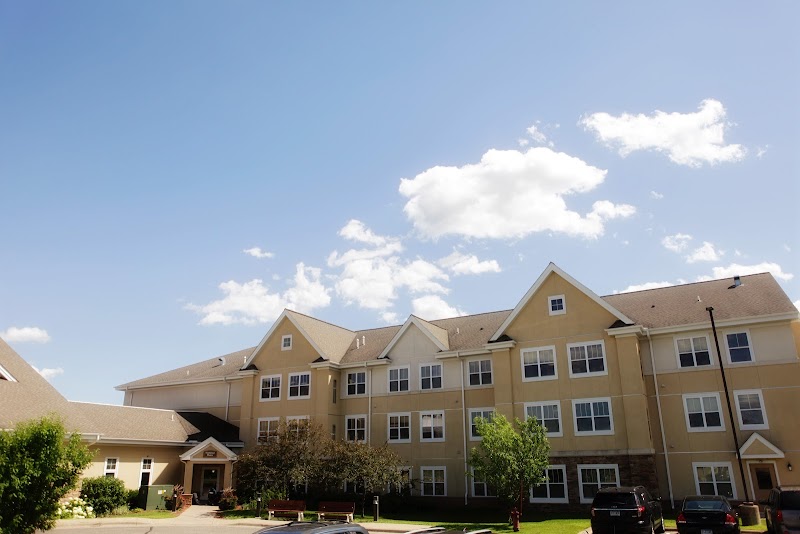
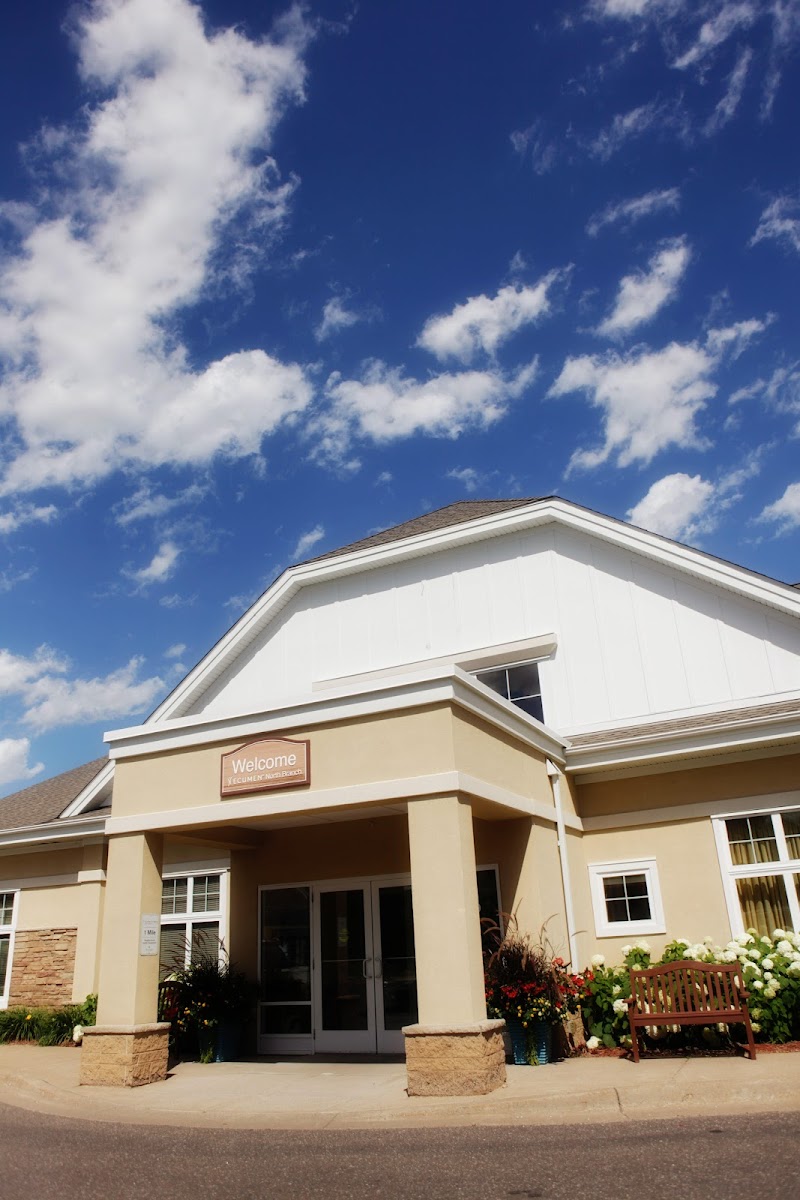
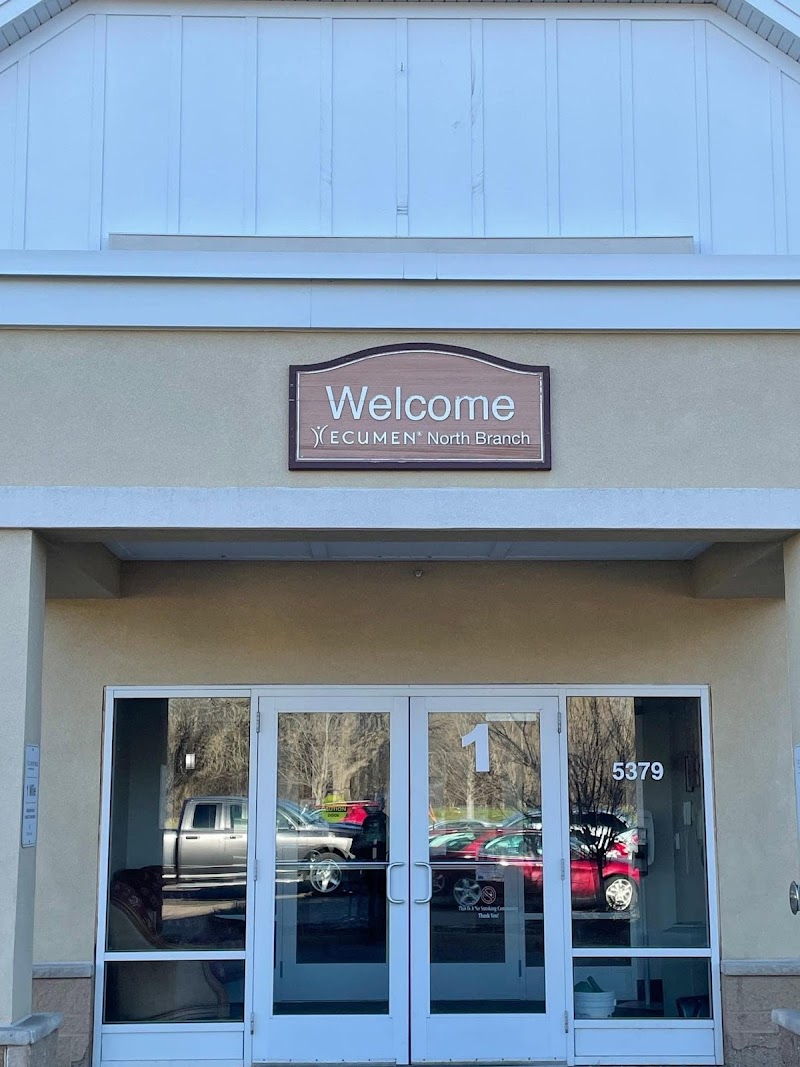

Ecumen North Branch

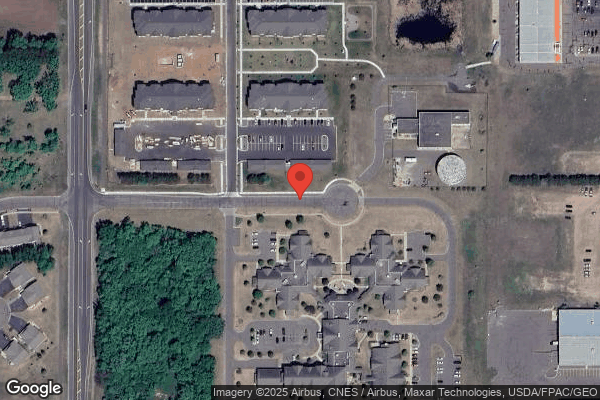
5379 -383RD STREET, NORTH BRANCH, MN 55056 (651) 829-0117
Non profit - Corporation 50 Beds ECUMEN Data: November 2025
Trust Grade
60/100
#168 of 337 in MN
Last Inspection: July 2025

Inspected within the last 6 months. Data reflects current conditions.

Overview

Ecumen North Branch has a Trust Grade of C+, indicating it is slightly above average but not exceptional. It ranks #168 out of 337 facilities in Minnesota, placing it in the top half, and #2 out of 4 in Chisago County, meaning only one other local facility ranks higher. The facility is improving, with the number of issues decreasing from 8 in 2024 to 3 in 2025. Staffing is rated 4 out of 5 stars, but the turnover rate is concerning at 69%, which is significantly higher than the state average of 42%. While there are no fines on record, the facility has faced several concerns, including improper food storage practices that could affect resident safety and inadequate infection control measures during a COVID-19 outbreak. Overall, while there are strengths in staffing and no fines, families should weigh these against the reported concerns.

Trust Score
C+
60/100
In Minnesota
#168/337
Top 49%
Safety Record
Low Risk
No red flags
Inspections
Getting Better
8 → 3 violations
Staff Stability
⚠ Watch
69% turnover. Above average. Higher turnover means staff may not know residents' routines.
Penalties
✓ Good
No fines on record. Clean compliance history, better than most Minnesota facilities.
Skilled Nurses
✓ Good
Each resident gets 60 minutes of Registered Nurse (RN) attention daily — more than 97% of Minnesota nursing homes. RNs are the most trained staff who catch health problems before they become serious.
Violations
⚠ Watch
14 deficiencies on record. Higher than average. Multiple issues found across inspections.
★★★☆☆
3.0
Overall Rating
★★★★☆
4.0
Staff Levels
★★☆☆☆
2.0
Care Quality
★★★☆☆
3.0
Inspection Score
Stable
2024: 8 issues
2025: 3 issues

The Good

  • 4-Star Staffing Rating · Above-average nurse staffing levels
  • Full Sprinkler Coverage · Fire safety systems throughout facility
  • No fines on record

Facility shows strength in staffing levels, fire safety.

The Bad

3-Star Overall Rating

Near Minnesota average (3.2)

Meets federal standards, typical of most facilities

Staff Turnover: 69%

23pts above Minnesota avg (46%)

Frequent staff changes - ask about care continuity

Chain: ECUMEN

Part of a multi-facility chain

Ask about local staffing decisions and management

Staff turnover is elevated (69%)

21 points above Minnesota average of 48%

The Ugly 14 deficiencies on record

Jul 2025 3 deficiencies
CONCERN (F)

Potential for Harm - no one hurt, but risky conditions existed

Food Safety (Tag F0812)

Could have caused harm · This affected most or all residents

Based on observation, interview and document review, the facility failed to store food preparation items in a sanitary manner. This had the potential to affect all residents who resided in the facilit...

Read full inspector narrative →
Based on observation, interview and document review, the facility failed to store food preparation items in a sanitary manner. This had the potential to affect all residents who resided in the facility. Findings include:During observation and interview on 7/22/25 at 11:15 a.m., a tour of the kitchen was completed with the director of culinary services. During the tour, was a stack of 9 large steam table pans on a storage rack to be used for food preparation. The director of culinary services stated those pans were clean and ready to use for food preparation. Upon examining the stack of steam table pans, 5 of 9 steam table pans were stored with visible moisture on the pans. The director of culinary services stated all dishes in the kitchen are to be completely dry before being stored and it looked like these pans were not completely dry. Once the dishes are washed and air dried, they should have been checked to ensure they are dry before placing them on the storage shelf. When dishes are stored wet there is increased risk for germs and bacteria to grow that cause illness. During an interview on 7/23/25 at 3:08 p.m., the administrator discussed the policy regarding storage of dishes.The facility's Ware Washing policy dated August 2023, identified dishes must be air dried on the dish racks or established drying racks and be inspected for dryness before putting dishes away.
CONCERN (F)

Potential for Harm - no one hurt, but risky conditions existed

Infection Control (Tag F0880)

Could have caused harm · This affected most or all residents

Based on interview and record review the facility failed to ensure damp laundry was not left in overnight in the washing machines used for resident clothing. This deficient infection prevention practi...

Read full inspector narrative →
Based on interview and record review the facility failed to ensure damp laundry was not left in overnight in the washing machines used for resident clothing. This deficient infection prevention practice had the potential to impact all 44 residents who resided at the facility. Findings include: During an observation and interview on 07/22/25 at 11:08 a.m., laundry staff (LS-A) stated bed linen and other laundry was sent out to a service, the facility staff only washed resident clothing and mop heads and cleaning cloths at the facility. LSA stated part of the laundry duties included starting a load of mop hands and cleaning rags in the washing machine before leaving for the day. Staff the next morning were responsible for putting the items in the dryer.During an interview on 7/23/25 at 1:15 p.m., with the DON and the infection prevention nurse, both reviewed the facility policy and did not find cleaning supplies specifically addressed in the laundry policy. Both indicated it was possible for bacteria to grow when things were left damp for a prolonged period of time.During an interview on 7/24/25 at 10:05 a.m., the laundry environmental services manager and administrator confirmed it was practice for laundry staff to start the washing machine load of cleaning cloths and mop heads at the end of their shift for the morning staff to put in the dryer the following day. Both indicated if it was an infection prevention concern, it would be easy for them to adjust their washing practice so the items could go directly into the dryer after the wash cycle.The facility policy Departmental (Environmental Services) - Laundry and Linen dated 1/2014, instructed do not leave damp linen in washing machines overnight. When washing machine is not in use, leave doors open.
MINOR (C)

Minor Issue - procedural, no safety impact

Deficiency F0577 (Tag F0577)

Minor procedural issue · This affected most or all residents

Based on observation, interview, and document review, the facility failed to ensure the previous year's survey results were available to residents and visitors. This had the potential to affect all re...

Read full inspector narrative →
Based on observation, interview, and document review, the facility failed to ensure the previous year's survey results were available to residents and visitors. This had the potential to affect all residents and/or visitors that wished to review the information.Findings include: During observation on 7/23/25 at 9:24 a.m., the facility survey results were located in a green three ring binder at the front desk. The survey results in the binder were results from a survey dated 9/27/23. No other survey results were in the binder. In review of survey results for facility, the last recertification survey was conducted on 8/9/24. Two complaint surveys were conducted on 9/17/24 and 2/13/25. During interview on 7/24/25 at 10:45 a.m., administrator stated he was responsible for maintaining the survey results binder. Administrator confirmed the last recertification survey, and two complaint surveys were not in the binder. Administrator stated he would update the survey binder.
Aug 2024 7 deficiencies
CONCERN (D)

Potential for Harm - no one hurt, but risky conditions existed

Deficiency F0554 (Tag F0554)

Could have caused harm · This affected 1 resident

**NOTE- TERMS IN BRACKETS HAVE BEEN EDITED TO PROTECT CONFIDENTIALITY** Based on observation, interview, and record review the facility failed to ensure residents were comprehensively assessed for sel...

Read full inspector narrative →
**NOTE- TERMS IN BRACKETS HAVE BEEN EDITED TO PROTECT CONFIDENTIALITY** Based on observation, interview, and record review the facility failed to ensure residents were comprehensively assessed for self-administration of medications (SAM) for 1 of 5 residents (R26) reviewed for unnecessary medications. Findings include: R26's significant change Minimum Data Set (MDS) dated [DATE], identified severely impaired cognition and diagnoses of respiratory failure with hypoxia and hemiplegia and hemiparesis of the left side following a cerebral vascular accident (CVA). The MDS also identified R26 needed set up and clean up assistance for eating and oral hygiene. R26's provider orders dated 7/25/24, identified an order for albuterol sulfate solution to be inhaled via nebulizer treatment three times per day and as needed for shortness of breath and wheezing, an order for oxygen via nasal cannula at one to four liters per minute, but did not contain an order to self-administer medication. R26's care plan dated 7/31/24, didn't identify a plan for self-administration of medications. R26's medical record didn't contain an assessment for self-administration of medications. During an observation on 8/7/24 at 2:17 p.m., R26 was in his room in a recliner chair, eyes closed, head bent forward and to the right with a nebulizer mask strapped to his face and head. The machine could be heard running and vapor was escaping out of the mask. During an observation on 8/7/24 at 2:35 p.m., R26 could be heard hollering out in a muffled way from his room and there were no staff nearby. Licensed practical nurse (LPN)-A was summoned by surveyor to R26's room. LPN-A removed the mask and R26 said he wanted his socks off. LPN-A assisted R26 with his socks, disassembled and rinsed out the nebulizer mask and chamber. During an interview on 8/7/24 at 3:06 p.m., LPN-A confirmed R26 did not self-administer medications. LPN-A explained that was why they set up the nebulizer treatment and put it on R26 and then came back later to take it off. During an interview no 8/8/24 at 1:49 p.m., LPN-B stated R26 did not have a SAM order because he was not someone you could leave alone with the nebulizer mask on. LPN-B explained leaving the resident alone with the mask on would be considered self-administration. During an interview on 8/9/24 at 9:17 a.m., the assistant director of nursing (ADON) stated the nurse should be within eyesight of the resident with the nebulizer running for the safety of the resident and to make sure it is being used properly. A policy from 2001 Med Pass dated February 2021, identified part of the comprehensive assessment was for the interdisciplinary team to assess each resident cognitive and physical abilities to determine whether self-administering medications was safe and clinically appropriate for the resident. If the team determines a resident cannot safely self-administer medications, the nursing staff administer the resident's medications.
CONCERN (D)

Potential for Harm - no one hurt, but risky conditions existed

Deficiency F0655 (Tag F0655)

Could have caused harm · This affected 1 resident

Based on interview and document review, the facility failed to ensure a baseline care plan was developed and implemented within 48 hours as required to address the individualized needs for 1 of 1 resi...

Read full inspector narrative →
Based on interview and document review, the facility failed to ensure a baseline care plan was developed and implemented within 48 hours as required to address the individualized needs for 1 of 1 resident (R198) reviewed for recent admission. Findings include: R198's admission orders dated 7/31/24, identified R198 was admitted to the facility from a hospital on 7/31/24, with a primary diagnosis of acute on chronic diastolic (congestive) heart failure. admission orders further identified R198 was on two liters of oxygen via nasal cannula. On 8/7/24 at 2:58 p.m., R198's baseline care plan was found to be blank and lacked any information related to R198's care requirements including but not limited to transfer status, activities of daily living performance, assistive device use, impairments, or special treatments such as use of oxygen. During interview on 8/7/24 at 3:24 p.m., registered nurse (RN)-A verified R198's baseline care plan was blank and was not completed within 48 hours of R198's admission. RN-A stated she was aware baseline care plans should be completed within 48 hours and was unsure why R198's care plan had not been completed. During interview on 8/8/24 at 3:37 p.m., director of nursing (DON) verified R198's baseline care plan had not been completed within 48 hours of R198's admission. DON stated her expectation was for baseline care plans to be completed within 48 hours of admission and it was important to develop baseline care plans timely to ensure staff were aware of how to properly care for the residents. A policy on baseline care plans was requested, but not provided.
CONCERN (D)

Potential for Harm - no one hurt, but risky conditions existed

Deficiency F0657 (Tag F0657)

Could have caused harm · This affected 1 resident

**NOTE- TERMS IN BRACKETS HAVE BEEN EDITED TO PROTECT CONFIDENTIALITY** Based on observation, interview, and record review the facility failed to review and revise the care plan with current intervent...

Read full inspector narrative →
**NOTE- TERMS IN BRACKETS HAVE BEEN EDITED TO PROTECT CONFIDENTIALITY** Based on observation, interview, and record review the facility failed to review and revise the care plan with current interventions for the care and prevention of pressure ulcers for 1 of 2 residents (R26) reviewed for pressure ulcer care. Findings include: R26's significant change Minimum Data Set (MDS) dated [DATE], identified severely impaired cognition and diagnoses of hypertension, chronic kidney disease, dementia, respiratory failure with hypoxia, peripheral vascular disease (PVD), and hemiplegia and hemiparesis of the left side following a cerebral vascular accident (CVA). The MDS also identified R26 was dependent on staff for assistance with bed mobility, transfers, toilet hygiene, was at risk for and currently had pressure ulcers. R26's provider orders dated 5/23/24, identified orders to care for wounds on the left and right feet, weekly skin checks, weekly wound rounds, shoes only when transferring, and must have Prevalon boots (brand name for padded boots designed to reduce pressure on the heels) on at all times. R26's care plan dated 7/31/24, identified a problem statement regarding skin impairment and interventions to offload and reposition R26 approximately every two hours, licensed nurse skin inspection weekly, lotion to lower extremities, observe for and report signs or symptoms of infection, Prevalon boots at all times, shoes for transfers and therapy only, and weekly wound documentation. During an observation on 8/5/24 at 2:35 p.m., R26 was sitting in his room in a recliner chair with the footrest up. R26 was wearing slipper-shoes with no socks. There were Prevalon boots laying on a chair. During an observation on 8/7/24 at 2:17 p.m., R26 was in his room sitting in a recliner with the footrest up and a pillow underneath his feet. R26's heels were not floating and there were no Prevalon boots in place. During an interview on 8/7/24 at 3:06 p.m., LPN-A stated R26 refused the Prevalon boots every day, he is supposed to wear them all day, every day except when transferring. But they had to fight with R26 every day about it. During an observation on 8/8/24 at 8:36 a.m., R26 was up having breakfast in the dining room, wearing slipper-shoes with no socks. During an interview on 8/8/24 at 1:49 p.m., LPN-B confirmed R26 refused stockings, socks and Prevalon boots on most days. LPN-B stated the nurses should put a note in the chart regarding refusals. During an interview on 8/8/24 at 2:59 p.m., the assistant director of nursing (ADON) stated the interventions for R26 were to elevate his heels with a pillow or the Prevalon boots. The ADON was aware of R26's refusals of the boots and explained when his wounds were worse, he wasn't as mobile, but now that he was more mobile the boots got in the way of propelling the wheelchair. The ADON would expect staff to chart a resident's refusal of an intervention. The ADON stated they try to update care plans in real time, or with the MDS process quarterly, annually and with significant changes. Real time updates were important, so the resident was getting the right care. A policy titled, Care Plans, Comprehensive Person-Centered and dated March 2022, identified a comprehensive, person-centered care plan includes measurable objectives and timetables to meet the resident's physical, psychosocial and functional needs and will be developed and implemented for each resident. The team will review and revise the care plans when there has been a significant change in the resident's condition, when the desired outcome is not met, and at least quarterly in conjunction with the MDS assessments.
CONCERN (D)

Potential for Harm - no one hurt, but risky conditions existed

Quality of Care (Tag F0684)

Could have caused harm · This affected 1 resident

**NOTE- TERMS IN BRACKETS HAVE BEEN EDITED TO PROTECT CONFIDENTIALITY** Based on observation, interview, and record review the facility failed to follow provider orders for weekly skin assessments for...

Read full inspector narrative →
**NOTE- TERMS IN BRACKETS HAVE BEEN EDITED TO PROTECT CONFIDENTIALITY** Based on observation, interview, and record review the facility failed to follow provider orders for weekly skin assessments for 1 of 2 residents (R26) reviewed for pressure ulcer care. The facility also failed to follow provider orders for an as-needed medication to be administered in response to clinical weight monitoring for 1 of 5 residents (R26) reviewed for unnecessary medications. Findings include: R26's significant change Minimum Data Set, dated [DATE], identified severely impaired cognition and diagnoses of hypertensive heart and chronic kidney disease with heart failure, chronic heart failure (CHF), hypertension, chronic kidney disease, peripheral vascular disease, and pressure wounds to left and right feet. Provider orders for R26 dated 6/25/24, identified orders for: - furosemide (a medication to help remove extra fluid) 20 milligrams (mg) two times per day, and an additional as-needed (PRN) 20 mg dose for weight gain of two pounds or more in a day. - daily weight monitoring with parameters as noted above. - weekly skin assessment every Saturday evening. R26's care plan dated 7/30/24, identified: - interventions to observe for signs of increased edema, or increased weight related to fluid retention, document, and update provider as necessary. -interventions for licensed staff to inspect skin weekly on bath day. R26's electronic health record identified: -a weight gain of 4.4 pounds (lbs.) on 7/13/24 and a gain of three lbs. on 7/31/24. Weight monitoring was not done on 7/18/24 and 8/1/24. R26's medication record reflected PRN furosemide doses were not given on the dates with weight gains of over two pounds. -Lapses in skin assessments from 4/13 to 4/28/24, from 5/25 to 6/15/24, from 6/15 to 7/6/24, and from 7/6 to 7/27/24. During an interview on 8/8/24 at 3:03 p.m., the assistant director of nursing (ADON) stated her expectation would be that weekly skin checks would be completed whether the resident had their bath that day. The ADON confirmed R26 didn't get the ordered PRN doses of furosemide on 7/13 or 7/31/24 and there were lapses in the skin checks, which she felt may be due to the amount of licensed agency staff, and a trained medication aid (TMA) they had working at the time, but that it was not an excuse. The expectation would be that orders are followed. The process for the TMA would be to report to the licensed nurse a finding such as weight gain. Policies regarding following orders with parameters and weekly skin checks were requested but not received.
CONCERN (D)

Potential for Harm - no one hurt, but risky conditions existed

Deficiency F0757 (Tag F0757)

Could have caused harm · This affected 1 resident

**NOTE- TERMS IN BRACKETS HAVE BEEN EDITED TO PROTECT CONFIDENTIALITY** Based on interview and document review the facility failed to have appropriate documentation and physician review for an as need...

Read full inspector narrative →
**NOTE- TERMS IN BRACKETS HAVE BEEN EDITED TO PROTECT CONFIDENTIALITY** Based on interview and document review the facility failed to have appropriate documentation and physician review for an as needed (PRN) opioid medication ordered for 1 of 5 residents (R11) reviewed for unnecessary medications. Findings included R11's quarterly minimum data set (MDS) dated [DATE], identified R11 was cognitively intact. Diagnoses included paraplegia, anxiety, and depression. R11 was on a scheduled pain mediation regimen and had not received any PRN pain medication or non-medication interventions for pain. R11's provider visit notes from 2/6/24 and 2/16/24, lacked documentation as to why PRN Oxycodone would potentially be needed for severe pain. There were no provider notes for a visit performed on 2/23/24 provided when requested. R11's provider orders dated 8/9/24, identified on 2/23/24, Oxycodone 5 mg by mouth twice daily as needed for severe pain was started and still active. R11's pain score charting was reviewed from 2/1/24 to 8/8/24, was reviewed and pain was frequently rated at a zero out of ten when asked, except for an occasional 1-4 rating. R11's electronic medication administration record (EMAR) from 2/23/24 to 8/8/24, was reviewed and indicated R11 had not taken PRN Oxycodone since the order was placed. R11's Consultant Pharmacist's Medication Review dated 7/2/24, indicated a request for Oxycodone to be reviewed and discontinue if not needed as it had not been taken since 2/24. The request was denied by the provider because patient wants available if needed. During an interview on 8/5/24 at 3:18 p.m., R11 stated she did not have any pain except for an occasional mild pain that would never be higher than a 3 on the pain scale. During an interview on 8/9/24 at 9:22 a.m., registered nurse (RN)-B stated medication lists were always monitored to see if there were any unnecessary medications on the residents medications lists. The review included PRN pain medication like Oxycodone (an Opioid medication). If there are medications present that are not used or needed then nursing would discuss with the provider to get the unnecessary medication discontinued. RN-B reviewed R11's medical record and acknowledged the PRN Oxycodone order and there was no clinical documentation for the need of PRN medication. RN-B also stated she had not talked with the provider about the medication. During an interview on 8/9/24 at 9:39 a.m., pharmacy consultant (PC) stated there was a recommendation to review and discontinue the Oxycodone in July, as it was not being utilized. PC stated there was no documentation for the need of the medication when it was ordered on 2/23/24 and has been no documentation for the need since that time. PC also stated there needed to be a numeric pain scale to show what was considered severe pain. The expected rate would be 7-10 on the pain scale. The PC stated based on the documentation there was no need to keep this medication order active. By keeping the medication active there would be an increased risk of addiction and diversion of the medication by somebody. The PC stated he had not received the response from the provider and would follow up with the medical director to address the Oxycodone order. During an interview on 8/9/24 at 10:14 a.m. the assistant director of nursing (ADON) stated nursing staff would review resident medication lists to see which medications were not used and have them discontinued. If a resident wanted to keep the medication active, even though not utilized, then the staff and the provider needed to figure a way to justify the medication or work on a different intervention that would assist the resident in comfort. Facility policy Medication Regimen Reviews last revised 5/19, identified reviews were performed by the PC on a monthly basis and included a review for medications ordered in excessive doses or without clinical indication.
CONCERN (D)

Potential for Harm - no one hurt, but risky conditions existed

Food Safety (Tag F0812)

Could have caused harm · This affected 1 resident

**NOTE- TERMS IN BRACKETS HAVE BEEN EDITED TO PROTECT CONFIDENTIALITY** Based on observation, interview, and document review, the facility failed to ensure food was stored in accordance with regulatio...

Read full inspector narrative →
**NOTE- TERMS IN BRACKETS HAVE BEEN EDITED TO PROTECT CONFIDENTIALITY** Based on observation, interview, and document review, the facility failed to ensure food was stored in accordance with regulations for food safety. The facility failed to label and date resident food, and to remove expired food from unit refrigerators. These practices had the potential to affect any residents storing food at the facility. Findings include: During observation on 8/8/24 at 9:15 a.m., [NAME] unit refrigerator was reviewed. One resident meal labeled with name and dated 7/25/24 found in fridge. During observation on 8/8/24 at 9:44 a.m., Wild River unit refrigerator was reviewed. The following items were found in fridge: -plastic container of blueberries, initials 'JK' on sticker, no open date. -hard plastic container of leftover green beans, with resident name and date of '7/30' on sticker. During observation and interview with culinary director (CD) on 8/9/24 at 8:39 a.m., [NAME] unit fridge was reviewed. CD noted resident meal in plastic bag dated 7/25/24. CD stated 'it could still be good' but noted 'two weeks is too long' to store leftover food. CD further stated he would normally check the unit fridges himself, however he had been out from work for a week and 'no one else does it.' During observation and interview with CD on 8/9/24 at 8:41 a.m., Wild River unit fridge was reviewed. CD noted container of blueberries had initials 'JK' but no open date. CD further noted container of green beans labeled and dated '7/30.' CD stated resident food needed an open date to know if it was still ok to eat. CD stated policy was to throw out leftover resident food after three days. CD further stated this was important to prevent food-borne illness in residents. During interview on 8/9/24 at 9:14 a.m., administrator stated the facility policy on storing leftover resident food was to label the food with resident's initials and the date of opening the food. Administrator further stated the CD was in charge of checking unit fridges for expired food. Administrator stated labeling and dating food helps prevent food-borne illness. Administrator further stated staff should be checking dates on food even when CD is not at the facility. Food from Outside Sources policy, last revised March 2021, identified staff will place personal food items in a 'designated resident space, labeled with the resident's name and dated and placed in impervious container with a lid. The Ecumen location will dispose of food per manufacturer's date of the original container or 3 days after the food was marked.' Policy further identified 'personal items brought in that are not properly packaged, labeled or dated, will be discarded to maintain the residents' food safety and to minimize the risk of food borne illness.'
CONCERN (F)

Potential for Harm - no one hurt, but risky conditions existed

Infection Control (Tag F0880)

Could have caused harm · This affected most or all residents

**NOTE- TERMS IN BRACKETS HAVE BEEN EDITED TO PROTECT CONFIDENTIALITY** Based on observation, interview, and record review the facility failed to adhere to the Centers for Disease Control (CDC) recomm...

Read full inspector narrative →
**NOTE- TERMS IN BRACKETS HAVE BEEN EDITED TO PROTECT CONFIDENTIALITY** Based on observation, interview, and record review the facility failed to adhere to the Centers for Disease Control (CDC) recommendations for testing and cohorting during a COVID-19 outbreak for 4 of 5 residents (R7, R31, R36, R39). In addition, the facility failed to ensure staff followed posted transmission-based precaution signs for 2 of 5 residents (R7, R9) reviewed for infection control. These practices had the potential to affect all residents, employees, and visitors of the facility. The CDC's Interim Infection Prevention and Control Recommendations for Healthcare Personnel During the Coronavirus Disease 2019 (COVID-19) Pandemic updated 3/18/24, identified for the purposes of this guidance, higher-risk exposures are classified as Healthcare Personal (HCP) who had prolonged close contact with a patient, visitor, or HCP with confirmed SARS-CoV-2 infection and: -HCP was not wearing a respirator (or if wearing a facemask, the person with SARS-CoV-2 infection was not wearing a cloth mask or facemask). -HCP was not wearing eye protection if the person with SARS-CoV-2 infection was not wearing a cloth mask or facemask. -HCP was not wearing all recommended PPE (i.e., gown, gloves, eye protection, respirator) while present in the room for an aerosol-generating procedure. Additionally, an exposure of 15 minutes or more is considered prolonged. This could refer to a single 15-minute exposure to one infected individual or several briefer exposures to one or more infected individuals adding up to at least 15 minutes during a 24-hour period. However, the presence of extenuating factors (e.g., exposure in a confined space, performance of aerosol-generating procedure) could warrant more aggressive actions even if the cumulative duration is less than 15 minutes. The CDC's Infection Control Guidance: SARS-COV-2 updated 6/24/24, identified to place a patient with suspected or confirmed SARS-CoV-2 infection in a single-person room. If cohorting, only patients with the same respiratory pathogen should be housed in the same room. Additionally, if additional (positive) cases are identified, strong consideration should be given to shifting to the broad-based approach if not already being performed and implementing quarantine for residents in affected areas of the facility. Findings include: R7 R7's quarterly Minimum Data Set (MDS) dated [DATE] identified intact cognition and diagnoses of metabolic encephalopathy, chronic kidney disease, and congestive heart failure (CHF). R7 needed staff assistance for all activities of daily living (ADLs). R7's care plan dated 7/31/24, identified R7 had a COVID-19 infection confirmed with testing on 7/31/24 and included instructions to place resident in a private room or to cohort with a resident with the same symptoms or COVID-19 positive test confirmation. The care plan further instructs caregivers to apply full-coverage eyewear or face shield with PPE. R7's electronic health record (EHR) contained a form titled, COVID-19 Testing V2 dated 7/31/24, identified a test was administered and found positive using a point of care (POC) testing device on that date. The door to R7's room contained signage for enhanced respiratory precautions with instructions to keep the door to the room closed, to wear a gown, facemask or N95 respirator, eye protection and gloves. There were also directions for the correct sequence for donning and doffing PPE. R9 R9's quarterly MDS dated [DATE], identified moderately intact cognition and diagnoses of chronic obstructive pulmonary disease (COPD), hemiplegia and hemiparesis of the right side following a cerebral vascular accident (CVA). R9 needed staff assistance for all ADLs. R9's care plan dated 7/28/24, identified R7 had a COVID-19 infection confirmed with testing on 7/28/24 and included instructions to quarantine resident until 8/7/24, and able to leave his room on 8/8/24. The care plan further instructs caregivers to apply full-coverage eyewear or face shield with PPE. R9's EHR contained a form titled, COVID-19 Testing V2 dated 7/28/24, identified a test was administered and found positive using a POC testing device on that date. The door to R9's room contained signage for enhanced respiratory precautions with instructions to keep the door to the room closed, to wear a gown, facemask or N95 respirator, eye protection and gloves. There were also directions for the correct sequence for donning and doffing PPE. R31 R31's quarterly MDS dated [DATE], identified intact cognition and diagnoses of spinal stenosis, non-traumatic brain dysfunction, atrial fibrillation, and hypertension. R31 needed staff assistance for all ADLs. R31's EHR contained forms titled, COVID-19 Testing V2 dated 7/31, 8/2, 8/5, and 8/7/24, identified POC tests were all negative. R31 resided in a shared room with R7. R36 R36's significant change MDS dated [DATE], identified severely impaired cognition and diagnoses of Alzheimer's dementia, traumatic brain injury, renal disease, coronary artery disease and anemia. R36 needed staff assistance for all ADLs. R36's EHR contained a form titled, COVID-19 Testing V2 dated 8/5/24, identified a test was administered and found negative using a POC testing device on that date. R36 resided in a shared room with R39. R39 R39's significant change MDS dated [DATE], identified severely impaired cognition and diagnoses of dementia, diabetes, and renal disease. R39 needed staff assistance for all ADLs. R39's EHR contained a form titled, COVID-19 Testing V2 dated 8/5/24, identified a test was administered and found positive using a POC testing device on that date. The door to R39's room contained signage for enhanced respiratory precautions with instructions to keep the door to the room closed, to wear a gown, facemask or N95 respirator, eye protection and gloves. There were also directions for the correct sequence for donning and doffing PPE. During an observation on 8/6/24 at 2:05 p.m., nursing assistant (NA)-A was observed walking out of a resident at the far end of the 170s hallway wearing an isolation gown, gloves, and carrying a lift battery up the length of the hall to the corner of the common area and then all the way down the 160s hall to a stored mechanical lift where she swapped out the batteries. NA-A then walked all the way back to the far end of the 170s hallway and into a resident room. During an interview on 8/6/24 at 2:07 p.m., NA-A stated she forgot to remove her gown and gloves before she went out into the hallway from a resident room. NA-A stated she should have removed it and her gloves, then cleaned her hands before going out into the hallway from an enhanced barrier precautions room. During interview on 8/6/24 at 2:47 p.m., the director of nursing (DON) identified from 7/26/24 to 8/5/24 six staff members and three residents have tested positive for COVID-19 as follows: -7/26/24 assistant director of nursing (ADON) who worked in unit B. -7/28/24 licensed practical nurse (LPN)-A who had no resident or staff contact. -7/28/24 R9 on unit B. This case triggered broad based testing for unit B residents. -7/29/24 NA-C worked on unit B. -7/30/24 culinary director (CD) worked both units. -7/31/24 R7 on unit B and shares a split room with R31. -7/31/24 NA-D worked on unit B. -8/2/24 housekeeping (H)-B worked on unit A. This case triggered broad based testing for unit A residents. -8/5/24 R39 unit B and shares a split room with R36. The DON further stated residents were being broad-based tested, but staff were not. Staff were being tested if they had symptoms or had a high-risk exposure. The DON defined a high-risk exposure as being within 6 feet of a COVID positive individual for more than 15 minutes. The DON confirmed some staff worked on both units and residents from both units continued to intermingle during group activities. The DON confirmed two of the residents who tested positive for COVID were sharing a split room (room with shared entry area where entry to each room was divided by a curtain) with residents who tested negative for COVID. The DON stated the residents in those rooms were more than six feet apart, but she would move the COVID negative residents to a separate room if one was available. During interview on 8/6/24 at 6:51 p.m., DON identified the facility was in COVID outbreak and was following current Centers for Disease Control (CDC) guidance for COVID recommendations. During interview on 8/7/24 at 11:22 a.m., the administrator stated he was unaware of COVID positive and negative residents sharing split rooms and was uncertain if staff were being broad-base tested. The administrator states the facility intended to follow current CDC guidance for COVID recommendations. During an observation on 8/7/24 at 12:29 p.m., R9's room door was standing wide open. R9 was sitting in his wheelchair in the middle of the room. During an interview on 8/7/24 at 12:53 p.m., licensed practical nurse (LPN)-A confirmed R9's door was open but should be shut. LPN-A was not sure why it was open and proceeded to shut the door. During interview on 8/7/24 at 1:08 p.m., the administrator stated he had consulted with the DON and current CDC recommendations. As a result, staff would be broad-base tested and residents who were COVID negative sharing a split room with a resident who was COVID positive would be moved to a single room, pending family approval. During an interview on 8/7/24 at 2:19 p.m., LPN-A stated the reason R9's door was open was because it needed to be open when he was eating because he needed to be supervised during meals and maybe it just didn't get shut again. During an observation and interview on 8/8/24 at 9:04 a.m., NA-B came out of R7's room, wearing only a surgical mask and carrying a plate cover. NA-B stated this was her first day back after being gone for a week and she wasn't sure what she should be doing. NA-B acknowledged the signs indicating an N95, gown and gloves were needed to enter the room and a STOP sign instructing visitors to see the nurse before entering. NA-B stated she had gotten training for enhanced barrier precautions, but not for this precaution yet. During an observation and interview on 8/8/24 at 10:04 a.m., housekeeper (HK)-A was seen entering and exiting R7's room wearing only a surgical mask. HK-A explained the precautions were for when you were giving close-contact care and she was a housekeeper who did not give cares, so she did not need the PPE. During an interview on 8/9/24 at 9:18 a.m., the assistant director of nurses (ADON) stated rooms with enhanced respiratory precautions should have the door shut if the resident could have their door shut. The ADON would expect all staff to wear the PPE if the door is posted and would not expect staff to wear PPE out of a resident room and into the hallway. During an interview on 8/9/24 at 9:26 a.m., the administrator stated it was his expectation that all staff have infection control training, it was part of their training program for housekeeping, and would follow posted signage for PPE. The administrator stated this was important to care for the residents and keep them safe and infection prevention was a critical part of that. A facility policy COVID-19 undated, identified residents and staff will be tested, quarantined, and isolated based on the most up-to-date CDC guidance.
Jun 2024 1 deficiency
CONCERN (D) 📢 Someone Reported This

A family member, employee, or ombudsman was alarmed enough to file a formal complaint

Potential for Harm - no one hurt, but risky conditions existed

Comprehensive Assessments (Tag F0636)

Could have caused harm · This affected 1 resident

**NOTE- TERMS IN BRACKETS HAVE BEEN EDITED TO PROTECT CONFIDENTIALITY** Based on interview and document review, the facility failed to ensure a comprehensive care plan was developed, and maintained to...

Read full inspector narrative →
**NOTE- TERMS IN BRACKETS HAVE BEEN EDITED TO PROTECT CONFIDENTIALITY** Based on interview and document review, the facility failed to ensure a comprehensive care plan was developed, and maintained to ensure appropriate fall interventions were provided for 1 of 3 residents (R2) reviewed for resident safety. Findings include: R2's admission Minimum Data Set (MDS) dated [DATE] indicated R2 had impaired cognition, was always continent of bladder and bowel, and had a fall prior to entry. R2's diagnoses included dementia and history of falling. R2's nursing assistant Care Sheet undated indicted R2 was at high risk for falls, but the Care Sheet lacked fall interventions. R2's care plan dated 6/10/24 lacked information related to R2's fall risk and fall interventions. A health status note dated 6/12/24 at 10:16 p.m. indicated R2 was found around 5:15 p.m. sitting on his bathroom floor covered in bowel movement. On 6/14/2024 at 11:58 a.m., nurse practitioner (NP)-A stated all residents should have documented fall interventions. All residents are a fall risk based on previous falls, their current health condition, and/or anxiety related to living in a different environment. If a resident falls, they could sustain a serious injury. On 6/14/2024 at 12:18 p.m., licensed practical nurse (LPN)-A stated she would look in the resident's care plan and on the nursing assistant care sheet to know resident specific fall interventions. On 6/14/2024 at 3:30 p.m., registered nurse (RN)-A stated R2's fall risk assessment indicated high risk for falls. Resident specific fall interventions would be found in the resident's care plan. RN-A confirmed R2's care plan did not include risk for falls or fall interventions. On 6/17/2024 at 2:06 p.m., R2 stated he doesn't not know why he falls, but he does not like falling because he has increased pain after a fall. On 6/17/2024 at 2:40 p.m., LPN-B stated she would look in a resident's care plan for fall risk and fall interventions. LPN-B stated R2 was not a fall risk because he did not have a care plan addressing falls. On 6/17/2024 at 4:30 p.m., RN-B stated a resident's care plan would be updated with a new intervention after a resident fall. It would be hard to know if the care plan was being followed if there is no care plan created. Lack of fall interventions could lead to a resident fall and possible injury. On 6/17/2024 at 3:09 p.m., assistant director of nursing (ADON) stated resident specific fall risk and fall interventions would be found in a resident's fall care plan and on nursing assistant care sheets. Every resident needs a fall care plan with interventions specific to the resident. After a fall, the resident's care plan should be updated with the new fall intervention. A resident could fall and sustain an injury if the care plan interventions are not followed. ADON confirmed R2 did not have a fall risk or fall interventions included on the care plan and no fall interventions on the nursing assistant care sheet. The undated Managing Falls and Fall Risk policy directed staff to implement a resident-centered fall prevention plan to reduce the specific risk factor(s) of falls for each resident at risk or with a history of falls.
Sept 2023 3 deficiencies
CONCERN (D)

Potential for Harm - no one hurt, but risky conditions existed

Respiratory Care (Tag F0695)

Could have caused harm · This affected 1 resident

**NOTE- TERMS IN BRACKETS HAVE BEEN EDITED TO PROTECT CONFIDENTIALITY** Based on observation, interview, and document review, the facility failed to maintain oxygen equipment according to their own po...

Read full inspector narrative →
**NOTE- TERMS IN BRACKETS HAVE BEEN EDITED TO PROTECT CONFIDENTIALITY** Based on observation, interview, and document review, the facility failed to maintain oxygen equipment according to their own policy to help prevent infection by routinely changing a nasal cannula for 1 of 2 residents (R12) reviewed for respiratory care. Findings include: R12's quarterly Minimum Data Set (MDS) dated [DATE], identified intact cognition and included a diagnosis of congestive heart failure (CHF). R12 was independent with transfers, dressing, eating, toileting and personal hygiene. R12's undated, Medication Review Report identified an order for oxygen at two liters per minute with a start date of 6/15/23; and to change oxygen tubing weekly on Sundays with a start date of 6/18/23 On 9/25/23 at 3:50 p.m., R12's oxygen tubing was dated 9/4/23 and R12 used the oxygen every night. During an interview on 9/27/23 at 11:17 a.m., licensed practical nurse (LPN)-A stated the oxygen tubing was changed out every Sunday. LPN-A confirmed the tubing on R12's oxygen was dated 9/4/23. During an interview on 9/27/23 at 12:03 p.m., the director of nursing (DON) stated the expectation would be the oxygen tubing gets changed weekly and as needed as this was important to prevent infection and assure the equipment was working properly. An untitled and undated document received from the facility directed replacement of the cannula or mask each week to reduce the risk of infections.
CONCERN (D)

Potential for Harm - no one hurt, but risky conditions existed

Antibiotic Stewardship (Tag F0881)

Could have caused harm · This affected 1 resident

Based on observation, interview, and record review, the facility failed to utilize antibiotic use protocols to avoid unnecessary or inappropriate antibiotic use for 1 of 1 resident (R15) reviewed for ...

Read full inspector narrative →
Based on observation, interview, and record review, the facility failed to utilize antibiotic use protocols to avoid unnecessary or inappropriate antibiotic use for 1 of 1 resident (R15) reviewed for antibiotic use. Findings include: R15's care plan dated 9/5/23, indicated R15 was frequently incontinent of bowel and did not mention Clostridioides difficile (a germ that causes diarrhea and inflammation of the colon; also known as C. difficile) nor antibiotic use. R15's undated, current provider orders included vancomycin HCL (antibiotic) oral capsule 125 mg by mouth every 6 hours for C. difficile for ten days with start date of 9/20/23 and end date of 9/29/23. R15's orders indicated contact precautions for C. difficile every shift with start date of 9/19/23 . R15's health status note by licensed practical nurse (LPN)-B on 9/19/23 at 4:15 p.m., indicated labs were not collected. During interview on 9/26/23 at 1:39 p.m., registered nurse (RN)-A stated R15 was on hospice services and was on an antibiotic for a wound infection. After R15 developed loose bowel movements, R15 was prescribed the vancomycin and placed on contact precautions. Normally the facility would test a stool sample for C. difficile but did not think they did because R15 was on hospice services. RN-A did not think R15 had C. difficile, but R15 was on precautions because of loose stools to be extra safe. During interview on 9/27/23 at 11:03 a.m., a hospice licensed practical nurse (HLPN) stated for residents with increased loose stools, they would look at the residents' medication list and see if any medications needed to be held. Hospice had their own set of standards and orders and would contact the provider. They would still want to obtain a stool sample for suspected C. difficile and follow all the appropriate precautions for a resident on hospice services. They would want to follow provider's orders based on what was best for the resident on hospice and the resident's wishes. A resident could be placed at risk for further infection and developing antibiotic resistance by being placed on an antibiotic if they do not have C. difficile. During interview on 9/27/23 at 11:50 a.m., LPN-A stated the appropriate process for a resident on hospice services and loose stools would be to assess the resident and ask staff for information about resident's bowel movements, contact the hospice triage to update the hospice nurse, and then the hospice nurse would contact the hospice provider and call the facility nurse back with a plan. R15's C. difficile was suspected and did not see any tests or stool samples for the loose bowel movements. Developing super bugs was a risk of being on an antibiotic without testing. During interview on 9/27/23 at 1:18 p.m., the director of nursing (DON), who was also the infection preventionist stated R15's loose stools were not C. difficile like stools and the hospice provider choose not to obtain a stool sample to test for C. difficile and prescribed the vancomycin based off R15's symptoms. R15 started Lasix (diuretic) around the same time as the loose stools started, so the Lasix was discontinued and then R15's bowel consistency started to improve. When the swelling increased and Lasix started again, R15 stools became more loose again. Prescribing an antibiotic without testing could cause a resident to be treated unnecessarily. During interview on 9/27/23 at 1:58 p.m., LPN-B stated R15's bowel baseline was continent, soft stools and did not believe R15 had a history of C. difficile. Orders reviewed by LPN-B showed Keflex (antibiotic) was discontinued and bowel medications held on 9/15/23. Vancomycin started, contact precautions initiated, and Lasix held on 9/19/23, after R15's loose stools continued. The hospice nurse reviewed to continue the vancomycin and contact precautions as ordered and restarted R15's Lasix related to edema on 9/22/23. R15's last day of vancomycin was set for 9/29/23 and the need for isolation would be reevaluated at that time. No labs were ordered and believed R15's bowel continence was improving The facility's policy Ecumen North Branch Nursing Home Antibiotic Stewardship Policy dated 6/28/18, directed the facility to utilize the McGeer's Criteria when assessing residents suspected of having an infection and considering initiation of antibiotics. The criteria for C. difficile included needing criteria one and two to be present. Criteria one included presence of diarrhea or presence of toxic megacolon (abnormal dilation of the large bowel, documented radiologically). Criteria two included a stool sample yields a positive laboratory result for C. difficile toxin A or B, or a toxin-producing C. difficile organism identified from a stool sample culture or by a molecular diagnostic test such as PCR; or pseudomembranous colitis is identified during endoscopic examination or surgery or in histopathologic examination of a biopsy specimen.
CONCERN (E)

Potential for Harm - no one hurt, but risky conditions existed

Infection Control (Tag F0880)

Could have caused harm · This affected multiple residents

**NOTE- TERMS IN BRACKETS HAVE BEEN EDITED TO PROTECT CONFIDENTIALITY** R15's quarterly MDS dated [DATE], indicated R15 was cognitively intact, had no rejection of care, and required extensive to tota...

Read full inspector narrative →
**NOTE- TERMS IN BRACKETS HAVE BEEN EDITED TO PROTECT CONFIDENTIALITY** R15's quarterly MDS dated [DATE], indicated R15 was cognitively intact, had no rejection of care, and required extensive to total assistance with most activities of daily living which included bed mobility, transfers, and toilet use. R2 had a stage two pressure ulcer and an unstageable wound. R15 received hospice care. R15's care plan dated 9/5/23, indicated R15 had potential for impairment to skin integrity and risk for pressure injury with actual impairment to bilateral feet. Intervention included wound/skin treatments as ordered. During observation on 9/26/23 at 2:54 p.m., RN-A donned foot covers, gown, gloves, and mask to enter R15's room. RN-A assisted R15 with wound care to the first left toe and lateral right foot. RN-A removed the adhesive dressing from the first left toe, cleared the old Aquacel AG advantage dressing from the wound, cleansed the wound with dermal wound cleanser, used scissors to cut a small square of the Aquacel AG dressing and placed on the wound. RN-A used skin prep around the first left toe wound and then took their gloves off and placed new gloves; however, failed to complete hand hygiene after removing the contaminated gloves and placing on new gloves. RN-A proceeded to the lateral right foot wound and took the adhesive bandage off, cleansed the area with dermal wound cleanser, and used skin prep around the same area. RN-A initialed and dated two adhesive dressings and placed one on each wound. RN-A threw garbage away from wound care, took off gloves and other PPE upon exit of room, and performed hand hygiene. During interview on 9/26/23 at 3:16 p.m., RN-A stated in general they perform hand hygiene between gloves changes but RN-A did not during wound care. RN-A verified they did not change their gloves between taking dirty dressing off, cleansing, and placing clean dressing on. Drainage of wound and soilage of gloves were not present, and RN-A did not like to use dirty gloves to handle clean dressings. There was a risk of infection and spreading germs by not following proper hand hygiene and glove change procedures. During interview on 9/27/23 at 1:18 p.m., DON, who was also the infection preventionist (IP) stated glove changes should occur when going from a dirty task to a clean task and hand hygiene should occur between glove changes. The DON stated staff places a resident at risk for infection when introducing dirty into clean areas. The facility policy Handwashing/Hand Hygiene dated August 2019, directed staff to perform hand hygiene before and after direct contact with residents, after contact with blood or bodily fluids, after handling used dressings and contaminated equipment, after removing gloves. The policy also indicated the use of gloves does not replace hand washing/hand hygiene. CONTACT PRECAUTIONS NOTIFICATION: R15's care plan dated 9/5/23, indicated R15 was frequently incontinent of bowel and did not identfiy R15 was on contact enteric precautions. R15's undated current provider orders included contact precautions for Clostridioides difficile (a germ that causes diarrhea and inflammation of the colon; also known as C. difficile) every shift with start date of 9/19/23. During observation on 9/25/23 at 3:29 p.m., R15 had a plastic bin with personal protective equipment supplies (PPE) outside their door, but there was no sign on the door to indicate which type of isolation was required. During observation on 9/26/23 at 11:32 a.m., R15's door continued to not have a sign to indicate which type of isolation was required. During observation on 9/26/23 at 12:40 p.m., nursing assistant (NA-A) put on foot covers, isolation gown, and gloves prior to entering R15's room. During interview on 9/26/23 at 12:55 p.m., NA-A stated R15 was on precautions because they were on an antibiotic had loose bowel movements, so the facility placed R15 on precautions for C. difficile. Staff knew a resident was on precautions when they saw a bin of PPE outside a resident's room. During interview on 9/26/23 at 1:39 p.m., RN-A stated R15 was on hospice services and was on an antibiotic for a wound infection. After R15 developed loose bowel movements, R15 was prescribed the vancomycin and placed on contact precautions. RN-A did not think R15 had C. difficile, but R15 was on precautions because of loose stools to be extra safe. During interview on 9/26/23 at 3:16 p.m., RN-A stated staff and others knew a resident was on isolation precautions when there was a sign on their door and a bin with PPE and the nurses also went over precaution information during report. RN-A verified there was no sign on R15's door. R15 needed a sign on their door because staff and visitors were at risk of going into R15's room without proper PPE. During observation on 9/26/23 at 3:34 p.m., R15's door had a sign which specified contact enteric precautions and instructed staff and others to use soap and water upon exiting room. During interview on 9/27/23 at 1:18 p.m., DON stated precaution signs should be placed on a resident's door when a resident is placed on specific isolation precautions. The DON stated without the proper signage, people were at risk of going into the room without proper PPE. The facility's Isolation - Initiating Transmission-Based Precautions policy dated August 2019, directed the IP or designee to determine the appropriate notification on the room entrance door so that personnel and visitors are aware of the need for and type of precautions. Signage was to include the type of CDC (Centers for Disease Control and Prevention) precaution, instructions for use of PPE, and/or instructions to see a nurse before entering the room. R6's annual MDS dated [DATE], indentified intact cognition and a diagnosis of diabetes mellitus. R6's undated provider orders, indicated blood glucose testing four times per day. On 9/26/23 at 9:20 a.m., licensed practical nurse (LPN)-C was folding a Super Sani-Cloth (a germicidal wipe used to sanitize hard non-pouros surfaces) around a glucometer. LPN-C explained the used glucometer was wrapped in a wipe and placed in the top drawer of the medication cart. There was a second glucometer that had already been sanitized and was ready to use. On 9/26/23 at 11:22 a.m., RN-A donned gloves without first performing hand hygiene, and proceded to collect a blood sample from R6's finger. After obtaining a blood glucose result, RN-A removed her gloves, picked up an ice pack to show R6 and then wheeled R6 to the dining room. Once back at the medication cart, RN-A took out a Super Sani-Cloth and wrapped it around the glucometer. RN-A confirmed she did not perform hand hygiene before or after the gloves. During an interview on 9/27/23 at 12:08 p.m., the director of nursing (DON) stated the facility did not have a step-by-step process for cleaning and sanitizing a glucometer. Without using friction with the sanitizing wipe she wouldn't consider the glucometer sanitized, and that sanitizing was important to prevent the spread of infection. A facility document Obtaining a Fingerstick Glucose Level dated 10/2011, identified to clean and disinfect reusable equipment between uses according to the manufacturer's instructions and current infection control standards of practice. The document did not detail how to clean and disinfect the equipment. An undated, insert for the Assure Platinum blood glucometer identified a list of acceptable disinfectant brand names for use on this glucometer. Super Sani-Cloth was on the list. The instructions referred the reader to a website for the most up-to-date cleaning and disinfecting procedures for Arkray blood glucose meters. An undated, General Guidelines For Use, provided directions for Super Sani-Cloth wipes which indicated to unfold a clean wipe and thoroughly wet the surface and to remain wet for two minutes and then let air dry. HAND HYGIENE: R4's admission MDS, dated [DATE], indicated severe cognitive impairment and a diagnosis of congestive heart failure (CHF) and chronic kidney disease. R4's undated provider orders indicated orders for oxycodone with acetaminophen 5/325 mg, give one tab three times per day; buprion 100 mg one tab daily; citalopram 10 mg daily; furosemide 20 mg one tab daily, losartan 100 mg one tab daily. R21's quarterly (MDS) dated [DATE], identified severly impaired cognition and a diagnosis of familial dysautonomia (a disorder of the autonomic nervous system). R21's undated provider orders, indicated an order for Senna Plus (a stool softener with stimulant), two tabs two times per day. During an observation on 9/26/23 at 8:21 a.m., registered nurse (RN)-A prepared R21's medication at the medication cart by checking the medication administration record against the medication bottle label and shook two tabs out of the container into a souffle cup, and did not perform hand hygiene prior to the set up. RN-A locked the medication cart and computer screen, walked to R21 and greeted him. After confirming R21 was ready to take the medications, RN-A spooned them into his mouth and ensured he had swallowed them. RN-A failed to perform hand hygeine after the medication pass. During an observation on 9/26/23 at 8:26 a.m., RN-A prepared R4's medication at the medication cart by checking the medication administration record against the medication cards and labels, and did not perform hand hygiene prior to the set up. RN-A brought the medications in a suffle cup to R4 and asked if she was ready for her medications. R4 indicated she was and RN-A spooned the medication to R4's mouth. R4 drank some juice and reported they went down. RN-A failed to perform hand hygeine after the medication pass. During an interview on 9/26/23 at 8:39 a.m., RN-A confirmed she didn't perform hand hygiene between preparing and administering medications for R4 and R21. RN-A stated hand hygiene was important for not spreading germs. Based on observation, interview and document review the facility failed to ensure shared glucometers were sanitized after use for 2 of 8 residents (R6, R79) reviewed for glucometer use; failed to ensure staff completed hand hygiene during medication pass for 2 of 6 residents (R4,R21) observed during medication pass; failed to perform hand hygeine during wound care for 1 of 1 (R15) residents observed for wound care; and failed to display appropirate signage for 1 of 1 resident (R15) who was on contact precautions. Findings include: BLOOD GLUCOSE MONITORING: R79's undated, admission Record identified R79 had a diagnosis of diabetes mellitus with hyperglycemia (elevated blood sugars). R79's undated, Order Summary Report directed to assist R79 with blood sugar checks every day and evening with a start date of 9/19/23. During an observation on 9/26/23 at 11:46 a.m., licensed practical nurse (LPN)-C assisted R79 with checking her blood sugar, LPN-C performed hand hygiene put on gloves, cleaned a tray and then set up supplies for R79. When R79 was done LPN-C placed a wipe pulled from a purple top container and wrapped the wipe around the glucometer and placed the glucometer in the drawer of the medication cart. During an interview on 9/26/23 at 11:52 a.m. LPN-C stated she wraped the glucometer in the wipe and put the glucometer back in the drawer and then would place the second glucometer on top of it. LPN-C stated some staff would wipe the glucometer for one minute before putting it away.
Understanding Severity Codes (click to expand)
Life-Threatening (Immediate Jeopardy)
J - Isolated K - Pattern L - Widespread
Actual Harm
G - Isolated H - Pattern I - Widespread
Potential for Harm
D - Isolated E - Pattern F - Widespread
No Harm (Minor)
A - Isolated B - Pattern C - Widespread

Questions to Ask on Your Visit

  • "Why is there high staff turnover? How do you retain staff?"
  • "Can I speak with families of current residents?"
  • "What's your RN coverage like on weekends and overnight?"

Our Honest Assessment

Strengths
  • • No major safety red flags. No abuse findings, life-threatening violations, or SFF status.
  • • No fines on record. Clean compliance history, better than most Minnesota facilities.
Concerns
  • • 14 deficiencies on record. Higher than average. Multiple issues found across inspections.
  • • 69% turnover. Above average. Higher turnover means staff may not know residents' routines.
Bottom line: Mixed indicators with Trust Score of 60/100. Visit in person and ask pointed questions.

About This Facility

What is Ecumen North Branch's CMS Rating?

CMS assigns Ecumen North Branch an overall rating of 3 out of 5 stars, which is considered average nationally. Within Minnesota, this rating places the facility higher than 0% of the state's 100 nursing homes. This mid-range rating indicates the facility meets federal standards but may have areas for improvement.

How is Ecumen North Branch Staffed?

CMS rates Ecumen North Branch's staffing level at 4 out of 5 stars, which is above average compared to other nursing homes. Staff turnover is 69%, which is 23 percentage points above the Minnesota average of 46%. High turnover can affect care consistency as new staff learn residents' individual needs. RN turnover specifically is 56%, which is notably high. RNs provide skilled clinical oversight, so turnover in this role can affect medical care quality.

What Have Inspectors Found at Ecumen North Branch?

State health inspectors documented 14 deficiencies at Ecumen North Branch during 2023 to 2025. These included: 13 with potential for harm and 1 minor or isolated issues.

Who Owns and Operates Ecumen North Branch?

Ecumen North Branch is owned by a non-profit organization. Non-profit facilities reinvest revenue into operations rather than distributing to shareholders. The facility is operated by ECUMEN, a chain that manages multiple nursing homes. With 50 certified beds and approximately 45 residents (about 90% occupancy), it is a smaller facility located in NORTH BRANCH, Minnesota.

How Does Ecumen North Branch Compare to Other Minnesota Nursing Homes?

Compared to the 100 nursing homes in Minnesota, Ecumen North Branch's overall rating (3 stars) is below the state average of 3.2, staff turnover (69%) is significantly higher than the state average of 46%, and health inspection rating (3 stars) is at the national benchmark.

What Should Families Ask When Visiting Ecumen North Branch?

Based on this facility's data, families visiting should ask: "How do you ensure continuity of care given staff turnover, and what is your staff retention strategy?" "Can I visit during a mealtime to observe dining assistance and food quality?" "How do you handle medical emergencies, and what is your hospital transfer rate?" "Can I speak with family members of current residents about their experience?" These questions are particularly relevant given the facility's high staff turnover rate.

Is Ecumen North Branch Safe?

Based on CMS inspection data, Ecumen North Branch has a clean safety record: no substantiated abuse findings (meaning no confirmed cases of resident harm), no Immediate Jeopardy citations (the most serious violation level indicating risk of serious injury or death), and is not on the Special Focus Facility watch list (a federal program monitoring the lowest-performing 1% of nursing homes). The facility has a 3-star overall rating and ranks #100 of 100 nursing homes in Minnesota. While no facility is perfect, families should still ask about staff-to-resident ratios and recent inspection results during their visit.

Do Nurses at Ecumen North Branch Stick Around?

Staff turnover at Ecumen North Branch is high. At 69%, the facility is 23 percentage points above the Minnesota average of 46%. Registered Nurse turnover is particularly concerning at 56%. RNs handle complex medical decisions and coordinate care — frequent RN changes can directly impact care quality. High turnover means new staff may not know residents' individual needs, medications, or preferences. It can also be disorienting for residents, especially those with dementia who rely on familiar faces. Families should ask: What is causing the turnover? What retention programs are in place? How do you ensure care continuity during staff transitions?

Was Ecumen North Branch Ever Fined?

Ecumen North Branch has no federal fines on record. CMS issues fines when nursing homes fail to meet care standards or don't correct problems found during inspections. The absence of fines suggests the facility has either maintained compliance or corrected any issues before penalties were assessed. This is a positive indicator, though families should still review recent inspection reports for the full picture.

Is Ecumen North Branch on Any Federal Watch List?

Ecumen North Branch is not on any federal watch list. The most significant is the Special Focus Facility (SFF) program, which identifies the bottom 1% of nursing homes nationally based on persistent, serious quality problems. Not being on this list means the facility has avoided the pattern of deficiencies that triggers enhanced federal oversight. This is a positive indicator, though families should still review the facility's inspection history directly.