Paynesville Health Care Center
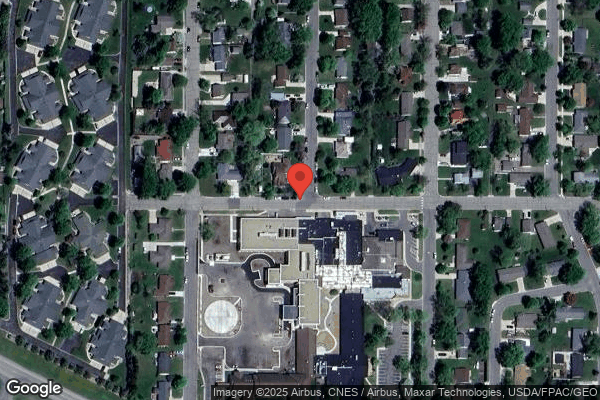
200 FIRST STREET WEST, PAYNESVILLE, MN 56362 (320) 399-4267
For profit - Limited Liability company 51 Beds Independent Data: November 2025
Trust Grade
90/100
#67 of 337 in MN
Last Inspection: March 2025

Within standard 12-15 month inspection cycle. Federal law requires annual inspections.

Overview

Paynesville Health Care Center has received an impressive Trust Grade of A, indicating that it is excellent and highly recommended for care. Ranking #67 out of 337 facilities in Minnesota puts it in the top half, and it ranks #3 out of 10 in Stearns County, meaning only two local options are better. The facility is improving, having reduced reported issues from two in 2024 to just one in 2025. Staffing is a strong point with a 5-star rating, and a turnover rate of 30% is significantly better than the state average of 42%. However, there were some concerns noted, including a failure to use proper personal protective equipment during care for a resident with a severe bone infection, a lack of clarity regarding a resident's end-of-life care orders, and not providing recommended vaccinations for some residents. Overall, while there are areas needing attention, the strengths in staffing and care quality make it a solid choice for families.

Trust Score
A
90/100
In Minnesota
#67/337
Top 19%
Safety Record
Low Risk
No red flags
Inspections
Getting Better
2 → 1 violations
Staff Stability
○ Average
30% turnover. Near Minnesota's 48% average. Typical for the industry.
Penalties
✓ Good
No fines on record. Clean compliance history, better than most Minnesota facilities.
Skilled Nurses
✓ Good
Each resident gets 58 minutes of Registered Nurse (RN) attention daily — more than average for Minnesota. RNs are trained to catch health problems early.
Violations
✓ Good
Only 4 deficiencies on record. Cleaner than most facilities. Minor issues only.
★★★★★
5.0
Overall Rating
★★★★★
5.0
Staff Levels
★★☆☆☆
2.0
Care Quality
★★★★★
5.0
Inspection Score
Stable
2024: 2 issues
2025: 1 issues

The Good

  • 5-Star Staffing Rating · Excellent nurse staffing levels
  • Full Sprinkler Coverage · Fire safety systems throughout facility
  • No fines on record
  • Staff turnover below average (30%)

    18 points below Minnesota average of 48%

Facility shows strength in staffing levels, fire safety.

The Bad

Staff Turnover: 30%

16pts below Minnesota avg (46%)

Typical for the industry

The Ugly 4 deficiencies on record

Mar 2025 1 deficiency
CONCERN (D)

Potential for Harm - no one hurt, but risky conditions existed

Infection Control (Tag F0880)

Could have caused harm · This affected 1 resident

**NOTE- TERMS IN BRACKETS HAVE BEEN EDITED TO PROTECT CONFIDENTIALITY** Based on observation, interview, and record review, the facility failed to ensure proper use of personal protective equipment (P...

Read full inspector narrative →
**NOTE- TERMS IN BRACKETS HAVE BEEN EDITED TO PROTECT CONFIDENTIALITY** Based on observation, interview, and record review, the facility failed to ensure proper use of personal protective equipment (PPE) for 1 of 2 residents (R249) during high contact cares. In addition, the facility failed to ensure PPE use while providing wound care for 1 of 2 residents (R249) reviewed for enhanced barrier precautions (EBP). Findings include: R249's quarterly Minimum Data Set (MDS) dated [DATE], indicated R249 was cognitively intact and had acute osteomyelitis (bone infection) on the right ankle and foot and had recently undergone orthopedic surgery for right below the knee amputation, phantom limb syndrome with pain (real pain in a missing limb after amputation), peripheral vascular disease (PVD) (narrowed arteries reduce blood flow to the arms and/or legs), type II diabetes mellitus (DM), hypertension (elevated blood pressure), hyperlipidemia (high cholesterol), neuropathy (nerve pain, tingling, or numbness), and was a carrier or suspected carrier of Methicillin-susceptible Staphylococcus aureus (MSSA) (type of staph bacteria that can cause infections on the skin or other parts of the body). R249's care plan dated 2/26/25, indicated R249 was on EBP due to MSSA, PICC line with six weeks of antibiotics, and chemotherapy medication. Interventions included posting clear signage on the exterior of resident's door with the required PPE, provide education to residents and visitors, PPE available outside of the room, use gown and gloves with high-contact resident care activities. During observation on 3/17/25 at 3:26 p.m., registered nurse (RN)-A along with an unidentified nursing assistant (NA) assisted R249 from his manual wheelchair into his recliner to perform wound care. Neither NA or RN-A wore gown or gloves while assisting R249 with transfer. NA exited the room after assisting with the transfer. R249's legs were elevated using the recliner. RN-A gather the supplies to complete dressing changes then sat in R249's wheelchair to perform R249's wound care. RN-A donned gloves to both hands, but failed to don a gown prior to procedure. RN-A then removed Prevalon boot (heel protectant boot) from R249's left heel wound. RN-A noted there was no dressing in place, she then lifted R249's left leg and foot and placed R249's ankle on her right leg above the knee to provide support while painting the wound with betadine per the provider order. After bandaging the left heel RN-A removed her gloves and discarded the used supplies. RN-A returned to sit in the wheelchair and applied a glove to her right hand. She removed the dressing from R249's right below the knee surgical wound with gloved hand, noted there was no drainage and was seen painting the site with a betadine swab. RN-A redressed, dated and initialed the tape used to secure the gauze wrap, and applied the limb protector with gloved hand. RN-A removed her glove and discarded the used supplies. Signage, PPE supply cart and disposal bin were observed on resident's door and just inside of the door. RN-A was not wearing a gown to protect R249 nor herself from pathogens during this procedure. Interview on 3/17/25 at 3:46 p.m., RN-A stated that she had worn gloves. RN-A confirmed she had not worn a gown during resident high contact cares, she stated I forgot. Unable to complete interview at this time. Interview on 3/17/25 at 3:48 p.m., R249 stated she [RN-A] never wears a gown. Interview on 3/19/25 at 3:02 p.m., RN-A stated when a resident required EBP there should be a sign on the resident's door to alert them. In the resident's plan of care there is a stop sign that indicated the precaution, and if hovered over, it showed the type of precaution specifically. RN-A confirmed R249 did have EBP signage posted on exterior of his door and that there was a PPE cart and disposal bin located inside his doorway. RN-A did not recall receiving any specific EBP training, and stated she may not have been there for it. RN-A stated gown and gloves should be worn for, anything up close and personal where concerns for infection are possible, like peri cares, all personal cares and wound care. RN-A was not aware high contact care included transfers. RN-A stated PPE use was important to prevent infection for the resident with whatever I could be carrying, to keep as clean as possible and not introduce anything new to him. Interview on 3/19/25 at 3:20 p.m., with case manager (CM) and director of nursing (DON). DON stated staff were able to tell which residents were on EBP in the residents EHR, it was flagged on their face page, on the care plan, signage on their door, as well as on the huddle board (white board) in the breakroom that lists all residents on precautions. CM stated they also had supply bins and disposal containers in the residents' rooms. CM also stated they go through the residents on EBP in their morning huddle daily, during shift reports and pass on. DON stated precautions were put into PCC like a medication order, when it was time for wound care to be completed, it alerted the nurse. CM stated training on EBP was provided to care staff at their annual skills fair. DON stated many different audits had been completed, and gown and gloves were expected for all wound care. Both CM and DON agreed they would expect orders to be followed, infection control practices followed, and if there was a question, staff would ask for clarification as they had many tools and resources available to them. DON and CM were not specific on the expectation of staff to wear PPE during high contact cares, including transfers. A policy effective 3/2025, titled Enhanced Barrier Precautions indicated the policy is in place to reduce the transmission of multidrug-resistant organisms (MDROs). Enhanced barrier precautions is defined as an infection control intervention designed to reduce transmission of multidrug-resistant organisms that employs targeted gown and glove use during high contact resident care activities. PPE used for these high-contact resident care activities as dressing, bathing/showering, transferring, providing hygiene, changing linens, changing briefs or assisting with toileting, device care or use, and wound care of any skin opening requiring a dressing.
Feb 2024 2 deficiencies
CONCERN (D)

Potential for Harm - no one hurt, but risky conditions existed

Deficiency F0578 (Tag F0578)

Could have caused harm · This affected 1 resident

**NOTE- TERMS IN BRACKETS HAVE BEEN EDITED TO PROTECT CONFIDENTIALITY** Based on interview and document review, the facility failed to ensure Physicians Orders for Life Sustaining Treatment (POLST - C...

Read full inspector narrative →
**NOTE- TERMS IN BRACKETS HAVE BEEN EDITED TO PROTECT CONFIDENTIALITY** Based on interview and document review, the facility failed to ensure Physicians Orders for Life Sustaining Treatment (POLST - Code Status) were clarified for 1 of 1 residents (R34), who was readmitted from the hospital with orders in conflict with their signed POLST and Advance Directives. Findings include: R34's significant change Minimum Data Set (MDS) dated [DATE], indicated cognitively intact and required partial to moderate assistance for activities of daily living (ADLs). R34's Face Page printed [DATE], indicated resident's code status as DNR-intubation on case-by-case basis but no chest compressions. R34's Health Care Directive (HCD) signed [DATE], indicated I do not want CPR attempted if my heart or breathing stops. I want to allow a natural death. R34's HCD further directed: Keep me comfortable. No extraordinary measures. R34's most recent POLST (signed [DATE] upon admission to the facility), directed if R34 was not breathing or had no pulse as, DNR/DO NOT ATTEMPT RESUSCITATION (Allow Natural Death). R34's POLST further documented resident wished not be intubated (insertion of a tube into a patient's body, especially that of an artificial ventilation tube into the trachea), no artificial nutrition by tube. However indicated the use if antibiotics, IV fluids and cardiac monitor as indicated. R34 was admitted to the hospital, from [DATE] through [DATE], where resident was treated for pneumonia. R34's hospital discharge orders documented R34's Code Status as: Intubation on case-by-case basis but no chest compressions. Limited code - no cardiac resuscitation. During interview on [DATE] at 8:20 a.m., R34 stated if she was found not breathing and heart had stopped, I don't want anything done. When clarified with R34, this included no breathing or feeding tubes. However she was open to having comfort measures such as antibiotics and IV fluids. In and interview on [DATE] at 9:30 a.m., registered nurse (CM)-B verified R34's HCD and POLST both indicated resident's expressed decision was to be DNR and did not wish to have extraordinary means to be implemented. In review of R34's Point Click Care records (electronic medical records), where it documented Intubation on case-by-case basis but no chest compressions. Limited code - no cardiac resuscitation, and the [DATE] hospital discharge orders, CM-B stated R34's orders should have been clarified with the physician before being transcribed. In review of the facility's policy, entitled: No Not Resuscitate Order (effective date 11/2011), indicated the following: 5. Do not resuscitate (DNR) orders will remain in effect until the resident (or legal surrogate) provide the facility with a signed and dated request to end the DNR order. a. Verbal orders to cease the DNR will be permitted when two (2) staff members witness such request. b. Both witnesses must have heard the request and both individuals must document such information on the physician's order sheet. In review of the facility's policy, entitled: Transcription Processing Provider Orders - Long Term Care (effective 11/2021), lacked evidence of what the facility staff person who transcribed orders should do when they have received conflicting orders. In this case, changing R23's end of life choices without consent.
CONCERN (D)

Potential for Harm - no one hurt, but risky conditions existed

Deficiency F0883 (Tag F0883)

Could have caused harm · This affected 1 resident

**NOTE- TERMS IN BRACKETS HAVE BEEN EDITED TO PROTECT CONFIDENTIALITY** Based on interview and document review, the facility failed to ensure 2 of the 5 residents (R9 and R23) reviewed for immunizatio...

Read full inspector narrative →
**NOTE- TERMS IN BRACKETS HAVE BEEN EDITED TO PROTECT CONFIDENTIALITY** Based on interview and document review, the facility failed to ensure 2 of the 5 residents (R9 and R23) reviewed for immunizations were offered and/or provided the pneumococcal vaccination series as recommended by the Centers for Disease Control (CDC) to help reduce the risk of associated infection(s). Findings include: A CDC Pneumococcal Vaccine Timing for Adults feature, dated 3/15/2023, identified various tables when each (or all) of the pneumococcal vaccinations should be obtained. This identified when an adult over [AGE] years old had received the complete series (i.e., PPSV23 and PCV13; see below) then the patient and provider may choose to administer Pneumococcal 20-valent Conjugate Vaccine (PCV20) for patients who had received Pneumococcal 13-valent Conjugate Vaccine (PCV13) at any age and Pneumococcal Polysaccharide Vaccine 23 (PPSV23) at or after [AGE] years old. R9's face sheet, dated 2/8/24, indicated she was [AGE] years old. The immunization record, undated, indicated she received a PPSV23 on 4/29/08 followed by the PCV13 on 11/2/16. The record lacked evidence of shared clinical decision making with the physician for PCV20 at least 5 years after the last pneumococcal dose. The record lacked evidence that R9 was offered or received PCV20. R23's face sheet, dated 2/8/24, indicated she was [AGE] years old. The immunization record, undated, indicated she received a PPSV23 on 7/18/15 followed by the PCV13 on 6/23/17. The record lacked evidence of shared clinical decision making with the physician for PCV20 at least 5 years after the last pneumococcal dose. The record lacked evidence that R23 was offered or received PCV20. During an interview with care manager (CM)-A on 2/7/24 at 7:50 a.m., the CM indicated immunizations were verified upon admission through MIIC (Minnesota Immunization Information Connection). IP stated IP would ask residents and/or their families and consents were obtained if immunizations were needed. CM verified R9 and R23's pneumococcal immunizations as listed above. CM verified they had not been offered or provided education on PCV20. During interview with director of nursing (DON) on 2/8/24 at 11:25 a.m., DON stated immunization reports through MIIC, recommended immunizations were discussed during the admission process but R9 and R23 were missed. A facility policy titled Pneumococcal Immunization, Long Term Care with an effective date of 6/2023 was provided. Policy indicated: Residents will be offered the pneumococcal vaccinations and administered, according to the MDH and CDC recommended interval for the vaccines, unless contraindicated, already immunized, or the resident and/or the resident representative declines the vaccine.
Apr 2023 1 deficiency
MINOR (B)

Minor Issue - procedural, no safety impact

Deficiency F0582 (Tag F0582)

Minor procedural issue · This affected multiple residents

Based on interview and document review, the facility lacked evidence the facility provided the Skilled Nursing Facility Advanced Beneficiary Notice (SNFABN/CMS-10055) to 3 of 3 residents reviewed (R17...

Read full inspector narrative →
Based on interview and document review, the facility lacked evidence the facility provided the Skilled Nursing Facility Advanced Beneficiary Notice (SNFABN/CMS-10055) to 3 of 3 residents reviewed (R17, R36, and R38,) whose Medicare Part A coverage ended and the residents remained in the facility. Findings include: R17 Medicare A coverage documentation, provided by the facility, the records lacked evidence R17 nor their family were provided the SNFABN; CMS-10055. In review of the survey worksheet provided to the facility (SNF Beneficiary Protection Notification Review CMS-20052) indicated R17's Medicare A stay started on 1/26/23, and last coverage date was 2/24/23, and R17 remained in the facility. R36 Medicare A coverage documentation, provided by the facility, the records lacked evidence R36 nor their family were provided the SNFABN/CMS-10055. In review of the survey worksheet provided to the facility (SNF Beneficiary Protection Notification Review CMS-20052) indicated R36's Medicare A stay started on 12/14/22, and last coverage date was 1/19/23, and R36 remained in the facility. R38 Medicare A coverage documentation, provided by the facility, the records lacked evidence R38 nor their family were provided the SNFABN/CMS-10055. In review of the survey worksheet provided to the facility (SNF Beneficiary Protection Notification Review CMS-20052) indicated R38's Medicare A stay started on 2/9/23, and last coverage date was 2/22/23, and R38 remained in the facility. On 4/18/23, at 12:57 p.m. the director of nursing (DON) said that the facility could not produce the SNFABN/CMS-10055) records for the residents R17, R36, and R38. The DON continued the SNFABN/CMS-10055 had not been done correctly since the previous Social Worker had left, and after reviewing with the administrator and social worker, they were actively reviewing and correcting the situation. On 4/20/23, at 11:24 a.m. social worker (SW)-C stated the Notice of Medicare NonCoverage (NOMNC's) were being done, but not the ABN's. SW-C continued, I do see it as an issue, especially if residents do not know their remaining days, or if they are unaware of the appeals process, which is why we are working to correct it. The facility's policy, titled, Advanced Beneficiary Notice - ABN (effective 04/2023) indicted the following: CMS recommends facilities issue a voluntary ABN or a similar notice as a courtesy to alert the beneficiary about their financial liability. The policy continues that an ABN is valid if using the most recent version approved by the office of Management and Budget (OMB), complete the entire form, and ensure the beneficiary understands the notice.
Understanding Severity Codes (click to expand)
Life-Threatening (Immediate Jeopardy)
J - Isolated K - Pattern L - Widespread
Actual Harm
G - Isolated H - Pattern I - Widespread
Potential for Harm
D - Isolated E - Pattern F - Widespread
No Harm (Minor)
A - Isolated B - Pattern C - Widespread

Questions to Ask on Your Visit

  • "Can I speak with families of current residents?"
  • "What's your RN coverage like on weekends and overnight?"

Our Honest Assessment

Strengths
  • • Grade A (90/100). Above average facility, better than most options in Minnesota.
  • • No major safety red flags. No abuse findings, life-threatening violations, or SFF status.
  • • No fines on record. Clean compliance history, better than most Minnesota facilities.
  • • Only 4 deficiencies on record. Cleaner than most facilities. Minor issues only.
Concerns
  • • No significant concerns identified. This facility shows no red flags across CMS ratings, staff turnover, or federal penalties.
Bottom line: Generally positive indicators. Standard due diligence and a personal visit recommended.

About This Facility

What is Paynesville Health Care Center's CMS Rating?

CMS assigns Paynesville Health Care Center an overall rating of 5 out of 5 stars, which is considered much above average nationally. Within Minnesota, this rating places the facility higher than 99% of the state's 100 nursing homes. This rating reflects solid performance across the metrics CMS uses to evaluate nursing home quality.

How is Paynesville Health Care Center Staffed?

CMS rates Paynesville Health Care Center's staffing level at 5 out of 5 stars, which is much above average compared to other nursing homes. Staff turnover is 30%, compared to the Minnesota average of 46%. This relatively stable workforce can support continuity of care.

What Have Inspectors Found at Paynesville Health Care Center?

State health inspectors documented 4 deficiencies at Paynesville Health Care Center during 2023 to 2025. These included: 3 with potential for harm and 1 minor or isolated issues.

Who Owns and Operates Paynesville Health Care Center?

Paynesville Health Care Center is owned by a for-profit company. For-profit facilities operate as businesses with obligations to shareholders or private owners. The facility operates independently rather than as part of a larger chain. With 51 certified beds and approximately 47 residents (about 92% occupancy), it is a smaller facility located in PAYNESVILLE, Minnesota.

How Does Paynesville Health Care Center Compare to Other Minnesota Nursing Homes?

Compared to the 100 nursing homes in Minnesota, Paynesville Health Care Center's overall rating (5 stars) is above the state average of 3.2, staff turnover (30%) is significantly lower than the state average of 46%, and health inspection rating (5 stars) is much above the national benchmark.

What Should Families Ask When Visiting Paynesville Health Care Center?

Based on this facility's data, families visiting should ask: "Can I visit during a mealtime to observe dining assistance and food quality?" "How do you handle medical emergencies, and what is your hospital transfer rate?" "Can I speak with family members of current residents about their experience?"

Is Paynesville Health Care Center Safe?

Based on CMS inspection data, Paynesville Health Care Center has a clean safety record: no substantiated abuse findings (meaning no confirmed cases of resident harm), no Immediate Jeopardy citations (the most serious violation level indicating risk of serious injury or death), and is not on the Special Focus Facility watch list (a federal program monitoring the lowest-performing 1% of nursing homes). The facility has a 5-star overall rating and ranks #1 of 100 nursing homes in Minnesota. While no facility is perfect, families should still ask about staff-to-resident ratios and recent inspection results during their visit.

Do Nurses at Paynesville Health Care Center Stick Around?

Paynesville Health Care Center has a staff turnover rate of 30%, which is about average for Minnesota nursing homes (state average: 46%). Moderate turnover is common in nursing homes, but families should still ask about staff tenure and how the facility maintains care continuity when employees leave.

Was Paynesville Health Care Center Ever Fined?

Paynesville Health Care Center has no federal fines on record. CMS issues fines when nursing homes fail to meet care standards or don't correct problems found during inspections. The absence of fines suggests the facility has either maintained compliance or corrected any issues before penalties were assessed. This is a positive indicator, though families should still review recent inspection reports for the full picture.

Is Paynesville Health Care Center on Any Federal Watch List?

Paynesville Health Care Center is not on any federal watch list. The most significant is the Special Focus Facility (SFF) program, which identifies the bottom 1% of nursing homes nationally based on persistent, serious quality problems. Not being on this list means the facility has avoided the pattern of deficiencies that triggers enhanced federal oversight. This is a positive indicator, though families should still review the facility's inspection history directly.