Rochester Rehabilitation And Living Center

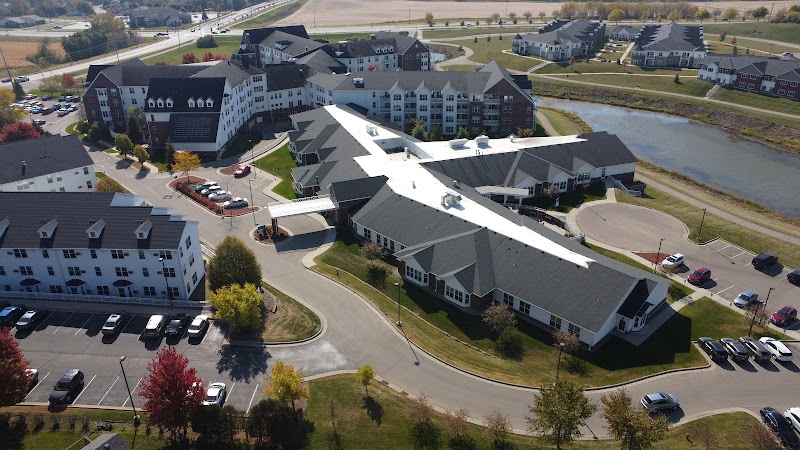
1900 BALLINGTON BOULEVARD NW, ROCHESTER, MN 55901 (507) 535-2000
Non profit - Corporation 56 Beds VOLUNTEERS OF AMERICA SENIOR LIVING Data: November 2025 3 Immediate Jeopardy citations
Trust Grade
0/100
#315 of 337 in MN
Last Inspection: April 2025

Within standard 12-15 month inspection cycle. Federal law requires annual inspections.

Overview

Rochester Rehabilitation and Living Center has received a Trust Grade of F, indicating significant concerns about the quality of care provided, which is among the poorest ratings available. It ranks #315 out of 337 nursing homes in Minnesota, placing it in the bottom half of facilities statewide, and #8 out of 8 in Olmsted County, meaning there are no better local options available. The facility's performance is worsening, with the number of issues increasing from 9 in 2024 to 17 in 2025. While staffing is relatively strong with a 4-star rating and 84% turnover, which is notably high compared to the state average, there is some good RN coverage, exceeding that of 87% of facilities in Minnesota. However, serious incidents have occurred, including critical failures in medication administration leading to severe health consequences for residents and a lack of proper monitoring of patients, raising substantial concerns about the overall safety and quality of care at this facility.

Trust Score
F
0/100
In Minnesota
#315/337
Bottom 7%
Safety Record
High Risk
Review needed
Inspections
Getting Worse
9 → 17 violations
Staff Stability
⚠ Watch
84% turnover. Very high, 36 points above average. Constant new faces learning your loved one's needs.
Penalties
✓ Good
No fines on record. Clean compliance history, better than most Minnesota facilities.
Skilled Nurses
✓ Good
Each resident gets 100 minutes of Registered Nurse (RN) attention daily — more than 97% of Minnesota nursing homes. RNs are the most trained staff who catch health problems before they become serious.
Violations
⚠ Watch
35 deficiencies on record. Higher than average. Multiple issues found across inspections.
★☆☆☆☆
1.0
Overall Rating
★★★★☆
4.0
Staff Levels
★★☆☆☆
2.0
Care Quality
★☆☆☆☆
1.0
Inspection Score
Stable
2024: 9 issues
2025: 17 issues

The Good

  • 4-Star Staffing Rating · Above-average nurse staffing levels
  • Full Sprinkler Coverage · Fire safety systems throughout facility
  • No fines on record

Facility shows strength in staffing levels, fire safety.

The Bad

1-Star Overall Rating

Below Minnesota average (3.2)

Significant quality concerns identified by CMS

Staff Turnover: 84%

37pts above Minnesota avg (46%)

Frequent staff changes - ask about care continuity

Chain: VOLUNTEERS OF AMERICA SENIOR LIVING

Part of a multi-facility chain

Ask about local staffing decisions and management

Staff turnover is very high (84%)

36 points above Minnesota average of 48%

The Ugly 35 deficiencies on record

3 life-threatening 2 actual harm
Aug 2025 3 deficiencies 1 IJ
CRITICAL (J) 📢 Someone Reported This

A family member, employee, or ombudsman was alarmed enough to file a formal complaint

Immediate Jeopardy (IJ) - the most serious Medicare violation

Deficiency F0760 (Tag F0760)

Someone could have died · This affected 1 resident

**NOTE- TERMS IN BRACKETS HAVE BEEN EDITED TO PROTECT CONFIDENTIALITY** Based on observations, interviews, and record reviews, the facility failed to ensure the safe and accurate administration of pre...

Read full inspector narrative →
**NOTE- TERMS IN BRACKETS HAVE BEEN EDITED TO PROTECT CONFIDENTIALITY** Based on observations, interviews, and record reviews, the facility failed to ensure the safe and accurate administration of prescribed medications to residents, resulting in Immediate Jeopardy. Systemic Failures were identified across multiple areas, including transcription errors, incorrect dosing, and medication omissions. The facility did not consistently follow the five rights of medication administration, nor did it implement effective systems to identify, prevent, investigate, or track medication errors. These failures directly impacted two residents. Resident R1 did not receive two prescribed diuretic (manage fluid overload) medications, resulting in ongoing congestive heart failure. Resident R4 received 50 mg of prednisone instead of the prescribed 5 mg of a potent anti-inflammatory medication, leading to new cardiac symptoms, hospitalization, and admission to the intensive care unit (ICU), where he remains. The facility's lack of oversight and failure to implement corrective actions placed all residents at risk for serious harm, injury, or death, and necessitated immediate intervention to protect resident health and safety.The immediate jeopardy (IJ) began on 7/21/25 when the interdisciplinary team identified R1's medication errors but failed to conduct a comprehensive analysis of their pharmacy protocols or medication errors to uncover systemic failures in medication management. This led to R4 receiving 10 times the prescribed dose of Prednisone that resulted in ICU admission. The interim administrator, director of nursing were notified of the IJ on 8/14/25 at 12:58 p.m. The IJ was removed on 8/22/25 at 2:51 p.m., but non-compliance remained at a lower scope and severity of D meaning no actual harm with potential for more than minimal harm that is not widespread. Findings include A facility reported incident dated 7/18/25, identified R1's Metolazone (diuretic medication given to treat fluid retention) was not given in accordance with physician orders. R1's annual minimum data set (MDS) dated [DATE], identified R1's cognition was intact and had diagnoses of biventricular heart failure (a severe form of heart failure where both the left and right sides of the heart are unable to pump blood effectively, leading to symptoms of both left-sided (shortness of breath, fatigue) and right-sided (swelling in the legs, abdomen) heart failure), hypertensive heart and chronic kidney disease (where high blood pressure damages the heart and kidneys, while damaged kidneys exacerbate high blood pressure) and hypertension. Further identified R1 received diuretics. R1's order summary dated 1/8/25 through 7/21/25, directed to give Metolazone give one 2.5 mg tablet daily 30 minutes before AM Torsemide (diuretic medication given to treat fluid retention) when weight is 165 pounds or greater, related to hypertensive heart and chronic kidney disease with heart failure and stage 1 through stage 4 chronic kidney disease.R1's medication administration record (MAR) dated July 2025, identified R1 was given doses of metolazone when R1's weight was below 165 lbs., not in accordance with physician orders. Administrations included: -7/7/25 weight was 161 pounds, and medication was signed as given.-7/10/25 weight was 163.6 pounds, and medication was signed as given. -7/12/25 weight was 163.6 pounds, and medication was signed as given.-7/18/25 weight was 158 pounds, and medication was signed as given. R1's progress note dated 7/18/25, at 1:03 p.m., identified an aide initially shared to this writer that R1 was complaining of not feeling well while in her wheelchair and leaned forward in her tray table but still conversant. She assisted her to the bathroom, as requested. Vital Signs (VS) checked as resident is still complaining of not feeling well. VS checked and noted initial BP (blood pressure) to be 56/34 (Normal blood120/80 mmHg). and immediately informed this writer of the low BP. Immediately attended to and saw R1 seated on the toilet. R1 was initially conversant but gradually passed out and observed to have inward stiffening of upper extremities and stopped responding, lasting for about a minute. R1 gradually regained consciousness and was transported back to bed. The note also indicated R1 said, I wasn't feeling well and 'I have a little hard time breathing earlier but it's better.' Will inform NP and continue to monitor. At 2:08 p.m., Writer informed and updated NP about R1's condition and ordered to send her to the ED for further investigation. Informed R1 and agreed. At 2:15 p.m., ambulance came and left the facility at 2:25 p.m.R1's emergency department (ED) note dated 7/18/25, at 5:48 p.m., identified R1 was diagnosed with vasovagal syncope (triggered by an overstimulation of the vagus nerve that leads to a sudden drop-in heart rate and/or blood pressure, resulting in temporary loss of consciousness due to reduced blood flow to the brain). Nursing home reported R1 was hypotensive to the 50's and had lost consciousness when they found her. R1 was still seated on the toilet with her head leaning on the wall to her right. R1 reported similar episodes in the past where she was hypotensive and had similar symptoms. R1 also reported that she checks her weight each day and when she is above a certain weight, she takes her diuretic. R1 stated she took her pill yesterday and went down 10lbs overnight. (Weight loss was not consistent with R1's record).R1's MAR dated July 2025, identified the following weights:-7/16/25: 166.2 pounds-7/17/25: 161.2 pounds; reflecting a 5 lb. weight loss in one day7/18/25: 158 pounds; reflecting an 8.2 lb. weight loss in two days. R1's NP visit dated 7/21/25, reviewed the 7/18/25 syncopal event and added recurrent hypotensive episodes linked to diuretic use, particularly Metolazone, the note identified a plan to adjust Torsemide 40 mg in the am and 20 mg in the pm for more consistent diuresis, trying to eliminate the need for PRN (as needed) metolazone and identified metolazone 2.5 mg discontinued.R1's Medication Error Report dated 7/21/25, at 11:00 a.m., identified on 7/18/25 R1 was given Metolazone dose when her weight was 158 pounds, had a syncopal episode and transferred to the ED. Report further identified the same error had occurred on 7/7/25, 7/10/25, and 7/12/25 Metolazone order has been discontinued. Weight parameters have been adjusted. R1‘s IDT team initial post investigation review form dated 7/21/25 at 11:00 a.m., identified the root cause of the medication error was medications are currently kept with routine medications which could lead to this medication being pulled out of the cart with other morning medications. NP noted that Metolazone was given when the weight parameters for giving it had not been met on 7/18. The investigation had identified errors had occurred several times before 7/18 with the Metolazone. IDT discussed options to possibly move medications that are PRN to different location in the cart so they are not inadvertently given with routine meds. Further indicated discussion of changing where and how the order was transcribed into EHR (i.e. put in with the daily weight order so that when wt. is > 165 initiate PRN Metolazone order, or possibly changing the FONT of the order to make it more pronounced with caps or bold face to bring it to nurse's attention more.) In this particular case the NP decided to eliminate the metolazone altogether which eliminated the need to move med or change where order is written or how it is written.R1's IDT progress note was reviewed in conjunction with the IDT Final Post Review Follow Up form both dated 7/28/25, identified IDT reviewed the Medication Error incident. The intervention(s) put in place was a new process (was implemented) whereby the order for daily weights will be edited and further instructions for when the NP/MD orders a medication to be given in response to the weight. We feel this will provide the nurses with increased cues as they enter the weight to know if the resident needs it or not. IDT determined the effectiveness of the interventions put into place are effective at this time. There were two parts to this error- 1. nothing was cuing the nurse to check PRN meds post entering of weights. 2. Nurses had kept the medication with the routine meds and this was moved also. Lastly the doctor did decide to discontinue this medication altogether for this resident. Review of R1's medication error documentation reviewed between 7/18/25 through 8/7/25 did not identify if audits had been completed to determine extent of medication errors that resulted from staff not following rights of medication administration and/or medication cart organization and/or transcription of orders with parameters. Further there was no indication staff were provided with education pertaining to systems or re-educated on the rights of medication administration. R1's Nurse practitioner (NP) visit dated 8/1/25, identified R1 was being seen for congestive heart failure and weight gain. R1 reported to nursing her legs are feeling more swollen and weight was above parameter at 166.2 pounds. New order to give torsemide 40 mg twice a day for edema. (Order dated 7/21/25 included continue daily standing weights notify provider of weight less than 155 lb. or greater than 165 lb.) R1's MAR included multiple orders for physician orders for Torsemide and identified R1 was administered Torsemide not in accordance with physician orders. On 8/1/25 R1 was administered 40 mg for the a.m. block (7:00 a.m. -11:00 a.m.) dose, administered 20 mg at 3:00 p.m. then 40 mg at 7:00 p.m. - for a total of 100 mg which was 20 mg over what was prescribed. -On 8/2/25 R1 was administered 40 mg at 6:00 a.m., administered 40 mg for the a.m. block (7:00 a.m. -11:00 a.m.) dose, administered 20 mg at 3:00 p.m. then 40 mg at 7:00 p.m. - for a total 140 mg which was 60 mg over the prescribed dose. -On 8/3/25 R1 was administered 40 mg at 6:00 a.m., administered 40 mg for the a.m. block (7:00 a.m. -11:00 a.m.) dose, administered 20 mg at 3:00 p.m. then 40 mg at 7:00 p.m. - for a total 140 mg which was 60 mg over the prescribed dose. -On 8/4/25 R1's 6:00 a.m. and block (7:00 a.m.-11:00 a.m.) dose of 40 mg was blank indicating doses were not administered. The MAR indicated this dose and dosing time were discontinued on 8/4/25 at 8:56 a.m. R1's NP visit dated 8/4/25, identified R1 presented with increased fluid retention and shortness of breath related to heart failure. R1 had increased shortness of breath especially during conversation, notable episode of dyspnea at a social event, symptoms have lessened over the last two days with reduced talking, abdominal distention which decreased when lying down, increased lower extremity swelling. Torsemide ordered on 8/1/25, to give 40 mg twice a day however medication error occurred, nurse confirmed R1 received a total of 120 mg per day for 3 days. New order for torsemide give 80 mg twice a day x 3 days, then reduce back to 40 mg twice a day. R1's MAR on 8/4/25 through 8/7/25 R1 continued to not receive the correct dose of Torsemide per physician order. The MAR identified the aforementioned physician order for 80 mg twice day x 3 days, however the start date was for the morning of 8/5/25 at 8:00 a.m. The MAR identified the following: -On 8/4/25, R1 was administered 40 mg of Torsemide at 3:00 p.m. and 80 mg at 4:22 p.m. for a total of 120 mg, equating to 40 mg under the prescribed dose. -On 8/6/25, R1 did not receive any doses of Torsemide. -On 8/7/25, R1 was administered 40 mg at 8:00 a.m. and the 2:00 p.m. dosing time was blank. R1's progress note dated 8/7/25 at 12:56 p.m., identified writer noted R1's increasing weight despite her diuretic revision recently. During conversation, a while ago, R1 claimed that she had to pause for some time after wheeling herself and noted her legs to be more swollen. Observed to be speaking in phrases but no obvious labored breathing nor complains of chest pain. Auscultation to lungs revealed minimal crackles, bibasilar (lower portion of both lungs) with no wheezing appreciated. Situation, Background, Assessment, and Recommendation (SBAR) sent and called NP. She agreed to increase back the Torsemide for a couple of days. Will be waiting for orders later this afternoon. R1 informed of this, and she acknowledged.R1's new physician order dated 8/7/25, at 3:01 p.m., directed Torsemide 40 mg give two tablets twice until 8/12/25 at 10:00 a.m., take 1-2 tablets (40-80 mg total) by mouth 2 times a day. 80 mg by mouth two times a day x 5 days starting 8/7/2025; then reduce back to 40 mg by mouth twice a day. R1's MAR on 8/7/25 identified R1 received a total of 120 mg of Torsemide which was 40 mg under the prescribed dose. R1's Medication Error Report dated 8/7/25 did not identify all the medication errors, the report identified that Torsemide 40 mg dose was omitted on 8/4/25 at 7:00 a.m., and on 8/7/25 at 2:00 p.m. Immediate intervention identified- only included management was alerted to medication error on 8/11/25 at 6:00 p.m. while doing a whole house audit. The error report did not identify or include medication errors that occurred on 8/1/25, 8/2/25, 8/3/25, 8/4/25, 8/6/25, and 8/7/25. During an interview on 8/11/25 at 2:28 p.m., registered nurse manager (NM)-A verified R1 had med errors where she received metolazone 2.5 mg in error on 7/7/25, 7/10/25, 7/12/25 and 7/18/25; R1's NP found those errors in which the three nurses who made the four errors were not following the rights of medication administration by looking at the actual physician order. NM-A was not aware of any subsequent errors involving R1. NM-A was provided and reviewed R1's record, NM-A confirmed R1 had not received her torsemide as ordered; on 8/4/25 lacked 40 mg dose, 8/6/25 was completely omitted, and 8/7/25 lacked a 40 mg dose. NM-A stated on 8/7/25, R1 was displaying signs and symptoms of CHF so she called the NP to keep torsemide at 80 mg twice a day for an additional 5 days. NM-A stated she was not aware of the torsemide medication errors until just this moment, the errors should have been identified earlier. NM-A was unsure of the process for medication errors and stated she would just report it to the director of nursing (DON). During an observation and interview on 8/11/25, at 12:38 p.m., R1 was seated in her wheelchair in her room, R1's legs were swollen and had wraps on them. R1 explained she was a former nurse. R1 reported she was getting Metolazone when her weight was above 165 pounds, it helped get rid of the swelling in her legs. R1 stated a few weeks ago she blacked out in the bathroom and had to be sent to the ED because her blood pressure dropped in the 50's. R1 was wondering if the nurses were reading the orders right for her diuretics because she had been exhibiting signs and symptoms of congestive heart failure for the last two weeks such as shortness of breath, feeling weak, bad swelling in her legs, just in the last week she had noted shortness of breath with just talking. R1 stated as far as she knew there had been no medication errors with her diuretics but wondered if the nurses had been giving them to her correctly with the increase in symptoms, leg swelling and weight gain.During an interview on 8/11/25 at 1:11 p.m., registered nurse (RN)-G stated R1 currently received torsemide 40 mg twice a day until 8/12/25. No one had reported to her that R1 was having any shortness of breath. RN-G wrapped R1's legs earlier in the morning and noted them to be more swollen, R1's last reported weight was 168.8 pounds and would have to notify the provider if her weight goes above 165. (Nurses progress note dated 8/11/25 at 3:06 p.m. included physician notification identifying R1's weight was outside the parameters).During an observation and interview on 8/13/25 at 10:58 a.m., registered nurse (RN)-B was standing at the medication cart. RN-B removed five cards of R1's Torsemide with the original pharmacy labels which included: -Torsemide 10 mg tablets-give 2 to 4 tablets two times per day (give 40 mg in the a.m. and 20 mg in the p.m.) Prescription date of 7/21/25 with 29 tablets remaining-Torsemide 20 mg tablets-give 2 tablets twice daily. Prescription date 8/1/25 with 14 tablets remaining on one card and second card with 30 tablets. -Torsemide 20 mg tablets-give 2 to 4 tablets (40-80mg) two times per day; 80 mg twice daily for 3 days starting 8/4/25 then reduce back to 40 mg twice daily. Prescription date 8/6/25 with 12 pills remaining.-Metolazone 2.5 mg tablets-give 1 tablet 30 minutes prior to a.m. Torsemide when weight is greater than 165 pounds. Prescription dated 5/6/25, with 10 pills remaining. When RN-B pulled R1's Torsemide cards out of the medication cart and compared it with R1's physician order in the MAR, RN-B could not articulate what R1's current Torsemide medication order was when reading it in the MAR. RN-B stated it would be 80 mg twice per day which would mean she would give 40 mg in the morning and 40 mg in the evening totaling 80 mg (instead of 80 mg twice for total of 160 mg). RN-B was unsure of what she administered to R1 for the morning dose of Torsemide. RN-B explained R1 would receive a dose of metolazone if her weight was greater than 165 pounds; her weight was 169.2 pounds this morning, so R1 would get a dose. RN-B was unaware that R1's Metolazone had been discontinued on 7/21/25, and the Metolazone bubble pack was in the medication cart and stated she would have given it. During an interview on 8/13/25 at 2:18 p.m., licensed practical nurse (LPN)-A stated R1's current Torsemide order was very confusing and hard to understand what the exact dose was to administer which could increase the risk of an error reoccurring. LPN-A indicated she had not received any training on how to transcribe physician orders in the EHR. LPN-A was not able to articulate the process on how to complete a medication error report and how to contact the pharmacy if a medication was not available to administer. During an interview on 8/13/25 at 4:19 p.m., Health unit Coordinator/licensed practical nurse (HUC/LPN) stated there were no processes in place to ensure discontinued/changed medications were removed from the medication carts. HUC/LPN further stated when she transcribed a new prescription order in the electronic health record (EHR) she sometimes would place a sticky note on the medication cart to inform the nurses the medication needs to be removed. HUC/LPN indicated she does not ensure the medication bubble packs are always removed from the cart with new medication orders. During an interview on 8/13/25 at 2:36 p.m., RN-C stated she had noticed a problem with medications that had been discontinued/changed related to the bubble packs being left in the medication carts. This could be a recipe for a disaster and could lead to medication errors if the nurse does not verify the prescription cards to the MAR. RN-C had not received any education on rights of medication administration, preventing medication errors, or entering/verifying new orders. RN-C stated all new orders should be entered by the HUC/LPN, the DON, or the nurse managers and at times they (nurses) were not even told what orders were new or have changed.R1's NP visit dated 8/13/25, identified despite recent increases in torsemide, R1 continued to exhibit signs and symptoms of CHF such as bilateral lower extremity edema, increased weights, and shortness of breath. Current weights twice a week, unable to successfully titrate the torsemide back down. Unable to use Metolazone due to syncope and hypotension in the past. New orders identified to continue Torsemide 80 mg twice a day. Will implement daily weights. R1's August 2025 MAR, dated 8/18/25, at 1:24 p.m., identified physician order for Torsemide to give 100 mg twice a day for 3 days. 2:00 p.m. dose of 100 mg of torsemide was left blank. During an observation and interview on 8/20/25 at approximately 10:30 a.m., DON indicated she had transcribed the order into the EHR on 8/18/25 and directed the nurse to give the medication. DON indicated she was informed via an offsite auditor just this morning (two days later) the medication record did not identify the medication was administered. DON confirmed she had not reviewed R1's MAR on 8/18/25 nor on 8/19/25 to assure the dose was given. DON was unaware and unable to articulate how to reconcile medications in order to determine if the dose had been administered. During an interview on 8/11/25 at 4:06 p.m., director of nursing (DON) stated R1's medication error with Metolazone in July 2025, resulted in R1 being sent to the ED with a syncopal event. DON stated they did not review any other resident charts to ensure there were no other medication errors. DON stated the facility did not really have a system in place for nurses who were identified that made the error; there was not we are not tracking it or doing any education. DON indicated typically with a medication error we would be expected to fill out a risk management report, notify the provider, resident/representative and follow provider orders. DON indicated since R1's July med error they were not doing any audits to identify similar medication errors. DON indicated she was not aware of R1's missed torsemide doses on 8/4/25, 8/6/25 and 8/7/25. R4 R4's face sheet dated 8/12/25, identified diagnoses of end-stage renal disease (a condition in which the kidneys lose the ability to remove waste), hypertensive heart disease (heart damage cause by long-term high blood pressure), post kidney transplant (a surgical procedure that replaces a damaged kidney with a healthy one from a donor), atrial fibrillation (an irregular, often rapid heartbeat that commonly causes poor blood flow), and diabetes (a condition where the body uses glucose as fuel). R4's care plan focus identified end stage renal disease with a kidney transplant and immunocompromised. Interventions included: medications for anti-rejection (medications taken to prevent organ rejection) as ordered and monitor for side effects of medications such as increased blood pressure.R4's significant change Minimum Data Set (MDS) dated [DATE], identified R4's cognition was intact. R4's diagnoses included, end stage renal disease, dependence on renal dialysis, and kidney transplant status. R4's physician orders included the following orders:-Prednisone (steroid used to reduce inflammation and suppresses the immune system) 5 mg tablets one tablet daily for renal (kidney) transplant (start date 7/24/25) R4's medication administration record (MAR) from 7/24/25 through 8/12/25, identified the physician order for 5 mg of prednisone and indicated R4 was administered 17 doses of the 5 mg prednisone tab. However, R4's Medication Error form dated 8/11/25, identified R4 had been receiving 50 mg prednisone instead of 5 mg of prednisone for the last 17 days due to pharmacy sending the wrong dosage. Immediate action taken was that medication was pulled from the cart and the physician was made aware. R4's Post Incident Medication Error Report form dated 8/11/25, identified the prednisone error as mentioned as well as the root cause of pharmacy error, in addition to nursing staff were not following the rights of medication administration. Neither form included a comprehensive analysis/investigation nor strategies to prevent or mitigate the risk of recurrent like errors. Review of R4's record identified between 7/29/25 and 8/12/25, R4 had increased blood pressures without identification of an overdose of prednisone had been administered at any point as a result of not reconciling medication against physician order upon delivery and then six licensed staff were not performing the rights of medication administration prior to administration to ensure the dose was accurate. R4's records identified the following course of events that ultimately lead to hospitalization as a result of the prednisone medication errors. R4's NP progress note dated 8/1/25, identified R1's blood pressure was elevated today however had been stable otherwise. Blood pressure reading was 161/80 (normal BP is 120/80). R4's NP note dated 8/6/25, identified R4 had elevated blood pressure readings. The note also included new orders for blood pressure medication in addition to a diuretic. 8/1/25 at 8:06 a.m., 161/60 at 3:50 p.m., 178/798/4/25 at 7:27 a.m., 192/59 at 3:26 p.m., 184/76, at 5:48 p.m., 188/778/5/25 at 12:21 p.m., 139/708/6/25 at 10:14 a.m., 166/73Review of R4's occupational therapy (OT) notes from 7/29/25 through 8/12/25, identified R4 did not feel well on 7/29/25; R4 had elevated blood pressures on 8/6/25 of 160/78 and 8/7/25 of 160/78 millimeters of mercury (mmHg) and 169/78 mmHg. Review of R4's physical therapy (PT) notes from 7/29/25 through 8/11/25, identified R4 had elevated blood pressures on 7/31/25, 8/6/25, 8/8/25, and 8/11/25. R4 also had shortness of breath on 8/6/25, 8/8/25, and 8/11/25. R4's NP progress note dated 8/11/25, identified an addendum that nursing reported a medication error where R4 had been receiving 50 milligrams (mg) of prednisone daily since 7/24/25, rather than receiving 5 mg daily. Blood glucose has been stable however R4 has been hypertensive. Further identified R4 received prednisone for immunosuppressive therapy. Last week losartan (high blood pressure medication) was increased to 50 mg daily on non-dialysis days and remains hypertensive. Today's blood pressure was 184/88, rechecked and was 168/75. Will collaborate with NP in nephrology who manages R4's dialysis. Consideration of increasing losartan daily since R4 was hypertensive on dialysis and non-dialysis days but would like a better understanding of what R4's blood pressures are during dialysis.R4's OT treatment encounter notes dated 8/12/25, identified vital signs were monitored during therapy session. R4 then got a call from the hospital regarding monitor which was reporting R4 was in atrial fibrillation yesterday with variable heart rates. Checked pulse manually and beat was steady at 68. Did have nursing clinical manager come in therapy room per R4's request and R4 had nursing talk to the hospital. Hospital reported they will put notes in for NP. Relayed R4's vital signs to nursing.R4's progress note dated 8/13/25, identified during a therapy session R4 began having chest pain and shortness of breath and was sent to the emergency department (ED) for evaluation. R4's ED note dated 8/13/25, identified R4 was seen due to chest discomfort and shortness of breath. R4 needed oxygen at 4 liters/min (L/min), had pitting edema in bilateral (both) feet and was in atrial fibrillation. R4's Pro BNP (a blood test used to help diagnose heart failure) was greater than 70,000 -which roughly three months ago was 13,000 and was showing some concerns for new heart failure and needing intravenous (IV) diuresis and was admitted to cardiology. R4's hospital Discharge summary dated [DATE], identified R4 had received and incidental increase dose of prednisone for several weeks. R4's heart failure exacerbation (the process of making a problem worse) and atrial arrhythmia were felt to be related to the prednisone error. R4 received dialysis twice and underwent ultrafiltration (a treatment that focuses only on fluid removal, using pressure to push water through a membrane without significant solute (dissolved substance) exchange. R4's discharge diagnoses were as follows:1.Acute dyspnea in the setting of acute on chronic heart failure, likely related to #2 and #3.2.New onset atrial arrhythmias, intermittent, likely related to #1 and #3.3.Accidental/unintentional overdose on prednisone, reported 13 days of Prednisone 50 mg (normally takes 5 mg day). During an interview on 8/13/25, at 2:18 p.m., LPN-A indicated she worked on 8/9/25, and was responsible for administering R4's medications. LPN-A explained when she looked at R4's prescription card did not match the physician order on the displayed MAR on 8/9/25; R4's MAR order directed to give Prednisone 5 mg tablet give one tablet daily, however, the label on the prescription card was Prednisone 50 mg tablets-give one tablet daily. Because there was a discrepancy, she referenced the pharmacy prescription order summary and found on 7/24/25 prednisone 50 mg had been filled and assumed that was the correct order. She did not know how to find the original physician order in the electronic health record (EHR) to compare and verify the dose, she denied contacting the pharmacy, or calling the physician to verify the dosage was correct and administered R4 his morning dose (on 8/9/25). LPN-A further stated she was not aware the dose she administered to R4 was given in error and did not receive any communication and/or education from the director of nursing (DON) that she had made prednisone error for R4. During an interview on 8/13/25 at 5:23 p.m., LPN-B stated he had not been made aware he made a medication error for R4's prednisone dose on 7/29/25 and 8/6/25. LPN-B had not received any education on medication error prevention or the rights of medication administration. During an interview on 8/13/25 at 4:19 p.m., HUC/LPN stated on 8/11/25, she received a phone call from the pharmacy informing her that R4's prednisone order that had been dispensed 7/24/25, had accidently been dispensed as prednisone 50 mg tablets instead of 5mg. HUC/LPN immediately went to the medication cart and removed the R4's prednisone prescription (Rx) card and identified the pharmacy was correct in that prednisone 50 mg tablets had been dispensed to the facility on 7/24/25, and the card was almost empty. She then had RN-E try to identify if there was a discrepancy between the pharmacy order and the physician order, however RN-E was not able to identify an issue with the prescription. HUC/LPN then brought R4's prednisone prescription card immediately to the DON to inform her of the error. HUC/LPN stated no new process had been put in place to ensure all new prescriptions that are entered into the physician orders and are the correct prescription received form the pharmacy. During an interview on 8/13/25 at 5:29 p.m., DON stated R4's medication error was due to pharmacy error, however, the nurses had not performed the rights of medication administration to identify the incorrect dose even though the label on the prednisone card identified it as 50 mg and not 5 mg as ordered. Had nurses performed the rights of medication administration, the error may have been identified sooner or not occurred. DON also stated she had not made any process changes to ensure prescriptions being delivered from the pharmacy are correct to prevent a similar error. During an interview on 8/13/25 at 12:18 p.m., NP stated R4 began having symptoms of increased blood pressure and weight gain over the past week. R4 was currently in the ED due to shortness of breath, chest pain, and was currently in atrial fibrillation with ventricular rate. R4 received multiple increased doses of prednisone likely caused his symptoms and even if the pharmacy had dispensed the incorrect dose when R4 was re-admitted to the facility on [DATE]. NP stated R4 receiving so many higher doses of prednisone put R4 at risk for serious harm or even death. NP stated R1's Metolazone being administered when it should not have been given could have led to her syncopal episode on 7/18/25. NP stated R1's Metolazone had been discontinued on 7/21/25, and the med card should have been removed from the medication cart at the time of it being discontinued. R1 having multiple cards of torsemide in the cart with different doses/directions put her at risk for an incorrect dose being given and could be the contributing factor to R1 not having improvement in her CHF symptoms. NP stated the type of errors for R1 had the potential to cause serious harm or even death. During a phone interview on 8/12/25 at 12:55 p.m., consultant pharmacist (CP) was not aware of several recent medication errors that were found regarding transcription, not available and omission of medications with several different residents and several different nurses. CP stated she meets with the quality assurance committee quarterly and attended lasts months meeting, stating they discuss significant medication errors but could not remember if it was discussed what prevention measures were in place. CP further stated for prevention with each medication error there should be a root cause analysis performed, the nurse making the error should be notified and educated. The facility could be performing education with staf
CONCERN (D) 📢 Someone Reported This

A family member, employee, or ombudsman was alarmed enough to file a formal complaint

Potential for Harm - no one hurt, but risky conditions existed

Quality of Care (Tag F0684)

Could have caused harm · This affected 1 resident

Based on observation, interview and document review the facility failed to provide the necessary care and services in accordance with the professional standards of practice to comprehensively assess, ...

Read full inspector narrative →
Based on observation, interview and document review the facility failed to provide the necessary care and services in accordance with the professional standards of practice to comprehensively assess, monitor and evaluate 3 of 4 residents (R3, R1, R4) for congestive heart failure management. Findings include: R3's face sheet dated 8/12/25, identified R3 had diagnoses of heart failure (a condition where the heart does not pump blood as well as it should), atrial fibrillation (an irregular, often rapid heart rate that commonly causes poor blood flow), and edema (swelling).R3's care plan focus dated 8/1/25, identified R3 had a cardiac diagnosis requiring monitoring and medication/treatments. Interventions included the following: notify physician and family with any change in condition and medications per physician orders.R3's nurse practitioner (NP) note dated 8/5/25, identified a physician order to continue daily weights for 7 days until 8/12/25 and leg compression/wraps on bilateral legs: apply in the morning and take off in the evening.R3's physician orders included the following:-compression wraps to bilateral lower extremities apply in morning and take off in the evening (start date 8/5/25) -Daily weights. (start date 8/5/25 with a stop date of 8/12/25) R3's medication administration record (MAR) reviewed 8/6/25 through 8/17/25, identified a physician order for daily weights and compression wraps, however, had not been signed off on 8/6/25 and 8/11/25. During an interview on 8/11/25 at 1:11 p.m., registered nurse (RN)-G stated if a resident needs to have a daily weight, it should be done in the morning, however, R3's was not a daily weight, therefore, it had not been obtained today. RN-G stated there is a binder at the nurse's station that will tell staff which residents need to have a daily weight, and the aides will use this book to obtain them and document the weight. RN-G stated R3 had a tad bit of swelling in both of her legs when she applied her wraps, however, did not comprehensively assess R3 for congestive heart failure symptoms like edema, lungs sounds, and shortness of breath. A follow up interview at 1:39 p.m., RN-G stated the daily weight binder has not been updated since 7/30/25, and this is where she would look to see which resident gets a daily weight to be able to document in the EHR.During an interview on 8/11/25 at 1:25 p.m., nursing assistant (NA)-B stated she was unaware of binder at the nursing station to tell staff what daily weights were to be taken each day. During an interview on 8/11/25 at 2:28 p.m., registered nurse/nurse manager (NM)-A stated R3's daily weights were not always being done and if not done per physician order, then the physician should be notified which had not always been done. During an observation and interview on 8/15/25 at 10:25 a.m., R3 was seated in a recliner with both feet in a dependent (hang or dangle) position. R3 stated staff had not applied her compression wraps on her legs. R3 pulled up both of her pant legs showing her feet with slippers with no compression wraps; R3's legs were both swollen with shiny skin. At 10:27 a.m., R3's family member (FM)-C arrived to visit R3. FM-C stated he was an intensive care nurse and had been taking care of R3 while she was at home. FM-C stated R3 used compression wraps at home on her lower extremities to reduce swelling due to her congestive heart failure. FM-C stated many days when he arrived to visit R3 after lunch R3's leg wraps had not yet been wrapped in the morning like they were supposed to be and would have to ask staff to put them on. During an interview on 8/15/25 at 10:40 a.m., registered nurse (RN)-B stated R3's compression wraps were supposed to be applied at 7:00 a.m., however, had not applied R3's wraps today due to being too busy. RN-B was unable to articulate what type of assessment she would perform to evaluate for signs and symptoms of fluid overload related to congestive heart failure, nor the rationale for compression wraps, nor how she would determine if a resident's edema were worsening. RN-B further stated she had not received any formal training for edema monitoring and, I feel I could benefit from some training. During an interview on 8/11/25 at 4:06 p.m., director of nursing (DON) stated R3 did not have her weight obtained on 8/6/25 or 8/11/25 and should have been obtained.During a follow up interview on 8/15/25 at 2:52 p.m., DON stated R3's compression wraps should have been applied prior to R3 getting up for the day and signed off in the MAR, however, were not signed off on 8/6/25 and 8/11/25. DON stated that residents with heart failure and/or edema should be monitored daily for worsening edema and increased CHF symptoms but had not done consistently. DON further stated that nurses had not received any specific to edema and/or CHF monitoring. Review of the facility's Heart failure patient care policy, revised August 19, 2024, identified Heart failure is a progressive clinical condition in which one or both ventricles of the heart cannot fill with or eject blood efficiently due to a structural or functional disorder. -The role in the care of a patient with heart failure includes assessing and monitoring the patient for signs and symptoms of worsening heart failure, assisting with medication management, fluid management.-Ask the patient about the presence and severity of common heart failure symptoms, including chest pain; shortness of breath at rest and with exertion; difficulty sleeping and the number of pillows needed for positioning; the presence and description of cough, fatigue, weakness, dizziness, syncope, abdominal pain, decreased appetite or early satiety, nausea and vomiting, decreased urination during the day and increased urination at night, sudden weight gain, and swelling. Note any changes or trends in the patient's symptoms. ---Assess the patient for confusion, disorientation, and other cognitive difficulties (such as impaired memory or concentration) because decreased cardiac output may impair blood flow to the brain and affect mentation.-Obtain the patient's vital signs because tachypnea, tachycardia, hypertension, and hypotension may be signs of heart failure.-Weigh the patient in similarly weighted clothing, on the same scale, and at the same time of day that the patient normally performs daily weight measurements to ensure comparable data.-Assess the skin of the patient's extremities, and note their color and temperature, Pale, cyanotic, and cool extremities suggest poor peripheral perfusion. Assess capillary refill time in the patient's fingers and toes. Delayed capillary refill time suggests poor peripheral perfusion. Palpate the patient's peripheral pulses and note their strength on a scale from 0 (absent) to +3 (bounding) because weak or absent pulses may indicate poor peripheral perfusion. Palpate the patient's extremities for pitting edema. If edema is present, note the degree on a scale from 0 (no edema) to +4 (pitting).
CONCERN (F) 📢 Someone Reported This

A family member, employee, or ombudsman was alarmed enough to file a formal complaint

Potential for Harm - no one hurt, but risky conditions existed

QAPI Program (Tag F0867)

Could have caused harm · This affected most or all residents

Based on observation, interview, and record review, the facility failed to ensure the Quality Assessment and Performance Improvement (QAPI) plan and program identified, analyzed, implemented correctiv...

Read full inspector narrative →
Based on observation, interview, and record review, the facility failed to ensure the Quality Assessment and Performance Improvement (QAPI) plan and program identified, analyzed, implemented corrective actions, and re-evaluated corrective actions to address adverse events and quality deficiencies. This deficient practice had the potential to affect all 35 residents in the facility. Actual harm occurred related to the quality of care to two residents (R4 and R1). Findings include:See F755, facility failed to identify and prevent medication errors due to complete systemic failure. The facility's failures resulted in an immediate jeopardy (IJ) with over 79 medication errors occurred in six weeks, resulting in actual harm for 2 of 5 residents (R4, R1) reviewed who had medication errors. R4 (cardiac ICU admission) and R1 (ongoing CHF exacerbation). The facility lacked systems to prevent errors, notify providers, and investigate incidents-demonstrating a widespread failure in medication management. Further review of medication errors revealed a lack of analysis of root causes, and there were no implemented corrective actions, and re-evaluated corrective actions to address adverse events and quality deficiencies.Review of the requested facility QAPI plans and minutes for April, May, June and July 2025, did not identify a focused topic of medication errors, had not mention of medication error rates, and not evident quality activities to identify and monitor the effectiveness of the facility's pharmacy services were developed or implemented. During an interview on 8/22/25 at 4:00 p.m., interim administrator reviewed QAPI minutes from April 2025 to July 2025 and verified the quality plans did not address medication errors and should have. Facility policy, Quality Assessment and Assurance/Quality Assurance Performance Improvement (QAA/QAPI) Committee Policy and Procedure dated 11/21, identified when improvement or innovation is indicated based on outcomes and/or new information, Performance Improvement Plans (PIP's) will be chartered as needed, a Root Cause Analysis (RCA) or equivalent process will be completed when needed to define the problem or need, the QAPI team will define who is on the PIP team which will utilize the Model for Improvement process to determine what change is indicated based on the RCA findings and additional information identified, the team then proceeds with testing the change, making any necessary changes, and then designing an implementation plan and once the plan is completed a sustainability (monitoring) plan is created. The metric or process to monitor this issue will be added to the QAPI Surveillance Data and Reporting Schedule as the feedback loop for on-going monitoring.
Jun 2025 2 deficiencies 1 Harm
SERIOUS (G) 📢 Someone Reported This

A family member, employee, or ombudsman was alarmed enough to file a formal complaint

Actual Harm - a resident was hurt due to facility failures

Quality of Care (Tag F0684)

A resident was harmed · This affected 1 resident

**NOTE- TERMS IN BRACKETS HAVE BEEN EDITED TO PROTECT CONFIDENTIALITY** Based on observation, interview, and document review the facility failed to ensure timely identification, evaluation, and treatm...

Read full inspector narrative →
**NOTE- TERMS IN BRACKETS HAVE BEEN EDITED TO PROTECT CONFIDENTIALITY** Based on observation, interview, and document review the facility failed to ensure timely identification, evaluation, and treatment of a worsening skin infection for 1 of 3 residents (R1) reviewed for quality of care. This resulted in actual harm for R1 who developed a worsening infection in the wound in which necessary treatment and care were delayed. In addition, the facility failed to complete comprehensive skin assessments for non-pressure skin impairments (surgical wounds) for 3 of 3 residents (R1, R4, R5) reviewed for non-pressure (surgical incisions) skin impairments.Findings include:R1's face sheet dated 6/27/25, identified diagnoses of cellulitis (a potentially serious bacterial skin infection) of left lower limb, absence of left leg below the knee, heart failure (a condition where the heart does not pump as well as it should), and diabetes mellitus (a disease that results in too much sugar in the blood).R1's hospital after visit summary (AVS) dated 5/9/25, identified R1 had been hospitalized for a infection in left foot and had a surgical wash out and I &D (incision and drainage) where they found 5.4 millimeters (mm) of glass found in her foot along with purulent drainage (composed of pus, a thick yellowish or greenish fluid associated with infection). R1 had a magnetic resonance imaging (MRI) with no signs of osteomyelitis (bone infection). R1 had been discharged to the skilled nursing facility on oral antibiotics. R1's admission Minimum Data Set (MDS) dated [DATE], identified R1 had a surgical wound of the foot, needed maximum assistance for transfers and cognitively intact. Despite the hospital discharge summary and the admission MDS identifying the presence of a surgical wound R1's record did not include an admission skin assessment. R1's focus care plan dated 5/9/25, identified R1 had an alteration in skin integrity related to surgical incision on left foot. Interventions included: observe my site daily for signs of infection or poor healing (drainage, odor, redness, warmth at incision line and notify physician of any signs of infection.R1's physician orders for left foot incision were as follows:-5/11/25-6/9/25: Keep surgical incision clean and dry every shift.-5/12/25-5/15/25: two times a day removing packing strips x 2, cleanse foot wounds top and bottom of foot with Vashe, pack plantar and dorsal foot wound with 1/4 inch iodoform packing, cover with 4 x 4's, loosely wrapping with kerlix.-5/12/25-6/9/25: apply betadine (iodine) to incision three times per week. Review of R1's record from 5/9/25 to 5/21/25 it was not evident comprehensive wound assessments were completed and no indication consistent routine monitoring for changes was completed between 5/9/25 through 5/31/25.R1's orthopedic follow up note dated 5/15/25, identified R1 did not need additional iodoform packing required of foot wound and recommended twice dry dressing with gauze and betadine swabs on Monday, Wednesday, and Friday. R1's wound would need an expedited (quickly) workup including emergency department (ED) if systemic changes including fever/night sweats, worsening drainage, spreading erythema (redness) or foul odor from the foot. Review of R1's medical record identified the order for the dressing changed was transcribed into the record, however, revealed no evidence that the directive-to transfer R3 to the emergency department upon signs of systemic symptoms-had been documented or acknowledged. R1's nurse practitioner (NP) visit note dated 5/19/25, identified R1 expressed concern that her wound care was not being completed accurately and was tearful about this. The incorrect dressing was in place with iodosorb packing present on the top of the foot and xeroform placed over the incision to the top and bottom of the foot (instead of using betadine swab and gauze). NP informed the nurse manager and the director of nursing of the incorrect dressing. R1's Wound Evaluation assessment dated [DATE], identified R1's surgical wound on the left dorsum foot measuring 7.29 centimeters (cm) x 0.57 cm with no depth. Wound had 70% epithelial tissue (regenerating tissue), 20% slough (dead tissue), and 10% eschar (dead tissue that forms in a wound). Has light serosanguinous (fluid that contains liquid with blood) drainage. Review of R1's corresponding picture dated 5/22/25, identified nine sutures on the top of the foot with sutures not approximated (edges together). Wound base had a yellow substance at the top and bottom of the wound and a dark red area in the middle. The 3rd and 4th toe had a reddish scab like between the toes. R1's foot had swelling on the top of the foot and in the toes. Noted dark brownish skin on the left side of the wound without redness.R1's wound nurse note dated 5/22/25, identified R1 was evaluated for a wound consult for a left foot surgical incision. R1 reported recent infection and subsequent surgery on her left foot. R1 was not having pain but having itching on the central part of the incision. No signs of infection and to follow up with surgeon. To follow up on weekly wound rounds.R1's clinic internal medicine note dated 5/27/25, identified that communication had been received from the facility on 5/24/25 regarding left wound had increase in drainage, no odor but white slough in stitches. Wound cleansed per order and wrapped. Physician assistant said to follow up with in facility provider on 5/28/25. Review of R1's progress notes on 5/24/25 to 5/27/25 did not identify an expedited workup including sending R1 to the ED for increased drainage had been completed per the physician orders from 5/12/25. R1's NP nursing home visit note dated 5/28/25, identified a large piece of callused skin naturally removing from the healthy skin on the bottom of the left foot had begun to pull on the sutures on the bottom of the left foot and had become uncomfortable for R1. NP removed a small amount of devitalized material with surgical scissors. No obvious signs of infection observed. End of last week nursing noted a small amount of drainage on the gauze and over the weekend they noticed slough at the distal (situated away from the center of the body) portion of the sutures on the top of the foot. Will review with orthopedics. Review of R1's record did not identify orthopedics had been notified of the findings.R1's Wound Evaluation dated 5/29/25, identified a surgical wound on the left dorsum foot measuring 7.11 centimeters (cm) x 0.65 cm with no depth. Wound had 50 % epithelial tissue, 10% granulation (pink or red, bumpy, and moist tissue that fills in the wound bed), 20 % slough (dead tissue), and 10% eschar. Has light serosanguinous drainage. Review of the corresponding image dated 5/29/25, identified nine sutures on the top of the foot with incisional line not approximated (edges together) with open areas between the width of the sutures (consistent with dehiscence). Wound base had a yellow substance (consistent with slough) in the entire wound bed. Between the 3rd and 4th toe had an opening with a yellow substance in the base of he wound between the toes. Skin was dry and flaky on the entire foot with swelling on foot. Skin above the sutures near the ankle were dark purple in color and a brownish scab noted on the lateral side of the sutures. [AO1] R1's wound nurse note dated 5/29/25, identified R1 was seen for a wound follow up of left foot. R1 denied pain or concerns with her foot. R1 did complain of itching of foot and stated she was tender in the toe, with a lot of dry and peeling skin. Wound appeared slightly improved today. Wound plan was the following:-twice daily dressing changes. Apply gauze top and bottom of foot over incision. Wrap with Kerlix and secure with tape. Betadine swabs to surgical wound top and bottom of foot Monday/Wednesday/and Friday.-follow up with surgeon-suture removal by surgeon-recommend applying lotion to dry skin daily.R1's progress note dated 5/31/25, identified R1 was sent to the emergency department (ED) for evaluation of suspected infected surgical site of left lower extremity. R1 had swelling and purulent drainage from the surgical incision.R1's hospital admission note dated 5/31/25, identified R1 admitted to the hospital after being seen in the ED for evaluation and treatment of a recurrent left foot infection with progressive drainage, pain, and dehiscence (splitting or bursting open) over the past several days. Computed tomography (CT) scan showed increased gas and fluid collection along the dorsum (top) of the left foot now extending into more laterally and further into the 3rd and 4th toe metatarsophalangeal (joints located in the forefoot) joints. R1 stated her foot became more erythemic (reddened), more swollen, and had some dehiscence after stopping antibiotics a week ago.R1's hospital orthopedic trauma surgery consult note dated 5/31/25, identified R1 was seen in the emergency department (ED) with an apparent recurrent infection in her left foot. R1foot wound showed dehiscence of the distal incision as well as spreading erythema and purulent drainage. R1 reported in the ED that the incision started looking worse over the past few days with increasing drainage. R1's hospital Discharge summary dated [DATE], identified R1 was hospitalized for ongoing treatment of an recurrent left foot infection. R1 was given intravenous (IV) antibiotics and had an (MRI) of the left foot which revealed a dorsal abscess with osteomyelitis (bone infection) and ultimately had a below the knee amputation of the left leg on 6/4/25. R1 was discharged back to the skilled nursing facility on 6/9/25.During an interview on 6/25/25 at 12:32 p.m., licensed practical nurse (LPN)-A stated when she performed R1's left foot wound care on 5/30/25, R1's foot it looked infected. LPN-A stated she then brought registered nurse (RN)-A to evaluate R1's foot and RN-A told her R1's foot had been seen by the nurse practitioner the day prior and the wound appeared the same. LPN-A did not look at the notes or the image of R1's foot that had been taken the day prior. LPN-A then used the facility phone and took an image of R1's left foot, because she believed R1's foot looked terrible. LPN-A stated she did not notify the nurse managers, primary physician, or orthopedics of her concern for infection. LPN-A waited until she returned to work the next day and then proceeded to send the image of R1's foot to facility nurse managers and then was instructed by management to send R1 to the ED. LPN-A was not aware of an order for R1 to send her to the ED if the wound had appeared worse and no order was in the electronic health record to her knowledge.During an interview and observation on 6/25/25 at 12:30 p.m., LPN-B explained nurses had an incident phone to communicate to management about any concerns during their shifts. LPN-B obtained the incident phone and identified two images were on the phone of R1's foot with a date of 5/30/25 at 1:16pm. The corresponding images of R1's left foot had a surgical incision on the bottom of the foot near the 4th toe with 3 sutures that had dark blackish spot underneath the sutures, under the 4th toe there was a circular shaped area with yellowish material in the center and another area with toes swollen and reddened. 9 sutures on the top of the foot which appeared to be not holding the skin together-inside the wound had a thick yellow-pus like material. The skin surrounding the wound appeared shiny, red, and swollen. In between the 3rd and 4th toe was thick yellowish material. LPN-B further stated the wound appeared like it had drastic change from the last time she had seen it and was taken by the nurse due to a concern for infection. During an interview on 6/25/25 at 3:17 p.m., registered nurse (RN)-A stated she observed R1's left foot on 5/30/25 with LPN-A. RN-A explained she thought the foot looked the same, however the night shift had to change R1's dressing due to it being saturated. RN-A did not document her evaluation of R1's wound in her chart or call the physician to update on the increase drainage and was not aware of the recommendation from the orthopedic appointment on 5/15/25 to send R1 to the ED if increase drainage. RN-A stated it would be normal standard of practice for a nurse to communicate to the provider a change in the condition of a surgical wound and would not need to have an order in the chart to give us direction, however, did not think the wound appeared worse when she looked at the wound on 5/30/25. During an interview on 6/27/25, registered nurse (RN)-C observed the wound images of R1's left foot that had been taken on 5/29/25 and 5/30/25. RN-C stated left foot appeared definitely worse on 5/30/25. RN-C stated she would have notified the physician right away and sent R1 into the ED for evaluationDuring an interview on 6/24/25 at 4:06 p.m., R1 stated a nurse had taken a picture of her left foot a few days prior to her being sent to the hospital because she felt her wound looking infected, and by the time she was sent to the ED the infection had went to the bone and needed to have an amputation. The first nurse thought her foot was infected, she brought a second nurse to come and look at her foot and she stated it looked fine. R1 stated she was so glad the pictures were sent to management, and she was sent to the ED. R1 further stated, the nurse that took them the pictures, Basically saved my life. During an interview on 6/27/25 at 11:18 a.m., nurse practitioner (NP) reviewed R1's images of her left foot taken on 5/29/25 and again on 5/30/25 and stated the wound appeared to be worse on 5/30/25 and staff should have made provider notification on 5/30/25 and not waited until 5/31/25, however it would have not changed the outcome of her having the amputation due to her diabetes and the extent of infection she had in her foot. During an interview on 6/25/25 at 1:09 p.m., director of nursing (DON) stated the director of nursing at the time on 5/31/25 directed LPN-A to send R1 to the ED after first seeing the photo. In a follow up interview at 6:18 p.m., DON stated if she had been aware of R1's foot looking infected on 5/30/25 she would have had the nurse send her into the ED on that day. DON further stated it is a standard of practice for a nurse to notify the physician if they feel a wound appeared worse to get direction from the provider and confirmed that this was not done until 5/31/25 when she was sent into the ED for evaluation.R4's face sheet dated 6/27/25, identified diagnoses of end stage renal disease, immunodeficiency, diabetes mellitus, and kidney transplant.R4's hospital Discharge summary dated [DATE], identified R4 had been hospitalized from [DATE] to 6/2/25 after having sustained an injury to his right lower extremity after hitting his leg on his scooter. and has a significant right lower extremity hematoma (a localized collection of blood outside of the blood vessels) which needed to be evacuated (a surgical procedure to remove) on 5/11/25. necrotic tissue and fat removed. R4 had subsequent surgical debridement (a medical procedure to remove dead, damaged, or infected tissue from a wound to promote healing) on 5/12, 5/16/25, and 5/22/25. R4 was discharged to the facility on 6/2/25.R4's hospital after visit summary dated 6/2/25, identified R4 had a wound on his right lower extremity and the beefy red tissue to be covered with a saline moistened gauze and then covered with an ABD and then gauze roll to hold dressing in place.R4's nurse practitioner note dated 6/4/25, identified wound orders changed to the following: cleanse with normal saline, pat dry, cover entire area of debridement (fascia and granulation tissue) with double layer xeroform gauze, cover with one to three layers of ABD for absorption, securing with gauze and paper tape. R4's Wound Evaluation dated 6/5/25, identified a surgical wound on front right lower leg that was present on admission. Wound measured 27.65 cm x 7.21 cm, with 60% granulation, and 40% slough. Wound had heavy bloody drainage. Review of R4's record from 6/6/25 to 6/25/25 did not identify any comprehensive weekly wound assessments had been completed. R4's trauma surgery follow-up note dated 6/16/25, identified R4's right lower leg wound had progressed quite well and the facility should continue to monitor the wound for signs of infection, which would include fever, chills, nausea, vomiting, purulent drainage, expanding redness from the wound, or increased or new abdominal pain. The new order was to place xeroform over the exposed fascia (connective tissue) and moist to dry dressings to the remainder of the wound bed twice daily. R4's nurse practitioner note dated 6/18/25, identified right lower leg stable with increase in pain in recent days. R4 described the pain as burning or poking pain. Pain medication added every six hours as needed. Note identified R4 was seen two days prior by general surgery and wanted wound care orders to be adjusted and she will follow up for clarification.During an interview on 6/25/25 at 3:30 p.m., licensed practical nurse (LPN)-B stated R4 did not have consistent weekly wound evaluations done by the wound nurse practitioner due to him being out for dialysis appointments on the days she came to look at the wounds. LPN-B was not aware if another nurse in the facility had been assigned to complete the weekly wound assessments if the wound nurse was not able to see the residents on her rounds.During an observation and interview on 6/25/25 at 5:44 p.m., R4 was lying in bed and registered nurse (RN)-B was performing wound care. R4's right lower had a white gauze dressing in place, the dressing had moderate amount of wet liquid with a no color. When the dressing was removed another dressing was covering the wound, upon removal, it was noted to have moderate amount of clear liquid. R4 denied pain with the dressing removal. The wound was irregular in shape. Noted area of beefy red skin in the wound with clean edges and without discoloration. At the 12 o'clock position there was a white area approximately 4.0 cm in diameter. This area had a yellowish mesh, which RN-B called xeroform. that had been covering the wound. R4 stated his wound is healing slowly due to his immune system being impaired, but it looked better. Wound was measured and 25.0 cm x 11.0 cm per RN-B, and stated the wound looks better than since the last time she had seen it. Review of R4's progress notes on 6/26/25, did not identify any documentation of the wound evaluation completed on 6/25/25.During an interview on 6/26/25 at 12:01 p.m., wound nurse practitioner (WNP) stated R4's wound had not consistently been evaluated each week due to R4 being out of the facility on the days she came to the facility. WNP was unsure whether other staff in the facility had been trained to use the skin and wound application to do the weekly assessment if she missed seeing a resident. WNP further stated the purpose of a weekly wound assessment of a resident's wounds would be to track and to monitor healing and inform the physician if the wound was not healing to possibly change the treatment of the wound. WNP further stated the lack of comprehensive wound assessments being consistently completed could put a resident at risk for a worsening wound. During an interview on 6/26/25 at 3:30 p.m., director of nursing (DON) stated that they utilize a wound nurse to come and do the weekly comprehensive wound assessments and she uses the wound application in the electronic health record (EHR). The DON indicated wound assessments had not been completed consistently because staff nurses were not trained on completing wound assessments in the absence of the contracted wound practitioner. DON stated the weekly comprehensive wound assessments are important to evaluate the healing of a wound and without having them done consistently it could lead to a deterioration in a wound, an infection could be missed and could cause an increased risk of serious complications.R5's face sheet dated 6/27/25, identified diagnoses of joint replacement surgery, obesity (excessive body fat), and chronic kidney disease (damage to the kidneys).R5's hospital Discharge summary dated [DATE], identified R5 had been hospitalized to perform a left hip arthroplasty (replacement) due to an infection and inflammatory reaction of the left hip prosthesis. R5 was discharged to the skilled nursing facility on 6/16/25.R5's hospital After Visit Summary dated 6/16/25, identified R5 had a wound vac (a medical device used to help wounds heal) and was to be left on for one week after surgery. R5's physician orders identified a wound vac over the incision and was discontinued on 6/18/25. Review of R5's chart from 6/16/25 to 6/25/25 did not identify a comprehensive wound assessment had been completed on the surgical wound. R5's progress note dated 6/25/25, identified surgery team notified of drainage to the distal (situated away from the center of the body) part of the surgical wound and strong odor noticed. R5's record did not identify a wound evaluation was completed on 6/25/25.R5's Skin and Wound Evaluation dated 6/26/25, identified a surgical wound located at the left front trochanter (hip) that was present on admission. Wound measured 37.90 cm x 1.80 cm x 0.1 cm Noted light serosanguinous drainage. Area marked as a new wound.R5's progress note dated 6/26/25, identified surgery team will see R1 on 6/27/25 for labs and in clinic visit to evaluate wound.R5's orthopedic surgery note dated 6/27/25, identified that wound appeared normal for this stage of surgery and continued oral antibiotics for two more weeks.During an interview on 6/26/25 at 5:40 p.m., medical director (MD)-H stated her expectation would be for the facility to document a weekly wound assessment for all wounds to track and monitor healing and allows them to look for changes in the wound and is needed to avoid the risk of the wound becoming worse.Review of the facility's Notification of Changes policy dated 12/16, identified immediate notification of the resident; consult with the resident's physician is to be done in the following situations:-A significant change in the resident's physical, mental, or psychosocial status including a deterioration in the health, mental, cognition, medication change, or psychosocial status in either life-threatening conditions or clinical complications.Review of the facility's Wound Assessment Protocol dated 2/24/25, identified comprehensive wound assessment is necessary during every dressing change. Comparing the assessment results to the previous findings helps monitor, communicate, treat, and document wound healing progression or complications. Documentation associated with wound assessment included:-date and time of the wound assessment.-general appearance of the skin and bony prominences-location, size, and appearance of the wound site-presence or absence of
CONCERN (F) 📢 Someone Reported This

A family member, employee, or ombudsman was alarmed enough to file a formal complaint

Potential for Harm - no one hurt, but risky conditions existed

QAPI Program (Tag F0867)

Could have caused harm · This affected most or all residents

Based on interview and document review the facility failed to ensure the Quality Assurance and Performance Improvement (QAPI) committee identified, investigated, analyzed, and responded to wound asses...

Read full inspector narrative →
Based on interview and document review the facility failed to ensure the Quality Assurance and Performance Improvement (QAPI) committee identified, investigated, analyzed, and responded to wound assessments not being completed by developing and implementing action plans for process improvement. This had the potential to affect all 36 residents that resident in the facility. Findings include:See F684: Based on observation, interview, and document review the facility failed to ensure timely identification, evaluation, and treatment of a worsening skin infection for 1 of 3 residents (R1) reviewed for quality of care. This resulted in actual harm for R1 who developed a worsening infection in the wound that delayed treatment and care. In addition, the facility failed to complete comprehensive skin assessments for non-pressure skin impairments (surgical wounds) for 3 of 3 residents (R1, R4, R5) reviewed for non-pressure (surgical incisions) skin impairments.During the facility resident record review on 6/25/25 for resident sample selection revealed from 5/9/25 to 6/25/25, the facility had three residents that did not have consistent wound evaluation assessments completed on surgical wounds. Review of R1's record from 5/9/25 to 5/21/25 did not identify a comprehensive wound assessment had been completed for a surgical wound on her left foot.Review of R4's record from 6/6/25 to 6/25/25, identified there was a wound assessment completed on 6/5/25, however was not completed again until 6/26/25.Review of R5's record from 6/16/25 to 6/25/25 did not identify a comprehensive wound assessment had been completed on the surgical wound. A copy of the facility's current quality action plans was received on 6/30/25, and did not identify any plan for assessing or monitoring of skin related issues.During an interview on 6/27/25 at 12:19 p.m., director of nursing (DON) stated prior to the beginning of the survey, a few weeks ago (but could specify a date), she had been informed by the certified wound nurse practitioner that wound assessments had not been completed consistently on the residents with current wounds. DON stated she had not brought the practitioner's concerns forward to the quality team nor did she create an action plan to address the issue. DON further stated, the quality team met on 6/26/25 (during the survey) to discuss the concerns with the facility's wound management program and were currently working on a plan to correct. The quality team had been monitoring pressure related skin issues, however, DON indicated non-pressure related skin concerns were not being addressed and would be monitoring those concerns at the next quality meeting. Review of the facility's Quality Assessment and Assurance/Quality Assurance Performance Improvement (QAA/QAPI) Committee Policy and Procedure dated 11/21, identified the following:-When improvement or innovation is indicated based on outcomes and/or new information, Performance Improvement Plans (PIP's) will be chartered as needed. -A Root Cause Analysis (RCA) or equivalent process will be completed when needed to define the problem or need.-The QAPI team will define who is on the PIP team which will utilize the Model for Improvement process to determine what change is indicated based on the RCA findings and additional information identified.-The team then proceeds with testing the change, making any necessary changes, and then designing an implementation plan.-Once the plan is completed a sustainability (monitoring) plan is created. The metric or process to monitor this issue will be added to the QAPI Surveillance Data and Reporting Schedule as the feedback loop for on-going monitoring.
Apr 2025 12 deficiencies 1 IJ
CRITICAL (J)

Immediate Jeopardy (IJ) - the most serious Medicare violation

Quality of Care (Tag F0684)

Someone could have died · This affected 1 resident

**NOTE- TERMS IN BRACKETS HAVE BEEN EDITED TO PROTECT CONFIDENTIALITY** Based on interview, observation, and document review, the facility failed to follow physician orders, complete assessments, moni...

Read full inspector narrative →
**NOTE- TERMS IN BRACKETS HAVE BEEN EDITED TO PROTECT CONFIDENTIALITY** Based on interview, observation, and document review, the facility failed to follow physician orders, complete assessments, monitor or input appropriate interventions and recognize changes in condition, for 6 of 6 residents (R31, R201, R21, R194, R6, R18) reviewed for quality of care. As a result of the facility's failures, an immediate jeopardy (IJ) situation was identified for R31 who had displayed respiratory distress with labored breathing, increased anxiety and required additional medication, R201 who had displayed signs of a UTI and was transferred to the ER for treatment, R21 who had displayed signs of a urinary tract infection (UTI) and was transferred to the hospital ER for treatment. The immediate jeopardy began on 4/12/25, when R31's daily weight were not completed as ordered and facility was not monitoring, which led to R31's respiratory distress, and failed to identify, monitor and assess R201 and R21 for change of condition related to blood in the catheters led to kidney/bladder infections. The administrator, assistant administrator, director of nursing (DON), regional vice president was notified of the immediate jeopardy at 5:47 p.m. on 4/18/25. The immediate jeopardy was removed on 4/21/25 at 1:07 p.m., but noncompliance remained at the lower scope and severity level of G - isolated, scope and severity level, which indicated actual harm that is not immediate jeopardy. Findings include: R31 was admitted on [DATE] and admission Minimum Data Set (MDS) assessment dated [DATE], identified the MDS was In progress with no information completed. R31's electronic medical record (EMR), included diagnoses of chronic obstructive pulmonary disease (COPD) with acute exacerbation, acute and chronic respiratory failure with hypercapnia (increased levels of carbon dioxide in the blood) and hypoxia (insufficient oxygen at the tissue level), Cor pulmonale (enlargement and failure of the right ventricle of the heart as a response to increased vascular resistance or high blood pressure in the lungs), essential hypertension, anxiety disorder, shortness of breath, and was dependent on supplemental oxygen. R31's physician orders, dated 4/11/25, included the following: Oxygen via nasal cannula 2 L/min (liters per minute) at rest while awake, 4 L via nasal cannula with exercise or activity and 2 L via BiPAP when BiPAP is on; and daily fasting weight for edema and to notify the provider of a two (2) pound weight gain in two days or five (5) pound gain in seven days. Lasix 20 mg (milligrams) daily for edema. R31's post hospital follow up visit note dated 4/11/25, nurse practitioner (NP), indicated R31 had presented to the ER on [DATE] for shortness of breath and was found to be in hypoxic respiratory failure, and tachypneic (abnormally rapid and shallow breathing). R31's was admitted to the intensive care on 3/28/25 to 4/3/25 and was treated for volume overload, pneumonia, and COPD exacerbation. While in the Intensive Care Unit (ICU), R31 was aggressively diuressed (the excretion of a large amount of fluid). R31 required supplemental oxygen via nasal cannula 2 L at rest while awake, 4 L via nasal cannula with exercise or activity and 2 L via BiPAP while sleeping and medications. NP continued the current order of Lasix 20 milligrams (mg) daily and asked nursing to complete daily standing fasting weights and to notify provider of weight gain of two (2) pounds in two (2) days or five pounds in seven days and will follow up the following week to determine dry weight goal. R31's care plan dated 4/11/25, included R31 respiratory diagnosis with abnormal lung sound and shortness of breath. Interventions were identified to administer medications as prescribed by physician, give nebulizer treatment and oxygen therapy as ordered, and to notify physician if increased coughing occurs. The care plan also indicated R31 was at nutritional risk related to diagnoses of COPD, respiratory failure, oxygen dependence, altered skin integrity and recent weight loss with low body weight. Interventions were identified to observe changes in weight and to notify physician. R31's daily weight record from 4/11/25 to 4/18/25 revealed R31 had not been weighed 6 of the 7 days: -4/11/25, wt. (weight) 142.56 lbs. -4/12/25, wt. not taken -4/13/25, wt. not taken -4/14/25, wt. not taken -4/15/25, wt. not taken -4/16/25, wt. not taken -4/17/25, wt. not taken -4/18/25, wt. not taken During observation on 4/16/25 at 10:42 a.m., R31 was sitting in his room with oxygen on. R31 was observed to have labored breathing. During observation on 4/18/25 at 11:32 a.m., R31 was laying in bed with oxygen on. R31 was observed to have labored breathing. During interview on 4/17/25 at 11:57 a.m., registered nurse (RN)-A stated residents who have an order for daily weights should have their weight obtained in the morning before breakfast. RN-A stated any staff can obtain a weight and document the weight in the electronic medical record (EMR). RN-A said whoever obtains the weight are responsible for charting it. During interview on 4/18/25 at 12:09 a.m., NP stated R31 was extremely complicated and fragile. NP stated R31 was experiencing labored breathing, had diminished lung sounds and was on the incorrect oxygen setting while lying in bed during the visit. NP stated R31's oxygen orders were for two liters at rest although was found to be set at four liters while lying in bed. NP stated she had wanted R31 to go to the ER for evaluation although R31 refused. NP stated she had also offered R31 Dilaudid (medication that reduces respiratory rate and reduces breathing difficulties) to help with his breathing and hydroxyzine for anxiety, NP indicated R31 refused. NP stated she was not sure if the Lasix (newly added medication from hospital) was effective or if R31 was having fluid buildup because she did not know what R31's weights were due to facility not following orders to obtain daily weights. NP stated she expected facility to obtain daily weight and to record them and follow any parameters in order to initiate interventions/treatments to help prevent resident from fluid buildup which can make breathing difficult. R31's weight obtained per NP on 4/18/25, was 156.6 lbs, a 14.1 pound increase. During a follow up interview on 4/18/25 at 3:11 p.m., NP stated R31 had slightly improved from the first visit and an action plan was made with R31 and R31's son. NP stated she obtained R31's weight today of ~157 pounds. NP stated R31's dismissal weight from the hospital was 142 pounds. R31 had a 14.4-pound weight gain in the past week. NP stated she was going to increase R31's Lasix. NP stated she felt like R31 could have been in respiratory failure this morning upon her initial assessment. NP stated oxygen orders were not initiated or started over the weekend from 4/11/25 (date of admission) to 4/14/25 and staff were administering the oxygen at whatever liter per minute R31 told them to put it on or whatever they felt was appropriate. NP stated son was very concerned as he noted a change in R31's breathing over the weekend. NP stated she notified the facility of this and that is when the facility initiated and entered the oxygen orders in R31's EMR. NP stated she expected staff to obtain a full set of vitals on residents every day to monitor for any changes in condition. During interview on 4/18/25 at 3:22 p.m., occupational therapist (OT) stated R31 had slowed down while in therapy over the past couple of days and did not have therapy today due to the NP holding therapy services until further notice. During interview on 4/17/25 at 12:03 p.m., licensed practical nurse (LPN)-G stated if there was a change in condition with a resident, she would notify the charge nurse, or the provider and document change in a progress note in the resident's chart. LPN-G stated if a resident had an order for daily weights, it would be reflected on the medication/treatment administration record. LPN-G stated the nursing assistants (NA)'s obtain the weight and would notify a nurse with weight results, who would then document weight in the EMR. LPN-G stated there is not a good system in place regarding weights as weights are missed. LPN-G reviewed R31's chart and confirmed R31 had an order for fasting daily weights and the last recorded weight was on 4/11/25. LPN-G stated it was important to get the daily weights on R31 due to his fragile health concerns and that the provider needed to be notified of any weight change to allow for immediate intervention to be done. During interview on 4/17/25 at 3:02 p.m., RN-C stated when a resident has an order for daily weights, she obtains the daily weight as it is needed and important due to condition and respiratory failure. During interview on 4/18/25 at 2:44 p.m., LPN-A stated the NA's obtain the daily weights but if the nurse noticed it was not completed the nurse should obtain the weight. LPN-A stated daily weights should be done by 10:00-10:30 a.m. but could be delayed due to other factors that may arise. NA's know what weights to be obtained by looking in the EMR under their tasks. LPN-A stated if a daily weight does not get done then she would expect that resident to be the first one obtained the following day. During interview on 4/18/25 at 2:47 a.m., NA-B stated the nurse lets her know and she would write down which residents need weights. Once she got the weight, she would then give it to the nurse who would document. During interview on 4/18/25 at 3:11 p.m., NA-C stated the nurse gives her a paper log at the beginning of the shift, which is where she would write the weights on it and would return it to the nurse to document at the end of the shift. During interview on 4/17/25 at 2:00 p.m., director of nursing (DON) stated the admissions nurse, health unit coordinator (HUC), nurse manager and herself are responsible for processing and entering orders. DON stated the floor nurses are allowed to process orders if order was received after hours. DON stated all orders are verified by another nurse to ensure it was correct. During a follow-up interview on 4/18/25 at 4:25 p.m., DON stated daily weights are to be completed in the morning and if there are parameters in place for a resident and the weight is outside the parameter, she would expect staff to notify the provider of any change. DON confirmed R31 had an order, with parameters for fasting daily weights and the order was not followed. DON stated daily weights are important to be done for a person with any cardiac issues in order to identify immediately. DON confirmed the oxygen order was received on 4/11/25 although was not entered until 4/14/25. R201 R201's was admitted on [DATE] and admission MDS assessment dated [DATE], identified the MDS was In progress with no information completed. R201's EMR, included diagnoses of acute pyelonephritis (kidney infection), urinary tract infections, and chronic kidney disease (stage 4). R201's physician orders, dated 4/11/25, included the following: right nephrostomy (tube inserted into the kidney to drain urine directly into a collection bag outside the body) site care - cleanse with normal saline daily, pat dry and cover with split gauze and paper tape daily every evening shift. R201's care plan dated 4/7/25, indicated R201 had altered elimination and would need treatment/monitoring/cares due to weakness and immobility. Interventions identified R201 had a nephrostomy. Care plan also indicated R201 had an alteration in skin integrity related to surgical incision. Intervention identified staff to observe site daily for signs of infection or poor healing: drainage, odor, redness, warmth of incision line and to notify physician of any signs of infection. The care plan lacked location of surgical incision. During observation and interview on 4/14/25 at 6:28 p.m., R201's nephrostomy bag contained dark red urine. R201 stated she was informed by staff she had an episode this morning where R201 became unresponsive and lethargic. During observation on 4/15/25 at 11:27 a.m., R201 just returned from therapy and nephrostomy bag contained dark red urine. During observation on 4/16/25 at 8:49 a.m., R201 was lying in bed with nephrostomy bag with dark red urine present. R201's EMR lacked documentation of monitoring of urine output (change in urine color), nor notification to provider of any changes in condition. During interview on 4/14/25 at 6:44 p.m., R201's family member (FM-B) stated they were not notified of an event related to unresponsiveness and when she went to the nursing station to inquire about the event, FM-B was told that R201 went unresponsive for a few seconds, was ashen (pale gray color) in color and was lethargic following event. During interview on 4/14/25 at 6:47 p.m., RN-C stated she was told in report R201 was hard to wake up that morning and became lethargic. RN-C confirmed there was no documentation in R201's EMR regarding event. R201's progress note, dated 4/16/25 at 4:16 p.m., indicated R201 was sent to ER by provider for further evaluation. During interview on 4/17/25 at 9:26 a.m., FM-B stated when the NP came to R201's room for a regular visit, during her assessment she noticed the urine in R201's nephrostomy bag was red. NP recommended R201 be sent to the ER for further evaluation. FM-B stated R201 had been hospitalized for a kidney and bladder infection and was having a stent exchanged in the morning. During interview on 4/17/25 at 11:57 a.m., registered nurse (RN)-A stated standard catheter, nephrostomy care consisted of ensuring urine is flowing appropriately and monitoring the amount and color of the urine. RN-A stated if there was something abnormal, she would document in the EMR and notify the provider. RN-A stated she did not receive a lot of training on nephrostomies and had only one observation of a nephrostomy. During interview on 4/17/25 at 12:03 p.m., licensed practical nurse (LPN)-G stated NA's empty nephrostomy bag and would notify her of any changes or concerns such as flowing of urine, dark colored urine. LPN-G stated she would notify the charge nurse and would encourage resident to drink more fluids. LPN-G stated she would assess urine for odor, assess resident for change in cognition and would monitor. LPN-G stated she would document abnormal findings in a progress note. LPN-G stated nephrostomy bag is emptied once to twice per shift. LPN-G stated she had not received any training regarding nephrostomies. During interview on 4/17/25 at 2:00 p.m., DON stated if there was a skill, task, or diagnosis not cared for in the facility, we would complete in person training for staff. DON stated the admission nurse would inform the DON prior to admission with what cares may need training on. This will allow the facility to initiate education ahead of time. During interview on 4/17/25 at 2:26 p.m., RN-D stated there were no specific training related to nephrostomies. During interview on 4/17/25 at 3:02 p.m., RN-C stated NA's empty R201's nephrostomy bag and write down the urine output which she would then document in the EMR. RN-C stated NAs notify her of any changes. RN-C stated she would go and assess the abnormality (such as blood in the bag) and would call the provider to obtain an order. RN-C stated she was not notified of the dark red urine in R201's nephrostomy bag by any NA's. During a follow up interview on 4/18/25 at 11:40 a.m., DON stated if a resident is suspected to have a UTI or is displaying symptoms of a UTI, she would expect staff to monitor vital signs and symptoms, update the provider, increase fluids, enter progress note with information and initiate a nursing order on the MAR (medication administration record) for monitoring. During interview on 4/18/25 at 12:03 p.m., NP confirmed she was not notified R201's urine output was red. NP stated when she went to check in on R201 on 4/16/25, she had noticed red urine and had staff send R201 to the ER for further evaluation. NP confirmed when the resident previously had blood in her urine, it was an indication of a kidney, bladder infection. NP confirmed if she had been notified, she may have been able to prevent the visit to the emergency room by ordering a urine test to test for infection. During interview on 4/18/25 at 2:47 p.m., NA-B stated she emptied nephrostomy/catheter bags in the beginning of her shift and again at the end of her shift, document the amount drained. NA-B stated if she noticed a change in the urine, such as blood, she would let the nurse know immediately. During interview on 4/18/25 at 4:25 p.m., DON stated she expected there to be an order to obtain and monitor output for a resident with a nephrostomy/catheter. DON stated monitoring should consist of checking for redness around the insertion site, urine output and characteristics of the output, and any signs of drainage. DON stated she would expect staff to notify the provider immediately of any changes. DON stated staff should have notified the provider immediately when blood was noticed for direction from the doctor on what to do. DON confirmed there was no documentation of notification to the provider regarding dark red urine. R6 R6's quarterly Minimum Data Set (MDS) assessment, dated 3/10/25 indicated R6 had severe cognitive impairment with no behaviors, is dependent on staff for all activities of daily living (ADLs) and has an indwelling catheter and ostomy. MDS also included R6 had diagnoses of multiple sclerosis (a progressive disease of the nervous system), neurogenic bladder (disease where the bladder does not function properly), and history of recurrent urinary tract infections. A catheter/urostomy/nephrostomy care plan indicated R6 would remain free of signs and symptoms (s/sx) of urinary tract infections. Interventions included: catheter bag cover at all times in bed and wheelchair, change catheter as ordered by physician, empty catheter every shift and record output, keep catheter tubing free of kinks, keep drainage bag below bladder level, secure catheter to leg to avoid tension on urinary meatus (opening). Monitor/record/request/report to medical doctor (MD) change in amount, color, consistency, or odor, UTI s/sx, chills, fever, nausea/vomiting, and pain. R6's medication administration record included: -cefdinir (antibiotic) twice a day for infection x 7 days ordered 3/19/25 and discontinued 3/24/25. Medication was given 3/19/25-3/24/25. -Amoxicillin-potassium clavulanate (antibiotic) twice a day for bacterial infection x 7 days ordered 3/22/25 and given 3/22/25-3/29/25. -suprapubic catheter (a tube inserted into the bladder through the abdomen) 18f change the 28th of every month -suprapubic catheter change drainage bag weekly -routine catheter care every day and evening shift -suprapubic catheter check tubing for proper positioning and cath care every shift -suprapubic catheter monitor intake and output every shift A provider telephone encounter form dated 3/18/25 at 3:55 p.m., indicated staff called from facility stating her the end of her tube feeding broke and will be sending R6 to the emergency department (ED) to get it replaced. Please send order to send to ED A provider telephone order dated 3/18/25 at 4:08 p.m., indicated ok to send to the ER. R6's hospital emergency room progress note dated 3/19/25 indicated R6 was sent to the emergency room due to her PEG tube (tube in stomach to for liquid feeding) was broken and needed replacing. R6 was also found to have a urinary tract infection and acute cystitis (inflammation of the bladder) and would return to the facility with orders for antibiotics. R6's hospital after visit summary (AVS) report dated 3/18/25, R6 was sent to the emergency room due to complication mechanical gastrostomy [feeding tube]. It included results from a urinalysis indicating bacteria present. Cefdinir was ordered. R6's hospital orders dated 3/21/25, indicated prescription for amoxicillin-pot clavulanate 875-125 twice a day for 7 days starting 3/21/25 and ending 3/28/25. It also included orders to discontinue previously ordered cefdinir. R6's clinical assessment screen indicated two separate entries for nursing skilled services data collection from 3/18/25-3/29/25. Both entries occurred on 3/24/25 at 6:51 a.m. and 11:14 a.m. On both entries, urinary tract infection monitoring was left blank. R6's progress notes lacked documentation R6 returned from the emergency room, monitoring of urinary symptoms related to the UTI, or side effects of antibiotic as indicated by: -3/18/25 8:30 p.m., hosp -3/21/25 10:02 a.m.,cefdinir capsule 300 mg Give 1 capsule by mouth two times a day for infection for 7 days-Awaiting delivery -3/21/25 10:07 a.m. had vitals documented due to R6 having an emesis the previous evening. -3/23/25 6:59 a.m., indicated cefdinir was held due to antibiotic change -3/23/25 4:50 p.m., indicated cefdinir was unavailable R18 Quarterly MDS assessment dated [DATE], indicated R18 was severely cognitively impaired with no behaviors and was incontinent of bladder and bowel. An incontinence/altered elimination care plan indicated R18 had ongoing incontinence and cannot communicate the need to void. Interventions included: assist perineal hygiene after toileting, encourage fluid intake, observe for signs/symptoms of UTI (dysuria, frequency, urgency, nocturia, suprapubic pain and discomfort, back pain, hematuria and report to MD/NP, offer toileting upon rising, before and after meals and bedtime and PRN. R18's medication administration record included: cefdinir 300 mg take 1 capsule by mouth two times a day for UTI for 5 days. Take before morning and evening meals dated 4/11/25 and in/out catheter to get UA sample dated 4/9/25. It lacked symptom monitoring or antibiotic side effect monitoring. R18's provider progress notes indicated the following on date: -4/8/25 family is noting increased confusion since 4/7/25 and is concerned of UTI. Family is requesting UA. -4/9/2025 indicated order for urine specimen to be sent to lab. -4/11/25 indicated positive urinalysis (test to check for infection) and order for cefdinir 300 mg take 1 capsule by mouth twice a day before morning and evening meal x 5 days. -4/13/25 indicated sensitivities confirming continued use of cefdinir. R18's clinical assessment screen lacked monitoring for urinary tract infection, vital signs lacked vitals taken during time frame antibiotics administered, progress notes lacked indication of urinary symptoms, why UA was obtained, symptom monitoring, or antibiotic side effect monitoring. During interview on 4/16/25 at 2:09 p.m., licensed practical nurse (LPN)-F stated if a resident is exhibiting signs or symptoms of a urinary tract infection, communication is faxed to the nurse line. If after hours or on weekends, a phone call is placed to an on-call provider. Documentation is made in progress notes. LPN-F reviewed R18's progress notes and confirmed there is no documentation of urinary symptoms. LPN-F also confirmed R18 started on antibiotics 4/11/25 and the record lacked documentation of vital monitoring, symptom monitor, or antibiotic monitoring. During interview on 4/17/25 at 12:04 p.m., registered nurse (RN)-B stated residents diagnosed with a urinary tract infection should be monitored for symptoms on the treatment administration record (TAR). If it is not documented on the TAR, a progress note is made. During interview on 4/17/2025 at 1:06 p.m., the medical director (MD)-B stated daily nursing assessments for urinary tract infection should follow whatever the protocol is. During interview on 4/17/25 at 3:05 p.m., LPN-B stated R18 is normally not very verbal but had recently been singing a lot, prompting staff to obtain a urine sample. The urine sample tested positive for bacteria and resident was started on antibiotic. R18 has not had any aggressive behaviors and typically is not able to express symptoms. LPN-B stated R18 has not had any fevers. LPN-B stated, I don't know what we ended up doing with her [R18] to be honest. Staff monitor residents diagnosed with urinary tract infection by obtaining temperature, monitoring for signs of infection, and side effects of antibiotics. Results are documented on the electronic medical record. Any abnormal findings are documented in a separate progress note. During interview on 4/18/25 at 11:40 a.m., the director of nursing (DON) confirmed facility progress notes lacked documentation R6 was sent to the emergency room, returned to the facility, and monitored related to the urinary tract infection and antibiotic use. The DON confirmed the hospital AVS is the only record R6 was sent to the emergency room. The director of nursing stated she is automatically notified of newly ordered antibiotics by the facility charting system and does not recall receiving notification of antibiotic ordered. Regarding R18, the DON stated R18's family member reported R18 had been singing lately which is abnormal behavior. The family member questioned if R18 had an infection due to talking more. R18 did not exhibit any other symptoms. The DON stated she would expect some sort of documentation when a urine sample is obtained. If a resident is suspected of having a urinary tract infection, the expectation is to have monitoring put in place for vitals and symptoms. The provider should be updated, fluids increased, and cognition monitored. Monitoring should be entered as a progress note or a nursing order on the medication administration record. A resident on antibiotic should be monitor for signs and symptoms of the infection being treated, side effects of the antibiotics, and temperature. This monitoring may also be placed on the medication administration record R21 R21's MDS assessment dated [DATE], indicated intact cognition. R21 had a functional impairment of both lower extremities. R21 required substantial assistance with toileting and hygiene. R21 had an indwelling catheter requiring substantial assistance for care. R21's medical diagnosis included benign prostatic hyperplasia (overgrowth of cells causing organ enlargement) with lower urinary tract symptoms causing urinary retention. This diagnosis is further complicated by obstructive and reflux uropathy (blockage preventing urine from flowing normally). R21's care plan for Foley Catheter dated 9/13/23 included R21 will be free of signs and symptoms of urinary tract infections, will receive catheter cares per order, have catheter emptied every shift, monitor and record output every shift, and monitor/record/request/report to provider change in amount, color, consistency, or odor. R21's physician orders include catheter change every month on the 11th, routine catheter care twice daily, change urinary drainage bag once a week on Mondays, and flush catheter with 30 ml (milliliters) of normal saline every shift as needed. During observation on 4/14/25 at 1:49 p.m., R21 had a leg bag for catheter drainage of urine. The drainage in the leg bag was red in color and filled approximately three quarters of the leg bag. R21 stated he was not in pain, did not recall if the drainage was new, and was unsure when staff had changed the catheter or the drainage bag. During observation on 4/14/25 at 6:09 p.m., R21 continued to have dark red urine in the catheter leg bag. R21's progress note dated on 4/15/2025 at 7:20 a.m., indicated R21 had approximately 600 ml's of blood in his urinary leg bag. The progress note lacked indication if staff notified a provider about the amount or color of the drainage in the urinary leg bag. R21's TAR indicated R21 had routine catheter care performed twice a day for the last seven days. R21's progress note dated on 4/15/2025 at 4:15 p.m., indicated R21 was sent to the emergency department and his son was notified. R21 returned to the facility after emergent evaluation; was diagnosed with a urinary tract infection and started on an oral antibiotic. During interview on 4/17/25 at 11:57 a.m., registered nurse (RN)-A could not state what routine catheter care entailed. RN-A stated she just looked to make sure the catheter was still flowing, what the output looked like, and if the catheter might need to be flushed. RN-A stated she charts the amount of urine output, not the characteristics. RN-A stated if the urine looked abnormal, such as redness, she would enter a progress note and notify the provider via a situation/background/assessment/recommendation (SBAR) note. RN-A confirmed a progress note and SBAR notification was not charted for R21. During an interview on 4/16/25 at 10:33 a.m., the nurse practitioner (NP)-A indicated an unawareness of R21's output included blood. NP-A confirmed when the resident previously had blood in his urine, it was an indication of a urinary tract infection. NP-A confirmed if she had been notified, she would have been able to help prevent the visit to the emergency room by ordering a urine test to test for infection and would start oral antibiotics. During interview on 4/16/2025 at 12:48 p.m., director of nursing (DON) identified the facility charting does not have a location to document urine characteristics such as color, clarity, and odor. The DON indicated if a provider was notified about a change the staff are expected to input a progress note. The DON confirmed staff communicate these components of urine output via word of mouth or a progress note. DON identified a progress note of R21's urine characteristics dated 4/15/2025 at 7:20 a.m., although DON would have expected a progress note of R21's urine characteristics and notification to the provider when the blood was identified on 4/14/25. The Immediate Jeopardy was removed on 4/21/25, at 1:07 p.m. when it was determined the facility provided re-education and competency testing to licensed nursing staff on the facility's policies/procedures pertaining to change of condition, notification of changes, physician's orders, congestive heart failure, nephrostomy, COPD and catheters to include standards of documentation. In addition, the facility developed and implemented an auditing system for monitoring. R194 R194's admission Minimum Data Set (MDS) assessment was not completed in full at time of survey. R194's cognitive function was noted to be intact. R194 admitted on [DATE], following surgical repair of spinal stenosis (condition that narrows the space in the spine, putting pressure on the spinal cord or nerves). R194 diagnosis included atrial fibrillation (irregular heart rhythm), early ventricular depolarization (electrical signal in the heart come from lower chambers instead of upper chambers), atherosclerosis of the aorta (plaque buildup in the heart), bilateral carotid artery stenosis (partial or full blockage of the carotid artery located on each side of the neck), and hypertensive heart disease (develops due to prolonged high blood pressure, causing heart failure and abnormal heart muscle thickening). R194's care plan dated 3/28/25, identified a cardiac diagnosis and a pacemaker requiring monitoring, medications, and treatments. R194 care plan did not include person-centered interventions. R194's admission medication orders on 3/28/25 included amiodarone 200 mg each morning (used for irregular heart rate), metoprolol tartrate 75 mg twice per day (used for irregular heart rate and high blood pressure), apixaban 5 mg twice per day (used as a blood thinner), nitroglycerin 0.4 mg sublingual tablet every 5 minutes for 4 doses as needed (used for acute chest pain), and torsemide 10 mg every morning (used to treat fluid retention). During an interview on 4/14/25 at 1:47 p.m., R194 stated he fell earlier this morning due to low blood pressure (a condition called hypotension). R194 stated he started to feel dizzy in physical therapy (PT) and the physical therapist was assisting hi[TRUNCATED]
CONCERN (D)

Potential for Harm - no one hurt, but risky conditions existed

Deficiency F0561 (Tag F0561)

Could have caused harm · This affected 1 resident

Based on observation, interview, and document review, the facility failed to follow up on a resident requested medication change in a timely manner for 1 of 1 residents (R138) reviewed for choices. F...

Read full inspector narrative →
Based on observation, interview, and document review, the facility failed to follow up on a resident requested medication change in a timely manner for 1 of 1 residents (R138) reviewed for choices. Findings include: R138's quarterly Minimum Data Set (MDS) assessment was not completed at time of survey. R138 had intact cognition and had no rejection of cares. R138 had a diagnosis of right knee prosthesis infection and inflammatory response requiring intravenous (IV) antibiotic therapy. R138 required ongoing limited assistance for dressing and limited assist for hygiene. R138's medication orders included: Ertapenem (medication for infection) 1 gram IV infusion over one hour every day for infection of right knee prosthetic with a start date of 3/28/25. The first dose available at the facility was administered at 11pm. During interview on 4/14/25 at 6:32 p.m., R138 stated she would like to have the Ertapenem infusion done earlier in the evening around 7 or 8 p.m. R138 stated the nurses must wake her up at 11 p.m. to start the infusion and then again in an hour when the infusion is complete. She has asked the nursing staff to change this or request to change this, but the change has not been made. During interview on 4/14/25 7:00 p.m., licensed practical nurse (LPN)-E stated R138 had previously asked him to administer the Ertapenem dose sooner; he had stated to her that the medication could not be done sooner. LPN-E confirmed a situation background assessment recommendation (SBAR) report had not been completed for this request. During interview on 4/16/25 at 9:07 a.m., registered nurse (RN)-A stated the resident had previously told her she wanted medication to be given during the day but told the resident the medication time could only be changed by a provider or a pharmacist. RN-A stated she had not completed a SBAR report to submit the request to the provider. During interview on 4/16/25 at 10:29 a.m., nurse practitioner (NP)-A stated the antibiotic could be moved to any time R138 preferred. NP-A confirmed she was unaware R138 wanted to change the time of the antibiotic administration. NP-A confirmed she would expect this kind of request to come on the standard SBAR communication. During interview on 4/16/2025 at 12:48 p.m., director of nursing (DON) stated medication change requests are completed on a SBAR document. DON confirmed anyone can fill out the SBAR on the resident's behalf. DON confirmed R138 did not have an SBAR note requesting medication administration times. R138 medication administration time for Ertapenem continues to be administered late and was given on 4/17/25 at 12:04 a.m. A policy regarding resident choices was requested and not provided.
CONCERN (D)

Potential for Harm - no one hurt, but risky conditions existed

Notification of Changes (Tag F0580)

Could have caused harm · This affected 1 resident

**NOTE- TERMS IN BRACKETS HAVE BEEN EDITED TO PROTECT CONFIDENTIALITY** Based on interview and record review, the facility failed to notify resident representative following provider order changes in ...

Read full inspector narrative →
**NOTE- TERMS IN BRACKETS HAVE BEEN EDITED TO PROTECT CONFIDENTIALITY** Based on interview and record review, the facility failed to notify resident representative following provider order changes in a timely manner for 1 of 1 residents (R18) who received an order for antibiotics for a urinary tract infection (UTI). Findings include: R18's quarterly Minimum Data Set (MDS) assessment dated [DATE], indicated R18 was severely cognitively impaired with no behaviors and was incontinent of bladder and bowel. R18's care plan for incontinence/altered elimination indicated R18 had ongoing incontinence and could not communicate the need to void. Interventions included: assist perineal hygiene after toileting, encourage fluid intake, observe for signs/symptoms of UTI (difficulty with urination, frequency, urgency, lower abdominal pain and discomfort, back pain, blood in the urine and report to medical doctor/nurse practitioner (MD/NP), offer toileting upon rising, before and after meals and bedtime and as needed (PRN). R18's medication administration record included: cefdinir 300 mg take 1 capsule by mouth two times a day for UTI for 5 days. Take before morning and evening meals dated 4/11/25 and in/out catheter to get UA (urine analysis) sample dated 4/9/25. R18's provider progress notes indicated the following: -4/8/25 family is noting increased confusion since 4/7/25 and is concerned of UTI. Family is requesting UA. -4/9/2025 indicated order for urine specimen to be sent to lab. -4/11/25 indicated positive urinalysis (test to check for infection) and order for cefdinir 300 mg take 1 capsule by mouth twice a day before morning and evening meal x 5 days. -4/13/25 indicated sensitivities confirming continued use of cefdinir. R18's progress notes lacked resident representative was notified after UA results and R18 was diagnosed with a urinary tract infection, or changes to medication orders. During interview on 4/17/25 at 4:39 p.m., R18's family member (FM)-A reported requesting staff to obtain a urinalysis on 4/4/25 due to R18 having increased vocalizations, however the urine sample was not obtained until 4/10/25. FM-A arrived at the facility on 4/14/25 and still had not heard any updates regarding R18's urine status. At the time FM-A was told R18 was on something for 5 days. FM-A stated it causes so much stress having to dig for information about [R18]. During interview on 4/18/25 at 11:40 a.m., the director of nursing (DON) stated resident representatives should be notified of any change in condition, medication changes, and anything abnormal, or for clarification of anything. All nurses can update resident representatives of changes. The DON stated occasionally, the provider will update the resident or representative regarding recommendations however, it is expected staff would document notification of representative in a progress note. The DON reported, staff have been updated regarding notifying families and have seen improvement, however this instance must have been missed. A facility policy titled Notification of changes dated 12/2016, indicated immediate notification of the resident and/or representative is to be done in situations including a need to alter treatment/plan of care significantly (that is, a need to discontinue or change an existing form of treatment due to adverse consequences, or to commence a new form or treatment). It continues, document, in the resident's medical record, the time called, the person spoken with, what was reported, and their response if any.
CONCERN (D)

Potential for Harm - no one hurt, but risky conditions existed

Comprehensive Care Plan (Tag F0656)

Could have caused harm · This affected 1 resident

**NOTE- TERMS IN BRACKETS HAVE BEEN EDITED TO PROTECT CONFIDENTIALITY** Based on interview and document review, the facility failed to implement person-centered interventions for cardiac diagnosis for...

Read full inspector narrative →
**NOTE- TERMS IN BRACKETS HAVE BEEN EDITED TO PROTECT CONFIDENTIALITY** Based on interview and document review, the facility failed to implement person-centered interventions for cardiac diagnosis for 1 of 1 residents (R194) reviewed for care plans. R194's admission Minimum Data Set (MDS) assessment was not completed in full at time of survey. R194's cognitive function was noted to be intact. R194 admitted on [DATE], following surgical repair of spinal stenosis (condition that narrows the space in the spine, putting pressure on the spinal cord or nerves). R194 diagnosis included atrial fibrillation (irregular heart rhythm), early ventricular depolarization (electrical signal in the heart come from lower chambers instead of upper chambers), atherosclerosis of the aorta (plaque buildup in the heart), bilateral carotid artery stenosis (partial or full blockage of the carotid artery located on each side of the neck), and hypertensive heart disease (develops due to prolonged high blood pressure, causing heart failure and abnormal heart muscle thickening). R194's admission care area assessment (CAA) report dated 3/28/25 identified a cardiac diagnosis requiring monitoring, medications, and treatments without specific person-centered interventions R194's CAA also identified R194 had a pacemaker requiring monitoring, medication, and treatments on an ongoing basis; no specific person-centered interventions were noted. R194's goals of evaluation for the cardiac diagnosis included R194 would be free of signs and symptoms of complications related to cardiac condition. R194's goals of evaluation for the pacemaker diagnosis included R194's pacemaker checks will be within normal limits. R194's goal of pain management diagnosis was R194 would demonstrate minimal discomfort or absence of acute pain and identify positive coping behaviors for chronic pain. During interview on 4/15/25 1:32 p.m., licensed practical nurse (LPN)-A stated the admission assessment is completed by a health unit coordinator (HUC) or the nurse assessment coordinator. Once the admission assessment entry is complete, the electronic medical record (EMR) will auto-populate a generic care plan. Within 48 hours the nurse assessment coordinator will enter the specific person-centered interventions. LPN-A confirmed R194 had a completed admission assessment, performed on 3/28/25. LPN-A confirmed R194 record did not have person-centered interventions. LPN-A confirmed R194 should have resident specific interventions due to his significant cardiac history and recent surgical procedure which would require pain monitoring and management. During interview on 4/16/25 at 7:27 a.m., RN-A confirmed R194 did not have specific resident-centered interventions. RN-A confirmed R194 should have interventions to include ongoing blood pressure monitoring, vital sign parameters, medication parameters in relation to the current vital signs, and interventions to address cardiac symptoms of dizziness and lightheadedness. During interview on 4/16/2025 at 12:48 p.m., director of nursing (DON) stated each resident should have an admission assessment completed when they arrive. DON confirmed R194 had an admission assessment upon arrival on 3/28/25. DON confirmed an initial generic care plan was generated for R194 on 3/28/25. DON confirmed R194 did not have a resident-specific care plan with interventions completed within 48 hours of admission. A facility policy titled Comprehensive Care Plan dated 10/2022 stated, the interdisciplinary team (IDT) will create an individual resident-specific care plan with individual interventions to communicate the resident's individual care within 48 hours of admission.
CONCERN (D)

Potential for Harm - no one hurt, but risky conditions existed

Incontinence Care (Tag F0690)

Could have caused harm · This affected 1 resident

**NOTE- TERMS IN BRACKETS HAVE BEEN EDITED TO PROTECT CONFIDENTIALITY** Based on observation, interview, and record review, the facility failed to ensure proper management of indwelling urinary device...

Read full inspector narrative →
**NOTE- TERMS IN BRACKETS HAVE BEEN EDITED TO PROTECT CONFIDENTIALITY** Based on observation, interview, and record review, the facility failed to ensure proper management of indwelling urinary devices for 1 of 1 residents (R6) reviewed for catheter care. R6's quarterly Minimum data Set (MDS) assessment dated [DATE] indicated R6 had severe cognitive impairment with no behaviors, is dependent on staff for all activities of daily living (ADLs) and has an indwelling catheter and ostomy. MDS also included R6 had diagnoses of multiple sclerosis (a progressive disease of the nervous system), neurogenic bladder (disease where the bladder does not function properly), and history of recurrent urinary tract infections. R6's care plan for catheter/urostomy/nephrostomy indicated R6 would remain free from signs and symptoms of urinary tract infections. Interventions included: catheter bag cover when in bed and wheelchair, change catheter as ordered by physician, empty catheter every shift and record output, keep catheter tubing free of kinks, keep drainage bag below bladder level, secure catheter to leg to avoid tension on urinary meatus (opening). Monitor, record, report to MD change in amount, color, consistency, or odor, infection signs and symptoms, chills, fever, nausea/vomiting, and pain. R6's medication administration record included: -suprapubic catheter (a tube inserted into the bladder through the abdomen) 18f change the 28th of every month -suprapubic catheter change drainage bag weekly -routine catheter care every day and evening shift -suprapubic catheter check tubing for proper positioning and cath care every shift -suprapubic catheter monitor intake and output every shift During observation on 4/15/25 at 10:43 a.m., R6 was sitting in common dining area for an activity with catheter drainage bag hanging on the armrest of the wheelchair at a level equal to resident's pelvis. During interview on 4/16/25 at 10:42 a.m., nursing assistant (NA)-B stated, sometimes I put the catheter bag under the chair and sometimes I hang it on the side. NA-B reported the catheter bag continues to drain properly if hanging on the side of the wheelchair. During observation on 4/16/25 at 1:41 p.m., R6 was sitting in wheelchair in the room with catheter bag hooked to arm rest of wheelchair at a level equal to resident's pelvis. During interview on 4/17/25 at 10:04 a.m., NA-D indicated catheter bags are clipped under the wheelchair so the bag does not drag. During interview on 4/17/25 at 1:06 p.m., the medical director (MD)-B stated drainage bags should be placed where gravity works to allow for proper drainage. During interview on 4/17/53 at 1:53 p.m., the director of nursing (DON) stated catheter drainage bags should be placed under the wheelchair to allow for proper drainage, otherwise staff should utilize a leg bag. Catheter bags should remain below the level of the bladder to prevent urine reflux and damage to the bladder. The DON stated drainage bags should not be placed on the arm of a wheelchair. A facility policy titled Indwelling urinary catheter (Foley) care and management dated November 18, 2024 indicated: Keep the drainage bag below the level of the patient's bladder to prevent backflow of urine into the bladder, which increases the risk of CAUTI [catheter-associated urinary tract infection]
CONCERN (D)

Potential for Harm - no one hurt, but risky conditions existed

Deficiency F0694 (Tag F0694)

Could have caused harm · This affected 1 resident

**NOTE- TERMS IN BRACKETS HAVE BEEN EDITED TO PROTECT CONFIDENTIALITY** Based on observation, interview, and document review, the facility failed to ensure a peripherally inserted central catheter (PI...

Read full inspector narrative →
**NOTE- TERMS IN BRACKETS HAVE BEEN EDITED TO PROTECT CONFIDENTIALITY** Based on observation, interview, and document review, the facility failed to ensure a peripherally inserted central catheter (PICC) (enters a peripheral vein and extends to the supervisor vena cava of the heart) was appropriately managed based on professional standards of practice and in accordance with physician orders for 2 of 2 residents (R138, R140) reviewed for intravenous (IV) medications. Findings include: R138 quarterly Minimum Data Set (MDS) assessment dated [DATE] was incomplete at the time of survey; cognitive function was intact. R138 was receiving IV antibiotic infusions. R138 was admitted on [DATE] with a diagnosis of right knee prosthesis infection and inflammation. R138 had a PICC line inserted into a peripheral vein in the upper right chest. R138's orders dated 3/31/25 lacked orders to change the PICC line dressing. Medication orders stated to administer ertapenem (IV antibiotic) 1 gram every 24 hours starting 3/28/25 at 11pm. During observation and interview on 4/14/25 at 6:32 p.m., R138 stated she was concerned because her PICC dressing had not been changed since 4/4/25. The written date on the PICC line dressing was found to be 4/4/25; the top left corner of the dressing was peeling away from the skin. Resident was also concerned the PICC line medication tubing looked old. PICC line tubing lacked a date as to when it was placed. R138's medication administration record (MAR) indicated ertapenem was administered on 4/14/25 at 12:20 a.m. and 4/15/25 at 12:03 a.m. R138's treatment administration record (TAR) reflected the PICC site care was completed on 4/16/25. R138's quarterly Minimum Data Set (MDS) assessment for R140 dated 4/8/25 was incomplete at the time of survey; cognitive function was intact. R140 was receiving IV antibiotic infusions. R140 was admitted on [DATE] with a diagnosis of left knee prosthesis infection. R140 had a PICC line inserted into a peripheral vein in the right upper arm. R140 R140's orders dated 3/31/25 included changing PICC line dressing every 7 days and as needed if dressing was loose, soiled, or wet. Medication orders stated to administer ceftriaxone (IV antibiotic) 2 grams every 24 hours starting on 3/31/25 at 9pm. During observation and interview on 4/14/25 at 1:16 p.m., R140 stated he is on IV antibiotics for post-operative knee infection. Confirmed the PICC site dressing was undated. PICC site dressing is peeling up on the top left corner and down towards the bottom left corner. The PICC line tubing did not have a date. R140's MAR reflected the ceftriaxone was administered on 4/14/25 at 9:54 p.m. and 4/15/25 at 8:19 p.m. R140's TAR reflected the PICC site care was completed on 4/16/25. During interview on 4/15/25 at 11:20 a.m., RN-A stated PICC site care should be done once per week and PICC line medication IV tubing should be replaced every 24 hours. RN-A stated if she encountered a PICC line dressing without a date, if there was an order, she would change the dressing. If there wasn't an order to change the PICC line dressing, she would submit a situation background assessment recommendation (SBAR) report to ask the provider for an order. During interview on 4/16/25 at 10:29 a.m., nurse practitioner (NP)-A stated it is an expectation that PICC site dressing changes are done every 7 days. NP-A confirmed it is an expectation PICC line medication IV tubing is replaced every 24 hours. NP-A confirmed she had instructed nursing staff on 4/11/25 the PICC site dressing needed to be changed on 4/11/25. During interview on 4/16/2025 at 12:48 p.m., director of nursing (DON) stated the general parameters, and expectation is PICC site dressing changes are done every 7 days. DON confirmed the expectation is to date the dressing with the date it was changed. DON stated she would expect staff to change the PICC site dressing if it was due even if there was not an order to do so. DON would expect staff to change the PICC site dressing if it was undated. Staff can fill out an SBAR to request an order after the PICC site dressing has been changed. DON confirmed the expectation is to change PICC line medication IV tubing every 24 hours. Per facility policy titled Central Vascular Access Device Dressing Change dated 6/1/24 a PICC line site care should be changed every 7 days from the date on the dressing label or more frequently if integrity of the dressing is compromised (wet, loose, or soiled). Per facility policy title Administration of an Intermittent Infusion dated 6/1/21 a PICC line medication IV tubing is replaced every 24 hours.
CONCERN (D)

Potential for Harm - no one hurt, but risky conditions existed

Deficiency F0697 (Tag F0697)

Could have caused harm · This affected 1 resident

**NOTE- TERMS IN BRACKETS HAVE BEEN EDITED TO PROTECT CONFIDENTIALITY** Based on observation, interview and document review, the facility failed to identify and treat pain for 1 of 1 residents R194 re...

Read full inspector narrative →
**NOTE- TERMS IN BRACKETS HAVE BEEN EDITED TO PROTECT CONFIDENTIALITY** Based on observation, interview and document review, the facility failed to identify and treat pain for 1 of 1 residents R194 reviewed for pain management. Findings include: R194's resident admission assessment was not completed at time of survey. R194's cognitive function was intact. R194 was admitted [DATE] following surgical repair of spinal stenosis. His past medical history included: pain in right hip, pain in left hip, lower back pain related to surgery and post-surgical treatment. R194's care plan dated 3/28/25 indicated he could have post-surgical pain, and the intervention was to administer pain medication as ordered. R194's orders stated R194 should have pain monitoring every shift using the pain scale of 0=no pain, 1-3=mild pain, 4-6=moderate pain, 7-8=severe pain, and 9-10=very severe/horrible pain. Non-pharmacological pain interventions should be documented for individualized pain as 1=ice, 2=relaxation/distraction, 3=repositioning, 4=re-medicating, 5=notify MD, 6=diversional activities, 7=music, 8=re-repositioning, 9=warm blanket, 10=stretching, 11=massage, 12=rest, 13=reduce stimuli, and 14=other. R194's active medication orders did not include any medication for pain. R194's medication administration record (MAR) dated 4/1/2025 to 4/15/2025 did not show pain medication was given. R194's treatment administration record (TAR) dated 4/1/2025 to 4/15/2025 did not show non-pharmacological treatments were given. The TAR also indicates R194 did not have pain assessed on 4/14/25 for the morning shift. The TAR indicated pain was assessed for the morning shift on 4/16/25 to be 5/10 indicating moderate pain. The MAR indicated no pain medications were given on this day and no non-pharmacological interventions were performed. The TAR indicated pain was assessed for the morning shift on 4/17/25 to be 7/10 indicating severe pain. The MAR indicated no pain medications were given on this day and no non-pharmacological interventions were performed. During observation and interview on 4/14/25 at 01:41 p.m., R194 stated his pain was doing ok until late last week, now he is having increased back pain with movement. R194 showed slight facial grimaces when repositioning, stating he doesn't have anything for pain relief. Record review showed R194 did not have any pain medications actively ordered. During observation and interview on 4/15/25 at 11:17 a.m., R194 stated he has 3/10 pain with movement today, he stated he told the nurse today but hasn't heard back from her if he can have something. During interview on 4/15/25 at 11:20 a.m., registered nurse (RN)-A stated R194 did tell her he had 3/10 pain. RN-A stated the resident does not have any active pain medication orders. RN-A stated she could give him a dose of Tylenol from the nursing standing orders. RN-A confirmed R194 has non-pharmacological interventions ordered; she has not offered him any of these medications or interventions. During observation and interview on 4/16/25 at 7:23 a.m., R194 stated he continued to have pain yesterday afternoon and into the evening. R194 stated he had not been asked about his pain and he had not been offered any medications or non-pharmacological pain interventions. R194 stated he must breathe through the pain of getting up, further stating physical therapy (PT) has gotten harder as his pain continues to increase. R194 stated he fears not being able to complete PT since his pain keeps increasing. During interview on 4/16/25 at 7:27 a.m., RN-A stated she was aware the resident was rating his pain a 5/10. RN-A stated again R194 could have Tylenol from the standing orders since he still did not have anything ordered for his pain. RN-A stated she did not notify the provider about his increasing pain yesterday, and she had not notified the provider about the continued increase in pain today. During interview on 4/17/25 at 2:49 p.m., RN-A stated she assessed R194's pain around 2pm and he told her when he gets up it is 7. RN-A stated she had given R194 Tylenol, an ice pack, and sent a situation background assessment response (SBAR) report to the provider. RN-A stated she completed a progress not about this interaction so others would know she acted upon R194's pain. R194 progress note dated on 4/17/25, reflects the Tylenol was offered, although did not included the Tylenol was given. The TAR does not reflect the ice was given. During interview on 4/16/2025 at 12:48 p.m., the director of nursing (DON) stated it is an expectation staff contact a provider for pain management medication if resident stated they have pain, but no pain medication is ordered. DON confirmed the R194 did not receive pain medication or non-pharmacological pain interventions. DON confirmed she could not locate the SBAR report notification to the provider to order pain medications. DON confirmed R194 could have prolonged treatment if his pain continued to go untreated. Per facility policy titled Pain Evaluation and Management, dated 10/24/2022, stated If the resident has a diagnosis which could cause pain or discomfort, and they show no sign or symptoms of pain or discomfort, continue to reassess for indicators of pain and behavioral changes. Staff should notify provider of any pain management change needed. Ensure non-pharmacological pain interventions have been included in the resident's pain management plan of care. Facility standing orders were requested but not received.
CONCERN (D)

Potential for Harm - no one hurt, but risky conditions existed

Deficiency F0698 (Tag F0698)

Could have caused harm · This affected 1 resident

**NOTE- TERMS IN BRACKETS HAVE BEEN EDITED TO PROTECT CONFIDENTIALITY** Based on observation, interview and document review, the facility failed to ensure before and after-dialysis access site monitor...

Read full inspector narrative →
**NOTE- TERMS IN BRACKETS HAVE BEEN EDITED TO PROTECT CONFIDENTIALITY** Based on observation, interview and document review, the facility failed to ensure before and after-dialysis access site monitoring and daily weights was consistently completed, and failed to document finding to provide continuity of care and reduce the risk of complication (i.e., bleeding) for 1 of 1 resident (R405) reviewed for dialysis care and services.Findings include:R405's admission Minimum Data Set (MDS) assessment dated [DATE] indicated R405 had moderate cognitive impairment with no behaviors, had diagnoses that included kidney disease and heart failure, and was on hemodialysis (a process to mechanically filter blood).R405's diagnoses list included: end-stage renal disease, generalized edema, hypertensive heart disease with heart failure, immunodeficiency, kidney transplant, sleep apnea, and diabetes.R405's provider orders included: cyclosporine (a medication used to prevent organ rejection), daily fasting weights in the morning, notify provider of weight gain of 2 lbs (pounds)in 2 days or 5 lbs in 7 days, make sure he has a Hoyer (mechanical lift) sling under him before going to dialysis [name of dialysis center]. They only have the ability to transfer with Hoyer. In the morning every Tues, Thur, Sat for dialysis., and Torsemide (water pill) 80 mg in the morning and 40 mg in the evening.R405's medical record lacked before and after dialysis monitoring.R405's care plans included kidney transplant with end stage renal disease and immunosuppression, cardiac diagnosis requiring monitoring, hydration, dialysis, diabetes, nutrition, and diuretic use related to hypertension.R405's dialysis care plan indicated:Dialysis-alteration in health maintenance: End stage renal disease-requires hemodialysis/peritoneal dialysis.Shunt site Location: Left forearm.Receives dialysis on: Tuesdays, Thursdays, and Saturdays.Location of dialysis unit: outside (preformed at a different facility)Phone number of dialysis unit: [left blank]R/T (related to) cognitive impairment d/t (due to) knowledge deficit, spiritual beliefs, cultural influence.Goal indicated: Will remain free blood loss at hemodialysis site, symptoms of renal failure will be maintained including limited weight gain, limited edema, and limited pain.Interventions included: diet per MD (medical doctor) order and encourage compliance with recommended care regimen.During observation and interview on 6/17/25 at 9:31 a.m., R405 stated he had a kidney transplant 10 years ago and received dialysis for the last few weeks on Tuesday, Thursdays, and Saturdays from 10:30 a.m. to 5 p.m. A fistula (surgically-created connection between an artery and vein used as an access point for dialysis) was noted on R405's left forearm.During interview on 6/17/25 at 9:52 a.m., licensed practical nurse (LPN)-C stated R405 goes to dialysis on Tuesday, Thursday, and Saturday and reported no concerns with transportation. LPN-C stated he was not sure if the facility receives dialysis paperwork when R405 returns.During interview on 6/17/25 at 11:07 a.m., the director of nursing (DON) confirmed R405 receives dialysis however the facility does not send paperwork with the resident to dialysis or receive paperwork from the dialysis center upon a residents return. The DON stated vitals and weights are done at dialysis.During a phone interview on 6/17/25 at 12:37 p.m., registered nurse (RN)-E said R405 started dialysis on 6/3/25. Post-dialysis paperwork is not automatically sent with the resident, however, is available at anytime the facility requests it. During a follow-up interview on 6/17/25 at 2:51 p.m., RN-E stated R409's dialysis is performed using atrioventricular fistula. R409's post-dialysis care included keeping pressure dressing to the fistula site on for 4-8 hours, if oozing is noted, apply another pressure dressing for 1 hour and no blood pressure or blood draws to the left arm. It also included monitoring a bruit (a whooshing sound heard with a stethoscope indicating normal blood flow) and thrill (a vibration felt over the fistula site) per facility standard. RN-E stated most dialysis patients are told to monitor a bruit or thrill daily.During interview on 6/17/25 at 3:31 p.m., LPN-B reported not receiving any special training for dialysis care. Care of fistula involved listening for thrill and change in status. Dialysis monitoring included vitals and weight performed before dialysis. Residents usually return with a form of some sort upon return from dialysis however aren't sent with residents consistently. Dialysis restrictions include dietary and fluid restrictions. Any abnormalities are reported to the dialysis company and facility provider. Dialysis information is usually on the banner in the electronic medical record.During an interview on 6/17/25 at 3:33 p.m., NA-A stated the only restrictions dialysis patients have are diet and barrier precautions restrictions.During interview on 6/17/25 at 3:35 p.m., RN-C stated they did not receive any specialized training for dialysis care. When asked how a fistula is assessed, RN-C stated they did not know what to listen for and had forgotten. RN-C stated vitals and weight are monitored before and after dialysis and restrictions included dietary and fluid restrictions. If there are complications, RN-C stated the provider is notified. RN-C stated they would look in resident's profile for the number for dialysis facility.During an interview on 6/17/25 at 4:15 p.m., the DON stated she enters assessments and monitoring in the medical record for new admissions. Dialysis monitoring included monitoring fluid intake, weights, bruit, thrill, and monitoring dialysis site for bleeding and complications. The dialysis site should remain clean and free from infection. If complications are observed, the nurse manager, DON, and provider should be notified. The DON confirmed knowing R405 received dialysis. The DON continued, we don't have a solid communication plan at this point. We call if there is an issue. The DON reiterated there is no paperwork sent with a resident to dialysis and the facility does not receive paperwork upon return from dialysis. When asked how staff know who to contact if there is a dialysis concern, the DON stated, it should be in the chart under the facilities tab on the profile page.During interview on 6/18/25 at 8:50 a.m., the nurse practitioner (NP) stated a post dialysis assessment would include getting a set of vitals to make sure R405 isn't hypotensive (low blood pressure) upon return.A dialysis contract was requested but not received.A facility policy titled Hemo Dialysis dated 08/2021 indicated as follows:The intent of the policy is to assure that each resident receives care and services for provisions of hemodialysis consistent with professional standards of practice- including ongoing assessment of the resident's condition and monitoring for complications before and after dialysis treatments received at a certified dialysis facility, and includes the comprehensive person-centered care plan, and the residents' goals and preferences, and Ongoing communication and collaboration with the dialysis facility regarding dialysis care and services. and This facility does not provide Dialysis treatment in the skilled nursing facility. The facility has an established agreement with Community based Dialysis provider. The Facility does not provide Peritoneal Dialysis.Line 15 under Procedures indicated upon admission a dialysis binder specific to resident to be kept at assigned nurses station and sent with resident to each hemodialysis appointment. Dialysis binder to include but is not limited to: a face sheet, facility contact information, current medication list including supplements, recent lab work, dialysis communication form. The policy further indicated the dialysis binder with information is sent with the resident to dialysis. A licensed nurse completes the dialysis data collection-pre appointment section for the resident prior to leaving for hemodialysis appointment. The form is printed and placed in the dialysis binder and sent with the resident.A pre-hemodialysis nursing process section of the policy indicated staff should obtain vitals, evaluate the vascular access site, complete the dialysis data collection pre-appointment section and sent with the resident. Evaluation of the vascular access site included auscultate bruit and every shift, palpate thrill and every shift observe for signs and symptoms of infection and observe for development of aneurysm (looks like a balloon)The post-hemodialysis nursing process section indicated staff should obtain post dialysis weight, obtain vitals, and evaluate the vascular access site. It also indicated the dialysis center will send the facility a copy of the dialysis treatment notes for the facility to retain. The nurse is to complete the dialysis data collection-post appointment section documentation.
CONCERN (D) 📢 Someone Reported This

A family member, employee, or ombudsman was alarmed enough to file a formal complaint

Potential for Harm - no one hurt, but risky conditions existed

Deficiency F0775 (Tag F0775)

Could have caused harm · This affected 1 resident

**NOTE- TERMS IN BRACKETS HAVE BEEN EDITED TO PROTECT CONFIDENTIALITY** Based on interview and document review the facility failed to ensure clinical laboratory (lab) reports were filed into the medic...

Read full inspector narrative →
**NOTE- TERMS IN BRACKETS HAVE BEEN EDITED TO PROTECT CONFIDENTIALITY** Based on interview and document review the facility failed to ensure clinical laboratory (lab) reports were filed into the medical record for 1 of 3 residents (R237) reviewed for laboratory reports. R237's face sheet dated 4/22/25, identified diagnoses of osteomyelitis (bone infection) and pyelonephritis (kidney infection). Review of R237's hospital Discharge summary dated [DATE], identified R237 received intravenous (IV) antibiotics until 3/26/25 and was to have weekly bloodwork tests performed. Review of R237's clinic laboratory reports dated 3/14/25 and 3/21/25, identified R237 had labs completed. Review of R237's medical record from 3/11/25 through 4/21/25 did not identify any laboratory results in chart or notification of laboratory results were faxed to infectious disease. During an interview on 4/21/25 at 12:26 p.m., director of nursing (DON) stated R237's had an order to receive weekly bloodwork while taking IV antibiotics from 3/11/25 through 3/26/25, however, the labs performed on 3/14/15 and 3/21/25 had not been received from the outside laboratory and had not been filed into R237's medical record. Review of the facility's laboratory Services Policy dated 8/14/23, identified that when qualified laboratory services must be performed out of the facility, the facility will: -Schedule the laboratory services. -When appropriate, obtain the laboratory specimen or have the resident prepared for the laboratory services to obtain the specimen. -Be responsible to promptly notify the ordering physician, physician assistant, nurse practitioner, or clinical nurse specialist of laboratory results that fall outside of clinical reference ranges. -File in the resident's clinical record laboratory reports dated and contain the name and address of the testing laboratory.
CONCERN (E)

Potential for Harm - no one hurt, but risky conditions existed

Comprehensive Assessments (Tag F0636)

Could have caused harm · This affected multiple residents

**NOTE- TERMS IN BRACKETS HAVE BEEN EDITED TO PROTECT CONFIDENTIALITY** Based on interview and document review, the facility failed to accurately complete comprehensive assessment of a resident's need...

Read full inspector narrative →
**NOTE- TERMS IN BRACKETS HAVE BEEN EDITED TO PROTECT CONFIDENTIALITY** Based on interview and document review, the facility failed to accurately complete comprehensive assessment of a resident's needs, strengths, goals, life history and preferences to determine a resident's functional capacity. In addition, the facility failed to ensure Minimum Data Set (MDS) was completed in a timely and/or in a comprehensive manner to facilitate accurate evaluation of resident' conditions for 5 of 5 residents (R6, R24, R194, R199, and R201) reviewed for MDS accuracy. Findings include: The Centers for Medicare and Medicaid (CMS) Long-Term Care Facility Resident Assessment Instrument (RAI) 3.0 User's Manual, dated 10/2023, identified the MDS as an assessment tool which facilities are required to use. The manual directed comprehensive assessments, include the completion of both the MDS and the CAA process, as well as care planning. The CMS RAI manual also identified the RAI process (i.e., MDS) was completed to help evaluate resident' strengths and areas for care-planning. The manual listed all types of assessments to be completed along with corresponding timeframe's for them via a graph labeled, RAI OBRA-required Assessment Summary. This directed a quarterly MDS should be completed (i.e., signed) within, ARD + 14 calendar days. R6 R6's quarterly MDS, dated [DATE], identified R6 had severe cognitive impairment and required assistance with all activities of daily living (ADL)'s. R6's diagnoses included progressive neurological condition, multiple sclerosis, neurogenic bladder, paraplegia, anxiety and depression. Each resident electronic medical record (EMR) listed a section labeled, MDS, which listed MDS's assessments to date for each resident. R6's quarterly MDS, with an assessment reference date (ARD) dated 3/10/25, although was listed and indicated completed on 4/14/25. R6's medical record was reviewed and lacked reason why the MDS was not completed timely. R24 R24's MDS list indicated Medicare 5 day was completed on 11/29/24 with no assessments listed after that date. R24's medical record was reviewed and lacked why the MDS had not been completed timely. R194 R194's admission MDS, dated [DATE], identified the MDS was In progress. R194's admission MDS, with an assessment reference date (ARD) 4/10/25, was listed but categorized as, In Progress. The MDS was not completed with multiple sections being red-colored and having little or no data entered and being labeled, In Progress. The uncompleted sections included, Hearing, Speech and Vision, and Behavior, and Bladder and Bowel, among several others. R194's medical record was reviewed and lacked reason why the MDS had not been completed timely. R199 R199's admission MDS, dated [DATE], identified the MDS was In progress. R199's admission MDS, Medicare 5 day assessment, Discharge return anticipated assessment and Medicare 5-day assessment was listed but categorized as, In Progress. All above MDS assessments were not completed with multiple sections being red-colored and having little or no data entered and being labeled, In Progress. The uncompleted sections included, Hearing, Speech and Vision, and Behavior, and Bladder and Bowel, among several others. R199's medical record was reviewed and lacked evidence why the MDS had not been completed timely. R201 R201's admission MDS, dated [DATE], identified the MDS was In progress. R201's Medicare 5 day assessment, Discharge return anticipated assessment and Medicare 5-day assessment, Admission/Medicare 5 day, Discharge return anticipated were listed but categorized as, In Progress. All above MDS assessments were not completed with multiple sections being red-colored and having little or no data entered and being labeled, In Progress. The uncompleted sections included, Hearing, Speech and Vision, and Behavior, and Bladder and Bowel, among several others. R201's medical record was reviewed and lacked evidence why the MDS had not been completed timely per the RAI manual. During interview on 4/21/25 at 3:22 p.m., MDS-A stated she was a consultant and was asked to assist facility with completing MDS assessments last week. MDS stated she received access and started on 4/17/25 but was off on 4/18/25. MDS-A verified they help complete the MDS for the campus. MDS-A confirmed the above noted assessments were not finished and or reported timely. During interview on 4/21/25 at 4:49 p.m., administrator confirmed MDS assessment were behind and/ or had not been completed. Administrator stated they had just hired an external company to help with the MDS process. The facility Minimum Data Set (MDS)/Resident Assessment Instrument (RAI) policy, dated 5/18/23, identified the resident assessment process is completed by the interdisciplinary team (IDT) in accordance with the federal requirements to provide a baseline of the resident's functional status on admission with scheduled assessments to determine ongoing functional status and changes.
CONCERN (E)

Potential for Harm - no one hurt, but risky conditions existed

Infection Control (Tag F0880)

Could have caused harm · This affected multiple residents

**NOTE- TERMS IN BRACKETS HAVE BEEN EDITED TO PROTECT CONFIDENTIALITY** Based on observation, interview, and record review, the facility failed to implement enhanced barrier precautions (EBP) for 2 of...

Read full inspector narrative →
**NOTE- TERMS IN BRACKETS HAVE BEEN EDITED TO PROTECT CONFIDENTIALITY** Based on observation, interview, and record review, the facility failed to implement enhanced barrier precautions (EBP) for 2 of 2 (R138, R140) residents reviewed for infection prevention related to presence of peripherally inserted central catheter (PICC) line (enters a peripheral vein and extends to the supervisor vena cava of the heart). Findings include: R138 quarterly Minimum Data Set (MDS) assessment dated [DATE] was incomplete at the time of survey; cognitive function was intact. R138 was receiving IV antibiotic infusions. R138 was admitted on [DATE] with a diagnosis of right knee prosthesis infection and inflammation. R138 had a PICC line inserted into a peripheral vein in the upper right chest. R138's orders dated 3/31/25 did not include orders to change the PICC line dressing. Medication orders stated to administer ertapenem (IV antibiotic) 1 gram every 24 hours starting 3/28/25 at 11pm. R138's orders did not include orders for enhanced barrier precautions. During observation on 4/14/25 at 6:32 p.m., a PICC line was noted in R138's peripheral vein in the upper right chest. R138's room lacked any indication of enhanced barrier precautions or personal protective equipment (PPE). During observation on 4/15/25 at 13:56 p.m., registered nurse (RN)-A was observed entering R138's room to administer medication, RN-A did not put on PPE. R140 quarterly Minimum Data Set (MDS) assessment dated [DATE] was incomplete at the time of survey; cognitive function was intact. R140 was receiving IV antibiotic infusions. R140 was admitted on [DATE] with a diagnosis of left knee prosthesis infection. R140 had a PICC line inserted into a peripheral vein in the right upper arm. R140's orders dated 3/31/25 included changing PICC line dressing every 7 days and as needed if dressing was loose, soiled, or wet. Medication orders stated to administer ceftriaxone (IV antibiotic) 2 grams every 24 hours starting on 3/31/25 at 9pm. R140's orders did not include orders for enhanced barrier precautions. During observation on 4/14/25 at 1:16 p.m., a PICC line was noted in R140's peripheral vein in the right upper arm. R140's room lacked any indication of enhanced barrier precautions or personal protective equipment (PPE). During observation on 4/15/25 at 9:48 a.m., RN-A was observed entering R140's room to administer medications, RN-A did not put on PPE. During interview on 4/16/25 10:24 a.m., nurse practitioner (NP)-A stated both R138 and R140 should have been placed in EBP precaution upon admission due to both having PICC lines placed prior to admission at facility. During interview on 4/15/25 at 11:20 a.m., RN-A stated it is common to use EBP for residents with urinary catheters, indwelling lines, ostomies, or other things coming out of the body. RN-A stated if a resident required EBP then they should have and EBP sign placed on the door. RN-A stated the health unit coordinator (HUC) or admission nurse would place the EBP signs on the doors. During interview on 4/16/2025 at 12:48 p.m., director of nursing (DON) stated EBP precautions are used for residents who have open wounds, catheters, PICC lines, or a known infection. DON confirmed R138 and R140 did not have enhanced barrier precautions initiated at admission. Per undated facility policy titled IPC Manual Chapter 8 Transmission Based Precautions, EBP precautions are initiated for residents with PICC lines, urinary catheters, and feeding tubes. Further, clear signage should be hung on the door with an isolation cart containing PPE placed outside the room.
CONCERN (E)

Potential for Harm - no one hurt, but risky conditions existed

Deficiency F0883 (Tag F0883)

Could have caused harm · This affected multiple residents

**NOTE- TERMS IN BRACKETS HAVE BEEN EDITED TO PROTECT CONFIDENTIALITY** Based on interview and document review, the facility failed to ensure 2 of 5 residents (R194 and R199) reviewed for immunization...

Read full inspector narrative →
**NOTE- TERMS IN BRACKETS HAVE BEEN EDITED TO PROTECT CONFIDENTIALITY** Based on interview and document review, the facility failed to ensure 2 of 5 residents (R194 and R199) reviewed for immunizations were offered and/or provided the pneumococcal vaccination series as recommended by the Centers for Disease Control (CDC) to help reduce the risk of associated infection(s). Findings include: A CDC Pneumococcal Vaccine Timing for Adults feature, dated 11/21/24, identified various tables when each (or all) of the pneumococcal vaccinations should be obtained. This identified when an adult who had received the complete series (i.e., PPSV23 and PCV13; see below) then the patient and provider may choose to administer, after 5 years, the Pneumococcal 20-valent Conjugate Vaccine (PCV20) or Pneumococcal 21-valent Conjugate Vaccine (PCV21) for patients who had received Pneumococcal 13-valent Conjugate Vaccine (PCV13) at any age and Pneumococcal Polysaccharide Vaccine 23 (PPSV23) at or after [AGE] years old. This also identified an adult over [AGE] years old, who received one dose of PPSV23 at any age should be offered either option A (PCV20 or PCV21) or option B (PCV15) after one year. R194's face sheet dated 4/22/25, indicated he admitted to the facility 3/28/25 and was [AGE] years old. The immunization record dated 4/18/25, indicated he received a PPSV23 on 11/02/06 and a PCV13 on 12/19/14. The record lacked evidence of shared clinical decision making with his physician for PCV20 at least 5 years after the last pneumococcal dose. The record lacked evidence that R5 was offered or received PCV20. R199's face sheet dated 4/21/25, indicated she admitted to the facility 3/10/25 and was [AGE] years old. The immunization record dated 4/18/25, indicated she received a PPSV23 on 5/5/10 and a PCV13 on 3/9/15. The record lacked evidence of shared clinical decision making with her physician for PCV20 at least 5 years after the last pneumococcal dose. The record lacked evidence that R5 was offered or received PCV20. During interview on 4/21/25 at 2:34 p.m., the director of nursing (DON) stated she was responsible for the facility infection control program including ensuring resident eligibility for and offering routine vaccinations. The DON stated the facility procedure and expectation was to determine each resident's vaccine history and eligibility for vaccines upon admission. The DON acknowledged R194 and R199 had been eligible for the PCV20 however had not been educated on the risk and benefit or offered the PCV20 vaccine per CDC guidelines. The facility Pneumococcal Vaccine Program Policy dated 5/17/23, indicated residents will be offered immunizations again pneumococcal disease in accordance with CDC recommendation on vaccinations. Pneumococcal disease is a serious illness that can cause sickness and even death. Adults 65 years and older: CDC recommends pneumococcal vaccination for all adults 65 years or older. The tables below provide detailed information. For adults 65 years or older who have not previously received any pneumococcal vaccine, CDC recommends you: *Give 1 dose of PCV15 or PCV20. o If PCV15 is used, this should be followed by a dose of PPSV23 at least 1 year later. The minimum interval is 8 weeks and can be considered in adults with an immunocompromising condition, cochlear implant, or cerebrospinal fluid leak. o If PCV20 is used, a dose of PPSV23 is NOT indicated. For adults 65 years or older who have only received PPSV23, CDC recommends you: *Give 1 dose of PCV15 or PCV20. o The PCV15 or PCV20 dose should be administered at least 1 year after the most recent PPSV23 vaccination. o Regardless of if PCV15 or PCV20 is given, an additional dose of PPSV23 is not recommended since they already received it. For adults 65 years or older who have only received PCV13, CDC recommends you either: *Give 1 dose of PCV20 at least 1 year after PCV13 Or *Give 1 dose of PPSV23 at least 1 year after PCV13.
Oct 2024 1 deficiency
CONCERN (D) 📢 Someone Reported This

A family member, employee, or ombudsman was alarmed enough to file a formal complaint

Potential for Harm - no one hurt, but risky conditions existed

Incontinence Care (Tag F0690)

Could have caused harm · This affected 1 resident

**NOTE- TERMS IN BRACKETS HAVE BEEN EDITED TO PROTECT CONFIDENTIALITY** Based on observation, interview and document review the facility failed to assess for removal of an indwelling urinary catheter ...

Read full inspector narrative →
**NOTE- TERMS IN BRACKETS HAVE BEEN EDITED TO PROTECT CONFIDENTIALITY** Based on observation, interview and document review the facility failed to assess for removal of an indwelling urinary catheter for 1 of 3 residents (R6) as soon as possible to restore urinary continence to the extent possible, reviewed for catheter care. Findings included: Definitions: Foley catheter: a flexible tube that drains urine from the bladder into a collection bag. Standard Foley catheters are two-way catheters with one port for draining urine and one for inflating the balloon. It's a type of indwelling urinary catheter (IDC) that's inserted into the urethra and left in place. The catheter is kept in place by a water-filled balloon, and urine drains through a tube connected to a collection bag. R6's After Visit Summary (AVS) dated 9/3/24 identified on 9/1/24 at 1:54 p.m., a 16 French double lumen Foley catheter was placed. Recommendations for provider identified to please follow-up with Urology on 09/13/24 for urinary retention. You will have foley catheter until further evaluated by urology. R6's hospital Discharge summary dated [DATE], identified during R6's hospitalization from 8/18/24 to 9/3/24, R6 developed acute urinary retention on 9/1/24, and a Foley catheter was inserted. R6 will continue Foley catheter on discharge until further follow up with Urology on 09/13/24. R6 was recommended to have a close post hospital follow up with her primary care physician (PCP) at the facility. R6's Order Summary dated 9/3/24, identified Foley Catheter: DX: for catheter [stage 3 or 4 pressure area, neurogenic bladder, obstruction of GU, or cancer of urinary systems]. Foley catheter: If no acceptable diagnosis discontinue catheter after bladder retraining. R6's care plan dated 9/3/24 identified a focus of catheter, I have a device that required continued monitoring/treatment/laboratory. Interventions lacked appointments with urology and lacked the size needed of the Foley catheter. R6's quarterly Minimum Data Set (MDS) dated [DATE], identified R6 had moderate impaired cognition and diagnoses of chronic obstructive pulmonary disease (COPD) with acute exacerbation, morbid obesity, and mild intellectual disabilities. MDS identified R6 did not walk and was dependent on staff with toileting and toileting hygiene. MDS further identified R6 had an indwelling catheter and was occasionally incontinent of bowel. During an interview on 10/28/24 at 3:00 p.m., registered nurse (RN)-A RN-A verified there was no current MD order in place for R6's size of Foley catheter to use or directions on when to change it and stated the MD should be notified for clarification of this order. RN-A indicated R6 was supposed to have a follow up appointment with urology consult on 9/13/24, to see if R6 still needed the Foley catheter. RN-A stated prolonged use of an indwelling catheter can put the resident at an increased risk of infection, bladder spasms and catheter obstruction. During an interview on 10/29/24 at 7:55 a.m., licensed practical nurse (LPN)-A indicated there was no current MD order in place for R6's size of Foley to use or directions on when to change it. LPN-A stated the MD should be notified for clarification of this order. During an observation and interview on 10/29/24 at 8:28 a.m., R6 was seated in bed and stated she never had a catheter until she was in the hospital at the beginning of the month. R6 stated she had never had a follow up appointment to her urologist since she has been here and that her catheter has not been changed. R6 stated she liked having the catheter because the staff get pretty busy and don't always have time to get me to the bathroom. During an interview on 10/29/24 at 10:56 a.m., DON indicated R6 missed her urology appointment on 9/13/24 and one had not been rescheduled. DON further indicated it would be important for R6 to be assessed as soon as possible for removal of the catheter to help restore continence. During an interview on 10/29/24 at 12:09 p.m., via phone CNP-A stated R6 developed urinary retention while she was in the hospital and a foley catheter was placed on 9/1/24, upon R6's admission to the facility on 9/3/24, the AVS identified R6 should follow up with urology on 9/13/24 and verified the appointment was missed with no follow up appointment rescheduled. CNP-A indicated it would be important for R6 to be assessed as soon as possible to help restore continence. During a phone interview on 10/30/24 at 3:48 p.m., medical director (MD)-A stated if a resident was scheduled for an outside provider visit the facility should do their best to get the resident to their appointment. MD-A verified R6 missed her urology appointment on 9/13/24. If a resident has a Foley catheter in place, there should be the correct size and how often it should be changed in the physician orders. MD-A stated it is important for staff to note this and call the provider to ensure orders are in place. MD-A further stated anytime a resident has an indwelling foley catheter there would be an increased risk for infection and staff should follow up with urology to ensure R6 was assessed as soon as possible to restore continence to the extent possible. Facility policy, Incontinence management, revised December 11, 2023, identified urinary incontinence, the involuntary loss of urine, can affect all patients. Contrary to popular opinion, urinary incontinence is neither a disease nor a part of normal aging. It isn't inevitable and can sometimes be avoided or reversed with support and interventions. Urinary incontinence may be caused by childbirth, confusion, dehydration, fecal impaction, and restricted mobility. It's also a sign of various disorders, such as prostatic hyperplasia, bladder calculus, bladder cancer, urinary tract infection (UTI), stroke, diabetic neuropathy, Guillain-Barré syndrome, multiple sclerosis, prostate cancer, prostatitis, spinal cord injury, and urethral stricture. It can also result from urethral sphincter damage after prostatectomy. In addition, certain medications-including diuretics, hypnotics, sedatives, anticholinergics, antihypertensives, and alpha antagonists-may trigger urinary incontinence. Urinary incontinence can be either acute or chronic. Acute urinary incontinence results from disorders that are potentially reversible, such as delirium, dehydration, urinary retention, restricted mobility, fecal impaction, infection or inflammation, medication reactions, and polyuria .A practitioner should carefully assess a patient with urinary incontinence for underlying disorders. Most underlying disorders are treatable, and some are even curable. Treatment aims to control the condition through bladder management techniques, diet modification, medication therapy, pessaries and, possibly, surgery. Corrective surgery for stress urinary incontinence in patients assigned female at birth includes various types of mid-urethral slings and bladder neck slings. Corrective surgery for urinary incontinence in patients assigned male at birth includes the injection of transurethral bulking agents, a perineal sling, and an artificial urinary sphincter implant .CORRECTING URINARY INCONTINENCE WITH BLADDER MANAGEMENT A patient with incontinence typically feels frustrated, embarrassed, and hopeless. Fortunately, the patient usually can correct the problem with the use of a bladder management program-a process that aims to reestablish a regular voiding pattern. Follow these guidelines. Assess elimination patterns First, assess the patient's intake and voiding patterns and the reason for each accidental voiding (such as a coughing spell). Use a bladder management record. Establish a urinary voiding schedule Encourage the patient to void regularly-for example, every 2 hours. When the patient can stay dry for 2 hours, increase the interval by 30 minutes every day until the patient achieves a 3- to 4-hourvoiding schedule. Teach the patient to practice relaxation techniques, such as deep breathing, which help decrease the sense of urgency. Facility policy, Indwelling urinary catheter (Foley) care and management, revised December 11, 2023, identified Introduction The Centers for Disease Control and Prevention estimates that 15% to 25% of hospitalized patients have an indwelling urinary (Foley) catheter inserted at some time during their hospitalization. Catheter insertion for inappropriate indications is common. Consider alternatives to indwelling urinary catheterization when appropriate, such as external catheter application, bladder ultrasonography, intermittent catheterization, use of optimal incontinence products, prompted toileting, urinal and bedside commode use, and daily weight, as methods to collect and measure urine and monitor fluid balance. Appropriate indications for catheter use include: perioperative use for selected surgical procedures, such as urologic surgery or surgery on contiguous structures of the genitourinary tract prolonged surgery (with removal of catheters inserted for this purpose in the post anesthesia care unit) surgery requiring large-volume infusions or diuretic use continuous bladder irrigation for clot retention or intravesical drug infusion administration of drugs directly into the bladder, such as chemotherapy intraoperative urine output monitoring prolonged immobilization, such as for an unstable thoracic or lumbar spine or multiple trauma injuries, including pelvic fractures need for accurate hourly urine output measurement in critically ill patients acute urinary retention or urinary obstruction assistance in the healing of open pressure injuries or skin grafts in selected patients with urinary incontinence improved comfort during end-of-life care. Inappropriate or unnecessary use of an indwelling urinary catheter can result in catheter-associated urinary tract infection (CAUTI). CAUTIs are the most common type of health care-associated infection in adult patients. Researchers estimate that as many as 70% of these infections are preventable by following evidence-based practices. Hospital-acquired condition alert: Keep in mind that the Centers for Medicare and Medicaid Services considers CAUTI a hospital-acquired condition because it can be reasonably prevented using a variety of best practices. Make sure to follow evidence-based CAUTI prevention practices-such as performing hand hygiene before and after any catheter manipulation; maintaining a sterile, continuously closed drainage system; maintaining unobstructed urine flow; emptying the collection bag regularly; replacing the catheter and drainage system using sterile technique when breaks in sterile technique, disconnection, or leakage occurs; and discontinuing the catheter as soon as it's no longer clinically indicated-when caring for a patient with an indwelling urinary catheter to reduce the risk of CAUTI . Complications associated with indwelling urinary catheter care and management may include: CAUTI, genitourinary trauma, epididymitis, retained balloon fragments, bladder fistula (with prolonged use), bladder stone formation and incontinence.
Oct 2024 2 deficiencies
CONCERN (D) 📢 Someone Reported This

A family member, employee, or ombudsman was alarmed enough to file a formal complaint

Potential for Harm - no one hurt, but risky conditions existed

Report Alleged Abuse (Tag F0609)

Could have caused harm · This affected 1 resident

**NOTE- TERMS IN BRACKETS HAVE BEEN EDITED TO PROTECT CONFIDENTIALITY** Based on interview and document review the facility failed to report a significant medication error (an error that causes the re...

Read full inspector narrative →
**NOTE- TERMS IN BRACKETS HAVE BEEN EDITED TO PROTECT CONFIDENTIALITY** Based on interview and document review the facility failed to report a significant medication error (an error that causes the resident discomfort or jeopardizes the residents health and safety) was reported to the state agency (SA) for 1 of 3 (R1) residents reviewed for medication errors. Findings include: An INR (International Normalized Ratio): lab test measures how long it takes your blood to clot and is used to assess your risk of bleeding. INR tests are also used to assess the risk of bleeding or the coagulation status of patients. R1's admission Minimum Data Set (MDS) dated [DATE], indicated R1's cognition was intact and diagnoses of permanent Atrial Fibrillation (a heart condition that causes an irregular and often rapid heartbeat in the upper chambers of the heart), presence of prosthetic heart valve (at risk for blood clotting complications), and Factor 5 Leiden syndrome (a mutation of one of the clotting factors in the blood. This mutation can increase your chance of developing abnormal blood clots, most commonly in your legs or lungs). R1's Nurse Practitioner (NP) order dated 9/26/24 at 8:50 a.m., identified a new order for enoxaparin 40 milligrams (mg)/0.4 milliliter (ml) subcutaneous syringe (Lovenox). Directions identified to inject 0.9 ml (90 mg total) under the skin two times a day for 7 days. 0.9 ml (90 mg) subcutaneous (SQ) BID (twice a day) until INR is > 2.0. R1's NP visit dated 9/27/24 at 7:54 a.m., identified a visit was completed for anticoagulation management for atrial fibrillation, bioprosthetic mitral valve and Leiden Factor 5 syndrome. R1's INR goal identified 2.0 to 3.0. Current INR was 1.4. Lovenox was not initiated 9/26/24, check INR daily through 9/30/24 and give SQ Lovenox as ordered until INR > 2.0. R1's Medication Administration Record (MAR), dated 9/27/24 at 2:45 p.m., identified to inject Lovenox injection solution 0.9 ml subcutaneously two times a day for blood clotting prevention until 9/30/24. Give only if INR is below 9/30/24. On 9/27/24 the order should have been implemented for an 8:00 a.m. dose and this was omitted. During an observation and interview on 10/9/24 at 4:25 p.m., R1 was seated in his room on his wheeled walker. R1 stated he had been on anticoagulation medications for almost 20 years due to several cardiac diagnoses and a genetic blood clotting factor. R1 indicated he had a history of development of 2 blood clots in his lower right leg and a blood clot in his lung. R1 indicated he did receive two injections at night of Lovenox a couple weeks ago when his INR got down to 1.4. R1 stated he has not had to have Lovenox injections for years and has been able to keep his INR within a therapeutic range with his coumadin dosing. R1 further stated the facility did not notify him of any medication errors with his blood clotting medications and stated he would like to be notified if there was an error. During an interview on 10/10/24 at 11:21 a.m., registered nurse (RN)-A stated she was the nurse manager for R1. RN-A stated she was aware that R1 had a medication error when R1 did not receive his Lovenox injection for his morning dose on 9/27/24. RN-A stated NP-A saw R1 on 9/27/24 and had asked her why the order was never initiated. RN-A indicated this significant medication error should have been reported to the state agency. During an interview on 10/10/24 at 5:35 p.m., regional nurse consultant (RNC)-A indicated the facility was aware that R1's Lovenox order was not implemented as ordered and the missed dose would be considered a significant medication error. RNC-A further indicated it should have been reported to the state agency and was not. Facility policy, Resident/Client Protection Freedom From Abuse, Neglect, and Misappropriation, revised 11/3/22 identified, I. FACILITY/SERVICE MISSION, PHILOSOPHY AND PLAN OBJECTIVE, It is the policy of Volunteers of America that all resident/client/participants/clients are free from abuse and neglect. All VOA facilities and program serving adults will establish and enforce written policies and procedures related to suspected or alleged maltreatment and will orient residents/clients/participants and mandated reporters to these procedures. In accordance with federal regulation, this Resident/client/participant Protection Plan establishes the policies and procedures for protecting the individuals that live at our facility/service and/or receive our services. Each individual has the right to be free from verbal, sexual, physical, and mental abuse, including injuries of unknown source, misappropriation of resident/participant property, corporal punishment, mistreatment, neglect, and involuntary seclusion. Resident/client/participants must not be subjected to abuse by anyone, including, but not limited to, facility/service staff, other resident/client/participants, consultants or volunteers, staff of other agencies serving the resident/client/participant, family members, or legal guardians, friends, or other individuals. To further that philosophy and as required by law, our facility/service has adopted the Resident/client/participant Protection Plan. The facility/service does not discriminate in providing services on account of membership in any protected class, including, without limitation, race, color, creed, religion, national origin, sex, disability, or sexual orientation .G. Reporting and Response 1. Employees must always report alleged abuse/neglect (i.e. incidents, mistreatment, abuse, neglect, injuries of unknown and known origin, and misappropriation of resident/client/participant property) immediately to the Supervisor or the Building Supervisor. 2. Anyone who reports abuse/neglect/exploitation in good faith will not be retaliated against. 3. The Executive Director/or designated representative must be contacted immediately by Supervisor or reporter regarding all allegations of abuse/neglect. Immediate reporting may be reported via voice mail or answering machine. Document date and time of notification .7. Documentation a. Should be objective b. Statements made by the resident/client/participant should be in quotes c. Statements made by staff should be part of the investigation and given to Administration d. Include immediate interventions to keep the resident/client/participant safe e. Include resident/client/participant's behavior and the environment f. Include who was notified and the time the notification occurred. Note: Acceptable means of notification include fax, voice mail, and answering machine. Email is not acceptable method of notification. g. Include social services or designee in the notification h. Do not include another resident/client/participant's name in the note. If another resident/client/participant was involved refer to them as another resident/client/participant.Neglect is the failure or omission by a caregiver to supply a vulnerable adult with care or services, including but not limited to food, clothing, shelter, health care, or supervision which is: 1) reasonable and necessary to obtain or maintain the vulnerable adults physical or mental health or safety, considering the physical and mental capacity or dysfunction of the vulnerable adult, and 2) which is not the result of an accident or therapeutic conduct. The absence or likelihood of absence of care or services, including but not limited to food, clothing, shelter, health care, or supervision necessary to maintain the physical and mental health of the vulnerable adult which a reasonable person would deem essential to obtain or maintain the vulnerable adult's health, safety, or comfort considering the physical or mental capacity or dysfunction of the vulnerable adult.
CONCERN (D) 📢 Someone Reported This

A family member, employee, or ombudsman was alarmed enough to file a formal complaint

Potential for Harm - no one hurt, but risky conditions existed

Deficiency F0760 (Tag F0760)

Could have caused harm · This affected 1 resident

**NOTE- TERMS IN BRACKETS HAVE BEEN EDITED TO PROTECT CONFIDENTIALITY** Based on observation, interview and document review, the facility failed to follow physician orders, labs, and administer antico...

Read full inspector narrative →
**NOTE- TERMS IN BRACKETS HAVE BEEN EDITED TO PROTECT CONFIDENTIALITY** Based on observation, interview and document review, the facility failed to follow physician orders, labs, and administer anticoagulant medications and failed to have a system in place to identify, record and report omitted medications as medication errors for 2 of 3 (R1 and R2) residents reviewed for medication errors. Findings include: An INR (International Normalized Ratio): lab test measures how long it takes your blood to clot and is used to assess your risk of bleeding. R1's Discharge summary dated [DATE], identified to hold warfarin (blood thinning medication) on 9/18/24. Check INR on 9/19/24 to determine ongoing warfarin dosing. R1's physician visit dated 9/19/24, identified R1 had permanent atrial fibrillation (a heart condition that causes an irregular and often rapid heartbeat in the upper chambers of the heart), bioprosthetic mitral valve (at risk for blood clotting complications), history of tricuspid valve repair, coronary artery disease, and Factor 5 Leiden syndrome (a mutation of one of the clotting factors in the blood. This mutation can increase your chance of developing abnormal blood clots, most commonly in your legs or lungs) with prior deep vein thrombosis (DVT). R1 was on chronic anticoagulation with warfarin. Warfarin on hold until next INR, will order today. R1's Medication Administration Record (MAR), dated September 2024, identified on 9/19/24, to check R1's INR. Under INR box was blank indicating INR was not completed. R1's medical record indicated R1's INR was not checked per physician order on 9/19/24, a physician was not notified to resume R1's Coumadin dosing therefore R1's coumadin was not administered on 9/19/24. R1's Nurse Practitioner (NP) visit dated 9/20/24 at 3:17 p.m., identified a visit was completed for anticoagulation management for atrial fibrillation, bioprosthetic mitral valve and Leiden Factor 5 syndrome. R1's INR goal identified 2.0 to 3.0. R1's INR was 2.0, give 2 mg of warfarin daily and recheck INR on 9/23/24. R1's signed medical doctor (MD) verbal order dated 9/20/24 at 4:14 p.m., identified to give warfarin 2.5 mg daily until 9/30/34. R1's NP visit dated 9/23/24, identified R1's INR was 1.4, R1 did not receive warfarin on 9/19/24. On 9/23/24 give 4 mg of warfarin and on 9/24/24 give 3 mg. Recheck INR on 9/25/24. R1's admission Minimum Data Set (MDS) dated [DATE], indicated R1's cognition was intact and received anticoagulants. R1's NP visit dated 9/25/24, identified R1's INR was 1.4. On 9/25/24 and 9/26/24 give warfarin 5 mg. Recheck INR on 9/27/24. R1's MAR dated September 2024, identified on 9/25/24, R1 did not receive warfarin 5mg as indicated by a blank space. R1's medical record does not identify if a provider was notified of R1's missed warfarin dose on 9/25/24. R1's NP order dated 9/26/24 at 8:50 a.m., identified a new order for (Lovenox-an injectable anticoagulant) 40 mg/0.4 milliliter (ml) subcutaneous syringe. Directions identified to inject 0.9 ml (90 mg total) under the skin two times a day for 7 days until INR is > 2.0. R1's NP visit dated 9/27/24 at 7:54 a.m., identified R1's INR was 1.4. Lovenox was not initiated 9/26/24. Check INR daily through 9/30/24 and give SQ Lovenox as ordered until INR > 2.0. R1's MAR dated September 2024, identified on 9/27/24 at 8:00 a.m., R1 did not receive 90 mg of Lovenox injection, the order was not put in until 9/27/24 at 1:45 p.m. R1's record identified on 9/27/24 that his INR was 1.4 and should have received an injection of 90 mg of Lovenox at 8:00 a.m. which was omitted due to the order being put in late. R1's MAR dated 9/28/24, identified R1's INR was 1.6. R1's MAR dated September 2024, identified on 9/29/24 at 8:00 p.m., R1's INR was 1.8. R1 did not receive 90 mg of Lovenox injection. An 8 was documented that indicated to see progress note. R1's progress note dated 9/29/24 at 9:13 p.m., identified Lovenox injection solution was not available. Dosage ends on 9/30/24. R1's record does not identify if R1's provider was notified of missed Lovenox injection. R1's NP visit dated 9/30/24 at 12:41 p.m., identified R1's INR was 2.1. Give 7.5 mg of warfarin on 9/30/24 and 5 mg daily thereafter. Recheck INR on 10/4/24. R1's care plan revised 10/1/24, identified a focus that R1 had anticoagulant use. Interventions dated 9/18/24, identified to do labs and give medications as ordered by provider. During an observation and interview on 10/9/24 at 4:25 p.m., R1 was seated in his room on his wheeled walker. R1 stated he had been on anticoagulation medications for almost 20 years due to several cardiac diagnoses, history of blood clots and a genetic blood clotting factor. R1 indicated he did receive two injections at night of Lovenox a couple weeks ago when his INR got down to 1.4. R1 stated he had not had to have Lovenox injections for years and has been able to keep his INR within a therapeutic range with his warfarin. R1 stated the doctors start to get nervous when my INR gets lower than 2.4 because then it really drops. R1 further stated the facility did not notify him of any medication errors with his blood clotting medications and stated he would like to know if there was an error. During an interview on 10/10/24 at 11:21 a.m., registered nurse (RN)-A stated she was the nurse manager for R1. RN-A stated she was aware that R1 had a medication error when R1 did not receive his Lovenox injection for his morning dose on 9/27/24. RN-A stated NP-A saw R1 on 9/27/24 and had asked her why the order was never initiated. RN-A stated they later found out that when the provider faxed the order it went straight to the pharmacy, and she didn't remember seeing the order. RN-A verified R1 did not have his INR drawn on 9/19/24 per provider order, missed 5mg dose of warfarin on 9/25/24, and missed dose of Lovenox on 9/27/24 at 8:00 a.m. and 9/29/24 at 8:00 p.m. RN-A was not aware of these medication errors and verified there was nothing documented in R1's medical record that a physician was notified. During an interview on 10/10/24 at 4:09 p.m., RN-B stated that she found a message in R1's chart that (name of lab) lab technicians had messaged the doctor covering for medical doctor (MD)-A on 9/19/24 at 1:35 p.m., that the lab techs had left for the day and if it was ok if they just checked R1's INR on 9/20/24. RN-B stated she called MD-A on 9/20/24 because she noticed R1's INR was not checked on 9/19/24 and there were no current warfarin orders. MD-A told her there was no policy regarding this and we will no longer have that lab following our residents and that we will start doing our own INR's at bedside. RN-B verified R1's warfarin dose was missed on 9/25/24 due to R1 being in the emergency room (ER), but a provider should have been called when he came back about the missed dose. RN-B stated the fax did come on 9/26/24 for R1's Lovenox and it said to take the Lovenox out of the Omnicell. RN-B stated the nurses were struggling with using the Lovenox out of the Omnicell because it was not a prepackaged injection, it came in a vial and the nurses were having struggles trying to figure out the correct dosage to give. R1 missed his Lovenox injection on 9/29/24 because that particular nurse did not have access to the Omnicell and probably could not find R1's medication. RN-B stated that nurse should have notified the provider that the medication was not available. RN-B stated R1 had a genetic clotting factor and several cardiac diagnoses putting him at greater risk for developing a blood clot, heart attack or stroke, especially when his INR was subtherapeutic for almost 8 days. R2 R2's care plan revised 12/21/22, identified a focus of anticoagulant use for a diagnosis of atrial fibrillation, Intervention dated 11/24/22, identified to administer anticoagulant and labs per MD orders and 10/2/24, identified to obtain INR and report to physician as ordered. R2's significant change MDS dated [DATE], identified R2's cognition was intact had diagnoses of atrial fibrillation and tricuspid insufficiency. R2 received anticoagulants. R2's NP visit dated 9/23/24 at 1:47 p.m., identified R1's INR was 2.0. Give 1.5 mg of warfarin on Fridays and 2 mg all other days, recheck INR on 10/7/24. R2's MAR dated September 2024, identified an order dated 9/23/24 at 2:06 p.m. to give warfarin 2mg every evening on Monday, Tuesday, Wednesday, Thursday, Saturday, and Sunday until 10/6/24 at 2:06 p.m. R2's warfarin order was discontinued on 10/6/24 at 2:06 p.m. therefore the 2 mg evening dose was not documented as there was no box to document. R2's NP visit dated 10/7/24 at 10:16 a.m., identified R1's INR was 1.7. Give 3 mg of warfarin on Mondays and Thursdays and 2 mg the rest of the days of the week, recheck INR on 10/14/24. During an observation and interview on 10/10/24 at 9:13 a.m., R2 was seated in her wheelchair and stated she had just finished eating breakfast. R2 stated she had been on warfarin for years due to atrial fibrillation, stated she had prior ablations that did not fix it. R2 stated warfarin is a very important medication and her INR levels must be between 2.0 and 3.0 or she would be at risk for a stroke, heart attack or blood clots. I usually get my INR's checked her at the facility they do a fingerstick, unless I am at an appointment at Mayo then they will do a blood draw. During a phone interview on 10/10/24 at 5:12 p.m., HUC-A stated she does all of the residents INR's through a fingerstick, she will record the INR results in the MAR, will document everything on a tracking sheet and send it to the nursing home desk so NP-A can read the results and give new orders based on the result. HUC-A stated she then puts the order in PCC and will fax the new order to the pharmacy, then I give the new order to the nurse manager so they can doublecheck the order. R1's INR may have been missed because she was on vacation that day and was unaware of who would have covered for her, was guessing the nurse managers. HUC-A stated they have back up medications in the Omnicell but not all nurses have access. HUC-A stated she remembered the mess with R1's Lovenox because it was in a vial in the Omnicell and not everyone had access. HUC-A stated she just hears about medication errors when they happen and stated they do not have discussions about if they are reportable to the state or not. HUC-A stated she was not aware of R2's missed coumadin dose on 10/6/24. During an interview on 10/10/24 at 10:53 a.m., licensed practical nurse (LPN)-A stated she was the nurse manager for R2. LPN-A stated with a medication error, we would document the error on a paper medication form that instructs us to notify the physician of the error, it does not instruct us to notify the resident or resident representative. We would then give the form to the director of nursing (DON). LPN-A indicated R2 should have received 2 mg of warfarin on 10/6/24, stated it looked like the medication was discontinued too early so there was nothing to alert the nurse to give it. Health Unit Coordinator (HUC)-A does our INR's, sends the results to the provider, when the provider gives new orders, HUC-A will either put the order in or will gives the order to the nurse manager to put into point click care (PCC). LPN-A stated we do not always put the order in the que for a second nurse to doublecheck the orders, but it would be best practice to do that. LPN-A stated R2's medication error would be a significant error due to the fact it's a blood thinner, that would explain why R2's INR was subtherapeutic 1.7 on 10/7/24. During an interview on 10/10/24 at 12:28 p.m., director of nursing (DON) indicated she had been the current DON for two days, and her understanding as the HUC's do the fingerstick INR's and documents the INR's and the provider orders for anticoagulants in the medical record. DON stated with a medication error she would have to investigate the root cause, notify the provider, may have to file a VA if it can seriously impact the residents health. DON stated any anticoagulant medications such as warfarin and Lovenox would be significant medication errors because they are blood thinners and leave the resident at high risk for blood clots, stroke, or heart attack. DON indicated she would document the medication error in the nurses note. DON verified R1 did not have his INR checked per MD order on 9/19/24, missed a 5 mg dose of warfarin on 9/25/24, Lovenox was not implemented as ordered and missed 9/27/24 dose of Lovenox and missed another dose of Lovenox on 9/29/24 at 8:00 p.m. DON further verified R2 missed a dose of warfarin on 10/6/24. During an interview on 10/10/24 at 12:49 p.m., regional nurse consultant (RNC)-A verified there were no medication errors filled out for any of R1 or R2's medication errors. RNC-A stated with medication errors the provider and resident/resident representative should be notified, medication error form should be filled out to determine a root cause of the error to put interventions in place for prevention. During a phone interview on 10/10/24 at 2:31 p.m., pharmacist (P)-A stated with medications involving blood thinners such as warfarin and Lovenox you put the resident at risk of subtherapeutic INR. P-A stated for patients with diagnoses with genetic clotting factors and atrial fibrillation if blood thinners are being missed that would be a significant med error, you wouldn't see the results until about 2 days later. Anytime you are not therapeutic between 2.0 and 3.0 it puts you at risk for clots, heart attack or stroke. During a phone interview on 10/10/24 at 2:48 p.m. NP-A stated she started following residents at the facility for anticoagulation. NP-A stated she was aware of R1 not having his Lovenox started timely but was not aware of R1's medication errors on 9/25/24 and 9/29/24. NP-A stated she would expect a phone call from the nurse for a missed blood thinner so the resident can be dosed appropriately. NP-A stated when INR levels are below 2.0, they become subtherapeutic putting the resident at risk for the development of blood clots, stroke, or heart attack. Facility policy, Medication Related Errors, revised 7/1/24, identified a Procedure: 1. Medication Errors. If a medication reaches a resident in error, facility should: 1.1 Notify pharmacy of any possible dispensing occurrence; and 1.2 Notify physician/prescriber and obtain further instructions and/or orders. Facility staff should monitor the resident in accordance with physician's/prescriber's instructions. 2. Prescribing Errors: In the event of a prescribing error, facility staff should follow facility's occurrence/incident policy, associated forms, and performance improvement processes. Examples of prescribing errors include, but are not limited to: 2.1 Incorrect medication selection based on indications, contraindications, known allergies, existing medication therapy, and other factors., 2.2 Dose, dosage form, quantity, route, concentration, rate of administration, or, 2.3 Incorrect instructions for use of a medication ordered or authorized by a physician/prescriber. 3. Dispensing Errors: If facility believes a dispensing error has occurred, facility staff should follow facility policy relating to dispensing errors. See Policy 10.1 (Pharmacy-Related Occurrence Reporting). Examples of dispensing errors include, but are not limited to: 3.1 Unauthorized medication error: Dispensing to the resident a dose of medication not authorized by Physician/Prescriber for the resident; 3.2 Dose error: Dispensing to the resident of a dose that is greater than or less than the amount originally ordered; 3.3 Route error: Dispensing medication to the resident by a route other than originally ordered; 3.4 Rate error: Dispensing the incorrect rate of administration of a medication to a resident other than that originally ordered; 3.5 Dosage form error: Dispensing to the resident of a medication in a different form than that originally ordered ;3.6 Frequency error: Dispensing to the resident of a medication at an incorrect interval of administration other than that originally ordered 3.7 Dose preparation error: Medications incorrectly formulated or manipulated before administration (e.g., incorrect dilution or reconstitution); 3.8 Medication error: Dispensing to the resident a medication other than that originally ordered; 3.9 Resident/Facility error: Dispensing to a resident or Facility other than the one intended; 3.10 Label error: Dispensing to the resident a medication that has a label affixed which contains information other than that originally ordered or information that is inappropriate for the medication itself; 3.11 Expired medication error: Dispensing to the resident a medication that expires prior to administration; 3.12 Monitoring error: Failure to review a prescribed regimen for appropriateness;3.13 Delivery error: Drug product not received by the resident/facility at the required/expected time; 3.14 Data entry error: Entire order or part of an order was incorrectly entered into computer system by data entry; and 3.15 Transcription error: Entire order or part of an order was incorrectly transcribed from original order. Administration Errors: In the event of an administration error, facility staff should follow facility policy relating to medication administration errors. Examples of administration errors include, but are not limited to 4.1 Transcription error: Facility incorrectly transcribes to pharmacy an entire order or part of an order; 4.2 Unauthorized medication error: Facility administers a medication dose not authorized for the resident; 4.3 Dose error: Facility administers to the resident a medication dose that is greater than or less than the amount originally ordered ; 4.4 Route error: Facility administers to the resident a medication dose by a route other than that originally ordered by or a wrong site of administration; 4.5 Rate error: Facility administers to the resident a medication dose at any rate other than that originally ordered or as established by facility policy; 4.6 Dosage form error: Facility administers to the resident a medication dose by the correct route but in a different dosage form than that specified by the original order. 4.7 Administration time error: Facility administers to the resident a medication dose greater than sixty (60) minutes from its scheduled administration time or if administration exceeds the time in relation to meals; 4.8 Dose preparation error: Facility staff incorrectly formulates or manipulates a drug product before administration (e.g., incorrect dilution or reconstitution, not shaking a suspension, not keeping a light sensitive medication protected from the light, and mixing incompatible medications); 4.9 Omission error: Facility fails to administer an ordered dose to the resident, unless refused by the resident or not administered because of recognized contraindication; 4.1O Administration technique error: Facility administers a medication dose via the correct route and site, but improper technique is used; and 4.11 Monitoring error: Facility fails to review a prescribed regimen for appropriateness or fails to use appropriate clinical or laboratory data for adequate assessment of resident response to prescribed therapy. Undated form titled, Rochester Rehab and Living Center Medication Error Report Form, identified the following: Resident name, Birth date, Date/Time Error Occurred, By Whom, Date/Time Error Discovered, By Whom, Indicate the Type of Error: Incorrect time, Incorrect medication, Incorrect dosage, Incorrect route of administration, Incorrect person received the medication, Missed medication, Transcription error, or pharmacy error. Describe Error In Detail: How could this error have been prevented? Incorrect person received medication, Incorrect documentation, Missed medication, Transcription error, or Pharmacy error. Name of Nurse notified, Date/Time, By whom, Name of prescriber notified, Date/Time and by whom. Ordered response/intervention, Name of others notified, Date/Time and by whom. Signature of the person completing the report and date and time. Licensed nurse signature (if different) and date and time. Education that was provided, signature of the person receiving the education with date and time, signature of the nurse providing the education with date and time, signature of DON with date and time. Form does not include a section to notify the resident/resident representative. Facility policy, Physician Orders, dated 2006, identified a purpose:1. To provide accurate, consistent care to each resident 2. To provide a system for distribution of Physician's orders PROCEDURE: 1. admission Orders at time of admission. a. Admit to facility b. Advance Directive c. Diagnoses d. Rehabilitation potential e. Activity level f. Medications/other allergies g. Food allergies h. Diet i. Generic equivalent drugs? YES or NO j. Discharge planned within 3 months YES or NO k. Medications/treatments and reason (diagnosis/problem). I. Two step PPD (unless contraindicated) m. Any state required orders Notes: If resident will be admitted to a secured unit (i.e. Alzheimer's Unit, CCDI, etc.), a diagnosis which supports this decision is required. Obtain at least above orders at time of admission. Orders are noted and signed (includes date) by licensed Nurse. Medications are ordered at specified pharmacy. Orders are processed according to facility procedure. If orders are not signed by Physician, Licensed nurse calls to verify accuracy of orders and documents the call. If written admission orders are received in the facility, the Licensed Nurse should review the orders for completeness, call the Physician and clarify the orders as necessary. Physician's order sheets are processed/sent to the Physician for a signature according to facility procedure. Medication, treatments, and care items (AOL's, etc.) are transcribed to documentation records by hand or computer generated. Medication and treatment orders required the name of the medication or treatment, dosage, strength, route of administration, frequency, and the reason (diagnosis/problem) as a part of the order. 2. New Orders a. Telephone Orders - If the Physician is contacted by the Licensed Nurse by phone or a new order(s) is received, the Licensed Nurse is responsible to: i. Communicate with the Physician what the actual or probable problem/concern is. ii. Fill out a Telephone Order Form promptly. Note all necessary information Note: Remember to note name of medication or treatment, dosage, and strength, if applicable, ROUTE OF ADMINISTRATION and FREQUENCY. For PRN orders, be sure to note how often PRN (i.e. QD PRN, Q4H PRN, HS PRN, QID PRN, etc.) and also the reason (diagnosis/problem) need to be noted as part of the order. Do not forget to date and sign your name, including your title. iii. Write the new order on the medication/treatment record. Again, be sure it is written on the medication/treatment record exactly as it was written on the telephone order form. Note your initials and the date. iv. a. Write the new order on the current computerized Physician's order that is in the medical record below Physician's signature line. Note your initials and the date. This allows you to have a current comprehensive list of all diagnosis, treatments, and orders. b. If a Health Unit Coordinator or similar person has completed any of the above steps in the transcription of Physician's orders, the Licensed Nurse must check for accuracy and verify by initialing and dating these prior to any implementation of these orders. This includes faxed orders. v. Put the computer input copy in the computer input basket. vi. Place or tape the temporary copy in the appropriate place as designated by your Facility's practice or needs. vii. Put the pharmacy/optional copy in the appropriate place as designated by your Facility's practice or needs. viii. If the Physician makes changes or additions to the telephone order, be sure the designated staff person notifies the Licensed Nurse and the computer input person. Order Processing NOTE: It must be entered into system exactly as it is written/signed; if unclear, clarification must be obtained in the form of another written/signed telephone order. HIM/designee then retain the computer input copies for approximately a month. A designated staff member assures that the original copy is signed by the attending Physician and returned to the nurses station as soon as possible or according to state requirements and for removing the temporary copy upon the return of the original signed telephone order and will permanently attach the original telephone order to the medical record. HIM/designee is responsible for picking the new order up from the computer input box, entering it into computer within a day's time, noting that it has been entered in computer by writing IC (in computer) and writing his or her initials and the date on the computer input copy. The frequency that new orders or changes are entered into computer is specific to each facility. If there are a number of orders or changes, it is recommended to update information in computer on a daily basis. At a minimum, Physician's orders in computer should be updated at least weekly or on Monday if the order is received late Friday, Saturday, or Sunday. NOTE: It must be entered into system exactly as it is written/signed; if unclear, clarification must be obtained in the form of another written/signed telephone order. HIM/designee then retain the computer input copies for approximately a month. A designated staff member assures that the original copy is signed by the attending Physician and returned to the nurses station as soon as possible or according to state requirements and for removing the temporary copy upon the return of the original signed telephone order and will permanently attach the original telephone order to the medical record. Guidelines If the Nursing department initiates the process to discontinue a Physician's order, the Nursing department is responsible for the following tasks: 1. Calling/contacting the Physician to obtain permission to discontinue a specific order. 2. Completing documentation of the discontinued order. The discontinued order must be written exactly as the previous order with the notation to discontinue (D/C). The wording must be in the exact language as the order that is being discontinued and must include a notation of discontinue. 3. When a medication or treatment is discontinued, the Nurse is responsible for the following: a. Write the telephone order per procedure. b. Enter the discontinue date in DIC column on documentation c. Initial the entry. d. Enter D/C'd the date, and initials of the Nurse processing the order in documentation e. Cross or line out the remainder of the month. f. If the order being discontinued, will be replaced by a new order, the discontinuation order and the new order may be documented on the same Physician's Telephone Orders. 7. Fax Physician's OrderThe Nursing Department will route to HIM a copy of the Fax Communication to Physician or any Physician's order that have been faxed to the facility. The nurse will transcribe and note any MD orders that have been faxed to the facility onto the current printed Physicians Orders below the physician signature line. If a copy is sent to HIM, file the original fax under the Physicians Orders tab in the medical records.8. Physicians Orders - Written Progress Note The Nursing or HIM will transcribe the new order onto the current printed Physicians Orders below the Physician signature line. 9. Concurrent/On-going Order Review Timelines - the HIM and Nursing departments must work together to determine the amount of time needed to complete the following tasks. a. HIM must determine the amount of time it will take to compare the orders from the printed (paper) Physician's orders in the medical records with the computerized Physician's orders in documentation (e.g., two (2) days). This is completed to ensure all orders received or discontinued throughout the month and documented in the record have been updated before printing new documentation records for the next month. b. The nursing department will need to determine the amount of time needed to review the orders for accuracy (e.g., two (2) days). c. Add the number of days the HIM staff will required, to the number of days the nursing staff will require together. This total is then subtracted from the last day of the month. d. Around the 25th of the month (approximately three working days) before the Physician's order forms and medication/treatment records are needed by the Physician and/or Licensed Nurse for review and/or documentation, the HIM/designee will be responsible for printing these forms, tearing them apart and bringing them to the nurse's station. e. The licensed nurse will then be responsible for CAREFULLLY reviewing the orders for accuracy. Both the Physician's order form and the medication/treatment record should be reviewed and compared to each other. If changes/corrections/additions are necessary, be sure to make those changes appropriately (there must be a Physician's order for any change made unless it is just a typographical error) - be sure to initial and date any changes. f. Only after thoroughly reviewing for accuracy, the Licensed Nurse will sign and date the Physicians order form in the CHECKED BY box (lower left-hand side). g. Upon thorough review for accuracy, the licensed nurse will sign and date the medication/treatment record after the written Reviewed by' statement. h. A designated staff member is responsible for seeing that the Physicians review and signs the Physician's orders/re certifications on a timely basis and within the limits of state regulations i. If any orders are prescribed and/or discontinued throughout this process, the Nurse will need to manually add or discontinue these to the physician's orders and documentation. j. The nurse notes orders and identifies any changes by the Physician Requested an anticoagulation monitoring policy and was not received.
Sept 2024 2 deficiencies 1 Harm
SERIOUS (G) 📢 Someone Reported This

A family member, employee, or ombudsman was alarmed enough to file a formal complaint

Actual Harm - a resident was hurt due to facility failures

Pressure Ulcer Prevention (Tag F0686)

A resident was harmed · This affected 1 resident

**NOTE- TERMS IN BRACKETS HAVE BEEN EDITED TO PROTECT CONFIDENTIALITY** Based on observation, interview and document review the facility failed to comprehensively assess pressure ulcers and monitor fo...

Read full inspector narrative →
**NOTE- TERMS IN BRACKETS HAVE BEEN EDITED TO PROTECT CONFIDENTIALITY** Based on observation, interview and document review the facility failed to comprehensively assess pressure ulcers and monitor for skin breakdown to prevent and/or mitigate the risk of deterioration resulting in actual harm when 1 of 1 residents (R1) admitted with a stage 1 pressure ulcer developed into an unstageable pressure ulcer that caused pain and required antibiotic treatment. Findings include: Definitions of pressure ulcers: Pressure Ulcer/Injury (PU/PI) is localized damage to the skin and/or underlying soft tissue usually over a bony prominence or related to a medical or other device. A pressure injury will present as intact skin and may be painful. The appearance will vary depending on the stage and may be painful. The injury occurs as a result of intense and/or prolonged pressure or pressure in combination with shear. Stage 1 Pressure Injury: Non-blanchable erythema of intact skin. Intact skin with a localized area of non-blanchable erythema (redness). In darker skin tones, the PI may appear with persistent red, blue, or purple hues. The presence of blanchable erythema or changes in sensation, temperature, or firmness may precede visual changes. Unstageable pressure ulcer: Full thickness skin and tissue loss in which the extent of tissue damage within the ulcer cannot be confirmed because the wound bed is obscured by slough or eschar. If the slough or eschar is removed, a stage 3 or 4 pressure ulcer will be revealed. R1's admission Minimum Data Set (MDS) dated [DATE] identified R1 had diagnoses of dementia and malnutrition. Further identified R1 was at risk for pressure ulcers. Interventions included a pressure reducing device for chair and bed. No pressure ulcers were identified on the MDS. R1's Braden Scale For Predicting Pressure Sore Risk assessment dated [DATE] identified a score of 16 indicated R1 was at risk for pressure ulcers. R1's Nursing Skilled Services Data Collection assessment, dated 7/29/24 identified R1 had a stage 1 pressure ulcer to the left buttock. R1's pressure ulcer assessment lacked measurements and description of pressure area, presence of pain, and lacked the treatment plan. Although the assessment identified a stage 1 pressure ulcer on 7/29/24, it was not evident R1's wound was comprehensively assessed nor ongoing monitoring was completed until 8/16/24, 18 days later when the record identified an unstageable pressure ulcer on R1's coccyx. R1's Nursing Skilled Services Data Collection assessment, dated 8/8/24 did not identify any skin concerns. R1's Incident-Post Incident Review note dated 8/16/24 at 6:00 p.m., identified R1 had an unstageable pressure ulcer to coccyx area, nursing assistant (NA)-C found the wound while changing R1's brief. R1's Nursing Skilled Services Data Collection assessment, dated 8/16/24 identified R1 had an unstageable pressure ulcer. The assessment did not identify where the pressure ulcer was or description. Interventions were to reposition more often, air mattress in place and to perform wound assessment with monitoring. R1's progress note dated 8/16/24 at 6:23 p.m., identified R1 had an unstageable pressure ulcer to the coccyx area measuring 1.4 centimeters (cm) x 2.4 cm with surrounding redness measuring 0.5 cm, area was cleansed and a Mepilex (absorbent foam dressing) was applied. Wound bed had 95% slough (white or yellow soft dead tissue) and 5% eschar (dry, black, or brown, hardened scab-like covering of dead tissue that forms over deep wounds). In review of R1's record, the care plan was not revised until 8/29/24 and no immediate interventions including wound treatments and monitoring were implemented until 8/20/24, 4 days after the wound was identified. Further not evident the wound was treated or monitored between 8/17/24 through 8/20/24. R1's Nurse Practitioner (NP) visit note dated 8/20/24 identified R1 had a bilateral gluteal cleft wound that measured 2.0 cm x 2.5 cm, irregularly shaped, macerated peri wound with 100% white/yellow slough in the wound bed. Assessment and plan: Remove old dressing cleanse with saline, pat dry, open capsule of metronidazole (antibiotic) and sprinkle on the wound. Cut silver alginate (wound dressing to treat infected wounds or high risk for infected wounds) dressing to size of wound. Cover with Mepilex dressing and change daily. R1's treatment administration record (TAR) dated August 2024, included the aforementioned physician treatment order however, identified R1's pressure ulcer treatment was not implemented until 8/21/24. R1's Skin and Wound Evaluation dated 8/23/24, identified R1 had an in house acquired unstageable pressure ulcer due to slough and/or eschar that was staged by a health care provider. Pressure ulcer measurements were 1.8 cm x 1.2 cm, 70% wound filled with slough, increased pain and warmth noted. Exudate was moderate serosanguineous drainage with no odor. Peri wound was warm, fragile, erythema (redness) and was excoriated (superficial loss of tissue). R1 was on antibiotic therapy for the wound, had some moderate pain in the area that was controlled with pain medications and pharmacological interventions. R1's care plan revised 8/29/24 identified a focus, R1 has potential for pressure ulcer. Risk factors include pain development of PU/skin condition and fluid risk . Interventions dated 8/16/24 identified an air pressure mattress and on 8/29/24 indicated to reposition every two hours along with incontinence management, inspect skin daily and with cares, report any concerns to the nurse, monitor for signs and symptoms of infection, weekly wound progress assessment and daily monitoring of wound by nurse. During an observation on 9/9/24 at 1:37 p.m., R1 was lying in bed on her back. R1 stated, my butt is sore I just have to get up. R1 tried to reposition self in bed but was unsuccessful. Staff came in and toileted R1 and brought R1 back to bed and positioned R1 on her right side. R1 stated, yes that is better. During an interview on 9/9/24 at 10:29 a.m., via phone family member (FM)-A stated a nurse called her on 8/16/24 and told her that R1 had one little pressure ulcer upon admit they think she got it in the hospital. The nurse explained the facility had missed it until 8/16/24 when nursing had found the ulcer unstageable. R1 was supposed to discharge but could not now because R1 had to have wound care every day. R1's bottom had been very sore, R1 would grimace and moan. During an interview on 9/9/24 at 2:17 p.m., licensed practical nurse (LPN)-A stated there was an unstageable pressure ulcer on R1's coccyx and had changed the dressing this morning. The wound was looking better since the treatment had been started. LPN-A stated on admission we do a full body skin assessment; this would be documented under Data Collection assessment. Weekly skin checks were completed on each resident usually on their scheduled bath days. LPN-A stated pressure ulcer assessments and documentation needed to include the stage, wound bed, peri wound, drainage, measurements, and any signs and symptoms of infection. During an interview on 9/9/24 at 2:48 p.m., NA-C stated he worked on 8/16/24 and had helped R1 with incontinent care. NA-C indicated he had seen a Mepilex dressing on her coccyx that was not dated, was very soiled with bowel movement, and looked like it had been there for awhile. NA-C got the nurse to change the dressing, when the nurse took the dressing off of R1's wound it was bad looking and had black in it. NA-C remembered he had seen a Mepilex to the area a week prior that was not dated and questioned if the dressing he found on 8/16/24 was the same one. NA-C stated R1 would have pain with transfers and toileting in the coccyx area. During an interview on 9/9/24 at 2:30 p.m., licensed practical nurse (LPN)-B stated she worked on 8/16/24 when NA-C alerted her to go to R1's room to change the coccyx dressing. LPN-B stated R1 did not have any orders for a dressing at that time. When LPN-B went to R1's room, she removed the soiled Mepilex that had a large amount of yellow and brown pus. R1 had a large unstageable pressure ulcer to her coccyx that smelled bad, like dead skin and the wound bed was gray and black. LPN-B immediately reported to the nurse manager LPN-C. LPN-B stated that was on a Friday, when she came back on Monday August 19th, she went to assess R1's wound and change the dressing, however there was no dressing on R1's coccyx and there was not a physician ordered wound treatment. LPN-B again reported her findings to the nurse manager so a treatment order could be put into place. During an interview on 9/9/24 at 3:46 p.m., registered nurse (RN)-A and LPN-C indicated R1's unstageable pressure ulcer to the coccyx was first identified on 8/16/24. RN-A stated on 9/16/24 she measured the coccyx wound and LPN-C identified she documented RN-A's findings. RN-A indicated R1's wound was odd shaped and had eschar in it, there was no treatment order at that time. RN-A and LPN-C referenced the physician's standing orders for wound care which did not include a treatment for unstageable pressure ulcers, so it was determined to follow the treatment for a Stage 3 ulcer. RN-A cleaned the wound with normal saline and applied a Mepilex to it per the standing house orders. LPN-C stated she completed an SBAR (communication tool used to report changes to physician) for the nurse practitioner to notify and request treatment orders. Both RN-A and LPN-C stated they had not revised the care plan and/or developed nursing orders that would inform staff of the pressure ulcer, direct them to monitor the wound, and apply any wound dressings or treatments. Treatment orders were not ordered until 8/20/24 indicating R1's wound was not monitored and/or treated for 4 days. LPN-C indicated R1's skin assessment on 7/29/24, indicated R1 had a stage 1 pressure ulcer to coccyx and a full body skin assessment was not performed again until 8/25/24. RN-A stated full body skin assessments should be done on admit, weekly and with changes. RN-A stated when doing a wound assessment, it should be staged, measured, description of the wound bed, peri wound, drainage, pain, and any signs and symptoms of infection. Both LPN-C and RN-A indicated they had not completed record reviews or audits on other residents at risk for pressure ulcers and/or residents with existing wounds in order to determine if the care plan and treatment was appropriate. During an interview on 9/9/24 at 4:40 p.m., interim director of nursing (IDON) indicated upon admission residents should have a full comprehensive skin assessment, then weekly and with any changes. IDON stated with any skin changes family and provider were supposed to notified and also to ensure a treatment plan was in place. IDON stated to ensure a pressure ulcer was comprehensively assessed for treatment it should be staged, measured, description of the wound bed, peri wound, drainage, pain and any signs and symptoms of infection, IDON verified the facility policy was not followed for wound assessments and monitoring for R1. IDON stated since R1's wound was missed and the process was not followed the facility implemented an additional tracking system within the electronic health record with a plan for completing weekly skin inspections. However, the facility had not reviewed other residents possibly effected by the deficient practice which would include residents who were at risk for pressure ulcers and residents who had existing pressure ulcers. Facility, Standing Orders for Skilled Nursing Facilities, revised April 2022, identified under Skin and Wound Management to institute facility wound management if available. If facility wound management process not available .stage 2 or 3 Pressure injuries (moderate to heavy drainage): cleanse with normal saline or non-cytoxic wound cleanser. Apply adhesive foam dressing (facility stock); change every 2-3 days and prn. Notify provider next business day. Stage 2 or 3 Pressure injuries (minimal drainage): cleanse with normal saline or non-cytoxic wound cleanser. Apply hydrogel (facility stock) to wound bed. Cover with nonadherent dressing Change every 3 days and prn. Notify the provider the next business day. The Standing House orders does not identify a treatment for unstageable pressure ulcers. Facility policy reviewed, Prevention and Treatment of Pressure Ulcers/Pressure Injury, revised 11/22/22, identified It is the policy of Volunteers of America National Services (VOANS) to properly identify and assess residents whose clinical conditions increase the risk for impaired skin integrity, and pressure ulcers; to implement preventative measures; and to provide appropriate treatment modalities for wounds according to professional standards of care. I. Prevention of Pressure Ulcers: A. Braden Scale* and Skin Risk Data Collection form will be done: Upon admission, Weekly for the first 4 weeks post admission, Quarterly, and With a change in status (i.e., pressure ulcer development, change in mobility, continence status, change in cognition, nutrition, etc.). B. Nursing: Monitoring of Skin Integrity: Skin will be observed daily with cares by the nursing assistant. If any skin concerns are noted, they are to be reported immediately to the designated nurse. Weekly skin audits will be performed by the Licensed Nurse (Refer to Body Audit Policy and Procedure). An alert will trigger from question B of the assessment to the clinical dashboard that will notify the IDT that a new skin issue has occurred and follow up is needed. If a dressing is ordered, it will be monitored for appropriate placement on resident. If a skin concern is noted, refer to section II. Treatment of Pressure Ulcers and Lower Extremity Ulcers (arterial, venous, neuropathy/diabetic, or mixed) procedure and Wound Care Protocols. If the assigned nurse identifies a wound upon the admission body audit. The nurse will need to complete the 1st weekly wound documentation and notify resident and/or resident representative as appropriate and the Physician/PA/CNP will be notified and the nurse will obtain orders utilizing the 3 M Protocol, complete an individualized care plan, and notify the IDT. If post admission there is an identification of a wound, the assigned nurse will complete the E-Interact COC or Paper SBAR, complete the Risk Management New Skin Integrity Concern. The Care Plan for Skin Integrity is to be evaluated and revised based on response, outcomes, and needs of the resident. II. Treatment of Pressure Ulcers and Lower Extremity Ulcers (arterial, venous, neuropathy/diabetic, or mixed) If a resident is admitted with or there is a new development of a pressure ulcer or lower extremity ulcer the following procedure is to be implemented: 1. Notify Physician/PA/CNP and Resident and/or Resident Representative 2. Initiate physician wound orders or 3M Wound Care Protocols, until order is obtained. 3. Notify Supervisor/Designee as assigned. 4. Notify Dietary for nutritional interventions. 5. Notify Therapy Department for seating surface evaluation and possible treatment interventions. 6. Notify other interdisciplinary team members as appropriate. 7. Initiate Braden Scale and Skin Risk Data Collection form. 8. Update the residents individualized Care Plan for Skin Integrity and nursing assistant [NAME] with any skin concerns and interventions. Include appropriate risk factors, turning intervals and interventions as appropriate. 9. Initiate Weekly Wound Documentation to be completed every seven days and PRN in electronic health record which will include: type of wound, location, date, stage (pressure ulcers only) or indicate partial or full thickness (arterial, venous, neuropathy/diabetic ulcers), length, width, and depth; wound base description, wound edge description and if present: drainage, odor, undermining, tunneling, and/or pain. The Weekly Wound Documentation Progress Form should only have ONE WOUND per form. See Weekly Wound Documentation Progress Sheet & Wound Documentation Guidelines for instructions. 10. When a wound is present, daily wound monitoring should include: An evaluation of the wound, if no dressing is present, An evaluation of the status of the dressing, if present, The status of the area surrounding the ulcer/wound (that can be observed without removing the dressing), The presence of possible complications, such as signs of infections, Whether pain, if present, is being adequately controlled. Document on any changes or concerns in the nurses notes and re-evaluate prior steps 1-9 as appropriate. 11. Periodically IDT team review the resident for intervention for prevention and healing of pressure ulcer/pressure injury. 12. Notify the Physician/CNP, Resident and/or Resident Representative as appropriate and Supervisor/Designee if the ulcer(s) has not shown progress in 2 weeks and/or is deteriorating unexpectedly. Re-evaluate plan of care as appropriate.
CONCERN (D) 📢 Someone Reported This

A family member, employee, or ombudsman was alarmed enough to file a formal complaint

Potential for Harm - no one hurt, but risky conditions existed

Infection Control (Tag F0880)

Could have caused harm · This affected 1 resident

**NOTE- TERMS IN BRACKETS HAVE BEEN EDITED TO PROTECT CONFIDENTIALITY** Based on observation, interview, and document review the facility failed to ensure enhanced barrier precautions (EBP)-(an infect...

Read full inspector narrative →
**NOTE- TERMS IN BRACKETS HAVE BEEN EDITED TO PROTECT CONFIDENTIALITY** Based on observation, interview, and document review the facility failed to ensure enhanced barrier precautions (EBP)-(an infection control intervention designed to reduce transmission of multidrug-resistant organisms that employs targeted gown and glove use during high contact resident care activities.) were implemented for management of a pressure ulcer wound to reduce the risk of infection to others for 1 of 1 resident (R1) reviewed for transfers. Further the facility failed to implement hand hygiene for 1 of 1 resident (R1) observed during toileting and transfers. Findings include: R1's significant change Minimum Data Set (MDS) dated [DATE] identified R1 had diagnoses of dementia and a urinary tract infection (UTI) within the last 30 days. Further identified R1 was at risk for pressure ulcers, had one unstageable pressure ulcer and was on antibiotics. R1's progress note dated 8/16/24 at 6:23 p.m., identified R1 had an unstageable pressure ulcer to the coccyx area measuring 1.4 centimeters (cm) x 2.4 cm with surrounding redness measuring 0.5 cm, area was cleansed and a Mepilex (absorbent foam dressing) was applied. Wound bed had 95% slough (white or yellow soft dead tissue) and 5% eschar (dry, black, or brown, hardened scab-like covering of dead tissue that forms over deep wounds). R1's care plan dated 8/19/24 identified a focus, resident had a wound and meets the criteria of enhanced barrier precautions. Intervention indicated to don gown and gloves during high-contact resident care activities: dressing, bathing/showering, providing hygiene, changing linens, changing briefs, and assist with toileting. R1's order summary dated 8/20/24 identified R1's wound care to coccyx. Remove old dressing cleanse with saline, pat dry, open capsule of metronidazole (antibiotic) and sprinkle on the wound. Cut silver alginate (wound dressing to treat infected wounds or high risk for infected wounds) dressing to size of wound. Cover with Mepilex dressing and change daily. During an observation on 9/9/24 at 1:36 p.m., upon entrance to R1's room an orange paper sign was lying on top of a white cart with drawers to the right entrance of the room. Two red colored, STOP signs noted at the top on either side. Signage read: ENHANCED BARRIER PRECAUTIONS EVERYONE MUST: clean their hands, including before entering and when leaving the room. PROVIDERS AND STAFF MUST ALSO: Wear gloves and a gown for the following activities. Dressing, Bathing/Showering, Transferring, Changing linens, Providing Hygiene, Changing briefs or assisting with toileting. Device care or use: central line, urinary catheter, feeding tube, tracheostomy. Wound care: any skin opening requiring a dressing. Do not wear the same gown and gloves for the care of more than one person. The sign also had color pictures of hand cleanser, gloves, and gown. During an observation and on 9/9/24 at 1:37 p.m., nursing assistant (NA)-A walked into R1's room without doing hand hygiene, did not utilize gloves or a gown. NA-A then transferred R1 from the bed to the wheelchair, then again from R1's wheelchair to the toilet. NA-A did not perform hand hygiene after the transfer to the toilet. NA-A walked out of the room without doing hand hygiene. During an interview on 9/9/24 at 1:49 p.m., NA-A was unaware they had to use gowns and gloves for high contact care activities. NA-A indicated she did not wash her hands and should have. During an interview on 9/9/24 at 2:01 p.m., LPN-B stated staff should be using EBP with all cares for R1 due to a pressure ulcer. During an observation on 9/9/24 at 2:17 p.m., NA-B transferred R1 from the toilet to the wheelchair. NA-B and licensed practical nurse (LPN)-A transferred R1 from the wheelchair to the bed with no hand hygiene performed before or after and without gown or gloves. NA-B was unable to articulate when to use EBP. During an interview on 9/9/24 at 2:18 p.m., LPN-A stated all staff should be utilizing EBP to include gown and glove use with high resident care activities such as transfers and toileting if they have a pressure ulcer to help prevent the spread of infection and hand hygiene should be performed before and after cares. LPN-B stated hand hygiene should be performed before and after cares and admitted it was not done. During an interview on 9/9/24 at 2:30 p.m., LPN-B stated all staff should be utilizing EBP to include gown and glove use with high resident care activities such as transfers and toileting if they have a pressure ulcer to help prevent the spread of infection. During an interview on 9/9/24 at 4:31 p.m., registered nurse (RN)-A stated, for a resident who has a pressure ulcer EBP precautions should be used with all high-risk resident activities including transfers and toileting. During an interview on 9/9/24 at 4:40 p.m., interim director of nursing (IDON) indicated staff should be using EBP's with transfers and toileting for R1 due to the pressure ulcer of the coccyx to help prevent the spread of infection. All residents with EBP have a sign clearly posted outside their room and staff should be looking for that and following the policy for EBP to help prevent the spread of infection. IDON further indicated All staff should be utilizing hand hygiene before and after resident cares. Facility policy, enhance Barrier Precautions Policy and Procedure, revised 7/2/24, identified, It is the policy of this Volunteers of America National Services (VOANS) that Enhanced Barrier Precautions (EBP), in addition to Standard and Contact Precautions will be implemented during high contact resident care activities when caring for residents that have an increase risk from acquiring a multi-drug resistant organism (MDRO) such as a resident with wounds, indwelling medical devices or residents with infection or colonization with an MDRO. Several routes transmit microorganisms in healthcare facilities. Moreover, more than one route may transmit the same organism. Enhanced Barrier Precautions (EBP) is intended to prevent the spread of novel or targeted Multi-drug Resistant Organism (MDROs) when residents have an infection or colonization with a MDRO or if the resident has a wound or indwelling medical device, regardless of MDRO infection or colonization. When a resident contracts a MDRO, treatment is many times limited. Enhanced Barrier Precautions will not only focus on residents with infection or colonization with MDROs but will also address residents at risk for developing or becoming colonized. Focusing only on residents with active infection fails to address the continued risk of transmission from residents with MDRO colonization, who, by definition, have no symptoms of illness. MDRO colonization may persist for long periods of time (e.g., months) which contributes to the silent spread of MDROs. Enhanced Barrier Precautions are precautions that are between Standard Precautions and Contact Precautions. Enhanced Barrier Precautions require gown and glove use for residents with a novel or targeted MDRO or any resident with a wound or indwelling medical device during specific high-contact resident care activities . The purpose of Enhanced Barrier Precautions is to prevent opportunities for transfer of MDRSs to employee's hands and clothing during cares, beyond situations in which staff anticipate exposure to blood and body fluids. High-Contact Resident Care Activities include: Dressing, Bathing/Showering, Transferring, Providing Hygiene, Changing linens, Changing incontinent products or assisting with toileting, Device care or use: central line, urinary catheter, feeding tube, tracheostomy/ventilator. Wound care; any skin opening requiring a dressing. (This generally includes chronic wound such as pressure ulcers, diabetic ulcers, and chronic venous stasis ulcers. This does not include those with shorter-lasting wounds, such as skin breaks or skin tears covered with a Band-aid or similar dressing. Ostomies, such as colostomies and ileostomies, are not defined as a wound or and indwelling medical device for indication for Enhanced Barrier Precautions).
Jul 2024 1 deficiency
CONCERN (D) 📢 Someone Reported This

A family member, employee, or ombudsman was alarmed enough to file a formal complaint

Potential for Harm - no one hurt, but risky conditions existed

Report Alleged Abuse (Tag F0609)

Could have caused harm · This affected 1 resident

**NOTE- TERMS IN BRACKETS HAVE BEEN EDITED TO PROTECT CONFIDENTIALITY** Based on observations, interviews, and document review, the facility failed to report an accusation of abuse to the administrato...

Read full inspector narrative →
**NOTE- TERMS IN BRACKETS HAVE BEEN EDITED TO PROTECT CONFIDENTIALITY** Based on observations, interviews, and document review, the facility failed to report an accusation of abuse to the administrator and State Agency (SA) within the two-hour time frame for 1 of 3 residents (R2) when the facility staff had knowledge of the abuse situation two days prior to the reported allegation. Findings include: The Facility Reported Incident (FRI) dated 7/1/24 at 1:38 p.m., indicated allegations of neglect that had occurred on 7/1/24 at 4:00 a.m. when nursing assistant (NA)-A made R2 go to bed around 6:00 p.m., pushed R2 around, and pinched her arm. R2's face sheet dated 7/3/24, identified an admission date of 1/11/24. Medical diagnoses included vertebrogenic low back pain (back pain that develops when the vertebral endplates in the spine become damaged), mild intellectual disabilities (learning disability characterized by below average intelligence), and anxiety disorder. R2's significant change Minimum Data Set (MDS) dated [DATE], identified R2 used a walker and wheelchair for mobility, was dependent on staff for activities of daily living including dressing and turning side to side in bed. R2's Nursing Weekly Skin Check dated 6/20/24, identified no skin issues found. R2's Nursing Weekly Skin Check dated 7/2/24, identified a bruise to the right elbow that measured 2.75 centimeters (cm) x 2.75 cm, bruise to upper right arm that measured 5 cm x 2.5 cm, bruise to the right forearm that measured 2.25 cm x 2.5 cm, inner wrist bruise measured 1 cm x 1.5 cm. Bruises were also noted on left arm and abdomen. During an interview on 7/3/24 at 8:31 a.m., R2 had purple bruises on her upper and lower right arm and a faint blue bruise on the lower arm under the elbow crook. The faint bruise was identified by R2 as the pinch mark from nursing assistant (NA)-A. R2 stated NA-A was rough with her and made for a bad day. R2 indicated she reported the incident to licensed practical nurse (LPN)-A. R2 stated this was the first time NA-A had treated her this way. R2 was upset and teary-eyed during the conversation. During a phone interview on 7/3/24, family member (FM)-A stated that R2 called and reported that a staff person had been bossy and pushy with R2 and pinched her. FM-A was unsure what day R2 reported to him. FM-A stated R2 said it happened during the evening or overnight shift. During a phone interview on 7/3/24 at 10:43 a.m. and 3:10 p.m., LPN-A indicated on the evening shift of 6/29/24, between 6:30 p.m. and 7:00 p.m., R2 reported to LPN-A she was pushed and turned hard. LPN-A completed a skin inspection at the time to assess for potential bruising as result of the reported rough treatment. LPN-A recalled a bruise to R2's upper right arm. However, R2 bruised easily because she was taking blood thinners and had a tendency to bump into things while self-propelling her wheelchair. LPN-A explained she had not documented the bruising in R2's medical record. LPN-A had told R2 she would report the incident to her supervisor. LPN-A stated she called and reported the situation to the Director of Nursing (DON) on 6/29/24 after the incident however did not recall the exact time. LPN-A reported during that discussion with the DON, the DON had indicated she would fill out the necessary paperwork for the incident. During a phone interview on 7/3/24 at 9:28 a.m., Registered Nurse (RN)-A stated she was informed by LPN-A that R2 had cried due to a staff member being verbally aggressive. RN-A indicated she checked on R2, R2 appeared miserable so she gave her a hug. During an interview on 7/3/24 at 3:57 p.m., DON stated she was notified of the abuse on 7/1/24 at 12:15 p.m. DON immediately reported the situation to the Administrator and filed the FRI at 1:45 p.m. DON stated LPN-A called her on 6/29/24 to report staffing issues. If [LPN-A] had called about rough care I would have done something about it. Multiple attempts were made to reach out to NA-A with no return calls on 7/3/24 at 9:10 a.m., 9:44 a.m., and a text message at 9:48 a.m. The facility policy titled Resident/Client Protection Freedom from Abuse, Neglect, and Misappropriation revised 11/3/22, identified that it is the policy that all resident/client/participants are free from abuse and neglect and will establish and enforce written polices an procedures related to suspected or alleged maltreatment and will orient resident/client/participants and mandated reporters to these procedures. Each individual has the right to be free from verbal, sexual, physical, and mental abuse, including injuries of unknown source, misappropriation of resident/participant property, corporal punishment, mistreatment, neglect and involuntary seclusion. D. IDENTIFICATION 1. everyone must monitor the resident for possible signs of abuse that could include: a. suspicious bruising b. unnecessary fear E. INVESTIGATION The investigation is the process used to try to identify what happened. The nurse begins the investigation immediately. The information gathered is given to administration. 1. The investigation will include: o Who was involved o Resident/client/participants' statements o Involved staff and witness statements of events o A description of the resident/client/participant's behavior and environment at the time of the incident o Injuries present o Observation of resident/client/participant and staff behaviors during the investigation G. REPORTING AND RESPONSE NOTE: SEE ELDER JUSTICE ACT POLICY FOR REPORTING A REASONABLE SUSPICION OF A CRIME IN LONG TERM CARE. 1. Employees must always report alleged abuse/neglect (i.e. incidents, mistreatment, abuse, neglect, injuries of unknown and known origin, and misappropriation of resident/client/participant property) immediately to the Supervisor or the Building Supervisor. 3. The Executive Director/or designated representative must be contacted immediately by Supervisor or reporter regarding all allegations of abuse/neglect. Immediate reporting may be reported via voice mail, or answering machine. Document date and time of notification. 4. Director of Nursing will be contacted per protocol and will involve Social services or designee. Note: Failure to report can make you just as responsible for the abuse. (See state specific section for details on reporting to State Agencies). 5. If there is suspicion that abuse occurred, it will be reported to the State Reporting Agency in accordance with state law immediately, not later than 2 hours if the alleged violation involves abuse or results in serious bodily injury 24 hours if the alleged violation does not involve abuse and does not result in serious bodily injury. If the abuse is substantiated, it will be reported to the registry or licensing board. IV. IDENTIFICATION AND REPORTING OF SUSPECTED / ALLEGED ABUSE See investigation guidelines and checklists for potential abuse or neglect in section #3 and #4 of manual 1. CARING FOR THE INDIVIDUAL a. In the event of suspected maltreatment, the needs of the resident/client/participant will be immediately assessed and the safety of the resident/client/participant(s) will be ensured. The safety and health of the resident/client/participant(s) will be attended to before any other action is taken. Immediate steps should be taken to ensure that no resident/client/participant remains in danger of maltreatment, including medical intervention, as needed. b. The resident/client/participant(s) will be assessed for physical appearance, skin injuries, trauma, and changes in resident/client/participant affect, mood and behavior, occurrences, patterns and trends. REPORTING MALTREATMENT OF INDIVIDUALS NOTE: SEE ELDER JUSTICE ACT POLICY FOR REPORTING A REASONABLE SUSPICION OF A CRIME IN LONG TERM CARE. a. Who must report suspected maltreatment of a resident/client/participant? Any employee, resident/client/participant, family/guardian, external business vendor or entity, or volunteer who: o Has knowledge of suspected maltreatment of a resident/client/participant. o Has reasonable cause to believe that a resident/client/participant has been maltreated. b. What is the procedure for reporting within the facility/service? o After safeguarding the resident/client/participant (and all residents) as well as his/her rights, report the information to the supervisor immediately. o The Executive Director/ or designated representative (and other officials in accordance with state law) must be contacted immediately by Supervisor or reporter regarding all allegations of abuse/neglect. Immediate reporting may be reported via voice mail, answering machine, or fax. Document date and time of notification. o Director of Nursing will be contacted per protocol and involve Social services or designee. o Call law enforcement officials if suspected concern is criminal in nature (Theft, assault, unwanted touch etc .). If reported, obtain police file number and copy of the police report as able. o If the injury is unexplainable, if there is potential for abuse neglect and/or there is an allegation of maltreatment (physical, verbal, sexual, financial exploitation), if there is caregiver neglect, or if a therapeutic error resulted in injury notification must be made to the facility/service Executive Director/or designated representative, and the designated State Agencies immediately, not later than 2 hours if the alleged violation involves abuse or results in serious bodily injury 24 hours if the alleged violation does not involve abuse and does not result in serious bodily injury. NOTE: Immediate reporting pertains to Long Term Care. All other providers and programs report according to specific programs regulatory timelines. REPORTING MALTREATMENT OF INDIVIDUALS NOTE: SEE ELDER JUSTICE ACT POLICY FOR REPORTING A REASONABLE SUSPICION OF A CRIME IN LONG TERM CARE. a. Who must report suspected maltreatment of a resident/client/participant? Any employee, resident/client/participant, family/guardian, external business vendor or entity, or volunteer who: o Has knowledge of suspected maltreatment of a resident/client/participant. o Has reasonable cause to believe that a resident/client/participant has been maltreated. b. What is the procedure for reporting within the facility/service? o After safeguarding the resident/client/participant (and all residents) as well as his/her rights, report the information to the supervisor immediately. o The Executive Director/ or designated representative (and other officials in accordance with state law) must be contacted immediately by Supervisor or reporter regarding all allegations of abuse/neglect. Immediate reporting may be reported via voice mail, answering machine, or fax. Document date and time of notification. o Director of Nursing will be contacted per protocol and involve Social services or designee. o Call law enforcement officials if suspected concern is criminal in nature (Theft, assault, unwanted touch etc .). If reported, obtain police file number and copy of the police report as able. o If the injury is unexplainable, if there is potential for abuse neglect and/or there is an allegation of maltreatment (physical, verbal, sexual, financial exploitation), if there is caregiver neglect, or if a therapeutic error resulted in injury notification must be made to the facility/service Executive Director/or designated representative, and the designated State Agencies immediately, not later than 2 hours if the alleged violation involves abuse or results in serious bodily injury 24 hours if the alleged violation does not involve abuse and does not result in serious bodily injury. NOTE: Immediate reporting pertains to Long Term Care. All other providers and programs report according to specific programs regulatory timelines. B. Physical Abuse 2. Hitting, slapping, kicking, pinching, biting, or corporal punishment of a vulnerable adult. D. Psychological/Emotional Abuse 2. Excessive or unnecessary fears. 5. Loss of interest in self, activities, or environment; previous suicide attempts; ambivalence, resignation, or withdrawal, agitation. 6. Use of repeated or malicious oral, written or gestured language toward a vulnerable adult or the treatment of a vulnerable adult which would be considered by a reasonable person to be disparaging, derogatory, humiliating, harassing, or threatening. If the act was willful, the resident's intent was to cause harm or wanted to hurt the other individual, a willful infliction of injury this altercation should then be reported, even if there is no injury. Considerations include potential pain, discomfort or mental anguish. It IS possible for a dementia resident to have a willful act. It is the staff/facility to judge on determining willful intent, best to error on the side of caution. The facility must minimize and monitor to prevent reoccurrence.
Jun 2024 1 deficiency
CONCERN (D) 📢 Someone Reported This

A family member, employee, or ombudsman was alarmed enough to file a formal complaint

Potential for Harm - no one hurt, but risky conditions existed

Infection Control (Tag F0880)

Could have caused harm · This affected 1 resident

**NOTE- TERMS IN BRACKETS HAVE BEEN EDITED TO PROTECT CONFIDENTIALITY** Based on observation, interview and document review, the facility failed to implement enhanced barrier precautions (EBP) for 3 o...

Read full inspector narrative →
**NOTE- TERMS IN BRACKETS HAVE BEEN EDITED TO PROTECT CONFIDENTIALITY** Based on observation, interview and document review, the facility failed to implement enhanced barrier precautions (EBP) for 3 of 3 (R2, R3, R4) residents reviewed for infection prevention. R2's Diagnoses List undated included open wound of abdominal wall. R2's admission Minimum Data Set (MDS) dated [DATE] indicated intact cognition with open lesions, and application of non-surgical dressings. R2's Physician's Orders dated 6/18/24 instructed wound care to abdominal wall wound. Remove old dressing. Clean with Vashe cleanser (a wound cleanser). Gently pat dry. Cover with Xeroform (a wound dressing). Cover with 4x4 Mepilex boarder (a wound dressing). Change daily. The orders lack direction on enhanced barrier precautions. On 6/27/2024 at 2:01 p.m., R2 stated facility staff wear only gloves when completing the daily dressing changes. R3's Diagnoses List undated included non-pressure chronic wound of left heel. R3's admission MDS dated [DATE] indicated intact cognition with pressure and non-pressure injuries and a surgical wound requiring wound care. R3's Physician's Orders dated 6/18/24 instructed to remove old dressing to left heel. Cleanse ulcer base with rough gauze and Vashe in circular motion. Moisten new rough gauze with Vashe. Apply gauze directly to the wound base and areas around the wound. Allow gauze to sit for 20 minutes. Remove gauze and pat dry. Apply a layer of barrier cream around the wound. Apply 1 layer of Derma Blue Transfer (a foam wound dressing) to the ulcer base. Cover with non-woven (soft) gauze and secure with cover roll stretch tape. Change dressing daily. R3's Physician's Orders dated 6/17/24 instructed change midline dressings 2 times daily with saline moistened Kerlix gauze wrap covered with an abdominal pad. The orders lack direction on enhanced barrier precautions. On 6/27/24 at 3:40 p.m., R3 stated the dressings on her wounds are changed as the provider ordered. Staff washed hands and changed gloves frequently during dressing changes, but did not wear a gown. R4's Diagnoses List undated included orthopedic aftercare following surgical amputation. R4's admission MDS dated [DATE] indicated intact cognition with surgical wounds requiring wound care. R4's care plan dated 6/13/24 indicated a surgical incision to right foot and left below the knee amputation. R4's Physician's Orders dated 6/04/24 instructed moisten soft gauze with Vashe wound cleanser. Apply moistened product directly to wound base. Allow application to sit for at least 1-5 minutes. Remove application and exfoliate with rough gauze to removed devitalized tissue. May place gauze in-between toes and loosely wrap foot with Kerlix gauze wrap twice daily. The orders lacked information on enhanced barrier precautions. On 6/28/24 at 11:29 a.m., licensed practical nurse (LPN)-C was observed completing wound dressing change for R4 wearing gloves. LPN-C was not wearing any other personal protective equipment (PPE). R4 stated staff wear only gloves when completing R4's wound care. On 6/28/24 at 10:16 a.m., LPN-A stated he would look by a resident's door for a sign and precaution cart to know if a resident was on any type of EBP. LPN-A confirmed there was no sign or precaution cart by R3's door. On 6/28/2024 at 10:40 a.m., LPN-B stated there would be a sign and precaution cart by the door if a resident was on EBP. LPN-B confirmed there was no sign or precaution cart by R2's door. On 6/28/24 at 12:05 p.m., LPN-C stated she would get information about what enhanced barrier precautions a resident was on through report, and a sign should be near the resident door. LPN-C confirmed she did not receive any information about EBP for R4, and there were no sign or precaution cart by R4's door. On 6/28/24 at 2:49 p.m., the infection preventionist (IP) stated she was the person who would place a resident in any type of precautions. IP confirmed R2, R3, and R4 were not on EBP. IP stated if a resident is not placed on appropriate precautions there is risk of transmission of a multi drug resistant organism or other bacteria or virus to staff and other residents which could result in illness. On 6/28/24 at 3:30 p.m., the director of nursing (DON) stated the IP oversees placing residents in precautions. Staff are alerted to precautions by an order in the electronic health record and a sign and precaution cart by the resident's door. DON stated according to facility policy, any resident with a wound should be placed in EBP. DON confirmed R2, R3 and R4 should have been placed on EBP because of wounds but currently were not on any type of precautions. The Infection Prevention and Control Manual Transmission-Based Precautions policy dated 2023 directed EBP require gown and glove use for residents with a novel or targeted multi-drug resisted organisms (MDRO) or any resident with a wound or indwelling medical device during specific high-contact resident care activities. High-contact resident care activities include dressing, bathing/showering, transferring, providing hygiene, changing linens, changing briefs or assisting with toileting, device care or use, and wound care. Clear signage should be posted on the door/wall outside the resident room. An isolation care with personal protective equipment (PPE) should be placed immediately outside the resident room. Alcohol-based hand rub should be provided both in and outside of the resident room. A trash receptacle placed inside the resident room for PPE removal. Communication and education should be provided to all staff caring for or entering the resident room as well as the resident and resident family/friends.
Mar 2024 2 deficiencies
CONCERN (D)

Potential for Harm - no one hurt, but risky conditions existed

Deficiency F0578 (Tag F0578)

Could have caused harm · This affected 1 resident

**NOTE- TERMS IN BRACKETS HAVE BEEN EDITED TO PROTECT CONFIDENTIALITY** Based on interview and record review, the facility failed to ensure resident resuscitation status were accurately documented in ...

Read full inspector narrative →
**NOTE- TERMS IN BRACKETS HAVE BEEN EDITED TO PROTECT CONFIDENTIALITY** Based on interview and record review, the facility failed to ensure resident resuscitation status were accurately documented in the medical record of 1 of 2 residents (R199) reviewed for advance directives. Findings include: R199's admission Minimum Data Set (MDS) assessment dated [DATE], indicated R199 was cognitively intact and had diagnosis which included orthopedic aftercare, gluteal tendinitis of right hip (inflammation in the muscle), cervicalgia (neck pain), tachycardia (a heart rate above 100 beats per minute), sleep apnea (sleep disorder in which breathing repeatedly stops and starts), diaphragmatic hernia (a birth defect where there is a hole in the diaphragm), diverticulitis (small, bulging pouches in the digestive tract), and gastroesophageal reflux disease (GERD) (acid backwash from the stomach to the esophagus). R199's current care plan, dated [DATE] , was still in process and did not identify R199's advance directives resuscitation status. Review of R199's electronic health record (EHR) identified the following: R199's EHR banner identified no code status. Review of R199's signed Physician Order for Life-Sustaining Treatment (POLST) form identified R199's wishes to be full code/CPR status. The electronic health record identified a discrepancy of R199's wishes for code status. During an interview on [DATE] at 8:23 a.m., R199 stated her code status wishes are for full CPR and indicated she signed the POLST form to reflect her wishes. During an interview on [DATE] at 8:28 a.m., licensed practical nurse (LPN)-B stated her usual practice in verifying a resident's code status was to refer to the electronic medical record banner, accessed via computer. LPN-B stated the resident's signed POLST form would be printed and sent with the resident if needing to transfer to the emergency room. LPN-B stated until a resident's code status is update in the EHR, the resident is treated as full code status. LPN-B further stated the facility keeps a printed list of all allergies and code status for the residents on each unit. During an interview on [DATE] at 8:58 a.m., registered nurse (RN)-E stated the first place staff should look for a resident's code status is the EHR banner. RN-E further stated a resident's signed POLST form should be uploaded to the EHR system and accessed via the miscellaneous tab used for forms. RN-E further stated until a resident's EHR banner or signed POLST form is update or uploaded, the resident should be treated as full code/CPR status. During an interview on [DATE] at 10:22 a.m., Clinical Manager (CM)-B, CM-B stated the first place staff should look for a resident's code status is the EHR banner. CM-B stated the facility holds resident signed POLST forms until the attending physician visits the facility and then the physician's signature is obtained. From there, the signed POLST form is then uploaded into the resident's EHR record. CM-B further stated a completed POLST form should be signed by either the resident or resident's authorized representative at admission and until a resident's EHR banner is updated, the resident should be treated as full code/CPR status. A copy of the facility's Advance Directives policy was requested but not received.
CONCERN (D)

Potential for Harm - no one hurt, but risky conditions existed

Transfer Notice (Tag F0623)

Could have caused harm · This affected 1 resident

**NOTE- TERMS IN BRACKETS HAVE BEEN EDITED TO PROTECT CONFIDENTIALITY** R28's record, indicates R28 was sent to the emergency room on 1/24/24 for evaluation of nausea, vomiting, and and unrelieved bac...

Read full inspector narrative →
**NOTE- TERMS IN BRACKETS HAVE BEEN EDITED TO PROTECT CONFIDENTIALITY** R28's record, indicates R28 was sent to the emergency room on 1/24/24 for evaluation of nausea, vomiting, and and unrelieved back pain. R28 was admitted to the hospital with a diagnosis of chronic obstructive pulmonary disease exacerbation (COPD- lung disorder that limits breathing), pneumonia, and urinary tract infection (UTI). R28 returned to the facility on 1/30/24. R28 was subsequently enrolled in hospice due to recurrent chronic health issues. During an interview on 03/05/24 at 3:49 p.m., the ombudsman stated the facility does inform her of hospitalizations, however she was not aware of R28's hospitalization on 1/24/24. Review of list of notifications to the ombudsman for January 2024 lacks notification of R28's hospitalization. Facility policy Discharge Planning, Summary and Recapitulation of Residents Stay dated 9/12/23, indicated social services should have provided notification to the ombudsman of all involuntary discharges including hospital transfers. Facility policy Discharge Planning, Summary and Recapitulation of Residents Stay dated 9/12/23, indicated social services should have provided notification to the ombudsman of all involuntary discharges including hospital transfers. Based on interview and document review, the facility failed to notify the ombudsman of transfers to the hospital for 2 of 2 residents (R34, R28 ) reviewed for hospitalization. Findings include: R34's hospital discharge summaries indicated R34 was hospitalized [DATE] to 5/22/23, 9/22/23 to 9/26/23, 1/21/24 to 2/1/24, and 2/3/24 to 2/14/24. Review of admission/discharge to/from reports faxed to the ombudsman monthly failed to include any of R34's transfers to the hospital. During interview on 3/5/24 at 3:47 p.m., social services director (SSD) stated reports are faxed to the ombudsman monthly. Reports were to include all transfers to home with and without services, hospital, group homes, and death. The resident should be included in the list when transferred to the hospital with an anticipated return to the facility. SSD was not sure why R34 was not on the report. SSD stated it would be important to update the ombudsman with all transfers including the hospital with anticipated return to the facility so the ombudsman can keep track of vulnerable adults that may return home and should not.
May 2023 5 deficiencies
CONCERN (D)

Potential for Harm - no one hurt, but risky conditions existed

Resident Rights (Tag F0550)

Could have caused harm · This affected 1 resident

**NOTE- TERMS IN BRACKETS HAVE BEEN EDITED TO PROTECT CONFIDENTIALITY** R295 R295's admission Minimum Data Set (MDS), dated [DATE], identified R295 had intact cognition, diagnoses of osteoarthritis of...

Read full inspector narrative →
**NOTE- TERMS IN BRACKETS HAVE BEEN EDITED TO PROTECT CONFIDENTIALITY** R295 R295's admission Minimum Data Set (MDS), dated [DATE], identified R295 had intact cognition, diagnoses of osteoarthritis of the knees, diabetes mellitus, and aftercare following joint replacement surgery. Further, the MDS indicated R295 needed assistance with transfers, toilet use, personal hygiene and was at risk for skin breakdown. A care plan, dated 4/17/23, indicated R295 needed an assist of two for bathroom assistance, and an assist of one for ambulation. R295 was to be aided with perineal hygiene and incontinence products. A Bowel and Bladder Data Collection Summary report, dated 4/27/23, indicated R295 was always continent of bowel and bladder. During an interview, on 5/01/23 at 1:42 p.m., R295 stated she has had four incontinent episodes because of waiting too long for assistance to the bathroom. R295 explained she wasn't supposed to walk alone so she had to wait for staff to assist her. And further, R295 described that this was frustrating and upsetting to her as she was not normally incontinent. During an interview, on 5/02/23 at 11:38 a.m., R295 stated on one occasion when she couldn't make it to the bathroom, because it took too long, she was incontinent of urine while standing to transfer to the toilet. R295's gauntlet-style brace to the left ankle became wet with urine. R295 requested assistance from the nursing assistant (NA), whom she was unable to identify, to dry the brace but they indicated to her it would be alright. R295 further explained she had a wet sock and brace until the end of the day when she was assisted with evening care. R295 stated she was upset about this because she didn't want her brace to smell like urine. During an interview with the director of nursing (DON), on 5/04/2023 at 10:15 a.m., the DON stated she would expect about a 15 to 20-minute wait time for call lights. Explained it could be longer if there were an emergent situation in the unit. The DON further stated it was important to ensure the resident had their needs met so they feel comfortable and taken care of. The DON would expect a continent resident would not have accidents waiting for care. Facility policy The Dining Experience, not dated, identified individuals at the same table would be served and assisted at the same time. Facility policy titled Resident's [NAME] of Rights and Dignity Policy, dated 10/24/22, indicated residents would be cared for in a manner that promotes maintenance or enhancement of his/her quality of life. Based on observation, interview and document review the facility failed to provide dignified dining for 1 of 14 (R247) residents reviewed during dining. In addition, the facility failed to provide timely assistance to the bathroom to prevent incontinent episodes for 1 of 1 (R295) resident reviewed for dignity. Findings include: R247's medical diagnoses list dated 4/24/23, indicated R247 had diagnoses which included dementia, depression, gastro-esophageal reflux disease, anxiety, hypercholesterolemia (high cholesterol), and hypertension (high blood pressure). During an observation on 5/4/23, starting at 8:25 a.m., R248's breakfast meal was delivered to her. -at 8:38 a.m., the warming cart for meal trays was transported from the kitchen and left at the nurse's station. -at 8:43 a.m., R247 and R248 sat together with nursing assistant (NA)- A sitting between them. R247 had a cup of coffee and no breakfast meal. R248 was being assisted with eating her meal by NA-A. -at 8:44 a.m., NA-A indicated that R247's meal was in the warming cart at the nurse's station and someone would bring it to her soon. R247 then stated, I'm hungry. NA-A told R247 her food would be coming soon. -at 8:57 a.m., NA-A asked another NA to go and check the meal cart for R247's meal. -at 8:58 a.m., R247's meal was delivered to her. During an interview on 5/04/23, at 9:00 a.m., R247 stated her breakfast was very good and that it was warm enough. During an interview on 5/4/23, at 10:02 a.m., the director of nursing (DON) was unsure of the procedure for serving residents in the dining room and if they would be served and assisted at the same time when sitting together.
CONCERN (D)

Potential for Harm - no one hurt, but risky conditions existed

Comprehensive Care Plan (Tag F0656)

Could have caused harm · This affected 1 resident

Based on interview and document review the facility failed to ensure a comprehensive care plan was developed to include mood and behavior monitoring, and monitoring signs, and symptoms of adverse side...

Read full inspector narrative →
Based on interview and document review the facility failed to ensure a comprehensive care plan was developed to include mood and behavior monitoring, and monitoring signs, and symptoms of adverse side effects (undesired harmful effect resulting from a medication) for high-risk medications (i.e., antidepressant and antipsychotic medications) for 1 of 5 residents (R246) reviewed for unnecessary medications. Findings include: R246's Admission/Medicare-5-day Minimum Data Set (MDS), was in progress. R246's medical diagnoses list dated 4/20/23, indicated R246 had diagnoses which included major depressive disorder and generalized anxiety disorder. R246's care plan, dated 4/20/23, lacked evidence of antidepressant and antipsychotic medication use and monitoring. R246's physician orders included Abilify 2 mg; give 0.5 tablet by mouth one time a day related to major depressive disorder and generalized anxiety disorder and Duloxetine HCL 60 mg; give 1 capsule by mouth one time a day for depression. R246's medication administration record (MAR) lacked any specific monitoring to be completed regarding the use of Abilify and Duloxetine. During an interview on 5/4/23, at 10:02 a.m., the director of nursing (DON) stated if a resident is on antidepressant and/or antipsychotic medications they should be monitored for signs and symptoms of medication side effects, and mood, and behavior monitoring. The DON described the process as the health unit coordinator (HUC) enters orders for side effects, mood and behavior monitoring in the resident's electronic health record (EHR). Social services complete a mood and behavior care plan. The DON stated she expected this process to be followed for all residents that received antidepressant and antipsychotic medications. DON reviewed R246's EHR and confirmed R246 lacked a mood and behavior care plan and lacked evidence of monitoring for adverse side effects. Facility policy titled Psychoactive Medication Use and Gradual Dose Reduction, on 3/2019, identified each psychoactive medication would be given to treat clearly defined targeted conditions and to promote or maintain highest practicable physical, functional, and psychosocial well-being. It also identified residents prescribed psychoactive medications would receive adequate monitoring.
CONCERN (D)

Potential for Harm - no one hurt, but risky conditions existed

Deficiency F0757 (Tag F0757)

Could have caused harm · This affected 1 resident

Based on observation, interview and record review, the facility failed to ensure medication applied to resident had a provider order prior to administration for 1 of 6 (R295) residents observed during...

Read full inspector narrative →
Based on observation, interview and record review, the facility failed to ensure medication applied to resident had a provider order prior to administration for 1 of 6 (R295) residents observed during medication review. Findings include: R295's admission Minimum Data Set (MDS) assessment, dated 4/23/23, identified R295 had intact cognition, diagnoses of osteoarthritis of the knees, diabetes mellitus, and aftercare following joint replacement surgery. Further, the MDS indicated R295 needed assistance with transfers, toilet use, personal hygiene and was at risk for skin breakdown. R295's care plan, dated 4/17/23, indicated R295 needed an assist of two for bathroom assistance, and an assist of one for ambulation. R295 was to be aided with perineal hygiene and incontinence product. Documents titled, Weekly Skin Check, revealed the following: -On 4/22/23, R295 had no skin issues. -On 5/2/23, R295 had moisture associated skin damage (MASD) under the abdominal folds and groin areas and indicated areas were treated with an antifungal powder. R295's provider orders did not indicate an order for antifungal powder. A progress note, dated 4/30/23, indicated R295 had redness and itching on the skin under her abdominal folds. An antifungal powder was in R295's room and was applied to the red areas. During an interview, on 5/01/23 at 1:51 p.m., R295 stated she had a rash and itching under the abdominal folds and that about two days ago a nurse put some type of powder on it and relieved the itching. During an interview, on 5/02/23 at 11:38 a.m., R295 stated no one had put any powder on her rash that day. R295 further stated she had requested staff (however, R295 was unable to identify the nurse) to get some type of treatment for her rash. During an interview, on 5/03/23 at 2:11 p.m., licensed practical nurse (LPN)-A reviewed the standing orders and confirmed R295 did not have an order for antifungal powder and further, the standing orders for the facility did not contain an order for antifungal powder. During an interview, on 5/03/23 at 2:20 p.m., LPN-B reviewed the standing orders and confirmed R295 did not have an order for antifungal powder and further, the standing orders for the facility did not contain an order antifungal powder. During an interview, on 5/2/23 at 2:25 p.m., clinical manager (CM)-A confirmed antifungal powder was not a standing order and an order was needed to apply antifungal powder to a resident and the facility would pursue an order. A facility document titled, Standing Orders Policy and Procedure and dated 2/2/14, indicated standing orders provided nursing care for specific conditions in accordance with approved standing orders. Nursing staff would document a progress note indicating the assessment, plan of care and standing orders that were implemented. Further, the electronic medication administration record (eMAR) would be used to document standing orders and medications administered by nursing or other trained staff. A facility document titled, Standing Orders for Skilled Nursing Facilities and dated April 2022, did not indicate a standing order for antifungal powder to be applied to residents.
CONCERN (D)

Potential for Harm - no one hurt, but risky conditions existed

Safe Environment (Tag F0921)

Could have caused harm · This affected 1 resident

Based on observation, interviews and document review, the facility failed to repair a bathroom door and ceiling tiles were free of stains and debris for a safe, sanitary, functional comfortable enviro...

Read full inspector narrative →
Based on observation, interviews and document review, the facility failed to repair a bathroom door and ceiling tiles were free of stains and debris for a safe, sanitary, functional comfortable environment for residents, staff and visitors. Findings include: On 5/1/23 at 1:28 p.m., R4 and R15's bathroom door (barn sliding door on a track) was observed to have the back wheel completely off of the sliding track. The bathroom door was partially resting on the floor. On 5/1/23 at 7:35 p.m., the bathroom door was off track and in the closed position. The positioning of the door created a space between the wall and door where it was possible to see into the bathroom from the hallway. Nursing assistant (NA)-C stated the door will get fixed for a while, but then it breaks again. On 5/2/23 at 9:39 a.m., the door remained off track. On 5/2/23 at 11:15 am., R4 was in the bathroom, and could be seen sitting on the toilet through an approximate six-inch gap. On 5/2/23 at 2:42 p.m., NA-B confirmed the door was off track and stated the door does get stuck and then it comes off the track. R15's family member was in the bathroom with R15 and stated the janitor has to fix the door about once a week. NA-B grabbed the door and attempted to guide wheel back into the track, R-15's family member gave the door an extra lift and NA-B secured the wheel back in the track. On 5/3/23 at 8:37 a.m., the maintenance manager (MA) stated R4 and R15's bathroom door was an ongoing problem because sometimes staff pushed the door to far back causing it to go off the track. MA confirmed the door had been fixed several times in the past, but he had not been notified the door was off track on 5/1 or 5/2/23. MA confirmed the door does not close all the way when off track. The door has a large gap because the door rests on the floor, this could be a dignity issue, but there is not a safety concern related to the door being off track. The door will need to be permanently fixed so it does not continue to slip out of the sliding track. On 5/4/23 at 8:18 a.m., the director of nursing (DON) stated she was not aware the bathroom door in R4 and R15's suite had been intermittently broken for periods of time and stated she would expect the door be permanently fixed. On 5/2/23 the fire marshal notified the survey team of ceiling tiles in the medication (med) room that were stained with a black substance. On 5/2/23 at 2:37 p.m., licensed practical nurse (LPN)-C opened the mediation room door and confirmed the ceiling tiles around a vent above the Omnicell (medication storage and dispensing unit) were damaged. LPN-C stated there was a condensation problem of some sort that had caused the same black mold on the ceiling before. Indicated the ceiling had currently been that way for at least a couple months. The administrator stepped into the room and stated service master was coming tomorrow to service the ceiling. The area of damage was observed to be around a vent. The ceiling tile closest to the door wall had a large area of moisture stain brown in color and a large surface area covered with a black dot pattern appearance. The second tile also had a smaller surface area of brown moisture stains and the black substance. On 5/3/23 at 8:29 a.m., the facility MA stated a couple months ago the facility had a vendor in to address the same area of the ceiling for the same type of staining. At the time the facility did not test for mold, and indicated it was likely dirt from the vent. Stated when the tiles get condensation on them, they are changed, and the surrounding area gets cleaned. LPN-D opened the med room. MA entered and confirmed the ceiling had 2 tiles with what appeared to be stains from moisture along with areas of raised black spots on two of the ceiling tiles by the vent. MA explained moisture happens inside of the air duct and then gets blown out of the diffuser duct. In the winter the moisture is increased because the air conditioning has to run in the medication room, which creates a higher level of moisture in the vents. Stated the stains on the ceiling may be mostly dirt, but agreed it was possible it was mold, but could not confirm it was mold without a test. MA stated the maintenance department had not received notice that there was an issue with the med room ceiling tiles. On 5/4/23 at 8:18 a.m., LPN-C opened the med room and confirmed the soiled ceiling tiles were still in place. MMC invoice dated 10/12/22 for the medication room ceiling described work performed as: ceiling diffuser has black mold around it. Coil checked in air handler in med room, found the coil was dirty and nearly impossible to clean without dropping it. Plan to see if it's salvageable and if it is to clean it and put it back in, otherwise will need to be replaced. Air diffuser is listed under parts and materials on the service billing invoice.
CONCERN (F)

Potential for Harm - no one hurt, but risky conditions existed

Food Safety (Tag F0812)

Could have caused harm · This affected most or all residents

Based on observation, interview and document review, the facility failed to ensure the kitchen was maintained in a sanitary manner to prevent the potential spread of foodborne illness, ensure proper g...

Read full inspector narrative →
Based on observation, interview and document review, the facility failed to ensure the kitchen was maintained in a sanitary manner to prevent the potential spread of foodborne illness, ensure proper glove use and hand washing techniques were used during food preparation. Furthermore, the facility failed to ensure dishes were appropriately air dried, and failed to ensure food stored in the refrigerators, freezers and dry storage were labeled and dated. These failures had the potential to affect all residents who were served food and beverages from the kitchen. Findings include: During an observation on 5/01/23, at 11:44 a.m., chef manager (CM) was at the serving station prepping the dessert for lunch without a hairnet. During the initial tour of the kitchen on 5/01/23, at 11:47 a.m., the general manager (GM) noted the following: 1. the main dry storage shelves had unsealed bags of rice and noodles, not labeled, or dated. 2. the main kitchen refrigerator had unsealed bags of squash, and mixed vegetables, not labeled or dated. The bottom of the fridge had brown residue with crumbs and food particles scattered throughout. 3. the main freezer had unsealed bags of brussel sprouts, waffles, and mini pizzas, not labeled or dated. 4. a black cart held clean dishes for meal service, had food crumbs noted in all the corners of the bottom shelf and several nickel sized dried, flaky brown residue marks on both shelves and on all four wheels. 5. the rehab 1 refrigerator had a brown sticky residue on all the shelves along with clumps of crumbs and food particles. The rehab 1 freezer has several Italian ice's stuck together with a sticky pink material. The floor of the freezer had several areas of brown residue and food particles. 6. the rehab 2 refrigerator had brown and yellow dried residue on all the shelves. The rehab 2 freezer had several Italian ice's stuck together with a sticky pink material built up on the shelf. A second shelf had a thick white substance dried to the bottom of it. 7. the prairie refrigerator had a pitcher of yellow liquid not labeled or dated. GM stated it was a pitcher of lemonade. All shelves had a yellow and brown sticky residue with food particles. The prairie freezer had a large ice pack stuck to an Italian ice. During the tour the GM stated all food items should have a date of when it arrived, and another date of when it was opened. GM stated it was important to have all items dated because the shelf life is 5-7 days and if not dated, they would not know when to discard the item. GM also stated once an item is opened it should be placed in a zip lock bag or plastic container. GM stated she would expect all kitchen equipment including refrigerators and freezers to be cleaned on a regular basis. During an observation of the lunch meal service on 5/02/2023, the following observations were noted: -At 11:10 a.m., the wall above the three-compartment sink had visible gray matter, approximately 1 1/2 feet x 12 depth, and extended into where there are plastic containers stacked on two shelves above the sink. The ceiling vent in the clean dishwashing area had visible gray matter covering the entire vent and extended approximately 2 feet out from the vent. -At 11:31 a.m., the outside of the ice machine is covered with a white substance. -At 11:43 a.m., DA-A retrieved salad bowls from dish area and removed his gloves. DA-A did not perform hand hygiene, put on a new pair of gloves, and dished up sliced apples into the salad bowls. -At 11:56 a.m., CM put two slices of bread on the grill and then removed her gloves. CM did not perform hand hygiene and put on a new pair of gloves. -At 12:01 p.m., noted several thin white/yellow strands about 1/2 inch in length hanging from ceiling, directly above serving station. -At 12:01 p.m., CM put chili in food processor for mechanical soft diet, hand gloves were on. CM placed the chili in steam table and removed her gloves. CM did not perform hand hygiene, and dished up the grilled cheese, and then CM put a new pair of gloves on. -At 12:12 p.m., housekeeper-A rubbed her face with her gloves on. Housekeeper-A did not remove gloves or perform hand hygiene and continued to set up beverages and desserts for meal trays. During an interview on 5/3/23, at 10:35 a.m., the CM stated hand hygiene would take place when you enter the kitchen and when you change jobs or went from one task to another task. CM stated hairnets would always be worn when in the kitchen and in the beverage/serving area. CM stated they do not have a cleaning schedule but try to do what they can for now because they are short staffed. CM stated all food should be labeled and dated when opened so staff know when it needs to be discarded. During an interview on 5/3/23, at 10:48 a.m., the GM stated hand hygiene would take place when you enter the kitchen, after using the bathroom, any time you touch your face, hair, or your eye, when going between tasks and in between changing gloves. GM stated hairnets are required when in the kitchen and anytime they are handling food. GM stated housekeeper-A was the only employee from another department who helped with meal trays and stated she has been trained on hand hygiene. During an interview on 5/3/23, at 11:00 a.m., the GM stated the white substance on the outside of the ice machine was lime build up and they had issues with the water softener. GM stated the gray matter noted on the walls, vents and ceiling were dust bunnies. GM stated the thin white and yellow strands hanging from the ceiling was dried spaghetti sauce that had been there for a few months. GM stated it was of concern that the particles could fall onto the food being served directly below. GM stated they did not clean the ceiling and vents or anything they cannot reach. GM stated the maintenance department cleans those areas out of reach. GM stated she requested the maintenance department to clean these areas several times over the last three months, but it never got done. GM stated they do not have a cleaning schedule, instead she leaves the staff notes on what to clean. GM stated the cooler directly below the microwave should be closed when cleaned to prevent the sanitizer or particles in the microwave from falling into the food located in the cooler. GM stated, that was me that did that yesterday, I should have made sure the cooler was closed first. During interview on 5/04/23, at 9:04 a.m., maintenance assistant (MA) stated it was the kitchen's responsibility to complete all their cleaning, including the upper walls, ceilings, and vents. MA stated anyone could fill out a work order if they needed help from the maintenance department. MA did not have any work orders from the kitchen to assist with cleaning the upper walls, ceilings or the vents and had not received any work orders for those areas over the last few months. During an observation on 5/04/23, at 10:53 a.m., DA-D entered the dish washing station, and removed his gloves. DA-D did not perform hand hygiene, placed his dirty gloves on top of a clean tray and put on a new pair of gloves. During an observation on 5/04/23, at 10:54 a.m., DA-D took plate covers and trays that were wet from the dishwashing stating and wiped them down with yellow towel before placing them on the drying rack. During an interview on 5/04/23, at 10:58 a.m., DA-D stated when the dishes come out of the dishwasher, they stay there to air dry, but he keeps towels on hand to wipe them down in case they don't dry all the way. DA-D stated air drying is best but sometimes they need to use the dishes before they have had time to dry. During an interview on 5/04/23, at 11:01 a.m., GM stated clean dishes should be air dried. GM stated it was okay for staff to use paper towels or the yellow towels to wipe the dishes dry if needed. During interview on 5/04/23, at 11:06 a.m., the administrator stated in her experience it was not standard practice to not allow the dishes to fully air dry and instead wipe them down with a towel, but she was unsure of the process for this facility and would need to look at the policy. A facility policy Dish machine not dated, identified to air-dry all items. A facility policy Personal Hygiene, not dated, identified that staff would wash hands frequently, and wear a hairnet to restrain all hair. A facility policy Cleaning and sanitizing, not dated, identified that all food service departments would have an effective cleaning program that included a cleaning schedule. A facility policy Handwashing, not dated, identified handwashing was required immediately before starting work, before putting on single-use gloves and after removing single-use gloves, cleaning tables, or busing dirty dishes, after touching hair, face and body, touching clothing or aprons, after handling chemicals that might affect food safety, leaving or returning to the kitchen/prep area and after touching anything else that may contaminate hands (e.g., dirty equipment, work surfaces, phones or clothes).
Apr 2023 2 deficiencies
CONCERN (E) 📢 Someone Reported This

A family member, employee, or ombudsman was alarmed enough to file a formal complaint

Potential for Harm - no one hurt, but risky conditions existed

Pharmacy Services (Tag F0755)

Could have caused harm · This affected multiple residents

**NOTE- TERMS IN BRACKETS HAVE BEEN EDITED TO PROTECT CONFIDENTIALITY** Based on observation, interview, and document review the facility failed to ensure a system was in place for timely administrati...

Read full inspector narrative →
**NOTE- TERMS IN BRACKETS HAVE BEEN EDITED TO PROTECT CONFIDENTIALITY** Based on observation, interview, and document review the facility failed to ensure a system was in place for timely administration of medications according to physician order for 4 of 4 residents (R1, R2, R4, R5), reviewed for medication errors. Findings include: R1's face sheet indicated R1 was admitted with diagnoses that included fracture of the left tibia, diabetes type 2, and chronic kidney disease. R1's admission Minimum Data Set (MDS) dated [DATE], indicated R1 was cognitively intact and had received antidepressants, anticoagulants, diuretics, and insulin on 7 of 7 days during the MDS assessment period. R1's care plan dated 3/20/23, directed staff to give medications as ordered related to pace maker, diabetes, and pain management. R1's Medication Audit Report for March 2023, identified R1 had the following medications administered more than 1 hour before or after the scheduled administration times which was not in accordance with physician's orders: -On 3/1/23 Levothyroxine Sodium (medication for thyroid) 50 milligrams (mg) one time a day, was scheduled at 6:00 a.m.; time administered was 9:23 a.m. (two hours late). -On 3/3/23 Atacand (medication for hypertension) 32 mg one time daily, was scheduled for 7:00 a.m.; time administered 4:30 p.m. (8.5 hour late). -On 3/10/23 Lidocaine External patch (medication for pain) 5% apply to left medial knee in the evening and remove in the a.m. per schedule, to be applied, at 7:59 a.m.; administered at 12:03 p.m. (3 hours late). -On 3/17/23 acetaminophen (medication for pain) 1000 mg ordered to be given 4 times a day. Was scheduled at midnight; administered at 6:25 a.m. (5 hours late). -On 3/28/23 Simvastatin (medication for cholesterol) 20 mg ordered to be given at bedtime was scheduled for 7:00 p.m.; administered at 5:57 a.m. (9.5 hours late). - On 3/30/23 acetaminophen 1000 mg ordered to be given 4 times a day. Was scheduled at noon; administered at 3:33 p.m. (2.5 hours late) -On 3/30/23 Insulin Aspart flexPen 100 units /milliliter (ml) ordered to be given with meals scheduled at noon; administered at 3:33 p.m. (2.5 hours late). R2's Face sheet indicated R2 was admitted with diagnoses that included congestive heart failure, diabetes type 2, chronic kidney disease, and heart failure. R2's admission MDS dated [DATE], indicated R2 was cognitively intact and had received antidepressants, anticoagulants, antibiotics, and diuretics on 7 of the 7 assessment days. R2's care plan dated 3/3/23, directed staff to administer medications as ordered for history of heart attack and urinary tract infection (UTI). R2's medication audit report for March 2023, indicated R2 had the following medications administered late: -On 3/3/23 Hydralazine (medication for Hypertension) 10 mg give tablet after meals was scheduled at 1:45 p.m. and was given at 6:54 p.m. (4 hours late). On 3/10/23, the medication was administered two hours late. -On 3/3/23 Amoxicillin (antibiotic) 500 mg every 12 hours scheduled at 8:00 p.m., administered at 11:00 p.m. (2 hours late). On 3/10/23 the med was administered 3.5 hours late and on 3/11/23 was administered 2 hours late. - On 3/3/23,Advair Diskus 250-50 microgram/dose (MCG/dose) (medication for asthma) ordered to be inhaled every 12 hours scheduled at 8:00 p.m. and was administered at 11:03 p.m. (2 hours late). On 3/10/23 the med was administered 3.5 hours late and on 3/11/23 was administered 2 hours late. -On 3/11/23, metoprolol succinate ER 25 mg (medication for hypertension) 24 hour tablet was scheduled at 7:00 a.m. and was given at 3:40 p.m. (7.5 hours late), Was also 7.5 hours late on 3/12/23. -On 3/18/23 isosorbide Dinitrate 40 mg (medication for chest pain) give before meals, was scheduled at 11:00 a.m. and was given at 2:02 p.m. (2 hours late). R4 face sheet dated indicated R4 was admitted on [DATE], with diagnoses that included diabetes type 2 with neuropathy, Sjogren syndrome (immune system disorder characterized by dry eyes and mouth), and chronic pain syndrome. R4's admission MDS dated [DATE], indicated R4 was cognitively intact and had received antidepressants, anticoagulants, diuretics, opioid's, and insulin on 7 of 7 days during the MDS assessment period. R4's care plan dated 3/21/23, directed staff to administer medications as ordered for history pain related to cellulitis, rheumatoid arthritis, chronic pain syndrome. R4's medication audit report for March 2023, indicated R4 had the following medications administered late: -On 3/3/23, Torsemide (medication for edema)10 mg give one tablet daily, scheduled at 7:00 a.m. was given at 3:54 p.m. (7.5 hours late). -On 3/3/23, Spironolactone (medication for hypertension) 25 mg give one tablet daily, scheduled at 7:00 a.m. was given at 3:54 p.m. ( 7.5 hours late). -On 3/5/23, Voltaren External Gel (medication for pain) 1% Apply to areas of pain topically four times a day, was scheduled at 8 a.m. and was given at 11:01 a.m. (2 hours late) This medication was administered late 13 other times throughout the month. -On 3/2/23, Latanoprost (medication for glaucoma) 0.005% drops ordered to be given at bedtime, scheduled for 7:00 p.m. given at 2:32 a.m. (6.5 hours late). On 3/28/23 medication was administered 10 hours late. -On 3/2/23, Cevimeline (medication for dry eyes and mouth) 30 mg ordered to be given three times a day, scheduled at 8:00 p.m. given at 2:32 a.m. (5.5 hours late) This medication was administered late 7 other times throughout the month. -On 3/17/23, Gabapentin (medication for neuropathy) 400 mg ordered to be given three times a day, scheduled for 8:00 p.m. given at 12:38 a.m. (3.5 hours late). This medication was administered late 4 other times throughout the month. R5's face sheet indicated R5 was admitted on [DATE], with diagnoses that included displaced fracture of left lower leg, chronic obstructive pulmonary disease (COPD), hypertension and edema. R5's admission MDS dated [DATE], indicated R5 was cognitively intact and had received, anticoagulants, diuretics, and opioid's on 7 of 7 days during the MDS assessment period. R5's care plan dated 3/06/23, directed staff to administer medications as ordered for cardiac diagnosis, pain and anticoagulant use. R5's medication audit report for March 2023, schedule date of 3/1/23-3/31/2, indicated R5 had the following medications administered late: -On 3/8/23, Atenolol (medication for hypertension) 50 mg tablet twice a day, scheduled for 8:00 p.m. given at 12:24 a.m. (3 hours late). This medication was administered late 37 times throughout the month. -On 3/28/23, Advair Diskus Aerosol 250-50 MCG/dose (medication for COPD) ordered to be given every 12 hours, was scheduled for 8:00 p.m. and was given at 5:47 a.m. (8.5 hours). This medication was given late over 30 times throughout the month. -On 3/31/23, Enoxaparin Sodium 40 MG/ 0.4 milliliters (ml) Injection (medication for preventing blood clots) ordered to be given every 12 hours, scheduled for 8:00 p.m. given at 1:16 a.m. This medication was administered late over 31 times throughout the month. During an observation and interview on 4/3/23, at 10:14 a.m. registered nurse (RN)-A stated she was currently completing her 8:00 a.m. medication pass. RN-A indicated nurses did not have time to complete the medication reconciliation when resident discharged from the facility and pass medications timely. RN-A did not identify that medications administered late were considered medication errors. During an observation and interview on 4/3/23, at 11:09 a.m. licensed practical nurse (LPN)-C was passing medications. LPN-C stated on most days she did not get done with her 8:00 a.m. medication pass done before noon. LPN-C explained over ninety percent of her medications in the morning need vital signs taken before they can be given and the machine was not always available. Therapy also would take many residents before they would get their 8:00 meds. LPN-C stated recently she had been informed that the floor nurses would be responsible for completed resident discharge which would cause her morning med pass to be completed even later. LPN-C reported last week a resident did not get his 8:00 a.m. insulin until after 10:00 a.m. he had already eaten his breakfast. At 11:30 a.m. the same resident's blood sugar level was over 300 (high blood sugar). Although LPN-C stated she had informed the physician of the resident's high blood sugar, she did not identify the late administration of other mediations as errors. During an interview on 4/3/23, at 10:56 a.m. nurse manager (NM)-A stated she had to fill two medication errors reports in the last month. NM-A stated when she worked on the medication cart passing medications last week she was done before 10:30 a.m., NM-A did not identify the medications that were administered late were considered medication errors. During an observation and interview on 4/3/23, at 11:31 a.m. RN-B was setting up 8:00 a.m. scheduled medications to be administered to a resident. RN-B stated she could usually get her medication pass done by 11 a.m., but today would be later because of a staff scheduling issue. RN-B did not identify late administration of medications were considered an errors. During an interview on 4/3/23, at 12:08 p.m. LPN-D stated if she got help from another nurse then she could be done with her 8:00 medication pass around 10:00 a.m. During an interview on 4/3/23, at 6:00 p.m. director of nursing (DON) stated medications given an more than an hour before or more than an hour after scheduled time was considered a medication error. When a medication error happened, the person who made the error would notify the DON and physician and fill out a medication error report. DON stated she had not received and/or was informed of any medication error reports related to late administration times. Facility's General Dose Preparation and Medication Administration policy revised 1/1/22, indicated the facility should verify each time a medication is administered that it is the correct medication, correct dose, correct route, correct rate, correct time, correct resident as set forth in the facility's medication administration schedule.
CONCERN (F) 📢 Someone Reported This

A family member, employee, or ombudsman was alarmed enough to file a formal complaint

Potential for Harm - no one hurt, but risky conditions existed

QAPI Program (Tag F0867)

Could have caused harm · This affected most or all residents

Based on interview and document review the facility failed to ensure the Quality Assurance Process improvement (QAPI) committee was effective in identifying and implementing appropriate actions to red...

Read full inspector narrative →
Based on interview and document review the facility failed to ensure the Quality Assurance Process improvement (QAPI) committee was effective in identifying and implementing appropriate actions to reduce the prevalence of medication errors and failed to monitor, collect data and evaluate the effectives. This had the potential to effect all 43 residents who resided in the facility. Findings include: SEE F755 Based on observation, interview, and document review the facility failed to ensure a system was in place for timely administration of medications according to physician order for 4 of 4 residents (R1, R2, R4, R5), reviewed for medication errors. March 2023 Medication Administration Records (MAR) reviewed for R1, R2, R4, and R5 identified the following late medication administration for combined total of 146 errors (between four residents) related to late administration that the facility did not identify. R1 had seven medications administered late and not in accordance with physician orders: dates of errors included 3/1, 3/3, 3/10, 3/17, 3/28, and 3/30/23. R2 had 11 medications administered late: dates of errors included 3/3, 3/10, 3/11, 3/12, and 3/18/23 R4 had 30 medications administered late; dates included but not limited to 3/2, 3/3, 3/5, and 3/17/23. R5 had 98 medications administered late; dates included but not limited to 3/8, 3/28, and 3/31/23 The facility's QA minutes dated 3/20/23 and Performance Improvement Action Plan (PIP) dated 2/19/23 records identified a focus for improvement for medication management, administration, and destruction system. It was not evident the facility had identified issues with timeliness of medication passes that resulted in multiple medication errors. The PIP identified the medication error rate of 12%, however, it was not evident late administration errors were included in that calculation as there were no error reports completed for late administration. Further not evident the facility's PIP addressed activities that would correct or mitigate the risk of late medication administration errors. The facility's PIP dated 2/19/23, included the focus area facility has submitted multiple self-reports related to medication management, administration and destruction system. Medication error rate of 12%. The associated performance goal was to ensure compliance with medication management, administration, and destruction system. Although multiple action items were identified, the plan did not identify the person who was responsible for the action task and/or goal dates for the actions to be implemented. Examples of action items included: -Root Cause Analysis (RCA) of the medication errors: goal date identified was 2/20/23, person responsible was appointed. In review of QA records, it was not evident RCA was completed nor identifiable how the facility determined action tasks without determining root cause of the non-compliance with the medication management system. -Interview nurses related to why errors occurring and document in soft file: goal date was not identified, person responsible was not assigned, and it was not evident this activity was completed. -Interview health unit coordinators regarding process: identified the goal date of 2/20/23, person responsible was assigned, activity was marked as done, however, it was not evident this task was completed. -Discharge process and discharge medications: marked as completed, however, no records were provided that identified if the system was analyzed, system or policy changed, monitored, or level of effectiveness of the completed activity. -Anticoagulant medication education: marked as completed, however, no records were provided that identified date(s) education was provided, who the education was provided to, if the system was changed, if education was monitored and analyzed for effectiveness. -Conduct competency check off of staff who were included in the Omnicare audit or whom have had a medication error in the last 90 days: goal date identified as 2/20/23, person responsible was not assigned, and it was not evident this activity was fully implemented or analyzed. -Conduct weekly medication pass audits and report results to QAPI: goal date and responsible person was not identified, and not evident this activity was implemented or completed. Facility Quality Assurance Performance Improvement (QAPI) monthly meeting Agenda dated 3/20/23 indicated the committee reviewed citations and facility reported incidents related to medication errors or the medication management system. The agenda did not include and was not evident the medication PIP was fully reviewed. In review of QA records provided it was not evident the facility monitored and collected data to determine the effectiveness of the PIP activities that were identified in the plan to reduce errors or correct non-compliance in the medication management systems. During an interview on 4/3/23, at 5:22 p.m. consultant pharmacist (CP)-A stated an awareness of the facility's medication error problems, they have been working on items to improve error rates. CP-A explained the facility informs her when there were medication errors, however, she had not been notified of any medication errors related to late administration. Medications that were given more than an hour before or after the scheduled administration time would be considered a medication error. CP-A stated she had looked at medication process optimization but nothing specific to timing of administration and her efforts were more focused on reduction of medications residents were administered. CP-A reported she was part of the facility's QAPI program; the next meeting was in April. During an interview on 4/3/23, at 6:00 p.m. director of nursing (DON) stated medications given an more than an hour before or more than an hour after scheduled time was considered a medication error. DON stated she had not received and/or was informed of any medication error reports related to late administration times. During an interview on 4/4/23, at 9:21 a.m. regional nurse consultant, director of nursing, and administrator explained there had a been a recent change to the facility leadership. They thought there had been a previous plan in place however was not sure where it was located; the plan did not flow to new administration. Stated a new medication PIP was started in February and the facility was currently working on that plan. Facility's Quality Assessment and Assurance / Quality Assurance Performance Improvement (QA&A/QAPI) Committee policy and procedure revised 11/22, indicated the QAPI team was to perform regular review of the facility assessment, pharmacy, PIP sustainability, operational and clinical outcomes, to proactively identify high risk, high volume, problem prone areas for improvement, identification of gaps/variances in current systems, propose data to measure at end of PIP, and to utilizes root cause analysis for outcomes and sustainability.
Mar 2023 1 deficiency
CONCERN (D) 📢 Someone Reported This

A family member, employee, or ombudsman was alarmed enough to file a formal complaint

Potential for Harm - no one hurt, but risky conditions existed

Quality of Care (Tag F0684)

Could have caused harm · This affected 1 resident

**NOTE- TERMS IN BRACKETS HAVE BEEN EDITED TO PROTECT CONFIDENTIALITY** Based on observations, interviews, and document review, the facility failed to provide incontinence care for 1 of 4 residents (R...

Read full inspector narrative →
**NOTE- TERMS IN BRACKETS HAVE BEEN EDITED TO PROTECT CONFIDENTIALITY** Based on observations, interviews, and document review, the facility failed to provide incontinence care for 1 of 4 residents (R1) reviewed who was totally dependent on staff for incontinence cares. Findings include: R1's Face Sheet indicated R1 had diagnoses that included cerebral infarction (stroke), hemiplegia (one sided muscle paralyses of the body), hemiparesis (one sided weakness of the body), and dementia (neurocognitive disorder). R1's annual Minimum Data Set (MDS) assessment dated [DATE], indicated R1 had moderate cognitive impairment. R1 required extensive assistance from staff for toileting and personal hygiene; and was on a urinary toileting program (toileting program to decrease or prevent urinary incontinence, and minimizing or avoiding the negative consequences of incontinence). On 10/17/22, medical doctor (MD)-A ordered R1 to be toileted every two hours and to initiate a restorative toileting program (managing bladder and bowel problems in stroke survivors). Staff were directed to place the toilet schedule under Bowel and Bladder information in PointClickCare electronic medical record and in the [NAME] (abbreviated care plan) section. MD-A directed the following toileting schedule: toilet R1 upon arising, before and after meals, and at nighttime; toilet between R1's bedtime 6-7 p.m., between 9-10 p.m., between 11 p.m.-12 a.m., and between 4-5 a.m. R1's Care Plan with start date 12/29/22, identified R1 had occasional functional urinary incontinence and was at risk for alteration in skin integrity due to frequently incontinent of urine. Further identified R1 was on a restorative bladder program; toilet schedule in the [NAME]. R1 required staff assistance with toileting and hygiene. A Progress Note dated 1/31/2023 4:01 p.m. documented R1 has an individualized, resident-specific toileting program based on the assessment of her voiding patterns. In the past seven days R1 was incontinent of bladder on 1/18/23 at 6:10 a.m., 1/19/23 at 5:07 a.m., 1/20/23 at 5:41 a.m., 1/21/23 at 2:33 a.m., 1/22/23 at 5:18 a.m., and 1/23/23 at 5:35 a.m. Most of her incontinence is at night. During an observation on 2/28/23, at 2:30 p.m. R1's bathroom cupboard contained two styles of Tena ProSkinTM Briefs. A care card directed to use a lighter absorbent brief during the day and a superabsorbent brief overnight. The overnight Tena ProSkinTM Brief was identified as super absorbent and was rated at 8 of 8 water droplets (the highest absorbency pad available from Tena). During an interview on 2/28/23, at 3:05 p.m. NA-B stated upon entering R1's room on 2/5/23, at approximately 7:00 a.m. there was a very strong smell of urine. After R1's bed covers were pulled back, NA-B observed urine had soaked out of R1's incontinent brief and onto the incontinence pad. NA-B stated it was obvious that urine had soaked the brief because of the urine stain along the back and right side of the brief and the large brownish stain on the incontinence pad. NA-B reported there was not any stool in the brief. NA-B stated she took a cell phone picture of the right side of R1's brief and incontinence pad. NA-B explained R1 was on every two hour check and change, it was obvious she was not changed per her schedule because there was too much urine that leaked out. Upon review of NA-B's colored picture dated 2/5/23, at 7:14 a.m. showed the right side of a hip that had an incontinent brief with a solid green line and green dots. The brief was dark all along the right side of the brief and there was a wet looking yellowish stain on the incontinence pad starting at R1's waist, extending to the bottom of incontinence pad and laterally to the right of R1 for approximately 10. There was a brownish stain all along the edge of the yellowish wet stain on the incontinence pad. R1's Point of Care (POC) toileting task indicated nursing assistant (NA)-B did not complete the task in real time rather documented all episodes at 5:17 a.m. including the scheduled time for 6:00 a.m. Midnight check documented on 2/5/23, at 5:16 a.m. and identified toileting was completed. 2 a.m. check documented on 2/5/23, at 5:17 a.m. and identified toileting was completed. 4 a.m. check documented on 2/5/23, at 5:17 a.m. and identified toileting was completed. 6 a.m. check documented on 2/5/23, at 5:17 a.m. and identified toileting was completed. (documented before scheduled task time). During an interview on 2/28/23, at 2:48 p.m. NA-A stated she worked an overnight shift from 2/4/23, to 2/5/23, and provided cares for R1. NA-A stated checking and changing R1 around 12:00 a.m.-1:00 a.m. and then again around 4-5 a.m. NA-A indicated R1 was dry between 1:00 a.m. and 4:00 a.m. During an interview on 3/01/23, at 10:00 a.m., after looking at the brief picture NA-C stated the brief is soaked and it would have taken all night to get that full. NA-C stated, that is a lot of urine! Further, when a brief was that soaked, urine would leak out the sides of the brief. During an interview on 3/01/23, at 10:24 a.m. NA-D indicated the brief picture identified the brief was not changed for several hours. Urine leaked because the brief was so soaked. NA-D stated when she changed R1 in the morning the brief was a little moist but never soaked. During an interview on 3/1/23, at 10:39 a.m. director of nursing stated it would take a long time to soak through a depends and onto the incontinence pad. It appeared the incontinence pad had been soaked for a while. During an interview on 3/1/23, at 1:05 p.m. registered nurse (RN)A stated the darkish red color is dried old urine and it was obvious the brief was soaked. RN-A indicated looking at the dark spot on the side of the brief showed how wet the brief was. RN-A stated it would have taken most of the night to fill up and be that soaked. The facility policy, Bowel and/or Bladder Program, not dated, directed staff to assist residents with toileting every two hours and the appropriate information will be recorded after each occurrence. The facility policy, Toileting Residents, not dated, directed residents are toileted safely on a routine basis in a timely manner according to their individualized plan of care. The facility policy, Perineal Care, not dated, identified the purpose for perineal care is to cleanse the perineum, to eliminate odor, to prevent irritation or infection, and to enhance the resident's dignity and self-esteem.
Nov 2022 1 deficiency 1 IJ
CRITICAL (J) 📢 Someone Reported This

A family member, employee, or ombudsman was alarmed enough to file a formal complaint

Immediate Jeopardy (IJ) - the most serious Medicare violation

Deficiency F0760 (Tag F0760)

Someone could have died · This affected 1 resident

**NOTE- TERMS IN BRACKETS HAVE BEEN EDITED TO PROTECT CONFIDENTIALITY** Based on interview and document review the facility failed to administer the right prescribed medications to right residents for...

Read full inspector narrative →
**NOTE- TERMS IN BRACKETS HAVE BEEN EDITED TO PROTECT CONFIDENTIALITY** Based on interview and document review the facility failed to administer the right prescribed medications to right residents for 2 of 3 residents (R1, R2). R1 had a sudden change in cardiac status and required hospitalized . This resulted in an immediate jeopardy (IJ) for R1, the facility immediately implemented correction and is being issued at past non compliance. The immediate jeopardy (IJ) began on [DATE], when registered nurse (RN)-A failed to verify identity of R1 prior to the administration of prescribed medications on the morning of [DATE]. The administrator and director of nursing were notified of the IJ on [DATE], at 3:30 p.m. The IJ was removed on [DATE], and the deficient practice was corrected on [DATE], prior to the start of the survey and was therefore Past Noncompliance. Findings include: The facility Incident Report #2070 dated [DATE], at 10:07 a.m. identified on [DATE], at 8:00 a.m. registered nurse (RN)-A mistakenly administered R2's medication to R1 which included Amlodipine Besylate 7.5 mg (blood pressure medication (med)), Aspirin 325 mg, Carvedilol 3.125 mg (blood pressure med), Finasteride 5 mg (prostate med), Isosorbide Mononitrate 60 mg (blood pressure med), Losartan Potassium 25 mg (blood pressure med), Miralax 1 packet (med used for constipation), Ocular Vitamin, Senna Plus (med used for constipation), and Tamsulosin HCL capsule 0.4 mg (prostate med). Incident Report #2070 further identified RN-B called PA-A and new orders were received for checking (R1's) blood pressure and pulse every hour. PA-A was contacted when the blood pressure of 94/52 was obtained, and directed R1 be transported to the hospital for further monitoring. The identified root cause indicated RN-A was not familiar with the residents; when she said a name the resident responded to that name. R1's Face Sheet indicated R1 was admitted to the facility on [DATE], and discharged [DATE], to hospital. R1's admitting diagnosis included hypertensive heart (heart disease) and chronic kidney disease with heart failure, nonrheumatic aortic valve stenosis (narrowing of heart valve), atrial flutter (irregular heart rhythm), congestive heart failure, and occlusion and stenosis of right carotid artery (narrowing of the blood vessels in the neck). R1's Minimum Date Set (MDS) dated [DATE], indicted R1 had moderate cognitive impairment. R1's Care Plan with target date [DATE], indicated R1 was a new admit to the short term stay unit and desired to be discharged from the facility to his assisted living apartment; demonstrated cognitive loss and directed staff to allow adequate time for R1 to respond and not rush supply words; had a diagnosis of cardiac disease and to administer medications per physician orders; and required assistance with meal set-up due to blindness in his right eye. R1's physician orders on [DATE] included: -Aceon tablet 2 mg (blood pressure medication (med)). Give 2 tablets by mouth one time a day for stage IV chronic kidney disease. -Daily-Vite multiple vitamin tablet. Give 1 tablet by mouth one time a day for supplement. -Miralax (med to relieve constipation). Give 1 packet by mouth one time a day for constipation. -Protonix 40 mg (acid reflux med). Give 1 tablet by mouth one time a day for gastric bleed; give before breakfast. -Glimepiride1 mg (med to lower blood sugars). Give 1 tablet by mouth one time a day for diabetes. Give with breakfast. -Do not take a laxative within 2 hours before or after taking other medications. Senna Plus Tablet Give 2 tablets by mouth two times a day for constipation. -Metoprolol Succinate tablet extended release 24 Hour 25 mg. Give 0.5 tablet by mouth one time a day for hypertension (HTN). Do not crush or chew. R1's progress note dated [DATE], at 10:07 a.m. included (R1) had an incident of medication error this shift. The incident occurred at [DATE] 8:00 a.m. (R1) was evaluated for injuries, physician, family, and appropriate staff notified. R1's progress note dated [DATE], at 10:18 a.m. included Resident received another resident's medication which included Amlodipine Besylate 7.5 mg, Aspirin 325 mg, Carvedilol 3-1.25 mg, Finasteride 5 mg, Isosorbide Mononitrate 60 mg, Larsartan Potassium 25 mg, Miralax 1 packet, Ocular vitamin, Senna Plus, and Tamsulosin. Called the provider and new orders were received of checking blood pressure and pulse every hour. Provider contacted with blood pressure of 94/52 and got order to send him to the hospital for further monitoring. R1's progress note dated [DATE], at 11:48 a.m. included Resident sent to emergency room for follow up monitoring after medication error. Systolic blood pressures ranged anywhere from 88-94 (normal range is between 90 and 120). Resident denied any symptoms but received several blood pressure medications. Resident left facility via ambulance at 11:00 a.m. R1's hospital care summary dated [DATE], indicated R1 was admitted to the ED with hypotension (low blood pressure) and drug overdose. Poison Control was contacted and advised to admit R1 to the hospital given R1's severe aortic stenosis and being administered five anti-hypertension agents. R1 was admitted to inpatient care and promptly went into cardiac arrest upon arriving to the medical unit. R1 subsequently died. R2's face sheet indicated R2 was admitted to the facility on [DATE] and remains a resident at the facility. R2's admitting diagnosis dated [DATE], included hemiplegia and hemiparesis following cerebral infarction (stroke) affecting left non-dominant side, aphasia (difficulty speaking) following cerebral infarction, atherosclerotic heart disease of native coronary artery (narrowing of heart arteries), cerebral infarction due to unspecified occlusion or stenosis of left middle cerebral artery (stroke), dysphasia (difficulty swallowing), congestive heart failure, hypertension, altered mental status, history of transient ischemic attack and cerebral infarction (small strokes). R2's Care Plan with target date [DATE], indicated R2 demonstrated cognitive loss and allow adequate time to respond, and do not rush or supply words. R2 had cardiac diagnoses that rquired medications. R2 sat at the supervision table for meals. Had hearing loss, had vision problem, and had difficulty with speech. R2's MDS dated [DATE], indicated R2 had severe cognitive deficit; had hearing aides; sometimes unable to express his ideas or wants and for staff to understand his needs; and impaired vision. R2's prescribed medication list on [DATE] included: -Hydralazine Hydrochloride tablet 25 mg. Give 1 tablet by mouth every 8 hours as needed for blood pressure give if systolic blood pressure is >160. -Miralax for constipation as needed for bowel movement production. -Carvedilol 3 -125 mg. Give 1 tablet by mouth two times a day related to heart disease. -Isosorbide Mononitrate extended release 24 Hour 60 mg. Give 1 tablet by mouth 1 time a day for HTN. -Amlodipine Besylate tablet 2.5 mg. Give 2 tablets by mouth 1 time per day for HTN. -Aspirin Tablet 325 mg. Give 1 tablet per day for prevention. -Atorvastatin Calcium tablet 40 mg (cholesterol med). Give 1 tablet by mouth at bedtime for hyperlipidemia. -Finasteride Tablet 5 mg. Give 1 tablet per day for benign prostate hypertension. -Losartan Potassium tablet 25 mg. Give 1 tablet per day for HTN. -Miralax Powder. Give 1 packet by mouth one time a day for constipation. -Protonix Tablet Delayed Release 40 mg. Give 1 tablet by mouth in the morning before breakfast for gastroesophageal reflux disease. -Tamsulosin capsule 0.4 mg. Give 2 capsules by mouth one time a day for benign prostatic hypertension. Open and put 1 capsule at a time into applesauce. -Ocular Vitamins. Give 1 tablet 2 times per day for supplement. -Senna Plus Tablet 8.6-50 mg. Give 1 tablet by mouth two times a day for constipation; hold for loose stools. -Acetaminophen tablet 500 mg. Give 2 tablets every 6 hours for pain -Hyoscyamine Sulfate tablets 0.125 mg. Give 1 tablet sublingually every 4 hours for increased secretions. R2's progress note dated [DATE], at 10:44 a.m. documented R2 received R1's medication which included Senna Plus, Aceon, Miralax, glimepiride, and daily vitamin tablet. Provider was notified and new orders were given to give R2 his morning meditations and check his blood sugar now and a half hour after lunch and supper. Will continue to monitor. Review of progress notes from [DATE] to [DATE] identified R2 did not have adverse effects from the medication error. Facility's investigation included hand written statement by RN-A dated [DATE]. The statement identified RN-A confirmed she switched R1 and R2's morning pass medications. Statement included it made it hard to tell which resident was who when they were in dining room to eat breakfast and R1 is not usually in the dining room. I said their name, and each responded to the name. I noticed the mistake after giving R2, R1's medication that was actually R1 and notified someone right away what I did. During interview on [DATE], at 10:14 a.m. RN-A indicated that morning R2's medications had been prepared for administration. She had thought it was R2 who had been sitting at the dining room table alone. So, she approached who she thought was R2 and said good morning R2, who responded good morning. Since R2 responded the medications that had been prepared were administered. Shortly after who she thought was R1 arrived to the dining room table. RN-A greeted R1 good morning, and R1 replied good morning and administered R1 his pills. RN-A stated in this encounter she did not state R1's name but surmised it was R1 because R2 had already received his medications. RN-A indicated something did not feel right. RN-A returned to the medication cart and accessed R1's electronic medical record and reviewed R1's picture and realized she had made medication errors. RN-A stated she gave R1's medications to R2 and R2's medications to R1. RN-A indicated she should have looked at the pictures of the residents before administering their medications and she did not confirm it was the right resident. RN-A also verbalized that maybe the residents did not hear what she was saying, because she was wearing a mask. During interview on [DATE], 8:25 a.m. ADM stated he took the lead on the investigation and root cause analysis with RN-A's medication errors. ADM convened the Quality Assurance and Process Improvement (QAPI) committee to review the facility policies on medication administration. It was determined by QAPI that the facility had appropriate policies and procedures and RN-A did not follow the facility policies and procedures, nor standard nursing practice for medication administration. RN-A is a supplemental contracted nurse and was terminated from returning to the facility. During an interview on [DATE], at 12:47 p.m. physician assistant (PA)-A stated she received a telephone call from the facility regarding the medication errors for R1 and R2. PA-A stated she was most concerned with R1's blood pressure and directed staff to closely monitor R1's blood pressures. PA-A directed if R1's blood pressure is at 90/60 or less, to contact her and she will place an order to transport R1 to the emergency department (ED). PA-A stated R1 was not a fragile patient and was doing well on his own, living in assisted living. Review of the facility 7 Rights of Medication Administration procedure Pathway Health, not dated, directed staff to check if it is the right resident, right medication, right dose, right route, right time, right reason, and right documentation. Review of the facility General Dose Preparation and Medication Administration with revision date [DATE], directed staff should verify that the medication name and dose are correct when compared to the medication order on the medication administration record. Review of Oral Drug Administration, [NAME] Medical Books revised [DATE], directed staff to confirm the patient's identity using at least two patient identifiers; and verify that you're administering the right medication at the proper time, in the prescribed dose to reduce the risk of medication errors. The immediate jeopardy that began on [DATE], was removed on [DATE] when it was verified and confirmed by observation, interview, and document review the facility immediately implemented the following actions: -On [DATE] facility immediately suspended, followed by terminating RN-A's employment; further reported to the MN Board of Nursing -On [DATE] all licensed staff and trained medication assistants were educated on medication administration policy with focus on 7 rights of medication administration. Followed by developing and implementing a hands-on competency evaluation. Additionally developed an ongoing plan to continue education/competency until all staff have completed prior to their next shift. -On [DATE] Facility completed record review audits to ensure all residents potentially effected to ensure no further medication errors were identified. -On [DATE] facility reviewed the medication error with QAPI. -By [DATE] Reviewed all their policies and procedures relating to medication administration and found to be appropriate. -By [DATE] reviewed medication errors to ensure no identifiable trends related to rights of medication administration that could have warranted further analysis and intervention; no trend was identified.
Understanding Severity Codes (click to expand)
Life-Threatening (Immediate Jeopardy)
J - Isolated K - Pattern L - Widespread
Actual Harm
G - Isolated H - Pattern I - Widespread
Potential for Harm
D - Isolated E - Pattern F - Widespread
No Harm (Minor)
A - Isolated B - Pattern C - Widespread

Questions to Ask on Your Visit

  • "What changes have you made since the serious inspection findings?"
  • "Why is there high staff turnover? How do you retain staff?"
  • "Can I speak with families of current residents?"
  • "What's your RN coverage like on weekends and overnight?"

Our Honest Assessment

Strengths
  • • No fines on record. Clean compliance history, better than most Minnesota facilities.
Concerns
  • • Multiple safety concerns identified: 3 life-threatening violation(s), Special Focus Facility, 2 harm violation(s), Payment denial on record. Review inspection reports carefully.
  • • 35 deficiencies on record, including 3 critical (life-threatening) violations. These warrant careful review before choosing this facility.
  • • Grade F (0/100). Below average facility with significant concerns.
  • • 84% turnover. Very high, 36 points above average. Constant new faces learning your loved one's needs.
Bottom line: This facility is on CMS's Special Focus list for poor performance. Consider alternatives strongly.

About This Facility

What is Rochester Rehabilitation And Living Center's CMS Rating?

CMS assigns Rochester Rehabilitation And Living Center an overall rating of 1 out of 5 stars, which is considered much below average nationally. Within Minnesota, this rating places the facility higher than 0% of the state's 100 nursing homes. A rating at this level reflects concerns identified through health inspections, staffing assessments, or quality measures that families should carefully consider.

How is Rochester Rehabilitation And Living Center Staffed?

CMS rates Rochester Rehabilitation And Living Center's staffing level at 4 out of 5 stars, which is above average compared to other nursing homes. Staff turnover is 84%, which is 37 percentage points above the Minnesota average of 46%. High turnover can affect care consistency as new staff learn residents' individual needs. RN turnover specifically is 84%, which is notably high. RNs provide skilled clinical oversight, so turnover in this role can affect medical care quality.

What Have Inspectors Found at Rochester Rehabilitation And Living Center?

State health inspectors documented 35 deficiencies at Rochester Rehabilitation And Living Center during 2022 to 2025. These included: 3 Immediate Jeopardy (the most serious level, indicating potential for serious harm or death), 2 that caused actual resident harm, and 30 with potential for harm. Immediate Jeopardy findings are rare and represent the most serious regulatory concerns. They require immediate corrective action.

Who Owns and Operates Rochester Rehabilitation And Living Center?

Rochester Rehabilitation And Living Center is owned by a non-profit organization. Non-profit facilities reinvest revenue into operations rather than distributing to shareholders. The facility is operated by VOLUNTEERS OF AMERICA SENIOR LIVING, a chain that manages multiple nursing homes. With 56 certified beds and approximately 37 residents (about 66% occupancy), it is a smaller facility located in ROCHESTER, Minnesota.

How Does Rochester Rehabilitation And Living Center Compare to Other Minnesota Nursing Homes?

Compared to the 100 nursing homes in Minnesota, Rochester Rehabilitation And Living Center's overall rating (1 stars) is below the state average of 3.2, staff turnover (84%) is significantly higher than the state average of 46%, and health inspection rating (1 stars) is much below the national benchmark.

What Should Families Ask When Visiting Rochester Rehabilitation And Living Center?

Based on this facility's data, families visiting should ask: "What changes have been made since the serious inspection findings, and how are you preventing similar issues?" "How do you ensure continuity of care given staff turnover, and what is your staff retention strategy?" "Can I visit during a mealtime to observe dining assistance and food quality?" "How do you handle medical emergencies, and what is your hospital transfer rate?" These questions are particularly relevant given the facility's Immediate Jeopardy citations and the facility's high staff turnover rate.

Is Rochester Rehabilitation And Living Center Safe?

Based on CMS inspection data, Rochester Rehabilitation And Living Center has documented safety concerns. Inspectors have issued 3 Immediate Jeopardy citations (the most serious violation level indicating risk of serious injury or death). The facility is currently on the Special Focus Facility watch list (a federal program monitoring the lowest-performing 1% of nursing homes nationwide). The facility has a 1-star overall rating and ranks #100 of 100 nursing homes in Minnesota. Families considering this facility should ask detailed questions about what corrective actions have been taken since these incidents.

Do Nurses at Rochester Rehabilitation And Living Center Stick Around?

Staff turnover at Rochester Rehabilitation And Living Center is high. At 84%, the facility is 37 percentage points above the Minnesota average of 46%. Registered Nurse turnover is particularly concerning at 84%. RNs handle complex medical decisions and coordinate care — frequent RN changes can directly impact care quality. High turnover means new staff may not know residents' individual needs, medications, or preferences. It can also be disorienting for residents, especially those with dementia who rely on familiar faces. Families should ask: What is causing the turnover? What retention programs are in place? How do you ensure care continuity during staff transitions?

Was Rochester Rehabilitation And Living Center Ever Fined?

Rochester Rehabilitation And Living Center has no federal fines on record. CMS issues fines when nursing homes fail to meet care standards or don't correct problems found during inspections. The absence of fines suggests the facility has either maintained compliance or corrected any issues before penalties were assessed. This is a positive indicator, though families should still review recent inspection reports for the full picture.

Is Rochester Rehabilitation And Living Center on Any Federal Watch List?

Rochester Rehabilitation And Living Center is currently an SFF Candidate, meaning CMS has identified it as potentially qualifying for the Special Focus Facility watch list. SFF Candidates have a history of serious deficiencies but haven't yet reached the threshold for full SFF designation. The facility is being monitored more closely — if problems continue, it may be added to the official watch list. Families should ask what the facility is doing to address the issues that led to this status.