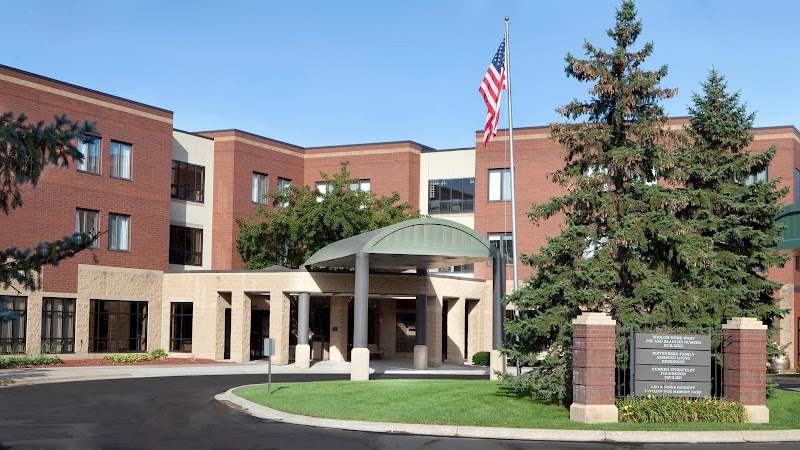
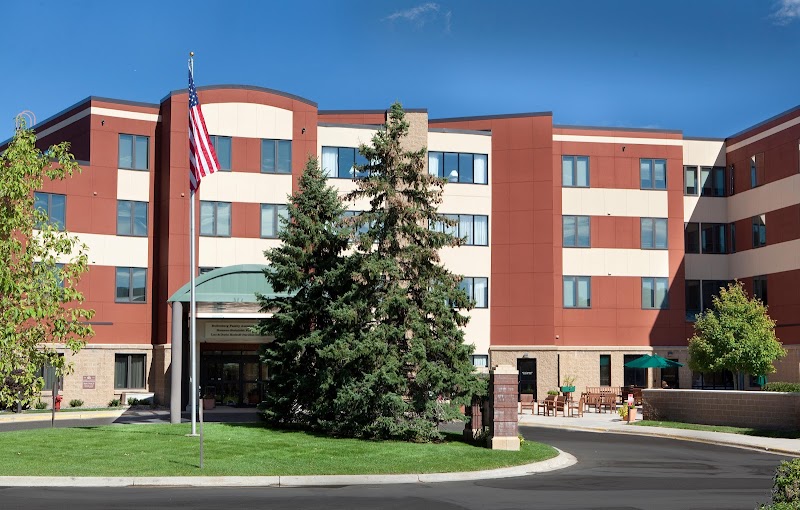


Sholom Home West

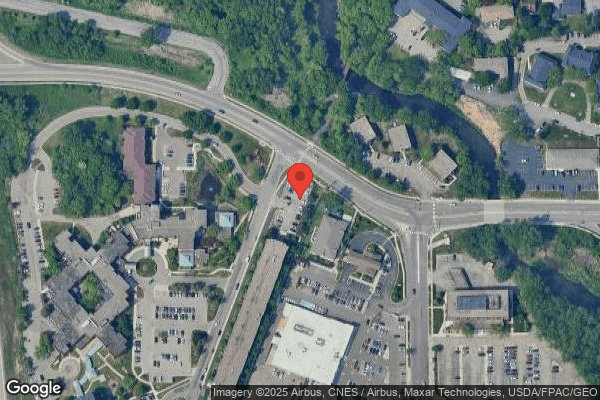
3620 PHILLIPS PARKWAY SOUTH, SAINT LOUIS PARK, MN 55426 (952) 935-6311
Non profit - Corporation 139 Beds Independent Data: November 2025
Trust Grade
80/100
#148 of 337 in MN
Last Inspection: January 2025

Within standard 12-15 month inspection cycle. Federal law requires annual inspections.

Overview

Sholom Home West has a Trust Grade of B+, which means it is above average and recommended for families looking for care. It ranks #148 out of 337 facilities in Minnesota, placing it in the top half, and #22 out of 53 in Hennepin County, indicating that there are limited local options that perform better. However, the facility's trend is worsening, with the number of issues found increasing from 2 in 2024 to 9 in 2025. Staffing is a strong point, with a 5/5 star rating and a low turnover rate of 20%, significantly better than the state average of 42%. On a positive note, the facility has no fines recorded, but there are specific concerns: residents were not informed about how to file grievances, and individual care conferences were not held frequently enough to address residents' needs. Additionally, residents were not given the opportunity to choose their own meals, which could affect their overall satisfaction.

Trust Score
B+
80/100
In Minnesota
#148/337
Top 43%
Safety Record
Low Risk
No red flags
Inspections
Getting Worse
2 → 9 violations
Staff Stability
✓ Good
20% annual turnover. Excellent stability, 28 points below Minnesota's 48% average. Staff who stay learn residents' needs.
Penalties
✓ Good
No fines on record. Clean compliance history, better than most Minnesota facilities.
Skilled Nurses
✓ Good
Each resident gets 81 minutes of Registered Nurse (RN) attention daily — more than 97% of Minnesota nursing homes. RNs are the most trained staff who catch health problems before they become serious.
Violations
⚠ Watch
17 deficiencies on record. Higher than average. Multiple issues found across inspections.
★★★★☆
4.0
Overall Rating
★★★★★
5.0
Staff Levels
★★★★☆
4.0
Care Quality
★★★☆☆
3.0
Inspection Score
Stable
2024: 2 issues
2025: 9 issues

The Good

  • 5-Star Staffing Rating · Excellent nurse staffing levels
  • 4-Star Quality Measures · Strong clinical quality outcomes
  • Low Staff Turnover (20%) · Staff stability means consistent care
  • Full Sprinkler Coverage · Fire safety systems throughout facility
  • No fines on record
  • Staff turnover is low (20%)

    28 points below Minnesota average of 48%

Facility shows strength in staffing levels, quality measures, staff retention, fire safety.

The Bad

No Significant Concerns Identified

This facility shows no red flags. Among Minnesota's 100 nursing homes, only 1% achieve this.

The Ugly 17 deficiencies on record

Mar 2025 1 deficiency
CONCERN (D) 📢 Someone Reported This

A family member, employee, or ombudsman was alarmed enough to file a formal complaint

Potential for Harm - no one hurt, but risky conditions existed

Deficiency F0919 (Tag F0919)

Could have caused harm · This affected 1 resident

**NOTE- TERMS IN BRACKETS HAVE BEEN EDITED TO PROTECT CONFIDENTIALITY** Based on observation, interview, and document review, the facility failed to provide a call light to one of three residents (R2)...

Read full inspector narrative →
**NOTE- TERMS IN BRACKETS HAVE BEEN EDITED TO PROTECT CONFIDENTIALITY** Based on observation, interview, and document review, the facility failed to provide a call light to one of three residents (R2) reviewed for access to call lights when R2 did not have a functioning call light for an unknown number of weeks. Findings Include: R2's Minimum Data Set (MDS) admission assessment dated [DATE], indicated R2 was admitted to the facility on [DATE]. The MDS indicated R2 was continent of bowel and bladder, and independent with toileting. R2's brief interview for mental status (BIMS) was 15 indicating intact cognition. The census report, undated, indicated R2 moved to room [ROOM NUMBER] on 3/7/24. R2's Quarterly Review MDS dated [DATE], indicated R2 was frequently incontinent of bowel and bladder. R2's Significant Change in Status MDS dated [DATE], indicated R2 required moderate assistance with toileting. R2's care plan indicated the call light was to be accessible and within reach whenever the resident was in his room. The facility was unable to provide call light log for R2's room for the last two weeks. The facility was unable to provide maintenance records for R2's call lights for the two weeks leading up to 3/12/25. During an observation on 3/12/25 at 9:30 a.m., R2 did not have a call light within reach. The head of the bed was flush to the wall containing the call light box. The call light box had space for two extension cords on the left and right side of the box. The outlet on the left side of the box had a corded call light inserted appropriately, and the call light was wrapped around his roommate's bed rail. The outlet on the right side of the box did not have a corded call light extending from it. During an observation on 3/12/25 at 2:00 p.m., the interim nurse manager was unable to locate R2's call light. During an interview on 3/12/24 at 9:30 a.m., R2 stated he had not had a call light for several months. R2 stated he had spoken to maintenance about this issue at an unknown time and was told they would have to cut an extra hole in the wall in order to give him a call light. R2 stated the unnamed maintenance employee told him they would not do this and did not offer him a new call light. R2 stated he has been using his roommate's call light since he was told this. R2 stated when he has an incontinent episode at night, he wakes his roommate up and has her press the call light in order to get help from nursing staff. During an interview on 3/12/25 at 12:55 p.m., registered nurse (RN)-A stated if there was an issue with a resident's call light, she would contact their maintenance team to have it fixed immediately. During an interview on 3/12/25 at 1:13 p.m., RN-B stated call lights need to be functioning and within reach of a resident in their room. RN-B stated if a call light is malfunctioning, she can submit a work order or call their maintenance staff. RN-B stated if maintenance is not able to immediately fix the issue, they provide the resident with a bell to contact nursing staff. During an interview on 3/12/25 at 1:41 p.m., RN-C stated if a resident's call light is broken staff should contact maintenance staff. RN-C stated a functioning call light should always be within reach. During an interview on 3/12/25 at 1:46 p.m., nursing assistant (NA)-A stated if a resident's call light is not working he would tell the nurse immediately to have it serviced. NA-A stated if a resident call light is missing, he woud report it to maintenance. NA-A stated a call light should be within reach of a resident. During an interview on 3/12/25 at 1:50 p.m., the interim nurse manager stated every resident gets a call light. The interim nurse manager stated if a call light is not working, they will call maintenance and get it serviced. The interim nurse manager stated they can either temporarily move the resident to a different room with a functioning call light, or give the resident a bell and implement regular rounding until the issue is resolved. The interim nurse manager stated R2 had not informed them there was an issue with his call light. The interim nurse manager stated she would submit a work order immediately. During an interview on 3/12/25 at 2:29 p.m., the interim nurse manager stated R2 has been supplied with a bell, and maintenance was in his room servicing the call light. On 3/12/25 at 3:38 p.m., the director of nursing (DON) stated when she entered R2's room, she only saw one cord coming from the call light box. The DON stated it is her expectation every resident has a functioning call light. During the exit conference on 3/12/25 at 4:10 p.m., the administrator stated R2's call light had been repaired. A facility policy titled Call light dated 5/2017, indicated every resident of the facility must be provided with a functioning accessible call light. The policy stated call lights are always left within reach of the resident. The policy stated call light issues must be reported to maintenance immediately.
Jan 2025 8 deficiencies
CONCERN (D) 📢 Someone Reported This

A family member, employee, or ombudsman was alarmed enough to file a formal complaint

Potential for Harm - no one hurt, but risky conditions existed

PASARR Coordination (Tag F0644)

Could have caused harm · This affected 1 resident

**NOTE- TERMS IN BRACKETS HAVE BEEN EDITED TO PROTECT CONFIDENTIALITY** Based on interview and document review the facility failed to complete a level II preadmission screening and resident review (PA...

Read full inspector narrative →
**NOTE- TERMS IN BRACKETS HAVE BEEN EDITED TO PROTECT CONFIDENTIALITY** Based on interview and document review the facility failed to complete a level II preadmission screening and resident review (PASARR) for 1 of 2 residents (R95) reviewed with a new mental illness diagnosis. Findings include: R95's facesheet printed on 1/8/25, indicated R95's original admission date was 12/16/22, and diagnoses at the time of admission included malnutrition, failure to thrive, anxiety, and repeated falls. Further review of the diagnosis listed on face sheet, indicated R95 was diagnosed with delusional disorders, major depressive disorder, and borderline personality disorder on 7/16/24. R95's significant change Minimum Data Set (MDS) assessment dated [DATE], indicated R95 had moderately impaired cognition, felt depressed half or more of the days and felt bad about himself nearly every day. R95's current physician orders printed 1/8/25, included risperidone 0.5mg tablet at bedtime for delusional disorders and citalopram 20mg tablet daily for psychosis. Record review of R95's PASARR screen completed on 8/31/23, indicated negative level 1 screening, level 2 screening not needed at time. Record review indicated R95 had new mental health diagnoses on 7/16/24 with no PASARR screen completed with the new diagnoses. During interview on 1/8/25 at 12:45 p.m., social services (SS)-C stated R95 did not have a PASARR completed at the time of new mental health diagnoses and was not sure who was supposed to complete that, but it should have been done. During interview on 1/8/25 at 12:49 p.m., administrator stated there was a gap in the system for having new PASARR screenings completed and the admissions team took care of making sure residents had a preadmission screening at the time of admission, but a process was lacking for ensuring a new one was completed with a new mental health diagnosis. The facility PASRR Screening policy dated 5/23/18, directed Sholom will comply with DHS regulations regarding screening and necessary updates for persons with developmental or intellectual disorders and those with mental illness. The policy further stated reasons people who have not previously been identified as needing Level II Resident Review includes the addition of or significant increase in antipsychotic or psychotropic medications.
CONCERN (D) 📢 Someone Reported This

A family member, employee, or ombudsman was alarmed enough to file a formal complaint

Potential for Harm - no one hurt, but risky conditions existed

Deficiency F0679 (Tag F0679)

Could have caused harm · This affected 1 resident

**NOTE- TERMS IN BRACKETS HAVE BEEN EDITED TO PROTECT CONFIDENTIALITY** Based on observation, interview and document review, the facility failed to ensure a resident's preferred activities for individ...

Read full inspector narrative →
**NOTE- TERMS IN BRACKETS HAVE BEEN EDITED TO PROTECT CONFIDENTIALITY** Based on observation, interview and document review, the facility failed to ensure a resident's preferred activities for individual entertainment were offered for 1 of 1 resident (R97) reviewed for activities. Findings include: R97's quarterly Minimum Data Set (MDS) assessment dated [DATE], indicated R74 was admitted on [DATE], preferred language was Spanish and needed/wanted an interpreter to communicate with a doctor or health care staff, moderate cognitive impairment, required partial/moderate assistance with toileting hygiene, upper body dressing, personal hygiene, and utilized a wheelchair, diagnoses included dementia, anxiety, and depression and no rejection of care. R97's annual MDS assessment dated [DATE], indicated it was somewhat important to participate in favorite activities, listen to music, and to go outside and get fresh air when the weather is good. R97's progress note dated 9/16/23 at 1:05 p.m., therapeutic recreation (TR)-A indicated R97 often fatigued/sleeping, pleasant and sometimes interested in snack being distributed, but prefers to stay close to his room/bed, isn't interested in group programming. R97's care plan dated 12/5/24, indicated R97 was able to self-ambulate, enjoys walking, visits from friends, going outside when weather is nice, weakness: confusion, language barrier (Spanish speaking), will invite or ask Spanish speaking TR (therapeutic recreation) to invite to programs of interest, will respect right to refuse programming, The record lacked documentation of activities R97 was offered, participated or refused. On 1/6/25 at 4:32 p.m., during an interview with R97 and the assistance of the Language line, R97 stated he spoke Spanish, and did not understand English. R97 was lying in bed with the television on in Spanish. R97 stated he did not understand the staff who did not speak Spanish. R97 stated he felt like a bird in a cage and stated the facility did not provide him activities, and just sits in his room all day and watched TV. R97 stated he wished there were activities to do and people to talk with. R97 stated he doesn't get to do activities often, because he speaks Spanish. On 1/7/25 at 10:00 a.m., licensed practical nurse (LPN)-C stated R97s spoke and understood only Spanish. LPN-C stated R97 did not attend activities. On 1/7/25 at 10:20 a.m., LPN-B stated TR staff were expected to offer and invite R97 to activities and was unaware if R97 attended activities. LPN-B stated the facility did not offer activities in Spanish and confirmed R97 spoke and understood only Spanish. On 1/7/25 at 11:11 a.m., TR-B known as the director of TR, stated an activity interest and preference was expected for all residents and confirmed prior to today (1/7/25), an individualized preference for activities was not completed for R97. TR-B confirmed there was not documentation R97 had refused or was offered activities. TR-B stated residents were assessed for their activity preferences quarterly, annually, and with significant changes. TR-B stated expectation of therapeutic recreation staff to communicate with R97 using the interpreter phone and offer R97 activities based off preferences. On 1/7/25 at 11:25 a.m., R97 was in bed sleeping. On 1/7/25 at 2:06 p.m., R97 was self propelling in wheelchair in the hallway and had a ice cream cup in his hand. On 1/7/25 at 11:35 a.m., TR-A and TR-C, stated the facility had planned activities for all residents. TR-C confirmed R97 was not asked daily to attend activities, and was not sure when the last time R97 was asked to attend an activity. TR-A and TR-C confirmed the facility did not have any activities offered in Spanish and stated a reason R97 may not attend activities could be because of the language barrier. TR-C confirmed activities were expected documented in the EMR and stated R97 had no activities documented or refused. TR-A and TR-C were not able to identify how R97's preferences were assessed for one-to-one visits given that she was known to not attend group activities or how individualized activities were being offered. On 1/7/25 at 2:42 p.m., social services (SS)-B, known as the director of social services, stated TR staff were expected to invite R97 to activities daily and would expect the facility to implement activities and programs specific to each resident and have Spanish speaking activities individualized for R97. On 1/7/25 at 3:53 p.m., the director of nursing (DON) stated TR staff were expected to offer activities to all residents daily and documenting refusals in the EMR. On 1/8/25 at 8:12 a.m., the administrator indicated she was unable to find documentation about R97's activities beyond the information on the MDS. The facility Life Enrichment Activities policy dated 10/18/22, indicated: Life Enrichment systems and programs are designed to serve the total person and incorporate ALL disciplines. Resident engagement is grounded in honoring the person and their individual purpose through all the wellness dimensions: spiritual, social, physical, intellectual, environmental, emotional and vocational. Meaningful activities are designed to promote life-skills, quality of life and to encourage involvement. Residents participate in self-care, structured recreational programming, and leisure activities. A member of the Recreation team completes a Resident Assessment by interviewing the resident, family or significant other regarding the residents leisure activities , cultural needs, values and choices. The assessor will seek to understand the residents past roles in order to incorporate them into the present daily life. Provide a variety of engaging resident programs designed to meet the interests of and support the physical, mental, and psychosocial well-being of each resident, encouraging both independence and interaction in the community Incorporate resident preferences into the calendar Identify based on assessment barriers or preferences related to group size variety based on resident needs provide resource for independent resident interests and hobbies incorporate referrals to the Interdisciplinary team (spiritual care, fitness, culinary, volunteers) Assist as assessed with development of calendar participation(daily, weekly and/or monthly) Identify individual program needs: rooms/set up/supplies/dietary & volunteer requests Encouraging resident participation Personal invites as appropriate
CONCERN (D) 📢 Someone Reported This

A family member, employee, or ombudsman was alarmed enough to file a formal complaint

Potential for Harm - no one hurt, but risky conditions existed

Pressure Ulcer Prevention (Tag F0686)

Could have caused harm · This affected 1 resident

**NOTE- TERMS IN BRACKETS HAVE BEEN EDITED TO PROTECT CONFIDENTIALITY** Based on observation, interview and document review the facility failed to provide timely repositioning for 1 of 1 resident (R58...

Read full inspector narrative →
**NOTE- TERMS IN BRACKETS HAVE BEEN EDITED TO PROTECT CONFIDENTIALITY** Based on observation, interview and document review the facility failed to provide timely repositioning for 1 of 1 resident (R58) who was dependent upon staff for repositioning and high risk for pressure ulcers. Findings include: R58's facesheet received 1/8/25, included diagnoses of dementia, aphasia (the ability to use or comprehend language is lost or impaired), diabetes mellitus, history of falling and chronic kidney disease. R58's significant change Minimum Data Set (MDS) assessment dated [DATE], indicated R58 had severely impaired cognition, and no behaviors. Activities of daily living (ADL's) included R58 uses a wheelchair and is dependent on staff for transfers, bed mobility and locomotion. R58 is able to feed self after setup. R58 has a an unhealed pressure injury that is unstageable with slough and or eschar (dead tissue that impedes healing of wounds) present. R58's Care Area Assessment indicated R58 has an unstageable pressure ulcer on right heel which is covered by slough. R58 has been identified as being at risk for pressure ulcers related to impaired mobility and bowel incontinence. R58 requires assistance with all ADL's. Skin is monitored with daily cares and weekly shower. Wound is improving. R58 has a pressure relieving cushion in his wheelchair and pressure relieving mattress on his bed. R58's Braden Scale for Predicting Pressure Sore Risk dated 10/30/24, had a score of 16 indicating R58 is at risk for skin breakdown. R58's care plan dated 1/6/25, indicated R58 was identified at risk for skin breakdown related to history of right hip and arm fracture, incontinence, and immobility. On 10/2/24, pressure area noted to right heel from hospital stay. Interventions included wound team to assess, apply house lotion as needed to dry skin areas, conduct a skin observation daily by nursing assistants (NA) and weekly by a nurse. Incontinence care every 2-3 hours and as needed. Pressure reducing mattress on bed, cushion in wheelchair, and staff assist of 2 to off load resident every 2 hours. R58 was identified as having an alternation in mobility related to history of right hip and arm fracture and the need for assistance with transfer and locomotion by wheelchair daily. R58 at risk for falls, and impaired skin integrity. Interventions included turn and reposition in bed every 2 hours and as needed with total assist of 2 staff. On observation 1/6/25 at 7:05 p.m., R58 was seated in his Broda chair (positioning wheelchair) in his room watching television. R58 had vascular boots on both lower legs and a cushion in his Broda chair. No air mattress was present on his bed. R58 only laughed when asked how he was doing. No verbal response was received other than that. On observation 1/7/25 at 2:22 p.m., R58 was sitting in his Broda chair in his room watching television. Vascular boots present on both lower legs and chair cushion present. On observation 1/7/25 at 4:15 p.m., R58 continued sitting in his Broda chair in his room watching television. Continuous observation was started at 1/8/25 at 7:11 a.m.: 7:11 a.m. - R58 was dressed for the day had on his vascular boots, was sitting in his Broda chair in room which was slanted back at 10 degrees and was watching television. 7:30 a.m. - registered nurse (RN)-E, and registered nurse (RN)-D completed wound care on R58's heel. Wound is open to air with vascular boots on. Measurements were completed 3.5 x 2.5 cm's with edges lifting and no drainage or redness present. Eschar present. Lotion was applied to both lower legs and feet and heels and vascular boots reapplied. There was no position changes completed on R58. 7:46 a.m. - Wound care completed as above and staff left the room. 7:56 a.m. - R58 remains seated in his Broda chair and no staff entered room. 8:13 a.m. - R58 remains seated in his Broda chair and no staff entered the room. 8:30 a.m. - RN-C entered room and administered insulin, and oral medications. No position changes completed. 8:41 a.m. - NA-B entered room and transported R58 to dining room for breakfast. Did not reposition R58. 8:53 a.m. - R58 remains in dining room waiting for his breakfast. 8:57 a.m. - R58 was served breakfast and fed himself after staff set up his meal. 9:07 a.m. - R58 remains in dining room eating. 9:28 a.m. - NA-B brought R58 back to his room in his Broda chair. Chair remains tipped back at 10 degrees. No position changes or incontinence pad check completed. 9:46 a.m. - No change in position. No staff in room. 9:56 a.m. - No change in position. No staff in room. 10:15 a.m., No change in position. No staff in room. On interview 1/8/25 at 10:23 a.m., NA-B stated R58 should be repositioned every 2-3 hours and he is due at 10:00 a.m. to be repositioned. NA-B confirmed there has been no position changes since putting R58 in his chair around 7:00 a.m. this morning. NA-B indicated she would get assistance to reposition him. On interview and observation 1/8/25 at 10:28 a.m., NA-B and NA-C entered R58's room and using a mechanical lift to transfer R58 to his bed. R58 was rolled side to side and incontinence pad was removed with scant amount of stool present. NA-B and NA-C indicated there is some redness present around rectal area extending outwards, but that is R58's normal. NA-B indicated the purple area on right buttock was a previous pressure ulcer that has heeled. Requested NA-B push on skin and blanchable areas were present on left buttock, with no blanching noted on right buttock. Red area extended up and down 2 inches from the rectal area and outwards approximately 3-4 inches each direction. R58 was positioned with head of bed at 30 degrees and pillow under lower legs. On interview 1/8/25 at 10:57 a.m., RN-D reviewed R58's NA care sheet and stated R58 should be repositioning every 2-3 hours and as needed. RN-D then reviewed R58's plan of care and stated the care plan directs repositioning every 2 hours so they are not matching. RN-D confirmed the care plan is what should be followed and R58 should be repositioned every 2 hours. On interview 1/8/25 at 12:56 p.m., the director of nursing (DON) stated she would expect the NA's to follow the care plan and reposition R58 every 2 hours. The facility Skin Integrity Management policy last updated 4/2/21, included: Identification of Risk: The first step in prevention of pressure ulcer/ injuries is the identification of the resident at risk for developing pressure ulcer/ injuries (any skin impairment caused by pressure i.e. friction, shearing, direct pressure, etc.). This is followed by implementation of appropriate individualized interventions and monitoring for the effectiveness of interventions. Comprehensive Skin Risk Observation: Risk factors and potential cause(s) will be reviewed, addressed in the analysis and interventions implemented. Examples of risk factors include but are not limited to: Impaired/decreased mobility and decreased functional ability. Based upon the findings of the Comprehensive Skin Risk Observation which includes the Braden Assessment, the consideration of current interventions and resident preferences; a comprehensive analysis will be completed to guide the care plan process. Changes and implementation of interventions will be documented in the care plan. Establish an individualized turning and repositioning schedule if the resident is immobile.
CONCERN (D) 📢 Someone Reported This

A family member, employee, or ombudsman was alarmed enough to file a formal complaint

Potential for Harm - no one hurt, but risky conditions existed

Infection Control (Tag F0880)

Could have caused harm · This affected 1 resident

Based on observation, interview and document review, the facility failed to follow Centers for Disease Control (CDC) guidelines by appropriately implementing measures to prevent the spread of infectio...

Read full inspector narrative →
Based on observation, interview and document review, the facility failed to follow Centers for Disease Control (CDC) guidelines by appropriately implementing measures to prevent the spread of infection when the facility failed to ensure personal protective equipment (PPE) was discarded prior to leaving resident rooms (R19 and R1), and failed to follow enhanced barrier precautions (EBP) for 1 of 1 resident (R58) who had an indwelling device present. Findings include: R41's facesheet received 1/7/25, included diagnoses including chronic kidney disease, diabetes mellitus, and dementia. A Event Report for R41 for infection control included a start date of 1/3/25 at 9:09 a.m., indicating on 1/2/25 at 10:09 p.m., R41 had 3 loose stools, poor appetite and was placed on isolation with testing completed for RSV (respiratory syncytial virus) and influenza. R41 was negative for Covid-19. A note dated 1/4/25 at 10:36 p.m., indicated R41 remained in isolation and R41 tested positive for Influenza type A. R1's Resident Face sheet received 1/7/25, included diagnoses of dementia, type 2 diabetes mellitus, and paranoid schizophrenia. R1's progress note dated 1/6/25, included R1 had an emesis and was placed in transmission based precautions (TBP) with Covid-19 test negative and RSV and Influenza tests completed and awaiting results. During observation and interview on 1/6/25 at 12:45 p.m., R19's door was closed with a sign that indicated enhanced respiratory precautions. A stop sign was present that directed please see nurse before you enter the room. PPE cart was present outside the door and a garbage can that had discarded gowns, gloves and masks was outside of the room. R1, 2 doors away from R41's room also had a closed door with a stop sign directing Stop, please remain in your room and an enhanced respiratory precautions sign on the door. PPE was present and a trash bin outside of the room with discarded gowns, gloves and masks. Licensed practice nurse (LPN)-A indicated R19 was diagnosed with Influenza A a few days ago and R1 had an emesis this morning and has been tested for Influenza A, Covid-19 and RSV so both are on isolation currently. On observation 1/7/25 at 9:23 a.m., nursing assistant (NA)-A donned gown, gloves, N95 mask and face shield (PPE) and entered R41's room. Upon exit of the room NA-A was wearing the same PPE she entered room in and doffed her PPE and discarded into wastebasket in hallway next to R41's room. NA-A then donned PPE and entered R1's room and upon exit continued to wear PPE donned prior to entering the room. NA-A doffed her gown, gloves, face mask and face shield after exiting the room and disposed of in garbage can outside of R1's room. On observation 1/8/25 at 7:05 a.m., R1 and R41's garbage cans were no longer outside of their rooms. PPE remained present outside the rooms. On interview 1/8/25 at 10:17 a.m., NA-A indicated she doffs wherever the garbage cans are located. NA-A stated yesterday morning they were outside of the rooms but have since been moved to inside the rooms. On interview 1/7/25 at 3:36 p.m., registered nurse (RN)-B, also identified as infection preventionist and the director of nursing stated garbage cans were expected to be inside the room for EBP and isolation rooms and staff are expected to remove PPE prior to exiting the room. R58's Resident Face Sheet, received on 1/8/25, included diagnoses of dementia, paranoid schizophrenia, type 2 diabetes mellitus, and benign prostatic hyperplasia (non cancerous enlarged prostate) with lower urinary tract symptoms. R58's plan of care last edited 12/13/24, included resident requires enhanced barrier due to indwelling medical device; urinary catheter. Interventions included a sign on residents door to alert staff and visitors regarding EBP and follow CDC recommendations wearing PPE with high-contact resident care activities with gloves and gown to be worn prior to the high contact care activity. On observation and interview 1/8/25 at 8:30 a.m., R58 had an EBP sign outside of his room, along with a cart with PPE present. Registered nurse (RN)-C entered R58's room wearing gloves but did not wear a gown. RN-C checked R58's blood sugar and administered insulin in R58's abdomen, discarded her gloves and performed hand hygiene. R58 then gave oral medications mixed in pudding via a spoon to R58 without gloves on. RN-C then exited the room and performed hand hygiene. RN-C indicated they gown if giving personal cares like bathing, toileting, but did not think it was required to gown for medication administration that was completed. On observation and interview 1/8/25 at 10:45 a.m., NA-B and NA-C entered R58's room with a lift after completing hand hygiene and donning gloves only. The lift harness was placed behind and under R58's legs and R58 was placed in his bed. R58 was rolled side to side with pad changed with scant amount of old stool present. Wipes were used to clean R58's rectal area and new pad was placed. R58 was positioned in his bed with pillow under his lower legs and head of bed elevated at 30 degrees. NA-B and NA-C removed gloves and completed hand hygiene upon exit. NA-B stated they only wear gowns when doing catheter or wound care. NA-B stated gowns are not required for type of care provided and NA-C agreed. On interview 1/8/25 at 10:57 a.m., RN-D, also identified as interim care manager, stated she would expect staff to gown and glove with any direct patient care if the resident is on EBP. On interview 1/8/25 at 1:45 p.m., the DON stated staff are expected to gown and glove for EBP patients when providing high contact direct patient care. The facility Isolation - Categories of Transmission-Based Precautions policy last updated 7/12/22, included: - Enhanced barrier precautions are an infection control intervention designed to reduce transmission of multidrug- resistant organisms (MDROs) in the facility. Enhanced barrier precautions involve gown and glove use during high-contact resident care activities for resident known to be colonized or infected with a MDRO as well as those at increased risk of MDRO acquisition (i.e. residents with wounds or indwelling medical devices - Enhanced barrier precautions will be used for residents with indwelling medical devices or wounds who do not otherwise meet the criteria for contact precautions, even if they have no history of MDRO colonization or infection and regardless of whether others in the facility are known to have MDRO colonization. - High-contact resident care activities include: · Dressing · Bathing/ showering · Transferring · Providing hygiene: i.e. brushing teeth, combing hair, and shaving · Changing linens · Changing briefs or assisting with toileting · Device care or use: any device fully embedded in the body without components that communicate with the outside i.e. central line, urinary catheter, nephrostomy tubes, feeding tube, tracheostomy/ ventilator. Pacemakers would not be considered an indication for enhanced barrier precautions · Wound care: any skin opening requiring a dressing - Contact Precautions: Contact Precautions may be implemented for residents known or suspected to be infected with microorganisms that can be transmitted by direct contact with the resident or indirect contact with environmental surfaces or resident-care items in the resident ' s environment. Staff and visitors will wear gloves when entering the room. Gloves will be removed and hand hygiene performed before leaving the room. Staff and visitors will wear a disposable gown upon entering the room and remove before leaving the room and avoid touching potentially contaminated surfaces with clothing after gown is removed.
CONCERN (D) 📢 Someone Reported This

A family member, employee, or ombudsman was alarmed enough to file a formal complaint

Potential for Harm - no one hurt, but risky conditions existed

Deficiency F0883 (Tag F0883)

Could have caused harm · This affected 1 resident

**NOTE- TERMS IN BRACKETS HAVE BEEN EDITED TO PROTECT CONFIDENTIALITY** Based on interview and document review, the facility failed to ensure 3 of 5 residents (R24, R25, and R124) received pneumococca...

Read full inspector narrative →
**NOTE- TERMS IN BRACKETS HAVE BEEN EDITED TO PROTECT CONFIDENTIALITY** Based on interview and document review, the facility failed to ensure 3 of 5 residents (R24, R25, and R124) received pneumococcal vaccinations based on shared clinical decision-making in accordance with the Center for Disease Control (CDC) recommendations reviewed for immunizations. Findings include: Review of the current CDC recommendations 4/2024, revealed The CDC identified Adults [AGE] years of age or older received the (PPSV23) or (PCV13) at any age and who have not received the Pneumo 20-valent conjugate Vaccine (PCV20) should receive a dose of the PCV20 at least one year after the most recent PPSV23 or PCV13 vaccine. In addition, the CDC identified adults 65 and older who had previously received both PCV13 and PPSV23 at age [AGE] and older, based on shared clinical decision-making with the patient and the provider one dose of PCV20 at least five years after the last pneumococcal vaccine dose. Review of R24's facesheet identified R24, age [AGE] was admitted to the facility on [DATE]. Review of R24's Minnesota Immunization Information Connection (MIIC) record undated, identified R24 received the PPSV23 on 12/17/2004 and 11/18/2019, and received the PCV13 on 12/15/2014. R24's medical record lacked documentation R24 had been offered or received the PCV20 based on shared clinical decision-making. Review of R25's facesheet identified R25, age [AGE] was admitted to the facility on [DATE]. Review of R25's MIIC record undated, identified R25 received the PCV13 on 4/11/15. R25's medical record lacked documentation R25 had been offered or received the PCV20 based on shared clinical decision-making. Review of R124's facesheet identified R124, age [AGE] was admitted to the facility on [DATE]. Review of R124's MIIC record undated, identified R124 received the PCV13 on 11/24/15. R124's medical record lacked documentation R124 had been offered or received the PCV20 based on shared clinical decision-making. During an interview on 1/7/25 at 4:14 p.m., infection preventionist (IP) confirmed the above findings and indicated the facility follows the CDC guidelines for pneumococcal immunizations. Director of nursing (DON) stated her expectations were that residents receive immunizations following the CDC guidelines. The facility Pneumococcal Immunizations, Adult policy dated 5/16/24, the facility will reduce the incident of pneumococcal disease by offering and providing pneumococcal vaccinations to residents. Residents will be offered the pneumococcal vaccinations and administered, according to the MDH and CDC recommended interval for the vaccines, unless contraindicated, already immunized, or the resident and/or responsible party declines the vaccine.
CONCERN (E) 📢 Someone Reported This

A family member, employee, or ombudsman was alarmed enough to file a formal complaint

Potential for Harm - no one hurt, but risky conditions existed

Grievances (Tag F0585)

Could have caused harm · This affected multiple residents

Based on observation, interview and document review, the facility failed to ensure grievance forms and procedures were posted in prominent locations throughout the facility for residents and resident ...

Read full inspector narrative →
Based on observation, interview and document review, the facility failed to ensure grievance forms and procedures were posted in prominent locations throughout the facility for residents and resident representatives to file grievances, and anonymously if desired for 4 of 4 residents (R26, R35, R102 and R104) reviewed for grievances. Findings include: On 1/7/25 at 1:37 p.m., a resident council meeting was held with four residents which included R26 R26, R35, R102 and R104. During the resident council meeting, all four residents indicated they were not aware how to file a grievance form. R35 stated she thought there was a form at the front door that could be filled out and turned into a nurse. R35 further stated she did not think the form could be filled out without the help of a nurse. During an observation on 1/7/25 at 4:36 p.m., the 340 wing had a slot for grievance forms but no forms were present. During an observation/Interview on 1/7/25 at 4:43 p.m., registered nurse (RN)-F stated grievance forms are not kept on the 340 wing. RN-F further stated the forms were down stairs and residents could ask for them if they wanted to fill them out. During an interview on 1/8/25 at 8:29 a.m., guest services (GS) stated residents could grab a grievance form (concern form) from the box on the first floor by the guest services desk or they could ask a nurse to grab one for them. GS further stated when the form was filled out the resident could give the grievance form to a nurse to give to social services. GS revealed forms have always been given to her to give to social services. GS states puts them in the social services directors mail box. During an interview on 1/8/25 at 11:45 a.m., social services director (SSD) indicated grievance forms are put into her mailbox or handed to her directly after they are filled out. SSD further indicated a resident would need to hand the paper copy of the grievance form to someone as there was no box or any other additional place the form could be placed anonymously. SSD stated nurses could also take the form and fill it out online on the facilities intranet. SSD further stated online forms were not accessible to residents and/or family representatives. During an interview on 1/8/25 at 12:35 p.m., administrator indicated residents would give the paper grievance form to a nursing staff or social worker. Administrator further indicated a form could be left in the dining room or on the nurses station but there were no boxes for the grievance forms to be submitted anonymously. Review of facility form titled Concern Form, dated 6/22, states when complete, please return this form to Guest Services for Director of Social Services. The facility Grievance policy updated 4/17, lacked documentation grievances could be filed anonymously.
CONCERN (E) 📢 Someone Reported This

A family member, employee, or ombudsman was alarmed enough to file a formal complaint

Potential for Harm - no one hurt, but risky conditions existed

Deficiency F0657 (Tag F0657)

Could have caused harm · This affected multiple residents

**NOTE- TERMS IN BRACKETS HAVE BEEN EDITED TO PROTECT CONFIDENTIALITY** R6's quarterly MDS assessment dated [DATE], indicated R6 had moderately impaired cognition, behavior not directed towards others...

Read full inspector narrative →
**NOTE- TERMS IN BRACKETS HAVE BEEN EDITED TO PROTECT CONFIDENTIALITY** R6's quarterly MDS assessment dated [DATE], indicated R6 had moderately impaired cognition, behavior not directed towards others, required substantial assistance with eating, and substantial assistance with personal hygiene, utilized a wheelchair, diagnoses included renal (kidney) failure, arthritis, and malnutrition. R6's care plan edited 1/2/25, indicated nutrition concern related to inadequate oral intake related to decreased appetite as evidenced by non-significant weight loss, history of behaviors including yelling out rather than using call light, and frequent requests for therapy services. During interview on 1/6/25 at 12:34 p.m., R6 stated she had not had a recent care conference to make her needs known and could not recall when her last care conference was held. Record review of facility electronic health record (EHR) indicated R6 had a quarterly care conference on 3/8/24 and did not have another care conference until 10/9/24. During interview on 1/8/25 at 12:24 p.m., social services (SS)-C stated she missed R6's care conference around 5/24 or 6/24, and further stated it must have been a busy month. SS-C stated she should have had a care conference for R6 every 90 days. R74's quarterly MDS assessment dated [DATE], indicated R74 had severe cognitive impairment, required substantial/maximal assistance with activities of daily living (ADL's) and utilized a wheelchair, diagnoses included heart failure, diabetes, depression, and end stage kidney disease. R74's electronic medical record (EMR) indicated the most current care conference was documented on 8/9/24. On 1/6/25 at 7:12 p.m., family member (FM)-A stated R74 had only one care conference she had been aware of, and stated she called social services (SS)-A about four or five times for the last two weeks and left voicemail's asking for a care conference and had not received a phone call back. On 1/7/25 at 9:23 a.m., SS-A stated it was her role to schedule resident care conferences, and care conferences were expected at admission, quarterly and if a resident had a change in condition. SS-A stated she would reach out to the resident's family (representative) via phone call and email with a date and time for the care conference and ensure staff and family were aware. SS-A stated R74's last care conference was 8/9/24, and she placed a phone call to R74's daughter on 11/19/24 to offer a care conference and had not received a call back. SS-A confirmed R74 did not have a care conference quarterly as expected. On 1/7/25 at 10:03 a.m., licensed practical nurse (LPN)-B, known as the nurse manager for second floor north, confirmed R74 had not had a care conference since the documented care conference on 8/9/24. RN-A further stated regular care conferences were important to keep families up to date on how the resident was doing. R97's quarterly MDS assessment dated [DATE], indicated R74 was admitted on [DATE], preferred language was Spanish and needed/wanted an interpreter to communicate with a doctor or health care staff, moderate cognitive impairment, required partial/moderate assistance with toileting hygiene, upper body dressing, personal hygiene, and utilized a wheelchair, diagnoses included dementia, anxiety, and depression. On 1/6/25 at 4:32 p.m., during a interview using a Spanish interpreter (via telephone) R74 stated he does not have care conferences at the facility. On 1/6/25 at 9:35 a.m., SS-A stated she met with R74 frequently and used an interpreter phone and stated she had informal care conferences with R74 and stated she had not had a formal care conference with R74. SS-A stated R74's last documented care conference was 6/8/24 and stated R74 was expected to have had a care conference after that. SS-A stated residents were expected to have care conferences every 90 days and with significant changes. On 1/7/25 at 2:48 p.m., SS-B, known as the director of social services, stated residents were expected care conferences every 90 days, with a significant change in condition, and if requested. SS-B stated residents and families were expected to be invited to the care conferences. SS-B stated she was not aware R74 and R97's care conferences had not been completed every 90 days and expected the care conferences completed and documented in the EMR. On 1/7/25 at 3:28 p.m., the administrator confirmed via email R74 did not have formally documented care conference notes On 1/7/25 at 3:53 p.m., the DON stated the social services arranged care conferences and residents were expected to have a care conference every 90 days and stated she was not aware care conferences were not completed for R74 and R97 every 90 days. Facility policy on Care Conferences was requested and not received. Based on interview and document review, the facility failed to hold care conference meetings with the resident and/or their representative to allow the resident and/or representative the opportunity to review and participate in the revision of the care plan for 5 of 5 residents (R14, R105, R6, R74,R97) reviewed for care planning. Findings include: R14's facesheet printed on 1/8/25, included diagnoses of Alzheimer's disease, dementia, depression, chronic kidney disease, diabetes, and congestive heart failure (heart doesn't pump as it should). R14's annual Minimum Data Set (MDS) assessment dated [DATE], indicated R14 was cognitively intact, had clear speech, could understand and be understood. R14 was independent with activities of daily living (ADL) and with ambulation. R14's care plan dated 4/14/23, indicated R14's wishes would be respected, and her wishes would be reviewed at quarterly care conferences. Care plan dated 8/2/24, indicated R14's code status would be reviewed with each care conference. During an interview on 1/7/25 at 2:53 p.m., licensed practical nurse (LPN)-B who was also a nurse manager, stated R14's pain was discussed at her care conference today, as was the condition of her room (cluttered). Upon review of care conference notes in the electronic medical record (EMR), R14's last documented care conference was on 7/25/23 - 18 months prior. During an interview on 1/7/25 at 4:10 p.m., social services (SS)-A looked at R14's care conference notes in the EMR and verified that prior to today's care conference (which had not been documented yet), R14's last care conference had been on 7/25/23. SS-A could not explain why this was, as she had only been employed in her role since August 2024. SS-A was aware prior to her, there had been social workers working in a temporary capacity. During an interview on 1/8/25 at 9:48 a.m., the director of nursing (DON) stated she expected care conferences to be conducted every 90 days (or quarterly). The DON reviewed R14's care conference documentation in the EMR and verified the last documented care conference for R14 was on 7/25/23. The DON was not aware until yesterday (1/7/25), when nurse managers brought it to her attention, that care conferences had not been conducted timely. The DON stated social workers were responsible for scheduling, facilitating and documenting resident care conferences. R105's facesheet printed on 1/8/25, included hemiplegia (weakness or paralysis on one side of the body) following cerebral infarction (stroke), depression and anxiety. R105's quarterly MDS assessment dated [DATE], indicated R105 was cognitively intact, had clear speech, could understand and be understood. R105 needed assistance with ADL's including walking. R105's care plan dated 1/10/24, indicated R105's wishes would be respected, and his wishes reviewed at quarterly care conferences. Care plan dated 6/25/24, indicated R105's code status would be reviewed with each care conference. During an interview on 1/6/25 at 6:46 p.m., R105 mentioned discussing provider visits at a care conference, but could not recall the approximate date. Review of care conference notes in the EMR indicated R105's last care conference had been documented on 5/28/24 - eight months prior. During an interview on 1/7/25 at 4:08 p.m., SS-A stated she just documented R105's care conference note from 9/19/24, today. SS-A said she had been confused about where the care conference note should be documented. During an interview on 1/8/25 at 9:46 a.m., the DON was informed of R105's last two care conference dates - 5/28/24, and 9/19/24, with the notes for 9/19/24, having been documented today. The DON reviewed R105's care conference notes in the EMR and verified the dates as reported. The DON that late entries for documentation should be identified as such. (The 9/19/24, care conference note documented on 1/8/25, did not indicate it was a late entry). The DON stated she expected care conferences to be conducted according to regulation. The DON stated she would discuss with SS-A and report back. During an interview on 1/8/25 at 12:56 p.m., the DON stated she spoke to SS-A and no rationale had been determined as to why care conferences for R14 and R105 had not been conducted.
CONCERN (E) 📢 Someone Reported This

A family member, employee, or ombudsman was alarmed enough to file a formal complaint

Potential for Harm - no one hurt, but risky conditions existed

Menu Adequacy (Tag F0803)

Could have caused harm · This affected multiple residents

**NOTE- TERMS IN BRACKETS HAVE BEEN EDITED TO PROTECT CONFIDENTIALITY** Based on interview, observation and document review, the facility failed to provide a process by which residents could make thei...

Read full inspector narrative →
**NOTE- TERMS IN BRACKETS HAVE BEEN EDITED TO PROTECT CONFIDENTIALITY** Based on interview, observation and document review, the facility failed to provide a process by which residents could make their own food selections for meals for 6 of 6 residents (R241, R73, R6, R23, R104, R35) reviewed for food. Findings include: R241's facesheet printed on 1/8/25, included diagnoses of chronic kidney disease and congestive heart failure (heart doesn't pump as it should). R241's admission Minimum Data Set (MDS) assessment dated [DATE], indicated R241 was cognitively intact, had clear speech, could understand and be understood. R241 required supervision for most activities of daily living (ADL) and could eat independently after set-up help. R241's orders dated 12/17/24, indicated a heart healthy diet. R241's care plan dated 12/20/24, indicated R241's preferences would be honored during her stay. Staff responsible for this included nursing and nutritional services. During an interview on 1/6/25 at 3:49 p.m., R241 stated she had been at the facility since 12/17/24, and had not been given a choice of what to eat, adding, if you get started on something, like oatmeal, you get it every day. R241 presented several diet slips and stated, this is what you get -- no options. No weekly menu or alternative menu was visible in R241's room nor was she aware of them. During an interview on 1/7/25 at 9:39 a.m., in the dining room, nursing assistant (NA)-D stated when a resident was admitted , a dietician met with him/her to find out likes/dislikes, and each resident had a diet ordered by a doctor. NA-D presented an electronically generated diet slip with a resident's name, diet order and a list of food items for that meal. NA-D stated if a resident didn't like what they were given, they could tell staff at the time of meal service and request something else. NA-D stated residents did not get a menu ahead of time to make their own food selections. From a window ledge (window looking out into the nurse's station) in the dining room, NA-D obtained a paper week-at-a-glance menu for the current week. Listed for each meal, three times a day, was a main entree and below that another meal option. NA-D also presented a paper Bistro Menu indicating alterative food items for lunch and dinner. NA-D stated she did not know if residents received a copy of either menu. Neither was posted or visible in the dining room for residents. During an interview on 1/7/25 at 10:46 a.m., in the dining room, dietary aide, (DA)-A stated after a meal tray was placed in front of a resident in the dining room, he/she could tell a NA if he/she did not like or want that meal. DA-A stated then the NA would bring the tray back to her, she would discard the food, and obtain what the resident wanted. When asked about an alternative menu, DA-A went to binders on the steam table to look for one and did not find one. DA-A acknowledged there was not a weekly menu or an alternate menu posted in the dining room for residents to see. DA-A stated residents were supposed to have menus in their room and thought her manager took them around to resident rooms. During an interview on 1/7/25 at 1:51 p.m., at the resident council meeting, R104 stated whatever was on their diet slip was what they received at meal time; they did not get an opportunity to select something different ahead of time. R104 stated often, residents didn't even know what the meal was as they did not receive a menu prior to meal services. R104 stated the foods we like and dislike were noted on their diet slips, but that was the extent of their food choices. R104 was not aware of an alternative menu. R35 stated she had heard of an alternate menu but didn't know where to find it. Further, R35 stated it was like scratching off a lottery ticket when staff lifted the cover off their plate of food in the dining room --- meaning the meal was a surprise to them. -- R104: quarterly MDS dated [DATE], indicated intact cognition, clear speech, could understand and be understood, and eat independently after set up help. -- R35: quarterly MDS dated [DATE], indicated intact cognition, clear speech, could understand and be understood, and eat independently after set up help. R73's significant change MDS assessment dated [DATE], indicated R73 had moderately impaired cognition, no behaviors, required setup or clean-up assistance with eating, and substantial assistance with personal hygiene, utilized a wheelchair, diagnoses included non-Alzheimer's dementia, depression, R73's care plan edited 1/8/24, indicated potential for change in nutrition status related to the need for a therapeutic diet and a BMI (body mass index) that classifies as obese likes egg salad/tuna salad, please offer alternatives at meals if I dislike the daily menu offerings, likes egg salad, tuna salad, PBJ sandwiches on wheat, like to receive less fish at lunch, no rice, no soups with rice/pasta, no orange juice, no bread/rolls with lunch and dinner, provided small portion of starch at lunch and dinner meals would like a salad at lunch and dinner, to receive Mrs Dash and pepper packets with meal, dislike broccoli. On 1/7/25 at 9:08 a.m., R73 stated he did not get a choice of meals and stated he never knew what he was going to eat. R73 stated the facility brings him his meal to his room and it was always a surprise and was not given options and was not aware of menu. On 1/7/25 at 9:46 a.m., NA-E stated residents were not given a choice of food choices, the residents were served food from a generated meal ticked. NA-E stated if the resident did not like what was served the staff would have to call the main kitchen and request another option. NA-E stated there were snacks on the floor however there were not main food options. NA-E stated the menu was expected posted outside the dining room, NA-E was observed outside the second floor north dining room and confirmed a menu was not posted. NA-E stated the residents had lots of complaints regarding food and not liking what was served to them. On 1/7/25 at 10:13 a.m.,, licensed practical nurse (LPN)-A, stated upon admission the dietician assessed residents for preferences, and stated the preferences are entered into the computer and the resident was served food based off those preferences. LPN-A stated there residents were not offered daily choices. R6's quarterly MDS assessment dated [DATE], indicated R6 had moderately impaired cognition, behavior not directed towards others, required substantial assistance with eating, and substantial assistance with personal hygiene, utilized a wheelchair, diagnoses included renal (kidney) failure, arthritis, and malnutrition. R6's care plan edited 1/2/25, indicated nutrition concern related to inadequate oral intake related to decreased appetite as evidenced by non-significant weight loss. During interview on 1/7/25 at 9:15 a.m., R6 stated staff always brought her tray and dropped it off, she didn't get a choice and would have liked to have some choices. She further stated nobody came to ask what she wanted for meals and she didn't know where she would get a menu. R23's annual MDS assessment date 12/26/24, indicated R23 had intact cognition, no behaviors, required setup assistance for eating, substantial assistance for personal hygiene, utilized a wheelchair, diagnoses included seizure disorder and depression. R23's care plan printed 1/8/25, indicated R23 would maintain her current weight, consume 50% of meals, and will remain able to make needs known through next review date. During interview on 1/8/25 at 10:04 a.m., R23 stated she did not get to choose her meals and would have liked to have had choices. R23 further stated she used to be able to make choices by selecting on a piece of paper but had not done that for over a year. R23 stated she would have liked to choose her meal ahead of time. On 1/8/25 at 10:37 a.m., an interview was conducted with three members of the survey team, the administrator, director of nursing (DON), registered dietician (RD-E), dining services director (DSD)-C, and chef (C)-D regarding food service concerns. C-D was asked to describe the process by which residents made food selections for each meal. C-D stated on admission, the dietician met with residents to determine preferences, likes and dislikes. RD-E stated this information was then entered into meal-tracker software. The administrator stated it weeded out a resident's dislikes and automatically made food substitutions. In addition, RD-E stated residents were asked upon admission if they wanted a weekly menu and bistro menu (alternate menu). During this interview, the group did not describe a process which allowed residents to have a choice in what foods they were served at meals. DSD-C stated menus should be posted in each dining area. The group was informed menus had not been visible in dining rooms or resident rooms, that residents were not aware of an alternate menu, and felt they had no choice in what foods were served to them. Based on interviews from residents and staff, the group was informed of the meal process described to the survey team: a resident at the table in the dining room would receive a plate of food. That would be the first time residents became aware of what their meal would be. At that point, if a resident didn't like that meal, or didn't feel up to eating that meal, he/she would inform staff in the dining room who would remove the plate of food, discard it and either get something else from the steam table or the kitchen. The group was asked if that was accurate, and C-D stated it was. DSD-C stated residents did not select food prior to meal service but were instead given what was electronically printed on their diet slip based upon the menu for that meal, their likes and dislikes. If they wanted something else, dietary staff could make something different for them at that point. DSD-C stated they could not make different meals for that many residents -- they would be short order cooks, and there wasn't time for that - so it worked better to give residents what was on the menu first, then if a resident didn't want that, something else would be made for him/her. A policy on food preferences, how residents select their food/meals, alternate menu was requested. Facility Dining and Food Preferences policy with revised date 10/2022, was received. The policy indicated individual dining, food and beverage preferences were identified for all residents. Dining services director, or designee would interview the resident or resident representative to complete a food preference interview within 72 hours of admission. The purpose would be to identify preferences for dining location, meal times, food and beverage preferences. An individual tray assembly ticket would identify all food items appropriate for the resident based on diet order, allergies, intolerances, and preferences. Upon meal services, any resident with expressed or observed refusal of food would be offered an alternate selection of comparable nutrition value.
Dec 2024 1 deficiency
CONCERN (D) 📢 Someone Reported This

A family member, employee, or ombudsman was alarmed enough to file a formal complaint

Potential for Harm - no one hurt, but risky conditions existed

Notification of Changes (Tag F0580)

Could have caused harm · This affected 1 resident

**NOTE- TERMS IN BRACKETS HAVE BEEN EDITED TO PROTECT CONFIDENTIALITY** Based on interview and document review, the facility failed to provide timely notification for change in condition to the physic...

Read full inspector narrative →
**NOTE- TERMS IN BRACKETS HAVE BEEN EDITED TO PROTECT CONFIDENTIALITY** Based on interview and document review, the facility failed to provide timely notification for change in condition to the physician for 1 of 3 residents (R1) reviewed for change in condition. Findings include: R1's annual Minimum Data Set (MDS) dated [DATE] indicated R1 had intact cognition, and a diagnosis of congestive heart failure (CHF, when the heart is unable to pump enough blood to provide the body with the blood and oxygen it needs). R1's Physician Orders dated 11/22/24 included: Daily weights with special instructions: Call for weight gain three pounds or greater in 24 hours or five pounds in one week. Furosemide (diuretic) tablet 40 milligrams (mg) once a day. R1's care plan dated 11/27/24, indicated R1 had atherosclerotic heart disease with staff interventions to assess and monitor R1's weight, and to notify the provider immediately if R1 had weight increase of 3 pounds (Ibs) per day or five pounds per week. On 11/22/24 at p.m., R1's electronic medical record (EMR) indicated R1's weight was 249 Ibs at admission. On 11/27/24 at 11:43 a.m., R1's EMR indicated R1's weight was 253 Ibs (a weight gain of 4 lbs in five days). On 11/27/24 at 11:26 a.m. a progress note indicated R1 reported she felt her weight was trending back up again as her ankles were getting puffy. The note also indicated R1 had orders in place for daily weights, and to notify the provider if R1 experienced a weight gain of three pounds or greater a day, or five pounds in one week. On 11/28/24 at 6 p.m., R1's EMR indicated R1's weight was 265 Ibs (a weight gain of 16 lbs in six days). On 11/28/24 at 11:33 a.m. lacked evidence of notifying the provider of R1's 16 lb weight increase. On 11/29/24 at 5:08 p.m. a progress note indicated R1 was sent to the hospital for congestive heart failure (CHF) exacerbation. On 12/5/24 at 1:45 p.m., R1 stated she was at the facility for one week and gained 21 Ibs. She was not breathing well and had swelling in her lower legs. On 11/29/24, she talked with her provider and asked to be sent to the hospital. When she arrived at the hospital, her weight was 269 Ibs. On 12/5/24 at 2:20 p.m., licensed practical nurse (LPN)-A stated she expected nurses to assess and monitor for edema, shortness of breath (SOB), and weight gain for patients diagnosed with congestive heart failure (CHF), and notify the provider if there was a change in condition. LPN-A stated she could not find any documentation about R1's weight increase being reported to the provider. On 12/5/24 at 4:11 p.m., nurse practitioner (NP)-A stated the nursing staff did not notify her about R1's weight increase. She was at the facility on 11/29/24 when R1 and her family raised concerns about R1's weight increase and breathing issues. Upon assessment, R1 was retaining a lot of fluid, so she sent her to the hospital for further evaluation. On 12/5/24 at 4:15 p.m., RN-B stated when she obtained R1's weight of 265 Ibs on 11/28/24, she assessed R1 to rule out SOB, but did not notify the provider. She was planning to reweigh R1 and notify the provider, but got busy and forgot to follow up. The facility policy Resident Change in Condition-Notification of Physician/Surrogate Decision Maker revised 3/21 directed the primary physician or nurse practitioner and the resident's designated surrogate decision maker will be notified of a significant change in the resident's physical, mental, or psychosocial status.
Mar 2024 1 deficiency
CONCERN (D) 📢 Someone Reported This

A family member, employee, or ombudsman was alarmed enough to file a formal complaint

Potential for Harm - no one hurt, but risky conditions existed

Quality of Care (Tag F0684)

Could have caused harm · This affected 1 resident

**NOTE- TERMS IN BRACKETS HAVE BEEN EDITED TO PROTECT CONFIDENTIALITY** Based on interview and record review, the facility failed to comprehensively assess and monitor edema for 2 of 2 (R1, R3) reside...

Read full inspector narrative →
**NOTE- TERMS IN BRACKETS HAVE BEEN EDITED TO PROTECT CONFIDENTIALITY** Based on interview and record review, the facility failed to comprehensively assess and monitor edema for 2 of 2 (R1, R3) residents reviewed with lower extremity edema. Findings include: R1's admission Minimum Data Set (MDS) assessment dated [DATE], indicated R1 was admitted on [DATE] and had diagnoses including traumatic ischemia of muscle (inadequate blood supply to muscles), benign neoplasm of meninges (brain tumor), multiple sclerosis, history of COVID-19, and muscle weakness. R1 required supervisory assistance with transfers, moderate assistance with mobility in bed and standing up, and maximal assistance with lower body dressing and putting on or taking off footwear. R1's Admission/readmission Full Body Observation skin assessment dated [DATE], noted a dry scab on R1's left outer ankle and did not note any other skin conditions on R1's legs. A progress note dated 1/24/24, indicated R1 had bilateral (both) lower extremity (BLE) edema (swelling caused by fluid in the body's tissues). The progress note did not identify the extent of edema. R1's orders included an order dated 1/24/24, to take vital signs and weights per facility protocol. A progress note dated 1/29/24 by a Registered Dietician (RD), indicated R1 had a usual body weight of 179 pounds (lbs.) with a current body weight of 179.4 lbs on 1/28/24, 197.4 lbs. on 1/27/24, and 183 lbs. on 1/24/24. Hospital weights prior to admission were 187 lbs. and 188 lbs. BLE edema per nursing progress notes was noted with a plan to continue to monitor intakes, weights, and skin integrity. A progress note dated 1/31/24, indicated R1 refused a shower and skin check. It did not indicate if R1 also refused to be weighed. A progress note dated 2/9/24, by an RD, indicated R1's current body weight was 176.2 lbs. [on 2/7/24], resident previously noted a usual body weight of 179 lbs. but today noted she weighed 156 lbs. at home. R1 had a history of BLE edema and her intakes, weights, and skin integrity would continue to be monitored. A progress note dated 2/10/24, indicated R1 refused a shower, skin check, and weight check. A progress note dated 2/16/24, by nurse manager licensed practical nurse (LPN)-A, noted R1 had edema in both legs measured as 2+ on the left leg and 3+ on the right leg (edema that is pitting leaves a dimple after being pressed on and is measured by depth of indention from 1+ being the shallowest to 4+ being the deepest) with three fluid filled blisters on the right leg and was not on a diuretic (medication to help reduce excessive fluid build-up). Family and the provider were updated, orders for wound dressing obtained, R1 was referred to the wound care team to be seen the following week, dietary was notified for nutritional support to promote wound healing, and it was planned to put a recliner in R1's room to promote elevation of legs. R1's physician orders included an order dated 2/16/24, to assess wound dressing integrity and surrounding skin daily and redress as needed, and to alert provider to unrelieved pain, negative changes in wound, or signs or symptoms of infection daily. An order dated 2/17/24 instructed to apply Tubigrips (elastic tubular compression bandage) in the morning and remove at bedtime for R1's BLE edema and to encourage elevation of BLE. A progress note dated 2/17/24, indicated R1's bilateral lower legs are edematous. No further assessment or description of the edema was documented. A progress note dated 2/18/24, indicated R1's left leg was swollen, and the fluid blisters were oozing. No further assessment or description of the edema was documented. A progress note dated 2/19/24, indicated R1's left leg was oozing and R2 refused to elevate her legs at night. No further assessment or description of the edema was documented. A progress note dated 2/19/24 by a RD, indicated R1's current body weight was 176 lbs. [on 2/17/24] and R1 had BLE edema. No further assessment or description of the edema was noted. R1's care plan included a focus on potential for alteration in skin integrity with an intervention created 2/19/24 to encourage elevation of BLE due to edema. An Advanced Health Institute wound care note dated 2/21/24, indicated R1 had increased edema in BLE and had serous (fluid-filled) blisters were open wounds on the right leg. Wound Management entries created by LPN-A on 2/21/24 detailed three right shin blisters and one left ankle ulcer but did not include assessment or description of the BLE edema. A progress note dated 2/22/24, indicated R1 was transferred to the hospital for a change in condition at 2:30 p.m. related to increased leg pain and abnormal vital signs per provider order. Vital signs recorded in the vital signs section of R1's electronic health record included: - 183 lbs on admission on [DATE] - 197.4 lbs on 1/27/24 [presumed erroneous entry intended to be 179.4 lbs.] - 179.4 lbs on 1/28/24 - 179.4 lbs on 1/29/24 - 179.6 lbs on 1/30/24 - 179.4 lbs on 2/1/24 - 175.6 lbs on 2/5/24 - 176.2 lbs on 2/7/24 - 176 lbs on 2/17/24 An admission vital signs flow sheet from Methodist Hospital included R1's first charted weight at the hospital as 195 lbs. on 2/23/24 at 12:36 p.m. This was 19 lbs. more than R1's last recorded weight at the facility of 176 lbs. on 2/17/24. In an interview on 3/4/24 at 1:07 p.m., LPN-A stated R1 had edema in her legs that was weeping (leaking fluid through the skin) which LPN-A assessed in a progress note dated 2/16/24. LPN-A stated that progress note from 2/18/24 just said R1's leg was swollen and the progress note from 2/19 just said the left leg was oozing. The notes did not include further assessment such as a 1+ to 4+ measurement of the depth of the edema. LPN-A noted R1 then had an initial visit with the wound care team on 2/21/24. LPN-A stated there's not any assessment of the edema after the 16th, I can't find any. LPN-A noted that for someone with edema, her expectation would be that nurses assess the edema daily and complete a full observation by removing any dressings or clothing, checking for pitting, weeping, and redness because there could be infection. LPN-A stated to monitor edema, staff check for pitting from 1+ to 4+ and check the tension of the skin. If a resident has edema, nurses should do a full body assessment including listening to lung sounds and getting a set of vital signs. LPN-A noted for someone with edema, she would expect them to be getting weighed. LPN-A confirmed R1's last weights were on 2/5/24, 2/7/24, and 2/17/24 and R1 was not a resident whose weight was taken daily, R1 did not have congestive heart failure as a diagnosis so she was not weighed daily. LPN-A stated the first time R1's edema was noticed was on 2/16/24 and there wasn't a full assessment of the edema from then until she was seen by the wound care team on 2/21/24. LPN-A stated that based on the documentation entered after her note on 2/16/24, staff would not be able to monitor R1's edema to ascertain if it was worsening. R3's face sheet printed 3/5/24 indicated R3 was admitted on [DATE] and had diagnoses including congestive heart failure (CHF), chronic obstructive pulmonary disease (COPD), nutritional anemia, bullous disorder (a skin condition causing large fluid-filled blisters), erythema intertrigo (an inflammatory skin condition causing redness and rash), candidiasis (fungal infection) of skin and nails, and mild cognitive impairment. A new admission nursing progress note dated 11/15/23, indicated R3 had 3+ BLE edema. R3's Physical Therapy Evaluation & Plan of Treatment dated 11/17/23, noted that R3 required maximum assist with mobility in bed and moderate assist with transfers. R3's new admission provider note dated 11/17/23, indicated R3 had swollen legs with lymphedema (swelling caused by build-up of fluid in tissues related to dysfunction of the body's lymphatic system) wraps as well as blisters reported by nursing staff. Assessment noted edema of both right and left lower legs (note did not identify extent of edema), blister on both ankles, a couple of open areas on the skin, and legs wet with serous drainage. R3 was noted to have lymphedema. R3's diagnoses did not include CHF at this time. An Initial Nutritional Assessment note dated 11/17/23 by an RD, indicated fluctuations in R3's weight were anticipated secondary to the present of 3+ BLE edema. R3's care plan included a problem of potential for altered cardiovascular status related to diagnoses of hypertension, atrial fibrillation (irregular heartbeat), hyperlipidemia (high cholesterol), and past medical history with an intervention dated 11/26/23 to assess and monitor for signs of cardiac decompensation, [cardiac] diet as ordered, and monitor weight and updated provider as needed. A provider note dated 12/7/23, indicated R3 was seen for follow up on a chest x-ray completed on 12/1/23 due to weight gain and shortness of breath reported by facility staff. The x-ray showed a pattern of CHF with pleural effusions (fluid build-up around the lungs), took a three day course of Lasix (a diuretic), and was then started on a different diuretic, torsemide, for the ongoing edema which was improved. The plan for the lymphedema and CHF were to continue taking torsemide daily, elevate legs above heart level, and use lymphedema wraps managed by occupational therapy. A provider note dated 12/19/23, indicated staff encouraged R3 to elevate her legs during the day but R3 did not always comply. R3 had an order for lymphedema wraps but refused them at the time. A provider note dated 1/9/24, indicated R3 was seen at the request of staff for open areas on BLE. R3 had blisters on her legs last week that had opened, had lymphedema, and did not like to elevate her legs but was encouraged by staff to do so daily. The plan included daily wound care by nursing and a visit with the wound care provider later that week. A occupational therapy (OT) note dated 2/22/24, identified OT had been managing R3's lymphedema wraps and were assessing/monitoring edema. Note indicated OT's lymphedema treatments were put on hold because R3 required wound care and the last girth measurements of R3's legs were obtained on 1/9/24; right lower extremity was 242.3 centimeters (cm) and left lower extremity was 245.5 cm. In review of R3's record it was not evident R3's edema was consistently monitored and assessed after 1/9/24. An Advanced Health Institute wound care note dated 1/10/24, indicated R3 had a left shin wound secondary to lymphedema and continued to have 2+ pitting edema bilaterally. An Advanced Health Institute wound care note dated 2/7/24, indicated 3+ swelling on BLE and bilateral wounds secondary to lymphedema and weeping with improvement over the last week. An Advanced Health Institute wound care note dated 2/14/24, indicated 2+ swelling on BLE and bilateral wounds secondary to lymphedema and weeping with the edema significantly lessened over the last two weeks. A Comprehensive Nutritional assessment dated [DATE], indicated R3 had lower extremity edema and leg wounds, but did not include further description or assessment of the edema. A progress note dated 2/19/24 by LPN-A, indicated R3's BLE were extremely swollen on both upper thigh and lower shin areas. It did not include further description or assessment of the edema. An Advanced Health Institute wound care note dated 2/21/24, indicated R3 continued to have bilateral wounds secondary to lymphedema and weeping with 2+ swelling on BLE, new blisters, and new suspicion of bullous pemphigoid (a type of skin disease that causes large fluid-filled blisters, part of a category of conditions called immuno-bullous diseases) diagnosis. A progress note dated 2/22/24, indicated R3 was transferred to the hospital for a change in condition related to blisters, vomiting, and diarrhea. A Hospital Medicine Progress Note dated 2/23/24, indicated R3 was diagnosed with immuno-bullous skin disease. A progress note dated 2/28/24 indicated R3 was re-admitted to the facility from the hospital. In an interview on 3/4/24 at 12:55 p.m., R3 stated she was not doing well because of her blisters and was recently in the hospital but didn't know why. R3 stated she did not do anything for the swelling in her legs but could see when they were more swollen. R3 did not know if staff did anything about the swelling and did not know if staff measured her legs but knew staff looked at her skin on shower days. In an interview on 3/4/24 at 1:07 p.m., LPN-A stated R3 had CHF, lymphedema, and the new immuno-bullous skin disease. LPN-A noted that treatment had included wound care team, occupational therapy, dietary, and referral to dermatology with treatments and interventions adjusted over the course of R3's admission and overall improvement of the edema. LPN-A stated R3 was on daily weights and her weights had been stable, LPN-A noted she wanted to keep track of weights for residents with CHF. LPN-A confirmed that a person's edema can increase without a corresponding change in weight. In regard to R3's edema, LPN-A stated it is something R3 was admitted with, there hasn't been tracking of it, and a result of the edema was the water blisters. LPN-A noted that her nursing staff are visually assessing R3's edema, but have not put it in progress notes. In an interview on 3/4/24 at 1:57 p.m., registered nurse (RN)-A stated nurses assess edema daily and document in a progress note. RN-A noted an edema assessment includes daily weights, checking the color and firmness of the skin, measuring for pitting edema from 1+ to 4+, and assessing wounds if present. RN-A stated she did not know how to assess edema if it was not pitting edema. RN-A stated nurses can tell if edema is getting worse based on weight increases, if pitting edema becomes deeper, or if the edema is visibly increased. RN-A noted that most of the time nursing staff do daily weights for residents with edema or congestive heart failure and nurses can do daily weights using nursing judgement. In an interview on 3/4/24 at 2:13 p.m., RN-B stated for a resident with edema, a nurse needs to look at it and know the size of the edema and that this is measured by pushing on the edema and rating it for pitting edema. RN-B stated nurses need to assess to know if the edema is getting better or worse or has changed, like if it is pitting or weeping less. RN-B stated edema should be assessed daily and assessment information put in a progress note. RN-B stated that the description of edema as swollen is not comprehensive and doesn't indicate the size of the edema because swollen can mean different sizes and doesn't provide enough information to identify change in the edema. In an interview on 3/4/24 at 2:35 p.m., director of nursing (DON)-A stated nurses should assess edema while providing treatments, cares, and services per a resident's treatment schedule or per facility policy. DON-A stated that if a resident used Tubigrips, nurses would be assessing the resident's edema when they take them on and off every day. DON-A stated that per nursing standards of professional practice, an edema assessment should include the severity of the edema, like checking the pitting of the edema; for R1 this would include lower extremity temperature and color, if the edema is pitting or not, and measurement of the severity of the pitting of the edema using the 1+ to 4+ scale. DON-A stated R1 was monitored throughout her stay but did not know where everyone documents edema assessment and had not looked through R1's whole record. DON-A stated the wound care nurse practitioner saw R1 on 2/21/24 and assessed her, but thought she was seen before then. DON-A noted that LPN-A assessed R1's edema on 2/16/24 and updated the nurse practitioner and believed the nurse practitioner should have some kind of note or something and we just don't have it. DON-A stated it would have been helpful if LPN-A and nursing staff had documented that R3 refused assessment or why they didn't assess R3's pitting edema and nursing staff should attempt and document an assessment or attempted assessment. DON-A stated I don't think her [R3] notes are updated. They are monitoring her, maybe not spelling out the edema, but in their [nursing staff] minds they are monitoring her. Additional notes for R1 and R3 not included in the electronic medical record as of 3/4/24 were requested, but none were received. Facility policy titled Skin Integrity Management dated 11/13/22, included: Non-pressure skin impairment/ injury: 1.When a resident presents with an area of skin impairment and/or skin injury the nurse will do the following: - Assess the area including measurements, description of area impaired, pain, cause of the injury - Immediately initiate first aide - If the injury is related to suspected abuse or unexplainable notify the administrator immediately - Notify the nurse practitioner/ physician - Obtain a treatment order - Initiate monitoring of the area until healed - Notify the family and/or resident representative - Create an event in Matrix - Document area of concern within the resident medical record - Update care plan with interventions to prevent reoccurrence.
Sept 2023 2 deficiencies
CONCERN (D)

Potential for Harm - no one hurt, but risky conditions existed

Resident Rights (Tag F0550)

Could have caused harm · This affected 1 resident

**NOTE- TERMS IN BRACKETS HAVE BEEN EDITED TO PROTECT CONFIDENTIALITY** Based on observation, interview, and document review, the facility failed to provide a dignified dining experience for 1 of 1 re...

Read full inspector narrative →
**NOTE- TERMS IN BRACKETS HAVE BEEN EDITED TO PROTECT CONFIDENTIALITY** Based on observation, interview, and document review, the facility failed to provide a dignified dining experience for 1 of 1 resident (R28) observed for dignity. Findings include: R28's quarterly Minimum Data Set (MDS) dated [DATE], indicated R28 had severe cognitive impairment and received assistance with all activities of daily living (ADL's). R28 is independent with eating after meal is set-up. During continuous observation on 9/19/2023, at 5:14 p.m. R28 was sitting on four-wheeled walker at a table in the middle of the dining room with three other residents. At 5:21 p.m. staff attempted to redirect R28 to her assigned table, R28 pushed staff away. At 5:22 p.m. another staff attempted to redirect R28, R28 shook her head, made a scowled face and pushed staff away. At 5:24 p.m. staff approached R28 with a sanitizing hand wipe, R28. At 5:31 p.m. another staff approached R28 to attempt to redirect R28 to assigned seat, R28 pushed staff away again. At 5:36 p.m. program manager (PM) approached R28 to attempt to redirect R28 to assigned seat, R28 pointed at PM and then at chair. At 5:52 p.m. staff took R28's food tray and brought it to R28's assigned seat assignment and tried to get R28 to go to that location. Staff showed dietary ticket to R28 and pointed at her tray. R28 grabbed the ticket and tore it up. At 5:55 p.m. PM approached R28 and asked R28 if she needed to use the toilet with R28 shaking head no. R28 made a scowled face towards PM and pointed for PM to go away. At 5:56 p.m. PM retrieved R28 dentures and brought them to R28 in the dining room and handed them to R28. R28 grabbed dentures and put them in mouth. At 5:58 p.m., R28's food tray remained uncovered, at R28's assigned seat, while R28 remained sitting at table with staff assisting other residents. At 5:59 p.m., R28 was pointing to another resident's food. PM stated, yours is over there and pointed to the food sitting on empty table. At 6:02 p.m., staff applied a plate cover to R28's food tray. At 6:07 p.m., R28 looked over at table, where her food was sitting, and shook her head. Staff brought R28's food to R28. R28 pushed food away. Staff brought food tray back to the empty table. R28's care plan dated 9/5/23, included if R28 sits in the wrong seat in the dining room that staff should ask R28 once to move to her assigned seat and if R28 refuses, staff are not to seat another resident within R28's arm reach. On 9/21/23 at 10:42 a.m., PM stated R28 will sit in different spots in the dining room during meals. When R28 sits in another location, staff are to offer her food and attempt to assist R28 to her assigned location, at least once. If R28 is resistive, staff would move other residents and let R28 calm down for awhile before reapproaching. PM confirmed that R28 was approached (during meal on 9/19/23) by several staff in a short time, likely agitating R28. On 9/21/23, at 9:59 a.m. registered nurse manager (RN)-B stated R28 is resistive to redirection. When R28 doesn't want to move, she will not move. If R28 gets in the dining room and sits in a seat other than her assigned seat, staff are to offer R28 to move once and then would adjust the other residents to keep them out of R28's reach so R28 would not be able to take food out of their trays. RN-B stated that during the meal on 9/19/23, R28 was offered food initially by staff who then took food to R28's assigned table after R28 refused. RN-B did not comment when asked why care plan was not being followed as staff were continually reapproaching resident to move. A Quality of Life-Dignity policy was requested but was not provided.
CONCERN (D)

Potential for Harm - no one hurt, but risky conditions existed

Deficiency F0688 (Tag F0688)

Could have caused harm · This affected 1 resident

**NOTE- TERMS IN BRACKETS HAVE BEEN EDITED TO PROTECT CONFIDENTIALITY** Based on observation, interview, and document review, the facility failed to provide restorative walking program as ordered for ...

Read full inspector narrative →
**NOTE- TERMS IN BRACKETS HAVE BEEN EDITED TO PROTECT CONFIDENTIALITY** Based on observation, interview, and document review, the facility failed to provide restorative walking program as ordered for 1 of 1 residents (R42) reviewed for range of motion (ROM). Findings include: R42's admission Minimum Data Set (MDS) dated [DATE], indicated R42 was cognitively intact. R42 was totally dependent with transfers and had not walked during assessment period. R42's face sheet created 9/21/23 indicated diagnosis of left side weakness following cerebral infarction, also known as a stroke. Physical therapy Discharge summary dated [DATE], indicated R42 was to transfer with EZ stand lift, which was a mechanical lift to assist the resident to go from sitting to standing, and was started on a restorative ambulation program. Staff had been trained. R42 was to walk twice a day for 10 feet along hallway rail with assistance and wheelchair following. R42's medication administration record dated August 2023 and September 2023 indicated walking task was not completed due to condition, not able to walk and not safe to walk. Walking task was not completed on all 24 of 24 days ordered. Nursing progress note dated 8/29/23 indicated resident was not safe to walk at this time. Staff tried and R42 was unable to walk. On 9/18/23 at 6:51 p.m., R42 stated he was not walked in the hallway with staff since discharged from physical therapy. R42 stated he wanted to walk. On 9/20/23 at 4:11 p.m., nursing assistant (NA)-A stated physical therapy provided training three times on R42's walking program. R42 was unable to support own weight and needed an EZ stand lift for transfers and standing. NA-A was not comfortable walking R42. NA-A reported concerns to floor nurse and unit manager nurse. NA-A stated not wanting to put R42 at risk for fall or injury with walking when not safe. On 9/20/23 at 1:04 p.m., physical therapist (PT)-A stated a walking program was developed for R42 and staff were trained. R42 was then discharged from physical therapy. PT-A received an email from nurse manager relaying staff did not feel comfortable walking with R42 and did not feel it was appropriate. No additional follow up or evaluation was completed by physical therapy or nursing. Director of nursing and floor nurse manager were unavailable for interview. Facility policy Restorative Nursing and Functional Maintenance July 2017, indicated therapy would assess and make program recommendations, nursing team would update care plan, nursing would perform program per recommendations. Changes in the resident's status were to be reported to nursing. In the absence of therapy involvement, nursing would assess and make recommendations. The resident care plan would be updated and revised as needed.
Jul 2021 4 deficiencies
CONCERN (D)

Potential for Harm - no one hurt, but risky conditions existed

Deficiency F0583 (Tag F0583)

Could have caused harm · This affected 1 resident

**NOTE- TERMS IN BRACKETS HAVE BEEN EDITED TO PROTECT CONFIDENTIALITY** Based on observation, interview and document review, the facility failed to maintain confidentiality of medical information for ...

Read full inspector narrative →
**NOTE- TERMS IN BRACKETS HAVE BEEN EDITED TO PROTECT CONFIDENTIALITY** Based on observation, interview and document review, the facility failed to maintain confidentiality of medical information for 1 of 1 (R241) residents observed to have a sign indicating vaccination status on their bedroom door. Findings include: R241's admission Minimum Data Set (MDS) dated [DATE], indicated severe cognitive impairment with a diagnosis of heart failure and was receiving end of life care. On 7/12/21, at 5:33 p.m. a sign was observed taped to the outside of 241's room door which informed, This Resident is on Precautions. Observation (single use N95 mask, eye protection, gown + gloves). 14 days from move in, ER visit, hospital/TCU stay for UNVACCINATED resident/tenants. When interviewed on 7/13/21 at 8:33 a.m. registered nurse (RN)-A stated the, Precautions sign is used for residents who are unvaccinated and under a 14-day observation period. The sign is used to inform staff a resident is not vaccinated. RN-A added no conversation occurred with the resident or the resident's representative regarding having the vaccination status displayed on the door where it can be observed publicly. When interviewed on 7/15/21, at 10:44 a.m. infection preventionist (IP) stated the sign observed on R241's door was not a standard sign and did violate the resident's right to privacy due to the information it contained. The facility policy titled, Dignity, created 12/2014 included, It is the policy of Sholom that residents are cared for in a manner and in an environment that promotes maintenance and/or enhancement of each resident's quality of life. Sholom is committed to an atmosphere that humanizes and individualizes each resident and their experiences.
CONCERN (D)

Potential for Harm - no one hurt, but risky conditions existed

ADL Care (Tag F0677)

Could have caused harm · This affected 1 resident

**NOTE- TERMS IN BRACKETS HAVE BEEN EDITED TO PROTECT CONFIDENTIALITY** Based on observation, interview and document review, the facility failed to ensure nail care and podiatry services were provided...

Read full inspector narrative →
**NOTE- TERMS IN BRACKETS HAVE BEEN EDITED TO PROTECT CONFIDENTIALITY** Based on observation, interview and document review, the facility failed to ensure nail care and podiatry services were provided for 2 of 4 residents (R31 and R41) who were dependent upon staff assistance for activities of daily living (ADLs). Findings include: R31's face sheet printed 7/15/21, indicated R31's diagnosis included lung cancer, bone cancer, type 2 diabetes, and chronic kidney disease stage 3. R31's admission Minimum Data Set (MDS) dated [DATE], indicated R31 was cognitively intact and required one-person physical assistance with personal hygiene activities, and one person physical assist for dressing, utilized a wheelchair for mobility, and was on hospice care. R31's care plan dated 4/20/21, indicated R31 had an alteration in self-care ability related to weakness and deconditioning as evidenced by diagnosis of end stage lung cancer and asthma. The care plan further indicated R31 required assist of 1 with nail care and nail care was to be done weekly with bath and as needed. Diabetic nail care to be done by licensed staff. When observed on 7/12/21, at 1:11 p.m. R31 sat in her recliner chair with her shoes and socks off. R31's great toenail was approximately 1/3 inch overgrown, and the 2nd toe approximately ¼ inch overgrown of the tip of the toes. R31 verified her toenails were overgrown and stated, it makes me feel angry, it is just stupid. R31 further stated, We've asked and asked and asked and I have just given up on asking they say I am on the list [podiatrist] and it has been months. When observed on 7/13/21, at 1:42 p.m. R31 sat in her recliner chair with her shoes and socks off. R31's toenails remained uncut. When interviewed on 7/13/21, at 3:23 p.m. licensed practical nurse (LPN)-A verified R31 had ingrown toenails on both left and right great toes, and both were, overgrown. LPN-A described R31's great toenail and second toe nail on the right foot as thick, and estimated the length of the great toenail to be about 1/4 an inch past the toe and the 2nd toe to be 1/3 of an inch past the toe. LPN-A felt several toes on R31's left foot had been cut and stated, this left one was already cut so I don't know why it is like this. LPN-A verified the facility had contracted podiatry services. R31 then stated, I haven't seen anyone since I have been here but was told she was on the list. LPN-A verified nursing staff should be able to cut R31's toenails and stated, but since she will be seeing a podiatrist, they would just take care of it. LPN-A further verified R31 was diabetic so a licensed staff would have to cut nails and R31 could not do this herself. It was unknown when podiatry services would be provided. R31's progress note dated 7/14/21, at 12:22 a.m. indicated, Resident had shower schedule, but she refused after multiple reproaches. Resident let writer did a skin check on her and her skin is intact. however, resident continue to have edema on her lower extremities, and her right big toenails, and second toenails is thick, ingrown, and outgrown. writer trimmed her other toenails except the thick once. writer encourage resident to elevate her legs while sitting in her recliner. Resident said, she wants to see a podiatrist and writer left a VM [voice message] to the NM [nurse manager] about resident's request. R41's face sheet printed 7/15/21, indicated R41's diagnosis included other drug induced secondary Parkinsonism, chronic pain syndrome, and essential tremor. R41's admission Minimum Data Set (MDS) dated [DATE], indicated R41 had a moderate cognitive impairment, required extensive assistance with personal hygiene activities, and had lower extremity impairment on both sides. R41 utilized a wheelchair for mobility. R41's vision care area assessment (CAA) dated 4/11/21, indicated R41 had impaired vision including decreased visual acuity and visual field deficit. R41's progress note dated 4/7/21, at 3:33 p.m. indicated, Resident completed the consent for Health Drive, and wishes to be followed by Podiatry and Vision. SW emailed consent to contact at Health Drive. R41's activity of daily living (ADL) CAA dated 4/22/21, indicated R41 required extensive assistance with grooming. R41's care plan dated 4/29/21, indicated R41 had an alteration in self-care ability related to Parkinsonism/tremor, anxiety, depression, migraine, personality disorder, and impaired balance and cognition. The care plan further indicated R31 required assist of 1 with nail care and nail care was to be done weekly with bath and as needed. Diabetic nail care to be done by licensed staff. When interviewed on 7/12/21, at 1:59 p.m. R41 stated her toenails were, long and they hurt. R41 stated staff examined her feet during showers and they know about it, but they will not cut them because the nails are too hard, and I have diabetes. R41 stated she was supposed to be on the list for podiatry but had never seen the podiatrist and had been asking for months. R41 stated sometimes her toenails, hurt if a shoe or sock were put on, the wrong way. Both great toenails were approximately 1/3-inch thick and overgrown by about 1/2 inch, curling inward towards the second toe. The toenails on the second toe were overgrown by about 1/3 inch and about ¼ inch thick. When interviewed on 7/13/21, at 2:02 p.m. R41 stated during morning care, the aid attempted to cut her toenails but was unable to do so due to the thickness and stated, They couldn't cut them and it was hurting me so they stopped. When observed on 7/14/21, at 9:02 a.m. R41's nails had not been cut. R41 indicated that she asked about podiatry when she first arrived at the facility in April but had not been seen. When interviewed on 7/15/21, at 12:54 p.m. RN-B assessed R41's toenails as, thick and overgrown. RN-B stated she was not aware of R41's toenail concerns until last month when R41 missed her first podiatry appointment due to being out of the building at another appointment. RN-B verified R41 was not able to cut her own toenails as, she is not able to reach them and the thickness. R41 stated she had discomfort when staff applied her socks. RN-B stated R41 was on the podiatry list for August and offered an outside appointment prior to then but R41 declined. Facility HealthDrive visit report from 3/1/21 through 7/14/21, printed 7/13/21, indicated R41 had her initial podiatry appointment scheduled for 6/4/21, and indicated unavailable: patient is at an outside Dr. Appt. exam reason new patient as of 4/13/21. R31 was not on the podiatry list. Facility document titled HealthDrive Recall Report specialty: Podiatry printed 7/13/21, indicated upcoming podiatry appointments would be 8/3/21, and 8/5/21. R41 was on the list to be seen. R31 was not on the list to be seen. but Facility policy titled Nail Care dated 7/17, indicated nail care will be provided weekly on bath days and as needed unless contraindicated, only licensed nursing personnel and/or podiatrist may cut/trim diabetic residents' nails.
CONCERN (D)

Potential for Harm - no one hurt, but risky conditions existed

Infection Control (Tag F0880)

Could have caused harm · This affected 1 resident

**NOTE- TERMS IN BRACKETS HAVE BEEN EDITED TO PROTECT CONFIDENTIALITY** Based on observation, interview, and document review, the facility failed to perform hand hygiene after direct contact with resi...

Read full inspector narrative →
**NOTE- TERMS IN BRACKETS HAVE BEEN EDITED TO PROTECT CONFIDENTIALITY** Based on observation, interview, and document review, the facility failed to perform hand hygiene after direct contact with residents and high touch environmental surfaces in quarantined residents rooms and subsequently passing meal trays for 3 of 15 residents (R88, R241, and R65) reviewed for dining. Findings include: R88's admission minimum Data Set (MDS) dated [DATE], indicated R88's diagnosis included heart failure, and chronic kidney disease, stage 3. R241's MDS dated [DATE], indicated R241's diagnosis included coronary artery disease, alcoholic hepatitis without ascites, and cognitive communication deficit. R65's admission MDS dated [DATE], indicated R65's diagnosis included lung cancer and other symptoms and signs involving cognitive functions and awareness. When observed on 7/12/21, at 5:48 p.m. nursing assistant (NA)-A delivered a meal tray to R88 and moved a jar of vitamins, a water jug and a Gatorade bottle on bedside table, adjusted the bedside table, removed the plate cover, and exited room. NA-A returned to the dining room and at 5:50 a.m. took another plate from the service line and delivered the meal tray to R241 who was on contact precautions. A PPE (personal protective equipment) cart sat outside the room and contained gowns and gloves. A bottle of surface spray disinfectant and a bottle of hand sanitizer sat on top of the cart. A sign on R241's door included, This resident is on contact precautions. Observation (single use N95 mask, eye protection, gown + gloves). 14 days from move in, ER visit, hospital/TCU stay for UNVACCINATED residents/tenants. Precautions End: 7-22-21. NA-A did not put on PPE prior to entering R241's room. NA-A moved a white board off the bedside table and placed the meal tray on the recliner chair then, moved remote controls and a water jug from the bedside table and placed the meal tray on the table. NA-A approached and leaned over R41 within one-foot distance and asked if she would like to eat lunch. When 241 could not understand her, NA-A took the white board and white board marker and wrote a message on the white board for R242 which asked if she could get 241 up into the chair. R241 stated she would eat later. At 5:45 p.m. NA-A exited R241's room and returned to the dining room. NA-A took another plate from the dining aid and placed it on top of the meal cart, NA-A reached into the plastic covered meal cart which contained a tray of uncovered cookies, took out a cookie, and placed it on the meal tray. NA-A then went into the refrigerator and took out a carton of milk, placed it on the meal tray, and brought the meal tray to R65. NA-A moved a water jug and remote control on the bedside table, put down the meal tray, and wheeled the bedside table in front of R65. NA-A removed the plate cover, opened the carton of milk, and poured milk into glass for R65, then exited the room. NA-A did not complete hand hygiene throughout this continuous observation. When interviewed on 7/12/21, at 5:57 p.m. NA-A verified she had received education on hand hygiene throughout the COVID-19 outbreak. NA-A stated she was not aware she needed to wear PPE into R248's room and stated, I don't think you need to wear a gown or any other PPE, I don't think so, you just wear your mask, when you finish in room you go wash your hands. NA-A stated she sanitized her hands, I did spray them in the dining room, didn't you see me? Facility policy titled Handwashing/Hand Hygiene dated 8/19, directed the use of alcohol based hand rub or soap and water after contact with objects in the immediate vicinity of the residents, before and after entering isolation precaution settings, before and after eating or handling food, before and after assisting a resident with meals. The policy further indicated single-use disposable gloves should be used when in contact with a resident, the equipment, or environment of a resident who is on contact precautions, and hand hygiene was the final step after removing and disposing of PPE. Facility policy titled Employee Sanitary Practices dated 2021, indicated employees will wash hands before handing food, using posted hand-washing procedures.
CONCERN (E)

Potential for Harm - no one hurt, but risky conditions existed

Food Safety (Tag F0812)

Could have caused harm · This affected multiple residents

**NOTE- TERMS IN BRACKETS HAVE BEEN EDITED TO PROTECT CONFIDENTIALITY** Based on observation and interview, the facility failed to ensure outdated food items were not available for resident consumptio...

Read full inspector narrative →
**NOTE- TERMS IN BRACKETS HAVE BEEN EDITED TO PROTECT CONFIDENTIALITY** Based on observation and interview, the facility failed to ensure outdated food items were not available for resident consumption. This had the potential to affect 88 of 89 residents who received food from the facility. Findings include: During an observation on 7/12/21, at 12:04 p.m. four Gold's horseradish and beets containers were found in a cooler. The best used by dates of these containers were 9/15/2020. During an observation on 7/12/21, at 12:20 p.m. three packs of Passover vanilla pudding were found with expiration date 4/2021. Kitchen staff removed the expired pudding and threw it away. During an observation on 7/15/21, at the expired Gold's Horseradish and Beets with expiration date of 9/15/2020 and [NAME] herring fillets had not removed from the cooler. Due to the large container of the herring fillets, the expired date was not able to be visualized. When interviewed on 7/12/21, at 12:05 p.m. kitchen manager (KM)-A verified the horseradish and beets were expired. KM-A also stated, the fish [herring] down there are expired too. KM-A acknowledged staff do not check these items enough and they are used for special occasions. When interviewed on 7/12/21, at 12:21 p.m. Dietary Aide (DA)-A verified the Passover vanilla pudding was expired. When interviewed on 7/15/21, at 11:20 a.m. cook (C)- A stated the expiration dates were checked by the person who stocks. The C-A also stated this person rotated items and made sure everything was dated. When interviewed on 7/15/21, at 12:04 p.m. DA-A stated food was delivered twice a week. Expiration dates were checked and items rotated to the front of the shelf on delivery days. DA-A further stated the Passover food found to be expired was ordered twice a year and was only used during Passover. When interviewed on 7/5/21, at 1:31 p.m. CD stated the kitchen uses the first in, first out system and there was not a formal bases for checking for expired foods. CD further explained there may be expired food in the coolers and it was the responsibility of everyone who removed food from the cooler to check the dates. CD stated it was her expectation to have food removed when it is outdated and expired foods should not be in coolers for months. A facility policy titled Food Storage dated 2021, indicated all stock must be rotated with each new order received.
Understanding Severity Codes (click to expand)
Life-Threatening (Immediate Jeopardy)
J - Isolated K - Pattern L - Widespread
Actual Harm
G - Isolated H - Pattern I - Widespread
Potential for Harm
D - Isolated E - Pattern F - Widespread
No Harm (Minor)
A - Isolated B - Pattern C - Widespread

Questions to Ask on Your Visit

  • "Can I speak with families of current residents?"
  • "What's your RN coverage like on weekends and overnight?"

Our Honest Assessment

Strengths
  • • Grade B+ (80/100). Above average facility, better than most options in Minnesota.
  • • No major safety red flags. No abuse findings, life-threatening violations, or SFF status.
  • • No fines on record. Clean compliance history, better than most Minnesota facilities.
  • • 20% annual turnover. Excellent stability, 28 points below Minnesota's 48% average. Staff who stay learn residents' needs.
Concerns
  • • 17 deficiencies on record. Higher than average. Multiple issues found across inspections.
Bottom line: Generally positive indicators. Standard due diligence and a personal visit recommended.

About This Facility

What is Sholom Home West's CMS Rating?

CMS assigns Sholom Home West an overall rating of 4 out of 5 stars, which is considered above average nationally. Within Minnesota, this rating places the facility higher than 99% of the state's 100 nursing homes. This rating reflects solid performance across the metrics CMS uses to evaluate nursing home quality.

How is Sholom Home West Staffed?

CMS rates Sholom Home West's staffing level at 5 out of 5 stars, which is much above average compared to other nursing homes. Staff turnover is 20%, compared to the Minnesota average of 46%. This relatively stable workforce can support continuity of care.

What Have Inspectors Found at Sholom Home West?

State health inspectors documented 17 deficiencies at Sholom Home West during 2021 to 2025. These included: 17 with potential for harm.

Who Owns and Operates Sholom Home West?

Sholom Home West is owned by a non-profit organization. Non-profit facilities reinvest revenue into operations rather than distributing to shareholders. The facility operates independently rather than as part of a larger chain. With 139 certified beds and approximately 127 residents (about 91% occupancy), it is a mid-sized facility located in SAINT LOUIS PARK, Minnesota.

How Does Sholom Home West Compare to Other Minnesota Nursing Homes?

Compared to the 100 nursing homes in Minnesota, Sholom Home West's overall rating (4 stars) is above the state average of 3.2, staff turnover (20%) is significantly lower than the state average of 46%, and health inspection rating (3 stars) is at the national benchmark.

What Should Families Ask When Visiting Sholom Home West?

Based on this facility's data, families visiting should ask: "Can I visit during a mealtime to observe dining assistance and food quality?" "How do you handle medical emergencies, and what is your hospital transfer rate?" "Can I speak with family members of current residents about their experience?"

Is Sholom Home West Safe?

Based on CMS inspection data, Sholom Home West has a clean safety record: no substantiated abuse findings (meaning no confirmed cases of resident harm), no Immediate Jeopardy citations (the most serious violation level indicating risk of serious injury or death), and is not on the Special Focus Facility watch list (a federal program monitoring the lowest-performing 1% of nursing homes). The facility has a 4-star overall rating and ranks #1 of 100 nursing homes in Minnesota. While no facility is perfect, families should still ask about staff-to-resident ratios and recent inspection results during their visit.

Do Nurses at Sholom Home West Stick Around?

Staff at Sholom Home West tend to stick around. With a turnover rate of 20%, the facility is 26 percentage points below the Minnesota average of 46%. Low turnover is a positive sign. It means caregivers have time to learn each resident's needs, medications, and personal preferences. Consistent staff also notice subtle changes in a resident's condition more quickly. Registered Nurse turnover is also low at 11%, meaning experienced RNs are available to handle complex medical needs.

Was Sholom Home West Ever Fined?

Sholom Home West has no federal fines on record. CMS issues fines when nursing homes fail to meet care standards or don't correct problems found during inspections. The absence of fines suggests the facility has either maintained compliance or corrected any issues before penalties were assessed. This is a positive indicator, though families should still review recent inspection reports for the full picture.

Is Sholom Home West on Any Federal Watch List?

Sholom Home West is not on any federal watch list. The most significant is the Special Focus Facility (SFF) program, which identifies the bottom 1% of nursing homes nationally based on persistent, serious quality problems. Not being on this list means the facility has avoided the pattern of deficiencies that triggers enhanced federal oversight. This is a positive indicator, though families should still review the facility's inspection history directly.