Cerenity Care Center on Humboldt
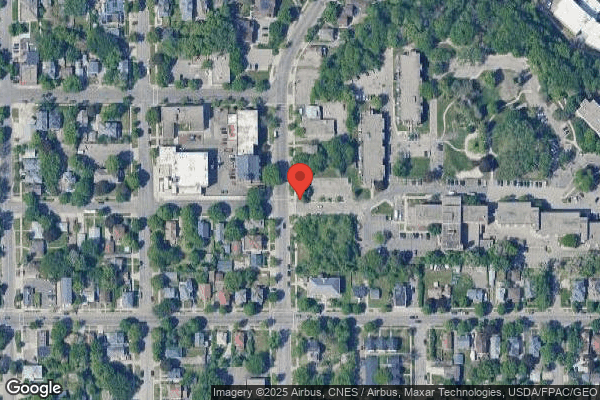
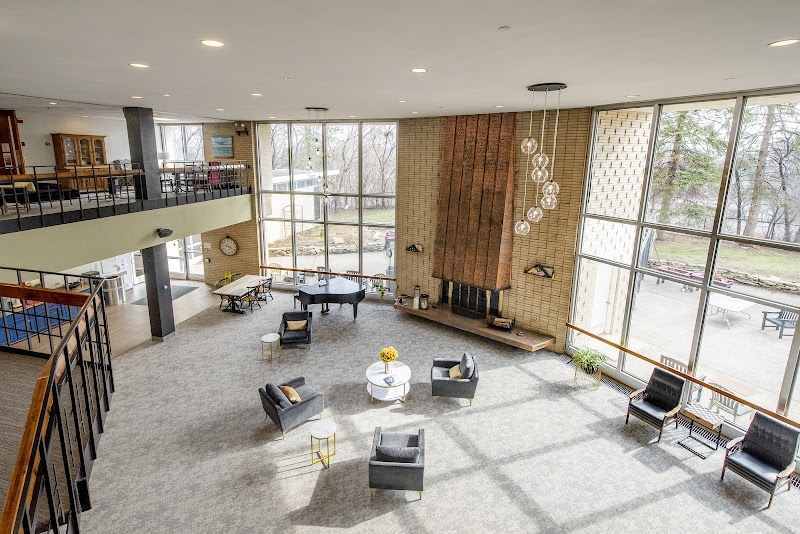
512 HUMBOLDT AVENUE, SAINT PAUL, MN 55107 (651) 220-1700
Non profit - Corporation 93 Beds Independent Data: November 2025 1 Immediate Jeopardy citation
Trust Grade
0/100
#285 of 337 in MN
Last Inspection: January 2025

Within standard 12-15 month inspection cycle. Federal law requires annual inspections.

Overview

Cerenity Care Center on Humboldt has received a Trust Grade of F, indicating significant concerns about the quality of care provided. They rank #285 out of 337 facilities in Minnesota, placing them in the bottom half, and #24 out of 27 in Ramsey County, meaning only a few local options are worse. The facility's trend is worsening, with issues increasing from 13 in 2024 to 17 in 2025. Staffing has an average rating of 3 out of 5, but the turnover rate is concerning at 58%, higher than the state average. The facility has received $105,767 in fines, which is higher than 92% of Minnesota facilities, pointing to repeated compliance issues. There is a critical incident where a resident's treatment for a wound was neglected, resulting in the amputation of two toes. Additionally, one resident fell and fractured a femur due to inadequate supervision, while another resident experienced significant distress after waiting almost three hours for assistance with their call light. While the facility does have average RN coverage, these incidents highlight serious weaknesses that families should carefully consider.

Trust Score
F
0/100
In Minnesota
#285/337
Bottom 16%
Safety Record
High Risk
Review needed
Inspections
Getting Worse
13 → 17 violations
Staff Stability
⚠ Watch
58% turnover. Above average. Higher turnover means staff may not know residents' routines.
Penalties
✓ Good
$105,767 in fines. Lower than most Minnesota facilities. Relatively clean record.
Skilled Nurses
✓ Good
Each resident gets 51 minutes of Registered Nurse (RN) attention daily — more than average for Minnesota. RNs are trained to catch health problems early.
Violations
⚠ Watch
45 deficiencies on record. Higher than average. Multiple issues found across inspections.
★☆☆☆☆
1.0
Overall Rating
★★★☆☆
3.0
Staff Levels
★★☆☆☆
2.0
Care Quality
★☆☆☆☆
1.0
Inspection Score
Stable
2024: 13 issues
2025: 17 issues

The Good

  • Full Sprinkler Coverage · Fire safety systems throughout facility
  • No fines on record

Facility shows strength in fire safety.

The Bad

1-Star Overall Rating

Below Minnesota average (3.2)

Significant quality concerns identified by CMS

Staff Turnover: 58%

12pts above Minnesota avg (46%)

Frequent staff changes - ask about care continuity

Federal Fines: $105,767

Well above median ($33,413)

Significant penalties indicating serious issues

Staff turnover is elevated (58%)

10 points above Minnesota average of 48%

The Ugly 45 deficiencies on record

1 life-threatening 5 actual harm
May 2025 6 deficiencies 2 Harm
SERIOUS (G) 📢 Someone Reported This

A family member, employee, or ombudsman was alarmed enough to file a formal complaint

Actual Harm - a resident was hurt due to facility failures

Accident Prevention (Tag F0689)

A resident was harmed · This affected 1 resident

**NOTE- TERMS IN BRACKETS HAVE BEEN EDITED TO PROTECT CONFIDENTIALITY** Based on observation, interview, and document review, the facility failed to ensure a resident received adequate supervision and...

Read full inspector narrative →
**NOTE- TERMS IN BRACKETS HAVE BEEN EDITED TO PROTECT CONFIDENTIALITY** Based on observation, interview, and document review, the facility failed to ensure a resident received adequate supervision and assistance to prevent accidents for 1 of 3 residents (R4) reviewed for falls. This resulted in actual harm when R4 fell and suffered a femur fracture. The facility implemented immediate corrective action, so the deficient practice was issued at past non-compliance. Findings include: R4's face sheet dated 5/16/25, identified diagnoses of Parkinson's disease (a disease of the central nervous system that affects movement), depression (persistent sadness), and anxiety (a common human emotion involving feelings of worry, nervousness, or unease). R4's Physical Therapy (PT) evaluation dated 4/22/25, identified that R4 was admitted the facility due to weakness and without further PT she would be at increased risk for falls and functional decline. R4 was modified independence with contact guard assistance (one or two hands on body to support balance or steady body) for transfers. R4's admission Minimum Data Set (MDS) dated [DATE], identified R4 needed supervision or touching assistance for transfers and had moderate cognitive impairment. R4's fall care plan focus dated 4/22/25, identified R4 was at risk for falls due to Parkinson's disease. Goal of will not sustain a fall related injury through review date. With interventions of education on prevention, reduction precautions per facility protocol. R4's care plan did not identify what level of transfer assistance R4 required as per the PT evaluation dated 4/22/25 nor the level of assistance that was identified on the MDS dated [DATE]. R4's nursing assistant care sheet dated 4/22/25, identified R4 was assist x1 with gait belt and walker for transfers. R4's physician note dated 5/1/25, identified R4 was still working with therapy and is not back to her baseline strength or balance and does not feel ready to go home. R4's fall safety event dated 5/10/25 at 1:45 p.m , identified R4 had a witnessed fall in her room during a transfer without assistance. During the transfer R4's feet became entangled in the nightstand, which caused her to lose her balance, fall, and landed on her right hip. R4 had pain in right femur area and was sent to emergency department (ED) for evaluation. R4's emergency department (ED) note dated 5/10/25, identified R4 had been seen in ED following a fall in the nursing home and had subsequent hip pain and unable to bear weight. Imaging showed moderately displaced intertrochanteric fracture of the proximal right femur. R4's hospital operative note dated 5/11/25, identified R4 underwent insertion of intramedullary nail of right femur following a fall in the nursing home. R4's interdisciplinary team (IDT) progress note dated 5/12/25 at 10:12 a.m., identified review of fall on 5/10/25 that R4 was ambulating in room with a staff member present with a gait belt on, however he stepped back as resident was attempting to brush her hair near the nightstand. Staff visualized R4's feet got tangled up in the nightstand when attempting to turn, causing her to lose balance and fall. Staff member was not within close reach to catch R4 from falling. Staff interviews reveal that R4 had a history of ambulating in her room without assistance. R4 was an assist of one with a walker for transfers and ambulation prior to the fall. R4's activities of daily living care plan dated 5/12/25 was revised after her fall on 5/10/25, to include the level of staff assistance R4 required which was, limited assist of one for transfers with a gait belt and walker. R4's progress note dated 5/14/25, identified R4 returned from the hospital and was substantial/maximum assistance for all transfers. During an interview on 5/15/25 at 1:38 p.m., nursing assistant (NA)-B referenced the nursing assistant care sheets as the care plan that gives them direction on how to care for a resident. During an interview on 5/15/25 at 3:55 p.m., nursing assistant (NA)-D stated he was assisting R4 in her room at the time of her fall on 5/10/25. NA-D placed a gait belt on R4 and ambulated her next to the nightstand so she could brush her hair, he then left her at the nightstand and went to get her walker when she must have turned and got her feet tangled on the nightstand and fell to the ground. NA-D stated he was not standing near R4 at that time, and when she lost her balance, he was not able to catch her. During an interview on 5/15/25 at 12:40 p.m., licensed practical nurse (LPN)-C stated R4's nursing assistant care sheet identified R4's transfer status of assist of one staff on admission, however R4's care plan did not identify how she was transferred until 5/12/25 after it was reviewed after the fall. During an interview on 5/15/25 at 4:36 p.m., registered nurse regional director (RNRD) stated her expectation would be for staff to transfer resident per plan of care and ensure adequate supervision is provided during the transfers to maintain safety and that any resident would have their care plans updated in a timely manner. Review of the facility's Integrated Fall Management Policy dated 9/23, identified residents with risk for falling will have interventions implemented through their resident centered plan of care. Additional professionals may be contacted to provide assessment and/or interventions regarding fall risk and prevention, including but not limited to, attending physician/provider, pharmacist, physical therapist, occupational therapist, and speech therapist. The following corrective actions were verified as implemented prior to the survey: 1. A four-point plan of correction was initiated on 5/12/25: a. Specific action taken for identified resident. b. Resident sent to ED for treatment. c. NA suspended pending investigation. d. Updated provider and family. e. Report filed with state agency. f. Interview of NA involved. g. Interviewed therapy. h. Interviewed like residents with no concerns identified. 2. Root cause of R4's fall identified that NA was not following the plan of care and that R4 should have been assist of one with a gait belt. 3. Identified all residents that ambulate with staff assistance may be at risk for the same deficient practice. 4. Educated the NA involved in the incident regarding following plan of care for ambulation status. Education provided to all NA and nurses regarding following plan of care for residents. 5. Ensured all residents had the correct ambulation status on care plan and nursing assistant care sheets. 6. Education of all staff regarding abuse and neglect, reporting policy, expectations including timeframe. 7. Monitoring will be done via audits of direct audit of staff during resident ambulation five times per week x 4 weeks, three times per week x 4 weeks, one time per week for 4 weeks x 4 weeks. Audits will be brought to quality assurance performance improvement (QAPI) to determine ongoing audits. 8. Director of Nursing of designee will be responsible for the compliance of the action plan.
SERIOUS (G) 📢 Someone Reported This

A family member, employee, or ombudsman was alarmed enough to file a formal complaint

Actual Harm - a resident was hurt due to facility failures

Deficiency F0725 (Tag F0725)

A resident was harmed · This affected 1 resident

**NOTE- TERMS IN BRACKETS HAVE BEEN EDITED TO PROTECT CONFIDENTIALITY** Based on observation, interview, and document review, the facility failed to provide sufficient staffing to ensure residents rec...

Read full inspector narrative →
**NOTE- TERMS IN BRACKETS HAVE BEEN EDITED TO PROTECT CONFIDENTIALITY** Based on observation, interview, and document review, the facility failed to provide sufficient staffing to ensure residents received the care and assistance they needed in a timely manner for 4 of 5 residents (R5, R1, R3, & R6) reviewed for call lights. This caused actual harm to R5 when she waited nearly three hours for her call light to be answered causing her to experience increased anxiety, distress, fear, and feelings of worthlessness and helplessness. Findings include: R5 R5's Minimum Data Set (MDS) assessment dated [DATE], indicated she had intact cognition and no behaviors or rejections of care. R5 had diagnoses including multiple sclerosis (chronic disease affecting the central nervous system), anxiety disorder, major depressive disorder, and morbid obesity. R5 was frequently incontinent of bowel and bladder and required substantial staff assistance with toileting hygiene, bathing, dressing, and mobility in bed. R5 was dependent on staff for transfers and used a motorized wheelchair independently. R5's urinary incontinence care plan interventions dated 2/11/25, included keep call light within reach, provide incontinence care after each incontinent episode, toilet per request, and staff to toilet every two hours and as needed with extensive assistance. R5's activities of daily living (ADL) care plan included intervention dated 2/11/25, to discuss with staff how to honor R5's preferences and provide care in a timely manner. R5's psychosocial well-being care plan dated 1/15/25, identified potential for trauma related to history of sexual abuse, physical abuse, and mental abuse. Interventions dated 1/15/25 included observe for signs of adjustment difficulties such as inability to pursue interests or activities or sad or anxious mood. R5's mood state care plan dated 5/26/22 identified R5 was at increased risk for mood issues related to anxiety disorder, suicidal ideations in the setting of delirium, toxic encephalopathy, new an unfamiliar environment, and legal blindness. Intervention dated 5/16/24, noted psychology was to evaluate and treat as needed. R5's psychology provider note by licensed independent clinical social worker (LICSW)-A dated 1/31/25, indicated R5 had diagnoses including major depressive disorder and anxiety disorder. R5's mental status exam noted dysthymic (mild long-lasting depressed) mood, ruminating (persistent negative) thoughts, tearful affect, and tearful behavior. R5 reported an incident of waiting for her brief to be changed after a bowel movement (BM), which she believes contributed to current UTI [urinary tract infection]. Treatment recommendations included it remains of benefit for [R5] to have brief changes after BM's as soon as possible, to reduce risk of developing UTI's which she seems to be prone to. This would aid in decreasing anxiety levels. R5's psychology provider note by LICSW-A dated 2/21/25, indicated R5 presented with anxious and depressed mood of sadness, overwhelmed, grief, stress, difficulty concentrating, and fatigue. R5 reported she had another UTI and endorsed anxiety around this. R5's Long Term Care Social Service assessment dated [DATE], indicated she had mood appropriate to circumstance and mood was affected by diagnoses. She did not have mood symptoms of depression, crying, or withdrawal from activities and her mood was not restless, anxious, or inclusive of complaints. R5 was identified as expressing her feelings openly and coping well. She did not distort or misrepresent events, worry/deny/cry, or display ineffective coping skills such as distancing self, anger, or withdrawal from life at facility. The facility's Grievances Log included a grievance entry dated 4/26/25 voiced by R5. The concern section noted R5 reported on Saturday 4/26/25 around 3:00 p.m. she put on her call light for assistance transferring from chair to commode and waited an hour for a nurse to come in. The nurse said she was going to turn the call light off and then back on and let a nursing assistant (NA) know she was waiting. R5 requested the call light not be turned off as she hadn't been assisted yet. Nurse left call light on and informed a NA who then assisted. The findings section of the log noted The resident's call light was not answered for approximately one hour after activation on Saturday, 4/26, around 3:00 PM. When a nurse eventually responded, she did not provide direct assistance but informed an aide, who later assisted the resident. The nurse initially planned to reset the call light before notifying staff, but the resident requested it remain on until assistance was received. The action section noted Staff were reminded of the importance of promptly responding to call lights to ensure residents receive timely assistance. Nursing staff were specifically instructed not to reset a call light until the resident's needs have been fully addressed. The situation was reviewed with the care team to reinforce effective communication practices and appropriate procedures for escalating any delays in care. The resident was informed of the concern and the steps being taken to address it. R5's Device Activity Report (call light log) dated 4/12/25 through 5/14/25, included but was not limited to the following reset times (time from when light is activated to when it is cleared): - 4/12/25 at 7:27 p.m., 20 minutes and 46 seconds - 4/12/25 at 10:40 p.m., 25 minutes and 48 seconds - 4/13/25 at 7:57 a.m., 100 minutes and 22 seconds - 4/15/25 at 2:09 p.m., 21 minutes and 35 seconds - 4/16/25 at 5:05 p.m., 29 minutes and 19 seconds - 4/17/25 at 3:37 p.m., 24 minutes and 32 seconds - 4/19/25 at 7:57 a.m., 23 minutes and 7 seconds - 4/20/25 at 8:50 a.m., 43 minutes and 48 seconds - 4/20/25 at 12:58 p.m., 61 minutes and 51 seconds - 4/20/25 at 9:45 p.m., 22 minutes and 36 seconds - 4/22/25 at 7:38 a.m., 34 minutes and 54 seconds - 4/22/25 at 1:18 p.m., 49 minutes and 30 seconds - 4/22/25 at 9:54 p.m., 28 minutes and 3 seconds - 4/25/25 at 1:16 p.m., 26 minutes and 8 seconds - 4/26/25 at 7:13 a.m., 202 minutes and 18 seconds - 4/26/25 at 3:38 p.m., 64 minutes and 31 seconds - 4/26/25 at 5:50 p.m., 20 minutes and 30 seconds - 4/27/25 at 5:40 p.m., 30 minutes and 14 seconds - 4/28/25 at 6:01 p.m., 32 minutes and 32 seconds - 5/3/25 at 1:03 p.m., 22 minutes and 52 seconds - 5/6/25 at 7:41 a.m., 57 minutes and 32 seconds - 5/6/25 at 1:00 p.m., 43 minutes and 42 seconds - 5/6/25 at 5:20 p.m., 26 minutes and 2 seconds - 5/7/25 at 7:34 a.m., 24 minutes and 35 seconds - 5/7/25 at 5:57 p.m., 31 minutes and 49 seconds - 5/10/25 at 12:12 p.m., 174 minutes and 8 seconds - 5/11/25 at 12:58 a.m., 20 minutes and 55 seconds - 5/11/25 at 2:12 p.m., 59 minutes and 19 seconds - 5/11/25 at 7:17 p.m., 26 minutes and 51 seconds - 5/12/25 at 3:16 p.m., 31 minutes and 41 seconds - 5/13/25 at 3:24 p.m., 18 minutes and 14 seconds - 5/13/25 at 5:52 p.m., 29 minutes and 34 seconds During an interview on 5/14/25 at 2:19 p.m., R5 stated there are huge issues with call lights. R5 stated at night sometimes nobody would answer her call light so she would have to use a telephone to call the nursing station on her unit and another unit to request assistance. R5 explained on a good day call lights are answered in 15 minutes, on a bad day anytime between half an hour and 45 minutes, and on a real bad day a lot longer. R5 noted there were occasions she had to wait marathon times with the most recent incident on Saturday 5/10/25. R5 stated a nursing assistant (NA) got her up and dressed in the morning and told her the NA assigned to her had left sick an hour into the day shift. The NA who had helped her was then pulled and put on a medication cart to work as a medication aide because they were short a nurse, leaving one NA working the whole floor. R5 stated around 12:15 p.m. she turned her call light on because she needed to have her brief changed. She was sitting in her recliner, it was nice out, and she wanted to go outside. She turned on the light to have her brief changed and transfer to her electric wheelchair to go outside. R5 stated, no one came until 3:15 in the afternoon, nobody came, not one person to check on me. Review of R5's call light log identified her call light was activated on 5/10/25 at 12:12 p.m. and was not reset for 2 hours 54 minutes and 8 seconds. R5 stated the evening shift NA stopped in her room while orienting another NA who was agency staff and they were not aware her light was on when they came by, but R5 told them what she needed. R5 stated she was a mell of a [NAME] [sic] by this point, I was angry at being ignored, I was terrified that here I am again, and grateful I wasn't in serious physical danger. R5 noted this could have been fatal to somebody so yeah, I'm grateful for that, but I'm afraid, it makes me afraid about being here. I'm never safe here. After she was assisted to the commode she had NAs put her in bed. R5 was afraid by that time, she didn't know who was going to be working that night. She didn't feel comfortable enough to be in her wheelchair and go outside. I thought just put me in my bed so I can be as safe as possible. R5 noted the facility had been staggering nurses and instead of two nurses starting at 3:00 p.m. they had one start at 3:00 p.m. and one start at 5:00 p.m. which made R5 not feel secure and safe. R5 stated I don't think emotionally I have recovered R5 did not feel safe in the late afternoon or early morning because staff don't help. R5 explained another recent instance where she waited an extended time for assistance. R5 had a large BM and had BM all over herself. She informed an NA that she needed assistance because I know I needed to be changed, and I needed to be changed fast because I didn't want to have another UTI. R5 indicated the NA told her he needed to finish passing out lunch trays and collecting them and would then get to her. R5 then went to the nursing station and informed staff she needed to be changed now, went back to her room, and turned on her call light. After 15 to 20 minutes, she left her room in her wheelchair to find the NA, told him she needed to be changed now, he stated he had to do something else first, and she returned to her room. After waiting another 15 to 20 minutes she went looking for him again, and he again said he had to go do something in another room. After 15 to 20 more minutes, she found him again and he did it again a third time. R5 stated she lost it and went back to my room and she wept and wailed. After about five minutes, the NA arrived and asked why she was crying and she said because you won't change me. The NA got a second NA and the two then assisted with cleaning her up. R5 stated she was very upset by this incident. During an interview on 5/15/25 at 12:05 p.m., trained medication aide (TMA)-A stated aides answer call lights and other staff don't answer call lights, but they should. TMA-A noted it was hard to answer call lights with three aides and sometimes two working. TMA-A stated ten minutes was too long to take to answer a call light and if somebody needs to go to the bathroom they can't wait, we don't have enough staff to do that. TMA-A stated with two aides it is a struggle. If we had more staff it would be helpful with call lights. TMA-A noted R5 used the call light when she needed to use the commode or wanted to come out of her room and staff did not have time because two people were needed to transfer R5. TMA-A stated, R5 did get upset about the call light after waiting, her face changes, she is mad. During an interview on 5/15/25 at 12:26 p.m., registered nurse (RN)-C stated there were not enough staff to do what needed to be done for the residents and answer call lights like we should. RN-C stated she thought the recent instance when R5 had to wait approximately three hours for her call light to be answered was sad and it's obvious how you would feel, neglected, afraid. RN-C explained there should be three aides at all times and noted call lights were more of a problem when there were less than three NA's working on the unit. During an interview on 5/15/25 at 9:50 a.m., staffing coordinator (SC) reviewed the schedule from Saturday 5/10/25 for R5's unit. She noted the day shift had two nurses, an RN from 6:30 a.m. to 1:00 p.m. and an LPN from 6:30 a.m. to 3:00 p.m. The day shift had three NA's working, with two scheduled from 6:30 a.m. to 2:45 p.m. and one scheduled from 6:30 a.m. to 3:00 p.m. The NA scheduled to work until 3:00 p.m. came in for about an hour in the morning, became sick and left, and another NA came in to replace her. The evening shift had two nurses and two NA's. One LPN was scheduled from 3:00 p.m. to 8:00 p.m. and the second LPN scheduled from 4:00 to 11:00 p.m. called out and was replaced by an RN pulled from a different unit. Three NA's were scheduled to work: one from 2:30 p.m. to 11:00 p.m., one from 3:00 p.m. to 11:00 p.m., and one from 3:00 p.m. to 9:00 p.m. Two NA's worked the evening shift as the third was pulled to a different unit to work as a TMA. The SC stated one of the aides from another unit was probably floating between their assigned unit and R5's unit. During an interview on 5/15/25 at 4:33 p.m., the nurse manager for R5's unit, RN-D, stated she didn't know what was going on with call lights, we need to work on getting those lights. Call lights should be answered in no more than five minutes. If a light was not answered timely a resident would may not feel good about it or disappointed, RN-D noted she wouldn't be happy. RN-D recalled the instance on 4/26/25 when R5 had to wait an hour for her call light to be answered and thought it was because an aide had been sick and left early. RN-D stated she talked to R5 about this and she was not happy. Whoever saw the light should have answered right away and it was unacceptable. RN-D had also spoken with R5 about the instance on 5/10/25 when she waited approximately three hours for her call light to be answered and R5 wasn't happy. Long call lights had a negative effect on residents when they had to wait that long for assistance and it was definitely something we need to work on with the call lights, whether it is a weekend or not. Regarding how long call light times affected R5, RN-D stated she knew for sure R5 did get anxious and worried because R5 had told as much. RN-D stated she had not looked into how call light logs compared to staffing and hadn't heard from her staff that they were related. During an interview on 5/15/25 at 4:00 p.m., the director of social services (DSS) stated long call light wait times are negative towards people's psychosocial well-being and could make residents not trust our staff, could impact how people feel about being safe here. The DSS noted some residents could get a lot more anxious if their call lights were not being answered, especially if they already have anxiety. An increase in anxiety would be considered a negative impact to psychosocial well-being. The DSS reviewed her concerns (grievances) database and noted a concern from R5 on 5/10/25 that her call light was on for three hours and noted staff were still looking into this with nurse manager RN-D assigned to investigate. She identified an additional concern from R5 dated 4/26/25 when she waited for over an hour for her light to be answered which was confirmed when staff reviewed call light logs. The DSS assumed this impacted R5 negatively, could be harmful, and probably increased her anxiety levels. The DSS noted waiting one or three hours for a call light to be answered could impact a resident's sense of dignity or self-worth. She expected call lights to be answered no later than 20 minutes and long call light wait times wouldn't feel good. During a return phone call interview on 5/19/25 at 4:45 p.m., licensed independent clinical social worker (LICSW)-A stated she had been seeing R5 since she admitted to the facility and saw R5 for her depression, chronic adjustment distress, anxiety, and post-traumatic stress symptoms. LICSW-A was aware of R5's long call light times, including the one that took staff three hours to answer. LICSW-A noted in response to the long call light times it made R5 feel helpless, a lack of control, and like her needs don't matter. R5 was reliant on staff to use the bathroom or get transferred. Long call light wait times certainly impacts her [R5's] anxiety levels. R5's reported three-hour wait time was a long wait time, I would expect that most people would feel pretty distressed by that. LICSW-A felt R5's distress level and response is completely understandable and appropriate to the situation. LICSW-A also noted R5 had brought up call light wait times with her previously. LICSW-A believed it did impact R5's mood and feeling of lack of being in control of her situation. Additionally, feeling of helplessness that R5 requested help and not only has it not arrived, but then she has had to wait for that long amount of time. LICSW-A stated for R5 it kind of filters into her thought of do my needs matter?' and when her call light was not answered timely she feels depressed. R5 was angry and tearful when talking about this experience. LICSW-A stated for her to wait that long, that is harmful to her. R5 had filed multiple complaints and grievances and spoken with facility staff and the ombudsman, but there has not been any improvement so she worries. LICSW-A noted R5 had expressed fears about what could happen to her in the time frame while she was waiting for a call light to be answered, and the worry had been kind of steady. LICSW-A noted adjusting to the facility has been very difficult for her [R5] and long call light wait times doesn't help. LICSW-A noted R5 had been better adjusted over the last year and a half but then if a circumstance like this comes up it brings her back to some of those feelings. R1 R1's MDS assessment dated [DATE], indicated she had intact cognition and no behaviors or rejections of care. R1 had diagnoses including Parkinson's disease, acute pain due to trauma, back pain, and abnormalities of gait and mobility. She was occasionally incontinent of urine, and required substantial staff assistance with toileting, bathing, bed mobility, and transfers. R1's mobility care plan dated 3/1/25, identified she needed staff assistance with bed mobility, transfers, ambulation, and locomotion due to immobility. Intervention dated 5/12/25, directed staff to ensure the call light was in reach and encourage R1 to use it to make needs known. R1's urinary care plan with interventions dated 2/11/25, directed staff to keep call light in reach, toilet every two to three hours and as needed, and toilet per request. Her communication care plan dated 2/11/25, identified R1 preferred to have her call light on the table in her room and would also like to have a bell to ring if she needed assistance. Intervention dated 2/11/25, directed to discuss with staff how to honor preferences and provide care in a timely manner. R1's call light log dated 4/12/25 through 5/14/25, included but was not limited to the following reset times: - 4/12/25 at 11:05 a.m., 28 minutes and 46 seconds - 4/12/25 at 5:32 p.m., 33 minutes and 39 seconds - 4/12/25 at 8:24 p.m., 26 minutes and 58 seconds - 4/13/25 at 8:27 a.m., 25 minutes and 25 seconds - 4/13/25 at 9:17 a.m., 32 minutes and 59 seconds - 4/13/25 at 12:37 p.m., 34 minutes and 42 seconds - 4/15/25 at 12:21 p.m., 21 minutes and 39 seconds - 4/16/25 at 10:57 a.m., 18 minutes and 41 seconds - 4/16/25 at 12:20 p.m., 31 minutes and 20 seconds - 4/16/25 at 5:20 p.m., 24 minutes and 22 seconds - 4/16/25 at 7:32 p.m., 32 minutes and 38 seconds - 4/19/25 at 1:38 a.m., 26 minutes and 51 seconds - 4/20/25 at 11:12 a.m., 29 minutes and 16 seconds - 4/20/25 at 3:56 p.m., 23 minutes and 32 seconds - 4/20/25 at 7:41 p.m., 36 minutes and 34 seconds - 4/21/25 at 10:01 a.m., 36 minutes and 51 seconds - 4/22/25 at 12:28 p.m., 24 minutes and 18 seconds - 4/24/25 at 9:13 a.m., 265 minutes and 5 seconds - 4/24/25 at 1:40 p.m., 29 minutes and 14 seconds - 4/20/25 at 10:38 a.m., 22 minutes and 34 seconds - 5/3/25 at 10:52 a.m., 46 minutes and 44 seconds - 5/4/25 at 1:54 p.m., 53 minutes and 24 seconds - 5/5/25 at 6:09 p.m., 19 minutes and 12 seconds - 5/6/25 at 11:47 a.m., 24 minutes and 4 seconds - 5/6/25 at 5:39 p.m., 31 minutes and 19 seconds - 5/7/25 at 9:56 a.m., 22 minutes at 24 seconds - 5/7/25 at 5:56 p.m., 26 minutes and 44 seconds - 5/7/25 at 9:46 p.m., 49 minutes and 43 seconds - 5/10/25 at 8:06 a.m., 67 minutes and 58 seconds - 5/10/25 at 9:40 a.m., 21 minutes and 56 seconds - 5/10/25 at 5:27 p.m., 31 minutes and 21 seconds - 5/10/25 at 6:03 p.m., 21 minutes and 49 seconds - 5/11/25 at 10:22 a.m., 24 minutes and 52 seconds - 5/11/25 at 1:32 p.m., 30 minutes and 56 seconds - 5/12/25 at 7:56 p.m., 27 minutes and 33 seconds During an interview on 5/12/25 at 3:08 p.m., R1 stated things aren't going well. Staff would not answer the light. R1 had a bell that one of the nurses gave him and directed R1 that if staff did not answer the call light in a reasonable time, to use the bell. R1 stated I do scream and staff would tell R1 to quit it. Staff would not answer the bell either, so R1 gave it away. R1 stated she would press her call light and wait so long that she turned it off because staff didn't answer. R1 stated she had fallen recently while trying to organize laundry in her room and staff told her to use her call light for assistance, but that was a joke because staff don't answer her light and have said they are shorthanded. R1 stated she used her call light when she needed to use the bathroom but staff don't answer, so I end up going in my pull-ups because she couldn't hold it for that long. R1 stated she felt helpless, and it sometimes took one or two hours for her call light to be answered. She stated, I am bitter because I had to mess myself because she could not get staff to come help her. On 5/12/25 at 5:18 p.m., a call light digital alarm board in the hallway displayed displayed alarm [R1's room number] 15 minutes and was flashing. NA-C entered R1's room. R1's call light log indicated her light was activated on 5/12/25 at 5:00 p.m. and was not cleared for 17 minutes and 58 seconds. Upon exiting, NA-C stated R1 wanted to go to the bathroom and usually if her call light is on it is because she wanted water or to go to the bathroom. NA-C stated she had taken R1 to the bathroom and cleaned her up after toileting. During an interview on 5/13/25 at 9:23 a.m., R1's friend and power of attorney (POA)-A stated R1 had called her crying before, stating she's uncomfortable, needed to get up, needed to go to the bathroom, and needed pain medication. POA-A told R1 to ring her bell while still on the phone to see if staff come in and she's ringing the bell, and nothing happens. POA-A stated this was not okay. R3 R3's MDS assessment dated [DATE], indicated she had intact cognition and no behaviors or rejections of care. R3 had diagnoses including stage four pressure ulcer of the sacral region (wound with full thickness tissue loss and exposed bone, tendon, or muscle over the tailbone area), low back pain, heart failure, non-Alzheimer's dementia, and depression. She was occasionally incontinent of bowel and bladder and required supervisory staff assistance with toileting hygiene and bathing, and partial assistance with footwear and walking. R3's urinary care plan included interventions dated 2/13/25, including keep call light within reach, staff to toilet every two to three hours and as needed with assist of one staff, and toilet per request. R3's routines care plan included intervention dated 2/13/25, directing discuss with staff how to honor my preferences and provide care in a timely manner. R3's activities of daily living care plan included interventions dated 8/9/24, I can verbally ask for assistance, I need assistance to help me remain free from skin breakdown and respect my dignity. Her pain care plan included a goal dated 5/3/25, to be comfortable. Intervention dated 9/5/24, noted interventions for pain included prescribed medications, relaxation, and distraction. R3's call light log dated 4/12/25 through 5/14/25, included the following reset times: - 4/12/25 at 5:20 p.m., 40 minutes and 21 seconds - 4/20/25 at 12:21 p.m., 26 minutes and 36 seconds - 4/21/25 at 12:11 p.m., 49 minutes and 11 seconds - 4/21/25 at 3:45 p.m., 36 minutes and 22 seconds - 4/26/25 at 8:53 a.m., 106 minutes and 54 seconds - 4/28/25 at 7:04 p.m., 44 minutes and 12 seconds - 4/30/25 at 8:41 a.m., 17 minutes and 2 seconds - 5/1/25 at 8:46 a.m., 51 minutes and 35 seconds - 5/4/25 at 12:21 p.m., 17 minutes and 43 seconds - 5/5/25 at 9:10 a.m., 124 minutes and 52 seconds - 5/5/25 at 12:52 p.m., 45 minutes and 40 seconds - 5/5/25 at 2:54 p.m., 33 minutes and 14 seconds - 5/7/25 at 7:36 a.m., 114 minutes and 47 seconds - 5/7/25 at 12:56 p.m., 32 minutes and 41 seconds - 5/8/25 at 1:15 p.m., 56 minutes and 11 seconds - 5/10/25 at 9:47 a.m., 105 minutes and 27 seconds - 5/10/25 at 6:34 p.m., 75 minutes at 14 seconds - 5/11/24 at 9:02 a.m., 119 minutes and 15 seconds - 5/13/25 at 11:01 a.m., 24 minutes 35 seconds - 5/14/25 at 8:38 p.m., 38 minutes and 14 seconds On 5/13/25 at 11:04 a.m., NA-A stated staffing was short sometimes, and they could use a little help. NA-A noted call lights should be answered in either eight to 10 minutes or five to eight minutes, she couldn't remember. NA-A noted she would usually turn call lights off right away and then go look for someone to help her if she was unable to provide the needed assistance. She stated answering call lights can be a challenge and lights were usually on for thirty minutes plus which was pretty bad and a long time. NA-A noted she wouldn't like this if it was her family member. At 11:24 a.m., a call light digital alarm board in the hallway displayed alarm [R3's room number] 20 minutes and was flashing. NA-A entered R3's room and stated she was there because R3's call light was on and confirmed it had been on for 20 minutes. During an interview on 5/13/25 at 11:24 a.m., R3 stated it had been a while since she pressed her call light. R3 asked NA-A for as needed pain medication for back pain rated six out of 10. R3 thought nursing staff all went on break every hour because it sometimes took a long time for call lights to be answered. R3 noted call light wait times were not timely around mealtimes, as staff were busy preparing and serving meals and passing trays. R3 stated she realized staff were busy and she just had to be patient, but sometimes staff got mad and then they ignore you. R6 R6's MDS assessment dated [DATE], indicated she had intact cognition and no behaviors or rejections of care. R6 had diagnoses including encephalopathy (disturbance in brain's function), sclerosis, anxiety, depression, and functional quadriplegia (complete inability to move all four limbs due to extreme debility or frailty). She was frequently incontinent of bowel and had an indwelling urinary catheter. R2 was dependent on staff for assistance with all cares, activities of daily living, and mobility. R6's mobility care plan dated 2/13/25, identified she needed assistance due to functional quadriplegia. Intervention dated 5/7/26, directed staff to ensure call light is in resident's reach while in room and encourage to use it to make needs known. R6's communication care plan dated 4/24/25, noted she used a specialized call light she accessed with her face/chin. R6's urinary care plan included interventions dated 2/13/25, including keep call light within reach, staff to toilet every two to three hours and as needed, and toilet per request. R6's call light log dated 4/12/25 through 5/14/25, included the following reset times: - 4/13/25 at 8:56 a.m., 58 minutes and 55 seconds - 4/18/25 at 2:38 p.m., 18 minutes and 4 seconds - 4/20/25 at 5:10 a.m., 28 minutes and 8 seconds - 4/20/25 at 7:04 a.m., 37 minutes and 0 seconds - 4/20/25 at 9:26 a.m., 30 minutes and 55 seconds - 4/20/25 at 11:00 a.m., 55 minutes and 37 seconds - 4/20/25 at 12:56 p.m., 51 minutes and 14 seconds - 4/21/25 at 9:20 a.m., 22 minutes and 45 seconds - 4/21/25 at 10:10 a.m., 43 minutes and 0 seconds - 4/21/25 at 1:31 p.m., 25 minutes and 3 seconds - 4/21/25 at 7:13 p.m., 23 minutes and 59 seconds - 4/22/25 at 5:22 a.m., 20 minutes and 4 seconds - 4/22/25 at 7:39 a.m., 30 minutes and 28 seconds - 4/22/25 at 9:16 a.m., 36 minutes and 43 seconds - 4/22/25 at 10:02 a.m., 20 minutes and 31 seconds - 4/24/25 at 11:22 a.m., 20 minutes and 36 seconds - 4/24/25 at 5:01 p.m., 18 minutes and 47 seconds - 4/25/25 at 2:08 p.m., 19 minutes and 55 seconds - 4/25/25 at 2:35 p.m., 18 minutes and 50 seconds - 4/26/25 at 5:11 a.m., 60 minutes and 40 seconds - 4/26/25 at 6:41 a.m., 96 minutes and 29 seconds - 4/26/25 at 9:32 a.m., 55 minutes and 11 seconds - 4/26/25 at 10:54 a.m., 61 minutes and 9 seconds - 4/26/25 at 12:21 p.m., 34 minutes and 50 seconds - 4/26/25 at 2:26 p.m., 18 minutes and 4 seconds - 4/26/25 at 3:27 p.m., 31 minutes and 45 seconds - 4/27/25 at 2:34 p.m., 18 minutes and 50 seconds - 4/27/25 at 3:36 p.m., 36 minutes and 5 seconds - 4/27/25 at 5:30 p.m., 22 minutes and 24 seconds - 4/27/25 at 10:07 p.m., 50 minutes and 2 seconds - 4/28.25 at 5:25 a.m., 19 minutes and 3 seconds - 4/28/25 at 10:46 a.m., 48 minutes and 21 seconds - 4/29/25 at 7:50 a.m., 21 minutes and 13 seconds - 4/30/25 at 2:24 p.m., 23 minutes and 32 seconds - 5/1/25 at 10:56 a.m., 18 minutes and 32 seconds - 5/2/25 at 6:30 a.m., 28 minutes and 24 seconds - 5/2/25 at 7:09 a.m., 51 minutes and 11 seconds - 5/2/25 at 11:41 a.m., 36 minutes and 59 seconds - 5/4/25 at 5:40 a.m., 37 minutes and 11 seconds - 5/4/25 at 12:08 p.m., 29 minutes and 32 seconds - 5/4/25 at 1:49 p.m., 27 minutes and 39 seconds - 5/4/25 at 1:18 p.m., 21 minutes and 34 seconds - 5/5/25 at 5:28 a.m., 29 minutes and 18 seconds - 5/5/25 at 8:37 a.m., 28 minutes and 18 seconds - 5/5/25 at 10:43 a.m., 20 minutes and 1 second - 5/5/25 at 1:49 p.m., 22 minutes and 15 seconds - 5/5/25 at 2:38 p.m., 54 minutes and 56 seconds - 5/5/25 at 6:58 p.m., 71 minutes and 0 seconds - 5/6/25 at 12:04 p.m., 26 minutes and 50 seconds - 5/7/25 at 4:17 p.m., 25 minutes and 59 seconds - 5/10/25 at 7:28 a.m., 45 minutes and 41 seconds - 5/10/25 at 9:53 a.m., 63 minutes and 46 seconds - 5/10/25 at 12:58 p.m., 106 minutes and 44 seconds - 5/10/25 at 2:46 p.m., 81 minutes and 29 seconds - 5/10/25 at 5:43 p.m., 72 minutes and 11 seconds - 5/10/25 at 7:26 p.m., 29 minutes and 53 seconds - 5/10/25 at 10:18 p.m., 32 minutes and 12 seconds - 5/11/25 at 3:47 a.m., 27 minutes and 26 seconds - 5/11/25 at 9:19 a.m., 92 minutes and 53 seconds - 5/11/25 at 7:13 p.m., 19 minutes and 51 seconds - 5/11/25 at 7:40 p.m., 20 minutes and 37 seconds - 5/11/25 at 10:00 p.m., 43 minutes and 56 seconds - 5/12/25 at 12:13 p.m., 36 minutes and 55 seconds - 5/12/25 at 3:23 p.m., 26 minutes and 10 seconds - 5/13/25 at 7:33 a.m., 44 minutes and 6 seconds - 5/14/25 at 9:32 a.m., 37 minutes and 47 seconds During an interview on 5/14/25 at 3:05 p.m., R6 stated she used her chin to press her specialized call light. R6 stated that when she used her call light staff sometimes came right away and sometimes who knows when they would come. R6 stated it pissed her off when staff didn't answer her call light in a timely
CONCERN (D) 📢 Someone Reported This

A family member, employee, or ombudsman was alarmed enough to file a formal complaint

Potential for Harm - no one hurt, but risky conditions existed

Pharmacy Services (Tag F0755)

Could have caused harm · This affected 1 resident

**NOTE- TERMS IN BRACKETS HAVE BEEN EDITED TO PROTECT CONFIDENTIALITY** Based on observation, interview and document review, the facility failed to ensure medications were administered in accordance w...

Read full inspector narrative →
**NOTE- TERMS IN BRACKETS HAVE BEEN EDITED TO PROTECT CONFIDENTIALITY** Based on observation, interview and document review, the facility failed to ensure medications were administered in accordance with physician orders and failed to identify and report medication errors for 2 of 3 (R1, R2) residents reviewed for medication administration. Findings include: R1 R1's Minimum Data Set (MDS) assessment dated [DATE], indicated she admitted to the facility on [DATE] with diagnoses including acute pain due to trauma and dorsalgia (pain in the upper back). R1 was on a scheduled pain medication regimen and received as needed (PRN) pain medications. R1's care plan revised 2/6/25, identified R1 experienced pain and discomfort. Interventions included administration of scheduled and PRN pain medication. R1's care plan also identified risk for alteration of skin status. Interventions included ensuring protective skin measures (barrier cream to dry areas and wheelchair cushion) were in place. R1's physician orders included an order for miconazole nitrate 2% topical cream (antifungal cream used to treat fungal or yeast infections) with start date 10/29/24 and discontinue date 5/15/25. Instructions were to apply to affected area topically twice daily scheduled for administration once between 7:00 a.m. and 3:00 p.m. (day) and again between 3:00 p.m. and 11:00 p.m. (evening). R1's physician orders included an order for tramadol oral tablet (an opioid pain medication used to treat moderate to moderately severe pain) 50 milligrams (mg) strength with start date 1/30/25. Instructions were to administer 25 mg orally four times a day for pain scheduled for administration at 8:00 a.m., 12:00 p.m., 4:00 p.m., and 8:00 p.m. R1's medication administration record (MAR) dated 3/1/25 through 5/13/25, included the scheduled twice daily administrations of miconazole. Documentation of the miconazole as not administered included: - 3/1/25 day and evening doses with notes drug/item unavailable - 3/3/25 evening dose with comment on order - 3/6/25 evening dose with note drug/item unavailable - 3/7/25 day and evening doses with notes drug/item unavailable - 3/8/25 day dose with note drug/item unavailable - 3/15/25 day dose with note drug/item unavailable - 4/4/25 evening dose with note drug/item unavailable - 4/5/25 day and evening doses with notes drug/item unavailable - 4/6/25 day and evening doses with notes drug/item unavailable - 4/7/25 day dose with note drug/item unavailable - 4/24/25 evening dose with note drug/item unavailable - 4/25/25 day and evening doses with notes drug/item unavailable - 4/26/25 day and evening doses with notes drug/item unavailable - 5/2/25 day and evening doses with notes drug/item unavailable - 5/4/25 day dose with note drug/item unavailable - 5/7/25 day dose with note drug/item unavailable R1's medication administration record (MAR) dated 3/1/25 through 5/13/25, included the scheduled four daily administrations of tramadol. Documentation of the tramadol as not administered included: - 4/11/25 at 4:00 p.m. with note drug/item unavailable - 4/24/25 at 8:00 p.m. with note med[ication] not here called pharmacy - 4/25/25 at 8:00 a.m., 12:00 p.m., 4:00 p.m., and 8:00 p.m. with notes drug/item unavailable - 4/26/25 at 8:00 a.m., 12:00 p.m., and 4:00 p.m. with notes drug/item unavailable R1's progress notes dated 4/24/25 at 6:45 p.m. and 6:55 p.m., indicated insurance would not cover the current dose of tramadol and wanted to change the dose. The pharmacy sent a fax to the facility to change the tramadol orders, R1 had no more tramadol available, and the on-call provider was notified. The on-call provider approved the pharmacy changing the tramadol order with new order for 50 mg tablets, give half tablet four times daily and once daily as needed for pain. Per pharmacy, insurance would cover this dose. Review of R1's progress notes did not identify further documentation regarding availability of the tramadol or miconazole, missed administrations, or related provider notifications. On 5/15/25 at 11:53 a.m., licensed practical nurse (LPN)-A stated on 4/24/25, R1 only had one remaining tramadol tablet. She contacted the pharmacy to re-order, was told R1's insurance would no longer cover this tablet, and contacted the on-call provider for approval to change from 25 mg tablets to 50 mg tablets cut in half. LPN-A stated she notified the provider to get approval, but did not notify the provider of the missed dose at 8:00 p.m. when the medication was unavailable because she assumed the medication would arrive later that night after her shift ended. LPN-A stated if a medication was not administered, the physician should be notified and missed doses of medications without a provider order to hold were medication errors. LPN-A noted R1's miconazole had been discontinued earlier that morning because she did not use it and would say she didn't want it at times. LPN-A stated she would document medications as not administered with note that drug/item was unavailable when a medication was not available and would then call the pharmacy. LPN-A confirmed she was R1's nurse and in charge of the medication cart with R1's medications. During observation, LPN-A searched R1's medications in the cart, house stock medications in the cart, R1's room, and the medication room for R1's miconazole cream. LPN-A confirmed she had not removed it from the cart for disposal and was not able to locate the medication. LPN-A confirmed this was a physician ordered medication and should be available, thought noted there had been a lack of supply previously. During an interview on 5/15/25 at 8:15 a.m., the director of nursing (DON) stated medications should be available for administration as ordered. If a medication was not available, the provider should be notified. If a medication was not available and staff failed to obtain a provider order to hold (not give) the medication, it would be a medication error. The DON stated she was not aware of R1's missed administrations of miconazole and tramadol. The DON stated if the tramadol was not given and the provider did not give an order to hold it, it would be considered a medication error. She stated she would expect R1's miconazole cream to be in stock and available for administration, would expect the provider to be notified if it was not, and would consider the missed administrations to be medication errors. The DON reviewed facility medication administration error reports and confirmed there were no medication errors reported for R1 between 3/1/25 and 5/13/25. During an interview on 5/15/25 at 10:46 a.m., the DON stated on 4/24/25 at 4:00 p.m. R1 received the last dose of her available tramadol, which was in 25 mg tablet form. On 4/24/25, staff were informed by the pharmacy that the 25 mg tablets would no longer be covered by insurance and got provider approval to change the prescription to half of a 50 mg tablet. R1 did not receive the medication again until 4/26/25 at 8:00 p.m. The DON stated she saw no indication the provider was notified of the ongoing lack of medication supply or missed administrations and would be processing this as a medication error. R2 R2's MDS dated [DATE], indicated he admitted to the facility on [DATE] with diagnoses including chronic obstructive pulmonary disease (COPD). R2's care plan revised 2/6/25, identified R2's goal of care was comfort focused. Interventions included medications, treatments, and cares as ordered by primary physician and nurse practitioner. R2's physician orders included an order for albuterol sulfate aerosol inhaler 90 micrograms (mcg) per actuation with start date 12/3/24. Instructions were to inhale two puffs four times a day for COPD scheduled for administration at 8:00 a.m., 12:00 p.m., 4:00 p.m. and 8:00 p.m. R2's provider visit note dated 5/13/25, indicated he had a history of COPD with previous hospitalizations for pneumonia and COPD exacerbation. The note indicated R2's COPD was managed with medications including two puffs of an albuterol inhaler four times a day. R2's medication administration record (MAR) dated 3/1/25 through 5/13/25, included the scheduled four daily administrations of albuterol. Documentation of the albuterol as not administered included: 4/2/25 at 4:00 p.m. and 8:00 p.m. with note drug/item unavailable Review of R2's progress notes did not identify documentation regarding availability of the albuterol inhaler, missed administrations, or related provider notifications. During an interview on 5/15/25 at 2:20 p.m., the DON confirmed documentation reflected two missed doses of albuterol on 4/2/25 with notes that it was unavailable. The DON stated she was not informed of this and did not see it in the facility's medication error reports. The DON stated she would expect it to be identified as a medication error and to be reported to the provider. The DON noted the medication was not administered in accordance with physician orders. Facility policy titled Administering Medications dated 8/31/23, included 2.) Medications are administered in accordance with the orders. 3.) Medications are administered within their prescribed time. 4.) The person preparing or administering the medication will contact the provider if there are questions or concerns regarding medication. 5.) With any irregularities, appropriate notifications will be completed for clarification. Facility policy titled Medication Error/Occurrence dated 8/31/23, included definition of a medication error as the preparation or administration of drugs or biologicals which is not in accordance with the attending providers' orders, manufacturer's specification or accepted standards and principles of the professional providing the services. Examples of medication errors included omissions. The policy included When an error is made in the preparation or administration of a drug or biological, the licensed nurse provides any necessary immediate care and notifies the attending provider and resident or resident representative when nursing or medical intervention, observation or treatment is indicated. Medication errors are tracked and trended for quality improvement purposes . Insignificant medication errors such as a missed vitamin C will be internally investigated and may not be reported as nursing or medical treatment is not necessary. Frequent nonsignificant errors will require additional process investigation and performance improvement interventions including notification to the medical director. The licensed nurse and/or nurse supervisor may notify the attending physician and resident/resident representative of medication errors as deemed appropriate . Documentation includes the date, time of the error or discovery of error, the resident's condition, including vital signs, notification of provider, medical orders and notification of the resident/resident representative.
CONCERN (D) 📢 Someone Reported This

A family member, employee, or ombudsman was alarmed enough to file a formal complaint

Potential for Harm - no one hurt, but risky conditions existed

Deficiency F0810 (Tag F0810)

Could have caused harm · This affected 1 resident

**NOTE- TERMS IN BRACKETS HAVE BEEN EDITED TO PROTECT CONFIDENTIALITY** Based on observation, interview, and document review the facility failed to provide adaptive eating utensils according to the ca...

Read full inspector narrative →
**NOTE- TERMS IN BRACKETS HAVE BEEN EDITED TO PROTECT CONFIDENTIALITY** Based on observation, interview, and document review the facility failed to provide adaptive eating utensils according to the care plan for 1 of 1 resident (R7) reviewed for nutrition. Findings include R7's face sheet dated 5/16/25, identified diagnosis of rheumatoid arthritis (a chronic inflammatory disorder affecting joints in hands or feet). R7's Minimum Data Set (MDS) dated [DATE], identified R7 was independent in eating and had intact cognition. R7's nutritional status focus care plan dated 5/7/25, identified a potential for altered nutrition related to rheumatoid arthritis, with an intervention of built-up utensils with all meals and culinary to provide. R7's nursing assistant care sheet dated 5/15/25, identified that R7 needed built-up utensils provided by the kitchen. R7's daily meal cards dated 5/15/25, identified R7 was to have built up utensils for all meals. R7's registered dietician progress note dated 3/6/25, identified R7 has continued to need built-up silverware to help with self-feeding related to rheumatoid arthritis. R7's grievance dated 3/21/25, identified R7 was not getting her built-up silverware with meals as ordered. An undated action identified culinary staff were educated on need to include built up silverware on meal tray. During an observation and interview on 5/15/25 at 12:54 p.m., R7 was in her room eating her meal of a pizza slice with a lettuce salad. R7 stated, How am I supposed to eat my salad without my built-up silverware. R7 was supposed to get them with all her meals, however had not received them in a long time. R7 stated her right hand did not work very well due to her rheumatoid arthritis and she had difficulty holding onto a regular utensils. R7 explained without having built up silverware she just uses her fingers to eat her salad. During an interview on 5/15/25 at 1:27 p.m., licensed practical nurse (LPN)-C confirmed R7 did not receive built-up silverware for her noon meal and was supposed to be having them placed on her tray for each meal. LPN-C further stated the dietary department has been educated on making sure they are place; however, it continues to be a problem. During an interview on 5/15/25 at 4:36 p.m., registered nurse regional director (RNRD) stated her expectation would be for dietary staff to follow the directions on the menu card and supply residents with the adaptive silverware if listed on the tray card for all meals. Review of the facility's Scope of Meal Service Policy undated, identified all culinary services personnel are responsible for the accuracy of tray assembly and all utensils are placed on the resident's tray.
CONCERN (D) 📢 Someone Reported This

A family member, employee, or ombudsman was alarmed enough to file a formal complaint

Potential for Harm - no one hurt, but risky conditions existed

Medical Records (Tag F0842)

Could have caused harm · This affected 1 resident

**NOTE- TERMS IN BRACKETS HAVE BEEN EDITED TO PROTECT CONFIDENTIALITY** Based on interview and document review, the facility failed to maintain a complete, accurately documented, and readily accessibl...

Read full inspector narrative →
**NOTE- TERMS IN BRACKETS HAVE BEEN EDITED TO PROTECT CONFIDENTIALITY** Based on interview and document review, the facility failed to maintain a complete, accurately documented, and readily accessible medical record in accordance with accepted professional standards and practices for 2 of 3 residents (R2, R3) reviewed for documentation. Findings include: R2 R2's facesheet indicated he admitted to the facility on [DATE]. R2's electronic health record (EHR) was reviewed on 5/15/25. The EHR lacked any primary care provider (medical doctor, nurse practitioner, or physician assistant) visit notes from R2's current admission starting 12/3/24. During an interview on 5/15/25 at 10:46 a.m., the director of nursing (DON) confirmed there were no primary care provider visit notes in R2's EHR. R2's primary care provider visit notes were retrieved from the primary care provider's external medical records system by facility staff. Visit notes provided to surveyors absent from the facility's EHR included eight total visits from dates: 12/4/24, 12/17/24, 12/24/24, 1/7/25, 2/19/25, 3/25/25, 4/2/25, and 5/13/25. R3 R3's facesheet indicated she admitted to the facility on [DATE]. R3's EHR was reviewed on 5/14/25. The EHR lacked any primary care provider visit notes from R3's current admission starting 8/29/24. During an interview on 5/14/25 at 4:45 p.m., the DON confirmed there were no primary care provider visit notes in R2's EHR. R3's primary care provider visit notes were retrieved from the primary care provider's external medical records system by facility staff. Visit notes provided to surveyors absent from the facility's EHR included 17 total visits from dates: 9/3/24, 9/4/24, 9/10/24, 9/17/24, 9/24/24, 9/25/24, 10/8/24, 11/20/24, 11/26/24, 12/10/24, 12/24/24, 1/14/25, 1/29/25, 2/25/25, 3/5/25, 4/8/25, and 5/3/25. During an interview on 5/14/25 at 4:45 p.m., the DON stated primary care provider notes were handled by medical records who uploaded visit notes into resident EHRs. The DON stated she would expect to see provider notes uploaded in the EHR and it was important to have complete and accurate information about a resident. She would not consider a medical record complete and accurate without primary provider visit notes and this did not meet her expectations. The DON was not aware of a specific time frame within which notes should be uploaded but would guess within a month. During an interview on 5/14/25 at 5:22 p.m., the administrator stated she would expect provider notes to be in resident EHRs. The administrator noted this mattered because staff needed access to reference them and they were needed in case of an emergency. The administrator was not aware there were resident EHRs that contained no primary care provider notes. She would expect notes to be uploaded into EHRs as soon as they were received by the facility. Facility policy titled Charting and Documentation in the Medical Record dated 10/4/23, indicated the purpose was to ensure objective, accurate, timely and clinically complete information in the individual resident medical record. Information to be documented in the resident medical record included: Objective observations; Medications administered; Treatments or services performed; Changes in the resident's condition; Events, incidents or accidents involving the resident; Progress toward the care plan goals; other communication with resident representative. The policy indicated documentation in the medical record would be objective, complete, and accurate.
CONCERN (F) 📢 Someone Reported This

A family member, employee, or ombudsman was alarmed enough to file a formal complaint

Potential for Harm - no one hurt, but risky conditions existed

QAPI Program (Tag F0867)

Could have caused harm · This affected most or all residents

Based on interview and record review, the facility failed to ensure the Quality Assurance and Performance Improvement (QAPI) committee identified, investigated, analyzed, and responded to excessively ...

Read full inspector narrative →
Based on interview and record review, the facility failed to ensure the Quality Assurance and Performance Improvement (QAPI) committee identified, investigated, analyzed, and responded to excessively long call light response times by developing and implementing action plans for process improvement identified to be a current concern with past identified non compliancy. This had the potential to affect all 81 residents who resided in the facility. Findings include: The facility's QAPI Program Plan dated September 2024, identified the purpose of the quality program was to provide quality and performance excellence in care and service delivery. The plan included various areas of care and service with an ongoing process to select and monitor data. Quality focus areas identified by both the facility and community included regulatory compliance and customer concerns. Data was collected for regulatory compliance from CMS-2567 forms as it occurred and the threshold (level of performance that requires a reaction) was identified as compliance. Customer concern data was collected monthly from residents/families/guests with threshold of 90% or lower resolved in five days. The program's systematic analysis and systemic action included systematically analyzing underlying causes of systemic quality issues, developing/implementing quality improvement activities, and monitoring the effectiveness of actions. The Quality Council was noted to fulfill the role of the community's quality assessment and assurance committee and assumed responsibility for identifying and responding to quality deficiencies throughout the community. Additionally, the council developed and implemented corrective actions, monitored to ensure performance goals or targets were achieved, and revised corrective action when necessary. The facility's Quality Council meeting PowerPoint for March 2025 with corresponding meeting minute notes identified the council met on 3/25/25 to review data from February 2025. The PowerPoint included a slide titled MDH-Survey Plan of Correction/Audits which identified citation from annual survey with plan of correction dated 1/15/25 including F725 sufficient nursing staff. A slide titled Concerns identified there were zero concerns for the month related to call light issues. The PowerPoint and meeting notes lacked further information about the audits and did not identify the details of the data collected. There was no investigation or causal analysis of the data, specific related goal, identified action plan, or monitoring of effectiveness of the facility's related actions. The facility's Quality Council meeting PowerPoint for April 2025 with corresponding meeting minute notes identified the council met on 4/22/25 to review data from March 2025. The PowerPoint included a slide titled MDH-Survey Plan of Correction/Audits which identified citation from annual survey with plan of correction dated 1/15/25 including F725 sufficient nursing staff. A slide titled Concerns identified there were 19 total concerns for the month including 3 related to call light issues. The PowerPoint and meeting notes lacked further information about the audits or call light and did not identify the details of the data collected (audits completed and 3 concerns). There was no investigation or causal analysis of the data, specific related goal, identified action plan, or monitoring of effectiveness of the facility's related actions. The facility's grievance log dated 2/20/25 through 5/12/25, included call light grievances related to staff response times. Grievances included: - On 3/25/25, a resident expressed concern that he put his call light on, waited 30 minutes with no response, and then went to the nursing station to ask staff for assistance. - On 4/1/25, a resident stated at night she had to wait over an hour for someone to answer her call light. - On 4/14/25, a resident stated when she put her call light on for toileting it was not answered fast enough, and she had to go in her brief. - On 4/14/25, a resident stated he put his call light on at 2:00 am and a staff member answered the light, turned the light off, left the room, and did not address his needs. - On 4/26/25, a resident reported she put her call light on and waited over an hour for staff to respond. Facility audit sheets titled F725 Sufficient Nursing Staff: Call Light Times included columns titled date, resident, shift being audited, were call lights answered timely, does resident have any concerns with call light times, and comments. Completed audit sheets were dated from 2/25/25 through 5/7/25. During an interview on 5/14/25 at 5:22 p.m., the administrator stated each nurse manager had been completing audits each week on a variety of shift. The administrator stated currently one resident and one shift was being audited each week, and the resident and shift had been picked at random. The administrator stated she had not heard of any concerns identified on the audits but had reviewed call light logs requested by surveyors and the data reflected in the call light logs did not align with what was recorded on the audit sheets. The administrator stated no specific direction was given to nurse managers when completing the audits, such as what constituted answering a call light timely, and they just followed the prompts in the column titles. She noted the QAPI committee met monthly and reviewed reportable incidents from the prior month, current plans of correction being worked though, admission data, quality improvement program data, return to hospital data, medication errors, skin issues, falls, behavior management, concerns from the prior month, nutrition and weight data, human resources data, and anything else relevant at the time. The administrator stated call light logs have not been included in QAPI and noted they were listed under the current audits the facility was doing and there hasn't been concerns in the actual audits. The administrator stated call lights had not been identified as on ongoing concern. During an interview on 5/15/25 at 8:15 a.m., the director of nursing (DON) stated she was aware call lights were an ongoing problem because of concerns and reports from residents. The DON stated data regarding call light times was monitored through the audits and resident concerns, like grievances filed. The DON reviewed the facility's call light logs dated 2/25/25 through 5/7/25. She identified some audits were marked see attached and did not specify if the light was answered timely or the resident had concerns, some audits stated lights were answered timely but included call light logs with times that did not meet her expectations for timeliness, and some audits were not completed fully. The DON stated the audits were not complete or accurate, did not specify what constituted timeliness, and did not include analysis of the data. The DON was unable to articulate how the facility was analyzing data and monitoring the call light times when the data collected was not complete or accurate and stated we weren't doing that effectively. She noted call light data came from audits and grievances and would be analyzed prior to and reviewed at QAPI meetings. She confirmed the QAPI meeting slide for plans of correction did not include data. After reviewing the call light audit sheets, she stated the data in the audits identified ongoing concerns and noted I don't see inclusion or analysis of the data or development of an improvement plan in the QAPI committee meetings. She further noted there was no analysis of the causal factor of action plan that I'm aware of and identified the administrator as the person who had been more involved and would know more. During and interview on 5/15/25 at 3:39 p.m., the administrator stated call lights were identified as an issue and the facility was cited for this in January. The plan to monitor and ensure compliance was nurse managers completing call light audits weekly, though she stated the audits were not complete or accurate. The administrator stated audits were analyzed by the nurse managers completing them, the DON, and herself and they did not identify the call light times as continued issue through the audits but they should have. She stated call light time data had not been analyzed in QAPI and a causal analysis had not been completed. The administrator stated the QAPI committee meeting showed the audits were being done and identified the number of related grievances, but we need to do more a deep dive into the why's behind them. She confirmed there was no action plan for process improvement based on the data and no measurable goal for call light times. She stated, the goal was 15 minutes, but it is not identified. Facility policy titled Call Lights - Call System Activation and Response dated 5/28/24, included Call light response times are reviewed as part of the QAPI program. Facility policy titled Quality Council (Quality Assessment and Assurance Committee) undated, indicated the facility had a Quality Council. The Quality Council assumes responsibility and oversight for services related to resident safety, health outcomes, resident autonomy, choice, quality of care, as well as customer satisfaction, regulatory compliance, and related performance improvement. The community will develop a plan to promote excellence in quality of care, quality of life, resident choice and person directed care. To accomplish this all employees are empowered to participate in ongoing QAPI efforts which support our mission. The Quality Council will collect and utilize data related to the unique characteristics and needs of the patients, focusing on high risk, problem prone, and high-volume areas to develop their annual QAPI plan. The Quality Council serves as the Community's Quality Assessment and Assurance (QAA) Committee with oversight of the Quality Assurance and Process Improvement (QAPI) program. Procedure included, The Quality Assessment and Assurance committee Plan describes the process for identifying and correcting quality deficiencies and includes: a) Tracking and measuring performance; b) Establishing goals and thresholds for performance improvement; c) Evaluation of the care and services provided; d) Identifying and prioritizing quality deficiencies and opportunities for improvement; e) Systematically analyzing underlying causes of systemic quality deficiencies; f) Developing and implementing corrective action or performance improvement activities; g) Monitoring and/or evaluating the effectiveness of corrective action and performance improvement activities and revising as indicated; h) The QAA plan will be reviewed annually and with any significant change to the community.
Jan 2025 11 deficiencies
CONCERN (D) 📢 Someone Reported This

A family member, employee, or ombudsman was alarmed enough to file a formal complaint

Potential for Harm - no one hurt, but risky conditions existed

Resident Rights (Tag F0550)

Could have caused harm · This affected 1 resident

Based on observation, interview, and document review, the facility failed to ensure dignity was maintained for 2 of 4 residents (R11, R277) reviewed for dignity. Findings include: R11's Optional Stat...

Read full inspector narrative →
Based on observation, interview, and document review, the facility failed to ensure dignity was maintained for 2 of 4 residents (R11, R277) reviewed for dignity. Findings include: R11's Optional State Assessment (OSA) dated 1/6/25, indicated intact cognition, and did not have behaviors or reject care. R11's face sheet form in the electronic medical record indicated R11's given name, name A, along with quotations around another name, name B. R11's care plan was reviewed and lacked information R11 had a preferred name. R11's care sheet dated 1/13/25 at 9:08 a.m., included R11's given name A. Name B was listed in quotations. R11's physician progress notes dated 1/7/25, indicated R11 wanted to be called by name B. During interview and observation on 1/13/25 between 9:28 a.m., and 9:48 a.m., R11 had signage on her door that indicated R11's given name A. Name B was listed in quotations. R11 stated the staff were calling her name A and not her preferred name, which was name B. R11 stated it got tiring having to tell them the same thing. During interview on 1/15/25 at 11:35 a.m., nursing assistant (NA)-F stated he followed the care plan to know what cares a resident required and further stated R11 had intact cognition and called when she needed help. Further, NA-F stated R11 wanted to be called name A when asked if R11 had any preferences on what she wanted to be called. During interview on 1/15/25 at 2:52 p.m., the director of nursing (DON) reviewed R11's electronic medical record and stated R11's name B was in quotations and further stated obviously admissions knew R11 wanted to be called name B and stated it went along with dignity and staff should call someone the name the person preferred. During observation on 1/16/25 at 8:44 a.m., R11 still had the signage located on her door indicating name A. Name B was also identified on the sign in quotations. During interview on 1/16/25 at 8:54 a.m., registered nurse (RN)-C stated R11's real name was name A, but R11 never wanted to be called name A and and further stated the quotations around name B in the computer indicated R11 wanted to be called name B. R277: R277's face sheet indicated R277 admitted to the facility on Friday, 1/10/25 at 11:53 a.m., and had the following diagnoses: unspecified fall, paranoid schizophrenia, depression, urinary incontinence, and type two diabetes. R277's Functional Abilities form dated 1/14/25, indicated R277 required partial to moderate assist with toileting, showering and bathing, lower body dressing, and required supervision or touching assistance with personal hygiene which included shaving. R277's Orders form indicated the following orders: • 1/10/25 bath conduct a full body audit weekly skin check observation, 2., obtain a complete set of vital signs and ensure the nails are trimmed and filed (nurse if there was a diagnosis of diabetes) and complete a progress note on concerns and follow the protocol for refused baths and showers; update the CM with refusal. Once a day on Mondays 7:00 a.m., to 3:00 p.m. • 1/10/25 bath, conduct a full body audit weekly skin check observation, obtain a complete set of vital signs and ensure nails are trimmed and filed (Nurse if there was a diagnosis of diabetes) and complete a progress note on concerns and follow the protocol for refused baths and showers and update the CM with refusal. Once a day on Fridays 3:00 p.m., to 11:00 p.m. • The orders were reviewed and lacked information regarding who should complete shaving when a resident had diabetes. R277's medication administration record (MAR) and treatment administration record (TAR) printed 1/15/25 at 8:00 a.m., indicated R277 received a bath or shower on 1/10/25, and lacked documentation on 1/13/25, that R277 received a shower or bath. R277's care plan dated 1/10/25, indicated R277 had a self care deficit with bathing, grooming, oral cares, ambulation, transferring, mobility, vision, bowel and bladder. The care plan indicated R277 could not verbally ask for assistance. The care plan lacked information regarding who should complete shaving. R277's care sheet dated 1/13/25, was reviewed and lacked information regarding shaving, but indicated R277 required assist of one with dressing, washing, oral and hair care. Further, the care sheet indicated R277 was to receive a bath on Monday a.m., and Friday p.m. R277's Point of Care history notes dated 1/1/25, through 1/15/25, lacked information for how R277 showered or bathed. R277's Weekly Skin Check form dated 1/10/25, indicated under the section, Did the resident receive the following included an option for marking bath, shower, or other. The circle indicated Other and next to Other indicated New pt. The form further indicated R277 had diabetes, but lacked information whether R277 was shaved. R277's Weekly Skin Check form dated 1/13/25, indicated R277 received a bed bath, had diabetes, and nail care was not necessary. The form lacked information whether R277 was shaved. R277's progress notes were reviewed and lacked information R277 refused to be shaved. During interview and observation on 1/13/25 at 9:00 a.m., R277 had a patch of chin hairs measuring approximately 1/2 inch in length and wanted someone to help her shave the chin hairs. During observation on 1/13/25 at 1:30 p.m., R277 still had the chin hairs. During observation on 1/14/25 at 1:08 p.m., R277 was going down the hallway in her wheelchair and still had the chin hairs located on her face measuring approximately 1/2 inch in length. During interview on 1/15/25 at 7:36 a.m., nursing assistant (NA)-E stated she looked at the care plan to know what cares a resident required and stated shaving was completed daily or every other day and female residents were shaved usually once a week and stated they provide razors for residents and further stated some residents come with their own razor. During interview and observation on 1/15/25 at 7:31 a.m., occupational therapist (OTR)-A entered R277's room and was going to bring R277 to the shower room. R277 still had the patch of chin hairs and verified R277 had the chin hairs and stated he did not know whether the facility had razors. During interview on 1/15/25 at 7:42 a.m., registered nurse (RN)-D stated the aides knew what cares a resident required because they had flow sheets that summed everything up and further stated residents were shaved on their shower days and refusals were documented in the body audit. RN-D stated R277 was very cooperative and checked the progress notes and verified no refusals were documented. RN-D stated he expected staff shave R277 on her bath day and stated they would take care of it but did not know whether they provided shavers. RN-D viewed the shower list which indicated R277 was supposed to receive a bath on Monday a.m., and Friday p.m., and stated he assumed R277 received a shower, but was not shaved and stated it would be important for R277 to look presentable. During interview on 1/15/25 at 9:32 a.m., RN-C stated R277 came to the facility on Friday, 1/10/25, at around 11:53 a.m., and stated the nurse shaves a resident who is diabetic and R277 was supposed to receive baths on Friday evenings and Monday a.m.'s. RN-C further stated they provided razors and refusals were documented in progress notes and stated it was a dignity issue for a female resident to have chin hairs and added she noticed R277 had chin hairs the night before when she was in the hallway, but did not notice when she completed a skin check on 1/10/25. During interview on 1/15/25 at 11:20 a.m., OTR-A stated he located a razor and R277 could do some shaving but required supervision and assist. During interview on 1/15/25 at 2:45 p.m., the director of nursing (DON) stated she expected staff shave residents and refusals should be documented. Further, the DON stated nurses shaved diabetic residents and stated it was a dignity issue. A policy, Resident Rights and Notification of Resident Rights, revised 1/16/24, indicated the facility acts to protect and ensure the rights of residents. Resident's rights include respect and dignity.
CONCERN (D)

Potential for Harm - no one hurt, but risky conditions existed

Deficiency F0554 (Tag F0554)

Could have caused harm · This affected 1 resident

**NOTE- TERMS IN BRACKETS HAVE BEEN EDITED TO PROTECT CONFIDENTIALITY** Based on observation, interview and document review, the facility failed to ensure the resident's ability to self-administration...

Read full inspector narrative →
**NOTE- TERMS IN BRACKETS HAVE BEEN EDITED TO PROTECT CONFIDENTIALITY** Based on observation, interview and document review, the facility failed to ensure the resident's ability to self-administration of medications (SAM) was assessed prior to leaving medications with the resident for 3 of 3 residents (R10, R278, R59) reviewed who had medications in their rooms. Findings include: R10's annual Minimum Data Set (MDS) dated [DATE], identified diagnoses of Parkinsonism (neurological condition which makes body movements difficult), mild cognitive impairment, personality disorder, bipolar disorder, depression, and arthritis. High risk medications included antidepressant, antipsychotic, anticoagulant, antibiotic, hypoglycemic and anticonvulsant medications. R10 required supervision with eating meals. R10's Cognition Care Area Assessment (CAA) dated 10/22/24, was triggered and identified staff were to monitor for changes in cognition and assist with decisions. R10's Care Plan dated 10/22/24, identified she was a vulnerable adult and needed assistance to remain safe within the community. Vulnerabilities included: negative impacts of mental and physical health related to diagnoses of personality disorder, bipolar 1, fibromyalgia, hypothyroidism, DM2 (diabetes mellitus type II), ADHD (attention deficit hyperactivity disorder), history of drug and alcohol use. R10's care plan lacked a SAM assessment. R10's observations and orders dated 1/13/25 through 1/13/25, lacked a SAM assessment or orders to SAM. R10's undated Physician's Orders report included the following start dates for morning and noon medications: 1. 10/15/23, acetaminophen 1,000 milligrams (mg); oral tablet at morning, noon and bedtime. 2. 10/15/23, duloxetine (antidepressant) 60 mg oral capsule in the morning. 3. 10/15/23, gabapentin (pain medicine) 300 mg oral tablet at 8:00 a.m., 12:00 p.m., and 4:00 p.m. 4. 10/15/23, vitamin D3 25 mcg (micrograms) take 2 oral tablets at 8:00 a.m. 5. 11/9/23, ferrous gluconate (supplement) 324 mg oral tablet at 8:00 a.m. 6. 3/28/24, coenzyme Q10 (supplement); 100 mg oral tablet at 8:00 a.m. 7. 8/19/24, Eliquis (anticoagulant) 5 mg oral tablet; take 2.5 mg in the morning and evening. 8. 8/20/24, lisinopril (blood pressure medication) 5 mg oral tablet at 8:00 a.m. 9. 8/29/24, metformin (lowers blood sugars) 750 mg oral tablet at 8:00 a.m., and 4:00 p.m. 10. 10/15/24, cyanocobalamin (vitamin)1,000 mcg oral tablet at 8:00 a.m. 11. 11/1/24, fexofenadine (antihistamine) 60 mg oral tablet at 8:00 a.m. and 4:00 p.m. During an observation and interview on 1/13/25 at 9:19 a.m., R10 had a pill cup with several medications inside. R10 stated she did not know specifically what the medications were for and the nurse brought them in the morning. R10 also stated technically the nurses were supposed to watch her take them but sometimes they do not. During an observation and interview on 1/13/25 at 10:04 a.m., nursing assistant (NA)-A answered R10's call light, confirmed she saw the medications in the cup on the bedside table after the nurse left the room, and R10 took the medications with breakfast. NA-A stated usually the nurse would watch R10 take the medications. During an observation and interview on 1/13/25 at 12:59 p.m., R10's pill cup on her bedside table contained two large white medications. R10 stated she was unsure if those were her noon medications. During an interview and observation on 1/13/25 at 1:02 p.m., licensed practical nurse (LPN)-A stated he recently brought R10 her medications. LPN-A stated R10 said she would take them, then LPN-A said he left the room without confirming they were taken as ordered. LPN-A re-entered R10's room with surveyor and confirmed the pill cup contained two large white pills acetaminophen and one capsule of gabapentin at the bedside table. LPN-A stated in order to safely leave medications in a resident's room there should be an assessment and physician order to SAM. LPN-A reviewed R10's orders, care plans and observations; and agreed SAM had not been assessed and he should not have left the room before confirming R10 had taken her medications. R278's face sheet printed 1/13/25, indicated R278 had recently admitted to the facility and had diagnoses of kidney failure, prostate cancer, and low back pain. R278's provider order dated 1/6/25, indicated R278 required a lidocaine adhesive patch 4% applied in the morning and removed at bedtime. R278's provider orders lacked indication R278 could self-administer medications. R278's self-administration observation dated 1/10/25, indicated R278 did not want to self-administer medications. An observation on 1/13/25 at 8:26 p.m., registered nurse (RN)-E entered R278's room to administer morning medications. R278 stated he wanted to wait for the lidocaine patch as he was to painful to turn at this time. RN-E left the opened lidocaine patch on R278's tray table and left the room. When interviewed on 1/13/25 at 8:56 a.m., RN-E verified R278's lidocaine was ok to leave at the bedside as he wanted it later. RN-E further stated it was just lidocaine and that medication was ok to leave with residents. R59's face sheet 1/16/24, indicated R59 had recently been admitted with a diagnosis of cellulitis of left lower limb, methicillin resistant staphylococcus aureus infection (MRSA), Type 2 diabetes mellitus, morbid obesity, chronic heart failure, and partial traumatic amputation of the left foot. R59's provider order dated 12/30/24 to 1/23/24, indicated R59 required ceftriaxone 2 grams (G) intravenous (IV) once per day and vancomycin 1000 milligrams (mg) IV two times per day. R59's provider orders lacked indication R59 could self-administer IV medications. When interviewed on 01/13/25 12:55 p.m., R59 stated he has a heel injury from home, this injury has been debrided multiple times requiring IV antibiotics. R59 stated he often must disconnect his peripherally inserted central catheter (PICC) line himself; staff leave a saline flush for him. He stated the reason he does his own flush was staff just don't have time. He doesn't mind helping them with this task. Saline flush observed on R59's bedside table. An observation on 1/15/24 at 10:27 a.m., registered nurse (RN)-F entered R59's room to administer the morning dose of vancomycin IV to infuse over 2-3 hours in his PICC line. An observation on 1/15/24 at 1:28 p.m., R59 was observed disconnecting the vancomycin IV medication from his PICC line and flushing the PICC line with the saline flush. R59 did not wash his hands or perform hand hygiene prior to disconnecting the medication and flushing the PICC line. When interviewed on 01/15/25 01:25 p.m., trained medication aide (TMA)-A stated if the resident does not have a self-administration of medications (SAM), then she has to stay in the room and watch the resident take the medication; she states the same policy is required for IV medications. TMA-A verified R59 did not have a SAM for IV medications. When interviewed on 01/15/25 01:31 p.m., RN-A stated if a resident doesn't have a SAM order completed, then they can't administer their own medications; this also applies to disconnecting medications and flushing PICC lines. RN-A verified R59 did not have a SAM for IV medications. When interviewed on 01/15/25 01:42 p.m., director of nursing (DON) stated the facility policy is all residents who self-administer medication including IV medications would need an active SAM. DON verified R59 did not have a SAM for IV medications. Facility policy dated 2/2019, stated each resident must be evaluated and a SAM order placed in the electronic medical record. R59 did not have a SAM order to administer, discontinue, or flush the PICC line.
CONCERN (D) 📢 Someone Reported This

A family member, employee, or ombudsman was alarmed enough to file a formal complaint

Potential for Harm - no one hurt, but risky conditions existed

ADL Care (Tag F0677)

Could have caused harm · This affected 1 resident

**NOTE- TERMS IN BRACKETS HAVE BEEN EDITED TO PROTECT CONFIDENTIALITY** Based on observation, interview, and document review the facility failed to ensure timely assistance with toileting for 2 of 2 (...

Read full inspector narrative →
**NOTE- TERMS IN BRACKETS HAVE BEEN EDITED TO PROTECT CONFIDENTIALITY** Based on observation, interview, and document review the facility failed to ensure timely assistance with toileting for 2 of 2 (R50, R127) residents. Findings include: R50 R50's quarterly Minimum Data Set (MDS) dated [DATE], indicated intact cognition and diagnoses of hemiplegia and hemiparesis following other cerebrovascular disease affecting left non-dominant side, chronic pain, muscle weakness, reduced mobility, and a need for assistance with personal care. It further indicated R50 required substantial assistance with toileting was dependent on staff with mobility, and was frequently incontinent of bowel and bladder. R50's care plan dated 11/25/24, indicated R50 experienced bladder and bowel incontinence due to diagnoses of cerebral vascular accident, dysphagia, hemiplegia/hemiparesis, seizures, hypertension, atrial fibrillation and history of human immunodeficiency virus (HIV). It further indicated the following interventions: -check and change brief 2-3 times per shift and as needed. -keep call light in reach. -obtain occupational therapy (OT) and physical therapy (PT) consult. -provide incontinence care after each incontinent episode. -report any signs of skin breakdown (sore, tender, red, or broken areas). -report signs of a urinary tract infection (acute confusion, urgency, frequency, bladder spasms, nocturia, burning, pain/difficulty urinating, nausea, emesis, chills, fever, low back/flank pain, malaise, foul odor, concentrated urine, blood in urine). R50's care plan also indicated R50's ability to transfer, walk in room, walk in corridor, dress, eat, toilet, maintain personal hygiene had deteriorated related to diagnoses of CVA, dysphagia, hemiplegia/hemiparesis, seizures, hypertension, atrial fibrillation, and a history of HIV with the following interventions: -toileting: incontinent. required extensive assist of 1, check and change 2-3 times per shift -transfers: total assist of 2 staff using a Hoyer lift During continuous observation on 1/15/25 from 8:41 a.m. to 1:38 p.m. the following events occurred: -8:41 a.m. R50 was sitting in his wheelchair in the dining room waiting for breakfast. -8:49 a.m. R50 received his breakfast tray, staff set up his breakfast and then walked away. -9:14 a.m. NA-L asked if he was finished eating and removed his meal tray. -9:23 a.m. sitting in his wheelchair in the dining room. -10:07 a.m. Licensed practical nurse (LPN)-D went over to R50 and started to bring him back to his room due to a fire alarm, before they got to his room maintenance stated it was just a test, so LPN-D brought him back out to the same spot in the dining room. -10:25 a.m. R50 was sitting in his wheelchair in the dining room. -10:54 a.m. same as above -11:00 a.m. the chaplain came into the dining room, greeted R50. -11:15 a.m. R50 was sitting in his wheelchair in the dining room, nodding his head in response to music. -11:18 a.m. R50 was sitting in his wheelchair in the dining room. -11:27 a.m. same as above. -11:42 sitting in his wheelchair in the dining room. Chaplain offered hand massage or scented lotion for hands, then handed out prayer cards. -11:57 a.m. Chaplain pushed R50's wheelchair up closer to the table. -12:17 p.m. sitting in his wheelchair in the dining room, waiting for lunch -12:34 p.m. same as above -12:54 p.m. same as above -1:18 p.m. same as above, R50 received his lunch tray -1:38 p.m. nursing assistant (NA)-L brought R50 back to his room to lay him down and then went to get the Hoyer lift. LPN-D entered the room to assist with transferring him to his bed. Once he was in bed, the surveyor asked NA-L to see R50's skin before they left the room. NA-L stated I know he's been up for quite awhile. NA-L did not change R50's brief stating he was not wet. During the continuous observation, staff failed to check or change R50's brief, nor did they offer to. During interview on 1/15/25 at 1:45 p.m., nursing assistant (NA)-L verified that R50 had not been checked/changed or offered since getting him up in the morning stating I try to get them down (lay down in bed) but when I have so many Hoyers I can't get to them all. During interview on 1/16/25 at 9:23 a.m., NA-C stated each NA was assigned a group of residents but they were all expected to help each other when needed. NA-C further stated they were responsible for following each residents care plan and they generally check/change a resident's brief every 2-3 hours or at least offer to. If a resident refuses, they should try to encourage them, reapproach, and let the nurse know. During interview on 1/16/25 at 9:31 a.m., NA-M stated each nursing assistant was given a group of residents they were responsible for but everyone was expected to help each other when needed. They should be following each residents care plan but generally should be checking/changing each resident every 2-3 hours. If a resident was refusing to have their brief checked/changed, staff should try to reapproach them 3 times and if they still refuse they should report it to the nurse and the next shift. NA-M also stated there's a lot of days where it's hard to get to everyone every 2-3 hours, especially since they're a lot of residents who require the use of a Hoyer lift to transfer. During interview on 1/16/25 at 9:59 a.m., LPN-E stated residents should be checked/changed every 2 hours unless the nurse directs them differently. The NA's should also be following the residents care plan. If a resident refuses, the NA should re-approach or have someone else re-approach, notify the nurse, and document it. R127 R127's significant change Minimum Data Set (MDS) dated [DATE], indicated intact cognition and diagnoses of hemiplegia and hemiparesis following cerebral infarction affecting right dominant side and abnormalities of gait and mobility. It further indicated R127 was frequently incontinent of bowel, bladder and required assistance with toileting. R127's care plan dated 2/1/24, indicated R127 will have less than 2 episodes of bowel incontinence per day, will be continent of bowel at all times, and will be continent of bowel during the daytime with an intervention to observe his level of incontinence and initiate toileting schedule if indicated; check and change every two hours with incontinence pad. R127's Point of Care history report for bowel/bladder dated 6/7/24, indicate R127 hadn't been assisted with toileting from 8:46 a.m. until 9:15 p.m. During interview on 1/16/24 at 8:33 a.m., (NA)-T stated she changed R127 and he had dried bowel movement (BM) and it appeared he had been sitting in it for awhile. During interview on 1/16/25 at 11:00 a.m. the director of nursing (DON) stated R50 usually sat in the dining room from breakfast until after lunch and then would lay down in bed. The DON further stated that he (and all other residents) should be offered to be toileted or checked and changed every 2-3 hours and 5 hours was too long for someone to not be toileted. It was important for residents to be toileted every 2-3 hours in order to prevent skin issues. The facility's policy on ADL's dated June 2021, indicated care and services will be provided for residents who are unable to carry out ADLs independently, with the consent of the resident and in accordance with the plan of care, including appropriate support and assistance with: a. Hygiene (bathing, dressing, grooming, and oral care) b. Mobility (transfer and ambulation, including walking) c. Elimination (toileting) d. Dining (meals and snacks) e. Communication (speech, language, and any functional communication systems)
CONCERN (D)

Potential for Harm - no one hurt, but risky conditions existed

Quality of Care (Tag F0684)

Could have caused harm · This affected 1 resident

**NOTE- TERMS IN BRACKETS HAVE BEEN EDITED TO PROTECT CONFIDENTIALITY** Based on interview, observation, and document review, the facility failed to ensure symptoms of loose stools was acted upon and ...

Read full inspector narrative →
**NOTE- TERMS IN BRACKETS HAVE BEEN EDITED TO PROTECT CONFIDENTIALITY** Based on interview, observation, and document review, the facility failed to ensure symptoms of loose stools was acted upon and assessed to determine what, if any interventions were needed to promote appropriate bowel management. Findings include: R11's admission Minimum Data Set (MDS) dated [DATE], indicated intact cognition, did not have behaviors, and did not reject cares. Further, R11 required substantial to maximal assistance with toileting hygiene, and transfers, did not have a catheter or ostomy, was frequently incontinent of urine and bowel and a toileting program trial had not been attempted. Additionally, R11 had diagnoses of noninfective gastroenteritis and colitis, nausea and vomiting, The MDS indicated R11 was at risk for developing pressure ulcers and application of ointments and medications were completed other than to feet. R11's Facesheet form undated, indicated the following diagnoses: noninfective gastroenteritis and colitis, diarrhea, and other sites of candidiasis (a fungal infection) to the groin. R11's care plan dated 1/13/25, indicated R11 was continent of bladder and bowel and required assist of one for toileting. R11 was at risk for alteration in skin integrity due to nausea, vomiting, and diarrhea and required barrier cream to buttocks and sacrum area for irritation and was to be toileted every two to three hours. R11's care sheet dated 1/13/25, indicated R11 was continent of bowel and bladder and required assist of one with most activities of daily living (ADLs). R11's physician's orders indicated the following orders: • 12/31/24, loperamide capsule 2 milligrams (MG) capsule. Give 2 mg four times a day PRN (as needed) for diarrhea. • 12/31/24, skilled charting use template in progress notes for renal, urinary, and acute gastroenteritis twice a day. • 1/2/25, barrier cream daily to buttocks and sacrum area for irritation, do not use zinc R11 is allergic daily. • 1/10/25, Cavilon durable barrier (dimethicone) over the counter 1.3% cream apply twice daily. R11's medication administration record (MAR) and treatment administration record (TAR) dated 12/17/24, through 1/14/25, indicated R11 utilized PRN loperamide once on 1/1/25, 1/5/25, 1/7/25, 1/8/25, and 1/11/25. The MAR and TAR indicated R11's response to the medication was slightly effective on 1/5/25, and 1/8/25. Loperamide was not documented as administered on 12/31/24, 1/2/25, 1/3/25, 1/4/25, 1/6/25, 1/9/25, 1/10/25, 1/12/25, 1/13/25, and 1/14/25. R11's progress notes dated 12/31/24, indicated R11's groin was red, purple, and blanchable with a skin tear on the left groin and redness around the coccyx with a skin tear to the left buttocks and was blanchable due to diarrhea. R11's progress notes dated 12/31/24, through 1/14/25, were reviewed and R11 had symptoms of diarrhea on 12/31/24, 1/1/25, 1/2/25, 1/5/25, 1/10/25, 1/11/25, 1/12/25, 1/13/25, 1/14/25. The progress notes dated 1/5/25 at 12:39 p.m., indicated R11 had loperamide on 1/5/25 at 11:33 a.m. for diarrhea and was effective. R11's Bowel Movements form under Vitals dated 12/16/24, to 1/16/25, in the electronic medical record (EMR) indicated R11 had a large, loose, foamy, mucus bowel movement on 1/7/25, an additional entry on 1/7/25, indicated None and a large bowel movement on 1/11/25. R11's Bowel Assessment form dated 1/4/25, indicated R11 was occasionally incontinent and risk factors for incontinence included frequency of diarrhea. R11's Point of Care (POC) documentation dated 12/31/24, through 1/16/25, under the heading, What is the residents level of control with bowel function? indicated out of 51 entries, R11 was continent 26 times, incontinent 6 times, was unanswered 4 times, had no bowel movement 14 times, and had an ostomy one time. R11's physician progress note dated 1/7/25, indicated R11 had chronic diarrhea and used PRN loperamide and staff were to monitor. R11's history and physical dated 1/9/25, indicated R11 had chronic diarrhea and was admitted to the hospital 12/26/24, to 12/31/24, for dehydration associated with vomiting and diarrhea likely due to viral gastroenteritis that has largely resolved. Further, the note indicated R11 had not had diarrhea in the past 24 hours. During interview on 1/13/25 at 9:35 a.m., R11 stated she had a history of diverticulitis (an inflammation or infection of pouches that form in the colon) and stated staff give 1 Immodium (loperamide) and stated she knew her history and knew that 1 Immodium was not enough and further stated did not feel heard when telling staff. During interview on 1/15/25 at 11:35 a.m., nursing assistant (NA)-F stated he looked to the care plan to know what cares a resident required and if a resident refused, would tell the nurse and reapproach and the nurse would document if a resident still refused. NA-F stated R11 pivot transferred and used a bedside commode and was alert, and had diarrhea but not every day. During interview on 1/16/25 at 8:54 a.m., registered nurse (RN)-C stated residents with diarrhea should be monitored because they may have a condition and added R11 had chronic diarrhea from a long time ago and stated R11's groin was red and had gotten worse with her diarrhea and added every time R11 ate, she had to go. RN-C stated R11 had loperamide four times a day as needed and stated if it was given and was somewhat effective staff should let the provider know and stated R11 could have another dose of loperamide and stated she would remind the staff to give the loperamide as ordered up to 8 mg per day. RN-C stated she did not think R11 refused and stated she did not want to eat because she has diarrhea. RN-C reviewed the progress notes and verified there was no note to indicate the physician was notified of R11's diarrhea and stated she expected if a medication was somewhat effective to give the additional ordered dose and further stated R11 had diarrhea every day and added that was probably why R11 had a fungal infection. During interview on 1/16/25 at 11:31 a.m., NA-E stated bowel movements were documented on POC in output under Vitals and stated staff have to document whether the stool was hard or soft and loose or liquid and the size. During interview on 1/16/25 at 11:34 a.m., RN-C stated the provider informed her nurses call about the diarrhea they just didn't document the notifications. RN-C stated NA's documented bowel movements in POC under Vitals and verified 3 entries were located. RN-C further stated the NA's should document the stool consistency and expected all bowel movements to be documented and stated she expected staff to offer Immodium if R11 had daily diarrhea and added staff was going to talk with the provider about scheduling Immodium. During interview on 1/16/25 at 11:43 a.m., R11 stated staff do not offer the Immodium and further stated she had to beg for the medication. During interview on 1/16/25 at 11:50 a.m., NA-E stated the NA's are supposed to document every shift and for every bowel movement the resident has. During interview on 1/16/25 at 11:59 a.m., the director of nursing (DON) stated she expected staff follow up with the provider and stated she spoke with RN-C and they were updating the provider and was going to have staff enter a late entry. The DON further stated staff should be documenting all of the resident's bowel movements to make sure R11 didn't have a bowel impaction or a perforation and verified the three entries for bowel movements under Vitals. A policy, Bowel Management Protocol, dated September 2023, indicated the purpose was to ensure proper bowel function and management and indicated a protocol for staff if a resident does not have a bowel movement. The policy lacked direction when a resident had diarrhea.
CONCERN (D) 📢 Someone Reported This

A family member, employee, or ombudsman was alarmed enough to file a formal complaint

Potential for Harm - no one hurt, but risky conditions existed

Incontinence Care (Tag F0690)

Could have caused harm · This affected 1 resident

**NOTE- TERMS IN BRACKETS HAVE BEEN EDITED TO PROTECT CONFIDENTIALITY** Based on observation, interview, and document review, the facility failed to implement interventions necessary to maintain conti...

Read full inspector narrative →
**NOTE- TERMS IN BRACKETS HAVE BEEN EDITED TO PROTECT CONFIDENTIALITY** Based on observation, interview, and document review, the facility failed to implement interventions necessary to maintain continence for 1 of 1 resident (R72) reviewed for bowel and bladder. Findings include: R72's Facesheet form identified the following diagnoses: brachial plexus disorders carpal tunnel (a small passageway in the wrist that contains the median nerve and tendons that control the thumb and fingers), encounter for surgical aftercare following surgery on the nervous system carpal tunnel release (a surgical procedure where a ligament is cut to relieve pressure on the median nerve), sepsis (a condition where the body responds improperly to an infection), severe sepsis without septic shock, malignant neoplasm of the prostate, autistic disorder ( a condition related to brain development that impacts how a person perceives and socializes with others), rhabdomyolysis (a condition where muscle cells break down and release their contents into the bloodstream), legal blindness, wrist drop (paralysis of the muscles which normally raise the hand at the wrist and extend the fingers usually caused by nerve damage) to the left wrist. R72's admission Minimum Data Set (MDS) dated [DATE], indicated intact cognition, did not have behaviors, did not reject cares, had impaired range of motion to the upper extremity on one side, was dependent on staff for toileting hygiene, bathing, dressing, and required substantial to maximum assist with personal hygiene. Further, R72 did not have a catheter, was always incontinent of bowel and bladder, and a toileting program had not been attempted. R72's Optional State assessment dated [DATE], indicated R72 required extensive assist with toilet use including using the toilet room, commode, bedpan, urinal, transferring on and off the toilet, and cleansing self after elimination. R72's care area assessment (CAA) dated 12/19/24, indicated R72 had modifiable factors that contributed to incontinence that included pain, restricted mobility, lack of access to a toilet, and other environmental barriers such as pads or briefs. Other factors that contributed to incontinence included urinary urgency and the need for assistance with toileting, had diabetes and prostate cancer, and had functional incontinence (can't get to the toilet in time due to physical disability, external obstacles, or problems thinking or communicating). The CAA further indicated R72 was always incontinent of bowel and bladder and was dependent on staff for incontinent care, had weakness, impaired mobility, and cognitive loss and risk factors included skin breakdown, falls, and recurrent UTI's (urinary tract infections). Last, a care plan would be initiated to maintain check and change for incontinent episodes, reduction of pressure ulcer and fall risk and reduce the risk for UTI's. R72's care plan dated 12/13/24, indicated R72 required therapy services related to left wrist carpal tunnel release in splint, right arm swelling, autism, severe sepsis and legal blindness. R72's goal indicated R72 would attain and maintain the highest functional ability and included PT, OT, and speech therapy (ST). R72's care plan dated 12/13/24, indicated R72 had a self care deficit with bathing, grooming, oral cares, ambulation, transferring, mobility, vision, bowel and bladder. R72's goals included maintaining skin integrity, and regaining his ability to transfer independently. The care plan further indicated R72 was incontinent of bowel and bladder and was on a bowel and bladder plan that included being toileted every 2 to 3 hours to remain free of skin breakdown and respect R72's dignity. The plan further included every two hours; 12:00 a.m., 2:00 a.m., 4:00 a.m., 6:00 a.m., 8:00 a.m., 10:00 a.m., 12:00 p.m., 2:00 p.m., 4:00 p.m., 6:00 p.m., 8:00 p.m., and 10:00 p.m. Further, R72 required assist of 1 to get his toileting needs addressed and utilized incontinence pads for his current toileting needs. Additionally, R72 required assist of 1 for transfers, and bed mobility. R72's care plan dated 12/23/24, indicated R72 was legally blind and required assist to place and remove R72's glasses. R72's care plan dated 1/9/25, indicated R72 required rehabilitative services related to the carpel tunnel release surgery and required physical therapy (PT) and occupational therapy (OT) to assist with activities of daily living (ADLs). R72's care sheet indicated R72 was incontinent of bladder and bowel. Additionally, the care sheet included in red ink that R72 required toileting every 2 to 3 hours. R72 had the following physician order: • 1/6/25, weight bearing as tolerated to the right upper extremity R72's Bladder Observation form dated 12/17/24 at 2:45 a.m., indicated R72 did not have a catheter, was always incontinent, did not recognize the appropriate place or time to urinate, did not feel an urge to urinate, had impaired mobility, and neurological disorders, polypharmacy (multiple medications), brachial plexus disorder (a condition that can cause weakness, numbness, or paralysis in the arm or hand), mixed incontinence and under the heading Urinary Toileting Program included four boxes that could be marked and included: 1., bladder retraining (able to resist or delay urge), 2., scheduled toileting/habit training, 3., prompted voiding (able to say name and reliability point to 2 objects), and 4., not appropriate for toileting or retraining program, rationale. The area lacked any check boxes for a toileting program or a rationale why R72 would not be appropriate for a toileting program. Under the heading, Bladder Assessment Summary, directed staff to summarize findings and identify whether R72 was appropriate for a toileting plan and indicate why or why not. Documentation under the heading indicated, Resident is incontinent of bladder and lacked information whether R72 was appropriate or not for a toileting plan. R72's Bowel Observation dated 12/17/24 at 3:28 a.m., indicated R72 was always incontinent of bowel, required extensive assistance, had constipation and abdominal cramping, a systemic neurologic disease, passive incontinence (the involuntary discharge of fecal matter or flatus without any awareness), was able to recognize an appropriate time and place to defecate, did not feel an urge to have a bowel movement and under a heading, Treatment Management Program Placement Decision indicated R72 would be on a scheduled defecation program. R72's occupational therapy (OT) evaluation note dated 12/14/24, indicated R72's short-term goal was to be minimal assist with toileting and the purpose was to return home at his previous level of independence. Further, R72's previous level of functioning was independent with toileting and his current level of functioning was dependent. R72's OT notes dated 1/10/25, indicated R72's previous level of functioning was independent with dressing, toileting, showering, grooming and hygiene, and his current level of functioning for toileting was moderate to maximum assist. The note further indicated R72's long-term goal purpose was to return home at his previous level of independence. R72's OT notes dated 1/14/25, indicated R72 was maximum assist to dependent for bed mobility, donning pants and had low effort for lower body dressing. Further, OT discussed with R72, and family R72's low participation and importance of full effort during therapy in order to make progress. R72's Point of Care (POC) documentation dated 12/17/24, through 1/16/25, under the heading, How did the resident use the toilet? indicated out of 330 opportunities, unanswered 212 times, Activity did not occur 32 times, Extensive Assistance 66 times, Total Dependence 14 times, Limited Assistance 5 times, and was documented one time as Independent on 12/30/24. R72's POC documentation dated 12/17/24, through 1/16/25, under the heading, Staff support provided for toileting? indicated out of 85 opportunities, 1 person physical assist 57 times, 2+ persons physical assist 27 times, and was documented one time as No setup or physical help from staff on 12/30/24. R72's POC documentation dated 12/17/24, through 1/16/25, under the heading, What is the residents level of control with bladder function? indicated out of 98 opportunities, R72 was Incontinent 81 times, Continent 3 times, unanswered 11 times, and No Urine Output was documented 3 times. R72's POC documentation dated 12/17/24, through 1/16/25, under the heading, What is the residents level of control with bowel function? indicated out of 98 opportunities, R72 was Incontinent 58 times, No Bowel Movement 25 times, was unanswered 11 times, and was Continent 4 times. During interview and observation on 1/13/25 at 10:39 a.m., R72 stated he did not go into the bathroom and staff did not assist with using a urinal. R72 had a splint on both hands and stated he has utilized incontinence pads since he was hospitalized . During continuous observation and interview on 1/14/25 between 1:59 p.m., and 6:47 p.m., R72's door was closed at 1:59 p.m., and at 2:03 p.m., R72's visitor came out of R72's room with a walker and sat down on the walker outside R72's room. At 2:09 p.m., R72's visitor went back into R72's room. At 2:13 p.m., no staff entered R72's room since continuous observations started and a visitor came out of R72's room at 2:14 p.m. At 2:23 p.m., a staff person entered R72's room and stated they had a pain pill for R72 and at 2:24 p.m., the staff person left the room. At 2:28 p.m., a visitor went into R72's room and stated R72 would want to go to bed soon and would turn on the call light. At 2:36 p.m., R72's call light was on and R72 was sitting up in a chair. At 2:43 p.m., staff brought a bag down the hallway and entered the trash room across from R72's room and then walked down the hallway. R72's call light had been on for 15 minutes according to the monitor at the end of the hallway. At 2:47 p.m., R72's visitor stated she would go find staff and R72's call light was unanswered. At 2:50 p.m., nursing assistant (NA)-G entered the room and at 3:12 p.m., NA-G exited the room with a bag with a brief and inquired what the code was for the trash chute. At 3:14 p.m., NA-G stated they looked at the care plan to know what cares a resident required and if a resident refused, she called for help and documented and let the nurse know. NA-G stated R72 was incontinent and did not go into the toilet and stated she just assisted R72 into bed. At 3:53 p.m., staff had not entered the room since NA-G left the room. At 4:32 p.m., registered nurse (RN)-C entered R72's room with his meal and at 4:33 p.m., left R72's room. At 4:39 p.m., a staff person checked in on R72 and at 4:40 p.m., staff left the room. At 5:13 p.m., R72's family member brought out R72's meal tray and set it in the dining room and went back into R72's room. At 5:26 p.m., R72's family left and closed R72's door. At 6:43 p.m., NA-J and NA-K entered R72's room. NA-J instructed R72 to roll towards the window and rolled a chuck pad under R72. At 6:47 p.m., NA-J checked R72's brief, but did not change it and stated the brief was dry. NA-J did not offer to take R72 into the bathroom, gave R72 water and repositioned R72 on his side. During interview on 1/14/25 at 6:51 p.m., NA-J stated she worked at the facility for seven years and usually worked the night shift on this floor and stated she looked at the care plan in her pocket to know what cares a resident required and if a resident refused she let the nurse know and stated R72 required total care and stated he did not go into the bathroom as far as she knew and did not use the urinal and stated she does not offer to toilet R72 and could not state what the care plan indicated. NA-J took out the care plan and stated R72 was incontinent of bowel and bladder and stated the care plan indicated to toilet R72 every 2 to 3 hours and added he usually did not get out of bed. During interview on 1/14/25 at 6:55 p.m., licensed practical nurse (LPN)-C stated R72 required an assist of one and had surgery for carpel tunnel and viewed R72's Observations forms and bladder assessment dated [DATE], and stated she expected staff to offer to toilet R72 and further stated R72 should have been toileted within the 2 to 3 hour time frame and was important for him to be on a toileting program to be more independent and so R72 did not get a sore on his bottom and verified R72's aide care sheet indicated R72 required toileting every 2-3 hours. During interview on 1/15/25 at 9:22 a.m., registered nurse (RN)-C stated the toileting schedule is initiated for residents who are at risk of falling and stated they completed a check and change for residents who were incontinent and further stated R72 may want to use the toilet if staff offered and stated if he was dry, staff should offer to toilet because not toileting could be a cause of falls and stated R72 should be on a toileting program. During interview on 1/15/25 at 11:15 a.m., OT-A stated PLOF stood for prior level of function, and CLOF stood for current level of function and stated they were focusing on self cares for R72 and stated pain was a factor and R72 also had a autism and added staff have to speak slower and autism can affect motivation. OT stated R72 was full assist for peri cares due to having a brace on the left hand and a wrist drop on the right. OT stated R72 was previously continent and further stated it would be important to toilet R72 and have have a toileting program according to the care plan. During interview on 1/15/25 at 2:41 p.m., the director of nursing (DON) stated the expectation was staff were to follow the protocol. A policy, Activities of Daily Living, dated June 2021, indicated the purpose of the policy was to provide residents with care, treatment and services appropriate to maintain or improve their ability to carry out activities of daily living (ADLs). Care and services will be provided for residents who are unable to carry out ADLs independently, with the consent of the resident and in accordance with the plan of care including appropriate support and assistance with elimination. Interventions to improve and or minimize a resident's functional abilities will be in accordance with the resident's assessed needs, preferences, stated goals and recognized standards of practice.
CONCERN (D) 📢 Someone Reported This

A family member, employee, or ombudsman was alarmed enough to file a formal complaint

Potential for Harm - no one hurt, but risky conditions existed

Deficiency F0697 (Tag F0697)

Could have caused harm · This affected 1 resident

**NOTE- TERMS IN BRACKETS HAVE BEEN EDITED TO PROTECT CONFIDENTIALITY** Based on observation, interview and document review, the facility failed to ensure pain medications were administered timely in ...

Read full inspector narrative →
**NOTE- TERMS IN BRACKETS HAVE BEEN EDITED TO PROTECT CONFIDENTIALITY** Based on observation, interview and document review, the facility failed to ensure pain medications were administered timely in accordance with physician's orders and care plan for 1 of 1 residents (R25) reviewed for pain management. Findings Include: R25's minimum data set (MDS) dated [DATE], indicated R25 had a brief interview for mental status (BIMS) of 15, showing intact cognition. R25 had a diagnosis of hypertension, diabetes, arthritis, and chronic obstructive pulmonary disease (COPD). R25 receives both scheduled and as needed pain medication related diagnosis of chronic pain syndrome and non-displaced oblique fracture of the shaft of the right fibula. R25's care area assessment (CAA) dated 1/15/25 at 12:16 p.m., indicated pain made it hard for R25 to sleep at night, day-to-day activities were limited because of pain, pain was described as moderate to very severe and occurred frequently or almost constantly daily. R25's care plan dated 11/29/24, indicated scheduled pain medications to be administered per physician order and to administer as needed pain medications upon request. R25's medication administration record (MAR) for pain medications included: 1. Acetaminophen (Tylenol) 1000 miligrams (mg) three times per day at 8am, noon, and 4pm for chronic pain a. given late on 1/2/25 at 5:13 p.m. b. given late on 1/3/25 at 5:33 p.m. c. given late on 1/6/25 at 9:27 a.m. d. given late on 1/7/25 at 1:04 p.m. e. given late on 1/8/25 at 9:21 a.m. and 5:26 p.m. f. given late on 1/9/25 at 1:12 p.m. g. given late on 1/13/25 at 9:20 a.m., 1:20 p.m., 5:09 p.m. h. given late on 1/14/25 at 9:21am, 1:00 p.m., 5:54 p.m. 2. Celebrex (Celecoxib) 100mg two times per day at 8am and 4pm for sciatica a. given late on 1/2/25 at 5:13 p.m. b. given late on 1/3/25 at 5:33 p.m. c. given late on 1/6/25 at 9:27 a.m. d. given late on 1/8/25 at 9:21 a.m. and 5:26 p.m. e. given late on 1/13/25 at 9:20 a.m., 5:09 p.m. f. given late on 1/14/25 at 9:21 a.m., 5:54 p.m. 3. Cyclobenzaprine (Flexeril) 10mg 3 times per day as need for muscle pain or spasm a. given on 1/1/25 at 4:23 a.m., 1:25 p.m., 10:47 p.m. b. given on 1/2/25 at 7:57 a.m., 6:21 p.m. c. given on 1/4/25 at 6:25 a.m., 3:33 p.m., 11:44 p.m. d. given on 1/5/25 at 8:49 a.m., 6:16 p.m. e. given on 1/6/25 at 3:10 a.m., 7:04 p.m. f. given on 1/8/25 at 5:59 a.m., 3:00 p.m. g. given on 1/9/25 at 12:49 a.m., 8:59 a.m., 7:10 p.m. 4. Lidocaine patch 5% 3 patches, apply to painful areas, apply at noon and remove at bedtime a. not administered, medication unavailable, 1/2/25 b. given late on 1/12/25 9:45 p.m. 5. Lyrica (Pregbalin) 50mg two times per day at 8am and 4pm for neuropathy a. given late on 1/2/25 at 5:13 p.m. b. given late on 1/3/25 at 5:33 p.m. c. given late on 1/6/25 at 9:27 a.m. d. given late on 1/8/25 at 9:21 a.m. and 5:26 p.m. e. given late on 1/13/25 at 9:20 a.m., 5:09 p.m. f. given late on 1/14/25 at 9:21 a.m., 5:54 p.m. 6. Oxycodone 2.5mg every 8 hours as needed for generalized pain a. given on 1/1/25 at 4:23 a.m., 1:25 p.m., 10:47 p.m. b. given on 1/2/25 at 7:57 a.m., 6:21 p.m. c. given on 1/5/25 at 8:49 a.m., 6:16 p.m. d. given on 1/8/25 at 5:59 a.m., 3:00 p.m. e. given on 1/9/25 at 12:49 a.m., 8:59 a.m., 7:10 p.m. During interview on 1/13/25 at 10:14 a.m., R25 stated she has difficulty getting her scheduled pain medications on time; this causes her distress and increasing pain to the point she needs to ask for additional pain relief. R25 stated to get the additional pain medication could often take an additional 2-3 hours. During interview on 1/15/25 at 12:19 p.m., nursing assistant (NA)-O stated when a resident requests pain medication, it should be reported to the resident's nurse, sometimes the medications were not administered after the first request, and NA-O would have to remind the nurse. During interview on 1/15/25 at 12:27 p.m., trained medication aide (TMA)-A stated when a resident requests pain medication, it should be reported to the nurse responsible, sometimes the medications were not administered after the first request, and TMA-A would have to remind the nurse. TMA-A confirmed the expectation is to give requested pain medications within 5-10 minutes of request. During interview on 1/16/25 at 11:15 a.m., the director of nursing (DON) stated the expectation is call lights will be answered in 15 minutes or less. For residents requesting additional pain management, they should receive the pain medication within 20-25 minutes from initial time of request. Facility policy dated 9/12/22, stated the interdisciplinary team (IDT) would develop and implement individualized measures to promote comfort; the facility failed to follow the implemented pain management orders developed by IDT.
CONCERN (D)

Potential for Harm - no one hurt, but risky conditions existed

Deficiency F0699 (Tag F0699)

Could have caused harm · This affected 1 resident

**NOTE- TERMS IN BRACKETS HAVE BEEN EDITED TO PROTECT CONFIDENTIALITY** Based on interview and document review, the facility failed to assess trauma history and identify potential triggers for 1 of 1 ...

Read full inspector narrative →
**NOTE- TERMS IN BRACKETS HAVE BEEN EDITED TO PROTECT CONFIDENTIALITY** Based on interview and document review, the facility failed to assess trauma history and identify potential triggers for 1 of 1 resident (R54) who had a diagnosis of post traumatic stress disorder (PTSD). Findings include: R54's quarterly Minimum Data Set, dated [DATE], identified intact cognition and diagnoses of anxiety, depression, mild cognitive impairment and PTSD. Daily medications included an antispychotic. R54's annual Care Area Assessment (CAA) dated 6/20/24, triggered for psychosocial needs; indicating little interest or pleasure in doing things on the PHQ-9 (depression screen). R54 was seen by a therapist and care plan was established to minimize risks. R54's Behavioral Symptoms Care Plan dated 12/30/24, lacked identification of potential triggers related to PTSD. R54's LTC (long term care) Social services assessments dated 3/22/24, 6/19/24, 9/17/24 and 12/16/24 lacked assessment of PTSD and triggers. R54's Associated Clinic of Psychiatry notes dated 11/21/24, 10/24/24, 9/19/24 8/16/24, 7/11/24, and 6/26/24, identified diagnosis of PTSD but not assessment of triggers. During an interview on 1/13/25 at 2:26 p.m., R54 stated some things that triggered her PTSD were staff that were not patient with her, she would cry sometimes for no reason, loud noises and certain times of the year were also triggering to her, especially this time of year around the major holidays. During an interview on 1/13/25 at 2:26 p.m., nursing assistant (NA)-B stated she worked with R54 routinely, not aware of any triggers and R54 had delusions sometimes, but was unsure why. During an interview on 1/14/25 at 5:02 p.m., NA-C stated R54 had some bad days and had some delusions but staff were able to talk to her within reason. NA-C was fairly certain she had completed trauma informed care training, but was unsure of any trauma informed care approaches for R54. During an interview on 1/14/25 at 5:06 p.m., RN-B stated she was not aware of R54's trauma history or what would be triggers. RN-B stated R54 was on psychotropic medications and thought identification of triggers could help ensure care was provided in accordance with resident's wishes. During an interview on 1/14/25 at 5:19 p.m., social services designee (SS)-A stated trauma informed care observations (documented assessments) were done upon admission which identified trauma history and triggers, which would guide the care plan. SS-A reviewed R54's chart and agreed a trauma assessment was not completed and should have been, and was not aware of any triggers in particular. SS-A stated the purpose of assessing trauma and care planning was to to avoid re-trauma and better inform staff so person centered care could be care planned and consistently provided. During an interview on 1/14/25 at 6:09 p.m., licensed practical nurse (LPN)-B also looked for a trauma assessment and stated one had not been completed. LPN-B stated R54 had visual hallucinations at times which was brought to the provider's attention, and she was unaware if the hallucinations had associated triggers. During an interview on 1/16/25 at 1:30 p.m., the director of nursing (DON) stated she would expect trauma informed care assessments to be completed in accordance with the regulations to identify any potential triggers and guide resident care. The facility's Trauma Informed Care policy dated 5/28/24, identified: 1. Each resident would be assessed by using a multi-pronged approach to identify the resident's history of trauma and cultural preferences. The resident would be asked about triggers that may be stressors or may prompt recall of previous traumatic events. Common triggers include: a. Privacy or confinement in crowded or small spaces b. Loud noises c. Bright/flashing lights d. Certain sights such as those used in abuse, sounds, smells, physical touch. After the assessment has been completed, an individualized, comprehensive care plan will be completed. Each resident's comprehensive care plan should include approaches that address the residents' cultural preferences and reflect trauma-informed care when appropriate. This includes but was not limited to interventions accounting for the residents' experiences and preferences in order to eliminate or mitigate triggers that may cause re-traumatization.
CONCERN (D)

Potential for Harm - no one hurt, but risky conditions existed

Deficiency F0919 (Tag F0919)

Could have caused harm · This affected 1 resident

**NOTE- TERMS IN BRACKETS HAVE BEEN EDITED TO PROTECT CONFIDENTIALITY** Based on observation, interview, and document review the facility failed to ensure call lights were accessible for 1 of 1 reside...

Read full inspector narrative →
**NOTE- TERMS IN BRACKETS HAVE BEEN EDITED TO PROTECT CONFIDENTIALITY** Based on observation, interview, and document review the facility failed to ensure call lights were accessible for 1 of 1 resident (R9) reviewed. Findings include: R9's quarterly Minimum Data Set (MDS) dated [DATE], indicated intact cognition and diagnoses of hemiplegia and hemiparesis following cerebral infarction affecting left non-dominant side, repeated falls, chronic pain, unspecified displaced fracture of sixth cervical vertebra, need for assistance with personal care, dependence on wheelchair, and history of a traumatic brain injury (TBI). It further indicated R9 had an impairment on one side of his upper and lower extremites and required substantial/maximal assistance with all activities of daily living (ADL) and mobility except eating and oral hygiene. R9's care plan last reviewed on 12/16/2024, indicated R9 was at risk for falls due to Basal Ganglia stroke resulting in left hemiparesis, history of TBI, subdural hematoma, and mild degenerative retrolisthesis of C3- C4, with an intervention of call light within reach at all times. During observation on 1/13/25 at 9:20 a.m., R9 was sitting in his room in his wheelchair. His call light box was sitting on his bedside table and the cord had been removed. During observation and interview on 1/13/25 at 9:54 a.m., nursing assistant (NA)-B verified R9's call light box was sitting on his bed side table, the cord had been removed, and if he were to fall on the floor, he wouldn't be able to reach it. During interview on 1/16/24 at 9:42 a.m., LPN-B stated R9 didn't have a cord for his call light box per his preference. LPN-B verified R9 wouldn't be able to reach his call light if he fell in his room but stated even if he had a cord he wouldn't be able to access it from all areas of the rooml. LPN-B also stated resident preferences should be written in their care plan and verified R9's preference to not have a cord for his call light box was not written in his care plan and it was important to ensure he was getting his needs met and also in case it's an emergency. During interview on 1/16/25 at 9:59 a.m., LPN-E stated resident call light boxes should have a cord and it was important because the resident wouldn't be able to notify anyone of being on the floor without the cord. LPN-E further stated if it was a residents preference to not have a cord, it shoudl be documented in their care plan and they should have a risk vs. benefits completed. During interview on 1/16/25 at 1:00 p.m., the director of nursing (DON) verified the call light boxes didn't have cords stating the length of the cord wouldn't reach the entire room even if they had them. The facility's policy regarding call lights dated 5/28/24, indicated the call system must be accessible to the resident at each toilet and bath or shower facility. The call system should be accessible to a resident lying on the floor.
CONCERN (E)

Potential for Harm - no one hurt, but risky conditions existed

Infection Control (Tag F0880)

Could have caused harm · This affected multiple residents

**NOTE- TERMS IN BRACKETS HAVE BEEN EDITED TO PROTECT CONFIDENTIALITY** Based on observation, interview and record review the facility failed to ensure transmission-based precautions (TBP) were follow...

Read full inspector narrative →
**NOTE- TERMS IN BRACKETS HAVE BEEN EDITED TO PROTECT CONFIDENTIALITY** Based on observation, interview and record review the facility failed to ensure transmission-based precautions (TBP) were followed for 1 of 1 resident (R38) who required TPB during medication administration and failed to ensure a glucose meter was disinfected per manufacturer's guidelines after resident use for 1 of 1 residents (R31) observed for glucose monitoring. Furthermore, the facility failed to ensure resident clothing was transported in a manner to ensure cleanliness and protect from dust and soil during transport. This had the potential to impact all residents residing on the 3rd floor and who the facility provides laundry services for. Findings include: R31's quarterly MDS dated [DATE], indicated R1 was cognitively intact and had diagnoses of diabetes. R31's provider order dated 12/17/24, indicated R31 required a blood glucose check on Sun, Tue, Thu, Sat, at 5:00 p.m. R38's admission Minimum Data Set (MDS) dated [DATE], indicated R38 was cognitively intact and had diagnoses of cellulitis (skin infection) of left lower limb and Methicillin resistant Staphylococcus aureus (multidrug resistant bacteria, (MRSA) infection to left extremity wound. R38's provider dated 12/10/24, indicated R38 required ceftriaxone 2grams intravenous (IV) daily for cellulitis. R38's provider and nursing orders lacked indication R38 required contact precautions. R38's care plan revised 12/23/24, indicated R38 required contact precautions related to MRSA and presence of open wounds. Interventions included to post clear signage on the door outside the resident room to indicate precautions and personal protective equipment (PPE) needed and to assure residents are encouraged to be restricted to their rooms or limited participation in group activities. Cleaning and disinfecting the Assure Platinum blood glucose monitoring system revised 9/2024, recommended cleaning and disinfecting with the following products; Clorox germicidal wipes, Dispatch hospital cleaner disinfectant towels with bleach, super Sani-cloth germicidal wipes, Cavi wipes, or microdot bleach wipes. A continuous observation on 1/24/25 at 4:42 p.m., LPN-F approached R31 who was seated at the dining room table with a white basket that contained an Assure Platinum glucometer, test strips, lancets, and alcohol wipes. LPN-F obtained R31's blood glucose and wrote 166 down on a piece of paper. LPN-F removed the test strip and then placed the glucometer back in the white basket, removed gloves and folded the used test strip up in the gloves, and returned to the medication cart. LPN-F removed gloves and performed hand hygiene. The white basket was placed on top of the medication cart. No sanitizing wipes were observed to be on the medication cart. Without cleaning the glucometer, LPN-F continued with medication administration. At 4:59 p.m., LPN-F obtained R38's medications to administer. R38's door was open and outside the door was a sign that stated Contact Precautions and instructed staff to perform hand hygiene, gown, and glove before entering the room. LPN-F performed hand hygiene and gloves before realizing R38 was in the dining room waiting for dinner. LPN-F stated they needed to get some supplies to administer R38's antibiotic. LPN-F still having gloves donned entered R38's room without placing a gown. LPN-F opened R38's nightstand table that was located towards the end of the bed and obtained a normal saline (NS) flush (medication used to access an IV before administering medication). LPN-F then closed the dresser drawer and left the room without removing gloves or performing hand hygiene and went back to R38 still in the dining room. With the same gloves, LPN-F opened the saline flush and prepared it to administer. LPN-F then removed their gloves and without hand hygiene placed new gloves. R38 removed the cap from his IV and LPN-F then cleaned the port and gave the NS flush medication. LPN-F then primed and connected R38's ceftriaxone medication. LPN-F removed gloves and without hand hygiene, administered the remaining pills to R38. LPN-F then verified there were no other residents who required blood glucose checks or medications to be administered. When interviewed on 1/24/25 at 5:22 p.m., LPN-F verified the glucometer was used for multiple residents. LPN-F was only helping with medications and wasn't sure how many residents used the glucometer. LPN-F further stated the glucometer had to be cleaned with the purple top super-Sani-cloth disinfectant wipes and wasn't sure where they were at. LPN-F was not able to find any on either medication cart or at the nurse's desk. LPN-F then donned gloves and started to clean glucometer with an alcohol wipe as the other Sani-cloth wipes were not available. LPN-F verified R38 was on contact precautions for MRSA and acknowledged the signage directing staff to wear a gown and gloves when entering the room. LPN-F stated a gown was needed if completing cares, but it was ok to enter to obtain supplies or when not providing wound or close contact care. LPN-F acknowledged R38 should have returned to their room for the antibiotic, or a gown should have been worn when accessing it. LPN-F further stated hand hygiene should be done in-between glove changes and at when done working with the IV site. When interviewed on 1/15/25 at 1:13 p.m., the Director of Nursing (DON) thought most residents had their own glucometers and those should be used. If residents shared one, the super-Sani cloth (purple top) wipes needed to be used after each use. DON was unsure of the use of alcohol wipes and would need to review policy/procedure. DON stated staff would be able to enter the room for residents on contact precautions if they were not providing cares for the resident. DON expected staff to have a gown and gloves in place when working with an IV site and to perform hand hygiene after each glove removal and upon exiting resident rooms. When interviewed on 1/15/25 at 1:23 p.m., the covering infection preventionist (IP) expected staff to follow the signs for contact precautions and should be gowning and gloving whenever entering the resident environment. Upon exit of any rooms, gloves should be removed, and hand hygiene performed. Furthermore, staff should wear gown and gloves when working with an IV of a resident and after any glove exchange hand hygiene should be completed. IP stated some of the residents have their own glucometers, however if using one for multiple residents the super-Sani cloth (purple top) wipes or an alcohol swab should be used to sanitize after each resident use. Laundry An observation on 1/14/25 at 11:45 p.m., nursing assistant (NA)-N was pushing a rack of clothing through the hallway on 2nd floor. The clothing contained resident items that were coming back from laundry. The items were hung up with hangers and uncovered. Other staff were observed to be walking down same hallway, delivering meals to residents. Several staff and residents had walked by the rack of clothing. When interviewed on 1/24/25 at 11:50 a.m., NA-N stated they had just picked up shifts to help in laundry and didn't work there regularly. NA-N stated she had training and was told only sheets and linens needed to be covered when transported, and it was ok for residents clothing to be uncovered. When interviewed on 1/15/25 at 3:02 p.m., the Director of Maintenance (DM) stated resident linen should be covered during transport. Residents clean clothing was transported on an open rack and were not covered. DM further stated currently, there was not a housekeeping supervisor and he thought covering laundry during transport was intended for linens and not resident clothing. A Facility policy titled Infection Control; Hand Hygiene revised 2009, directed staff to perform hand hygiene before and after direct contact with residents, before and after handling an invasive device such as an IV, after glove removal and before and after entering isolation precaution settings. A facility policy titled Contact Precautions revised 9/2023, directed staff to use contact precautions in addition to standard precautions to prevent spread of organisms that can be transmitted by direct resident contact or by indirect contact of environmental surfaces. This includes acute infection with MRSA. A facility policy titled Environmental Cleaning, Disinfection and Sterilization revised 8/2023, directed staff to clean semi-critical devises such as glucometers with a disinfectant that claims to inactivate HIV, TB, HBV, and HCV or household bleach (1 part bleach and 9 parts water). A facility policy titled Linen and Laundry revised 5/15/24, directed staff to transport linens by methods to ensure cleanliness and protection from dust and soil during transportation.
CONCERN (F) 📢 Someone Reported This

A family member, employee, or ombudsman was alarmed enough to file a formal complaint

Potential for Harm - no one hurt, but risky conditions existed

Deficiency F0725 (Tag F0725)

Could have caused harm · This affected most or all residents

**NOTE- TERMS IN BRACKETS HAVE BEEN EDITED TO PROTECT CONFIDENTIALITY** Based on observation, interview and document review, the facility failed to provide sufficient staffing to ensure residents rece...

Read full inspector narrative →
**NOTE- TERMS IN BRACKETS HAVE BEEN EDITED TO PROTECT CONFIDENTIALITY** Based on observation, interview and document review, the facility failed to provide sufficient staffing to ensure residents received care and assistance they needed (R127, R35, R281, R11, R25, R59) for 6 of 7 residents reviewed for staffing needs. This had the potential to affect all 85 residents who reside in the facility. Findings include: The facility's payroll-based journal (PBJ) Staffing Data Report dated 7/1/24 through 9/30/24, identified excessively low weekend staffing as an area of concern. R127's significant change Minimum Data Set (MDS) dated [DATE], indicated intact cognition and diagnoses of hemiplegia and hemiparesis following cerebral infarction affecting right dominant side and abnormalities of gait and mobility. It further indicated R127 was frequently incontinent of bowel, bladder and required assistance with toileting. R127's care plan dated 2/1/24, indicated R127 will have less than 2 episodes of bowel incontinence per day, will be continent of bowel at all times, and will be continent of bowel during the daytime with an intervention to observe his level of incontinence and initiate toileting schedule if indicated; check and change every two hours with incontinence pad. R127's Point of Care history report for bowel/bladder dated 6/7/24, indicate R127 hadn't been assisted with toileting from 8:46 a.m. until 9:15 p.m. During interview on 1/16/24 at 8:33 a.m., (NA)-T stated she changed R127 and he had dried bowel movement (BM) and it appeared he had been sitting in it for awhile. R127's call light log dated 6/7/24, showed the following delayed call light response times: -11:30 a.m. 41 minutes and 46 seconds -12:26 p.m. 50 minutes and 30 seconds -1:56 p.m. 93 minutes and 33 seconds -3:31 p.m. 78 minutes and 56 seconds R35 R35's annual MDS dated [DATE], identified moderately impaired cognition, no rejection of care; and diagnoses of kidney insufficiency, high blood pressure, osteoporosis and respiratory failure. R35 used a manual wheelchair for mobility and was dependent on staff for toileting, bathing, dressing, and hygiene. R35's call light log dated 1/15/25, showed the following delayed call light response times: 12/19/24 9:19 a.m., 31 minutes and 48 seconds 12/21/24 at 9:28 a.m., 56 minutes and 41 seconds 12/24/24 at 9:46 a.m., 102 minutes and 9 seconds 12/27/24 at 9:50 a.m., 40 minutes and 48 seconds 1/3/25 at 10:37 a.m., 45 minutes and 1 second 1/9/25 at 10:45 p.m., 39 minutes and 5 seconds 1/23/25 at 8:46 p.m., 44 minutes and 54 seconds 1/13/25 at 8:25 p.m., 37 minutes and 29 seconds 1/14/25 at 9:49 a.m., 37 minutes and 31 seconds. During an interview on 1/15/24 at 11:10 a.m., R35 stated call lights were absolutely not answered in 15 minutes. Staff had a habit of coming in and turning the call light off and say they would be back in when they are able to, but they never come back. R281 R281's quarterly MDS dated [DATE], identified intact cognition, no rejection of care and diagnoses of Multiple Sclerosis, heart failure and high blood pressure. R281 used a motorized wheelchair for mobility and needed substantial assistance with toileting, upper body dressing and was dependent on staff for lower body dressing and hygiene. During an interview on 1/15/24 at 11:10 a.m., R281 stated nurses will answer call lights sometimes, however they will turn it off and say, I will let your aide know. Medications were often late and sometimes a nurse from another floor will come and help, but just at the beginning of the shift. R11's admission Minimum Data Set (MDS) dated [DATE], indicated intact cognition, did not have behaviors, and did not reject cares. Further, R11 required substantial to maximal assistance with toileting hygiene, and transfers, did not have a catheter or ostomy, was frequently incontinent of urine and bowel and a toileting program trial had not been attempted. Additionally, R11 had diagnoses of noninfective gastroenteritis and colitis, nausea and vomiting, The MDS indicated R11 was at risk for developing pressure ulcers and application of ointments and medications were completed other than to feet. R11's Facesheet form undated, indicated the following diagnoses: noninfective gastroenteritis and colitis, diarrhea, and other sites of candidiasis (a fungal infection) to the groin. R11's care plan dated 1/13/25, indicated R11 had a self care deficit with bathing, grooming, oral cares, ambulation, transferring, mobility, vision, bowel and bladder and was continent of bowel and bladder. Additionally, R11 had a bowel and bladder plan that included offering toileting every two to three hours at 12:00 a.m., 3:00 a.m., 6:00 a.m., 9:00 a.m., 12:00 p.m., 3:00 p.m., 6:00 p.m., and 9:00 p.m. R11 required assist of one for toileting and used the toilet. R11's care sheet dated 1/13/25, indicated R11 was continent of bowel and bladder and required assist of one with most activities of daily living (ADLs). R11's Bowel Assessment form dated 1/4/25, indicated R11 was occasionally incontinent and risk factors for incontinence included frequency of diarrhea. During interview on 1/13/25 at 9:28 a.m., R11 stated she was in a room that was far away from the nurse's station and experienced problems with diarrhea and sat in diarrhea for 45 minutes before a staff person came. R11 stated the diarrhea breaks down her skin and further stated she should be seen faster than 45 minutes. R11's call light logs were reviewed and included the following reset times: • 12/31/24 at 2:08 p.m., 19 minutes, 36 seconds. • 1/2/25 at 4:50 a.m., 20 minutes, 36 seconds. • 1/2/25 at 3:59 p.m., 23 minutes, 30 seconds. • 1/3/25 at 8:39 a.m., 21 minutes, 44 seconds. • 1/3/25 at 10:58 a.m., 26 minutes, 13 seconds. • 1/3/25 at 7:34 p.m., 19 minutes, 25 seconds. • 1/4/25 at 5:17 a.m., 50 minutes, 2 seconds. • 1/6/25 at 4:52 a.m., 25 minutes, 5 seconds. • 1/6/25 at 9:13 a.m., 23 minutes, 33 seconds. • 1/6/25 at 2:56 p.m., 29 minutes, 43 seconds. • 1/7/25 at 8:18 a.m., 63 minutes, 42 seconds. • 1/7/25 at 10:09 p.m., 25 minutes, 44 seconds. • 1/8/25 at 7:47 a.m., 24 minutes, 50 seconds. • 1/8/25 at 8:48 a.m., 27 minutes, 34 seconds. • 1/8/25 at 1:12 p.m., 20 minutes, 43 seconds. • 1/10/25 at 8:34 a.m., 48 minutes, 51 seconds. • 1/11/25 at 1:36 a.m., 27 minutes, 39 seconds. • 1/11/25 at 7:37 a.m., 28 minutes, 47 seconds. • 1/11/25 at 8:14 a.m., 43 minutes, 27 seconds. • 1/12/25 at 1:36 p.m., 27 minutes, 15 seconds. • 1/15/25 at 12:47 p.m., 21 minutes, 48 seconds. R25's face sheet dated 1/15/25, indicated R25 had diagnoses of generalize pain disorder, generalized muscle weakness, sciatica, morbid obesity, presbyopia, and a right fibula fracture. R25's care plan dated 11/29/24, indicated scheduled pain medications to be administered per physician order. R25 has visual dysfunction and self-care deficit requiring additional help for activities of daily living (ADL). R25's medication administration record (MAR) dated 1/1/25 through 1/15/25 indicated R25 received late medication 10 out of the 15 days. R25's call light logs were reviewed and included the following reset times: 1/4/25 at 5:13 a.m., 21 minutes, 13 seconds 1/4/25 at 12:54 p.m., 33 minutes, 36 seconds 1/4/25 at 1:37 p.m., 91 minutes, 49 seconds 1/5/25 at 10:23 a.m., 67 minutes, 32 seconds 1/8/25 at 8:37 a.m., 23 minutes, 27 seconds 1/8/25 at 8:38 p.m., 26 minutes, 15 seconds 1/9/25 at 5:00 p.m., 19 minutes, 19 seconds 1/9/25 at 10:46 p.m., 39 minutes, 31 seconds During interview on 1/13/25 10:14 a.m., R25 stated she has difficulty getting her scheduled pain medications on time; sometimes additional pain medication could often take an additional 2-3 hours due to low staffing, especially overnight. R59's face sheet printed 1/16/24 8:56 a.m., indicated R59 had recently been admitted with a diagnosis of cellulitis of left lower limb, methicillin resistant staphylococcus aureus infection (MRSA), Type 2 diabetes mellitus, morbid obesity, chronic heart failure, and partial traumatic amputation of the left foot. R59's care plan dated 12/10/24, indicated a high risk for infections, administering intravenous medications as ordered by physician. R59 had ADL deficits requiring nursing assistance of one. R59's provider order dated 12/30/24 to 1/23/24, indicated R59 required ceftriaxone 2 grams (G) intravenous (IV) once per day and vancomycin 1000 milligrams (mg) IV two times per day. R59's MAR dated 1/1/25 through 1/6/25 indicated R59 received late medication 10 out of 15 days. When interviewed on 1/13/25 at 12:55 p.m., R59 stated he often disconnected his peripherally inserted central catheter (PICC) line; he stated the reason he does his own flush was staff just don't have time. An observation on 1/15/24 at 1:28 p.m., R59 was observed disconnecting the vancomycin IV medication from his PICC line and flushing the PICC line with the saline flush. R59 did not wash his hands or perform hand hygiene prior to disconnecting the medication and flushing the PICC line. During an interview on 1/16/25 at 9:55 a.m., licensed practical nurse (LPN)-D stated she feels like they can't answer call lights fast enough. LPN-D stated they are understaffed because it can take longer to answer call lights and medications can be late. During an interview on 1/16/25 at 10:00 a.m., nursing assistant (NA)-B stated staffing could be better. NA-B stated the residents complain to her call lights take a long time to get answered; in the mornings when she comes on, the residents say they took so long to get things over night. NA-B stated some residents have yelled at her for not helping them even though she is already helping another resident. NA-B stated most days just fly by because she never sits down. During interview on 1/16/25 at 10:05 a.m., registered nurse (RN)-A stated they very rarely have enough staff. Nights and weekends have high call ins; this staff may not get replaced. RN-A stated it has been difficult to get all the meds passed on time and give the residents the attention they deserve. RN-A stated it is very difficult to get everything done in a shift if someone calls in. Residents tell her they need to hire more staff, but nothing seems to change. RN-A stated she just wishes there were more staff so things could get done on time. During an interview on 1/16/25 at 11:15 a.m., staffing Coordinator (SC) stated the staffing coordinator and administrator handle most things with staffing. SC stated daily staffing is completed using the daily census and daily budget allowances for each day. SC stated staffing is done daily for the next day to make sure the right number of staff are scheduled for the number of residents. SC stated staff are required to call them as soon as they know they won't make a shift; staff who call in on weekends can be difficult to replace. SC stated all workload concerns (too many meds to pass, call lights, resident cares, etc.) are submitted to the director of nursing (DON). During interview on 1/16/25 at 12:15 p.m., administrator confirmed staffing numbers are based solely on census and budgeted hours not resident acuity or diagnosis. Administrator stated the facility does use temporary staffing; most days temporary staff make up 1-5 people of the daily staff. Administrator confirmed the facility does not perform care plan audits or task completion audits. Administrator confirmed the facility does not track late medication administration. Administrator confirmed the expected call light response time is less than or equal to 15 minutes. Administrator confirmed the facility does not routinely perform call light response time audits.
CONCERN (F) 📢 Someone Reported This

A family member, employee, or ombudsman was alarmed enough to file a formal complaint

Potential for Harm - no one hurt, but risky conditions existed

Food Safety (Tag F0812)

Could have caused harm · This affected most or all residents

**NOTE- TERMS IN BRACKETS HAVE BEEN EDITED TO PROTECT CONFIDENTIALITY** Based on observation, interview, and record review the facility failed to ensure expired food items were removed from service, f...

Read full inspector narrative →
**NOTE- TERMS IN BRACKETS HAVE BEEN EDITED TO PROTECT CONFIDENTIALITY** Based on observation, interview, and record review the facility failed to ensure expired food items were removed from service, food items were labeled and dated, and food was stored in a manner to prevent cross contamination from resident care items. Furthermore, the facility failed to ensure follow up and maintenance of a leaking refrigerator, routine maintenance of the dishwasher and overall cleanliness of the kitchen was maintained. Findings include: A facility kitchen/kitchenette cleaning log was requested however was not received. An email recieved 1/13/25, at 2:50 p.m., the administrator stated the last work order for the 4th floor refirdgerator was on 7/16/24. A new order was placed and contractors have been notified to remedy the issue. Kitchenettes An observation on 1/13/25 at 8:56 a.m., the 4th floor kitchenette was reviewed. The refrigerator contained a container of opened Molly's Kitchen premade egg salad with a use by date was 1/7/25. An opened bottle of [NAME] prune juice had a best by date of 12/10/24. The bottom shelf of the fridge contained food crumbs or debris. In the back of the lower shelf was a box that appeared to be frozen onto the shelf. There were several butter packets stuck to the bottom of the box and the box stuck. The freezer contained a loaf of bread that was set upon a frozen white one time use ice pack. On the counter of the kitchenette was a bottle of opened Smucker's grape jelly that indicated it required refrigeration after opening. The counter also contained an open pump bottle of Simply Thick easy mix instant food thickener with a best use by date of 12/14/24. When interviewed on 1/13/25 at 9:11 a.m., licensed practical nurse (LPN)-C verified the egg salad, prune juice, jelly, and food thickener. LPN-C stated all those items should be discarded and the jelly should be refrigerated. LPN-C stated kitchen staff would bring food items up weekly and ensure they were not out of date. LPN-C stated the ice pack was a one-time use and should be thrown away and for infection control purposes, not stored with the food. LPN-C verified the food debris and box that was stuck on the bottom shelf and was not able to remove it. An observation on 1/13/25 at 9:15 a.m., the 3rd floor kitchenette was reviewed. The refrigerator contained a container of opened Molly's Kitchen premade egg salad with a use by date was 1/7/25. The freezer contained two instant once time use ice packs on the shelf and one in the door of the freezer. The freezer contained a few ice cream containers. The bottom shelf of the freezer and the back of the freezer contained spilled red sticky substance. On the counter of the kitchenette contained two opened bottles of Smucker's grape jelly that indicated it required refrigeration after opening. When interviewed on 1/13/25 at 9:39 a.m., LPN-A verified the egg salad, ice packs and red sticky substance in the freezer. LPN-A wasn't sure who stocked the refrigerator or monitors for items that are expired. He wasn't sure if nursing staff or dietary staff were responsible for cleaning the in the kitchenette. LPN-A further stated ice packs should not be stored in the kitchenette freezers and were either one time use or there was a freezer in the medication room. An observation on 1/13/25 at 9:42 a. m., the 2nd floor kitchenette was reviewed. The freezer contained two one time use ice packs. The freezer also contained a ball of dough like substance wrapped in plastic wrap. There was no label or date on it. When interviewed on 1/13/25 at 9:47 a.m., nursing assistant (NA)-B verified the ice packs and the dough like substance. NA-B was not sure what the process for ice pack storage was as she normally did not work on 2nd floor. NA-B was not sure what the dough was and what it was for, however verified there was no label or date. When interviewed on 1/103/25 at 1:30 p.m., registered nurse (RN)- F stated the culinary staff usually take care of the kitchenettes. This included checking dates on food items and cleaning. Nursing doesn't look at dates on any routine basis but can always double check when using an item. RN-F stated icepacks were one time use only and should not be stored in the freezers. Having them in the freezer could cause contamination or become an infection control issue. Main kitchen An observation on 1/13/25 at 11:26 a.m., the main kitchen was reviewed. In a stand-up refrigerator a tray of salad items was noted. The tray consisted of cut up meats, cheese, vegetables for salad building. The tray was covered in plastic wrap, however, was not labeled or dated. This was verified by the Culinary Director (CD). At 12:02 p.m., The dishwasher was reviewed, there was grime and dirt on the floors, under shelves and the dishwasher countertop. The Ecolab dishwasher had grime on top and the sides of the machine and had white flaky scale substance on the counter where clean dishes exited the machine and around the bottom of the lift door. CD wasn't sure when the machine was last de-limed and stated the bigger concerns was to ensure temperatures were in range. When interviewed on 1/13/25 at 11:26 p.m., the CD expected all food items to have a label and date, so staff know what it is and how long it is good for. CD stated the kitchen staff delivered snacks and cold salads to the floor weekly. CD stated that was when the dates of those items were checked. CD stated the egg salad dated from 1/7/25 should be tossed out. Kitchen staff reviewed only the fridge and freezer items and nursing staff were responsible for the rest of the kitchenette. CD stated all staff using the kitchen should be ensuring the dates of items if pulling to use. CD verified the 4th floor refrigerator had been leaking down the back causing the box of butter to be frozen. CD stated he had placed multiple work orders for this to get fixed and wasn't sure why it was not done. When interviewed on 1/15/25 at 1:11 p.m., the Director of Nursing (DON) expected ice packs to be stored separately from any food or kitchen items. DON further stated it is a group effort between the kitchen staff and nursing staff to ensure kitchen items were not expired and still ok for resident use. When interviewed on 1/15/25 at 3:06 p.m., the administrator verified there was not a cleaning schedule for the kitchen or kitchenettes and this was being worked on. The administrator further expected any expired items to be removed from service and expected the kitchen staff to be managing both the main kitchen and kitchenettes. A facility policy titled Food Storage revised 8/2019, directed staff to ensure all storage areas in refrigerated and freezer will be maintained in a clean and sanitary condition and spills should be wiped up immediately. All prepared food items should be covered labeled and dated. A facility policy titled Equipment Operation Safety revised 8/2019, directed staff to make provisions for regular inspection and assure equipment is in good working order and protected by safeguards as needed.
Dec 2024 1 deficiency 1 IJ
CRITICAL (J) 📢 Someone Reported This

A family member, employee, or ombudsman was alarmed enough to file a formal complaint

Immediate Jeopardy (IJ) - the most serious Medicare violation

Quality of Care (Tag F0684)

Someone could have died · This affected 1 resident

Based on interview and document review, the facility failed to implement physician prescribed treatment orders for wound care, notify the physician of signs and symptoms of infection and labs results ...

Read full inspector narrative →
Based on interview and document review, the facility failed to implement physician prescribed treatment orders for wound care, notify the physician of signs and symptoms of infection and labs results for 1 of 3 residents (R1) reviewed for wound care. This resulted in a delay of treatment for R1 when R1's right great toe trauma injury wound and left second toe trauma injury developed osteomyelitis (bone infection) and required amputation of both toes. The IJ began on 11/30/24, when R1's right great toe and left second toe were amputated. The administrator and director of nursing (DON) were informed of the IJ on 12/5/24 at 5:17 p.m. The facility had implemented corrective action on 12/3/24, prior to the start of the survey, and was therefore past noncompliance. Findings include: R1's Face Sheet dated 7/23/24, indicated R1 had diagnoses of type 2 diabetes with diabetic neuropathy (nerve damage which can cause pain or numbness to feet, hands, and legs), peripheral vascular disease (circulation disorder that affects blood vessels outside of the heart), and end stage renal disease (ESRD) with renal dialysis. R1's care plan dated 10/7/24, indicated R1 had impaired skin integrity. Interventions included R1's wounds would be monitored for changes, and for signs and symptoms of infection. If indicated, the medical provider would be updated, and labs would be monitored as ordered. On 10/23/24, medical doctor (MD)-A did wound care rounds at the facility, and saw R1. MD-A's Wound Physicians summary orders directed Xeroform gauze (sterile wound dressing) and gauze dressing with border to left second toe trauma injury, change daily. Non-pressure full thickness wound (wounds that extend beyond the two layers of skin [dermis and epidermis] and go into the subcutaneous tissue [innermost layer of skin]) of left second toe caused by bumping toe during transfer measuring 0.5 centimeter (cm) x 1.1 cm x 0.1 cm with light serous (clear liquid part of blood) drainage. Date of injury to the left second toe was not identified. Right great toe was not identified to have any injuries. On 10/30/24, MD-A did wound care rounds at the facility, and saw R1. MD-A's Wound Physicians summary orders directed Xeroform gauze and gauze dressing with border to left second toe trauma injury, and right great toe trauma injury to be changed daily. Non-pressure full thickness wound of left second toe measuring 0.8 cm x 1 cm x 0.1 cm. Non-pressure full thickness wound of right great toe measuring 1 cm x 0.3 cm x 0.1 cm with light serous drainage. R1's Treatment Administration Record (TAR) lacked identification of dressing change orders or treatment orders for R1's left second toe for the month of October 2024. Treatment orders for R1's left second toe were not placed in the TAR until 11/13/24, 21 days after the physician's initial dressing change order. On 11/13/24, MD-A did wound care rounds at the facility, and saw R1. MD-A's Wound Physicians summary orders directed to discontinue previous orders, and to start Alginate Calcium (highly absorbent wound dressing for wounds with moderate to high drainage) and gauze dressing with border to left second toe trauma injury, and right great toe to be changed daily. Non-pressure full thickness wound of left second toe measuring 1.5 cm x 1.8cm x 0.1 cm. Non-pressure full thickness wound of right great toe measuring 1 cm x 1.5 cm x 0.1 cm. MD-A ordered the following labs: erythrocyte sedimentation rate (ESR) and c-reactive protein (CRP. Both labs are indicators of inflammatory conditions, such as infections). The facility implemented the 11/13/24 dressing changes as prescribed to R1's toes, and completed these daily as prescribed. On 11/16/24, R1's lab results indicated ESR was 52 millimeters/hour (mm/hr. Normal range was 0-20 mm/hr), and CRP inflammation was 34.20 milligrams/Liter (mg/L. Normal range was under 5 mg/L). These lab results were not communicated to MD-A (the ordering physician). On 11/20/24, the facility completed wound care rounds and identified R1's left second toe measured 1.5 cm x 1.7 cm. R1's right great toe measured 0.5 cm x 1.5 cm. Both wounds were documented as, Improving. On 11/27/24, the facility completed wound care rounds and identified R1's left second toe measured 1.4 cm x 1.7 cm. The right great toe measured 0.5 cm x 0.5 cm. Both wounds were documented as, Stable. On 11/27/24 at 8:35 p.m., licensed practical nurse (LPN)-A wrote a progress note that indicated R1's right great toe wound had darkish drainage, swelling, and a foul-smelling odor. On 11/28/24 at 5:55 p.m., a progress note indicated R1 was sent to the hospital due to an unrelated incident. On 11/29/14, R1's hospital records indicated R1 had osteomyelitis (infection in the bone) in his right great toe, and a concern for infection of his left foot. On 11/30/24, R1's hospital records indicated R1 had osteomyelitis to his right great toe and his left second toe. R1's right great toe and left second toe were both amputated as a result of the osteomyelitis. On 12/4/24 at 12:41 p.m., registered nurse (RN)-A stated he changed R1's the dressings on 11/14/24, and R1's right great toe had a foul odor and yellow colored drainage. He did not update MD-A or family about the change in the wound, because MD-A would see him the following Wednesday, 11/20/24 (six days later). On 12/4/24 at 12:57 p.m., licensed practical nurse (LPN)-A stated on 11/27/24, R1's right great toe had a dark drainage, foul odor, and swelling. He didn't update anyone as he didn't know if the foul odor and swelling was normal. He did document his findings in a progress note. On 12/5/24 at 9:57 a.m., the director of nursing (DON) stated the nurse managers do wound care rounds with MD-A. When MD-A had treatment orders for wounds, she would write them down and give them to the nurse manager. The nurse manager would put the new orders into the resident's electronic medical record (EMR), so staff would follow the dressing changes. There was no treatment orders in R1's TAR or EMR until 11/13/24 when LPN-B identified there were no orders for R1's right great toe and left second toe wounds. The facility did find orders from MD-A on 10/23/24 and 10/30/24 but they were not placed into the TAR or EMR. If there were a decline in a wound, the provider should be updated. On 12/5/24 at 10:22 a.m., the medical director (MD-B) stated there was a probability the lack of following orders and doing treatments to R1 wounds caused the infection, which resulted in the amputation of the toes. On 12/5/24 at 11:54 a.m., MD-A stated she hand wrote treatment orders for the facility, and had her visit summary completed before she left the facility. The facility did not communicate to her they did not complete R1's wound care orders for his toes until 11/13/24. There was a potential for amputations when the wound treatments were not completed for several weeks. She also never received the results of the ESR and CRP she ordered for R1, as they were sent to R1's primary MD, even though she was the ordering MD. If she would have received the lab results, she would have started R1 on oral antibiotics. The facility policy Change in Condition reviewed 10/2/23, directed staff to notify the attending provider if a change in condition, implement orders for treatment, and monitoring as directed. The past noncompliance immediate jeopardy began on 11/30/24. The immediate jeopardy was removed, and the deficient practice was corrected by 12/3/24, after the facility implemented a systemic plan which included the following actions: All residents with wounds were reviewed for accuracy of orders. All wounds were monitored daily in morning meeting. The facility re-educated all licensed nurses on the expectation of wound care, and what to do if a wound has changed. The facility completed weekly audits to monitor wound orders and progress notes to ensure providers were updated with signs of infection for twelve weeks, and will bring these results to the Quality Assurance and Performance Improvement (QAPI) committee. Verification of corrective action was confirmed by observation, interview, and document review on 12/4/24 and 12/5/24.
Aug 2024 4 deficiencies
CONCERN (D) 📢 Someone Reported This

A family member, employee, or ombudsman was alarmed enough to file a formal complaint

Potential for Harm - no one hurt, but risky conditions existed

Notification of Changes (Tag F0580)

Could have caused harm · This affected 1 resident

**NOTE- TERMS IN BRACKETS HAVE BEEN EDITED TO PROTECT CONFIDENTIALITY** Based on interview and record review, the facility failed to notify family and physician regarding a resident change in conditio...

Read full inspector narrative →
**NOTE- TERMS IN BRACKETS HAVE BEEN EDITED TO PROTECT CONFIDENTIALITY** Based on interview and record review, the facility failed to notify family and physician regarding a resident change in condition for one of one resident (R1) reviewed when R1's venous ulcer wound worsened requiring hospitalization. Findings include: R1's medical record indicated R1 was admitted to the facility on [DATE] with a primary diagnosis of venous insufficiency. R1's additional diagnoses included non-pressure chronic ulcer of other part of right lower leg with fat layer exposed on right shin, methicillin resistant Staphylococcus aureus infection as the cause of diseases classified elsewhere- wound culture, pseudomonas (aeruginosa) (mallei) (pseudomallei) as the cause of diseases classified elsewhere-wound culture, chronic kidney disease stage 3, pressure ulcer of right heel (unstageable), pressure ulcer of sacral region (unspecified stage), morbid obesity due to excess calories, non-pressure chronic ulcer of other part of right foot with unspecified severity on right toe, non-pressure chronic ulcer of right heel and midfoot with unspecified severity on lymphademic wound on right foot, chronic venous hypertension with ulcer of right lower extremity on right shin, non-pressure chronic ulcer of right calf with fat layer exposed, non-pressure chronic ulcer of left calf with fat layer exposed, nicotine dependence, reduced mobility, weakness, peripheral vascular disease, unspecified open wound on lower leg, cellulitis of right lower limb, and cellulitis of left lower limb. R1's minimum data set (MDS) dated [DATE] indicated R1 had four venous and arterial ulcers present at the time of the assessment. The MDS indicated R1 had one of those venous and arterial ulcers that was unstageable due to coverage of wound bed by slough and/or eschar. The MDS indicated R1 had one unstageable venous or arterial ulcers present upon admission. R1 had a pressure reducing device for chair, pressure reducing device for bed, nutrition or hydration interventions, pressure ulcer/injury care, application of ointments and medications, application of nonsurgical dressings, and application of dressings to feet. R1's progress note dated 6/5/24 indicated R1 did not want to see the in-house wound care provider but would rather see an outside agency for wound cares. R1's skin risk observation assessments dated 3/13/24 to 7/29/24 indicated the facility were assessing, monitoring, and following R1's care plan for venous and atrial ulcers and reducing the risk of pressure ulcers. R1's wound documentation dated 3/14/24 to 7/24/24 indicated wound monitoring with wound measurements and description. R1's treatment administration record (TAR) dated 8/1/24 through 8/19/24 indicated staff was to cleanse R1's right lower extremities and left lower extremities with vashe, pat dry, apply triad around the wound, start santyl and calcium alginate to open areas, and cover with dressing. This wound treatment was to be done daily or twice daily if the wounds are leaking through the dressings. This wound treatment was completed daily from 8/1/24 through 8/19/24. R1's weekly skin check assessment dated [DATE] indicated R1 had a pressure ulcer/injury and a vascular ulcer. The assessment indicated R1 had identified pressure ulcers and vascular ulcers located on the front of the right lower leg, front of left lower leg, back of left lower leg, right heel, and another unspecified location. The assessment referred to the outside clinic description for location of R1's front right lower leg. R1's care plan dated 8/6/24 indicated R1 was at risk for alterations of skin status related to venous ulcers on right lower extremities and left lower extremities and pressure ulcer on the right heel. The care planned goals were to not develop any skin alterations. Interventions included turning and positioning program due to decreased mobility with assist of two, R1 preferred to be repositioned every two to three hours, R1 had a special mattress, heel protectors with offloading in bed, barrier cream applied to dry areas as needed, and wheelchair cushion. The care plan indicated staff would refer to the treatment administration record (TAR) for current wound treatments. R1's facility wound documentation dated 8/8/24 indicated R1's wound on right shin measured fourteen point five centimeters in length, thirteen centimeters wide, and zero point two centimeters deep. The wound had moderate serous exudate that was foul. The wound's depth of tissue injury was full thickness through the dermis and down to the subcutaneous tissue and muscle. The wound's tissue type was slough. There was no identification of a tendon. R1's progress note dated 8/8/24 indicated R1's 8/5/24 outside wound care appointment was missed because of a transportation issue, R1 rescheduled the appointment for 8/8/24. When R1 arrived for the appointment on 8/8/24 the clinic told her the appointment was for 8/5/24 and they could not see her. The clinic rescheduled the wound care appointment 8/19/24. The facility called the outside wound care clinic to see if R1 could be seen weekly, sooner than 8/19/24, and the outside wound care provider staff stated that could not be done due to low staffing. R1's progress note dated 8/9/24 indicated R1 was moved from the 4th floor transitional care unit (TCU) to the 3rd floor long-term care (LTC) unit. R1's progress note dated 8/10/24 indicated registered nurse (RN)-A debrided and cleaned the necrotic tissue wound the wound with Vashe and removed the purulent discharge. RN-A noted two to three centimeters (cm) of the peroneal tendon on the right foot was exposed, the surrounding tissue was moist and had purulent and serosanguinous discharge. RN-A applied Santyl and Calcium Alginate and then covered with dressing. R1's MDS dated [DATE] indicated R1 had four venous and arterial ulcers present at the time of the assessment. The MDS indicated R1 had one of those venous and arterial ulcers that was unstageable due to coverage of wound bed by slough and/or eschar. The MDS indicated R1 had one unstageable venous or arterial ulcers present upon admission. MDS indicated R1 had a pressure reducing device for chair, pressure reducing device for bed, nutrition or hydration interventions, pressure ulcer/injury care, and application of ointments and medications. R1's brief interview for mental status (BIMS) assessment dated [DATE] indicated R1 had a score of fourteen, which indicated R1 was cognitively intact. R1's provider progress noted dated 8/13/24 indicated the provider saw R1 at the facility. R1 now resided in the LTC unit. Denied wound pain, was followed by vascular/podiatry. R1 had a wound vac and the provider was not able to see the wounds as the wound vac and dressing changes were scheduled on Monday, Wednesdays, and Fridays. Serous drainage was visible. R1's progress note dated 8/17/24 indicated RN-A debrided and clean the necrotic tissue around the wound with Vashe and removed the purulent discharge. RN-A noted serosanguinous discharge and applied Santyl, Calcium Alginate, and covered with a dressing. A tendon being exposed was not noted. R1's progress note dated 8/18/24 indicated RN-A debrided the necrotic tissue around the wound with Vashe and removed purulent discharge. RN-A noted serosanguinous was present and applied Santyl and Calcium Alginate and applied a dressing. A tendon being exposed was not noted. R1's progress note dated 8/19/24 indicated RN-C received a call from R1's outside wound clinic stating R1 had been transferred to the hospital due to the tendon exposure on R1's right leg. During an interview with family member (FM)-A on 8/27/24 at 10:28 a.m., FM-A stated he was not notified on the progression of the wounds, but he was notified that R1 was going to the doctor appointments. FM-A stated he was not notified that part of R1's tendon was showing prior to leaving for her doctor's appointment on 8/19/24. During an interview with RN-A on 8/27/24 at 11:02 a.m., RN-A stated R1 was transferred to the 3rd floor long-term care (LTC) from the transitional care unit (TCU) on the 4th floor on 9/9/24. RN-A stated he did not receive report from the TCU nurse regarding R1 or her wounds. RN-A stated R1 had her wounds cleaned daily and new dressings applied daily. RN-A stated R1 had a wound vacuum-assisted closure (VAC) (A wound VAC is a treatment with a dressing, tubing, and a suction pump to remove excess fluid and dead tissue from a wound to help heal the wounds.) placed three times a week. RN-A stated he first saw the tendon exposure on R1's right shin on 8/10/24. RN-A stated he was unsure whether the tendon was exposed prior to 8/10/24 because he did not receive report about R1's wounds when she was transferred to the LTC floor. RN-A stated that on 8/10/24 he cleaned the wounds on R1's right shin but did not notify anyone of the tendon exposure. RN-A stated on 8/12/24 he notified the clinical manager (CM) that the tendon was exposed when he changed the dressing on 8/10/24. RN-A stated a change in condition when it came to wounds would be if the resident had an infection but did not mention if a tendon was exposed. RN-A stated when he wrote the progress note on 8/18/24 he noted the tendon was exposed on her right shin but did not notify the family or provider. During an interview on 8/27/24 at 11:21 a.m., licensed practical nurse (LPN)-A stated he worked with R1 on the TCU. LPN-A stated he would change R1's wound dressings and noted he did not see any tendon showing on her right shin. During an interview on 8/27/24 at 12:39 p.m., the CM stated she had been transferred to the LTC unit for about a week prior to her going to the hospital. CM stated she remembers seeing R1's wound on her right shin and that her tendon was showing. CM stated she did not notify anyone that R1's tendon was showing on her right shin because she had thought R1 was already seen for the wound, the appropriate people were notified, and the LTC unit was completing the treatments as prescribed. CM stated she did not have a baseline on R1's wounds because she did not receive a report when she was transferred to the LTC unit from the TCU. CM stated she did not look at any progress notes or previous wound reports when she was transferred to the LTC unit. CM stated the facility got R1 in to see her outside wound care provider within 2 days of them seeing the tendon for the first time. During an interview on 8/27/24 at 1:37 p.m., RN-C stated she worked with R1 the morning of 8/19/24. RN-C stated she saw R1's tendon exposed on her right shin when she was performing her wound cares. RN-C stated the first time she saw R1's tendon being exposed was on 8/14/24 when she helped RN-A with wound cares. RN-C stated at the time, she did not notify anyone of R1's tendon exposure because she did not know R1's baseline. RN-C stated on an unknown date, she had a hard time with R1's wound VAC, so she had to call the CM and the CM could not figure out the wound VAC, so she had to call the director of nursing (DON). During an interview on 8/27/24 at 2:00 p.m., the clinical assistant (CA) stated R1 came to the wound care clinic on 8/19/24 where the provider had noted the tendon exposure on R1's right shin. The CA stated the wound care clinic was not notified on or around 8/10/24 that R1's tendon was being exposed. During an interview on 8/27/24 at 2:20 p.m., the interim director of nursing (IDON) stated the director of nursing (DON) was currently on a leave of absence that started 8/20/24. IDON stated she did not know if the DON knew about the tendon being exposed prior to 8/19/24. During an interview on 8/27/24 at 2:47 p.m., the medical director (MD) stated he did not recall if he was notified of R1's change in condition or not, but he stated if he was notified, it would be through email, and he did not recall seeing any emails about the change in condition. An attempt was made to interview the DON at 8/27/24 at 3:09 p.m. and 3:27 p.m. but was not successful. An attempt was made to interview the provider nurse practitioner (NP) on 8/27/24 at 5:00 p.m. but was not successful. The facility provided a change in condition policy and procedure that was undated. The policy and procedure stated the attending provider was to be notified of the change in condition and implement orders for treatment and appropriate monitoring as directed. The policy and procedure stated the facility staff would notify the resident and/or representative of the change in condition.
CONCERN (D) 📢 Someone Reported This

A family member, employee, or ombudsman was alarmed enough to file a formal complaint

Potential for Harm - no one hurt, but risky conditions existed

Accident Prevention (Tag F0689)

Could have caused harm · This affected 1 resident

**NOTE- TERMS IN BRACKETS HAVE BEEN EDITED TO PROTECT CONFIDENTIALITY** Based on observations, interviews, and record review the facility failed to reduce the risk of harm for one of one resident (R2)...

Read full inspector narrative →
**NOTE- TERMS IN BRACKETS HAVE BEEN EDITED TO PROTECT CONFIDENTIALITY** Based on observations, interviews, and record review the facility failed to reduce the risk of harm for one of one resident (R2) reviewed accidents and hazards. R2 required the use of an EZ Stand and facility staff were using a large sized harness. The EZ Stand manufacturer guidelines state a large harness fit a person between one hundred ninety pounds to three hundred twenty pounds. R2 exceeded the weight limit. Findings include: The facility provided the EZ Way Smart Stand operator's instructions that stated a large sling was to be used on a resident between forty to fifty-six inches in circumference around the resident's torso and weighed between one hundred ninety to three hundred twenty pounds. During an observation on 8/26/24 at 9:20 a.m., there was a EZ Stand outside R2's door with a large harness on the back of it. The EZ Stand stated it had a four-hundred-pound capacity. During an observation on 8/26/24 at 9:34 a.m., the occupational therapy assistant (OTA) was getting R2 up from her wheelchair for a therapy session. The OTA applied the large sling and R2 stated Oh that is the medium harness and the OTA stated, This is the large sling and that is the sling that we wanted. The OTA attached the harness that was around R2 to the EZ Stand, R2 was lifted, and was moved to her wheelchair. During an observation on 8/26/24 at 1:40 p.m., nursing assistant (NA)-A attached the large harness around R2 and attached the harness to the EZ Stand. NA-A assisted R2 with incontinent cares and then lowered R2 back to her recliner. During an observation on 8/26/24 at 2:23 p.m., NA-A applied the large harness around R2 and attached the harness to the EZ Stand. NA-A lifted R2 up with the EZ Stand and then registered nurse (RN)-B was looking at a spot on R2's body. NA-A lowered R2 back to her recliner and then removed the harness. R2's medical records indicated R2 was admitted to the facility on [DATE] with a primary diagnosis of multiple sclerosis. R2's additional diagnoses included dizziness and giddiness, morbid obesity due to excess calories, legal blindness, reduced mobility, meralgia parasthetica of the left lower limb, lymphedema, macular degeneration, muscled weakness, and abnormalities of gait and mobility. R2's care plan stated R2 used a EZ Stand to assist in her activities of daily living (ADL's). The care plan did not indicate what size harness facility staff should be using on R2. R2's brief interview for mental status (BIMS) dated 7/12/24 indicated R2 had a BIMS score of 15, which indicated R2 was cognitively intact. R2's clinical documentation assessment dated [DATE] indicated R2 required total dependence from staff for transfers. The assessment indicated R2 required the use of a EZ Stand. R2's fall risk and functional limitations assessment dated [DATE] indicated R2 required the use of a EZ Stand for transfers. R2's functional abilities assessment indicated R2 required total dependence from staff for all transfer needs. R2's weight documentation dated 7/1/24 indicated R2's weight was three-hundred ninety-four pounds and three ounces. During an interview on 8/26/24 at 10:55 a.m., R2 stated she recently went to the bariatric clinic about a month ago and she weighed four hundred and nine pounds. During an interview on 8/26/24 at 1:30 p.m., NA-A stated she used a large harness on R2 because that is the only size the facility had for R2. NA-A stated the large harness can hold up to three hundred and twenty-five pounds. NA-A could not recall how many pounds R2 weighed. NA-A stated the large harness is the right size for R2. During an interview on 8/26/24 at 2:00 p.m., the OTA stated she used the large harness on R2. OTA stated she determined the use of the large harness just by looking at R2. During an interview on 8/26/24 at 2:15 p.m., NA-B stated there are residents who use extra-large harnesses on different floors. During an interview on 8/26/24 at 2:25 p.m., RN-B stated harness sizes correspond with the resident's weight. RN-B stated she could not recall what size harness R2 used or how much R2 weighed. RN-B stated nurses are responsible for determining harness sizes for residents. During an interview on 8/26/24 at 3:38 p.m., clinical manager (CM) stated she would expect a harness to fit the resident well with it not being too tight or too loose. CM stated the health information manager (HIM) assessed residents for their harness sizes. CCM stated she was responsible for determining a resident's harness size. CM stated she did not do an assessment for R2's harness size. CM stated the HIM likely assessed R2 for her harness size because she had not since she started working at the facility four months ago. CM stated she does not usually go by weight when determining a resident's harness size. During an interview on 8/26/24 at 4:21 p.m., HIM stated the CM is responsible for assessing resident's size harness. HIM stated the CM will assess the resident, the CM would tell HIM what size harness the resident is, the HIM would keep record of size harnesses for residents, and she would order harnesses if needed. HIM stated the facility has medium, large, extra-large, and two-extra-large harnesses in the building. HIM stated she is not sure what size harness R2 uses because she was assessed prior to her starting in March 2024. During an interview on 8/27/24 at 2:20 p.m., the interim director of nursing (IDON) stated the nursing staff would be responsible for determining a resident's harness size. IDON stated harness sizes are based on a resident's weight. The facilities Safe Patient/Resident Handling and Movement Policy policy and procedure was undated. The policy and procedure stated the facility administer was responsible for furnishing sufficient lifting equipment/aides to allow staff to use them when needed for safe patient handling and movement and to seek input from care and support staff on equipment selection process. The policy and procedure stated supervisors will ensure that mechanical lifting devices and other equipment/aides are accessible to staff. The policy and procedure stated supervisors would ensure that all residents are assessed upon admission, re-admission, significant changes in status, and quarterly for risks related to patient handling tasks, to ensure high-risk patient handling tasks are assessed prior to completion and are completed safely, using mechanical lifting devices and other approved patient handling aides and appropriate technique, and to ensure mechanical lifting devices and other equipment/aides are available. The policy and procedure stated the patient assessment criteria will assist supervising health care staff in considering critical patient characteristics that affect decisions for selecting the safest equipment and techniques for patient handling and movement tasks. The policy and procedure indicated a key assessment criterion is the patient's height and weight.
CONCERN (D) 📢 Someone Reported This

A family member, employee, or ombudsman was alarmed enough to file a formal complaint

Potential for Harm - no one hurt, but risky conditions existed

Room Equipment (Tag F0908)

Could have caused harm · This affected 1 resident

**NOTE- TERMS IN BRACKETS HAVE BEEN EDITED TO PROTECT CONFIDENTIALITY** Based on observation, interview, and record review, the facility failed to ensure an EZ Stand was maintained in accordance with ...

Read full inspector narrative →
**NOTE- TERMS IN BRACKETS HAVE BEEN EDITED TO PROTECT CONFIDENTIALITY** Based on observation, interview, and record review, the facility failed to ensure an EZ Stand was maintained in accordance with manufacturer guidelines for one of one resident (R2) reviewed for EZ Stands. It is unknown when R2's EZ Stand was last maintained due to no record of it being maintained. Findings include: The facility provided an operator's instructions for EZ Stand with the serial number 907725. The operator's instructions states the manufacturer suggests that components and operating points be scheduled for inspection at intervals not greater than six months. R2's medical records indicated R2 was admitted to the facility on [DATE] with a primary diagnosis of multiple sclerosis. R2's additional dizziness and daffiness, morbid obesity, and muscle weakness. During an observation on 8/26/24 at 9:20 a.m., there is a EZ Stand outside R2's room that had a sticker stating the next maintenance check was due in May 2024. The EZ Stand is called an EZ Way Smart Stand. The EZ Stand's serial number was 907725. The facility provided a Safety Program Checklist for and EZ Way EZ Stand for serial number 907725. On the checklist N/A is marked on the bottom and none of the checklist was marked off for completion. During an interview on 8/27/24 at 9:13 a.m., the environmental services director (ESD) stated the maintenance department had just started maintaining the EZ Stands every other month since June. The ESD stated the facility has the EZ Stand company come out yearly for inspections and maintenance. ESD stated he had maintained all the EZ Stands in July and planned the next maintenance date to be in September. During an interview on 8/27/24 at 11:49 a.m., the ESD stated the EZ Stand with the serial number 907725 was probably maintained before the ESD started with the facility because he did not find any records of it being maintained. During an interview on 8/27/24 at 11:49 a.m., the ESD stated one of the other facility maintenance members stated he could not the EZ Stand with serial number 990725, so the ESD told other maintenance members to write N/A on the maintenance sheet. The ESD stated he never followed up on finding the EZ Stand with the serial number 907725. During an interview on 8/27/24 at 3:10 p.m., the administrator stated she would expect maintenance of the EZ Stands to be done per manufacturer guidelines. The facility's Safe Patient/Resident Handling and Movement Policy policy and procedure was undated. The policy and procedure stated maintenance shall maintain mechanical lift devices in according to manufacturers' recommendations. The policy and procedure stated supervisors shall ensure that mechanical lift devices and other equipment/aides are maintained regularly and kept in proper working order.
MINOR (B) 📢 Someone Reported This

A family member, employee, or ombudsman was alarmed enough to file a formal complaint

Minor Issue - procedural, no safety impact

Menu Adequacy (Tag F0803)

Minor procedural issue · This affected multiple residents

**NOTE- TERMS IN BRACKETS HAVE BEEN EDITED TO PROTECT CONFIDENTIALITY** Based on observations, interviews, and record review, the facility failed to follow resident meal tickets , provide palatable me...

Read full inspector narrative →
**NOTE- TERMS IN BRACKETS HAVE BEEN EDITED TO PROTECT CONFIDENTIALITY** Based on observations, interviews, and record review, the facility failed to follow resident meal tickets , provide palatable meals, and provide meals to meet the needs of the residents for four of four residents (R2, R4, R5, R6) reviewed for meals and food . R2 requested a butterscotch square and French bread for lunch but received chocolate cake and no bread. R4, R5, and R6 were not able to finish their lunch due to the food either being too dry or could not eat the lunch due to not having teeth. Findings include: During an observation on 8/26/24 at 12:08 p.m., R4 had a hard time cutting up his pork chop. R4 was putting pressure on his fork and knife while attempting to cut his pork chop. During an observation on 8/26/24 at 12:20 p.m., R4 wheeled out of the dining room in his wheelchair. On his plate was a pork chop and some carrots. During an observation on 8/26/24 at 12:09 p.m., R5 had a hard time cutting up her pork chop. R5 was putting pressure on her fork and knife while attempting to cut her pork chop. During an observation on 8/26/24 at 12:15 p.m., R5 sat back in her wheelchair and the aide asked if she was done with her lunch and R5 stated she was done with her lunch and the aide took her meal tray away from the table. On R5's lunch place was seventy-five percent of her pork chop. During an observation on 8/26/24 at 12:10 p.m., R6 was seen eating a baked potato and carrots for lunch. R6 did not eat her pork chop. During an observation on 8/26/24 at 12:17 p.m., R2 received a French onion pork chop, honey glazed baby carrots, rice, and chocolate cake. During an observation on 8/26/24 at 12:25 p.m., R6 sat back in her wheelchair and stated she was done with her lunch and an aide took her meal tray away from the table. On her plate was a full pork chops and seventy-five percent of her carrots. During an observation on 8/26/24 at 12:37 p.m., the surveyor received a resident lunch plate including steamed carrots, rice, and a pork chop smothered in gravy. The surveyor observed the carrots were cold, the rice was bland and soft, and the pork chop was cold and dry. During an observation on 8/27/24 at 11:59 p.m., one of the facility staff members asked if residents were going to get their cranberry sauce with their meal and one of the kitchen staff members stated they did not have cranberry sauce today. R2's medical records indicated R2 was admitted to the facility on [DATE] with a primary diagnosis of non-pressure chronic ulcer of right lower leg with fat layer exposed. R2's additional diagnoses included morbid obesity, chronic kidney disease, vitamin B12 deficiency anemia, other mixed anxiety disorders, and reduced mobility. R2's brief interview for mental status (BIMS) assessment dated [DATE] indicated R2 had a score of fifteen, which indicated R2 was cognitively intact. R4's medical records indicated R4 was admitted to the facility on [DATE] with a primary diagnosis of supraventricular tachycardia. R4's additional diagnoses included type two diabetes with diabetic chronic kidney disease, moderate protein-calorie malnutrition, morbid obesity due to excess calories, and mild cognitive impairment. R4's BIMS assessment dated [DATE] indicated R4 had a score of fifteen, which indicated R4 was cognitively intact. R5's medical records indicated R5 was admitted to the facility on [DATE] with a primary diagnosis of hepatic encephalopathy. R5's additional diagnoses included cirrhosis of liver, type two diabetes mellitus with hyperglycemia, and iron deficiency anemia. R5's BIMS assessment dated [DATE] indicated R5 had a score of fifteen, which indicated R5 was cognitively intact. R6's medical records indicated R6 was admitted to the facility on [DATE] with a primary diagnosis of chronic respiratory failure with hypoxia. R6's additional diagnoses included iron deficiency anemia secondary to blood loss, morbid obesity, venous insufficiency, and chronic obstructive pulmonary disease. R6's BIMS assessment dated [DATE] indicated R6 had a score of fifteen, which indicated R6 was cognitively intact. The facility provided a blank meal ticket for 8/26/24 for lunch. The condiment option had margarine. The entrée was a choice of French onion pork chop, chef salad bowel, cold cut sandwich, or a chicken caesar salad with dressing. The starch options were herbed rice, baked potato, or macaroni and cheese. The vegetable option was honey glazed baby carrots. The bread option was French bread. The Dessert option was a butterscotch square, vanilla yogurt, strawberry yogurt, or an assorted gelatin cup. The beverage options were hot chocolate, coffee, cranberry juice, grape juice, chocolate milk, hot tea, orange juice, apple juice, or two percent milk. The facility provided a resident menu for 8/26/24 for lunch consisting of French onion pork chop, herbed rice, honey glazed baby carrots, French bread, and a butterscotch square. The facility provided serving temperature logs for 8/26/24 for lunch. The entrée serving temperature was one hundred forty-eight degrees, the starch was one hundred sixty-eight degrees. The vegetable was one hundred seventy-three degrees. The facility provided a blank meal ticket for 8/27/24 for lunch. The condiments were either cranberry sauce or margarine. The entrée was either a herb roasted turkey, cold cut sandwich, chef salad bowl, or a chicken caesar salad with dressing. The start options were either sage bread dressing, macaroni and cheese, or a baked potato. The vegetable option was green beans with bacon. The dessert option was either a frosted pumpkin cake, strawberry yogurt, vanilla yogurt, or an assorted gelatin cup. The beverages options were hot chocolate, coffee, cranberry juice, grape juice, chocolate milk, hot tea, orange juice, apple juice, or two percent milk. The facility provided a resident menu for 8/27/24 for lunch consisting of herb roasted turkey, safe bread dressing, green beans with bacon, and a frosted pumpkin cake. The facility provided serving temperature logs for 8/27/24 for lunch. The entrée was one hundred eighty-five degrees. The starch was one hundred sixty-two degrees. The vegetable was one hundred seventy-eight degrees. During an interview on 8/26/24 at 10:55 a.m., R2 stated every time she gets a meal, the food is always cold and most of the time the food is overcooked. During an interview on 8/26/24 at 12:11 p.m., R5 stated her lunch was dry and her pork chop was hard to cut. R5 stated her pork chop was hard to eat because there was too much pepper on it. During an interview on 8/26/24 at 12:12 p.m., R4 stated he was not able to eat his pork chop at lunch because it was too dry and hard to eat. R4 stated he was able to eat his rice, carrots, and chocolate cake. During an interview on 8/26/24 at 12:13 p.m., R6 stated her carrots were cold and stated today was the first day her plate was warm. R6 stated in July 2024 she had her dentures on a napkin by her meal tray and the kitchen staff accidently threw out her dentures. R6 stated she has not had her dentures in a little over a month, but she has seen the dentist for replacements. R6 stated she was not able to eat her pork chop at lunch because she only has her top teeth. R6 stated the kitchen staff, or the nursing assistants did not offer her an alternative food option. During an interview on 8/26/24 at 12:17 p.m., R2 stated her carrots and pork chop were both cold from lunch. R2 stated she was really looking forward to the butterscotch bars and was disappointed to receive the chocolate cake. During an interview on 8/26/24 at 1:30 p.m., nursing assistant (NA)-A stated about five years ago, the facility had a kitchen in the building, but now the kitchen staff had to travel from the kitchen which is in another building, put the food on steam tables, and then serve the residents. NA-A she had received many complaints from residents about the food and the food being cold. NA-A stated residents fill out the meal tickets weekly and residents would get upset because they could not change their meal choices. NA-A stated if she saw a resident not eating, the kitchen will sometimes offer alternatives to the meal, or the staff would have to tell the resident that the kitchen staff cannot change their meal. During an interview on 8/26/24 at 2:15 p.m., NA-B stated the residents would fill out their meal tickets weekly. NA-B stated if a resident does not like a meal, he would tell the kitchen staff the resident does not like the food and most of the time the kitchen staff would give them something else to eat. NA-B stated he was unsure what alternatives the kitchen staff would offer residents who do not like or cannot eat the meal. During an interview on 8/26/24 at 3:38 p.m., the clinical manager (CM) stated if a resident did not like the food that was being served, the residents had the option of a chicken salad sandwich, egg salad sandwich, tuna fish sandwich, peanut butter and jelly sandwich, or a variety of soups. The CM stated the kitchen staff did not offer alternative hot meals. During an interview on 8/27/24 at 10:49 a.m., R6 stated a lot of her meals are being served cold even though the kitchen has steam tables. R6 stated they never offer her alternatives if she cannot eat something provided in her meal but states that they will sometimes offer her a tuna fish sandwich or an egg salad sandwich, but stated she does not want a sandwich, she wanted something hot. During an interview on 8/27/24 at 12:10 p.m., dietary aide (DA)-B stated he was not sure how the meal tickets were done and processed. DA-B stated the kitchen would have two options available for residents. DA-B stated if a resident did not want their cold meal, the kitchen could offer them the hot food, and if the resident did not like the hot meal choice, the kitchen staff could offer them cold menu options such as a cobb salad, [NAME] salad, or cold cut sandwiches. DA-B stated the kitchen was supposed to have cranberry sauce at the meal but stated the cooks did not cook it. DA-B stated the kitchen cannot make an item if the item was out of stock. During an interview on 8/27/24 at 2:20 p.m., the interim director of nursing (IDON) stated she would expect the menus offer choices to residents. The IDON stated she would expect the meal tickets and the menus to match. During an interview on 8/27/24 at 3:10 p.m., the administrator stated she would expect the menus and the resident meal tickets to match. The administrator stated she would expect alternatives to be offered to residents who did not like the meal or could not eat the meal. The facilities Menu Standards policy and procedure that was undated. The policy and procedure stated menus were to be followed as written. The policy and procedure stated when changes or substitutions in the menus are necessary, the substitutions much provide equal nutritive value.
Aug 2024 1 deficiency
CONCERN (E) 📢 Someone Reported This

A family member, employee, or ombudsman was alarmed enough to file a formal complaint

Potential for Harm - no one hurt, but risky conditions existed

Safe Environment (Tag F0921)

Could have caused harm · This affected multiple residents

**NOTE- TERMS IN BRACKETS HAVE BEEN EDITED TO PROTECT CONFIDENTIALITY** Based on observation, interview, and record review the facility failed to provide a safe, clean, and home like environment for 1...

Read full inspector narrative →
**NOTE- TERMS IN BRACKETS HAVE BEEN EDITED TO PROTECT CONFIDENTIALITY** Based on observation, interview, and record review the facility failed to provide a safe, clean, and home like environment for 10 of 25 residents (R12, R13, R4, R5, R6, R7, R8, R9, R10, R11) reviewed and all independently mobile residents on the 3rd floor when concerns related to resident bathrooms and flooring, cleaning practices and cleaning product storage were observed. Findings include: R4's annual Minimum Data Set (MDS) dated [DATE], identified intact cognition. R5's annual MDS dated [DATE], identified moderately impaired cognition. R6's annual MDS dated [DATE], identified moderately impaired cognition. R7's quarterly MDS dated [DATE], identified severely impaired cognition. R8's annual MDS dated [DATE], identified severely impaired cognition. R9's quarterly MDS dated [DATE], identified severely impaired cognition. R10's quarterly MDS dated [DATE], identified severely impaired cognition. R11's annual MDS dated [DATE], identified severely impaired cognition. R12's quarterly MDS dated [DATE], identified intact cognition. R13's quarterly MDS dated [DATE], identified intact cognition. Resident council meeting minutes for May 21, 2024, identified improvement needed in cleaning rooms housekeeping was an issue not getting to rooms. During continuous observation on 8/7/24 at 2:05 p.m., located at the end of the south hallway on 2nd floor was a lounge room with door open. The room had two round tables and one long table with chairs positioned around them and a large fish tank. A housekeeping cart was left in the room with storage roll top area unlocked. Included in the storage area were cleaning chemicals all labeled: Rapid Multi Surface Disinfectant Cleaner, Health Care Fuzion Cleaner Disinfectant in spray bottle, bleach germicidal wipes, large can of air freshener, and 73 disinfecting acid bathroom cleaner in spray bottle. At 2:20 p.m. housekeeper (HK)-A walked into the lounge room carried her purse and stated ohhhh, ohhhh, ohhh, hello, was on break and pointed down the hallway. HK-A pushed housekeeping cart out of lounge area and down hallway to the dining room area. HK-A sanitized hands, applied gloves, grabbed a white cloth and spray bottle labeled Rapid Multi Surface Disinfectant Cleaner half full of blue colored liquid. - At 2:30 p.m. HK-A entered 2nd floor dining room and HK-A walked over to a round table where three residents (R4, R5, R11) sat all positioned up to the table. HK-A removed resident items from the table, sprayed the disinfectant cleaner at least 10 inches above the table three times then immediately wiped off the table. When HK-A sprayed the disinfectant cleaner, R4 held her eyes closed. HK-A replaced the resident items back onto the table. - HK-A walked over to a small table located by the window where R6 sat in wheelchair positioned up to the table. HK-A sprayed the disinfectant cleaner in midair at least 10 inches above the table in front of R6 four times. The disinfectant cleaner solution particles were observed while they fell onto the table in mid-air across the room and HK-A immediately wiped off table with white cloth and rinsed out in dining room sink with water. - HK-A walked over to a round table where two residents (R7, R8) sat at the table actively eating root beer floats with a spoon uncovered, and lunch meal trays positioned in front of them with uncovered food. HK-A removed both lunch trays from the table then sprayed the white cloth with disinfectant cleaner two times while she stood next to the table, then wiped the table off. HK-A immediately replaced one of the two meal trays back onto the table. R8 coughed three times and continued eating her root beer float. - HK-A walked over to R9 where he sat in front of the television with a bedside table positioned in front of him, legs draped over the metal bar below with feet placed on the floor. HK-A sprayed the disinfectant cleaner twice over 10 inches above the table and wiped the wet table with the white cloth. - HK-A walked over to R10 where she sat with bedside table positioned in front of her with a root beer float uncovered placed on the table. R10 grabbed the root beer float cup and held it close to her and ate it with a spoon. HK-A sprayed the bedside table twice at least 10 inches above the table then wiped table off with white cloth. End of observation. During an interview on 8/7/24 at 3:36 p.m., R4 stated was not ok with the dining room tables being sprayed with the disinfectant while they (residents) remained at the tables. R4 stated the smell of the spray got to her occasionally and her eyes burned afterwards. R4 stated she noticed her eyes burned for up to 10 minutes after the table was cleaned. During an interview on 8/7/24 at 3:45 p.m., HK-A stated the residents should have been removed from the dining room when Rapid Multi Surface Disinfectant Cleaner was used. HK-A stated that disinfectant cleaner was potent stuff and some of them were eating and drinking while the solution was sprayed onto tables and could have been inhaled or gotten into their food/drinks. HK-A stated she had chosen to use the Rapid Multi Surface Disinfectant Cleaner on the tables due to a positive COVID resident in the building, usually used it to clean toilets and floors. HK-A stated she had used Clorox Health Care Fuzion disinfectant cleaner on surfaces with no harsh odor prior to the positive resident. During a continuous observation on 8/8/24, from 8:45 a.m. to 9:30 a.m. on the 3rd floor: - 8:45 a.m. to 9:22 a.m. housekeeping cart was in an unoccupied resident room (301), door was open, and cart had been placed inside the door visible from hallway. No housekeeping staff were seen on 3rd floor. The roll top section on the top of the cart was left opened and all contents were visible: Rapid Multi Surface Disinfectant Cleaner spray bottle ¾ full of blue colored liquid, airlift air freshener spray can ¾ full, bleach germicidal wipes, 73 disinfecting acid bathroom cleaner spray bottle ¾ full of pink colored fluid, label indicated keep out of reach of children, caution avoid contact with eyes and clothing. -At 9:22 a.m. HK-B stepped off the elevator, walked down the hallway to room [ROOM NUMBER], and pushed housekeeping cart down to the end of the west wing hallway. - At 9:23 a.m. to 9:30 a.m. HK-B entered the dining room bagged up a clear garbage bag ½ of garbage down the hallway to the cart. At 9:35 a.m. HK-B entered the dining room again, walked to the back of the dining room past the juice machine and through a door/hallway connected to the main hallway, out of sight of surveyor. Observation started again at 9:43 a.m. -At 9:43 a.m. HK-B approached the housekeeping cart, wrung out the wet mop, carried it down hallway to room [ROOM NUMBER] (unoccupied resident room) and mopped the floor. No wet floor sign was observed to be posted. HK-B returned the mop back to cart, pushed cart to elevator, and exited 3rd floor at 9:45 a.m. During an observation on 8/8/24 at 9:50 a.m., room [ROOM NUMBER] floor appeared unkept, dirty, with two four-inch pieces of plastic located on the floor along with a cardboard cover from a box of gloves. An area approximately four to five feet in diameter of tobacco was scattered on floor near where R12 rolled his own cigarettes. During an interview on 8/8/24 at 10:30 a.m., director of environmental services (DES) stated housekeeping arrived at 7:00 a.m. and was expected to have completed the following duties by the end of their shift in all common areas: empty trash, sweep mop floors, dust the rooms like window ledges and spot clean walls as needed. The housekeeper was also responsible for the resident rooms for the entire floor. During a follow up interview on 8/8/24 at 1:00 p.m., DES stated no product should be left unattended in the housekeeping cart because it could cause physical harm if a resident got a hold of it. Manufacturers simplify the products and make them more multipurpose and somewhat safer, but we must error on the side of caution to protect residents. DES identified each chemical located on the housekeeping carts as: -Rapid Multi surface disinfect cleaner, could be used on any surface, even on dining room tables. DES indicated staff were expected to wait until resident's were done eating and only clean dining rooms after meals so residents would not breath in the chemical spray or get it in their eyes and food as that could have a negative effect on a resident. -Air freshener - base products is water - nonhazardous. -73 Disinfecting acid bathroom cleaner - avoid contact with eyes or clothing. Do not drink. If ingested could have caused some negative effects on a resident. Used to bathrooms, toilet bowel cleaner specifically. -Clorox Bleach Wipes germicidal - Used on high touched surfaces. Keep out of reach of children. (or vulnerable populations) An environmental tour was conducted with the environmental service consultant (ESC) on 8/8/24, at 10:35 a.m. The following items were observed and verified on 3rd floor: -lounge area located at end of the west wing had two cleaning supply items placed on a bedside table to the left of the doorway identified as: Fuzion Cleaner Disinfectant spray bottle full bottle and Lysol disinfectant spray can ½ full. - room [ROOM NUMBER] floor appeared unkept, dirty, two four inch pieces of plastic were located on floor along with a cardboard cover from a box of gloves. An area approximately five feet in diameter of tobacco was scattered on the floor near where R12 rolled his own cigarettes. Bathroom fan moderate amount of ceiling dust and dirt hung from it and underneath bathroom sink excessive amount of moisture. -room [ROOM NUMBER] no sign posted for wet floor (post mopping). -dining room floor was dirty and unkept with small pieces of food underneath three tables, and six pieces of paper towels on floor. A wet floor sign was positioned in middle of floor towards back of room with a three-inch pile of dark substance appeared like feces. Following tour, at 10:45 a.m. ESC stated the two cleaning supplies left in the west wing lounge area should not have been left unattended, anyone could have gotten hold of them and used to their physical detriment and/or misused in their eyes, definitely a safety issue. All housekeeping carts should be locked when unattended and/or brought down to the broiler room when staff went on a break. Regarding room [ROOM NUMBER], ESC indicated it was obvious the room had not been swept. Bathroom sink had not been cleaned underneath; ceiling fan should have been cleaned weekly. Expectation was resident rooms should have been cleaned at least daily. A wet floor sign should have been posted in room [ROOM NUMBER] even though it was unoccupied because anyone, including residents could access the room and ESC add the caution wet floor signs that was placed in the dining room are not meant to be placed over a spill as observed. The brown pile on the floor, that looked like feces, should have been cleaned up, and then sanitized. The dining room floor had not been swept in a long while and that should be done at least daily. Facility resident list dated 8/7/24, identified the 25 rooms were occupied by residents on 3rd floor: 302, 303, 304, 305, 307, 308, 309, 320, 321, 322, 323, 324, 325, 326, 327, 328, 340, 341, 342, 343, 344, 345, 347, 348, and 349. Facility daily room cleaning completion check lists from 7/19/24, through 8/8/24, for 3rd floor identified: -7/19/24, Total of 17 rooms had been signed off done. (all other rooms left blank, or other notes such as wait, or empty) -7/20/24, Total of 12 rooms had been signed off done. (all other rooms left blank, or other notes such as talk to me, feces, or empty) -7/22/24, Total of 15 rooms signed off done. (all other rooms left blank) -7/23/24, Total of 6 rooms signed off done. (all other rooms left blank, or other notes such as bathroom not done) 7/24/24, Total of 16 rooms signed off done. (all other rooms left blank) 7/25/24, Total of 12 rooms signed off done. (all other rooms left blank) During an interview on 8/8/24 at 9:48 a.m., nursing assistant (NA)-A verified room [ROOM NUMBER] floor was visibly wet without a sign posted. NA-A stated they had talked to HK-B two weeks ago when he mopped a resident's floor in room [ROOM NUMBER] and the floor was left extremely wet. NA-A indicated she had taken a towel and wiped the entire floor to prevent a fall. NA-A stated HK-B needed more education, and a sign would be expected to be placed in a room with a wet floor to help prevent falls. During an interview on 8/8/24 at 9:53 a.m., NA-B verified room [ROOM NUMBER] floor was wet without a caution sign placed. NA-B verified resident dining room floor located on 3rd floor was filthy dirty with small pieces of food located under the large round tables. NA-B stated there was a yellow wet floor sign placed over a three-inch diameter brown soft glob located in the back of the room by the juice machine. NA-B was unsure as to what that was. NA-B stated it was obvious the dining room floor had not been swept or mopped in a long while. NA-B stated they had almost fell by the nurse's station when housekeeping used too much water and had grabbed onto the counter otherwise her feet would have slipped out from underneath her. NA-B stated she had talked to HK-B, but he just looked at her, made no comment and walked away. NA-B stated the dining room floor had not been mopped all week and was a continuous problem. NA-B indicated the residents lived here, it was their home, and she would not have wanted her mother living in a facility like this. NA-B also indicated she had talked to the DON and the administrator, and they indicted the agency would be emailed regarding HK-B. NA-B also stated most of the residents on 3rd were able to bring themselves to the dining room and wandered throughout 3rd floor. During an interview on 8/8/24 at 10:00 a.m., registered nurse (RN)-A stated the dining room floor appeared it had not been swept or mopped. RN-A verified she saw garbage (pieces of paper towels, small pieces of food) and dirt all over the floor and was disgusting. During an interview on 8/8/24 at 11:00 a.m., RN-B stated cleaned up the brown spot on the dining room floor, placed contents in a plastic bag and there was no smell noted such as stool. RN-B stated unsure as to what it was thought it was maybe food. During a telephone interview on 8/8/24 at 11:59 p.m., HK-B stated they had worked as housekeeper for four weeks. HK-B stated he had only cleaned three rooms today because had to leave early. HK-B confirmed he had placed the housekeeping cart unlocked in an empty resident's room [ROOM NUMBER] when he left the floor, and that was not ok as there were chemicals in the cart that would be unsafe residents. HK-B verified he had mopped room [ROOM NUMBER] floor and should have placed a wet floor sign to prevent a fall. HK-A indicated when he arrived at work at 7:00 a.m. there was a yellow wet floor sign placed in the dining room over an area that looked like a dog had pooped on the floor, he did not know what it was, could have been chocolate pudding, thought it was taken care of, and probably should have cleaned it up. Lastly, HK-B stated was not aware two cleaning items were left in the west wing lounge and should not have been as it could have been concerning if ingested. During an interview/observation on 8/8/24 at 2:14 p.m., R13 laid in bed. Floor was visibility dirty, numerous (over 8) small areas where stool had dried onto the floor. The room smelled strongly of stool and a garbage can was located on the floor by R13's bed which was full of garbage and included an old colostomy bag with stool in it. R13 stated his colostomy bag leaked all over the floor about 18 hours ago and he had cleaned it up as much as he could. R13 stated he grabbed the larger globs of stool with a towel and flushed it in the toilet or placed in the garbage can, and that was most likely why the room smelled strongly like stool. R13 stated last time his room was cleaned and floor mopped was two days ago. R13 verified three days a week there were no housekeeping staff. R13 indicated he wished they would come in and clean his room and floor more often and felt bad when he asked for help because they were understaffed. R13 indicated he had told staff he needed his floor cleaned but they were so busy. During an interview on 8/8/24 at 3:10 p.m., R12 stated his room used to be cleaned everyday but now only gets cleaned once a week. R12 stated it bothered him when the floor was dirty and staff hardly ever wiped things down, took out the garbage or swept the floor. R12 did indicate that someone came in today and cleaned his floor, best cleaning in weeks, wished it could be that way every day. During a telephone interview on 8/8/24 at 3:45 p.m., with the facility's commercial cleaning products representative (CCR) stated Rapid Multi Surface Disinfectant (destroys bacteria) Cleaner (RMSDC) was a disinfectant, had a sticky component, and required to be rinsed afterwards with a sanitizer. CCR indicted the RMSDC was not food safe due to being a disinfectant. CCR also stated the disinfectant could have caused irritation/harm due to direct ingestion into the eyes or throat/mouth especially when the resident had sat close by when sprayed onto a table. CCR verified the RMSDC should have only been used on high touch areas such as bathrooms and door handles/knobs in resident rooms. During an interview on 8/8/24 at 4:00 p.m. administrator stated the dining room was expected to be cleaned (tables wiped down, floor swept and mopped) after meals and not during consumption of food or beverage. Administrator verified would be a big-time safety concern when a resident would have ingested or gotten the sprayed disinfectant into their eyes or food. Administrator stated resident rooms would be expected to be cleaned (high touched areas wiped down, floors swept, and mopped) daily to ensure cleanliness and safety for all residents but the daily log did not reflect that was done, especially on 3rd floor. Administrator also indicated cleaning audits had been completed from 7/19/24, through 7/25/24, on all resident's rooms, but understood housekeeper HK-A had completed those cleanings on the 3rd floor and later discovered he did not. HK-A had worked for the facility for about 3 1/2 weeks and decided to not fill out log forms that indicted which rooms were cleaned daily. Administrator stated housekeeping manager (HKM) should have reviewed the audit documents but on leave now, so not sure what was done with the missed rooms. Administrator stated all housekeeping carts should have been locked when left unattended or placed in the housekeeping storage area on 1st floor during a break. Administrator stated would have prevented anyone getting hold of the chemical solutions and ingested or placed on their skin. Facility document undated, Cleaning of Common Areas identified: Dining room (after breakfast and lunch) sweep dining room floor, dust mop and wet mop floor with germicidal solution, clean all horizontal surfaces by dusting then wiping down with germicidal solution, wipe down chair and arm rests, chair backs, and chair legs if visibly soiled, and empty trash and replace with new trash bag. Safety Data Sheet dated 8/18/22, identified Rapid Multi Surface Disinfectant (RMSD) Cleaner was reserved for industrial and professional use sold as a hazard pictogram (nature and degree of the risks posed by the product represented by pictures). RMSD caused severe skin burns and severe eye damage and harmful if inhaled and must be stored locked up. RMSD should be used in well-ventilated areas. Protective gloves/ protective clothing/ eye protection/ face protection were recommended. Product Specification Document dated 2023, identified Rapid Multi Surface Disinfectant Cleaner product was recommended for use on non-food contact hard surfaces, glass, and soft surfaces only. For spray application, spray 6-8 inches from the surface and allow surface to remain wet for 3 minutes. Allow to air dry or remove solution with a wipe, mop, cloth, or sponge. Diluted solution causes moderate eye irritation and harmful if inhaled. Avoid breathing mist or vapors. Wash skin thoroughly after handling. If swallowed: Rinse mouth. Do NOT induce vomiting. If on skin (or hair): Take off immediately all contaminated clothing. Rinse skin with water/ shower. If inhaled: Remove person to fresh air and keep comfortable for breathing, and 911 should immediately be called. Safety Data Sheet dated 9/10/21, identified 73 Disinfecting Acid Bathroom Cleaner products could have caused eye irritation, redness, and irritation. Should be used in a well-ventilated area. Product Specification document dated 8/11/21, identified 73 Disinfecting Acid Bathroom Cleaner product - detergent-disinfectant/bactericide/virucide (kills viruses) /deodorizer effective against hard water build-up and soap scum on tubs, showers, countertops, toilets, and sinks. Product is corrosive (a strong acid substance used to destroy solid materials by a chemical reaction) and could have caused severe skin burns and eye damage. Facility policy dated 2020, Environmental Services Cleaning identified resident communities will be maintained in a clean and hygienic condition for residents, associates, and visitors with written schedules of cleaning and decontamination based on the area. The Environmental Service manager (ESM) would be responsible for maintaining a schedule of cleaning tasks and the associates responsible for them. There is debate on about whether to use detergents or disinfectants on environmental surfaces. Detergents were more environmentally friendly, no toxic, produced fewer offensive odors, and are unlikely to trigger adverse respiratory reactions, but do not effectively remove microorganisms from surfaces. Center of Disease Control and Prevention (CDC) recommended disinfectant be used for cleaning high-touch surfaces in patient areas and medical equipment. An approved hospital-grade cleaner/disinfectant should have been used according to the manufacturer's directions and cleaning must have been done before any surface was disinfected. Wet dust horizontal surfaces regularly by moistening a clean cloth with a small amount of an EPA (environmental protection agency) -registered, hospital-grade detergent /disinfectant to removed organism-laden particles from the surfaces in the resident area. High touched areas included: side rails, over-bed tables, call light, telephone, cubical curtain, light switches, doorknobs, handrails, other handles, sink, toilet and other bath fixtures, remote control devises, computer keyboard and tablets, grips, armrests, handles of wheelchairs, walkers, and other mobility devices. High touched areas are expected to be cleaned daily and more often as needed during an outbreak and trash removed from resident rooms as well as other common areas on a daily basis and as needed. Chemicals must be either in your possession or locked in an appropriate cabinet at all times. Safety data sheet are expected to checked before a chemical was used for safety concerns in case of accidental exposure. All residents should be removed from the area prior to beginning housekeeping activities. No housekeeping activities may be done in areas where food was being served or eaten. Cones or signs should have placed when a floor was wet.
Jul 2024 3 deficiencies 2 Harm
SERIOUS (G) 📢 Someone Reported This

A family member, employee, or ombudsman was alarmed enough to file a formal complaint

Actual Harm - a resident was hurt due to facility failures

Quality of Care (Tag F0684)

A resident was harmed · This affected 1 resident

**NOTE- TERMS IN BRACKETS HAVE BEEN EDITED TO PROTECT CONFIDENTIALITY** Based on interview and record review the facility failed to comprehensively assess and follow the hospital discharge orders to k...

Read full inspector narrative →
**NOTE- TERMS IN BRACKETS HAVE BEEN EDITED TO PROTECT CONFIDENTIALITY** Based on interview and record review the facility failed to comprehensively assess and follow the hospital discharge orders to keep a cast completely dry for 1 of 3 residents (R1) reviewed for orders. R1 was harmed when he was admitted to the facility with a post-surgical cast covering his right leg with orders that the cast must remain dry, and the facility failed to keep the cast dry. R1 was sent to the hospital where the cast was found to be soiled with urine and feces, contributing to continuous infections. Findings include: R1's hospital discharge information to the facility dated 6/25/24 indicated R1 was medically complicated. R1 had a right knee open reduction dislocated hinged total knee arthroplasty revision on 6/20/24 with confirmation of infectious bacteria: staphylococcus aureus and pseudomonas aeruginosa. Following the lab results R1 underwent placement of a peripherally inserted central catheter (PICC) line to directly treat the bacteria infections with antibiotics. R1 had a history chronic and multiple episodes of bacteremia: methicillin-susceptible staphylococcus aureus (MSSA), group B strep, pseudomonas aeruginosa, corynebacterium, and s. epidermidis. of the right infected total knee prosthesis dating back to 2020. R1's active problem list also included atrial fibrillation, cardiomyopathy ischemic, coronary artery disease, chronic kidney disease stage 4, obesity, presence of automatic cardiac defibrillator with pacemaker, declined functional status, delirium, history of right fractured ankle with open reduction and internal fixation (ORIF) 2021 and left knee arthroplasty total knee replacement 2021, history of left shoulder arthroscopy date unknown with a current views on 6/19/24 indicating the surgical components appeared intact. R1 had history of falling, deep vein thrombosis, anemia, anxiety, obstructive sleep apnea. R1's hospital after visit summary dated 6/26/24 indicated R1's knee incision was covered by a long leg cast. Do not put anything under the cast. Keep the cast completely dry. R1 was to maintain the long leg cast until a return appointment on 7/9/24. Do not let cast get wet, if does get wet, notify the orthopedic surgeon immediately. R1's skin assessment dated [DATE] at 7:10 p.m. indicated R1 was always continent of bowel. No intervention of bowel care was initiated on the care plan. R1's admission nursing progress note dated 6/26/24 at 10:37 p.m. indicated R1 arrived from the hospital and had knee replacement surgery. R1 had a cast on his right leg. R1 had a PICC line on his upper left chest area. R1 had some IV bruises on his right arm and wounds on his left foot 2nd and 3rd toe. R1 had a slight rash on his bottom and some blood. He had a spot near top of his cast. [sic] R1's care plan dated 6/27/24 indicated R1 had an infection in his right knee wound culture results were Staphylococcus Aureus and Pseudomonas. R1's risk factors were a history of Pseudomonas in wounds and inadequate fluid intake. R1 admitted with an infection, abnormal wound drainage, abnormal labs, and abnormal x-ray results. R1's goal was to resolve the infection without signs or symptoms of complications of antibiotics. R1's approaches were: -Antibiotics per medical provider, monitor for effectiveness and side effects -Assess for pain: nature, intensity, location, and duration -Encourage periods of rest -Encourage high protein/high carbohydrate foods/fluids when indicated -Encourage oral fluid intake -Explore with resident potential etiological factors, which potentiate infection and include appropriate health teaching. -Isolation precautions per policy - Enhanced barrier precautions -IV as ordered, IV dressing change and site care as ordered -Labs as ordered -Meds as ordered -Monitor for signs and symptoms of worsening infection -Monitor vital signs every shift for duration of antibiotic therapy -Observe for any complications with IV therapy: signs of infection around site, infiltration -Update family and medical provider as needed. -Wound team to follow on weekly rounds. R1's care plan failed to document problem, goals, and an approach for R1's toileting, transferring, and what assistance was required for activities of daily living. R1's care plan failed to assess whether R1 was to wear an incontinent pad or not or if he were to use the urinal by himself. In addition, R1's care plan did not identify that R1's cast was to kept dry and methods to keep it dry. R1's admission Minimum Data Set (MDS) dated [DATE] indicated R1 had a Brief Interview for Mental Status (BIMs) score of 15 indicating R1 was cognitively intact. R1 required extensive assistant for bed mobility, transferring, eating and toilet use. The MDS indicated R1 had no unhealed pressure ulcers or injuries. R1 was occasionally incontinent of urine and frequently incontinent of bowel. R1 had a surgical wound. His skin treatments were pressure reducing device for chair and bed and applications of ointments. The MDS did not indicate turning/repositioning program, nutrition or hydration interventions or pressure ulcer care. R1's pertinent diagnoses were Methicillin susceptible Staphylococcus aureus infection, Pseudomonas, presence of right artificial knee joint, lymphedema (swelling caused by lymphatic blockage), atopic dermatitis (itchy inflammation of the skin), pain in right knee, infection, and inflammatory reaction due to internal right knee prosthesis. Progress note dated 7/5/24 at 8:58 a.m. indicated: R1 had a covered cast on his right knee, no drainage noted. R1 had dull pain of his right knee. R1's toileting was dependent. R1's skin condition was not assessed. emergency room encounter 7/7/24 at 8:51 p.m. indicated R1 was an [AGE] year-old male with multiple medical problems from a facility with failure to thrive, decreased mental status and fatigue. Recently R1 was discharged from another hospital after he was found to have an infected right total knee replacement. R1's groin was red and irritated with no signs of Fournier's gangrene. His cast was soaked in the upper and half due to urine. His left lower extremity was all bandaged and specifically a dorsal wound of the third toe which appears to be infected. Posteriorly R1 had Stage II (partial loss of skin, but no deeper than the dermis) pressure ulceration on his essentially backside from the mid-thigh through the mid lumbosacral (five large vertebrae that make-up the lumbar portion of the spine) region. R1 will be sent to larger hospital where he had surgery for further care as well as treatment. emergency room nursing note dated 7/7/24 at 11:48 p.m. R1 came in looking red, flush, and complaining of pain. Upon skin assessment staff noticed the following: -Red, swollen skin to the scrotum, penis and peri-area, penis had a large amount of smegma (thick cheesy secretion around genital that collects when not washed regularly). -Skin around R1's cast on the right leg was excoriated, red and non-blanchable and cast was noted to have a strong odor to it along with being saturated with urine and stool. -Left arm had a cast stocking on it from the hand to midway past the elbow, damp and visually soiled. Hospital admission note dated 07/08/24 at 12:00 p.m. indicated R1 presented with septic shock secondary from infected right knee on 7/8/24. His dressing was removed by orthopedics and noted significant soiling of the dressing with concern for infection of the knee. R1 was transferred to the intensive care unit (ICU) for continuing care on 7/9/24. Orthopedic surgeon was planning a washout vs. amputation of R1's right leg. Infectious disease summary 7/8/24 indicated on admission R1 was found to have fecal and urine contamination of his right knee incisions under the cast. His incisions were noted to be macerated (a softening and breaking down of skin resulting from prolonged exposure to moisture) and dehiscence (separation of wound edges). He was also noted to have foul smelling drainage. Upon interview on 7/10/24 at 10:41 a.m. nursing assistant, (NA)-A stated, stated R1 was incontinent of bowel and bladder and often had diarrhea. R1's urinal would spill under him because he would leave I between his legs and fall asleep. Staff checked on him every two hours, but when he was finished using the urinal, he would not press the call light when he was finished with the urinal. NA-A stated no other means of toileting was attempted. Upon interview on 7/10/24 at 3:23 p.m. Family member (FM)-A stated R1 arrived at the large regional hospital and was awaiting amputation of his right leg. She stated at the emergency room (ER) R1's cast was cut off due to the odor and then staff found the entire cast was seeping with urine and feces. FM-A stated the ER noticed the infected surgical knee sight and immediately notified the hospital where he had surgery and wanted him sent back due to their ability to handle infections of that level. FM-A stated she noted the smell of urine and feces in his room and noticed the top cloth portion of the cast was yellow with urine. She stated the facility did not speak with her about interventions other than a urinal to keep him dry. The facility did not drape anything over the cast, discuss a catheter or make an attempt to stop his diarrhea. Upon interview on 7/10/24 at 4:01 p.m. occupation therapist, (OT)-A stated she was only saw R1 on one occasion and that was the day after his admission when she completed her assessment. She stated she attempted to sit R1 at the edge of his bed and he became incontinent of very runny stool. Cleaning him required the assistance of the nursing assistants. She stated she does not recall the stool getting on his cast, but did not see how it could not, as he had to be laid down in bed and rolled to be cleaned. She stated she was aware that R1 used a urinal for urination and stated it was right of the family to choose the method they prefer. She stated occupation therapist assistant (OTA)-A told her R1 frequently had his urinal between his legs, and it would spill. OT-A stated she did not do another assessment on R1's safe use of a urinal. She stated nursing would be more likely to do that as they do the bowel and bladder assessment. OT-A stated R1 had been incontinent of bowel and bladder since his day of admission to the facility. Upon interview on 7/10/24 at 4:41 p.m. R1's orthopedic surgeon stated, in a few moments R1 was going to have his right leg amputated above his knee. He stated, I can't say 100% that the urine and feces filled cast caused the infection requiring amputation, but it certainly had a contributing factor. Upon interview on 7/11/24 at 10:43 a.m. R1's nurse practitioner (NP) stated she did not notice any odor or urine on R1's cast. She stated that the facility did not reach out to her and ask for a catheter or any other invention, such as a barrier cover. She stated having R1 use a urinal with a cast within inches of R1's right groin and a dislocated left shoulder was not a good plan for a cast needing to stay dry. She stated she was not aware R1 was having diarrhea therefor no interventions were ordered. Upon interview on 7/11/24 at 11:10 a.m. R1's occupation therapy aide (OTA)-A stated she did notice frequently when she went to work with R1 that he had a urinal between his legs and his bedding was soiled. She stated she did not notice the cast was soiled. She stated on the 7/7/24 she assisted the nursing assistants with cleaning R1 after an episode of diarrhea. She stated that the feces did get on the cast and cast was yellow tingled from urine. Upon interview on 7/11/24 at 11:53 a.m. RN-A the unit manager stated that she was aware that R1 used a urinal, she was not aware of any spillage from the use. She denied staff ever reporting that the cast had gotten soiled if it did the surgeon would have been called immediately. Upon interview on 7/11/24 at 3:42 p.m. the director of nursing, (DON) stated her expectation of staff would be for the NAs to report any skin concerns to the nurses. She stated she expected nursing staff who are assessing and treating the residents to follow the resident's orders. Upon interview on 7/11/24 at 3:55 p.m. the Administrator stated her expectation would be for the resident assessment instrument (RAI) tool to be accurate, leading to an accurate care plan for the residents and finally proper care being implemented for the residents. A facility policy titled Abuse Prevention Plan Prevention dated 2017 indicated neglect is the failure of the facility, its employees, or services providers to provide goods and services to a resident that are necessary to avoid physical harm, pain, mental anguish, or emotional distress.
SERIOUS (G) 📢 Someone Reported This

A family member, employee, or ombudsman was alarmed enough to file a formal complaint

Actual Harm - a resident was hurt due to facility failures

Pressure Ulcer Prevention (Tag F0686)

A resident was harmed · This affected 1 resident

**NOTE- TERMS IN BRACKETS HAVE BEEN EDITED TO PROTECT CONFIDENTIALITY** Based on interview and record review the facility failed to ensure 1 of 3 residents (R1) reviewed for pressure ulcers received c...

Read full inspector narrative →
**NOTE- TERMS IN BRACKETS HAVE BEEN EDITED TO PROTECT CONFIDENTIALITY** Based on interview and record review the facility failed to ensure 1 of 3 residents (R1) reviewed for pressure ulcers received care consistent with professional standards of practice to prevent pressure or worsening of pre-admission pressure ulcers. R1 was harmed when the facility failed to promote healing of current pressure ulcers and prevent new ulcers from developing. R1 was admitted with two pressure ulcers, and a shearing wound on 6/26/26. R1 discharged from the facility on 7/7/14 with three pressure ulcers and the shearing wound turned into stage II pressure ulcers in multiple areas from his thigh to his mid-dorsal back. R1's hospital discharge information to the facility dated 6/25/24 indicated R1 was medically complicated. R1 had a right knee open reduction dislocated hinged total knee arthroplasty revision on 6/20/24 with confirmation of infectious bacteria: staphylococcus aureus and pseudomonas aeruginosa. Following the lab results R1 underwent placement of a peripherally inserted central catheter (PICC) line to directly treat the bacteria infections with antibiotics. R1 had a history chronic and multiple episodes of bacteremia: methicillin-susceptible staphylococcus aureus (MSSA), group B strep, pseudomonas aeruginosa, corynebacterium, and s. epidermidis. of the right infected total knee prosthesis dating back to 2020. R1's active problem list also included atrial fibrillation, cardiomyopathy ischemic, coronary artery disease, chronic kidney disease stage 4, obesity, presence of automatic cardiac defibrillator with pacemaker, declined functional status, delirium, history of right fractured ankle with open reduction and internal fixation (ORIF) 2021 and left knee arthroplasty total knee replacement 2021, history of left shoulder arthroscopy date unknown with a current views on 6/19/24 indicating the surgical components appeared intact. R1 had history of falling, deep vein thrombosis, anemia, anxiety, obstructive sleep apnea. R1's hospital discharge orders dated 6/25/24 indicated R1 had: -A Stage 3 (an injury that extends through the skin into deeper skin and fat but does not reach muscle tendon or bone) pressure ulcer on the dorsum (upper surface) of his second right toe. R1 had this pressure injury since 1/6/23. -A dermatologic condition of his right foot since 1/6/23 -Incision on the anterior portion of his right knee since 6/20/24 -A Stage 4 (an injury that extends to the muscle, tendon, and bone) pressure injury on the dorsum of his third right toe since 6/21/24. -A dermatologic condition of generalized rash and pruritis since 6/21/24 -A Shearing wound to his buttocks bilaterally from friction and adhesive from sacral Mepilex (a wound dressing) since 6/21/24. -A deep tissue pressure injury (when there is not an open wound, but the tissues beneath surface have been damaged the skin may appear purple or dark red) to R1's right thigh since 6/24/24. -A Peripheral inserted central catheter (PICC) single lumen permanent tunneled and implanted to his left chest placement 6/25/25. R1's after visit summary dated 6/26/24 indicated on 10/27/22 - present for R1's dermatitis perianal was to include acetic acid soaks for 15 minutes followed by zinc oxide keeping the area open and dry. R1's skin assessment dated [DATE] at 7:10 p.m. indicated R1 was always continent of bowel. R1 had a rash in his peri-care, no description documented. The assessment indicated R1 did not have one more unhealed pressure injuries at a Stage 1 or higher. R1 did have an open lesion on his foot and a surgical wound, no description documented. R1's admission nursing progress note dated 6/26/24 at 10:37 p.m. indicated R1 arrived from the hospital and had knee replacement surgery. R1 had a cast on his right leg. R1 had a PICC line on his upper left chest area. R1 had some IV bruises on his right arm and wounds on his left foot 2nd and 3rd toe. R1 had a slight rash on his bottom and some blood. He had a spot near top of his cast. [sic] R1's care plan dated 6/27/24 indicated R1 had an infection in his right knee wound culture results were Staphylococcus Aureus and Pseudomonas. R1's risk factors were a history of Pseudomonas in wounds and inadequate fluid intake. R1 admitted with an infection, abnormal wound drainage, abnormal labs, and abnormal x-ray results. R1's goal was to resolve the infection without signs or symptoms of complications of antibiotics. R1's approaches were: -Antibiotics per medical provider, monitor for effectiveness and side effects -Assess for pain: nature, intensity, location, and duration -Encourage periods of rest -Encourage high protein/high carbohydrate foods/fluids when indicated -Encourage oral fluid intake -Explore with resident potential etiological factors, which potentiate infection and include appropriate health teaching. -Isolation precautions per policy - Enhanced barrier precautions -IV as ordered, IV dressing change and site care as ordered -Labs as ordered -Meds as ordered -Monitor for signs and symptoms of worsening infection -Monitor vital signs every shift for duration of antibiotic therapy -Observe for any complications with IV therapy: signs of infection around site, infiltration -Update family and medical provider as needed. -Wound team to follow on weekly rounds. R1's care plan dated 6/27/24 did not indicate R1 had any pressure ulcers. In addition, R1's care plan failed to document problem, goals, and an approach for R1's pressure ulcers of the toes, potential for pressure ulcers per Braden assessment, turning and reposition and how R1 was to toilet, transfer, and what assistance was required for activities of daily living. R1's care plan failed to assess whether R1 was to wear an incontinent pad or not or if he were to use the urinal by himself. R1's Braden Scale for Prediction of Pressure Sore Risk dated 7/1/24 indicated: -R1's sensory perception was completely limited, R1 was unresponsive to painful stimuli. -R1 was constantly moist - skin is kept moist constantly by perspiration, urine etc. Dampness is detected every time resident is moved or turned. -R1 was chairfast. -R1 was completely immobile - does not make slight changes in body or extremity position without assistance. -R1's nutrition was probably inadequate. -R1 had a problem with friction and shearing - He required moderate to maximum assistance in moving. R1's Braden score was eight. Indicated very high risk for pressure ulcers. R1's interventions were: -Pressure reducing device for chair and bed. -Turning/repositioning program. -Nutrition for hydration intervention to manage skin problems. The assessment failed to provide interventions for pressure ulcer care, application of nonsurgical dressings, application of ointments or applications of dressing. No other measures were taken, and the care plan was not updated. R1's admission Minimum Data Set (MDS) dated [DATE] indicated R1 had a Brief Interview for Mental Status (BIMs) score of 15 indicating R1 was cognitively intact. R1 required extensive assistant for bed mobility, transferring, eating and toilet use. The MDS indicated R1 had no unhealed pressure ulcers or injuries. R1 was occasionally incontinent of urine and frequently incontinent of bowel. R1 had a surgical wound. His skin treatments were pressure reducing device for chair and bed and applications of ointments. The MDS did not indicate turning/repositioning program, nutrition or hydration interventions or pressure ulcer care. R1's pertinent diagnoses were Methicillin susceptible Staphylococcus aureus infection, Pseudomonas, presence of right artificial knee joint, lymphedema (swelling caused by lymphatic blockage), atopic dermatitis (itchy inflammation of the skin), pain in right knee, infection, and inflammatory reaction due to internal right knee prosthesis. Progress note dated 7/5/24 at 8:58 a.m. indicated: R1 had a covered cast on his right knee, no drainage noted. R1 had dull pain of his right knee. R1's toileting was dependent. R1's skin condition was not assessed. R1's nursing progress note dated 7/5/25 at 10:17 a.m. R1's family member (FM)-A was in the facility taking pictures of R1's skin. FM-A started placing acetic acid to skin on R1's buttocks and told the NA she was going to leave it on for 1 hour. FM-A stated this was the order that the hospital was performing. LPN-A attempted to education FM-A that an hour was too long. FM-A stated this is the only way the redness will improved. FM-A stated that R1's bottom was very red, sore, and bleeding in areas where the skin is excoriated or split open. LPN-A observed the skin the prior day and the skin was red and intact. FM-A also asked when R1 had his last oxycodone (a narcotic pain medication) as FM-A felt R1 was too sedated. R1 had not received any oxycodone since 7/2/24 at 2:00 p.m. FM-A did not want R1 to receive any more oxycodone, but also stated R1 was in so much pain because of his bottom hurt him. LPN-A explained R1 will not lay in bed on his side, he sits in a chair or lies on his back and the skin does not get any relief. FM-A stated that the staff are not making him lie on his side. LPN-A stated the staff cannot make him change position. LPN-A called the primary care clinic triage and left a message for the NP regarding pain management and informed her that FM-A was doing acetic acid treatments and leaving on the skin for a longer period that was order. The progress note did not indicate a description of R1's skin on 7/5/25 just the prior day observation or what the facility was doing for the R1's skin. emergency room encounter 7/7/24 at 8:51 p.m. indicated R1 was an [AGE] year-old male with multiple medical problems from a facility with failure to thrive, decreased mental status and fatigue. Recently R1 was discharged from a regional hospital after he was found to have an infected right total knee replacement. R1's groin was red and irritated with no signs of Fournier's gangrene. His cast was soaked in the upper and half due to urine. His left lower extremity was all bandaged and specifically a dorsal wound of the third toe which appears to be infected. Posteriorly R1 had Stage II (partial loss of skin, but no deeper than the dermis) pressure ulceration on his essentially backside from the mid-thigh through the mid lumbosacral (five large vertebrae that make-up the lumbar portion of the spine) region. R1 will be sent back to the [NAME] larger hospital where he had surgery for further care as well as treatment. emergency room nursing note dated 7/7/24 at 11:48 p.m. R1 came in looking red, flush, and complaining of pain. Upon skin assessment staff noticed the following: -Red, non-blanchable, grossly excoriated, bleeding skin of the gluteus maximus, gluteus Medius, and gluteus minimus. -Red, swollen skin to the scrotum, penis and peri-area, penis had a large amount of smegma (thick cheesy secretion around genital that collects when not washed regularly). -Red excoriated skin to the right abdominal folds and right axillary. -Skin around R1's cast on the right leg was excoriated, red and non-blanchable and cast was noted to have a strong odor to it along with being saturated with urine and stool. -Left thigh, knee and shin aberrations from leg rubbing on the cast. -Left arm had a cast stocking on it from the hand to midway past the elbow, damp and visually soiled. -Left top of foot had an open sore weeping serosanguinous drainage. Hospital admission note dated 07/08/24 at 12:00 p.m. indicated: #1 Wound 07/08/24 Incontinence Associated Dermatitis Buttocks and posterior thighs. Date First Assessed: 07/08/24 Present on Original admission: Yes, Primary Wound Type: Incontinence Associated Dermatitis Location: Buttocks Wound Description (Comments): and posterior thighs Shape Irregular *Wound Bed Open; Red; Shiny Tissue Exposed None Odor None Exudate Amount Small Drainage Description Serosanguineous Peri-wound Assessment Fragile ;Friable; Painful; Rash #2 Wound 07/08/24 Incontinence Associated Dermatitis Groin Bilateral and thighs. Date First Assessed: 07/08/24 Present on Original admission: Yes, Primary Wound Type: Incontinence Associated Dermatitis Location: Groin Wound Location Orientation: Bilateral Wound Description: and thighs Shape Irregular *Wound Bed Closed; Red; Shiny Odor None Exudate Amount Scant Drainage Description Serous Peri-wound Assessment Friable; Painful; Red; Rash #3 Wound 07/08/24 Intertriginous Dermatitis Pannus Right Date First Assessed: 07/08/24 Present on Original admission: Yes, Primary Wound Type: Intertriginous Dermatitis Location: Pannus Wound Location Orientation: Right Shape Irregular *Wound Bed Closed; Red; Shiny Odor None Exudate Amount Scant Drainage Description Serous Peri-wound Assessment Fragile; Red; Rash #4 Wound 07/08/24 Intertriginous Dermatitis Axilla Bilateral Date First Assessed: 07/08/24 Present on Original admission: Yes, Primary Wound Type: Intertriginous Dermatitis Location: Axilla Wound Location Orientation: Bilateral Shape Irregular *Wound Bed Closed; Red; Shiny Exudate Amount Scant Drainage Description Serous Peri-wound Assessment Maceration; Rash #5 Wound 06/21/24 Pressure Injury Stage 4 Toe Third Left; Dorsum Date First Assessed/Time First Assessed: 06/21/24 1020 Primary Wound Type: Pressure Injury Pressure Injury Staging: Stage 4 Location: Toe Third Wound Location Orientation: Left; Dorsum Shape Round / oval *Wound Bed Full thickness; Red; Yellow Tissue Exposed Bone Odor None Exudate Amount Small Drainage Description Sanguineous Peri-wound Assessment Intact #6 Wound 01/06/23 Pressure Injury Stage 3 Toe 2nd Right; Dorsum Date First Assessed/Time First Assessed: 01/06/23 1315 Primary Wound Type: Pressure Injury Pressure Injury Staging: Stage 3 Location: Toe 2nd Wound Location Orientation: Right; Dorsum Shape Irregular *Wound Bed Red; Pink; Open Odor None Exudate Amount Scant Drainage Description Serosanguineous Peri-wound Assessment Maceration Wound 07/08/24 Pressure Injury Deep Tissue Heel Right #7 wound Date First Assessed: 07/08/24 Present on Original admission: Yes, Primary Wound Type: Pressure Injury Pressure Injury Staging: Deep tissue Location: Heel Wound Location Orientation: Right Shape Round / oval *Wound Bed Black; Brown; Pink (mixed wound bed, evolving purple discoloration with sloughing edges revealing pink tissue) Tissue Exposed None Odor None Exudate Amount Scant Drainage Description Serosanguineous Peri-wound Assessment Fragile Upon interview on 7/10/24 at 10:41 a.m. nursing assistant, (NA)-A stated, his skin was not good. She stated R1 was incontinent of bowel and bladder and often had diarrhea, making R1's skin red, raw, and bleeding on his buttocks. Sometimes he would have an incontinence pad on and sometimes he would not, if he were having frequent diarrhea, staff would put an incontinent pad on and if not, staff would let him sit without an incontinence pad. She stated she believed the nursing staff was aware of R1's skin concerns because he had a zinc treatment the nursing assistants were applying to his back and buttocks. NA-A stated she recalled R1 had some kind of dressing on his toes but was not aware whether nursing was doing a treatment or not. R1 used the urinal on his own and with staff assistance. The urinal would spill under R1 as he would leave the urinal between his legs and fall asleep. The urine would spill on his skin and his cast. Staff checked on him every two hours, but when he was finished using the urinal, he would not press the call light for assistance. Upon interview on 7/10/24 at 3:23 p.m. FM-A stated she visited R1 almost daily and she would find him incontinent of urine or stool. She stated R1 was not to have an incontinent pad on because his skin was to be open to air and she would often find him wearing one. She stated she left notes all over R1's room for what staff was to do for his skin care. She stated the staff was supposed to be doing an acetic acid treatment on his buttock and back. The facility told FM-A they did not have an order. FM-A called the nurse practitioner (NP) and told her R1's skin was getting worse, and she wanted the staff to follow the hospital recommendations. FM-A did not receive a response from the NP. She stated she took the acetic acid that he that hospital staff had used and started doing the cares herself. FM-A stated R1 was difficult to reposition, because of the dislocation to his left shoulder. She stated she would perform his repositioning by shifting him slightly with a pillow under one side of his buttocks to relieve pressure. She stated she asked staff to reposition him that way multiple times with no avail. FM-A asked an unidentified nursing assistant why R1 was wearing a pad and to please remove it and clean him as the pad was wet. The response FM-A received was, if he is wet, he did not need to be changed until the line on the pad turned blue. FM-A removed the pad herself and cleaned R1. Upon interview on 7/10/24 at 4:15 p.m. NA-C stated R1 had diarrhea often and his bottom and back had rashes all over that were bleeding from multiple open areas. She stated that the nursing department was aware because they would assist NA-C to change R1 and clean him when he was incontinent. R1 would cry whenever the skin on his back was touched. NA-C would sometimes find R1 in an incontinent brief and sometimes not she stated there were not specific instructions on that. She stated if staff did not put an incontinent brief on R1 they would have entire bed changes due to either urine or feces. Upon interview on 7/10/24 at 4:41 p.m. R1's orthopedic surgeon stated, the condition of R1's skin when he returned to the hospital from the facility was neglect. He stated please read all the hospital wound notes from his hospital discharge summary on 6/26/24 to his re-admission note on 7/8/24. Upon interview on 7/11/24 at 10:43 a.m. R1's nurse practitioner (NP) stated she was not aware R1 had any wounds. She stated the nursing manager had mentioned R1 had some yeast in his groin and asked for Nystatin powder and the order was given. She stated R1's family member, (FM)-A had called her and spoke with her about the groin rash and about his back. FM-A was asking if an acetic acid treatment that the hospital did, with good results, could be implemented for the rash and sores on R1's back. The NP told FM-A she would investigate that treatment. FM-A also inquired with the NP about using a hydrocortisone cream on his skin. The NP stated that the daughter wanted hydrocortisone applied to his entire body for itching. The NP ordered hydrocortisone to be used on itching areas, she was not aware where R1's itchy areas were. The NP denied ever observing R1's skin stating the facility staff makes observations and reports concerns to her or refers the residents directly to the wound care. Upon interview on 7/11/24 at 11:53 a.m. RN-A the unit manager stated R1 did not admit with any wounds. She stated a few days after admission R1's daughter was asking about using acetic acid on his back however he did not have any rash or redness. RN-C stated she was not aware of the documented wounds on the hospital discharge. Acetic acid was listed on the discharge medication list and RN-A stated she thought that was maybe from a catheter he may have had. RN-A did not find out exactly what the acetic acid was recommended for. She stated the wounds were more than likely overlooked because there were no orders attached to them. RN-C was uncertain why R1's care plan indicated wound care to see R1 weekly since he did not have wounds. RN-A stated he was not seen by wound care because the provider was on vacation on 7/3/24 and the provider the agency sent out, did not seen R1 on that date and R1 was discharged on 7/8/24. RN-A did not observe R1's skin directly during his stay. Upon interview on 7/11/24 at 3:30 p.m. RN-C stated he completed R1's admission skin assessment. He stated he recalled R1 had what appeared to be a couple of open blisters that had popped on two of R1's toes. He stated due to shoulder pain and inability to turn RN-C was unable to assess R1's backside to assess. Upon interview on 7/11/24 at 3:42 p.m. the director of nursing, (DON) stated her expectation of staff would be for the NAs to report any skin concerns to the nurses. She stated she expected nursing staff who are assessing to observe the patient and if a nurse can assess a resident fully to notify the manager so the staff can get an accurate assessment later. Upon interview on 7/11/24 at 3:55 p.m. the Administrator stated her expectation would be for the RAI tool to be accurate, leading to an accurate care plan for the residents and finally proper care being implemented for the residents. A facility policy titled Prevention and treatment of skin breakdown dated 2018 indicated resident skin integrity is assessed upon admission and weekly thereafter. A skin risk assessment is completed upon admission and weekly for 4 weeks upon significant change, and quarterly thereafter. Those residents at an increased risk for impaired skin integrity are provided preventative measures to reduce the potential for skin breakdown. Those residents' who experience a break in skin integrity or wounds are provided care and service to heal the skin according to professional standards of care.
CONCERN (D) 📢 Someone Reported This

A family member, employee, or ombudsman was alarmed enough to file a formal complaint

Potential for Harm - no one hurt, but risky conditions existed

Assessment Accuracy (Tag F0641)

Could have caused harm · This affected 1 resident

**NOTE- TERMS IN BRACKETS HAVE BEEN EDITED TO PROTECT CONFIDENTIALITY** Based on interview and record review the facility failed to accurately assess 1 of 3 residents (R1) reviewed upon admission to t...

Read full inspector narrative →
**NOTE- TERMS IN BRACKETS HAVE BEEN EDITED TO PROTECT CONFIDENTIALITY** Based on interview and record review the facility failed to accurately assess 1 of 3 residents (R1) reviewed upon admission to the facility. R1 was admitted with two pressure ulcers, a deep tissue injury and a shearing wound that the facility did not assess or create inventions for during his stay at the facility. R1's hospital discharge orders dated 6/25/24 indicated R1 had: -A Stage 3 (an injury that extends through the skin into deeper skin and fat but does not reach muscle tendon or bone) pressure ulcer on the dorsum (upper surface) of his second right toe. R1 had this pressure injury since 1/6/23. -A dermatologic condition of his right foot since 1/6/23 -Incision on the anterior portion of his right knee since 6/20/24 -A Stage 4 (an injury that extends to the muscle, tendon, and bone) pressure injury on the dorsum of his third right toe since 6/21/24. -A dermatologic condition of generalized rash and pruritis since 6/21/24 -A Shearing wound to his buttocks bilaterally from friction and adhesive from sacral Mepilex (a wound dressing) since 6/21/24. -A deep tissue pressure injury (when there is not an open wound, but the tissues beneath surface have been damaged the skin may appear purple or dark red) to R1's right thigh since 6/24/24. -A Peripheral inserted central catheter (PICC) single lumen permanent tunneled and implanted to his left chest placement 6/25/25. R1's skin assessment dated [DATE] at 7:10 p.m. indicated R1 was always continent of bowel. R1 had a rash in his peri-care, no description documented. The assessment indicated R1 did not have one or more unhealed pressure injuries at a Stage 1 or higher. R1 did have an open lesion on his foot and a surgical wound. No description information was documented. R1's admission nursing progress note dated 6/26/24 at 10:37 p.m. indicated R1 arrived from the hospital and had knee replacement surgery. R1 had a cast on his right leg. R1 had a PICC line on his upper left chest area. R1 had some IV bruises on his right arm and wounds on his left foot 2nd and 3rd toe. R1 had a slight rash on his bottom and some blood. He had a spot near top of his cast. [sic] R1's care plan dated 6/27/24 indicated R1 had an infection in his right knee wound culture results were Staphylococcus Aureus and Pseudomonas. R1's risk factors were a history of Pseudomonas in wounds and inadequate fluid intake. R1 admitted with an infection, abnormal wound drainage, abnormal labs, and abnormal x-ray results. R1's goal was to resolve the infection without signs or symptoms of complications of antibiotics. R1's approaches were: -Antibiotics per medical provider, monitor for effectiveness and side effects -Assess for pain: nature, intensity, location, and duration -Encourage periods of rest -Encourage high protein/high carbohydrate foods/fluids when indicated -Encourage oral fluid intake -Explore with resident potential etiological factors, which potentiate infection and include appropriate health teaching. -Isolation precautions per policy - Enhanced barrier precautions -IV as ordered, IV dressing change and site care as ordered -Labs as ordered -Meds as ordered -Monitor for signs and symptoms of worsening infection -Monitor vital signs every shift for duration of antibiotic therapy -Observe for any complications with IV therapy: signs of infection around site, infiltration -Update family and medical provider as needed. -Wound team to follow on weekly rounds. R1's care plan failed to document problem, goals, and an approach for R1's pressure ulcers of the toes, potential for pressure ulcers per Braden assessment, turning and reposition and how R1 was to toilet, transfer, and what assistance was required for activities of daily living. R1's Braden Scale for Prediction of Pressure Sore Risk dated 7/1/24 indicated: -R1's sensory perception was completely limited, R1 was unresponsive to painful stimuli. -R1 was constantly moist - skin is kept moist constantly by perspiration, urine etc. Dampness is detected every time resident is moved or turned. -R1 was chairfast. -R1 was completely immobile - does not make slight changes in body or extremity position without assistance. -R1's nutrition was probably inadequate. -R1 had a problem with friction and shearing - He required moderate to maximum assistance in moving. -R1's Braden score was eight. Indicated very high risk for pressure ulcers. R1's interventions were: -Pressure reducing device for chair and bed. -Turning/repositioning program. -Nutrition for hydration intervention to manage skin problems. The assessment failed to provide interventions for pressure ulcer care, application of nonsurgical dressings, application of ointments or applications of dressing. No other measures were taken. R1's admission Minimum Data Set (MDS) dated [DATE] indicated R1 had a Brief Interview for Mental Status (BIMs) score of 15 indicating R1 was cognitively intact. R1 required extensive assistant for bed mobility, transferring, eating and toilet use. The MDS indicated R1 had no unhealed pressure ulcers or injuries. R1 was occasionally incontinent of urine and frequently incontinent of bowel. R1 had a surgical wound. His skin treatments were pressure reducing device for chair and bed and applications of ointments. The MDS did not indicate turning/repositioning program, nutrition or hydration interventions or pressure ulcer care. R1's pertinent diagnoses were Methicillin susceptible Staphylococcus aureus infection, Pseudomonas, presence of right artificial knee joint, lymphedema (swelling caused by lymphatic blockage), atopic dermatitis (itchy inflammation of the skin), pain in right knee, infection, and inflammatory reaction due to internal right knee prosthesis. Upon interview on 7/10/24 at 10:41 a.m. nursing assistant, (NA)-A stated, his skin was not good. She stated R1 was incontinent of bowel and bladder and often had diarrhea, making R1's skin red, raw, and bleeding on his buttocks. She stated she believed the nursing staff was aware of his skin concerns because he had a zinc treatment the nursing assistants were applying to his back and buttocks. NA-A stated she recalled R1 had some kind of dressing on his toes but was not aware whether nursing was doing a treatment or not. Upon interview on 7/10/24 at 4:15 p.m. NA-C stated R1 had diarrhea often and his bottom and back had rashes all over that were bleeding from multiple open areas. She stated that the nursing department was aware because they would assist NA-C to change R1 and clean him when he was incontinent. She stated R1 would cry whenever the skin on his back was touched. Upon interview on 7/11/24 at 10:43 a.m. R1's nurse practitioner (NP) stated she was not aware R1 had any wounds. She stated the nursing manager had mentioned R1 had some yeast in his groin and asked for Nystatin powder and the order was given. She stated R1's family member, (FM)-A called her and spoke with her about the groin rash and about his back. FM-A was asking if an acetic acid treatment that the hospital did, with good results, could be implemented for the rash and sores on R1's back. The NP told FM-A she would look into that treatment. FM-A also inquired with the NP about using a hydrocortisone cream on his skin. The NP stated that she wanted hydrocortisone applied to his entire body for itching. The NP ordered hydrocortisone to be used on itching areas, she was not aware where R1's itchy areas were. The NP denied ever observing R1's skin stating the facility staff does the skin observations and reports concerns to her or refers the residents directly to wound care. Upon interview on 7/11/24 at 11:53 a.m. RN-A the unit manager stated R1 did not admit with any wounds. She stated a few days after admission R1's FM-A was asking about using acetic acid on his back however RN-A stated R1 did not have any rash or redness. RN-A stated she was not aware of the documented wounds on the hospital discharge. She stated the wounds were more than likely overlooked because there were no orders attached to them from the hospital. RN-A was uncertain why R1's care plan indicated wound care to see R1 weekly since he did not have wounds. RN-A stated he was not seen by wound care because the provider was on vacation on 7/3/24 and the provider the agency sent out to the facility, did not seen R1 on that date and R1 was discharged on 7/8/24. Upon interview on 7/11/24 at 1:53 p.m. RN-B the Resident Assessment Instrument (RAI) coordinator stated she was aware that R1 had some shearing on his buttocks, surgical sutures and a PICC line. She stated she was not aware of any other wounds. RN-B stated she does not observe residents directly when completing her assessments, she goes by what the staff has documented. Upon interview on 7/11/24 at 2:09 p.m. licensed practical nurse (LPN)-A, Infection Preventionist stated she added to R1's care the intervention for wound care to see R1 weekly. She stated the reason was because he had a surgical wound with known infections. She was not aware of any other wounds. Upon interview on 7/11/24 at 3:30 p.m. RN-C stated he completed R1's admission skin assessment. He stated he recalled R1 had, what appeared to be, a couple of open blisters that had popped on two of R1's toes. He stated due to shoulder pain and inability to turn RN-C was unable to assess R1's backside to assess. Upon interview on 7/11/24 at 3:42 p.m. the director of nursing, (DON) stated her expectation of staff would be for the NAs to report any skin concerns to the nurses. She stated she expected nursing staff who are assessing to observe the patient and if a nurse can assess a resident fully to notify the manager so the staff can get an accurate assessment later. Upon interview on 7/11/24 at 3:55 p.m. the Administrator stated her expectation would be for the RAI tool to be accurate, leading to an accurate care plan for the residents and finally proper care being implemented for the residents. A facility policy titled Prevention and treatment of skin breakdown dated 2018 indicated resident skin integrity is assessed upon admission and weekly thereafter. A skin risk assessment is completed upon admission and weekly for 4 weeks upon significant change, and quarterly thereafter. Those residents at an increased risk for impaired skin integrity are provided preventative measures to reduce the potential for skin breakdown. Those residents' who experience a break in skin integrity or wounds are provided care and service to heal the skin according to professional standards of care.
May 2024 4 deficiencies
CONCERN (D) 📢 Someone Reported This

A family member, employee, or ombudsman was alarmed enough to file a formal complaint

Potential for Harm - no one hurt, but risky conditions existed

Safe Environment (Tag F0584)

Could have caused harm · This affected 1 resident

**NOTE- TERMS IN BRACKETS HAVE BEEN EDITED TO PROTECT CONFIDENTIALITY** Based on observation and interview the facility failed to provide a clean, safe and home-like environment for 3 of 3 residents (...

Read full inspector narrative →
**NOTE- TERMS IN BRACKETS HAVE BEEN EDITED TO PROTECT CONFIDENTIALITY** Based on observation and interview the facility failed to provide a clean, safe and home-like environment for 3 of 3 residents (R1, R4, R11) reviewed for a clean environment on the 4th floor and [NAME] end. Findings include: R1's admission Minimum Data Set (MDS) dated [DATE], indicated R1 was cognitively intact and admitted on 4/2024. R1's progress note dated 4/16/24, indicated R1 wanted to move to another facility due to housekeeping and other concerns. On 5/21/24 at 12:38 p.m., during an interview family member (FM)-A stated R1 was concerned the facility was not clean and didn't have sufficient staff to clean. On 5/21/24 at 12:57 p.m., during an interview social worker (SW)-B stated R1 expressed general concerns to her about cleanliness of her room and said her room was dirty. On 5/21/24 at 1:30 p.m., during an interview SW-C stated R1 complained about a dirty tray table and had other isolated complaints about facility cleanliness, and facility maintenance. On 5/21/24 at 4:14 p.m., during an observation the [NAME] end of third floor there was a strong smell of urine near the entrance to the staircase. Both sides of the hallway were lined with equipment including tray tables, a nightstand, wheelchair, wide wooden chair, lamps, garbage bins, a bed with many items piled on it: a television, boots, a cork board, a long window shade, and dirty bedside commode on it. R4's quarterly MDS dated [DATE], indicated R4 was cognitively intact. On 5/21/24 at 4:56 p.m., during on observation and interview R4 stated, If you want to be grossed out, look behind my chair and behind my nightstand. Behind each was food particles, thick dust build up, and debris. R4 stated she hired a friend to clean her bathroom because she wanted it to be usable for her visitors. On 5/21/24 at 5:35 p.m., during an interview nursing assistant (NA)-E stated he smelled urine at the end of third floor hall and further stated, People say it smells. NA-E also stated the hallway contained too many objects for residents to get by in a wheelchair, and it wasn't safe for residents with all the equipment in the hallway. On 5/21/24 at 5:37 p.m., during an interview registered nurse (RN)-C stated the [NAME] end of third floor smelled of urine and the facility did not have a housekeeper for third floor. On 5/21/24 at 5:33 p.m. during an observation, the stairwell entry to the [NAME] end of third floor had a flat cart with a lift chair and another large sitting chair blocking the way to the stairwell. A sign on the stairwell door indicated, Please do not block fire exit with any equipment. On 5/22/24 at 11:26 a.m., during observations and interview with the director of nursing (DON), upon walking down the [NAME] end of the third floor, the DON acknowledged the area smelled of urine. Upon inspection of the EZ stand (brand of sit to stand mechanical lift) on the East end of the hall, the DON acknowledged the foot stand of the EZ Stand had dirt, crumbs, appeared sticky and stated she would not want residents to use it that way. The DON further stated she did not have a cleaning schedule for the EZ Stands and the flat cart at the [NAME] end of the hallway could prevent egress to the stairwell. On 5/22/24 at 11:29 a.m., during an observation and interview with the DON in R4's room, the DON looked behind the recliner and nightstand and under the bed and stated, It's not clean. R4 stated to the DON she paid a friend to clean in her room and bathroom. R4 further told the DON her room did not smell because her friend cleaned and because she had a room deodorizer, but often the area outside the room smelled because the trash room was right next door. The DON acknowledged R4's toilet had a black ring around the bowl, and R4 should not have to pay privately for cleaning staff. The DON walked out of R4's room and into the trash room which was located next to R4's room. The trash chute was propped open by the trash room door and had a strong foul odor. The DON stated, This isn't supposed to be like this. On 5/22/24 at 1:13 p.m., during an interview, a friend (FR)-A of R4 stated she was hired by R4 to clean R4's personal refrigerator and bathroom. R11's quarterly MDS dated [DATE], indicated R11 was cognitively intact. On 5/22/24 at 1:28 p.m., during an observation and interview R11 stated her windowsill had never been cleaned and could not recall when her floor was last cleaned as it was too long ago. R11's floor had visible dirt and debris. Behind R11's recliner was a napkin with a layer of dust on it and under the bed was visibly dirty and had debris. On 5/22/24 at 1:46 p.m., during an observation and interview R10 stated her room hadn't been cleaned in a week. R10 had a plastic wrapper, a piece of paper, and a wadded-up Kleenex under her bed, and a thick layer of dust on her dresser. R10's closet was missing the doors. R10 stated maintenance staff removed her closet doors a month ago and she would like them back. On 5/22/24 at 2:13 p.m., during an observation and interview, NA-F was observed mopping the dining area on third floor. The floors in the hallways were visibly dirty. NA-F stated the facility did not have housekeeping staff for third floor. NA-F acknowledged an awareness of all the equipment in the hallway and stated it was unsafe for residents and should be pushed to one side only. NA-F explained residents in wheelchairs could not navigate the hallway independently, and the equipment in the hallway could potentially be in the way to get residents out quickly in an emergency. NA-F acknowledged the floors in the hallway were not clean. On 5/22/24, at 2:26 p.m., during an observation and interview the administrator stated the facility was short of housekeeping staff, and was without a housekeeper on third floor. On 5/22/24, at 2:35 p.m., during an observation and interview with housekeeper (HK)-A and the administrator in R11's room, R11 stated, This room is filthy, and requested to get her closet doors back as they were removed a month prior. The administrator acknowledged R11's room should have closet doors, the windowsills were dirty, and there was debris and dirt on the floor. HK-A stated he knew rooms looked like R11's and acknowledged the housekeeping department was short-staffed and had been for a couple of months. HK-A stated there were four housekeepers who shared the work in two buildings. The housekeeping schedule printed 5/22/24, indicated there were three housekeepers on staff, including the supervisor. The Environmental Services - Cleaning policy dated August 2017, indicated the facility was maintained in a clean and hygienic condition with written schedules for cleaning and decontamination. The policy indicated regular cleaning and maintenance of equipment to ensure particle removal, and high touch areas were cleaned daily including nightstands, toilets, and mobility devices. Further, the policy indicated staff clean surfaces such as window ledges, toilets, floors according to the schedule established by the supervisor.
CONCERN (D) 📢 Someone Reported This

A family member, employee, or ombudsman was alarmed enough to file a formal complaint

Potential for Harm - no one hurt, but risky conditions existed

ADL Care (Tag F0677)

Could have caused harm · This affected 1 resident

**NOTE- TERMS IN BRACKETS HAVE BEEN EDITED TO PROTECT CONFIDENTIALITY** Based on interview, observation, and document review the facility failed to ensure baths were given as ordered for 2 of 3 reside...

Read full inspector narrative →
**NOTE- TERMS IN BRACKETS HAVE BEEN EDITED TO PROTECT CONFIDENTIALITY** Based on interview, observation, and document review the facility failed to ensure baths were given as ordered for 2 of 3 residents (R4, R10) who needed assistance with activities of daily living (ADLs). Findings include: R4's quarterly Minimum Data Set (MDS) dated [DATE], indicated R4 was cognitively intact, and was fully dependent upon staff to bathe. R4's care plan dated 4/17/24, indicated a self-care deficit for bathing, assistance of one staff for weekly bath dated 10/17/23, and offer a second shower weekly dated 10/17/23. R4's physician orders dated 2/5/24 indicated R4 was to bathe twice weekly on Thursday and Sunday. R4's Point of Care (POC) nursing assistant (NA) bath documentation in the electronic health record (EHR) indicated from 4/1/24 to 5/22/24, R4 missed baths on 4/7/24, 4/18/24, 5/2/24, 5/5/24, 5/16/24, and 5/19/24. R4's record did not identify the reason why these baths were missed. The POC documentation further identified R4 required maximum assistance of staff to bathe. On 5/21/24 at 4:56 p.m., R4 stated she was supposed to have two showers weekly due to a history of urinary tract infections but did not get two showers weekly. On 5/21/24 at 5:35 p.m., during an interview NA-E indicated sometimes there was only one NA to care for 30 residents until a replacement could be found. If residents have showers, we can't get to them, and they go without a shower. NA-E stated, when she worked the week of 5/12/24 to 5/18/24, the facility had one NA working on third floor. R10's quarterly MDS dated [DATE], indicated R10 was cognitively intact and required supervision for a shower or bath. R10's physician orders dated 3/26/24, indicated R10 had a weekly bath on Thursdays, make sure shower/bath is completed, and notify nurse manager if R10 refuses. R10's care plan dated 1/15/24, indicated shower weekly, and assist of one staff to shower. R10's progress notes indicated from 3/22/24 to 5/22/24, R10 missed baths on 4/18/24, 4/25/24, 5/2/24, and 5/16/24. On 5/22/24 at 1:46 p.m., during an observation and interview R10 had greasy uncombed hair. She stated she needed set-up assistance for a shower, but staff did not have time to help her. Further R10 stated staff tell her there is not enough staff for baths, or have higher priority residents, and, It makes me feel like they don't care about me. They are getting their money without doing anything. I am unimportant. I am not respected as a person. R10 stated she last had a shower about 2-3 weeks ago, which was also when she last had a bed linen change. On 5/22/24 at 2:13 p.m., during an observation and interview, NA-F stated the facility, Occasionally, had enough staff to assist residents with showers. On 5/22/24 at 4:32 the director of nursing (DON) stated the bath data provided was all the recorded baths and staff had time to perform baths. The DON was not aware baths were not being done. The Staffing and Daily Work Assignments policy dated February 2019 indicated sufficient numbers of staff with the skill and competency necessary to provide care and services for all residents in accordance with care plans were provided to residents. The Activities of Daily Living policy dated June 2021 indicated care and services will be provided for residents who are unable to carry out ADLs independently, with the consent of the resident and in accordance with the plan of care, including appropriate support and assistance with: hygiene, including bathing. Further, the policy indicated the resident's response to interventions will be documented, monitored, and revised as appropriate.
CONCERN (D) 📢 Someone Reported This

A family member, employee, or ombudsman was alarmed enough to file a formal complaint

Potential for Harm - no one hurt, but risky conditions existed

Pharmacy Services (Tag F0755)

Could have caused harm · This affected 1 resident

**NOTE- TERMS IN BRACKETS HAVE BEEN EDITED TO PROTECT CONFIDENTIALITY** Based on interview and document review the facility failed to ensure medications were appropriately transcribed into the electro...

Read full inspector narrative →
**NOTE- TERMS IN BRACKETS HAVE BEEN EDITED TO PROTECT CONFIDENTIALITY** Based on interview and document review the facility failed to ensure medications were appropriately transcribed into the electronic health record (EHR), ordered timely and correct medication dosages were administered in accordance with physician orders for 1 of 1 residents (R3), reviewed for missed medication errors. Findings include: R3's face sheet printed 5/22/24, indicated R3 admitted to the facility with diagnoses of enterocolitis due to clostridium difficile, cirrhosis of the liver, acute gastric ulcer with hemorrhage, ascites, and reflux disease. R3's admission Minimum Data Set (MDS) dated [DATE], was not complete as R3 was in the facility less than 24 hours. R3's medication orders dated 5/2/23, were as follows: -cholestyramine-aspartame powder in packet (medication to lower cholesterol), 4 grams by mouth with meals twice daily at 8:00 a.m., and 4:00 p.m. (start date 5/2/24). -pantoprazole tablet delayed release (medication for gatroesophageal reflux (heart burn)) 40 milligrams (mg) twice daily by mouth at 8:00 a.m., and 4:00 p.m. (start date 5/2/24). -linezolid tablet (antibiotic), 600 mg by mouth every 12 hours at 8:00 a.m. and p.m. (start date 5/2/24). -Vancomycin (antibiotic) capsule 125 mg by mouth four times a day at 8:00 a.m., 12:00 p.m., 8:00 p.m., and 12:00 a.m. (start date 5/2/24). R3's medication administration record (MAR) identified the aforementioned physician orders , however the orders in the MAR did not match the provider orders. The MAR lacked the 12:00 a.m. dose of Vancomycin, the 4:00 p.m. dose of pantoprazole, and the 4:00 p.m. dose of cholestyramine. Further the MAR indicated the 8:00 p.m. and 12:00 a.m. doses of Vancomycin and the 8:00 p.m. dose of linezolid were not administered. R3's progress notes had not identified R3's physician was notified of missed medications. On 5/22/24 at 12:51 p.m., during an interview the pharmacist (PH)-A stated the pharmacy received the facility's medication request for R3 on 5/2/24 at 3:42 p.m. prior to admission. The pharmacy could not fill the medication order until the pharmacist saw the admission confirmation, which occurred on 5/2/24 at 5:14 p.m The PH-A stated the pharmacy started to process the medication order at 6:01 p.m., and the medications were sent on the overnight delivery on 5/3/24 around 3:00 a.m. The PH-A stated pantoprazole was available in the facility automated dispensing unit (ADU - used for emergency medication supply). Staff requested to use it, it was pulled from the ADU, but there was no record it was administered. The PH-A stated even though the Vancomycin dose was available in the ADU, staff did not request to use it. Additionally the PH-A stated facility staff should have notified the provider of the missed doses. The PH-A further stated the facility could have called to request immediate delivery but had not The automated dispensing unit ADU list printed 5/22/24, indicated pantoprazole 20 mg tablets and Vancomycin 125 mg capsules were available for use. On 5/22/24 at 12:47 p.m., during an interview registered nurse (RN)-B stated staff should have informed the provider if the medications were not administered, and acknowledged there was no evidence a provider was contacted. On 5/22/24 at 10:40 a.m., during an interview the director of nursing (DON) stated the process to get medications for newly admitted residents was the health unit coordinator (HUC) entered the initial medication orders in the electronic health record (EHR), then a nurse checked the orders and faxed the orders to the pharmacy. The DON stated, My understanding is we can get medications quickly. I don't know where the process broke down. The DON further stated she was not sure why the orders were incorrect in the MAR when two staff reviewed them. DON acknowledged R3's MAR indicated only once daily dosing for pantoprazole and cholestyramine powder when the orders indicated twice daily for each and Vancomycin was indicated on the MAR three times daily, but the orders indicated four times daily. The DON acknowledged R3 did not receive linezolid, Vancomycin, pantoprazole, and cholestyramine on 5/2/24, as ordered, and did not know why staff did not use the ADU supply for pantoprazole and Vancomycin. On 5/22/24 at 12:33 p.m., during an interview the pharmacy consultant (PC) stated the pharmacy must get the medications to the facility within four hours per the contract. The PC stated the missed doses did not have a negative impact on the resident but the facility should report missed doses to the provider. The Administering Medications policy dated 2020, indicated medications were administered as indicated and ordered by the provider, within their prescribed time, and with any irregularities, appropriate notifications would be completed.
CONCERN (E) 📢 Someone Reported This

A family member, employee, or ombudsman was alarmed enough to file a formal complaint

Potential for Harm - no one hurt, but risky conditions existed

Deficiency F0804 (Tag F0804)

Could have caused harm · This affected multiple residents

**NOTE- TERMS IN BRACKETS HAVE BEEN EDITED TO PROTECT CONFIDENTIALITY** Based on observation, interview, and document review the facility failed to serve food at a palatable temperature to 4 of 4 resi...

Read full inspector narrative →
**NOTE- TERMS IN BRACKETS HAVE BEEN EDITED TO PROTECT CONFIDENTIALITY** Based on observation, interview, and document review the facility failed to serve food at a palatable temperature to 4 of 4 residents (R4, R9, R11, R10) reviewed for dietary and nutrition. Findings include: On 5/21/24 at 12:57 p.m., during an interview social worker (SW)-B stated residents expressed the food was cold, and it remained a, Prevalent concern. On 5/21/24 at 1:30 p.m., during an interview SW-C stated, Cold food is a big complaint, and had been for years. R4's quarterly minimum data set (MDS) dated [DATE], indicated R4 was cognitively intact. On 5/21/24 at 4:56 p.m., during an interview R4 stated the hot food was usually served cold. On 5/22/24 at 8:50 a.m., during an observation and interview the director of culinary services (DCS) performed temperature checks on R9's food prior to staff serving the food to R9. The meal came in a hot box (cart designed to hold food trays at an appropriate temperature before service) from the building next door, and sat on a cart to be distributed to the resident rooms for about five minutes. The DCS stated this was the procedure until he can get steam tables. Review of the temperature logs from the kitchen indicated the food was at the appropriate temperatures when it left the kitchen. The oatmeal temperature 100 degrees Fahrenheit (F), the scrambled eggs were 82 degrees F, and the potatoes were 72 degrees F. The DCS stated the food temperatures were not at a palatable temperature. The DCS stated he was aware residents complained about food temperatures, and for nine months had been working on a plan to buy steam tables and hire twleve additional kitchen staff R9's food was served at 8:55 a.m., without reheating the food to a palatable temperature. The DCS stated, It has been less than four hours; it is okay to serve. The temperature logs from the kitchen indicated the food was served within an hour of leaving the kitchen. R9's significant change MDS dated [DATE], indicated R9 was cognitively intact. On 5/22/24 at 8:56 a.m., during an interview R9 stated he expected his breakfast around 8 a.m., the meal was about an hour late and, the food was Very cold. On 5/22/24 at 10:40 a.m., the director of nursing (DON) stated food should be at the correct and palatable temperature when it is served, staff should reheat the food if it is not. DON indicated residents could get sick from serving food that was not at a safe temperature. The DON reviewed the breakfast food temperatures noted by the DCS at 8:50 a.m., and stated the foods served at those temperatures would not be palatable. On 5/22/24 at approximately 12:10 p.m., during an observation and interview the DCS performed temperature checks on the food for R10 and R11. R10's turkey and gravy was 97.7 degrees F and potatoes were 98 degrees F. R11's hot dog was 115 degrees F. The DCS stated, I would expect staff to reheat it if the resident preferred. There are microwaves on every floor. R11's quarterly MDS dated [DATE], indicated R11 was cognitively intact. On 5/22/24 at 1:28 p.m., during an interview R11 stated she didn't eat her lunch because, It was on the cold side. I had them take it back. It didn't look right so I didn't eat it. Practically every day the food is cold. R11 stated she usually has to ask to have her food warmed. R10's quarterly MDS dated [DATE], indicated R10 was cognitively intact. On 5/22/24 at 1:46 p.m., during an interview R10 stated, Lunch was cold, as usual. The food is always cold. They know. They don't heat it up. The Maintaining Proper Food Temp During Food Service policy dated 2012, indicated food served will be maintained at proper hot and cold temperatures prior to and during meal service to assure food quality and tastiness/ palatability as well as food safety. The policy indicated hot food would be served at a temp of 135 degrees Fahrenheit (F) during tray assembly.
Nov 2023 3 deficiencies
CONCERN (D)

Potential for Harm - no one hurt, but risky conditions existed

Incontinence Care (Tag F0690)

Could have caused harm · This affected 1 resident

**NOTE- TERMS IN BRACKETS HAVE BEEN EDITED TO PROTECT CONFIDENTIALITY** Based on observation, interview, and document review, the facility failed to ensure catheter drainage bags were properly cleaned...

Read full inspector narrative →
**NOTE- TERMS IN BRACKETS HAVE BEEN EDITED TO PROTECT CONFIDENTIALITY** Based on observation, interview, and document review, the facility failed to ensure catheter drainage bags were properly cleaned and stored in accordance with professional standards of practice for 1 of 1 resident (R38) reviewed for catheters. Findings include: The Center for Disease Control (CDC) Catheter-Associated Urinary Tract Infections (CAUTI) guideline dated 11/5/2015, identified after aseptic insertion of the urinary catheter, a closed drainage system should be maintained. If the aseptic technique was broken, disconnected, or if leakage occurred, the catheter and collecting system should be replaced with aseptic technique and sterile equipment used. R38's annual Minimum Data Set (MDS) dated [DATE], identified moderately impaired cognition and diagnoses of chronic kidney disease and urinary retention. R38 had an indwelling catheter and required extensive assist with toileting. R38's Urinary Incontinence and Indwelling Catheter Care Area Assessment (CAA) dated 9/11/23, identified the CAA triggered due to usage of Foley catheter for urinary retention. R38 required extensive assist of two staff for toileting, was at risk for urinary infection and directed to continue to care plan. R38's care plan dated 2/29/23, identified a urinary catheter was used related to urinary retention, history of urinary tract infection (UTI) and cystitis. Interventions included: maintain a closed, sterile system with tubing free of kinks. The care plan lacked interventions related to breaking the closed system with a catheter leg bag for drainage. R38's orders dated 7/25/23, identified the foley catheter was to be changed on the eighth day of every month, size 16 FR (French) 10 milliliter (ml) balloon. The orders lacked instructions for management of the drainage bags. During an observation on 11/27/23 at 5:35 p.m., nursing assistant (NA)-A removed R38's leg bag from the catheter, cleaned the overnight drainage bag port with an alcohol wipe and attached to the catheter. NA-A brought the leg bag into the bathroom and drained it of 525 ml of urine. NA-A rinsed out the leg bag with water from the sink tap, placed the leg bag in a plastic clear garbage bag and placed the contents in the bathroom cabinet. During an interview on 11/27/23 at 5:45 p.m., NA-A stated the facility process was to rinse out catheter drainage bags with plain water. NA-A was not sure how often the catheter bags were changed to a new one. During an interview on 11/27/23 at 6:15 p.m., R38 stated she had no recent history of urinary tract infections and was unsure what the nursing assistants used to clean the catheter drainage bags. R38 stated the nurse replaced catheter and bags monthly. During an observation and interview on 11/29/23 at 7:06 a.m., R38's room had a strong urine odor. Upon entering the room, NA-B stated he finished switching R38's catheter bag to the leg bag. NA-B stated he cleaned the the catheter ports with alcohol wipes and rinsed out the drainage bag with water from the sink. NA-B then showed the surveyor how the drainage bag was placed in a plastic garbage bag and stored in the bathroom cabinet. During an interview on 11/29/23 at 7:11 a.m., NA-C stated the facility process was to clean catheter connection ports with alcohol wipes and rinse the drainage bag with water, place the drainage bag in a plastic bag and put it in the bathroom cabinet. During an interview on 11/29/23 at 07:12 p.m., licensed practical nurse (LPN)-A stated he was unsure of the process to clean and store drainage bags bags. LPN-A stated drainage bags were changed based on the provider order for catheter changes. During an interview on 11/29/23 at 7:13 a.m., registered nurse (RN)-A stated he was unsure of the process to clean and store drainage bags. LPN-A stated drainage bags were changed based on the provider order for catheter changes. During an interview on 11/29/23 at 7:18 a.m., RN-B stated she was unsure of the process to clean and store drainage bags but would find out. During a follow up interview on 11/29/23 at 7:45 a.m., RN-B stated staff were taught to rinse drainage bags out with water and hang to dry. RN-B went to R38's room to see how the catheter bag was stored. RN-B acknowledged a urine odor near the bathroom cabinet where the drainage bag was stored, and she stated she was unsure if storing the drainage bags inside a plastic bag in the cabinet was acceptable. During an interview on 11/29/23 at 12:12 p.m., the director of nursing (DON) stated she expected staff to follow the policy for cleaning and storage of catheter drainage bags. The DON provided the facility policy titled Prevention of CAUTI dated 2017. The policy identified a sterile, closed, gravity based system was used and to avoid breaking the closed system. The policy lacked direction for when the closed system was broken for the use of a leg bag. The DON then stated she would expect staff to rinse the catheter out with water, pat dry and put into a clean storage area. The DON stated she would not expect staff to put the wet catheter drainage bags into another plastic bag. During an interview on 11/29/23 at 1:12 p.m., the heath information tech (HIT) identified the following two catheter drainage bag systems which were used in the facility: Advantage urinary drainage bag #4270 and [NAME] leg bag #453932. During an interview on 11/29/23 at 1:20 p.m., the Advantage catheter support representative (SR)-A stated she could not find cleaning or storage instructions for the drainage bags and would consult with their quality department and return with emailed information. Email correspondence from SR-A dated 11/29/23 at 2:11 p.m., identified the catheter bag should not have been cleaned or re-used once it was broken apart from the closed system. During an interview on 11/29/23 at 2:27 p.m., the [NAME] catheter support representative (SR)-B stated there were no instructions on the catheter package for cleaning or reuse because, in accordance with the CDC, catheters should not be broken apart from their closed system, which was not always realistic, and in that case the manufacturer recommended 3/4 cup warm water and 1/4 cup plain vinegar mixture for cleaning and rinsing the catheter drainage bags as an infection control measure. The facility policy provided on 11/30/23, titled Cleaning Foley Catheter Leg Bags dated 2018, identified a closed urinary drainage system was typical, however, if broken for use of a smaller size leg bag, the leg bag would be aseptically maintained. Cleaning the interior of the leg bag identified diluted vinegar (one part vinegar to three parts water) had bactericidal properties and should be used to clean the catheter bags. The catheter bags and caps should be allowed to air dry with placement upright.
CONCERN (D)

Potential for Harm - no one hurt, but risky conditions existed

Medication Errors (Tag F0758)

Could have caused harm · This affected 1 resident

**NOTE- TERMS IN BRACKETS HAVE BEEN EDITED TO PROTECT CONFIDENTIALITY** Based on observation, interview, and document review, the facility failed to monitor a resident (R59) with involuntary muscle mo...

Read full inspector narrative →
**NOTE- TERMS IN BRACKETS HAVE BEEN EDITED TO PROTECT CONFIDENTIALITY** Based on observation, interview, and document review, the facility failed to monitor a resident (R59) with involuntary muscle movements who was taking antipsychotic medications. R59's quarterly Minimum Data Set (MDS) dated [DATE], indicated moderately impaired cognition and diagnoses of alzheimer's disease (early onset), dementia with other behavioral disturbance and adjustment disorder with anxiety. It further indicated R59 required total dependence with transfers, required extensive assistance with all other activities of daily living (ADL), and received an antipsychotic 7 out of 7 days in the look back period. R59's physician's orders dated 11/03/22, indicated quetiapine tablet 50 milligrams by mouth, three times a day (8:00 a.m., 12:00 p.m., 7:00 p.m.) for agitation. R59's care plan dated 9/29/22 indicated R59 received a psychotropic medication with interventions to administer medication per medical doctors order, monitor for target behaviors daily, monthly medication record review by pharmacist, and observe and report efficacy of medication use. It did not indicate to monitor for adverse reactions or side effects of the medication. R59's abnormal involunary movement scale (AIMS) dated 6/28/23, indicated R59 did not have any involuntary movments including jaw biting, clenching, and/or chewing. During observation on 11/27/23 at 5:32 p.m., R59 was sitting in her room and her mouth was moving in a chewing motion. During observation and interview on 11/29/23 at 7:21 a.m., nursing assistant (NA)-E verified R59's mouth was moving in a chewing motion and stated it had been that way since she started working at the facility. During observation and interview on 11/29/23 at 7:27 a.m., NA-F verified R59's mouth was moving in a chewing motion and stated it had been that way for a long time. During an interview on 11/30/23 at 9:04 a.m., RN-C stated observed R59's mouth moving in a chewing motion and should complete an AIMS if a resident had symptoms/side effects to an antipsychotic medication. During an interview on 11/30/23 at 9:11 a.m., RN-D stated nurses were responsible for completing an AIMS every 6 months and if a resident began having abnormal muscle movements while receiving an antispychotic medication. During interview on 11/30/23 at 9:24 a.m. the clinical manager stated the nurses were responsible for completing an AIMS for residents taking an antipsychotic medication on admission and then every 6 months. The clinical manager also stated an AIMS should be completed if a resident started to have symptoms along with notifying the provider and family. During interview on 11/30/23 at 10:50 a.m., the director of nursing (DON) stated the nurses were responsible for completing an AIMS assessment every 6 months and if the resident started to have symptoms/adverse effects to an antipsychotic medication. The facility's policy on AIMS dated 9/7/17, indicated residents will be examined for potential side effects from psychotropic medication use. The Abnormal Involuntary Movements Scale (AIMS) in the electronic health record will be used to assist in identification of tardive dyskinesia (TD) side effects. Residents that are prescribed antipsychotics shall be regularly and systematically assessed and evaluated for tardive dyskinesia (TD).
CONCERN (F)

Potential for Harm - no one hurt, but risky conditions existed

Food Safety (Tag F0812)

Could have caused harm · This affected most or all residents

Based on observation, interview and document review, the facility failed to ensure 3 of 3 kitchenettes were cleaned,including the cleaning of the kitchenette refrigerators and also failed to monitor r...

Read full inspector narrative →
Based on observation, interview and document review, the facility failed to ensure 3 of 3 kitchenettes were cleaned,including the cleaning of the kitchenette refrigerators and also failed to monitor refrigerator temperatures daily to maintain food safety. This had the potential to affect all residents who resided at the facility. Findings Include: During observation and record review on 11/30/23 at 9:34 a.m., the second-floor kitchenette countertop was noted with debris and dust buildup. The refrigerator freezer had spilled brownish matter frozen to the bottom lining of the freezer. The refrigerator had brown buildup and dark brownish stains in the refrigerator shelving and door compartments. During record review, the refrigerator temp log on the door of the refrigerator was dated 5/23 and was missing several days of documented temperature checks for May 2023. Only the following temperatures were documented: -5/2/23-temperature was recorded as 36 degrees Celsius -5/8/23-temperature was recorded as 36 degrees Celsius -5/16/23-temperature was recorded as 36 degrees Celsius -5/18/23-temperature was recorded as 18 degrees Celsius All other dates for 5/23 temperature logs were missing temperature documentation. During interview on 11/30/23 at 9:34 a.m., second-floor clinical nurse manager, licensed practical nurse (LPN)-B stated the kitchen staff were responsible to monitor the temperatures of the refrigerators and also were responsible for the cleaning of the refrigerators and should be monitored daily. LPN-B verified the counters, refrigerator and freezer were dirty and needed to be cleaned. During observation and interview on 11/30/23 at 9:51 a.m., the third-floor kitchenette, was noted with debris on the countertop, and had dust build up. There was a brownish yellow stained towel under the coffee machine. The outside of the refrigerator had brown and white stains. The inside of the freezer and refrigerator also had brownish buildup and dark stains in the refrigerator shelving and door compartments. There was one uncovered cup of frozen undated content in a container in the freezer door. Clinical nurse manager, registered nurse (RN)-B verified the refrigerator was dirty and needed to be cleaned. During observation and interview on 11/30/23 at 10:00 a.m., the fourth-floor kitchenette was noted with debris on the countertop, and had dust build up. The outside of the refrigerator had dirt stains. The inside of the freezer and refrigerator also had brown buildup and dark brown stains in the refrigerator shelving and door compartments. The refrigerator had ice buildup at the bottom of the shelves. Several of the contents in the nutritional supplements in the refrigerators had brownish sticky stains and there was caked dirt on the refrigerator shelving. There were also several expired items in the refrigerator: -one box of Ensure with an expiration date of 9/23 -one box of Osmolite with an expiration date of 4/23 During interview on 11/30/23 at 10:00 a.m., Clinical nurse manager RN-E verified the refrigerator had dirt buildup and dirt stains and needed to be cleaned and verified the expired Ensure and Osmilite. Temperature monitoring logs for current and previous months were requested but not provided for second and third floor. Cleaning logs for refrigerators were requested and not provided. During interview on 11/30/23 at 12:09 p.m., dietary manager (DM) stated the staff had checked on the kitchenettes but was unaware the kitchen staff were responsible to check the refrigerator temperatures. DM stated the understanding was housekeeping was doing the cleaning of the refrigerators since the dietary staff were in another building. The dietary staff took out old snacks and food out of the refrigerators when replacement was brought up but the staff were not involved with cleaning of the refrigerator and temperature monitoring. The facility Culinary Department Sanitation Monitoring policy updated 2019, indicated there will be a comprehensive system for on-going sanitation inspections of the work environment in the Culinary Department. The Culinary Services Director is responsible for monitoring the Culinary Department on a regular basis to assure the department is operated and maintained in a sanitary manner. The Culinary Services Director/designee will accomplish comprehensive sanitation inspections on a monthly basis using the Sanitation Checklist. During state window Food Service Observation form will be completed as necessary or at least monthly. Areas included in the inspections will include at least the following:Storage Areas,Refrigerator/Freezer Units, Equipment/Utensils, Food Preparation Area(s)Dishwashing Area Kitchenette Serving Area(s) outside the main kitchen
Feb 2023 12 deficiencies 1 Harm
SERIOUS (G)

Actual Harm - a resident was hurt due to facility failures

Pressure Ulcer Prevention (Tag F0686)

A resident was harmed · This affected 1 resident

**NOTE- TERMS IN BRACKETS HAVE BEEN EDITED TO PROTECT CONFIDENTIALITY** Findings include: Stage II pressure ulcer: partial-thickness loss of skin with exposed dermis. The wound bed is viable, pink or...

Read full inspector narrative →
**NOTE- TERMS IN BRACKETS HAVE BEEN EDITED TO PROTECT CONFIDENTIALITY** Findings include: Stage II pressure ulcer: partial-thickness loss of skin with exposed dermis. The wound bed is viable, pink or red, moist, and may also present as an intact or ruptured serum-filled blister. Adipose (fat) is not visible and deeper tissues are not visible. Granulation tissue, slough and eschar are not present. Stage III pressure ulcer: full-thickness loss of skin, in which adipose (fat) is visible in the ulcer and granulation tissue and epibole (rolled wound edges) are often present. Slough and/or eschar may be visible. The depth of tissue damage varies by anatomical location; areas of significant adiposity can develop deep wounds. Undermining and tunneling may occur. Fascia, muscle, tendon, ligament, cartilage and/or bone are not exposed. Stage IV pressure ulcer: full-thickness skin and tissue loss with exposed or directly palpable fascia, muscle, tendon, ligament, cartilage or bone in the ulcer. Slough and/or eschar may be visible. Epibole (rolled edges), undermining and/or tunneling often occur. Depth varies by anatomical location. Unstageable pressure injury: obscured full-thickness skin and tissue loss in which the extent of tissue damage within the ulcer cannot be confirmed because it is obscured by slough or eschar. If slough or eschar is removed, a Stage III or Stage IV pressure injury will be revealed. R59's significant change Minimum Data Set (MDS) dated [DATE], identified R59 had severe cognitive impairment and required extensive assistance for bed mobility, transfers, dressing, eating, and personal hygiene. R59 had not walked. R59 required total assistance with toileting. R59 had diagnoses of dementia and diabetes. Further, the MDS outlined R59 was at risk for developing pressure ulcers, however, had no current pressure ulcers or injury. R59's care plan reviewed/revised 2/14/23, indicated R59 was at risk for pressure ulcer due to friction, shear, nutrition, bedfast/ mobility and impaired sensory perception. The interventions included elevate heels off bed or use heel protectors, encourage family to bring in favorite food, monitor for infection, nutritional consult, offer small frequent meals, provide nutritional supplement as ordered, teach patient to do frequent small shifts of body weight if able, treatment as ordered, weekly wound rounds scheduled, wound vac to sacrum in place as ordered, air mattress in place, repositioning patient every 2-3 hours, minimum of two people plus draw sheet to lift resident while in bed, and skin inspection every incontinence care with close attention to heels and other pressure areas. R59's Skin Risk Assessment with Braden Scale dated 10/19/22, indicated R59 was at risk due to diabetes, incontinence of bowel and bladder, slightly limited sensory perception, chairfast, slightly limited mobility, and friction and shearing being a potential problem. The assessment lacked any interventions. On 11/28/22 R59's Braden score was 13 the interventions were to apply barrier cream and to turn and reposition. With a Braden score of 13 and the interventions to apply barrier cream and to turn and reposition the facility increased the risk for R59 to develop pressure areas. R59's admission Body Audit: Skin Condition dated 10/19/22, indicated all skin was intact. R59's Weekly Bath Day Body Audit Form dated 10/25/22, indicated all skin was intact. R59's Weekly Bath Day Body Audit Form dated 11/16/22, indicated all skin was intact. R59's Weekly Bath Day Body Audit Form dated 1/11/23, indicated no new skin issues, had non-verbal pain indicators, cause was from R59's buttocks. R59's Weekly Bath Day Body Audit Form dated 1/31/23, indicated a scar on right ankle measuring 2 centimeters (cm) x 2 cm, a scab on left ankle measuring 2 cm x 1.5 cm, a pressure ulcer on left heel measuring 3 cm x 3.5 cm, and a pressure ulcer on sacrum measuring 10 cm x 9 cm. R59's Weekly Bath Day Body Audit Form dated 2/15/23, indicated no new skin issues noted except dry skin on her lower extremities. There was no evidence in R59's electronic medical record (EMR) that weekly skin audits had been completed between 11/17/22 through 1/10/23. R59's progress note dated 12/20/22, indicated purplish blister on her left heel measuring 4.5 cm x 4 cm, with necrotic (death of body tissue) wound on left ankle measuring 2 cm x 2 cm and on left outer foot which is 1 cm x 1 cm. Wound on right ankle is 1.5 cm x 1.5 cm. R59's progress note dated 1/1/23, indicated an open area on the sacrum measuring 3 cm x 2 cm. R59's Physician Order Report dated 2/16/23, included the following orders: - 1/31/23, zosyn in dextrose 3.375 milligram/50 milliliter intravenously every 6 hours. - 1/31/23, wound vac to sacrum: Negative pressure on the pump is 125 millimeters of mercury continuous. Supplies needed for wound vac dressing change are medium black granuform. The pump must be delivering this amount of negative pressure for at least 22 out of 24 hours. If the pump alarms that pressure is not correct the warning LEAK DETECTED will show on the pump. If this occurs, please try to locate the leak by listening, and patch the air leak with clear tegaderm. If the seal cannot maintain for two hours, then the wound vac dressing will need to be removed and replaced with normal saline wet to moist dressing and notify medical director MD. - 2/2/23, Wound care (bilateral lateral ankles and left foot): Cleanse wound with normal saline and pat dry, skin prep to scabs, no dressing needed. - 2/2/23, Wound care (left heel): Cleanse wound with normal saline and pat dry, apply xeroform, cover with 4x4 mepilex. R59's Wound Evaluation and Management Summary physician notes identified the following: - 1/4/23, Right lateral ankle stage II pressure area measuring 1.5 cm x 2 cm, scabbed over, duration greater than 18 days. Unstageable deep tissue injury to left ankle measuring 2 cm x 1.7 cm, duration greater than 18 days. Unstageable deep tissue injury to left lateral foot measuring 1 cm x 0.9 cm, duration greater than 18 days. Unstageable due to necrosis of left heel pressure area measuring 5 cm x 3.2 cm, duration greater than 18 days. Stage III pressure wound to sacrum measuring 1.8 cm x 1.3 cm x 0.1 cm, duration greater than 10 days. Recommendations for all wounds was to off-load wounds, reposition per facility protocol, float heels in bed, sponge boot. - 1/18/23, Right lateral ankle pressure area unstageable due to necrosis measuring 1.8 cm x 1.8 cm eschar/scab is dry with no signs of infection. Left ankle unstageable pressure area due to necrosis measuring 2.2 cm x 2 cm scab/eschar (dead tissue) is dry and intact. Left lateral foot unstageable deep tissue injury measuring 1 cm x 0.8 cm with intact skin. Left heel unstageable pressure area due to necrosis measuring 3.5 cm x 3.7 cm. Sacrum unstageable pressure area due to necrosis measuring 6 cm x 8.2 cm, given the increase in size and new odor, recommended transfer to emergency department. - 2/1/23, Right lateral ankle pressure area unstageable due to necrosis measuring 1.8 cm x 2 cm scab. Left ankle unstageable pressure area due to necrosis measuring 2.6 cm x 2 cm. Left lateral foot unstageable deep tissue injury measuring 0.8 cm x 1 cm with intact skin. Left heel unstageable pressure area due to necrosis measuring 3.2 cm x 3.7 cm x 0.2 cm. Sacrum stage IV pressure ulcer measuring 10 cm x 6.5 cm x 1 cm. - 2/8/23, Right lateral ankle pressure area unstageable due to necrosis measuring 1.2 cm x 1.2 cm scab. Left ankle unstageable pressure area due to necrosis measuring 0.4 cm x 0.3 cm. Left lateral foot unstageable deep tissue injury measuring 1 cm x 1 cm with intact skin. Left heel stage III pressure area measuring 3.2 cm x 3 cm x 0.2 cm. Sacrum stage IV pressure ulcer measuring 8.1 cm x 7.5 cm x 1.3 cm. During an observation on 2/14/23, at 03:55p.m. R59 was noted to have heel boots in place on bilateral feet. R59 had a pillow wedge under her right side. Wound vac noted to be intact with no soiling on wound vac. R59 was noted to have an air mattress. During an interview on 2/15/23, at 12:42p.m. the medical doctor (MD)-A stated the facility could have caught the pressure ulcers earlier if they would have been doing skin inspections weekly but would not have prevented the pressure areas from occurring. On 2/16/23, at 8:58a.m. RN-D stated the facility staff does body audits twice a week and then they are uploaded in the system. If staff find any skin concerns, they would call the on-call for the facility and they would direct us on what to do. The nurse manager is the one who puts interventions into place. On 2/16/23, at 9:09a.m. registered nurse (RN)-B stated the facility staff do body audits on the fourth floor twice a week and then they are uploaded into the system. RN-B stated she was unable to find any other body audits for R59 other then what was already in the EMR. On 2/16/23, at 10:08a.m. the director of nursing (DON) stated the staff are expected to complete a skin assessment upon admission and once or twice weekly for each resident. The DON stated the facility changed the process this week as the paper body audits were not being completed. R59's wounds might have been caught sooner if staff were doing body audits but it is hard to say. The DON confirmed the expectation for nurses is to do weekly skin assessments on all residents. On 2/16/23, at 3:04p.m. the Medical Director stated he felt the preventable and avoidable pressure injuries to the bilateral lower extremities and the sacrum developed between 12/7/22 and 12/20/22. R73's quarterly MDS dated [DATE], indicated R73 had intact cognition and diagnoses of fracture of unspecified part of neck of left femur, pressure ulcer of sacral region (stage IV), muscle weakness, and need for asssitance with personal care. It further indicated R73 required extensive assistance with bed mobility (2 staff) and transfers and ambulation did not occur. R73 was at risk for developing a pressure ulcer, had (1) stage IV pressure ulcer (sacral region), and had an intervention of a turning/repositioning program. R73's care plan dated 9/5/22, include R73 was at risk for alteration of skin status due to fracture of unspecified part of neck of left femur with routine healing, cognitive communication deficit, diabetes mellitus type II, unspecified severe protein- calorie malnutrition, metabolic encephalopathy (neurological disorder resulted from systemic illness such as diabetes or organ failure and which can be reversed if treated), and pressure ulcer of sacral region, with an intervention of a turning and positioning program due to decreased mobility with assist of two. R73 prefers to be repositioned every three hours and requires special attention when positioning related to pressure ulcer of sacral region. R73's nursing assistant care sheet (undated), indicated R73 should be repositioned every 2-3 hours. During continuous observation on 2/14/23, from 1:40 p.m. to 4:47 p.m. R73 was not repositioned timely. R73 was laying in bed on her back and remained in that position throughout the entire observation. At 3:08 p.m. NA-C entered R73's room with a vital signs machine and exited at 3:09 p.m. NA-C stated she took R73's vital signs and did not re-position her or offer to do so. No other staff entered R73's room. During interview on 2/14/23, at 4:45 p.m. NA-C stated R73 should be repositioned every two hours and the last time R73 was repositioned was at 2:30 p.m. by the girl who worked the day shift. NA-C did not know the name of the staff. R73's medical record lacked any documentation R73 had been repositioned, offered to be repositioned, or refused to be repositioned. During interview on 2/16/23, at 2:50 p.m. the director of nursing (DON) stated staff should be repositioning R73 according to her care plan and even if R73 refused, staff should still be offering. The DON also stated staff should be documenting refusals. The facility policy titled Prevention and Treatment of Skin Breakdown/Pressure Injury undated, indicated weekly skin audits would be performed by a licensed nurse. The policy also indicated the treatment for a pressure injury would include a weekly measurement, exam, and staging of the area. R43's quarterly MDS dated [DATE], identified R43 had moderately impaired cognition and no rejection of care assessed. R43 was totally dependent on staff for bed mobility and transfers and had not walked. R43 required extensive assistance with dressing. R43 had no functional limitation in range of motion to his upper extremities and impairment on both sides of lower extremities. R43 had diagnoses of encephalopathy (altered mental state and confusion), diabetes, malnutrition and schizophrenia. R43 was at risk for pressure ulcer or pressure injury, however did not have a pressure ulcer or injury at the time of the assessment. Interventions included pressure relieving device for chair and bed and a turning and repositioning schedule. R43's Pressure Ulcer Significant Change Care Area Assessment (CAA) dated 5/12/22, identified R43 was admitted with no major skin concerns but was at risk for skin breakdown related to reduced mobility, reduced skin integrity, reduced strength, incontinence, and risk for shearing during transfers or repositioning. Resident had a pressure reducing device for chair and bed, and turning/repositioning program. R43 completed therapies with no new referrals and to continue care plan. R43's care plan dated 7/5/22, identified R43 was at risk for pressure ulcers due to a fracture of right patella, staphylococcus arthritis, schizophrenia, cognitive impairment, type two diabetes, encephalopathy, incontinence, catheter and dependence on mechanical lift for transfers. Interventions included monitor skin daily with cares and conduct systematic skin inspection weekly, remove immobilizer from knee and perform skin check twice daily. The care plan lacked intervention to address proper foot wear or other protective and preventative measures for R43's feet. R43's Skin Risk Assessment with Braden Scale dated 1/23/23, identified he was at moderate risk due to cardiovascular disease, contractures, diabetes, hemiplegia, and catheter. History of or refusal of care was not checked on the assessment form. R43 had no pressure ulcers at the time of the assessment. R43 had a cast/brace/splint checked and elevated head of bed due to medical necessity. R43 had slightly limited sensory perception that would affect his ability to respond meaningfully to pressure related discomfort, pressure relieving device for chair, bed and was on a turning and repositioning schedule. The assessment lacked intervention to address proper foot wear or other protective and preventative measures for R43's feet. R43's Physician Order Report dated 1/16/23 - 2/16/23, included the following orders: -1/24/23: occupational therapy (OT) to eval and treat due to wound on the right sole of foot, cushion may be needed for the foot rest -1/25/23: right foot cleanse wound daily with wound cleanser and pat dry. Apply calcium alginate to open wound bed, wrap with kerlix and tape. R43's care plan dated 1/25/23, identified R43 had a stage II pressure ulcer located on the bottom of his right foot plantar (bottom of foot) region. R43 was at risk for increased skin integrity as indicated by the Braden score and comorbidities. Interventions included to wear heel protectors to protect heels while in bed and would be monitored for properly fitting footwear and pressure reduction to the heels. R43's OT Evaluation and Plan of Treatment dated 1/26/23, identified R43's right lower extremity hung off the foot rest at each arch point of foot where there was now a wound. R43 required a different wheelchair and adaptive equipment to prevent skin breakdown to his lower extremeties. R43's Wound Evaluation and Management Summary physician notes identified the following: -1/11/23, treatment to a post surgical wound of the right knee and other wound to the leg was provided. There were no pressure sores identified on R43's foot -1/25/23, a stage II pressure wound of the right plantar foot was identified which measured 4.5 x 2.3 x 0.2 cm and treatments provided. Recommendations included offload the wound and sponge boots -2/1/23, the stage II pressure wound of the right plantar foot had deteriorated to a stage III pressure wound measuring 5 x 4.5 x 0.2 cm, the wound was debrided (removal of dead skin) and treatments provided -2/8/23, the stage III pressure wound of the right plantar foot had deteriorated and measured 5.5 x 6 x 0.4 cm and treatments provided. Redness was noted and antibiotics were ordered. During observations on 2/13/23, at 1:00 p.m., 2/14/23, at 9:00 a.m. and 2/15/23, at 9:00 a.m. R43 was observed to be able to self propel in his wheelchair using his hands. R43's legs were elevated on foot rests attached to the wheelchair. R43 had foam boots on both feet. During an interview on 2/14/23, at 3:07 p.m. NA-B stated she had worked with R43 frequently. R43 relied on staff to dress him. R43 had not worn shoes before he developed this current pressure ulcer on the bottom of his foot. NA-B was unsure if R43 had shoes. NA-B stated R43 would self propel his wheel chair with his unprotected feet pushing on the foot rests. NA-B also stated R43's right foot curved over the foot rest so more pressure was on the foot rest. NA-B stated R43's knee immobilizer was discontinued after the wound developed so he could move his leg more. During an interview on 2/15/23, at 1:04 p.m. NA-A stated she worked regularly on the unit R43 resided on. NA-A stated R43 had not worn shoes probably due to a personal preference, she had not asked why R43 didn't have shoes on. NA-A stated R43 would self propel in his wheelchair with his legs up on the foot rests. NA-A stated the knee immobilizer made it harder for R43 to move his right leg and the pressure from the wheelchair foot rest lined up with the new pressure sore on the bottom of his foot. NA-A stated the knee immobilizer was now discontinued. During an observation on 2/15/23, at 2:08 p.m. with RN-A, RN-B, and MD-A wound treatment was provided to the right plantar pressure sore. MD-A measured the wound to be 5.5 x 4.7 x 0.4 cm which was slightly improved from the previous week. MD-A told R43 she wanted to remove more dead tissue but R43 declined and said yes when MD-A asked if the wound hurt while she worked on it. MD-A stated she would order a pain medication to be given prior to the treatment the next time she came and R43 agreed to reschedule the dead tissue removal next week. During an interview on 2/15/23, at 2:13 p.m. with RN-A, RN-B and MD-A together after wound care was provided, RN-A stated the cause of the pressure sore was R43's foot putting pressure on his wheelchair foot rest and that R43 was at higher risk for pressure sores to the way his right foot dropped (weak in the front of the foot). Next, RN-B stated R43 had a diagnosis of being malnourished and this could contribute to R43's risk for pressure ulcers. MD-A then stated the wound was caught early, however she was unsure why the wound had deteriorated. MD-A stated a wound like this on R43 could develop in as little as two hours, and less than a day. MD-A stated pressure on R43's unprotected foot from the wheelchair foot rests while he self-propelled was the likely cause of the pressure sore. MD-A stated protection of the foot such as a shoe, something more than socks, could have prevented the pressure sore. During an interview on 2/15/23, at 2:20 p.m. RN-A stated R43 was at risk for pressure ulcers and his skin was monitored, however, the bottoms of his feet were not identified as a high risk area even though R43 had not worn shoes, had limited mobility to offload due to the knee immobilizer, his feet rested often on the wheelchair foot rests and R43 lacked protection to the bottom of his feet. During an interview on 2/16/23, at 9:14 a.m. the OT-A stated she had worked with R43 prior to and after the development of the pressure ulcer on the bottom of his foot. OT-A stated the wound developed on the arch of R43's foot which lined up with the wheelchair foot rests. Once the wound developed and then the leg brace was discontinued R43 could move his foot more to offload pressure. OT-A stated R43 only wore socks and was not able to move his foot off the wheelchair foot rest. OT-A stated they were now trying to find a new wheelchair so he could self-propel and protect his feet. OT-A stated the pressure from the foot rest on R43's unprotected foot was the cause of the pressure ulcer and could have been prevented. During an interview on 2/16/23, at 10:24 a.m. the DON reviewed R43's record and agreed with the Braden assessment that he was at moderate risk for developing pressure ulcers. The DON reviewed R43's care plan and agreed foot wear or foot protection was not addressed in the care plan prior to the development of the pressure ulcer on the bottom of his foot. The DON agreed that the pressure sore on the bottom of R43's foot could have been prevented if the foot had been identified as a higher risk area. Based on observation, interview and document review, the facility failed to comprehensively assess and implement pressure ulcer interventions for 3 of 5 residents (R59, R43, R73) identified at risk for pressure ulcers. This resulted in actual harm when R59 developed three unstageable pressure areas, one stage III pressure area and one stage IV pressure area after admission and actual harm when R43 developed a stage III pressure ulcer after admission.
CONCERN (D)

Potential for Harm - no one hurt, but risky conditions existed

Deficiency F0554 (Tag F0554)

Could have caused harm · This affected 1 resident

**NOTE- TERMS IN BRACKETS HAVE BEEN EDITED TO PROTECT CONFIDENTIALITY** R62's annual MDS dated [DATE], indicated severe cognitive impairment and diagnoses of hemiplegia and hemiparesis (paralysis of o...

Read full inspector narrative →
**NOTE- TERMS IN BRACKETS HAVE BEEN EDITED TO PROTECT CONFIDENTIALITY** R62's annual MDS dated [DATE], indicated severe cognitive impairment and diagnoses of hemiplegia and hemiparesis (paralysis of one side of the body due to a stroke) following unspecified cerebrovascular disease (stroke), aphasia (disorder that affects communication) following cerebral infarction (damage or injury to the specific area in the brain) , adult failure to thrive (decline in older adults that affects their physical, mental, and social well-being), and moderate protein-calorie malnutrition. It further included R62 was totally dependent on staff with eating and toileting, and required extensive assistance with all other ADLs. R62's physicians order dated [DATE], included ipratropium-albuterol, 0.5-3 miligrams (2.5 mg base)/3 mililiters, four times a day. These medications are used to treat and prevent symptoms (wheezing and shortness of breath) caused by ongoing lung disease. R62's self administration of medication assessment dated [DATE], indicated R62 was not able to administer his own medications. R62's care plan dated [DATE], included Medication Self-administration: Resident has been assessed by Interdisciplinary care plan team to be capable of self- administration of neb treatment with an intervention to monitor patient's administration of nebs and self administration. During continuous observation on [DATE], 8:57 a.m. to 9:15 a.m. R62 was laying in bed with a nebulizer mask over his nose and mouth. The nebulizer was running and the cup containing the medication was empty. There were no staff in the room. At 9:14 a.m. licensed practical nurse (LPN)-A went into R62's room and removed the nebulizer mask and turned off the machine. During an interview on [DATE], at 9:15 a.m. LPN-A stated she didn't remember what time she started R62's nebulizer treatment and it usually takes about 20 minutes to administer the treatment. LPN-A further stated she leaves the room during R62's nebulizer treatment but she comes back and checks on him. During an interview on [DATE], at 9:28 a.m. registered nurse manager (RN)-E stated the nurses are responsible for setting up the nebulizer treatment and then I suppose they can come back. RN-E further stated the nurses should be monitoring R62 throughout the treatment and checking on him because R62 can't talk or use his call light. During an interview on [DATE], at 12:10 p.m. LPN-A stated she went back and checked on R62 several times during his nebulizer treatment on [DATE], contrary to the continuous observation on [DATE], from 8:57 a.m. to 9:15 a.m. No staff were observed checking on him between 8:57 a.m and 9:13 a.m. During an interview on [DATE], at 2:50 p.m. the director of nursing (DON) stated the nurses should be monitoring R62 throughout his nebulizer treatment and 18 minutes was too long to go without montioring him. Based on observation, interview and document review, the facility failed to ensure resident self-administration of medications (SAM) was carried out in accordance with the SAM assessments for 3 of 3 residents (R1, R21, and R62) reviewed for SAM. Findings include: R1's quarterly Minimum Data Set (MDS) dated [DATE], identified R1 had intact cognition and required extensive assist with transfers and supervision and set up help only for eating. R1 had a functional limitation in range of motion on one side of the body for upper and lower extremities. R1 had diagnoses of cerebral palsy, diabetes, heart failure and history of stroke. R1's SAM assessment dated [DATE], identified R1 wanted to and could appropriately SAM including eye drops, inhalers, nasal sprays and diclofenac (a prescription topical anti-inflammatory) gel and these medications would be stored in R1's room. R1's care plan dated [DATE], identified R1 wanted to SAM albuterol inhaler and prescribed eye drops and medications approved for SAM could be kept at R1's bedside. Approaches included R1 could safely administer eye drops, inhalers and diclofenac gel with written order and approval from nurse practitioner (NP). Additionally, R1 would frequently hoard over the counter (OTC) medications without prescription. Approaches included to inform the NP immediately if medications were noted inside resident's room which were not prescribed. The care plan lacked approaches to ensure medications stored in R1's room were reviewed to ensure they were not expired. R1's Physician Order Report dated [DATE] - [DATE], identified the following medications with start and end date: -[DATE] open ended: albuterol sulfate HFA aerosol inhaler 90 mcg/actuation two puffs inhalation for shortness of breath as needed every four hours -[DATE] open ended: diclofenac sodium gel 1% apply two grams topically to affected areas four times a day -[DATE] open ended: staff needs to administer all eye drops as directed (this conflicted with the assessment and care plan that R1 could SAM eye drops) -[DATE] open ended: latanoprost (prescription eye drops for glaucoma) eye drops 0.005 % one drop both eyes at bedtime -[DATE] open ended: latanoprost medication needs to be kept in the refrigerator or at room temperature for up to 6 weeks -[DATE] open ended: ocean spray 0.65% spray two sprays nasal four times daily as needed for nasal congestion -[DATE] open ended: Preparation H (phenyleph-min oil-petrolatum) ointment; 0.25-14-74.9 %; amt; insert rectally four times daily as needed for hemorrhoids -[DATE] open ended: may SAM all eye drops, all inhalers and diclofenac gel and may leave at bedside -[DATE] open ended: biotin (vitamin B7 supplement) oral capsules 1,000 micrograms (mcg) take one capsule daily in the morning. During an observation and interview on [DATE], at 1:12 p.m. R1 was in bed. On the shelf next to her bed there was a mostly empty bottle of biotin 5,000 mcg softgels, a mostly full 3-ounce bottle of saline nasal spray with a stamped expiration date of 11/2020. On R1's nightstand there was a mostly empty tube of Preparation H ointment. On her bedside table there was an inhaler and bottle of eye drops. R1 stated she took these medications independently. During an interview on [DATE], at 3:37 p.m. licensed practical nurse (LPN)-B stated SAM assessments were completed upon admission and quarterly. If a resident was appropriate to SAM, a physician's order needed to be obtained for the specific medications. LPN-B stated she had observed the above medications in R1's room. LPN-B reviewed R1's SAM assessment and orders and stated R1 could self administer creams, eye drops and inhalers. LPN-B agreed there were no physician orders for biotin at this time and no SAM for Preparation-H. During an interview on [DATE], at 3:39 p.m. registered nurse (RN)-A stated R1 would have medications brought into her room and that R1 had been advised to update nursing staff on new medications. RN-A entered R1's room and found the following medications which should not have been in use: - latanoprost eye drop bottle with an open date of 11/18/ (unreadable year). This medication was only good 6 weeks after being opened per physicians order so was considered expired, -meclizine foil punch out card of 10 tablets with 3 tablets remaining (there was no physician's order in place for this medication), -Preparation H mostly empty tube (no assessment or order to SAM), -biotin 5,000 micrograms mostly empty and an empty bottle of biotin 1,000 mcg (at this time there was no physician's order in place for this medication), -saline nasal spray partially empty which expired in 11/2020. RN-A removed the above medications after a discussion with R1 and stated she would follow up with the provider to obtain orders and ensure the SAM was appropriate. During an interview on [DATE], at 3:00 p.m. the director of nursing (DON) stated all medications residents wanted to SAM should be assessed and stored properly for resident safety. R21's quarterly MDS assessment dated [DATE], identified R1 had severely impaired cognition and required extensive assist with transfers, bed mobility, and was independent with eating. R21 had no limitation in range of motion. R21 had diagnoses of Paroxysmal atrial Fibrillation (irregular heart beat), High blood pressure, Chronic Kidney Disease, and Vascular dementia (brain damage caused by multiple strokes). R21's SAM assessment dated [DATE], identified R21 did not want to self administer any of his medications. R1's care plan dated [DATE], did not identify R21 wanted to SAM any medications. During an observation and interview on [DATE], at 8:28 a.m. R21 was in bed with his breakfast tray on an over the bed table. R21 had a med cup on his over the bed table with 2 light gold gel caps. When interviewed, R21 indicated not knowing what the medication was. During an interview on [DATE], at 8:47 a.m., RN-E indicated she administered R21 his medications on [DATE] and if he does not have his breakfast tray, she will leave the benzonatate capsules on the over the bed table, and go back and check on him when she picks up his breakfast tray. RN-E verified the light gold capsules are benzonatate. RN-E verified R21 does not have a SAM assessment, and if medications are left at the bedside, then a SAM assessment should be completed. During an interview on [DATE], at 11:15 a.m. the Director of Nursing (DON) verified if medications are left at the bedside a SAM assessment should be completed. The Benedictine Self -Administration of Medication Policy dated 2020, indicated the following: 1. The nursing associates will assess each resident's mental and physical abilities to determine whether self-administering medications is clinically appropriate for the resident. Assessment is documented in the EHR (electronic health record). 2. The resident has the right to self-administer medications if the interdisciplinary team has determined that this practice is clinically appropriate. The IDT considers the following: a. The medications appropriate and safe for administration. b. The resident's physical capacity to swallow without difficulty and to open the medication bottles. c. The resident's cognitive status, including their ability to correctly name their medications and know what conditions they are taken for. d. The resident's capability to follow directions and tell time to know when medications are needed. 3. If it is determined a resident cannot safely self-administer medications, the nursing associates will administer the medications. 4. The nursing associates will routinely check self-administered medications and will remove expired discontinued or recalled medications.
CONCERN (D)

Potential for Harm - no one hurt, but risky conditions existed

Deficiency F0582 (Tag F0582)

Could have caused harm · This affected 1 resident

Based on interview and document review, the facility failed to provide the notice of provider non-coverage (CMS 10123), or generic notice, upon discontinuation of Medicare part-A services for 1 of 3 r...

Read full inspector narrative →
Based on interview and document review, the facility failed to provide the notice of provider non-coverage (CMS 10123), or generic notice, upon discontinuation of Medicare part-A services for 1 of 3 residents (R17) reviewed for beneficiary protection notification. Additionally, the facility failed to ensure the required Skilled Nursing Facility Advance Beneficiary Notice (CMS-10055) was provided to 2 of 3 residents (R17 and R40) who continued to reside in the facility upon termination of Medicare A benefits. This had the potential to affect all residents residing in the facility. Findings include: R17's skilled nursing facility (SNF) Beneficiary Protection Notification Review form completed with the facility identified R17's last covered day of part A service was 11/3/22. R17's form lacked documentation that CMS-10123 or CMS-10055 form was provided. R40's skilled nursing facility (SNF) Beneficiary Protection Notification Review form completed with the facility identified R40's last covered day of part A service was 2/17/23. R40's form lacked documentation that the CMS-10055 form was provided. During an interview on 2/16/23, at 2:31 p.m. social services (SS)-A confirmed it was a team effort to complete beneficiary forms for residents in the facility. SS-A indicated she was unsure why R17 did not get either CMS-10123 or CMA-10055. SS-A indicated she was unsure why R40 did not get CMS-10055 but to speak with registered nurse (RN)-C who writes the forms up needed to be given. On 2/16/23, at 2:44 p.m. RN-C stated as of right now she is the one who gets the CMS-10055 and CMS-10123 forms ready and gives them to SS to get the signatures. RN-C stated she then uploads then and keeps the original. RN-C was unable to find either document for R17 and was unable to find CMS- 10055 for R40. On 2/16/23, at 2:53p.m. the administrator stated as soon as the facility knows the last covered day, the facility should get the forms signed so the resident has time to appeal if they wanted. The resident should get the form as soon as possible but within 48 hours of non-coverage. The facility policy Medicare Beneficiary Notices reviewed on 11/17, indicated the facility would provide beneficiary notices according to Medicare guidelines.
CONCERN (D)

Potential for Harm - no one hurt, but risky conditions existed

Grievances (Tag F0585)

Could have caused harm · This affected 1 resident

**NOTE- TERMS IN BRACKETS HAVE BEEN EDITED TO PROTECT CONFIDENTIALITY** Based on interview, observation and document review the facility failed to process resident concerns or grievances to ensure pro...

Read full inspector narrative →
**NOTE- TERMS IN BRACKETS HAVE BEEN EDITED TO PROTECT CONFIDENTIALITY** Based on interview, observation and document review the facility failed to process resident concerns or grievances to ensure prompt resolution for 1 of 1 resident (R8) reviewed for missing personal property. Findings include: R8's significant change in status Minimum Data Set, dated [DATE], identified R8 had intact cognition and it was very important to be able to choose what clothing she wore. During an interview on 2/13/22, at 12:31 p.m. R8 stated she had been missing several pants and shirts and had mentioned the missing items to the laundry assistant (LA) a couple of months ago. R8 stated she had not received her missing clothing since she brought it up. During an interview on 2/15/23, at 7:42 a.m. the LA stated R8 had told her about the missing clothing. The LA stated she then checked the unclaimed laundry bins and could not find R8's clothing. The LA stated R8's clothing potentially got mixed up in the industrial laundry which was shipped out. The LA stated she should have updated the social worker since she could not find the missing clothing for R8 and she had not. The LA stated resident clothing comes down unmarked often and it would be helpful if the facility labeled clothing and had a type of log she could enter the missing clothing in once reported and track when it was recovered. During an interview on 2/15/23, at 12:58 p.m. the administrator stated R8 had no logs of missing clothing in the concerns data base. The adminsitrator stated if a resident had missing personal items she would expect staff to let a supervisor know so it could get logged in the concerns data base to ensure follow up. During an interview on 2/15/23, at 1:09 p.m. the social services (SS)- B stated he met with R8 and logged her missing clothing into the concerns data base today and would follow up on it. The facility policy Concerns, Grievances dated 9/17/19, identified when a resident voiced a concern to staff member, the staff member would complete a concern form and forward the form to the social services department, grievance officer or designee. The facility would then ensure a prompt response to acknowledge receipt of the concern, investigate, seek a resolution and keep the resident apprised of progress toward resolution. the resident had a right to also receive a written response to their concern if requested.
CONCERN (D)

Potential for Harm - no one hurt, but risky conditions existed

Deficiency F0655 (Tag F0655)

Could have caused harm · This affected 1 resident

**NOTE- TERMS IN BRACKETS HAVE BEEN EDITED TO PROTECT CONFIDENTIALITY** Based on interview and document review, the facility failed to ensure a baseline care plan was completed for 1 of 1 resident (R3...

Read full inspector narrative →
**NOTE- TERMS IN BRACKETS HAVE BEEN EDITED TO PROTECT CONFIDENTIALITY** Based on interview and document review, the facility failed to ensure a baseline care plan was completed for 1 of 1 resident (R383) reviewed for communication. Findings include: R383 face sheet dated 2/16/23, indicated R383 was admitted to the facility on [DATE]. R383's care plan reviewed/revised on 2/14/23, indicated a baseline care plan was created on 2/13/23. The baseline care plan lacked communication interventions, therapy services, and social services needed to provide effective and person-centered care. During an interview on 2/15/2023, at 12:11p.m. registered nurse (RN)-B stated baseline care plans should be done on admission and consist of ADLS, names, vision, eating, assistance, pain, restraints, cultural, behaviors, and social services. RN-B confirmed R383 did not have a completed baseline care plan. On 2/16/2023, at 9:18a.m. the social services director (SSD) stated the resident should be offered a baseline care plan and a complete care plan per our policy. On 02/16/2023, at 10:54a.m. the director of nursing (DON) stated she would expect the staff to complete a baseline care plan to each resident within 48 hours of admission. The facility policy Comprehensive Assessments and Care Planning reviewed/revised on 7/2/18, indicated the facility would develop a baseline care plan within the first 48 hours of admission.
CONCERN (D)

Potential for Harm - no one hurt, but risky conditions existed

ADL Care (Tag F0677)

Could have caused harm · This affected 1 resident

**NOTE- TERMS IN BRACKETS HAVE BEEN EDITED TO PROTECT CONFIDENTIALITY** Based on observation, interview, and document review, the facility failed to ensure staff provided adequate grooming for 1 of 1 ...

Read full inspector narrative →
**NOTE- TERMS IN BRACKETS HAVE BEEN EDITED TO PROTECT CONFIDENTIALITY** Based on observation, interview, and document review, the facility failed to ensure staff provided adequate grooming for 1 of 1 resident (R53) reviewed for activities of daily living (ADL). Findings include: R53's quarterly Minimum Data Set (MDS) dated [DATE], indicated moderately impaired cognition and diagnoses of chronic kidney disease (stage 4), chronic obstructive pulmonary disease, and need for assistance with personal care. R53 required limited assistance with personal hygiene. R53's care plan last revised 1/3/23, indicated self care deficit in dressing, grooming and bathing due to unilateral primary osteoarthritis (breakdown of joint tissue) to right hip, chronic obstructive pulmonary disease (constriction of airways which makes it hard to breathe), chronic systolic (congestive) heart failure (heart doesn't pump blood effectively) ,chronic kidney disease, and pain with an intervention to assist with dressing, grooming, and bathing. R53's nursing assistant care sheet (undated) indicated nurse to trim nails on bath day. Bath day on Thursday a.m. (morning). During observation on 2/13/23, at 1:00 p.m. R53 had several long fingernails (approximately one-half of an inch) on both hands. R53 stated he wanted his nails to be cut and he had asked several times and no one would cut them. During observation on 2/15/23, at 2:15 p.m. R53 stated staff still hadn't cut his nails and was observed to have several long fingernails on both hands. During interview on 12/16/23, at 12:16 p.m. registered nurse (RN)-F stated they (staff) are supposed to document refusals in regards to cutting a residents nails. During an interview on 2/16/23, at 9:28 a.m. nurse manager RN-A verified nurses are responsible for cutting R53's nails and was unable to find any documentation his nails had been cut or he had refused. During an interview on 2/16/23, at 2:50 p.m. the director of nursing (DON) stated generally she would expect staff to document refusals of care but didn't think there was an option for refusing nail care specifically. The DON verified there was no way of knowing whether the nurse offered to clip a residents nails or if the resident had refused, as there was no documentation. The facility's policy titled activities of daily living dated 2/21, indicated residents unable to carry out ADLs independently will receive the services necessary to maintain good nutrition, grooming, personal hygiene, elimination, communication and mobility.
CONCERN (D)

Potential for Harm - no one hurt, but risky conditions existed

Accident Prevention (Tag F0689)

Could have caused harm · This affected 1 resident

**NOTE- TERMS IN BRACKETS HAVE BEEN EDITED TO PROTECT CONFIDENTIALITY** R38's quarterly MDS dated [DATE], indicated R38 had moderately impaired cognition and diagnoses of unspecified diastolic (conges...

Read full inspector narrative →
**NOTE- TERMS IN BRACKETS HAVE BEEN EDITED TO PROTECT CONFIDENTIALITY** R38's quarterly MDS dated [DATE], indicated R38 had moderately impaired cognition and diagnoses of unspecified diastolic (congestive) heart failure (heart is unable to pump blood effectively), type 2 diabetes mellitus, and polyneuropathy (multiple nerves are damaged). R38 required extensive assistance with all activities of daily living (ADL). R38's care plan dated 9/28/22, indicated R38 had the potential for injury related to her choice to smoke with an intervention to instruct her on the faciity's policy on smoking location, times, and safety concerns. R38's smoking assessment dated [DATE], indicated R38 could be unsupervised to smoke and have smoking materials with her. During observation on 2/14/23, at 7:57 a.m. R38 was smoking in front of the main entrance of the building, not in the designated smoking area. During observation on 2/15/23, at 7:47 a.m. R38 was smoking in front of the main entrance of the building, not in the designated smoking area. During observation on 2/16/23, at 7:52 a.m. R38 was smoking in front of the main entrance of the building, not in the designated smoking area. During an interview on 2/16/23, at 2:50 p.m. the DON stated residents should be smoking in the designated area and not in front of the builidng. The DON also stated she would expect employee's who observe residents smoking in front of the building to direct them to the designated smoking area. During an observation on 2/16/23, at 7:52 a.m. the administrator verified R38 was smoking in front of the entrance to the building and not in the designated smoking area. The administrator also stated employees who observe residents smoking in the front of the builidng are supposed to tell them they can't smoke in front of the building and direct them to the designated smoking area. The facility's policy regarding smoking (undated) included smoking is allowed ony in designated areas. This policy is consistently communicated to those individuals smoking in non-designated areas. Based on observation, interview and document review the facility failed to ensure the environment was free of accident hazards for 1 of 1 residents (R8) found to have a space heater operating in their room. Additionally the facility failed to ensure a safe smoking assessment was accurately completed and safe smoking practices implemented for 1 of 8 residents (R38) who smoked at the facility. Findings include: R8's significant change in status Minimum Data Set (MDS) dated [DATE], identified R8 had intact cognition. R8 had diagnoses of peripheral vascular disease (impaired blood circulation), arthritis and depression. R8 required extensive assist with transfers, supervision walking between locations in her room, and had no functional limitation in range of motion for upper or lower extremities. During an observation and interview on 2/13/23, at 12:38 p.m. R8 was sitting in her wheelchair in her room. There was a black Comfort Zone brand model number CZTV007 space heater on the floor with the power on. R8 said it was provided to her by the facility about one year ago to help warm her room. R8 said it would shut off if it was tipped or lifted. R8 stated she liked being able to adjust the temperature of her room this way. The Comfort Zone instructions for use, undated, identified the heater or fan would be hot when in use and extreme caution was necessary if used near disabled persons. During an interview on 2/13/23, at 1:27 p.m. nursing assistant (NA)-A stated R8 was the only resident she was aware of that had a space heater. NA-A stated she knew space heaters used to be prohibited in nursing homes and was unsure if they were approved at this time. During an interview and observation on 2/13/23, at 6:42 p.m. the administrator stated she was not aware of any space heaters in use for residents and space heaters were not allowed due to a fire hazard. The adminsitrator went into R8's room and agreed the space heater was in use and should be removed. The adminsitrator unplugged the space heater and removed it after a discussion with R8. Facility policy Extension Cord/Portable Space Heater Use dated 2/23, identified portable space heaters were not allowed in patient care areas.
CONCERN (D)

Potential for Harm - no one hurt, but risky conditions existed

Deficiency F0883 (Tag F0883)

Could have caused harm · This affected 1 resident

**NOTE- TERMS IN BRACKETS HAVE BEEN EDITED TO PROTECT CONFIDENTIALITY** Based on interview and document review, the facility failed to ensure 3 of 5 residents (R388, R73, R55) were offered or received...

Read full inspector narrative →
**NOTE- TERMS IN BRACKETS HAVE BEEN EDITED TO PROTECT CONFIDENTIALITY** Based on interview and document review, the facility failed to ensure 3 of 5 residents (R388, R73, R55) were offered or received the pneumococcal pneumonia vaccine and failed to ensure 1 of 5 residents (R73) were offered or received the influenza vaccine in accordance with the Center for Disease Control (CDC) recommendations. Findings include: R388's face sheet dated 2/16/23, indicated R388 had been admitted to the facility on [DATE]. Review of R388's medical record on 2/16/23, lacked evidence of pneumococcal immunization, education, contraindication, and/or documentation of refusal by the resident or resident representative. R73's face sheet dated 2/16/23, indicated R73 had been admitted to the facility on [DATE]. Review of R73's medical record on 2/16/23, lacked evidence of immunization, education, contraindication, and/or documentation of refusal of the pneumococcal and influenza vaccines by the resident or resident representative. R55's face sheet dated 2/16/23, indicated R55 had been admitted to the facility on [DATE]. Review of R55's medical record on 2/16/23, lacked evidence of pneumococcal immunization, education, contraindication, and/or documentation of refusal by the resident or resident representative. During interview on 2/16/23, at 1:38 p.m. the infection preventionist (IP) and director of nursing (DON) stated they couldn't locate pneumococcal vaccines or declination documentation for R388, R73, and R55 and influenza vaccines or declination documentation for R73. The IP and DON verified all three residents should have been offered and/or administered the pneumococcal vaccine and R73 should have been offered and/or administered the influenza vaccine. The IP and DON confirmed their medical records lacked evidence of the pneumococcal and/or the influenza immunization, education, contraindication, and/or documentation of refusal by the resident or resident representative. The facility policy Pneumococcal Vaccines for Residents reviewed/ revised on 3/18/22, indicated upon admission and throughout a resident's stay, education, monitoring, and administration of pneumococcal vaccines would be provided. The resident's medical record shall include documentation that education was provided, the residents received and pneumococcal immunization or did not due to medical contraindication or refusal and would provide the resident with a current vaccination information sheet. The facility policy Influenza Vaccine for Residents dated 6/2017, indicated the facility would provide vaccine information, explain the risk, benefits, potential side effects, and would obtain a written consent or declination from all residents and/or responsible party which would be in the residents' chart.
CONCERN (E)

Potential for Harm - no one hurt, but risky conditions existed

Deficiency F0804 (Tag F0804)

Could have caused harm · This affected multiple residents

**NOTE- TERMS IN BRACKETS HAVE BEEN EDITED TO PROTECT CONFIDENTIALITY** R45's MDS indicated R45 was cognitively intact and had diagnoses of congestive heart failure (the heart doesn't pump blood as we...

Read full inspector narrative →
**NOTE- TERMS IN BRACKETS HAVE BEEN EDITED TO PROTECT CONFIDENTIALITY** R45's MDS indicated R45 was cognitively intact and had diagnoses of congestive heart failure (the heart doesn't pump blood as well as it should), chronic obstructive pulmonary disease (chronic inflammatory lung disease that causes obstructed airflow from the lungs.), and peripheral vasucular disease (narrowing of peripheral blood vessels). If further indicated R45 required supervison with eating (set up only). During an interview on 2/13/22, at 6:06 p.m. R45 stated the food was always cold and she has brought this issue up several times with the culinary services director (CSD) during food council. The food council meets 1-2 times a month and they discuss concerns specifically having to do with the food. R8's significant change in status MDS dated [DATE], identified R8 had intact cognition and was independent with eating after set up. R8's care plan dated 2/3/23, identified she was at risk for alteration in nutrition and hydration status related to a history of failure to thrive, weakness and history of significant weight loss/gain. R8 was able to feed herself with meal set up and was able to verbalize nutrition needs. During an interview on 2/13/23, at 12:25 p.m. R8 stated the hot food is not hot, it's cool to lukewarm when we get it during meals. R8 stated it was an ongoing issue. R8 also stated she had not asked for food to be reheated because that takes time and I don't like microwaved food reheated. During an observation and interview on 2/13/23, at 12:55 p.m. R8's ceramic lunch plate had rice and a pork chop on it. R8 touched her pork chop and said it was only slightly warm. R8 also stated I would like it to be hotter. During an interview on 2/14/23, at 3:59 p.m. the administrator stated the kitchen in the nursing facility required updated equipment so the dietary staff had to use the kitchen on the adjoining assisted living for over a year. During an additional observation and interview on 2/14/23, at 5:28 p.m. R8 had a ceramic plate with a hamburger on it for her supper meal and R8 stated her burger was warm and she would like it hotter. During observation on 2/16/23, at 11:54 a.m. cook (C)-A and culinary services director (CSD) and three other unidentified culinary staff were preparing lunch meal trays. The main entree vegetable lasagna was temped at 189 degrees Fahrenheit (F). Chapter 4626 Department of Health Food Code dated 2019, identified stuffed pasta (such as lasagna) was required to be cooked to 165 F or higher. -at 12:29 p.m. the 2nd floor food cart began to be loaded in the kitchen. Food from the steam table and refrigerated food and drink items were set on a room temperature tray, covered with a room temperature plastic insulated lid and placed in insulated unheated carts -at 12:45 p.m. the last of the 2nd floor food cart trays were placed in the cart. A test tray was requested. The test tray vegetable lasagna was temped at 171 degrees F and placed in the cart -at 12:50 p.m. the 2nd floor food cart was full and the CSD left with the cart to deliver it. The CSD pushed the food cart through the kitchen and into the assisted living hallways, up and down ramps, through elevators, through another adjoining independent living hallway and into the nursing facility (8 minute brisk walk) -at 12:58 p.m. the 2nd floor cart arrived at the 2nd floor unit and the first tray was delivered to the residents -at 1:07 p.m. the last tray was delivered to the residents on 2nd floor and the test tray was uncovered and temped by the DSC. The vegetable lasagna temped at 133 F in multiple areas -at 1:10 p.m. R8, who also resided on 2nd floor, was identified as the last resident to have her food delivered from the kitchen. With R8's permission the CSD took a temperature of her uneaten macaroni and cheese in an insulated bowl and the temperature was 115 F. The CSD stated that was too cool and offered to reheat it. R8 declined and stated she did not like to have her food microwaved. During an interview on 2/16/23, at 1:15 p.m. the CSD stated the food should be hotter for palatability, ideally at 165 F or more for lasagna, but it was difficult to bring the food from the assisted living kitchen to the nursing home kitchen and maintain the temperatures. The CSD stated they had tried heated carts in the past but the carts were too heavy to have staff push them the distance from assisted living to the nursing home. The CSD stated they had not tried heating the plates first, before plating, to see if the food palatability improved. Facility policy Maintaining Proper Food Temp During Food Service, dated 8/2019, identified Food served would be maintained at proper hot and cold temperatures prior to and during meal service to assure food quality and tastiness/palatability as well as food safety. Hot food would be 135 F or higher during tray assembly and cold foods will be 41 F or less during tray assembly. Based on observation, interview and document review the facility failed to ensure food was served at warm, palatable temperatures for 5 of 5 residents (R56, R65, R135, R45,and R8) who were observed to be served and/or complained about inappropriate food temperature. Findings include: Resident #56 R56's quarterly Minimum Data Set (MDS) dated [DATE], identified R56 had intact cognition and was independent with eating after staff set-up. R56's care plan dated 12/30/2022, indicated R56 had a potential for altered nutrition/hydration related to history of cerebral vascular accident (stroke) chronic obstructive pulmonary disease (COPD) (lung disease that makes breathing difficult), mild cognitive impairment, and morbid obesity (disorder involving excessive body fat). During an interview on 2/13/23, at 6:38 p.m. R56 stated the food is not good, it is always cold. On 2/15/23 at 2:21 p.m., R56 stated the food is still cold. R56 indicated she will eat what she wants off of her meal tray. Resident #65 R65's quarterly MDS dated [DATE] identified R65 had intact cognition and was independent with eating R65's care plan reviewed 12/13/23 indicated R65 had a potential for altered nutrition/hydration R/T COPD, HTN (high blood pressure),obesity, lung nodule, and cognitive communication deficit. During an interview on 2/14/23 at 9:18 a.m., R65 stated the food is served cold most of the time. R65 indicated will take the tray and go to the kitchenette and warm it up. R65 indicated they attended food council meetings every month, but nothing has changed, and believes it is because the food comes from a different building. Resident #135 R135 annual MDS dated [DATE] identified R135 had severe cognitive impairment, and received supervision with eating. R135's diagnosis include: cerebral infarction (stroke) affecting right dominant side, type II diabetes, chronic kidney disease and bipolar disorder. R135's care plan last reviewed on 2/8/23 indicated R135 had a potential for altered nutrition/hydration R/T end of life care/on hospice, Nutritional decline, including weight loss and/or dehydration may be anticipated R/T end of life care. During interview on 2/14/23, at 10:14 a.m. R135 stated the food is cold most of the time. R135 further stated eats in the dining room.
CONCERN (E)

Potential for Harm - no one hurt, but risky conditions existed

Deficiency F0887 (Tag F0887)

Could have caused harm · This affected multiple residents

**NOTE- TERMS IN BRACKETS HAVE BEEN EDITED TO PROTECT CONFIDENTIALITY** Based on interview and document review, the facility failed to ensure 4 of 5 residents (R28, R389, R73, R55) reviewed for COVID-...

Read full inspector narrative →
**NOTE- TERMS IN BRACKETS HAVE BEEN EDITED TO PROTECT CONFIDENTIALITY** Based on interview and document review, the facility failed to ensure 4 of 5 residents (R28, R389, R73, R55) reviewed for COVID-19 vaccination status were offered the COVID-19 vaccine, and/or provided education regarding the risks, benefits, and potential side effects of COVID-19 vaccinations in accordance the Centers for Disease Control and Prevention (CDC) recommendations. Findings include: R28's face sheet dated 2/16/23, indicated R28 had been admitted to the facility on [DATE]. Review of R28's medical record on 2/16/23, lacked evidence of immunization, education, contraindication, and/or documentation of refusal of the COVID-19 vaccine by the resident or resident representative. R389's face sheet dated 2/16/23, indicated R389 had been admitted to the facility on [DATE]. Review of R389's medical record on 2/16/23, lacked evidence of immunization, education, contraindication, and/or documentation of refusal of the COVID-19 vaccine by the resident or resident representative. R73's face sheet dated 2/16/23, indicated R73 had been admitted to the facility on [DATE]. Review of R73's medical record on 2/16/23, lacked evidence of immunization, education, contraindication, and/or documentation of refusal of the COVID-19 vaccine by the resident or resident representative. R55's face sheet dated 2/16/23, indicated R55 had been admitted to the facility on [DATE]. Review of R55's medical record on 2/16/23, lacked evidence of immunization, education, contraindication, and/or documentation of refusal of the COVID-19 vaccine by the resident or resident representative. During interview on 2/16/23, at 1:38 p.m. the infection preventionist (IP) and director of nursing (DON) stated they couldn't locate COVID-19 vaccines or declination documentation for R28, R389, R73 and R55. IP and DON verified all four residents should have been offered and/or administered the COVID-19 vaccine. The IP and DON confirmed their medical records lacked evidence of the COVID-19 immunization, education, contraindication, and/or documentation of refusal by the resident or resident representative. The facility policy COVID-19 Vaccine Policy reviewed/revised on 2/18/22, indicated the COVID-19 vaccine would be ordered from a long term care pharmacy or a local or state public health agency, or arrangements would be made with a vaccine provider to administer the vaccine to all residents. The facility would maintain documentation that education was provided, and that the vaccine was administered, contraindicated, or refused.
CONCERN (E)

Potential for Harm - no one hurt, but risky conditions existed

Safe Environment (Tag F0921)

Could have caused harm · This affected multiple residents

**NOTE- TERMS IN BRACKETS HAVE BEEN EDITED TO PROTECT CONFIDENTIALITY** Based on observation, interview and document review, the facility failed to ensure housekeeping services for a clean environment...

Read full inspector narrative →
**NOTE- TERMS IN BRACKETS HAVE BEEN EDITED TO PROTECT CONFIDENTIALITY** Based on observation, interview and document review, the facility failed to ensure housekeeping services for a clean environment for 9 of 9 resident rooms on the 3 east hallway (rooms,301, 302, 303, 304, 305, 306, 307, 308,and 309) and 5 of 13 rooms on 2 west hallway (room [ROOM NUMBER], 245, 247, 248, and 249) observed, and failed to ensure maintenance services for a safe environment for 1 of 1 room (room [ROOM NUMBER]) observed. Findings include: During the screening process of residents on 2/13/23 and 2/14/23, the following rooms were observed to have debris stuck to the floor in the corner behind the hallway door and in the corner next to the door: room [ROOM NUMBER], 302, 303, 304, 305, 306, 307, 309, 244, 245, 247, 248, and 249. During interview on 2/13/23, at 6:56 p.m. R56 indicated they cleaned her room every other day or so. During interview on 2/14/23, at 9:18 a.m. R65 indicated housekeeping will come and sweep her room every day, but if she spills something she will clean it up. During observation on 2/14/23, at 10:13 a.m. room [ROOM NUMBER] had three areas about one foot by one foot of peeling paint on the ceiling next to the window. Interview with R135 on 2/14/23 at 10:13 a.m., R135 stated the areas of peeling paint on the ceiling had been there for months. During an environmental tour on 2/16/23, at 11:21 a.m., Environmental Service Director (ESD) verified there was debris behind the doors and commented there is room for improvement in the cleaning of the rooms. The ESD indicated the facility had received a grant to paint rooms and verified the paint in room [ROOM NUMBER] was peeling and needed fixed. Review of invoices for Painting Express LLC. dated 1/23/22 through 2/13/23, did not include painting of room [ROOM NUMBER]. The areas on the invoices were rooms 202, 203, 201, 246, 240, 242, 347, 2nd floor dining room, and 3 hallways on 2nd floor.
MINOR (C)

Minor Issue - procedural, no safety impact

Deficiency F0570 (Tag F0570)

Minor procedural issue · This affected most or all residents

Based on interview and document review, the facility failed to ensure the surety bond contained sufficient funds to insure and protect the residents' trust fund, which had the potential to affect 32 r...

Read full inspector narrative →
Based on interview and document review, the facility failed to ensure the surety bond contained sufficient funds to insure and protect the residents' trust fund, which had the potential to affect 32 residents who kept personal funds with the facility. Findings include: The facility current balance report dated 2/16/23, revealed the current balance of the fund at $29,797.29. The facility's surety bond (legally binding contract protecting the trust fund), active from 7/21/22 to 7/21/23, contained a sum of $27,000. A sum which was inadequate to cover the current amount of the resident trust fund. During interview on 2/16/23, at 2:27 p.m. the administrator produced a surety bond through USA Insurance Service, LLC for $27,000. The administrator verified the surety bond amount did not cover the amount the residents had in their trust accounts. Review of the facility Resident Trust Account Policy last reviewed 12/9 21 revealed the following prcedure: 1. Establish the Resident Trust Account: - Establish an interest bearing checking account specific to resident trust funds. - A minimum of two check signers from the facility are required. The Business Office Manager is not able to be a check signer. The employee handling the resident trust should not be a signer on the bank account. - The BHS Director of Financial Services or a corporate designee will also be an authorized check signer. - The community will have a surety bond in the amount equal to or greater than the Resident Trust Account balance. - Monthly, the Resident Trust Designee shall verify the balance of the trust account to ensure proper coverage. If the coverage is insufficient or the balance increases significantly during the year, the Resident Trust Designee will work with their Regional Director of Finance to have coverage increased.
Understanding Severity Codes (click to expand)
Life-Threatening (Immediate Jeopardy)
J - Isolated K - Pattern L - Widespread
Actual Harm
G - Isolated H - Pattern I - Widespread
Potential for Harm
D - Isolated E - Pattern F - Widespread
No Harm (Minor)
A - Isolated B - Pattern C - Widespread

Questions to Ask on Your Visit

  • "What changes have you made since the serious inspection findings?"
  • "Why is there high staff turnover? How do you retain staff?"
  • "Can I speak with families of current residents?"
  • "What's your RN coverage like on weekends and overnight?"

Our Honest Assessment

Strengths
  • • Licensed and certified facility. Meets minimum state requirements.
Concerns
  • • Multiple safety concerns identified: 1 life-threatening violation(s), 5 harm violation(s), $105,767 in fines, Payment denial on record. Review inspection reports carefully.
  • • 45 deficiencies on record, including 1 critical (life-threatening) violation. These warrant careful review before choosing this facility.
  • • $105,767 in fines. Extremely high, among the most fined facilities in Minnesota. Major compliance failures.
  • • Grade F (0/100). Below average facility with significant concerns.
Bottom line: Trust Score of 0/100 indicates significant concerns. Thoroughly evaluate alternatives.

About This Facility

What is Cerenity Care Center On Humboldt's CMS Rating?

CMS assigns Cerenity Care Center on Humboldt an overall rating of 1 out of 5 stars, which is considered much below average nationally. Within Minnesota, this rating places the facility higher than 0% of the state's 100 nursing homes. A rating at this level reflects concerns identified through health inspections, staffing assessments, or quality measures that families should carefully consider.
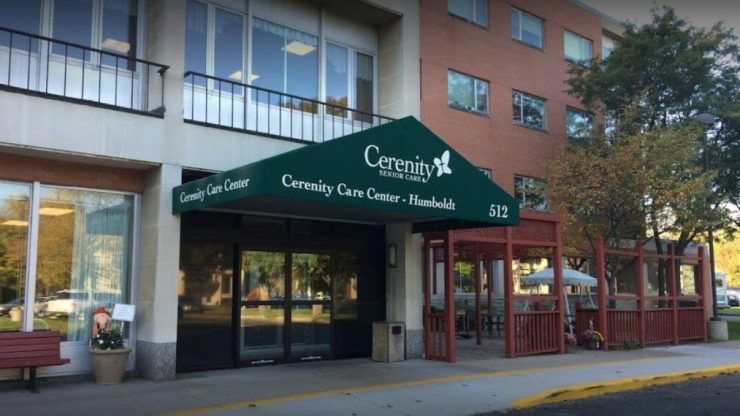
How is Cerenity Care Center On Humboldt Staffed?

CMS rates Cerenity Care Center on Humboldt's staffing level at 3 out of 5 stars, which is average compared to other nursing homes. Staff turnover is 58%, which is 12 percentage points above the Minnesota average of 46%. High turnover can affect care consistency as new staff learn residents' individual needs. RN turnover specifically is 74%, which is notably high. RNs provide skilled clinical oversight, so turnover in this role can affect medical care quality.

What Have Inspectors Found at Cerenity Care Center On Humboldt?

State health inspectors documented 45 deficiencies at Cerenity Care Center on Humboldt during 2023 to 2025. These included: 1 Immediate Jeopardy (the most serious level, indicating potential for serious harm or death), 5 that caused actual resident harm, 37 with potential for harm, and 2 minor or isolated issues. Immediate Jeopardy findings are rare and represent the most serious regulatory concerns. They require immediate corrective action.

Who Owns and Operates Cerenity Care Center On Humboldt?

Cerenity Care Center on Humboldt is owned by a non-profit organization. Non-profit facilities reinvest revenue into operations rather than distributing to shareholders. The facility operates independently rather than as part of a larger chain. With 93 certified beds and approximately 78 residents (about 84% occupancy), it is a smaller facility located in SAINT PAUL, Minnesota.

How Does Cerenity Care Center On Humboldt Compare to Other Minnesota Nursing Homes?

Compared to the 100 nursing homes in Minnesota, Cerenity Care Center on Humboldt's overall rating (1 stars) is below the state average of 3.2, staff turnover (58%) is significantly higher than the state average of 46%, and health inspection rating (1 stars) is much below the national benchmark.

What Should Families Ask When Visiting Cerenity Care Center On Humboldt?

Based on this facility's data, families visiting should ask: "What changes have been made since the serious inspection findings, and how are you preventing similar issues?" "How do you ensure continuity of care given staff turnover, and what is your staff retention strategy?" "Can I visit during a mealtime to observe dining assistance and food quality?" "How do you handle medical emergencies, and what is your hospital transfer rate?" These questions are particularly relevant given the facility's Immediate Jeopardy citations and the facility's high staff turnover rate.

Is Cerenity Care Center On Humboldt Safe?

Based on CMS inspection data, Cerenity Care Center on Humboldt has documented safety concerns. Inspectors have issued 1 Immediate Jeopardy citation (the most serious violation level indicating risk of serious injury or death). The facility has a 1-star overall rating and ranks #100 of 100 nursing homes in Minnesota. Families considering this facility should ask detailed questions about what corrective actions have been taken since these incidents.

Do Nurses at Cerenity Care Center On Humboldt Stick Around?

Staff turnover at Cerenity Care Center on Humboldt is high. At 58%, the facility is 12 percentage points above the Minnesota average of 46%. Registered Nurse turnover is particularly concerning at 74%. RNs handle complex medical decisions and coordinate care — frequent RN changes can directly impact care quality. High turnover means new staff may not know residents' individual needs, medications, or preferences. It can also be disorienting for residents, especially those with dementia who rely on familiar faces. Families should ask: What is causing the turnover? What retention programs are in place? How do you ensure care continuity during staff transitions?

Was Cerenity Care Center On Humboldt Ever Fined?

Cerenity Care Center on Humboldt has been fined $105,767 across 2 penalty actions. This is 3.1x the Minnesota average of $34,137. Fines at this level are uncommon and typically indicate a pattern of serious deficiencies, repeated violations, or failure to correct problems promptly. CMS reserves penalties of this magnitude for facilities that pose significant, documented risk to resident health or safety. Families should request specific documentation of what issues led to these fines and what systemic changes have been implemented.

Is Cerenity Care Center On Humboldt on Any Federal Watch List?

Cerenity Care Center on Humboldt is not on any federal watch list. The most significant is the Special Focus Facility (SFF) program, which identifies the bottom 1% of nursing homes nationally based on persistent, serious quality problems. Not being on this list means the facility has avoided the pattern of deficiencies that triggers enhanced federal oversight. This is a positive indicator, though families should still review the facility's inspection history directly.