Lyngblomsten Care Center
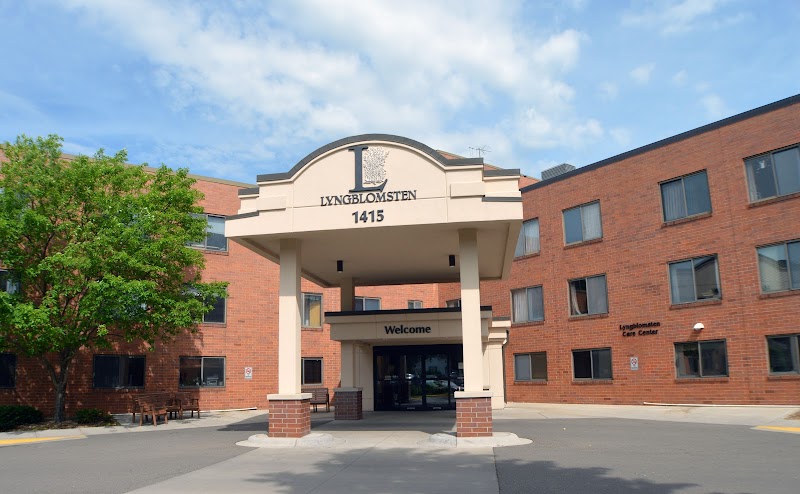
1415 ALMOND AVENUE, SAINT PAUL, MN 55108 (651) 646-2941
Non profit - Church related 225 Beds Independent Data: November 2025 2 Immediate Jeopardy citations
Trust Grade
31/100
#183 of 337 in MN
Last Inspection: June 2025

Inspected within the last 6 months. Data reflects current conditions.

Overview

Lyngblomsten Care Center has a trust grade of F, indicating significant concerns about the facility's operations and care quality. It ranks #183 out of 337 nursing homes in Minnesota, placing it in the bottom half, and #13 out of 27 in Ramsey County, suggesting that there are better local options available. Unfortunately, the facility is worsening, with reported issues increasing from 6 in 2024 to 8 in 2025. Although staffing is a strength with a 5/5 rating and a low turnover rate of 17%, which is well below the state average, the facility has accumulated $111,232 in fines, which is concerning and indicates repeated compliance problems. Specific incidents included failing to accurately reflect residents' resuscitation wishes in critical documentation, which could lead to unwanted medical interventions, and not following proper procedures for using a lift, resulting in a resident falling and sustaining injuries. These findings highlight both the strengths in staffing and the critical weaknesses in compliance and safety practices.
Trust Score
F
31/100
In Minnesota
#183/337
Bottom 46%
Safety Record
High Risk
Review needed
Inspections
Getting Worse
6 → 8 violations
Staff Stability
✓ Good
17% annual turnover. Excellent stability, 31 points below Minnesota's 48% average. Staff who stay learn residents' needs.
Penalties
✓ Good
$111,232 in fines. Lower than most Minnesota facilities. Relatively clean record.
Skilled Nurses
✓ Good
Each resident gets 53 minutes of Registered Nurse (RN) attention daily — more than average for Minnesota. RNs are trained to catch health problems early.
Violations
⚠ Watch
20 deficiencies on record. Higher than average. Multiple issues found across inspections.
★★★☆☆
3.0
Overall Rating
★★★★★
5.0
Staff Levels
★★★★☆
4.0
Care Quality
★★☆☆☆
2.0
Inspection Score
Stable
2024: 6 issues
2025: 8 issues

The Good

  • 5-Star Staffing Rating · Excellent nurse staffing levels
  • 4-Star Quality Measures · Strong clinical quality outcomes
  • Low Staff Turnover (17%) · Staff stability means consistent care
  • Full Sprinkler Coverage · Fire safety systems throughout facility
  • No fines on record
  • Staff turnover is low (17%)

    31 points below Minnesota average of 48%

Facility shows strength in staffing levels, quality measures, staff retention, fire safety.

The Bad

3-Star Overall Rating

Near Minnesota average (3.2)

Meets federal standards, typical of most facilities

Federal Fines: $111,232

Well above median ($33,413)

Significant penalties indicating serious issues

The Ugly 20 deficiencies on record

2 life-threatening
Jun 2025 8 deficiencies
CONCERN (D)

Potential for Harm - no one hurt, but risky conditions existed

Deficiency F0554 (Tag F0554)

Could have caused harm · This affected 1 resident

**NOTE- TERMS IN BRACKETS HAVE BEEN EDITED TO PROTECT CONFIDENTIALITY** Based on observation, interview and document review, the facility failed to ensure a self-administration of medication (SAM) ass...

Read full inspector narrative →
**NOTE- TERMS IN BRACKETS HAVE BEEN EDITED TO PROTECT CONFIDENTIALITY** Based on observation, interview and document review, the facility failed to ensure a self-administration of medication (SAM) assessment was completed and a provider order obtained to self-administer medications for 1 of 3 residents (R13) reviewed for medication administration. Findings include: R13's quarterly Minimum Data Set (MDS) assessment dated [DATE], indicated severely impaired cognition and diagnoses of Alzheimer's disease (a progressive neurological disorder affecting a person's memory, thinking, and behavior), heart failure and anxiety. The MDS indicated R13 required partial to moderate assistance for oral hygiene and substantial to maximum assistance for personal hygiene cares. R13's self-administration of medication assessment dated [DATE] indicated R13 did not wish to self-administer her medications. R13's undated order summary report included the following orders: - Resident is not capable of safely self-administering medications, dated 10/31/23. - Albuterol Sulfate Inhalation Nebulization Solution (Albuterol Sulfate) 3 milliliters (mL) inhale orally via nebulizer three times a day for cough or difficulty breathing, dated 3/13/25. R13's care plan was reviewed on 6/2/25, and revealed a lack of documentation of an assessment she was okay to self-administer medications. During a continuous observation on 6/2/25 starting at 1:23 p.m., a buzzing noise was heard from outside R13's room. At 1:24 p.m., trained medication aide (TMA)-A walked out of R13's room and back to a medication cart, leaving R13's door open. Inside R13's room, a nebulizer treatment machine was observed to be running and causing the buzzing noise heard. There was tubing going from the nebulizer treatment machine to a mask that covered R13's nose and mouth, and connected below the mask was a medicine cup with liquid condensation inside. R13 sat in her wheelchair inside her room facing the nebulizer treatment machine that was plugged into the wall. TMA-A was observed going from the medication cart into other resident rooms and back to the medication cart during this time. At 1:32 p.m., TMA-A returned R13's room and announced, time is up. R13 had removed the mask from her face and was holding it in her lap. R13 stated to TMA-A, I don't want it on. I have had worse colds than this. TMA-A responded, you took it off, and told R13 would need to update the doctor if she did not want the treatment any longer. TMA-A offered a drink of water and attempted to complete the medication pass, however R13 began to cry, spit out her medications and stated she wanted to leave. During interview on 6/2/25 at 1:37 p.m., TMA-A stated R13 had been having a cough and was taking a scheduled nebulizer treatment before breakfast and after lunch for the cough. TMA-A stated R13 did not like the afternoon nebulizer treatment but took the morning treatment well. TMA-A confirmed she administered the nebulizer treatment and left R13 in her room unsupervised while she finished her treatment. TMA-A stated she normally kept the mask on but today was not normal for her. TMA-A stated R13 should have an order in her medication administration record (MAR) stating it was okay for her to be left alone (or unsupervised) to finish her nebulizer treatment. TMA-A was unsure about the self-administration assessment but indicated the nursing manager would know. TMA-A expected there to be an order in place indicating R13 could complete her nebulizer treatment on her own. TMA-A reviewed MAR and identified for R13; Albuterol Sulfate Inhalation Nebulization order and opened the administration instructions and stated, it doesn't have all the details in there. TMA-A was unable to locate a provider order indicating R13 was okay to self-administer her nebulizer treatment, however stated the MAR banner or administration instructions was where it should be. During interview on 6/2/25 at 1:47 p.m. with registered nurse (RN)-A, indicated a resident who wished to self-administer medications, including complete their nebulizer treatment after set-up unsupervised, would need a provider's order and an assessment. RN-A reviewed R13's orders and identified an order dated 10/31/23, that indicated R13 was not able to self-administer medications. RN-A confirmed this order would include nebulizer treatments. RN-A reviewed R13's electronic health record (EHR), including her MAR, and confirmed staff should stay with R13 for the duration of the nebulizer treatment to ensure she kept the mask on. RN-A explained if a resident wished to self-administer medications, staff were expected to obtain an order and perform an assessment to determine if they could safely do so. During interview on 6/5/25 at 8:45 a.m. with RN-B, indicated if a resident had an order to self-administer their medications, it should be in the MAR and/or in the administration instructions for staff to see. During interview on 6/5/25 at 9:56 a.m., the director of nursing (DON) expected staff to follow the facility's self-administration policy and procedure. Facility Self-Administration of Medications policy revised 5/22, indicated the facility would allow residents to self-administer medications and/or treatments if the resident wished AND if the resident was assessed to be capable of safely self-administering medications. The policy directed staff to complete a self-administration of medication assessment and if the resident wished to self-administer and was determined to be safe to do so, to obtain a physician's order to self-administer. Further, the policy guided staff on the specificity of the self-administration order, including any modifications (if any) determined during the assessment.
CONCERN (D)

Potential for Harm - no one hurt, but risky conditions existed

Deficiency F0604 (Tag F0604)

Could have caused harm · This affected 1 resident

Based on observation, interview and document review, the facility failed to ensure freedom of movement was not restricted for 1 of 1 resident (R143) who was reviewed for physical restraints. Findings...

Read full inspector narrative →
Based on observation, interview and document review, the facility failed to ensure freedom of movement was not restricted for 1 of 1 resident (R143) who was reviewed for physical restraints. Findings include: R143's quarterly Minimum Data Set (MDS) assessment, dated 4/16/25, identified severely impaired cognition. R143's diagnoses included; Parkinson's disease (a chronic progressive neurological disorder), dementia, and progressive neurological conditions accompanied by a psychotic disorder. R143 required maximum assistance to ambulate ten feet and was fully dependent on others when using the wheelchair. They also needed maximal assistance for transfers, including rolling from side to side, seating, and positioning in bed. A bed alarm was used daily. R143's care plan reviewed on 4/10/25, identified interventions for self care deficits, fall risk, and mood enhancement. The interventions included placing the resident in the common area recliner to engage in activities-such as watching the news-and for staff to observe and intervene when R143 attempted to self transfer. Staff were encouraged to keep R143 in public areas whenever not eating or napping. Furthermore, the care plan recognized impaired mobility secondary to impaired balance and unsteady gait. R143 required assistance from two staff members with a walker; one to two staff for bed mobility, repositioning, sitting up, and rolling side to side; and that a mechanical lift was used when R143 became stiff. R143 was able to propel self short distances but needed assistance for longer distances or when off the unit. R143's active providers orders last reviewed 5/6/25, identified a pressure alarm and pads but lacked an order for restraints. R143's quarterly Interdisciplinary Care Conference report dated 4/28/25, identified family member (FM)-A attended the conference and requested the television on when R143 was in the lounge area and recommended which channels were preferred and suggested R143 held a book for comfort. R143's progress notes dated 5/10/25 at 1:55 p.m., indicated R143 had more than one fall in the past three months, had balance and decreased muscular coordination and used medications that placed R143 at moderate risk for falls. R143's progress notes dated 5/16/25 at 6:33 p.m., indicated R143 was screened by occupational therapy (OT) post fall, was not a candidate for OT due to the lack of following directions and declined in basic activities of daily living (BADL) and needed extensive assist since admission despite therapy intervention. R143's progress notes dated 5/31/25 at 6:12 p.m., indicated R143 self-transferred and was seen walking around his room unassisted and indicated R143 was not stable walking on his own and brought out to the nurse's station for one-on-one cares. R143's electronic medical record (EMR) lacked documentation for a medical diagnosis treated by use of the electric recliner. Furthermore, the medical record failed to show an assessment or R143's ability to rise independently out of the chair/recliner. During an interview on 6/2/25 at 12:30 p.m., FM-A stated staff placed R143 in the common area in the chair, reclined, with his feet up because the bed alarm can no longer be used. The recliner was the only place staff could keep him because of the recent falls. During an observation on 6/3/25 at 3:52 p.m., R143 was in the common area, in a recliner with both feet up. The recliner remote was hung over the back of the chair. R143's personal paid companion was seated to the right and two other residents were in their wheelchairs. No staff were present. During an interview on 6/4/25 at 8:54 a.m., registered nurse (RN)-C stated R143 can't activate the chair, and the wife requested the use of the recliner. RN-C further stated any assessment would be done by OT and was not aware of any completed assessment. During an observation on 6/4/25 at 9:54 a.m., R143 was in the recliner in the common area, both feet were up. R143 was awake and looking around the room. The remote was placed arms reach away on the heat register. During an interview 6/4/25 at 11:42 a.m., FM-A stated no consent, or waiver was signed that approved the use of the recliner. During an interview on 6/4/25 at 11:46 a.m., director of therapy (DOT) stated R143 had been assessed for transfers, but never assessed for a recliner. During an interview on 6/4/25 at 11:46 a.m., the director of therapy (DOT) stated R143 was assessed for transfers only and never assessed for safety with the use of an electric recliner. The DOT was not aware of any assessments ever completed for a lift chair or recliner. During an Interview on 6/5/25 at 7:09 a.m., the director of nursing (DON) stated he confirmed with the nurse manager on the unit that R143 cannot get up from the recliner, but felt the recliner was a safe intervention and now staff could observe and intervene as he is in the lobby and not in his room. During an interview on 6/5/25 at 8:29 a.m., occupational therapy (OT)-A confirmed no referral was received to assess the safety and use of the electric recliner for R143 furthermore, an assessment would be requested for a recliner only if a pressure injury occurred that required a cushion or if a resident had fallen out of a recliner. OT-A was aware of assessments for recliners and completed those at other facilities, then confirmed R143 had not been assessed to use the recliner. Restraint Use policy revised 5/21, identified the use of physical restraint was prohibited for discipline or convenience, unnecessarily inhibit a resident's freedom of movement or activity. Convenience was defined as the result of any action that has the effect of altering a resident's behavior such that the resident requires a lesser amount of effort or care and is not in the resident's best interest. Freedom of movement means any change in place or position for the body or any part of the body that the person is physically able to control. Physical Restraint is defined as any manual method, physical or mechanical device, equipment, or material that meets all the following criteria: is attached or adjacent to the resident's body, cannot be removed easily by the resident, restricts the resident's freedom of movement or normal access to his/her body. Physical Device Evaluations policy revised 6/22, identified evaluations for any manual method or physical or mechanical device, material, or equipment attached or adjacent to the resident's body that the individual cannot remove easily which restricts freedom of movement or normal access to one's body. The guidelines identified an atypical method, or device is considered any intervention or equipment that is nonroutine or would not be considered standard or required in the normal delivery of care. Some examples of atypical methods or devices are Geri-chairs, wedge cushion in wheelchairs, bed placed against a wall for purposes other than room décor/style, anti-roll back wheelchairs.
CONCERN (D)

Potential for Harm - no one hurt, but risky conditions existed

Assessment Accuracy (Tag F0641)

Could have caused harm · This affected 1 resident

**NOTE- TERMS IN BRACKETS HAVE BEEN EDITED TO PROTECT CONFIDENTIALITY** Based on interview and document review, the facility failed to ensure the Minimum Data Set (MDS) was accurately coded to reflect...

Read full inspector narrative →
**NOTE- TERMS IN BRACKETS HAVE BEEN EDITED TO PROTECT CONFIDENTIALITY** Based on interview and document review, the facility failed to ensure the Minimum Data Set (MDS) was accurately coded to reflect discharge status for 1 of 1 resident (R200) reviewed for hospitalization. Findings include: R200's discharge Minimum Data Set (MDS) dated [DATE], indicated R200 admitted to facility on 2/10/25, from a Short-Term General Hospital, and discharged from facility on 3/6/25, discharging to Short-Term General Hospital. R200's progress note dated 3/5/25 at 10:00 a.m., indicted R200 discharge home back to [name of assisted living] signed onto hospice so no home services. R200's nursing progress note dated 3/6/25 at 11:04 a.m., indicated R200 discharged to [name of assisted living]. On 6/4/25 at 10:05 a.m., registered nurse (RN)-F, know as a MDS coordinator reviewed R200's MDS dated [DATE], and confirmed the MDS was inaccurately coded and R200 discharged home and not to the hospital. RN-F stated the MDS was expected coded correctly and correction would need to be completed. On 6/4/25 at 2:49 p.m., the director of nursing (DON) stated the MDS was expected to be accurate and the MDS coordinators follow the MDS RAI (Resident Assessment Instrument) manual. Long-Term Care Facility Resident Assessment Instrument 3.0 User ' s Manual dated 10/24, indicated In addition, an accurate assessment requires collecting information from multiple sources, some of which are mandated by regulations. Those sources must include the resident and direct care staff on all shifts, and should also include the resident ' s medical record, physician, and family, guardian and/or other legally authorized representative, or significant other as appropriate or acceptable. It is important to note here that information obtained should cover the same observation period as specified by the MDS items on the assessment, and should be validated for accuracy (what the resident ' s actual status was during that observation period) by the IDT completing the assessment. As such, nursing homes are responsible for ensuring that all participants in the assessment process have the requisite knowledge to complete an accurate assessment.
CONCERN (D)

Potential for Harm - no one hurt, but risky conditions existed

Deficiency F0676 (Tag F0676)

Could have caused harm · This affected 1 resident

**NOTE- TERMS IN BRACKETS HAVE BEEN EDITED TO PROTECT CONFIDENTIALITY** Based on observation, interview, and document review, the facility failed to consistently utilize a communication device or prov...

Read full inspector narrative →
**NOTE- TERMS IN BRACKETS HAVE BEEN EDITED TO PROTECT CONFIDENTIALITY** Based on observation, interview, and document review, the facility failed to consistently utilize a communication device or provide an interpreter for 1 of 1 resident (176) reviewed who was deaf and used ASL to communicate care needs. Findings Include: R176's significant change Minimum Data Set (MDS) assessment dated [DATE], identified no cognitive impairment, primary language was American sign language (ASL), and an interpreter was needed to communicate with doctors and health care staff. R176's care plan revised on 12/3/24, identified impaired communication. R176's care plan identified methods for communicating such as short, direct simple phrases, visual aids, and indicated please provide me with an ASL interpreter for all significant meetings/interactions such as care conferences, cognitive/mood assessments, etc. R176's active provider orders last reviewed 5/5/25, indicated weekly pain and skin assessments, daily ambulation program and a fluid restriction order which could have required staff to communicate with R176. During an initial interview on 6/2/25 at 1:11 p.m., R176 wrote on a notebook, some of the staff do not know how to use the iPad to contact the ASL interpreter and wrote on a notebook to communicate. R176 wrote my preference was the ASL interpreter be used with all cares because writing in ASL structure confuses staff that are non-English speaking. An ASL Interpreter was used for the remainder of the interview and through the interpreter R176 expressed concerns that aids and nurses do not understand me and it has always been my preference to use the ASL interpreter. During an interview on 6/3/25 at 4:00 p.m., R176 typed on a word document that staff did not use the iPad interpreter with any interactions or cares today and that only the social worker used the iPad interpreter. R176 indicated a concern that registered nurse (RN-D) completed a skin assessment and did not use the interpreter to communicate. R176 was upset and wheeled out to the nurse's station and pointed at RN-D. During an interview on 6/4/25 at 9:23 a.m., R176 was asked via typed communication on a computer whether the iPad interpreter in the social worker ' s office had been used for care. R176 responded by shaking their head to indicate no. They continued to communicate through written messages, stating that few staff members knew how to use the iPad interpreter but were unable to specify which staff members. During an interview on 6/4/25 at 9:30 a.m., nursing assistant (NA)-E confirmed not having ever used the iPad but was familiar with how it worked and where it was kept. During an interview on 6/4/25 at 9:40 a.m., trained medical aid (TMA)-B stated does not use the iPad to administer medications or with cares because R176 was able to answer yes or no. TMA-B stated R176 called staff and wrote down messages in a notebook. TMA-B was unaware of R176's preference, and confirmed this was the only way staff communicated with her. TMA-B confirmed not using the iPad, knowing ASL, and R176 was on her assignment sheet for the day. During an interview on 6/4/25 at 3:18 p.m., registered nurse (RN)-D stated an iPad would normally be used, but R176's skin was checked with no major concerns, the interaction wasn't a big deal. RN-D confirmed a notebook and pen was used. During an interview on 6/5/25 at 7:06 a.m., the director of nursing (DON) stated that the care plan dictated how to communicate with the resident. The DON explained that alternative communication methods were sometimes used, and that the facility had a comprehensive policy in place for serving the deaf community. The expectation was to use the ASL interpreter for all major interactions. The DON agreed that if the resident preferred the interpreter, staff were expected to use the iPad interpreter. The DON noted that a skin assessment might not typically require use of the iPad interpreter, but given R176 ' s stated preference, it should be used. During an interview on 6/5/25 at 8:57 a.m., R176 was asked, do you prefer staff to use the iPad with all communication with you? To which R176 replied, yes, they need education, they do not know how to use it, the social worker knows how to use it he is the only one. They think I write they have hard time reading my writing so it best to use iPad ASL it best I have to do it. Facility Access for Communication-Impaired Residents/Patients policy reviewed 8/2023, identified an interpreter be used upon request of patient/resident, explaining medication and possible side effects, and obtaining permission for treatment.
CONCERN (D)

Potential for Harm - no one hurt, but risky conditions existed

Deficiency F0679 (Tag F0679)

Could have caused harm · This affected 1 resident

**NOTE- TERMS IN BRACKETS HAVE BEEN EDITED TO PROTECT CONFIDENTIALITY** Based on observation, interview and document review, the facility failed to ensure individualized activities were provided for 2...

Read full inspector narrative →
**NOTE- TERMS IN BRACKETS HAVE BEEN EDITED TO PROTECT CONFIDENTIALITY** Based on observation, interview and document review, the facility failed to ensure individualized activities were provided for 2 of 4 residents (R88 and R143) reviewed for activities. Findings include: R88's quarterly Minimum Data Set (MDS) assessment dated [DATE], indicated R88 was admitted to the facility 2/1/25, severe cognitive impairment, sometimes feel lonely or isolated from those around, no rejection of care, wandering occurred four to six days, but less than daily, utilized a walker and wheelchair, required substantial/maximal assistance with dressing, supervision with personal hygiene, sit to lying, sit to stand, and walking, and diagnoses included hip fracture and non-Alzheimer's dementia. R88's care plan printed 6/3/25, indicated R88's leisure interests include going to church, listening to music, talking with others and watching TV and interventions included document attendance/refusals, encourage to tell staff of leisure needs, encourage short durations of activities as able, monitor activity setting for safety, place near outside edge of group, place near sound stage, provider current activity calendar. R88's Activity/Recreation assessment dated [DATE], therapeutic recreation (TR)-D director indicated activity preferences: discussion/education, food programs (baking/cooking), gardening/plants, music, reading, religious/spiritual programs, socialization, likes to talk about her family and genealogy, likes dogs and cats, family; preference for program style: small groups, 1:1, summary indicated R88 needs interaction and encouragement, visual learner, enjoy being reassured and people interaction with me in a kind way, feel best when doing something, like to laugh and enjoy funny story or joke, love to read and garden, cook, listening to music and love dogs and cats. R88's Documentation Report dated 3/1/25-3/31/25, and 4/1/25-4/30/25, indicated no documentation of R88's activities. R88's Documentation Report dated 5/1/25-5/31/25, indicated on 5/22/25 at 2:59 p.m., R88 music observed. No other documentation of activities. R88's Documentation Report dated 6/1/25-6/30/25, indicated on 6/2/25, the documentation report added 1:1 visits, independent leisure, and spiritual. On 6/2/25 at 6:38 p.m., during a telephone interview family member (FM)-E stated concern regarding the lack of available activities in the TCU (transitional care unit). FM-E stated frequent afternoon visits and had not observed R88 participate in activities. FM-E stated the TCU unit did not have activities going on for the residents. FM-E stated R88 enjoyed interaction with others and would likely participate if activities were offered. On 6/3/25 at 8:45 a.m., R88 was observed sleeping in bed. On 6/3/25 at 12:43 p.m., R88 was seated in a wheelchair by the first-floor nursing station and stated she wanted to go home, and further stated she like to be kept busy, specifically mentioning she enjoyed cleaning and having her fingernails painted. On 6/3/25 at 1:33 p.m., R88 was seated in a wheelchair in the day room watching television. On 6/3/25 at 1:10 p.m., trained medication aide (TMA)-D stated that each resident had an activity calendar in their room. TMA-D stated activities staff were responsible for offering activities to the residents. TMA-D stated occasionally R88 would go to chapel. On 6/3/25 at 1:13 p.m., R88's room was observed and both April 2025 and June 2025 activity calendars were found posted, April's near the door and June's behind the bedside table. Nursing Assistant (NA)-D stated that activity staff were responsible for offering activities to residents, including R88, but could not recall if R88 had participated. On 6/3/25 at 1:20 p.m., registered nurse (RN)- G stated activities staff were responsible for offering and including R88 in activities. On 6/3/25 at 1:39 p.m., TR-D stated she was responsible for first floor resident activities including R88, and stated any staff can offer and include R88 in activities. TR-D confirmed there was no documentation of R88 participating in activities prior to 6/3/25. TR-D acknowledged R88's activities were not consistently offered or documented as expected. TR-D stated she completed R88's activity interest and assessment but could not confirm those preferences were being consistently implemented On 6/4/25 at 8:18 a.m., R88 was observed in a wheelchair and self-propelled through the dining room and R88 stated she did not know what she was going to do today. On 6/4/25 at 12:58 p.m., during a follow up interview TR-D confirmed R88 was not consistently offered or included in activities and was unsure if other staff had included R88 in activities. TR-D confirmed that she was responsible for the TCU residents' activity planning and should have ensured offers were made based on R88's assessment. On 6/4/25 at 2:57 p.m., the administrator stated residents were expected to be offered activities based of interests and specific to each resident and confirmed activities staff were expected to offer and document on R88's activities. The administrator confirmed that activity offerings were expected based on the preferences and activity assessment. R143s admission MDS dated [DATE], identified activity preferences were books, pets, news, engaged in favorite activities, attended religious activities and going outdoors. R143's quarterly MDS dated [DATE], identified cognitive impairment, diagnoses of Parkinson's disease, dementia with progressive neurological conditions. R143 had clear speech, wore hearing aids, had no impairment to vision, had the ability to understand others, used a walker/wheelchair and was dependent on staff for mobility/transfers. R143's care plan initiated 4/10/25, identified a care area of activities and had interventions to attend group activities and wanted encouragement to attend group programs for short periods and if unable to stay would be assisted out of the group. R143 would like his activity level monitored and assessed for changes, preferred to pursue independent activities such as having someone read devotions, bring pets to visit, walking, listening to music. The care plan identified R143 would notify activities if he needed independent leisure supplies and for staff to anticipate independent needs and to be reminded and assisted to group activities of interest. R143's paper chart that included an activities tab was reviewed but had no activities recorded. R143's electronic medical record (EMR) was reviewed but had no attendance to activities recorded. An activities assessment dated [DATE], identified R143's family was very involved and visited daily. He had attended some music events and was willing to stay for concerts if family attended. He enjoyed going for walks around the facility and activities of interest were animals, table games, music, singing, concerts, special events, news, devotions and worship services. R143 was a gardener and had an interest in nature groups. R143's quarterly therapeutic recreation note dated 1/16/25 and 4/28/25, were reviewed and contained the same note, R143 continued to pursue independent leisure interests daily with assistance setting up as needed and participated or observed group programs as desired/able. R143's family was very involved and often visited daily. Family typically walked R143 around the neighborhood halls on 3rd floor and would at times encourage him to join activities. He had attended some music events- not a fan of polka music but more willing to stay for concerts if family attended with him. R143 used a walker for mobility and required staff/family assistance/supervision. Activities of interest include animals (had dogs), table games (risk, monopoly), music/singing/concerts (Elvis, 50's), special events, keeping up with the news, devotions and worship services (Lutheran). R143 was previously a gardener and has observed flower arrangements/nature groups when walking through the activity room with family. Independent leisure interests consist of watching tv/movies (CNN news, Netflix), visited with family, devotions, music, walking, pets, resting in my room or neighborhood lounge, and snacking as able. He often rests in the neighborhood lounge with peers where they watch tv together/ observe those passing in hallway. R143 responded to conversation and hears with loud tone and used hearing aids. His care plan has been reviewed and remained appropriate. During an interview on 6/2/25 at 12:30 p.m., family member (FM)-A stated a calendar of activities was posted in R143's room every month, but the facility doesn't invite him to attend. Most of the activities are over by the time family arrives and felt if family doesn't take him to an activity or to church, R143 sat in his room and FM-A would appreciate if staff would invite him to activities. FM-A stated the few staff that came which was a long time ago, they would ask, but if he didn't respond or shook his head no, they would just leave. FM-A stated the facility had a shortage of staff and felt she needed to visit every day to take R143 out of his room. During an observation on 6/3/25 at 9:43 a.m., R143 was in the lounge area, laying in the recliner watching the news. During an observation and interview on 6/3/25 at 3:52 p.m., R143 was in the lounge area in a recliner. A privately paid companion (FM)-B stated I arrived today at 1:00 p.m., have been with R143 since he lived at home and came every Tuesday since R143 moved to the facility. FM-B stated no one from activities came today to invite R143 but the facility used to invite him to activities when he first came and confirmed no one has invited R143 to activities recently. Activity calendar for 6/3/25 read at 10:15 a.m. included devotions, 11:00 a.m. [NAME] music class, 2:00 p.m., bingo, 6:45 p.m. cloudberry choir concert. During an interview on 6/4/25 at 11:45 p.m., activities personnel (A)A stated R143 preferred to watch tv in the lounge with a small group, doesn't like large groups and therefore would not be invited to an activity such as bingo. A-A was aware R143 preferred music events but was unable to sit for long periods, so if staff brought him to an activity, he would come last. A-A acknowledged R143's wife brought him to most activities but stayed to the side. The facility didn't invite R143 as much as they should, confirmed he did not attend the music event yesterday, and that he has not attended any activity by invitation recently. All activities have been with his family the past several months. During an interview on 6/4/25 at 1:18 p.m., TR-D stated the facility offered individualized activities such as an art and roving library cart, puzzles, cross words and for residents that are unable to attend large group activities we ask the nursing assistants to turn on the lounge television to view the scheduled program in a smaller group setting. Residents that need more one on one interaction could request a special friend visit or have a book read by volunteer services. Activities are tracked using point click care (computer software), but residents that decline activities were not tracked. The TR-D reviewed all R143's 2025 activity tasks reports in his EMR and confirmed no activities had been recorded. Facility Therapeutic Recreation Assessments and Documentation policy dated 5/17, indicated: Policy: To provide for official, comprehensive written records of all Resident's interests and involvement in Therapeutic Recreation programs. The Therapeutic Recreation staff are assigned the residents to which they must complete all documentation with in specified time frames. 1. admission Assessment a. Upon admission sections Band F of the MDS will be completed and serve as the initial assessment for the resident/patient. b. A progress note which includes details of the assessment will be done c. Any corresponding raps will be completed for appropriate sections 2. Resident Care Plans a. The care plan is developed from information that is collected in the initial assessment, observations from the resident and information obtained from their representative. b. A care plan will be developed for each resident/patient within 21 days c. Care Plan will be reviewed and updated as needed every 90 days, if a significant change occurs and as needed. 3. Daily Attendance Records a. Daily attendance will be recorded in POC b. Review records every 90 days, if a significant change occurs and as needed to ensure any emerging needs for resident / patient reassessments or care plan reviews. c. File attendance records for a minimum of 5 years d. Make use of attendance records as data for summary within resident /patient progress notes 4. Quarterly/Annual/ Significant Change Progress Notes a. Summarize information from activities, care plan and MDS assessments to complete quarterly progress note. b. Do a Therapeutic Recreation Progress note.
CONCERN (D)

Potential for Harm - no one hurt, but risky conditions existed

Accident Prevention (Tag F0689)

Could have caused harm · This affected 1 resident

**NOTE- TERMS IN BRACKETS HAVE BEEN EDITED TO PROTECT CONFIDENTIALITY** Based on observation, interview, and document review, the facility failed to comprehensively assess transfers with a mechanical ...

Read full inspector narrative →
**NOTE- TERMS IN BRACKETS HAVE BEEN EDITED TO PROTECT CONFIDENTIALITY** Based on observation, interview, and document review, the facility failed to comprehensively assess transfers with a mechanical lift or develop and implement policies to ensure the safety and supervision for 1 of 4 residents (R20) reviewed for accidents. Findings include: R20's annual Minimum Data Set (MDS) assessment dated [DATE], identified severely impaired cognition and had limited function to the right arm and hand, used a wheelchair, required maximal assistance for mobility and was on hospice. R20's diagnoses included cerebral palsy, seizure and psychotic disorders, and post-polio syndrome. R20's care plan (CP) created on 6/2/23, identified mobility as an area of concern and indicated one staff assisted with bed mobility, repositioning, and sitting up. Furthermore, the CP identified R20 had a history of compression fractures to the spine and spasticity/hemiparesis of the right hand since birth, was not ambulatory and needed one to two staff for transfers with the mechanical lift (EZ Stand). R20's electronic medical record (EMR) contained a completed annual physical device evaluation dated 3/3/25 but failed to reassess R20's transfer needs when a mechanical lift was used. During an observation and interview on 6/2/25 at 4:51?p.m., R20 was found in bed with the upper body against the wall, the head resting against the wall at an angle, and the left foot hanging off the bed while calling out for help. Licensed practical nurse (LPN) B entered the room and repositioned R20. R20 was moved into a seated position, a belt was placed around the resident and attached to the mechanical standing lift; both feet were lifted onto the foot plate by the nurse. R20's left hand was placed on the handle and held securely by a nursing assistant (NA)-C. R20's right arm was flaccid and hung down at the side of the body. R20 was observed hanging from the stand, unable to bear weight while being lowered onto the wheelchair. LPN B stated that R20's mode of transfer was by the mechanical standing lift and the criteria to use the lift was to bare weight and at least one hand on the handle, then stated R20 met criteria for a standing lift. During an interview on 6/3/25 at 9:15 a.m., NA-A stated I am not comfortable with R20's transfers and called for a second aid. NA-A stated the standing lift was appropriate for R20 because he stood up good and held on to the handle with one hand. During an observation and interview on 6/3/25 at 9:25 a.m., NA-A and NA-C assisted R20 transfer using the mechanical standing lift. R20's left hand was secured to the handle, but R20 did not stand up independently, could not bear weight and hung from the lift. NA-A stated R20 supported himself during other transfers and would often stand without hanging on and needed reminders to hang on before the aids would start the transfer. During an interview on 6/3/25 at 1:35 p.m., director of therapy (DOT) stated therapy assessed residents for transfers upon admission, status change, or if a referral was received. The DOT stated R20 was not currently in therapy and was unfamiliar with the transfers. The qualifications to use the EZ Stand (mechanical standing lift) would be to bear weight, moderate to maximal assistant, tolerated standing at least thirty seconds, and to hold on with one hand decently. The DOT stated patients with hemiparesis, for example a stroke patient would not be a candidate for the EZ Stand. The DOT stated resident needed to assist with the stand to use the EZ Stand and confirmed therapy has not received a referral to assess transfers for R20 but would observe a transfer later today. During an interview on 6/3/25 at 1:50 p.m., licensed practical nurse (LPN)-A explained the process on how residents are assessed for transfers. It starts with new admissions, physical and occupational therapy (PT, OT) provided guidance, the resident and family's goals and fears are discussed and overall allowed the residents to function at their highest level but remained safe. LPN-A stated if there was a change in transfer abilities a referral was placed to PT for an evaluation and the criteria used for the EZ Stand was to bear weight. If a resident had a stroke, two assistants were required. LPN-A stated the nursing assistants kept the nurse updated on transfers, but ultimately it was the nurse's decision and if there was a concern after the evaluation the resident would use the next level for transfers. LPN-A stated staff were aware of the process. During an observation and interview on 6/3/25 at 3:33 p.m., NA-B and NA-C entered R20's room and began to transfer R20 with the standing lift. The DOT observed the transfer. NA-B and NA-C indicated they were familiar with R20 and abilities to transfer. R20's legs were dependent upon staff to lift them on to the foot plate, the belt was attached to R20's waist, left hand placed on the handle, and right arm hung to the side in a flaccid position. The DOT asked how long R20 could stand and then R20's left hand fell from the handle. NA-C asked the DOT if this meant R20 could not safely transfer with the EZ Stand and the DOT nodded yes. The DOT stated EZ Stand transfers needed 20 some seconds of tolerance, but usually 45-60 seconds was needed to transfer to the wheelchair or toilet and then confirmed R20 should no longer use the EZ Stand. During an interview on 6/4/25 at 3:52 p.m., the director of nursing (DON) stated the process for transfers was continuous monitoring of care needs and adjusted transfer abilities based on the front-line staff recommendations. Any changes are discussed, care planned, and it was a collaborate effort based on a formal assessment from therapy. The DON stated the staff knew how to transfer resident safely and are saying the correct things but had learned that staff didn't identify unsafe transfers. Facility Transfer Procedures policy revised 5/24, identified residents are not suited for standing transfers are unpredictably able to bear weight, unable to hold onto handles/lift frame. Facility Physical Device Evaluations policy revised 6/22, identified evaluations for any manual method or physical or mechanical device, material, or equipment attached or adjacent to the resident's body that the individual cannot remove easily which restricts freedom of movement or normal access to one's body. The guidelines identified an atypical method, or device is considered any intervention or equipment that is nonroutine or would not be considered standard or required in the normal delivery of care. Some examples of atypical methods or devices are geri-chairs, wedge cushion in wheelchairs, bed placed against a wall for purposes other than room décor/style, anti-roll back wheelchairs.
CONCERN (D)

Potential for Harm - no one hurt, but risky conditions existed

Deficiency F0760 (Tag F0760)

Could have caused harm · This affected 1 resident

**NOTE- TERMS IN BRACKETS HAVE BEEN EDITED TO PROTECT CONFIDENTIALITY** Based on observation, interview, and document review, the facility failed to ensure residents were free of significant medicatio...

Read full inspector narrative →
**NOTE- TERMS IN BRACKETS HAVE BEEN EDITED TO PROTECT CONFIDENTIALITY** Based on observation, interview, and document review, the facility failed to ensure residents were free of significant medication errors for 1 of 6 residents (R115) reviewed for medication administration. Findings include: R115's face sheet printed 6/5/25, indicated diagnoses of reduced mobility, cardiac pacemaker, personal history of sudden cardiac arrest, Alzheimer's disease, and heart failure. R115's quarterly Minimum Data Set (MDS) assessment dated [DATE], indicated moderately impaired cognition, use of wheelchair, substantial/maximal assistance with personal hygiene, lower body dressing, and bathing. R115's care plan printed revised 8/14/24, indicated self-care deficit related to congestive heart failure, pacemaker in left chest, and dementia. Staff crush my pills, mix together in applesauce to aide in swallowing. R115's physician's orders printed 6/5/25, indicated an order for metoprolol succinate extended release 50mg tablet (blood pressure medication) daily for high blood pressure. An additional order stated medications may be crushed or given in liquid form unless contraindicated or otherwise. During observation on 6/4/25 at 8:30 a.m., trained medication aide (TMA)-C prepared medications for administration to R115. TMA-C crushed acetaminophen 1000mg, metoprolol 50mg extended release, potassium 20meq, torsemide 30mg, and sertraline 100mg for ease of swallowing for R115. During interview on 6/4/25 at 8:35 a.m., prior to administration of medication to R115, TMA-C verified she had been crushing R115's metoprolol succinate extended-release tablet for quite some time due to R115's difficulty swallowing multiple pills and intended to administer metoprolol succinate tablet crushed. TMA-C further stated R115 had an order to crush medications so she assumed metoprolol succinate extended release could be crushed. TMA-C stated she did not see the green sticker on the metoprolol succinate extended-release medication card that read: do not crush or chew. During interview on 6/4/25 at 8:45 a.m., registered nurse (RN)-E stated R115 had an order to crush medications. RN-E further stated she was unsure if the metoprolol succinate extended-release could be crushed and she would need to call the provider to check. RN-E stated she did not know the metoprolol succinate extended-release medication card included a sticker indicating not to crush or chew the medication. During interview on 6/4/25 at 9:15 a.m., RN-E stated she had called nurse practitioner (NP)-D and NP-D stated the metoprolol succinate extended-release could not be crushed. NP-D changed the order to metoprolol tartrate 25mg tablet two times per day. During interview on 6/5/25 at 8:39 a.m. director of nursing (DON) stated he had heard about this medication error yesterday and had informed RN-E that extended-release medications could not be crushed unless specifically ordered by a provider due to them needing to be released in the body over time. DON further stated it was the facility's responsibility to make sure the provider was notified if a medication needed to be changed to a different form to be crushed and he would expect the nurses to do that. R115's blood pressure readings were reviewed for one month and ranged from 117/75 to 157/86. A facility policy on crushing of medications was requested but not received.
MINOR (C)

Minor Issue - procedural, no safety impact

Deficiency F0577 (Tag F0577)

Minor procedural issue · This affected most or all residents

Based on observation, interview and document review, the facility failed to ensure complaint investigation survey results were readily accessible and available for review within the campus. This had p...

Read full inspector narrative →
Based on observation, interview and document review, the facility failed to ensure complaint investigation survey results were readily accessible and available for review within the campus. This had potential to affect all 207 residents, visitors, and their families who could wish to review the information. Findings Include: During the recertification survey on 6/2/25 at 12:21 p.m., a binder labeled survey results hung on the wall to the left of the information board located in a hallway on the 1st floor, adjacent to the front desk and contained the following results: Recertification survey dated 3/14/24 Abbreviated complaint survey results dated 5/21/24. The facility binder lacked documentation in the form of a CMS 2567 (Formal investigation documentation required by the Centers for Medicare and Medicaid Services-CMS) for investigations or standard surveys completed during the following dates: 6/27/24, abbreviated complaint survey results, 7/29/24, abbreviated complaint survey results, 8/29/24, abbreviated complaint survey results with F578- cited at J. 1/17/25, standard abbreviated survey results During interview on 6/2/25 at 6:17 p.m., the administrator stated the director of nursing was responsible for maintaining the binder. The director of nursing (DON) entered the office and stated the past survey results will be printed and placed in the binder. During an interview on 6/4/25 at 11:00 a.m., R63 stated survey results are not available for residents to review. Policies related to survey results were requested, but no policies were received.
Aug 2024 1 deficiency 1 IJ
CRITICAL (J) 📢 Someone Reported This

A family member, employee, or ombudsman was alarmed enough to file a formal complaint

Immediate Jeopardy (IJ) - the most serious Medicare violation

Deficiency F0578 (Tag F0578)

Someone could have died · This affected 1 resident

**NOTE- TERMS IN BRACKETS HAVE BEEN EDITED TO PROTECT CONFIDENTIALITY** Based on interview and document review, the facility failed to ensure the Physician Order for Life Sustaining Treatment (POLST) ...

Read full inspector narrative →
**NOTE- TERMS IN BRACKETS HAVE BEEN EDITED TO PROTECT CONFIDENTIALITY** Based on interview and document review, the facility failed to ensure the Physician Order for Life Sustaining Treatment (POLST) accurately reflected current resuscitation wishes for 2 of 4 residents (R1, R4) reviewed for advance directives. This deficient practice resulted in an immediate jeopardy (IJ) for R1 and R4 who would have received cardiopulmonary resuscitation (CPR), contrary to their wishes, in the absence of a pulse or respirations. The IJ began on [DATE] when R1's POLST dated [DATE] indicated full code status with comfort cares contrary to R1's wishes for do not resuscitate (DNR) status with comfort cares. The administrator and director of nursing (DON) were notified of the IJ on [DATE] at 1:25 p.m. The IJ was removed on [DATE] at 4:33 p.m. when the facility had implemented corrective action, however; non-compliance remained at the lower scope and severity level of D, isolated with no actual harm but potential to cause more than minimal harm. Findings include: R1's admission Minimum Data Set (MDS) dated [DATE], indicated R1 had moderately impaired cognition with a diagnosis of stroke R1's POLST signed [DATE] identified R1 desired full code status (initiate cardio-pulmonary resuscitation [CPR]). R1's Provider Order dated [DATE] instructed DNR comfort care. On [DATE] at 11:19 a.m., R1 stated he wished to be Do Not Resuscitate (DNR) status. R4's admission MDS dated [DATE] indicated moderately impaired cognition with a diagnosis of femur fracture. R4's POLST signed [DATE] identified R4 desired full code status. R4's Provider Order dated [DATE] directed R4's POLST be changed to a DNR status. R4's medical record lacked the new POLST reflecting his wishes for change in code status. On [DATE] at 4:07 p.m., R4 stated he wished to be DNR status. On [DATE] at 2:28 p.m., registered nurse (RN)-B stated she assisted R1 with filling out the POLST form. R1 had requested DNR status with comfort cares. She had checked the wrong box on the POLST form. Staff are required to view the paper POLST form when a resident has no pulse and was not breathing. If R1 had no pulse and was not breathing, staff would perform CPR against his wishes because the POLST form instructed them to do so. On [DATE] at 2:50 p.m., licensed practical nurse (LPN)-A stated she would look at the paper POLST form to determine a resident's code status. LPN-A confirmed R1's POLST instructed staff to perform CPR. On [DATE] at 3:29 p.m.,the director of nursing (DON) stated staff should look at the paper POLST form to determine a resident's code status. On [DATE] at 4:26 p.m., RN-D confirmed R4's wishes were to be DNR status, and the paper POLST in his chart was inaccurate and instructed staff to perform CPR on R4. On [DATE], at 10:37 LPN-C stated any nurse can assist a resident with changing their POLST after confirming the resident was able to make their own decisions. On [DATE] at 11:17 a.m., medical director (MD)-A stated nurses and social workers can assist residents with changing code status with the POLST form. The facility policy Advance Directive dated 8/23, directed changes to the resident choices for advance directives will be documented, including the resident medical record, the POLST will be updated as necessary, physician orders will be obtained to reflect new choices as applicable, and all items will be communicated to those staff responsible for resident care. The IJ that began on [DATE] was removed on [DATE] at 4:33 p.m., when the facility completed an audit of all resident POLST forms to be reflective of resident wishes and consistent with provider orders, facility policy was reviewed with no changes deemed necessary, new procedures for processing POLST forms and code status orders were developed, and all licensed nursing staff were educated on the new procedures. This was verified though observation, interview and document review.
May 2024 1 deficiency 1 IJ
CRITICAL (J) 📢 Someone Reported This

A family member, employee, or ombudsman was alarmed enough to file a formal complaint

Immediate Jeopardy (IJ) - the most serious Medicare violation

Accident Prevention (Tag F0689)

Someone could have died · This affected 1 resident

**NOTE- TERMS IN BRACKETS HAVE BEEN EDITED TO PROTECT CONFIDENTIALITY** Based on observation, interview, and record review the facility failed to complete a safe transfer assessment for the use of sit...

Read full inspector narrative →
**NOTE- TERMS IN BRACKETS HAVE BEEN EDITED TO PROTECT CONFIDENTIALITY** Based on observation, interview, and record review the facility failed to complete a safe transfer assessment for the use of sit-to-stand mechanical lift and follow manufacturer instructions and maintenance of the lift for 1 of 1 resident (R1) which resulted in a fall from the lift with a fracture. This resulted in an Immediate Jeopardy (IJ) for R1. The IJ began on [DATE], when R1 became tired and weak from standing in the lift while staff changed out two batteries and were unaware of the emergency lowering features which resulted in R1 letting go sustaining left arm fracture and left wrist tendon tear. The Administrator and director of nursing (DON) were notified of the IJ on [DATE] at 5:24 p.m. The IJ was removed on [DATE] after it could be verified that the facility had implemented an acceptable removal plan, however, non-compliance remained at D isolated severity level, which indicated no actual harm with potential for more than minimal harm that is not immediate jeopardy. Findings include: R1's Diagnoses Report dated [DATE], Alzheimer's, dementia with behavioral disturbance, primary osteoarthritis (condition that affects the joints causing pain, stiffness, and reduced movement) of the right shoulder, anxiety, and was on hospice beginning 11/23. R1's Minimum Data Set, dated [DATE], identified admission date of 9/2018. R1 had moderately impaired cognition with inattentive and disorganized thinking, adequate hearing and vision, no behaviors, and required substantial staff assistance with all activities of daily living. R1's care plan dated [DATE], identified R1 had impaired physical mobility related to osteoarthritis in right shoulder, Alzheimer's, dementia with increased confusion, agitation, and history of delusions. Interventions included assist of one to transfer with the [WeStand]. Brand name of a sit-to-stand mechanical lift. R1's care plan dated revised [DATE], identified R1 had alteration in behavior related to Alzheimer's disease, dementia with behavioral disturbance, generalized anxiety disorder. R1's Behaviors included yelling, hitting, swearing, scratching, kicking, pushing, grabbing, threatening and calling staff names, and refusal with cares and medications. Interventions did not include what staff should do when R1 demonstrated those behaviors. R1's record did not include a comprehensive safe transfer assessment that identified the size and type of back belt/sling used for R1 when a mechanical lift was implemented. There was no mention of R1 had behaviors or mannerisms related to her diagnoses that could arise during sit-to-stand transfers using a mechanical lift. During an interview on [DATE] at 10:08 a.m., physical therapist (PT)-A stated they did not make recommendations for harness/sling size to use on residents. If a resident was not holding onto the stand or has their elbows in the air that would be a reason for nursing to get an evaluation to review the residents change. PT-A stated R1 discharged from therapy on [DATE] and was discharged using a WeStand for transfers. During an interview on [DATE] at 8:26 a.m., trained medication assistant (TMA)-C stated the care sheets (abbreviated care plan for direct care staff) only acknowledged a resident was a mechanical sit-to-stand or full body lift to transfer. TMA-C stated the slings are colored to identify the sizes, there was no height/weight guide on the slings or the lifts. TMA-C explained she knew which sling to use because she had been at the facility for many years and there everyday. During an interview on [DATE] at 9:04 a.m., nursing assistant (NA)-F stated the sling size was not on the care sheets. If a resident had elbows out and was not holding on to the stand properly or complaining of pain under the arms she would get a nurse to assess. NA-F indicated she had not worked with R1 and was not aware of sling size she used and/or R1's transfer ability. During an interview on [DATE] at 9:12 a.m., NA-G stated for standing lift transfers were not included on the care sheets. The sling/harness size was dependent on the size of the resident, sizes came in small, medium, and large. NA-G was aware what size slings resident required because she had worked with the residents before but would ask a nurse if she had to work with different set of residents. During an interview on [DATE] at 8:45 a.m., NA-E explained the sling sizes on the size of the resident, there was small, medium, and large. NA-E knew which sling size to use because it would already be in the resident's room. NA-E stated for the last six weeks when R1 was being raised in the lift, she would say enough, enough or No, staff would just wait a few minutes and try again. She [R1] never stands, she is always on the chair so you can imagine how her knees feel, so you would tell her a little bit more and she would go up a little bit more to get in the position to go to the toilet. NA-E did not articulate if the nurse had been notified or was aware of the difficulty R1 was having with these transfers. During an interview on [DATE] at 2:15 p.m., registered nurse (RN)-B stated sometimes R1 would have issues with transfers and would be quite behavioral; RN-B did not define or elaborate on what issues or behaviors R1 had. RN-B stated it was discussed with R1's family about using the full body mechanical lift, she could not remember how long ago the discussion. R1's family wanted R1 to continue to use the commode for toileting. RN-B explained, if R1 was a full body mechanical lift she would not be able to use the commode. Most of the time the floor staff would make her aware if someone was having difficulty with the WeStand lift, no one had reported to her any concerns with R1. RN-B did not know what she would do if a resident was stuck in the raised position mid-transfer; RN-B would probably have one person stay with the resident and the other one get a new battery. During an interview on [DATE] at 9:26 a.m., RN-C stated staff should be prepared and have all the equipment in position to make the transfer as quick as possible to minimize R1's time in the lift and to prevent and/or minimize R1's behaviors. If a resident was not weight bearing and hanging in the WeStand they would not be able to use the lift. The facility did not have an official assessment for the slings and staff go by the size of the person so it is not too tight or too big so staff can place the sling around them and adjust the seatbelt. During an interview on [DATE] at 3:17 p.m., director of nursing (DON) stated R1 had entered hospice care 11/2023. The facility did not have a comprehensive safe transfer assessment for mechanical lifts, but nursing staff completed a significant change MDS and all assessments would have been completed during that time frame. DON was unsure if a transfer assessment had been completed since [DATE], even though R1 was on hospice and had been gradually declining and losing weight. During an interview on [DATE] at 3:32 p.m., family member (FM)-A stated R1 hated the WeStand, she always asked to get down. R1 would fight the staff and clench her arms. R1 always had her elbows up and extended outside the stand and never had the strength to hold on to the bars due to her osteoarthritis. FM-A stated about a month ago on R1's video camera they witnessed R1 hanging in the WeStand while staff cleaned the floor. FM-A provided the video to the facility but was not aware of who received it. FM-A reported when she was at the facility on [DATE], the lift stopped working during the transfer, staff left R1 in the lift while they got another battery. Then on [DATE], the same thing happened but R1 fell out of the lift and sustained injuries. FM-A stated since that incident occurred R1 had not been eating or drinking, however, some of that was happening before but after the injury she seemed to decline quicker. R1's progress notes dated [DATE], indicated after R1's shower staff were transferring R1 from the shower chair to the wheelchair with an EZ-stand. The EZ-stand got stuck in the standing position. In the middle of changing the battery, R1 pulled her left hand out of the sling and staff helped her down to the wheelchair. R1 complained of pain with the left arm with touch or activity, unable to grab, move, or even lift the hand. Updated house supervisor, family, and hospice. Got order for an x-ray of left arm. X-ray of two view of the left shoulder, hand and wrist completed at 1:30 p.m. R1's radiology result report dated [DATE] at 8:44 p.m., identified R1 had a minimally displaced fracture at the surgical neck of the left humerus (break in the bone of the upper arm). There is severe degenerative joint disease (deterioration of cartilage and bone) in the glenohumeral joint. The three-view x-ray of the left wrist shows widening of the scapholunate joint space consistent with ligamentous tear or laxity. R1's medical note from the physician dated [DATE], identified R1 has overall significant decline since injury and has been mostly sleeping, less interactive with staff and poor intake. R1's progress note dated [DATE], indicated R1 passed away at 12:30 p.m. on [DATE]. During a phone interview on [DATE] at 1:50 p.m., NA-A stated he had been working on [DATE] and was involved in the incident with R1. NA-A stated he had just completed R1's shower and called trained medication aide TMA-A for assistance with transferring R1 with the lift. NA-A explained he did not feel comfortable transferring R1 alone because R1 was weak. NA-A thought R1 had been weaker for awhile. NA-A was unsure if nurses had been notified of the decline in R1's ability to transfer. NA-A explained when he and TMA-A were raising R1 in the mechanical lift the battery died. NA-A and TMA-A left R1 standing suspended in the lift by the back strap/sling while NA-A left the room to exchange the battery. The new battery did not work either so NA-A left R1's room again to get another battery; R1 continued to be suspended in the lift. NA-A indicated R1 then slipped out of the back strap/sling and landed in her wheelchair. They notified the nurse of the incident. NA-A stated there was something wrong with it [the lift] it had been having issues for a long time but was unaware if anyone had reported the issue or if the lift had been inspected. NA-A was not sure if the lift had been inspected after the incident on [DATE]. NA-A stated they did not use the emergency lowering mechanism on the lift to lower R1 once the lift stopped working. NA-A stated prior to the incident he had not been provided training on the WeStands and had been unaware of how to use the emergency stop or lowering mechanism. NA-A stated recently a similar incident with the battery not working during a transfer happened when R1's family was present and was not aware if a nurse was notified. During a phone interview on [DATE] at 3:54 p.m., TMA-A stated she had been working on [DATE] and was involved in the incident with R1. TMA-A explained R1 was raised in the WeStand and it would not go down. TMA-A tried to physically push the arms of the stand down and they would not move so NA-A changed the battery. TMA-A stated they needed to get two batteries from the charger. TMA-A stated R1 just let go; she slipped her right arm out of the sling which caused her to continue to slide out of the sling and falling into her wheelchair. TMA-A stated RN-A provided education to staff after the incident on how to lower the WeStand - I never seen that before. I have been trained but I did not remember. I usually work as a TMA. During an interview on [DATE] at 2:06 p.m., RN-A stated stated he had been working on [DATE] at the time of the incident. RN-A explained NA-A and TMA-A brought R1 to the nurse's station. They reported when they had transferred R1 from the shower chair to the wheelchair. R1 was stuck on the WeStand in the raised position and when they were tried to lower her the machine stopped. They tried to get a replacement battery but R1 was trying to get out of the sling, they managed to lower R1 to her wheelchair. RN-A had asked if NA-A and TMA-A if they used the manual release to lower R1 when the machine stopped and both staff reported they had pressed the emergency button but it did not work. RN-A stated the two staff were showed the emergency stop button that they pressed, not the emergency release button. After the incident RN-A stated R1 was unable to grab RN-A's hand and unable to raise her arm. RN-A notified hospice, family, and supervisor. RN-A mobilized R1's arm and gave R1 pain medications for comfort and ordered an x-ray. RN-A took the WeStand and placed it behind the nurses station. RN-A used the same WeStand to demonstrate to staff who were working on R1's unit on how to use the lifts emergency functions and had them do return demonstrations. RN-A stated he put on his report sheet for the following shift the WeStand needed to be checked by maintenance. RN-A was unaware of any specific numbers used to identify the machine or batteries that had been used and did not work. She was unsure if the lift he had removed or inspected by maintenance before it was used again. During an interview on [DATE] at 2:00 p.m., NA-D stated prior to the incident she had not been trained on the emergency features on the WeStand. After the incident with R1, RN-A provided education with return demonstration. During an interview on [DATE] at 9:17 a.m., NA-B stated she was unaware of that there was battery indicator light on the WeStand machines. NA-B stated if the battery stopped working while a resident was standing on the lift, she would leave the resident standing and have another staff watch the resident while she got a new battery. During an interview on [DATE] at 1:20 p.m., assistant director of nursing (ADON)-A reviewed that the WeStand distributor (WE)-A had been at the facility for about a week beginning [DATE] providing training on the new lifts. Staff would need education yearly on the lifts during their annual reviews and ADON-B kept track of those. ADON-A stated RN-A educated the four staff working on R1's unit after the incident. Then the house nurses educated staff on the manual release but neither of those education opportunities were documented. During a phone interview on [DATE] at 12:39 p.m., WeStand representative (WE)-A stated he was not notified of R1's incident with the lift until [DATE]. WE-A stated the batteries need to charged for eight hours to have a full charge but that a person could use the battery after an hour of charging, however it wouldn't last very long. WE-A recommended to switch the batteries out at the end of each day to ensure proper charge time. The batteries do not have any memory so the more you charge them the better they are. WE-A stated he was at the facility a few days ago to go over how to fix the issue with the remotes being pulled from the machines. During a subsequent interview on on [DATE] at 4:47 p.m. WE-A reviewed emergency procedures. The emergency red handle on the actuator (arm) of the stand is what a person would lift up to lower a resident. The secondary emergency lowering button would require a pen/pencil tip to poke it and cause the motor to lower the person. Only one emergency lowering mechanism is needed to lower the person, both are not needed to be activated together. There is a battery indicator on the back of the control box that shows how many bars are left in the battery and when the plug shows that means it needs to be put on the charger. WE-A stated if a resident is not using upper body strength and/or has behaviors they should not be using the sit-to-stand machine, staff should not rely on the back belt/sling to hold a resident. During an interview on [DATE] at 10:33 a.m., maintenance director (MAD)-A stated he had just heard about the incident with R1 that occurred on [DATE] just this morning ([DATE]). MAD-A stated the maintenance department was trained to service the lifts. They have had two lifts serviced recently for repairs and could only assume one of the lifts was the one from the incident, as the nursing staff always moved the lifts around the units. The two lifts that were serviced needed to have the remote zip tied because the cord for the remote was being pulled out and losing power to the machine. MAD-A stated there were serial numbers on each lift for them to be tracked, however, this was not completed. MAD-A did not have a system in place to monitor the batteries for the lifts but there was one extra battery for each lift on each neighborhood. MAD-A stated the WeStand representative gave all the in-services for the staff on the equipment he sells and distributes. During an interview on [DATE] at 11:06 a.m., director of nursing (DON), ADON-A, and ADON-B the DON stated prior to getting the WeCare lifts [DATE], the old lifts had battery issues. Staff were used to running and grabbing a battery during a transfer. DON stated at some point NA-A and TMA-A should have used the lowering mechanism to lower R1 to the wheelchair. DON stated NA-A and TMA-A were not able to problem solve of what action to perform first and were trying to do the quickest and most safe thing in their minds. DON stated the harness and sling size were pretty standard and come in different sizes. When the WeStand representative provided initial training last June, he said 90% of residents would use an adult size large. The slings were adjustable by colored loops based on the size of the individual. R1 used adult size large sling. After R1's incident on [DATE], the staff did not make comments about the sling being in disrepair or frayed so it was not examined. DON was unsure which WeCare lift was used for the transfer but thought MAD-A would have known. The facilities Safe Assisted Resident Transfers policy revised 6/2019, identified that stand assist lift (EZ-stand): one staff use assistive device to provide moderate to maximum assist in lifting resident. Resident must be able to bear some weight, participates by following direction and holding onto hand grips. May need two staff if resident needs high level of cueing or has behaviors. The WeStand operating lift manual dated 12/21, identified that before using the WeStand to transfer patients, all staff must be trained and authorized to use the WeStand. A DVD demonstrating transfer techniques and WeStandTM care was sent to the facility with the lift. This DVD can be used, along with hands on training led by a nurse or professional rehabilitation staff member who has been designated as your facility's mechanical lift trainer, as part of your facility's mechanical lift education program. Only staff members who have been trained according to the procedures in this manual, by a manufacturer's representative, or by a nurse or professional rehabilitation staff member designated as your facility's mechanical lift trainer, be allowed to use the WeStandTM. Watching the DVD without hands on training DOES NOT QUALIFY AS TRAINING. Staff members who have seen the DVD but who have not had hands on training described above may not use the WeStandTM. Before using the WeStandTM, patients must be assessed by the facility's professional nursing or professional rehabilitation staff to determine which patients are suitable for transfer with the WeStandTM, which WeStandTM transfer technique to use, which size belt/sling is appropriate, and the number of staff members necessary to transfer each patient. Although one person can perform patient transfers, certain patients or situations may require the help of one or more additional staff members. For example, patients with unpredictable behavior due to dementia may require additional help if their behavior poses risk of injury to themselves or to staff members. Patients Not Suited For WeStandTM Standing Transfers 1) Patients whose unpredictable behavior during transfers poses risk of injury to patients or staff. Examples are patients who: a) Attempt to pick one or both feet off of the floor during gait belt transfers or off of the WeStandTM foot pad during WeStandTM standing transfers b) Attempt to climb the knee pad c) Attempt to step backward off of the WeStandTM foot pad d) Are unpredictably able to bear weight e) Frequently exhibit combative behavior during transfers f) Are unable to follow simple directions The IJ was removed on [DATE] when the facility inspected all lifts, belts, and slings for function and safety and removed from service any that were out of compliance. The facility reassessed all residents who utilized mechanical lifts with a comprehensive assessment and updated care plans and care sheets for staff. A routine maintenance program was developed and implemented following manufacturer guidelines with monthly and annual lift inspections. The facility reviewed and/or developed policies for stand assist and full lift transfers. The facility developed policies that define procedures for the assessment/re-assessment of resident transfers. Facility staff were trained on all procedures.
Mar 2024 4 deficiencies
CONCERN (D)

Potential for Harm - no one hurt, but risky conditions existed

ADL Care (Tag F0677)

Could have caused harm · This affected 1 resident

**NOTE- TERMS IN BRACKETS HAVE BEEN EDITED TO PROTECT CONFIDENTIALITY** Based on observation, interview and document review, the facility failed to provide routine shaving for 1 of 1 resident (R36) re...

Read full inspector narrative →
**NOTE- TERMS IN BRACKETS HAVE BEEN EDITED TO PROTECT CONFIDENTIALITY** Based on observation, interview and document review, the facility failed to provide routine shaving for 1 of 1 resident (R36) reviewed for activities of daily living (ADL) who was dependent on staff for cares. Findings include: R36's face sheet printed 3/14/23, indicated R36 had diagnoses including heart failure (progressive disease that affects pumping action of heart muscle), morbid obesity, arthritis, and respiratory failure (serious condition that affects breathing and oxygen levels). R36's quarterly Minimum Data Set (MDS) assessment dated [DATE], indicated R36 had intact cognition, no care refusal behaviors, and requires partial to moderate assist with personal hygiene. R36's care plan dated 6/28/23, indicated R36 had a self care deficit and will be clean and well groomed through the review period. The care plan indicated R36 required assist of one as needed with dressing, grooming and bathing. The care plan did not include shaving. R36's resident care sheet indicated shaving as needed. R36's task list included shaving. Review of this list for was the resident shaved, for the past 30 days indicated no data was found. During observation and interview on 3/11/24 at 4:30 p.m., R36 was observed seated in a wheelchair with white whiskers present on lower face approximately, 1/4 inches in length. During interview, R36 indicated she would prefer not to have whiskers but staff do not perform that care. R36 indicated her daughter generally does her hair weekly and shaves her whiskers then, but has been out of town and now is ill. During observation and interview on 3/12/24 at 1:29 p.m., R36 was observed sitting in her wheelchair with chin hairs still present. R36 indicated she doesn't like having whiskers but since her daughter is not available and she will have to wait until she returns. R36 indicated she does not have a razor to shave and staff here don't do that. During observation on 3/13/24 at 8:38 a.m., R36 was wheeled to the shower by nursing assistant (NA)-A and returned to her room at 9:01 a.m. During observation and interview on 3/13/24 at 11:28 a.m., R36 was seated in her wheelchair with chin hairs present. R36 was pulling on her whiskers and indicated the whiskers bug her and she wishes they were gone. During interview on 3/13/24 at 11:32 a.m., trained medication assistant (TMA)-A indicated staff keep shavers in a cart on each unit. TMA-A indicated all residents should be shaved on the day they receive a shower or more often if whiskers are visible. During interview on 3/13/24 at 11:36 a.m., NA-A indicated she wasn't aware she was supposed to shave R36 or that R36 wanted to be shaved. During interview 3/13/24 at 12:07 p.m., registered nurse (RN)-A, also the unit manager, indicated if whiskers are visual they should be shaved off. During interview on 3/13/24 at 2:46 p.m., the director of nursing (DON) confirmed if whiskers are present, the resident should be shaved. Requested a policy and procedure on resident shaving or activities of daily living and the DON indicated there was none. A Nurse Aide Clinical Skill Competency checklist for new hires was shared which included: shaving for all genders unless specified on care sheet/plan.
CONCERN (D)

Potential for Harm - no one hurt, but risky conditions existed

Deficiency F0685 (Tag F0685)

Could have caused harm · This affected 1 resident

**NOTE- TERMS IN BRACKETS HAVE BEEN EDITED TO PROTECT CONFIDENTIALITY** Based on interview and document review, the facility failed to make a follow-up appointment for 1 of 2 residents(R54) reviewed f...

Read full inspector narrative →
**NOTE- TERMS IN BRACKETS HAVE BEEN EDITED TO PROTECT CONFIDENTIALITY** Based on interview and document review, the facility failed to make a follow-up appointment for 1 of 2 residents(R54) reviewed for vision. Findings include: R54's face sheet printed 3/14/24, indicated admission date of 11/8/22 and included diagnoses of diabetes mellitus type 2, end stage kidney disease, bilateral below the knee amputations, and cataract (clouding of lens of the eye that affects vision) extraction bilateral. R54's annual Minimum Data Set (MDS) assessment dated [DATE], indicated R54 had intact cognition, was dependent on staff for toileting, and required partial to moderate assist with personal hygiene, and transfers and rolling required substantial to maximum assistance. The MDS also indicated adequate vision, and no corrective lenses. R54's care plan printed 3/14/24, did not include a visual impairment. During interview on 3/11/24 at 6:11 p.m., R54 indicated she has asked more than once to see an eye doctor over the past year. R54 stated she feels like she is losing her vision and it is blurry especially in the mornings when she gets up. R54 added she used to get shots in her eye and she isn't sure why she doesn't get them anymore. During observation on 3/12/24 at 8:45 a.m., R54 was at dialysis. During interview and observation on 3/13/24 at 8:33 a.m., R54 indicated she has not seen an eye doctor for over a year. R54 stated she used to go every month and the last time she went, the eye doctor told her they would see her in a month but she hasn't seen them since. R54 stated she had cataract surgery 4-5 years ago and continued to get the injections in her eye after that so she isn't sure why she doesn't go anymore. R54 stated she has blurred vision especially in the morning and just can't see like she used to. R54 was sitting in her wheelchair 6 feet from the television and indicated she can see that far most of the time but not always. R54 stated she has asked them multiple times about seeing an eye doctor and they still haven't scheduled one for her. R54's progress note dated 12/22/23 at 2:41 p.m., by registered nurse (RN)-B, also identified as nurse manager) indicated a care conference was completed. Comments included R54 would like to be scheduled for vision appointment. A Retina Consultants of Minnesota visit dated 6/14/21, indicated R54 has diabetic macular edema (swelling in the eye causing blurred vision) in her right eye and severe nonproliferative diabetic retinopathy (large number of bulging and leaking blood vessels in the retina) in her left eye. R54 has posterior vitreous detachment (condition of the eye where the gel that fills the eye separates from the retina) in both eyes. R54 had Eylea injection (drug used to treat wet age-related macular degeneration (eye disease that affects central vision resulting in blurred or no vision) to help slow vision loss) today and was well tolerated. R54 was to follow-up in 12 weeks. A Retina Consultants of Minnesota discharge instruction dated 1/18/23 indicated R54 had an intraocular injection of VEGF inhibitor (slows the abnormal growth of blood vessels and used in age related macular degeneration) was given. A follow up appointment is scheduled for Tuesday 4/11/23 at 1:30 a.m. The electronic medical record (EMR) did not include any further follow-up visits. Requested further information on follow-up visits. During interview at 10:39 a.m., the director of nursing (DON) indicated the nurse manager (who is currently on vacation) sent a message last week asking that R54 be scheduled to see the eye doctor and she is scheduled for 4/9/24. During interview on 3/12/24 at 11:03 a.m., DON indicated the 6/14/21 visit was prior to R54's arrival to facility and he did not find any further follow-up. Upon further review of the medical record, the DON did confirm there was discharge instructions from a visit on 1/18/23 which included a follow-up appointment was scheduled for either 4/11/23 or 6/11/23 (this was hand written and difficult to read) at 1:30 a.m., which the DON indicated was likely 1:30 p.m. The DON indicated he will investigate this further. During interview on 3/13/24 at 2:44 p.m., the DON stated he contacted Retina Consultants of Minnesota and R54 never attended her 4/11/23 appointment. The DON indicated the health unit coordinator was responsible for appointments and was no longer at the facility to investigate why and there was no order in the EMR to indicate this appointment was scheduled. The DON confirmed the appointment was missed and made an appointment for R54 on Friday 3/15/24. A policy or protocol for assisting residents with making appointments was requested however, the DON indicated the facility had none.
CONCERN (D)

Potential for Harm - no one hurt, but risky conditions existed

Deficiency F0698 (Tag F0698)

Could have caused harm · This affected 1 resident

**NOTE- TERMS IN BRACKETS HAVE BEEN EDITED TO PROTECT CONFIDENTIALITY** Based on interview, observation and document review, the facility failed to have ongoing communication and collaboration with di...

Read full inspector narrative →
**NOTE- TERMS IN BRACKETS HAVE BEEN EDITED TO PROTECT CONFIDENTIALITY** Based on interview, observation and document review, the facility failed to have ongoing communication and collaboration with dialysis facility for 1 of 2 residents (R54) reviewed for dialysis care. Findings include: R54's facesheet printed on 3/14/24, included diagnoses of dependence on renal dialysis (a treatment for failing kidneys to remove fluid and waste from the blood), diabetes mellitus type two, acquired absence of right and left leg below the knee, and dementia. R54's annual Minimum Data Set (MDS) assessment dated [DATE], indicated R54 was cognitively intact, had clear speech, was understood and able to understand. R54 did not walk, uses a wheelchair and has bilateral prosthesis. R54 required partial to moderate assist with activities of daily living, and was totally dependent for transfers. R54 was receiving dialysis. R54's care plan dated 12/7/23, indicated R54 has an alteration in renal function. Interventions included: administer medications as ordered; check access site for bruit (whooshing sound of turbulent blood flow) or thrill (vibratory movement heard through a stethoscope) every shift, if indicated; have ready for pick up on Tuesday, Thursday and Saturday between 6-6:30 a.m.; if bleeding occurs at access site, apply direct pressure, notify doctor and if bleeding does not cease call 911. Notify dialysis if unable to go; monitor for signs and symptoms of bleeding or any significant drop in blood pressure (BP); monitor intake and output; monitor weight and lab data as ordered; observe for changes in mental status such as lethargy, somnolence, fatigue, tremors and or seizures; see current orders for dialysis location with ride times and dates. The care plan did not include instructions on post dialysis fistula site dressings. Physician orders dated 2/14/24 included: check dialysis shunt for thrill and bruit every shift, no BP in left arm and dialysis Tuesday, Thursday and Saturday. During observation and interview on 3/11/24 at 6:03 p.m., R54 indicated the staff never remove her dressing after dialysis from her fistula (connection of vein and artery used for hemodialysis) (a machine that filter out toxins from the blood) because she had problems with bleeding once. R54 stated she will take it off herself the next day sometimes or they remove it when she goes back to dialysis. R54's pointed to left upper arm above elbow and stated fistula site. Site was uncovered with bruising present. During observation on 3/12/24 at 8:45 a.m., R54 was not in room and staff stated R54 was at dialysis. During observation on 3/12/24 at 3:07 p.m., R54 was in her wheelchair in her room asleep. R54 had two, 2x2 gauze dressings taped on left upper arm fistula that are dry and intact. During observation and interview on 3/13/24 at 8:33 a.m., R54 was in her wheelchair. Two, 2x2 gauze dressings remain on her left upper arm fistula site and dry and intact. R54 stated staff are afraid to take it off. R54 stated the dressing should be removed the morning after dialysis. During interview 3/13/24 at 9:07 a.m., registered nurse (RN)-C indicated they send an appointment folder with R54 to dialysis including medication list, face sheet and appointment referral, which the dialysis center should document on and return. RN-C indicated sometimes they get the dialysis run sheet back and sometimes they don't and then will get them in a batch with multiple sheets at a later date. R54's dialysis packet for 3/14/24 was present at the nurses station and included an Appointment Referral form with resident name, physician, transport company, date and time. The bottom portion included blank space for documentation under Resident Condition, Physician Progress Note, and Orders. During observation on 3/13/24 at 9:53 a.m., licensed practical nurse (LPN)-A entered R54's room and changed left hand wound dressing. LPN-A did not remove R54's fistula dressing. During observation and interview on 3/13/24 at 1:35 p.m., R54 was sitting in her wheelchair in her room with two, 2x2 gauze dressings still in place on left arm fistula. R54 indicated the dressing should come off the morning after dialysis and stated I'm going to just take it off myself and proceeded to remove the dressing. Fistula site with bruising present and no bleeding or drainage. During interview on 3/13/24 at 1:37 p.m., LPN-A indicated VS and weights are done prior to R54 going to dialysis and a packet of information is sent with her. When she returns we check fistula site for bleeding and infection. LPN-A stated the dialysis dressing should not come off and sometimes R54 will remove it herself and they have to redress it. LPN-A indicated dialysis is responsible for removal and changing of the dressing and care of the fistula site. During interview on 3/13/24 at 1:40 p.m., RN-C stated we can take the fistula dressing off here but it should be left on for at least 12 hours. RN-C indicated they have never received instructions from dialysis on what to do with the fistula dressing post dialysis. RN-C indicated they send a referral sheet with R54 but that never gets returned and sometimes R54 comes back with no information. RN-C indicated she has never called and requested further information for dressing/fistula site care or to ensure communication is sent back with the resident. RN-C indicated she has had to call the dialysis center when the resident didn't return and found out the resident was hospitalized . During interview 3/13/24 at 2:06 p.m., dialysis center registered nurse RN-D indicated the fistula site dressing should be left on for 4 hours post dialysis. RN-D indicated there can be issues with clotting or infection if left on longer. RN-D added they do not want the dressing left on overnight. RN-D indicated patients are given education on fistula site care and dressing removal and any pertinent labs or weight changes. RN-D indicated for residents at long term care facilities, if a communication or referral form comes with the resident, it should be filled out for their care givers regarding post treatment and cares, changes to orders, complications experienced during dialysis and if any bleeding from the fistula site. During interview on 3/13/24 at 2:29 p.m., the director of nursing (DON) confirmed facility has a dialysis policy and procedure but it doesn't address fistula site dressing. The DON stated he would expect the dialysis facility to instruct the facility on the fistula dressing. The DON confirmed the physician orders don't address the fistula dressings either, nor does the plan of care. The DON stated he would expect communication to be documented on the referral form that is being sent from the facility and if not being done someone should have followed up on this. The facility Practice Guideline and Procedure: Care of a Resident with End Stage Renal Disease receiving Dialysis policy and procedure, last reviewed 9/2023 included: A. Residents on dialysis will have a care plan in place to ensure adequate communication between the dialysis center and the facility, prevention of avoidable complications, appropriate response in case of emergency or acute change in condition. B. The facility will establish communication process between the facility and the dialysis facility to be used 24 hours a day. The care of the resident receiving dialysis services must reflect ongoing communication, coordination and collaboration between the facility and the dialysis staff. The communication process should include how the communication will occur, who is responsible for communicating, and where the communication and responses will be documented in the medical record including but not limited to: - Timely medication administration by nursing home and/or dialysis facility -Physician/treatment orders, laboratory values and vital signs - Advance directives and code status; specific directives about treatment choice; and any changes or need for further discussion with the resident/representative and practitioner. -Nutritional/fluid management including documentation of weights, resident compliance with food/fluid restrictions or the provision of of meals before, during and/or after dialysis and monitoring intake and output measurements as ordered -Dialysis treatment provided and resident's response, including declines in functional status, falls, the identification of symptoms such as anxiety, depression, confusion and/or behavioral symptoms that interfere with treatments -Dialysis adverse reactions/complication and/or recommendations for follow up observations and monitoring, and/or concerns related to the vascular access site. -Changes and or decline in condition unrelated to dialysis. This would include communication related to care concerns such as a resident who is at risk for or who has a pressure ulcer, receiving appropriate interventions; and -The occurrence or risk of falls and any concerns related to transportation to and from the dialysis facility. C. Nursing staff will maintain an awareness of the care and precautions surrounding grafts, fistulas, and other access devices. D, Routine methods for communicating information to/from the facility and dialysis center will be utilized to document pertinent information (e.g. dialysis Post Treatment form). E. Care of Arterio-venous fistulas: -Care involves the primary goals of preventing infection and maintaining patency of the catheter (preventing clots)
CONCERN (F)

Potential for Harm - no one hurt, but risky conditions existed

Infection Control (Tag F0880)

Could have caused harm · This affected most or all residents

Based on interview and document review, the facility failed to have a water management program consistent with nationally accepted standards, e.g., ASHRAE (American Society of Heating, Refrigerating a...

Read full inspector narrative →
Based on interview and document review, the facility failed to have a water management program consistent with nationally accepted standards, e.g., ASHRAE (American Society of Heating, Refrigerating and Air-Conditioning Engineers) or CDC (Centers for Disease Control and Prevention). This had the potential to effect all 212 residents who resided in the facility. Findings include: During an interview on 3/14/24 at 8:07 a.m., the director of physical plant (DPP)-A, stated he was responsible for the water management program, however was unfamiliar with regulations for a water management program which would prevent growth of Legionella and other waterborne pathogens. DDP-A explained the actions he took related to a water management program which included measuring water temperatures at various sites within the facility and annual testing for Legionella. DDP-A was not aware of additional requirements including completion of a Legionella risk assessment, creating a detailed diagram of the facility water system and following nationally accepted standards for a water management program. During an interview on 3/14/24 at 9:38 a.m., the director of nursing (DON) and registered nurse (RN)-A who was also the infection preventionist were informed of findings related to the water management program. Neither were aware of regulations pertaining to an effective water management program, but would begin to address it. The facility Legionnaire Policy dated 4/2018 indicated: It was the policy to prevent the occurrence of Legionnaire's disease by maintaining a water management program to reduce Legionella growth and spread. The water management program was managed by physical plant. Testing for Legionnaire's disease would be considered if there had been positive environmental tests for Legionella or current changes in water quality that may lead to Legionella growth (such as low chlorine levels). Growth of Legionella could be promoted by biofilm, scale, and sediment, fluctuations in water temperature and pH, inadequate levels of disinfectant, changes in water pressure, and water stagnation. Regular testing of chlorine free levels and regular flushing and cleaning of systems would help prevent the growth of Legionella.
Feb 2023 6 deficiencies
CONCERN (D) 📢 Someone Reported This

A family member, employee, or ombudsman was alarmed enough to file a formal complaint

Potential for Harm - no one hurt, but risky conditions existed

Report Alleged Abuse (Tag F0609)

Could have caused harm · This affected 1 resident

**NOTE- TERMS IN BRACKETS HAVE BEEN EDITED TO PROTECT CONFIDENTIALITY** R192 R192's significant change Minimum Data Set (MDS) assessment dated [DATE], identified R192 had diagnosis which included anem...

Read full inspector narrative →
**NOTE- TERMS IN BRACKETS HAVE BEEN EDITED TO PROTECT CONFIDENTIALITY** R192 R192's significant change Minimum Data Set (MDS) assessment dated [DATE], identified R192 had diagnosis which included anemia (a deficiency of red blood cells) and atrial fibrillation (A-fib) ( a heart condition where blood doesn't flow as well as it should). MDS indicated R192 had intact cognition and required extensive assistance with activities of daily living (ADL's) which included bed mobility, transfers, and toileting. R192's care plan revised 1/6/23, revealed R192 had an alteration in ability to remove self from harm related to nursing home placement. The care plan directed staff to anticipate R192's needs and remove R192 from any potential harmful situations. During an interview on 2/14/23, at 5:02 p.m. R192 stated a few weeks ago in the evening during cares nursing assistant (NA)-A became angry and cursed when he had to change R192's incontinent product. R192 stated when he turned her, he was rough and she was scared. R192 stated she had reported her concerns to the director of nursing (DON) and the DON told her NA-A would no longer work with her. Review of facility reported incidents to the SA lacked documentation of the SA being notified of the allegation of abuse. During an interview on 2/15/23, at 8:17 a.m. NA-A stated on 2/6/23, registered nurse (RN)-B had told him he was not allowed to work with R192 anymore because R192 had alleged that NA-A had been rough during cares. During an interview on 2/15/23 at 8:45 a.m. RN-A stated on 2/5/23, RN-B had told him that R192 reported NA-A had been rough with her during cares. RN-A further stated he had not talked with R192 or reported the allegation of abuse to the SA because he thought it had already been reported. During an interview on 2/15/23, at 2:30 p.m. RN-B stated on 2/5/23, RN-C had told her R192 had stated NA-A had been rough with her during cares within the past few days. RN B stated she then talked with R192 who had confirmed NA-A had been rough with her during cares. RN-B stated she had reported the allegation of abuse to the DON and later that day or the next day RN-B told NA-A he was no longer allowed to work with R192. RN-B confirmed she had not reported the allegation of abuse to the SA. During an interview on 2/15/23, at 3:03 p.m. RN-C stated she had heard of the allegation of abuse in report on 2/4/23. RN-C further stated she had not directly talked with R192 regarding the allegation of abuse. RN-C confirmed she had not reported the allegation of abuse to the SA. During an interview on 2/15/23, at 3:08 p.m. licensed practical nurse (LPN)-A stated on 2/4/23, R192 had told her that NA-A became angry and had cursed when he came in to change R192's incontinent product. R192 further stated she was scared because NA-A was still working on her unit. LPN-A confirmed she had not reported the allegation of abuse to the SA. During an interview on 2/15/23, at 11:30 a.m. director of nursing (DON) stated on 2/5/23, RN-A had notified him that R192 had a concern with NA-A. DON stated he was not aware of any allegation of abuse. DON stated on 2/6/23, he had talked with R192 and had determined the word rough didn't mean rough. and said he was not aware R192 had been afraid of NA-A. DON stated he had talked with NA-B who was in the room at the time of the alleged abuse and NA-B had not heard NA-A curse. DON further stated he did not feel this was a reportable event but if it had been an allegation of abuse his expectation would have been that it would have been reported immediately but no more than two hours after forming the suspicion of abuse. Facility policy titled Vulnerable Adult / Abuse Prevention with revised date of 3/2022, indicated the facility would not tolerate any forms of abuse, including verbal abuse. Abuse was defined as willful, meaning the individual would have acted deliberately. Verbal Abuse referred to threats of harm or any repeated or malicious oral language that willfully included disparaging, humiliating and derogatory terms to residents or their families, or within their hearing distance, regardless of age, ability to comprehend, or disability. If an alleged violation had been identified and reported to the Administrator, DON, or designee, the facility must immediately report it and provide protection for the identified resident(s) prior to conducting the investigation of the alleged violation. In some situations, the facility may initially evaluate an occurrence to determine whether it meets the definition of an alleged violation. Alleged violation is a situation or occurrence that is observed or reported by staff, resident, relative, visitor or others but has not yet been investigated and, if verified, could be noncompliance with the Federal requirements related to abuse. The administrator, DON, or designee would immediately report suspected abuse to the required state or local agencies according to the Vulnerable Adult Reporting to State Agencies and Law Enforcement Guidance Tool. Facility policy titled Vulnerable Adult Reporting to State Agencies and Enforcement Guidance Tool, with revised date of 10/2019, indicated resident to resident altercations would be reported to the SA where the following two criteria were met: 1. The act was willful meaning the individual ' s actions were deliberate regardless of whether the individual intended to inflict injury or harm (an individual with cognitive impairment, can commit a willful act). 2. There was harm, meaning the act resulted in the infliction of injury, unreasonable confinement, intimidation or punishment causing injury, pain, or mental anguish. Facility policy titled Resident to Resident Altercation with revised date of 10/2019, indicated it was the policy of the facility to protect residents/individuals and to maintain a safe living environment for all individuals residing there. Resident to resident altercation was defined as an incident involving a resident who willfully inflicts injury, unreasonable confinement, intimidation, or punishment with resulting physical harm, pain or mental anguish upon another resident. Willful was defined as the individuals action was deliberate (not inadvertent or accidental), regardless of whether the individual intended to inflict injury or harm. Injury was defined as resultant physical harm, pain or mental anguish. The facility would implement interventions that addressed potential or actual negative interactions. Examples included eliminating or reducing underlying causes of distressed behaviors such as boredom or pain, monitoring environmental influences such as temperature, lighting and noise levels. Based on interview and document review, the facility failed to immediately report to the administrator and no later than 2 hours, to the State Agency (SA), in accordance with established policies and procedures, an allegation of staff to resident verbal abuse and an allegation of resident to resident abuse for 2 of 2 residents (R27, R192) who was reviewed for allegations of abuse. Findings include: R27's diagnoses report printed on 2/15/23, included dementia, and hemiplegia (paralysis on one side of the body) and hemiparesis (weakness or inability to move on one side of the body) following cardiovascular disease affecting his right dominant side. R27's quarterly Minimum Data Set (MDS) assessment dated [DATE], indicated R27 was cognitively intact, had adequate vision and hearing, clear speech, was understood and could understand. R27 required extensive assistance of one staff for most ADL's (activities of daily living) and did not walk. R27's care plan created on 8/12/22, indicated R27 had an alteration in ability to remove self from harm due to hemiplegia and hemiparesis of right side due to cerebral infarction (stroke). Progress notes in R27's electronic medical record (EMR) indicated: --2/10/2023, at 5:35 p.m., note entered by social services (SS)-A: Nursing assistant (NA)-C told writer that family member (FM)-C just told her R27's roommate, R162 - threatened him while she was visiting. FM-C had left. Writer spoke with R27. R27 stated R162 told him he would kill him and punch him in the face. Writer asked R27 what precipitated this and R27 said they do not like each other because they both think the other one makes too much noise. Writer has offered ear plugs in the past and both have declined. R27 then stated R162 also threatened FM-C. Writer spoke with roommate R162 who stated he did say he would kill R27 but did not say he would punch him the face and only threatened R27. R162 stated he would not actually harm R27 and that he is verbally aggressive but not physically aggressive. Writer asked R27 if he was scared or fearful to which he answered no. Writer asked if he felt safe staying in the same room as his roommate this weekend and he stated he did. He stated that if R162 were to punch him, he would stomp on his foot in return. Nurse on shift and house supervisor notified. R27 is on private room waiting list. SS to continue to assist PRN (as needed). --2/10/2023, at 6:37 p.m., note entered by licensed practice nurse (LPN)-B: R27 reported to SS-A that roommate R162 threatened him this shift. R27 stated that they have had issues in the past about noise and the same continues. R27 told this writer, he spoke to SS-A about the ongoing noise issue and was aware he is on the waiting list for a room. Will continue to monitor the roommates per facility protocol. During an interview on 2/13/23, 2:48 p.m., R27 stated, I have a terrible roommate, he keeps me up all night. R27 stated his roommate, R162, yelled and screamed due to his sore diabetic foot. R27 then stated R162 had threatened FM-C, saying I'll get you too. From R27's room, FM-C was contacted via telephone. FM-C stated she had been at the facility the afternoon of 2/10/23, visiting R27. FM-C stated R162 had not been in the room when she arrived. When R162 did arrive to the room, he made loud sounds - described by FM-C as involuntary sounds that made her jump. When that happened, R27 said out loud that R162 did that all the time, which seemed to set off R162. With a urinal in hand, R162 walked to R27's side of the room where both FM-C and R27 were sitting and stated, you SOB (son of a bitch) I could kill you. FM-C stated R162 had been so angry she thought he was going to throw urine at them. FM-C stated despite the raised voices, no staff came in to see what was going on. FM-C stated R162 called her and R27 names including boar head and stated, I could just kill you. FM-C stated, I felt sick to my stomach, adding it was so unexpected. FM-C stated she was very concerned about R27 and on her way out of the facility at approximately 3:15 p.m. talked to a nursing assistant (NA) whose name she did not know. FM-C told the NA that R162 had been very upsetting and told her what R162 had said to her and R27. The NA replied, oh they do this. FM-C stated she told the NA, that R162 was not joking; that he had been abusive to both her and R27, informing the NA it had been very upsetting. With telephone call to FM-C concluded, R27 stated one of the aids had witnessed this behavior in the past, but did not know her name. When asked how this incident made him feel, R27 stated he supposed R162 could hurt him if he snuck up on him, adding if he had to, he could hit R162 with his pick-up stick, pointing to his orthopedic reacher-grabber. R27 stated he had to keep his mouth shut when around R162 so R162 didn't start yelling at him. On 2/13/23, at 3:16 p.m., in the director of nursing (DON) office, both the DON and assistant DON (ADON)-D where informed of the specifics of the allegation of verbal abuse as told by R27 and FM-C. On 2/13/23, at 3:27 p.m., the DON stated he had been informed of the incident via telephone by registered nurse (RN)-E on 2/10/23, at 5:04 p.m. The DON stated he did not feel harm had resulted from the verbal altercation, therefore the incident had not been reported to the SA. The DON stated R162 had admitted to staff he had been verbally aggressive toward R27 and FM-C, but would never harm R27. R27 had told SS-A he was not afraid of R162 and felt safe. The DON stated he felt R27 had dramatized the incident for the State surveyor. On 2/13/23, at 4:37 p.m., the DON informed surveyor that the incident would be reported to the SA, adding he felt the surveyor had given the facility information they did not initially have. During an interview on 2/14/23, at 2:51 p.m., SS-A stated NA-C had talked to her after incident on 2/10/22, in the late afternoon. NA-C told SS-A that R27 and R162 were not getting along; that R162 said something to R27 that upset him. SS-A stated she then talked to R27 and R162 separately in their room. When she asked R27 if everything was going okay, R27 replied that R162 needed to live in the basement with the rats. R27 informed SS-A that R162 said, I will kill you and punch you in he face. When asked what caused the incident, R27 told SS-A, the two did not get along and that R162 was too loud. SS-A stated both residents had been offered ear plugs in the past. Following the interview with R27 and R162, SS-A informed RN-E who stated she would call FM-C and the DON. SS-A stated since R27 told her he felt safe, was not scared or fearful, was comfortable staying in his room and would stomp on R162's foot if R162 came after him, the two residents had not been separated. During an interview on 2/14/23, at 3:00 p.m., NA-C stated FM-C had come to her on 2/10/23, complaining that R162 and R27 argued a lot and she felt R162 had been bullying R27. FM-C told NA-C that R162 said he was going to kill R27. NA-C said she told FM-C that the two men joked around a lot, that R162 didn't mean it, and told FM-C she would let the nurse know. NA-C stated she informed both licensed practical nurse (LPN)-B and SS-A what FM-C told her. When asked if she had heard the two men argue in the past, NA-C stated the two interacted a lot with each other, but she had not heard them argue .just joke around. During a telephone interview on 2/15/23, at 10:49 a.m., LPN-B stated when NA-C informed her of the incident on 2/10/23, she spoke to R27 and R162 separately. Both residents complained to LPN-B about the noises each other made. R27 told her what happened when FM-C was there .that R162 threatened to kill them. When asked if R27 and R162 had gotten into altercations in the past, LPN-B stated, nothing big, no threats. LPN-B stated R162 who was new to the room was trying to adjust to R27 and R27 was trying to adjust to R162. LPN-B stated she spoke to SS-A who informed her she would let RN-E know about the incident. RN-E who on duty on 2/10/23, the evening shift, was not available for interview. During an interview on 2/16/23 at 10:05 a.m., the DON stated he relied on staff to provide him with accurate information in order to assess risk, harm and intent. The DON stated he still made the right decision (not to report to the SA) based upon the information he received on 2/10/23. The DON stated he considered the dynamics and personalities of residents when making decisions and while R162 made outrageous comments, he never acted on them and R27 stated he felt safe. During an interview on 2/16/23, at 11:00 a.m., the administrator stated she first learned of the 2/10/23, incident between R27 and R162 when it had been reported by the State surveyor on 2/13/23. The administrator stated the incident should have been reported to the SA within the time frame outlined in the facility policy on reporting allegations of abuse. The administrator stated the comments made by R162 to R27 should have been taken seriously; that it would be better to err on the side of caution and file a report with the SA.
CONCERN (D) 📢 Someone Reported This

A family member, employee, or ombudsman was alarmed enough to file a formal complaint

Potential for Harm - no one hurt, but risky conditions existed

Investigate Abuse (Tag F0610)

Could have caused harm · This affected 1 resident

**NOTE- TERMS IN BRACKETS HAVE BEEN EDITED TO PROTECT CONFIDENTIALITY** R192 R192's significant change Minimum Data Set (MDS) assessment dated [DATE], identified R192 had diagnosis which included anem...

Read full inspector narrative →
**NOTE- TERMS IN BRACKETS HAVE BEEN EDITED TO PROTECT CONFIDENTIALITY** R192 R192's significant change Minimum Data Set (MDS) assessment dated [DATE], identified R192 had diagnosis which included anemia (a deficiency of red blood cells) and atrial fibrillation (A-fib) ( a heart condition where blood doesn't flow as well as it should). MDS indicated R192 had intact cognition and required extensive assistance with activities of daily living (ADL's) which included bed mobility, transfers, and toileting. R192's care plan revised 1/6/23, revealed R192 had an alteration in ability to remove self from harm related to nursing home placement. The care plan directed staff to anticipate R192's needs and to remove R192 from any potential harmful situations. During an interview on 2/14/23, at 5:02 p.m. R192 stated a few weeks ago during cares nursing assistant (NA)-A became angry and cursed when he had to change R192's incontinent product. R192 stated when NA-A turned her he was rough and she was scared. R192 stated she had reported her concerns to the director of nursing (DON) a few days later. R192 further stated DON had informed her NA-A would no longer work with her. Review of facility reported incidents to the SA lacked documentation of an investigation report being submitted to the SA. During an interview on 2/15/23, at 8:17 a.m. NA-A confirmed he continued to work with other residents after the allegation of abuse had occurred. During an interview on 2/15/23, at 8:45 a.m. registered nurse (RN-A) confirmed NA-A was allowed to continue working with other residents after the allegation of abuse had occurred. During an interview on 2/15/23, at 2:30 p.m. RN-B at confirmed NA-A was allowed to continue working with other residents after the allegation of abuse had occurred. During an interview on 2/15/23, at 3:03 p.m. RN-C confirmed NA-A was allowed to continue working with other residents after the allegation of abuse had occurred. During an interview on 2/15/23, at 3:08 p.m. licensed practical nurse (LPN)-A stated on 2/4/23, R192 said she was scared because NA-A was still working on her unit. During an interview on 2/15/23, at 11:30 a.m. DON confirmed NA-A had been allowed to work with other residents after the allegation of abuse had occurred. DON stated if he had suspected rough care NA-A would have been removed from the schedule during the investigation. Facility policy titled Vulnerable Adult / Abuse Prevention with revised date of 3/2022, indicated a vulnerable adult investigation would be completed for all suspected abuse/neglect concerns and turned into the administrator, DON, or designee. While investigating the incident, interview the involved resident, family member(s) if appropriate, neighborhood interdisciplinary staff as appropriate, and any others who may have information to share. Document statements or have them provide a written statement. Conduct observations of interactions and relationships between staff and the alleged victim and/or other residents, and interactions/relationships between resident to other residents. Conduct interviews with, as appropriate, the alleged victim and representative, alleged perpetrator, witnesses. Conduct a record review for pertinent information related to the alleged violation, as appropriate, such as progress notes. Facility policy titled Resident to Resident Altercation with revised date of 10/2019, indicated if a resident to resident altercation was suspected or alleged, the facility would take the following actions: Remove the aggressor(s) from the area, and ensure the safety of the residents, staff and /or visitors in the area. Ensure the individual(s) are protected from other potential altercations at the time of the incident. Interview witnesses to determine the presenting behaviors and antecedents to the incident. Document the situation on an Incident/Accident Report for each of the parties involved, including a physical assessment for both of the parties involved. Based on interview and document review, the facility failed to complete a thorough investigation for a resident to resident altercation and to assure residents were safe and prevent further potential abuse by allowing the alleged perpetrator (AP) to continue to have access to other vulnerable adults following an allegation of abuse, for 2 of 2 residents (R162, R169) investigated for abuse. Findings include: R27's diagnoses report printed on 2/15/23, included dementia, and hemiplegia (paralysis on one side of the body) and hemiparesis (weakness or inability to move on one side of the body) following cardiovascular disease affecting his right dominant side. R27's quarterly Minimum Data Set (MDS) assessment dated [DATE], indicated R27 was cognitively intact, had adequate vision and hearing, clear speech, was understood and could understand. R27 required extensive assistance of one staff for most ADL's (activities of daily living) and did not walk. R27's care plan created on 8/12/22, indicated R27 had an alteration in ability to remove self from harm due to hemiplegia and hemiparesis of right side due to cerebral infarction (stroke). Progress notes in R27's electronic medical record (EMR) indicated: --2/10/2023, at 5:35 p.m., note entered by social services (SS)-A: Nursing assistant (NA)-C told writer that family member (FM)-C just told her R27's roommate, R162 - threatened him while she was visiting. FM-C had left. Writer spoke with R27. R27 stated R162 told him he would kill him and punch him in the face. Writer asked R27 what precipitated this and R27 said they do not like each other because they both think the other one makes too much noise. Writer has offered ear plugs in the past and both have declined. R27 then stated R162 also threatened FM-C. Writer spoke with roommate R162 who stated he did say he would kill R27 but did not say he would punch him the face and only threatened R27. R162 stated he would not actually harm R27 and that he is verbally aggressive but not physically aggressive. Writer asked R27 if he was scared or fearful to which he answered no. Writer asked if he felt safe staying in the same room as his roommate this weekend and he stated he did. He stated that if R162 were to punch him, he would stomp on his foot in return. Nurse on shift and house supervisor notified. R27 is on private room waiting list. SS to continue to assist PRN (as needed). --2/10/2023, at 6:37 p.m., note entered by licensed practice nurse (LPN)-B: R27 reported to SS-A that roommate R162 threatened him this shift. R27 stated that they have had issues in the past about noise and the same continues. R27 told this writer, he spoke to SS-A about the ongoing noise issue and was aware he is on the waiting list for a room. Will continue to monitor the roommates per facility protocol. During an interview on 2/13/23, 2:48 p.m., R27 stated, I have a terrible roommate, he keeps me up all night. R27 stated his roommate, R162, yelled and screamed due to his sore diabetic foot. R27 then stated R162 had threatened FM-C, saying I'll get you too. From R27's room, FM-C was contacted via telephone. FM-C stated she had been at the facility the afternoon of 2/10/23, visiting R27. FM-C stated R162 had not been in the room when she arrived. When R162 did arrive to the room, he made loud sounds - described by FM-C as involuntary sounds that made her jump. When that happened, R27 said out loud that R162 did that all the time, which seemed to set off R162. With a urinal in hand, R162 walked to R27's side of the room where both FM-C and R27 were sitting and stated, You SOB (son of a bitch) I could kill you. FM-C stated R162 had been so angry she thought he was going to throw urine at them. FM-C stated despite the raised voices, no staff came in to see what was going on. FM-C stated R162 called her and R27 names including boar head and stated, I could just kill you. FM-C stated, I felt sick to my stomach, adding it was so unexpected. FM-C stated she was very concerned about R27 and on her way out of the facility at approximately 3:15 p.m. talked to a nursing assistant (NA), whose name she did not know. FM-C told the NA that R162 had been very upsetting and told her what R162 had said to her and R27. The NA replied, oh they do this. FM-C stated she told the NA that R162 was not joking; that he had been abusive to both her and R27, informing the NA it had been very upsetting. With telephone call to FM-C concluded, R27 stated one of the aids had witnessed this behavior in the past, but did not know her name. When asked how this incident made him feel, R27 stated he supposed R162 could hurt him if he snuck up on him, adding if he had to, he could hit R162 with his pick up stick, pointing to his orthopedic reacher-grabber. R27 stated he had to keep his mouth shut when around R162 so R162 didn't start yelling at him. On 2/13/23, at 3:27 p.m., the DON stated he had been informed of the incident by registered nurse (RN)-E on 2/10/23, at 5:04 p.m. The DON admitted neither he nor anyone else had interviewed FM-C who had witnessed the incident since R162 had admitted to staff he had been verbally aggressive toward R27 and FM-C. The DON stated he did not feel it had been necessary to interview witness FM-C about the incident since R27 was cognitively intact and could describe what took place. On 2/13/23, at 4:37 p.m., the DON informed surveyor that R27 would be relocated to a different room and FM-C had been contacted for an interview. During an interview on 2/14/23, at 2:51 p.m., SS-A stated NA-C had talked to her after the incident on 2/10/22, in the late afternoon. NA-C told SS-A that R27 and R162 were not getting along; that R162 said something to R27 that upset him. SS-A stated she then talked to R27 and R162 separately in their room. Following the interviews, SS-A informed registered nurse (RN)-E who stated she would call FM-C. SS-A stated since R27 told her he felt safe, was not scared or fearful, was comfortable staying in his room, the two residents had not been separated. During an interview on 2/14/23, at 3:00 p.m., NA-C stated FM-C had come to her on 2/10/23, complaining that R162 and R27 argued a lot and felt R162 had been bullying R27. FM-C told NA-C that R162 said he was going to kill R27. NA-C said she told FM-C that the two men joked around a lot, that R162 didn't mean it, and told FM-C she would let the supervisor know. NA-C stated she informed both licensed practical nurse (LPN)-B and SS-A what FM-C told her. When asked if she had heard the two men argue in the past, NA-C stated the two interacted a lot with each other, but she had not heard them argue .just joke around. During a telephone interview on 2/15/23, at 10:49 a.m., LPN-B stated when informed of the incident on 2/10/23, she spoke to R27 and R162 who complained about the noises each other made. LPN-B stated she spoke to the residents separately and R27 told her what happened when FM-C was there -- that R162 threatened to kill them. LPN-B stated the residents had not been separated after the incident. During an interview on 2/16/23, at 10:05 a.m., the DON acknowledged an investigation had not been conducted after the facility had been informed by FM-C of her concerns regarding threatening behavior by R162 towards R27. Witness FM-C had not been interviewed, R27 and R162 had not been separated, and employees with potential knowledge of the conduct between R27 and R162 had not been interviewed. In addition, other residents had not been assessed to determine if others had experienced verbal abuse by R162. During an interview on 2/16/23, at 11:00 a.m., the administrator acknowledged that once the facility had been made aware of the incident on 2/10/23, an investigation should have been conducted as outlined in facility policy to ensure the safety of the residents.
CONCERN (D)

Potential for Harm - no one hurt, but risky conditions existed

Comprehensive Care Plan (Tag F0656)

Could have caused harm · This affected 1 resident

**NOTE- TERMS IN BRACKETS HAVE BEEN EDITED TO PROTECT CONFIDENTIALITY** Based on document review and interview, the facility failed to develop a comprehensive person-centered care plan which included ...

Read full inspector narrative →
**NOTE- TERMS IN BRACKETS HAVE BEEN EDITED TO PROTECT CONFIDENTIALITY** Based on document review and interview, the facility failed to develop a comprehensive person-centered care plan which included care for an indwelling Foley catheter for 1 of 2 resident (R199) reviewed for catheter care. Findings include: R199's facility admission record dated 12/26/23, indicated R199 was admitted on [DATE], with diagnosis which included sepsis (a serious condition resulting from the presence of harmful microorganisms in the blood), and bacteremia (bacteria in the blood). admission record further indicated R199 had an indwelling Foley catheter related to urinary retention. R199's admission Minimum Data Set (MDS) assessment dated [DATE], indicated R199 was cognitively intact and had an indwelling Foley catheter. Care Area Assessment (CAA) dated 1/12/23, indicated R199 had an indwelling Foley catheter related to urinary retention. R199's care plan dated 1/5/23, lacked mention of an indwelling Foley catheter and lacked interventions to care for an indwelling Foley catheter. When interviewed on 2/14/23, at 7:45 a.m. R199 stated he has had a Foley catheter in since he was admitted to the facility on [DATE]. During an interview on 2/15/23, at 8:41 a.m. nursing assistant (NA)-B stated that he follows the care plan to care for R199's indwelling Foley catheter. NA-B confirmed the care plan lacked interventions to care for R199's indwelling Foley catheter. During an interview on 2/15/23, at 8:45 a.m. registered nurse (RN)-D confirmed R199's indwelling Foley catheter is not listed in R199's care plan and stated that it was important that an indwelling Foley catheter be listed in the comprehensive care plan so that all staff are aware that R199 has an indwelling catheter and know how to care for the indwelling Foley catheter. RN-D stated her expectation would have been that R199's indwelling Foley catheter would have been in R199's comprehensive care plan. During an interview on 2/15/23, at 11:30 a.m. director of nursing (DON) confirmed R199's indwelling Foley catheter was not in R199's comprehensive care plan. DON stated his expectation would have been that R199 ' s indwelling foley catheter would have been included in R199's comprehensive care plan. Facility policy titled Comprehensive Care Plans, dated 5/22, identified each resident would have a person-centered comprehensive care plan developed and implemented to meet their preferences and goals, and address their medical, physical, mental and psychosocial needs. The policy identified a CAA is used to determine of the care area triggers require interventions and care planning. The policy further identified the comprehensive care plan would have been completed within 7 days of the completion of the comprehensive assessment.
CONCERN (D)

Potential for Harm - no one hurt, but risky conditions existed

Incontinence Care (Tag F0690)

Could have caused harm · This affected 1 resident

Based on observation, interview, and document review, the facility failed to provide routine catheter hygiene care for 1 of 2 residents (R138), reviewed for catheter care; who had an indwelling cathet...

Read full inspector narrative →
Based on observation, interview, and document review, the facility failed to provide routine catheter hygiene care for 1 of 2 residents (R138), reviewed for catheter care; who had an indwelling catheter, was at risk for infection, and had a history of urinary tract infections (UTIs). Findings include: R138's face sheet, printed on 2/16/23, indicated R138 was admitted to facility on 10/31/22. R138's diagnosis report, printed on 2/16/23, consisted of infection and inflammatory reaction due to indwelling urethral catheter, urinary tract infection, mild cognitive impairment, benign prostatic hyperplasia ((BPH)-prostate enlargement), retention of urine, and chronic kidney disease (CKD). R138's significant change minimum data set (MDS) assessment, dated 12/21/22, identified R138 having intact cognition, required assist of 1 staff for toileting and personal hygiene, had an indwelling catheter and a diagnosis of urinary retention. R138's physician order summary report, printed on 2/16/23, indicated foley catheter change every month every evening shift starting on the 3rd and ending on the 3rd every month, for protocol nurse to change catheter every month and as needed if plugged or bypassing, record number of cc's inserted in balloon, record size of french catheter inserted; foley catheter bag changes in the morning every Monday for protocol, staff changes leg and bed bags every week on bath day and as needed when leaking; Doxazosin Mesylate (used to treat high blood pressure and urinary problems caused by an enlarge prostate tablet), Give 2 mg by mouth at bedtime for BPH related to benign prostatic hyperplasia with lower urinary tract symptoms. R138's care plan, printed on 2/16/23, indicated R138 had self-care deficit related to recent decline in loss of function and required 1 staff to assist with dressing, grooming, bathing; had urinary retention due to BPH with lower urinary tract symptoms and chronic foley catheter use, required staff to change catheter bag weekly, empty urinary drainage bag at least every shift, more often if needed to keep the bag from becoming full, ensuring no kinks and urine is draining freely, to rinse out catheter bags with vinegar per protocol; maintain foley catheter per protocol; staff to observe/report changes in character of the urine such as color, clarity and odor; assist with toileting cares and monitoring skin condition. Review of record indicated R138 had foley catheter in place prior to facility admission, diagnosed with UTI while admitted to facility and completed antibiotic therapy on 11/1/22, had monthly foley catheter changes per staff on 11/9/22, 12/3/22, 1/14/23, and 2/5/23. A urine culture was obtained on 2/5/23 due to bladder symptoms of burning with urination reported per R138, urine culture was negative at time. Review of nursing assistant (NA) care sheet, printed on 2/16/23, indicated staff assist of 1-2 for R138's toileting cares, staff to provide R138 with foley catheter cares every shift, staff to empty R138's catheter bags every shift- document/update nurse with outputs, staff to remember to rinse R138's catheter bags with vinegar per protocol. Review of NA-E's, NA clinical skill competency-annual performance review, dated 12/19/22, indicated NA-E met competency to wash residents daily so resident is clean and odor free, demonstrated peri-care provided correctly using infection control technique, demonstrated catheter care correctly (empty/change/store/clean), observes resident skin daily with cares and documents findings, and follows care planned individualized toileting plan. During an observation and interview, on 2/16/23 at 7:35 a.m., NA-E noted to use hand sanitizer prior to entering R138's room to perform catheter care. NA-E placed a pair of clean gloves on hands, took night bag out of covering holder located behind R138's wheelchair, removed, night bag tubing from plastic holder, cleansed end tip of night bag with alcohol wipe, released lock on bag and emptied into graduated cylinder, locked night bag tubing, alcohol wiped end tip of night bag, placed back into plastic holder of night bag, placed night bag back into covering holder behind wheelchair, took graduated cylinder with urine into R138's bathroom, emptied urine into toilet, rinsed cylinder with water from sink, emptied water from graduated cylinder into toilet, flushed toilet, placed graduated cylinder on ledge behind toilet, removed gloves and placed into garbage can, washed hands with soap/water at bathroom sink, grabbed paper towels to dry hands and threw paper towel into garbage can. NA-E was asked if she had completed peri-care/foley catheter earlier that morning, as peri-care/foley catheter care not completed at time of observation, NA-E responded peri-care/foley catheter care had not been completed during routine morning cares. NA-E was asked when peri-care/foley catheter care was typically provided, NA-E responded peri-care was provided for R138 after R138 had a bowel movement (BM) earlier that morning, cleansing rectal area only. NA-E stated routine peri care/foley catheter care was completed on R138's shower days and per R138's request, NA-E indicated routine peri care/foley catheter care was not completed on a daily basis. NA-E stated when determining residents' care needs, she reviewed the daily NA care sheet, and indicated R138's care sheet did not list for peri-care/foley catheter care to be provided, only listed switching of urinary bags, cleansing used urinary bag with vinegar solution, emptying urinary bag during shift as needed and recording urinary output. During conversation with NA-E, R138 reported staff do not routinely provide peri care/catheter care, stated he had a UTI while in the facility, denied having any urinary symptoms at time when asked. While interviewed, on 2/16/23 at 8:58 a.m., NA-F indicated awareness of R138's catheter care needs, had not provided routine peri care/foley catheter care in past for R138, stated licensed nursing completed due to risk for infections with indwelling catheter. During an interview, on 2/16/23 at 9:02 a.m., licensed practical nurse (LPN)-C indicated all NA's were trained to complete routine peri-cares, including cares for indwelling catheters. LPN-C stated NA's are expected to complete routine peri care/catheter cares twice daily, in morning and at night for all residents, licensed nursing follows up with NA's towards end of shift to ensure task completed. LPN-C indicated R138's peri care/catheter cares should be completed by NAs, no special circumstances for only licensed nurse to complete per LPN-C knowledge. While interviewed, on 2/16/23 at 10:52 a.m., the director of nursing (DON) indicated all NA's receive training to provide routine peri care/catheter care upon hire, yearly, and as needed (PRN), NA's complete a checklist signed off by licensed nursing. The DON stated all NA's were able and expected to provide routine peri care/catheter care for all residents during morning and bedtime cares, as well as whenever needed. The DON indicated NA care sheets did not need to indicate NA's are to complete routine peri care/catheter care for each resident, as providing routine peri care/catheter care was a normal standard of care known to all nursing staff. Facility policy titled Catheter Care- Urinary Drainage and Leg Bag, revised date 6/22, was received, did not indicate provision of peri care with indwelling catheter in policy/procedure.
CONCERN (F)

Potential for Harm - no one hurt, but risky conditions existed

Food Safety (Tag F0812)

Could have caused harm · This affected most or all residents

Based on observation, interview, and document review, the facility failed to label, date opened containers of food stored, ensure expired food were identified and removed from walk-in produce refriger...

Read full inspector narrative →
Based on observation, interview, and document review, the facility failed to label, date opened containers of food stored, ensure expired food were identified and removed from walk-in produce refrigerator and dry good storage room. Furthermore, the facility failed to ensure food was served under sanitary conditions, proper sanitization of thermometer when temping foods; and failed to ensure dishes and food preparation equipment were appropriately air dried. This had the potential to affect all 211 residents who were served food and beverages from the facility kitchen. Findings include: During interview and observation of kitchen on 2/13/22 at 2:10 p.m., with certified dietary manager (CDM)-A, observed food items in the walk-in produce refrigerator and dry goods room that were not dated or marked and/or were expired. CDM-A indicated food production manager (FPM)-B typically went through all food inventory twice weekly, checking food for opened dates and expiration dates, removing food when expired. CDM-A stated all kitchen staff should be checking food for opened dates and expiration dates, removing when expired as well. CDM-A indicated all left-over prepared food and beverages when marked were good for 3-7 days from date opened, depending upon product and per facility policy. The following items were observed during tour: Walk-in produce refrigerator: 1. Small cubed pineapple fruit in facility container; approximately ¾ full, opened date 2/7/23; no expiration date; dried out, foul odor 2. 4 bags of lettuce in original package; unopened; unmarked/undated; no expiration date; lettuce wet with occasional brown discoloration 3. Cut up celery sticks sealed in zip-lock facility bag; approximately ½ full, dated 2/11/23; celery stalk wet with brown discoloration at ends 4. Carrot sticks sealed in zip-lock facility bag; approximately ½ full; unmarked/undated; no expiration date; dried out/shriveling During an observation with CDM-A, on 2/13/23 at 2:48 p.m., noted dietary aide (DA)-Z remove wet trays from dishwasher, wet trays placed into top tier of stand-up drying rack, water from wet trays dripped downwards onto open rack containing clean/air dried plastic food storage container lids. 3 plastic food storage container lids were stacked one on top of the other, top plastic food storage container lid had several white, dried areas, which resembled water spots. During an observation with CDM-A, on 2/15/23 at 10:35 a.m., DA-A removed pan of skewered shrimp from oven, set pan on food prep table, grabbed thermometer from kitchen drawer, removed plastic cap from tip of thermometer, inserted tip of thermometer into skewered shrimp to temp shrimp, removed thermometer from shrimp, alcohol wiped tip of thermometer, set thermometer down on food prep table. When interviewed, on 2/13/23 at 2:10 p.m., CDM-A indicated when food and beverage items were delivered to facility, staff would rotate food items, place older food items towards the front, newer food items towards the back, older food items to be used up first. CDM-A stated when food items were opened, staff were to mark date when opened so staff would be aware of when to discard items if beyond facility policy expiration date. CDM-A indicated staff should be checking fresh produce daily, if food appeared dry, discolored, had increased moisture, or was foul smelling, food should be discarded immediately. During an interview, on 2/15/23 at 10:41 a.m., DA-A indicated would typically cleanse tip of thermometer with alcohol wipe prior to and after insertion of food when temping food. When interviewed, on 2/15/23 at 10:47 a.m., CDM-A indicated all staff temping food should be cleansing tip of thermometer with alcohol wipe prior to and after insertion into food. Facility policy titled Food Storage, reviewed date 11/22, consisted of; leftover food will be stored in covered containers or wrapped carefully and securely, each item will be clearly labeled and dated before being refrigerated, leftover food is used within 7 days or discarded per the 2017 Federal Food Code; all foods will be checked to assure that foods (including leftovers) will be consumed by their safe use dates, or frozen, or discarded. Facility policy titled Covering, Labeling, and Dating of Food, reviewed date 11/22, consisted of; food items stored in the walk-in refrigerator and freezer will be covered, labeled, and dated by the cooks and dietary aides to ensure safety and proper rotation, all food items shall be discarded within 48-72 hours of labeled date, the Food Production Manager will inspect the walk-ins and freezer for uncovered, unlabeled or dates past due when major ordering is done 2x/week, cooks and dietary aides are also responsible to discard items as they see them or bring it to attention of the Food Production Manager. FDA Food Code 2022, clean EQUIPMENT, UTENSILS, and LINENS; and unwrapped SINGLE-SERVICE and SINGLE-USE ARTICLES. 4-901.11 Equipment and Utensils, Air-Drying Required. Items must be allowed to drain and to air-dry before being stacked or stored. Stacking wet items such as pans prevents them from drying and may allow an environment where microorganisms can begin to grow. 4-602.11 Equipment Food-Contact Surfaces and Utensils. Equipment food-contact surfaces and utensils shall be cleaned: before each use with a different type of raw animal FOOD such as beef, FISH, lamb, pork, or POULTRY; Each time there is a change from working with raw FOODS to working with READY-TO-EAT FOODS; Between uses with raw fruits and vegetables and with TIME/TEMPERATURE CONTROL FOR SAFETY FOOD; Before using or storing a FOOD TEMPERATURE MEASURING DEVICE; At any time during the operation when contamination may have occurred.
CONCERN (F)

Potential for Harm - no one hurt, but risky conditions existed

Infection Control (Tag F0880)

Could have caused harm · This affected most or all residents

**NOTE- TERMS IN BRACKETS HAVE BEEN EDITED TO PROTECT CONFIDENTIALITY** Based on observation, interview, and document review the facility failed to follow Centers for Medicare and Medicaid Services (C...

Read full inspector narrative →
**NOTE- TERMS IN BRACKETS HAVE BEEN EDITED TO PROTECT CONFIDENTIALITY** Based on observation, interview, and document review the facility failed to follow Centers for Medicare and Medicaid Services (CMS) and Centers for Disease Control (CDC) guidelines to prevent the spread of Covid-19, when during a Covid-19 outbreak and high Covid-19 community transmission, residents, visitors and staff were observed not wearing appropriate personal protective equipment (PPE), specifically masks. This had the potential to affect all 211 residents who resided in the facility. Findings include: The facility was in outbreak status when R307, who was admitted on [DATE], tested positive for Covid-19 on 2/7/23, and was in transmission based precautions. In addition, the county community transmission level for Covid-19 was high. During an observation on 2/13/23, at 3:30 p.m., observed two signs at the main entrance of the facility regarding visitor masking. Neither signs were on the door as individuals entered the facility. Both signs were laying flat, one on a credenza inside the main entrance and one on the receptionists desk. A visitor would need to stop and look for the signs in order to see/read them. The two signs dated 11/29/22, read: ATTENTION VISITORS AND GUESTS: Visitors to the Care Center are no longer required to complete a Covid-19 entrance questionnaire or temperature check when entering the building. However, we ask that you refrain from visiting if you are experiencing or have experienced any of the following: tested positive for Covid in the last 10 days, have Covid-like symptoms, have had close contact with a Covid-positive individual in the last 10 days. Currently visitors are asked to wear face coverings or masks when visiting residents as the Covid transmission level is HIGH in the surrounding community. During an observation on 2/13/23, at 3:45 p.m., a sign was noticed on a wall entering the TCU (transitional care unit) on first floor. The sign dated 11/29/22, had a large red stop sign followed by: All Staff and Volunteers MUST wear a face mask while in a resident care area. Visitors are strongly encouraged to wear face masks as well. During an interview on 2/14/23, at 2:40 p.m., the assistant director of nursing (ADON)-E was informed of observations of visitors entering the facility, walking past the reception desk and getting on an elevator without masking. Discussed the location of the signs, (laying flat on surfaces), the content of the signs not being easily processed by people as they entered the facility. The ADON-E stated she was aware of the CDC and CMS guidance for visitor masking, but interpreted it as being optional. During an interview and observation on 2/15/23, at 10:29 a.m., the ADON-E was asked to observe three visitors by fireplace/elevators sitting in a grouping of chairs. None had masks on. While these individuals were not in a resident care area at that time, they had walked a distance into the facility without donning masks. The ADON-E stated it was a visitors choice not to wear a mask. The ADON-E acknowledged the Covid-19 community transmission rate was high and the facility was in Covid-19 outbreak status. Observations and interviews of RESIDENT masking: -- On 2/15/23, at 10:30 a.m., 14 unmasked residents (R130, R148, R163, R255, R101, R85, R126, R65, R32, R49, R131, R26, R129, R119) were observed attending live music by a singer on third floor. The activity lasted from 10:30 a.m. to 11:20 a.m. -- On 2/15/23, at 11:29 a.m., therapy coordinator (TC)-A stated resident masking had not been recommended for awhile, adding she did not encourage residents to wear a mask as she had not heard masking was required for residents .it was just mandatory for staff. -- On 2/15/23, at 11:47 (TC)-B stated she thought masking was a choice for the residents rather than mandatory and that it depended on the resident, as some did not understand why a mask was needed. TC-B stated she sometimes asked residents if they wanted a mask, but did not do it consistently. TC-B stated she had not heard the facility was in Covid-19 outbreak status. --On 2/15/23, at 1:32 p.m., R101 was who was in a wheelchair, self propelling in her third floor hallway near the dining room stated, We don't need to wear a mask anymore. When asked if staff encouraged her to wear a mask when outside of her room, R101 replied, no, They don't tell us to unless we're going to the doctor. According to quarterly Minimum Data Set (MDS) assessment dated [DATE], R101 was cognitively intact. -- On 2/15/23, at 1:52 p.m., R56 was resting in her recliner watching TV. R56 was asked if she knew if residents needed to wear masks when out of their room and replied no one had told her that, or had staff asked her to wear a mask outside of her room. According to admission MDS assessment dated [DATE], R56 was cognitively intact. -- On 2/15/23, at 3:40 p.m., R120 was walking in a resident hallway with her walker on second floor, on her way to play cards. R120 stated she didn't think she had to wear a mask anymore and, Staff haven't reminded me. According to quarterly MDS assessment dated [DATE], R120 was cognitively intact. -- On 2/15/23, at 3:53 p.m., R97 who was seen earlier on first floor in electric wheelchair with a mask on, and who was now in his room on his laptop stated, I wear a mask if I'm on first floor, but not in the hallways up here. I haven't been told I need to. According to quarterly MDS assessment dated [DATE], R97 was cognitively intact. -- On 2/15/23, at 3:57 p.m., R53 was in a resident hallway on third floor in his electric wheelchair, side by side with R87 who was also in a wheelchair. R53 was not wearing a mask and R87's mask was below his chin. R53 stated, I don't think we have to wear masks, staff doesn't tell me to. According to quarterly MDS assessment dated [DATE], R53 was cognitively intact. -- On 2/16/23, at 8:50 a.m., nursing assistant (NA)-D on third floor stated it was no longer required for residents to mask when out of their room; masks were only required for staff. Observations and interviews of VISITOR masking: -- On 2/14/23, at 3:48 p.m., family member (FM)-F was on fourth floor without a mask, on her way to the coffee shop on first floor. FM-F stated she didn't think visitors needed to wear a mask .No one has told me I need to. FM-F stated if she should wear a mask, she would. -- On 2/15/23, at 2:40 p.m., (FM)-G who was unmasked was observed in the hallway on fourth floor on his way to see R52. FM-G stated he never wore a mask; no one had told him he needed to but was not opposed to wearing a mask. FM-G visited R52 daily. -- On 2/16/23, at 8:52 a.m., (FM)-H who was unmasked, was in the hallway on third floor at the nurses station talking to nursing assistant (NA)-D. FM-H stated he had not worn a mask in the facility for quite awhile .adding no one had told him he should. FM-H stated he wore a mask about 50% of the time when he came to to visit. -- On 2/16/23, 9:03 a.m., main entrance receptionist (R)-I, when asked what her role was in visitor masking, stated she encouraged visitors to wear a mask if they asked, but understood visitor masking to be optional. During an interview on 2/16/23, at 9:44 a.m., the DON stated the ADON-E had talked to him about visitor and resident masking. The DON stated they would do a little more to ask people to wear masks, adding they encouraged visitors and residents, but couldn't force them to wear masks. The DON was informed of observations and interviews of residents and visitors without masks. During an interview on 2/16/23, at 10:43 a.m., the ADON-E was informed of observations and interviews of residents and visitors without masks. The ADON-E stated the way she interpreted the CDC and CMS guidelines, masking was not mandatory, even during Covid-19 outbreak status and during high community transmission. The ADON-E stated Covid-19 had been going on a long time and residents didn't want to wear masks anymore, adding many stopped taking Covid-19 boosters and they could see residents were sick and tired of it [Covid-19]. The ADON-E stated she had not re-educated residents on wearing masks and didn't know if anyone else had. The ADON-E admitted in her role, she would likely be the one to bring up re-education to the leadership team. The ADON-E could not recall when residents and visitors stopped wearing masks, but thought it was last fall. Discussed using the care plan to identify residents who were not able to or did not want to wear a mask, as there wasn't currently a way for staff to identify those residents from residents who wanted to be reminded to wear a mask. During an interview on 2/16/23, at 11:05 a.m., the ADON-E stated the facility did not have a policy specific to resident masking. During an interview on 2/16/23, at 11:33 a.m., (ADON)-D who attended resident council meetings stated they had not done any recent re-education for residents on masking. Observations and interviews of STAFF masking: On 2/14/23, at 2:43 p.m. observed trained medication aide (TMA)-A on second floor without a mask. TMA-A indicated entered the facility's back entrance when arrived to work and masks were not available at the back entrance. TMA-A stated masks were not available until arrived to second floor. TMA-A confirmed entered room [ROOM NUMBER] to obtain a mask, and stated was expected to enter the room or the facility with PPE. On 2/15/23, at 3:30 p.m. during an interview the DON indicated staff were expected to wear a mask immediately entering the building, On 2/15/23, at 3:37 p.m. during an interview assistant director of nursing (ADON)-E stated staff were required a mask prior to entering a resident care area, and confirmed masks were unavailable to staff at the back employee entrance. Facility policy titled Covid-19 Infection Control Guidelines, with revised date of 2/13/2023, indicated the purpose was to provide guidance on the prevention of Covid-19 and to prevent and minimize exposures to respiratory pathogens. The Care Center would regularly monitor the CDC and CMS website's for the most up to date information and resources, and would adhere to guidance for visitation detailed within revised CMS Memorandum QSO 20-39 dated 9/23/22. The facility would utilize core principles of face covering or masking when permitting visitation to reduce the risk of Covid-19 and visitors would be given source control facemasks. PPE was used to protect staff and residents from the transmission of potentially dangerous and/or infectious pathogens. Face masks would be worn by all staff at all times when in resident care areas. Staff could momentarily lower their mask to access their mouths as needed (e.g. to take a drink). Staff should only lower their mask when a safe distance for others (e.g. 6 feet).
Understanding Severity Codes (click to expand)
Life-Threatening (Immediate Jeopardy)
J - Isolated K - Pattern L - Widespread
Actual Harm
G - Isolated H - Pattern I - Widespread
Potential for Harm
D - Isolated E - Pattern F - Widespread
No Harm (Minor)
A - Isolated B - Pattern C - Widespread

Questions to Ask on Your Visit

  • "What changes have you made since the serious inspection findings?"
  • "Can I speak with families of current residents?"
  • "What's your RN coverage like on weekends and overnight?"

Our Honest Assessment

Strengths
  • • 17% annual turnover. Excellent stability, 31 points below Minnesota's 48% average. Staff who stay learn residents' needs.
Concerns
  • • Multiple safety concerns identified: 2 life-threatening violation(s), $111,232 in fines, Payment denial on record. Review inspection reports carefully.
  • • 20 deficiencies on record, including 2 critical (life-threatening) violations. These warrant careful review before choosing this facility.
  • • $111,232 in fines. Extremely high, among the most fined facilities in Minnesota. Major compliance failures.
  • • Grade F (31/100). Below average facility with significant concerns.
Bottom line: Trust Score of 31/100 indicates significant concerns. Thoroughly evaluate alternatives.

About This Facility

What is Lyngblomsten Care Center's CMS Rating?

CMS assigns Lyngblomsten Care Center an overall rating of 3 out of 5 stars, which is considered average nationally. Within Minnesota, this rating places the facility higher than 0% of the state's 100 nursing homes. This mid-range rating indicates the facility meets federal standards but may have areas for improvement.
How is Lyngblomsten Care Center Staffed?
CMS rates Lyngblomsten Care Center's staffing level at 5 out of 5 stars, which is much above average compared to other nursing homes. Staff turnover is 17%, compared to the Minnesota average of 46%. This relatively stable workforce can support continuity of care.

What Have Inspectors Found at Lyngblomsten Care Center?

State health inspectors documented 20 deficiencies at Lyngblomsten Care Center during 2023 to 2025. These included: 2 Immediate Jeopardy (the most serious level, indicating potential for serious harm or death), 17 with potential for harm, and 1 minor or isolated issues. Immediate Jeopardy findings are rare and represent the most serious regulatory concerns. They require immediate corrective action.

Who Owns and Operates Lyngblomsten Care Center?

Lyngblomsten Care Center is owned by a non-profit organization. Non-profit facilities reinvest revenue into operations rather than distributing to shareholders. The facility operates independently rather than as part of a larger chain. With 225 certified beds and approximately 203 residents (about 90% occupancy), it is a large facility located in SAINT PAUL, Minnesota.

How Does Lyngblomsten Care Center Compare to Other Minnesota Nursing Homes?

Compared to the 100 nursing homes in Minnesota, Lyngblomsten Care Center's overall rating (3 stars) is below the state average of 3.2, staff turnover (17%) is significantly lower than the state average of 46%, and health inspection rating (2 stars) is below the national benchmark.

What Should Families Ask When Visiting Lyngblomsten Care Center?

Based on this facility's data, families visiting should ask: "What changes have been made since the serious inspection findings, and how are you preventing similar issues?" "Can I visit during a mealtime to observe dining assistance and food quality?" "How do you handle medical emergencies, and what is your hospital transfer rate?" "Can I speak with family members of current residents about their experience?" These questions are particularly relevant given the facility's Immediate Jeopardy citations.

Is Lyngblomsten Care Center Safe?

Based on CMS inspection data, Lyngblomsten Care Center has documented safety concerns. Inspectors have issued 2 Immediate Jeopardy citations (the most serious violation level indicating risk of serious injury or death). The facility has a 3-star overall rating and ranks #100 of 100 nursing homes in Minnesota. Families considering this facility should ask detailed questions about what corrective actions have been taken since these incidents.

Do Nurses at Lyngblomsten Care Center Stick Around?

Staff at Lyngblomsten Care Center tend to stick around. With a turnover rate of 17%, the facility is 29 percentage points below the Minnesota average of 46%. Low turnover is a positive sign. It means caregivers have time to learn each resident's needs, medications, and personal preferences. Consistent staff also notice subtle changes in a resident's condition more quickly. Registered Nurse turnover is also low at 12%, meaning experienced RNs are available to handle complex medical needs.

Was Lyngblomsten Care Center Ever Fined?

Lyngblomsten Care Center has been fined $111,232 across 3 penalty actions. This is 3.3x the Minnesota average of $34,191. Fines at this level are uncommon and typically indicate a pattern of serious deficiencies, repeated violations, or failure to correct problems promptly. CMS reserves penalties of this magnitude for facilities that pose significant, documented risk to resident health or safety. Families should request specific documentation of what issues led to these fines and what systemic changes have been implemented.

Is Lyngblomsten Care Center on Any Federal Watch List?

Lyngblomsten Care Center is not on any federal watch list. The most significant is the Special Focus Facility (SFF) program, which identifies the bottom 1% of nursing homes nationally based on persistent, serious quality problems. Not being on this list means the facility has avoided the pattern of deficiencies that triggers enhanced federal oversight. This is a positive indicator, though families should still review the facility's inspection history directly.