LAKE MINNETONKA SHORES
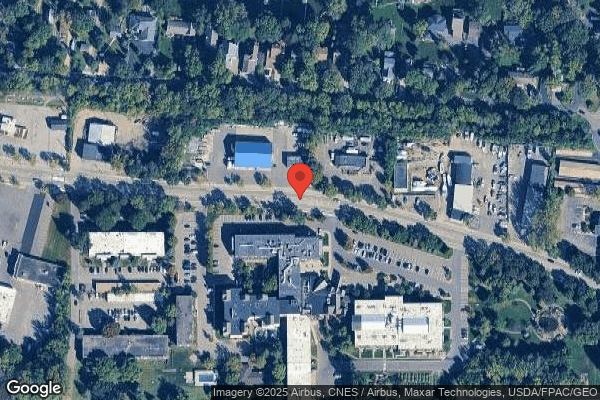
4527 SHORELINE DRIVE, SPRING PARK, MN 55384 (952) 471-4001
Non profit - Corporation 60 Beds PRESBYTERIAN HOMES & SERVICES Data: November 2025 1 Immediate Jeopardy citation
Trust Grade
76/100
#46 of 337 in MN
Last Inspection: April 2025

Within standard 12-15 month inspection cycle. Federal law requires annual inspections.

Overview

Lake Minnetonka Shores has received a Trust Grade of B, indicating it is a good choice for families seeking care, as it is solidly above average. The facility ranks #46 out of 337 in Minnesota, placing it in the top half of state facilities, and #8 out of 53 in Hennepin County, suggesting that there are only seven local options that are better. The facility is improving, having reduced issues from six in 2024 to zero in 2025, which is a positive trend for families to consider. Staffing is also a strength, with a 5/5 star rating and only 42% turnover, indicating staff stability and familiarity with residents. However, there are some concerns, such as an incident where a resident's advance directives were not accurately documented, and issues with food safety and medication cart security that could potentially affect resident safety. Additionally, the facility has incurred $8,827 in fines, which is average compared to other Minnesota facilities. Overall, while there are areas for improvement, Lake Minnetonka Shores demonstrates strong staffing and a good overall rating, making it a viable option for families.

Trust Score
B
76/100
In Minnesota
#46/337
Top 13%
Safety Record
High Risk
Review needed
Inspections
Getting Better
6 → 0 violations
Staff Stability
○ Average
42% turnover. Near Minnesota's 48% average. Typical for the industry.
Penalties
✓ Good
$8,827 in fines. Lower than most Minnesota facilities. Relatively clean record.
Skilled Nurses
✓ Good
Each resident gets 81 minutes of Registered Nurse (RN) attention daily — more than 97% of Minnesota nursing homes. RNs are the most trained staff who catch health problems before they become serious.
Violations
○ Average
9 deficiencies on record. Average for a facility this size. Mostly minor or procedural issues.
★★★★★
5.0
Overall Rating
★★★★★
5.0
Staff Levels
★★★★☆
4.0
Care Quality
★★★★☆
4.0
Inspection Score
Stable
2024: 6 issues
2025: 0 issues

The Good

  • 5-Star Staffing Rating · Excellent nurse staffing levels
  • 4-Star Quality Measures · Strong clinical quality outcomes
  • Full Sprinkler Coverage · Fire safety systems throughout facility
  • No fines on record
  • Staff turnover below average (42%)

    6 points below Minnesota average of 48%

Facility shows strength in staffing levels, quality measures, fire safety.

The Bad

Staff Turnover: 42%

Near Minnesota avg (46%)

Typical for the industry

Federal Fines: $8,827

Below median ($33,413)

Minor penalties assessed

Chain: PRESBYTERIAN HOMES & SERVICES

Part of a multi-facility chain

Ask about local staffing decisions and management

The Ugly 9 deficiencies on record

1 life-threatening
Apr 2024 6 deficiencies 1 IJ
CRITICAL (J)

Immediate Jeopardy (IJ) - the most serious Medicare violation

Deficiency F0578 (Tag F0578)

Someone could have died · This affected 1 resident

**NOTE- TERMS IN BRACKETS HAVE BEEN EDITED TO PROTECT CONFIDENTIALITY** Based on interview and document review, the facility failed to ensure resident advanced directives were accurately documented in...

Read full inspector narrative →
**NOTE- TERMS IN BRACKETS HAVE BEEN EDITED TO PROTECT CONFIDENTIALITY** Based on interview and document review, the facility failed to ensure resident advanced directives were accurately documented in the electronic medical record (EMR) and physician orders to ensure their wishes would be followed in the event of a cardiac arrest for 1 of 24 residents (R158) reviewed for advanced directives. The immediate jeopardy (IJ) began on [DATE] when R158 completed an updated Physician's Orders For Life Sustaining Treatment (POLST) to change code status to Do Not Resuscitate (DNR) and was identified on [DATE]. The administrator and director of nursing (DON) were notified of the immediate jeopardy at 12:18 p.m. on [DATE]. The immediate jeopardy was removed on [DATE] but noncompliance remained at the lower scope and severity level D, which indicated no actual harm with the potential for more than minimal harm that is not immediate jeopardy. Findings include: R158's EMR banner in Point Click Care (PCC) reviewed on [DATE] at 7:07 p.m., identified R158 was full code, meaning chest compressions would be started if the resident was found with no pulse and no respirations. On [DATE] at 7:07 p.m., R158's order summery report in the electronic medical record (EMR) included an order dated [DATE] for full code. R158's most current Physician's Orders For Life Sustaining Treatment (POLST) located in the scanned EMR, signed by R158 and nurse practitioner (NP)-A on [DATE], identified R158 wished to be do not resuscitate (DNR). R158's POLST located in hard chart dated [DATE], indicated a code status of DNR. Physician signed orders in hard chart dated [DATE], include notation to review new POLST. Orders were signed by LPN-C as reviewed. On [DATE] at 7:19 p.m., licensed practical nurse (LPN)-A stated she would look at the banner for code status. She stated if full code, she would start chest compressions. She stated staff were trained to look at the banner in the EMR for code status. On [DATE] at 7:20 p.m., LPN-B stated he would look at the EMR banner for code status. LPN-B looked at the banner for R158 and stated he would start chest compressions if he found the resident unresponsive. On [DATE] at 7:21 p.m., registered nurse (RN)-B stated he would look at the banner in the EMR for code status. RN-B stated if the banner indicated full code, chest compressions should be started. On [DATE] at 7:22 p.m., clinical coordinator (CC)-A stated code status was reviewed during admission, care conferences and with a change in condition. If a code status was changed during a provider visit, the new orders were entered into the EMR by the floor nurse. This included a change to code status/POLST. CC-A confirmed R158's banner indicated full code for code status. CC-A confirmed the most recent POLST dated [DATE], indicated R158 wished to be DNR. CC-A stated staff looked at the banner for guidance, however CC-A stated R158's documentation was inconsistent. On [DATE] at 7:31 p.m., director of nursing (DON) stated staff checked the EMR banner for code status. When a resident was listed as full code, chest compressions were started and another staff retrieved the POLST form for additional instructions. On [DATE] at 9:29 a.m., R158 stated she wished to be DNR and should not have CPR. The immediate jeopardy that began on [DATE], was removed when the facility developed and implemented a systematic removal plan. The removal plan was verified on [DATE] through interview and document review. The facility had corrected the code status for R158, completed a facility wide audit to ensure no other code status discrepancies, reviewed policies and procedures, implemented a double check practice for all new orders, and provided education for staff prior to start of shift.
CONCERN (D)

Potential for Harm - no one hurt, but risky conditions existed

Deficiency F0761 (Tag F0761)

Could have caused harm · This affected 1 resident

Based on observation, interview, and document review the facility failed to ensure all medications and biologicals were locked in compartments which only allowed authorized personnel to have access. T...

Read full inspector narrative →
Based on observation, interview, and document review the facility failed to ensure all medications and biologicals were locked in compartments which only allowed authorized personnel to have access. This had the potential to affect all the residents residing on the third floor of the facility. Findings include: During continuous observation on 4/23/24 from 3:10 p.m. until 3:50 p.m. medication cart 1 on third floor remained unlocked. Registered nurse (RN)-C left the cart unlocked and out of eyesight at 3:10 p.m., 3:19 p.m., 3:28 p.m., 3:34 p.m., 3:41 p.m. to complete medication passes. During this time residents, visitors and unlicensed staff walked by the unattended cart. On 4/23/24 at 3:50 p.m., the clinical coordinator (RN)-A approached the medication cart, and locked the cart when RN-C was not present. On 4/24/24 at 4:12 p.m., RN-C stated the cart should have been locked when left unattended and out of eyesight. On 4/23/24 at 4:19 p.m., the clinical coordinator RN-A stated staff were expected to lock the medication cart when unattended and out of their view. RN-A stated this was an issue. On 4/25/24 at 12:07 p.m., the director of nursing (DON) stated staff were expected to lock the medication cart when not in range of sight of the cart. DON stated it was important to lock unattended medication carts to prevent diversion, and safety of the residents and staff. The facility's Medication Ordering and Receiving from Pharmacy Policy, undated, indicated only licensed nurses, pharmacy personal and those authorized to administer medications were permitted access to them. Medication rooms, carts, and medication supplies are to be locked when not in attendance by persons with authorized access.
CONCERN (D)

Potential for Harm - no one hurt, but risky conditions existed

Infection Control (Tag F0880)

Could have caused harm · This affected 1 resident

Based on observation, interview and record review, facility failed to follow proper use of personal protective equipment (PPE) for 1 of 1 residents (R1) reviewed for contact precautions. This had the ...

Read full inspector narrative →
Based on observation, interview and record review, facility failed to follow proper use of personal protective equipment (PPE) for 1 of 1 residents (R1) reviewed for contact precautions. This had the potential to affect all 57 residents, staff and visitors. Findings include: R1's wound culture lab collected 4/2/24, indicated resident's right foot wound was infected with methicillin-reistant staphylococcus aureus (MRSA). Lab report included MRSA required contact precautions. R1's diagnosis report printed 4/25/24, included diagnoses of non-pressure chronic ulcer of other parts of left foot, non-pressure chronic ulcer of other parts of right foot, and dementia. R1's order summary report printed 4/25/24, included an order for wound care on right lateral foot. Clean with normal saline. Cover heel and medial wound with foam dressing. Observation on 4/24/24 at 7:13 a.m., license practical nurse (LPN)-C completed wound care on R1. LPN-C donned PPE outside of R1's room. PPE included a short sleeve, fabric gown tied around neck and disposable gloves. LPN-C cleansed wound by squirting normal saline onto wound bed and drying with gauze, which created an opportunity for splashing. During interview on 4/24/24 at 10:25 p.m., infection preventionist (IP) stated R1 had a wound culture that came back positive for MRSA and needed to be on contact precautions. She expected staff to wear a long sleeve gown with cuffs and gloves whenever coming in contact with the resident. IP confirmed short sleeved fabric gowns outside R1's room did not meet the criteria for contact precautions. During interview on 4/24/24 at 10:29 a.m., registered nurse (RN)-A stated he expected staff to wear long sleeve gowns with cuffs while providing wound care to a resident on contact precautions. RN-A stated it was important to protect clothing and skin that may come in contact with the wound during cares and could be spread to other residents. Undated facility policy titled Infection Prevention and Control Manual, included instructions on gown use. Policy indicated the gown should be a clean, non-sterile gown with long sleeves will be worn for direct care or when contact with secretions or excretions.
CONCERN (D)

Potential for Harm - no one hurt, but risky conditions existed

Deficiency F0883 (Tag F0883)

Could have caused harm · This affected 1 resident

**NOTE- TERMS IN BRACKETS HAVE BEEN EDITED TO PROTECT CONFIDENTIALITY** Based on interview and document review, the facility failed to ensure 2 of 5 residents (R1, R17) reviewed for immunizations were...

Read full inspector narrative →
**NOTE- TERMS IN BRACKETS HAVE BEEN EDITED TO PROTECT CONFIDENTIALITY** Based on interview and document review, the facility failed to ensure 2 of 5 residents (R1, R17) reviewed for immunizations were offered and/or provided the pneumococcal vaccine series as recommended by the Center for Disease Control (CDC) to help reduce the risk of associated infection(s). Findings include: A CDC Pneumococcal Vaccine Timing for Adults feature, dated 3/15/2023, identified various tables when each (or all) of the pneumococcal vaccinations should be obtained. This identified when an adult over [AGE] years old had received the complete series (i.e., PPSV23 and PCV13; see below) then the patient and provider may choose to administer Pneumococcal 20-valent Conjugate Vaccine (PCV20) for patients who had received Pneumococcal 13-valent Conjugate Vaccine (PCV13) at any age and Pneumococcal Polysaccharide Vaccine 23 (PPSV23) at or after [AGE] years old. R1's admission record printed 4/25/24, indicated an age of 90 and diagnoses of severe protein-calorie malnutrition, immunodeficiency, and type 2 diabetes. R1's electronic medical record (EMR) failed to include proof of offering of PVC20 vaccine. R1's care plan printed 4/25/24, included focus of potential for infection related to history of infection and use of immuno-suppressant medication. R17's admission report printed 4/25/24, indicated an age of 80 and diagnoses of morbid (severe) obesity, unspecified asthma, and type 2 diabetes. Facility document titled Pneumococcal Vaccination Consent, was signed as completed 2/18/24. Section on shared clinical decision making was not filled out. A notation was made appears to be up to date. R17's Order Summary Report, printed 4/25/24, included an order dated 2/17/24, resident may receive pneumococcal vaccinations if not already received. During interview on 4/24/24 at 2:42 p.m., director of nursing (DON) stated R1's EMR indicated eligibiltiy, however, lacked evidence of shared clinical decision-making with the physician for PCV20 at least 5 years after the last pneumococcal dose. During interview on 4/24/24 at 2:42 p.m., director of nursing (DON) stated R17's EMR did include a document stating the resident appeared up to date on pneumococcal vaccinations, however, R17 was eligible for the PCV20 vaccine. R17's record lacked evidence of shared clinical decision-making with the physician for PCV20 at least 5 years after the last pneumococcal dose. Facility policy Pneumococcal Vaccination Policy dated July 2023, included residents should be vaccinated in accordance with the CDC's pneumococcal vaccine recommendations and if a resident declined the vaccine, it should be documented in their medical record.
CONCERN (F)

Potential for Harm - no one hurt, but risky conditions existed

Food Safety (Tag F0812)

Could have caused harm · This affected most or all residents

Based on observation, interview and document review, the facility failed to follow food safety guidelines to thaw raw chicken to prevent the spread of cross-contamination. Furthermore, the facility fa...

Read full inspector narrative →
Based on observation, interview and document review, the facility failed to follow food safety guidelines to thaw raw chicken to prevent the spread of cross-contamination. Furthermore, the facility failed to ensure appropriate hand hygiene was performed for 1 of 1 staff observed preparing food in the kitchen. These deficient practices had the potential to affect all 57 residents who ate in the facility. Findings include: During a kitchen observation on 4/25/24 at 11:55 a.m., cook-A stated chicken was being thawed for supper. Cook-A was working at a two-compartment stainless steel prep sink, and the right-side sink compartment was approximately 75% full of cloudy, pink-gray water, with cold water running from the faucet into the cloudy water, and the contents of the sink were not visible. A stainless draining pan, positioned over the left-side sink compartment, contained approximately 12 pieces of boneless, skinless chicken pieces. However, no water was running over the raw chicken in the left-side compartment. Cook-A submerged gloved hands passed the wristband of the gloves into the cloudy water, removed raw, frozen chicken pieces from the cloudy water, pulled the frozen pieces apart under the running water, and placed the separated pieces into the draining pan. After approximately five minutes, cook-A removed gloves, moved to the handwashing sink, applied liquid soap to hands, rubbed hands together for approximately 10 seconds, turned water on, rinsed hands, dried hands with paper towel, and used the same paper towel to turn off the faucet. Cook-A applied clean gloves, placed the chicken pieces from the draining pan onto two lined baking pans, and placed the pans on a rack located in the prep area. Cook-A then returned to the prep sink and continued to separate frozen chicken pieces in the same manner. After approximately another five minutes, cook-A removed her gloves, turned off prep sink faucet, turned the right-side drain lever, and moved to the handwashing sink. Cook-A applied liquid soap to hands, rubbed hands together for approximately 10 seconds, turned faucet on, rinsed hands, dried hands with paper towel, used the same paper towel to turn off the faucet, applied clean gloves, submerged gloved hands, past the wristband of the gloves, into the cloudy water, removed approximately 10-12 pieces of raw, frozen chicken pieces from the cloudy water, placed them into the draining pan, turned the cold water back on over the drain pan of chicken, separated the remaining frozen chicken pieces under the cold running water, and placed them on a lined baking pan. After approximately five minutes, cook-A removed gloves, placed the baking sheet on the rack, turned the right-side drain lever, ran the disposal until the water emptied, and moved to the handwashing sink. Cook-A applied liquid soap to hands, rubbed hands together for approximately 10 seconds, turned faucet on, rinsed hands, dried hands with paper towel, and used the same paper towel to turn off the faucet. The dietary manager (DM) told cook-A she needed to wash hands longer, for at least 20 seconds, needed to scrub with soap and water, and instructed cook-A to wash hands again the correct way. On 4/25/24 at 12:21 p.m., the DM stated raw chicken should never be thawed unwrapped in a filled sink of water. The chicken should have been pulled from the freezer the previous day, to thaw by the preferred method in the refrigerator overnight. If meat was not thawed by the preferred method, it needed to remain in leak-proof packaging, in a bin with cold water running continuously to prevent cross-contamination. Additionally, DM stated staff were expected to wash hands for at least 20 seconds, and staff needed to scrub with soap and water, not just soap and then rinse with water. DM stated proper handwashing had been reviewed multiple times and proper handwashing procedure signs were posted over all sinks. The facility's Proper Thawing of Frozen Foods policy, revised 7/19, indicated proper food handling procedures needed to be followed in regard to the thawing of all frozen foods. The facility's Handwashing Policy, updated 5/19, indicated hands and exposed portions of arms needed to be washed for at least 20 seconds by the following method: 1) rinse under warm, running water, 2) apply soap and rub all surfaces of hands and arms, 3) rinse thoroughly with warm, running water, 4) dry hands and exposed portions of arms with single-use paper towels, 5) use a clean barrier, such as a paper towel, to turn off faucet.
MINOR (C)

Minor Issue - procedural, no safety impact

Staffing Information (Tag F0732)

Minor procedural issue · This affected most or all residents

Based on interview and document review, the facility failed to ensure the required staffing information was posted daily. This had the potential to affect all 57 residents residing in the facility, st...

Read full inspector narrative →
Based on interview and document review, the facility failed to ensure the required staffing information was posted daily. This had the potential to affect all 57 residents residing in the facility, staff and visitors who may wish to view this information. Findings include: During review of the staff posting documentation from 3/24/24 through 4/25/24, the facility failed to provide evidence of staff postings for the following dates: 3/24/24, 3/30/24, 3/31/24, 4/3/24, 4/6/24, 4/7/24, 4/13/24, 4/14/24, 4/21/24. On 4/24/24 at 3:11 p.m., the administrator acknowledged the facility had not completed nor posted the staffing information daily. On 4/25/24 at 11:22 a.m., the staffing coordinator (O)-D stated staffing information needed to be posted and updated daily. On 4/25/24 at 12:07 p.m., the director of nursing (DON) and the administrator stated staff postings were expected to be completed every day and was important to have the information available to those who wished to view it, and to ensure enough staff were on site. The facility's Nurse Hours Posting Policy, last modified in October 2022, indicated the staff data would be posted on a daily basis.
Aug 2023 3 deficiencies
CONCERN (D)

Potential for Harm - no one hurt, but risky conditions existed

Deficiency F0583 (Tag F0583)

Could have caused harm · This affected 1 resident

Based on observation, interview and document review, the facility failed to ensure resident private care needs and therapy information was kept private for 3 of 3 residents (R354, R352, R302) who were...

Read full inspector narrative →
Based on observation, interview and document review, the facility failed to ensure resident private care needs and therapy information was kept private for 3 of 3 residents (R354, R352, R302) who were receiving occupational therapy (OT) services. Findings include: R354's care plan dated 8/16/23 indicated R354 received OT services and required staff assistance with grooming and hygiene. R352's care plan dated 8/15/23 indicated R352 received OT services and required staff assistance with grooming, hygiene, and transfers. R302's care plan dated 8/17/23 indicated R302 received OT services and required staff assistance with grooming, hygiene, and transfers. On 8/21/23 at 3:12 p.m., a laminated, colorful, 8x10 sign was posted on the outside of R354's door. The sign indicated R354's name, room number, time and date of OT appointment, personal cares to be completed with OT and personal cares to be completed by nursing. On 8/21/23 at 3:12 pm p.m., an identical OT sign was posted on the outside of R352's door and was visible to anyone walking in the hallway. On 8/22/23 at 3:46 p.m., an OT sign was posted on the outside of R302's door and was visible to anyone walking in the hallway. On 8/23/23 at 8:00 a.m., OT-A stated signs are used for communication between OT and nursing. OT-A acknowledged the sign contained private resident information that was visible to the public. On 8/24/23 at 10:37 a.m., the administrator stated the OT posting contained private resident information and should not have been posted for the public to view. The facility's Notice of Privacy Practices, dated 7/21/21, defines the term health information as information that reasonably can be used to identify you and that relates to your physical or mental health condition, the provision of health care to you, or the payment for such health care.
CONCERN (D)

Potential for Harm - no one hurt, but risky conditions existed

Deficiency F0657 (Tag F0657)

Could have caused harm · This affected 1 resident

**NOTE- TERMS IN BRACKETS HAVE BEEN EDITED TO PROTECT CONFIDENTIALITY** Based on interview and document review the facility failed to ensure 1 of 1 residents (R5) and/or resident representative(s) wer...

Read full inspector narrative →
**NOTE- TERMS IN BRACKETS HAVE BEEN EDITED TO PROTECT CONFIDENTIALITY** Based on interview and document review the facility failed to ensure 1 of 1 residents (R5) and/or resident representative(s) were included in the comprehensive care planning reviewed for participation of care. Findings include: R(5)'s quarterly Minimal Data Set (MDS) dated [DATE], indicated fully intact cognition (able to fully understand), Diagnoses included medically complex conditions (more than one complicated medical diagnosis), hypertension (High blood pressure), Dementia (reduced brain function), depression (Feeling sad), and asthma (reduced airway function in lung tubes). On 8/23/23 at 12:40 p.m., R5 stated she did not recall having a care planning conference in the last year and would consider going if invited. R5 electronic health record (EHR) indicated MDS completed on 5/8/23. However, lacked documentation a care conference occurred which included R32 or his responsible representative for previous 4 quarters, since 5/4/22. On 8/23/23 at 12:45 p.m., Registered Nurse (RN)-B stated residents were offered care planning conferences but it was handled by the Home Care Coordinator (HCC) for the second floor. On 8/23/23 at 12:54 p.m., HCC stated she performed the social worker role for the second floor and organized the care conferences. HCC confirmed the record lacked documentation of care conferences being offered. She stated care conferences were important for resident outcomes. HCC stated care conferences were good for family and resident collaboration and would be beneficial for R5. On 8/24/23 at 11:14 a.m., Director of Nursing (DON) stated she was not sure why the care conferences had not been done. DON stated she felt care planning conferences were important for residents and families. DON stated that documentation of the care conferences needed to be done. Facility Care Plan policy requested, however, none provided.
CONCERN (D)

Potential for Harm - no one hurt, but risky conditions existed

ADL Care (Tag F0677)

Could have caused harm · This affected 1 resident

**NOTE- TERMS IN BRACKETS HAVE BEEN EDITED TO PROTECT CONFIDENTIALITY** Based on observation, interview, and documentation review the facility failed to provide assistance with facial hair removal for...

Read full inspector narrative →
**NOTE- TERMS IN BRACKETS HAVE BEEN EDITED TO PROTECT CONFIDENTIALITY** Based on observation, interview, and documentation review the facility failed to provide assistance with facial hair removal for 1 of 1 residents (R26) with grooming needs who was dependent upon staff for assistance. Findings include: R26 Minimum Data Set (MDS) dated [DATE], indicated intact cognition and diagnoses of coronary artery disease, hypertension, osteoporosis, and spinal stenosis. R26's care plan indicated R26 was an assist of one staff with personal cares. On 8/22/23 at 3:14 p.m., R26 was observed in bed with one to one and half inch of neck hair to trachea area and down from his ears to the top of his shoulder area on both sides of neck. On 8/23/23 at 7:04 a.m., R26 was observed in bed, awake looking out the window. R26 had hair on the neck that was not shaved. On 8/23/23 at 7:10 a.m., nursing assistant (NA)-D was observed doing cares for R26 and did not shave his face or neck. On 8/23/23 at 10:01 a.m., NA-D stated R26 had one half inch to two inches in length on the sides of his neck. NA-D stated R26 needed to be shave. NA-D asked R26 if he wanted to be shaved because his neck hair was long, he agreed but it was to long for the shaver. NA-D stated he would need to go to the barber to have the long hair removed. On 8/23/23 at 10:14 a.m., registered nurse (RN)-B stated we encourage daily grooming for the residents. On 8/23/23 at 1:22 p.m., NA-E stated they shaved the male residents every day. NA-E stated R26's neck looked like a weeks' worth of growth or more on his neck. On 8/24/23 at 9:11 a.m., RN-C stated staff could shave residents on bath day or anytime they needed or wanted to be shaved. RN-C stated R26's neck hairs were one and a half to two inches in length and should not be that long. Further, if staff were shaving him, they were not doing it correctly. On 8/24/23, at 9:28 a.m. the director of nurses (DON) stated shaving should occur daily with grooming. The facility policy Resident Care Policy reviewed 2/2016, indicated to shave residents in am and apply makeup to female residents as requested.
Understanding Severity Codes (click to expand)
Life-Threatening (Immediate Jeopardy)
J - Isolated K - Pattern L - Widespread
Actual Harm
G - Isolated H - Pattern I - Widespread
Potential for Harm
D - Isolated E - Pattern F - Widespread
No Harm (Minor)
A - Isolated B - Pattern C - Widespread

Questions to Ask on Your Visit

  • "What changes have you made since the serious inspection findings?"
  • "Can I speak with families of current residents?"
  • "What's your RN coverage like on weekends and overnight?"

Our Honest Assessment

Strengths
  • • 42% turnover. Below Minnesota's 48% average. Good staff retention means consistent care.
Concerns
  • • Multiple safety concerns identified: 1 life-threatening violation(s). Review inspection reports carefully.
  • • 9 deficiencies on record, including 1 critical (life-threatening) violation. These warrant careful review before choosing this facility.
Bottom line: Generally positive indicators. Standard due diligence and a personal visit recommended.

About This Facility

What is Lake Minnetonka Shores's CMS Rating?

CMS assigns LAKE MINNETONKA SHORES an overall rating of 5 out of 5 stars, which is considered much above average nationally. Within Minnesota, this rating places the facility higher than 99% of the state's 100 nursing homes. This rating reflects solid performance across the metrics CMS uses to evaluate nursing home quality.

How is Lake Minnetonka Shores Staffed?

CMS rates LAKE MINNETONKA SHORES's staffing level at 5 out of 5 stars, which is much above average compared to other nursing homes. Staff turnover is 42%, compared to the Minnesota average of 46%. This relatively stable workforce can support continuity of care.

What Have Inspectors Found at Lake Minnetonka Shores?

State health inspectors documented 9 deficiencies at LAKE MINNETONKA SHORES during 2023 to 2024. These included: 1 Immediate Jeopardy (the most serious level, indicating potential for serious harm or death), 7 with potential for harm, and 1 minor or isolated issues. Immediate Jeopardy findings are rare and represent the most serious regulatory concerns. They require immediate corrective action.

Who Owns and Operates Lake Minnetonka Shores?

LAKE MINNETONKA SHORES is owned by a non-profit organization. Non-profit facilities reinvest revenue into operations rather than distributing to shareholders. The facility is operated by PRESBYTERIAN HOMES & SERVICES, a chain that manages multiple nursing homes. With 60 certified beds and approximately 53 residents (about 88% occupancy), it is a smaller facility located in SPRING PARK, Minnesota.

How Does Lake Minnetonka Shores Compare to Other Minnesota Nursing Homes?

Compared to the 100 nursing homes in Minnesota, LAKE MINNETONKA SHORES's overall rating (5 stars) is above the state average of 3.2, staff turnover (42%) is near the state average of 46%, and health inspection rating (4 stars) is above the national benchmark.

What Should Families Ask When Visiting Lake Minnetonka Shores?

Based on this facility's data, families visiting should ask: "What changes have been made since the serious inspection findings, and how are you preventing similar issues?" "Can I visit during a mealtime to observe dining assistance and food quality?" "How do you handle medical emergencies, and what is your hospital transfer rate?" "Can I speak with family members of current residents about their experience?" These questions are particularly relevant given the facility's Immediate Jeopardy citations.

Is Lake Minnetonka Shores Safe?

Based on CMS inspection data, LAKE MINNETONKA SHORES has documented safety concerns. Inspectors have issued 1 Immediate Jeopardy citation (the most serious violation level indicating risk of serious injury or death). The facility has a 5-star overall rating and ranks #1 of 100 nursing homes in Minnesota. Families considering this facility should ask detailed questions about what corrective actions have been taken since these incidents.

Do Nurses at Lake Minnetonka Shores Stick Around?

LAKE MINNETONKA SHORES has a staff turnover rate of 42%, which is about average for Minnesota nursing homes (state average: 46%). Moderate turnover is common in nursing homes, but families should still ask about staff tenure and how the facility maintains care continuity when employees leave.

Was Lake Minnetonka Shores Ever Fined?

LAKE MINNETONKA SHORES has been fined $8,827 across 1 penalty action. This is below the Minnesota average of $33,167. While any fine indicates a compliance issue, fines under $50,000 are relatively common and typically reflect isolated problems that were subsequently corrected. Families should ask what specific issues led to these fines and confirm they've been resolved.

Is Lake Minnetonka Shores on Any Federal Watch List?

LAKE MINNETONKA SHORES is not on any federal watch list. The most significant is the Special Focus Facility (SFF) program, which identifies the bottom 1% of nursing homes nationally based on persistent, serious quality problems. Not being on this list means the facility has avoided the pattern of deficiencies that triggers enhanced federal oversight. This is a positive indicator, though families should still review the facility's inspection history directly.