The Estates at Greeley LLC
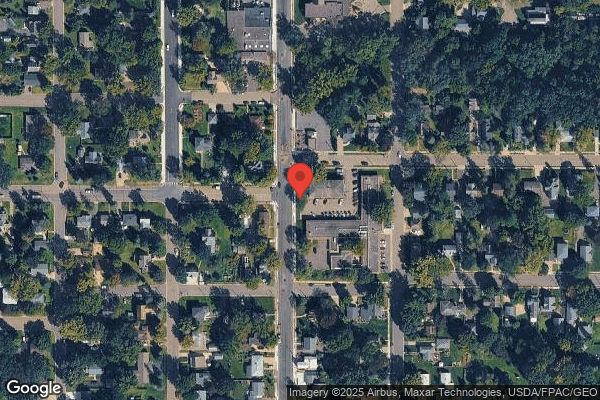
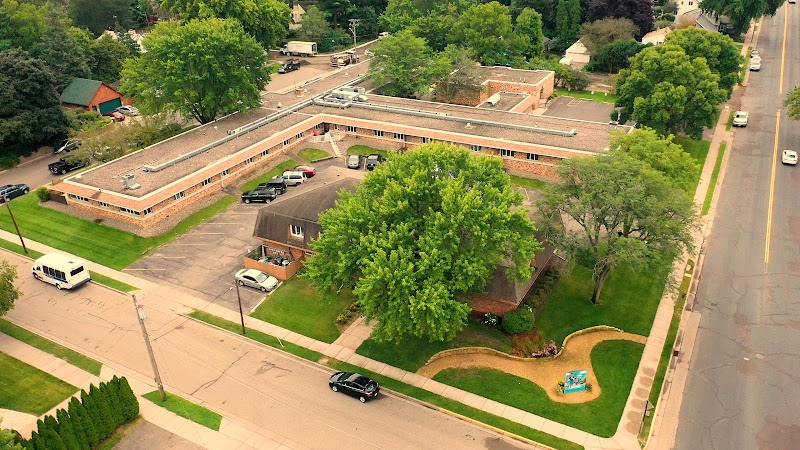
313 SOUTH GREELEY STREET, STILLWATER, MN 55082 (651) 439-5775
For profit - Partnership 64 Beds MONARCH HEALTHCARE MANAGEMENT Data: November 2025
Trust Grade
55/100
#209 of 337 in MN
Last Inspection: August 2024

Within standard 12-15 month inspection cycle. Federal law requires annual inspections.

Overview

The Estates at Greeley LLC has a Trust Grade of C, which means it is considered average and falls in the middle of the pack among nursing homes. It ranks #209 out of 337 in Minnesota, placing it in the bottom half of facilities in the state, and #4 out of 8 in Washington County, indicating only three local options are better. The facility is showing an improving trend, with issues decreasing from 9 in 2024 to 4 in 2025. Staffing is a strength here, rated at 4 out of 5 stars, although turnover is at 50%, which is average compared to the state. Notably, there have been no fines, which is a positive sign. However, there have been serious concerns, including a medication error that resulted in a resident requiring hospitalization after seizures, and a failure to follow care plans for preventing burns from hot liquids, which could put residents at risk.
Trust Score
C
55/100
In Minnesota
#209/337
Bottom 38%
Safety Record
Moderate
Needs review
Inspections
Getting Better
9 → 4 violations
Staff Stability
⚠ Watch
50% turnover. Above average. Higher turnover means staff may not know residents' routines.
Penalties
✓ Good
No fines on record. Clean compliance history, better than most Minnesota facilities.
Skilled Nurses
✓ Good
Each resident gets 43 minutes of Registered Nurse (RN) attention daily — more than average for Minnesota. RNs are trained to catch health problems early.
Violations
⚠ Watch
22 deficiencies on record. Higher than average. Multiple issues found across inspections.
★★★☆☆
3.0
Overall Rating
★★★★☆
4.0
Staff Levels
★★★☆☆
3.0
Care Quality
★★★☆☆
3.0
Inspection Score
Stable
2024: 9 issues
2025: 4 issues

The Good

  • 4-Star Staffing Rating · Above-average nurse staffing levels
  • Full Sprinkler Coverage · Fire safety systems throughout facility
  • No fines on record

Facility shows strength in staffing levels, fire safety.

The Bad

3-Star Overall Rating

Near Minnesota average (3.2)

Meets federal standards, typical of most facilities

Staff Turnover: 50%

Near Minnesota avg (46%)

Higher turnover may affect care consistency

Chain: MONARCH HEALTHCARE MANAGEMENT

Part of a multi-facility chain

Ask about local staffing decisions and management

The Ugly 22 deficiencies on record

1 actual harm
Jun 2025 1 deficiency
CONCERN (D) 📢 Someone Reported This

A family member, employee, or ombudsman was alarmed enough to file a formal complaint

Potential for Harm - no one hurt, but risky conditions existed

Accident Prevention (Tag F0689)

Could have caused harm · This affected 1 resident

**NOTE- TERMS IN BRACKETS HAVE BEEN EDITED TO PROTECT CONFIDENTIALITY** Based on observation, interview and document review, the facility failed to ensure care planned interventions to reduce fall ris...

Read full inspector narrative →
**NOTE- TERMS IN BRACKETS HAVE BEEN EDITED TO PROTECT CONFIDENTIALITY** Based on observation, interview and document review, the facility failed to ensure care planned interventions to reduce fall risk were implemented for 2 of 2 residents (R4 and R2) reviewed for falls. Findings include: R4's quarterly Minimum Data Set (MDS) dated [DATE] identified R4 had intact cognition and no behaviors; had limited range of motion on one side of upper and lower extremity. R4 was dependent on a helper to do all the effort to transfer from chair to bed (or bed to chair). Sit to stand was not attempted due to medical condition or safety concerns. R4's care plan dated 6/9/25, identified she was at risk for falls due to impaired mobility and required assist of two staff for transfers using the MAXI lift (full body lift) r/t (related to) diagnoses of vascular dementia, non-traumatic intracerebral hemorrhage (type of stroke), and right sided weakness. R4's Follow Up Question Report dated 4/12/25 through 6/11/25, identified assist of two staff was required to transfer R4 using the MAXI lift with an XL sling size. During an interview on 6/9/25 at 4:08 p.m., R4 stated she had a fall earlier, because the nursing assistant attempted to transfer her using a standing lift and not the MAXI lift. R4 stated that did not work because the right side of her body was weak, and she fell without getting injured. During an interview on 6/9/25 at 7:32 p.m.,, nursing assistant (NA)-F stated she was called into R4's room earlier today by NA-H, because R4 had fallen. When NA-F entered R4's room, R4 was on the ground. NA-H stated she went to get the nurse to assess the situation. During an interview on 6/9/25 at 8:47 p.m., NA-F stated she attempted to transfer R4 with a standing lift instead of the MAXI lift, due to R4's request. When R4 started to stand up with the lift, her right leg buckled and she started to drop. NA-F lowered R4 to the floor and asked NA-H for help. NA-H left the room to get assistance, a nurse came in to assess R4's status, and then NA-H and NA-F assisted off the floor R4 using the full body lift. NA-F stated she should not have transferred R4 differently than what the care plan identified, however, R4 was in a hurry and requested the standing lift instead of the full body lift. During an observation and interview on 6/11/25 at 10:10 a.m., NA-A and NA-B assisted R4 with a transfer from bed to wheelchair using the MAXI lift. NA-A and NA-B stated residents should be transferred using the care planned devices. During an interview on 6/10/25 at 11:09 a.m., the director of therapy services (DTS) stated R4 used to tolerate the standing lift, however, due to the progression of weakness from her stroke was switched over to the MAXI lift. The DTS stated R4 could bear some weight but the MAXI lift should be used for all transfers. During an interview on 6/11/25 at 1:10 p.m., licensed practical nurse (LPN)-E stated she was called to R4's room on 6/9/25, due to report of a fall. When LPN-E got to the room R4 was on the ground. LPN-E stated NA-H said she attempted a transfer using the standing lift instead of the MAXI lift, however, R4's leg gave out so NA-H lowered R4 to the ground. LPN-E assessed R4's vital signs and range of motion and determined it was acceptable to continue the transfer using the full body lift. R2's quarterly MDS dated [DATE], identified she had severely impaired cognition and no behaviors. Required substantial/maximal assistance putting on/taking off footwear, and supervision or touching assistance for sit to stand and for walking up to 50 feet. Diagnoses included heart failure, repeated falls, chronic pain, and palliative care. R2 had two falls without injury and one fall with minor injury since the previous MDS. R2's care plan dated 2/26/25, identified risk for falls related to heart failure, mild cognitive impairment, advanced age and end-stage disease processes on hospice care. Interventions were in place dated 4/11/25, to ensure resident always has appropriate footwear (gripper socks at HS/hour of sleep), and dated 6/10/25, to offer toileting upon rising, before and after meals, at HS, around 0100 to 0200 (1:00 a.m. to 2:00 a.m.) and PRN (as needed). Vulnerable Adult Maltreatment Report dated 4/8/25, identified R4's care planned interventions for falls were not implemented. During an observation on 6/10/25 at 2:52 p.m., R2 was in bed with tan socks on with no grip on the bottom. R2 did not have appropriate footwear on as care planned. During an interview on 6/10/25 at 3:24 p.m., NA-C R2 was a fall risk and should always have non-slip footwear on. NA-C observed the tan socks R2 had on and stated those were slippery and he would put gripper socks on now. During an interview on 6/10/25 at 3:25 p.m., LPN-A stated R2 was at risk of falls because she was impulsive and on-slip footwear should always be in place. During an observation at 6/11/25 at 8:25 a.m., R2 was in the dining room. At 9:15 a.m., NA-F took R2 out of the dining room and back to her room. Once in the room NA-F put shoes on R2's feet over her socks and gripper socks and brought her down to the commons area to watch TV. R2 was not offered to toilet after meals as care planned. During intermittent observations on 6/11/25 from 9:15 a.m., through 11:58 a.m., R2 remained in the commons are watching TV. At 11:58 a.m., family member (FM)-B came to visit and brought R2 back to her room and assisted R2 into a recliner in her room to have lunch together. During an observation on 6/11/25 at 12:27 p.m., NA-F entered R2's room, FM-B asked R2 if there was anything she needed from NA-F such as the bathroom. NA-F had not offered to toilet R2 before lunch as care planned. NA-F stated the bathroom should have been offered to R2 before and after meals. R2's Follow Up Question Report dated 6/11/25, identified toilet support was provided at 2:45 a.m., and 9:59 p.m. There was no documentation during the day shift of toileting before and after meals. During an interview on 6/11/25 at 12:03 p.m., registered nurse (RN)-A stated care planned interventions for falls should be carried out to prevent falls and injuries. During an interview on 6/11/25 at 12:56 p.m., the director of nursing (DON) stated fall interventions should be implemented as per the care plan. The facility policy Falls Prevention and Management dated 2/2024, identified care plans would be updated to reflect fall interventions. The facility policy Care planning dated 11/2024, identified the care plan would be used in developing the resident's daily care routines and would be utilized by staff personnel for the purposes of providing care or services to the resident.
Mar 2025 3 deficiencies
CONCERN (D) 📢 Someone Reported This

A family member, employee, or ombudsman was alarmed enough to file a formal complaint

Potential for Harm - no one hurt, but risky conditions existed

Report Alleged Abuse (Tag F0609)

Could have caused harm · This affected 1 resident

**NOTE- TERMS IN BRACKETS HAVE BEEN EDITED TO PROTECT CONFIDENTIALITY** Based on interview and document review, the facility failed to immediately report (within two hours) allegations of sexual abuse...

Read full inspector narrative →
**NOTE- TERMS IN BRACKETS HAVE BEEN EDITED TO PROTECT CONFIDENTIALITY** Based on interview and document review, the facility failed to immediately report (within two hours) allegations of sexual abuse to the State Agency (SA) for 1 of 3 residents (R1) reviewed for abuse. Findings include: R1 R1's annual Minimum Data Set (MDS) dated [DATE], indicated she was moderately cognitively impaired with diagnoses that included dementia, anxiety, depression, psychotic disorder and post-traumatic stress disorder. R2 R2's quarterly MDS dated [DATE], indicated R2 was cognitively intact with diagnoses that included a fractured rib and weakness. The Nursing Home Incident Report filed on 3/20/25 at 1:32 p.m., identified staff were aware of an incident 3/18/25 at 3:12 p.m., in which R1 reported R1 and R2 had a sexual interaction that started off as consensual and escalated to nonconsensual. R1 alleged R2 pinned or grabbed R1's hands during the incident. On 3/20/25 at 11:22 a.m., during an interview, the administrator stated the report he received from the hospital social worker (SW) on 3/18/25, indicated R1 was held down by R2 during the incident and was penetrated. The administrator stated he did not report when R1 initially reported the incident to the facility on 2/18/25, because R1 stated it was consensual. The administrator stated the usual process for reporting allegations of abuse was to report immediately to the SA. On 3/20/25, at 12:38 p.m., during an interview, social worker (SW)-A stated allegations of sexual abuse were expected to be reported to the SA. SW-A stated she did not report the allegations reported by the hospital SW on 3/18/25, because the SW from the hospital was already reporting it however, acknowledged the facility should have reported it, too. The SW-A stated she did not report the initial allegation from R1 on 2/18/25, because she determined it was a consensual incident. On 3/20/25 at 2:06 p.m., during an interview the nurse practitioner (NP)-A stated she was aware of the allegation of sexual abuse, did not report it because R1 was an inpatient and not in the facility when she became aware of the incident. NP-A stated it was not her responsibility to report the allegation when the resident was not at the facility. On 3/21/25 at 10:57 a.m., during an interview, licensed practical nurse (LPN)-A stated she did not believe R1 would have appreciated being touched by R2. LPN-A stated R1 had anxiety, and would not consent, and if R2 touched R1, it should have been reported as abuse. On 3/21/25 at 2:52 p.m., during a follow-up interview, the administrator stated the report he received from the hospital social worker (SW) on 3/18/25, indicated R1 was held down by R2 during the incident and was penetrated. The administrator confirmed the facility had not reported the incident to the SA timely. On 3/21/25 at 3:46 p.m., during an interview with the director of nursing (DON), the DON confirmed all allegations of abuse should be reported within two hours to the SA. Review of facility policy titled The Abuse Prohibition / Vulnerable Adult Policy dated 2/2025, indicated the facility would promptly report all incidents of alleged or suspected abuse to the SA, no later than two hours after forming the suspicion of abuse.
CONCERN (D) 📢 Someone Reported This

A family member, employee, or ombudsman was alarmed enough to file a formal complaint

Potential for Harm - no one hurt, but risky conditions existed

Investigate Abuse (Tag F0610)

Could have caused harm · This affected 1 resident

**NOTE- TERMS IN BRACKETS HAVE BEEN EDITED TO PROTECT CONFIDENTIALITY** Based on interview and document review, the facility failed to complete a thorough investigation for allegations of sexual abuse...

Read full inspector narrative →
**NOTE- TERMS IN BRACKETS HAVE BEEN EDITED TO PROTECT CONFIDENTIALITY** Based on interview and document review, the facility failed to complete a thorough investigation for allegations of sexual abuse for 1 of 3 residents (R1) reviewed for abuse. Findings include: R1 R1's annual Minimum Data Set (MDS) dated [DATE], indicated she was moderately cognitively impaired with diagnoses that included dementia, anxiety, depression, psychotic disorder and post-traumatic stress disorder. R2 R2's quarterly MDS dated [DATE], indicated R2 was cognitively intact with diagnoses that included a fractured rib and weakness. The Nursing Home Incident Report filed on 3/20/25 at 1:32 p.m., identified staff were aware of an incident 3/18/25 at 3:12 p.m., in which R1 reported R1 and R2 had a sexual interaction that started off as consensual and escalated to nonconsensual. R1 alleged R2 pinned or grabbed R1's hands during the incident. The investigative file dated 2/18/25, for the incident between R1 and R2, included an interview by the social worker (SW)-A with R1, a list of R1's diagnoses, a signed statement from SW-A about the interview, R1's care plan, staff interviews about witnessing abuse, and resident interviews about witnessing abuse. Additionally, the file included R1's heath care directive and psychiatric directive. The investigative file lacked additional investigative information after the hospital SW provided additional information to the facility on 3/18/25, about the incident. On 3/20/25, at 12:38 p.m., during an interview, SW-A stated allegations of sexual abuse from the hospital SW for R1 were not further investigated because it was similar to the same report and the facility had already investigated it. The SW-A stated the facility should have investigated further once the additional information had been received from the hospital SW. On 3/21/25 at 2:52 p.m., during an interview, the administrator stated he investigated the initial information received about the incident reported on 2/18/25 by R1. The administrator reviewed R1's care plan, interviewed staff and residents about witnessing abuse and stated the SW-A interviewed R1 for the initial investigation. The administrator stated he received additional information from the hospital SW on 3/18/25, which indicated R1 was held down by R2 during the incident and was penetrated. The administrator stated when the hospital SW called to report additional information about the incident to the administrator, the facility did not reinvestigate it. On 3/21/25 at 3:46 p.m., during an interview with the director of nursing (DON), the DON confirmed the facility did not reinvestigate the incident after additional information had been received from the hospital SW. Review of facility policy titled The Abuse Prohibition / Vulnerable Adult Policy dated 2/2025, indicated the facility would investigate all incidents of alleged or suspected abuse.
CONCERN (D) 📢 Someone Reported This

A family member, employee, or ombudsman was alarmed enough to file a formal complaint

Potential for Harm - no one hurt, but risky conditions existed

Comprehensive Care Plan (Tag F0656)

Could have caused harm · This affected 1 resident

**NOTE- TERMS IN BRACKETS HAVE BEEN EDITED TO PROTECT CONFIDENTIALITY** Based on interview and document review, the facility failed to ensure the comprehensive care plan was updated to include interve...

Read full inspector narrative →
**NOTE- TERMS IN BRACKETS HAVE BEEN EDITED TO PROTECT CONFIDENTIALITY** Based on interview and document review, the facility failed to ensure the comprehensive care plan was updated to include interventions to address relationships and behaviors for 1 of 4 residents (R2) reviewed for abuse prevention. Findings include: R2's quarterly Minimum Data Set (MDS) dated [DATE], indicated R2 was cognitively intact with diagnoses which included a fractured rib and weakness. R2's care plan printed 3/20/25, indicated R2 was a vulnerable adult however, lacked mention of a relationship between R1 and R2 and lacked instruction to staff to monitor R2's behavior and interactions with female residents. On 3/20/25, at 12:38 p.m., during an interview, social worker (SW)-A stated she informed the director of nursing about R2's behaviors and informed staff to monitor the interactions. The SW-A stated she expected care plans to address monitoring of behaviors and confirmed the behavior was not addressed in R2's care plan. On 3/20/25 at 2:29 p.m., during an interview, nurse practitioner (NP)-A stated staff had a meeting about R2's behavior of touching others however, could not recall the date. NP-A stated she thought interventions had been placed on R2's care plan. On 3/21/25 at 2:52 p.m., during an interview, the administrator stated he was sure the staff had discussed adding R2's behavior of kissing and touching women in his care plan however, confirmed it was not on the care plan. On 3/21/25 at 3:46 p.m., during an interview with the director of nursing (DON), the DON stated if staff were instructed to monitor R2's behavior, it should have been identified on the care plan and verified it was not on R2's. A policy for care planning was requested however, was not provided.
Aug 2024 8 deficiencies
CONCERN (D)

Potential for Harm - no one hurt, but risky conditions existed

Deficiency F0604 (Tag F0604)

Could have caused harm · This affected 1 resident

**NOTE- TERMS IN BRACKETS HAVE BEEN EDITED TO PROTECT CONFIDENTIALITY** Based on observation, interview, and document review, the facility failed to ensure residents were free from physical restraints...

Read full inspector narrative →
**NOTE- TERMS IN BRACKETS HAVE BEEN EDITED TO PROTECT CONFIDENTIALITY** Based on observation, interview, and document review, the facility failed to ensure residents were free from physical restraints for 1 of 1 resident (R37). Findings include: R37's Optional State Assessment (OSA) dated 7/10/24, indicated R37 had severe cognitive impairment, did not have behaviors, required extensive assistance with bed mobility, transfers, and toileting. R37's quarterly Minimum Data Set (MDS) dated [DATE], indicated R37 continuously had inattention, disorganized thinking, and an altered level of consciousness that fluctuated. Additionally, R37 rejected care 1 to 3 days, wandered 1 to 3 days, was frequently incontinent of bowel and bladder, had two or more falls with no injury, two or more falls with injury except major injury, was on hospice, and did not use restraints. R37's Medical Diagnosis form indicated the following diagnoses: Alzheimer's disease with late onset, traumatic subdural hemorrhage with loss of consciousness, fracture of unspecified part of neck of right femur, muscle weakness, anxiety disorder, age-related osteoporosis without current pathological fracture, and history of falling. R37's physician's orders were reviewed and lacked orders for a restraint. R37's care plan dated 1/23/24, indicated R37 was at risk for falling, had an altered cognition, and communication, and had an alteration in mood and behavior due to loss of independence and become anxious when R37 was not in her room, and interventions included to provide cues, reorientation, and supervision as needed, anticipate and meet resident's needs, speak to resident in simple to understand terms, repeat as needed. R37's care plan dated 1/29/24, indicated R37 got antsy around meal times and wheeled self around asking staff where she ate and word searches helped calm R37. R37's care plan dated 2/21/24, indicated R37 was at risk for elopement due to Alzheimer's disease. The care plan lacked interventions R37's wheelchair should be locked when at the dining room table. A form, [NAME] CNA (certified nursing assistant) Report Sheet indicated R37 transferred with assist of 1 with a walker, was continent of bowel, had mixed continence of bladder, and self-transfers and was at risk for falls. The form lacked information on specific fall interventions. R37's nursing progress notes dated 6/16/24, indicated R37 frequently self-transferred. During interview on 8/6/24 at 12:58 p.m., hospice registered nurse (RN)-D stated R37 has needed increased cares and was in her own world, oriented to self, and was nonsensical. Additionally, R37 has had several falls and did not know to ask for help and was impulsive and much more forgetful and stated R37's falls went in spurts. During interview and observation on 8/7/24 between 8:03 a.m., and 8:11 a.m., housekeeper (H)-A brought R37 up to the table in the dining room and locked R37's wheelchair after setting her up at the table and left the area. H-A stated she brought R37 out to the dining room so she could sweep R37's room and verified she locked the brakes and stated she always locked the brakes of the wheelchair so R37 can't try to get up. R37 was trying to pick up her crossword puzzle and H-A assisted in picking it up for R37. During interview on 8/7/24 at 8:14 a.m., licensed practical nurse (LPN)-A stated they did not lock wheelchairs because it was considered a restraint if they can't unlock it and stated it didn't matter if R37's wheelchair was locked and stated R37 was at a very high risk for falling. During interview on 8/7/24 at 8:21 a.m., registered nurse (RN)-E stated R37 was at risk for falling and stated locking the wheelchair would be considered a restraint and could cause more of a safety issue because R37 was not able to move and not able to back up. During interview on 8/7/24 at 9:22 a.m., the director of nursing (DON) stated housekeeping would need education and further stated housekeeping did not have access to the care plan and stated R37 could unlock the chair. During interview on 8/7/24 at 10:27 a.m., nursing assistant (NA)-D stated they had a sheet that indicated the cares a resident required and stated she could look at the documentation in the electronic medical record (EMR). NA-D stated R37 could propel her wheelchair and further stated R37 would not be able to think to know how to unlock and lock her wheelchair and stated R37's wheelchair had been locked before such as in the bathroom and when R37 first sits down in the chair and NA-D stated R37 thinks the wheelchair is stuck and does not know how to unlock it. An email sent on 8/7/24 at 1:02 p.m., from the DON indicated the facility did not have a policy on restraints because they did not use restraints.
CONCERN (D)

Potential for Harm - no one hurt, but risky conditions existed

Pressure Ulcer Prevention (Tag F0686)

Could have caused harm · This affected 1 resident

**NOTE- TERMS IN BRACKETS HAVE BEEN EDITED TO PROTECT CONFIDENTIALITY** Based on observation interview and record review the facility failed to ensure skin assessments were completed under a removable...

Read full inspector narrative →
**NOTE- TERMS IN BRACKETS HAVE BEEN EDITED TO PROTECT CONFIDENTIALITY** Based on observation interview and record review the facility failed to ensure skin assessments were completed under a removable device for R16 and failed to ensure interventions were implemented for R20 who both were reviewed and at risk for pressure injury. Findings include: R16's admission Minimum Data Set (MDS) dated [DATE], indicated R16 was cognitively intact and had diagnoses of left ankle fracture, lung disease, and schizoaffective disorder. R16's MDS further indicated R16 required assistance with mobility, was at risk for pressure injury and required pressure reliving devices for the chair and bed. R16's orthopedic consultation/clinic referral form dated 7/31/24, indicated R16 had a cam boot (removable splint) for the left lower extremity to wear while weightbearing. R16's provider order dated 6/6/24, indicated R16's left leg splint was to remain clean, dry, and intact until next clinic visit. R16's provider and nursing orders lacked indication they had been updated following R16's orthopedic appointment on 7/31/24. R16's nursing progress note dated 7/31/24 at 4:55 p.m., indicated R16's left lower extremity cast was removed and replaced with a cam boot (removable splint). R16's progress notes dated 7/31/24-8/6/24, lacked indication R16's cam boot was removed for skin assessment. R16's weekly skin assessment dated [DATE], indicated R16 had lower extremity edema and intact skin. The skin assessment lacked indication R16 had healing surgical incisions, peeling skin on the left foot, or R16's cam boot was removed for assessment. R16's care plan dated 6/7/24, indicated R16 was at risk for alteration in skin integrity related to decreased mobility, assistance required with activities of daily living (ADL), transfers, and left ankle surgery to repair a fracture. Interventions included monitor for skin breakdown and for signs or symptoms of infection. R16's care plan revised after survey entrance on 8/7/24, indicated R16's cam boot could be removed when in bed and had to be in place when R16 was out of bed or ambulating. When interviewed on 8/5/24 at 2:25 p.m., R16 was sitting in the wheelchair and had the cam boot on the left ankle. R16 stated they had broken their ankle and had surgery to fix it. R16 had not been aware of any skin problems from the boot and further stated nurses do not remove the boot or look at skin or the incision. R16 stated the cam boot could be taken off when in bed but never was. When interviewed on 8/7/24 at 10:19 a.m., nursing assistant (NA)-E stated they were not aware of R16's boot ever being removed. It was always on. When interviewed on 8/7/24 at 9:03 a.m., RN-A stated skin assessments were completed once a week on bath day. If a new skin issue was noted the nurse would open a skin management note and notification goes to the provider and Director of Nursing (DON). RN-A stated for surgical wound or treatments, the surgical providers will determine the treatment needed. When there is a removable splint there were orders to remove it for skin checks at least once a day. RN-A acknowledged R16's orders stated to leave splint dry and intact until follow up and acknowledged the orthopedic order to wear cam boot when weight bearing. RN-A stated he hadn't cared for R16 since the cast was removed and would need to follow up on the orders as they were conflicting. An observation on 8/7/24 at 9:43 a.m. registered nurse (RN)-A had clarified orders and entered R16's room to assess R16's skin under the cam boot. R16 was seated in the wheelchair with the left leg resting on an elevated wheelchair leg. RN-A unstrapped and removed the cam boot. The top half of the boot was removed and showed R16 had a sock that went just above their ankle. RN-A lifted R16's leg and first removed the sock and placed it on the floor, then removed the bottom part of the boot. R16 set his leg back down on the wheelchair leg rest. There was a strong odor coming from R16's foot. R16's foot was swollen. There was indentation from R16's sock just above the ankle. R16's surgical incision was located on the outside of the left ankle had no drainage and was almost completely healed. There was some betadine surgical scrub still on R16's heel and ankle area. R16's foot bottom was very cracked and very dry, and the sides of the foot had large amounts of dry dead skin peeling off. R16's skin was otherwise intact. RN-A used their gloved hand to brush some of the flaky skin off R16's foot. RN-A had obtained a washcloth and water and proceeded to wash R16's ankle area and foot paying close attention to the areas of flaky skin and in between toes. R16 apologized about the smell and stated this was the first time the boot was taken off. After washing, RN-A then applied lotion. R16's cam boot was noted to have skin flakes inside of the boot. With a cleaning wipe, RN-A held the boot over the garbage to wipe out the skin that had flaked off into the boot when R16's sock was removed. RN-A then placed a clean sock on R16's foot and placed the cam boot back on. A follow up interview on 8/7/2, at 11:00 a.m., RN-A verified the very dry and flaky skin R16 had on the left ankle/foot. RN-A stated R16's orders were updated to clarify what was needed and R16's provider had been notified and ordered additional treatment for R16's skin and edema. When interviewed on 8/7/24 at 11:40 a.m., the DON stated when residents come back from appointments orders were provided either electronically or written. The orders were placed by either the health unit coordinator or the nurse depending on the time of day. DON verified R16's orders and expected them to have been updated upon return from the clinic. DON further stated R16's cam boot should have been removed with CMS checks as it was a closed boot and expected staff to follow up on any skin concerns. When interviewed on 8/7/24 at 1:18 p.m., RN-C verified they supported wound rounds and documentation. RN-C stated when a resident required a removable device there should be orders directing staff to remove it at least daily to perform a skin assessment. This was important to ensure skin breakdown was not occurring from pressure in the splint or device. Furthermore, if provider orders were contraindicating to this the nurse should call and clarify. R20 R20's quarterly MDS dated [DATE], indicated R20 was cognitively intact and had diagnoses of Parkinson's disease, diabetes, and peripheral vascular disease. Furthermore, R20 was at risk of pressure injury and had no suspected deep tissue injury (DTI) or other skin concerns. R20 required a pressure reducing device for the chair and bed. R20's care plan dated 1/26/24, indicated R20 was at risk for skin alteration related to decline in condition, falls, decreased mobility and Parkinson's disease. Interventions included to monitor skin integrity daily during cares and provide a pressure distribution mattress and cushion. A facility document titled [NAME] NA Report Sheet no date, lacked indication R20 was at risk for skin alterations or required additional interventions. R20's provider and nursing orders dated 6/27/24, indicated R20 required wound care monitoring and skin prep application to left heel twice a day. R20 also required blue boots on while in bed, feet reclined/elevated while in recliner at all times due to DTI (deep tissue injury). R20's electronic medical record lacked evidence R20 had a skin and wound evaluation for the DTI. An observation on 8/7/24 at 7:32 a.m., NA-F entered R20's room to assist with morning cares. R20 was laying in bed. NA-F removed R20's blue heel protection boots. R20's heels were intact. NA-F helped to sit up and placed shoes on R20 and assisted to the bathroom. After the bathroom, NA-F assisted R20to their recliner to sit and moved R20's bedside table over in front of them. NA-F provided R20 with their dentures and a washcloth to wash their face. Once completed, NA-F left R20's room without asking, encouraging, or assisting R20 to elevate their legs in the recliner. When interviewed on 8/7/24 at 7:53 a.m., NA-F stated R20 usually was up in their chair most of the day and wasn't sure if R20 liked their legs elevated in the recliner. NA-F further stated R20 was not at risk for pressure injuries and was not aware of any interventions other than the blue heel boots that were in place to protect R20 from skin injury. NA-F stated any interventions were known by the care sheet. NA-F verified the care sheet did not list interventions R20 required. When interviewed on 8/7/24 at 11:09 a.m., licensed practical nurse (LPN)-A stated if a skin concern was noted RN-C was notified for orders and a progress note was documented. LPN-A verified R20 had a heel that was pink, but soft and boggy. LPN-A had not been working and had not seen it the past couple of days and was unsure if it had changed. LPN-A stated when R20 gets in to the recliner staff should request and encourage him to elevate legs to minimize pressure and prevent swelling. When interviewed on 8/7/24 at 11:40 a.m., the DON expected staff to complete a progress note or skin note when a skin concern was noted. Anything that is then identified was followed up by RN-C for review. Furthermore, NA staff knew what interventions were in place from their task sheets. DON stated R20 was able to put his feet down when wanted and staff needed to encourage R20 to elevate when in the recliner. If the staff were the ones placing R20 in the recliner they were expected to encourage and ask R20 to elevate their feet. When interviewed on 8/7/24 at 1:18 p.m., RN-C stated hospice reported R20's DTI and were managing it. All the monitoring was done through hospice. RN-C further stated they usually would also follow but had not been since hospice was. RN-C acknowledged they never assessed the DTI and should have looked at it and documented it. A facility policy titled Skin Assessment and Wound Management revised 3/20/24, directed staff to complete a weekly skin assessment and implement approporiate interventions. Furhtermore, the policy directed staff to initiate a skin wound evaluation when new skin problems were identified and update resident care lists and care plan.
CONCERN (D)

Potential for Harm - no one hurt, but risky conditions existed

Deficiency F0687 (Tag F0687)

Could have caused harm · This affected 1 resident

**NOTE- TERMS IN BRACKETS HAVE BEEN EDITED TO PROTECT CONFIDENTIALITY** Based on observation, interview, and document review, the facility failed to ensure podiatry services were obtained for 1 of 1 r...

Read full inspector narrative →
**NOTE- TERMS IN BRACKETS HAVE BEEN EDITED TO PROTECT CONFIDENTIALITY** Based on observation, interview, and document review, the facility failed to ensure podiatry services were obtained for 1 of 1 resident (R16) reviewed for foot care. Findings include: R16's admission Minimum Data Set (MDS) dated [DATE], indicated R16 was cognitively intact and had diagnoses of left ankle fracture, lung disease, and schizoaffective disorder. R16's MDS further indicated R16 required substantial assistance for personal cares and was dependent on staff for bathing and dressing the lower body and feet. R16's weekly skin inspection dated 6/14/24, indicated R16 had overgrown toenails however trimming was not necessary. R16's weekly skin inspection dated 6/21/24, indicated R16's toenails were not trimmed and R16 required podiatry to cut toenails due to thickness. R16's weekly skin inspection dated 6/28/24, indicated R16 required a podiatrist for toenail clipping. R16's weekly skin inspection dated 7/19/24, indicated R16 required podiatry to cut toenails due to thickness. R16's care plan dated 6/7/24, indicated R16 had a self-care deficit related to ankle fracture and required assistance with personal hygiene. R16's medical record lacked indication R16 had been seen or referred for podiatry services. An observation on 8/7/24 at 9:43 a.m. registered nurse (RN)-A entered R16's room to assess R16's skin. R16 was seated in the wheelchair with the left leg resting on an elevated wheelchair leg. R16's left leg was in a cam boot (removable splint). RN-A removed the boot and R16's sock that was in place under the boot. R16's foot was extremely dry with peeling skin on bottom and sides of feet. R16's toenails were yellowed and thick. R16's toenails were slightly curled over the top of R16's toes. When interviewed on 8/7/24 at 11:00 a.m., RN-A was not sure of the process to obtain podiatry services for residents when needed and referred to RN-B. RN-B stated if nurses were unable to provide toenail care for residents, they would be placed on the list to be seen by podiatry. Podiatry services were offered about every 2-3 months. If the need was urgent, a consult order for an outside provider was obtained. RN-B stated RN- C reviewed weekly skin notes and alerted the admission coordinator (AC) who had the list or would work on an outside appointment. When interviewed on 8/7/24 at 11:11 a.m., the AC stated in house podiatry services were offered every 2-3 moths. AC stated they had a list of residents who need to be seen but if the need was more urgent, an order would be obtained for an outside referral. AC stated the last time podiatry was here was 7/11/24 and was scheduled to be onsite next on 9/12/24. AC verified R16 had not been placed on the list to be seen and would add them. When interviewed on 8/7/14 at 11:40 a.m., the Director of Nursing (DON) stated AC had the list and was responsible to update it when notified of residents needing podiatry services. Since R16 was a short-term resident admitted for therapy services for the broken ankle they may not have the chance to see podiatry and then a referral would be made at discharge. DON expected residents who required services by podiatry to be on the list and seen when podiatry was in house. When interviewed on 8/7/24 at 1:39 p.m., RN-B stated they review any weekly skin assessments that were completed the previous day to ensure they were completed and to identify new skin concerns. RN-B further stated any nail care concerns for podiatry was usually addressed by the bedside nurse and if needed the bedside nurse would get them onto the podiatry list to be seen. The facility admission agreement no date, indicated specail services available at the facility included podiatry services.
CONCERN (D)

Potential for Harm - no one hurt, but risky conditions existed

Accident Prevention (Tag F0689)

Could have caused harm · This affected 1 resident

**NOTE- TERMS IN BRACKETS HAVE BEEN EDITED TO PROTECT CONFIDENTIALITY** Based on observation, interview, and document review, the facility failed to ensure 1 of 1 resident (R37) with repeated falls ha...

Read full inspector narrative →
**NOTE- TERMS IN BRACKETS HAVE BEEN EDITED TO PROTECT CONFIDENTIALITY** Based on observation, interview, and document review, the facility failed to ensure 1 of 1 resident (R37) with repeated falls had implemented interventions to promote safety and reduce the risk of falls and the facility failed to ensure R37 was free from physical restraints. Findings include: R37's Optional State Assessment (OSA) dated 7/10/24, indicated R37 had severe cognitive impairment, did not have behaviors, required extensive assistance with bed mobility, transfers, and toileting. R37's quarterly Minimum Data Set (MDS) dated [DATE], indicated R37 continuously had inattention, disorganized thinking, and an altered level of consciousness that fluctuated. Additionally, R37 rejected care 1 to 3 days, wandered 1 to 3 days, was frequently incontinent of bowel and bladder, had two or more falls with no injury, two or more falls with injury except major injury, was on hospice, and did not use restraints. R37's Medical Diagnosis form indicated the following diagnoses: Alzheimer's disease with late onset, traumatic subdural hemorrhage with loss of consciousness, fracture of unspecified part of neck of right femur, muscle weakness, anxiety disorder, age-related osteoporosis without current pathological fracture, and history of falling. Refer to F604, based on observation, interview, and document review, the facility failed to ensure residents were free from physical restraints for 1 of 1 resident (R37). R37's care plan dated 1/23/24, indicated R37 was at risk for falling due to history of closed right hip fracture, late onset Alzheimer's dementia, osteoporosis, diabetes mellitus type two, and anxiety. R37's goal was to be safe and free from falls and had the following interventions: • 2/20/24, ensure the TV remote is within reach while in the room • 3/16/24, encourage resident to be in common areas for safety • 4/12/24, call light reminder signage posted on the wall in the room • 6/5/24, stop sign and wait for assistance posted on resident's bathroom door. • 6/13/24, night light to room • 6/17/24, floor mat next to bed only while patient is in bed, otherwise please remove mat from the floor. • 6/27/24, ensure gripper socks are on at all times • 6/27/24, toileting schedule offer toileting upon rising, before and after meals, before bedtime, start of nights, midnight, and 4-5 a.m., and as needed. • 7/31/24, offer snack between lunch and dinner. • 8/6/24, soft touch call light The care plan lacked interventions R37's wheelchair should be locked when at the dining room table. A form, [NAME] CNA (certified nursing assistant) Report Sheet indicated R37 transferred with assist of 1 with a walker, was continent of bowel, had mixed continence of bladder, self-transferred, and was at risk for falls. The form lacked information on specific fall interventions. R37's physician's orders dated 6/9/24, indicated staff were to stay in the bathroom with R37 during toileting until R37 was finished and assisted bath the R37's wheelchair. After toileting, staff to bring R37 into the TV lounge or dining room to be monitored by staff. R37's medication administration record (MAR) and treatment administration record (TAR) dated August 2024, indicated R37 was to have a floor mat next to the bed every shift for fall intervention that started on 6/14/24, and was discontinued on 8/6/24. R37's progress note dated 4/11/24 at 10:37 a.m., indicated R37 had an unwitnessed fall at 9:00 p.m., R37 was trying to shut the door to her room and tripped on the mat next to the bed and the floor mat was removed. R37's progress note dated 6/5/24 at 10:04 a.m., indicated R37 fell at 9:35 a.m., while ambulating to the bathroom. R37's progress note dated 6/8/24 at 6:10 p.m., indicated R37 was ambulating in her bathroom and fell bumping her head on the wheelchair wheel of another resident. R37's progress note dated 6/10/24 at 6:26 a.m., indicated R37 was found sitting on the floor next to her bed. R37's progress note dated 6/14/24 at 3:46 p.m., indicated R37 had an unwitnessed fall at 2:30. R37's progress note dated 6/25/24 at 4:07 a.m., indicated the nursing assistant (NA) entered R37's room at 12:10 a.m., and found R37 had slid off the bed that was in the low position and was sitting on the floor mat and planned to continue with toileting plan. R37's progress note dated 6/25/24 at 3:53 p.m., indicated R37 was found sitting on the floor in the hall with her back against the wall. R37's progress note dated 7/7/24 at 10:13 p.m., indicated staff noted R37 sitting on the floor at 9:00 p.m., and had her gown and socks on and R37 stated she slid out of bed. R37's progress note dated 7/26/24 at 10:37 p.m., indicated R37 was found on the floor and was unsteady with a transfer. R37's progress note dated 8/6/24 at 10:11 p.m., indicated R37 was calling for help at 3:00 p.m., and was noted to be sitting on the floor next to her bed with the wheelchair in [NAME] of her and the plan was to keep the bed at normal height when R37 was out of bed and inquire about new shoes and torn shoes would be removed. R37's Incident Review and Analysis form dated 4/11/24 at 10:39 a.m., indicated R37 fell while ambulating on 4/10/24 at 9:00 p.m. and tripped on her floor mat and the floor mat was immediately removed. R37's Incident Review and Analysis form dated 6/5/24 at 11:36 a.m., indicated R37 fell on 6/5/24 at 9:35 a.m., while ambulating to the bathroom and a stop sign and ask for assistance with bathroom transfer sign was placed on R37's bathroom door and staff were educated on following the toileting schedule. R37's Incident Review and Analysis form dated 6/12/24 at 1:20 p.m., indicated R37 was found on the floor on 6/8/24 at 6:10 p.m. and staff were educated on best practices to stay with resident until toileting was finished. R37's Incident Review and Analysis form dated 6/13/24 at 11:05 a.m., indicated R37 was found on the floor on 6/12/24 at 9:46 p.m. R37 was closing the room door after toileting and laying down in bed. An intervention added included a night light was added to the room. R37's Incident Review and Analysis form dated 6/17/24 at 9:41 a.m., indicated R37 was found on the floor on 6/14/24 at 2:30 p.m., R37 was unsure what she was doing and was checked for incontinence, was not incontinent and was toileted and assisted to bed. An intervention implemented was to have the floor mat next to the bed only while R37 was in bed, otherwise the floor mat was to be removed from the floor. R37's Incident Review and Analysis form dated 6/27/24 at 2:52 p.m., indicated R37 was found sitting in the hallway on 6/25/24 at 4:06 p.m., and a hospice evaluation was requested along with offering activity and encourage R37 to be in common areas. R37's Incident Review and Analysis form dated 7/9/24 at 12:40 p.m., indicated R37 slid out of her bed on 7/7/24 at 9:52 p.m., and glow tape was added to the call light. R37's Incident Review and Analysis form dated 7/30/24 at 10:29 a.m., indicated R37 was found on the floor on 7/26/24 at 4:25 p.m., and was self-transferring. Interventions included to offer a snack between lunch and dinner. R37's Incident Review and Analysis form dated 8/7/24 at 9:12 a.m., indicated R37 was found on the floor on 8/6/24 at 3:00 p.m., and was self-transferring to her bed from the wheelchair. An intervention included to keep the bed in the standard position when R37 was out of bed. During observation on 8/5/24 at 1:15 p.m to 1:16 p.m., an un-named staff person brought R37 into her room in R37 was in her wheelchair with the back of the wheelchair facing the nightstand. R37 had a mat located on the floor and the bed was positioned in the low position almost to the floor. During observation on 8/6/24 at 11:38 a.m., R37 was in her room working on a crossword and the mat was not located on the floor. During interview and observation on 8/7/24 between 8:03 a.m., and 8:11 a.m., housekeeper (H)-A brought R37 up to the table in the dining room and locked R37's wheelchair after setting her up at the table and left the area. H-A stated she brought R37 out to the dining room so she could sweep R37's room and verified she locked the brakes and stated she always locked the brakes of the wheelchair so R37 can't try to get up. R37 was trying to pick up her crossword puzzle and H-A assisted in picking it up for R37. See also F604. During observation on 8/7/24 at 8:13 a.m., R37's fall mat was located on the floor in R37's room and R37 was in the dining room. During interview and observation on 8/7/24 at 8:14 a.m., licensed practical nurse (LPN)-A verified the mat was on the floor by R37's bed and stated the mat was not a hindrance for R37 and added it was there because R37 tries to get in and out of bed constantly and the mat was kept there to prevent R37 from falling. LPN-A further stated wheelchairs were not locked because it was considered a restraint and stated it did not matter if R37's wheelchair was locked and added R37 was at a very high risk for falling. During interview on 8/7/24 at 8:21 a.m., registered nurse (RN)-E stated R37 was at risk for falling and stated fall interventions included a soft touch call light and a floor mat while in bed, a toileting schedule and keep R37 in high traffic areas. RN-E further stated locking the wheelchair would be considered a restraint and could cause more of a safety risk because R37 was not able to move and not able to back up. During interview on 8/7/24 at 9:22 a.m., the director of nursing (DON) stated they always try to follow the care plan and planned to talk with the aides to see why the mat was on the floor and further, housekeeping did not have access to the care plan and stated R37 could unlock the chair and stated it would be important to provide education to housekeeping. During interview on 8/7/24 between 10:27 a.m., and 10:37 a.m., nursing assistant (NA)-D stated they had a sheet that indicated the cares a resident required and stated she could look at the documentation in the electronic medical record (EMR). NA-D stated R37 could propel her wheelchair and further stated R37 would not be able to think to know how to unlock and lock her wheelchair and stated R37's wheelchair had been locked before such as in the bathroom and when R37 first sits down in the chair and NA-D stated R37 thinks the wheelchair is stuck and does not know how to unlock it. NA-D further stated R37's mat was supposed to be on the floor at all times and verified the mat was on the floor and R37 was in the wheelchair. At 10:37 a.m., NA-D viewed the [NAME] CNA Report sheet form and verified the form lacked fall prevention interventions including whether the mat was supposed to be off the floor when R37 was in the chair. During interview on 8/7/24 at 10:43 a.m., the DON was notified R37 was in her room and the mat was located on the floor and staff were going down to R37's room to follow up. An email sent on 8/7/24 at 1:02 p.m., from the DON indicated the facility did not have a policy on restraints because they did not use restraints. A policy, Fall Prevention and Management revised 2/2024, indicated the purpose of the protocol was to identify residents at risk for falls, implement fall prevention interventions, provide guidelines for assessing a resident after a fall and to assist staff in identifying causes of the fall. After an observed or probable fall staff will clarify the details of the fall, when the fall occurred, where, and what the individual was trying to do at the time the fall occurred.
CONCERN (D)

Potential for Harm - no one hurt, but risky conditions existed

Medication Errors (Tag F0758)

Could have caused harm · This affected 1 resident

**NOTE- TERMS IN BRACKETS HAVE BEEN EDITED TO PROTECT CONFIDENTIALITY** Based on interview and document review, the facility failed to ensure gradual dose reductions (GDR) were attempted, or an adequa...

Read full inspector narrative →
**NOTE- TERMS IN BRACKETS HAVE BEEN EDITED TO PROTECT CONFIDENTIALITY** Based on interview and document review, the facility failed to ensure gradual dose reductions (GDR) were attempted, or an adequate medical justification for the use of psychotropic medications for 2 of 5 residents (R19, R14) reviewed for unnecessary medications. Findings include: R19's quarterly Minimum Data Set (MDS) dated [DATE], indicated moderate cognitive impairment, did not have hallucinations, delusions, physical behaviors. R19 had verbal behavioral symptoms 1 to 3 days and did not have other behavioral symptoms and did not reject cares. Further, R19 took antipsychotic and antidepressant medications, a gradual dose reduction had not been attempted and had not been documented by a physician as clinically contraindicated. R19's Medical Diagnosis form indicated the following diagnoses: Parkinson's disease, dementia in other diseases classified elsewhere without behavioral disturbance, history of falling, and insomnia. R19 had the following physician order: • 4/28/23, trazodone 150 milligrams (MG) by mouth daily for insomnia at bedtime. R19's medication administration record (MAR) dated August 2024, indicated give trazodone 150 mg by mouth one time a day for insomnia at bedtime and side effects included sedation, orthostatic hypotension (a form of low blood pressure that happens from standing up from sitting or lying down), anticholinergic symptoms, extra pyramidal symptoms and if observed document in a progress note. R19's care plan dated 5/9/23, indicated R19 had the potential for psychotropic drug ADR (adverse drug reaction) related to daily use of psychotropic medication and interventions included: administer medication as ordered monitoring for ADR's. Report suspected ADR's to nursing, physician, physician assistant (PA). Medications are reviewed by physician, PA, and pharmacist, update physician, PA regarding efficiency of medications and or ADR's as needed. R19's care plan dated 12/5/23, indicated R19 had a potential for alteration in sleep due to a diagnosis of insomnia and interventions included medication for sleep per physician order and provide with a quiet environment to sleep. R19's Consultant Pharmacist Recommendation to Physician form dated 4/14/24, indicated R19 took trazodone 150 mg at bedtime since 4/28/24, (the order was from 4/28/23), for insomnia. Within the first year in which a resident is admitted on a psychotropic medication or after the prescribing practitioner has initiated a psychotropic medication, the facility must attempt a GDR in two separate quarters (with at least one month between the attempts), unless clinically contraindicated. After the first year, a GDR must be attempted annually, unless clinically contraindicated. R19 was due for a dose reduction assessment and the pharmacist inquired if during the next visit if the physician could review whether R19 continued to be on the lowest effective dose of their regimen and if a dose reduction was contraindicated to document the clinical rationale. Under the heading, Physician/Prescriber Response, indicated Patient refuses and was signed on 4/15/24. The form lacked any clinical rationale or justification for continued use. During observation on 8/6/24 at 2:29 p.m., R19 was observed to be in bed snoring. During interview on 8/7/24 at 9:55 a.m., the director of nursing (DON) stated the pharmacist consultant sends the pharmacy recommendation electronically to the team and the provider reviews them and they act on the revisions and the physician signs them and the physician should write a rationale as to why they disagree. The DON stated they liked to have a conversation about the consultant pharmacist recommendation and stated patient refused was not a good reason for a rationale and stated the nurse practitioner signed the form. During interview on 8/7/24 at 10:58 a.m., the consultant pharmacist (CP) stated typically they needed clinical documentation for a rationale for a GDR not completed such as the resident is stable and stated if a resident refused or the power of attorney refused, the pharmacist stated she thought the provider would respect the resident or POA's decision if they did not want a GDR and stated she would accept a refusal and stated she did not look to see if someone was capable of making their own decisions and stated it would be the provider's determination. A policy, Gradual Dose Reduction (GDR), dated 12/2019, indicated the facilities goal was to monitor ongoing use of psychotropic medications and other medications that impact brain activity that are ordered in place of a psychotropic medication. Gradual dose reductions and or documentation of contraindications per current documentation of contraindications per current pharmacy and federal guidelines. Within the 1st year the facility must attempt a GDR in two separate quarters with at least one month between the attempts unless clinically contraindicated. Clinically contraindicated means: the continued use is in accordance with relevant current standards or practice and the physician has documented the clinical rationale for why any attempted dose reduction would be likely to impair the resident's function or cause psychiatric instability by exacerbating an underlying medical or psychiatric disorder; or the resident's target symptoms returned or worsened after the most recent attempt at tapering the dose within the facility and the physician has documented the clinical rationale for why any additional attempted dose reduction at that time would be likely to impair the resident's function or cause psychiatric instability by exacerbating an underlying medical or psychiatric disorder. R14's quarterly Minimum Data Set (MDS) dated [DATE], indicated intact cognition and a diagnosis of major depressive disorder. It further indicated R14 received an antidepressant on a routine basis. R14's physician's orders dated 2/8/23, indicated escitalopram oxalate tablet 10 milligrams (mg). Give 5 mg by mouth one time a day related to major depressive disorder, single episode, mild. If the following symptoms are observed, document in the progress notes: sedation, orthostatic hypotension, anticholinergic, and extra pyramidal. R14's care plan dated 7/24/24, indicated R14 had a potential for psychotropic drug adverse reactions related to daily use of antidepressant medications. Side effects may include: sedation, orthostatic hypotension, anticholinergic, and extra pyramidal symptoms. If observed document in progress notes with an intervention for the medications to be reviewed by medical doctor (MD) and Pharmacist. R14's consultant pharmacy recommendation dated 6/19/2024, indicated R14 was currently receiving escitalopram 10 mg daily for major depressive disorder since the last gradual dose reduction (GDR) in February 2023. Per state operation manual (SOM) guidelines, an attempt to taper the medication must be done every year, unless clinically contraindicated. R14 was due for a dose reduction assessment. During your next visit could you please review whether resident continues on the lowest effective doses of his regimen. If a dose reduction is contraindicated, please document clinical rationale below. The recommendation was signed by the nurse practioner (NP) on 7/2/24 with a handwritten notation indicating pt [patient] POA [Power of Attorney] refused and lacked clincial rationale and was not noted to be clinically contraindicated. During interview on 8/7/24 at 9:55 a.m., the director of nursing (DON) stated the pharmacist consultant sends the pharmacy recommendation electronically to the team and the provider reviews them and they act on the revisions and the physician signs them and the physician should write a rationale as to why they disagree. The DON stated they liked to have a conversation about the consultant pharmacist recommendation and stated patient refused was not a good reason for a rationale and stated the nurse practitioner signed the form. During interview on 8/7/24 at 10:58 a.m., the consultant pharmacist (CP) stated typically they needed clinical documentation for a rationale for a GDR not completed such as the resident is stable and stated if a resident refused or the power of attorney refused, the pharmacist stated she thought the provider would respect the resident or POA's decision if they did not want a GDR and stated she would accept a refusal and stated she did not look to see if someone was capable of making their own decisions and stated it would be the provider's determination. On 8/7/24 at 12:06 p.m., the survey called and left a message for the medical director (MD) but did not receive a call back. A policy, Gradual Dose Reduction (GDR), dated 12/2019, indicated the facilities goal was to monitor ongoing use of psychotropic medications and other medications that impact brain activity that are ordered in place of a psychotropic medication. Gradual dose reductions and or documentation of contraindications per current documentation of contraindications per current pharmacy and federal guidelines. Within the 1st year the facility must attempt a GDR in two separate quarters with at least one month between the attempts unless clinically contraindicated. Clinically contraindicated means: the continued use is in accordance with relevant current standards or practice and the physician has documented the clinical rationale for why any attempted dose reduction would be likely to impair the resident's function or cause psychiatric instability by exacerbating an underlying medical or psychiatric disorder; or the resident's target symptoms returned or worsened after the most recent attempt at tapering the dose within the facility and the physician has documented the clinical rationale for why any additional attempted dose reduction at that time would be likely to impair the resident's function or cause psychiatric instability by exacerbating an underlying medical or psychiatric disorder.
CONCERN (D)

Potential for Harm - no one hurt, but risky conditions existed

Menu Adequacy (Tag F0803)

Could have caused harm · This affected 1 resident

**NOTE- TERMS IN BRACKETS HAVE BEEN EDITED TO PROTECT CONFIDENTIALITY** Based on interview and document review the facility failed to provide menu's and alternate food choices to 2 of 2 residents (R14...

Read full inspector narrative →
**NOTE- TERMS IN BRACKETS HAVE BEEN EDITED TO PROTECT CONFIDENTIALITY** Based on interview and document review the facility failed to provide menu's and alternate food choices to 2 of 2 residents (R14, R98) reviewed for food. R14's quarterly Minimum Data Set (MDS) dated [DATE], indicated intact cognition and diagnoses of congestive heart disease (CHF), type II diabetes. and required setup/clean up assistance with eating. R14's physician's orders dated 6/30/24, indicated a consistent carbohydrate diet, regular texture, regular (thin) consistency, no added salt. Offer assistance cutting foods, related to type II diabetes mellitus. R14's care plan dated 7/24/24, indicated a potential for alteration in nutrition related to diabetes mellitus type II (DMII), obesity, and history of COVID 19, iron deficiency anemia, depression, dementia, dysphagia, and hypertension (HTN) with an intervention to offer substitute for dislikes or when not eating. During interview on 8/5/24 at 1:35 p.m., R14 stated he never knows what he's going to get to eat for each meal and he hadn't received a menu. He also stated staff do not come in and ask him what he would like to eat before each meal, therefore he doesn't feel he get's a choice stating I just have to eat what they give me. During a follow up interview on 8/7/24 at 8:40 a.m., the surveyor showed R14 the weekly menu and a Bistro (alternate) menu. He stated he had never been given a menu up until a week ago and he had to ask for it. He further stated he had never been given or seen the alternate menu and didn't know he had a choice of those items. R98's admission Minimal Data Set (MDS) report dated 8/2/24, indicated intact cognition, diagnoses of R98's of enterocolitis due to c-diff, sepis, urinary tract infection (UTI), and was independent with eating. R98's physician's orders dated 8/1/24, indicated a 2 gram (gm) sodium diet, regular texture, regular (thin) consistency. R98's care plan dated 8/2/24, indicated R98 had a potential alteration in nutrition related to C-Diff, sepsis, urinary tract infection (UTI), DMII, depression, HLD, and HTN. Decreased sodium/saturated fat needs related to HTN, HLD as evidenced by therapeutic diet order. Diet: 2 grams (gm) no added salt diet, regular texture, regular (thin) consistency. It further indicated an intervention to offer a substitute for dislikes or when not eating. During interview on 08/05/24, at 5:40 p.m. R98 stated she didn't know what she was going to get to eat each meal until it showed up in her room and there were a lot of things she didn't like. She further stated she hadn't received a menu and didn't know their were alternative menu items she could choose from. During a follow up interview on 8/7/24 at 8:43 a.m., surveyor showed R98 the weekly menu and the alternate menu, in which she stated she'd never been given one and she didn't know their were alternate food items she could choose from, she just eats what she get's and theirs been things she didn't want to eat, for example the green beans had all kinds of other stuff in them and I couldn't eat it. During interview on 8/6/24 at 8:37 a.m., the cook (C)-A stated the resident's know what they are having for each meal because the menu was posted on each end of the the dining halls. Also during activities often times the resident's will ask what was on the menu for that day. When a resident was admitted they received a menu. Staff do not go in the resident's room and ask what they would like for each meal. The resident's don't get two choices It's more of a fixed menu. I think they get menu's or they can ask if they want to get a menu. During interview on 8/6/24 at 12:02 p.m., the dietary manager stated their menu was a 5 week fixed menu which only included one food option unless they're serving fish or pork. They also provide a Bistro menu which lists alternative options the residents can choose from. The Bistro menu was not passed out to residents or posted on the wall with the weekly menu but was located in a hanging file on the wall next to the kitchen. The kitchen manager further stated he feels the dietary staff would make the residents anything they wanted even if it wasn't listed on the menu. During interview on 8/7/24 at 8:28 a.m., nursing assistant (NA)-E stated each resident get's a weekly menu and an alternate menu every week so they can choose what they would like to eat. During interview on 8/7/24 at 8:48 a.m. NA-G stated residents know what they are going to eat each day by looking at the menu's that are posted at the end of the each hallway. NA-G further stated the residents can ask for a menu or ask a staff member what the meal was going to be. It was the responsiblity of the resident to ask for a menu or tell a staff member if they don't like what was being served. During interview on 8/7/24 at 8:53 a.m., registered nurse (RN)-A stated the nursing assistants were responsible for passing out menu's to the residents but anyone can do it. RN-A stated he didn't know if staff passed out the Bistro (alternate) menu to residents or not or if it was posted. During interview on 8/7/24 at 9:53 a.m., licensed practical nurse (LPN)-C stated staff provide menu's to the residents who are conscious and those that aren't don't receive menu's because it doesen't matter. They don't pass out the alternate menu because if the resident wants something different they will ask for i The facility's policy regarding menus dated 10/2017 indicated, menus are developed and prepared to meet resident choices including religious, cultural and ethnic needs while following established national guidelines for nutritional adequacy. Menus for regular and therapeutic diets are written at least two (2) weeks in advance, and are dated and posted in the kitchen at least one (1) week in advance. Copies of menus are posted in at least two (2) resident areas, in positions and in print large enough for residents to read them.
CONCERN (F)

Potential for Harm - no one hurt, but risky conditions existed

Infection Control (Tag F0880)

Could have caused harm · This affected most or all residents

**NOTE- TERMS IN BRACKETS HAVE BEEN EDITED TO PROTECT CONFIDENTIALITY** R20's quarterly MDS dated [DATE], indicated R20 was cognitively intact and had diagnoses of Parkinson's disease, diabetes, and p...

Read full inspector narrative →
**NOTE- TERMS IN BRACKETS HAVE BEEN EDITED TO PROTECT CONFIDENTIALITY** R20's quarterly MDS dated [DATE], indicated R20 was cognitively intact and had diagnoses of Parkinson's disease, diabetes, and peripheral vascular disease. R20's provider and nursing orders lacked indication R20 required EBP. R20's care plan dated 1/26/24, lacked indication R20 required EBP. A facility document titled [NAME] NA Report Sheet no date, lacked indication R20 required EBP. An observation on 8/5/24 at 12:48 p.m., R20 was sitting in their room in a wheelchair. Their door was open and on the outside of the door was a sign. The sign directed staff to gown and glove when providing close contact cares. Upon R20's door was also a hanging storage rack that had gowns and gloves. An observation on 8/7/24 at 7:32 a.m., NA-F entered R20's room to assist with morning cares. NA-F performed hand hygiene before entering R20's room and then obtained gloves from the bathroom. NA-F did not place a gown on. NA-F took a urinal half filled with urine from R20's table and went into the bathroom to empty. The urinal was brought back to the beside and placed on the floor near R20's bed. Without removing gloves or performing hand hygiene, NA-F went over to R20's door and obtained a transfer belt. NA-F returned to R20's bed and grabbed the bed control to lift the bed up. R20's blue boots were removed, and compression socks placed. R20's bed was lowered and NA-F assisted R20 to sit up. Once at the end of the bed, R20 was assisted to put on their slippers and NA-F placed the transfer belt around R20. With assistance, R20 was walked into the bathroom and to stand in front of the toilet. NA-F assisted with R20's pants and removed R20's brief soiled with urine and placed in the garbage. R20 then sat on the toilet. NA-F removed gloves and without hand hygiene donned new gloves and shut the door slightly and straightened R20's bed. R20 was done and NA-F went in to assist R20 to stand and provided personal cleaning for R20. Without removing gloves or performing hand hygiene, NA-F assisted with placing a clean brief and pulled up R20's pants. R20 was assisted out of the bathroom to sit in their recliner. NA-F then obtained a washcloth and wet down with warm water. The washcloth was given to R20 to wash his face. NA-F then removed gloves and without performing hand hygiene NA-F donned new gloves and assisted R20 with a clean shirt. R20 asked for dentures and NA-F took the white denture container, brought them to the sink and took the dentures out of the case to rinse before handing to R20 to place in mouth. After R20 was done, NA-F removed gloves and tied up R20;s soiled garbage. NA-F left room and brought soiled bag to soiled utility room garbage. NA-F then washed hands. When interviewed on 8/7/24 at 7:53 a.m., NA-F verified they did not change gloves after emptying the urinal and assisting with personal cares for R20. NA-F further verified hand hygiene was not completed after glove removal. NA-F further stated they usually keep hand sanitizer in their pockets however the shirt they were wearing did not have pockets to keep sanitizer handy. NA-F verified R20 had enhanced barrier sign or the hanging container of gowns and gloves. NA-F stated they should have been in a gown and gloves when providing cares. When interviewed on 8/7/24 at 11:40 a.m., the Director of Nursing (DON) expected staff to remove gloves and perform hand hygiene when moving from unclean to clean areas. DON further stated staff were expected to wear gown and gloves when assisting with cares for residents on EBP. When interviewed on 8/7/24 at 1:18 p.m., the infection preventionist (IP) expected staff to follow any precautions that were posted outside of the rooms. IP stated R98 had admitted with C. Diff and was going to remain on precautions until the antibiotic was completed. IP stated staff were instructed that if they are only dropping something off and not having hands on contact with the environment or resident, gowning and gloves was not needed. Any staff who had contact with the environment or hands on with the resident were expected to gown and glove. IP reviewed the contact isolation sign that was posted on R98's door and verified it said all staff who enter were required to gown and glove. IP wasn't sure about why the contact isolation sign said only staff were required to gown and glove and did not instruct hand washing with soap and water. IP stated the facility had another sign for enteric precautions that instructed all who enter gown, gloves and wash hands with soap and water to due to how easily C. Diff was spread. IP further stated hand sanitizer was not enough. IP stated the enteric precautions sign should be in place for residents with C. Diff. Residents who require EBP are identified with signage on the doors. Staff were expected to wear gown and gloves with any hands-on resident cares such as toileting or transferring. Furthermore, IP expected staff to perform hand hygiene after any glove removal and when moving from dirty tasks to clean tasks. This was important to minimize risk of infections. A facility policy titled Transmission-Based Precautions revised 7/2023, directed staff to use TBP for residents who are known to be infected with an infectious agent. Contact precautions was used when the infection was spread directly person to person or indirect contact with the resident or environment. Appropriate PPE included gown and gloving upon entering the room or making direct contact with the resident or environment. Upon exiting the room, hand hygiene was required. The facility policy lacked direction on enteric precautions or when hand washing with soap and water required. A facility policy titled Handwashing Policy revised 2/2024, directed proper hand washing should be used to protect the spread of infection. Hand washing shall be completed after changing incontinent products. Furthermore, hand hygiene was required after glove removal and before glove donning. A facility policy titled Enhanced Barrier Precautions dated directed staff to initiate EBP for residents with residents wth wounds and PPE should be worn during high contact resident care activities such as dressing, transferring and hygiene. Based on observation, interview and record review the facility failed to ensure transmission-based precautions (TBP) were utilized for 1 of 1 residents (R98) who required contact precautions for clostridium difficile (C. diff, a highly contagious infection). Furthermore, the facility failed to ensure enhanced barrier precautions (EBP) and appropriate hand hygiene was used for 1 of 1 residents (R20) observed during personal cares. Findings include: R98's admission Minimum Data Set (MDS) report dated 8/2/24, indicated intact cognition and a diagnoses of enterocolitis due to c-diff, sepis, and urinary tract infection (UTI). R98's physician's orders lacked indication R98 required contact precautions. R98's care plan dated 8/2/24, lacked indication R98 required contact precautions. R98's progress note dated 8/6/24, indicated R98 was receiving Vancomycin oral solution 250 mg/5 milliliters (ml) and had one large loose stool. During observation on 8/6/24 at 2:31 p.m., R98's room had a sign on the door indicating contact precautions: everyone must clean hands before entering and leaving the room. Providers and staff: put on gloves and a gown before room entry, discard before exiting. R98 was sitting in her wheelchair in the dining room with certified occupational therapy assistant (COTA)-A. After a few minutes COTA-A assisted R98 to stand up and was walking behind R98 in the hallway holding onto her gait belt with one hand and pulling the wheelchair behind her with the other. They stopped at her room and went inside. COTA-A removed R98's gait belt and assisted her to sit down in her recliner. Then she picked up two water pitchers and exited the room, walked down the hallway to the water cooler in the common/television area, filled up the water pitchers, and brought them back to R98's room. Then exited the room. COTA-A was not wearing a gown or gloves during this process and did not wash or sanitize her hands upon entering/exiting the room. During interview on 8/6/24 at 2:34 p.m., COTA-A stated R98 was on contact precautions for C-diff, verified not donning appropriate personal protective equipment (PPE), and stated another therapist (unknown) said a gown and gloves only needed to be worn if they were performing cares. During interview on 8/6/27 at 3:00 p.m., licensed practical nurse (LPN)-B stated staff working with residents who are on contact precautions should wear gloves and a gown upon entering the room and performing cares. They should also be washing their hands with soap and water as opposed to hand sanitizer. During interview on 8/7/24 at 9:55 a.m., the director of nursing (DON) stated staff working with residents on contact precuations (specifically R98) should be wearing a gowns, gloves, and washing their hands with soap and water, when entering the room to provide cares. The DON further stated therapy was considered to be providing cares and if staff don't wear the appropriate PPE, C-diff can spread very easily throughout the facility.
MINOR (C)

Minor Issue - procedural, no safety impact

Staffing Information (Tag F0732)

Minor procedural issue · This affected most or all residents

**NOTE- TERMS IN BRACKETS HAVE BEEN EDITED TO PROTECT CONFIDENTIALITY** Based on observation, interview, and document review, the facility failed to ensure complete required nurse staffing information...

Read full inspector narrative →
**NOTE- TERMS IN BRACKETS HAVE BEEN EDITED TO PROTECT CONFIDENTIALITY** Based on observation, interview, and document review, the facility failed to ensure complete required nurse staffing information was posted and was timely on a daily basis. This had the potential to affect all 48 residents, staff, and visitors who could wish to review this information. Findings include: On 8/6/24 at 1:57 p.m., form, Estates at [NAME], dated 8/6/24, was located next to the adminstartor's office. The form identified an area to document the census, however, the census number was undocumented. Additionally, the form identified some staff and their titles, but did not identify all staff and their titles and lacked information on the total number and actual hours worked by registered nurses (RNs), licensed practical nurses (LPNs), and nursing assistants (NAs). During interview on 8/6/24 at 2:00 p.m., the administrator verified the form, Estates at [NAME], was the staff posting and stated it usually included the census and verified the census was not added on the form and proceeded to write the census number on the form. When asked about the total hours worked, the administrator stated after the shift was worked it was broken down on how many hours were worked. During interview on 8/7/24 at 9:34 a.m., the director of nursing (DON), verified staff posting forms reviewed from 7/26/24, through 8/6/24, lacked tallied hours. Further, the DON stated she corrected the posting for 8/7/24, and going forward to include the tally for the total number and actual hours worked. A policy was requested, but not received.
Jun 2024 1 deficiency 1 Harm
SERIOUS (G) 📢 Someone Reported This

A family member, employee, or ombudsman was alarmed enough to file a formal complaint

Actual Harm - a resident was hurt due to facility failures

Deficiency F0760 (Tag F0760)

A resident was harmed · This affected 1 resident

**NOTE- TERMS IN BRACKETS HAVE BEEN EDITED TO PROTECT CONFIDENTIALITY** Based on observation, interview, and document review the facility failed to accurately transcribe an order for an anti-convulsan...

Read full inspector narrative →
**NOTE- TERMS IN BRACKETS HAVE BEEN EDITED TO PROTECT CONFIDENTIALITY** Based on observation, interview, and document review the facility failed to accurately transcribe an order for an anti-convulsant (anti-seizure medication) upon admission for 1 of 3 (R1) residents reviewed for medication administration in accordance with physician instructions. This resulted in actual harm for R1 when he had seizures and required treatment in the hospital. The facility had taken action to prevent this type of medication error from occurring again, therefore is being cited at past noncompliance. Findings include: R1's facesheet dated 6/25/24, indicated R1 was admitted on [DATE] from an acute care hospital with diagnoses including generalized idiopathic epilepsy and epileptic syndromes not intractable without status epilepticus (a seizure disorder). R1's hospital Medicine History & Physical dated 6/4/24, noted R1 had a history of epilepsy and cognitive disorder. It identified a diagnosis of generalized convulsive epilepsy with a plan to continue with home dosing of 1250 mg [milligrams] BID [twice a day] Depakote [anti-convulsant medication]. R1's Hospital Care Management document's Medication List from the discharging hospital dated 6/6/24, included two admission orders for the medication divalproex (divalproex sodium, the generic for medication with brand name Depakote, sometimes shortened to just divalproex). The first order was for divalproex 500 mg delayed release tablet, take two tablets (1000 mg) by mouth twice a day along with 250 mg tablet for total dose of 1250 mg. The second was for divalproex 250 mg delayed release tablet, take one tablet twice daily. The document included handwritten check marks next to the orders and was signed 1st check with date 6/6/24 and initials of the health information manager (HIM). R1's Transfer Orders from the discharging hospital dated 6/6/24, included two admission orders for the medication divalproex. The first order was for divalproex 500 mg delayed release tablet, take two tablets (1000 mg) by mouth twice a day along with 250 mg tablet for total dose of 1250 mg. The second was for divalproex 250 mg delayed release tablet, take one tablet twice daily. The document included handwritten brackets around the medication order set including these orders and was signed with the initials of licensed practical nurse (LPN)-A and dated 6/6/24 at 2:50 p.m. R1's Hospital Discharge Summary Report dated 6/6/24, included a discharge medication list with instruction to continue taking these medications that included divalproex 500 mg delayed release tablet, take two tablets (1000 mg) by mouth twice a day along with 250 mg tablet for total dose of 1250 mg and divalproex 250 mg delayed release tablet, take one tablet twice daily. R1's electronic health record (EHR) contained a doctor's order dated 6/6/24, for divalproex sodium oral tablet delayed release give 1250 mg by mouth at bedtime scheduled for administration every day at bedtime. The order was confirmed by LPN-A and had a start date of 6/6/24 and was discontinued on 6/18/24. R1's medication administration record [MAR] dated 6/1/24 to 6/30/24, included the order for divalproex sodium oral tablet delayed release with instruction give 1250 mg by mouth at bedtime scheduled for HS ([NAME] somni, abbreviation for bedtime). The administration was charted as complete from 6/6/24 through 6/15/24. A progress note dated 6/16/24, indicated R1 experienced a change of condition and had a petit mal seizure lasting five minutes and then a grand mal seizure lasting three minutes and was sent to the hospital via ambulance. A progress noted dated 6/16/24, indicated staff called the local hospital emergency room and R1 was still there, he continued to have seizures and would be transferred to a larger hospital. A hospital Clinical Pharmacy Therapeutic Drug Monitoring Note dated 6/16/24, noted R1 received a loading dose [large one-time dose of a medication] of valproic acid of 2500 mg intravenously at 6:23 a.m. with valproic acid level [the body converts divalproex into valproic acid] of 32 prior to the administration. The plan indicated increase valproic acid from 1250 mg BID to 1250 mg intravenously (due to R1's inability to swallow at the time) every eight hours, an increase in dosing from 18 mg of medication per kilogram of R1's weight per day to 28 mg of medication per kilograms of R1's weight per day. There were two lab results of valproic acid listed, a value dated 6/16/24 of 32 micrograms per milliliter (mcg/mL) identified as L indicating lower than the normal range, and a value of 12/27/2018 of 59 mcg/mL not identified as out of normal range. The note indicated R1 was ordered to receive valproic acid [and other anti-convulsant medications]. Pharmacy has been consulted to manage dosing and monitoring to achieve therapeutic levels. A physician's General Medicine Progress Note dated 6/17/24, included [R1] is a 62 y.o. [year old] male with epilepsy . who was admitted from TCU to [local hospital] with seizures and transferred to [larger hospital] for status epilepticus. A physician's hospital Neurocritical Care Progress Note dated 6/17/24, included a clinical summary that noted on 6/16 he [R1] has a seizure at the TCU and was taken to [local hospital]. He had a couple of additional seizures while at [local hospital] despite receiving [multiple intravenous anti-convulsant medications]. He had another seizure after arriving at [larger hospital to which he was transferred]. He is chronically on lamotrigine [an anti-convulsive] and valproic acid for his epilepsy. He has been sleeping poorly lately. In ED [emergency department], lamotrigine level was normal at 13.3 but VPA [valproic acid] was low at 32. The assessment and plan for convulsive status epilepticus and generalized epilepsy noted etiology perhaps sleep deprivation and subtherapeutic VPA level and to continue maintenance VPA. A physician's hospital Neurological Consultation Note dated 6/18/24, included impression: breakthrough status epilepticus, history of epilepsy. Patient reports AED [antiepileptic drug] compliance and good seizure control, first seizure in 3 years. Etiology likely related to subtherapeutic Depakote. No clear evidence of infection, toxicity, or metabolic derangements. The history of present illness noted Depakote level resulted subtherapeutic and reportedly there was concern that he wasn't getting some of his scheduled meds at the TCU. A physician's hospital Medicine Progress Note dated 6/18/24, noted a lab result for VPA level of 62. The reference range for VPA normal lab values listed was from 50 to 100 mcg/mL. The hospital's MAR for R1 indicated R1 received 1250 mg of valproate sodium (generic name of a medication equivalent to Depakote that is also converted into valproic acid by the body) with instruction to infuse intravenously every eight hours on 6/16/24 at 1:29 p.m. and 10:40 p.m., 6/17/24 at 8:42 a.m. 3:15 p.m. and 10:31 p.m., and on 6/19/24 at 8:27 a.m. Nursing Home Incident Report number 356938 submitted by the facility to the State Agency (SA) by the director of nursing (DON) on 6/19/24, included [R1] admitted to the facility on [DATE] to the TCU [transitional care unit] for a rehab[ilitation] stay while recovering for a displaced open fracture of the left lower leg. While on the TCU, [R1] experienced a petit mal and a grand mal seizure. Patient was transferred to the hospital for further evaluation and treatment, where he was admitted for Breakthrough Convulsive Status Epilepticus . Upon case review, it was discovered [R1] was receiving prescribed seizure treating medication of Divalproex Sodium and Lamotrigine. When reviewing the doses of medications, it was discovered the patient admitted with an order of 1250 mg of Divalproex BID but in error received 1250 mg Q Day [daily]. This appears due to a transcription error in order placement. A progress note dated 6/19/24, indicated R1 was re-admitted to the facility at 12:11 p.m. Hospital Transfer Orders from the hospital to the facility dated 6/19/24, included orders for divalproex 500 mg delayed release tablet with instructions take two tablets (1000 mg) by mouth twice a day along with 250 mg tablet for total dose of 1250 mg and divalproex 250 mg delayed release tablet with instructions take one tablet twice daily. R1's EHR contained provider orders dated 6/19/24, for divalproex sodium delayed release 500 mg tablet with instruction to give 1000 mg by mouth two times a day . take with 250 mg tablet for total dose of 1250 mg BID and divalproex sodium delayed release 250 mg tablet with instruction to give 250 mg by mouth two times a day . take with 1000 mg tablet for total dose of 1250 mg BID. R1's MAR dated 6/1/24 to 6/30/24, included the orders for divalproex sodium delayed release 250 mg and 500 mg tablets scheduled for administration at 8:00 a.m. and 8:00 p.m. for a total dose of 1250 mg twice daily. The administrations were all charted as complete beginning with the 8:00 p.m. dose on 6/19/24. In an interview on 6/24/24 at 2:10 p.m., LPN-A stated HIM put in admission orders for resident and a nurse second checks them. LPN-A stated somehow there was a transcription error with R1's Depakote order and neither herself nor the HIM caught it. She noted R1's anti-seizure medication was put in with the incorrect frequency, it should have been administered morning and night but was put in just for night, and so R1 was not at a therapeutic level of the medication. LPN-A stated she did not understand how it was missed and noted it was a case of human error. During observation and interview on 6/24/24 at 2:34 p.m., registered nurse (RN)-A confirmed that the medication cart contained medication cards for R1 for divalproex tablets that were labeled with date dispensed of 6/6/24. One prescription was cards of divalproex delayed release 500 mg tablets with instructions give two tablets (1000 mg) by mouth twice daily with 250 mg to = 1250 mg twice daily. The second prescription was cards of divalproex delayed release 250 mg tablets with instructions give one tablet (250 mg) by mouth twice daily with 1000 mg to = 1250 mg twice daily. RN-A stated when administering medications she opened the MAR and compared the prescription information on the medication such as resident and drug names, time of administration, frequency, and dose to the information in the MAR. RN-A indicated if she identified a discrepancy she would check for any new provider orders scanned into the resident's chart and if there were no new orders, would refer back to the original admission orders from the hospital for clarification. During an interview on 6/24/24 at 2:46 p.m., R1 stated he was at the facility because he broke his ankle but then had a seizure at the facility and went to the hospital where he believed he had five seizures before re-admitting to the facility. R1 did not recall any concerns regarding his medications. During an interview on 6/24/24 at 3:00 p.m., HIM stated when a new admission was approved and faxed orders were initially received, she would input the orders into a queue for the nurses to then look at. She stated when a resident arrived at the facility, they would have a set of discharge orders from the hospital with them and the nurses would then go through the queued orders she had entered and check to ensure they matched the second set of orders the resident arrived with. HIM noted she hand signed the faxed orders after queueing them, the nurse hand signed the second set of orders after confirming them, and the orders were then scanned into resident EHRs. HIM stated she did not remember inputting R1's orders but was aware a transcription error had occurred. In an interview on 6/25/24 at 9:41 a.m., LPN-A stated when administering medications nurses compare the medication card to the MAR to make sure they are the same patient, medication, dose, form, frequency, and time. If there was a difference, she would pull up the full order for the medication in the EHR and look for the scanned copy of the original orders and if they were different she would call the doctor and clarify. LPN-A stated she performed these checks every time for every medication. LPN-A indicated she did not remember noting a difference between the information on R1's divalproex card and his MAR. In an interview on 6/25/24 at 10:28 a.m., the pharmacist in charge (PC) for the facility's pharmacy stated there was no standard dosing for Depakote, but most of what the pharmacy saw was 125 mg four times daily or twice daily up to about 500 mg, it was dependent on the individual patient's condition and typically monitored via lab work. The PC noted the frequency of lab work varied based on the provider and patient, but typically included liver enzymes, a complete blood count, and a Depakote level. The PC stated low lab levels of Depakote could be caused by most likely, the most obvious, would be not giving doses to patients in a timely manner . the most obvious one [cause] would be missing the doses. The PC identified that for an individual taking Depakote for epilepsy, a possible outcome would be the patient would then have symptoms or epilepsy if they were missing doses and it was prescribed for twice daily but given daily. The PC noted a bigger possibility of this happening for a patient taking a higher dose of Depakote and he would consider 1250 mg twice daily to be a high dose, if it was only being administered once a day instead of twice a day it is possible that would trigger their [an individual with this dosing's] epilepsy symptoms. In an interview on 6/25/24 at 12:39 p.m., the DON stated R1 had experienced seizures while at the facility and staff called paramedics and transferred him to the local hospital which then transferred him to a larger hospital. The DON noted that she was updated by the hospital that he would be returning to the facility and because I like to look into details, I started looking into all of his orders from when he was here before, and I noticed the discrepancy [in the Depakote orders] . when I heard he was coming back I particularly wanted to look at his seizure meds because he'd left with a seizure and that's when it became evident and that's when I filed the report [with the SA]. The DON noted she believed the incident was a case of human error and LPN-A knew the process for transcribing admission orders. The DON stated she expected nursing staff to compare the orders in the MAR against the information on a medication card prior to administration every time they administer a medication. She noted the error with R1's Depakote was concerning because it could cause harm if he did not get his anti-convulsive medication as ordered and confirmed that he did not receive the Depakote in accordance with provider orders from 6/6/24 to 6/16/24 while at the facility. During the onsite survey, past noncompliance (PNC) was cited after the facility implemented actions to correct the noncompliance which included the following actions to correct the non-compliance and were able to demonstrate monitoring of the corrective action and sustained compliance: During an interview on 6/25/24 at 12:39 p.m. DON stated that upon discovering R1's medication transcription error, house audits were performed to ensure all orders entered on admission in EHRs corresponded with original hospital admission orders for all residents on the TCU, all new admissions, and all residents taking medications for seizures. She noted audits were performed of other resident charts to ensure current orders were all correct. The DON noted hospital admission orders had a new third check by nursing management to ensure orders were entered correctly which had already been implemented. The DON identified no errors in order entry through the audit process. The DON noted nursing management was performing ongoing audits of orders to ensure they were accurate. Facility document titled PNC QAPI & Internal 4 Point Plan of Correction dated 6/19/24, of a Quality Assurance and Performance Improvement meeting held on 6/19/24 addressing the medication error and steps taken for correction included: Immediate corrective action for those affected: Patient was transferred to [hospital] on 6/16. Staff responsible for error received education and corrective action, Process/steps to identify others having the potential to be affected: House-wide audit for new admissions for the current month. Therapeutic dosing medications will pull labs to get baseline levels and put orders to repeat those labs every three months, Measures put in to place/systemic changes to mitigate recurrence: Nursing leadership will conduct audits to ensure resident's orders are being inputted accurately. Education on Medication Transcription Errors must be reviewed and understood prior to next shift, Plan to monitor performance: Audits done by Nurse Leadership team to ensure orders are accurate, and Education provided: education on Medication Transcription Errors. Faciliy education record dated 6/19/24, included documentation of education provided on 6/19/24 and an ongoing basis about order transcription with signatures indicating completion by all nursing staff who had worked since that date. Policy titled admission Order Transcription, undated, was provided and outlined the policy and procedure for transcribing orders and performing double-checks and was reviewed with staff in this education. Facility policy titled Medication and Treatment Orders dated 2/2024, included Orders for medications and treatments will be transcribed accurately and in a timely fashion. Orders must include: a. Name and strength of the drug; b. Number of doses, start and stop date, and/or specific duration of therapy; c. Dosage and frequency of administration; d. Route of administration; e. Clinical condition or symptoms for which the medication is prescribed; and f. Any interim follow-up requirements (pending culture and sensitivity reports, repeat labs, therapeutic medication monitoring, etc.). Facility policy titled Medication Error Procedure dated 1/2020, included Determining Significance: The relative significance of medication errors is a matter of professional judgment. Follow three general guidelines in determining whether a medication error is significant or not: Resident Condition - The resident's condition is an important factor to take into consideration. If the resident's condition requires rigid control, a single missed or wrong dose can be highly significant; Drug Category - If the medication is from a category that usually requires the resident to be titrated to a specific blood level, a single medication error could alter that level and precipitate a reoccurrence of symptoms or toxicity. This is especially important with a medication that has a Narrow Therapeutic Index (NTI); Frequency of Error - If an error is occurring repeatedly, there may be more reason to classify the error as significant. For example, if a resident's medication was omitted several times, it may be appropriate, depending on consideration of resident condition and medication category, to classify that error as significant. Facility policy titled Process for Medication Transcription, undated, included 10.Type in and choose Medication without the dosage if possible; 11. Choose the Route of Administration; 12. Click Routine/PRN under Scheduling details; 13. Add in Dose/Admin quantity; 14. Add in Frequency; 15. Add in Schedule Type; 16. Add Facility time Code; 17. Add in Related Diagnosis (Click on the Search icon (magnifying glass to see list if diagnosis not there see HID to add); 18. For PRN you type in the Indications for use not Diagnosis; 19. Add additional Directions if any are needed; 20. Check Start date to make sure it is correct; 21. If there is an end Date, make sure to add in how long the resident needs to take the medication for - if there is no stop/end date, leave as Indefinite; 22. Check the pass times to make sure the code is AM/PM/HS unless a specific time is needed; 23. Check your order before hitting queue and new or save.
Sept 2023 6 deficiencies
CONCERN (D)

Potential for Harm - no one hurt, but risky conditions existed

Resident Rights (Tag F0550)

Could have caused harm · This affected 1 resident

**NOTE- TERMS IN BRACKETS HAVE BEEN EDITED TO PROTECT CONFIDENTIALITY** Based on observation, interview, and document review, the facility failed to ensure dignity was maintained for 1 of 2 residents ...

Read full inspector narrative →
**NOTE- TERMS IN BRACKETS HAVE BEEN EDITED TO PROTECT CONFIDENTIALITY** Based on observation, interview, and document review, the facility failed to ensure dignity was maintained for 1 of 2 residents (R24) reviewed who had not been shaved. Findings include: R24's annual Minimum Data Set (MDS) dated [DATE], identified severely impaired cognition and a diagnosis of dementia. R24 required extensive assist from staff with hygiene, and total assistance with transfers. R24 had not rejected care. R24's care plan dated 9/7/23, identified a self-care deficit related to right lower leg amputation and mild cognitive impairment. R24's goal was to be dressed groomed and bathed per preferences and accept assistance. The care plan lacked interventions specific for shaving but identified R24 required assist of one for personal hygiene. R24's progress notes (nurses charting) and point of care (POC) (nursing assistant charting) dated 7/9/23 through 9/7/23, lacked documentation of attempts, or refusals of shaving. R24's POC charting had one instance of refusing care documented on 8/2/23, which improved with reassurance from the nursing assistant. During an observation on 9/5/23 at 1:58 p.m., R24 was in bed and had approximately 10 noticeable gray and white hairs on her chin about half of an inch long. R24 was unable to answer questions about her preferences for shaving. During an observation and interview on 9/6/23 at 9:10 a.m., nursing assistant (NA)-B entered R24's room to complete morning cares. R24 was in a gown. NA-B changed R24's brief and exited the room. NA-B was asked if any further cares were to be done and stated have to talk to the other aide. NA-B left and returned with NA-A and entered R24's room. NA-B and NA-A assisted R24 with dressing and transfer out of bed. NA-B completed other hygiene tasks but had not shaved R24. When asked, NA-B acknowledged R24's chin hairs and said they were long but stated was not sure where shaving supplies were, and R24 would be shaved on her shower day. NA-B left the room and had not attempted to shave R24. R24 had been cooperative with all other cares provided. During an observation on 9/6/23 at 12:03 p.m., R24 was in the dining room with several other residents. R24 had not been shaved yet. During an observation on 9/6/23 at 1:04 p.m., NA-A observed R24's chin hairs and stated R24 should have been shaved and was not. NA-A agreed there were no care planned interventions specific to shaving. NA-A stated an unshaved face could reasonably be a dignity issue. During an observation on 9/6/23 at 2:40 p.m., R24 was in the lounge area with other residents and had not been shaved. During an observation and interview on 9/7/23 at 9:30 a.m., NA-A and NA-C assisted R24 with morning cares and transfer out of bed. R24's chin was shaved and the NA's were unsure who had completed the task. NA-A and NA-C stated R24 was cooperative with cares. During an interview on 9/7/23 at 9:53 a.m., registered nurse (RN)-A stated residents should be shaved routinely to maintain dignity. If a personal preference to not be shaved was shared, then it would be added to the care plan. If refusals were consistent, then interventions would be added to the care plan. RN-A stated R24 should have been shaved. During an interview on 9/7/23 at 10:43 a.m., the director of nursing (DON) stated residents should be shaved routinely for dignity and personal preference. If a resident refused consistently then there should be documentation of the efforts and care planned interventions would be implemented. The facility policy titled Shaving dated 2/2018, identified the purpose of shaving was to promote cleanliness and provide skin care. If the resident refused the treatment, the supervisor would be updated and the reasons why and intervention taken would be documented.
CONCERN (D)

Potential for Harm - no one hurt, but risky conditions existed

Deficiency F0583 (Tag F0583)

Could have caused harm · This affected 1 resident

**NOTE- TERMS IN BRACKETS HAVE BEEN EDITED TO PROTECT CONFIDENTIALITY** Based on observation, interview, and document review, the facility failed to ensure privacy during personal cares for 1 of 2 res...

Read full inspector narrative →
**NOTE- TERMS IN BRACKETS HAVE BEEN EDITED TO PROTECT CONFIDENTIALITY** Based on observation, interview, and document review, the facility failed to ensure privacy during personal cares for 1 of 2 residents (R27) reviewed for personal cares. Findings include: R27's quarterly Minimum Data Set (MDS) dated [DATE], indicated R27 had intact cognition, required extensive assist for transfers, dressing, toileting, personal hygiene, and was frequently incontinent of bowel and bladder. R27's Medical Diagnosis form undated, indicated R27 had the following diagnosis: major depressive disorder, abnormalities of gait, and muscle weakness. R27's care plan dated 12/22/22, indicated R27 had an alteration in elimination and interventions included: R27 was independent with a rolling walker to and from the bathroom, required assistance with perineal (cleaning private areas) cares in the a.m., bedtime, and as needed; staff were to provide incontinent products and assist to change as needed. R27's care plan also identified R27 required assist of one with personal hygiene, dressing, and bathing. R27's IDT (interdisciplinary team) Care Conference form dated 6/23/23, indicated R27 expressed desire for a single unshared room and did not like having a roommate. Further, the note indicated it was explained multiple times to R27 there were no private rooms for residents in long term care. During interview and observation on 9/5/23 between 3:48 p.m. and 3:55 p.m., nursing assistant, (NA)-F was assisting R27 in the bathroom. R27's pants were pulled down and the bathroom door was opened. R27's roommate was sitting directly across from the bathroom entrance. The privacy curtain in the room was not pulled to allow for privacy. NA-F stated could not fit in the bathroom with R27 when the door was opened. NA-F stated should use the privacy curtain, but stated the curtain did not cover between the bathroom and the door. NA-F viewed the curtain and verified the curtain would have covered the resident while in the bathroom and further stated should have used the privacy curtain. During interview on 9/5/23 at 3:57 p.m., R27 stated he did not feel he had his own privacy and had been begging for a private room. During interview on 9/6/23 at 1:22 p.m., licensed practical nurse (LPN)-C stated the curtain divider was supposed to be used for privacy and staff should know better. During interview on 9/6/23 at 1:38 p.m., the director of nursing (DON) stated staff were supposed to respect resident's privacy. A policy, Quality of Life-Dignity dated 2009, indicated staff shall promote, maintain and protect resident privacy, including bodily privacy during assistance with personal care and during treatment procedures.
CONCERN (D)

Potential for Harm - no one hurt, but risky conditions existed

ADL Care (Tag F0677)

Could have caused harm · This affected 1 resident

**NOTE- TERMS IN BRACKETS HAVE BEEN EDITED TO PROTECT CONFIDENTIALITY** Based on observation, interview, and document review, the facility failed to ensure grooming was offered and/or provided for 1 o...

Read full inspector narrative →
**NOTE- TERMS IN BRACKETS HAVE BEEN EDITED TO PROTECT CONFIDENTIALITY** Based on observation, interview, and document review, the facility failed to ensure grooming was offered and/or provided for 1 of 2 residents (R32) reviewed for shaving. Findings include: R32's quarterly Minimum Data Set (MDS) dated [DATE], indicated intact cognition, did not reject cares, and required extensive assistance with dressing and personal hygiene which included shaving. R32's Medical Diagnosis form undated, in the electronic medical record (EMR), indicated R32 had the following diagnosis: cerebral infarction (stroke) due to unspecified occlusion or stenosis of unspecified cerebral artery, adjustment disorder with depressed mood and slurred speech. R32's care plan dated 2/5/21, indicated R32 had an alteration in communication due to a cerebral infarction and interventions included allowing R32 time to communicate his wishes, and anticipate needs so they could be met. R32's care plan additionally indicated R32 had an alteration in mood and behaviors and interventions indicated staff were to monitor and document mood state and behaviors upon occurrence. Additionally, R32's care plan indicated R32 had a self care deficit and his goal was to be dressed, groomed, and bathed per preferences. Interventions included a weekly bath, encourage R32 to participate as able, and required assist of one with bathing, dressing, and personal hygiene. R32's Look Back Report Behaviors form for the past 16 days was reviewed on 9/6/23, and indicated there were no documented behaviors. R32's Look Back Report ADL (activities of daily living) form was reviewed from 8/22/23 through 9/6/23, under the heading: Personal Hygiene, indicated the type of assistance R32 required. Under the heading POC Legend Report: the letters RR would indicate resident refused, however, there was no documentation with the letters RR to indicate R32 refused personal hygiene cares. Additionally, the report indicated R32 had a bath on 8/22/23, 8/29/23, and 9/5/23. The report lacked documentation with the letters RR to indicate R32 refused bathing. R32's nursing progress notes were reviewed from 8/2023 through 9/5/23, lacked documentation R32 refused personal hygiene cares. The progress note dated 9/5/23, indicated R32's scheduled shower was given. During interview and observation on 9/5/23 at 12:30 p.m., R32 stated it had been over a week since he had been shaved and preferred to be clean shaven. R32 was observed to have a beard and mustache growth. During interview on 9/6/23 at 7:09 a.m., nursing assistant (NA)-G stated R32 did not refuse cares, and had a shower on Tuesday or Thursday evenings. During interview and observation on 9/6/23 at 12:17 p.m., R32 still had beard and mustache growth on his face. R32 felt his face and stated he wanted to be clean shaven. During interview on 9/6/23 at 12:56 p.m., NA-G stated shaves R32 on his shower day and did not shave R32 today. NA-G stated clean shaved R32 the week prior when NA-G gave him a shower. At 12:58 p.m., NA-G looked in R32's room for his electric shaver, located his shaver in the communal shower room. NA-G added this was definitely R32's shaver and stated it was left it in the shower room the week prior. NA-G verified the electric shaver did not contain R32's name. NA-G further verified R32's shower day was on Tuesday evenings and stated it did not look like R32 had been shaved. At 1:01 p.m., R32 stated to NA-G he wanted to be clean shaven. NA-G stated R32 did not look clean shaven. At 1:06 p.m., NA-G stated it was not on R32's care plan to shave daily, it was care planned to shave R32 on his bath day. During interview on 9/6/23 at 1:25 p.m., licensed practical nurse (LPN)-C stated R32 used to refuse shaving, but no longer refused and if R32 refused cares, staff were required to document refusals. LPN-C further stated R32 was shaved once a week on bath days and verified it did not look like R32 had been shaved. During interview on 9/6/23 at 1:42 p.m., the director of nursing (DON) stated the NA would document refused in for a task a resident refused, some residents were offered shaving daily, and some residents were shaved on an as needed basis. DON further stated, would have to check with NA-F to see if R32 refused shaving. DON verified there was no documentation R32 refused shaving and would verify with NA-F because he participated in R32's bath. DON stated would follow up with the nurse as well and they didn't just shave on shower days because R32 went back and forth on that. During interview on 9/7/23 at 10:03 a.m., DON stated NA-G informed her R32 was shaved on 9/4/23, but was not able to do a close shave. Furthr, NA-F informed her R32 refused shaving on his shower day and NA-F was going to reapproach R32. DON further stated, she couldn't be quoted on the days because she did not have a calendar. A policy, Shaving the Resident dated February 2018, indicated the following information should be recorded in the resident's medical record: the date and time that the procedure was performed, the name and title of the individual(s) who performed the procedure, if and how the resident participated in the procedure or any changes in the resident's ability to participate, if the resident refused the treatment, the reason(s) why and the intervention taken. A policy, Activities of Daily Living (ADLs) Maintain abilities dated 3/31/23 indicated care and services provided were person-centered, and honored and supported each resident's preferences, choices, values and beliefs. The policy further indicated a resident who was unable to carry out activities of daily living would receive the necessary services to maintain good nutrition, grooming, and personal and oral hygiene.
CONCERN (D)

Potential for Harm - no one hurt, but risky conditions existed

Pressure Ulcer Prevention (Tag F0686)

Could have caused harm · This affected 1 resident

**NOTE- TERMS IN BRACKETS HAVE BEEN EDITED TO PROTECT CONFIDENTIALITY** Based on observation, interview, and document review the facility failed to ensure interventions were in place for 1 of 2 reside...

Read full inspector narrative →
**NOTE- TERMS IN BRACKETS HAVE BEEN EDITED TO PROTECT CONFIDENTIALITY** Based on observation, interview, and document review the facility failed to ensure interventions were in place for 1 of 2 residents (R52) at risk for pressure ulcers when an air mattress was not functioning properly. Findings include: R52's 30-day Minimum Data Set (MDS) dated [DATE], indicated R52 was cognitively intact, required one person extensive assistance for most activities of daily living (ADLs) and was at risk for developing pressure ulcers. R52's diagnosis included chronic obstructive pulmonary disease (COPD), pulmonary fibrosis, open wound of left foot, and type 2 diabetes mellitus. R52's Care Area Assessment (CAA) dated 7/14/23, indicated R52 had an alteration in skin integrity related to stage II left heel wound and required a pressure redistribution mattress on his bed. R52's care plan dated 7/17/23, indicated R52 had alteration in skin integrity related to non-healing left heel wound, abrasion on left lateral foot, and skin tear on left lower shin. Interventions included pressure redistribution mattress. R52's provider note dated 8/31/23, indicated, Changed to air mattress but doesn't seem to be working properly today. During observation and interview on 9/6/23 at 7:16 a.m., R52 was awake and sitting in recliner. R52 stated did not sleep in the bed due to the mattress not working. The red light on the air mattress control panel was flashing indicating low pressure. During observation and interview on 9/7/23 at 8:42 a.m., R52 was sitting in his recliner and stated that was where he slept again last night. The red light on the air mattress control panel was flashing indicating low pressure. R52 stated he slept in the bed one night after the air mattress was installed, but was very uncomfortable and woke up feeling the hard bar across his back. R52 stated told staff who stated the mattress appeared to have a leak up by the head of the bed. R52 stated no one had ever come to fix or replace the mattress and he would sleep in the bed if the mattress worked properly. During interview on 9/7/23 at 8:48 a.m., nursing assistant (NA)-D stated the flashing red light indicated low pressure and the bed did not seem to be working properly. During interview on 9/7/23 at 8:55 a.m., registered nurse (RN)-B stated it appeared the mattress was not working and could not remember the last time R52 slept in the bed. RN-B stated R52 had wounds, was at risk for further skin breakdown and could not reposition self in bed due to a shoulder injury. RN-B stated an air mattress would stimulate blood flow and prevent skin breakdown. During interview on 9/7/23 at 9:02 a.m., maintenance (M)-A stated did not have a work order on R52's bed was not aware it was not functioning properly. M-A stated typically staff would verbally inform him of such issues or enter a work order into the TELS system which would automatically notify him of the request to inspect/repair defective items. During interview on 9/7/23 at 9:17 a.m., director of nursing (DON) stated expectation was for staff to report equipment issues to M-A or enter a work order into the TELS system. During interview on 9/7/23 at 10:42 a.m., family member (FM)-A stated R52 had not been able to sleep in the bed for several weeks. FM-A stated the air mattress was installed on 8/22/23, and it was not working properly since then. FM-A stated visited at least once each day since then and had told staff of the malfunctioning air mattress several times. FM-A stated R52 would sleep in the bed if it worked properly and would possibly alternate between the bed and the recliner due to his lung condition. During interview on 9/7/23, at 11:12 a.m., administrator stated R52's air mattress had been installed several weeks ago and was not aware it had not been working properly. Administrator stated expectation was for staff to report such issues by entering a work order into the TELS system and verified all staff had access to the TELS system. During interview on 9/7/23 at 12:53 p.m., RN-A stated R52's air mattress was installed at FM-A's request and an air mattress was used to promote skin integrity. RN-A's expectation was staff would report when the mattress was not working properly and it would be corrected. During interview on 9/7/23 at 12:57 p.m., DON stated an air mattress was considered a redistribution mattress. DON stated when a resident was admitted with a pressure ulcer or was at risk for developing one, an air mattress was used to promote healing and prevent further skin breakdown. Facility policy Skin Assessment and Wound Management dated 2/12/23, indicated general guidelines for skin and wound management to include implementation of appropriate preventative skin measures.
CONCERN (D)

Potential for Harm - no one hurt, but risky conditions existed

Deficiency F0688 (Tag F0688)

Could have caused harm · This affected 1 resident

**NOTE- TERMS IN BRACKETS HAVE BEEN EDITED TO PROTECT CONFIDENTIALITY** Based on observation, interview, and document review, the facility failed to provide a nursing rehabilitation functional mainten...

Read full inspector narrative →
**NOTE- TERMS IN BRACKETS HAVE BEEN EDITED TO PROTECT CONFIDENTIALITY** Based on observation, interview, and document review, the facility failed to provide a nursing rehabilitation functional maintenance program (FMP) for 1 of 3 residents (R24) who had limited range of motion. Findings include: R24's annual Minimum Data Set (MDS) dated [DATE], identified severely impaired cognition. R24 required extensive assist of staff for bed mobility, locomotion on and off the unit, toileting and hygiene. R24 required total assistance for transfers. R24 could eat independently after set up. R24's diagnosis included dementia and peripheral vascular disease (impaired blood circulation). R24's care plan dated 9/7/23, identified a self-care deficit related to right lower leg amputation and mild cognitive impairment. Interventions included an FMP where R24 performed seated exercises with the nursing assistant (NA) daily. Cues for correct technique and copies of exercises were identified to be in R24's closet. R24's Restorative Nursing Program form dated 7/23/20, identified R24 would perform seated exercises with NA daily for 15 repetitions and verbal cues for correct technique. A copy of the exercises would be in R24's closet. R24's point of care (POC) (nursing assistant charting) dated 8/9/23 through 9/7/23, identified on 11 out of those 29 days the FMP had not been recorded as attempted or completed. R24's nursing progress notes dated 8/9/23 through 9/7/23, lacked documentation why the FMP had not been completed. During an observation on 9/6/23 at 9:10 a.m., nursing assistant (NA)-B and NA-A completed R24's morning cares and transfer R24 out of bed. R24's FMP was not attempted. During an interview 9/6/23 at 1:04 p.m., NA-A agreed they had not attempted R24's FMP. NA-A stated R24's dementia had advanced and R24 was no longer able to complete the tasks independently. NA-A reviewed R24's POC tasks and agreed it was still an active task. During an observation and interview on 9/7/23 at 9:30 a.m., NA-A and NA-C assisted R24 with morning cares and transfer out of bed. NA-A and NA-C stated R24 was cooperative with cares today. R24's FMP was not attempted. NA-C stated was not aware of an FMP for R24. NA-C reviewed the POC tasks and agreed the program was active, however, no instructions were posted in the closet as identified in the task. NA-A stated the FMP could not be attempted without the instructions. During an interview on 9/7/23 at 8:50 a.m., the certified occupational therapy assistant (COTA) stated they had worked with R24 in the past and R24 had the ability to participate in her FMP. The COTA stated staff should be assisting R24 with the FMP as ordered, R24 would not be able to do this independently. The COTA stated R24 had dementia but was cooperative typically, with the right approach. During an interview on 9/7/23 at 9:53 a.m., registered nurse (RN)-A stated the therapy department initiated FMP's and nursing would enter the program into the POC tasks. If a resident refused or was not able to complete the FMP anymore, therapy should be notified to see if the program could be revised. RN-A stated R24's FMP was an active task and should have been carried out as written. RN-A stated R24 had recently moved to a new room and the instructions may have been left in the closet of the previous room in the facility. During an interview on 9/7/23 at 10:43 a.m., the director of nursing (DON) stated she would expect staff to carry out FMP's as ordered. If R24 had been refusing or unable, should be documented so care planned interventions could be adjusted. The facility policy titled Restorative Nursing Services dated 7/2017, identified the purpose was to promote optimal safety and independence. Additionally, restorative goals may have included: a. Adjusting or adapting to changing abilities; b. Developing, maintaining or strengthening his/her physiological and psychological resources; c. Maintaining his/her dignity, independence and self-esteem; and d. Participating in the development and implementation of his/her plan of care.
CONCERN (D)

Potential for Harm - no one hurt, but risky conditions existed

Deficiency F0804 (Tag F0804)

Could have caused harm · This affected 1 resident

Based on observation, interview, and document review, the facility failed to ensure food was palatable for 1 of 2 residents (R207) reviewed. Findings include: R207's Medical Diagnosis form in the elec...

Read full inspector narrative →
Based on observation, interview, and document review, the facility failed to ensure food was palatable for 1 of 2 residents (R207) reviewed. Findings include: R207's Medical Diagnosis form in the electronic medical record (EMR) indicated R207 had the following diagnosis: displaced intertrochanteric fracture of the right femur (broken hip), type two diabetes mellitus, exocrine pancreatic insufficiency (a condition where the small intestine cant digest food), alcohol dependence, Wernicke's encephalopathy (a neurological disorder), major depressive disorder, and general anxiety disorder. R207's Dietary Communication form dated 8/21/23, indicated consistent carbohydrate diet and R207's sodium was not restricted. R207's Clinical Nutrition Evaluation form dated 8/30/23, indicated R207's meal intakes were between 26-50%. R207's physician's orders dated 8/31/23, indicated R207 had an order for a consistent carbohydrate diet, mechanical soft texture, with regular thin consistency, no salads or lettuce, may have popcorn. R207's social services note dated 9/5/23, indicated R207 had intact cognition. R207's care plan dated 8/28/23, indicated R207 had a potential alteration in nutrition and interventions included: a consistent carbohydrate diet, mechanical soft texture, thin liquids, no salads or lettuce, okay to have popcorn, additionally staff were to offer substitutes for dislikes or when not eating. R207's meal ticket dated 9/7/23, indicated under allergies: no lettuce/salads and did not indicate any likes or dislikes. During interview on 9/5/23 at 2:17 p.m., R207 stated he had eaten several meals at the facility and the food was terrible. R207 further stated, the facility did not provide any salt and pepper and when he asks for it the staff just walk away. During continuous observation on 9/6/23 from 8:28 a.m. to 9:02 a.m., licensed practical nurse (LPN)-D delivered R207's meal in the south dining room which consisted of eggs and one piece of toast. There was no salt or pepper identified on the tray. LPN-D asked R207 what he wanted to drink and R207 stated he would like ice water. LPN-D left. At 8:33 a.m., R207 took a bite of his eggs and set his fork down. At 8:48 a.m., R207 had hardly eaten and still had one fourth a piece of toast left and the eggs were mostly untouched. At 8:55 a.m., an unidentified staff person asked R207 how it was going and R207 stated he was finished eating. R207 had not received his ice water. At 9:01 a.m., an unidentified staff person took R207's meal and asked if R207 did not like the eggs. R207 stated he liked salt and pepper on them and had asked for salt and pepper every day since he had been at the facility and the staff had not provided salt and pepper since he arrived at the facility. The unidentified staff person stated would try to remember the following day and would check R207's diet regarding salt after providing R207 with pepper packets. At 9:02 a.m., the unidentified staff person told nursing assistant (NA)-H R207 wanted to have salt and pepper. During interview on 9/6/23 at 9:36 a.m., LPN-D verified delivering R207's breakfast and R207 had asked for ice water. LPN-D stated they usually have a pitcher of ice water on the juice cart, but it wasn't there this morning. LPN-D verified did not give R207 the ice water R207 requested. During observation on 9/7/23 at 8:15 a.m., a staff person delivered R207's meal to his room and left. During interview on 9/7/23 between 8:25 a.m. and 8:27 a.m., NA-I stated would go get salt and pepper for R207. R207 stated the salt and pepper was not on his meal tray and staff had to go and get it. At 8:27 a.m., NA-I verified R207 did not have salt and pepper on his breakfast tray. During interview on 9/7/23 at 8:33 a.m., the culinary director (CD) stated food likes and dislikes were added to meal tickets. CD stated residents can let a nurse know and the nurse can relay to me any changes. CD verified R207 had no likes or dislikes identified on his meal ticket. CD further stated, condiments were available upon request, however if a resident consistently wanted something like salt and pepper every day it would be added to the meal ticket. CD verified had not received any requests of R207 wanting salt and pepper. During interview on 9/7/23 at 9:55 a.m., the director of nursing (DON) stated residents had to ask for condiments and if they tell someone they always want it, it can be added to the meal ticket. During interview on 9/7/23 at 10:29 a.m., registered nurse (RN)-B stated R207 was alert and able to make his needs known. During interview on 9/7/23 at 10:23 a.m., physical therapist (PT)-B stated R207 was alert and able to make his needs known. A policy, Resident Food Preferences dated July 2017, indicated when possible staff will interview the resident directly to determine current food preferences based on history and life patterns related to food and mealtimes. If the resident refuses or is unhappy with his or her diet, the staff will create a care plan that the resident is satisfied with. The facility's Quality Assessment and Performance Improvement (QAPI) committee will periodically review issues related to food preferences and meals to try to identify more widespread concerns about meal offerings, food preparation.
Jul 2023 1 deficiency
CONCERN (D) 📢 Someone Reported This

A family member, employee, or ombudsman was alarmed enough to file a formal complaint

Potential for Harm - no one hurt, but risky conditions existed

Report Alleged Abuse (Tag F0609)

Could have caused harm · This affected 1 resident

**NOTE- TERMS IN BRACKETS HAVE BEEN EDITED TO PROTECT CONFIDENTIALITY** Based on interview and record review the facility failed to ensure an allegation of physical abuse was reported to the State Age...

Read full inspector narrative →
**NOTE- TERMS IN BRACKETS HAVE BEEN EDITED TO PROTECT CONFIDENTIALITY** Based on interview and record review the facility failed to ensure an allegation of physical abuse was reported to the State Agency (SA) no later than two hours following the allegation for 1 of 3 residents (R1) reviewed for abuse. R1 made an allegation of abuse to an nursing assistant (NA) on 7/15/23 and the allegation was reported to the SA on 7/17/23. R1 admission Minimum Data Set (MDS) dated [DATE] indicated R1 had a Brief Inventory of Mental Status (BIMS) score of 13 indicate R1 was cognitively stable. R1 required extensive assistance of one staff member for dressing, bathing, and transferring. R1's care plan (CP) dated 5/29/23 indicated R1 was a vulnerable adult who was at risk for decreased cognitive and physical abilities related to diagnosis including: adult failure to thrive, chronic obstructive pulmonary disease and dementia. The staff were to be aware of statements of signs/symptoms of abuse, if they are present, update the Medical Doctor (M.D.), the director of nursing (DON) and the Administrator immediately. Upon interview 7/24/23 at 9:33 a.m. R1's family member (FM)-A stated he visited R1 on the morning of 7/17/23 and R1 stated that a tall male came into her room over the weekend when R1 was supposed to receive a shower. R1 stated the man grabbed her arms, shook her, and threw her down in a chair. FM-A found the Nurse Practitioner, (NP) who was making facility rounds on 6/17/23 at 9:00 a.m. and R1 told the NP the same story. The NP told FM-A that she would be reporting the allegations to the facility. Upon interview on 7/24/23 at 10:10 a.m. the NP stated on 7/17/23 at approximately 9:00 a.m. R1's family member asked her if she knew anything about an altercation that R1 had with staff. The NP stated she hadn't heard anything, so she interviewed R1. R1 told the NP that a tall man held her upper arms and shook her, he then grabbed her around the waist and forced her into a chair. The NP stated she reported the incident to registered nursing (RN)-A immediately after R1's report. Upon interview on 7/24/23 at 11:35 a.m. RN-A stated in the morning of 7/17/23 the NP reported R1 had allegations of abuse that happened on 7/15/23 at the facility. RN-A stated she spoke with R1 and R1 stated that a tall man grabbed her arms and waist roughly on the night she was supposed to getting her shower. RN-A stated she immediately reported the allegations to the DON and the Administrator on 7/17/23 before 10:00 a.m. Upon interview on 7/24/23 at 1:01 p.m. nursing assistant (NA)-A stated she worked the day of the allegations but was not told about the allegations until days later. NA-A stated if she would have heard of the allegations about a resident having their arms grabbed, shaken, and roughly pushed into a chair. She would follow-up with the staff member accused. NA-A was not aware of the facility policy to report abuse with two hours. Upon interview on 7/24/23 at 3:29 p.m. NA-B stated she worked with R1 the evening of 7/15/23. She stated she told R1 she was going to give her a shower and would come and get her shortly after she prepared the shower room. When NA-B got back to R1's room R1 was really upset. R1 told NA-B there was a tall man just in her room and he shook her and slammed her into her chair. NA-B stated she told R1 that the male nurse did not know that R1 was able to walk on her own and he just trying to help and make sure she was safe. R1 told NA-B she wanted to call her son. NA-B stated she left R1 alone so she would calm herself down. NA-B stated she didn't tell another nurse on duty about the allegation. NA-B stated, I didn't think it was abuse. Upon interview on 7/25/23 at 9:33 a.m. R1 stated on her shower night NA-B, her good friend, came in to tell her she had a shower that evening and then she left. R1 stated then a tall guy came into her room, who really annoyed her. She stated she didn't know what he was trying to do. R1 stated her and the guy were yelling at each other, then he grabbed her arms, shook her, then grabbed her waist, and pushed her down into a chair. She stated she was so mad and scared that she tried to lock her door and then her roommate started screaming too. R1 stated she did not feel safe, and she did tell her friend, NA-B, who came back to shower her what happened. R1 stated her son is aware of the incident. Upon interview on 7/25/23 at 1:30 p.m. the DON stated R1's allegations came up when talking to her son. RN-A reported the allegations to the DON on 7/17/23 in the morning. The DON stated she interviewed the son. She stated the son told her that a male nurse picked R1 up by arms and her waist and put her in a chair roughly. The DON continued to investigate the allegation, interviewed R1 and at first R1 denied the allegations and the upon further interview R1 stated she was grabbed by the arms and put in chair before her shower. The nursed stated he saw R1's oxygen tubing was tangled between her legs and tried to untangle the tubing. The nursing assistant believed R1 thought the nurse was trying to keep her from a shower and did not see it as reporting. The DON stated after the interviews her, and the Administrator reported the allegation to the SA on 7/17/23. A facility policy titled Abuse Prohibition/Vulnerable Adult Plan 2/2/23 indicated all staff was responsible for reporting any situation that is considered abuse or neglect. The immediate supervisor was to be notified immediately. The facility Administrator was to be notified immediately of any incidents of residents suspected abuse. Suspected abuse shall be reported to the Office of Health Facility Complaints (OHFC) no later than two hours after the suspicion of abuse.
Jul 2023 1 deficiency
CONCERN (E) 📢 Someone Reported This

A family member, employee, or ombudsman was alarmed enough to file a formal complaint

Potential for Harm - no one hurt, but risky conditions existed

Accident Prevention (Tag F0689)

Could have caused harm · This affected multiple residents

**NOTE- TERMS IN BRACKETS HAVE BEEN EDITED TO PROTECT CONFIDENTIALITY** Based on observation, interview, and document review the facility failed to follow to ensure the care plan was followed to preve...

Read full inspector narrative →
**NOTE- TERMS IN BRACKETS HAVE BEEN EDITED TO PROTECT CONFIDENTIALITY** Based on observation, interview, and document review the facility failed to follow to ensure the care plan was followed to prevent and/or reduce the risk of burns from hot liquid for 4 of 4 residents (R2, R3, R4, R5) who were observed who required coffee lids and/or assistance from staff for eating. Findings include: During observation and interview on 7/11/23 at 1:11 p.m., Food Service Manager (FSM)-A stated he was not sure the last time the liquid coffee dispenser had been maintainanced by the manufacturer or representative. FSM-A stated it was not the facility's practice to check coffee temperatures so there was no temperature logs. He explained a high end temperature for coffee would be 160-165 degrees. FSM-A then recanted the temperatures after referencing the facility policy and stated temperatures for coffee should be between 160-180 degrees. FSM used a digital thermometer that he said needed to be calibrated via ice bath. FSM took the temperature of the coffee that was dispensed from the coffee maker located in the kitchen. FSM took three temperatures of the coffee which included 166, 163, at 178 degrees. The temperature from the hot water dispenser measured 156 degrees. R2's face sheet included diagnosis of Parkinson's disease, neurocognitive disorder with lewy bodies and cerebral infarction R2's quarterly Minimum Data Set (MDS) dated [DATE], indicated R2 had moderate cognitive impairment and required set up assistance for eating. R2's Hot Liquid Evaluation dated 1/31/23, identified R2 required a cup with a lid or other adaptive cup. R2's care plan dated 9/27/22, did not identify R2's safety interventions for hot liquids as identified per the Hot Liquid Evaluation. R2's meal tray ticket indicated no beverage requirements or modifications for safety according to the Hot Liquid Evaluation. During observation on 7/12/23 at 12:16 p.m., R2 was seated at dining table. Unidentified nursing assistant provided a hot cup of coffee with no lid and R2 was not informed or cautioned of the potential hot liquid. R3's face sheet included diagnosis of intercranial injury with loss of consciousness, hemiplegia, mild cognitive impairment, and dysphagia. R3's annual MDS dated [DATE], indicated R3 did not have cognitive impairment and required one physical assist for eating. R3's Hot Liquid Safety Evaluation dated 6/26/23, identified R3 required a cup with lid or other adaptive cup and staff assistance with eating or drinking. R3's care plan dated 12/10/19, did not address R4's safety intervention according to the Hot Liquid Evaluation. R3's meal tray ticket dated did not identify requirements or modifications for safety related to hot beverages according to the hot liquid evaluation and R3's care plan. During observation on 7/12/23 at 12:12 p.m., R3 was seated at dining table and was observed to be provided a hot cup of coffee with no lid by an unidentified kitchen staff. Staff assisted with R3's initial set up however then left table. R3 was not provided with direct supervision as staff were by meal carts near hallway. R3 was not provided with assistance with the coffee until 12:21 p.m. R4's face sheet included diagnosis of dementia and transient ischemic attack (brief stroke like attack). R4's annual MDS dated [DATE], indicated R4 did not have cognitive impairment and required assist of one person for eating. R4's Hot Liquid Evaluation dated 1/17/23, indicated R4 required a cup with lid or another adaptive cup and may only drink hot liquids at table. R4's care plan 10/3/22, did not address R4's safety intervention according to the hot liquid evaluation. R4's meal tray ticket indicated no beverage requirements or modifications for safety as per the Hot Liquid Evaluation. During observation on 7/12/23 at 12:23 p.m., R4 sat at the dining room table. R4 was provided with a cup of coffee by unknown nursing staff with no lid or assistance. R4 was not notified or cautioned of the potential hot liquid that was served. R5's face sheet included diagnosis of dementia, restless and agitation and altered mental status R5's annual MDS dated [DATE], indicated R5 had severe cognitive impairment and required set up assist for eating. R5's care plan dated 6/28/23, identified R5 required lids with warm beverages and add ice cubes prior to serving. Furthermore care plan indicated R5 had a burn on upper thighs due to a hot coffee spill on 8/5/22 and hot beverages to be served with a lid and staff assist. R5's meal tray ticket indicated Hot beverage with lid and staff assist. R5's Hot Liquid Evaluation dated 5/12/23, indicated R5 required a cup with lid or other adaptive cup. During interview and observation on 7/11/23 at 5:12 p.m., R5 was seated at dining table with family member (FM)-C. An uncovered cup of coffee was provided to R5 by an unidentified staff member. FM-C moved the coffee out R5's reach. FM-C indicated the coffee was super-hot and moved it out of R5's way due to the temperature and safety concern reporting it could burn her. During observation on 7/11/23 at 1:02 p.m., beverage cart with coffee carafes in north hallway noted to be unattended. During observation on 7/11/23 at 4:04 p.m., beverage cart in the west hallway with coffee carafes was left unattended; an unidentified family member was self-serving coffee to an unidentified resident. During an observation and interview on 7/11/23 at 4:26 p.m., cook (C)-C stated they had never completed a Hot Liquid Evaluation and did not believe culinary was involved in the process. C-C took the temperature of the coffee after dispensing it from the machine; coffee temperature was 170 degrees and hot water to be at 172 degrees. During observation on 7/12/23 at 11:45 a.m., beverage cart in the west hallway was left unattended by staff. During interview on 7/11/23 at 1:06 p.m., C-A and FSM-A, C-A indicated the facility had one main kitchen with a liquid coffee dispenser as the main point of obtaining coffee. Coffee either was dispensed either from the machine or carafes were filled and placed onto serving carts in hallways an hour prior to each meal. FSM-A stated the facility took temperatures all food items but had never temped coffee. During interview on 7/11/23 at 1:20 p.m., C-C indicated the residents prefer the coffee very hot, and some residents and aids would put the coffee in the microwave to warm it as needed. The temperature of the coffee was not checked after microwaving. During interview on 7/12/23 at 1:07 p.m., NA-B indicated the level of assistance with feeding a resident was determined by observation and by resident request. NA-B explained if staff were not aware of a resident's level of assistance the information could be located in their chart at the nurse's station. NA-B indicated to have seen cups with lids in the facility but had never worked with a resident with a cup and lid. During interview on 7/12/23 at 1:12 p.m., NA-C indicated the meal cards instructed staff what residents needed for the meal. NA-C was unaware of any restrictions or modifications for hot coffee. Furthermore, NA-C was unaware some residents required lids. During interview on 7/12/23 at 1:23 p.m., NA-D indicated if a coffee cup came from the kitchen with a white lid on it NA-D would take it off and throw it away and provide the resident with the hot beverage. During interview on 7/12/23 at 1:34 p.m., LPN-A was not aware of the Hot Liquid Evaluation. LPN-A indicated there were lids for coffee cups, and some residents required it. LPN-A explained if an NA were to ask if a resident required a lid, he would provide one to be on the safe side, unless the resident did not want one. LPN-A stated he would then let therapy know. During interview on 7/11/23 at 3:23 p.m., LPN-B stated they had never completed a hot liquid evaluation. LPN-B indicated the coffee was safe to serve to residents because kitchen staff took the temperatures. During interview on 7/11/23 at 3:04 p.m., registered nurse (RN)-A indicated when residents requested coffee, staff would fill a cup from the machine in the kitchen and serve it to the resident. RN-A indicated the determination of temperature was assessed by steam level and if the coffee was steaming too much then it was hotter than normal. RN-A indicated the hot liquid machine in the kitchen managed the coffee temperature level. RN-A indicated he had never done a Hot Liquid Safety Evaluation and had never heard of it. During interview on 7/11/23 at 3:10 p.m., RN-C indicated the facility completed Hot Liquid Safety Evaluations at the time of admission. RN-C indicated the evaluation was completed to identify residents who were at risk for spills so that interventions could developed to protect residents from burns. During interview on 7/11/23 at 5:47 p.m., director of nursing (DON), indicated culinary and nursing staff completed the Hot Liquid Safety Evaluation shortly after admission and with a change in condition. During a subsequent interview on 7/12/23 at 2:01 p.m., DON indicated dietary is responsible for putting the information into their system. If it were deemed not safe it flows into the care plan as well as the meal tickets that are provided with the meal so staff know how to serve the meal. Policy and procedure titled safety of hot liquids dated October 2014, indicates residents who prefer hot beverages with meals will have a hot liquid evaluation completed by staff and the risk factors for scalding and burns will be placed in the care plan. Once risk factors from hot liquid are identified appropriate interventions should be implemented such as: Maintaining a hot liquid serving temperature of not more than 180 degrees Fahrenheit; Serving hot beverages in a cup with a lid; Encouraging residents to sit at a table while drinking or eating hot liquids; Providing protective lap covering or clothing to protect skin from accidental spills; and Staff supervision or assistance with hot beverages. Furthermore the policy states food service staff will monitor and maintain food temperatures that comply with food safety requirements but do not exceed recommended temperatures to prevent scalding. Policy and procedure titled Hot Beverages, undated indicates beverage carts delivered to units or dining rooms for meals should not be left unattended. If staff is not available at the time of delivery, place the cart in an area not accessible to residents. Policy indicates to notify a resident when a hot liquid is being served. Furthermore the policy indicates if a resident is at risk for spills consider supervising the resident at all times with drinking the hot beverage.
Apr 2022 1 deficiency
CONCERN (D)

Potential for Harm - no one hurt, but risky conditions existed

Accident Prevention (Tag F0689)

Could have caused harm · This affected 1 resident

**NOTE- TERMS IN BRACKETS HAVE BEEN EDITED TO PROTECT CONFIDENTIALITY** Based on observation, interview, and document review, the facility failed to provide ongoing assessments of residents and their ...

Read full inspector narrative →
**NOTE- TERMS IN BRACKETS HAVE BEEN EDITED TO PROTECT CONFIDENTIALITY** Based on observation, interview, and document review, the facility failed to provide ongoing assessments of residents and their transfer ability to ensure staff used the correct lift for 1 of 2 (R12) residents reviewed for accidents. R12's face sheet (undated) indicated diagnoses which included morbid obesity, bilateral primary osteoarthritis of the knee, abnormalities of gait and mobility, muscle weakness, and convulsions. R12's annual Minimum Data Set (MDS) dated [DATE], indicated R12 had intact cognition and required extensive assistance of two staff with transfers. R12's care plan last revised 5/7/20, indicated R12 had a physical functioning deficit related to decreased mobility, knee pain, obesity, general muscle weakness manifested by the need for staff assist with transfers and ambulation with interventions of assist of 1 and use of [NAME] (sit-to-stand) lift for transfers and to monitor and report changes/decline in physical functioning and range of motion (ROM) ability. R12's care plan further included R12 was a fall risk with an intervention of Trial starts 4/27/21: Transfer via [NAME] lift if strong enough, if not use MAXI (full body) lift. Bedside commode toileting recommend certified nursing assistant's (CNA)'s have all supplies ready. R12's nursing assistant care sheet (undated), included trial starts: 4/27 [NAME], recommended having supplies ready when toileting, (commode only). MAXI when needed. R12's nursing progress note dated 4/4/22, included Resident is a Ax1 (assist of 1) with transfers using [NAME] and Ax2 (assist of 2) with MAXI lift for toileting when required. R12's physical therapy Discharge summary dated [DATE], indicated transfer program established/trained: EZ stand ([NAME] lift) with assist of 1 as safety allows. During an observation on 4/6/22, at 11:00 a.m. R12 was transferred by nursing assistant (NA)-C who used the [NAME] 3000 (sit-to-stand lift). R12 sat in her wheelchair outside of the bathroom. NA-C put the sling behind R12's back, pushed the lift up to R12 so her shins rested against the shin pads, and connected both ends of the sling to the lift. R12 held onto the handles of the lift and NA-C used the remote to raise R12 off of the wheelchair. R12 did not bear weight on her legs. R12's knees were bent and her arms were raised above her head. Surveyor asked NA-C if R12 was able to bear weight on her legs and she responded No, you have to be quick. NA-C pushed the lift into the bathroom and stated it's kind of hard to push her too, and used the remote to lower R12 down onto the toilet. R12 stated she would put her light on when she was finished with the bathroom. NA-C and surveyor left the room. A few minutes later R12 put her call light on and NA-C and surveyor entered the room. NA-C used the remote to raise R12 up off the toilet and assisted R12 with peri care and pulled up her brief and pants. R12's knees were bent and she held onto the handles with her arms above her head. NA-C pushed the lift out of the bathroom and used the remote to lower her back down into her wheelchair. Surveyor asked R12 (using her white communication board) if she was able to put weight on her legs, she stated I don't know, I know I should try to stand up straighter but I don't know if I can. There was no bedside commode observed in R12's room. During an interview on 4/6/22, at 11:49 a.m. the director of rehab stated in order for a resident to be approved to use the [NAME] lift, they needed to be able to bear 50% (percent) of their weight. He further stated the last time R12 was in therapy (a few months ago), she used the [NAME] lift. He also stated R12 had bad days and some behavioral issue and had gone backwards. The director of rehab stated the nursing assistants have been trained on how to transfer R12 several times. He stated R12's arms should not be above her head, when being transferred and that she needed to be coached to stand. He further stated they (rehab staff) tended to side on R12's freedom to make choices/preferences and she wanted to participate in transfers. He stated the nursing assistants should have let the nurse know if there was a change in R12's ability to bear weight during transfers. He also stated a bedside commode would be very helpful for R12 and she shouldn't be transferred if she can't hold herself up in the standing position. During an interview on 4/6/22, at 1:17 p.m. NA-A stated she had transferred R12 a few times in the past using the [NAME] lift and the transfer the surveyor observed was a typical transfer. She also stated she was supposed to let therapy know when R12 wasn't bearing weight or had trouble transferring with the [NAME] lift. During an interview on 4/7/22, at 12:33 NA-B stated R12 used the [NAME] lift for transfers and R12 was not able to bear weight. NA-B further stated she felt uncomfortable transferring R12 and had reported it to the nurse in the past. However NA-B couldn't remember who she reported to or when. During an interview on 4/7/22, at 12:40 p.m. NA-A stated R12 used the [NAME] lift with transfers. NA-A further stated R12 was able to stand up within the first minute but then was unable to hold herself up at all. NA-A stated she didn't like transferring R12 when she had to change her entire pad and clothing because took too long and she couldn't hold herself up for that long. During an interview on 4/7/22, at 1:03 p.m. registered nurse (RN)-A stated R12 required an assist of one using the mechanical stand ([NAME] lift) and she was not too sure if R12 could bear weight. During an interview on 4/7/22, at 1:39 p.m. the director of nursing (DON) stated there were two lifts R12 could use that had been approved by therapy ([NAME] & MAXI). The DON further stated R12 was able to bear weight and she thought R12 just had a bad day yesterday (4/6/22, when surveyor observed the transfer). The DON also stated R12 was stressed with having new people here, she is very specific and hates the lift, she doesn't like the way it feels, it's a fear. The DON further stated, if the NA's felt a transfer wasn't going well, they should seek out one of their co-workers to address it. The manufacturer's instructions for use for the [NAME] 3000 lift dated 6/2018, indicated (under the heading Patient/Resident Assessment), we recommend that facilities establish regular assessment routine's. Caregivers should assess each resident/patient according to the following criteria prior to use: patient/resident is able to partially bear weight on at least one leg. If the patient does not meet these criteria an alternative equipment/system shall be used. The facility's policy titled Safe Resident Handling indicated, it is the policy of Monarch Healthcare Management that when residents receiving care require assistance from facility employee to move (e.g. transferring, lifting, repositioning), that assistance is provided in a manner that is safe to both the resident and employee.
Understanding Severity Codes (click to expand)
Life-Threatening (Immediate Jeopardy)
J - Isolated K - Pattern L - Widespread
Actual Harm
G - Isolated H - Pattern I - Widespread
Potential for Harm
D - Isolated E - Pattern F - Widespread
No Harm (Minor)
A - Isolated B - Pattern C - Widespread

Questions to Ask on Your Visit

  • "Can I speak with families of current residents?"
  • "What's your RN coverage like on weekends and overnight?"

Our Honest Assessment

Strengths
  • • No fines on record. Clean compliance history, better than most Minnesota facilities.
Concerns
  • • 22 deficiencies on record, including 1 serious (caused harm) violation. Ask about corrective actions taken.
  • • Grade C (55/100). Below average facility with significant concerns.
Bottom line: Mixed indicators with Trust Score of 55/100. Visit in person and ask pointed questions.

About This Facility

What is The Estates At Greeley Llc's CMS Rating?

CMS assigns The Estates at Greeley LLC an overall rating of 3 out of 5 stars, which is considered average nationally. Within Minnesota, this rating places the facility higher than 0% of the state's 100 nursing homes. This mid-range rating indicates the facility meets federal standards but may have areas for improvement.
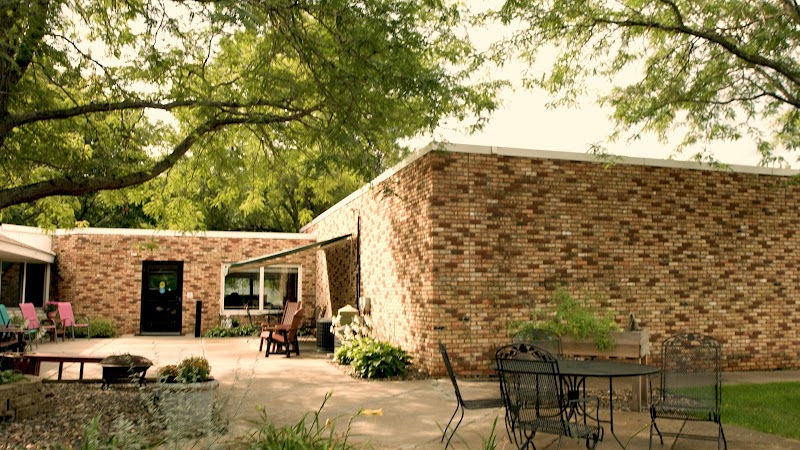
How is The Estates At Greeley Llc Staffed?

CMS rates The Estates at Greeley LLC's staffing level at 4 out of 5 stars, which is above average compared to other nursing homes. Staff turnover is 50%, compared to the Minnesota average of 46%.

What Have Inspectors Found at The Estates At Greeley Llc?

State health inspectors documented 22 deficiencies at The Estates at Greeley LLC during 2022 to 2025. These included: 1 that caused actual resident harm, 20 with potential for harm, and 1 minor or isolated issues. Deficiencies causing actual harm indicate documented cases where residents experienced negative health consequences.
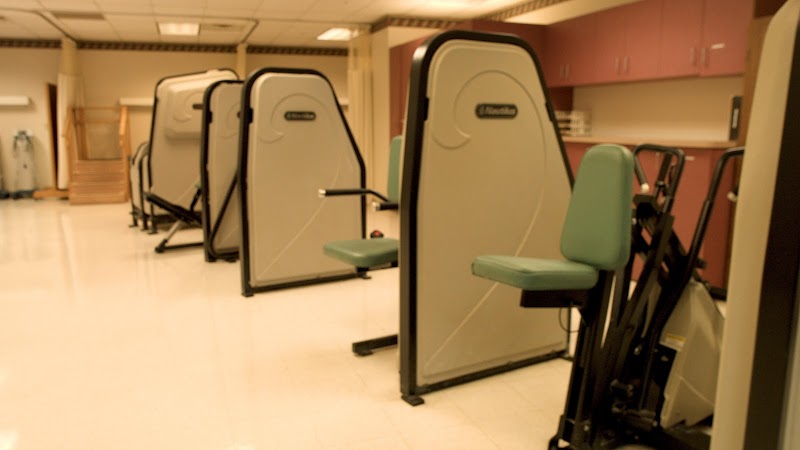
Who Owns and Operates The Estates At Greeley Llc?

The Estates at Greeley LLC is owned by a for-profit company. For-profit facilities operate as businesses with obligations to shareholders or private owners. The facility is operated by MONARCH HEALTHCARE MANAGEMENT, a chain that manages multiple nursing homes. With 64 certified beds and approximately 48 residents (about 75% occupancy), it is a smaller facility located in STILLWATER, Minnesota.

How Does The Estates At Greeley Llc Compare to Other Minnesota Nursing Homes?

Compared to the 100 nursing homes in Minnesota, The Estates at Greeley LLC's overall rating (3 stars) is below the state average of 3.2, staff turnover (50%) is near the state average of 46%, and health inspection rating (3 stars) is at the national benchmark.

What Should Families Ask When Visiting The Estates At Greeley Llc?

Based on this facility's data, families visiting should ask: "Can I visit during a mealtime to observe dining assistance and food quality?" "How do you handle medical emergencies, and what is your hospital transfer rate?" "Can I speak with family members of current residents about their experience?"

Is The Estates At Greeley Llc Safe?

Based on CMS inspection data, The Estates at Greeley LLC has a clean safety record: no substantiated abuse findings (meaning no confirmed cases of resident harm), no Immediate Jeopardy citations (the most serious violation level indicating risk of serious injury or death), and is not on the Special Focus Facility watch list (a federal program monitoring the lowest-performing 1% of nursing homes). The facility has a 3-star overall rating and ranks #100 of 100 nursing homes in Minnesota. While no facility is perfect, families should still ask about staff-to-resident ratios and recent inspection results during their visit.

Do Nurses at The Estates At Greeley Llc Stick Around?

The Estates at Greeley LLC has a staff turnover rate of 50%, which is about average for Minnesota nursing homes (state average: 46%). Moderate turnover is common in nursing homes, but families should still ask about staff tenure and how the facility maintains care continuity when employees leave.

Was The Estates At Greeley Llc Ever Fined?

The Estates at Greeley LLC has no federal fines on record. CMS issues fines when nursing homes fail to meet care standards or don't correct problems found during inspections. The absence of fines suggests the facility has either maintained compliance or corrected any issues before penalties were assessed. This is a positive indicator, though families should still review recent inspection reports for the full picture.

Is The Estates At Greeley Llc on Any Federal Watch List?

The Estates at Greeley LLC is not on any federal watch list. The most significant is the Special Focus Facility (SFF) program, which identifies the bottom 1% of nursing homes nationally based on persistent, serious quality problems. Not being on this list means the facility has avoided the pattern of deficiencies that triggers enhanced federal oversight. This is a positive indicator, though families should still review the facility's inspection history directly.