Southview Acres HealthCare Center
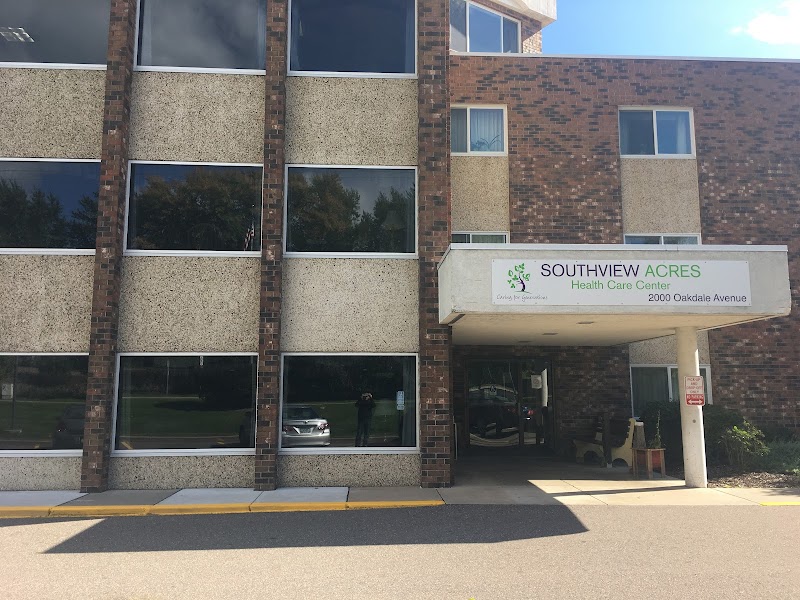
2000 OAKDALE AVENUE, WEST SAINT PAUL, MN 55118 (651) 554-9558
For profit - Corporation 200 Beds AKIKO IKE Data: November 2025
Trust Grade
35/100
#265 of 337 in MN
Last Inspection: January 2025

Within standard 12-15 month inspection cycle. Federal law requires annual inspections.

Overview

Southview Acres HealthCare Center has received a Trust Grade of F, indicating significant concerns regarding the care provided. Ranking #265 out of 337 facilities in Minnesota places it in the bottom half, and at #7 out of 9 in Dakota County, it suggests limited better options nearby. The facility is worsening, with issues increasing from 9 in 2024 to 14 in 2025, and it has a troubling history of serious incidents, including a failure to assess fall risks which resulted in a resident sustaining serious head injuries and ultimately dying. On a more positive note, staffing is rated 4 out of 5 stars, indicating that staff retention is decent, with a turnover rate of 46%, which is near the state average. However, the facility has incurred $41,555 in fines, reflecting ongoing compliance issues and concerns about resident safety, with specific incidents highlighting a lack of proper care planning and privacy violations during wound care.
Trust Score
F
35/100
In Minnesota
#265/337
Bottom 22%
Safety Record
Moderate
Needs review
Inspections
Getting Worse
9 → 14 violations
Staff Stability
⚠ Watch
46% turnover. Above average. Higher turnover means staff may not know residents' routines.
Penalties
✓ Good
$41,555 in fines. Lower than most Minnesota facilities. Relatively clean record.
Skilled Nurses
✓ Good
Each resident gets 62 minutes of Registered Nurse (RN) attention daily — more than 97% of Minnesota nursing homes. RNs are the most trained staff who catch health problems before they become serious.
Violations
⚠ Watch
46 deficiencies on record. Higher than average. Multiple issues found across inspections.
★★☆☆☆
2.0
Overall Rating
★★★★☆
4.0
Staff Levels
★★★☆☆
3.0
Care Quality
★★☆☆☆
2.0
Inspection Score
Stable
2024: 9 issues
2025: 14 issues

The Good

  • 4-Star Staffing Rating · Above-average nurse staffing levels
  • Full Sprinkler Coverage · Fire safety systems throughout facility
  • No fines on record

Facility shows strength in staffing levels, fire safety.

The Bad

2-Star Overall Rating

Below Minnesota average (3.2)

Below average - review inspection findings carefully

Staff Turnover: 46%

Near Minnesota avg (46%)

Higher turnover may affect care consistency

Federal Fines: $41,555

Above median ($33,413)

Moderate penalties - review what triggered them

Chain: AKIKO IKE

Part of a multi-facility chain

Ask about local staffing decisions and management

The Ugly 46 deficiencies on record

2 actual harm
Jun 2025 1 deficiency
CONCERN (D) 📢 Someone Reported This

A family member, employee, or ombudsman was alarmed enough to file a formal complaint

Potential for Harm - no one hurt, but risky conditions existed

Investigate Abuse (Tag F0610)

Could have caused harm · This affected 1 resident

Based on interviews and document review the facility failed to thoroughly investigate an allegation of abuse for 1 of 3 residents (R1) reviewed for abuse. In addition, the facility failed to protect 1...

Read full inspector narrative →
Based on interviews and document review the facility failed to thoroughly investigate an allegation of abuse for 1 of 3 residents (R1) reviewed for abuse. In addition, the facility failed to protect 1 of 3 residents (R1) while the investigation was conducted. Findings include: On 6/17/25 at 5:47 p.m., a Brief Interview for Mental Status (BIMS) was conducted. Summary score was 12 and indicated moderate impaired cognition. R1's care plan dated 6/24/25, identified at risk for falls related to restless leg syndrome (RLS), CVA, altered mental status, and lace of safety awareness. Noted to have uncontrolled movement of legs that pulled him out of bed. Staff were instructed to assist him with ambulation, transfers, utilizing therapy recommendations and encourage him to spend time in central location for increased supervision. He made statements and accusations which were unsubstantiated, unfounded and untrue. Family and friend reported this was not new behavior. Staff were directed to provide refused care at an alternative time per his preference, listen to his accusations/complaints and validate feelings behind them, investigate and evaluate resident statements, ensure safety of resident and others, refer to psychiatric evaluation, and establish boundaries and limits with two-person entry for cares. He had an identified behavior problem (placed self on floor) despite analysis of the five whys, and his perception of time was not real. Staff were directed to observe behavior episodes and attempt to determine underlying cause, consider location, time of day, persons involved, situations, and document behavior and potential causes. His safety was at risk and there was a potential for abuse due to current use of medications and need for assistance with cares and mobility. Staff were directed to keep him safe and free from abuse by being removed from potentially dangerous situations. Review of Nursing assistant (NA) behavior monitoring and interventions from 6/6/25 through 6/19/25 identified: -6/6/25, 6/7/25, and 6/8/25, no behaviors observed for all shifts. -6/9/25 no behaviors noted on day or evening shift. During night shift at 4:43 a.m. he was noted to be physically aggressive (PA) towards others, repetitive motions (RM), and verbalized persistent beliefs (VP). Interventions: provided calm environment(CE), behaviors worsened (W), and reapproached (RA), unchanged response. -6/10/25 no behaviors noted on day or night shift. During evening shift at 8:10 p.m. he was noted to be agitated (A), accusing of others (AO), PA, redirected (RD), RA, behaviors better (B). -6/11/25, no behaviors observed for all shifts. -6/12/25 no behaviors noted on day and night shift. During the evening shift at 10:59 p.m. behaviors identified were AO, and cursing at others (CO). Interventions identified RD and behaviors B. -6/13/25, 6/14/25, and 6/15/25, no behaviors noted on day or evening shift. 6/13/25 at 9:42 p.m., 6/14/25 at 7:44 p.m., and 6/15/25 at 6:59 p.m. he expressed frustration/anger at others (FR), and PA. Interventions provided: RD, RA, and behaviors B. -6/16/25, 6/17/25, 6/18/25, and 6/19/25, no behaviors observed for all shifts. R1's progress notes from 6/6/25, 6/7/25, 6/11/25, and 6/18/25, identified: -On 6/6/25 at 3:06 p.m., resident was very rude to writer, licensed practical nurse (LPN)-A. He requested a cigarette to go outside for a smoke, writer informed him that he would need to wait until his friend arrived before the cigarette could be provided. Resident became upset and told the writer to stay quiet . he would call the police and report writer to the social worker . clinical manager and social worker were contacted to speak with resident . Later approached resident to check blood glucose level. Resident responded he did not want her to touch him and refused . at 6:20 p.m. resident approached LPN-A and apologized . -Late entry on 6/7/25 at 3:50 p.m., resident yelled and screamed at nurse . resident verbalized he was being abused by then nurses because they were not allowing him access to his cigarettes and lighter . reminded of facility smoking policy and safety precautions . not effective, agitated with social worker and called friend to assist him off grounds to smoke. -Late entry on 6/7/25 at 12:35 a.m., to clarify nurse (LPN-A) was kneeling behind resident by bedside. He elbowed nurse twice and then rolled onto the floor . call light used to ask two NAs to help resident off floor . -On 6/7/25 at 5:39 a.m., writer (LPN-A) found resident intentionally had rolled out of bed at 12:35 a.m., rushed to his room to prevent him from rolling out of bed and asked what are you doing? Resident pushed writer and stated leave me alone, do not touch me . place call light on and called two NAs to help transfer him back to bed. no injury. -No documentation in progress notes by nursing staff on 6/11/25. Seen by NP for follow up visit at 8:34 a.m. no concerns. -On 6/18/25 at 8:24 a.m. resident seen at bedside by nurse practitioner; staff notified her of accusations from him. He reported nurse knee [sic] on neck and then slapped face. Discussed incident with resident and he would not provide details but did respond saying he was safe. Denied injuries or pain, no sign of trauma, no bruising, erythema and seated in wheelchair. Police officer (PO) incident report dated 6/18/25 at 1:02 p.m., identified dispatch advised a male caller claimed elder abuse and wanted to speak to a police officer. Upon arrival, PO contacted R1 and he informed him around midnight he had fallen out of bed activated call light for assistance, staff walked by his room, ignored him on the ground asking for help. He was assisted up into his wheelchair where he was left for around three hours. Sometime on 6/11/25, between 3:30 a.m. and 4:00 a.m. he had fallen out of bed and an unknown head nurse came (described her) into his room, placed her knee down next to his head, struck him in the head once, and slapped him with her hand. he was upset staff were not responding to assist him in a timely manner and did not want to get anybody into trouble. PO was flagged down by a staff member, facility administrator, and informed him R1 had frequently filed false accusations against staff members and frequently upset when his care plan was changed. Administrator indicated he was aware of the alleged incident last week of a nurse in the transitional care unit (TCU) struck him in the head with her shin, placed her knee on his head, tapped him on his head, and told him to settle down. PO was informed by administrator that this incident was handled internally, due to a second staff member being present denying these accusations. With new information on a different date, the separate claims of a staff member kneeling next to him and slapped him (while by themselves) administrator informed PO he would request a further investigation into his claims. Email sent to PO by facility administrator on 6/18/25 at 4:08 p.m., identified the complaint received today has been investigated by our team and is nearly identical to an earlier episode that R1 shared while on our TCU (downstairs). When interviewed R1 stated that the head nurse kneed him with her shin, placed her knee on his head, tapped him on his head, and was told to settle down. The earlier instance referenced was very similar in that a head nurse was mentioned and said they placed their knee on his neck. Because we had an eyewitness able to clearly state that what he described did not happen we did not submit a Vulnerable Adult (VA) report to the state. Resident care plan was updated to include that type of behavior. However, with today's allegation and not having an eyewitness available and additional abuse alleged, we submitted a VA to Minnesota Department of Health (MDH) and the staff member in question was suspended as protocol. Facility investigation report dated 6/20/25 at 5:15 p.m., identified R1 reported whoever was in charge that night placed her shins on the side of my head, tapped me on the forehead and told me to settle down. He pushed perpetrator away and stated that was abuse. He also stated he thought they were all pissed off for the many times he had fallen. This was a mirrored event of what happened on 6/6/25 . After interviewing staff on Oakdale Avenue (2nd floor) they indicated they had not seen physical confrontation between staff and resident. He had a history of making false allegation, being untruthful, and threatening to call the police. He called police frequently (5 to 6 times since admission) to this facility . his sister reported he had same behavior at the Veterans Affairs (VA) . allegation was not verified. Interview on 6/24/25 at 11:55 a.m., R1 stated he was admitted to facility at the end of April 2025 and lived on the 1st floor TCU. He had moved him up to 2nd floor about one week ago. While he lived on TCU, was assaulted by a female staff charge nurse, and told by facility staff he lied about the incident. He had restless leg syndrome, once it started, he rolled from side to side and fell out of bed. It was later in the night, the charge nurse walked by his room while he laid on the floor and did not stop at first. When the nurse entered his room, she was angry with him, placed her shin bones against his head, he told her to stop that hurts and she tapped him on his head. He grabbed her calf muscle, pushed her away and said, that hurts, she yelled at him to stop rolling. He told her to get out of his room, she was the only one in there at the time. Interview on 6/25/25 at 9:18 a.m., LPN-A stated on the evening of 6/6/25 she randomly checked on R1 and saw he rolled out of bed. She rushed into the room alone, his legs were on the floor and upper body remained on the bed. Per her reflex, she tried to support him with her thigh against his back, called for help, and he elbowed her with his left hand. She placed call light on and he told her to leave the room. By the time staff arrived to his room he had fallen to the floor. She did not use force, he swore at her, and she stayed out of his room after that. Two NAs assisted him back to bed. She was taken off work for one shift on 6/18/25, returned on 6/19/25, and had not taken care of him since. Interview on 6/25/25 at 11:00 a.m., licensed social worker (LSW) stated three staff nurses working on TCU were interviewed and asked two questions: -are there any known behaviors regarding R1 and, - did they noticed anything strange with the resident. LSW stated nursing staff were not asked about abuse, witnessed or alleged. The allegation made by R1 indicated LPN-A placed her shins on the side of his head, her thigh on the side of his body to help prevent the fall, could have been different but seemed similar. R1 was able to describe what the head/charge nurse looked like. LPN-A was suspended on 6/18/25, and the interview was completed. LPN-A was allowed to return to work on 6/19/25, night shift prior to completion of the investigation which was on 6/20/25. Our policy identified she should have been placed on leave without resident contact until the investigation was completed. It would have been important to be off work because there was an allegation of abuse, the residents are vulnerable, would want to be confident that abuse did not continue to happen, and all residents were safe. She stated would have been important to have completed interviews with those residents on TCU at minimum where he lived when it was identified the alleged incident may have taken place, and had only an explanation of what the staff nurse looked like. The facility policy was not followed. Interview on 6/25/25 at 11:30 a.m., designee social worker (DSW) stated he had completed the interviews with the residents on 2nd floor, where R1 currently lived. No residents and very few staff were interviewed on TCU where the allegation happened. He added it would have been important to follow the facility policy/protocol investigation process and interviews should have been completed with residents that lived in the TCU and staff that worked there to hear from everyone. Interview on 6/25/25 at 1:29 p.m., registered nurse (RN)-A stated R1 rolled out of bed frequently due to RLS and was able to make his needs known. There were days we were unable to predict when he would roll off his bed, had fragile skin, had some bruising, and skins tears. He heard how R1 had arguments with staff but had not heard or witnessed any physical abuse. He was not interviewed regarding any concerns/incidents with staff. Interview on 6/25/26 at 1:52 p.m., nursing assistant (NA)-B stated she had worked at facility for six months usually upstairs but had floated down to TCU occasionally. She was familiar with R1 and provided cares for him. She had not been interviewed by anyone regarding concerns. Interview on 6/25/25 at 2:09 p.m., NA-C stated she had worked at facility for approximately 3 years, usually the day shift on TCU. She was familiar with R1 and provided cares for him. She had not been interviewed by anyone regarding concerns or incidents related to abuse. During an interview on 6/25/25 at 3:04 p.m., clinical coordinator (RN)-C stated there were no residents and only a few nurses interviewed on TCU. Residents were interviewed on 2nd floor where he currently lived. It would have been important to interview residents and staff on TCU, he was unable to provide staff name but described what she looked like. The allegation was abuse and we would have wanted the residents kept safe. He described her as the hit nurse at night. The social worker would have been the one to identify who should be interviewed. She interviewed LPN-A with the SW but that was the only staff she had interviewed. The resident interviews could have possibly provided information to confirm if they had experienced anything similar as what R1 reported. During an interview on 6/26/25 at 10:01 a.m., director of nursing (DON) stated R1's perception of time was not accurate and his cognition was intact. Interviews where not completed with staff NAs or residents on the TCU unit. Interviews with residents and staff are useful to help determine the outcome in the allegation of abuse, in addition to R1's interview. She stated LPN-A worked on 6/17/25, placed on suspension on 6/18/25, and then allowed to come back to work the night shift of 6/19/25 (11:00 p.m.-7:00 a.m.). R1 was moved from TCU on 6/16/25, and LPN-A had not worked with him since the allegation. DON stated a witness was identified during the previous allegation, unsure of which staff it was, and unable to locate the interview. During the investigation, in hindsight, the residents' on TCU should have technically been interviewed prior to the completion of the investigation and prior to LPN-A's return to work. It would have been important to separate residents from a potential perpetrator. During an interview on 6/26/25 at 1:20 p.m., administrator stated when there was an allegation of physical abuse the alleged perpetrator (AP) would be suspended from work until the investigation had been completed and determined whether it occurred or not. Staff and residents were interviewed after an allegation of abuse to help identify if there was a pattern. Our goal was to make sure the residents are safe and protect the staff if residents were physical with them. Facility policy Abuse, Neglect, Exploitation, or Misappropriation - Reporting and Investigating dated 2023, identified all reports of resident abuse (including injuries of unknown origin), neglect, exploitation or theft/misappropriation of resident property are reported to local, state, and federal agencies and thoroughly investigated by facility management. Findings of all investigation are documented and reported. The administrator ensures that the resident and person(s) reporting the suspected violation are protected from retaliation or reprisal by the alleged perpetrator, or by anyone associated with the facility. Any employee who has been accused of resident abuse is placed on leave with no resident contact until the investigation is complete. The individuals conducting the investigation as a minimum interviews any witness to the incident, interviews staff members on all shifts who have had contact with the resident during the period of the alleged incident, interviews other residents to whom the accused employee provides cares or services to and documents the investigation completely and thoroughly.
Mar 2025 1 deficiency
CONCERN (D) 📢 Someone Reported This

A family member, employee, or ombudsman was alarmed enough to file a formal complaint

Potential for Harm - no one hurt, but risky conditions existed

Infection Control (Tag F0880)

Could have caused harm · This affected 1 resident

**NOTE- TERMS IN BRACKETS HAVE BEEN EDITED TO PROTECT CONFIDENTIALITY** Based on observation, interview, and record review the facility failed to ensure proper enhanced barrier precautions (EBP), glov...

Read full inspector narrative →
**NOTE- TERMS IN BRACKETS HAVE BEEN EDITED TO PROTECT CONFIDENTIALITY** Based on observation, interview, and record review the facility failed to ensure proper enhanced barrier precautions (EBP), glove use, and hand hygiene was performed during incontinence care for 1 of 3 (R1) residents reviewed for incontinence care. Findings include: R1's quarterly Minimum Data Set (MDS) dated [DATE], indicated R1 needed extensive assistance with personal hygiene and had a suprapubic catheter (tube inserted into the bladder through an incision in the lower abdomen). R1's EBP signage undated, indicated staff needed to wear gloves and gown when providing high-contact resident care activities such as changing linens, providing hygiene, or changing brief. During an observation on 3/26/25 at 10:43 a.m., nursing assistant (NA)-A and NA-B were observed sanitizing hands and placing on gloves prior to going into R1's room. R1 had a sign indicating he was on EBPs and a bin of personal protective equipment (PPE) was outside the entrance of his door. NA-A and NA-B entered R1's room to assist him with personal hygiene without gowns on. NA-A open R1's soiled incontinent brief and cleansed R1's peri-area, then placed the bowel filled wipes in-between R1's thighs. NA-A grabbed clean towel and wash clothes with her soiled gloves on and went to R1's shared bathroom and got the wash clothes wet. R1 was assisted to his left side, NA-A cleansed R1's buttocks with wash clothes which had bowel on them and rolled the bowel filled wash clothes and brief under R1's body. NA-A removed her gloves, did not perform hand hygiene and removed R1's linen for the right side of his bed pushing the linen under R1. NA-A adjusted R1's pillow under his head, applied a clean fitted sheet to the right side of the bed, and placed a clean brief under R1's buttocks. NA-A assisted R1 to his right side. NA-B cleansed R1's left side near his buttock as there was bowel present, then removed the soiled brief and soiled linen from under R1. NA-B did not remove her soiled gloves and applied the clean fitted sheet to the left side of R1's bed. R1 was then placed on his back. NA-A removed soiled wipes with bowel from R1's groin area without gloves on stating, I shouldn't be doing this, and placed the bowel soiled wipes in the trash. NA-A grabbed a clean towel and started wiping the remaining bowel off of R1's genital area with no gloves on. NA-A and NA-B strapped R1's clean brief together and adjusted his gown. NA-B removed her gloves and did not sanitize her hands. NA-A raised R1's head and leg with the bed remote, adjusted R1's pillow under his head, applied his blanket. NA-B applied new gloves without sanitizing hands and NA-A turned R1 to his right side as NA-B placed a pillow behind R1's back. NA-A left R1's room without sanitizing her hands. During an interview on 3/26/25 at 11:35 a.m., NA-B stated she did not notice R1's EBP sign on his door and that is why she did not wear a gown into his room. Further, NA-B stated she did not remove her gloves after providing personal hygiene to R1 or sanitize her hands after removing her gloves. On 3/26/25 at 12:20 p.m., NA-A stated it slipped her mind that R1 was on EBPs and that is why she did not wear a gown when assisting R1 with personal hygiene. NA-A stated she forgot to remove her gloves after providing personal hygiene to R1. NA-A stated she did not sanitize her hands after removing her soiled gloves. NA-A stated she grabbed soiled wipes from between R1's legs without gloves on because she felt rushed and she did not sanitize her hands before leaving the room. On 3/27/25 at 9:52 a.m., infection preventionist (IP)-A stated if when a resident was on EBPs and staff provided personal care they needed to wear a gown and gloves and follow what the signage and policy stated. IP-A stated staff were expected to remove gloves after cleaning the soiled areas, sanitize their hands, apply new gloves, and not touch soiled products without gloves on. Staff should remove all PPE prior to leaving the residents room and sanitize their hands. On 3/27/25 at 10:09 a.m., the director of nursing (DON) stated when staff entered a room with a resident on EBP they were expected to do hand hygiene, apply gown, and gloves before providing personal cares. They were expected to follow the policy on hand hygiene. Handwashing/ Hand hygiene policy reviewed 8/25/21, indicated staff would complete hand hygiene before and after direct contact with residents, before moving from a contaminated body site to a clean body site during resident care, after contact with bodily fluids, and after removing gloves. Enhanced Barrier precautions (EBPs) policy reviewed 10/18/22, indicated gown and gloves would be used during high contact resident care activities such as providing hygiene, changing linens, and changing briefs.
Jan 2025 12 deficiencies
CONCERN (D)

Potential for Harm - no one hurt, but risky conditions existed

Deficiency F0553 (Tag F0553)

Could have caused harm · This affected 1 resident

**NOTE- TERMS IN BRACKETS HAVE BEEN EDITED TO PROTECT CONFIDENTIALITY** Based on interview and document review, the facility failed to ensure a comprehensive care-planning process (i.e., meeting) was ...

Read full inspector narrative →
**NOTE- TERMS IN BRACKETS HAVE BEEN EDITED TO PROTECT CONFIDENTIALITY** Based on interview and document review, the facility failed to ensure a comprehensive care-planning process (i.e., meeting) was implemented to ensure continuity of care and promote participation in care-planning for 1 of 2 residents (R222) reviewed for participation in care-planning. Findings include: R222's admission Minimum Data Set (MDS), dated [DATE], identified R222 admitted to the care center on 11/22/24 and had intact cognition. The MDS outlined R222 had symptoms of depression along with several medical conditions including heart failure, diabetes mellitus, and arthritis. The MDS outlined R222's goal was a return to the community and an active discharge plan was in place. The MDS identified what, if any, Care Area Assessments (CAA) had been triggered due to R222's MDS responses for further evaluation. These CAA(s) included activities of daily living (ADL) function, urinary incontinence, falls, and nutritional status. Further, the MDS' care plan decisions were signed as completed on 12/3/24; and the final MDS submitted on 12/9/24. On 1/6/25 at 1:11 p.m., R222 was interviewed. R222 explained they admitted to the care center from the hospital and, when they arrived, had been non-weight bearing which had now resolved. R222 expressed multiple concerns about her care while at the center including pain interventions (i.e., Aqua-K Pad) not being handled timely and felt it was due to poor communication adding aloud, Communication is a large factor here. R222 stated she had not yet felt included in her care while at the center and expressed she could not recall ever having a care conference (meeting with all disciplines present) since she admitted . R222 explained the various disciplines (i.e., nursing, dietary, therapy) seemed to rather come in one at a time and talk about things adding, But not in a group, if that's what you mean. R222 stated she would like a meeting with everyone together and felt it would reduce the communication issues she had been seeing adding, I would love that! R222's progress notes, dated 11/22/24 to 1/6/25, identified the following: On 11/22/24, R222 admitted to the care center via ambulance. R222 was recorded as alert and oriented to person, place and time. On 11/25/24, a note labeled, IDT [interdisciplinary team] Meeting Note, was recorded which outlined, IDT discussed and assisted with coding of Section GG [MDS] using staff interviews and assessments, and therapy documentation. The note lacked evidence R222 was included in the discussion. On 11/26/24, a note was completed by social services designee (SSD)-B which outlined, Resident's discharge goal is to return to the community with services . [R222] reports she had made the decision to see [sic] her home and move into an assisted living facility . stated she would return home and move from home to an AL [assisted living]. Resident will work with therapy and SS [social services] to obtain any necessary equipment for safe discharge . SS will continue to follow and assist . However, R222's entire medical record was reviewed and lacked evidence a comprehensive care conference meeting had been offered or held with R222 since they admitted to the care center. On 1/7/25 at 12:12 p.m., SSD-B and registered nurse manager (RN)-D were interviewed. SSD-B stated they were responsible to facilitate care conferences on the short-term unit (i.e., TCU) where R222 resided and expressed the meeting was typically scheduled within 72 hours after admission and documented within the medical record. SSD-B expressed they didn't recall ever having a care conference for R222. SSD-B stated it may have come due and been completed when they were on vacation adding the other social workers or social work director would have done it then. SSD-B and RN-D reviewed R222's medical record and neither were able to locate evidence a care conference had been held but SSD-B added, I would assume she had a care conference. SSD-B stated each of the floors' social workers had a little different way of documenting them. SSD-B stated they had not scheduled, as of 1/7/25, any other care conferences for R222 as I know her plan. However, SSD-B acknowledged the importance of a care conference to ensure services for care are explained and any potential barriers to discharge were identified adding such meeting should include IDT and the resident. When interviewed on 1/7/25 at 1:05 p.m., the social services director (SSDR) reviewed R222's medical record along with their Outlook system (email and calendar system) and acknowledged it lacked evidence a care conference was held for R222. SSDR explained the care conferences were typically recorded using a user-defined assessment (UDA) within the medical record, however, they were unable to locate any being done adding, I do not see that one is in here. SSDR stated a care conference should have been held around the end of November and should have included all IDT members. SSDR stated there was a checklist used to help guide the process, however, it didn't always match up with facility policy so it could have caused confusion. SSDR verified the medical record lacked evidence a care conference was held, nor evidence or rationale why it had not been and stated aloud, I think we need to do better. SSDR stated care conferences were important so the whole team knows what's going on and all are on the same page. A provided Resident Care Conference/Care Plan Review policy, dated 3/2021, identified the purpose of the care conference was to develop a plan of care and ensure resident' goals and preferences were established. The policy outlined an initial care conference should be scheduled during or shortly after admission and the responsibility to do such was with social services. The IDT would be notified of the meeting via email and the meeting should be held within the resident's room. The policy added, After the initial care conference, social services will create a care conference progress note summarizing the items discussed.
CONCERN (D)

Potential for Harm - no one hurt, but risky conditions existed

Deficiency F0638 (Tag F0638)

Could have caused harm · This affected 1 resident

**NOTE- TERMS IN BRACKETS HAVE BEEN EDITED TO PROTECT CONFIDENTIALITY** Based on interview and document review, the facility failed to ensure a quarterly Minimum Data Set (MDS) was completed in a time...

Read full inspector narrative →
**NOTE- TERMS IN BRACKETS HAVE BEEN EDITED TO PROTECT CONFIDENTIALITY** Based on interview and document review, the facility failed to ensure a quarterly Minimum Data Set (MDS) was completed in a timely and/or comprehensive manner to facilitate accurate evaluation of resident' conditions for 2 of 3 residents (R50, R108) reviewed for MDS accuracy. Findings include: R50 The Centers for Medicare and Medicaid (CMS) Long-Term Care Facility Resident Assessment Instrument 3.0 User's Manual, dated 10/2023, identified the RAI process (i.e., MDS) was completed to help evaluate resident' strengths and areas for care-planning. The manual listed all types of assessments to be completed along with corresponding timeframe's for them via a graph labeled, RAI OBRA-required Assessment Summary. This directed a quarterly MDS should be completed (i.e., signed) within, ARD + 14 calendar days. R50's significant change MDS, dated [DATE], identified R50 had severe cognitive impairment, demonstrated hallucinations, and was on hospice. R50's electronic medical record listed a section labeled, MDS, which listed every completed MDS to date for R50. A subsequent quarterly MDS, with an assessment reference date (ARD) 12/24/24, was listed but categorized as, In Progress. The MDS was not completed with multiple sections being red-colored and having little or no data entered and being labeled, In Progress. The uncompleted sections included, Hearing, Speech and Vision, and, Behavior, and, Bladder and Bowel, among several others. R50's medical record was reviewed and lacked evidence why the MDS had not been completed timely per the RAI manual (due 1/7/25). When interviewed on 1/8/25 at 1:07 p.m., registered nurse (RN)-F verified they help complete the MDS for the campus. RN-F verified R50's quarterly MDS was not finished and should have been within 14 days of the ARD adding, We haven't gotten to it yet. RN-F stated the corresponding assessments for the sections (i.e., pain assessments, bladder assessments) didn't seem to be finished in the record, either, which would likely cause many sections on the MDS to be dashed as 'not assessed' adding aloud, It will unfortunately. R108 The Centers for Medicare and Medicaid (CMS) Long-Term Care Facility Resident Assessment Instrument 3.0 User's Manual, dated 10/2023, identified the RAI process (i.e., MDS) was completed to help evaluate resident' strengths and areas for care-planning. The manual outlined all sections of the MDS to be completed and listed, C: Cognitive Patterns, as used, Determine the resident's attention, orientation, and ability to registered and recall information, and whether the resident has signs and symptoms of delirium. Further, it listed, D: Mood, as used, Identify signs and symptoms of mood distress and social isolation. R108's quarterly MDS, dated [DATE], identified the MDS was signed as completed. However, the sections labeled, Section C - Cognitive Patterns, and, Section D - Mood, had all their respective answers (sections used to evaluate the resident) dashed as, - Not assessed, or, - Not assessed/no information. R108's medical record was reviewed and lacked evidence why the MDS had not been completed in a comprehensive manner to accurately evaluate R108's cognition or mood symptoms. When interviewed on 1/7/25 at 1:29 p.m., RN-F verified the MDS was coded correctly, however, it was coded as 'not assessed' due to the corresponding assessments (i.e., BIMS, PHQ-9) not being completed. RN-F stated the social services department was responsible to complete those and then the captured data gets transferred to the MDS. RN-F stated they felt the assessments, and subsequently the sections of the MDS, not being completed thoroughly was kind of an outlier. However, RN-F stated it was important to ensure the MDS was thoroughly completed as it helped showed the most accurate picture of the resident. A provided MDS Completion and Submission Timeframes policy, dated 4/2023, identified the care center would complete and submit assessments in accordance with federal and state timeframe's. The policy outlined, Timeframes for completion and submission is based on the current requirements published in the [RAI] manual.
CONCERN (D)

Potential for Harm - no one hurt, but risky conditions existed

Comprehensive Care Plan (Tag F0656)

Could have caused harm · This affected 1 resident

**NOTE- TERMS IN BRACKETS HAVE BEEN EDITED TO PROTECT CONFIDENTIALITY** Based on interview, observation and document review, the facility failed to ensure comprehensive care plans were developed and m...

Read full inspector narrative →
**NOTE- TERMS IN BRACKETS HAVE BEEN EDITED TO PROTECT CONFIDENTIALITY** Based on interview, observation and document review, the facility failed to ensure comprehensive care plans were developed and maintained to facilitate person-centered care for 2 of 2 (R142, R139) residents reviewed for care planning. R142 R142's quarterly Minimum Data Set (MDS) dated [DATE], indicated R142 was cognitively intact, had no behaviors, did not refuse cares, needed set-up for oral hygiene and eating, and required maximal assistance with mobility and all activities of daily living (ADL). The MDS also indicated R142 had no pressure ulcers. R142's Clinical Diagnosis report printed on 1/8/24, indicated R142 had diagnoses of encounter for orthopedic aftercare following surgical amputation, type II diabetes (a condition in which the pancreas doesn't make enough insulin causing the body to have trouble controlling blood sugar and using it for energy), local infection of the skin and subcutaneous tissue, atherosclerotic heart disease (damage or disease in the heart's major blood vessels), essential hypertension (abnormally high blood pressure that's not the result of a medical condition) , chronic kidney disease, induced constipation, occlusion and stenosis of right carotid artery (narrowing of the right carotid artery), right buttock pressure ulcer, anxiety disorder, irritable bowel syndrome (a digestive condition that causes pain, gas, diarrhea, and constipation), benign prostatic hyperplasia(enlargement of the prostate gland that causes problems with urination), retention of urine, hemorrhoids, and lower back pain. R142's Clinical Orders report, printed on 1/8/25, did not include any orders related to R142's right prosthetic leg. R142's care plan printed on 1/8/25, included a Functional Restorative Plan, Activities of Daily Living (ADLs), and Risk for falls. The Functional Restorative Plan indicated limited mobility, weakness. The goal indicated resident will improve in ambulation. The interventions indicated walking activity: ambulate with assistance of 1 using walker in hallway. The ADL care plan's goal indicate the resident will maintain the current level of function on ADL's. The intervention dated 10/16/24 for ambulation indicated the resident requires extensive assistance by 1 staff to walk with walker in room and between surfaces with a revision date of 12/28/24. The fall risk's care plan indicated R142 was at risk for falls r/t being BKA(R) [below the knee amputation-right leg]. The goal indicated R142 will be free of falls. Interventions indicated anticipation of needs and placement of call light within reach. All these care plans failed to indicate R142 had a prosthetic leg. During observation and interview on 1/7/25 at 1:51 p.m., R142 was sitting on his recliner watching television. R142 stated the staff doesn't know how to put on my prosthetic leg. Nobody knows what they are doing, only two nursing assistants (NA) know what to do. They [NA] have not been trained. I need to tell them what to do. R142 stated he was supposed to ambulate in the hallway twice a day with a NA, but it was not done, unless one of the two NA (mentioned before) were working. During interview on 1/7/25 at 2:38 p.m., NA-D stated R142's Kardex didn't mention his prosthetic leg, but he was trained by the therapist. NA-D stated he believed all staff members were trained how to put the prosthetic leg on and off. During interview on 01/07/25 at 3:17 p.m., nursing assistant (NA)-E stated she didn't know how to put on R142's prosthetic leg. NA-E stated R142's Kardex did not have any information about his prosthetic leg. During interview on 1/8/25 at 9:00 a.m., nurse manager/registered nurse (RN)-C verified there was no mention of R142's prosthetic leg in his physician orders, care plan or Kardex. RN-C stated NA-D, registered nurse (RN)-E, licensed practical nurse (LPN)-D and herself were trained by the physical therapist. RN-C stated all the staff was trained. RN-C stated the therapist trained all the nursing assistants. During interview on 1/9/25 at 11:25 a.m., physical therapist (PT)-A stated she demonstrated to RN-C and NA-D how to put on the prosthetic leg. PT-A stated she only trained those two people, and stated nobody else was trained. PT-A stated the nurse managers were supposed to train all the staff that works with R142. PT-A stated R142 received his leg when he was in the facility's transitional care unit. R142 needed to follow a progressive schedule to wear his orthopedic leg, but R142 offered various reasons why he didn't follow the progressive schedule. PT-A stated R142 should had been able to wear his prosthetic leg the whole day before he was discharged from therapies and moved to the long-term care unit. During interview on 1/8/25 at 1:04 p.m., director of nursing (DON) verified R142's physician orders, care plan, Kardex, and medication/treatment administration record failed to mention R142's prosthetic leg. DON stated, she expected the care plan was updated because it was important for the staff to know how to care for the resident and how to put on and care for his prosthetic leg. R139 R139's quarterly Minimum Data Set (MDS), dated [DATE], identified R139 was cognitively intact with no hallucinations or delusions. Diagnoses included: cerebral infarction (also known as an ischemic stroke; occurs when blood flow to the brain is blocked, causing the brain tissues to die), hypertension (high blood pressure), diabetes (a disease that occurs when you blood glucose is too high), arthritis, multiple sclerosis (disease that causes breakdown of the protective covering of the nerves that can result in numbness, weakness, trouble walking, vision changes and other symptoms), anxiety, depression, dysphagia (swallowing disorder), hemiplegia (paralysis that affects one side of the body) and fibromyalgia (condition that involves widespread body pain and tiredness). In addition, R139 was dependent on staff for transfers and mobility, and required maximal assistance from staff for dressing, personal hygiene and eating. During interview on 1/06/25 at 1:12 p.m., R139 stated she can sense when she has to urinate and stated she would like to be able to use the toilet instead of going in her incontinence pad. R139 stated staff do not offer to bring her to the bathroom to use the toilet and this would be her preference. During a follow up interview on 1/09/25 at 9:41 a.m., R139 was observed lying in bed. R139 once again, expressed a desire to be able to use the toilet. R139 stated, I don't like to go in my underwear. R139 stated most of the time she can feel when she has to urinate. R139 stated staff do not offer to bring her to the bathroom or to use a bedpan [a device used as a receptacle for the urine and/or feces of a person who is confined to a bed] and added they just change my pad. R139 stated she feels confident that she can sit on the toilet with support as she has been working with physical therapy for a long time. R139 stated, they offered me a bedpan a long time ago, which wasn't the best, but they don't even offer that let alone the toilet. R139 indicated that staff transfer her with a Hoyer lift [mechanical lift/device that lifts patients from one place to another who cannot bear weight on their lower extremities] and physical therapy use a EZ stand [manual standing aid to allow patients to assist themselves in preparation for transferring] to transfer her. R139's care plan, printed 1/9/25, identified the following: - TRANSFER: Resident requires assist x2 Standing Lift. - TOILET USE: Resident requires extensive assist x 1 staff. - The resident is incontinent of bladder Impaired Mobility - BRIEF USE: The resident uses disposable briefs. Change per schedule and prn. - INCONTINENT: Check (with cares every AM, PM, Before or after meals and on first and third rounds at night and as required for incontinence. Wash, rinse and dry perineum. Change clothing PRN after incontinence episodes. R139's care plan lacked evidence of coordination between providers (facility and therapy). Additionally, R139's care plan lacked evidence of R139's preference to use the toilet. Additionally, R139's care plan lacked evidence of R139's fluctuating ability in transfers. R139's Kardex, printed 1/8/25, indicated the following: -TOILET USE: Resident requires extensive assist x1 staff. -TRANSFER: Resident requires assist x2 Standing lift. On 1/07/25 at 3:50 p.m., nursing assistant (NA)-B stated they are familiar with R139. NA-B indicated R139 needs assist of 2 staff and a mechanical lift for all transfers. Furthermore, R139 was incontinent of bowel and bladder. NA-B stated they know of R139 using the bedpan once previously, about 2-3 months ago but not since. NA-B stated they do not offer to put R139 on the toilet and just provide incontinent cares for R139. NA-B indicated that R139 was able to identify when she needs incontinent cares completed. On 1/08/25 at 12:34 p.m., NA-A verified they are familiar with R139 and indicated R139 was on incontinence checks. NA-A indicated they have not offered R139 to use the toilet or the bedpan. NA-A verified they refer to the Kardex for resident needs. NA-A stated they are unsure how R139 transfers. After reviewing the Kardex, NA-A indicated the Kardex indicated R139 transfers with assist of 2 staff and an EZ Stand (standing mechanical lift)/standing lift. NA-A indicated they are trained to follow the Kardex on resident needs. On 1/08/25 at 12:59 p.m., licensed practical nurse (LPN)-E indicated R139 required total staff assistance. After reviewing R139's care plan, LPN-E indicated R139 transfers with assist of 2 staff and EZ Stand/standing lift. On 1/08/25 at 1:11 p.m., registered nurse (RN)-C verified they are familiar with R139. RN-C indicated R139 transfers with an EZ stand/standing lift and assist of 2 staff. RN-C indicated R139 was incontinent of bowel and bladder. RN-C indicated they attempted to transfer R139 to use the toilet but unable to recall when. RN-C indicated they offered R139 the use of the bed and indicated that was more than 6 months ago. RN-C indicated they would look for documentation regarding this. During a follow up interview on 1/08/2025 at 2:40 p.m., RN-C indicated they could not find any documentation around offering the use of the toilet or bedpan. RN-C indicated, most cognitively intact people want to use the toilet. On 1/08/25 at 1:30 p.m., physical therapist (PT)-A verified R139 currently receiving physical therapy services and was discharged from occupational therapy services on 12/20/24. PT-A stated, Generally speaking, if someone is able to sue an EZ-Stand [manual standing aid to allow patients to assist themselves in preparation for transferring], they can use a toilet, maybe not be left alone. PT-A verified during R139's last PT session, R139 transferred with an EZ stand/standing lift with moderate assistance. On 1/09/25 at 9:52 a.m., licensed practical nurse (LPN)-C indicated R139 transfers with a mechanical lift. LPN-C indicated they were unsure if R139 was offered the bedpan or toilet. LPN-C indicated R139 was on scheduled to have her incontinent pad check and changed. On 1/09/25 at 10:05 a.m., NA-C indicated R139 transfers with a Hoyer lift and assist of 2 staff and R139 does not use a bedpan or the toilet. NA-C indicated R139 will ask to be changed when needed as R139 was able to identify when they need to be changed. NA-C verified they have not offered R139 the bedpan or the use of the toilet. On 1/09/25 at 10:56 a.m., PT-B verified R139's last physical therapy was 1/6/24 and used the EZ stand. PT-B indicated, I don't know why that would be a problem if they can sit safely on the toilet, when asked about a resident using a toilet when transferring with a mechanical lift. PT-B indicated part of the physical therapy goal is using the EZ stand with staff. On 1/09/25 at 1:34 p.m., physical therapy assistant (PTA)-A verified they are familiar with R139. PTA-A verified R139 transfers with an EZ stand and indicated there have been no updates sent to nursing in 6-12 months, on recommendations changing how R139 transfers. On 1/09/25 at 1:55 p.m., director of nursing (DON) verified nursing staff would look at the care plan/Kardex for resident needs (how they transfer, preferences, etc.). DON verified R139's care plan indicated R139 transfers with assist of 2 staff and EZ stand/standing lift. A facility policy titles Care Plans, Comprehensive Person-Centered, reviewed 11/30/21, indicated comprehensive, person -centered care plans will: - reflect the resident's expressed wishes regarding care and treatment goals - aid in preventing or reducing decline in the resident's functional status and/or functional levels Facility policy titled Care Plans, Comprehensive Person-Centered reviewed 11/30/21, also indicated a comprehensive, person-centered care plan that includes measurable objectives and timetables to meet the resident's physical, psychosocial and functional needs is developed and implemented for each resident. The care plan interventions are derived from a thorough analysis of the information gathered as part of the comprehensive assessment.
CONCERN (D)

Potential for Harm - no one hurt, but risky conditions existed

ADL Care (Tag F0677)

Could have caused harm · This affected 1 resident

**NOTE- TERMS IN BRACKETS HAVE BEEN EDITED TO PROTECT CONFIDENTIALITY** Based on observation, interview, and document review, the facility failed to ensure routine personal hygiene cares (i.e., nail c...

Read full inspector narrative →
**NOTE- TERMS IN BRACKETS HAVE BEEN EDITED TO PROTECT CONFIDENTIALITY** Based on observation, interview, and document review, the facility failed to ensure routine personal hygiene cares (i.e., nail care) was completed to reduce the risk of complication (i.e., scratches, infection) for 1 of 3 residents (R47) reviewed for activities of daily living (ADL) and whom was dependent on staff for their nail care. Findings include: R47's admission Minimum Data Set (MDS), dated [DATE], identified R47 had severe cognitive impairment and demonstrated no rejection of care behaviors during the review period. Further, the MDS outlined R47 was dependent on staff for bathing, and required supervision or touching assistance with personal hygiene (i.e., shaving, combing hair). R47's most recent Weekly Bath Audit 020919 - V9, dated 1/2/25, identified R47 received a bed bath. The audit listed, Was nail care rendered? which was answered, 1. Yes. The audit also listed, Are nail beds clear of debris? which was answered, 1. Yes. Further, the audit outlined, Patient has scratches on his left side of his glute, patient states that he scratched himself recently. However, on 1/6/25 at 2:01 p.m. (four days later), R47 was observed lying in bed while in his room. R47 was dressed in a hospital-gown and was unable to recall what, if any, meal had been served for lunch nor how long he had been at the care center. R47's hands were visible and R47 had several nails on both hands, especially the thumb nails, which were multiple millimeters (mm) in length. Further, multiple nails had visible brown or black-colored debris present under them. R47 was questioned on his nails and held his hands up to look at them, however, had no verbal response on them. When asked if he'd like them clipped shorter or cleaned, R47 responded aloud, Yea. R47's care plan, dated 12/4/24, identified R47 was non-ambulatory due to an ankle fracture and outlined, Resident performance: Personal hygiene - Supervision/set-up help only. Further, the care plan outlined a section labeled, ADL self care needs ., which outlined, AM ROUTINE . - Dependent dressing. The care plan lacked any outlined nail length preference for R47 (i.e., long or short), nor evidence R47 was identified to refuse nail care. On 1/7/25 at 8:31 a.m., R47 was again observed while in his room. R47 continued to have the same long, soiled nails and nail beds as had been observed the day prior. Further, the following day on 1/8/25 at 8:23 a.m., R47 was again observed to have the same length fingernails including multiple ones with debris present underneath of them. R47's medical record was reviewed and lacked evidence R47 had nail care offered or provided despite being observed for multiple days with continued long, soiled nails and/or nail beds. On 1/8/25 at 10:04 a.m., nursing assistant (NA)-F was interviewed. NA-F verified they were assigned care for R47 and had worked with him multiple times prior. NA-F described R47 as needing staff assistance with all cares except feeding adding, We do everything for him. NA-F stated R47 was generally accepting of cares and mostly just wanted to go back home. NA-F explained baths were done weekly and the nurses will help with nail care, if needed. At 10:07 a.m., NA-F observed R47's nails and verified their length and condition adding aloud, They need to be trimmed. NA-F stated the nails were kind of longer and [he] could scratch himself. R47 was asked if he'd like them clipped and responded, Yea. NA-F stated the nails should be clipped on bath day adding they were unaware of any preference for R47 to have longer, soiled nails. When interviewed on 1/8/25 at 10:57 a.m., registered nurse (RN)-H stated nail care should be completed every bath day and, if the resident is not diabetic, then the NA can do it. RN-H stated each bath is done by the NA and the nurse then should follow-up afterward to ensure the list of things they do are done, including nail care. RN-H verified nail care could be completed in-between assigned bath days, too, if noticed it was needed. RN-H stated they were assigned care for R47 that day, however, had not noticed his nails being long adding, I will look at it later. RN-H verified R47 was not diabetic and was generally accepting of care. Further, RN-H stated any attempt to do nail care should be documented in the notes. On 1/8/25 at 11:55 a.m., the director of nursing (DON) was interviewed. DON verified nail care should be completed on assigned bath days but would also be done in-between if noticed. DON added, I do expect nurses to verify the charting is done. A provided Fingernails/Toenails, Care of policy, dated 2/2022, identified a procedure to ensure nail care was done adding, Nail care includes daily cleaning and regular trimming. The policy included, Proper nail care can aid in the prevention of skin problems around the nail bed. Further, the policy directed nail care, when done, should be documented in the medical record.
CONCERN (D)

Potential for Harm - no one hurt, but risky conditions existed

Deficiency F0679 (Tag F0679)

Could have caused harm · This affected 1 resident

**NOTE- TERMS IN BRACKETS HAVE BEEN EDITED TO PROTECT CONFIDENTIALITY** Based on interview, and document review, the facility failed to comprehensively reassess and, if needed or able, develop interve...

Read full inspector narrative →
**NOTE- TERMS IN BRACKETS HAVE BEEN EDITED TO PROTECT CONFIDENTIALITY** Based on interview, and document review, the facility failed to comprehensively reassess and, if needed or able, develop interventions to ensure activities-of-interest were advertised, offered and/or provided for 1 of 2 residents (R222) reviewed for activities and whom resided on the short-term unit (i.e., TCU). Findings include: R222's admission Minimum Data Set (MDS), dated [DATE], identified R222 had intact cognition and demonstrated no delusional thinking. The MDS outlined several questions with a response of importance to R222, including having reading materials, keeping up with the news, and doing her favorite activities. These were all coded with a response of, Somewhat important, or, Very important. R222's Therapeutic Recreation/Activity Evaluation, dated 11/27/24, identified R222's background information along with a section labeled, Recreation Interest/Needs, which contained checkmarks placed next to applicable items. These outlined R222 liked activities in groups, independently, in her room or day room, and marked her participation as, Independent/individual. The evaluation outlined R222's current interests as, television, music (rock), getting rest, card making, making Victorian ornaments, beading, family phone calls, and also outlined R222 needed assistance to get to/from activities areas. The evaluation concluded with a section labeled, Summary, which outlined, . plans on short stay and to return home. At this time she states she is not in the 'mood' to do anything, discouraged with health status. When she starts feeling better, she stated she may enjoy engaging in activities offered . Proceed to plan of care. The completed evaluation lacked what, if any, in room options for doing her identified interests were offered or provided (i.e., craft material, beads). On 1/6/25 at 12:54 p.m., R222 was interviewed while in her room on the TCU. R222 explained she had admitted in November 2024 and, upon admission, was non-weight bearing due to a boot placed on her leg adding, [it was] very difficult for me to get around, period. R222 stated she had not been attending much, if any, activities and explained it was due to multiple reasons including her immobility and feeling, at times, it was more depressing to be around elderly, confused people. R222 stated she knew there were some activities offered but didn't know what they were as there was no calendar posted in her room. R222 stated, I think there is one somewhere [posted] but not in here. R222 explained she was now no longer non-weight bearing and would be more open to activities, if offered, however, she stated nobody ever came and offered any activities to her, either, which she voiced, I would be receptive to that. R222 stated she recalled going to a music program once since admitting which was around Christmas adding, That was nice. R222's care plan, dated 12/12/24, identified R222 was able to verbalize her preferences and was independent in meeting her emotional, intellectual, social and physical needs. The care plan outlined a single intervention for this which read, Resident enjoys participating in their favorite activities - getting rest, watching television, card making, making Victorian ornaments, beading . The intervention was initiated and last revised both on 11/27/24. When interviewed on 1/7/25 at 11:56 a.m., nursing assistant (NA)-G stated they worked with R222 over the past weekend along with stray lights here and there. NA-G stated R222 rarely left her room or attended activities adding, Not really. NA-G stated they felt the lack of attendance with activities was her choice adding, I think she keeps herself busy. NA-G stated the TCU did have a posted activities calendar outside the main elevators adding sometimes each resident' room will have them but they hadn't ever seen one in R222's room to their recall. NA-G stated nobody had directed them to ever offer activities or go through the calendar with her adding, Not specifically to her, no. R222's progress note, dated 12/11/24, identified R222 was advanced to weight-bearing as tolerated (WBAT) with use of the PRAFO boot; and on 12/20 could be WBAT without it applied. R222's activity attendance was requested. A provided Follow Up Question Report, printed 1/7/25, identified R222's recorded activities, level of participation and the corresponding date of each. This record identified R222 attended or had provided only four activities since admission to the care center in November 2024. These included: On 12/4/24, a chaplain visit was recorded with R222 having active participation. On 12/22/24, a music group was recorded with R222 having active participation. On 12/24/24, a party or special event along with friend/family visits were recorded with R222 having active participation. R222's medical record was reviewed and lacked any evidence R222 had been comprehensively reassessed to determine what, if any, activities needs were needed to promote quality of life despite R222 rarely attending services and having healed with no longer being non-weight bearing. There was no evidence what, if any, in-room activities were offered or provided despite R222 expressing interest in such when assessed upon admission. On 1/8/25 at 12:32 p.m., the therapeutic recreation coordinator (TRC) and chaplain (CH) were interviewed. TRC explained they don't typically program activities on the TCU as, from past experience, had not ever seen enough attendance to justify it. As a result, upon admission they meet with TCU residents' and explain they are welcome to attend the activities on the other floors for the LTC residents. TRC stated if someone expressed wanting to be involved, then they'd likely be given an in-room calendar. CH explained they round on the unit and do a scheduled program every other week, however, both CH and TRC verified they don't round on the units daily to invite residents on the TCU to activities. TRC stated any in-room activities would be offered on the initial evaluation adding if offered and declined, then such would also be indicated on the evaluation. When questioned on what, if any, re-evaluation process existed as people on the TCU are likely to have evolving health needs (i.e., get better, more energy), TRC explained the re-admission was not an automatic and they wouldn't typically re-visit it until the MDS cycle (i.e., quarterly) came due. A facility' activities programming policy was requested, however, none was received.
CONCERN (D) 📢 Someone Reported This

A family member, employee, or ombudsman was alarmed enough to file a formal complaint

Potential for Harm - no one hurt, but risky conditions existed

Pressure Ulcer Prevention (Tag F0686)

Could have caused harm · This affected 1 resident

**NOTE- TERMS IN BRACKETS HAVE BEEN EDITED TO PROTECT CONFIDENTIALITY** R39 R39's quarterly Minimum Data Set (MDS) dated [DATE], identified R39 with severe cognitive impairment, did exhibit rejection ...

Read full inspector narrative →
**NOTE- TERMS IN BRACKETS HAVE BEEN EDITED TO PROTECT CONFIDENTIALITY** R39 R39's quarterly Minimum Data Set (MDS) dated [DATE], identified R39 with severe cognitive impairment, did exhibit rejection of cares, had an indwelling catheter (tube and bag to drain urine from the bladder), diagnoses of kidney disease, neurogenic bladder (nerve damage to bladder), obstructive uropathy (blockage of urine flow) , dementia, Parkinson's disease, malnutrition, and chronic obstructive pulmonary disease (damaged lungs that limit airflow in and out of lungs). In addition, R39 was indentified as at risk for pressure ulcers, had one stage 2 pressure ulcer acquired at the facility, had two stage 3 pressure ulcers that were present upon admission/entry or reentry to facility, utilized pressure reducing device for chair and bed, and received pressure ulcer/injury care. R39's physician orders (PO) with a start date of 11/15/2024, documented the following order for R39 Pillow between knees when in bed for comfort and another order with a start date of 5/20/24, R39 is to have blue wedge abductor [device to prevent tissue breakdown] with strap in place when in w/c [wheelchair] on days/evening to help separate knees and to between position feet. R39's nursing assistant care sheet (Kardex) dated 1/8/25, identified R39 required the following: The resident needs assistance to turn/reposition at least every 2 hours, more often as needed or requested; Encourage Resident to frequently shift weight; Extensive assist/one-person physical assist One Person assist with turning and repositioning when in bedTwo [sic] persona assist to boost up in bed; Application of pillow between knees when in bed; Lower blue knee abductor wedge with strap to be used when up in w/c to help separate knees and to better position feet. During observation on 1/6/25 at 5:38 p.m., R39 was observed seated in a Broda chair (specialized positioning wheelchair) in dining room watching television without the ordered protection between his knees. During observation on 1/7/25 at 8:05 a.m., R39 was observed in bed without padding between the knees. During observation on 1/7/25 at 3:41 p.m., R39 was observed seated in a Broda chair in the dining room watching television without the ordered blue wedge abductor in place. During observation on 1/8/25 at 8:43 a.m., R39 was observed lying in bed, positioned on his right side with no pillow or padding between knees. During interview with NA-A on 1/8/25 at 12:58 p.m., NA-A stated, I get report from the previous shift verbally and look at kardex to tell me what they [residents] need. NA-A stated every resident has a kardex and [it tells us] what we need to do. We also look in the computer care plan to tell what needs to be done. During observation and interview with nurse manager registered nurse (RN-A) on 1/9/25 at 10:46 a.m., RN-A identified R39 was lying in bed with no pillow between his knees. RN-A stated, [R39's] care plan says to have pillow between knees when in bed. His legs are contracted enough to be touching and we want to eliminate or reduce pressure injuries to the area. During observation and interview with LPN-A on 1/9/25 at 10:54 a.m., LPN-A verified there was no pillow or padding between R39's knees while he was lying in bed. LPN-A stated, yeah, [R39] is on a turning schedule. [R39] can't move himself unless we help him. He is a high skin breakdown risk. And Padding or something should be between [R39] knees. It says so in the care plan and should be done. His knees bed inwards to touch so there needs to be something between them when he is in bed and in the wheelchair. During observation and interview with NA-A on 1/9/25 at 10:55 a.m., NA-A stated, [R39] is a skin breakdown risk, a pillow should be between the knees when in bed and it is not. During interview with assistant director of nursing (IPCP) on 1/8/25 at 2:29 p.m., IPCP stated the expectation of facility direct care staff is to follow the kardex and care plan for positioning and applying the blue wedge pillow between R39's knees when up in wheelchair and pillow between knees when in bed. IPCP stated R39 was identified as high risk for pressure ulcers with interventions in place. Facility's policy titled Pressure Ulcers/Skin Breakdown-Clinical Protocol dated 7/12/22 indicated the nursing staff and practitioner will assess and document an individual's significant risk factor for developing pressure ulcers, for example, immobility, recent weight loss, and a history of pressure ulcers. In addition, the nurse shall describe and document/report the following: a. Full assessment of pressure sore including location, stage, length, with and depth, presence of exudates or necrotic tissue. b. Pain assessment. c. Patient's mobility status. d. Current treatments, including support surfaces; and e. All active diagnoses. Based on observation, interview, and document review the facility failed to comprehensively assess, care plan, and implement interventions to prevent recurrent pressure ulcers for 2 of 2 resident (R39 and R142) who had a history of pressure ulcers. Findings include: R142 The Centers for Medicare (CMS) State Operations Manual (SOM) Appendix PP, dated 8/8/2024, identified definitions for pressure ulcer care and treatment. This included, Avoidable, being outlined as, . the resident developed a pressure ulcer/injury, and that the facility did not do one or more of the following: evaluate the resident's clinical condition and risk factors, define and implement interventions that are consistent with resident needs . monitor and evaluate the impact of the interventions; or revise the interventions as appropriate. In addition, the guidance provided several stages of injury definition which included, Stage II Pressure Ulcer: Partial-thickness skin loss with exposed dermis . presenting as a shallow open ulcer. Adipose (fat) is not visible and deeper tissues are not visible. This stage should not be used to describe moisture associated skin damage including incontinence associated dermatitis . During interview on 1/7/25 at 1:51 p.m., R142 was observed seated on his recliner, watching television. R142 stated he had a bed sore on his bottom. R142 stated the bed sore was going to get worse because the area was not covered with a dressing, and the staff only applied a cream. R142 stated the staff is supposed to get me up or turn me every two hours, but they don't. R142 stated he was also concerned about having to wait too long for staff to help him when he is incontinent of bowel. R142 stated yesterday, 1/6/25, he returned from a doctor's appointment and informed the nurse on duty he had a bowel movement and needed to be changed. R142 stated he waited one hour and 15 minutes before he was cleaned. R142's quarterly Minimum Data Set (MDS) dated [DATE], indicated R142 was cognitively intact, had no behaviors, did not refuse cares, needed set-up for oral hygiene and eating, and required maximal assistance with mobility and all activities of daily living (ADL). The MDS also indicated R142 had no pressure ulcers. R142's Clinical Diagnosis report printed on 1/8/24, indicated F142 had diagnoses of encounter for orthopedic aftercare following surgical amputation, type II diabetes (a condition in which the pancreas doesn't make enough insulin causing the body to have trouble controlling blood sugar and using it for energy), local infection of the skin and subcutaneous tissue, atherosclerotic heart disease (damage or disease in the heart's major blood vessels), essential hypertension (abnormally high blood pressure that's not the result of a medical condition) , chronic kidney disease, induced constipation, occlusion and stenosis of right carotid artery (narrowing of the right carotid artery), right buttock pressure ulcer, anxiety disorder, irritable bowel syndrome (a digestive condition that causes pain, gas, diarrhea, and constipation), benign prostatic hyperplasia (enlargement of the prostate gland that causes problems with urination), retention of urine, hemorrhoids, and lower back pain. R142's Clinical Orders report, printed on 1/8/25 indicated orders for weekly bath audits, Pro-source liquid 30 milliliters (ml) every day, nurse to monitor APM mattress pump (pressure relieving speciality mattress) is well functioning every shift. R142's report did not include skin care orders. R142's Braden scale (a tool used to assess a patient's risk of developing pressure ulcers, or pressure injuries) dated 11/12/24, indicated a score of 15, which indicated R142 was at risk to develop a pressure area. R142's care plan initiated on 8/6/24, indicated R142 had impairment to skin integrity. R142's care plan goal indicated the resident will develop clean and intact skin by the review date. The goal also indicated Pressure ulcer stage 2 right intergluteal cleft, healed 12/7/24. Care plan interventions indicated: - Intervention dated: 8/26/24: Apply barrier cream after each incontinent episode with a revision date of 8/6/24. - Intervention dated: 8/26/24: Keep skin clean and dry. Use lotion on dry skin with a revision date of 8/6/24. - Intervention dated: 8/26/24: The resident needs pressure reducing cushion to protect the skin while in wheelchair. Revision date 8/6/24. - Intervention dated: 8/26/24: The resident needs a pressure relieving mattress, APM, pillows to protect the skin while in bed. Revision date 11/21/24. - Intervention dated: 12/9/24: Encourage good nutrition and hydration to promote healthier skin. No revision dates. - Intervention dated: 12/9/24: Monitor/document location, size, and treatment of skin injury. Report abnormalities, failure to heal, s/sx [sign and symptoms] of infection, maceration, etc., to MD. No revision dates. - Intervention dated: 12/9/24: Treatment per order. Revision date 1/8/24. R142's care plan listed no further updates following 12/9/24. On 12/24/24 R142's transferred to the hospital emergency department for evaluation due to blood in the stool. The emergency department's Summary report dated 12/24/24, indicated lower gastric bleed was ruled out and included the following laboratory reports: Hepatic Function Panel: Albumin 3.8 low (normal 4.0-4.9) Complete blood count (CBC): red blood count 4.11 low (normal 4.30-5.90), hemoglobin 11 low (normal 13.5-17.5). R142's progress note authored by R142's primary physician dated 1/9/25, indicated the following laboratory tests results dated 7/29/24: red blood count 3.7 low, and hemoglobin 9.8 low. R142's weekly bath audits completed between 12/7/24 and 1/1/25 indicated no skin impairments. R142's progress note dated 1/4/25 at 3:04 p.m. indicated R142 had a shower, his skin was checked and appears intact with no signs of concerns or abnormalities. R142's progress note dated 1/5/24 at 8:25 p.m. stated patient is breaking down on the coccyx area due to refusing to be repositioned while sitting in his chair. During observation and interview on 1/7/25 at 2:38 p.m., R142 stated he had a bowel movement and requested to be changed. Nursing assistant (NA)-D applied R142's prosthetic leg and assisted him to stand up. NA-D cleaned R142 perineal (rectal area) area and R142 moaned in pain and said, it hurts! RN-C came into the room and verified the two pressure areas but said she didn't feel comfortable staging affected area, RN-C observed a pressure area, on each buttock; she measure the pressure area on the left buttock measured about two centimeters (cm) in length and one cm in width, and the pressure area on his right buttock measured one by one cm. During observation and interview on 1/7/25 at 3:06 p.m., registered nurse (RN)-E verified R142 skin breakdown. RN-E stated his bottom had healed but stated every time R142 takes antibiotics, he gets diarrhea, and his bottom opens. RN-E proceeded to cleanse the area and applied alginate powder and Vitamin A and D cream. Duirng interview on 1/7/25 at 3:17 p.m., NA-E stated all nursing assistants received training about how to care for him. We use a barrier cream for this bottom. Everytime we go to his room he is on the phone. He is busy and asks us to come back. We use the Kardex. During interview on 1/7/25 at 3:20 p.m., nurse manager RN-C stated she was not aware of any documentation on R142's progress notes about the skin breakdown on his coccyx (bottom) area. RN-C stated she would look at R142's skin later in the afternoon. During interview on 1/7/25 at 3:42 p.m., NA-D stated since yesterday, R142 complained of buttocks' pain during toileting cares. NA-D stated they always apply barrier cream after they clean him up. NA-D stated R142 often refuses to reposition and likes to sit down on his recliner chair for most of the day. NA-D stated his Kardex indicated repositioning every two hours and walking once a day. NA-D stated R142 used his call light to request help. NA-D stated the nursing assistants would inform the nurses of R142 refusal of cares. During interview on 1/7/25 at 3:55 p.m., licensed practical nurse (LPN)-D stated he worked on January 5th and when he cleaned R142's coccyx and buttocks, R142 complained of pain. LPN-D stated he observed R142 had a new pressure area on his right buttock and the skin in both buttocks was red. LPN-D documented in the progress notes, R142's skin had started to breakdown. LPN-D stated when he moved from the 1st floor TCU unit to the current unit, he had a pressure area on his right buttock which healed a few weeks ago. LPN-D stated on 1/5/24, he performed the same treatment used for his previous pressure area. LPN-D left a voice mail for the nurse manager, RN-C because he knew the next day [Monday] the facility's wound team would make rounds. During interview on 1/8/25 at 8:47 a.m., RN-C stated R142 had a pressure area on his right buttock that healed. RN-C stated when a resident developed a new pressure area, the nurse needed to complete a Braden Scale, a wound evaluation, and determine what happened and how to prevent future occurrences. RN-C verified R142's skin care plan did not include any turning and reposition schedule, RN-C said I missed it. RN-C veirifed there was no consistent documentation of resident's refusal to turn and reposition, and added that should have been considered when R142 was re-assessed after his previous pressure ulcer healed. RN-C stated on 1/7/24 she visualized R142's skin and obtained an order to apply collagen powder over affected area and Vitamin A and D cream over affected area. RN-C stated he had not measured the affected areas and was going to request the assistance of their lead wound nurse to classify R142's coccyx skin breakdown. During observation and interview on 1/8/25 at 12:17 p.m., R142 was sitting on recliner and NA-D assisted him to lay down in bed. The director of nursing (DON), RN-C and lead wound nurse/RN-D were present in the room to observe affected areas. RN-C and DON verified R142 had a stage II pressure area on each buttock. RN-C used a digital program to measure the pressure areas. The pressure area on his left buttock measured 2.3 cm in length by 1.9 cm in width, and the pressure area on his right buttock measured one by one cm. During interview on 1/8/25 at 12:43 p.m., the director of nursing (DON) stated when a pressure area heals, the facility continues to monitor the wound for two more weeks. The monitoring is done by the Integrated Wound practitioner. The facility then implements measures to prevent re-occurrence which includes the use of a barrier cream, repositioning resident, the use of a specialty mattress, and a cushion for his chair. DON added, changes to the existing care plan are made if indicated. The DON stated when a new skin impairment area was identified, she expected the nurses to do a skin assessment, educate the resident to lay down and reposition, call the physician to obtain orders to start a treatment, complete a Braden scale and an Incident Report on the resident's electronic record which would alert the nurse manager and her (DON) about any new skin impairment. During interview on 1/0/25 at 10:34 a.m., physician assistant (PA)-A stated when a resident develops a pressure area he needs to be notified as soon as possible, so a resident can be re-assessed by the wound care team. PA-A stated when a pressure area is not addressed right away the ulcers can increase in size, cause pain, also pressure areas are an avenue for infections. PA-A stated he was not notified about the new pressure areas. During interview on 1/9/25 at 11:58 a.m., registered dietician (RD)-A stated on Monday morning during their interdisciplinary team meeting (IDT), the nurse manager, RN-C reported R142 had a new area of skin impairment associated with moisture. RD-A stated on 1/8/25 she re-assessed R142 and kept him on Pro-source nutritional supplement. RD-A stated she had not been informed about R142's new pressure wounds areas and even with this R142's Pro-Sources orders would not need adjustment. RD-A stated R142's intake was adequate and his weight was stable, and she felt R142 had what he needed to heal his pressure area. RD-A stated she had not reviewed R142's most recent albumin level because the level could be affected by inflammation and other medical conditions. RD-A stated she trusted the hemoglobin and oxygenation levels more. R142's Nutrition Assessments dated 8/7/24, 11/12/24, and 12/2024 lacked documentation of hemoglobin and/or albumin levels. During interview on 1/9/25 at 12:19 p.m., lead wound nurse, RN-D stated R142 risked further skin breakdown if action is delayed after a new skin impairment area is identified. RN-D stated if a pressure area goes unchecked, it will get worse. RN-D stated the development of a new pressure area represents a change in condition and the physician needed to be notified right away.
CONCERN (D)

Potential for Harm - no one hurt, but risky conditions existed

Incontinence Care (Tag F0690)

Could have caused harm · This affected 1 resident

**NOTE- TERMS IN BRACKETS HAVE BEEN EDITED TO PROTECT CONFIDENTIALITY** Based on observation, interview and document review, the facility failed to ensure bladder and bowel incontinence was comprehens...

Read full inspector narrative →
**NOTE- TERMS IN BRACKETS HAVE BEEN EDITED TO PROTECT CONFIDENTIALITY** Based on observation, interview and document review, the facility failed to ensure bladder and bowel incontinence was comprehensively assessed and interventions developed to promote continence for 2 of 2 resident (R142, R139) reviewed for incontinence cares. Findings include: R142 R142's quarterly Minimum Data Set (MDS) dated [DATE], indicated R142 was cognitively intact, had no behaviors, did not refuse cares, needed set-up for oral hygiene and eating, and required maximal assistance with mobility and all activities of daily living (ADL). The MDS outlined R142 was always incontinent of bowel. A trial of toileting program (e.g., scheduled toileting) had not been attempted since admission to this facility. Furthermore, the toileting program and bowel pattern section of the MDS was left blank. R142's Clinical Diagnosis report printed on 1/8/24 indicated, resident had diagnoses of encounter for orthopedic aftercare following surgical amputation, type II diabetes (a condition in which the pancreas doesn't make enough insulin causing the body to have trouble controlling blood sugar and using it for energy), local infection of the skin and subcutaneous tissue, atherosclerotic heart disease (damage or disease in the heart's major blood vessels), essential hypertension (abnormally high blood pressure that's not the result of a medical condition) , chronic kidney disease, induced constipation, occlusion and stenosis of right carotid artery (narrowing of the right carotid artery), right buttock pressure ulcer, anxiety disorder, irritable bowel syndrome (a digestive condition that causes pain, gas, diarrhea, and constipation), benign prostatic hyperplasia(enlargement of the prostate gland that causes problems with urination), retention of urine, hemorrhoids, and lower back pain. R142's physician orders printed 1/9/24, included orders for polyethylene Glycol 3350 (medication for constipation) oral packet 17 grams once a day and sennosides-docusate sodium (medication for constipation) oral tablets 8.6-50 milligrams, one tablet once a day. Both medications are used for constipation. R142's care plan dated 10/7/24, indicated R142 has bowel incontinence with a goal for R142 to be continent during daytime through the review date. Care plan's intervention dated 10/7/24, indicated taking resident to the toilet upon request with a revision date of 10/7/24. Other interventions dated 12/17/24, indicated checking resident every two hours and assisting with toileting, and to provided pericare after each incontinence episode. R142's Bowel and Bladder Program Screener dated 12/26/24 indicated resident was a candidate for a bowel training program. During interview on 1/7/24 at 1:51 p.m., R142 stated he requests to use the toilet to sit down and try to have a bowel movement in the toilet and added especially when I have a pressure sore. R142 stated, sometimes I can't wait 15 or 20 minutes and I just go in my pants and it upsets me. R142 stated sometimes after having an incontinent episode of bowel, he waits over one hour to be changed and it will be easier if they help him sit down in the toilet. During interview on 1/7/25 at 2:38 p.m., nursing assistant (NA)-D stated R142 used his call light when he needs assistance to be changed or to be transferred to the toilet. NA-D stated usually R142 was incontinent of bowel. During interview on 1/8/25 at 8:57 a.m., registered nurse (RN)-C stated R142 doesn't feel when he has a bowel movement, and he is assisted to the toilet upon request. RN-C added, I think when he gets stronger it will be easier for him to transfer to the toilet. RN-C stated she had not monitored R142 to establish a possible pattern and had not considered a bowel schedule or program for the resident. During interview on 1/8/24 at 1:09 p.m., director of nurses (DON) stated if a patient has bowel incontinence and they are not happy about it, I will expect the team to talk to the patient and find out his goals. This will improve the patient's quality of life and meet the goals he/she has set for themselves. R139 R139's quarterly Minimum Data Set (MDS), dated [DATE], identified R139 was cognitively intact and required substantial/maximal staff assistance with toileting care. Further, the MDS outlined R139 as being always incontinent of urine, however, a trial of a toileting program (e.g., scheduled toileting, prompted voiding, or bladder training) had not been attempted on admission/reentry or since urinary incontinence was noted in this facility. Furthermore, the current toileting program or trial section was left blank. During interview on 1/06/25 at 1:12 p.m., R139 stated she can sense when she has to urinate and stated she would like to be able to use the toilet instead of going in her incontinence pad. R139 stated staff do not offer to bring her to the bathroom to use the toilet and this would be her preference. During a follow up interview on 1/09/25 at 9:41 a.m., R139 was observed lying in bed. R139 once again, expressed a desire to be able to use the toilet. R139 stated, I don't like to go in my underwear. R139 stated most of the time she can feel when she has to urinate. R139 stated staff do not offer to bring her to the bathroom or to use a bedpan [a device used as a receptacle for the urine and/or feces of a person who is confined to a bed] and added they just change my pad. R139 stated she feels confident that she can sit on the toilet with support as she has been working with physical therapy for a long time. R139 stated, they offered me a bedpan a long time ago, which wasn't the best, but they don't even offer that let alone the toilet. R139's care plan, printed 1/9/25, identified R139 requires extensive assist x 1 staff for toilet use. Furthermore, the care plan identified R139 is incontinent of bladder, impaired mobility and listed a goal which read, INCONTINENT: Check (with cares every AM, PM, Before or after meals and on first and third rounds at night and as required for incontinence. Wash, rinse and dry perineum. Change clothing PRN [as needed] after incontinence episodes. The care plan lacked evidence, or subsequent interventions of a current or past toileting program (scheduled toileting, prompted voiding or bladder training), or preference to use the toilet. R139's progress notes, dated 9/9/24 to 1/9/25, were reviewed and lacked evidence of a toileting program attempted. Furthermore, the progress notes lacked evidence of offering R139 the use of a toilet or a bedpan. R139's Order Summary Report, printed 1/9/25, lacked evidence of toileting program. R139's Kardex, printed 1/8/25, indicated TOILET USE: Resident requires extensive assist x 1 staff. On 1/07/25 at 3:50 p.m., nursing assistant (NA)-B stated they are familiar with R139. NA-B stated R139 was incontinent of bowel and bladder. NA-B stated they know of R139 using the bedpan once previously, about 2-3 months ago but not since. NA-B stated they do not offer to put R139 on the toilet and just provide incontinent cares for R139. NA-B indicated that R139 was able to identify when she needs incontinence cares completed. On 1/08/25 at 12:34 p.m., NA-A verified they are familiar with R139 and indicated R139 was on incontinence checks. NA-A indicated they have not offered R139 to use the toilet or the bedpan. NA-A verified they refer to the Kardex for resident needs. On 1/09/25 at 10:05 a.m., NA-C indicated R139 does not use a bedpan or the toilet. NA-C indicated R139 will ask to be changed when needed as R139 was able to identify when they need to be changed. NA-C verified they have not offered R139 the bedpan or the use of the toilet. On 1/09/25 at 9:52 a.m., licensed practical nurse (LPN)-C indicated they were unsure if R139 was offered the bedpan or toilet. LPN-C indicated R139 was on scheduled to have her incontinence pad check and changed. On 1/08/25 at 1:11 p.m., registered nurse (RN)-C verified they are familiar with R139. RN-C indicated R139 was incontinent of bowel and bladder. RN-C indicated they attempted to transfer R139 to use the toilet but unable to recall when. RN-C indicated they offered R139 the use of the bedpan and indicated that was more than 6 months ago. RN-C indicated they would look for documentation regarding this. During a follow-up interview on 1/08/2025 at 2:40 p.m., RN-C indicated they could not find any documentation around offering the use of the toilet or bedpan. RN-C indicated, most cognitively intact people want to use the toilet. On 1/08/25 at 1:30 p.m., physical therapist (PT)-A verified R139 was currently receiving physical therapy services and was discharged from occupational therapy services on 12/20/24. PT-A stated, Generally speaking, if someone is able to use an EZ-Stand [manual standing aid to allow patients to assist themselves in preparation for transferring], they can use a toilet, maybe not be left alone. On 1/09/25 at 10:56 a.m., PT-B verified R139's last physical therapy was 1/6/24 and R139 used the EZ stand. PT-B indicated, I don't know why that would be a problem if they can sit safely on the toilet, when asked about a resident using a toilet when transferring with a mechanical lift. On 1/09/25 at 1:34 p.m., physical therapy assistant (PTA)-A verified they are familiar with R139. PTA-A verified R139 transfers with an EZ stand and indicated there have been no updates sent to nursing in 6-12 months, on recommendations changing how R139 transfers. On 1/09/25 at 1:55 p.m., director of nursing (DON) indicated a toileting program/schedule that is implemented is based on individual needs of resident that would include potential, preferences and the needs of the patient. DON indicated R139 has some has an impaired awareness of what is happening with her body and indicated there was question regarding trunk support to support her on the toilet. DON stated they were going to look for additional documentation. On 1/09/25 at 2:45 p.m., DON provided a occupational therapy discharge summary for dates of service 7/5/24-9/17/24. The goal indicated pt will have appropriate toileting program in place with nursing follow thru to increase quality of life and manage incontinence was discontinued on 9/17/24 noting pt not tolerating. No success when on toilet previously and not motivated for goal. The document lacked evidence of interventions attempted. No other documentation was provided of any toileting schedule attempted during R139's admission. No documentation was provided on offering R139 a bedpan or commode (bedside portable toilet). A facility policy on toileting programs was request but not received. Facility's policy titled Bowel (Lower Gastrointestinal tract) Disorders - Clinical protocol dated 9/2017, indicated as part of the initial assessment, the staff and physician will help identify individuals with previously lower gastrointestinal tract conditions and symptoms. Policy also indicated the nurse shall assess and document/report abdominal assessment, all current diagnosis, all current medications, active diagnosis, and recent labs. Further, the policy indicated the staff and physician will identify risk factors related to bowel dysfunction; for example, severe anxiety disorder, use of medications that are used to treat, or may cause or contribute to gastrointestinal erosion, bleeding, diarrhea, dysmotility, etc. Furthermore, the policy indicated the staff and physician will characterize symptoms related to bowel function, for example, time relationship to meals, presence of cramps and bloating, etc.
CONCERN (D)

Potential for Harm - no one hurt, but risky conditions existed

Deficiency F0757 (Tag F0757)

Could have caused harm · This affected 1 resident

**NOTE- TERMS IN BRACKETS HAVE BEEN EDITED TO PROTECT CONFIDENTIALITY** Based on interview and document review, the facility failed to ensure an antibiotic without an end date was monitored and evalua...

Read full inspector narrative →
**NOTE- TERMS IN BRACKETS HAVE BEEN EDITED TO PROTECT CONFIDENTIALITY** Based on interview and document review, the facility failed to ensure an antibiotic without an end date was monitored and evaluated for the appropriateness of its continued use for 1 of 1 residents (R107) reviewed for antibiotic administration. Findings include: R107's quarterly Minimum Data Set (MDS) dated [DATE], indicated R107 had intact cognition, no wound infection, and had a hip fracture. The MDS indicated R107 was taking an antibiotic. R107's order summary dated 12/6/24, indicated R107 was taking 500 milligrams (mg) of cephalexin (an antibiotic) four times a day for infections starting on 12/6/24 with no end date. R107's hospital note dated 12/6/24, indicated R107 was admitted to the hospital on [DATE], had a planned hip surgery, and was discharged back to the facility on [DATE]. The note indicated R107 was to follow up with the orthopedic trauma clinic in two weeks but could call the office before that time with any additional questions or concerns. R107's hospital discharge orders dated 12/6/24, indicated R107 was to take 500 milligrams of cephalexin four times a day for prophylaxis for a closed hip fracture. The order did not indicate when the medication when the medication was to be discontinued. R107's Antibiotic Time Out dated 12/6/24, indicated physician's assistant (PA)-A (the facility provider) had ordered 500 milligrams of cephalexin four times a day. The document indicated, under the evaluate the antibiotic section, that PA-A was notified of R107's current clinical status and the current antibiotic order was reviewed with PA-A who indicated R107 should continue with current antibiotic therapy. The document section titled verify the total length of antibiotic treatment had other selected with no further indication of what the total length of antibiotic treatment should have been. R107's orthopedic clinic note dated 12/17/24, indicated R107 had been seen by the orthopedic provider but did not mention or include further instructions regarding antibiotic use. R107's progress note dated 12/17/24 at 1:20 p.m., indicated R107 had her staples removed at the orthopedic clinic appointment and the hip incision looked dry with no s/s [signs/symptoms] of infection. R107's medical record was reviewed and did not indicate when or if the Cephalexin was to be discontinued. During an interview on 1/6/25 at 12:59 p.m., R107 stated she was on an antibiotic because of her hip surgery. R107 stated she didn't think she had an infection and thought the antibiotic should have been stopped previously but staff kept bringing it to her, so she kept taking it. During an interview on 1/9/25 at 7:56 a.m., the infection control preventionist (IPCP) stated the facility got in touch with the orthopedic provider team who had ordered the antibiotic yesterday. The IPCP stated the orthopedic provider told them to discontinue the antibiotic immediately as it was only supposed to be given for 18 days. The IPCP stated a case was supposed to be created for antibiotic tracking but as this had not happened, they had missed the medication did not have a stop date. The IPCP stated it was important residents are not given antibiotics longer than necessary as this can weaken their immune system and make them more likely to have infections such as C. diff (Clostridioides difficile, an infection of the colon causing extensive diarrhea). During an interview on 1/9/25 at 11:27 a.m., PA-A stated he had not been the ordering provider for the cephalexin, this had been ordered by the hospital on [DATE]. PA-A stated he had not been notified by the facility that R107 had been started on this antibiotic otherwise he would have ensured there was a stop date. PA-A stated that R107's daily dose of cephalexin was higher than a usual prophylactic dose making it even more important that it was discontinued. PA-A stated he would have expected the facility to reach out to him or the hospital when they first saw the order so an end date could have been determined. The facility's Antibiotic Stewardship policy dated 10/4/21, indicated the facility would review antibiotic utilization, as part of antibiotic stewardship, for specific situations that are not consistent with the appropriate use of antibiotics. The policy indicated at the conclusion of this review, the provider would be notified of review findings.
CONCERN (D)

Potential for Harm - no one hurt, but risky conditions existed

Deficiency F0773 (Tag F0773)

Could have caused harm · This affected 1 resident

**NOTE- TERMS IN BRACKETS HAVE BEEN EDITED TO PROTECT CONFIDENTIALITY** Based on interview and document review, the facility failed to ensure an order for laboratory services was followed through and ...

Read full inspector narrative →
**NOTE- TERMS IN BRACKETS HAVE BEEN EDITED TO PROTECT CONFIDENTIALITY** Based on interview and document review, the facility failed to ensure an order for laboratory services was followed through and completed for 1 of 1 resident (R145) reviewed for laboratory services who had Clostridium difficile (C. diff; bacteria which can cause diarrhea, abdominal pain and cramping, fever, nausea, and dehydration.) Findings include: R145's significant change Minimum Data Set (MDS), dated [DATE], indicated R145 was admitted to the facility on [DATE], was cognitively intact and required substantial/maximum assistance with toileting and partial to moderate assistance with personal hygiene. R145's Orders contained two orders to test for C-diff, one dated 12/16/24 and another dated 12/31/24. On 12/17/24, it was documented in R145's progress notes, Collected stool specimen, called lab for pick up today. On 12/30/24, it was documented in R145's progress notes that R145 continued to report having 4-9 stools daily. On 12/30/24, it was documented in R145's progress notes that the lab informed that previous C-diff rest was incorrectly collected. New order placed to complete C-diff stool test again due to ongoing frequent BMs [bowel movements]/diarrhea. On 1/5/25, it was documented in R145's progress notes that R145 tested positive for C-diff. During an interview on 01/06/25 at 5:41 p.m., R145 stated she had been having diarrhea for about a month, stating she was unable to control her bowel movements because of the frequency and urgency of her bowel movements. R145 stated she was supposed to start an antibiotic for C-diff tomorrow. During an interview on 1/9/24 at 9:04 a.m., licensed practical nurse (LPN)-C stated if there was an order to collect a specimen, it would be an order placed on the MAR, the nurse would call the lab to see how best to collect the specimen and it would be collected as soon as possible. LPN-C stated the lab would then be called to pick up the specimen. LPN-C stated she was unsure of the process if results were not received from the lab. During an interview on 1/9/25 at 9:20 a.m., hospice registered nurse (RN)-I stated he had ordered the original test for C-diff back on 12/16/24. RN-I stated he rewrote the order for the c-diff test on 12/30/24 when he noticed the results had not been received from the lab and due to R145's ongoing diarrhea. During an interview on 1/9/25 at 9:25 a.m., clinical nurse manager and RN-C stated the initial stool specimen for R145's c-diff test was collected in the wrong container, and it would have been expected for the nurses to follow up with the lab in 24-48 hours after not receiving results. During an interview on 1/9/25 at 11:10 a.m., the director of nursing (DON) stated when an order was received that required a specimen to be collected, it was expected that nursing staff collect the specimen as soon as possible, watch for the lab results to be returned and follow up with the lab if no results are received. The DON confirmed she would have expected the nursing staff to follow up with the lab after the specimen was sent to the lab on 12/17/24 and no results were recieved to ensure quicker testing and treatment for R145.
CONCERN (D)

Potential for Harm - no one hurt, but risky conditions existed

Deficiency F0805 (Tag F0805)

Could have caused harm · This affected 1 resident

**NOTE- TERMS IN BRACKETS HAVE BEEN EDITED TO PROTECT CONFIDENTIALITY** Based on observation, interview, and document review, the facility failed to provide the ordered drink consistency for 1 of 1 re...

Read full inspector narrative →
**NOTE- TERMS IN BRACKETS HAVE BEEN EDITED TO PROTECT CONFIDENTIALITY** Based on observation, interview, and document review, the facility failed to provide the ordered drink consistency for 1 of 1 residents (R82) reviewed for dining. Findings include: R82's admission Minimum Data Set (MDS) dated [DATE], indicated R82 had intact cognition with diagnoses of heart failure, kidney disease, and malnutrition. The MDS indicated R82 required setup help with eating. R82's progress note dated 12/31/24 at 1:07 p.m., indicated R82 had declined in status upon hospital return and the speech therapist recommended a diet change to a pureed texted and nectar thick liquids. R82's care plan dated 1/3/25, indicated R82 had a diagnosis of dysphagia and a 12/24 diagnosis of Respiratory Syncytial Virus (RSV) and pneumonia. R82's order summary report dated 1/6/25, indicated R82 was on a mechanical soft (soft easy to chew and swallow foods) textured diet with all liquids thickened to a nectar consistency. R82's Speech Therapy Treatment Encounter Note dated 1/7/25, indicated R82 was being seen by speech-language pathologist (SLP)-A for a session targeting swallowing. SLP-A attempted a thin water trial that resulted in a frequent wet vocal quality that was cleared given max verbal cues from SLP-A. During an observation and interview on 1/8/25 at 10:31 p.m., R82 was observed sitting at a table in the dining room with a glass of water with ice and a mug that appeared filled with black coffee. R82 had no menu or meal ticket observed on the table. Nursing assistant (NA)-A was observed pouring R82 orange juice and milk. NA-A was then observed moving to the next table and pouring drinks for other residents. During an interview and observation on 1/8/25 at 10:36 a.m., NA-A was interviewed and stated he would check the meal slip that was given to each resident with their meal to see what consistency of liquids was needed. NA-A acknowledged that when he passed liquids before meals were delivered to residents, he did not have the meal slips to reference but knew based on memory what residents could have non-thickened liquids. NA-A stated that R82 could have non-thickened liquids and confirmed the liquids he had given R82 were not thickened. R82 was then observed to take a large drink of orange juice and immediately proceeded to cough a wet-sounding cough. During an interview and observation on 1/8/25 at 10:43 a.m., the director of nursing (DON) confirmed R82 was supposed to receive nectar-thick liquids per his orders. The DON stated she had examined R82's liquids and she was unsure if the orange juice was thickened or not but the water, coffee, and milk, did not appear to be. The DON was observed removing the liquids from R82's table. During an interview on 1/8/25 at 10:55 a.m., with SLP-A, dietician (D)-A, and the DON, SLP-A stated she had trialed non-thickened liquids with R82, but she continued to recommend he receive nectar thick liquids as ordered. The DON stated the nursing assistants should use the meal tickets to see what consistency the liquids should be. The DON stated if it was before meal service, the aides could use a report with all resident's diets on it, but she didn't usually see this used other than when snacks were passed between meal services. At 11:56 a.m., the DON confirmed the facility had completed an audit and all residents were receiving liquids of the correct consistency for resident safety, and staff were educated on where to find this information. The facility's Therapeutic Diet policy dated 12/29/21, indicated a therapeutic diet, including a mechanically altered diet, would be prescribed to a resident to support the resident's treatment and plan of care in accordance with his or her goals and preferences.
CONCERN (D)

Potential for Harm - no one hurt, but risky conditions existed

Infection Control (Tag F0880)

Could have caused harm · This affected 1 resident

**NOTE- TERMS IN BRACKETS HAVE BEEN EDITED TO PROTECT CONFIDENTIALITY** Based on observation and interview the facility failed to follow infection control standards of practice for the cleaning of har...

Read full inspector narrative →
**NOTE- TERMS IN BRACKETS HAVE BEEN EDITED TO PROTECT CONFIDENTIALITY** Based on observation and interview the facility failed to follow infection control standards of practice for the cleaning of hard surfaces in the resident room for 1 of 1 residents (R39) on enhanced barrier precautions (EBP) reviewed for infection control practices. Findings include: According to the Centers for Disease Control (CDC) March 19, 2024, article titled Healthcare-Associated Infections (HAIs), the cleaning of patient care areas includes, Potential for exposure to pathogens: High touch surfaces (e.g., bed rails) require more frequent and rigorous environmental cleaning than low-touch surfaces (e.g., walls). The CDC article titled Implementation of Personal Protective Equipment (PPE) Use in Nursing Homes to Prevent Spread of Multidrug-resistant Organisms (MDROs) dated 4/2/24, indicated MDRO transmission in skilled nursing facilities was common and contributed to substantial resident morbidity. EBP is an infection control intervention to reduce transmission of MDROs by using gowns and gloves during high contact resident care activities that provide opportunities for transfer of MDROs to staff hands and clothing that lead to indirect transfer of MDROs from resident to resident. The article indicated EBP should be implemented (when contact precautions did not apply) for residents who are high risk for acquiring infections with wounds or indwelling medical devices (central lines, urinary catheter, feeding tube, and ventilator dependent) regardless of MDRO colonization status. R39's quarterly Minimum Data Set (MDS) dated [DATE], identified R39 with severe cognitive impairment, did not reject care, had an indwelling catheter (tube and bag to drain urine from the bladder), diagnoses of kidney disease, neurogenic bladder (nerve damage to bladder), obstructive uropathy (blockage of urine flow) , dementia, Parkinson's disease, malnutrition, pneumonia, and chronic obstructive pulmonary disease (damaged lungs that limit airflow in and out of lungs). In addition, R39 was documented as at risk for pressure ulcers, had one stage two pressure ulcer acquired at the facility, had two stage 3 pressure ulcers that were present upon admission/entry or reentry to facility, utilized pressure reducing device for chair and bed, and received pressure ulcer/injury care. During observation on 1/6/25 at 1:29 p.m., the door frame to resident room had a posted Enhanced Barrier Precautions (EBP) sign and a personal protective equipment (PPE) cart outside resident room. During observation and interview with LPN-A on 1/8/25 at 8:51 a.m., LPN-A pointed to R39's black foam-covered side rails and identified, [R39's] coverings [are] shredded and broken in appearance so that the metal portion of the side rails is present of visible. Also, the foam was taped to portions of the side rail with thick black tape or duct tape. During observation and interview on 1/8/25 at 2:10 p.m., with licensed practical nurse (LPN)-A, LPN-A looked at R39 side rails and stated, [those] black coverings have been here forever. LPN-A stated she was unaware of when they were applied to R39's side rails and verified, they look shredded and shabby. LPN-A was unable to describe if or how R39's side rails were able to be cleaned and disinfected. During observation and interview with RN-A on 1/8/25 at 2:14 p.m., RN-A looked at R39 side rails and stated, [they are] peeling. They have been on there since I have been here [several months]. And, pointing to the foam-covered side rails, Disrepair [in appearance]. Not sanitary. Could not clean that because it is frayed and porous. RN-A unable to describe if or how R39's side rails were able to be cleaned and disinfected. During interview with infection control preventionist (IPCP) on 1/8/25 at 2:29 p.m., ICPC stated regarding the siderail padding, it is a pool noodle to help cushion [R39] skin from hitting it. Yes, it should be replaced. It is unable to be cleaned appropriately. [R39] is vulnerable and on EBP. Not sanitary to be able to clean it. During interview with housekeeper (HK)-C on 1/8/25 at 1:46 p.m., HK-C stated the expectation of housekeepers was to clean, all hard surfaces in resident rooms daily, including side rails. During interview with HK-A on 1/8/25 at 1:57 p.m., HK-A stated the expectation of housekeepers was to wipe the side rails of resident rooms daily. During observation and interview with HK-B on 1/8/25 at 2:00 p.m., HK-B stated she was assigned to clean R39's room daily. HK-B stated the expectation was to clean, side rails too. I can't ensure the cover to the side rail [pointing to the black foam covering] can be cleaned. HK-B pointed to black foam covering of R39's side rails, not in good condition verifying black strapping tape or duct tape used to wrap/secure the foam to the side rail. Also, HK-B stated she, cannot confirm I ever tried to wipe that down. During interview with HK-B on 1/9/25 at 10:36 a.m., HK-B stated the expectation was housekeeping, look at the yellow sign [EBP] posted outside the door [to inform all staff of what to do when entering resident room]. Facility policy titled Cleaning and Disinfection of Resident-Care Items and Equipment, reviewed 10/18/2022 state, Resident-care equipment, including reusable items and durable medical equipment will be cleaned and disinfected according to current CDC recommendations for disinfection. The policy identified, non-critical environmental surfaces [to] include bed rails.
CONCERN (E) 📢 Someone Reported This

A family member, employee, or ombudsman was alarmed enough to file a formal complaint

Potential for Harm - no one hurt, but risky conditions existed

Deficiency F0583 (Tag F0583)

Could have caused harm · This affected multiple residents

**NOTE- TERMS IN BRACKETS HAVE BEEN EDITED TO PROTECT CONFIDENTIALITY** Based on observation, interview, and document review, the facility failed to assess and, if able, implement interventions to ens...

Read full inspector narrative →
**NOTE- TERMS IN BRACKETS HAVE BEEN EDITED TO PROTECT CONFIDENTIALITY** Based on observation, interview, and document review, the facility failed to assess and, if able, implement interventions to ensure privacy was maintained during provision of wound care for 1 of 1 resident (R108) reviewed who expressed being claustrophobic and not wanting their doorway closed to public view. In addition, the facility failed to ensure resident' identifiable personal care information was kept secured and out of public view when stored on 1 of 1 mobile medication carts. This had potential to affect 1 of 1 residents and 14 residents (R53, R21, R74, F85, R82, R65, R7, R38, R103, R147, R154, R116, R102 and R128) of the second floor whose information was listed on an exposed care sheet. Findings include: PRIVACY WITH CARE: R108's quarterly Minimum Data Set (MDS), dated [DATE], identified a section to record R108's cognitive screening (i.e., BIMS). However, this was dashed as, Not Assessed [See F638]. On 1/6/25 at 2:04 p.m., R108's room was observed from the public hallway with her room door being left wide open. R108 was lying in bed with a mobile cart placed adjacent to the room doorway in the hallway at a ninety-degree angle, and two staff members were inside the room dressed in disposable gowns and tending to R108's leg. The two staff members were completing a dressing change to R108's leg and each time the one staff member moved to the side, red-colored tissue and associated bodily drainage was exposed on R108's leg. After a few minutes of observation, R108 noticed the surveyor standing in the hallway watching the wound care and asked aloud, What's he doing out there? The two staff members turned and looked at the surveyor in the hallway when one staff responded, Maybe looking for someone, I don't know. However, no attempt to close the doorway was offered or made at this time and R108 continued to make several looks at the surveyor who remained in the public hallway. At 2:08 p.m., the director of nursing (DON) approached the surveyor and R108's room from down the hall. DON observed R108's open doorway along with the care inside, and was questioned if they knew why the door would be left open for such. DON responded, No, I don't, and identified the one staff member in the room as registered nurse manager (RN)-D. DON stated R108 could be super particular and she would follow-up. DON then approached R108's room and asked if the door could be closed when RN-D aloud responded, She wants it open. R108 then voiced aloud, I have nothing showing. DON returned to the surveyor and expressed she would review the care plan to ensure the door being open was outlined. R108's care plan, revised 11/27/24, identified a section labeled, Personalized Care ., which outlined an intervention reading, Going outside for fresh air: Very important 12/4/24: Fresh air is very important. Keep door open at all times, unless changing brief. In addition, a subsequent section outlined, ADL self care needs, included an intervention reading, PERSONAL HYGIENE/ORAL CARE . -Patient feels Claustrophobic. Door to room to remain open at all times, unless commode, or Brief change. This intervention was listed as being revised, 01/06/2025. The care plan lacked information on what, if any, other options had been attempted or offered to R108 to ensure personal privacy was maintained for her and others. On 1/6/25 at 2:53 p.m., R108 was interviewed in her room. R108's room had two ceiling-mounted tracks installed for privacy curtain(s), however, no physical curtains were installed on these tracks. R108 verified she wanted the doorway left open due to being very claustrophobic, and voiced if anyone saw inside while care was happening, such as the observed wound care, then such was their problem and not mine. R108 stated they resided in a medical care center and people should expect to see things which may be unsightly adding, That's reality. However, R108 stated nobody from the care center had asked or offered other options to her prior (i.e., turning mobile cart to cover door entrance, portable curtains) but, again, reiterated aloud it wasn't her concern adding, No, because I don't think it's an issue. R108's medical record was reviewed and lacked evidence what, if any, additional options had been offered or attempted to provide as much privacy as able for R108 and others (i.e., passerby's) during the provision of care with exposed wound tissue and potential bodily fluid (i.e., blood). On 1/7/25 at 12:23 p.m., social services designee (SSD)-B and RN-D were interviewed. RN-D verified they were providing care which was visible from the hallway and felt nothing was flowing [i.e., blood] but acknowledged the wound tissue would be visible adding, [The] red tissue would have been very visible. SSD-B stated R108's room was somewhat isolated down towards the end of the hallway, however, acknowledged they had not addressed what, if any, options were available to ensure R108's privacy and others' was maintained adding, We have not thought of that. SSD-B stated if R108's room had been located in a more heavy traffic area, then it would have been addressed they felt. RN-D verified the care center had, at least at one time, some portable privacy screens which would allow the door to be kept open. RN-D explained the interdisciplinary team (IDT) had discussed using one of them prior, however, then questioned how it would be stored or cleaned. RN-D stated turning the mobile cart (used for wound supplies) to cover the door would be good adding aloud, I think that would be a very easy option. RN-D verified R108 did, at times, allow her doorway to be closed partially, too, with cares prior. RN-D and SSD-B both verified evidence of what, if any, options had been offered or presented to R108 for privacy with wound care should have been documented in the medical record. Further, RN-D stated it was important to ensure privacy was maintained adding aloud, It's a dignity issue for all involved. A provided Confidentiality of Information and Personal Privacy policy, dated 12/2021, identified the care center would safeguard personal privacy. The policy outlined, The facility will strive to protect the resident's privacy regarding . b. medical treatment . d. personal care. EXPOSED RESIDENT INFORMATION: During observation on 1/8/25 at 1:44 p.m., a medication cart for second floor residents was left unattended with a patient care sheet which contained personal information including name, room number, personal preferences, physical and food assistance needs. The facility was under construction with six contracted flooring employees installing laminate flooring in the second floor hallway where the unattended medication cart was located. During interview on 1/8/25 at 1:46 p.m., with facility administrator who walked by the unattended cart, the administrator stated, this [pointing to patient care sheet] should not be visible. This is private information. The administrator placed the care sheet face down under some papers on the medication cart. During interview with facility assistant director of nursing (IPCP) on 1/8/25 at 2:29 p.m., the IPCP stated resident personal information contained in the Care sheet should not be left unattended for Privacy matter. During interview with registered nurse (RN-A) on 1/9/25 at 10:46 a.m., RN-A stated, care sheets with patient information should not be left unattended. Someone could look at the patient information which they have no business doing. During interview with nurse manager of second floor (RN-C) on 1/9/25 at 1:37 p.m., RN-C stated, Care sheets should never be left unattended on the cart. For HIPPA (health information portability privacy act). RN-C stated the medication cart in question would be assigned the nurse passing medications for two wings of the facility where the laminate flooring was being installed and the care sheet included 25 residents and their information. Facility policy titled Confidentiality of Information and Personal Privacy dated reviewed 12/08/2021, The facility will safeguard the personal privacy and confidentiality of all resident personal and medical records. In addition, The facility will strive to protect the resident's privacy regarding his or her: a. accommodations; b. medical treatment; c. written and telephone communications; d. personal care; e. visits; and f. family and resident group meetings.
Feb 2024 1 deficiency 1 Harm
SERIOUS (G) 📢 Someone Reported This

A family member, employee, or ombudsman was alarmed enough to file a formal complaint

Actual Harm - a resident was hurt due to facility failures

Accident Prevention (Tag F0689)

A resident was harmed · This affected 1 resident

**NOTE- TERMS IN BRACKETS HAVE BEEN EDITED TO PROTECT CONFIDENTIALITY** Based on interview and record review, the facility failed to comprehensively assess a resident, reevaluate interventions, or mak...

Read full inspector narrative →
**NOTE- TERMS IN BRACKETS HAVE BEEN EDITED TO PROTECT CONFIDENTIALITY** Based on interview and record review, the facility failed to comprehensively assess a resident, reevaluate interventions, or make changes to a care plan after a fall for one of three residents (R1) reviewed for falls when R1 had a previous fall with a history of letting go of the EZ stand lift grab bars. R1's recent fall resulted in fractures of her neck and back. Findings include: R1's admission record printed 2/5/24 stated R1 was initially admitted to the facility on [DATE] to the transitional care unit (TCU) and was transferred to long-term care (LTC) on 3/16/23 with a diagnosis of weakness and anemia. Additional diagnoses included multiple sclerosis, morbid obesity, tremors, gastric ulcers, and mild cognitive impairment. R1's care plan revised on 8/1/23 indicated R1 required assistance with activities of daily living (ADLs) due to her diagnosis of multiple sclerosis. One intervention is R1 required extensive assistance by one staff with a front wheel walker and gait belt for transfers during the day and for the evening/bedtime transfer R1 will use an EZ stand lift (An EZ stand lift is a transfer assist device and is designed primarily to transfer residents from chair, wheelchair, toilet, or bed. An EZ stand lift is used when a person can be actively involved in the standing process. There are two straps that should be used during the transferring process: the shin strap and the back harness. The shin strap is applied to the resident's legs to keep the resident's feet on the foot plate or their shins on the shin pad. The back hardness should be placed around the upper body of the resident, so the sides of the harness are between the patient's torso and arm, resting two to three inches below the underarm. This harness is to ensure resident safety) The care plan stated R1 should wear her bilateral lower extremity ankle foot orthotics (AFOs) (AFO braces are external devices utilized on lower limbs to stabilize the joints to improve gait and physical functioning of the affected lower limb) braces to be in place when transferred or up in her chair. R1's Lift Mobility Status assessment dated [DATE] indicated R1 can walk with no physical assistance, can stand, can pivot, can bear weight on at least one leg, and can grip the EZ stand lift with at least one hand with enough strength to actively participate in the EZ stand lift. The assessment indicated R1 was cooperative and non-combative. R1's Fall Risk assessment dated [DATE] indicated R1 has not had any falls in the past three months and was chair bound and to assist with elimination. The assessment does not indicate how many staff R1 was dependent upon for assistance with elimination. The assessment did not indicate any gait problems but did indicate R1 required the use of assistive devices such as a cane, wheelchair, walker, or furniture. The assessment indicated R1 scored a 12 on the assessment which indicated high risk for falls. R1's quarterly MDS dated [DATE] indicated on J1800 that R1 had no falls since her prior MDS assessment on 9/15/23. R1's brief interview for mental status (BIMS) had a score of 11 indicating her cognition was moderately impaired. R1's progress note dated 1/14/24 indicated R1 purposefully let go of the EZ stand lift and slid herself out of the back harness and landed on the toilet. The progress note did not indicate if the shin strap was used. The note indicated the intervention attempted was to re-educate R1 in order to use the EZ stand lift it required R1 to follow instructions and participate accordingly, otherwise the clinical manager will have to use the mechanical lift (a mechanical lift is a designed assist with transferring residents who can't safely walk or put weight on either leg. When transferring a resident via mechanical lift, a caregiver will use a sling that attaches to the lift. The sling wraps around the resident's high and crosses between the legs and then attaches to the lift). The note indicated the intervention was effective and that R1 stated her transfer mode of preference was with the walker. The note did not identify changes to R1's plan of care. R1's medical record did not identify an incident report for the fall on 1/14/24. R1's social services care conference dated 1/16/24 indicated R1 had a decline in cognition and memory. The care conference notes indicated R1 purposefully slid out of the back harness of the EZ stand lift on 1/14/23 during transfer to the toilet and indicated this was not the first time R1 has done this. The notes indicated staff educated R1 and family that if it happens again, they will have to downgrade to a mechanical lift. The notes indicated staff explained the risk of serious injury if R1 does not participate and follow instructions to use the EZ stand lift when transferring. R1's progress note dated 1/19/23 indicated R1 refused to use the EZ stand lift and the clinical manager offered to help R1 transfer using her walker instead of the EZ stand lift. The clinical manager and the NA attempted to assist R1 into a standing position from her wheelchair but R1 was unable to do so regardless of the amount of support provided. The note indicated the clinical manager informed R1 she will need to be transferred using the EZ stand lift and she agreed. R1's incident report dated 1/29/24 indicated R1 let go of the EZ stand lift handles while being transferred from the toilet to her wheelchair and fell on the floor. The incident report indicated R1 refused to let nursing assistant (NA)-D put on the shin strap per protocol and demanded to be transferred via EZ stand lift without the shin strap. The incident report indicated R1 hit her head and complained of serious pain from her mid back to head. The report indicated R1 was transferred off the floor to her bed via mechanical lift and three persons assist. The nurse practitioner (NP) and family was notified, and R1 was sent to the emergency department (ED) for evaluation. The report indicated no injuries observed. The report indicated predisposing physiological factors included impaired memory and incontinence. R1's incident investigation report from 1/29/24 fall indicated R1 had a fall from the EZ stand lift when transferring. The report indicated NA-D was transferring R1 from the toilet back to her bed, NA-D attempted to place the shin strap and the back harness, but R1 demanded the shin strap and the back hardness not be used when in the EZ stand lift. The report indicated while moving the EZ stand lift towards the wheelchair the stand lift wheel got caught with the wheelchair and NA-D decided it was not safe to transfer to the wheelchair and started moving R1 towards the bed. The report indicated R1 stated let me fall and let go of the EZ stand lift handles and fell backwards through the harness. The report indicated R1 was rubbing her head and stating it hurt. R1 was transferred off the ground using a mechanical lift and the assistance of three staff members to her bed. The report indicated that during that transfer, R1 complained of moderate pain to her mid to upper back. The clinical manager alerted the NP and family that R1 had fallen and received orders to send R1 to the hospital for evaluation. The investigation indicated that other residents who used EZ stand lifts were interviewed and have had no issues with staff and transferring, and the use of EZ stand lifts were observed while transferring and no issues were noted. The investigation for R1 indicated the care plan was reviewed, resident and staff interviews were reviewed, and no changes were made to the policy and procedure after this incident occurred. The investigation indicated that R1 recently started letting of the EZ stand lift within the last six months with instances occurring on 1/14/24 and 9/10/23. The investigation indicated the care plan was updated and education was provided to staff about EZ stand lift training. R1's medication administration record (MAR) from January 2024, R1 had an order stated to evaluate and treat for difficult transfer and fall every shift for difficult transfer and fall. The start date of the order was 5/5/23 and the end date of the order was 2/1/24. The MAR stated that the only times this was indicated was starting the evening of 1/29/24 through 1/31/24 and that was due to R1 being hospitalized . All other dates and shifts indicated staff was completing this task. During an interview with FM-A 2/5/24 at 1:51 p.m., FM-A stated R1 had a fall on 1/29/24 and the clinical manager called her while R1 was on the floor telling me that she had a fall and while she was on the phone with the clinical manager, R1 was yelling in the background about her back. FM-A stated the clinical manager asked if she approved of the facility sending R1 to the emergency department and FM-A approved. FM-A stated she could not recall how many times R1 had fallen but though that the incident on 1/29/24 was about the fourth or fifth fall in the last six months. FM-A stated she asked the clinical manager several times to switch R1 from a EZ stand lift for transfers to a mechanical lift. FM-A stated once R1 was evaluated at the hospital it was determined that R1 had a broken neck and a broken back from the fall on 1/29/24. During an interview with NA-B on 2/5/24 at 2:19 p.m., NA-B stated he was trained on how to use the EZ stand lift when he first came to the facility. NA-B stated he had to demonstrate how to use the EZ stand lift to the leaders. NA-B stated he knows how each resident needs to be transferred by looking at the resident's care plans. NA-B stated that if a resident is refusing to transfer safely that he would leave the resident is a safe place and call for the nurse on duty. During an interview with NA-A on 2/5/24 at 2:30 p.m., NA-A stated that on his first day at the facility the leaders gave him paper documents about how to use the EZ stand lift and then he had to demonstrate to the leaders that he knew how to use the EZ stand lift. NA-A stated he looks at the resident's care plans to see how each resident is cared for. NA-A stated if a resident refuses to be transferred safely, he would report to the nurse before transferring the resident. NA-A stated when a resident falls, he would leave the resident on the ground in a safe spot then he would report to the nurse. During an interview with trained medical assistant (TMA)-A on 2/6/24 at 11:17 a.m., TMA-A stated that he knows how each resident is transferred by looking at each resident's care plan. TMA-A stated if a resident is refusing to be transferred safely, he would leave the resident where they are and will call for back up from his manager. TMA-A stated he was trained on the EZ stand lift by the education director when he first came here, and the facility has in-service trainings. TMA-A stated that he looks at each resident's care plan each shift to look for any changes made. During an interview with licensed practical nurse (LPN)-A on 2/6/24 at 11:24 a.m., LPN-A stated he knows how to transfer each resident by looking in the resident's care plan. LPN-A stated if a resident is refusing to be transferred safely, he would leave the resident and then he will ask why the resident wants to be transferred a different way than the care plan stated. LPN-A stated he will then update the clinical manager and then the clinical manager would give him direction on how to transfer the resident. LPN-A stated he was trained on using the EZ stand lift when he first came to the facility about a year ago. During an interview with NA-C on 2/6/24 at 11:32 a.m., NA-C stated that she been here about six weeks. NA-C stated that she knows how a resident need to be transferred when she looks at the care plan. NA-C stated if a resident is refusing to be transferred safely, she would leave the resident is a safe position, look at the care plan to ensure I was transferring her according to the plan, and then tell the nurse that the resident is not wanting to be transferred safely. NA-C stated she was trained on using the EZ stand lift during orientation in class by the director of staff development. NA-C stated that she was working the same floor and unit when R1 fell on 1/29/24. NA-C stated she was called to assist to help R1 off the floor. NA-C stated that R1 was wearing her AFO leg braces, and she was fully dressed including her shoes. During an interview with the director of staff development (DSD) on 2/6/24 at 12:16 p.m., the DSD stated that she does the training on the EZ stand lifts. The DSD stated she demonstrates how to use the EZ stand lift and then she requires the staff member to demonstrate how to use the EZ stand lift back to her. During an interview with the clinical manager on 2/6/24 at 1:08 p.m., the clinical manager stated it is all the leader's responsibilities to train and educate staff on using the EZ stand lift. The clinical manager stated her expectations if a resident is refusing to be transferred safely, that the staff member does not transfer the resident, keeps, or puts the resident in a safe spot, and consults with a leader. The clinical manager stated the guidelines for a resident to be able to use a EZ stand lift is that the resident needs to bare weight on at least one leg, hold on to the EZ stand lift grab bars with at least one arm, and follow instructions. The clinical manager stated a resident must be able to tolerate standing. The clinical manager stated when R1 fell on 1/29/24, R1 was demanding NA-D to transfer her from the toilet to her wheelchair without using the shin strap or back harness. The clinical manager stated the wheel of the EZ stand lift and the wheel of the wheelchair got stuck in between each other and the resident was demanding NA-D to let her fall and then let go of the EZ stand lift grab bars. The clinical manager stated R1 was wearing a pair of jean shorts, a short sleeve shirt, her AFO leg braces, and a pair of socks at the time of the fall. The clinical manager cannot recall if R1 was wearing shoes. The clinical manager stated after R1 fell, NA-D left the room and came to get her around the corner and the clinical manager came into R1's room. R1 was holding her head, saying her head hurt, and she was moving around a lot. The clinical manager stated she attempted to get assess R1's vital signs but could not obtain a blood pressure due to R1 moving around. The clinical manager called R1's daughter while she was still on the floor to see if it would help calm R1 down enough to get a blood pressure from her which was unsuccessful. The clinical manager stated herself and two NA's transferred R1 from the floor to her bed using a mechanical lift. The clinical manager stated during the transfer, R1 started to complain of back pain, and she assessed her back and noticed there was some discomfort to her mid-back up to her neck. The clinical manager stated after R1 was transferred back to her bed she attempted to get a blood pressure reading which was unsuccessful. The clinical manager stated she called the NP to get orders on sending R1 to the emergency department for further evaluation and updated R1's daughter. The clinical manager stated R1 was not seeing physical therapy (PT) at the time. The clinical manager stated R1 had a fall on 1/14/24 due to her letting go of the EZ stand lift grab bars. The clinical manager stated during that fall, R1 had her shin strap and back harness on. The clinical manager stated R1 continued stating she had to use the toilet, R1 let go of the grab bars on the EZ stand lift, held her arms in as she fell, slid through the back harness, and fell to the ground. The clinical manager stated R1 had a cognitive decline in the last few months. The clinical manager stated she told R1 she needed to be able to pivot transfer if she was not going to use the EZ stand lift so the next time R1 needed to use the toilet, R1 used the pivot transfer and completed the transfer successfully. The clinical manager stated R1 would then use the toilet the next time and would be too weak to do the pivot transfer and then R1 would need to use the EZ stand lift again. The clinical manager stated if R1 continued falling while using the EZ stand lift she would have to use the mechanical lift. The clinical manager stated the reason she did not change her care to use the mechanical lift after the falls on 9/10/23 and 1/14/24 is because she was trying to preserve R1's independence and her right to choose her care while still maintaining safety. The clinical manager stated her expectation if a resident is not wanting to be transferred safely, then the staff members stop the transfer or does not start the transfer. The clinical manager stated it is in her scope of practice to switch the mode of transfer if one mode of transfer is deemed unsafe for the resident. The clinical manager stated when a resident falls, the fall would be put on a building charge report and then IDT will meet to discuss the fall. The clinical manager stated it is the responsibility of the clinical managers to put in interventions into a resident's care plan after a fall. During an interview with the DON on 2/6/24 at 2:00 p.m., the DON stated the facility has a representative come in twice a year to train staff on the EZ stand lift and the last time the representative came to the facility was in fall 2023. The DON stated if a resident is refusing to be transferred safely, her expectation is the staff should stop and get a nurse. The DON stated the guidelines for determining if a resident is a good candidate for an EZ stand lift is if the resident can bare weight on one leg, hold on to the grab bar on the EZ stand lift with one arm, and follow simple instructions. The DON stated if a resident is unable to follow simple instructions the staff would cue the resident. The DON stated she knows R1 had a lot of falls but there were several instances of education with R1 that she needed to hold on to the grab bars on the EZ stand lifts during transfers. The DON stated educating R1 is the only intervention that she was aware of after R1's falls on 9/10/23 and 1/14/24. The DON stated she remembers R1's fall from 1/29/24. The DON stated she was informed R1 had a fall while R1 was still on the floor. The DON stated she went to R1's room and while the clinical manager and two additional NA's were transferring R1 from the floor to her bed, the DON educated NA-D stating he needed to use all the safety features on the EZ stand lift and if R1 didn't want to use the safety features of the lift that he needed to stop and not transfer her. The DON stated NA-D has been suspended after the fall on 1/29/24. The DON stated since R1's fall on 1/29/24, she done staff education about falls and EZ lift stands. During an interview with NA-D on 2/7/24 at 10:28 a.m., NA-D stated that he has worked in the facility for about a year. NA-D stated 1/29/24 was his second time working with R1. NA-D stated he was working between two residents, with R1 being one of those residents, during the last part of his shift. NA-D stated he had transferred R1 to the toilet and left her there to go help the other resident with their cares. R1 then used her call light and NA-D went back to R1's room and he attempted to attach the shin strap and the back harness, and she was very demanding stating she did not want the shin strap or back harness. NA-D stated he was going to try transfer her to her wheelchair using the EZ stand lift without the straps and sling. NA-D stated the wheels of the EZ stand lift and the wheels of the wheelchair were caught between each other. NA-D stated R1 stated just let me fall and he told her to hang on for a few more moments and she let go of the EZ stand lift grab bars falling to the ground. NA-D stated right after the fall he notified the clinical manager. NA-D stated at the time of the fall R1 was wearing shorts, her disposable brief, her AFO leg braces, and her shoes. NA-D stated he did not know R1 had several falls in the past, that R1 lets go of the EZ stand lift grab bars, or if R1 had safety interventions in place from her previous falls. NA-D stated he was trained on the EZ stand lift when he first came to the facility. NA-D stated he was trained on how to use the EZ stand lift and then had to demonstrate it back to the leaders. NA-D stated because this was his second time working on the third floor, he would consult with the nurses on how to care for each resident. NA-D stated he did not review the resident's care plans before consulting with the nurses. NA-D stated if a resident is refusing to be transferred safely, he would refuse to transfer the resident and report it back to the nurse. During an interview with the clinical manager on 2/7/24 at 11:51 a.m., the clinical manager stated if the resident is seeing PT, then PT will determine a resident's mode of transfer and if the resident is not seeing PT, then the clinical managers can determine the mode of transfer. The clinical manager stated the reasoning behind her decision on why she kept R1's mode of transfer an EZ stand lift was R1 had demonstrated to her multiple times she was able to use the EZ stand lift and pivot transfers safely. The clinical manager stated she was trying to preserve R1's independence by keeping R1 with the EZ stand lift. The clinical manager stated R1's fall from 1/29/24 was unavoidable because R1 purposefully let go of the grab bars on the EZ stand lift. The clinical manager stated she determined R1 purposefully let go of the EZ stand lift grab bars because she had talked to several staff and the staff had reported back to her that R1 would say just let me fall and then let go of the EZ stand lift grab bars. The clinical manager stated she does not believe this is a physical decline because R1 was not complaining of her legs, her hands were not shaking, or her legs were not shaking. The clinical manager stated she thought R1 purposefully let us go of the grab bar on the EZ stand lift because R1 is stubborn, she does not like the EZ stand lift machine, and she just wanted to sit down. The clinical manager stated R1 has never told her she is weak. The clinical manager stated after R1's fall on 1/14/24 she observed R1 with her walker, walk about five feet, pivot transfer, and then sit in her wheelchair successfully. The clinical manager stated she did not do any assessments on the EZ stand lift transfers after the fall on 1/14/24. The clinical manager stated no interventions were put into R1's care plan because R1 did not fall on the ground but she fell on the toilet and IDT determined that it was not a fall. The clinical manager stated the behavioral charting that she wrote on 1/14/24 stated the fall intervention was to re-educate the resident to use the stand lift and she monitored the effectiveness by observing R1's successful use of the walker, pivot transfer, and not letting go of the grab bar on the EZ stand lift on that day. The clinical manager stated the intervention was monitored for just one day. The clinical manager stated she thought R1's fall on 1/14/24 was unavoidable because she let go of the grab bar on the EZ stand lift, brought her arms in, and slid through the sling and fell on to the toilet. The clinical manager states she did not do any assessments on R1 after her fall on 1/14/24. The clinical manager stated the care conference after R1's fall on 1/14/24 concluded the fall was an isolated event, and the facility would continue to monitor R1. The clinical manager stated the family was included in the care planning process and R1 refused the mechanical lift. A Falls and Fall Risk, Managing policy/procedure reviewed on 10/4/21 indicates staff, with the input of the attending physician, will implement a resident-centered fall prevention plan to reduce the specific risk factor(s) of falls for each resident at risk or with a history of falls. The policy indicates if falling recurs despite initial interventions, staff will implement additional or different interventions, or indicate why the current approach remains relevant. The policy states in conjunction with the attending physician, staff will identify and implement relevant interventions to try to minimize serious consequences of falling.
Jan 2024 2 deficiencies
CONCERN (D) 📢 Someone Reported This

A family member, employee, or ombudsman was alarmed enough to file a formal complaint

Potential for Harm - no one hurt, but risky conditions existed

Resident Rights (Tag F0550)

Could have caused harm · This affected 1 resident

**NOTE- TERMS IN BRACKETS HAVE BEEN EDITED TO PROTECT CONFIDENTIALITY** Based on observation, interview, and document review, the facility failed to ensure a a resident was treated in a dignified mann...

Read full inspector narrative →
**NOTE- TERMS IN BRACKETS HAVE BEEN EDITED TO PROTECT CONFIDENTIALITY** Based on observation, interview, and document review, the facility failed to ensure a a resident was treated in a dignified manner when he received a haircut from a nursing assistant (NA)-B without permission for 1 of 3 residents reviewed for dignity. Findings include: R3's significant change Minimum Data Set (MDS) dated [DATE], indicated R3 was severely cognitively impaired. R3's Diagnoses List printed 1/30/24, included chronic obstructive pulmonary disease (COPD) and Parkinson's Disease. On 1/29/24 at 3:56 p.m., licensed practical nurse (LPN)-A stated an NA cut R3's hair. LPN-A stated NAs often cut residents' hair when family permission was obtained. LPN-A stated R3's family was upset about the haircut, because both family member (FM)-A and R3 thought it was too short. On 1/30/24 at 8:18 a.m., FM-B stated when FM-A visited R3 last week, R3 had a haircut that was a buzz cut and was much shorter than R3 preferred to wear, or had ever worn. FM-B stated when she saw a photo of the haircut, she felt sad for R2 as she knew he would not like his hair cut that short, and it was, Shocking. FM-B stated she had never seen R3's hair that short before and, It did not look nice. He would be embarrassed. I do not recall giving permission for an aide to give a haircut. On 1/30/24 at 9:55 a.m., R3 was able to answer yes/no to questions appropriately. R3's voice was soft. R3 was lying in bed and had a haircut that was short, showing skin all over his head. R3 acknowledged, Yes, he had gotten a haircut, and a staff member cut it. When asked if he liked his haircut, he shook his head and said, No. R3 raised his right arm to his head and waved it over the top of his head, spoke more loudly and said, NO. On 1/30/24 at 9:57 a.m., NA-A stated a resident who needed a haircut required an appointment with the beautician. NA-A stated staff could shave residents hair, but could not provide haircuts. NA-A stated R3's hair was long before the recent haircut. On 1/30/24 at 10:07 a.m., LPN-B stated a family member should be notified if a resident needed a haircut, and staff would request from the family to put the resident on the list for the beautician. On 1/30/24 at 10:41 a.m., NA-C stated the facility had a beauty shop and staff were not allowed to cut residents' hair. NA-C stated the process for a resident to get a haircut was for the NA staff to notify the nurse on the unit, and the nurse would notify family. On 1/30/25 at 1:33 p.m., social worker (SW)-A stated NA-B cut R3's hair and stated, I am embarrassed about that. SW-A stated he talked to NA-B earlier in the day about the process for a resident to obtain a haircut. SW-A stated he talked to R3's family about the haircut, and they were upset about it because it was too short. On 1/30/24 at 1:02 p.m., NA-B stated she had given R3 and another resident a haircut. NA-B stated, One of the aides and myself were talking today. He said I cannot give haircuts. I knew I wasn't supposed to, but I did it anyway. I wanted him to look nice. I guess I shouldn't have. I won't do it again. On 1/30/24 at 2:48 p.m., the director of nursing (DON) stated when a resident or family member indicated they would like the resident to get a haircut, the resident was put on the list for a haircut by the contracted beautician. Prior to being added to the list, the SW verified there were funds to pay for the beautician. The risk for the nursing assistant to cut hair is the resident's preferences were not met. The DON acknowledged there was not facility policy for haircuts. A policy on staff cutting resident's hair was requested but not provided.
CONCERN (D) 📢 Someone Reported This

A family member, employee, or ombudsman was alarmed enough to file a formal complaint

Potential for Harm - no one hurt, but risky conditions existed

Deficiency F0553 (Tag F0553)

Could have caused harm · This affected 1 resident

**NOTE- TERMS IN BRACKETS HAVE BEEN EDITED TO PROTECT CONFIDENTIALITY** Based on interview and document review, the facility failed to provide the opportunity to participate in the care planning proce...

Read full inspector narrative →
**NOTE- TERMS IN BRACKETS HAVE BEEN EDITED TO PROTECT CONFIDENTIALITY** Based on interview and document review, the facility failed to provide the opportunity to participate in the care planning process, be included in the decisions about care, treatment and/or interventions in the required quarterly time frame for 1 of 3 resident (R3) reviewed for care planning. Findings include: R3's significant change Minimum Data Set (MDS) dated [DATE] indicated R3 was severely cognitively impaired, and indicated R3 was admitted to the facility on [DATE]. R3's diagnoses printed 1/30/24, included chronic obstructive pulmonary disease (COPD) and Parkinson's Disease. R3 was admitted in October, 2022. R3 did not have an initial care conference. R3's first care conference was held seven months after admission on [DATE], and family did attend. R3's only other care conference was 12/13/23. R3's progress notes lacked mention of additional care conferences. On 1/30/24 at 8:18 a.m., family member (FM)-B stated she did not know how to get care information about R3. FM-stated there was one care conference in 2023 in which FM-A called to the facility to attend by phone. FM-B further stated, It would be nice to be able to meet with staff in person to get an update about [R3's] care. On 1/30/24 at 1:33 p.m., social worker (SW)-A stated incorrectly care conferences were supposed to be every four months. SW-A acknowledged the care conferences were not scheduled appropriately for R3, and stated, It was an error. No excuse. On 1/30/24 at 2:48 p.m., the director of nursing (DON) stated care conferences were held quarterly, every three months,and family should be invited. The DON stated she was not aware of R3's missing care conferences until this interview. The DON acknowledged she looked in the medical record and did not see indications of additional care conferences for R3. The facility Resident Participation - Assessment/ Care Plans policy dated 11/30/21, directed the resident and his or her legal representative had a right to participate in the development and implementation of his or her plan of care.
Jan 2024 6 deficiencies 1 Harm
SERIOUS (G) 📢 Someone Reported This

A family member, employee, or ombudsman was alarmed enough to file a formal complaint

Actual Harm - a resident was hurt due to facility failures

Accident Prevention (Tag F0689)

A resident was harmed · This affected 1 resident

**NOTE- TERMS IN BRACKETS HAVE BEEN EDITED TO PROTECT CONFIDENTIALITY** Based on observation, interview, and document review, the facility failed to comprehensively assess fall risk and implement appr...

Read full inspector narrative →
**NOTE- TERMS IN BRACKETS HAVE BEEN EDITED TO PROTECT CONFIDENTIALITY** Based on observation, interview, and document review, the facility failed to comprehensively assess fall risk and implement appropriate fall interventions to decrease the risk for 2 of 3 residents (R1, R2) with falls. This resulted in harm for R1 who sustained two serious head injuries, was transferred to the hospital, and later died as a result of his injuries. Findings include: Vulnerable adult maltreatment report submitted to the State Agency dated 1/8/24, identified R1 was discharged from hospital on [DATE] and admitted to transitional care unit (TCU). R1 was readmitted to hospital on [DATE] . R1 was diagnosed with subdural hematoma, subarachnoid hemorrhage, parietal skull fracture, deep tissue injury to left heel, pressure injury to the coccyx. None of these conditions were present at the time of discharge from the hospital on [DATE]. R1's Face Sheet undated, identified R1 had diagnoses that included anoxic brain damage (lack of oxygen to the brain), nuclear cataract (excessive yellowing center of eye), unspecified hearing loss in the left ear, repeated falls, syncope (dizziness) and collapse (fall or give away). R1's fall risk assessment dated [DATE] identified R1 was a high fall risk with a score of 11, and had one to two falls in the last three months. R1 was chair bound and required assistance with elimination. Evaluation of R1's gait was not performed, and R1 was on medications that caused lethargy or confusion. R1 had predisposing diseases that impacted his fall risk. R1's admission assessment 12/19/23, identified R1 had a fall in the last month prior to admission to the facility. R1 was transferred from home to the hospital on [DATE] for an evaluation following a fall with syncope. Further identified, R1 was a Cantonese speaker and required the use of an interpreter. R1 had moderate difficulty with ability to hear, and no hearing aids or appliances were normally used. R1's family member (FM)-A was available and helped with admission assessment and anytime they needed to interpret tasks for R1. FM-A informed facility staff resident was hard of hearing and an IPad interpretation may not help. R1's bowel and bladder program screener dated 12/19/23, indicated R1 required assistance of one person to get to the bathroom, was alert and oriented, and sometimes mentally aware of the need to toilet. The screener identified R1 was a candidate for a bowel and bladder training program. There was no indication a bowel and bladder program had been initiated. R1's care plan dated 12/21/23 identified R1 was at a high risk for falls due to a history of recent falls. The care plan directed staff to anticipate and meet needs, ensure the call light was in reach, and encourage resident to use call light as needed. R1 required prompt response to all requests for assistance. Physical therapy was to evaluate and treat as ordered or as needed, and R1 required assist of one with a front wheeled walker for transfers. The care plan did not identify a toileting schedule and/or a positioning schedule. R1's initial Minimum Data Set (MDS) dated [DATE], identified R1's preferred language of Chinese, and R1 needed or wanted an interpreter to communicate with a doctor or health care staff. Brief interview for mental status (BIMS, to assess cognition) was not completed. R1's assessment for lying to sitting on the side of the bed and ability to sit to stand were not applicable and not attempted. R1's chair to bed transfer required dependent assist and toilet transfer required substantial to maximum assist. R1 required substantial to maximum assist for toileting. R1 had not had a trial of a toileting program and R1 was frequently incontinent of bladder and always incontinent of bowel. A toileting program was not being implemented to manage continence. R1's fall Care Area Assessment (CAA) with an assessment reference date of 12/25/23, indicated R1 had an actual fall in the last month prior to admission. However, R1's history of falling and physical performance limitations were not complete. Medications included diuretics and internal risk factors of circulatory/heart (cardiac dysrhythmias) neuromuscular/functional (incontinence and traumatic brain injury) perceptual (hearing impairment) orthopedic (arthritis) psychiatric (cognitive impairment). The care plan was not completed or identified any goals or overall objectives as a result of the CAA. R1's fall risk dated 1/5/24 identified R1 was a high fall risk with a score of 13. R1 had no falls in the past three months, was ambulatory and incontinent. R1 had balance problems with standing and walking, decreased muscular coordination, and required use of an assistive device. R1's incident report dated 1/6/24, indicated R1 had an unwitnessed fall and was found lying on the floor at 5:30 a.m. He was on his right side at the back of his room door. R1 hit the back of his head and had a laceration approximately size of a dime. R1 was shivering with a blanket partially covering his body and was unable to explain what occurred due to not speaking English. Nursing assistant reported the last time she checked on resident, he was sleeping soundly in bed. Immediate action taken was physical assessment, and vitals signs (blood pressure 115/45, pulse 88, tempature 97.3 and respirations 18).Was unable to complete pain assessment and R1 was assisted back to bed with the use of a Hoyer lift (full body mechanical lift) by two nursing staff. Level of pain rated at a score of three with facial expressions being sad, frightened, frowned body language tensed, distressed pacing, conceivability distracted or reassured by voice or touch. There were no predisposing environmental factors, physiological factors. Predisposing situation factors included using walker, call light within reach, ambulating without assist. Corresponding note dated 1/8/24, indicated interdisciplinary team (IDT) review of fall; patient last observed less then 60 minutes prior to fall or roll out of bed. Care plan followed. Patient did have a history of laying very close to the side of bed. Will look at and change care plan when R1 returns from emergency room and can get input from FM-A. R1's medical record from 1/5/24 to 1/6/24 between 11:00 p.m. and 5:30 a.m., had no documentation R1 was provided with any cares and/or was toileted. During interview on 1/10/24 at 10:55 a.m., (FM)-A indicated R1 resided with him prior to being admitted to the TCU. R1 had three falls while at home and the first fall happened due to R1 trying to get out of bed on his own and reported needing to go to the bathroom. The second fall happened while going down stairs, and the third fall happened attempting to get to the bathroom on his own. FM-A indicated R1 had the desire to go to the bathroom frequently and would attempt to go on his own. FM-A was notified of the fall on 1/6/24 and asked why R1 was on the floor. When FM-A arrived at the hospital R1 informed him he was trying to go to the bathroom. During interview on 1/10/24 at 1:33 p.m., licensed practical nurse (LPN)-A identified she was R1's nurse the night of the fall. The last time she was in R1's room was to give intravenous therapy (IV) medications (fluids) at around 12:30 a.m. LPN-A reported R1 was COVID positive and R1's bedroom door had been closed. Around 5:30 a.m. LPN-A went to check on R1 and attempted to open the door a few times but noted resistance. LPN-A was able to gain visual entrance to the room and saw R1's head against the backside of the door causing the resistance. R1 was laying on the floor and had a blood smear and a laceration (cut) on the back of his head. R1 was breathing fast and shaking. LPN-A noted blood smears and drops of blood around the bathroom and entrance to the room. LPN-A indicated it was as if R1 was coming out of the bathroom had fallen. He was positioned between the room entrance and bathroom entrance. LPN-A left R1 unattended to go get assistance from nursing assistant (NA)-A and asked when NA-A last provided cares and timing however, timing reports were inconsistent. LPN-A explained NA-A reported to her she did not toilet R1 on the last check because he was sleeping and R1 was supposed to use his call light. Then NA-A went back to assist R1 and LPN-A called nurse practitioner (NP), 911, and the nurse manager. LPN-A reported it was an unwitnessed fall with a head strike and R1 was on anticoagulation. LPN-A went back into the room to complete vitals and assessment. During interview on 1/11/24 at 2:30 p.m., LPN-B indicated she helped LPN-A with R1 the night of the fall with the IV around 12:30 a.m. R1 was awake at 12:30 p.m. and was in bed the whole time during the interaction. The second time LPN-B was in the room was after R1 had fallen and was already transferred back into bed. LPN-B indicated LPN-A had not called 9-1-1 at that time so instructed for LPN-A to call 9-1-1, NP and family. During interview on 1/10/24 at 3:52 p.m., nursing assistant (NA)-A indicated LPN-A had left R1 to find her to notify her of the fall. NA-A entered the room alone and visualized R1's head against the door to enter R1's room. R1 had dried blood matted in his hair, dried blood on both hands, dried blood spots of blood on the floor, and dried blood on the door of the bathroom. NA-A indicated it looked as though R1 was coming out of the bathroom himself and fell hitting his head on the bathroom door. R1 had gotten a blanket somehow because it was over him. R1 was only in a hospital gown and shivering, he said he was cold. NA-A transferred R1 from the floor to a standing position with the use of a transfer belt and walked him with a walker from the entrance of the room to his bed. R1 was sitting on the edge of the bed while NA-A cleaned all the blood off of him and changed his gown to get him ready to go to the hospital. NA-A was unaware of the last time R1 was toileted but thought R1 had gotten up to go use the bathroom alone and fell. NA-A stated the director of nursing,clinical manager or administrator had not asked any questions about the event since the date of the fall. NA-A indicated even though the blood that was in R1's hair, on the floor, and on the bathroom door was dried, she did not think R1 was not on the floor too long because she had just been in the room between 4:00 a.m. to 4:30 a.m. During an interview on 1/11/24 at 3:59 p.m., clinical manager (CM)-A indicated R1 was expected to use his call light, but only used it very very few times because R1 did not really understand. CM-A could not confidently say if R1 knew how to use the call light. Staff were suppose to check on R1 frequently and anticipate basic needs such as food and toileting due to communication barriers. It was expected staff are anticipating needs visually and should be checking during rounds no longer than an hour to confirm resident safety and avoid accidents such as falls . If residents are up in the middle of the night it was the expectation staff would offer toileting. Staff were to be visually checking residents on walking rounds if the door was closed. R1's door was kept open until testing positive for COVID on 1/4/24, then R1 was on isolation and his door was kept closed. During interview on 1/10/24 at 3:29 p.m., the director of nursing (DON) indicated the expectation with falls with head strikes include a head to toe physical assessment, neurological examination, and pain assessment to be completed. Moving a resident following a fall with a head strike would depend on the findings of the assessment. DON indicated it would be good nursing practice for the nurse to stay with the resident upon moving a resident following a fall with a head strike. DON was aware of a fall and was notified the next day on 1/7/24 at 11:27 a.m. by the day shift charge nurse. The investigation involved asking if the care plan was followed at the time of the fall, the last known well time, and if there was anything suspicious regarding the fall. DON indicated R1's last known well time was approximately 4:30 a.m., an hour before the fall and the nursing assistant who was involved was nursing assistant (NA)-B, however did not have time to confirm if that was accurate. DON was unaware of the last time R1 was toileted as it was not documented. DON did not identify anything suspicious regarding the event of the fall. DON indicated the facility handled the fall and everything was completed appropriately with no concerns following proper protocol and the care plan was followed. DON indicated R1 had a history of falling very close to his bed prior to admission and the causal analysis was R1 rolled out of bed and crawled to the door. DON did not complete any interviews with nurses or nursing assistants that were present at the time of the fall. During a subsequent interview on 1/11/24 at 11:14 a.m., DON and administrator both indicated they had not reviewed the facility's video footage as part of the fall investigation. DON stated she did not report the fall with major injury because the care plan was being followed. DON ascertained that information through the investigation that consisted of interviewing dayshift charge nurse (RN-A) and the incident report. According to her interview and the documentation of the event, the nursing assistant had reported checking on him an hour before the fall occurred. DON stated she checked the NA charting, however the time documented of that check, was completed after R1 left the facility. DON did not interview any other staff members including the staff that had worked when the fall occurred. During review of hallway camera video footage on 1/11/24 at 11:45 a.m. with DON and administrator identified inconsistencies with the incident report, facility investigation, and staff interviews. The DON indicated the time on the video was within 15 to 30 minutes of the actual time. The video identified the following: -12:37 a.m. LPN-A and LPN-B were in and out of the room [ROOM NUMBER]:42 a.m. LPN-B exited room and 12:45 a.m. LPN-A exited rooms. -12:45 a.m. to 4:40 a.m. staff were noted to be in hallway, however, R1's door remained closed with no visual checks completed. -4:41 a.m. LPN-A noted to be at R1's bedroom door pushing on door and had difficulty opening it. LPN-A was able to gain entrance and had her head through the opening in the door, however, did not enter room. LPN-A walked away from room with hands down at side in an unrushed manner. -4:42 a.m., NA-A entered room and at 4:45 a.m. A plastic bag was placed outside of the doorway -4:49 a.m., NA-B gowned with personal protective equipment (PPE) and brought a full body mechanical lift to the doorway of the room. Mechanical lift never entered the room. -4:53 a.m., LPN-A entered room with vital signs machine. NA-A exited room with linen in hand and returned to room with pillow and pillowcase. At 4:56 a.m. NA-A exited room and at 5:02 a.m. LPN-A exited room. -5:05 a.m. LPN-B entered the room and exited the room at 5:08 a.m. -5:22 a.m. NA-A returned to the room, exited a couple of seconds later, went back into the room at 5:27 a.m. -5:29 a.m. paramedics arrive, at 5:31 a.m. paramedics entered R1's room, at 5:34 a.m. R1 left with paramedics. During interview on 1/11/24 at 1:16 p.m., following the video review, the DON indicated the camera footage to actual time may vary by 15-30 minutes. Based on the camera footage R1's first and last visual check and last known well time before the fall was at 12:45 a.m. when nurse left the room. LPN-A did not immediately enter the room after observing R1 on the floor to complete a physical assessment and left R1 alone. The full body lift was never entered into the room to get R1 off the floor. During interview on 1/10/24 at 4:19 p.m., NP-A indicated she was notified immediately following R1 being found on the floor. She directed facility staff to send R1 to the hospital due to being on anticoagulation medication and reported bleeding from the head. NP-A indicated a fall with a head strike for a resident who was on blood thinners was a huge risk and would require immediate medical attention, especially an unwitnessed fall. NP-A would expect nursing staff to complete physical assessments right away and would not expect facility staff to attempt to transfer or walk a resident after a fall with a head strike without instruction and was under the impression R1 remained on the floor. During interview on 1/11/24 at 2:05 p.m., hospital medical doctor (MD)-B indicated R1 was pronounced dead at 1:30 p.m. on 1/11/24. The diagnosis of R1's demise was subdural hematoma and hemorrhage. The impact of the fall to R1's head was the cause of death. MD-B indicated there was no reason to believe R1 would have not died if a fall did not occur causing R1 to hit his head. R2's face sheet, undated identified R2 had diagnoses that included cerebral infarction, hemiplegia affecting left nondominant side and neurological neglect syndrome. R2's mobility care plan dated 11/21/23, identified R2 had self-care deficits and required the assist of one to two staff to transfer with the use of a stand pivot with initiated date of 12/18/23. R2 required minimum assist with bed mobility and heel boots on when in bed with an initiation date of 12/5/23. R2's fall care plan dated 12/11/23, identified R2 was high to moderate risk for falls due to right side CVA (Stroke) and staff are to anticipate and meet the residents needs. Place call light within reach and encourage the resident to use it for assistance as needed. The resident uses call don't fall sign to remind R2 to call for assistance. R2's fall risk assessment dated [DATE], 12/29/23 and 1/10/24, identified R2 had a history of falls of one to two falls in the past three months. Chair bound and requires assist for elimination and the gait evaluation was not completed. R2 takes one to two medication that may cause lethargy or confusion and had one to two predisposing diseases that could impact fall risk. R2's admission MDS dated [DATE], identified R2 did not have cognitive impairment and required substantial to maximal assistance to sit to laying on the edge of the bed, sit to stand and char to bed transfers. Dependent assist for toileting transfers. Substantial maximal assistance to put on take off footwear. MDS identified R1 had a fall in the last month prior to admission, unable to determine if the resident had a fall any time in the last two to six months, and no fracture related to a fall in six months prior to admission. R1 had one fall since admission or prior assessment. R2's incident report dated 1/2/24 identified R2 called for help and was found on the floor facing door. Resident description: She was trying to reach wheelchair from the beside and the wheelchair rolled and she fell. Immediate action taken: vitals done, head to toe assessment done, R2 transferred back to bed via full mechanical lift and three staff and provider updated. Injury type left shoulder (front). Level of pain 5. No injuries observed post incident. Predisposing environmental factors: other, physiological factors were confusion, gait imbalance, and other, predisposing situational factors included call light within reach. R2 tries to be independent. Notes dated 1/3/24, IDT review of fall: R2 interviewed post fall. Stated she was sitting on beside. Decided she needed to reach for something on the wheelchair or was reaching for the wheelchair. Wheelchair rolled on her and tray table skidded across the floor and she fell. Landing strip placed at bedside. Wheelchair moved away from bedside. Grabber made sure was within reach and call don't fall sign to be placed on wall under the TV. Patient denied injury, only concerned about when she can leave room to smoke. R2's care plan was not revised with the aforementioned interventions other than placing the sign. R2's progress noted dated 1/2/24, titled post incident note indicates R1 had a unwitnessed fall from previous shift and fell around 14:30 p.m. and writer got report from outgoing nurse that patient verbalized trying to reach wheelchair and fell. R2 was found on the floor on the left side body facing door. Had no injuries but notified nurse of pain on the shoulder. Skin intact, alert and oriented to situation. Encouraged R2 to always call for help and a call and do not fall sign were to be added to the door. R2's progress note dated 1/3/24, indicated R2 was sleeping most of the night. Woke up complaining pain 10/10 in left shoulder from yesterdays fall. Offered ice pack, requested Tylenol and gave 650 milligrams (mg). Additional note dated 1/3/24, identified current intervention in place appear effective for patient safety, however R2 complaining of pain in left arm with swelling. On-call provider agreed with concern and approved X-rays. R2's final report from dispatch health imaging dated 01/04/24 identified the reason for exam was due to pain and swelling due to a fall. Study completed 73060 (LT) Xray, humerus, minimum of 2 views. Findings included a fracture of the humeral head and neck. There was no displacement or dislocation or subluxation. Impression identified an acute fracture of the humeral head and neck. A subsequent X-ray was taken on 1/8/24, identified there was no evidence to suggest acute fracture or dislocation, but if there were persistent symptoms, follow-up X-ray or CT (type of imaging) may be obtained if clinically warranted. During an observation and interview on 1/12/24 at 8:41 a.m., R2's call light noted to be tangled on the lowest part of the bed rail near the floor intertwined with the cord of the bed controls and a heating pad. The button of the call light was sitting on the ground and the clip of the call light was clipped to bed linen. There were no call don't fall signs in the room. R2 recalled fall from 1/2/23. R2 indicated she was getting dressed while sitting at the edge of the bed with a nursing assistant (NA). R2 reported the NA informed her she would be right back because she had someone on the toilet. The NA was not coming back, R2 started looking for the call light, however it was tangled up at the bottom of the side rail. When attempting to reach for the call light her feet slid forward as she was wearing socks without shoes and fell to the floor. R2 recalled hitting the floor hard bruising her hip, breaking her arm, and ongoing pain from the event. When asking R2 where call light was R2 reported probably where I can't reach it, which is an ongoing issue. R2 stated she needed the call light for help because she could not move very well following her stroke. R2 reported recalling a call don't fall sign in her old room, however did not have one in her current room. During interview on 1/12/24 at 11:20 a.m., nursing assistant (NA)-C indicated she was familiar with R2 and was unaware if R2 had any falls. Any resident that were high risk of falls, their bed should always be lowered, a bed matt should be put in place, never leave residents on the edge of the bed, and always provide the call light by clipping it to resident's shirts and not to bedding as the bedding can fall to the floor. NA-C was unaware of any signs in R2's room for falling. During interview on 1/12/24 at 11:49 a.m., LPN-C stated she was in the hallway on 1/2/23, heard knocking and R2 yelling help me, help me coming from R2's closed door. She found R2 laying next to the door and no call light was activated. During interview on 1/12/23 at 11:39 a.m. RN-C indicated R2 fell at the change of shift was found by LPN-C on the floor. RN-C reported R2 was attempting to grab something while sitting at the edge of the bed, and slid off the bed. RN-C indicated R2 crawled to the door of the main entrance to the room the door was closed and the call light was on. RN-C reported doing range of motion as R2 reported pain in the shoulder. RN-C declined doing neurological checks due to R2 declined hitting head. RN-C reported RN-B took over for her following the remaining shift. The following day RN-C cared for R2 and ongoing reports of pain in the shoulder and R2 was unable to move arm or complete range of motion. RN-C indicated calling provider and received an order to complete an Xray. During interview on 1/12/24 at 1: 44 p.m., RN-B described R2 as impulsive, a high risk for falls, unaware of her own abilities and tried to do tasks in which she can't do on her own, such as reaching for things. RN-B indicated to be involved in two falls for R2 and the first unwitnessed fall on 11/22/23, was due to R2 trying to reach her call button and get something. The second fall on 1/2/24, RN-B was notified by RN-C at the start of RN-B's shift. Upon arrival into R2's room RN-B recalled R2 to be right next to the entrance door. The door was open as staff had been in the room, RN-B was unsure if the call light was on. RN-B completed risk management, notified clinical team and tried to contact family. The interventions in place included keeping R2's bedroom light on, bed in lowest position, and provide education to use call light. During interview with clinical manager (CM)-B on 1/12/24 at 11:55 a.m., CM-B reported his role was to review care plans, root cause analysis of falls and complete the facilities risk management. CM-B reported R2 had two unwitnessed falls in the facility 11/22/23 and 1/2/24. R2 fell on [DATE], the day after admission and the root cause of fall was R2 attempting to reposition self in bed and didn't ask for help. CM-B reported R2 had her call light at the time of the fall reporting everyone always has their call light in reach. The intervention put in place was updating the care plan to R2 required minimum assist with bed mobility. Prior to the update there was no assist level identified. CM-B did not reassess the fall risk as there was no initial fall risk completed. CM-B indicated R2 was a high fall risk at the time of admission due to physical limitations. CM-B reported the fall on 1/2/24, was due to R2 reaching for the wheelchair from sitting on the bed, the wheelchair rolled away, and she fell in an attempt to self transfer. The call light was on, the door was closed, and it was RN-B that located R2. R2 had no injuries, education provided to call for help and a call don't fall sign was put on the door. CM-B reported causal analysis of the fall included interviews with R2 and RN-B. R2 was complaining of pain and the determination for further assessment of injury was required . CM-B indicated R2 was not found by the bedroom door, R2 did not crawl anywhere following the fall. CM-B was unaware of what was on R2's feet at the time of the fall. Interventions in place included fall don't call sign and interventions in place appear affective for patient safety. A functional mobility assessment was completed following the fall, however the post fall risk assessment was not completed until 1/10/24. During interview on 1/12/24 at 12:41 p.m., DON indicated the intervention put in place for R2 following 11/22/23 fall was to continue with therapy to improve independence. The immediate intervention was notification to the on-call provider and for R2 to be monitored for pain. Following R2's second fall on 1/2/24, a fall don't call sign was placed on the door and patient education provided to use call light. DON was unsure if door was open or closed, unsure what was on R2's feet at the time of the fall, and if the call light was in reach. DON would expect the sign to still be in R2's room, but due to COVID and room changes it may not. DON reported that a repeat Xray of R2's shoulder revealed that R2 did not have a fracture, however that documentation was not scanned into R2's medical record. During interview with DON and Administrator on 1/12/24 at 5:07 p.m., indicated all residents who have high fall risk factors should have appropriate interventions to mitigate the risk of falling. The purpose of care planning was to direct the care of the patient and care plans need to be accurate and updated to ensure the appropriate interventions are provided to residents. Policy dated 10/4/21 titled Falls-Clinical protocol identified for facility staff to: Assessment and Recognition The physician will help identify individuals with a history of falls and risk factors for falling, Staff will ask the resident and the caregiver or family about a history of falling; The staff and physician will document in the medical record a history of one or more recent falls (for example, within 90 days). While many falls are isolated individual incidents, a few individuals fall repeatedly. Those individuals often have an identifiable underlying cause include: Precipitating factors, details on how fall occurred, current medications especially those associated with dizziness or lethargy; and all active diagnoses. Cause Identification: For an individual who has fallen staff and practitioner will begin to try to identify possible causes within 24 hours of the fall. If the cause of a fall is unclear, or if a fall may have a significant medical cause such as a stroke or an adverse drug reaction (ADR), or if the individual continues to fall despite attempted interventions, a physician will review the situation and help further identify causes and contributing factors. After a fall, the physician should review the resident's gait, balance, and current medications that may be associated with dizziness or falling. A new fall, pain assessment and care plan updated as needed. Review medications, and combinations of medications increase the risk of falling. Staff and physician will continue to collect and evaluate information until either the cause of the falling is identified, or it is determined that the cause cannot be found or is not correctable.
CONCERN (D) 📢 Someone Reported This

A family member, employee, or ombudsman was alarmed enough to file a formal complaint

Potential for Harm - no one hurt, but risky conditions existed

Deficiency F0572 (Tag F0572)

Could have caused harm · This affected 1 resident

**NOTE- TERMS IN BRACKETS HAVE BEEN EDITED TO PROTECT CONFIDENTIALITY** Based on interview and document review, the facility failed to ensure a non-English speaking resident was provided with appropri...

Read full inspector narrative →
**NOTE- TERMS IN BRACKETS HAVE BEEN EDITED TO PROTECT CONFIDENTIALITY** Based on interview and document review, the facility failed to ensure a non-English speaking resident was provided with appropriate interpretive services for 1 of 3 residents (R1). In addition, the facility failed to reevaluate the effectiveness of the services offered, allowing them to be fully informed about their health status in an emergent situation. Findings include: R1's Face Sheet identified R1 had diagnoses that included anoxic brain damage, nuclear cataract, unspecified hearing loss in the left ear, repeated falls, and syncope and collapse. R1's admission assessment dated [DATE], identified R1 was a Cantonese speaker and required the use of an interpreter. R1 had moderate difficulty with ability to hear and no hearing aids or appliances are normally used. admission summery identifies R1's family member (FM)-A was available and helped with admission assessment and was available anytime to help with interpreting task. FM-A informed facility staff resident was hard of hearing and IPad interpretation might not help much. R1's Minimum Data Set (MDS) dated [DATE] identified R1 as preferred language of Chinese and yes was answered if R1 needed or wanted an interpreter to communicate with a doctor or health care staff. R1's care plan dated 12/28/23 identified R1 had impaired cognitive function/dementia or impaired thought process due to impaired decision making. R1 spoke Cantonese and required interpretive services. R1 was unable to use interpreter pad (electronic tablet) due to hearing. FM-A was able to interpret for resident. R1 had a hearing impairment/a potential and intervention included FM-A help with hearing issues. R1's medical record lacked evidence if the facility had obtained other language interpretative services or modalities to assist with R1's communication needs. During interview on 1/12/24 at 9:36 a.m., licensed practical nurse (LPN)-D indicated being part of the admission assessment and R1 required the use of an interpreter. Facility staff were supposed to use the IPad for communication and if not successful to use FM-A to interpret. The assessment was completed with the use of FM-A and R1 could usually understand with the use of interpreter. If FM-A was not present. R1 could sometimes follow gestures. During interview on 1/11/24 at 4:25 p.m., director of social services (SW)-A indicated communication with R1 was very difficult. SW-A had only communicated through the use of FM-A interpreting. SW-A provided a Cantonese picture board for communication to R1, however declined attempting to use it or determine if it was successful. Cantonese picture board was not care planned, however staff were to use family and caregivers to be resources for communication. SW-A was unsure of what staff were supposed to do for communication in the middle of the night or if FM-A was unavailable. During interview on 1/10/24 occupational therapist (OT)-A indicated R1 had a language barrier and did not speak English and R1's hearing was not the best. OT-A was unaware who initiated the communication board in R1's room, however typically used FM-A to interpret for therapy sessions. If FM-A was not present OT-A would use basic visual demonstrations for return demonstration in therapy. OT-A stated formal cognitive testing was not completed due to language barriers and R1 being hard of hearing. OT-A was unsure what or how R1 would respond in an emergency situation or in the middle of the night if FM-A was unable to interpret. During interview on 1/10/24 at 3:52 p.m., nursing assistant (NA)-A indicated R1 typically slept throughout the night and communication was not typically needed on the overnight shift. When R1 fell and was found on the floor during the night shift on 1/5 into 1/6/24 R1 did not have interpretive services and communicated by gestures indicating he was cold and wanted to lay down. During interview on 1/10/24 at 1:33 p.m., LPN-A indicated upon finding R1 on the ground was initially unsure if R1 was sleeping on the ground and confused or if R1 had fallen. LPN-A indicated that R1 was non-English speaking and was unable to do full assessments following the fall. During interview on 1/12/24 at 5:07 p.m. DON and administrator indicated all residents that have the right for communication services and facility staff should re-evaluate the effectiveness of communication and language barriers. Policy and procedure titled Translation and/or interpretation of facility service dated 12/8/21 identifies facility's language access program will ensure that individuals with limited English proficiency (LEP) shall have meaningful access to information and services provided by the facility. 1. When encountering LEP individuals, staff members will conduct the initial language assessment (e.g., I Speak Cards) and notify the staff person in charge of the language access program. 2. Interpreters and translators must be appropriately trained in medical terminology, confidentiality of protected health information, and ethical issues that may arise in communicating health-related information. a. Family members and friends shall not be relied upon to provide interpretation services for the resident, unless explicitly requested by the resident. If family or friends are used to interpret, the resident must provide written consent for disclosure of protected health information.
CONCERN (D) 📢 Someone Reported This

A family member, employee, or ombudsman was alarmed enough to file a formal complaint

Potential for Harm - no one hurt, but risky conditions existed

Investigate Abuse (Tag F0610)

Could have caused harm · This affected 1 resident

**NOTE- TERMS IN BRACKETS HAVE BEEN EDITED TO PROTECT CONFIDENTIALITY** Based on interview and document review, the facility failed to complete a thorough investigation regarding a fall for 1 of 1 res...

Read full inspector narrative →
**NOTE- TERMS IN BRACKETS HAVE BEEN EDITED TO PROTECT CONFIDENTIALITY** Based on interview and document review, the facility failed to complete a thorough investigation regarding a fall for 1 of 1 residents (R1) reviewed for falls. Findings include: Vulnerable adult maltreatment report submitted to the State Agency dated 1/8/24, identified R1 was discharged from hospital on [DATE] and admitted to transitional care unit (TCU). R1 was readmitted to hospital on [DATE] . R1 was diagnosed with subdural hematoma, subarachnoid hemorrhage, parietal skull fracture, deep tissue injury to left heal, pressure injury to the coccyx. None of these conditions were present at the time of discharge on [DATE]. R1's face sheet identified R1 had diagnoses that included Anoxic brain damage, nuclear cataract, unspecified hearing loss in the left ear, repeated falls, and syncope and collapse. R1's care plan dated 12/28/23, identified R1 spoke Cantonese and required and interpreter. Interventions included R1 unable to use interpreter iPad due to hearing. Son was able to interpret for resident. R1's abuse care plan dated identified R1 was at risk for potential abuse due to current medical condition, need for assistance with cares and mobility. Staff were to anticipate needs, assist R1 in completing treatment plan and discharge planning. Staff were to remove R1 from potentially dangerous situations. R1's incident report dated 1/6/24, indicated at 5:30 a.m. R1 was found laying on the floor on his right side at the back of his room door. Resident hit the back of his head as a result of the fall. Resident had a laceration about the size of a dime. Resident was unable to provide explanation regarding cause of the incident as he did not speak English. Resident was shivering with a blanket partially covering his body. Nursing assistant reported the last time she checked on resident he was sleeping soundly in bed. Description of immediate action taken, physical assessment completed, initial vitals signs collected. Writer was unable to collect pain assessment. Resident was assisted back to bed with the use of a Hoyer lift by two nursing staff. Level of pain rated at a score of three with facial expressions being sad, frightened, frowned body language tensed, distressed pacing, conceivability distracted or reassured by voice or touch. There were no predisposing environmental factors, physiological factors. Predisposing situation factors included using walker, call light within reach, ambulating without assist. Notes dated 1/8/24, interdisciplinary team IDT review of fall indicated patient last observed less then 60 minutes prior to fall or roll out of bed. Care plan followed. Patient did have a history of laying very closet o side of bed. Will look at and change care plan when R1 returns from emergency room and can get input from family member. During interview on 1/10/24 at 3:29 p.m., director of nursing (DON) reported she was notified of the fall on 1/6/24 at 11:27 a.m. by registered nurse (RN)-A and not immediately. The investigation involved asking RN-A if the care plan was followed at the time of the fall, the last known well time, and if there was anything suspicious regarding the fall. DON indicated R1's last known well time was approximately 4:30 a.m., an hour before the fall. The nursing assistant (NA) who was involved was NA-B, however, DON did not have time to confirm if the last well time was accurate. DON did confirm NA-B did complete documentation in R1's medical record. DON was unaware of the last time R1 was toileted as it was not documented. DON did not identify anything suspicious regarding the event of the fall based off conversation with the next day's charge RN. DON indicated the facility handled the fall and everything was completed appropriately with no concerns following proper protocol and the care plan was followed. DON indicated R1 had a history of falling very close to his bed prior to admission so the causal analysis was R1 rolled out of bed and crawled to the door. DON stated she did not complete any interviews with nurses or nursing assistants that worked on shift the night of the fall. DON indicated to be unaware of R1's status in the hospital but someone to her reported he is doing far better then expected. During interview on 1/10/24 at 4:16 p.m., RN-A declined working on the night of the event and was not physically present and worked the following day shift. During interview on 1/10/24 at 3:52 p.m., NA-A indicated she was the NA who had responded to R1's fall. NA-A reported licensed practical nurse (LPN)-A had told her R1 had fallen. When NA-A entered R1's room his head was against the door. R1 had blood on his head, both hands, spots of blood on the floor, and blood on the door of the bathroom. NA-A indicated it looked as though R1 was coming out of the bathroom himself and fell hitting his head on the bathroom door. NA-A indicated R1 had gotten a blanket somehow as it was over him. R1 said he was cold, he was in a hospital gown and shivering. NA-A transferred R1 from the floor to a standing position with the use of a transfer belt and walked him with a walker from the entrance of the room to his bed. NA-A was unaware of the last time R1 was toileted, but felt R1 had gotten up to go use the bathroom alone and fell. NA-A stated the director of nursing, clinical manager or administrator had not asked any questions about the event since the date of the fall. During interview on 1/10/24 at 1:33 p.m., licensed practical nurse (LPN)-A indicated to be R1's nurse the night of the fall and the last time being in R1's room was to give intravenous therapy (IV) medications (fluids). LPN-A reported R1 was COVID positive and R1's bedroom door had been closed. Around 5:30 a.m. LPN-A went to check on R1 and attempted to open the door a few times but noted resistance. LPN-A was able to gain visual entrance to the room and visualized R1's head against the backside of the door causing the resistance. R1 was laying on the floor and had a blood smear and a laceration (cut) on the back of his head. R1 was breathing fast and shaking. LPN-A noted blood smears and drops of blood around the bathroom and entrance to the room. LPN-A indicated it was as if R1 was coming out of the bathroom had fallen and was positioned between the room entrance and bathroom entrance. LPN-A left R1 unattended to go get assistance from NA-A and asked when NA-A last provided cares and timing however timing reports were inconsistent. NA-A denied toileting R1 on last visual check due to R1 sleeping and reported R1 was supposed to use the call light. NA-A went back to assist R1 and LPN-A went to nurses station and called NP, 9-1-1, and nurse manager. LPN-A reported it was an unwitnessed fall with a head strike and R1 was on anticoagulation. LPN-A went back into the room to complete vitals and assess R1, however did not witness R1 being transferred off the floor. During interview on 1/11/24 at 2:30 p.m., licensed practical nurse (LPN)-B reported she helped LPN-A with R1 the night of the fall. LPN-B was in R1 ' s room at around 12:30 a.m. to provide intravenous (IV) medication. R1 was awake at 12:30 p.m. and was in bed the whole time during the interaction. The second time LPN-B was in the room was after R1 had fallen and was already transferred back into bed, however did not have details of the transfer. LPN-B indicated LPN-A had not called 9-1-1 at that time so instructed for LPN-A to call 9-1-1, NP and family. LPN-B reported the time she entered the room following the fall was around 5:00. During interview on 1/11/24 at 11:14 a.m., DON and Administrator, both indicated they had not reviewed the facility's video footage as part of the fall investigation. DON stated she did not report the fall with major injury because the care plan was being followed. DON ascertained that information through the investigation that consisted of interviewing dayshift charge nurse (RN-A) and the incident report. According to her interview and the documentation of the event the nursing assistant had reported checking on him an hour before the fall occurred. DON stated she checked the NA charting, however the time documented of that check, was documented after R1 had left the facility. DON did not interview any other staff members including the staff that had worked when the fall occurred. Facility hallway camera video footage review completed on 1/11/24 at 11:45 with DON and administrator. The video was inconsistent with the facility's incident report and the investigation that was completed. Video revealed the following key elements such as when R1 had been last checked on before the fall, the actual time of the fall, the nurse not entering the room after she found R1 on the floor, and the mechanical lift never pushed into R1's room to get him off the floor: - 12:37 a.m. LPN-A and LPN-B are in and out of the room [ROOM NUMBER]:42 a.m. LPN-B exits room and 12:45 a.m. LPN-A exits rooms. - 12:45 a.m. to 4:40 a.m. staff are noted to be in hallway, however door closed and no visual checks completed. - 4:41 a.m. LPN-A noted to be at R1's bedroom door pushing on door and appears to have a difficult time opening it. LPN-A was able to gain entrance with head to visually see in room, however did not enter room. LPN-A walks away from room with hands down at side in an unrushed manner. - 4:42 a.m., NA-A enters room and at 4:45 a.m. a plastic bag gets placed outside of the doorway - 4:49 a.m., NA-B gowned with personal protective equipment (PPE) and brought a full body mechanical lift to the doorway of the room. Mechanical lift never enters room and then gets placed along the side of the hallway wall. NA-B did not enter the room. - 4:53 a.m., LPN-A enters room with vital signs machine. NA-A exits room with linen in hand and returns to room with pillow and pillowcase. 4:56 a.m. NA-A exits room [ROOM NUMBER]:02 a.m. LPN-A exits room. - 5:05 a.m. LPN-B enters room [ROOM NUMBER]:08 a.m. exits room. - 5:29 a.m. paramedics arrive, 5:31 a.m. paramedics enter room, 5:34 a.m. R1 leaving with EMS During interview on 1/11/24 at 1:16 p.m., following the video review; DON indicated the camera footage to actual time may vary by 15-30 minutes. Based on the camera footage R1's first and last visual check and last known well time before the fall was at 12:45 a.m. when nurse left the room. LPN-A did not immediately fully enter the room after observing R1 on the floor to complete a physical assessment and left R1 alone. The full body lift was never entered the room to get R1 off the floor. The mechanical lift never entered the room to get R1 off the floor. Facility policy titled Abuse, neglect, exploitation or misappropriation reporting and investigating policy dated 3/22/23 identifies all reports of resident abuse including injuries of unknown origin and neglect are reported to local, state and federal agencies as required by current regulations and thoroughly investigated by facility management. Findings of all investigations are documented and reported. 1. All allegations are thoroughly investigated. The administrator initiates investigations. 2. Investigations must be conducted with 2 persons present. 3. The administrator provides supporting documents and evidence related to the alleged incident to the individual in charge of the investigation. 6. Any employee who has been accused of resident abuse is placed on leave with no resident contact until the investigation is complete. 7. The individuals conducting the investigation as a minimum: a. reviews the documentation and evidence; b. reviews the resident's medical record to determine the resident's physical and cognitive status at the time of the incident and since the incident; d. interviews the person(s) reporting the incident; e. interviews any witnesses to the incident; f. interviews the resident (as medically appropriate) or the resident's representative; g. interviews the resident's attending physician as needed to determine the resident's condition; h. interviews staff members (on all shifts) who have had contact with the resident during the period of the alleged incident; i. interviews the resident's roommate, family members, and visitors; j. interviews other residents to whom the accused employee provides care or services; k. reviews all events leading up to the alleged incident; and l. documents the investigation completely and thoroughly. d. Witness statements are obtained in writing, signed and dated. The witness may write his/her statement, or the investigator may obtain a statement.
CONCERN (D) 📢 Someone Reported This

A family member, employee, or ombudsman was alarmed enough to file a formal complaint

Potential for Harm - no one hurt, but risky conditions existed

Comprehensive Care Plan (Tag F0656)

Could have caused harm · This affected 1 resident

**NOTE- TERMS IN BRACKETS HAVE BEEN EDITED TO PROTECT CONFIDENTIALITY** Based on interview and document review, the facility failed to develop comprehensive care plans including a toileting plan of ca...

Read full inspector narrative →
**NOTE- TERMS IN BRACKETS HAVE BEEN EDITED TO PROTECT CONFIDENTIALITY** Based on interview and document review, the facility failed to develop comprehensive care plans including a toileting plan of care, a pressure sore plan of care, and a skin integrity plan of care for 3 of 3 residents (R1, R4, R5) reviewed for comprehensive care planning. Findings include R1's face sheet identified R1 had diagnoses that included Anoxic brain damage, nuclear cataract, unspecified hearing loss in the left ear, repeated falls, and syncope and collapse. R1's minimum data set (MDS) dated [DATE], identified R1 as preferred language of Chinese, R1 wanted or needed an interpreter to communicate with a doctor or health care staff. Brief interview for mental status (BIMS) was not completed. R1 required substantial to maximum assist for toileting. R1 had not had a trial of a toileting program and R1 was frequently incontinent of bladder and always incontinent of bowel. A toileting program was not being used to manage the residents continence R1's bowel and bladder program screener dated 12/19/23, R1 never voided appropriately without incontinence, incontinent of stool daily, required assist of one person to get to the bathroom, was alert and oriented, and sometimes mentally aware of the need to toilet. The screener identified R1 was a candidate for a bowel and bladder training program. R1's care plan dated 12/19/23 identified R1 required max assist with toilet use. The care plan did not address a R1's goals for incontinence, toileting program/schedule or other associated individualized interventions. R1's bowel and bladder program screener dated 1/5/24 identified R1 was a candidate for schedule toileting with a score of 13. R1 voided appropriately without incontinence, but less then daily. Was incontinent of stool one to three times a week. Required assist of one person to get to the bathroom, was forgetful but followed commands, and sometimes mentally aware of the need to toilet, and was a candidate for a bowel and bladder training program. In review of R1's record, although the bowel and bladder assessments identified R1 was a candidate for a bowel and bladder training program to improve or maintain function, the care plan did not identify R1's continence goals and individualized toileting needs based on the assessment. During interview on 1/12/24 at 8:32 a.m., nursing assistant (NA)-A indicated her shift typically started at 11:00 p.m. and R1 would typically be sleeping by the start of NA-A's shift. NA-A would know if R1 needed to go to the bathroom by checking R1's depend. NA-A rarely had to check R1's depend due to R1 not typically being incontinent. NA-A thought R1 used the toilet prior to the start of her shift. NA-A stated she did not recall seeing a urinal in R1's room. During interview on 1/11/24 at 3:38 p.m., director of nursing (DON) explained she expected for staff to anticipate R1's needs for toileting, repositioning, comfort and activities of daily living. DON would expect staff to learn R1's preferences and schedules and anticipate based off what they have learned. If a resident was up in the middle of the night toileting should be offered. DON would expect visual checks on rounds at night and the rounding schedule is every two hours. DON was unaware if R1 could use the call light. [NAME] was unaware of R1's toileting care plan. R4's face sheet noted R4 was admitted to the facility on [DATE] with medical diagnoses that included severe protein-calorie malnutrition, adult failure to thrive, hypotension (low blood pressure), anemia (low amount of healthy red blood cells), and Wernicke's encephalopathy (a degenerative brain disorder related to lack of vitamin B). The admission Minimum Data Set (MDS) was not completed as R4 was still in the initial assessment period. R4's Braden Scale for Predicting Pressure Sore Risk dated 12/31/23, was a score of 12 indicating R4 was at high risk for developing pressure sores. R4's Functional Abilities and Goals assessment dated [DATE], identified that R4 used a manual wheelchair and walker for mobility, needed moderate assist moving from lying to sitting to standing and transferring to/from chair or bed. R4's New Patient Progress Note by nurse practitioner-A (NP-A) dated 1/2/24, noted that R4 was admitted with a developing sacral pressure ulcer. R4's care plan included focuses on pressure ulcers and skin integrity initiated on 1/2/24 that were not completed. The pressure ulcer focus included The resident has (SPECIFY) pressure ulcer (SPECIFY LOCATION) or potential for ulcer development r/t [related to]. No goal or interventions were identified for R4's pressure ulcer. The focus on skin integrity indicated The resident has potential/actual impairment to skin integrity with goal identified to maintain or develop clean and intact skin by review date. Interventions included application of barrier cream after incontinent episodes, keep skin clean and dry, use lotion on dry skin. Incomplete interventions included use of unspecified medical equipment for protecting skin while in wheelchair and bed. The care plan did not address R4's known pressure ulcer on admission and did not address individualized interventions needed to maintain R4's skin integrity. R4's Integrated Wound Care initial consultation note by NP-B dated 1/2/24, identified a stage 1 pressure ulcer on R4's coccyx and further identified that R4 was incontinent of bowel and relied on staff for bed mobility and transfers. Treatments included offload reposition and turn R4 every 2 hours and as needed. It further specified that the plan of care was discussed with facility staff. R4's care plan did not contain revisions to include the direction to offload R4 every two hours and as needed. R4's Integrated Wound Care follow-up progress note by NP-B dated 1/9/24, identified the coccyx pressure ulcer as stage 2. Treatment instructions continued to include offload, reposition, and turn R4 every 2 hours and as needed. The care plan did not include revisions to include the off-loading schedule direction from NP-B. During interview on 1/11/24 at 5:18 p.m., director of nursing (DON) stated treatment instructions from R4's Integrated Wound Care note from 1/2/24 included turning and repositioning. DON would expect the recommendation from the wound consult to be on the care plan, R4's care plan for skin does not recommend turning and repositioning, and turning and repositioning are standards of practice with pressure ulcers. DON stated the facility's responsibility with the treatment and prevention of pressure ulcers included ensuring interventions were in place, including care planning. R5's quarterly Minimum Data Set (MDS) assessment dated [DATE], indicates R5 was admitted to the facility on [DATE] with medical diagnoses including articular cartilage disorder of right hip (damage to the cartilage cushioning the hip joint), tendency to fall, weakness, intellectual disabilities, atherosclerosis (buildup of fatty plaques in arteries) polyosteoarthritis, anemia, heart failure, type 2 diabetes with hyperglycemia (elevated blood sugar levels), chronic obstructive pulmonary disease, and malnutrition. R5's Brief Interview for Mental Status (BIMS) score was 8, indicating moderate cognitive impairment. R5 utilized a walker and ambulated independently, was independent with mobility in bed and transfers from bed to chair, required moderate assistance with toileting, and required maximal assistance with bathing. R5 had a suprapubic (indwelling) catheter and was occasionally incontinent of bowel. The care area assessment (CAA) for pressure ulcer/injury for R5, signed on 8/17/23, notes risk factors included pressure, incontinence, cognitive loss limiting mobility, use of opioid medications, diagnoses of diabetes and severe pulmonary disease, and other complicating factors included R5 being newly admitted . The CAA indicated identification of potential casual factors for impaired skin integrity, but the record did not include documentation of the implementation of corresponding interventions. R5's care plan focus for skin dated initiated on 8/4/23, and resolved on 9/7/23 noted resident has actual impairment to skin integrity. Interventions included apply barrier cream after each incontinent episode, keep skin clean and dry, use lotion on dry skin, resident needs pressure relieving cushion to protect skin while in wheelchair, and resident needs pressure relieving mattress and pillow to protect skin while in bed, all marked as resolved between 9/1/23 and 9/7/23. After 9/7/23, a focus on skin was no longer active/included on R5's care plan. An initial incident progress note by nursing dated 12/26/23, indicated R5 was assessed and found to have skin alteration on left foot between 3rd and 4th toes, area dark purple/black, reddened periwound area (skin surrounding a wound) extending to top of foot. An unidentified wound nurse practitioner (NP) assessed wound as an unstageable pressure ulcer (full severity of pressure wound cannot be determined because it is obscured by slough (wet light-colored dead tissue) and/or eschar (dry hard dark colored dead tissue)) and recommended an antibiotic. Writer noted they will try to obtain less constricting shoes for R5. R5's Wound Evaluation report dated 12/26/23 by clinical manager-C (CM-C), notes wound #1 was an unstageable pressure wound located on left dorsum 3rd interdigital space (space between the 3rd and 4th toes on the top side of the left foot), wound was acquired in the facility 2 days prior. Treatment included wound care orders for cleanings and dressing and additional care included customized footwear. The care plan was not revised to address wound #1 which was identified as a pressure ulcer, on R5's left foot. Interventions to improve or stabilize R5's impaired skin integrity were not care planned. This precluded monitoring of effectiveness and subsequent updating of the care plan and interventions as appropriate. R5's Wound Evaluation report of wound #2 by unknown author dated 1/7/24, notes an undiagnosed type of wound that measured 0.56 cm² in area. The photo attached to the evaluation showed an open area on the bottom of the tip of the third toe on the left foot that extended through the outer layer of skin and was bright red without visible drainage surrounded by pale wet-appearing skin peeling off along the right edge of the wound. R5's care plan was not revised to identify the 2nd toe wound. This precluded monitoring of effectiveness and subsequent updating of the care plan and interventions as appropriate. At 11:33 a.m. on 1/10/24, a nursing progress note indicted on assessment R5's toe was 100% necrotic and stiff with discoloration of foot in general, identified as a major change since last assessed and photographed on 1/7/24. Unidentified NP was updated on wound deterioration and orders given to send R5 to emergency department. R5 was transported to the hospital by emergency medical services. During an interview on 1/12/24 at 5:18 p.m., director of nursing (DON) stated R5 went to the hospital this week because he had a toe that started changing and he was sent out for evaluation. DON stated the Skin and Wound Evaluation of wound #1 dated 1/10/24 does not have all information completed but does identify an in-house acquired pressure ulcer on R5's left dorsum 3rd interdigital space. The wound wasn't present upon admission. DON stated R5's care plan for skin directs to keep skin clean and dry, use lotion on dry skin, and barrier cream after incontinence, but interventions for the toe are not on R5's care plan and care planning was not done for the wounds. If there is a new skin issue that is a pressure ulcer, the nurse would need to do a report, notify family and providers, request orders for treatment, and ensure interventions are in place such as medical equipment and supplies, care planning, and nutrition. Policy and procedure titled Care Plans, comprehensive person-centered dated 11/30/21, identified the purpose is to have measurable objectives and timetables to meet the resident's physical, psychosocial and functional needs is developed and implemented for each resident. incorporate identified problem areas; h. incorporate risk factors associated with identified problems; i. build on the resident's strengths; k. reflect treatment goals, timetables and objectives in measurable outcomes; l. identify the professional services that are responsible for each element of care; m. aid in preventing or reducing decline in the resident's functional status and/or functional levels; n. enhance the optimal functioning of the resident by focusing on a rehabilitative program; and o. reflect currently recognized standards of practice for problem areas and conditions. 11. Care plan interventions are chosen only after careful data gathering, proper sequencing of events, careful consideration of the relationship between the resident's problem areas and their causes, and relevant clinical decision making. a. When possible, interventions address the underlying source(s) of the problem area(s), not just addressing only symptoms or triggers. b. Care planning individual symptoms in isolation may have little, if any, benefit for the resident. 13. Assessments of residents are ongoing and care plans are revised as information about the residents and the residents' conditions change. 14. The interdisciplinary team must review and update the care plan: a. when there has been a significant change in the resident's condition; b. when the desired outcome is not met;
CONCERN (D) 📢 Someone Reported This

A family member, employee, or ombudsman was alarmed enough to file a formal complaint

Potential for Harm - no one hurt, but risky conditions existed

Quality of Care (Tag F0684)

Could have caused harm · This affected 1 resident

**NOTE- TERMS IN BRACKETS HAVE BEEN EDITED TO PROTECT CONFIDENTIALITY** Based on interview and document review, the facility failed to comprehensively assess impaired skin integrity and initiate and e...

Read full inspector narrative →
**NOTE- TERMS IN BRACKETS HAVE BEEN EDITED TO PROTECT CONFIDENTIALITY** Based on interview and document review, the facility failed to comprehensively assess impaired skin integrity and initiate and evaluate appropriate interventions for 1 of 1 residents (R5) reviewed for non-pressure related skin injuries. Findings include: R5's quarterly Minimum Data Set (MDS) assessment dated [DATE], indicated R5 was admitted to the facility on [DATE] with medical diagnoses including articular cartilage disorder of right hip (damage to the cartilage cushioning the hip joint), tendency to fall, weakness, intellectual disabilities, atherosclerosis (buildup of fatty plaques in arteries) polyosteoarthritis, anemia, heart failure, type 2 diabetes with hyperglycemia (elevated blood sugar levels), chronic obstructive pulmonary disease, and malnutrition. R5's Brief Interview for Mental Status (BIMS) score was 8, indicating moderate cognitive impairment. R5 utilized a walker and ambulated independently, was independent with mobility in bed and transfers from bed to chair, required moderate assistance with toileting, and required maximal assistance with bathing. R5 had a suprapubic (indwelling) catheter and was occasionally incontinent of bowel. The care area assessment (CAA) for pressure ulcer/injury for R5, signed on 8/17/23, notes assessment was triggered by R5's need for extensive assistance with bed mobility and risk of developing pressure ulcers. Notes a potential and not actual problem was present. Risk factors included pressure, incontinence, cognitive loss limiting mobility, use of opioid medications, diagnoses of diabetes and severe pulmonary disease, and other complicating factors included R5 being newly admitted . The CAA indicated identification of potential casual factors for impaired skin integrity, but the record did not include documentation of the implementation of corresponding interventions. R5's care plan focus for skin dated initiated on 8/4/23, and resolved on 9/7/23 noted resident has actual impairment to skin integrity. Interventions included apply barrier cream after each incontinent episode, keep skin clean and dry, use lotion on dry skin, resident needs pressure relieving cushion to protect skin while in wheelchair, and resident needs pressure relieving mattress and pillow to protect skin while in bed, all marked as resolved between 9/1/23 and 9/7/23. After 9/7/23, a focus on skin was no longer active/included on R5's care plan. R5's provider progress note by medical doctor-A (MD-A) dated 10/19/23, does not indicate any concerns regarding R5's skin or impairments in skin integrity. R5's Braden Scale for Predicting Pressure Sore Risk dated 12/12/23, noted a total score of 21 indicating R5 was not at risk of developing pressure sores. An initial incident progress note by nursing dated 12/26/23, indicated writer noted resident limping, expressing pain, and removing left shoe when sitting. R5 was assessed and found to have skin alteration on left foot between 3rd and 4th toes, area dark purple/black, reddened periwound area (skin surrounding a wound) extending to top of foot. An unidentified wound nurse practitioner (NP) assessed wound as an unstageable pressure ulcer (full severity of pressure wound cannot be determined because it is obscured by slough (wet light-colored dead tissue) and/or eschar (dry hard dark colored dead tissue)) and recommended an antibiotic. Unidentified NP was updated and ordered an antibiotic. Writer noted they will try to obtain less constricting shoes for R5. R5's Wound Evaluation report dated 12/26/23 by clinical manager-C (CM-C), notes wound #1 was an unstageable pressure wound located on left dorsum 3rd interdigital space (space between the 3rd and 4th toes on the top side of the left foot), wound was acquired in the facility 2 days ago, measured 0.17 centimeters squared (cm²) in area, 0.55 cm in length, and 0.42 cm in width. The wound bed consisting of 100% eschar, the wound edges attached and periwound skin red, pain level continuous 6 out of 10. Treatment was cleansing with Vashe (an antimicrobial cleansing solution), application of Santyl (an ointment that helps break up dead tissue) then calcium alginate (substance that promotes wound healing), and covering with a foam-bordered adhesive silicone pad dressing. Additional care included customized footwear. The care plan was not revised to address wound #1 which was identified as a pressure ulcer, on R5's left foot. Interventions to improve or stabilize R5's impaired skin integrity were not care planned. This precluded monitoring of effectiveness and subsequent updating of the care plan and interventions as appropriate. A wound care order for R5 started 12/27/23, and discontinued at unknown date instructed wound treatment to left foot 3rd toe daily and as needed: cleanse with Vashe and let moistened gauze remain on wound bed for three minutes, apply skin prep to periwound area, place Santyl on wound bed followed by calcium alginate, cover with bordered foam dressing cut in half. R5's provider progress note by MD-A dated 12/28/23, noted that R5 continued to have blood glucose (blood sugar) readings in the 400's (high blood sugar levels) due to type 2 diabetes. Physical exam noted the middle toe on the left foot was tender and bandaged and R5 complained of left foot pain. A nursing progress note dated 12/28/23, indicated R5 experienced moderate pain associated with unstageable pressure ulcer to left foot dorsum 3rd interdigital space. R5 unable to wear his tennis shoes and ambulating with non-slipper socks, obvious limp with ambulation, and expression of pain. Noted concern with the infection as redness had extended further up the foot and the toes were purple-red. Unidentified NP was updated and advised resident see podiatrist for further evaluation. R5's provider progress note from NP-A dated 12/29/23, indicated new diagnosis of cellulitis (skin infection) of the left lower extremity with development of a blister on the top of the big toe and second toe on the left foot. Noted to probably be from R5's shoes. One area was blistered with surrounding reddened skin and another blister burst. Foot warm to touch and swollen. Antibiotics were prescribed and consult to vascular surgery planned. Noted that R5 has uncontrolled diabetes and thus an antibiotic was started when the cellulitis on left foot became red and swollen. An appointment with vascular surgery was made. Physical exam notes middle toe on left foot is tender and bandaged and R5 complained of left foot pain. A nursing progress note dated 1/2/24, indicated R5 completed a podiatry appointment and podiatrist identified wound as a [NAME] grade 2 ulcer (a type of ulcer related to complications of diabetes) with cellulitis and fibrous and necrotic tissue and recommended vascular testing. Podiatry consult notes by MD-C from previous podiatry appointments on 9/5/23, 9/19/23, 11/7/23, and 12/12/23 all documented the appointments did not occur due to R5 being absent or not in their room. R5's provider progress note from NP-A dated 1/5/24, indicated R5 continued to complain of left foot pain and the antibiotic for left foot cellulitis was changed. A subsequent order placed 1/3/24 and discontinued at an unknown date instructed wound treatment to left 3rd toe [NAME] grade 2 ulcer daily: cleanse with Vashe and leave moistened gauze on wound bed for three minutes, paint wound with betadine and cover with Medipore pad (soft cloth adhesive dressing). R5's Wound Evaluation report of wound #1 by unknown author dated 1/7/24, notes an unstageable pressure wound of left dorsum 3rd interdigital space of unknown age and notes the wound remained unstageable and increased in size from evaluation on 12/26/23 to 4.55 cm² in area, 3.19 cm in length, and 2.33 cm in width and was slow to heal and deteriorating. R5's Wound Evaluation report of wound #2 by unknown author dated 1/7/24, notes an undiagnosed type of wound. Wound location, age, and place of acquisition were not identified. The wound measured 0.56 cm² in area, 1.21 cm in length, and 0.63 cm in width. No further assessment or details about the wound were documented. The photo attached to the evaluation showed an open area on the bottom of the tip of the third toe on the left foot that extended through the outer layer of skin and was bright red without visible drainage surrounded by pale wet-appearing skin peeling off along the right edge of the wound. R5's provider progress note from NP-A dated 1/8/24, noted R5 seen for fatigue, fall, and worsening of left foot wound. Indicates podiatry was consulted and changed R5's antibiotic at visit on 1/5/24. Second toe looks purple-ish and since wound appears worsened vascular surgery to be consulted instead of podiatry. Physical exam notes middle toe on left foot is tender, bandaged and R5 complained of left foot pain. R5's care plan was not revised to identify the 2nd toe wound. This precluded monitoring of effectiveness and subsequent updating of the care plan and interventions as appropriate. R5's provider progress note from NP-A dated 1/9/24, noted R5 is waiting for a vascular surgery appointment to be scheduled. Notes middle toe on left foot is tender and bandaged and R5 complained of pain in left foot. A nursing progress noted dated 1/9/24 at 10:46 p.m., indicated R5 removed their specialized shoe, sock, and dressing from his left foot because it was hurting. R5 was given a dose of as needed Oxycodone (an opioid painkiller). A nursing progress note dated 1/10/23 at 5:58 a.m., noted R5 woke at 5:00 a.m. complaining of lower extremity pain and was given a dose of as needed dose Oxycodone. R5's Wound Evaluation report of wound #1 by unknown author dated 1/10/24 at 10:30 a.m., identified an unstageable pressure wound of left dorsum 3rd interdigital space notes the wound was unstageable due to slough and/or eschar, was acquired in the facility, and measured 3.4 cm² in area, 2.91 cm in length, and 1.37 cm in width. The wound was identified as slow to heal and deteriorating. Further assessment of the wound was not documented. In the photo attached to the evaluation the 3rd toe on the left foot's top side was shiny deep purple/black and appeared hard from base to toenail, extending up the sides next to the toenail but not to the tip of the toe above the nail. The tip of the toe appeared moist and pale purple and the toenail was deep purple/black. There was an additional wound visible on the big toe toenail at the outer edge extending approximately one third of both the length and width of the toenail. The nail appeared to be missing with the underlying tissue visible and dark purple/black. The Wound Evaluation report of wound #2 by unknown author dated 1/10/24 at 10:30 a.m., identified an undiagnosed type of wound. Wound location, age, and place of acquisition were not identified. The wound measured 1.16 cm² in area, 1.51 cm in length, and 1.11 cm in width. No further assessment or details about the wound were documented. The photo attached to the evaluation showed the bottom of the left foot with the previous open area on the third toe now dark purple and extended further in length and width with no exudate (drainage). The tip of the toe around the wound remained a pale white color and yellow calloused flaky skin was scattered across the ball of the foot and the second and fifth toes. A Skin and Wound Evaluation of an unknown wound by unknown author dated 1/10/24 at 11:30 a.m., noted an unidentified wound and does not identify the type of wound, the location, how it was acquired, how long it has been present, evidence of infection, the condition of the wound bed, exudate, condition of periwound area, wound pain, or treatment. The wound was noted to be deteriorating and measured 1.2 cm² in area, 1.5 cm long, and 1.1 cm wide. A Skin and Wound Evaluation of wound #1 by unknown author dated 1/10/24 at 11:30 a.m., identified a slow to heal deteriorating pressure ulcer on the left dorsum 3rd interdigital space that is unstageable due to slough and/or eschar and was acquired at the facility and measured 3.4 cm² in area, 2.9 cm long, and 1.4 cm wide. The age of the wound, condition of wound bed, exudate, condition of periwound area, wound pain, or treatment were not documented. The facility did not provide any other assessments. At 11:33 a.m. on 1/10/24, a nursing progress note documented R5 continued to complain and the third toe on the left foot was more painful than usual. Note indicated that on assessment, nursing noted the toe to be 100% necrotic and stiff with discoloration of foot in general, identified as a major change since last assessed and photographed on 1/7/24. Indicates writer has been trying to get R5 an appointment with vascular surgery since 1/8/24 but the soonest appointment available was 1/15/24. Unidentified NP was updated on wound deterioration and orders given to send R5 to emergency department. R5 was transported to the hospital by emergency medical services. During an interview on 1/12/24 at 5:18 p.m., director of nursing (DON) stated R5 went to the hospital this week because he had a toe that started changing and he was sent out for evaluation. The provider had ordered for him to see a specialist and we couldn't arrange it in time for him to see the vascular specialist, so we sent him out. DON stated the Skin and Wound Evaluation of wound #1 dated 1/10/24 does not have all information completed but does identify an in-house acquired pressure ulcer on R5's left dorsum 3rd interdigital space. The wound wasn't present upon admission. DON stated R5's care plan for skin directs to keep skin clean and dry, use lotion on dry skin, and barrier cream after incontinence, but interventions for the toe are not on R5's care plan. DON stated their expectations for documentation of the wound were not met, communication for handling and treating the wound across disciplines was not appropriate, and care planning was not done for the wounds. It is the facility's responsibility to assess the risk of potential pressure ulcers, to prevent them from occurring, and to treat them if they do. If there is a new skin issue, the nurse would be notified and would evaluate the wound. If it is a pressure ulcer, they would need to do a report, notify family and providers, request orders for treatment, and ensure interventions are in place such as medical equipment and supplies, care planning, and nutrition. NP-A was called on 1/12/24 at 5:54 p.m. and a message was left, however no return phone call was received. Facility policy titled Care Plans, Comprehensive Person-Centered dated 11/30/21, included the following: 8. The comprehensive, person-centered care plan will: a.) include measurable objectives and timeframes; b.) describe the services that are to be furnished to attain or maintain the resident's highest practicable physical, mental, and psychosocial well-being; c.) describe services that would otherwise be provided for the above, but are not provided due to the resident exercising his or her rights, including the right to refuse treatment; d.) describe any specialized services to be provided as a result of PASARR recommendations; e.) include the resident's stated goals upon admission and desired outcomes; f.) include the resident's stated preference and potential for future discharge, including his or her desire to return to the community and any referrals made to local agencies or other entities to support such a desire; g.) incorporate identified problem areas; h.) incorporate risk factors associated with identified problems; i.) build on the resident's strengths; j.) reflect the resident's expressed wishes regarding care and treatment goals; k.) reflect treatment goals, timetables and objectives in measurable outcomes; l.) identify the professional services that are responsible for each element of care; m.) aid in preventing or reducing decline in the resident's functional status and/or functional levels; n.) enhance the optimal functioning of the resident by focusing on a rehabilitative program; and o.) reflect currently recognized standards of practice for problem areas and conditions. 9. Areas of concern that are identified during the resident assessment will be evaluated before interventions are added to the care plan. 10. Identifying problem areas and their causes, and developing interventions that are targeted and meaningful to the resident, are the endpoint of an interdisciplinary process. a.) No single discipline can manage an approach in isolation. b.) The resident's physician (or primary healthcare provider) is integral to this process. 11. Care plan interventions are chosen only after careful data gathering, proper sequencing of events, careful consideration of the relationship between the resident's problem areas and their causes, and relevant clinical decision making. a.) When possible, interventions address the underlying source(s) of the problem area(s), not just addressing only symptoms or triggers. b.) Care planning individual symptoms in isolation may have little, if any, benefit for the resident. 12. The comprehensive, person-centered care plan is developed within seven (7) days of the completion of the required comprehensive assessment (MDS). 13. Assessments of residents are ongoing and care plans are revised as information about the residents and the resident's condition change.
CONCERN (D) 📢 Someone Reported This

A family member, employee, or ombudsman was alarmed enough to file a formal complaint

Potential for Harm - no one hurt, but risky conditions existed

Pressure Ulcer Prevention (Tag F0686)

Could have caused harm · This affected 1 resident

**NOTE- TERMS IN BRACKETS HAVE BEEN EDITED TO PROTECT CONFIDENTIALITY** Based on observation, interview, and document review, the facility failed to perform comprehensive skin assessments and provide ...

Read full inspector narrative →
**NOTE- TERMS IN BRACKETS HAVE BEEN EDITED TO PROTECT CONFIDENTIALITY** Based on observation, interview, and document review, the facility failed to perform comprehensive skin assessments and provide interventions for pressure ulcer prevention and treatment for 2 of 3 residents (R4, R1) reviewed for pressure ulcers. Findings include R4's face sheet noted medical diagnoses that included severe protein-calorie malnutrition, adult failure to thrive, hypotension (low blood pressure), anemia (low amount of healthy red blood cells), and Wernicke's encephalopathy (a degenerative brain disorder related to lack of vitamin B). R4's face sheet identified R4 was admitted to the facility on [DATE]. The admission Minimum Data Set (MDS) was not completed as R4 was still in the initial assessment period. R4's Braden Scale for Predicting Pressure Sore Risk dated 12/31/23, was a score of 12 indicating R4 was at high risk for developing pressure sores. A provider order placed 12/31/23 indicated staff were to monitor R4's sacral dressing every shift and consult the as needed order to replace the dressing if missing or soiled. R4's Skin Audit progress note upon admission dated 12/31/23, identified redness on R4's tailbone with Mepilex dressing intact upon admission. R4's care plan included focuses on pressure ulcers and skin integrity initiated on 1/2/24 that were not completed. The pressure ulcer focus included The resident has (SPECIFY) pressure ulcer (SPECIFY LOCATION) or potential for ulcer development r/t [related to] and the focus on skin integrity indicated The resident has potential/actual impairment to skin integrity. No goal or interventions were identified for R4's pressure ulcer. The goal identified for R4's skin was to maintain or develop clean and intact skin by the review date. Individualized interventions included may apply barrier cream after each incontinent episode, keep skin clean and dry, use lotion on dry skin. Incomplete interventions included The resident needs (SPECIFY: pressure relieving/reducing cushion, pillows, sheepskin padding etc.) to protect the skin while in wheelchair and The resident needs (SPECIFY: pressure relieving/reducing mattress, pillows, sheepskin padding etc.) to protect the skin while IN BED. R4's Functional Abilities and Goals assessment dated [DATE], identified that R4 used a manual wheelchair and walker for mobility, needed moderate assist moving from lying to sitting to standing and transferring to/from chair or bed. R4's New Patient Progress Note by nurse practitioner-A (NP-A) dated 1/2/24, noted that R4 was admitted with a developing pressure ulcer and included a plan for a wound team consult. The physical examination of R4's skin indicated NP-A had not seen the sacral side of R4 but noted in the chart that R4 had a developing pressure ulcer. R4's Integrated Wound Care initial consultation note by NP-B dated 1/2/24, identified a stage 1 pressure ulcer on R4's coccyx measuring 2.2 centimeters squared (cm²) in area and further identified that R4 was incontinent of bowel and relied on staff for bed mobility and transfers. Treatments included offload reposition and turn R4 every 2 hours and as needed. It further specified that the plan of care was discussed with facility staff. It was not evident the care plan was revised to include the direction to offload R4 every two hours and as needed. R4's Wound Evaluation dated 1/2/24 by CM-B noted a stage 2 pressure ulcer (partial-thickness skin loss with exposed dermis) on the coccyx measuring 1.64 cm² in area. In review of R2's record, it did not identify and/or account for the differences between NP-B's determination of stage 1 ulcer measuring 2.2 cm² and CM-B's determination of stage 2 ulcer measuring 1.64 cm² completed on the same day. R4's Integrated Wound Care follow-up progress note by NP-B dated 1/9/24, identified the coccyx pressure ulcer as stage 2 measuring 11.76 cm² in area, 4.9 cm long, and 2.4 cm wide with scant serosanguinous (blood-tinged watery) exudate (drainage), epithelial wound tissue (pink skin with thin layer of new skin), and normal periwound skin (skin surrounding the wound) with stalled healing progress. Treatment instructions included apply Hydrogel and cover the wound with foam (a silicone and foam pad dressing, brand name Mepilex) and change the dressing daily and as needed. Instructions continued to include offload, reposition, and turn R4 every 2 hours and as needed. The plan of care was discussed with facility staff. It was not evident the care plan was revised to include the off-loading schedule. R4's Wound Evaluation dated 1/9/24, by unknown author noted a healable (healing is not slow, stalled, or unachievable) stage 2 pressure ulcer measuring 8.2 cm² in area, 4.9 cm long, and 2.4 cm wide. Further information including description of the wound bed, signs of infection, exudate, periwound area, wound pain, treatment (cleansing, dressing, and additional cares such as turning and repositioning), and wound progress were not completed. In review of R4's record, it did not identify and/or account for the differences between NP-B's wound measurement of an 11.76 cm² wound with stalled progress and the unknown author's measurement of an 8.2 cm² wound that was healable completed on the same day. During observation on 1/12/2024 at 2:13 p.m., R4 was supine (lying face up) in bed. RN-D assisted R4 with rolling to one side, lowered R4's pants, and observed the coccyx pressure ulcer. The wound was shiny and red with a small approximately 1.3 cm long open slit in the skin to the right of the gluteal cleft with redness extending into R4's perineal area into skin folds at the top of the inner leg and onto genitalia. There was no dressing (Mepilex) present on R4 or visible in R4's clothing or bedding. RN-D stated there was no dressing present. Record review revealed no documentation of a reason for the absence of the dressing, such as the dressing falling off or becoming dirty during cares. R4's treatment administration record for 1/12/24 documented that the dressing had been monitored by the overnight shift and the day shift nursing staff and did not indicate use of the as needed order to replace if missing or soiled. During an interview on 1/12/24 at 2:30 p.m., CM-A stated that there was no dressing present when they entered R4's room during the wound inspection with additional wound care supplies. Wound care orders were not followed because there was no Mepilex on, the dressing was missing, and the current orders say R4 should have a Mepilex on the pressure ulcer. During interview on 1/11/24 at 5:18 p.m., director of nursing (DON) stated the expectation is nursing staff follow wound care orders, dressings should be in place unless a reason why it was removed has been documented, communicated, and dressing replaced. DON identified treatment instructions from R4's Integrated Wound Care note from 1/2/24 included turning and repositioning. DON would expect the recommendation from the wound consult to be on the care plan, R4's care plan for skin does not recommend turning and repositioning, and turning and repositioning are standards of practice with pressure ulcers. DON stated the facility's responsibility with pressure ulcers is to assess the risk for pressure ulcers, prevent new pressure ulcers, and treat existing pressure ulcers. DON stated that the facility would ensure interventions were in place including care planning and the resident would be referred to the wound team so that the wound certified NP would see and evaluate them on a weekly basis. R1's face sheet identified R1 was admitted to the facility on [DATE] and had diagnoses that included anoxic brain damage (a brain injury from lack of oxygen), type 2 diabetes, cataract, heart arrhythmias, gout, dry skin, and repeated falls. R1's admission MDS dated [DATE], included a staff assessment for mental status which indicated R1 had memory problems with both short- and long-term memory, was not oriented to current season/location/or staff, and had moderately impaired cognitive skills for daily decision making. R1 utilized a wheelchair and required moderate assistance with rolling side to side, maximal assistance with toileting hygiene and transfers to/from toilet, and was dependent on staff for transfers between bed and chair. R1's Nurse Admission/readmission assessment dated [DATE], noted a stage 1 (intact skin with non-blanchable redness) right buttock pressure injury and stage 1 left buttock pressure injury with no further description or information. Also identified R1 was incontinent of bowel and bladder. R1's care plan included focuses on pressure ulcers and skin integrity. The pressure ulcer focus initiated on 12/19/23 included the resident is potential [risk, sic] for pressure ulcer development related to fragile thin skin. No goals or interventions related to pressure ulcers were included on the care plan. The skin focus noted the resident has potential/actual impairment to skin integrity, initiated 12/19/23 with goal to maintain or develop clean and intact skin by the review date. Interventions, all initiated on 12/19/23, included application of barrier cream after incontinent episodes, keep skin clean and dry, use lotion on dry skin, the resident needs pressure reducing cushion to protect the skin while in wheelchair, and the resident needs pressure reducing mattress to protect the skin while in bed. R1's Care Area assessment dated [DATE] for pressure ulcer/injury identified R1 had a stage 1 bilateral buttocks pressure ulcer. Analysis of findings section noted to assess location, size, stage, presence and type of drainage, presence of odors, condition of surrounding skin. Corresponding assessment data was not evident in R1's record. Risk factors identified included pressure, delirium limits mobility, cognitive loss limits mobility, and incontinence. Diagnoses presenting complications or increasing risk for pressure ulcer/injury identified were delirium and malnutrition. Other factors causing complication or increasing risk included devices that can cause pressure. R1's record did not identify the devices that increased the risk. There were no updates to R1's care plan evident after completion of the Care Area Assessment. The care plan did not comprehensively address R1's actual and potential impairment of skin integrity. In review of R1's record it did not have a comprehensive pressure ulcer assessment that identified pressure points for turning and reposition needs, size, depth, wound bed characteristics, drainage and pain. Further not evident the stage 1 ulcers were being treated and continuously monitored for improvement or deterioration after identified upon admission. Vulnerable adult maltreatment report submitted to the State Agency dated 1/8/24, identified R1 was discharged from the hospital on [DATE] and admitted to facility's transitional care unit. R1 was readmitted to the hospital on [DATE] with a pressure injury to the coccyx. The report did not identify the measurements of the ulcer. The facility's policy titled Care Plans, Comprehensive Person-Centered last reviewed 11/30/21 included: The comprehensive, person-centered care plan will: - incorporate identified problem areas - incorporate risk factors associated with identified problems - aid in preventing or reducing decline in the resident's functional status and/or functional level - reflect currently recognized standards of practice for problem areas and conditions Care plan interventions are chosen only after careful data gathering, proper sequencing of events, careful consideration of the relationship between the resident's problem areas and their causes, and relevant clinical decision making. When possible, interventions address the underlying source(s) of the problem area(s), not just addressing only symptoms or triggers.
Nov 2023 8 deficiencies
CONCERN (D) 📢 Someone Reported This

A family member, employee, or ombudsman was alarmed enough to file a formal complaint

Potential for Harm - no one hurt, but risky conditions existed

Notification of Changes (Tag F0580)

Could have caused harm · This affected 1 resident

**NOTE- TERMS IN BRACKETS HAVE BEEN EDITED TO PROTECT CONFIDENTIALITY** R49's quarterly Minimal Data Set (MDS) dated [DATE], indicated R49 was cognitively intact, had difficulty focusing, had disorgan...

Read full inspector narrative →
**NOTE- TERMS IN BRACKETS HAVE BEEN EDITED TO PROTECT CONFIDENTIALITY** R49's quarterly Minimal Data Set (MDS) dated [DATE], indicated R49 was cognitively intact, had difficulty focusing, had disorganized thinking, and did not refuse personal cares. The MDS indicated R49 had diagnoses of coronary artery disease (damage or disease in the heart's major blood vessels), hypertension, heart failure (chronic condition in which the heart doesn't pump blood as well as it should), and dementia. R49's care plan indicated R49 was independent with ambulation, transfers and bed mobility. R49 required set up and assistance to eat and personal hygiene and required assistance with lower extremity dressing. R49's provider orders dated 11/1/23, indicated use of wound cleanse/Vashe wash, pat dry, apply calcium alginate with collagen powder, cover with foam dressing, change dressing every other day and as needed. The order also indicated to avoid pressure or trauma. R49 had an order dated 11/6/23, for ace wraps to be put on his lower extremities in the morning and removed at bedtime for edema exacerbation. The order directed staff to use tenso stockings, once the edema improved. R49's skin and wound assessment dated [DATE], indicated the stasis wound on R49's left lower extremity which was identified on 10/31/23. R49's medical record lacked documentation indicating R49's family (FM)-C was informed about the development of a stasis wound. During an interview with on 11/29/23 at 10:25 a.m., R49's family member (FM)-C stated nobody from the facility had informed her about R49's wound on his left leg. During an interview on 11/30/23 at 9:03 a.m., RN-H was requested to provide documentation about reporting R49's left leg wound to FM-C. RN-H confirmed there was no documentation of notification regarding the wound identified on 10/31/23. RN-H stated, family members needed to be notified with any change in condition, including new skin issues. During an interview on 11/30/23 at 10:30 a.m., the director of nursing (DON) stated when a resident developed a new skin issue, the nurses should notify the family and the provider. Facility policy regarding notification of family or representative about changes in condition was requested but not received. Based on observation, interview, and document review, the facility failed to ensure resident' responsible parties were notified in a timely manner with abnormal lab values and corresponding medical treatment being implemented for 1 of 2 residents (R173); and with the development of a skin ulcer which required medical care and treatment for 1 of 2 residents (R49) reviewed for notification of change. Findings include: A Vulnerable Adult Maltreatment Report, dated 2/14/23, identified a report had been submitted for R173 which alleged multiple care-related concerns. These included an allegation R173 had a change in condition, with abnormal laboratory values (i.e., elevated potassium, failing kidneys) and new medications (i.e., Lasix; a diuretic) being started to address. However, the allegation outlined R173's family or responsible party was not notified of these until later when R173 had to be hospitalized for continued treatment. R173's significant change in status Minimum Data Set (MDS), dated [DATE], identified R173 had both long-term and short-term memory impairment and required extensive assistance for transfers, dressing, and toileting. Further, the MDS outlined R173 had several medical conditions including cancer, anemia, and renal insufficiency. R173's electronic medical record (EMR) Clinical Resident Profile, printed 11/30/23, identified R173 admitted to the nursing home on 8/15/22 and discharged on 2/9/23. A section was present and labeled, Contacts, which outlined R173's responsible party as family member (FM)-D along with contact information. On 11/30/23 at 9:50 a.m., a telephone interview was attempted with FM-D. However, they were unable to be reached. R173's progress note(s), dated 12/1/22 to 2/9/23, identified the following: On 12/30/22, R173 was identified as being in isolation for an active COVID-19 infection. However, R173 refused to remain in their room (on isolation) and had to be re-directed multiple times. On 1/8/23, R173 was removed from isolation precautions. The note identified R173 had received a dosing of Paxlovid (anti-viral medication) and had no fever or cough present. On 1/13/23, a series of notes identified a basic metabolic panel (BMP) and magnesium level were ordered for stage III chronic kidney disease with one note dictation, Rescheduled for tomorrow [1/14/23]. On 1/14/23, the lab results were obtained and, . values out of normal range. The note outlined the on-call physician service was updated. A subsequent note, dated 1/14/23, identified the nursing home had received orders for Lasix 20 milligrams (mg) daily, push fluids, and recheck laboratory work on 1/18/23. The completed note(s) lacked evidence R173's family or responsible party was updated. On 1/18/23, the lab notified the nursing home of . critical K [potassium] level of 6.3 . On call [physician] updated with orders . Lab form faxed. The completed note lacked evidence R173's family or responsible party was updated. On 1/19/23, an additional lab was drawn and dictation present, . call received from M Health Fairview . critical Potassium level of 6.1 . call made out to on call MD . Awaiting call back. A subsequent note, dated 1/19/23, identified the physician returned the call and would update R173's primary physician with the information. However, again, the completed note(s) lacked evidence R173's family or responsible party was updated. On 1/22/23, an additional note identified the medical provider ordered another BMP for 1/23/23, and the physicians were considering adding a medication regimen for R173. The note concluded, Daughters updated. On 1/23/23, additional laboratory results were faxed to the medical provider. A subsequent note, dated 1/23/23, identified R173's family called and requested R173 have intravenous (IV) fluids for dehydration. On 1/24/23, a peripheral IV was started and IV solution started in accordance with physician orders. On 1/26/23, the IV was discontinued. However, R173's entire medical record was reviewed and lacked evidence R173's responsible party and/or family members had been updated prior to 1/22/23 with the laboratory testing orders, results, or subsequent medication and treatment changes despite these being ordered and obtained nearly 10 days prior (on 1/13/23). On 11/30/23 at 10:02 a.m., licensed practical nurse (LPN)-B was interviewed. LPN-B explained they typically worked on the unit where R173 had resided, and expressed family should be updated immediately with a change of condition or abnormal laboratory values. LPN-B stated such notification should also be recorded in the progress notes of the medical record to demonstrate, Family was updated. LPN-B stated it was important to ensure such notifications as the information for families was necessary for them to know what's going one with their loved one. On 11/30/23 at 10:46 a.m., registered nurse unit manager (RN)-A was interviewed and verified they had reviewed R173's medical record. RN-A explained R173's family was highly involved with her care at the nursing home and they would be very surprised if family had not been updated about the abnormal laboratory values and subsequent medication orders. RN-A stated they had not reached out to the nurses' who authored the various progress notes (dated 1/13/23 to 1/22/23) to question them about it adding herself and the director of nursing (DON) felt they'd be unlikely to accurately recall the information due to the amount of time passed since R173 discharged . However, RN-A acknowledged the lack of any documented evidence in the progress notes or medical record demonstrating FM-D had been notified and expressed such should be documented. RN-A added timely notification to responsible parties was important to do so family can be involved with the decision making.
CONCERN (D)

Potential for Harm - no one hurt, but risky conditions existed

Deficiency F0637 (Tag F0637)

Could have caused harm · This affected 1 resident

**NOTE- TERMS IN BRACKETS HAVE BEEN EDITED TO PROTECT CONFIDENTIALITY** Based on interview and document review, the facility failed to ensure a significant change in status assessment (SCSA) was compl...

Read full inspector narrative →
**NOTE- TERMS IN BRACKETS HAVE BEEN EDITED TO PROTECT CONFIDENTIALITY** Based on interview and document review, the facility failed to ensure a significant change in status assessment (SCSA) was completed within required timeframe to help facilitate timely person-centered careplanning for 1 of 2 residents (R144) reviewed for Minimum Data Set (MDS) accuracy. Findings include: The Centers for Medicare and Medicaid Services (CMS) Resident Assessment Instrument (RAI) 3.0 User's Manual, dated October 2023, indicated a significant change in status assessment (SCSA) was required when various criteria were met. The manual directed the MDS completion date must be no later than 14 days from the assessment reference date (ARD) (ARD + 14 calendar days) and no later than 14 days after the determination the criteria for an SCSA were met. R144's SCSA MDS, dated [DATE], identified R144 had intact cognition, required supervision to limited assistance with activities of daily living (ADLs), and had no current pressure injuries. However, R144's electronic medical record (EMR) Minimum Data Set (MDS 3.0) Summary, printed 11/28/23, identified another SCSA had been initiated with an assessment reference date (ARD) listed of 11/07/23. However, the assessment remained unfinished with several areas of the MDS, including sections for bladder and bowel, active diagnoses, skin conditions, and medications, all being left red-colored and uncompleted. The section provided to record any corresponding triggered Care Area Assessments (CAAs) was left yellow-colored with, In Progress; and the MDS was unsigned. When interviewed on 11/30/23 at 8:20 a.m., registered nurse (RN)-D explained the entire campus MDS' were completed offsite through a consulting agency. RN-D stated they contacted them asking about R144's SCSA MDS (dated 11/7/23) and provided the e-mails for review. A e-mail from the outside consulting agency, dated 11/3/23, identified R144 had a SCSA opened for new and/or reopened wounds. A subsequent note, dated 11/29/23, identified, The Significant change is completed. However, there was no rationale provided to explain the delay from 11/3/23 (when the criteria for a SCSA were identified) to 11/29/23 (over 21 days later) despite the MDS being due 14 days after the SCSA was identified. Further, R144's medical record was reviewed and lacked rationale or evidence explaining the delay with the SCSA completion. RN-D explained a potential reason for delay was workload, as the consultant does all the MDS(s), however, acknowledged the lack of rationale being provided. RN-D stated the SCSA was completed now, however, verified it had not been completed as of 11/29/23, when the record was initially reviewed. A provided MDS completion and Submission Timeframes policy, dated 12/2021, identified the facility would conduct and submit resident' assessments in accordance with federal and state submission timeframe(s). The policy outlined, Timeframes for completion and submission of assessments is based on the current requirements published in the Resident Assessment Instrument Manual.
CONCERN (D)

Potential for Harm - no one hurt, but risky conditions existed

Comprehensive Care Plan (Tag F0656)

Could have caused harm · This affected 1 resident

**NOTE- TERMS IN BRACKETS HAVE BEEN EDITED TO PROTECT CONFIDENTIALITY** Based on interview and document review, the facility failed to develop a comprehensive care plan, including with resident-specif...

Read full inspector narrative →
**NOTE- TERMS IN BRACKETS HAVE BEEN EDITED TO PROTECT CONFIDENTIALITY** Based on interview and document review, the facility failed to develop a comprehensive care plan, including with resident-specific interventions, to meet the known and identified behavioral expressions and needs for 1 of 1 resident (R78) reviewed with cognitive impairment who, at times, refused personal care. Findings include: R78's admission Minimum Data Set (MDS), dated [DATE], identified R78 had intact cognition, demonstrated several indicators of depression (i.e., feeling down, poor appetite or overeating), but demonstrated no rejection of care behaviors. Further, the MDS outlined R78 had traumatic brain dysfunction and it was somewhat important for her to be able to choose her bathing method (i.e., shower vs bath). On 11/27/23 at 1:55 p.m., R78 was interviewed, and stated she had been at the nursing home for several weeks and had only received a couple baths which was really weird. R78 stated they would like to get, at minimum, a sponge bath more regularly but added a full tub bath helps feel like I actually got cleaned. R78 reiterated she would like a weekly bath or shower, if offered. When interviewed on 11/28/23 at 2:44 p.m., nursing assistant (NA)-A stated they worked for a staffing agency, but had been at the campus several times and worked with R78. NA-A stated R78 was scheduled for a bath that day (11/28/23), however, had refused it when offered which NA-A attributed to her being really depressed. NA-A stated R78 would, at times, refuse cares like bathing and reiterated it seemed due to depression. NA-A explained they ask R78 if she wants her bath and, if refused, report it to the nurse. NA-A stated they had reported to the nurse working, identified as registered nurse (RN)-E, awhile earlier when R78 refused the bath. R78's care plan, revised 11/27/23, identified R78 had self care needs, required assistance to complete bathing, ambulation, and transfers, and consumed antidepressant medication as ordered. The care plan continued and outlined R78 had adjustment issues which were affecting their well-being and directed to encourage ongoing family involvement. However, the care plan lacked any behavioral expressions or concerns, no evidence R78 had a history of refusing cares as identified by NA-A, nor any interventions for staff to attempt or implement when care was refused to help ensure needs were met. When interviewed on 11/28/23 at 2:56 p.m., RN-E stated R78 seemed to, at times, struggle with cares being completed due to her mental status. RN-E stated the nursing assistant, NA-A, had just notified her (immediately prior to visiting with the surveyor) R78 had refused her scheduled bath which was not helpful considering the shift was over and R78 could no longer be re-approached for the cares. RN-E stated if the NA had reported it earlier, when it was initially refused, then some other approach or consulting could have been done adding, That's not helping me. On 11/28/23 at 3:11 p.m., the registered nurse unit managers (RN)-B and RN-C were interviewed. RN-B explained R78 would likely not initiate her own cares, but rather needed a we're going to do this now approach from the staff. RN-B clarified if R78 was asked if she would do a certain task, she would likely say no which was the reason for approaching in the more direct manner. RN-B explained R78 did have cognitive impairment and the NA should have reported the bath refusal right away to the nurse to allow a chance to intervene in the moment. RN-B stated they were unsure if the approach (i.e., going to do this now) was outlined on the care plan or not. RN-B reviewed R78's care plan and acknowledged it lacked the interventional approach so, as a result, it was just added. A provided Care Plans, Comprehensive Person-Centered policy, dated 11/2021, identified a comprehensive care plan included measurable objectives to meet resident' physical and mental needs, and such would be developed and implemented for each resident. The policy included, Assessments of residents are ongoing and care plans are revised as information about the residents and the residents' conditions change.
CONCERN (D) 📢 Someone Reported This

A family member, employee, or ombudsman was alarmed enough to file a formal complaint

Potential for Harm - no one hurt, but risky conditions existed

ADL Care (Tag F0677)

Could have caused harm · This affected 1 resident

**NOTE- TERMS IN BRACKETS HAVE BEEN EDITED TO PROTECT CONFIDENTIALITY** Based on interview and document review, the facility failed to ensure routine bathing was offered or provided to promote good hy...

Read full inspector narrative →
**NOTE- TERMS IN BRACKETS HAVE BEEN EDITED TO PROTECT CONFIDENTIALITY** Based on interview and document review, the facility failed to ensure routine bathing was offered or provided to promote good hygiene for 1 of 5 residents (R78) reviewed for activities of daily living (ADLs) and who was dependent on staff for their cares. Findings include: R78's admission Minimum Data Set (MDS), dated [DATE], identified R78 had intact cognition, demonstrated no rejection of care behaviors, and required substantial assistance to complete mobility and self-care activities of daily living (ADLs). R78's care plan, dated 11/2/23, identified R78 admitted to the nursing home on [DATE], and had several self care needs. The care plan outlined several interventions for R78 including, BATHING/SHOWERING: The patient requires maximum assistance with dressing, and, PERSONAL HYGIENE/ORAL CARE: The resident requires maximum assist X 1. However, the care plan lacked any evidence for when or how (i.e., frequency, type) R78's bathing would be completed; nor did the care plan outline any refusal of care behaviors. On 11/27/23 at 1:55 p.m., R78 was interviewed and expressed she felt the bathing schedule is really weird. R78 explained she had been at the nursing home for nearly two months and had only been given one whirlpool bath and one sponge bath. R78 stated she enjoyed the tub bath most as she felt like I actually gotten cleaned. R78 reiterated she would like to get, at least, a weekly bath while at the nursing home. On 11/28/23 at 2:44 p.m., nursing assistant (NA)-A stated they worked for an agency staffing pool, however, had been at the facility several times and worked with R78 multiple times over the past weeks. NA-A explained R78 was scheduled for a bath that day (11/28), however, she hadn't been able to complete it as R78 refused. NA-A stated she reported the refusal to the nurse prior, and explained R78 seemed really depressed so she would, at times, refuse cares. NA-A stated the facility had a bath list which was kept at the nursing station and provided it for review. Further, NA-A stated any bathing refusals or completions should be recorded in the POC charting or in the nurses' charting. A provided Daily Bathing Schedule, undated, identified the 1st floor transitional care unit (TCU) bathing schedule with each room assigned to a day of the week and corresponding shift (i.e., a.m. or p.m.). This identified R78's room was scheduled for a weekly bath on Tuesday AM. R78's POC (Point of Care) Response History, printed 11/28/23, outlined a series of questions which could be answered via electronic charting to demonstrate bathing completed for R78. The report included a look-back period of 30 days (i.e., 10/28/23 to 11/28/23), however, there was no recorded data or evidence R78 had bathing offered or completed. All data fields were answered, No Data Found. R78's medical record, including Treatment Administration Record (TAR) and progress notes, were reviewed. There was no evidence R78 had been offered, refused, or provided any bathing episodes within the past several weeks. On 11/28/23 at 2:56 p.m., registered nurse (RN)-E was interviewed. RN-E explained they worked for a staffing agency and don't exactly know how bathing was scheduled on the unit; however, felt each resident had a once a week bath. RN-E stated when a resident has a bath, the NA should call the nurse into the room to complete a skin check and those would be recorded in the medical record. RN-E stated there was also a sheet the NA(s) would, at times, bring the nurse to be signed demonstrating the care was completed, however, RN-E stated the sheet was only given to the nurses sometimes and not consistently. RN-E stated if a resident refused bathing, then it should be recorded in the medical record. RN-E stated NA-A had just now, immediately prior to the interview with the surveyor, informed them R78 had refused her bath which RN-E expressed concern with as there was no longer time to reproach R78 for the care (see F656 for additional information). RN-E had a white-colored paper in her hand and provided it for review. A provided Bathing/Showering Checklist, dated 11/28/23, identified R78's weight was recorded that day as 184 pounds (lbs) along with several spaces to check off what items with bathing were completed including washing body and hair, lotioning the skin, and changing the bed linens. However, none of these were checked with just written dictation below reading, She refused. RN-E reiterated these sheets were not always provided to the nurses and, to their understanding, should be. However, RN-E verified if a resident refuses a bath, then it should immediately be reported to the nurses so it can be addressed timely. On 11/28/23 at 3:11 p.m., registered nurse unit managers (RN)-B and RN-C were interviewed, and RN-B explained there was a process in the electronic medical record (EMR) to record bathing, however, they had been fighting [it] for a little while now. RN-B stated the facility' policy was for a weekly bath and R78 needed a we're going to do this now approach and then, if refused, the nurse should be notified and it should be charted in the medical record. RN-B stated the facility had limited employees of their own hire and with numerous agency staff present, it was sometimes difficult to get all staff on the same page with care delivery and documentation. RN-B explained the unit was supposed to have four NA(s) on the floor for care, however, when short staffed then baths were a difficult thing to get done, too. RN-B explained the facility used a white-colored paper bathing sheets which should be filled out by the NA and then signed by the nurse to demonstrated care was attempted or provided. RN-B provided a stack of these for review which, per RN-B, were the past several weeks worth of saved documents. However, upon review of these documents, only one additional bath for R78 was located (dated 11/3/23) which RN-C verified. RN-B verified the medical record lacked evidence bathing was attempted, offered or provided to R78 and stated bathing was important and should be completed adding the lack of routine bathing comes up in every single care conference it seems on the unit. A provided Bath, Shower/Tub policy, dated 2/2022, identified the purpose of the procedure was to promote cleanliness, provide comfort to the resident, and to observe the condition of the resident' skin. A step-by-step procedure on bath completion was listed along with a section labeled, Documentation, which identified the date and time of a shower or bath should be documented in the medical record. This included, If the resident refused . the reason(s) why and the intervention taken.
CONCERN (D)

Potential for Harm - no one hurt, but risky conditions existed

Accident Prevention (Tag F0689)

Could have caused harm · This affected 1 resident

**NOTE- TERMS IN BRACKETS HAVE BEEN EDITED TO PROTECT CONFIDENTIALITY** Based on observation, interview and document review, the facility failed to implement care plan interventions for 2 or 2 residen...

Read full inspector narrative →
**NOTE- TERMS IN BRACKETS HAVE BEEN EDITED TO PROTECT CONFIDENTIALITY** Based on observation, interview and document review, the facility failed to implement care plan interventions for 2 or 2 residents (R73, R83) reviewed for falls. Findings include: R73's quarterly Minimum Data Set (MDS) dated [DATE], documented R73 with intact cognition and required support with setup for bed mobility, transfers, walking in her room and corridor, and all assistance with daily living (ADL's). Also, R73 had no limitations in upper and lower extremity range of motion. In addition, R73 had diagnoses of osteoarthritis and anxiety. In addition, the facility failed to ensure safe management of diabetic testing supplies for R44. R73 R73's Resident Fall Risk assessment dated [DATE], indicated R73 had no falls in previous three months and a normal gait. R73's electronic medical record (EMR) failed to indicate subsequent falls assessments. R73's progress note (PN) dated 11/2/23, indicated R73 had an unwitnessed fall on 11/2/23 with no injury. R73's PN dated 11/16/23, indicated R73 had an unwitnessed fall resulting in left wrist injury. A splint was placed per provider order and an x-ray was ordered showing a fracture. R73's PN dated 11/17/23, indicated the x-ray showed a nondisplaced fracture to radius (lower arm bone) and the ulnar styloid (wrist). The NP (nurse practitioner) applied a different splint and ordered the resident to be non-weight bearing to the right wrist. During interview PN stated therapy worked with resident and the resident voiced moderate pain and weakness. This PN referred to the right wrist as having the fracture instead of the left wrist. R73's PN dated 11/22/23, indicated R73 had an orthopedic appointment resulting in application of a hard cast to hand and wrist. R73's physician orders (PO) dated 11/17/23, indicated R73 with, Coffee-cup weight bearing of left hand and wrist and an order for a splint to left hand and forearm. R73's PO did not indicate a new diagnosis of a fracture and casting of hand on 11/22/23. R73's care plan (CP) printed 11/28/23, with revision date of 11/27/23, indicated no mention of R73's fall on 11/2/23. The CP stated The resident is at risk for falls r/t dementia, incontinence. Recent fall with fracture of the thumb-left. Currently splinted. R73's CP failed to indicate pain monitoring or changes to ADL's as a result of the fracture. R73's [NAME] dated and printed 11/29/23, failed to indicate any change or update regarding falls on 11/2/23 and 11/16/23, including the casting of left hand. The [NAME] stated R73 was independent with all transfers, mobility, and dressing. R83 R83's significant change in assessment MDS dated [DATE], documented R83 with intact cognition and required limited assistance with bed mobility and personal hygiene and required extensive assistance of one staff member for transfers and toileting. R83's diagnoses include dementia, diabetes, and heart disease. R83's Resident Fall Risk assessment dated [DATE], indicated R83 had 1-2 falls in past three months and was chairbound requiring assistance with elimination. R83's physician PN dated 11/21/2,3 indicated R83 suffered falls on the following dates in 2023: 4/30/23 (due to confusion), 5/31/23 (falling backwards and hitting head), two falls on 6/5/23 (due to urinary tract infection), 7/18/23 (fall with injury to face, chest, right hand and knees resuling in multiple rib fractures, right thumb fracture), 11/8/23 (fall with fracture of left hip and pelvis), and 11/18/23 (fall with femoral neck fracture). R83's CP revised on 12/4/22, indicated R83 was, partially dependent on staff and family for meeting emotional, intellectual, physical, and social needs r/t physical mobility deficits. R83's CP goal with revision on 9/28/23, indicated R83, will not sustain serious injury through the review date. R83's CP failed to indicate re-assessment of interventions following the falls on 4/30/23, 5/31/23, 11/8/23 and 11/18/23. During interview with registered nurse (RN)-A on 11/29/23 at 9:30 a.m., RN-A stated both R73's and R83's care plan should be updated with new interventions following each fall and stated it was not done. RN-A also indicated R73's and R83's [NAME]'s was not updated to provide instructions for nursing assistants to care appropriately for both R73 and R83 including assistance needed for mobility, dressing, and toileting. During interview with director of nursing (DON) on 11/29/23 at 8:31 a.m., DON stated, following a fall the IDT [interdisciplinary team] meets to determine the root cause and appropriate interventions. The DON stated new interventions and updated [NAME]'s should be implemented following each fall and agreed that this was not done for both R73 and R83. Facility policy titled Falls and Fall Risk, Managing reviewed 10/04/2021 indicate, staff will try various interventions, based on assessment of the nature or category of falling, until falling is reduced or stopped, or until the reason for the continuation of the falling is identified as unavoidable. In addition, the policy stated, If the resident continues to fall, staff will re-evaluate the situation and whether it is appropriate to continue or change current interventions. As needed, the attending physician will help the staff reconsider possible causes that may not previously have been identified.
CONCERN (D)

Potential for Harm - no one hurt, but risky conditions existed

Medication Errors (Tag F0758)

Could have caused harm · This affected 1 resident

**NOTE- TERMS IN BRACKETS HAVE BEEN EDITED TO PROTECT CONFIDENTIALITY** Based on observation, interview and document review, the facility failed to ensure non-pharmacological interventions were care p...

Read full inspector narrative →
**NOTE- TERMS IN BRACKETS HAVE BEEN EDITED TO PROTECT CONFIDENTIALITY** Based on observation, interview and document review, the facility failed to ensure non-pharmacological interventions were care planned, attempted, and recorded before the administration of as-needed (PRN) psychotropic medication to reduce the risk of complication for 1 of 1 residents (R38) reviewed for unnecessary medication use. Findings include: R38's significant change Minimum Data Set (MDS) dated [DATE], indicated R38 had severely impaired cognition and was diagnosed with dementia, anxiety, and depression. R38's care plan dated 9/15/23, indicated R38 required extensive assistance with personal hygiene, bed mobility, toilet use, and dressing. R38's care plan indicated that R38 had impaired cognitive function, thought processes, and decision-making. The care plan indicated R38 had a communication problem related to cognitive loss and confusion and staff were to anticipate his needs. The care plan indicated R38 was partially dependent on staff for meeting his emotional, intellectual, and social needs related to his depression and anxiety and as interventions, R38 can socialize with family and staff during visits and care and included R38's preferred activities. The care plan did not include drinking two cups of coffee, ambulating in the hallway, or assisting R38 to the common area to converse with others as methods to decrease R38's anxiety. The care plan indicated that R38 utilized an anti-anxiety medication, lorazepam, related to his anxiety disorder and accompanying heart palpitations. The care plan indicated nursing staff were to observe for medication side effects and effectiveness but did not indicate non-pharmacological interventions that could have been attempted before administering the lorazepam. R38's order summary report dated 6/16/22, indicated R38 was able to take lorazepam one or two milligrams (mg) by mouth every one hour as needed with a maximum dose of six milligrams in twenty-four hours. R38's administration record dated 11/1/23-11/29/23, indicated R38 received 20 one mg doses and 10 two mg doses of lorazepam during this time frame. The administration record did not document non-pharmacological anxiety methods had been attempted. The record did not indicate non-pharmacologicals had been attempted before administering lorazepam. During an interview on 11/27/23 at 12:56 p.m., family member (FM)-A stated the facility utilized agency staff resulting in his dad having so many new people taking care of him who were not aware of his routine. During an observation and interview on 11/27/23 at 12:57 p.m., R38 was observed sitting on the edge of his bed with a green bottle attached to a lanyard around his neck talking with FM-A. Licensed practical nurse (LPN)-E was observed entering R38's room. FM-A stated to LPN-E that R38 had his heart pill in the green bottle. LPN-E stated she did not know the lorazepam was kept in the bottle and sometimes things get missed when referring to checking his lorazepam bottle. FM-A stated it took too long for staff to answer his call light to administer lorazepam, so it was important, that staff checked his bottle to ensure a pill was in there. FM-A stated he didn't feel like he could relax when he left the facility and clarified that there were a lot of good staff members but also many new staff members who were unaware of R38's routines or needs. During an interview on 11/29/23 at 10:06 a.m., LPN-C stated occasionally things like socializing with other residents and assistance with going to a common area would ease R38's anxiety, but acknowledged this was not in the medical record for staff who are unfamiliar with R38 to find and implement. During an interview on 11/29/23 at 12:58 p.m., the consultant pharmacist (CP) stated R38 was taking lorazepam for the heart palpitations he had related to his anxiety. The CP stated staff should have been providing non-pharmacological interventions to assist with his anxiety. During an interview on 11/30/23 at 9:20 a.m., the director of nursing (DON) stated that R38 came into the facility with significant anxiety and utilized as-needed lorazepam that he kept in the bottle around his neck. The DON stated that R38 liked to ambulate in the hallway and drink two cups of coffee in the morning to assist with his anxiety and she would have expected staff to care plan these interventions so they could have been seen and followed by all staff. A policy regarding non-pharmacological interventions was requested but not received from the facility.
CONCERN (D)

Potential for Harm - no one hurt, but risky conditions existed

Deficiency F0883 (Tag F0883)

Could have caused harm · This affected 1 resident

**NOTE- TERMS IN BRACKETS HAVE BEEN EDITED TO PROTECT CONFIDENTIALITY** Based on interview and document review, the facility failed to ensure recommended pneumococcal vaccinations, as outlined by the ...

Read full inspector narrative →
**NOTE- TERMS IN BRACKETS HAVE BEEN EDITED TO PROTECT CONFIDENTIALITY** Based on interview and document review, the facility failed to ensure recommended pneumococcal vaccinations, as outlined by the Centers for Disease Control (CDC), were offered and provided in a timely manner for 2 of 5 residents (R18, R140) reviewed for immunizations. Findings include: A CDC Pneumococcal Vaccine Timing for Adults feature, dated 3/2023, identified various tables when each (or all) of the pneumococcal vaccinations should be obtained. This identified when an adult over [AGE] years old had received the complete series (i.e., PPSV23 and PCV13; see below) then the patient and provider may choose to administer PCV20 who had received PCV13 at any age and PPSV23 at or after [AGE] years old. R18's quarterly Minimum Data Set (MDS), dated [DATE], identified R18 had severe cognitive impairment and several medical conditions including heart failure, dementia, and malnutrition. Further, under Section O - Special Treatments and Programs, the MDS outlined R18's pneumococcal vaccinations were up to date. R18's most recent Immunization Consent or Declination, dated 9/20/23, identified R18's family member (FM)-A had consented for all series of pneumococcal vaccinations when offered. When interviewed on 11/29/23 at 9:56 a.m., FM-A explained they recalled being asked about giving R18 the updated pneumococcal vaccination during their vaccine clinic a few months prior. FM-D stated they told the facility to check with the doctor about it and, if they were in agreement, to administer the vaccine. FM-A stated they believed it had been given but added, You assume they [nursing home] follow through. R18's facility' electronic medical record (EMR) was reviewed. A section labeled, Clinical - Immunizations, identified R18's completed vaccinations. This identified R18 received the Pneumovax 23 (PPSV23) on 11/30/00, and the Prevnar 13 (PCV13) on 10/20/2014. However, the record lacked evidence R18 had received the PCV20 despite the consent for it being obtained months prior. R140's quarterly MDS, dated [DATE], identified R140 had severe cognitive impairment and several medical conditions including renal insufficiency and dementia. Further, under Section O - Special Treatments and Programs, the MDS outlined R140's pneumococcal vaccination was not up to date as it had been, Offered and declined. However, R140's most recent Immunization Consent or Declination, dated 10/3/23, identified R140's FM-B had verbally consented for all vaccinations, including the pneumococcal series, when offered. When interviewed on 11/29/23 at 9:47 a.m., FM-B explained they were the primary relative who helped make care decisions for R140 due to his cognition. FM-B stated they had, to their recall, never been asked about giving R140 a pneumococcal vaccine series since he admitted to the nursing home in January 2023, however, voiced R140 could have whatever he needs to be safe. R140's facility' EMR was reviewed. A section labeled, Clinical - Immunizations, identified R140's completed vaccinations. This identified R140 received the influenza vaccination on 10/4/23, however, lacked any evidence R140 had been offered or received any of the pneumococcal vaccinations, including PPSV23 or PCV13, despite the consent for the series given nearly two months prior. On 11/30/23 at 8:27 a.m., registered nurse infection preventionist (RN)-F was interviewed. RN-F explained immunizations were reviewed upon admission and with annual vaccine clinics thereafter. RN-F verified they had reviewed R18's medical record and the PCV20 had not been provided yet despite the consent being obtained months prior. RN-F stated R18 was currently on transmission-based precautions for an active COVID-19 infection and they would administer it as timely as able when the infection had resolved. RN-F verified they had reviewed R140's medical record and it lacked evidence any of the pneumococcal immunizations had been given so, as a result, R140 had just been given the PCV20 last evening (after discussion about it with the surveyor). RN-F acknowledged the delay in administrations of the vaccines and expressed part of it was likely due to the COVID-19 outbreak in the nursing home, however, acknowledged vaccinations should be administered in a timely manner. A provided Pneumococcal Vaccine policy, dated 1/2022, identified all residents would be offered the vaccines to aid in preventing pneumonia-related infections. The policy outlined residents would be assessed for eligibility prior to or upon admission and, when indicated, would be offered the vaccination within 30 days of admission to the nursing home. The policy outlined several aspects of the administration, including the date of vaccination and lot number for the vaccine, would be documented in the medical record.
CONCERN (E)

Potential for Harm - no one hurt, but risky conditions existed

Infection Control (Tag F0880)

Could have caused harm · This affected multiple residents

**NOTE- TERMS IN BRACKETS HAVE BEEN EDITED TO PROTECT CONFIDENTIALITY** During observation on 11/28/23 at 8:35 a.m., PPE was outside the door of R18 room. Signage on R18's door indicated Isolation Roo...

Read full inspector narrative →
**NOTE- TERMS IN BRACKETS HAVE BEEN EDITED TO PROTECT CONFIDENTIALITY** During observation on 11/28/23 at 8:35 a.m., PPE was outside the door of R18 room. Signage on R18's door indicated Isolation Room, respiratory precautions and instructed all staff who enter the room to wear PPE gown, N95 mask, goggles/faceshield, and gloves. Signage on R18's door indicated how to properly remove PPE. The PPE bin was a three-drawer bin white and clear in color. The top drawer contained N95 masks, the middle drawer contained goggles and the bottom drawer contained washable gowns. On top of the bin was a container of super Sani-cloths disinfectant wipes. The handrail located directly behind the PPE bin held three boxes of procedure masks, one box of procedure mask with attached face shield and one bottle of hand sanitizer. However, the PPE bin and handrail lacked any gloves. During interview on 11/28/23 at 8:35 a.m., registered nurse (RN)-G, verified no gloves were in or around the PPE storage. They indicated that there are gloves on the medication cart. They also verified that the medication cart is not stationed by R18's room. During observation on 11/28/23 at 9:10 a.m., housekeeper(HK)-A pushed a clean linen cart outside of R18's room. Housekeeper-A was observed using hand sanitizer, putting on gown, removing procedure and donning a N95 mask. HK-A grabbed the laundry off the laundry cart, knocked on R18's and entered. R18 did not have gloves or goggles/face shield on. During interview with HK-A on 11/28/23 at 9:20 a.m., after exiting from R18's room, they indicated the proper use of PPE. They indicated it is important to use proper PPE to stop the spread of diseases. HK-A confirmed that she did not wear gloves into the room as there were no gloves by the door or in the PPE bin. Housekeeper-A did not acknowledge that they did not wear goggles/face shield in R18's room. During observation on 11/28/23 at 12:17 p.m., it was noted that no gloves had been placed inside or around the PPE bin outside of R18's room. During interview on 11/29/23 at 1:55 p.m., with director of nursing (DON) and registered nurse (RN)-F, they verified the facility had quite the outbreak unfortunately lately regarding residents having COVID. They indicated they have been working and had done whole house education with all staff members from all departments regarding proper use of PPE. They indicated that audits for donning and doffing have been completed and they had a annual skills fair this past September during which transmission based precautions were reviewed. They indicated PPE carts are stocked nightly by night nurses and again by the evening charge nurse. They verified all staff, including laundry, should have full PPE when entering the room and that should not happen [entering without gloves or eye protection]. They indicated that proper PPE is important as it ensure themselves and other residents are protected. A facility policy on cleaning and use of a community glucometer was requested, however, none was received. A policy was requested regarding proper usage of PPE and transmission based precuations, however, none was recieved. Based on observation, interview and document review, the facility failed to ensure a community-use available glucometer was properly cleaned and disinfected between patient' use for 1 of 1 resident (R107) observed to have their blood glucose checked with the device. This had potential to affect 12 of 12 residents identified to reside on the 200 East Unit and have diabetes mellitus. In addition, the facility failed to ensure medical supplies with potential for blood-borne cross contamination were appropriately stored away from patient living areas for 1 of 1 resident (R44); and failed to ensure posted transmission-based precautions were consistently implemented to reduce to risk of infectious spread for 1 of 1 resident (R18) identified to be on such precautions. This had potential to affect 25 of 25 residents identified to reside on the same unit. Findings include: An email correspondance from the director of nursing (DON) dated 11/20/23 at 1:11 p.m., indicated 12 residents on the 200 East Unit were diagnosed with diabetes. R107's quarterly Minimum Data Set (MDS) dated [DATE], indicated R107 had intact cognition and was diagnosed with diabetes, end-stage kidney disease, and heart failure. R107's care plan dated 8/2/23, indicated R107 required staff set up help for eating and extensive assistance for locomotion and bathing. R44's order summary dated 11/9/23, indicated R107 received blood sugar checks daily. During an observation and interview on 11/28/23 at 8:38 a.m., licensed practical nurse (LPN)-C was observed obtaining a blood sample from R107 and using a glucometer to measure the result, then discarded the test strip from the glucometer and immediately placed the glucometer into a basket on top of loose needle stick devices without disinfecting the device. LPN-C exited the room and placed the basket with the glucometer back on top of the 200-east medication cart. LPN-C stated the glucometer was available for use for all residents on the 200-east wing as a backup or in case of emergency. LPN-C stated he did not think any other residents used the floor-stocked glucometer regularly and therefore had not cleaned it. On 11/29/23 at 1:55 p.m., registered nurse infection preventionist (RN)-F and the DON were interviewed. RN-F explained a community-use glucometer should be cleaned using purple top wipes between patient' uses and allowed to dry. RN-F stated the facility tried to have each patient with their own device, to reduce the risk of cross contamination, however, the staff would make buckets up with various supplies and a community-based glucometer at times still. RN-F verified there was clean, community-use glucometers present in the medication room(s) which staff could use and reiterated the device' should be cleaned and disinfected between patient' use to prevent blood-borne pathogen cross contamination. R44's quarterly Minimum Data Set (MDS) dated [DATE], indicated R44 had severely impaired cognition. R44's Order Summary Report dated 8/4/23, indicated R44 received blood sugar monitoring four times a day. R44's face sheet dated 8/4/23, indicated R44 was diagnosed with diabetes, heart failure, and chronic obstructive pulmonary disease (COPD-incurable lung disease causing breathlessness, frequent coughing, and chest tightness). R44's care plan dated 10/18/23, indicated R44 was independent with ambulation and bed mobility but required verbal cues and set-up assistance for personal hygiene and eating. During an observation on 11/27/23 at 3:26 p.m., a cardboard box was observed on R44's bedside table containing a glucometer, glucometer test strips, and multiple needle stick devices. The cardboard box had a patient label with identifying information that did not match R44. During an observation on 11/27/23 at 5:57 p.m., a cardboard box was observed on R44's bedside table containing a glucometer, glucometer test strips, and multiple needle stick devices. The cardboard box had a patient label with identifying information that did not match R44. During an observation on 11/29/23 at 9:30 a.m., R44's bedside table was observed directly to the right of his bed with a cardboard box on its surface containing a glucometer, glucometer test strips, and multiple lancets with a patient label not matching R44. A one-centimeter round brownish-red stain was observed under the patient label inside of the box. During an interview on 11/29/23 at 9:45 a.m., licensed practical nurse (LPN)-A stated this box containing multiple needle stick devices, a glucometer, and glucose testing strips was refilled by nursing staff every Friday and contained items they used to assess R44's blood glucose. LPN-A stated the brownish-red stain appeared to have been blood and he was unsure how a different resident's supplies got into R44's room. LPN-A stated a different resident's box should not have been in R44's room but they had been using this box for an undetermined amount of time. During an interview on 11/29/23 at 12:11 p.m., nurse manager (RN)-A stated the box containing the glucometer and supplies should have been discarded and never placed in R44's room. RN-A stated she would have been worried about the risk of infection because the box had belonged to a previous resident and contained blood. On 11/29/23 at 1:55 p.m., registered nurse infection preventionist (RN)-F and the director of nursing (DON) were interviewed. DON stated she was aware of the lancet's being found in R44's room and was not sure how they had been left there on top of the table. RN-F stated while housing supplies like lancets in the room was not disallowed, they should have been inside the dresser drawer or someplace not out in the open adding they don't want them strung around the room. RN-F stated there was some residents on the same unit with R44 who wander the hallways and better storage, such as in the drawer, would help prevent someone from accidentaly poking themselves with the devices.
Sept 2023 1 deficiency
CONCERN (D) 📢 Someone Reported This

A family member, employee, or ombudsman was alarmed enough to file a formal complaint

Potential for Harm - no one hurt, but risky conditions existed

Investigate Abuse (Tag F0610)

Could have caused harm · This affected 1 resident

**NOTE- TERMS IN BRACKETS HAVE BEEN EDITED TO PROTECT CONFIDENTIALITY** The facility failed to thoroughly investigate a resident's ability to consent to consensual sexual activities for 2 of 2 residen...

Read full inspector narrative →
**NOTE- TERMS IN BRACKETS HAVE BEEN EDITED TO PROTECT CONFIDENTIALITY** The facility failed to thoroughly investigate a resident's ability to consent to consensual sexual activities for 2 of 2 residents (R3 and R4) reviewed for an allegation of abuse when the residents had impaired cognition, impaired communication, and required extensive assistance for all their activities of daily living (ADLS.) The findings included: R3's care plan dated 2/24/23 indicated she had an elevated risk for falling. R3's care plan dated 5/30/23, indicated R3 needed assistance from staff to meet all of her emotional, intellectual, physical, and social needs related to her mental and physical disabilities. R3's care plan dated 6/22/23, indicated R3 had impaired; cognition, thought process, and the ability to make decisions. Her SLUMS (test to evaluate memory, attention span, orientation, level of awareness and the ability to organize thoughts and regulate emotions) test score was 7 out of 30 indicating she had dementia (loss of ability; to think, remember, reason, or control emotions.) Based on their findings staff would utilize yes or no questions to identify her needs. R3's quarterly Minimum Data Set (MDS) dated [DATE], indicated R3 had moderate cognitive impairment, required the extensive assistance from one staff to move in bed, transfer, dress, go to the bathroom, and complete hygiene needs. Her medical history included paralysis on her right side, an inability to communicate her thoughts, pseudobulbar affect (uncontrolled exaggerated outburst of crying or laughter,) and depression. In addition, she was always incontinent of urine and stool. R3's facility investigation file dated 8/4/23, indicated R3 told staff R4 blew kisses towards her and touched her breast and vagina on top of her clothing. R4 stated, he touched R3, and she touched his penis. In addition, the report indicated both residents enjoyed it, wanted it, not harmed. Staff were instructed to check on both residents every 30 minutes. Registered nurse (RN)-A's nursing note dated 8/4/23, indicated R3 told the staff she was touched by R4. R4 touched her breast and genital area above her clothing on 7/28/23. RN-A was unable to reach R3's guardian (G)-A. She contacted the local police department who conducted interviews with R3 and R4. Both residents were placed on hourly checks. RN-A indicated R3 had a cognitive impairment and aphasia (an inability to express thoughts and understand verbal communication) but she was able to communicate her needs and make her choices known. RN-A's nursing note dated 8/7/23, indicated R3's G-A was notified about the recent interaction between R3 and R4. RN-A documented G-A did not have any concerns regarding the 7/28/23 encounter. Licensed and independent social worker (LICSW)-A's assessment note dated 8/8/23, indicated R3 felt safe after the incident on 7/28/23, when R4 and herself were touching each other in a sexual manor. R3 assured her she would tell the facility staff if someone touched her against her wishes and she felt unsafe. R3's interdisciplinary team meeting (IDT) note dated 8/9/23, indicated R3 admitted to touching and being touched by R4. Staff did not observe any changes in R3's normal activities or behavior. Guardian (G)-A said it was consensual and okay to continue their relationship. R3's physician assistant (PA)-A assessment note dated 8/11/23, indicated R3 did not understand why such behavior was inappropriate. In addition, PA-A indicated R3 had poor insight and judgment. R3's care plan dated 9/12/23, indicated R3 had touched female staff inappropriately. R3's medical provider MD-A note dated 9/14/23, indicated R3 had aphasia consequently she only had the capacity to use simple words to communicate her basic needs. R4's care plan dated 5/30/23, indicated he required partial assistance from staff to meet his emotional, intellectual, physical, and social need related to cognitive, physical deficits. R4's care plan dated 6/21/23, indicated he had impaired cognition and thought process related to his previous stroke, encephalopathy (brain damage causing altered mental status, confusion, and altered personality) and impaired communication. R4's quarterly MDS dated [DATE], indicated he had moderate cognitive impairment, required the extensive assistance from one staff to move in bed, transfer, eat, dress, go to the bathroom, and complete hygiene needs. He was always incontinent of urine and stool, and he took antidepressant medication. He had chronic respiratory failure, urinary tract infections, altered mental status, depression, lung, heart, kidney, and prostate disease, and one side of his body was paralyzed after a stroke. Nursing progress note dated 8/4/23 at 3:24 p.m., indicated R4 touched another resident's breast and genitalia on top of her clothing. He told the staff she liked the touching and was not harmed. He stated R3 touched his penis. The local police department was notified and investigated the incident. He was placed on 30-minute checks later to be decreased to hourly checks. R4 was not fully oriented and had altered mental status related to a previous stroke and encephalopathy. He was able to move himself independently around the unit in his wheelchair and was able to make is needs known to the staff. R4's IDT meeting note dated 8/9/23, regarding the sexual relationship with R3 determined the event was consensual by both parties, His son was contacted and approved further consensual sexual relationships. He was offered a psychological assessment and care but declined. During interview on 9/28/23 at 2:45 p.m., NP-B stated she was notified by the facility about the event on 7/28/23, with R4 and R3. NP-B stated she did not feel R4 had the mental capacity to consent to a consensual sexual relationship. During interview on 9/28/23 at 9:30 a.m., G-A stated she was updated by the facility regarding R3's sexual encounter with R4 on 7/28/23. The staff told her on 8/9/23, R3 and R4 were in the dayroom, and they were touching each other's private parts. She was taken back by what happened because the situation had never occurred before. G-A asked R3 if what happened on 7/28/23, with R4 was consensual and she said yes. Her intention was to find out if R3 agreed to the touching not to approve future sexual relationships with R4 or other residents. During interview on 9/28/23 at 10:26 a.m., nurse practitioner NP-A stated, she was notified on 8/5/23, regarding the 7/28/23 incident. She felt the facility's conclusion R3 gave consensual consent was inappropriate because R3 had an inability to express thoughts and understand verbal communication. During observation on 9/28/23 at 11:15 a.m. R3 was sitting in her wheelchair. Anytime staff spoke to her, she would scream aloud love you and laugh. The staff pushed R3's wheelchair into the day room by a table with other residents. The nurse approached R3 and offered her Tylenol for pain. R3 yelled out no. The nurse told R3 the Tylenol was for pain and R3 responded no. As the nurse began to walk away R3 yelled out love you and moved towards her. The nurse offered the Tylenol again and R3 nodded yes and took the Tylenol without further conversation. During interview on 9/28/23 at 12:00 p.m., nursing assistant (NA)-B stated R3 was always happy and would scream aloud. NA-A added R3 would get frustrated when she was unable to communicate her needs with the staff. NA-A stated interactions with R3 was like playing a game of Charades. NA-B stated she did not think R3 had the ability to make a consensual decision. In the past NA-B observed R3 being flirtatious with male residents, but primarily stayed close to her female core group of friends in the day room and during activities. During interview on 9/28/23 at 12:11 p.m., RN-A stated R3 and R4 were in a back room off the main dining room during an unknown time after dinner. RN-A stated R3 was vague about the details but indicated R4 touched her. R3 was unable to verbally explain what happened but pointed to her breast and said yeah. When RN-A interviewed R4 he stated R3 touched him all over and both enjoyed the encounter. RN-A clarified R3 only responded to her questions with a yes or a no and pointed to her body. In the past R3 was witnessed saying love you to R4 and he said love you' back. RN-A wondered if R4 believed R3 was giving him the green light during those interactions. RN-A concluded the incident was a one off because R3 primarily stayed in the day room with her core group, and R4 rarely left his room or ate a meal in the dining room. Both of their rooms were on opposite sides of the unit. After constant monitoring over one week the facility concluded there was no harm or adverse reactions observed and the incident was consensual. She informed R3's guardian and R4's son and they both approved it was okay for them to have a consensual sexual relationship. She was unsure whether the facility had a policy regarding consensual sexual relationships, but she did notify the police. Lastly, she stated she should have communicated her findings in R3 and R4's care plan and [NAME]. RN-A provided a current nursing assistant [NAME] for both R3 and R4 to review. R3's care plan/[NAME] received on 9/28/23 at 12:20 p.m. indicated she had an inappropriate behavior and encourage staff to help her find a separate way to express her emotions. The [NAME] did not indicate if R3 had the ability to consent to a consensual sexual relationship. R4's care plan/[NAME] received on 9/28/23 at 12:20 p.m. did not indicate he had inappropriate behaviors or whether he was able to consent to consensual relationship. During interview on 9/28/23 at 12:33 p.m., Social Worker (SW)-B stated she was aware of the incident between R3 and R4 on 7/28/23, but she was not involved with determining if both residents had the capacity to fully consent to a sexual relationship. She had never witnessed any type of relationship or encounters between R3 and R4 before. During interview on 9/28/23 at 2:56 p.m. the facility's corporate office regional nurse (CORN)-A stated they did not have or need to document if two residents had the capacity for a sexual relationship and the resident specific risk and benefits in doing so. She stated nursing staff should have documented the findings in both R3 and R4's care plan/[NAME]. The administrator stated it would be exceedingly difficult to determine the resident specific risk and benefits to have a safe consensual sexual relationship. The assistant director of nursing (ADON)-A stated the facility investigated the 7/28/23, incident, contacted the police, asked both residents if they agreed to the sexual relationship, and notified R3's guardian and R4's son who approved the relationship. They felt if GA-A did not fully understand what they asked her, it was not their fault. RN-A provided updated care plan/[NAME] for each resident. R3's care plan/[NAME] dated 9/28/23 received at 3:00 p.m., indicated her guardian approved future sexual relations with other residents. R4's care plan/[NAME] dated 9/28/23 received at 3:00 p.m., indicated his son was okay with sexual relations with other residents. The facility policy, Identifying Sexual Abuse and Capacity to Consent dated 10/18/22, indicated the consent to have a consensual sexual relationship is not valid if the residents lack the capacity to consent. Non-consensual sexual contact is when the resident lacks the cognitive ability to consent. The facility will investigate if the resident had the capacity to consent. First the staff will keep the residents safe, then report the allegation to the local police department and the state. Next the facility would complete a thorough investigation and determine if the resident had the capacity to consent. Finally, the investigation findings would be documented. A capacity to consent meant the residents had the ability to understand potential consequences associated with having a sexual relationship. The facility policy, Abuse Investigation and Reporting dated 7/12/22, indicated the role of an investigator included a thorough documentation review plus analyzing the activities leading up to the event. The investigator would interview the resident, staff, witnesses, and other residents living at the facility. Lastly, the investigator would contact the medical provider and discuss the resident's current cognitive level, and medical condition.
May 2023 1 deficiency
CONCERN (D) 📢 Someone Reported This

A family member, employee, or ombudsman was alarmed enough to file a formal complaint

Potential for Harm - no one hurt, but risky conditions existed

Accident Prevention (Tag F0689)

Could have caused harm · This affected 1 resident

**NOTE- TERMS IN BRACKETS HAVE BEEN EDITED TO PROTECT CONFIDENTIALITY** Based on interview and document review, the facility failed to ensure the safety of 1 of 1 residents (R1) when staff used a Hoye...

Read full inspector narrative →
**NOTE- TERMS IN BRACKETS HAVE BEEN EDITED TO PROTECT CONFIDENTIALITY** Based on interview and document review, the facility failed to ensure the safety of 1 of 1 residents (R1) when staff used a Hoyer lift (a mechanical lift that aids in the transfer of a person from one surface to another) in a manner against manufacturer guidelines, and further failed to identify the appropriate sling for R1's Hoyer lift transfers. The resulted in the Hoyer lift tipping over during an attempted transfer of R1 from the bed to the wheelchair, and R1 fell to the floor. Findings include: R1's annual Minimum Data Set (MDS) dated [DATE], indicated R1 had moderate cognitive impairment, required assistance of two staff for transfers, and used a wheelchair for mobility. R1's nursing assistant care guide dated 4/19/23, indicated R1 used a large full body harness [sling]. R1's weight documented on 4/24/23 at 2:07 p.m., was 294 pounds (#). The Hoyer sling size chart located on the Hoyer lift on 5/3/23 at 1:00 p.m., indicated the recommended user weight for the large full body sling or the large divided leg sling was 150-275#. On 4/24/23 at 11:51 a.m., the facility's investigative notes indicated when nursing assistant (NA)-A was interviewed, NA-A stated while R1 was up in the lift, NA-A was on the opposite of the bed and not touching R1, the lift legs were slightly open, and the resident and machine started to tilt. The investigative file also included interview notes from NA-B dated 4/24/23 (no time), in which NA-B stated he did not believe the legs on the lift were open fully during the transfer, the resident upper body was not covered by the sling, and shifted when R1 was lifting, causing the lift to tip, and R1 to fall. NA-B's interview notes further indicated the resident was placed back on the bed, and R1's Hoyer sling was changed from a large full body sling to an extra large divided leg for future transfers. R1 did not receive an injury. On 5/3/23 at 3:31 p.m., NA-A was interviewed and stated the lift tipped over during R1's transfer, with R1 in the sling up in the air and NA-B operating the lift on one side of the bed. NA-A was on the opposite side of the bed. NA-A stated the policy was for one staff to hold the resident's legs during transfer, and the other staff to operate the lift. During this lift, no one was supporting R1's legs as there was not enough room for both staff on the same side of the bed. NA-A further stated the legs of the lift were supposed to be fully open, but they were not. On 5/3/23 at 11:53 a.m., NA-B was interviewed and stated R1's room was a tight space, and, We could barely extend the legs of the lift, but not all they way, to use the Hoyer lift with a wheelchair, cabinet, and a chair all in the room. NA-B further stated, I was pulling out the lift [from under the bed] and the other guy was holding on to her feet to clear the bed from the other side of the bed. We pulled her out, and it [the Hoyer lift] tipped, and she fell on the floor. NA-B stated the transfer occurred several times before, with the legs of the lift not fully extended due to the space limitation with no problems. NA-B stated, It depends on the room, whether we can extend the legs or not. The manual says the sling [size] goes by the weight [of the resident]; she needed an extra large ot two XL. I'm not sure what the manual says about extending the legs of the lift. We had a training for the entire building. I can't remember any training about having the legs fully extended. It is safe to transfer with the legs not fully extended. It depends upon the space for transfer. On 5/3/23 at 1:02 p.m., registered nurse (RN)-A was interviewed and stated the Hoyer sling for each resident was chosen based upon weight. RN-A stated R1's sling size was a large based upon her weight on 2/27/23, of 265#, but R1 had gained weight and on 3/1/23, weighed 290#. RN-A stated, Her weight and sling size should have been reassessed then. It was not the right size when she fell. On 5/3/23 at 3:55 p.m. the director of nursing (DON) was interviewed and stated clinical managers assessed residents for the correct sling size, and the sling size for each resident was noted on the care guide and the care plan. The DON stated the expectation if a resident was mid-transfer and the transfer was not going well, staff put the resident back down in a safe place and get a nurse to help. The DON stated staff was educated that one staff runs the controls of the mechanical lifts, and another staff should have a hand on the resident to steady them and provide comfort and reassurance during the transfer. The DON stated the nursing assistants were provided training after the incident. The facility training records compentency checklist did not include ensuring the mechanical lift legs being fully extended prior to transfer. The Invacare Reliant 450 Hoyer Lift manual, (the lift used for R1's transfers), included a warning that the legs of the lift must be in the maximum open position for optimum stability and safety. An additional warning indicated adjustments in the sling for safety and comfort should be made before moving the patient. The manual indicated Invacare recommended that two assistants be used for all lifting preparation and transferring to and transferring from procedures.
Mar 2023 1 deficiency
CONCERN (D) 📢 Someone Reported This

A family member, employee, or ombudsman was alarmed enough to file a formal complaint

Potential for Harm - no one hurt, but risky conditions existed

Notification of Changes (Tag F0580)

Could have caused harm · This affected 1 resident

**NOTE- TERMS IN BRACKETS HAVE BEEN EDITED TO PROTECT CONFIDENTIALITY** Based on interview and document review, the facility failed to ensure the responsible party (i.e., POA) was notified in a timely...

Read full inspector narrative →
**NOTE- TERMS IN BRACKETS HAVE BEEN EDITED TO PROTECT CONFIDENTIALITY** Based on interview and document review, the facility failed to ensure the responsible party (i.e., POA) was notified in a timely manner of new treatments being implemented and an overall decline in condition for 1 of 3 residents (R4) reviewed for hospitalization. Findings include: R4's significant change in status Minimum Data Set (MDS), dated [DATE], identified R4 had no memory impairment, demonstrated no rejection of care behaviors, and required only supervision (i.e., cues) for eating. Further, R4 had a diagnosis of neurogenic bladder, used a urinary catheter, and had not had a urinary tract infection (UTI) during the review period or the prior 30 days. R4's Clinical Resident Profile, printed 3/2/23, identified R4's clinical information including responsible parties, physicaian information, and power of attorneys (POA). This listed family member (FM)-B as R4's responsible party and healthcare POA. R4's progress note(s), dated 2/20/23 to 2/26/23, identified the following recorded entries: On 2/23/23, an order was entered for laboratory testing, including a complete blood count (CBC) and complete metabolic panel (CMP) with the results to be faxed to the provider. A subsequent note, dated 2/23/23, identified orders were received from the provider for lactated ringers (an IV solution used for replacing fluids and electrolytes) via intravenous (IV) infusion. An outside service was also contacted to place the peripheral IV access in R4. On 2/24/23, R4 was recorded as having received 1 liter of the lactated ringers, and was seen by the provider who ordered R4's catheter be changed and a urine analysis (UA) collected due to R4's urine being, . cloudy, stringy with a lot of sediment, odor and bladder spasms . A subsequent note, dated 2/24/23, identified the social worker (SW) contacted R4's FM-B and provided education on the facility's electronic medical record (EMR) system. The note lacked any evidence FM-B was updated on R4's condition or new treatments being ordered. Further, an additional note, dated 2/24/23, identified R4 had a low blood glucose reading and was administered Glucagon (a hormone used to treat extremely low blood sugar). The provider was updated after a subsequent low reading and ordered dextrose 5% solution via IV and to monitor R4's vital signs every four hours. The note recorded, Resident refused to eat lunch and supper. I assisted resident and she drunk 240 ml [milliliters]. On 2/25/23, R4's UA results were listed which included elevated white blood cells (WBC) and large leukocytes being present. The provider was updated and, No new orders. The note concluded, Awaiting culture results. VSS [vital signs stable]. A subsequent note, dated 2/25/23, identified R4 was now having difficulty with swallowing food and medications. R4 was assisted with eating and consumed 50% of the provided supper meal. The note outlined additional IV medication was delivered for R4 and her vital signs remained stable. On 2/26/23, a note outlined, Resident was sent to hospital per family request . Provider was updated and he said OK to sent [sic] resident for evaluation . called paramedic and transferred resident. A subsequent note, dated 2/27/23, identified R4 was admitted to the acute care hospital with altered mental status, weakness, poor oral intake, and an acute kidney injury and elevated potassium level. However, both the completed progress note(s) and R4's entire medical record lacked evidence R4's responsible party had been contacted and updated on R4's changing condition and subsequent new treatments (i.e., laboratory testing, IV medications) being ordered and implemented prior to R4 being hospitalized on [DATE]. On 3/2/23 at 9:48 a.m., R4's FM-A was interviewed. They explained R4 admitted to the nursing home in April 2022 with failure to thrive and a history of chronic urinary tract infections (UTI) due to a bacteria which was difficult to treat with antibiotics. R4 required around the clock care as a result. FM-A expressed concern with a recent situation where R4 became ill and needed to be hospitalized ; however, neither the family nor POA were updated on R4's condition until they arrived at the nursing home and found R4 in a poor condition. FM-A explained their other family member, FM-B, had repeatedly spoke with nursing home staff members in the days leading up to R4's hospitalization, and they were repeatedly told R4 was just fine, and neither FM-A or FM-B had been updated on R4's declining condition and treatment plans. During the interview, FM-B joined in the conversation, and verified they had not been updated on R4's condition or treatments (i.e., IV fluids) until they arrived at the nursing home on 2/26/23, and found R4 in a poor condition and asked R4 to be sent to the hospital. FM-B stated they should have been notified of R4's condition and new treatments adding, They were supposed to call me. FM-B stated the entire situation, including hospitalization and lack of notification, was very scary and frustrating for them. When interviewed on 3/23/23 at 11:26 a.m., licensed practical nurse (LPN)-A stated they recalled R4's hospitalization and verified they had authored several of the progress notes recorded in the days leading up to it (i.e., 2/23/23 to 2/25/23). LPN-A explained R4 had declined in condition and needing help with eating and drinking was not normal for her. As a result, a series of laboratory tests and treatments were ordered by the provider which LPN-A helped to administer (i.e., Glucagon, IV medication). However, on 2/26/23, R4's family arrived and was concerned with R4's condition so, as a result, R4 was sent to the hospital for evaluation. LPN-A reviewed R4's medical record and verified it lacked evidence R4's POA or family member(s) were notified of R4's decline in condition and corresponding treatments. LPN-A stated they recalled updating the nurse manager about the orders and treatments, however, did not contact the family with any updates as nobody directed them to. LPN-A added, I have never called the family [for anyone]. Further, LPN-A stated they had not had any re-education on notification to family members since R4 was hospitalized . On 3/2/23 at 1:01 p.m., registered nurse manager (RN)-A was interviewed. RN-A explained R4 had laboratory testing completed on 2/23/23 which was abnormal and, as a result, had new treatment orders (i.e., lactated ringers) put into place. RN-A stated they had discussed the SW note (dated 2/24/23) with the social worker, who verified they only discussed the medical record with family and did not provide an update on R4's condition or treatments. RN-A explained R4 needing help with eating, drinking, or having trouble swallowing was a decline and acknowledged this was recorded in the progress notes, starting on 2/24/23. RN-A stated R4's family was really involved in her care, and RN-A verified the medical record lacked evidence R4's family, including the POA, had been updated on this new treatment. In addition, RN-A themselves denied every contacting the updating the family on R4's treatments and condition. RN-A expressed best practice would have been to ensure the family be contacted and updated, and any family notification should be recorded in the progress notes of the medical record. This was important to do as notification with changes of condition and new treatments was a standard of care, and, Because they [family] want to know. A provided Change in a Resident's Condition or Status policy, dated 11/2021, identified the facility would promptly notify the resident, their physician, and resident representative of changes in the residents medical or mental condition and/or status. The policy outlined a nurse would notify the resident's representative with there was a significant change in the resident's physical,mental, or psychosocial status except in emergencies when notifications would be made within 24-hours of the change. The policy lacked how new forms of treatment (i.e., IV therapy, medications) would be notified to resident representatives.
Jan 2023 2 deficiencies
CONCERN (D) 📢 Someone Reported This

A family member, employee, or ombudsman was alarmed enough to file a formal complaint

Potential for Harm - no one hurt, but risky conditions existed

Pharmacy Services (Tag F0755)

Could have caused harm · This affected 1 resident

**NOTE- TERMS IN BRACKETS HAVE BEEN EDITED TO PROTECT CONFIDENTIALITY** Based on interview and document review, the facility failed to ensure two prescribed antibiotics were available for 1 of 1 resid...

Read full inspector narrative →
**NOTE- TERMS IN BRACKETS HAVE BEEN EDITED TO PROTECT CONFIDENTIALITY** Based on interview and document review, the facility failed to ensure two prescribed antibiotics were available for 1 of 1 resident (R1) who missed multiple doses of both antibiotics prescribed for infection. Findings include: R1's admission Minimum Data Set (MDS) dated [DATE], indicated R1 was cognitively intact and required intravenous (IV) antibiotics. R1's diagnosis list printed 1/17/23, indicated R1 had diagnoses of chronic pain syndrome and cellulitis (bacterial skin infection) of the right lower leg. R1's hospital discharge orders dated 12/24/22, indicated R1 had the following orders: -cefepime (antibiotic) 2 gram(g) in normal sodium (NS) 50 milliliters (ml) IV every 8 hours until 1/6/23. -vancomycin 1 g in NS 250 ml IV intermittently to keep trough (vancomycin blood level) between 10-15 until 1/6/23. R1's provider orders printed 1/17/22, indicated R1's orders for cefepime and vancomycin were not transcribed into R1's medical recored until 12/26/22, which was 2 days after R1 admitted to the facility. R1's Medication Administration Record (MAR) dated 12/2022, lacked indication R1 had received cefepime IV or vancomycin IV. When interviewed on 1/17/23, at 12:08 p.m. registered nurse (RN)-A stated R1's hospital discharge orders were sent to the pharmacy. RN-A contacted the pharmacy who stated there was not a correct order for R1's IV antibiotics and would not send them without a correct order. RN-A was not sure what was missing from the orders and attempted to obtain clarification of the orders from R1's hospital provider but was unsuccessful. When interviewed on 1/17/22, at 12: 40 p.m. the regional pharmacy manager (RPM) reviewed R1's hospital discharge orders and verified the orders for cefepime and vancomycin were in place. RPM stated the vancomycin order required clarification as there was no frequency ordered and it was not clear when to start the intermittent dose. RPM further stated the cefepime order was complete and stated there was not any clarification needed. RPM verified there was no pharmacy documentation of why the IV cefepime was not sent. RPM acknowledged pharmacy dropped the ball and had expected the cefepime to have been sent to the facility. When interviewed on 1/17/22, ar 2:30 p.m. the Assistant Director of Nursing (ADON) stated R1's cefepime order appeared correct and was not sure why it was not sent. ADON further stated she was the leader on call for the facility on 12/24/22- 12/25/22 and was not sure if she was notified R1 had not received his antibiotics. When interviewed on 1/17/22, at 4:45 p.m. the administrator stated he expected pharmacy to provide medication timely when ordered. A facility policy titled Medication and Treatment Orders reviewed 1/2/22, directed orders for medications to include name and strength, number of doses or duration of therapy, dose and frequency of administration, and route of administration. A facility policy titled Medication ordering and Receiving from Pharmacy revised 1/2018, directed staff to provide physician's orders to the pharmacy when a new resident was admitted and promptly reports omissions to the pharmacy and supervisor.
CONCERN (D) 📢 Someone Reported This

A family member, employee, or ombudsman was alarmed enough to file a formal complaint

Potential for Harm - no one hurt, but risky conditions existed

Deficiency F0760 (Tag F0760)

Could have caused harm · This affected 1 resident

**NOTE- TERMS IN BRACKETS HAVE BEEN EDITED TO PROTECT CONFIDENTIALITY** Based on interview and document review, the facility failed to follow physician orders for the administration of intravenous (IV...

Read full inspector narrative →
**NOTE- TERMS IN BRACKETS HAVE BEEN EDITED TO PROTECT CONFIDENTIALITY** Based on interview and document review, the facility failed to follow physician orders for the administration of intravenous (IV) antibiotics after admission to the facility for 1 of 1 residents (R1) reviewed for IV antibiotics. Findings include: R1's admission Minimum Data Set (MDS) dated [DATE], indicated R1 was cognitively intact and required IV antibiotics. R1's diagnosis list printed 1/17/23, indicated R1 had diagnoses of chronic pain syndrome and cellulitis (bacterial skin infection) of the right lower leg. R1's hospital discharge orders dated 12/24/22, indicated R1 had the following orders: - cefepime (antibiotic) 2 gram(g) in normal sodium (NS) 50 milliliters (ml) IV every 8 hours until 1/6/23. -vancomycin 1 g in NS 250 ml IV intermittently to keep trough (vancomycin blood level) between 10-15 until 1/6/23. R1's provider orders printed 1/17/22, indicated R1's IV cefepime and vancomycin orders were not transcribed until 12/26/22 which was 2 days after R1 admitted to the facility. R1's Medication Administration Record (MAR) dated 12/2022, lacked indication R1 had received cefepime IV or vancomycin IV. When interviewed on 1/17/22, at 10:05 a.m. nurse practitioner (NP)-A stated on 12/26/22, she was notified R1 had not been getting the IV antibiotics prescribed by the hospital since R1 had admitted to the facility on [DATE], as pharmacy was requesting an order. NP-A further stated she reviewed the hospital discharge orders (on 12/26/22) and felt they looked valid but placed orders right away. NP-A stated medical doctor (MD-A) was on call from 12/24/22- 12/25/22, had not passed on any information or documentation the facility had contacted him about antibiotic orders needed clarifying for R1. NP-A expected staff to call providers if there were a problem obtaining medications for residents. Furthermore, NP-A stated R1 had been in the facility earlier in the month with an ongoing and complicated infection in the right leg and was at risk of amputation if the infection worsened. Missed antibiotic doses for R1 was significant and had the potential to impact R1's health status. When interviewed on 1/17/22, at 10:38 a.m. licensed practical nurse (LPN-A) stated at shift start on 12/26/22, she was told in report R1's antibiotics had not been received from pharmacy and had not been given since admission. LPN-A stated she notified the facility provider who clarified R1's IV antibiotic orders. LPN-A stated R1 was very upset about the missed doses of antibiotics and increased pain and demanded to be transferred to the hospital before the facility was able to get the antibiotics from pharmacy. LPN-A stated if clarification was needed for medications, there was always a provider to call, even after hours. LPN-A further stated it was important to get medication orders straightened out right away, so residents don't miss any needed treatment. When interviewed on 1/17/23, at 12:08 p.m. registered nurse (RN)-A stated R1's hospital discharge orders were sent to the pharmacy upon admission. Pharmacy stated there was not a correct order for R1's IV antibiotics and would not send them without a correct order. Furthermore, RN-A stated several attempts made to R1's hospital provider and the infectious disease clinic to obtain additional orders was unsuccessful. RN-A further stated the on-call facility provider was not notified to help obtain correct orders as there was often push back and some unwillingness to order medications for residents' providers had not previously seen. RN-A had told R1 he would not get any antibiotics until after the weekend as the hospital orders had to be clarified and the infectious disease clinic was open. RN-A acknowledged R1 had missed doses of IV antibiotics and that increased R1's risk of worsening infection. When interviewed on 1/17/22, at 12:23 p.m. RN-B stated he was made aware antibiotics had not been started upon R1's admisssion to the facility after R1 was sent back to the hospital on [DATE]. RN-B further stated it appeared the pharmacy order was not completed from the hospital discharge orders and staff had reached out to the hospital to clarify. RN-B further stated staff would not necessarily notify the on-call provider for clarification as the providers are not always willing to prescribe for a resident they have not seen or do not know. When interviewed on 1/17/22, at 2:30 p.m. the Assistant Director of Nursing (ADON) stated R1 had been in the facility prior on antibiotic and was going to be admitted again with IV antibiotics. ADON verified R1 had not received antibiotics during the two days here. R1's cefepime order appeared correct and was not sure why it was not sent from pharmacy. ADON stated she was on call for the facility and did not recall being contacted by staff regarding R1's antibiotics. ADON stated usually staff were expected to reach out to providers to clarify but acknowledged sometimes the primary providers are more helpful and clarification may be left for the primary to follow up on during the week. ADON further stated she was unsure if missing these antibiotics would impact R1's health, but acknowledged antibiotics were important to be given to prevent risk of infections getting worse. A facility policy titled admission Criteria reviewed 1/2/22, directed staff to ensure the residents provider provides the facility with information needed to immediately care for the resident including medication orders. The policy also directed staff to address concerns of residents and families during the admission process.
Jan 2023 1 deficiency
CONCERN (D) 📢 Someone Reported This

A family member, employee, or ombudsman was alarmed enough to file a formal complaint

Potential for Harm - no one hurt, but risky conditions existed

Respiratory Care (Tag F0695)

Could have caused harm · This affected 1 resident

**NOTE- TERMS IN BRACKETS HAVE BEEN EDITED TO PROTECT CONFIDENTIALITY** Based on interview, observation, and document review, the facility failed to ensure oxygen was delivered according to physician ...

Read full inspector narrative →
**NOTE- TERMS IN BRACKETS HAVE BEEN EDITED TO PROTECT CONFIDENTIALITY** Based on interview, observation, and document review, the facility failed to ensure oxygen was delivered according to physician orders for 1 of 3 residents (R5), failed to develop a plan of care for oxygen therapy for 3 of 3 residents (R1, R4, R5) failed to obtain provider orders for 1 of 3 (R5), and failed to obtain complete provider orders for 1 of 3 residents (R4) reviewed for oxygen therapy. Findings include: R1's significant change Minimum Data Set (MDS) dated [DATE], indicated R1 was cognitively intact and required oxygen therapy. R1's provider orders dated 12/21/22, indicated, Oxygen (O2) at 2 liters per minute (L/min) per nasal cannula (NC), wean as able. Maintain oxygen saturation (sat) above 90%. R1's care plan printed 1/3/23, lacked a focus, goal, or interventions for oxygen therapy. R1's progress note admission summary dated [DATE], indicated R1 was admitted to the facility with diagnoses of aspiration pneumonia with hypercapnic (when carbon dioxide is built up in the blood stream, common with diagnoses of COPD) respiratory failure. R4's admission MDS dated [DATE], indicated R4 was cognitively intact and required oxygen therapy. R4's diagnosis list printed 1/3/23, indicated diagnoses of lung cancer and malignant pleural effusion (a build-up of fluid and cancer cells that collects between the chest wall and the lung, which can cause a feeling of shortness of breath). R4's provider orders dated 12/13/22, indicated oxygen at 2 l/min as needed for low oxygen saturations (amount of oxygen in the bloodstream). The order lacked the indication of route of oxygen delivery. R4's care plan dated printed 1/3/23, lacked a focus, goal, or interventions for oxygen therapy. R5's significant change MDS dated [DATE], indicated R5 had respiratory failure and required oxygen. R5's diagnoses list printed 1/3/23, indicated diagnoses of pneumonia and dependence on supplemental oxygen. R5's provider orders printed 1/3/23, lacked orders for oxygen therapy. R5's care plan printed 1/3/23, lacked a focus, goal, or interventions for oxygen therapy. R5's progress note dated 12/29/22, at 2:25 p.m. indicated R5 was on 2 l/min oxygen per NC. R5's progress noted dated 1/2/23, at 11:03 a.m. indicated R5 was cognitively intact. R5's hospital Discharge summary dated [DATE], indicated R5 used 2-3l oxygen therapy prior to hospital admission for chronic hypoxia (absence of enough O2 in the tissues to sustain bodily functions). During observation on 1/3/23, at 2:21 p.m. R5's oxygen was set at a rate 1.5 l/min instead of 2 l/min as indicated in the progress notes, hospital discharge summary, and provider note. When interviewed on 1/3/23 at 12:37 p.m. registered nurse (RN)-A stated oxygen therapy required provider orders and should be on the care plan to indicate required oxygen therapy. When interviewed on 1/3/22, at 2:10 p.m. RN-B stated R5's orders should have been entered upon entry and acknowledged there was no oxygen order for R5. RN-B further acknowledged R1, R4, and R5's care plans lacked a focus and interventions for O2 therapy. RN-B assessed R5's oxygen delivery rate and acknowledged it was set at 1.5 l/min instead of 2 l/min as indicated in the provider note. RN-B further stated the rate should be delivered as ordered for resident safety, and route of delivery should be in an oxygen order R5's oxygen sat was recorded as 98% on oxygen per NC on 1/3/23, at 1:43 p.m. When interviewed on 1/3/22, at 2:48 p.m. the director of nursing (DON) stated the expectation was every resident on oxygen would have orders and a care plan that reflected oxygen therapy. The Oxygen Administration Policy dated 11/1/21, indicated safe oxygen administration would include a physician's order and a review of the care plan to assess for special needs for the resident. The policy further indicated the medical record should indicate the rate of oxygen flow, route, and rationale.
Sept 2022 9 deficiencies
CONCERN (D)

Potential for Harm - no one hurt, but risky conditions existed

Deficiency F0582 (Tag F0582)

Could have caused harm · This affected 1 resident

Based on interview and document review, the facility failed to inform R145 of facility charges for any services, including any charges for services not covered under Medicare/Medicaid or by the facili...

Read full inspector narrative →
Based on interview and document review, the facility failed to inform R145 of facility charges for any services, including any charges for services not covered under Medicare/Medicaid or by the facility's per diem rate. Findings include: Interview with R145 on 9/26/22, at 2:52 p.m., R145 stated she was not informed of charges for services or provided a receipt by facility despite asking social services and the business office for it since her admission to facility on 8/31/22. R145 stated, This is bothering me a lot. I worry about it and no one is helping me. Interview with director of social services, (SW)-B on 9/27/22, at 2:09 p.m., stated the role of social services for admissions is to work with business office and admissions team to complete the admissions paperwork once a resident is admitted to the facility. SW-B indicated the cost of facility stay and informed residents and their representatives is the responsibility of the business office. Interview with social worker, (SW)-A on 9/29/22, at 10:33 a.m., indicated that she (SW-A) completed the admission packet paperwork with R145 on 9/1/22, and agreed that R145 asked about pricing of services but SW-A deferred R145 to the business office department. Interview with business office manager, (BM)-F on 9/29/22, at 10:15 a.m., stated that her role is to, discuss pricing with the resident . BM-F stated R145 should have received her bill before the 14th of the month (September) and confirmed that this was not done as of 9/29/22. BM-F stated she was responsible for providing the bill to R145 and it was not done. Interview with the facility administrator on 9/29/22, at 1:46 p.m., indicated expectation that residents receive pricing for facility charges, ideally right away. The administrator indicated R145 should know what how much she is being charged and, this should have been done with her. R145 ' s admission Agreement prepared on 9/1/22, the Daily Rate for your Basic Care Services at Facility will be equal to the rate set for your Care Level by the State of Minnesota however, no price or charges for services were listed. Facility's policy on billing was requested but not received.
CONCERN (D)

Potential for Harm - no one hurt, but risky conditions existed

Deficiency F0645 (Tag F0645)

Could have caused harm · This affected 1 resident

**NOTE- TERMS IN BRACKETS HAVE BEEN EDITED TO PROTECT CONFIDENTIALITY** Based on observation, interview, and document review, the facility failed to ensure a Level II Pre-admission Screening and Resid...

Read full inspector narrative →
**NOTE- TERMS IN BRACKETS HAVE BEEN EDITED TO PROTECT CONFIDENTIALITY** Based on observation, interview, and document review, the facility failed to ensure a Level II Pre-admission Screening and Resident Review (PASARR) was completed or clarified to ensure mental health needs were adequately addressed for 1 of 2 residents (R141) reviewed for PASARR. Findings include: R141's quarterly Minimum Data Set (MDS), dated [DATE], identified R141 admitted to the nursing home in 2020, had moderate cognitive impairment, and required supervision to complete most activities of daily living (ADLs). Further, the MDS identified R141 did not have Alzheimer's Disease or dementia, however, did have manic depression (Bipolar disease) and schizophrenia. R141's current Medical Diagnosis listing, printed 9/29/22, identified R141's active medical diagnoses and conditions. These included, SCHIZOAFFECTIVE DISORDER, BIPOLAR TYPE, and, BIPOLAR DISORDER, UNSPECIFIED. The listing lacked a diagnosis of dementia or Alzheimer's Disease. On 9/26/22 at 2:19 p.m., R141 was observed in her room dressed in a pink sweater, however, R141 did not have any pants on and her bed linens were soiled with various stains. R141 stated she had lived at the nursing home for five months only, however, did not answer any further questions about her mental health history or needs when asked. When interviewed on 9/27/22 at 3:26 p.m., R141's family member (FM)-E stated R141 admitted to the nursing home in 2020 after having the flu or something, as prior R141 had been living with a woman in another town who cared for unhealthy folks with physical or mental health issues. FM-E explained R141 had a long mental health history and for many years was sort of not with it mentally. Further, FM-E stated R141's room was typically messed up when he visited her and voiced concerns R141 was not being socially engaged in activities at the nursing home adding, [R141] has to get more involved with things going on. R141's care plan, dated 6/29/22, identified R141 had several medical diagnoses including schizoaffective disorder, bipolar type and Bipolar disorder. Further, a focus section of the care plan outlined, A PASARR screening completed with no disability, along with a single intervention which read, Review PAS for level II if needed. R141's Screening for Developmental Disabilities or Mental Illness (OBRA Level 1), dated 8/24/20, identified a section labeled, Mental Illness, which directed a person needed to be referred for further evaluation and determination of specialized mental health services if all of the following criteria which met: 1) having a major mental disorder (as diagnosable in the Statistical Manual of Mental Disorders); 2) having significantly impaired functioning in major life activities within the past 3 to 6 months; and, 3) the person's treatment history, within the past two years, indicating either psychiatric treatment (more intensive than outpatient care) more than once or the person experienced an episode of significant disruption to the normal living situation which supportive services were required. The OBRA level 1 indicated R141 met all three criteria and directions were listed reading, If your answer is YES to ALL of the questions above and the person is seeking admission to a MA [Medicaid] certified nursing facility or boarding care facility, refer the person to the county local mental health authority for completion of a Level II evaluation and determination of need for specialized services. R141's corresponding Senior Linkage Pre-admission Screening (PAS), dated 11/30/20, identified R141's Level 1 PAS was received, however, a checkmark was placed next to a determination which read, If this box is checked, the Senior Linkage Line did not complete the PAS. They forwarded the PAS request to a county/managed care organization for processing. The PAS is not final until the lead agency sends documentation to nursing facility. The PAS outlined R141 was on a community-based services waiver along with a managed care program, and it provided a telephone number to contact for [NAME] county. The PAS continued with a section labeled, Initial Pre-admission Screening (PAS) Results, which reviewed R141's health, functional, and medical information. R141 was recorded as having schizoaffective disorder with received services for the diagnosis being listed as, Unknown. The PAS outlined R141 appeared to meet criteria for level of care in a nursing facility, however, two corresponding sections labeled, Developmental Disability or Related Condition, and, Mental Illness, both outlined R141 did not meet criteria for these areas; however, both of these section' determinations concluded with, Please note final determination of the need for further evaluation will be made by Senior Linkage Line. However, R141's medical record was reviewed and lacked evidence a final determination had been received and/or evaluated by the county or managed care program as directed by the PAS (dated 11/30/20). Further, there was no evidence demonstrating the facility had acted upon or clarified R141's mental health needs with [NAME] county or the listed managed care program despite the PAS outlining these determinations were not final from nearly two years prior; nor was there evidence a Level II had been completed with final determinations listed despite R141's care plan directing such information. When interviewed on 9/28/22 at 8:30 a.m., nursing assistant (NA)-C stated R141 was usually independent with her cares, however, that day had been incontinent of urine and was soaking wet. NA-C stated R141 spent a majority of her day in her room and was often sleeping all the time. NA-C explained R141 had mental health issues and would, at times, pick up her telephone and begin speaking to people who weren't present on the line. NA-C was unaware if R141 was on any managed care programs or outside mental health services. On 9/28/22 at 2:05 p.m. registered nurse unit manager (RN)-E and social worker (SW)-A were interviewed. SW-A acknowledged there was no evidence a Level II PAS had been completed with a final determination made; nor had there been any attempt, to her knowledge, to clarify the initial PAS results (directing the managed care program and/or county would determine) prior to the surveyor seeking the information. SW-A stated she has discussed the Level I results, and corresponding Senior Linkage Line referral, with the director of social services who was still looking into that. SW-A explained the initial PAS should have been addressed and clarified by the nursing home's admission team and stated it should have been done more timely so staff can follow up with needed mental health services, if necessary. When interviewed on 9/29/22 at 8:40 a.m., the director of social services (SW)-B stated she had contacted the county and they were trying to figure out what happened with R141's Level II PASARR not being completed or clarified. SW-B reviewed R141's Level I PAS, and the corresponding Senior Linkage Line evaluation, and verified the PAS outlined a final determination was not made but rather deferred to the managed care program and/or [NAME] county. SW-B stated they had not really encountered this situation before, however, expressed it should have been acted upon or clarified between the social services department or admissions team at the nursing home. SW-B stated it was important to ensure such clarifications were obtained timely as persons may require special mental health needs and certain things to be successful and the nursing home [has] to make sure we can do that. A facility policy on PASARR was not provided. However, a Social Worker job description, dated 2021, was provided which identified several essential functions of the position which included, Assist in obtaining resources from community social, health and welfare agencies to meet the needs of the resident, and, Ensure that each resident received necessary behavioral health care and services to obtain and maintain the highest practical physical, mental and psychosocial well-being .
CONCERN (D)

Potential for Harm - no one hurt, but risky conditions existed

Deficiency F0676 (Tag F0676)

Could have caused harm · This affected 1 resident

**NOTE- TERMS IN BRACKETS HAVE BEEN EDITED TO PROTECT CONFIDENTIALITY** Based on observation, interview and document review the facility failed to consistently utilize a pocket talker for 1 of 1 resid...

Read full inspector narrative →
**NOTE- TERMS IN BRACKETS HAVE BEEN EDITED TO PROTECT CONFIDENTIALITY** Based on observation, interview and document review the facility failed to consistently utilize a pocket talker for 1 of 1 residents (R90) reviewed for using an adaptive communication device. Findings include: R90's significant change minimal data set (MDS) dated [DATE], indicated R90 was moderately cognitively impaired and required extensive assistance for most activities of daily living (ADLs). R90's MDS lacked evidence of a hearing assessment. R90's diagnoses included aphasia (a condition affecting the ability to communicate), hemiplegia (a condition affecting motor function on one side of the body), and dysphagia (difficulty swallowing). R90's communication care area assessment (CAA) from discharge assessment-return anticipated MDS dated [DATE], indicated R90 usually understands others and communication would be addressed in the care plan. R90's care plan dated last revised 9/27/22, R90 was dependent on staff for meeting emotional, intellectual, physical, and social needs. R90's care plan lacked reference to a hearing deficit or adaptive communication device. R90's nurse aide care sheet dated 9/20/22, lacked reference to R90s hearing deficit or adaptive communication device. R90's quarterly resident review dated 8/8/22, indicated R90 had adequate hearing (with hearing aid or hearing appliances if normally used). R90's Therapy admission Screen dated 3/31/22, indicated R90 had a recent change in level of independence or exacerbation of functional impairments related to communication. R90's speech therapy note dated 7/11/22, indicated, Therapist got pt new batteries for pocket talker as this makes a big difference in pt's ability to communicate. R90's associated clinic of psychology (ACP) noted dated 8/23/22, indicated, We use a Pocket Talker to make it easier for [R90] to hear conversations. During observation and interview on 9/26/22, at 6:21 p.m. R90 struggled to place the pocket talker headphones on her head without assistance. R90 stated the device makes a big difference in communication and that staff do not always use it. R90 developed tears in her eyes and stated, I wish they would. During observation 9/27/22, at 11:43 a.m. R90 was in the dining room working with speech therapist (ST)-A and was not wearing the pocket talker. The pocket talker was observed in R90's room on the bedside table. During interview on 9/27/22, at 1:58 p.m. R90 was assisted with application of pocket talker and stated, I hear so much better with this. During interview on 9/27/22, at 3:35 p.m. licensed practical nurse (LPN)-F stated he worked with R90 yesterday (9/26/22) and occasionally at other times. LPN-F stated he would use the pocket talker if R90 had it on when outside her room but did not use it when she was in her room. LPN-F stated, I just talk slowly. During interview on 9/27/22, at 3:45 p.m. LPN-E stated, I do not use the pocket talker with her [R90]-other people do. But our communication is good. During interview on 9/27/22, at 3:10 p.m. nursing assistant LPN-G stated he usually used the pocket talker with R90. Nursing assistant (NA)-E joined the conversation and stated, she also usually used the pocket talker with R90. During interview on 9/27/22, at 3:27 p.m. R90 stated some staff do use the pocket talker but not everyone. During observation on 9/28/22, at 10:11 a.m. occupational therapist (OT)-A entered R90's room to fit her with a brace. OT-A started talking to R90 and did not use the pocket talker. During interview on 9/28/22, at 2:39 p.m. registered nurse (RN)-D stated, I've never had to use it [the pocket talker]. RN-D then confirmed and stated the pocket talker was for R90's benefit not her own. RN-D further stated she was the one who completed the quarterly resident review which included a hearing assessment and had indicated R90 had adequate hearing. During observation on 9/28/22, at 2:52 p.m. RN-D entered R90's room and assisted R90 with the pocket talker and stated this was the first time she was using it. RN-D then confirmed with R90 that she did not want to wear it all the time, but whenever someone was speaking to her. During interview on 9/29/22, at 10:31 a.m. ST-A stated being the person who initially provided R90 with the pocket talker in June of this year. ST-A further stated, It was a barrier to treatment without it. ST-A stated typically being very good about using it and confirmed R90 did not have the pocket talker on 9/27/22 during the therapy session in the dining room. ST-A stated nursing staff typically bring R90 to the dining room and if they had not applied it, then R90 would not have had it. The facility policy Care of Hearing Impaired Resident reviewed 2/8/22, indicated, Staff will assist hearing impaired residents to maintain effective communication with clinicians, caregivers, other residents and visitors. The policy further indicated staff will evaluate the resident's preferred method of communication and regularly communicate with the resident using that preferred method.
CONCERN (D)

Potential for Harm - no one hurt, but risky conditions existed

Incontinence Care (Tag F0690)

Could have caused harm · This affected 1 resident

**NOTE- TERMS IN BRACKETS HAVE BEEN EDITED TO PROTECT CONFIDENTIALITY** Based on observation, interview, and document review, the facility failed to assess catheter removal and ensure appropriate foll...

Read full inspector narrative →
**NOTE- TERMS IN BRACKETS HAVE BEEN EDITED TO PROTECT CONFIDENTIALITY** Based on observation, interview, and document review, the facility failed to assess catheter removal and ensure appropriate follow-up and continued medical justification was obtained for 1 of 1 resident (R103) reviewed for indwelling catheters. Findings include: R103's discharge Minimum Data Set (MDS) dated [DATE], indicated R103 was cognitively intact and had diagnoses of congestive heart failure and diabetes. Furthermore, the assessment indicated R103 did not have a catheter and was frequently incontinent. R103's hospital discharge orders dated 8/16/22, indicated R103 had a urinary catheter placed and a urology consult was needed. R103's care plan revised 8/24/22, indicated R103 had a foley catheter for neurogenic bladder and indicated staff to observe for kinks in tubing and pain. R103's provider progress note dated 8/29/22, indicated R103 had a catheter for urinary retention. The note further indicated R103 had urinary retention and required intermittent catheterization during hospital admission and the concern was discussed with urology. Foley catheter was placed and R103 required outpatient urology follow up. R103's medial record lacked evidence of orders for the catheter/catheter management and trial voids to determine if the catheter was still required. Furthermore, R103's medical record lacked evidence a urology appointment was made. During an observation on 9/26/22, at 6:09 p.m. R103 was sitting on the edge of her bed. A catheter bag was seen secured to her leg. R103 stated the catheter was placed during a hospitalization in August and she had returned to the facility with it. R103 further stated the tubing was uncomfortable when sitting and she had asked for it to be removed. R103 confirmed she had not seen a urologist. An interview on 9/28/22, at 1:45 p.m. nursing assistant (NA)-D was not sure how long R103 had the catheter or why it was in place. An interview on 9/28/22, at 1:48 p.m. licensed practical nurse (LPN)-F was not sure why R103 had a catheter, but felt it was chronic as R103 had always had one. LPN-F further stated an order was important to have as it gave direction on how often the catheter needed to be exchanged or when to discontinue it. LPN-F verified there was no urology appointment listed in R103's orders and explained the nurses or unit secretary was responsible to make the appointments and place it as an order in the chart. An interview on 9/29/22, at 1:58 p.m. registered nurse (RN)-D stated R103 had moved to her unit right after R103's hospital stay and was not aware of R103's ability to void or need for the catheter. RN-D stated a urology appointment or trial voids would be the next step. RN-D acknowledged R103's urology appointment was missed and was not set up. Furthermore, RN-D expected the unit secretary or nurse to make the appointment as ordered upon hospital return. RN-D stated any resident with a catheter was at risk for infection and it was not best practice to have a catheter that was not necessary. A follow up interview on 9/29/22, 2:35 p.m. RN-D stated the provider was notified and orders were placed for catheter removal and trial voiding. R103's catheter had been removed. An interview on 9/29/22, at 1:14 p.m. the director of nursing (DON) expected staff to schedule follow-up appointments upon hospital return. DON further stated she was made aware of the missed appointment and what had happened. A facility policy titled Urinary Incontinence- Clinical Protocol revised 11/2021, directed the attending physician and staff to evaluate the potential for removing a catheter for residents recently admitted to the facility from yjr hospital with a newly placed indwelling catheter.
CONCERN (D)

Potential for Harm - no one hurt, but risky conditions existed

Deficiency F0698 (Tag F0698)

Could have caused harm · This affected 1 resident

**NOTE- TERMS IN BRACKETS HAVE BEEN EDITED TO PROTECT CONFIDENTIALITY** Based on interview, observation, and document review the facility failed to provide post-dialysis assessment of a resident's con...

Read full inspector narrative →
**NOTE- TERMS IN BRACKETS HAVE BEEN EDITED TO PROTECT CONFIDENTIALITY** Based on interview, observation, and document review the facility failed to provide post-dialysis assessment of a resident's condition and monitoring for post-dialysis complications for 1 of 1 resident (R131) reviewed for dialysis. Findings include: R131's admission minimum data set (MDS) dated [DATE], indicated R131 was cognitively intact and required dialysis services. R131's Diagnosis Report dated 9/29/22, indicated diagnoses of dependence on renal (kidney) dialysis and end stage renal disease. R131's orders dated 9/24/22, indicated R131 go to dialysis on Tuesdays and Saturdays. An order dated 9/13/22, indicated nursing was to provide a post-dialysis assessment after returning from dialysis. R131's dialysis schedule indicated he should have attended dialysis on ten days since admission 8/27/22, 8/30/22, 9/3/22, 9/6/22, 9/10/22, 9/13/22, 9/17/22, 9/20/22, 9/24/22, and 9/27/22. R131's post-dialysis assessments were completed three of ten days on 8/24/22, 9/20/22, and 9/27/22. A post-dialysis assessment for 9/10/22, was listed as in progress and had no data entered. When interviewed on 9/26/22, at 3:44 p.m. R131 stated he has dialysis on Tuesdays and Saturdays. R131 stated he was not always assessed by the nurses when he returned from dialysis. R131 was observed at this time to have a port for dialysis on his chest. When interviewed on 9/28/22, at 10:37 a.m. registered nurse (RN)-A stated a post-dialysis assessment for R131 meant she should check the port, ensure the dressing over the port was clean and intact, and to complete the post-dialysis form in the electronic medical record (EMR). RN-A stated she completed the form on 9/27/22, after R131 returned from dialysis. RN-A confirmed the post-dialysis assessments had not been completed each time after dialysis. RN-A stated the assessment was to assess for bleeding, and to ensure R131 was safe and medically stable after dialysis. When interviewed on 9/28/22, at 10:44 a.m. licensed practical nurse (LPN)-A stated a post-dialysis assessment should include assessment of the port or shunt, a neurological assessment, and assessment for weakness. LPN-A stated nurses were to complete a post-dialysis assessment form in the electronic medical record (EMR) every time R131 returned from dialysis. LPN-A confirmed the forms were not completed as ordered each time after R131 returned from dialysis. When interviewed on 9/29/22, at 10:27 a.m. RN-B stated the purpose of the post-dialysis assessment was to assess for signs of infection, bleeding, dehydration, and renal concerns and to assess that R131 was medically stable after dialysis. RN-B confirmed the post-dialysis assessments were completed for 3 out 10 dialysis days. When interviewed on 9/29/22, at 12:32 p.m. the director of nursing (DON) stated her expectation was that when a resident returns from dialysis, during the shift following the arrival, a post-dialysis assessment would be completed. The Dialysis Care policy dated 11/3/22, indicated the nursing home staff would observe and document the status of the resident's dialysis access site upon return from dialysis treatment to observed for bleeding and other complications.
CONCERN (D)

Potential for Harm - no one hurt, but risky conditions existed

Deficiency F0745 (Tag F0745)

Could have caused harm · This affected 1 resident

**NOTE- TERMS IN BRACKETS HAVE BEEN EDITED TO PROTECT CONFIDENTIALITY** R355's admission MDS, dated [DATE], indicated R355 was cognitively intact. R355's progress note dated 9/12/22, written by socia...

Read full inspector narrative →
**NOTE- TERMS IN BRACKETS HAVE BEEN EDITED TO PROTECT CONFIDENTIALITY** R355's admission MDS, dated [DATE], indicated R355 was cognitively intact. R355's progress note dated 9/12/22, written by social worker (SW) indicated R355 would like to speak with a priest. Subsequent progress notes did not indicate R355 was provided that service. When interviewed on 09/27/22, at 12:41 p.m. R355 stated she had not seen a priest as requested. When interviewed on 09/27/22, at 1:55 p.m. the assistant director of nursing (ADON) stated she reviewed the clinical record and there was no follow-up by the SW for R355 to see a priest and the SW had not passed that information on to her. The ADON further indicated the SW who wrote the progress note about R355 wanting to see a priest was no longer employed by the facility as of 9/27/22 for lack of follow-up and notes about his work. Additionally, the ADON stated R355 had a 72-hour care conference, but there were no notes about the priest visit in those notes either. When interviewed on 9/28/22, at 10:53 a.m. SW-B stated she found some hand-written notes from the SW who was no longer employed there, but did not find any mention of follow-up to arrange the priest visit, nor did she find any follow-up to arrange the priest visit in the electronic medical record. When interviewed on 9/29/22, at 12:28 p.m. the director of nursing (DON) stated her expectation when someone requests pastoral care would be for staff to first offer services by the in-house chaplain, and the chaplain could make a further recommendation as needed. A social services policy was requested, but not received. Based on interview and document review, the facility failed failed to ensure repeated requests for new clothing were acted upon and addressed for 1 of 1 resident (R80) reviewed who made such requests. In addition, the facility failed to ensure outside pastoral care was coordinated and obtained for 1 of 1 resident (R355) who had requested to see a priest. Findings include: R80's quarterly Minimum Data Set (MDS), dated [DATE], identified R80 had intact cognition, demonstrated no delusional behavior, and required extensive assistance to complete most activities of daily living (ADLs). On 9/26/22 at 2:01 p.m., R80 was interviewed, and he explained he had repeatedly asked staff to help him get new, light-weight pants using the money from his personal funds account. When questioned on whom he'd been asking this request to, R80 responded with the name of registered nurse unit manager (RN)-E and voiced he'd been asking for a couple weeks now with no follow-up provided. R80 stated he understood staff, including RN-E, were busy but expressed he would like some follow-up on the situation. When interviewed on 9/28/22 at 11:05 a.m., nursing assistant (NA)-F stated R80 spent a majority of his day in bed, however, did get up at times and wore pants when he did. On 9/28/22 at 2:13 p.m., RN-E and social worker (SW)-A were interviewed. RN-E acknowledged R80 had asked her several times to get him new scrub pants and use his trust account money to purchase them. RN-E stated she had been swamped and just forgot to act on the request though despite R80 asking for the pants for [what] could very well be a month. SW-A verified she was unaware R80 had requested new pants, and she stated if someone needed new clothing they had several options, including ordering from a catalog, to facilitate that. SW-A if she had been aware of R80's repeated requests for new pants, she could have helped him. SW-A added it was important to ensure such requests were handled timely. R80's medical record was reviewed and lacked evidence R80's request for new pants had been acted upon or addressed despite being voiced for several weeks. When interviewed on 9/29/22 at 8:40 a.m., the director of social services (SW)-B stated she was unaware R80 had been repeatedly asking to get new pants. SW-B explained such information should be passed to leadership or social services so it could be acted upon; however, added obtaining clothing items was something typically that probably would go to social services [to be addressed]. SW-B stated it was important to ensure requests were handled timely so residents can get their basic needs met and have basic stuff like clothing available for them. A provided Social Worker job description, dated 8/2021, identified several essential functions of the position which included coordinating social service activities with other members of the interdisciplinary team (IDT) and, Assist in obtaining resources from community social, health and welfare agencies to meet the needs of the resident.
CONCERN (D)

Potential for Harm - no one hurt, but risky conditions existed

Deficiency F0811 (Tag F0811)

Could have caused harm · This affected 1 resident

**NOTE- TERMS IN BRACKETS HAVE BEEN EDITED TO PROTECT CONFIDENTIALITY** Based on observation, interview, and document review, the facility failed to ensure 1 of 1 health unit coordinators (HUC)-A was ...

Read full inspector narrative →
**NOTE- TERMS IN BRACKETS HAVE BEEN EDITED TO PROTECT CONFIDENTIALITY** Based on observation, interview, and document review, the facility failed to ensure 1 of 1 health unit coordinators (HUC)-A was prohibited from feeding 1 of 1 resident (R91) with complicated feeding problems requiring a mechanically altered diet. Findings include: On 9/26/22 at 11:51 a.m., the entrance conference for the recertification survey was completed with the director of nursing (DON). At this time, the DON stated the facility used a five meal plan, however, there were no paid-feeding assistants used or employed. R91's quarterly Minimum Data Set (MDS) dated [DATE], indicated R91 had severe cognitive impairment and had diagnoses of congestive heart failure and dementia. R91's MDS further indicated R91 required extensive assist of one with feeding. R91's nutrition Care Area Assessment (CAA) dated 5/12/22, indicated R91 required nectar thick liquids and a mechanically altered diet was in place to prevent complications of dysphagia. R91's care plan revised 7/28/20, indicated R91 required total assistance with one staff for eating. R91's provider order dated 2/18/2021, indicated R91 required a regular diet with puree texture and nectar thickened liquids. R91's assessment to determine safety/appropriateness for eating assistance from a paid feeding assistance was requested however was not received. During an observation on 9/28/22, at 11:07 a.m. R91 and HUC-A were seated at a table and HCU-A was assisting R91 with eating. Licensed practical nurse (LPN)-D was present and seated at another table in the dining area. R91's menu slip indicated R91 was on a regular/puree diet with nectar thickened beverages. R91's meal contained pureed pea soup, scrambled eggs, cream of wheat. HCU-A assisted R1 to finish approximately 50% of soup, 50% of eggs, and 50% of the drink. HUC-A stated she was not a nursing assistant but had taken a course on how to feed residents to assist during COVID-19 times. R91 had finished the meal without coughing. An interview on 9/29/22, at 10:40 a.m. registered nurse (RN)-H stated HUC-A helped residents with feeding if necessary. RN-H further stated HUC-A had education on feeding and could feed any resident. An interview on 9/29/22, at 10:46 a.m. LPN-D recalled the meal observation the prior day and verified HUC-A had occasionally helped residents eat. LPN-D was not aware a resident list determining which residents were appropriate to be assisted with feeding by HUC-A. Furthermore, LPN-D stated she had never been directed to watch or monitor HUC-A when feeding residents. An interview on 9/29/22, at 10:50 a.m. RN-F verified R91 required assistance and supervision when eating. RN-F further stated R91 had difficulty swallowing and could choke easily. RN-F stated HUC-A was able to assist any resident with feeding as long as the diet orders were followed and could assist residents with eating in the dining area or in the resident's room. RN-F further stated residents who required isolation would not be appropriate for HUC-A to assist, but other residents would be fine if diet orders were followed. An interview on 9/29/22, at 11:02 a.m. RN-E stated there was a nurse who oversees the dining area, but HUC-A did not require supervision when assisting residents to eat. An interview on 9/29/22, at 1:29 p.m. DON stated the feeding assistant training occurred as part of the emergency staffing plan in 2020. The trained staff were then assigned to residents who needed assistance with eating. DON verified HUC-A was assigned to R91. DON was not sure if there was a list of residents who were appropriate for HUC-A to assist with eating or if any assessment was completed to determine which residents were appropriate for feeding assistants to help. A facility policy titled Paid Feeding Assistants revised 12/9/2021, directed residents are assessed for appropriateness for the feeding assistance program and received services according to their plan of care.
CONCERN (D)

Potential for Harm - no one hurt, but risky conditions existed

Deficiency F0948 (Tag F0948)

Could have caused harm · This affected 1 resident

**NOTE- TERMS IN BRACKETS HAVE BEEN EDITED TO PROTECT CONFIDENTIALITY** Based on observation, interview, and document review, the facility failed to ensure a state approved training program for paid f...

Read full inspector narrative →
**NOTE- TERMS IN BRACKETS HAVE BEEN EDITED TO PROTECT CONFIDENTIALITY** Based on observation, interview, and document review, the facility failed to ensure a state approved training program for paid feeding assistants was provided for 1 of 1 health unit coordinators (HUC)-A who completed job duties of a paid feeding assistant for 1 of 1 residents (R91) who required feeding assistance. Finding include: Based on observation, interview and record review the facility failed to ensure an approved training program for paid feeding assistants (PFA) was provided for 1 of 2 activity assistants (AA)-A who completed job duties of a paid feeding assistant (PFA). This had the potential to affect 17 residents who utilized the Dine with Assist facility program administered by PFA's. Findings include: On 9/26/22 at 11:51 a.m., the entrance conference for the recertification survey was completed with the director of nursing (DON). At this time, the DON stated the facility used a five meal plan, however, stated there were no paid-feeding assistants used or employed. R91's quarterly Minimum Data Set (MDS) dated [DATE], indicated R91 had severe cognitive impairment and had diagnoses of congestive heart failure and dementia. R91's MDS further indicated R91 required extensive assist of one with feeding. During an observation on 9/28/22, at 11:07 a.m. R91 and HUC-A was seated at a table and HCU-A was assisting R91 with eating. HUC-A stated she was not a nursing assistant and had taken a course on how to feed to assist during COVID. An interview on 9/29/22, at 10:40 a.m. registered nurse (RN)-H stated HUC-A had received education and helped residents with feeding if necessary. An interview on 9/29/22, at 10:50 a.m. RN-F stated HUC-A had received education and was able to assist any resident with feeding if the diet orders were followed. An interview on 9/29/22, at 11:02 a.m. RN-E stated HUC-A had received education and training and was able to assist any residents with eating. An interview on 9/29/22, at 12:25 p.m. the staff in-service coordinator (SISC) stated the facility trained several non-nursing licensed staff to assist with feeding residents in 2020 to support emergency staffing during COVID. The class was based off a Minnesota Department of Health (MDH) feeding assistant training program but was not an 8-hour class. The facility program was approximately 1.5 hours. The SISC explained the MDH course included content that was currently covered in the facility's annual training. Examples included abuse, hand washing, fire alerts, and communication. An interdisciplinary team (IDT) decision was made to separate the content as some training was duplicated. SISC verified there was not collaboration with the state authority to ensure requirements for the facility's feeding assistance program were met. An interview on 9/29/22, at 1:29 p.m. DON stated the feeding assistant training occurred as part of the emergency staffing plan in 2020. Non-nursing staff were asked and those who wanted to help residens with eating. Those who wanted to do this were then trained. A facility policy titled Paid Feeding Assistants revised 12/9/2021, directed the facility's state-approved program will consist of 8 hours of training in for the following topics: feeding techniques, assistance with feeding and hydration, communication and interpersonal skills, appropriate responses to resident behavior, safety and emergency procedures, infection control, resident rights, and recognizing changes in residents that are inconsistent with their normal behavior and reporting changes.
CONCERN (E)

Potential for Harm - no one hurt, but risky conditions existed

ADL Care (Tag F0677)

Could have caused harm · This affected multiple residents

**NOTE- TERMS IN BRACKETS HAVE BEEN EDITED TO PROTECT CONFIDENTIALITY** R31's annual MDS dated [DATE], indicated R31 was cognitively intact and required the assistance of one person for bathing. R31'...

Read full inspector narrative →
**NOTE- TERMS IN BRACKETS HAVE BEEN EDITED TO PROTECT CONFIDENTIALITY** R31's annual MDS dated [DATE], indicated R31 was cognitively intact and required the assistance of one person for bathing. R31's Diagnosis Report dated 9/29/22, indicated R31 was administered for care following surgery on the digestive system. R31's provider orders dated 3/23/21, indicated a weekly bath and bath audit was to be provided on Tuesdays. R31's bath audits indicated she had a bath on 9/23/22. There were no other bath audits recorded in the electronic medical record (EMR) for September. When interviewed on 9/26/22, at 2:11 p.m. R31 stated she had missed many weekly baths but would like to have a weekly bath. R144's admission MDS dated [DATE], indicated R144 was admitted [DATE], was cognitively intact, and required the assistance of one staff to assist with bathing. R144's Diagnosis Report dated 9/29/22, indicated a fractured sacrum (tailbone) and fractured right pubis (pelvic bone). R144's progress notes lacked any indication R144 refused a bath. R144's Weekly Bath Audits indicated a weekly audit on 9/27/22, but no other days since admission on [DATE]. When interviewed on 9/26/22, at 2:37 p.m. R144 stated she had not had a bath since admission and would like at least a weekly bath. When interviewed on 9/27/22 03:55 p.m. licensed practical nurse (LPN)-B. stated when there are not enough aides on the schedule, baths did not always get provided as scheduled and described baths as a low-priority task. When interviewed on 9/28/22, at 7:50 a.m. registered nurse (RN)-C stated sometimes the shifts were short-staffed and baths were not always provided. RN-C stated resident bath days were indicated on the aide care sheets, and bath audits, also known as skin assessments were supposed to be completed on bath days. RN-C stated aides were to provide the bath, and then notify the nurse working the shift the bath was done so the nurse could do the skin assessment. RN-C stated the when the Bath Audit form in the electronic medical record was completed, that would indicate both a bath and a skin audit had been performed. RN-C confirmed R31 and R144 had not been getting weekly baths and had each had one bath so far in September. When interviewed on 9/28/22, at 8:07 a.m. nursing assistant (NA)-A stated her care sheet indicated who was supposed to get a bath on which day. NA-A stated that sometimes the aides did not get the baths done when they were short an aide on a shift. When interviewed on 9/28/22, at 8:17 a.m. RN-B stated baths did not always get done as ordered, and it was a legitimate concern for residents. When interviewed on 9/28/22, at 1:32 p.m. the staffing coordinator (SC) stated when staffing was short, especially Friday evenings, Monday mornings, and weekend shifts which were the most difficult to fill if there were call-ins, baths were not getting done as ordered. When interviewed on 9/28/22, at 2:10 p.m. the director of nursing (DON) confirmed the weekly bath audits were not getting completed weekly and further stated her expectation was for weekly baths and weekly bath audits were completed, or staff would complete documentation to express why they were not completed. A provided Fingernails/Toenails, Care of policy, dated 2/2022, identified nail care included daily cleaning, regular trimming, and can aid in the prevention of skin problems around the nail bed. The policy listed a section labeled, Documentation, which outlined the date, time, name of person(s) providing the care, and condition of the nail and nail bed should all be recorded in the medical record along with, If the resident refused the treatment, the reason(s) why and the intervention taken. The Bed Bath Policy (the bath policy provided) dated 2/8/22, indicated bath documentation would include the date and time the bath was performed, and the name and title of the person who completed the bath. Further the policy instructed staff to notify a supervisor it the resident refused the bath. Based on observation, interview, and document review, the facility failed to ensure routine bathing and personal grooming (i.e., nail care) was provided and completed for 4 of 6 residents (R53, R141, R31, R144) reviewed for activities of daily living (ADLs) and who were dependent upon staff for their care. Findings include: R53's significant change Minimum Data Set (MDS), dated [DATE], identified R53 had intact cognition, demonstrated no rejection of care behaviors, and required physical assistance to complete bathing. R53's care plan, dated 6/29/22, identified R53 had ADL self-care needs due to adult failure to thrive and heart failure. The care plan listed several interventions to help R53 maintain her current functioning which included, BATHING/SHOWERING: The resident requires extensive A1 [assist of one]. On 9/26/22 at 2:54 p.m., R53 was observed laying in bed in her room and was dressed in a hospital gown. R53 was interviewed about her care and stated she was not routinely getting her scheduled weekly bathing which she wanted. When interviewed on 9/28/22, at 8:23 a.m., nursing assistant (NA)-C stated they routinely worked with R53 and described R53 as being usually receptive to cares and bathing. NA-C stated R53 was scheduled for a Tuesday morning bath, however, does not like having male staff provide them. NA-C stated completed, or offered and refused baths, should be recorded in the computer charting. Further, NA-C stated he had heard some baths were not being completely lately due to lower staffing levels, however, added he felt most of the time they were getting done. R53's POC (Point of Care) Response History, dated 9/29/22, identified a task which read, ADL - Bathing TUES AM, with all recorded baths for the previous 30-day look back period. However, only a single shower was recorded as completed, or offered, which was on 9/20/22. R53's electronic medical record Weekly Bath Audit, dated 8/16/22, identified R53 received a shower on 8/16/22. The next audit, dated 9/14/22, identified R53 did not receive a shower or bath as she refused it. However, no further audits were located in the medical record demonstrating R53 had been bathed, showered, or been offered one and refused, between 8/16/22 to 9/14/22. When interviewed on 9/28/22 at 11:21 a.m., licensed practical nurse (LPN)-H stated bathing or showers not being completed when staffing is low was true, as when there was only four NA(s) present on the unit, the baths and showers just don't get done as there's no time. However, the staff try to re-schedule the showers or baths or complete them later in the week, if able. LPN-H explained baths or showers should be recorded by the NA in the electronic charting and the nurse should complete a corresponding Weekly Bath Audit in the record. LPN-C reviewed R53's medical record and verified there was no evidence of bathing or showers being completed from 8/17/22 to 9/13/22, and stated they should have been done if a bath was provided or offered and refused. On 9/28/22 at 2:35 p.m., registered nurse unit manager (RN)-E was interviewed. RN-E explained the NA staff should be recording baths or showers in the POC charting, and the nurses should be completing the corresponding Weekly Bath Audit(s) in the record. RN-E stated if those areas lacked documentation, then there was not any way of knowing if they did or didn't [get bathed]. RN-E stated she was aware of the bathing not being completed when the unit was not staffed correctly, however, felt it had gotten better in the past weeks. R141's quarterly MDS, dated [DATE], identified R141 had moderate cognitive impairment, demonstrated no rejection of care behaviors, was diabetic, and required supervision to complete personal hygiene. R141's care plan, dated 6/29/22, identified R141 had several ADL self-care needs. The care plan outlined R141 required assist of one to complete bathing and/or showering and dressing. However, the care plan lacked any identified preferences for R141 to have long fingernails prior to 9/28/22 (after the surveyor investigated R141's fingernail care). On 9/26/22 at 2:19 p.m., R141 was observed in her room wearing a pink-colored sweater, however, she did not have any pants on exposing a white-colored incontinence brief. R141 had visibly long fingernails, with many of them approximately 1/2 inch in length, on both hands. R141 was interviewed about her nails and stated she didn't like long fingernails and wanted them clipped. When interviewed on 9/27/22 at 3:26 p.m., R141's family member (FM)-E stated R141 had lived at the nursing home since 2020, and was sort of not with it mentally. FM-E stated he would visit R141 every few weeks and, unless he called ahead prior, would usually find her dressed in pajamas or undressed when he arrived. FM-E stated he had never noticed R141 to have long fingernails in the past, and explained R141 never had a previous preference of wanting long fingernails to his knowledge adding, [This was] a surprise to me. FM-E added, I can't believe they'd let it get to that [long length]. During subsequent observation on 9/28/22 at 7:59 a.m. (two days after the long fingernails were first observed), R141 continued to have visibly long fingernails on both hands. R141's most recent Weekly Bath Audit, dated 9/24/22, identified R141 received a shower on that date and was not resistive to bathing. A section was provided which read, Any further comments or observations noted . , however, this was left blank. There was no evidence on the completed audit R141 had nail care completed, offered and/or refused. Further, R141's medical record was reviewed and lacked evidence fingernail care had been provided, offered and/or refused in the past weeks despite having visibly long fingernails which extended nearly 1/2 inch (approximately) in length. On 9/28/22 at 8:30 a.m., nursing assistant (NA)-C stated R141 was usually independent with most of her cares and verified he had noticed the long fingernails today during morning care, but R141 would often decline staff help to clip them in the past. However, later on 9/28/22 at 8:40 a.m. (10 minutes later) NA-C approached the surveyor and stated he asked R141 if she would allow him to clip her fingernails and she was agreeable. NA-C proceeded to clip all of R141's fingernails then and verified their length adding they were very long. R141 stated her nails had not been clipped since like four months ago. NA-C stated if fingernail care had been offered and refused by R141 prior, it should be recorded in the medical record as the NA staff report refusals to the nurse. When interviewed on 9/28/22 at 11:55 a.m., licensed practical nurse (LPN)-H stated she believed R141 had a preference to have long fingernails and was surprised she allowed NA-C to clip them. LPN-H if a resident was offered and refused cares, including nail care, she would record it in a progress note; however, added the staff were not directed to do such rather that's just the way I do it. LPN-H verified nail care should be completed on a weekly basis during a resident' bath or shower, and diabetic residents should have their nails clipped by a nurse. On 9/28/22 at 2:42 p.m., registered nurse unit manager (RN)-E stated refusals of care should be recorded in a progress note adding that was, In my opinion. RN-E explained R141 typically did not like a lot of care done and had several mental health diagnoses which contributed to such. RN-E verified nail care should be completed on a resident's bath or shower day and expressed it was important to ensure nails were clipped to reduce bacterial presence and make the resident less injury prone if they scratched themselves.
Understanding Severity Codes (click to expand)
Life-Threatening (Immediate Jeopardy)
J - Isolated K - Pattern L - Widespread
Actual Harm
G - Isolated H - Pattern I - Widespread
Potential for Harm
D - Isolated E - Pattern F - Widespread
No Harm (Minor)
A - Isolated B - Pattern C - Widespread

Questions to Ask on Your Visit

  • "Can I speak with families of current residents?"
  • "What's your RN coverage like on weekends and overnight?"

Our Honest Assessment

Strengths
  • • Licensed and certified facility. Meets minimum state requirements.
Concerns
  • • 46 deficiencies on record, including 2 serious (caused harm) violations. Ask about corrective actions taken.
  • • $41,555 in fines. Higher than 94% of Minnesota facilities, suggesting repeated compliance issues.
  • • Grade F (35/100). Below average facility with significant concerns.
Bottom line: Trust Score of 35/100 indicates significant concerns. Thoroughly evaluate alternatives.

About This Facility

What is Southview Acres Healthcare Center's CMS Rating?

CMS assigns Southview Acres HealthCare Center an overall rating of 2 out of 5 stars, which is considered below average nationally. Within Minnesota, this rating places the facility higher than 0% of the state's 100 nursing homes. A rating at this level reflects concerns identified through health inspections, staffing assessments, or quality measures that families should carefully consider.
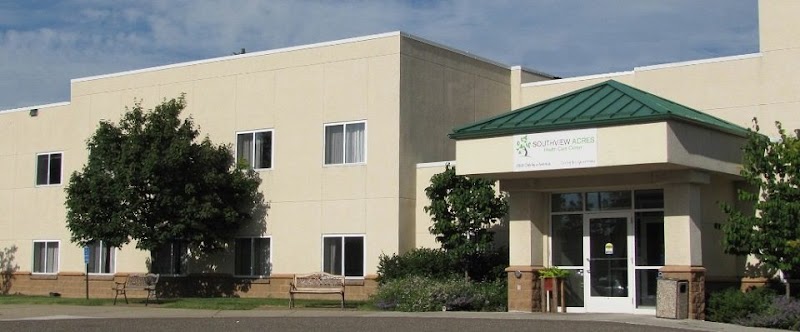
How is Southview Acres Healthcare Center Staffed?

CMS rates Southview Acres HealthCare Center's staffing level at 4 out of 5 stars, which is above average compared to other nursing homes. Staff turnover is 46%, compared to the Minnesota average of 46%. This relatively stable workforce can support continuity of care.

What Have Inspectors Found at Southview Acres Healthcare Center?

State health inspectors documented 46 deficiencies at Southview Acres HealthCare Center during 2022 to 2025. These included: 2 that caused actual resident harm and 44 with potential for harm. Deficiencies causing actual harm indicate documented cases where residents experienced negative health consequences.
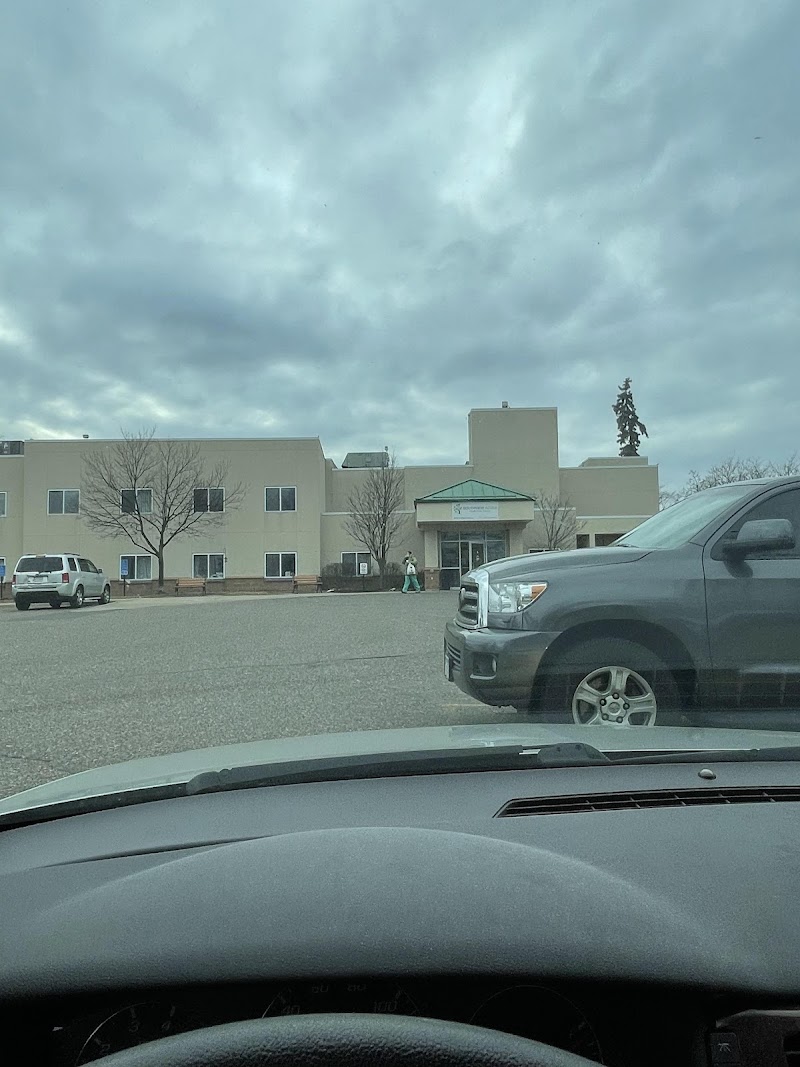
Who Owns and Operates Southview Acres Healthcare Center?

Southview Acres HealthCare Center is owned by a for-profit company. For-profit facilities operate as businesses with obligations to shareholders or private owners. The facility is operated by AKIKO IKE, a chain that manages multiple nursing homes. With 200 certified beds and approximately 165 residents (about 82% occupancy), it is a large facility located in WEST SAINT PAUL, Minnesota.

How Does Southview Acres Healthcare Center Compare to Other Minnesota Nursing Homes?

Compared to the 100 nursing homes in Minnesota, Southview Acres HealthCare Center's overall rating (2 stars) is below the state average of 3.2, staff turnover (46%) is near the state average of 46%, and health inspection rating (2 stars) is below the national benchmark.

What Should Families Ask When Visiting Southview Acres Healthcare Center?

Based on this facility's data, families visiting should ask: "Can I visit during a mealtime to observe dining assistance and food quality?" "How do you handle medical emergencies, and what is your hospital transfer rate?" "Can I speak with family members of current residents about their experience?"

Is Southview Acres Healthcare Center Safe?

Based on CMS inspection data, Southview Acres HealthCare Center has a clean safety record: no substantiated abuse findings (meaning no confirmed cases of resident harm), no Immediate Jeopardy citations (the most serious violation level indicating risk of serious injury or death), and is not on the Special Focus Facility watch list (a federal program monitoring the lowest-performing 1% of nursing homes). The facility has a 2-star overall rating and ranks #100 of 100 nursing homes in Minnesota. While no facility is perfect, families should still ask about staff-to-resident ratios and recent inspection results during their visit.

Do Nurses at Southview Acres Healthcare Center Stick Around?

Southview Acres HealthCare Center has a staff turnover rate of 46%, which is about average for Minnesota nursing homes (state average: 46%). Moderate turnover is common in nursing homes, but families should still ask about staff tenure and how the facility maintains care continuity when employees leave.

Was Southview Acres Healthcare Center Ever Fined?

Southview Acres HealthCare Center has been fined $41,555 across 1 penalty action. The Minnesota average is $33,494. While any fine indicates a compliance issue, fines under $50,000 are relatively common and typically reflect isolated problems that were subsequently corrected. Families should ask what specific issues led to these fines and confirm they've been resolved.

Is Southview Acres Healthcare Center on Any Federal Watch List?

Southview Acres HealthCare Center is not on any federal watch list. The most significant is the Special Focus Facility (SFF) program, which identifies the bottom 1% of nursing homes nationally based on persistent, serious quality problems. Not being on this list means the facility has avoided the pattern of deficiencies that triggers enhanced federal oversight. This is a positive indicator, though families should still review the facility's inspection history directly.