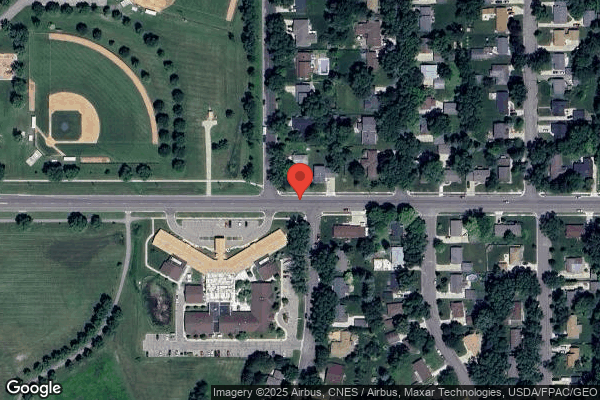
CURA OF WILLMAR

1801 WILLMAR AVENUE SOUTHWEST, WILLMAR, MN 56201 (320) 214-2700
Non profit - Corporation 78 Beds Independent Data: November 2025
Trust Grade
75/100
#99 of 337 in MN
Last Inspection: August 2025

Inspected within the last 6 months. Data reflects current conditions.

Overview

Cura of Willmar has a Trust Grade of B, which means it is considered a good choice for families looking for nursing home care. It ranks #99 out of 337 facilities in Minnesota, placing it in the top half, and #2 out of 3 in Kandiyohi County, indicating limited local options. However, the facility is facing a worsening trend, with issues increasing from 4 in 2024 to 8 in 2025. Staffing is rated 4 out of 5 stars, which is good, but the turnover rate of 49% is average for the state. On the positive side, there have been no fines recorded, suggesting a lack of compliance issues, and RN coverage is average, providing sufficient oversight. On the downside, there have been specific incidents that raise concerns, such as not monitoring residents for aspiration risks related to thickened liquids, which could lead to choking. Additionally, there was a failure to ensure the wander alert system was operational, potentially putting residents at risk for elopement. Lastly, one resident's urinary catheter drainage bag was left in view of others, compromising their privacy and dignity. Overall, while there are strengths in staffing and no fines, there are significant areas needing improvement.

Trust Score
B
75/100
In Minnesota
#99/337
Top 29%
Safety Record
Low Risk
No red flags
Inspections
Getting Worse
4 → 8 violations
Staff Stability
⚠ Watch
49% turnover. Above average. Higher turnover means staff may not know residents' routines.
Penalties
✓ Good
No fines on record. Clean compliance history, better than most Minnesota facilities.
Skilled Nurses
✓ Good
Each resident gets 51 minutes of Registered Nurse (RN) attention daily — more than average for Minnesota. RNs are trained to catch health problems early.
Violations
⚠ Watch
16 deficiencies on record. Higher than average. Multiple issues found across inspections.
★★★★☆
4.0
Overall Rating
★★★★☆
4.0
Staff Levels
★★★☆☆
3.0
Care Quality
★★★★☆
4.0
Inspection Score
Stable
2024: 4 issues
2025: 8 issues

The Good

  • 4-Star Staffing Rating · Above-average nurse staffing levels
  • Full Sprinkler Coverage · Fire safety systems throughout facility
  • No fines on record

Facility shows strength in staffing levels, fire safety.

The Bad

Staff Turnover: 49%

Near Minnesota avg (46%)

Higher turnover may affect care consistency

The Ugly 16 deficiencies on record

Sept 2025 1 deficiency
CONCERN (D) 📢 Someone Reported This

A family member, employee, or ombudsman was alarmed enough to file a formal complaint

Potential for Harm - no one hurt, but risky conditions existed

Room Equipment (Tag F0908)

Could have caused harm · This affected 1 resident

**NOTE- TERMS IN BRACKETS HAVE BEEN EDITED TO PROTECT CONFIDENTIALITY** Based on observation, interview and document review the facility failed to develop and implement a process to ensure the wander ...

Read full inspector narrative →
**NOTE- TERMS IN BRACKETS HAVE BEEN EDITED TO PROTECT CONFIDENTIALITY** Based on observation, interview and document review the facility failed to develop and implement a process to ensure the wander alert system was in working order. This had the potential to affect 2 of 2 residents (R1, R2) who utilized a wander alert device. Findings include:R1's admission Record indicated he admitted to the facility 2/23/24. Diagnosis included vascular dementia, Alzheimer's disease and bilateral below the knee amputations.R1's quarterly Minimum Data Set (MDS) dated [DATE], identified a memory problem and delusions. The MDS indicated R1 did not wander during the assessment period and wore a wander alert device daily. R1's care plan dated 9/3/25, identified a high risk for elopement and directed staff to provided one to one supervision while awake and 15-minute checks while in bed. The care plan indicated R1 had wander device bracelets placed on his left wrist and on the back of his wheelchair.Facility incident report dated 8/24/25, indicated R1 was able to exit the facility via the front entrance doors, wander guard did not work. Nursing students observed R1 exiting the building and assisted him back inside and alerted staff. The report indicated the door had recently been open and had not locked which allowed R1 to exit the facility. Facility incident report dated 9/1/25, indicated Staff noted the wander guard alarm for R1's unit was sounding. Staff found R1 in the water in the tall grass in a culvert on the west side of the building with his wheelchair on top of him. The report indicated R1 was able to push and hold the exit door long enough for the emergency release to activate, allowing the door to open.During interview on 9/5/25 at 7:30 a.m., the administrator stated the facility did not currently have a maintenance director and had not for only about two weeks. The administrator said they had the maintenance staff from another facility come and look at the doors to ensure everything was working properly. She said everything was reported to be working fine. During interview on 9/5/25 at 7:52 a.m., the regional director of operations (RDO) stated the wander alert system was checked every Monday. The RDO stated there were two options for checking the doors, a testing device, handheld remote or using a FOB (transmitter). The RDO said the doors were checked using a handheld remote.During observation on 9/5/25 at 9:36 a.m., the RDO used the handheld remote to check the facility doors that had a wander alert system. The doors alarmed and locked when tested.During interview on 9/5/25 at 9:03 p.m., nursing assistant (NA)-A stated the doors alarmed when R1 was near but did not physically lock and said it had happened 4-5 times. During interview on 9/9/25 at 12:15 p.m., licensed practical nurse (LPN)-A stated she was working when R1 was found outside the facility. LPN-A said she felt the issue was the door had not been locking and said it had been reported to management.During interview on 9/9/25 at 12:39 p.m., NA-A stated it was pretty common knowledge the door had not been locking and said the issue had been going on for about 3-4 weeks. NA-A said it had been reported.During interview on 9/9/25 at 1:15 p.m., the administrator said the maintenance director from another facility had done an inspection of the doors to ensure they were working after R1 had eloped from the facility. During interview on 9/5/25 at 2:00 p.m., the maintenance director whom the administrator had been referring to, stated he had tested the doors at the facility on 8/26/25, but had not been out since. He said at that time the doors were functioning properly.During interview on 9/10/25, at 8:16 a.m., the former maintenance director said he did not think the doors would unlock if a wander alert device was near and said he never tested for that. The former maintenance director said the used a bracelet (transmitter) and checked the doors on Mondays to make sure they locked. He said the device checker never worked on the doors. The former maintenance director said he did not know who would be called if there were any technical issues with the wander alert system.During interview on 9/10/25 at 10:34 a.m., the RDO stated as far as he knew, the doors should not be able to unlock when pushed and held if the person was wearing a wander alert bracelet. The RDO said he had reached out to a third party who was going to send a technician to look at the system.DoorGUARDIAN Installation Manual dated 12/6/2023, indicated the following recommended weekly testing: Patient Escort Feature Test- Enter the monitoring zone with a transmitter on your ankle. The red light will turn on and the door will quietly lock. Enter the primary reset code and the light will turn green, and the door will unlock.Anti-tailgate Feature Test- With the door locked, apply pressure on the opening hardware of the door. The exit panel will begin to alarm, and the red light will remain on. The light will remain red and the audible alarm will sound. After 15 seconds the audible alarm will become a continuous tone and the door will release. Open the door and the audible alarm will change to a seagull sound. Close the door and enter the resent code. The panel will stop alarming, and the door will re-lock.Remote Keypad test- repeat the steps above.Push Button Test- Pass through the door from the exit panel side using the reset code. Close the door. Depress the push button. No alarm condition will be activated.Advanced Security Mode Test- Bring a transmitter into the monitoring zone. The green light will turn red; the yellow light will blink. Now enter the reset code. The red light will flash green momentarily indicating a valid code was entered while a monitored resident was nearby. Next, try to gain access via the indoor/outdoor push button if one is installed. With a transmitter in range, the door will remain locked, and an audible alarm will sound. Only by entering the secondary reset code will access be granted in this situation.
Aug 2025 7 deficiencies
CONCERN (D)

Potential for Harm - no one hurt, but risky conditions existed

Resident Rights (Tag F0550)

Could have caused harm · This affected 1 resident

**NOTE- TERMS IN BRACKETS HAVE BEEN EDITED TO PROTECT CONFIDENTIALITY** Based on observation and interview, the facility failed to ensure resident rights were maintained for 1 of 3 residents (R37) rev...

Read full inspector narrative →
**NOTE- TERMS IN BRACKETS HAVE BEEN EDITED TO PROTECT CONFIDENTIALITY** Based on observation and interview, the facility failed to ensure resident rights were maintained for 1 of 3 residents (R37) reviewed for dignity.Findings Include: R37's quarterly Minimum Data Set (MDS) dated [DATE], identified R37 had severe cognitive impairment and required assistance with activities of daily living (ADL)'s. R37's diagnoses included non-Alzheimer's dementia, weakness and localized edema. MDS also indicated R37 had an indwelling external catheter. During observation on 8/4/25 at 2:21 p.m., R37's urinary catheter drainage bag, which was approximately half full of dark amber colored liquid, was hanging on the left side of bed. Drainage bag was visible to all residents and staff who walked past. During observation on 8/5/25 at 2:19 p.m., R37's urinary catheter drainage bag, which was approximately one-quarter full of dark amber colored liquid, was hanging on the left side of bed. Drainage bag was visible to all residents and staff who walked past. During observation on 8/6/25 at 8:50 a.m., R37's urinary catheter drainage bag, which was approximately half full of dark amber colored liquid, was hanging on the left side of bed. Drainage bag was visible to all residents and staff who walked past. During observation on 8/7/25 at 7:46 a.m., R37's urinary catheter drainage bag was hanging on the left side of bed. Drainage bag was visible to all residents and staff who walked past. During interview on 8/6/25 at 1:30 p.m., nursing assistant (NA)-C stated if a resident had a catheter bag it should always be covered so others could not see it. NA-C confirmed R37's urinary catheter drainage bag was not covered and was visible to all. During interview on 8/7/25 at 7:55 a.m., trained medication assistant (TMA)-A stated if a resident had a urinary catheter the drainage bag should be covered at all times for the resident's dignity. During interview on 8/7/25 at 8:13 a.m., registered nurse (RN)-C stated the catheter drainage bag should be hung on the side that would be more private for the resident and the bag should always be covered with a catheter cover bag to respect the resident's privacy and dignity. During interview on 8/7/25 at 8:17 a.m., licensed practical nurse (LPN)-C stated catheter drainage bag should be hung on whatever side where tubing is attached to the resident. LPN-C stated it was important to ensure drainage bag is placed lower than the bladder and cover the bag so no one can see bag for the resident's privacy. During interview on 8/7/25 at 9:49 am., director of nursing (DON) stated she would expect staff to place and cover urinary catheter drainage bag so it was not visible as it could be a dignity concern for the resident. DON confirmed she had noticed R37's catheter bag not covered and visible from hallway earlier this week. The facility Quality of Life - Dignity policy, last reviewed 1/2024, indicated each resident shall be cared for in a manner that promotes and enhances quality of life, dignity, respect and individuality. Resident shall be treated with dignity and respect at all times. Demeaning practices and standards of care that compromise dignity are prohibited. Staff shall promote dignity and assist resident as needed by helping the resident to keep urinary catheter bags covered.
CONCERN (D)

Potential for Harm - no one hurt, but risky conditions existed

Deficiency F0561 (Tag F0561)

Could have caused harm · This affected 1 resident

**NOTE- TERMS IN BRACKETS HAVE BEEN EDITED TO PROTECT CONFIDENTIALITY** Based on observation, interview and document review, the facility failed to inform residents in the facility that all bird feede...

Read full inspector narrative →
**NOTE- TERMS IN BRACKETS HAVE BEEN EDITED TO PROTECT CONFIDENTIALITY** Based on observation, interview and document review, the facility failed to inform residents in the facility that all bird feeders, including personally owned bird feeders, were being removed, prior to doing so, for 1 of 1 residents (R34) in the sample. Findings include: In review of R34's electronic medical record diagnosis page, the following diagnoses were listed: Parkinson's disease, cerebral palsy, major depression with moderate recurrence, and anxiety disorder. R34's quarterly Minimum Data Set (MDS), dated [DATE], indicated resident required minimum - moderate assistance from staff for all activities of daily living. The MDS also indicated R34 was cognitively intact. A review of R34's assessments, the following was documented:6/20/25 Mood Interview (PHQ-9) R35 scored of 8 of 27 which indicated R35 was mildly depressed.6/20/25 Brief Interview for Mental Status (BIMS) R35 scored 15 out of 15 which indicated R35 was cognitively intact. R34's care plan printed 8/6/25, documented resident had been care planned for Mood / Psychosocial concerns with the following:Potential for adjustment concerns related to [long term care] placement. [Diagnoses of depression and anxiety. PHQ-9 score 8/27 on 6/20/25 indicating mild symptoms of depression/ [R34] loves all things cats and finds comfort with socializing with the household cat. {R34] dislikes the song Rocky Mountain High by [NAME] Denver as it reminds him of his dog when he was a child and requests that the song be changed when it plays in the dining room. During resident interview on 8/4/25 at 4:23 p.m., R34 and a family member (FAM)-A were sitting in his room visiting. R34 stated he was upset the facility had taken down his window bird feeders. R34 stated he has fed birds all his life and had actually built a bird feeder out of a bird cage, so that the black birds and squirrels could not get inside to take the food from the song birds. FAM-A interjected, R34's bird watching helped him with his anxiety and depression. It was something that he took pride in. As FAM-A was explaining how involved resident was with bird watching and bird feeding, R34 wiped his eyes with his shirt sleeve. R34 stated he was on an outing last week with his family. When he returned, he noticed the bird feeders were missing. R34 asked staff, who informed him corporate had informed the facility that all bird feeders (even the resident owned ones) were to be taken down due to a recommendation from the corporate contracted pest control provider. On 8/6/25 at 2:04 p.m., registered nurse (RN)-A stated staff heard the facility administrator had received a email from corporate which instructed [NAME] facilities were to remove all bird feeders from the properties. They were informed the pest control contractor (Plunkett's Pest Control) recommend this being done, for safety reasons of bird seeds on sidewalks, and pest mitigation. RN-A stated she was not aware rodents were an issue within the building. During interview on 8/6/25 at 3:59 p.m., the administrator and corporate RN (CorpRN) stated last week an email came from corporate to all facility administrators, to remove all bird feeds from their property, including ones hung by the residents/families themselves. Corporate was concerned about bird seed on sidewalks being a safety concern, as well as, the increased potential for rodent infestations. The administrator stated she requested the maintenance department remove all bird feeders on the property. Administrator didn't think about informing residents, while she thought all the bird feeders were facility owned. During a further interview on 8/7/25 at 9:47 a.m., CorpRN stated he had a telephone conversation with the corporate owner this morning. CorpRN verified the recommendation came from corporate, from the recommendation of the pest control provider, for the prevention of rodent infestation, and all administrators were informed to remove bird feeders from all facility properties. The facility was unaware R34's bird feeders were privately own when removed. CorpRN stated he would be meeting with R34 today to see if there is an acceptable alternate bird feeding system the facility could provide. The facility did not have policies for when facility systems / processes are changed which may directly impact residents.
CONCERN (D)

Potential for Harm - no one hurt, but risky conditions existed

Deficiency F0655 (Tag F0655)

Could have caused harm · This affected 1 resident

**NOTE- TERMS IN BRACKETS HAVE BEEN EDITED TO PROTECT CONFIDENTIALITY** Based on interview and document review, the facility failed to complete and implement a baseline care plan within 48 hours of ad...

Read full inspector narrative →
**NOTE- TERMS IN BRACKETS HAVE BEEN EDITED TO PROTECT CONFIDENTIALITY** Based on interview and document review, the facility failed to complete and implement a baseline care plan within 48 hours of admission for 1 of 2 residents (R22) reviewed for care plans.Findings include: R22's quarterly Minimum Data Set (MDS) dated [DATE], identified R22 had moderate cognitive impairment and required assistance with all activities of daily living (ADL)'s. R22's diagnoses included: Type II diabetes mellitus with diabetic chronic kidney disease, heart failure (a condition where the heart cannot pump blood effectively enough to meet the body's needs), hypertension (high blood pressure), hemiplegia (a condition characterized by weakness or paralysis on one side of the body), malnutrition (a serious condition resulting from an imbalance in nutrient intake, leading to deficiencies or excesses that negatively impact health), depression, dependence on renal dialysis and hypothyroidism (when your thyroid gland doesn't make and release enough hormone into your bloodstream). MDS indicated R22 received dialysis services and was on a therapeutic diet. R22's electronic health record (EHR) indicated R22 was admitted to the facility on 12/2024. EHR lacked evidence a baseline care plan had been initiated within 48 hours of admission. EHR indicated baseline care plan was developed on 12/26/24 and indicated R22 was dependent on staff for transfers, toileting and grooming/bathing. During interview on 8/7/25 at 10:31 a.m., director of nursing (DON) stated baseline care plans should be completed within 48 hours of admission to the facility. DON confirmed a baseline care plan had not been completed with 48 hours of admission for R22. RN-A stated baseline care plans are important to complete for resident safety and so staff know how to care for the resident. The facility Baseline Care Plan facility, dated 11/21, indicated facility would develop and implement a baseline care plan for each resident that includes the instructions needed to provide effective and person-centered care of the resident that meet professional standards of quality care within 48 hours of a resident's admission.
CONCERN (D)

Potential for Harm - no one hurt, but risky conditions existed

Accident Prevention (Tag F0689)

Could have caused harm · This affected 1 resident

**NOTE- TERMS IN BRACKETS HAVE BEEN EDITED TO PROTECT CONFIDENTIALITY** Based on observation, interview and document review, the facility failed to ensure a wheeled walker was not used as a wheelchair...

Read full inspector narrative →
**NOTE- TERMS IN BRACKETS HAVE BEEN EDITED TO PROTECT CONFIDENTIALITY** Based on observation, interview and document review, the facility failed to ensure a wheeled walker was not used as a wheelchair for 1 of 1 residents (R10) which placed resident at increased risk for a fall. Findings include: R10's quarterly minimum data set (MDS) dated [DATE], indicated R10 was cognitively intact and was independent with cares. R10s care plan dated 12/3/24, indicated R10 was up ad lib (allowed to get out of bed and move around as they please, without restrictions), ambulated and transferred slow and steady with four wheeled walker, and R10 was at risk for falls related to decreased functional strength, decreased activity tolerance and impaired standing balance. On 8/04/2025, at 10:57 a.m. was observed sitting on four wheeled walker using feet to propel walker backwards, two wheeled legs were observed to be bowed outwards from the walker. There was no wheelchair observed in R10s room. On 8/04/2025 at 11:30 a.m., R10 was observed entering the building sitting on four wheeled walker, propelled backward using feet. When interviewed on 8/07/2025 at 8:04 a.m., R10 stated no facility staff had spoken with him regarding potential risks related to using wheeled walker as a wheelchair. R10 stated he did not have a wheelchair and prior to admission to the facility he had a fall from the walker while propelling it backwards down a sidewalk, had hit head on the sidewalk after the walker had hit a bump and flipped out from under him. When interviewed on 8/07/2025 at 8:20 a.m., nursing assistant (NA)-B stated R10 normally used the walker as a seat and propelled backwards. NA-B stated R10 was told the wheels were flared out due to weight and was not safe to use. When interviewed on 8/07/2025 at 8:39 a.m., registered nurse (RN)-B stated R10 walked short distances when in room, when outside of room propelled walker backwards instead of using a wheelchair. RN-B stated R10 was informed sitting on the walker while propelled backwards was not safe, however, R10 continued to use the walker in that manner. When interviewed on 8/07/2025, at 9:56 a.m. director of nursing (DON) stated many things could happen to R10 when walker was used as a wheelchair, the walker could roll away or collapse, R10 or anyone that used a walker inappropriately was at an increased risk for a fall. DON stated R10 was bigger in size, would think the wheels would be bowed out. DON identified there was no risk/benefits located in R10's electronic record, nor was there a referral to therapy to ensure R10 had a proper and safe mobility device. Facility policy regarding resident safety and mobility devices was requested, however, none was received.
CONCERN (D)

Potential for Harm - no one hurt, but risky conditions existed

Deficiency F0698 (Tag F0698)

Could have caused harm · This affected 1 resident

**NOTE- TERMS IN BRACKETS HAVE BEEN EDITED TO PROTECT CONFIDENTIALITY** Based on interview and document review the facility failed to ensure coordination of dialysis care for 2 of 2 resident (R3 and R...

Read full inspector narrative →
**NOTE- TERMS IN BRACKETS HAVE BEEN EDITED TO PROTECT CONFIDENTIALITY** Based on interview and document review the facility failed to ensure coordination of dialysis care for 2 of 2 resident (R3 and R22) who required dialysis (treatment to filter blood when kidneys are no longer able). Additionally, the facility failed to ensure post-dialysis assessment and monitoring was completed for 2 of 2 resident (R3 and R22) reviewed for dialysis.Findings include: R3 R3's 5-day Minimum Data Set (MDS) dated [DATE], identified R3 had intact cognition and required assistance with all activities of daily living (ADL)'s. R3's diagnoses included heart failure (a condition where the heart cannot pump blood effectively enough to meet the body's needs), hypertension (high blood pressure), renal failure (occurs when the kidneys are unable to adequately filter waste and excess fluid from the blood), diabetes mellitus (a metabolic disease where blood glucose levels are too high due to the body's inability to produce enough or properly use insulin), malnutrition (a serious condition resulting from an imbalance in nutrient intake, leading to deficiencies or excesses that negatively impact health), chronic obstructive pulmonary disorder (a progressive lung disease that makes it hard to breathe), dependence on renal dialysis and acquired absence of right leg below knee. R3's provider order printed 8/6/25, indicated R3 had dialysis treatments every Monday, Wednesday, and Friday. R3's electronic health record (EHR) identified R3 went to dialysis eleven times since admission with only two communication forms sent with. The facility's top portion of the communication form was not completed. Information on communication form to be completed by facility included:Resident NameDatedate of birth Code StatusMental StatusAccess Site LocationAccess TypeAccess Site BleedingSigns of InfectionMedications given pre-dialysis: Please not any pain meds or BP medsDiet/Fluid RestrictionVitals signs (temperature, pulse, respirations and blood pressure)New medications since last treatmentChange in medical condition since last treatmentAdditional commentsLTC Nurse signature with date R3's medical record lacked documentation of monitoring of shunt for bruit and thrill (bruit is an abnormal, swishing sound heard through a stethoscope, while a thrill is a palpable vibration felt over the same area. Both are associated with turbulent blood flow, often indicating a narrowing or other abnormality in a blood vessel). R3's Medication Administration Record (MAR) and Treatment Administration Record (TAR) for reviewed dates 7/8/25 - 8/6/25 lacked directions for staff to check for bruit and thrill. In addition, MAR and TAR lacked evidence of monitoring of shunt for bruit and thrill. R22 R22's quarterly MDS dated [DATE], identified R22 had moderate cognitive impairment and required assistance with all ADL's. R22's diagnoses included: Type II diabetes mellitus with diabetic chronic kidney disease, heart failure, hypertension, hemiplegia (a condition characterized by weakness or paralysis on one side of the body), malnutrition, depression, dependence on renal dialysis and hypothyroidism (when your thyroid gland doesn't make and release enough hormone into your bloodstream). MDS indicated R22 received dialysis services and was on a therapeutic diet. R22's provider order printed 8/6/25, indicated R22 had dialysis treatments every Monday and Friday. R22's EHR identified. R22 went to dialysis 26 times since 5/12/25, only 10 communication forms were sent with. Eight Communication forms indicated facility's top portion of form was empty and not completed with two being completed fully. Information on communication form to be completed by facility included:Resident NameDatedate of birth Code StatusMental StatusAccess Site LocationAccess TypeAccess Site BleedingSigns of InfectionMedications given pre-dialysis: Please not any pain meds or BP medsDiet/Fluid RestrictionVitals signs (temperature, pulse, respirations and blood pressure)New medications since last treatmentChange in medical condition since last treatmentAdditional commentsLTC Nurse signature with date R22's medical record lacked documentation of monitoring of shunt for bruit and thrill. R22's MAR and TAR for reviewed dates of 6/1/25 - 8/6/25 lacked directions for staff to check for bruit and thrill. In addition, MAR and TAR lacked evidence of monitoring of shunt for bruit and thrill. During interview on 8/6/25 at 3:30 p.m., registered nurse (RN)-D stated communication forms are supposed to be sent back and forth to dialysis with the resident to communicate status and if there were any changes. RN-D stated she would expect the facility to complete the entire top section of the communication form, so they are aware of what is going on with the resident. RN-D stated the dialysis clinic would complete the bottom portion of the form to return to the facility with information regarding their dialysis run. If there were any pertinent changes the dialysis clinic would also call the facility and communicate the changes. RN-D stated both R3 and R22 had a fistula and would expect the facility to check for bruit and thrill. During interview on 8/7/25 at 8:17 a.m., licensed practical nurse (LPN)-A stated communication forms are expected to have the top portion completely filled out and sent with to the dialysis center. LPN-A stated communication forms should contain vital signs, diet, any medications changes or as needed medications received, dialysis port location, mental status, code status and any changes in resident's condition. LPN-A stated the monitoring for dialysis residents consisted of monitoring fluid restrictions, assess for redness or signs of infection at the port site and if the resident had increased edema. During interview on 8/7/25 at 9:35 a.m., LPN-B stated on resident's dialysis days a communication form was completed with resident's vitals, weight, medications, port location and any changes in condition and is sent with the resident to the dialysis clinic. Dialysis clinic would then complete the bottom portion of the form and return it to the facility. LPN-B stated R3 and R22 had fistulas and monitoring should include checking fistula for bruit and thrill. LPN-B stated she checked for bruit and thrill but does not document it anywhere as it is not on the MAR/TAR. During interview on 8/7/25 at 9:50 a.m., director of nursing (DON) stated the documentation regarding dialysis had been lacking. DON confirmed R3 only had two communication forms sent with that were not completed by the facility and R22 had 10 communication forms sent with eight of them not completed. DON stated the communication forms are important so there was communication between the facility and the dialysis clinic. DON stated she expected the top of the communication form to be completely filled out. DON stated she expected nursing to be monitoring the fistula site for bruit and thrill. DON stated it was important to ensure the fistula was patent and not infected especially when they return from dialysis. DON confirmed there is no monitoring for bruit and thrill in place for neither R3 or R22 but should be. The facility Hemodialysis, Care of a Resident policy, dated 8/25, indicated the facility will ensure that residents who require dialysis receive such services, consistent with professional standards of practice. - Licensed Nursing Staff will provide ongoing assessment of the resident condition and monitoring for complications after dialysis treatments received at a certified dialysis facility. - Licensed staff will monitor for complications related to post-hemodialysis which may include, but are not limited to:o Bleedingo Leg crampso Seizureso Nausea/vomitingo Unsteady [NAME] Headacheo Fatigueo Signs/symptoms of infectiono Hypotensiono Chest pain- The Charge Nurse will be responsible for ongoing communication with the dialysis facility including the following:o Sending current physician orders, lab reports, and vital signs to dialysis facility.o Advance Directives and code status; and any changes or need for further discussion with the resident/representative, and practitioners.o Nutritional/fluid management including documentation of weights, resident compliance with food/fluid restrictions or the provision of meals before, during and/or after dialysis and monitoring intake and output measurements as ordered.o The identification of symptoms such as anxiety, depression, confusion, and/or behavioral symptoms that interfere with treatments.o Dialysis adverse reactions/complications, and/or concerns related to the vascular access site/PD catheter.o Changes and/or decline in condition unrelated to dialysis. This would include communication related to care concerns such as a resident who is at risk for or who has a pressure ulcer, receiving appropriate interventions; [NAME] The occurrence or risk of falls and any concerns related to transportation to and from the dialysis facility.
CONCERN (D)

Potential for Harm - no one hurt, but risky conditions existed

Infection Control (Tag F0880)

Could have caused harm · This affected 1 resident

**NOTE- TERMS IN BRACKETS HAVE BEEN EDITED TO PROTECT CONFIDENTIALITY** Based on interview and document review, the facility failed to ensure tuberculosis (TB) testing was completed for 1 of 6 sampled...

Read full inspector narrative →
**NOTE- TERMS IN BRACKETS HAVE BEEN EDITED TO PROTECT CONFIDENTIALITY** Based on interview and document review, the facility failed to ensure tuberculosis (TB) testing was completed for 1 of 6 sampled residents (R68) reviewed for required baseline TB screening and testing. Findings include: The Centers for Disease Control (CDC) guidelines for preventing the transmission of mycobacterium tuberculosis (TB) in Health Care Settings, 2005, directed all residents and staff must receive a baseline TB screening. The baseline TB screening should consist of assessment for TB risk factors and history; assessment for current symptoms of active TB; and testing for the presence of infection with mycobacterium tuberculosis. R68's Minimum Data Set (MDS) entry tracking record dated 7/11/25, indicated he initially admitted to the facility on 7/2025. An initial baseline TB screening for signs and symptoms was completed 7/11/25, however R68'S electronic medical record (EMR) lack evidence of testing for the presence of TB infection. During interview on 8/5/25 at 1:12 p.m., the director of nursing (DON) stated all new residents were screened for TB and would be administered the first step tuberculin skin test (TST) upon admission or within 72 hours of admission. The DON stated the timeline from the administration to the reading of the results was 48 to 72 hours after administration. The DON stated TST's must be read during that period of time to ensure accuracy. The DON confirmed R68 did not receive the 1st TST before being re-hospitalized on [DATE]. The DON stated it was important to make sure resident TST's were administered and read within the timeframe of 48 to 72 hours with the second step occurring seven to 21 days after step one to verify resident's tuberculosis status and that it is accurate. The facility's Tuberculosis, screening residents policy dated 2025, indicated for all new admissions or re-admissions, residents would screened for TB infection in compliance with state regulations which includes the first step TST being performed within 72 hours of admission and read by a licensed nurse within 48-72 hours after administration. If the first step is negative, the second TST would be administered one to three weeks from date first step was read and be read by a licensed nurse within 48-72 hours after administration.
MINOR (C)

Minor Issue - procedural, no safety impact

Staffing Information (Tag F0732)

Minor procedural issue · This affected most or all residents

**NOTE- TERMS IN BRACKETS HAVE BEEN EDITED TO PROTECT CONFIDENTIALITY** Based on observation, interview and document review, the facility failed to ensure the nursing staff posting (which included num...

Read full inspector narrative →
**NOTE- TERMS IN BRACKETS HAVE BEEN EDITED TO PROTECT CONFIDENTIALITY** Based on observation, interview and document review, the facility failed to ensure the nursing staff posting (which included number of nurses and nursing assistants and the hours they were scheduled) was posted and available for all residents. families and visitors. This potentially effected all 20 residents residing in [NAME] House, all 20 residents residing in [NAME] House and their families / visitors. Findings include - Upon entering the facility on Monday 8/4/25 at 10:30 a.m., the survey team noted the posting of the Resident Rights and facility's survey results. However, in the front entrance of the facility, and in both front wings of the facility (Long Term Care units - [NAME] Cottage and [NAME] House) the lacked evidence the facility had posted the required staff posting of hours and nursing staff scheduled. After the initial walk through of the facility (on 8/4/25), the surveyors on the Transitional Care Unit (TCU - units 100 and 200) were unable to locate the posting as well. The long Term care (LTC) unit is separated from the TCU by means of a wing which included the administrative offices and therapy department. and one needed to walk through a set of closed fire doors to go between the two sections / levels of care. The survey team continued to observed for the postings, from 8/4/25 - 8/7/25. However, on 8/7/25 at 7:56 a.m., a surveyor on 100 unit noted the staff posting on a hallway wall dated 8/6/25 (the day prior), and was posted in an acrylic frame that was posted sideways. To read the posting, one would either have to take the posting out, or turn their head sideways to read the posting. During interview on 8/07/2025 at 11:17 a.m., the facility administrator verified the staff posting should be both on the TCU and the LTC units. Administrator stated the posting for the LTC wings should be on the receptionist desk, in that general area at the main entrance. The administrator stated the staff person responsible is currently on family medical leave, and the reassignment of that task had been over looked. The administrator stated she would have maintenance rehang and straighten the acrylic holder on the TCU.
May 2024 4 deficiencies
CONCERN (D)

Potential for Harm - no one hurt, but risky conditions existed

Quality of Care (Tag F0684)

Could have caused harm · This affected 1 resident

**NOTE- TERMS IN BRACKETS HAVE BEEN EDITED TO PROTECT CONFIDENTIALITY** Based on interview and document review, the facility failed to ensure as needed (PRN) medications were administered per physicia...

Read full inspector narrative →
**NOTE- TERMS IN BRACKETS HAVE BEEN EDITED TO PROTECT CONFIDENTIALITY** Based on interview and document review, the facility failed to ensure as needed (PRN) medications were administered per physician's order for 1 of 1 resident (R20) reviewed for unnecessary medications. Findings include: R20's quarterly Minimum Data Set (MDS) dated [DATE], identified R20 had moderate cognitive impairment and required assistance with all activities of daily living (ADL)'s. R20's diagnoses included chronic diastolic congestive heart failure (type of heart failure that occurs when the heart's left ventricle is unable to fill with blood properly during the diastolic phase, when the heart relaxes), hypertension, peripheral vascular disease (chronic, progressive condition that occurs when blood circulation to a body part other than the heart or brain is reduced), Non-Alzheimer's Dementia, seizure disorder, anxiety disorder, asthma (inflammation and narrowing of the small airways in the lungs), respiratory failure (serious condition that make it difficult to breathe on your own), permanent atrial fibrillation (when atrial fibrillation is present all the time and no more attempts to restore normal heart rhythm will be made), and benign prostatic hyperplasia (non-cancerous condition in men where the prostate gland increases in size). R20's electronic health record (EHR) indicated a signed physician's order for Metolazone 5 mg (milligram) to be given by mouth as needed once daily for fluid retention/weight gain of three pounds overnight or five pounds in seven days related to chronic diastolic congestive heart failure. EHR lacked documentation of administration of PRN medication on 3/27/24, 3/31/24, 4/2/24, 4/10/24, 4/17/24 and 5/4/24. R20's weight documentation, in EHR, indicated increased weight gain overnight on the following dates: - 3/26/24 at 8:57 a.m., weight was documented as 165.6 lbs (pounds) - 3/27/24 at 9:04 a.m., weight was documented as 169.1 lbs - based on order PRN metolozone should have been administered due to weight gain of over three pounds. - 3/30/24 at 1:31 p.m., weight was documented as 167.8 lbs - 3/31/24 at 10:31 a.m., weight was documented as 183.4 lbs - based on order PRN metolozone should have been administered due to weight gain of over three pounds. - 4/1/24 at 8:47 a.m., weight was documented as 174.2 lbs - 4/2/24 at 9:30 a.m., weight was documented as 186.4 lbs - based on order PRN metolozone should have been administered due to weight gain of over three pounds. - 4/9/24 at 1:50 p.m., weight was documented as 175.2 lbs - 4/10/24 at 1:30 p.m., weight was documented at 186.4 lbs - based on order PRN metolozone should have been administered due to weight gain of over three pounds. - 4/16/24 at 9:13 a.m , weight was documented at 168.0 lbs - 4/17/24 at 12:39 p.m., weight was documented at 172.2 lbs - based on order PRN metolozone should have been administered due to weight gain of over three pounds. - 5/3/24 at 2:21 p.m., weight was documented at 171.0 lbs - 5/4/24 at 12:17 p.m., weight was documented at 175.0 lbs - based on order PRN metolozone should have been administered due to weight gain of over three pounds. R20's progress notes lacked documentation of increased weight and if R20 was experiencing any signs or symptoms related to the increased weight. During observation on 5/21/24 at 1:34 p.m., R20 did not have any edema noted in his lower extremities. During interview on 5/22/24 at 9:40 a.m., licensed practical nurse (LPN)-A stated R20 did not have a PRN order related to his daily weights. LPN-A stated if R20's daily weights were up three pounds in a day or seven pounds in a day they would notify the provider. LPN-A accessed R20's medical chart and stated that it does look like R20 has an PRN order for metolazone that should be used is weight is up. During interview on 5/22/24 at 9:47 a.m., registered nurse care coordinator (RN)-B stated residents with daily weights has the weights obtained and if they have parameters and/or PRN medications to be utilized, licensed nursing staff should administer PRN medication and then notify provider of weight gain and PRN usage. RN-B confirmed R20 had an order for PRN Metolazone to be administered for increased weight gain. RN-B stated licensed nursing staff probably do not know that R20 has this order as it is not linked to the daily weight task. RN-B stated that in the daily weight task it should prompt licensed nursing staff that resident has a PRN order that can be utilized. RN-B stated this was important because it is a provider's order and should be followed. RN-B stated medication is important due to fluid retention due to his congestive heart failure. During interview on 5/22//24 at 11:46 a.m., director of nursing (DON) stated she expected provider's orders to be followed with PRN medications. DON confirmed PRN medication should have been administered with the increased weight gain. DON stated this was important as R20 needs these monitoring/medications for his congestive heart failure and physician's orders need to be followed During interview on 5/22/24 at 12:38 p.m., consultant pharmacist (CP) stated metolazone should have been administered to R20 with the increased weight gain overnight. CP stated it is important to follow provider orders as they are ordered for management of congestive heart failure. On 5/22/24 at 2:07 p.m., call was placed to primary doctor with no return response. The facilities Medication Guidelines policy dated 5/24, indicated the facility would ensure the accurate storage and safe/effective administration of medications by qualified personnel. Medications are administered by qualified personnel who perform ongoing monitoring of the resident's response to medications administered. Medications are to be administered in a timely manner, accurately and in a way to allow for maximum benefit. Medication orders are to be administered as ordered by the provider.
CONCERN (D)

Potential for Harm - no one hurt, but risky conditions existed

Infection Control (Tag F0880)

Could have caused harm · This affected 1 resident

Based on observation, interview and document review, the facility failed to perform hand hygiene after high contact direct cares for 1 of 3 residents (R114) reviewed for infection control. Findings in...

Read full inspector narrative →
Based on observation, interview and document review, the facility failed to perform hand hygiene after high contact direct cares for 1 of 3 residents (R114) reviewed for infection control. Findings include: R114's admission Minimum Data Set (MDS) and Care Area Assessment (CAA) dated 5/8/24, identified an admission date of 5/2/24, moderately impaired cognition, diagnoses of end stage renal disease with need for hemodialysis, diabetes, and pressure ulcers. The MDS/CAA also identified R114 had a recent extensive hospital stay related to diabetic ketoacidosis and inflammation of the colon caused by the bacteria Clostridium difficile (C. Diff.), had frequent bowel incontinence, was very deconditioned and dependent for transfers and mobility. During observation on 5/20/24 at 12:29 p.m., a sign identifying the need for transmission-based precautions (TBP) was placed on the wall in the alcove outside R114's room with a cart of personal protective equipment (PPE). The sign specified contact enteric precautions (intended to prevent transmission of intestinal pathogens that are spread by direct or indirect contact with the resident or environment) and instructed staff to wash hands or use hand sanitizer, don gown and gloves prior to entry at the door and to wash hands upon leaving the room. During observation on 5/20/24 at 5:33 p.m., nursing assistant (NA)-B communicate the need for resident transfer assist via walkie, donned gloves and a gown then entered R114's room. NA-A arrived and donned gloves and gown and entered the room. NA-A and NA-B proceeded to assist R114 with sitting up in bed and then transferred her to the recliner using a sit to stand mechanical lift that was being stored in the resident bathroom. When finished NA-A doffed and disposed of her gown and gloves in the covered waste basket in R114's room near the door, opened the door and proceeded down the hall to the unit dining room, retrieved a meal tray off the kitchenette counter then walked back to R114's room and handed the tray to NA-B who was still in the room. No handwashing was observed after leaving R114's room. When interviewed on 5/20/24 at 5:41 p.m., NA-A stated she did not know why R114 required contact/enteric precautions and acknowledged she had not sanitized or washed her hands after assisting with R114's transfer but should have. NA-A stated usually staff could use the hand sanitizer when leaving a resident room until they could get to a nearby sink on the unit to wash their hands with soap and water. When interviewed on 5/22/24 at 7:46 a.m., registered nurse (RN)-A stated with residents on any type of infection precautions staff are informed of why and what control measure to take in shift-to-shift communications, through residents' electronic medical record and paper care sheets. RN-A stated hand sanitizer is available to use until staff can go to a sink to wash their hands with soap and water. When interviewed on 5/22/24 at 10:32 a.m., the director of nursing (DON) stated any need for TBP is tracked through the admission process and with any signs or symptoms of infection in residents and the licensed nurses can determine what type to implement then inform and communicate to other nursing staff. The DON stated all staff are educated on the importance of hand hygiene upon hire then routinely or as needed thereafter. The DON stated R114 was on contact enteric precautions related to C. Diff. diagnosis and a sign had been placed over the hand sanitizer dispenser in her room to wash hands with soap and water because hand sanitizer does not kill the C. Diff. organism. The DON stated routine hand washing by staff was important to protect residents and themselves from spreading infections. The facility policy Handwashing/Hand Hygiene dated 1/2023, identified the need for washing hands with soap and water after contact with a resident with infectious diarrhea including, but not limited to infections caused by norovirus, salmonella, shigella and C. Diff.
CONCERN (D)

Potential for Harm - no one hurt, but risky conditions existed

Deficiency F0883 (Tag F0883)

Could have caused harm · This affected 1 resident

**NOTE- TERMS IN BRACKETS HAVE BEEN EDITED TO PROTECT CONFIDENTIALITY** Based on interview and document review, the facility failed to ensure 1 of the 5 residents (R55) reviewed for immunizations were...

Read full inspector narrative →
**NOTE- TERMS IN BRACKETS HAVE BEEN EDITED TO PROTECT CONFIDENTIALITY** Based on interview and document review, the facility failed to ensure 1 of the 5 residents (R55) reviewed for immunizations were offered and/or provided the pneumococcal vaccination series as recommended by the Centers for Disease Control (CDC) to help reduce the risk of associated infection(s). Findings include: A CDC Pneumococcal Vaccine Timing for Adults feature, dated 3/15/2023, identified various tables when each (or all) of the pneumococcal vaccinations should be obtained. This identified when an adult over [AGE] years old had received the complete series (i.e., PPSV23 and PCV13; see below) then the patient and provider may choose to administer Pneumococcal 20-valent Conjugate Vaccine (PCV20) for patients who had received Pneumococcal 13-valent Conjugate Vaccine (PCV13) at any age and Pneumococcal Polysaccharide Vaccine 23 (PPSV23) at or after [AGE] years old. R55's significant change Minimum Data Set (MDS) dated [DATE], indicated moderately impaired cognition and diagnoses of hypertension, peripheral vascular disease and diabetes. R55's face sheet, dated 5/22/24, indicated he was [AGE] years old. The immunization record, dated 5/22/24, indicated he received a PPSV23 on 7/13/2017 and a PCV13 on 4/20/16. The record lacked evidence of shared clinical decision making with the physician for a PCV20 at least 5 years after the last pneumococcal dose. The record lacked evidence that R55 or representative was offered or received a PCV20. During an interview with the director of nursing (DON) who is also the infection preventionist (IP), on 5/22/24 at 10:32 a.m., the DON/IP indicated immunizations are verified upon admission through MIIC (Minnesota Immunization Information Connection) and resident medical records. The DON/IP stated residents and/or their representatives would be offered and educated on the risk/benefit of the PCV20, and consents are obtained if eligible. The DON/IP stated it is a collaboration for determining eligibility and administration of the vaccines including the facility pharmacy and resident providers. The DON/IP stated they follow their policies for immunization guidelines, and they are based on CDC recommendations. The DON/IP verified R55's pneumococcal immunizations as listed above. The DON/IP verified R55 had not been offered or provided education on PCV20. The facility policy Pneumococcal Immunization, Long Term Care dated 4/2024 identified Residents will be offered the pneumococcal vaccinations and administered, according to the MDH and CDC recommended interval for the vaccines, unless contraindicated, already immunized, or the resident and/or the resident representative declines the vaccine.
CONCERN (D)

Potential for Harm - no one hurt, but risky conditions existed

Deficiency F0887 (Tag F0887)

Could have caused harm · This affected 1 resident

**NOTE- TERMS IN BRACKETS HAVE BEEN EDITED TO PROTECT CONFIDENTIALITY** Based on interview and document review, the facility failed to ensure education on benefits and potential side effects of COVID-...

Read full inspector narrative →
**NOTE- TERMS IN BRACKETS HAVE BEEN EDITED TO PROTECT CONFIDENTIALITY** Based on interview and document review, the facility failed to ensure education on benefits and potential side effects of COVID-19 booster vaccination and administration of the vaccination to 1 of 5 residents (R55) reviewed for COVID-19 vaccination status. Findings include: The most recent Centers for Disease Control (CDC) Covid-19 vaccine guidance dated 2/7/24, recommends everyone aged 65 years and older, including people who live in Long-Term Care (LTC) settings who received one dose of any updated 2023-2024 Covid -19 vaccine (Pfizer-BioNTech, Moderna or Novavax) should receive one additional dose of an updated Covid-19 vaccine at least four months after the previous updated dose. R55's significant change Minimum Data Set (MDS) dated [DATE] indicated moderately impaired cognition and diagnoses of hypertension, peripheral vascular disease and diabetes. R55's face sheet indicated R31 had admitted to the facility on [DATE] and was [AGE] years old. R55's electronic medical record (EMAR) indicated he had last received a Covid-19 booster vaccination on 3/15/23. R55's lacked documentation of any additional COVID-19 booster vaccination and evidence of education regarding the benefits and potential side effects of additional COVID-19 booster vaccination. R55's EMR lacked evidence of any contraindication to Covid-19 vaccination. During an interview with the director of nursing (DON) who is also the infection preventionist (IP), on 5/22/24 at 10:32 a.m., the DON/IP indicated immunizations are verified upon admission through MIIC (Minnesota Immunization Information Connection) and resident medical records. The DON/IP stated residents and/or their representatives should be offered and educated on the risk/benefit of the Covid-19 booster, and consents are obtained if eligible. The DON/IP stated it is a collaboration for determining eligibility and administration of the vaccines including the facility pharmacy and resident providers. The DON/IP stated they follow their policies for immunization guidelines, and they are based on CDC recommendations. The DON stated this process was missed for R55. The facility policy Covid-19 Vaccine Policies and Procedures dated 10/2023, identified Covid-19 vaccinations will be offered to all staff and residents (or their representative if they cannot make health care decisions) unless such immunization is medically contraindicated, per CDC guidance, or the individual has already received all recommended doses.
Oct 2023 3 deficiencies
CONCERN (D) 📢 Someone Reported This

A family member, employee, or ombudsman was alarmed enough to file a formal complaint

Potential for Harm - no one hurt, but risky conditions existed

Notification of Changes (Tag F0580)

Could have caused harm · This affected 1 resident

**NOTE- TERMS IN BRACKETS HAVE BEEN EDITED TO PROTECT CONFIDENTIALITY** Based on interview and document review, the facility failed to notify resident representative/physician timely following an inci...

Read full inspector narrative →
**NOTE- TERMS IN BRACKETS HAVE BEEN EDITED TO PROTECT CONFIDENTIALITY** Based on interview and document review, the facility failed to notify resident representative/physician timely following an incident where residents therapeutic dietary order was not followed with the potential for aspiration for 2 of 4 residents (R1, R2) reviewed. In addition, the facility failed to update the physician for 1 of 4 residents (R4), who had continuous low blood pressures. Findings include: R1's quarterly minimal data set (MDS) dated [DATE], indicated R1 had diagnoses which included stroke, dysphagia, hemiplegia/hemiparesis, and moderately impaired cognition. Further, R1's MDS identified R1 was independent with eating after setting up. R1's Physician Order Report, revealed R1's diet order dated 6/26/23, was mildly thick liquids. Review of facility report number 353673 to the State Agency (SA) dated 9/3/23, indicated R1 had reported choking on her old tea, and nursing assistant (NA) noted the tea was not thickened. Further, facility report lacked evidence R1's representative/family was notified. Review of facility report number 353911 to the SA dated 9/25/23, indicated R1 reported she coughed on her tea and NA indicated the tea appeared to not be thickened. Further, facility report lacked evidence R1's representative/family was notified. R1's medical record lacked evidence R1's representative/family was notified. Review of R1's record lacked evidence R1's physician was notified of potential of aspiration after the two incidents occurred on 9/3/23 and 9/25/23. On 10/4/23 at 10:56 a.m. licensed practical nurse (LPN)-A indicated nursing staff were expected to notify the resident's representative/family/guardian right away if there was a possibility of aspiration following the incident. On 10/4/23 at 12:13 p.m., registered nurse (RN)-B indicated nursing staff were expected to notify resident's representative or emergency contact right away following an incident. On 10/4/23 at 5:12 p.m., RN-C confirmed R1's representative was not notified following the incidents that occurred on 9/3/23 or 9/25/23. On 10/5/23 at 8:48 a.m., director of nursing (DON) stated when an incident occurs or a vulnerable adult report had been submitted nursing staff have a thorough checklist to complete, and on the checklist, it directs staff to resident representative, but DON stated she would revise the checklist to include family and/or guardian to make it clearer for staff. R2's quarterly MDS dated [DATE], indicated R2 had diagnoses which included intellectual disabilities, dysphasia, and moderately impaired cognition. Further, R2's MDS identified R2 was independent with eating after setting up. R2's Physician Order Report, revealed R2's diet order dated 6/20/23 was moderately thick liquids. R2's progress note dated 9/25/23, revealed R2 notified the nurse that evening shift gave him regular liquids and that he understood they were not thick liquids but drank it anyway. However, R2's record lacked evidence R2's physician was notified. On 10/4/23 at 10:56 a.m. licensed practical nurse (LPN)-A indicated nursing staff were expected to notify the resident's physician right away if there was a possibility of aspiration following the incident. On 10/4/23 at 12:13 p.m., registered nurse (RN)-B indicated nursing staff were expected to notify the resident's physician right away following an incident. On 10/4/23 at 5:12 p.m., RN-C confirmed R1's physician was not notified following the incidents that occurred on 8/26/23, 9/3/23, or 9/25/23. RN-C also confirmed R2's physician was not notified following the incident that was identified on 9/25/23. Further, RN-C indicated nursing staff were expected to complete a physician communication form as soon as they were able to ensure the physician was aware of the incident and if there were any potential for an adverse outcome to the resident. On 10/5/23 at 8:48 a.m., director of nursing (DON) stated when an incident occurs or a vulnerable adult report had been submitted nursing staff have a thorough checklist to complete, and on the checklist, it directs staff to notify physician however it states notify if there is an injury. DON indicated staff are expected to notify physician whether there was an injury or no injury, and the checklist would be updated to be clearer for staff. AND R4's admission MDS dated [DATE], indicated R4 had diagnoses of atrial fibrillation, hypertension, wound infection and had moderately impaired cognition. R4 required extensive staff assistance with activities of daily living (ADLs) such as bed mobility, transfers, dressing and toileting. R4's medication administration record (MAR) dated 10/4/23, revealed R4 had orders for Losartan 25 mg once a day for essential hypertension start date of 9/22/23, Toprol X: extended release 100 mg twice a day for essential hypertension start date of 9/11/23, and Torsemide 10 mg once a day for essential hypertension start date of 9/12/23. Further review of R4's MAR revealed Losartan was not administered on 9/23/23, 9/24/23, 9/25/23, 10/1/23, 10/2/23, or 10/3/23 due to condition or low blood pressure (BP); Toprol was not administered 9/23/23, 9/24/23 AM or PM, 9/25/23, 10/1/23 AM or PM, 10/2/23, and 10/3/23 due to condition or low BP; and Torsemide was not administered on 9/23/23, 9/24/23, 10/1/23, 10/2/23, or 10/3/23 due to condition and low BP. R4's physician orders lacked perimeters for BPs and when to notify the physician and/or not administer blood pressure medications. Review of R4's BP record revealed R4 was noted to have low BP on 9/23/23, 9/24/23, 9/25/23, 9/26/23, 9/28/23, 10/1/23, and 10/2/23. R4's record lacked evidence R4 physician was notified of R4's continued low BP's or staff not administering blood pressure medications as ordered due to R4's low BP and condition from 9/22/23 until 10/2/23. Review of facility document titled Physician Communication dated 10/2/23, indicated R4 slipped down from the EZ stand while transferring from bed to bathroom. R4 became dizzy and was unable to hold on to EZ stand. R4 had been noted to not be feeling well, complaints of dizziness with standing, nausea, dry heaves and has frequent loose stools. However, document did not address R4's low BPs. On 10/5/23 at 9:42 a.m., registered nurse (RN)-D indicated since R4 admitted to the facility she continued to have hypotensive episodes. RN-D indicated since 9/13/23, R4 was noted to have low blood pressures and since have stayed low. RN-D confirmed there had been no further communication with R4's physician between 9/22/23 through 10/3/23, when R4 was discharged to the hospital. RN-D stated staff would be expected to notify and communicate with the resident's physician regarding changes with resident's condition. On 10/5/23 at 11:37 a.m. attempt to contact and interview medical doctor (MD)-A but unsuccessful. On 10/5/23 at 12:09 p.m., director of nursing (DON) nursing staff was expected to update the physician if they are holding any medications and reasoning as well as asking the physician for perimeters on blood pressure medications. Review of facility policy titled Incident Reports dated 10/23, defines incident as any adverse occurrence or allegation of an occurrence regardless of the presence of adverse outcomes. Occurrence may include by was not limited to choking episode, elopement, fall, abrasion, skin tear, bruise, burn, allegation of abuse of neglect. Further, policy revealed the resident's provider and/or their designee would be notified of incidents which have occurred as well as resident's representative was also to be notified. Review of facility policy titled Vital Signs dated 3/23, directs staff if vital signs are abnormal based on resident baseline, update provider as necessary.
CONCERN (D) 📢 Someone Reported This

A family member, employee, or ombudsman was alarmed enough to file a formal complaint

Potential for Harm - no one hurt, but risky conditions existed

Pharmacy Services (Tag F0755)

Could have caused harm · This affected 1 resident

**NOTE- TERMS IN BRACKETS HAVE BEEN EDITED TO PROTECT CONFIDENTIALITY** Based on interview and document review the facility failed to administer blood pressure medications in accordance to physician's...

Read full inspector narrative →
**NOTE- TERMS IN BRACKETS HAVE BEEN EDITED TO PROTECT CONFIDENTIALITY** Based on interview and document review the facility failed to administer blood pressure medications in accordance to physician's orders for 1 of 4 residents (R4) reviewed. Findings include: R4's admission MDS dated [DATE], indicated R4 had diagnoses of atrial fibrillation, hypertension, wound infection and had moderately impaired cognition. R4 required extensive staff assistance with activities of daily living (ADLs) such as bed mobility, transfers, dressing and toileting. R4's medication administration record (MAR) dated 10/4/23, revealed R4 had orders for Losartan 25 milligram (mg) once a day for essential hypertension start date of 9/22/23, Toprol X: extended release 100 mg twice a day for essential hypertension start date of 9/11/23, and Torsemide 10 mg once a day for essential hypertension start date of 9/12/23. Further review of R4's MAR revealed Losartan was not administered on 9/23/23, 9/24/23, 9/25/23, 10/1/23, 10/2/23, or 10/3/23 due to condition or low blood pressure (BP); Toprol was not administered 9/23/23, 9/24/23 AM or PM, 9/25/23, 10/1/23 AM or PM, 10/2/23, and 10/3/23 due to condition or low BP; and Torsemide was not administered on 9/23/23, 9/24/23, 10/1/23, 10/2/23, or 10/3/23 due to condition and low BP. R4's physician orders lacked perimeters for BPs and when to notify the physician and/or not administer blood pressure medications. On 10/5/23 at 9:42 a.m., registered nurse (RN)-D indicated since R4 admitted to the facility she continued to have hypotensive episodes. RN-D indicated since 9/13/23, R4 was noted to have low blood pressures and since have stayed low. Further, RN-D stated there were no perimeters given on R4's blood pressure medications or when to notify the physician. RN-D stated nursing staff were holding R4's blood pressure medications based on nursing driven those are standard perimeters on medications in the drug book. RN-D stated nursing staff were expected to notify the physician if any medications were being held and the reasoning. On 10/5/23 at 11:37 a.m. attempt to contact and interview medical doctor (MD)-A but unsuccessful. On 10/5/23 at 12:09 p.m., director of nursing (DON) nursing staff was expected to update the physician if they are holding any medications and should be asking the physician for perimeters on blood pressure medications. Review of facility policy titled Medication Error Reporting Process dated 6/23, defines medication error as when a dose of medication administered to resident deviates from the physician's order in the resident's chart or from the nursing home's policy and procedures. Further, the facility policy did not give staff direction related to when a medication was not administered per physician orders.
CONCERN (E) 📢 Someone Reported This

A family member, employee, or ombudsman was alarmed enough to file a formal complaint

Potential for Harm - no one hurt, but risky conditions existed

Quality of Care (Tag F0684)

Could have caused harm · This affected multiple residents

**NOTE- TERMS IN BRACKETS HAVE BEEN EDITED TO PROTECT CONFIDENTIALITY** Based on interview and document review, the facility failed to monitor for signs and symptoms of aspiration for 2 of 4 residents...

Read full inspector narrative →
**NOTE- TERMS IN BRACKETS HAVE BEEN EDITED TO PROTECT CONFIDENTIALITY** Based on interview and document review, the facility failed to monitor for signs and symptoms of aspiration for 2 of 4 residents (R1, R2) reviewed who were not provided thickened liquid as ordered. Findings include: R1's quarterly minimal data set (MDS) dated [DATE], indicated R1 had diagnoses which included stroke, dysphagia, hemiplegia/hemiparesis, and moderately impaired cognition. Further, R1's MDS identified R1 was independent with eating after setting up. R1's Physician Order Report, revealed R1's diet order dated 6/26/23, was mildly thick liquids. Review of facility report number 353673 to the State Agency (SA) dated 9/3/23, indicated R1 had reported choking on her old tea, and nursing assistant (NA) noted the tea was not thickened. R1 was immediately assessed by floor nurse and vital signs were within normal limits and lung sounds were clear in all lobes. Review of facility report number 353911 to the SA dated 9/25/23, indicated R1 reported she coughed on her tea and NA indicated the tea appeared to not be thickened. Review of R1's Medication Administration History dated 10/5/23, revealed there was no additional monitoring for signs and symptoms of aspiration following the incidents that occurred on 9/3/23 and 9/25/23. Review of R1's progress notes lacked evidence of assessment following 9/25/23 incident. R2's quarterly MDS dated [DATE], indicated R2 had diagnoses which included intellectual disabilities, dysphasia, and moderately impaired cognition. Further, R2's MDS identified R2 was independent with eating after setting up. R2's Physician Order Report, revealed R2's diet order dated 6/20/23 was moderately thick liquids. Review of facility report number 353907 to the SA dated 9/25/23, indicated R2 had reported to the nurse he was given the wrong liquids on 9/24/23. R2's progress note dated 9/25/23, revealed R2 notified the nurse that evening shift gave him regular liquids and that he understood they were not thick liquids but drank it anyway. Lung sounds were clear bilaterally. R2's medical record lacked evidence of any additional monitoring for signs or symptoms of aspiration. On 10/4/23 at 10:56 a.m. licensed practical nurse (LPN)-A indicated nursing staff were expected to monitor for signs and symptoms of aspiration by listening to the resident's lung sounds for 24 hours and place an order in the resident's treatments for oncoming shifts to continue. On 10/4/23 at 12:13 p.m., registered nurse (RN)-B indicated nursing staff were expected to assess the resident right away by listening to lung sounds taking vitals and initiating a treatment in the resident's orders for oncoming shifts to continue to monitor for signs or symptoms of aspiration following an incident of wrong diet given, however RN-B was unsure how long to monitor for aspiration. On 10/4/23 at 5:12 p.m. RN-C indicated nursing staff were expected to monitor for signs and symptoms of aspiration on each shift for 3 days following an incident of the wrong diet given. RN-C stated the nursing staff would implement an order in the resident's MAR for oncoming shifts to continue to monitor. Further, RN-C confirmed there were no additional monitoring treatments/orders in either R1 or R2's orders following the incidents and in addition no adverse outcomes. On 10/5/23 at 8:48 a.m., director of nursing (DON) stated nursing staff were expected to assess the resident immediately following an incident of the wrong diet and then plan a nursing treatment order into Matrix (electronic medical record system). Further, DON stated nursing should be assessing lung sounds, temperature, choking or coughing episodes every shift and when there are any changes identified, and closely monitoring the resident for 48-72 hours typically aspiration symptoms would be noted by then. Review of facility policy titled Vitals Signs dated 3/23, directed staff to obtain vitals signs at least weekly unless ordered more frequently by the provider or per nursing discretion. Further, unusual or irregular readings are brought to the attention of the charge nurse for further follow up, and if the vital signs are abnormal based on resident baseline, update the provider as necessary.
Aug 2023 1 deficiency
CONCERN (D)

Potential for Harm - no one hurt, but risky conditions existed

Pharmacy Services (Tag F0755)

Could have caused harm · This affected 1 resident

**NOTE- TERMS IN BRACKETS HAVE BEEN EDITED TO PROTECT CONFIDENTIALITY** Based on observation, interview, and document review, the facility failed to ensure supply and administration of ordered medicat...

Read full inspector narrative →
**NOTE- TERMS IN BRACKETS HAVE BEEN EDITED TO PROTECT CONFIDENTIALITY** Based on observation, interview, and document review, the facility failed to ensure supply and administration of ordered medications for 1 of 4 resident (R17) reviewed for pharmacy services. Findings include: R17's quarterly Minimum Data Set (MDS) dated [DATE], indicated intact cognition, was independent with most activities of daily living (ADLs). Diagnoses included coronary artery disease (coronary arteries struggle to supply the heart with enough blood, oxygen, and nutrients), heart failure (a condition that develops when your heart doesn't pump enough blood for your body's needs), and hypertension (when the pressure in your blood vessels is too high). R17's current physician orders indicated an order for Metoprolol Succinate extended release 24 hour - 12.5 mg daily for diagnosis of essential hypertension and an order for Furosemide 20 mg daily for diagnosis of heart failure. During observation and interview on 8/16/23 at 7:48 a.m., licensed practical nurse (LPN)-A set up R17's morning medications, which was missing furosemide 20 mg. LPN-A stated the furosemide has not been delivered to facility from the VA (veteran's affairs) yet and that the facility had no stock medication in E-kit (emergency kit). LPN-A stated that R17 had not received Furosemide since 8/7/23. Record review on 8/16/23, revealed R17 did not receive Metoprolol Succinate 12.5 mg from 7/29/23 to 8/10/23. During an interview on 8/16/23 at 8:09 a.m., registered nurse (RN)-A stated when there was no supply of a medication, the pharmacy needed to be contact immediately and documentation made on what was done to get the medication to the facility. During an interview on 8/16/23 at 9:56 a.m., RN-B stated when a medication was not available the nurse on duty notified the pharmacy and requested the medication be delivered as soon as possible. RN-B stated the provider was notified when a medication was not administered. RN-B stated that both medications were very important for R17 to get due to his heart failure. During an interview on 8/16/23 at 11:01 a.m., director of nursing (DON) stated any medication not administered was considered a medication error. DON stated a medication error form was completed with an internal investigation with staff inquiring why the medication was not available and that the physician was notified right away of any medication errors. DON confirmed R17 did not receive Metoprolol for 11 days and Furosemide for 9 days due to it not being available. DON stated, that is a concern, both are significant medications. During an interview on 8/16/23 at 1:18 p.m., DON stated the physician was never notified that either of the medications were not administered to R17. A facility policy medication errors dated 8/23, indicated residents would receive medication in accordance with their physician's order.
Understanding Severity Codes (click to expand)
Life-Threatening (Immediate Jeopardy)
J - Isolated K - Pattern L - Widespread
Actual Harm
G - Isolated H - Pattern I - Widespread
Potential for Harm
D - Isolated E - Pattern F - Widespread
No Harm (Minor)
A - Isolated B - Pattern C - Widespread

Questions to Ask on Your Visit

  • "Can I speak with families of current residents?"
  • "What's your RN coverage like on weekends and overnight?"

Our Honest Assessment

Strengths
  • • No fines on record. Clean compliance history, better than most Minnesota facilities.
Concerns
  • • 16 deficiencies on record. Higher than average. Multiple issues found across inspections.
Bottom line: Generally positive indicators. Standard due diligence and a personal visit recommended.

About This Facility

What is Cura Of Willmar's CMS Rating?

CMS assigns CURA OF WILLMAR an overall rating of 4 out of 5 stars, which is considered above average nationally. Within Minnesota, this rating places the facility higher than 99% of the state's 100 nursing homes. This rating reflects solid performance across the metrics CMS uses to evaluate nursing home quality.

How is Cura Of Willmar Staffed?

CMS rates CURA OF WILLMAR's staffing level at 4 out of 5 stars, which is above average compared to other nursing homes. Staff turnover is 49%, compared to the Minnesota average of 46%.

What Have Inspectors Found at Cura Of Willmar?

State health inspectors documented 16 deficiencies at CURA OF WILLMAR during 2023 to 2025. These included: 15 with potential for harm and 1 minor or isolated issues.

Who Owns and Operates Cura Of Willmar?

CURA OF WILLMAR is owned by a non-profit organization. Non-profit facilities reinvest revenue into operations rather than distributing to shareholders. The facility operates independently rather than as part of a larger chain. With 78 certified beds and approximately 63 residents (about 81% occupancy), it is a smaller facility located in WILLMAR, Minnesota.

How Does Cura Of Willmar Compare to Other Minnesota Nursing Homes?

Compared to the 100 nursing homes in Minnesota, CURA OF WILLMAR's overall rating (4 stars) is above the state average of 3.2, staff turnover (49%) is near the state average of 46%, and health inspection rating (4 stars) is above the national benchmark.

What Should Families Ask When Visiting Cura Of Willmar?

Based on this facility's data, families visiting should ask: "Can I visit during a mealtime to observe dining assistance and food quality?" "How do you handle medical emergencies, and what is your hospital transfer rate?" "Can I speak with family members of current residents about their experience?"

Is Cura Of Willmar Safe?

Based on CMS inspection data, CURA OF WILLMAR has a clean safety record: no substantiated abuse findings (meaning no confirmed cases of resident harm), no Immediate Jeopardy citations (the most serious violation level indicating risk of serious injury or death), and is not on the Special Focus Facility watch list (a federal program monitoring the lowest-performing 1% of nursing homes). The facility has a 4-star overall rating and ranks #1 of 100 nursing homes in Minnesota. While no facility is perfect, families should still ask about staff-to-resident ratios and recent inspection results during their visit.

Do Nurses at Cura Of Willmar Stick Around?

CURA OF WILLMAR has a staff turnover rate of 49%, which is about average for Minnesota nursing homes (state average: 46%). Moderate turnover is common in nursing homes, but families should still ask about staff tenure and how the facility maintains care continuity when employees leave.

Was Cura Of Willmar Ever Fined?

CURA OF WILLMAR has no federal fines on record. CMS issues fines when nursing homes fail to meet care standards or don't correct problems found during inspections. The absence of fines suggests the facility has either maintained compliance or corrected any issues before penalties were assessed. This is a positive indicator, though families should still review recent inspection reports for the full picture.

Is Cura Of Willmar on Any Federal Watch List?

CURA OF WILLMAR is not on any federal watch list. The most significant is the Special Focus Facility (SFF) program, which identifies the bottom 1% of nursing homes nationally based on persistent, serious quality problems. Not being on this list means the facility has avoided the pattern of deficiencies that triggers enhanced federal oversight. This is a positive indicator, though families should still review the facility's inspection history directly.