DIVERSICARE OF AMORY
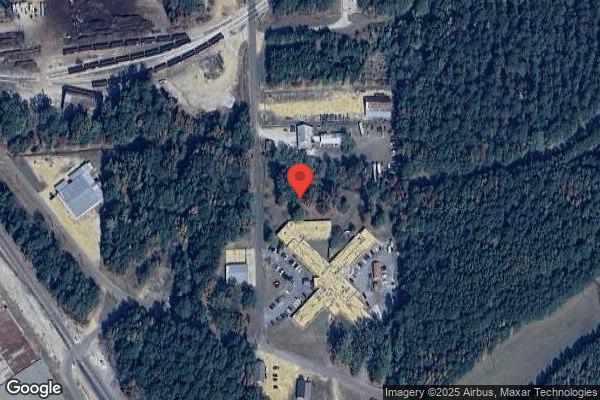

1215 EARL FRYE DRIVE, AMORY, MS 38821 (662) 256-9344
For profit - Corporation 152 Beds DIVERSICARE HEALTHCARE Data: November 2025
Trust Grade
40/100
#156 of 200 in MS
Last Inspection: February 2025

Within standard 12-15 month inspection cycle. Federal law requires annual inspections.

Overview

Families considering Diversicare of Amory should note that the facility has a Trust Grade of D, which indicates below-average performance with some significant concerns. It ranks #156 out of 200 in Mississippi and #3 out of 3 in Monroe County, placing it in the bottom half of available options. The facility's condition is worsening, as the number of issues reported rose sharply from 1 in 2024 to 19 in 2025. Staffing is a relative strength, rated 4 out of 5 stars with a turnover rate of 37%, which is lower than the state average. However, there are serious concerns, such as failing to ensure new staff received required skills training before providing care and not effectively monitoring infection control procedures, which could pose risks to residents' health.

Trust Score
D
40/100
In Mississippi
#156/200
Bottom 22%
Safety Record
Low Risk
No red flags
Inspections
Getting Worse
1 → 19 violations
Staff Stability
○ Average
37% turnover. Near Mississippi's 48% average. Typical for the industry.
Penalties
✓ Good
No fines on record. Clean compliance history, better than most Mississippi facilities.
Skilled Nurses
✓ Good
Each resident gets 51 minutes of Registered Nurse (RN) attention daily — more than average for Mississippi. RNs are trained to catch health problems early.
Violations
⚠ Watch
31 deficiencies on record. Higher than average. Multiple issues found across inspections.
★☆☆☆☆
1.0
Overall Rating
★★★★☆
4.0
Staff Levels
★★★★☆
4.0
Care Quality
★☆☆☆☆
1.0
Inspection Score
Stable
2024: 1 issues
2025: 19 issues

The Good

  • 4-Star Staffing Rating · Above-average nurse staffing levels
  • 4-Star Quality Measures · Strong clinical quality outcomes
  • Full Sprinkler Coverage · Fire safety systems throughout facility
  • No fines on record
  • Staff turnover below average (37%)

    11 points below Mississippi average of 48%

Facility shows strength in staffing levels, quality measures, fire safety.

The Bad

1-Star Overall Rating

Below Mississippi average (2.6)

Significant quality concerns identified by CMS

Staff Turnover: 37%

Near Mississippi avg (46%)

Typical for the industry

Chain: DIVERSICARE HEALTHCARE

Part of a multi-facility chain

Ask about local staffing decisions and management

The Ugly 31 deficiencies on record

Aug 2025 2 deficiencies
CONCERN (D) 📢 Someone Reported This

A family member, employee, or ombudsman was alarmed enough to file a formal complaint

Potential for Harm - no one hurt, but risky conditions existed

Free from Abuse/Neglect (Tag F0600)

Could have caused harm · This affected 1 resident

**NOTE- TERMS IN BRACKETS HAVE BEEN EDITED TO PROTECT CONFIDENTIALITY** Based on observation, staff and resident interviews, record review, and facility policy review, the facility failed to ensure th...

Read full inspector narrative →
**NOTE- TERMS IN BRACKETS HAVE BEEN EDITED TO PROTECT CONFIDENTIALITY** Based on observation, staff and resident interviews, record review, and facility policy review, the facility failed to ensure that a resident was free from verbal abuse when one (1) of seven (7) residents reviewed for abuse was subjected to verbal threats by a staff member. (Resident #1) Findings include: Review of the facility policy titled, “Abuse, Neglect, Misappropriation, Exploitation Policy,” dated January 2019, revealed the purpose: “To prohibit and prevent abuse . in accordance with Federal and State laws.” The policy defined verbal abuse as: “May be considered a form of mental abuse. Verbal abuse includes written or gestured communication, or sounds to residents within hearing distance, regardless of age, ability to comprehend, or disability.” The policy further defined mental abuse as: “The use of verbal or nonverbal conduct which causes or has the potential to cause the resident to experience humiliation, intimidation, fear, shame, agitation, or degradation .” Resident #1 Record review of a facility-reported investigation dated 6/8/25 at 7:00 PM related to allegations of threats revealed Resident #1 reported that Certified Nurse Assistant (CNA) #1 had taken the smokers out and shut the door in front of him. Resident #1 stated that when he reached the smoking area, he and CNA #1 exchanged words, and she told him she would slap him. He reported that when he replied she should not do that, she asked what he would do about it. He stated he told her he would call the police, and CNA #1 then stated she would put him in the morgue. Resident #1 also reported that he kept accusing her of slamming the door until she became angry and admitted she saw him before closing it. On 8/20/25 at 12:12 PM during an interview, Resident #1 recalled the incident in June. He stated CNA #1 knew he was behind her and slammed the door in his face. He reported he knocked on the door, but CNA #1 would not answer, and he had to ask someone else to open it. Resident #1 stated that when he confronted CNA #1 about shutting the door, she denied it, became upset, and they argued and cursed each other. Resident #1 confirmed that CNA #1 told him she would slap him, and when he threatened to call the police, she stated she would put him in the morgue. Review of the “admission Record” revealed Resident #1 was admitted on [DATE] with a diagnosis of abnormalities of gait and mobility. Review of the Quarterly Minimum Data Set (MDS) for Resident #1 with an Assessment Reference Date (ARD) of 8/4/25 revealed in Section C a Brief Interview for Mental Status (BIMS) score of 15, indicating the resident was cognitively intact. Resident# 6 Record review of an interview with Resident #6 conducted as part of the facility’s investigation revealed he heard CNA #1 threaten to slap Resident #1 and say she would put him in the morgue. He stated Resident #1 accused CNA #1 of slamming the door in his face. At first, CNA #1 denied it, but later admitted it. On 8/21/25 at 11:00 AM during an observation and interview, Resident #6 confirmed he heard CNA #1 threaten to slap Resident #1 and said she would put him in the morgue. He reported Resident #1 accused her of slamming the door in his face and that the two argued and cursed at each other. Record review of the “admission Record” revealed Resident #6 was admitted on [DATE] with a diagnosis of centrilobular emphysema. Record review of the Quarterly MDS for Resident #6 with an ARD of 7/28/25, Section C, revealed a BIMS score of 15, indicating the resident was cognitively intact. Resident #7 Record review of an interview with Resident #7 conducted as part of the facility’s investigation revealed, “I heard an argument between Resident #1 and CNA #1. I heard Resident #1 say CNA #1 let the door close in front of him before he could get to it. She got upset and they argued.” Record review of the “admission Record” revealed Resident #7 was admitted on [DATE] with a diagnosis of major depressive disorder. Record review of the Quarterly MDS for Resident #7 with an ARD of 6/3/25, Section C, revealed a BIMS score of 14, indicating the resident was cognitively intact. On 8/21/25 at 8:25 AM during an interview, the Administrator confirmed she substantiated the allegation of verbal abuse because CNA #1 had received previous training on abuse prevention and the investigation determined that another cognitively intact resident corroborated hearing CNA #1 curse at Resident #1. The Administrator stated CNA #1 denied saying she would put the resident in the morgue but admitted she cursed at him after he cursed at her. The Administrator confirmed CNA #1 acted in an unprofessional manner and that this conduct constituted verbal abuse which could lead to fear or psychosocial harm. On 8/21/25 at 8:35 AM during a phone interview, CNA #1 denied cursing Resident #1 or saying she would put him in the morgue. She confirmed she had received training on the definition of verbal abuse and de-escalation of potentially abusive situations. She stated she did not know why residents were reporting she had said this, but acknowledged she knew cursing at a resident is considered verbal abuse. She again denied closing the door on Resident #1 and stated he continued to accuse her of doing so.
CONCERN (F) 📢 Someone Reported This

A family member, employee, or ombudsman was alarmed enough to file a formal complaint

Potential for Harm - no one hurt, but risky conditions existed

Deficiency F0726 (Tag F0726)

Could have caused harm · This affected most or all residents

Based on staff interviews and record review, the facility failed to ensure that newly hired licensed nurses and certified nurse assistants (CNAs) received skills competency checkoffs before providing ...

Read full inspector narrative →
Based on staff interviews and record review, the facility failed to ensure that newly hired licensed nurses and certified nurse assistants (CNAs) received skills competency checkoffs before providing resident care for three (3) of three (3) new hires reviewed. Findings include: Review of a form presented by the Administrator titled, “We Are Knowledgeable and Competent,” revealed the expectation that new hire licensed practical charge nurses (LPN) complete a three-week skills checkoff process, to be signed by both the Administrator and the LPN charge nurse upon successful completion. On 8/21/25 at 8:48 AM during a phone interview conducted as part of the complaint investigation, Graduate Practical Nurse (GPN) # 1 stated she had graduated nursing school and began employment at the facility on 7/15/25. She reported that no staff had checked her off on any skills and she had not been provided with a skills checkoff form. She explained that she had not been assigned a specific preceptor and stated, “If I had questions, I just asked whoever was around.” She further reported she felt overwhelmed with charting, admission paperwork, and incident reporting because the staff she shadowed during her first days of employment had not reviewed these processes with her. On 8/21/25 at 11:16 AM during an interview conducted as part of the complaint investigation, the Clinical Educator (CE) confirmed she was on vacation when GPN #1 began employment on 7/15/25. The CE stated that when she returned on 7/18/25, GPN #1 was on the medication cart by herself and each time she passed her in the hall, she was alone. She confirmed she had not performed any skills checkoffs with GPN #1 and was unsure if the former Director of Nursing (DON) had. She further stated, “She should not have been on the medication cart alone. She could have hurt someone.” After reviewing the skills checkoff forms for Certified Nurse Assistant (CNA) #2 and CNA #3, the CE confirmed the forms were not signed by staff or trainers and she could not verify that the competencies had been completed. The CE explained it was very difficult to complete her educator responsibilities because she was frequently pulled to work the medication cart. She reported she had been in the educator role since March 2025 and had never obtained completed new hire skills checkoffs. She also stated she only learned of the “We Are Knowledgeable and Competent” LPN skills checkoff form one week prior during a meeting. Review of the “Z Slider Lift Skills Checklist” for CNA #2, dated 7/15/25, revealed the form was not signed as completed. The “Peri-Care Audit Tool” was not signed or dated by CNA #2, and the “Shaving, Nail, and Foot Care Audits” were checked as skills met but contained no staff or trainer name. Review of the “Z Slider Lift Skills Checklist” for CNA #3, dated 7/29/25, revealed the form was not signed as completed and no staff name was identified. The “Peri-Care Audit Tool” was not signed or dated by CNA #3, and the “Shaving, Nail, and Foot Care Audits” were checked as skills met but contained no staff or trainer name. On 8/21/25 at 12:00 PM during an interview, the Administrator stated the previous DON would have started GPN #1 on 7/15/25. She confirmed the facility was unable to locate any skills review forms for GPN #1. The Administrator acknowledged that all new hires should have skills checkoffs to ensure they are competent in their skills, and that failing to do so could result in residents not receiving care or receiving the wrong care.
Feb 2025 17 deficiencies
CONCERN (D)

Potential for Harm - no one hurt, but risky conditions existed

Resident Rights (Tag F0550)

Could have caused harm · This affected 1 resident

**NOTE- TERMS IN BRACKETS HAVE BEEN EDITED TO PROTECT CONFIDENTIALITY** Based on observation, resident and staff interviews, record review, and facility policy review, the facility failed to ensure re...

Read full inspector narrative →
**NOTE- TERMS IN BRACKETS HAVE BEEN EDITED TO PROTECT CONFIDENTIALITY** Based on observation, resident and staff interviews, record review, and facility policy review, the facility failed to ensure residents had the right to participate in smoking during rainy or inclement weather for two (2) of four (4) survey days. Resident #60, 65, A, and B. Findings include: Review of the facility policy titled, Resident Rights & Quality of Life Policy with an effective date of 3/13/20, revealed, It is the policy of proper name that all patients and residents have the right to a dignified existence, self-determination, and communication with access to people and services inside and outside the center .A patient or resident has the right: To be fully informed of his or her rights and all rules and regulations governing patient and resident conduct and responsibilities during the stay in the center. Review of Proper name Smoke Schedule undated, revealed ** Staff members are not allowed to take residents out to smoke during inclement weather, such as: Rain, Sleet, Snow, [NAME], Storms, Heat index of 100+ and freezing temp of 32 degrees and below. ** In an interview on 2/12/25 at 8:35 AM, Resident #60 revealed that she wanted to go out and smoke, but they won't take anyone because it is raining outside. She stated she would really like to have a cigarette, plus we didn't get to go out yesterday and smoke all day because it was raining. During an interview on 2/12/25 at 8:45, Certified Nurse Aide (CNA) #8, with Resident #60 present, confirmed that the residents aren't allowed to go out today and smoke because it is raining. She revealed they aren't allowed to go out if it's raining, snowing, bad weather, or cold. During an observation and interview on 2/12/25 at 11:05 AM, Resident #60 was sitting in her doorway in her wheelchair and stated that she really wanted to go out and smoke, but we still can't because it's still raining. In an interview on 2/12/25 at 11:15 AM, Central Supply revealed that the person that is assigned to take the smokers out at 11 AM is the Minimum Data Set (MDS) #1, but she probably won't do it because it's raining. She then confirmed that the residents don't go out to smoke if it's raining, so they did not get to go yesterday either. An observation and interview on 2/12/25 at 11:25 AM revealed several residents sitting by the smoking door waiting for the 11 AM smoke break. Resident A and Resident #60 both revealed they hoped they would let them, especially since they missed yesterday because it rained all day. An observation and interview on 2/12/25 at 11:30 AM, MDS #1 arrived at the door to the smoking area with the residents still waiting and stated that they do not usually take them out to smoke when it's raining or inclement weather. An interview on 2/12/25 at 11:35 AM with Resident A, B and #65. Resident A stated, I don't understand why we can't come out to smoke, because we have a pavilion to sit under and it helps my nerves. Resident B revealed he wishes they would let them go out and smoke regardless of the weather when it is their smoke break time. Resident #65 stated, I didn't get a cigarette all day yesterday because it was raining. During an interview on 2/12/25 at 2:35 PM with the admission Liaison she revealed it is her responsibility to complete admission paperwork with the residents and their families. She stated that the admission paperwork does not address smoking. She revealed that if they ask, she does tell them that they allow smoking, but they do not sign anything. An interview on 2/12/25 at 3:37 PM, the Administrator (ADM) confirmed that the residents do not have to sign anything regarding smoking rules. She revealed that they discuss smoking rules during the 72-hour report after admitting the residents and confirmed that she understands that residents have their rights. Record review of Resident #60's admission Record revealed the facility admitted the resident on 6/28/2023 with diagnoses that included Major Depressive Disorder, and Nicotine Dependence, Cigarettes. Record review of Resident #60's MDS with an Assessment Reference Date (ARD) of 11/27/24 revealed a Brief Interview for Mental Status (BIMS) score of 9 which indicated the resident had moderate cognitive impairment. A record review of Resident #65's admission Record revealed the facility admitted the resident on 10/14/2023 with diagnoses that included Heart Failure, Major Depressive Disorder, and Nicotine Dependence on Cigarettes. A record review of Resident #65's MDS with an ARD of 12/9/24 revealed, under section C, a BIMS score of 15, which indicated that Resident #65 is cognitively intact. Record review of Resident A's admission Record revealed the facility admitted the resident on 1/9/2025 with diagnoses that included Displaced Trimalleolar Fracture of the Left Lower Leg, Encounter for Closed Fracture with Routine Healing, Weakness, and Bipolar Disorder. A record review of Resident A's MDS with an ARD of 1/16/25 revealed, under section C, a BIMS score of 15, which indicated the resident is cognitively intact. A record review of Resident B's admission Record revealed the facility admitted the resident on 11/27/2023 with diagnoses that included Anxiety Disorder and Major Depressive Disorder. A record review of Resident B's MDS with an ARD of 11/14/24 revealed, under section C, a BIMS score of 13, which indicated that the resident is cognitively intact.
CONCERN (D) 📢 Someone Reported This

A family member, employee, or ombudsman was alarmed enough to file a formal complaint

Potential for Harm - no one hurt, but risky conditions existed

Deficiency F0604 (Tag F0604)

Could have caused harm · This affected 1 resident

Based on observation, staff interview, record review, and facility policy review, the facility failed to ensure a resident was free from physical restraints as evidenced by restricting a resident's vo...

Read full inspector narrative →
Based on observation, staff interview, record review, and facility policy review, the facility failed to ensure a resident was free from physical restraints as evidenced by restricting a resident's voluntary movement by body contact for one (1) of 23 sampled residents. Resident #88 Findings Include: Review of the facility policy titled Residents' Rights Summary unrevised, revealed under, Examples of Violations: . 12. Restraining a resident without a physician's order for the convenience of staff, or as a disciplinary measure. An observation on the Memory Care Unit on 2/11/25 at 3:49 PM revealed Resident #88 sitting in a wheelchair in the activity room and Certified Nurse Aide (CNA) #4 was standing in front of the resident with her right knee in between the residents' legs. The resident was anxious and asked the aide to take her to the bathroom. The resident tried to stand up from the wheelchair several times but was stopped. CNA #4 replied, No, you've got to stay right here while touching the resident's leg and instructing her to sit down because she had just went to the bathroom. The resident continued rocking forward in her wheelchair. An observation and interview with the Memory Care Unit Coordinator on 2/11/25 at 4:01 PM confirmed CNA #4 was standing over Resident #88 and restricting her from voluntarily standing up. She revealed CNA #4 was doing that to keep the resident from getting out of the chair and falling. She stated that the resident had just been toileted and was frequently asking to go to the bathroom. The Memory Care Coordinator revealed the resident was on a toileting program and should be toileted every two (2) hours and when needed. An interview with the Administrator (ADM) on 2/11/25 at 4:08 PM confirmed the aide's actions were not how the facility should be handling the residents. She stated that she had been made aware of the incident witnessed between CNA #4 and Resident #88. She revealed the resident's request to go to the bathroom could be a behavior or a urinary tract infection. An interview with the Director of Nursing (DON) on 2/11/25 at 4:13 PM confirmed that CNA #4's action was restraining Resident #88 from standing up from the wheelchair. An interview with CNA #4 on 2/11/25 at 4:18 PM revealed she was trying to prevent Resident #88 from getting up and falling. She explained the resident was a fall risk and always asking to go to the bathroom because she wanted to go and stay in her room. An interview with the Nurse Practitioner (NP) on 2/12/25 at 10:08 AM revealed Resident #88 had declined over the past three (3) months with an increase in behavior and restlessness. She explained that the resident had been up walking but recently required a wheelchair because she was unsteady. She revealed frequent bathroom requests had started around the same time and the resident was currently on an antibiotic for a urinary tract infection (UTI) which could be increasing her behavior. An interview with Registered Nurse (RN) #3 on 2/13/25 at 8:38 AM revealed the Memory Care Unit had a fall risk area where the residents that were at risk stayed, so they were overseen closely by the staff. She revealed the aides were to watch over the residents and oversee but never prevent a resident from getting up. Record review of CNA #4 Education Transcript revealed she was trained on preventing falls (8/15/24), dementia care (8/16/24), and dementia with challenging behaviors (1/21/25). Record review of the admission Record revealed the facility admitted Resident #88 on 3/19/24 with a diagnosis that included Alzheimer's Disease. Record review of the Quarterly Minimum Data Set (MDS) with an Assessment Reference Date (ARD) of 12/16/24 revealed under section C, a Brief Interview for Mental Status (BIMS) summary score of 3, which indicated Resident #88 was severely cognitively impaired.
CONCERN (D)

Potential for Harm - no one hurt, but risky conditions existed

Deficiency F0655 (Tag F0655)

Could have caused harm · This affected 1 resident

**NOTE- TERMS IN BRACKETS HAVE BEEN EDITED TO PROTECT CONFIDENTIALITY** Based on observation, resident and staff interview, record review, and facility policy review, the facility failed to thoroughly...

Read full inspector narrative →
**NOTE- TERMS IN BRACKETS HAVE BEEN EDITED TO PROTECT CONFIDENTIALITY** Based on observation, resident and staff interview, record review, and facility policy review, the facility failed to thoroughly develop a baseline care plan related to personal hygiene for (1) one of three (3) baseline care plans reviewed. (Resident #253) Findings include: Review of the facility policy titled, Baseline Care Plan Process, dated November 2017, revealed, The baseline care plan is developed to include: the instructions needed to provide effective and person-centered care . On 2/10/25 at 10:10 AM, an observation revealed Resident #253's fingernail beds to have a dark brown substance underneath them, and they were jagged in appearance. His facial hair was also observed to be unkept. On 2/11/25 at 1:53 PM, observation of Resident # 253 with Certified Nurse Assistant (CNA) #2 she confirmed the resident 's nails were jagged and had a brown substance under the nail beds. On 2/11/25 at 1:55 PM, an interview with Certified Occupational Therapist (COTA) she stated that she has Resident #253 on caseload for upper body therapy and confirmed his fingernails were dirty last week, and his facial hair was also unkept. A review of the Baseline Care plan for Resident #253 dated 1/29/25 revealed no interventions related to personal hygiene. In an interview with the Director of Nursing (DON) on 2/11/25 at 2:05 PM, she revealed after review of the baseline care plan for Resident # 253 she was unable to find where Activities of Daily Living (ADL) care was addressed and confirmed the care plan was not thoroughly developed to address personal hygiene. Review of the admission Record revealed the facility admitted Resident # 253 on 1/29/25 with a diagnosis of Traumatic Subdural Hemorrhage. Record review of Resident #253,s Section C of the admission Minimum Data Set (MDS) dated [DATE] revealed the Brief Interview for Mental Status (BIMS) score was 9, indicating the resident had moderate cognitive impairment. Section: GG0130- I.) Personal hygiene-was coded partial/moderate assistance.
CONCERN (D)

Potential for Harm - no one hurt, but risky conditions existed

Deficiency F0698 (Tag F0698)

Could have caused harm · This affected 1 resident

**NOTE- TERMS IN BRACKETS HAVE BEEN EDITED TO PROTECT CONFIDENTIALITY** Based on resident and staff interviews, record review, and facility policy review, the facility failed to provide ongoing commun...

Read full inspector narrative →
**NOTE- TERMS IN BRACKETS HAVE BEEN EDITED TO PROTECT CONFIDENTIALITY** Based on resident and staff interviews, record review, and facility policy review, the facility failed to provide ongoing communication documentation with the hemodialysis center for one (1) of one (1) residents receiving hemodialysis reviewed. Resident #8. Findings include: Record review of the facility policy titled, Outpatient Dialysis Services and Compensation undated, revealed, .d When a resident is transferred to the Dialysis Unit for Services, the Facility shall: (i) transmit resident information necessary for Contractor's delivery of Services and in accordance with applicable law; (ii) make resident records available to Contractor as necessary for provision of Services and in accordance with applicable law; .5. Patient Records. Facility and Contractor shall each prepare and maintain records concerning Facility's residents receiving Services under this Agreement, in accordance with applicable federal and state laws, regulations and program guidelines . A record review of Resident #8's admission Record revealed the resident was admitted to the facility on [DATE] with medical diagnoses of Chronic Kidney Disease, Stage 5, and Dependence on Renal Dialysis. A record review of Resident #8's Order Review History Report for 01/01/2025-01/31/2025 revealed a physician order for .dialysis at the proper name dialysis center on Monday, Wednesday and Friday .Obtain pre-and post dialysis vital signs one time a day every Monday, Wednesday and Friday. An interview with Resident #8 on 2/11/25 at 8:54 AM, revealed she is on dialysis and goes to the dialysis center on Monday, Wednesday, and Friday. She revealed that sometimes the nurse checks her vital signs before she leaves, but it doesn't happen all the time and they don't check her vital signs when she returns from dialysis. She revealed she doesn't take any paperwork with her to give to the dialysis center. An interview on 2/12/25 at 2:26 PM, Minimum Data Set (MDS) Nurse #1 revealed that Resident #8 is on dialysis. However, with the quarterly MDS with an Assessment Reference date (ARD) of 1/13/25, we were not able to bill for her because we did not have the communication sheets completed for her which would reflect her vital signs for pre and post-dialysis treatment. She revealed for whatever reason they were just not being completed. She revealed that we had to pay back money with their last case-mix and we were informed by our corporate office that we could not bill for the dialysis services if the communication sheets were not filled out, so she did not select dialysis on the quarterly MDS. During an interview on 2/13/25 at 8:24 AM, Licensed Practical Nurse (LPN) #3 revealed she is the nurse for Resident #8, and the resident went out yesterday for dialysis. LPN #3 revealed that she hadn't completed a communication sheet to the dialysis facility. LPN #3 stated, Is that something I need to do? In an interview on 2/13/25 at 8:35 AM, the Director of Nurses (DON) confirmed she could not find any dialysis communication records for January. She stated, she was unaware they were not being completed. She revealed that communication records are essential for coordinating and collaborating between the facility and the dialysis center. The communication records were to have vital signs and pertinent information for Resident #8. During an interview on 2/13/25 at 8:56 AM, the Administrator (ADM) revealed that the floor nurses should complete the communication paperwork for the resident before and when returning from dialysis. She revealed that she was unaware that the communication records were not being completed, and that the facility was not able to bill for the dialysis for the MDS completed with an ARD of 1/13/25. The ADM confirmed that the communication between the facility and the dialysis center must be ongoing for the continuation of care for Resident #8. An interview on 2/13/25 at 9:10 AM, with the Medical Records nurse revealed that the last communication record sent to the dialysis was on 12/11/24. She revealed that everyone knows this is an ongoing issue. She revealed that she had tried to complete the paperwork when she noticed the floor nurses were not doing it. A record review of the Dialysis Communication Record dated 12/11/2024 revealed a completed communication record between the facility and the dialysis center with nurse signatures. Record review of the Minimum Data Set (MDS) Section C with an Assessment Reference Date of 1/13/25 revealed Resident #8 had a Brief Interview for Mental Status (BIMS) score of 15, indicating the resident is cognitively intact. Section I Active Diagnoses revealed Resident #8 was marked for Renal Insufficiency, Renal Failure, or End-Stand Renal Disease (ESRD).
CONCERN (D)

Potential for Harm - no one hurt, but risky conditions existed

Pharmacy Services (Tag F0755)

Could have caused harm · This affected 1 resident

Based on observation, staff interview, and facility policy review, the facility failed to maintain a system of medication records that enables accurate reconciliation and accounting for all controlled...

Read full inspector narrative →
Based on observation, staff interview, and facility policy review, the facility failed to maintain a system of medication records that enables accurate reconciliation and accounting for all controlled medications for (1) one of (3) three narcotic storage areas reviewed. Findings include: Review of the facility policy titled, Controlled Substance Accountability Guideline, revealed, Chapter 2: Controlled Substances (General): Medication nurse on duty shall maintain possession of the keys to controlled substances. Chapter : Change of Shift Reconciliation: Two licensed nurses, typically the nurse arriving, and the nurse departing from duty, are to conduct the reconciliation of patient specific controlled substances and sign a signature attesting to the accuracy of the count. An observation during medication administration on 2/12/25 at 8:30 AM, on A-Hall with Licensed Practical Nurse (LPN)#1 revealed LPN #1 give the medication cart keys to the Medical Records nurse to get a medication out of the medication room for him. In an interview with LPN #1 on 2/12/25 at 8:35 AM, he confirmed that he gave the medical records nurse the keys to the medication room that included the keys to the medication refrigerator that stored narcotics. He then revealed he was not sure if there were any narcotics in the medication room refrigerator. He stated that when the off going nurse, LPN #2, and he counted the narcotics they only counted the narcotics on the medication cart and never checked the refrigerator. An observation of the A hall medication room refrigerator narcotic box with LPN #1 revealed three boxes of Lorazepam concentrate in the medication refrigerator. An observation of the narcotic book with LPN #1 revealed the narcotic sheets for the three bottles of Lorazepam were in the narcotic book. LPN #1 confirmed he should have counted the narcotics in the refrigerator, and stated failing to do so could lead to missing narcotics and inaccurate narcotic count. In a phone interview with LPN #2 on 2/12/25 at 7:10 PM, she confirmed that she and LPN #1 only counted the narcotics on the medication cart. When asked why she did not count the narcotics in the refrigerator, she stated, I don't know, we just didn't. She confirmed she was aware of the Lorazepam in the refrigerator because there were narcotic sheets on the narcotic book, and she counted at the beginning of her shift. In an interview with the Director of Nurses (DON) on 12/13/25 at 8:00 AM, she confirmed the nurses should reconcile all narcotics at the beginning and end of each shift to ensure an accurate account of all narcotics. She also confirmed that the nurse should never have given their narcotic keys to any other staff once they accepted responsibility for them. The DON then stated failing to reconcile all narcotics could lead to missing narcotics and possible diversion. In an interview with the Medical Records nurse on 2/13/25 at 11:00 AM, she confirmed she should have not accepted LPN#1's keys that included the key to the refrigerator narcotic box because she did not count those narcotics.
CONCERN (D)

Potential for Harm - no one hurt, but risky conditions existed

Medication Errors (Tag F0758)

Could have caused harm · This affected 1 resident

Based on staff interview and record review the facility failed to ensure a PRN (as needed) psychotropic medication had a stop date for one (1) of six (6) resident medications reviewed. Resident #69 Fi...

Read full inspector narrative →
Based on staff interview and record review the facility failed to ensure a PRN (as needed) psychotropic medication had a stop date for one (1) of six (6) resident medications reviewed. Resident #69 Findings Include: The facility provided a statement on letterhead, (Proper name of the facility) follows the guidance of CMS (Centers for Medicare and Medicaid Services) as psychotropic medications ordered for PRN (as needed) usage shall not exceed past 14 days without further medical provider assessment in the facility for continuation of medication for each reinstatement of the order. Record review of Resident #69's February 2025 Medication Administration Record (MAR) revealed an order dated 12/17/24, Ativan (antianxiety) Oral Tablet 1 MG (milligram) (Lorazepam) give 1 tablet by mouth every 24 hours as needed for anxiety and agitation with no stop date. An interview with Registered Nurse (RN) #4 on 2/11/25 at 3:42 PM, confirmed Resident #69's Ativan order did not have a stop date. She revealed the resident usually took it on his shower days because he became combative. An interview with the Director of Nursing (DON) on 2/11/25 at 4:15 PM, revealed the purpose of having a stop date on an as needed (PRN) psychotropic medication was for the doctor to re-evaluate the need for the medicine. Record review of the admission Record revealed the facility admitted Resident #69 on 9/30/21 with medical diagnoses that included Unspecified Dementia.
CONCERN (D)

Potential for Harm - no one hurt, but risky conditions existed

Deficiency F0806 (Tag F0806)

Could have caused harm · This affected 1 resident

Based on observation, resident and staff interview, and facility policy review, the facility failed to honor a resident's beverage preference during dining for two (2) of three (3) residents reviewed ...

Read full inspector narrative →
Based on observation, resident and staff interview, and facility policy review, the facility failed to honor a resident's beverage preference during dining for two (2) of three (3) residents reviewed for dining observation. Resident #13 and Resident #303 Findings Include: Review of the facility policy titled Dining and Food Preferences with a revision date of 9/17, revealed Policy Statement: Individual dining, food, and beverage preferences are identified for all residents/patients. An observation of Resident #13 on 2/10/25 at 11:44 AM, revealed she was lying in bed. Registered Nurse (RN) #4 entered the resident's room with her meal tray. The resident voiced she wanted to eat in the dining room and wanted a large glass of tea. RN #4 explained to the resident she could only have a small glass of tea because of the caffeine and stated, You can have a small glass of tea and some water, or you'll be climbing the wall. A large glass of tea was not provided. An observation of Resident #13 during the lunch meal on 2/11/25 at 11:52 AM, revealed the resident was eating in the dining area and had a small 120 milliliter (ML) glass of tea and water. An observation of Resident #303 during the lunch meal on 2/11/25 at 11:55 AM revealed the resident was sitting at the dining table and requested a cup of coffee. Registered Nurse (RN) #4 replied, We only get coffee with breakfast. The coffee was not provided. An interview with Resident #303 on 2/11/25 at 1:24 PM, revealed he liked coffee in the morning, and voiced he could drink it all day. An interview with the Memory Care Coordinator on 2/11/25 at 1:29 PM, confirmed the residents should have their preferences honored. She revealed that if a resident requested something and if possible, the staff should provide it. She confirmed she overheard Resident #303 request coffee at lunchtime and revealed the nurse should have gone to get the coffee. An interview with RN #4 on 2/11/25 at 1:42 PM, revealed she did not give Resident #13 a large glass of tea because her family did not want her to have it due to the caffeine. She confirmed the resident had the right to request the things in life that she liked. She confirmed Resident #303 should have been given coffee when he requested it at lunch, as this was his preference. An interview with the Administrator on 2/12/25 at 2:18 PM, confirmed the residents have a right to their preference. She explained the kitchen has coffee available throughout the day for the residents and stated the staff should get the things the residents request. Record review of the admission Record revealed the facility admitted Resident #13 on 11/02/23 with medical diagnoses that included Schizophrenia. Record review of the Quarterly Minimum Data Set (MDS) with an Assessment Reference Date (ARD) of 1/30/25 revealed, under section C, a Brief Interview for Mental Status (BIMS) summary score of 10, which indicated Resident #13 was moderately cognitively impaired. Record review of the admission Record revealed the facility admitted Resident #303 on 1/30/25 with a medical diagnosis that included Acute Kidney Failure. Record review of the 5-day admission Minimum Data Set (MDS) with an Assessment Reference Date (ARD) of 2/06/25 revealed under section C, a BIMS summary score of 3, which indicated Resident #303 was severely cognitively impaired.
CONCERN (E) 📢 Someone Reported This

A family member, employee, or ombudsman was alarmed enough to file a formal complaint

Potential for Harm - no one hurt, but risky conditions existed

Safe Environment (Tag F0584)

Could have caused harm · This affected multiple residents

Based on observation, resident and staff interviews, and facility policy review, the facility failed to provide a safe, clean environment as evidenced by an unsanitary toilet in room C-7, resident whe...

Read full inspector narrative →
Based on observation, resident and staff interviews, and facility policy review, the facility failed to provide a safe, clean environment as evidenced by an unsanitary toilet in room C-7, resident wheelchair (Resident #60), overbed tables, and wall in disrepair affecting three (3) residents in the seventy-three resident occupied rooms observed. Resident #48, Resident #60 and Resident #99 Findings Include: Review of the facility policy titled, Resident Rights and Quality of Life Policy, dated 3/13/20, revealed, A patient or resident has the right: . to receive services in a center environment that is safe, clean, and comfortable . Review of the facility policy titled, Resident/Patient Room Cleaning, last reviewed 2/1/2025, revealed Policy: Room Cleaning: Rooms are to be regularly cleaned and disinfected with a particular focus on disinfecting high-touch surfaces such as light switches, bed rails, doorknobs, call lights, etc. Nursing staff provides the initial cleanup of blood and bodily fluids . Environmental services staff follow by disinfecting surfaces contaminated with a small, residual amount of feces, blood, or other bodily fluids . Resident #48 An observation on 2/10/25 at 11:45 AM, revealed two (2) overbed tables in Resident #48's room. One overbed table was situated to the left of the bed, and the other overbed table was situated to the right of the bed. Both overbed tables had a thick red and black rust like appearance to the metal base of the overbed tables. The edges of both overbed tables were tattered and torn with edging missing. During an observation and interview on 2/11/25 at 3:30 PM, the Director of Nursing (DON) confirmed both overbed tables in Resident #48's room had thick rust on the metal frames, and the tabletops had torn and jagged edging and needed to be replaced. She stated, These certainly need to be replaced. A record review of Resident #48's admission Record revealed the facility admitted the resident on 4/19/2019 with diagnoses that included Unspecified Dementia, Peripheral Vascular Disease, Contracture of the Right Hand, and Contracture of the Left Hand. Resident #60 An observation and interview on 2/10/25 at 10:45 AM, revealed Resident #60 sitting in a wheelchair with the left armrest vinyl tattered and torn. Resident #60 revealed that she has been in this wheelchair for three weeks, and the armrest was torn when they gave it to her. A dark-gray thick substance was noted on the frame and the spokes of the wheels. During an interview on 2/11/25 at 3:10 PM, Certified Nursing Assistant (CNA) #5 revealed the night shift CNAs are responsible for cleaning the wheelchairs. She revealed that we let the Maintenance Director know about any equipment or furniture in a resident's room that needs to be replaced or repaired and admitted that she had not told anyone about the wheelchair armrest. During an interview and observation on 2/11/25 at 3:20 PM, the DON confirmed that Resident #60's wheelchair armrest was torn and tattered and could cause a skin tear. She revealed that the night shift staff is responsible for ensuring that the wheelchairs are clean and confirmed that the wheelchair had a gray substance on the frame and needed to be cleaned. Record review of Resident #60's admission Record revealed the facility admitted the resident on 6/28/2023. Record review of Resident #60's Minimum Data Set (MDS) with Assessment Reference Date (ARD) of 11/27/24, revealed a Brief Interview for Mental Status (BIMS) score of 9 which indicated the resident had moderate cognitive impairment. C-7 Bathroom An observation 2/10/25 at 10:45 AM, of the bathroom in room C-7 revealed a raised toilet seat that had a large dark brown dried substance on the back of the toilet seat rim, and a smeared dark brown substance was also on the metal bar at the top of the back of the raised toilet seat. An observation of the bathroom of room C-7 with CNA #3 on 2/11/25 at 1:25 PM, she confirmed there was a large dried dark brown substance on the back of the toilet seat rim and a smeared dark brown substance on the metal bar at the top of the back of the raised toilet seat that appeared to be stool. She stated concerns about the toilet not being clean is that it is not sanitary and could lead to the spread of infection. She then stated the nursing staff are responsible for cleaning the toilets or any equipment or surface that is contaminated with bodily secretions. An interview with the DON on 2/11/25 at 2:05 PM, she confirmed that nursing staff are responsible for cleaning equipment that is soiled with bodily fluids. She stated concerns from not sanitizing the toilet is an infection control concern and sanitation issue and could lead to infections. In an interview with Housekeeper #2 on 2/12/25 at 2:00 PM, she revealed housekeeping should notify their supervisor and nursing staff if they find a room that has surfaces or equipment soiled with bodily fluids. She then stated that the housekeeping staff clean the contaminated surfaces after nursing has cleaned the surfaces. Resident #99 During the initial tour on 2/10/25 at 11:40 AM, an observation revealed a large section of paint, measuring approximately two feet wide by one and a half feet high, missing from the wall behind Resident #99's headboard. The resident's overbed table was observed to have rust on the entire metal frame. During an interview, Resident #99 stated he would like to have the paint repaired and the table replaced. During an observation of Resident #99's room with the DON and interview on 2/11/25 at 3:25 PM, the DON confirmed the wall needed repair. She stated the maintenance department is responsible for the repair of damaged walls and it was the staff's responsibility to report these concerns so they could be addressed. She stated it was also the staff's responsibility to ensure the residents' equipment was in good repair, and this overbed table did not meet that standard. She confirmed each resident should have a room that is clean, comfortable and homelike and the facility failed to provide this for Resident #99. An interview on 2/12/25 at 8:50 AM, with the Administrator confirmed that the maintenance staff was responsible for painting and repairing damage. She stated the paint concern had been noted on the room rounds previously but had not been repaired. She confirmed each resident has the right to a safe, comfortable, home-like environment and the facility failed to provide this for Resident #99. Record review of Resident #99's admission Record revealed the facility admitted the resident on 1/23/25 with medical diagnoses that included Traumatic Subdural Hemorrhage, Dysphagia, and Epilepsy. Record review of Resident #99's admission MDS with an ARD of 1/30/25 revealed a Brief Interview for BIMS score of 9 which indicated the resident had a moderate cognitive impairment.
CONCERN (E)

Potential for Harm - no one hurt, but risky conditions existed

Comprehensive Care Plan (Tag F0656)

Could have caused harm · This affected multiple residents

**NOTE- TERMS IN BRACKETS HAVE BEEN EDITED TO PROTECT CONFIDENTIALITY** Based on observation, resident and staff interview, record review, and facility policy review, the facility failed to develop a ...

Read full inspector narrative →
**NOTE- TERMS IN BRACKETS HAVE BEEN EDITED TO PROTECT CONFIDENTIALITY** Based on observation, resident and staff interview, record review, and facility policy review, the facility failed to develop a comprehensive care plan for residents with personal hygiene needs (Resident #62, #74, #253), taking an antiplatelet medication (Resident #25), storage of respiratory equipment (Resident #82), and failed to implement a care plan for a resident on Enhanced Barrier Precautions (EBP) (Resident #11), Thromboembolic Deterrent (TED) (Resident #253), and receiving dialysis (Resident #8) for six (6) of 23 sampled residents. Residents #8, #11, #62, #74, #82, and #253 Findings Include Record review of facility policy titled, Care Plans with effective date of October 2021, revealed, Care plans will be developed for all patients and residents based upon the RAI (Resident Assessment Instrument) manual guidelines. Care plans are developed by the interdisciplinary team and revised as needed according to resident and patient status or change. Resident #8 A record review of Resident #8's care plan revealed the resident has an alteration in Kidney Function, evidenced by now requiring Hemodialysis. Interventions include obtaining pre- and post-dialysis vital signs every day and a written communication form with a review of weights and any changes in condition between the dialysis provider and center. A record review of Resident #8's admission Record revealed the facility admitted the resident on 07/25/2012 with medical diagnoses of Chronic Kidney Disease, Stage 5, and Dependence on Renal Dialysis. A record review of Resident #8's Order Review History Report for 01/01/2025-01/31/2025 revealed a physician order for dialysis at the proper name dialysis center on Monday, Wednesday and Friday .Obtain pre- and post-dialysis vital signs one time a day every Monday Wednesday and Friday. An interview with Resident #8 on 2/11/25 at 8:54 AM confirmed that she is on dialysis and goes to the dialysis center on Monday, Wednesday, and Friday. She stated that don't always check her vital signs before and after. In an interview on 2/13/25 at 8:35 AM, the Director of Nurses (DON) confirmed she could not find any vital sign documentation for Resident #8's dialysis communication for January. She revealed that those records would have been sent with the resident on her dialysis appointments and returned afterward. The communication records were to have vital signs and pertinent information for Resident #8, and because the communication records were not being done, the resident's dialysis care plan was not followed. An interview on 2/13/25 at 9:10 AM with Licensed Practical Nurse (LPN) Medical Records confirmed that the last communication record sent to the dialysis was on 12/11/24. A record review of the Dialysis Communication Record dated 12/11/2024 revealed a completed communication record between the facility and the dialysis center with nurse signatures. This review revealed there were no complete communication records for 01/2025. Record review of the MDS Section C with an Assessment Reference Date (ARD) of 1/13/25 revealed Resident #8 had a Brief Interview for Mental Status (BIMS) score of 15, indicating the resident is cognitively intact. Resident #11 Record review of Resident #11's care plan revealed a care plan for a pressure ulcer on left heel with intervention to administer treatments as ordered. Another care plan for stage one pressure wound to right heel with intervention for treatments as ordered. Resident had a care plan for an unstageable pressure ulcer to the sacrum with an intervention to administer treatments as ordered. Another care plan was for an infection related to wound infection with intervention administer antibiotics and treatment as ordered. An observation of Resident #11's pressure wound care completed by Licensed Practical Nurse (LPN) #1 and assisted by CNA #7 on 2/12/25 at 2:45 PM, revealed EBP was not followed when gowns were not worn during all of the wound care. An interview on 2/12/25 at 3:15 PM with the Director of Nursing (DON) revealed the care plan was developed and specified administer treatments as ordered for wound care. She stated enhanced barrier precautions (EBP) was part of the wound care guidelines and it was not listed as a separate intervention since it was included as an expected step in the wound care process. She confirmed that since enhanced barrier precautions were not properly used, the care plan for treatments as ordered was not followed. During an interview on 2/13/25 at 9:30 AM, MDS Coordinator #2 revealed this resident had a wound care plan developed to administer treatments as ordered and this automatically included the use of EBP. She stated the care plan was not followed as required. Record review of Resident #11's admission Record revealed the facility admitted the resident on 4/28/21. Diagnoses included Protein Calorie Malnutrition and Polyneuropathy. Record review of Resident #11's Significant Change in Status MDS with ARD of 1/15/25 revealed a BIMS score of 9 which indicated the resident had a moderate impairment cognitively. Resident #62 Review of a care plan for Resident #62 titled, Nursing [NAME], revealed no interventions related to personal hygiene. On 2/11/25 at 1:30 PM, observation with Certified Nurse Assistant (CNA)#3 revealed that Resident #62's nails were long with a dark brown substance under them. She confirmed the residents nails needed clipping and cleaning. On 2/11/25 at 2:09 PM, in an interview with the DON she revealed after review of the [NAME] care plan for Resident #62 that there was not a care plan developed regarding personal hygiene. In an interview with MDS Nurse on 2/12/25 at 2:40 PM, she revealed the purpose of the care plan is to let the staff know the type of care and services the resident requires and confirmed that the care plan is not thoroughly developed, the resident may not get the services they need. Review of the admission Record revealed the facility admitted Resident #62 on 8/23/23 with a diagnosis of Hemiplegia and Hemiparesis following a Cerebral Infarction. Record review of Resident #62's Section C of the MDS dated [DATE] revealed the BIMS score was 13, indicating the resident was cognitively intact. Section: GG0130- I.) Personal hygiene-was coded setup or clean-up assistance. Resident #253 Review of a care plan for Resident #253 titled, Nursing [NAME], initiated on 1/31/25, revealed, Interventions: TED hose - apply every am (morning) and remove every pm (night) due to orthostatic blood pressures. Record review of a physician's order dated 1/30/25 for Resident #253 revealed, TED- (thromboembolic deterrent) hose - apply every am (morning) and remove every pm (night) due to orthostatic blood pressure. On 2/11/25 at 2:05 PM, during an interview with the DON she confirmed after review of the care plan related to the use of the TED hose for Resident #253 the care plan was not being implemented when staff did not apply the hose as ordered. In an observation with LPN #3 on 2/11/25 at 2:10 PM, of Resident # 253 she confirmed the resident was not wearing TED hose. An interview Physical Therapy Assistant (PTA) on 2/12/25 at 2:08 PM she revealed she has seen Resident # 253 several times over the past two weeks for physical therapy of the lower body and confirmed she had not seen the resident wearing TED hose until today. In an interview with the MDS Nurse on 2/12/25 at 2:40 PM, she revealed the purpose of the care plan is to let the staff know of the type of care and services the residents requires. Review of the admission Record revealed the facility admitted Resident # 253 on 1/29/25 with a diagnosis of Traumatic Subdural Hemorrhage. Record review of Resident #253's Section C of the MDS dated [DATE] revealed the BIMS score was 9, indicating the resident was severely cognitively impaired. Section: GG0130- H.) putting on/taking off socks and shoes was coded as dependent (helper does all the effort). Resident #74 Record review of Resident #74's Care Plans revealed a care plan for Activities of Daily Living (ADL's) was not developed. On 2/10/25 at 10:45 AM, an observation revealed Resident #74 had visible gray hairs extending from both ears that were approximately one-half (1/2) inch in length. This observation also revealed the resident's fingernails were approximately one-fourth (1/4) inch in length, jagged and had a brown substance under the nail beds. On 2/10/25 at 1:29 PM, an interview with the Memory Care Unit Coordinator confirmed Resident #74 needed his nails trimmed and cleaned and had long ear hair. An interview with the MDS Nurse on 2/12/25 at 9:20 AM, confirmed Resident #74 did not have an ADL care plan. She revealed the purpose of having the care plan was so that staff knew how to care for the residents. Record review of the admission Record revealed the facility admitted Resident #74 on 11/30/23 with a medical diagnosis that included Cerebral Infarction. Resident #82 Record review of Resident #82's care plan revealed a care plan for storage of respiratory equipment was not developed for the staff to follow. On 2/10/25 at 11:05 AM, during the initial tour Resident #82's respiratory treatment nebulizer was observed on the floor next to the resident's bed. The tubing and mask were in a bag on top of the nebulizer. The resident stated he had lung issues and received treatments several times a day. An interview with the Director of Nursing (DON) on 2/11/25 at 3:10 PM, revealed a care plan provided staff with information on the daily care and preferences for each resident. She confirmed the facility failed to develop a care plan for proper storage of respiratory equipment. During an interview on 2/12/25 at 9:10 AM, Minimum Data Set (MDS) Coordinator #1 revealed a care plan guides the needed care and preferences for each resident and she was responsible for developing the care plans. She confirmed the facility failed to develop a care plan for the proper storage of Resident #82's respiratory nebulizer equipment. Record review of Resident #82's admission Record revealed the facility most recently admitted the resident on 1/23/25 with medical diagnoses that included Wedge Compression Fracture of Fourth and Fifth Lumbar Vertebra, Malignant Neoplasm of Bronchus or Lung, Emphysema, and Chronic Obstructive Pulmonary Disease. Record review of Resident #82's admission MDS with an ARD of 1/30/25 revealed a BIMS of 12 which indicated the resident had a moderate cognitive impairment.
CONCERN (E)

Potential for Harm - no one hurt, but risky conditions existed

ADL Care (Tag F0677)

Could have caused harm · This affected multiple residents

**NOTE- TERMS IN BRACKETS HAVE BEEN EDITED TO PROTECT CONFIDENTIALITY** Based on observation, resident and staff interview, record review, and facility policy review, the facility failed to provide ca...

Read full inspector narrative →
**NOTE- TERMS IN BRACKETS HAVE BEEN EDITED TO PROTECT CONFIDENTIALITY** Based on observation, resident and staff interview, record review, and facility policy review, the facility failed to provide care to maintain personal hygiene for three (3) of 23 residents reviewed for Activities of Daily Living (ADL) care. Resident #62, #74 and #253. Findings include: Review of the facility policy titled, ADL's (activities of daily living), dated August 2021, revealed, Policy: Ensure ADLs are provided in accordance with accepted standards of practice. ADLs-(hygiene-grooming) . Resident #62 An observation and interview on 2/11/25 at 11:00 AM, revealed Resident #62's fingernails to be approximately 1/2 (one-half) inch long past the tips of the fingers, dirty in appearance with a dark brown substance under the nail beds. Resident #62 stated he would like to have them trimmed and confirmed he did not like them long. An observation on 2/12/25 at 1:30 PM, with Certified Nurse Assistant (CNA)#3 confirmed that Resident #62's nails were very long and dirty with a dried dark brown substance under the nail beds. She stated it appeared that the resident had not had nail care in a very long time. In an interview with the Director of Nursing (DON) on 2/12/25 at 2:09 PM, she revealed that if the residents were not getting personal hygiene it could lead to the spread of bacteria and skin concerns. She confirmed that Resident #62's nails should have already been cleaned and trimmed. Review of the admission Record revealed the facility admitted Resident #62 on 8/23/23 with a diagnosis of Hemiplegia and Hemiparesis following a Cerebral Infarction. Record review of Resident #62's Section C of the Annual Minimum Data Set (MDS) dated [DATE] revealed the Brief Interview for Mental Status (BIMS) score was 13, indicating the resident was cognitively intact. Section: GG0130- I.) Personal hygiene-was coded setup or clean-up assistance. Resident #253 An observation on 2/10/25 at 10:10 AM, revealed Resident #253's fingernail beds to have a dark brown substance underneath them, and they were jagged in appearance. His facial hair was also observed to be unkept. An observation on 2/11/25 at 1:30 PM, revealed Resident# 253 to have a brown substance under his fingernail beds, and the fingernails remained jagged in appearance. An observation of Resident #253 on 2/11/25 at 1:53 PM, with CNA #2 confirmed the resident's nails were jagged and had a brown substance under the nail beds. In an interview with the Certified Occupational Therapist (COTA) on 2/11/25 at 1:55 PM, she stated that she has Resident #253 on caseload for upper body therapy and confirmed his fingernails were dirty last week and his facial hair was also unkept. In an interview with the DON on 2/11/25 at 2:05 PM, she confirmed that Resident #253 should have had nail care and that staff failing to provide personal hygiene care for any resident could lead to skin concerns and spread of bacteria. Review of the admission Record revealed the facility admitted Resident # 253 on 1/29/25 with a diagnosis of Traumatic Subdural Hemorrhage. Record review of Resident #253's Section C of the admission MDS dated [DATE] revealed the BIMS score was 9, indicating the resident was moderately cognitively impaired. Section: GG0130- I.) Personal hygiene-was coded partial/moderate assistance. Resident #74 An observation on 2/10/25 at 10:45 AM, revealed Resident #74 sitting in his wheelchair in the hallway with long gray hairs extending from both of his ears, approximately one-half (1/2) inch in length. His fingernails on both hands measured approximately one-fourth (1/4) inch in length and jagged with a brown substance underneath. An interview with the Memory Care Unit Coordinator on 2/10/25 at 1:29 PM, confirmed Resident #74 had long, jagged nails. She revealed the aides were responsible for cutting, cleaning, and filling them with showers. She revealed the resident could scratch himself and cause a skin injury. She stated the barber was responsible for trimming the resident's ear hair and explained he trimmed it when he had time but had not been there recently. Record review revealed the facility admitted Resident #74 on 11/30/23 with a medical diagnosis that included Cerebral Infarction.
CONCERN (E)

Potential for Harm - no one hurt, but risky conditions existed

Quality of Care (Tag F0684)

Could have caused harm · This affected multiple residents

**NOTE- TERMS IN BRACKETS HAVE BEEN EDITED TO PROTECT CONFIDENTIALITY** Based on observation, staff interview, record review, and facility policy review, the facility failed to ensure residents receiv...

Read full inspector narrative →
**NOTE- TERMS IN BRACKETS HAVE BEEN EDITED TO PROTECT CONFIDENTIALITY** Based on observation, staff interview, record review, and facility policy review, the facility failed to ensure residents received treatment and care in accordance with professional standards of practice for treating skin concerns (Resident #303) and application of TED (thromboembolic deterrent) compression hose for two (2) of 23 sampled residents. Resident #253 and #303 Findings include: Review of the facility policy titled Skin Care Guideline unrevised, revealed under, Purpose: To provide a system for evaluation of skin to identify risk and identify individual interventions to address risk and a process for care of changes/disruption in skin integrity. A review of a statement on facility letterhead titled, Standards of Practice, revealed, The expectation set forth by (Proper Name) management is that nurses comply with current standards of practice in terms of following physician's orders. This includes following orders for application of medical devices such as TED hose. Resident #253 Record review of a physician's order dated 1/30/25 for Resident #253 revealed, TED hose - apply every am (morning) and remove every pm (night) due to orthostatic blood pressures. An observation on 2/10/25 at 10:10 AM, revealed Resident #253 lying in the bed with regular socks on his feet. An observation on 2/11/25 at 1:30 PM revealed no TED hose on Resident #253's legs and none in the resident's room. An observation of Resident # 253 on 2/11/25 at 1:53 PM with Certified Nurse Assistant (CNA) #2 revealed she was unaware of any TED hose and had not seen them on the resident. In an observation and interview with Licensed Practical Nurse (LPN) #3 on 2/11/25 at 2:10 PM, she revealed after review of Resident # 253's physician's orders, she confirmed the resident had an order for TED hose. An observation of Resident # 253 at this time with LPN #3 she confirmed the resident was not wearing TED hose and that if the resident did not wear the hose as ordered it could lead to increased episodes of orthostatic hypotension. An interview Physical Therapy Assistant (PTA) on 2/12/25 at 2:08 PM she revealed she has seen Resident # 253 several times over the past two weeks for physical therapy of the lower body and confirmed she had not seen the resident wearing TED hose until today. Review of the admission Record revealed the facility admitted Resident # 253 on 1/29/25 with a diagnosis of Traumatic Subdural Hemorrhage. Record review of Resident #253's Section C of the MDS dated [DATE] revealed the BIMS score was 9, indicating the resident was moderately cognitively impaired. Section: GG0130- H.) putting on/taking off socks and shoes was coded as dependent (helper does all the effort). Resident #303 An observation on 2/10/25 at 10:50 AM, revealed Resident #303 sitting in a recliner in the activity room. Two beige foam dressings observed on his left elbow with a moderate amount of brown drainage the size of 2 quarters. There was no date on the bandage. Record review of Resident #303's Order Summary Report revealed there were no orders for any skin concerns. An observation of Resident #303 on 2/13/25 at 8:56 AM, revealed two brown foam bandages observed to the left elbow with no date. An observation and interview with Registered Nurse (RN) #3 on 2/13/25 at 9:02 AM, after removal of the two dressings on Resident #303's left arm revealed, a skin tear to the left upper arm above the elbow with intact skin and a skin tear to the elbow with no intact skin that was circular in appearance. A moderate amount of whitish drainage was present. RN #3 revealed she was not aware that the resident had skin tears. She revealed the resident did have a fall after admission and could have gotten a skin tear then. She confirmed the resident did not have an order for treatment and explained she had no idea how long the bandage had been there. RN #3 confirmed Resident #303 could get an infection or a delay in healing due to lack of treatment and monitoring. Record review of the Progress Notes dated 2/1/25 for Resident #303 revealed, Resident rolled out of bed and hit head on garbage can and cut above eyebrow, skin tear on left hand and left elbow. Also revealed, The areas were cleaned and steri strips put on them. An interview with Registered Nurse (RN) #1 on 2/13/25 at 11:02 AM, revealed without proper monitoring and treatment of Resident #303's skin tears, they could worsen and deteriorate and become infected. Record review of the admission Record revealed the facility admitted Resident #303 on 1/30/25 with a diagnosis that included Acute Kidney Injury.
CONCERN (E)

Potential for Harm - no one hurt, but risky conditions existed

Deficiency F0761 (Tag F0761)

Could have caused harm · This affected multiple residents

Based staff interview, record review, and facility policy review the facility failed to store controlled drugs in a locked permanently affixed compartment for storage as evidenced by an unopened box o...

Read full inspector narrative →
Based staff interview, record review, and facility policy review the facility failed to store controlled drugs in a locked permanently affixed compartment for storage as evidenced by an unopened box of Lorazepam Concentrate 30 milliliters sitting on a shelf in the refrigerator among other non-narcotic medications for one (1) of three (3) narcotics refrigerator storage observed. Findings include: Review of the facility policy titled, Medication Storage, last reviewed 4/23, revealed, .Procedure .Controlled medications---stored in a separately locked, permanently affixed compartment designated for that purpose . An observation of the A hall medication room refrigerator narcotic box with Licensed Practical Nurse (LPN) #1 on 2/12/25 at 8:35 AM, revealed an unopened box of Lorazepam Concentrate 30 milliliters sitting on a shelf in the refrigerator among other non-narcotic medications not in a secure affixed box. LPN #1 confirmed the Lorazepam was not stored appropriately and should have been in the secured lock box in the refrigerator. In an interview with the Director of Nursing (DON) on 2/13/25 at 8:00 AM, she confirmed the Lorazepam Concentrate that was stored unsecured should have been in the affixed lock box in the refrigerator. She stated the secure lock box was full, and she believed that is why it was just placed on the refrigerator shelf. She then stated staff should have informed her of the problem. Furthermore, she also revealed that improper storage of narcotics could lead to missing narcotics and possible diversion.
CONCERN (F)

Potential for Harm - no one hurt, but risky conditions existed

QAPI Program (Tag F0867)

Could have caused harm · This affected most or all residents

Based on observations, staff and resident interviews, record review, and facility policy review, the facility Quality Assurance and Performance Improvement (QAPI) committee failed to maintain implemen...

Read full inspector narrative →
Based on observations, staff and resident interviews, record review, and facility policy review, the facility Quality Assurance and Performance Improvement (QAPI) committee failed to maintain implemented procedures and monitor interventions that the committee put into place following the recertification survey of 10/19/23. This was for deficiencies re-cited during a recertification and complaint survey on 2/13/25. The re-cited deficiencies included F 584, F 656, F 677, F 684, F 761, and F 880. The continued failure of the facility during two state surveys indicates a pattern of the facility to sustain an effective QAPI program. This was for six (6) of 18 deficient practice citations. Findings Include: This citation is cross-referenced to: F 584, F 656, F 677, F 684, F 761, and F 880 Review of the facility policy titled Quality Assurance and Performance Improvement dated February 2017 revealed, Purpose: QAPI is a data driven, proactive approach to improving the quality of life, care, and services in our centers. The activities of QAPI involve team members at all levels of the organization to identify opportunities for improvement; address gaps in systems or processes; develop and implement an improvement or corrective plan; and continuously monitor the effectiveness of our interventions. QAPI is consistent with our Services Standard: We continually strive to improve personal and company performance . During the recertification and complaint survey on 10/19/23 the facility was cited F 561, F 584, F 656, F 677, F 684, F 761, F 812, F 880. During the recertification and complaint survey on 2/13/25 the facility was cited F 550, F 576, F 584, F 604, F 623, F 641, F 655, F 656, F 677, F 684, F 698, F 755, F 758, F 761, F 806, F 867, and F 880. During an interview on 2/13/25 at 10:18 AM, the Administrator (ADM) revealed our EMBRACE rounds, which are checklist sheets assigned to all supervisory staff. She stated the goal of the program is to go out and catch the issues found and ensure they are corrected. She confirmed she feels like the staff finds deficient practices when they do the Embrace rounds, then stated, but the follow-up is not strong as it should be to ensure the problems are corrected. She also stated the facility had had a lot of turnover in staff including the Infection Control Nurse/ Educator resulting in the Embrace audits halting from November 2024 and restarted in January 2025. Furthermore, she revealed the facility recently hired a new Infection Control Nurse/ Educator on 2/11/25, and she hopes that that will help with addressing issues. During an interview with the Director of Nursing (DON) on 2/13/25 at 11:30 AM, she confirmed the facility had a lot of staff turnover the past few months, she then stated when the facility finds issues they audit and monitor the concerns for awhile, and then it just gets pushed to the side and there is no follow-up.
CONCERN (F)

Potential for Harm - no one hurt, but risky conditions existed

Infection Control (Tag F0880)

Could have caused harm · This affected most or all residents

Based on observation, resident and staff interviews, record review, and facility policy review, the facility failed to prevent the possibility of the spread of infection as evidenced by: 1) not having...

Read full inspector narrative →
Based on observation, resident and staff interviews, record review, and facility policy review, the facility failed to prevent the possibility of the spread of infection as evidenced by: 1) not having procedures in place to monitor and test the water source for Legionella's Disease which had the potential to affect all residents in the facility; 2) storing of respiratory equipment on the floor for Resident #82, and 3) not using required Enhanced Barrier Precautions (EBP) Resident #11 and Resident #157 for three (3) of 23 sampled residents. Findings include: Record review of facility policy titled, Infection Control Guide, dated 2022, revealed, .In order to accomplish the primary goal of infection control, which includes preventing or reducing the risk of healthcare associated infections, an epidemiology plan needs to be designed to include the following oversight operations and responsibilities: . cleaning and disinfecting equipment . prevention of infections .Enhanced Barrier Precautions recommendations is to consider expanding the use of PPE (Personal Protective Equipment) and refer to the use of gown and gloves during high-contact resident care activities that provide opportunities for transfer of MDROs (multidrug resistant organism) to staff hands and clothing. MDROs may be indirectly transferred from resident-to-resident during these high-contact care activities. Nursing home residents with wounds and indwelling medical devices are at especially high risk of both acquisition of and colonization with MDROs. The use of gown and gloves for high-contact resident care activities is indicated, when Contact Precautions do not otherwise apply, from nursing home residents with wounds and/or indwelling medical devices regardless of MDRO colonization as well as for residents with MDRO infections or colonization . Record review of facility policy titled, Policies and Practices - Infection Control, dated 11/1/17, revealed, This center's infection control policies and practices are intended to facilitate maintaining a safe, sanitary and comfortable environment and to help prevent and manage transmission of diseases and infections. The objectives of our infection control policies and practices are to: a. prevent, identify, detect, investigate, report and control infections in the center; b. maintain a safe, sanitary, and comfortable environment for team members, residents, volunteers, visitors, and the general public . Record review of facility policy titled, Legionnaires' Disease: Detection, Response, Prevention with revision date of 2/2/17, revealed, The Center will utilize sound clinical and infection control practices to quickly identify and treat any potential Legionnaires related illnesses. This water management program will consist of the following . decide where 'control measures' should be applied and set limits, such as, temperature levels, disinfectant levels, acceptable ranges, etc., establish ways to intervene when control limits are not met (corrective actions), verify that your program is running as designed and is effective, document and communicate all activities of your Water Management Program. During an interview with Maintenance #1 on 2/13/25 at 10:15 AM, he revealed that they changed shower heads in the facility monthly, flushed unused water sources, and flushed eye wash stations to prevent Legionella. He stated he did not keep logs on the measures he had in place, and he did not monitor them to ensure the measures used were effective. An interview with the Administrator on 2/13/25 at 10:30 AM revealed Legionella and other water borne illnesses were serious and could cause major health complications. She stated the water system should be checked and monitored to ensure the residents were safe from any potential illness and to ensure this and thinks the water should be tested to be certain the measures in place were effective. She confirmed that the facility failed to have documented monitoring of the preventative measures testing to ensure they maintain the water system safely. Resident #11 During an interview on 2/11/25 at 9:30 AM, Resident #11 stated she had a sore on her bottom and her feet and she was receiving treatment on them. An observation on 2/12/25 at 2:45 PM of wound care provided by Licensed Practical Nurse (LPN) #1 and assisted by Certified Nursing Assistant (CNA) #7 revealed revealed neither staff member donned a gown prior to beginning the care. During an interview on 2/12/25 at 2:47 PM with CNA #7 she stated she had been in-serviced on EBP but was nervous and forgot to put the gown on. LPN#1 revealed that this was his second day back after not working at the facility for over a year, and when he previously worked at the facility, EBP were not used. He stated he had been instructed on this new process, but did not have a good understanding of what was required. An interview with the Administrator on 2/12/25 at 2:55 PM, revealed EBP were required to reduce the spread of infection and should be used during care on a resident with a chronic wound. She confirmed the facility failed to use EBPs during wound care for this resident. During an interview on 2/12/25 at 3:15 PM, the Director of Nursing (DON) revealed EBP were required to reduce the likelihood of the spread of infection to a vulnerable resident with a wound. She confirmed the facility failed to ensure EBP was used as required for a resident receiving pressure wound care, which increased the risk of an infection to the resident. Record review of Resident #11's admission Record revealed the facility admitted the resident on 4/28/21 with medical diagnoses that included Protein Calorie Malnutrition, Polyneuropathy, History of Falling, and Chronic Pain. Record review of Resident #11's Significant Change in Status Minimum Data Set (MDS) with an Assessment Reference Date (ARD) or 1/15/25 revealed a Brief Interview for Mental Status (BIMS) score of 9 which indicated the resident had moderate cognitive impairment. Resident #82 During the initial tour on 2/10/25 at 11:05 AM, Resident #82's respiratory treatment nebulizer was noted on the floor next to the resident's bed. The tubing and mask were in a bag on top of the nebulizer. The resident stated he had lung issues and received treatments several times a day. He stated that he had asked staff about this being on the floor, but nothing was done differently. An observation on 2/11/25 at 9:05 AM revealed the respiratory nebulizer on the floor by the resident's bed with tubing and mask lying on the floor next to nebulizer. During an observation and interview on 2/11/25 at 1:30 PM, Resident #82 stated he had been at a doctor's appointment and received breathing treatment and pain medicine when he returned. Observation of nebulizer, tubing, and mask still on floor by bed. During an observation in Resident #82's room and interview on 2/11/25 at 3:10 PM, the Director of Nursing (DON) verified that the resident's respiratory nebulizer, tubing, and mask were on the floor and was unacceptable. She stated this was a concern for infection control and the resident could breathe bacteria into his lungs and become sick. She confirmed the nebulizer should be off the floor and the tubing and mask should be stored in a bag to ensure they remained clean. She confirmed the facility failed to ensure a resident's respiratory equipment was clean and stored properly to assist in the prevention of a respiratory infection. Record review of Resident #82's Order Summary Report revealed an order dated 1/28/25 for Ipratropium-Albuterol Inhalation Solution 0.5-2.5 (3) mg (milligrams)/3 ml (milliliters) inhale orally three times a day for COPD (Chronic Obstructive Pulmonary Disease). Record review of Resident #82's admission Record revealed the facility most recently admitted the resident on 1/23/25 with medical diagnoses that included Wedge Compression Fracture of Fourth and Fifth Lumbar Vertebra, Malignant Neoplasm of Bronchus or Lung, Emphysema, and Chronic Obstructive Pulmonary Disease. Record review of Resident #82's admission MDS with an ARD of 1/30/25 revealed a BIMS of 12 which indicated the resident had a moderate cognitive impairment. Resident #157 During a medication administration observation for Resident #157 on 2/11/25 at 2:50 PM revealed, Registered Nurse (RN)#1 administered intravenous (IV) antibiotics via a Peripherally Inserted Central Catheter (PICC) to the right upper arm, with no observation of staff wearing a gown as part of EBP. A continued observation revealed no signage was visible to alert staff that the resident was on EBP. In an interview with RN #1 on 2/11/25 at 2:55 PM, she confirmed she forgot to wear a gown for EBP and confirmed she knew that EBP should have been used because the resident has a PICC line. She then revealed EBP is used for all residents with indwelling devices to add a layer of protection to reduce the risk of spreading infection. She also confirmed there was no signage on the door or in the residents' room alerting staff that EBP should be used. In an interview with CNA #1 on 2/11/25 at 3:00 PM, she confirmed she was assigned to Resident # 157 and then revealed she was not aware that the resident was on EBP. She confirmed she had not been using the precautions. She stated she knew the resident had a PICC line, but there was no sign on the door, so she did not think he was on any precautions. Record review of the Order Summary Report for Resident #157 revealed Cefazoline Fosamil 600 mg (milligrams) intravenously three times a day for septic discitis of the lumbar region until 3/10/25 with a start date of 2/5/25. In an interview with the Director of Nursing (DON) on 2/13/25 8:13 AM, she confirmed that RN #1 should have used EBP to protect the residents from increased risk of transfer of bacteria. She also confirmed that an EBP sign should have been on the door to alert staff that the resident was on EBP. Review of the admission Record revealed the facility admitted Resident # 157 on 2/5/25 with a diagnosis that included Discitis of the Lumbar Region. Record review of Resident #157s Section C of the admission MDS with an ARD of 2/12/25 revealed the BIMS score was 15, indicating the resident was cognitively intact.
MINOR (B)

Minor Issue - procedural, no safety impact

Assessment Accuracy (Tag F0641)

Minor procedural issue · This affected multiple residents

Based on staff interviews, record review, and facility policy review, the facility failed to accurately complete an assessment for the Minimum Data Set (MDS) medication section as evidenced by an anti...

Read full inspector narrative →
Based on staff interviews, record review, and facility policy review, the facility failed to accurately complete an assessment for the Minimum Data Set (MDS) medication section as evidenced by an antiplatelet medication being entered as an anticoagulant medication for one (1) of 23 sampled residents. Resident #25 Findings include: Record review of the Resident Assessment Instrument (RAI) Care Area Assessment (CAA) Process and Care Planning dated 10/24, revealed, Regulations require facilities to complete, at a minimum and at regular intervals, a comprehensive, standardized assessment of each resident's functional capacity and needs, in relation to a number of specified areas . The results of the assessment, which must accurately reflect the resident's status and needs, are to be used to develop, review, and revise each resident's comprehensive plan of care. Record review of Resident #25's quarterly MDS Section N - Medications with an Assessment Reference Date (ARD) of 12/17/24, revealed anticoagulant medication was coded as Yes, the resident was receiving an. This review also revealed antiplatelet medication was coded as No. Record review of Resident #25's Order Summary Report revealed an order dated 10/2/18 for Brilinta Tablet 90 mg (milligrams) two times a day related to Cerebral Ischemia. An interview on 2/11/25 at 2:55 PM, with MDS Coordinator #1 revealed she was responsible for completing the MDS assessments and confirmed that Resident #25 was on an antiplatelet medication, and it was entered incorrectly as an anticoagulant medication. She stated the MDS was an indicator of the health and abilities of each resident and must be accurate for each residents' assessment to reflect the resident's condition. During an interview on 2/12/25 at 3:05 PM, the Director of Nursing (DON) confirmed the facility failed to accurately complete an MDS assessment for an antiplatelet medication (Brilinta) being entered as an anticoagulant medication for Resident #25. She admitted that the resident was receiving an antiplatelet, not an anticoagulant medication. She stated the MDS was an assessment of the resident's health status at a specific time and the information should be entered correctly. Record review of Resident #25's admission Record revealed the facility admitted the resident on 10/2/18 with medical diagnoses that included Cerebral Ischemia.
MINOR (C)

Minor Issue - procedural, no safety impact

Deficiency F0576 (Tag F0576)

Minor procedural issue · This affected most or all residents

Based on resident and staff interviews, record review and facility policy review, the facility failed to deliver resident mail on Saturdays for four (4) of ten (10) residents present during the Reside...

Read full inspector narrative →
Based on resident and staff interviews, record review and facility policy review, the facility failed to deliver resident mail on Saturdays for four (4) of ten (10) residents present during the Resident Council meeting. Resident #8, #14, #25, and #38. Findings include: Review of the facility policy, titled Residents' Rights Summary unrevised, revealed, 9. Mail: The resident has the right to privacy in written communications, including the right to send and receive mail promptly and unopened and have access to stationery, postage, and writing implements at the resident's expense. During a Resident Council meeting on 2/11/25 at 11:00 AM, Resident's #8, #14, #25 and #38 voiced that they have not been getting mail delivered to them on Saturday. The residents revealed they could not recall the last time they did. Resident #25 stated that the facility did not have anyone available to distribute the mail on Saturdays, so it just stayed in the mailbox until the social worker was back during the week. She explained that if anyone was waiting for a card or letter, they would have to wait for it. An interview with Social Services (SS) #1 on 2/11/25 at 12:05 PM, confirmed the residents were not getting mail on Saturdays. She explained the mail was always left for her to pass out. SS #1 revealed it was important for the residents to receive their mail and stated, I would want mine. An interview with the Administrator (ADM) on 2/12/25 at 2:18 PM revealed the facility had a manager on duty Saturdays that was responsible for passing out the mail. She revealed she was not aware it was not being done. The ADM confirmed the mail should be passed out to the residents on days the mail ran. Record review of the admission Record revealed the facility admitted Resident #8 on 7/25/12. Record review of Resident #8's Quarterly Minimum Data Set (MDS) with an Assessment Reference Date (ARD) of 1/13/25 revealed under, section C, a Brief Interview for Mental Status (BIMS) score of 15, which indicated the resident was cognitively intact. Record review of the admission Record revealed the facility admitted Resident #14 on 11/27/12. Record review of Resident #14's MDS with an ARD of 11/11/24 revealed under, section C, a BIMS score of 15, which indicated the resident was cognitively intact. Record review of the admission Record revealed the facility admitted Resident #25 on 9/15/20. Record review of the MDS with an ARD of 12/17/24 revealed under section C, a BIMS summary score of 15, which indicated Resident #25 was cognitively intact. Record review of the admission Record revealed the facility admitted Resident #38 on 12/29/17. Record review of the Quarterly MDS with an ARD of 12/12/24 revealed under, section C, a BIMS summary score of 15, which indicated Resident #38 was cognitively intact.
MINOR (C)

Minor Issue - procedural, no safety impact

Transfer Notice (Tag F0623)

Minor procedural issue · This affected most or all residents

Based on staff interview, record review, and facility policy review, the facility failed to mail a written notification of hospital transfer notice to a resident's Resident Representative (RR) for two...

Read full inspector narrative →
Based on staff interview, record review, and facility policy review, the facility failed to mail a written notification of hospital transfer notice to a resident's Resident Representative (RR) for two (2) of two (2) residents reviewed for hospitalization. Resident #63 and #102 Findings Include: Review of the facility policy titled Transfer & Discharge unrevised, revealed under, Notice Requirements: 4. Before 'Proper name of the facility' transfers or discharges the Resident, it shall notify the Resident and the Resident's Representative of the basis for the transfer or discharge in a language and manner they understand . Record review of Resident #63's Progress Notes dated 1/3/25 revealed the resident was transferred to the hospital following a fall. Record review of Resident 102's Progress Notes dated 1/27/25 revealed the resident was transferred to the hospital for altered mental status. An interview with Social Services (SS) #1 on 2/12/25 at 9:18 AM confirmed she did not mail Resident #63 and Resident #102's written notification of hospital transfer to the RR. She explained that she was never instructed by the previous social worker to do that and did not realize that was her responsibility. An interview with the Administrator on 2/12/25 at 2:18 PM revealed Social Services was responsible for mailing out hospital transfer notices. She confirmed written notification of hospital transfer should have been mailed to the RRs for Resident #63 and Resident #102. Record review revealed the facility admitted Resident #63 on 7/25/23 with a medical diagnosis that included Alzheimer's Disease. Record review revealed the facility admitted Resident #102 on 1/23/25 with a medical diagnosis that included Cerebral Infarction due to Unspecified Occlusion or Stenosis of the Left Cerebellar Artery.
Feb 2024 1 deficiency
CONCERN (D) 📢 Someone Reported This

A family member, employee, or ombudsman was alarmed enough to file a formal complaint

Potential for Harm - no one hurt, but risky conditions existed

Notification of Changes (Tag F0580)

Could have caused harm · This affected 1 resident

Based on interview, record review and facility policy review the facility failed to notify the physician and resident representative of an unwitnessed fall for one (1) of three (3) residents reviewed....

Read full inspector narrative →
Based on interview, record review and facility policy review the facility failed to notify the physician and resident representative of an unwitnessed fall for one (1) of three (3) residents reviewed. Resident #1. Findings Include: Record review of the facility policy on Falls dated February 2017 revealed Purpose To establish a process that identifies risk and establishes interventions to mitigate the occurrence of falls .Post fall .The physician and resident's representative are notified of the fall . Record review of the Investigation Template dated 1/18/24 revealed that Resident #1 was found on the floor sitting on her buttocks beside her bed on 1/16/24 at approximately 10:50 PM by a Certified Nursing Assistant who was passing by the room and saw her foot beside the bed. The investigation revealed that the resident repeatedly stated that she slid out of bed trying to walk to the bathroom. On 02/13/24 at 8:20 AM, a phone interview with Resident #1's son, revealed that on 01/17/24, his family went to the facility to visit his mom and found that she had a knot on her head, had two black eyes, and no one from the facility had called to let them know. He revealed that they had the Nurse Practitioner check her out and they did not send her out to the hospital. Resident #1's son stated, This is unacceptable. I didn't find out until my family went in. Resident #1's son revealed that he lived in Florida, and he depended on them to keep him informed and stated, They didn't let me know and protocol was not followed. On 02/13/24 at 9:10 AM, an interview with Assistant Director of Nursing (ADON), revealed Resident #1 had a fall on night shift, 11PM- 7AM on 01/16/24. She revealed that as soon as she got to the facility the next morning, she was made aware of Resident #1's fall from the night before. She revealed that there was a small hematoma formed on her forehead and she developed discoloration to both eyes. ADON revealed that the Nurse Practitioner (NP) assessed her the morning of 01/17/24 and there had been no changes in her except for the hematoma to her forehead. She revealed that the NP suggested that resident go on to dialysis since she checked out okay because she really didn't need to miss this. The ADON revealed that her Resident Representative (RR) came in just before the NP assessed Resident #1 and was then made aware of the fall. The ADON revealed they started investigating the incident immediately and found out that a Certified Nursing Assistant had walked across from another hall and saw the resident on the floor, reported it to the nurse on duty and she assessed her, and the resident was assisted back into bed. She revealed that 24 hours later on 01/18/24, Resident #1 was tired, more lethargic and wasn't eating, so they sent her out to the emergency room to be evaluated since they had knowledge of the fall. She revealed that Resident #1 was sent back to the nursing home that same day with no negative findings. She stated their protocol after a fall was for the resident to be assessed, for the nurse to report it to the Nurse Practitioner and to notify the family. She revealed that the nurse on duty that night had not contacted the RR to inform them of the fall. She confirmed that the On-Call Nurse Practitioner nor the family had not been notified of the fall. On 02/13/24 at 9:30 AM, a phone interview with Resident's sister (RR), revealed that she came into the facility to check on Resident #1 every day and on the morning of 01/17/24, saw that Resident #1's eyes were black, and she had a big knot on her head. She stated, They were supposed to call me if anything happened to her. On 02/13/24 at 9:50 AM, an interview with the Administrator (ADM), revealed that they found out during the investigation that there was no family contact information in the computer at the time of the fall under Resident #1's file. The ADM revealed that it was protocol with any fall to assess the resident, call and let the resident's family (RR) know. The Administrator confirmed that the RR was not notified of the fall and that the contact information was not entered into the system by the admission Coordinator. On 02/13/24 at 10:10 AM, an interview with the Admissions Coordinator revealed that it took Resident #1's family a couple extra days to come in and sign her paperwork and she failed to enter the rest of her information which included her contact information. She stated, I own it, it was my fault for not getting the contact information in. The admission Coordinator revealed that the referral information had been uploaded under documents, but the nurse would not necessarily know to look there. She revealed that this was the first time she had missed getting the information entered under contacts and when she realized it, she went immediately and fixed it. She stated, Going forward, everyone will have contacts entered. She revealed that they sometimes had more than one admission at a time, and she guessed it slipped through the cracks. Record review of Resident #1's admission Record revealed an admission date of 01/11/24 with the following diagnoses to include: Sickle-Cell Thalassemia, Weakness, Acute on Chronic Diastolic Congestive Heart Failure, Dependence on Renal Dialysis, End Stage Renal Disease, and Chronic Obstructive Pulmonary Disease. Record review of Resident #1's Minimum Data Set (MDS) with an Assessment Reference Date (ARD) of 01/18/24 under Section C revealed a Brief Interview for Mental Status (BIMS) Score of 02 which indicated that she had severe cognitive deficits.
Oct 2023 8 deficiencies
CONCERN (D)

Potential for Harm - no one hurt, but risky conditions existed

Deficiency F0561 (Tag F0561)

Could have caused harm · This affected 1 resident

**NOTE- TERMS IN BRACKETS HAVE BEEN EDITED TO PROTECT CONFIDENTIALITY** Based on resident and staff interviews and facility policy review the facility failed to ensure a resident's preferences was hon...

Read full inspector narrative →
**NOTE- TERMS IN BRACKETS HAVE BEEN EDITED TO PROTECT CONFIDENTIALITY** Based on resident and staff interviews and facility policy review the facility failed to ensure a resident's preferences was honored for one (1) of 20 sampled residents. Resident #70 Findings include: A record review of the facility policy titled, Resident Rights & Quality of Life with a revision date of March 13, 2020, revealed that it is the policy that all residents and patients have the right to a dignified existence, self-determination, and communication with access to people and services inside and outside the center. An interview on 10/16/23 at 11:00 AM with Resident #70 revealed he didn't have coffee on his tray one morning a couple of weeks ago and he asked about it, he revealed one of the Certified Nursing Assistants (CNAs) stated, Well they didn't put it on your breakfast tray, and I'll have to walk all the way back to the kitchen to get it. He revealed I didn't get any coffee that morning. An interview on 10/18/23 at 11:40 AM with Resident #70 revealed he did not get coffee again this morning for breakfast. He revealed, I told them that I wanted a cup of coffee, but I never got it. Resident #70 stated, That's what I miss about being at home, getting coffee whenever I want it, at least for breakfast. An interview on 10/18/23 at 12:01 PM with the Administrator (ADM) confirmed Resident #70 should not have to go without his coffee that is his choice, and he should have had it, and she would take care of this issue right now. An interview on 10/18/23 at 12:10 PM CNA #5 revealed she is assigned to the resident, and he is a big coffee drinker. She revealed the food comes out to the hallways and we pass out the trays and then we go back to the dining room to the coffee bar and get them coffee. She revealed this morning she passed breakfast trays and then fed two residents and then helped pass out coffee. She revealed I thought the resident got coffee but I'm not totally sure. An interview on 10/18/23 at 12:36 PM with CNA #6 revealed I passed the breakfast tray to Resident #70 this morning and before I left the room, he said he wanted some coffee. She revealed his assigned aide was out in the hall and I let her know that he wanted coffee. She stated I think she got it for him but I'm not totally sure. Record review of Resident #70's admission Record revealed the resident was admitted to the facility on [DATE] with diagnoses that include Type 2 Diabetes Mellitus with Diabetic Polyneuropathy, Heart failure, and Chronic Obstructive Pulmonary Disease. Record review of the Minimum Data Set (MDS) Section C with an Assessment Reference Date (ARD) of 08/10/23, revealed Resident #70 had a Brief Interview for Mental Status (BIMS) score of 15 which indicated the resident is cognitively intact.
CONCERN (D)

Potential for Harm - no one hurt, but risky conditions existed

Safe Environment (Tag F0584)

Could have caused harm · This affected 1 resident

Based on observation, staff interviews, and facility policy review, the facility failed to ensure a clean environment as evidenced by multiple areas of a circular black substance on two ceiling air ve...

Read full inspector narrative →
Based on observation, staff interviews, and facility policy review, the facility failed to ensure a clean environment as evidenced by multiple areas of a circular black substance on two ceiling air vents for two (2) of four (4) survey days. Findings include: Review of the facility policy titled 5-Step Daily Room Cleaning undated, revealed, PURPOSE: To teach Environmental Services employees the proper cleaning method to sanitize a patient room or any area in a healthcare facility .2. Horizontal Surfaces- disinfected . Use your high duster to dust hard to reach areas, such as the tops of closets, high lights, and ceilings areas as needed . An observation on 10/16/23 at 12:42 PM, of the Dementia Care Unit, revealed two (2) square ceiling air vents with multiple areas of a circular black substance. The air vents had a total of 10 to 17 areas in total and ranged in different sizes of one-half (1/2) inch to two (2) inches. An observation and interview with Licensed Practical Nurse (LPN) #2 on 10/17/23 at 1:08 PM, revealed the air vents on the ceiling were an environmental concern related to moisture. She described the color of the substance adhering to the air vents as dark black. She confirmed that the substance could be a health concern and could cause breathing issues. An observation and interview on 10/17/23 at 1:11 PM, with Certified Nurse Aide (CNA) #2 revealed the black substance on the air vents, Looks like mold. She revealed this could cause breathing problems for the staff and residents. An observation and interview on 10/17/23 at 1:15 PM, with Housekeeping Staff #1 confirmed the black substance on the ceiling air vents. She revealed the memory care unit has a housekeeper assigned daily to look for these issues. She revealed that the substance could cause breathing issues. An interview on 10/17/23 at 1:18 PM, with the Regional Environmental/Housekeeping Director #2 revealed the black substance on the ceiling air vents was from moisture. He revealed that housekeeping or maintenance was responsible for cleaning the vents. An observation and interview with the Administrator (ADM) on 10/17/23 at 1:20 PM, revealed the black substance on the air vents was dust and they've had this issue before.
CONCERN (D)

Potential for Harm - no one hurt, but risky conditions existed

Comprehensive Care Plan (Tag F0656)

Could have caused harm · This affected 1 resident

**NOTE- TERMS IN BRACKETS HAVE BEEN EDITED TO PROTECT CONFIDENTIALITY** Resident #21 Record review of Resident # 21's care plan, date initiated 10/10/2019, revealed, Focus: I have a physical functioni...

Read full inspector narrative →
**NOTE- TERMS IN BRACKETS HAVE BEEN EDITED TO PROTECT CONFIDENTIALITY** Resident #21 Record review of Resident # 21's care plan, date initiated 10/10/2019, revealed, Focus: I have a physical functioning deficit related to: Mobility impairment, Self care impairment .Interventions . I usually require limited times 1 (one) with toileting and personal hygiene Oral care assistance as needed . An observation on 10/16/23 at 11:01 AM of Resident # 21 revealed the resident was noted with a buildup of a thick white substance on her lower teeth. Observed gray facial hair to the entire chin area measuring approximately one-fourth (1/4) inch in length and a thin layer of gray hair over the top lip measuring three-eights (3/8) inch. During an observation and interview, with Licensed Practical Nurse (LPN) # 2, on 10/17/23 at 1:06 PM, she confirmed that Resident # 21 had a buildup of a white substance on her lower teeth. She revealed that the aides should be brushing her teeth three (3) times a day and should remove facial hair as part of the bathing routine or whenever needed. An interview with the Director of Nursing (DON) on 10/18/23 at 12:08 PM confirmed that staff did not follow the care plan for Resident #21 related to grooming and oral hygiene and stated, If it's care planned, it should be done. An interview with the Minimum Data Set (MDS) Nurse on 10/19/23 at 8:48 AM revealed the purpose of the care plan was to have a person-centered guide for the nurses and aides to follow to care for the resident. She confirmed that Resident #21's care plan was not followed related to grooming and oral care. Record review of the admission Record for Resident # 21 revealed an admission date of 10/07/19 and medical diagnoses that included Unspecified Dementia, Hypothyroidism, Type 2 Diabetes Mellitus with Hyperglycemia and Mild Intellectual Disabilities. Record review of the MDS with an Assessment Reference Date (ARD) of 9/11/23 revealed, under section C, a Brief Interview for Mental Status (BIMS) score of 10, which indicated Resident # 21 is moderately cognitively impaired. Also revealed under section G, the resident required one (1) person physical assist with personal hygiene. Based on observation, resident and staff interviews, record review, and facility policy review the facility failed to develop a comprehensive care plan for a resident on hospice services (Resident #50) and failed to implement an Activity of Daily Living (ADL) care plan for shaving and oral hygiene for Resident #21, for two (2) of 20 residents reviewed. Findings include: Record review of the facility policy titled Comprehensive Care Plans undated, revealed, Policy: It is the policy of this facility to develop and implement a comprehensive person-centered care plan for each resident, consistent with resident rights, that includes measurable objectives and timeframes to meet a resident's medical, nursing and mental and psychosocial needs that are identified in the resident's comprehensive assessment. Resident #50 An interview on 10/19/23 at 9:27 AM, the Licensed Social Worker (LSW) revealed she is responsible for developing the hospice care plans. She confirmed that the hospice care plan was not developed for Resident #50 until yesterday. She revealed the Administrator came to her office and told her that the resident did not have an order in the computer for hospice, and unless there is an order in the system for hospice it will not generate a care plan to be developed. She confirmed the resident should have had an order for hospice and a hospice care plan when he was admitted to the facility. She revealed the care plan is to be individualized to each resident so that we know specifically how to take care of that resident and that the facility care plan should correlate with the hospice care plan. She stated that the resident was admitted to the facility with hospice services on 6/21/23. A record review of Resident #50's Hospice care plan revealed it was developed with a date initiated of 10/18/2023. An interview on 10/19/23 at 10:30 AM the Director of Nurses (DON) confirmed Resident #50 did not have an order for hospice services entered into the computer system when he was admitted to the facility or a hospice care plan until it was brought to her attention yesterday. She revealed it was an oversight and it should have been done. She revealed the purpose of the care plan is developed so the facility staff and the hospice can coordinate specific care for the resident. A record review of the facility admission Record revealed the resident was admitted to the facility on [DATE] with diagnoses that included Chronic Diastolic (Congestive) heart failure, Acute and chronic respiratory failure with hypoxia, and Chronic obstructive pulmonary disease. A record review of the Minimum Data Set (MDS) with an Assessment Reference Date (ARD) of 09/27/23, and Section C revealed the Resident had a Brief Interview Mental Status (BIMS) of 13 indicating Resident # 50 was cognitively intact.
CONCERN (D)

Potential for Harm - no one hurt, but risky conditions existed

ADL Care (Tag F0677)

Could have caused harm · This affected 1 resident

Based on observations, staff interview, record review and facility policy review, the facility failed to provide activities of daily living (ADLs) for a resident dependent on staff for shaving and ora...

Read full inspector narrative →
Based on observations, staff interview, record review and facility policy review, the facility failed to provide activities of daily living (ADLs) for a resident dependent on staff for shaving and oral hygiene for one (1) of 20 residents sampled. Resident #21. Findings include: Record review of the facility policy titled Activities of Daily Living (ADLs) undated, revealed, Policy: The facility will, based on the resident's comprehensive assessment and consistent with the resident's needs and choices, ensure a resident's abilities in ADLs do not deteriorate unless deterioration is unavoidable. Care and services will be provided for the following activities of daily living: 1. Bathing, dressing, grooming, and oral care .Policy Explanation and Compliance Guidelines .2. A resident who is unable to carry out activities of daily living will receive the necessary services to maintain good nutrition, grooming, and personal and oral hygiene . During an observation on the Dementia Care Unit on 10/16/23 at 11:01 AM, Resident # 21 was sitting in a chair and noted a buildup of a thick white substance on her lower teeth. Observed gray facial hair to her entire chin area measuring approximately one-fourth (1/4) inch in length and a thin layer of gray hair over the top lip measuring three-eight (3/8) inch. An observation and interview on 10/17/23 at 1:00 PM, with Certified Nurse Aide (CNA) #3 revealed she was assigned to Resident # 21 today. She confirmed that the resident's teeth needed brushing, and she was the person responsible for providing oral hygiene. She revealed that oral hygiene had not been done today, and it should be done after meals. She stated that the resident should have gotten the facial hair shaved on her bath day, which was yesterday, and confirmed that the aides were responsible for shaving facial hair and this care was included as part of bathing. An observation and interview with Licensed Practical Nurse (LPN) # 2 on 10/17/23 at 1:06 PM, confirmed that Resident # 21 had a white substance on her lower teeth. She stated, It looks like gingivitis. She revealed that the aides should be brushing her teeth three times a day after meals. Not only that, but she confirmed that poor oral hygiene could cause infection, decay or could cause the resident to lose teeth. She confirmed that the resident should have facial hair shaved as part of bathing routine or whenever needed. An observation and interview on 10/17/23 at 1:25 PM, with the Administrator (ADM) confirmed that Resident # 21 had white buildup on her lower teeth, which could lead to an infection. She revealed the resident should have oral hygiene three times daily and as needed. An interview with the Director of Nursing (DON) on 10/18/23 at 12:08 PM, revealed that female residents should have facial hair removed. She confirmed that shaving should be done on bath days or whenever needed as part of the grooming routine and care provided, and that Resident # 21 should have oral hygiene done after meals. She confirmed that the lack of oral hygiene could lead to loss of teeth, decay, infection, and pain. Record review of the admission Record for Resident # 21 revealed an admission date of 10/07/19 and medical diagnoses that included Unspecified Dementia, Hypothyroidism, Type 2 Diabetes Mellitus with Hyperglycemia and Mild Intellectual Disabilities. Record review of the Minimum Data Set (MDS) with an Assessment Reference Date (ARD) of 9/11/23 revealed, under Section C, a Brief Interview for Mental Status (BIMS) score of 10, which indicated Resident # 21 is moderately cognitively impaired. Also revealed under Section G, the resident required one (1) person physical assist with personal hygiene.
CONCERN (D)

Potential for Harm - no one hurt, but risky conditions existed

Quality of Care (Tag F0684)

Could have caused harm · This affected 1 resident

**NOTE- TERMS IN BRACKETS HAVE BEEN EDITED TO PROTECT CONFIDENTIALITY** Based on staff interviews, record review and facility policy review the facility failed to coordinate the hospice care for one (...

Read full inspector narrative →
**NOTE- TERMS IN BRACKETS HAVE BEEN EDITED TO PROTECT CONFIDENTIALITY** Based on staff interviews, record review and facility policy review the facility failed to coordinate the hospice care for one (1) of four (4) residents receiving hospice services. Resident #50 Findings include: Record review of the facility policy/Health Care Services Agreement, dated [DATE], revealed, Exhibit A . In order for this agreement to be mutually beneficial for both Hospice and Facility, the parties agree to develop mutually acceptable procedures for the following: A . Obtaining and recording physician orders .E. Developing and updating plan of care . Record review of the facility Physician Orders for Resident #50 revealed an order to be admitted to hospice for diagnosis of congestive heart failure with a revision date of 10/18/2023. Record review of hospice (Proper name) Facility Notification of Hospice Admission/Change revealed Resident #50 was admitted to hospice services effective 6/14/2023. An interview on 10/18/23 at 3:25 PM, with Licensed Practical Nurse (LPN) #1 revealed Resident #50 has been on hospice services for a long time. She revealed when he was admitted to the facility, he was already on hospice services. She confirmed his facility physician's order for hospice was dated 10/18/23 and his hospice physician order revealed he had been on hospice services since 6/14/23. An interview on 10/19/23 at 10:30 AM, with the Director of Nurses (DON) revealed Resident #50 was admitted on [DATE] to the facility for hospice respite care and the respite care ended on 6/30/23. She revealed he then transitioned to Long-term care at the facility and continued with hospice services. She confirmed that he did not have an order for hospice services put in when he was admitted to the facility until it was brought to her attention yesterday. She revealed it was an oversight and it should have been done. A record review of the facility admission Record revealed the resident was admitted to the facility on [DATE] with diagnoses that included Chronic Diastolic (Congestive) Heart Failure, Acute and Chronic Respiratory Failure with Hypoxia, and Chronic Obstructive Pulmonary Disease. A record review of the Minimum Data Set (MDS) with an Assessment Reference Date (ARD) of 06/28/23, Section O revealed the resident was under hospice care while he was a resident. A record review of the MDS with ARD of 09/27/23, Section C revealed the Resident had a Brief Interview for Mental Status (BIMS) score of 13 indicating the Resident was cognitively intact.
CONCERN (D)

Potential for Harm - no one hurt, but risky conditions existed

Deficiency F0761 (Tag F0761)

Could have caused harm · This affected 1 resident

Based on observation, staff interviews and facility policy review, the facility failed to ensure a medication cart was locked while unattended for one (1) of four (4) survey days. Findings include: R...

Read full inspector narrative →
Based on observation, staff interviews and facility policy review, the facility failed to ensure a medication cart was locked while unattended for one (1) of four (4) survey days. Findings include: Record review of the facility policy titled Medication Storage with a revision date of 04/22 revealed, .Procedure: . It is the responsibility of the facility to keep the medication cart locked and secure at all times when not in use (during times other than medication pass and in between residents during medication pass) During an observation of C Hall on 10/18/23 at 8:12 AM, the Survey Agency observed Licensed Practical Nurse (LPN) #3 walk away from the medication cart and enter room C11 without locking the medication cart. After several minutes, she exited room C11, walked over to the medication cart, opened the top drawer to obtain a lancet, shut the drawer and re-entered room C11 without locking the medication cart. An observation and interview on 10/18/23 at 8:23 AM, with LPN #3 confirmed that she had left the medication cart unlocked and unattended while entering a resident's room to give medication. She revealed that someone could come by and open the drawers on the medication cart and remove the medicine. An interview with the Director of Nursing (DON) on 10/18/23 at 8:28 AM, revealed the nurses know the medication carts should always be locked when unattended for safety. She confirmed that medication on the cart could be at risk for misappropriation when the medication cart is left unlocked.
CONCERN (D)

Potential for Harm - no one hurt, but risky conditions existed

Infection Control (Tag F0880)

Could have caused harm · This affected 1 resident

**NOTE- TERMS IN BRACKETS HAVE BEEN EDITED TO PROTECT CONFIDENTIALITY** Resident #83 An observation on 10/17/23 at 10:30 AM, of Resident # 83's door revealed a sign on the door that read, Contact isol...

Read full inspector narrative →
**NOTE- TERMS IN BRACKETS HAVE BEEN EDITED TO PROTECT CONFIDENTIALITY** Resident #83 An observation on 10/17/23 at 10:30 AM, of Resident # 83's door revealed a sign on the door that read, Contact isolation. There were two (2) red biohazard barrels observed inside the resident's room. Record review of Resident # 83's urine culture results dated 10/13/23 revealed findings, Greater than 100,000 colonies per ML (milliliter) of Escherichia Coli confirmatory ESBL (Extended Spectrum Beta-Lactamase) POS (positive) An observation of incontinent care for Resident # 83 on 10/18/23 at 10:58 AM, with Certified Nursing Assistant (CNA) # 2 revealed she applied a gown outside the resident's room and then pushed a 3-compartment rolling isolation cart inside the room and left it beside the bathroom doorway. She applied gloves that she gathered from the isolation cart and did not perform hand hygiene. CNA # 2 provided incontinent care for Resident #83 and when done, she removed her gloves and reached inside the isolation cart to get a new pair of gloves. She applied the gloves and removed the resident's soiled pull up brief from around the resident's lower legs. She applied a clean pull up brief and completed the care after disposing of the linen and trash inside the biohazard containers in the room. She removed her gloves and pushed the isolation cart back into the hallway. An interview with CNA #2 on 10/18/23 at 11:15 AM, confirmed that she did not perform hand hygiene upon entering the room, after changing gloves and following the incontinent care. She revealed that not performing appropriate hand hygiene was an infection control issue. She stated that she should have washed her hands to prevent the spread of infection. CNA #2 also confirmed that she took the isolation cart into the room with her and that it should be left outside of the door and that she could see how that would spread infection by taking something into the room and bringing it back out. An interview with the Infection Preventionist on 10/18/23 at 3:10 PM, confirmed that lack of hand hygiene while performing incontinent care could cause the spread of infection. She revealed the aides have check offs for incontinent care and were inserviced on the importance of handwashing. She revealed that the isolation cart should never be pushed inside the resident's room due to cross contamination and should remain on the unit. An interview with the Director of Nursing (DON) on 10/18/23 at 4:06 PM, revealed that staff has been educated on handwashing, and they know that taking an isolation cart in and out of a resident's room was cross contamination and could increase the spread of infection. A record review of the facility In-Service Training Record revealed an in-service was conducted on 10/12/23 for the topics of Hand Hygiene and Peri care and CNA #2 signed as attended. Record review of the admission Record for Resident # 83 revealed an admission date of 9/09/21 and medical diagnoses that included Unspecified Dementia, ESBL Resistance, Urinary Tract Infection, and Type 2 Diabetes Mellitus. Record review of the MDS with an ARD of 9/13/23 revealed under Section C, a BIMS score of 10, indicating Resident # 83 has moderate cognitive impairment. Section H indicated the resident is frequently incontinent of bladder and Section G revealed she requires one-person physical assist with toileting. Based on observation, staff interview, record review and facility policy review, the facility failed to prevent the likelihood of the spread of infection as evidenced by a nebulizer and tubing not properly stored, hand hygiene not performed with incontinent care, and an isolation cart being transported in and out of a transmission-based precautions room for two (2) of 20 sampled residents reviewed. Resident #39 and Resident #83 Findings include: A review of the facility policy titled Nebulizer Therapy, undated, revealed, Policy: It is the policy of this facility for nebulizer treatments, once ordered, to be administered by nursing staff as directed using proper technique and standard precautions .Care of the Equipment: . 7. Once completely dry, store the nebulizer cup and mouthpiece in a zip lock bag. 8. Change nebulizer tubing every seventy-two hours or per facility policy. 9. Periodically disinfect unit per manufacturer's recommendations . Record review of the facility policy titled Transmission-Based (Isolation) Precautions undated, revealed, .Policy Explanation and Compliance Guidelines: 1. Facility staff will apply Transmission-Based Precautions, in addition to standard precautions, to residents who are known or suspected to be infected or colonized with certain infectious agents requiring additional controls to prevent transmission . 8. Initiation of Transmission-based Precautions (Isolation Precautions)- . f. The facility will have PPE (Personal Protective Equipment) readily available near the entrance of the resident's room and will don appropriate PPE before or upon entry into the environment of a resident on transmission-based precautions. g. If sharing noncritical equipment between residents, the equipment will be cleaned and disinfected following manufacturer's instructions with an EPA-registered disinfectant after use . Record review of the facility Infection Control Guide Dated 2022 revealed, .Standard precautions include: 1. Hand hygiene before and after patient/resident contact-including after gloves are removed . Record review of the facility policy titled Perineal Care undated, revealed, Policy: It is the practice of this facility to provide perineal care to all incontinent residents during routine bath and as needed in order to promote cleanliness and comfort, prevent infection to the extent possible, and to prevent and assess for skin breakdown . Resident #39 An observation, on 10/16/23 at 10:45 AM, revealed Resident #39's nebulizer machine was lying in the corner of the room on the floor at the head of bed. The nebulizer mask was attached to the machine and lying flat on the floor next to the machine and was not covered or bagged. An interview on 10/16/23 at 2:30 PM, with Certified Nursing Assistant (CNA) #1 confirmed that Resident #39's nebulizer machine was sitting on the floor in the corner of resident's room and that the mask was laying on the floor beside it and was not covered. CNA #1 confirmed that it should not be sitting on the floor and that the mask should be in a bag. CNA #1 confirmed that with the mask lying on the floor it could become contaminated with germs. An interview on 10/16/23 at 2:35 PM, with the Assistant Director of Nursing (ADON) confirmed that Resident #39 had nebulizer treatments and that the nebulizer that is sitting on the floor in the corner of the room with the mask lying on the floor beside it belongs to Resident #39. The ADON confirmed that it is an infection control issue and that it could spread germs. She confirmed that the machine should be sitting on a table beside the bed and that the mask should be in a plastic bag when not in use. An interview, on 10/18/23 at 3:00 PM, with the Director of Nursing (DON) confirmed that no nebulizer should be on the floor and that the mask should be bagged when not in use. The DON confirmed it is an infection control issue. Record review of the Order Review Report for Resident #39 revealed an order effective 10/17/23 for Albuterol Sulfate Inhalation Nebulization Solution 0.083% 3 (three) ml (milliliters) inhale orally via (by) nebulizer every 6 hours for cough and congestion for 5 (five) days. A review of the admission Record for Resident #39 revealed that he was admitted to the facility on [DATE] with diagnoses including Type 2 Diabetes Mellitus with Hyperglycemia and Hypertensive Chronic Kidney Disease. A review of the Minimum Data Set (MDS) with an Assessment Reference Date (ARD) of 10/12/23 revealed a Brief Interview for Mental Status (BIMS) score of 11 which indicated Resident #39 was mildly cognitively impaired.
CONCERN (F)

Potential for Harm - no one hurt, but risky conditions existed

Food Safety (Tag F0812)

Could have caused harm · This affected most or all residents

Based on observation, staff interview and facility policy review the facility failed to ensure that opened food items stored in the refrigerator were dated and labeled for two (2) of four (4) kitchen ...

Read full inspector narrative →
Based on observation, staff interview and facility policy review the facility failed to ensure that opened food items stored in the refrigerator were dated and labeled for two (2) of four (4) kitchen tours. Findings include: Record review of the facility policy revised 9/2017 and titled, Food: Preparation documented under Procedures the following, .17. All TCS (Time/Temperature Controlled for Safety ) foods that are to be held for more than 24 hours at a temperature of 41 degrees F (Fahrenheit) or less, will be labeled and dated with a 'prepared date' (Day 1) and a 'use by date' (Day 7). On 10/16/23 at 10:10 AM, a brief tour of the kitchen revealed an opened 32-ounce bottle of lemon juice which was approximately three-fourths full with no labeled date on the bottle. There was also approximately 2 cups of brownish purple substance observed in a clear covered bowl which the Dietary Manager (DM) identified as peanut butter and jelly and there was no label or date on the container. There was also a gallon zip lock bag with light colored meat inside undated and unlabeled. This meat was identified by the DM as bologna which had just been opened during the preparation of breakfast that morning on 10/16/23. There was also observed approximately a gallon of a thick yellow substance in a covered bowl with no label and no date noted. The DM revealed that this yellow substance was pudding and she confirmed that everything should be labeled and dated when opened and prior to storage in the refrigerator. On 10/17/23 at 1:20 PM, a follow up tour of the kitchen revealed an unlabeled and undated zip lock bag about one-half full of white meat inside which was identified by the DM as turkey. The DM revealed that the meat should have been dated and labeled as soon as it was opened. On 10/17/23 at 1:30 PM, an observation and interview with Dietary #1 revealed that they (dietary staff) were responsible for dating and labeling everything as soon as it was opened. On 10/17/23 at 1:35 PM, an interview with the Healthcare Services District Manager, confirmed unlabeled and undated white meat in a gallon zip lock bag. On 10/17/23 at 1:40 PM, an interview with the Healthcare Services District Manager, revealed that all employees should be labeling and dating foods/items as they go. She revealed that as the staff opened and put things up, they should be labeled and dated right then. She also revealed that not labeling and dating opened food items could cause many different problems including cross contamination, a risk of sickness, and a risk of residents with allergies receiving the wrong thing if not labeled properly. On 10/17/23 at 1:50 PM, an interview with Dietary Staff #2 revealed that she had opened the turkey up before lunch and failed to date and label it. She revealed that she tried to always put a date and label on everything she opened, but failed to this morning because she was in a hurry.
Feb 2022 3 deficiencies
CONCERN (D)

Potential for Harm - no one hurt, but risky conditions existed

Deficiency F0806 (Tag F0806)

Could have caused harm · This affected 1 resident

**NOTE- TERMS IN BRACKETS HAVE BEEN EDITED TO PROTECT CONFIDENTIALITY** Based on observation, resident and staff interview, facility policy review and record review the facility failed to ensure the r...

Read full inspector narrative →
**NOTE- TERMS IN BRACKETS HAVE BEEN EDITED TO PROTECT CONFIDENTIALITY** Based on observation, resident and staff interview, facility policy review and record review the facility failed to ensure the resident's preferences were followed as evidenced by the meal tickets that did not match the food that was served on the resident's meal tray for two (2) out of three (3) meals observed for Resident #14, #84, and #37. Findings include: Review of the facility policy, Dining and Food Preferences revised 9/2017, revealed .Procedures .6. The individual tray assembly ticket will identify all food items appropriate for the resident/patient based on diet order, allergies & intolerances, and preferences . Resident # 37 On 02/02/2022 at 08:30 AM, an observation revealed Certified Nurse Assistant (CNA) #2 assisting with feeding Resident #37 breakfast. The meal ticket on the tray list residents name, dated 02/2/2022, in bold letters it is written No Oatmeal. The breakfast foods were listed as Pureed Hot Cereal, Pureed Biscuit, Diet Jelly, Margarine, 8 oz of milk, coffee or hot tea, and apple juice, and the tray had a serving of oatmeal. On 02/02/2022 at 08:32 AM, an interview with CNA #2 revealed she had not noticed the No Oatmeal on Resident # 37's meal ticket. When the State Agency (SA) asked if the resident was allergic to oatmeal or did she not like to eat oatmeal, CNA #2 voiced she was unaware of why no oatmeal was on the ticket. CNA #2 voiced she would not feed Resident #37 the oatmeal until she clarified the reason. On 02/02/2022 at 08:34 AM, an interview with Resident # 37 revealed she did not like oatmeal and they were not supposed to put it on her tray but they did anyway. Record review of facility Minimum Data Set (MDS) with an Assessment Reference Date (ARD) of 01/21/2022, for Resident #37 revealed Brief Interview of Mental Status (BIMS) score of 15, which indicated that she was cognitively intact. Record review of the admission Record revealed Resident #37 was admitted to the facility on [DATE] with diagnoses that included Dysphagia, Oropharyngeal Phase, and Type 2 Diabetes Mellitus, without complications. Resident #14 On 01/31/2022 at 3:53 PM, an interview with resident Resident #14 reported that the food could be better. On 02/02/2022 at 8:35 AM, an observation of Resident #14's tray and meal ticket revealed that the resident ticket had preferences for hot cereal and brown gravy listed but there was no hot cereal or brown gravy on the tray. On the 02/02/2022 at 8:37 AM, an interview with Resident #14 revealed that she did not receive any hot cereal for breakfast and that she had asked for oatmeal for breakfast. She also said the menu has brown gravy and that was not on her tray either this morning. She reported that the menu on the ticket and what you actually get is hardly ever the same. She confirmed she had talked to someone that came to her door about the meals but could not recall a name. Record review of the 14 Day MDS with an ARD of 8/13/21 for Resident #14 revealed a BIMS score of 11 which indicated that the resident had moderately impaired cognition. Resident #84 On 01/31/2022 at 02:42 PM, an interview with Resident #84 revealed the food here could be better. Its not always what they say it will be. She keeps microwavable foods and snacks in case she doesn't wish to eat what they offer. She reports she looks at the tray and occasionally will eat it, but it is not always what the menu says it will be. On 02/02/2022 at 11:15 AM, an interview with Resident #84 revealed that she has talked to dietary many times about what she likes and doesn't like. She confirmed that often times the meal ticket and what is on the tray is not the same. Record review of the annual MDS with an ARD of 8/13/21 for Resident #84 revealed a BIMS score of 15, which indicated the resident had intact cognitive skills. On 02/03/2022 at 09:18 AM, an interview with Administrator (ADM) reported she had past complaints about a year ago and had discussed with the Dietary Manager that the meal trays must match the meal tickets for the residents preferences and if the menu is changed for any reason then the ticket must be updated either by hand or reprinted. On 02/03/2022 at 09:30 AM, an interview with Dietary Department #1/Dietary Manager revealed she does not recall being in-serviced on menus and meal tickets until this week. She reported that she really did not understand how to enter the meal preferences into the dietary computer until yesterday and confirmed that Resident #14, #37 and #84's preferences were not honored.
CONCERN (D)

Potential for Harm - no one hurt, but risky conditions existed

Infection Control (Tag F0880)

Could have caused harm · This affected 1 resident

Based on observation, staff interview and facility policy review, the facility failed to use a barrier as needed during medication administration to prevent the spread of infection for one (1) of thre...

Read full inspector narrative →
Based on observation, staff interview and facility policy review, the facility failed to use a barrier as needed during medication administration to prevent the spread of infection for one (1) of three (3) residents observed during medication pass. Resident #43. Findings include: Record review of the facility policy, Infection Control with an effective date of November 1, 2017 revealed, Policy Statement: This center's infection control policies and practices are intended to facilitate maintaining a safe, sanitary and comfortable environment and to help prevent and manage transmission of diseases and infections . An observation on 2/1/22 at 3:30 PM, with Registered Nurse (RN) #1 revealed she crushed Senokot, and Tramadol for a Percutaneous Endoscopic Gastrostomy (PEG) tube administration, put them in separate medicine cups and set them on top of her medication cart with no barrier. The RN #1 removed the residents packaged syringe from the medication cart, took it and the two (2) medicine cups to Resident #43's room and set them on the resident's bedside table with no barrier. Resident #43's bedside table had numerous areas of dried food, liquid and dried white spots. The RN #1 administered the crushed medications via the resident's PEG tube. An interview on 2/1/22 at 3:47 PM, with RN #1 confirmed that the resident's bedside table was filthy, and she should have used a barrier to prevent the spread of germs. An interview on 2/3/22 at 8:38 AM, with the Director of Nurses (DON) revealed she does not have a policy regarding putting a barrier down when administering medications that might need to be set down on a surface before administering. The DON revealed that using a barrier is a standard of practice, and we should put a barrier down on the table to prevent the spread of infection and cross contamination. The DON revealed that the staff have paper plates that the nurse should have used as a barrier. An interview on 2/3/22 at 9:30 AM, with Infection Preventionist (IP) confirmed that a barrier needs to be used when administering any medications that would need to be set down on a residents bed side tray table or on top of a medication cart. The IP confirmed that medication should not be set down on the resident's bedside table without a barrier. The IP confirmed that a barrier should be used to prevent the spread of infection and contamination. An interview on 2/3/22 at 10:00 AM, with the Pharmacy Consultant confirmed that a barrier should be used when administering medications that need to be set down on anything. The Pharmacy Consultant confirmed that any type of medication should never be set down on anything without a barrier. The Pharmacy Consultant confirmed that a barrier is used for infection control to prevent the transfer of organisms that would cause infection. An interview on 2/3/22 at 10:13 AM, with Registered Nurse Consultant confirmed that a barrier should be used when administering any medication that might need to be set down. The Nurse Consultant confirmed that any surface in the resident's room should be considered dirty and the barrier is used to prevent the spread of infection. The Nurse Consultant revealed that she routinely observes medication pass on two nurses and reviews with them the need for a barrier; so, she would have done this on her visit on 11/30/21.
CONCERN (D)

Potential for Harm - no one hurt, but risky conditions existed

Safe Environment (Tag F0921)

Could have caused harm · This affected 1 resident

**NOTE- TERMS IN BRACKETS HAVE BEEN EDITED TO PROTECT CONFIDENTIALITY** Based on observation, staff interview and facility policy review the facility failed to ensure proper installation of the air co...

Read full inspector narrative →
**NOTE- TERMS IN BRACKETS HAVE BEEN EDITED TO PROTECT CONFIDENTIALITY** Based on observation, staff interview and facility policy review the facility failed to ensure proper installation of the air conditioning and heating unit as evidenced by open areas to the outside around the unit and debris collection on the top surface of the units for five (5) of 14 resident rooms observed on B hall. Findings include: Record review of the facility policy Room Air Conditioner/Heating Units-PTAC, with an effective date September 1, 2014 revealed, Purpose: To maintain efficient safe operation of room (PTAC) HVAC Units. Guidelines: Definition: A Packaged Terminal Air Conditioner (PTAC) is a self contained heating and air conditioning system which are designed to vent straight through an exterior wall .Seasonal Maintenance: Twice a year, once in the spring, before turning on the air conditioning and once in the fall, before turning on the heat, perform seasonal maintenance .The most important routine maintenance that can be performed on HVAC equipment is to keep the filters clean . On 1/31/22 at 11:45 AM, an observation in room [ROOM NUMBER] on the B-hall, revealed the air conditioning/heating unit below the window had openings on the top and an opening on the left side of unit, all opened to the outside and the unit was pulled out approximately two (2) inches and was not flush with cabinet. The opening to the left side of the unit was approximately three-fourths (3/4)-inch x six (6) inches. Four (4) openings on top of the unit were approximately one-fourth (1/4)-inch x one (1) inch each. On 1/31/22 at 11:48 AM, an observation in room [ROOM NUMBER] on B-hall revealed the air conditioner/heater unit was not flush with the unit cabinet. The unit was pulled out approximately 2 inches from the unit cabinet. The area inside the cabinet on top of the unit grill was completely covered with debris and grass shavings. Openings to the outside were noted on top of the unit and to the left side of the unit. The opening to the left side of the unit was approximately 3/4-inch x three (3) inches. Two openings on top of the unit were approximately 1/4-inch x one-half (1/2) inch each. On 1/31/22 at 11:50 AM, an observation in room [ROOM NUMBER] on B-hall revealed the air conditioner/heater unit had three areas on top of the unit opened to the outside. The openings were approximately 1 inch x 1/4 inch each. On 1/31/22 at 11:55 AM, an observation in room [ROOM NUMBER] on B-hall revealed the air conditioner/heater unit had four areas on the top of the unit opened to the outside. Each opening was approximately 1 inch x 1/4 inch. On 1/31/22 at 11:57 AM, an observation in room [ROOM NUMBER] on B-hall revealed three areas on top of the air conditioner/heater unit opened to the outside. Each opening was approximately 1/4-inch x 1 inch. An interview on 2/2/22 at 9:20 AM, with Licensed Practical Nurse (LPN) #2 revealed several air conditioner/heater units had been replaced, and some of the others may need replacing. She stated some of the units have openings where daylight can be seen coming through. She stated they have not had a problem with insects or rodents in the facility, but it would be possible for something to enter the building through these openings. A tour with observations of B-hall on 2/2/22 at 2:40 PM, with the Maintenance Director and Administrator revealed concerns with air conditioner/heater units. In room [ROOM NUMBER], the Maintenance Director pushed the unit into the cabinet. The gap to the side of the window was closed by this adjustment. Open areas on top of the unit remained. In room [ROOM NUMBER], the Maintenance Director and Administrator noted the grass shavings and debris on the unit. The Maintenance Director pushed the unit into the cabinet, which sealed the side opening, but openings on top remained. Maintenance Director and Administrator toured the other rooms and verified the open areas of the air conditioner/heater units in rooms #2, #8, and #11. During an interview with the Maintenance Director on 2/2/22 at 2:45 PM, he confirmed that through those open areas, rodents and insects could come in. He stated any creepy crawly thing could come in and hot and cold air from outside could enter rooms. He stated the grass on the unit could interfere with the proper functioning of the unit. He confirmed that proper maintenance and frequent observations were necessary for units to work safely, properly, and for adequate seal to be maintained. During an interview with the Administrator on 2/3/22 at 11:00 AM, she confirmed the air/heat units were not sealed and positioned properly and this could have led to pests entering building, and the outside air entering could interfere with the heating and cooling of the rooms. She confirmed a resident could be injured with the unit not secure in the cabinet. The Administrator confirmed that the presence of grass and debris on the unit inside the cabinet could be a fire hazard.
Understanding Severity Codes (click to expand)
Life-Threatening (Immediate Jeopardy)
J - Isolated K - Pattern L - Widespread
Actual Harm
G - Isolated H - Pattern I - Widespread
Potential for Harm
D - Isolated E - Pattern F - Widespread
No Harm (Minor)
A - Isolated B - Pattern C - Widespread

Questions to Ask on Your Visit

  • "Can I speak with families of current residents?"
  • "What's your RN coverage like on weekends and overnight?"

Our Honest Assessment

Strengths
  • • No major safety red flags. No abuse findings, life-threatening violations, or SFF status.
  • • No fines on record. Clean compliance history, better than most Mississippi facilities.
  • • 37% turnover. Below Mississippi's 48% average. Good staff retention means consistent care.
Concerns
  • • 31 deficiencies on record. Higher than average. Multiple issues found across inspections.
  • • Grade D (40/100). Below average facility with significant concerns.
Bottom line: Trust Score of 40/100 indicates significant concerns. Thoroughly evaluate alternatives.

About This Facility

What is Diversicare Of Amory's CMS Rating?

CMS assigns DIVERSICARE OF AMORY an overall rating of 1 out of 5 stars, which is considered much below average nationally. Within Mississippi, this rating places the facility higher than 0% of the state's 100 nursing homes. A rating at this level reflects concerns identified through health inspections, staffing assessments, or quality measures that families should carefully consider.

How is Diversicare Of Amory Staffed?

CMS rates DIVERSICARE OF AMORY's staffing level at 4 out of 5 stars, which is above average compared to other nursing homes. Staff turnover is 37%, compared to the Mississippi average of 46%. This relatively stable workforce can support continuity of care.

What Have Inspectors Found at Diversicare Of Amory?

State health inspectors documented 31 deficiencies at DIVERSICARE OF AMORY during 2022 to 2025. These included: 28 with potential for harm and 3 minor or isolated issues.

Who Owns and Operates Diversicare Of Amory?

DIVERSICARE OF AMORY is owned by a for-profit company. For-profit facilities operate as businesses with obligations to shareholders or private owners. The facility is operated by DIVERSICARE HEALTHCARE, a chain that manages multiple nursing homes. With 152 certified beds and approximately 114 residents (about 75% occupancy), it is a mid-sized facility located in AMORY, Mississippi.

How Does Diversicare Of Amory Compare to Other Mississippi Nursing Homes?

Compared to the 100 nursing homes in Mississippi, DIVERSICARE OF AMORY's overall rating (1 stars) is below the state average of 2.6, staff turnover (37%) is near the state average of 46%, and health inspection rating (1 stars) is much below the national benchmark.

What Should Families Ask When Visiting Diversicare Of Amory?

Based on this facility's data, families visiting should ask: "Can I visit during a mealtime to observe dining assistance and food quality?" "How do you handle medical emergencies, and what is your hospital transfer rate?" "Can I speak with family members of current residents about their experience?"

Is Diversicare Of Amory Safe?

Based on CMS inspection data, DIVERSICARE OF AMORY has a clean safety record: no substantiated abuse findings (meaning no confirmed cases of resident harm), no Immediate Jeopardy citations (the most serious violation level indicating risk of serious injury or death), and is not on the Special Focus Facility watch list (a federal program monitoring the lowest-performing 1% of nursing homes). The facility has a 1-star overall rating and ranks #100 of 100 nursing homes in Mississippi. While no facility is perfect, families should still ask about staff-to-resident ratios and recent inspection results during their visit.

Do Nurses at Diversicare Of Amory Stick Around?

DIVERSICARE OF AMORY has a staff turnover rate of 37%, which is about average for Mississippi nursing homes (state average: 46%). Moderate turnover is common in nursing homes, but families should still ask about staff tenure and how the facility maintains care continuity when employees leave.

Was Diversicare Of Amory Ever Fined?

DIVERSICARE OF AMORY has no federal fines on record. CMS issues fines when nursing homes fail to meet care standards or don't correct problems found during inspections. The absence of fines suggests the facility has either maintained compliance or corrected any issues before penalties were assessed. This is a positive indicator, though families should still review recent inspection reports for the full picture.

Is Diversicare Of Amory on Any Federal Watch List?

DIVERSICARE OF AMORY is not on any federal watch list. The most significant is the Special Focus Facility (SFF) program, which identifies the bottom 1% of nursing homes nationally based on persistent, serious quality problems. Not being on this list means the facility has avoided the pattern of deficiencies that triggers enhanced federal oversight. This is a positive indicator, though families should still review the facility's inspection history directly.