WOODLANDS REHABILITATION AND HEALTHCARE CENTER

102 WOODCHASE PARK DRIVE, CLINTON, MS 39056 (601) 924-7043
For profit - Corporation 145 Beds NEXION HEALTH Data: November 2025 3 Immediate Jeopardy citations
Trust Grade
0/100
#198 of 200 in MS
Last Inspection: August 2025

Inspected within the last 6 months. Data reflects current conditions.

Overview

Woodlands Rehabilitation and Healthcare Center has received a Trust Grade of F, indicating significant concerns and a poor overall rating. It ranks #198 out of 200 facilities in Mississippi, placing it in the bottom half, and is the lowest-ranked option in Hinds County. The facility's trend has been stable, maintaining 12 issues in both 2024 and 2025, but it has reported concerning fines of $35,648, which are higher than 78% of facilities in the state. Staffing is a relative strength with a rating of 4 out of 5 stars, though turnover is at 50%, which is average. However, there have been serious incidents, including a resident leaving the facility unsupervised and a staff member committing physical abuse, which raises significant safety concerns for potential residents and their families.

Trust Score
F
0/100
In Mississippi
#198/200
Bottom 1%
Safety Record
High Risk
Review needed
Inspections
Holding Steady
12 → 12 violations
Staff Stability
⚠ Watch
50% turnover. Above average. Higher turnover means staff may not know residents' routines.
Penalties
✓ Good
$35,648 in fines. Lower than most Mississippi facilities. Relatively clean record.
Skilled Nurses
○ Average
Each resident gets 38 minutes of Registered Nurse (RN) attention daily — about average for Mississippi. RNs are the most trained staff who monitor for health changes.
Violations
⚠ Watch
29 deficiencies on record. Higher than average. Multiple issues found across inspections.
★☆☆☆☆
1.0
Overall Rating
★★★★☆
4.0
Staff Levels
★★★☆☆
3.0
Care Quality
★☆☆☆☆
1.0
Inspection Score
Stable
2024: 12 issues
2025: 12 issues

The Good

  • 4-Star Staffing Rating · Above-average nurse staffing levels
  • Full Sprinkler Coverage · Fire safety systems throughout facility
  • No fines on record

Facility shows strength in staffing levels, fire safety.

The Bad

1-Star Overall Rating

Below Mississippi average (2.6)

Significant quality concerns identified by CMS

Staff Turnover: 50%

Near Mississippi avg (46%)

Higher turnover may affect care consistency

Federal Fines: $35,648

Above median ($33,413)

Moderate penalties - review what triggered them

Chain: NEXION HEALTH

Part of a multi-facility chain

Ask about local staffing decisions and management

The Ugly 29 deficiencies on record

3 life-threatening 2 actual harm
Aug 2025 9 deficiencies
CONCERN (D)

Potential for Harm - no one hurt, but risky conditions existed

Deficiency F0578 (Tag F0578)

Could have caused harm · This affected 1 resident

Based on staff interview, record review, and facility policy review, the facility failed to ensure that a resident was informed of their right to formulate an advance directive (AD) and was provided a...

Read full inspector narrative →
Based on staff interview, record review, and facility policy review, the facility failed to ensure that a resident was informed of their right to formulate an advance directive (AD) and was provided assistance to do so for one (1) of (26) sampled residents (Resident #22).Findings Include:A review of the facility's policy, Resident Rights, undated, revealed, .Facility must protect and promote the rights of each resident, including each of the following rights . 5. Advance Directives .a. Facility will inform and provide written information to Resident concerning the right to accept or refuse medical or surgical treatment and, at the Resident's option, formulate an advance directive.A record review of Resident #22's clinical record revealed there was no documentation indicating whether the resident had been informed of ADs or was offered assistance by the facility in formulating one.On 8/12/25 at 8:00 AM, during an interview and concurrent observation of the electronic health record (EHR), Licensed Practical Nurse (LPN) #1 in Medical Records confirmed that Resident #22 had no documentation indicating the resident had been informed or was offered assistance in formulating an AD. LPN #1 explained that if it was not scanned into the system, then it was not present in the building, and verified that the resident's entire chart had been scanned into the new system.On 8/12/25 at 1:26 PM, during an interview with the Administrator, she confirmed that Resident #22's AD had lived in the facility for several years. She acknowledged that a care plan conference was held on 8/6/25 with the resident, at which time it was identified that the resident had no Power of Attorney (POA) or AD in place. However, the Administrator confirmed that, since that time, the facility had taken no steps to ensure the resident was informed of their right to formulate an AD or offered assistance in doing so.A record review of the admission Record revealed Resident #22 was initially admitted by the facility on 6/17/16 with diagnoses including Unspecified Dementia.A record review of the Quarterly Minimum Data Set (MDS) with an Assessment Reference Date (ARD) of 7/28/25 revealed Resident #22 had a Brief Interview for Mental Status (BIMS) score of 15, indicating the resident was cognitively intact.A record review of the Care Plan Conference document, dated 8/6/25, revealed interdisciplinary team (IDT) discussion that Resident #22 did not have an AD plan.
CONCERN (D)

Potential for Harm - no one hurt, but risky conditions existed

Comprehensive Care Plan (Tag F0656)

Could have caused harm · This affected 1 resident

Based on observation, record review, facility policy review, and interview, the facility failed to implement care plan interventions related to Enhanced Barrier Precautions for one (1) of 26 sampled r...

Read full inspector narrative →
Based on observation, record review, facility policy review, and interview, the facility failed to implement care plan interventions related to Enhanced Barrier Precautions for one (1) of 26 sampled residents (Resident #115). Findings included: Review of the facility’s policy “Care Plans Comprehensive Person-Centered”, with a review date of 6/2/25, revealed, “A comprehensive person-centered care plan that includes measurable objectives and timetables to meet the resident’s physical psychological and functional needs is developed and implemented for each resident…” Record review of the “Care Plan Report” for Resident #115 revealed a “Focus” of “Resident requires Enhanced Barrier Precautions r/t (related to) Feeding tube” with “Interventions/Tasks” including “EBP…used during high-contact resident care activities as applicable such as…Changing briefs…” On 08/13/2025 at 1:58 PM, in an observation of Resident #115 receiving perineal revealed Certified Nursing Assistant (CNA) #2 did not wear a protective gown. On 08/13/2025 at 2:16 PM, in an interview with CNA #2 confirmed that she did not wear a gown doing peri care or washing hands doing care. She stated she was supposed to put on a gown before starting peri care. She stated she forgot to put on the gown. She stated she has had training on Enhanced Barrier Precautions. (EBP). On 08/14/25 at 11:36 AM, in an interview with Registered Nurse (RN)/Minimum Data Set (MDS)/Care plan nurse stated CNA #2 did not follow the comprehensive care plan. She stated the purpose of the care plan is to help staff take care of the Resident. She stated she expects the staff to follow the care plan. She stated CNA #2 should have worn a gown while providing care. Record review of the “admission Record” revealed the facility admitted Resident #115 on 9/29/20 with diagnosis including of Hemiplegia and Hemiparesis following unspecified Cerebrovascular Disease.
CONCERN (D)

Potential for Harm - no one hurt, but risky conditions existed

Accident Prevention (Tag F0689)

Could have caused harm · This affected 1 resident

**NOTE- TERMS IN BRACKETS HAVE BEEN EDITED TO PROTECT CONFIDENTIALITY** Based on observation, interview, and record review, the facility failed to ensure one (1) of five (5) sampled residents (Residen...

Read full inspector narrative →
**NOTE- TERMS IN BRACKETS HAVE BEEN EDITED TO PROTECT CONFIDENTIALITY** Based on observation, interview, and record review, the facility failed to ensure one (1) of five (5) sampled residents (Resident #140) received supervision and assistance during activities of daily living (ADL) bathing to prevent accidents or injury. The facility failed to ensure staff followed the resident's functional status, used appropriate transfer assistance, and sought help when the resident displayed signs of weakness during a shower transfer. Findings included:On 08/13/2025 at 11:44 AM, during an observation, Certified Nursing Assistant (CNA)# 3 was observed providing shower care to Resident #140. The resident was seated on a rolling shower chair and required transfer back to his wheelchair. CNA #3 instructed Resident #140 to stand twice to be dried and dressed. The resident was visibly weak and unsafe while standing both times. During the second attempt, the resident's arms were noted to shake while holding himself upright. No other staff were present during the bathing process, and CNA#3 did not request assistance.On 08/13/2025 at 2:01 PM, during an interview CNA #3, explained it was their first time caring for Resident #140. When asked how a CNA would know how to safely transfer a resident, they stated, It's usually in the care plan, but I can usually look in a room at a resident and decide if they can walk . I can tell if they need two people or not if I see a lift pad or other things in the room. CNA #3 reported they had assistance transferring the resident to the wheelchair earlier but did not think help was needed in the bathroom because he had done so well in the room. When asked why assistance was not sought during the observed episode of weakness, CNA#3 stated they did not want to leave the resident alone and chose not to call using the call light because they didn't think anyone would answer it and the surveyor was present. CNA #3 acknowledged the resident's arms were visibly shaking but stated they did not want to place the resident back in the shower chair because it had been soiled with stool. They admitted in hindsight that it would have been safer. When asked whether it was within a CNA's scope to determine transfer needs by observation alone, they responded, No, and acknowledged that improper transferring could lead to resident falls and injury.On 08/13/2025 at 5:10 PM, during an interview the Director of Nursing (DON), explained the resident was listed as a one-person assist upon admission assessment. The DON stated that CNA #3 should have sought help or sat the resident back down when he became visibly unstable. The DON confirmed that both the care plan and CNA Point of Care Kardex contain transfer status guidance. The DON stated that failure to follow proper transfer protocols or making assumptions about resident ability based solely on appearance, places the resident and staff at risk for injury.A record review of the admission Assessment - Functional Abilities, dated 08/08/2025, section GG of the Minimum Data Set (MDS), revealed the resident was coded as 01 - Dependent, meaning the helper does all of the effort, or that two or more helpers are required to complete the activity.A review of the admission Record revealed Resident #140 was admitted on [DATE] with a diagnosis of Syncope and Collapse, a condition that may contribute to weakness or fainting.
CONCERN (D)

Potential for Harm - no one hurt, but risky conditions existed

Deficiency F0698 (Tag F0698)

Could have caused harm · This affected 1 resident

**NOTE- TERMS IN BRACKETS HAVE BEEN EDITED TO PROTECT CONFIDENTIALITY** Based on interview and record review, the facility failed to ensure that one (1) of (26) sampled residents (Resident #46) receiv...

Read full inspector narrative →
**NOTE- TERMS IN BRACKETS HAVE BEEN EDITED TO PROTECT CONFIDENTIALITY** Based on interview and record review, the facility failed to ensure that one (1) of (26) sampled residents (Resident #46) receiving dialysis treatment was transported in a timely manner to receive the full duration of the prescribed treatment. This resulted in multiple shortened dialysis sessions over the previous month and placed the resident at risk for adverse health outcomes, including hyperkalemia, gastrointestinal distress, and other dialysis-related complications.Findings included:On 08/12/2025 at 10:58 AM, during an interview, Resident #46 reported that she had been consistently arriving late to her scheduled dialysis appointments and stated, I'm supposed to be there by 11:00, but I've been getting there around 12:00. She further stated that her dialysis sessions had been shortened as a result.On 08/14/2025 at 11:46 AM, during an interview with the dialysis Nurse Manager, they explained that Resident #46 had arrived more than 15 minutes late to her appointments on five separate occasions in the last month: 07/25/2025, 07/28/2025, 08/08/2025, 08/11/2025, and 08/13/2025. The dialysis Nurse Manager stated that the resident's scheduled chair time was 11:30 AM to 3:00 PM, and her average arrival time had been 12:16 PM. She stated the resident's late arrivals had caused the clinic to reschedule her chair time to 11:55 AM to 3:25 PM effective 08/15/2025, making her the last patient of the day and resulting in early removal from dialysis on late arrival days because the clinic closes at 5:00 PM. The dialysis Nurse Manager reported that shortened dialysis sessions result in incomplete treatment, and complications associated with inadequate dialysis include hyperkalemia (high potassium), nausea, vomiting, and itching. On 08/14/2025 at 12:05 PM, during an interview Director of Nursing (DON), explained that they had contacted the dialysis clinic and were told the resident had only been late a few times and only by about ten minutes. The DON stated that the chair time had been adjusted effective 08/12/2025, which may have contributed to the resident's tardiness on that date.On 08/14/2025 at 2:29 PM, during an interview with Driver# 1, explained that the dialysis clinic had informed him of a chair time of 11:50 AM, which was later changed to 11:55 AM effective 08/12/2025. He stated the resident was only late on 08/13/2025 due to that change. He acknowledged that the dialysis clinic had made multiple chair time changes without clearly communicating them and that one of the facility's vans was currently out of service, causing occasional delays in transportation. However, he confirmed that dialysis patients were treated as a transport priority.A review of the dialysis attendance log and interview documentation confirmed that the resident had repeatedly arrived late, leading to shortened treatment durations and increasing the risk of adverse medical outcomes due to incomplete dialysis sessions.On 8/14/25 at 5:30 PM, in an interview with Resident #46, she stated that it is frustrating and inconvenient the fact that her chair time is being changed to later in the day because her body is used to the time already. She doesn't understand why the facility can't just take her early and drop her off at the dialysis facility so she doesn't miss getting her whole treatment she started and wondered why the facility can't get her there on time. On 08/15/2025 at 1:00 PM, In an interview with the Administrator, she stated that the company had two vans go down one due to the air conditioning being out on one and the other due to car wreck damage. This led to the facility using the only service for transport in town to cover more appointments, however this provider had a past history of being late for dialysis, so the facility van drivers are responsible for getting residents to and from dialysis and it is her expectation that residents be transported in a timely manner to their appointment and follow policy and doctor's orders.Record review of the admission Record revealed Resident #46 was admitted on [DATE] with diagnoses that included End Stage Renal Disease.Record review of the Order Summary Report with active orders as of 8/14/25 revealed a physician order dated 7/25/25 Resident to receive hemodialysis three (3) days a week on M/W/F (Monday, Wednesday, Friday) at (Proper name of dialysis center) .Chair Time: 11:30 AM.
CONCERN (D)

Potential for Harm - no one hurt, but risky conditions existed

Deficiency F0761 (Tag F0761)

Could have caused harm · This affected 1 resident

**NOTE- TERMS IN BRACKETS HAVE BEEN EDITED TO PROTECT CONFIDENTIALITY** Based on observation, interview, record review, and policy review, the facility failed to ensure medications were securely store...

Read full inspector narrative →
**NOTE- TERMS IN BRACKETS HAVE BEEN EDITED TO PROTECT CONFIDENTIALITY** Based on observation, interview, record review, and policy review, the facility failed to ensure medications were securely stored and monitored to maintain safety and integrity for one (1) of five (5) residents reviewed for medication administration and storage, Resident #62. Findings included: Record review of facility storage and medication policy dated July 2024 review 6/24/2025 reveal the facility stores all drugs and biologicals in a safe secure and orderly manner On 08/13/2025 at 11:32 AM, during an observation, a medication prescribed to Resident #62 was noted sitting unattended on the bedside table. The medication was Dulera Inhalation Aerosol 100-5 MCG/ACT (Mometasone Furoate–Formoterol Fumarate Dihydrate). The label included resident-identifying information and dosage instructions: “2 puffs orally, twice daily”. The medication was not secured in a medication cart or locked storage area, and no staff were present in the room. Record review of the “Order Details” revealed a physician order dated 8/8/25 for “Dulera Inhalation Aerosol…related to Acute and Chronic Respiratory failure with hypoxia.” A review of the resident’s August 2025 Medication Administration Record (MAR) revealed Dulera was ordered for treatment of acute and chronic respiratory failure with hypoxia. A review of the admission Record revealed Resident #62 was admitted to the facility on [DATE] with diagnoses that included acute and chronic respiratory failure with hypoxia. A review of the resident’s most recent Minimum Data Set (MDS) with an Assessment Reference Date (ARD) of 07/28/2025 revealed a Brief Interview for Mental Status (BIMS) score of 13, indicating the resident was cognitively intact. On 08/13/2025 at 11:32 AM, during an interview, the Director of Nursing (DON) stated that nurses were not supposed to leave medications in residents’ rooms. She stated that Resident #62 would not be able to self-administer the inhaler. The DON removed the medication from the room.
CONCERN (D)

Potential for Harm - no one hurt, but risky conditions existed

Medical Records (Tag F0842)

Could have caused harm · This affected 1 resident

Based on staff interview, record review, and facility policy review, the facility failed to maintain a complete and accurate medical record by not documenting whether a resident had an advance directi...

Read full inspector narrative →
Based on staff interview, record review, and facility policy review, the facility failed to maintain a complete and accurate medical record by not documenting whether a resident had an advance directive (AD) in place, declined to complete one, or was offered assistance to formulate one for one (1) of (26) sampled residents (Resident #22).Findings Include:A record review of Resident #22's clinical record revealed there was no documentation indicating whether the resident had an AD in place, declined to complete one, or had been offered assistance by the facility in formulating one.During an interview and concurrent observation of the electronic health record (EHR), on 8/12/25 at 8:00 AM, Licensed Practical Nurse (LPN) #1 in Medical Records confirmed that Resident #22 had no documentation indicating the resident did or did not have an AD. The LPN verified Resident #22's entire chart had been scanned into the new system and commented that if the information was not scanned into the system, then it was not present in the building. During an interview on 8/12/25 at 1:26 PM, the Administrator, confirmed that Resident #22's information regarding an AD was not readily available in the medical record. The Administrator reported that the resident had lived for several years in the facility and acknowledged that a care plan conference was held on 8/6/25 with the resident, at which time it was identified that the resident had no Power of Attorney (POA) or AD in place. However, the Administrator confirmed that, since that time, the facility had taken no steps to ensure documentation of the resident's AD status in the medical record.A record review of the admission Record revealed Resident #22 was initially admitted by the facility on 6/17/16 with diagnoses including Unspecified Dementia.A record review of the Quarterly Minimum Data Set (MDS) with an Assessment Reference Date (ARD) of 7/28/25 revealed Resident #22 had a Brief Interview for Mental Status (BIMS) score of 15, indicating the resident was cognitively intact.A record review of the Care Plan Conference document, dated 8/6/25, revealed interdisciplinary team (IDT) discussion that Resident #22 did not have an AD plan.
CONCERN (D)

Potential for Harm - no one hurt, but risky conditions existed

QAPI Program (Tag F0867)

Could have caused harm · This affected 1 resident

Based on record review, staff interview, and facility policy review, the facility's Quality Assurance and Performance Improvement (QAPI) Committee failed to sustain corrective actions to prevent recur...

Read full inspector narrative →
Based on record review, staff interview, and facility policy review, the facility's Quality Assurance and Performance Improvement (QAPI) Committee failed to sustain corrective actions to prevent recurrence of previously cited deficiencies, specifically, the facility was cited for failing to maintain a medication error rate below 5 percent (%) during an annual recertification survey on 4/11/24 and was cited again for the same deficiency during the current survey, demonstrating that QAPI failed to sustain ongoing monitoring and oversight to prevent recurrence for one (1) of nine (9) deficiencies cited. (F759)Findings Include: Review of the facility's policy Quality Assurance Performance Improvement (QAPI) Program, reviewed 6/25, revealed, .The purpose of Quality Assurance Performance Improvement committee is to create a system for improving the care for our residents.Record review of the Provider History Profile revealed the facility received a citation for F759 - Free of Medication Error Rates 5 Percent or More.Record review of the CMS-2567 (a record that identifies the federal regulation in violation and describes the findings of noncompliance and the facility's plan of correction), with a survey date of 4/11/24, revealed the facility received a citation for F759, .Based on observations, interviews, record review, and facility policy review, the facility failed to maintain less than a 5% medication error administration rate for two (2) errors of 25 medication administration opportunities. This observation resulted in an 8% medication error rate.During the current recertification survey, the facility failed to maintain a medication error rate below five (5) percent (%), for two (2) of 31 medication opportunities observed, resulting in a 6.45 % medication error rate. This included Resident #2, who was not instructed to rinse with water following administration of a steroid inhaler, and Resident #141, for whom the nurse prepared an incorrect dosage of Thiamine. On 8/15/25 at 2:20 PM, during an interview with the Nursing Home Administrator (NHA), she explained the Quality Assurance Committee meets quarterly and all members attend. She acknowledged awareness of previous citations and reported that the facility plans to increase education and provide one-on-one training. She explained that additional monitoring will be implemented by the Assistant Director of Nursing (ADON) and Director of Nursing (DON). She stated spot checks will be conducted, and pharmacy staff will provide additional oversight.
CONCERN (E)

Potential for Harm - no one hurt, but risky conditions existed

Unnecessary Medications (Tag F0759)

Could have caused harm · This affected multiple residents

Based on observation, staff interview, record review, and facility policy review, the facility failed to maintain a medication error rate below five (5) percent (%), for two (2) of 31 medication oppor...

Read full inspector narrative →
Based on observation, staff interview, record review, and facility policy review, the facility failed to maintain a medication error rate below five (5) percent (%), for two (2) of 31 medication opportunities observed, resulting in a 6.45 % medication error rate. Included was Resident #3, who was not instructed to rinse with water following administration of a steroid inhaler, and Resident #141, for whom the nurse prepared an incorrect dosage of Thiamine.Findings include:Record review of facility Medication Administration policy, reviewed and revised June 2025, revealed Medications are administered in a safe and timely manner, and as prescribed. Policy Interpretation and Implementation. 10. The individual administering the medication checks the label THREE (3) times to verify the right resident right, right medication, right dosage, right time and right method (route) of administration before giving the medication. Resident #3On 8/13/2025 at 8:33 AM, during an observation of medication administration, Licensed Practical Nurse (LPN) # 5 administered Symbicort Inhalation Aerosol to Resident #3. LPN #5 did not rinse Resident #3's mouth after administering the inhalation medication. LPN# 5 explained that she forgot and acknowledged that mouth rinsing should occur because it can cause thrush, and reported she would go back and do it.On 8/12/2025 at 11:30 AM, during an interview with the Director of Nursing (DON), explained that a resident's mouth should be rinsed with water following administration of an inhaled corticosteroid, such as Symbicort, to prevent oral thrush.A record review of Order Summary Report with active orders as of 8/14/25 revealed an order dated 7/18/25 Symbicort Inhalation Aerosol 160-4.5 MCG/ACT (Budesonide-Formoterol Fumarate Dihydrate), two (2) puffs inhaled orally every morning and at bedtime for wheezing.A record review of the admission Record for Resident #3 revealed the facility admitted the resident on 7/18/2025 with diagnoses that included Toxic Encephalopathy.A record review of the Minimum Data Set (MDS) with an Assessment Reference Date (ARD) of 7/24/2025 revealed Resident #3 had a Brief Interview for Mental Status (BIMS) score of (14), indicating the resident was cognitively intact.A record review of the Quick Guide to Using Your Symbicort Inhaler, dated 2018, revealed, .After you finish taking Symbicort.rinse your mouth with water. Spit out the water.Resident #141On 8/12/2025 at 8:14 AM, during an observation of medication administration, LPN #6 prepared medications for Resident #141. She prepared Thiamine 100 mg and placed it in the medication cup with the resident's other medications to be administered. The resident's physician orders indicated the correct dosage as Thiamine 50 mg. On 8/12/2025 at 8:30 AM, during an interview with LPN #6, she confirmed she intended to administer the medications to Resident #141, however, when she reviewed the Thiamine medication label, she confirmed the dosage was listed as Thiamine 100 milligrams (mg). She removed the 100 mg tablet and explained that it was what they had available.On 8/12/2025 at 10:15 AM, during an interview the DON, explained that administering an incorrect dose could result in negative outcomes and that medications must be administered in accordance with physician orders. A record review of the admission Record revealed the facility admitted Resident #141 on 8/5/2025 with diagnoses including Fracture of Shaft of Humerus.A record review of the Medication Administration Record (MAR) for August 2025 revealed Resident #141 had a Physician's Order, dated 8/12/25, for Thiamine HCl Oral Tablet 50 mg to be given by mouth every morning as a supplement.
CONCERN (E)

Potential for Harm - no one hurt, but risky conditions existed

Infection Control (Tag F0880)

Could have caused harm · This affected multiple residents

Based on observation, staff interview, record review, and facility policy review, the facility failed to maintain an infection prevention and control program to help prevent the possible development a...

Read full inspector narrative →
Based on observation, staff interview, record review, and facility policy review, the facility failed to maintain an infection prevention and control program to help prevent the possible development and transmission of communicable diseases and infections for three (3) of 26 sampled residents, as evidenced by failing to conduct hand hygiene between glove changes (Resident #5 and Resident #115) and failing to adhere to Enhanced Barrier Precautions (EBP) during care (Resident #32).Findings Include: Review of the facility’s policy, “Infection Prevention and Control Program” with a revision date of 6/30/25 revealed “Policy Statement: An infection prevention and control program (IPCP) is established and maintained to provide a safe, sanitary and comfortable environment and to help prevent the development and transmission of communicable diseases and infection…” Review of the facility’s “Non-Sterile Dressing Change Skills Checklist”, dated 6/27/25, revealed, “…Step 10 Remove gloves, place in plastic bag Step 11 Wash hands (or hand sanitizer) & put on gloves…” Review of the facility’s “Handwashing/Hand Hygiene Residents” with a revision date of 6/30/25 revealed “Policy Statement: This facility considers hand hygiene the primary means to prevent the spread of infections…” Review of the facility’s “Enhanced Barrier Precaution” dated 6/30/25 revealed, “… EBP refer to infection control interventions designed to reduce transmission of multidrug-resistant organism that employ targeted gown, and gloves use during high contact residents care activities…” Resident # 5 On 8/13/25 at 1:03 PM, during an observation of wound care for Resident #5’s left foot, Registered Nurse (RN) #3 removed and changed gloves a total of five (5) times throughout the procedure without performing hand hygiene between glove changes. On 8/13/25 at 1:23 PM, during an interview with Registered Nurse (RN) #3, he explained that he was not aware hand hygiene should be performed between glove changes. He acknowledged that failing to do so was an infection control issue with the potential to spread infection to Resident #5’s wound. He further stated that he had previously received training on infection control. On 8/13/25 at 5:10 PM, during an interview with the Director of Nursing (DON), she explained that Registered Nurse (RN) #3 should have performed hand hygiene with either soap and water or hand sanitizer between each glove change. She stated that by not doing so, RN #3 placed the resident at risk for infection during wound care. A record review of the admission Record revealed the facility admitted Resident #5 on 5/30/23 with current diagnoses including Pressure Ulcers. A record review of the “Order Summary Report” revealed Resident #5 had a Physician’s Order, dated 8/7/25, for wound care to the 5th toe on the left foot. A record review of the Quarterly Minimum Data Set (MDS) with Assessment Reference Date (ARD) of 7/4/25 revealed Resident #5 had a Brief Interview for Mental Status (BIMS) score of 15, which indicated she was cognitively intact. Resident # 115 On 08/13/2025 at 1:58 PM, in an observation of Resident #115 receiving perineal care by Certified Nursing Assistant (CNA) #2, the CNA applied gloves but did not place a gown on. She removed the front of the resident’s brief, which was heavily soiled, and then used pre moistened perineal wipes from a package, pulling out two to three wipes at a time while continuing to wear dirty gloves. Throughout the care, she removed soiled gloves and applied clean gloves a total of four times but never performed hand hygiene with soap and water or hand sanitizer between glove changes. There was signage on the resident’s door indicating Enhanced Barrier Precautions. On 08/13/2025 at 2:16 PM, in an interview with Certified Nursing Assistant (CNA) #2, she confirmed she did not wear a gown while providing perineal care and did not perform hand hygiene during the care for Resident #115. She stated she was supposed to apply a gown before starting perineal care. She acknowledged she forgot to wash her hands and apply a gown. She explained she had received training on hand hygiene and Enhanced Barrier Precautions. She stated she also forgot to place a barrier on the table and to remove all needed wipes from the package before starting care. She acknowledged she was not supposed to pull wipes out of the package with dirty gloves on. She stated Resident #115 was placed at risk for infection due to her not following Enhanced Barrier Precautions, not performing hand hygiene, and pulling wipes out of the package with contaminated gloves. On 08/13/2025 at 5:13 PM, in an interview with the Director of Nursing (DON), she explained that CNA #2 should have placed a barrier on the table and gathered all needed supplies, including pulling wipes out of package, before beginning care for Resident #115. She stated the CNA should have washed her hands and donned (put on) a gown prior to starting perineal care. She further stated that CNA #2 placed the residents at risk of infection by not following the facility’s Enhanced Barrier Precautions policy during care. Record review of the “admission Record” revealed the facility admitted Resident #115 on 9/29/20 with diagnosis including of Hemiplegia and Hemiparesis following unspecified Cerebrovascular Disease. Record review of the Comprehensive Minimum Data Set (MDS) with Assessment Reference Date (ARD) of 6/24/25 revealed Resident #115 had a Brief Interview of Mental Status (BIMS) score of 00, indicating severe cognitive impairment. Resident #32 On 8/13/2025 at 9:00 AM, during an observation of Percutaneous Endoscopic Gastrostomy (PEG) site care performed by Licensed Practical Nurse (LPN) #2, a protective gown was not worn during the procedure. A record review of the “admission Record” revealed the facility admitted Resident #32 on 3/13/20 with diagnoses including Hemiplegia and Hemiparesis following Cerebral Infarction. A record review of the Quarterly MDS with an ARD of 5/11/25, revealed Resident #32 had a BIMS of 00, which indicated severe cognitive impairment. A record review of the “Order Details” revealed a physician’s order, dated 7/29/24, for PEG site care. On 8/13/2025 at 3:15 PM, during an interview with the Director of Nursing (DON) with the Administrator present, the DON confirmed that a gown should be worn during care identified for EBP and stated she would conduct additional staff training. On 8/13/2025 at 4:02 PM, during an interview, LPN #2 acknowledged that she did not wear a gown during the procedures and agreed this was an infection control issue.
Mar 2025 1 deficiency 1 IJ
CRITICAL (J) 📢 Someone Reported This

A family member, employee, or ombudsman was alarmed enough to file a formal complaint

Immediate Jeopardy (IJ) - the most serious Medicare violation

Accident Prevention (Tag F0689)

Someone could have died · This affected 1 resident

Based on observation, interviews, record review, and facility policy review, the facility failed to provide adequate supervision to prevent Resident #1, a vulnerable resident, from leaving the facilit...

Read full inspector narrative →
Based on observation, interviews, record review, and facility policy review, the facility failed to provide adequate supervision to prevent Resident #1, a vulnerable resident, from leaving the facility premises unsupervised for one (1) of six (6) residents reviewed. Resident #1. On 3/22/25 at 8:17 AM, Resident #1, who has a Brief Interview for Mental Status (BIMS) score of 7, left the facility unsupervised. The facility's transportation aide let the resident out of the front door to sit on the porch. Licensed Practical Nurse (LPN) #1 encountered Resident #1 in the facility parking lot and attempted to redirect the resident back to the facility. She left the resident unsupervised to get help from additional staff. When staff returned, the resident had moved further off-site, and was across the street in a daycare parking lot, approximately one-fourth (1/4) of a mile from the facility. The resident was out of sight and unsupervised for approximately 13 minutes. The facility's failure to adequately supervise Resident #1, a vulnerable resident, put this resident and all other vulnerable residents at risk for serious injury, serious harm, serious impairment, or death. The situation was determined to be an Immediate Jeopardy (IJ) and Substandard Quality of Care (SQC), which began on 3/22/25, when Resident #1 exited the facility. The State Agency (SA) notified the Administrator of the IJ on 3/28/25 at 10:55 AM and provided an IJ Template. Based on the facility's implementation of corrective actions on 3/25/25, the SA determined the IJ and SQC to be Past Non-Compliance (PNC) and the IJ was removed on 3/26/25, prior to the SA's entrance on 3/27/25. Findings Included: A review of the facility's policy, Wanderer Management, Monitoring System & (and) Resident Elopement Protocol, reviewed 01/2023, revealed, .It is the policy of this facility that all residents are afforded adequate supervision to provide the safest environment possible .All staff is responsible to ensure resident safety . On 3/27/25 at 8:17 AM, an observation revealed the street where the facility was located on a two-way roadway with 18 inches of cement along the edge of both sides of the street between the asphalt. There were no crosswalks and the curbs were approximately eight (8) inches high. The speed limit was posted as 25 miles per hour (mph). There was a wooded area across from the facility and a local business comprised of two separate buildings with a fenced-in playground between the buildings that were across the street and to the right of the facility. There were three (3) vehicles observed on the roadway during a five-minute observation. The facility driveway was one-fourth (¼) mile from the facility's portico (front entrance) to the street at the lower driveway entrance. It was one-half (0.5) mile from the lower driveway entrance to the parking lot of the second building of the local business across the street from the facility. Observation included that the front entrance of the facility was locked and required a code to be entered into a wall-mounted keypad beside the door on the outside or depression of a button at the front desk in the entranceway. Record review of the admission Record revealed the facility admitted Resident #1 on 11/19/2024 and he had current diagnoses including Chronic Obstructive Pulmonary Disease (COPD). Record review of the Quarterly Minimum Data Set (MDS) with Assessment Reference Date (ARD) 2/21/25 revealed Resident #1 had a Brief Interview for Mental Status (BIMS) score of 7, which indicated he his cognition was severely impaired. Record review of the facility's investigation, dated 3/27/25, revealed on 3/22/25, Resident #1 exited through the front door and was observed by LPN #1 while she was leaving the facility at approximately 8:30 AM. LPN #1 went to the resident and tried to assist the resident back to the facility without success and had to reenter the facility for assistance. According to the Facility Investigation, LPN #1 and other staff located Resident #1 across the street in a local business parking lot, approximately one quarter mile from the facility upper driveway and assisted the resident back into the facility at 8:43 AM. Record review of the historical weather information on Wunderground.com, the local weather on 3/22/25 at 8:00 AM had zero (0) precipitation and the temperature was fifty (50) degrees Fahrenheit. On 2/27/25 at 8:35 AM, an interview with the Administrator revealed that on 3/22/25 she was notified of the elopement of Resident #1 by Registered Nurse (RN) #1 at approximately 8:30 AM. She reported that SA was notified, and thorough investigation initiated. She stated that based on security camera footage and interview with RN #1 and LPN #2 it was determined that the resident exited the facility through the front entrance, opened by the Transportation Aide (TA). She said that according to the security camera footage the resident walked down the driveway towards the lower driveway entrance. She stated that LPN #1 was driving out of the parking lot and observed Resident #1 walking up the street towards the upper driveway entrance, parked her car and walked up the street with the resident and attempted to return him to the facility. When Resident #1 refused, LPN #1 went for assistance, returned with other staff and located the resident across the street approximately 1,320 feet from the facility and assisted to return to the facility. The Administrator confirmed that the Quality Assurance (QA) committee met and determined that the root cause of the incident was that resident had been permitted to sit outside in front of the facility near the driveway and street unaccompanied and during a QA meeting on 3/24/25 made recommendations for change of procedure which was presented to the Resident Council on 3/24/25. She confirmed that the resident remained at a behavioral unit with plans for him to return to the facility following assessment and treatment. On 3/27/25 at 2:50 PM, an interview with Certified Nursing Assistant (CNA) #1 revealed she arrived at the facility at 7:00 AM on 3/22/25 and responded to request for assistance at approximately 8:30 AM outside the facility front entrance and she observed Resident #1 across the street in the (local business) parking lot and that the staff assisted the resident to return to the facility. On 3/27/25 at 2:56 PM an interview with the TA revealed that he had opened the door for Resident #1 at approximately 8:17 AM, whom he recognized as a resident who liked to sit outside. The TA said that when he was made aware of the elopement at approximately 8:30 AM he went outside and assisted nursing staff to return the resident to the facility. On 3/27/25 at 4:30 PM an interview with CNA #2 revealed that she was working from 7:00 AM to 7:00 PM on 3/22/25 and was made aware of the elopement per intercom announcement at approximately 8:30 AM and went outside and assisted in returning the resident to the facility. On 3/28/25 at 11:00 AM, during a telephone interview with LPN #2, she reported that she was on duty 7:00 AM through 3:00 PM on 3/22/25 and assigned to the care of Resident #1, with whom she was familiar. At approximately 8:30 AM, she heard an overhead announcement and reported to the Unit 1 Nurses Station where she was notified by LPN #1 that the resident was outside and refused to return to the facility. She confirmed that she and other staff went to assist the resident who had walked a little way up the street and crossed over into the parking lot of a local business that was closed due to it being Saturday. She said following return to his room, Resident #1 refused a body audit but allowed incontinent care during which she was able to observe for signs of injury and observed none. On 3/28/25 at 2:00 PM, an interview with the Director of Nursing (DON) revealed she reported that LPN #1 made her aware of the elopement via telephone on 3/22/25 at approximately 8:30 AM. She stated she was responsible for referrals to behavioral units and securing placement with Resident #1's Representative (RR) consent at a behavioral unit for assessment and treatment due to behavioral chances. She confirmed that she conducted a new Wander/Elopement Assessment and reviewed and updated the resident's care plan and facility elopement binders on 3/22/25. She said that Resident #1 had never exhibited exit seeking or aggressive behaviors prior to 3/22/25. On 3/28/25 at 2:30 PM an interview with the Administrator revealed she stated, The facility could not anticipate that the resident's normal behavior would change. She said that Resident #1's BIMS score indicated cognitive impairment, but he had never exhibited exit seeking or aggressive behaviors prior to 3/22/25. The Administrator confirmed that all steps on the facility's Corrective Action Plan had been completed as of 3/24/25. The facility submitted a corrective action plan as follows: On March 28, 2025, at 10:55 AM -State Agency (SA) notified facility Administrator of Immediate Jeopardy (IJ). The State Agency Surveyor provided the facility with the Immediate Jeopardy (IJ) templates. Facility respectfully submits this corrective action plan. Brief Summary of Events On 03/22/2025 at approximately 8:17 AM it was discovered that Resident #1 exited the building through the front entrance with assistance by the facility Transportation Aide #1. Resident #1 was not deemed a wander risk on wander assessment completed 02/2l/2025 and never exhibited wandering behaviors while in the facility. The facility failed to provide supervision to prevent the elopement of Resident# 1, who left the facility unattended. This failure allowed Resident# I to be away from the facility unnoticed and unsupervised on 03/22/2025 from 08:17 AM until 08:30 AM, when the facility nurse noted resident outside in front of the facility. This was approximately 13 minutes after Resident# l was last observed in the facility by Van Driver #1. Corrective Actions On 03/22/2025 at 8:30 AM, LPN (Licensed Practical Nurse) #1 was exiting the facility grounds when she noticed resident#1 pushing his wheelchair and at 8:36 A.M. along with additional staff assisted the resident to return to the facility On 03/22/2025, at approximately 08:40 AM, the Administrator was notified by RN (Registered Nurse)#1 of Resident#1 exited the building without supervision and was back in the building. On 03/22/2025 at approximately 08:45 AM, resident#1 was placed on 1:1 monitoring. On 03/22/2025 at approximately 08:50 AM, Resident#1 Responsible Party was notified by the DON that Resident#1 exited and had been returned to the facility. On 03/22/2025 Nurse Practitioner (NP)#1 was notified by the Director of Nursing of Resident#1 exit of facility and return along with behaviors. NP#1 placed an order for behavioral unit evaluation of Resident#1 for inpatient stay. On 03/22/2025 at approximately 8:55 AM DON contacted Behavior facility with a referral for resident#1 for further evaluation. On 03/22/2025 at approximately 9 AM, Resident# 1 refused a head-to- toe assessment but LPN #2 was able to visually inspect resident#1 during incontinence care. No injuries were noted. On 03/22/2025 at approximately 2:43 PM Resident#1 exited the facility with Behavioral Unit for inpatient stay. On 03/23/2025 at 8:14 PM the State Agency (SA) was notified by the Director of Nurses of the incident. On 03/24/2025 at approximately 9:30 AM, the SOC initiated a 100%, mandatory In-service Training which was completed on 03/25/2025 for elopement (including facility policy review) and the care of residents with difficult behaviors, to be continued for all new hires going forward. No staff are allowed to work until in service completed. On 03/24/2025 at 4:53 PM, the DON completed a post Elopement wander evaluation on Resident #1 and changed to high risk for Elopement, and the care plan was updated to reflect this. On 03/24/2025 at approximately 12:00 PM, DON reviewed the wander and elopement binders to ensure all were up to date. On 03/24/2025 at approximately 2:00 PM, a Quality Assurance Committee Meeting was held with the Medical Director, Administrator, Director of Nursing/Infection Preventionist, and the Assistant Director of Nursing to discuss Resident #1 elopement along with plan of correction; policies were reviewed with no revisions. The facility procedure for residents sitting outdoors was updated. On 03/24/2025 at approximately 5:00 PM, the Director of Nursing audited current high-risk wander patients to review orders and care plans for accuracy. There was currently one (1) wander patient. And the Administrator performed an elopement drill on 03/25/2025 at 6:30 AM. On 03/24/2025 at 2:48 PM and 03/24/2025 at 5:40 PM the Maintenance director performed elopement drills with staff to review and educate on policies and procedures on elopement. On 03/24/2025 at approximately 9 am a Staff quiz was initiated by the CNA # 2 with all staff on knowledge of the elopement policy. On 03/25/2025 at approximately 10 am Resident council meeting was held by the Administrator to include the President and 19 members to notify of current events and procedure changes to outdoor sitting with supervision in ungated areas. On 03/25/25 at 10 am new procedures were implemented by the Administrator related to residents prohibited from sitting in ungated areas without supervision. On 03/25/25 at approximately 10:10 am new procedures were placed in the new hire orientation package by the Administrator for implementation of the procedure change of residents prohibited from sitting in ungated areas without supervision. On 03/25/25 at approximately PM Wander evaluations were audited by the Director of Nursing on all current residents reveals six residents requiring schedule adjustments. The Director of Nursing will monitor current residents for potential risks through incident report reviews, observation and communication with staff for three (3) months; the Maintenance Director will conduct elopement drills monthly (with rotating shifts until all shifts completed) for three (3) months. The Administrator will present incident report reviews and documentation of drills for review to QA team weekly to monitor compliance with the plan for three (3) months then quarterly. The facility alleges that all corrective actions were completed as of 3/25/25 and the IJ removed 3/26/25 prior to the SA entry on 3/27/25. Validation: The SA validated through interview and record review view, that all corrective actions had been implemented as of 3/25/25, and the facility was in compliance as of 3/26/25, prior to the SA's entrance on 3/27/25.
Feb 2025 2 deficiencies 2 IJ
CRITICAL (J) 📢 Someone Reported This

A family member, employee, or ombudsman was alarmed enough to file a formal complaint

Immediate Jeopardy (IJ) - the most serious Medicare violation

Free from Abuse/Neglect (Tag F0600)

Someone could have died · This affected 1 resident

**NOTE- TERMS IN BRACKETS HAVE BEEN EDITED TO PROTECT CONFIDENTIALITY** Based on interviews, record review, and facility policy review, the facility failed to protect the residents' right to be free f...

Read full inspector narrative →
**NOTE- TERMS IN BRACKETS HAVE BEEN EDITED TO PROTECT CONFIDENTIALITY** Based on interviews, record review, and facility policy review, the facility failed to protect the residents' right to be free from physical abuse from a staff member for one (1) of five (5) sampled residents. Resident #1 Resident #1 was physically and emotionally abused on 12/25/24 when Certified Nursing Aide (CNA) #1 handled him roughly, sprayed cold water on his face, and turned out the lights in the shower room, while laughing. The facility's failure to protect resulted in Resident #1 reporting he felt sad, taken advantage of, and a little afraid. Additionally, the facility's failure to immediately remove CNA #1 from the facility placed this resident and other residents in a situation that was likely to result in ongoing serious injury, serious harm, serious impairment, or death. The situation was determined to be Immediate Jeopardy (IJ) and Substandard Quality of Care (SQC). The State Agency (SA) notified the Administrator of the IJ and SQC on 2/3/25 at 2:40 PM and provided an IJ Template. Based on the facility's implementation of corrective actions on 12/31/24, the SA determined the IJ and SQC to be Past-Non-Compliance (PNC) and the IJ was removed on 1/1/25 prior to the SA's entrance on 1/23/25. Findings include: A review of the facility's, Abuse Prohibition Policy dated 5/17/24, revealed, Intent: This protocol was intended to assist in the prevention of abuse .Policy:1. The facility will prohibit neglect, mental or physical abuse . A record review of the admission Record revealed the facility admitted Resident #1 on 8/22/24 with diagnoses including Hypertension and Depression. A record review of the Comprehensive Minimum Data Set (MDS) with an Assessment Reference Date (ARD) of 8/29/24 revealed Resident #1 had a Brief Interview for Mental Status (BIMS) score of 14, which indicated he was cognitively intact. A record review of the facility's investigation, dated 1/2/25, revealed that on 12/30/24, the Director of Nursing (DON) received notification that a CNA had handled a resident roughly during activities of daily living (ADL) care, which included spraying a resident in the face with cold water and turning the light off in the shower room prior to exiting the room, leaving another employee and the resident in darkness. The incident occurred on 12/25/24. A review of the corrective actions revealed the facility put immediate actions in place including suspending and terminating the perpetrator and the facility's Administrator. The resident was provided support and reassurance, a body audit was conducted, and the allegation was reported, and appropriate notifications, including law enforcement were made. Life Satisfactions Rounds and Peer reviews were initiated, and Trauma Assessment was performed on Resident #1. A Quality Assurance Performance Improvement (QAPI) committee meeting was held on 12/31/24. In-services were completed on abuse, resident rights, and vulnerable the adult act. A record review of the Witness Statement, completed by Licensed Practical Nurse (LPN) #1 and signed on 12/26/24, revealed, I, (Proper Name of LPN #1), witnessed CNA (name not provided) cause emotional abuse to resident (Proper Name of Resident #1). While giving the resident a shower, CNA turned on the shower and sprayed the resident in the face with the water. Resident hollered out loudly, telling CNA to stop. Writer also told CNA not to do it anymore. CNA roughly wiped the resident's body parts. Resident started crying for CNA to stop and please let her (writer) do my shower. Writer told CNA she would take over with the shower. Writer asked CNA to just spray the soap off. CNA then turned the water from warm to cold and began spraying the resident. Resident began to scream, telling CNA the water is too cold. CNA only laughed and told the resident he will be ok. CNA began to shake the resident's bed side to side roughly. Resident began to scream 'stop.' Writer also told CNA to stop and that the resident could fall off the shower bed. CNA replied, 'it's your wheels screeching.' Also, while writer was drying the resident off, CNA went and turned the lights off, causing darkness. Both writer and the resident screamed, telling CNA to stop. CNA just laughed it off. When writer got done dressing the resident, I asked CNA how he would transfer the resident back to bed without a sling because he wet the previously one up, he replied, 'watch this, he's going to roll and go for a ride.' CNA put the shower bed beside the resident's bed and told resident, 'your about to roll on your stomach then to your back' and proceeded to push the resident from the shower bed to his bed. Writer walked out. A record review of the timecard for CNA #1 revealed he worked at the facility from 6:30 AM to 7:00 PM on 12/25/24 and 12/26/24. He also worked from 6:30 AM to 4:45 PM on 12/30/24, which was after the abuse occurred on 12/25/24. On 1/23/25 at 9:46 AM, during an interview with Resident #1, he recalled the incident in the shower and explained CNA #1 roughly handled him roughly and sprayed cold water on his face. He stated that he told CNA #1 it was cold, and CNA #1 laughed in response. Later, when CNA #1 began drying him off, it hurt and at that point, the nurse intervened and took over, which felt much better to him. He expressed that he was not afraid or upset, but the incident did make him feel sad that he was taken advantage of. CNA #1 did not take care of him anymore after that. At 11:18 AM on 1/23/25, during a phone interview with LPN #1, she recalled the incident involving CNA #1, where she witnessed as he began to get the resident from the bed. As he did so, he placed both his hands on the sides of the bed and shook it from side to side. She told him to stop because the resident could fall off the bed. He complied, but in response, CNA #1 thought it was funny and stated, He will be alright. After that, CNA #1 wheeled the resident out to the shower room and into the stall and she was there to assist as well. At that time, he took off the resident's gown, turned on the water, and sprayed the resident in the face with the shower sprayer. LPN#1 yelled, What are you doing? The water is still cold! She observed Resident #1's face grimace as if he was in pain, and he then stated, It's cold, it's cold. She asked CNA #1 why he did that, but he shrugged her off and waited until the water warmed up. LPN#1 began to lather the resident's body with body wash while CNA #1 sprayed him down with warm water. After CNA #1 finished, he grabbed a towel and began to wipe the resident down roughly. The resident said, It hurts, so she commanded CNA#1 to stop, and let her handle it. She then took the towel and began to wipe the resident gently. She indicated that CNA #1 continued to laugh it off, and turned the lights off, she and the resident screamed, and he turned them back on. On 1/23/25 at 12:02 PM in an interview with the current Administrator, she revealed the incident occurred with the previous Administrator, but she was aware of the situation. During the investigation, the facility determined that the event occurred and terminated CNA #1 and the Administrator. On 1/23/25 at 1:12 PM, during a phone interview, CNA #1 revealed that he has worked at the facility for the past two years. He explained that he is aware but does not know the source of the allegations regarding Resident #1. He confirmed that a nurse he does not know and claims to have never seen before assisted him while he was showering the resident. He stated that he does not recall spraying cold water on the resident's face, adding that all he remembers is the resident saying the water was too hot. He reiterated, I did not do anything to the resident. CNA #1 further explains that the Administrator never spoke with him about anything. All he knows is that on 12/30/24, he was told to go home because an investigation had been opened regarding him. He stated that he did not ask what it was about nor was he informed, and a few days later, someone from Human Resources called him and told him he was fired. On 1/23/25, at 1:36 PM, during an interview with the DON, she revealed that the incident occurred on 12/25/24, however, she did not learn about it until Monday, 12/30/24. She immediately suspended CNA#1 and began inservicing staff as the they were not allowed to work until in serviced on abuse and neglect. The Administrator was on vacation at the time. She indicated that she could not readily remember if CNA #1 had been written up for similar actions and was surprised that he would be accused of such behavior. She noted that he had been working with the same group of men for at least three (3) or four (4) months and that during her interviews after the event, the men spoke fondly of him, although she did add that he plays a lot. On 1/23/25 at 2:57 PM, in a phone interview with the previous Administrator, she explained that she worked on 12/26/24 and 12/27/24, which were on Thursday and Friday, and then she was off for vacation. During that time, LPN #1 came to talk with her and informed her about the incident with CNA #1 and Resident #1, mentioning that the CNA had the water set too cold during the shower. The former Administrator explained that was all LPN #1 said about the situation, so she instructed the nurse to write a statement and put it in her box. Afterward, she went to interview Resident #1 while he was sitting outside his door, and he denied that anything had happened to him other than the shower being cold. She asked him if someone had hurt him, and he specifically said No. She then told the resident that she would speak with the CNA anyway, and the resident seemed concerned, asking, What are you going to talk with him about? She reassured the resident that there was nothing to worry about. The Administrator stated she then attempted to interview CNA #1 by calling him on the phone, but he did not answer and was not scheduled to work that day. She noted that the written statement by LPN #1 was completely different from what she had verbally reported. She stated she was surprised to be suspended and later terminated regarding this event. On 2/3/25 at 10:00 AM, in a follow up interview with Resident #1, he recalled being a little afraid when CNA #1 was shaking the shower bed because he could have fallen. He acknowledged that he was sprayed in the face but was most upset about being wiped and handled roughly. Resident #1 confirmed that he did cry out during the shower for CNA #1 to stop and that it was several days before anyone at the facility asked him any questions about it. On 2/3/25 at 10:18 AM in a follow-up interview with LPN #1, she stated that the event occurred on 12/25/24 in the afternoon, and she thought it may have been after 3:00 PM. She explained both she and CNA #1 were working a 12 hour shift that day. She stated that CNA #1's behavior in the shower room scared her because it seemed odd to her. LPN #1 could not recall if CNA#1 was in the resident's room after the shower when she left the room, but she immediately reported what had happened to Registered Nurse (RN) #1 who was the charge nurse. She explained RN #1 was at the nurses station when she reported the abuse and there were other staff members that were there and may have heard her report. She reported everything that happened in the shower room to the charge nurse. LPN #1 further explained that on the following day, 12/26/24, she was working at the facility and the Administrator was there. She reported the CNA's abusive behavior to the Administrator at that time, who instructed her to write a statement. She wrote the statement and handed it directly to the Administrator and did not put it in a box. She said the Administrator did not ask her any questions about it. On 2/3/25 at 10:53 AM, in a phone interview with LPN #2, she stated that on 12/25/24, she walked up on RN #1 and LPN #1 as they were discussing the incident that occurred in the shower room with Resident #1 and CNA #1. She explained that LPN #1 was upset, but she was not sure of everything that was said because she was passing by and just heard part of the conversation. LPN #2 was unsure of how many days CNA #1 worked after 12/25/24. On 2/3/25 at 11:33 AM, in a phone interview with CNA #2, she stated that she was working on 12/25/24. She explained that she worked close to the shower room and recalled hearing noises and hollering from the shower room. She described it as kind of unusual but that CNA #1 always talked loudly. She stated that she saw LPN #1 and RN #1 talking but did not hear much of the conversation. She said that LPN #1 was upset and was saying she couldn't believe what was happening. On 2/3/25 at 11:45 AM, in an interview with RN #1, she stated that she left the faciity on [DATE] around 1:30 PM to 2:00 PM and denied being at the facility when the event occurred. She stated she did not hear about it until the next day (12/26/24) when LPN #1 told her about it and said she was going to report it to the Administrator. She said that the nurse did not go in detail, but said she was uncomfortable with what had happened. On 2/3/25 at 1:00 PM, in an interview with the current Administrator and the DON, they confirmed the CNA continued to work his shift on 12/25/24 and he also worked on 12/26/24 and until around 4:00 PM on 12/30/24. The DON stated she received the call from corporate around 4:00 PM inquiring if the allegation was reported to the SA. She was unaware of the incident because she was off the week of Christmas. The DON and Administrator stated that as part of their investigation they conducted interviews regarding the nurse's inaction. The nurse (LPN #1) said that she reported the incident immediately, but when they interviewed the charge nurse, she denied this. They felt like it was a she said, she said situation and was unable to find out where the breakdown occurred. They said they interviewed the staff that worked on 12/25/24, but none of them stated they heard LPN #1 telling the charge nurse about the abuse. Based on the implementation of the facility's corrective actions on 12/31/2024, the deficient practice was determined to be past noncompliance, and the facility was found in compliance effective 1/1/25. Validation: The SA validated on 1/23/2025, through interview and record review that all corrective actions had been implemented as of 12/31/24, and the facility was in compliance as of 1/1/25, prior to the SA's entrance on 1/23/2025.
CRITICAL (J) 📢 Someone Reported This

A family member, employee, or ombudsman was alarmed enough to file a formal complaint

Immediate Jeopardy (IJ) - the most serious Medicare violation

Report Alleged Abuse (Tag F0609)

Someone could have died · This affected 1 resident

**NOTE- TERMS IN BRACKETS HAVE BEEN EDITED TO PROTECT CONFIDENTIALITY** Based on interviews, record review, and facility policy review, the facility failed to report an allegation of abuse within the ...

Read full inspector narrative →
**NOTE- TERMS IN BRACKETS HAVE BEEN EDITED TO PROTECT CONFIDENTIALITY** Based on interviews, record review, and facility policy review, the facility failed to report an allegation of abuse within the required two (2) hour timeframe for one (1) of five (5) sampled residents. Resident #1 Licensed Practical Nurse (LPN) #1 witnessed physical and emotional abuse of Resident #1 on 12/25/24, however, the facility did not report it to the State Agency (SA) until 12/30/24, delaying the facility's ability to protect the resident from further harm. The facility's failure to ensure immediate reporting increased the risk of further harm which left Resident #1 and other residents in a situation that was likely to cause serious injury, serious harm, serious impairment, or death. The situation was determined to be Immediate Jeopardy (IJ) and Substandard Quality of Care (SQC). The State Agency (SA) notified the Administrator of the IJ and SQC on 2/3/25 at 2:40 PM and provided an IJ Template. Based on the facility's implementation of corrective actions on 12/31/24, the SA determined the IJ and SQC to be Past-Non-Compliance (PNC) and the IJ was removed on 1/1/25 prior to the SA's entrance on 1/23/25. Findings include: A review of the facility policy, Abuse Prohibition revised 5/17/24, reveals on page 7 .2. The facility will report all allegations and substantiated occurrences of abuse .to the state agency and to all other agencies as required by law .The Abuse Coordinator will report all allegations of abuse .immediately or within two hours of the allegation . A record review of the admission Record revealed the facility admitted Resident #1 on 8/22/24 with diagnoses including Hypertension and Depression. A record review of the Comprehensive Minimum Data Set (MDS) with an Assessment Reference Date (ARD) of 8/29/24 revealed Resident #1 had a Brief Interview for Mental Status (BIMS) score of 14, which indicated he was cognitively intact. A record review of the facility's investigation, dated 1/2/25, revealed that on 12/30/24, the Director of Nursing (DON) received notification that a Certified Nursing Assistant (CNA) had handled a resident roughly during activities of daily living (ADL) care, which included spraying a resident in the face with cold water and turning the light off in the shower room prior to exiting the room, leaving another employee and the resident in darkness. The incident occurred on 12/25/24. A review of the corrective actions revealed the facility put immediate actions in place including suspending and terminating the perpetrator and the facility's Administrator. The resident was provided support and reassurance, a body audit was conducted, and the allegation was reported, and appropriate notifications were made, including law enforcement. Life Satisfactions Rounds and Peer reviews were initiated, and Trauma Assessment was performed on Resident #1. A Quality Assurance Performance Improvement (QAPI) committee meeting was held on 12/31/24. In-services were completed on abuse, resident rights, and vulnerable the adult act. A record review of the Witness Statement, completed by Licensed Practical Nurse (LPN) #1 and signed on 12/26/24, revealed, I, (Proper Name of LPN #1), witnessed CNA (name not provided) cause emotional abuse to resident (Proper Name of Resident #1). While giving the resident a shower, CNA turned on the shower and sprayed the resident in the face with the water. Resident hollered out loudly, telling CNA to stop. Writer also told CNA not to do it anymore. CNA roughly wiped the resident's body parts. Resident started crying for CNA to stop and please let her (writer) do my shower. Writer told CNA she would take over with the shower. Writer asked CNA to just spray the soap off. CNA then turned the water from warm to cold and began spraying the resident. Resident began to scream, telling CNA the water is too cold. CNA only laughed and told the resident he will be ok. CNA began to shake the resident's bed side to side roughly. Resident began to scream 'stop.' Writer also told CNA to stop and that the resident could fall off the shower bed. CNA replied, 'it's your wheels screeching.' Also, while writer was drying the resident off, CNA went and turned the lights off, causing darkness. Both writer and the resident screamed, telling CNA to stop. CNA just laughed it off. When writer got done dressing the resident, I asked CNA how he would transfer the resident back to bed without a sling because he wet the previously one up, he replied, 'watch this, he's going to roll and go for a ride.' CNA put the shower bed beside the resident's bed and told resident, 'you're about to roll on your stomach then to your back' and proceeded to push the resident from the shower bed to his bed. Writer walked out. During an interview on 1/23/25, at 1:36 PM, the DON revealed that the incident occurred on 12/25/24, however, she did not learn about it until Monday, 12/30/24. She immediately suspended the CNA and began educating staff as the they were not allowed to work until in-serviced on abuse and neglect. The Administrator was on vacation at the time. During a phone interview on 1/23/25 at 2:57 PM, the previous Administrator explained that she worked on 12/26/24 and 12/27/24, which were on Thursday and Friday, and then she was off for vacation. During that time, LPN #1 came to talk with her and informed her about the incident with CNA #1 and Resident #1, mentioning that the CNA had the water set too cold during the shower. The former Administrator explained that was all LPN #1 said about the situation, so she instructed the nurse to write a statement and put it in her box. She noted that the written statement by LPN #1 was completely different from what she had verbally reported. During a follow-up interview on 2/3/25 at 10:18 AM, LPN #1 she stated that the event occurred on 12/25/24 in the afternoon, and she thought it may have been after 3:00 PM. She explained she immediately reported what had happened to Registered Nurse (RN) #1 who was the charge nurse on 12/25/24. She explained RN #1 was at the nurses' station when she reported the abuse and there were other staff members that were there and may have heard her report. She reported everything that happened in the shower room to the charge nurse. LPN #1 further explained that on the following day, 12/26/24, she was working at the facility and the Administrator was there. She reported CNA #1's abusive behavior to the Administrator at that time, who instructed her to write a statement. She wrote the statement and handed it directly to the Administrator and did not put it in a box. She said the Administrator did not ask her any questions about it. During a phone interview on 2/3/25 at 10:53 AM, LPN #2 stated that on 12/25/24, she walked up on RN #1 and LPN #1 as they were discussing the incident that occurred in the shower room with Resident #1 and the CNA #1. She explained that LPN #1 was upset, but she was not sure of everything that was said because she was passing by and just heard part of the conversation. During a phone interview on 2/3/25 at 11:33 AM, CNA #2 stated that she was working on 12/25/24. She stated that she saw LPN #1 and RN #1 talking but did not hear much of the conversation. She said that LPN #1 was upset and was saying she couldn't believe what was happening. During an interview on 2/3/25 at 11:45 AM, RN #1 stated that she left the faciity on [DATE] around 1:30 PM to 2:00 PM and denied being at the facility when the event occurred. She stated she did not hear about it until the next day (12/26/24) when LPN #1 told her about it and said she was going to report it to the Administrator. She said that LPN#1 did not go in detail, but said she was uncomfortable with what had happened. During an interview on 2/3/25 at 1:00 PM, with the current Administrator and the DON, the DON stated she received the call from corporate around 4:00 PM on 12/30/24 inquiring if the allegation was reported to the state agency. She was unaware of the incident because she was off the week of Christmas. The nurse (LPN #1) said that she reported the incident immediately, but when they interviewed the charge nurse, she denied this. They also reported they had interviewed the staff that worked on 12/25/24, but none of them stated they heard LPN #1 telling the charge nurse about the abuse. Based on the implementation of the facility's corrective actions on 12/31/2024, the deficient practice was determined to be past noncompliance, and the facility was found in compliance effective 1/1/25. Validation: The SA validated on 1/23/2025, through interview and record review that all corrective actions had been implemented as of 12/31/24, and the facility was in compliance as of 1/1/25, prior to the SA's entrance on 1/23/2025.
Sept 2024 4 deficiencies
CONCERN (D) 📢 Someone Reported This

A family member, employee, or ombudsman was alarmed enough to file a formal complaint

Potential for Harm - no one hurt, but risky conditions existed

Comprehensive Care Plan (Tag F0656)

Could have caused harm · This affected 1 resident

**NOTE- TERMS IN BRACKETS HAVE BEEN EDITED TO PROTECT CONFIDENTIALITY** Based on observation, staff interview, record review, and facility policy review, the facility failed to ensure the Comprehensiv...

Read full inspector narrative →
**NOTE- TERMS IN BRACKETS HAVE BEEN EDITED TO PROTECT CONFIDENTIALITY** Based on observation, staff interview, record review, and facility policy review, the facility failed to ensure the Comprehensive Care Plan interventions were implemented for two (2) of five (5) sampled residents. Residents #2, and #3 Findings Include: A review of the facility policy titled Care Plans Comprehensive Person-Centered, reviewed January 2023, revealed A comprehensive, person-centered care plan that includes measurable objectives and timetables to meet the resident's physical, psychosocial and functional needs is developed and implemented for each resident . The Interdisciplinary Team (IDT), in conjunction with the resident and his/her family or legal representative, develops and implements a comprehensive, person-centered care plan for each resident. The care plan interventions are derived from a thorough analysis of the information gathered as part of the comprehensive assessment . Resident #2 A record review of the comprehensive care plan for Resident #2 with a date initiated of 3/25/2020 revealed Focus: The resident has an ADL (activities of daily living) self-care performance deficit .Interventions/Task .Personal Hygiene: The resident requires ext (extensive) assistance x 1 staff with personal hygiene and oral care. Record review of the comprehensive care plan for Resident #2 with a date initiated of 3/7/2022 revealed Focus: The resident has a communication problem .Interventions/Task .Anticipate and meet needs. Record review of the comprehensive care plan with a date initiated of 3/25/2020 revealed Focus: The resident is at risk for falls .Interventions/Task .Anticipate and meet the resident's needs . Record review of the comprehensive care plan revealed with a date initiated of 3/25/2020 revealed The resident has .impairment to skin integrity .Interventions/Task .Provide peri care with each incontinent episode .anticipate and meet the resident's needs and ensure the resident's call light was within reach. On 9/23/24 at 1:25 PM, an observation of Resident #2 revealed the resident was kneeling at his bedside wearing a saturated incontinence brief that had sagged down to his lower thighs. On 9/23/24 at 2:05 PM, during an interview, Certified Nursing Assistant (CNA) #1 stated that she last checked Resident #2 for incontinence care before 11:00 AM. CNA #1 confirmed that Resident #2's care plan required incontinence with every incontinent episode, to prevent skin breakdown. CNA #1 stated that she returned from lunch at 1:29 PM but had not checked on Resident #2 until 1:50 PM. A record review of Resident #2's admission Record revealed that the facility admitted the resident on 3/24/2020, The resident had diagnoses that included Cerebral Infarction (Stroke), Repeated Falls, and Malignant Neoplasm of the Bladder. A record review of Resident #2's Quarterly Minimum Data Set (MDS) with an Assessment Reference Date (ARD) of 08/12/24 revealed in Section C, a Brief Interview for Mental Status (BIMS) score of thirteen (13), which indicated Resident #2 was cognitively intact. Section GG indicated Resident #2 required moderate assistance for toileting hygiene. Section H indicated Resident #2 was frequently incontinent of bowel and bladder. Resident #3 A record review of the comprehensive care plan, undated, revealed Focus: .Prefers to have his urinal on his bedside table .Interventions: Assist with emptying urinal as needed . A record review of the comprehensive care plan, undated, revealed Focus: The resident is at risk for falls r/t (related to) weakness .Interventions .Anticipate and meet the resident's needs . A record review of the comprehensive care plan, undated revealed Focus: The resident has potential/actual impairment to skin integrity . Interventions .Provide peri-care every 2 hrs (hours) and prn (as needed). On 9/23/24 at 3:20 PM, an observation of Residents #3 revealed his room had a strong urine odor. Resident #3 was sitting up in bed on a saturated incontinence pad. There was a urinal and a pool of urine under the resident's bed. On 09/23/24 at 4:10 PM, as CNA #2 provided incontinence care to Resident #3, an observation revealed the incontinence pad was soaked with urine and feces. CNA #2 confirmed that she had last checked Resident #3's urinal and incontinence pad around 1:00 PM and had not provided care since then. A record review of Resident #3's admission Record revealed that the facility admitted the resident on 11/29/21. The resident had diagnoses that included Stage 3 Chronic Kidney Disease, Psychotic Disorder, and Benign Prostatic Hyperplasia with Lower Urinary Tract Symptoms. A record review of Resident #3's Quarterly MDS with an ARD of 08/17/24, in Section C revealed a BIMS score of thirteen (13), which indicated Resident #3 was cognitively intact. Section GG indicated revealed the resident required substantial assistance for personal hygiene and supervision for toileting. On 9/25/24 at 12:05 PM, during an interview, the Director of Nursing (DON) confirmed that it was crucial for staff to follow each resident's care plan interventions and care instructions. The DON explained that all care plans were accessible via the facility's documentation software, generating care instructions available to CNAs through the [NAME]. On 9/25/24 at 1:50 PM, the Minimum Data Set (MDS) Coordinator emphasized that following the care plan was essential, as it detailed the instructions for providing individualized care to each resident. She stated that if staff did not follow care-planned instructions for an incontinent resident, it could result in falls or skin damage.
CONCERN (D) 📢 Someone Reported This

A family member, employee, or ombudsman was alarmed enough to file a formal complaint

Potential for Harm - no one hurt, but risky conditions existed

ADL Care (Tag F0677)

Could have caused harm · This affected 1 resident

**NOTE- TERMS IN BRACKETS HAVE BEEN EDITED TO PROTECT CONFIDENTIALITY** Based on observations, interviews, and record review, the facility failed to ensure that timely incontinent care was provided tw...

Read full inspector narrative →
**NOTE- TERMS IN BRACKETS HAVE BEEN EDITED TO PROTECT CONFIDENTIALITY** Based on observations, interviews, and record review, the facility failed to ensure that timely incontinent care was provided two (2) of five (5) sampled residents. Residents #2 and #3 Findings Include: Resident #2 On 09/23/24 at 1:25 PM, during an observation and interview, Resident #2 was found kneeling on a bedside mat with his upper torso resting on the mattress. He was wearing a saturated incontinence brief that had sagged down to his lower thighs. On 09/23/24 at 2:05 PM, during an interview, Certified Nursing Assistant (CNA) #1 stated that she last checked Resident #2 for incontinence care before 11:00 AM on 09/23/24. CNA #1 confirmed that Resident #2's care instructions included incontinence care every two (2) hours and as needed. CNA #1 returned from lunch at 1:29 PM and found the resident on the floor but had not provided care between 11:00 AM and 1:29 PM. A record review of Resident #2's admission Record revealed that the facility admitted the resident on 03/24/2020, The resident had diagnoses that included Cerebral Infarction (Stroke), Repeated Falls, and Malignant Neoplasm of the Bladder. A record review of Resident #2's Quarterly Minimum Data Set (MDS) with an Assessment Reference Date (ARD) of 08/12/24 revealed in Section C a Brief Interview for Mental Status (BIMS) score of thirteen (13), which indicated no cognitive impairment. Section GG indicated Resident #2 required moderate assistance for toileting hygiene. Section H indicated Resident #2 was frequently incontinent of bowel and bladder. Resident #3 During an observation of incontinence care and interview on 09/23/24 at 4:10 PM, revealed CNA #2 began providing incontinence care to Resident #3. The incontinence pad was soaked with urine and feces. CNA #2 confirmed that she had last checked Resident #3's urinal and incontinence pad around 1:00 PM and had not provided care between 1:00 PM and 3:47 PM. A record review of Resident #3's admission Record revealed that the facility admitted the resident on 11/29/21. The resident had diagnoses that included Stage 3 Chronic Kidney Disease, Psychotic Disorder, and Benign Prostatic Hyperplasia with Lower Urinary Tract Symptoms. A record review of Resident #3's Quarterly MDS with an ARD of 08/17/24, in Section C revealed a BIMS score of thirteen (13), which indicated Resident #3 was cognitively intact. Section GG indicated revealed the resident required substantial assistance for personal hygiene and supervision for toileting. During an interview on 09/23/24 at 4:35 PM, Registered Nurse (RN) #1 stated that CNAs were expected to make rounds every two (2) hours and provide incontinence care as needed. During an interview on 09/24/24 at 12:41 PM, the Risk Management Nurse confirmed that CNAs were expected to make rounds every two (2) hours to ensure residents' needs were met and call lights were within reach. During an interview on 09/25/24 at 12:05 PM, the Director of Nursing (DON) confirmed that CNAs were responsible for making rounds every two (2) hours and as needed. She stated that all residents' care instructions were documented in the [NAME] within the facility's documentation software,' and CNAs had access to these instructions.
CONCERN (D) 📢 Someone Reported This

A family member, employee, or ombudsman was alarmed enough to file a formal complaint

Potential for Harm - no one hurt, but risky conditions existed

Room Equipment (Tag F0908)

Could have caused harm · This affected 1 resident

Based on observation, policy review, record review, and staff interviews, the facility failed to ensure mechanical patient care equipment was maintained in a safe operational condition for one (1) of ...

Read full inspector narrative →
Based on observation, policy review, record review, and staff interviews, the facility failed to ensure mechanical patient care equipment was maintained in a safe operational condition for one (1) of six (6) mechanical lifts. Findings Include: A review of the facility policy titled Safe Patient Handling and Moving Protocol, with a review date of 06/10/24, revealed, The QA (Quality Assurance) Committee will ensure implementation of this policy to identify, assess, and develop strategies to control risk of injury to residents and nursing staff associated with the lifting, transferring, repositioning or movement of a resident . Mechanical or Electric Lift . All staff shall adhere to each lift's specific manufacturer guidelines for safe handling and operation .The facility should develop and assign routine maintenance schedules to ensure equipment is in good working order . A record review of the User Manual Stand Up Patient Lift, with copyright 2013, revealed . Detecting wear and damage . It is important to inspect all stressed parts . for signs of cracking, fraying, deformation, or deterioration. Replace any defective parts IMMEDIATELY and ensure that the lift is not used until repairs are made . On 09/23/24 at 1:25 PM, during an observation revealed Registered Nurse (RN) #2 and Licensed Practical Nurse (LPN) #1 attempting to use a mechanical lift to move Resident #2 to his bed. The 100 Hall stand-up lift did not work when the hand control buttons were pressed. LPN #6 retrieved two (2) additional batteries, however, that did not resolve the issue with the lift. She then retrieved a third battery from another lift, and the transfer was completed at 1:45 PM. On 09/23/24 at 2:00 PM, during an interview, LPN #6 stated that the lift wouldn't work, so she retrieved a battery from the charger at the 100 Hall nurse's station, but it did not fix the problem. She ultimately retrieved a third battery from another lift on a different hall, leaving that lift inoperable due to the lack of a battery. On 09/24/24 at 5:00 PM, during an observation and interview with CNA #3 and the Risk Management Nurse, it was demonstrated that the stand-up lift on the 100 Hall did not operate unless the battery was squeezed into place with one hand while pressing the control buttons with the other hand. The Risk Management Nurse stated that the lift presented a risk to residents and should be removed from service until repaired by the Maintenance Director. On 09/25/24 at 12:05 PM, during an interview, the Director of Nursing (DON) stated that the facility had seven (7) lifts, but one (1) was out of service, leaving six (6) in operation. She confirmed that CNAs were supposed to place the batteries on chargers at the nursing stations at the end of each shift and when charging was necessary to power lifts for resident care. She further explained that any equipment in need of repair should be removed from use using the tag-out/lock-out procedure and documented in TELS (maintenance management software). On 09/25/24 at 2:17 PM, during an interview, CNA #4 stated that CNAs were responsible for charging lift batteries as needed and reporting equipment in need of repair. She confirmed that any staff member could tag equipment that was not functioning properly to notify others. On 09/25/24 at 2:35 PM, during an interview, LPN #4, Staff Coordinator, stated that she was aware of the issues with lift batteries and that nurses were supposed to monitor to ensure that batteries were charged. She was surprised to learn that any staff had used lifts that were malfunctioning. On 09/25/24 at 2:45 PM, during an interview, CNA #5 confirmed that she had received in-service training on the use of mechanical lifts, including instructions not to use lifts that were broken or in disrepair. On 09/25/24 at 4:08 PM, during an observation and interview, the Maintenance Director explained that the facility staff used TELS to report any maintenance issues. He had not received any work orders for lifts as of the interview. The Maintenance Director demonstrated that the prong on the lift where the battery snapped into place was bent forward, causing a gap between the battery and the lift, explaining why it only worked when the CNA squeezed the battery. He emphasized that using malfunctioning equipment could lead to resident injury. A record review of Resident #2's admission Record revealed that the facility admitted the resident on 03/24/20. Resident #2's diagnoses included Cerebrovascular Disease, Repeated Falls, and Malignant Neoplasm of the Bladder. A record review of Resident #2's Quarterly Minimum Data Set (MDS) with an Assessment Reference Date (ARD) of 08/12/24 revealed in Section C a Brief Interview for Mental Status (BIMS) score of thirteen (13), which indicated the resident was cognitively intact.
CONCERN (E) 📢 Someone Reported This

A family member, employee, or ombudsman was alarmed enough to file a formal complaint

Potential for Harm - no one hurt, but risky conditions existed

Safe Environment (Tag F0584)

Could have caused harm · This affected multiple residents

Based on observations, interviews, facility policy review, and record review, the facility failed to ensure a clean, homelike environment for three (3) of five (5) sampled residents, Residents #2, #3,...

Read full inspector narrative →
Based on observations, interviews, facility policy review, and record review, the facility failed to ensure a clean, homelike environment for three (3) of five (5) sampled residents, Residents #2, #3, and #4. Findings Include: A review of the facility's policy titled Homelike Environment, revised February 2021, revealed Residents are provided with a safe, clean, comfortable, and homelike environment .1. Staff provides person-centered care that emphasizes the residents' comfort, independence, and personal needs and preferences. 2. The facility staff and management maximize, to the extent possible, the characteristics of the facility that reflect a personalized homelike setting. These characteristics include: a. clean, sanitary, and orderly environment .f. pleasant, neutral scents . On 09/23/24 at 1:25 PM, during an observation of Resident #2's room, an extremely strong urine odor was noted. A wet incontinence brief was found in a plastic bag inside the room's trash can. On 09/23/24 at 1:30 PM, during an interview, Licensed Practical Nurse (LPN) #1 agreed Resident #2's room had a very strong odor of urine. On 09/23/24 at 2:05 PM, during an interview, Certified Nursing Assistant (CNA) #1 stated that she had noticed the strong urine odor before 11:00 AM but had not located the source or notified housekeeping. The room continued to have a pungent urine smell throughout the day. On 09/23/24 at 2:35 PM, during an interview with the Assistant Housekeeping Supervisor, she confirmed that she smelled the strong odor of urine in the room of Resident #2. On 09/23/24 at 3:20 PM, an observation of Resident #3 and Resident #4 in their shared room revealed both residents seated on their beds with an extremely strong urine odor in the room. A urinal and a pool of spilled urine was noted under the bed of Resident #3. On 09/23/24 at 4:10 PM, during an observation and interview, CNA #2 assisted Resident #3 to stand, revealing a non-disposable incontinence pad. The pad was white around three edges but yellowed on one side, with brown streaks and stains in the middle. The pad emitted a strong odor of urine and feces. CNA #2 stated, It's soaking wet under there, the sheet is wet too. It looks like he's just been sitting there letting it go. She reported that she had not entered the room since 1:00 PM. On 09/24/24 at 2:50 PM, during an interview with the Housekeeping Supervisor, she stated that the floor in the room of Resident #3 and Resident #4 needed to be stripped, waxed, and possibly have the tiles replaced. She described the room as smelling like hot pee. On 09/25/24 at 12:05 PM, during an interview with the Director of Nursing (DON), she confirmed that CNAs could summon housekeeping services at any time or provide cleaning of urine or bodily fluids themselves to maintain a clean and safe environment for residents. A record review of Resident #2's admission Record revealed that the facility admitted the resident on 03/24/2020, The resident had diagnoses that included Cerebral Infarction (Stroke), Repeated Falls, and Malignant Neoplasm of the Bladder. A record review of Resident #2's Quarterly Minimum Data Set (MDS) with an Assessment Reference Date (ARD) of 08/12/24 revealed in Section C a Brief Interview for Mental Status (BIMS) score of thirteen (13), which indicated no cognitive impairment. Section GG indicated Resident #2 required moderate assistance for toileting hygiene. Section H indicated Resident #2 was frequently incontinent of bowel and bladder. A record review of Resident #3's admission Record revealed that the facility admitted the resident on 11/29/21. The resident had diagnoses that included Stage 3 Chronic Kidney Disease, Psychotic Disorder, and Benign Prostatic Hyperplasia with Lower Urinary Tract Symptoms. A record review of Resident #3's Quarterly MDS with an ARD of 08/17/24, in Section C revealed a BIMS score of thirteen (13), which indicated Resident #3 was cognitively intact. Section GG indicated revealed the resident required substantial assistance for personal hygiene and supervision for toileting. A record review of Resident #4's admission Record revealed that the facility admitted the resident on 10/30/23 with diagnoses of Cerebral Infarction (Stroke) and Cognitive, Social or Emotional Deficit following Cerebral Infarction. A record review of Resident #4's Quarterly MDS with an ARD of 07/26/24 revealed a BIMS score of 99, indicating the resident was unable to participate in the interview.
Jun 2024 2 deficiencies 2 Harm
SERIOUS (G) 📢 Someone Reported This

A family member, employee, or ombudsman was alarmed enough to file a formal complaint

Actual Harm - a resident was hurt due to facility failures

Notification of Changes (Tag F0580)

A resident was harmed · This affected 1 resident

Based on record review, resident and staff interview, and facility policy review the facility failed to notify the physician of a resident's severe pain rated initially at a ten (10) on a pain scale o...

Read full inspector narrative →
Based on record review, resident and staff interview, and facility policy review the facility failed to notify the physician of a resident's severe pain rated initially at a ten (10) on a pain scale of (0-10) with 10 being the most severe for one (1) of four (4) sampled residents. Resident #2. Findings include: Record review of the facility policy titled Medication Policies, revised 10/1/19, revealed, .Procedure .12. When contacting the attending physician regarding a change in condition where it is likely the physician will order a medication, the nurse is to inform the physician of the availability of remote medications in the facility (i.e. the contents of the remote drug supply). This will facilitate timely drug administration . During a telephone interview on 6/6/24 at 12:20 PM, Resident #2 revealed that upon arrival/admission at the facility, she reported severe pain in her right hip. She reported that she did not receive any medication for pain until later in the evening. The resident was unable to recall the exact time but reported that it was hours after her arrival. She stated that the nursing staff was not responsive to her reports of pain. Record review of the Progress Notes dated 5/8/24 at 5:05 PM, revealed Resident transferred to facility .at 3:00 PM .due to right hip fracture .Resident is alert .oriented x (times) 4 .Resident reports pain 9 out of 10 on pain scale during assessment .Narcotic script .faxed to pharmacy . standing order for Acetaminophen 325 MG (milligrams) two (2) tablets every six (6) hours as needed . Record review of the Baseline Care Plan-V-2 revealed .B. Communication: 1. Can the resident communicate easily with staff? . Yes .2. Cognitive status: Cognitively intact .E. Pain: 5/08/24 at 4:58 PM .Most recent pain level: 10 . Resident admitted to facility for skilled services .aftercare following joint replacement surgery . Record review of the facility's electronic Medication Administration Record (eMAR) revealed Resident #2 received (1) tablet of Oxycodone-Acetaminophen 7.5-325 MG on 5/8/24 at 8:35 PM, (2) tablets of Acetaminophen 325 MG on 5/9/24 at 12:47 AM, (1) tablet of Oxycodone-Acetaminophen 7.5-325 MG on 5/9/24 at 2:55 AM and again at 8:56 AM. During an interview on 6/6/24 at 3:40 PM, Registered Nurse (RN) #1 confirmed that on 5/08/24 she had been on duty from 7:00 AM to approximately 5:15 PM. The nurse stated that at approximately 3:00 PM, Resident #2 had arrived at the facility, and she had conducted a pain assessment. RN #1 confirmed that Resident #2 had reported pain rated 9 on a 0-10 pain scale during her initial admission assessment. RN #1 confirmed that she had not administered any pain medication to Resident #2 on 5/08/24. She confirmed that the facility had a policy and procedure in place that addressed pain management which included reporting to the resident's primary healthcare provider for direction and informing the physician of the availability of remote medications in the facility. She confirmed that she had not notified the resident's primary healthcare provider regarding the resident's pain. During an interview on 6/6/24 at 6:11 PM, the Director of Nurses (DON) confirmed that in case pain was unrelieved by a resident's current pain regimen, the resident's nurse could notify the primary healthcare provider and report the resident's description of pain and make the provider aware of pain medications readily available. She confirmed that there was no documentation or indication of any report of unrelieved pain to the primary healthcare provider. During an interview on 6/06/24 at 6:20 PM, the Administrator confirmed that according to the documentation the resident complained of unrelieved pain not reported to the resident's primary healthcare provider on 5/08/24. Record review of the admission Record for Resident #2 revealed the facility admitted the resident on 5/08/24, with diagnoses that included Aftercare Following Joint Replacement, Pain in right Hip, and Presence of Right Artificial Hip Joint.
SERIOUS (G) 📢 Someone Reported This

A family member, employee, or ombudsman was alarmed enough to file a formal complaint

Actual Harm - a resident was hurt due to facility failures

Deficiency F0697 (Tag F0697)

A resident was harmed · This affected 1 resident

Based on staff and resident interview, record review and facility policy review, the facility failed to respond and administer pain medication timely for a resident's complaint of severe pain rated in...

Read full inspector narrative →
Based on staff and resident interview, record review and facility policy review, the facility failed to respond and administer pain medication timely for a resident's complaint of severe pain rated initially at a ten (10) on a pain scale of (0-10) with 10 being the most severe for one (1) of four (4) sampled residents. Resident #2. Findings Include: Record review of the facility policy titled, Pain Management Program Policy, revised 10/22, revealed, The facility will ensure that residents receive the treatment and care in accordance with professional standards of practice, the comprehensive care plan, and the resident's choices, related to pain management . Monitoring . 5. If a resident is experiencing pain during that shift, then pain medication and or alternative therapies should be administered as ordered . Additional Guidance . If pain has not been adequately controlled, it may be necessary to reconsider the current approaches and revise or supplement them as indicated . Record review of the facility policy titled Medication Policies, revised 10/1/19, revealed, Subsection: Ordering and Receiving Medications from Pharmacy Subject: Remote Medication Kits (Emergency Kits) and Controlled (Narcotic) Kits or Safe, .An initial or STAT supply of medications for first dose and continued doses until next regular, scheduled delivery, is maintained in the facility in limited quantities by the provider pharmacy in a portable, sealed containers per state and federal regulations. Procedure .12. When contacting the attending physician regarding a change in condition where it is likely the physician will order a medication, the nurse is to inform the physician of the availability of remote medications in the facility (i.e. the contents of the remote drug supply). This will facilitate timely drug administration . On 6/6/24 at 12:20 PM, a telephone interview with Resident #2 revealed that upon arrival/admission at the facility, she reported severe pain in her right hip. She reported that she did not receive any medication for pain until later in the evening. The resident was unable to recall the exact time but reported that it was hours after her arrival. She stated that the nursing staff was not responsive to her reports of pain. Record review of the New Admit/Readmits Hospital Report Sheet, dated 5/8/24 regarding a Nurse-to-Nurse Phone Report, revealed the facility was made aware that Resident #2 had Pain issues prior to admission to the facility. The nursing staff was made aware that the last pain medication Resident #2 received prior to admission to the facility was on 5/8/24 at 12:15 PM. Record review of the hospital History and Physical dated 5/07/24 revealed that Resident #2 had right total hip arthroplasty (hip replacement) on 5/06/24. Record review of the Progress Notes dated 5/8/24 at 5:05 PM, revealed Resident transferred to facility .at 3:00 PM .due to right hip fracture .Resident is alert .oriented x (times) 4 .Resident reports pain 9 out of 10 on pain scale during assessment .Narcotic script .faxed to pharmacy . standing order for Acetaminophen 325 MG (milligrams) two (2) tablets every six (6) hours as needed . Record review of the Baseline Care Plan-V-2 revealed .B. Communication: 1. Can the resident communicate easily with staff? . Yes .2. Cognitive status: Cognitively intact .E. Pain: 5/08/24 at 4:58 PM .Most recent pain level: 10 . Resident admitted to facility for skilled services .aftercare following joint replacement surgery . Record review of the Order Summary Report, with active orders as of 5/8/24, revealed an order dated 5/8/24 Oxycodone-Acetaminophen Tablet 7.5-325 MG Give 1 (one) tablet by mouth every 6 (six) hours as needed for pain for 7 (seven) days. An additional order dated 5/8/24 revealed Acetaminophen Oral Tablet 325 MG . Give 2 (two) tablet by mouth every 6 hours as needed for pain. Record review of the facility's electronic Medication Administration Record (eMAR) revealed Resident #2 received (1) tablet of Oxycodone-Acetaminophen 7.5-325 MG on 5/8/24 at 8:35 PM, (2) tablets of Acetaminophen 325 MG on 5/9/24 at 12:47 AM, (1) tablet of Oxycodone-Acetaminophen 7.5-325 MG on 5/9/24 at 2:55 AM and again at 8:56 AM. On 6/6/24 at 3:15 PM, during an interview with Licensed Practical Nurse (LPN) #1 she confirmed that she was on duty on 5/08/24, when Resident #2 was admitted by the facility. She confirmed that she had not administered any pain medication to Resident #2 during her shift on 5/08/24. LPN #1 stated that she did not remember the resident's report of pain or an assessment regarding the resident's pain. LPN #1 revealed that pharmacy deliveries were usually made after 7:00 PM each evening. On 6/6/24 at 3:40 PM, an interview with Registered Nurse (RN) #1 confirmed that on 5/08/24 she had been on duty from 7:00 AM to approximately 5:15 PM. The nurse stated that at approximately 3:00 PM, Resident #2 had arrived at the facility, and she had conducted a pain assessment. She confirmed that the resident had a written physician's prescription with her upon arrival for Oxycodone/Acetaminophen 7.5-325 MG one (1) tablet by mouth every 6 hours as needed for pain and she had faxed the prescription to the facility pharmacy. RN #1 confirmed that Resident #2 had reported pain rated 9 on a 0-10 pain scale during her initial admission assessment. She stated that Resident #2 also had physician orders for Acetaminophen 325 MG two (2) tablets by mouth every six (6) hours as needed for pain. RN #1 confirmed that she had not administered any pain medication to Resident #2 on 5/08/24, as she was the RN Supervisor, not the resident's medication nurse. She confirmed that the facility had a policy and procedure in place that addressed pain management which included reporting to the resident's primary healthcare provider for direction and informing the physician of the availability of remote medications in the facility, although she said she was not sure which medications were in the emergency medication kit. She confirmed that she had not notified the resident's primary healthcare provider regarding the resident's pain. On 6/6/24 at 6:11 PM, an interview with the Director of Nurses (DON) and record review of the New Admit/Readmits Hospital Report Sheet, for Resident #2 revealed that the DON had taken the telephone report from a nurse at the hospital regarding discharge and history and physical for Resident #2. She indicated that she had recorded that the hospital nurse had reported the last pain medication (medication name not included) administration at the hospital was at 12:15 PM on 5/08/24. The DON confirmed that based on her notes the resident could have Oxycodone-Acetaminophen 7.5-325 MG at 6:30 PM on 5/08/24. She confirmed that in case pain was unrelieved by a resident's current pain regimen, the resident's nurse could notify the primary healthcare provider and report the resident's description of pain and make the provider aware of pain medications readily available. She confirmed that there was no documentation or indication of any report of unrelieved pain to the primary healthcare provider. The DON confirmed that the resident had a total hip replacement surgery on 5/06/24. She confirmed that there was documentation of a report of pain rated 9 on a 0-10 pain scale during initial assessment and no documentation of administration of pharmacological or non-pharmacological pain management interventions for Resident #2 from 3:00 PM until 8:35 PM on 5/08/24. She confirmed that the facility had a policy and procedure for pain management which included notification of the resident's primary healthcare provider who could call in a prescription in accordance with the provider's determination of need and if available the medication could be retrieved from the emergency medication kit or delivered to the facility by the pharmacy. On 6/06/24 at 6:20 PM, an interview with the Administrator revealed that nurses were responsible for pain assessments for new and existing residents. She said she was not aware that Resident #2's physician orders for Oxycodone-Acetaminophen 7.5-325 MG was not administered per orders at 6:15 PM on 5/08/24. She confirmed that the facility had procedures in place to obtain medications for new residents to be administered in a timely manner according to physician's orders. She confirmed that according to the documentation the resident complained of unrelieved pain not reported to the resident's primary healthcare provider on 5/08/24. Record review of the contents of the facility's EDK (Emergency Drug Kit) revealed the kit contained Oxycodone-Acetaminophen 5-325 mg and Oxycodone-Acetaminophen 10-325 mg. Record review of the admission Record for Resident #2 revealed the facility admitted the resident on 5/08/24, with diagnoses that included Aftercare Following Joint Replacement, Pain in right Hip, and Presence of Right Artificial Hip Joint.
Apr 2024 6 deficiencies
CONCERN (D)

Potential for Harm - no one hurt, but risky conditions existed

Assessment Accuracy (Tag F0641)

Could have caused harm · This affected 1 resident

**NOTE- TERMS IN BRACKETS HAVE BEEN EDITED TO PROTECT CONFIDENTIALITY** Based on interviews, record reviews, and facility policy review, the facility failed to accurately code a Minimum Data Set (MDS)...

Read full inspector narrative →
**NOTE- TERMS IN BRACKETS HAVE BEEN EDITED TO PROTECT CONFIDENTIALITY** Based on interviews, record reviews, and facility policy review, the facility failed to accurately code a Minimum Data Set (MDS) for one (1) of 26 sampled residents. Resident #126 Findings include: Review of the facility's policy titled, MDS (Minimum Data Set) Coding Policy, reviewed 1/4/23, revealed, (Proper Name) affiliated facilities utilize the most up to date Resident Assessment Instrument (RAI) manual for determination of coding each section of the Resident Assessment, timely and accurately . Review of the facility's, admission Record, for Resident #126, revealed an admission date of 12/29/23. The resident's admission diagnoses included Acute kidney failure and Type 2 Diabetes Mellitus. A record review of the Discharge MDS dated [DATE], revealed Resident #126 had the Type of Assessment coded as a discharge assessment with return not anticipated. However, further review of the MDS revealed the Discharge Status as a discharge as a short-term general hospital discharge. A record review of the facility's Progress Notes, dated 1/88/24 at 17:00 (5PM) revealed Resident #126 was discharged to home with medications with home health, that included physical therapy, occupational therapy, and speech therapy. During an interview on 4/11/24 at 10:01 AM, the Social Worker Assistant explained that Resident #126 was discharged home to live with her sister. During an interview on 4/11/24 at 10:10 AM, Registered Nurse (RN) # 2 explained she is the MDS Coordinator. The MDS Coordinator confirmed Resident #126 was sent home with her family, so the MDS was not coded correctly. The MDS Coordinator confirmed Licensed Practical Nurse (LPN) #2 coded the MDS. During an interview on 4/11/24 at 11:37 AM, the Director of Nursing (DON) confirmed the Residents MDS was coded incorrectly because the resident was discharged to home with her family. The DON confirmed the MDS nurse should have done a discharge home MDS instead of a hospitalization discharge. The DON commented that she expected the nurse to code the MDS correctly. During an interview on 4/11/24 at 12:29 PM, the Administrator stated that she expects the staff to code the MDS correctly. The Administrator said she thought the MDS Coordinator checked behind the other MDS nurses to make sure the coding was correct.
CONCERN (D)

Potential for Harm - no one hurt, but risky conditions existed

PASARR Coordination (Tag F0644)

Could have caused harm · This affected 1 resident

Based on interviews, record reviews, and facility policy review, the facility failed to ensure a Pre-admission Screening and Resident Review (PASRR) Level II was obtained for a resident diagnosed with...

Read full inspector narrative →
Based on interviews, record reviews, and facility policy review, the facility failed to ensure a Pre-admission Screening and Resident Review (PASRR) Level II was obtained for a resident diagnosed with a serious mental disorder for one (1) of 26 sampled residents. (Resident #31) Findings include: Review of the facility's policy titled, PASRR policy and Procedure, reviewed 1/24/23, revealed, (Proper Name) uses the most current version of PASRR Rules of the Mississippi Division of Medicaid: Administrative Code, Medicaid Title 23: Part 207, Chapter: Long Term Care Pre-admission Screening as they pertain to the Level 1 (PAS) and Level 2 (PASSR) long term care processes and procedures . Review of admission Record for Resident #31 revealed the facility admitted the resident on 5/30/23, with diagnoses that included Paranoid Schizophrenia. Review of the Pre-admission screening (PAS) dated 6/19/23, for Resident #31 revealed the PAS was completed when Resident #31 was admitted to the facility for short term therapy. Review of the PAS revealed that the resident needed orthopedic after care and was directly admitted from a hospital for short-term convalescent care. On 04/10/24 at 10:01 AM in an interview, the Assistant Business Office Manager (ABOM) stated she answered the questions on the PAS. She stated Resident #31 came in for skilled care, however, Resident #31 was not able to go back home after therapy and it was necessary for the resident to stay in the facility as a long-term care resident. The ABOM confirmed she should have updated the PAS once the resident was changed to long term care. Review of the medical records for Resident #31 revealed there was no documentation the facility referred Resident #31 for a PASRR Level II screening when Resident #31 became a long term care resident. On 04/11/24 at 3:55 PM, in an interview the Administrator stated she was not aware that when Resident #31 became a long-term care resident, she should have been referred for a Level II PASRR. The Administrator confirmed that she expects staff to follow the state guidelines to ensure that residents get the care that they need. Review of Resident #31 Minimum Data Set (MDS) with an Assessment Reference Date (ARD) of 3/12/24 revealed a Brief Interview of Mental Status (BIMS) score of 15 which indicated resident was cognitively intact.
CONCERN (D) 📢 Someone Reported This

A family member, employee, or ombudsman was alarmed enough to file a formal complaint

Potential for Harm - no one hurt, but risky conditions existed

Deficiency F0657 (Tag F0657)

Could have caused harm · This affected 1 resident

Based on observations, interviews, record reviews, and the facility policy review, the facility failed to revise the Care Plans for two (2) of 26 sampled residents. (Residents #80 and #105) Findings i...

Read full inspector narrative →
Based on observations, interviews, record reviews, and the facility policy review, the facility failed to revise the Care Plans for two (2) of 26 sampled residents. (Residents #80 and #105) Findings include: Review of facility's policy titled, Care Plans, Comprehensive Person-Centered, reviewed 1/23, revealed, . A comprehensive, person-centered care plan that includes measurable objectives and timetables to meet the resident's physical, psychosocial and functional needs is developed and implemented for each resident . Facility Interpretation and Implementation . 13. Assessments of residents are ongoing and care plans are revised as information about the residents and the residents' conditions change. 14. The Interdisciplinary Team must review and update the care plan: a. When there has been a significant change in the resident's conditions; b. When the desired outcome is not met . Resident # 80 Record review of the Care Plan, undated revealed Focus: The resident needs hemodialysis r/t (related to) renal failure. There were no interventions listed for the removal of the dialysis pressure dressing. The facility added an additional intervention to address the dressing removal after the State Agency (SA) entered the facility. On 4/10/24 at 9:29 AM, an observation and interview of Resident #80 revealed a dressing to the resident's right forearm at the location of the AV (Arteriovenous) graft . The resident indicated that the dressing was from the previous day's dialysis session. Record review of the Hemodialysis Communication form dated 3/21/24 revealed .Follow up includes: Please remove dialysis bandage 1 day after dialysis treatment. Record review of the Hemodialysis Communication form dated 3/30/24 revealed .Follow up includes: . Please remove dressing 4-6 hrs (hours) after returning to facility. During an interview on 04/10/24 at 10:56 AM, with Registered Nurse (RN) #4, the dialysis unit Facility Administrator, revealed communication has been sent on several occasions stressing the importance of not the leaving pressure dressing, as it may damage his new access. During an interview on 4/10/24 at 3:00 PM, with RN #2 revealed that it is the responsibility of the RN's and Licensed Practical Nurses (LPNs) to maintain accurate documentation and communication with the multidisciplinary team to make sure care plans are up to date with the most recent information for better patient outcomes. She commented the facility failed to get clarification on communications from dialysis regarding the timely removal of the AV shunt dressing. RN #2 confirmed the facility had made no revisions to the care plan for the timely removal of the pressure dressing on Resident #80's AV site, prior to the entrance of the SA. During an interview on 4/10/24 at 3:31 PM, an interview with the Director of Nursing (DON) revealed that it is the responsibility of Registered Nurses and Licensed Practical Nurses (LPNs) to maintain accurate documentation and communication with multidisciplinary team to make sure care plans are up to date with the most recent information for better patient outcomes. The DON revealed the facility failed to get clarification on communications to revise the care plan of Resident # 80. The DON also confirmed the facility did not have revisions to Resident #80's care plan regarding timely removal of the pressure dressing of the resident's AV site prior to SA entrance. Resident #105 Record review, of Resident #105's Comprehensive Care Plan, revealed Focus The resident requires tube feeding r/t Dysphagia .Interventions Glucerna 1.5 at 50 cc/hr (cubic centimeters/hour) x 22 hours . On 04/10/24 at 10:00 AM, observed Resident #105 sitting up in wheelchair by the nurse's station with no tube feeding infusing. On 4/10/24 at 1:00 PM, during an interview with LPN #1, she explained Resident #105 is NPO (nothing by mouth) and gets bolus feedings five (5) times a day, instead of the continuous feedings, as the resident had been known to unhook the feeding, making him a high risk for aspiration. On 4/10/24 at 3:53 PM, during a record review and an interview with LPN #2/Care Plan Nurse, she explained care plans are updated with each new orders daily. LPN #2 reviewed Resident #105's care plan and physician orders and confirmed the resident was no longer on continuous tube feedings, as the order was changed on 3/4/24. The nurse acknowledged that the care plan continued to indicate that the resident was receiving continuous feedings. The Care Plan Nurse confirmed that the care plan was not updated to reflect the new order. Record review of Resident #105's Order Summery Report with active orders as of 04/11/24 revealed an order dated 3/4/24 Enternal Feed Order five (5) times a day Tube Feeding: Glucerna 1.5 Cal, 1 can bolus 5 times a day. At 1:31 PM, on 4/11/24, during an interview with the DON, she explained she expects the care plan nurses to update the care plans daily with all new orders. She revealed the staff has daily meetings to ensure all new orders are recognized and care planned and does not know how orders were missed.
CONCERN (D) 📢 Someone Reported This

A family member, employee, or ombudsman was alarmed enough to file a formal complaint

Potential for Harm - no one hurt, but risky conditions existed

Deficiency F0698 (Tag F0698)

Could have caused harm · This affected 1 resident

Based on observation, interviews, record review, facility policy review, the facility failed to follow physician orders and dialysis aftercare communication related to AV (Arteriovenous) shunt for one...

Read full inspector narrative →
Based on observation, interviews, record review, facility policy review, the facility failed to follow physician orders and dialysis aftercare communication related to AV (Arteriovenous) shunt for one (1) of two (2) dialysis residents reviewed. Resident # 80 Findings include: Record review of facility policy titled, Subject: AV Shunt Care, reviewed 8/11/2020, revealed, . Precautions: 1. Observe site of AV shunt for redness, tenderness, and signs of bleeding. 2. Avoid trauma to site (AV shunt is usually placed in the forearm) . Record review of Order Summary Report,with active orders as of 4/9/24 revealed an order, dated 4/2/24, Monitor AV shunt pressure dressing to R (right) arm for excessive bleeding every shift upon return from dialysis and remove dressing morning after dialysis, every shift . Document checked for excessive bleeding and document dressing present and document dressing removed . On 04/10/24 at 09:29 AM, an observation and interview with Resident # 80 revealed the resident was awake and alert. The resident had a dressing to his right forearm at the location of AV shunt. The resident revealed that the dressing was from the previous day's dialysis session. On 04/10/24 at 10:56 AM, interview with RN #4, the dialysis unit Facility Administrator, revealed communication has been sent on several occasions stressing the importance of not the leaving pressure dressing, as it may damage his new access. However, she stated that he has come back on several occasions with pressures dressings on, from previous sessions. RN #4 commented that when the dialysis unit had attempted to call the facility, they have rarely been able to get anyone on the phone or they were put on hold, or just hung up on. On 04/10/24 at 12:24 PM, in an interview/observation with the Nurse Practitioner (NP) was observed removing the dressing from Right AV site of Resident # 80. An indentation from the pressure dressing, from the previous day, was noted. The NP revealed that she had to remove the dressing twice when she has visited the facility. She stated that she had previous communication with the dialysis unit, regarding the pressure dressing not being taken off in a timely manner. The NP confirmed she had relayed the information to the facility nursing staff regarding the importance of removing the pressure dressing. Record review of the Hemodialysis Communication form dated 3/21/24 revealed .Follow up includes: Please remove dialysis bandage 1 day after dialysis treatment. Record review of the Hemodialysis Communication form dated 3/30/24 revealed .Follow up includes: . Please remove dressing 4-6 hrs (hours) after returning to facility. On 04/10/24 at 3:31 PM. an interview with the Director of Nurses (DON) revealed that it is the responsibility of RN's and Licensed Practical Nurses (LPNs) to maintain dialysis patients AV shunts and report findings as needed to medical staff. The DON stated that the facility has provided in-services on AV shunt care, which included RNs and LPNs. The DON confirmed it is the responsibility of all clinical staff to observe, report and correct any issues that could bring harm to residents. The DON also confirmed the dialysis communications had included information about taking off the resident's dressings. The DON admitted that she nor her staff had followed up on all concerns with the dialysis facility concerning messages prior, as some messages had stated to remove the dressings after four to six hours, while other communication stated remove the next morning following dialysis. The DON revealed the facility failed to get clarification on communications with dialysis and ensure that the needs of the resident were met regarding the care of his AV shunt. Record review of the admission Record for Resident #80 revealed the facility originally admitted Resident #80 8/23/19. Current diagnoses included Type 2 Diabetes Mellitus with Diabetic Chronic Kidney and Dependence on Renal Dialysis. Record review of the Quarterly Minimum Data Set (MDS) with an Assessment Reference Date (ARD) of 1/26/24, revealed Resident #80 had a Brief Interview for Mental Status (MDS) score of 13, which indicated the resident was cognitively intact.
CONCERN (D)

Potential for Harm - no one hurt, but risky conditions existed

Unnecessary Medications (Tag F0759)

Could have caused harm · This affected 1 resident

Based on observations, interviews, record review, and facility policy review, the facility failed to maintain less than a 5% medication error administration rate for two (2) errors of 25 medication ad...

Read full inspector narrative →
Based on observations, interviews, record review, and facility policy review, the facility failed to maintain less than a 5% medication error administration rate for two (2) errors of 25 medication administration opportunities. This observation resulted in an 8% medication error rate. Findings Include: Review of the facility's, Instillation of Eye Drops, revised January 2014, revealed, . General Guidelines . 4. When administering two or more different eye drops allow three to five minutes between each application . During a medication administration observation on 04/10/24 at 9:00 AM, Registered Nurse (RN) # 1 instilled one (1) drop of Prednisolone Acetate Ophthalmic Suspension 1 % in the left eye of Resident #81. The nurse immediately instilled one (1) drop of Ofloxacin Ophthalmic Solution 0.3 % 1 into the resident's left eye. The nurse failed to wait three (3) to five (5) minutes between drops. During an interview on 04/10/24 at 9:23 AM, RN # 1 confirmed she failed to wait three (3) to (5) minutes before administering the second eye drop. RN #1 stated I only waited 20 seconds. During an interview on 04/11/24 at 1:20 PM, the facility Pharmacist explained RN # 1 should not administer the eye drops together because one drop will wash out the other. The Pharmacist confirmed the nurse should wait three (3) to five (5) minutes between drops. The Pharmacist said they do not put the instructions on the box about the eye drops, because this is taught in nursing school. During an interview on 04/11/24 at 2:13 PM, the Director of Nursing (DON) states that RN #1 should have waited three (3) to five (5) minutes between the eye drops to keep one from washing out the other. The DON said this nurse has been trained on how to administer eye drops because she has been a nurse for several years. Record review of an inservice dated 1/22/24, titled EDUCATION AND REMINDERS revealed . Follow medication procedures/guidelines/orders for each medication administered . RN #1's signature was on the inservice sign in sheet as having attended the inservice. Review of the Order Summary Report, with active orders as of revealed physician orders dated 3/22/24 for Resident #81 for Ofloxacin ophthalmic solution 0.3 % instill one (1) drop in left eye four times a day for eye surgery and Prednisolone Acetate Ophthalmic Suspension 1 % instill one (1) drop in left eye four times a day for eye surgery. Record review of the admission Record for Resident # 81 revealed the facility admitted the resident on 03/24/23. Current diagnoses included Total retinal detachment of left eye and Presence of intraocular lens.
CONCERN (D)

Potential for Harm - no one hurt, but risky conditions existed

Infection Control (Tag F0880)

Could have caused harm · This affected 1 resident

Based on observations, interviews, record review, and the facility policy review, the facility failed to transport dirty linen in a manner to prevent the possible spread of infection, for one (1) of t...

Read full inspector narrative →
Based on observations, interviews, record review, and the facility policy review, the facility failed to transport dirty linen in a manner to prevent the possible spread of infection, for one (1) of three (3) days of observations. Findings include: Review of the facility's policy titled, Laundry and Bedding, Soiled, revised 10/18, revealed, .Soiled laundry/bedding shall be handles, transported and processed according to best practices for infection prevention and control . Handling 1. All used laundry is handled as potentially contaminated until it is properly bagged and labeled for appropriate processing . b. Laundry . is placed in leak proof bags or containers. c. Contaminated laundry is placed in a bag or container at the location where it is used . Transport 1. Contaminated laundry bags/containers are not held close to the body or squeezed during transport . During an observation on 04/09/24 at 9:18 AM, Certified Nursing Assistant (CNA) #2 was observed walking down the hallway with dirty linen braced against her clothes. CNA #2 placed the linen in the dirty clothes barrel several rooms down the hall. During an interview on 04/09/24 at 9:20 AM, CNA #2 confirmed she had the dirty linen braced against her clothes. CNA #2 explained that she should have place the linen in a plastic bag because she could get an infection or cause other residents and staff to become infected. CNA #2 said she could not find a bag at that time. During an interview on 04/11/24 at 2:34 PM, the Director of Nursing (DON) confirmed CNA #2 should have placed the linen in a plastic bag prior to taking it down the hallway to the dirty clothes barrel. The DON said the CNA's actions could cause other residents, herself, or other staff to be infected. In an interview on 04/11/24 at 3:21 PM with the Administrator explained she expect the staff to follow the infection control policy at all times. Record review of an orientation checklist dated 12/12/23 revealed CNA #2 had been trained in infection control. Review of a completion certificate dated 1/23/24 revealed CNA #2 had successfully completed an eLearning educational activity titled Infection Prevention in Long-Term Care Settings.
Jun 2023 2 deficiencies
CONCERN (D) 📢 Someone Reported This

A family member, employee, or ombudsman was alarmed enough to file a formal complaint

Potential for Harm - no one hurt, but risky conditions existed

Comprehensive Care Plan (Tag F0656)

Could have caused harm · This affected 1 resident

Based on observation, interview, record review, and policy review, the facility failed to implement a comprehensive person-centered care plan for one (1) of six (6) resident care plans reviewed. Resid...

Read full inspector narrative →
Based on observation, interview, record review, and policy review, the facility failed to implement a comprehensive person-centered care plan for one (1) of six (6) resident care plans reviewed. Resident #5. Findings Include: Review of the facility policy titled Restorative Nursing Services, dated January 2023, revealed, Residents will receive restorative nursing care as needed to help promote optimal safety and independence . 2. Residents may be started on a restorative nursing program upon admission, during the course of stay or when discharged from rehabilitative care. 3. Restorative goals and objectives are individualized and resident-centered, and are outlined in the resident's plan of care . 5. Restorative goals may include .supporting and assisting the resident in: .adjusting or adapting to changing abilities; developing, maintaining or strengthening his/her physiological and psychological resources .participating in the development and implementation of his/her plan of care. Review of the facility policy titled Care Plans, Comprehensive Person-Centered, reviewed January 2023, revealed, A comprehensive, person-centered care plan that includes measurable objectives and timetables to meet the resident's physical, psychosocial and functional needs is developed and implemented for each resident . During a telephone interview on 6/28/23 at 4:23 PM with the RR (Resident Representative) for Resident #5, the RR voiced concern that the resident was paralyzed and was not receiving the needed care to maintain the abilities that remained and prevent further complications. Record review of the Care Plan for Resident #5 revealed the Care Plan included a 'Focus' listed as The resident has limited physical mobility r/t (related to) Neurological deficits (Quadriplegia) with 'Goal' of The resident will remain free of complications related to immobility, including contractures and 'Interventions' which included Apply bilateral resting hands splint on after lunch and remove after supper. On 6/29/23 at 4:38 PM, during an observation and an interview with Resident #5, he stated that he was supposed to be wearing the blue hand splints, which were observed laying in the chair at the end of Resident #5's bed. The resident revealed that he was concerned because the splints were supposed to be used to keep his hands from getting worse. Resident #5 confirmed that the hand splints had not been applied at all on 6/29/23. He stated that the splints were supposed to be put on after lunch and removed after supper, however, the resident confirmed that the supper meal had not been served at the time of interview. During an interview on 6/30/23 at 11:30 AM, with CNA #5, she confirmed that she was responsible for the 'Restorative Care' for Resident #5 on 6/29/23. She confirmed that the resting hand splints had not been applied per the resident's care plan, after lunch on 6/29/23. She stated that the reason the splints had not been applied was he was outside. She explained that the care instructions, based on the resident's care plan were available to the CNAs on the iPad in a computer software program. She stated that on 6/29/23, she had documented application of resting hand splints as refused or no applicable, but reported that Resident #5 had not refused. The CNA acknowledged that it was important for the resident care plan to be followed and for his resting hand splints to be applied per the care plan to prevent worsening of contractures. On 6/30/23 at 12:00 PM, an interview with the Director of Nurses (DON) revealed that Resident #5 had been started on restorative care after discharge from therapy. The DON confirmed that the resident's care plan should have been followed on 6/29/23, as the care plan is individualized to the care of each resident. The DON explained the purpose of the resting hand splint Resident #5 is to prevent worsening of the resident's contractures. Record review of the admission Record for Resident #5 revealed the resident was admitted by the facility on 4/11/23, and had diagnoses that included Quadriplegia, C1-C4 Incomplete and Central Cord Syndrome. Record review of the admission Minimum Data Set (MDS) for Resident #5, with Assessment Reference Date (ARD) of 4/18/23, revealed the resident had a Brief Interview for Mental Status (BIMS) score of 15, which indicated no cognitive impairment.
CONCERN (D) 📢 Someone Reported This

A family member, employee, or ombudsman was alarmed enough to file a formal complaint

Potential for Harm - no one hurt, but risky conditions existed

Deficiency F0688 (Tag F0688)

Could have caused harm · This affected 1 resident

Based on observation, interview, record review and facility policy review the facility failed to ensure that a resident with limited range of motion received appropriate treatment and services to prev...

Read full inspector narrative →
Based on observation, interview, record review and facility policy review the facility failed to ensure that a resident with limited range of motion received appropriate treatment and services to prevent further decrease in range of motion for one (1) of six (6) residents reviewed. Resident #5. Findings Include: Review of the facility policy titled Restorative Nursing Services, dated January 2023, revealed, Residents will receive restorative nursing care as needed to help promote optimal safety and independence . 2. Residents may be started on a restorative nursing program upon admission, during the course of stay or when discharged from rehabilitative care. 3. Restorative goals and objectives are individualized and resident-centered, and are outlined in the resident's plan of care . 5. Restorative goals may include .supporting and assisting the resident in: .adjusting or adapting to changing abilities; developing, maintaining or strengthening his/her physiological and psychological resources .participating in the development and implementation of his/her plan of care. Record review of the facility document titled Contracture Management Program, (undated), revealed, Intent: To have a program within the facility geared towards the prevention of new contractures and maintenance or improvement of Range of Motion . Resident's identified as at risk: should progress through the following continuum of care: 1)Rehab screen, evaluation 2)Possible treatments may include but not limited to splinting, ROM (range of motion) and Pain Management 3) Discharge to Restorative Nursing Care for ROM and/or Splinting needs to prevent further declines and continue to improve ROM . On 6/28/23 at 4:23 PM, during a telephone interview with the Resident Representative (RR) for Resident #5, revealed that they were concerned because Resident #5 had been admitted by the facility on 4/11/23, after discharged from a local acute care hospital following a spinal cord injury and was not receiving appropriate treatment. She stated that the resident was paralyzed and needed care to maintain the abilities that remained and prevent further complications. On 6/29/23 at 4:38 PM, an observation and interview with Resident #5 revealed his recollection was that upon admission, his right elbow was less contracted. The resident stated that his goal had been to improve his range of motion enough to be able to feed himself. He explained that he was supposed to be wearing the blue hand splints, which were observed lying in the chair at the end of the resident's bed. He stated that the hand splints were supposed to be placed on each of his hands after lunch, by the Certified Nurse Aide (CNA). The resident stated that he was very concerned because the splints were supposed to keep my hands from getting worse. Resident #5 confirmed that the hand splints had not been applied at all on 6/29/23. He commented that the splints were to be removed by staff after supper and the supper meal had not yet been served. On 6/29/23 at 4:52 PM, an interview with the Occupational Therapy Assistant (OTA)/Therapy Director revealed that Resident #5 had been discharged from therapy services with instructions for the resident to receive Restorative Services and confirmed that the restorative services instructions included the application of resting hand splints to both hands after lunch each day and removed after supper each evening. She explained that the purpose of the resting hand splints was to reduce the risk of further contracture of the resident's hands. During an interview on 6/30/23 at 11:30 AM, with CNA #5, she confirmed that she was responsible for the 'Restorative Care' for Resident #5 on 6/29/23. She confirmed that the resting hand splints had not been applied per the resident's care plan, after lunch on 6/29/23. She stated that the reason the splints had not been applied was he was outside. She explained that the care instructions, based on the resident's care plan were available to the CNAs on the iPad in a computer software program. She stated that on 6/29/23, she had documented application of resting hand splints as refused or no applicable, but said that Resident #5 had not refused. The CNA acknowledged that it was important for his resting hand splints to be applied to prevent worsening of contractures. On 6/30/23 at 12:00 PM, an interview with the Director or Nurses (DON), revealed that Resident #6 had been started on restorative care after he was discharged from therapy. She stated that she did not know of any reason the resting hand splints would not have been applied on 6/29/23, per care instructions based on the resident's care plan. The DON confirmed that it was important for the resident's resting hand splint to be applied to prevent worsening of his contractures. Record review of the admission Record for Resident #5 revealed the resident was admitted by the facility on 4/11/23, with diagnoses that included Quadriplegia, C1-C4 Incomplete and Central Cord Syndrome. Record review of the admission Minimum Data Set (MDS) for Resident #5, with an Assessment Reference Date (ARD) of 4/18/23 revealed the resident had a Brief Interview for Mental Status (BIMS) score of 15, which indicated no cognitive impairment. Record review of the Splint and ROM (Range of Motion) Competency and Discharge Planning Form: Care Giver and/or Resident form signed by CNA #5 and the OTA /Therapy Director dated 5/19/23, included instructions and times for application and removal of resting hand splints to both hands to be applied after lunch and removed after supper.
Jul 2022 3 deficiencies
CONCERN (D)

Potential for Harm - no one hurt, but risky conditions existed

Assessment Accuracy (Tag F0641)

Could have caused harm · This affected 1 resident

**NOTE- TERMS IN BRACKETS HAVE BEEN EDITED TO PROTECT CONFIDENTIALITY** Based on record review, staff interviews, and facility policy review, the facility failed to accurately code the discharge Minim...

Read full inspector narrative →
**NOTE- TERMS IN BRACKETS HAVE BEEN EDITED TO PROTECT CONFIDENTIALITY** Based on record review, staff interviews, and facility policy review, the facility failed to accurately code the discharge Minimum Data Set (MDS) assessment for one (1) of three (3) sampled closed records. Resident #127. Findings Include: A record review of the facility's MDS Coding Policy with a reviewed date of March 25, 2022, and (Proper Name of Corporation) affiliated facilities utilize the most up to date Resident Assessment Instrument (RAI) manual for determination of coding each section of the Resident Assessment, timely and accurately . A record review of Resident #127's admission Record revealed the facility admitted Resident #127 on 03/23/2022 with diagnoses including Aftercare Following Joint Replacement Surgery and End Stage Renal disease. The Date of Discharge was listed as 04/12/2022 and discharged to a private home. A record review of the Section A of Resident #127's Discharge MDS with an Assessment Reference Date (ARD) of 04/12/2022 revealed, . F. Entry/discharge reporting was coded as 10. Discharge-return not anticipated . A 2100 Discharge Status was coded as 03. Acute Hospital . A record review of Resident #127's Progress Notes revealed a nurse's note dated 04/12/2022 at 06:12 PM that noted Resident discharged home with family . During an interview with the MDS Nurse/Licensed Practical Nurse (LPN) #3 on 07/13/22 at 03:50 PM, revealed Resident #127 went home and she coded her as a discharge to the hospital in error. An interview was conducted with the Director of Nursing (DON) on 07/14/2022 at 7:55 PM. The DON explained Resident #127's discharge status for the discharge MDS dated [DATE] should have been coded as returning to the community. The DON stated she expected that the MDS should be coded accurately.
CONCERN (D)

Potential for Harm - no one hurt, but risky conditions existed

Deficiency F0658 (Tag F0658)

Could have caused harm · This affected 1 resident

Based on observation, record review, staff interview and facility policy review the facility failed to follow standards of practice for applying Zinc Oxide Barrier Cream for one (1) of (2) incontinent...

Read full inspector narrative →
Based on observation, record review, staff interview and facility policy review the facility failed to follow standards of practice for applying Zinc Oxide Barrier Cream for one (1) of (2) incontinent care observations. Resident #42. Findings include: A review of the Mosby's Pocket Guide to Nursing Skills and Procedures, eighth Edition, under the topic Topical Skin Applications revealed, Delegation Skills Considerations The skill of administering topical medications cannot be delegated to nursing assistive personnel . A review of the Mississippi Board of Nursing rules and regulations in chapter 3 section 1.3 medication administration may only be delegated to another registered nurse or licensed practical nurse and not to an unlicensed person. This would include medicated ointments, lotions, and protective barriers, regardless of skin integrity. Review of the facility's policy, Conformity with Laws and Professional Standards dated April 2007, revealed Policy Statement Our facility operates and provides services in compliance with current federal, state, and local laws, regulations, codes, and professional standards of practice that apply to our facility and type services provided . During an observation and interview on 07/12/22 at 02:16 PM,with Certified Nursing Assistance (CNA) #1 revealed Resident #42 received a bed bath and perineal care. After the bed bath, CNA #1 applied Z Guard paste with zinc oxide to the resident's buttocks and underneath the resident's abdominal fold. CNA #1 confirmed she applied Z guard paste with zinc oxide cream to the resident's buttocks and under her abdominal fold. CNA #1 said she received the cream from the wound care nurse and was told to use it on Resident #42's buttocks and underneath the abdominal folds. On 07/14/22 at 03:08 PM, during an interview with CNA # 2, who was responsible for medical supplies, revealed she orders an unmedicated barrier cream for the CNAs to use on residents. She confirmed that CNAs should not use Z Guard cream because of the zinc oxide in the cream. During an interview on 07/14/22 at 03:49 PM, with Registered Nurse (RN) #3 (Supervisor) confirmed the CNAs were told to apply zinc oxide to Resident #42's buttocks and under her abdominal fold. RN #3 said she did not know the CNAs could not apply zinc oxide. During an interview on 07/14/22 at 04:19 PM with the Director of Nursing (DON), she confirmed the CNAs should not be applying cream with zinc oxide to residents because it is considered a medication. The DON said the staff should use the unmedicated cream. Record review the admission Record revealed the facility admitted Resident #42 on 11/14/2020, with diagnoses that included Obesity (CAD), Chronic Obstructive Pulmonary Disease with acute Exacerbation, Diabetes Mellitus, and High Blood Pressure. Record review of the Quarterly Minimum Data Set (MDS) with an Assessment Reference Date (ARD) of 5/16/2022 revealed Resident #42 had a Brief Interview for Mental Status (BIMS) score of 15 that indicated Resident #42 is cognitively intact.
CONCERN (D)

Potential for Harm - no one hurt, but risky conditions existed

Food Safety (Tag F0812)

Could have caused harm · This affected 1 resident

**NOTE- TERMS IN BRACKETS HAVE BEEN EDITED TO PROTECT CONFIDENTIALITY** Based on observations, staff interviews, and facility policy review, the facility failed to discard expired food items, date, an...

Read full inspector narrative →
**NOTE- TERMS IN BRACKETS HAVE BEEN EDITED TO PROTECT CONFIDENTIALITY** Based on observations, staff interviews, and facility policy review, the facility failed to discard expired food items, date, and label opened items in the dry storage room and freezer for one (1) of two (2) kitchen observations. Findings Include: A review of the facility's policy Labeling and Dating Inservice (undated) revealed, .Importance of labeling and dating: Proper labeling and dating ensures that all foods are stored, rotated, and utilized in a First in First Out (FIFO) manner. This will minimize waste and ensure that items that are passed their due date are discarded . On 07/11/22 at 10:08 AM, the State Agency (SA) conducted an initial tour of the kitchen with the Dietary Manager (DM). There were several items identified that were not labeled or expired found on the initial tour. 1. In the dry storage room, there were nine (9) 12 ounce (oz) cans of Velvet Evaporated Milk with an expiration date of 05/22/22. 2. In the dry storage room, there were three (3) bags of croutons, with an expiration date of 11/30/21. 3. In the dry storage room, there was a 16 oz. box of Cornstarch [NAME] 100% Pure opened and not dated an open or used by date. 4. In the freezer, there were a box of frozen cookies opened and was not dated with an open or used by date. 5. In the freezer, there was one-half of a 40 oz. bag of frozen corn wrapped in plastic wrap, but not labeled with an open or used by date. 6. In the freezer, there was one- half of a 40 oz. bag of frozen [NAME] Beans wrapped in plastic wrap, but not labeled with an open or used by date. 7. In the freezer, there was one- half of a 40 oz. bag of frozen Lima Beans wrapped in plastic wrap, but not labeled with an open or used by date. On 07/11/22 at 10:20 AM, the SA conducted an interview with the DM, who confirmed that after opening most items, they are considered good for up to 7 days. On 07/12/22 at 11:36 AM, the SA conducted an interview with the DM, who confirmed that he and the Assistant Dietary Manager (ADM), are responsible for making sure things are discarded when expired. He stated that sometimes they receive help from the staff but most times they do not. The DM stated that the resident could be exposed to food born illnesses. He stated that physical contaminants would be something he would be concerned about. On 07/12/22 at 11:41 PM, the SA conducted an interview with the ADM, who stated that expired food can cause food poisonings, stomach bugs, be bad for the resident if they are consumed. He stated that he is responsible for discarding expired items as well as the DM. On 07/12/22 at 02:30 PM, the SA conducted an interview with the Administrator who stated, that expired food can make the resident sick with stomach issues. She stated that all things opened should be labeled and dated. A review of documentation revealed the dietary staff received electronic in-service training on 06/04/22, and upon hire, in reference to labeling and dating.
Understanding Severity Codes (click to expand)
Life-Threatening (Immediate Jeopardy)
J - Isolated K - Pattern L - Widespread
Actual Harm
G - Isolated H - Pattern I - Widespread
Potential for Harm
D - Isolated E - Pattern F - Widespread
No Harm (Minor)
A - Isolated B - Pattern C - Widespread

Questions to Ask on Your Visit

  • "What changes have you made since the serious inspection findings?"
  • "What safeguards are in place to prevent abuse and neglect?"
  • "Can I speak with families of current residents?"
  • "What's your RN coverage like on weekends and overnight?"

Our Honest Assessment

Strengths
  • • Licensed and certified facility. Meets minimum state requirements.
Concerns
  • • Multiple safety concerns identified: Federal abuse finding, 3 life-threatening violation(s), 2 harm violation(s), $35,648 in fines. Review inspection reports carefully.
  • • 29 deficiencies on record, including 3 critical (life-threatening) violations. These warrant careful review before choosing this facility.
  • • $35,648 in fines. Higher than 94% of Mississippi facilities, suggesting repeated compliance issues.
  • • Grade F (0/100). Below average facility with significant concerns.
Bottom line: This facility has a substantiated abuse finding. Extreme caution advised. Explore alternatives.

About This Facility

What is Woodlands Rehabilitation And Healthcare Center's CMS Rating?

CMS assigns WOODLANDS REHABILITATION AND HEALTHCARE CENTER an overall rating of 1 out of 5 stars, which is considered much below average nationally. Within Mississippi, this rating places the facility higher than 0% of the state's 100 nursing homes. A rating at this level reflects concerns identified through health inspections, staffing assessments, or quality measures that families should carefully consider.

How is Woodlands Rehabilitation And Healthcare Center Staffed?

CMS rates WOODLANDS REHABILITATION AND HEALTHCARE CENTER's staffing level at 4 out of 5 stars, which is above average compared to other nursing homes. Staff turnover is 50%, compared to the Mississippi average of 46%.

What Have Inspectors Found at Woodlands Rehabilitation And Healthcare Center?

State health inspectors documented 29 deficiencies at WOODLANDS REHABILITATION AND HEALTHCARE CENTER during 2022 to 2025. These included: 3 Immediate Jeopardy (the most serious level, indicating potential for serious harm or death), 2 that caused actual resident harm, and 24 with potential for harm. Immediate Jeopardy findings are rare and represent the most serious regulatory concerns. They require immediate corrective action.
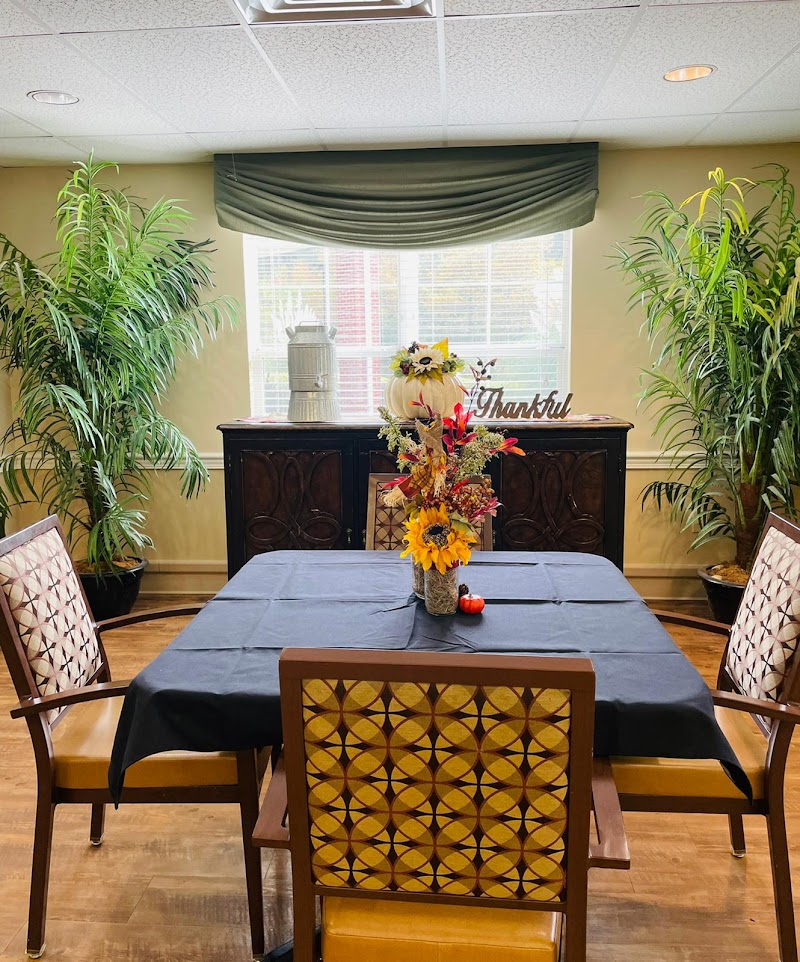
Who Owns and Operates Woodlands Rehabilitation And Healthcare Center?

WOODLANDS REHABILITATION AND HEALTHCARE CENTER is owned by a for-profit company. For-profit facilities operate as businesses with obligations to shareholders or private owners. The facility is operated by NEXION HEALTH, a chain that manages multiple nursing homes. With 145 certified beds and approximately 131 residents (about 90% occupancy), it is a mid-sized facility located in CLINTON, Mississippi.

How Does Woodlands Rehabilitation And Healthcare Center Compare to Other Mississippi Nursing Homes?

Compared to the 100 nursing homes in Mississippi, WOODLANDS REHABILITATION AND HEALTHCARE CENTER's overall rating (1 stars) is below the state average of 2.6, staff turnover (50%) is near the state average of 46%, and health inspection rating (1 stars) is much below the national benchmark.

What Should Families Ask When Visiting Woodlands Rehabilitation And Healthcare Center?

Based on this facility's data, families visiting should ask: "What changes have been made since the serious inspection findings, and how are you preventing similar issues?" "What safeguards and monitoring systems are in place to protect residents from abuse or neglect?" "Can I visit during a mealtime to observe dining assistance and food quality?" "How do you handle medical emergencies, and what is your hospital transfer rate?" These questions are particularly relevant given the facility's Immediate Jeopardy citations and the substantiated abuse finding on record.

Is Woodlands Rehabilitation And Healthcare Center Safe?

Based on CMS inspection data, WOODLANDS REHABILITATION AND HEALTHCARE CENTER has documented safety concerns. The facility has 1 substantiated abuse finding (meaning confirmed case of resident harm by staff or other residents). Inspectors have issued 3 Immediate Jeopardy citations (the most serious violation level indicating risk of serious injury or death). The facility has a 1-star overall rating and ranks #100 of 100 nursing homes in Mississippi. Families considering this facility should ask detailed questions about what corrective actions have been taken since these incidents.

Do Nurses at Woodlands Rehabilitation And Healthcare Center Stick Around?

WOODLANDS REHABILITATION AND HEALTHCARE CENTER has a staff turnover rate of 50%, which is about average for Mississippi nursing homes (state average: 46%). Moderate turnover is common in nursing homes, but families should still ask about staff tenure and how the facility maintains care continuity when employees leave.

Was Woodlands Rehabilitation And Healthcare Center Ever Fined?

WOODLANDS REHABILITATION AND HEALTHCARE CENTER has been fined $35,648 across 4 penalty actions. The Mississippi average is $33,435. While any fine indicates a compliance issue, fines under $50,000 are relatively common and typically reflect isolated problems that were subsequently corrected. Families should ask what specific issues led to these fines and confirm they've been resolved.

Is Woodlands Rehabilitation And Healthcare Center on Any Federal Watch List?

WOODLANDS REHABILITATION AND HEALTHCARE CENTER is not on any federal watch list. The most significant is the Special Focus Facility (SFF) program, which identifies the bottom 1% of nursing homes nationally based on persistent, serious quality problems. Not being on this list means the facility has avoided the pattern of deficiencies that triggers enhanced federal oversight. This is a positive indicator, though families should still review the facility's inspection history directly.