LAKELAND NURSING AND REHABILITATION CENTER LLC
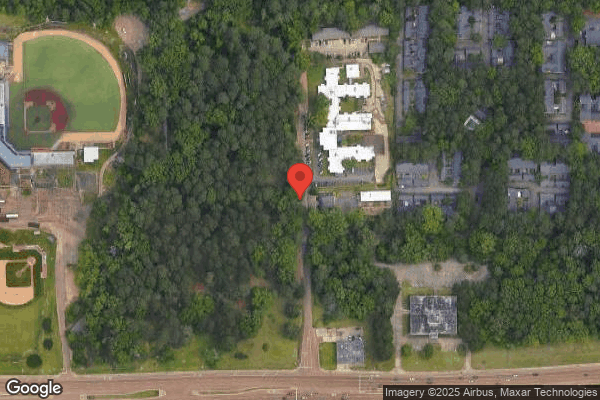

3680 LAKELAND LANE, JACKSON, MS 39216 (601) 982-5505
For profit - Limited Liability company 105 Beds NORBERT BENNETT & DONALD DENZ Data: November 2025
Trust Grade
43/100
#121 of 200 in MS
Last Inspection: January 2025

Within standard 12-15 month inspection cycle. Federal law requires annual inspections.

Overview

Lakeland Nursing and Rehabilitation Center LLC has a Trust Grade of D, indicating below-average care with some significant concerns. It ranks #121 out of 200 facilities in Mississippi, placing it in the bottom half, and #5 out of 11 in Hinds County, meaning only four local options are worse. The facility's trend is worsening, with issues increasing from 4 in 2024 to 9 in 2025. Staffing is a concern, with a 64% turnover rate, higher than the state average, and the facility has less RN coverage than 84% of Mississippi facilities, which may impact the quality of care. Specific incidents include staff shortages, where one CNA was left to manage the floor alone, a resident's room with damaged flooring posing safety risks, and improper food handling practices that could lead to contamination. Overall, while staffing is average, the facility has multiple areas needing improvement.

Trust Score
D
43/100
In Mississippi
#121/200
Bottom 40%
Safety Record
Low Risk
No red flags
Inspections
Getting Worse
4 → 9 violations
Staff Stability
⚠ Watch
64% turnover. Above average. Higher turnover means staff may not know residents' routines.
Penalties
✓ Good
$8,424 in fines. Lower than most Mississippi facilities. Relatively clean record.
Skilled Nurses
⚠ Watch
Each resident gets only 21 minutes of Registered Nurse (RN) attention daily — below average for Mississippi. Fewer RN minutes means fewer trained eyes watching for problems.
Violations
⚠ Watch
25 deficiencies on record. Higher than average. Multiple issues found across inspections.
★★☆☆☆
2.0
Overall Rating
★★★☆☆
3.0
Staff Levels
★★☆☆☆
2.0
Care Quality
★★☆☆☆
2.0
Inspection Score
Stable
2024: 4 issues
2025: 9 issues

The Good

  • Full Sprinkler Coverage · Fire safety systems throughout facility
  • No fines on record

Facility shows strength in fire safety.

The Bad

2-Star Overall Rating

Below Mississippi average (2.6)

Below average - review inspection findings carefully

Staff Turnover: 64%

18pts above Mississippi avg (46%)

Frequent staff changes - ask about care continuity

Federal Fines: $8,424

Below median ($33,413)

Minor penalties assessed

Chain: NORBERT BENNETT & DONALD DENZ

Part of a multi-facility chain

Ask about local staffing decisions and management

Staff turnover is elevated (64%)

16 points above Mississippi average of 48%

The Ugly 25 deficiencies on record

Sept 2025 1 deficiency
CONCERN (D) 📢 Someone Reported This

A family member, employee, or ombudsman was alarmed enough to file a formal complaint

Potential for Harm - no one hurt, but risky conditions existed

Resident Rights (Tag F0550)

Could have caused harm · This affected 1 resident

Based on record review, facility policy review and interviews, the facility failed to ensure resident discharge rights by not providing all medications, specifically as needed pain medications, for on...

Read full inspector narrative →
Based on record review, facility policy review and interviews, the facility failed to ensure resident discharge rights by not providing all medications, specifically as needed pain medications, for one (1) of four (4) discharged residents. Resident #1. Findings include:Record review of the facility policy Discharge Medications with the most recent history of July 2024 revealed Procedure: 1. Medications are sent with the resident on discharge based on.the physician's order.On 9/03/25 at 3:40 PM, during an interview Licensed Practical Nurse (LPN) #1 confirmed she had been working on 6/27/25 when Resident #1 discharged home with home health care. She stated she didn't recall reviewing upcoming scheduled appointments with the resident prior to discharge. She confirmed she used the Current Medications list included in the Transfer/Discharge Reported dated 6/27/25 to review medications with the resident and that the list included a current prescription for Hydrocodone-Acetaminophen Oral Tablet 5-325 MG (milligrams) one (1) tablet by mouth every 6 hours as needed for pain. LPN #1 stated she did not send the resident's Hydrocodone-Acetaminophen tablets home with her because I was told if it was a certain number. She could not explain. She stated that she recalled discussing pain medications with other nurses but had not consulted the prescribing physician or the resident's primary healthcare provider for clarification.On 9/03/25 at 4:07 PM, during an interview the Minimum Data Set (MDS) Nurse stated that she had participated in discharge planning for Resident #1. She stated that discharge planning began upon admission. She stated that Resident #1 had been her own Representative and made her own healthcare decisions. She confirmed that Resident #1 had decided to discharge a few days early and had personally made her decision known to her primary healthcare provider (PHP) in person during an in person visit to the facility. She stated she had arranged home health care for Resident #1 prior to discharge from the facility. She stated that it was not unusual for residents to be instructed to follow-up with their PHP for refills, but that current medications should be sent home with the resident unless otherwise instructed by the physician.On 9/03/25 at 4:13 PM, during an interview with the Director of Nursing (DON) revealed residents were to be discharged with all current medications unless otherwise instructed by the resident's physician. She stated that Resident #1 had undergone hip replacement surgery approximately two weeks prior to discharge from the facility and had other pain related diagnoses and that she had been admitted with. Resident #1 had physician orders for Hydrocodone-Acetaminophen Oral Tablet 5-325 MG (1) tablet by mouth every 6 hours as needed for pain. She confirmed that the order was still current at the time of the resident's discharge from the facility and the PHP had not issued any explicit instructions or orders that the medication be discontinued. She confirmed that Resident #1 had telephoned the facility the week following discharge and complained that her Hydrocodone-Acetaminophen Oral Tablet 5-325 MG had not been sent home with her.On 9/03/25 at 4:25 PM, during an interview the Administrator stated that it was the policy of the facility that unless otherwise instructed/ordered by the PHP all medications were to be discharged with the resident following discharge conference with the resident and/or their representative during which all medications were to be discussed as well as notification of scheduled appointments.Record review of the admission Record for Resident #1 revealed the facility admitted the resident on 6/13/25 with diagnoses that included Aftercare following joint replacement surgery and End stage renal disease. Record review of the 5-Day MDS with an Assessment Reference Date (ARD) 6/20/25 revealed the resident had a Brief interview for Mental Status score of 10, which indicated moderate cognitive impairment. Section J indicated Resident #1 received PRN (as needed) pain medications and frequently had pain that interfered with sleep and limited day-to-day activities and had recent surgery, hip replacement, requiring active SNF (skilled nursing facility) care. Section N of the MDS documented that the facility assessed that the resident required administration of opioid pain management.Record review of the History and Physical (H&P) dated 6/25/25 for Resident #1, signed by her primary healthcare physician, Medical Doctor (MD) #1, revealed the resident was admitted after hospitalization for right total hip arthroplasty (THA) secondary to severe osteoarthritis/avascular necrosis unresponsive to conservative treatment who complained of postoperative right hip pain. The H&P included diagnoses of right hip pain and other acute postprocedural pain and treatment plans that included continuation of current medications and monitoring for pain control. Record review of the Order Summary Report revealed an order dated 6/13/25 for Hydrocodone-Acetaminophen Oral Tablet 5-325 MG Give (1) tablet by mouth every (6) hours as needed for pain.Record review of the Physician's Telephone Orders dated 6/27/25 revealed Discharge home with home health and medications. Record review of the Discharge Summary/Instructions dated 6/27/25 revealed the Education regarding medications/treatments, exercises, or other services: Continue as ordered all medications. Follow up with primary care MD for refills. Record review of the Transfer/Discharge Report which included Current Medications List dated 6/27/25 for Resident #1 revealed Resident #1 discharged home on 6/27/25. The medication list included Hydrocodone-Acetaminophen Oral Tablet 5-325 MG one (1) tablet by mouth every 6 hours as needed for pain. Record review of the Controlled Drug Record revealed the Hydrocodone-Acetaminophen Oral Tablet 5-325 MG (quantity of 29) was destroyed on 7/17/25. Disposition of remaining doses indicated doses mixed with cat litter/coffee grounds.
Jan 2025 8 deficiencies
CONCERN (D)

Potential for Harm - no one hurt, but risky conditions existed

Assessment Accuracy (Tag F0641)

Could have caused harm · This affected 1 resident

Based on staff interview and record review, the facility failed to accurately code a Minimum Data Set (MDS) assessment for a resident who was coded as discharged to the hospital but was discharged to ...

Read full inspector narrative →
Based on staff interview and record review, the facility failed to accurately code a Minimum Data Set (MDS) assessment for a resident who was coded as discharged to the hospital but was discharged to home instead of the hospital for one (1) of 18 sampled residents. (Residents #83) Findings included: A record review of the Discharge MDS with an Assessment Reference Date (ARD) of 11/09/24 revealed the Resident #83 was discharged to a short-term general hospital. A record review of a Physician's Telephone Orders, dated 11/09/24, revealed Resident #83 had an order to be discharged home. On 01/29/25 at 08:07 AM, an interview with the Social Services Director (SSD), revealed Resident #83 was admitted for a brief time as she was there for skilled care and had planned to return home. The SSD stated she prepared the discharge summary based on the physician orders on the day Resident #83 left the facility. On 01/29/25 at 08:45 AM, in an interview with Registered Nurse (RN) #1/MDS, she acknowledged the MDS was coded incorrectly as being discharged to the hospital because he went back home after his stay at the facility. The RN stated the MDS nurse is responsible for assuring that the MDS is coded correctly prior to submission. The RN noted the purpose of the MDS is to have an accurate reflection of the patient. On 01/29/25 at 09:10 AM, in an interview with the Administrator, she acknowledged the discharge MDS for Resident #83 was incorrectly coded for the resident because he went home after his stay and did not go to the hospital. The Administrator stated the MDS Coordinator is responsible for making sure the MDS is coded correctly. The Administrator stated that the importance of accurate MDS coding is to have an overall outlook of care provided to the patient. A record review of the admission Record revealed the facility admitted Resident #83 on 10/23/24 with diagnoses including Muscle Weakness.
CONCERN (D)

Potential for Harm - no one hurt, but risky conditions existed

Comprehensive Care Plan (Tag F0656)

Could have caused harm · This affected 1 resident

Based on interview, record review, and facility policy review, the facility failed to develop a person-centered care plan regarding a resident's impaired vision for one (1) of (18) care plans reviewed...

Read full inspector narrative →
Based on interview, record review, and facility policy review, the facility failed to develop a person-centered care plan regarding a resident's impaired vision for one (1) of (18) care plans reviewed. Resident #68. Findings included: A review of the facility's policy titled Comprehensive Care Plan Policy, revised on 01//2025, revealed, Each resident will have a person-centered plan of care to identify problems, needs, strengths, preferences, and goals that will identify how the interdisciplinary team will provide care. All disciplines work together to develop a plan of care that meets the resident's needs, preferences, and goals. A record review of the Comprehensive Care Plan revealed Resident #68 did not have a care plan regarding impaired vision. A record review of the admission Record revealed the facility admitted Resident #68 on 6/23/23 and he had current diagnoses including Paralytic Ptosis of Left Eyelid. A record review of the Eye Examination, dated 09/19/2024, revealed Resident #68 was seen by a local optometrist and was diagnosed with Dry Eye Syndrome of bilateral lacrimal glands, Paralytic Ptosis of the left eyelid, and Contusion of the left eyelid and periocular area (active since 08/14/2024). The optometrist ordered glasses for Resident #68. On 01/28/2025 at 11:00 AM, during an interview, Licensed Practical Nurse (LPN) #3 stated the resident had poor vision in the left eye and that she must approach him from the right side. On 01/29/2025 at 10:00 AM, during an interview, LPN #2 stated she was responsible for adding new diagnoses to the care plan with interventions. LPN #2 stated she did not know the resident had seen the optometrist, had orders for glasses, or had a diagnosis of impaired vision. On 01/30/2025 at 1:00 PM, during a phone interview, the Optometrist Assistant confirmed that the resident ordered glasses in September 2024 due to impaired vision and stated the resident should always wear his glasses while awake. On 01/30/2025 at 3:15 PM, during an interview, LPN #4 confirmed that Resident #68 was not care planned for impaired vision. LPN #4 also explained that she did not know the resident had a diagnosis of Contusions/Ptosis to the left eye because it was not on the chart. LPN #4 stated that neither the resident nor staff informed her that his vision was impaired. She further stated that the current care plan reflected generic interventions because she was unaware of the diagnosis. LPN #4 explained that the Nursing Supervisor should have documented the care plan for the diagnosis as well as the resident's orders for glasses. She also stated that the eye examination and results were not on the chart and that she only included information on the care plan when nursing staff documented it or placed it in the chart. LPN #4 stated she was unaware that the resident had ordered glasses. On 01/30/2025 at 3:30 PM, during an interview, the Administrator stated she did not know the resident's left eye was impaired or that the resident had been seen by the optometrist. She stated she found the eye examination documentation in the medical records. The Administrator stated that the Nursing Supervisors were responsible for ensuring the orders were placed on the care plan and that the Care Plan Nurse served as a backup for the Nursing Supervisors. The Administrator stated she did not know how this had been missed and was unsure why the optometrist's report and admission diagnosis were not addressed.
CONCERN (D)

Potential for Harm - no one hurt, but risky conditions existed

Deficiency F0761 (Tag F0761)

Could have caused harm · This affected 1 resident

Based on observation, interview, record review, and facility policy review, the facility failed to ensure medications were secured and inaccessible to unauthorized residents and staff one (1) of four ...

Read full inspector narrative →
Based on observation, interview, record review, and facility policy review, the facility failed to ensure medications were secured and inaccessible to unauthorized residents and staff one (1) of four (4) days of survey observations. Findings included: A review of the facility's policy titled Medication Storage, dated 01/2015, revealed, .All drugs, treatments, and biologicals must be stored securely . Resident #5 A record review of the admission Record revealed the facility admitted Resident #5 on 04/21/2017 with diagnoses including Spinal Stenosis. A record review of the Quarterly Minimum Data Set (MDS) with an Assessment Reference Date (ARD) of 11/15/2024 revealed Resident #5 had a Brief Interview for Mental Status (BIMS) score of eight (8), which indicated the resident's cognition was moderately impaired. On 01/28/2025 at 4:40 PM, during an observation and interview with the Administrator, an unattended medicine cup was observed on Resident #5's bedside table alongside a glass of water. The resident was lying flat in bed, and no staff were present to monitor the resident taking the medication. On 01/28/2025 at 5:00 PM, during an interview, Licensed Practical Nurse (LPN) #5 confirmed he left the medication on the table because the resident was slow to take her medication. He stated he did not have time to encourage the resident to take her medication as she normally took one pill at a time. He acknowledged that he knew he should not have left the medication unattended because the resident could choke, or another resident could enter the room and take the medication. LPN #5 reported that the medication in the cup included Vitamin C, Multivitamin, Levothyroxine, Metoprolol and Pravastatin. On 01/28/2025 at 5:15 PM, during an interview, the Administrator confirmed that LPN #5 left the medication in a medicine cup unattended on the resident's bedside table. The Administrator stated she expected nurses to ensure residents swallowed their medications before leaving the room. Resident #56 A record review of Resident #56's admission Record revealed the facility admitted the resident on 03/05/2024 and currently has diagnoses that include Pruritus. A record review of the Order Summary Report with active orders as of 1/30/2025, revealed Resident #56 had a Physician's Order, dated 10/25/24 for Nystatin External Cream. A record review of Resident #56's MDS with an ARD of 11/20/2024 revealed a BIMS score of 15, which indicated the resident was cognitively intact. On 01/28/2025 at 9:08 AM, during an observation and interview with Resident #56, the resident was observed sitting up in bed with two medication dispensing cups containing an unidentified cream on the bedside table. One cup was nearly empty, and the other contained a moderate amount of cream. Resident #56 stated that the weekend nurse gave her the cream to apply as needed for itching. On 01/28/2025 at 9:12 AM, during an observation and interview, LPN #3 acknowledged the medication cups containing some type of cream were left on Resident #56's bedside table. LPN #3 stated that nurses were not supposed to leave any medications at the bedside. After reviewing the physician orders, LPN #3 confirmed the unidentified cream was Nystatin External Cream.
CONCERN (D)

Potential for Harm - no one hurt, but risky conditions existed

Medical Records (Tag F0842)

Could have caused harm · This affected 1 resident

Based on record review and staff interview, the facility failed to maintain complete and accurate medical records by failing to document that residents were informed of their rights regarding Advance ...

Read full inspector narrative →
Based on record review and staff interview, the facility failed to maintain complete and accurate medical records by failing to document that residents were informed of their rights regarding Advance Directives for three (3) of (18) resident records reviewed, Residents #22, #27, and #61. Findings included: A record review of the admission Record revealed the facility admitted Resident #22 on 06/10/2024 with diagnoses including Unspecified Dementia, Resident #27 on 06/14/2024 with diagnoses including Atherosclerotic Heart Disease, and Resident #61 on 9/20/2024 with diagnoses including Vascular Dementia. A record review of the Resident Rights/Advance Directive revealed the Advance Directive was not initialed by the residents or Resident Representatives that confirmed they were informed of information regarding formulating an Advance Directive for Residents #22, #27, and #61. A record review of the Resident Rights/Advance Directive revealed the Advance Directive was not initialed by the residents to confirm being informed of information regarding formulating an Advance Directive for Residents #22, #27, and #61. On 01/28/2025 at 11:49 AM, during an interview, the Social Services Director (SSD) confirmed she was responsible for completing the Advance Directive. The SSD acknowledged the Advance Directive was incomplete and was not marked to indicate that the residents had been informed of rights regarding Advance Directives for Residents #22, #27, and #61. On 01/28/2025 at 4:08 PM, during an interview, the Administrator acknowledged that the Advance Directive forms were incomplete and failed to reflect the residents' receipt of information related to Advance Directives. The Administrator stated the Social Services Director was responsible for confirming that all information related to the residents' choices and that it should be documented.
CONCERN (E)

Potential for Harm - no one hurt, but risky conditions existed

Safe Environment (Tag F0584)

Could have caused harm · This affected multiple residents

**NOTE- TERMS IN BRACKETS HAVE BEEN EDITED TO PROTECT CONFIDENTIALITY** Based on observation, interview, record review, and facility job description review, the facility failed to ensure the residents...

Read full inspector narrative →
**NOTE- TERMS IN BRACKETS HAVE BEEN EDITED TO PROTECT CONFIDENTIALITY** Based on observation, interview, record review, and facility job description review, the facility failed to ensure the residents' right to a homelike environment for one (1) of eighteen (18) sampled residents, Resident #5. Findings included: A review of the facility's Job Description, dated 08/01/2012, for the Director of Maintenance revealed, .General Description .the Director of Maintenance . is accountable for the upkeep of the grounds, Facility, and equipment in a safe and efficient manner .Essential Duties 1. Provides a safe, clean environment for residents in accordance with Resident Care Policies and Procedures . On 01/27/2025 at 3:26 PM, during an observation, Resident #5 was seated in her wheelchair in her room. The resident was confused but able to make simple needs known. The linoleum flooring in the resident's room was torn and folded back under the resident's wheelchair. The flooring was also buckling up under the resident's bed. On 01/27/2025 at 4:00 PM, during an interview, Resident #5's sister stated that the resident's flooring had been torn for several months. She reported that she had complained to the nursing staff and the Administrator because she felt the flooring was a fall risk. On 01/28/2025 at 4:05 PM, during an interview, Certified Nursing Assistant (CNA) #3 stated that the flooring had been in ill repair for at least a month. CNA #3 explained that when housekeeping mopped the floor, they laid the torn flooring back down, but the edges lifted again within a day. CNA #3 also stated that she had reported the issue to the Maintenance Director. On 01/28/2025 at 4:15 PM, during an interview, Licensed Practical Nurse (LPN) #5 stated that the floor had been torn for as long as he could remember. He noted that the sharp edges at the base of the bed continued to rip the flooring each time the bed was moved. He stated that he had placed the information on the clipboard at the nurse's station for the Maintenance Director. On 01/28/2025 at 4:35 PM, during an interview, the Maintenance Director stated that he had known about the torn flooring for about a month. He reported that he had installed the linoleum flooring approximately a year ago. He stated that he was the only maintenance staff in the facility and had not had the opportunity to repair the floor. The Maintenance Director confirmed that the torn linoleum presented a potential fall hazard for the resident. On 01/28/2025 at 4:40 PM, during an observation and interview, the Administrator confirmed the linoleum in Resident #5's room was torn. The Administrator stated that she was aware of the linoleum coming up and planned to have new tile installed. She reported that she had not had time to complete the repair. The Administrator stated that she expected CNAs to elevate the bed onto its wheels to prevent it from dragging across the floor. She explained that the bed was a crank bed and required staff to manually adjust it. The Administrator confirmed that Resident #5 transferred herself from bed to wheelchair without assistance and was at high risk for falls. A record review of the admission Record revealed Resident #5 was admitted to the facility on [DATE] with diagnoses that included Spinal Stenosis. A record review of Resident #5's Quarterly Minimum Data Set (MDS) with an Assessment Reference Date (ARD) of 11/15/2024 revealed a Brief Interview for Mental Status (BIMS) score of eight (8), which indicated the resident's cognition was moderately impaired.
CONCERN (E)

Potential for Harm - no one hurt, but risky conditions existed

Food Safety (Tag F0812)

Could have caused harm · This affected multiple residents

Based on observation and staff interview, the facility failed to ensure proper food handling and sanitation practices to prevent cross-contamination when Dietary [NAME] (DC) #2 failed to sanitize the ...

Read full inspector narrative →
Based on observation and staff interview, the facility failed to ensure proper food handling and sanitation practices to prevent cross-contamination when Dietary [NAME] (DC) #2 failed to sanitize the thermometer when checking food temperatures on the tray line for one (1) of two (2) kitchen observations Findings included: On 01/27/2025 at 11:15 AM, during an observation of the tray line, DC 2 was observed checking food temperatures. DC #2 used a brown paper towel to clean the thermometer between food items. DC #2 wiped food residue off onto a brown paper towel and then tested each food item on the tray line without properly sanitizing the thermometer. On 01/27/2025 at 12:10 PM, during an interview, the Dietary Manager (DM) #1 stated that staff should always use an alcohol pad to clean the thermometer when checking tray line temperatures. DM #1 explained that using a paper towel instead of an alcohol pad constitutes cross-contamination. She confirmed that dietary staff had been trained to use alcohol swabs when performing tray line temperature checks. On 01/29/2025 at 1:56 PM, during a phone interview, DC #2 confirmed that she had used a brown paper towel instead of an alcohol pad when checking tray line temperatures on 01/27/2025 at 11:15 AM. DC #2 stated that she had been trained to use an alcohol pad but was nervous and forgot to follow the procedure. She acknowledged that her actions constituted cross-contamination and could cause residents to develop gastrointestinal issues.
CONCERN (E)

Potential for Harm - no one hurt, but risky conditions existed

Infection Control (Tag F0880)

Could have caused harm · This affected multiple residents

Based on observation, interview, record review, and facility policy review, the facility failed to ensure Enhanced Barrier Precautions (EBP) were followed while providing care to a resident requiring ...

Read full inspector narrative →
Based on observation, interview, record review, and facility policy review, the facility failed to ensure Enhanced Barrier Precautions (EBP) were followed while providing care to a resident requiring high-contact precautions for two (2) of three (3) care observations, Resident #27. Findings included: A review of the facility's Enhanced Barrier Precautions policy, dated 04/2024, revealed, Enhanced Barrier Precautions are indicated for residents with .indwelling medical devices, secretions/excretions that are unable to be covered/contained, and are not known to be infected/colonized with any MDRO (Multidrug-Resistant Organism) during high-contact resident care activities, as these residents are at an increased risk of being infected . On 01/29/2025 at 8:50 AM, during an observation, Licensed Practical Nurse (LPN) #2, the Nursing Supervisor, was observed administering medications to Resident #27 via percutaneous endoscopic gastrostomy (PEG) tube. LPN #2 did not wear a gown while accessing the resident's PEG tube. On 01/29/2025 at 10:20 AM, during an observation, LPN #7 was observed performing PEG tube care for Resident #27. The nurse entered the resident's room and explained that she was going to clean the PEG tube site. LPN #7 washed her hands and applied clean gloves but did not apply a gown prior to providing care. On 01/29/2025 at 10:27 AM, during an interview, LPN #7 stated that Enhanced Barrier Precautions are used to protect Resident #27 from staff. She acknowledged that she should have donned (put on) a gown before providing care. On 01/29/2025 at 10:35 AM, during an interview, LPN #2, the Nursing Supervisor, stated that she should have worn a gown when administering PEG tube medications to Resident #27. She acknowledged that her actions put the resident at risk for complications, including infection. On 01/30/2025 at 9:45 AM, during an interview, LPN #6/ Infection Preventionist (IP) stated that nurses should have donned a gown before providing care to Resident #27's PEG site . She explained that the gown protects the resident. She stated that the nurses' failure to follow proper precautions could result in the resident having complications. She explained that her expectation was for staff to don the appropriate Personal Protective Equipment (PPE) when providing care to residents that are at high risk for MDROs. A record review of the admission Record revealed the facility admitted Resident #27 on 6/14/24 with diagnoses including Metabolic Encephalopathy. A record review of the Order Summary Report with active orders as of 1/29/2025, revealed Resident #27 had a Physician's Order, dated 6/14/24, to clean the PEG site with soap and water, pat dry, and cover with split gauze every night shift. A record review of the Quarterly Minimum Data Set (MDS) with an Assessment Reference Date (ARD) of 12/17/2024 revealed Resident #27 had a Brief Interview for Mental Status (BIMS) score of nine (9), which indicated the resident's cognition was moderately impaired. A record review of the Enhanced Barrier Precautions signage on Resident #27's door revealed instructions indicating, Everyone must .wear gloves and a gown for the following High-Contact Resident Care Activities .Device care or use .feeding tube .
CONCERN (F) 📢 Someone Reported This

A family member, employee, or ombudsman was alarmed enough to file a formal complaint

Potential for Harm - no one hurt, but risky conditions existed

Deficiency F0725 (Tag F0725)

Could have caused harm · This affected most or all residents

Based on observation, staff interviews, and record review, the facility failed to ensure sufficient nursing staff to meet the needs of residents for four (4) of 14 staffing days reviewed in January, 2...

Read full inspector narrative →
Based on observation, staff interviews, and record review, the facility failed to ensure sufficient nursing staff to meet the needs of residents for four (4) of 14 staffing days reviewed in January, 2025. (1/19/25, 1/20/25, 1/25/25, and 1/27/25). Findings Include: Record review of a typed document on facility letterhead dated January 30, 2025, and signed by the Executive Director (Administrator) revealed There is no Staffing policy A review of anonymous complaints, received 1/20/25 and 1/21/25, revealed 3-11 and 11-7 shifts are always short CNAs and there was one CNA working the floor Central Unit by herself on 3-11 Sunday 1/19/25. A record review of the PBJ (Payroll Based Journal) Data Report for the 4th Quarter (July 1-September 30) revealed the facility triggered for One Star Staffing Rating and Excessively Low Weekend Staffing. A record review of the Facility Assessment Tool dated 1/10/2025, revealed .There are 3 units: South, Central, and North .Staffing plan .Nurse aides .3-11 CNA (3 South/2 Central/4 North) 11-7 CNA (2-3 south/2 central/ 3 north unit) . The facility assessment indicated the resident acuity and population required 9 total CNAs for 3-11 shift and 7-8 CNAs for 11-7 shift. A record review of the staffing grid completed by the facility revealed on 1/27/24 there were three (3) CNAs on the 11-7 shift (85 census), on 1/25/24 there were three (3) CNAs on the 11-7 shift (87 census), on 1/20/25, there were three (3) CNAs on the 11-7 shift (85 census), and on 1/19/24 there were four (4) CNAs on the 3-11 shift and three (3) CNAs on the 11-7 shift (84 census). On 01/28/25 at 9:39 AM, during an interview with Licensed Practical Nurse (LPN) #1/Staffing Coordinator, she revealed the facility faces challenges keeping the building staffed on weekends due to frequent call-ins. She noted that while the required number of staff is scheduled appropriately, the high rate of call-ins creates difficulties in maintaining weekend staffing levels. She indicated that this month, January 2025, the facility has had to operate with only one (1) CNA on halls that should have had two (2). During an observation and interview on 1/28/25 at 5:00 PM, LPN #5 confirmed a resident's medication was left on the resident's table because the resident was slow taking her medication. The nurse stated there was no time to encourage the resident to take her medication because there was only one CNA assigned to the unit to assist with the residents' care, provide showers and meals. On 1/29/25 at 09:28 AM, during a follow-up interview with LPN #1/Staffing Coordinator, she confirmed the staffing grids accurately reflect all staff that were assigned to the halls, including any agency staff. She said she knows that having one CNA on the units is not appropriate because there should be two on each unit to cover the resident needs. In an interview with the Administrator on 1/29/25 at 2:31 PM, she indicated that it was because of illnesses due to COVID-19 and constant call ins as to why they had low staffing on the weekends.
May 2024 1 deficiency
CONCERN (D) 📢 Someone Reported This

A family member, employee, or ombudsman was alarmed enough to file a formal complaint

Potential for Harm - no one hurt, but risky conditions existed

Resident Rights (Tag F0550)

Could have caused harm · This affected 1 resident

Based on staff and Resident Representative (RR) interviews, record review, facility investigation, and policy review the facility failed to ensure nursing staff treated residents with respect and dign...

Read full inspector narrative →
Based on staff and Resident Representative (RR) interviews, record review, facility investigation, and policy review the facility failed to ensure nursing staff treated residents with respect and dignity during procedures and medication administration for two (2) of eight (8) residents sampled. Residents #5 and Resident #6. Findings Include: Record review of the facility's policy titled, Resident [NAME] of Rights, reviewed/revised on 1/23, revealed, Each resident has a right to a dignified existence . and communication with and access to persons and services inside and outside the facility in a manner and in an environment that promotes maintenance or enhancement of (his or her) quality of life .10. Reside and receive services in the facility with reasonable accommodation or resident needs and preferences . Resident #5 During an interview with Resident #5 on 5/19/24 at 1:22 PM, she stated Licensed Practical Nurse (LPN) #1 was disrespectful and demanding when she entered her room to collect a urine sample. She explained that this conduct was nothing new. This nurse had frequently treated her in this manner. She stated that, despite her desire to avoid interaction with the nurse because she becomes uneasy around her, she just followed all of the instructions given to her during the process. She pointed out the facility is only now transferring her meds to another nurse, despite her repeated complaints that the current nurse is disrespectful. She added that even though another nurse administered her medications, LPN#1 still worked on her hall, which made her nervous to see her. Resident #5 shared her wishes not to see the nurse at all. Record review of a handwritten statement written by LPN #1 dated 4/24/24 revealed .Asked resident how she cleaned herself and she stated after I get through, I wipe myself .Noted with a lot of nasty toilet paper between her legs, in her vaginal area . Informed resident this is probably why you're hurting because this tissue is nasty . Record review of the police department Voluntary Statement dated 4/24/24 revealed, .She spread me wide and started wiping hard and it was hurting .I was afraid she was going to do me bodily harm. Her body language and tone of voice said so. The hold time she was digging and stretching, I was yelling Stop You're hurting me. She would not stop . Record review of the Supervisor Investigation Summary Form dated 04/24/2024 at 8:45 AM, revealed facility's investigation revealed Resident #5 made an allegation of employee-to-resident abuse that occurred on 4/19/24. The facility's findings revealed that the allegations of abuse were not valid and that the resident was reassigned to another unit related to the resident not liking the Licensed Practical Nurse (LPN). In an interview with the RR on 5/20/24 at 9:48 AM, she disclosed that she had previously informed the Director of Nursing (DON) and Administrator on numerous occasions that her mother had reported LPN#1 was unkind and disrespectful to her. Nevertheless, she asserts that they would defend the nurse, suggesting that the situation is not as severe as her mother portrayed it. In the absence of any evidence, she was unable to take any action. However, in the present scenario involving the urine sample, she insisted that the nurse stop administering her mother's medications. Subsequently, they transferred her medications to another nurse. She noted that the Administrator offered her mother a relocation to a different area of the facility, but she declined. However, she believes the nurse should have relocated to a different hall. She also stated from what she gathers, her mother experiences anxiety upon encountering the nurse and tries to avoid her. During an interview with LPN #1 on 5/20/24 at 10:53 AM, she verified that she was the nurse responsible for entering Resident #5's room to collect a urine sample. She also disclosed that she typically works the night shift in the north corridor, which is where Resident #5 is located. Furthermore, she frequently picks up extra shifts in the central hall. She clarified that the medications for Resident #5 were transferred to another nurse due to her knowledge that the resident harbors animosity toward her and makes up stories about her. She also mentioned that there are other residents who lie and disapprove of her because she refuses to let them have their way. In an interview with the Unit Manager (LPN#2) for north hall on 5/21/24 at 10:13 AM, she confirmed that Resident #5 did express concerns about LPN#1 before this current complaint. However, she would have to check her notes to remember the actual concerns. On 5/21/24 at 10:25 AM, during the interview with the DON, she said there is just a personality conflict between LPN#1 and the resident because she is a by-the-book nurse. She says Resident #5 tends to want to take multiple medications at one time, and LPN #1 tells her she cannot give them all at one time. She points out that LPN #1 is very tall and has a deep voice, so her presence and tone can come across as harsh. She thinks Resident #5 is accusing the nurse of being rude because of the nurse's outward appearance, tone, and pitch. A record review of the Face Sheet of Resident #5 revealed the facility admitted the resident on 5/12/17. Her diagnoses included Urinary Tract Infection, Paranoid Schizophrenia, and Generalized Anxiety Disorder. A record review of Resident #5's annual Minimum Data Set (MDS), with an Assessment Reference Date (ARD) of 4/24/24 revealed a Brief Interview for Mental Status (BIMS) score of 15, which indicated the resident was cognitively intact. Resident #6 On 5/20/24 at 10:35 AM, during an interview with Resident #6, she stated she reported to the Administrator about LPN #1's rudeness a few months ago, and the nurse's behavior improved. Nevertheless, LPN#1 has recently resumed her previous behavior of being demanding and rude when administering medication or performing any medical procedures with her. The resident admits that she experiences anxiety when in the presence of LPN#1 and responds to her inquiries without hesitation, merely responding with yes or no as required. She continued by stating that she had asked the Unit Manager (LPN #2) to prevent LPN #1 from returning to her room. Still, LPN#1 continues to administer her medications. The resident asserted that she should not be required to experience feelings of anxiety or nervousness in the presence of any staff members. She stated this facility is my home and the employees should be mindful of the manner in which they interact with all the residents. On 5/20/24 at 11:05 AM, during the interview with the RR of Resident #6, she revealed that in recent visits with the resident, she was told LPN #1 had started being mean and demanding again, over the last couple of weeks or so. She indicated that she could tell the nurse makes her aunt anxious, and the facility should have fired the nurse or moved her off the hall when Resident #6 had made the first complaint regarding LPN #1, back in March. On 5/22/24 at 10:48 AM, the Administrator confirmed that she was aware Resident #6 had complained about LPN #1 and addressed the allegation immediately. She acknowledged she counseled LPN#1 but did not move Resident #6's medication to another nurse or move LPN#1 to another hall. The Administrator added that as of 5/22/24, LPN #1 was moved to another hall. A record review of the Face Sheet revealed the facility admitted Resident #6 on 1/11/24. Her diagnoses included Depression and Urinary Tract Infection. A record review of the Quarterly MDS, for Resident #6, with an ARD of 4/12/24, revealed a BIMS of 15, which indicated the resident was cognitively intact.
Jan 2024 3 deficiencies
CONCERN (D) 📢 Someone Reported This

A family member, employee, or ombudsman was alarmed enough to file a formal complaint

Potential for Harm - no one hurt, but risky conditions existed

ADL Care (Tag F0677)

Could have caused harm · This affected 1 resident

Based on observation, interview, record review, and facility policy review, the facility failed to ensure that dependent residents received the necessary services to maintain good grooming and persona...

Read full inspector narrative →
Based on observation, interview, record review, and facility policy review, the facility failed to ensure that dependent residents received the necessary services to maintain good grooming and personal hygiene for one (1) of five (5) residents reviewed for activities of daily living (ADLs). Resident #1 Findings include: Record review of the facility policy titled, INCONTINENT CARE, with a review date of 7/12, revealed, Policy: To provide routine, preventive skin, perineal care to residents after an incontinent episode. Responsibility: All Nursing Personnel . Record review of a statement signed by the Executive Director and dated 1/26/24, revealed that the facility did not have a specific policy for ADL (Activities of Daily Living) care. On 1/25/24 at 2:37 PM, an interview with Resident #1 revealed that she received morning care, including incontinent care and a bed bath prior to breakfast on 1/25/24 and received incontinent care following breakfast. She stated that she went to the Therapy Department prior to lunch at approximately 11:45 AM, returned to her room for lunch and then went back to the Therapy Department and finished her therapy. She stated that after she returned to her room after finishing therapy for the day, she was tired, uncomfortable in her wheelchair and her incontinent brief was wet. The resident stated I turned on my call light and a staff member, I don't know her name, came in and turned off my light and told me that my aide was on break and that she would tell my aide that I needed help when she returned from break. Resident #1 stated that she also reported to the medication nurse that she wanted to get into bed and that she needed to be changed. She stated that she waited almost an hour before her aide came to assist her to transfer to her bed and provide care for her. The resident voiced disappointment that she had to sit in the wheelchair, uncomfortable and with a wet incontinent brief so long. On 1/25/24 at 2:42 PM, an observation revealed Certified Nursing Assistant (CNA) #1 and CNA #2 assisted Resident #1 to transfer from her wheelchair to her bed using a sit-to-stand lift, after which CNA #1 assisted the resident with incontinent care. On 1/26/24 at 3:00 PM, during an interview with the Executive Director revealed she had viewed hallway security camera footage and reported that Resident #1 was returned to her room by a therapist at 1:25 PM. CNA #1 entered the room at 1:30 PM and exited and the resident's call light was engaged at 2:00 PM. She reported that Licensed Practical Nurse (LPN) #1 entered the room at 2:05 PM with the resident's medication and the call light was turned off. She stated that CNA #1 was observed getting a sit-to-stand lift at 2:30 PM and the resident's call light was engaged again at 2:38 PM. She stated CNA #1 and CNA #2 entered the room at 2:40 PM. The Executive Director confirmed that the resident waited for at least thirty-five (35) minutes for assistance to transfer from her wheelchair to her bed and have assistance for toileting/incontinent care. When asked if Resident #1's wait was an acceptable length of time for the resident to wait, she responded, It's kind of in between because she requires two-person assistance for transfers and CNA #1 had to wait for CNA #2 to finish care in another room. She confirmed that the resident had not received assistance with toileting or incontinent care since just after breakfast. She denied that the delay was related to lack of staff and that there were other staff available that could have assisted with resident care. Record review of the Face Sheet for Resident #1 revealed that the resident was admitted by the facility on 1/05/24 and with diagnoses that included Essential Hypertension, Type 2 Diabetes Mellitus, Repeated Falls, and Generalized Muscle Weakness. Record review of the 5 Day Minimum Data Set (MDS) with Assessment Reference Date (ARD) 1/12/24 revealed that Resident #1 had a Brief Interview for Mental Status (BIMS) score of 15, which indicated Resident #1 was cognitively intact. Further MDS review revealed the resident was dependent on facility staff for toileting and was always incontinent of bowel and bladder.
CONCERN (E) 📢 Someone Reported This

A family member, employee, or ombudsman was alarmed enough to file a formal complaint

Potential for Harm - no one hurt, but risky conditions existed

Deficiency F0558 (Tag F0558)

Could have caused harm · This affected multiple residents

Based on observations, interviews and record reviews the facility failed to ensure call lights were within reach for three (3) of five (5) sampled residents. Resident #3, Resident #4 and Resident #5 F...

Read full inspector narrative →
Based on observations, interviews and record reviews the facility failed to ensure call lights were within reach for three (3) of five (5) sampled residents. Resident #3, Resident #4 and Resident #5 Findings Include: Resident #3 On 1/25/24 at 11:15 AM, an observation revealed the call light for Resident #3 was draped over the back of a bedside chair at the end of the resident's bed. The resident was seated on the end of the bed with the call light out of reach. On 1/25/24 at 4:14 PM, an observation revealed the call light for Resident #3 was draped over the back of a bedside chair. The resident was seated in her wheelchair with her call light out of reach. Resident #3 was observed looking for her call light, attempted to reach it, however, the call light was out of reach. On 1/26/24 at 11:18 AM, observation revealed that Resident #3 was seated in her wheelchair in her room with her call light out of her reach, draped over the back of the bedside chair at the end of her bed. She was coughing and sneezing. The resident needed a tissue, but there were none in her room. The resident attempted to reach her call light, but again, her call light was out of reach. On 1/26/24 at 1:50 PM, an interview with Certified Nursing Assistant (CNA) #4 assigned to the care of Resident #3 revealed she stated she had not noticed during morning rounds that the resident's call light was not within her reach. She confirmed that call lights should always be left within reach of the resident. Record review of the Face Sheet for Resident #3 revealed the resident was admitted by the facility on 4/21/17, with diagnoses that included Spinal Stenosis, Polyosteoarthritis, and Mild Intermittent Asthma, with Status Asthmaticus. Record review of the Quarterly Minimum Data Set (MDS) with an Assessment Reference Date (ARD) 12/13/23, revealed Resident #3 had a Brief Interview for Mental Status (BIMS) score of 4, which indicated severe cognitive impairment. Further MDS review revealed Resident #3's used a wheelchair for mobility and was dependent on facility staff for toileting, and personal hygiene, and was always incontinent of bowel and bladder. Resident #4 On 1/25/24 at 12:15 PM, an observation revealed the call light for Resident #4 was wrapped around the grab bar, wedged between the bar and the mattress hanging down below the mattress on the resident's left side. The bed control was wrapped around the grab bar, wedged between the bar and the mattress hanging down below the mattress on the resident's right side. Resident #4 stated I can't find my bed control or call light. I need to be repositioned so I can eat. Record review of the Face Sheet for Resident #4 revealed the resident was admitted by the facility on 8/22/22, with diagnoses that included Hypertensive Heart Disease with Heart Failure, Morbid Obesity, and Chronic Respiratory Failure with Hypoxia. Record review of the Quarterly MDS of Resident #4, with ARD 1/23/24, revealed the resident had a BIMS score of 12, which indicated moderate cognitive impairment. Further review of the MDS revealed that the resident was totally dependent on staff for bed mobility and was always incontinent of bowel and bladder. Resident #5 On 1/25/24 at 12:20 PM, an observation revealed that the call light for Resident #5 was hanging down from the resident's bed dangling just above the floor and not within reach of the resident. Record review of the Face Sheet for Resident #5 revealed the resident was admitted by the facility on 8/18/23, with diagnoses that included Malignant Neoplasm of Unspecified Part of Unspecified Part of Bronchus or Lung, Secondary Neoplasm of the Brain, and Chronic Obstructive Pulmonary Disease. Record review of the MDS for Resident #5, with ARD 11/17/24, revealed the resident had a BIMS score of 14, which indicated Resident #5 was cognitively intact. On 1/26/24 at 3:40 PM, an interview with the Director of Nurses (DON) revealed that she expected all resident's call lights to be positioned within their reach and answered in a timely manner. She confirmed that it was important so that residents could summon assistance as needed.
CONCERN (E) 📢 Someone Reported This

A family member, employee, or ombudsman was alarmed enough to file a formal complaint

Potential for Harm - no one hurt, but risky conditions existed

Comprehensive Care Plan (Tag F0656)

Could have caused harm · This affected multiple residents

Based on observations, interviews, and record reviews, and facility policy review the facility failed to implement interventions included in the individualized care plans for four (4) of five (5) samp...

Read full inspector narrative →
Based on observations, interviews, and record reviews, and facility policy review the facility failed to implement interventions included in the individualized care plans for four (4) of five (5) sampled residents. Residents #1, #3, #4 and #5. Findings Include: Record review of the facility policy titled, COMPREHENSIVE PERSON-CENTERED CARE PLANS, with revision date 3/18, revealed, Policy: Each resident will have a person centered plan of care to identify problems, needs, strengths, preferences, and goals that will identify how the interdisciplinary team will provide care . Procedure: .6. Staff approaches are to be developed for each problem/strength/need . Assigned disciplines will be identified to carry out the intervention Resident #1 Record review of the Care Plan for Resident #1 with a problem onset date of 1/5/2024 revealed Total urinary incontinence related to impaired mobility and diuretic med use .Approaches Toilet checks on me q2h (every 2 hours) and prn .Keep call light within easy reach of me . Record review of the Care Plan for Resident #1 with a problem onset date of 1/5/2024 revealed I require assist with my adl's (activities of daily living) related to incontinence .Approaches . Provide my incontinence care q2h and as needed . Record review of the Face Sheet for Resident #1 revealed that the resident was admitted by the facility on 1/05/24 and with diagnoses that included Essential Hypertension, Type 2 Diabetes Mellitus, Repeated Falls, and Generalized Muscle Weakness. Record review of the 5 Day Minimum Data Set (MDS) with Assessment Reference Date (ARD) 1/12/24 revealed that Resident #1 had a Brief Interview for Mental Status (BIMS) score of 15, which indicated Resident #1 was cognitively intact. Further MDS review revealed the resident's assessment of functional status revealed the resident was dependent on facility staff for toileting and was always incontinent of bowel and bladder. On 1/25/24 at 2:37 PM, an interview with Resident #1 revealed that she reported that she was assisted with toileting needs prior to 11:45 AM, she reported that at 1:25 PM upon return to her room from therapy she was tired, uncomfortable in her wheelchair. She stated her incontinent brief was wet and did she not receive toileting assistance until 2:40 PM. Resident #1 confirmed that no staff had assessed her for incontinence care/toileting needs and said she was disappointed at the length of time staff took to respond to her need for assistance with incontinent care/toileting. Resident #3 Record review of the Care Plan for Resident #3 with a problem onset date of 10/14/2017 revealed Problem/Need I am at risk for respiratory distress related to my diagnoses of Dyspnea and Asthma .Approaches: Place my call light within reach . Record review of the Face Sheet for Resident #3 revealed the resident was admitted by the facility on 4/21/17, with diagnoses that included Spinal Stenosis, Polyosteoarthritis, and Mild Intermittent Asthma, with Status Asthmaticus. Record review of the Quarterly MDS with an ARD of 12/13/23, revealed the Resident #3 BIMS score of 4, which indicated severe cognitive impairment. Further MDS review revealed Resident #3 used a wheelchair for mobility and was dependent on facility staff for toileting, and personal hygiene, and was always incontinent of bowel and bladder. On 1/25/24 at 11:15 AM, 1/25/24 at 4:14 PM, and on 1/26/24 at 11:18 AM, observations revealed that Resident #3 was searching for her call light. During each of these times the the call light for Resident #3 was out of her reach. Resident #4 Record review of the Care Plan with a problem onset date of 8/22/2022 revealed I am incontinent of bladder .Approaches .Keep call light within easy reach of me . Record review of the Care Plan with a problem onset date of 8/22/22 revealed Problem/Need: I am at risk for Falls due to impaired mobility and antidepressant med use .Approaches .Place my call light and frequently used items within reach . Record review of the Face Sheet for Resident #4 revealed the resident was admitted by the facility on 8/22/22, with diagnoses that included Hypertensive Heart Disease with Heart Failure, Morbid Obesity, and Chronic Respiratory Failure with Hypoxia. Record review of the Quarterly MDS of Resident #4, with ARD 1/23/24, revealed the resident had a BIMS score of 12, which indicated moderate cognitive impairment. Further review of the MDS revealed that the resident was totally dependent on staff for bed mobility and was always incontinent of bowel and bladder. On 1/25/24 at 12:15 PM, an observation revealed the call light for Resident #4 was out of reach. The resident stated that she could not see or reach her food to feed herself, she needed to be repositioned in bed, but she could not find her bed control or her call light. Resident #5 Record review of the Face Sheet for Resident #5 revealed the resident was admitted by the facility on 8/18/23 with diagnoses that included Malignant Neoplasm of Unspecified Part of Unspecified Part of Bronchus or Lung, Secondary Neoplasm of the Brain, and Chronic Obstructive Pulmonary Disease. Record review of the MDS for Resident #5, with an ARD of 11/17/24, revealed the resident had a BIMS score of 14, which indicated Resident #5 was cognitively intact. On 1/25/24 at 12:20 PM, an observation revealed that the call light for Resident #5 was not within reach of the resident. On 1/26/24 at 3:00 PM, an interview with the Executive Director, she said that she expected all resident's care plans be followed by to for each resident according to the facility Care Plan Policy. On 1/26/24 at 3:40 PM, an interview with the Director of Nurses (DON) confirmed that she expected all resident's care plans be followed for each resident according to the facility care plan policy to meet the identified needs of all residents. She confirmed that the Certified Nursing Assistants (CNAs) were provided with instructions for resident care on the computer software program available to all CNAs on the wall mounted kiosks on each hallway. Pocket Care Guides which provide care instructions for each resident based on resident assessment and individualized care plans are also available for the CNAs on how to care for each resident.
Dec 2023 2 deficiencies
CONCERN (D) 📢 Someone Reported This

A family member, employee, or ombudsman was alarmed enough to file a formal complaint

Potential for Harm - no one hurt, but risky conditions existed

ADL Care (Tag F0677)

Could have caused harm · This affected 1 resident

Based on observation, interviews, record review, and facility policy review, the facility failed to provide Activities of Daily Living (ADL) care regarding fingernail care for residents who are depend...

Read full inspector narrative →
Based on observation, interviews, record review, and facility policy review, the facility failed to provide Activities of Daily Living (ADL) care regarding fingernail care for residents who are dependent upon staff for two (2) of four (4) sampled residents. Resident #1 and Resident #2 Findings Include: Record review of the facility's policy, Fingernails/Toenails Care, reviewed 10/09, POLICY:The purpose of this procedure is to clean the nail bed, to keep nails trimmed, and to prevent infections. Responsibility: Nursing Assistant or Licensed Nurse .1. Nails can be partially cleaned during bath care .3. Nail care includes daily cleaning and regular trimming . Resident #1 On 12/04/23 at 4:00 PM, an observation and interview with Resident #1 revealed she had contractures of both hands, and all of her fingernails were long. There was a black substance caked under her right thumbnail. Resident #1 stated that she did not prefer to have long fingernails and wanted her fingernails trimmed. The resident said she could not recall the last time her fingernails were trimmed. On 12/05/23 at 10:30 AM, during a telephone interview with the Resident Representative (RR) for Resident #1 revealed that she did not feel that Resident #1 received adequate grooming/fingernail care. Record review of the Face Sheet revealed the facility admitted Resident #1 on 1/09/18 and she had diagnoses including Parkinson's disease and Dementia. Record review of the Quarterly Minimum Data Set (MDS) with an Assessment Reference Date (ARD) date of 12/04/23 revealed Resident #1 had a Brief Interview for Mental Status (BIMS) score of 9, which indicated her cognition was moderately impaired. Resident #2 On 12/04/23 at 4:20 PM, an observation of Resident #2, revealed the resident had ten (10) long fingernails with a brown/black substance under all ten fingernails. Record review of the Face Sheet revealed the facility admitted Resident #2 on 5/14/2014 with diagnoses that included Dementia and Polyosteoarthritis, unspecified. Record review of the Quarterly MDS with an ARD of 9/26/23 revealed Resident #2 required a staff assessment for mental status and her cognition was severely impaired. Section GG revealed she was dependent upon staff for showering/bathing. On 12/04/23 at 4:35 PM, an interview with Certified Nurse Aide (CNA) #1 confirmed that the facility provided in-service training to all nursing staff regarding the care of residents that required assistance with ADLs. She confirmed that fingernail care to keep fingernails clean, trimmed, and smooth was included in ADL care. CNA #1 stated that CNAs were supposed to observe residents' fingernails daily and residents were supposed to receive fingernail care to clean, trim and smooth fingernails, according to resident preference as needed based on observation. The CNA confirmed that Resident #1 and Resident #2 had long fingernails that needed to be trimmed and there was dirt under the nails. On 12/05/23 at 1:00 PM, during an interview with the Wound Care Nurse, she revealed that resident fingernails were to be observed daily by nursing staff, CNAs, and nurses, and care was to be provided as needed, including cleaning, trimming, and filing. The Wound Care Nurse stated that Resident #1 had long fingernails that need to be trimmed and that the resident's right thumb nail needs cleaning, it's dirty under there. The Wound Care Nurse stated that long, dirty fingernails increased the risk of infection. The Wound Care Nurse said that Resident #2 also needed fingernail care. On 12/05/23 at 3:15 PM, an interview with CNA #4 revealed that the facility policy was that CNAs were to provide residents with fingernail care as needed for cleaning and that if there were reasons the CNA could not trim the fingernails and they needed to be trimmed the CNA was to report the observation to the Wound Care Nurse or the resident's assigned nurse.
CONCERN (D) 📢 Someone Reported This

A family member, employee, or ombudsman was alarmed enough to file a formal complaint

Potential for Harm - no one hurt, but risky conditions existed

Deficiency F0761 (Tag F0761)

Could have caused harm · This affected 1 resident

Based on observations, policy review, record review, and interviews, the facility failed to ensure secure storage of medication included limited of access, for one (1) of four (4) sampled residents re...

Read full inspector narrative →
Based on observations, policy review, record review, and interviews, the facility failed to ensure secure storage of medication included limited of access, for one (1) of four (4) sampled residents reviewed for pressure sores as evidenced by skin protectant ointment left unattended at resident's bedside. Resident #1. Findings Include: Record review of the facility policy titled Medication Storage ,reviewed 11/10 revealed POLICY: Medication supply must be accessible only to licensed nursing personnel, or staff members lawfully authorized to administer medications. All drugs, treatments, and biologicals must be stored securely and following the manufacturer's labeled recommendations, or per facility policy . Record review of a handwritten statement dated 11/14/23 and signed by Certified Nursing Assistant (CNA) #2 revealed that she fed some of a white substance she noticed next to the resident's supper tray to the resident. Record review of the Resident Incident Report dated 11/14/23 at 6:00 PM revealed that CNA #1 reported that Resident #1 had ingested approximately five (5) cubic centimeters (cc) of Zinc Oxide. The report stated that Poison Control was contacted with recommendations to increase water intake. The resident was assessed by the Director of Nursing Services (DNS), including vital sign measurement and neuro assessment. Resident #1's primary physician and responsible party were notified. Record review of a Physician's Telephone Orders for Resident #1, dated 9/19/2023, revealed . CLEAN EXCORIATED SKIN TO LEFT GLUTEAL FOLD .APPLY ZINC OXIDE OINTMENT TOPICAL DAILY UNTIL HEALED. Record review of a handwritten statement dated 11/14/23 and signed by Licensed Practical Nurse (LPN #3) stated that CNA #1 reported to her that CNA #2 had fed Resident #1 some white cream that was not food. On 12/04/23 at 4:00 PM, an interview with Resident #1, revealed she had no recollection of being fed zinc oxide and denied feeling nausea or abdominal pain. On 12/05/23 at 10:30 AM, a telephone interview with the Resident Representative (RR) for Resident #1 revealed she had been concerned that a CNA had fed zinc oxide skin protectant to Resident #1. She stated that she had been notified at approximately 6:30 PM on the evening of 11/14/23 that Resident #1 had ingested zinc oxide intended for topical use on her buttocks areas, after being fed the substance by a CNA during the evening meal. Resident #1's RR stated that she had not noted any adverse reaction or change in the condition of Resident #1 since the 11/14/23 incident. On 12/05/23 at 11:07 AM, a telephone interview with CNA #2 revealed the CNA confirmed that there was a plastic medication cup that contained a white cream on the over the bed tray of Resident #1 at approximately 6:00 PM on 11/14/23 when she had gone to assist Resident #1 to eat her supper. CNA #2 stated that she fed about a half of a teaspoon of it to Resident #1. CNA #2 stated that CNA #1 had entered the resident's room at that time and informed her that the white substance was not food. CNA #2 said the resident's nurse was notified immediately. CNA #2 stated that she worked for a staffing agency and that 11/14/23 was the second day she had worked at the facility. She stated that following the incident she provided a written statement and left the facility and had not returned. She stated that she was not allowed to work at the facility anymore. CNA #2 stated that no one had instructed her to feed the substance to the resident. On 12/05/23 at 1:30 PM an interview with the Director of Nursing Services (DNS) revealed that she confirmed that she had been made aware of the incident in which Resident #1 ingested zinc oxide on 11/14/23 at approximately 6:00 PM. She stated that she had immediately removed CNA #2 from all assignments, requested a written statement from CNA #2 and went to the resident's room and assessed the resident, including measurement of vital signs and neurochecks, which were all within normal limits. She stated that she contacted the Poison Control Center emergency hotline and reported the ingestion and received information to monitor the resident for nausea and increase water intake by mouth. The DNS stated that she notified the Emergency Department and prepared an In-Service Training for all nursing staff, which included proper storage and securement of medications. She said she also prepared a report for the Quality Assurance and Performance Improvement (QAPI) committee. She confirmed that she participated in audits of resident rooms for unsecured or unadministered medications and had observed none. The DNS reported that a QAP) Committee had met on 11/15/23 in response to the incident, during which it reviewed the policy and procedures for medication storage and administration with no changes noted. The DNS stated, Medication should not have been left in the room, period. The DNS stated that Resident #1 had no signs or symptoms of adverse reactions following the incident. On 12/05/23 at 1:00 PM during an interview with the Wound Care Nurse, she revealed that she did not recall leaving a medicine cup of unused zinc oxide at the bedside of Resident #1 on 11/14/23. She stated that the nurses who performed wound care and medication nurses for each unit each had a key to the treatment cart on each hall, which was where the skin protectant ointments were stored. She confirmed that she had received facility provided in-service training regarding the storage and security of medications and not leaving medications in resident rooms on 11/14/23. She confirmed that skin protectant ointments, such as zinc oxide were to be administered by a licensed nurse and any remaining ointment was to be discarded in the appropriate, secure receptacle outside the resident's room. Record review of the Face Sheet revealed the facility admitted Resident #1 on 1/09/18 with diagnoses that included Dementia. Record review of the Quarterly Minimum Data Set (MDS), with an Assessment Reference Date (ARD) of 12/04/23 revealed Resident #1 had a Brief Interview for Mental Status (BIMS) score of 9, which indicated Resident #1 had moderate cognitive impairment. Based on the facility's implementation of corrective actions on 11/15/23, the State Agency (SA) determined the deficiency to be Past Non-Compliance (PNC) and the deficiency was corrected as of 11/15/23, prior to the SA's first entrance on 12/4/23. Validation: On 12/04/23 through 12/05/23, the SA validated through staff interviews, record review, and facility policy review the facility began an immediate investigation when the incident occurred. The SA validated through record review of the Resident Incident Report dated 11/14/23 that CNA #1 reported that Resident #1 had ingested approximately five (5) cubic centimeters (cc) of Zinc Oxide. The report stated that Poison Control was contacted with recommendations to increase water intake. The report documented that the resident was assessed by the DNS, including vital sign measurement and neuro assessment and that Resident #1's primary physician and responsible party were notified on 11/14/23. The SA validated through a telephone interview with CNA #2 that the resident's nurse was notified immediately. CNA #2 stated that she worked for a staffing agency and that 11/14/23 was the second day she had worked at the facility and that following the incident she was removed from duty and instructed to provide a written statement and left the facility and had not returned. She stated that she was not allowed to work at the facility anymore. The SA validated through record review of the 'Educational In-Service Record' with attached sign-in sheets dated 11/14/23 and 11/15/23 that the facility provided in-service training regarding mediations/ointments left at bedside which included Nurses are to remove all medication cups when leaving room and Nursing staff must ensure no medications to include Lantiseptic, zinc oxide or other cream barriers are left in resident rooms to all nursing staff. The SA validated through an interview with CNA #1 that the facility provided in-service training to all nursing staff regarding medication storage, specifically nurses not leaving medications in resident rooms, and instructing CNAs to immediately notify their supervisor if they observed any medications unattended by nurses in resident rooms. The SA validated through an interview with LPN #4 that on or around 11/14/23 she had received facility provided in-service training regarding proper storage and securement of medications and treatment ointments which included instructions that no medications or treatment ointments should be left at in any resident's room. The SA validated through record review of the facility QAPI Project record dated 11/15/23 that the QAPI committee identified, Problem Identified Treatment medication left in residents room Action 1. Nursing staff educated on not leaving barrier creams (Lantiseptic, Zinc Oxide) or any other medications in resident rooms 2. Resident rooms monitored three times per week for four weeks to ensure medication and barrier cream not left in rooms Assessment 1. ED (Executive Director) and DNS to conduct monitoring for compliance Conclusion Documentation of conclusion to be provided to ED weekly for one month. Findings reported to QA Committee for review. The SA validated during an interview with the Wound Care Nurse, that she had received facility provided in-service training regarding the storage and security of medications and not leaving medications in resident rooms on 11/14/23. She confirmed that in-service instructions included that skin protectant ointments, such as zinc oxide were to be administered by a licensed nurse and any remaining ointment was to be discarded in the appropriate, secure receptacle outside the resident's room. The SA validated through an interview with the DNS that she had been made aware of the incident in which Resident #1 ingested zinc oxide on 11/14/23 at approximately 6:00 PM. She stated that she had immediately removed CNA #2 from all assignment, requested a written statement from CNA #2 and went to the resident's room and assessed the resident, including but not limited to measurement of vital signs and neurocheck, all within normal limits. She stated that she contacted the Poison Control Center emergency hotline and reported the ingestion and received information to monitor the resident for nausea and increase water intake by mouth. The DNS stated that she notified the ED and prepared an In-Service Training for all nursing staff, which included proper storage and securement of medications. She said she also prepared a report for the QAPI committee. She confirmed that she participated in audits of resident rooms for unsecured or unadministered medications and had observed none. The DNS reported that the QAPI Committee had met on 11/15/23 in response to the incident, during which it reviewed the policy and procedures for medication storage and administration with no changes noted. The DNS confirmed that the staffing agency had been contacted and that a Do Not Return request was issued for CNA #1. The SA validated through record review of the Medication Room Monitoring Audit Tool (Three times a week for 4 weeks) dated 11/15/23 through 12/01/23 and signed by the ED and DNS that resident rooms were audited for medications/barrier creams left in resident rooms and that none were observed during audits.
Sept 2023 4 deficiencies
CONCERN (D)

Potential for Harm - no one hurt, but risky conditions existed

Deficiency F0604 (Tag F0604)

Could have caused harm · This affected 1 resident

Based on observations, interviews, record review, and facility policy review, the facility failed to ensure a resident was without physical restraints related to the use of full-length bed rails for o...

Read full inspector narrative →
Based on observations, interviews, record review, and facility policy review, the facility failed to ensure a resident was without physical restraints related to the use of full-length bed rails for one (1) of 21 sampled residents. Resident #22 Findings include: A review of the facility document, Resident [NAME] of Rights, dated 01/2023, revealed, Each resident has a right to a dignified existence .in an environment that promotes maintenance or enhancement of (his or her) quality of life .A. Facility residents shall have the right to .37. be free of physical .restraints . A record review of the facility's policy Restraint Evaluation and Restraint Reduction, dated 8/2013 revealed . all residents have the right to be unrestrained. Restraints should be used only as a last alternative and only when other less restrictive measures have been tried and rejected .Definition: 'Physical restraints' are defined as any manual method or physical or mechanical device, material, or equipment attached or adjacent to the resident's body that the individual cannot remove easily which restricts freedom of movement or normal access to one's body . Procedure: . 1. The following devices are considered physical restraints and require evaluation .Side rails that restrict freedom of movement and cannot be easily removed are considered a restraint .2. All residents using a restraint are to be evaluated and re-evaluated approximately every quarter .4. A specific physician's order is to be entered in the resident's Medical Record which details the medical reason, type of restraint and when to be used . On 09/12/23 at 12:12 PM, during an observation, Resident # 22 was lying in bed and had two (2) full length side rails that were raised. On 09/13/23 at 10:00 AM, 12:08 PM and 04:15 PM, Resident #22 was lying in bed with two (2) full length bed rails that were raised. Record review of the Face Sheet revealed the facility admitted Resident #22 on 05/14/14 with diagnoses that included Unspecified Dementia. Record review of the Quarterly Minimum Data Set (MDS) with an Assessment Reference Date (ARD) of 7/5/23 revealed Resident #22 had a staff interview which indicated she had short and long term memory problems and her cognitive skills for daily decision making was severely impaired. Review of the medical record revealed there was no Physician's Order for full-length bed rails, no documentation of the facility attempting a lesser restrictive alternative, no documentation of ongoing re-evaluation of the need for the restraint, no documentation that the bed rails had been evaluated for entrapment issues, and there was no informed consent signed by the Resident or the Resident Representative for the use of full-length bed rails. On 09/12/23 at 04:00 PM, during an interview with the Director of Nursing (DON), she revealed Resident # 22's original bed had recently broken and since he was on hospice services, the hospice company brought a new one to the facility for the resident to use. The DON stated that she was aware that Resident #22 had a bed with two (2) full length bed rails, but she did not think that would be a restraint since the resident was unable to get out of the bed. She also confirmed there was no Physicians' Order in the resident's record for the full-length bed rails.
CONCERN (D)

Potential for Harm - no one hurt, but risky conditions existed

Respiratory Care (Tag F0695)

Could have caused harm · This affected 1 resident

Based on observation, interviews, record review, and the facility policy review the facility failed to provide respiratory services in a manner to prevent the possibility of complications for two (2) ...

Read full inspector narrative →
Based on observation, interviews, record review, and the facility policy review the facility failed to provide respiratory services in a manner to prevent the possibility of complications for two (2) of two (2) residents reviewed for respiratory conditions. Resident #3 and Resident #15. Findings include: A record review of the facility's policy, Standard Precautions, dated 09/2019, revealed, .Procedure .5. Handle soiled patient care equipment in a manner that prevents transfer of microorganisms to others and to the environment . Resident #3 On 09/12/23 at 9:00 AM, during an observation, Resident #3 had a Continuous Positive Airway Pressure (CPAP) device in his room and the tubing was on the floor of the room. There was no bag or designated container to store the tubing. On 09/12/23 at 11:50 AM, in an observation of Resident #3, his CPAP tubing remained on the floor on the right side of bed. There was a face mask for the CPAP located in a plastic bag on the resident's windowsill in his room. On 09/13/23 at 08:30 AM, in an observation of Resident #3, he was lying in bed and the CPAP tubing was on the floor of his room. On 09/13/23 at 08:36 AM, an interview and observation of Resident #3 with Licensed Practical Nurse #1 (LPN) revealed the CPAP tubing was on the floor in the resident's room. LPN #1 stated the tubing should not be on the floor because it could cause the resident to get an infection. LPN #1 retrieved the tubing from the floor and placed it on the windowsill by the CPAP machine and exited the room. On 09/14/23 at 10:34 AM, in an interview with the Director of Nursing (DON), who is also the Infection Preventionist (IP), she stated LPN #1 should have discarded the tubing that had been on the floor. She confirmed that the CPAP tubing should be stored in a plastic bag to prevent contamination and to prevent possible complications, such as an upper respiratory infection. A record review of the Face Sheet revealed the facility admitted Resident #3 on 6/3/2020 with diagnoses that included Chronic Obstructive Pulmonary Disease (COPD) and Chronic respiratory failure, unsp (unspecified) with hypoxia or hypercapnia. A record review of the Physician's Telephone Order, dated 7/5/23 revealed a Physician's Order for Place C-PAP on with full face mask . A record review of the Infection Control Orientation Check List, dated 7/11/23, revealed LPN #1 received training on Infection Control. Resident #15 On 09/12/23 at 09:55 AM, during an observation and interview, Certified Nursing Assistant (CNA) #1 retrieved Resident #15's Oxygen (O2) tubing with a Nasal Cannula (NC) from the floor and placed it on the resident's bed. She then took the same O2 tubing she retrieved from the floor and placed the prongs of the NC inside the resident's nose. CNA #1 then removed the NC from the resident and used a wet washcloth with soap and water to clean the tubing and replaced the NC back into the resident's nose. CNA #1 confirmed the O2 tubing had been on the floor and that she should have cleaned it before putting it on the resident because it could have caused the resident to get an infection. On 09/14/23 at 10:36 AM, in an interview with the DON, she stated that CNA #1 should have notified the nurse to discard the dirty tubing and apply new O2 tubing. The DON confirmed that CNA #1 should not have cleaned the O2 tubing and NC with soap and water and placed it back in the resident's nose. A record review of the Face Sheet revealed the facility admitted Resident #15 on 3/9/2021 with diagnoses that included Pneumonia. A record review of the Physician Orders for the month of September 2023, revealed a Physician's Order, dated 3/15/22 for Continuous Oxygen at 2L (Liters) per NBP (Nasal Bi-Prong). A record review of the Infection Control Orientation Check List, dated 1/30/23, revealed CNA #1 received training on Infection Control.
CONCERN (D)

Potential for Harm - no one hurt, but risky conditions existed

Infection Control (Tag F0880)

Could have caused harm · This affected 1 resident

Based on observations, interviews, record reviews, and the facility policy review the facility failed to prevent the possibility spread of infections by placing soiled dressings in the resident's tras...

Read full inspector narrative →
Based on observations, interviews, record reviews, and the facility policy review the facility failed to prevent the possibility spread of infections by placing soiled dressings in the resident's trash for (1) out of 21 sampled residents. Resident #11 Findings include: Review of the facility's Standard Precautions policy, dated 09/2019, revealed, .Standard Precautions will be utilized to provide a primary strategy for the prevention of healthcare-associated (HAI) agents among patients and healthcare personnel .Procedure .10. Follow procedures for disposal of regulated/infections waste when items are saturated with blood . On 09/13/23 at 03:07 PM, in an observation and interview with Licensed Practical Nurse (LPN) #2 she performed wound care on Resident #11 with the assistance of Registered Nurse #2/Nurse Manager. LPN #2 removed the soiled dressings from the wounds to the buttocks and sacrum and discarded the bloody dressings in a clear bag in the resident's garbage can. During the interview, LPN #2 confirmed that placing soiled dressings in the resident's garbage, and not in red biohazard bags, was a possible infection control issue. On 09/13/23 at 03:30 PM, an interview with RN #2, revealed that the medical waste should never be placed in the regular garbage. She confirmed that soiled dressings should always be placed in a red biohazard bag and put in a red biohazard barrel to prevent the possible spread of infection. On 9/13/23 at 3:50 PM, an interview with the Director of Nursing (DON), revealed that LPN #2 should have followed infection control protocols when dealing with blood or bodily fluids and should have disposed of those items in the designated red biohazard bags. Record review of the Face Sheet revealed the facility admitted Resident #11 on 1/09/2018 with diagnoses that included Parkinson ' s Disease. Record review of the Minimum Data Set (MDS) with an Assessment Reference Date (ARD) of 8/2/23 revealed Resident #11 had a Brief Interview for Mental Status (BIMS) score of 12 which indicated her cognition was moderately impaired.
CONCERN (E) 📢 Someone Reported This

A family member, employee, or ombudsman was alarmed enough to file a formal complaint

Potential for Harm - no one hurt, but risky conditions existed

Safe Environment (Tag F0584)

Could have caused harm · This affected multiple residents

Based on observations, interviews and facility policy review, the facility failed to provide an environment free of urine odor for two (2) of three (3) facility halls. Central Hall and North Hall. Fin...

Read full inspector narrative →
Based on observations, interviews and facility policy review, the facility failed to provide an environment free of urine odor for two (2) of three (3) facility halls. Central Hall and North Hall. Findings include: A review of the facility document, Resident [NAME] of Rights, dated 01/2023, revealed, Each resident has a right to a dignified existence .in an environment that promotes maintenance or enhancement of (his or her) quality of life .A. Facility residents shall have the right to .32. A safe clean, comfortable home like environment . An observation of the Central and North halls, on 09/12/23 at 10:05 AM, revealed there was a strong urine odor along both hallways. An observation of the Central and North hallways, on 09/12/23 at 01:30 PM, revealed both hallways had a strong urine odor. An observation, on 09/13/23 at 09:32 AM, revealed the Central and North hallways had a urine odor. On 9/14/23 at 9:10 AM, an observation of the North Hall and Central Hall biohazard rooms revealed strong urine odors coming from the rooms. The barrels were full but covered. No debris was observed on the floor. An interview with Licensed Practical Nurse (LPN) #1, on 09/12/23 at 11:00 AM, confirmed there was a strong urine odor in the Central and North hallways. She revealed she felt the odors came from the buildup of trash and laundry in the biohazard room located on each hall. LPN #1 reported she smelled the odor mainly at 6:30 AM, because the overnight shift Certified Nurse Aides (CNAs) allow the trash and laundry to build up. On 9/14/23 at 8:37 AM, with two (2) Unsampled Residents in the hallway, revealed the residents smelled the odors along the Central and North hallway. The residents grimaced as they reported smelling the strong urine odors. In an interview with the Housekeeping Supervisor (HS) on 09/14/23 at 08:44 AM, he stated that he believed the odor along the hallways was caused by trash build up in the biohazard rooms that are located on each hall. The HS reported soiled laundry and trash are stored in the biohazard rooms. The facility's housekeeping staff remove the soiled laundry from the biohazard rooms hourly and take it to the laundry The CNAs are responsible for removing the trash as the barrels are filled and disposing it in the facility dumpster. An interview with CNA #4 on 09/14/23 at 09:23 AM, revealed he noticed the odors in the hallways when the laundry and trash built up in the biohazard rooms. CNA #4 reported he removed the trash from the biohazard rooms as needed, on the days that he works. CNA #4 also reported the CNAs checked the trash in the biohazard rooms every 2 hours to see if it needed to go out to the dumpster. On 09/14/23 at 01:30 PM, an interview with the Administrator confirmed she had noticed strong urine odors on and off in the year and a half that she has worked at the facility. The Administrator reported she typically noticed the strong odors around 2:00 PM and acknowledged the unpleasantness for Residents who live in the facility and must smell the strong odor of urine throughout the day.
Aug 2021 6 deficiencies
CONCERN (D)

Potential for Harm - no one hurt, but risky conditions existed

Deficiency F0561 (Tag F0561)

Could have caused harm · This affected 1 resident

Based on observations, interviews, record review, and facility policy review, the facility failed to honor residents' rights by not providing showers per choice for five (5) of 18 residents sampled. R...

Read full inspector narrative →
Based on observations, interviews, record review, and facility policy review, the facility failed to honor residents' rights by not providing showers per choice for five (5) of 18 residents sampled. Residents #1, #15,#25, #29, #38. Findings Include: A review of the facility's policy, Resident [NAME] Of Rights, dated 11/17, revealed, Each resident has a right to a dignified existence, self-determination, and communication with and access to persons and services inside and outside the Facility in a manner and in an environment that promotes maintenance or enhancement of (his or her) quality of life, regardless of diagnosis, severity of condition or payment source and to exercise those rights as a citizen of the Unites (United) States without interference, coercion. including those rights specified herein .15. Self determination, which the facility must promote and facilitate through support of resident choice, consistent with his or her interests, assessments and plan of care and make other choices about aspects of his or her life in the facility that are significant to the resident. Including but not limited to: activities, health care schedules (including sleeping, waking, bathing and eating times) and how she or he spends time, both in and outside the facility should be supported to the extent possible . A review of the facility's Bath/shower policy, dated 8/11, revealed a bath (shower/tub) for cleanliness and comfort is scheduled at least weekly for each resident. A review of the facility's educational in-service record, titled ADLs, Raimax, showers, refusal, and shaving dated 3/8/21, revealed all residents should receive daily care as assigned and showers should be given on the scheduled days, and all refusals of showers should be reported. Also, residents should be shaved and any refusals should be reported to the charge nurse. Resident #38 During an interview on 08/11/21 at 01:46 PM, with Resident #38, she stated she has not had a shower ever since the COVID-19 outbreak in the facility which began on 7/25/21. Resident #38 said she doesn't feel clean when she gets a bed bath. Resident #38 said she doesn't understand why she cannot have a shower when the COVID-19 people are on the other side of the building. Resident #38 said the Certified Nursing Assistants (CNA's) have told her they were given orders to only do bed baths. Resident #38 said the facility has not allowed them to have Resident Council meetings because of the COVID-19 outbreak, so they do not know who to complain to. Record review of the bathing report for July and August 2021 revealed Resident #38 had bed baths documented for 7/3/21, 7/5/21,7/9/21, 7/10/21, 7/11/21, 7/13/21, 7/16/21, 7/21/21, 7/23/21, 7/26/21, 7/28/21, 8/1/21, 8/2/21, 8/4/21, 8/5/21, 8/6/21, 8/10/21, and 8/11/21. Tub baths were documented on 7/8/21 and 7/15/10/21, and 7/31/21.Showers were documented 7/7/21 and 7/14/21. A review of Resident #38's Quarterly Minimum Data Set (MDS) with an Assessment Reference Date (ARD) of 2/28/21, revealed Resident #38 had a Brief Interview of Mental Status (BIMS) score of 15, which indicates she is cognitively intact. A review of Section G of the MDS also revealed Resident #38 requires one-person physical assist in part for bathing activity. Resident #15 During an interview on 08/11/21 at 02:54 PM, with Resident #15, she stated the facility has not allowed her to get a shower/whirlpool tub bath since the COVID-19 outbreak (7/25/21). Resident #15 also said she doesn't feel clean without a shower/whirlpool and she has had to wash her hair in the sink in the bathroom of her room because the facility would not allow them to have showers or whirlpool baths. Record review of the bathing report for July and August 2021 revealed Resident #15 had bed baths documented for 7/3/21, 7/5/21, 7/7/21, 7/9/21, 7/10/21, 7/21/21, 7/22/21, 7/27/21, 7/28/21. Tub baths were documented on 7/2/21,7/9/21 and 7/26/10/21.Showers were documented on 7/21/21 and 8/11/21. There was no documentation of a bed bath, shower or tub bath from 8/1/21 to 8/10/21. Review of Resident #15's Quarterly Minimum Data Set (MDS) with an Assessment Reference Date (ARD) of 6/02/21, revealed Resident #15 had a Brief Interview of Mental Status (BIMS) score of 15, which indicates the resident is cognitively intact. A review of Section G of the MDS also revealed Resident #15 is physically limited with transfers and requires one-person physical assist with showers. A review of Section GG revealed Resident #15 requires supervision or touching assistance with baths and showers. Resident #1 During an observation on 8/9/21 at 1:00 PM revealed Resident #1's room is located on the North hall which is located across the building from the designated COVID-19 unit. During an interview on 08/11/21 at 03:49 PM, with Certified Nursing Assistant (CNA) #1 revealed the resident gets bed baths three (3) times a week. CNA #1 said all residents have not had showers since the COVID-19 out break (7/25/21) and that the residents have to stay in their rooms. During an interview on 08/11/21 at 03:49 PM, with Resident #1 revealed he doesn't feel clean when he doesn't get showers. Resident #1 said he has asked the CNAs when the shower room will be open again but they state they do not know. Record review of the bathing report for July and August 2021 revealed Resident #1 had bed baths documented for 7/5/21, 7/9/21, 7/21/21, 7/24/21, 7/29/21, 8/10/21, and 8/12/21. Resident #1 had a shower documented on 7/8/21. A review of Resident #1's Quarterly Minimum Data Set (MDS) with an Assessment Reference Date (ARD) of 5/10/21, revealed Resident #1 had a Brief Interview of Mental Status (BIMS) score of 8, which indicates the resident is moderately cognitively impaired. A review of Section G of the MDS also reveals Resident #1 is dependent on staff for baths and showers. Resident #25 SA observed on 08/11/21 at 02:05 PM, Resident #25 sitting in his room. Resident #25's hair is oily. Resident #25's speech is clear and he is able to make his needs known. During an interview on 08/11/21 at 02:31 PM, with Resident # 25, he stated he has not received a shower since the COVID-19 out break. Resident #25 said he likes getting his showers and also asked since he doesn't have COVID-19, why couldn't he have a shower? Resident #25 said his hair has not been washed in two weeks because he can only have bed baths. A review of Resident #25's Quarterly Minimum Data Set (MDS) with an Assessment Reference Date (ARD) of 5/10/21, revealed Resident #25 had a Brief Interview for Mental Status (BIMS) score of 11 which indicates the resident is cognitively intact. A review of Section G of the MDS also reveals Resident #25 needs one-person physical help in part for bathing activity. Resident #29 During an interview on 8/11/21 at 05:15 PM ,with CNA #2, she said the residents only get bed baths for now. The CNA said she was told because of the COVID-19 outbreak the residents have to stay in their rooms. On 8/11/21 at 5:17 PM, in an interview with Resident #29, he said he only gets bed baths since the outbreak of Covid-19 (7/25/21) and he was would told by the CNAs that residents could not have a shower because they have COVID-19 in the building. Resident #29 said he doesn't feel clean when just getting bed baths. Record review of the bathing report for July and August 2021 revealed Resident #29 had bed baths documented for 7/8/21, 7/10/21, 7/14/21, 7/20/21, 7/21/21, 7/22/21, 7/24/21, 7/27/21, 7/28/21, 7/29/21, 8/4/21, 8/5/21, 8/7/21, and 8/8/21. Tub baths were documented on 7/3/21 and 7/9/10/21. A review of Resident #29's Quarterly Minimum Data Set (MDS) with an Assessment Reference Date (ARD) of 6/17/21, revealed Resident #29 had a Brief Interview for Mental Status (BIMS) score of 11, which indicates the resident has moderatly impaired cognition. A review of Section G of the MDS also revealed Resident #29 needs one-person physical help in part of the bathing activity. During an interview on 8/13/2021 with License Practical Nurse (LPN)# 2 revealed she is the Infection Preventionist (IP). LPN #2 said Registered Nurse (RN) #1 gave the order to stop the residents showers and whirlpool baths. LPN #2 said RN #1 said that because of the COVID-19 outbreak, the residents will have to stay in their rooms until further notice. During an interview on 08/13/21 at 02:00 PM, with the Director of Nursing (DON) and Administrator, revealed they were not aware the staff were not giving residents showers. Both the Administrator and DON said they do not know who stopped the showers. The DON said the charge nurse on the floor is responsible for making sure the CNA's were providing showers. The Administrator said she will start the showers back immediately.
CONCERN (D)

Potential for Harm - no one hurt, but risky conditions existed

Deficiency F0563 (Tag F0563)

Could have caused harm · This affected 1 resident

**NOTE- TERMS IN BRACKETS HAVE BEEN EDITED TO PROTECT CONFIDENTIALITY** Resident #17 On 8/09/21 at 4:22 PM, during a phone interview with Resident #17's daughter, she explained she has not been able t...

Read full inspector narrative →
**NOTE- TERMS IN BRACKETS HAVE BEEN EDITED TO PROTECT CONFIDENTIALITY** Resident #17 On 8/09/21 at 4:22 PM, during a phone interview with Resident #17's daughter, she explained she has not been able to see her Mom for about three weeks now due to a positive COVID-19 in the building. She explained before the visitation was stopped, she was scheduling visitation once a week. A review of Resident # 17's Face Sheet revealed the facility admitted Resident # 17 on 5/14/2014 with a diagnoses of Dementia, Age-related Osteoporosis, Generalized Anxiety, Vitamin deficiency, and Nutritional deficiency. A review of Resident # 17's Quarterly MDS with ARD of 06/04/21, Section C, revealed no BIMS score due to Resident # 17 is rarely or never understood. Resident #77 On 8/09/21 at 4:00 PM, during a phone interview with both Resident # 77's Resident Representative and her other daughter, they reported they used to visit their mom frequently and was allowed to come last Sunday for a compassionate visit. The daughters complained the facility has not been letting family visit for the past several weeks due to a COVID-19 outbreak in the building. A record review of Resident # 77's Face Sheet revealed the facility admitted Resident # 77 on 12/27/2019 with the diagnoses of Anorexia, Chronic obstructive pulmonary disease, Anxiety, Depressive Disorder, Acute cystitis without hematuria, Personal history of urinary tract infections, Nonexudative age-related macular degeneration bilateral, and High blood pressure. A record review of Resident # 77's Quarterly Minimum Data Set (MDS) with an Assessment Reference Date (ARD) of 07/27/21, Section C, revealed the resident had a BIMS score of 6, which indicated the resident is severely cognitively impaired. Interview with the Infection Preventionist on 8/10/21 at 3:00 PM revealed that 72 out of 80 residents were vacinated for COVID-19. On 8/12/21 at 3:42 PM, in an interview with the Administrator, she confirmed the facility stopped visitation because of the Covid-19 outbreak. The Administrator said because of the county positivity rate being 16.5 %, she stopped visitation and she did not know that there should be less than 70 % of vaccinated residents before visitation is suspended. The Administrator said she called the families and let them know because of the COVID-19 outbreak, she had suspended all visitations. The Administrator also said the Epidemiology Nurse had told her to stop visitation. Based on resident, staff and family interviews, and facility policy reviews, the facility failed to honor the residents rights for visitation for four (4) of seven (7) family interviews. Resident #15, #17,#38, #77. Findings Include: A review of the facility's visitation policy, titled Visitation Guidance, dated May 2021 revealed .Indoor visitation for unvaccinated residents in a facility that has less than 70 % of the residents vaccinated and county positivity rate greater than 10 % visitation should be compassionate only. Any resident with active COVID, regardless of vaccination status, will have no visitation until they meet criteria to discontinue isolation . A review of the facility's, Resident [NAME] of Rights, dated 11/17 revealed Each resident has a right to a dignified existence, self-determination, and communaiton with and access to persons and services inside and outside the Facility in a manner and in an environment that promotes maintenance or enhancemento of (his or her) quality of life,regardless of diagnosis, severity of condition or payment source and to exercise those rights as a citizen of the Unites (United) States withou interference, coercion, including those rights specifing [NAME].A. Facility resident have the right to: .17. To receive and privately meet with visitors of his or her choosing at the time of his or her choosing, subject to the resident ' s right to deny visitation when applicable, and in a manner that does not impose on the rights of another resident, and subject to clinical and/or safety restrictions which may also be imposed by the facility as necessary . Resident #15 During an interview on 08/11/21 at 02:54 PM, with Resident #15 revealed the facility has not allowed the residents visitation with family because some of the residents tested positive. Resident #15 said all the positive residents are on the South hall which is the Covid-19 Hall. A review of the Comprehensive Care Plan with a goal and target date of 8/23/21 revealed admission to a nursing facility was sought due to my care and support needs; my RR (Resident Representative) is in agreement that discharge to the community is not feasible at this time due to my care needs .Approaches . I will be encouraged to attend the activities offered by the facility .Staff will continue to encourage my family and loved ones to make frequent visits. A review of Resident #15's Quarterly Minimum Data Set (MDS) with an Assessment Reference Date (ARD) of 6/02/21, revealed Resident #15 had a Brief Interview for Mental Status (BIMS) score of 15, which indicated the resident is cognitively intact. Resident #38 On 8/11/21 at 1:46 PM, during an Interview with Resident #38, revealed Resident #38 complained to the State Survey Agency (SSA) that the facility won't let her family visit ever since one of the residents tested positive for Covid-19. Resident #38 said it's lonely in the facility because her daughter can't visit. A review of the Care Plan, with a goal and target date 8/9/21 revealed, I have voiced at times of feeling down/depressed.Potential for decline in mood state . Approaches include provide active listening . encourage participation in group activities offered by the facility to prevent isolation . encourage family and loved ones to make frequent visits. A review of Resident #38's Quarterly Minimum Data Set (MDS) with an Assessment Reference Date (ARD) of 2/28/21, revealed Resident #38 had a Brief Interview for Mental Status (BIMS) score of 15, which indicated the resident is cognitively intact.
CONCERN (D)

Potential for Harm - no one hurt, but risky conditions existed

Transfer Notice (Tag F0623)

Could have caused harm · This affected 1 resident

**NOTE- TERMS IN BRACKETS HAVE BEEN EDITED TO PROTECT CONFIDENTIALITY** Resident #83 A review of Resident #83's Face Sheet revealed he was admitted on [DATE] with diagnoses including Unspecified cord ...

Read full inspector narrative →
**NOTE- TERMS IN BRACKETS HAVE BEEN EDITED TO PROTECT CONFIDENTIALITY** Resident #83 A review of Resident #83's Face Sheet revealed he was admitted on [DATE] with diagnoses including Unspecified cord compression, Pressure induced deep tissue damage of right heel, Non-pressure chronic ulcer of left heel and mid foot, and Peripheral vascular disease. A review of the facility's Discharge Summary/Instructions indicated a discharge date of 7/20/21 and under the Plan section of the form the statement of discharged to (Local Hospital) was handwritten. A review of Physician's Telephone Orders dated 7/21/21 at 10:00 AM stated to DC (Discharge) from facility to (Abbreviation of Local Hospital) per family request. On 8/10/21 at 4:17 PM, an interview with Social Services (SS) revealed she does not have the notification of transfer or discharge letters that was sent out to the responsible party explaining why the resident was sent to the hospital. She stated she does not have the letters that was sent to notify the ombudsman. The SS stated the previous Director of Nursing (DON) was responsible for filling out the forms and giving them to her. The SS stated after she receives the letter from the (DON) she would mail them out to the families and ombudsman. The SS stated she has not received any of the letters since February (2021). On 8/12/21 at 9:18 AM, an interview with Registered Nurse RN #1 (Previous DON) revealed she was the DON and is no longer at the facility. RN #1 stated she was not given the duty to fill out the discharge forms for residents sent to the hospital. The nurse said she was too busy to fill out discharge forms. On 8/12/21 at 2:12 PM, an interview with the Administrator revealed RN #1 was responsible for filling out the discharge forms and giving it to the SS. The SS's responsibility was to mail it to the families. The Administrator said the system was broken in February (2021) and she doesn't know what happened. On 8/12/21 at 4:45 PM, the SA interviewed the Administrator and she stated there had been a system in place in which blank (incomplete) Transfer/Discharge forms are kept in each resident's paper chart to be fully completed at the time a resident is transferred or discharged from the facility. The completed forms were being sent to the family via certified mail. The Administrator admitted that sometime in February (2021) the system got broken and there have not been any resident transfer or discharge notifications sent out to Responsible Representatives since February (2021). Based on interviews, record reviews, and facility policy review, the facility failed to notify the resident or resident representative in writing of residents' hospitalization for four (4) of 21 records reviewed. Resident #34, #46, #83, #57 Findings Include: A record review of the facility's policy, Discharge and Transfer Policies-Involuntary, with a revision date of 1/2015, revealed before a facility transfers a resident to a hospital or allows a resident to go on therapeutic leave, the nursing facility must provide written information to the resident and a family member or legal representative that specifies the duration of the bed-hold policy and the facility's policies regarding bed-hold policies. Resident #34 On 8/09/21 at 11:56 AM, in an interview and observation of Resident #34 sitting in his wheelchair, he stated he has been to the hospital a couple of times due to his leg being amputated. A record review of the Face Sheet revealed Resident #34's initial admission was on 5/10/21. A record review of the Physician Orders revealed an order dated 5/18/21 to send Resident #34 to (Proper Name) hospital for further medical evaluation. A record review of the Physician Orders revealed an order dated 6/2/21 to send Resident #34 to (Proper Name) emergency room due to a decreased level of consciousness. A record review of the Physician Diagnosis revealed Resident #34 has Type 2 Diabetes mellitus with circulatory complications and Left leg amputation below the knee. A review of the discharge Minimum Data Set (MDS) with Assessment Reference Date (ARD) dated 5/18/21 revealed Resident #34 was discharged to the hospital. A record review of the discharge (MDS) with an (ARD) dated 6/2/21 revealed Resident #34 was discharged to the hospital. Resident #46 A record review of the facility's MDS revealed Resident #46 was discharged to the hospital on 4/27/21, 6/04/21 and 7/19/21. A review of Resident #46's discharge Minimum Data Set (MDS) with an Assessment Reference Date (ARD) of 4/27/21, Section A of the MDS revealed Resident #46 was discharged to an acute hospital on 4/27/21. A review of Resident #46's discharge Minimum Data Set (MDS) with an Assessment Reference Date (ARD) of 6/04/21, review of Section A of the MDS revealed Resident #46 was discharged to an acute hospital on 6/04/21. Review of Resident #46's discharge Minimum Data Set (MDS) with an Assessment Reference Date (ARD) of 7/19/21, review of Section A of the MDS revealed Resident #46 was discharged to an acute hospital on 7/19/21. Resident #46 was admitted to the facility on [DATE], per the Face Sheet, with diagnosis that included Fibromyalgia, Diabetes mellitus and Urinary tract infections. Resident #57 A record review of the facility's Minimum Data Set (MDS) Section A revealed the resident was discharged to the hospital on [DATE] and again on 6/27/21. A review of Resident #57's discharge MDS with an Assessment Reference Date (ARD) of 5/24/21, revealed review of Section A of the MDS also revealed Resident #57 was discharged to an acute hospital on 5/24/21. A review of Resident #57's discharge MDS with an Assessment Reference Date (ARD) of 6/27/21, revealed review of Section A of the MDS also revealed Resident #57 was discharged to an acute hospital on 6/27/21. The facility admitted Resident #57 on 8/09/19, per the Face Sheet, with diagnoses that included Dementia, Atrial fibrillation, and Benign prostatic hyperplasia with lower urinary tract.
CONCERN (D)

Potential for Harm - no one hurt, but risky conditions existed

Comprehensive Care Plan (Tag F0656)

Could have caused harm · This affected 1 resident

Based on interviews, record review, and facility policy review, the facility failed to follow the comprehensive care plan by not providing showers per residents' request for five (5) of 18 sampled res...

Read full inspector narrative →
Based on interviews, record review, and facility policy review, the facility failed to follow the comprehensive care plan by not providing showers per residents' request for five (5) of 18 sampled residents. Resident #1, #29, #38, #25, #15 Findings include: A review of the facility's Care Plan Policy, titled Comprehensive Person Centered Care Plans, dated 3/18 revealed,Policy Each resident will have a person centered plan of care to identify problems, needs, strengths, preferences, and goals that will identify how the interdisciplinary team will provide care .Interdisciplinary: All disciplines work together to develop a plan of care that meets the residents' needs, preferences, and goals. Resident #1 During an interview on 08/11/21 at 03:49 PM, with Resident #1, revealed he prefers to have showers rather than bed baths. Resident #1 said bed baths do not clean as good as a shower. Resident #1 said he asked the Certified Nursing Assistants (CNA's) when the shower room will be open again and he did not get an answer. Record review of the bathing report for July and August 2021 revealed Resident #1 had bed baths documented for 7/5/21,7/9/21,7/21/21,7/24/21,7/29/21,8/10/21, and 8/12/21.Resident #1 had a shower documented on 7/8/21. Record review of the comprehensive care plan, with a goal and target date of 8/2/21, revealed I am at risk for altered skin integrity due to impaired mobility and diagnosis of vitamin/electrolyte deficiency . Approaches: Showers/baths three (3) x (times) a week A review of Resident #1's Quarterly Minimum Data Set (MDS) with an Assessment Reference Date (ARD) of 5/10/21, revealed Resident #1 had a Brief Interview of Mental Status (BIMS) score of 8, which indicated the resident is mildly cognitively impaired. A review of Section G of the MDS also revealed Resident #1 is dependent on staff for baths and showers. Resident #15 During an interview on 8/11/21 at 2:54 PM with Resident # 15 revealed the facility has not allowed her to take showers ever since the COVID-19 outbreak began on 7/25/21. Resident #15 said she doesn't feel clean without a shower. Resident #15 said she had to wash her hair in her bathroom sink because of not getting a shower. A review of the Comprehensive Care Plan revealed Resident #15 may require assistance with Activities of Daily Living (ADL's) related to impaired mobility with right side hemiparesis. Resident #15 requires one (1) person assist with bathing and dressing and indicates Resident #15 has a choice of showers/bath 3 x week along with shampooing her hair. Record review of the bathing report for July and August 2021 revealed Resident #15 had bed baths documented for 7/3/21, 7/5/21, 7/7/21,7/9/21,7/10/21,7/21/21,7/22/21,7/27/21, 7/28/21. Tub baths were documented on 7/2/21,7/9/21 and 7/26/10/21.Showers were documented on 7/21/21 and 8/11/21. There was no documentation of a bed bath, shower or tub bath from 8/1/21 to 8/10/21. A review of Resident #15's Quarterly Minimum Data Set (MDS) with an Assessment Reference Date (ARD) of 6/02/21, revealed Resident #15 had a Brief Interview of Mental Status (BIMS) score of 15, which indicated the resident is cognitively intact. A review of Section G of the MDS also revealed Resident #15 is physically limited with transfers and requires one-person physical assist with showers. A review of Section GG revealed Resident #15 needs supervision or touching assistance with baths and showers. Resident #25 On 8/11/21 at 2:31 PM, an interview with Resident #25, revealed he has not received a shower since the COVID-19 outbreak began on 7/25/21. He said he likes his showers and since he doesn't have COVID-19 he does not understand why he can't have showers. He stated his hair has not been washed in two weeks because he can only have bed baths. A review of the Comprehensive Care Plan revealed Resident #25 is at risk for skin breakdown related to impaired mobility, incontinence, and diagnosis of Vitamin deficiency. Care plan interventions include Resident #25 receives incontinent care every 2 hrs as needed and resident has a choice of shower/bath three (3) week. A review of the Comprehensive Care Plan, with a goal and target date of 10/25/21, revealed I am at risk for skin breakdown related to impaired mobility, incontinence, and diagnosis of Vitamin deficiency .Approaches include .Shower/bath three (3) week. A review of Resident #25's Quarterly Minimum Data Set (MDS) with an Assessment Reference Date (ARD) of 5/10/21, revealed Resident #25 had a Brief Interview of Mental Status (BIMS) score of 11 which indicated the resident is cognitively intact. A review of Section G of the MDS also revealed Resident #25 needs one-person physical help in part of bathing activity. Resident #29 During an interview on 8/11/21 at 5:17 PM, with Resident #29, he said he only gets bed baths since the outbreak of COVID-19. Resident #29 said he was told by the CNA's they could not have a shower because other residents on the South hall has COVID-19. Resident #29 said he doesn't feel clean with just getting bed baths. Record review of the bathing report for July and August 2021 revealed Resident #29 had bed baths documented for7/8/21,7/10/21, 7/14/21,7/20/21, 7/21/21,7/22/21,7/24/21,7/27/21, 7/28/21, 7/29/21,8/4/21,8/5/21,8/7/21, and 8/8/21. Tub baths were documented on 7/3/21 and 7/9/10/21. A record review of the comprehensive care plan with a goal and target date of 9/6/21 revealed,I will require assistance with Activities of Daily Living (ADLs) related to impaired mobility secondary to left-sided hemiplegia, functional quadriplegia, and bowel and bladder incontinence .Approaches include , I will receive a Bath/Shower 3 x week. A review of Resident #29's Quarterly Minimum Data Set (MDS) with an Assessment Reference Date (ARD) of 6/17/21, revealed Resident #29 had a Brief Interview of Mental Status (BIMS) score of 11, which indicated the resident is cognitively intact. A review of Section G of the MDS also reveal Resident #29 needs one-person physical help in part of bathing activity. Resident #38 In a interview on 8/12/21 at 4:59 PM, with Resident #38 revealed the facility refused to let residents take showers because of the COVID-19 outbreak. Record review of the comprehensive care plan with a goal and target date of 8/9/21, revealed I am at risk for altered skin intergrity related to limited mobility . Approaches include .Shower/Bath three (3) times a week . Record review of the bathing report for July and August 2021 revealed Resident #38 had bed baths documented for 7/3/21, 7/5/21, 7/9/21,7/10/21,7/11/21,7/13/21,7/16/21,7/21/21, 7/23/21,7/26/21, 7/28/21, 8/1/21,8/2/21,8/4/21,8/5/21,8/6/21,8/10/21, and 8/11/21. Tub baths were documented on 7/8/21 and 7/15/10/21, and 7/31/21.Showers were documented 7/7/21 and 7/14/21. A review of Resident #38's Quarterly Minimum Data Set (MDS) with an Assessment Reference Date (ARD) of 2/28/21, revealed Resident #38 had a Brief Interview of Mental Status (BIMS) score of 15, which indicated the resident is cognitively intact. A review of Section G of the MDS also reveal Resident #38 needs one-person physical help in part of bathing activity. During an interview on 08/11/21 at 03:08 PM, with License Practical Nurse (LPN) #2 revealed she is the care plan nurse for the facility. LPN #2 said she was aware that the residents were not allowed to take showers because some residents had tested positive for COVID-19. LPN #2 said she expects the staff to follow the care plan and she also confirmed the staff did not follow the care plan by not giving the residents the choice to take showers. LPN #2 said the resident has a right to choose bed baths or showers.
CONCERN (D)

Potential for Harm - no one hurt, but risky conditions existed

Food Safety (Tag F0812)

Could have caused harm · This affected 1 resident

Based on observations, interviews, and facility policy review, the facility failed to prevent the possible spread of food-borne illness for one (1) of four (4) observations. Findings include: A record...

Read full inspector narrative →
Based on observations, interviews, and facility policy review, the facility failed to prevent the possible spread of food-borne illness for one (1) of four (4) observations. Findings include: A record review of the facility's Monitoring Food Temperatures for Meal Service policy, 2016 Edition, revealed Guideline: Food temperatures will be monitored daily to prevent food borne illness and ensure foods are served at palatable temperatures.Procedure: 1. Prior to serving a meal, food temperatures will be taken and documented for cold and hot foods to ensure proper serving temperatures. Any food not found at the correct holding/serving temperature will not be served but will undergo the appropriate corrective action On 08/11/21 at 11:50 AM, the Dietary Manager (DM) brought a meal tray into the conference room for the State Survey Agency (SSA) to taste and observe per the SSA request. After the DM brought the meal tray, he left the room. The meal was served in a hinged Styrofoam divided plate with a lid. The meal included fried chicken, sweet potato casserole, greens, cornbread and a piece of cake (which was in a separate covered container). When the SSA cut into the fried chicken, bright red blood filled the area where the knife had cut into the chicken and began to make a large pool in the bottom of the Styrofoam plate. The SSA immediately left the conference room, went to the kitchen, and notified the Dietary Manager of the undercooked chicken. The Dietary Manager pulled the fried chicken from the tray line in the kitchen. He then returned to the conference room with a serving of fried chicken and stated it was the chicken that was served to residents who had requested the alternate meal. This piece of fried chicken was observed by the SSA to be fully cooked with no bloody drainage or juices. The Dietary Manager then examined the undercooked fried chicken that was brought to the SSA earlier and he agreed the chicken was undercooked. On 08/11/21 at 12:20 PM, during an interview with the Dietary Manager, he reported the first batch of chicken was served to the residents as an alternate and that was the chicken the SSA had previously checked the food temperature on the line and had determined it was within the correct temperature range for chicken. He further reported the dietary staff fried 8 -10 more pieces of chicken to have for the employee lunch and the piece of chicken that was on the tray provided to the SSA was from the second batch of chicken that was fried but had not been served to any residents. He explained he grabbed the chicken first thing and thought the kitchen aid had checked the temperature but after being made aware of the problem, he found out the temperature had not been checked yet. When ask what could have happened if the chicken was served and eaten by anyone, he explained the person could get a food borne illness and become sick. On 08/11/21 at 12:30 PM, the Administrator was notified of the problem with the chicken served to the SSA and she observed the undercooked chicken. She explained she had spoken to the Dietary Manager and was told no residents received the chicken from the second batch that was fried. When asked what could have happened if any employee or resident had eaten the chicken, she agreed the possibility was there and someone could have gotten sick. On 08/11/21 at 2:05 PM, during an interview with the Infection Preventionist, she explained she was made aware of the undercooked chicken being served to the SSA. She explained she has not had any complaints from residents or employees of being served raw or undercooked food. She reported if someone had eaten the undercooked chicken, it would have been an infection control problem. She acknowledged if the undercooked chicken was eaten it could have caused food poisoning, nausea and vomiting, gastritis, and abdominal pain.
CONCERN (D)

Potential for Harm - no one hurt, but risky conditions existed

Infection Control (Tag F0880)

Could have caused harm · This affected 1 resident

Based on observations, interviews, record reviews, and facility policy review, the facility failed to prevent the possible spread of infection for one (1) of three (3) meals observed. Resident #34. Fi...

Read full inspector narrative →
Based on observations, interviews, record reviews, and facility policy review, the facility failed to prevent the possible spread of infection for one (1) of three (3) meals observed. Resident #34. Findings Include: A record review of the facility's policy, Standard Precautions, reviewed date 1/15, revealed, POLICY: Standard Precautions will be utilized to provide a primary strategy for the prevention of healthcare-associated infectious (HAI) agents among patients and healthcare personnel. A review of the facility's policy, Contact Precautions, dated 9/19, revealed, POLICY: Contact Precautions are a transmission based precaution that will be utilized to reduce the risk of epidemiologically important micro-organisms by direct or indirect contact. On 8/11/21 at 12:26 PM during an observation and interview with Resident #34 revealed he had not been served a lunch tray although Resident #34's roommate had been served a meal tray. Resident # 34's roommate confirmed the meal tray, which was observed on his bedside table, was his lunch tray. Resident # 34 stated they (staff) had not brought his lunch tray yet. On 8/11/21 at 12:31 PM, the SA exited Resident #34's room the SA looked through the window of the closed double doors onto the Observation Unit and observed CNA #3 near the meal tray cart and noted there were meal trays still on the cart. The SA observed CNA #3 push the meal tray cart back into the 100 Hall and removed a tray and took it into Resident # 34's room. The SA observed CNA #3 place the tray on the bedside table. The SA asked the CNA #3 to take the tray out of Resident # 34's room. CNA #3 took the tray out of the room and placed on meal tray cart. On 8/11/21 at 12:34 PM in an interview with CNA #3, she stated she forgot to take Resident #34's tray off the meal tray cart before taking the meal tray cart into the Observation and COVID-19 units. On 8/11/21 at 2:15 PM in an interview with LPN #2, the facility's Infection Preventionist (IP), she stated that everything on the meal cart should have been disposed of and Resident #34 should not have gotten the tray because it can cause cross contamination, from the COVID-19 area to the clean area and the resident could have gotten COVID-19. On 8/13/21 at 9:07 AM, in an interview with CNA #3, she stated she was told if the tray was covered it was okay to give it to the resident. She stated the Observation and COVID-19 Units are contaminated and Resident #34 could get sick. On 8/13/21 at 9:13 AM, in an interview with LPN #3, she stated the residents back there (indicating the Observation and COVID-19 Units) are COVID-19 positive and under observation. She further acknowledged CNA #3 had exposed Resident #34 to COVID-19 by taking the meal tray into his room. She stated it could cause the resident to become ill and there is a chance Resident #34 could die from COVID-19 if he were to get it. She further stated CNA #3 is agency staff. On 8/13/21 at 9:17 AM, in an interview with Interim Director of Nursing (DON), she stated CNA #3 should not have passed out meal trays the way she did and CNA #3 should have served Resident #34 his meal tray before she took the meal tray cart into the Observation and COVID-19 Units. She acknowledged the resident was put at risk for possible infection and CNA #3 should have called dietary and gotten another tray for the resident. On 8/13/21 at 10:15 AM, in an interview with LPN #4/Staff Development/Human Resources, she stated when Agency staff come to the facility to get their work schedule, the facility completes an abbreviated orientation package. The package, which contains information on Infection Control, must be completed by agency staff before the facility will allow them to work. She also confirmed the residents on the Observation Unit are treated as if they are positive for COVID-19 and she should have gotten another tray for the resident because it had been exposed to COVID-19. On 8/13/21 at 10:27 AM, in an interview with LPN #2/ Infection Preventionist, she stated CNA #3 should have thrown the meal tray away and gotten another meal tray because the tray had previously been in a contaminated area. She acknowledged the Observation Unit is a contaminated area. LPN #2 further explained before CNA's bring the meal tray rack back from the contaminated side, they are supposed to spray it down with Vindicator, which is a disinfectant. She stated if CNA #3 had sprayed the cart down with Vindicator with a meal tray on the rack, then Resident #34's meal tray would have been sprayed with a disinfectant. She further explained if his meal tray was sprayed with a disinfectant prior to his eating the meal, it can cause the resident to have pain in the abdomen, nausea and vomiting and if the resident is allergic to Vindicator, it can cause anaphylactic shock. LPN #2 admitted Resident #34 had a chance of getting COVID-19 because COVID-19 lives on a surface for up to 72 hours. She stated she had conducted an in-service for the staff and educated them that anything that goes through the doors to the Observation and COVID-19 Units is contaminated. She stated anything that comes back through the contaminated area and into the hallway needs to be cleaned with Vindicator and placed in a water soluble bag or in a biohazard bag. On 8/13/21 at 12:08 PM, in an interview with LPN #4/ Staff Development/ Human Resources, she stated CNA #3 had not completed the orientation package. and CNA #3 advised her she did not complete the package. She stated CNA #3 started working at the facility on 8/1/21. On 8/13/21 at 12:45 PM, in an interview with LPN #4, she stated CNA #3 was in-serviced on 8/5/21 on Biohazard and Infection Control. Record review of the Educational Inservice Record dated 8/5/21, revealed, the title of the inservice was Medical Waste/Biohazard - Trash and Linens, and the topic was Regulated Medical Waste. CNA #3 signed the record as having attended the inservice. A review of Resident #34's initial Minimum Data Set (MDS) with Assessment Reference Date (ARD) of 8/16/21, Section C revealed a Brief Interview for Mental Status (BIMS) score of 12 which indicates he is cognitively intact.
Understanding Severity Codes (click to expand)
Life-Threatening (Immediate Jeopardy)
J - Isolated K - Pattern L - Widespread
Actual Harm
G - Isolated H - Pattern I - Widespread
Potential for Harm
D - Isolated E - Pattern F - Widespread
No Harm (Minor)
A - Isolated B - Pattern C - Widespread

Questions to Ask on Your Visit

  • "Why is there high staff turnover? How do you retain staff?"
  • "Can I speak with families of current residents?"
  • "What's your RN coverage like on weekends and overnight?"

Our Honest Assessment

Strengths
  • • No major safety red flags. No abuse findings, life-threatening violations, or SFF status.
Concerns
  • • 25 deficiencies on record. Higher than average. Multiple issues found across inspections.
  • • Grade D (43/100). Below average facility with significant concerns.
  • • 64% turnover. Above average. Higher turnover means staff may not know residents' routines.
Bottom line: Trust Score of 43/100 indicates significant concerns. Thoroughly evaluate alternatives.

About This Facility

What is Lakeland Llc's CMS Rating?

CMS assigns LAKELAND NURSING AND REHABILITATION CENTER LLC an overall rating of 2 out of 5 stars, which is considered below average nationally. Within Mississippi, this rating places the facility higher than 0% of the state's 100 nursing homes. A rating at this level reflects concerns identified through health inspections, staffing assessments, or quality measures that families should carefully consider.

How is Lakeland Llc Staffed?

CMS rates LAKELAND NURSING AND REHABILITATION CENTER LLC's staffing level at 3 out of 5 stars, which is average compared to other nursing homes. Staff turnover is 64%, which is 18 percentage points above the Mississippi average of 46%. High turnover can affect care consistency as new staff learn residents' individual needs.

What Have Inspectors Found at Lakeland Llc?

State health inspectors documented 25 deficiencies at LAKELAND NURSING AND REHABILITATION CENTER LLC during 2021 to 2025. These included: 25 with potential for harm.

Who Owns and Operates Lakeland Llc?

LAKELAND NURSING AND REHABILITATION CENTER LLC is owned by a for-profit company. For-profit facilities operate as businesses with obligations to shareholders or private owners. The facility is operated by NORBERT BENNETT & DONALD DENZ, a chain that manages multiple nursing homes. With 105 certified beds and approximately 88 residents (about 84% occupancy), it is a mid-sized facility located in JACKSON, Mississippi.

How Does Lakeland Llc Compare to Other Mississippi Nursing Homes?

Compared to the 100 nursing homes in Mississippi, LAKELAND NURSING AND REHABILITATION CENTER LLC's overall rating (2 stars) is below the state average of 2.6, staff turnover (64%) is significantly higher than the state average of 46%, and health inspection rating (2 stars) is below the national benchmark.

What Should Families Ask When Visiting Lakeland Llc?

Based on this facility's data, families visiting should ask: "How do you ensure continuity of care given staff turnover, and what is your staff retention strategy?" "Can I visit during a mealtime to observe dining assistance and food quality?" "How do you handle medical emergencies, and what is your hospital transfer rate?" "Can I speak with family members of current residents about their experience?" These questions are particularly relevant given the facility's high staff turnover rate.

Is Lakeland Llc Safe?

Based on CMS inspection data, LAKELAND NURSING AND REHABILITATION CENTER LLC has a clean safety record: no substantiated abuse findings (meaning no confirmed cases of resident harm), no Immediate Jeopardy citations (the most serious violation level indicating risk of serious injury or death), and is not on the Special Focus Facility watch list (a federal program monitoring the lowest-performing 1% of nursing homes). The facility has a 2-star overall rating and ranks #100 of 100 nursing homes in Mississippi. While no facility is perfect, families should still ask about staff-to-resident ratios and recent inspection results during their visit.

Do Nurses at Lakeland Llc Stick Around?

Staff turnover at LAKELAND NURSING AND REHABILITATION CENTER LLC is high. At 64%, the facility is 18 percentage points above the Mississippi average of 46%. High turnover means new staff may not know residents' individual needs, medications, or preferences. It can also be disorienting for residents, especially those with dementia who rely on familiar faces. Families should ask: What is causing the turnover? What retention programs are in place? How do you ensure care continuity during staff transitions?

Was Lakeland Llc Ever Fined?

LAKELAND NURSING AND REHABILITATION CENTER LLC has been fined $8,424 across 1 penalty action. This is below the Mississippi average of $33,163. While any fine indicates a compliance issue, fines under $50,000 are relatively common and typically reflect isolated problems that were subsequently corrected. Families should ask what specific issues led to these fines and confirm they've been resolved.

Is Lakeland Llc on Any Federal Watch List?

LAKELAND NURSING AND REHABILITATION CENTER LLC is not on any federal watch list. The most significant is the Special Focus Facility (SFF) program, which identifies the bottom 1% of nursing homes nationally based on persistent, serious quality problems. Not being on this list means the facility has avoided the pattern of deficiencies that triggers enhanced federal oversight. This is a positive indicator, though families should still review the facility's inspection history directly.