MANHATTAN NURSING AND REHABILITATION CENTER LLC
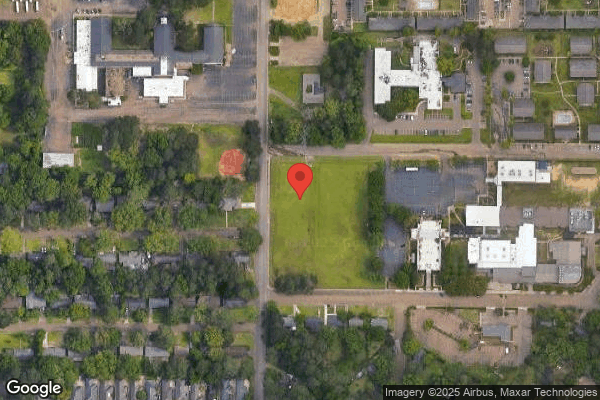
4540 MANHATTAN RD, JACKSON, MS 39206 (601) 982-7421
For profit - Limited Liability company 180 Beds NORBERT BENNETT & DONALD DENZ Data: November 2025 1 Immediate Jeopardy citation
Trust Grade
11/100
#172 of 200 in MS
Last Inspection: July 2024

Within standard 12-15 month inspection cycle. Federal law requires annual inspections.

Overview

The Manhattan Nursing and Rehabilitation Center LLC has received a Trust Grade of F, indicating significant concerns and that the facility is performing poorly. It ranks #172 out of 200 nursing homes in Mississippi, placing it in the bottom half of facilities in the state, and is #9 out of 11 in Hinds County, meaning there are only two local options that rank lower. Although the facility has shown some improvement in addressing its issues, decreasing from 14 problems in 2024 to 4 in 2025, staffing levels are concerning, with a rating of 2 out of 5 and a high turnover rate of 60%. There have been serious incidents, including a resident being left unsupervised outside, which led to a fall, and the failure to provide adequate supervision for another resident, resulting in a fracture. While there are some strengths, such as a trend of improvement, the facility's overall performance raises significant red flags for prospective residents and their families.

Trust Score
F
11/100
In Mississippi
#172/200
Bottom 14%
Safety Record
High Risk
Review needed
Inspections
Getting Better
14 → 4 violations
Staff Stability
⚠ Watch
60% turnover. Above average. Higher turnover means staff may not know residents' routines.
Penalties
✓ Good
$8,788 in fines. Lower than most Mississippi facilities. Relatively clean record.
Skilled Nurses
⚠ Watch
Each resident gets only 13 minutes of Registered Nurse (RN) attention daily — below average for Mississippi. Fewer RN minutes means fewer trained eyes watching for problems.
Violations
⚠ Watch
27 deficiencies on record. Higher than average. Multiple issues found across inspections.
★☆☆☆☆
1.0
Overall Rating
★★☆☆☆
2.0
Staff Levels
★☆☆☆☆
1.0
Care Quality
★☆☆☆☆
1.0
Inspection Score
Stable
2024: 14 issues
2025: 4 issues

The Good

  • Full Sprinkler Coverage · Fire safety systems throughout facility
  • No fines on record

Facility shows strength in fire safety.

The Bad

1-Star Overall Rating

Below Mississippi average (2.6)

Significant quality concerns identified by CMS

Staff Turnover: 60%

13pts above Mississippi avg (46%)

Frequent staff changes - ask about care continuity

Federal Fines: $8,788

Below median ($33,413)

Minor penalties assessed

Chain: NORBERT BENNETT & DONALD DENZ

Part of a multi-facility chain

Ask about local staffing decisions and management

Staff turnover is elevated (60%)

12 points above Mississippi average of 48%

The Ugly 27 deficiencies on record

1 life-threatening 2 actual harm
Sept 2025 2 deficiencies 1 IJ
CRITICAL (J) 📢 Someone Reported This

A family member, employee, or ombudsman was alarmed enough to file a formal complaint

Immediate Jeopardy (IJ) - the most serious Medicare violation

Accident Prevention (Tag F0689)

Someone could have died · This affected 1 resident

**NOTE- TERMS IN BRACKETS HAVE BEEN EDITED TO PROTECT CONFIDENTIALITY** Based on observation, interviews, record review and facility policy review, the facility failed to provide adequate supervision ...

Read full inspector narrative →
**NOTE- TERMS IN BRACKETS HAVE BEEN EDITED TO PROTECT CONFIDENTIALITY** Based on observation, interviews, record review and facility policy review, the facility failed to provide adequate supervision and a secure environment to prevent the elopement of one (1) of six (6) sampled residents, Resident #9.On 9/08/25 a newly admitted respite resident with diagnoses of restlessness and agitation, dementia and senile degeneration of brain and history of exit seeking behaviors and falls was assisted to exit the facility by staff, was outside unsupervised for twenty-five (25) minutes until a staff member observed the resident lying on the ground next to the iron fence that encircled the facility premises, approximately three hundred seventy-five (375) feet from the facility entrance.The facility's failure to provide adequate supervision to prevent the elopement of Resident #9 placed this resident, and other residents at risk for wandering and elopement, in a situation that was likely to cause serious injury, harm, impairment, or death. While Resident was out of the facility unsupervised in the parking lot and driveway area of the facility at shift change, she was observed laying on the ground.The facility's failure to identify the need for adequate supervision and ensure a secure environment contributed to Resident #9's elopement and placed all residents who were admitted with or developed wandering/exit seeking behaviors at risk. This failure resulted in Immediate Jeopardy and Substandard Quality of Care (SQC) which began on 9/08/25. The SA notified the facility's Administrator of the IJ and SQC on 09/17/2025 at 4:15 PM and provided the Administrator with the IJ templates. Based on the facility's implementation of corrective actions on 9/9/25, the State Agency (SA) determined the IJ and SQC to be Past Non-compliance (PNC) and the IJ removed on 9/10/25, prior to the entrance of the SA on 9/15/25. Findings include:Record review of the facility policy titled, MISSING RESIDENT/ELOPEMENTS with a review date of 1/15 (January 2015) revealed POLICY: The Unit charge Nurse is responsible for knowing the location of their residents.RESPONSIBILITY: The Charge Nurses and all other staff. PROCEDURE: 1. It is the responsibility of all personnel to report any resident attempting to leave the premises, or suspected of being missing, to the Charge nurse/CMT as soon as practical. 2. Should an employee observe a resident leaving the premises, he/she should: a. Attempt to prevent the departure; b. Obtain assistance from other staff members in the immediate vicinity, if necessary.Record review of the Progress Notes for Resident #9 dated 9/08/25 revealed that the Director of Nurses (DON) documented, Resident assisted outside by staff.Resident is a new admission to facility 9/08/25. MD/RP notified. New order for wander guard and one on one monitoring.Record review of the Supervisor Investigation Summary Form: (facility investigation) and 9/16/25 observation at 2:06 PM during interview with Certified Nurses' Aide (CNA) #1 revealed that on 9/08/25 at approximately 2:53 PM the (former) Receptionist assisted Resident #9 out the front door. The resident walked around the grounds, sat on a bench for a while and then walked to and up the northwestern driveway toward the street and was located at approximately 3:30 PM laying on the ground on the west side of the northwest driveway, next to the iron fence that circumvented the facility property, approximately fifty-five (55) feet from the street and approximately three hundred seventy-five feet from the facility's front entrance. According to CNA #1 and the facility investigation, Resident #9 was assisted to stand and walk up the incline to a grassy area on the side of the driveway with a wheelchair brought to return the resident into the facility. On 9/16/25 at 2:06 PM, during an observation of the area Resident #9 was located in on 9/8/25 and interview with CNA #1 revealed that on 9/08/25 at approximately 3:15 PM she had gotten into her car after clocking out and was leaving the premises when she observed what she described as looked like a pile of clothes at first laying on the ground inside the northwest corner of the black metal fence that encircled the facility. She stated that as she looked, she realized it was a person lying on the ground. She stated she stopped and summoned assistance. She and CNA #2 assisted Resident #9 to stand and walk to the grassy area uphill and next to the driveway from the area she initially saw her. CNA #1 said that she and CNA #2 routinely worked on the second floor of the facility and were not familiar with the resident, so they asked questions to determine if she was a facility resident. She said that Resident #9 told them that she did not live at the facility, had driven herself to the facility and that her car was on the second floor with her daughter. CNA #1 said that she then summoned the DON and Assistant Director of Nursing (ADON), who identified Resident #1. Staff assisted the resident to return to the facility at approximately 3:25 PM. CNA #1 reported that the weather was clear, dry and warm temperature. CNA #1 described Resident #9 as wearing blue pants, a red/white/blue stripped shirt and a red sweater and house slippers. She said she received in-service training provided by the facility following the elopement and participated in elopement drills.On 9/16/25 at 2:30 PM during observation of the area Resident #9 was located on 9/08/25 and interview with CNA#2 stated that she had just clocked out following the 7:00AM to 3:00 PM (7-3) shift and got into her car in the front parking lot when she saw CNA #1 waving her hands and calling for assistance. She said she went toward CNA #1 and observed someone laying on the ground inside the northwest corner of the black metal fence that encircled the facility. She said she had not recognized the person on the ground, and she and CNA #1 talked with the woman and determined based on her appearance and confusion to summon the DON. CNA #2 said that the weather was clear, dry and warm. On 9/17/25 at 9:34 AM, during an interview the DON confirmed that she had participated in the facility investigation into the elopement of Resident #9 on 9/08/25. She stated that on 9/08/25 the facility had placed the resident on one-on-one supervision, and the primary healthcare provider (PHP) had issued new orders for application and monitoring of a safe wandering device. She stated that during her investigation she interviewed the receptionist who reported that he had entered the code and escorted the resident outside and then returned inside without knowing if she was a resident. The DON said that CNA #1 had clocked out and was leaving the premises and observed the resident and she and CNA #2 summoned her (the DON) and assisted the resident back into the facility. On 9/17/25 at 2:36 PM, during a telephone interview the Resident Representative (RR) for Resident #9 revealed that she had brought the resident to the facility on 9/08/25 for respite care. She said she was notified by the DON on the same day that Resident #9 had been assisted outside by staff and a short while later was observed by another staff member lying on the ground. She confirmed that she was notified of new orders for a safe wandering device and one-on-one supervision to prevent future elopements. She confirmed that the resident remained at the facility as planned throughout the respite period and returned home as planned. She confirmed that the resident had not been injured and said she had noted no physical or psychosocial changes in the resident following the incident.On 9/17/25 at 3:23 PM, observation revealed the front entrance opened to a front porch under a portico which led to the paved front parking lot which was well-maintained. There was a well-maintained cement sidewalk that spanned the front of the building. Observation revealed all parking spaces were full. The facility had an upper and lower driveway which led to the street. The speed limit of the street was twenty-five (25) miles per hour. There were eleven (11) vehicles observed traveling through the parking lot and an additional four (4) vehicles observed traversing the street in a five-minute period.On 9/17/25 at 3:50 PM, during an interview Executive Director revealed that the facility had investigated the 9/08/25 elopement of Resident #9, and he and the interdisciplinary team determined that the root cause was that the Former Receptionist had unlocked the door and escorted and left Resident #1 outside without determination of the resident's identity as a resident, for which the Receptionist's employment at the facility had been terminated. The resident's RR and PHP were notified and the facility received new orders for a safe wandering device, and the resident was placed on one-on-one supervision until her discharge. He said in-service training and elopement drills were initiated for all staff and that the incident was reviewed during a Quality Assessment and Performance Improvement (QAPI) meeting on 9/09/25 and reported to state agency per state and federal requirements. On 9/18/25 at 10:40 AM, during an interview LPN #3, the assigned Unit Manager for Resident #9 on 9/08/25 on first floor, stated that Resident #9 arrived on the unit accompanied by her RR at approximately 9:30 AM on 9/08/25. She stated that the resident was able to participate in Brief Interview for Mental Status (BIMS) but was only oriented to self (able to supply her own name). She stated that the RR had reported history of falls, but not wandering or elopement and that report coupled with the resident's dependence on wheelchair for locomotion resulted in an assessment of no risk for elopement. She stated that she last observed the resident around lunch time when she had assisted the resident to the first-floor dayroom for lunch. She stated that she was made aware of the elopement by the DON. LPN #3 confirmed that Resident #9's PHP had issued new orders for a safe wandering device with monitoring, and the resident was provided with one-on-one supervision for the remainder of her respite stay at the facility.On 9/18/25 at 11:00 AM, a telephone interview with the former facility Receptionist revealed he manned the desk at the front entrance and there was a keypad in the receptionist office and one next to the front entrance door. He said he was able to enter the code into either and unlock the front entrance. He reported that he was not aware that Resident #9 had been admitted because he arrived late at work and was not at the desk and had not witnessed her arrival. He explained that he released the lock on the front door and allowed Resident #9 to exit after seeing her push on the entrance door. He stated that he did not know who she was and had not asked. He said he had not noticed what type of footwear the resident was wearing. He said that he had worked at the facility as receptionist for a few weeks and confirmed that he had received training during orientation regarding keeping security codes confidential, residents at risk for wandering/elopement and dementia. He confirmed that his employment at the facility had been terminated because of the elopement.Record review of the Category One Violation Employee Corrective/Counseling Memorandum dated 9/09/25 for the former Receptionist revealed documentation that his employment was terminated on 9/09/25 due to Employee let a resident outside the facility without determining if resident was safe to exit or identify if this was a resident or not.Record review of the local weather history according to WWW.Wunderground, Copyright the Weather Channel, for the facility for 12:00 PM on 9/08/25 revealed the high temperature for the day was eighty-four (84) degrees Fahrenheit, with zero precipitation, four to twelve (4-12) mile per hour winds and clear. Record review of the admission Record for Resident #9 revealed the facility admitted the resident on 9/08/25 and the resident had diagnoses of restlessness and agitation, dementia with anxiety, senile degeneration of brain and heart failure.Record review of the admission Minimum Data Set (MDS) with Assessment Reference Date (ARD) 9/13/25 for Resident #9 revealed the resident had a Brief Interview for Mental Status (BIMS) score of 7, which indicated severe cognitive impairment. Manhattan Corrective Action Plan validated by SA on 9/18/25:On 9/08/25 around 2:53 pm, the receptionist assisted Resident #9 out the front door after which the resident was located approximately twenty-five minutes later laying on the ground in the northwest corner of the facility property. Resident #9-1. A second at risk for elopement assessment completed for Resident #9 on 9/8/25 at 3:15pm2. Resident 9's Instant care plan and Kardex were updated on 9/8/25 at 3:15pm3. One-on-one supervision orders received, and monitoring implemented on 9/8/25 at 3:15 pm4. Resident #9's Instant care plan and Kardex were updated-9/8/25 at 3:15pm5. Resident #9's Responsible Party (RP) and Primary Healthcare Provider were notified of the incident with safe wandering device bracelet orders received with bracelet applied on Resident #9 with orders for nurses to check placement and functioning every shift-9/8/25 at 3:15pm6. Head to toe body audit was conducted for Resident #9 on 9/8/25 at 3:20pm7. Temperature outside 9/8/25 at 3:00pm-clear and lower 80s8. Distance from front door 375 feet - 9/8/25On 9/08/25 nursing staff completed 100% head count of all residents not signed out on pass with all residents accounted forEmployee corrective counseling completed with former Receptionist on 9/9/25 at 8:00 am (Category 1 offence, employment terminated)100% At risk for elopement evaluations completed on all residents on 9/8/25 through 9/9/25100% in-service training started for all staff prior to working on - Elopement/Wandering, Abuse/Neglect, Behaviors, Adequate monitoring, Supervision- completed 9/09/25Safe wandering devices for all residents wearing them are checked every shift for placement and functioning on 9/8/25Elopement Drills were conducted on all shifts beginning on 9/8/25, 3:00 pm-11:00 pm (3-11) shift100% audit of elopement books completed on 9/8/25All doors checked for proper functioning on 9/8/25Security specialist contractor visited and checked doors for functioning on 9/9//25Quality Assurance (QA) Meeting attended by all key personnel, which included but not limited to Executive Director, Director of Nurses, Infection Preventionist and Medical Director was held 9/9/25 with root cause analysis conducted and interdisciplinary team developed strategy to prevent future elopement incidentsResident #9 to remain on 1:1 until discharge from facility; discharged [DATE] at 1:10pmResident photos will be taken at the time of admission, regardless of elopement risk assessment results, and posted at the receptionist desk beginning 9/9/25The facility alleges all corrective actions were completed on 9/9/25 and the Immediate Jeopardy was removed on 9/10/25Monitoring included one-on-one monitoring/supervision of Resident #9 through discharge on [DATE] and the Admissions Coordinator to monitor the communication board in the reception office to ensure the board's accuracy and currently with all new admissions' photographs posted; continued elopement assessments of all newly admitted residents at the time of admission by nursing staff; continued monitoring of positioning and functioning of safe wandering devices worn by residents at risk of elopement every shift by nursing staff; continued daily monitoring of the safe wandering system functionality by the maintenance director; review of and development of care plans for all newly admitted residents with family/resident to evaluate for history of wandering/elopement for three (3) months with monitoring results and corrective actions reviewed at QA meetings for three (3) months (first QA meeting held following incident was 9/09/25 with subsequent QA meeting held 9/18/25)On 09/18/25, SA validations were completed onsite during the complaint investigation through interviews, observations and record reviews that all corrective actions had been taken by the facility to remove the IJ and the IJ was removed on 09/10/25.
CONCERN (D) 📢 Someone Reported This

A family member, employee, or ombudsman was alarmed enough to file a formal complaint

Potential for Harm - no one hurt, but risky conditions existed

Quality of Care (Tag F0684)

Could have caused harm · This affected 1 resident

**NOTE- TERMS IN BRACKETS HAVE BEEN EDITED TO PROTECT CONFIDENTIALITY** Based on interview, record review, and policy review the facility failed to provide needed care and services that would meet the...

Read full inspector narrative →
**NOTE- TERMS IN BRACKETS HAVE BEEN EDITED TO PROTECT CONFIDENTIALITY** Based on interview, record review, and policy review the facility failed to provide needed care and services that would meet the resident's physical needs as evidenced by wound care not provided in one (1) of two (2) sampled residents with wounds. Resident #4. Findings include:Record review of the facility policy titled Wound Care Treatment Protocol (no review date) revealed the policy instructed staff to: Evaluate the wound daily for signs and symptoms of infection and for signs of healing. Document/Report Findings. Provide treatment as per physician's order.On 09/17/2025 at 9:22 AM, during an interview Resident #4 stated My wound care should be done every 3 days. It was done on 09/11/25 but not on 09/14/25. They just wipe it with wet gauze and cover it up. It's supposed to be irrigated with Dial soap. There's a doctor who sees wounds, but he's never looked at mine.Record review of Resident #4's electronic Treatment Administration Record (eTAR) for September 2025 revealed a physician order for treatment with a start date of 9/8/2025 Mupirocin External Ointment 2% Apply to left lateral ankle topically every day shift every (3) days for wound. Clean left lateral ankle with normal saline, pat dry, apply Mupirocin, cover with Mepilex every 3 days. The eTAR indicated wound care was provided on 09/11/2025, but not documented as provided on 09/14/2025, as evidenced by the absence of staff initials in the designated treatment box for that date.On 09/17/2025 at 9:34, during an interview the Director of Nursing (DON) revealed that the facility physician typically evaluates wounds, however, Resident #4 refuses the facility physician and instead is seen weekly at the Wound Clinic.On 09/17/2025 12:12 PM, in an interview Licensed Practical Nurse (LPN) #1/ Unit Manager reported that a as needed (PRN) order had been obtained for the prescribed wound care and that she administered the dressing on 09/15/2025. She added that the dressing she removed was not signed, dated, or timed, contrary to protocol.During an interview on 09/17/2025 at 3:15 PM, LPN #2/Treatment Nurse revealed that she was unaware why the wound care was missed on 09/14/2025 and stated that she only works weekdays.During a joint interview on 09/18/2025 at 3:15 PM, the Administrator and Director of Nurses (DON) acknowledged that wound care had not been completed on 09/14/2025 and confirmed their understanding of the importance of adhering to physician orders.Record review of Resident #4's admission Record revealed he was admitted to the facility on [DATE] with diagnoses including Diabetes Mellitus, Non-pressure Chronic Ulcer of Unspecified Lower Limb, and Vascular Dementia. Record review of Resident #4's Minimum Data Set (MDS) with an Assessment Reference Date (ARD) of 07/22/2025 indicated in Section M the presence of a non-pressure ulcer. Section C indicated Resident #4 had a Brief Interview for Mental Status (BIMS) score of 15, indicating intact cognition.
Feb 2025 2 deficiencies 2 Harm
SERIOUS (G) 📢 Someone Reported This

A family member, employee, or ombudsman was alarmed enough to file a formal complaint

Actual Harm - a resident was hurt due to facility failures

Comprehensive Care Plan (Tag F0656)

A resident was harmed · This affected 1 resident

Based on staff interview, record review, and facility policy review, the facility failed to implement a care plan intervention regarding one-on-one supervision for a severely cognitive impaired reside...

Read full inspector narrative →
Based on staff interview, record review, and facility policy review, the facility failed to implement a care plan intervention regarding one-on-one supervision for a severely cognitive impaired resident which resulted in an unsupervised fall, leading to an acute transverse fracture of the lower sacrum for one (1) of two (2) care plans reviewed for falls. Resident #1 Findings Include: A review of the facility's policy, Resident [NAME] of Rights, revised January 2023, revealed: Each resident has a right to a dignified existence, self-determination, and communication with and access to persons and services inside and outside the facility in a manner and in an environment that promotes maintenance or enhancement of (his or her) quality of life . A. Facility residents shall have the right to: 1 .7 .d. The right to receive the services and/or items included in the plan of care . A record review of Resident # 1's Comprehensive Care Plan, dated 1/27/25, revealed . one-on-one observation when family was not present . A record review of the facility's Supervisor Investigation Summary Form, dated 1/31/25, revealed, Briefly describe event: On 1/30/25 around 3:30 PM, (Proper Name of Resident #1) was found sitting in the day room, with his clothes on, in front of his wheelchair. The Licensed Practical Nurse (LPN) evaluated (proper name) with no injuries noted. (Proper name) did not reveal any pain. The LPN and a therapist assisted resident off the floor and placed him in his wheelchair. (Proper Name) continued to be confused and combative with staff attempting to bite them .The licensed nurse called and notified nurse practitioner regarding the fall with new orders to send to the ER for evaluation. While the nurse was on the phone with Nurse Practitioner (NP), (Proper Name) stood up from his wheelchair and started taking his clothes off . (Proper Name) pulled out his catheter with the bulb intact and started walking out of the day room and into the hallway with no clothes on and, with blood noted to bilateral legs and penis without his foley catheter .The LPN sat with (Proper Name) never reported pain and showed (no) signs or symptoms of pain. On 1/31/25, the facility requested a copy of the ER paper .admitted .with diagnosis emphysematous cystitis, prostate enlargement, and a nondisplaced transverse fracture of the sacrum between S4 and S5 .Investigation .On 1/30/25, around 3:00 PM .wife and son had just left the facility from visiting .The speech therapist then began working with (Proper Name) in the dining room, and reported he was agitated, hitting the table, and attempting to stand up. The therapist would redirect him to sit back down. After completing her therapy session, the therapist left him sitting at a table with his wheelchair moved close to the table. When the therapist walked down the hall and returned walking by the day room .was standing up with his shirt off. The therapist stopped by day room, put his shirt back on, and moved him back to the table. The nurse had started her medication pass. The therapist left the day room and when she walked back past the day room, (Proper Name) was sitting on the floor in the corner of the room. She alerted the nurse and they assisted him back into his wheelchair . A record review of a handwritten statement, dated 1/30/25 at 3:30 PM and signed by LPN #1, revealed, Resident had a fall in dayroom .DON was called and stated that staff was suppose to be on way to do a one on one with resident. A record review of the acute hospital information for Resident #1, dated 1/30/25, revealed, Impression .3. Acute transverse fracture of the lower sacrum . A record review of Resident #1's admission Record revealed that the facility admitted him on 01/17/2025 and his admitting diagnoses included Dementia with behavioral disturbances and Osteoarthritis. A record review of the admission Minimum Data Set (MDS) with an Assessment Reference Date (ARD) of 01/24/2025 revealed that Resident #1 required a staff interview to assess cognition and his short-term and long-term memory was impaired. During an interview on 02/26/2025 at 10:54 AM, the Speech Therapist stated that she encountered Resident #1 at approximately 3:00 PM and observed him agitated, yelling, attempting to hit, and attempting to get up from his chair. She stated that she redirected him, which was sometimes effective, but upon completing therapy, she noted that he remained in an agitated state and continued exhibiting the same behaviors. She admitted that she did not notify nursing staff about his behaviors before leaving because she assumed they were observing him through the window, leaving him unattended despite his documented care plan for one-on-one supervision. During an interview on 02/27/2025 at 12:02 PM, the Director of Nursing (DON) stated that the Speech Therapist should have informed staff about Resident #1's increased agitation before leaving the dayroom. She acknowledged that Resident #1 was assigned one-on-one supervision on the first floor earlier that day, and staff were expected to continue monitoring him in the dayroom until Certified Nursing Assistant (CNA) #2 arrived. However, CNA #2 was late, and no one else was assigned to supervise him. During a follow-up interview on 02/27/2025 at 1:01 PM, the DON stated that the care plan is intended to serve as a roadmap for providing care, and failure to follow it means the resident is not receiving the planned interventions necessary for their safety and well-being. During an interview on 02/27/2025 at 1:29 PM, the MDS Coordinator /LPN #3 emphasized that the care plan is essential for guiding staff in delivering appropriate care. She stated that failure to follow the care plan places the resident at risk for harm, particularly in cases requiring close supervision.
SERIOUS (G) 📢 Someone Reported This

A family member, employee, or ombudsman was alarmed enough to file a formal complaint

Actual Harm - a resident was hurt due to facility failures

Accident Prevention (Tag F0689)

A resident was harmed · This affected 1 resident

Based on staff interview, record review, and facility policy review, the facility failed to provide adequate supervision to prevent accidents and failed to ensure continuous one-on-one supervision res...

Read full inspector narrative →
Based on staff interview, record review, and facility policy review, the facility failed to provide adequate supervision to prevent accidents and failed to ensure continuous one-on-one supervision resulting in a fall that caused an acute transverse fracture of the lower sacrum, leading to hospitalization for one (1) of two (2) residents reviewed for falls. Resident #1. Findings Include: A review of the facility's policy, Resident [NAME] of Rights, revised January 2023, revealed: Each resident has a right to a dignified existence, self-determination, and communication with and access to persons and services inside and outside the facility in a manner and in an environment that promotes maintenance or enhancement of (his or her) quality of life . A. Facility residents shall have the right to: 1 .34. A safe environment. A record review of the facility ' s Supervisor Investigation Summary Form, dated 1/31/25, revealed, Briefly describe event: On 1/30/25 around 3:30 PM, (Proper Name of Resident #1) was found sitting in the day room, with his clothes on, in front of his wheelchair. The Licensed Practical Nurse (LPN) evaluated (proper name) with no injuries noted. (Proper name) did not reveal any pain. The (LPN) and a therapist assisted resident off the floor and placed him in his wheelchair. (Proper Name) continued to be confused and combative with staff attempting to bite them .The licensed nurse called and notified nurse practitioner regarding the fall with new orders to send to the ER for evaluation. While the nurse was on the phone with Nurse Practitioner (NP), (Proper Name) stood up from his wheelchair and started taking his clothes off . (Proper Name) pulled out his catheter with the bulb intact and started walking out of the day room and into the hallway with no clothes on and, with blood noted to bilateral legs and penis without his Foley catheter .The LPN sat with (Proper Name) never reported pain and showed (no) signs or symptoms of pain. On 1/31/25, the facility requested a copy of the ER paper .admitted .with diagnosis emphysematous cystitis, prostate enlargement, and a nondisplaced transverse fracture of the sacrum between S4 and S5 .Investigation .On 1/30/25, around 3:00 PM .wife and son had just left the facility from visiting .The speech therapist then began working with (Proper Name) in the dining room, and reported he was agitated, hitting the table, and attempting to stand up. The therapist would redirect him to sit back down. After completing her therapy session, the therapist left him sitting at a table with his wheelchair moved close to the table. When the therapist walked down the hall and returned walking by the day room .was standing up with his shirt off. The therapist stopped by day room, put his shirt back on, and moved him back to the table. The nurse had started her medication pass. The therapist left the day room and when she walked back past the day room, (Proper Name) was sitting on the floor in the corner of the room. She alerted the nurse and they assisted him back into his wheelchair . A record review of a handwritten statement, dated 1/30/25 at 3:30 PM and signed by LPN #1, revealed, Resident had a fall in dayroom .DON was called and stated that staff was suppose to be on way to do a one on one with resident. A record review of the acute hospital information for Resident #1, dated 1/30/25, revealed, Impression .3. Acute transverse fracture of the lower sacrum . A record review of Resident #1's admission Record revealed that the facility admitted him on 01/17/2025 and his admitting diagnoses included Dementia with behavioral disturbances and Osteoarthritis. A record review of the admission Minimum Data Set (MDS) with an Assessment Reference Date (ARD) of 01/24/2025 revealed that Resident #1 required a staff assessment for cognition, and he had short- and long-term memory problems. On 02/26/2025 at 10:54 AM, during an interview, the Speech Therapist stated that she encountered Resident #1 at approximately 3:00 PM on 1/30/25 and observed him agitated, yelling, attempting to hit, and attempting to get up from his chair. She stated that she redirected him, which was sometimes effective, but upon finishing therapy, she noted that he remained in an agitated state and continued exhibiting the same behaviors. She explained that she did not notify staff about his behaviors before leaving because she assumed they were observing him through the window and that supervision was being provided. On 02/26/2025 at 12:20 PM, during a phone interview, Certified Nursing Assistant (CNA) #1 stated that when she arrived for her shift on the morning of 01/30/2025, the staffing coordinator assigned her to one-on-one supervision with Resident #1 on the first floor due to increased agitation and behavioral disturbances. She was later informed that Resident #1 would be moved to the second floor and continued her one-on-one supervision until the end of her shift. CNA #1 stated that before leaving for the day, she informed LPN #1 on the second floor that Resident #1 needed continuous one-on-one supervision, as per instructions from the staffing coordinator. On 02/26/2025 at 12:55 PM, during a phone interview , LPN #1, who was working the 3:00 PM to 11:00 PM shift on 1/30/25, stated that upon first observing Resident #1, he was in the dayroom with other residents and was supposed to be on one-on-one supervision. However, she did not see any staff member supervising him. She stated that she called the Director of Nursing (DON) to inquire about his assigned staff and was informed that CNA #2 was scheduled to provide one-on-one supervision but had not yet arrived. While she was observing the dayroom through the window, she witnessed Resident #1 fall. On 02/26/2025 at 2:14 PM, during a phone interview, CNA #2, who normally worked the 11:00 PM to 7:00 AM shift, stated that he was asked to come in early for the 3:00 PM to 11:00 PM shift to provide one-on-one supervision for Resident #1. However, he did not arrive until 4:08 PM. He stated that another CNA was supposed to stay with Resident #1 until he arrived to ensure continuous supervision, but no staff remained with the resident. On 02/27/2025 at 12:02 PM, during an interview, the DON stated that the fall occurred around or before 3:30 PM on 01/30/2025 in the dayroom on the second floor. She confirmed that Resident #1 was assigned to one-on-one supervision on the first floor earlier that day and that staff were supposed to monitor him in the dayroom until CNA #2 arrived. The DON acknowledged that CNA #2 was late, and no other staff remained to supervise Resident #1, resulting in a lapse in supervision at the time of his fall.
Nov 2024 2 deficiencies
CONCERN (D) 📢 Someone Reported This

A family member, employee, or ombudsman was alarmed enough to file a formal complaint

Potential for Harm - no one hurt, but risky conditions existed

Deficiency F0561 (Tag F0561)

Could have caused harm · This affected 1 resident

Based on observation, interview, record review, and policy review, the facility failed to accommodate resident preferences for two (2) of seven (7) residents reviewed. Residents #3 and #4 Findings inc...

Read full inspector narrative →
Based on observation, interview, record review, and policy review, the facility failed to accommodate resident preferences for two (2) of seven (7) residents reviewed. Residents #3 and #4 Findings include: Review of the facility policy titled A.M. Care, dated 10/09, revealed, A.M. Care will be given to residents daily . Procedure: . 11. Provide/assist with shaving (male and female) as needed . Review of the facility policy titled Hydration Cart, dated 2016, revealed, Water or other fluids shall be offered to all residents throughout the day. Fluids are typically offered during meals, snacks. A hydration cart or location may be used to enhance access and encouragement of fluids for residents. Procedure: 1. The Hydration Cart will be offered or refreshed each day at mid morning, mid afternoon, and bedtime . Resident #4 On 11/06/24 at 3:30 PM, an observation and interview with Resident #4 and his Resident Representative (RR)revealed that water was only provided upon request, and then the resident had to wait for delivery. They stated they would rather the resident have water available at the bedside. An observation of the resident revealed the resident had a short, gray beard and mustache. The RR said that the resident preferred to be shaved daily, however, the resident's preference was not accommodated and she sometimes shaved the resident when she visited. The resident and RR indicated that their concern was not that the staff did not assist with shaving, but that the resident's preference of daily shaving was not accommodated. Record review of the admission Record for Resident #4 revealed the facility admitted the resident on 12/14/22. The resident had diagnoses that included Parkinson's Disease and Alzheimer's Disease. Record review of the Annual Minimum Data Set (MDS), with an Assessment Reference Date (ARD) of 10/09/24, revealed Resident #4 had a Brief Interview for Mental Status (BIMS) score of 7, which indicated the resident had severe cognitive impairment. Resident #3 On 11/06/24 at 4:10 PM, an observation and interview with Resident #3 revealed she did not have water at the bedside. The resident stated that sometimes when she requests water, she has to wait. She stated that she would prefer to have a water pitcher, a glass or bottle of water at the bedside. Record review of the admission Record for Resident #3 revealed the facility admitted the resident on 3/05/24. The resident had diagnoses that included Congestive Heart Failure, Type 2 Diabetes Mellitus, and Essential (Primary) Hypertension. Record review of the Quarterly MDS with an ARD of 8/21/24 for Resident #3, revealed the resident had a BIMS score of 13, which indicated the resident was cognitively intact. On 11/08/24 at 5:10 PM, during an interview, the acting Administrator confirmed that he expected staff to accommodate resident preferences to the extent possible considering the resident's physical condition, care plan and care instructions based on assessment of needs and abilities.
CONCERN (D) 📢 Someone Reported This

A family member, employee, or ombudsman was alarmed enough to file a formal complaint

Potential for Harm - no one hurt, but risky conditions existed

Deficiency F0800 (Tag F0800)

Could have caused harm · This affected 1 resident

Based on interview, record review, and policy review, the facility failed to ensure residents received a diet that was according to the resident preferences for one (1) of seven (7) sampled residents....

Read full inspector narrative →
Based on interview, record review, and policy review, the facility failed to ensure residents received a diet that was according to the resident preferences for one (1) of seven (7) sampled residents. Resident #1 Findings include: Review of the Facility policy titled Resident Interview and Foot Preferences, dated 2016, revealed, Resident food preferences will be recorded and consistently utilized . On 11/07/24 at 2:30 PM, in an interview with Resident #1, she stated that she hated oatmeal and dietary services put oatmeal on her tray multiple times weekly. Resident #1 stated that she had made staff aware of preferences multiple times. On 11/08/24 at 2:52 PM, an interview with the facility Dietician, she stated that she had stressed the importance of resident food preference to dietary staff and cooks. The Dietician stated she had been made aware that Resident #1 had complained that she did not like oatmeal, and that she had continued to receive oatmeal on her breakfast trays. On 11/08/24 at 5:10 PM, during an interview, the acting Administrator confirmed that whenever possible, he expected dietary staff to accommodate resident food preferences. Record review of the admission Record for Resident #1 revealed the facility admitted the resident on 9/05/24. The resident had diagnoses that included End Stage Renal Disease, Dependence on Renal Dialysis, and Type 2 Diabetes Mellitus. Record review of the admission Minimum Data Set (MDS), with an Assessment Reference Date of (ARD) 9/04/24, revealed Resident #1 had a Brief Interview for Mental Status (BIMS) score of 15, which indicated Resident #1 was cognitively intact.
Jul 2024 8 deficiencies
CONCERN (D)

Potential for Harm - no one hurt, but risky conditions existed

Comprehensive Care Plan (Tag F0656)

Could have caused harm · This affected 1 resident

**NOTE- TERMS IN BRACKETS HAVE BEEN EDITED TO PROTECT CONFIDENTIALITY** Based on interviews, record reviews, and facility policy reviews, the facility failed to develop/implement the comprehensive car...

Read full inspector narrative →
**NOTE- TERMS IN BRACKETS HAVE BEEN EDITED TO PROTECT CONFIDENTIALITY** Based on interviews, record reviews, and facility policy reviews, the facility failed to develop/implement the comprehensive care plan for six (6) of thirty (30) sampled residents. Residents #53, Resident #57, Resident #68, Resident #80, Resident #121, and Resident #122 Findings Included: A review of the facility's policy titled, Care Plan Policy, dated 01/15, revealed POLICY: Each resident would have a plan of care to identify problems, needs, and strengths that will identify how the team will provide care The care plan contained services provided, preferences, abilities, and care level guidelines. Procedure: 1. The Care Plan will be developed within two days. Subsequent meetings would take place yearly and as needed. 2. The team along with the resident and/or family members, will identify services needed, preferences, ability, and care level guidelines. 3. The Care plan will be reviewed and/or revised yearly with the completion of the Admission/Readmission/Yearly Evaluation and with changes in the resident's condition as needed . During the initial tour on 07/22/24 at 10:31 AM, a general observation of the third floor revealed several residents sitting across from the nurse's station in wheelchairs and Geri chairs. Some of the residents were asleep, and some were awake with no activities. There were three residents in the activity room watching television with no activities noted. Record review of the July 2024 third floor Activity Calendar. revealed the facility had one (1) activity scheduled for each morning and two (2) activities scheduled for each afternoon. Throughout the days of observation (July 22, 2024 through July 23, 2024), none of the scheduled activities were observed, nor were there appropriate individualized activities provided for residents on the third floor. Three (3) of the sampled residents (Resident # 57, #121, and #122) were located on the third floor. Resident #53: A record review of the Care Plan with a problem onset date of 9/25/17 revealed Problem/Need: .Receives adaptive equipment (built-up utensils) to assist with self -feeding .Approaches Built up utensil with meals for self-feeding . During an observation and interview on 07/22/2024 at 12:11 PM, with Resident #53 he stated he needed a built-up fork because he was unable to use a conventional fork when eating due to his hand disability. He stated the kitchen staff often forgets to put one on his tray for every meal, forcing him to eat with his hands. He continued by saying when one did in rare instances end up on his tray, he kept it in his room for a day or two until it got dirty, at which point he sent it back to the kitchen to be cleaned, but it would take several days to get another one. Resident #53 added he had asked the kitchen staff several times to place the right fork on his tray, but he thought that whether they followed the instructions on his meal ticket depended on the person working the kitchen that day. He mentioned he also asked the Certified Nursing Assistant (CNA) who brought the tray to get him the appropriate fork, but a lot of the time they nodded, said alright, and never brought one back to his room. At this point, he said he was just tired of asking, so he did the best he could when eating his meals. An observation of the lunch meal tray revealed no built-up fork was provided, only regular silverware. On 07/23/24 at 12:15 PM, during a lunchtime observation of Resident #53's meal, no built-up fork was provided. Only plastic ware was given due to a COVID-19 outbreak. On 07/24/24 at 8:11 AM, observation of the breakfast tray revealed no built-up fork was provided, only plastic ware due to a COVID-19 outbreak. A record review of the meal ticket dated 07/24/2024 revealed, Adap Equip (Adaptive Equipment): Built-up Utensils x 2. Resident #57: A record review of Resident #57'sCare Plan revealed Problem/Need: Resident will need reminders and encouraging to participate in OOR (out of room) group activities of interest . Approaches: Staff will give resident opportunity to express opinions about activities attended. Staff will give the resident verbal reminders of activities before the commencement of the activity. Staff will engage resident in all group activities. .A record review of Resident #57's Face Sheet revealed an admission date of 04/29/22 with diagnoses that included Pulmonary Hypertension, Chronic Kidney Disease, and Vascular Dementia. Resident #68: A record review of Resident #68's care plan revealed the facility had developed a baseline care plan; however, as on 7/25/24, the facility had not developed a comprehensive care plan for the resident. A record review of Resident #68's Face Sheet revealed an admission date of 06/27/24 with diagnoses that included Chronic Kidney Disease, Chronic Obstructive Pulmonary Disease, Type 2 Diabetes Mellitus, Anxiety Disorder, and Bipolar Disorder. Resident #80: A record review of the Resident #80's Care Plan with a problem onset date of 6/12/24 revealed . Actual skin impairment .Approaches .Clean right buttocks .apply zinc oxide daily; Clean left back .apply zinc oxide daily .Clean left upper thigh .apply zinc oxide daily . The role specified for this approach was coded as N for nurse. Record review of the July 2024 Physician Orders revealed orders dated 6/13/24 for Pressure ulcer of right buttock .apply zinc oxide daily; Rash .left back .apply zinc oxide daily .Rash .left upper thigh .apply zinc oxide daily . A record review of Resident #80's Face Sheet revealed a re-admission date of 06/12/24 with diagnoses that included Primary Hypertension and Rheumatoid Arthritis. Resident #121: A record review of Resident #121's Care Plan with a problem on set date of 3/29/23 revealed Long-term resident with potential for decline in psychosocial well-being related to being away from family .Approaches .visit with the resident as needed for encouragement .encourage participation in activities for socialization/stimulation. The Resident enjoys listening to music, dancing, and being involved in social events. Staff will engage the resident in group activities . A record review of Resident #121's Face Sheet revealed an admission date of 03/24/23 with diagnoses of Hypertension, Moderate Intellectual Disabilities, and Anxiety Disorder. Resident #122: A record review of the Resident #122's Care Plan revealed (Proper name of Resident #122) has the inability to plan own leisure-time activities related to cognitive impairment and needs encouragement to actively participate in small group activities on the unit . Approaches: Initiate conversation as frequently as possible, Engaging .in group activities, Assist in planning leisure time activities, Visit with him and assist as needed with selecting the activities .interested in and will plan to attend . A record review of Resident #122's Face Sheet revealed an admission date of 03/15/24 with diagnoses that included Mood Disorder, Parkinson's, and Depression On 07/25/24 at 11:13 AM, in an interview, Licensed Practical Nurse (LPN) #3, who managed care plans, mentioned that Resident #68 had been admitted on [DATE]. She explained that the baseline care plan was completed upon admission, but the comprehensive plan should have been finalized by now. She pointed out that the comprehensive care plan provided detailed and specific guidance for the staff on how to care for the resident and emphasized that it was overdue. On 07/25/24 at 11:19 AM, in an interview, Registered Nurse (RN) #1, responsible for care plans and MDS, acknowledged there was no reason for the delay in completing the comprehensive care plan. She took responsibility for ensuring it was done, noting that it provided essential details and interventions for nurses and CNAs to care for residents properly. On 07/25/24 at 3:10 PM, in an interview, the Assistant Executive Director (AED) expressed her expectation for care plans to be completed promptly and in accordance with federal guidelines. She stressed that these plans were crucial for staff to deliver appropriate care to the residents. During an interview on 07/25/24 at 3:30 PM, the Director of Nursing (DON) confirmed the facility failed to follow the residents' care plans by not adhering to the calendar and providing activities to the residents. The DON emphasized that activities were important, and she expected the staff to meet the residents' needs by offering daily activities. The DON also highlighted the importance of staff following care plans, ensuring CNAs only applied barrier cream provided by the facility, and that nurses were responsible for applying zinc oxide as a medication. She further explained that care plans were essential for guiding staff in taking care of the residents, including assisting with meals and managing behaviors.
CONCERN (D)

Potential for Harm - no one hurt, but risky conditions existed

Deficiency F0658 (Tag F0658)

Could have caused harm · This affected 1 resident

Based on observations, interviews, record reviews, and facility policy review, the facility failed to follow professional standards by allowing a Certified Nursing Assistant (CNA) to apply a medicated...

Read full inspector narrative →
Based on observations, interviews, record reviews, and facility policy review, the facility failed to follow professional standards by allowing a Certified Nursing Assistant (CNA) to apply a medicated cream for one (1) of three (3) residents observed for incontinent care. Resident #80 Findings Include: A review of the facility's policy titled, Medication Administration General Guidelines, dated 8/16/24, revealed, Policy: Medications are administered as prescribed in accordance with good nursing principles and practices and only by persons legally authorized to do so. Personnel authorized to administer medications do so only after they have familiarized themselves with the medication. Procedure: 1. Medications are prepared, administered, and recorded only by licensed nursing, medical, or other personnel authorized by state laws and regulations to administer medications. 2. Medications are administered in accordance with written orders of attending physicians taking into consideration manufacturer's specifications and professional standards of practice . An observation on 07/22/24 at 11:47 AM, revealed Resident #80 lying in bed, alert and oriented. Resident #80 stated her buttocks hurt and the CNAs applied cream on her buttocks after each incontinent episode. The State Agency (SA) observed a jar of zinc oxide on the bedside table. An observation on 07/24/24 at 1:54 PM, during incontinent care revealed CNA #1 applied zinc oxide cream on the resident's buttocks and perineal area after completing incontinent care. Record review of the July 2024 Physician Orders revealed an order dated 6/13/24, Pressure ulcer of right buttock .apply zinc oxide daily . During an interview on 07/24/24 at 2:15 PM, CNA #1 confirmed she applied zinc oxide to the resident's buttocks and perineal area. CNA #1 explained she was told to use that cream after every incontinent episode. CNA #1 stated she did not know zinc oxide was considered a medication. During an interview on 07/25/24 at 11:00 AM, Licensed Practical Nurse (LPN) #1 confirmed he observed the zinc oxide on the nightstand and that the CNAs were applying the cream. LPN #1 stated the CNAs are only supposed to use the barrier cream. During an interview on 07/25/24 at 3:30 PM, the Director of Nursing (DON) confirmed the facility failed to follow the facility policy when CNA #1 applied zinc oxide, which is considered a medication. The DON stated, The CNAs should only apply barrier cream that is provided by the facility, and the nurses are licensed to apply the zinc oxide. The DON stated she did not know the CNAs were using zinc oxide. During an interview on 07/25/24 at 3:45 PM, the Assistant Administrator revealed she expected the staff to follow the nursing standards of practice.
CONCERN (D)

Potential for Harm - no one hurt, but risky conditions existed

Deficiency F0679 (Tag F0679)

Could have caused harm · This affected 1 resident

Based on observations, interviews, record review, and facility policy, the facility failed to provide activities of interest to meet the needs for three (3) of 30 sampled residents. Residents #57, #12...

Read full inspector narrative →
Based on observations, interviews, record review, and facility policy, the facility failed to provide activities of interest to meet the needs for three (3) of 30 sampled residents. Residents #57, #121, and #122 Findings Included: Record review of the facility's policy titled, Activities/Recreation Services Program Planning Consideration reviewed 10/09 revealed, Policy: Interdepartmental communications and available resources will be utilized to plan, design, and implement the activities program for enhancement of resident participation. Responsibility: Activity/Recreational Director or designees Procedure: 1. Planned programming will be coordinated with and communicated to all departments. 2. Adequate and appropriate supplies and equipment will be provided for the resident's use on an individual and group basis. 3. An inventory of equipment and supplies to provide programming will be maintained according to the residents' needs and interests. 4. Supplies will be accessible for residents to use, and signs posted indicating their availability and location. 5. Community resources will be utilized to enhance the facility activities program. A community resource file will be maintained. A review of the facility's Residents [NAME] of Rights dated 01/23 revealed, Each resident has a right to a dignified existence, self-determination, and communication with and access to persons and services inside and outside the facility in a manner and in an environment that promotes maintenance or enhancement of (his or her) quality of life regardless of diagnosis, severity of condition, . A. Facility residents shall have the right to: . 15. Self-determination, which the facility must promote and facilitate through support of resident choice consistent with his or her interest, assessments, and plan of care and make other choices about aspects of his or her life in the facility that are significant to the resident. Including but not limited to: activities, healthcare, schedules (including sleeping, walking, bathing, and eating times), and how she or he spends time both in and outside of the facility should be supported to the extent possible . 19. To participate in other activities including social, religious, and community activities that do not interfere with the rights of other residents in the facility . On 07/22/24 at 10:31 AM, during the initial tour, a general observation of the third floor revealed several residents sitting across from the nurse's station in wheelchairs and Geri chairs. Some of the residents were asleep, and some were awake with no activities. There were three (3) residents in the activity room watching television with no activities noted. Resident #57: A record review of Resident #57's Face Sheet revealed an admission date of 4/29/2022, with diagnoses that included Pulmonary Hypertension, Chronic Kidney disease, and Vascular Dementia. A record review of review of the Resident #57's Yearly Minimum Data Set (MDS) with an Assessment Reference Date of 6/18/24 revealed a Brief Interview for Mental Status (BIMS) score of three (3), which indicated the resident had severe cognitive impairment. Section F revealed it was very important to listen to music, do things with groups, and do favorite activities. During an observation on 7/22/24 at 10:45 AM, Resident #57 was sitting in the hallway in a Geri chair across from the nursing station and was sleeping. Review of the July Activity Calendar, dated 7/22/24 for the third floor revealed Bingo was on the schedule for 2:45 PM in the Day Room. During an observation on 7/22/24 at 2:46 PM, Resident #57 was sitting in the hallway across from the nursing station and was sleeping. There were no activties observed. Review of the July Activity Calendar, dated 7/22/24 for the third floor revealed Coffee was on the schedule for 3:45 PM in the Day Room. During an observation on 7/22/24 at 3:47 PM, Resident #57 was observed once again to be sitting in the hallway across from the nursing station and was sleeping. There were no activities observed. Review of the July Activity Calendar, dated 7/23/24 for the third floor revealed Brain Teasers was scheduled for 10:00 AM. Again, there were no activities taking place in the Day Room. During an observation on 7/23/24 at 10:09 AM, Resident #57 was sitting in the Day Room and was sleeping. The television was on. There were no activities observed. During an observation on 7/23/24 at 2:54 PM, Resident #57 was observed sitting next to the nursing station and was sleeping. There were no activities observed at this time. During an observation on 7/24/24 at 10:07 AM, Resident #57 was participating in exercises with Therapy. In an interview with the Occupational Therapy Assistant (OTA), she stated that the resident does wake up and participate with Therapy. However, if left she had noted that if the resident is not engaged for several minutes, he goes back to sleep. The OTA stated that the Resident #57 receives Therapy twice a day. Review of the July Activity Calendar, dated 7/24/24 for the third floor revealed that Bingo was scheduled for 2:45 PM in the Day Room. There were no residents playing Bingo at this time in the Day Room. During an observation on 7/24/24 at 2:45 PM, Resident #57 was sitting next to the nursing station and was asleep. In an interview on 7/24/24 at 2:55 PM, Resident #57 explained there's nothing to do. The resident stated he goes back to sleep until somebody wakes him up to eat or do something else. In an interview on 7/24/4 at 2:58 PM, Licensed Practical Nurse (LPN) #5 explained that Resident #57 does wake up to eat and to participate in Therapy. LPN#5 stated the resident does sleep most of the time after that. LPN #5 noted that the resident's do not have much to do, as most of the time the Activity Department conducts the activities downstairs with the residents that are able to travel up and down the elevator. Resident #121: A record review of Resident #121's Face Sheet revealed an admission date of 3/24/23 with diagnoses that included Hypertension, Moderate Intellectual Disabilities, and Anxiety Disorder. A record review of the Resident #121's Quarterly MDS with an ARD of 5/3/24 revealed a BIMS score of zero (0), which indicated the resident had severe cognitive impairment. Section F revealed it is very important to listen to music, do things with groups, and do favorite activities. The resident also enjoyed outside outings. An observation on 7/22/24 at 10:41 AM revealed the resident sitting in her chair talking to a baby doll. No individualized activities appropriate for the resident were observed. An observation on 7/22/24 at 2:46 PM revealed the resident ambulating up and down the hallway talking to the baby doll. No individualized activities appropriate for the resident were noted. An observation on 7/22/24 at 3:47 PM revealed the resident sitting at the end of the hallway in a chair talking to herself with no individualized activities appropriate for the resident noted. An observation on 7/23/24 at 10:09 AM revealed the resident sitting in the Day Room asleep. The television was on. No individualized activities appropriate for the resident were noted. An observation on 7/23/24 at 2:54 PM revealed the resident ambulating up and down the hallway talking to the baby doll. No individualized activities appropriate for the resident were noted. An observation on 7/24/24 at 10:07 AM revealed the resident ambulating up and down the hallway and in and out of other residents' rooms. No individualized activities appropriate for the resident were noted. An observation on 7/24/24 at 2:45 PM revealed the resident ambulating up and down the hallway. No individualized activities appropriate for the resident were noted. Resident #122: A record review of Resident #122's Face Sheet revealed an admission date of 3/15/24 with diagnoses that included Mood Disorder, Parkinson's, and Depression. A record review of Resident #122's admission MDS with an ARD of 3/22/24 revealed a BIMS score of 14, which indicated the resident was cognitively intact. Section F revealed it is very important to listen to music, go outside when the weather is good, and participate in religious practices. During an observation on 7/22/24 at 1:10 PM, Resident #122 was wandering in and out of other residents' rooms with his rollator. The staff continued to redirect the resident. A general observation of the residents watching television revealed no activities observed. During an interview on 7/22/24 at 1:14 PM, LPN #4 revealed the resident was fixated on his medications and was hard to redirect at times. The resident wandered up and down the hall most of the day. During an interview on 7/22/24 at 1:27 PM, Resident #122 explained there was nothing to do. The resident also said the staff would not take him outside. He enjoyed music and playing games. An observation on 7/22/24 at 2:40 PM, revealed Resident #122 wandering up and down the hallway without his rollator. A general observation revealed residents in the Day Room watching television. There were no activities observed. Review of the July Activity Calendar, dated 7/22/24 for the third floor revealed Bingo was scheduled to take place in the Day Room at 2:45 PM. However, no activity in the Day room was noted during this time. Review of the July Activity Calendar, dated 7/22/24 for the third floor revealed that Coffee was on the schedule for 3:45 PM in the Day Room. An observation on 7/22/24 at 3:50 PM, revealed Resident #122 sitting on his rollator in the hallway. There were no activities taking place in the Day Room at that time. Review of the July Activity Calendar, dated 7/23/24 for the third floor revealed Brain Teasers was scheduled for 10:00 AM. Again, there were no activities taking place in the Day Room. During an observation on 7/23/24 at 10:02 AM, Resident #122 was wandering up and down the hallway without his rollator. A general observation of residents in the Day Room revealed a few residents were watching television. Review of the July Activity Calendar, dated 7/23/24 for the third floor revealed Tomato Sandwiches was scheduled for 2:45 PM. Again, there were no activities taking place in the Day Room. An observation on 7/23/24 at 2:45 PM, revealed Resident #122 wandering up and down the hallway without his rollator. A general observation revealed residents watching television in the Day Room. Review of the July Activity Calendar, dated 7/24/24 for the third floor revealed that Leg Stretches was scheduled for 10:00 AM in the Day Room. Again, there were no activities taking place in the Day Room. An observation on 7/24/24 at 10:00 AM revealed Resident #122 wandering up and down the hallway without his rollator. A general observation revealed residents in the Day Room watching television. No activities were observed. Review of the July Activity Calendar, dated 7/24/24 for the third floor revealed that Bingo was scheduled for 2:45 PM in the Day Room. There were not residents playing Bingo at this time in the Day Room. In an interview on 7/25/24 at 3:00 PM, Resident #6 revealed she was the Resident Council President. The President confirmed the facility did not provide activities often on the 2nd and 3rd floors. The Resident Council President said most of the activities were done on the first floor. If the resident was unable to come down the elevator, they would not get activities. The President said sometimes they would give them snacks or play ball maybe once or twice a week. On the weekends, the residents had to do activities themselves because there was only one activity aide until they got another one. She was just put in that position about a week ago. The President said they did not have enough staff in the activity department to provide activities to all three floors and in the residents' rooms. The President also said they enjoyed going outside but because of a lack of staff, they did not go outside as much. The President explained some of the residents said they felt like prisoners in the facility. The President revealed they had complained in the past about activities, but nothing was done, so they did not talk about it anymore. In an interview on 7/25/24 at 3:15 PM, LPN #5 confirmed the facility did not provide activities on the third floor. LPN #5 stated that most of the activities occurred downstairs in the Dining Room. The facility just hired a new activity aide, which came up maybe once or twice a week to provide activities with the residents on the third floor. The residents were bored and had a lot of behaviors because of a lack of activities. Most of them had to be redirected in and out of each other's rooms. Some of the residents slept most of the day or watched TV in the dayroom. During an interview on 7/25/24 at 3:22 PM, the Activity Director explained that she had just become the director within the last two weeks. The Activity Director stated that she worked Monday through Friday and was off at weekends. The Director said her assistant was off every other weekend. The Director also stated that on the weekend the assistant worked, she would be off on Monday and Friday of next week. The Director confirmed there was only one activity aide working on the days that she and the assistant were off. The Director also confirmed the schedule that four weekend days in the month of July both the Director and assistant activity personnel were off. The Director also explained when one of them had the day off, there was only one person providing activities. The Director said she had talked to the Administrator explaining they needed help. They were responsible for providing activities to three floors and in-room activities with residents that were not able to come to the Day Room. A record review of the facility's July Schedule revealed the Activity Director and Activity Assistant were off on 7/13/24, 7/14/24, 7/27/24, and 7/28/24. A record review of the Activity Director and the Activity Assistant's time sheets confirmed they did not work on the 13th and 14th of July. During an interview on 7/25/24 at 3:25 PM, the Activity Assistant explained she was responsible for providing activities on the third floor. The Activity Assistant stated she was off on 7/22/24. The Activity Assistant said she did a balloon toss with the residents on the third floor for fifteen (15) minutes at 9:30 AM on 7/23/24. The Activity Assistant also said she did exercise with the residents for fifteen (15) minutes at 9:00 AM on 7/24/24. The Activity Assistant confirmed both activities were not on the calendar. She was just doing something quick with those residents before having to go downstairs with the big activities. During an interview on 7/25/24 at 3:30 PM, the Director of Nursing (DON) stated she expected the Activity Department to provide activities on all floors. The DON said she did not realize the residents were not receiving activities on the third floor. During an interview on 7/25/24 at 3:45 PM, the Administrator, via phone, explained she did not know the activity staff were not providing activities on the third floor. The Administrator said the Activity Director and the assistant were supposed to alternate weekends. The Administrator stated that she felt two (2) activity personnel were enough staff to meet the residents' activity needs. The Administrator said the facility had volunteers that assisted the residents with activities. In an interview on 7/25/24 at 4:00 PM, the Assistant Administrator explained she expected the staff to follow the activity calendar. The Assistant Administrator said the facility was working on the activity program and creating new ideas to meet the needs of the residents.
CONCERN (D)

Potential for Harm - no one hurt, but risky conditions existed

Incontinence Care (Tag F0690)

Could have caused harm · This affected 1 resident

Based on observation, staff interview, and record review, the facility failed to prevent possible complications related to a resident with an indwelling suprapubic catheter, as evidenced by an observa...

Read full inspector narrative →
Based on observation, staff interview, and record review, the facility failed to prevent possible complications related to a resident with an indwelling suprapubic catheter, as evidenced by an observation of the catheter tubing on the floor for one (1) of 1 resident reviewed with a catheter. Resident #117 Findings Included: On 07/22/24 at 11:49 AM, during an observation, Resident #117 was in the dining room in his wheelchair. There was a catheter tubing dragging on the floor as he propelled himself throughout the dining room and hallway. A record review of the Physician Orders for the month of July 2024, revealed an order, dated 4/3/24, for a 16F ( French)10cc (cubic centimeter) suprapubic Foley (type of indwelling catheter) to gravity with a closed urinary drainage bag system . On 07/23/24 at 12:42 PM, during an interview and observation with Licensed Practical Nurse (LPN) #6, she confirmed Resident #117's catheter tubing was in contact with the floor and acknowledged it was an infection control issue. On 07/24/24 at 11:49 AM, during an interview with the Director of Nursing (DON), she revealed that indwelling catheters can be a significant cause of infection, emphasizing the issue with the tubing touching the floor. She stated that it was the responsibility of all nursing staff to ensure catheter tubing was not in contact with the floor. On 07/25/24 at 08:15 AM, during an interview with the Assistant Executive Director, she confirmed Resident #117 had a catheter. She stated that it was the nursing staff's responsibility to ensure that catheter tubing was off the floor, acknowledging that it could pose an infection control issue A record review of the Face Sheet revealed the facility admitted Resident #117 on 10/20/23 with current diagnoses including Human Immunodeficiency Virus (HIV) disease and Neuromuscular Dysfunction of Bladder. A record review of the Quarterly Minimum Data Set (MDS) with an Assessment Reference Date (ARD) of 06/28/24 revealed Resident #117 had an indwelling catheter.
CONCERN (D)

Potential for Harm - no one hurt, but risky conditions existed

Deficiency F0804 (Tag F0804)

Could have caused harm · This affected 1 resident

Based on observation, interviews, record reviews, and facility policy reviews, the facility failed to provide a palatable meal for lunch for one (1) of two (2) meal observations. Resident #14 Findings...

Read full inspector narrative →
Based on observation, interviews, record reviews, and facility policy reviews, the facility failed to provide a palatable meal for lunch for one (1) of two (2) meal observations. Resident #14 Findings Included: A review of the facility's policy Menu Planning and Requirements, dated 2016, revealed, Guideline: Menus are planned to provide nourishing, palatable, attractive meals that meet the nutritional needs of residents served . On 07/22/24 at 12:39 PM, the State Agency (SA) and the Dietary Manager (DM) sampled a lunch tray consisting of a baked pork chop, cabbage, and macaroni and cheese. The DM noted that the macaroni and cheese was bland and lacked a cheese flavor. The SA team concurred with this assessment. On 07/22/24 at 02:24 PM, during an interview, Resident #14 expressed that the food lacked flavor, specifically noting the macaroni and cheese served at lunch was tasteless. She mentioned the food often lacked taste on certain days. On 07/25/24 at 3:14 PM, during an interview, the Assistant Executive Director (AED) emphasized that she expected the Dietary Manager to prepare flavorful and safe meals for the residents. She expressed a desire for the residents to enjoy their meals. A record review of the Face Sheet revealed the facility admitted Resident #14 on 11/22/23 with current diagnoses including Type 2 Diabetes Mellitus (DM). A review of Resident #14's Physician Orders for the month of July 2024 revealed Resident #14 had a Physician's Order, dated 11/22/23, for Regular, NAS (No Added Salt) DM precautions. A review of the Quarterly Minimum Data Set (MDS) with an Assessment Reference Date (ARD) of 05/03/24 revealed Resident #14 had a Brief Interview for Mental Status (BIMS) score of 15, indicating she was cognitively intact.
CONCERN (D)

Potential for Harm - no one hurt, but risky conditions existed

Deficiency F0810 (Tag F0810)

Could have caused harm · This affected 1 resident

**NOTE- TERMS IN BRACKETS HAVE BEEN EDITED TO PROTECT CONFIDENTIALITY** Based on observations, interviews, record reviews, and facility policy reviews, the facility failed to ensure adaptive equipment...

Read full inspector narrative →
**NOTE- TERMS IN BRACKETS HAVE BEEN EDITED TO PROTECT CONFIDENTIALITY** Based on observations, interviews, record reviews, and facility policy reviews, the facility failed to ensure adaptive equipment was consistently provided at each meal for one (1) of one (1) resident observed during mealtime requiring adaptive utensils. Resident #53 Findings Include: A review of the facility's policy titled, Adaptive Devices, dated 2016 revealed, Guideline: Adaptive eating devices will be available to all residents who need them to promote independence in dining. Adaptive devices will be available for residents at mealtime according to their individualized plan of care. Procedure: . 4. Resident meal cards will specify the resident's order for adaptive devices. 5. Food and Nutrition Services staff will provide each resident is given the appropriate devices(s) for each meal . On 07/22/2024 at 12:11 PM during an observation and interview with Resident #53 stated he needed a built-up fork because he was unable to use a conventional fork when eating due to his hand disability. He stated the kitchen staff often forgets to put one on his tray for every meal, forcing him to eat with his hands. He continued by saying when one did in rare instances end up on his tray, he kept it in his room for a day or two until it got dirty, at which point he sent it back to the kitchen to be cleaned, but it would take several days to get another one. Resident #53 added he had asked the kitchen staff several times to place the right fork on his tray, but he thought that whether they followed the instructions on his meal ticket depended on the person working the kitchen that day. He mentioned he also asked the Certified Nursing Assistant (CNA) who brought the tray to get him the appropriate fork, but a lot of the time they nodded, said alright, and never brought one back to his room. At this point, he said he was just tired of asking, so he did the best he could when eating his meals. An observation of the lunch meal tray revealed no built-up fork was provided, only regular silverware. On 07/23/2024 at 12:15 PM, during a lunchtime observation of Resident #53's meal, no built-up fork was provided. Only plastic ware was given due to a COVID-19 outbreak. On 07/24/2024 at 08:10 AM, during a follow-up interview with Resident #53, he revealed that once again, his breakfast tray was delivered with no built-up fork provided, only plastic ware due to a COVID-19 outbreak. Resident #53 reported he ate with his hands since staff once again omitted a built-up fork with his tray. Resident #53 said, It (expletive) me off when I have to eat with my hands because it is a challenge, and I do not like doing that! He claimed he got frustrated with always requesting the built-up fork and not getting one. In an interview with the Dietary Manager on 07/24/2024 at 2:35 PM, she disclosed that she had been employed at this facility for the past three years. She confirmed Resident #53 needed a built-up fork on his tray for each meal. She explained that the facility had been running low for the past two weeks, which may be one of the reasons it had not been included on his tray. She also mentioned that a supply order that included the forks was placed a few weeks ago and they were still awaiting their arrival. In an interview with the Registered Dietitian conducted on 07/24/2024 at 2:48 PM, she confirmed that the built-up fork was to be provided to Resident #53 at each meal. She clarified that in her understanding, the resident required this fork to eat because of a lack of strength in his hand to grasp a standard fork. She agreed that eating his food was a challenge without the built-up fork. In an interview with CNA #7 on 07/24/2024 at 3:09 PM, she disclosed that she observed the resident's tray without a built-up fork on at least two occasions during dinner when she worked the evening shift. She indicated that he had requested that the dietary department provide him with one at each meal on numerous occasions. It was surprising to her that they did not as it was clearly stated in black and white that he required one on his meal ticket. On 07/25/2024 at 8:02 AM, in an interview with the Assistant Administrator, she revealed she was aware that the facility was running low on the built-up forks. She indicated an order was placed a few weeks ago when she realized it during one of her audits. A record review of the meal ticket dated 07/24/2024 revealed Adap (Adaptive) Equip (Equipment): Built-up Utensils x 2. A record review of the Minimum Data Set (MDS) with an Assessment Reference Date (ARD) of 06/11/2024 revealed a Brief Interview for Mental Status (BIMS) score of 15, indicating Resident #53 was cognitively intact. A record review of the Face Sheet revealed Resident #53 was admitted to the facility on [DATE]. His diagnoses included Paraplegia.
CONCERN (E)

Potential for Harm - no one hurt, but risky conditions existed

Food Safety (Tag F0812)

Could have caused harm · This affected multiple residents

Based on observation, staff interviews, and facility policy review, the facility failed to maintain sanitary practices within professional standards for food service safety related to hand hygiene for...

Read full inspector narrative →
Based on observation, staff interviews, and facility policy review, the facility failed to maintain sanitary practices within professional standards for food service safety related to hand hygiene for one (1) of two (2) kitchen observations. Findings Included: A review of the facility's policy, Proper Hand Washing and Glove Use, dated 2016, revealed, Guideline: All employees will use proper hand washing procedures .Procedure .4. Employees will wash hands before and after .touching any part of their uniform, face, or hair . On 07/22/24 at 10:29 AM, an observation of the Registered Dietitian (RD) revealed on two (2) occasions while she stood adjacent to the steam table, she picked up an ink pen from the kitchen floor and placed it back on the steam table. After placing the ink pen on the steam table, the RD proceeded to handle a food service utensil which was placed in a pan of pureed pork chops on the steam table, the food thermometer, and the menu book. The RD was observed licking her fingers and flipping through the resident's meal cards that were placed on each tray. On 07/22/24 at 11:00 AM, during an interview with the RD, she acknowledged picking the pen up from the floor and placing it back on the steam table on two (2) occasions during the lunch mealtime. The RD confirmed that she would not want her food to be contaminated with items that had been on the floor or exposed to saliva. On 07/22/24 at 11:05 AM, during an interview with the Dietary Manager (DM), she acknowledged observing the RD licking her fingers and flipping through meal tickets meant to be placed on residents' trays and twice picking up an ink pen from the floor, placing it back on the steam table, and proceeding to touch other items in the kitchen without using hand hygiene. The DM stated she expected staff to use hand hygiene in the kitchen. The DM stated the staff were trained yearly regarding infection control. On 07/24/24 at 03:40 PM, during an interview with the Assistant Administrator (AA), she acknowledged the incidents as reported. The AA revealed she expected her staff to always follow safety protocols and to use hand hygiene whenever they touched a contaminated surface. The AA reported the staff received in-service training on infection control annually.
CONCERN (E)

Potential for Harm - no one hurt, but risky conditions existed

Safe Environment (Tag F0921)

Could have caused harm · This affected multiple residents

Based on observation, interview, and record review, the facility failed to provide a safe environment for residents as evidenced by unlocked biohazard rooms on two (2) of four (4) days of survey. Find...

Read full inspector narrative →
Based on observation, interview, and record review, the facility failed to provide a safe environment for residents as evidenced by unlocked biohazard rooms on two (2) of four (4) days of survey. Findings Included: During an observation on 07/22/24 at 12:00 PM, there was an unlocked door marked Biohazard on the second floor of the facility. Inside, a red biohazard can was open with red biohazard bags visible, alongside housekeeping chemical dispensers containing Vindicator (a type of disinfectant) and Super Shine All (a type of floor cleaner). A record review of the Safety Data Sheet (SDS), dated 02/04/21, revealed Vindicator had a health hazard for acute oral toxicity and skin corrosion/irritation. A record review of the Safety Data Sheet, dated 10/22/21, revealed Super Shine had a health hazard for serious eye damage/eye irritation. On 7/23/24 at 10:30 AM, during an observation and interview with the Housekeeping and Laundry Supervisor, she observed the biohazard room door was not secured on the second floor of the facility. She stated that biohazard doors should always remain closed and securely locked to ensure the safety of residents. In an interview on 07/24/24 at 9:05 AM, the Assistant Nursing Home Administrator (ANHA) acknowledged that biohazard room doors should always be closed and locked to ensure the safety of residents and visitors. The ANHA emphasized that it is the responsibility of all employees to ensure these doors are secure, highlighting the potential risks posed by exposure to medical waste or chemicals.
May 2024 3 deficiencies
CONCERN (D) 📢 Someone Reported This

A family member, employee, or ombudsman was alarmed enough to file a formal complaint

Potential for Harm - no one hurt, but risky conditions existed

Deficiency F0558 (Tag F0558)

Could have caused harm · This affected 1 resident

Based on observation, interview and record review the facility failed to ensure residents were provided call light access for communication and resident requests as evidenced by, call lights were out ...

Read full inspector narrative →
Based on observation, interview and record review the facility failed to ensure residents were provided call light access for communication and resident requests as evidenced by, call lights were out of the reach of residents for two (2) of nine (9) sampled residents. Resident #4 and Resident #5. Findings include: Resident #4 On 5/14/24 at 9:00 AM, during a telephone interview with the facility Ombudsman, she revealed that during her visits she had identified concerns related to call light availability, which she said she had reported to the facility Administrator. On 5/14/24 at 9:25 AM, in a telephone interview with a family member of Resident #4, she revealed she continued to have concerns related to the resident's call light not being available and the resident not receiving assistance as required. The family member stated she was concerned that with the resident not having access to her call light could increase the resident's potential for falls or injury. On 5/14/24 at 3:35 PM, during an observation and interview with Resident #4 revealed she was seated in her wheelchair in her room next to her bed with floor mat between her and her bed. The resident's call light was laying on her nightstand behind her and out of her reach. Resident #4 stated that she needed assistance with incontinence care. When the resident attempted to reach the call light, she was unable to do so. During an interview on 5/14/24 at 3:40 PM, with Certified Nurse Aide (CNA) #4, she confirmed that Resident #4's call light was not within reach, and all resident's call lights should be within their reach while in their rooms to summon assistance if needed. CNA #4 confirmed that Resident #4 needed her call light to request incontinence care. Record review of the Face Sheet, for Resident #4, revealed the facility admitted the resident on 3/29/24. The resident's diagnoses included Hemiplegia following Cerebral Infarction, Affecting Left Nondominant Side and Cerebellar Stroke Syndrome. Record review of the 5 Day Minimum Data Set (MDS) with Assessment Reference Date (ARD) of 4/05/24, for Resident #4, Section GG revealed the resident had been assessed as requiring set-up assistance for eating, substantial/maximal assistance for toileting hygiene, dressing and personal hygiene and total dependence on staff for surface-to-surface transfers. Section H revealed she was always incontinent of bowel and bladder. Resident #5 An observation on 5/14/24 at 11:31 AM, revealed Resident #5 was sitting in her wheelchair next to her bed. The resident's call light was hung over the wall mounted light fixture on the side of the room opposite the resident's bed and out of her reach. Resident #5 confirmed that she could not reach her call light. Record review of the Face Sheet, for Resident #5, revealed the facility admitted the resident on 7/21/11, with diagnoses of Major Depressive disorder and Osteoarthritis. Record review of the Annual MDS with ARD 3/23/24, for Resident #5, revealed the resident had a Brief Interview for Mental Status (BIMS) score of 12, which indicated the resident had moderate cognitive impairment. On 5/16/24 at 3:00 PM, during an interview with the Director of Nurses (DON), stated that it was very important for all residents to have access to their call lights and that it was the responsibility of each staff member to place call lights within the residents' reach upon exiting their rooms. On 5/16/24 at 4:45 PM, an interview with the Administrator revealed she was surprised that call lights were positioned out of reach of residents. She confirmed staff were supposed to make rounds daily to ensure residents had call lights within reach. She stated that it was unacceptable for call lights to be positioned over the wall-mounted light fixtures. The Administrator stated that the facility did not have a policy specific to call lights or call light placement, however, it was common knowledge that according to current standards of practice, residents' call lights were to be placed within their reach to ensure residents could summon assistance as needed.
CONCERN (D) 📢 Someone Reported This

A family member, employee, or ombudsman was alarmed enough to file a formal complaint

Potential for Harm - no one hurt, but risky conditions existed

Comprehensive Care Plan (Tag F0656)

Could have caused harm · This affected 1 resident

Based on observations, interviews, record review, and facility policy review, the facility failed to ensure that the comprehensive care plans were implemented for two (2) of nine (9) sampled residents...

Read full inspector narrative →
Based on observations, interviews, record review, and facility policy review, the facility failed to ensure that the comprehensive care plans were implemented for two (2) of nine (9) sampled residents. Residents #4 and #5 Findings include: Record review of the facility policy titled, CARE PLANS, reviewed 1/15, revealed, Each resident will have a plan of care to identify problems, needs and strengths that will identify how the team will provide care . Resident #5 Record review of the Care Plan for Resident #5 with a problem onset date of 6/10/22 revealed, Problem/Need: Potential for occasional episodes of urinary incontinence .Approaches .Encourage resident to call for assistance with toileting. Keep call light within reach of resident . Record review of the Care Plan with a problem onset date of 6/10/22 revealed, Problem/Need: Potential for falls related to (R) (right) lower leg pain, and a hx (history) of fall . Approaches . Keep call light within reach of resident . On 5/14/24 at 11:31 AM, an observation revealed Resident #5 was sitting in her wheelchair next to her bed. The call light was hung over the wall mounted light fixture on the side of the room opposite the resident's bed and out of her reach. Resident #4 Record review of the Care Plan with a problem onset date of 3/29/24 revealed Problem/Need: Potential for UTI (urinary tract infection) r/t (related to) bowel and bladder incontinence . Approaches: Call light in reach . Incontinent checks/care every two hours. Encourage resident to call for assistance when needed . Record review of the Care Plan with a problem onset date of 3/29/24 revealed, Problem/Need: Potential for falls . Approaches .Call light in reach .Bed in lowest position . On 5/14/24 at 3:35 PM, an observation and interview with Resident #4 revealed she was seated in her wheelchair in her room next to her bed. The resident's call light was lying on her nightstand next to her bed, out of her reach. Resident #4 stated that she needed assistance with incontinence care and attempted to reach her call light, but was unable to do so. On 5/14/24 at 3:40 PM, during an interview with Certified Nurse Aide (CNA) #4, she confirmed that Resident #4 needed access to her call light to call for assistance with incontinence care, however, the call light was out of her reach. On 5/15/24 during a continuous observation of Resident #4 from 10:35 AM until 1:30 PM, revealed the resident was sitting in her wheelchair in the day room when CNA #1 assisted the resident to her room. On 5/15/24 at 1:35 PM, an observation revealed CNA #1, with the assistance of CNA #2 transferred the Resident #4 to her bed and provided incontinence care. However, after providing care, the CNAs left the resident in bed, with the bed elevated and not in the lowest position. On 5/15/24 at 2:28 PM, during an interview with CNA #1, she confirmed that the bed of Resident #4 should have been lowered to the lowest position prior to leaving the resident's room for safety. On 5/16/24 at 3:00 PM, during an interview with the Director of Nurses (DON), she confirmed that resident care plans were developed to address abilities and needs of each resident, and it was very important for the care plans be followed to meet the needs of each resident. Additionally, the DON commented that prior to leaving a resident's room, it is the responsibility of each staff member to place call lights within a resident's reach, to allow access to their call lights. On 5/16/24 at 4:45 PM, during an interview with the Administrator, she expressed that she expected each resident's care plan to be followed to ensure appropriate care for each resident.
CONCERN (D) 📢 Someone Reported This

A family member, employee, or ombudsman was alarmed enough to file a formal complaint

Potential for Harm - no one hurt, but risky conditions existed

Incontinence Care (Tag F0690)

Could have caused harm · This affected 1 resident

Based on observations, interviews, record review, and facility policy review the facility failed to ensure a resident admitted with incontinence of bladder received appropriate treatment and services ...

Read full inspector narrative →
Based on observations, interviews, record review, and facility policy review the facility failed to ensure a resident admitted with incontinence of bladder received appropriate treatment and services in a manner to prevent a possible urinary tract infection for one (1) of nine (9) sample residents. Resident #4 Findings include: Record review of the facility policy titled, INCONTINENT CARE, reviewed 1/15, revealed, .Procedure . 11. When washing perineal area, wash the entire area moving from front to back .while using a clean area of the washcloth for each stroke. 12. Rinse the perineal area and other skin surfaces washed with warm water and a washcloth from front to back . On 5/15/24 during a continuous observation of Resident #4 from 10:35 AM through 1:30 PM, revealed the resident was seated in her wheelchair in the day room. The resident was not taken to her room for incontinence check/care until 1:30 PM. On 5/15/24 at 1:35 PM, observation revealed Certified Nurse Aide (CNA) #1 brought a mechanical lift into Resident #4's room and at 1:40 PM, CNA #1 and CNA #2 assisted Resident #4 with transfer from wheelchair to bed to provide incontinence care. During incontinence care, CNA #2 used the same side of the same disposable cleansing cloth and wiped back to front three (3) times, with the resident laying on her back, then disposed of the visibly soiled cloth. After assisting the resident to turn on to her right side, CNA #2 used the same side of another disposable cleansing cloth to wipe three (3) times before disposing of the soiled cloth. On 5/15/24 at 2:28 PM, an interview with CNA #1 she confirmed she was assigned to the care of Resident #4 for the 7:00 AM through 3:00 PM shift on 5/15/24. CNA #1 stated that she had checked Resident #4 prior to 10:30 AM on 5/15/24, after which incontinence care had not been provided for Resident #4 until approximately 1:35 PM. CNA #1 stated that incontinent residents required incontinence care every two (2) hours and as needed. She reported that resident care instructions were available to the CNAs on the Daily Care Guide. On 5/15/24 at 2:33 PM, an interview with CNA #2 revealed the facility provided in-service training and competency checkoffs on incontinence care during orientation at the time of hire and at least annually thereafter. She confirmed that each cleansing cloth should be used for one wipe, especially if obviously soiled, and that cleansing should always be done front to back during incontinence care to prevent the risk of infection. On 5/16/24 at 3:00 PM, during an interview with the DON, she confirmed incontinence care was to be provided for residents with incontinence every two hours and as needed. She also confirmed that the facility provided in-service training to all nursing staff that included the facility approved procedure for incontinence care, which included wiping with a clean surface in a front to back manner for each wipe/stroke to prevent urinary tract infection. The DON confirmed that the Create Date documentation of care and on the Elimination Report were automatically entered upon input and did not represent the time care was provided. She also confirmed that documentation entered at 11:02 AM for Resident #4 indicated one episode of incontinence care provided. On 5/16/24 at 4:45 PM, an interview with the Administrator revealed that she expected each CNA to follow facility procedure for incontinence care in a manner to prevent urinary tract infections. She confirmed that the facility provided in-service training for nursing staff regarding appropriate procedure for incontinence care and provision of care in a timely manner. Record review of the Daily Care Report revealed documentation that Resident #4 received incontinence care one time on 5/15/24 prior to 11:00 AM, the time at which the documentation was entered into the computer software program by CNA #1. Record review of the 5 Day Minimum Data Set (MDS) with an Assessment Reference Date (ARD) 4/05/24, revealed in Section H that Resident #4 was always incontinent of bowel and bladder.
Jan 2024 1 deficiency
CONCERN (E) 📢 Someone Reported This

A family member, employee, or ombudsman was alarmed enough to file a formal complaint

Potential for Harm - no one hurt, but risky conditions existed

Grievances (Tag F0585)

Could have caused harm · This affected multiple residents

Based on facility grievance logs, in-service records, staff interviews, and facility policy review, the facility failed to resolve grievances in a manner that would prevent them from reoccurring as ev...

Read full inspector narrative →
Based on facility grievance logs, in-service records, staff interviews, and facility policy review, the facility failed to resolve grievances in a manner that would prevent them from reoccurring as evidenced by four (4) out of six (6) months of resident grievance logs of documented residents' grievances related to call lights not being answered and Certified Nurse Aides (CNAs) not making timely rounds to respond to resident needs. Findings include: Review of the facility's policy titled, Complaint/Grievance Missing Property, undated, revealed, All residents have the right to voice concerns or complaints, which affect their lives at this facility . Complaint may be presented to any staff member; the staff member may resolve the issue immediately. If unable to resolve immediately, follow the Complaint Procedure . The Grievance/Complaint/Missing Property Monthly Tracking Log will be completed by Executive Director on a monthly basis. Any trends, problems identified will be addressed and an action plan initiated. Review of the September Grievance Log revealed a grievance on 9/5/23, regarding call light not being answered timely and staff not making rounds every two (2) hours. Review of the Immediate Response section on the Grievance Intake/Decision Form revealed the ED (Education Director) and DON (Director of Nurses) were made aware of the concerns. Review of the section on Summary of Findings, revealed education was provided on customer service and call lights. Further review of the Grievance Log revealed a grievance on 9/18/23 regarding customer service and call lights. However, review of the Grievance Intake/Decision Form, only addressed a resident's request for a shower. Review of the Educational In-Service Record, dated 9/18/23, revealed an in-service was conducted on answering call lights and customer service. Review of the October Grievance Log revealed a grievance on 10/17/23, regarding a resident in bed, being left with BM (bowel movement) on her. Review of the Grievance Intake/Decision Form regarding the 10/17/23 grievance, revealed a resident in bed with BM on her and having to wait a while and having to ask for assistance twice. Review of the Immediate Response section revealed the CNA (certified nurse aide) eventually took care of the resident and the nurse was counseled to provide care if the aide is busy. The Summary of Findings section revealed the resident was soiled and needed incontinent care, the aide was assisting another resident, the nurse made the aide aware of the resident's needs, however, the nurse did not initiate care. The resident received care after the aide finished with the resident she was assisting. On 10/31/23, the Grievance Log revealed another grievance related to resident care, regarding ADL (activities of daily living) care. Review of the Grievance Intake/Decision Form, dated 10/31/23, revealed a daughter stating that her mother was dirty/wearing a gown and the roommate of the resident complained that nobody checks on them. The Immediate response section, as well as the Summary of Findings sections revealed staff were in-serviced on ADL care. Review of the Educational In-Service Record, dated 10/31/24, revealed an in-service was conducted on ADLs. Review of the November Grievance Log revealed a grievance on 11/6/23, related to ADL care and call lights. Review of the Grievance Intake/Decision form revealed the resident's family complained that the resident was not being changed timely. The family member stated that on a previous visit on 10/30/23, when she pressed the resident's call, a CNA came into the room, turned the light off and said they would get her CNA, and nobody came back. The Summary of Findings revealed an individual in-service was conducted with a CNA and the Corrective Action section revealed an in-service was conducted on staff making two (2) hour rounds on making rounds. The November Grievance Log also included a grievance, dated 11/14/23, in which a resident complained that her CNA did not check on her during the day. The Grievance Intake/Decision Form, dated 11/14/23, revealed the resident complained that on 11/13/23, her assigned CNA did not see her much on her shift. The resident stated that her CNA brought in her dinner, and that as all. She stated that her bed was wet, and she was not going to beg for help. The Immediate Response section, as well as the Corrective Action sections revealed that the staff were in-serviced on rounding every two (2) hours and that the assigned Agency CNA would not be allowed to return. Review of the Education In-Service Record, dated 11/7/23, revealed an in-service was conducted that included call light response, being sure to answer call lights in a timely manner. Review of December Grievance Log revealed a grievance dated, 12/18/23, related to call light not being answered. Review of the Grievance Intake/Decision Form revealed a resident and her family member complained that her CNA was rude and did not answer her call light timely and was not given water and a shower or bed bath when requested. The Immediate Response revealed that the nurse provided water for the resident and the resident told the Social Worker that she preferred a bed bath for now and was given one on the evening shift. The Corrective Action section revealed that an in-service was conducted on customer service and the CNA was reassigned. Review of the Educational In-Service Record, dated 12/20/23, revealed an in-service was conducted on customer service. In an interview on 1/9/24 at 11:45 AM, with the Licensed Social Worker (LSW), she commented that resident grievances/complaints can be handled by any staff member, as the goal is to resolve the complaint as soon as possible. The Social Worker revealed that during the facility's monthly Quality Assurance (QA) meetings, the staff review the grievances, and the facility generally responds to grievances with in-services and counseling of employees as needed. In an interview with the Administrator on 1/9/24 at 12:15 PM, she confirmed that she had reviewed the grievances related to call lights, asking for assistance, and residents not being checked on, and that each month, the same resolution was used, that included in-servicing and counseling of staff. The Administrator also confirmed that the grievances are reviewed each month in their QA meetings.
Sept 2022 6 deficiencies
CONCERN (D)

Potential for Harm - no one hurt, but risky conditions existed

Deficiency F0567 (Tag F0567)

Could have caused harm · This affected 1 resident

Based on interview, record review, and facility policy review, the facility failed to ensure that residents have reasonable and ready access to their funds, as funds are not available on weekends. Thi...

Read full inspector narrative →
Based on interview, record review, and facility policy review, the facility failed to ensure that residents have reasonable and ready access to their funds, as funds are not available on weekends. This deficient practice has the potential to affect 95 of 95 residents with funds held by the facility. Findings Include: Review of the facility's Resident [NAME] of Rights, dated 11/17, revealed, Each resident has a right to a dignified existence, self-determination, and communication with and access to persons and services inside and outside the Facility in a manner and in an environment that promotes maintenance or enhancement of (his or her) quality of life, regardless of diagnosis, severity of condition or payment source and to exercise those rights as a citizen of the United States without interference, coercion, including those rights specified herein .22. Manage his or her financial affairs. The resident must authorize the facility in writing to manage any personal funds and the facility must ensure the resident has reasonable and ready access to those funds . On 09/20/22 at 02:07 PM, during a Resident Council meeting, the 17 residents present complained of not being able to get their funds on the weekends. The residents admitted that they have not requested money on the weekend because there is no one available that has access to the money. They said that if they forget to ask for money by Friday afternoon, they just wait until Monday. During an interview on 09/22/22 at 08:27 AM, the Business Office Manager (BOM) confirmed that resident funds have not been available to residents on Saturday and Sunday. In an interview on 09/22/22 at 01:48 PM, the Interim Administrator also confirmed that resident funds were unavailable on Saturday and Sunday because the Business Office Manager is off.
CONCERN (D)

Potential for Harm - no one hurt, but risky conditions existed

Deficiency F0576 (Tag F0576)

Could have caused harm · This affected 1 resident

Based on facility policy review and resident and staff interviews, the facility failed to ensure that residents received their mail promptly, within 24 hours of delivery. This had the potential to aff...

Read full inspector narrative →
Based on facility policy review and resident and staff interviews, the facility failed to ensure that residents received their mail promptly, within 24 hours of delivery. This had the potential to affect 131 of 131 residents residing at the facility. Findings include: Review of the facility's Resident [NAME] of Rights, dated 11/17, revealed, Each resident has a right to a dignified existence, self-determination, and communication with and access to persons and services inside and outside the Facility in a manner and in an environment that promotes maintenance or enhancement of (his or her) quality of life, regardless of diagnosis, severity of condition or payment source and to exercise those rights as a citizen of the United States without interference, coercion, including those rights specified herein .27. To send and receive mail promptly and unopened . During an interview on 09/20/22 at 2:00 PM, during a Resident Council meeting, the residents complained that they do not receive their mail on weekends because the Activities Director is off on weekends. There were 17 residents in the meeting. During an interview on 09/21/22 at 9:30 AM, with the Activities Director, she confirmed the mail that is delivered to the facility on Saturdays is not delivered to the residents until Monday morning when she returns to work. She said there was no weekend staff to deliver the mail. During an interview on 09/22/22 at 1:44 PM, with the Administrator, she confirmed the residents were not receiving their mail on Saturdays. The Administrator said she thought the Manager on duty was passing out the mail on weekends, but she was advised today that the mail was being held until Mondays when the Activities Director returned to work. The Administrator said the Manager on duty will be designated to deliver the mail to residents on weekends.
CONCERN (D)

Potential for Harm - no one hurt, but risky conditions existed

MDS Data Transmission (Tag F0640)

Could have caused harm · This affected 1 resident

**NOTE- TERMS IN BRACKETS HAVE BEEN EDITED TO PROTECT CONFIDENTIALITY** Based on interviews, record reviews, and facility document review, the facility failed to complete and transmit the Minimum Data...

Read full inspector narrative →
**NOTE- TERMS IN BRACKETS HAVE BEEN EDITED TO PROTECT CONFIDENTIALITY** Based on interviews, record reviews, and facility document review, the facility failed to complete and transmit the Minimum Data Set (MDS) within the required timeframe for three (3) of 31 sampled residents. Resident #1, Resident #11, and Resident #20. Findings Included: A record review of a facility's document presented to the State Agency (SA) by Registered Nurse (RN) #1/Case Mix Consultant, undated, revealed, (Proper Name of Facility) uses the Resident Assessment Instrument (RAI) Manual to code all assessments. A record review of Center for Medicare and Medicaid Services (CMS)'s Resident Assessment Instrument (RAI) Version 3.0 Manual revealed . 5.2 Timeliness Criteria . For all non-admission OBRA (Omnibus Budget Reconciliation Act) and PPS (Prospective Payment System) assessments, the MDS Completion Date . must be no later than 14 days after the Assessment Reference Date (ARD) .For the admission assessment, the MDS Completion Date .must be no more than 13 days after the Entry Date .The Submission Time Frame for MDS records .Discharge Assessment .Submit by Z0500 B (Event Date) + (plus) 14 (days) . Resident #1 A record review of the Face Sheet revealed the facility admitted Resident #1 on 01/24/22, with a diagnosis of Hemiplegia, and she was discharged on 04/18/22. A record review of the 5 Day MDS with an ARD of 04/04/22 for Resident #1, revealed that Section Z0500 was signed as completed by the RN Assessment Coordinator on 04/25/22, which was a difference of 21 days between the ARD date and the Completion date. A record review of the MDS validation page for Resident #1 revealed, Item Values: 04/25/2022, 04/04/2022 .Message: Assessment Completed Date Z0500 B (assessment completion date) is more than 14 days after A2300 (assessment reference date), which confirmed the assessment was not completed in the required 14-day timeframe. Resident #11 A record review of the Face Sheet revealed the facility admitted Resident #11 on 03/15/2022 with a diagnosis of Encounter for Orthopedic Aftercare and discharged her on 05/20/2022. A record review of Resident #11's Departmental Notes revealed . 05/20/2022 8:43 AM . order given to transfer to (Proper Name of Local Hospital) ER (emergency room) . A record review of Physician's Telephone Order with an order date of 05/20/2022 revealed . transfer to (Proper Name of Local Hospital) ER due to Decrease LOC's (Level of Consciousness) and O2 sat (oxygen saturation) . A record review of the clinical record revealed there was no MDS Discharge Assessment completed or submitted for Resident #11 when she was discharged from the facility on 5/20/22. Resident #20 A record review of the Face Sheet revealed the facility admitted Resident #20 to the facility on [DATE] with a diagnosis of Chronic Kidney Disease. A record review of the 5 Day MDS with an ARD of 11/26/21 revealed A0310A equaled 1 which indicated the type of assessment as a 5-day scheduled assessment, which is an admission assessment. Review of Section A1600 revealed the Entry Date as 11/19/21. Section Z0500 was signed as completed by the RN Assessment Coordinator on 12/10/21. This was a difference of 21 days from the date Resident #20 was admitted by the facility on 11/19/21, until the assessment completion date of 12/10/21. A record review of the MDS validation page for Resident #20 revealed, Item Values: 01, 12/10/2021, 11/19/2021 .Message: admission Assessment (A0310A equal 01), Z0500 (Completion date) is more than 13 days after A1600 (Entry date). which confirmed the assessment was not completed in the required 13-day timeframe. On 09/21/2022 at 1:26 PM, during an interview with RN #1, Case Mix Consultant, she confirmed that Resident #11 did not have a Discharge assessment completed when she was discharged from the facility on 5/20/22. She reported the RN who completes the assessments is the person who is responsible for transmitting the assessment. RN #1 acknowledged that Resident #1 and Resident #20 MDS assessments were not completed or transmitted within the required times because the facility at that time had only one (1) MDS staff that could provide complete assessments. On 09/22/22 at 10:49 AM, during an interview with the Director of Nursing (DON), she explained she expected the MDS nurse to perform their job according to their job description and the assessments should be completed and transmitted on time.
CONCERN (D)

Potential for Harm - no one hurt, but risky conditions existed

PASARR Coordination (Tag F0644)

Could have caused harm · This affected 1 resident

Based on staff interview, facility documentation, and clinical record review, the facility failed to ensure one (1) out of four (4) residents reviewed for Pre-admission Screening and Resident Review (...

Read full inspector narrative →
Based on staff interview, facility documentation, and clinical record review, the facility failed to ensure one (1) out of four (4) residents reviewed for Pre-admission Screening and Resident Review (PASARR) were referred for a Level II PASARR after development of a serious mental disorder. Resident #62. Findings Include: Record review of the Pre-admission Screening (PAS) dated 2/12/21 for Resident #62 revealed the resident did not have a serious mental disorder upon admission. Record review of Resident #62's Face Sheet revealed an admission date of 2/11/21. Record review of services provided to Resident #62 on 2/24/22 by Behavioral Health Services LLC, revealed a new diagnosis of Bipolar Disorder. Record review of the Quarterly Minimum Data Set (MDS) with an Assessment Reference Date (ARD) of 7/18/22, revealed a Brief Interview of Mental Status (BIMS) score of 15, which indicated the resident was cognitively intact. Review of Section I included diagnosis of Bipolar Disorder and Section N revealed #62 had received Antipsychotic medication six (6) of the last seven (7) days. On 09/21/22 at 12:34 PM, in an interview with Licensed Practical Nurse #2 (LPN) she revealed she became responsible for overseeing PASARRs in August 2022. She stated before a resident enters the facility, she does the PAS, and requests a Level II if needed. She also stated that she requests a Level II PASARR when current residents are prescribed psychotropic medications. She admitted that Resident #62 should have had a Level II when diagnosed with Bipolar Disorder to ensure that the resident received appropriate treatment for her mental illness. On 09/22/22 at 2:04 PM, in an interview with the Director of Nursing (DON), she stated with a new diagnosis of Bipolar Disorder, Resident #62 should have had a Level II PASARR, to ensure that the resident was receiving appropriate care.
CONCERN (F)

Potential for Harm - no one hurt, but risky conditions existed

Food Safety (Tag F0812)

Could have caused harm · This affected most or all residents

**NOTE- TERMS IN BRACKETS HAVE BEEN EDITED TO PROTECT CONFIDENTIALITY** Based on observations, staff interviews, and facility policy review, the facility failed to appropriately label opened items in ...

Read full inspector narrative →
**NOTE- TERMS IN BRACKETS HAVE BEEN EDITED TO PROTECT CONFIDENTIALITY** Based on observations, staff interviews, and facility policy review, the facility failed to appropriately label opened items in the freezer and walk-in refrigerator and properly store perishable items to maintain food quality and prevent contamination, for one (1) of three (3) dietary observations. This has a potential to affect all residents receiving meals prepared by the facility's dietary department. Findings include: The facility's Labeling and Dating Foods Policy (undated) states, All foods stored will be properly labeled according to the following guidelines . Once opened, all ready to eat, potentially hazardous food will be re-dated with a use by date according to current safe food storage guidelines or by the manufacturer's expiration date . Once a package is opened, it will be re-dated with the date the item will be use by according to current safe food storage guidelines or by the manufacturer's expiration date . The facility's Food storage (Dry, refrigerated, and Frozen) Policy (undated) states, Food shall be stored on shelves in a clean, dry area, free from contaminants. Food shall be stored at appropriate temperatures and using appropriate methods to ensure the highest level of food safety . General storage guidelines to be followed: . Label food item held for longer than 24 hours. The label should include the name of the food if not in original packaging, the date by which it should be sold, consumed, or discarded . On 09/19/22 at 11:01 AM, the State Agency (SA) conducted an initial tour of the dietary department with the Dietary Manager (DM) and the facility Dietitian and observed the following: 1. In the Dry Storage room, there was a 22.68 kilogram(kg) size bag of yellow cornmeal partially open without a use by date, a five (5) lb. bag of Pasta [NAME] noodles open and wrapped in plastic wrap without a use by date, and a ten 10 oz. bag of Lays Classic Potato Chips opened and wrapped in plastic wrap without being secured and without a use by date. 2. In the Dry Storage room, there was also a box of bananas covered with gnats. 3. In the freezer and walk-in refrigerator there was a box of biscuits opened and exposed to air, five (5) heads of iceberg lettuce exposed to air and turning brown in a torn, unsealed bag, and chopped green peppers that were leaking and wrapped in plastic. On 09/19/22 at 11:26 AM, the SA in an interview with the DM, she stated that everything is supposed to be labeled within three (3) days of opening foods. She stated that if the residents consumed expired foods, they could get sick and possibly contract salmonella. On 09/23/22 at 01:38 PM, the SA conducted a post-exit interview the Interim Administrator, who stated she expects the kitchen to label and properly store all items daily. She stated that if a resident consumes expired foods, they could get sick.
CONCERN (F)

Potential for Harm - no one hurt, but risky conditions existed

Deficiency F0925 (Tag F0925)

Could have caused harm · This affected most or all residents

Based on observations, staff interviews, facility protocol review, and facility document review, the facility failed to keep pests out of the food preparation and service areas. Roaches were observed ...

Read full inspector narrative →
Based on observations, staff interviews, facility protocol review, and facility document review, the facility failed to keep pests out of the food preparation and service areas. Roaches were observed in the dietary area on one (1) of three (3) dietary observations. This has a potential to affect all residents receiving meals prepared by the facility's dietary department. Findings Include: Review of the facility's Pest Control Protocol (undated) stated, General Description: Maintain an effective pest control program so that the facility is free of pests and rodents. The Facility maintains an effective pest control program . A record review of facility pest control contracts revealed that the facility has pest control contracts with two (2) pest control vendors that according to invoices are providing monthly services. The contract with Vendor #1 was signed on 1/17/22, with the second pest control contract was signed on 6/3/22. On 09/20/22 at 11:05 AM, the State Agency (SA) observed four (4) roaches in the dietary area. Two (2) roaches were seen on the storage cart that holds plates, one (1) large roach was seen on the floor in front of the steam table, one (1) small roach was seen coming from under the stove. On 09/20/22 at 11:09 AM, in an interview with the Dietary Manager (DM), she stated that a pest control company came this past week and sprayed. She stated that they have been coming consistently and the pest situation has gotten better. On 09/20/22 at 11:13 AM, an interview with the Dietitian revealed things have been better since pest control has been coming. She stated that roaches have not been seen in the kitchen until today. On 9/20/22 at 1:40 PM, eight (8) roach traps were noted throughout the dietary area and a light (used to attract pests) was noted above the dietary door. On 09/20/22 at 1:46 PM, during an interview with the Head Cook, she confirmed that in the past she would see roaches off and on around the steam table. She stated that since they have been spraying the kitchen, it has been better. On 09/21/21 at 03:05 PM, during an interview, the Interim Administrator stated that she was unaware of pest control problems in the kitchen but would review the facility's pest control contract. On 09/23/22 at 1:14 PM, in a post-exit interview with Pest Control Vender #1, the vendor revealed that the facility has had a contract with their company to provide monthly services since February 2022. She stated that their services include spraying the facility for pests and providing a Vector Machine that has a purple light used to attract and kill flies, roaches, and ants.
May 2019 3 deficiencies
CONCERN (D)

Potential for Harm - no one hurt, but risky conditions existed

Comprehensive Care Plan (Tag F0656)

Could have caused harm · This affected 1 resident

Based on staff interview, record review, and facility policy review, the facility failed to follow Resident #173's comprehensive care plan related to catheter care for one (1) of three (3) care plans ...

Read full inspector narrative →
Based on staff interview, record review, and facility policy review, the facility failed to follow Resident #173's comprehensive care plan related to catheter care for one (1) of three (3) care plans reviewed for catheter care. Findings include: A review of the facility's Comprehensive Person Centered Care Plans policy, with a latest revision date of 03/18, revealed each resident will have a person centered plan of care to identify how the interdisciplinary team will provide care. Assigned disciplines will be identified to carry out the intervention. A review of the comprehensive care plan, with an onset date of 02/9/16, revealed the Problem/Need for the potential for Urinary Tract Infection (UTI) related to the presence of an indwelling Foley catheter and history of urinary retention. The Goal & Target Date stated the resident would not have any signs and symptoms of a UTI thru 07/20/19. On 05/21/19 at 10:10 AM, an observation revealed Resident #173 was lying in bed with an indwelling urinary catheter to gravity drainage. Further observation revealed Certified Nursing Assistant (CNA) #1 and CNA #2 performed catheter care on Resident #173. Both CNAs washed their hands and applied clean gloves. CNA #1 wiped in a downward motion on each side of the resident's groin areas, and down the middle of the resident's vaginal area. While holding the catheter tubing at the distal end, farthest away from the meatus CNA #1 wiped the catheter tubing towards the meatus two times, and after CNA #2 told her not that way, CNA #1 then wiped the catheter tubing away from the resident's meatus area twice. CNA #1 then held the end of the catheter tubing with her left hand at the distal end from the meatus, while using her right hand to wipe towards the distal end away from the meatus. After completion of the catheter care both CNAs applied the resident's brief, positioned her up in bed onto her left side, and covered her up. CNA #1 disposed of the soiled linens and other items. On 05/22/19 at 12:05 PM, an interview with CNA #1 revealed she stated when she started to wipe the catheter tubing, she wiped in the wrong direction. She stated she wiped towards the vagina area and should have wiped away from the vagina. She stated the resident could have gotten an infection. CNA #1 stated, she held the catheter away from her body (referring to Resident #173), and should have held it closer to her body (referring to Resident #173) so the tension would not have been there. On 05/22/19 at 12:15 PM, an interview with CNA #2 revealed CNA #1 was wiping in the wrong direction and that could cause a bacterial infection. She also stated when CNA #1 was holding the catheter tubing closer to her (referring to Resident #173) and wiping the tubing (referring to the catheter tubing), that could have caused the catheter to be pulled out. Review of the May 2019 physician's orders revealed an order, dated 03/10/19, for a 16 FR (French) Foley catheter with a 5cc (five cubic centimeter) balloon to gravity drainage. May change as needed for occlusion, leakage or dislodgement. Record Foley output every shift. On 05/22/19 1:45 PM, an interview with the Director of Nursing (DON), revealed, she would expect the staff to follow the comprehensive care plan. Review of the Face Sheet revealed Resident #173 was admitted by the facility, on 02/09/16, with the included diagnoses: Pressure Ulcer of Sacral Region, Stage 4, Overactive Bladder, Pressure Ulcer Right Buttock Stage 3. A record review of the most recent Quarterly Minimum Data Set (MDS) assessment, with an Assessment Reference Date (ARD) of 04/04/19, revealed Resident #173's Urinary Bowel and Bladder Continence was checked not rated, resident had a catheter (indwelling, condom, urinary ostomy, or not urine output for the entire 7 (seven) days of observation. it was resident had a catheter.
CONCERN (D)

Potential for Harm - no one hurt, but risky conditions existed

Incontinence Care (Tag F0690)

Could have caused harm · This affected 1 resident

Based on observation, staff interview, record review, and facility policy review, the facility failed to provide catheter care in a manner to prevent possible cross contamination/Urinary Tract Infecti...

Read full inspector narrative →
Based on observation, staff interview, record review, and facility policy review, the facility failed to provide catheter care in a manner to prevent possible cross contamination/Urinary Tract Infection (UTI), for one (1) of three (3) residents reviewed with catheters. Resident #173. Findings include: On 5/21/19 at 10:10 AM, an observation revealed Certified Nursing Assistant (CNA), assisted by CNA #2, provided Resident #173's catheter care#173 was lying in bed with an indwelling urinary catheter to gravity drainage. Both CNAs washed their hands and applied clean gloves. CNA #1 wiped the resident's perineal area in a downward motion on each side of the resident's groin areas, and down the middle of the resident's vaginal area. While CNA #1 held the catheter tubing at the distal end farthest away from the meatus, she wiped the catheter tubing towards the meatus two times, and after CNA #2 told her not that way, CNA #1 then wiped the catheter tubing away from the meatus area twice. CNA #1 held the catheter tubing with her left hand at the distal end from the meatus, while using her right hand to wipe towards the distal end away from the meatus. After completion of the catheter care, both CNAs applied the resident's clean brief, positioned her up in bed onto her left side, and covered her up. CNA #1 disposed of the soiled linens and other items. On 5/22/19 at 12:05 PM, an interview with CNA #1, revealed when she started to wipe the catheter tubing she wiped in the wrong direction. She stated she wiped towards the vagina area, and should have wiped away from the vagina. She stated the resident could have gotten an infection. CNA #1 stated she held the catheter away from her body (referring to Resident #173) and should have held it closer to her body (referring to Resident #173) so the tension would not have been there. On 5/22/19 at 12:15 PM, an interview with CNA #2, revealed the CNA was wiped in the wrong direction and that could cause a bacterial infection. She also stated when CNA #1 was holding the catheter tubing closer to her (referring to Resident #173) and wiping the tubing (referring to the catheter tubing), that could have caused the catheter to be pulled out. 05/22/19 1:45 PM, an interview with the Director of Nurses (DON), revealed CNA #1 wiped the catheter tubing in the wrong direction, she got nervous, and yes, that's definitely a problem, and can cause infection. The DON also stated she has to hold it (referring to the catheter tubing) closer to the catheter insertion site when wiping it. On 5/22/19 at 3:28 PM, an interview with the Staff Development Nurse, revealed she (referring to CNA #1) should have held the catheter tubing close to the meatus area and wiped away from the meatus area. She also stated CNA #1 should have anchored the catheter tubing close to the meatus end so there would be no pulling on the tubing. Review of the May 2019 Physician's Orders, revealed an order, dated 03/10/19, for a 16 FR (French) Foley catheter with a 5 cc (five cubic centimeter) balloon to gravity drainage. May change as needed for occlusion, leakage or dislodgement. Record Foley output every shift. Review of the Face Sheet revealed Resident #173 was admitted by the facility, on 02/09/16, with the included diagnoses: Pressure Ulcer of Sacral Region, Stage 4, Overactive Bladder, Pressure Ulcer Right Buttock Stage 3. A record review of the most recent Quarterly Minimum Data Set (MDS) assessment, with an Assessment Reference Date (ARD) of 04/04/19, revealed Resident #173's Urinary Bowel and Bladder Continence was checked not rated, resident had a catheter (indwelling, condom, urinary ostomy, or not urine output for the entire 7 (seven) days of observation. it was resident had a catheter.
CONCERN (D)

Potential for Harm - no one hurt, but risky conditions existed

Infection Control (Tag F0880)

Could have caused harm · This affected 1 resident

Based on observation, staff interview, record review and facility policy review, the facility failed to prevent the possible spread of infection during med pass for one (1) of six (6) residents observ...

Read full inspector narrative →
Based on observation, staff interview, record review and facility policy review, the facility failed to prevent the possible spread of infection during med pass for one (1) of six (6) residents observed during the medication pass, Resident #135. Findings include: Review of the facility's Contact Precautions policy, revised 10/2009, revealed the staff were to wash their hands after contact with the resident and before leaving the room. The policy also stated to dispose of contaminated items in a proper receptacle after care is completed by placing in a plastic bag, closed prior to leaving the room. An observation and interview, on 05/21/19 at 11:27 AM, with Licensed Practical Nurse (LPN) #1 confirmed Resident #135 was on Contact Precautions. There was signage for Contact Isolation on the resident's room door. LPN #1 entered the room to perform a finger stick glucose test on Resident #135. LPN #1 placed the supplies on a disposable plate, and then placed plate on the overbed table without wiping the table off with a sanitizing wipe or placing the place on a surface barrier. LPN #1 performed a blood glucose test on Resident #135, and after performing the procedure, LPN #1 removed her gloves and washed her hands. LPN #1 put on new gloves, and picked up the supplies including the disposable plate with the used lancet, test strip and used gloves that was located on the residents over bed table, and and walked into the hallway without placing the items in the trash in the room or in another bag. LPN #1 disposed of the lancet in the sharps container located on her medication cart, and the garbage in the dirty utility room at the nurses desk with a biohazard sign on the door. LPN #1 then removed her gloves and used alcohol gel located on her cart for hand hygiene. LPN #1 drew up 8 units of Novolog into in an insulin syringe for Resident #135 insulin sliding scale dose, and walked down the hallway from her cart located at the nurses desk to Resident #135's room, about 30 feet away with the needle exposed on the syringe. LPN #1 stated she could not recap the needle is why the needle was exposed. LPN #1 administered the 8 units of Novolog insulin in Resident #135's right arm. LPN #1 carried the used retracted syringe back to her cart at the nurses desk, and disposed of the syringe in the sharps container on her medication cart. LPN #1 then removed her gloves at her cart, and used alcohol gel for hand hygiene. LPN #1 said she was complete as soon as she signed off her Medication Administration Record (MAR). LPN #1 was not observed washing her hands after she left Resident #135's room after administering the insulin injection. Review of Resident #135's May 2019 physician's orders revealed an order for Novolog Insulin 100 units/milliliter (ml) sliding scale before meals dated 9/21/18. Resident #135's physician's orders also revealed an order for contact precautions and Vancomycin (antibiotic) by mouth, dated 05/14/19, for Enterocolitis due to Clostridium Difficile (C-diff). Review of the Resident #135's Medication Administration Record (MAR) for May 2019, revealed Licensed Practical Nurse (LPN) #1 documented she administered 8 units of Novolog Insulin to Resident #135 on 05/21/19 at 11:30 AM. An interview on 05/21/19 at 2:47 PM, with LPN #1 revealed she said she could use either alcohol gel or hand washing after leaving the room with contact precautions with a resident with C-diff. She confirmed C-diff was very contagious. LPN #1 could not state the policy of the facility, except that she could not dispose of gloves in the room. LPN #1 also confirmed she did take the trash from the resident's room without using a trash bag, but she stated it was OK because I didn't sit it on anything. LPN #1 confirmed she did walk down the hall with insulin syringe uncovered before administering the medication. LPN #1 also said she didn't usually move the cart close to the rooms during medication pass, and walked from the desk with her medications. LPN #1 confirmed it was a hazard to not cover the syringe needle, but did not have another type of safety syringe in the facility to use. LPN #1 said the needle goes back in the syringe after use. An interview on 05/22/19 at 1:44 PM, with the Director of Nursing (DON) revealed she said she expected the nurse to pull the cart close to the room, and to not carry the needle down the hall uncovered. The DON also said the nurse should have used a red bag to put her garbage in before leaving a room on contact precautions. The DON said the policy was to wash your hands before leaving the room when a resident has C-diff. An interview, on 05/22/19 2:15 PM, with Registered Nurse (RN) #2/Infection Control Nurse, revealed she stated the policy was to bag all garbage before leaving the room, and to wash hands with soap and water after any care with a resident with C-diff. RN #2 confirmed the nurse will be receiving more training and education related to transmission precautions. RN #2 also confirmed the distance the nurse walked was about 25 to 30 feet from Resident #135's room to LPN #1's medication cart located at the nurses desk.
Understanding Severity Codes (click to expand)
Life-Threatening (Immediate Jeopardy)
J - Isolated K - Pattern L - Widespread
Actual Harm
G - Isolated H - Pattern I - Widespread
Potential for Harm
D - Isolated E - Pattern F - Widespread
No Harm (Minor)
A - Isolated B - Pattern C - Widespread

Questions to Ask on Your Visit

  • "What changes have you made since the serious inspection findings?"
  • "Why is there high staff turnover? How do you retain staff?"
  • "Can I speak with families of current residents?"
  • "What's your RN coverage like on weekends and overnight?"

Our Honest Assessment

Strengths
  • • Licensed and certified facility. Meets minimum state requirements.
Concerns
  • • Multiple safety concerns identified: 1 life-threatening violation(s), 2 harm violation(s). Review inspection reports carefully.
  • • 27 deficiencies on record, including 1 critical (life-threatening) violation. These warrant careful review before choosing this facility.
  • • Grade F (11/100). Below average facility with significant concerns.
  • • 60% turnover. Above average. Higher turnover means staff may not know residents' routines.
Bottom line: Trust Score of 11/100 indicates significant concerns. Thoroughly evaluate alternatives.

About This Facility

What is Manhattan Llc's CMS Rating?

CMS assigns MANHATTAN NURSING AND REHABILITATION CENTER LLC an overall rating of 1 out of 5 stars, which is considered much below average nationally. Within Mississippi, this rating places the facility higher than 0% of the state's 100 nursing homes. A rating at this level reflects concerns identified through health inspections, staffing assessments, or quality measures that families should carefully consider.

How is Manhattan Llc Staffed?

CMS rates MANHATTAN NURSING AND REHABILITATION CENTER LLC's staffing level at 2 out of 5 stars, which is below average compared to other nursing homes. Staff turnover is 60%, which is 13 percentage points above the Mississippi average of 46%. High turnover can affect care consistency as new staff learn residents' individual needs. RN turnover specifically is 64%, which is notably high. RNs provide skilled clinical oversight, so turnover in this role can affect medical care quality.

What Have Inspectors Found at Manhattan Llc?

State health inspectors documented 27 deficiencies at MANHATTAN NURSING AND REHABILITATION CENTER LLC during 2019 to 2025. These included: 1 Immediate Jeopardy (the most serious level, indicating potential for serious harm or death), 2 that caused actual resident harm, and 24 with potential for harm. Immediate Jeopardy findings are rare and represent the most serious regulatory concerns. They require immediate corrective action.
Who Owns and Operates Manhattan Llc?

MANHATTAN NURSING AND REHABILITATION CENTER LLC is owned by a for-profit company. For-profit facilities operate as businesses with obligations to shareholders or private owners. The facility is operated by NORBERT BENNETT & DONALD DENZ, a chain that manages multiple nursing homes. With 180 certified beds and approximately 159 residents (about 88% occupancy), it is a mid-sized facility located in JACKSON, Mississippi.
How Does Manhattan Llc Compare to Other Mississippi Nursing Homes?

Compared to the 100 nursing homes in Mississippi, MANHATTAN NURSING AND REHABILITATION CENTER LLC's overall rating (1 stars) is below the state average of 2.6, staff turnover (60%) is significantly higher than the state average of 46%, and health inspection rating (1 stars) is much below the national benchmark.

What Should Families Ask When Visiting Manhattan Llc?

Based on this facility's data, families visiting should ask: "What changes have been made since the serious inspection findings, and how are you preventing similar issues?" "How do you ensure continuity of care given staff turnover, and what is your staff retention strategy?" "Can you walk me through typical staffing levels on day, evening, and night shifts?" "Can I visit during a mealtime to observe dining assistance and food quality?" These questions are particularly relevant given the facility's Immediate Jeopardy citations, the facility's high staff turnover rate, and the below-average staffing rating.

Is Manhattan Llc Safe?

Based on CMS inspection data, MANHATTAN NURSING AND REHABILITATION CENTER LLC has documented safety concerns. Inspectors have issued 1 Immediate Jeopardy citation (the most serious violation level indicating risk of serious injury or death). The facility has a 1-star overall rating and ranks #100 of 100 nursing homes in Mississippi. Families considering this facility should ask detailed questions about what corrective actions have been taken since these incidents.

Do Nurses at Manhattan Llc Stick Around?

Staff turnover at MANHATTAN NURSING AND REHABILITATION CENTER LLC is high. At 60%, the facility is 13 percentage points above the Mississippi average of 46%. Registered Nurse turnover is particularly concerning at 64%. RNs handle complex medical decisions and coordinate care — frequent RN changes can directly impact care quality. High turnover means new staff may not know residents' individual needs, medications, or preferences. It can also be disorienting for residents, especially those with dementia who rely on familiar faces. Families should ask: What is causing the turnover? What retention programs are in place? How do you ensure care continuity during staff transitions?

Was Manhattan Llc Ever Fined?

MANHATTAN NURSING AND REHABILITATION CENTER LLC has been fined $8,788 across 2 penalty actions. This is below the Mississippi average of $33,167. While any fine indicates a compliance issue, fines under $50,000 are relatively common and typically reflect isolated problems that were subsequently corrected. Families should ask what specific issues led to these fines and confirm they've been resolved.

Is Manhattan Llc on Any Federal Watch List?

MANHATTAN NURSING AND REHABILITATION CENTER LLC is not on any federal watch list. The most significant is the Special Focus Facility (SFF) program, which identifies the bottom 1% of nursing homes nationally based on persistent, serious quality problems. Not being on this list means the facility has avoided the pattern of deficiencies that triggers enhanced federal oversight. This is a positive indicator, though families should still review the facility's inspection history directly.