PINE FOREST HEALTH AND REHABILITATION

1116 FOREST AVENUE, JACKSON, MS 39206 (601) 366-6461
For profit - Limited Liability company 120 Beds VANGUARD HEALTHCARE Data: November 2025 7 Immediate Jeopardy citations
Trust Grade
0/100
#179 of 200 in MS
Last Inspection: June 2025

Inspected within the last 6 months. Data reflects current conditions.

Overview

Pine Forest Health and Rehabilitation has received a Trust Grade of F, indicating significant concerns about the quality of care provided at this facility. It ranks #179 out of 200 in Mississippi, placing it in the bottom half of all state facilities, and #10 out of 11 in Hinds County, where only one local option is better. The facility is worsening, with issues increasing from 3 in 2024 to 14 in 2025, indicating a troubling trend. Staffing is a major concern, with a rating of 1 out of 5 stars and a high turnover rate of 65%, which is significantly above the state average of 47%, meaning many staff members do not stay long. Additionally, it has incurred $131,678 in fines, which is higher than 95% of Mississippi facilities, suggesting ongoing compliance problems. There are also critical incidents that families should be aware of. For instance, one resident was able to leave the facility unsupervised and was found in a busy intersection, creating a serious risk of harm. Furthermore, five residents did not receive necessary care for pressure ulcers, leading to complications and neglect. While the facility has some RN coverage, it is still lower than 95% of other facilities in the state, which raises concerns about the quality of medical oversight. Overall, the combination of poor ratings, high fines, and serious neglect incidents makes this facility a concerning choice for families seeking care for their loved ones.

Trust Score
F
0/100
In Mississippi
#179/200
Bottom 11%
Safety Record
High Risk
Review needed
Inspections
Getting Worse
3 → 14 violations
Staff Stability
⚠ Watch
65% turnover. Above average. Higher turnover means staff may not know residents' routines.
Penalties
⚠ Watch
$131,678 in fines. Higher than 80% of Mississippi facilities, suggesting repeated compliance issues.
Skilled Nurses
⚠ Watch
Each resident gets only 12 minutes of Registered Nurse (RN) attention daily — below average for Mississippi. Fewer RN minutes means fewer trained eyes watching for problems.
Violations
⚠ Watch
37 deficiencies on record. Higher than average. Multiple issues found across inspections.
★☆☆☆☆
1.0
Overall Rating
★☆☆☆☆
1.0
Staff Levels
★☆☆☆☆
1.0
Care Quality
★☆☆☆☆
1.0
Inspection Score
Stable
2024: 3 issues
2025: 14 issues

The Good

  • Full Sprinkler Coverage · Fire safety systems throughout facility
  • No fines on record

Facility shows strength in fire safety.

The Bad

1-Star Overall Rating

Below Mississippi average (2.6)

Significant quality concerns identified by CMS

Staff Turnover: 65%

19pts above Mississippi avg (46%)

Frequent staff changes - ask about care continuity

Federal Fines: $131,678

Well above median ($33,413)

Significant penalties indicating serious issues

Chain: VANGUARD HEALTHCARE

Part of a multi-facility chain

Ask about local staffing decisions and management

Staff turnover is elevated (65%)

17 points above Mississippi average of 48%

The Ugly 37 deficiencies on record

7 life-threatening 3 actual harm
Sept 2025 2 deficiencies
CONCERN (D) 📢 Someone Reported This

A family member, employee, or ombudsman was alarmed enough to file a formal complaint

Potential for Harm - no one hurt, but risky conditions existed

Comprehensive Care Plan (Tag F0656)

Could have caused harm · This affected 1 resident

**NOTE- TERMS IN BRACKETS HAVE BEEN EDITED TO PROTECT CONFIDENTIALITY** Based on observation, interview, record review and facility policy review, the facility failed to implement the care plan for tw...

Read full inspector narrative →
**NOTE- TERMS IN BRACKETS HAVE BEEN EDITED TO PROTECT CONFIDENTIALITY** Based on observation, interview, record review and facility policy review, the facility failed to implement the care plan for two (2) of (2) sampled residents related to participation in structured activities. (Resident #1 and Resident #2).Findings Include:A record review of the facility policy, Resident Rights & Dignity Management, revised 5/22, revealed on page 30: 1. The resident has a right to a dignified existence, self-determination and .3. Planning and Implementing Care .iv. The right to receive the services and/or items included in the care plan.On 9/3/25, between 9:33 AM and 11:30 AM, the State Agency (SA) observed Resident #1 in a Geri-chair and Resident #2 in a wheelchair sitting in the dayroom with no care planned or structured activity present. Neither one of the residents participated in an activity observed in the activity room at 10:35 AM.On 9/3/25 at 12:20 PM, both residents returned from lunch and again sat in the dayroom with no activities present. Later, at 1:25 PM, the SA observed a music activity occurring on the front patio; however, Resident #1 and Resident #2 were not present. The SA confirmed they remained in the dayroom, where they could neither see nor hear the activity. Following the music event, residents gathered for bingo. Staff transported Resident #1 to the dining room to sit with others during bingo. Observation showed her slouched in her Geri-chair, eyes closed, and not interacting. Resident #2 remained in the dayroom with no activities observed until the SA exited the facility at approximately 4:00 PM.On 9/4/25 at 8:27 AM, SA observed Resident #2 again sitting at an empty table in the dayroom with her back to the television and no structured activity occurring.On 9/4/25 at 10:01 AM, in an interview, Certified Nursing Assistant (CNA) #1 confirmed she had cared for Resident #1 for over a year. She stated that Resident #1 is nonverbal but appears to enjoy music when her family plays the radio in her room. She explained that bingo is not appropriate for her due to her inability to comprehend or participate meaningfully.On 9/4/25 at 10:14 AM, the Activities Director confirmed Resident #1 did not attend the music activity on 9/3/25 and stated, That was an oversight. She acknowledged the resident cannot comprehend bingo and said she only brought her to the game so she could be there.On 9/4/25 at 10:41 AM, during an interview, the Director of Nursing (DON) confirmed the SA's observation that Resident #2 had not been engaged in any activities and had been seated with her back to the television for several hours. The DON stated, She definitely needs to be in stimulating activities, and acknowledged a lack of follow-through by staff.On 9/4/25 at 10:48 AM, during an interview, the Administrator stated she expects structured activities to be provided daily for all residents, and that staff are expected to follow each resident's care plan, including the activities section.On 9/4/25 at 1:48 PM, during an interview, Licensed Practical Nurse (LPN) #1, who is responsible for care planning development, explained that the care plan is designed to meet residents' individualized needs and should be followed by all staff, including interventions related to activities. She stated that failure to follow the care plan could result in residents not receiving appropriate care.Resident #1A record review of the Care Plan Report with a date initiated of 7/15/22 for Resident #1 revealed Focus: She (Resident #1) enjoys visits from her sister and other family members, listening to music, devotions.Interventions: Encourage family visits and patient participation in daily group activities/programs with music therapy, movies, conversation.A record review of the admission Record revealed Resident #1 was admitted on [DATE] with diagnoses including Unspecified Focal Traumatic Brain Injury with Loss of Consciousness of 30 Minutes or Less, Sequela.A record review of the Quarterly MDS (Minimum Data Set) with an Assessment Reference Date (ARD) of 6/14/25 revealed a Brief Interview for Mental Status (BIMS) score of 0, indicating the resident could not participate in the interview.Resident #2A record review of the Care Plan Report revealed a care plan with a date initiated of 8/23/22 for Resident #2 Focus: (Proper name of Resident) takes pleasure in listening to classical music . Interventions.Staff will provide therapeutic activities for the resident to bring about a change.A record review of the admission Record revealed Resident #2 was admitted on [DATE] with diagnoses including Unspecified Dementia and Unspecified Psychosis.A record review of the Quarterly MDS with ARD of 7/16/25 revealed a BIMS score of 0, also indicating the resident could not participate in the interview.
CONCERN (D) 📢 Someone Reported This

A family member, employee, or ombudsman was alarmed enough to file a formal complaint

Potential for Harm - no one hurt, but risky conditions existed

Deficiency F0679 (Tag F0679)

Could have caused harm · This affected 1 resident

**NOTE- TERMS IN BRACKETS HAVE BEEN EDITED TO PROTECT CONFIDENTIALITY** Based on observations, interviews, record review and facility policy review, the facility failed to ensure residents were provid...

Read full inspector narrative →
**NOTE- TERMS IN BRACKETS HAVE BEEN EDITED TO PROTECT CONFIDENTIALITY** Based on observations, interviews, record review and facility policy review, the facility failed to ensure residents were provided with activities designed to meet their physical and mental needs and interest for two (2) of (2) residents reviewed for activities. (Resident #1 and Resident #2).Findings include:A review of the facility policy titled Resident Rights & Dignity Management, revised 5/22, stated on page 32: 6. Self-Determination. The resident has the right to and the facility must promote and facilitate resident self-determination through support of resident choice, including but not limited to (a). The resident has the right to choose activities . consistent with his or her interest, assessments, and plan of care .During an observation on 9/3/25, between 9:33 AM and 11:30 AM, the State Agency (SA) observed Resident #1 in a Geri-chair and Resident #2 in a wheelchair sitting in the dayroom with no care planned or structured activity present. Neither resident participated in an activity observed in the activity room at 10:35 AM.During an observation on 9/3/25 at 12:20 PM, observed Resident #1 and Resident #2 return from lunch and again sat in the dayroom with no activities present. Later, at 1:25 PM, the SA observed a music activity occurring on the front patio; however, Resident #1 and Resident #2 were not present. The SA confirmed they remained in the dayroom, where they could neither see nor hear the activity. Following the music event, residents gathered for bingo. Staff transported Resident #1 to the dining room to sit with others during bingo. Observation revealed Resident #1 slouched in her Geri-chair, eyes closed, and not interacting. Resident #2 remained in the dayroom with no activities observed until 4:00 PM.During an observation on 9/4/25 at 8:27 AM, the SA observed Resident #2 again sitting at an empty table in the dayroom with her back to the television and no structured activity occurring.During an interview on 9/4/25 at 10:01 AM, Certified Nursing Assistant (CNA) #1 confirmed she had cared for Resident #1 for over a year. She stated that Resident #1 is nonverbal but appears to enjoy music when her family plays the radio in her room. She explained that bingo is not appropriate for her due to her inability to comprehend or participate meaningfully.During an interview on 9/4/25 at 10:14 AM, the Activities Director confirmed Resident #1 did not attend the music activity on 9/3/25 and stated, That was an oversight. She acknowledged the resident cannot comprehend bingo and said she only brought her to the game so she could be there.During an interview on 9/4/25 at 10:41 AM, the Director of Nursing (DON) confirmed the SA's observation that Resident #2 had not been engaged in any activities and had been seated with her back to the television for several hours. The DON stated, She definitely needs to be in stimulating activities, and acknowledged a lack of follow-through by staff.During an interview on 9/4/25 at 10:48 AM, the Administrator stated that activities should occur daily for all residents.Resident #1A record review of the admission Record revealed Resident #1 was admitted on [DATE] with diagnoses including Unspecified Focal Traumatic Brain Injury with Loss of Consciousness of 30 Minutes or Less, Sequela.A record review of the Quarterly Minimum Data Set (MDS) with an Assessment Reference Date (ARD) of 6/14/25 revealed a Brief Interview for Mental Status (BIMS) score of 0, indicating the resident could not participate in the interview.Resident #2A record review of the admission Record revealed Resident #2 was admitted on [DATE] with diagnoses including Unspecified Dementia and Unspecified Psychosis.A record review of the Quarterly MDS with an ARD of 7/16/25 revealed a BIMS score of 0, also indicating the resident could not participate in the interview.
Jun 2025 7 deficiencies 2 IJ
CRITICAL (J)

Immediate Jeopardy (IJ) - the most serious Medicare violation

Free from Abuse/Neglect (Tag F0600)

Someone could have died · This affected 1 resident

**NOTE- TERMS IN BRACKETS HAVE BEEN EDITED TO PROTECT CONFIDENTIALITY** Based on observation, interviews, record review, and facility policy review, the facility failed to protect the resident's right...

Read full inspector narrative →
**NOTE- TERMS IN BRACKETS HAVE BEEN EDITED TO PROTECT CONFIDENTIALITY** Based on observation, interviews, record review, and facility policy review, the facility failed to protect the resident's rights to be free from neglect when the resident eloped from the facility unsupervised and unmonitored and made her way to the middle of a busy intersection for (1) of 24 residents sampled. Resident #211 The facility's failure to ensure that Resident #211 was unable to exit the facility unsupervised resulted in her running into the middle of a busy intersection located at an intersection near the facility, placing the resident in a situation that was likely to cause serious injury serious harm, serious impairment, or death. The situation was determined to be an Immediate Jeopardy (IJ) and Substandard Quality of Care (SQC), which began on 6/4/25, when Resident #211 exited the facility. The State Agency (SA) notified the Administrator of the IJ on 6/5/25 at 11:40 AM. The State Agency (SA) validated the Removal Plan on 6/6/2025 and determined that the IJ was removed on 6/5/25, prior to exit. Therefore, the scope and severity for CFR §483.12 Freedom from Abuse, Neglect, and Exploitation - F600 - Scope/Severity Jwas lowered to D while the facility develops a plan of correction to monitor the effectiveness of the systemic changes to ensure the facility sustains compliance with regulatory requirements. Findings include: A review of the facility's policy, Freedom of Abuse, Neglect and Exploitation, November 2019, revealed, .This facility shall not condone any acts of resident .neglect .Neglect means failure of the facility, its employees, .to provide .services to a resident that are necessary to avoid physical harm . On 6/4/2025 at 3:15 PM, the State Agency (SA) observed several staff running across the parking lot. It was later determined that Resident #211 had eloped from the front door of the facility. The SA observed the resident had reached the intersection of two adjoining streets near the facility. The distance from the front door of the facility to the intersection is estimated to be 600 feet. Resident #211 was sitting on the back of a trailer that was attached to a pick-up truck that was stopped at the traffic light. Approximately seven (7) cars were observed to be in the street at the time Resident #211 sat in the intersection. Several staff were engaged in removing the resident from the truck's trailer and getting her back to the facility. The resident was initially carried by the staff, but a wheelchair was brought from the facility for the remainder of the trip back. The weather was 86 degrees and sunny. On 6/4/2025 at 3:27 PM an interview with Licensed Practical Nurse (LPN) #2 revealed she was starting her shift and was located at the nursing station, receiving information from the day shift nurse about another resident. LPN #2 stated at approximately 3:15 PM, she heard a Certified Nursing Assistant (CNA) yell, The new lady is out. LPN #2 reported she proceeded to run after the resident with the other nurses. LPN #2 noted the resident was back in the facility at approximately 3:20 PM. LPN #2 denied seeing Resident #211 exit the building. On 6/4/2025 at 3:30 PM an interview with LPN #3 revealed she was at the nursing station providing information on another resident to the evening shift nurse. LPN #3 stated that at approximately 3:10 PM she heard yelling and some saying, She's gone. LPN #3 reported seeing staff running out of the building and she ran behind them. LPN #3 noted she did not see Resident #211 leave the building. On 6/4/2025 at 3:37 PM an interview with the Director of Nursing (DON) revealed at approximately 3:00 PM she was in the Administrators office when she heard someone yell The lady. The DON noted she ran outside with the other staff and went to the intersection to retrieve the resident and bring her back to the facility. The DON noted the resident refused to come with the staff and yelled and kicked them. The DON noted the staff had to physically pick up the resident and carry her while yelling for someone to bring a wheelchair for her. The DON reported that her assessment of the resident revealed no injuries. During the interview the Emergency Medical Transport (EMT) arrived. The DON noted the resident will be sent to a geri-psych unit. On 6/4/2025 at 3:49 PM, an interview with Assistant Director of Nursing (ADON) revealed she was in the Administrator's office when at approximately 3:15 PM she heard an inaudible yelling coming from the hallway. The ADON stated she walked out of the office and saw people running toward the door. The ADON noted she ran after them and noticed the resident at the intersection near the facility. The ADON reported the Resident #211 was combative and held on tightly to the trailer on which she was sitting. The ADON noted the resident yelled that she did not live at the facility and that she wanted to go home. The ADON noted the resident was returned to the facility at approximately 3:25 PM. On 6/4/2025 at 4:10 PM, an interview with the Administrator revealed she was in her office when at approximately 3:15 PM she was alerted by someone screaming, The Lady from the hallway. The Administrator stated she ran to the front door and then to the location of the resident. The Administrator stated the resident was found at the intersection near the facility, sitting the back of a trailer that was attached to a pickup truck in the middle of the street. The Administrator stated Resident #211 was combative and resistant to coming back to the facility with the staff. The Administrator stated the resident was yelling, I want to go home, Don't touch me. The Administrator confirmed the resident was initially carried by the staff but was later placed in a wheelchair to get her back to the facility. The Administrator affirmed the resident was back in the facility at approximately 3:21 PM. The Administrator stated Resident #211 will be going to a geri psych unit. On 6/4/2025 at 4:17 PM an interview with CNA #1 revealed that at approximately 3:15 PM she was at the back door, near the laundry room, clocking out when she saw the resident walking and heard another staff member yell She got out. CNA #1 stated she ran back to the front of the building yelling for help. CNA #1 reported she ran out of the front door and proceeded to go along with the other staff toward the resident. CNA #1 confirmed the resident was located at the intersection near the facility, in the middle of the street, sitting on the back of a truck trailer. CNA #1 noted Resident #211 hysterical and combative. CNA #1 affirmed the resident was back in the building by approximately 3:20 PM. On 6/5/2025 at 8:32 AM an additional interview with the Administrator revealed she had reviewed the surveillance video and confirmed that the resident was able to exit the facility through the front door because the receptionist pushed the button that unlocks the door, allowing Resident #211 to walk out. The Administrator acknowledged that no other staff or visitors were surrounding the resident at the time she exited the facility. On 6/5/2025 at 8:40 AM, an interview with the Receptionist acknowledged that on 6/4/25 she was located at the receptionist desk when Resident #211 approached the door. The Receptionist stated she then pushed the button that unlocked the door and Resident #211 was able to walk out. The Receptionist affirmed that she did not recognize the resident because she was admitted to the facility the previous day after she left work. On 6/06/25 at 10:30 AM, an interview with the Family Nurse Practitioner (FNP) revealed she was made aware of the incident and ordered the resident sent to the hospital for physical and mental evaluation. The FNP noted she does not take part in the preadmission process. On 06/05/25 at 09:56 AM an interview with the Admissions Coordinator (AC) revealed when she receives pre-admission information for a resident, she forwards the information to the DON, ADON, the Administrator, the Business office and the Director of Respiratory to review the information. The AC affirmed that no information in Resident #211's preadmission documents stood out to her as worthy of concern for the resident. The AC confirmed that the resident's daughter mentioned that the resident had become more difficult to have at home. On 06/06/25 at 9:21 AM, during a phone interview with the Resident Representative (RR) revealed she was contacted by the facility staff regarding her mother's elopement from the facility on 6/4/25. The RR affirmed that the facility explained that the receptionist let her out, not knowing she was a resident. The RR stated it had only been 24 hours since her mother was admitted to the facility, and she wants her mother to be safe. The RR stated she has no other plan for her mother's care. On 06/06/25 at 9:46 AM, an additional interview with The Receptionist revealed she recalled buzzing the resident out the front door at time between 3:00 PM and 4:00 PM. The Receptionist recalled it was during the shift change and the second shift had already arrived. On 6/06/25 at 9:51 AM, an additional interview with the Administrator revealed when a resident is admitted to the facility it is the responsibility of the nurse assigned to that resident as well as the DON, ADON and the Nurse Supervisor to keep the resident safe until a care plan has been done. The Administrator confirmed that from the front door of the facility to the intersection where the resident was found was 250 steps approximately 600 feet. On 6/06/25 10:53 AM, an interview with the DON revealed the facility's Wandering Risk Screen and Elopement Evaluation for resident #211 was completed by Registered Nurse (RN) #1. The DON noted all staff are responsible for monitoring newly admitted residents for safety until they have a care plan. On 6/06/25 at 11:20 AM a phone interview RN #1 acknowledged that she is responsible for completing the Elopement Evaluation and the Wandering Risk Screen for Resident #211. RN #1 noted at the time of admission her impression of the resident came from the diagnoses of Altered Mental Status and Urinary Tract Infection (UTI). RN #1 stated she noticed the resident behaving in a confused state and even addressing her as if she were her daughter. RN #1 reported she believed Resident #211's confusion was due to the UTI. RN #1 affirmed that she did not have knowledge of the RR's statement regarding Resident #211 leaving home and wandering in the streets. On 06/06/25 at 12:18 PM, during an interview the Social Services Director (SSD) #1 acknowledged that she is responsible for updating the book that contains residents who are prone to wander. SSD #1 confirmed that the book was not updated to include Resident #211 at the time of her elopement from the facility on 6/4/2025. SSD #1 stated that she adds residents who are prone to wander to the book based on the assessment from the nursing staff at the time of admission. SSD noted that at the time the resident was admitted on [DATE] she was off work and had planned to do the assessment the next day. SSD #1 reported she is not shown preadmission paperwork to assess prior to admission. On 06/06/25 at 1:10 PM, an additional Interview with SSD #1 revealed she updated the wandering binder and included color photographs on 6/4/25. A record review of the Admissions Record revealed the facility admitted Resident #211 on 6/3/25 with diagnoses including Unspecified Dementia and Altered mental status. Removal Plan: Corrective Actions Implemented Immediately Resident Assessment: Upon re-entry, a comprehensive full-body assessment was completed. No injuries were noted. There were no signs of bruising, bumps, skin tears, or lacerations. When asked about any discomfort, Resident #211 reported that her feet felt a little sore. The Director of Nursing (DON) removed the residents' socks and observed no redness or open areas. Acetaminophen (Tylenol) was administered in accordance with the physician's order. Vital signs were obtained and found to be within normal limits. Resident #211 became tearful and expressed a strong desire to return home, stating that her daughter was not adequately caring for her grandchildren and that she needed to be there for them. The Nurse Practitioner was promptly notified and provided an order for the Resident #211 to be transferred to the emergency room for further evaluation at a higher level of care. Resident #211's Responsible Party (RP) was contacted and informed of the situation and the new medical order. An emergency response was called, and the resident was transported by ambulance and taken to the local emergency department. Resident #211 departed the facility on a stretcher at approximately 4:15 PM. At 5:40 PM, a follow-up call was placed to the emergency department, where it was confirmed that the Resident #211 had been admitted to the Geri psych unit for continued evaluation and treatment. Implementation Date: 6/4/2025 o Official report called to the State Agency on June 4, 2025 o Emergency Quality Assurance and Performance Improvement (QAPI) meeting held on June 4, 2025, with leadership to review failures and prevention strategies. Staff in attendance were Administrator, DON, ADON, Infection Preventionist/RN Educator, Maintenance Director, Medical Director via telephone, Social Services #1, Social Services #2, MDS Coordinator, Wound Care, Wound Care Nurse, Rehab Manager, Environmental Services, Activities Director, RNA, Central Supply, Medical Records, Human Resources, Business Office, Staffing, Treatment Nurse Nurse Educator will conduct in-service training for all staff on wandering and elopement (new admits at risk) protocols on June 4, 2025. o Social Services will complete a 100% audit of the wandering binders to ensure all qualifying residents are included and that color photographs are added on June 4, 2025. o Central Supply Clerk, will order neon green armbands to identify residents at risk of wandering or elopement on June 4, 2025 o Maintenance Department will change the front entrance/exit door codes to prevent unauthorized exits on June 4, 2025. o DON and ADON will conduct elopement drills on every shift once a week for four weeks, then monthly thereafter, beginning on June 4, 2025. o DON and ADON will complete a 100% audit of care plans for residents identified as elopement risks to ensure their accuracy and completeness on June 4, 2025. o DON and ADON will complete a 100% audit of all resident assessments to identify those who meet criteria for wandering risk on June 4, 2025. o ADON will complete a 100% audit of the total number of residents in the facility on June 4, 2025. *No employees will be permitted to work until the assigned in-services have been completed. Validation: The SA validated on 06/06/25 through interview and record review that all actions to remove the immediacy were completed on 06/05/25. The Immediate Jeopardy was removed on 06/05/25 prior to the SA exit.
CRITICAL (J) 📢 Someone Reported This

A family member, employee, or ombudsman was alarmed enough to file a formal complaint

Immediate Jeopardy (IJ) - the most serious Medicare violation

Accident Prevention (Tag F0689)

Someone could have died · This affected 1 resident

**NOTE- TERMS IN BRACKETS HAVE BEEN EDITED TO PROTECT CONFIDENTIALITY** Based on observation, interviews, record review, and facility policy review, the facility failed to provide adequate supervision...

Read full inspector narrative →
**NOTE- TERMS IN BRACKETS HAVE BEEN EDITED TO PROTECT CONFIDENTIALITY** Based on observation, interviews, record review, and facility policy review, the facility failed to provide adequate supervision, monitoring, and preadmission risk assessment to prevent a resident from exiting the facility unsupervised and without staff awareness or intervention for one (1) of twenty-four (24) sampled residents. (Resident #211). This failure resulted in Resident #211 eloping from the building on 6/4/25, for an estimated 600 feet, and being found seated on the back of a trailer in a public intersection surrounded by traffic, thereby placing the resident in Immediate Jeopardy (IJ) for serious injury, harm, impairment, or death. This situation was determined to be IJ and Substandard Quality of Care (SQC), which began on 06/04/25 when Resident #211 eloped from the facility. The State Agency (SA) notified the Administrator of the Immediate Jeopardy on 06/05/25 at 11:40 AM and provided an IJ template. The facility provided an acceptable Removal Plan on 06/05/25, in which they alleged all corrective actions to remove the IJ were completed on 06/05/2025 and the IJ removed on 06/05/2025. The SA validated Removal Plan on 06/06/25, and determined that the IJ was removed on 06/05/25, prior to SA exit. Therefore, the scope and severity for CFR 483.25(d)(1)(2) Accidents/Hazards - F689 was lowered from a J to a D while the facility develops a plan of correction to monitor the effectiveness of the systemic changes to ensure the facility sustains compliance with regulatory requirements. Findings Include: A review of the facility's policy titled Wandering/Elopement Risk (Revised November 2017) revealed It is the standard of this facility to identify those residents at risk for wandering/elopement and to take the appropriate steps to minimize the risk of elopement. All residents are assessed for the potential to wander prior to or upon admission. A record review of the admission Record for Resident #211 revealed an admission date of 06/03/25 with diagnoses including Unspecified Dementia and Altered Mental Status. During an observation on 06/04/25 at approximately 3:15 PM, the SA observed several staff running through the facility parking lot. It was later confirmed that Resident #211 exited the facility through the front door after the receptionist pushed the door release button. The resident was found seated on the back of a trailer at the intersection near the facility, an estimated 600 feet from the front entrance of the facility. The resident was combative, yelling, I want to go home, and had to be carried by staff until a wheelchair arrived. Record review of weather records from [NAME], MS on 06/04/25 at 3:15 PM documented a temperature of 86°F and clear skies. During an interview on 06/04/25 at 3:27 PM, Licensed Practical Nurse (LPN) #2 stated she was at the nurses' station receiving report when she heard a Certified Nursing Assistant (CNA) yell, The new lady is out. She ran outside with other staff and saw the resident being retrieved, but did not witness the elopement. On 06/04/25 at 3:30 PM, LPN #3 stated she heard shouting and followed staff outside, confirming the resident was found at the intersection but she did not witness her leaving the building. On 06/04/25 at 3:37 PM, the Director of Nursing (DON) stated she was in the Administrator's office when she heard yelling. She ran outside and saw the resident sitting on the trailer in traffic. The DON confirmed the resident was combative, refused to return, and had to be physically carried while another staff retrieved a wheelchair. During an interview on 06/04/25 at 4:10 PM, the Administrator stated she heard someone yelling The lady and ran to the front door. She saw the resident sitting in the middle of the street on a trailer attached to a pickup truck. The resident was yelling, I want to go home, and Don't touch me. The Administrator confirmed the resident was carried until a wheelchair was brought. She stated the resident would be transferred to a geriatric psychiatric unit. During an interview on 06/04/25 at 4:17 PM, Certified Nursing Assistant (CNA) # 1 stated she was clocking out by the laundry area when she heard yelling. She ran to the front and joined other staff in retrieving the resident from the intersection. She described the resident as hysterical and combative. During an inteview on 06/05/25 at 8:32 AM, the Administrator confirmed that video surveillance showed the receptionist unlocking the door, allowing the resident to exit without being accompanied by staff. During an interview on 06/05/25 at 8:40 AM, the Receptionist stated she pushed the release button for the front door when Resident #211 approached, and she did not recognize the resident because she had been admitted the previous evening after the receptionist's shift. On 06/06/25 at 9:21 AM, the Resident Representative stated she was notified of the elopement and told the receptionist to let the resident out, not realizing she was a new admission. She stated it had only been 24 hours since her mother's admission and she wanted to ensure her mother's safety. During an interview on 06/06/25 at 9:46 AM, the Receptionist recalled unlocking the door for the resident between 3:00 PM and 4:00 PM during shift change. During an interview on 06/06/25 at 9:51 AM, the Administrator stated that when a new resident is admitted , the assigned nurse, DON, Assistant Director of Nurses (ADON), and Nurse Supervisor are responsible for safety monitoring until a care plan is developed. During an interview on 06/06/25 at 10:30 AM, the Family Nurse Practitioner (FNP) stated she was notified of the elopement and ordered the resident to be transferred to a local hospital for evaluation. She confirmed she does not participate in preadmission screening. On 06/05/25 at 9:56 AM, the admissions Coordinator stated she forwarded the resident's preadmission information to the DON, ADON, Administrator, Business Office, and Respiratory Director. She did not identify any concerning information at the time, although she recalled that the daughter mentioned the resident had become difficult to manage at home. During an interview on 06/06/25 at 10:53 AM, the DON stated that the facility's Wandering Risk Screen and Elopement Evaluation were completed by RN #1. She stated that all staff are responsible for monitoring newly admitted residents until a care plan is in place. During an interview on 06/06/25 at 11:20 AM, RN #1 stated she assessed the resident as confused but attributed it to a Urinary Tract Infection (UTI). She acknowledged the resident addressed her as if she were her daughter but denied knowing about the history of wandering reported by the family. During an interview on 06/06/25 at 12:18 PM, the Social Services Director (SSD) #1 stated that she is responsible for updating the facility's wandering book based on nursing assessments. She confirmed that Resident #211 had not yet been added because she was off work at the time of admission. During an interview on 06/06/25 at 1:10 PM, the SSD #1 confirmed that she added Resident #211 to the wandering binder on 06/04/25 with a photograph. Removal Plan: Corrective Actions Implemented Immediately Resident Assessment: Upon re-entry, a comprehensive full-body assessment was completed. No injuries were noted. There were no signs of bruising, bumps, skin tears, or lacerations. When asked about any discomfort, Resident #211 reported that her feet felt a little sore. The Director of Nursing (DON) removed the residents' socks and observed no redness or open areas. Acetaminophen (Tylenol) was administered in accordance with the physician's order. Vital signs were obtained and found to be within normal limits. Resident #211 became tearful and expressed a strong desire to return home, stating that her daughter was not adequately caring for her grandchildren and that she needed to be there for them. The Nurse Practitioner was promptly notified and provided an order for the Resident #211 to be transferred to the emergency room for further evaluation at a higher level of care. Resident #211's Responsible Party (RP) was contacted and informed of the situation and the new medical order. An emergency response was called, and the resident was transported by ambulance and taken to the local emergency department. Resident #211 departed the facility on a stretcher at approximately 4:15 PM. At 5:40 PM, a follow-up call was placed to the emergency department, where it was confirmed that the Resident #211 had been admitted to the Geri psych unit for continued evaluation and treatment. Implementation Date: 6/4/2025 o Official report called to the State Agency on June 4, 2025 o Emergency Quality Assurance and Performance Improvement (QAPI) meeting held on June 4, 2025, with leadership to review failures and prevention strategies. Staff in attendance were Administrator, DON, ADON, Infection Preventionist/RN Educator, Maintenance Director, Medical Director via telephone, Social Services #1, Social Services #2, MDS Coordinator, Wound Care, Wound Care Nurse, Rehab Manager, Environmental Services, Activities Director, RNA, Central Supply, Medical Records, Human Resources, Business Office, Staffing, Treatment Nurse Nurse Educator will conduct in-service training for all staff on wandering and elopement (new admits at risk) protocols on June 4, 2025. o Social Services will complete a 100% audit of the wandering binders to ensure all qualifying residents are included and that color photographs are added on June 4, 2025. o Central Supply Clerk, will order neon green armbands to identify residents at risk of wandering or elopement on June 4, 2025 o Maintenance Department will change the front entrance/exit door codes to prevent unauthorized exits on June 4, 2025. o DON and ADON will conduct elopement drills on every shift once a week for four weeks, then monthly thereafter, beginning on June 4, 2025. o DON and ADON will complete a 100% audit of care plans for residents identified as elopement risks to ensure their accuracy and completeness on June 4, 2025. o DON and ADON will complete a 100% audit of all resident assessments to identify those who meet criteria for wandering risk on June 4, 2025. o ADON will complete a 100% audit of the total number of residents in the facility on June 4, 2025. *No employees will be permitted to work until the assigned in-services have been completed. Validation: The SA validated on 06/06/25 through interview and record review that all actions to remove the immediacy were completed on 06/05/25. The Immediate Jeopardy was removed on 06/05/25 prior to the SA exit.
CONCERN (D)

Potential for Harm - no one hurt, but risky conditions existed

Pressure Ulcer Prevention (Tag F0686)

Could have caused harm · This affected 1 resident

Based on observation, interview, record review, and policy review, the facility failed to provide wound care in a manner to promote healing and prevent infection for one (1) of three (3) residents rev...

Read full inspector narrative →
Based on observation, interview, record review, and policy review, the facility failed to provide wound care in a manner to promote healing and prevent infection for one (1) of three (3) residents reviewed for wound care. Resident #98. Findings Include: A record review of the facility's policy titled Skin Management Standards, revised April 2021, revealed Bacteria are present on all skin surfaces. When the primary defense provided by intact skin is lost, bacteria will reside on the wound surface. Follow infection control policies to prevent self-contamination and cross-contamination in individuals with pressure ulcers. Record review of the facility policy Skin Management Standards dated 04/2021 revealed .Protocol .3. Change dressing as ordered per physician . An observation and interview on 06/05/25 at 9:45 AM, revealed Licensed Practical Nurse (LPN) #1, assisted by LPN #6, providing wound care for Resident #98. LPN #6 removed the resident's bed linens and brief, which were heavily soiled with yellow and brown urine. LPN #1 removed the wound vacuum and dressing, which was saturated with urine and completed the wound care as ordered. Following the procedure, LPN #1 stated he had not noticed the soiled brief and linens until after completing care. He acknowledged that peri-care should have been performed prior to wound care and that failure to do so could result in infection, deterioration of the wound bed, and delayed healing. He further stated that the urine appeared to have been present for a prolonged period, indicating the resident had not been changed recently. On 06/05/25 at 2:30 PM, Resident #98 stated she was typically changed only once at night and could not recall when she was last changed. She stated that staff do not check on her during the night, and she remains wet for long periods. On 06/05/25 at 2:50 PM, an interview with LPN #6 (wound care nurse) revealed she did not check the resident's brief prior to the procedure. She stated that wound care was initiated despite the resident being visibly soiled and confirmed that care is typically performed with CNA assistance to provide peri-care beforehand. She acknowledged that proceeding with wound care prior to hygiene could result in infection. On 06/06/25 at 3:09 PM, the Director of Nursing (DON) confirmed that peri-care should have been completed before wound care and that failure to do so could lead to contamination and further skin breakdown. She stated that all wound care should be provided per facility policy. Record review of the Order Summary Report with active orders as of 6/3/25 revealed an order dated 4/07/25 for wound vacuum application to the sacral ulcer with normal saline cleansing, pat dry, and dressing changes twice weekly and PRN (as needed) for dislodgement. Documentation of wound vac output was to be recorded each shift. A record review of the admission Record for Resident #98 revealed an admission date of 04/07/25 with diagnoses including a stage 4 pressure ulcer to the sacral region. Record review of the Minimum Data Set (MDS) with an Assessment Reference Date (ARD) of 4/14/25 revealed a Brief Interview for Mental Status (BIMS) score of 6, indicating severe cognitive impairment.
CONCERN (D) 📢 Someone Reported This

A family member, employee, or ombudsman was alarmed enough to file a formal complaint

Potential for Harm - no one hurt, but risky conditions existed

Incontinence Care (Tag F0690)

Could have caused harm · This affected 1 resident

Based on observations, interviews, record reviews, and facility policy review, the facility failed to provide incontinent care in an appropriate manner to related to bowel and bladder care for one (1)...

Read full inspector narrative →
Based on observations, interviews, record reviews, and facility policy review, the facility failed to provide incontinent care in an appropriate manner to related to bowel and bladder care for one (1) of 24 residents reviewed. Resident #98. Findings include: A record review of the facility's policy Perineal Care with a revision date of 12/20 revealed the purpose of the procedure is to provide cleanliness and comfort to the resident, to prevent infections and skin irritation . On 06/04/25 at 11:20 AM, during an observation of perineal care provided by Certified Nursing Assistant (CNA) 2 and assisted by CNA #3 revealed the CNAs performed perineal care and applied a clean brief. The State Agency (SA) asked CNA #2 to remove the clean brief and recheck the resident for cleanliness. CNA #2 removed the clean brief and wiped the anus area a total of seven additional times. Each time, the peri wipe was smeared with a brown substance. On 6/4/25 at 11:33 AM, an interview with CNA #3 confirmed that CNA #2 did not provide proper care. She stated that CNA #2 should wipe until the peri cloth is clean. On 6/4/25 at 11:38 AM, an interview with CNA #2 confirmed that she did not clean Resident #98 thoroughly. She stated that she should keep wiping until the wipe is clean. She acknowledged that the resident could get a urinary tract infection, yeast infection, or skin breakdown. An observation of perineal care for Resident #98 on 6/5/25 at 10:25 AM, after wound care was completed, revealed CNA #2, assisted by CNA #4, removed Resident #98's heavily soiled brief, turn pad, and draw sheet. All were soaked and had a putrid odor with yellow and brown staining from urine. On 06/05/25 at 2:32 PM, an interview with CNA #2 revealed that Resident #98 was not her assigned resident that day. She stated that the resident sometimes requests her care because she is used to her performing it. She stated that CNA #4 was the resident's assigned CNA for the day. CNA #2 confirmed that the resident was heavily soiled with foul-smelling urine. On 6/5/25 at 2:36 PM, an interview with Resident #98's Licensed Practical Nurse (LPN) revealed she had never been told that Resident #98 refused care. She stated only the nurse can change room assignments and she did not make any changes to the CNA schedule that day. On 6/5/25 at 2:40 PM, an interview with CNA #4 confirmed that Resident #98 was heavily soiled in urine. She stated the wound could get infected from being soaked in urine. She said the resident prefers CNA #2 to provide care and that CNA #2 is sometimes exchanged as the resident's caregiver. She stated she had not provided perineal care on Resident #98 that day. On 06/06/25 at 3:02 PM, an interview with the Director of Nursing (DON) stated CNA #2 should have continued to wipe until the resident was clean and used a clean wipe each time. She stated that when a resident is left unclean and heavily soiled with urine, they are at risk of a possible infection. She further stated that perineal care should be performed every two hours. A record review of Resident #98's admission Record revealed an admission date of 4/7/25 with a diagnosis of pressure ulcer of sacral region, stage 4. A record review of Resident #98's Minimum Data Set (MDS) with an Assessment Reference Date (ARD) 4/14/25 revealed a Brief Interview for Mental Status (BIMS) score of 6, which indicates severely impaired cognition. Section GG revealed Resident #98 is dependent for hygiene toilet care.
CONCERN (D)

Potential for Harm - no one hurt, but risky conditions existed

Deficiency F0865 (Tag F0865)

Could have caused harm · This affected 1 resident

Based on record reviews and interviews, the facility's Quality Assurance and Performance Improvement (QAPI) Committee failed to maintain implemented procedures and monitor the interventions the commit...

Read full inspector narrative →
Based on record reviews and interviews, the facility's Quality Assurance and Performance Improvement (QAPI) Committee failed to maintain implemented procedures and monitor the interventions the committee put into place in December 2023. This was for two (2) recited deficiencies originally cited in December 2023 on an annual recertification survey. The deficiencies were in the area of the care plan not being followed and infection control. The continued failure during two surveys shows a pattern of the facility's inability to sustain an effective QAPI Committee for two (2) of seven (7) deficient practice citations. Findings Include: Record review of the facility's policy, Quality Assessment and Performance Improvement, September 2019, revealed, .It is the standard of this facility to .c. Develop and implement appropriate plans of action to correct identified quality deficiencies . F656: Based on interviews, record reviews, and a review of facility policy, the facility failed to ensure a Certified Nursing Assistant followed the comprehensive care plan when repositioning one (1) of 24 sampled residents Resident #41 F880 Based on observation, interview, record reviews, and facility policy review, the facility failed to prevent the possibility of the spread of infection during Percutaneous Endoscopic Gastrostomy (PEG) care for Resident #14 and during suprapubic catheter care for Resident #62 for two (2) of five (5) care observations. Record review of the Statement of Deficiencies and Plan of Correction (Form 2567) from the previous annual survey in December 2023, revealed F656 was cited due failure to implement a care plan directive and F880 was cited regarding improper catheter care. On 06/06/25 at 3:04 PM, an interview with the Administrator revealed she affirmed that deficiencies from the previous annual survey were found during this survey. The Administrator stated there will be a plan of correction to address the deficiencies and her expectation is to maintain improvement and increase quality of care.
CONCERN (E) 📢 Someone Reported This

A family member, employee, or ombudsman was alarmed enough to file a formal complaint

Potential for Harm - no one hurt, but risky conditions existed

Comprehensive Care Plan (Tag F0656)

Could have caused harm · This affected multiple residents

Based on observation, interviews, record reviews and facility policy review the facility failed to implement a comprehensive care plan for two (2) of 24 residents reviewed. Resident # 41 and Resident ...

Read full inspector narrative →
Based on observation, interviews, record reviews and facility policy review the facility failed to implement a comprehensive care plan for two (2) of 24 residents reviewed. Resident # 41 and Resident #98. Findings include: A record review of the Comprehensive Care Plan Policy, revised 4/2025, revealed .Standard It is the standard of this facility to develop and implement to a comprehensive person-centered care plan for each resident, consistent with resident rights, that includes measurable objectives and timeframes to meet a resident's medical, nursing and mental and psychosocial needs that are identified in the resident's comprehensive assessment . Resident #98 Record review of the Care Plan Report revealed Focus: The resident has bladder incontinence .Interventions/Task .Incontinent care q (every) 2 hours and prn (as needed); Keep skin clean and dry . Record review of the Care Plan Report revealed Focus: The resident has an ADL (activities of daily living) Self-Care Performance Deficit .Interventions/Task .Incontinent care q 2 hours and prn with total assist . During an observation of peri care on 6/5/25 at 10:25 AM, after wound care by Certified Nursing Assistant (CNA) #2 and assisted by CNA #4 revealed Resident # 98 had on a heavily soiled brief, turn pad, and draw sheet. All were was soaked with putrid odor of yellow and brown stain of urine. On 06/05/25 at 2:32 PM an interview with CNA #2 stated that Resident # 98 was not her resident today. She stated that the resident sometimes requests her care, because she is used to her doing her care. She stated CNA #4 was the resident CNA for today. She confirmed that the resident was heavily soiled with foul smelling urine. She confirmed the care plan was not followed. On 6/5/25 at 2:40 PM an interview with CNA #4 confirmed that Resident # 98 was heavily soiled in urine. She stated the wound could get infection from being soaked in urine. She stated the resident prefers CNA #2 to give care. She stated that her CNA #2 is sometimes exchange resident. She stated she had not done peri care today on Resident #98. She confirmed the care plan was not followed. On 06/06/25 at 3:02 PM, during an interview the Director of Nursing (DON) stated that when a resident is left unclean and heavily soiled with urine, they are at risk of a possible infection. She stated peri care should be done every two hours. Resident #41 A record review of the Care Plan Report with initiated date of 1/22/24 revealed Focus: The resident has an ADL (activities of daily living) Self Care Performance Deficit .Interventions . The resident requires 2 staff participation to reposition and turn in bed At 11:33 AM on 6/3/25 PM, in an interview with CNA #2, explained that Resident #41 asked her to turn her over on her side before leaving her room. She replied yes and proceeded to do so. She said she got on the side of the resident and grabbed the pad up under her to pull, helping assist the resident with repositioning on her side. When the resident was all the way over to her side, the resident began to scream indicating the mattress up under her was sliding, she then looked and saw too that it was sliding off onto the floor. She said she immediately grabbed the resident upper body, to help brace the fall as much as possible but her low body hit the floor with her landing on her buttock. She says the care plan they look at shows that the resident requires two people when turning or repositioning her and that it was her fault the resident fell because she should have gone to get help instead of doing it alone. A record review of the admission Record revealed the facility admitted Resident #41 on 1/22/24 with diagnosis including Guillain-Barre Syndrome, Paraplegia, Restlessness and Agitation, Lack of Coordination and Muscle Weakness. A record review of the quarterly Minimum Data Set (MDS) with an Assessment Reference Date (ARD) of 4/27/25 revealed a Brief Interview for Mental Status (BIMS) score of 13 indicating the resident was cognitively intact On 6/5/25 at 9:15 AM an interview with the Licensed Practical Nurse (LPN) who works as the Minimum Data Set (MDS) Nurse revealed the purpose of the care plan is for staff to determine the needs of the residents therefore, it should be followed by everyone. She says not following the care plan would not turn out good for the residents and maybe even the staff.
CONCERN (E)

Potential for Harm - no one hurt, but risky conditions existed

Infection Control (Tag F0880)

Could have caused harm · This affected multiple residents

Based on observation, interview, record review, and facility policy review, the facility failed to prevent the possibility of the spread of infection during Percutaneous Endoscopic Gastrostomy (PEG) c...

Read full inspector narrative →
Based on observation, interview, record review, and facility policy review, the facility failed to prevent the possibility of the spread of infection during Percutaneous Endoscopic Gastrostomy (PEG) care for Resident #14 and during suprapubic catheter care for Resident #62 for two (2) of five (5) care observations. Findings include: A record review of the facility's policy Incontinence Management Suprapubic Catheter Care with a revision date of 1/2020 revealed Objective To promote hygiene, comfort, and reduce migration of infectious organisms to the bladder .Procedure: 8. Clean around the area where the catheter enters the abdomen in a circular motion, moving in a bullseye pattern out to 2-3 inches beyond where catheter enters abdomen . A record review of the facility policy Infection Control Enhanced Barrier Precautions dated 2024 revealed .The Centers for Disease control and Prevention (CDC) recommends using Enhanced Barrier Precautions (EBP) with residents, regardless of Multidrug-resistant Organisms (MDRO) status, who have . an indwelling medical device such as a feeding tube .Post signs outside of residents 'rooms that state the required precautions and Personal Protective Equipment (PPE) and the resident care activities that need a gown and gloves . Resident #14 On 6/4/25 at 12:08 PM, during an observation Licensed Practical Nurse (LPN) #4, administered medications to Resident #14 via the PEG tube. LPN #4 did not don (put on) a gown as indicated on EBP prior to medication administration. On 6/4/25 at 12:22 PM, an interview with LPN #4 confirmed that she did not put on a gown before giving medication via PEG tube. She stated she was supposed to put on a gown prior to giving medication. She stated the reason for the gown is to protect the residents from her. She confirmed she had been trained on EBP and forgot to apply the gown. On 6/6/25 at 2:25 PM, during an interview with Registered Nurse #2 (RN)/Infection Preventionist (IP), she stated LPN #4 should have put on a gown prior to giving medication via PEG tube. She stated that by not wearing a gown, the nurse becomes a host and can transmit all types of infection from herself to other residents. On 6/6/25 at 3:24 PM, during an interview with the Director of Nursing (DON), she stated it was an infection control issue. She confirmed that LPN #4 should have worn a gown prior to beginning PEG tube care. She stated the gown prevents possible spread of infection and expects all staff to follow infection control guidelines. A record review of Resident # 14's admission Record revealed an admission date of 4/6/22 with diagnoses of dysphagia following unspecified cerebrovascular disease. A record review of Resident #14's MDS with an ARD of 3/15/25 revealed a BIMS score of 99, which indicated the resident was unable to complete the interview. Resident #62 On 6/4/25 at 10:38 AM, during an observation of LPN #5 providing catheter care for Resident #62 revealed LPN #5 began care using a wet soaped washcloth and cleaned the area at the entrance of the suprapubic catheter in a circular motion. She went around the site three times, flipped the cloth, and continued to clean in a circular motion two more times. She flipped the towel again and continued cleaning the site. On 6/4/25 at 10:53 AM, an interview with LPN #5 confirmed that she used the cloth in a circular motion several times before flipping to a clean section. She stated that performing care in this manner could transfer bacteria back into the clean area and increase risk of urinary tract or bladder infection. She stated she had been trained in catheter care. On 6/6/25 at 2:24 PM, during an interview with RN #2/IP nurse, she stated LPN #5 should have wiped once in a circular motion, then folded the washcloth to a clean section for each wipe. She stated that the technique used by LPN #5 could increase the chance of Resident #62 developing an infection, fever, or chills. On 6/6/25 at 3:18 PM, during an interview with the DON, she stated LPN #5 should have flipped the washcloth with each wipe. She confirmed that the method used placed the resident at increased risk for infection. A record review of Resident #62's admission Record revealed an initial admission date of 7/15/22 with diagnoses including neuromuscular dysfunction of bladder. A record review of Resident # 62's Medication Review Report dated 6/6/25 revealed an order dated 7/24/2023 Suprapubic Cath (catheter) care - Clean with soap and H20 (water) every shift. A record review of Resident # 62's Minimum Data Set (MDS) with an Assessment Reference Date (ARD) of 4/25/25 revealed a Brief Interview for Mental Status (BIMS) score of 15, indicating the resident is cognitively intact.
Feb 2025 2 deficiencies 2 Harm
SERIOUS (G) 📢 Someone Reported This

A family member, employee, or ombudsman was alarmed enough to file a formal complaint

Actual Harm - a resident was hurt due to facility failures

Free from Abuse/Neglect (Tag F0600)

A resident was harmed · This affected 1 resident

**NOTE- TERMS IN BRACKETS HAVE BEEN EDITED TO PROTECT CONFIDENTIALITY** Based on observation, interview, record review, and facility policy review, the facility failed to ensure a resident's right to ...

Read full inspector narrative →
**NOTE- TERMS IN BRACKETS HAVE BEEN EDITED TO PROTECT CONFIDENTIALITY** Based on observation, interview, record review, and facility policy review, the facility failed to ensure a resident's right to be free from physical abuse for one (1) of five (5) sampled residents when Certified Nurse Aide (CNA) #1 used physical force with Resident #1, who was cognitively impaired and had right hemiparesis, was observed with purplish-red discoloration under the right eye, abrasions on the nose, and a hematoma on the forehead following an incident in which CNA #1 admitted to pressing down on Resident #1's left arm (the only functional arm) and using physical force on his face to prevent the resident from hitting her. Findings Included: A review of the facility's policy, Freedom of Abuse, Neglect and Exploitation Standard, revised 11/2019, revealed, .The purpose of this written Freedom of Abuse .Standard is to outline the preventive and action steps taken to reduce the potential for abuse, mistreatment and neglect of residents .Standard Statement This facility shall not condone any acts of resident mistreatment, neglect, verbal, sexual, physical and/or mental abuse .by any facility staff member .Definitions .Abuse means the willful infliction of injury .with resulting physical harm, pain or mental anguish .Willful means the individual means the individual must have acted deliberately, not that the individual must have intended to inflict injury or harm .Physical Abuse includes, but is not limited to, hitting, slapping, punching, biting, and kicking. It also includes controlling behavior through corporal punishment . A record review of the clinical profile revealed the facility admitted Resident #1 on 6/28/23 and he had diagnoses including Hemiplegia and Hemiparesis following Cerebral Infraction Affecting Right Dominant Side. A record review of the Quarterly Minimum Data Set (MDS) with an Assessment Reference Date (ARD) of 11/28/24 revealed Resident #1 had a Brief Interview for Mental Status (BIMS) score of 7, which indicated his cognition was severely impaired. A review of Section B revealed his speech was unclear, and he is usually understood regarding his ability to express ideas and wants, and he usually understands verbal content from others. A review of Section E revealed he did not exhibit physical or verbal behaviors toward others, and he had not exhibited any behaviors related to rejection of care. A review of Section GG revealed he had impairment on one side for the upper and lower extremity and he was dependent on staff for toileting hygiene. A review of Section H revealed he is always incontinent of urine. A review of Section I revealed a diagnosis of Hemiplegia or Hemiparesis. A record review of the facility's investigation, dated 2/14/25, revealed that at approximately 1:30 AM on 1/9/2025, Licensed Practical Nurse (LPN) #1 reported that Resident #1 made an allegation of abuse related to CNA #1. The resident was immediately evaluated and interviewed by LPN #1 and sent out to the hospital for further evaluation. CNA #1 was questioned and sent home pending the outcome of the investigation. The staff wrote statements. The resident returned to the facility at 4:30 AM and was evaluated. He had bruising noted to right eye and hematoma noted to right side of head. Resident #1 stated that he hit the CNA first and he bit her after she hit him. The DON conducted a phone interview with Resident #1 who stated that she entered the room to help the resident prepare for bed and he needed to be changed. When she explained that he needed to be changed, he became aggressive and started swatting at her. She again explained to the resident the importance of getting cleaned up. She asked the resident to roll over so she could finish providing care and that's when the resident hit the CNA the first time. CNA #1 stated she put her hand up to prevent him from hitting her again. She admitted she did apply pressure to his arm. Resident #1 continued to be difficult. She stated at this time she called for help from CNA #2 who was in the room assisting the resident's roommate. As she was calling for help, the resident bit her finger. CNA #1 said she placed her right hand up the resident's nose to see if he would let her finger go from his mouth. CNA #1 said the resident bit harder and then finally let go and she left the room. Resident #1 was interviewed and stated that he hit her first and bit her after she hit me. When asked what caused the event to happen, resident pointed to his private area. He then stated he did not want to be changed. Internal investigator revealed the allegation of abuse cannot be substantiated because Resident #1 was the aggressor, and staff was attempting to prevent the resident from hitting her again. A record review of the Employee/Witness Statement Report, dated 2/9/25, revealed Resident #2, who is Resident #1's roommate stated, The other CNA was giving me care. I heard some scuffling, and I heard a loud pop. A record review of a handwritten statement, dated 2/9/25, and signed by CNA #2 revealed she was assisting with Resident #1's roommate into bed and heard Resident #1 resisting care and while going to assist with care, noticed resident was holding tight to the CNA. Once separated, CNA #1 exited the room. A record review of a handwritten statement, dated 2/9/25, and signed by LPN #1, revealed CNA #1 approached the nurse's station to report that Resident #1 became combative during perineal care. CNA #1 presented her finger to LPN #1 and stated that Resident #1 bit down on her finger and wouldn't let go. Finger noted red and swollen with purple spotted discoloration at the base. LPN #1 offered to help due to her stating the resident was giving us a hard time. CNA#1 assured LPN #1 that everything was under control. After approximately 20 minutes, CNA's #3 and #4 approached LPN #1 and reported that Resident #1 stated that the girls that just left hit him. The CNA's also reported that his roommate stated he heard a lot of commotion from the other side of the room, followed by a loud pop. The CNAs stated they noted swelling under [NAME] his right eye and a bloody nose, with a knot to right temple. LPN #1 immediately went to Resident #1's room and observed purplish-red discoloration under his right eye. Light red scratches along the perimeters of the discoloration beneath right eye. Scratches noted to bridge of Resident #1's nose on the right side. Dry blood noted at right inner nostril. Spotted drops of blood noted to sheet covering Resident #1's lap. [NAME] sized knot noted at right temple. LPN #1 notified the DON of the allegation and was advised to interview the resident more thoroughly. Resident pointed towards the doorway and LPN #1 asked resident if someone had hit him and he nodded his head up and down. Asked who and the resident stated the girl and pointed to his doorway. Resident stated he hit her and she hit him. Resident indicated he was hit in the nose. Resident shook his head No when asked if he was hit in the eye. Resident was noted to be wide-eyed and pressed for words at this time LPN #1 interviewed Resident #2 (Roommate for Resident #1) and he stated he heard a lot of commotion while CNA #2 was assisting him and then CNA #2 rushed over to intervene. The resident denied hearing a pop as stated earlier by CNA #3 and #4. Resident #2 shook his head no and shrugged his shoulders when asked if he felt anything malicious was going on between the CNAs and Resident #1. LPN #1 asked Resident #1 four (4) times if he was hit by a staff member, which he confirmed verbally and with gestures each time. LPN #1 asked CNA #2 what she knew concerning Resident #1 and she stated that Resident #1 began to resist care and became combative when she ran over to assist. She stated Resident #1 was noted biting down on CNA #1's finger. LPN #1 asked CNA #1 what she knew concerning the changes observed on Resident #1's face and bloody nose. CNA #1 stated that he (Resident #1) gripped her finger with his teeth and refused to let go. CNA #1 stated she grabbed the resident around the bridge of his nose in an attempt to make him open his mouth and that he only began to bite harder. LPN #1 told CNA #1 that Resident #1 stated he was hit in the nose and CNA #1 stated that she did not hit him the nose. A record review of the Employee/Witness Statement Report, dated 2/10/25, revealed CNA #1 went in to provide care and he was putting his hands down in front of him messing with himself. CNA #1 asked a few times for him to move his hands and let her finish changing him. She only had to put the brief between his legs and fasten it on the right side, but he continued to do it and starting hitting at CNA #1. CNA#1 put her arm up over his hand to keep him from hitting her and he continued to hit at her so she kept her arm up. CNA #1 stated she was pressing down to keep him from swinging out to hit her and his arm was over his chest at the time. The next thing she knew he was biting her finger on the right hand would not let go. She thought he was going to bite it completely off. She asked him to let go at this time and CNA #2 came to help her. She was telling the resident to her go and he bit down harder so she tried to put her left hand up and put her fingers over his nose and he bit down even harder. He finally let go and she grabbed her right hand with the left hand making a loud clapping noise and left the room. She notified the nurse. She stated that at no point during the encounter she thought it would be better for her to leave out because she was trying to provide care the resident needed and she denied hitting the resident. A record review of the acute hospital documentation, dated 2/9/25, revealed, .Reportedly concern for patient being struck by an individual at nursing home facility. Patient has abrasion over right side of face as well as dried blood to left nostril .Discharge Diagnosis: Assault . A record review of a Progress Note, dated 2/9/25 at 19:00 (7 PM) revealed, .noted swelling underneath right eye pink color . A record review of a Progress Note, dated 2/9/25 at 14:24 (2:24 PM) revealed, .Report called from (Proper Name of Acute Hospital) .Resident does have a hematoma on the forehead . A record review of a Progress Note, dated 2/10/24 at 16:20 (4:20 PM), for Resident #1, authored by LPN #2, revealed, .Small red bruise noted under right eye . A record review of a Progress Note, dated 2/10/24 at 8:51 AM, by LPN #1, revealed, late entry for 2/9/25 at 2045 PM (8:45 PM) - Resident observed sitting upright in wc (wheelchair) .Pink color remains noted under right eye . On 02/24/2025 at 5:22 PM, during an interview, Resident #2 stated that on 02/09/2025, while CNA #2 was assisting him, he heard a hitting sound but did not see anyone hitting Resident #1 when he looked over. He stated that CNA #1 entered the room to check if Resident #1 was wet, and he heard the sound of hitting again while CNA #2 remained with him on the other side of the room. Resident #2 recalled that CNA #2 asked CNA #1 if she needed help. He confirmed that he did not see CNA #1 hit Resident #1, nor did he see Resident #1 hit CNA #1. He stated that he only saw Resident #1's eye injury after both CNAs left the room. Resident #2 also stated that he had never observed Resident #1 refuse care or act aggressively toward staff. On 02/25/2025 at 9:53 AM, during a phone interview, CNA #1 stated that when she entered Resident #1's room on 2/9/25, she asked him if he was ready to lie down, and he nodded in agreement. At that time, CNA #2 entered the room to provide perineal care to Resident #2. CNA #1 stated that she began providing care by pulling down Resident #1's pants, removing his shoes, and placing a clean brief and draw sheet under him. She noted that Resident #1 placed his hands in his buttocks area, and when she asked him to move his hands, he complied. CNA #1 stated that Resident #1 then placed his hands in the front of his brief in the genital area. She repeatedly told him to stop, and while he would momentarily comply, he continued to place his hands in the genital area. She stated that she continued to provide perineal care and turned the resident on his side, but he repeatedly put his left arm in the way. CNA #1 explained that she applied her arm to his left forearm to prevent him from putting his hand in his genital area. She stated that Resident #1 continued to try to free his arm, and she applied more pressure to his forearm to complete the care. She noted that Resident #1 did not say anything during this interaction but continued to resist. While she was holding his forearm down, Resident #1 managed to get her finger into his mouth and began biting down on her finger. To get him to release her finger, CNA #1 stated that she placed her hand on his nose, hoping he would release her finger to breathe through his mouth, but instead, he bit down harder. At this point, CNA #2 approached and told Resident #1 to let go of CNA #1's finger. CNA #1 stated that her fingernails were longer than they were supposed to be, and she believed that she may have accidentally scratched Resident #1's nose during the incident. CNA #1 stated that she had been trained to leave the room and notify the nurse if a resident refuses care. She reflected that, in hindsight, she should have stopped providing perineal care and left the room. She explained that Resident #1 had previously cursed at staff, called them names, and hit at CNAs. CNA #1 stated that during the incident, she never yelled for help and that CNA #2 came over on her own to assist. She confirmed that Resident #1 did not break the skin on her finger but continued to bite down. She denied causing any injury to Resident #1's eye but acknowledged that his nose was scratched by her nails. She reiterated that she did not yell for help at any point during the incident. On 02/25/2025 at 12:17 PM, during an observation, Resident #1 was seen in the hallway. His right hand and arm were contracted, and he was using his left hand to maneuver his wheelchair. On 02/25/2025 at 12:47 PM, during a phone interview, Certified Nursing Assistant (CNA) #2 stated that on 2/9/25 at the time of the incident, she was assisting with Resident #2 and heard CNA #1 say stop. CNA #2 went over to the Resident #1's side of the room and observed Resident #1 holding onto CNA #1's shirt collar but did not see Resident #1 biting CNA #1's finger or any hitting between them. She stated that CNA #1 was holding both of Resident #1's arms in her hands. She did not know what had occurred to cause Resident #1 to grab CNA #1's shirt collar. She stated that she had been trained to leave the room if a resident refuses care. She observed a small amount of blood near Resident #1's nose but did not notice any injury to his eye. She stated that by his facial expression, she could tell that Resident #1 was agitated. She gave Resident #1 a paper towel for his bloody nose. She confirmed that CNA #1 never called for help or yelled during the incident. She stated that Resident #1 has a contracted right arm and is unable to use his right hand or arm. She explained that if she were in that situation, she would have left the room and returned later. She also stated that Resident #1 had never yelled, cursed, or tried to hit her or any other CNAs that she was aware of. On 02/25/2025 at 1:37 PM, during a phone interview, LPN #1 stated she went to Resident #1's room on 2/9/25 after CNA #3 and CNA #4 reported he had injuries to his face, and he had stated he had been hit. Resident #1 was sitting on the side of the bed appearing frightened, nervous, and wide-eyed. She stated that Resident #1 immediately tried to verbally communicate with her. She observed redness above his right eye, a small abrasion near his eye and on the bridge of his nose, and a dime-sized knot on the right side of his face. LPN #1 stated that when she spoke to Resident #1, he pointed to his nose area and stated that the girl hit me. She noted that he continued to point and make facial gestures throughout the interview. LPN #1 assessed Resident #1 and obtained an order from the Nurse Practitioner to send him to the emergency room for evaluation. She stated that Resident #1 is usually not upset, but during the incident, he appeared visibly upset by his facial expressions. She explained that she had seen Resident #1 twice during her shift and did not observe any injuries before the incident. She stated that Resident #1 had never exhibited behavioral issues such as cursing, yelling, or hitting staff, and no CNA had ever reported that he refused care or hit staff members. She noted that approximately 20 minutes before CNA #3 and CNA #4 approached her with the report of the resident's injuries, CNA #1 had told her that Resident #1 had bitten her finger hard, but that everything was under control. She stated that she did not go to the room immediately at that time because CNA #1 indicated that the situation was resolved. LPN #1 stated that CNA #1 never mentioned that Resident #1 had hit her or that she had hit him. She confirmed that CNA #1 did not yell out for help during the incident. LPN #1 also noted that Resident #1's room is located near the nurse's station. On 02/25/2025 at 2:08 PM, during an interview, Resident #1 used hand gestures as he attempted to verbally communicate. When asked if he hit CNA #1, he responded yes and nodded his head in agreement. He stated that CNA #1 hit him in his eye area and pointed to his face and nose with his left hand, while his right hand remained contracted at his side. Resident #1 stated that CNA #1 was rough with him and held him down tightly, pointing to his arm to indicate where he was held. He stated that she was hurting him, which caused him to hit her, but he denied biting her finger. Resident #1 stated that CNA #1 hit him with a closed fist in his face near his right eye. On 02/25/2025 at 2:22 PM, during an interview, the Director of Nursing (DON) stated that LPN #1 called her at the time of incident and reported that Resident #1 had bitten CNA #1's finger. She stated that prior to the incident, she had never been informed of Resident #1 displaying any behavioral issues, such as cursing, yelling, or hitting staff. She stated that when she saw Resident #1, he had red discoloration under his right eye. She was informed that CNA #1 was attempting to change Resident #1's brief at the time of the incident. She explained that if a resident refuses care, staff are expected to stop and leave the room, emphasizing that staff should never hold a resident down to provide care. She stated that the facility conducted an investigation but did not substantiate abuse. On 02/26/2025 at 8:48 AM, during a phone interview, CNA #3 stated that CNA #4 asked her to look at Resident #1's swollen face on 2/9/25 after the incident occurred. She stated that when they entered the room, the light was off. Resident #1 appeared jumpy, scared, and terrified and looked around nervously. Resident #1's face was swollen and bruised, with a bruise near his right eye and a small knot on the right side of his head. Resident #1 told her that he hit CNA #1 but did not bite her finger. She stated that she reported the injuries and allegation to the nurse and stated that Resident #1 had never hit or bitten her before. On 02/26/2025 at 8:54 AM, during a phone interview, CNA #4 stated she went into Resident #1's room after the incident occurred and noticed that Resident #1's nose was bleeding. She then went outside to get CNA #3, and they both returned to the room. She stated that when they knocked on the door and re-entered the room, they observed bruising near Resident #1's eye and a small knot on his head. She stated that Resident #1 appeared very jumpy and anxious when they entered the room. They reported the resident's injuries to LPN #1. She stated that Resident #1 had never hit or yelled at her before. On 2/26/25 at 2:26 PM in an interview with the Administrator, he stated that an investigator from corporate reviewed the investigation documentation, as well as himself and the DON, and they concluded that abuse was not substantiated. He also explained that CNA #1 had not returned to work since she was sent home that night due to the injury received from the resident biting her finger.
SERIOUS (G) 📢 Someone Reported This

A family member, employee, or ombudsman was alarmed enough to file a formal complaint

Actual Harm - a resident was hurt due to facility failures

Comprehensive Care Plan (Tag F0656)

A resident was harmed · This affected 1 resident

Based on interview, record review, and facility policy review, the facility failed to ensure comprehensive care plan interventions were implemented regarding a resident's behavior during care for one ...

Read full inspector narrative →
Based on interview, record review, and facility policy review, the facility failed to ensure comprehensive care plan interventions were implemented regarding a resident's behavior during care for one (1) of five (5) sampled residents when Certified Nurse Aide (CNA) #1 used physical force with Resident #1, who was cognitively impaired and had right Hemiparesis, was observed with purplish-red discoloration under the right eye, abrasions on the nose, and a hematoma on the forehead following an incident in which CNA #1 admitted to pressing down on Resident #1's left arm (the only functional arm) and using physical force on his face to prevent the resident from hitting her during care. Findings included: A review of the facility's policy, Comprehensive Care Plan, dated 03/2019, revealed, .It is the policy of this facility to .implement a comprehensive person-centered care plan for each resident, consistent with resident rights, that includes measurable objectives and timeframes to meet a resident's medical, nursing, and mental and psychosocial needs .Policy Explanation and Compliance Guidelines .4. The care planning process will include an assessment of the resident's strengths and needs . A record review of the comprehensive care plan for Resident #1 revealed a Focus, initiated on 6/12/2023 of (Proper Name) has impaired cognitive function and impaired thought processes with an Intervention of COMMUNICATION: Use the residents name identify yourself at each interaction, Face The resident when speaking and make eye contact .the resident understands consistent, simple, directive sentences. Provide The resident with necessary cues - stop and return if agitated initiated on 6/12/2023, with the Position listed as CNA. A record review of the facility's investigation, dated 2/14/25, revealed that at approximately 1:30 AM on 1/9/2025, Licensed Practical Nurse (LPN) #1 reported that Resident #1 made an allegation of abuse related to CNA #1. The resident was immediately evaluated and interviewed by LPN #1 and sent out to the hospital for further evaluation. CNA #1 was questioned and sent home pending the outcome of the investigation. The staff wrote statements. The resident returned to the facility at 4:30 AM and was evaluated. He had bruising noted to right eye and hematoma noted to right side of head. Resident #1 stated that he hit the CNA first and he bit her after she hit him. The DON conducted a phone interview with Resident #1 who stated that she entered the room to help the resident prepare for bed and he needed to be changed. When she explained that he needed to be changed, he became aggressive and started swatting at her. She again explained to the resident the importance of getting cleaned up. She asked the resident to roll over so she could finish providing care and that's when the resident hit the CNA the first time. CNA #1 stated she put her hand up to prevent him from hitting her again. She admitted she did apply pressure to his arm. Resident #1 continued to be difficult. She stated at this time she called for help from CNA #2 was in the room assisting the resident's roommate. As she was calling for help, the resident bit her finger. CNA #1 said she placed her right hand up the resident's nose to see if he would let her finger go from his mouth. CNA #1 said the resident bit harder and then finally let go and she left the room. Resident #1 was interviewed and stated that he hit her first and bit her after she hit me. When asked what caused the event to happen, resident pointed to his private area. He then stated he did not want to be changed. Internal investigator revealed the allegation of abuse cannot be substantiated because Resident #1 was the aggressor, and staff was attempting to prevent the resident from hitting her again. A record review of the acute hospital documentation, dated 2/9/25, revealed, .Reportedly concern for patient being struck by an individual at nursing home facility. Patient has abrasion over right side of face as well as dried blood to left nostril .Discharge Diagnosis: Assault . A record review of the clinical profile revealed the facility admitted Resident #1 on 6/28/23 and he had diagnoses including Hemiplegia and Hemiparesis following Cerebral Infraction Affecting Right Dominant Side. A record review of the Quarterly Minimum Data Set (MDS) with an Assessment Reference Date (ARD) of 11/28/24 revealed Resident #1 had a Brief Interview for Mental Status (BIMS) score of 7, which indicated his cognition was severely impaired. A review of Section B revealed his speech was unclear, and he is usually understood regarding his ability to express ideas and wants, and he usually understands verbal content from others. A review of Section E revealed he did not exhibit physical or verbal behaviors toward others and he had not exhibited any behaviors related to rejection of care. A review of Section GG revealed he had impairment on one side for the upper and lower extremity and he was dependent on staff for toileting hygiene. A review of Section H revealed he is always incontinent of urine. A review of Section I revealed a diagnosis of Hemiplegia or Hemiparesis. During a phone interview on 02/25/2025 at 9:53 AM, CNA #1 stated that when she entered Resident #1's room on 2/9/25, she was changing his brief and turned him on his side, but he repeatedly put his left arm in the way. CNA #1 explained that she applied her arm to his left forearm to prevent him from putting his hand in his genital area. She stated that Resident #1 continued to try to free his arm, and she applied more pressure to his forearm to complete the care. She noted that Resident #1 did not say anything during this interaction but continued to resist. While she was holding his forearm down, Resident #1 managed to get her finger into his mouth and began biting down on her finger. To get him to release her finger, CNA #1 stated that she placed her hand on his nose, hoping he would release her finger to breathe through his mouth, but instead, he bit down harder. CNA #1 stated that she had been trained to leave the room and notify the nurse if a resident refuses care. She reflected that, in hindsight, she should have stopped providing perineal care and left the room. On 02/26/2025 at 12:01 PM, during an interview, LPN #3, who is also responsible for MDS and Care Planning, stated that staff are expected to follow the resident's comprehensive care plan when providing care. She explained that Resident #1's comprehensive care plan directs staff to stop providing care if the resident becomes agitated and to return later to complete the care. She stated that CNA #1 did not follow the care plan as outlined. She emphasized that the care plan is resident-centered and individualized to meet the specific needs of the resident. On 02/26/2025 at 12:06 PM, during an interview, Registered Nurse (RN) #1, the MDS Coordinator, stated that the comprehensive care plan provides a detailed overview of the resident's care needs. She explained that it guides staff by providing a picture of the resident's specific needs and care requirements. On 2/26/25 at 12:55 PM, during an interview, the Director of Nursing (DON) stated CNA #1 should have left Resident #1's room when he became agitated and returned later to provide perineal care. The DON confirmed that CNA #1 did not implement the comprehensive care plan intervention to stop and return if agitated. She stated she expected the staff to follow the care plan to ensure residents get the highest quality of care they can based on the residents' medical conditions.
Jan 2025 3 deficiencies 1 Harm
SERIOUS (G) 📢 Someone Reported This

A family member, employee, or ombudsman was alarmed enough to file a formal complaint

Actual Harm - a resident was hurt due to facility failures

Accident Prevention (Tag F0689)

A resident was harmed · This affected 1 resident

Based on interviews, record review, and facility policy review, the facility failed to secure a resident in a mechanical lift and maintain necessary supervision during a transfer resulting in a lacera...

Read full inspector narrative →
Based on interviews, record review, and facility policy review, the facility failed to secure a resident in a mechanical lift and maintain necessary supervision during a transfer resulting in a laceration requiring staples and Emergency Department (ED) visit for one (1) of seven (7) sampled residents. Resident #1 Findings included: Review of the facility's policy, Transferring Clients with a Mechanical Lift, undated, revealed Read the manufacturer's instructions on: How to properly operate the lift .Promotes safety and To operate the lift for transfer from the bed to a chair/wheelchair: Follow the manufacturer's instructions to operate the lift .Promotes safety. Record review of the Incident Report dated 12/21/24 5:10 AM prepared by Licensed Practical Nurse (LPN) #1, revealed Incident Description: UPON NURSE ENTERING ROOM, RESIDENT BODY SLANTED SLIGHTLY UNDER BED BUT MOSTLY ON FLOOR BUT HER LEGS REMAINED OVER BOTTOM OF LIFT AND BACK OF HEAD ALSO ON LIFT WITH MODERATE AMOUNT OF BLOOD NOTED ON LIFT AND FLOOR . RESIDENT'S RP(Responsible Party) IS (RP name). CONTACTED HER AND NOTIFIED HER OF RESIDENT'S FALL AND THAT SHE WAS BEING TRANSFERRED TO (specific) HOSPITAL WHICH SHE STATED WAS HER REQUEST TO BE EVALUATED. THANKED THIS WRITER FOR CALLING. RESIDENT LEFT FACILITY AT 545 AM VIA STRETCHER PER (ambulance service) .RESIDENT REMAINED ALERT .BLEEDING NOTED FROM BACK OF HEAD .Other Info revealed, .CNA (Certified Nurse Aide) stated that she was getting resident ready to get her up. Stated she went back into room and proceeded to lift her up in the air over the bed while waiting for the other CNA to come help. Stated she noticed resident was sliding out the lift pad from the top of the left and by the time she caught this and could let her down onto the bed she had already came out of the lift pad onto the floor. Record review of the Owner's Manual for the (Proper Name of Mechanical Lift), copyright 2021, revealed, .Safety Warnings & (and) Cautions .Lift Operation .WARNING: More than one assistant is recommended for all resident lift activities . A record review of the Instructions from the acute hospital documentation, dated 12/21/2024, revealed You (Resident #1) were seen in the ED after a fall .There are two (2) staples to the back of your scalp . Record review of the admission Record for Resident #1 revealed the facility admitted the resident on 01/22/24 and the resident had diagnoses of Paraplegia, complete. Record review of the admission Minimum Data Set (MDS) for Resident #1 with Assessment Reference Date (ARD) 12/27/24 revealed the resident had a Brief Interview for Mental Status (BIMS) score of 11, which indicated moderate cognitive impairment. Section GG revealed Resident #1 was not ambulatory and was dependent for bed to chair transfers. On 1/15/25 at 9:42 AM, during a telephone interview CNA #3 reported she was assigned to the care of Resident #1 on the morning of 12/21/24 between 5:00 AM and 6:00 AM and that following Activities of Daily Living (ADL) care she positioned the mechanical lift and elevated the resident above the mattress on her bed. She stated she was waiting for assistance with the transfer and that while the resident was in the lift sling, elevated above the mattress she went to the door of the resident's room to call for assistance and turned back to see the resident sliding out of the sling. She stated that she was unable to stop the resident from falling and the resident landed on the mattress and then slid off the mattress to the floor and landed with her legs on the left base of the lift and her head on the right base of the lift. She said LPN #1 came and conducted a body audit which revealed the back of the resident's head was bleeding. CNA #3 stated that the facility had provided in-service training for use of the floor lift and required return demonstration for safe use via competency checkoffs. She stated that the training she received included the participation of two staff members for bed to wheelchair transfers for dependent residents with the floor lift. She confirmed that when she left the resident and walked to the room door to summon second staff member for assistance the resident was elevated above the mattress in the sling, therefore left unattended. She stated that there was nothing wrong with the lift or the sling. She confirmed that there were other staff available for assistance but that she was the only staff in the resident's room at the time of the fall. On 1/15/25 at 11:50 AM, during an interview with LPN #2, who is the facility's Staff Educator, revealed CNAs were trained to use the mechanical lifts using video, demonstration and competency checkoffs during orientation upon hire and on-going. She stated that she encouraged the employment of at least two (2) staff for surface-to-surface transfers for dependent residents according to the lift owner's manual and emphasized safety precautions such as never leaving a resident suspended from a lift unattended. On 1/17/25 at 3:55 PM, during an interview the Director of Nursing (DON) confirmed that she had participated in an investigation following Resident #1's fall with injury on 12/21/24 and determined the cause of the fall was that CNA #3 failed to ensure that she had adequate staff present for a safe transfer. On 1/17/25 at 4:10 PM, during an interview the Administrator revealed that regarding provision of safety measures related to falls/accidents/incidents, he stated, Our ultimate goal is to safeguard our residents.
CONCERN (D) 📢 Someone Reported This

A family member, employee, or ombudsman was alarmed enough to file a formal complaint

Potential for Harm - no one hurt, but risky conditions existed

Deficiency F0558 (Tag F0558)

Could have caused harm · This affected 1 resident

Based on observation, interviews, and record review, the facility policy review, the facility failed to ensure the call lights were within reach for two (2) of seven (7) residents, Resident #3 and Res...

Read full inspector narrative →
Based on observation, interviews, and record review, the facility policy review, the facility failed to ensure the call lights were within reach for two (2) of seven (7) residents, Resident #3 and Resident #6. Findings Included: A review of the facility policy titled Call Light Standard, dated 03/2019, revealed, .The purpose of this standard is to assure the facility is adequately equipped with a call light at each residents' bedside, toilet, and bathing facility to allow residents to call for assistance .Policy Explanation and Compliance Guidelines .5. With each interaction in the resident's room or bathroom, staff will ensure the call light is within reach of resident and secured, as needed . Resident #3 On 1/15/25 at 6:13 AM, an observation and interview revealed Resident #3 was awake and resting in bed. The resident's call light was on the floor by her bed. She stated that she could use her call light but did not know where it was. A record review of the admission Record revealed the facility initially admitted Resident #3 on 11/18/22 and her most recent admission date was 11/01/24. She had current diagnoses including Cerebral Infarction. A record review of the Quarterly Minimum Data Set (MDS) with an Assessment Reference Date (ARD) of 12/17/24 revealed Resident #3 had a Brief Interview for Mental Status (BIMS) score of 6, indicating severe cognitive impairment. Further review revealed Resident #3 was dependent upon staff for all activities of daily living (ADLs). Resident #6 On 1/15/25 at 5:05 PM, observation revealed that Resident #6 was resting in bed with the call light coiled up on the floor at the end of her bed, out of her reach. The Director of Nurses (DON) retrieved the call light and placed it within reach of the resident. A record review of the admission Record revealed the facility admitted Resident #6 on 11/14/24 with current diagnoses including Chronic Obstructive Pulmonary Disease. A record review of the admission MDS with an ARD of 11/21/24 for Resident #6 revealed the resident had a BIMS score of 7, indicating severe cognitive impairment. Section GG revealed the resident required staff assistance for ADLs. On 1/15/25 at 6:50 AM, an interview with Certified Nurse Aide (CNA) #1 she reported call lights were to be within the reach of residents. On 1/15/25 at 6:58 AM, an interview with CNA #2 confirmed that call lights were to be within the reach of residents. On 1/15/25 at 11:50 AM, an interview with Licensed Practical Nurse (LPN)#2 revealed that staff made rounds throughout the day and nurses made rounds to ensure that residents received care in a timely manner. She stated that ensuring call lights were within reach of residents was necessary to ensure timely responses. On 1/17/25 at 1:12 PM, an interview with the DON revealed that she expected call lights to be left within reach of residents and answered in a timely manner. On 1/17/25 at 4:10 PM, an interview with the Administrator revealed that he expected call lights to be left within reach of residents and answered in a timely manner.
CONCERN (D) 📢 Someone Reported This

A family member, employee, or ombudsman was alarmed enough to file a formal complaint

Potential for Harm - no one hurt, but risky conditions existed

Grievances (Tag F0585)

Could have caused harm · This affected 1 resident

Based on interviews, record review, and facility policy review, the facility failed to acknowledge grievances, make prompt efforts to resolve grievances, and communicate progress toward resolution wit...

Read full inspector narrative →
Based on interviews, record review, and facility policy review, the facility failed to acknowledge grievances, make prompt efforts to resolve grievances, and communicate progress toward resolution with families and residents for two (2) of seven (7) sampled residents. Resident #2 and Resident #3 Findings Included: A review of the facility's policy titled Resident & Family Grievances, revised 1/2025, revealed .Definitions: ; Prompt efforts to resolve include facility acknowledgment of a complaint/grievance and actively working toward resolution of that complaint/grievance. Procedure 1. The Administrator is ultimately responsible for the Grievance Program. Social Service staff has been designated as the Grievance Official .8. Grievances may be voiced in the following forums: a. Verbal complaint to a staff member of Grievance Official .d. Verbal complaint during resident or family council meetings .10. The staff member receiving the grievance will record the nature and specifics of the grievance on the designated grievance form or assist the resident to complete the form .c. Forward the grievance form to the Grievance Official as soon as practicable. d. The Grievance Official will take steps to resolve the grievance, and record information about the grievance, and those actions, on the grievance form .ii .'Prompt efforts' include acknowledgment of complaint/grievances and actively working toward a resolution of that complaint/grievance .e. The Grievance Official, or designee, will keep the resident appropriately apprised of progress towards resolution of the grievances . A record review of a blank Grievance/Concern/Comment Report indicated an area in which the Date and time that findings and action plan were shared with concerned party and should be completed. A record review of the posted notification titled RIGHT TO FILE GRIEVANCES AND COMPLAINTS, dated 2025, revealed It is the policy of the facility to support each Resident's right to voice concerns and to ensure that after a concern has been received, the facility will actively resolve the issue and communicate the resolution's progress to the Resident and/or Resident's family in a prompt manner .All concerns and issues are investigated, resolved, and documented. Resident #2 On 1/15/25 at 6:29 AM, an interview with Resident #2 , he stated that he had concerns in December 2024, which he had reported to facility administration, and they had not been adequately addressed until he reported them to his family. On 1/17/25 at 12:25 PM, during a telephone interview, the family member of Resident #2 reported that she requested and attended a care conference with Social Worker (SW) #1 to discuss concerns and voice grievances that the resident had already reported to staff without resolution. She stated that she considered this officially filing a grievance and stated that she was not sure what the facility considered an official grievance. Record review of the admission Record for revealed the facility admitted Resident #2 on 2/28/24 (initial admission date 9/12/23) and the resident had diagnoses including Paraplegia. Record review of the Quarterly Minimum Data Set (MDS) with Assessment Reference Date (ARD) 12/19/24 for Resident #2 revealed the resident had a Brief Interview for Mental Status (BIMS) score of 15, which indicated no cognitive impairment. Resident #3 On 1/15/25 at 4:10 PM, during an interview the facility Social Worker (SW) #1 confirmed that she had received concerns/grievances from the family of Resident #3 which included linens, the resident left wet, food on clothes/bedding, falls and other things. On 1/16/25 at 12:30 PM, during a telephone interview, a family member of Resident #3 revealed the family was concerned regarding the quality of care provided for Resident #3. The family members stated they had spoken with staff multiple times, including the Assistant Director of Nursing (ADON), the Director of Nursing (DON), Administrator, and Social Worker #1, with repeated concerns of the same nature on and prior to 12/02/24 to file grievances but had not received any follow-up. They stated they had called the facility several times and eventually gave up. During a post exit interview on 1/20/25 at 2:59 PM, the Resident Representative (RR) for Resident #3 stated that she had reported grievances to SW #1 on 12/02/24 and 12/17/24 and to the ADON on 1/03/25. SW #1 asked if she wanted to file a formal grievance related to her concerns, and she acknowledged that she would like to file formal grievances. She also reported concerns during a care plan meeting on 10/1/24. She stated that she felt the staff should have recognized complaints accompanied by requests for meetings with department heads, Social Worker, DON and/or Administrator as grievances. She stated that her most pressing concern was the lack of communication and follow-up on her reported concerns. A record review of the Care Plan Meeting: Telephone Notification for Resident #3, dated 10/11/24, revealed no concerns, complaints, issues, or grievances voiced by the RR of Resident #3, who attended by telephone, which contradicts the RR's statement. Record review of the admission Record for Resident #3, revealed the facility admitted the resident on 11/01/24 (Initial admission Date 11/18/22) and the resident had diagnoses of Cerebral Infarction (stroke). Record review of the Quarterly MDS with an ARD 12/17/24 for Resident #3 revealed the resident had a BIMS score of 6, which indicated severe cognitive impairment. A record review of the Grievance Logs for October through December 2024 revealed no grievances documented other than missing items. A record review of the Resident Council Meeting, dated 12/10/24 revealed, .Dietary - The temperature of the food upon arriving from dining hall was notably cold, which affected the overall resident experience. A record review of the Resident's Council Meeting Department Concerns, revealed Resident council was held 1/14/25 at 3:00pm .Dietary: Unresolved - Temperature of Food . On 1/15/25 at 4:10 PM, an interview with SW #1 confirmed that she had received concerns/grievances from the family of Resident #3, including issues related to linens, the resident being left wet, food on clothes and bedding, falls, and other things. She stated that she had made rounds on the resident daily and had observed the resident without linens. She stated that after being made aware of the issue of food on the resident's clothes following meals, she had observed some episodes of food on her clothes and discussed the concern with the nursing staff. She stated that she had not considered these concerns as grievances and confirmed that they were not listed on the Grievance Logs. She said, If it's a nursing issue, I usually address it with nursing staff, unless the family stated that they wanted to file an official grievance, or nursing submitted a concern in writing. She stated that she expected nursing to call and follow up with the resident but was aware that the family or person reporting concerns were not always contacted to confirm whether the nursing staff had followed up. She stated that if a family filed a grievance, she had fourteen days to address the concerns and respond with results to the RR, family, or person filing the grievance. She stated that grievances were to be logged on a monthly Grievance Log and that the monthly logs were not just for missing items, even though the only entries in the logs for October through December 2024 listed only missing items. She stated that she was involved in Resident Council Meetings and that concerns raised in Resident Council were not treated as grievances. She stated that voicemail's left by family were addressed immediately, with the appropriate department notified and a response given to the family, who could then opt to make an official grievance or not. She confirmed that she had received calls from the family of Resident #3, during which concerns were discussed, and care conferences were requested, but she did not consider their calls and requests to speak with her and/or department supervisors as grievances. On 1/17/25 at 11:15 AM, a telephone interview with the facility Ombudsman revealed she reported that the facility management had not provided follow-up for concerns/grievances she had presented on behalf of the residents or on observations she had made and reported regarding resident care. She stated she was unsure of the facility's specific grievance policy but that the concerns she had reported and complaints by residents had gone unresolved, with no follow-up or resolution report. On 1/17/25 at 3:15 PM, an interview with Social Workers revealed that Social Worker #2 said she participated the Resident Council meeting on 1/14/25. She stated that she was still learning facility policy and procedure for Grievances. Social Worker #1 stated that she had fourteen days to document grievances, report them to the appropriate department supervisors and either follow up with the party that reported the grievance or confirm that the department supervisor had followed up. On 1/17/25 at 3:20 PM, an interview with the Resident Council President, he stated that he did not feel like the facility made efforts to resolve grievances raised in the council meetings. He confirmed that grievances voiced during the December 2024 meeting were unresolved as of the January 2025 meeting. On 1/17/25 at 3:25 PM, an interview with the Activity Director revealed that she arranged monthly resident council meetings, documented minutes, and presented concerns/complaints/grievances to the Interdisciplinary Team (IDT). She stated that department supervisors were responsible for addressing concerns/complaints/grievances. She stated that all concerns/complaints/grievances from each month were addressed at the following month's meeting to determine which had been resolved or remained unresolved. On 1/17/25 at 4:10 PM, an interview with the Administrator revealed that the facility had a policy and procedure in place to receive, document, resolve, and follow up on complaints/grievances and that he was the facility Grievance Officer, along with the Social Workers. He said he supported the residents' and families' rights to voice concerns and receive follow-up on those concerns. He stated, The system is in place; I feel we need to be sure to document more regarding progress and plans for addressing concerns and following up. He stated that he would consider a resident or family request for a care conference with department heads to voice concerns as a complaint or grievance, which should be documented and followed up on. He stated that staff were trying to improve communication and documentation in the grievance process and the facility might not be following up consistently on concerns and grievances. Regarding the Resident Council Minutes, he said that they should be presented to the appropriate department with the expectation that the issues be addressed.
Jul 2024 3 deficiencies
CONCERN (D) 📢 Someone Reported This

A family member, employee, or ombudsman was alarmed enough to file a formal complaint

Potential for Harm - no one hurt, but risky conditions existed

Deficiency F0865 (Tag F0865)

Could have caused harm · This affected 1 resident

Based on observations, interviews, record review, plan of correction review, and facility policy review, the facility failed to sustain an effective Quality Assurance and Performance Improvement (QAPI...

Read full inspector narrative →
Based on observations, interviews, record review, plan of correction review, and facility policy review, the facility failed to sustain an effective Quality Assurance and Performance Improvement (QAPI) committee as evidenced by two (2) re-cited deficiencies, originally cited in December 2023, on an annual recertification survey. Findings include: Record review of the facility policy titled Quality Assurance and Performance Improvement dated September 2019 revealed the policy stated, Policy Explanation and Compliance Guidelines .8. Program feedback, data systems, and monitoring-a. The facility will raw data from multiple sources .Data sources may include but are not limited to .ix. Survey outcomes .e. Adverse events will be monitored .in accordance with established procedures for the type of adverse event. The data related to the adverse events will be used to develop activities to prevent them .c. The facility will utilize Root Cause Analysis and the 'Plan, Do, Study, Act' (PSDA) cycle of improvement to improve existing processes .d. Data will be collected throughout the PDSA process and then analyzed to determine the effectiveness of any changes. e To ensure improvements are sustained, the effectiveness of performance improvement activities will be monitored in QAPI Committee meetings .10. Program activities-a. Identified problems will be addressed and prioritized .Governance and leadership-a. The governing body and/or executive leadership is responsible and accountable for the QAPI program. b Governing oversight responsibilities include .vi Ensuring that corrective actions address gaps in systems and are evaluated for effectiveness. The facility's Quality Assurance Committee did not identify, develop, and implement appropriate measures to correct identified issues or prevent deficiencies as follows: F656 During the complaint survey 7/15/24 through 7/18/24, the facility failed to implement comprehensive care plans related to Activities of Daily Living (ADL) care. During the recertification survey in December 2023, the facility failed to implement comprehensive care plan interventions to ensure residents were clean and dry and nail care was provided to dependent residents. F677 During the complaint survey 7/15/24 through 7/18/24, the facility failed to ensure dependent residents received necessary services to maintain adequate grooming. During the recertification survey in December 2023, the facility failed to provide adequate and appropriate grooming for residents. An interview on 7/18/24 at 4:40 PM, with the Administrator revealed the Director of Nurses (DON), Assistant Director of Nurses (ADON) or Registered Nurse (RN) Supervisor completes audits of grooming of residents. The He stated grooming includes removal of unwanted facial hair and fingernail care in accordance with the facility's plan of correction developed as a result of deficiency citations from the December 2023 Annual Survey. The Administrator revealed he had attended QAPI meetings since the annual survey and confirmed audit results were presented to the committee and reviewed. The Administrator stated he felt as if the facility's QAPI program was working but perhaps the facility should have monitored/audited a greater number of residents, given the size and census of the facility to ensure adequate grooming was provided for all residents.
CONCERN (E) 📢 Someone Reported This

A family member, employee, or ombudsman was alarmed enough to file a formal complaint

Potential for Harm - no one hurt, but risky conditions existed

Comprehensive Care Plan (Tag F0656)

Could have caused harm · This affected multiple residents

Based on observations, record review, policy review and interviews the facility failed to implement a resident's individualized care plan for Activities of Daily Living (ADL) care related to personal ...

Read full inspector narrative →
Based on observations, record review, policy review and interviews the facility failed to implement a resident's individualized care plan for Activities of Daily Living (ADL) care related to personal hygiene for four (4) of seven (7) sampled residents. Residents #1, Resident #5, Resident #6, and Resident #7. Findings included: Record review of the facility policy titled,, Resident Centered Care Planning dated March 2019, revealed .Comprehensive Care Plan . Standard . It is the policy of this facility to develop and implement a comprehensive person-centered care plan for each resident, consistent with resident rights, that includes measurable objectives and timeframes to meet a resident's medical, nursing, and mental and psychosocial needs that are identified in the resident's comprehensive assessment . 6. The comprehensive care plan will describe, at a minimum, the following: a. The services that are to be furnished to attain or maintain the resident's highest practicable physical, mental, and psychosocial well-being . Resident #1 Record review of the Care Plan for Resident #1 revealed Focus: (Proper name of Resident #1) has an ADL Self Care Performance Deficit r/t (related to) Disease Process .Date Initiated: 6/15/2022 .Desired Outcome : .will have appropriate adl care daily to promote comfort .Interventions/Tasks .totally dependent on staff . On 7/15/24 at 10:45 AM, an observation revealed Resident #1 had short, smooth rounded fingernails which had a dark brownish black substance beneath each of his fingernails. On 7/16/24 at 9:39 AM, during a telephone interview with the Resident Representative (RR) she stated she had observed incidents of inadequate grooming for Resident #1. Resident #5 Record review of the care plan with a date initiated of 10/4/23 revealed Focus: The resident has an ADL Self Care Performance Deficit .Desired Outcome:The resident will have all needs met with adl care .Interventions/Task . The Resident requires full total assistance . During an observation on 7/15/24 at 10:50 AM, revealed all Resident #5's fingernails were long, with a dark brownish substance beneath each of them. Resident #5 was not verbal and not able to communicate in any way. Observation of the resident's toenails revealed that the toenails on both of his great toes were long and extended past the end of his toes. The toenails of the middle three toes on both feet were long and curved around the ends of the resident's toes. Resident #6 Record review of the Care Plan with a date initiated of 09/19/23 revealed Focus (Proper Name Resident #6) has an ADL Self Care Performance Deficit r/t (related to) Paraplegia . Desired Outcome (Resident #6) will receive appropriate ADL care daily .Interventions/Tasks .Check nail length and trim and clean on bath day and as necessary .Date Initiated: 09/19/23 . On 7/15/24 at 10:53 AM, an observation and interview revealed Resident #6's fingernails were long, extended past the ends of his fingers. There was with a brownish substance noted underneath all the fingernails. Resident #6 stated he did not prefer his fingernails long, but was unable to trim them by himself and none of the staff had assessed or offered to trim his fingernails for him. Resident #7 Record review of the Care Plan with a date initiated of 6/15/22 revealed (Proper name of Resident #7) has an ADL Self Care Performance Deficit r/t (related to) Disease Process Spinal Bifida Date .Desired Outcome (Proper name of Resident #7) will have appropriate ADL care daily to promote comfort .Intervention/Tasks .totally dependent on staff to provide a bath 3 x week (three times each week) and as necessary . On 7/15/24 at 4:48 PM, an interview with Certified Nursing Assistant (CNA) #2 revealed that she was assigned to the care of Resident #7 on the 7:00 AM through 3:00 PM shift on 7/15/24. She said she was not aware of how care plan interventions were communicated to the CNAs and said she usually just asks the nurse. On 7/16/24 at 2:00 PM, observation and an interview revealed Resident #7 had a thick patch of curly gray hair under her chin. Resident #7 stated she did not like facial hair but was not able to remove it herself. On 7/16/24 at 3:23 PM, an interview with Licensed Practical Nurse (LPN) #1 revealed unwanted facial hair should have been removed during daily ADL care or shower. She confirmed care plans for all residents were available to the nurses through the computer software on the facility laptops. She confirmed it was important for all staff to follow care plan interventions to ensure appropriate care for residents. On 7/17/24 at 3:10 PM, an interview with the CNA #1 revealed care instructions for each resident were on the wall-mounted kiosks available to all CNAs for every resident. On 7/18/24 PM at 3:30 PM, an interview with the facility Staff Development Nurse (SDN) revealed nurses supervised care provided by the CNAs to residents and the care plan was the foundation for care instructions. On 7/18/24 at 4:30 PM, an interview with the Director of Nurses (DON) revealed she expected facility nursing staff to provide ADL care including fingernail care and removal of unwanted facial hair according to resident preferences and their care plans, which she confirmed was the foundation for care instructions. On 7/18/24 at 5:00 PM, an interview with the Administrator revealed he expected ADL care to include adequate grooming of fingernails and toenails and the removal of unwanted facial hair to be provided daily for all residents according to their care plans and preferences.
CONCERN (E) 📢 Someone Reported This

A family member, employee, or ombudsman was alarmed enough to file a formal complaint

Potential for Harm - no one hurt, but risky conditions existed

ADL Care (Tag F0677)

Could have caused harm · This affected multiple residents

**NOTE- TERMS IN BRACKETS HAVE BEEN EDITED TO PROTECT CONFIDENTIALITY** Based on observations, interviews, facility policy review,and record review, the facility failed to ensure dependent residents r...

Read full inspector narrative →
**NOTE- TERMS IN BRACKETS HAVE BEEN EDITED TO PROTECT CONFIDENTIALITY** Based on observations, interviews, facility policy review,and record review, the facility failed to ensure dependent residents received necessary services to maintain adequate grooming, related to nail care and removal of unwanted facial hair for four (4) of seven (7) sampled residents. Residents #1, Resident #5, Resident #6, and Resident #7 Findings included: Record review of the facility policy titled, Resident Hygiene, revised June 2022, revealed, Bath and Shower Standard . It is the practice of this facility to assist residents with bathing/showering to maintain proper hygiene and help prevent skin infections .Procedure .9. Each resident will have his or her nails cleaned and trimmed, (unless medically contraindicated), facial hair shaved or trimmed .Staff Responsibilities .1. Assistance can be given by a CNAs (Certified Nursing Assistant) or a licensed nurse .7. Staff providing assistance will provide nail care (unless medically contraindicated), shampoo, and shave each resident on every bath/shower day . Care of Fingernails and Toenails . The purpose of this procedure is to clean the nail bed, to keep nails trimmed and to prevent infections. Nail care includes cleaning and trimming as needed. Proper nail care can aid in the prevention of skin problems around the nail bed. Trimmed and smooth nails prevent the resident from accidentally scratching and injuring his/her skin . Resident #1 During an observation on 7/15/24 at 10:45 AM, revealed Resident #1 had short, smooth rounded fingernails which had a dark brownish black substance beneath each of his fingernails. During a telephone interview on 7/16/24 at 9:39 AM, with the Resident Representative (RR) for Resident #1, she stated that she had observed incidents of inadequate grooming. During an interview on 7/17/24 at 3:10 PM, with CNA #1 revealed the nurses provided fingernail trimming and the CNAs could clean fingernails. She stated she had observed Resident #1 moving his left hand which indicated he may be able to scratch himself. During an interview on 7/17/24 at 3:20 PM, with Licensed Practical Nurse (LPN) #1 revealed fingernail cleaning could be performed by CNAs during daily care. She stated if CNAs observed long or jagged fingernails or toenails, they could notify the resident's nurse or the wound care nurse. She confirmed that unless contraindicated by the resident's diagnoses or condition nurses could provide trimming of fingernails or toenails. She stated that long or jagged fingernails or toenails could cause scratches or lead to infections for residents. Record review of the Order Summary Report, with active orders as of 7/1/24 revealed a physician order dated 8/8/23 Provide nail care weekly (Mondays) and PRN (as needed). Record review of the admission Record for Resident #1 revealed the facility admitted the resident on 8/07/23 with diagnoses which included Chronic Respiratory Failure with Hypoxia, Hemiplegia and Hemiparesis Following Cerebral Infarction (stroke) Affecting Left Side, and Aphasia following Cerebral Infarction. Record review of the Quarterly Minimum Data Set (MDS), with Assessment Reverence Date (ARD) 5/08/24 for Resident #1, revealed in CO100 Should Brief Interview for Mental status be conducted. The answer was coded 0 indicating No due to resident is rarely/never understood. Further documentation revealed Resident #1 had memory problems and moderately impaired cognitive skills for daily decision making. Section GG revealed Resident #1 was dependent on staff for all Activities of Daily Living (ADLs). Resident #5 During an observation on 7/15/24 at 10:50 AM, revealed all of Resident #5's fingernails were long, with a dark brownish substance beneath each of them. Resident #5 was not verbal and not able to communicate in any way. Observation of the resident's toenails revealed that the toenails on both of his great toes were long, and extended past the end of his toes. The toenails of the middle three toes on both feet were long and curved around the ends of the resident's toes. Record review of the admission Record for Resident #5 revealed that the facility admitted the resident on 10/04/23, with the most recent admission date 11/21/23. The resident had diagnoses that included Nontraumatic Intracerebral Hemorrhage in Brain Stem, Hydrocephalus, and Limitation of Activities Due to Disability. Record review of the Quarterly MDS for Resident #5 with ARD 5/21/24, revealed the resident had no Brief Interview for Mental Status (BIMS) score due to 'resident is rarely/never understood) with documentation of Memory problem and Severely Impaired cognitive skills for daily decision making. Section GG revealed Resident #5 was dependent on staff for all ADLs. Resident #6 During an observation and interview on 7/15/24 at 10:53 AM, with Resident #6 revealed all of the resident's fingernails were long, extended past the ends of his fingers. There was with a brownish substance noted underneath all the fingernails. The resident stated he did not prefer his fingernails long, but was unable to trim them by himself and none of the staff had assessed or offered to trim his fingernails for him. During an interview on 7/15/24 at 11:10 AM, Certified Nurse Aide (CNA) #1, stated the nurses were responsible for trimming a resident's fingernails, and the CNAs could clean fingernails. CNA #1 explained they had been instructed to report long nails to the resident's nurse. Record of the admission Record Resident #6 revealed that the facility initially admitted the resident on 9/12/23, with most recent admission on [DATE]. The resident had diagnoses that included Diabetes, Complete Lesion at T2-T6 Level of Thoracic Spinal Cord and Paraplegia, and Limitation of Activities Due to Disability. Record review of the Quarterly MDS with ARD 6/22/24 revealed that the resident had a BIMS score of 15, which indicated no cognitive impairment. Resident #7 During an observation and interview on 7/15/24 at 2:00 PM, revealed Resident #7 had a thick patch of curly gray hair under her chin. Resident #7 stated she did not like facial hair being there, but was not able to remove it herself. During an interview on 7/15/24 at 4:48 PM, CNA #2 revealed she was assigned to the care of Resident #7 from 7:00 AM through 3:00 PM for 7/15/24. She confirmed she had not provided removal of unwanted hair for the resident before, during or after the resident's shower. During an interview on 7/16/24 at 3:23 PM, with Licensed Practical Nurse (LPN) #1 revealed she had been in the room of Resident #7, as she had made rounds every two (2) hours, but had not noticed the patch of curly gray hair under the chin of Resident #7. LPN#1 stated unwanted facial hair should have been removed during daily ADL care or shower. During a telephone interview on 7/18/24 at 10:39 AM, with the family member of Resident #7, revealed she had discussed concerns related to grooming with the facility Social Worker and Administrator in the past and they had taken care of issues, but said that it was an ongoing process. She stated Resident #7 was her own RR and was able to speak for herself. Record review of the admission Record for Resident #7 revealed that the facility initially admitted the resident on 6/09/22, with the most recent admission date of 7/11/23. The resident had diagnoses that included Spina Bifida, Paraplegia, and Limitation of Activities Due to Disability. Record review of the Annual MDS with, ARD 5/14/24 revealed Resident #7 had a BIMS score of 9, which indicated the resident had moderate cognitive impairment. During an interview on 7/18/24 3:30 PM, the facility Staff Development Nurse (SDN), confirmed in-service training related to resident grooming and ADL care had been provided for all direct care staff and included removal of facial hair and cleaning providing trimming for all residents per their preferences. During an interview on 7/18/24 at 4:30 PM, the Director of Nurses (DON), stated she expected facility nursing staff to provide ADL care including fingernail care and removal of unwanted facial hair according to resident preferences. She confirmed that meeting ADL/grooming needs was important for residents' physical and psychosocial well-being and that long fingernails could result in scratches to residents' skin/body. During an interview on 7/18/24 at 5:00 PM, in an interview with the Administrator, he revealed he had noted the curly gray hair under Resident #7's chin on the morning of 7/18/24 and had requested staff remove the hair prior to the resident's physician appointment. He confirmed he had observed Resident #7 leaving for her appointment and the hair had been removed. The Administrator stated he expected ADL care to include adequate grooming of fingernails and toenails and the removal of unwanted facial hair to be provided daily for all residents according to their care plans and preferences.
Dec 2023 11 deficiencies 5 IJ
CRITICAL (J) 📢 Someone Reported This

A family member, employee, or ombudsman was alarmed enough to file a formal complaint

Immediate Jeopardy (IJ) - the most serious Medicare violation

Free from Abuse/Neglect (Tag F0600)

Someone could have died · This affected 1 resident

**NOTE- TERMS IN BRACKETS HAVE BEEN EDITED TO PROTECT CONFIDENTIALITY** Based on observation, interviews, record review, and facility policy review, the facility failed to protect the residents' right...

Read full inspector narrative →
**NOTE- TERMS IN BRACKETS HAVE BEEN EDITED TO PROTECT CONFIDENTIALITY** Based on observation, interviews, record review, and facility policy review, the facility failed to protect the residents' right to be free from neglect for five (5) of 22 residents reviewed as evidenced by facility staff: 1. Did not provide Pressure Ulcer (PU) assessments and care and treatment to prevent complications and worsening of PUs (Resident #53 and Resident #89) 2. Turn and reposition a resident (Resident #87) 3. Ensure incontinent residents were clean and dry (Resident #1 and Resident #31). The facility's neglect to provide wound assessments, documentation, and wound care treatment resulted in harm to Resident #53 and Resident #89 and put all other residents at risk for skin breakdown in a situation that was likely to result in serious harm, injury, impairment, or death. The situation was determined to be an Immediate Jeopardy (IJ) and Substandard Quality of Care (SQC) that began on 8/29/23 when Resident #53, who had existing PUs, was admitted to the facility, and was not assessed by a qualified nurse or practitioner until 9/18/23, causing the wound to worsen. The facility Administrator was notified of the IJ and SQC and was presented with an IJ Template on 12/1/23 at 2:55 PM. The facility provided an acceptable Removal Plan on 12/4/23, in which they alleged all corrective action to remove the IJ was completed on 12/4/23 and the IJ was removed on 12/5/23. The SA validated the Removal Plan on 12/5/23 and determined the IJ was removed on 12/5/23, prior to exit. Therefore, the scope and severity for 42 CFR 483.12 Freedom from Abuse, Neglect, and Exploitation F600 was lowered from a J to a D while the facility develops a plan of correction to monitor the effectiveness of the systemic changes to ensure the facility sustains compliance with regulatory requirements. Findings include: A review of the facility's policy Freedom of Abuse, Neglect, and Exploitation Standard, revised 11/2019, revealed . The purpose of this written Freedom of Abuse, Neglect, and Exploitation Standard is to outline the preventive and action steps taken to reduce the potential for abuse, mistreatment and neglect of residents . Neglect means failure of the facility, its employees .to provide .services to a resident that are necessary to avoid physical harm, pain, mental anguish, or emotional distress . Resident #53 During an observation and interview, on 11/28/23 at 10:30 AM, Resident #53 was sitting up in his wheelchair and he stated that he had a large wound on his bottom. He commented that he thought he would have additional wounds after this past weekend, because he had to lay in bed in his bowel movements and urine for long periods of time on the night shift. At 2:00 PM on 11/28/23, during the resident council meeting, the residents complained that it took a long period of time on the night shift for staff to answer call lights and change them. Resident #53 attended the resident council meeting and stated that he could validate those complaints because it happened to him all the time. He explained that the bandage to his wound would come off and the nurses did not redo the wound care or replace the bandage. During an interview with Licensed Practical Nurse (LPN) #1/Wound Care Nurse, on 11/28/23 at 3:15 PM, he explained that when a resident was admitted to the facility, the initial body assessment was completed by Registered Nurse (RN) #3 (RN)/admission Nurse, and she staged, measured, and documented Pressure Ulcers (PUs). LPN #1 reported that he provided a resident list to the Wound Care Physician of residents that he needed to see. The Wound Care Physician assessed and measured PUs weekly on Mondays and LPN #1 added the physician's measurements to the Wound/Skin Log. He stated that he began documenting on the Wound/Skin logs when RN #4, who was the previous wound care nurse, left the faciity on [DATE]. LPN #1 explained that a Random Skin Sweep was a skin assessment that could be used at any time to document any newly identified skin issues. He further explained that a Weekly Skin Sweep had to be completed by an RN whenever a nurse documented on the Medication Administration Record (MAR) that the resident had a skin issue. LPN #1 confirmed that Resident #53 had only one (1) PU on his bottom that he had upon admission to the facility. He reported that the resident was currently seen by the Wound Care Physician. A record review of the admission Record revealed the facility admitted Resident #53 on 08/29/23 with diagnoses including Acute and Chronic Respiratory Failure with Hypoxia, and Chronic Obstructive Pulmonary Disease. Record review of the facility's Brief Interview for Mental Status (BIMS) Evaluation, dated 12/2/23, revealed a score of 13, which indicated Resident #53 was cognitively intact. A record review of the Random Skin Sweep dated 08/29/23, which was the date of admission, revealed Resident #28 had a Pressure area to the Left buttock that measured 8 centimeters (cm) length, 5 cm width, and 4 cm depth and a Skin Tear to the Right lateral foot that measured 3 cm length, 6 cm width, and the depth was listed as UTD (Unable To Determine). Skin Impairment Findings revealed Skin injuries as listed above. Left buttock cleaned with NS (Normal Saline), calcium alginate rope, and bordered gauze applied. Right lateral foot cleaned with NS and bordered gauze applied. (Proper Name of Wound Care Physician) to F/U (Follow Up) with resident. The document was signed by RN #4, who was the previous Wound Care Nurse for the facility and was no longer employed by the facility. A record review of Braden Scale for Predicting Pressure Sore Risk, dated 08/29/23, revealed Resident #53 had a score of 13, which indicated he had a moderate risk of developing PUs. A review of the medical record revealed there was no other Random or Weekly Skin Sweeps documented. During an interview at 4:00 PM on 11/28/23, with the Director of Nursing (DON), she explained that PU wound documentation and skin assessments were to be completed weekly on the Wound/Skin Log by LPN #1. A record review of the facility's Wound/Skin Log, dated 9/04/23, revealed Resident #53 had a Stage IV PU to his Left Buttock that measured 7 cm X 2 cm X 10.75 cm. These measurements were documented six (6) days after Resident #53's admission to the facility and indicated the PU had increased in depth. The log also indicated the resident had a Stage IV PU to his Right Lateral Foot that measured 2 cm X 1.5 cm X and the D (cm) was UTD. This wound had been classified upon admission as a Skin Tear and this was the first documentation that the area was a Pressure type and Stage IV. The Wound/Skin Log documentation did not indicate who had completed the logs and did not include a description of the PU characteristics, the progress toward healing and identification of potential complications, if infections was present, the presence of pain, or a description of dressings and treatment. A record review of the facility's Wound/Skin Log, dated 9/11/23, revealed Resident #53 had a Stage IV PU to his left buttock that measured 6.2 cm x 1.6 cm x 10.6 cm and had a Type or Stage of PVD (Peripheral Vascular Disease) to his right foot that measured 1.7 cm x 1.5 cm x UTD. The documentation of PVD was inconsistent with the Wound/Skin Log dated 9/4/23, which indicated the wound to the right foot was a PU. A record review of the Order Recap Report, with Order Date: 08/29/2023 - 11/30/2023), revealed Resident #53 had a Physician's Order, dated 9/18/23, for Wound consult with skilled wound care surgical group . A record review of a Surgical Note, dated 09/18/23, revealed Resident #53 was seen by the Wound Care Physician 20 days after he was admitted to the facility. The Physician visited the resident because he was asked for his opinion on how to manage the wound located at the left buttock and sacrum. The Wound Location was listed as Left Buttock and Sacrum, and the Etiology was listed as Pressure injury/ulcer - Wound Stage: 4 - Pressure Injury. The note also revealed that the wound area measured 6.2 cm x 1.6 cm x 10.5 cm, which was deeper than the initial measurement upon admission. The wound required the Physician to perform a muscle tissue debridement, which was the removal of dead tissue from the wound. The wound description indicated that the wound had undermining (separation of the wound edges from the surrounding healthy tissue) of 13 cm, had no odor, and had a copious amount of serosanguineous (thin fluid with a light pink tinge) exudate. The tissue of the wound was 20% slough (nonviable skin tissue), 80% granulation (development of new skin tissue), and there was no necrotic or dead tissue present in the wound. This was the first wound assessment that included a complete wound description of the PU characteristics for Resident # 53 since the resident was admitted to the facility on [DATE]. The wound progress was listed as Undetermined: first visit. The wound to the Right Lateral Foot was listed as PVD. The Assessment and Plan revealed, The patient has a wound found on the left buttock and sacrum .there was a sign of tissue decline which will entail continuing supervision and will likely require future debridement .continue offloading .turn per facility protocol. A low air loss mattress is recommended . A record review of the Order Recap Report, with Order Date: 08/29/2023 - 11/30/2023), revealed Resident #53 had a Physician's Order, dated 8/29/23 and discontinued on 9/19/23, for Sacrum pressure injury - clean with NS, Pat dry, apply Calcium Alginate and cover with bordered gauze daily and prn (as needed) for soiled or dislodgement . During an observation and interview with Certified Nurse Aide (CNA) #14 and Resident #53 at 5:05 AM on 11/29/23, she explained that she was going to change Resident #53. Resident #53 commented that was the second time he had seen staff all night and he had not been changed since about 11 PM. The observation revealed that Resident #53's brief was saturated and there was no protective bandage noted covering the PU, nor was there a bandage in his brief indicating the bandage had become dislodged during the night. CNA #14 provided incontinence care and applied a clean brief, but the PU to the sacrum/buttocks did not have a bandage on it, which left the packed wound exposed. CNA #14 confirmed that the resident's brief had been saturated and there was no bandage on the PU wound. She stated she was unsure of the last time she had changed his brief or when the bandage had come off the resident. She said would notify the nurse that the resident did not have a bandage on his PU. CNA #14 explained that they did not document when residents are turned on the tasks, but Resident #53 was good about turning himself. She confirmed that Resident #53 was incontinent of bowel and bladder. During an interview with Registered Nurse (RN) #5, at 5:25 AM on 11/29/23, she explained the CNAs should round every two (2) hours to ensure residents were clean and dry, but she did not check behind them to confirm the rounds are completed. She confirmed CNA #14 had let her know that Resident #53's bandage was off his PU site, and she advised that she would replace the dressing after she completed her medication pass. During an interview with RN #3/admission Nurse, at 8:25 AM on 11/29/23, she explained she was not a wound care nurse. She stated that she had been helping with the assessment of new wounds, admissions, and hospital returns or any other residents the wound care nurse needed help with. She confirmed that she only measured the wounds and she attempted to assess them, but she did not feel comfortable about staging PUs. She said that the Wound Care Physician assessed all wounds until they were healed, and that LPN #1 printed the physician's assessment and that would become part of the resident's medical record. She confirmed that she had never staged PUs and that when a resident was admitted to the facility with an existing PU, the facility used the hospital's discharge wound orders and staging documentation. During an interview with the Director of Nursing, on 11/29/23 at 3:00 PM, she explained she did not know who completed the Wound/Skin Logs before LPN #1 took over after RN #4 had left. She said that different nurses had helped and had completed the logs but there was no signature or identifying information to indicate who completed the measurements. She explained that as far as she knows, those logs were completed with the measurements from the Wound Care Physician's weekly assessments which are completed when he rounds. She confirmed the logs indicated PU measurements but did not include any other assessment information regarding the wounds. She said that she received a copy of the PU logs weekly, but she did not review the logs to determine if the PUs were healing or deteriorating, and she did not keep the logs on file. The DON stated that LPN #1 provided the Wound Care Physician with a list of residents that needed to be seen during his weekly visits, but she was unsure how or who determined which residents should be seen by the physician. During an interview with LPN #1, on 11/30/23 at 10:35 AM, he explained that if a resident was admitted to the facility with an existing PU and had wound treatment orders from the hospital, he would not always refer that resident to the Wound Care Physician. He reported the facility did not have a protocol on when a resident should be seen by the Wound Care Physician. He stated that if a wound was not responding to the treatment orders, he would notify the Wound Care Physician and schedule a consultation for the next Monday. LPN #1 stated that RN #3 documented measurements on the Wound/Skin Log for the residents that the Wound Care Physician did not see. He explained that when a new wound was identified, he got an RN to assess the area and he relied on the RN to complete the Random Skin Sweep documentation. He explained when Resident #53 was admitted to the facility, he was not referred to the Wound Care Physician immediately because the resident had treatment orders for wound care that came with him from the hospital. However, when he noticed that the wound was not responding to the treatment, he referred the resident to the Wound Care Physician. He confirmed Resident #53's wound was deep with tunneling and undermining present. He was not aware that the RNs had not documented anything on the Wound/Skin logs. During an interview with the Assistant Director of Nursing (ADON), at 11:10 AM on 11/30/23, she explained she was not involved in Resident #53's wound care and had never observed his PU. The facility had a Wound Care Physician that came every Monday, and the Nurse Practitioner was in the facility Monday through Friday. She explained that a PU assessment and documentation should include the PU stage, measurement, description of the appearance of the PU, drainage, odor, and healing or deterioration of the PU. All PU wounds and notifications must be documented, and if it was not documented, then it was not completed. The ADON said that she was unsure of the protocol regarding notifying or consulting with the Wound Care Physician when a resident acquired a new PU, but she knew he was provided with a list of residents that he needed to visit. She explained that the facility conducts a Stand Up meeting every morning during the week and discussed all concerns in the facility, including PU concerns. The ADON stated she was unaware that RN #3 was not comfortable in staging PUs, but there were other RNs in the facility that could assist, and RN #3 should have asked them for help. The ADON said that if a PU was not staged or assessed appropriately, the wounds may not be treated appropriately and may worsen. During an interview with the DON, at 12:00 PM on 11/30/23, she explained she expected the nurse to call the Physician or Wound Care Physician if a wound worsened in any way. She also expected all PU assessments and findings to be documented in the medical record, and that if there was no documentation, then it was not done and that she was aware that documentation was a problem. The DON explained that any changes in a resident or a resident's PU should be documented. She confirmed that the facility did not have a system in place to determine when a resident required a consultation with the Wound Care Physician. LPN #1 was responsible for communicating with the Wound Care Physician, who was available as needed. LPN #1 completed the wound/skin logs weekly, but the DON was unaware that PUs were not completely assessed if they are not being seen by the Wound Care Physician. She thought every resident with a wound was seen by the Wound Care Physician but was not aware of the system. She was not aware that RN #3 was not comfortable with staging wounds, because she has been completing admission wound assessments for a long time. The DON said she would have put someone else in the position that was more comfortable if she had known. She confirmed that RN #3 has just recently been filling in with wound assessments other an admission assessments since RN #4 had been employed at the facility. There were other RNs in the facility that could assess and measure if RN #3 had asked for help. The DON was not aware Resident #53 was not seen by the Wound Care Physician and that his wound had gotten deeper from the time he was admitted on [DATE] until he was seen by the Wound Care Physician on 9/18/23. She reported since there was no longer a RN in wound care, other RNs assisted in completing Wound/Skin logs as necessary. Resident #89 During a phone interview with the Complainant, on 11/28/23 at 12:20 PM, she explained she became involved when the resident was admitted to an acute care hospital from the facility with a diagnosis of Sepsis (serious condition in which the body responds improperly to infection) related to a PU to the sacrum. She explained the hospital physicians were concerned that the facility's staff were not turning and repositioning the resident as often as needed and not keeping him dry and clean. She reported the resident's brother and sister had voiced concerns to her and the physicians that staff were not turning Resident #89 frequently and the resident remained wet for long periods of time. The Complainant advised that Resident #89 required wound surgery during his hospital stay and he currently remained in the acute care hospital at the time of the interview. During a phone interview with the Resident Representative (RR), on 11/28/23 at 01:00 PM, , he explained Resident #89, who was his brother, had been in the facility for six (6) weeks and had gotten a bad wound that became septic and required surgery. He explained he stayed at the facility for long periods of time to be with brother and the staff did not turn or change him enough. The staff would not touch the resident for hours, and when they finally came to change him, Resident #89 would be soaked with urine. He said that his brother did not have any wounds when he was admitted to the facility and that he did not have a catheter. He explained the facility discussed inserting a catheter on the day the resident was so sick and was transported to the hospital. The RR felt like if the facility had kept his brother dry and had turned him often, he would not have gotten the PU. A record review of the admission Record revealed the facility admitted Resident #89 on 09/28/23 with diagnoses that included Traumatic Subdural Hemorrhage with Loss of Consciousness of Unspecified Duration. A record review of the admission Minimum Data Set (MDS), with an Assessment Reference Date (ARD) of 10/5/23, revealed Resident #89 required a Staff Assessment for Mental Status and his cognition was severely impaired. A review of Section GG revealed that Resident #89 was dependent on staff for all functional abilities. A review of Section M revealed Resident #89 was at risk for developing pressure ulcers/injuries, but he did not have any unhealed pressure ulcers/injuries. A record review of the Braden Scale for Predicting Pressure Sore Risk, dated 9/28/23, revealed Resident #89 had a score of 12 which indicated he had a high risk of developing PUs. A record review of the Nursing Random Skin Sweep, dated 09/28/23, which was the date of admission to the facility for Resident #89, revealed he had skin tears to his left ear, left upper chest, and right upper chest. The document was signed by RN #4, the previous Wound Care Nurse. There was no documentation regarding any skin or PUs to the resident's sacrum or buttocks. A record review of the Order Recap Report with Order Date: 09/28/2023 -11/30/2023 revealed Resident #89 had a Physician's Order, dated 9/28/23 for Weekly skin assessments . Review of the report revealed there were no Physician Orders that addressed any skin issues or PU treatments to the sacrum upon Resident #89's admission date of 9/28/23. A record review of the Wound/Skin Log, dated 10/8/23 (Sunday), which was 10 days after the Resident #89 was admitted to the facility, revealed he had a PU to the sacrum that measured 6.5 cm x 4.0 cm x UTD. The onset date was recorded as 9/28/23 which was the date of admission and conflicted with the Nursing Random Skin Sweep that was completed on 9/28/23 and the Physician's Orders. This was the first documentation that referred to the PU. The Wound /Skin Log documentation did not include a description of the PU characteristics, the progress toward healing, identification of potential complications, if infections were present, or the presence of pain. There was no indication of who had completed the wound/skin log. A record review of the Order Recap Report with Order Date: 09/28/2023 -11/30/2023 revealed Resident #89 had a Physician's Order, dated 10/10/23 and ended on 11/8/23, for Sacrum Pressure Injury - Clean with NS, Pat dry apply Zinc Oxide and cover with bordered gauze daily and prn . This order was received two (2) days after the wound/skin log, dated 10/8/23, indicated Resident #89 had a PU that measured 6.5 cm x 4.0 cm x UTD. A record review of the Weekly Skin Sweep, dated 10/12/23, revealed Resident #89 had a PU to the sacrum that measured 2.0 cm length, 1.0 cm width, and UTD for the depth. The measurements conflicted with the measurements documented on the Wound/Skin Log that had been completed four (4) days prior. The documentation did not include a description of the PU characteristics, the progress toward healing, identification of potential complications, if infections were present, or the presence of pain. The document was signed by RN #3, the admission Nurse. A record review of the Wound/Skin Log, dated 10/16/23, revealed Resident #89 had a PU to the sacrum that measured 6 cm x 4 cm x UTD, which indicated an increase in the size of the wound from the Weekly Skin Sweep completed on 10/12/23, which was four (4) days prior. The onset date was recorded as 9/28/23. The Wound /Skin Log documentation did not include a description of the PU characteristics, the progress toward healing, identification of potential complications, if infections were present, or the presence of pain. There was no indication of who had completed the wound/skin log. A record review of the Wound/Skin Log, dated 10/23/23, revealed Resident #89 had a PU to the sacrum that measured 6.25 cm x 4 cm x UTD. The onset date was recorded as 9/28/23. The measurements indicated the wound had increased in size since the log dated 10/16/23. The Wound /Skin Log documentation did not include a description of the PU characteristics, the progress toward healing, identification of potential complications, if infections were present, or the presence of pain. There was no indication of who had completed the wound/skin log. A record review of the Wound/Skin Log, dated 11/6/23, revealed Resident #89 had a PU to the sacrum that measured 6.5 cm x 4.2 cm x UTD. The measurements indicated the wound had increased in size from the documentation on the log dated 10/23/23. The onset date was recorded as 9/28. The Wound /Skin Log documentation did not include a description of the PU characteristics, the progress toward healing, identification of potential complications, if infections were present, or the presence of pain. There was no indication of who had completed the wound/skin log. There was an additional Wound/Skin Log', dated 11/6/23, which indicated Resident #89 had a PU to the sacrum that measured 6.5 cm x 4.5 cm x UTD and the onset date was 9/28/23. A record review of the Weekly Skin Sweep, dated 11/8/23, revealed Resident #89 had a PU to the sacrum that measured 3.0 cm length, 2.0 cm width, and UTD for the depth. These measurements were inconsistent with the measurements provided two (2) days prior on the wound/skin log dated 11/6/23. A record review of the Order Recap Report with Order Date: 09/28/2023 -11/30/2023 revealed Resident #89 had a Physician's Order, dated 11/8/23, for Sacrum Pressure Injury - clean with NS, pat dry apply Santyl/Calcium Alginate and cover with bordered gauze daily and prn ., and a Physician's Order, dated 11/9/23, for Low air loss mattress for sacral wound. There was a Physician Order, dated 11/13/23, to consult skilled wound care for evaluation of sacrum wound . A record review of a Surgical Note, dated 11/13/23, revealed Resident #89 was seen by the Wound Care Physician. The Physician visited the resident for management of wounds located on the sacrum. The Wound Location was listed as Sacrum, and the Etiology was listed as Pressure injury/ulcer - Wound Stage: 4 - Pressure Injury. The note also revealed that the wound measured 6.0 cm x 4.0 cm x UTD prior to his debridement, and 6.0 cm x 4.0 cm x 0.5 cm after the debridement procedure. The wound required the Physician to perform a muscle tissue debridement with the Preoperative Indications listed as Biofilm, Devitalized tissue, and Slough. There were no signs of infection. The wound description indicated that the wound had no odor and had a moderate amount of serosanguineous exudate. The Peri wound area was unhealthy and unstable. The tissue of the wound was 80% slough and 20% granulation. This was the first wound assessment that included a complete wound description of the PU characteristics, for Resident # 89, which was 36 days after the PU was first documented on the Wound/Skin Log dated 10/8/23. During an interview with RN #3/admission Nurse, at 8:25 AM on 11/29/23, she confirmed that she had completed the Weekly Skin Sweep for Resident #89 on 10/12/23 and that she did not stage the PU or provide descriptive characteristics of the PU. She explained that she had assumed the wound care team would follow Resident #89, but she did not follow up to ensure he was seen by the team. She explained that the wound care team at that time consisted of LPN #1 and the Wound Care Physician. She was unable to recall what the PU looked like when she had measured it. She confirmed that she only measured the PU and did not complete or document a full assessment of the wound. She said she was unaware that the Wound Care Physician was not seeing the resident when she completed the documentation on 10/12/23. During an interview with the DON, on 11/29/23 at 3:00 PM, she explained she was not aware that RN #3 had not assessed or staged the PU to the sacrum for Resident #89 and that the Wound Care Physician had not assessed or staged the PU for more than four (4) weeks after the PU was first identified by facility staff on 10/8/23. During an interview with the Administrator and the DON, at 3:10 PM on 11/29/23, the Administrator explained that he could not determine who had completed the Wound/Skin logs that were provided. He explained that RN #4 was the previous wound care nurse and her last day at the facility was 10/04/23. The DON and the Administrator were unable to explain the PU measurement inconsistencies of the Wound/Skin logs and the Weekly Skin Sweeps for Resident #89. During an interview with LPN #1, on 11/30/23 at 10:35 AM, he explained when Resident #89 was admitted to the facility, he did not have any PUs. He was unable to recall how he found out that Resident #89 had a PU, but he did recall asking RN #3 to measure the wound. LPN #1 described the PU when he first saw it as measuring approximately 2 cm x 3 cm, the area was discolored, but the skin was intact. He thought the wound was classified as Moisture Associated Skin Damage (MASD), because whenever he provided the treatments to the sacrum, Resident #89 was soiled with urine. He stated that he had instructed CNAs that the resident needed to be kept dry, changed in a timely manner, and turned more frequently, however he did not conduct and document a formal in-service. LPN #1 said that Resident #89's family would be with the resident daily and he would talk to them regarding resident's PU, but he never completed any documentation regarding the PU. LPN #1 said that when the wound was first found, the physician was notified, and new orders were received for zinc oxide, because the skin was intact. He stated that he continued to treat the PU with zinc oxide and did not notify the Wound Care Physician that the wound size was increasing. He confirmed he had no documentation of the wounds, including the progression or deterioration of the wound. When he noticed the PU to the sacrum had slough, he notified the Wound Care Physician and received orders to discontinue the zinc oxide and start a new treatment. He said that he felt like the PU measurements obtained on the Random and Weekly Skin Sweeps were accurate because he assisted RN #3/Admissions Nurse when she measured the wounds. He confirmed Resident #89's wound had deteriorated and increased in size from the time it was first identified on 9/28/23 until the time he was seen by the Wound Care Physician on 11/13/23. He confirmed that on 11/13/23, the PU to the sacrum was classified as a Stage IV. LPN #1 stated that he would not have done anything differently with the resident's wound. He confirmed that Resident #89 did not have a low air loss mattress to help with pressure reduction until 11/9/23. During an interview with the Assistant Director of Nursing (ADON), at 11:10 AM on 11/30/23, she explained she was unaware that Resident #89 had a PU because she was not involved in his care. She stated that it appeared someone dropped the ball, but she didn't know who. She explained that for a resident to develop a Stage 4 PU in less than two (2) months of admission, the resident did not receive adequate care and should have been referred to the Wound Care Physician before a month had passed, especially since the resident had comorbidities, restricted mobility, and was at a high risk for skin breakdown. During an interview with the DON, at 12:00 PM on 11/30/23, she stated she was not aware that Resident #89's PU had increased in size before the Wound Care Physician had gotten involved with his care. During a phone interview with the Nurse Practitioner (NP), at 12:45 PM on 11/30/23, she explained that she had not observed Resident #89's PU, but she would have if she were asked to do so.The NP stated that she reviewed the Wound/Skin Logs, but not in detail. During a phone interview with the Wound Care Physician, at 1:25 PM on 11/30/23, he confirmed that he saw Resident #89 on 11/1[TRUNCATED]
CRITICAL (J) 📢 Someone Reported This

A family member, employee, or ombudsman was alarmed enough to file a formal complaint

Immediate Jeopardy (IJ) - the most serious Medicare violation

Comprehensive Care Plan (Tag F0656)

Someone could have died · This affected 1 resident

**NOTE- TERMS IN BRACKETS HAVE BEEN EDITED TO PROTECT CONFIDENTIALITY** Based on interviews, record review, and facility policy review, the facility failed to implement comprehensive care plan interve...

Read full inspector narrative →
**NOTE- TERMS IN BRACKETS HAVE BEEN EDITED TO PROTECT CONFIDENTIALITY** Based on interviews, record review, and facility policy review, the facility failed to implement comprehensive care plan interventions as evidenced by: (1) the failure to develop comprehensive care plan interventions for residents with pressure ulcers (PUs) (Resident #53 and Resident #89), (2) the failure to ensure a resident was turned and repositioned (Resident # 87), (3) the failure to ensure residents were clean and dry (Resident #1 and #31), and (4) the failure to ensure nail care was provided to dependent residents (Resident #23 and Resident #41), for six (6) of 22 care plans reviewed. The facility's failure to develop comprehensive care plan interventions related to the prevention of skin breakdown and PU care resulted in harm to Resident #53 and Resident #89 and put all other residents at risk for skin breakdown in a situation that was likely to result in serious harm, injury, impairment, or death. The facility's failure to put Resident #53, Resident #89, and all other residents who are at risk for skin breakdown at risk for serious harm, injury, impairment, or death. The situation was determined to be an Immediate Jeopardy (IJ) that began on 8/29/23 when Resident #53, who had existing PUs, was admitted to the facility, and was not assessed by a qualified nurse or practitioner until 9/18/23, causing the wound to worsen. The facility Administrator was notified of the IJ and was presented with an IJ Template on 12/1/23 at 2:55 PM. The facility provided an acceptable Removal Plan on 12/4/23, in which they alleged all corrective action to remove the IJ was completed on 12/4/23 and the IJ was removed on 12/5/23. The State Agency (SA) validated the Removal Plan on 12/5/23 and determined that the IJ was removed on 12/5/23, prior to exit. Therefore, the scope and severity for 42 CFR 483.21(b) Comprehensive Care Plans F656 was lowered from a J to a D while the facility develops a plan of correction to monitor the effectiveness of the systemic changes to ensure the facility sustains compliance with regulatory requirements. Findings include: A record review of the facility's policy Comprehensive Care Plan revised 03/2019, revealed, . It is the policy of this facility to develop and implement a comprehensive person-centered care plan for each resident, consistent with resident rights, that includes measurable objectives and timeframes to meet a resident's medical, nursing, and mental and psychological needs that are identified in the resident's comprehensive assessment . Resident #53 A record review of Resident #53's Comprehensive Care Plan undated, revealed a Focus: The resident has Stage 4 pressure ulcer to Left Buttocks .Desired Outcome: The resident's will Pressure ulcer will show signs of healing and remain free from infection by/through review date .Interventions/Tasks: Administer treatments as ordered and monitor for effectiveness, Monitor/document/report to MD (Medical Doctor) PRN (As Needed) changes in skin status: appearance, color, wound healing, s/sx (signs and symptoms), wound size (length X width X depth), stage, Sacrum and left buttock pressure injury State 4-clean with NS (Normal Saline), pat dry, pack with Dakin's solution ¼ strength soaked kerlix and cover with bordered gauze daily and prn for soiled or dislodgement . There were no other interventions developed to stabilize, reduce, or remove underlying risk factors for PUs or to prevent the development of additional PUs. At 9:00 AM on 11/29/23, during an interview with Licensed Practical Nurse (LPN) #1/Wound Care Nurse, he stated that Resident #53 was admitted to the facility with a PU. A record review of the admission Record revealed the facility admitted Resident #53 on 08/29/23 with diagnoses including Acute and Chronic Respiratory Failure with Hypoxia, and Chronic Obstructive Pulmonary Disease. A record review of the Comprehensive Minimum Data Set (MDS), with an Assessment Reference Date (ARD) of 09/05/23 revealed Resident #53 had a Brief Interview for Mental Status (BIMS) score of 6, which indicated he had severe cognitive impairment. Further review revealed that he required extensive assistance with bed mobility and toilet use, was always incontinent of urine and bowel, he was at risk of developing PUs, and had one (1) unstageable PU that was present upon admission to the facility. Record review of Resident #53's Brief Interview for Mental Status (BIMS) Evaluation with an effective date of 12/02/23 revealed a BIMS Summary score of 13, which indicated Resident #53 was cognitively intact. A record review of Braden Scale for Predicting Pressure Sore Risk, dated 08/29/23, revealed Resident #53 had a score of 13, which indicated he was at moderate risk for developing a PU. Resident #89 A record review of the Comprehensive Care Plan undated, revealed a Focus : Resident is at risk for impairment to skin due to Immobility, Incontinence . Desired Outcome: Residents will remain free of complications if skin is impaired through next review date. Interventions . Preventative skin care measures . Record review of the care plan undated, revealed Focus : The resident has potential/actual impairment to skin integrity r/t (related to) Stage 4 to sacrum. Desired Outcome: The resident's pressure injury of the (sacrum) will be healed by review date. Interventions/Tasks: Identify/document potential causative factors and eliminate/resolve where possible, Keep skin clean and dry, Monitor/document location, size and treatment of skin injury. Report abnormalities, failure to heal, s/sx of infection, macerations etc. to MD, Wound care as ordered by MD (santyl, Calcium Alginate, bordered Foam . There were no other interventions developed to stabilize, reduce, or remove underlying risk factors for PUs or to prevent the development of additional PUs. A record review of the admission Record revealed the facility admitted Resident #89 on 09/28/23 with diagnoses including Traumatic Subdural Hemorrhage with Loss of Consciousness of Unspecified Duration. A record review of the Comprehensive Minimum Data Set (MDS), with an Assessment Reference Date (ARD) of 10/05/23 revealed Resident #89 required a staff assessment of mental status, which indicated his cognitive skills were severely impaired. Further review revealed that he was dependent upon staff for functional abilities, was always incontinent of urine and bowel, he was at risk of developing PUs, and had no PUs upon admission to the facility. A record review of Resident #89's Braden Scale for Predicting Pressure Sore Risk, dated 09/28/23, revealed he had a score of 12, which indicated he was at high risk for developing a PU. A record review of the Random Skin Sweep, dated 9/28/23, the date Resident #89 was admitted to the facility, revealed he did not have any PUs. A record review of the Wound/Skin Log, dated 10/8/23, revealed Resident #89 had a PU to the sacrum. On 11/30/23 at 10:35 AM, during an interview with LPN #1, he explained that he reviewed Physician's Orders to complete treatments for the residents and he did not use or review the resident's care plans. He stated that care plan interventions are completed by the Registered Nurses (RNs) and the purpose of the interventions was to instruct the staff on how to provide care to the resident. At 11:35 AM on 11/30/23, during an interview with LPN #4/Care Plan Nurse, she explained the purpose of the care plan is to provide care for the residents, and all care plans should be resident-centered and individualized for the residents. She stated that she and Registered Nurse (RN) # 2/MDS Coordinator, build resident care plans, including interventions, by using the electronic health record care plan library. LPN #4 said they also review the Braden's Scale to help with care planning for residents at risk for PU development and for residents who currently had PUs. She explained that every staff member should use the care plan to assure adequate care was provided for the resident. LPN #4 reviewed Resident #53's PU care plan and confirmed there were no interventions that addressed prevention for further skin breakdown or the development of additional PUs. LPN #4 reviewed Resident #89's PU care plan and confirmed that although there were some preventive measures in place, the interventions did not include everything including supplements, weights, and was not resident centered. She confirmed the intervention of Preventative skin care measures was too vague and should be more specific for the staff to know how to care for the resident. At 12:00 PM on 11/30/23, during an interview with the Assistant Director of Nursing (ADON), she explained the facility had two (2) Care Plan Nurses that complete care plans for the residents. She stated that the Braden Scale was completed by staff on each resident upon admission and care plans are developed based on the results of the assessment. She reported that any resident who was at risk for a PU, or had a current PU, should have a care plan for prevention of skin breakdown or for additional PU development. She confirmed that all care plans should be resident-centered and contain interventions to provide the needs of the resident. She stated that she expected resident care plans to have appropriate interventions in place to provide adequate care to the residents. On 12/01/23 at 11:00 AM, during an interview with RN #2/MDS Coordinator/Care Plan Nurse, she explained the purpose of the care plan was to know what care the resident needed and she expected all staff to follow the care plan. She stated that she used Physician Orders and other assessments to develop care plan interventions to meet the resident's needs. RN #2 reviewed Resident #53's care plan and confirmed the PU care plan interventions did not contain measures to prevent further skin breakdown and the development of additional PUs. RN #2 reviewed Resident #89's care plan and confirmed the interventions for preventative skin care measures should be more resident centered and reported preventative skin care measures should be used for all residents. Resident # 87 A record review of Resident #87's Comprehensive Care Plan revealed a Focus of Resident is at risk for impairment to skin due to immobility and had Interventions/Tasks including Incontinent care q (every) 2 hours and as needed and Turn and reposition q 2 hours and as needed. A record review of the admission Record revealed the facility admitted Resident #87 on 08/07/23 with diagnoses including Nontraumatic Intracerebral Hemorrhage, Chronic Respiratory Failure with Hypoxia, and Hemiplegia and Hemiparesis. On 11/27/23 at 10:27 AM, during an observation, Resident #87 was lying in bed positioned on his back with the head of the bed elevated to approximately a 45 degree angle. On 11/28/23 at 9:00 AM, during an interview with the resident's sister, she complained that the facility was not providing good care to her brother. She reported that she came to the facility to visit him daily and the staff failed to turn and reposition him. She stated that Resident #87 had been on his back for two (2) hours, since 7:00 AM. On 11/28/23 at 1:00 PM and 3:00 PM, during an observation, Resident #87 was positioned on his back with the head of the bed elevated. On 11/29/23 at 8:00 AM and 10:30 AM, during observations, Resident #87 was positioned on his back with the head of the bed elevated. On 11/29/23 at 11:00 AM, in an interview with the DON, she confirmed the facility did not have a schedule for residents to be turned. Resident #1 Record review of the care plan for Resident #1 revealed a Focus of (Proper Name of Resident #1) has bladder incontinence and is at risk for complications and Interventions/Tasks included .Check (Proper Name) every 2-3 hours and as required for incontinence. Wash, rinse and dry perineum. Change clothing PRN after incontinence episodes . Record review of the admission Record revealed the facility admitted Resident #1 on 8/11/23 with diagnoses that included Hemiplegia and Hemiparesis following Cerebral Infarction affecting Left non dominant side and Morbid Severe Obesity. During an observation and interview on 11/29/23 at 5:15 AM, with CNA #13, revealed Resident #1's brief was saturated with urine and had a strong urine odor. CNA #13 stated that she was not assigned to the resident but confirmed that the resident's brief was saturated with urine and had a strong urine odor. In an interview with LPN #2/Unit Manager, on 11/29/23 at 8:49 AM, she stated that Resident #1 was incontinent of bowel and bladder, and she expected all staff to make rounds every two (2) hours to turn residents and keep them clean and dry. Resident #31 Record review of the care plan revealed Resident #31 had a Focus of The resident has bladder and bowel incontinence r/t Impaired Mobility, with Interventions/Tasks including .Change (every2 hours) and prn, and Check resident and as required for incontinence . Record review of the admission Record revealed the facility admitted Resident #31 on 6/23/23 with a diagnosis of Traumatic Brain Injury. Record review of the Quarterly MDS with an ARD of 9/26/23 revealed Resident #31 had a BIMS score of 15, which indicated she was cognitively intact. A review of Section G revealed she was dependent upon staff for toileting hygiene. An observation and interview with Resident #31, on 11/27/23 at 2:40 PM, revealed there was a urine odor noted. Resident #31 stated that she stayed wet for long periods of time. An observation and interview with CNA #13 on 11/29/23 at 5:22 AM, Resident #31 stated that she was changed once last night before she went to sleep, and she got changed once on the 11 PM to 7 AM shift. The resident's brief was heavily soiled, and there was a strong urine odor. CNA #13 stated she was not the CNA for the resident, but she confirmed that Resident #31's brief was heavily soiled with urine and had a strong urine odor. In an interview with the DON on 11/29/23 at 10:42 AM, she stated that she expected the CNAs to complete rounds every two hours or every hour, if a resident required it more often. At 9:40 AM on 12/01/23, in an interview with CNA #1/Lead CNA, she stated that she worked on all halls and all shifts at the facility. She explained that she expected the CNAs to make rounds every two (2) hours and change the resident if needed. She stated that if a resident was found to have a heavily saturated brief and had a strong urine odor, she would think that the resident had not been changed all night. Resident #23 A record review of the care plan for Resident #23 revealed a Focus of The resident has an ADL (Activities of Daily Living) self care performance deficit r/t activity intolerance, impaired balance, Limited Mobility, with Interventions/Tasks of .Check nail length and trim and clean on bath day and as necessary, and The resident requires extensive assistance .with personal hygiene . A record review of Resident #23's admission Record revealed she was admitted to the facility on [DATE] with diagnoses that included Muscle wasting and atrophy, Rheumatoid Arthritis, Osteoarthritis, and Muscle Weakness. A record review of the Quarterly MDS with an ARD of 9/15/22 revealed that Resident #23 had a BIMS core of 15, which indicated that the resident is cognitively intact. SECTION G revealed she is not ambulatory and requires extensive assistance for bed mobility, dressing, and personal hygiene. During an observation and interview on 11/27/23 at 10:56 AM, Resident #23's fingernails were jagged and approximately ¼ of an inch past the tips of her fingers. Her hair was matted at the ends, appearing nappy. Resident #23 stated that she did not like her long fingernails and wished staff would comb her hair and trim her nails regularly. She indicates the staff has not cut her nails or done her hair in several weeks. During an observation on 11/28/23 at 3:42 PM, Resident #23's hair was uncombed, and her nails were long and jagged. During an observation on 11/29/23 at 8:23 AM, Resident #23's hair was not combed, and her nails were not cut. Resident #41 Record review of the care plan for Resident #41 revealed Focus (Proper Name of Resident #41) has an ADL Self Care Performance Deficit r/t Activity Intolerance, Hemiplegia, Impaired balance, Stroke .Interventions .Check nail length and trim and clean on bath day and as necessary . Record review of the care plan revealed Focus (Resident # 41's Proper Name) requires assistance with ADL's related to cognitive impairment, decreased mobility, HX (History) of Cerebral Infarction .Interventions .Staff to assist with ADL's . In an observation and interview on 11/27/23 at 12:17 PM, Resident #41 was lying in bed. His hair was not combed, fingernails were long and jagged, and his face was unshaven. Resident #41 stated that he wanted his nails clipped and to be groomed on a consistent schedule. He stated that staff have not done it as frequently as he would have liked. Record review of Resident #41's admission Record revealed he was admitted to the facility on [DATE] with diagnoses including Lack of Coordination, Contracture of Right Hand and Stiffness in Right Hand. A record review of the Quarterly MDS with an ARD of 09/25/23 revealed that Resident #41 had a Brief Interview for Mental Status (BIMS) score of 15, which indicates that the resident is cognitively intact. In an interview with Resident #41 on 11/28/23 at 4:36 PM, he stated that staff had not cut his nails or combed his hair. During an interview on 11/29/23 at 10:02 AM, with Resident #41 and the RN #1/Unit Manager, Resident #41 reiterated that he wished to have his nails clipped, beard shaved, and hair combed every week. RN #1 said he would get this done for the resident immediately. On 11/30/23 at 11:35 AM, during an interview with Licensed Practical Nurse #4 (LPN)/Care Plan Nurse, she stated every staff member should use the care plan to assure adequate care is provided for the residents. On 11/30/23 at 12:00 PM, during an interview with the DON, she explained that she expected staff to follow the residents' care plans to provide the best care for all residents. On 12/01/23 at 11:00 AM, during an interview with RN #2/MDS Coordinator/Care Plan Nurse, she stated that she expected all staff to follow the care plans to be able to provide adequate care for the residents. The facility provided an acceptable Removal Plan on 12/4/23, in which they alleged all corrective action to remove the IJ was completed on 12/4/23 and the IJ was removed on 12/5/23 which included: On December 1st, 2023, at approximately 3:30pm Pine Forest Health and Rehabilitation received 5 Immediate Jeopardies during an Annual and Complaint Survey from the Mississippi Department of Health Licensure and Certification and provided the facility with the Immediate Jeopardy Templates. Brief Summary of Events: Pine Forest Health and Rehabilitation failed to put into place appropriate interventions to ensure proper assessment, staging, treatment and clinical care plans to treat and prevent the development and worsening of new and existing pressure ulcers. Corrective Actions: 1. An Emergency QAPI Meeting was held at approximately 12/1/2023 at 5 PM to review the cited deficient practices and to determine a root cause analysis for the lack of appropriate interventions. This meeting included the Administrator, Director of Nursing/lnfection Preventionist, Medical Director, Respiratory Director, & Business Office Manager. The following items were reviewed, coordinated, and corrected to allege compliance and remove the Immediate Jeopardy. The root cause analysis determined the cause of these occurrences was the facility's failure to be properly train staff on the policies for assessing, staging, preventing, and communicating wound and skin care issues for residents who could be at risk for skin breakdown or are already noted with skin/wound breakdown. 2. The facility did a complete policy review on Care Planning Standard, Skin Management Standard, and Employee Competency Standard. The facility conducted 100% in-services and education using outsourced, Qualified Trainers and Online Software as it pertains to each department and the correlated policies pertaining to the immediate jeopardies. The facility also did a 100% inservice on all staff on the Identification and Reporting of Resident Abuse and Neglect. No individual was allowed to work beginning at approximately 7PM on 12/1/2023 until they were able to successfully complete all prescribed In-services. 3. The facility outsourced a Qualified RN Trainer to properly train with return demonstration all individuals who are responsible for the assessment, staging, and provision of wound care for the Facility. Upon completion and approximately 7:30PM on 12/1/2023, the Facility began to conduct body audits on 100% of in-house residents to determine proper assessment, staging, and treatment of wounds and finished on 12/4/2023. All noted pressure areas were assessed, staged, and determined to have a proper assessment. The wound care physician was notified of all findings and coordinated a Telehealth Visit on all residents with pre-existing wounds to confirm appropriate assessment, staging, and treatment of all existing pressure ulcers. There were no changes noted after having concluded all consult Telehealth visits. The attending physician and facility Medical Director was then notified of all Wound Care Physician's Assessments and concurred with prescribed consultation on all noted patients. Resident #53 was determined to have a pressure ulcer in an optimal condition of healing. Resident #89 remains in the hospital. 4. Both MDS Nurses were immediately trained following the QAPI Meeting regarding the ability to properly develop and/or revise resident care plans interventions for residents with pressure ulcers, ensuring those who were admitted to the facility without pressure ulcers did not acquire pressure ulcers and that existing pressure ulcers did not get worse, or residents did not develop complications from pressure wounds. After completing each Telehealth visit from Wound Care Physician and receiving noted confirmation for Medical Director/Attending Physician on all residents with Pressure ulcers, the facility began assessing and updating all care plans on 12/1/2023 and completed 12/4/2023 on coordination with development and prevention of pressure ulcers according to the prescribed orders. Resident #53 was noted to have a proper care plan regarding his healing pressure ulcer. Resident #89 remains in the hospital. 5. The facility determined to move forward by having the trained Unit RN Managers conduct weekly body audits on all residents as it pertains to their individual Units A & B and report the assessment of those daily audits to the Wound Care Team, consisting of the Wound Care Physician, Treatment Nurse, MDS Nurse, and Director of Nursing. All new admits/readmitting residents will their initial assessment conducted by the Unit Manager, who will be responsible for communicating the results of the audit to the Wound Care Team, Consisting of the Wound Care Physician, Treatment Nurse, MDS Nurse and Director of Nursing. The Director of Nursing has been delegated to report the reconciliation of this weekly review in High Risk and monitored monthly for no less than 1 year by the QAPI Committee. 6. The Facility alleges compliance on 12/5/2023. The facility alleges that all corrective actions to remove the Immediate Jeopardy were completed on 12/4/2023 and the Immediate Jeopardy was removed on 12/5/2023. The SA validated the facility's Corrective Actions on 12/5/23: The SA validated through interviews and record review on 12/5/2023 that an Emergency QAPI meeting was held on 12/01/2023 with all members in attendance. The SA validated through interviews and record reviews all policies on Care Planning Standards, Skin Management Standards, and Employee Competency Standards were reviewed with no corrections made. The facility conducted 100% in-services and education including Identification and Reporting of Resident Abuse and Neglect. The SA validated through interviews and record reviews the facility outsourced a Qualified RN Trainer to properly train and return demonstration all individuals who are responsible for the assessment, staging, and provision of wound care for the Facility. The facility completed 100% body audits of in-house residents to determine proper assessment, staging, and treatment of wounds and finished on 12/04/23. The Wound Care Physician was notified of all findings and coordinated a Telehealth Visit on all residents with pre-exiting wounds to confirm appropriate assessment, staging, and treatment of all exiting pressure ulcers. The Medical Director was notified of all findings. Resident #53 was determined to have a pressure ulcer in an optimal condition of healing. Resident #89 remains in the hospital. The SA validated through interviews and record reviews both MDS Nurses were immediately trained following the QAPI meeting regarding the proper development and/or revise resident care plans interventions for residents with pressure ulcers, ensuring those who were admitted to the facility without pressure ulcers did not acquire pressure ulcers and that existing pressure ulcers did not get worse, or residents did not develop complications from pressure wounds. The facility assessed and updated all care plans and completed them on 12/04/23. The SA validated through interviews and record reviews the facility trained Unit RN Managers conduct weekly body audits on all resident as it pertains to their individual Units A and B and report the assessment of those daily audits to the Wound Care Team, consisting of the Wound Care Physician, Treatment Nurse, MDS Nurse, and DON. The DON has been delegated to report the reconciliation of this weekly review in High Risk and monitored monthly for no less than one (1) year by the QAPI Committee. The SA validated through interviews and record reviews and no associate can return to work until they have received this in-service training. The SA validated that all corrective actions were completed on 12/04/2023 and the IJ was removed as of 12/05/2023.
CRITICAL (J) 📢 Someone Reported This

A family member, employee, or ombudsman was alarmed enough to file a formal complaint

Immediate Jeopardy (IJ) - the most serious Medicare violation

Deficiency F0657 (Tag F0657)

Someone could have died · This affected 1 resident

Based on interviews, record review, and facility policy review, the facility failed to revise resident-centered comprehensive care plan interventions for residents with Pressure Ulcers (PUs) to preven...

Read full inspector narrative →
Based on interviews, record review, and facility policy review, the facility failed to revise resident-centered comprehensive care plan interventions for residents with Pressure Ulcers (PUs) to prevent worsening or complications from PUs for two (2) of 22 care plans reviewed. (Resident #53 and Resident #89). The facility's failure to revise comprehensive care plan interventions related to PU care put Resident #53, Resident #89, and all other residents with skin breakdown in a situation that was likely to cause serious harm, injury, impairment, or death. The situation was determined to be an Immediate Jeopardy (IJ) that began on 8/29/23 when Resident #53, who had existing PUs, was admitted to the facility, and was not assessed by a qualified nurse or practitioner until 9/18/23, causing a PU to worsen. The facility Administrator was notified of the IJ and was presented with an IJ Template on 12/1/23 at 2:55 PM. The facility provided an acceptable Removal Plan on 12/4/23, in which they alleged all corrective action to remove the IJ was completed on 12/4/23 and the IJ was removed on 12/5/23. The State Agency (SA) validated the Removal Plan on 12/5/23 and determined that the IJ was removed on 12/5/23, prior to exit. Therefore, the scope and severity for 42 CFR 483.21(b) Comprehensive Care Plans F657 was lowered from a J to a D while the facility develops a plan of correction to monitor the effectiveness of the systemic changes to ensure the facility sustains compliance with regulatory requirements. Findings include: A record review of the facility's policy Comprehensive Care Plan revised 03/2019, revealed, . It is the policy of this facility to develop and implement a comprehensive person-centered care plan for each resident .Policy Explanation and Compliance Guidelines .8. The comprehensive care plan will be reviewed and revised by the interdisciplinary team after each comprehensive and quarterly MDS (Minimum Data Set) assessment . A record review of the facility's policy Skin Management Standards, revised 04/2021, . Wound Documentation and Tracking .Procedure .4. Care plans are reviewed and revised as needed consistent with overall plan of care. Aggressive wound management with plan of healing . Resident #53 A record review of Resident #53's Comprehensive Care Plan undated revealed a Focus of The resident has Stage 4 pressure ulcer to Left Buttocks ., with Interventions/Tasks that included, Sacrum and Left Buttock Pressure Injury Stage 4-Clean with NS (Normal Saline), Pat Dry, Pack with Dakin's Solutions ¼ strength soaked kerlix and cover with bordered gauze daily and prn (as needed) for soiled or dislodgement. The care plan did not reflect the current physician's order dated 11/1/23. A record review of the Order Recap Report, with Order Date: 08/29/2023 - 11/30/2023, revealed Resident #53 had a discontinued Physician's Order, with an order date of 10/16/23 and an end date of 11/1/23, for Sacrum and Left Buttock pressure injury Stage 4 - clean with NS, Pat dry, pack with Dakins solution ¼ strength soaked kerlix and cover with bordered gauze daily and prn for soiled or dislodgement . The current care plan did not reflect that the order for Dakins was discontinued on 11/1/23. A record review of the Order Recap Report, with an Order Date: 08/29/2023 - 11/30/2023, revealed Resident #53 had a current Physician's Order, dated 11/1/23 for Sacrum and Left Buttock pressure injury Stage 4 - clean with NS, Pat dry, apply Calcium Alginate and cover with bordered gauze daily and prn (as needed) for soiled or dislodgement . The current care plan was not revised to include the current order dated 11/1/23 for Calcium Alginate. At 9:00 AM on 11/29/23, during an interview with Licensed Practical Nurse (LPN) #1/Wound Care Nurse, confirmed Resident #53 had a Pressure Ulcer to his sacrum that he had when he was admitted to the facility. A record review of the admission Record revealed the facility admitted Resident #53 on 08/29/23 with diagnoses including Acute and Chronic Respiratory Failure with Hypoxia, and Chronic Obstructive Pulmonary Disease. In an interview on 11/30/23 at 10:35 AM, with LPN #1, he explained that he reviewed Physician's Orders to complete treatments for the residents and he did not use or review the resident's care plans. He stated that care plan interventions are completed by the Registered Nurses (RNs) and the purpose of the interventions was to instruct the staff on how to provide care to the resident. He reviewed Resident #53's wound care plan and confirmed the wound care plan had not been revised to include the most recent wound care orders. Resident #89 A record review of the Comprehensive Care Plan for Resident #89 revealed a Focus of Resident is at risk for impairment to skin due to Immobility, Incontinence, with Interventions/Tasks that included, 10/11/23 treatment to sacrum wound (clean with ns, pat dry, apply zinc oxide and cover with bordered gauze daily. The care plan focus intervention was not revised to reflect the current Physician's Order for wound care dated 11/8/23. The Comprehensive Care Plan also included a Focus of The resident has potential/actual impairment to skin integrity r/t (related to) Stage 4 to sacrum, which included Interventions/Tasks of Wound care as ordered by MD (Medical Doctor) (santyl, Calcium Alginate, bordered Foam, but neither care plan was revised to include the intervention of a low air loss mattress as ordered on 11/9/23. A record review of the Order Recap Report with Order Date: 09/28/2023 -11/30/2023 revealed Resident #89 had a Physician's Order, dated 10/10/23 and ended on 11/8/23, for Sacrum Pressure Injury - Clean with NS, Pat dry apply Zinc Oxide and cover with bordered gauze daily and prn . A record review of the Order Recap Report with Order Date: 09/28/2023 -11/30/2023 revealed Resident #89 had a Physician's Order, dated 11/8/23, for Sacrum Pressure Injury - clean with NS, pat dry apply Santyl/Calcium Alginate and cover with bordered gauze daily and prn ., and a Physician's Order, dated 11/9/23, for Low air loss mattress for sacral wound. A record review of Resident #89's admission Record revealed the facility admitted resident on 09/28/23 with the diagnoses of Traumatic Subdural Hemorrhage with Loss of Consciousness of Unspecified Duration. In an interview with the Assistant Director of Nursing (ADON) at 11:10 AM on 11/30/23, she explained the facility had two (2) Care Plan Nurses that completed care plans. She stated that when a wound care order was changed, she expected the care plan to be revised to ensure proper wound care was completed because if the interventions are not updated, the wrong care could be provided. At 11:35 AM on 11/30/23, during an interview with LPN #4/Care Plan Nurse, she explained the care plans were mostly updated when the Minimum Data Set (MDS) were due, but they try to revise and update care plans as needed to provide the care for the residents. She stated that every staff member should use the care plan to assure adequate care was provided for the resident, but if the care plan was not revised or updated, inadequate care could be provided. The Care Plan Nurse reviewed the Comprehensive Care Plans and confirmed the care plan had not been revised to include the most current wound care orders. She also confirmed that Resident #89's care plan had not been revised to include the intervention of a low air loss mattress. At 12:00 PM on 11/30/23, during an interview with the Director of Nursing (DON), she explained she expected all residents' care plans to be revised and updated to provide the best care for all residents. She expected staff to revise and update the care plan any time wound care changes to assure adequate care was provided. On 12/01/23 at 11:00 AM, during an interview with RN#2 /MDS Coordinator/Care Plan Nurse, she explained she usually completed the care plans for the Skilled residents. She stated that she tried to update the care plans as needed. She explained that the purpose of the care plan was to know what care the resident needed. She confirmed that if the care plan were not revised or updated, it would be hard to follow and provide adequate care for the resident. She explained that when she developed resident care plans, she used the physician's orders and revised the care plan as new orders were entered. She stated that sometimes she may not get back to the care plan to revise it until the next MDS Assessment. RN #2 reviewed Resident #53's and Resident #89's care plans and confirmed the wound care plans did not include the most recent wound care orders and Resident #89's care plan was not revised to include the intervention of a low air loss mattress. The facility provided an acceptable Removal Plan on 12/4/23, in which they alleged all corrective action to remove the IJ was completed on 12/4/23 and the IJ was removed on 12/5/23. Removal Plan On December 1st, 2023, at approximately 3:30pm Pine Forest Health and Rehabilitation received 5 Immediate Jeopardies during an Annual and Complaint Survey from the Mississippi Department of Health Licensure and Certification and provided the facility with the Immediate Jeopardy Templates. Brief Summary of Events: Pine Forest Health and Rehabilitation failed to put into place appropriate interventions to ensure proper assessment, staging, treatment and clinical care plans to treat and prevent the development and worsening of new and existing pressure ulcers. Corrective Actions: 1. An Emergency QAPI Meeting was held at approximately 12/1/2023 at 5 PM to review the cited deficient practices and to determine a root cause analysis for the lack of appropriate interventions. This meeting included the Administrator, Director of Nursing/lnfection Preventionist, Medical Director, Respiratory Director, & Business Office Manager. The following items were reviewed, coordinated, and corrected to allege compliance and remove the Immediate Jeopardy. The root cause analysis determined the cause of these occurrences was the facility's failure to be properly train staff on the policies for assessing, staging, preventing, and communicating wound and skin care issues for residents who could be at risk for skin breakdown or are already noted with skin/wound breakdown. 2. The facility did a complete policy review on Care Planning Standard, Skin Management Standard, and Employee Competency Standard. The facility conducted 100% in-services and education using outsourced, Qualified Trainers and Online Software as it pertains to each department and the correlated policies pertaining to the immediate jeopardies. The facility also did a 100% inservice on all staff on the Identification and Reporting of Resident Abuse and Neglect. No individual was allowed to work beginning at approximately 7PM on 12/1/2023 until they were able to successfully complete all prescribed In-services. 3. The facility outsourced a Qualified RN Trainer to properly train with return demonstration all individuals who are responsible for the assessment, staging, and provision of wound care for the Facility. Upon completion and approximately 7:30PM on 12/1/2023, the Facility began to conduct body audits on 100% of in-house residents to determine proper assessment, staging, and treatment of wounds and finished on 12/4/2023. All noted pressure areas were assessed, staged, and determined to have a proper assessment. The wound care physician was notified of all findings and coordinated a Telehealth Visit on all residents with pre-existing wounds to confirm appropriate assessment, staging, and treatment of all existing pressure ulcers. There were no changes noted after having concluded all consult Telehealth visits. The attending physician and facility Medical Director was then notified of all Wound Care Physician's Assessments and concurred with prescribed consultation on all noted patients. Resident #53 was determined to have a pressure ulcer in an optimal condition of healing. Resident #89 remains in the hospital. 4. Both MDS Nurses were immediately trained following the QAPI Meeting regarding the ability to properly develop and/or revise resident care plans interventions for residents with pressure ulcers, ensuring those who were admitted to the facility without pressure ulcers did not acquire pressure ulcers and that existing pressure ulcers did not get worse, or residents did not develop complications from pressure wounds. After completing each Telehealth visit from Wound Care Physician and receiving noted confirmation for Medical Director/Attending Physician on all residents with Pressure ulcers, the facility began assessing and updating all care plans on 12/1/2023 and completed 12/4/2023 on coordination with development and prevention of pressure ulcers according to the prescribed orders. Resident #53 was noted to have a proper care plan regarding his healing pressure ulcer. Resident #89 remains in the hospital. 5. The facility determined to move forward by having the trained Unit RN Managers conduct weekly body audits on all residents as it pertains to their individual Units A & B and report the assessment of those daily audits to the Wound Care Team, consisting of the Wound Care Physician, Treatment Nurse, MDS Nurse, and Director of Nursing. All new admits/readmitting residents will their initial assessment conducted by the Unit Manager, who will be responsible for communicating the results of the audit to the Wound Care Team, Consisting of the Wound Care Physician, Treatment Nurse, MDS Nurse and Director of Nursing. The Director of Nursing has been delegated to report the reconciliation of this weekly review in High Risk and monitored monthly for no less than 1 year by the QAPI Committee. 6. The Facility alleges compliance on 12/5/2023. The facility alleges that all corrective actions to remove the Immediate Jeopardy were completed on 12/4/2023 and the Immediate Jeopardy was removed on 12/5/2023. The SA validated the facility's Corrective Actions on 12/5/23: The SA validated through interviews and record review that an Emergency QAPI meeting was held on 12/01/2023 with all members in attendance. The SA validated through interviews and record reviews all policies on Care Planning Standards, Skin Management Standards, and Employee Competency Standards were reviewed with no corrections made. The facility conducted 100% in-services and education including Identification and Reporting of Resident Abuse and Neglect. The SA validated through interviews and record reviews the facility outsourced a Qualified RN Trainer to properly train and return demonstration all individuals who are responsible for the assessment, staging, and provision of wound care for the Facility. The facility completed 100% body audits of in-house residents to determine proper assessment, staging, and treatment of wounds and finished on 12/04/23. The Wound Care Physician was notified of all findings and coordinated a Telehealth Visit on all residents with pre-exiting wounds to confirm appropriate assessment, staging, and treatment of all exiting pressure ulcers. The Medical Director was notified of all findings. Resident #53 was determined to have a pressure ulcer in an optimal condition of healing. Resident #89 remains in the hospital. The SA validated through interviews and record reviews both MDS Nurses were immediately trained following the QAPI meeting regarding the proper development and/or revise resident care plans interventions for residents with pressure ulcers, ensuring those who were admitted to the facility without pressure ulcers did not acquire pressure ulcers and that existing pressure ulcers did not get worse, or residents did not develop complications from pressure wounds. The facility assessed and updated all care plans and completed them on 12/04/23. The SA validated through interviews and record reviews the facility trained Unit RN Managers conduct weekly body audits on all resident as it pertains to their individual Units A and B and report the assessment of those daily audits to the Wound Care Team, consisting of the Wound Care Physician, Treatment Nurse, MDS Nurse, and DON. The DON has been delegated to report the reconciliation of this weekly review in High Risk and monitored monthly for no less than one (1) year by the QAPI Committee. The SA validated through interviews and record reviews and no associate can return to work until they have received this in-service training. The SA validated that all corrective actions were completed on 12/04/2023 and the IJ was removed as of 12/05/2023.
CRITICAL (J) 📢 Someone Reported This

A family member, employee, or ombudsman was alarmed enough to file a formal complaint

Immediate Jeopardy (IJ) - the most serious Medicare violation

Pressure Ulcer Prevention (Tag F0686)

Someone could have died · This affected 1 resident

**NOTE- TERMS IN BRACKETS HAVE BEEN EDITED TO PROTECT CONFIDENTIALITY** Based on observation, interview, record review, and facility policy review, the facility failed to ensure residents were assesse...

Read full inspector narrative →
**NOTE- TERMS IN BRACKETS HAVE BEEN EDITED TO PROTECT CONFIDENTIALITY** Based on observation, interview, record review, and facility policy review, the facility failed to ensure residents were assessed and received care and treatment for Pressure Ulcers (PUs) to prevent complications and worsening of PUs for two (2) of four (4) residents reviewed for PUs. Resident #53 and Resident #89. The facility's failure to provide wound assessments, documentation, and wound care treatment resulted in harm to Resident #53 and Resident #89 and put all other residents at risk for skin breakdown in a situation that was likely to result in serious harm, injury, impairment, or death. The situation was determined to be an Immediate Jeopardy (IJ) and Substandard Quality of Care (SQC) that began on 8/29/23 when Resident #53, who had existing PUs, was admitted to the facility and was not assessed by a qualified nurse or practitioner until 9/18/23, causing the wound to worsen. The facility Administrator was notified of the IJ and SQC and was presented with an IJ Template on 12/1/23 at 2:55 PM. The facility provided an acceptable Removal Plan on 12/4/23, in which they alleged all corrective action to remove the IJ was completed on 12/4/23 and the IJ removed on 12/5/23. The SA validated the Removal Plan on 12/5/23 and determined the IJ was removed on 12/5/23, prior to exit. Therefore, the scope and severity for 42 CFR 483.25 (b) (1) (i) (ii) Pressure Ulcers was lowered from a J to a D, while the facility develops a plan of correction to monitor the effectiveness of the systemic changes to ensure the facility sustains compliance with regulatory requirements. Findings include: Resident #53 On 11/28/23 at 10:30 AM, during an observation and interview, Resident #53 was sitting up in his wheelchair and he stated that he had one (1) large wound to his bottom. He commented that he thought he would have additional wounds after this past weekend, because he had to lay in bed in his bowel movements and urine for long periods of time on the night shift. On 11/28/23 at 3:15 PM, during an interview with Licensed Practical Nurse (LPN) #1/Wound Care Nurse, he explained that when a resident was admitted to the facility, the initial body assessment was completed by Registered Nurse (RN) #3 (RN)/admission Nurse, and she staged, measured, and documented Pressure Ulcers (PUs). LPN #1 reported that he provided a resident list to the Wound Care Physician of residents that he needed to see. The Wound Care Physician assessed and measured PUs weekly on Mondays and LPN #1 added the physician's measurements to the Wound/Skin Log. He stated that he began documenting on the Wound/Skin logs when RN #4, who was the previous wound care nurse, left the faciity on [DATE]. LPN #1 explained that a Random Skin Sweep was a skin assessment that could be used at any time to document any newly identified skin issues. He further explained that a Weekly Skin Sweep had to be completed by an RN whenever a nurse documented on the Medication Administration Record (MAR) that the resident had a skin issue. LPN #1 confirmed that Resident #53 had only one (1) PU on his bottom that he had upon admission to the facility. He reported that the resident was currently seen by the Wound Care Physician. A record review of the admission Record revealed the facility admitted Resident #53 on 08/29/23 with diagnoses including Acute and Chronic Respiratory Failure with Hypoxia, and Chronic Obstructive Pulmonary Disease. Record review of the facility's Brief Interview for Mental Status (BIMS) Evaluation, dated 12/2/23, revealed a score of 13, which indicated Resident #53 was cognitively intact. A record review of the Random Skin Sweep dated 08/29/23, which was the date of admission, revealed Resident #28 had a Pressure area to the Left buttock that measured 8 centimeters (cm) length, 5 cm width, and 4 cm depth and a Skin Tear to the Right lateral foot that measured 3 cm length, 6 cm width, and the depth was listed as UTD (Unable To Determine). Skin Impairment Findings revealed Skin injuries as listed above. Left buttock cleaned with NS (Normal Saline), calcium alginate rope, and bordered gauze applied. Right lateral foot cleaned with NS and bordered gauze applied. (Proper Name of Wound Care Physician) to F/U (Follow Up) with resident. The document was signed by RN #4, who was the previous Wound Care Nurse for the facility and was no longer employed by the facility. A record review of Braden Scale for Predicting Pressure Sore Risk, dated 08/29/23, revealed Resident #53 had a score of 13, which indicated he had a moderate risk of developing PUs. A review of the medical record revealed there was no other Random or Weekly Skin Sweeps documented. At 4:00 PM on 11/28/23, during an interview with the Director of Nursing (DON), she explained that PU wound documentation and skin assessments were to be completed weekly on the Wound/Skin Log by LPN #1. A record review of the facility's Wound/Skin Log, dated 09/04/23, revealed Resident #53 had a Stage IV PU to his Left Buttock that measured 7 cm X 2 cm X 10.75 cm. These measurements were documented six (6) days after Resident #53's admission to the facility and indicated the PU had increased in depth. The log also indicated the resident had a Stage IV PU to his Right Lateral Foot that measured 2 cm X 1.5 cm X and the D (depth) (cm) was UTD. This wound had been classified upon admission as a Skin Tear and this was the first documentation that the area was a Pressure type and Stage IV. The Wound/Skin Log documentation did not indicate who had completed the logs and did not include a description of the PU characteristics, the progress toward healing and identification of potential complications, if infections were present, the presence of pain, or a description of dressings and treatment. A record review of the facility's Wound/Skin Log, dated 9/11/23, revealed Resident #53 had a Stage IV PU to his left buttock that measured 6.2 cm x 1.6 cm x 10.6 cm and had a Type or Stage of PVD (Peripheral Vascular Disease) to his right foot that measured 1.7 cm x 1.5 cm x UTD. The documentation of PVD was inconsistent with the Wound/Skin Log dated 9/4/23, which indicated the wound to the right foot was a PU. A record review of the Order Recap Report, with Order Date: 08/29/2023 - 11/30/2023), revealed Resident #53 had a Physician's Order, dated 9/18/2023, for Wound consult with skilled wound care surgical group . A record review of a Surgical Note, dated 09/18/23, revealed Resident #53 was seen by the Wound Care Physician 20 days after he was admitted to the facility. The Physician visited the resident because he was asked for his opinion on how to manage the wound located at the left buttock and sacrum. The Wound Location was listed as Left Buttock and Sacrum, and the Etiology was listed as Pressure injury/ulcer - Wound Stage: 4 - Pressure Injury. The note also revealed that the wound area measured 6.2 cm x 1.6 cm x 10.5 cm, which was deeper than the initial measurement upon admission. The wound required the Physician to perform a muscle tissue debridement, which was the removal of dead tissue from the wound. The wound description indicated that the wound had undermining (separation of the wound edges from the surrounding healthy tissue) of 13 cm, had no odor, and had a copious amount of serosanguineous (thin fluid with a light pink tinge) exudate. The tissue of the wound was 20% slough (nonviable skin tissue), 80% granulation (development of new skin tissue), and there was no necrotic or dead tissue present in the wound. This was the first wound assessment that included a complete wound description of the PU characteristics for Resident # 53 since the resident was admitted to the facility on [DATE]. The wound progress was listed as Undetermined: first visit. The wound to the Right Lateral Foot was listed as PVD. The Assessment and Plan revealed, The patient has a wound found on the left buttock and sacrum .there was a sign of tissue decline which will entail continuing supervision and will likely require future debridement .continue offloading .turn per facility protocol. A low air loss mattress is recommended . A record review of the Order Recap Report, with Order Date: 08/29/2023 - 11/30/2023), revealed Resident #53 had a Physician's Order, dated 8/29/23 and discontinued on 9/19/23, for Sacrum pressure injury - clean with NS, Pat dry, apply Calcium Alginate and cover with bordered gauze daily and prn (as needed) for soiled or dislodgement . At 5:05 AM on 11/29/23, during an observation and interview with Certified Nurse Assistant (CNA) #14 and Resident #53, the CNA explained that she was going to change him. Resident #53 commented that was the second time he had seen staff all night and he had not been changed since about 11 PM. The observation revealed that Resident #53's brief was saturated and there was no protective bandage noted covering the PU, nor was there a bandage in his brief indicating the bandage had become dislodged during the night. CNA #14 provided incontinence care and applied a clean brief, but the PU to the sacrum/buttocks did not have a bandage on it, which left the packed wound exposed. CNA #14 confirmed that the resident's brief had been saturated and there was no bandage on the PU wound. She stated she was unsure of the last time she had changed his brief or when the bandage had come off the resident. She said would notify the nurse that the resident did not have a bandage on his PU. At 5:25 AM on 11/29/23, during an interview with RN #5, she explained the CNAs should round every two (2) hours to ensure residents were clean and dry, but she did not check behind them to confirm the rounds are completed. She confirmed CNA #14 had let her know that Resident #53's bandage was off his PU site, and she advised that she would replace the dressing after she completed her medication pass. At 8:25 AM on 11/29/23, during an interview with RN #3/admission Nurse, she explained she was not a wound care nurse. She stated that she had been helping with the assessment of new wounds, admissions, and hospital returns or any other residents the wound care nurse needed help with. She confirmed that she only measured the wounds and she attempted to assess them, but she did not feel comfortable about staging PUs. She said that the Wound Care Physician assessed all wounds until they were healed, and that LPN #1 printed the physician's assessment and that would become part of the resident's medical record. She confirmed that she had never staged PUs and that when a resident was admitted to the facility with an existing PU, the facility used the hospital's discharge wound orders and staging documentation. On 11/29/23 at 3:00 PM, during an interview with the DON, she explained she did not know who completed the Wound/Skin Logs before LPN #1 took over after RN #4 had left. She said that different nurses had helped and had completed the logs but there was no signature or identifying information to indicate who completed the measurements. She explained that as far as she knows, those logs were completed with the measurements from the Wound Care Physician's weekly assessments which are completed when he rounds. She confirmed the logs indicated PU measurements but did not include any other assessment information regarding the wounds. She said that she received a copy of the PU logs weekly, but she did not review the logs to determine if the PUs were healing or deteriorating, and she did not keep the logs on file. The DON stated that LPN #1 provided the Wound Care Physician with a list of residents that needed to be seen during his weekly visits, but she was unsure how or who determined which residents should be seen by the physician. On 11/30/23 at 10:35 AM, during an interview with LPN #1, he explained that if a resident was admitted to the facility with an existing PU and had wound treatment orders from the hospital, he would not always refer that resident to the Wound Care Physician. He reported the facility did not have a protocol on when a resident should be seen by the Wound Care Physician. He stated that if a wound was not responding to the treatment orders, he would notify the Wound Care Physician and schedule a consultation for the next Monday. LPN #1 stated that RN #3 documented measurements on the Wound/Skin Log for the residents that the Wound Care Physician did not see. He explained that when a new wound was identified, he got an RN to assess the area and he relied on the RN to complete the Random Skin Sweep documentation. He explained when Resident #53 was admitted to the facility, he was not referred to the Wound Care Physician immediately because the resident had treatment orders for wound care that came with him from the hospital. However, when he noticed that the wound was not responding to the treatment, he referred the resident to the Wound Care Physician. He confirmed Resident #53's wound was deep with tunneling and undermining present. He was not aware that the RNs had not documented anything on the Wound/Skin logs. At 11:10 AM on 11/30/23, during an interview with the Assistant Director of Nursing (ADON), she explained she was not involved in Resident #53's wound care and had never observed his PU. The facility had a Wound Care Physician that came every Monday, and the Nurse Practitioner was in the facility Monday through Friday. She explained that a PU assessment and documentation should include the PU stage, measurement, description of the appearance of the PU, drainage, odor, and healing or deterioration of the PU. All PU wounds and notifications must be documented, and if it was not documented, then it was not completed. The ADON said that she was unsure of the protocol regarding notifying or consulting with the Wound Care Physician when a resident acquired a new PU, but she knew he was provided with a list of residents that he needed to visit. She explained that the facility conducts a Stand Up meeting every morning during the week and discussed all concerns in the facility, including PU concerns. The ADON stated she was unaware that RN #3 was not comfortable in staging PUs, but there were other RNs in the facility that could assist and RN #3 should have asked them for help. The ADON said that if a PU was not staged or assessed appropriately, the wounds may not be treated appropriately and may worsen. At 1:10 PM on 11/30/23, during an interview with RN #3, she reported she did not tell the DON that she was not comfortable staging wounds. She confirmed she did not know the protocol or system for a resident being admitted with an existing PU or for a resident who acquired a PU while in the facility to be referred to the Wound Care Physician. She stated she was only filling in since there was no RN currently in the wound care role. She stated that she had not been asked to assess any wounds, but only to measure wounds. She confirmed that the facility had daily stand-up meetings, but wounds were not discussed in detail until the monthly Quality Assurance (QA) meetings. At 12:00 PM on 11/30/23, during an interview with the DON, she explained she expected the nurse to call the Physician or Wound Care Physician if a wound worsened in any way. She also expected all PU assessments and findings to be documented in the medical record, and that if there was no documentation, then it was not done and that she was aware that documentation was a problem. The DON explained that any changes in a resident or a resident's PU should be documented. She confirmed that the facility did not have a system in place to determine when a resident required a consultation with the Wound Care Physician. LPN #1 was responsible for communicating with the Wound Care Physician, who was available as needed. LPN #1 completed the wound/skin logs weekly, but the DON was unaware that PUs were not completely assessed if they are not being seen by the Wound Care Physician. She thought every resident with a wound was seen by the Wound Care Physician but was not aware of the system. She was not aware that RN #3 was not comfortable with staging wounds, because she has been completing admission wound assessments for a long time. The DON said she would have put someone else in the position that was more comfortable if she had known. She confirmed that RN #3 has just recently been filling in with wound assessments other than admission assessments since RN #4 left employment at the facility. There were other RNs in the facility that could assess and measure if RN #3 had asked for help. The DON was not aware Resident #53 was not seen by the Wound Care Physician and that his wound had gotten deeper from the time he was admitted on [DATE] until he was seen by the Wound Care Physician on 9/18/23. She reported since there was no longer a RN in wound care, other RNs assisted in completing Wound/Skin logs as necessary. At 1:25 PM on 11/30/23, during a phone interview with the Wound Care Physician, he confirmed that he was a consultant for the facility and was not involved in resident care plan or facility meetings. He stated LPN #1 faxed a list to his office of residents that he needed to see when he comes to the facility. He did not know the facility's policy regarding wound care or the system the facility used to determine which residents he should see, but he felt the wound care nurse (LPN #1) knew to consult him if a wound worsened and he could be consulted at any time via Tele-Med (Telephone Medical) services. Resident #89 On 11/28/23 at 12:20 PM, during a phone interview with the Complainant, she explained she became involved when the resident was admitted to an acute care hospital from the facility with a diagnosis of Sepsis (serious condition in which the body responds improperly to infection) related to a PU to the sacrum. She explained the hospital physicians were concerned that the facility's staff were not turning and repositioning the resident as often as needed and not keeping him dry and clean. She reported the resident's brother and sister had voiced concerns to her and the physicians that staff were not turning Resident #89 frequently and the resident remained wet for long periods of time. The Complainant advised that Resident #89 required wound surgery during his hospital stay and he currently remained in the acute care hospital at the time of the interview. On 11/28/23 at 1:00 PM, during a phone interview with the Resident Representative (RR), he explained Resident #89, who was his brother, had been in the facility for six (6) weeks and had gotten a bad wound that became septic and required surgery. He explained he stayed at the facility for long periods of time to be with brother and the staff did not turn or change him enough. The staff would not touch the resident for hours, and when they finally came to change him, Resident #89 would be soaked with urine. He said that his brother did not have any wounds when he was admitted to the facility and that he did not have a catheter. He explained the facility discussed inserting a catheter on the day the resident was so sick and was transported to the hospital. The RR felt like if the facility had kept his brother dry and had turned him often, he would not have gotten the PU. A record review of the admission Record revealed the facility admitted Resident #89 on 09/28/23 with diagnoses that included Traumatic Subdural Hemorrhage with Loss of Consciousness of Unspecified Duration. A record review of the admission Minimum Data Set (MDS), with an Assessment Reference Date (ARD) of 10/5/23, revealed Resident #89 required a Staff Assessment for Mental Status and his cognition was severely impaired. A review of Section GG revealed that Resident #89 was dependent on staff for all functional abilities. A review of Section M revealed Resident #89 was at risk for developing pressure ulcers/injuries, but he did not have any unhealed pressure ulcers/injuries. A record review of the Braden Scale for Predicting Pressure Sore Risk, dated 9/28/23, revealed Resident #89 had a score of 12 which indicated he had a high risk of developing PUs. A record review of the Nursing Random Skin Sweep, dated 09/28/23, which was the date of admission to the facility for Resident #89, revealed he had skin tears to his left ear, left upper chest, and right upper chest. The document was signed by RN #4, the previous Wound Care Nurse. There was no documentation regarding any skin or PUs to the resident's sacrum or buttocks. A record review of the Order Recap Report with Order Date: 09/28/2023 -11/30/2023 revealed Resident #89 had a Physician's Order, dated 9/28/23 for Weekly skin assessments . Review of the report revealed there were no Physician Orders that addressed any skin issues or PU treatments to the sacrum upon Resident #89's admission date of 9/28/23. A record review of the Wound/Skin Log, dated 10/8/23 (Sunday), which was 10 days after the Resident #89 was admitted to the facility, revealed he had a PU to the sacrum that measured 6.5 cm x 4.0 cm x UTD. The onset date was recorded as 9/28/23 which was the date of admission and conflicted with the Nursing Random Skin Sweep that was completed on 9/28/23 and the Physician's Orders. This was the first documentation that referred to the PU. The Wound /Skin Log documentation did not include a description of the PU characteristics, the progress toward healing, identification of potential complications, if infections were present, or the presence of pain. There was no indication of who had completed the wound/skin log. A record review of the Order Recap Report with Order Date: 09/28/2023 -11/30/2023 revealed Resident #89 had a Physician's Order, dated 10/10/23 and ended on 11/8/23, for Sacrum Pressure Injury - Clean with NS, Pat dry apply Zinc Oxide and cover with bordered gauze daily and prn . This order was received two (2) days after the wound/skin log, dated 10/8/23, indicated Resident #89 had a PU that measured 6.5 cm x 4.0 cm x UTD. A record review of the Weekly Skin Sweep, dated 10/12/23, revealed Resident #89 had a PU to the sacrum that measured 2.0 cm length, 1.0 cm width, and UTD for the depth. The measurements conflicted with the measurements documented on the Wound/Skin Log that had been completed four (4) days prior. The documentation did not include a description of the PU characteristics, the progress toward healing, identification of potential complications, if infections were present, or the presence of pain. The document was signed by RN #3, the admission Nurse. A record review of the Wound/Skin Log, dated 10/16/23, revealed Resident #89 had a PU to the sacrum that measured 6cm x 4 cm x UTD, which indicated an increase in the size of the wound from the Weekly Skin Sweep completed on 10/12/23, which was four (4) days prior. The onset date was recorded as 9/28/23. The Wound /Skin Log documentation did not include a description of the PU characteristics, the progress toward healing, identification of potential complications, if infections were present, or the presence of pain. There was no indication of who had completed the wound/skin log. A record review of the Wound/Skin Log, dated 10/23/23, revealed Resident #89 had a PU to the sacrum that measured 6.25 cm x 4 cm x UTD. The onset date was recorded as 9/28/23. The measurements indicated the wound had increased in size since the log dated 10/16/23. The Wound /Skin Log documentation did not include a description of the PU characteristics, the progress toward healing, identification of potential complications, if infections were present, or the presence of pain. There was no indication of who had completed the wound/skin log. A record review of the Wound/Skin Log, dated 11/6/23, revealed Resident #89 had a PU to the sacrum that measured 6.5 cm x 4.2 cm x UTD. The measurements indicated the wound had increased in size from the documentation on the log dated 10/23/23. The onset date was recorded as 9/28. The Wound /Skin Log documentation did not include a description of the PU characteristics, the progress toward healing, identification of potential complications, if infections were present, or the presence of pain. There was no indication of who had completed the wound/skin log. There was an additional Wound/Skin Log', dated 11/6/23, which indicated Resident #89 had a PU to the sacrum that measured 6.5 cm x 4.5 cm x UTD and the onset date was 9/28/23. A record review of the Weekly Skin Sweep, dated 11/8/23, revealed Resident #89 had a PU to the sacrum that measured 3.0 cm length, 2.0 cm width, and UTD for the depth. These measurements were inconsistent with the measurements provided two (2) days prior on the wound/skin log dated 11/6/23. A record review of the Order Recap Report with Order Date: 09/28/2023 -11/30/2023 revealed Resident #89 had a Physician's Order, dated 11/8/23, for Sacrum Pressure Injury - clean with NS, pat dry apply Santyl/Calcium Alginate and cover with bordered gauze daily and prn ., and a Physician's Order, dated 11/9/23, for Low air loss mattress for sacral wound. There was a Physician Order, dated 11/13/23, to consult skilled wound care for evaluation of sacrum wound . A record review of a Surgical Note, dated 11/13/23, revealed Resident #89 was seen by the Wound Care Physician. The Physician visited the resident for management of wounds located on the sacrum. The Wound Location was listed as Sacrum, and the Etiology was listed as Pressure injury/ulcer - Wound Stage: 4 - Pressure Injury. The note also revealed that the wound measured 6.0 cm x 4.0 cm x UTD prior to his debridement, and 6.0 cm x 4.0 cm x 0.5 cm after the debridement procedure. The wound required the Physician to perform a muscle tissue debridement with the Preoperative Indications listed as Biofilm, Devitalized tissue, and Slough. There were no signs of infection. The wound description indicated that the wound had no odor and had a moderate amount of serosanguineous exudate. The Peri wound area was unhealthy and unstable. The tissue of the wound was 80% slough and 20% granulation. This was the first wound assessment that included a complete wound description of the PU characteristics, for Resident # 89, which was 36 days after the PU was first documented on the Wound/Skin Log dated 10/8/23. A low air loss mattress is recommended . At 3:00 PM on 11/28/23, during an interview with the DON, she explained Resident #89 was sent to the hospital on [DATE] because he was in respiratory distress. A record review of the Internal Medicine H & P (History and Physical), dated 11/16/23, revealed Resident #9's History or Present Illness (HPI) as . presents from his nursing facility with fever and tachycardia (increased heart rate) . appears to have increased work of breathing . heart rates were noted to be in the 120's to 130's . Date review of the recent labs revealed Resident #89 had an abnormal white blood cell count. The Physical Exam revealed, .Skin: Sacral ulcer covered with bandage . A review of the Assessment/Plan revealed . Sepsis, suspected secondary to sacral decubitus ulcer .Bone culture with moderate growth . Review of the Indication for Surgery was necrosis (death of body tissue) and the Procedure: sharp excisional debridement sacral wound including bone 5 x 6.5 x 3 . At 8:25 AM on 11/29/23, during an interview with RN #3/admission Nurse she confirmed that she had completed the Weekly Skin Sweep for Resident #89 on 10/12/23 and that she did not stage the PU or provide descriptive characteristics of the PU. She explained that she had assumed the wound care team would follow Resident #89, but she did not follow up to ensure he was seen by the team. She explained that the wound care team at that time consisted of LPN #1 and the Wound Care Physician. She was unable to recall what the PU looked like when she had measured it. She confirmed that she only measured the PU and did not complete or document a full assessment of the wound. She said she was unaware that the Wound Care Physician was not seeing the resident when she completed the documentation on 10/12/23. On 11/29/23 at 3:00 PM, during an interview with the DON, she explained she was not aware that RN #3 had not assessed or staged the PU to the sacrum for Resident #89 and that the Wound Care Physician had not assessed or staged the PU for more than four (4) weeks after the PU was first identified by facility staff on 10/8/23. At 3:10 PM on 11/29/23, during an interview with the Administrator and the DON, the Administrator explained that he could not determine who had completed the Wound/Skin logs that were provided. He explained that RN #4 was the previous wound care nurse and her last day at the facility was 10/04/23. The DON and the Administrator were unable to explain the PU measurement inconsistencies of the Wound/Skin logs and the Weekly Skin Sweeps for Resident #89. On 11/30/23 at 10:35 AM, during an interview with LPN #1, he explained when Resident #89 was admitted to the facility, he did not have any PUs. He was unable to recall how he found out that Resident #89 had a PU, but he did recall asking RN #3 to measure the wound. LPN #1 described the PU when he first saw it as measuring approximately 2 cm x 3 cm, the area was discolored, but the skin was intact. He thought the wound was classified as Moisture Associated Skin Damage (MASD), because whenever he provided the treatments to the sacrum, Resident #89 was soiled with urine. He stated that he had instructed CNAs that the resident needed to be kept dry, changed in a timely manner, and turned more frequently, however he did not conduct and document a formal in-service. LPN #1 said that Resident #89's family would be with the resident daily and he would talk to them regarding resident's PU, but he never completed any documentation regarding the PU. LPN #1 said that when the wound was first found, the physician was notified, and new orders were received for zinc oxide, because the skin was intact. He stated that he continued to treat the PU with zinc oxide and did not notify the Wound Care Physician that the wound size was increasing. He confirmed he had no documentation of the wounds, including the progression or deterioration of the wound. When he noticed the PU to the sacrum had slough, he notified the Wound Care Physician and received orders to discontinue the zinc oxide and start a new treatment. He said that he felt like the PU measurements obtained on the Random and Weekly Skin Sweeps were accurate because he assisted RN #3/Admissions Nurse when she measured the wounds. He confirmed Resident #89's wound had deteriorated and increased in size from the time it was first identified on 9/28/23 until the time he was seen by the Wound Care Physician on 11/13/23. He confirmed that on 11/13/23, the PU to the sacrum was classified as a Stage IV. LPN #1 stated that he would not have done anything differently with the resident's wound. He confirmed that Resident #89 did not have a low air loss mattress to help with pressure reduction until 11/9/23. At 11:10 AM on 11/30/23, during an interview with the Assistant Director of Nursing (ADON), she explained she was unaware that Resident #89 had a PU because she was not involved in his care. She stated that it appeared someone dropped the ball, but she didn't know who. She [TRUNCATED]
CRITICAL (J) 📢 Someone Reported This

A family member, employee, or ombudsman was alarmed enough to file a formal complaint

Immediate Jeopardy (IJ) - the most serious Medicare violation

Deficiency F0726 (Tag F0726)

Someone could have died · This affected 1 resident

**NOTE- TERMS IN BRACKETS HAVE BEEN EDITED TO PROTECT CONFIDENTIALITY** Based on interviews, record review, and facility policy review, the facility failed to ensure the clinical staff were educated a...

Read full inspector narrative →
**NOTE- TERMS IN BRACKETS HAVE BEEN EDITED TO PROTECT CONFIDENTIALITY** Based on interviews, record review, and facility policy review, the facility failed to ensure the clinical staff were educated and trained on staging Pressure Ulcers (PUs), providing complete and accurate wound assessments, and implementing appropriate treatments for identified wounds for two (2) of four (4) residents reviewed for PU care. Resident # 53 and Resident #89. The facility's failure to ensure staff were competent with PU assessments, documentation, and treatments resulted in harm to Resident #53 and Resident #89 and put all other residents at risk for skin breakdown in a situation that was likely to result in serious harm, injury, impairment, or death. The situation was determined to be an Immediate Jeopardy (IJ) that began on 8/29/23 when Resident #53, who had existing PUs, was admitted to the facility, and was not assessed by a qualified nurse or practitioner until 9/18/23, causing the wound to worsen. The facility Administrator was notified of the IJ and was presented with an IJ Template on 12/1/23 at 2:55 PM. The facility provided an acceptable Removal Plan on 12/4/23, in which they alleged all corrective action to remove the IJ was completed on 12/4/23 and the IJ was removed on 12/5/23. The SA validated the Removal Plan on 12/5/23 and determined the IJ was removed on 12/5/23, prior to exit. Therefore, the scope and severity for 42 CFR 483.35 (a) (3) Nursing Services was lowered from a J to a D, while the facility develops a plan of correction to monitor the effectiveness of the systemic changes to ensure the facility sustains compliance with regulatory requirements. Findings Include: A record review of the facility's policy, Employee Competency Standard, revised 1/2020, revealed . In-service training classes are conducted to provide associates with ongoing knowledge concerning their job responsibilities, methods, and procedures to follow when implementing assigned duties . current information regarding the provision of quality of care . Orientation includes topics and information which contribute to positive resident care . Resident #53 During an interview on 11/28/23 at 3:15 PM, with Licensed Practical Nurse (LPN) #1/Wound Care Nurse, he explained that when a resident was admitted to the facility, the initial body assessment was completed by Registered Nurse (RN) #3 (RN)/admission Nurse, and she staged, measured, and documented Pressure Ulcers (PUs). LPN #1 reported that the Wound Care Physician assessed and measured PUs weekly on Mondays and LPN #1 added the physician's measurements to the Wound/Skin Log. He stated that he began documenting on the Wound/Skin logs when RN #4, who was the previous wound care nurse, left the faciity on [DATE]. LPN #1 confirmed that Resident #53 had only one (1) PU on his bottom that he had upon admission to the facility. LPN #1 explained that a Random Skin Sweep was a skin assessment that could be used at any time to document any newly identified skin issues. He further explained that a Weekly Skin Sweep had to be completed by an RN whenever a nurse documented on the Medication Administration Record (MAR) that the resident had a skin issue. A record review of the admission Record revealed the facility admitted Resident #53 on 08/29/23 with diagnoses including Acute and Chronic Respiratory Failure with Hypoxia, and Chronic Obstructive Pulmonary Disease. A record review of the Random Skin Sweep dated 08/29/23, which was the date of admission, revealed Resident #28 had a Pressure area to the Left buttock that measured 8 centimeters (cm) length, 5 cm width, and 4 cm depth and a Skin Tear to the Right lateral foot that measured 3 cm length, 6 cm width, and the depth was listed as UTD (Unable To Determine). Skin Impairment Findings revealed Skin injuries as listed above. (Proper Name of Wound Care Physician) to F/U (Follow Up) with resident. The document was signed by RN #4, who was the previous Wound Care Nurse for the facility and was no longer employed by the facility. On 11/28/23 at 4:00 PM, during an interview with the Director of Nursing (DON), she explained that PU wound documentation and skin assessments were to be completed weekly on the Wound/Skin Log by LPN #1. A record review of the facility's Wound/Skin Log, dated 09/04/23, revealed Resident #53 had a Stage IV PU to his Left Buttock that measured 7 cm X 2 cm X 10.75 cm. These measurements were documented six (6) days after Resident #53's admission to the facility and indicated the PU had increased in depth. The log also indicated the resident had a Stage IV PU to his Right Lateral Foot that measured 2 cm X 1.5 cm X and the D (cm) was UTD. This wound had been classified upon admission as a Skin Tear and this was the first documentation that the area was a Pressure type and Stage IV. The Wound/Skin Log documentation did not indicate who had completed the logs and did not include a description of the PU characteristics, the progress toward healing and identification of potential complications, if infections were present, the presence of pain, or a description of dressings and treatment. A record review of the facility's Wound/Skin Log, dated 9/11/23, revealed Resident #53 had a Stage IV PU to his left buttock that measured 6.2 cm x 1.6 cm x 10.6 cm and had a Type or Stage of PVD (Peripheral Vascular Disease) to his right foot that measured 1.7 cm x 1.5 cm x UTD. The documentation of PVD was inconsistent with the Wound/Skin Log dated 9/4/23, which indicated the wound to the right foot was a PU. A record review of the Order Recap Report, with Order Date: 08/29/2023 - 11/30/2023), revealed Resident #53 had a Physician's Order, dated 9/18/23, for .Wound consult with skilled wound care surgical group . A record review of a Surgical Note, dated 09/18/23, revealed Resident #53 was seen by the Wound Care Physician 20 days after he was admitted to the facility. The Physician visited the resident because he was asked for his opinion on how to manage the wound located at the left buttock and sacrum. The Wound Location was listed as Left Buttock and Sacrum, and the Etiology was listed as Pressure injury/ulcer - Wound Stage: 4 - Pressure Injury. The note also revealed that the wound area measured 6.2 cm x 1.6 cm x 10.5 cm, which was deeper than the initial measurement upon admission. The wound required the Physician to perform a muscle tissue debridement, which was the removal of dead tissue from the wound. The wound description indicated that the wound had undermining (separation of the wound edges from the surrounding healthy tissue) of 13 cm, had no odor, and had a copious amount of serosanguineous (thin fluid with a light pink tinge) exudate. The tissue of the wound was 20% slough (nonviable skin tissue), 80% granulation (development of new skin tissue), and there was no necrotic or dead tissue present in the wound. This was the first wound assessment that included a complete wound description of the PU characteristics for Resident # 53 since the resident was admitted to the facility on [DATE]. On 11/29/23 at 5:05 AM, during an observation and interview with Certified Nurse Assistant (CNA) #14 and Resident #53, the CNA explained that she was going to change him. Resident #53 commented that was the second time he had seen staff all night and he had not been changed since about 11 PM. The observation revealed that Resident #53's brief was saturated and there was no protective bandage noted covering the PU, nor was there a bandage in his brief indicating the bandage had become dislodged during the night. CNA #14 provided incontinence care and applied a clean brief, but the PU to the sacrum/buttocks did not have a bandage on it, which left the packed wound exposed. CNA #14 confirmed that the resident's brief had been saturated and there was no bandage on the PU wound. She stated she was unsure of the last time she had changed his brief or when the bandage had come off the resident. She said would notify the nurse that the resident did not have a bandage on his PU. On 11/29/23 at 5:25 AM, during an interview with RN #5, she explained the CNAs should round every two (2) hours to ensure residents were clean and dry, but she did not check behind them to confirm the rounds are completed. She confirmed CNA #14 had let her know that Resident #53's bandage was off his PU site, and she advised that she would replace the dressing after she completed her medication pass. On 11/29/23 at 8:25 AM, during an interview with RN #3/admission Nurse, she explained she was not a wound care nurse. She stated that she had been helping with the assessment of new wounds, admissions, and hospital returns or any other residents the wound care nurse needed help with. She confirmed that she only measured the wounds and she attempted to assess them, but she did not feel comfortable about staging PUs. She confirmed that she had never staged PUs and that when a resident was admitted to the facility with an existing PU, the facility used the hospital's discharge wound orders and staging documentation. At 3:00 PM on 11/29/23, during an interview with the DON, she explained she did not know who completed the Wound/Skin Logs before LPN #1 took over after RN #4 had left. She said that different nurses had helped and had completed the logs but there was no signature or identifying information to indicate who completed the measurements. She explained that as far as she knows, those logs were completed with the measurements from the Wound Care Physician's weekly assessments which are completed when he rounds. She confirmed the logs indicated PU measurements but did not include any other assessment information regarding the wounds. She said that she received a copy of the PU logs weekly, but she did not review the logs to determine if the PUs were healing or deteriorating, and she did not keep the logs on file. The DON stated that LPN #1 provided the Wound Care Physician with a list of residents that needed to be seen during his weekly visits, but she was unsure how or who determined which residents should be seen by the physician. At 10:35 AM on 11/30/23, during an interview with LPN #1, he explained that if a resident was admitted to the facility with an existing PU and had wound treatment orders from the hospital, he would not always refer that resident to the Wound Care Physician. He reported the facility did not have a protocol on when a resident should be seen by the Wound Care Physician. LPN #1 stated that RN #3 documented measurements on the Wound/Skin Log for the residents that the Wound Care Physician did not see. He explained when Resident #53 was admitted to the facility, he was not referred to the Wound Care Physician immediately because the resident had treatment orders for wound care that came with him from the hospital. However, when he noticed that the wound was not responding to the treatment, he referred the resident to the Wound Care Physician. He confirmed Resident #53's wound was deep with tunneling and undermining present. He was not aware that the RNs had not documented anything on the Wound/Skin logs. On 11/30/23 at 11:10 AM, during an interview with the Assistant Director of Nursing (ADON), she explained she was not involved in Resident #53's wound care and had never observed his PU. She explained that a PU assessment and documentation should include the PU stage, measurement, description of the appearance of the PU, drainage, odor, and healing or deterioration of the PU. All PU wounds and notifications must be documented, and if it was not documented, then it was not completed. The ADON said that she was unsure of the protocol regarding notifying or consulting with the Wound Care Physician when a resident acquired a new PU, but she knew he was provided with a list of residents that he needed to visit. The ADON stated she was unaware that RN #3 was not comfortable in staging PUs, but there were other RNs in the facility that could assist, and RN #3 should have asked them for help. The ADON said that if a PU was not staged or assessed appropriately, the wounds may not be treated appropriately and may worsen. On 11/30/23 at 12:00 PM, during an interview with the DON, she explained she expected the nurse to call the Physician or Wound Care Physician if a wound worsened in any way. She also expected all PU assessments and findings to be documented in the medical record, and that if there was no documentation, then it was not done and that she was aware that documentation was a problem. The DON explained that any changes in a resident or a resident's PU should be documented. She confirmed that the facility did not have a system in place to determine when a resident required a consultation with the Wound Care Physician. LPN #1 was responsible for communicating with the Wound Care Physician, who was available as needed. LPN #1 completed the wound/skin logs weekly, but the DON was unaware that PUs were not completely assessed if they are not being seen by the Wound Care Physician. She thought every resident with a wound was seen by the Wound Care Physician but was not aware of the system. She was not aware that RN #3 was not comfortable with staging wounds, because she has been completing admission wound assessments for a long time. The DON said she would have put someone else in the position that was more comfortable if she had known. She confirmed that RN #3 has just recently been filling in with wound assessments other than admission assessments since RN #4 had left employment at the facility. There were other RNs in the facility that could assess and measure if RN #3 had asked for help. The DON was not aware Resident #53 was not seen by the Wound Care Physician and that his wound had gotten deeper from the time he was admitted on [DATE] until he was seen by the Wound Care Physician on 9/18/23. She reported since there was no longer a RN in wound care, other RNs assisted in completing Wound/Skin logs as necessary. On 11/30/23 at 1:10 PM, during an interview with RN #3/admission Nurse, she reported she did not tell the DON that she was not comfortable staging wounds. She confirmed she did not know the protocol or system for a resident being admitted with an existing PU or for a resident who acquired a PU while in the facility to be referred to the Wound Care Physician. She stated she was only filling in since there was no RN currently in the wound care role. She stated that she had not been asked to assess any wounds, but only to measure wounds. She confirmed that the facility had daily stand-up meetings, but wounds were not discussed in detail. Resident #89 At 1:00 PM, on 11/28/23 during a phone interview with the Resident Representative (RR), he explained Resident #89, who was his brother, had been in the facility for six (6) weeks and had gotten a bad wound that became septic and required surgery. He explained he stayed at the facility for long periods of time to be with his brother and the staff did not turn or change him enough. The staff would not touch the resident for hours, and when they finally came to change him, Resident #89 would be soaked with urine. He said that his brother did not have any wounds when he was admitted to the facility. The RR felt like if the facility had kept his brother dry and had turned him often, he would not have gotten the PU. A record review of the admission Record revealed the facility admitted Resident #89 on 09/28/23 with diagnoses that included Traumatic Subdural Hemorrhage with Loss of Consciousness of Unspecified Duration. A record review of the admission MDS, with an ARD of 10/5/23, revealed Resident #89 required a Staff Assessment for Mental Status and his cognition was severely impaired. A review of Section GG revealed that Resident #89 was dependent on staff for all functional abilities. A review of Section M revealed Resident #89 was at risk for developing pressure ulcers/injuries, but he did not have any unhealed pressure ulcers/injuries. A record review of the Nursing Random Skin Sweep, dated 09/28/23, which was the date of admission to the facility for Resident #89, revealed he had skin tears to his left ear, left upper chest, and right upper chest. The document was signed by RN #4, the previous Wound Care Nurse. There was no documentation regarding any skin or PUs to the resident's sacrum or buttocks. A record review of the Order Recap Report with Order Date: 09/28/2023 -11/30/2023 revealed Resident #89 had a Physician's Order, dated 9/28/23 for Weekly skin assessments . Review of the report revealed there were no Physician Orders that addressed any skin issues or PU treatments to the sacrum upon Resident #89's admission date of 9/28/23. A record review of the Wound/Skin Log, dated 10/8/23 (Sunday), which was 10 days after the Resident #89 was admitted to the facility, revealed he had a PU to the sacrum that measured 6.5 cm x 4.0 cm x UTD. The onset date was recorded as 9/28/23 which was the date of admission and conflicted with the Nursing Random Skin Sweep that was completed on 9/28/23 and the Physician's Orders. This was the first documentation that referred to the PU. The Wound /Skin Log documentation did not include a description of the PU characteristics, the progress toward healing, identification of potential complications, if infections were present, or the presence of pain. There was no indication of who had completed the wound/skin log. A record review of the Order Recap Report with Order Date: 09/28/2023 -11/30/2023 revealed Resident #89 had a Physician's Order, dated 10/10/23 and ended on 11/8/23, for Sacrum Pressure Injury - Clean with NS, Pat dry apply Zinc Oxide and cover with bordered gauze daily and prn . This order was received two (2) days after the wound/skin log, dated 10/8/23, indicated Resident #89 had a PU that measured 6.5 cm x 4.0 cm x UTD. A record review of the Weekly Skin Sweep, dated 10/12/23, revealed Resident #89 had a PU to the sacrum that measured 2.0 cm length, 1.0 cm width, and UTD for the depth. The measurements conflicted with the measurements documented on the Wound/Skin Log that had been completed four (4) days prior. The documentation did not include a description of the PU characteristics, the progress toward healing, identification of potential complications, if infections were present, or the presence of pain. The document was signed by RN #3, the admission Nurse. A record review of the Wound/Skin Log, dated 10/16/23, revealed Resident #89 had a PU to the sacrum that measured 6 cm x 4 cm x UTD, which indicated an increase in the size of the wound from the Weekly Skin Sweep completed on 10/12/23, which was four (4) days prior. The onset date was recorded as 9/28/23. The Wound /Skin Log documentation did not include a description of the PU characteristics, the progress toward healing, identification of potential complications, if infections were present, or the presence of pain. There was no indication of who had completed the wound/skin log. A record review of the Wound/Skin Log, dated 10/23/23, revealed Resident #89 had a PU to the sacrum that measured 6.25 cm x 4 cm x UTD. The onset date was recorded as 9/28/23. The measurements indicated the wound had increased in size since the log dated 10/16/23. The Wound /Skin Log documentation did not include a description of the PU characteristics, the progress toward healing, identification of potential complications, if infections were present, or the presence of pain. There was no indication of who had completed the wound/skin log. A record review of the Wound/Skin Log, dated 11/6/23, revealed Resident #89 had a PU to the sacrum that measured 6.5 cm x 4.2 cm x UTD. The measurements indicated the wound had increased in size from the documentation on the log dated 10/23/23. The onset date was recorded as 9/28. The Wound /Skin Log documentation did not include a description of the PU characteristics, the progress toward healing, identification of potential complications, if infections were present, or the presence of pain. There was no indication of who had completed the wound/skin log. There was an additional Wound/Skin Log', dated 11/6/23, which indicated Resident #89 had a PU to the sacrum that measured 6.5 cm x 4.5 cm x UTD and the onset date was 9/28/23. A record review of the Weekly Skin Sweep, dated 11/8/23, revealed Resident #89 had a PU to the sacrum that measured 3.0 length, 2.0 width, and UTD for the depth. These measurements were inconsistent with the measurements provided two (2) days prior on the wound/skin log dated 11/6/23. A record review of the Order Recap Report with Order Date: 09/28/2023 -11/30/2023 revealed Resident #89 had a Physician's Order, dated 11/8/23, for Sacrum Pressure Injury - clean with NS, pat dry apply Santyl/Calcium Alginate and cover with bordered gauze daily and prn ., and a Physician's Order, dated 11/9/23, for Low air loss mattress for sacral wound. There was a Physician Order, dated 11/13/23, to consult skilled wound care for evaluation of sacrum wound . A record review of a Surgical Note, dated 11/13/23, revealed Resident #89 was seen by the Wound Care Physician. The Physician visited the resident for management of wounds located on the sacrum and right elbow. The Wound Location was listed as Sacrum, and the Etiology was listed as Pressure injury/ulcer - Wound Stage: 4 - Pressure Injury. The note also revealed that the wound measured 6.0 cm x 4.0 cm x UTD prior to his debridement, and 6.0 cm x 4.0 cm x 0.5 cm after the debridement procedure. The wound required the Physician to perform a muscle tissue debridement with the Preoperative Indications listed as Biofilm, Devitalized tissue, and Slough. There were no signs of infection. The wound description indicated that the wound had no odor and had a moderate amount of serosanguineous exudate. The Peri wound area was unhealthy and unstable. The tissue of the wound was 80% slough and 20% granulation. This was the first wound assessment that included a complete wound description of the PU characteristics, for Resident # 89, which was 36 days after the PU was first documented on the Wound/Skin Log dated 10/8/23. At 8:25 AM on 11/29/23, during an interview with RN #3/admission Nurse, she confirmed that she had completed the Weekly Skin Sweep for Resident #89 on 10/12/23 and that she did not stage the PU or provide descriptive characteristics of the PU. She explained that she had assumed the wound care team would follow Resident #89, but she did not follow up to ensure he was seen by the team. She explained that the wound care team at that time consisted of LPN #1 and the Wound Care Physician. She was unable to recall what the PU looked like when she had measured it. She confirmed that she only measured the PU and did not complete or document a full assessment of the wound. She said she was unaware that the Wound Care Physician was not seeing the resident when she completed the documentation on 10/12/23. At 3:00 PM on 11/29/23, during an interview with the DON, she explained she was not aware that RN #3 had not assessed or staged the PU to the sacrum for Resident #89 and that the Wound Care Physician had not assessed or staged the PU for more than four (4) weeks after the PU was first identified by facility staff on 10/8/23. On 11/29/23 at 3:10 PM, during an interview with the Administrator and the DON, the Administrator explained that he could not determine who had completed the Wound/Skin logs that were provided. The DON and the Administrator were unable to explain the PU measurement inconsistencies of the Wound/Skin logs and the Weekly Skin Sweeps for Resident #89. At 10:35 AM on 11/30/23, during an interview with LPN #1, he explained when Resident #89 was admitted to the facility, he did not have any PUs. He was unable to recall how he found out that Resident #89 had a PU. LPN #1 described the PU when he first saw it as measuring approximately 2 cm x 3 cm, the area was discolored, but the skin was intact. He thought the wound was classified as Moisture Associated Skin Damage (MASD), because whenever he provided the treatments to the sacrum, Resident #89 was soiled with urine. He stated that he had instructed CNAs that the resident needed to be kept dry, changed in a timely manner, and turned more frequently, however he did not conduct and document a formal in-service. LPN #1 said that Resident #89's family would be with the resident daily and he would talk to them regarding resident's PU, but he never completed any documentation regarding the PU. LPN #1 said that when the wound was first found, the physician was notified, and new orders were received for zinc oxide, because the skin was intact. He stated that he continued to treat the PU with zinc oxide and did not notify the Wound Care Physician that the wound size was increasing. He confirmed he had no documentation of the wounds, including the progression or deterioration of the wound. When he noticed the PU to the sacrum had slough, he notified the Wound Care Physician and received orders to discontinue the zinc oxide and start a new treatment. He said that he felt like the PU measurements obtained on the Random and Weekly Skin Sweeps were accurate because he assisted RN #3/Admissions Nurse when she measured the wounds. He confirmed Resident #89's wound had deteriorated and increased in size from the time it was first identified on 9/28/23 until the time he was seen by the Wound Care Physician on 11/13/23. He confirmed that on 11/13/23, the PU to the sacrum was classified as a Stage IV. LPN #1 stated that he would not have done anything differently with the resident's wound. He confirmed that Resident #89 did not have a low air loss mattress to help with pressure reduction until 11/9/23. On 11/30/23 at 11:10 AM, during an interview with the Assistant Director of Nursing (ADON), she explained she was unaware that Resident #89 had a PU because she was not involved in his care. She stated that it appeared someone dropped the ball, but she didn't know who. She explained that for a resident to develop a Stage 4 PU in less than two (2) months of admission, the resident did not receive adequate care and should have been referred to the Wound Care Physician before a month had passed, especially since the resident had comorbidities, restricted mobility, and was at a high risk for skin breakdown. On 11/30/23 at 1:10 PM, during an interview with RN #3/admission Nurse, she reported she did not tell the DON that she was not comfortable staging wounds. She confirmed she did not know the protocol or system for a resident being admitted with an existing PU or for a resident who acquired a PU while in the facility to be referred to the Wound Care Physician. She stated she was only filling in since there was no RN currently in the wound care role. She stated that she had not been asked to assess any wounds, but only to measure wounds. She confirmed that the facility had daily stand-up meetings, but wounds were not discussed in detail. On 11/30/23, at 12:00 PM during an interview with DON, she stated she was not aware that Resident #89's PU had increased in size before the Wound Care Physician had gotten involved with his care. On 11/30/23 at 01:25 PM, during a phone interview with the Wound Care Physician, he confirmed that he saw Resident #89 on 11/13/23 for the first time. The Wound Care Physician stated that he felt the etiology of the wound was pressure due to his restricted mobility and the resident was completely dependent upon staff for offloading. He stated that all wounds should be assessed by the facility's protocol. At 1:50 PM on 11/30/23, during a phone interview with the Medical Director, he explained that he never observed Resident #89's PU. He stated that wounds should be assessed daily and if there were any changes, the facility should notify the physician and document accordingly. At 10:05 AM on 12/02/23, during an interview with LPN #6 /Weekend Wound Care Nurse, she stated that Resident #89's PU started out with redness and then had slough in the wound. She confirmed that she did not notify the Wound Care Physician or the Attending Physician regarding the change in the wound. She stated that Resident #89 was dependent upon staff for turning and repositioning. The facility provided an acceptable Removal Plan on 12/4/23, in which they alleged all corrective action to remove the IJ was completed on 12/4/23 and the IJ was removed on 12/5/23. Removal Plan On December 1st, 2023, at approximately 3:30pm Pine Forest Health and Rehabilitation received 5 Immediate Jeopardies during an Annual and Complaint Survey from the Mississippi Department of Health Licensure and Certification and provided the facility with the Immediate Jeopardy Templates. Brief Summary of Events: Pine Forest Health and Rehabilitation failed to put into place appropriate interventions to ensure proper assessment, staging, treatment and clinical care plans to treat and prevent the development and worsening of new and existing pressure ulcers. Corrective Actions: 1. An Emergency QAPI Meeting was held at approximately 12/1/2023 at 5 PM to review the cited deficient practices and to determine a root cause analysis for the lack of appropriate interventions. This meeting included the Administrator, Director of Nursing/lnfection Preventionist, Medical Director, Respiratory Director, & Business Office Manager. The following items were reviewed, coordinated, and corrected to allege compliance and remove the Immediate Jeopardy. The root cause analysis determined the cause of these occurrences was the facility's failure to be properly train staff on the policies for assessing, staging, preventing, and communicating wound and skin care issues for residents who could be at risk for skin breakdown or are already noted with skin/wound breakdown. 2. The facility did a complete policy review on Care Planning Standard, Skin Management. Standard, and Employee Competency Standard. The facility conducted 100% in-services and education using outsourced, Qualified Trainers and Online Software as it pertains to each department and the correlated policies pertaining to the immediate jeopardies. The facility also did a 100% inservice on all staff on the Identification and Reporting of Resident Abuse and Neglect. No individual was allowed to work beginning at approximately 7PM on 12/1/2023 until they were able to successfully complete all prescribed In-services. 3. The facility outsourced a Qualified RN Trainer to properly train with return demonstration all individuals who are responsible for the assessment, staging, and provision of wound care for the Facility. Upon completion and approximately 7:30PM on 12/1/2023, the Facility began to conduct body audits on 100% of in-house residents to determine proper assessment, staging, and treatment of wounds and finished on 12/4/2023. All noted pressure areas were assessed, staged, and determined to have a proper assessment. The wound care physician was notified of all findings and coordinated a Telehealth Visit on all residents with pre-existing wounds to confirm appropriate assessment, staging, and treatment of all existing pressure ulcers. There were no changes noted after having concluded all consult Telehealth visits. The attending physician and facility Medical Director was then notified of all Wound Care Physicia[TRUNCATED]
CONCERN (D)

Potential for Harm - no one hurt, but risky conditions existed

Deficiency F0561 (Tag F0561)

Could have caused harm · This affected 1 resident

Based on observation, staff and resident interview, record review, and facility policy review, the facility failed to honor residents' rights or choices, as evidenced by the resident having to remain ...

Read full inspector narrative →
Based on observation, staff and resident interview, record review, and facility policy review, the facility failed to honor residents' rights or choices, as evidenced by the resident having to remain in his room despite his request to get up to socialize and participate in activities for one (1) of twenty-two (22) sampled residents. Resident #41 Findings include: A record review of the facility policy titled, Resident Rights & (And) Dignity Management, revised 05/2022, revealed .6. Self-determination. The resident has the right to and the facility must promote and facilitate resident self-determination through support of resident choice, including but not limited to .b. The resident has the right to make choices about aspects of his or her life in the facility that are significant to the resident . On 11/28/23 at 4:36 PM, in an interview with Resident #41, he indicated a desire to get up more often to socialize and participate in activities. He revealed it had been months since he had gotten out of his bed. He stated that when he asked his assigned Certified Nurse Aide (CNA), they brushed him off by saying OK, but they never came back to get him up. Resident #41 expressed that he felt helpless because he could not get up by himself and had to depend on staff for assistance. On 11/29/23 at 9:40 AM, in an interview with Registered Nurse (RN) Unit Manager #1, he stated that the list of residents who want to get up daily usually included those who go to dialysis and therapy. Residents who are not on that list, but are on his assigned unit, are approached once a week by himself to see if they want to get up. He will then update the list with any new requests. RN Unit Manager #1 explained that the CNAs ask the residents about getting up every morning when they come in to provide care. He indicated that the list is updated once he learned who wants to get up from the CNAs. He claimed that no residents outside the current get-up list have wanted to get up. On 11/29/23 at 10:02 AM, during an interview with Resident # 41, which was witnessed by RN Unit Manager #1, he reiterated his wish to get up at least once a day merely to get out of the room or to participate in activities. RN Unit Manager #1 said he would add Resident # 41 to the list. On 11/29/23 at 10:16 AM, in an interview with the Director of Nursing, (DON) she stated that residents getting up and out of their rooms was a team effort, which included various departments. She explained she relied on those departments to ensure that the residents' needs were satisfied in that area. During her weekly rounds, however, if a resident indicated that they wish to get up, she assured that staff would honor that request. The DON confirmed that the CNA supervisors should update the resident get-up list weekly and stated that she was unaware that any residents' request to get up was ignored by staff. On 11/29/23 at 12:49 PM, in an interview with CNA #4/Lead CNA, she revealed that she checked with each resident daily to see whether they wanted to get up or not. CNA #4 acknowledged that the resident get-up list had not been updated and planned to update today (11/29/23) with the names of residents who wanted to get up every day or at least a few days out of the week. She admitted there was no process or documentation in place to track when residents are asked to get up or when they refuse. A record review of Resident #41's admission Record revealed he was admitted by the facility on 3/26/18 and had a diagnosis of Cerebral Infarction. A record review of the Quarterly Minimum Data Set (MDS) with an Assessment Reference Date (ARD) of 09/25/23 revealed that Resident #41 had a Brief Interview for Mental Status (BIMS) score of 15, which indicated he was cognitively intact.
CONCERN (D) 📢 Someone Reported This

A family member, employee, or ombudsman was alarmed enough to file a formal complaint

Potential for Harm - no one hurt, but risky conditions existed

ADL Care (Tag F0677)

Could have caused harm · This affected 1 resident

**NOTE- TERMS IN BRACKETS HAVE BEEN EDITED TO PROTECT CONFIDENTIALITY** Based on observations, interviews, record reviews, and facility policy review, the facility failed to provide adequate and appro...

Read full inspector narrative →
**NOTE- TERMS IN BRACKETS HAVE BEEN EDITED TO PROTECT CONFIDENTIALITY** Based on observations, interviews, record reviews, and facility policy review, the facility failed to provide adequate and appropriate Activities of Daily Living (ADL) care for two (2) of twenty-two (22) sampled dependent residents. Residents #23 and #41. Findings include: Review of the facility's policy Resident Hygiene and a revision date of 8/21 revealed .Bath and Shower Standard. Bathe each resident daily .Bathing includes .in addition, resident's fingernails and toenails will be trimmed when needed, as well as shaving facial hair. Resident #23 On 11/27/23 at 10:56 AM, observation and interview of Resident #23's fingernails revealed fingernails to be jagged and approximately ¼ of an inch past the tips of her fingers. Her hair was matted at the ends, appearing nappy. Resident #23 stated that she did not like her long fingernails and wished staff would comb her hair and trim her nails regularly. She indicates the staff has not cut her nails or done her hair in several weeks. On 11/28/23 at 3:42 PM, an observation of Resident # 23 revealed her hair to be uncombed and her nails long and jagged. On 11/29/23 at 8:23 AM, an observation of Resident # 23 revealed her hair was not combed, and her nails were not cut. Record review of the Order Audit Report revealed an order date 10/17/22 Provide weekly nail care on (Thursday) . Record review of Resident #23's admission Record revealed she was admitted to the facility on [DATE] with diagnoses including Muscle wasting and atrophy, Rheumatoid Arthritis, Osteoarthritis, and Muscle Weakness. A record review of the Quarterly Minimum Data Set (MDS) with an Assessment Reference Date (ARD) 09/15/22 revealed that Resident #23 had a Brief Interview for Mental Status (BIMS) score of 15, which indicates that the resident is cognitively intact. SECTION G revealed she is not ambulatory and requires extensive assistance for bed mobility, dressing, and personal hygiene. Resident # 41 On 11/27/23 at 12:17 PM, in an observation and interview with Resident # 41, revealed he was watching television while lying in bed. His hair was not combed. His fingernails were long and jagged. His face was unshaven. According to Resident #41, he wants his nails clipped and to be groomed on a consistent schedule. He stated that staff have not done it as frequently as he would have liked. On 11/28/23 at 4:36 PM, in an interview with Resident # 41, he stated staff still had not come in to comb his hair or cut his nails. A record review of the Order Audit Report revealed a physician order dated 2/22/2022 Provide nail care once weekly on TUESDAY . On 11/29/23 at 9:46 AM, in an interview with the RN Unit Manager #1, he stated he was not aware of doctor orders requiring weekly nail care for residents. He mentioned that the activity department usually clips the non-diabetic fingernails. He revealed that the Certified Nursing Assistants (CNAs) are tasked with grooming activities, including shaving and combing the residents' hair during their morning care routine. On 11/29/23 at 10:02 AM, during an interview with Resident # 41, which was witnessed by Registered Nurse (RN) Unit Manager #1, he reiterated his wish to have his nails clipped, beard shaved, and hair combed every week. RN Unit Manager #1 said he would get his grooming done immediately. On 11/29/23 at 10:22 AM, in an interview with the Director of Nursing, she stated it is the Unit Manager's responsibility to cut the residents' nails. She will, however, cut them if she finds a need on her weekly rounds. She emphasized that the Unit Manager should oversee grooming and expects them to alert her if the CNAs need to do it. The DON states that now that she knows a problem exists, she will conduct in-services with employees to ensure they start addressing it regularly. On 11/29/23 at 1:26 PM, in an interview with CNA #3, she verified that CNAs are responsible for grooming residents and trimming their nails if they are not diabetic. According to her, that is intended to be done during the morning care routine. On 11/30/23 at 10:15 AM, during an interview, the Administrator admitted that he was unaware of the residents' lack of grooming and the nurses' failure to follow doctors' orders for cutting nails. The Administrator indicated that not following a doctor's orders could potentially cause adverse consequences for the resident. Record review of Resident #41's admission Record revealed he was admitted to the facility on [DATE] with diagnoses including Aphasia following Intracerebral Hemorrhage, Lack of Coordination, Contracture of Right Hand, Glaucoma and Stiffness in Right Hand. A record review of the Quarterly Minimum Data Set (MDS) with an Assessment Reference Date (ARD) of 09/25/23 revealed that Resident #41 had a Brief Interview for Mental Status (BIMS) score of 15, which indicates that the resident is cognitively intact.
CONCERN (D) 📢 Someone Reported This

A family member, employee, or ombudsman was alarmed enough to file a formal complaint

Potential for Harm - no one hurt, but risky conditions existed

Deficiency F0688 (Tag F0688)

Could have caused harm · This affected 1 resident

Based on observation, interviews, and record review the facility failed to provide the care and services necessary for a resident with limited range of motion as evidenced by failure to apply a right ...

Read full inspector narrative →
Based on observation, interviews, and record review the facility failed to provide the care and services necessary for a resident with limited range of motion as evidenced by failure to apply a right elbow extensor splint to a resident's arm for one (1) of 22 sampled residents. Resident #87. Findings Include: During an observation on 11/27/23 at 10:27 AM, revealed Resident #87 lying in bed with the head of bed elevated and lying on his back at a 45 degree angle. Resident #87's right arm was bent and had no splint or any device on his arm. During an interview on 11/28/23 at 9:00 AM, with Resident #87's sister she complained that the facility has not been putting the resident's right arm extensor splint on. The sister said she is afraid Resident #87 will decline. The State Agency (SA) observed the splint in the chest of drawers in the resident's room. During an observation on 11/28/23 at 1:00 PM, observed the resident lying in bed on his back with the head of bed elevated. The resident did not have his split on his right arm. On 11/29/23 at 5:00 AM, 8:00 AM, and 10:30 AM observed Resident #87 lying in bed on his back at approximately a 45° angle. The resident did not have an arm splint on. The splint was located in the chest of drawers. Interview on 11/29/23 at 11:00 AM, with the Director of Nursing (DON) said she did not know the staff was not putting the resident's splint on every day. The DON also confirmed the splint was not on the Certified Nursing Assistant (CNA) task sheets or the Medication Administration Record to be signed off by the nurse. In an interview on 11/29/23 1:21 PM, with CNA #5 confirmed she was in-serviced on when and how to put the splint on. CNA#5 said she didn't put the splint on because he thought the therapy department was putting the splint on. During an interview on 11/29/23 at 1:45 PM, with License Practical Nurse (LPN) #2 charge nurse said she did not know the resident needed a splint. LPN #2 said she thought therapy was putting the splint on. Interview on 11/30/23 at 10:30 AM, with the Administrator revealed he did not know the resident's splint was not being put on. The Administrator said he expects the staff to put the splint on the residents according to the physician's orders. During an interview on 11/30/23 at 10:45 AM, with the Physical Therapy Assistant (PTA) said she went in the residents room on Monday and noticed the splint was not on. The PTA said she put it on at 1:00 PM and took it off at 4:00 PM. The therapist confirmed the splint had not been put on by her the rest of the week. The therapist said the resident needs to wear the splint to keep the arm from getting tight and contracted. The PTA said the CNAs were trained on stretching the resident's arm and place the splint on daily for four hours. Observation on 11/30/23 at 2:00 PM, observed the resident lying in bed on his back with the head of bed elevated. The resident did not have his split on his right arm. Record review of Resident #87's Physicians Orders revealed an order dated 11/07/23 Apply a right elbow extensor splint to be worn for up to four (4) hours a day. Please perform hygiene and skin inspection daily, Once a day. Record review of Resident #87's Progress Note written by the Physical Therapist Assistant (PTA) Director dated 11/20/23 at 11:09 AM revealed the nurse aide was able to understand and demonstrate understanding of the splinting technique and schedule. The instructions were dated 11/17/23 and indicated CNAs were educated on passive stretch to right elbow. Applying soft splint times four (4) hours and performing skin checks and hygiene after application daily. Record review of Resident #87's admission Record revealed an admission date of 08/07/23 with diagnoses that included Respiratory Failure with hypoxia, Hemiplegia and hemiparesis, and Tracheostomy. Record review of the Quarterly Minimum Data Set (MDS) with an Assessment Reference Date (ARD) of 11/10/23 revealed Resident #87 is severely impaired and impaired range of motion (ROM) to one side upper extremity.
CONCERN (D)

Potential for Harm - no one hurt, but risky conditions existed

Deficiency F0806 (Tag F0806)

Could have caused harm · This affected 1 resident

**NOTE- TERMS IN BRACKETS HAVE BEEN EDITED TO PROTECT CONFIDENTIALITY** Based on observation, interviews, and facility policy review, the facility failed to provide food that accommodates food prefere...

Read full inspector narrative →
**NOTE- TERMS IN BRACKETS HAVE BEEN EDITED TO PROTECT CONFIDENTIALITY** Based on observation, interviews, and facility policy review, the facility failed to provide food that accommodates food preferences and options of similar nutritive value to residents who prefer not to eat food that is initially served or who request a different meal choice for two (2) of 22 residents reviewed for food preferences: Resident #23 and #67. Findings include: A review of the facility's policy Residents Rights & Dignity Management, with a revision date of 05/2022, revealed, Promoting/Maintaining Resident Dignity During Mealtime .It is the practice of this facility to treat each resident with respect and care of each resident in a manner and in an environment that maintains or enhances his or her quality of life, recognizing each resident's individuality and protecting the rights of each resident .Standard Explanation and Compliance Guidelines .6. Resident request will be honored during meal times to the extent possible .10. Offer substitutes if applicable. Resident #23 On 11/28/23 at 11:49 AM, in an interview with Resident #23, she revealed that she prefers to eat in her room. She stated that she was unsure whether an alternative menu was available and presumed she would have to eat whatever was served on her tray. Resident #23 expressed that more food choices would be much better than eating what is served. Record review of Resident #23's admission Record revealed she was admitted to the facility on [DATE] with diagnoses including Muscle wasting and atrophy, Rheumatoid Arthritis, Osteoarthritis and Muscle Weakness. Record review of the Quarterly Minimum Data Set (MDS) with an Assessment Reference Date (ARD) 09/15/22 revealed Resident #23 had a Brief Interview for Mental Status (BIMS) score of 15, which indicates that the resident is cognitively intact. Resident # 67 On 11/27/23 at 12:24 AM, in an interview with Resident #67, he disclosed that he liked eating in his room. He stated that the food was satisfactory. However, sometimes he does not enjoy the food served, but he will eat it nonetheless or just go hungry because he cannot choose other food options. Resident #67 stated he would like more food choices. He stated he feels he just must eat whatever is served. A record review of the admission Record revealed an admit date of 11/10/22 with diagnoses that included Type 2 Diabetes, Hyperlipemia and Dysphagia. A record review of the Quarterly MDS with an ARD of 9/15/23 revealed that Resident #67 had a BIMS score of 12, which indicates that the resident has moderate cognitive intactness. On 11/30/23 at 10:58 AM, the Dietary Manager confirmed in an interview that no alternative resident menus were posted anywhere in the facility. She did indicate that residents may inform the Certified Nursing Assistant (CNA) if they desire an alternative option after receiving their tray. She stated she would establish a menu that is always available. She will then coordinate a resident council meeting with the activities or social services department to inform residents of the additional menu options once the menu has been created. On 12/2/23 at 10:09 AM, during an interview with the Administrator he revealed he was unaware of any alternative menus being posted for the residents. He stated that this is not favorable for the residents because they cannot make choices regarding food preferences. He confirmed that it would benefit residents to have alternative menus posted, offering greater menu flexibility. A record review of the menu date for the month of November and December with signature of the Registered Dietician revealed a No Alts. (No Alternatives).
CONCERN (D)

Potential for Harm - no one hurt, but risky conditions existed

Infection Control (Tag F0880)

Could have caused harm · This affected 1 resident

Based on observation, interviews, record reviews and facility policy review the facility failed to provide proper incontinent care to prevent infection, ensure catheter bags were not lying on the floo...

Read full inspector narrative →
Based on observation, interviews, record reviews and facility policy review the facility failed to provide proper incontinent care to prevent infection, ensure catheter bags were not lying on the floor and staff were wearing proper Personal Protective Equipment (PPE) when entering a COVID-19 positive resident's room for three (3) of 22 residents reviewed. Resident #63, Resident #75 and Resident #249 Findings Include: Review of the facility's policy, Standard Precautions Infection Control, dated 5/2023 revealed It is our standard to assume that patients are potentially infected or colonized with an organism that could be transmitted during providing patient care services and therefore our facility applies the Standard Precautions, infection control practices . Review of the facility's policy Infection Control Standard dated 5/2023 revealed Component: Hand Hygiene- Practices: After touching blood, body fluids, secretions, excretions, contaminated items; before and after removing personal protective equipment . Review of the facility's policy, Transmission Based Precautions, dated 5/2023 revealed It is our standard to take appropriate precautions to prevent transmission of infectious agents. Transmission-based precautions are additional controls based on a particular infectious agent and the agent's made of transmission. These precautions are to be used adjunct with standard precautions 2. Contact Precautions- Donning personal protective equipment (PPE) upon room entry and discarding before exiting the room is done to contain pathogens, especially those that have been implicated in transmission through environment contamination . Resident #63 On 11/27/23 at 11:02 AM, observed Resident #63's foley catheter bag lying on the floor with yellow urine noted in bag and tubing. On 11/27/23 at 11:55 AM, observed Resident #63 foley catheter drainage bag continue to lay on the floor with yellow urine noted to the bag and tubing. During an observation and interview on 11/27/23 at 03:10 PM, Resident #63's foley catheter bag continued to be on the floor and full of urine. Licensed Practical Nurse (LPN) #3 confirmed the catheter drainage bag is on the floor and that is not where it should be. She stated this is an infection control issue. She explained the bag will need to be changed. On 11/28/23 at 9:00 AM, during an interview with Certified Nursing Assistant (CNA ) #8 explained she took care of Resident #63 yesterday and today. She explained she does not remember seeing the resident's catheter lying on the floor, and knows it needs to be hanging on the bed. On 11/28/23 at 1:30 PM, during an interview with Director of Nursing/Infection Preventionist (IP), she explained she is currently serving as the IP due to the IP nurse has only been in the facility for about 2 weeks. She explained a catheter bag should not be lying on the floor at any time and this purpose is to prevent infections. She would expect the nurse to change the foley catheter bag and expect the CNAs and nurses to assure the catheter is always off the floor. Record review of Resident #63's admission Record revealed an admission date of 8/9/23 and included diagnoses of Calculus of Kidney and Peripheral Vascular Disease. Record review of the Order Summary Report with active orders as of 11/1/2023 revealed Resident #63 had a physician order dated 2/3/2023 16FR (French) 10 cc (cubic centimeter) bulb foley catheter . Record review of Resident #63's Minimum Data Set (MDS) with an Assessment Reference Date (ARD) of 11/22/23 revealed a Brief Interview for Mental Status (BIMS) score of 15, which indicated Resident #63 is cognitively intact. Resident #75 On 11/27/23 at 3:07 PM, an observation of incontinent care provided by CNA #6 revealed Resident #75 was standing in the bathroom. CNA #6 wiped front to back in the vaginal area with a disposable wipe. CNA #6 removed her gloves and applied clean gloves without performing hand hygiene. CNA #6 continued care by wiping front to back two more times front to back, each time changing gloves and without performing hand hygiene. CNA #6 changed gloves and wiped in the buttocks area two times changing gloves but did not perform hand hygiene either time. Resident #75 had a small amount of feces in brief during care. CNA #6 changed gloves a total of five (5) times throughout giving care and did not wash hands or sanitize hands after removing gloves. On 11/27/23 at 03:18 PM, in an interview with CNA #6 she stated she should have laid Resident #75 down in the bed to provide care and should have washed or sanitized her hands between changing gloves. She stated her hands were contaminated by not washing her hands and her actions can spread infection to the resident. On 11/29/23 at 2:25 PM, in an interview with Director of Nursing (DON) /Infection Preventionist (IP) nurse stated she expects staff to follow policy while always doing care. She stated CNA #6 should have provided care when Resident #75 was laying down in bed, not standing up. She stated CNA 's should perform hand hygiene after removing gloves each time. She stated residents could get an infection if CNAs are not washing their hands during care. Record review of Resident #75's admission Record revealed an admission date of 3/6/23 with diagnoses that included Alzheimer's Disease unspecified, and Dementia in other Diseases classified elsewhere unspecified severity in other behavioral Disturbance. Record review of Resident #75's MDS with an ARD of 9/6/23 revealed a BIMS score of 99, which indicated Resident #75 has severe cognitive impairment. Section GG revealed Resident #75 requires partial/moderate assistance related to toileting and hygiene. Resident #249 Observation and interview on 11/27/23 at 11:00 AM, observed PPE on the hand railing beside Resident #249's room door. There was no signage on the door that indicated PPE was necessary prior to entering Resident #249's room. Licensed Practical Nurse #3 (LPN), reported Resident #249 has COVID-19 and the PPE is for staff before entering the resident's room. She confirmed there was no signage on the door regarding the isolation and PPE is normally hanging on the door. She explained the signage and PPE is usually hung on the door after the resident tested positive for COVID-19. During an observation on 11/27/23 at 11:15 AM, revealed the call light on for Resident #249 came on. Observed CNA #10 entering Resident #249's room without putting on any PPE. Observation on 11/27/23 at 11:18 AM, observed CNA #11 passing out supplies from room to room and near Resident #249's room. CNA #10 opened the door and looked out and asked CNA #11 to come closer to the door. Observed CNA #11 hand CNA #10 a gown from the PPE railing. On 11/27/23 at 11:20 AM, during an interview with CNA #11, she explained CNA #10 asked her to hand her a gown only because she forgot to put it on. She reported she was told the resident had COVID-19. She stated staff should be wearing full PPE including gown, gloves, and N-95 mask prior to entering the resident's room and should not go into the room without PPE. She confirmed PPE is on the hand railing and there is no signage on the resident's door alerting the staff that Resident #249 is COVID-19 positive. She explained the staff is notified by the nurses and word of mouth regarding positive COVID-19 and explained the PPE is usually hanging on the doors but does not remember seeing any signage on COVID-19 resident's doors. During an interview on 11/27/23 at 11:25 AM with CNA #11, observed CNA #4 enter Resident #249's room without putting on PPE. Observed CNA #4 exit the resident's room. During an interview with CNA #4, she explained she just went into the resident's room to answer the call light and she just forgot. She explained Resident #249 does have COVID-19 and with COVID-19 all PPE is required prior to entering the room. She stated there are red barrels in the room to remove PPE. She explained the PPE was not hanging on the resident's door nor was there any signage on the door to alert the staff of needing PPE. She reported maintenance will place the PPE on the COVID-19 positive rooms and the nurse will notify the staff at the beginning of the shift of the residents on isolation. She confirmed there was no PPE or signage on the door prior to her entering the resident's room. On 11/27/23 at 11:35 AM, observed CNA #10 exit Resident #249's room without any PPE on. She explained she entered the resident's room without any PPE on and that she didn't know he was on COVID-19 isolation. She explained there was no PPE hanging on the door or no signage related to the type of isolation. CNA #10 reported the way she has been told about COVID-19 isolation is only by word of mouth and she didn't know. She reported in the resident's bathroom were two red boxes to place the used the PPE and that's when she realized she needed PPE and asked CNA #11 for a gown. She reported she did wear gloves in the room and only a surgical mask but did change her mask after exiting the room. Observation on 11/27/23 at 4:00 PM, observed PPE on resident's door but no signage on the door for contact isolation. On 11/28/23 at 10:08 AM, during an observation and interview with Resident #249 revealed PPE was observed on the resident's door but no signage noted. Resident explained he currently has COVID-19 and its day five or six and he feels better. He reported he tested positive last week and was sent to the hospital and came back a couple of days ago. On 11/28/23 at 1:30 PM, during an interview with Director of Nursing, she explained she is currently serving as the Infection Preventionist, due to the IP nurse has only been in the facility for about 2 weeks. She explained the weekend charge nurse should have put signage on the door when the resident returned or when resident tested positive for COVID-19 and Maintenance should have put the PPE on the door over the weekend. She explained the facility does an automatic shift message immediately to all staff to notify the staff of any positive COVID-19 in the facility and it is not totally word by mouth. She confirmed the resident is on droplet isolation for COVID-19 and all PPE including a N95 mask is required when entering the resident's room and removed prior to exiting and put on a new mask. The facility only requires surgical mask while in the facility but N95 are required when entering a positive COVID-19 room. Record review of Resident #249's admission Record revealed an admission date of 11/10/23 and included diagnoses of Cereberal Palsy and Unspecified convulsions. Record review of the Order Summary Report with active orders as of 12/1/23 for Resident #249 revealed an order dated 11/25/2023 .Resident is COVID positive . Record review of Resident #249's MDS with an ARD of 11/16/23 revealed a BIMS score of 15, which indicate Resident #249 is is cognitively intact.
CONCERN (D)

Potential for Harm - no one hurt, but risky conditions existed

Deficiency F0887 (Tag F0887)

Could have caused harm · This affected 1 resident

Based on interviews, record review and facility policy review the facility failed to ensure dependent residents received the COVID-19 vaccine in a timely manner for four (4) of 22 sampled residents re...

Read full inspector narrative →
Based on interviews, record review and facility policy review the facility failed to ensure dependent residents received the COVID-19 vaccine in a timely manner for four (4) of 22 sampled residents reviewed for COVID-19. Resident #11, #43, #87 and #89. Findings include: Review of the facility's, COVID-19 In-House Vaccination policy revised 10/2023 revealed Standard: It is the standard of this facility to minimize the risk of acquiring, transmitting are experiencing complications from COVID-19 by offering our residence immunization to COVID-19 .Standard Explanation And Compliance Guidelines:1. It is the policy of this facility, in collaboration with the medical director, to have an immunization program against COVID-19 disease in accordance with national standards of practice .10. COVID-19 vaccinations will be offered to residents when supplies are available, as per CDC (Centers for Disease Control and Prevention) and or FDA (Food and Drug Administration) guidelines unless such immunization is medially contraindicated, the individual has already been immunized during this time period or refuses to receive the vaccine. 11. Following assessment for potential medical contraindications, COVID-19 vaccinations for residents may be administered in accordance with the physician approved standing order. 12. The facility may administer the vaccine directly or the vaccine may be administered indirectly through an arrangement with pharmacy partner or local health department . Resident #11 A record review of Resident #11's admission Record Report revealed an admission date of 06/22/23 with diagnoses that included End stage Renal Disease, Diabetes Mellitus, Chronic Obstructive Pulmonary Disease and Heart failure. A record review of the Quarterly Minimum Data Set (MDS) with Assessment Reference Date (ARD) 10/03/23 revealed a Brief Interview for Mental Status (BIMS) score of 13, which indicates Resident #11 is cognitively Intact. Record review of Resident #11's Consent for Resident Immunization revealed .Please initial here if you consent to have the COVID vaccine as recommended by the physician . The consent was initialed and signed by Resident #11's brother on 6/19/23. A record review of Resident #11's Immunization record revealed the resident did not receive the vaccine until 11/30/23. Resident #43 A record Review of Resident #43's admission Record Report revealed an admission date of 08/29/23 with diagnosis of Diabetes Mellitus, Chronic Obstructive Pulmonary Disease and Respiratory failure. A record review of the Discharge MDS with an ARD of 10/27/23 revealed Resident #43 is independent, which indicates Resident #43 is cognitively intact. Record review of Resident #43's Consent for Resident Immunization revealed .Please initial here if you consent to have the COVID vaccine as recommended by the physician . The consent was initialed and signed by Resident #43's wife on 8/23/23. A record review of Resident #43's Immunization record revealed the resident did not receive the vaccine. Resident #87 A record Review of Resident #87's admission Record Report revealed an admission date of 8/07/23 with diagnoses that included End stage renal disease, Diabetes Mellitus, Hemiplegia and Hemiparesis and Hypertension. Record review of the Quarterly MDS with an ARD of 11/10/23 revealed cognitive skills for daily decision making was severely impaired. Record review of Resident #87's Consent for Resident Immunization revealed .Please initial here if you consent to have the COVID vaccine as recommended by the physician . The undated consent was initialed and signed by Resident #87's sister. A record review of Resident #87's Immunization record revealed the resident did not receive the vaccine until 11/30/23. During an interview on 11/28/23 at 9:00 AM with the resident sister she complained that she signed consents upon admission for her brother to receive the COVID-19 vaccine as well as his flu vaccine. The sister said the resident has received his flu vaccine but has not received his COVID-19 vaccine. The sister said she was concerned about this because the resident has a tracheostomy, and his immune system is low. During an interview on 11/29/23 at 11:00 AM, with the Director of Nursing (DON) confirmed the resident is a high risk for pneumonia. The DON also confirmed she has not given the resident his COVID-19 vaccine. The DON said the pharmacist recommended the facility wait until the new virulent vaccine come in. The DON said the new vaccine was scheduled to come in the first of November. The DON also said the IP nurse that just left was responsible for the vaccines that was not given. Going forward the DON revealed she ordered a new batch of vaccines to come in soon. Resident #89 A record review of Resident #89's admission Record Report revealed an admission date of 09/28/23 with diagnoses that included Convulsions, Hypertension and Respiratory failure. A record review of Resident #89's admission MDS with an ARD of 10/09/23 revealed cognitive skills for daily decision making was severely impaired. Record review of Resident #89's Consent for Resident Immunization revealed .Please initial here if you consent to have the COVID vaccine as recommended by the physician . The consent was initialed and signed by Resident #89's brother on 9/22/23. A record review of Resident #89's Immunization record revealed the resident did not receive the vaccine. During an interview on 11/29/23 at 12:30 PM, with the pharmacist revealed the facility called him on 11/28/23 for more vaccines. The pharmacist said the vaccines came in today and the facility could pick them up. The pharmacist also revealed it only take one to two days to get the vaccines in. During an interview on 11/30/23 at 10:30 AM, with the Administrator revealed he was told the pharmacist recommended the facility wait until the new virulent vaccines come in before they give them. He did not know when they came in.
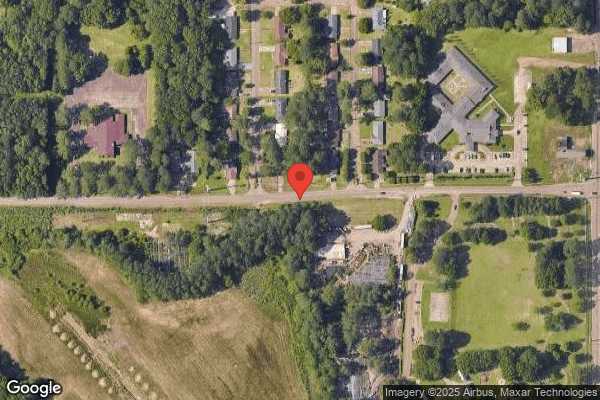
Mar 2021 9 deficiencies
CONCERN (D)

Potential for Harm - no one hurt, but risky conditions existed

Deficiency F0561 (Tag F0561)

Could have caused harm · This affected 1 resident

Based on observations, interviews, record review, policy review, dietary meal slips, and Resident Rights, the facility failed to honor resident choices related to food preferences for one (1) of 17 re...

Read full inspector narrative →
Based on observations, interviews, record review, policy review, dietary meal slips, and Resident Rights, the facility failed to honor resident choices related to food preferences for one (1) of 17 residents, Resident #46. Findings include: Review of the facility's Resident's Rights, not dated, revealed the resident has the right to make choices about aspects of his or her life in the facility that are significant to the resident. Review of the facility's Meal Services policy for Alternate Foods for Food Preferences, not dated, revealed substitutes of similar nutritive value are offered to resident's who refuse food served. The procedure revealed that the dining service department prepares an alternate food choice to be offered to residents who refuse food at meals. The nursing assistant, on observing that a resident is refusing a food, offers the alternate food to the resident. The alternate food is delivered to the resident within 15 minutes of the request. Review of Resident #46's Care Plan, revealed on 8/26/2020, an intervention was initiated to honor Resident' #46's food preferences. Review of the Resident #46's daily meal tickets, dated 3/25/2021, revealed that grits were listed as a dislike for breakfast and macaroni and cheese was listed as a dislike for lunch and dinner. Record of the admission Record revealed the facility admitted Resident #46 on 1/1/20 with the diagnoses which included End Stage Renal Disease, Congestive Heart Failure, Type II Diabetes, Essential Hypertension, Hemiplegia and Hemiparesis following a Cerebral Infarction. The Quarterly Minimum Data Set (MDS) with the Assessment Reference Date (ARD) of 02/11/2021, revealed Resident #46 had a score of 15 on the Brief Interview for Mental Status (BIMS) indicating Resident #46 was cognitively intact. In an interview with Resident #46, on 03/23/2021 at 4:30 PM, revealed she was not happy with her meals. Resident #46 stated she gets foods that she does not like. On 03/24/2021 at 1:50 PM, in an interview with Resident #46 revealed that she did not enjoy her lunch. She stated that she had received macaroni and cheese and she does not like it. She stated she had told them she does not like macaroni and cheese, but they continue to serve it to her. On 03/24/2021, at 2:00 PM, in an interview with Dietary Employee #1/Dietary Manager regarding resident food preferences, she stated that residents have the opportunity to provide information about their likes and dislikes of certain foods. She stated that these preferences are listed on the resident's dietary meal slips for the dietary servers to use as a guide for preparing the resident's plates. On 03/24/2021 at 2:15 PM, in an interview with Certified Nursing Assistant (CNA) #1, she stated that she had served Resident #46's her lunch tray today. She confirmed that the resident's lunch tray included macaroni and cheese. On 03/25/2021 at 8:15 AM, observed Resident #46 sitting in a wheelchair in room, while waiting to go to dialysis. The resident's breakfast was on the overbed table in front of her. Her grits were uneaten. The resident stated she did not like grits and had asked that she not receive grits for breakfast. The resident stated that when she tells the CNA's that she does not like a food that is served, she does not receive anything else. On 03/25/2021 at 9:00 AM, in an interview the with Dietary Employee #1/Dietary Manager, she stated she was aware that Resident #46 had received the macaroni and cheese yesterday. She stated she was unaware that the resident had received grits this morning for breakfast. The Dietary Manager stated she realizes it is important to serve the residents foods that they like. She further stated that if resident's receive foods that they do not like, they will probably not eat, and this can lead to weight loss. On 3/25/2021 at 9:10 AM, in an interview with Registered Nurse (RN) #1/Director of Nursing (DON), stated when residents receive the foods they do not like, it can lead to weight loss and when diabetic residents do not eat, it can cause their blood sugars to drop. The DON confirmed food choices are a part of the Resident's Rights. On 03/24/21 at 2:00 PM, in an interview with Dietary Employee #1/Dietary Manager regarding resident food preferences, she stated residents have the opportunity to provide information about their likes and dislikes of certain foods. She stated these preferences are listed on the resident's dietary meal slips for the dietary servers to use as a guide for preparing the resident's plates.
CONCERN (D)

Potential for Harm - no one hurt, but risky conditions existed

Grievances (Tag F0585)

Could have caused harm · This affected 1 resident

Based on staff and resident interviews, record review, and facility policy review the facility failed to maintain safekeeping of resident's belongings for one (1) of 17 residents, Resident #29. Findin...

Read full inspector narrative →
Based on staff and resident interviews, record review, and facility policy review the facility failed to maintain safekeeping of resident's belongings for one (1) of 17 residents, Resident #29. Findings include: The facility's, Social Services Standard Missing Item policy, dated 08/2017 revealed the facility will take reasonable preventing measures to prevent loss or damage of resident's possessions. During an interview on 3/23/21 at 11:50 AM, Resident #29 stated his black leather coat came up missing in May 2020. Resident #29 stated he informed Social Services (SS) #2. Resident stated she told me she would check on it. Resident #29 stated that SS #2 did not get back with him. Resident #29 stated he spoke with SS #2 in May 2020. On 3/26/21 SS #2 at 11:00 AM, she stated Resident #29 did not report the missing leather jacket but confirmed she would check the log. We usually do a grievance and ask resident for a description. SS #2 stated this is my first-time hearing about Resident #29's black leather coat. SS #2 also stated, if an item that is on their inventory sheet comes up missing , the facility will replace it. On 3/26/21 at 11:20 AM ,in an interview with SS #1 stated, Resident #29 reported the missing jacket to SS #2 and did not want to complete a grievance for it. On 3/26/21 at 11:25 AM, in an interview with SS #2, stated I remembered that he did say something about a black missing jacket. SS #2 stated Resident #29 did not want to complete a grievance for the missing jacket. She stated she looked in his closet for the black jacket, but she did not document about the missing jacket. On 03/25/21at 02:49 PM, in an interview with Resident # 29, he denied being asked if he wanted to complete a grievance for the missing jacket. He stated he was not informed if they looked for his jacket. He denied SS #2 ever returning to him room to inform him of his status of the black jacket. On 3/25/21at 4:15 PM, in an interview with the Administrator, she stated she was told about the missing jacket today. She stated therapy bought it for Resident #29 for Christmas and the last time he saw it was in May. The Administrator stated the facility will get his size and will replace the jacket. Usually, we do a report on missing items and if we cannot find it, we call the family and replace it. The Administrator confirmed the resident did have a black jacket with zippers on it. Record review of the admission Record revealed the facility admitted Resident #29 on 5/19/15 with diagnoses that include Hemiplegia and Hemiparesis and Type 2 Diabetes. A review of Resident #29's Minimum Data Set (MDS) with and Assessment Reference Date (ARD) of 1/13/21, revealed Resident #29's Brief Interview of Mental Status (BIMS) Score was 14, indicating he was cognitively intact.
CONCERN (D)

Potential for Harm - no one hurt, but risky conditions existed

Deficiency F0608 (Tag F0608)

Could have caused harm · This affected 1 resident

Based on staff and resident interviews, record reviews, and facility policy review the facility failed to report an allegation of marijuana use in a timely manner to local police department and the At...

Read full inspector narrative →
Based on staff and resident interviews, record reviews, and facility policy review the facility failed to report an allegation of marijuana use in a timely manner to local police department and the Attorney General's Office for one (1) of 17 residents reviewed, Resident #25. Findings include: A review of the facility's, Policy & Procedure for Reporting suspected crimes under the Federal Elder Justice Act section revealed it is the policy of the facility to comply with the Elder Justice Act (EJA) about reporting a reasonable suspicion of a crime under section 1150B of the Social Security Act, as established by the patient protection and affordable care act (ACA). It is the policy of the facility to notify local law enforcements of any suspected crime that occurs at the facility. During an interview on 3/25/21 at 09:46 AM, with Resident #25, reported to the State Agency (SA) he was sent to the local hospital because he was nauseated and had tremors. The resident stated while at the hospital he tested positive for Marijuana and opioids. Resident #25 stated at first, he did not want to reveal where he got the drugs from. The facility assured him he would not get in trouble if he told the truth. The resident said Maintenance Man #3 sold him the Marijuana. Resident #25 said he paid $20.00 a cigarette. A review of the facility's investigation revealed Resident #25 stated Maintenance Man #3 came to his room while on Covid-19 isolation and let him know that he was selling Weed. Resident #25 states he began to buy the Marijuana from Maintenance Man #3 since that time. Resident #25 reported he spent $140.00 (1st time= 30.00, 2nd time =$30.00, 3rd time =$ 30.00, 4th time =$10.00, 5th time = $ 20.00, 6th time = $ 20.00) with Maintenance man #3 on Marijuana. Resident #25 said he has never purchased Marijuana from anyone but him. During an interview on 03/25/21 at 10:51 AM, with the Administrator revealed the local hospital called in the allegation on 1/6/21. The Administrator stated the hospital informed her Resident #25 tested positive for Opioids and Marijuana. The Administrator said the facility initiated an investigation done by the previous Director of Nurses (DON). The Administrator confirmed the facility failed to report this crime to the local police department or the Attorney General's office. In an interview with the maintenance Man #3 on 03/25/21 at 11:30 AM ,he stated he did not sell marijuana to Resident #25. Maintenance man #3 said Resident #25 could have received the marijuana from Resident #25's brother. Maintenance Man #3 also revealed the residents window was close to the street. Resident #25 brother came to his room window often. The Maintenance Man #3 said the facility drug tested him and he was negative. The Maintenance Man #3 also stated he did not talk to resident #25 often. The Maintenance Man #3 said he called the Corporate office and explained he felt the facility accused him of something that was not true. The Corporate Office Director informed the Administrator to allow him to come back to work because the allegation was not substantiated. Record review of the Face sheet revealed the facility admitted Resident #25 on 3/07/18, with diagnoses that included Unspecified Nephritic Syndrome with unspecified Morphologic. Intervertebral Disc Degeneration Lumbar region and Depressive disorder. Record review of the admission Minimum Data Set (MDS) with the Assessment Reference Date (ARD) of 01/18/21, revealed Resident#25 had a Brief Interview of Mental Status (BIMS) of 15 that indicated Resident #25 is cognitively intact.
CONCERN (D)

Potential for Harm - no one hurt, but risky conditions existed

Report Alleged Abuse (Tag F0609)

Could have caused harm · This affected 1 resident

Based on staff and resident interviews, record reviews, and facility policy review the facility failed to report an allegation of marijuana use in a timely manner to the State Agency for one (1) of 17...

Read full inspector narrative →
Based on staff and resident interviews, record reviews, and facility policy review the facility failed to report an allegation of marijuana use in a timely manner to the State Agency for one (1) of 17 residents, Resident #25. Findings include: Record review of the facility's, Abuse, Neglect and Exploitation policy, revised November 2017, revealed it is the policy of this facility to provide protection for the health , welfare, and rights of each resident by developing and implementing written policies and procedures that prohibit and prevent abuse, neglect, exploitation, and misappropriation of resident property. The facility will report all alleged violations to the administrator, state agency, adult protective services and to all other required agencies (e.g., law enforcement when applicable) within specified timeframe's: immediately, but later than 2 hours after the allegation is made, if the events that cause the allegation involve abuse or result in seriously bodily injury or not later than 24 hours if the event that cause the allegation do not involve abuse and do not result in serious bodily injury. The Administrator will follow up with government agencies, during business hours, to confirm the initial report was received, and to report the results of the investigation when final within five (5) working days of the incident, as required by state agencies. Review of the State Agency (SA) call log revealed the state agency had not received any calls on the hotline of a marijuana allegation from the facility on 1/6/2021. The State Agency (SA) received a call on 1/15/21 at 1:25 PM reporting a Certified Nursing Assistant (CNA) issue of drug use and harassment of staff due to being terminated. In an interview on 03/25/21 at 10:51 AM, with the Administrator revealed the local hospital informed her Resident #25 tested positive for Opioids and Marijuana on 01/06/21. The Administrator stated the facility initiated an investigation completed by the previous Director of Nurses (DON). The Administrator also stated the previous DON called the allegation in to the SA on 1/06/21. The Administrator confirmed she did not follow up to confirm the initial report was received, and she did not report the results of the investigation within five (5) working days of the incident. The Administrator also stated she failed to report the allegation to the local police and Attorney Generals (AG) Office. The Administrator stated the investigation is still in progress and the facility had not completed the investigation. Resident #25 was interviewed and refused to reveal the person's name he got the marijuana from. The Administrator stated she gave him three (3) different employees names before he said he was going to be honest. The Administrator stated Resident #25 said he was afraid Maintenance Man #3 would retaliate. The Administrator stated all the staff was tested that worked on Resident #25's unit. Only one (1) CNA tested positive and was terminated. Maintenance Man #3 was suspended until an investigation was completed. The Administrator stated the Maintenance Man #3 said he did not sell marijuana to Resident #25. Maintenance Man #3 did not test positive and was approved to return to work by the corporate office because the facility could not substantiate, he sold the Marijuana to Resident #25. During an interview, on 3/25/21 at 11:00 AM, with Social Worker #2 revealed Resident #25 had not been out of the facility with anyone because of the COVID-19 restrictions. Social worker #2 stated Resident #25 received several outside supervised visits. Social Worker #2 also stated Resident #25 received a visit from his Brother-in-law on October 9 and 16. Resident #25 sister visited on October 7, and a visit from his brother on October 30. Social worker #2 said the visitors were not allowed to bring items and had to stay with 6 feet of each other. Social Worker #2 said the outside visits were allowed from October 2020 to December 2020. the facility canceled outside visits due to an increase in Covid-19 cases. The visits started back March 8, 2021. During an interview with the Maintenance man #3 on 03/25/21 at 11:30 AM, he stated he did not sell Resident #25 marijuana. Maintenance Man #3 stated Resident #25 probably got the marijuana from his brother. Maintenance man #3 said the resident's room was by the street. The residents brother came to his room often. Maintenance man #3 said the facility drug tested him and he was negative. The Maintenance Man #3 said he did not talk to Resident #25 often. Maintenance Man #3 stated he called the Cooperate office and explained he felt the facility accused him of something that was not true. The Corporate office told the Administrator that because they could not prove he sold the marijuana to the resident to allow him to come back to work. During an interview with the facility's Medical Director (MD), on 03/25/21 at 11:45 AM, revealed he was notified that Resident #25 tested positive for opioid and marijuana use. The MD said the use of marijuana and opioids did not cause any harm to the residents physically. The doctor said if the marijuana were laced with some other substance, it could cause harm. He does not recommend continued use.
CONCERN (D)

Potential for Harm - no one hurt, but risky conditions existed

ADL Care (Tag F0677)

Could have caused harm · This affected 1 resident

Based on observation, staff interview, record review, Resident' s Rights, and the Certified Nursing Assistant Job Description, the facility failed to provide Activities of Daily Living (ADL) care for ...

Read full inspector narrative →
Based on observation, staff interview, record review, Resident' s Rights, and the Certified Nursing Assistant Job Description, the facility failed to provide Activities of Daily Living (ADL) care for two (2) of 17 residents observed for ADL care, Residents #46 and #55. Findings include: In a record review of a copy of the Resident's Rights provided by the facility (undated), section 483.15 Quality of Life, (b) Self-determination and participation. The resident has the right to (1) Choose activities, schedules, and health care consistent with his or her interest, assessments, and care plans of car ., (3) Make choices about aspects of his or her life in the facility that are significant to the resident. In a review of the facility's, CNA Job Description, dated 2/2/2015, Job Summary revealed the primary purpose of the Certified Nursing Assistant (CNA) position is to provide each assigned resident with excellent daily nursing care and services in accordance with the resident's assessment and plan of care. Personal Nursing Care Functions revealed the CNAs should assist residents with hygiene needs to include bathing, nail care, and ensure personal care needs are being met in accordance with the resident wishes. Resident #46 In a record review on the facility's Follow Up Question Report, dated 3/25/21 revealed Resident #46 was scheduled to receive showers on Monday, Wednesday, and Friday. Review of the report for the last 30 days indicated Resident #46 had received either a complete or partial bed bath only a total of five (5) times in 30 days. Prior to 3/25/2021, the last partial bed bath was on 3/5/2021. No showers were given during the time reviewed. In a record review, Resident #46's Care Plan (CP) on 10/08/2019 noted Resident #46 CP for ADL Self Care Performance revealed a deficit related to immobility and is total assistance with most Activities of Daily Living (ADL's). Interventions noted Resident #46 is totally dependent on staff to provide a bath. It further indicated to provide Resident #46 with a sponge bath when a full bath or shower cannot be tolerated. In an interview on 03/23/2021 at 4:30 PM, Resident #46 stated she was not receiving showers on the days she was supposed to receive them. The Resident #46 stated showers are her preference. In an interview on 03/24/2021 at 1:50 PM, Resident #46 stated she is not receiving showers and has not questioned the staff about her showers or asked if she will receive one. The resident stated that she prefers to receive showers instead of a bed bath but has not received either in several days. In an interview on 03/24/2020 at 3:00 PM, with Registered Nurse (RN) #4/Assistant Director of Nursing, acknowledged Resident #46 has not received a bath since 03/5/2021. She stated the resident is scheduled to receive showers on Monday, Wednesday, and Friday of each week. On 03/25/2021 at 8:15 AM, observed Resident #46 dressed and sitting in wheelchair in the room, while waiting for transfer to dialysis. Resident #46 stated that she received a bed bath yesterday. On 03/25/21 at 9:15 AM, in an interview with RN #1/Director of Nursing (DON), she stated Resident #46 is supposed to receive a shower on Monday, Wednesday, and Friday. She stated it is important for residents to receive routine baths to decrease the risk of infection. She stated she was hired in February and since then has had repeated conversations with the CNA's regarding the importance of assisting residents with the care they need to maintain good personal hygiene. Resident #55 Record review of Resident #55's Face Sheet revealed the facility admitted Resident #55 on 07/23/2018 with the diagnoses of Alzheimer's Disease, Type 2 Diabetes Mellitus, Essential Hypertension and Cognitive Communication Deficit. Record review of Resident 55's Quarterly Minimum Data Set (MDS), with the Assessment Reference Date (ARD) of 02/18/2021, Section C0500 revealed a Brief Interview for Mental Status (BIMS) score of 04 with indicated Resident #55 is cognitively impaired. Section B0110 revealed Resident #55 is totally dependent for personal hygiene. Section G0110 of the Quarterly MDS, with the ARD of 2/18/2021, for Resident #55, revealed Resident #55 is totally dependent with one (1) person assistance for personal hygiene. A review of the Resident #55's Care Plan revealed Resident #55 needs total assistance with hygiene, dressing and bathing related to Alzheimer's Disease. Review of Order Summary Report (Physician's Orders) for Resident #55 revealed an order, dated 8/12/2019, Provide nail care weekly on Monday every day shift. On 03/23/2021, at 11:18 AM, observed Resident #55 sitting in the dayroom watching staff and residents as they pass by. Resident #55's nails were noted to have black matter under her fingernails. In an observation of Resident #55's nails on 03/24/2021 at 11:30 AM, observed dried, dark material located underneath her fingernails on both hands. In an observation of Resident #55 nails on 03/25/2021 at 07:35 AM, revealed Resident #55's fingernails still had dried, dark material located underneath them on both hands. On 03/25/2021 at 07:40 AM, in an interview with CNA #5, she stated the CNAs clean the resident's nails during their baths. She stated that Resident #55 scratches and digs inside her brief and when she cleans the resident's nails, the next time she checks them, they are dirty again. On 03/25/2021,at 07:45 AM, in an interview with CNA #6, revealed she is assigned to Resident #55 today. CNA #6 stated Resident #55 scratches and puts her hands in her brief. She stated she cleans the resident's nails during baths and as needed, but it is difficult to keep the resident's nails clean. On 03/25/2021 at 09:10 AM, in an interview with RN #1/Director of Nursing (DON), she states the CNAs are supposed to provide nail care to resident's who are dependent upon staff for assisting with their Activities of Living (ADL's). She further stated it is important to keep the resident's nails clean and trimmed to prevent the resident's from scratching themselves and causing skin tears that can become infected. The DON stated they did not have a policy specific to ADL care, but the care should be provided, and the job description of the CNA's had information related to the provision of nail care and baths that the CNAs are responsible for providing to the residents. On 3/25/2021 at 10:00 AM, in an interview with RN #2 and RN #3, the MDS nurses, stated they were unaware of the problem with Resident #55's nails and the problem with nail hygiene related to her scratching and digging. They stated they would speak to the staff and include the importance or hand and nail care to prevent the resident from scratching her skin with contaminated nails and causing an infection.
CONCERN (D)

Potential for Harm - no one hurt, but risky conditions existed

Accident Prevention (Tag F0689)

Could have caused harm · This affected 1 resident

Based on staff interviews, record reviews, facility policy review, the facility failed to supervise residents, as evidenced by a resident testing positive for cannabis on 1/3/21 for one (1) of 17 resi...

Read full inspector narrative →
Based on staff interviews, record reviews, facility policy review, the facility failed to supervise residents, as evidenced by a resident testing positive for cannabis on 1/3/21 for one (1) of 17 residents, Resident #25. Findings include: Review of the facility's, Accidents or incidents investigating and reporting policy, revealed all accidents involving residents, employees, visitors, vendors, etc., occurring at our facilities must be investigated and reported to the administrator. The purpose of this policy is to ensure the safety of all residents, employees and visitors, investigation into the cause of any incident will be tracked in order to improve care and to prevent future occurrences. A Review of the local hospital Pathology report, dated 01/03/21, revealed Resident #25 tested positive for Cannabinoid screen (marijuana) and opioids. A review of the facilities Comprehensive Care Plan, dated 06/29/2019, revealed Resident #25 uses, anti- depressant medication related to Depression. Resident #25 also has a Care Plan dated 01/21/21, for safety concerns related to Resident #25's recent testing positive on a drug screen for Opiates and Marijuana use at the local hospital. During an interview on 03/25/21 at 09:46 AM, Resident #25, revealed he was sent to the local hospital in January 2021 because he was nauseated and had tremors. Resident #25 stated he tested positive for marijuana and opioids. Resident #25 stated the Maintenance man #3 charged him twenty dollars for each Marijuana cigarette. Resident #25 said he purchased three (3) cigarettes from him. A review of the facility's investigation revealed Resident #25 stated the Maintenance man #3 came to his room while he was on the COVID-19 isolation hall and let him know that he was selling weed. Resident #25 stated he began to buy the Marijuana from Maintenance Man #3 since that time. Resident #25 reported he spent $140.00 (1st time= 30.00, 2nd time =$30.00, 3rd time =$ 30.00, 4th time =$10.00, 5th time = $ 20.00, 6th time = $ 20.00) to the Maintenance Man #3 on Marijuana. Resident #25 stated he has never purchased Marijuana from anyone but him. During an interview on 03/25/21 at 10:51 AM, with the Administrator revealed the facility called in the allegation on 1/6/21. The Administrator stated the hospital called and informed her Resident #25 tested positive for Marijuana. The Administrator stated the facility initiated an investigation completed by the previous Director of Nursing (DON). The Administrator also confirmed the facility failed to report to the local police department or the Attorney General's office of the incident. The Administrator confirmed the facility failed to follow up with sending the completed investigation the State Agency (SA). The Administrator stated the investigation has not been finished and is still in progress. Resident #25 was interviewed and refused to reveal the person's name he got the marijuana from. The Administrator said he gave them three (3) different employees names before he said he was going to be honest. The Administrator stated Resident #25 said he was afraid Maintenance Man #3 would retaliate. The Administrator stated all the staff was tested that worked on Resident #25's unit. Only one (1) CNA tested positive and was terminated. Maintenance man #3 was suspended until an investigation was completed. The Administrator stated Maintenance man #3 said he did not sell marijuana to Resident #25. Maintenance man #3 did not test positive and was approved to return to work by the corporate office because the facility could not substantiate, he sold the Marijuana to Resident #25. Maintenance man #3 returned to work on 2/8/21. Resident #25 was informed Maintenance man #3 was returning to work because the facility could not substantiate the allegation. The Administrator stated the informed Resident #25 the Maintenance man #3 would not work on his hall and if he felt unsafe to notify the staff. Resident #25's family was also notified. The family understood the facility was unable to substantiate the complaint. During an interview on 3/25/21 at 11:00 AM, with Social Worker #2, revealed Resident #25 had not been out of the facility with anyone because of the COVID-19 restrictions. Social worker #2 stated Resident #25 received several outside supervised visits. Social Worker #2 also stated Resident #25 received a visit from his Brother-in-law on October 9 and 16, 2020. Resident #25's sister visited on October 7, 2020, and a visit from his brother on October 30,2020. Social Worker #2 stated the visitors were not allowed to bring items and had to stay six (6) feet away from each other. Social Worker #2 stated the outside visits were not allowed from October 2020 to December 2020. The facility canceled outside visits due to an increase in COVID-19 cases. The visits started back March 8, 2021. During an interview with the Maintenance man #3 on 03/25/21 at 11:30 AM, he stated he did not sell Resident #25 marijuana. Maintenance man #3 stated Resident #25 probably got the marijuana from his brother. Maintenance man #3 stated the resident's room was by the street. The resident's brother came to his room often. Maintenance man #3 stated the facility drug tested him and he was negative. The Maintenance man stated he did not talk to Resident #25 often. Maintenance man #3 stated he called the corporate office and explained he felt the facility accused him of something that was not true. The corporate office told the Administrator that because they could not prove he sold the marijuana to Resident #25 to allow him to come back to work. During an interview with the facility's Medical Director (MD) on 03/25/21 at 11:45 AM, revealed he was notified that Resident #25 tested positive for opioids and marijuana. The MD stated the use of marijuana and opioids did not cause any harm to the residents physically. The doctor said if the marijuana were laced with some other substance, it could cause harm. He does not recommend continued use. Record review of the Face Sheet revealed the facility admitted Resident #25 on 3/07/18, with diagnoses that included Unspecified Nephritic Syndrome with unspecified Morphologic, Intervertebral Disc Degeneration Lumbar region and Depressive disorder. The admission Minimum Data Set (MDS), with the Assessment Reference Date (ARD) of 01/18/21, revealed Resident#25 had a Brief Interview for Mental Status (BIMS) of 15 that indicated Resident #25 is cognitively intact.
CONCERN (D)

Potential for Harm - no one hurt, but risky conditions existed

Unnecessary Medications (Tag F0759)

Could have caused harm · This affected 1 resident

Based on observation, staff interview, record review, and facility policy review, the facility failed to have a less than five (5) percent medication error rate by failure to administer respiratory in...

Read full inspector narrative →
Based on observation, staff interview, record review, and facility policy review, the facility failed to have a less than five (5) percent medication error rate by failure to administer respiratory inhalers per manufactures guidelines for two (2) of 25 medication administration observations resulting in a 8.8% medication rate for Residents #42 and #63. Findings include: Record review of the facility's, Medication Administration Guidelines, with a revised date of July 2019, noted the policy's purpose is to allow for correct administration of oral inhalers to residents. The guideline indicated, .Step 6. Rinse your mouth with water after breathing in medication. Spit out the water. Do not swallow. Record review of the prescribing information insert sheets for the two (2) inhalers observed, revealed both information sheets explained to rinse your mouth with water after breathing in the medication. Review of the admission Record for Resident #42 revealed, the facility admitted Resident #42 to the facility on 6/4/21 with the diagnosis of Chronic Obstructive Pulmonary Disease with Acute Exacerbation, High Blood Pressure with Heart Failure and Unilateral Pulmonary Emphysema. In a review of Resident #42's Order Summary Report with an order and start date of 12/14/20, revealed the order for two (2) inhaled medications for Chronic Obstruction Pulmonary Disease. The order also instructed to have the resident rinse the mouth out after each inhaled use. Review of the Quarterly Minimum Data Set (MDS), with the Assessment Reference Date (ARD) of 2/3/21, for Resident # 42, revealed for Section C Resident #42 had a Brief Interview for Mental status (BIMS) score of 15, which indicated he was cognitively intact. On 03/24/21 at 4:00 PM, during an observation of medication pass for Resident #42 revealed Licensed Practical Nurse (LPN) # 1 failed to have Resident #42 rinse his mouth out after using the respiratory inhaled medication. At 5:00 PM on 03/24/21, in an interview with LPN #1, when asked what he should have done after administering the inhaler, he explained that he should have the resident rinse his mouth. He further explained that he usually does have the resident rinse but just got busy and nervous. When asked why it is important to rinse the mouth after the use of a steroid inhaler, he explained it could cause a yeast infection if the resident does not rinse his mouth out. On 3/24/21 at 5:10 PM, in an interview with Resident #42, he explained that sometimes the nurses do ask him to rinse his mouth out and sometimes they do not. He further explained the nurses have explained to him that if he does not rinse it could cause an infection in my mouth. Resident #42 denied ever having any infections in the mouth. In a review of Resident #63's admission Record revealed the facility admitted Resident #63 on 02/25/21 with the diagnoses of Peripheral Vascular Disease, COVID-19, Type 2 Diabetes Mellitus with Diabetic Polyneurophy, and Multiple Subsegmental Pulmonary Emboli without Acute Corpumonale. Record review of Resident #63's Physician Orders revealed the resident has an order for a respiratory inhaler for Multiple Subsegmental Pulmonary Emboli but did not include a specific order to rinse mouth after each use. Review of the admission MDS for Resident #63, with the ARD of 3/4/21, noted in Section C Resident #63 had a BIMS score of 11, which indicated he was moderately cognitively impaired. On 3/24/21 at 4:30 PM, LPN #2 failed to have Resident #63 rinse her mouth out after using the respiratory inhaled medication. On 3/24/21 at 5:20 PM, in an interview, LPN #2 was asked what he should have done after administering the steroid inhaler. He explained that he should have had resident rinse mouth after use to avoid a fungal infection. When asked does he normally have resident to rinse, he further explained that he cannot honestly say that he does it every time but knows as a nurse that it should be done. On 3/24/21 at 5:30 PM, in an interview with Resident #63, she explained that she has never been told or ask to rinse mouth after using the inhaler. She explained that she started the inhaler about six (6) months ago related to shortness of breath with use of the mask. She further explained that she has not had any mouth infections since using the inhaler. On 3/24/21 at 5:40 PM, in an interview with the Director of Nursing (DON), she explained after using an inhaler the nurses should have the resident rinse their mouth with water and spit because if not it could cause the resident to have a yeast infection in the mouth. She further explained this should be included on each Physician order for any steroid inhaler. An attempted phone call to the Pharmacy Consultant for the facility was made on 3/26/21, at 10:00 AM, but no answer and a message was left to return a call to the State Agency (SA).
CONCERN (D)

Potential for Harm - no one hurt, but risky conditions existed

Infection Control (Tag F0880)

Could have caused harm · This affected 1 resident

Based on observation, staff interview, record review, and facility policy review, the facility failed to prevent the possible spread of infection for one (1) of four (4) incontinent care observations,...

Read full inspector narrative →
Based on observation, staff interview, record review, and facility policy review, the facility failed to prevent the possible spread of infection for one (1) of four (4) incontinent care observations, Resident #44. Findings include: The facility's, Infection Control (Hand Hygiene) policy, revised on 9/2020, noted staff in direct resident contact will perform proper hand hygiene procedures to prevent the spread of infection to other personnel, residents, and visitors. The facility's, Hand Hygiene Table policy, revised on 9/2020, noted the staff will conduct hand hygiene before performing resident care procedures and during resident care. On 03/25/21 at 12:40 PM in an observation of incontinence care by Certified Nursing Assistant (CNA) #7, revealed CNA #7 did not wash her hands or sanitize them before starting care. CNA #7 removed a soiled brief from Resident #44 and did not wash her hands or sanitize her hands before applying a clean brief. On 03/25/21 at 12:47 PM in an interview with CNA #7, she stated she should have washed my hands or sanitize them when she entered the room. CNA #7 also confirmed she should have sanitized or washed her hands after removing the soiled brief. She stated that her actions could cause the resident to get an infection. She stated her actions can spread infection. On 03/25/21 at 1:30 PM in an interview with the Director of Nursing (DON), she stated CNA #7's actions can cause cross contamination and was unsanitary. She stated CNA #7 should have washed her hands, regardless of who was watching, before and after removing soiled brief. On 3/25/21 at 1:40 PM, in an interview with Registered Nurse (RN)/Infection Control Nurse #5 stated, The staff know they need to wash their hands. We have had monthly in-services and we remind staff to wash their hands. She stated CNA #7, should have washed her hands to prevent the spread of infection. Record review of Resident #44's Face Sheet revealed an admission date of 8/12/16 with diagnoses which included Parkinson's and Lewy Body Dementia. A review of the Significant Change Minimum Data Set (MDS) with Assessment Reference Date (ARD) of 2/9/21 revealed a Brief Interview for Mental Status (BIMS) score of 00 which indicated Resident #44 had severe cognitive impairment. Section H revealed Resident #44 is always incontinent of bowel and bladder. A review of the Comprehensive Care Plan dated 3/15/19 revealed, Resident #44 has bladder incontinence and is at risk for complications. Resident has an Activities of Daily Living Self Care Performance Deficit related to Parkinson's with decreased mobility, dated 3/15/19.
CONCERN (D)

Potential for Harm - no one hurt, but risky conditions existed

Safe Environment (Tag F0921)

Could have caused harm · This affected 1 resident

**NOTE- TERMS IN BRACKETS HAVE BEEN EDITED TO PROTECT CONFIDENTIALITY** Based on observation, staff interview, record review, and facility policy review the facility failed to ensure equipment was mai...

Read full inspector narrative →
**NOTE- TERMS IN BRACKETS HAVE BEEN EDITED TO PROTECT CONFIDENTIALITY** Based on observation, staff interview, record review, and facility policy review the facility failed to ensure equipment was maintained in a safe manner for one (1) of 17 room observations, Resident #40. Findings include: The facility's, Work Order policy, dated 5/2015, revealed it shall be the standard of this facility to process work orders timely in order to provide a safe and functional environment. On 3/23/21 at 11:00 AM, an observation and interview with Resident #40 revealed the closet door was not on the tracks and leaning over into the closet. Resident #40's room door to the hallway would not close due to incorrect alignment of door facing with the door itself. Resident #40 stated she was not sure how long the closet door was broken. She stated someone had tried to fix it but could not. On 3/24/21 at 10:30 AM, in an observation of Resident #40's closet door was not on tracks and leaning over into the closet and the room door to hallway was not closing. On 03/25/21 at 11:10 AM, in an interview and observation with Maintenance Staff (MS) #1, stated he was not aware there was a resident with a closet door broken. An observation of the door by MS #1 and State Agency (SA) revealed closet door and room door was still not fixed. MS #1 stated, The room door is off because the building shifts. MS#1 stated, The resident can't be harmed because the door has come off the railing and is leaning to the inside of the closet. If it is on the inside, the resident cannot be hurt, even if the resident is digging around in the closet and said the staff would not be hurt by a door, but it needs to be repaired. MS #1 stated the procedure for fixing equipment or building repairs is the staff completes a work order and it is sent to MS #1. He stated he usually has a same day turnaround, but he has not seen a work order for this. He stated he makes rounds monthly from room to room once a month but confirmed he has not been in Resident #40's room this month. Record review of Resident #40's admission Record revealed Resident #40 was admitted to the facility on [DATE] with a diagnosis of History of Falling. A review of the quarterly Minimum Data Set (MDS) with and Assessment Reference Date (ARD) of 2/8/21 revealed Resident #40 had a Brief Interview of the Mental Status (BIMS) score of eight (8) which indicated moderate cognitive impairment. A review of the Comprehensive Care Plan revealed, Resident #40 has impaired cognition with moderately impaired decision-making skills, related to forgetfulness, dated 3/10/20.
Understanding Severity Codes (click to expand)
Life-Threatening (Immediate Jeopardy)
J - Isolated K - Pattern L - Widespread
Actual Harm
G - Isolated H - Pattern I - Widespread
Potential for Harm
D - Isolated E - Pattern F - Widespread
No Harm (Minor)
A - Isolated B - Pattern C - Widespread

Questions to Ask on Your Visit

  • "What changes have you made since the serious inspection findings?"
  • "What safeguards are in place to prevent abuse and neglect?"
  • "Why is there high staff turnover? How do you retain staff?"
  • "Can I speak with families of current residents?"
  • "What's your RN coverage like on weekends and overnight?"

Our Honest Assessment

Strengths
  • • Licensed and certified facility. Meets minimum state requirements.
Concerns
  • • Multiple safety concerns identified: Federal abuse finding, 7 life-threatening violation(s), Special Focus Facility, 3 harm violation(s), $131,678 in fines, Payment denial on record. Review inspection reports carefully.
  • • 37 deficiencies on record, including 7 critical (life-threatening) violations. These warrant careful review before choosing this facility.
  • • $131,678 in fines. Extremely high, among the most fined facilities in Mississippi. Major compliance failures.
  • • Grade F (0/100). Below average facility with significant concerns.
Bottom line: This facility has a substantiated abuse finding. Extreme caution advised. Explore alternatives.

About This Facility

What is Pine Forest's CMS Rating?

CMS assigns PINE FOREST HEALTH AND REHABILITATION an overall rating of 1 out of 5 stars, which is considered much below average nationally. Within Mississippi, this rating places the facility higher than 0% of the state's 100 nursing homes. A rating at this level reflects concerns identified through health inspections, staffing assessments, or quality measures that families should carefully consider.

How is Pine Forest Staffed?

CMS rates PINE FOREST HEALTH AND REHABILITATION's staffing level at 1 out of 5 stars, which is much below average compared to other nursing homes. Staff turnover is 65%, which is 19 percentage points above the Mississippi average of 46%. High turnover can affect care consistency as new staff learn residents' individual needs. RN turnover specifically is 75%, which is notably high. RNs provide skilled clinical oversight, so turnover in this role can affect medical care quality.

What Have Inspectors Found at Pine Forest?

State health inspectors documented 37 deficiencies at PINE FOREST HEALTH AND REHABILITATION during 2021 to 2025. These included: 7 Immediate Jeopardy (the most serious level, indicating potential for serious harm or death), 3 that caused actual resident harm, and 27 with potential for harm. Immediate Jeopardy findings are rare and represent the most serious regulatory concerns. They require immediate corrective action.

Who Owns and Operates Pine Forest?

PINE FOREST HEALTH AND REHABILITATION is owned by a for-profit company. For-profit facilities operate as businesses with obligations to shareholders or private owners. The facility is operated by VANGUARD HEALTHCARE, a chain that manages multiple nursing homes. With 120 certified beds and approximately 102 residents (about 85% occupancy), it is a mid-sized facility located in JACKSON, Mississippi.

How Does Pine Forest Compare to Other Mississippi Nursing Homes?

Compared to the 100 nursing homes in Mississippi, PINE FOREST HEALTH AND REHABILITATION's overall rating (1 stars) is below the state average of 2.6, staff turnover (65%) is significantly higher than the state average of 46%, and health inspection rating (1 stars) is much below the national benchmark.

What Should Families Ask When Visiting Pine Forest?

Based on this facility's data, families visiting should ask: "What changes have been made since the serious inspection findings, and how are you preventing similar issues?" "What safeguards and monitoring systems are in place to protect residents from abuse or neglect?" "How do you ensure continuity of care given staff turnover, and what is your staff retention strategy?" "Can you walk me through typical staffing levels on day, evening, and night shifts?" These questions are particularly relevant given the facility's Immediate Jeopardy citations, the substantiated abuse finding on record, the facility's high staff turnover rate, and the below-average staffing rating.

Is Pine Forest Safe?

Based on CMS inspection data, PINE FOREST HEALTH AND REHABILITATION has documented safety concerns. The facility has 1 substantiated abuse finding (meaning confirmed case of resident harm by staff or other residents). Inspectors have issued 7 Immediate Jeopardy citations (the most serious violation level indicating risk of serious injury or death). The facility is currently on the Special Focus Facility watch list (a federal program monitoring the lowest-performing 1% of nursing homes nationwide). The facility has a 1-star overall rating and ranks #100 of 100 nursing homes in Mississippi. Families considering this facility should ask detailed questions about what corrective actions have been taken since these incidents.

Do Nurses at Pine Forest Stick Around?

Staff turnover at PINE FOREST HEALTH AND REHABILITATION is high. At 65%, the facility is 19 percentage points above the Mississippi average of 46%. Registered Nurse turnover is particularly concerning at 75%. RNs handle complex medical decisions and coordinate care — frequent RN changes can directly impact care quality. High turnover means new staff may not know residents' individual needs, medications, or preferences. It can also be disorienting for residents, especially those with dementia who rely on familiar faces. Families should ask: What is causing the turnover? What retention programs are in place? How do you ensure care continuity during staff transitions?

Was Pine Forest Ever Fined?

PINE FOREST HEALTH AND REHABILITATION has been fined $131,678 across 5 penalty actions. This is 3.8x the Mississippi average of $34,396. Fines at this level are uncommon and typically indicate a pattern of serious deficiencies, repeated violations, or failure to correct problems promptly. CMS reserves penalties of this magnitude for facilities that pose significant, documented risk to resident health or safety. Families should request specific documentation of what issues led to these fines and what systemic changes have been implemented.

Is Pine Forest on Any Federal Watch List?

PINE FOREST HEALTH AND REHABILITATION is currently an SFF Candidate, meaning CMS has identified it as potentially qualifying for the Special Focus Facility watch list. SFF Candidates have a history of serious deficiencies but haven't yet reached the threshold for full SFF designation. The facility is being monitored more closely — if problems continue, it may be added to the official watch list. Families should ask what the facility is doing to address the issues that led to this status.